



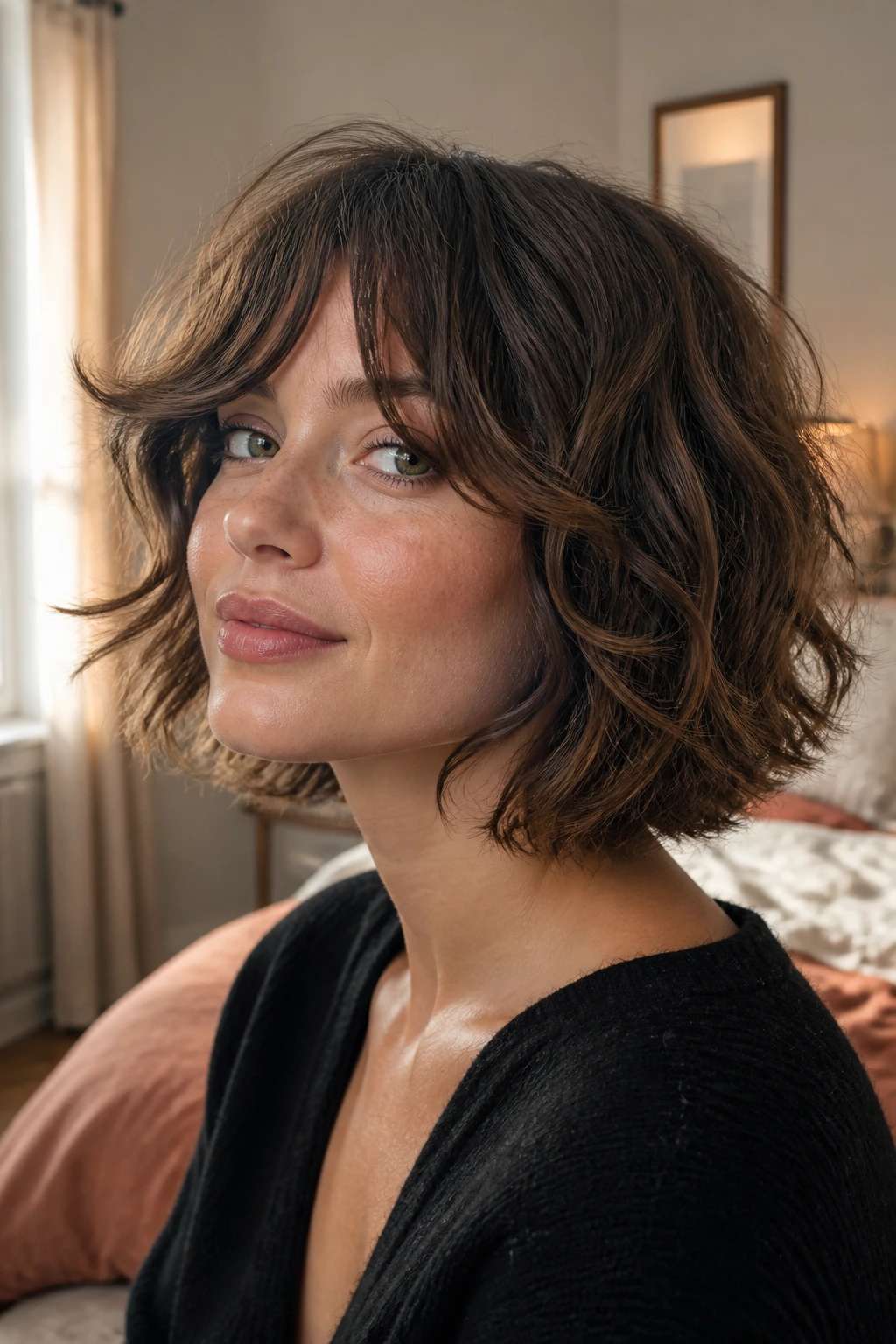
A shaggy Italian bob on wavy hair has a very specific kind of magic: it looks intentional without looking stiff. The clean, cheek-skimming shape of an Italian bob gives you structure, then the shaggy layers take the wave pattern and let it breathe. That means the cut can move, flip, and settle in a way a blunt bob often can’t.
The trouble is that wavy hair can go two ways fast. Cut it too boxy and the bottom edge swells out like a shelf. Chop it too aggressively and the whole thing turns fluffy at the wrong places, with skinny ends and a puffed-up crown. The sweet spot sits somewhere in the middle, where the perimeter stays soft and the internal layers take the weight out of the bends.
That balance is what makes this haircut family so worth studying. Some versions lean polished. Some feel messy in a good way. Some are built for thick, dense waves that need debulking. Others are better for fine hair that wants lift without losing all its shape. The list below is full of those small differences, because with this cut, the details do all the work.
Why This Collection Feels So Useful for Wavy Hair
-
The shape does not fight your wave pattern: A good shaggy Italian bob lets the bends sit where they want instead of forcing every strand into the same line.
-
You get movement without losing the bob silhouette: The ends stay bob-like, but the interior layers keep the cut from feeling heavy or helmet-shaped.
-
There’s room for different densities: Fine hair can get lift, thick hair can lose bulk, and both can still keep the clean Italian-bob outline.
-
It grows out with less drama: Softer layers and a rounder perimeter usually stay readable longer than a razor-straight blunt cut.
-
You can wear it polished or undone: A quick blow-dry gives it a salon finish. Air-drying with mousse pushes it toward easier, looser texture.
-
The face-framing options are wide open: Bangs, curtain fringe, side parts, and cheekbone layers all change the mood without changing the basic cut.
1. Jaw-Grazing Italian Shag Bob
This version sits right around the jawline, which gives wavy hair a sharp little edge without turning the cut boxy. The trick is in the internal texture: enough layer removal to stop the ends from puffing, but not so much that the shape loses its weight line. On the right wave pattern, it has that crisp, slightly undone look that feels expensive without trying.
What I like most here is the clean tension between the bob perimeter and the shag detail. Ask for soft point-cutting around the bottom and a little lift through the crown. If your waves sit flat near the roots, this length can wake them up fast.
2. Collarbone Swing Shag Bob
If you want a bob that reads a little softer and a little more relaxed, this collarbone-length version is the one to watch. It still counts as a bob, but the extra length gives wavy hair room to bend instead of kinking sharply at the jaw. That makes it easier to air-dry and still look finished.
Why It Works
The collarbone hit is forgiving. It lets the front pieces swing forward while the back keeps enough length to hold shape. That matters if your waves are looser and tend to collapse when they’re cut too short.
Ask for face-framing layers that start around the lip or chin, not near the nose. Too high, and you can get a frizzy triangle near the cheek. Too low, and the cut loses the shaggy part entirely.
3. Chin-Length Wave-Setter Bob
Chin length is blunt enough to feel confident, but this version softens the edge with broken-up ends and interior layers. On wavy hair, that stops the shape from turning into a triangle the minute humidity shows up. It’s neat, but not severe.
This cut works especially well if your wave pattern starts close to the roots and bends quickly through the mid-lengths. The shorter perimeter keeps the wave visible, which is useful if you want the texture to do the talking. A tiny bend with a flat iron on the front pieces is often enough.
4. Curtain-Bang Italian Bob
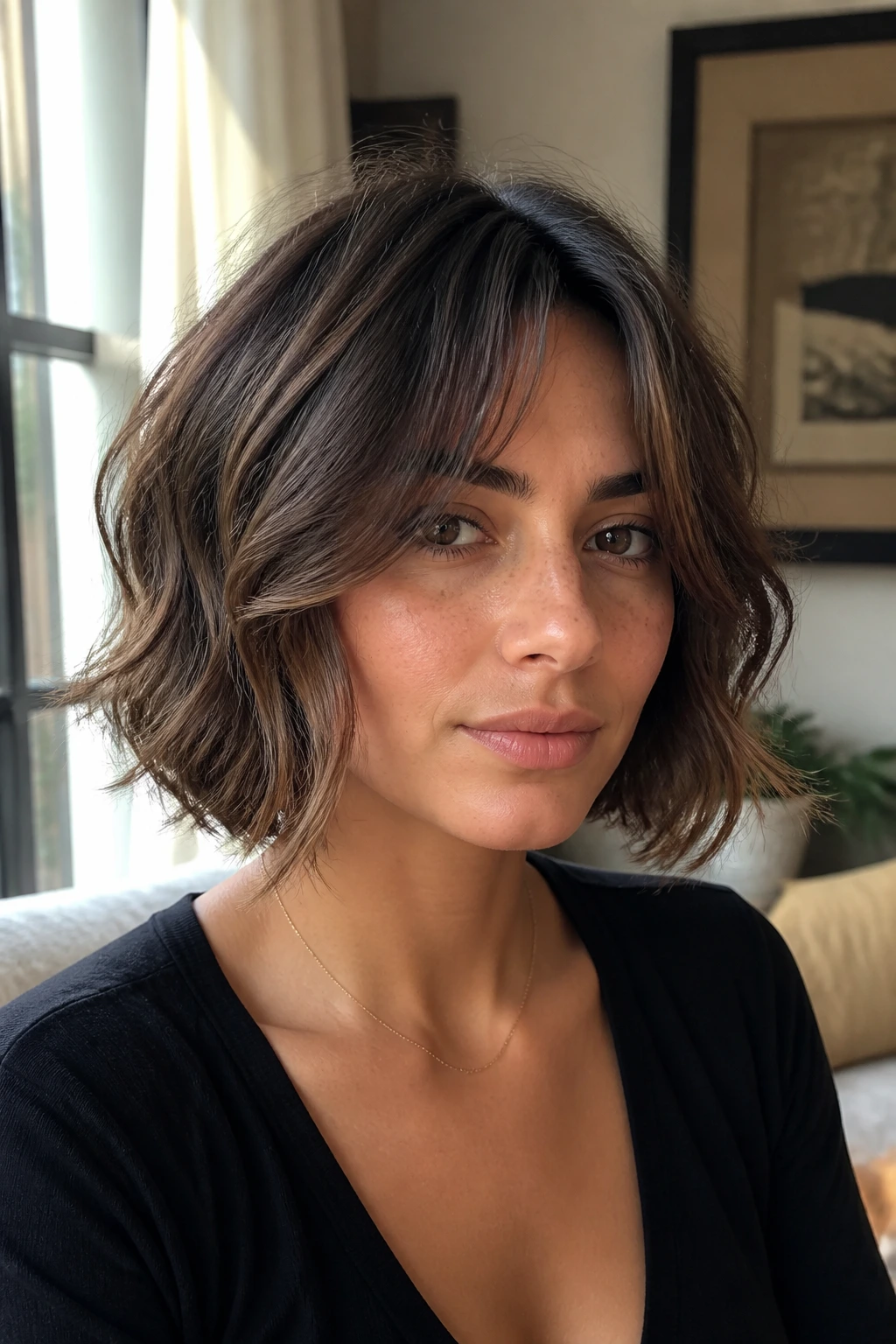
Curtain bangs change the whole personality of a shaggy Italian bob. They open the face, draw attention to the eyes, and give wavy hair a place to break apart in a controlled way. If your forehead feels too exposed with a center part, this is the easy fix.
The key is keeping the fringe soft, not heavy. You want a middle split, longer sides, and a gentle sweep into the bob’s front layers. If the bangs are cut too short, they can spring up and sit awkwardly above the brow. Leave a little length. It pays off.
5. Side-Part Volume Bob

A side part gives this haircut a little old-school glamour, but the shag texture keeps it from feeling stiff. On wavy hair, the deep side part also creates a natural lift at the crown, which is handy if your roots tend to lie flat after a day or two.
The front side can fall closer to the cheekbone while the heavier side tucks into the jaw. That asymmetry helps the cut look fuller without adding bulk everywhere. I reach for this shape when I want something that looks a bit more dressed up with almost no extra work.
6. Razor-Softened Italian Bob

A razor finish can be lovely on wavy hair when it’s used lightly. The ends get feathery and broken, which helps the wave pattern sit with less stiffness. The catch is that too much razor work can leave the perimeter too wispy, especially if your hair is fine.
Use this version when you want movement first and polish second. The right haircut should still have a clear bottom line, just softened. If your stylist starts talking about removing weight, ask where they plan to do it. Around the middle and interior is usually safer than hacking at the very ends.
7. Feathered Ends Bob

Feathered ends give a shaggy Italian bob a breezier finish. The cut looks lighter at the bottom, which is useful for thicker wavy hair that wants to sit in a mushroom shape. The ends still read as a bob, but they don’t feel heavy or blocky.
This style really benefits from a blow-dry brush or a round brush at the tips. You do not need a perfect curl under. A slight flip, almost like the hair changed its mind halfway through, gives the cut its personality. That imperfect finish is the point.
8. Micro-Shag Italian Bob

A micro-shag keeps the layers short and close to the shape, so the haircut feels textured without becoming too wild. It’s a smart choice if you want movement but hate the look of long, obvious layers hanging around the face. The overall line stays compact.
This one works best on hair that already has a decent bend to it. Straight hair can wear it, sure, but wavy hair makes the whole thing click. Ask for subtle pieceing around the crown and soft, broken ends through the bottom inch or so. Tiny changes matter here.
9. Bottleneck Fringe Bob

Bottleneck bangs have that narrow center and wider outer shape, which makes them a natural companion for an Italian bob. They create a gentle frame, then dissolve into the rest of the cut without a hard line. On wavy hair, that transition matters more than people think.
The fringe should start light and get fuller as it moves outward. That keeps it from sitting like a curtain bolted to the forehead. If your waves clump near the front, this is a good way to manage them. It gives the face shape without overwhelming it.
10. Rounded Mushroom Shag Bob

This is the more sculpted cousin in the group. The outline is rounder, especially through the back and sides, but the shag layers keep it from looking like a retro helmet. On wavy hair, the rounded shape can be gorgeous when the wave is consistent from root to tip.
The haircut needs careful weight removal, not random chipping. You want the top to sit softly over the sides so the shape feels plush instead of puffy. It’s a strong look, and it rewards a stylist who understands density. If the roundness is wrong, you feel it immediately.
11. Beach-Dried Italian Bob

This one leans into the wave instead of trying to smooth it out. The haircut is built for air-drying, with layers that encourage natural bends and a perimeter that lands cleanly even when you don’t touch a blow-dryer. It has a little salt-air energy, minus the actual salt air.
What makes it work is restraint. Too many layers and the hair gets frizzy. Too few and it turns heavy. The goal is a cut that looks good once you scrunch in mousse and leave it alone. Honestly, that’s the dream for a lot of wavy hair.
12. Blunt-Edge Shag Bob

A blunt edge sounds contradictory in a shag list, but that contrast is exactly why it works. The bottom line stays solid, which keeps the bob recognizable, while the inside gets softened and broken up. Wavy hair likes that tension.
This is a good option if you want a cleaner finish than a heavily layered shag. It reads polished from a distance, then you notice the texture up close. If your hair is fine, keep the blunt line a little softer than you think. Razor-sharp ends can disappear fast.
13. Face-Framing Slice Bob

Slice layers around the face can make wavy hair look like it was cut to catch motion. The hair falls in separated pieces instead of one solid curtain, and that gives the bob a lighter, more modern feel. It’s especially useful if your cheeks or jaw need softening.
The best slice layers start at the cheekbone or just below it. That keeps the front from puffing out in the wrong place. I like this on hair that naturally splits into defined wave clumps, because the haircut works with that piecey texture instead of arguing with it.
14. Deep Side-Swoop Bob

A deep side-swoop adds instant drama, even if the cut itself is fairly quiet. The hair sweeps across the forehead and lands with a soft bend, which gives wavy hair a glamorous line without much styling effort. It’s one of those shapes that looks more planned than it is.
The side-swoop also helps if one side of your hair grows differently than the other. That happens more than people admit. This cut hides the imbalance and turns it into part of the design. The result feels a little asymmetric in a good way.
15. Nape-Short Graduated Bob
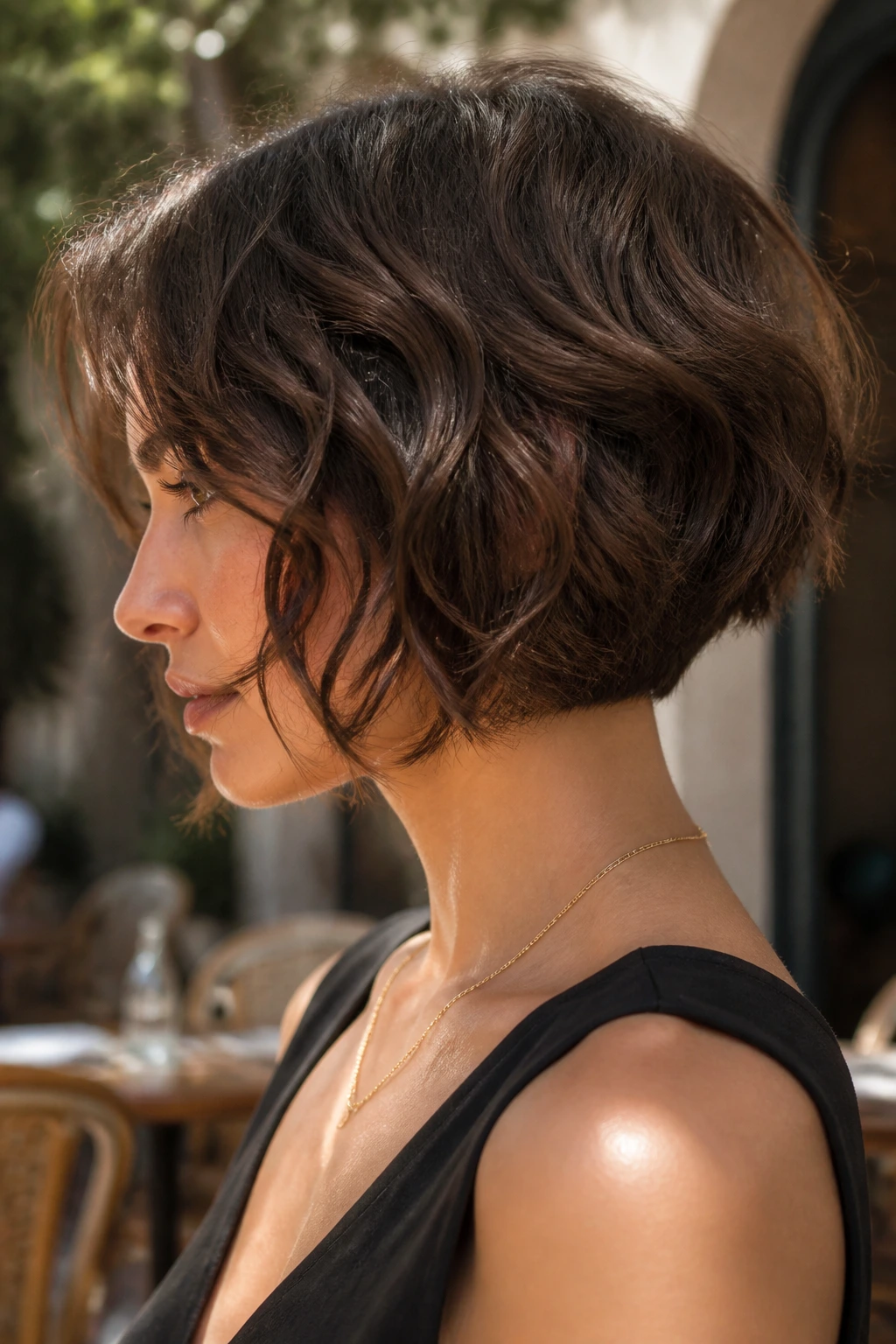
If you like a clean neck and a little lift at the back, this graduated version earns its place. The nape sits shorter, then the hair builds slightly longer toward the front. On wavy hair, that graduation can stop the back from ballooning.
This is a more structured Italian bob, but the shag texture keeps it from feeling rigid. It’s a smart pick for people who want a sharper outline with some movement around the face. You will need regular trims, though. Short napes show growth fast.
16. Longer-Front Shag Bob

Longer front pieces give the haircut a nice diagonal line, and diagonals are friends to wavy hair. They make the cut look slimmer through the cheeks while leaving enough length around the chin to keep the shape soft. It’s flattering without being fussy.
Styling Note
Use a medium round brush or a 1.25-inch curling wand just on the front pieces if they need help. The back can stay loose and a bit messy. That contrast is part of the charm.
This version is good when you want the bob to feel grown-up, not severe. The longer front pieces also buy you some wiggle room on styling days when the waves decide to go off script.
17. Glossed Blowout Bob
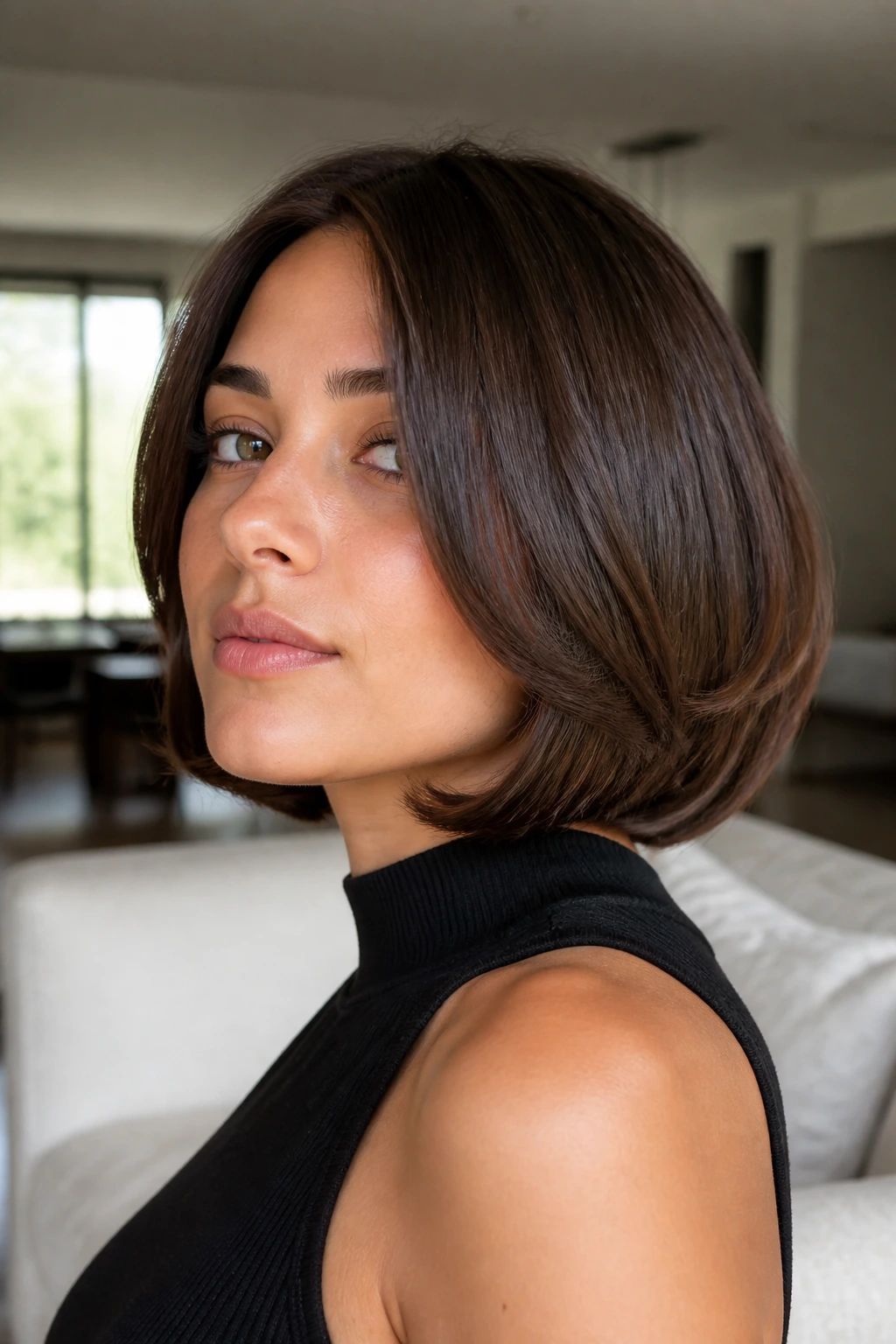
This one is for the people who want texture, but not chaos. The haircut still has shaggy movement, yet the finish leans smooth and shiny, with the ends bent under or outward in a soft, controlled way. Wavy hair can look very luxe in this shape.
A round brush, a blow-dryer nozzle, and a little patience go a long way here. The point is not to erase the wave. It’s to guide it. When done well, you get movement with a smooth surface, which is a nice change from the usual airy wave bob.
18. Air-Dry Wave Bob

This is the practical cut in the bunch. It’s built for days when you want to shower, add product, and move on with your life. The layers are placed so the wave can dry into a soft bend instead of a bell shape.
The finish is relaxed, but not sloppy. Use a light mousse or curl cream, scrunch gently, and leave the roots alone until they’re almost dry. If your hair is dense, lift the crown with clips for the first 10 to 15 minutes. That tiny step can save the whole shape.
19. Thick-Hair Debulked Bob

Thick wavy hair needs a haircut that respects gravity. This version removes weight from the interior so the bottom doesn’t spread out in a triangular puff. The perimeter still looks full, just more controlled.
Ask for debulking in the right places, not all over. Too much thinning near the ends can make them fray and look see-through. The best thick-hair shaggy Italian bob keeps density at the tips while making the middle feel lighter. That’s the balance.
20. Fine-Hair Lift Bob
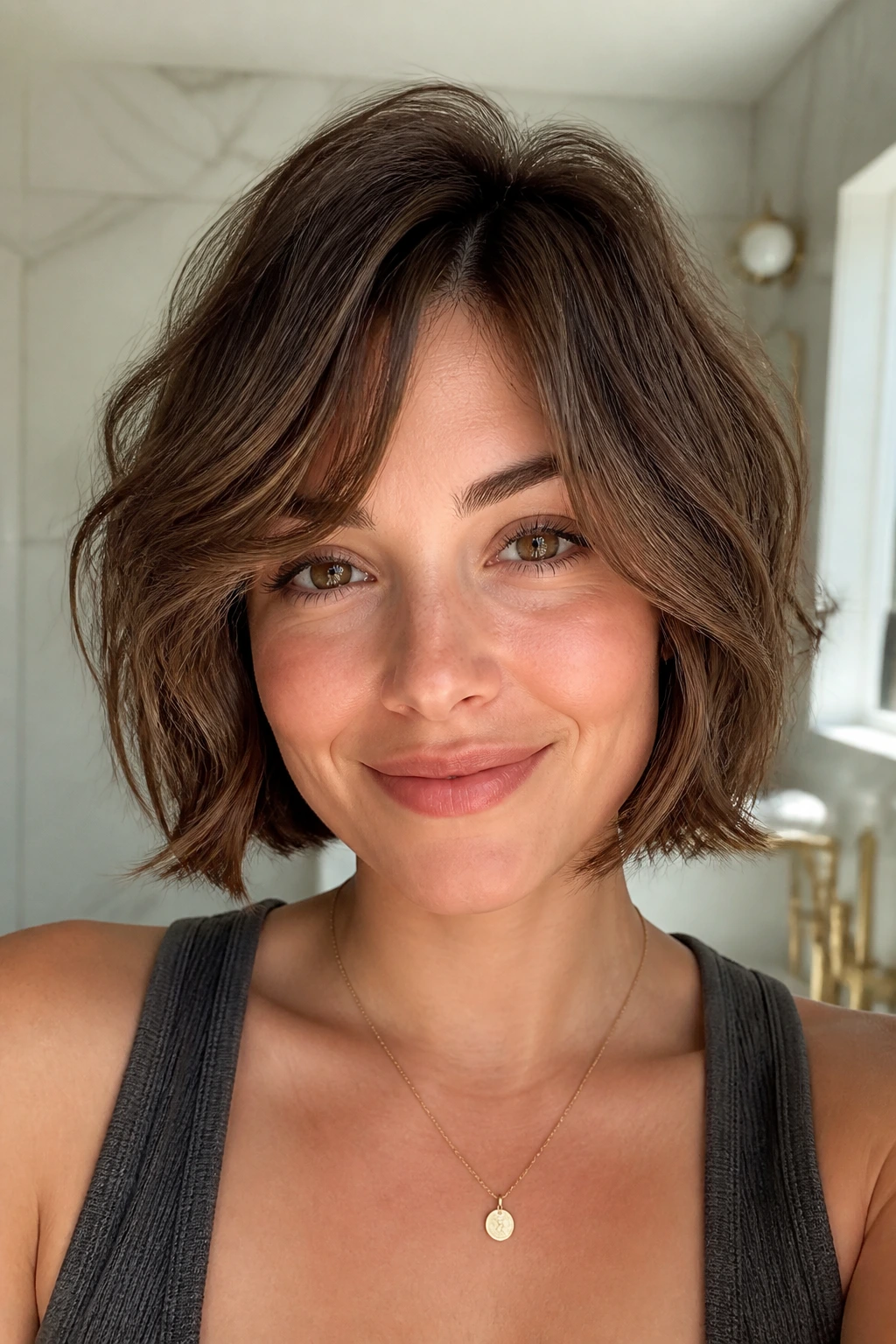
Fine wavy hair needs a different plan. This cut stays a little shorter and uses subtle layers to fake lift without over-thinning the shape. If you go too long, fine waves can droop. If you go too short, the ends may look sparse. This sits in the useful middle.
Root volume matters here. A lightweight mousse or root spray does more than a pile of heavy cream ever will. You want the hair to bend, not collapse. That may sound obvious, but it’s where a lot of fine-hair bobs go wrong.
21. Curly-Wave Hybrid Bob

Some heads of hair don’t know whether they’re wavy or curly on any given day. This hybrid bob accounts for that. The layers are softer and the perimeter a bit longer, so the cut can handle more spring when humidity shows up.
If your pattern changes with product, this is a kind choice. It gives the curls room but still keeps the bob shape visible when the hair relaxes. I’d ask for a stylist who cuts dry or partly dry here, because wet hair can hide too much of the real curl pattern.
22. Low-Maintenance Grow-Out Bob
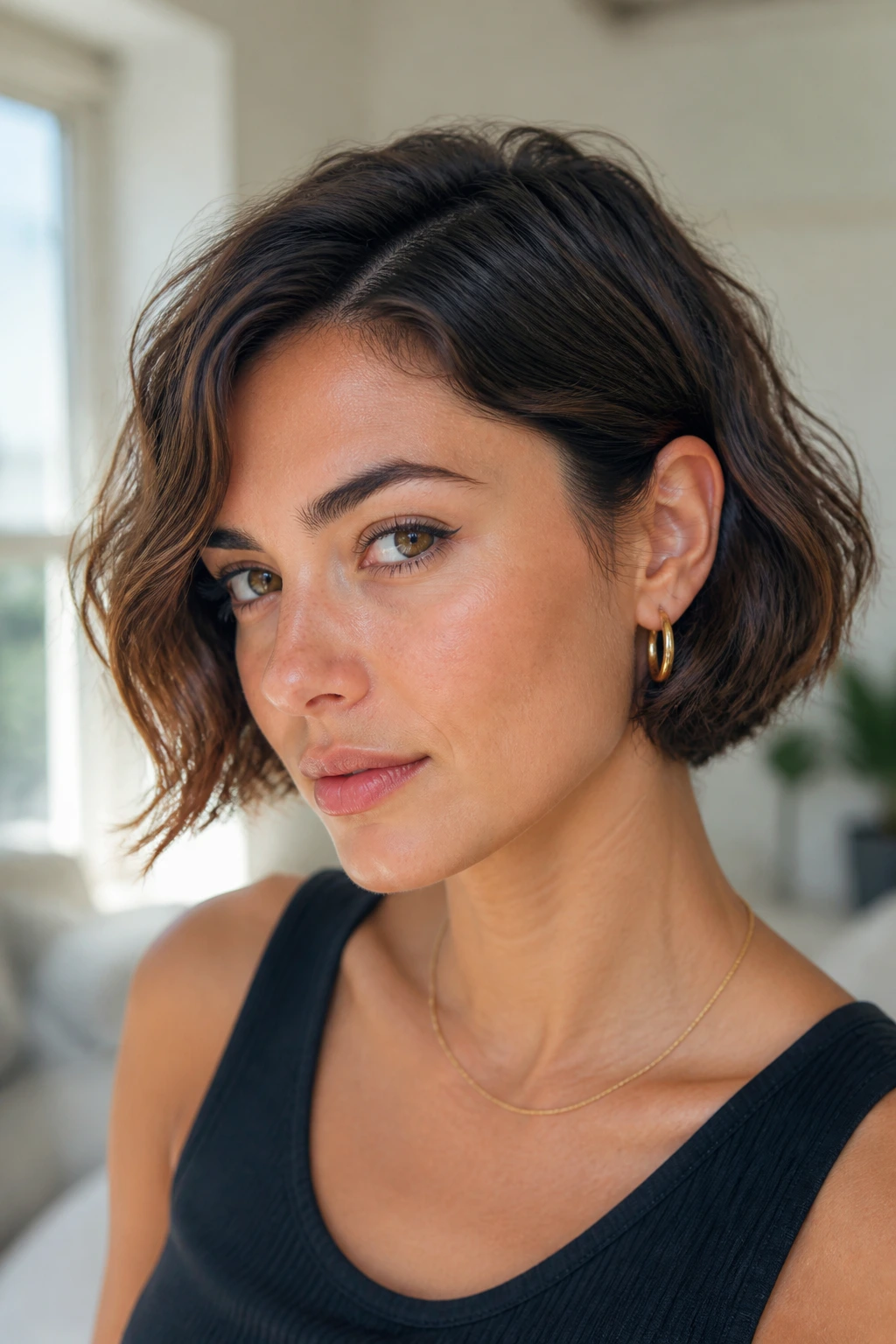
This is the one to get if you hate the awkward stage. The layers are blended enough that the haircut still looks intentional six to eight weeks later. Wavy hair helps a lot, because the soft texture masks small shifts in length.
The front should be long enough to tuck behind the ear without losing shape. The back should not be so short that it jumps out at you two weeks in. A low-maintenance bob is mostly about restraint at the salon chair. Less drama, more staying power.
23. Heavy Fringe Italian Bob

A heavier fringe changes the mood fast. It gives the haircut more edge and more focus around the eyes, which is a nice contrast against the easy movement of the waves. This can look very chic when the fringe is cut with a little softness at the bottom.
Keep the fringe long enough to move. A stiff, short bang can fight the rest of the haircut. The best version almost brushes the lashes, then splits slightly as it dries. That little split keeps it from feeling too fixed in place.
24. No-Bang Italian Shag
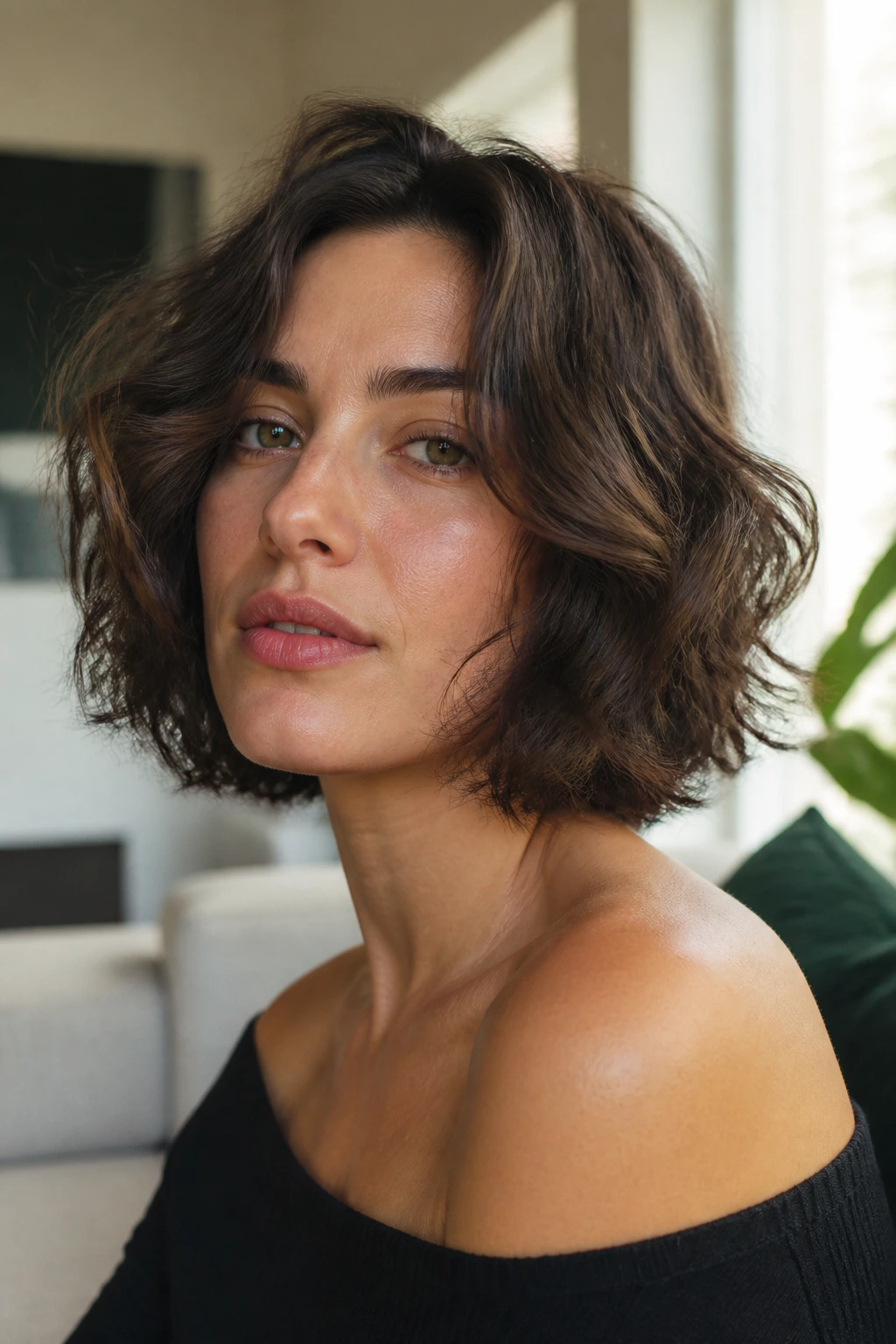
Not everyone wants fringe, and that’s fine. This version uses face-framing layers and a strong center or soft off-center part instead of bangs. It keeps the face open and lets the wave pattern do the framing work.
The cleanest no-bang version still needs some movement around the cheekbones. Otherwise the cut can end up looking plain. A soft bend through the front pieces solves that fast. It’s one of the easiest styles to live with if you hate trimming bangs every few weeks.
25. Retro Flip Bob

The retro flip returns if the ends are cut with enough freedom to bend outward. On wavy hair, that can happen naturally, which is part of the fun. The shag layers keep the flip from looking too structured or too costume-like.
This cut loves a round brush or a quick pass with a medium barrel iron. Focus on flipping only the bottom inch or two. If you curl everything, you lose the loose bob feeling. If you do too little, it can go limp. There’s a narrow sweet spot.
26. Soft Wolf Bob

This is the more rebellious cousin. It borrows a little from the wolf cut—more texture, more lift, more broken layers—but keeps the bob length intact. Wavy hair makes the hybrid look deliberate instead of messy.
The key is not to over-layer the crown. You want shagginess, not a full-on mullet silhouette. Leave enough length around the face so the haircut still feels like a bob. It’s a good pick if you want a little edge without a giant commitment.
27. Tapered Ends Bob
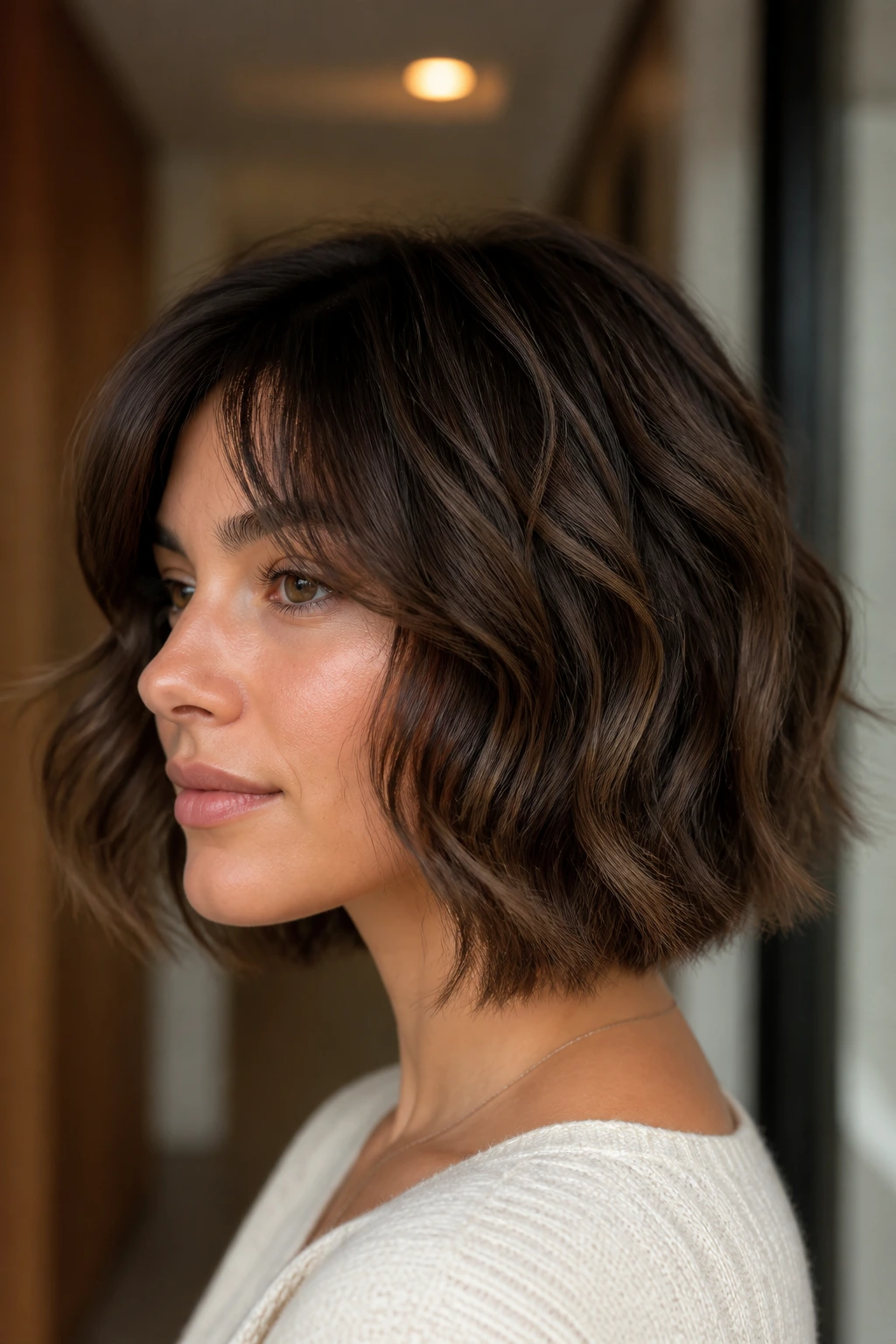
Tapering the ends makes the haircut feel lighter and more precise. Instead of a chunky bottom line, the hair narrows softly toward the perimeter. On wavy hair, that can stop the bottom from ballooning when the wave fully dries.
This style is especially useful for medium to thick hair. The taper gives the wave some direction. If your ends are prone to frizz, ask for careful point-cutting rather than heavy texturizing. Too much texture at the very bottom can make things fuzzy fast.
28. Salt-and-Pepper Shag Bob
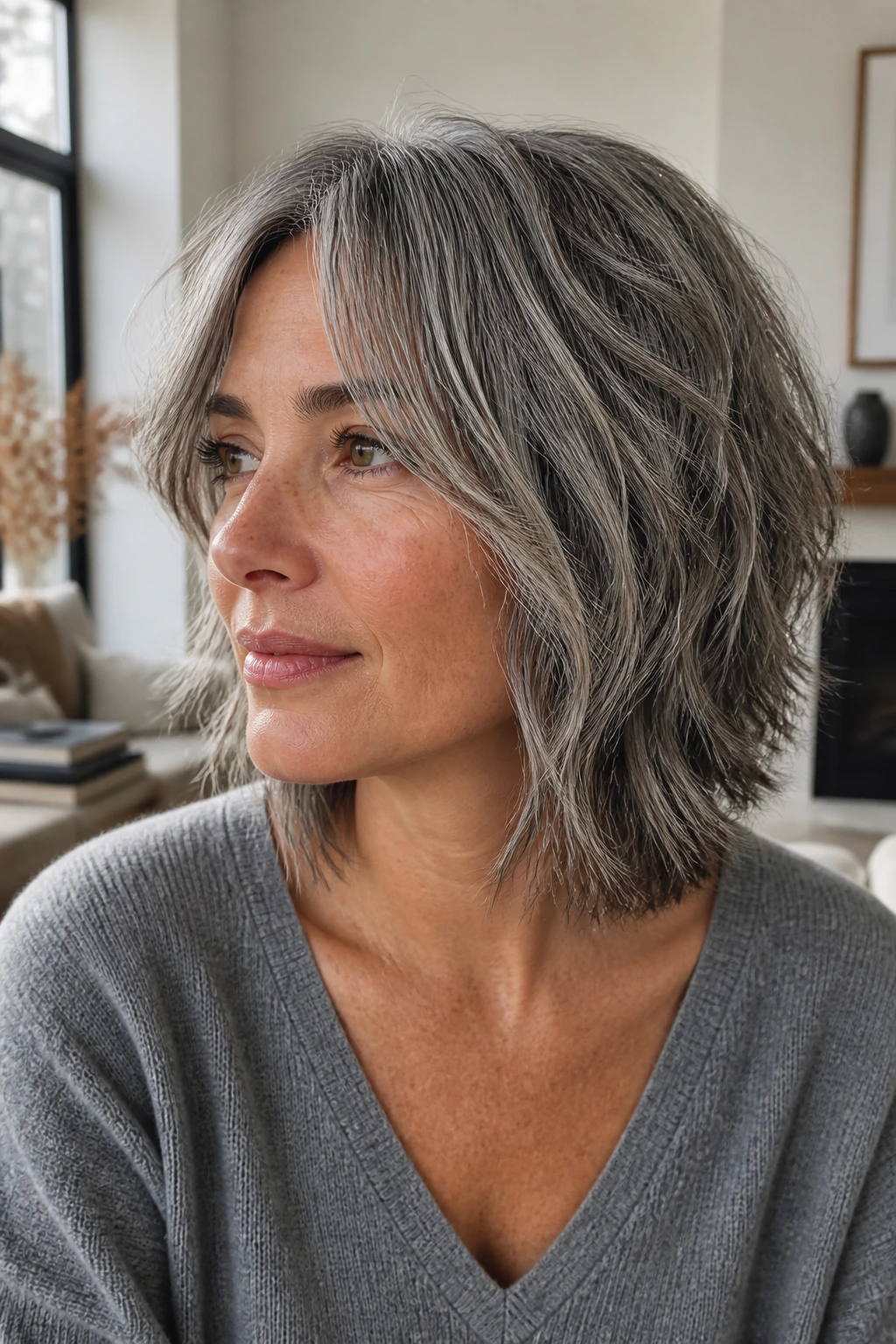
Gray hair with wave has a built-in advantage: the texture can look beautifully dimensional when the cut is right. This shaggy Italian bob uses soft layers to keep the silver and dark strands from sitting like one flat sheet. The movement makes the color feel richer.
Gloss matters here. Gray and salt-and-pepper hair can go dull if it’s cut too blunt and styled too dry. A light smoothing cream or shine spray at the ends helps the wave read cleanly. The cut does the rest.
29. Copper Shine Bob

Copper and auburn tones can make a shaggy Italian bob glow, especially when the waves catch the light at different angles. The haircut itself stays similar to the others, but the color gives every bend more depth. It’s a strong pairing.
Ask for layers that show off the color dimension without shredding the ends. That part matters. If the bob gets too thin, the copper reads patchy instead of rich. A little fullness in the perimeter makes the color look better, not worse.
30. Silver Wave Bob
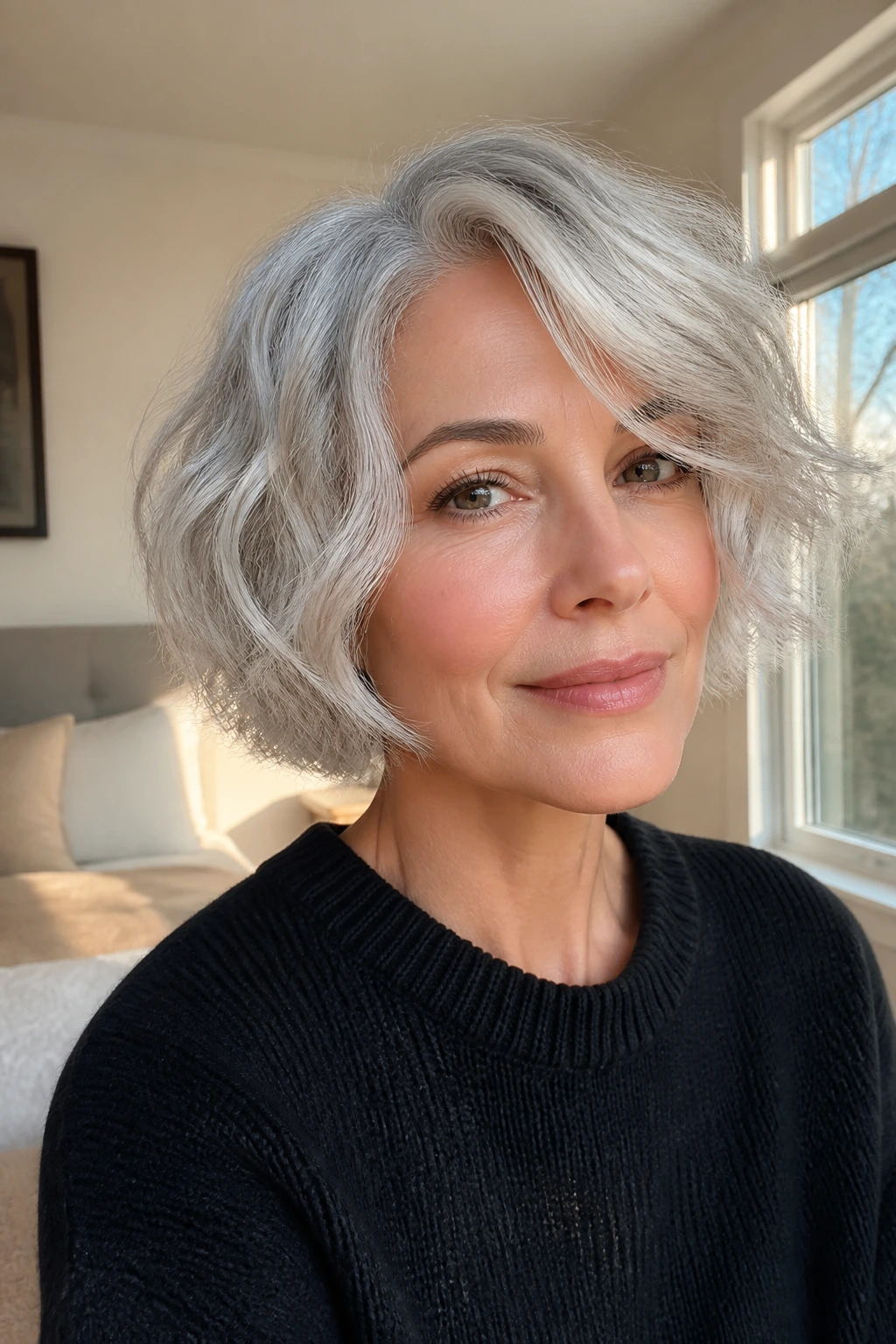
A silver wave bob looks sharp when the shape is clean and the texture is soft. The cool tone adds edge, while the shag layers keep the cut from feeling too formal. Wavy hair gives silver a bit of movement that straight hair sometimes misses.
This cut is happiest with a smoothing serum used sparingly. Too much product flattens the bend and makes silver hair look greasy faster than darker hair. Keep the finish light. The texture should look touchable, not coated.
31. Balayage Dimension Bob
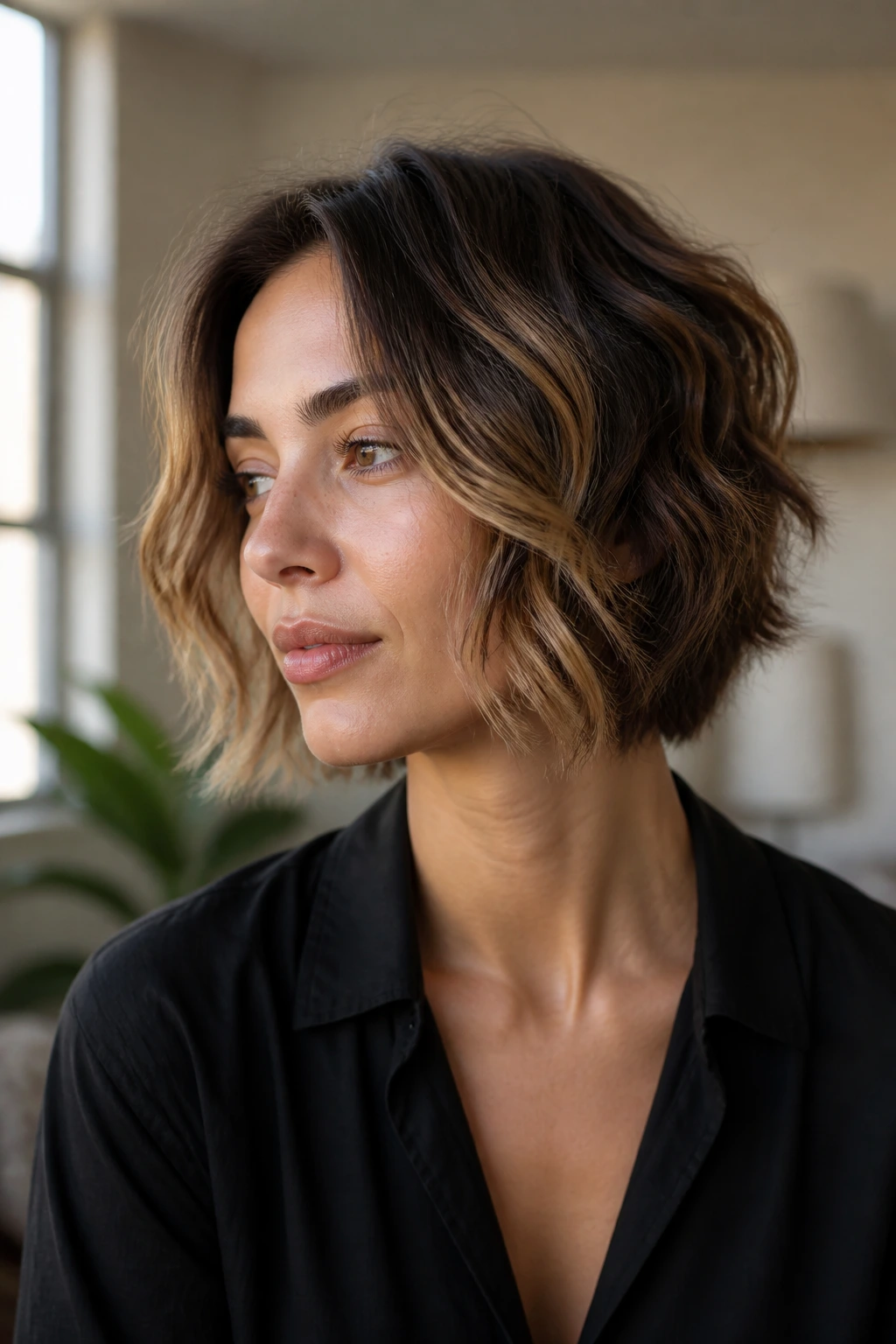
Balayage and a shaggy Italian bob have a good relationship because the layers show off the color placement. The lighter pieces land through the bends and around the face, which makes the wave pattern easier to see. If you like a cut that looks a little fuller in photos, this is a smart direction.
The haircut should still do the heavy lifting. Color can highlight shape, but it won’t create shape on its own. I’d ask for soft layers around the front and a rounded perimeter so the highlight pattern has somewhere to settle.
32. Warm Brunette Shag Bob

Warm brunette shades love this cut because the movement keeps the color from reading flat. Caramel, chestnut, and espresso tones can all show off the wave when the layers are set right. The cut feels earthy and easy to wear.
This is one of those styles that looks better when the wave is a little imperfect. A slightly bent front piece, a tucked-behind-ear side, and a soft flip at the bottom all help. It’s the kind of haircut that forgives a rushed morning.
33. Soft Undercut Bob
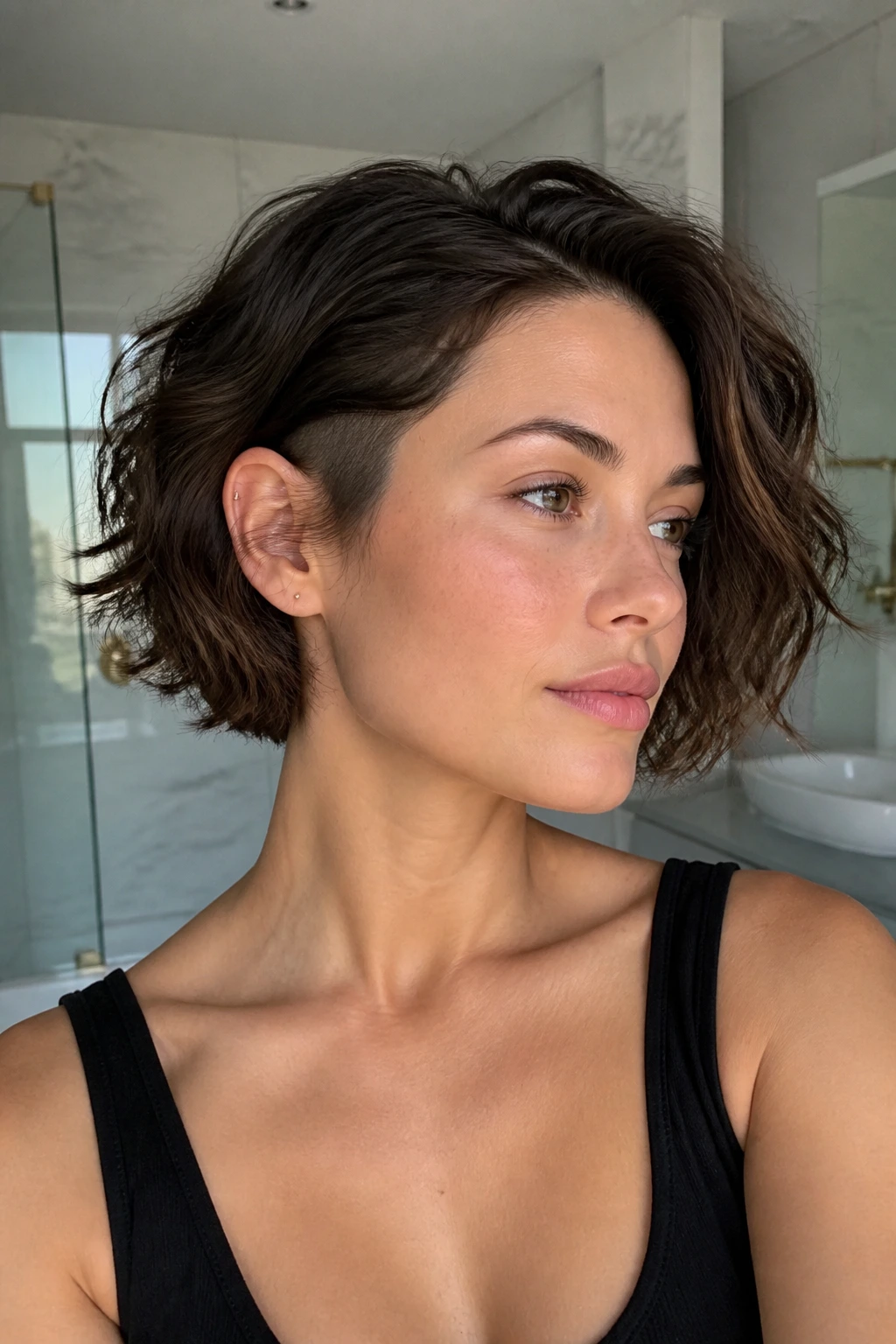
A soft undercut is useful when you’ve got a lot of bulk underneath but don’t want the outside to look too chopped. The hidden reduction lets the bob sit closer to the head while keeping the top layers full. Wavy hair benefits because the lower layers stop pushing the shape outward.
This is not a loud undercut. It should stay hidden unless the hair is lifted. Think of it as a pressure-release valve. If your hair always expands at the nape, this might be the best fix in the whole list.
34. Cheekbone-Flip Bob
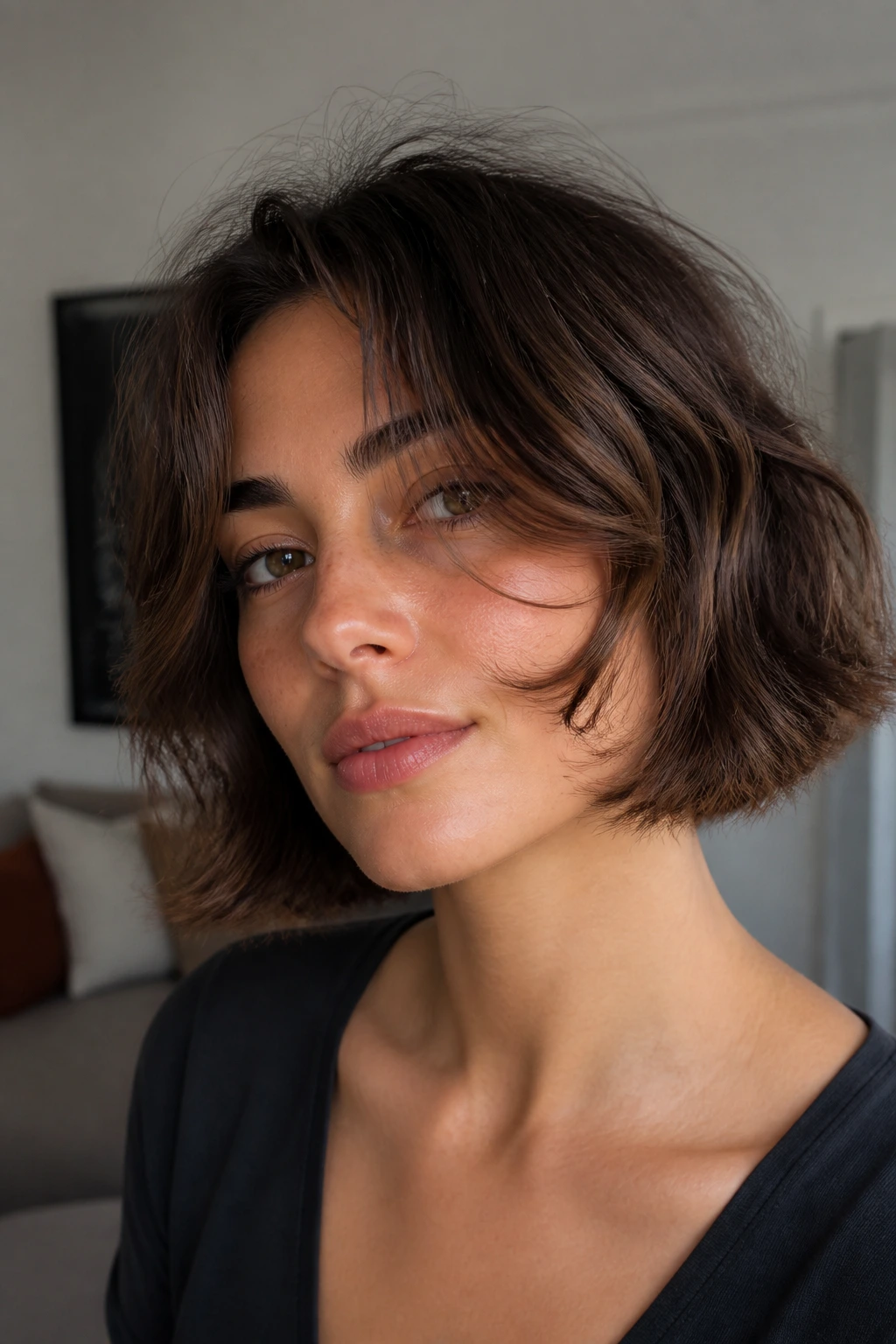
This one lives and dies by where the front pieces hit. The flip starts around the cheekbone, which pulls the eye upward and gives wavy hair a little bounce near the face. It’s flattering in a very practical way.
You want the front to skim, not poke. If the longest layers sit too low, the flip loses its shape. If they sit too high, the wave can puff out near the eyes. The cheekbone is the useful zone. That’s the spot.
35. Asymmetrical Wave Bob

A slight asymmetry can make a bob feel more modern without becoming a stunt haircut. One side sits a touch longer or fuller, which works beautifully on wavy hair because the movement breaks up the line. It looks deliberate when the cut is precise.
Keep the difference subtle. A dramatic angle can fight the wave and turn the haircut into a daily styling project. A small shift in length, though, gives the bob some attitude. It’s one of those cuts people notice without always knowing why.
36. Airy Layered Bob

Airy layers are the answer when the hair feels too dense at the ends but you don’t want visible choppiness. The cut removes weight in a way that keeps the perimeter loose and feathery. Wavy hair likes that because the wave can separate instead of clumping into one heavy mass.
The best airy bob does not look over-cut. You should still see a clean shape around the outside. The softness is inside the haircut, not all over the place. That detail matters more than most salon conversations admit.
37. Sleek-Then-Tousled Bob
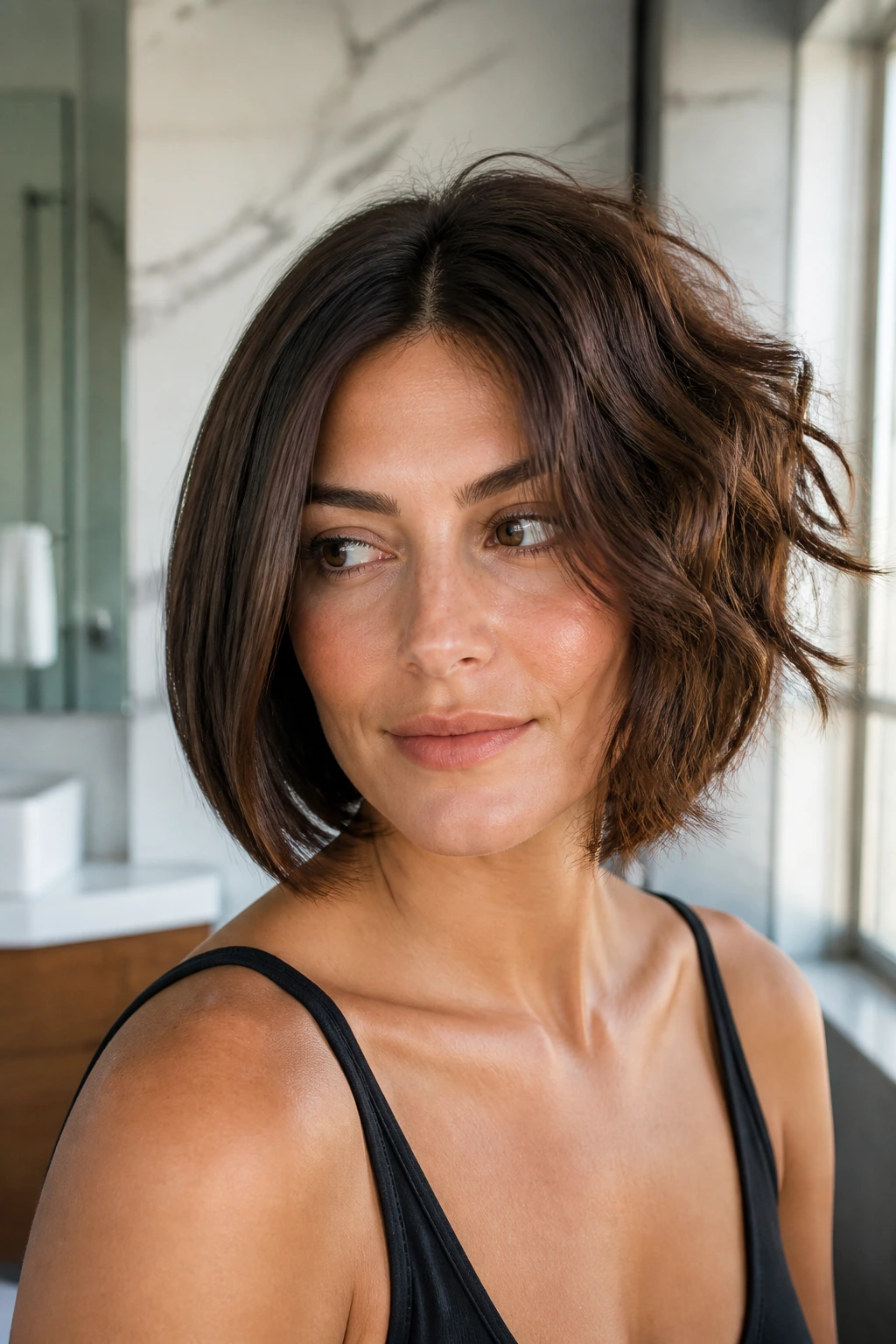
This style gives you two looks in one cut: smooth and polished when brushed, loose and piecey when roughed up. The layers are controlled enough to sit neatly, but the wave pattern can break them apart with a little product. It’s a useful balance if your life has both formal and casual days.
A light blow-dry with a round brush gives you the sleek version. Air-drying with mousse gives you the tousled one. Not many haircuts can pivot that easily without looking confused. This one usually can.
38. Sculpted Collarbone Bob
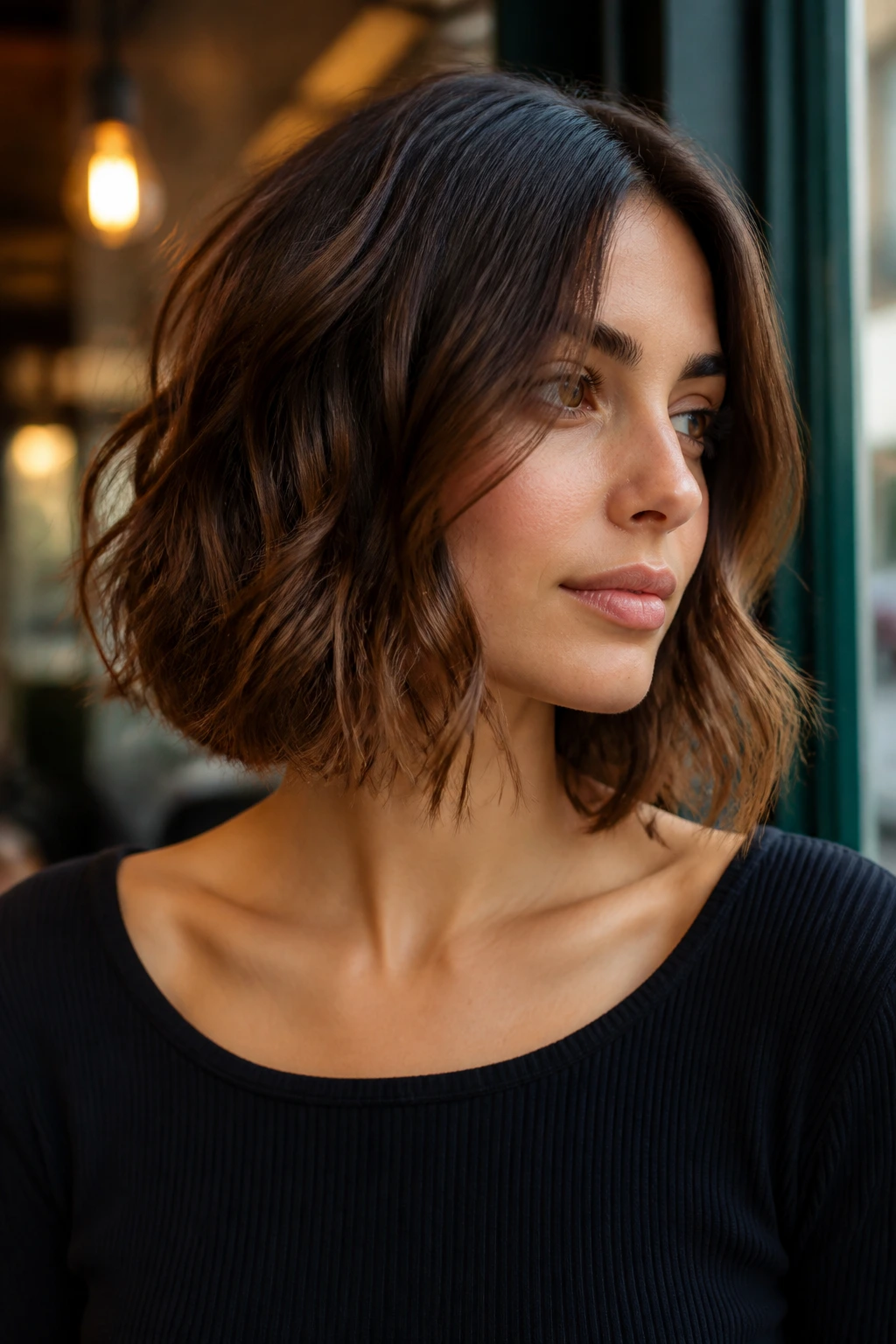
The final cut in the lineup is the one I’d hand to someone who wants polish without stiffness. The length sits around the collarbone, the layers are sculpted but soft, and the wave has room to swing instead of poofing out. It feels composed.
This is the quiet winner for wavy hair that needs shape and movement in equal measure. The neckline stays clean, the front pieces frame the face, and the overall effect is easy to wear with almost any part. If you only save one photo from this list, make it one like this.
Why the Shaggy Italian Bob Works So Well on Wavy Hair

The basic idea is simple: give the wave somewhere to go. A classic bob can look too square on wavy hair if the bottom line is heavy and the interior is packed with weight. A shaggy Italian bob softens that perimeter, then layers out the middle so the bend can show instead of fighting the cut.
That’s why stylists pay so much attention to the weight line. If the weight sits too low, you get the triangle. If it sits too high, the ends can look thin and frayed. The best versions keep a clear outline but remove bulk where the wave would otherwise balloon. It’s a small adjustment with a big payoff.
Wavy hair also gives the cut a nice built-in randomness. Straight hair often needs more styling to look alive, while waves already create separation and movement. That makes the shaggy Italian bob a good match for people who want a haircut that can air-dry, bend, and still look finished after a quick pass with a brush.
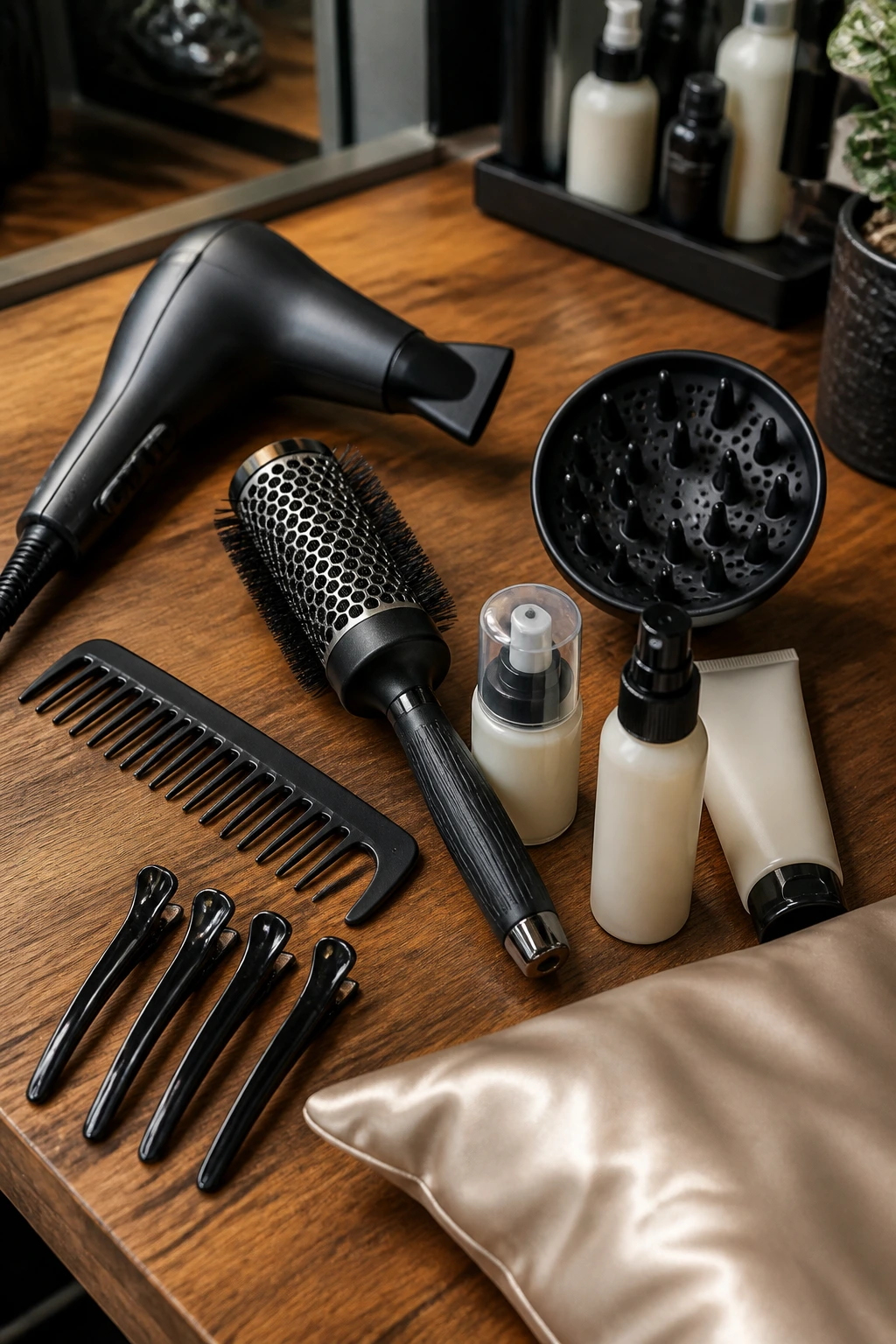
Essential Tools for Cutting, Styling, and Resetting the Shape
-
Blow dryer with a narrow nozzle: Directs the airflow so you can smooth the roots without blasting the wave apart.
-
1.25- to 1.5-inch round brush: The sweet spot for bob lengths; large enough to keep the bend soft, small enough to add lift.
-
Diffuser attachment: Useful if you wear the cut wavy and want the curls and bends to dry with less frizz.
-
Wide-tooth comb: Better than a brush for detangling damp waves without pulling them straight.
-
Section clips: Keep the top and front pieces out of the way while you style the crown or nape.
-
Light mousse or volumizing foam: Gives wavy hair hold at the roots without that crunchy, sticky feel.
-
Texture spray: Handy for separating the ends once the hair is dry; one or two passes is usually enough.
-
Light smoothing cream or serum: Good on the ends, but use a small amount. A pea-sized drop can be plenty for a bob.
-
Satin pillowcase or bonnet: Cuts down on frizz and helps the shape survive overnight without a full reset.
Choosing the Right Reference Photo and Product Shelf
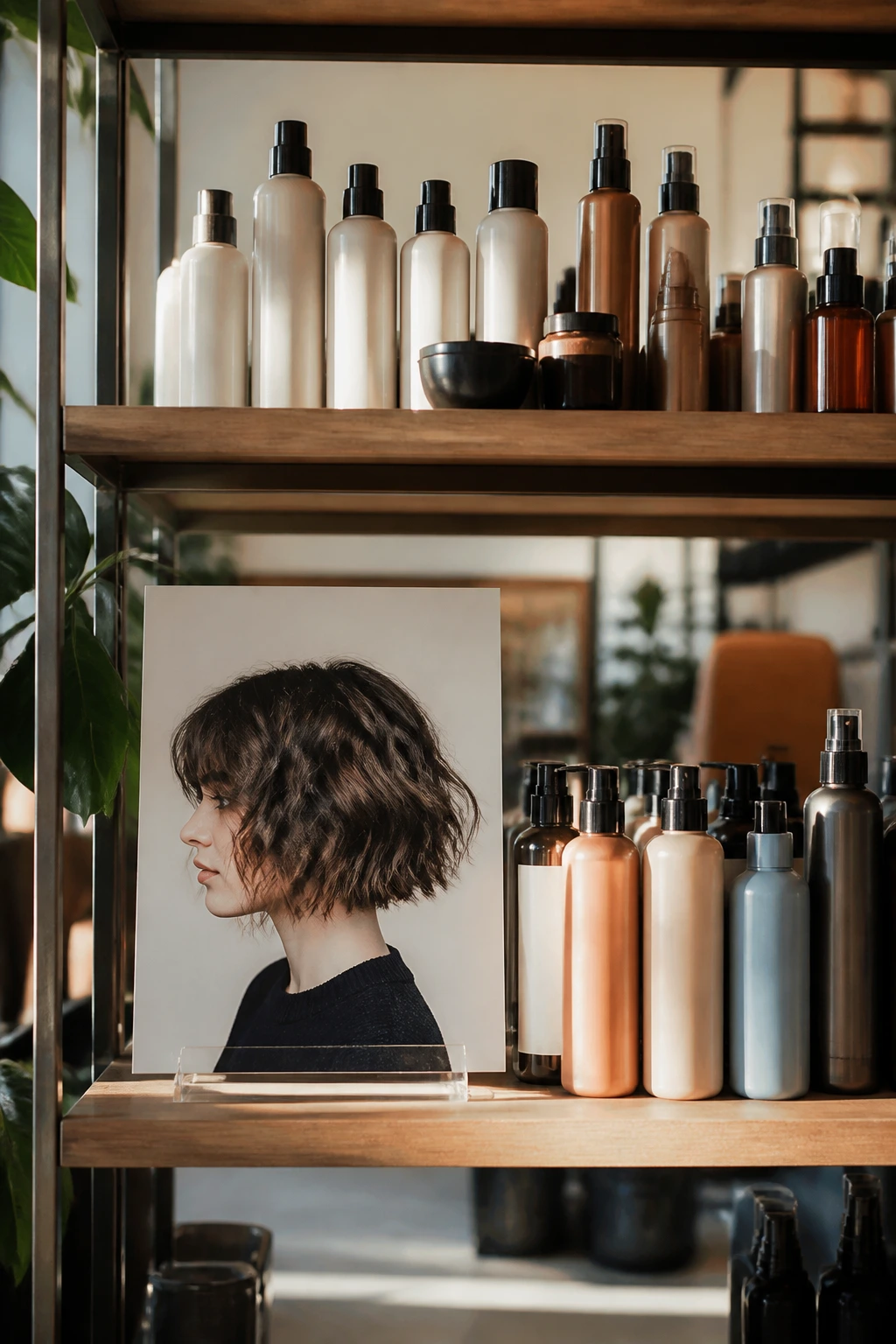
The best salon reference photo is not the prettiest one. It is the one that looks most like your own hair in density, wave pattern, and length. If your hair is thick and the photo shows fine hair, the cut will behave differently. If your waves are looser than the photo, you may need a longer perimeter so the shape does not collapse.
Ask for the details that matter: where the face-framing layers start, how much weight was removed from the interior, whether the ends were point-cut or razor-softened, and where the fringe lands when it’s dry. Those four things tell a stylist much more than “I want something messy.” Messy is not a plan. Specifics are.
Product choice matters too. Fine wavy hair usually likes a mousse, foam, or root spray. Thick hair tends to need a lighter cream at the ends and a stronger hold product near the crown. If your waves clump well on their own, skip the heavy leave-in. If they fall apart fast, a small amount of curl cream before the mousse can help.
How to Wear These Cuts Day to Day

Presentation: The cleanest version of a shaggy Italian bob has a soft bend at the ends, a little lift at the crown, and a part that feels slightly off-center instead of ruler-straight. You want the shape to look touched, not fussed over.
Accompaniments: This cut sits nicely with hoop earrings, sharp collars, simple knit tops, or a blazer with an open neck. Those details leave room for the hair to move. Heavy scarves and high necklines can swallow the bob if the length sits at the jaw.
Portions: Chin-length versions suit smaller faces and finer waves that need a little boost. Collarbone versions are better when the hair is dense or when you want a softer grow-out. If you’re unsure, stay a touch longer than you think. Wavy hair often shortens visually once it dries.
Beverage Pairing: A polished blowout finish reads one way; an air-dried, piecey finish reads another. Match the energy to your day. Soft, glossy waves for a dinner out. Lightly tousled texture for everything else.
Practical Tips for Better Texture and Less Puff
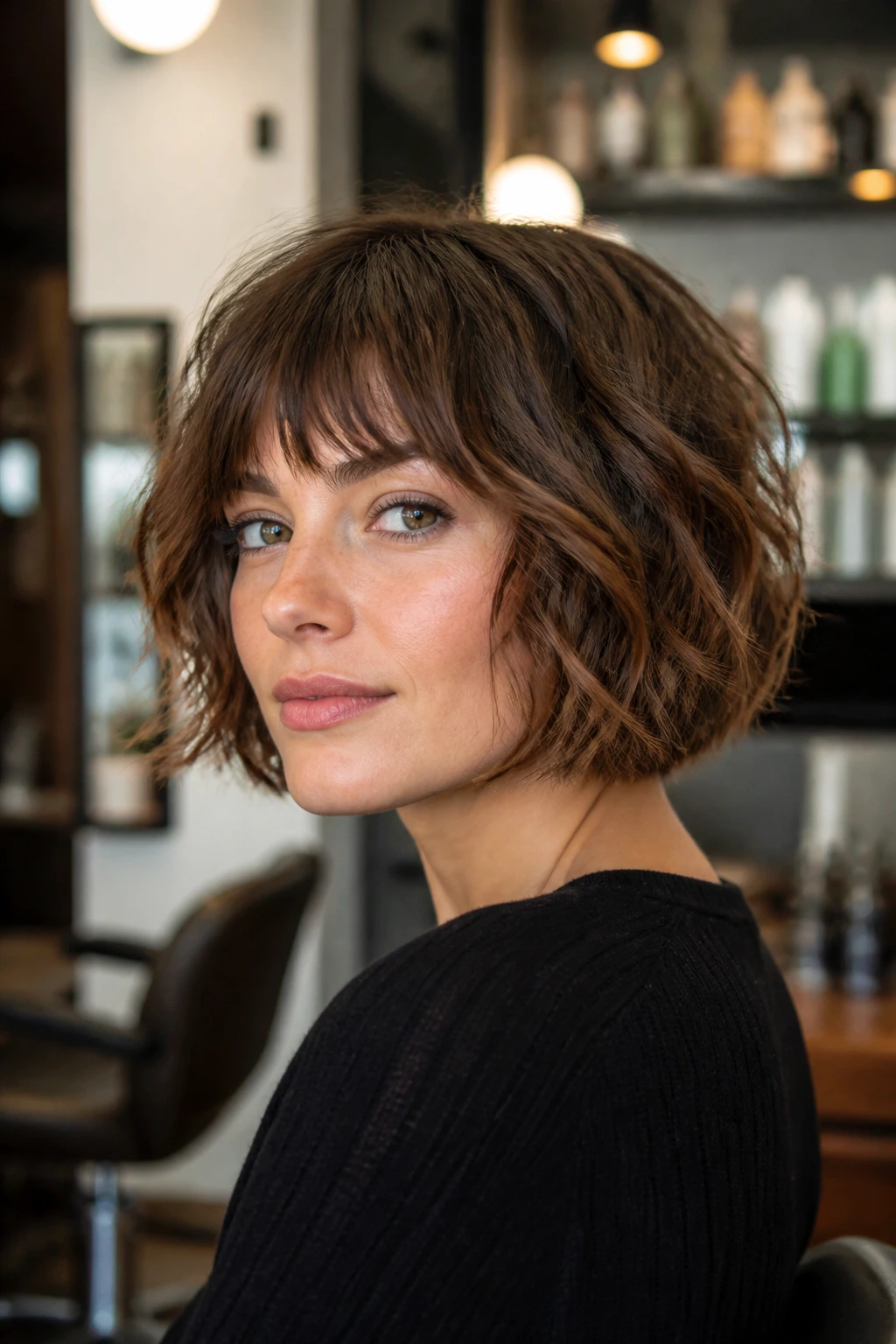
Root Lift: Clip the crown in two or three small sections while the hair is still damp. That tiny pause helps the roots dry with space, which matters more than people think on bob lengths.
Wave Definition: Scrunch product upward from the ends, but stop before the roots get saturated. If the crown gets too wet with cream, the whole cut can drop flat by lunchtime.
Humidity Control: Keep a pea-sized amount of smoothing cream for the ends only. Put it on dry hair if needed. Wet application often uses too much and leaves the bob soft in the wrong way.
Finishing Move: Twist two or three face-framing pieces around your fingers once they’re dry. It sounds small. It is small. Still, it keeps the front from looking too puffy or disconnected.
Common Mistakes That Make the Shape Collapse
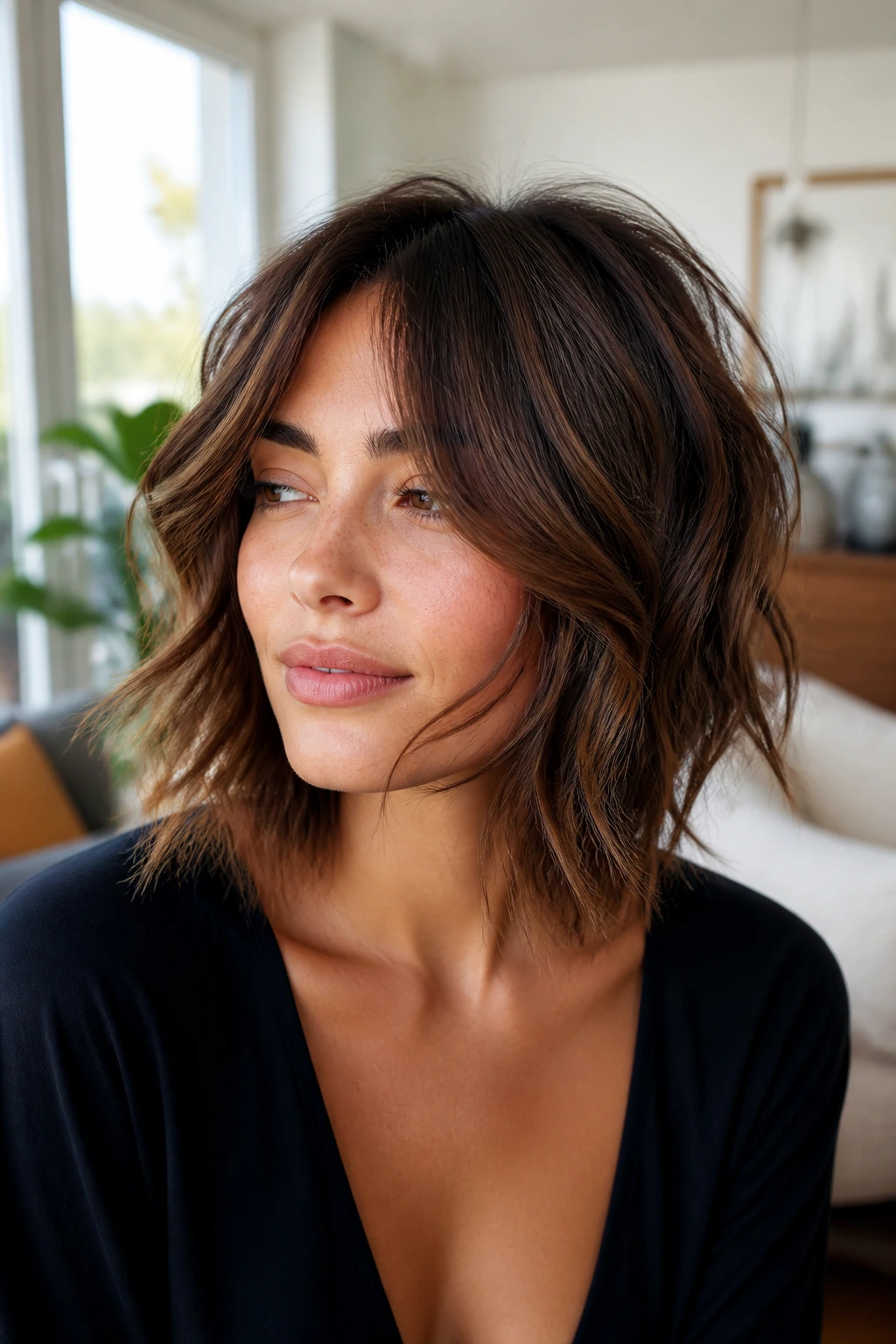
The first mistake is cutting the bob too blunt at the widest part of the head. The symptom is a puffed-out side view that feels triangular. The fix is to soften the interior and keep the bottom line clean but not heavy.
Another common error is over-thinning the ends. You see this as wispy tips that look airy for a day and ragged after the second wash. Ask for weight removal in the middle, not a massacre at the perimeter.
Product overload causes trouble too. A thick cream or too much oil can flatten the wave and make the crown limp. Use less than you think you need. If the hair feels coated, you went too far.
And then there’s the bang mistake. Fringe that is cut too short or too densely can spring up and sit awkwardly against a wavy bob. Leave room for shrinkage. Waves are notorious for changing their minds after they dry.
Variations and Adaptations to Try

The Office-Polished Version: Keep the layers soft and the ends more refined, then style with a round brush for a smoother finish. This works well if you need the haircut to hold up in a more formal setting.
The Air-Dry Version: Ask for extra movement through the interior and a longer fringe area so the hair can dry into its own texture. This is the easiest route if you want the cut to cooperate with minimal styling.
The Thick-Hair Relief Version: Add internal debulking and a slightly longer perimeter so the shape stays controlled. This keeps the bob from flaring out at the bottom when the wave expands.
The Fine-Hair Lift Version: Stay a bit shorter and keep the layers subtle. Too much texture can make fine hair look sparse, so the goal is lift, not shredding.
The Fringe-Forward Version: Build the whole look around bangs or curtain fringe. This gives the bob more personality up front and is a smart choice if your face shape benefits from more framing.
The Grow-Out-Friendly Version: Keep the corners soft and the layers blended. If you’re between trims a lot, this version stays readable longer and does not look awkward as fast.
Keeping the Shape Fresh Between Washes

Most shaggy Italian bobs look best on day one and day two, when the wave has settled but hasn’t gone flat. By day three, the crown often needs a little help. A quick mist of water or leave-in spray, a scrunch at the ends, and two minutes with a diffuser on low heat can bring the shape back without a full wash.
Dry shampoo belongs at the roots, not halfway down the hair. Use it sparingly, wait a minute, then massage it in with your fingertips. If the ends need revival, use a tiny bit of texture spray or foam, then twist the front pieces while they dry. That keeps the bob from looking puffy at the sides and limp at the top.
Sleep matters too. A satin pillowcase helps, and so does pinning the front in a loose clip if you know the shape falls forward overnight. Plan for trims every 6 to 8 weeks if you want the perimeter to stay clean. If the cut is very short or very precise, 5 to 6 weeks can be better.
Frequently Asked Questions

Does a shaggy Italian bob work on every wavy hair type?
It works on most wave patterns, but the length and layer placement need to match the density. Loose waves usually do well with a slightly longer bob, while tighter waves often need softer interior layering so the haircut does not puff up.
Can fine wavy hair wear this cut without looking thin?
Yes, if the layers are kept light and the perimeter is not over-thinned. Fine hair usually looks best when the bob stays a touch fuller at the ends and the volume comes from roots, not from stripping out too much weight.
What should I ask my stylist for?
Ask for a bob with soft internal layers, a rounded perimeter, and face-framing pieces that start around the cheekbone, lip, or chin. Bring a photo that matches your wave pattern and density, not just the length.
Is fringe a good idea with this cut?
It can be, especially curtain bangs or bottleneck fringe. The main thing is length. Wavy hair tends to spring up, so fringe should usually be left a little longer than straight-hair bangs would be.
How do I keep the cut from getting too triangular?
The triangle happens when the bottom is too heavy and the middle is too full. A stylist can fix that with smarter interior layering, and you can help at home by not piling on heavy creams that weigh the crown down.
Can I air-dry this haircut, or does it need heat styling?
You can air-dry it if the cut is shaped well. A little mousse, a good scrunch, and root clipping for the first 10 minutes usually make enough difference. Heat just gives you more polish, not a requirement.
How often does it need trimming?
Most versions need a clean-up every 6 to 8 weeks. Shorter, more sculpted bobs may need sooner attention, especially if the nape is tight or the fringe is part of the shape.
What if my hair is thick and poofy?
Ask for debulking in the interior, not aggressive thinning at the ends. Thick wavy hair usually looks better when it keeps some edge density, because that helps the silhouette stay clean instead of fuzzy.
The Shape That Keeps Moving
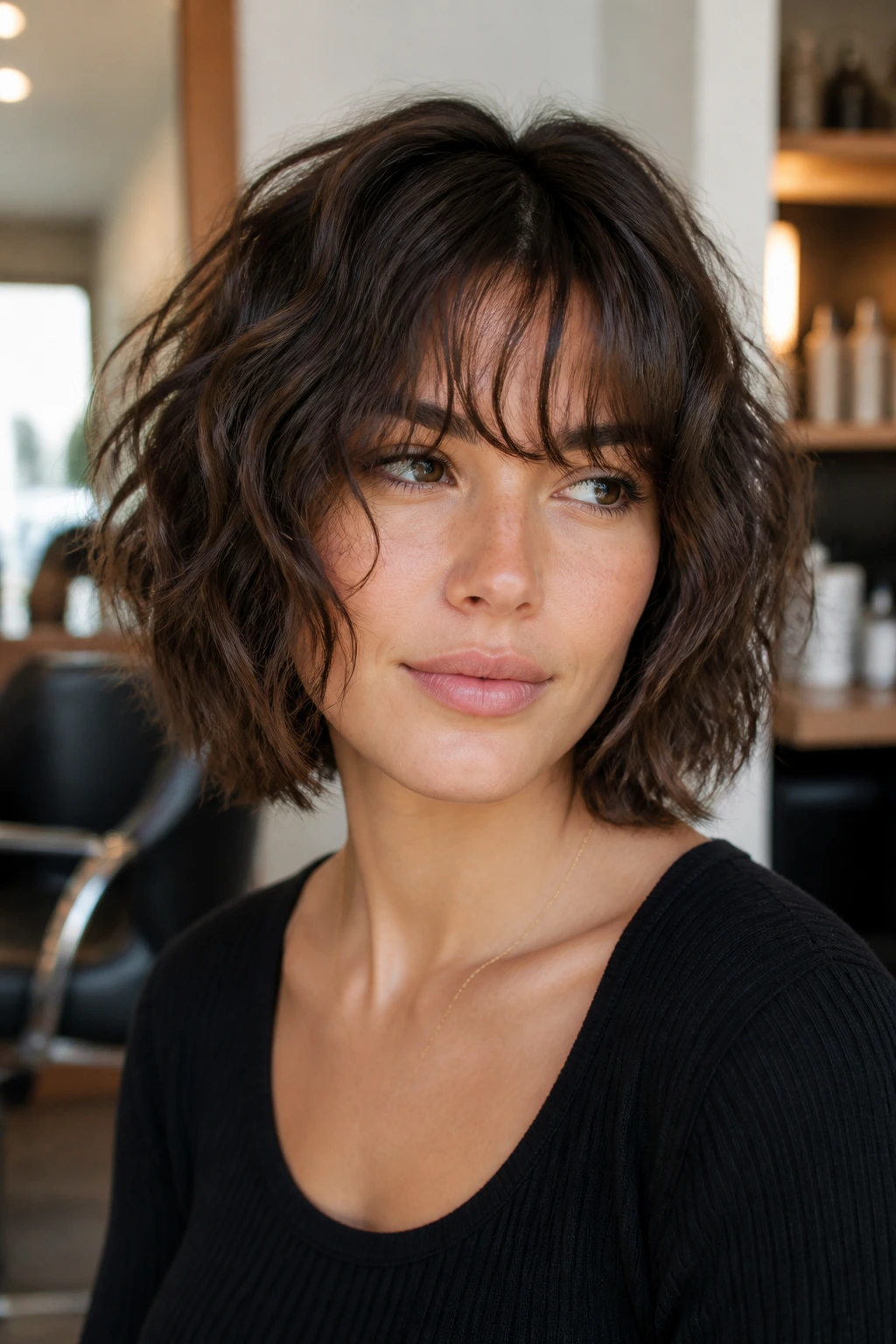
A shaggy Italian bob works because it respects the way wavy hair actually behaves. It keeps the line of a bob, but it gives that line enough softness to bend, flick, and settle without fighting back. That is why the cut can look polished on one person and airy on another while still feeling like the same idea.
If you’re showing a stylist one photo, make it a photo with the same wave pattern and density you have. Then point to the part that matters most: where the fringe lands, how short the back sits, and how much movement you want around the face. Those details decide whether the cut looks crisp or just choppy, and that difference is the whole game.
