



Long hair can get heavy in places you don’t notice until you sit in a salon chair and the stylist starts lifting sections that feel like wet rope. The ends drag, the shape collapses after a few weeks, and the whole thing starts to look more like length than style. Bob haircuts for long hair fix that without asking you to surrender every inch.
The sweet spot is usually somewhere between the chin and the collarbone, sometimes a touch lower if you still want to twist the hair into a clip or a small ponytail. A blunt edge makes the hair look denser. Soft layers take the weight out of thick hair before it balloons at the sides. Front pieces can sharpen a jawline, soften a square face, or make a center part feel less severe. Those small choices matter more than the label on the haircut sheet.
I’ve always liked a long bob because it has an opinion. It can look polished with a round brush, a little feral with air-dried bends, or clean and straight with the ends tucked under just enough to show the line. Pick the wrong version and it turns puffy, triangular, or flat in the back. Pick the right one and it behaves.
Why These Long Bob Ideas Earn Their Keep

- They keep length where you can still use it. Most of these cuts leave enough hair to tuck behind the ears, half-up, or twist into a low clip without that “I lost all my hair” feeling.
- The shape changes before the length disappears. A blunt edge, an A-line angle, or a soft stack can make a big visual difference even when you only remove a few inches.
- Different textures finally get different answers. Fine, thick, wavy, curly, and straight hair do not want the same bob, and this collection covers that spread instead of pretending one cut fits all.
- They grow out in a civilized way. Longer bobs usually stay intentional longer than very short crops, which matters if you do not race back to the salon every four weeks.
- Styling doesn’t have to be a full production. Many of these cuts look finished with a bend at the ends, a root lift, or a quick pass of a flat iron—not a 40-minute blowout with three products and a prayer.
1. Blunt Collarbone Bob
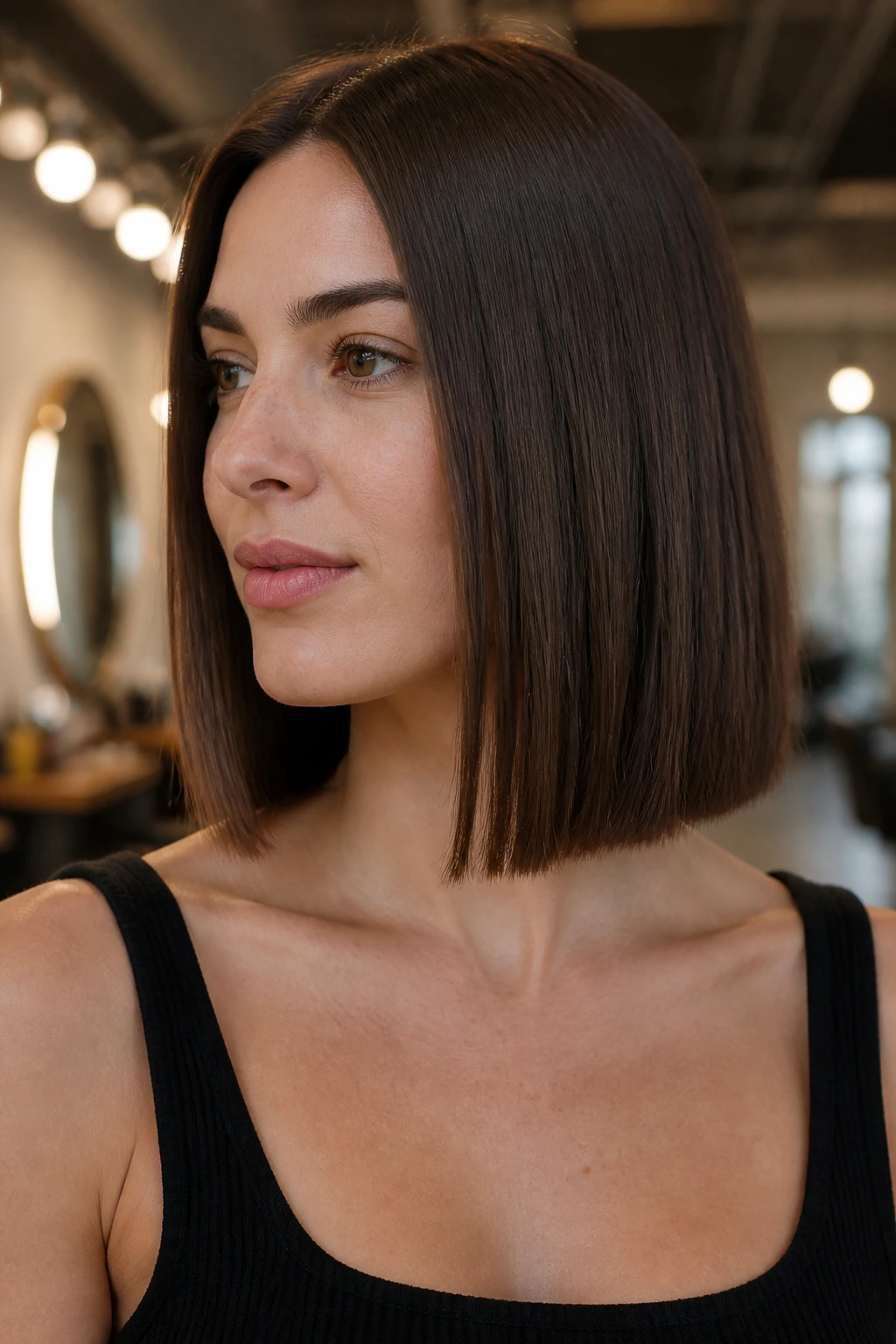
A blunt collarbone bob is the cleanest place to start if you want the drama of a bob without the shock of losing too much length. The line sits right at the collarbone and lands with enough weight that the ends look deliberate instead of wispy. On thicker hair, that edge can make the whole head look calmer.
It works because the perimeter does the heavy lifting. When the bottom line is sharp, the eye reads the haircut as fuller and more expensive-looking, even if the actual length only changed by a few inches. If your hair is very dense, ask for a tiny bit of internal weight removal so the ends do not kick out like a shelf.
Best for: straight, slightly wavy, or medium-thick hair that needs structure.
Watch for: if the collarbone hits exactly where your hair flips outward, a stylist may need to nudge the length either a little higher or lower.
If you hate wispy layers, this is the one to try first.
2. Soft A-Line Lob
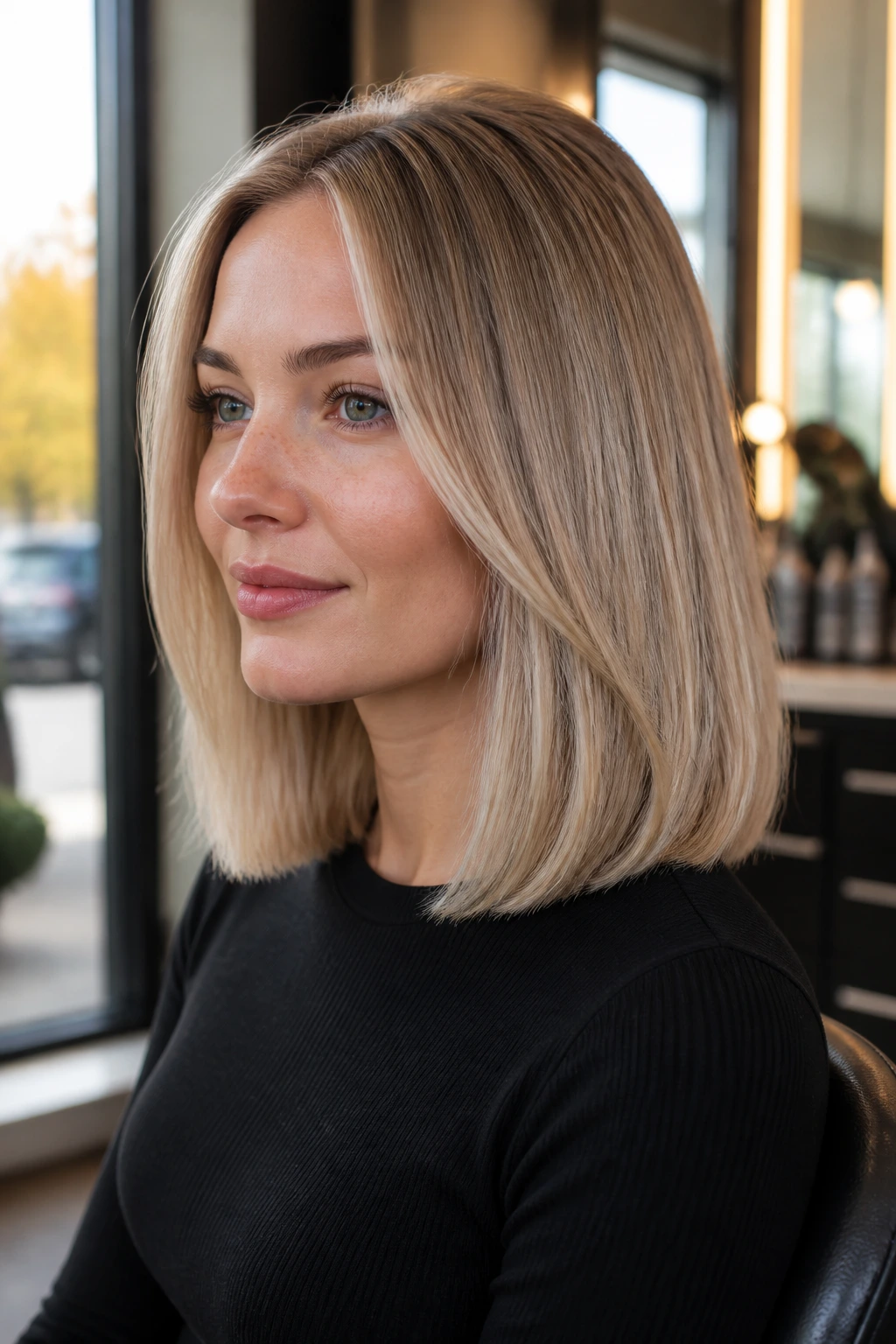
Want a little forward angle without looking like you’re wearing a hard geometric cut? The soft A-line lob gives you that. The back stays a bit shorter, the front slides longer, and the whole silhouette moves gently toward the face instead of falling in a blunt curtain.
That angle helps long hair feel lighter at the ends. It also grows out better than a severe inverted bob, because the difference between back and front isn’t so sharp that you notice every half-inch of growth. On fine hair, keep the angle subtle; on thick hair, a slightly steeper angle helps the neckline breathe.
A good A-line lob should look like the hair is quietly pulled forward, not like it was cut with a ruler. That’s the difference between flattering and fussy.
3. French Bob with Curtain Bangs

A French bob on long hair is really a long-bob attitude with shorter face pieces: soft, airy, and a little undone at the edges. Add curtain bangs and the haircut stops feeling heavy around the forehead. The bangs open in the middle and fall toward the cheekbones, which gives the whole cut some movement even when the rest of the hair is straight.
This shape works especially well if you want to keep the back long enough to tuck behind the neck but still get that face-framing lift. It looks best when the ends are not over-styled. A quick round-brush bend or a loose, brushed-out wave is enough.
If your hairline is cowlick-prone, ask for a longer curtain bang that can split naturally. A too-short fringe here turns annoying fast.
4. Layered Shoulder-Grazing Bob

This is the version for people who like movement but refuse to wear a haircut that lies flat and lifeless. The shoulder-grazing bob sits long enough to feel like a real length, then uses long layers to keep the edges from getting bulky. It’s especially useful if your hair is straight and heavy, because the layers stop it from hanging like a wet towel.
The trick is restraint. You want layers that fold into the overall shape, not a stack of short pieces that pop out all over the place. Ask for long internal layers and a few softer face pieces if you want motion without losing the outer line.
It’s one of the easiest cuts to switch between casual and polished. Air-dry it with a bit of cream, or blow it smooth when you want the ends to sit neatly.
5. Face-Framing Long Bob
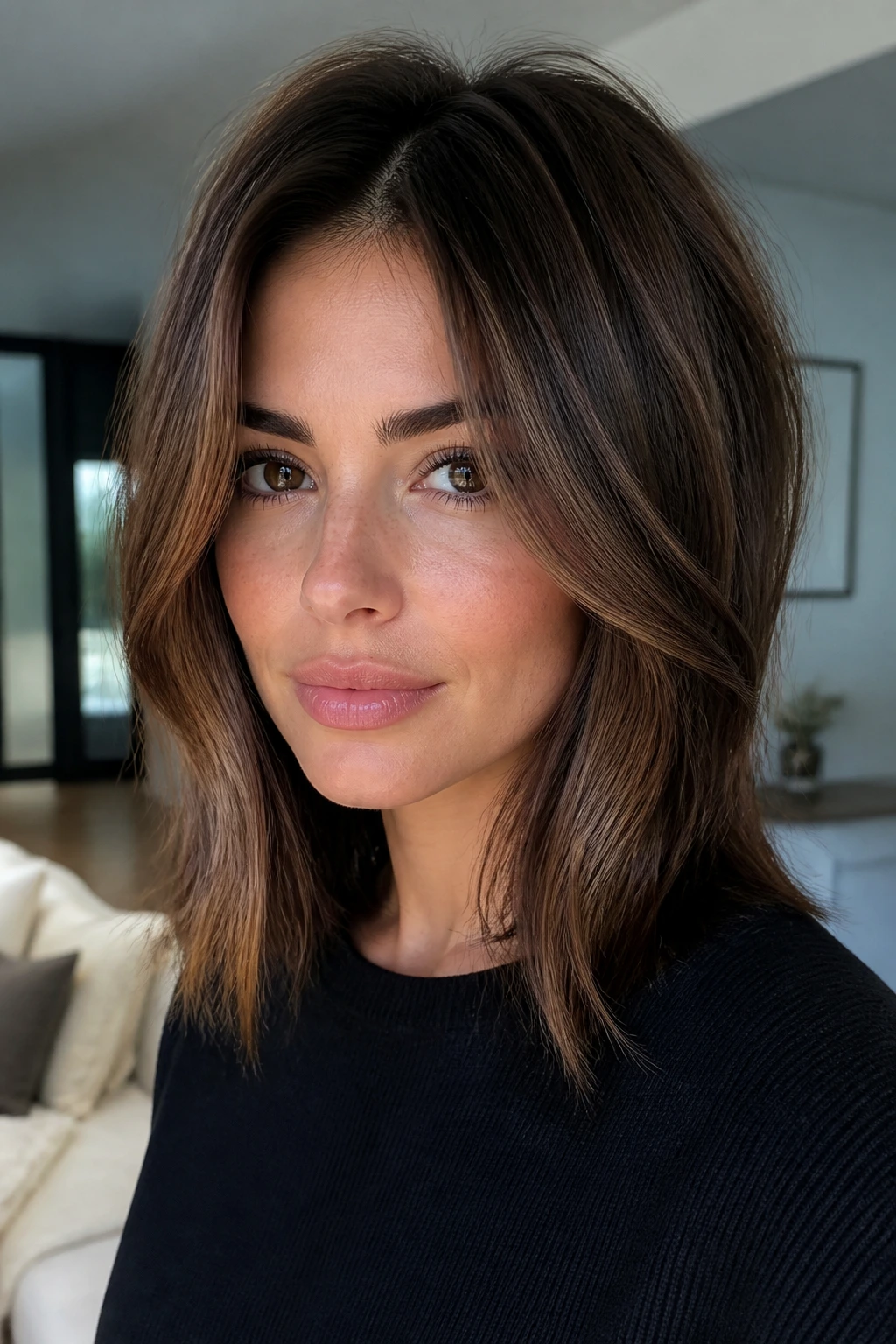
What if you want the cut to do some of the contouring for you? That’s where the face-framing long bob earns its place. The back can stay fuller and the front pieces start around the cheekbone or lip, which pulls attention upward and keeps the hair from swallowing the face.
Ask for this if you wear a center part. The front pieces prevent a center split from looking too blunt or boxy. A small lift in the crown and a soft bend around the jaw are enough; you do not need curls everywhere.
- Keep the front pieces long enough to tuck behind the ears.
- Leave the perimeter clean so the haircut still reads as a bob, not just layered long hair.
- Style with a flat iron bend away from the face if you want the cheekbones to show more.
This is the haircut I’d hand to someone who wants change without a full identity shift.
6. Textured Wavy Lob
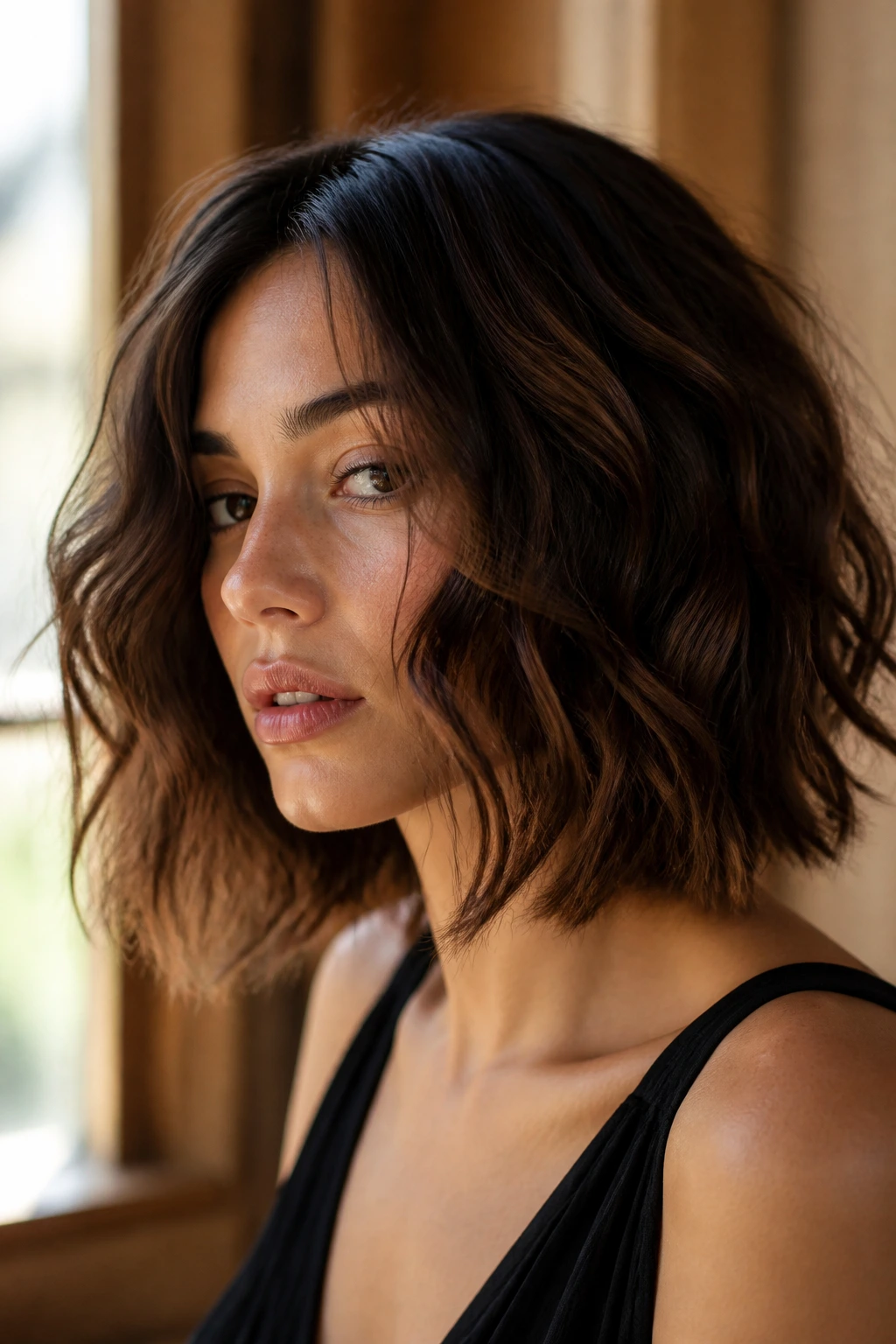
A textured wavy lob has that slightly broken-up surface that looks best when it is not overthought. The ends are soft, the waves are loose, and the whole thing sits somewhere between beachy and practical. If your hair already bends a little on its own, this cut lets that texture show instead of fighting it.
It’s especially good for hair that goes limp in long layers but still feels too heavy at one length. A few well-placed layers give the waves room to stack without turning into a triangle. Use a mousse on damp hair and scrunch from the ends upward; once it’s dry, a touch of texture spray at the mids and ends keeps the piecey look from collapsing.
Skip the giant curling iron. This cut looks better when the wave pattern is irregular and a little messy.
7. Sleek Center-Part Lob
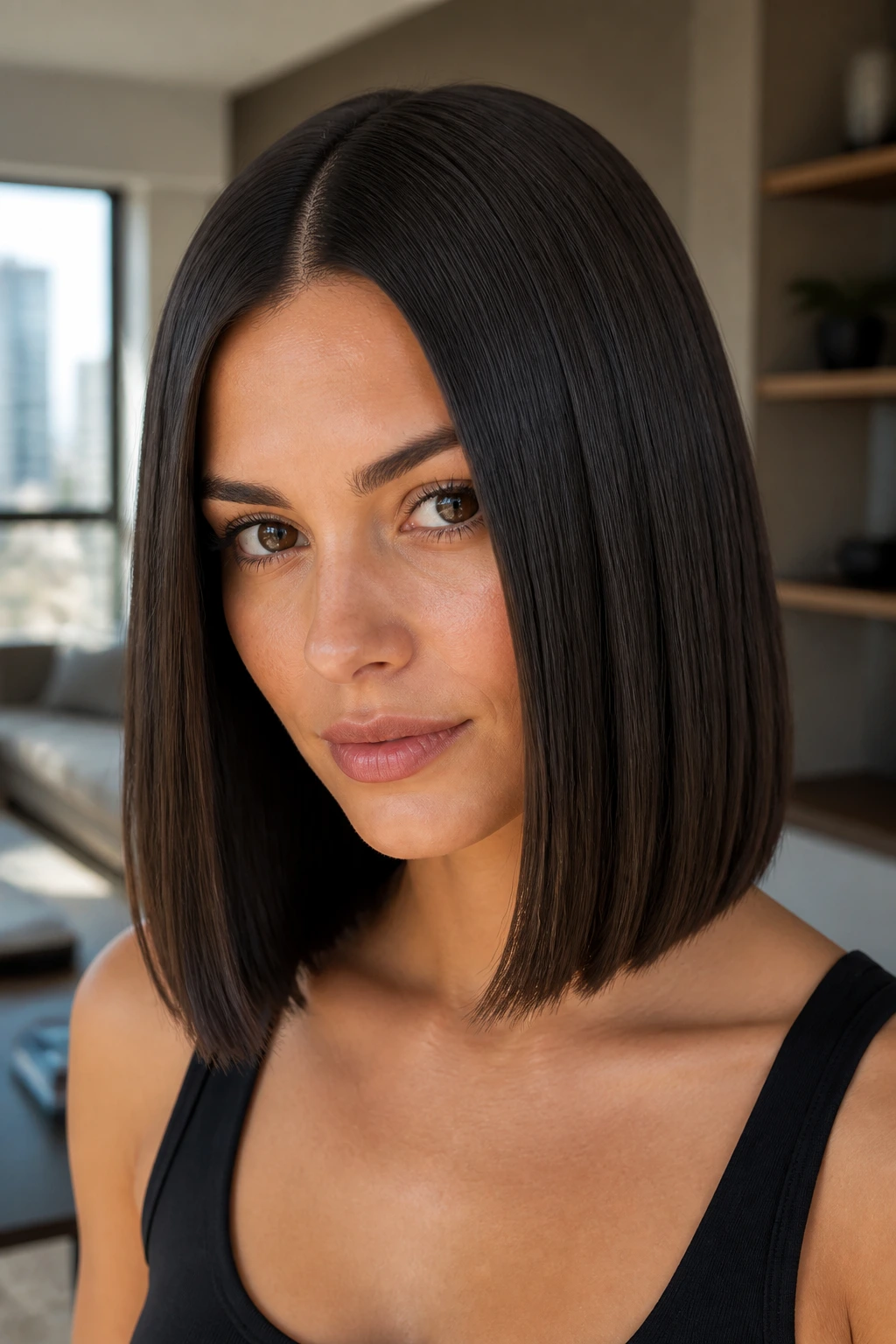
A sleek center-part lob is all about discipline. No shaggy ends. No flippy chaos. Just a straight line, a clean middle part, and hair that falls like polished ribbon down the sides of the face. On fine to medium hair, that simplicity can make the hair look thicker because every strand is sitting close together.
The downside is obvious: this cut needs honest styling. If your hair fights the center part or swells in humidity, you’ll need a smoothing cream, heat protectant, and a flat iron or blow-dry brush to tame the ends. But when it works, it looks sharp in a way that doesn’t need decoration.
One nice detail: the long bob length keeps it from feeling severe. You get the clean line without the hard edge of a chin-length crop.
8. Side-Part Volume Bob
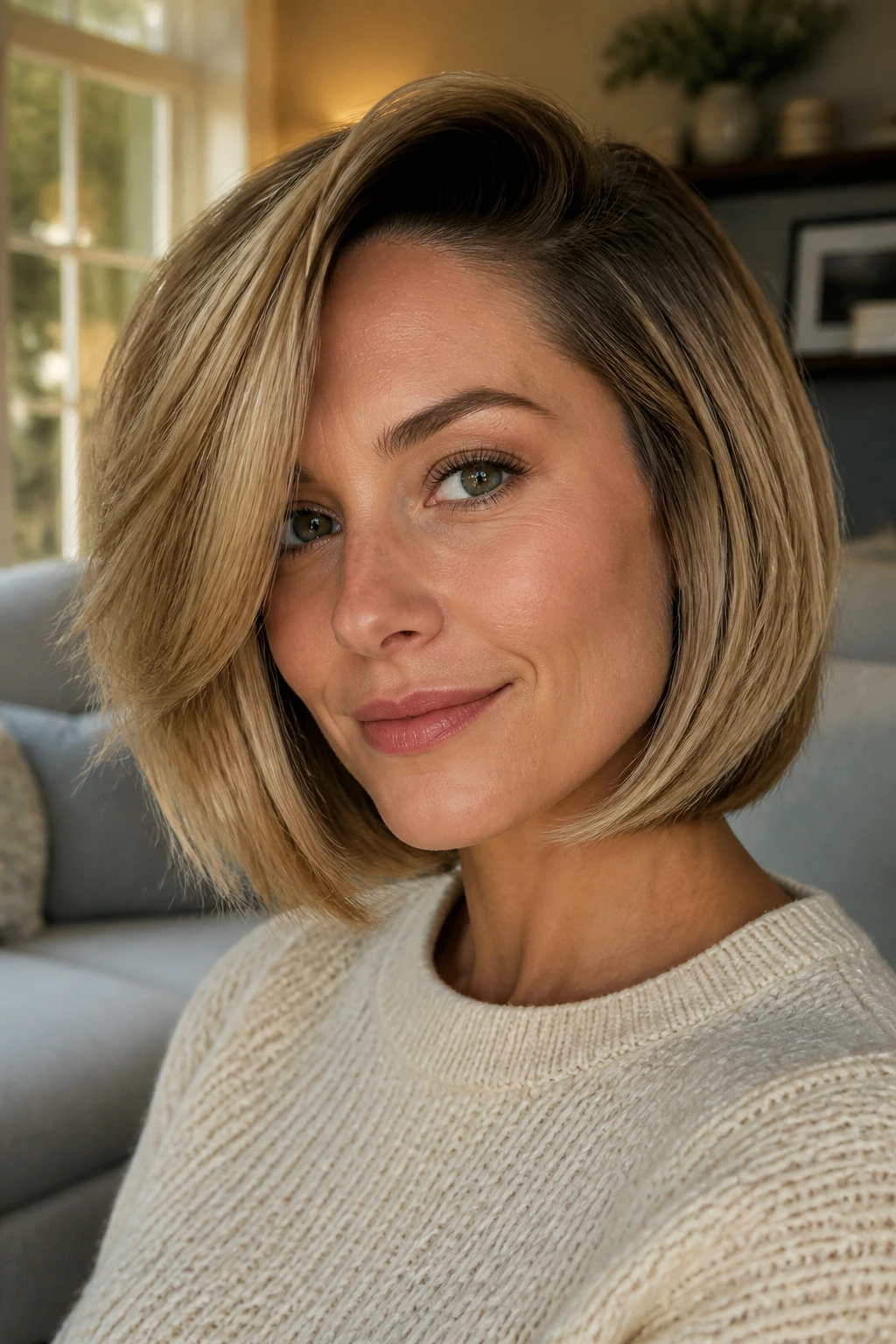
A side-part volume bob is the fix for hair that lies too flat at the roots and then gets awkwardly puffy at the ends. The deep side part lifts one side of the crown, creates a little asymmetry, and gives the haircut some swing. It’s a strong move on long hair because it uses the weight of the length to help the shape move.
Blow-dry the roots in the opposite direction of the part first, then swing the hair over when it cools. That one small trick changes the whole silhouette. If you want the ends to feel softer, bend them under with a round brush or a 1¼-inch iron, not a tight curl.
This is one of the better options if you like the bob shape but do not want it to look too strict.
9. Shaggy Bob with Long Fringe
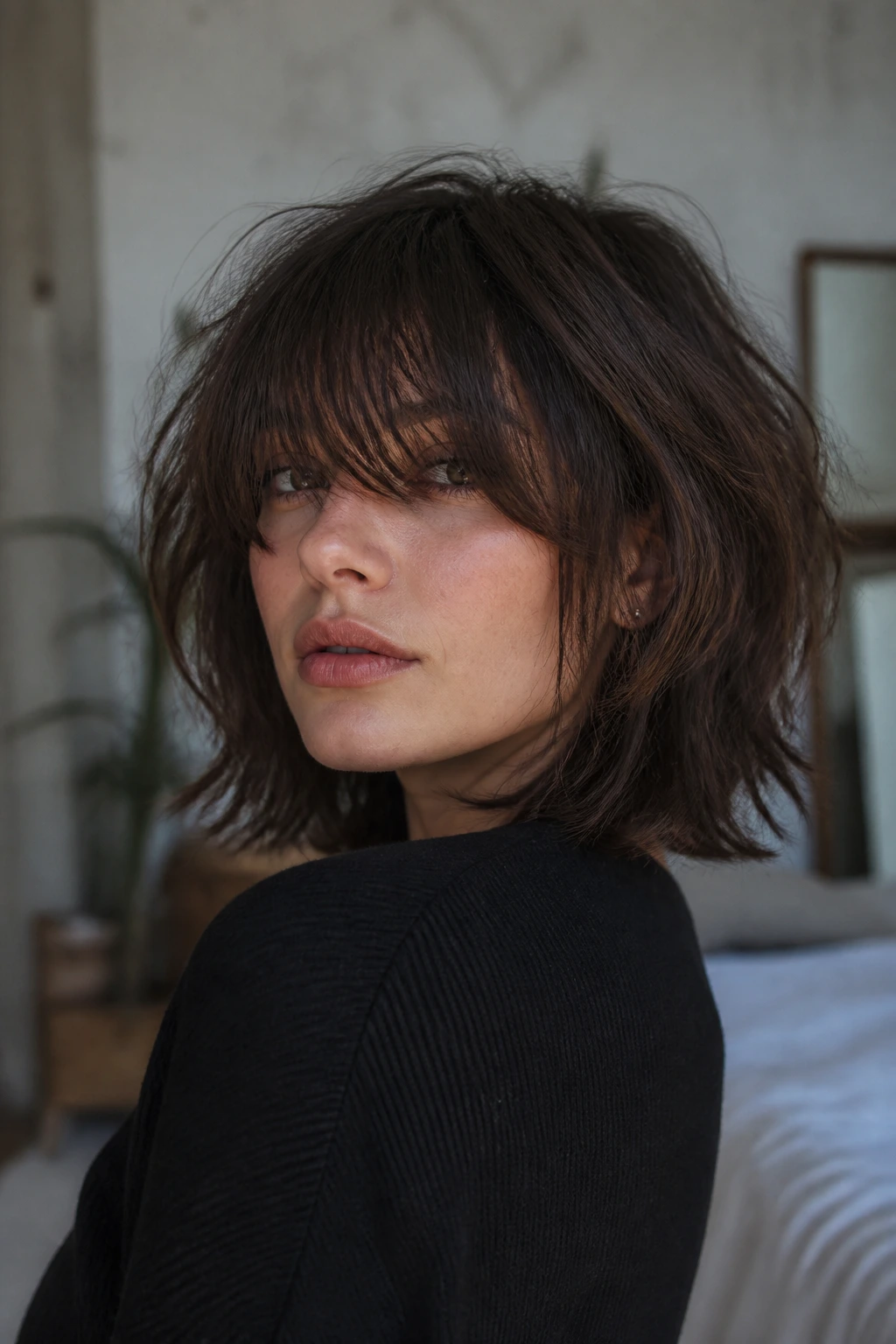
A shaggy bob with a long fringe has a little more attitude than the cleaner versions here. The fringe brushes the brows or skims the lashes, the layers are choppy but not shredded, and the ends feel intentionally broken-up. It’s the cut for someone who wants hair that looks better after a day of living in it.
The important part is balance. Too much texture and the shape starts to frizz outward, especially on fine or porous hair. Keep the outer line long enough to hold weight, then let the interior layers do the work. A salt spray or light mousse gives it that rough-dry texture without turning it crunchy.
This cut looks best when it’s not trying to be perfect. That’s the point. The imperfection is the point.
10. Inverted Bob with Long Front Pieces
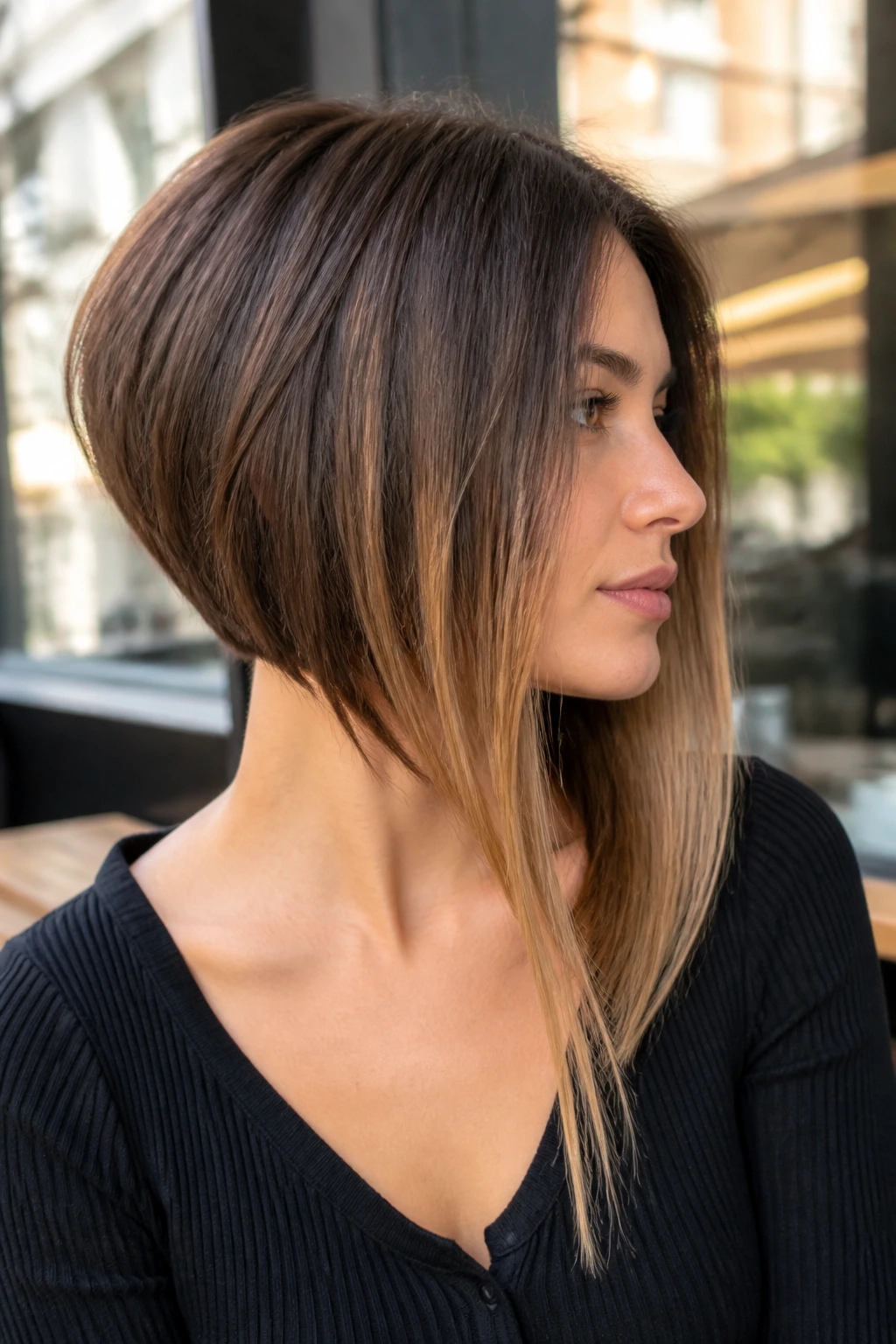
The inverted bob is the sharper cousin in the family. The back sits shorter and cleaner, while the front pieces fall longer and frame the neck and jaw. On long hair, this is a smart way to get movement without losing the sense that you still have length.
It works because the back gets the stacking and lift it needs, while the front keeps the haircut from feeling abrupt. If you want to keep your hair tied back sometimes, make sure the front pieces are long enough to reach the collarbone. That gives you options later in the day when you need the hair out of the way.
Use this cut if you want more shape around the nape and a little more drama in profile. It has a backbone.
11. Graduated Bob for Fine Hair
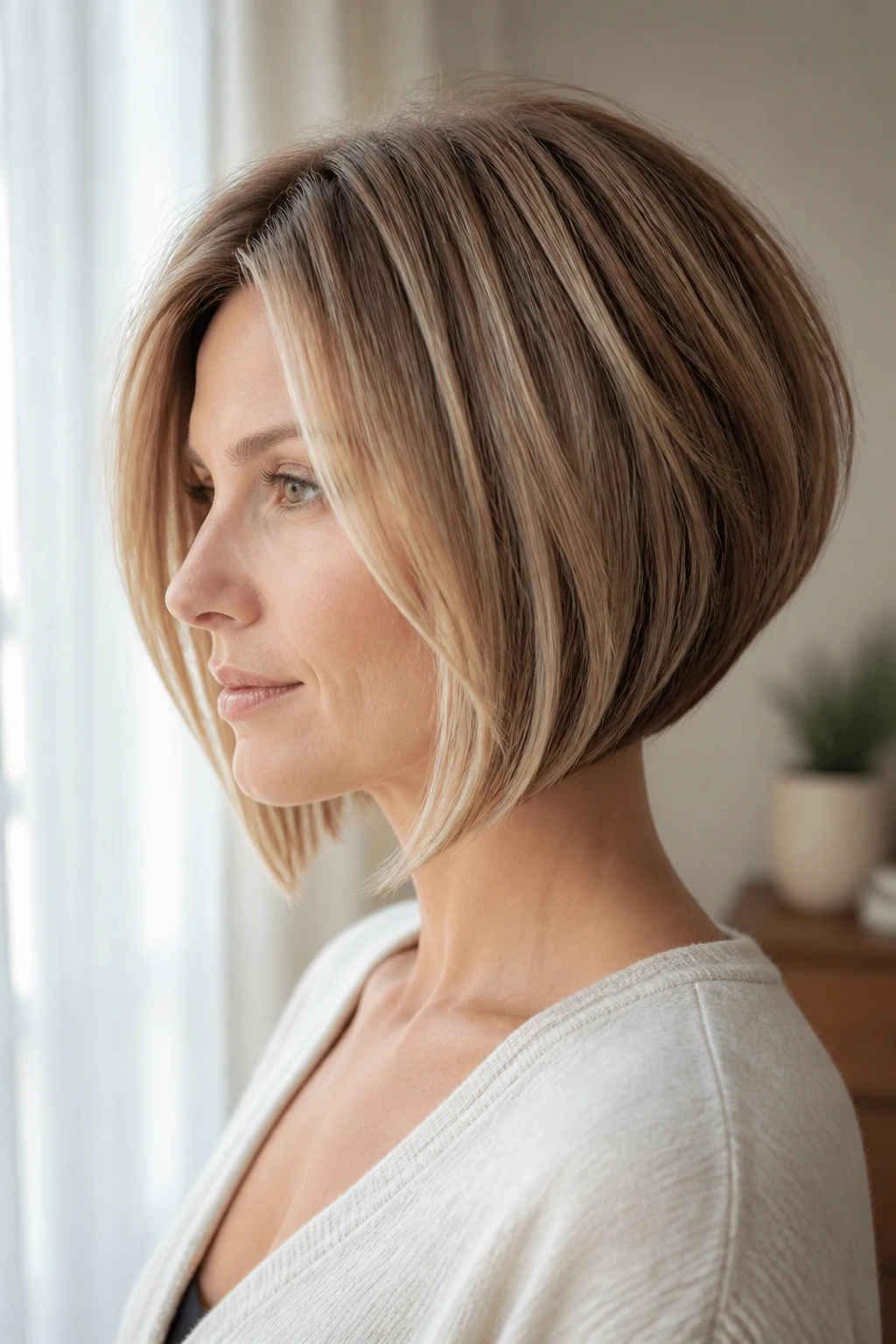
Fine hair can turn flat in a heartbeat, which is why a graduated bob is so useful. The shape is shorter and a little more lifted in the back, so the crown gets support and the ends don’t drag the whole head down. Done well, it makes fine hair look fuller without relying on tons of products.
The mistake people make is over-stacking it. Too much graduation exposes the neck too much and can make the back feel spiky instead of neat. You want a measured angle, not a hard wedge. A subtle undercut at the nape can help if your hair is extremely fine and tends to collapse.
If you live in ponytails and clips, this cut still gives you enough front length to gather it back. That matters more than people admit.
12. Invisible-Layer Lob
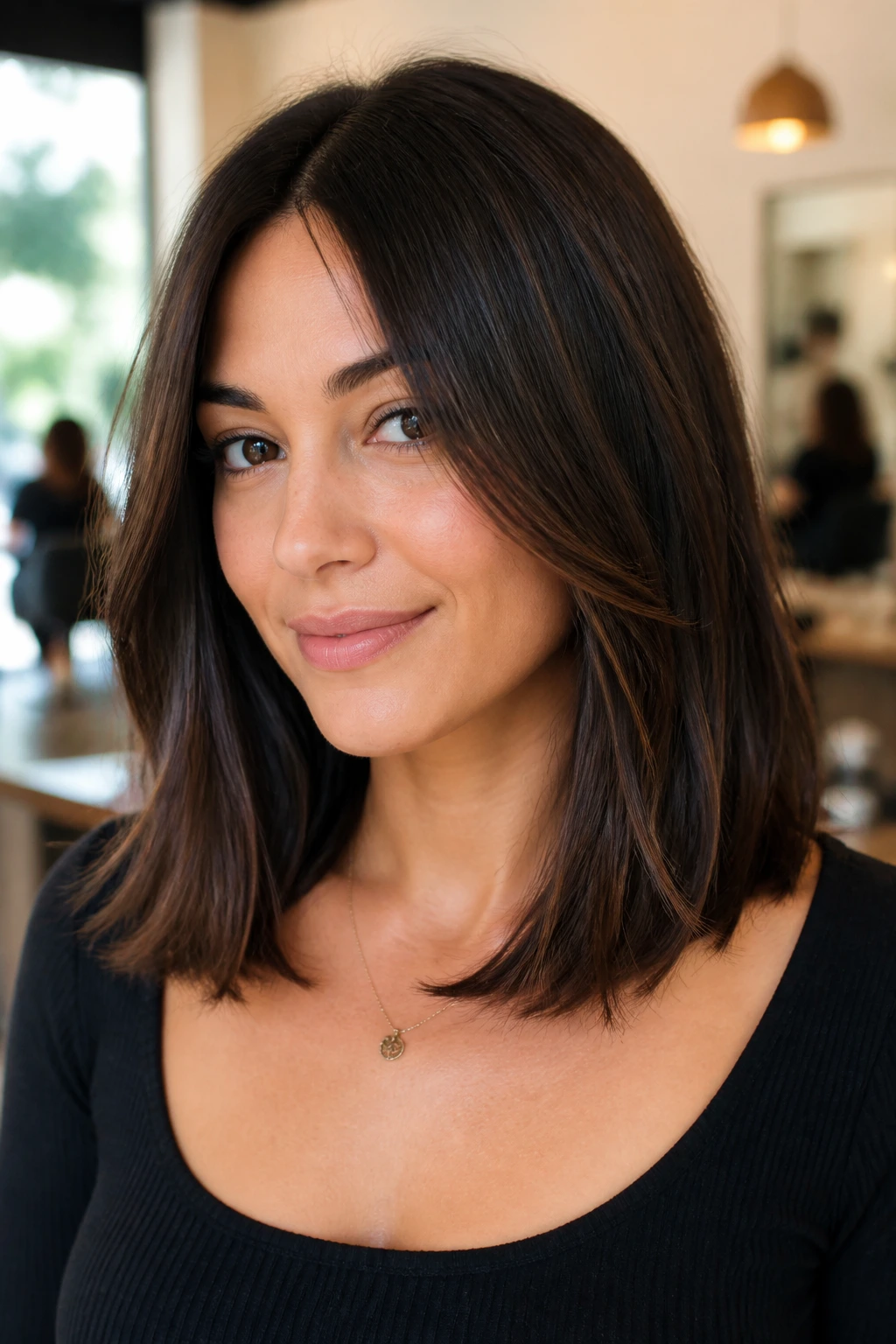
Invisible layers are the quiet solution for someone who wants movement but hates seeing obvious steps in the hair. The surface line stays clean, but the inside of the cut is slightly shorter in places so the hair can fold and move instead of hanging like one heavy slab. It’s a good long-hair bob because it keeps the perimeter intact.
This is especially useful if your hair is thick, but not so thick that you need a shag. The cut removes some weight from underneath without advertising the fact. You still get the bob outline, which is the whole point.
A good stylist will check how the hair falls dry and make small adjustments rather than hacking in obvious layers. That quiet approach ages well.
13. Razor-Cut Choppy Bob
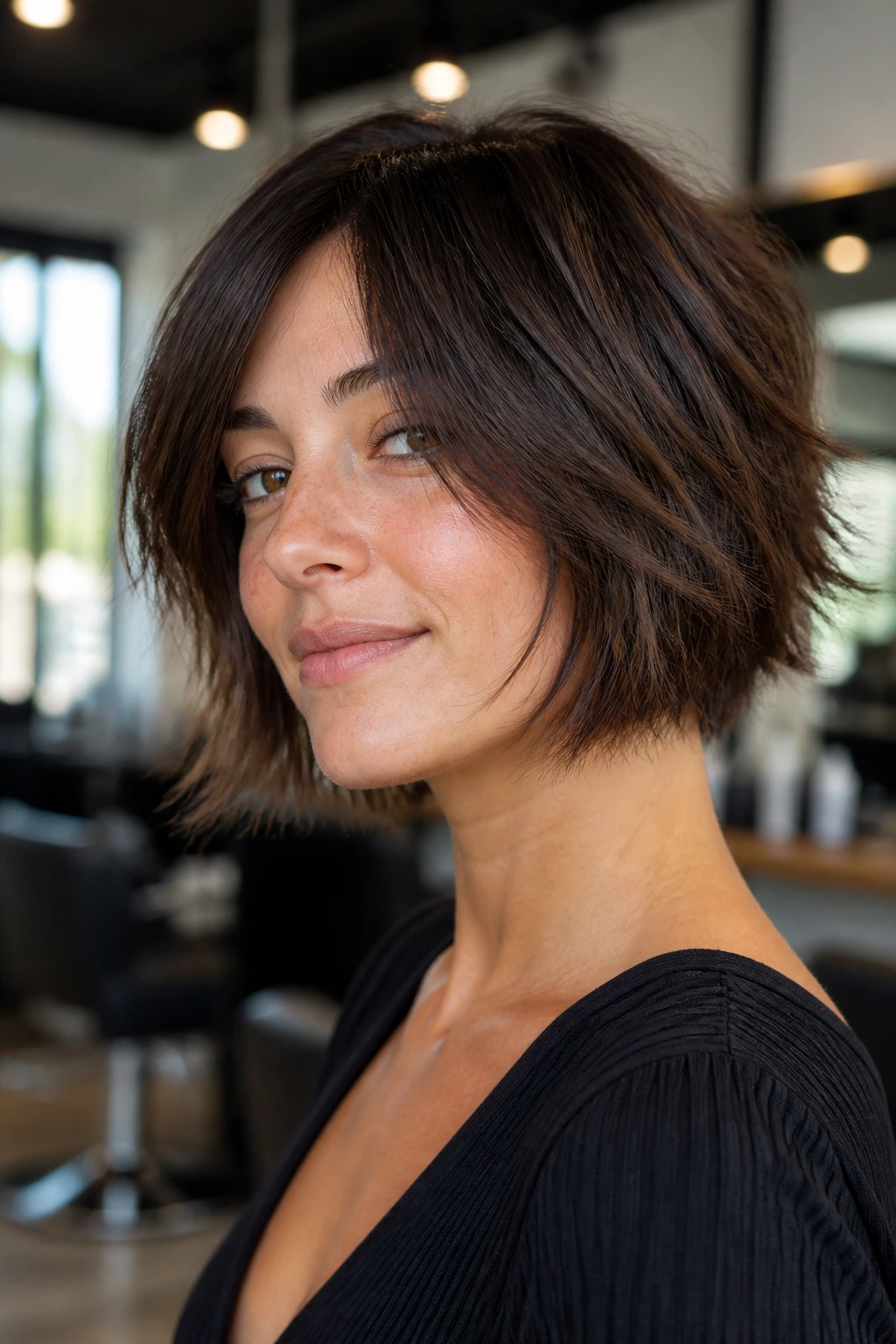
A razor-cut choppy bob has a softer edge than scissors alone would give you. The ends look airy and a little feathered, which can be a relief if your hair is coarse or dense and tends to sit too hard at the perimeter. The result is casual, slightly undone, and far less heavy than a blunt line.
But here’s the catch: a razor is not a toy. On hair that frizzes easily or breaks at the ends, too much razor work can leave the haircut fuzzy and uneven. The best version uses the razor to soften, not to shred. You want movement, not a bird’s nest.
If your hair is healthy and strong, this cut can be a lovely way to take some visual weight out of a longer bob without losing shape.
14. Bottleneck Bang Bob

Bottleneck bangs start narrow in the center and widen out around the cheekbones, which is why they pair so well with a longer bob. The fringe opens the face in the middle, then melts into the side pieces in a way that feels softer than a blunt bang. It’s one of the smartest choices if you want a little fringe without committing to a heavy curtain.
The bob itself should stay long enough to keep the line under control, usually at the collarbone or just above it. That gives the bangs room to do their job. If your forehead is short or your hairline is uneven, keep the center slightly longer so the fringe can move instead of sticking up.
This shape is especially good if you wear glasses. The bangs can sit around the frames instead of crashing into them.
15. Curly Long Bob

Curly hair needs its own rules, and this version respects that. A curly long bob should be cut with the curl pattern in mind, not flattened and guessed at while wet. The best versions sit at or just below the collarbone so the curls can spring up without turning the cut too short.
The shape should follow the curl, not fight it. That usually means a dry cut or a careful curl-by-curl approach. If the curls are dense, a little internal shaping helps prevent the bottom from turning into a triangle. Leave enough length that the curls can clump naturally; over-thinning curly hair is a fast way to get halo frizz.
This is the kind of bob that looks better the second day, once the pattern settles and the cut stops overreacting to water.
16. Deep Side-Part Blunt Bob
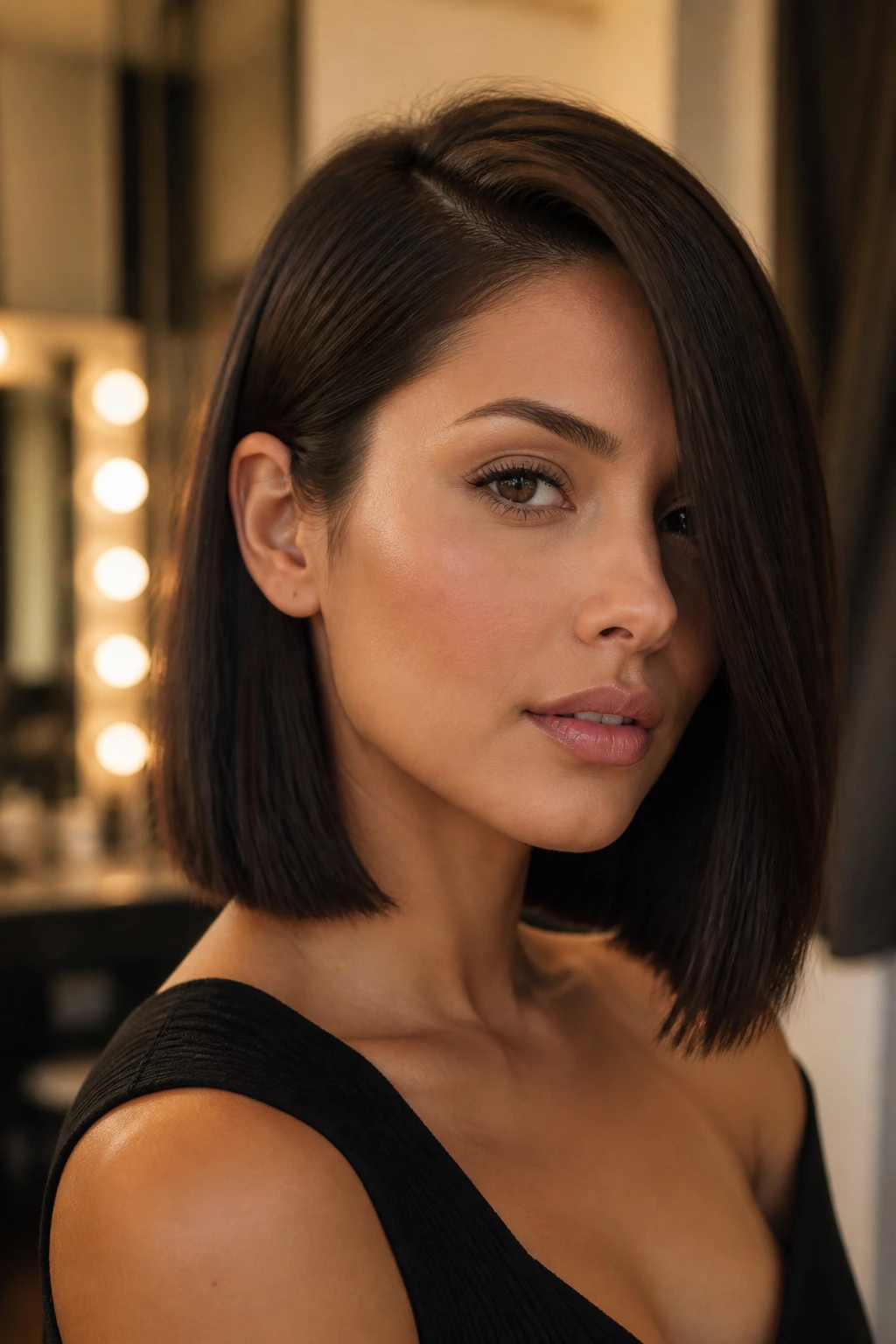
A deep side-part blunt bob has a little old-school glamour without looking dated. The blunt perimeter keeps the ends dense, while the off-center part gives the style movement and lift. It’s sharp in a way that still feels wearable on long hair because the collarbone length keeps it from getting severe.
If your face shape feels longer than you’d like, the side part can interrupt that vertical line. If your hair is fine, the blunt edge gives it more presence. If your hair is thick, ask for a small amount of soft removal underneath so the shape doesn’t bulge.
This cut is a quiet statement. Not loud. Just specific.
17. Feathered Mid-Length Bob

Feathering at the ends can sound old-fashioned, but when it’s done lightly, it makes the haircut easier to wear. A feathered mid-length bob softens the perimeter and lets the hair move around the shoulders instead of sitting there like a shelf. That extra lift can be a relief if your hair tends to feel heavy at the bottom.
The key is to keep the feathers long and subtle. You are not trying to recreate a heavy retro blowout. You’re just breaking up the edge enough that the cut can breathe. This works especially well on medium-density hair that wants shape without too much layering.
A round brush and a little bend at the ends is enough. The haircut does not need much help.
18. Soft Stacked Bob
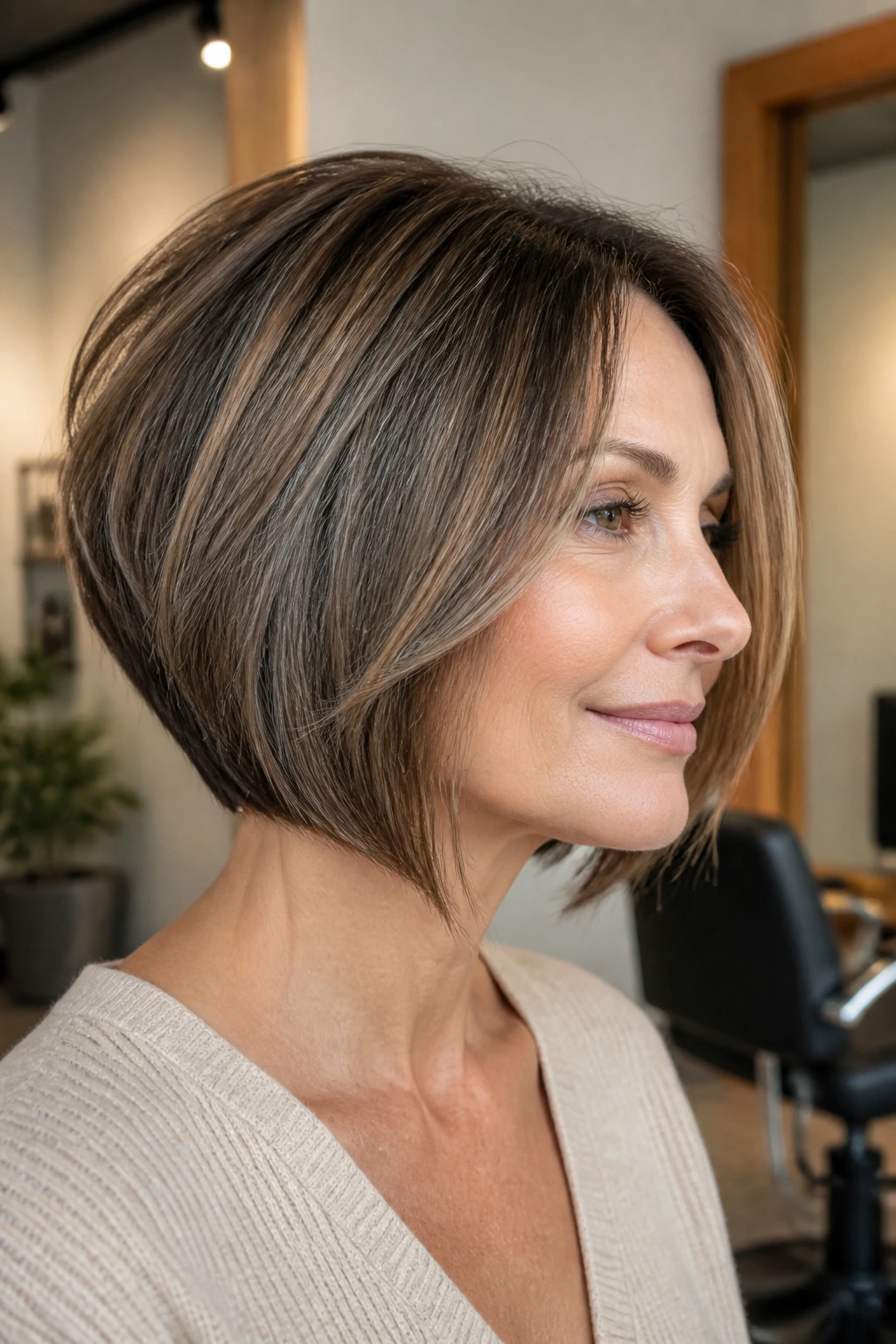
A stacked bob does not have to mean a sharp wedge and a dramatic nape. The soft version keeps the back a bit shorter and fuller, then eases into the longer front so the haircut still feels friendly. It’s a solid choice if you want lift at the crown but don’t want to look like you signed up for a very specific era of hair.
The stacking should be subtle enough that the back rounds nicely instead of sticking out. That little bit of elevation helps long hair shed weight in the right place. If your hair grows in a stubborn cowlick at the neck, a soft stack can work with it instead of flattening it down.
It’s the kind of cut that looks good from the side, which matters more than people think.
19. Asymmetrical Long Bob
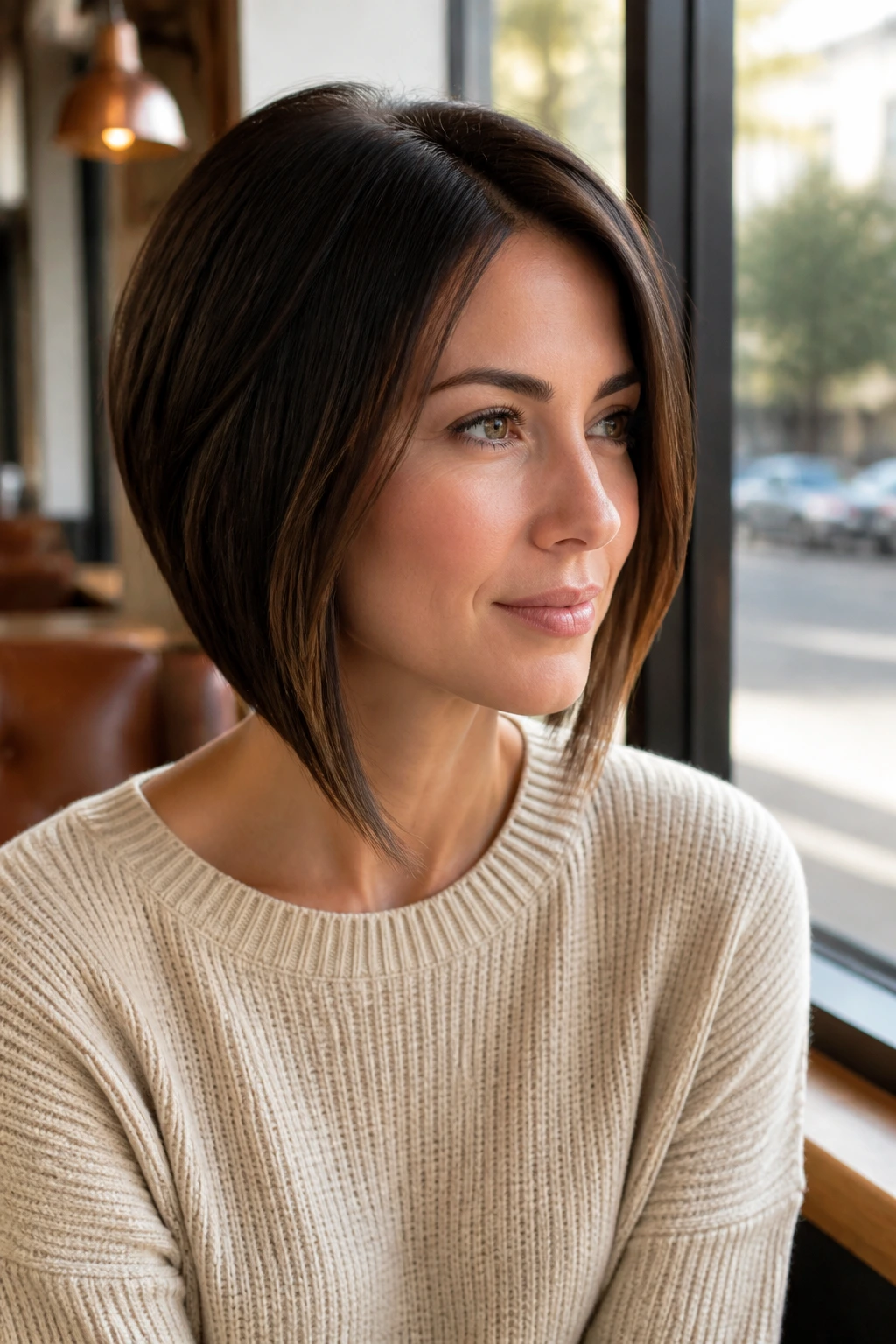
An asymmetrical long bob gives you one longer side and one shorter side, and yes, it’s bolder than the rest. But it doesn’t have to be theatrical. A slight asymmetry—say, one side an inch or two longer—can be enough to make long hair feel fresh without making it hard to wear.
This is the cut for someone who likes a side part, wears one ear visible, or wants earrings to show more on one side. The longer line draws the eye down and can soften a strong jaw. The shorter side keeps the shape from dragging.
If you’re nervous, keep the asymmetry subtle. The haircut should look intentional in profile, not like someone made a mistake with the scissors.
20. Beachy Piecey Lob
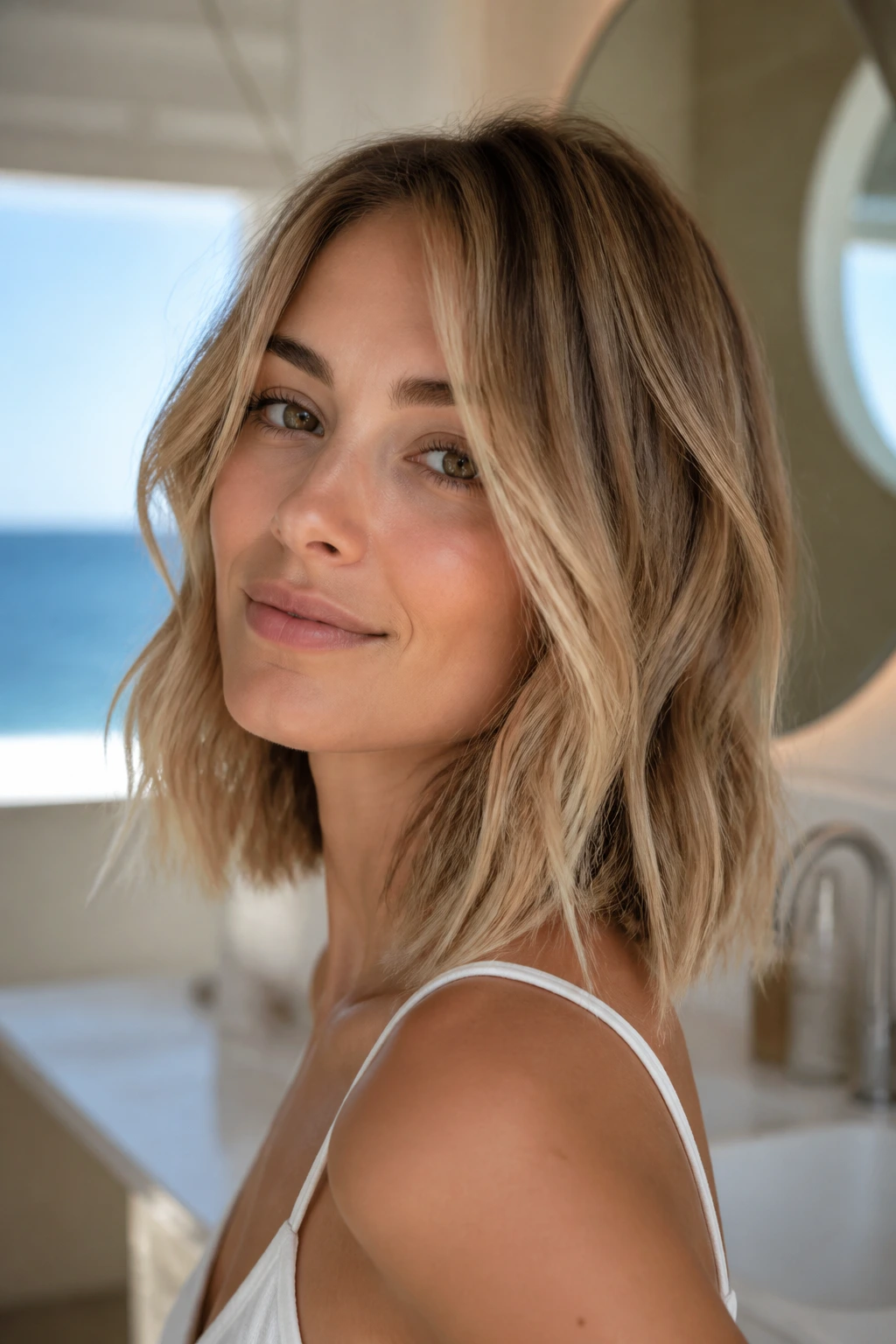
A beachy piecey lob is less about the cut alone and more about the shape the cut allows. The layers are soft, the ends are separated, and the overall feeling is broken-up rather than smooth. It’s the cut that works best when you want your hair to look like it has a little life in it.
Use a salt spray lightly—too much and the hair turns dry and rough. A wand can create a few bends through the mid-lengths, but the real trick is leaving the ends imperfect. If every piece looks the same, you lose the point.
This lob suits people who like an easier morning. You can rough-dry it, twist a few sections, and walk away before the hair gets precious.
21. Boxy Modern Bob
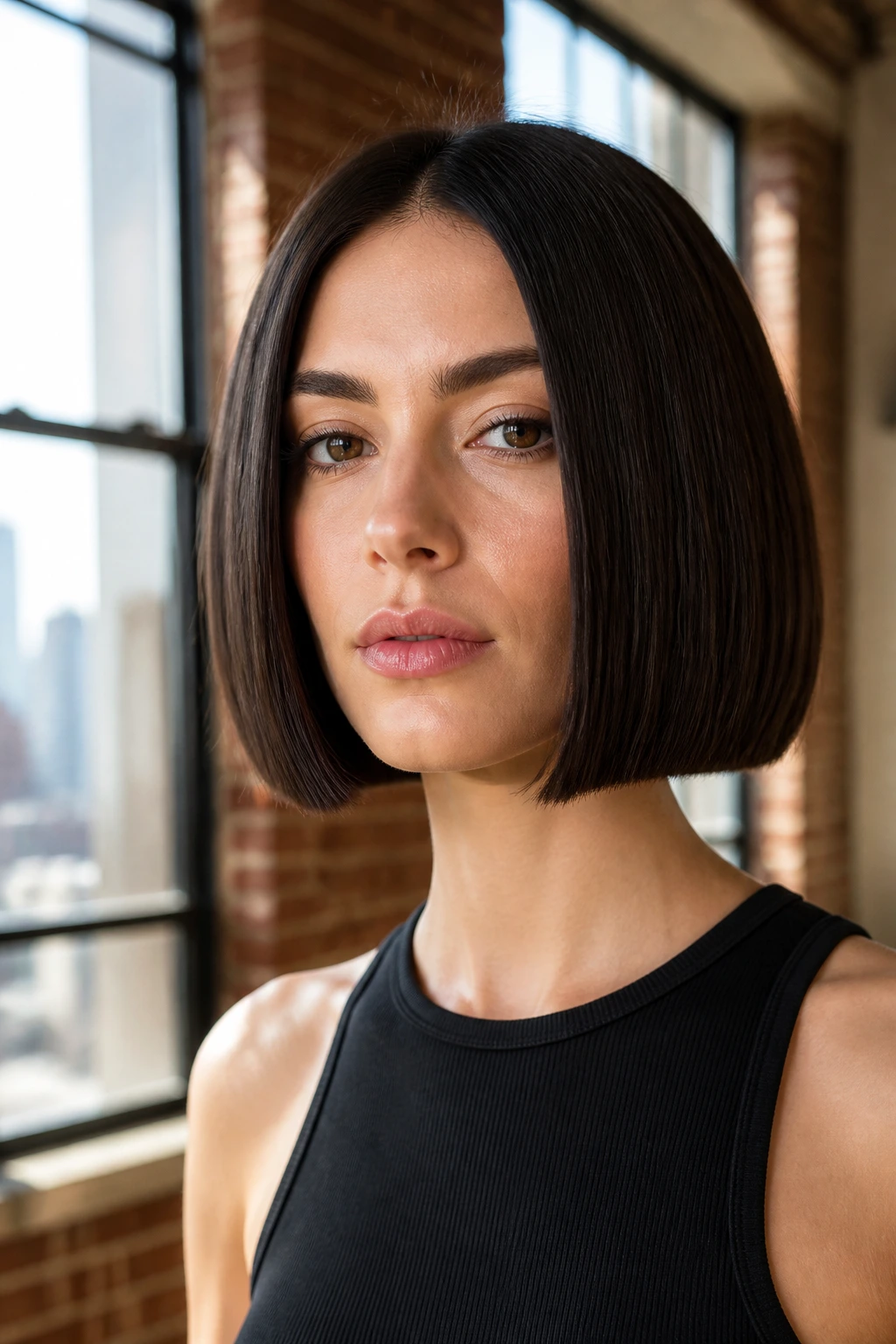
A boxy modern bob is blunt in the best way: square, clean, and almost graphic at the edges. It’s a strong shape for long hair because it makes the ends feel thick and grounded. If you like crisp lines and do not want softness for softness’s sake, this cut has backbone.
It works particularly well on straight hair and dense textures that can hold a clean edge. If your hair is very curly or very frizzy, the box can blur unless you’re willing to style it regularly. Keep the perimeter immaculate, and avoid too much thinning, because the whole look depends on that solid outline.
There’s no fluff here. That’s exactly why it works.
22. U-Shaped Bob
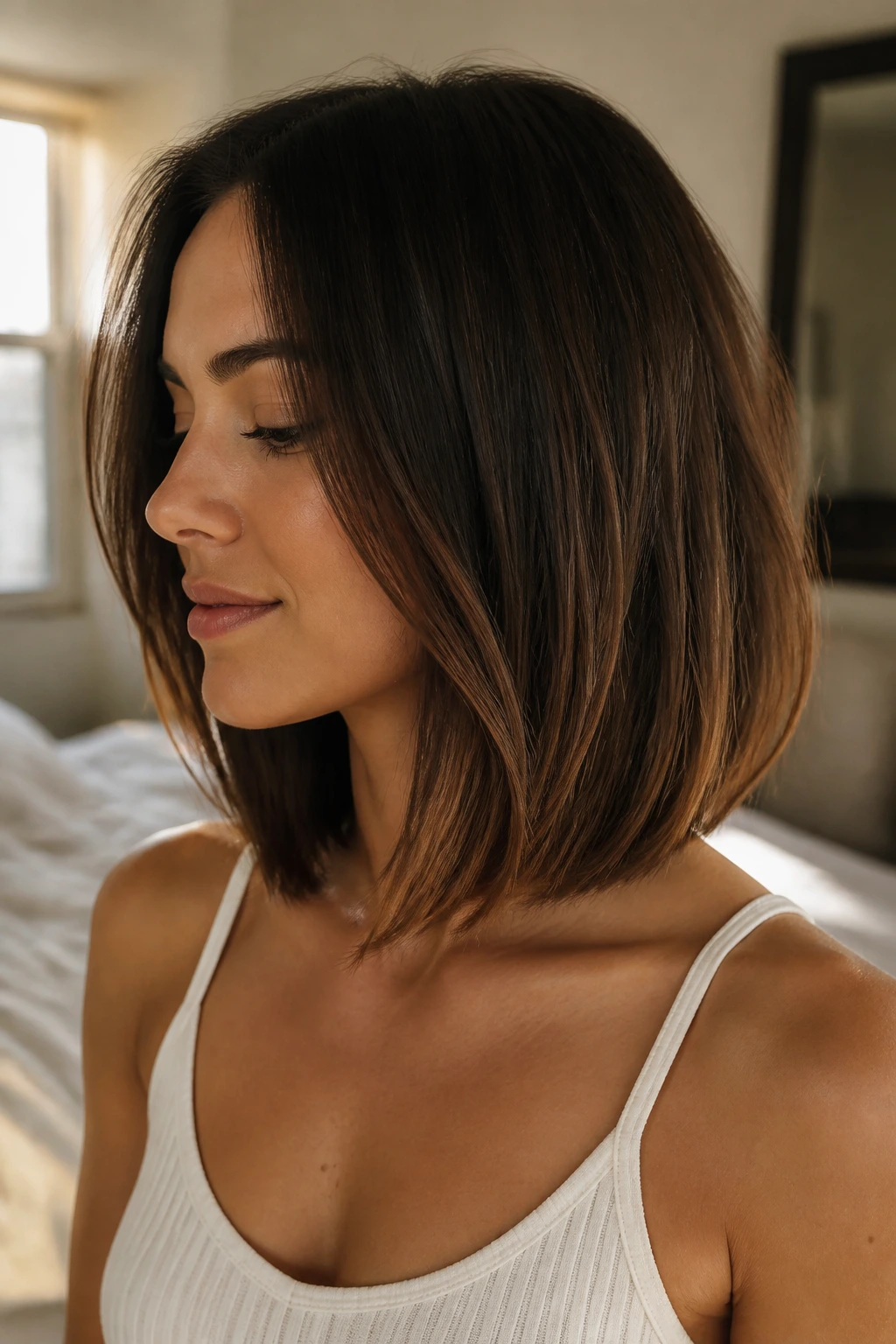
A U-shaped bob has a gentle curve in the back, with the sides hanging a little longer than the center. The shape feels more natural than a hard straight line, especially on long hair that still needs some movement. It’s one of the easiest ways to make the hair feel lighter without advertising every layer.
The curve helps the ends drape instead of all landing on one harsh line. That makes it a very forgiving cut if your hair grows unevenly or if you want the shape to stay soft for a few weeks between trims. It also plays nicely with face-framing pieces because the arc in the back balances the front.
If you want a long bob that looks quiet rather than styled to death, this is a good place to land.
23. Money-Piece Bob
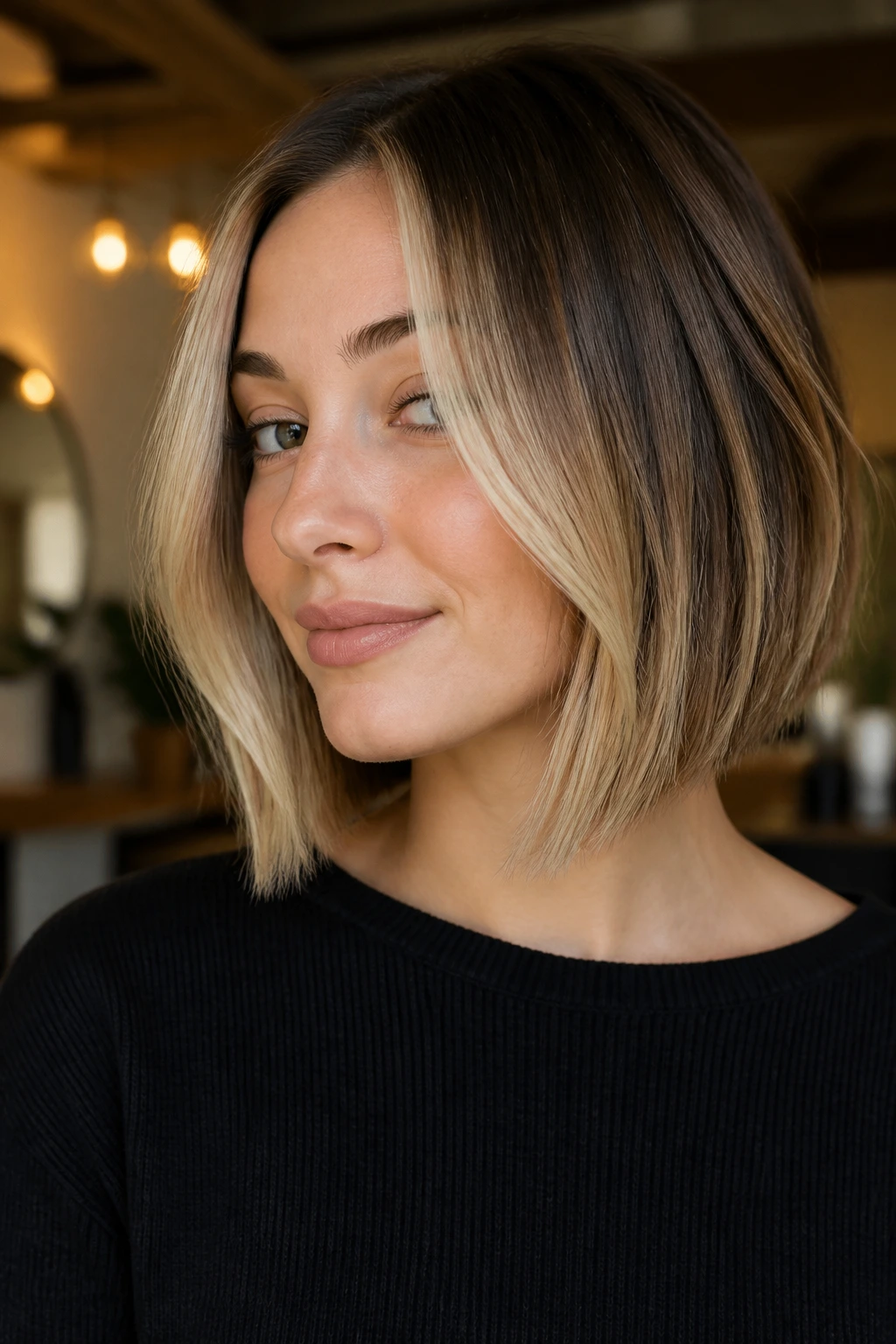
A money-piece bob is a haircut that gets extra lift from bright front pieces, and I like it because it changes the mood without asking for a dramatic cut. The bob keeps the shape neat, while the lighter frame around the face makes the length feel intentional. On long hair, that brightness keeps the cut from disappearing into a single block.
This works especially well if your color already has dimension. A soft, lighter front section can make the cut look sharper around the cheekbones and flatter the eyes. If the color is too stark, though, the cut starts to look busy, so keep the contrast thoughtful rather than loud.
This is a good one for people who want the haircut to do something with their color, not just sit underneath it.
24. Internal-Layer Movement Bob
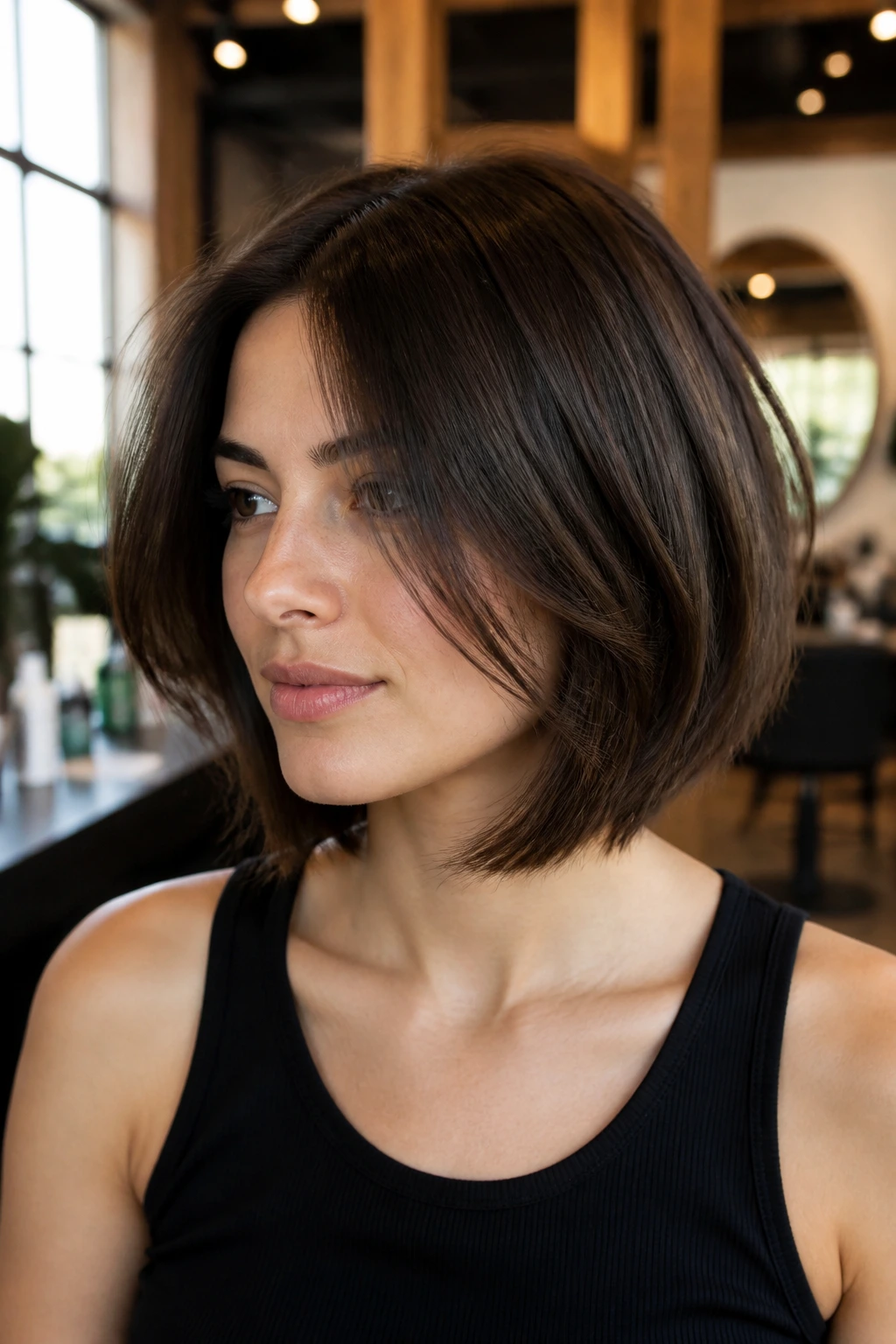
Here’s the sneaky version for people who hate obvious layers. The outer line stays clean, but the inside of the haircut is shaped so the hair can move, bend, and fall without building bulk at the bottom. That gives you the feeling of fullness and motion at the same time.
This is a smart choice for dense hair that still wants a polished outline. Ask the stylist to remove weight under the crown and around the sides, especially if your hair tends to puff near the temples. The surface should still look tidy when you brush it down.
It’s one of the most useful cuts here because it solves a real problem: long hair that feels too heavy but refuses to behave when you carve obvious layers into it.
25. Flip-End Collarbone Bob
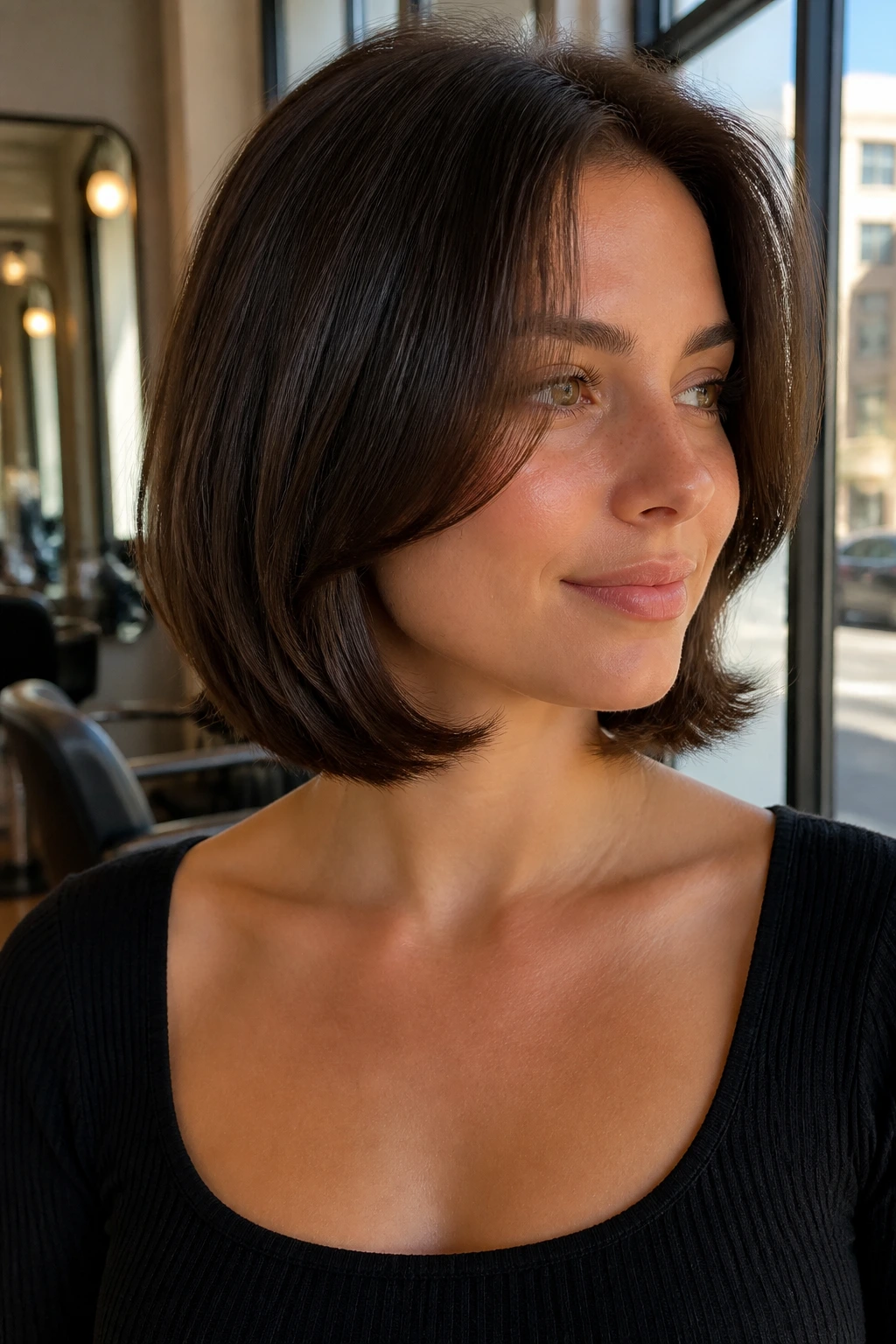
A flip-end collarbone bob has a little personality at the bottom. The ends turn inward, outward, or alternate just enough to keep the line from feeling static. It can read polished or playful depending on how you style it, which is a nice trick for a cut that still preserves length.
Use a round brush for a soft flip under, or a flat iron to bend the ends out a bit if you want a looser feel. The collarbone length gives the flipped edge room to show up without getting silly. If you have shoulder-heavy hair that tends to stick to the neck, this shape breaks that habit.
It’s one of the easier ways to make a long bob look finished without making it stiff.
26. Micro-Layer Bob for Thick Hair
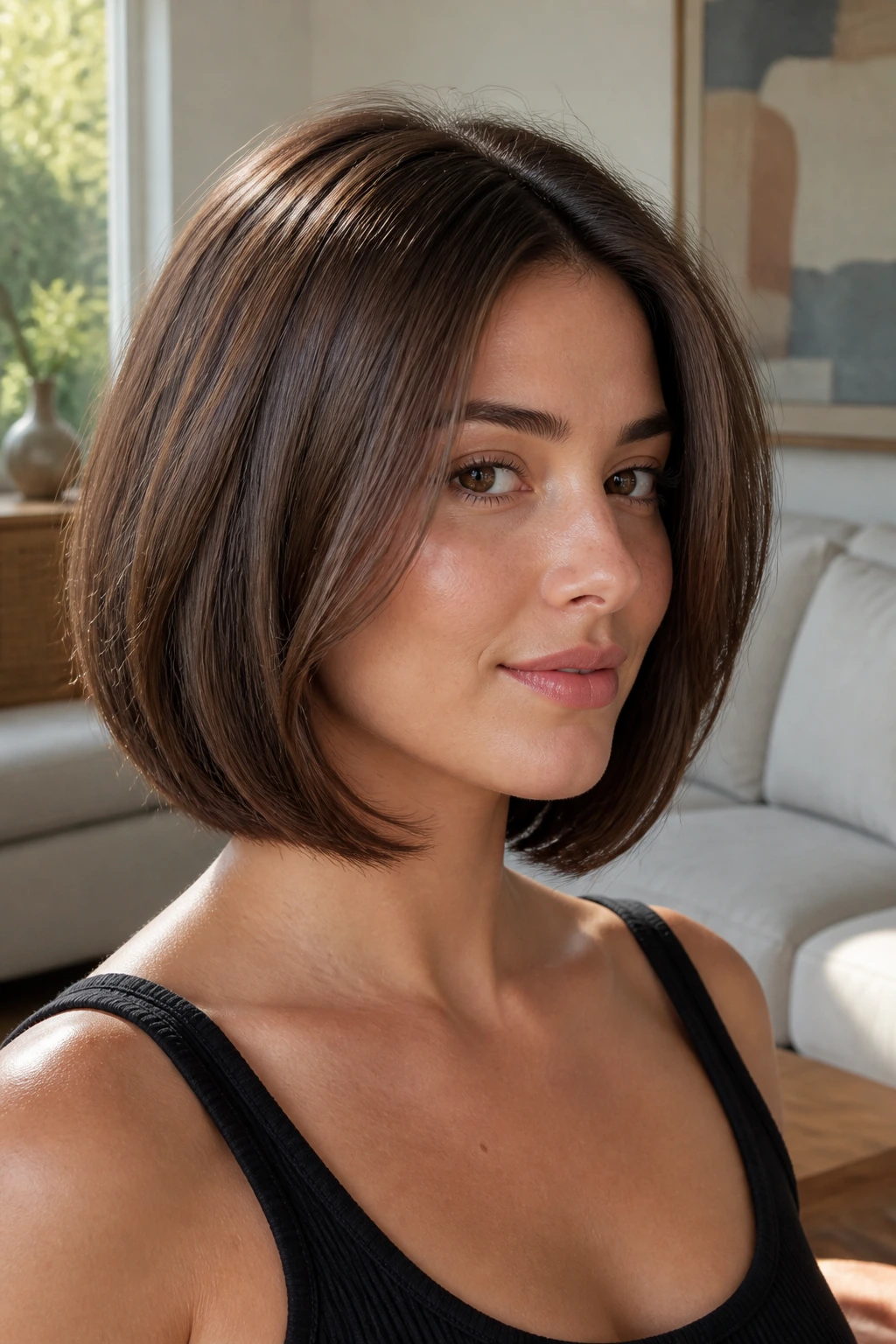
Thick hair does not need to be bullied into submission. It needs small, smart reductions in bulk. A micro-layer bob keeps the perimeter strong but uses tiny, strategic layers inside the shape so the hair stops ballooning at the bottom and around the sides.
The layers should be almost invisible. If they are too short or too aggressive, thick hair puffs out and loses that clean bob line. The goal is to lighten the inside while keeping the outside firm. This is especially useful if your hair dries with a lot of natural volume and you don’t want the ends to look like a triangle helmet.
A good stylist will cut this with your density in mind, not just your length. That distinction matters.
27. Glass Bob at Shoulder Length
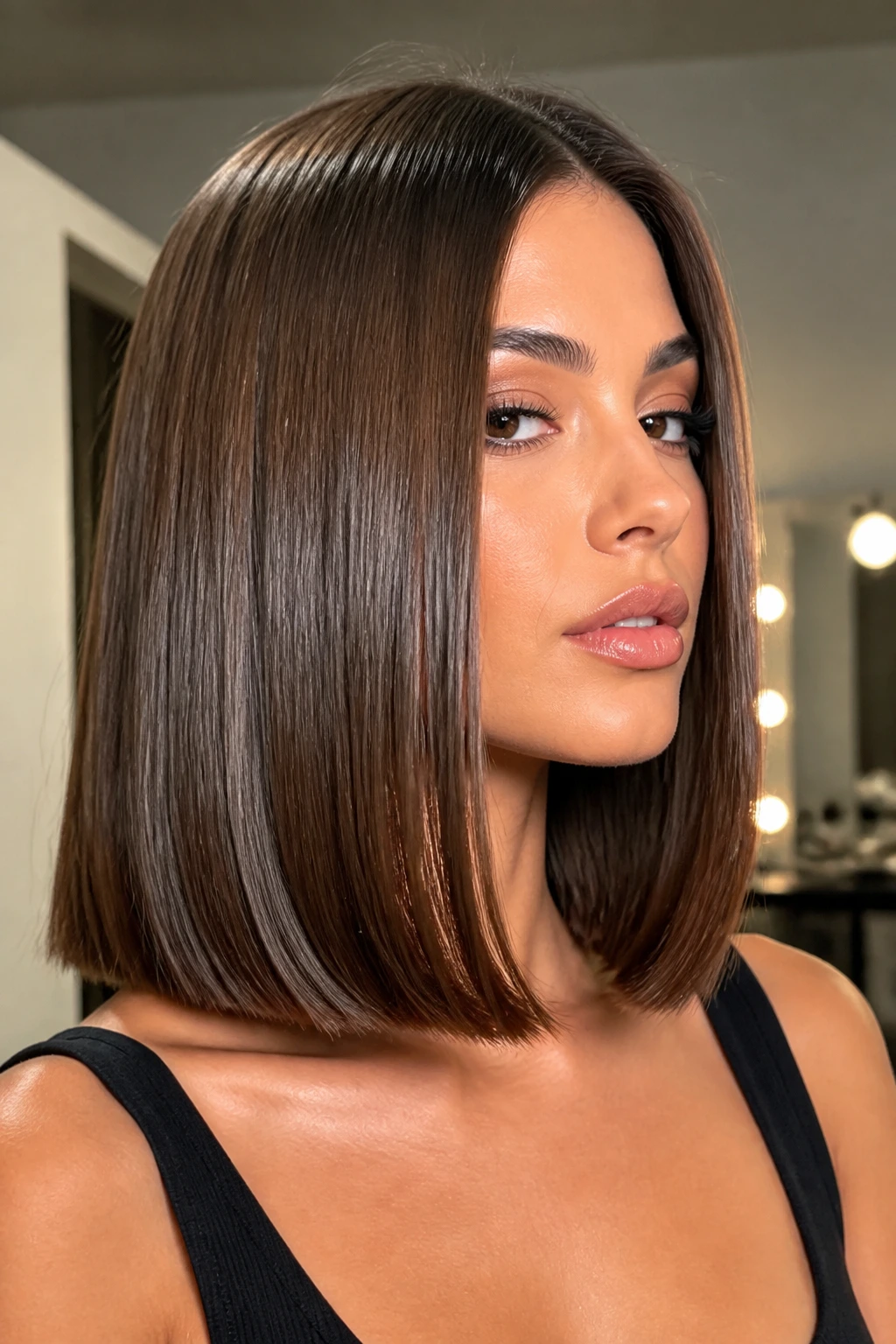
A glass bob at shoulder length is for people who like shine, polish, and a haircut that sits where it’s told. The line is smooth, the ends are even, and the finish is sleek enough that light catches the hair in one clean sheet. Shoulder length keeps it from feeling too short while still giving the bob shape.
This cut asks for healthy ends. If the hair is dry or split, the sleek line won’t read the same way. A heat protectant, a smoothing cream, and a little serum at the very ends are usually enough. Don’t drown it in oil or you lose the clean surface.
If you enjoy brushing your hair and seeing it settle into a single shape, this is the one.
28. Air-Dry Natural Texture Bob

The best cut for people who do not want to blow-dry every wash day is the one that behaves on its own. An air-dry natural texture bob is shaped so waves, bends, or curls land where they should without a lot of intervention. That means the ends need enough weight to settle, but the inside needs enough movement to keep from looking boxy.
This cut has to be designed around your actual texture. A good stylist should see how your hair dries and adjust the length and layers accordingly. If your hair bends at the neck, the bob should account for that. If it springs up, the cut should leave enough room for shrinkage.
I like this version because it doesn’t promise fantasy. It just works with what your hair already does, which is usually the smarter bargain.
Why Longer Bobs Work So Well on Real Hair

A longer bob solves a problem that a lot of people carry around without naming it: long hair gets heavy, but short hair can feel like too much of a leap. The collarbone and shoulder range gives you room to change the silhouette without losing your options. You can still clip it, braid it, tuck it, and tie it back. That matters on rushed mornings.
The shape also gives a stylist something to work with. A blunt edge makes fine hair look denser. A little graduation helps the back lift off the neck. Internal layers take weight out of thick hair without turning it into a frayed mess. If you’ve ever had hair that looked good for one week and then just… fell, you know how much that matters.
And there’s the grow-out factor. A good long bob can look intentional for weeks because the difference between “fresh” and “grown out” is smaller than it is with a chin-length crop. That buys you time, which is worth more than people admit in a salon conversation.
Essential Styling Tools for These Cuts
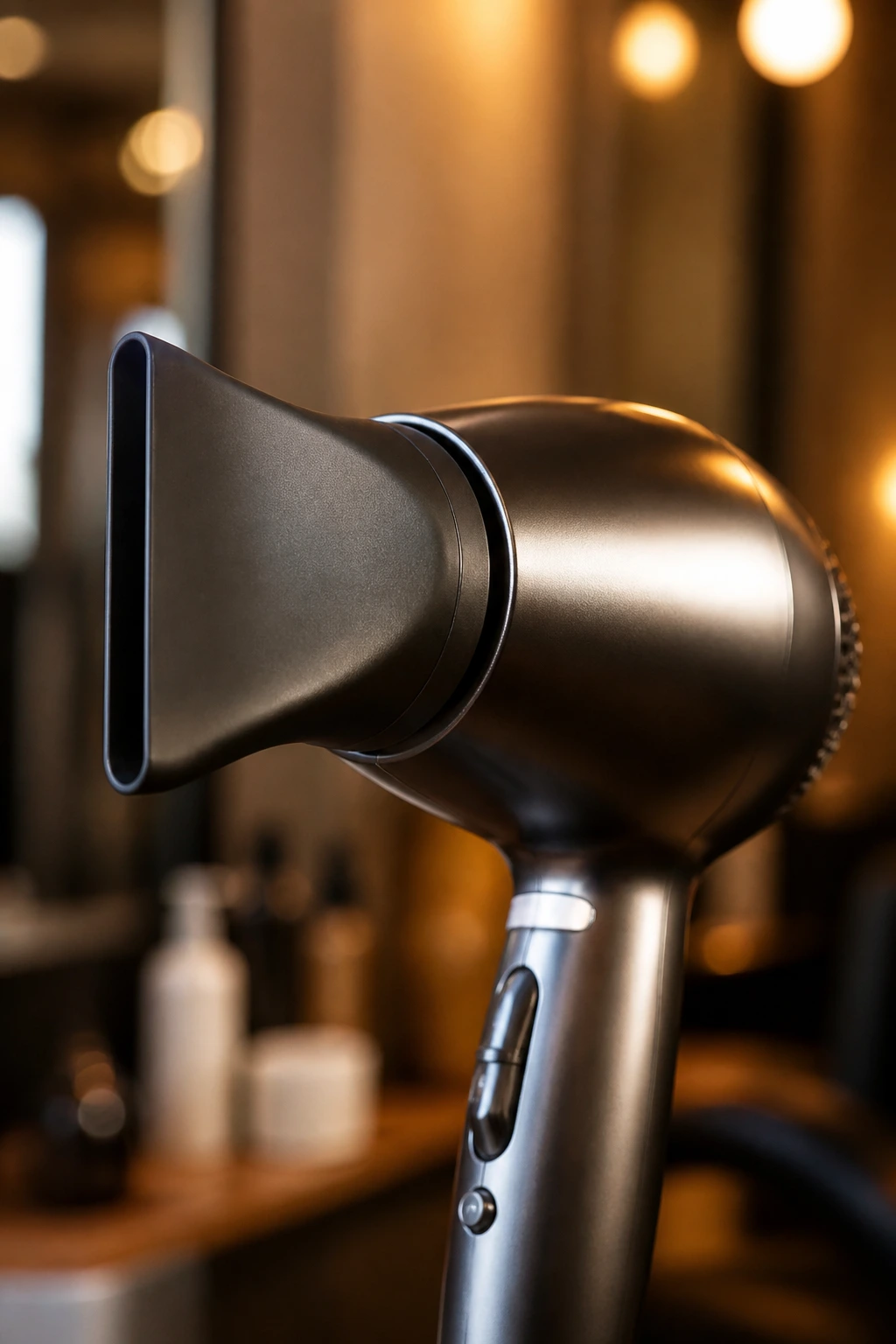
- Blow-dryer with a nozzle attachment: Helps direct the hair smooth at the roots and keeps the ends from frizzing in all directions.
- Round brush, 1¼ to 1½ inch: Best for bending the ends under or giving a soft flip without creating a curl that looks too tight.
- Flat iron: Useful for a glassy finish, a subtle bend, or cleaning up the front pieces.
- 1-inch curling wand: Good for loose waves on shoulder-length and collarbone bobs; wrap only the mid-lengths if you want a modern finish.
- Vent brush: Handy for rough-drying and getting root lift when you don’t want a polished blowout.
- Sectioning clips: Keep the top half out of the way so you can work the lower layers properly instead of battling everything at once.
- Tail comb: Makes parts cleaner, especially for center-part and side-part styles.
- Heat protectant spray: Non-negotiable if you use any hot tool; the ends of a bob show damage fast.
- Lightweight mousse: Useful for wavy, shaggy, and air-dry cuts because it gives the hair some memory without stiffness.
- Dry shampoo: Helps the root area keep lift for a second day and stops the bob from clinging to the scalp.
- Texture spray: Best when the haircut needs a little separation at the ends, not a crunchy finish.
- Smoothing serum or light oil: Use only a drop or two on the ends if you want shine without flattening the shape.
- Diffuser: A must for curly or wavy bobs if you want to preserve the pattern instead of blasting it apart.
What to Tell Your Stylist Before the First Snip

The biggest mistake people make at the salon is describing a haircut in vague feelings. “I want it shorter, but not too short” does not help much. Bring one photo for the silhouette and another for the texture. A bob that looks great in a glossy straight photo behaves very differently on wavy or dense hair.
Be specific about where you want the length to hit. Collarbone? A finger’s width above it? At the jaw in front and lower in back? That one detail changes everything. If you still want to pull the hair into a low ponytail or clip, say so early. A stylist can preserve more front length or keep the back from getting too steep.
Tell them how you actually wear your hair. Air-dry only? Heat every morning? Side part, center part, or whatever the cowlick allows? That matters more than face shape buzzwords. A haircut that fights your growth pattern will annoy you by week two.
If your hair is thick, ask how much weight will come out underneath. If it’s fine, ask how they’ll keep the perimeter from looking see-through. Those are not tiny details. They are the haircut.
How to Wear a Long Bob Day to Day
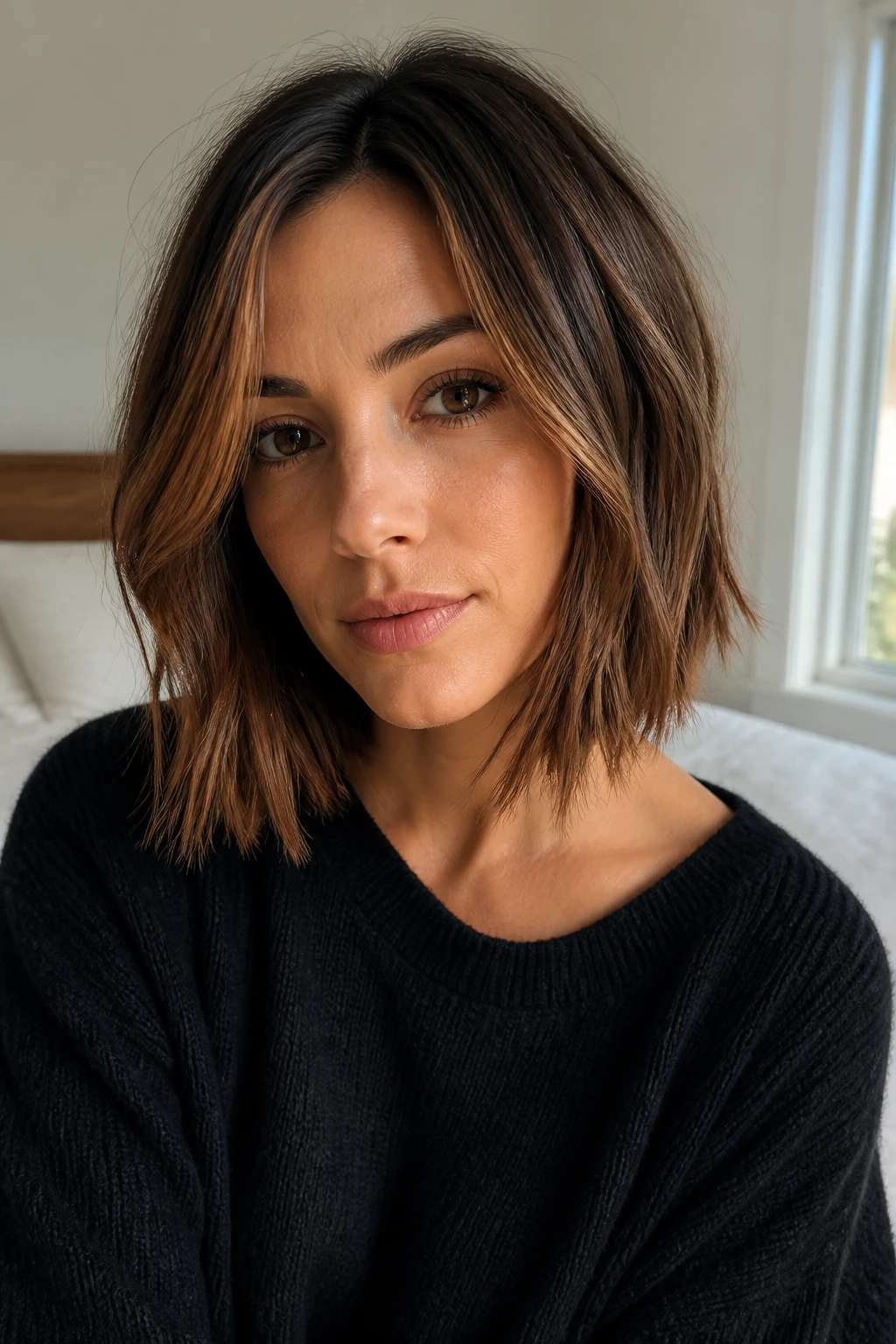
Presentation: The finished shape should read clearly even when you tuck one side behind the ear or clip the top half back. If the cut only looks good from one angle, it needs a little more shaping.
Best Paired With: Curtain bangs, a deep side part, subtle highlights, or a gloss treatment can change the mood fast. A blunt long bob feels sharper with a center part; a layered one usually comes alive with a side part or a few bendy pieces around the face.
Length Check: If you still want a low ponytail, keep the front pieces long enough to clear the jaw. If you want more lift and a stronger bob line, let the hair sit closer to the chin or upper collarbone. The right answer depends on how much styling you’re willing to do.
Finish: Sleek, airy, or piecey all work here. Choose one. A bob looks best when the finish matches the cut instead of fighting it—glass smooth for blunt lines, brushed-out waves for layered cuts, or a bit of bend at the ends for a softer silhouette.
Small Styling Tweaks That Change the Whole Mood
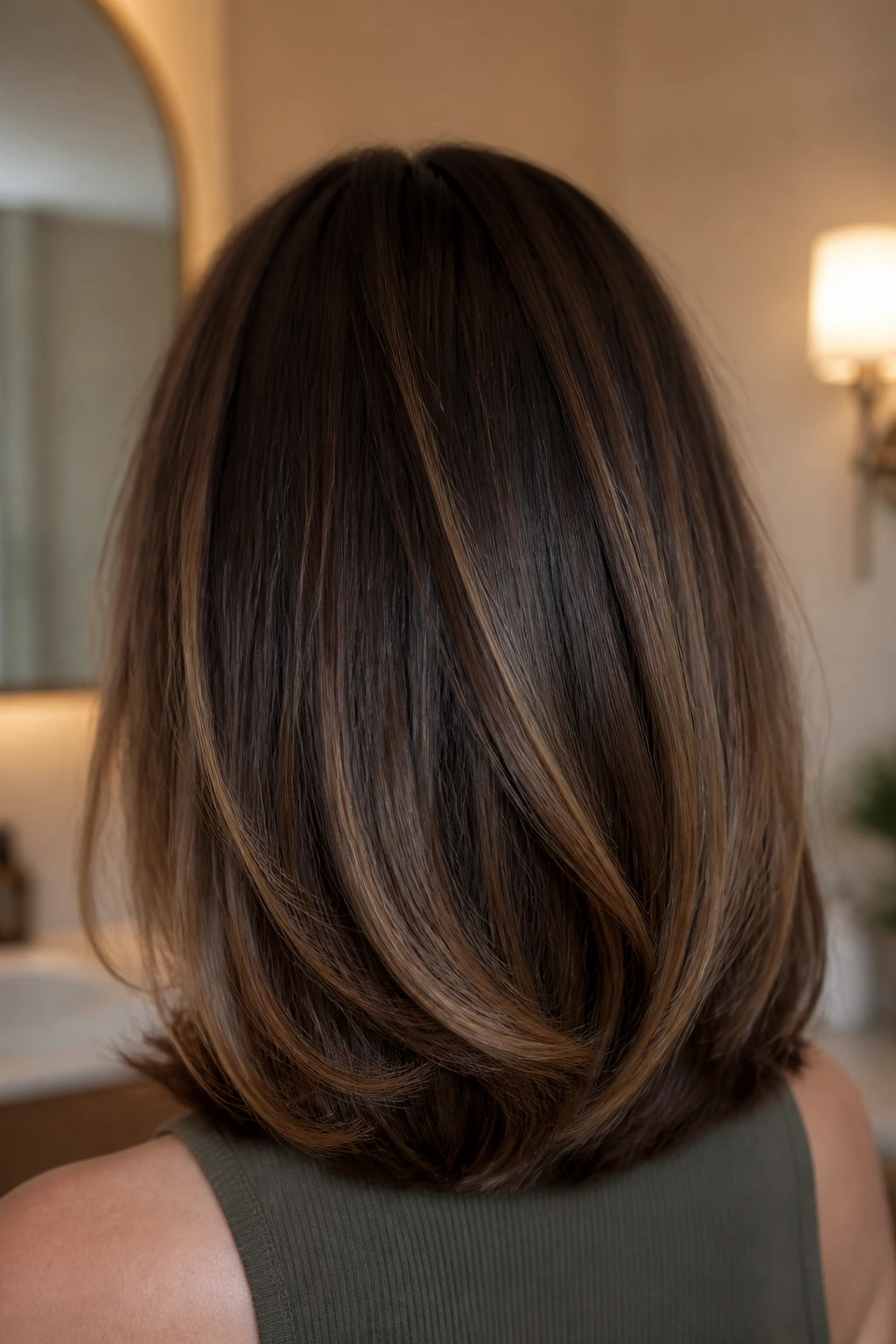
Texture Boost: On damp hair, use a small palmful of mousse through the mids and ends, then rough-dry the roots before touching the length. That keeps a long bob from collapsing at the scalp and gives the cut some memory.
Edge Softening: If the perimeter looks too hard, bend just the last inch of hair under with a flat iron. That tiny movement stops the cut from feeling boxy without turning it into a curl.
Color Shift: Face-framing highlights or a clear gloss can change how the haircut reads in one appointment. A bright front piece can sharpen the line; a glossy finish can make blunt cuts look denser and cleaner.
Make-It-Yours: Keep more length if you want clip-in convenience, or go a little shorter if you want jaw emphasis and less maintenance. Add bangs only if you’re ready to style them separately—fringe is a commitment, not a decorative sticker.
A long bob rewards small tweaks. You do not need to reinvent it every morning.
Keeping the Cut Sharp Between Salon Visits
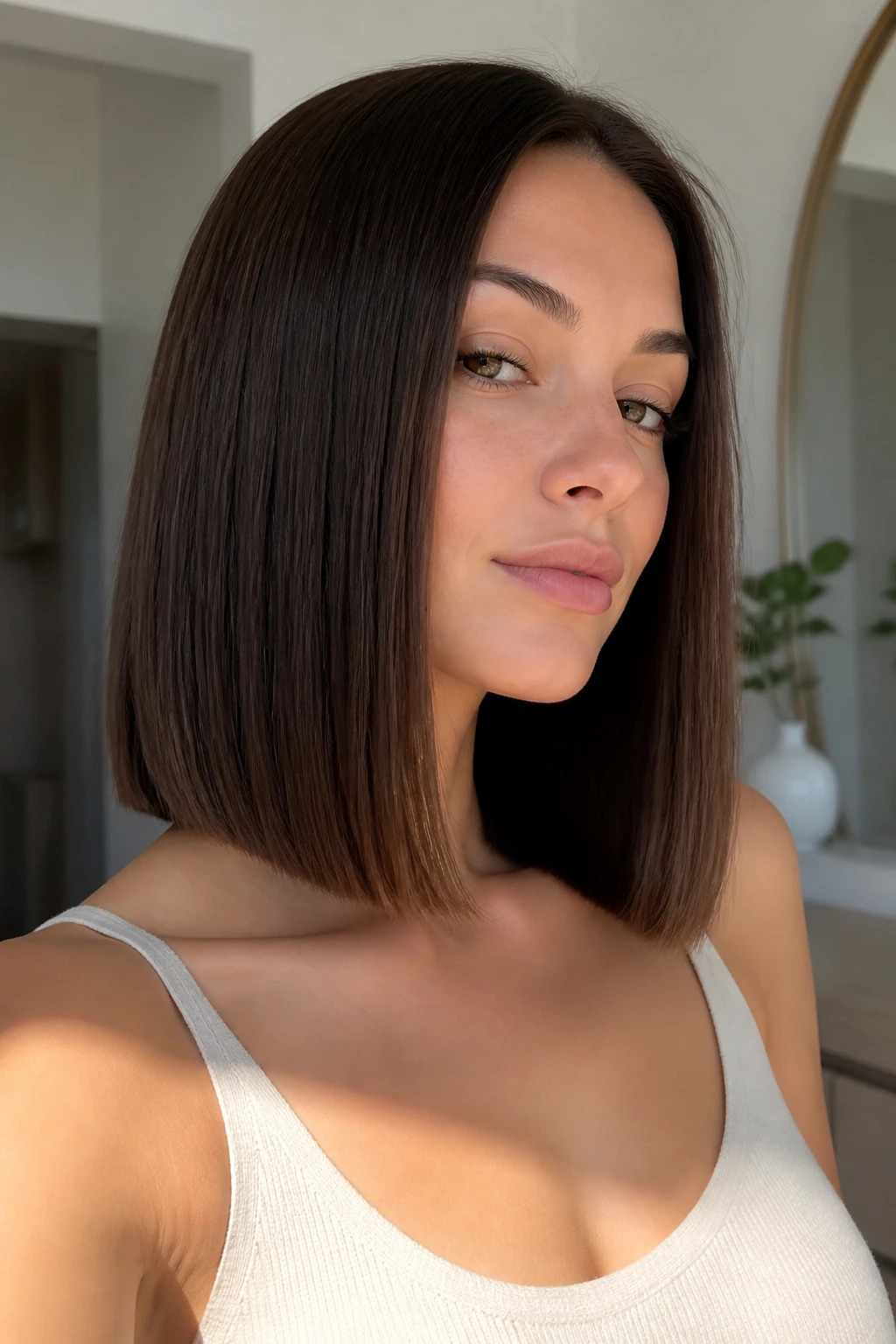
A blunt long bob shows growth sooner than a shaggy one, so the trim schedule matters. If the line is crisp and the ends are meant to sit evenly, plan on a trim every 6 to 8 weeks. If the cut is layered, textured, or air-dried, you can usually stretch that to 8 to 10 weeks before the shape starts to blur.
At home, treat the ends gently. The last two inches of a bob are where split ends and rough blow-drying show first. Use heat protectant every single time you style with hot tools, and lower the iron temperature if your hair is fine or color-treated. The goal is shine, not smoke.
Sleeping habits matter too. A silk pillowcase or a loose clip can keep the ends from kinking overnight. If the bob gets a dent at the back, mist the area lightly with water in the morning and rewarm it with a brush or a quick pass of the dryer. Don’t soak the whole head. That just resets the clock.
If you wear the haircut air-dried, refresh the shape with a little water and a dab of leave-in cream on the ends. If you heat-style it, a light oil on day two is often enough. Resist the urge to keep piling on products. Bob hair gets overwhelmed faster than longer cuts do.
Common Mistakes People Make With Long Bob Haircuts
- Cutting the back too short for your lifestyle. The haircut may look sharp in the chair, then feel awkward the moment you try to tuck it, clip it, or gather it back. Fix it by keeping enough front and back length for your daily routine, not just for the mirror.
- Over-layering fine hair. Fine hair can go stringy fast if too much weight is removed. The ends start to look thin and the shape loses body. Ask for a blunt or lightly graduated line instead.
- Leaving thick hair one solid block. Heavy hair can puff out at the sides and feel boxy when it’s all one length. The fix is subtle internal removal, not a full shag.
- Ignoring the natural part or cowlick. A center part that splits open at the crown will not magically behave because you like the look on someone else. Work with the growth pattern, then adjust the front pieces around it.
- Choosing bangs that need constant correction. A fringe that keeps falling into your eyes or sticking at odd angles will drain the life out of the haircut. Ask whether your hairline can support it before you commit.
Ways to Adapt These Cuts for Different Hair Types
The Fine-Hair Lift Version: Keep the line blunt, the layers minimal, and the length around the collarbone. A little root spray and a round brush at the crown will give the haircut enough lift without making the ends look thin.
The Thick-Hair Weightless Version: Ask for invisible internal layers or micro-layering under the surface so the perimeter stays clean. Thick hair needs bulk removed from the inside, not just the bottom edge trimmed off.
The Curly Shape-Saver: Cut on dry curls or at least dry-check the shape before you leave the chair. A curly bob should sit where the curls land, not where the hair hangs wet.
The Air-Dry Only Version: Keep the layers soft and the ends slightly weighted so the hair settles on its own. This cut should look decent when scrunched with cream and left alone.
The Glossy Straight Version: Go blunt, keep the outline clean, and use a heat protectant plus smoothing serum when you style. The haircut should be simple enough that shine does the visual work.
The Grow-Out-Friendly Version: Leave the front pieces a touch longer and avoid very steep angles. That way the haircut still looks intentional a month later, which is the whole point of the long-bob idea.
Frequently Asked Questions About Long Bob Haircuts
Can I get a bob haircut if I still want to keep my hair long?
Yes. That’s exactly what a lob or long bob is for. You keep enough length for clips, low ponytails, and half-up styles, but the shape changes enough to feel new.
What’s the difference between a bob and a lob?
A bob usually sits around the jawline, chin, or just below. A lob—short for long bob—drops closer to the collarbone or shoulders, so it keeps more length and tends to feel easier to grow out.
Which long bob works best for thick hair?
A blunt collarbone bob, a soft A-line, or a version with internal layers usually works well. Thick hair needs weight removed from the inside so the bottom does not balloon out.
Which one is better for fine hair?
A blunt or lightly graduated bob usually gives fine hair more presence than a heavily layered cut. Too many layers can make the ends look thin and the whole shape look tired.
Will a long bob work if I air-dry my hair?
Yes, if the cut is designed for your texture. Wavy and curly hair often do best with soft layers and a little room for shrinkage, while straighter hair may need a cleaner perimeter and fewer short pieces.
How often should I trim it?
A blunt shape usually needs a trim every 6 to 8 weeks to stay crisp. Textured and layered versions can often go 8 to 10 weeks, depending on how fast your hair grows and how much shape you want to keep.
What if the back starts to puff out or flip weirdly?
That usually means the cut has too much weight in the wrong place or the length sits at a spot where your hair naturally flips. A small adjustment—either a tiny bit more layering underneath or a slight length change—usually fixes it.
How do I grow out a long bob without the awkward stage getting ugly?
Keep the front pieces and face frame tidy while letting the perimeter lengthen slowly. That keeps the haircut looking intentional even as it gets longer, which is much easier than waiting until everything feels shaggy before you trim it.
The Shape That Grows Out Well

A long bob works because it does two jobs at once. It gives you a clear shape, and it leaves you enough hair to live with. That’s a rare combination, honestly. Most haircuts lean too hard in one direction—either polished but needy, or easy but shapeless.
The smartest versions here are the ones that respect your texture and your routine. If you air-dry, pick a cut that settles on its own. If you love a blowout, choose a cleaner line. If your hair is thick, remove bulk from the inside. If it’s fine, protect the perimeter and don’t over-layer it into nothing.
A good long bob should feel like a haircut you can wear on a plain Tuesday and still notice in the mirror. Not flashy. Just right.
