



There’s a narrow lane goddess loc hairstyles have to walk. Too neat, and they look stiff. Too loose, and you end up with fuzzy roots, fraying ends, and a style that feels like it gave up halfway through the week. The sweet spot is a little more exact than people think: smooth at the base, soft around the face, and textured enough to move when you turn your head.
Goddess locs are one of the few protective styles that can look dressed up without losing that easy, bohemian swing people actually want. A clean part, a few curly pieces, maybe a cuff or two — that’s often enough. But the difference between put together and pulled from three different inspiration boards lives in the details: how much hair you leave out, where the weight sits, and whether the accessories are doing a job or just making noise.
I’ve always liked styles that keep a little movement around the face. A blunt, over-tight look can be polished, sure, but goddess locs shine when they move as you walk. They catch light at the ends, soften sharp outfits, and give you that dressed-up-but-not-fussed-over feeling that works for brunch, weddings, office days, and a plain white tee. The styles below lean into that balance from different angles, because not every head, length, or schedule wants the same thing.
Why These Goddess Loc Styles Keep the Boho Part Polished
- Softness Without Sloppiness: Curly tendrils, wrapped bases, and side pieces keep the style airy while the loc structure still holds the shape.
- Low-Tension Pays Off: The cleanest versions distribute weight instead of yanking one spot, which matters if you wear loc styles more than a day or two.
- Accessories Do the Heavy Lifting: Beads, cuffs, shells, scarves, and gold thread can change the mood fast when the parting is neat.
- Length Changes the Whole Mood: A bob reads crisp, a lob feels relaxed, and waist-length locs bring the drama without needing much styling.
- Easy to Dress Up or Down: The same install can look casual with a headband and flats, then sharpen up with a side sweep and earrings.
- The Face Frame Matters Most: A couple of well-placed curls near the temples can make a style look intentional even when the rest stays loose.
1. Waist-Length Goddess Locs with Beaded Ends
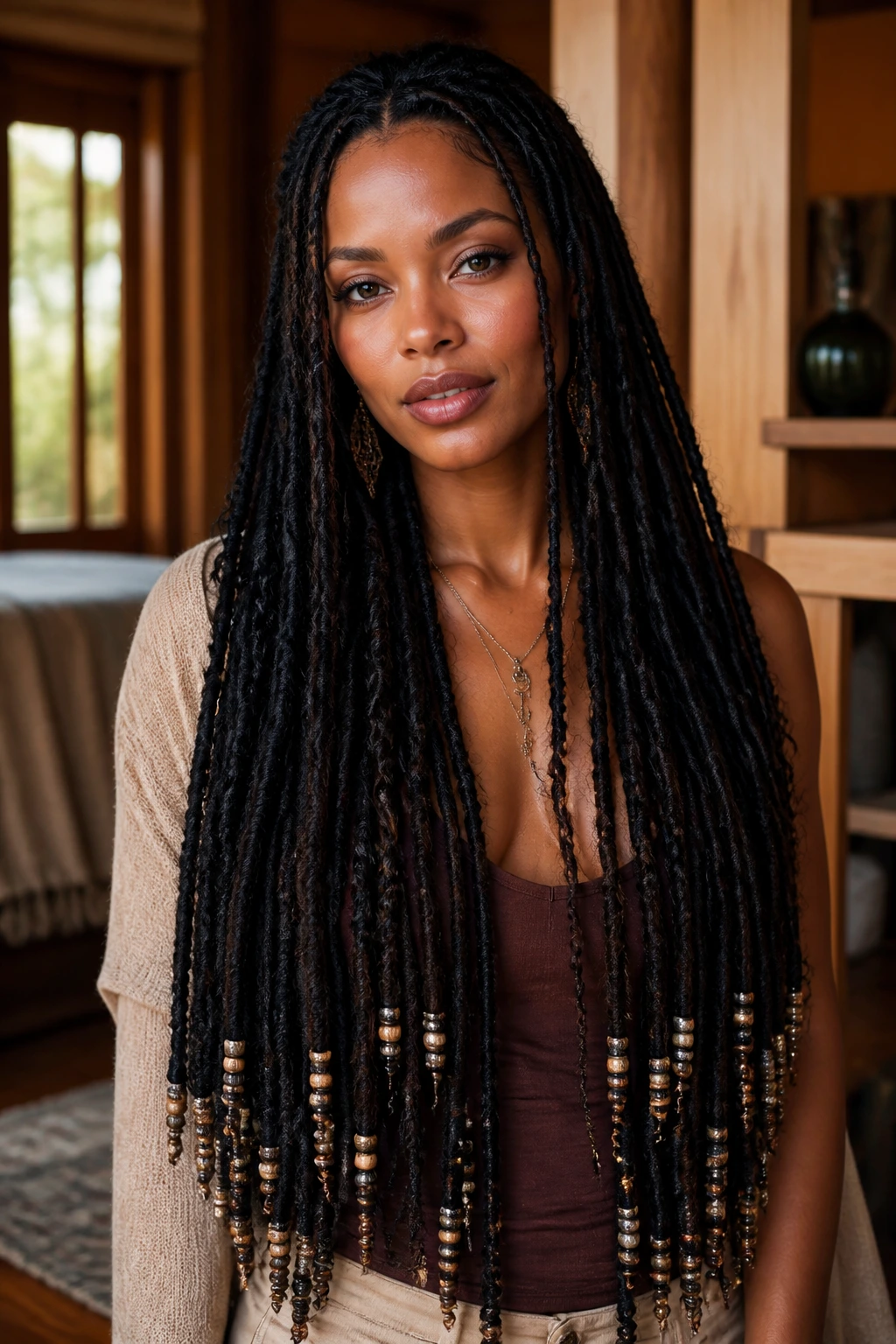
A long set like this has presence before you add a single bead. The length does the talking. When the locs fall past the chest and the ends click softly against each other, the style reads finished in that old-school sense — not loud, just complete.
Why the Length Works
The extra inches give the curls room to sit at the ends without crowding the face. That’s the trick. If you place beads only on a few front locs and keep the rest plain, the style gets rhythm instead of clutter.
I like using heavier beads low on the strand, near the last two inches, so they move when you walk instead of hanging like tiny anchors. Too many beads near the root can feel busy and tuggy by the end of the day.
Quick details to keep it clean:
- Use 2 to 4 bead accents at the front, not a whole fence line.
- Leave one or two curly pieces near the temples for softness.
- Keep the part neat so the length looks deliberate, not heavy.
My rule: if the beads are louder than your earrings, you’ve gone too far.
2. Collarbone Bob Goddess Locs
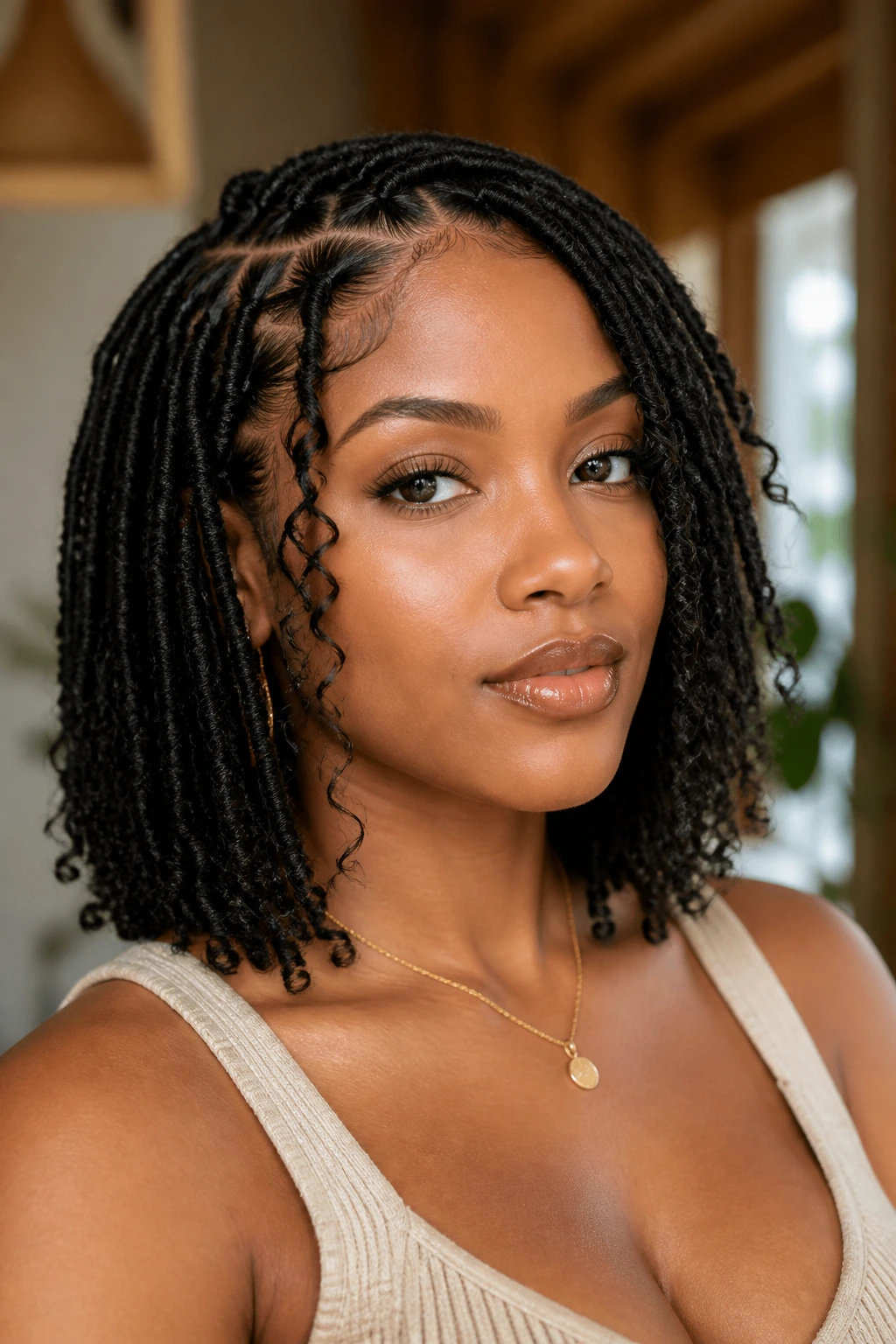
The bob is the underappreciated version of goddess locs. It gives you all the texture and none of the heavy swing that starts to annoy you by the time you’ve worn a style a few days. The ends sit near the collarbone or just above it, which keeps the whole thing neat under jackets, scarves, and big earrings.
Because the length stops before the torso, the shape holds. That’s the part people miss. Shorter goddess locs show off parting work, make a side part look sharper, and let the face carry more of the style’s personality. Add two or three loose curly pieces at the front and the whole look stops reading severe.
I reach for this version when I want the locs to look intentional from every angle, but I don’t want to carry all that weight. It’s the style I’d wear for work, a day out, or any moment when long locs would spend half the time over one shoulder anyway. Tuck one side behind the ear and it looks even cleaner.
3. Half-Up, Half-Down Goddess Locs with Curly Face Pieces
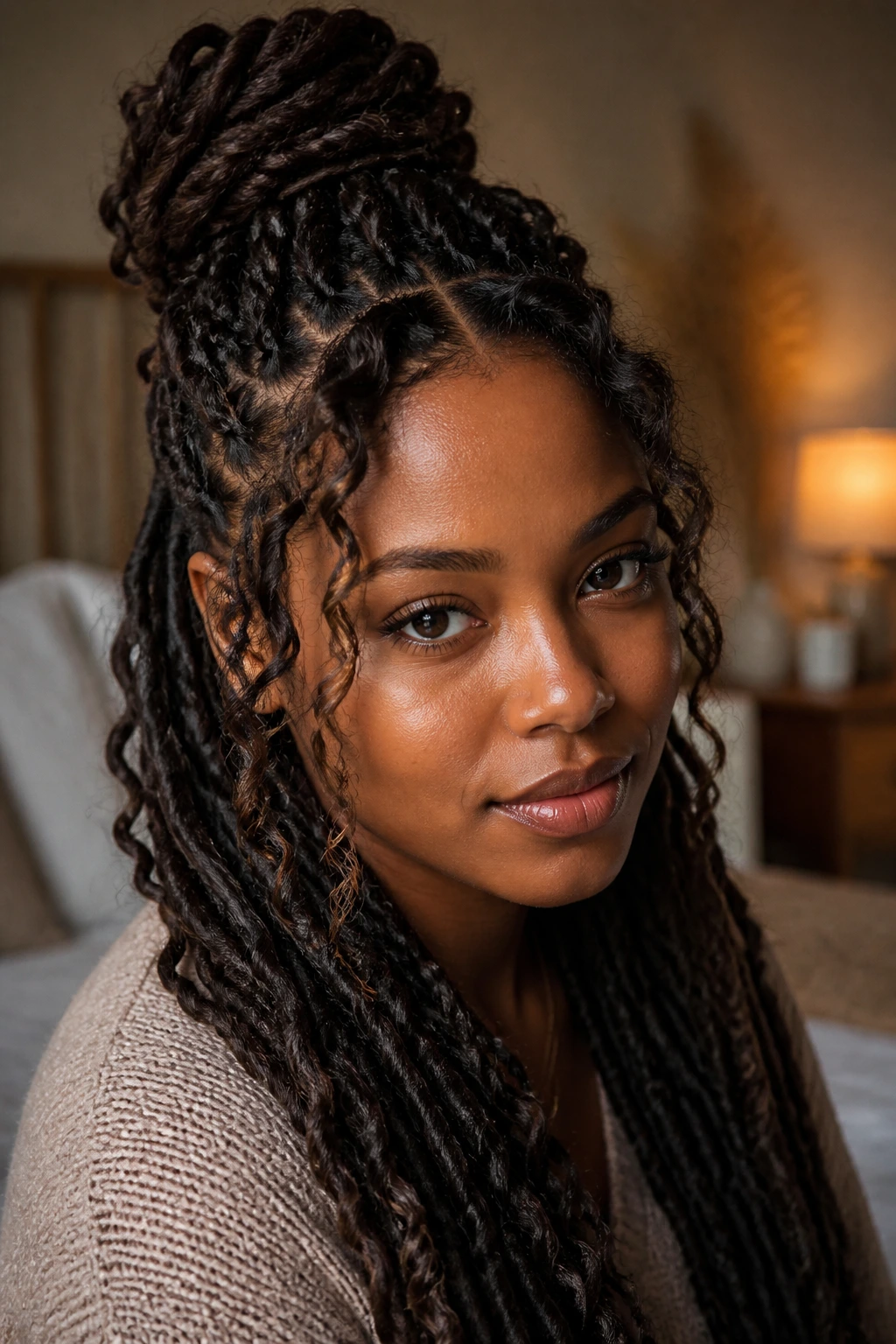
What makes the half-up version so useful? It gives you structure at the crown and softness everywhere else. Pull the top third into a small knot, puff, or wrapped ponytail, then leave the lower length loose so the curls and locs can move.
Keep the Crown Neat
Use a rat-tail comb to section the top cleanly, then smooth the roots with a little mousse or light gel. The point is not slickness. The point is control.
This style is especially good when your locs are medium to long and you want them off your face without losing that boho drape. The curly pieces around the temples matter here; they soften the line where the hair is tied back and keep the crown from looking too gym-ready. A few pins hidden under the top section help the style last through a long day.
If your face is round or heart-shaped, let the front pieces fall lower and keep the top section a little smaller. That gives the eye something soft to follow instead of a hard shelf across the forehead.
4. Sleek High Ponytail Goddess Locs
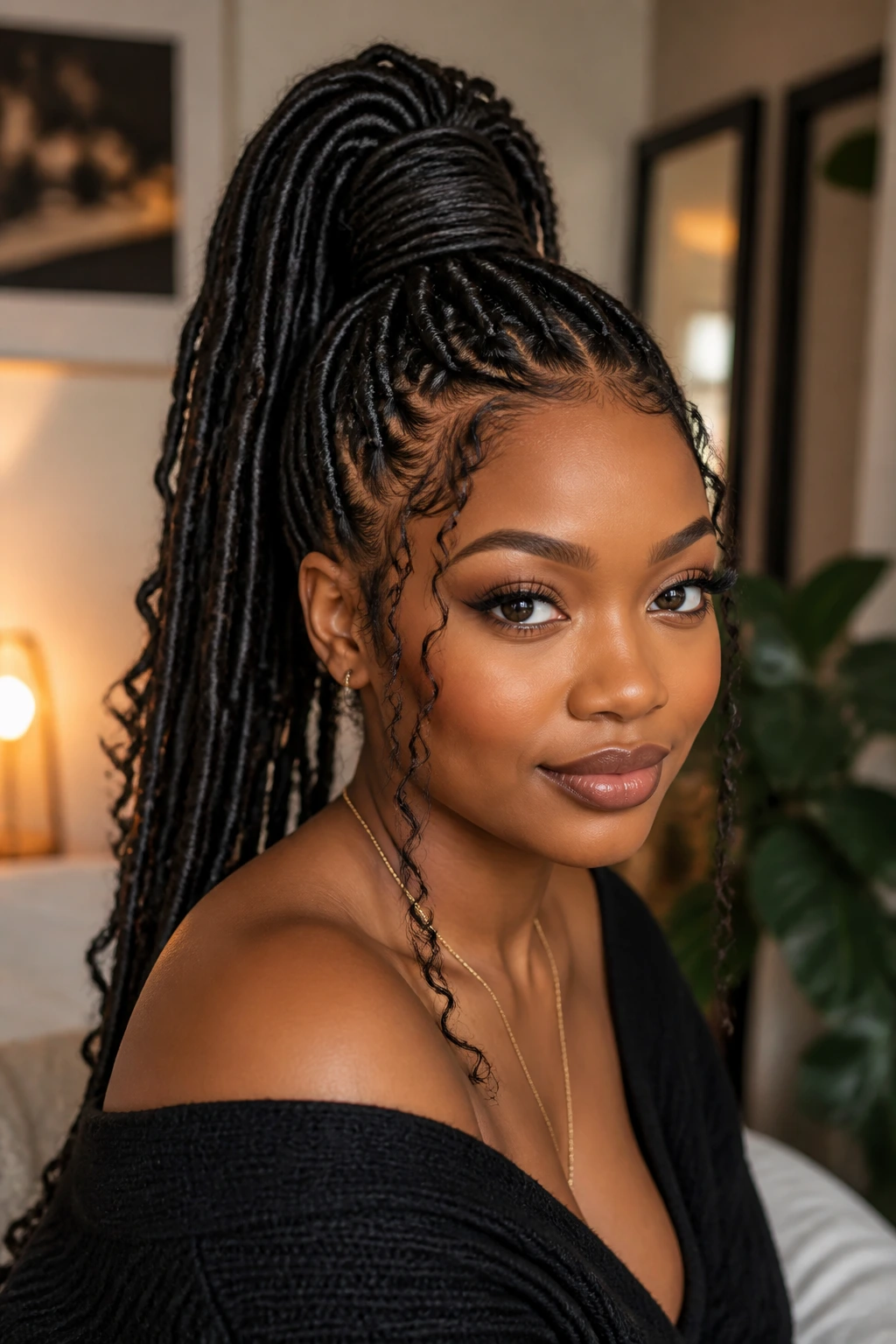
A high ponytail can look sharp in the best way, but only if the roots are controlled and the base is wrapped neatly. Set the pony just above the crown and it lifts the face without climbing so high that it starts pulling at the hairline.
This is the style for days when you want polish first and movement second. The loose tendrils at the temples do a lot of work here; without them, the style can drift too far into severe. I’d leave two to four curved pieces out, depending on how dense the locs are, then wrap one loc or a matching strand around the elastic so the base disappears.
If the ponytail feels too heavy, lower it an inch. Seriously. That one small drop can be the difference between a style that sits nicely and one that keeps trying to tug you backward. Long locs can look stunning in a high pony, but they need a solid anchor and a forgiving hairline.
5. Low Side Bun Goddess Locs
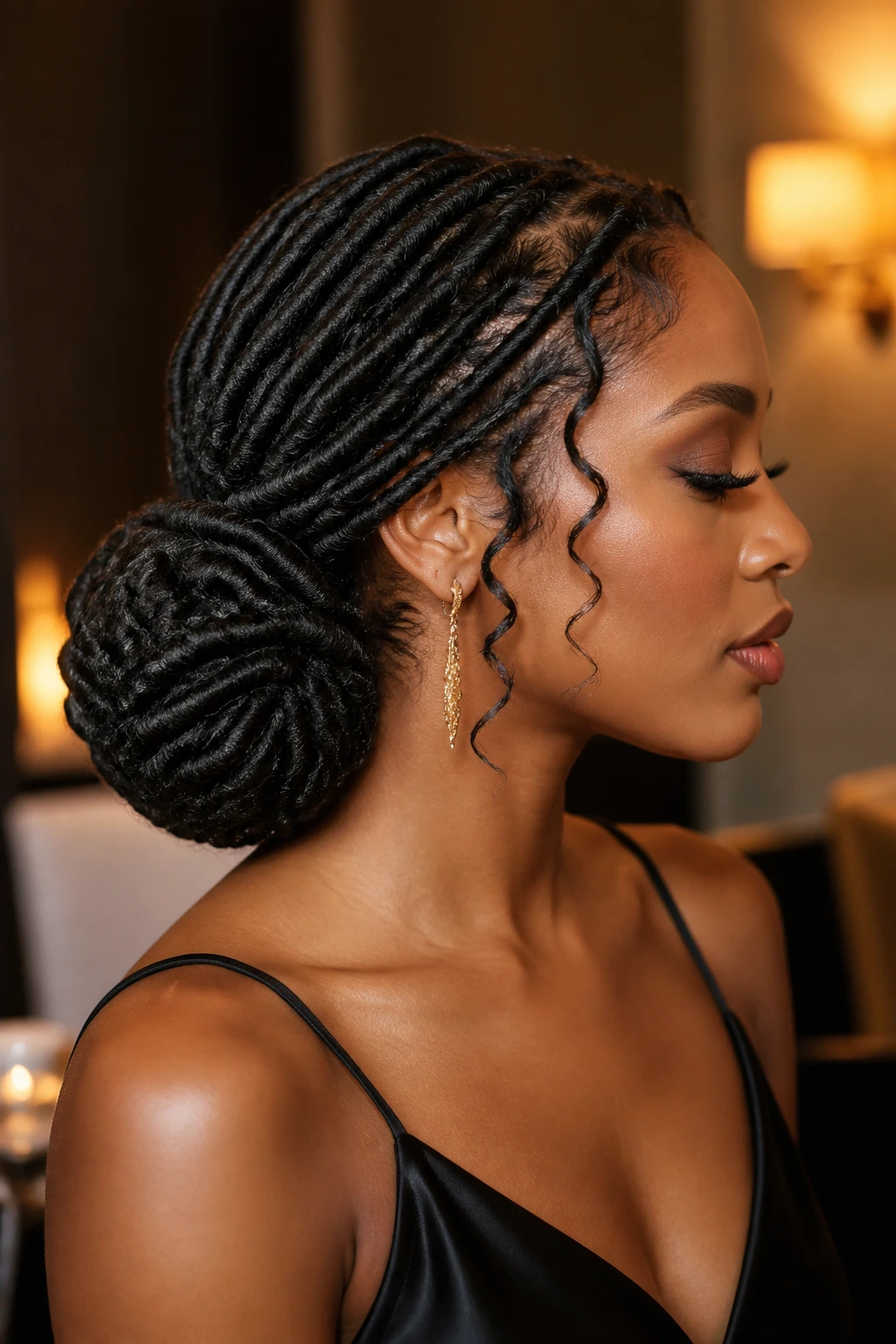
A low side bun is what I reach for when the outfit is doing a lot and the hair needs to cooperate. It feels calmer than a top knot and more refined than a messy pile of locs at the nape. Set the bun slightly behind one ear, wrap the base with one or two locs, and let a few spirals fall near the cheekbone.
The trick is to keep the bun compact but not tight. If you twist the locs until the bundle looks like a rope drum, the style loses the softness that makes goddess locs special. I prefer to tuck the ends under in a loose coil and pin them with U-pins so the shape stays rounded.
This one works hard for evening plans, dresses with open necklines, and anyone who wants the back of the head to feel finished from every angle. It also photographs cleanly from the side, which matters more than people admit. If you’re using beads or cuffs, keep them on the outer side of the bun. The inner side can stay plain and still look balanced.
6. Crown Braid Halo Goddess Locs
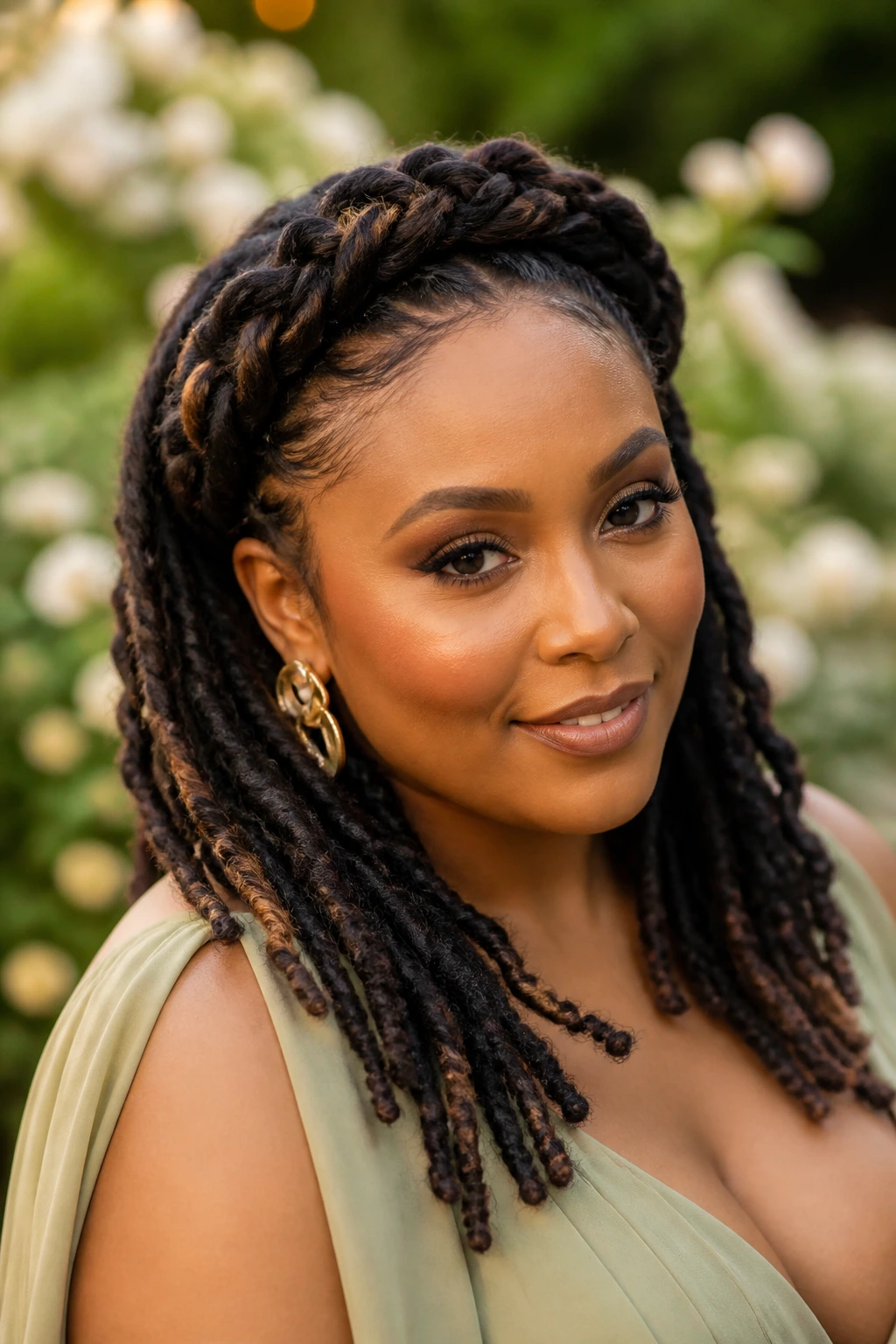
Unlike a full updo, the crown braid halo keeps the front polished and the back loose. That split is exactly why it reads bohemian instead of formal. The braid sits across the hairline like a frame, then the locs spill out underneath in a way that feels soft even when the parting is precise.
This is the style I’d pick for a wedding guest look, a garden event, or any day when you want the front of your hair to stay put. A halo braid also buys you a little forgiveness if the roots are not fresh. As long as the braid is neat and the back has some shape, the overall look holds.
The key is tension. The braid should sit snug, not painful. Leave the ends tucked cleanly behind one ear or pinned under the back section so nothing pokes out. A few curly face pieces can be pulled from under the braid after the fact if you want a softer finish. That tiny move changes the whole mood.
7. Deep Side-Swept Goddess Locs
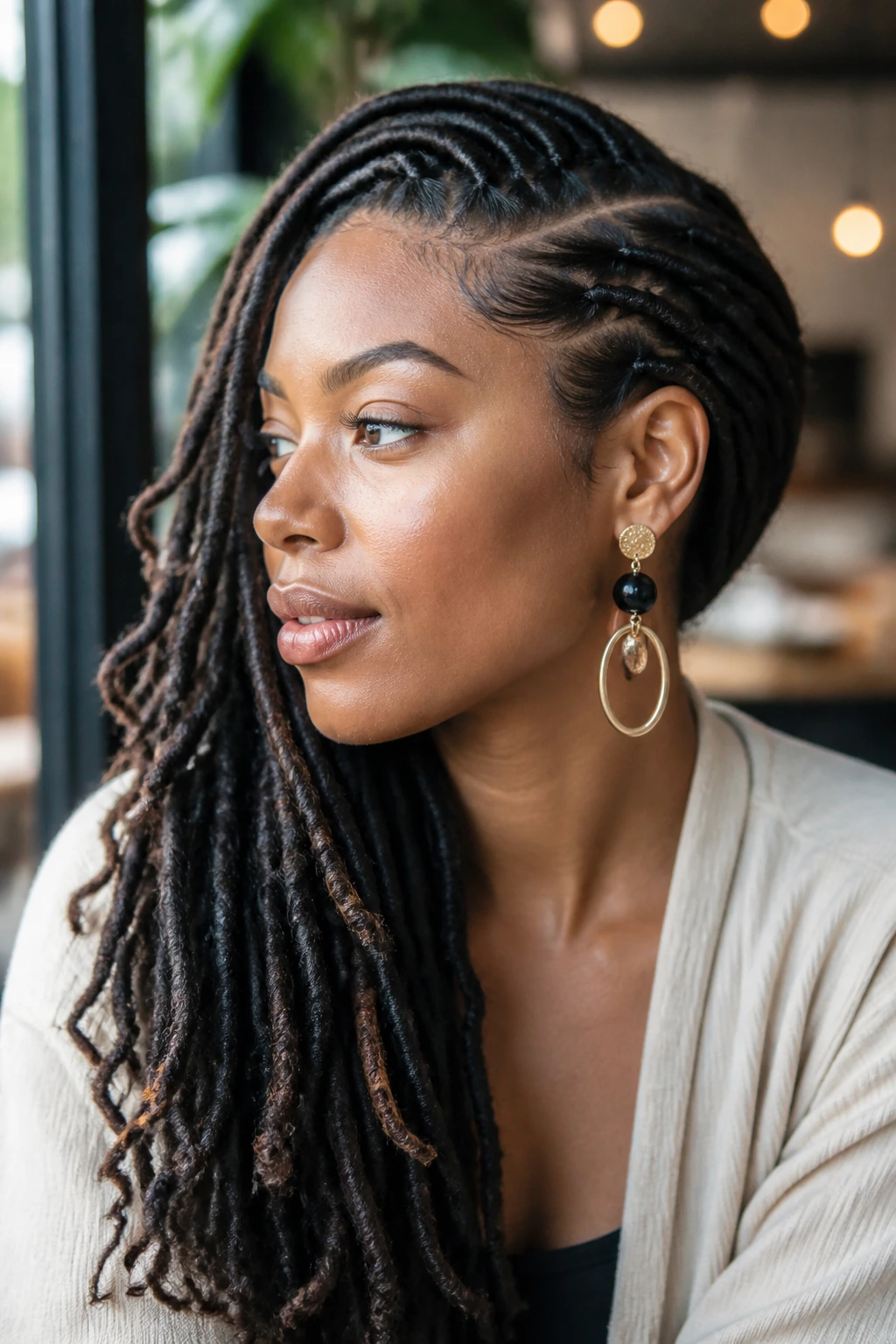
A deep side part changes the whole mood of goddess locs. The weight shifts to one shoulder, the front gets a dramatic curve, and the face opens in a way that feels deliberate without being fussy. I like this look when the locs have a little shine at the ends, because the sweep lets the texture show.
Use a rat-tail comb to carve the part, then pin the lighter side back in a couple of hidden spots so it doesn’t collapse by lunchtime. If the hair is long, let it fall over one shoulder and tuck the back section behind the collar so it keeps the line clean. If it’s shoulder-length, the side sweep still works; it just lands higher and looks sharper.
This style suits earrings with a little swing. Big hoops, drop earrings, even a single cuff on the exposed side. The whole point is asymmetry, so don’t crowd the other side with too much shine. One strong side is enough.
8. Space Buns with Free Spirals
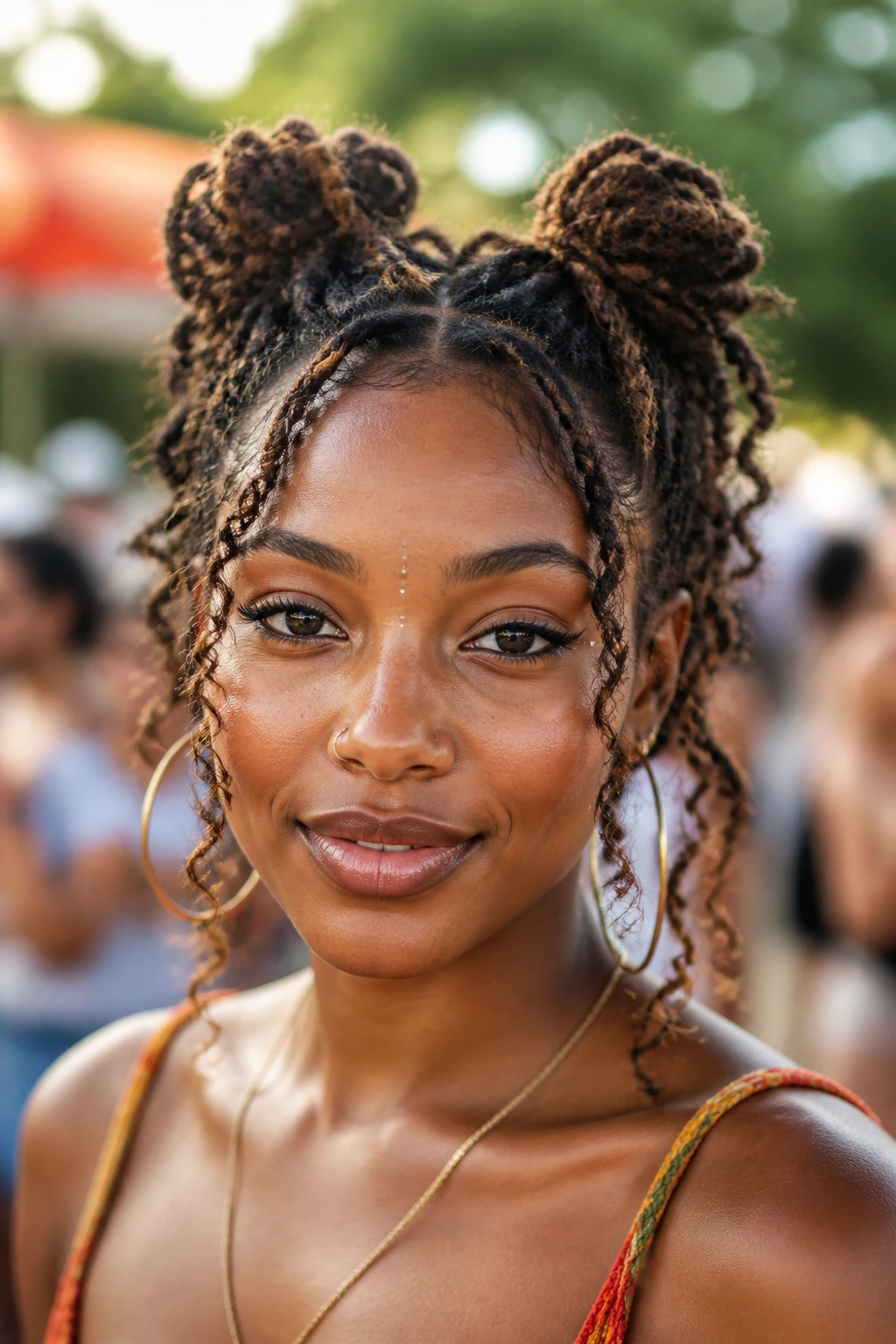
Can goddess locs do playful without looking childish? Absolutely — if the buns stay small and the loose spirals do most of the talking. Split the hair into two high sections, twist each one into a compact bun, then leave curly pieces at the temples and near the nape so the style still feels soft.
Keep the Buns Small
Big buns with heavy locs can tilt backward and start tugging. Smaller buns sit closer to the head, which is easier to wear and looks cleaner from the side.
This is one of the few styles here that can move from brunch to festival without a full reset. A printed scarf tied around one bun or a few gold rings on the front locs can push it toward fun without wrecking the shape. I’d skip it if your roots are already tired. The style works because it’s cute, not because it’s kind to tender hair.
9. Long Goddess Locs with Gold Cuffs
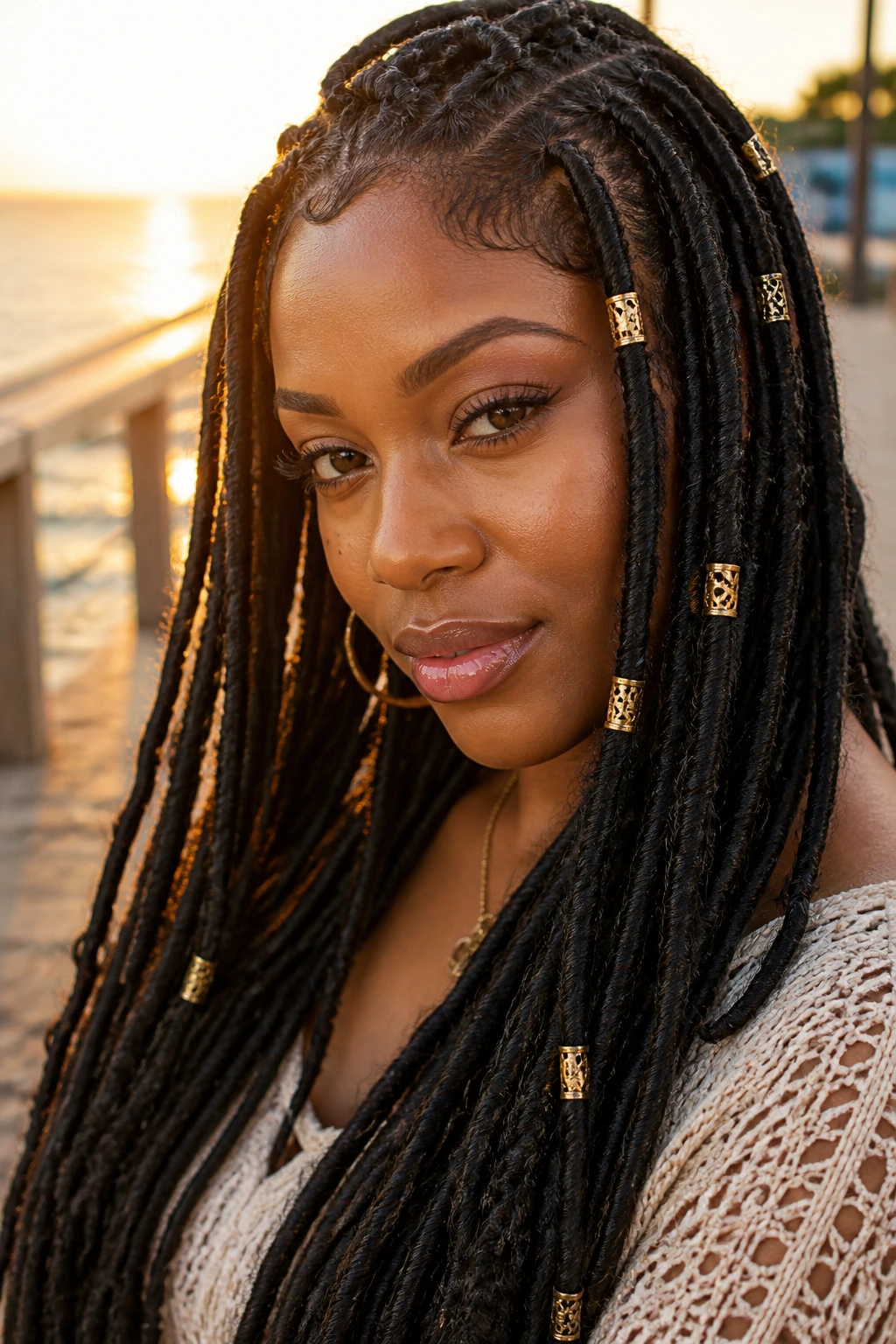
Gold cuffs do a lot of work on a simple base. Put them on three or four locs near the face and a couple at the midlength, and suddenly the style looks styled instead of simply installed. That’s why I like cuffs better than piling on beads; they give shine, not noise.
- Best on medium to long locs.
- Space cuffs unevenly for a more organic feel.
- Keep the finish matte or lightly shiny; too much gloss next to metal can look plastic.
- Put the cuffs where the eye lands first: near the cheek, the collarbone, or the shoulder.
If you already have a clean middle part, this is one of the fastest ways to make the whole style feel finished. It also plays nicely with neutral outfits — black, cream, denim, linen. The cuffs do the talking. You don’t need much else, and honestly, too much else starts to crowd the look.
10. Scarf-Wrapped Goddess Locs
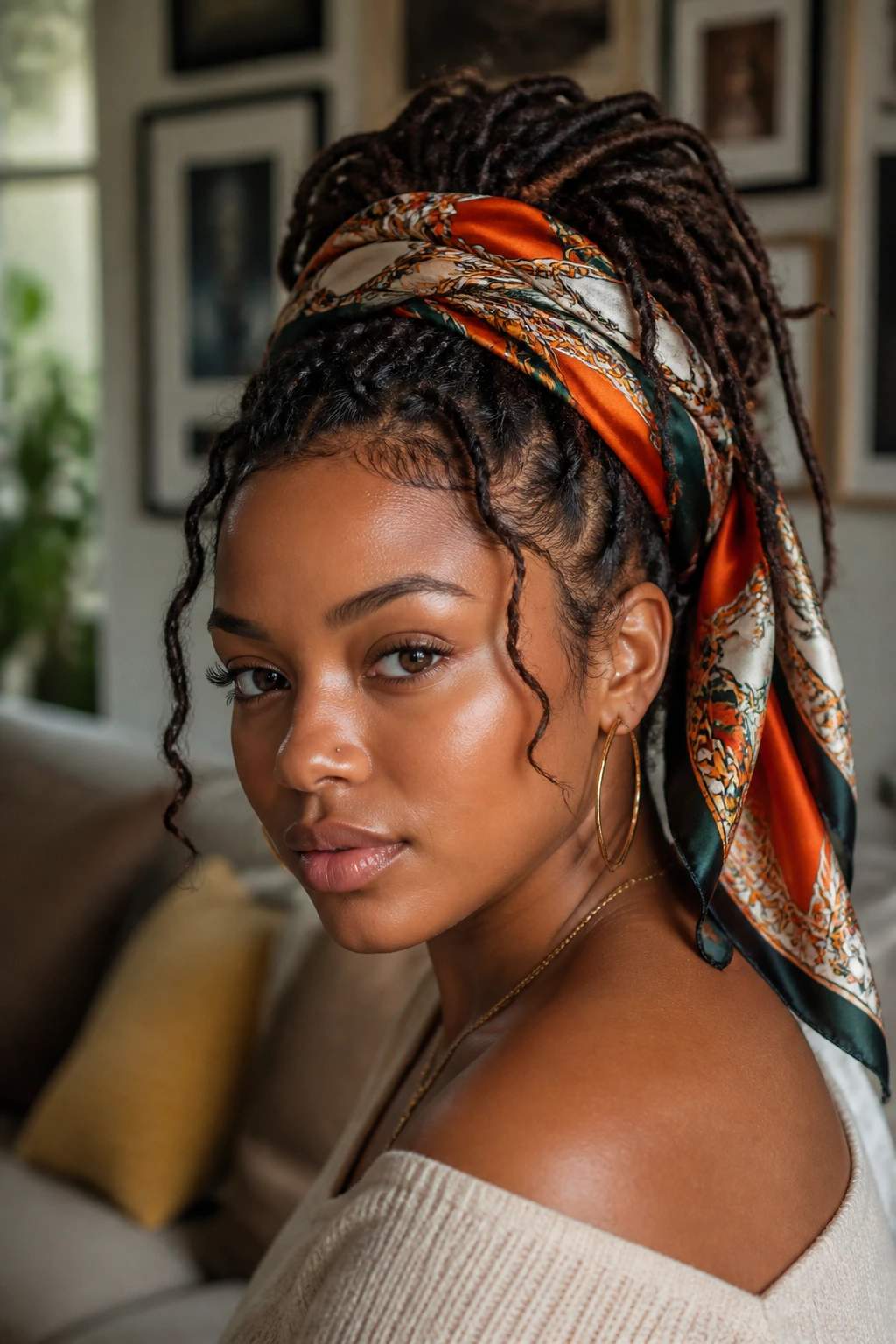
A scarf can rescue a style that is between wash days and still make it look like you meant the whole thing. Tie it around the crown, fold it into a headwrap, or knot it low at the nape and let the ends trail. The scarf adds color, but it also covers a part line that may not be cooperating.
I like silk or satin here because it sits flatter and doesn’t fuzz up the front section. If you want the style to stay polished, choose a scarf that shares one color with your outfit or earrings. Too many prints can hijack the look. The locs are the anchor; the scarf is the accent.
This version is especially good when you want to keep the hair off your face but don’t want the style to feel severe. A scarf softens the whole thing. It also gives you room to cheat a little on the roots while still looking deliberate, which is never a bad trade.
11. Lob-Length Goddess Locs with Curly Ends
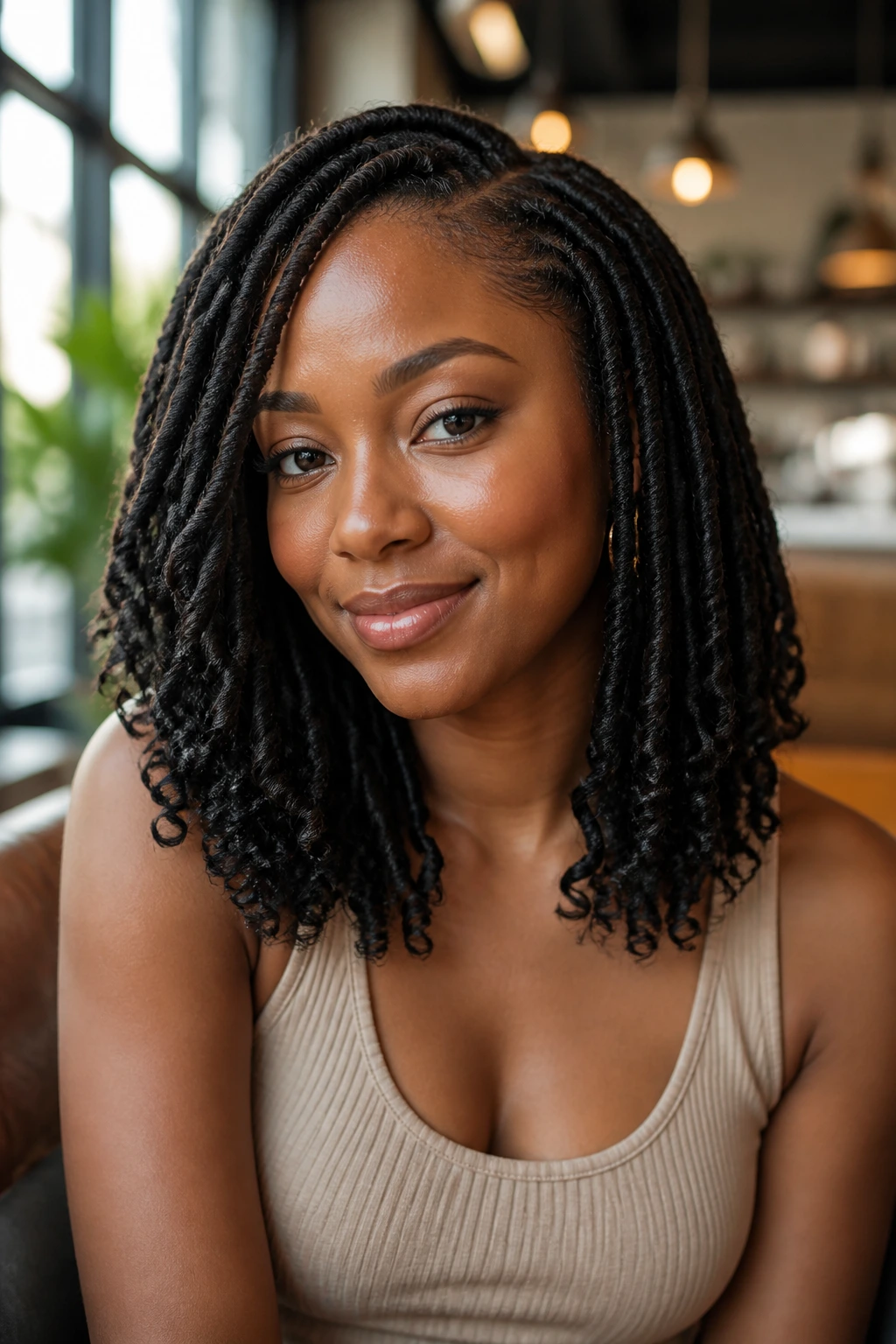
The lob is the sweet spot for anyone who wants movement without all the extra weight. When the locs hit between the collarbone and the shoulders, the shape swings every time you turn your head. Add curly ends and the cut gets even better — the curls feather out instead of dropping in a hard line.
This length is useful because it still reads dressed up, but it doesn’t overwhelm the neck or collar. It works especially well with V-necks and square necklines, where a longer set might feel crowded. If the ends are a little uneven, that can actually help. Tiny imperfections make the style look less stiff.
I’d keep the accessories light on this one: a cuff near the front, maybe one bead on each side. The length itself is the feature. Let it breathe. If you want more polish, tuck one side behind the ear and let the opposite side carry the movement.
12. Twisted Top Knot Goddess Locs
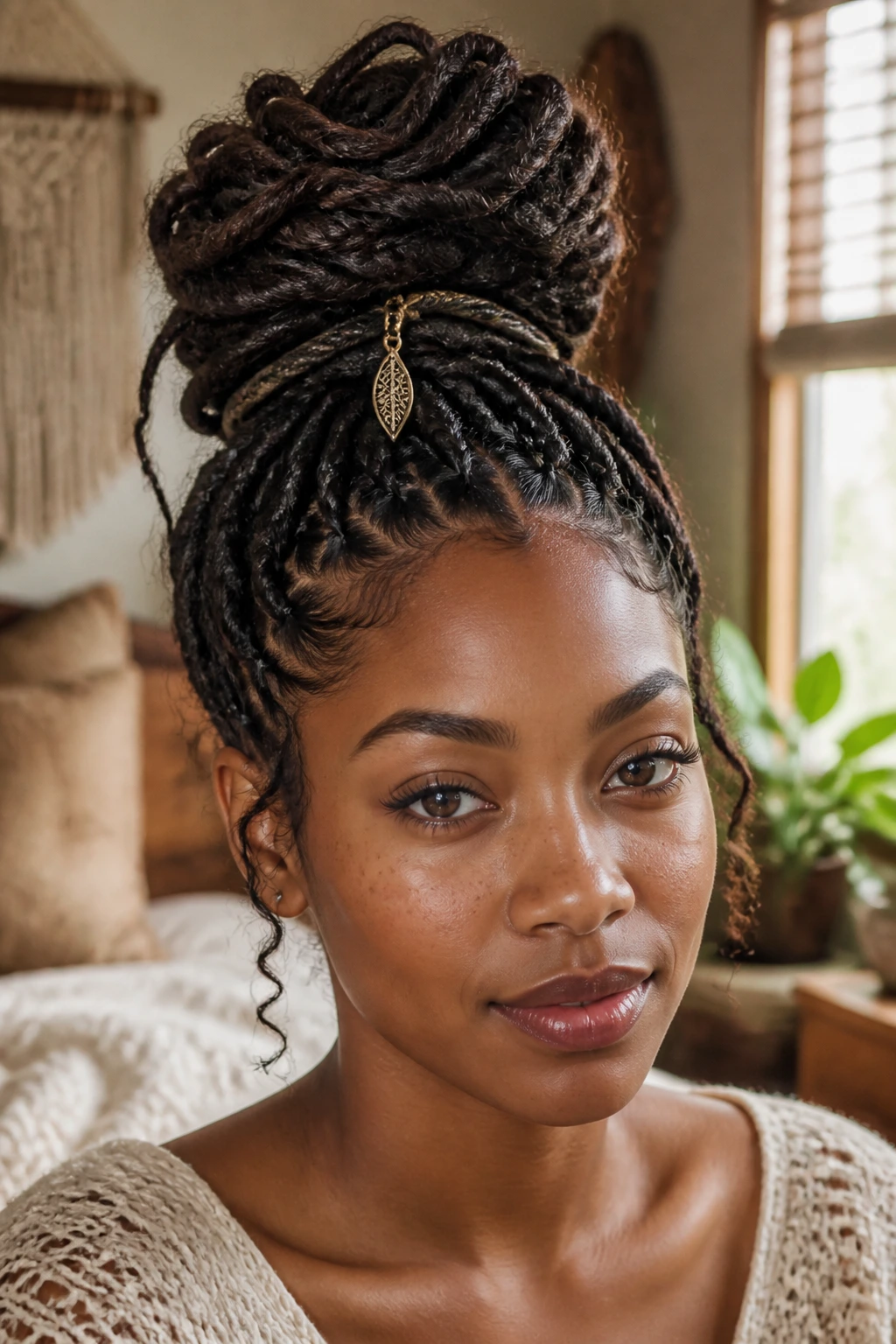
A top knot gets more interesting when you wrap the base with a single loc or a thin cord and let one ornament hang just off center. That one small detail turns the style from functional into deliberate. The knot should sit high but not so high that it looks like it’s trying too hard.
Make the Knot Hold
Use pins that disappear into the loc texture, then tuck a couple of curly pieces forward at the temples. If the knot is too perfect, it loses the boho part of the brief. A little unevenness around the edges is a feature here, not a problem.
This is a good choice when you want your hair off your neck but still want one visual surprise. It’s neat from the front and more playful from the back. I especially like it with one slim wrap or pendant, not three. The style already has height; it doesn’t need clutter.
13. Boho Faux Hawk Goddess Locs
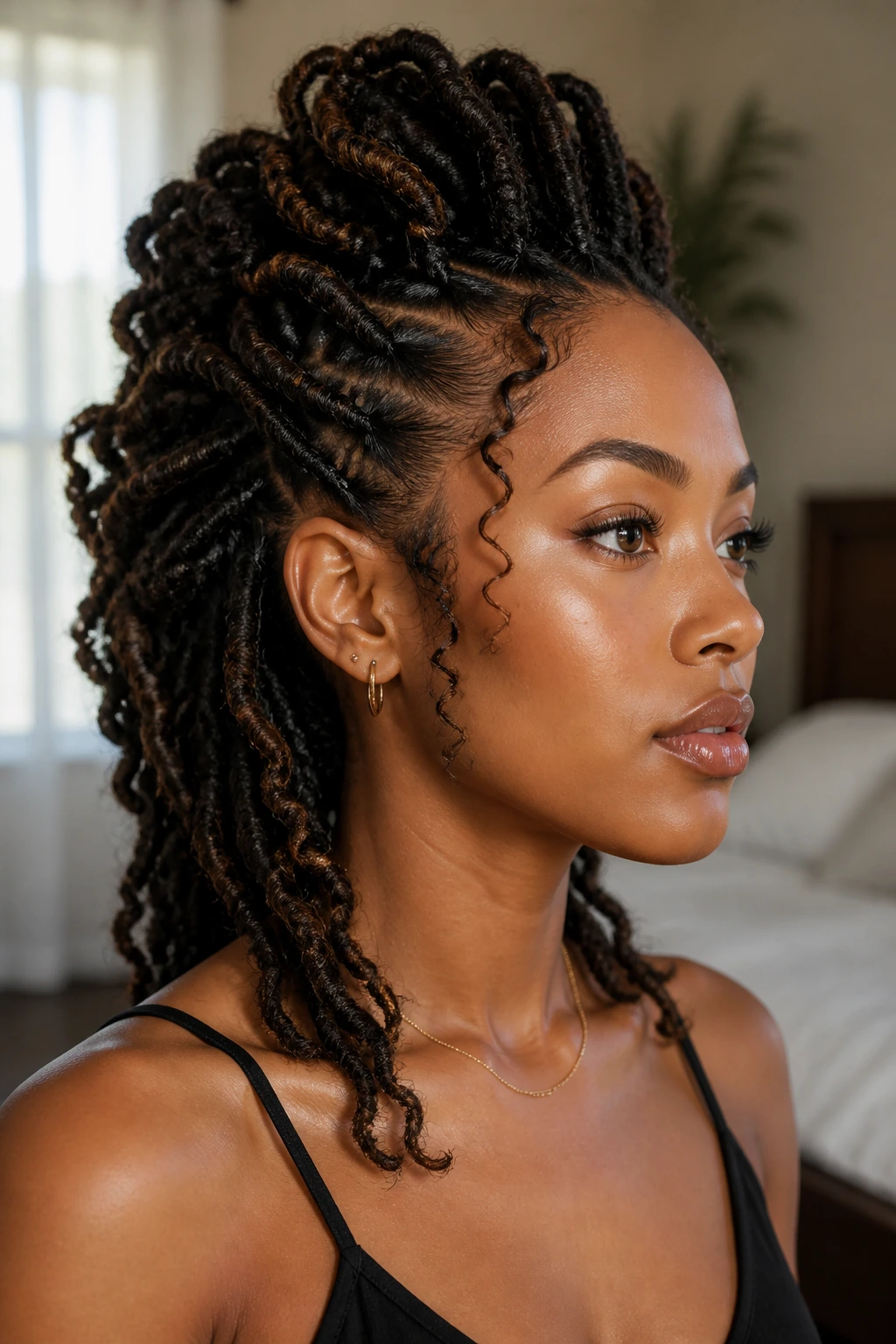
A faux hawk gives goddess locs edge, but the soft sides keep it from drifting into something too severe. Pin the sides upward in overlapping sections, leaving a raised center line that runs from hairline to nape. Then pull a few loose spirals out around the temples and behind the ears.
The shape is the whole point. It creates height without requiring a true mohawk cut, and the lifted center lets the locs show off their length. I like this one for nights out because it reads bold from a distance and still has movement up close.
If your locs are heavy, use more pins than you think you need. One pin per section is usually not enough. The style should feel anchored at the sides and freer through the middle, not pulled into a helmet. A faux hawk works best when the center line has some texture, not when every strand is smoothed into a perfect ridge.
14. Asymmetrical Shoulder Sweep Goddess Locs
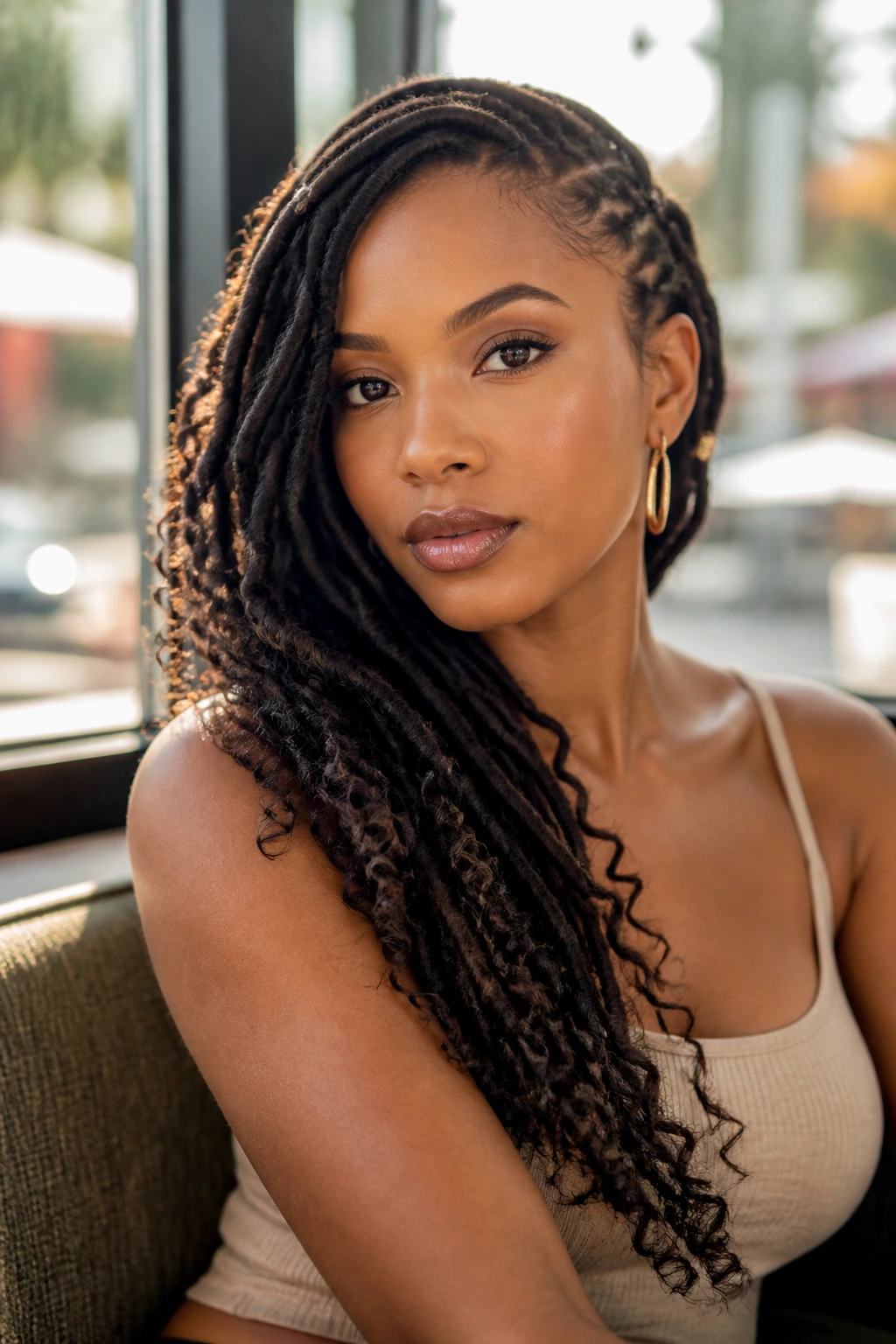
Some styles look finished the second you move all the hair to one side. This is one of them. The shoulder sweep lets the locs sit across the collarbone in a clean diagonal, which flatters open necklines and jackets with a sharp shoulder line.
The style works because it’s simple. No braiding, no complicated shape, just placement and a little control at the back so the sweep stays put. If you use a hidden pin behind the ear, keep it flat and covered by a few locs. That’s the difference between a deliberate side sweep and hair that just wandered over and stayed there.
I especially like this on longer sets with a soft curl at the ends. The movement looks better when the hair has some bend in it. Straight, stiff ends can feel too heavy for the curve. If you want the whole style to read cleaner, use one cuff or bead cluster on the front-facing side only.
15. Braided Front Accent Goddess Locs
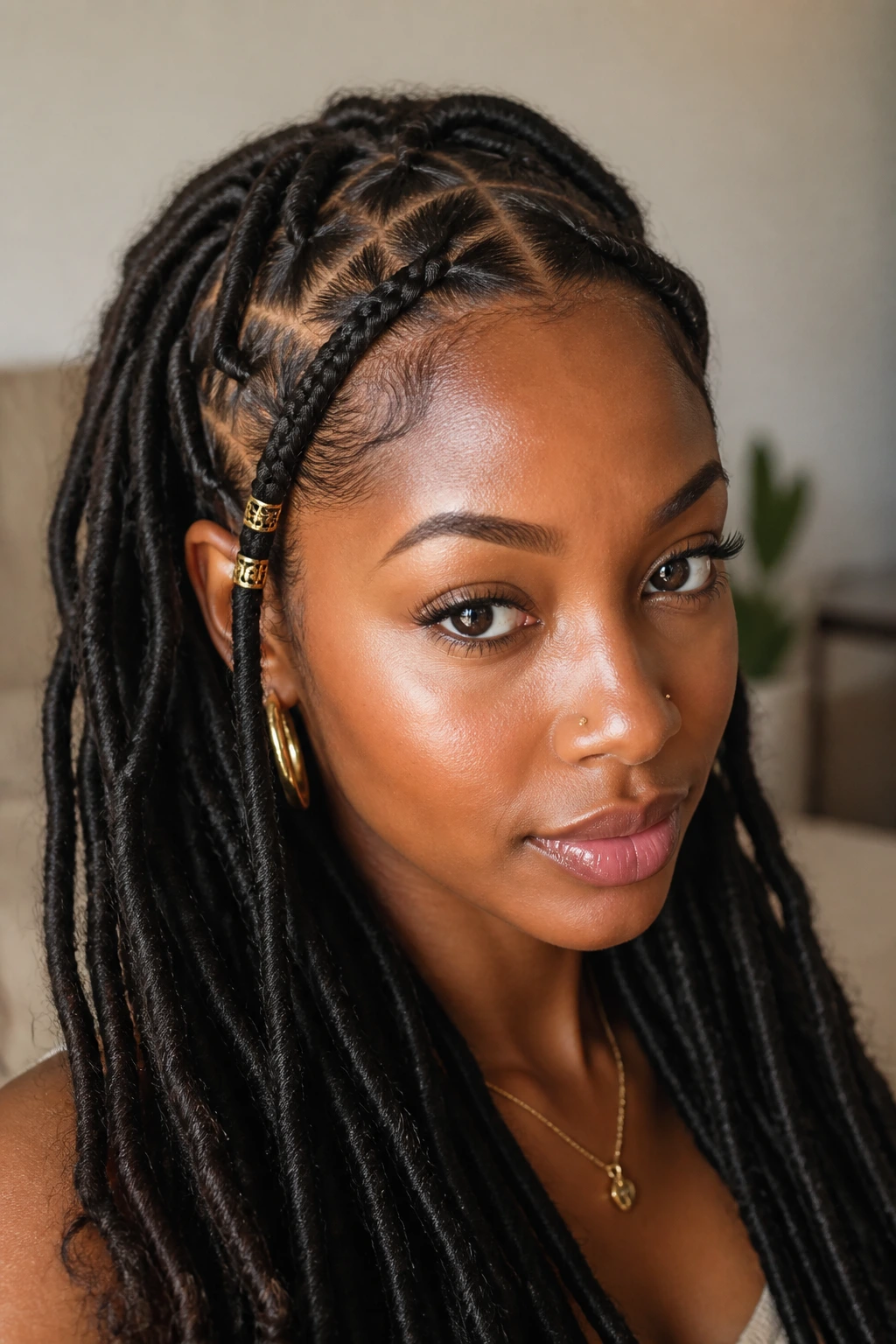
A tiny braid across the front hairline can change a whole set of goddess locs. You can do one braid on each side, or braid a small section from the temple and let it disappear into the length. The braid gives a little structure near the face so the rest of the locs can stay loose and romantic.
This is a style I like when the base parts are fresh but the ends need a bit of personality. It also helps when you want the front hair out of your eyes without pulling everything back. Keep the braids slim. Thick front braids can start to look like a different hairstyle entirely, which is not the point.
A couple of cuffs or a braid ring near the temple can make the accent braid pop. Don’t over-accessorize the rest. One focal point is enough. If you want a softer version, skip the cuff and leave the braid plain; the contrast against the loose locs is enough on its own.
16. Shell-Adorned Goddess Locs
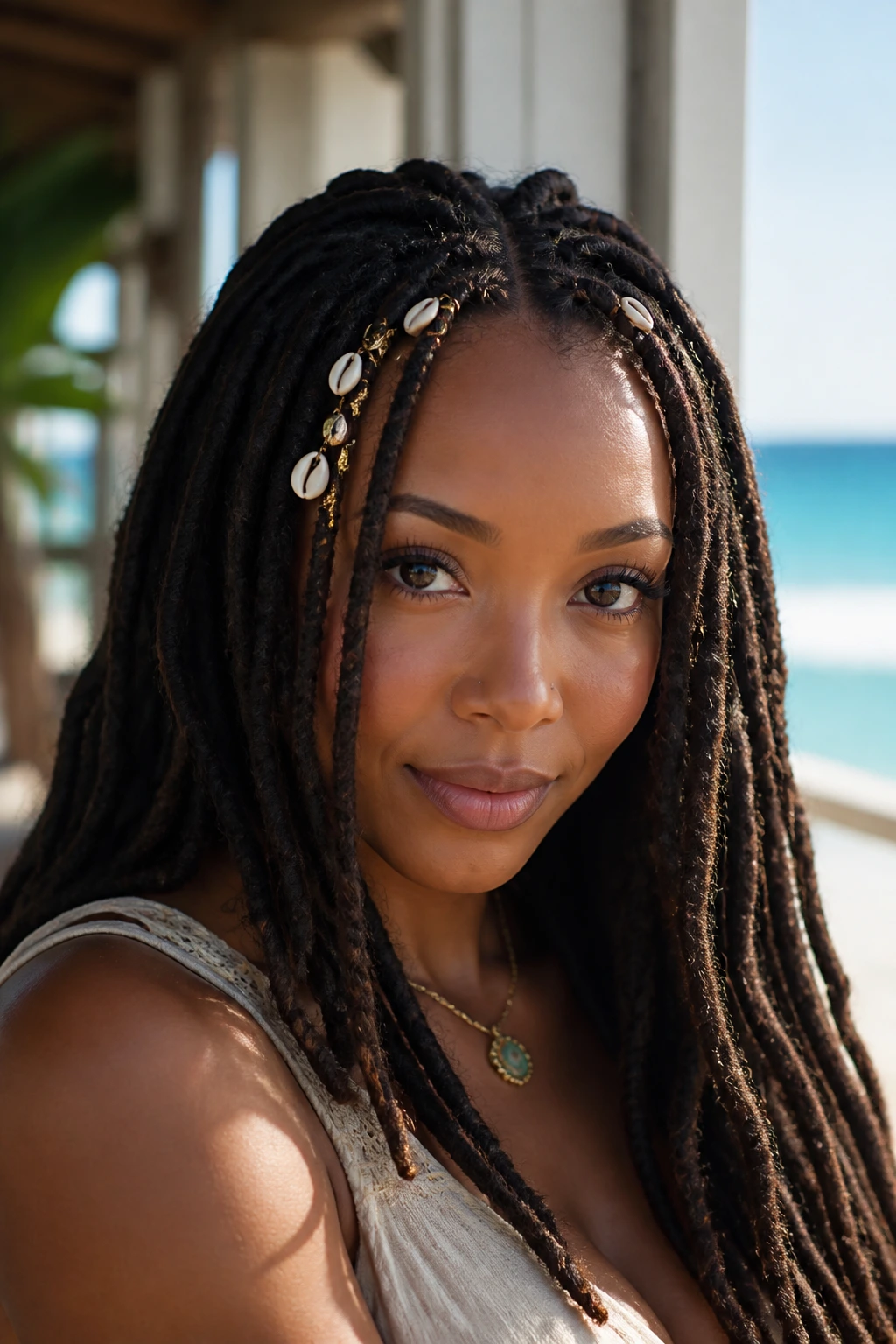
Cowrie shells and similar shell accents bring a beachy note that fits the bohemian brief without making the style costume-y. The trick is restraint. One shell on a few front locs, or a short cluster near the part, usually looks cleaner than scattering them everywhere.
This style has a natural rhythm because shells move differently from beads. They sit flatter and make a soft clicking sound when the locs touch, which is a tiny detail but a good one. I like them best on medium to long locs with a little wave at the ends.
If you’re wearing shells, keep the rest of the outfit simple. A textured top or a linen shirt is enough. Too many boho signals at once can make the whole thing feel forced. Let the shells be the wink, not the whole joke. That’s the difference between styled and staged.
17. Rolled Chignon Goddess Locs
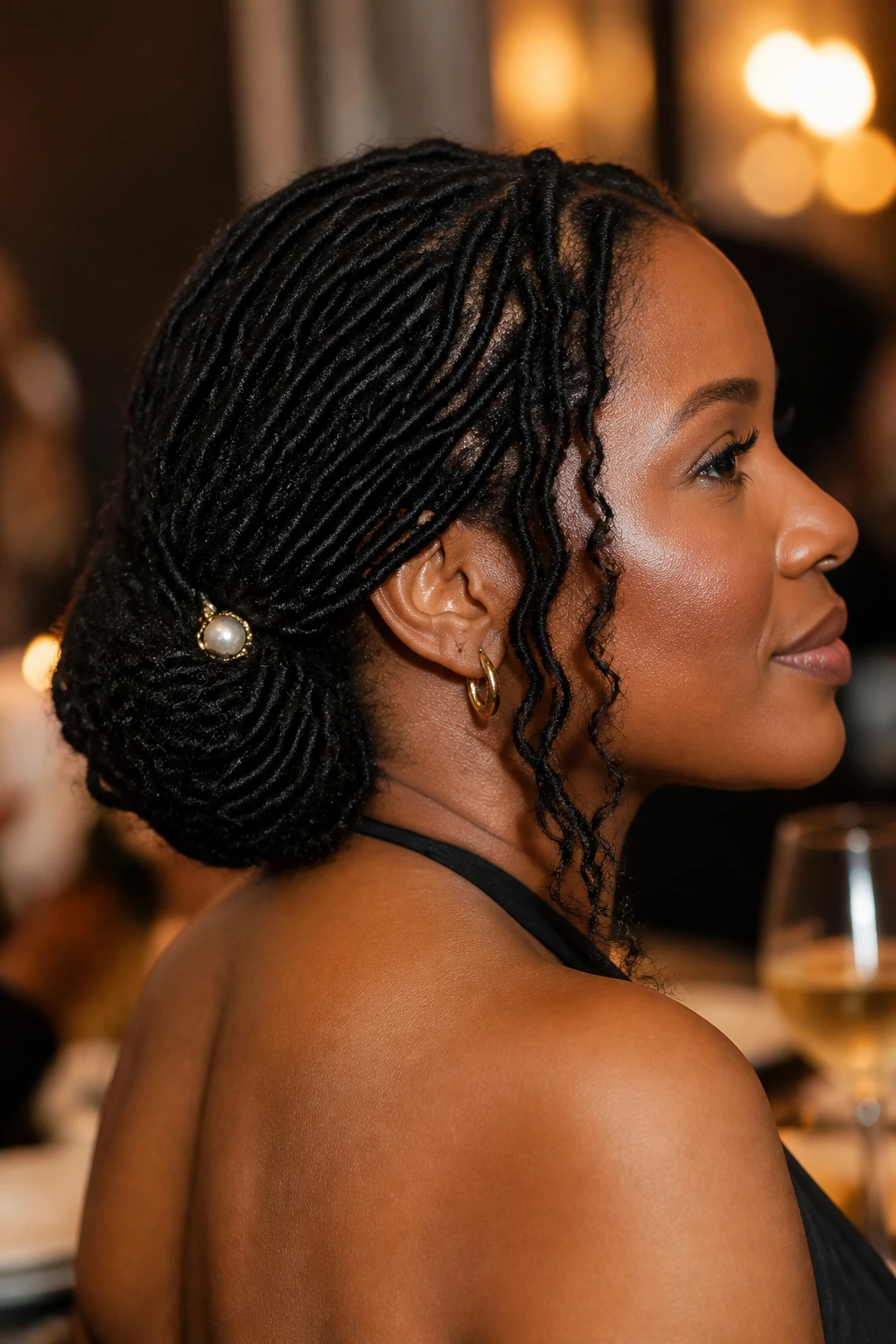
A rolled chignon is the quietest formal look in this bunch, and that’s why it works. Instead of building height, you roll the locs inward at the nape and pin them into a low, smooth knot. A few face pieces stay out, just enough to keep the style from reading too strict.
Why It Reads Formal Without Getting Stiff
This is the version I’d choose for a ceremony, a dinner, or any event where you need the hair to sit through hours without collapsing. It’s less romantic than loose locs, but the little spirals at the temples bring back the softness. Keep the roll wide rather than tight, so the bun keeps its shape and doesn’t turn into a compact ball.
A pearl pin or one gold comb can finish it nicely. Past that, stop. The bun should look tailored, not crowded. If the locs are long, fold them in sections rather than wrapping them all in one go; that keeps the chignon from looking lumpy at the back.
18. Bubble Ponytail Goddess Locs
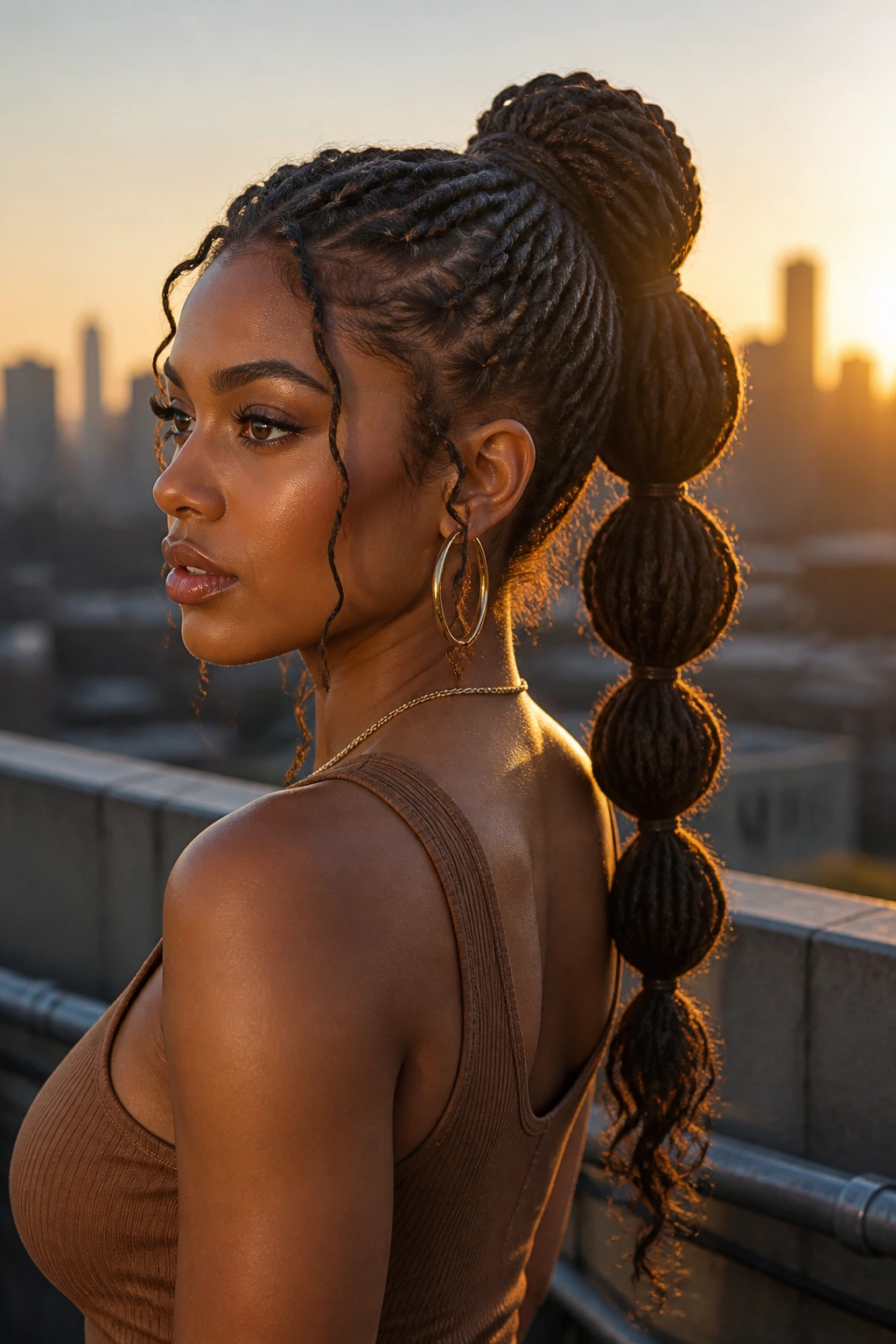
The bubble ponytail is a useful trick when you want something more sculptural than a plain ponytail. Split the length with small elastics every few inches, then tug each section gently so it puffs into a rounded shape. On goddess locs, the texture makes each bubble look fuller than it would on straight hair.
This style reads modern without losing the softness of the locs. It’s also practical, which I appreciate. You get a controlled shape, but the ends and any loose curl pieces keep it from feeling rigid.
Use clear elastics or wrap tiny sections of loc around the bands if you want a cleaner finish. The bubbles should be even enough to look intentional, but not so exact that the style turns stiff. A little irregularity is part of the charm. If you want more polish, keep the first bubble closest to the nape slightly smaller than the rest.
19. Tucked Headband Goddess Locs
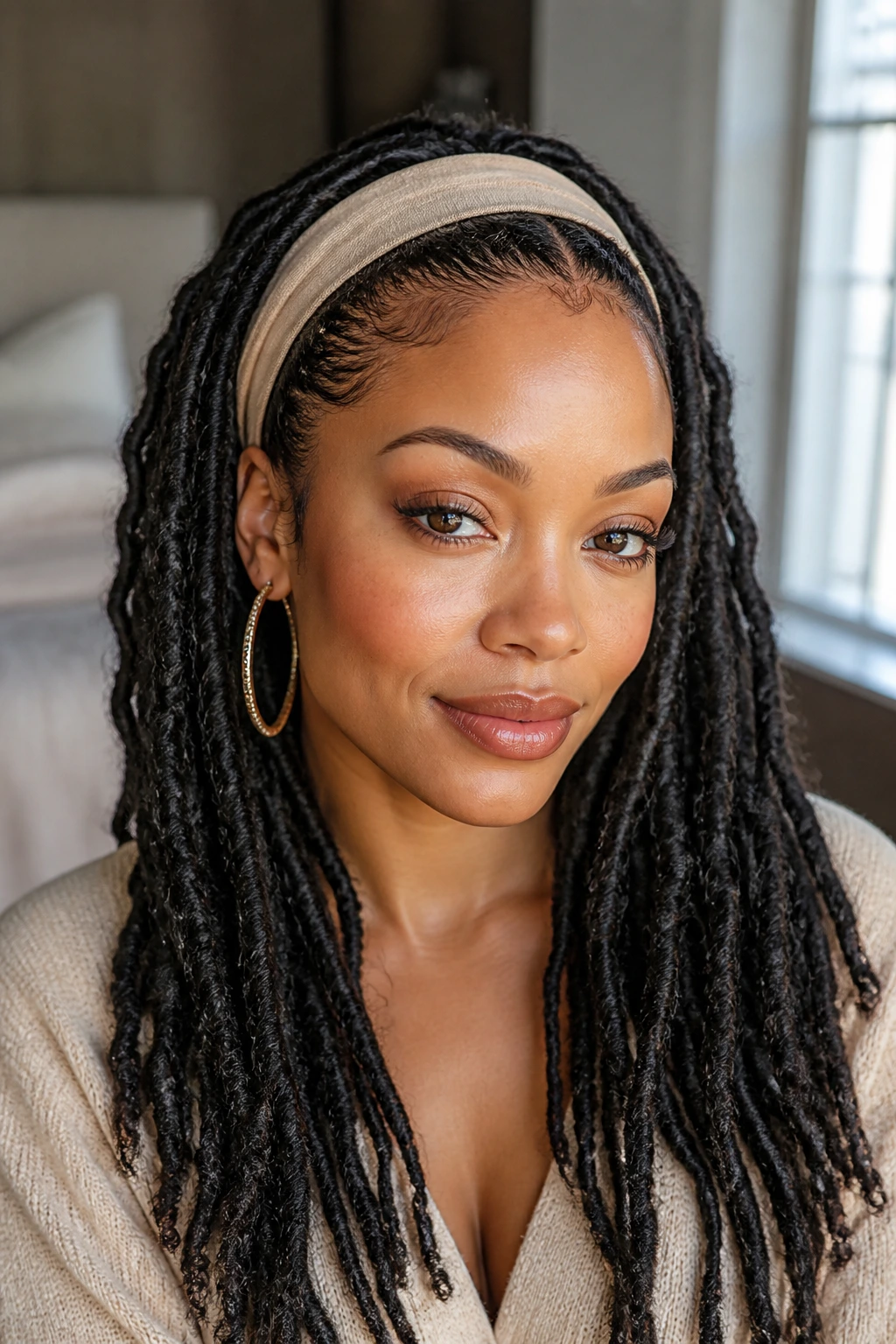
A headband can solve a bad hair morning faster than almost anything else. Slide on a padded band, a slim metallic strip, or a soft fabric band, then tuck the front locs back so the hairline stays open. The result is polished in seconds and still has plenty of texture at the back.
This one is especially good when you need the style to last through a long day and can’t afford to fuss with pins. A headband also gives you room to show off earrings, which matters more than people think. If the band is wide, keep the rest of the outfit simple so the face doesn’t get crowded.
I’d skip stiff plastic bands unless they sit flat on your head. If they pinch behind the ears, they’ll be off your head before lunch. The best ones disappear into the style and let the locs keep their shape.
20. Layered Goddess Locs with Feathered Tendrils
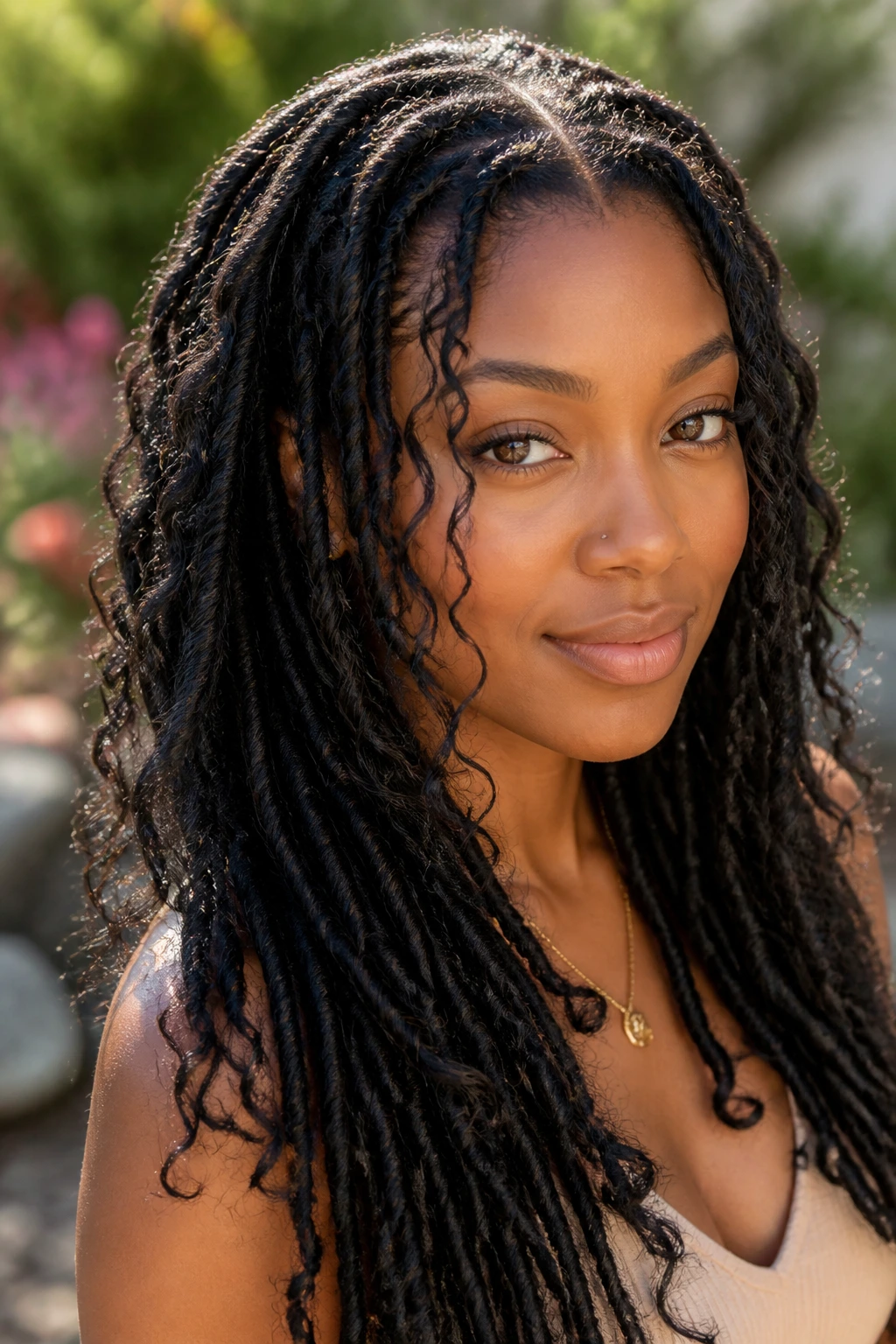
Layers make goddess locs move like they have a breeze around them even when the room is still. Shorter front pieces hit at the cheek and chin, while longer sections drop toward the chest and back. Add feathered tendrils through the front and the whole style turns softer immediately.
This is one of the best looks for people who don’t want one flat line across the bottom. It gives shape to the hair without relying on accessories. If your locs are naturally layered, lean into that. If not, you can fake some of the effect by pinning a few front locs slightly higher and letting the rest fall lower.
Let the Layers Do the Work
I like this style with a soft middle part and a little shine on the ends. The layers create movement on their own, so you don’t need many extras. One cuff or a small braid accent is plenty if you want a little sparkle.
It’s a strong choice for photos, but it also works in everyday life because the layers keep the style from feeling heavy. That is the part I care about most. Hair that moves well tends to look more expensive, even when the pieces are simple.
21. Side Braid Into Ponytail Goddess Locs
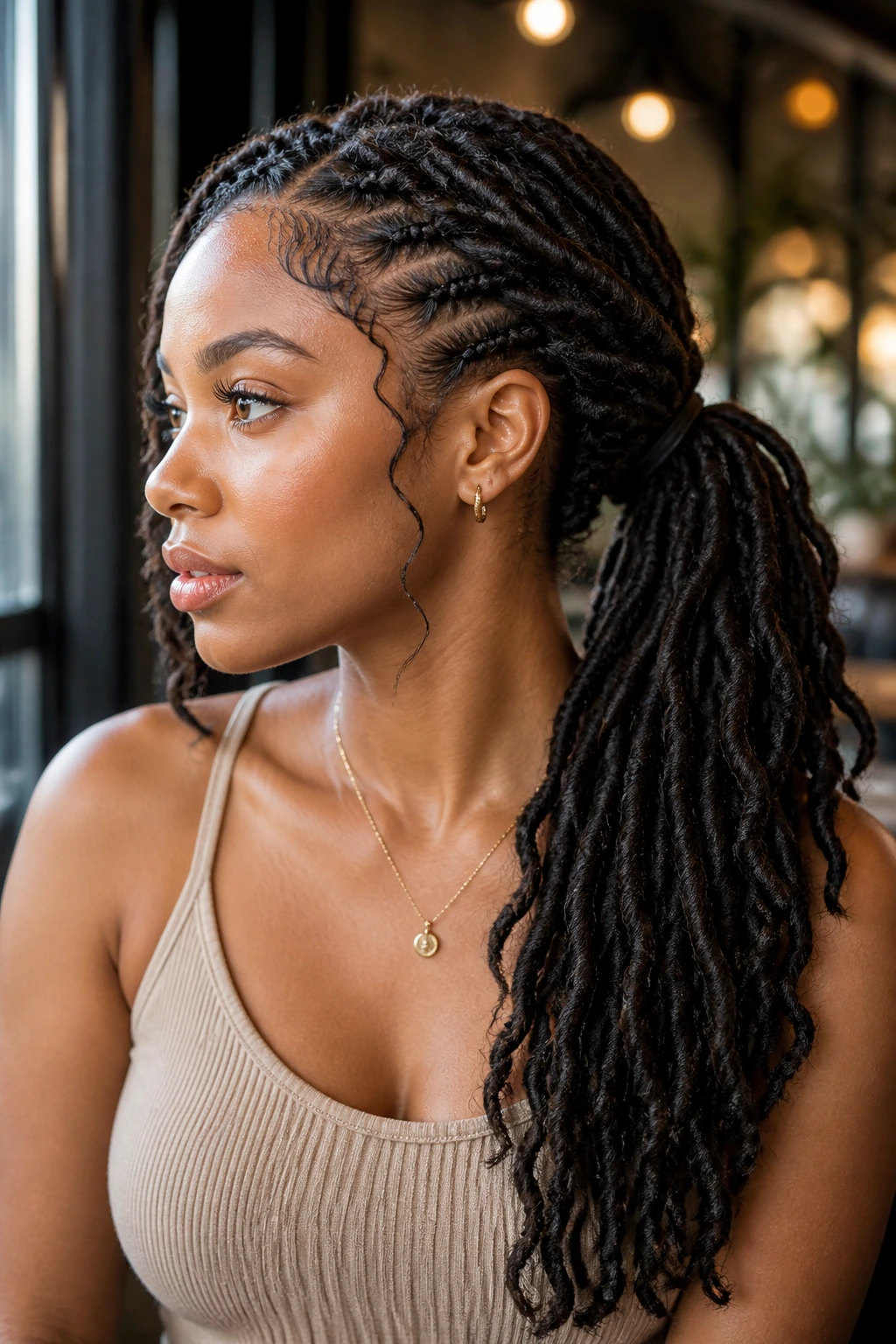
This style starts neat at the front and gets more relaxed as it moves back. Braid one side from the temple toward the nape, then gather the rest into a low ponytail so the braid reads as a built-in accent. It’s a good compromise if you want structure but don’t want a full updo.
The braid makes the front look clean, while the ponytail keeps the locs moving. I like it on medium-to-long lengths because the braid can disappear into the ponytail without looking chopped off. A few loose curly pieces near the face stop the style from reading too formal.
If you’re using cuffs, place one on the braid and leave the ponytail plain. Two separate focal points usually fight each other. One quiet detail in the braid and one clean ponytail base are enough to carry the whole look.
22. Center-Part Curtain Goddess Locs with Spiral Ends
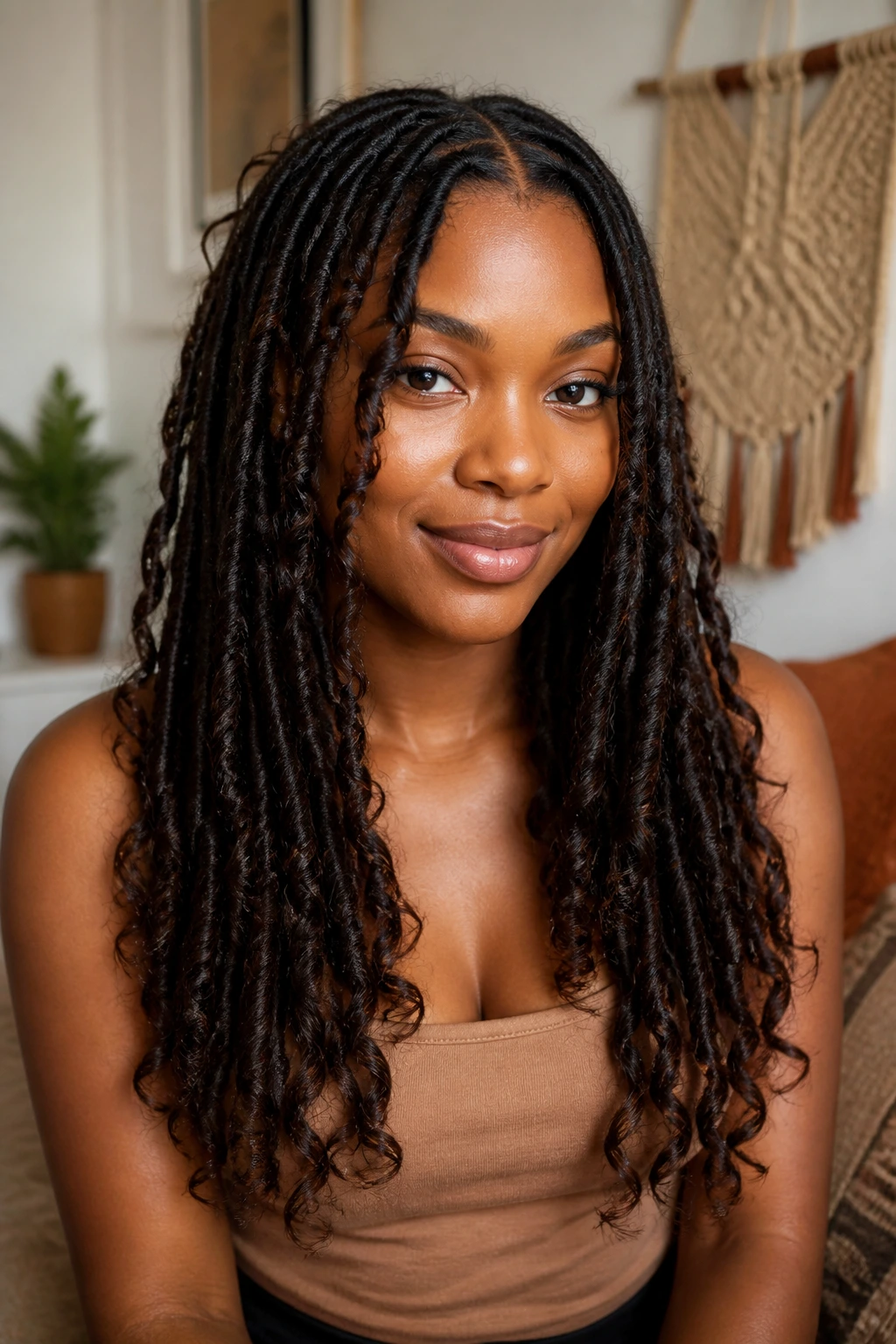
A center part with curtain-like front pieces is the calmest look in the whole set, and that’s why it lands so well. The part gives symmetry, the front pieces soften the face, and the spiral ends keep the style from feeling flat. It’s clean enough for work and soft enough for a dinner date, which is a rare combination.
What makes it feel bohemian is the refusal to overwork the rest. Leave the body of the locs loose, keep the roots tidy, and let the front pieces fall on their own. If the ends curve inward slightly, even better. The shape looks lived-in without crossing into messy.
I like this version when the outfit already has texture — knits, linen, open collars, anything with a little movement. The hair can stay quiet and still look dressed. That’s the part that makes it useful.
Why the Shape, Shine, and Soft Pieces Matter So Much
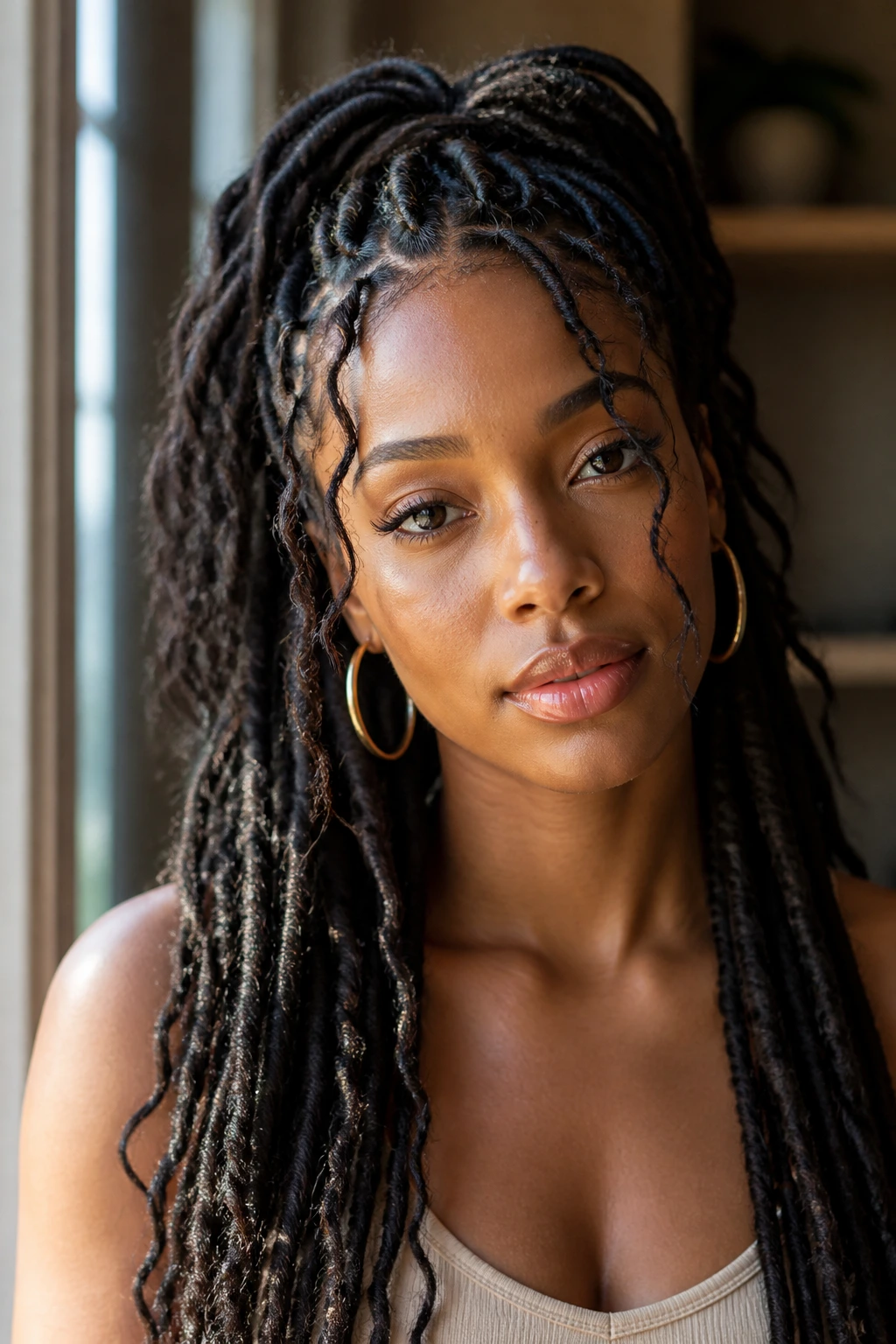
Goddess locs already have a built-in split personality, and that’s why they’re fun to style. The roots can be neat, the body can stay structured, and the loose curls can bring back some motion at the edges. If one of those pieces is missing, the style often feels off. Too many loose pieces, and it drifts into chaos. Too much structure, and it stops feeling like goddess locs at all.
The polished-bohemian look lives in the middle. A clean part helps the eye understand the style. A soft face frame keeps it from looking severe. A little shine on the lengths — not a greasy shine, just a healthy one — makes cuffs, beads, and scarves sit better because the hair isn’t fighting the accessories.
I also think texture placement matters more than most people admit. Put all the curly pieces in one spot and the style looks lopsided. Spread them around the front, the ends, and maybe one side, and the whole set feels balanced. That’s why some styles here are barely changed from the base install and still read completely different. Placement does more work than extra product ever will.
And then there’s weight. Heavy locs pulled too tight will stop looking chic fast. They’ll just look tight. The most wearable goddess loc hairstyles give the hairline a break while still keeping the shape tidy, which is why the shorter bobs, side sweeps, and low buns deserve as much attention as the long dramatic styles.
Essential Equipment for These Styles
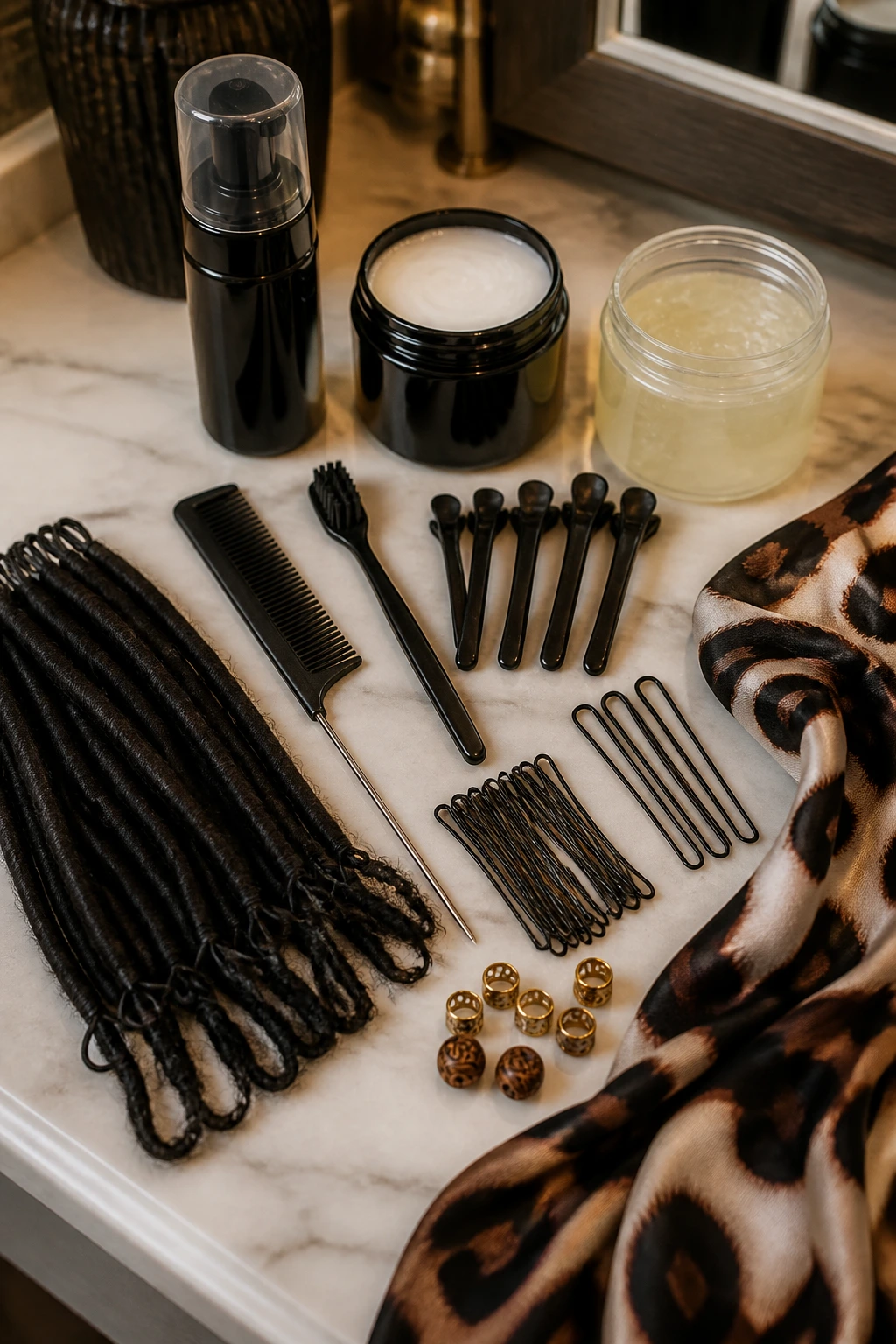
- Rat-tail comb: Clean parts and small sections are a lot easier with a pointed tail.
- Sectioning clips: These keep loose locs out of the way while you braid, pin, or wrap.
- Edge brush: Use it lightly at the hairline if you smooth the front; don’t press hard.
- Styling mousse or foam: Helps tame flyaways and set curly pieces without making them crunchy.
- Light gel or cream: Useful for the roots and the part line when you want a neater finish.
- Bobby pins and U-pins: The hidden heroes of buns, halos, and side sweeps.
- Pre-looped goddess loc hair or installed locs: Match the length and density to the style you want to wear.
- Beads, cuffs, rings, or shells: Pick one main accent or combine two with restraint.
- Silk scarf or satin bonnet: Night protection matters if you want the style to stay smooth.
- Spritz bottle with water and leave-in: Handy for refreshing curly pieces and reviving frizz-prone sections.
Smart Shopping and Hair Selection Tips
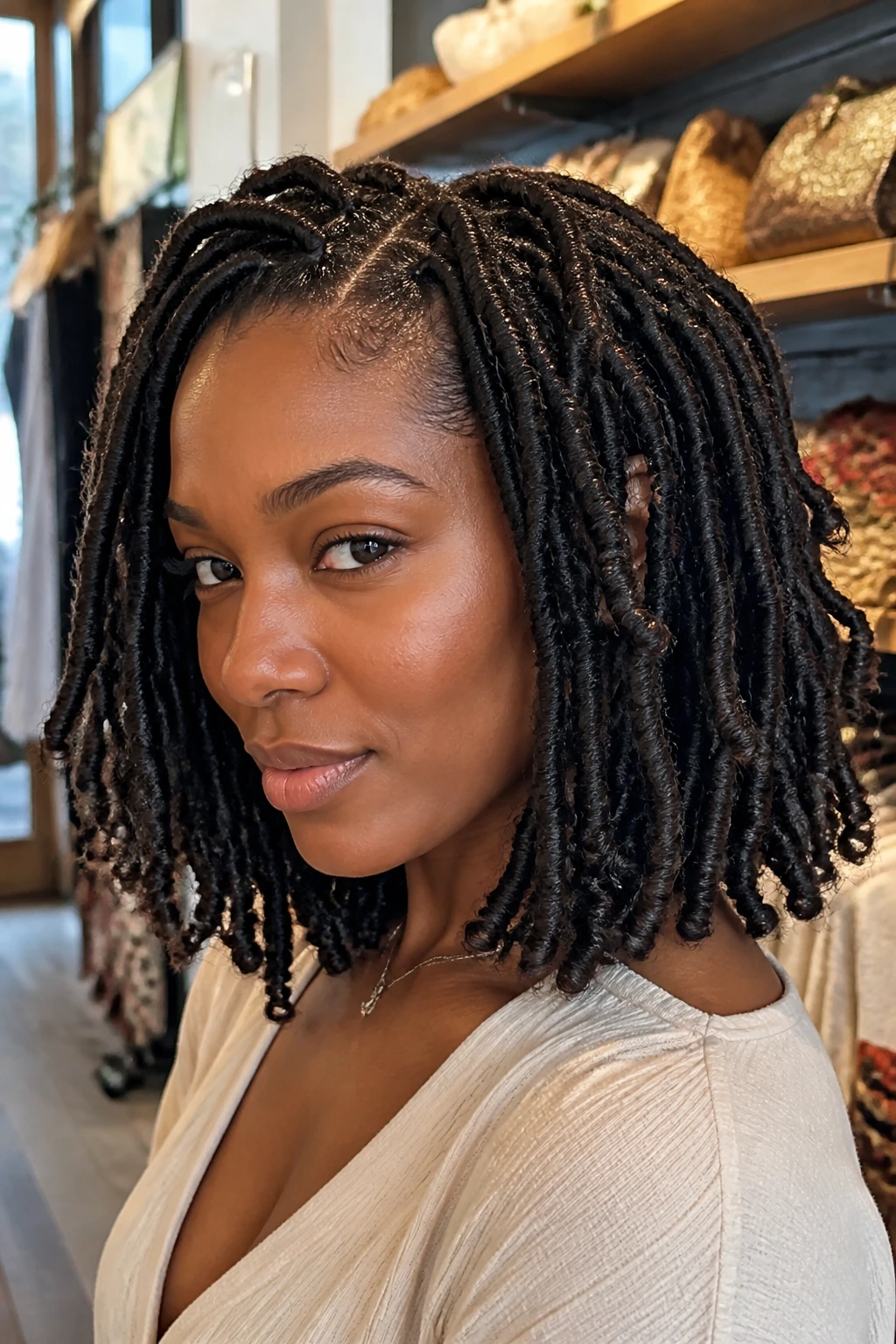
Length: Start with the life you actually live, not the hair fantasy. Shoulder-length and lob-length goddess locs are easier to wear daily, sit lighter on the scalp, and don’t catch on coat collars as often. Waist-length locs bring drama, but they also need better pinning and more patience.
Texture: Match the loc body to the curl pieces on purpose. If the loose curls are too tight against thick locs, the style can feel busy; if they’re too limp, the contrast disappears. A soft spiral or spring curl usually blends better than a crisp ringlet unless the whole look is meant to be bold.
Color: Natural black, deep brown, honey brown, auburn, and muted burgundy tend to read polished without much effort. Bright shades can be fun, but they work best when you keep the accessories simple. One strong color note is easier to wear than three competing ones.
Accessory Weight: Beads and shells look beautiful when they’re light enough to move. Heavy metal cuffs can drag on fine locs, especially near the front. If your scalp is tender or your locs are on the long side, use fewer pieces and place them lower on the strand.
Install Method: Pre-looped or pre-made locs are easier if you’re styling at home and want consistency. If you’re building the style over existing locs, check that the root area is neat before you add extras. A sloppy base makes even a good accessory choice look off.
How to Wear These Styles in Real Life
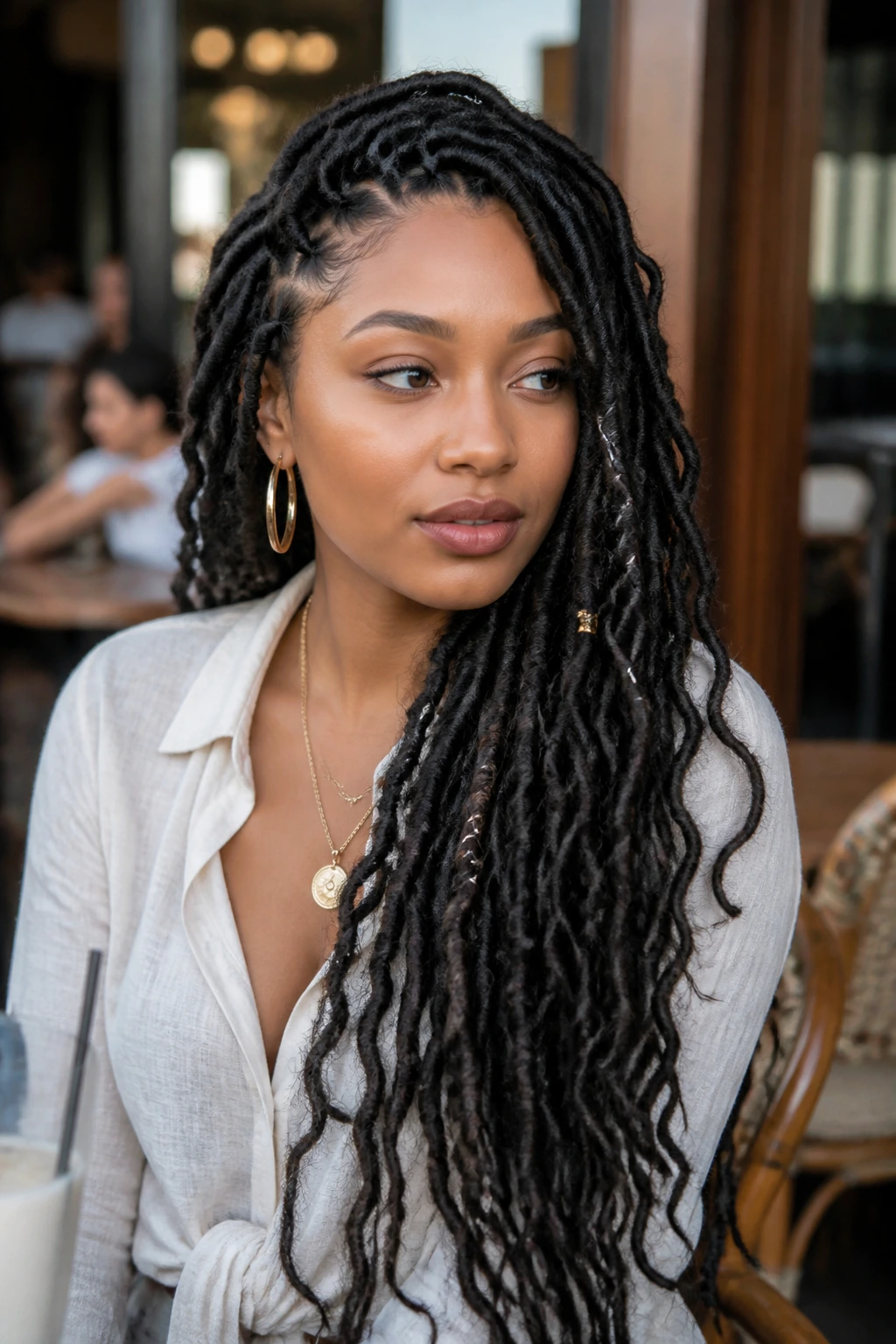
Presentation: Keep the part crisp and the roots smooth; the loose pieces should be the soft part, not the whole style. A clean hairline and a finished base let the curls, cuffs, and wraps do their job without looking like they were thrown on last minute.
Outfit Pairing: Open necklines, hoop earrings, linen shirts, denim jackets, and simple knits all play well with goddess locs because they don’t fight the texture. Busy collars and high necks can crowd the hair unless the style is compact, like a bob, bun, or headband tuck.
Occasion Fit: Use the buns, halos, and side sweeps for formal settings; use the bobs, half-up looks, and scarf wraps for everyday wear. A high pony or faux hawk lands well when you want shape and a little attitude. The headband and shoulder sweep are the quiet workhorses.
Accessory Balance: Pick one hero accessory — beads, cuffs, shells, scarf, or pins — and let the rest stay quiet. When every piece tries to lead, the style starts to look busy instead of finished. One clear accent usually reads more expensive, even when the pieces are simple.
Finishers and Personal Touches
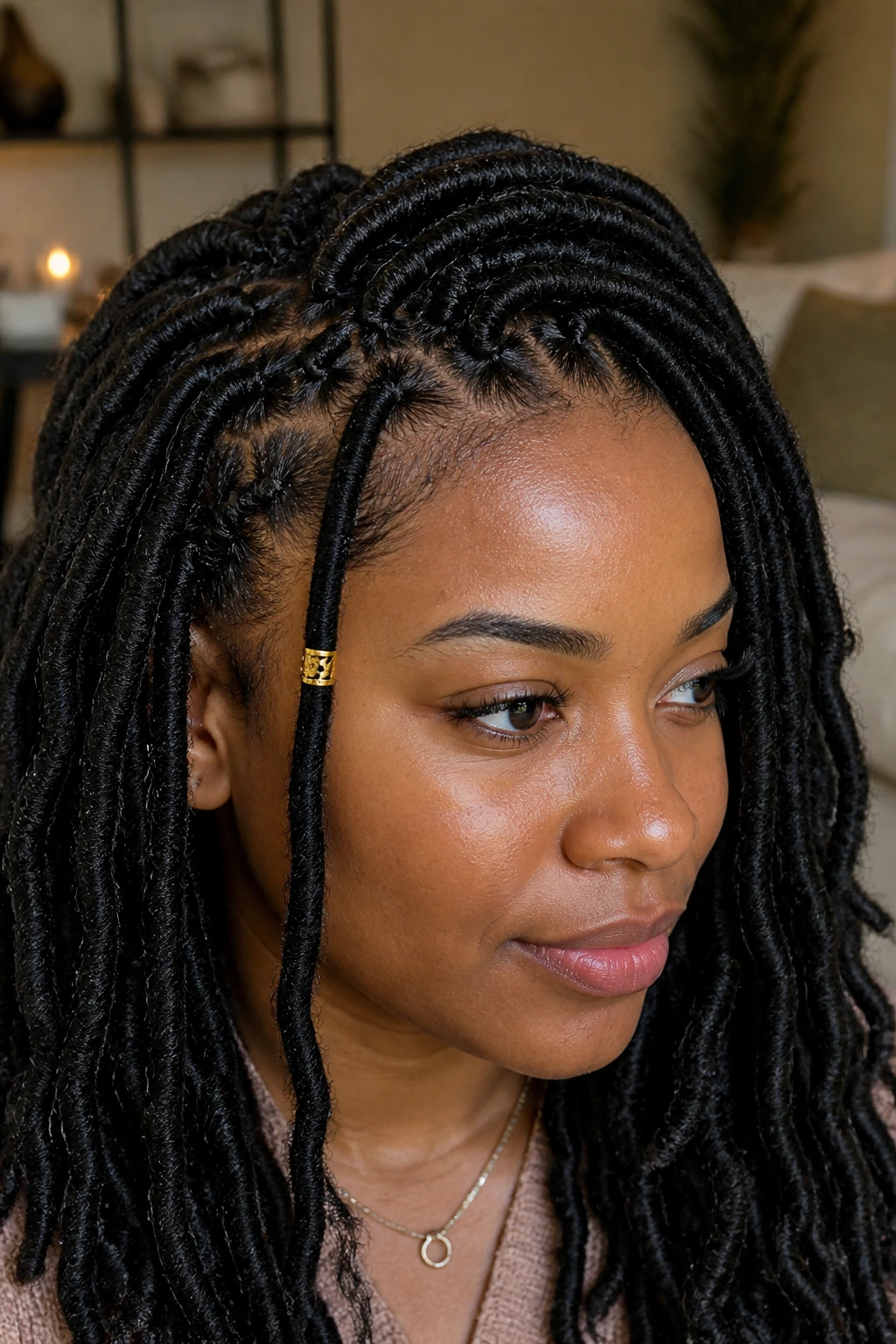
Shine Control: A light mist of sheen spray on the loc lengths can make the style look cleaner, but keep it away from the roots if you want the part to stay crisp. Too much shine near the scalp reads oily fast.
Texture Balance: Keep the curly pieces mostly at the front, the temples, and the ends. If you scatter them everywhere, the style loses shape and starts to blur. Three well-placed soft pieces usually beat ten random ones.
Color Play: Honey brown, chestnut, copper, and muted burgundy can break up dark locs without making them look loud. If your accessories are gold-toned, warm hair colors tend to look calmer next to them.
Make-It-Yours: If your hair is fine, keep the locs lighter and the accessories smaller. If your hair is thick, you can handle fuller locs and a stronger part. If you want a minimalist version, skip beads and shells and let the curl placement do the talking.
Common Mistakes to Avoid
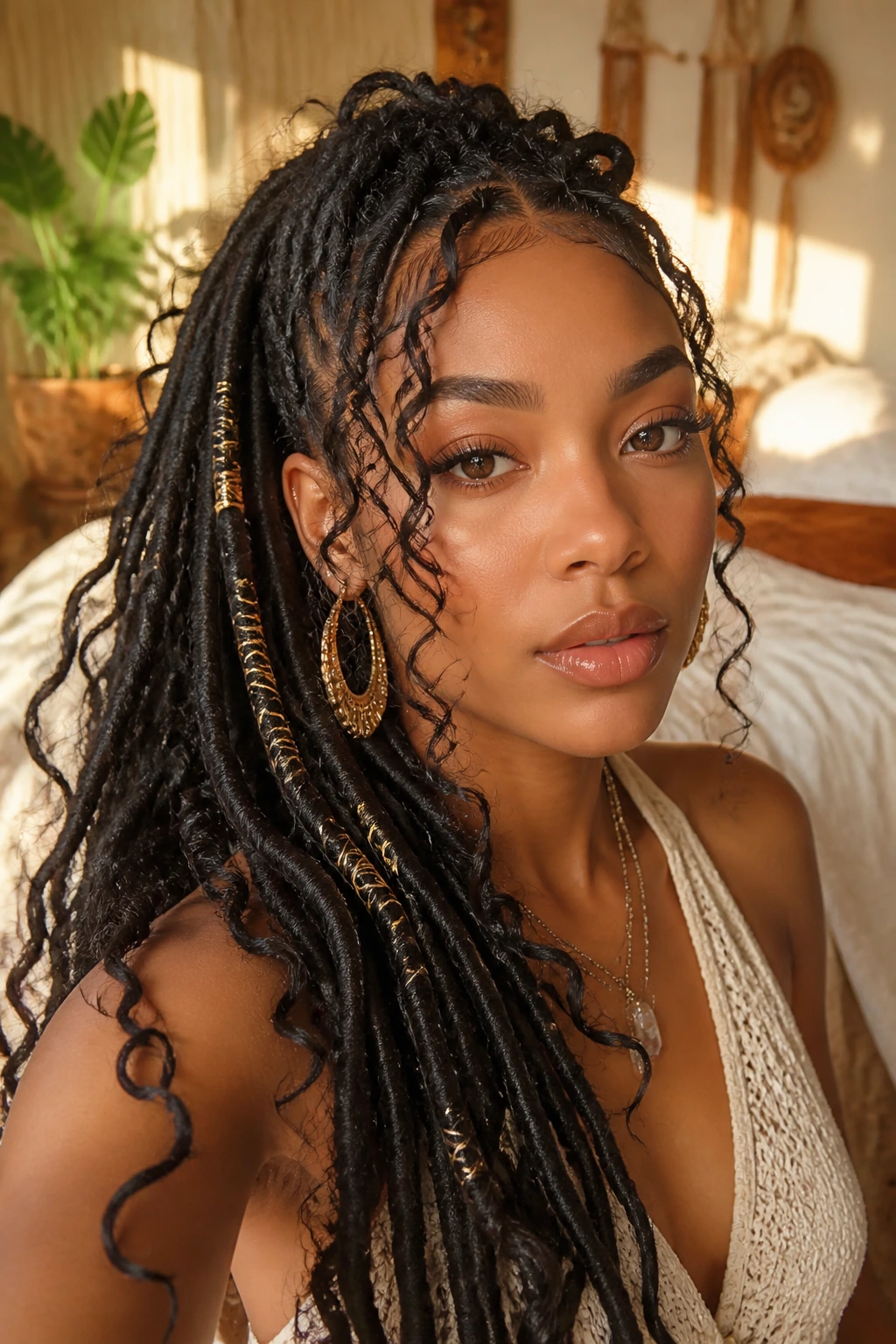
- Pulling the roots too tight: If your scalp hurts or your temples start to sting, the style is too tight. Loosen the anchor, lower the ponytail, or choose a softer option like the side sweep or headband tuck.
- Using too many accessories at once: Beads, shells, cuffs, and scarves can fight each other if they all appear at full volume. Pick one main accent and let the rest stay quiet.
- Leaving the curly pieces untreated: Loose pieces frizz faster than the locs themselves. A little mousse or water-based spritz keeps them shaped; otherwise they can puff out and make the whole style look fuzzy.
- Choosing a length that doesn’t fit your day: Waist-length locs are beautiful, but they catch on everything if you wear a coat, tote bag, or backpack all day. If you want less fuss, a bob or lob will treat you better.
- Skipping nighttime protection: Cotton pillowcases and rough sleep can rough up the curls and flatten the part. A satin bonnet, silk scarf, or satin pillowcase keeps the style looking cleaner for longer.
Variations and Alternative Approaches
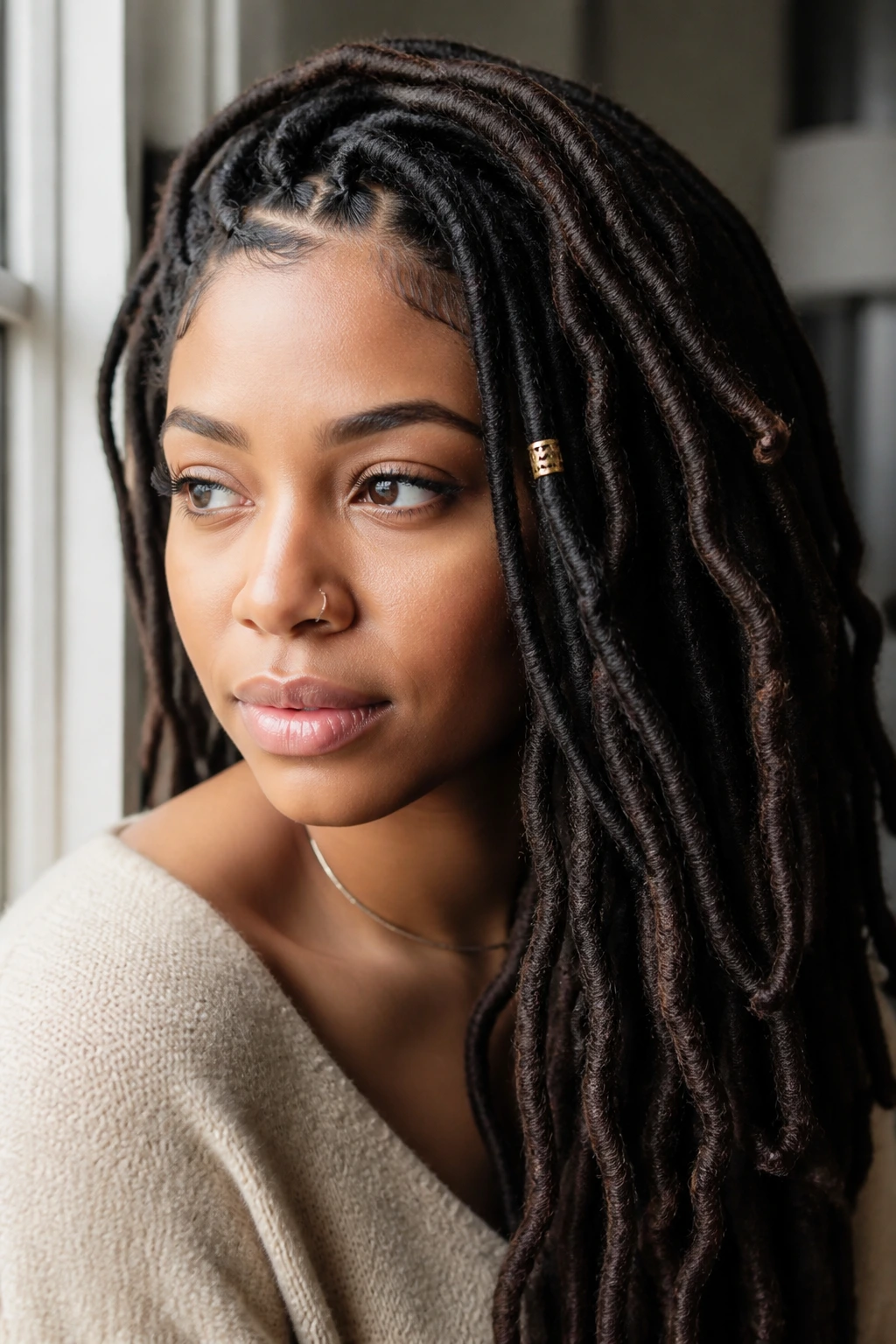
Soft Romantic Edit: Leave out more face-framing pieces, choose a side part, and keep the accessories down to one small cuff or pin. This version works when you want the locs to feel airy and gentle instead of structured.
Festival Max Edit: Add shells, a scarf, a few beads, and one playful shape like space buns or a faux hawk. Keep the roots neat so the extras look intentional rather than random. One or two focal points is enough; you do not need every accessory in the drawer.
Low-Tension Everyday Edit: Go for the bob, lob, headband tuck, or shoulder sweep. Keep the style close to the head, skip heavy beads, and choose lighter pieces that won’t pull after a long day.
Office-Clean Edit: A center part, low ponytail, rolled chignon, or side-swept style keeps the look polished without feeling severe. One gold cuff or a slim scarf is usually enough to keep it from reading plain.
Special-Event Edit: Use a crown braid halo, rolled chignon, or twisted top knot, then add a pearl pin, gold comb, or a few well-placed curls. This is the version that holds its shape in photos and still looks soft up close.
Night Care, Refreshes, and How Long the Look Holds
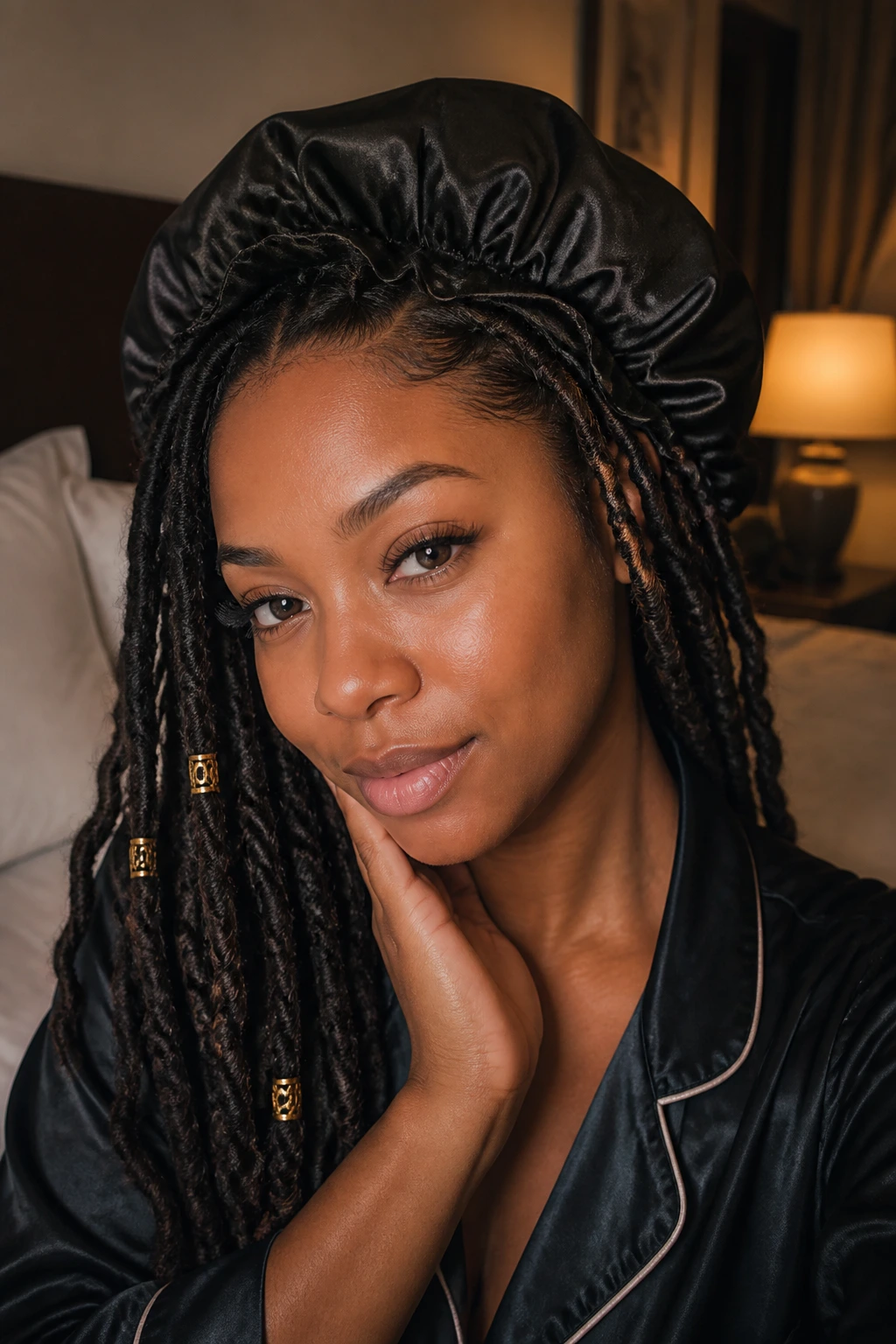
A good goddess loc install can last for weeks, but the style you wear on top of it changes faster than that. A simple ponytail or side sweep may hold for a few days before it needs a quick reset. A bob, headband tuck, or low bun can be refreshed with a light mist and a new accessory. Long sets with beads or shells usually need the most attention because the weight shows first at the edges.
At night, wrap the hair in a satin bonnet or silk scarf, or use both if the locs are long and the ends need extra protection. If the style is a ponytail or bun, don’t cinch it down before bed; keep the tie loose enough that the roots don’t get compressed. A cotton pillowcase will rough up the curly pieces faster than you expect, and the front can start looking tired even when the rest still looks fine.
Refreshing the style is straightforward. Mist the curly pieces with a little water and leave-in, scrunch lightly, and let them dry fully before piling on more product. For locs with cuffs or beads, check that the pieces still sit flat and haven’t shifted into a spot that creates drag. If the roots start to ache, that’s your signal to loosen the style or switch to something lighter. A style should look polished, yes, but it should also feel like it belongs on your head.
Frequently Asked Questions
How long do goddess loc hairstyles usually last?
The install itself can last several weeks, but the styled version on top often changes every few days. A simple side sweep or ponytail may need a refresh sooner, while a bob or headband style can stay neat with less effort.
Are goddess locs heavy?
They can be, especially when the length gets past the chest or when beads and cuffs are used too generously. A lighter bob, lob, or low-tension updo is easier on the scalp if you want to wear the style often.
Can you do goddess loc hairstyles on short hair?
Yes. Shorter lengths work well for bob looks, headband tucks, mini buns, and side parts. You lose some of the swing, but you gain lighter wear and easier maintenance.
What’s the difference between goddess locs and faux locs?
Goddess locs usually include loose curly pieces or soft tendrils mixed in with the locs, which gives them that airy, romantic feel. Faux locs tend to stay more uniform and wrapped, so they read a bit more structured.
How do I keep the curly pieces from frizzing up?
Use a water-based spritz and a small amount of mousse, then let the pieces dry fully before touching them again. If you keep re-fluffing them while damp, they frizz faster and lose the spiral shape.
Can I wear beads or shells every day?
You can, but keep the weight reasonable. A few lightweight accents near the front usually work better for daily wear than a full head of heavy pieces, which can start to tug and shift.
Can goddess locs be styled for formal events?
Absolutely. A rolled chignon, crown braid halo, or twisted top knot reads formal without losing the soft texture that makes the style interesting. A single gold comb or pearl pin is often enough.
What should I do if my hairline starts to feel sore?
Take the style down or loosen the tension right away. Soreness is not something to push through with more gel or more pins; it usually means the roots are carrying too much pull, and that only gets worse if you ignore it.
The Polished-Boho Sweet Spot
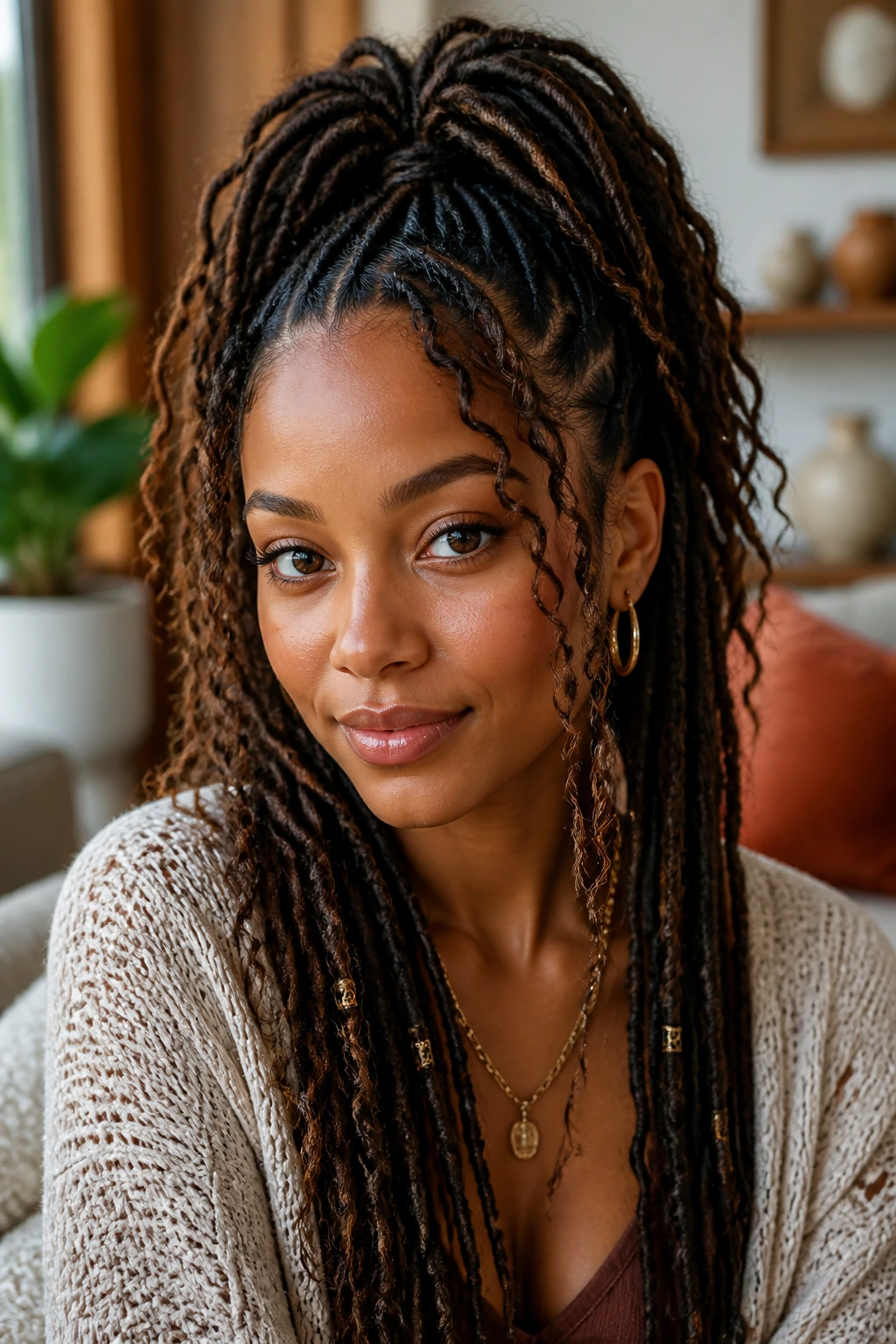
Goddess loc hairstyles work because they don’t force you to choose between tidy and soft. The clean base gives the style shape, and the loose pieces keep it human. That combination is what makes the look feel wearable instead of costume-like. It can be a little romantic, a little sharp, and still practical enough to keep up with an ordinary day.
Pick the version that fits your length and your patience first, then add the bead, cuff, scarf, or braid that suits the mood. The styles that last are the ones that respect the hairline and keep the finish light where it needs to be light. The rest is styling taste, and that part is allowed to change from one day to the next.
