



Short hair and balayage can be a brilliant pairing—or a streaky mess. The difference usually comes down to placement, not price, and not how blond the ends are. On a bob, pixie, lob, or bixie, there isn’t much room to hide sloppy highlights, so the color has to follow the haircut, the way a good seam follows fabric.
That’s why the most wearable balayage looks for short hair tend to be softer at the root, lighter where the cut actually moves, and a shade more restrained than the screenshots people save on their phones. A jaw-length bob needs a different map than a collarbone cut. A pixie needs brightness on the top layer and around the face, while a shag wants broken ribbons that disappear and reappear when the texture kicks in.
I’m partial to short-hair balayage that grows out with grace instead of drama. A little depth at the root. A little warmth or coolness in the gloss. And just enough contrast to make the haircut look fuller, not busier.
Why These Balayage Looks Work So Well on Short Hair
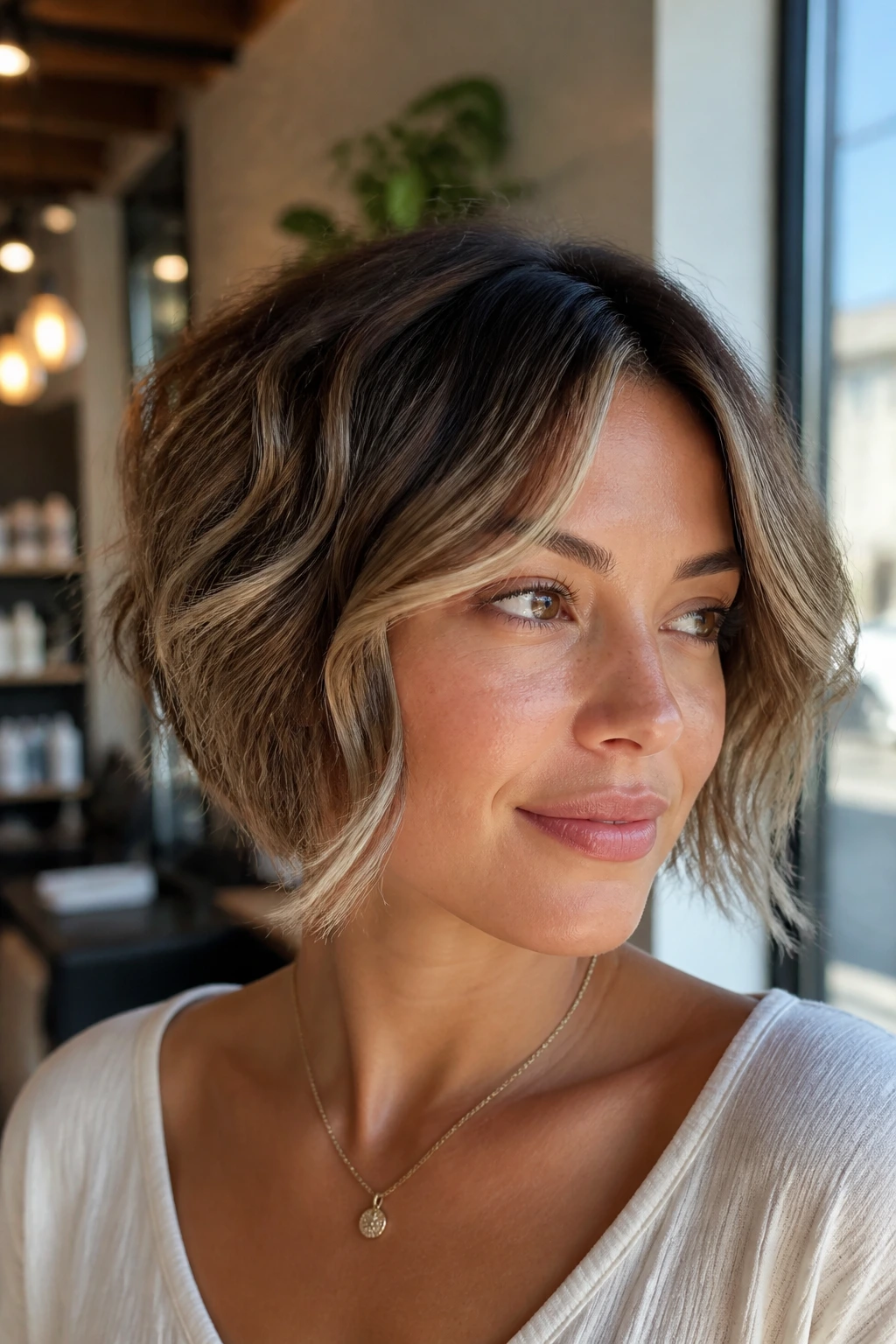
Soft regrowth matters more on short cuts: When the hair sits above the shoulders, the root line shows faster, so these looks lean on shadow roots, smudged bases, and painted mids instead of heavy lift all the way to the scalp.
Placement can make a cut look thicker: A few well-placed ribbons around the temple, crown, and outer ends add movement where short hair needs it most. That’s a bigger payoff than flooding the whole head with light pieces.
The color follows the haircut, not the other way around: On short hair, balayage should echo the line of the bob, pixie, or shag. If the light pieces ignore the shape, the whole thing looks disconnected.
Glosses do the heavy lifting: Many of these shades stay polished with a toner or clear gloss every 6 to 8 weeks. You do not need a full blonding session every time.
They wear well between appointments: The best versions of short-hair balayage still look intentional when the roots come in by half an inch, which is the whole game if you want low maintenance.
1. Mushroom Brown French Bob
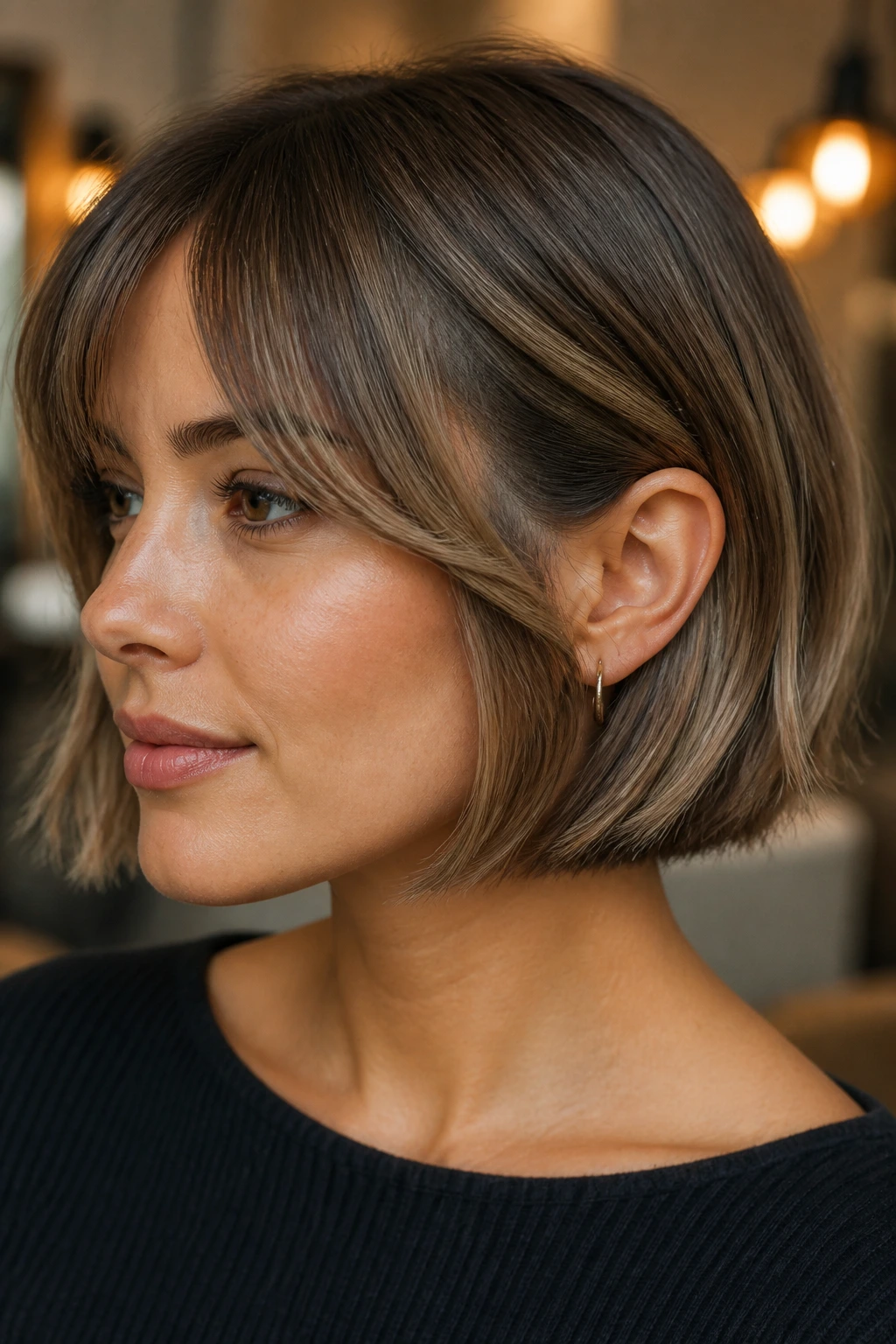
Mushroom brown is one of my favorite balayage looks for short hair because it stays chic even when the roots start to come through. The base lives in that soft brown-to-taupe zone, and the lighter ribbons sit just a shade or two above it, so the grow-out never turns harsh.
Ask for broad painted pieces through the top and sides, not tiny foils everywhere. On a French bob, that placement follows the curve of the jaw and gives the cut more body when you tuck one side behind the ear. A beige gloss every 6 to 8 weeks keeps the tone from drifting muddy.
Why It Works
This look works because the contrast is controlled. You get dimension without the “striped” effect that short hair can pick up fast.
It’s especially good if your hair is fine or straight, since the subtle lift makes the shape look fuller without shouting for attention.
2. Caramel Ribbon Pixie
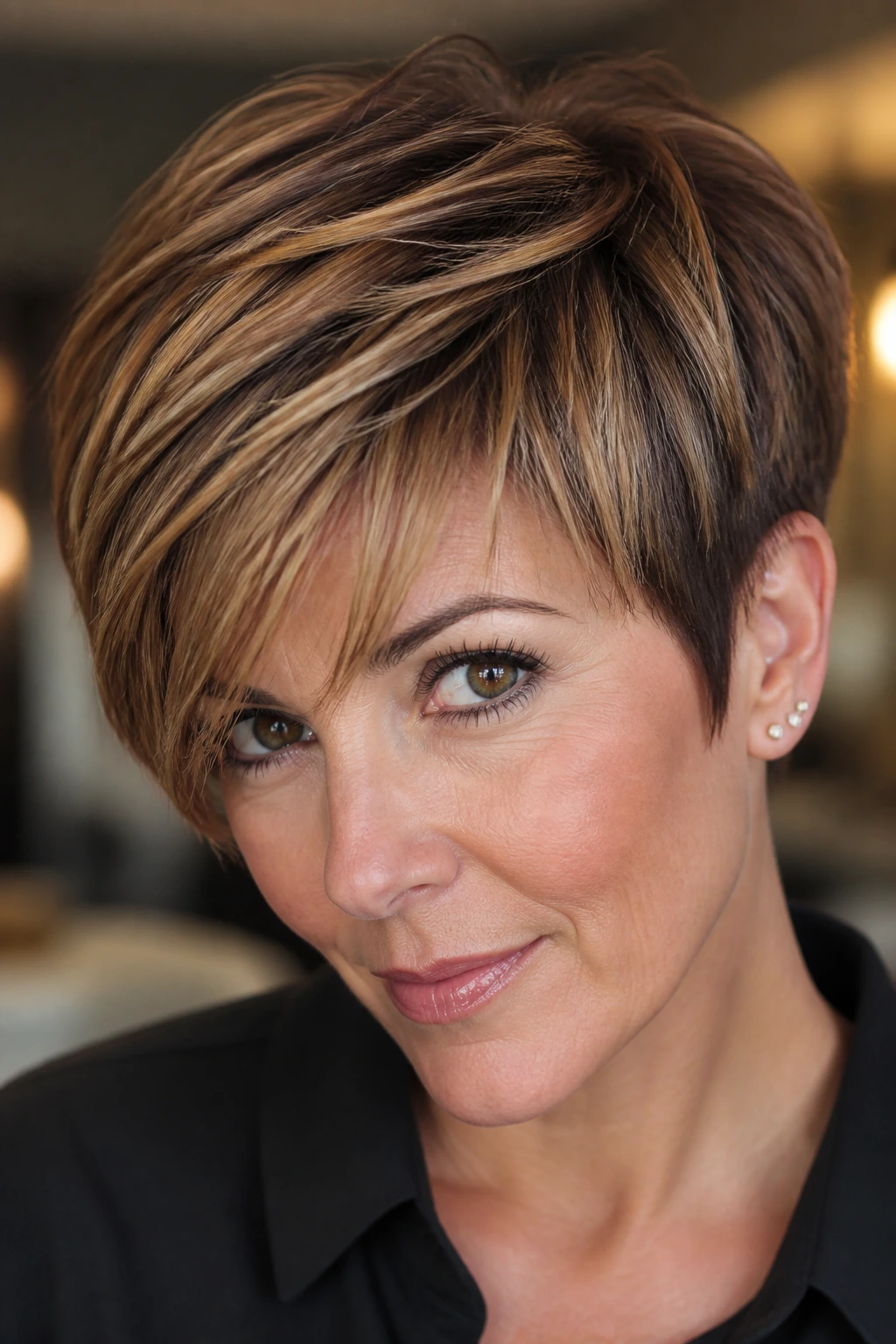
Can a pixie wear balayage and still look clean? Absolutely, if the caramel is painted in ribbons instead of sprinkled everywhere. This version keeps the base deep and uses warm caramel only on the top layer, fringe, and crown.
The best part is that it moves with your styling. Push it forward, and the lighter pieces frame the face. Sweep it up, and the crown shows the dimension. Ask for a root shadow that stays about 1 level deeper than the mids so the grow-out doesn’t look blunt.
Best for: thicker pixies, grown-out crops, and anyone who likes a piecey finish with a little shine.
Upkeep note: a trim every 4 to 6 weeks keeps the shape sharp; the color itself can usually stretch longer.
3. Honey Face-Framing Lob
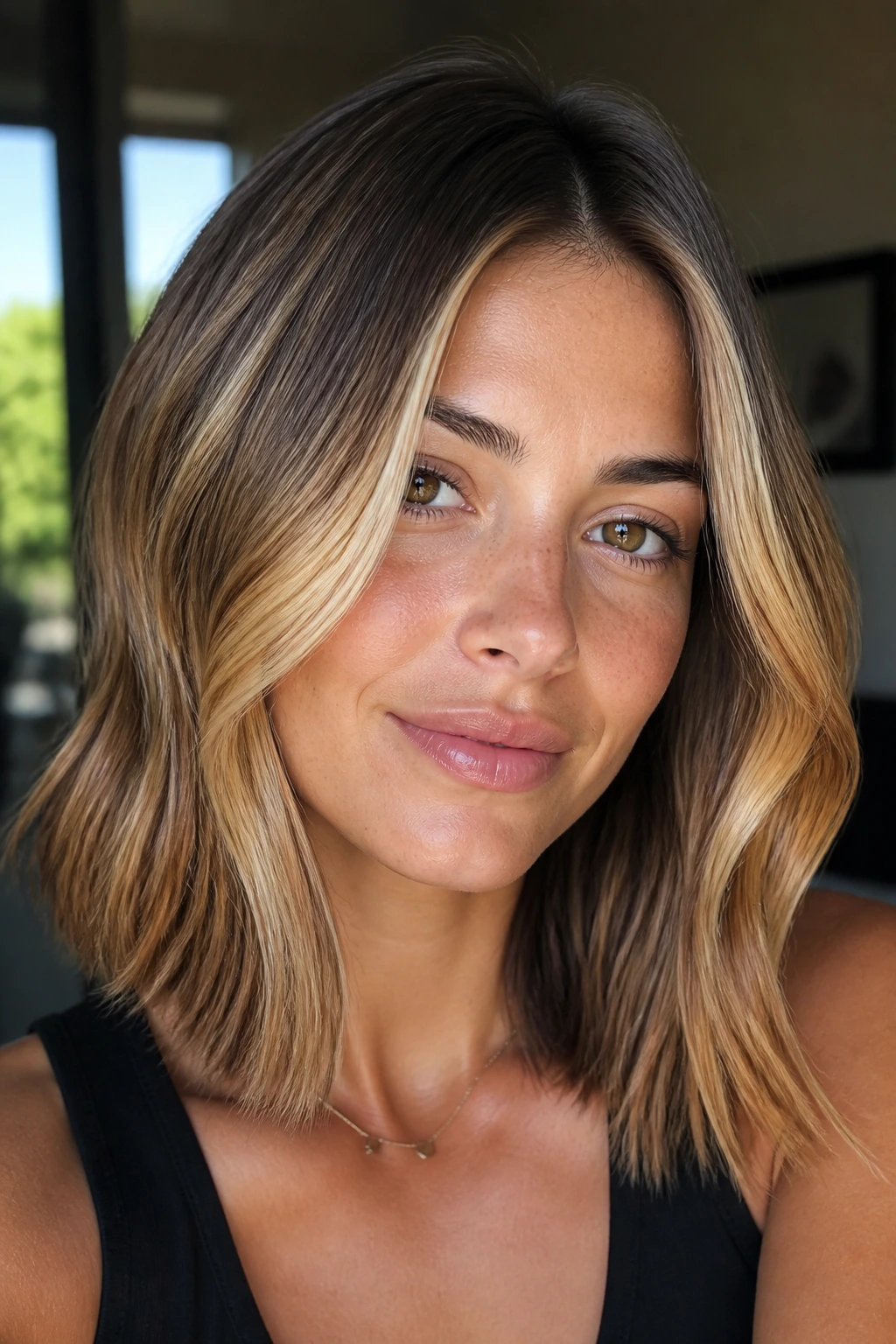
A honey balayage lob is the kind of color that looks expensive without trying to be loud about it. The front pieces are the brightest part, usually starting around the cheekbone and falling through the collarbone-length ends.
That makes sense on short hair, because the face is where the eye lands first. If the rest of the head stays slightly deeper, the color reads soft and dimensional instead of overdone. A 1-inch iron bend in the mid-lengths brings the honey pieces forward even more.
Ask for This
- Bright face-framing pieces that start around the cheekbone
- A neutral honey tone, not orange-gold
- A shadow root 1 to 2 levels deeper than the lightest sections
- Soft ends, not a chunky blonde block
If you wear your lob straight, keep the front a touch lighter than the back. If you wear it waved, the honey shows up in little flashes as the bend moves.
4. Ash Beige French Bob
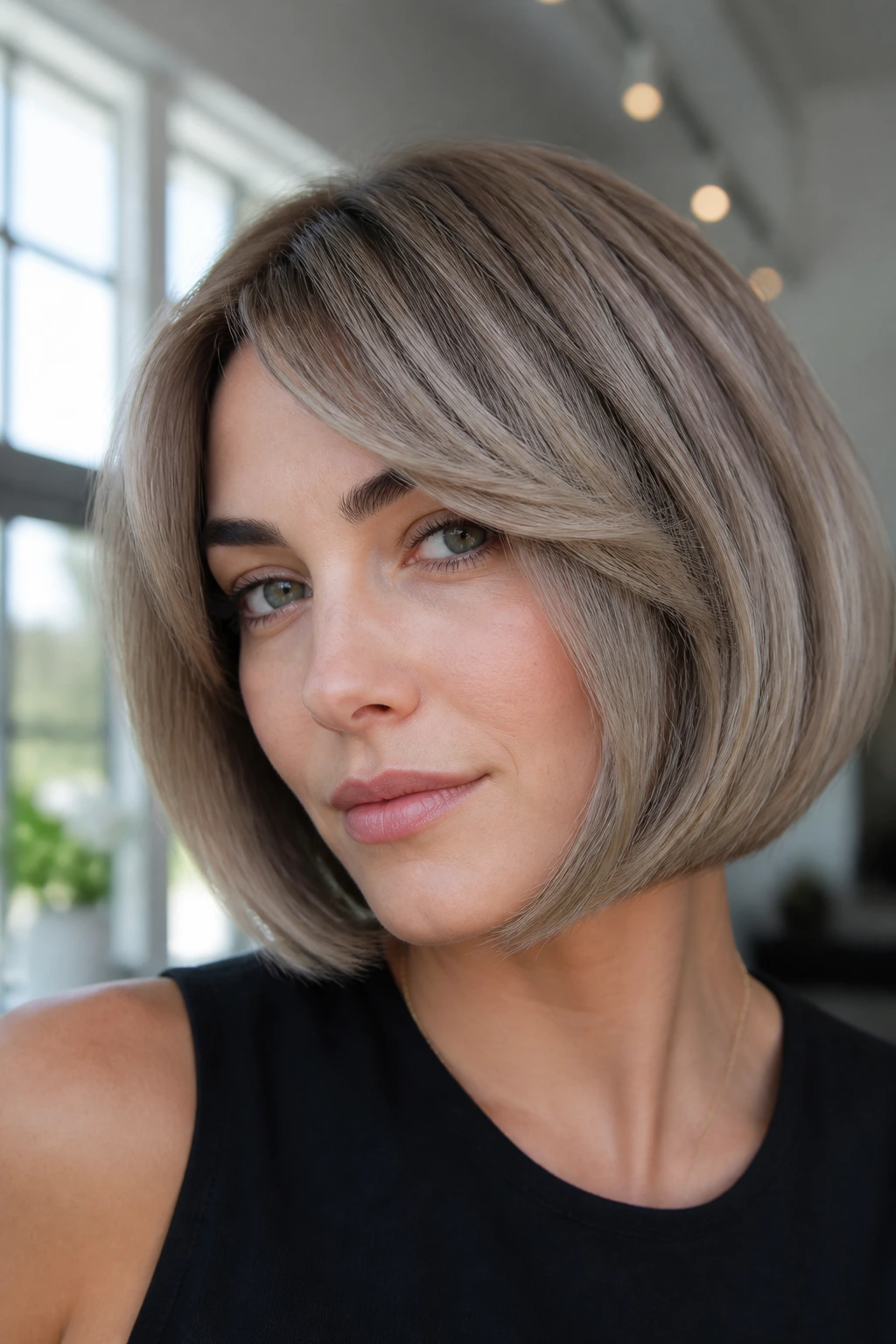
Ash beige on a French bob has a quiet, cool finish that never feels fussy. The tone sits between blonde and brunette, which is exactly why it works so well on short hair: it gives brightness, but the root-to-end contrast stays muted.
This is a strong choice if warm highlights turn coppery on you. The beige gloss softens the whole look, and the balayage can be placed in broader panels along the top layer so the haircut keeps its crisp line. Think polish, not volume of color.
I like this one on straight bobs with a blunt edge. The edge keeps the cut modern, while the ash-beige paint makes the ends look airy instead of heavy.
5. Copper Melt Crop
A copper melt on short hair is all about warmth without a hard line. The base stays chestnut or cinnamon-brown, then the mid-lengths pick up soft copper, peach, and apricot tones that melt into one another.
The trick is keeping the brightest copper away from the scalp and concentrated where the haircut shows movement. On a crop, that usually means the fringe, crown, and outer bends of the side layers. If the copper is painted too high, it can look busy fast.
This one is for someone who wants short hair to read vivid but still manageable. Copper does fade faster than beige or brown shades, so plan on a gloss every 4 to 6 weeks if you want the tone to stay clean.
6. Dimensional Bronde Shag
Bronde on a short shag gives you that broken, lived-in look without leaning beachy in a cheesy way. The color sits between brown and blonde, so the shag’s layers do the work instead of a big color contrast.
That matters here. A shag already has movement at the ends, so the balayage should be painted in irregular ribbons that hit the longest layer, fringe, and a few interior pieces near the crown. Too much uniform lightness flattens the cut.
Why It Stands Out
The short shag looks richer when the color changes in little jumps as the hair flips. Bronde does that well.
It’s also forgiving. When the hair grows, the root line blends into the darker base, so you can go a bit longer between appointments than you can with a bright blonde crop.
7. Sunlit Vanilla Blonde Bob
This is the lightest look in the bunch, and it works because the root stays soft. A vanilla blonde bob needs a shadowed base—usually a deeper beige or light brown—so the ends can stay bright without looking like a block of bleach.
Ask for the lightest pieces around the front and top layer, with the back kept a touch deeper for dimension. That keeps the bob from puffing out visually. On short hair, too much all-over blonde can make the shape look wide and flat at the same time.
If you wear a side part, keep the lighter side slightly brighter. It gives the color a deliberate shape instead of making it look like the light landed everywhere by accident.
8. Soft Mocha Balayage Pixie
A mocha balayage pixie is one of the easiest short-color looks to live with because it barely fights your natural depth. The highlights are more like softened mocha threads than visible stripes, which is exactly what keeps the cut looking neat.
This version is ideal if you want dimension without a big blonde shift. Keep the lightest paint on the fringe, top layer, and around the crown, then leave the nape and underlayer deeper. That contrast helps the pixie show its shape when you style it up or forward.
A light styling cream or matte paste makes the painted pieces separate a little. That separation matters more on pixies than on longer cuts.
9. Smoky Silver-Blend Bob
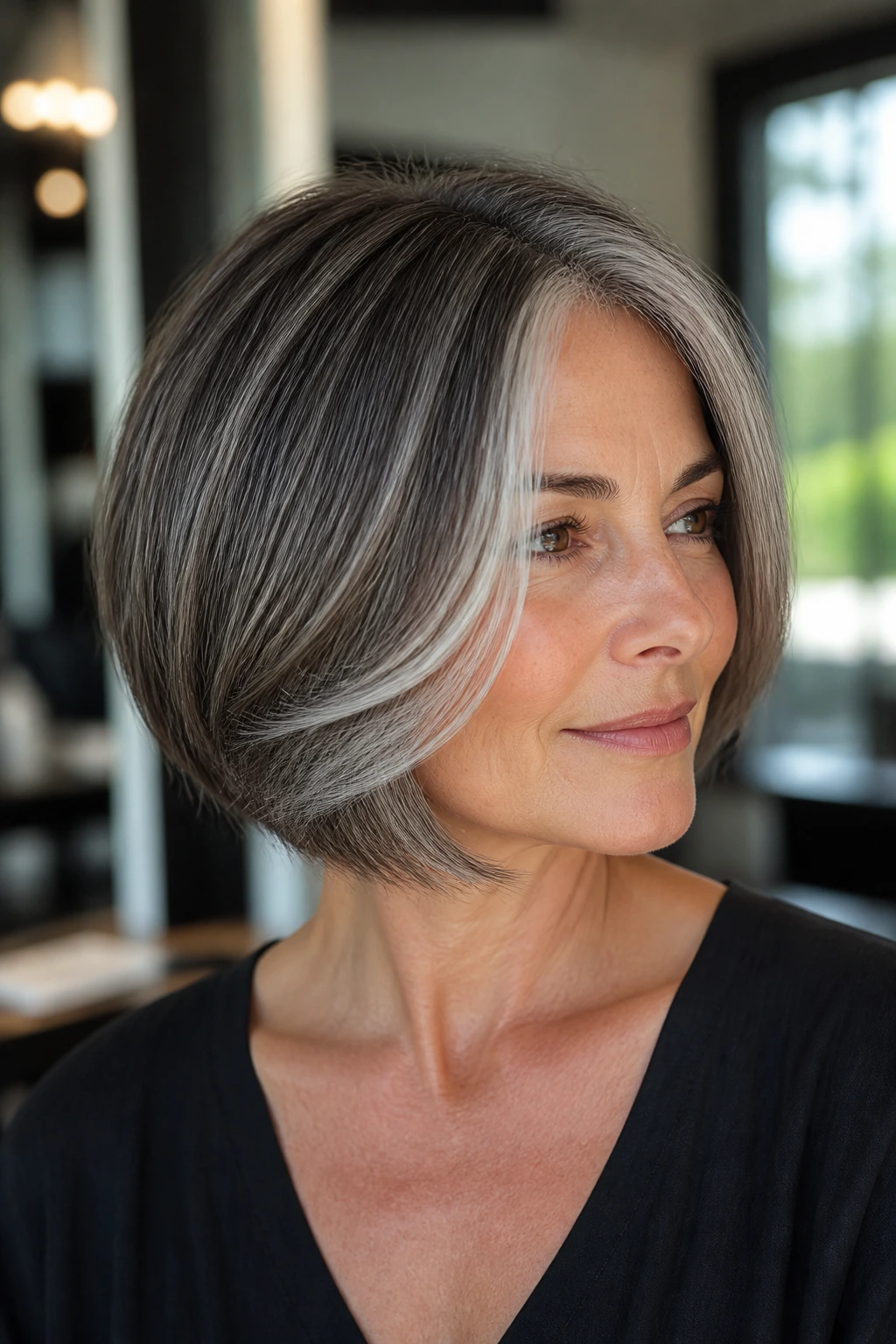
If your hair is naturally gray or you’re blending early silver, this is the short balayage look that makes the most sense. The base stays smoky brown or deep ash, and the lighter pieces echo silver, pearl, and pale taupe instead of bright blonde.
The result is softer than full coverage color and less fussy than trying to hide every gray strand. On a bob, the silver pieces should sit where the haircut curves, especially near the face and through the top layer. That keeps the color from reading flat under indoor light.
What to ask for: a cool gloss, low-contrast ribbons, and a root area left slightly deeper than the mids. That’s how you avoid the “helmet” look.
10. Chocolate Cherry Short Cut
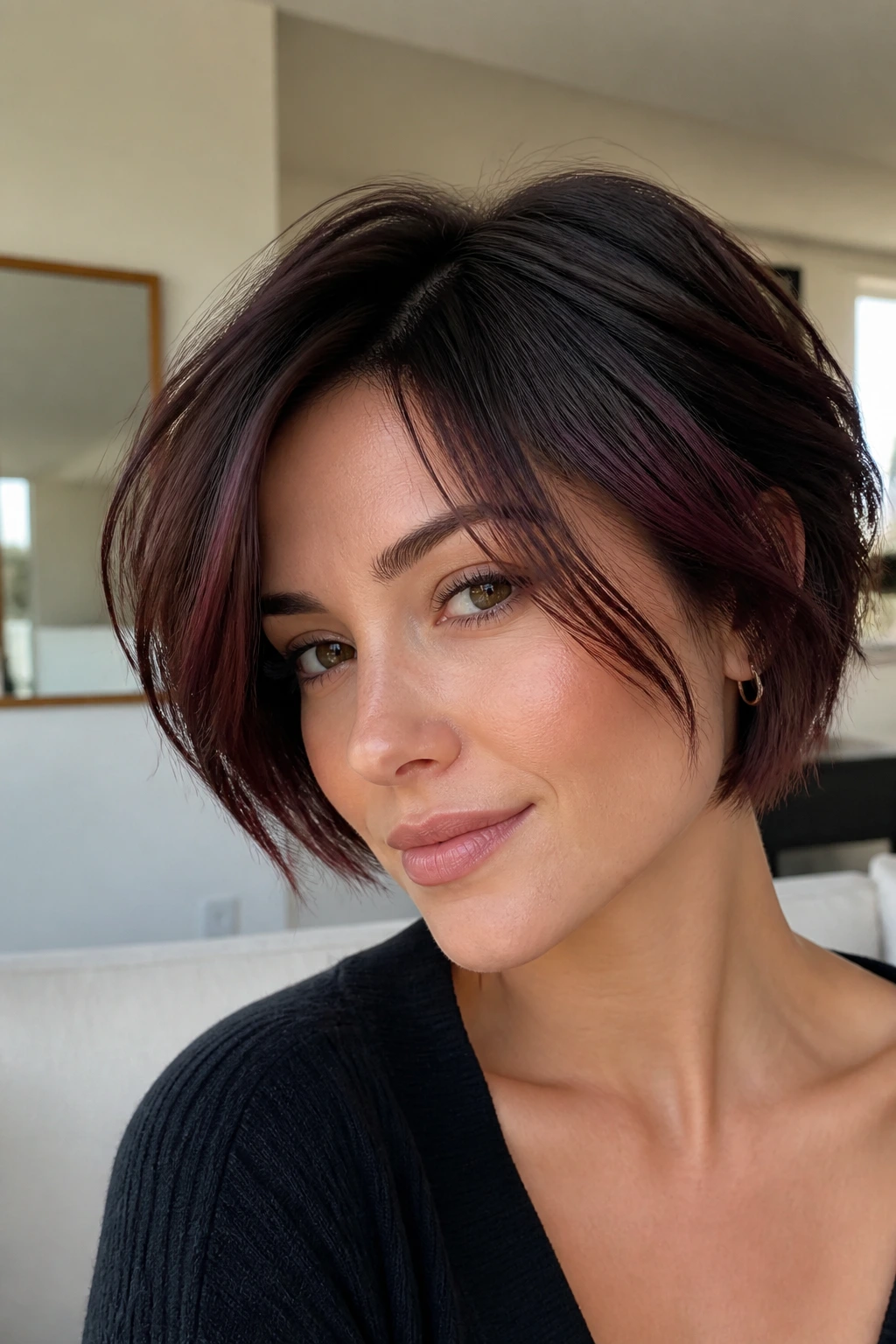
Chocolate cherry balayage is richer than it sounds. You’re not painting bright red streaks into short hair; you’re folding in plum, cherry cola, and dark cocoa tones that show up when the hair moves.
That makes it a smart option if you want something noticeable but not loud. The cherry tones sit best on the surface layer and around the face, while the underneath stays chocolate-brown. When the hair swings, the red-violet pieces catch the eye without taking over.
This one usually looks best on straight bobs or softly waved crops. Too much curl can blur the cherry tones if they’re not placed with a light hand.
11. Beige Blonde Money-Piece Crop
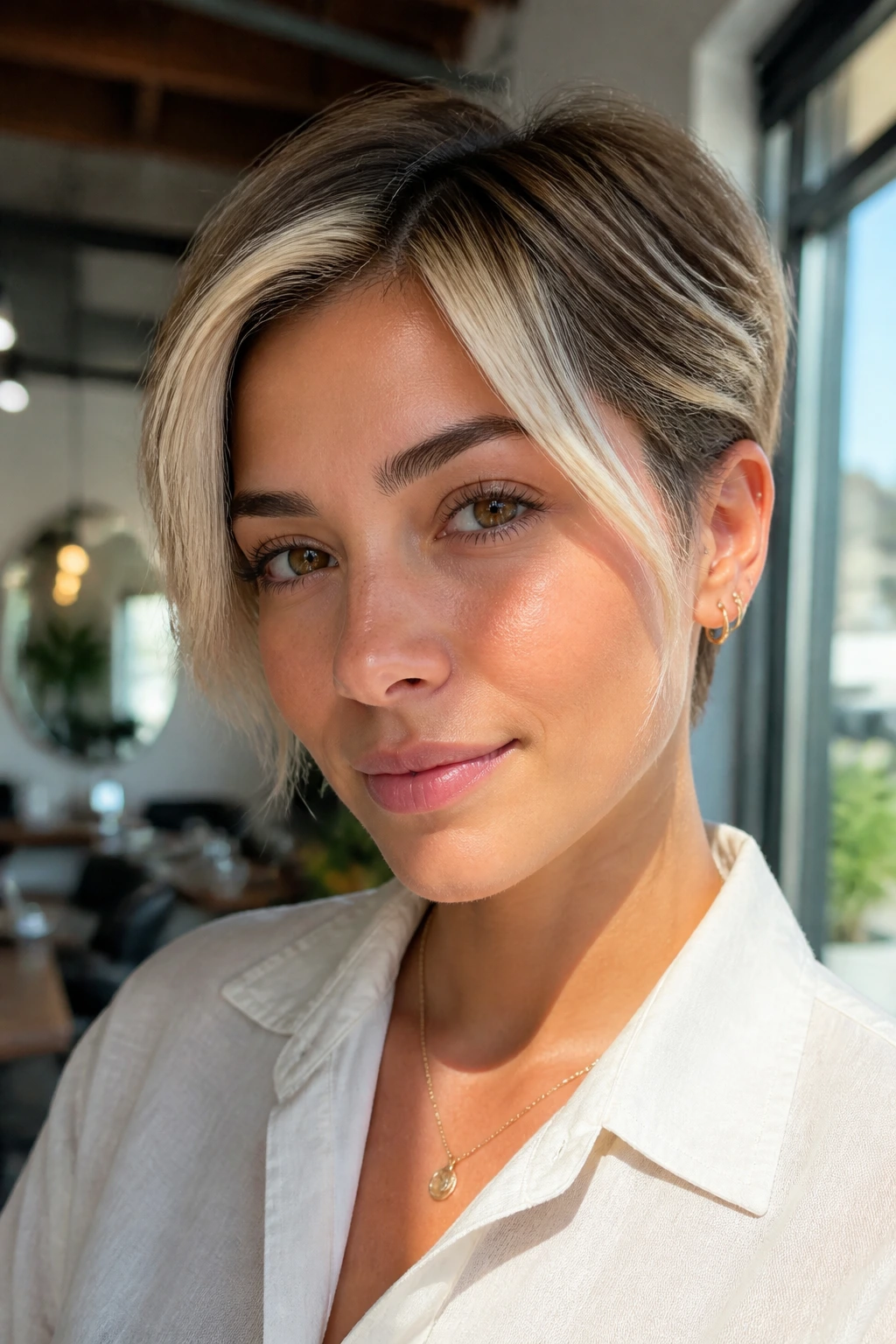
A money-piece crop puts the spotlight on the front without demanding that the whole head go lighter. The side lengths and fringe get the brightest beige blonde, while the back stays softly rooted and deeper.
That’s a smart move on short hair because the front is what people see first. A narrow, bright frame around the face gives you the payoff of blonde with far less upkeep than a full-light crop. It also grows out better, since the back can stay closer to your natural color.
I’d ask for brightness from temple to temple, not just a single strip at the part. That wider placement avoids the “two stripes” look, which short hair can show off in the worst way.
12. Cinnamon Swirl Textured Lob
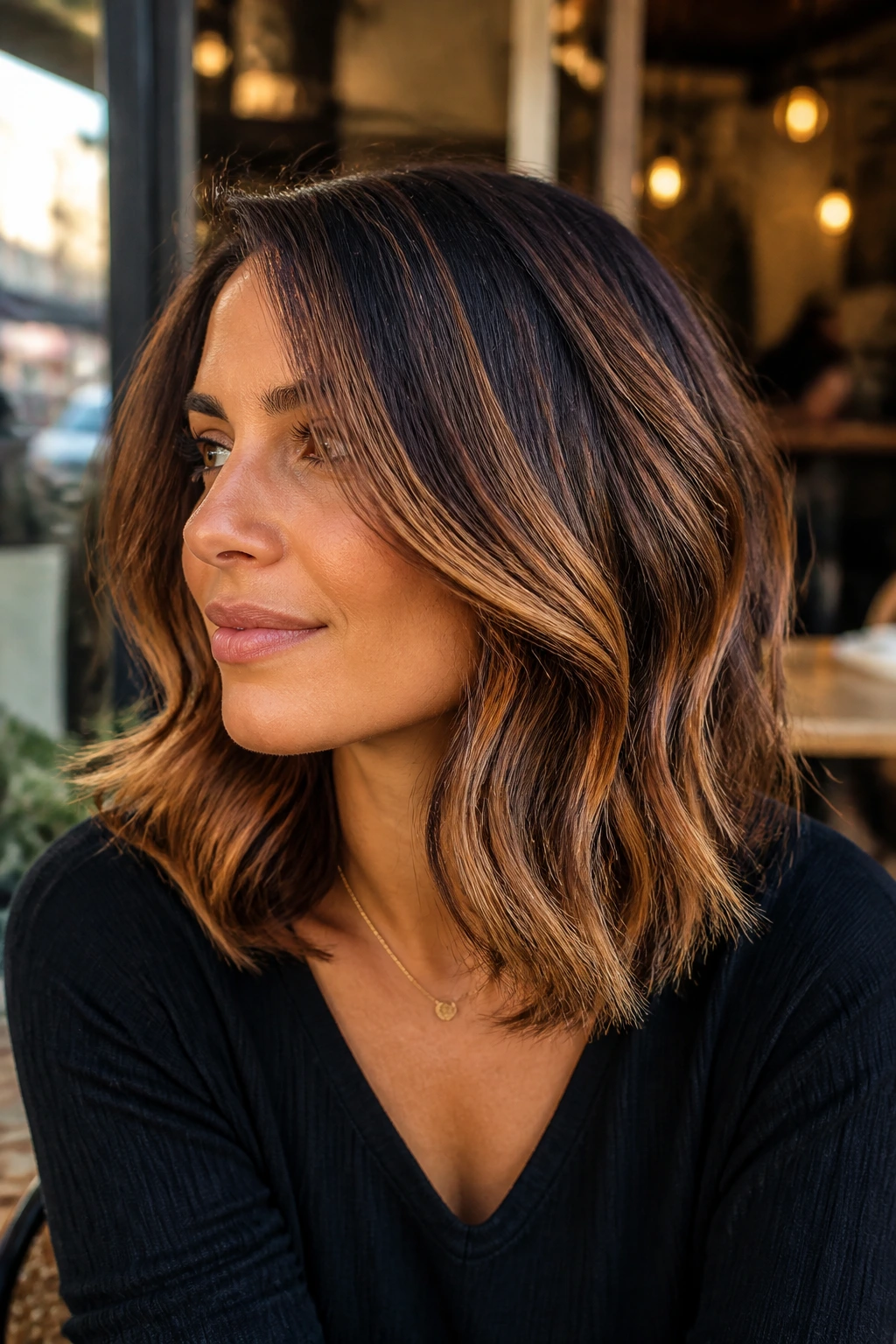
Cinnamon swirl balayage works because it keeps short hair warm, dimensional, and a little bit textured without looking red. Think brown base, cinnamon ribbon, and soft amber at the ends.
The best place for this color is through the long layers and the underbend of the lob, where it shows when the hair flips or waves. If the cinnamon is only on the top layer, it disappears the second the hair is tucked or pinned. A few hidden ribbons underneath fix that.
For a textured lob, this one pairs well with a matte wave spray and a 1-inch bend. The color looks richer when the movement is broken up, not curled into a perfect ring.
13. Rooted Sandy Bob
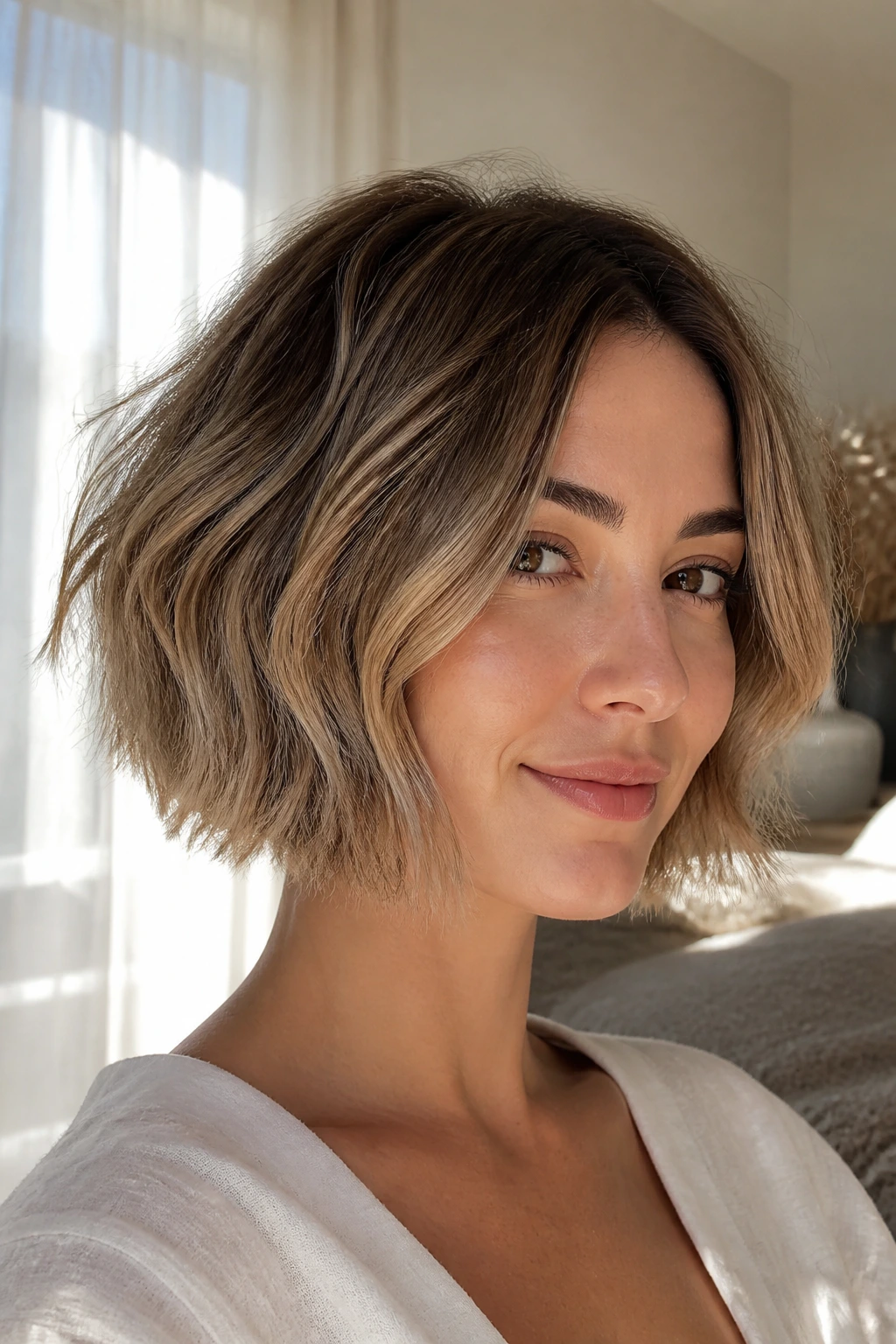
Sandy balayage gives short hair that soft beach tone without the neon-bright blonde trap. The root stays deeper, usually a cool or neutral brown, and the light pieces fade into beige-sand ends.
This is one of the easiest looks to maintain because it’s not trying to be ultra-light. The grow-out stays calm, and the sandy gloss keeps the highlights from turning too yellow. On a bob, the best placement is around the face and the outer edge of the cut, where the light moves as you turn your head.
If your hair has a natural wave, this shade is especially forgiving. The color doesn’t need perfect styling to show.
14. Toffee-Tipped Curly Crop
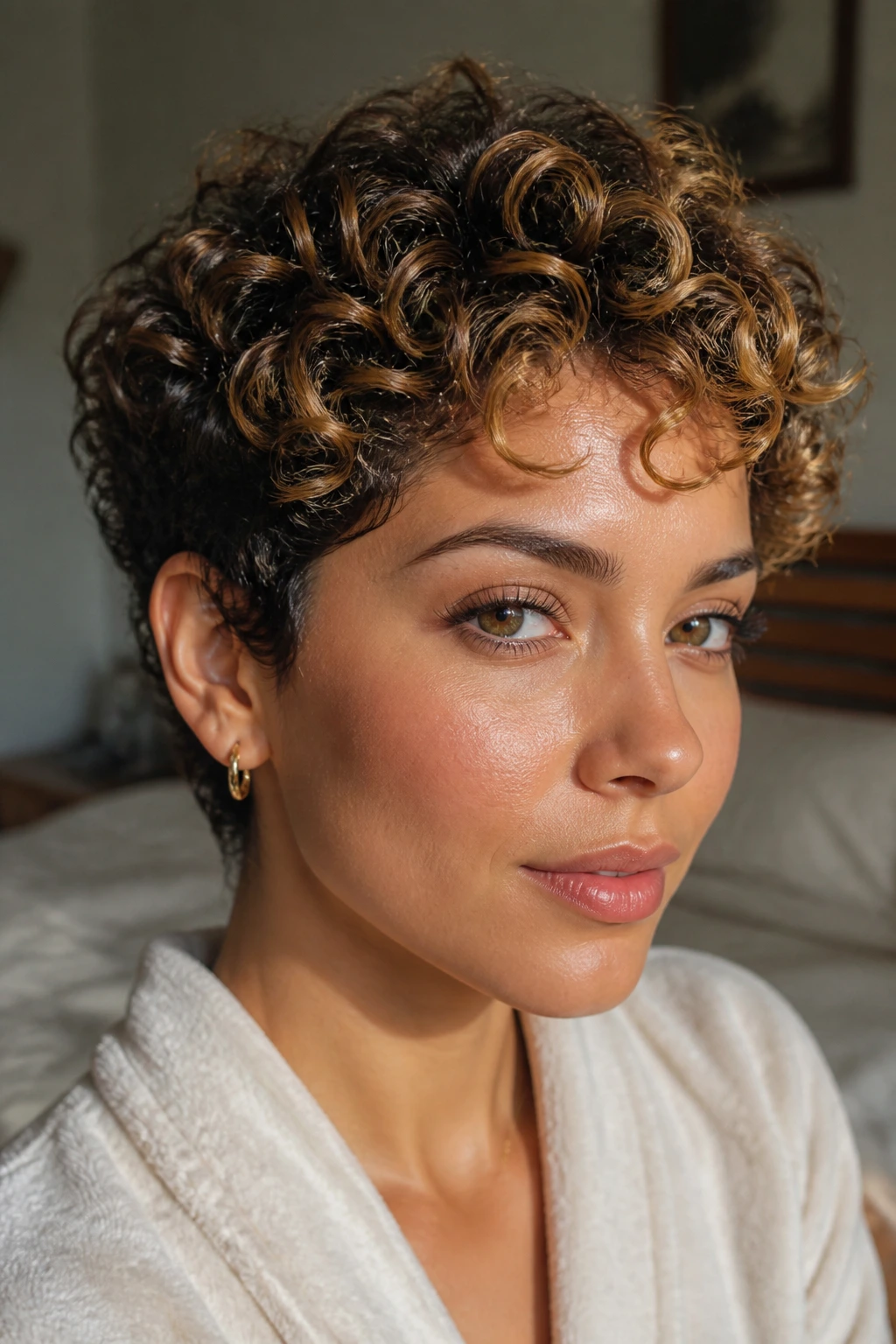
Curly hair can wear balayage beautifully, but the placement has to respect the curl pattern. On a short curly crop, the toffee should sit on the outer curve of the curls, not buried underneath where nobody sees it.
That’s what keeps the look low maintenance. The root can stay dark and healthy, while the toffee appears in little flashes as the curls dry and spring up. A warm gloss every few weeks keeps the tone from going flat, especially if your hair is porous.
Pro placement note
Ask for painted pieces that are a little heavier on the top layer and around the face. Curls shrink, and the color has to sit where the curl will actually land after drying.
15. Cool Espresso with Pearl Ends
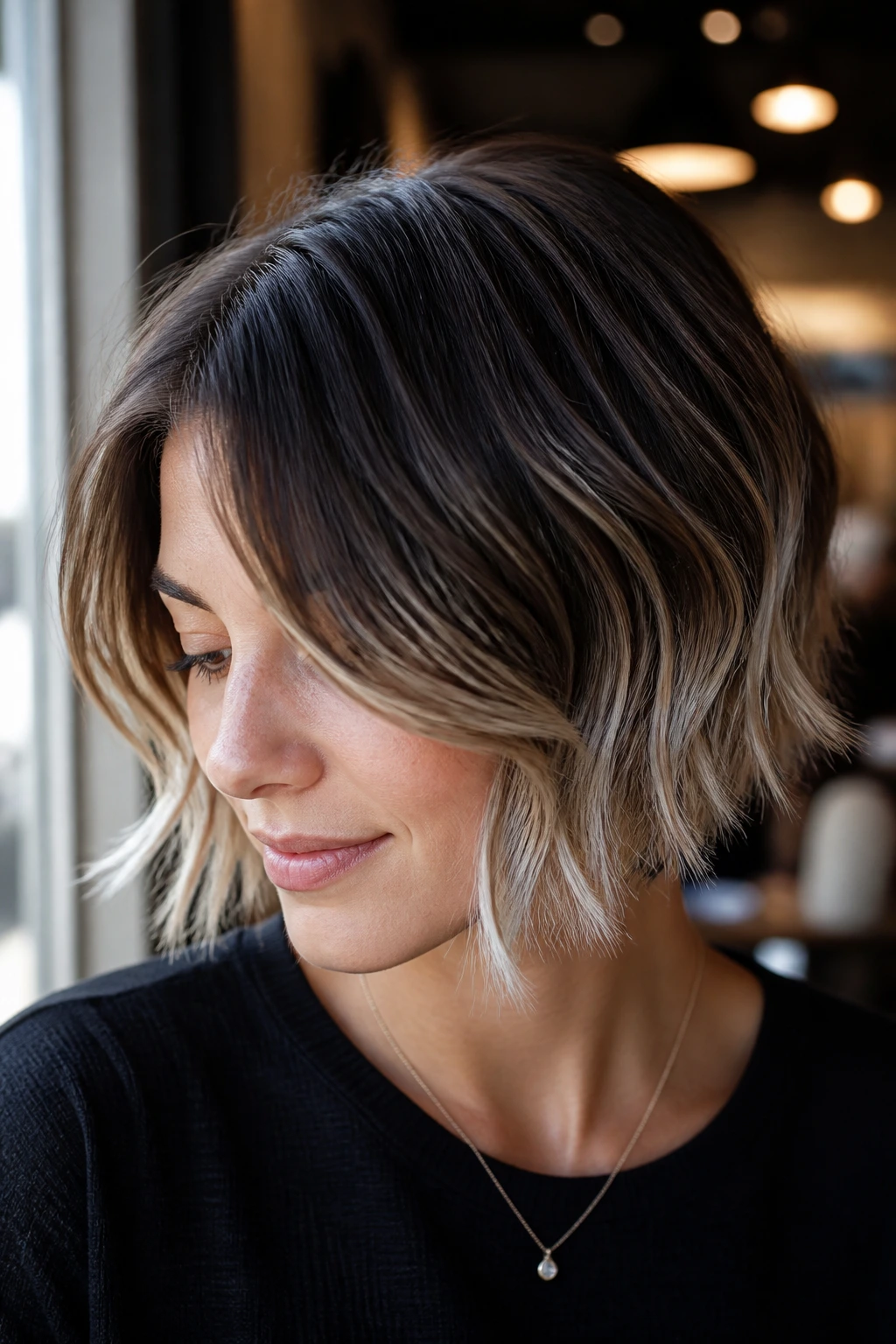
Cool espresso with pearl ends is a cleaner version of ombré for short hair. The base is deep, almost inky brown, and the ends are lifted to a soft pearl-beige that doesn’t scream platinum.
The transition has to be gradual on a short cut. If the line between espresso and pearl is too sharp, the hair looks chopped instead of shaped. Balayage solves that by feathering the light into the mid-lengths and leaving enough depth near the roots to anchor the cut.
This is one of the better choices if you like strong contrast but don’t want the upkeep of a full blonde bob. The dark root buys you time, and the pearl ends stay interesting even when the trim comes in.
16. Strawberry Smoke Bob
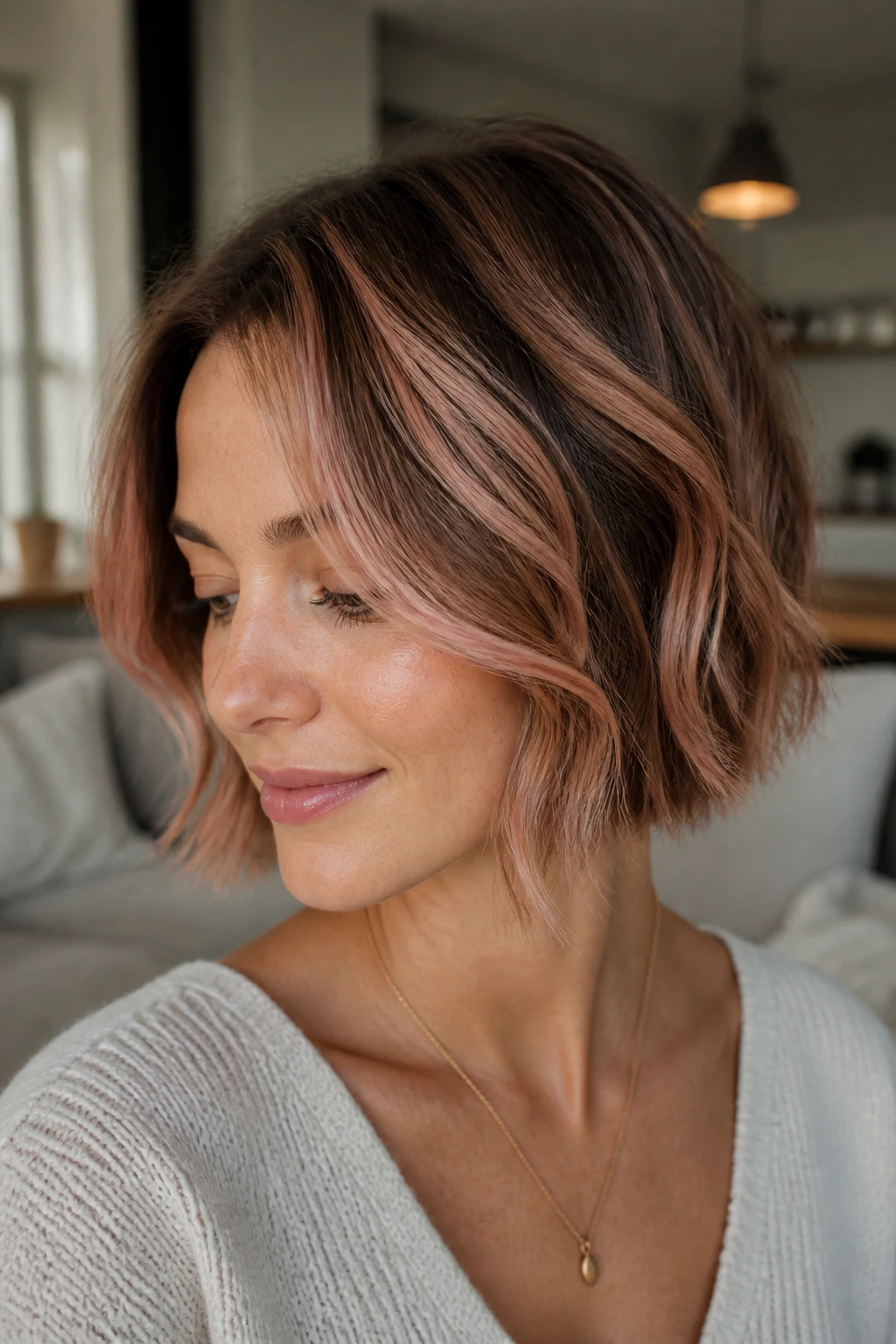
Strawberry smoke is what happens when you mute a strawberry blonde into something softer and more grown-up. The base leans warm brown, while the lighter pieces carry peach, rose, and beige in tiny doses.
It’s a clever look for short hair because it gives warmth without pushing hard into copper. On a bob, the strawberry tones should be concentrated near the front and top layer, then diluted through the ends. That keeps the color from turning cartoonish.
If your skin tone runs warm, this can be an easy win. If you’re cooler-toned, ask for less peach and more beige in the gloss. Small shift, big difference.
17. Golden Walnut Bixie
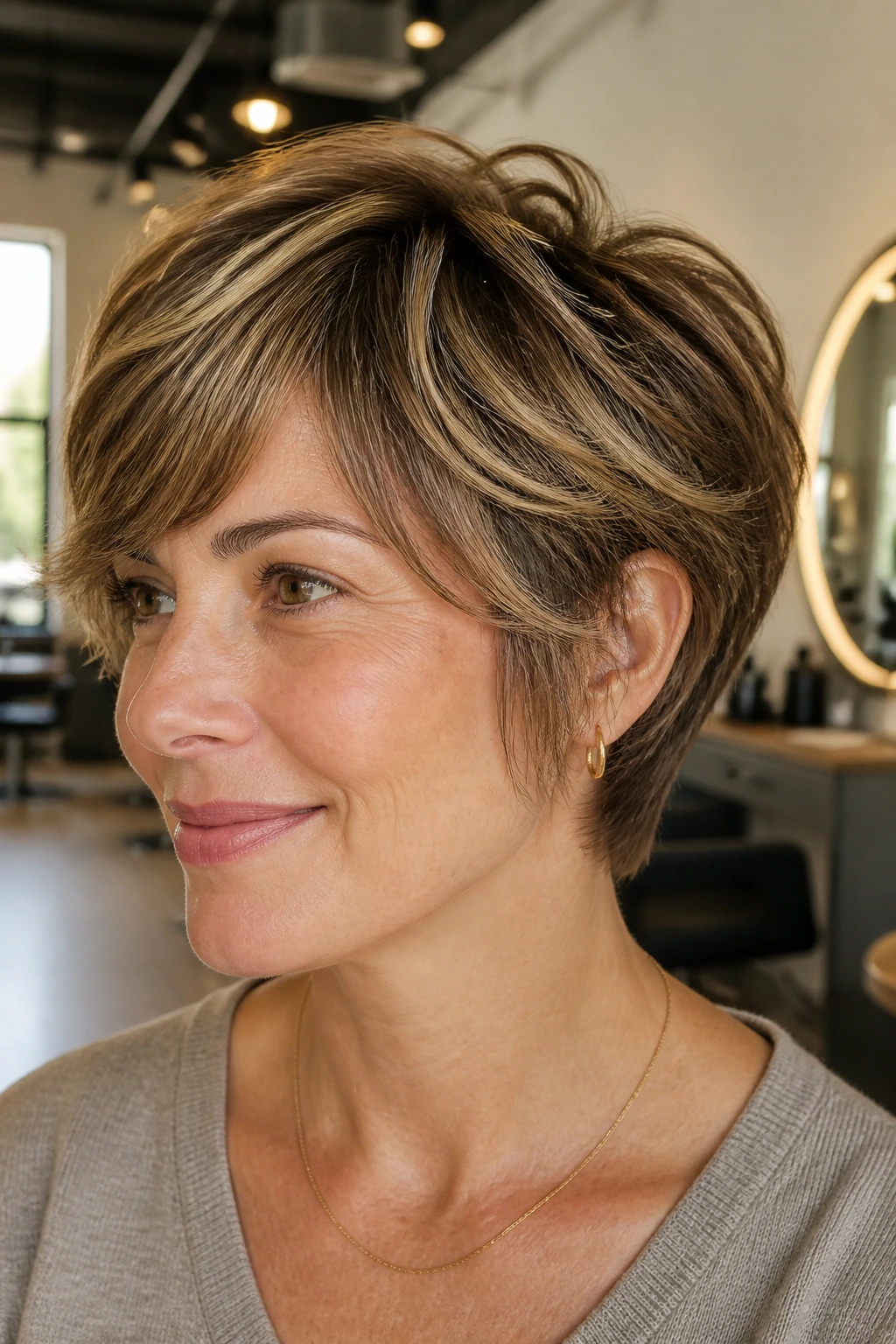
A bixie needs color that keeps the cut from looking too bulky, and golden walnut does that well. The walnut base adds depth, while the golden ribbons sit on top where the bixie’s layers feather out.
The reason this works is simple: the bixie lives or dies on texture. If the color is painted too uniformly, the shape loses its swing. A few brighter sections at the fringe and crown make the cut look lighter and more airy, especially when you rough-dry it.
This is a friendly shade for people moving from a pixie to a bob or the other way around. It handles awkward grow-out well, which is a small mercy.
18. Iced Latte Balayage Bob
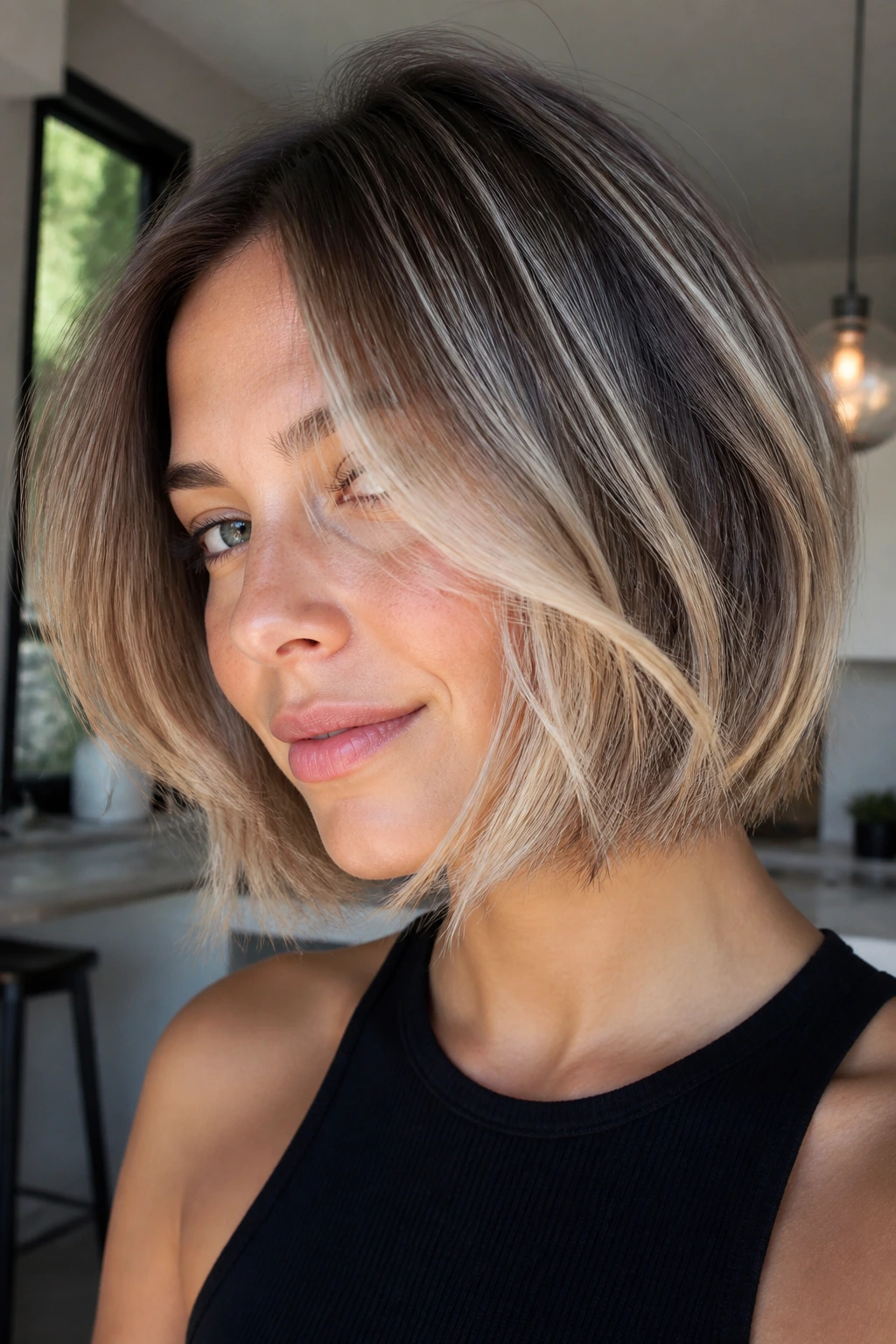
Iced latte is a cool beige blonde that feels clean without going stark. The root stays a soft brown or dark blonde, and the lighter ribbons are toned toward beige, cream, and a tiny bit of ash.
Short hair loves this when the contrast is kept moderate. Too much platinum on a bob can widen the shape; iced latte avoids that by keeping the brightness narrow and deliberate. The front pieces can be a touch lighter, especially if you wear your bob curved under at the ends.
This one usually looks best with a smooth blow-dry or a soft bend. The sleek finish lets the cool tones read clearly, which is the whole point.
19. Muted Rose-Gold Crop
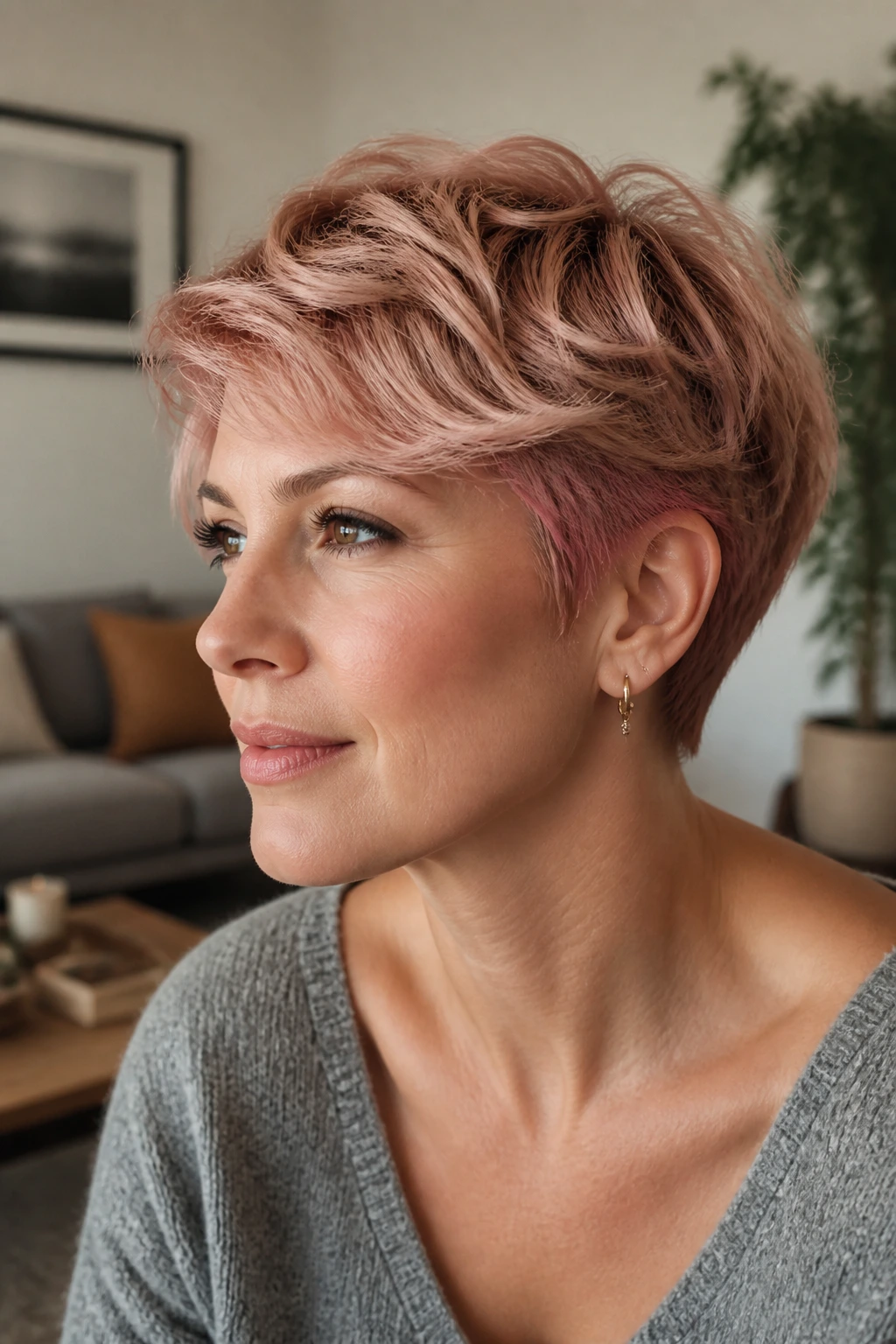
Rose-gold on short hair is easy to ruin by making it too pink. The muted version keeps the blush soft, with beige and peach carrying most of the tone so the result feels wearable.
On a crop, I’d keep the rose-gold pieces concentrated near the crown and face, then soften the rest with a neutral gloss. That keeps the color from reading like a full fantasy shade and lets the haircut stay the star. It’s especially nice on short, layered cuts that need a little warmth to show off their texture.
If you want this to stay subtle, choose a dusty rose gloss rather than a bright peach-pink formula. The difference is obvious in daylight.
20. Bronze Lifted Shag
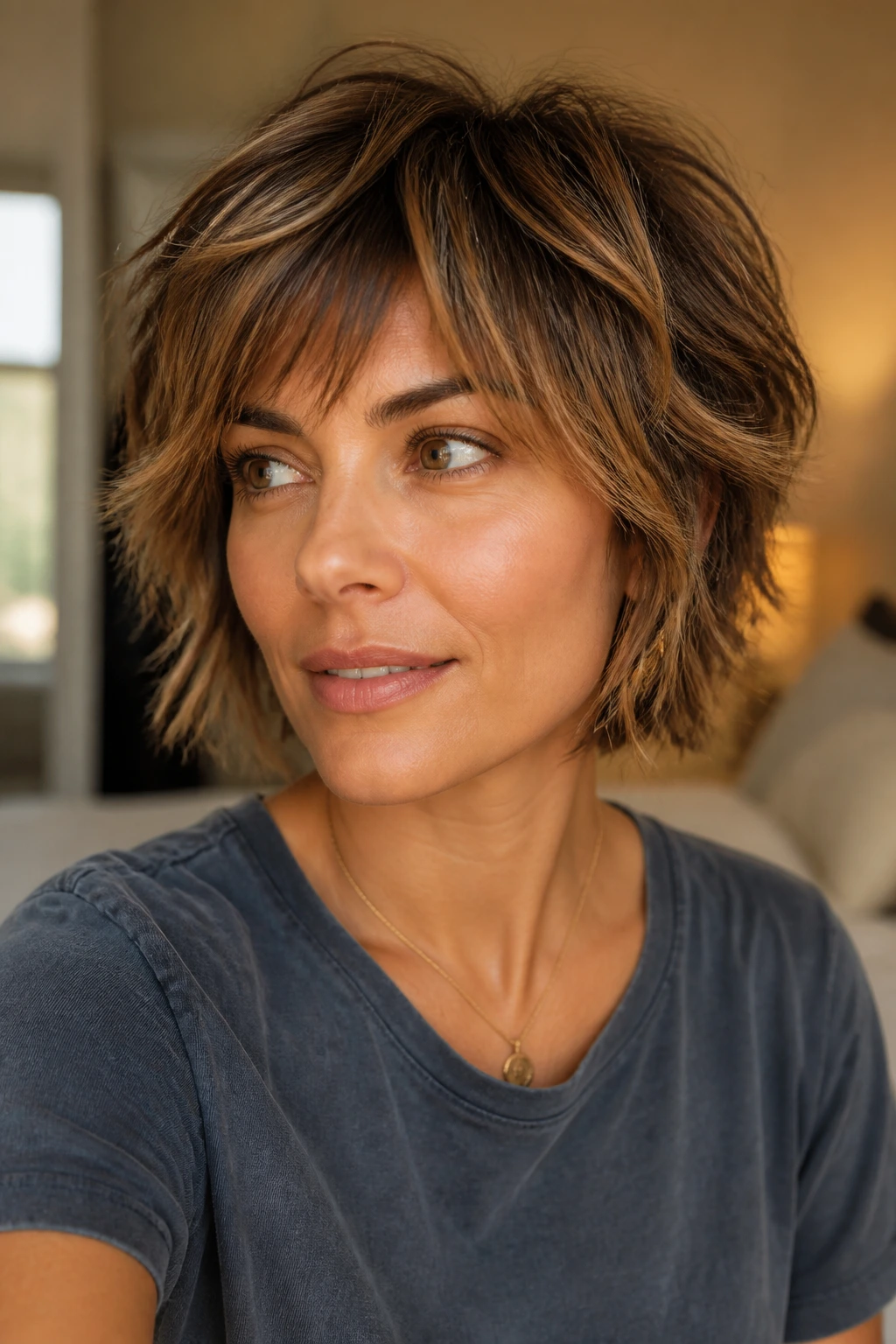
Bronze is one of the easiest ways to give a short shag depth without going too warm. The base stays brown, the balayage picks up bronze and amber, and the layers do the rest.
The shag shape gives you a lot of places for the color to hide and reappear, which is why this works so well. Keep the brighter bronze along the fringe, cheekbones, and broken ends. If you paint every layer evenly, the shag loses that uneven movement that makes it look good in the first place.
A touch of texture spray or light mousse helps the bronze look more dimensional. Flat hair hides this shade; movement brings it out.
21. Pearl Beige Undercut Pixie
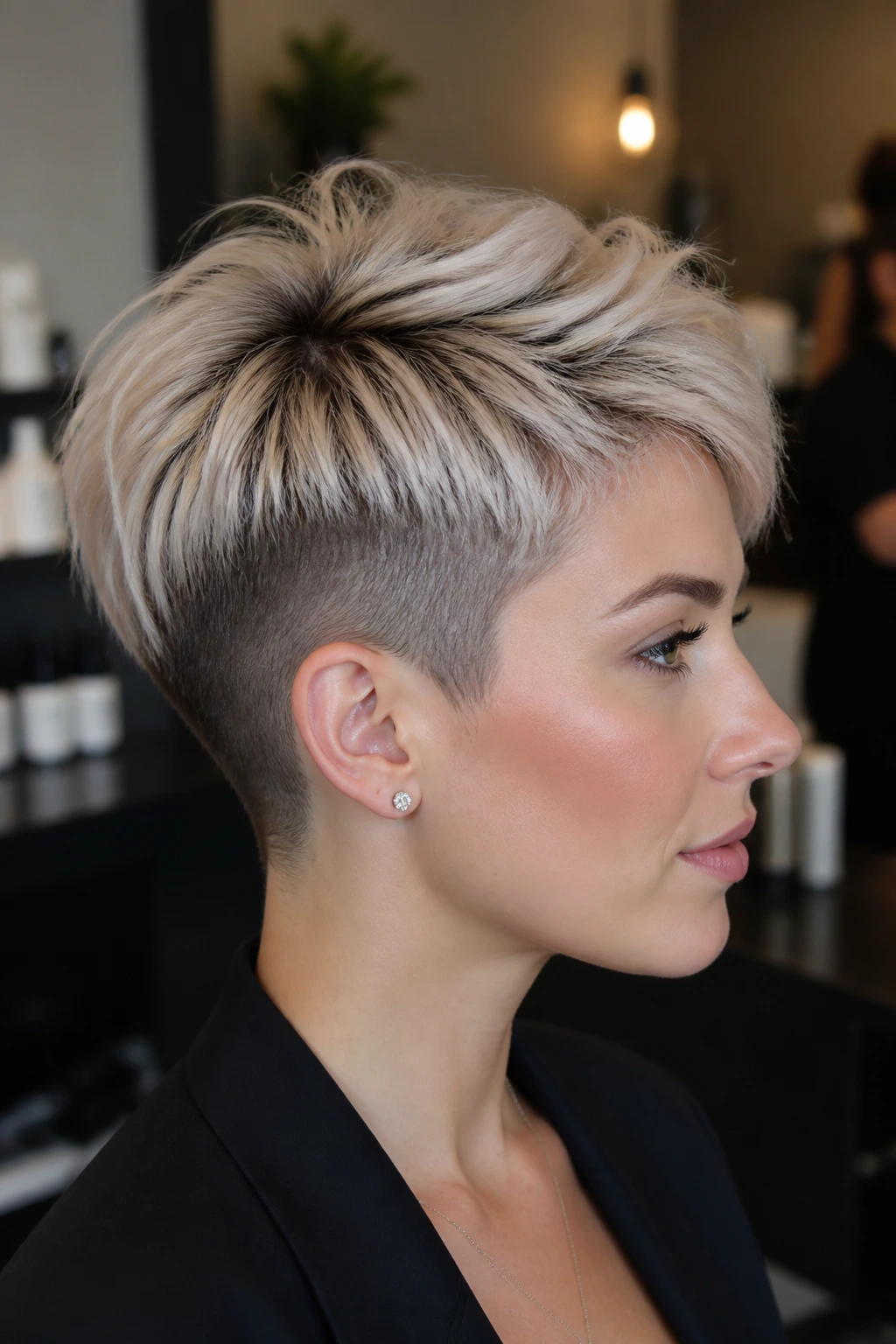
An undercut pixie needs color that lives on the top, because that’s where the eye goes. Pearl beige gives the top layer brightness, while the sides and undercut stay deeper for contrast.
This is a sharp, low-maintenance choice if you like a neat silhouette. The undercut already cuts down on bulk, so the pearl beige can focus on showing lift at the crown and around the fringe. Ask for a cool gloss and a soft root smudge so the brightness doesn’t look pasted on.
What makes it different
The contrast between the longer top and tighter sides makes the color placement feel cleaner than it would on a one-length cut. That’s useful if you style your pixie forward most days.
22. Warm Chestnut Balayage Lob
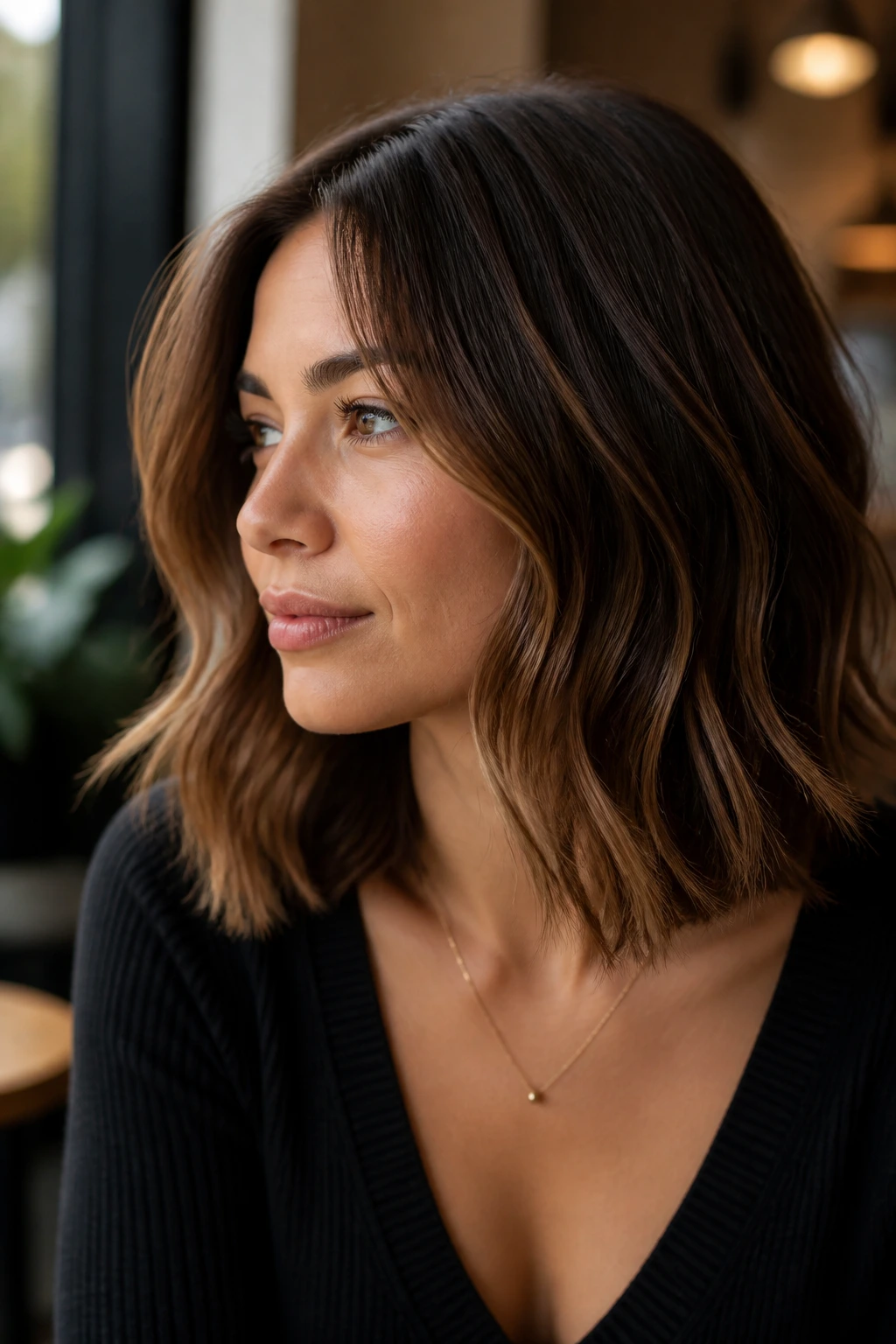
Chestnut balayage on a lob is a safe-looking choice that turns out to be one of the most useful. The base stays rich and brown, while chestnut and soft cocoa ribbons add movement through the mid-lengths and ends.
This is a nice fit for anyone who wants dimension without going lighter around the face. The color looks especially good on shoulder-grazing cuts with a bend in the ends, since the chestnut catches on the outer curve and makes the cut look fuller.
I’d keep the front only one or two shades lighter than the base. That restraint is what makes the grow-out easy.
23. Soft Auburn Melt Bob
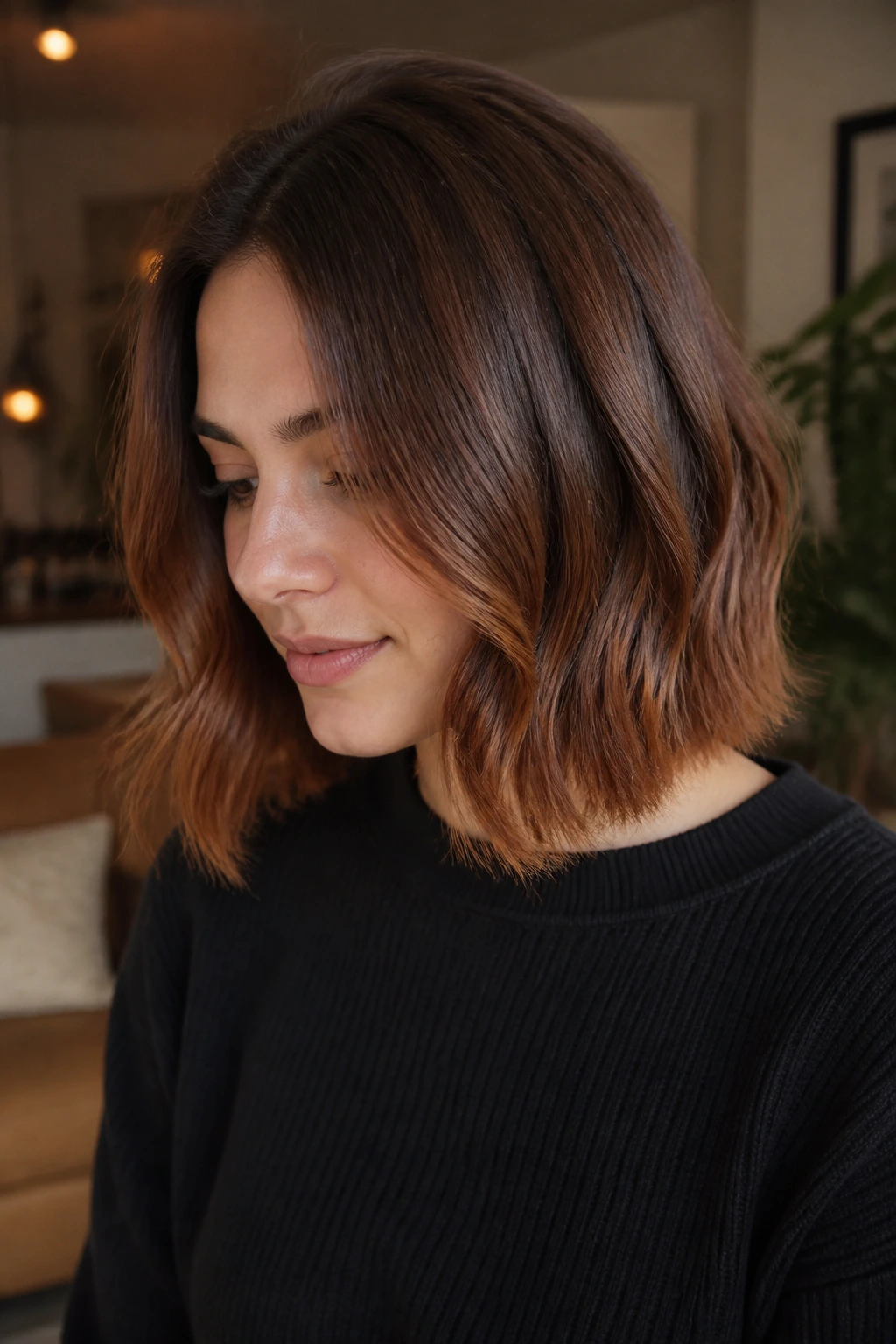
Soft auburn melt is for people who want red without the maintenance circus. The color starts at a deep cinnamon-brown root and eases into auburn, copper, and warm brown through the ends.
On a bob, that melt should feel gradual and a little smoky. If the red is too intense at the ends, it can look disconnected from the root. A glossy auburn toner helps the whole thing stay smooth, and it usually needs a touch-up sooner than a brown-only look because red pigments fade faster.
This one wears well on hair that’s naturally warm or has a little natural wave. The movement gives the auburn something to do.
24. Taupe-and-Tea Short Cut
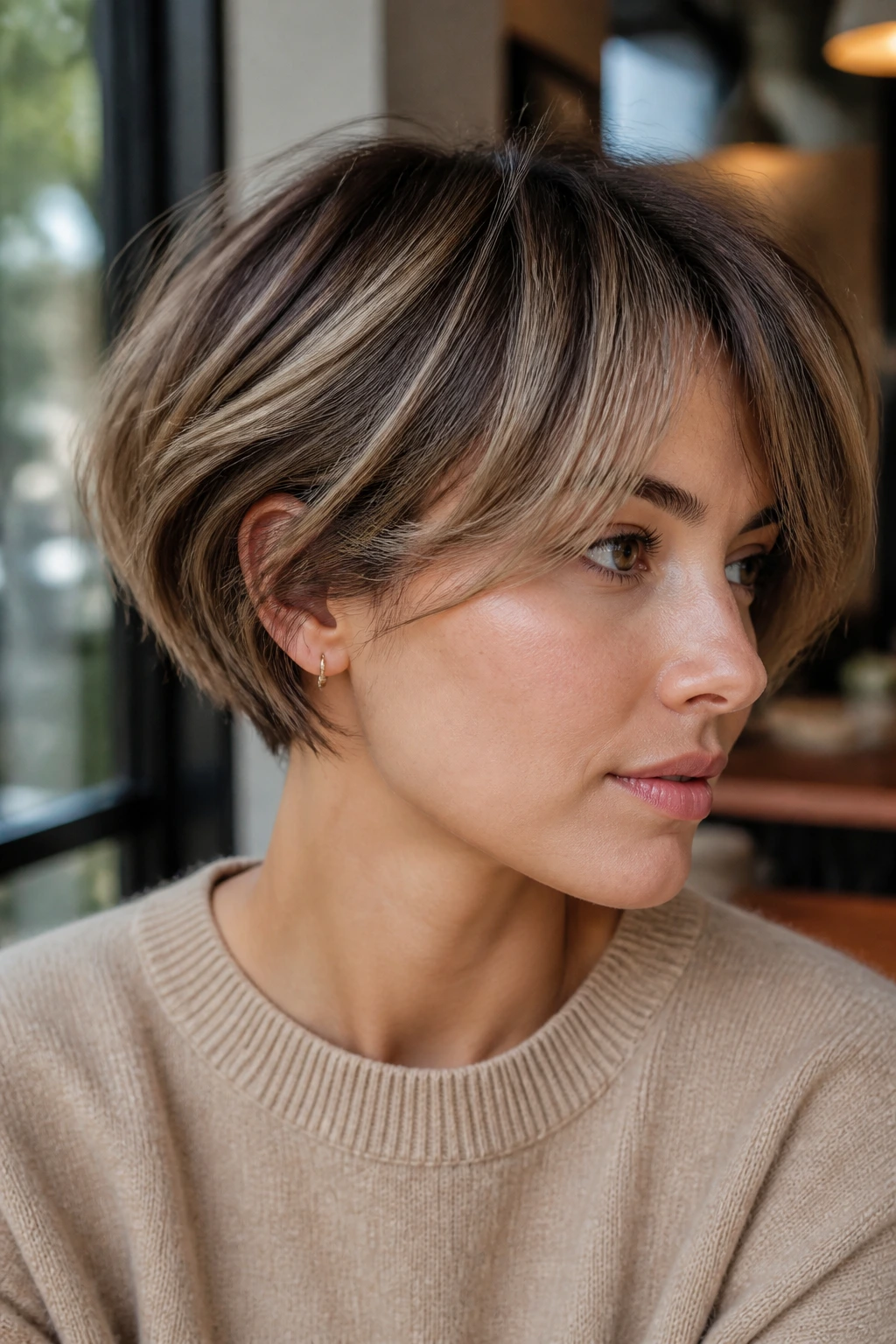
Taupe-and-tea is a softer, cooler balayage for short hair that doesn’t want to go blonde. The base leans brown, the lighter pieces sit in taupe and muted beige, and the finish stays calm instead of flashy.
It’s a smart answer for short cuts that need dimension but not drama. The “tea” part is the faint warm-beige note that keeps the taupe from looking dusty. On a short cut with layers around the face, this placement adds shape without making the ends look thin.
This shade is one of those quiet choices that often looks better on real hair than it does in a perfect salon photo. The subtlety is the point.
25. Midnight Brunette with Dusty Caramel Veil
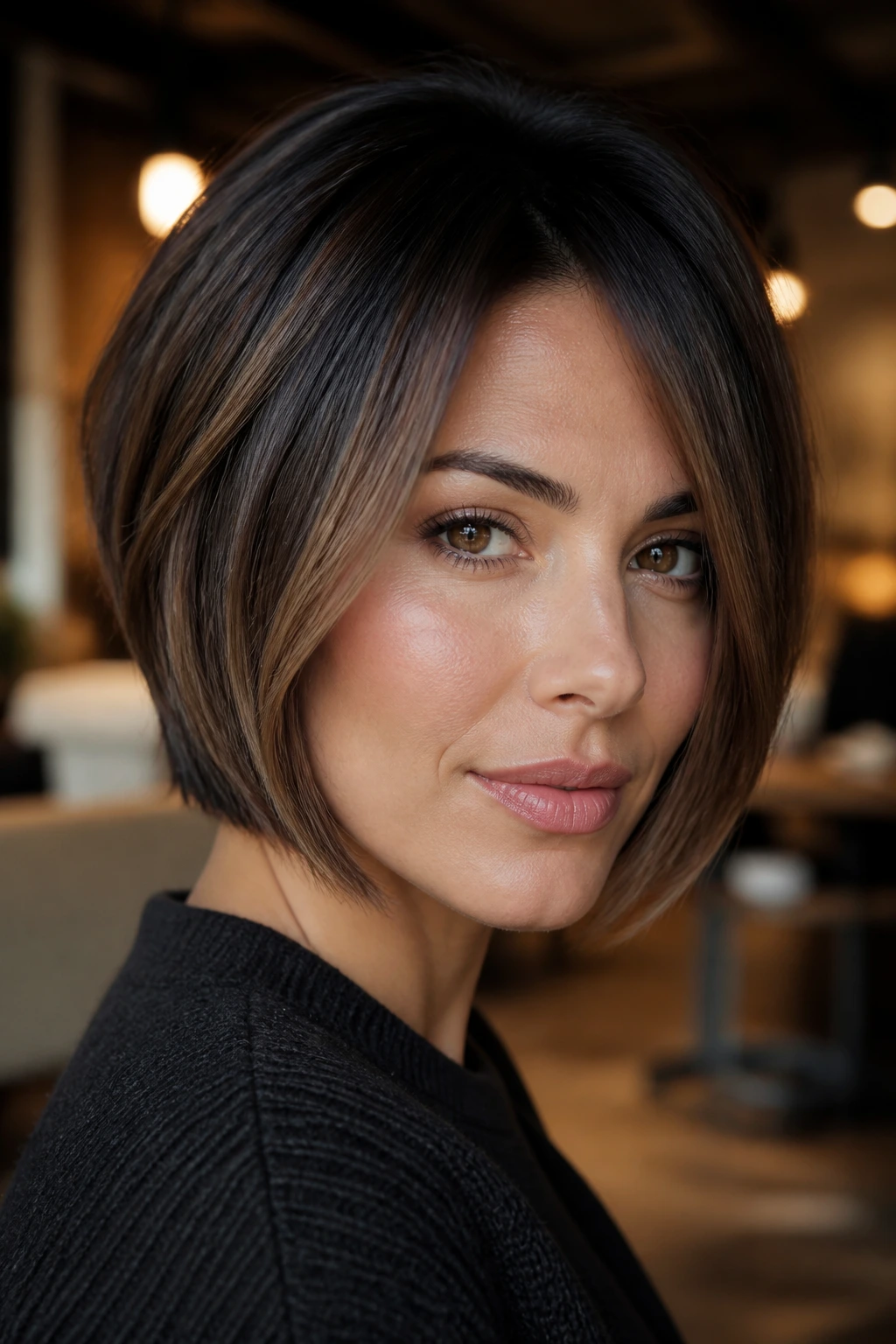
A midnight brunette base with a dusty caramel veil is as low-maintenance as dark color gets while still giving movement. The highlights are so soft that they read more like a haze than a stripe, which keeps short hair from looking overworked.
The caramel should sit lightly on the top layer and around the front, then fade fast into the deeper brunette underneath. That keeps the bob, crop, or pixie looking rich from every angle. If you like darker hair but still want dimension, this is the version I’d pick before anything brighter.
It’s especially good if you wear your hair sleek. Dark glossy hair plus a whisper of caramel at the ends is a hard combination to beat.
Why Balayage Grows Out Better on Short Hair
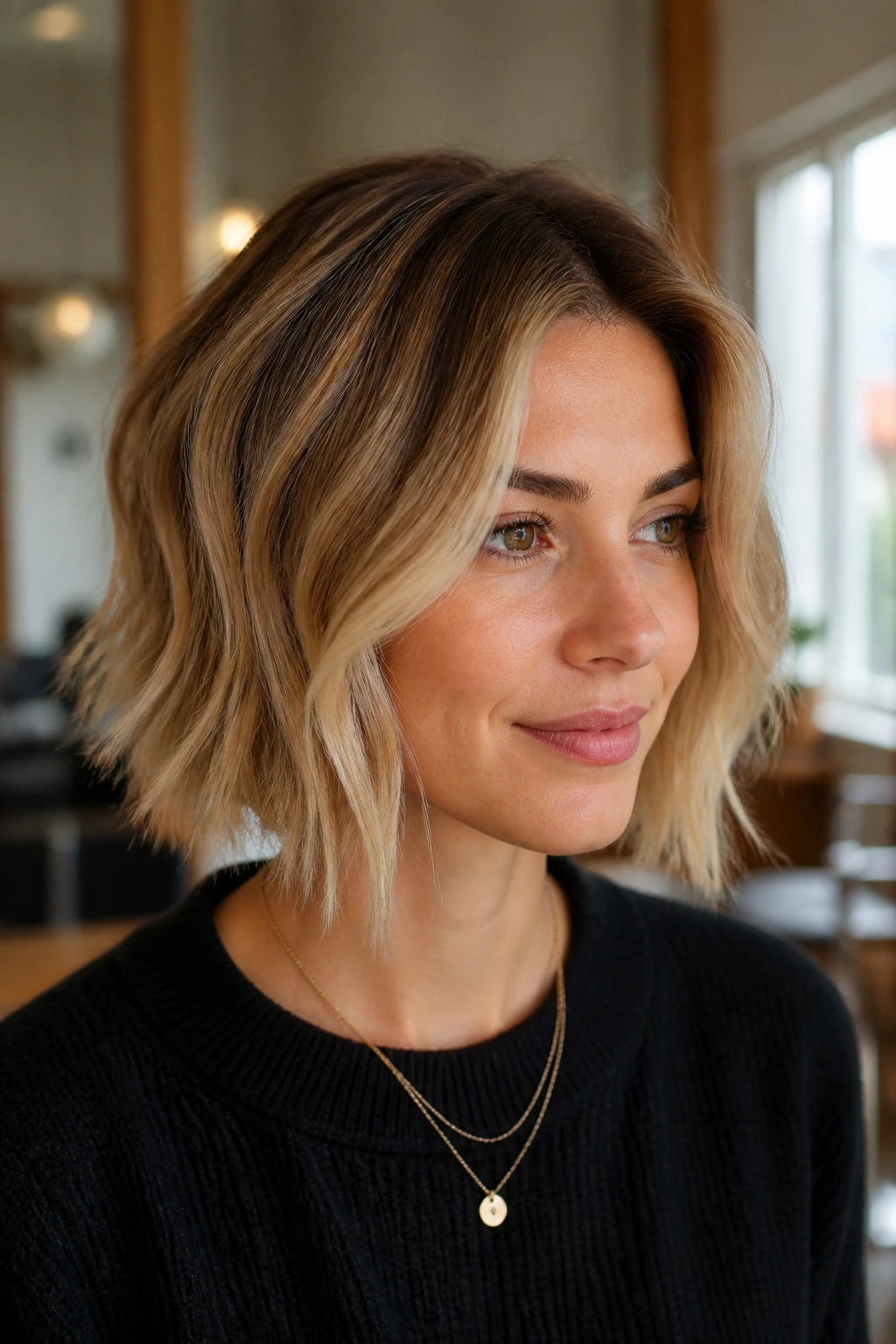
Short hair can expose a bad highlight placement in about a week. That’s the blunt truth. But when balayage is painted with the cut in mind, the grow-out looks softer than it does on long hair because the distance from root to end is smaller and the haircut gets trimmed more often.
The best short-hair balayage doesn’t start at the scalp and race all the way through every layer. It lives on the top sections, the face-framing pieces, the ends that curl under, and the bends that show when the hair is tucked or moved. That keeps the look from turning into a solid block of color.
A root shadow or gloss is doing quiet but important work here. Leave the base 1 to 2 levels deeper than the lightest parts, and the regrowth reads as part of the design rather than a mistake. It’s the difference between a bob that needs rescuing and one that just grows into itself.
Essential Tools for These Looks
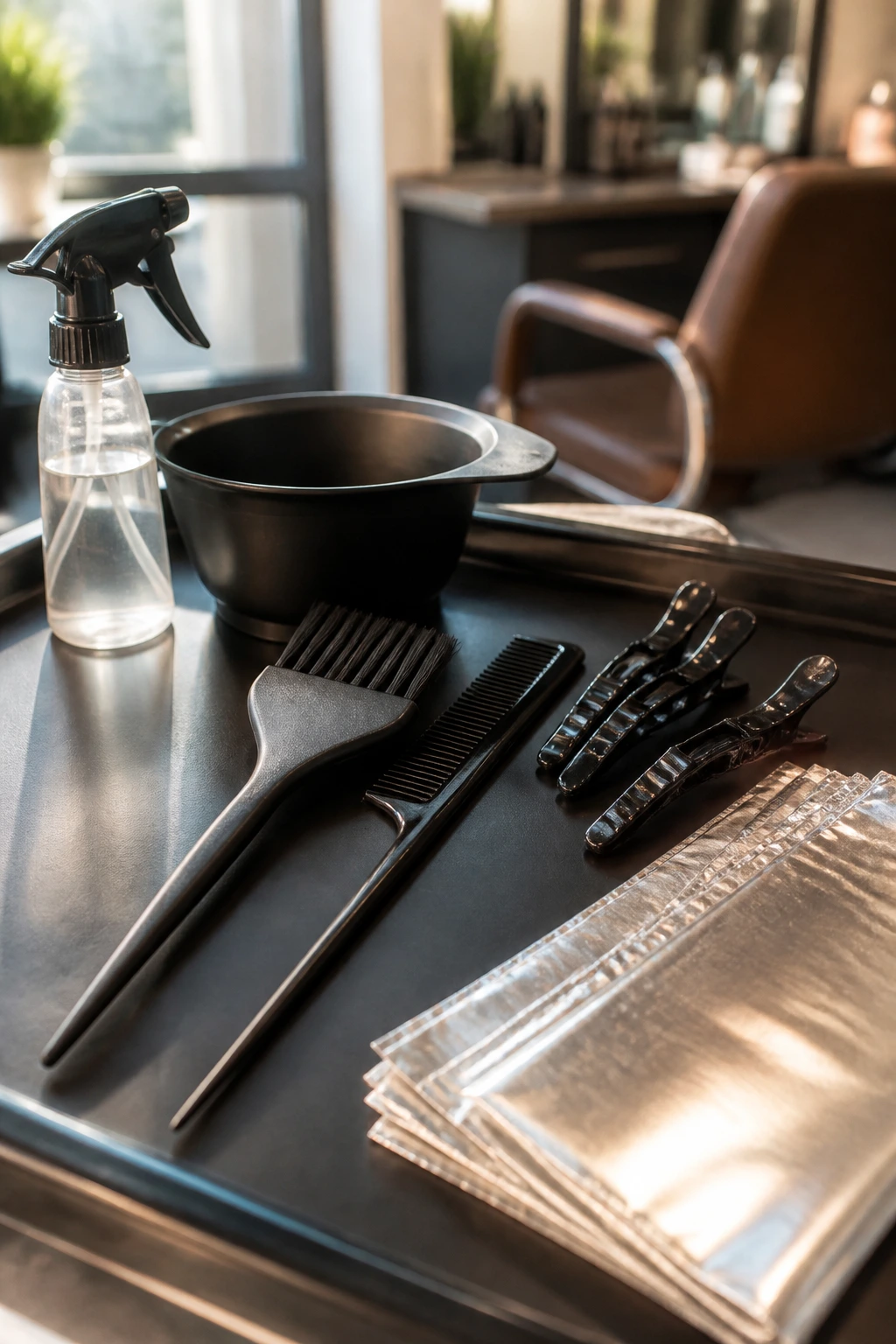
- Balayage brush: The angled bristles help feather color through the surface without leaving hard edges.
- Tail comb: Useful for clean sectioning and for isolating face-framing pieces on short hair.
- Sectioning clips: Short hair still needs clean parting; clips keep the top layer out of the way.
- Foils or cotton strips: Not always necessary, but helpful when you want more lift on stubborn sections.
- Color bowl and whisk: Needed for mixing gloss, toner, or lightener evenly.
- Fine-mist spray bottle: Keeps sections damp so the color moves smoothly on dry-looking ends.
- Blow dryer with concentrator nozzle: Helps show how the color sits under tension and during smoothing.
- Round brush or vent brush: Good for shaping bobs and lobs so the dimension shows.
- 1-inch curling iron or flat iron: Short hair often needs a small bend, not a big curl, to reveal the balayage.
- Heat protectant and sulfate-free shampoo: The at-home basics that keep toner and gloss from washing out too fast.
Picking the Right Tone for Your Base Color
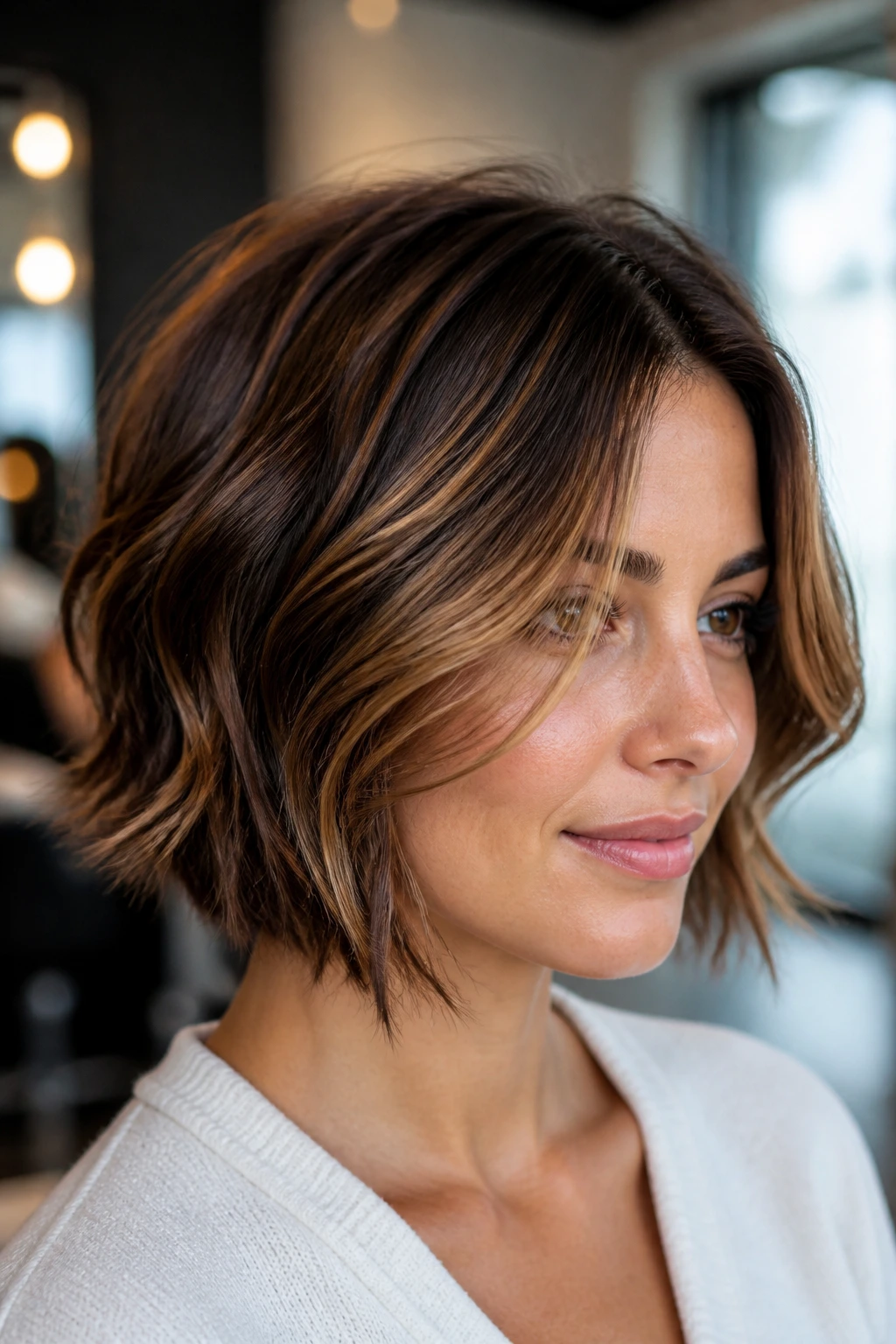
The base color matters more than most people think. If your natural shade is a level 4 or 5 brunette, caramel, mocha, bronze, mushroom, and walnut tones tend to sit naturally on top. If you push too blonde too fast, the grow-out gets noisy and the cut can lose its shape.
For level 6 or 7 dark blondes, beige, honey, sandy, and iced latte tones often work well. They brighten the cut without making the root look disconnected. Cooler skin tones usually lean better toward ash, mushroom, taupe, or pearl beige, while warmer undertones can carry honey, caramel, cinnamon, copper, and chestnut with less effort.
Bring photos of the same haircut length, not just the same color. A brunette bob with soft caramel ribbons is a different beast from a long wave with the same shade. The haircut changes where the eye lands.
How to Style and Wear These Balayage Looks
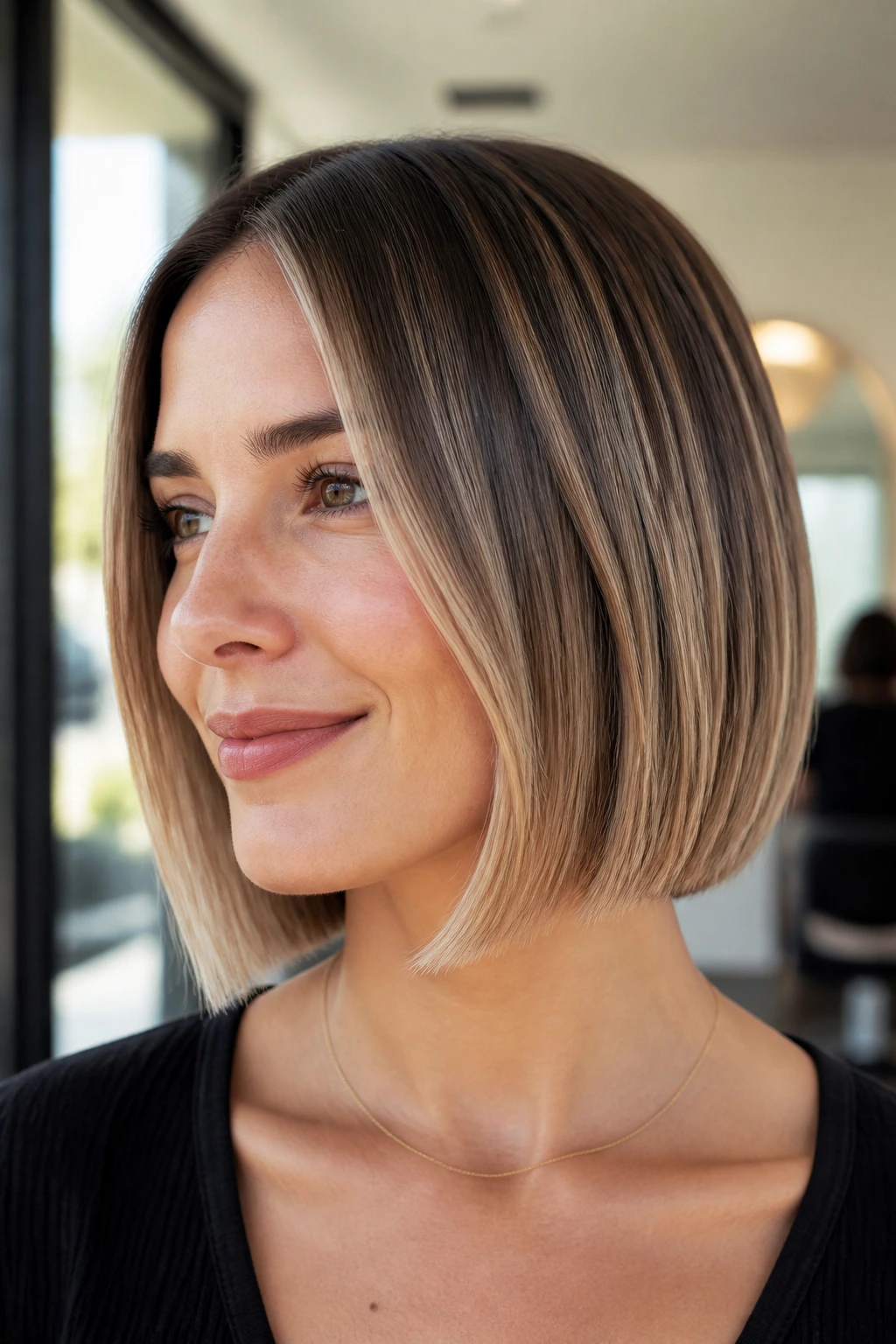
Straight and glossy: A smooth blowout makes short balayage look cleaner, especially on bobs and lobs with beige, mushroom, or pearl tones. Use a round brush, dry the hair in the direction you want it to fall, and finish with a pea-sized amount of serum on the ends. Too much oil flattens the dimension, so stay light-handed.
Soft bend: For caramel, honey, bronde, and bronze looks, a 1-inch iron bend through the mid-lengths shows the ribbons without turning the cut into a curl set. Alternate the direction of each bend and leave the ends out for a more modern finish.
Natural texture: Shags, curls, and bixies often look best air-dried or diffused with a small amount of cream. Scrunching too hard can clump the color together. A little separation is the point.
Tucked and pinched: If you wear one side behind your ear or clip back the fringe, place the lightest pieces where they’ll be seen in that position. Otherwise the best bits disappear the second the hair moves.
Extra Ways to Keep the Color Soft, Not Stripey
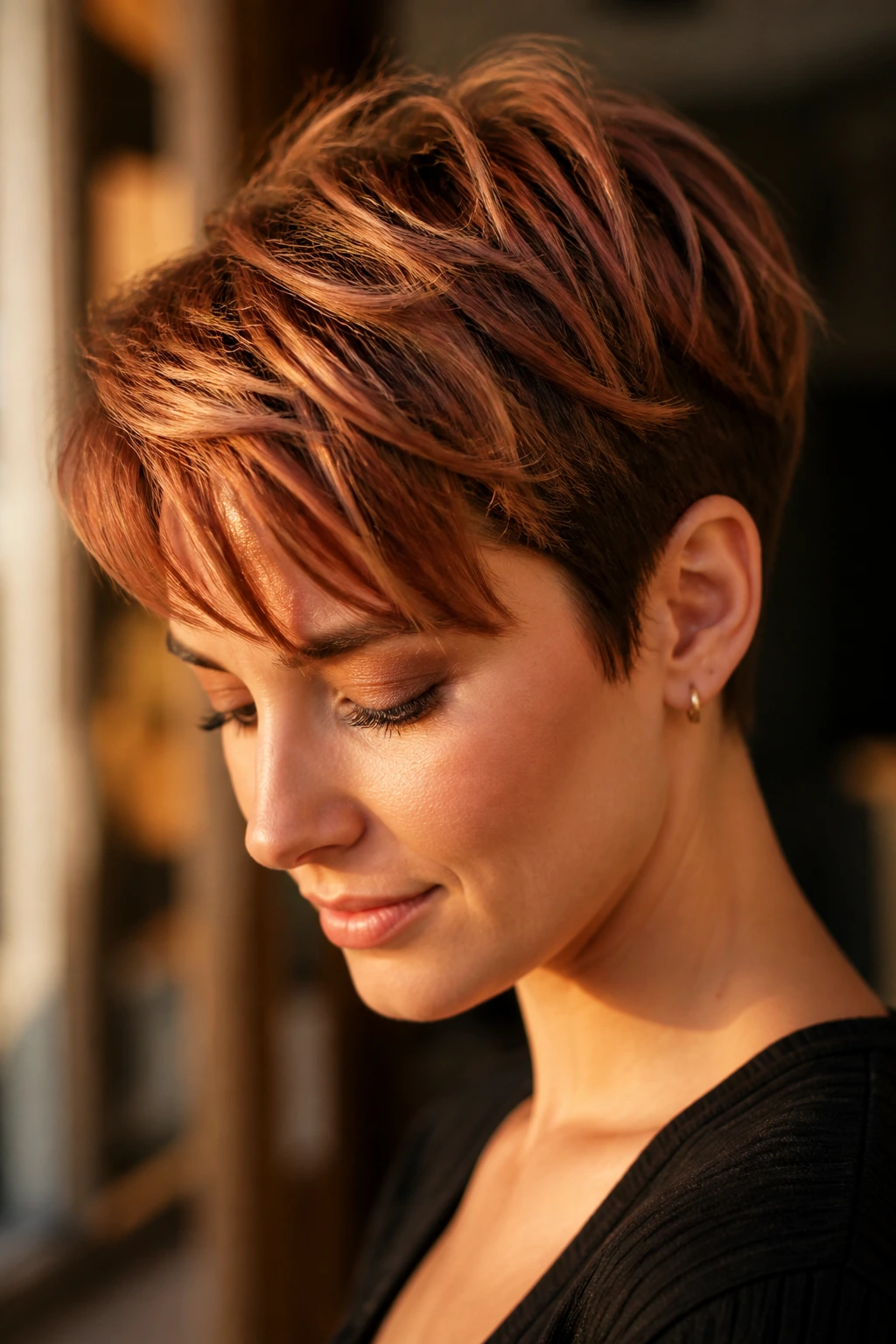
Glossing: A clear or tinted gloss every 4 to 8 weeks keeps the tone from turning flat, especially on blonde, beige, copper, and rose-gold shades. It also smooths the look of porous ends, which short hair tends to show fast.
Parting changes: Switch your part now and then. A centered part exposes different pieces than a deep side part, and that tiny change can make the balayage look fresh without adding more color.
Texture choice: Match the finish to the shade. Cool beige and ash tones often look sharper with a smooth blow-dry, while copper, caramel, and bronze can handle a rougher wave or a soft bend.
Face-framing brightness: If you want the color to read brighter without more lift everywhere, focus the lightest ribbons around the temple and cheekbone. It’s a cleaner move than over-lightening the ends.
At-home care: Use a purple shampoo only when the blonde starts to warm up, not every wash. Once a week is usually enough for lighter short hair; too much turns beige tones chalky.
Common Mistakes That Make Short Balayage Look Harsh
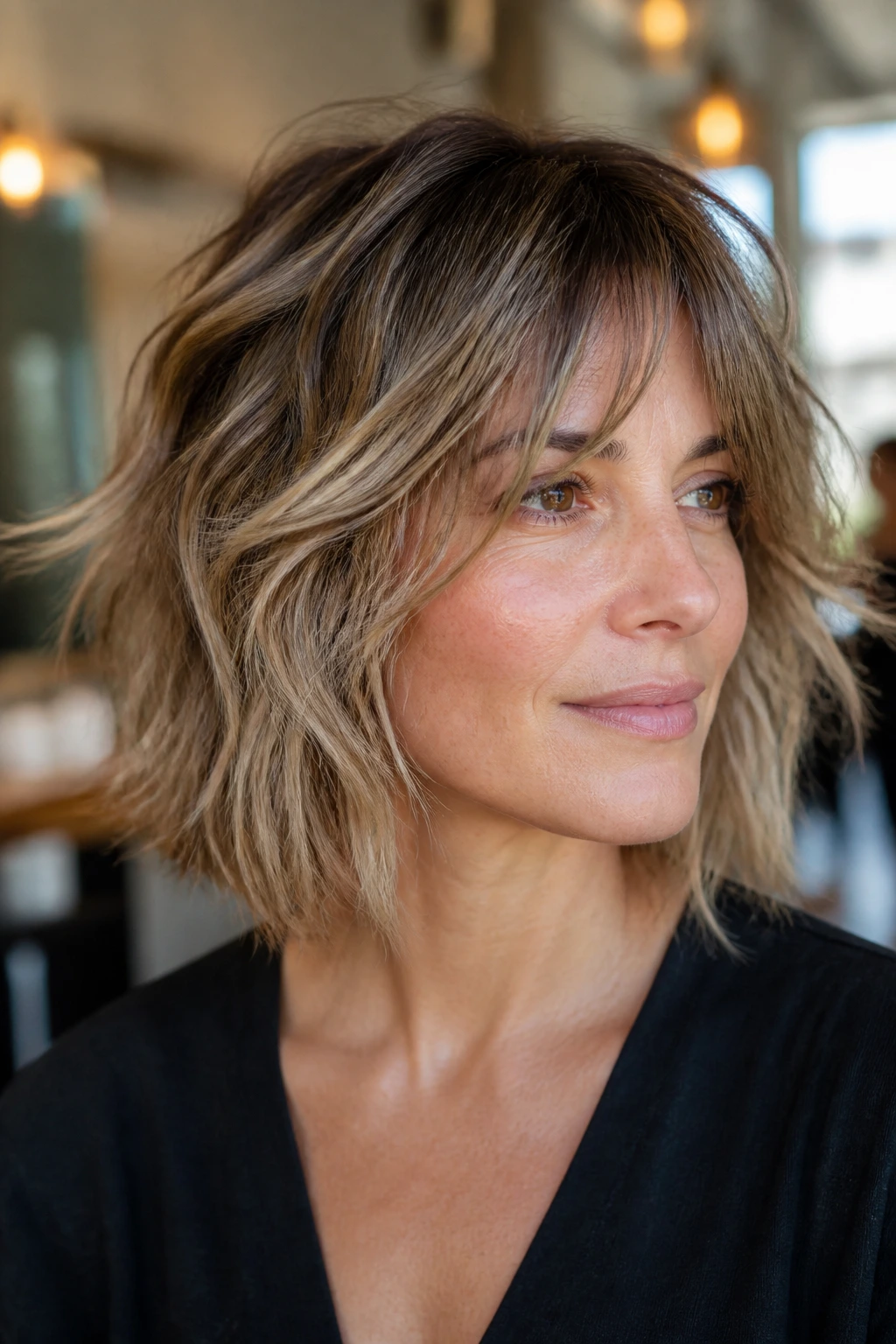
Putting too much brightness at the scalp: Short hair does not have the cover that long waves do, so a high-placed highlight can look striped in days. Keep the root soft and let the lighter pieces start lower.
Choosing one tone for the whole head: Short cuts need tonal variation. If every strand is the same caramel or blonde, the hair can look flat and overly processed.
Ignoring the haircut shape: A pixie, bob, shag, and lob all need different placement. What works on a shag can look heavy on a blunt bob, and what flatters a pixie can vanish on a lob.
Skipping toner or gloss: Fresh lightener often looks too raw on short hair. A gloss softens the finish and makes the paint read intentional instead of brassy or chalky.
Overusing hot tools: Tiny cuts need less heat than people think. A flat iron set too hot can dry out the ends and make the color look frayed.
Painting every layer evenly: That’s the fastest route to a helmet effect. Leave darker depth underneath so the balayage has somewhere to breathe.
Maintenance, Refreshes, and Grow-Out
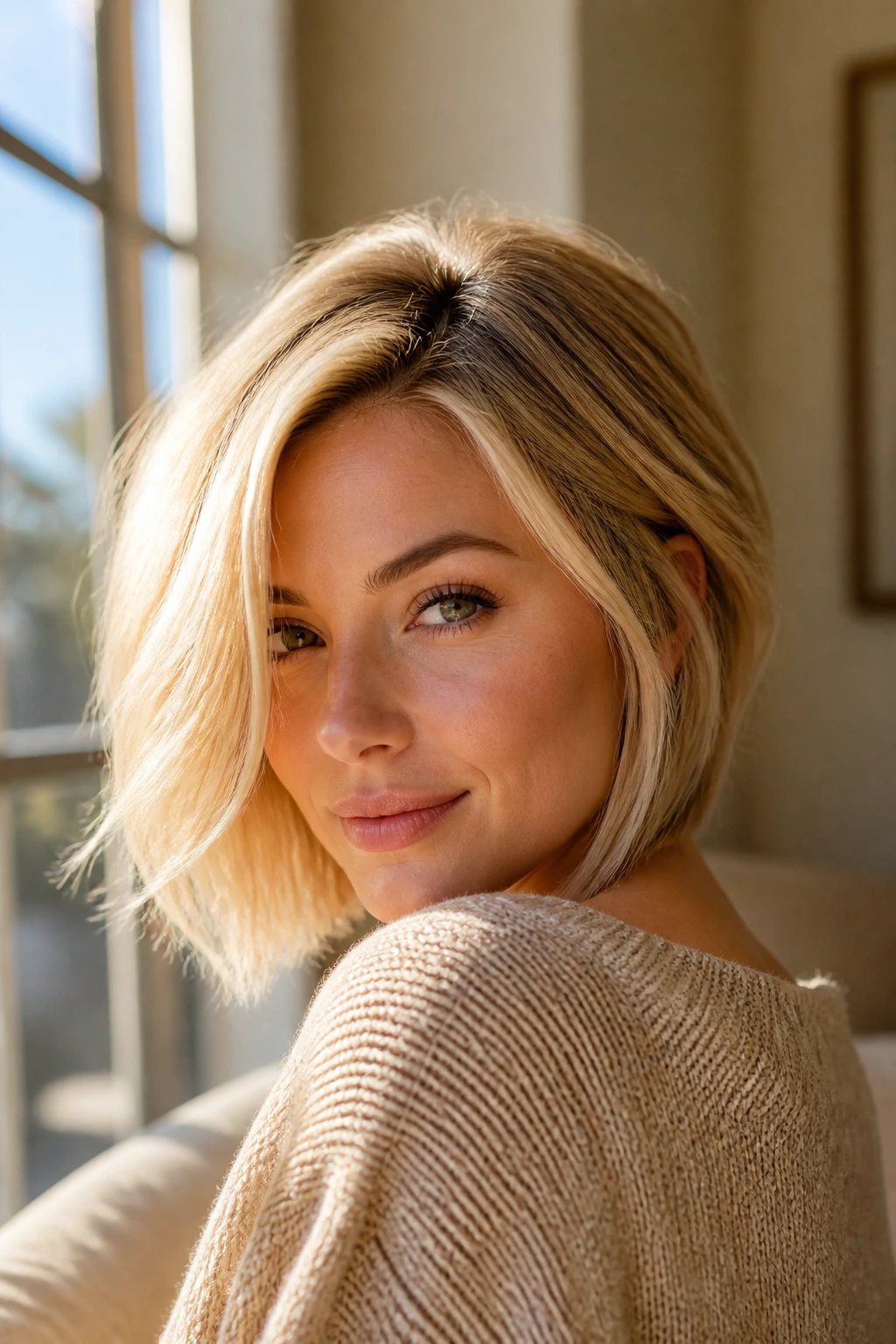
Low-maintenance balayage still needs a rhythm. The rhythm is just gentler than full highlight upkeep.
For most short-hair balayage looks, a trim every 4 to 8 weeks keeps the shape from swallowing the color. Pixies usually need the shortest cycle. Bobs and lobs can stretch a little longer, especially if the ends stay blunt and tidy.
Glosses or toner refreshes usually land every 4 to 8 weeks, depending on the shade. Blonde, pearl, and beige tones tend to lose their crispness sooner; brunette, mushroom, and chestnut looks often hold longer. Copper and rose-gold shades fade fastest of all, so they need more attention if you want the tone to stay clean.
At home, a sulfate-free shampoo and a color-safe mask once a week make a real difference. If the ends feel dry, use the mask on mids and ends only. Put dry shampoo at the roots, not through the color sections, or you’ll dull the dimension fast.
Variations and Adaptations to Try
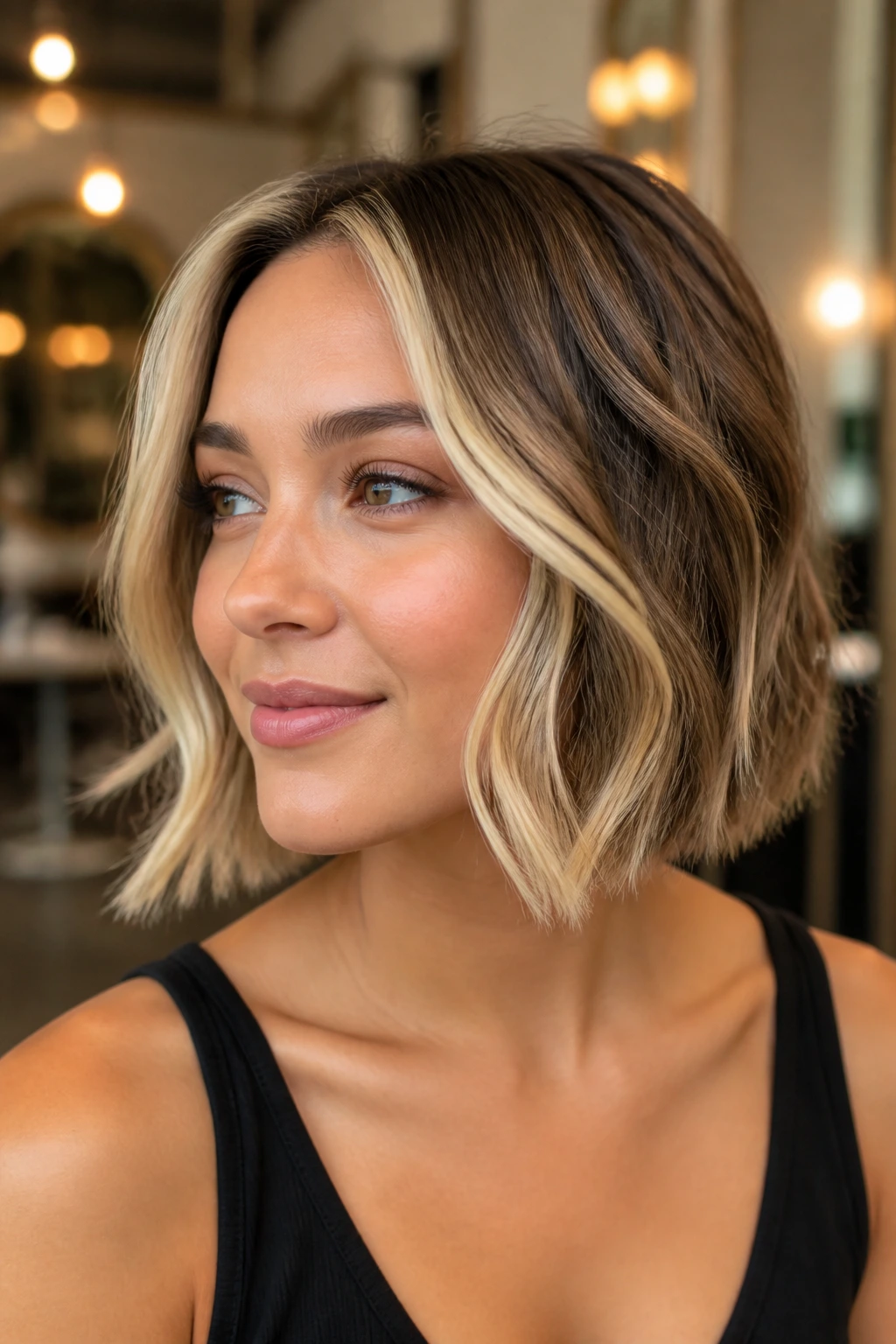
Subtle Shadow Veil: Keep the balayage only one or two levels lighter than the base. This is the route for anyone who wants movement more than contrast, and it grows out the softest.
Bright Money-Piece Frame: Make the front pieces noticeably lighter than the rest. Good for short bobs and lobs when you want the face to pop without lifting the whole head.
Gray-Blend Soft Melt: Use ash, pearl, and taupe around natural gray strands instead of trying to cover them hard. The grow-out is cleaner, and the color stays calm as the gray comes through.
Copper Accent Sweep: Add copper only to the fringe, temple, and outer top layer. This works best when you want a warmer look without committing to a full red shift.
Curly Ribbon Placement: Paint on the outside curve of curls and leave the underside deeper. The curl pattern does the rest, and the color shows when the hair springs up.
Cool Brunette Contrast: Stay in espresso, mocha, mushroom, and ash-beige territory. This is the safest choice if you want low upkeep and no brass.
Frequently Asked Questions
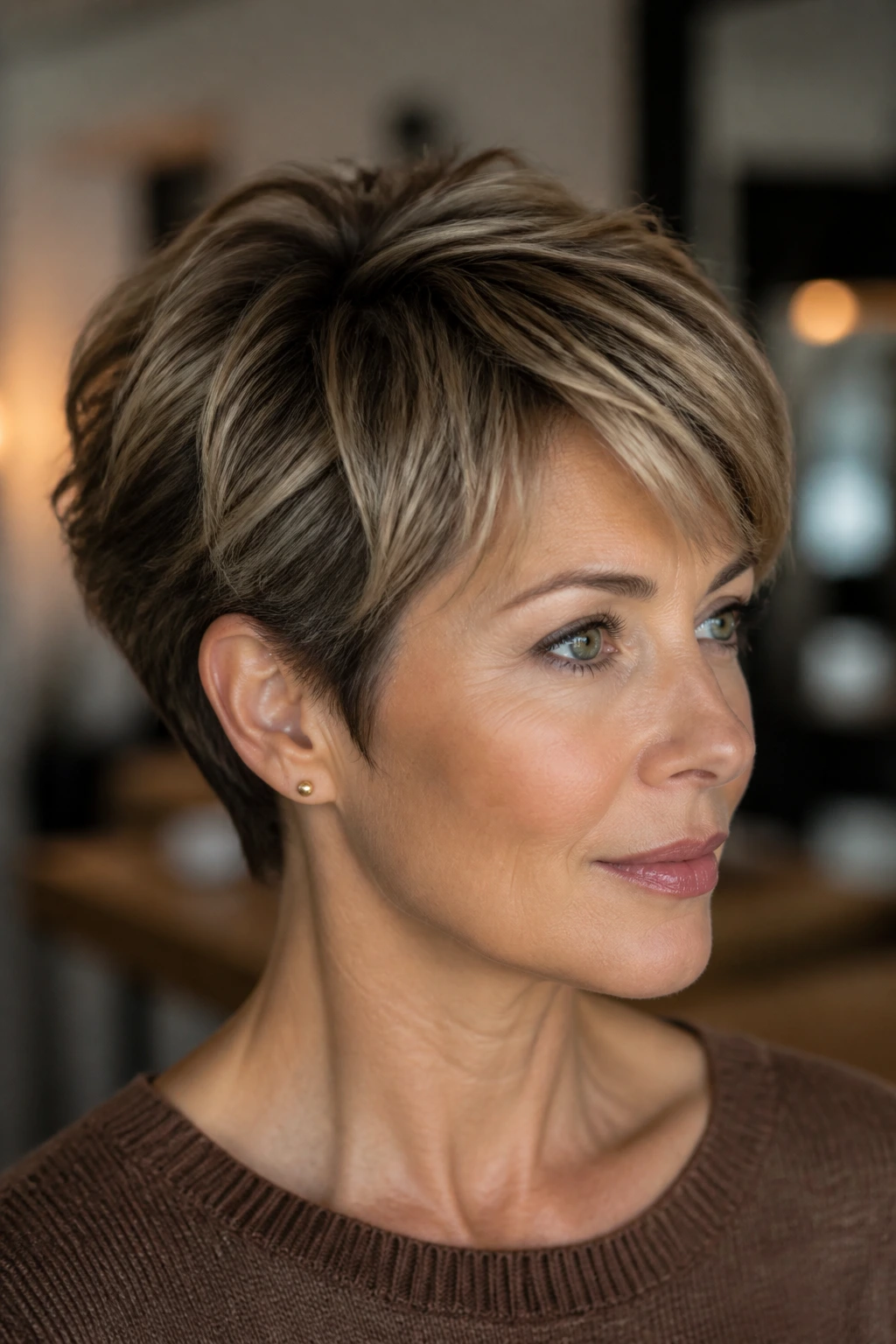
Can balayage work on a very short pixie?
Yes, but the placement has to be tight and deliberate. On very short hair, the lightest pieces usually live on the crown, fringe, and top layers, while the sides stay deeper so the shape doesn’t blur.
How short is too short for balayage?
If the hair is barely long enough to bend or lay in sections, balayage gets limited fast. You can still add dimension with glossing, teasing, or tiny face-framing pieces, but a true painted sweep needs some surface length.
Is balayage better than highlights for short hair?
For grow-out, usually yes. Balayage gives you softer regrowth and less of the blunt stripe effect that short hair can show with traditional foils. Fine foiling still has a place, though, if you want sharper brightness in a very specific spot.
Can you do balayage on dark hair without bleach?
Only to a point. A gloss or demi-permanent color can add warmth and depth, but real lightening from dark brown or black usually needs lightener. If you want low maintenance, stay close to your natural base instead of chasing a big lift.
How often should short balayage be toned?
Most people need a gloss or toner refresh every 4 to 8 weeks. Cooler blondes and coppers usually fade faster; brunette blends can stretch longer if the base is deep and healthy.
What if the color looks stripey after the first wash?
That usually means the placement is too even or the toner was too light for the base. A salon gloss can soften it, and future appointments should keep more depth under the top layer.
Will balayage cover gray on short hair?
It can blend gray very well, but that’s different from full coverage. If you want the gray to disappear, ask for coverage color at the root and balayage through the rest. If blending is fine, ash, pearl, and beige tones work beautifully.
What should I bring to the color consultation?
Bring 2 or 3 photos of short cuts that match your length and texture, plus one photo that shows the tone you want. Also bring a candid note about how often you want to visit the salon. That saves you from a look that’s pretty on day one and annoying by week five.
Soft Grow-Out, Sharp Shape
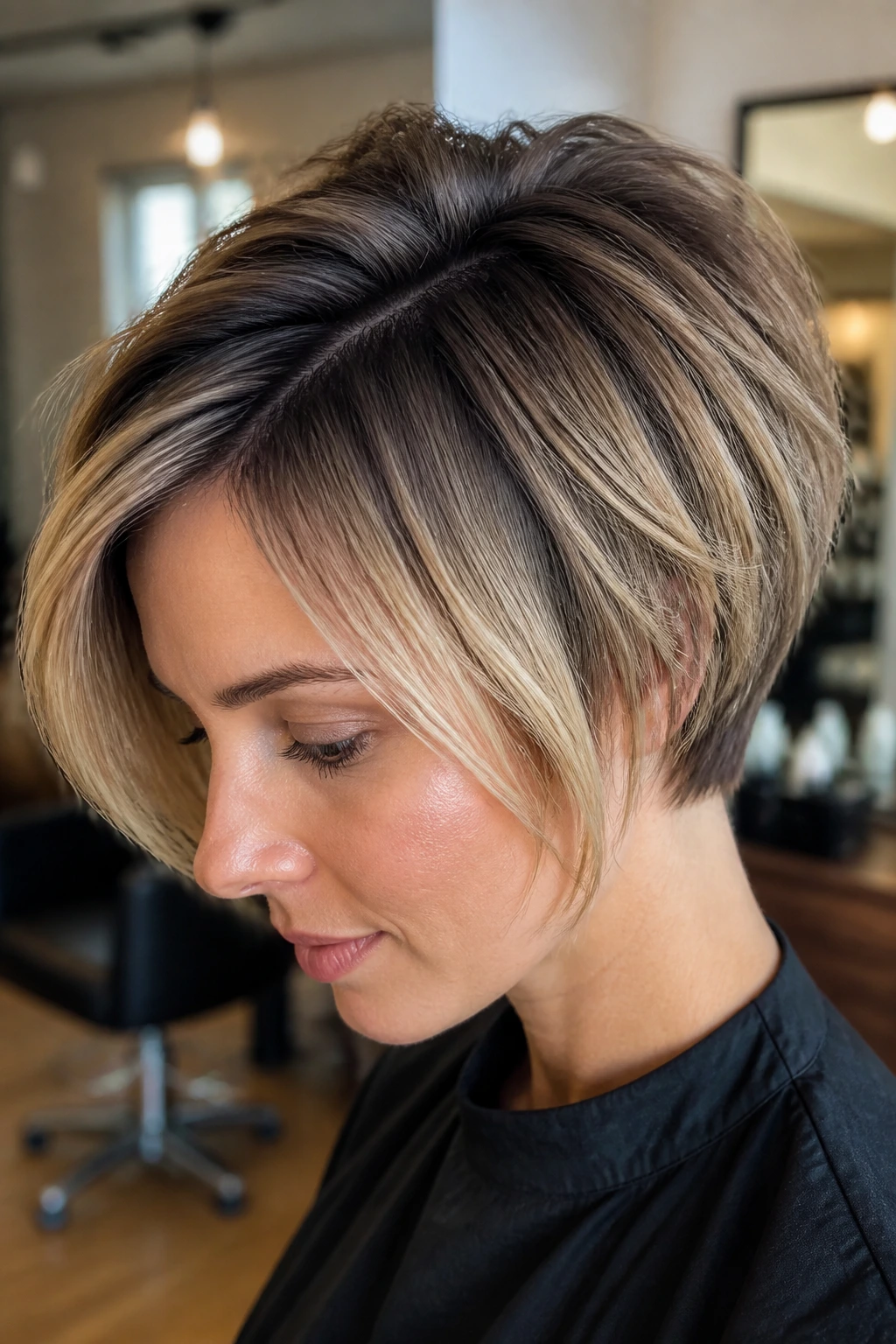
The best balayage for short hair does one thing well: it makes the haircut look like it was designed that way from the start. The color should follow the shape, not fight it. That means softer roots, smarter placement, and tones that flatter your natural base instead of bullying it into something high-maintenance.
If you want the look to last, choose the version that still makes sense when the roots come in and the trim is due. That’s where short-hair balayage earns its keep.
