



The wrong ash blonde can make cool skin look washed out in a way warm honey never does. That sounds harsh, but hair color is unforgiving that way: the tone either sits beside your complexion and makes it look crisp, or it sits on top of it like a gray film. With ash blonde hair color, the difference between “fresh and expensive-looking” and “flat and tired” often comes down to half a level of lift, a touch of beige in the toner, and whether the hair still has dimension instead of one solid pale sheet.
Cool skin usually has pink, blue, or rosy undertones, and ash blonde works because it stays on the cooler side of the color wheel. When the blonde is blue-violet, taupe, pearl, or smoky beige, it tends to calm yellow brass without fighting the skin. Go too gray, though, and the face can look drained. Go too warm, and the blonde starts arguing with the undertone instead of flattering it.
So the sweet spot is not one single blonde. It’s a whole range: icy pearl for clear cool skin, mushroom blonde for something softer, rooted ash balayage for people who want less maintenance, and bright frost for anyone who likes a sharper finish. The best versions don’t just look blond. They look deliberate.
Why These Ash Blonde Ideas Earn Their Place
-
Blue-violet balance: Ash tones sit on the cool side, which helps neutralize yellow and orange without making cool skin look ruddy or flat.
-
Soft contrast: The best ash blonde shades add lightness around the face without dumping a heavy dose of gold onto pink or blue undertones.
-
Dimension matters: Root smudges, babylights, and lowlights keep the color from looking like a single pale sheet, which is where a lot of ash blonde goes wrong.
-
Easier grow-out: Smoky blondes with a shadow root or deeper base usually buy you more time between salon visits than a pure level-10 ice blonde.
-
Makeup friendly: Cool blondes play nicely with berry blush, mauve lips, taupe shadow, and clean black liner, which keeps the whole face from going ghostly.
-
The right shade changes the mood: A pearl blonde says crisp and polished; a mushroom blonde says soft and lived-in; a high-contrast ash blonde feels sharper and more editorial.
1. Icy Pearl Ash Blonde
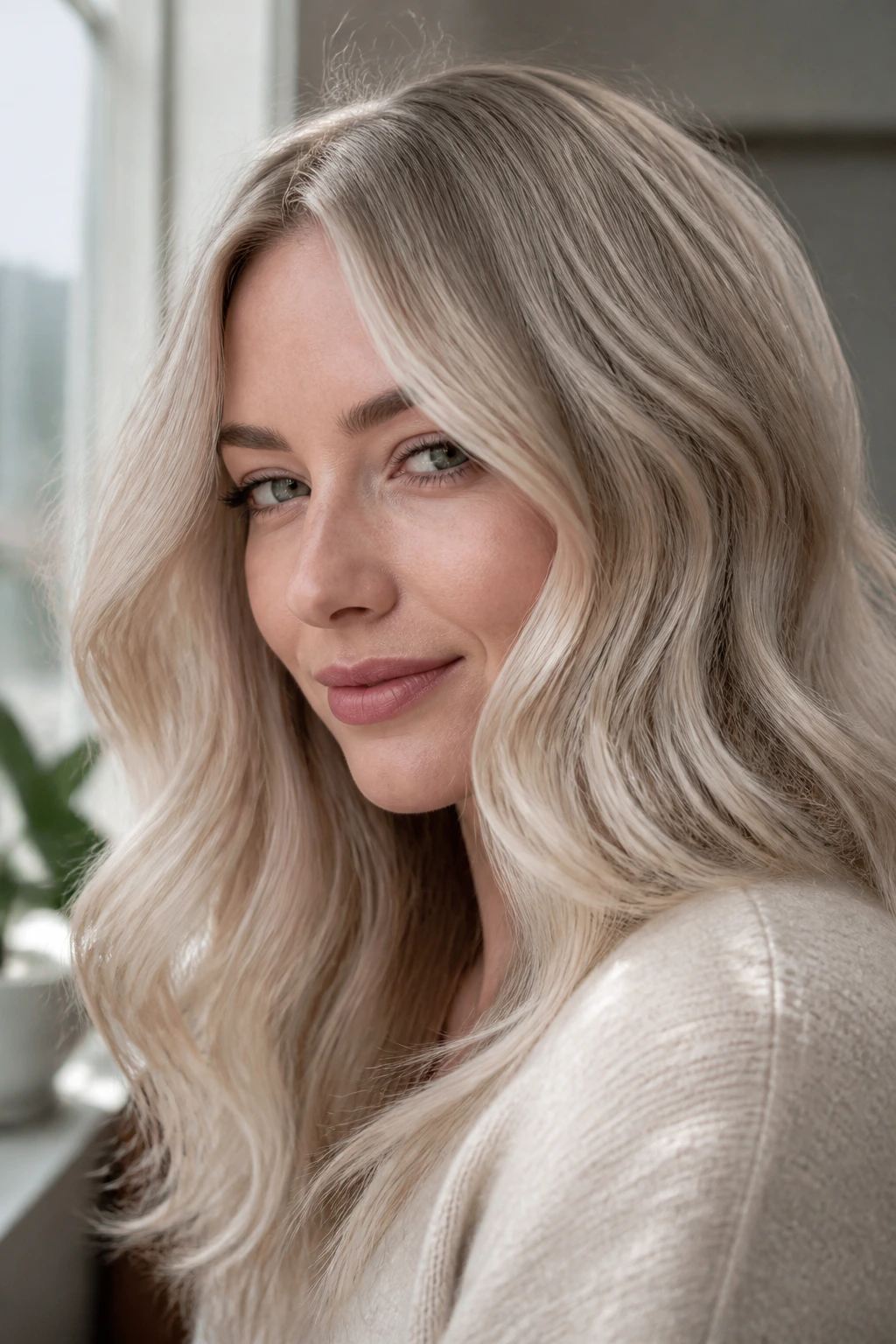
This is the one people picture when they hear ash blonde hair color for cool skin: pale, glossy, and edged with pearl rather than gold. On very fair cool undertones, it can look almost lit from inside, especially when the hair is healthy enough to reflect light instead of swallowing it.
The catch is maintenance. You need a clean lift to about level 10, then a violet-silver toner that keeps the blonde cool without tipping it into dull gray. If your hair is porous, this shade grabs pigment fast, so the toner time matters more than people think. A few extra minutes can turn pearl into chalk.
Ask for a bright root-to-tip blonde with a soft pearl glaze if you want that polished finish. I like this shade best on short bobs, blunt lobs, or sleek straight styles, because the shape keeps the color from looking cloudy.
2. Smoky Mushroom Blonde
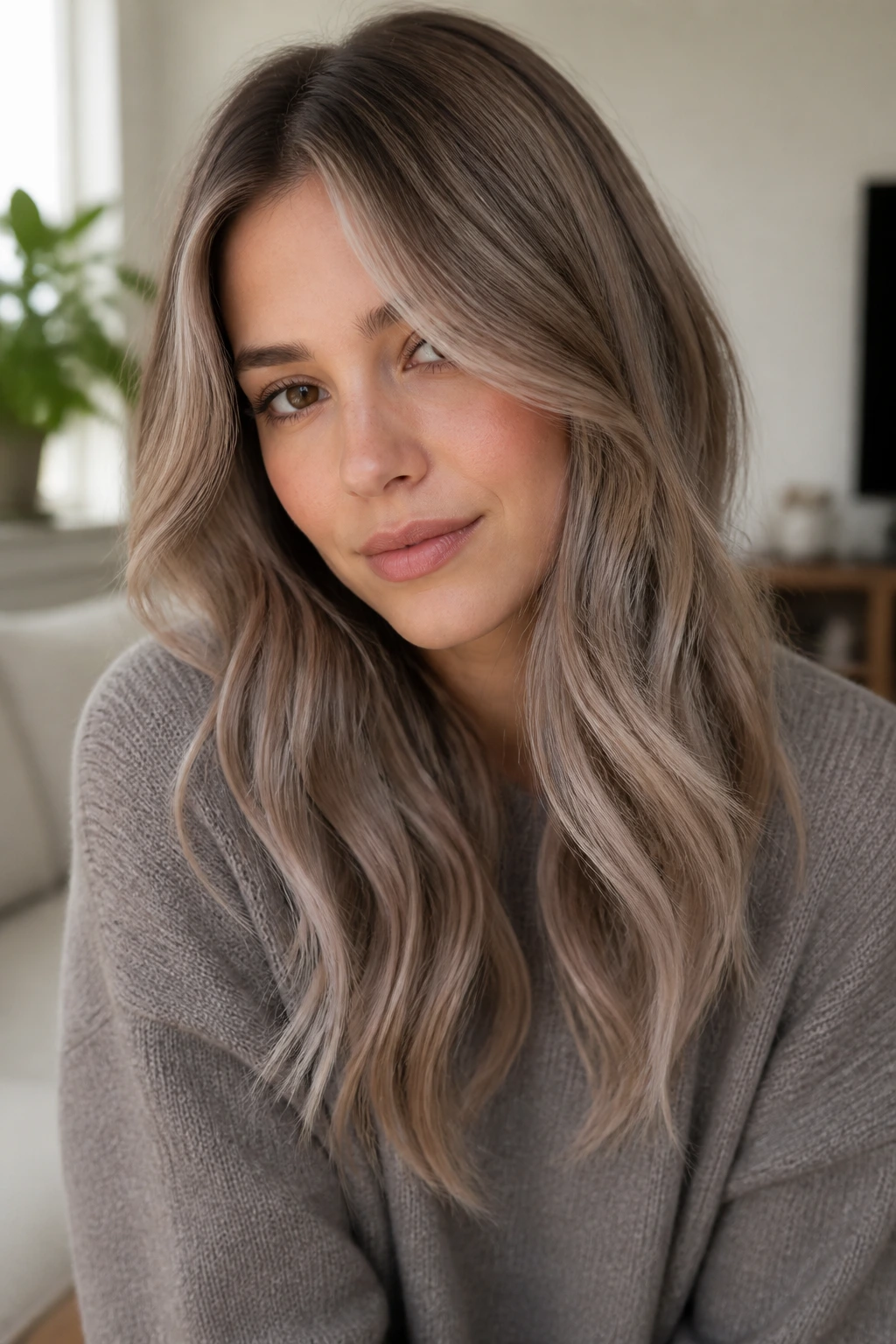
Mushroom blonde is the quieter, smarter cousin of icy blonde. It mixes ash, taupe, and beige in a way that looks soft on cool skin instead of severe, and that’s why it works so well on people who want blonde without the full bleach-and-tone drama.
The color usually sits around level 7 or 8, which means it has enough depth to stay dimensional near the roots and enough lightness to read blonde in daylight. It also plays nicely with cooler makeup—think dusty rose blush and soft brown liner—because it doesn’t compete with the face.
What Makes It Work
A mushroom shade is one of the easiest ways to keep ash blonde from turning flat. The taupe note gives the blonde a little body, so it looks smoky rather than muddy.
It’s also forgiving on grow-out. A darker root melts into the midlengths without a harsh line, and that matters when you do not want to live at the salon.
3. Silver Beige Balayage
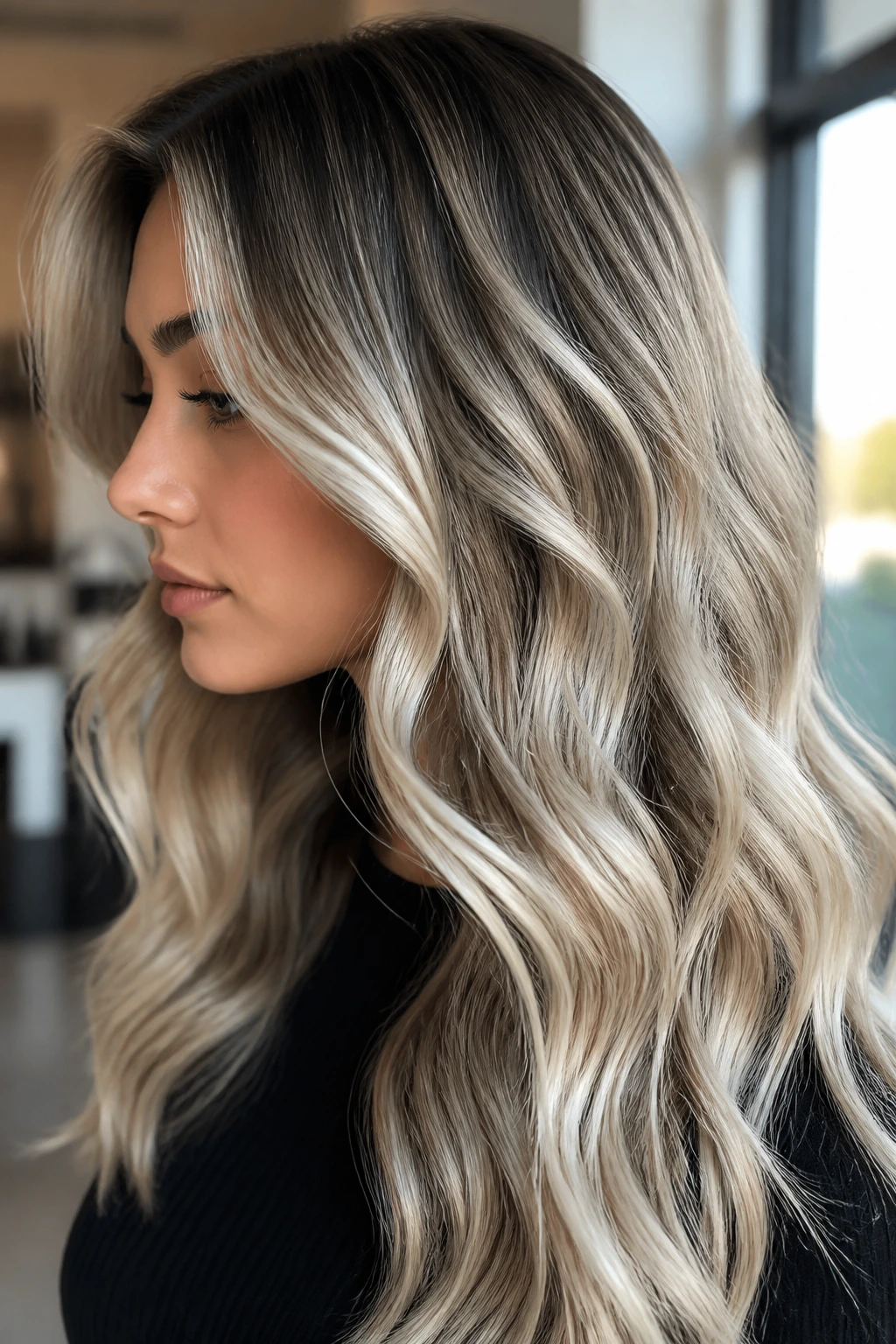
If you like the idea of ash blonde but hate the thought of all-over lightening, silver beige balayage is the move. The base stays a bit deeper, while the hand-painted ribbons lean cool and slightly metallic, which gives cool skin brightness without the hard-edged platinum effect.
The reason this shade works is simple: the eye sees movement. Instead of one flat tone, you get a darker canvas with pale, silver-beige threads running through it. That contrast makes pale cool skin look more alive, not less.
Tell your stylist you want soft painted pieces, not chunky streaks. The best version lands somewhere between pearl and sand—cool enough to stay on-theme, soft enough to look believable in daylight.
4. Rooted Arctic Blonde Lob
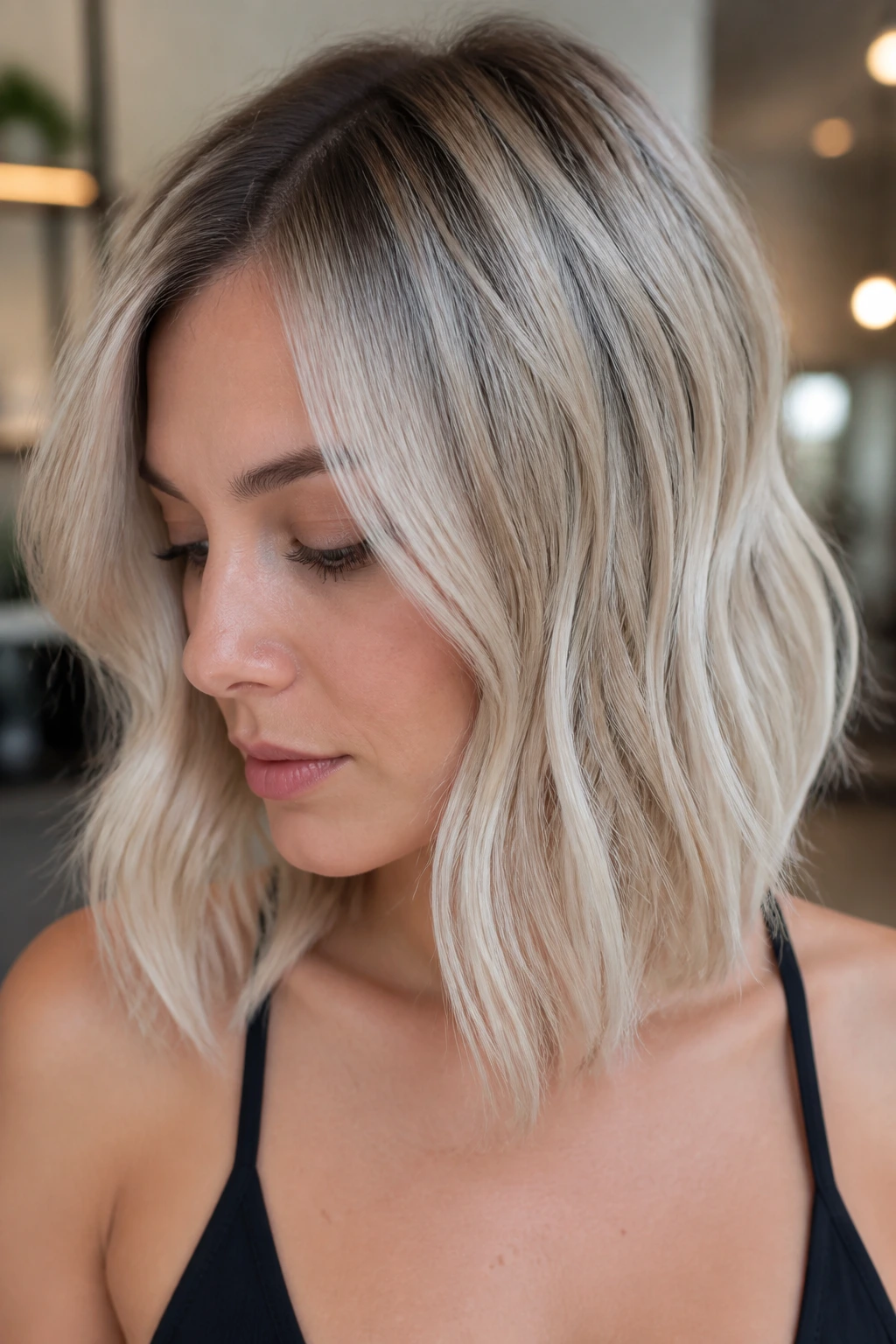
A rooted arctic blonde lob has one job: keep the ends bright while letting the roots do some of the heavy lifting. That darker root shadow is not a flaw. It’s the thing that makes the whole look wearable, especially on cool skin that needs a little visual structure.
The lob length helps too. Hair that hits around the collarbone gives the color room to move, and the blunt or slightly textured ends stop the pale blonde from feeling floaty. If you’ve ever seen a too-light blonde lose its shape, you know how quickly that can happen.
I like this best when the root is one to two levels deeper than the mids. Enough contrast to frame the face. Not so much that it looks stripey.
5. Scandinavian Frost Blonde
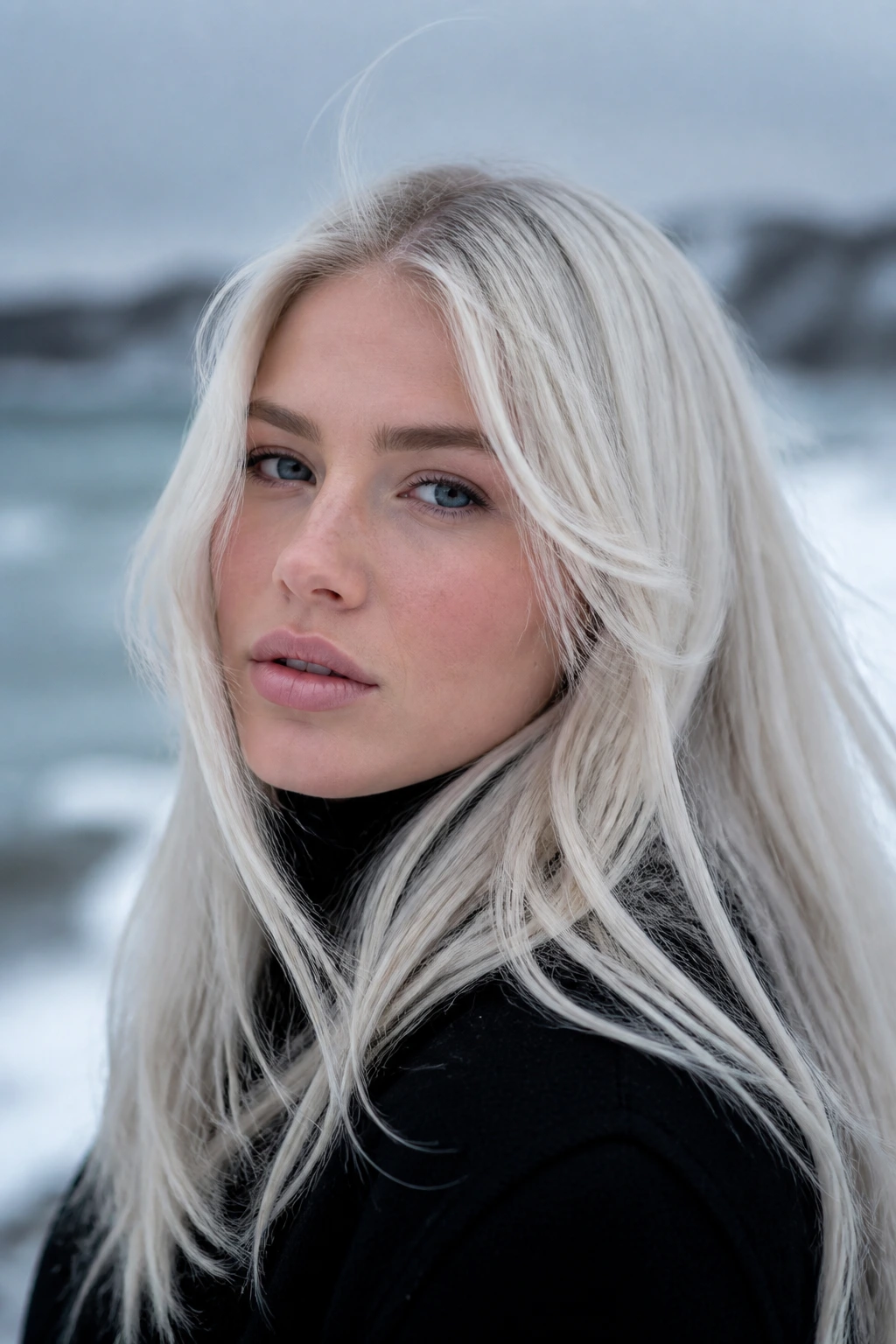
This is the sharpest shade in the bunch. Scandinavian frost blonde is crisp, pale, and almost icy in its finish, which makes it one of the strongest matches for very fair cool skin and light eyes.
It’s also the least forgiving. Any brass hiding in the hair will show up fast, and any breakage will show up even faster. That’s the trade. You get a striking, near-white blonde, but you need disciplined aftercare—purple shampoo, cool water rinses, heat protection, and a gloss when the tone starts to dull.
If you want the biggest contrast with pink or blue undertones, this is the shade that delivers it. If you want softness, skip ahead. No hard feelings.
6. Taupe Face-Framing Pieces
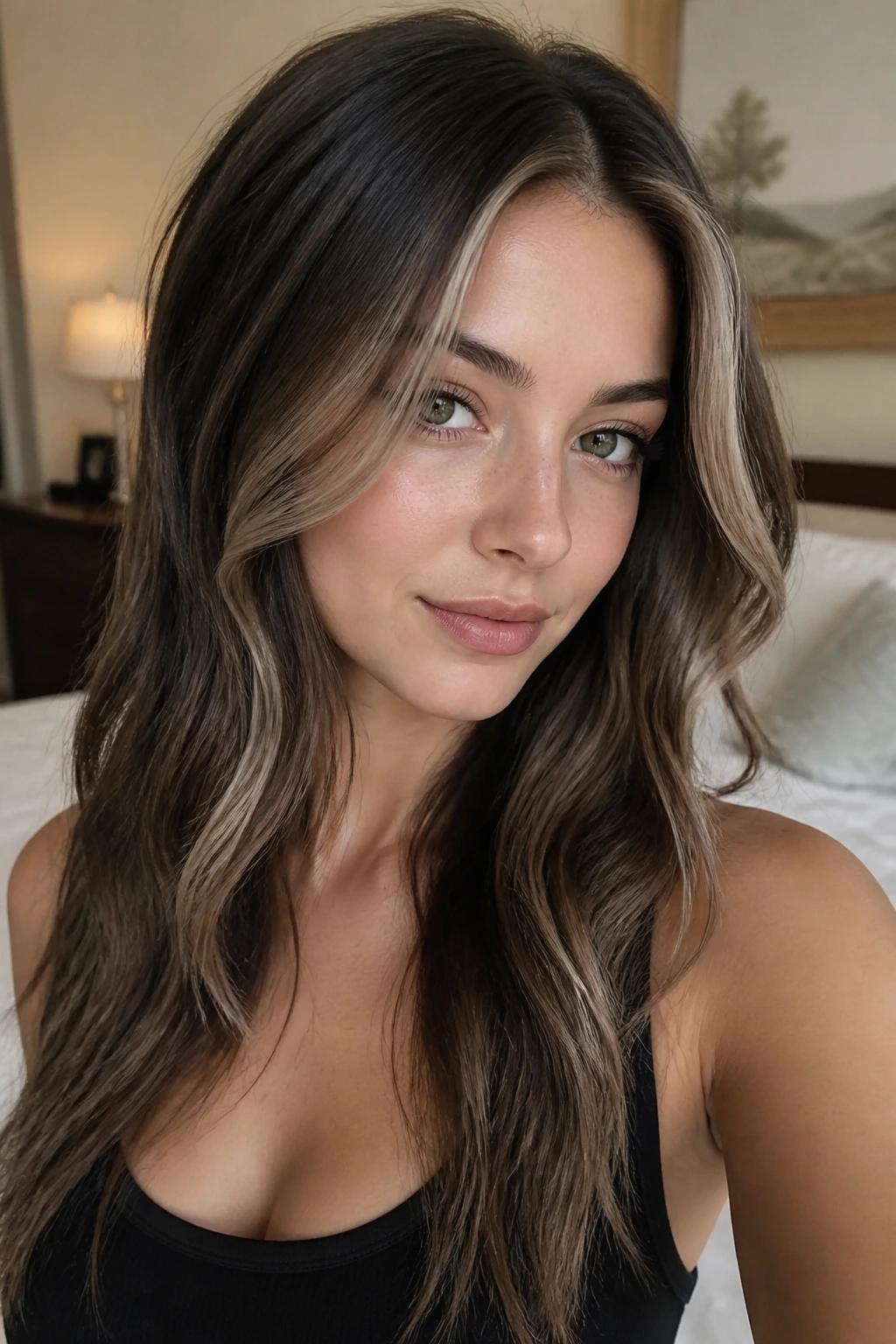
Sometimes the smartest ash blonde choice is not a full head of blonde at all. Taupe face-framing pieces can give cool skin a pale frame around the cheekbones and temples while leaving the rest of the hair in a deeper brunette or dark blonde range.
That matters because face-framing brightness changes how the skin reads. A few taupe ribbons around the face can brighten the complexion, sharpen the eyes, and make the whole style look intentional without forcing a dramatic commitment. It’s especially good if you’re nervous about bleach.
Ask For This If You Want:
- brightness near the face without going platinum
- a softer grow-out than full highlights
- a cool-toned result that still has depth
- a good first step toward more ash blonde later
7. Ash Blonde Money Piece
The money piece has become a little overused in bad hands, but a cool ash blonde version still has real power. Two bold front sections, lifted lighter than the rest, can bring the face into focus in a way that full-head blonde sometimes can’t.
Cool skin benefits here because the brightest pieces sit exactly where they should: next to the face, not all over it. That means the skin gets contrast without getting drowned in pale warmth. The rest of the hair can stay darker, which is useful if you like your brows and roots to keep some weight.
This is the shade I’d pick for someone who wants a visible change without spending every six weeks in a chair.
8. Cool Champagne Blonde
Champagne blonde can lean warm in a hurry, so the cool version needs a tight leash. Done right, it reads as soft pearl with a faint beige cast, not yellow. That makes it a strong option for cool skin that wants lightness but flinches at silver.
It’s one of the more flattering middle-ground blondes because it doesn’t go all the way to white. The tiny bit of beige keeps the hair from disappearing against the face, and that’s useful if your features are delicate or your skin has a pink cast.
This shade likes soft waves and a little movement. Straightened flat, it can look a touch too polite. With bend and texture, it suddenly makes sense.
9. Beige Ash Ombré
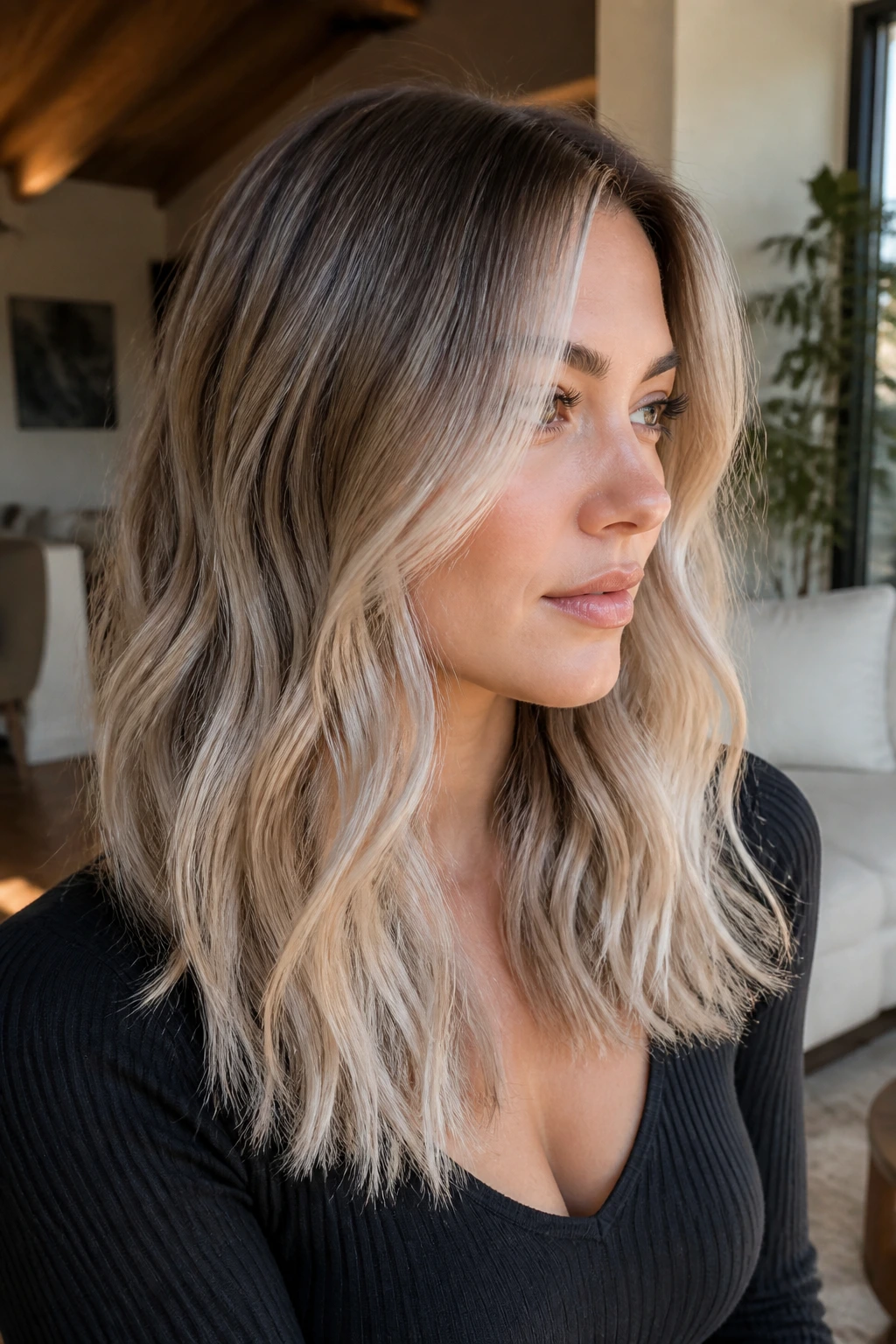
Beige ash ombré is one of the easiest ways to make blonde feel lived-in. The roots stay deeper, the mids drift lighter, and the ends land in a cool beige-ash zone that doesn’t scream “recent bleach job.”
That slow fade is the whole point. Cool skin usually looks better when the blonde is broken up instead of painted in one block, and ombré gives you that natural depth from top to bottom. It also means fewer awkward grow-out lines, which is something most people appreciate after the first salon bill.
A shoulder-length cut or long layers make this look especially good because the gradient has space to show. On very straight hair, you may want a few extra ribbons around the face so it doesn’t feel too flat.
10. Frosted Ribbon Highlights
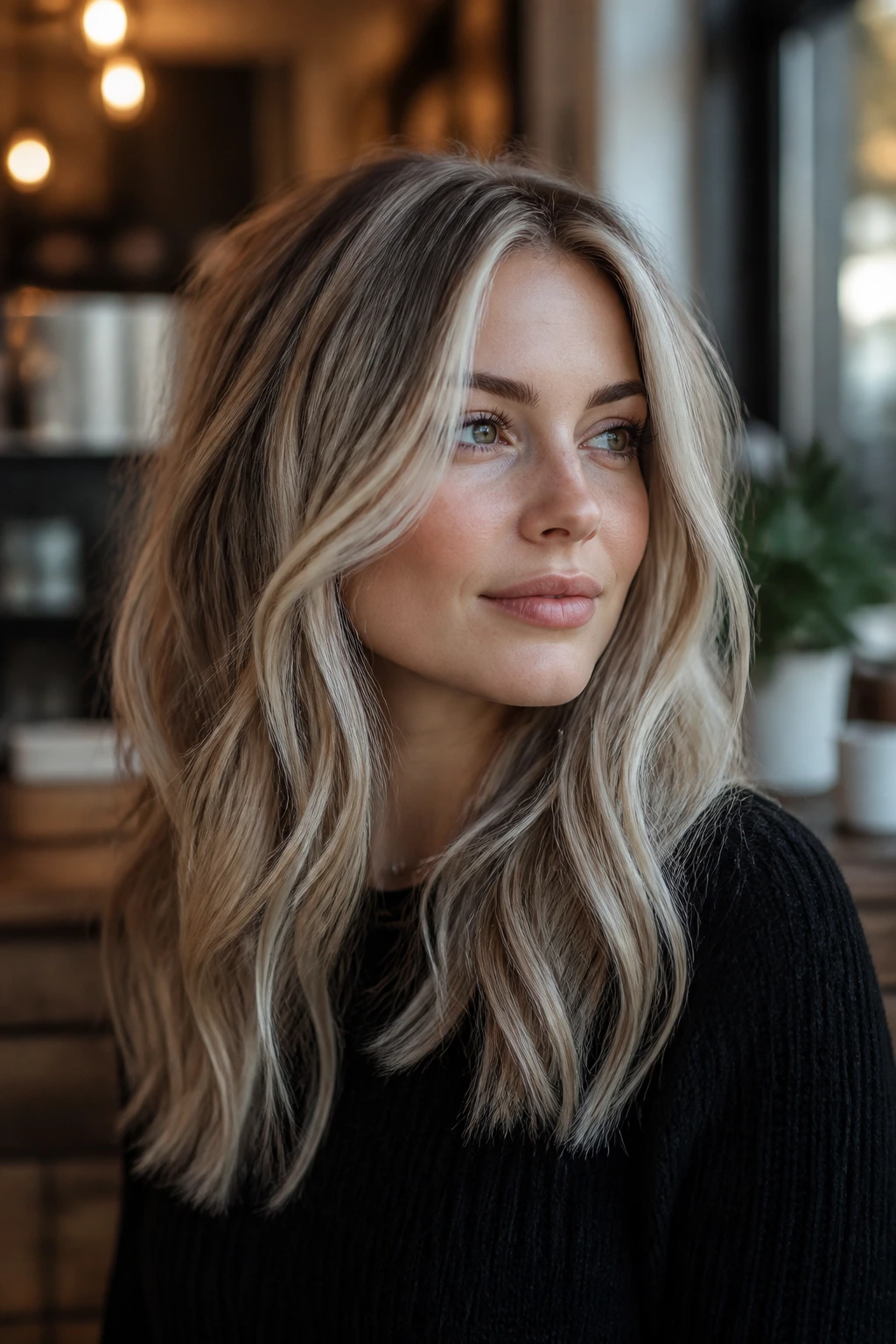
Frosted ribbon highlights are for people who want movement without drama. Instead of big chunky streaks, the stylist weaves in narrow cool ribbons that catch the light when the hair moves, especially around bends and waves.
This style flatters cool skin because the brightness is spread out. You get lighter pieces, but not enough of them to bleach the face out. The darker base underneath keeps the blonde from going brittle-looking, which is a mistake a lot of full-highlighting jobs make.
Ask for fine, cool-toned highlights with a soft toner rather than anything yellow-beige. When the ribbons are thin, the hair looks expensive in the way people mean it when they say that word quietly.
11. Dark Ash Blonde Gloss
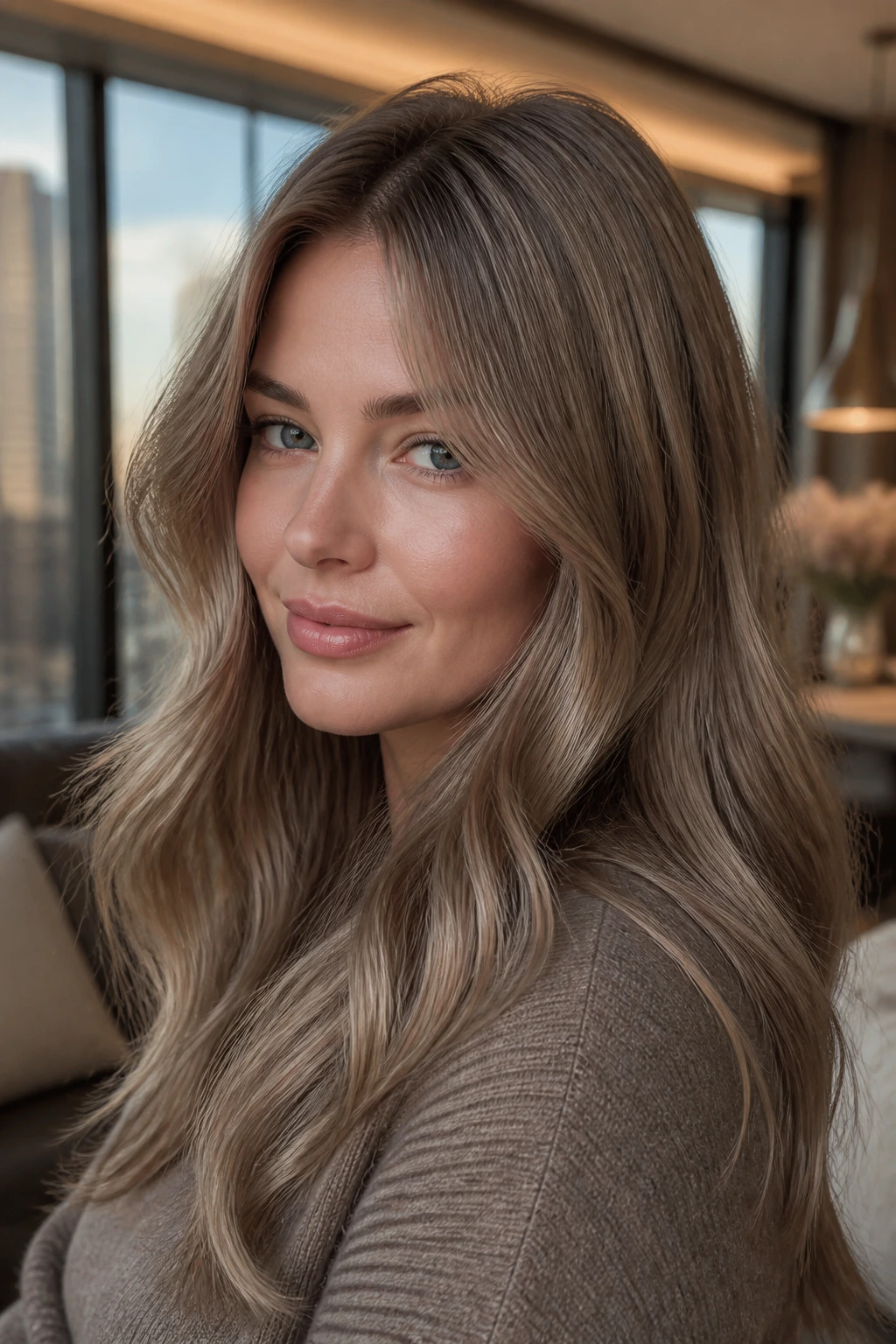
Not every ash blonde has to be pale. Dark ash blonde gloss sits somewhere between deep blonde and light brown, and that in-between space is gorgeous on cool skin that can’t quite pull off a full icy blonde.
The gloss is the point here. It smooths the color into a smoky finish, takes down orange warmth, and leaves the hair looking polished rather than overprocessed. You still get blonde, but it’s a quieter version—less flash, more depth.
This is one of my favorite choices for shorter cuts, fine hair, or anyone with a naturally darker base who wants a cool change without aggressive lightening. It’s low-key, but not boring. There’s a difference.
12. Ash Blonde with Shadow Root
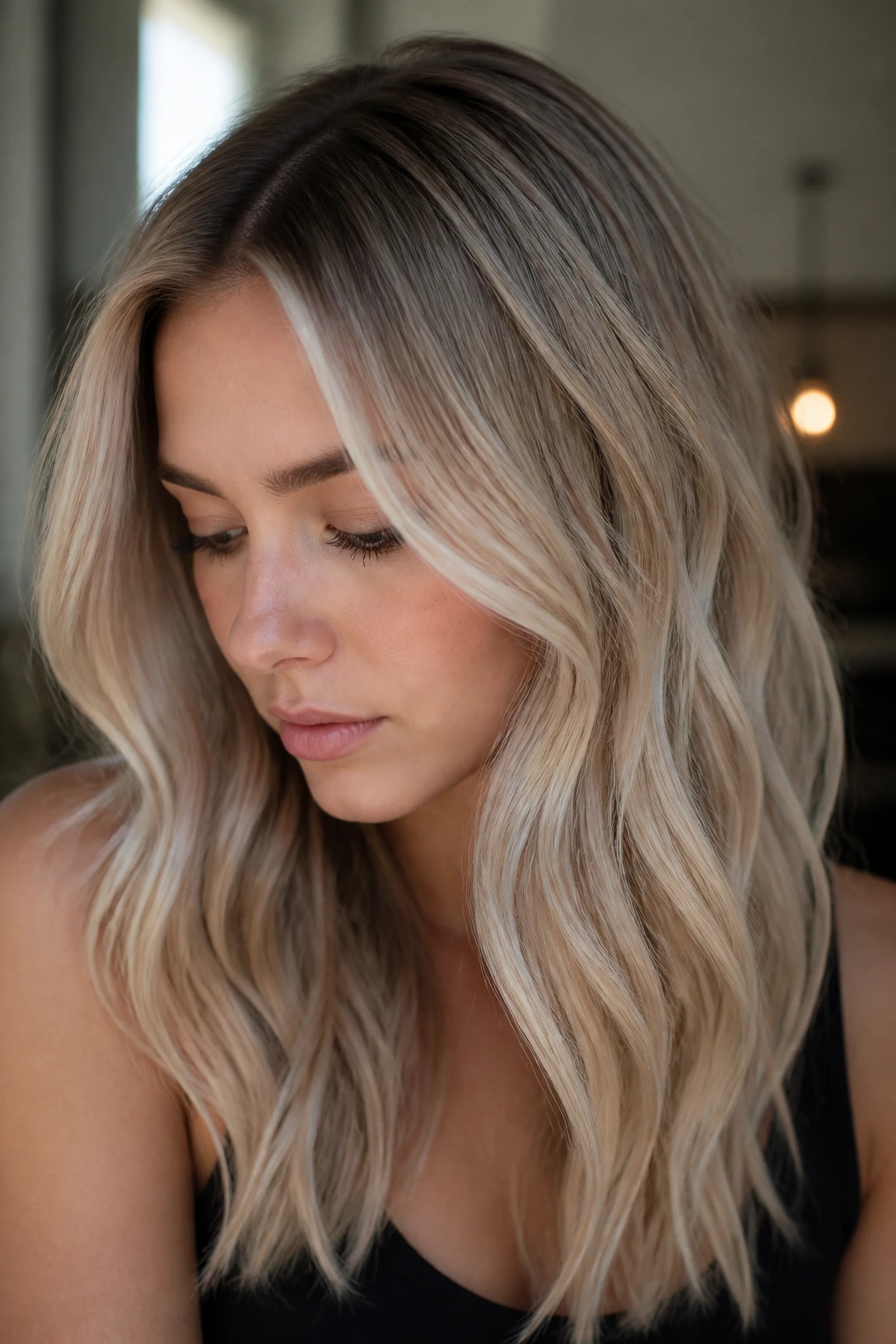
A shadow root is not an afterthought. It’s the reason ash blonde keeps working three weeks after you leave the salon. The slightly deeper root breaks up the blonde, softens the regrowth, and keeps cool skin from getting swallowed by one continuous pale tone.
This style is especially useful if your natural hair is medium brown or dark blonde. The root melts into the lighter mids, so the blonde looks earned rather than pasted on. It also helps the face because the deeper shade near the scalp adds contrast where you need it most.
Tell your stylist you want a root that’s just a shade or two deeper than the rest, not a dramatic stretch. Too much depth turns the style muddy. A little depth keeps it clean.
13. Pearl-Platinum Pixie
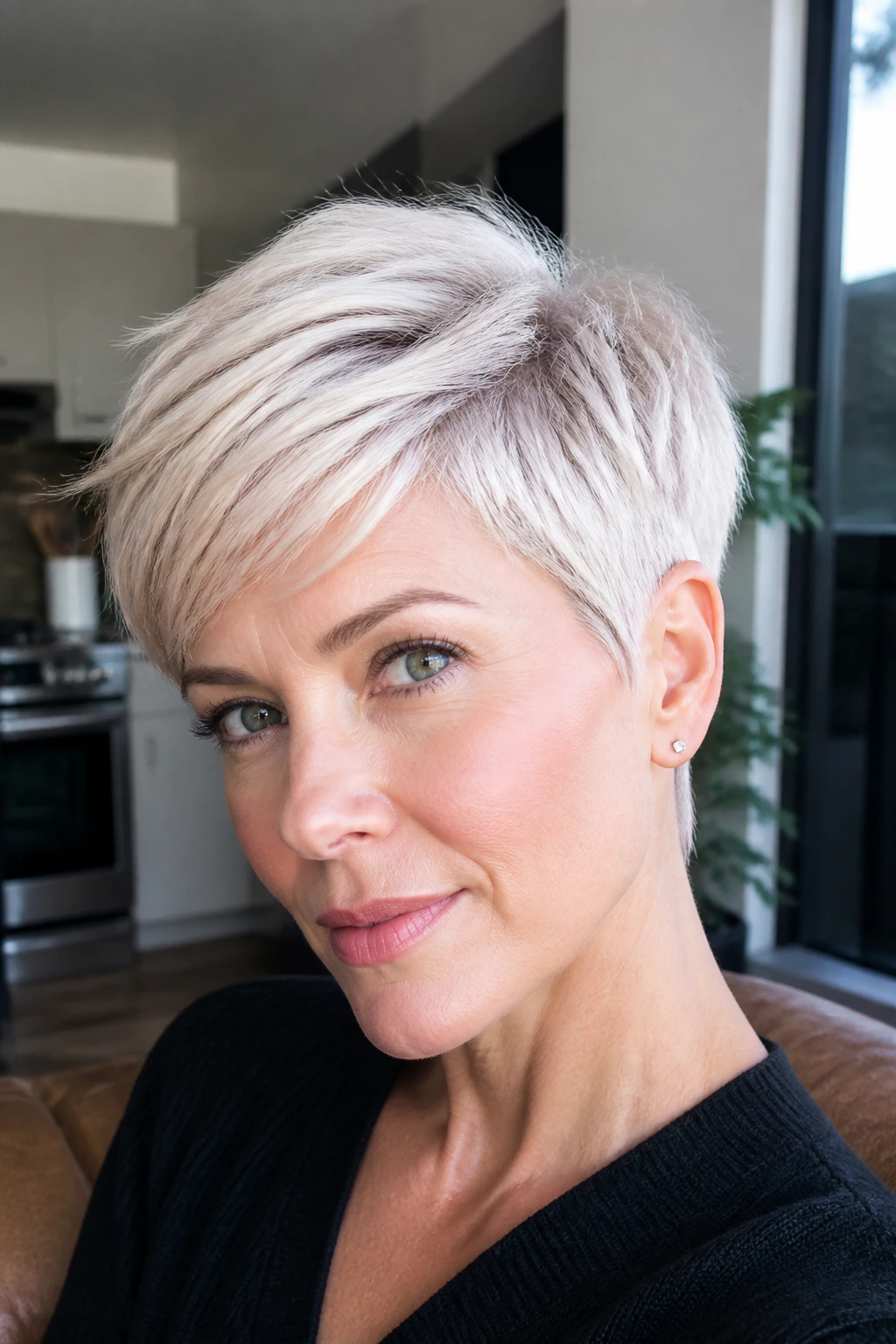
A pixie cut changes the whole equation. Once the hair is short, the color becomes the cut’s loudest feature, which is why pearl-platinum works so well here. The brightness sharpens the line of the crop and makes cool skin look clear, especially around the eyes and cheekbones.
This one is not lazy maintenance. You may not need much styling time, but the regrowth shows fast on a short cut, and the tone needs regular attention to keep it from yellowing. Still, if you like the feeling of a precise, neat haircut with a cool finish, it’s hard to beat.
I prefer this with a soft pearl toner rather than a flat white. White can look stark. Pearl has a little more life.
14. Ashy Bronde Blend
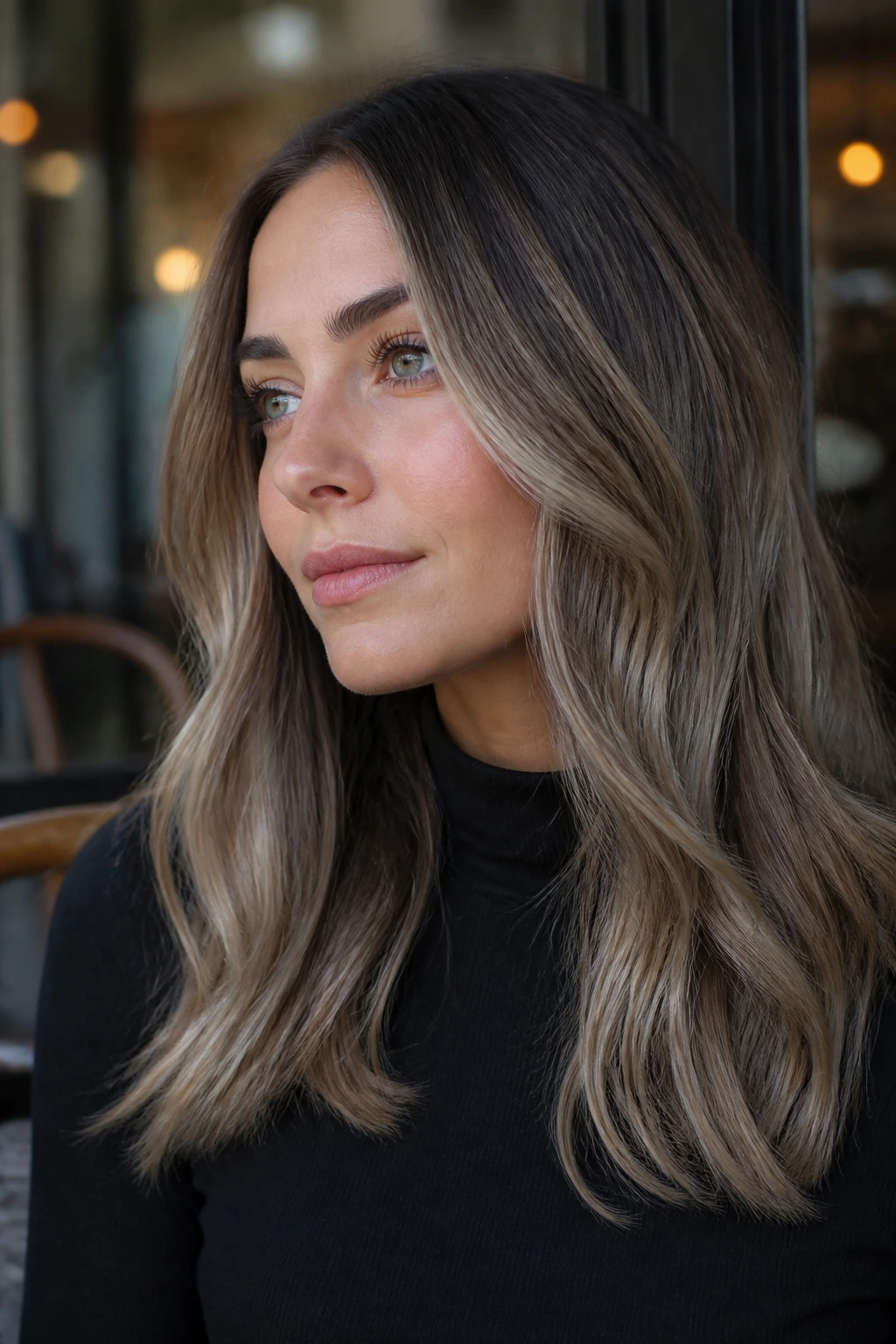
Ashy bronde is the practical person’s answer to the blonde question. It keeps a brunette base in play, threads in cool ash blonde ribbons, and lands in a zone that flatters cool skin without demanding full commitment.
The good part is depth. You don’t lose your natural color, which means brows, lashes, and skin tone all keep some structure. The blonde still shows up, but it behaves more like a highlight than a takeover.
This is a strong choice if you like hair that looks expensive in motion rather than obvious in a selfie. The color moves when you turn your head. That’s the whole charm.
15. Cool Vanilla Blonde
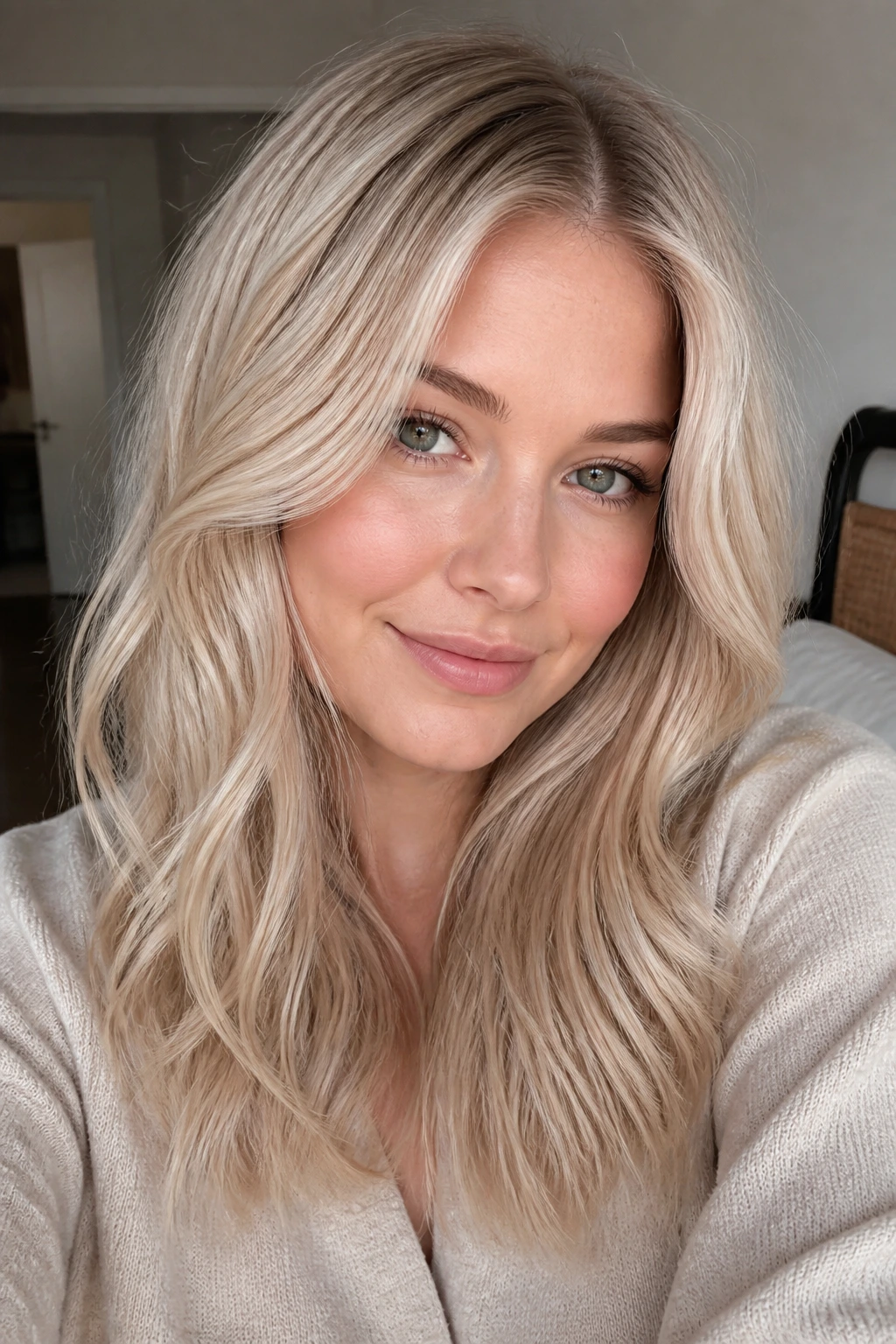
Vanilla blonde usually drifts warm. Cool vanilla, though, gets that soft creamy finish without the buttery undertone. It sits between beige and pearl, which makes it a useful pick for cool skin that wants something lighter than mushroom blonde but less stark than silver.
The best versions have enough ash to stay clean and enough softness to keep the face from going pale. A good stylist will tone it so the blonde looks almost powdered, not golden. That difference is subtle in the bowl and obvious in the mirror.
If you’re someone who likes soft sweaters, gray tees, and muted makeup, this shade belongs in your lane. It’s calm. Almost understated to a fault, which I mean as a compliment.
16. Mushroom Melt Lob
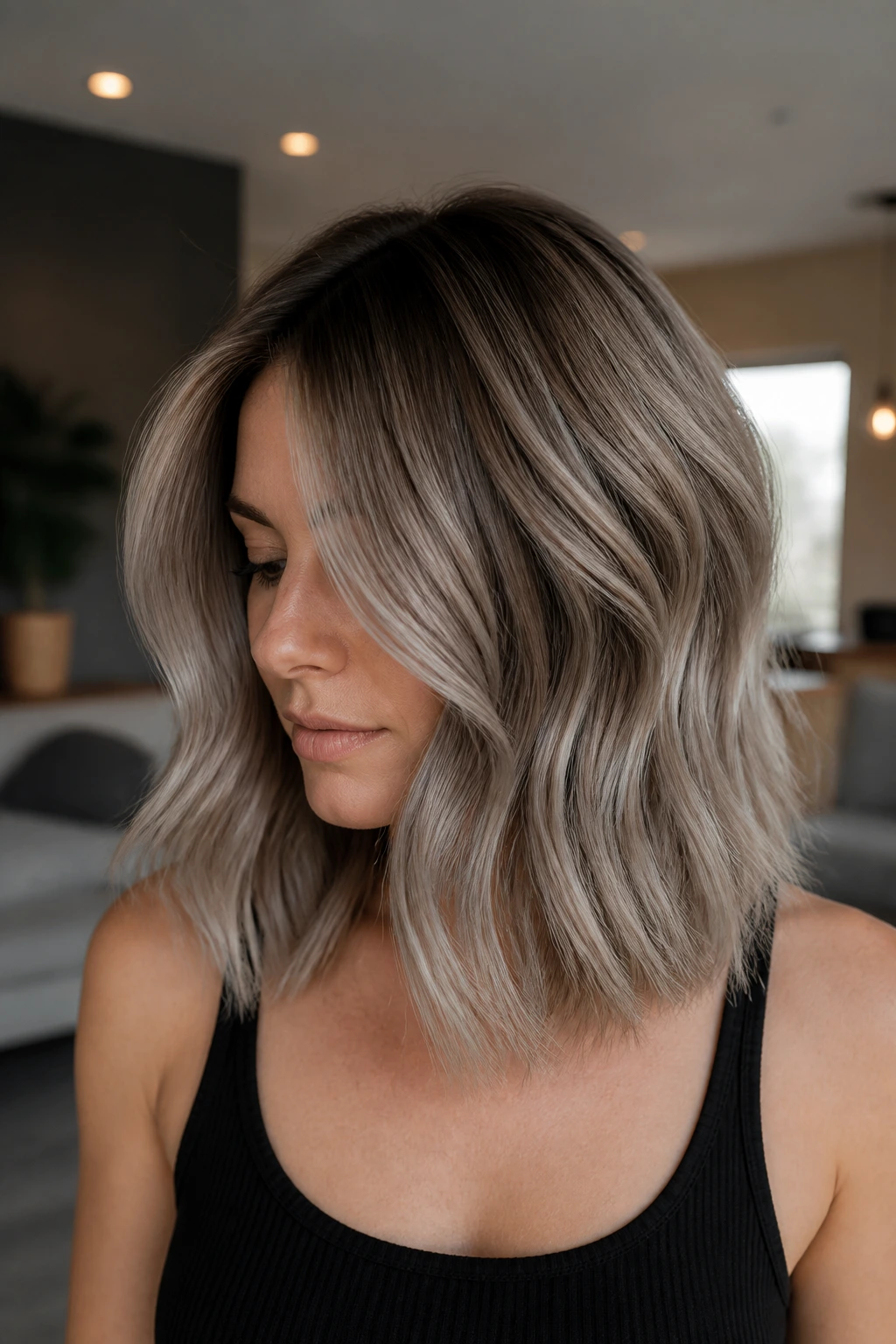
A mushroom melt lob takes the best parts of a long bob and a smoky blonde and puts them in the same haircut. The root starts deeper, the color melts through the mids, and the ends stay cool and light enough to catch movement.
It’s a smart choice for thicker hair because the dimension keeps the shape from looking bulky. On cool skin, the taupe-gray tone is the thing that matters most. It avoids the yellow shine that can make thick blonde hair look a bit too sunny for cool undertones.
A little wave at the ends helps a lot here. You want the melt to show. Flat ironing it within an inch of its life works against the whole idea.
17. Slate Blonde Babylights
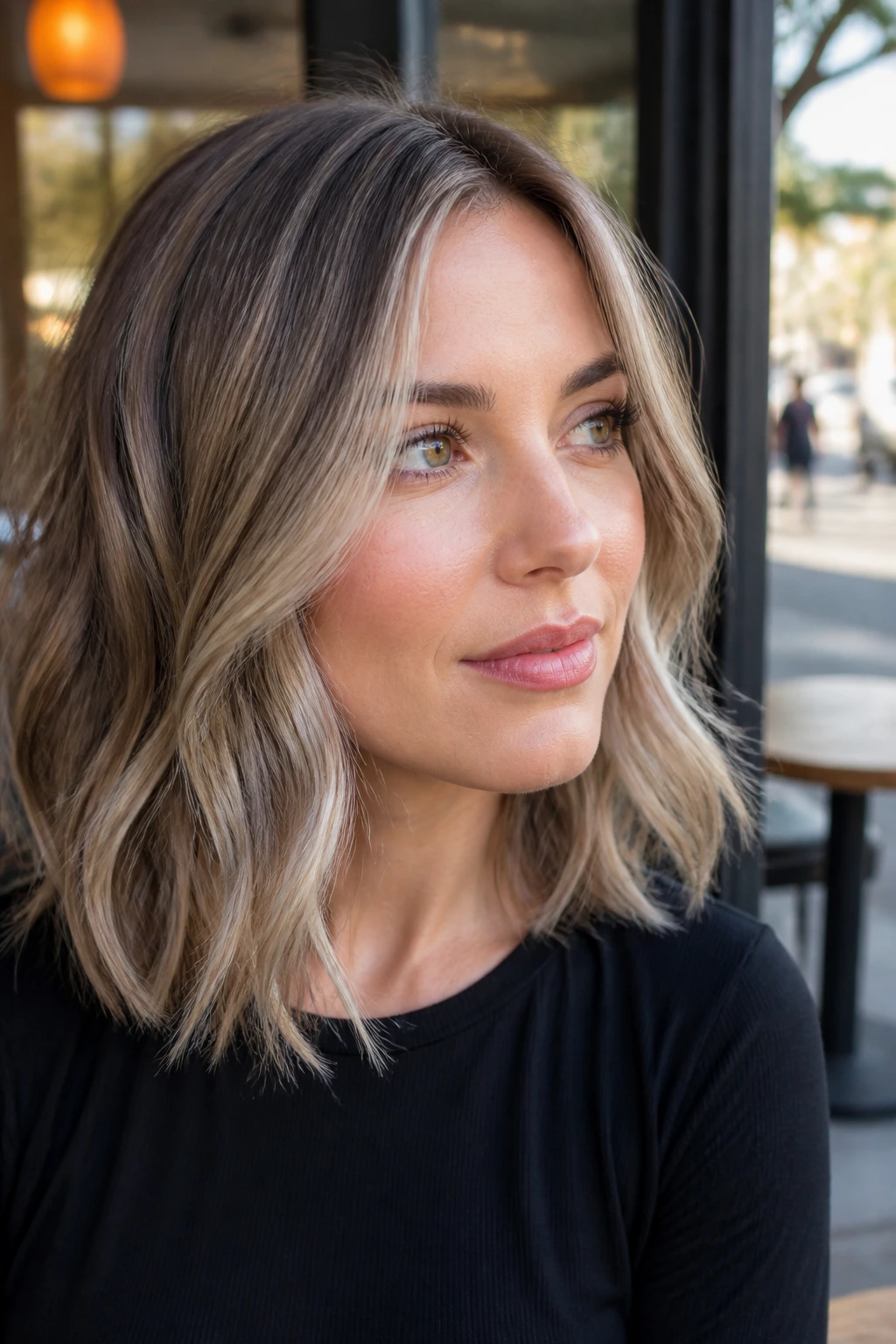
Slate blonde babylights are tiny, fine ribbons of cool blonde that barely announce themselves. From a few feet away, the hair looks naturally brighter. Up close, the ashy coolness gives it depth and polish.
This is one of the best options for people who hate obvious highlights. Babylights sit close together, so the result is soft and believable, not stripy. Cool skin likes that because the color surrounds the face instead of boxing it in.
It’s a good pick for shoulder-length hair, soft waves, or long layers. The finer the highlight placement, the more natural the effect. That’s the whole appeal here.
18. Ash Blonde with Curtain Bangs
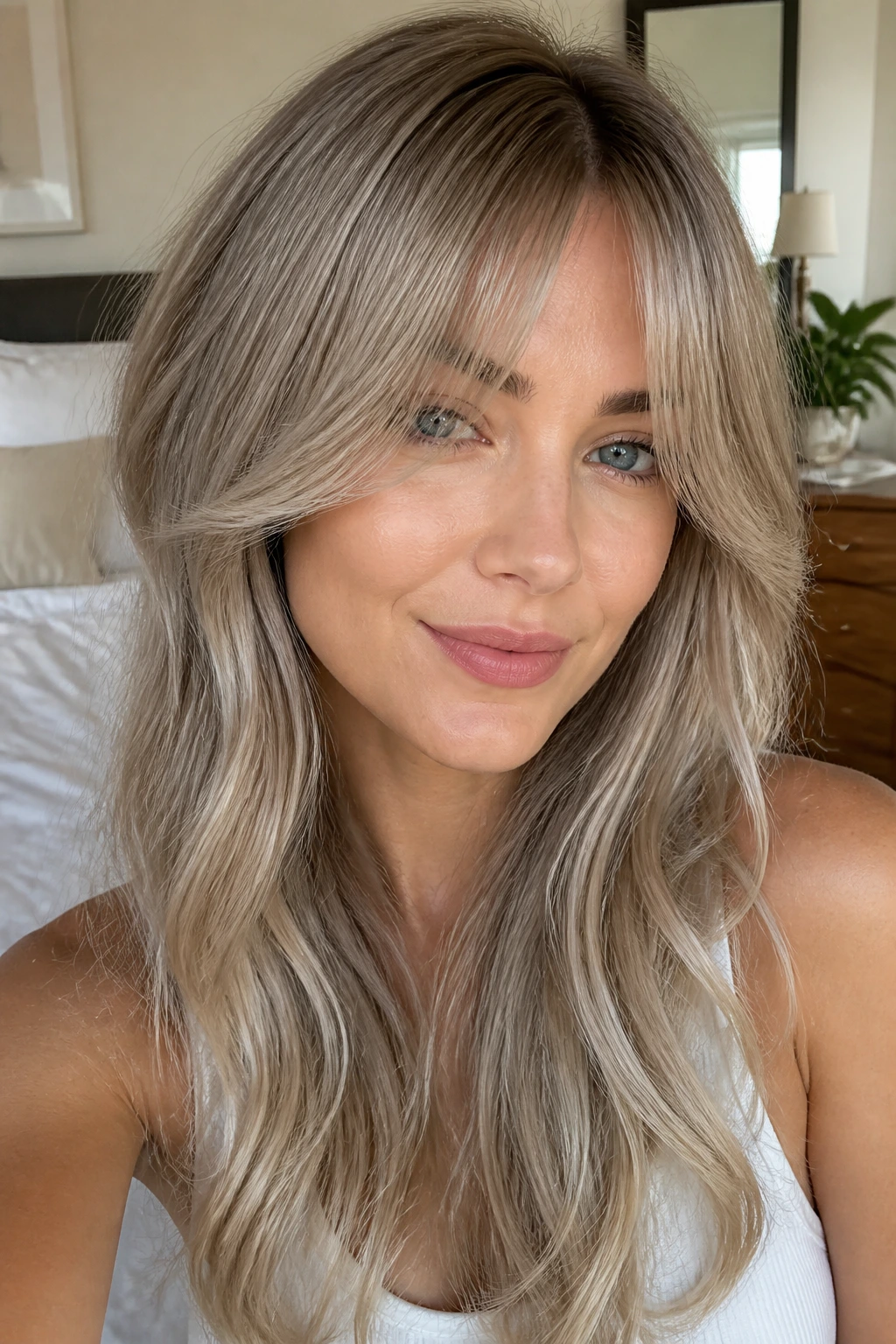
Curtain bangs can change a color instantly. Put ash blonde around the fringe, and suddenly the face gets brightness exactly where cool skin benefits most—near the eyes, temples, and cheekbones.
The bangs do a lot of visual work, so you can keep the rest of the hair a touch deeper. That gives the style balance. Too much lightness around a fringe can make the face look washed out; a cool ash tone with some depth behind it keeps the shape sharp.
This cut-color combo is especially good if you wear your hair up a lot. The bangs still frame the face on rushed mornings, which is one of those little details that makes a style feel worth the trouble.
19. Polished Frost Blonde
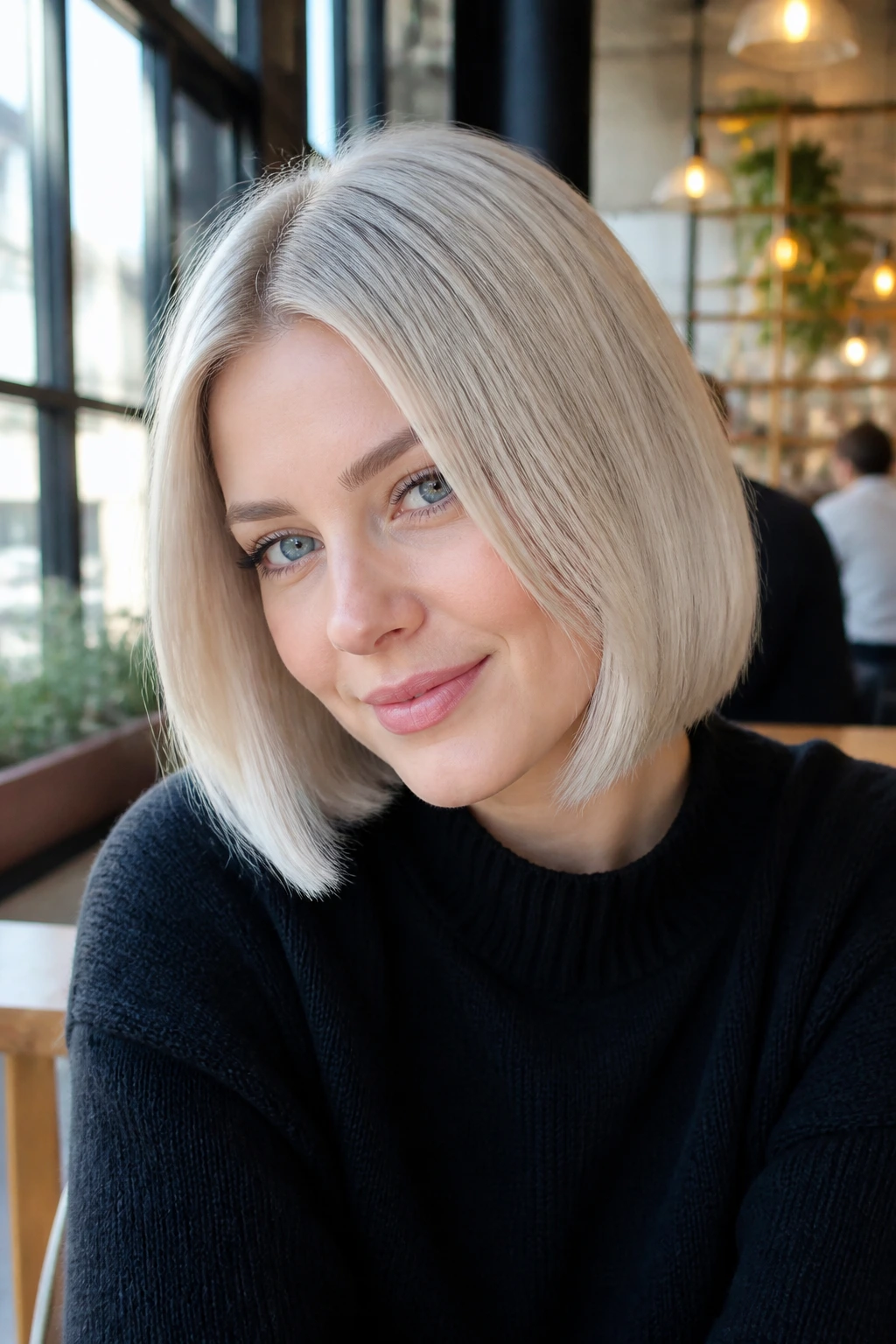
Polished frost blonde is the neat, tailored version of ice blonde. It’s bright, but not brittle-looking. Cool, but not gray. The overall effect is smoother and more refined than a hard platinum, which gives cool skin a nice clean frame.
I like this shade when the haircut has some shape—think blunt bob, long layers with movement, or a sleek shoulder-length cut. The polish comes from both the tone and the finish. Hair that reflects light cleanly will always make the color read better.
If your natural base is light and your skin is cool, this can be one of the easiest ways to go noticeably blonde without crossing into icy-white territory. It still looks like hair. That matters more than people admit.
20. Smoke-and-Sand Blonde
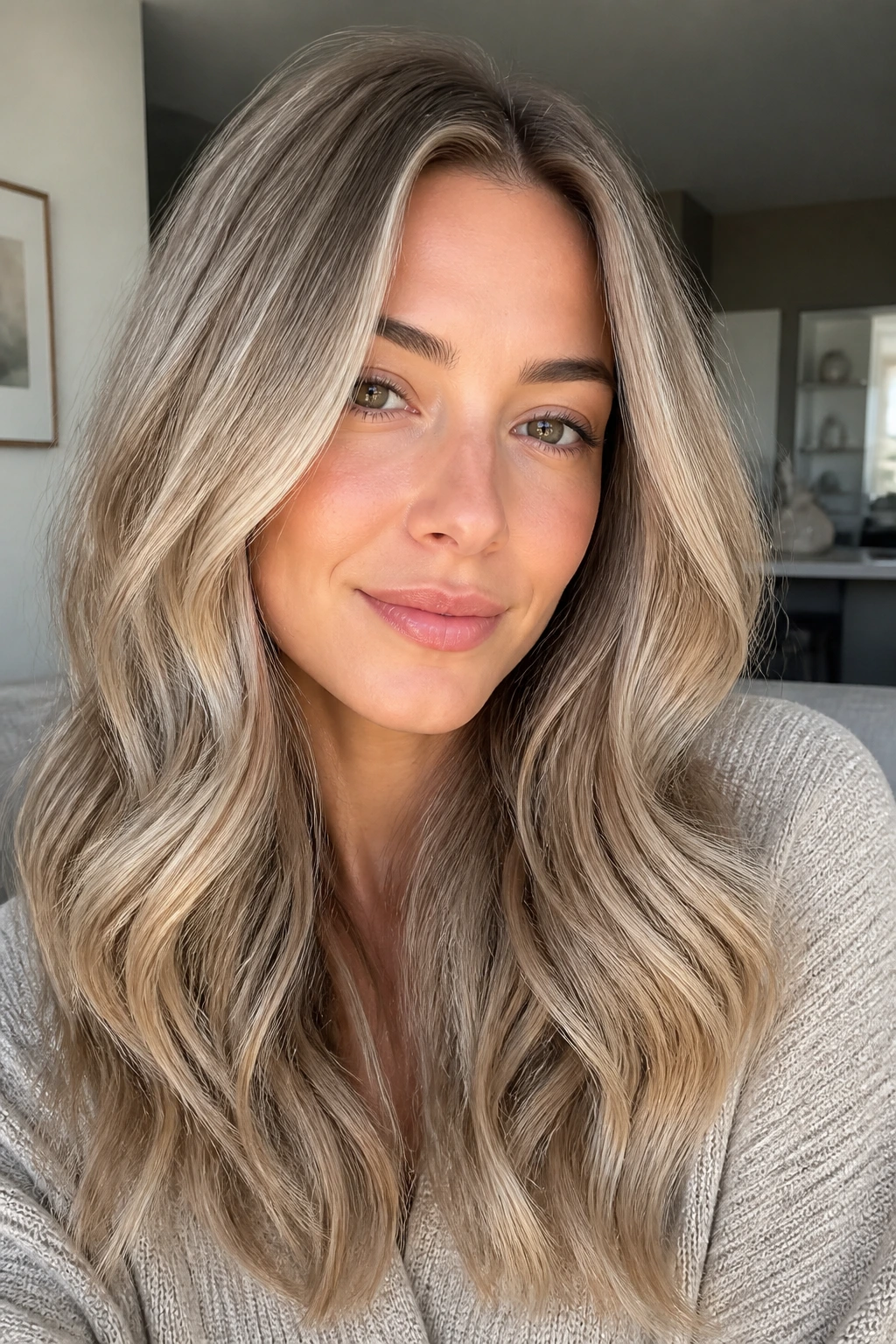
Smoke-and-sand blonde sits in a tricky place: cool, but not overly metallic; beige, but not warm. That balance makes it useful for cool skin that is more neutral than pink, or for anyone who likes softer color edges.
The smoky note keeps the blonde from turning gold. The sandy note keeps it from looking like tinted gray. Together, they make a shade that feels wearable in daily light, not just in salon lighting where every blonde looks better than it really is.
This is one of the most flexible shades in the whole lineup. It can be worn sleek, wavy, or air-dried, and it doesn’t ask for heavy makeup to keep the face from disappearing.
21. Glacier Blonde Bob
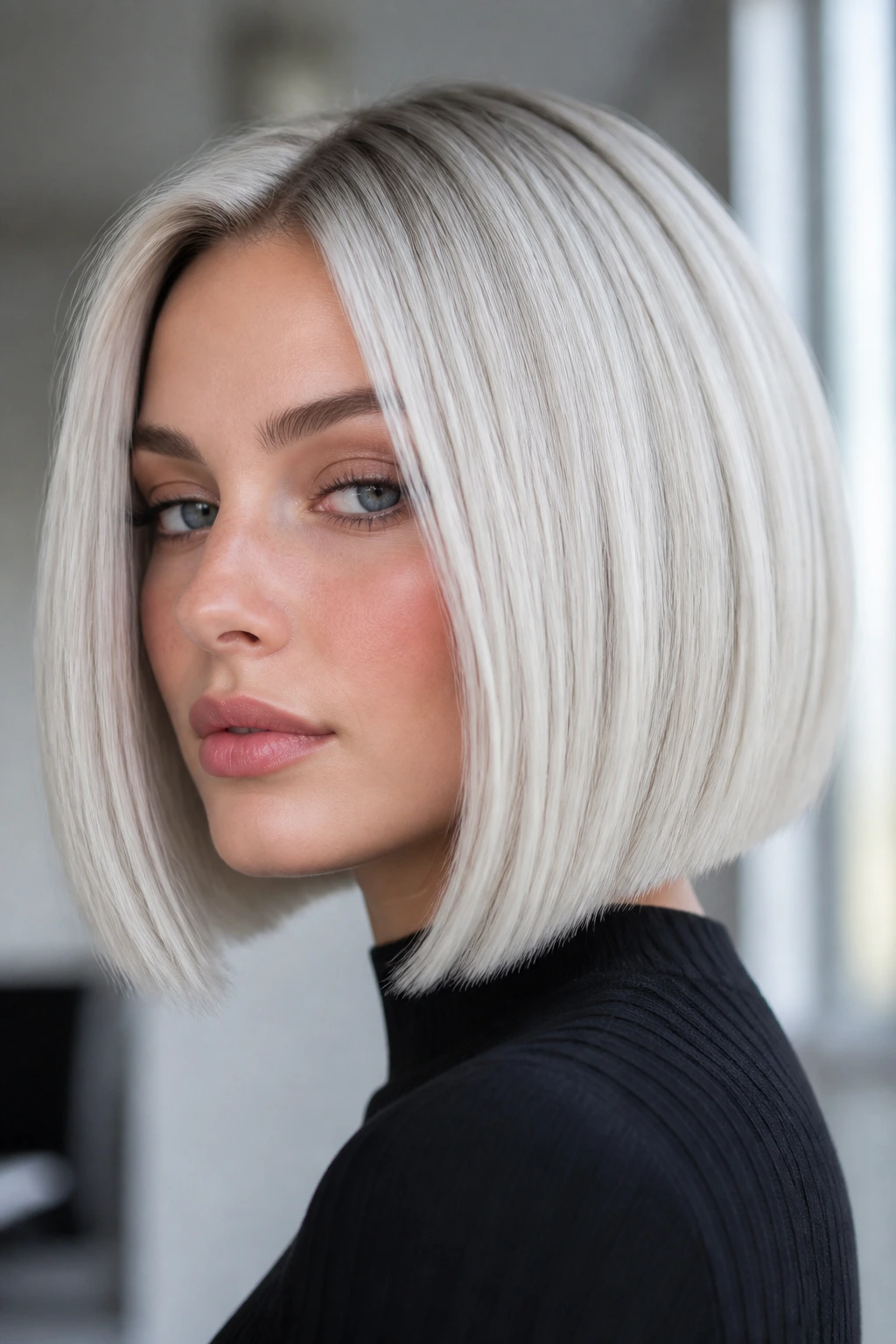
A glacier blonde bob is a sharp, bright cut-color pairing. The bob gives structure; the glacier tone gives the clean, cool shine. Together, they create a look that suits cool skin because the face gets framed instead of flooded with warmth.
I love this on hair that has enough density to hold a clean line. Too many layers can make it feel fuzzy, and the whole point of glacier blonde is that crisp edge. The color itself should live in that icy pearl zone, but with enough health and gloss to keep it from turning dry.
If you want something that feels modern without being flashy, this is the one to bookmark. It’s direct. No extra fuss.
22. Cool Cream Balayage
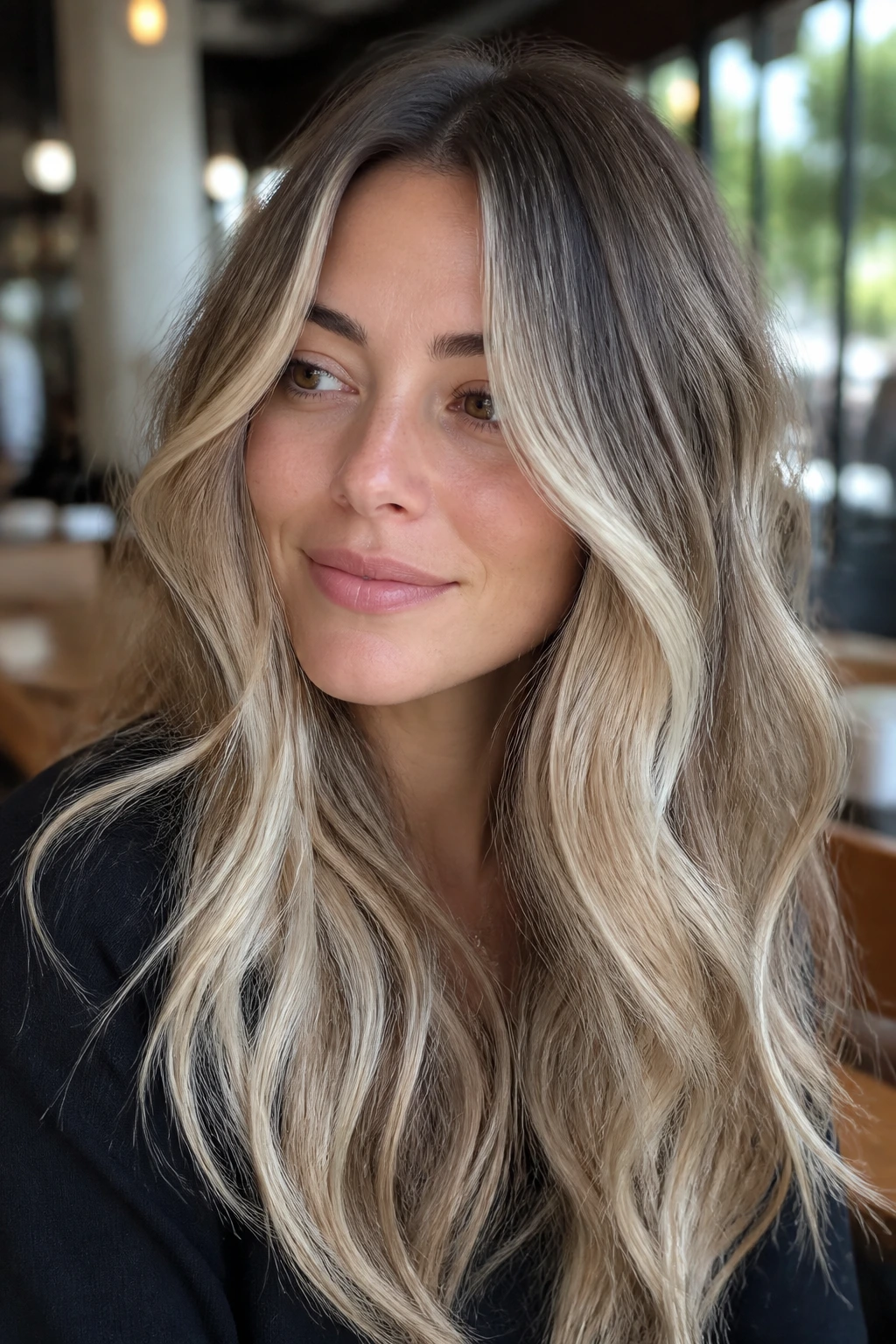
Cool cream balayage is the softer answer for people who don’t love silver tones. It keeps a pale creamy finish, but the cream leans cool rather than buttery, which is why it works on cool skin without creating a golden cast.
Balayage placement matters here. The hand-painted pieces should be concentrated where the hair would naturally lighten—around the face, through the top layer, and toward the ends. That creates a believable lift instead of random pale streaks.
This shade is a good compromise if you want brightness but still want your hair to feel touchable and not over-toned. It’s one of those colors that looks best when the hair moves a little.
23. Ash Blonde with Lowlights
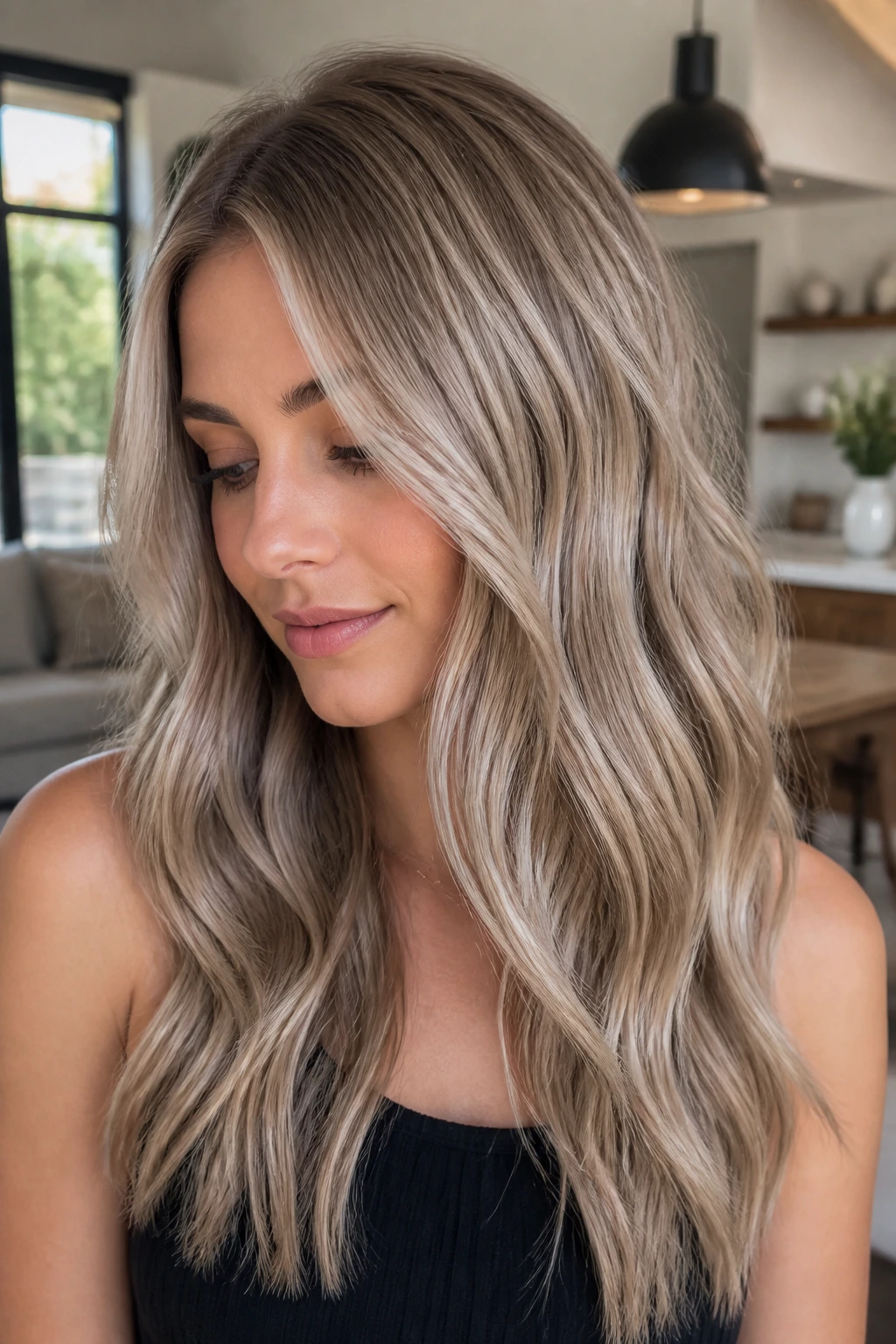
A lot of blonde goes flat because nobody leaves any shadow in it. Ash blonde with lowlights fixes that fast. A few deeper, cool-toned strands woven in among the pale pieces create contrast and keep the blonde from turning into a single pale block.
Cool skin usually benefits from that contrast because the face looks framed, not erased. Lowlights can also make very light blonde feel more expensive in the ordinary sense of the word—not louder, just better balanced. The light catches the blonde pieces more clearly when the darker strands are there to hold them up.
This works especially well on thick hair, over-lightened hair, or any blonde that feels too one-note. A little depth is not a setback. It’s the reason the color still looks like hair.
24. Soft Silver Ribbon Curls
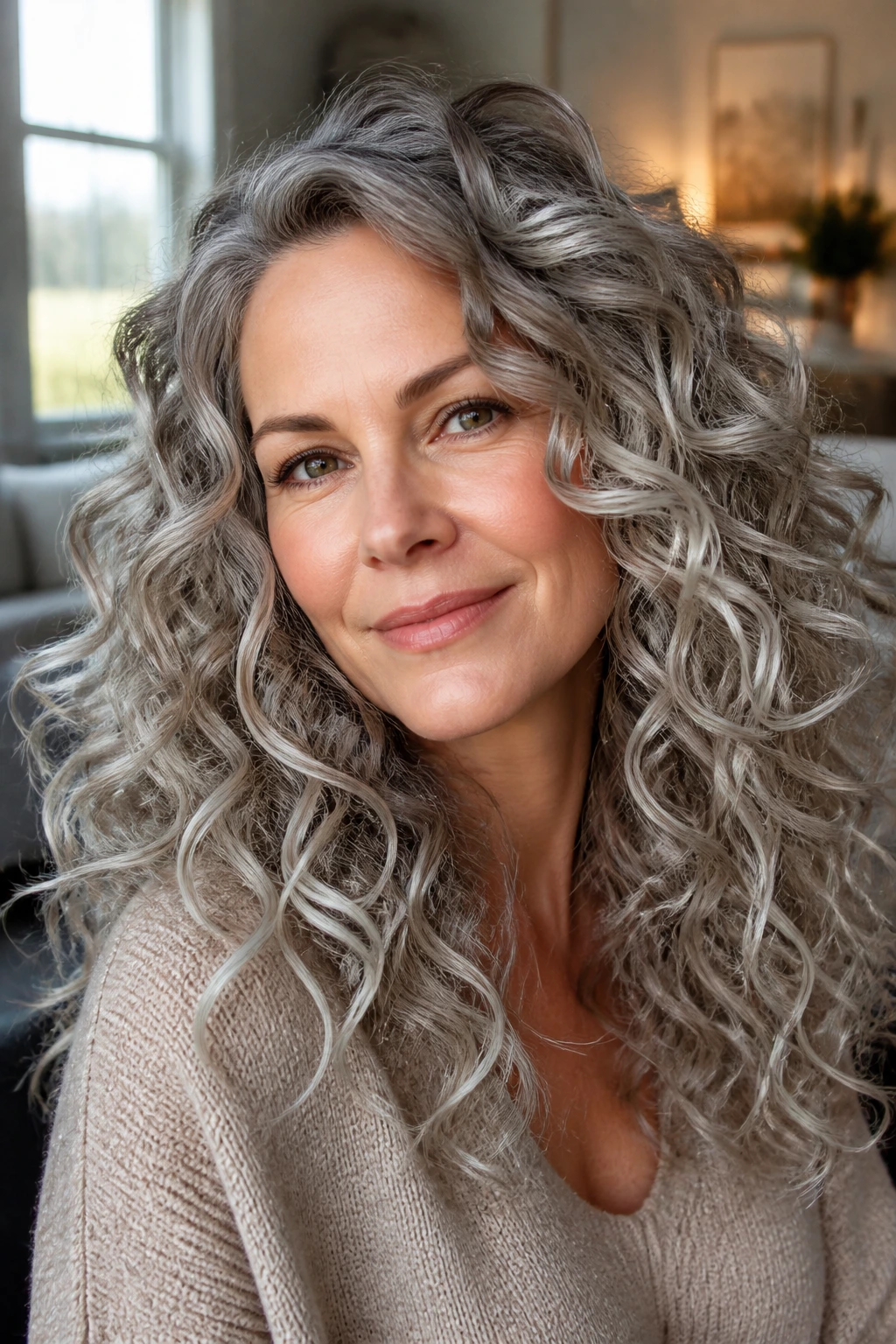
Curly and wavy hair can carry ash blonde in a different way. Soft silver ribbon curls use the curl pattern itself to show the color, so the highlights look like they’re woven into the texture instead of sitting on top of it.
That matters because curls reflect light in little pockets. Silver ribbons placed along the bend of the curl make the hair look dimensional from every angle. On cool skin, the effect is especially flattering when the silver stays soft, not mirror-bright.
The one thing I’d avoid is over-lightening the ends of curls until they feel thin and thirsty. A cool ribbon pattern is better than blasting every curl to the same pale level. The movement is the point.
25. Frosted Collarbone Cut
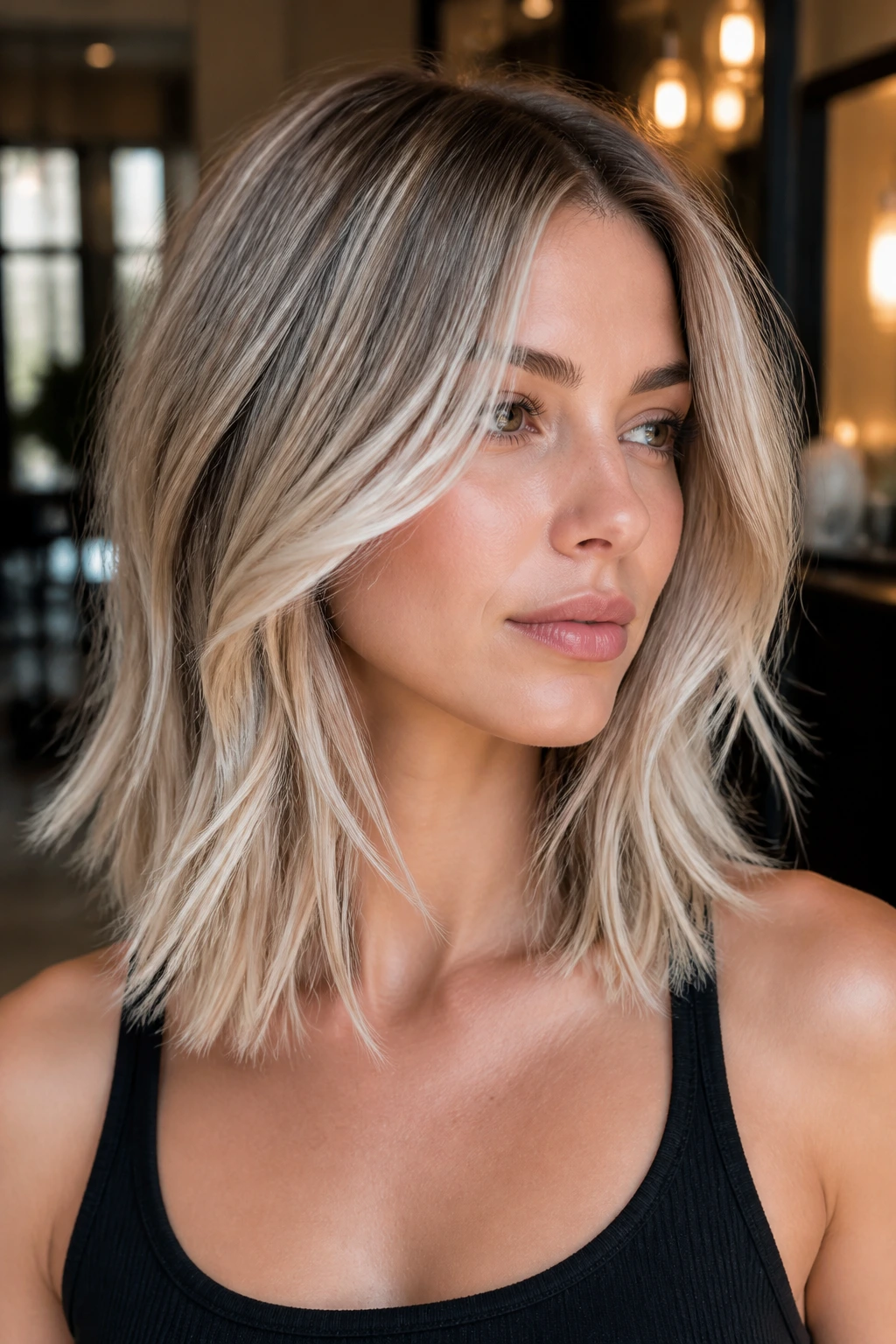
A collarbone-length cut gives ash blonde room to breathe. You get enough length for movement, enough weight for the color to look polished, and enough surface area for the frosted tone to shift as you move your head.
The cut also makes cool skin look balanced because it sits close to the face without overpowering it. Frosted ends and soft layers can brighten the complexion, while a slightly deeper root keeps the whole thing from looking too severe.
This is a good in-between option if you want something easier than long blonde hair and softer than a pixie. It’s neat, practical, and it wears well with both straight and wavy styling.
26. Dusty Beige Blonde
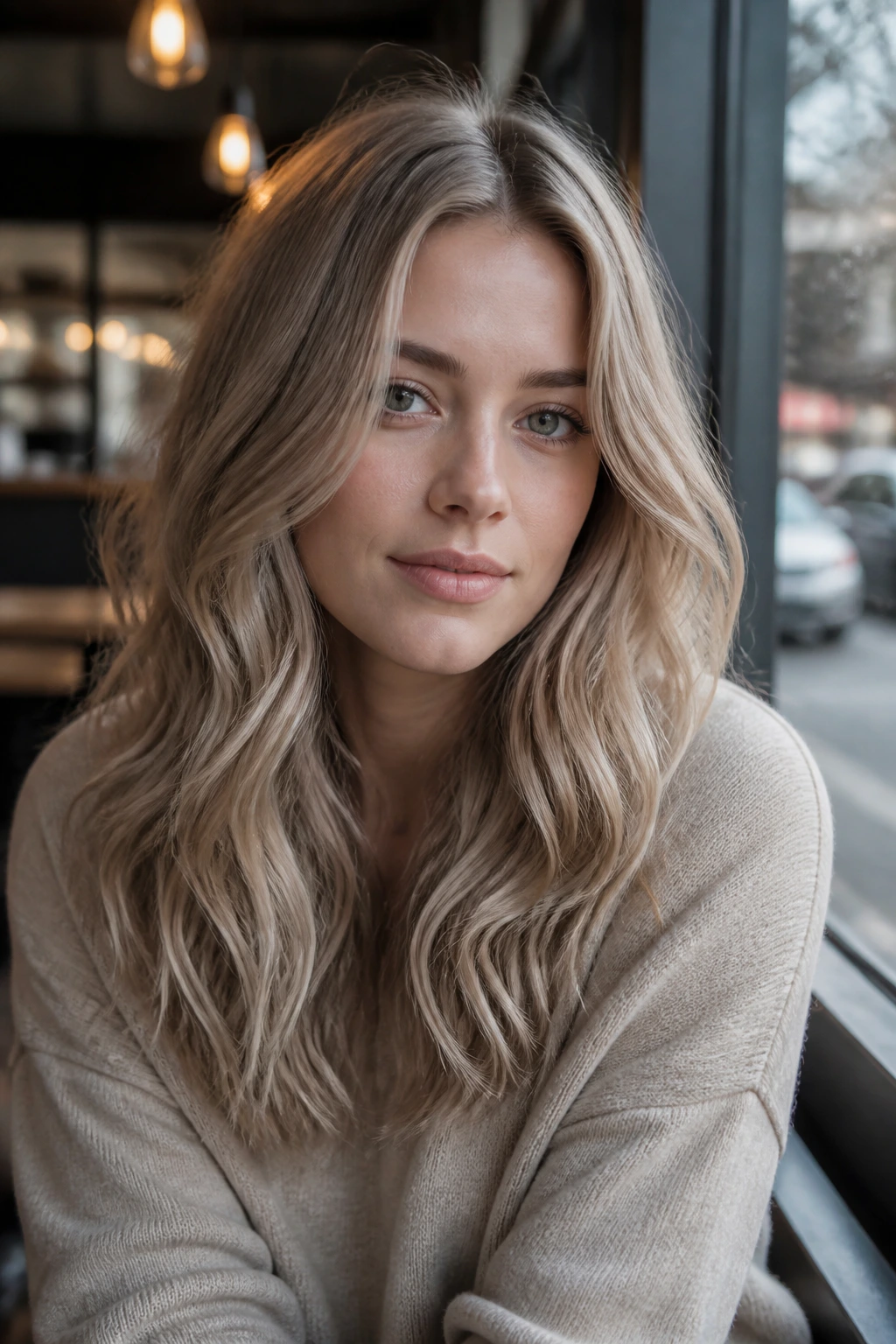
Dusty beige blonde is the shade for people who want ash without the metallic finish. It’s muted, soft, and calm, with just enough coolness to flatter pink or blue undertones. If silver blonde feels too hard, this is the safer lane.
The dustier tone keeps the blonde from reading yellow, and the beige note stops it from going flat. That balance is useful on medium cool skin or anyone whose complexion changes a bit depending on makeup or lighting.
I’d choose this for everyday wear. It’s the kind of blonde that survives a T-shirt, a blazer, and no makeup at all without looking out of place.
27. High-Contrast Ash Blonde
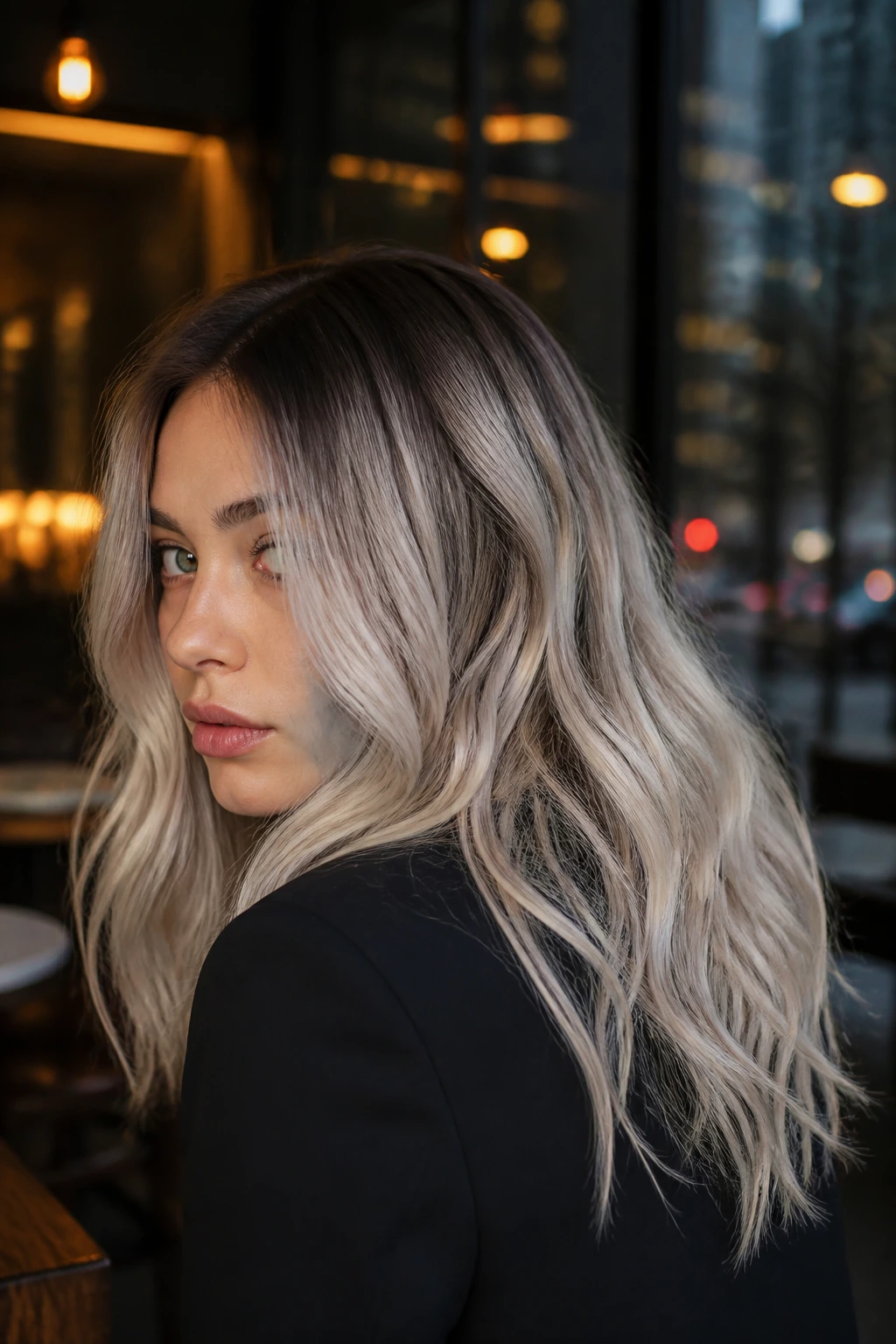
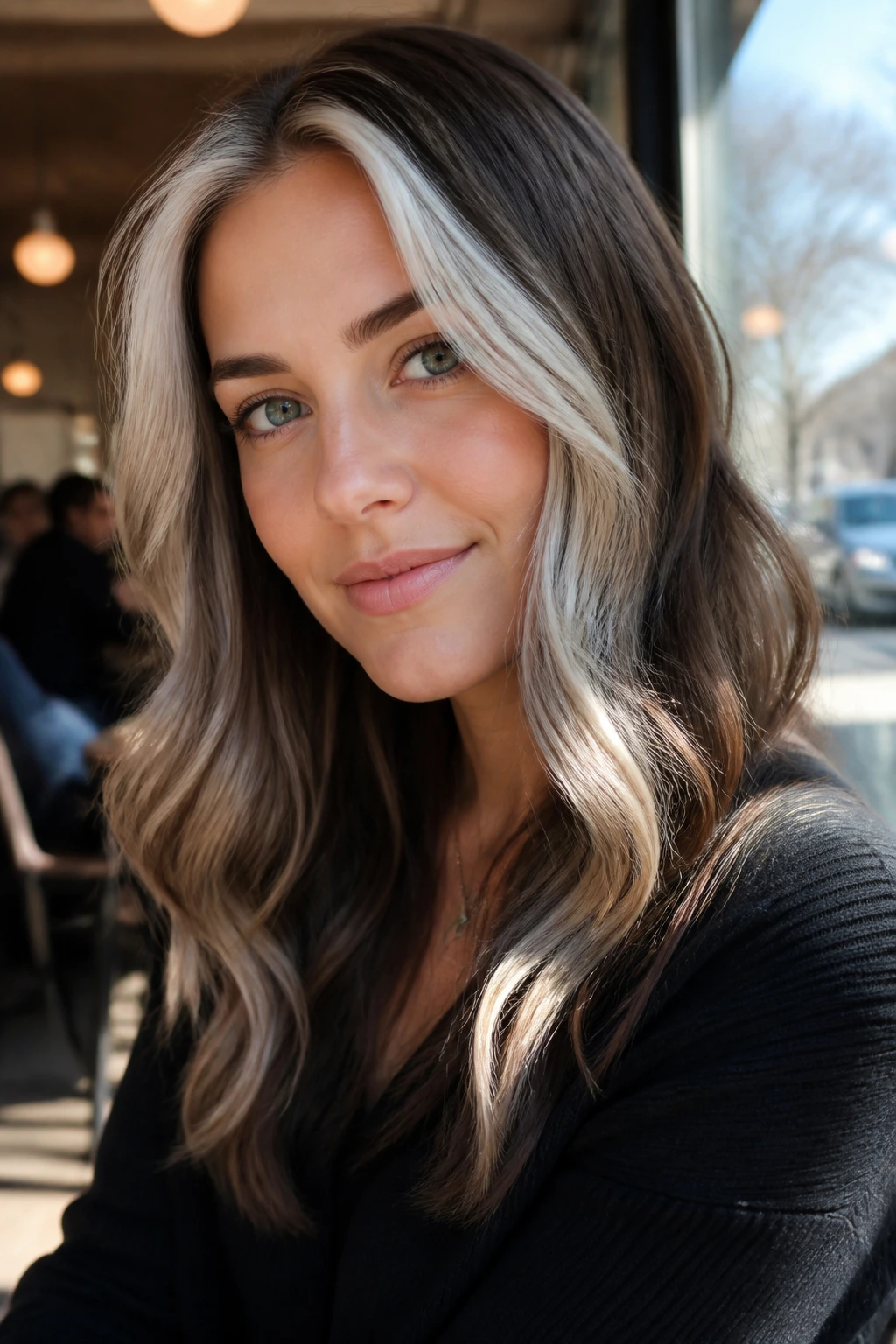
This is the most dramatic choice in the bunch. High-contrast ash blonde keeps a deeper root and pushes the lengths bright and cool, which creates a strong frame around the face. On cool skin, that contrast can look striking instead of harsh.
The trick is making the contrast clean. The root should be intentional, not grown out by accident. The blonde should still stay smoky or pearly, because if the ends start looking warm, the whole look loses its edge.
If you like a more fashion-forward finish, this is the shade to try last, not first. It takes up space. That’s why it works.
Why Ash Blonde Still Needs Dimension to Stay Flattering
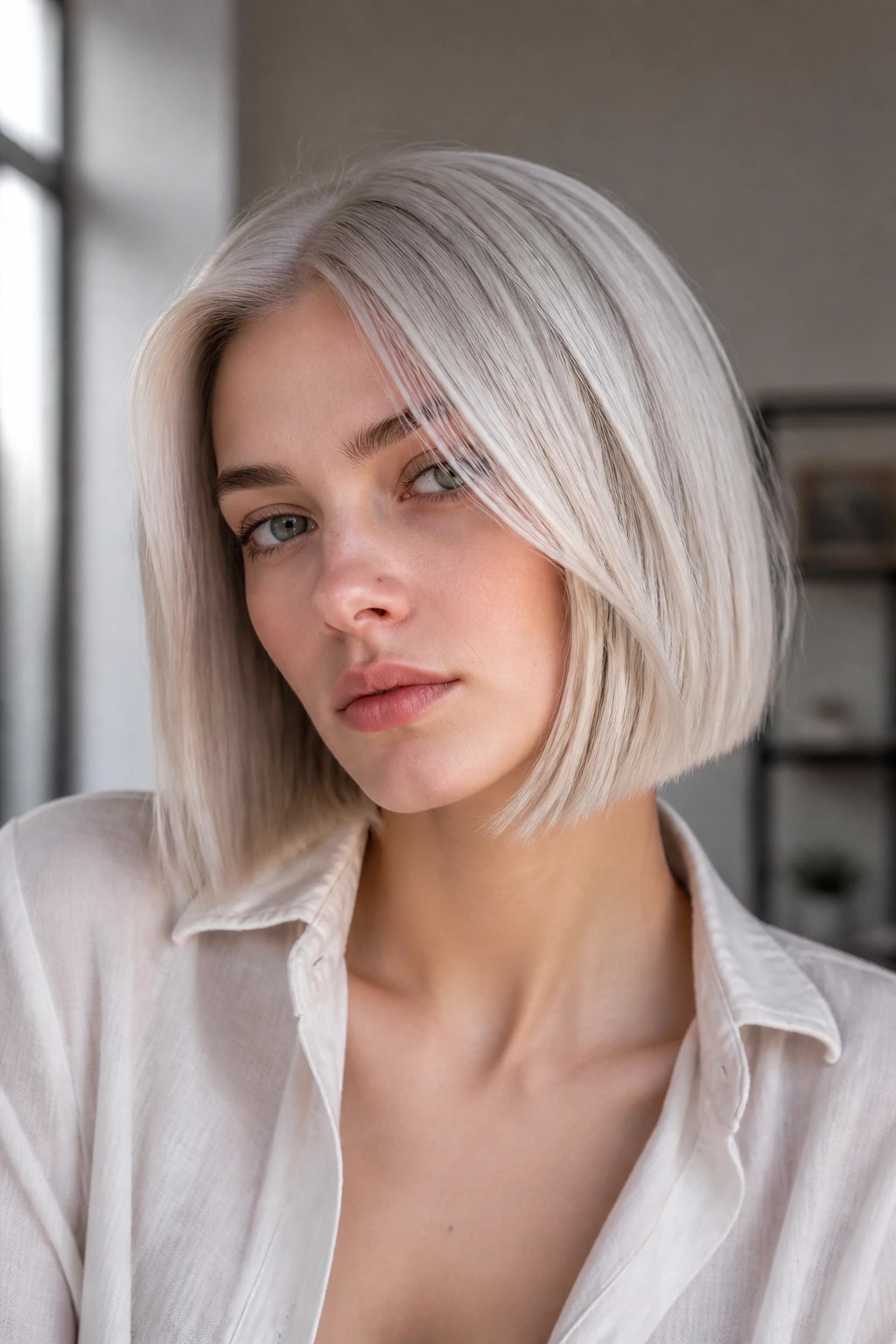
Ash blonde on cool skin is at its best when it has shape. Flat, single-tone blonde tends to make the face vanish a little, especially if your skin already leans pink or pale. A rooted base, a few lowlights, or even a soft shadow through the mids gives the eyes something to catch, and that makes the whole look feel intentional instead of pasted on.
The other thing dimension does is keep the blonde from turning chalky. Pure ash with no depth can look like a toner accident under indoor light. Add a little beige, a little taupe, or a root that’s one level deeper, and the color suddenly gets a backbone.
That’s the real trick with ash blonde hair color: not more light, just the right kind of light. Cool skin usually looks best when the blonde has a little smoke in it and a little structure underneath.
The Colorist’s Toolkit for Ash Blonde
-
Lightener with bond support: Useful when you’re lifting darker hair because it helps reduce the fragile, gummy feel that can show up after bleaching.
-
Blue-violet toner: The workhorse for ash blonde. It keeps yellow and orange from taking over, but it needs the right processing time or it can go dull.
-
Tint brush and bowl: Worth having even for simple glossing jobs. A brush gives you cleaner saturation than trying to apply toner with gloved hands.
-
Sectioning clips: Four strong clips are enough for most at-home touch-ups. Clean sectioning keeps the color even, especially around the nape and crown.
-
Wide-tooth comb: Good for distributing gloss or conditioner through the midlengths without tearing up damp, lightened hair.
-
Purple shampoo: Not a daily product. A once-a-week reset is usually enough for most ash blondes; more than that can leave a faint violet haze.
-
Color-safe mask: Pick one with slip and a little protein if your hair has been lightened more than once. Ash tones look better on hair that feels smooth, not straw-like.
-
Heat protectant: Non-negotiable if you blow-dry or hot-tool the hair. Pale ash blonde turns rough quickly when the cuticle gets scorched.
-
Clarifying shampoo: Useful before a toner or gloss appointment if the hair has a buildup of dry shampoo, hard water, or leave-in product.
-
Shower filter: Not glamorous, but hard water can wreck a cool tone faster than most people expect. If your water leaves mineral film on glass, your blonde is dealing with it too.
Shopping the Right Toner, Lightener, and Aftercare
If you’re buying products for ash blonde, ignore the front label for a second and look at the tone underneath. “Ash” can mean smoky beige, slate gray, violet pearl, or a blue-based cool blonde, and those are not interchangeable. For cool skin, the safer bets are blue-violet or taupe-ash rather than flat silver.
Developer strength matters too. A stronger developer is not a badge of honor. It can lift faster, sure, but it can also rough up the hair and leave you with uneven porous ends that drink toner too quickly. If your hair is dark, coarse, or previously colored, a salon lightener service is usually the cleaner road.
For aftercare, buy a sulfate-free shampoo, a purple shampoo with a soft hand, and a conditioner or mask that seals the cuticle. If your blonde needs a lot of toning, a color-depositing mask in a cool beige or silver-beige shade is often friendlier than hammering the hair with purple shampoo every wash.
One more thing: if your natural hair is very dark, shopping for ash blonde is really shopping for a plan. Not just a box.
How to Wear Ash Blonde With Cool Skin
Cut: Blunt bobs, collarbone lobs, curtain bangs, and soft long layers all help ash blonde hold its shape. Very long, one-length hair can look a little blank if the color is too pale and too even.
Styling: Loose bends, brushed-out waves, and sleek blowouts show the ribbons and tonal shifts best. Poker-straight hair can look chic, but it also reveals every uneven patch of toner, so it asks for better maintenance.
Makeup: Cool pink blush, mauve lipstick, taupe eyeshadow, and a softly defined brow keep the face from washing out. If the blonde is icy, add a little more brow and liner definition. If the blonde is softer and beige, a lighter hand works better.
Wardrobe: Charcoal, black, navy, slate, soft white, and cool blue shades all play nicely with ash blonde. Warm mustard and heavy caramel tones can make the blonde look grayer than it really is, which is a shame because the hair may be fine—the clothes are doing the damage.
Lighting: Check your blonde in daylight. Indoors under warm bulbs, ash can look beige; outside, it can suddenly look much cooler. That’s normal. The real test is whether the color still looks balanced in both places.
Small Tweaks That Make the Shade Look Richer
Gloss Trick: A clear or cool beige gloss every 4 to 6 weeks can keep ash blonde looking smooth without over-toning it. I like glossing more than overusing purple shampoo because it refreshes shine as well as tone.
Dimension Trick: Keep at least 10 to 20 percent of the hair a shade deeper than the lightest pieces. That little bit of contrast stops the blonde from turning flat, especially on cool skin with light brows.
Face-Framing Brightness: Brighten the temples and cheekbones a touch more than the back sections. Hair that’s a little lighter near the face makes cool undertones look fresher, and you do not need to lighten every inch to get there.
Texture Trick: Wavy or softly curled hair shows ash ribbons better than hair that’s ironed bone-straight. The movement gives the cool tones a place to land.
Make-It-Yours: If your skin is cool but your features are strong—dark brows, deep eyes, or freckles—ask for a slightly deeper beige ash instead of pure silver. It keeps the look from getting too washed out.
Keeping Ash Blonde Cool Between Visits
Wash day matters more than people think. If you can wait 24 to 48 hours after a color service before shampooing, do it. That pause gives the cuticle time to settle a bit, and the tone usually holds better.
Purple shampoo works best once a week or every other wash, not every single time you step into the shower. Overuse can leave the hair feeling dry and looking a little violet in the bright spots. A cool beige mask is gentler if your blonde needs a softer refresh.
For root maintenance, plan on a touch-up every 6 to 8 weeks for high-contrast ash blonde and every 8 to 12 weeks for rooted balayage or shadow-root looks. Toner or gloss refreshes usually land around the 4 to 6 week mark, especially if you swim often or use hot tools.
If you’re storing products, keep unopened toners, masks, and shampoos in a cool, dark cabinet. Heat and light can shorten the life of some formulas. And don’t mix color or toner and then save it for later. Once it’s mixed, it’s meant to be used, not haunted by the back of the bathroom shelf.
Variations for Different Hair Histories and Schedules
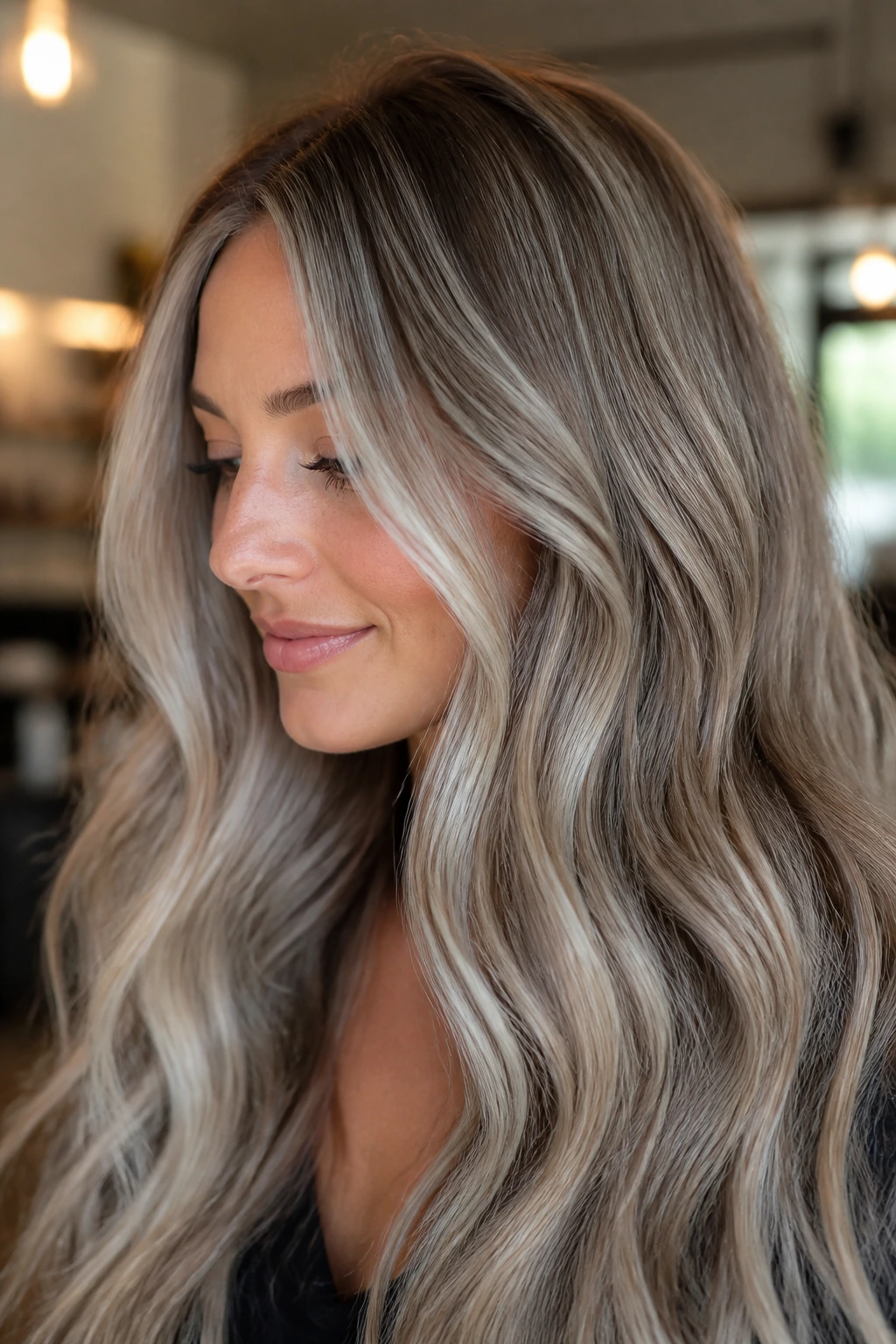
Soft-Focus Ash: For people who want the cool-blonde effect without the metallic edge, ask for beige-heavy ash with fine ribbons instead of a stark silver finish. It’s gentler on the face and easier to wear with minimal makeup.
Low-Maintenance Shadow Root: If your schedule is packed, go for a deeper root smudge and a softer balayage. The regrowth line stays quieter, and you can stretch salon visits without the hair shouting at you from the mirror.
High-Glow Ice Blonde: This version is for very fair cool skin, light brows, and hair that can handle a stronger lift. It’s the most dramatic option, but it needs disciplined toning and heat protection.
Curly Smoke Blonde: Curly hair usually looks better with a little more depth than straight hair. Keep the roots and midlengths smoky, then place lighter ash pieces where the curls turn outward and catch the light.
Silver-Brunette Blend: If you’re not ready to be fully blonde, keep most of the hair brunette and thread in ash blonde ribbons or silver-beige gloss on the surface layers. The result reads cool and dimensional without the maintenance of all-over lightening.
Weekend-Ready Gloss Blonde: For people who want a blonde refresh without a big color session, a cool gloss over existing highlights can tighten the tone and add shine. It won’t lift dark hair, but it will clean up faded ash and make the color look intentional again.
Mistakes That Flatten Ash Blonde or Turn It Brass
-
Going too gray: Ash blonde should cool the hair, not make it dead-looking. If the toner is left on too long or the formula is too gray-heavy, the blonde can look muddy. Fix it with a softer beige gloss and more dimension.
-
Lifting too fast: Dark hair pushed hard with too much developer often ends up patchy, gummy, or orange at the base. Slow, even lift with a bond builder gives a cleaner canvas for the ash tone.
-
Skipping dimension: One flat pale tone can make cool skin look tired. Add a root melt, lowlights, or fine highlights so the color has movement.
-
Using purple shampoo like detergent: Too much purple shampoo dries the hair and can leave a faint violet cast on porous ends. Use it sparingly and follow with a rich conditioner or mask.
-
Ignoring brows and makeup: Very light ash blonde can make the face disappear if the brows are too faint or the makeup is too warm. Keep the brow shape defined and stay in cool or neutral tones on the face.
-
Choosing the wrong level: A very pale blonde isn’t always the best ash blonde for cool skin. Sometimes a level 8 smoky beige looks better than level 10 platinum because it gives the complexion more life.
Frequently Asked Questions
Is ash blonde actually flattering on cool skin?
Yes, because the cool tone usually sits beside pink, blue, or rosy undertones without fighting them. The key is choosing the right shade depth—too gray and the face can look drained.
What ash blonde shade is best if I have very fair skin?
Icy pearl, Scandinavian frost, or a soft cool champagne usually work well on very fair cool skin. If you like makeup and crisp brows, you can go lighter; if not, a slightly deeper smoky blonde is often easier to wear.
Can I wear ash blonde if my natural hair is dark brown?
You can, but the route is usually a lift-and-tone process rather than a single session of box color. Dark hair often needs lightening first, then a cool toner or gloss to land in the ash range.
Will ash blonde turn green?
It can if the hair is porous, over-toned, or exposed to minerals and chlorine without protection. The fix is a proper aftercare plan: purple shampoo in moderation, a shower filter if water is hard, and a swim rinse if you spend time in pools.
How often do I need to tone ash blonde?
Most ash blondes need some tone refresh every 4 to 6 weeks, though lived-in balayage can stretch longer. If your hair fades warm fast, the toner schedule will be tighter than it is for someone with naturally cool, porous-resistant hair.
What if ash blonde makes me look flat instead of bright?
Add contrast. A shadow root, lowlights, or even a brighter money piece can give the face some structure so the blonde doesn’t swallow your features.
Can curly hair pull off ash blonde well?
Absolutely, and curls often make the color look better because they break up the tone. Just avoid over-lightening the ends; curls need enough depth to keep their shape and bounce.
Do I need to change my makeup when I go ash blonde?
Usually, yes. Cool pink blush, taupe eyeshadow, and a brow shade that isn’t too light help the face stay balanced. Warm bronzer-heavy looks can fight the hair and make the blonde feel dull by comparison.
The Ash Blonde Shade That Feels Like Yours
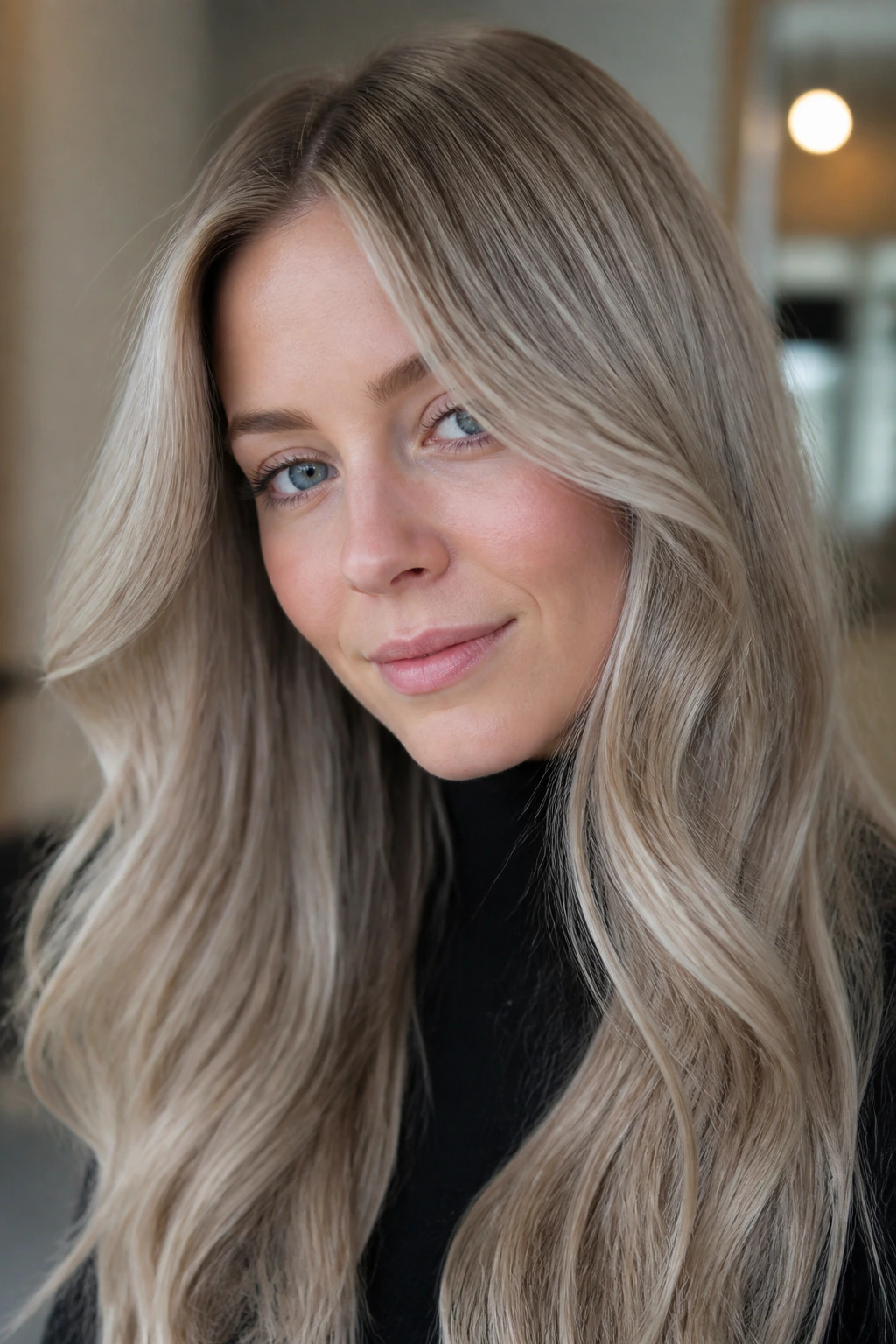
The best ash blonde on cool skin doesn’t shout for attention. It sits cleanly beside your undertone, keeps brass in check, and gives the hair enough depth that the color still looks like hair, not frosting. That’s why the smartest choices here are usually the ones with a little shadow, a little beige, or a little movement—not the ones that chase the palest possible finish.
If you remember one thing, make it this: cool skin rarely needs the whitest blonde in the room. It usually needs the blonde with the best balance. A smoky mushroom bob, a pearl gloss, a rooted balayage, or a silver-beige frame can all look more flattering than full-on platinum if they’re chosen with care.
And once the tone is right, the rest gets easier. The makeup looks cleaner. The cut looks sharper. The hair grows out more gracefully. That’s the sweet spot worth aiming for when ash blonde is the goal.
