



A pair of clippers can change long hair faster than a pair of scissors ever will.
Buzz cut styles for long hair work because they strip away bulk where it gets annoying first—around the ears, at the nape, through the sides—while leaving enough length up top to keep the cut from feeling like a full reset. That contrast is the whole game. Tight on the sides, length where it matters, and just enough edge to make the shape look deliberate instead of accidental.
I’ve always liked this category because it solves a very ordinary problem with a sharp visual answer. Long hair can look flat when it all hangs at the same weight. Buzzed sides and undercut sections change that instantly. The hair starts moving differently, the head shape shows through, and the style gets a line, a frame, a little tension. That’s what makes it interesting.
Why These 25 Cuts Earn Their Keep
-
Shape Control: Buzzed sides remove the heavy triangle that makes long hair feel bulky at the temples and behind the ears.
-
Less Daily Fuss: You can leave the top long enough to style or tie back, then let the short sides stay neat with almost no work.
-
Room for Personality: A long top, fringe, braid, bun, or wave pattern changes the mood fast, even when the sides stay clipped short.
-
Cleaner Grow-Out: A good fade or undercut grows out in a way that still looks planned for weeks, not days.
-
Works Across Hair Types: Straight, wavy, curly, coily, and braided hair all behave differently, but buzzed sides help each one show its texture instead of fighting it.
-
Easy to Customize: One guard number, one fade height, or one extra inch on top can shift the whole cut from soft to sharp.
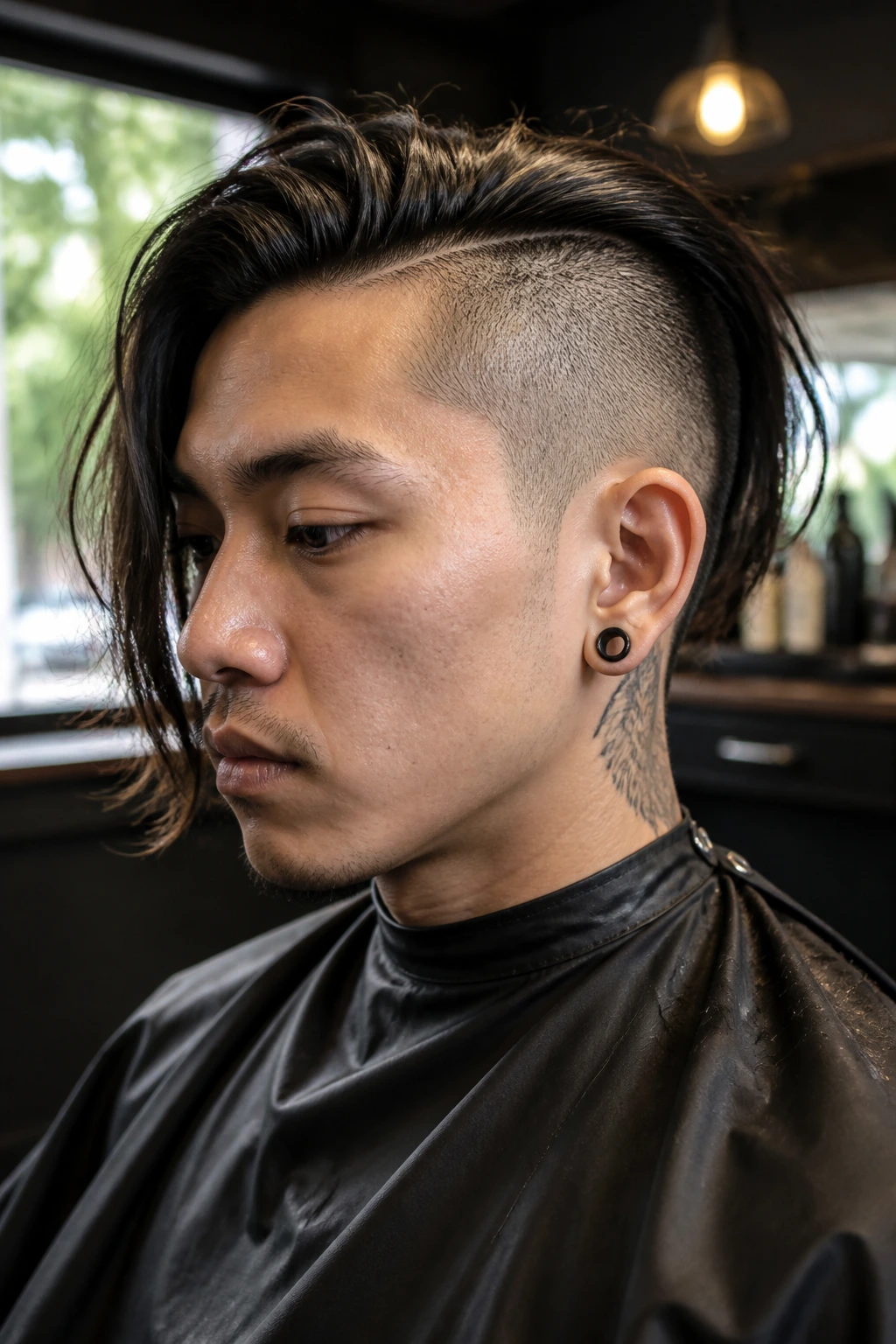
1. Disconnected Undercut with a Long Top
A clean disconnect is the whole point here. The sides and back sit close—usually a #0.5 to #1 guard or even skin-faded—while the top stays long enough to fall forward, slick back, or tuck behind the ears. The contrast is hard to miss, and that’s why it works so well on thick hair that tends to puff out on the sides.
What makes it different
The undercut keeps the long hair from ballooning into a helmet shape. Instead of blending everything softly, the cut creates a visible ledge, which makes the top look fuller and the face look sharper. If your hair has a lot of density, this is the version that finally lets it breathe.
- Ask for 6 to 8 inches on top if you want real styling range.
- Keep the sides at skin, #0.5, or #1 for a strong disconnect.
- Best for straight or wavy hair that holds a shape without collapsing fast.
One thing I like here: it grows out with attitude. Even when the sides lose their crisp edge, the contrast still reads. That gives you a little more time between barber visits.
2. Skin Fade with a Textured Long Crop
This is the practical cut in the bunch. A skin fade around the ears and neckline keeps the outline clean, while the top stays between about 2 and 4 inches and gets cut with texture so it doesn’t lie flat. The result feels lighter than a long slick-back, but less severe than a full undercut.
The haircut gets its shape from movement, not height. You want the top to look broken up, not polished. A little matte clay, a quick blow-dry forward, and a finger-combed finish usually beat fancy styling every time.
If your hair is fine, this cut gives you some visual thickness without forcing too much length. If your hair is coarse, the fade takes out the bulk that usually pushes the sides outward. That’s why barbers keep coming back to it.
3. Slicked-Back Length with Buzzed Sides
Can a long slick-back still look sharp when the sides are buzzed? Absolutely. In fact, the short sides make the slick-back easier to wear because they stop the whole style from spreading out around the ears. Keep the top around 5 to 7 inches, enough to comb back without fighting every strand.
How to ask for it
Tell your barber you want tight buzzed sides with a long top that still has movement, not a stiff retro pompadour. A medium-hold pomade or grooming cream gives the hair a little sheen, but it should still bend when you run your hand through it. If it looks lacquered, it’s too much.
This cut looks best when the hairline is tidy and the part is subtle. You do not need a dramatic side part unless you want one. What you need is enough length to sweep back cleanly and enough fade on the sides to keep the profile slim.
4. Curly Top with a Tight Fade
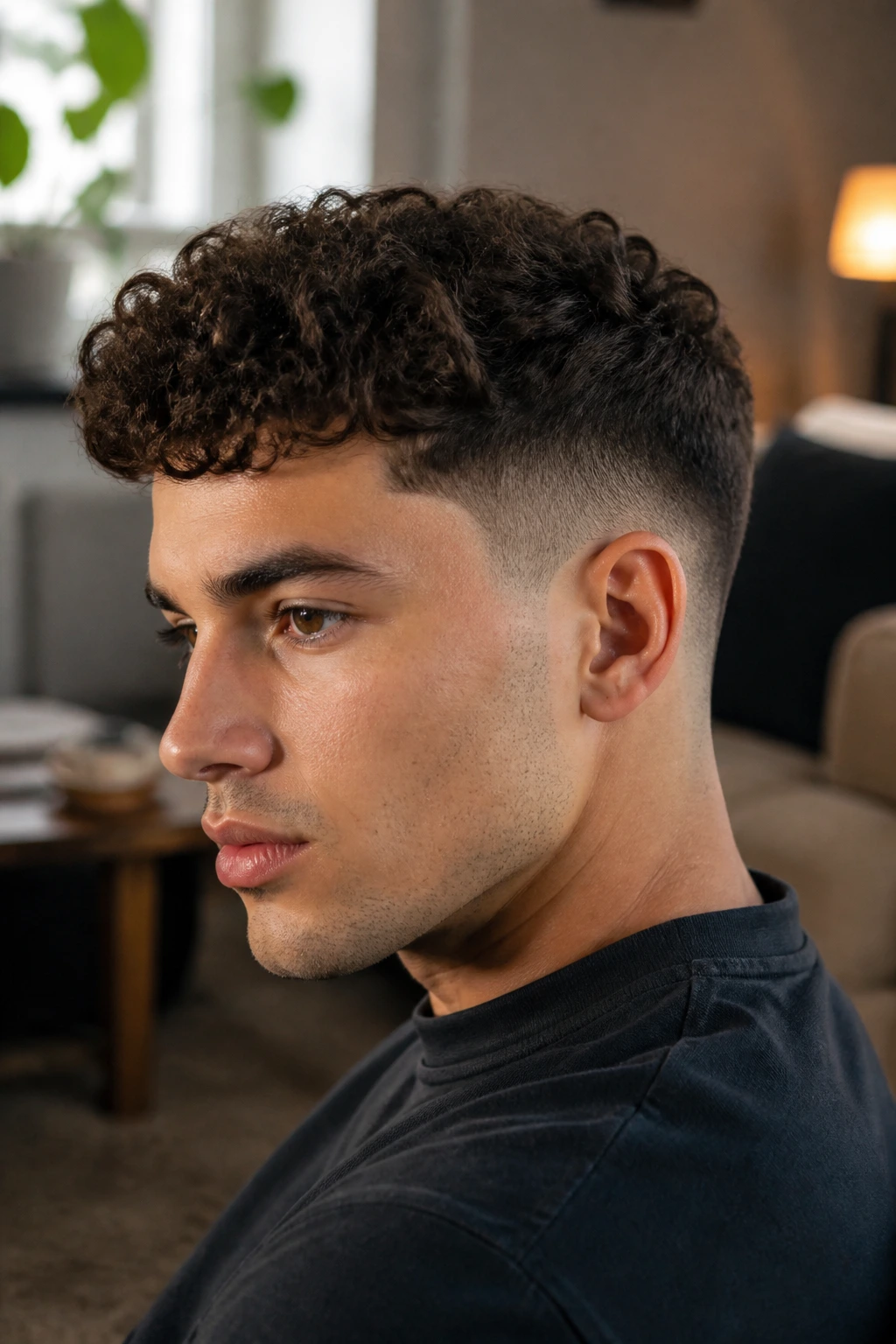
Curly hair and buzzed sides get along fast. The fade strips away the extra puff at the temples, and the curls stay on top where they can do their own thing without collapsing into a rounded mass. Keep the curls long enough to form their natural spring—usually 4 to 8 inches, depending on tightness.
The biggest mistake people make with curly versions is cutting the top too short and then wondering why it looks frizzy instead of shaped. Curls need room. They also need a cut that respects the pattern, so ask for shape, not just length removal.
Use curl cream or a light gel, then diffuse on low heat if you want definition. A faded curl top works because the eye goes straight to texture. The short sides just make that texture easier to see.
5. Long Hair Man Bun with a Clean Undercut
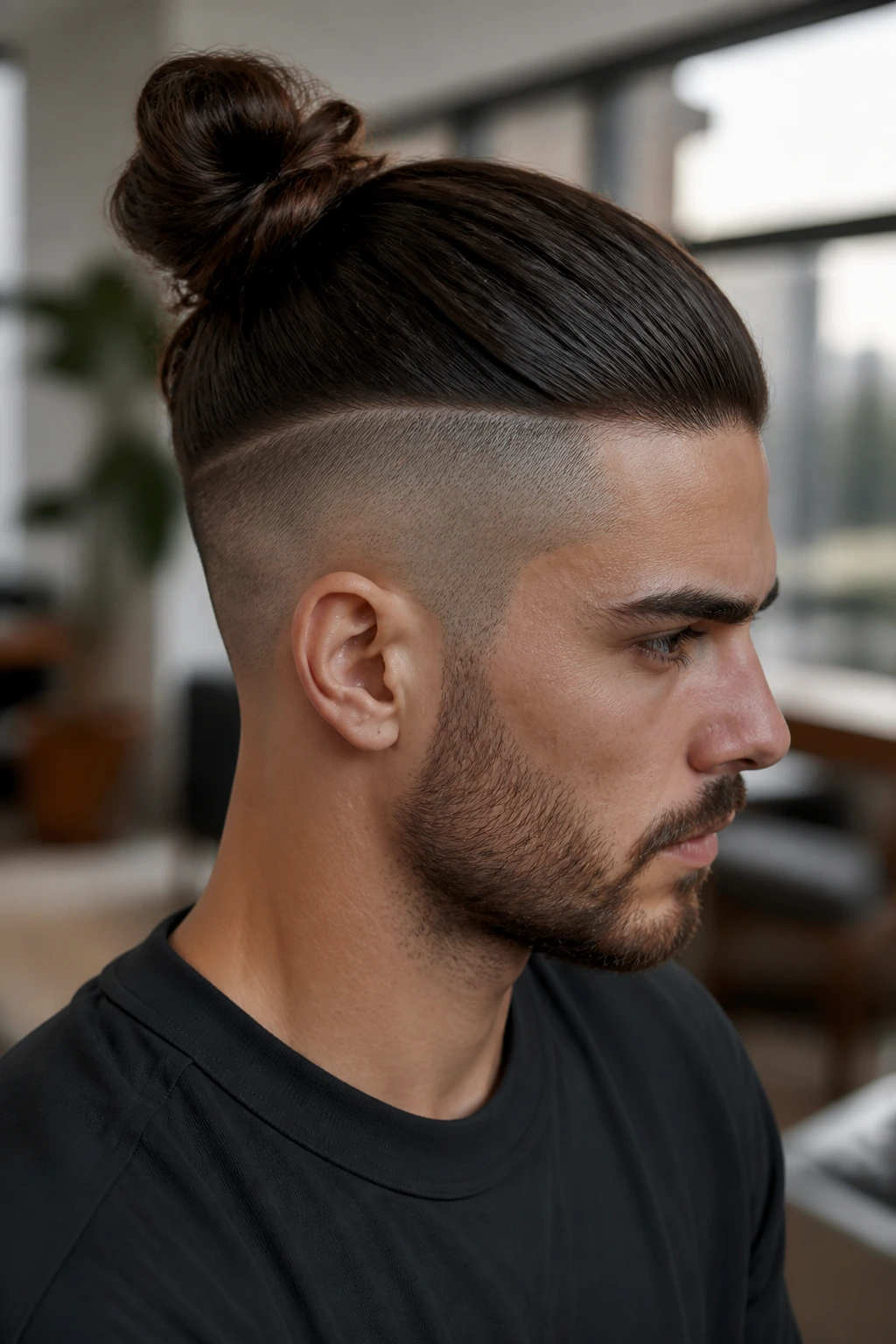
A man bun with buzzed sides is one of those styles that sounds obvious until you see a bad one. The good version keeps the undercut neat and the bun tight, with enough top length—usually 8 inches or more—to hold without strain. If the hair is shorter than that, the bun starts to sag and the whole shape gets sloppy.
What I like here is the control. You can wear the top down, half-up, or fully tied, and the sides stay crisp no matter what. It’s a strong choice for people who need their long hair out of the way but still want actual style, not just function.
Skip bulky elastics. Use a soft tie, coil the bun once or twice, and keep the neckline cleaned up. A fuzzy nape ruins the line faster than anything else.
6. Curtain Fringe with Shaved Sides
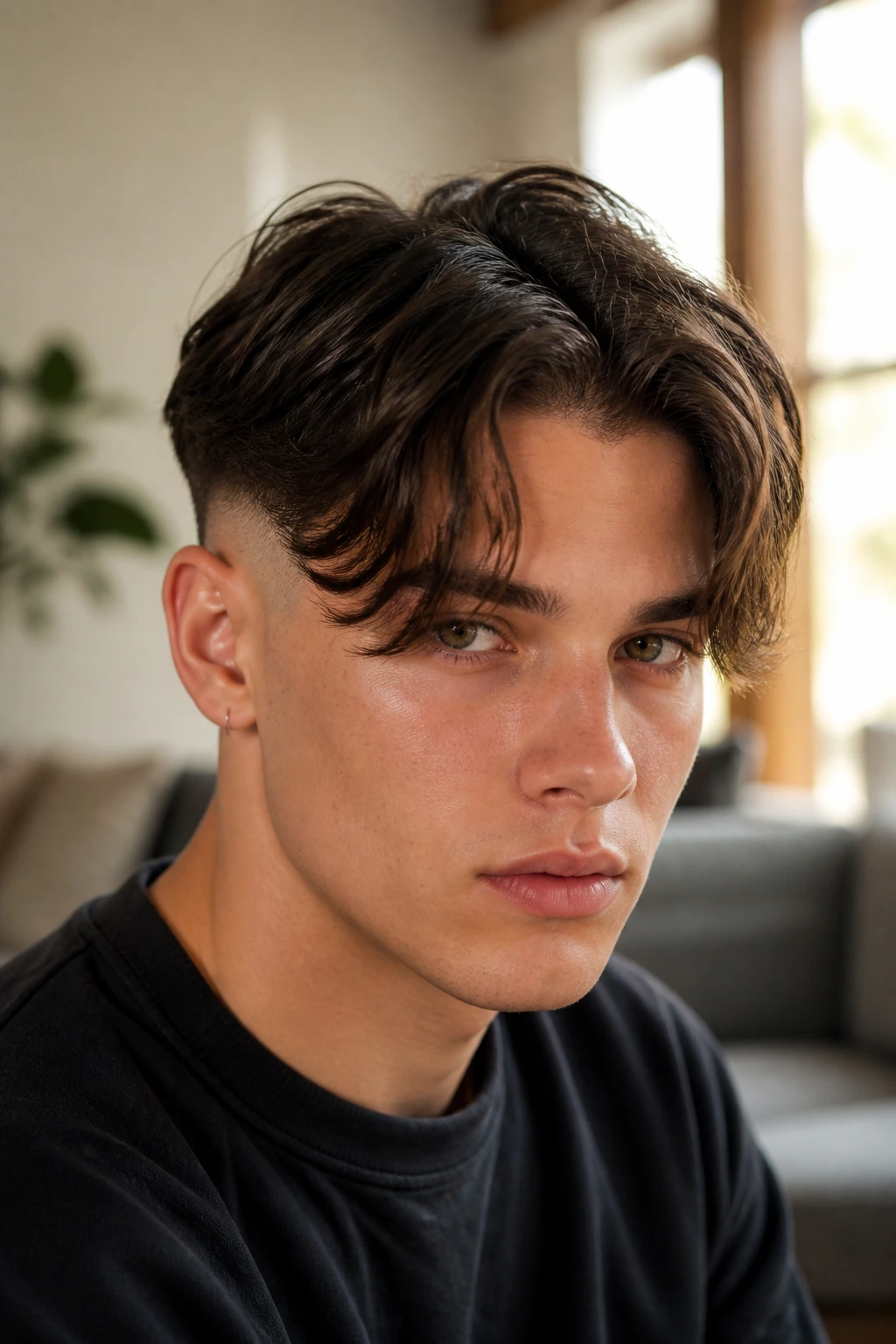
Curtain bangs don’t need a soft, full head of hair around them. They actually get sharper when the sides are clipped down. The fringe falls in the middle, skims the brows, and frames the face while the buzzed sides remove all the side volume that usually competes with it.
Why it works
This is a good move if you want something a little 70s, a little modern, and not too precious. The top needs enough length to split naturally—around 5 to 7 inches at the front—and the sides can sit at a low fade or close buzz. Wavy hair does especially well here because the curtain piece bends instead of hanging limp.
A light styling cream is enough. Heavy wax usually makes the fringe clump. You want movement, a little separation, and a center part that looks casual rather than drawn with a ruler.
7. Side Part with a Low Taper Buzz
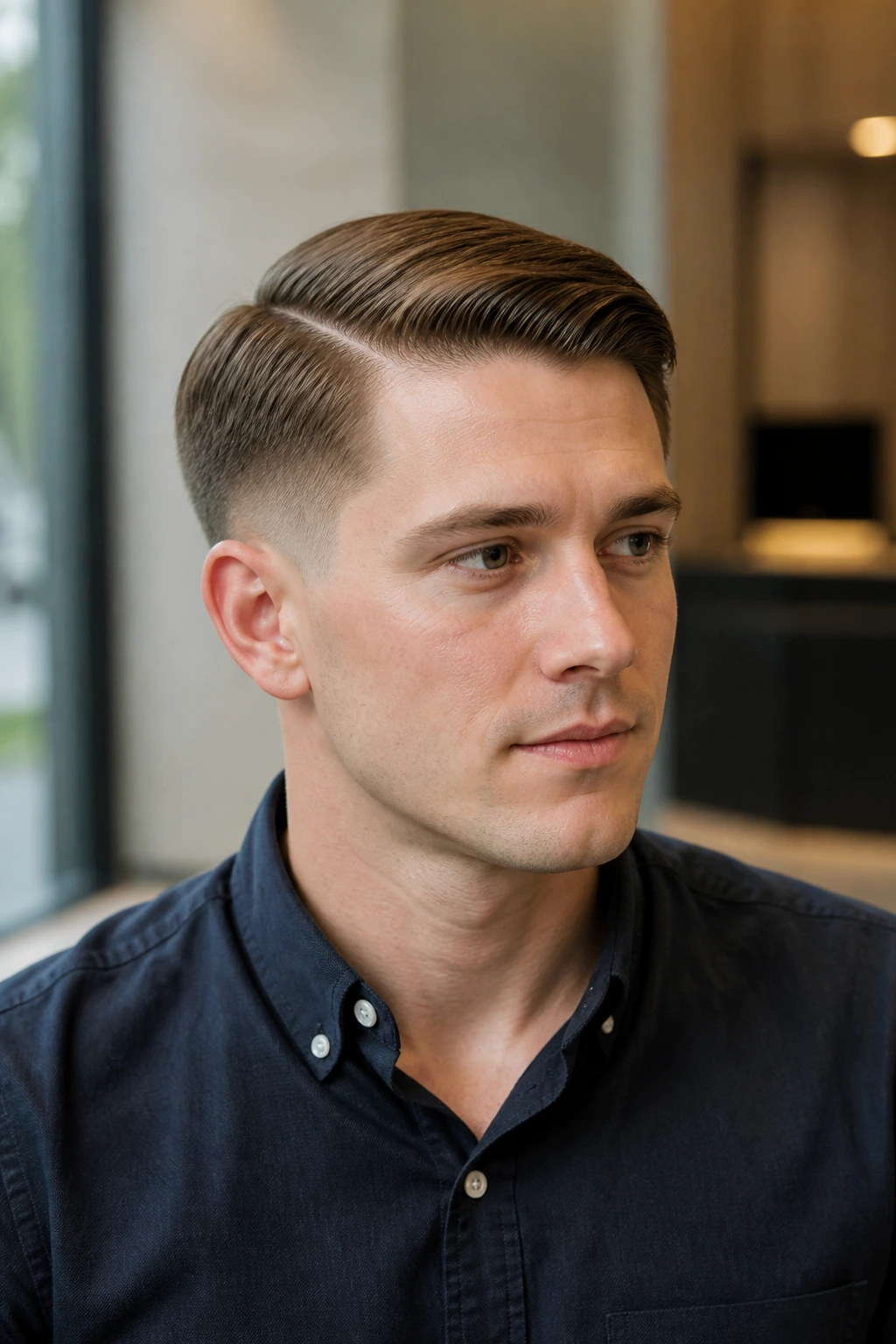
The side part is old-school, but the buzzed taper keeps it from feeling stuck in the past. Keep the top long enough to lay over cleanly, then taper the sides down close around the ears and back of the neck. A low taper, not a harsh skin fade, gives the style a smoother edge.
This version suits someone who wants long hair but needs the cut to behave in a more controlled way. Think office, dinner, interviews, all that. The part line can be natural or sharpened with a trimmer. Either way, the top should carry the look, while the side taper quietly does the cleanup.
A low-shine cream or light pomade is enough. You do not want helmet hair. You want a neat side sweep with a clean frame.
8. Pompadour with Buzzed Temples
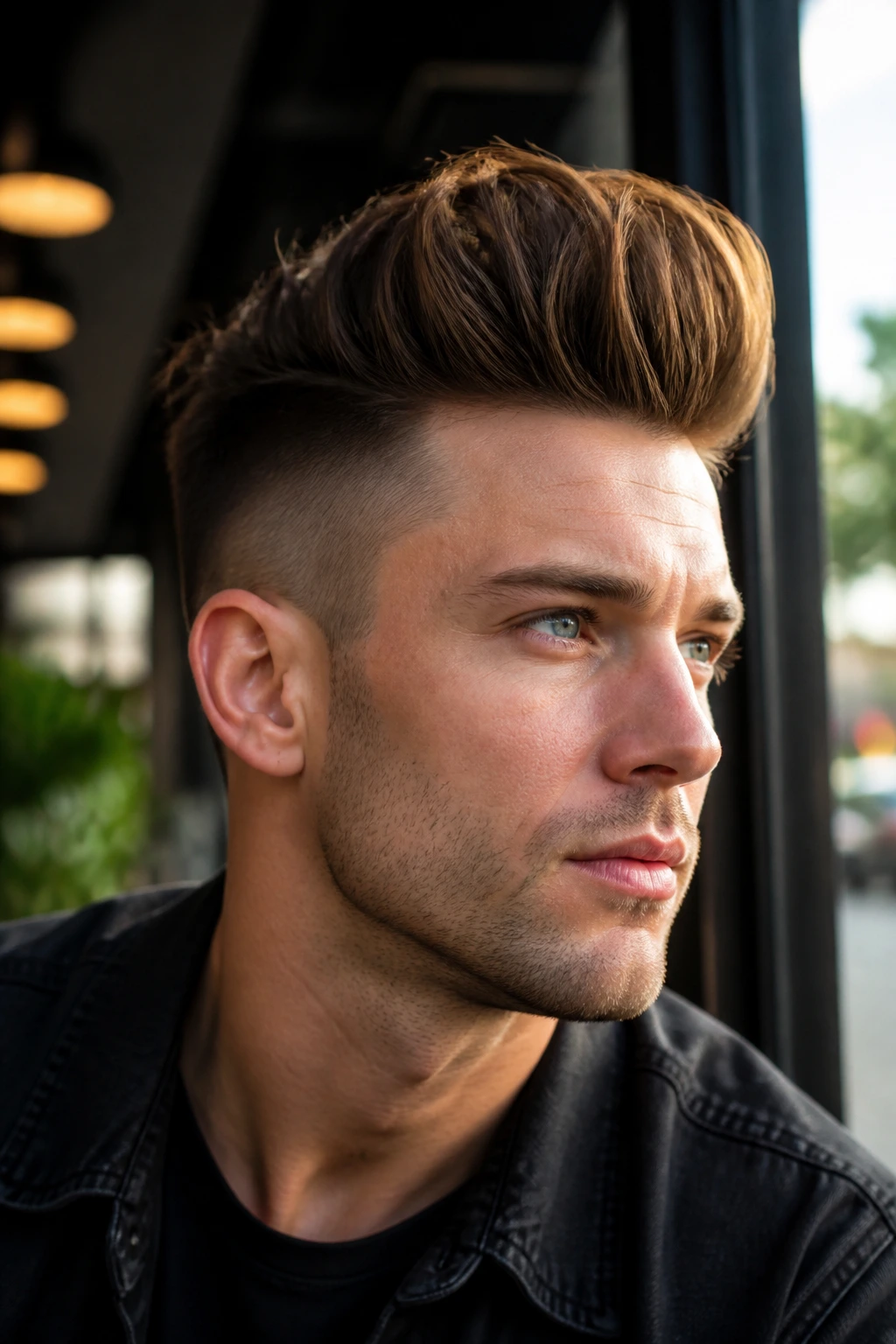
A pompadour sounds dramatic, but the buzzed temples keep it from turning into a costume. The volume stays in the front and crown, while the sides get cut close enough that the height reads taller. If you’ve got dense hair, this shape can be surprisingly wearable.
What to watch for
The front needs lift. That means a blow-dryer, a round brush, or at least a vent brush and some patience. If you skip the dry-down, the pompadour collapses and just looks like hair trying hard. Keep the sides tight with a guard around #0.5 to #2, depending on how sharp you want the contrast.
This cut is less about perfect shine and more about shape. Use product sparingly at the roots, then comb the top back and up with your fingers. If the silhouette is right, the rest takes care of itself.
9. Modern Mullet with a Buzzed Base
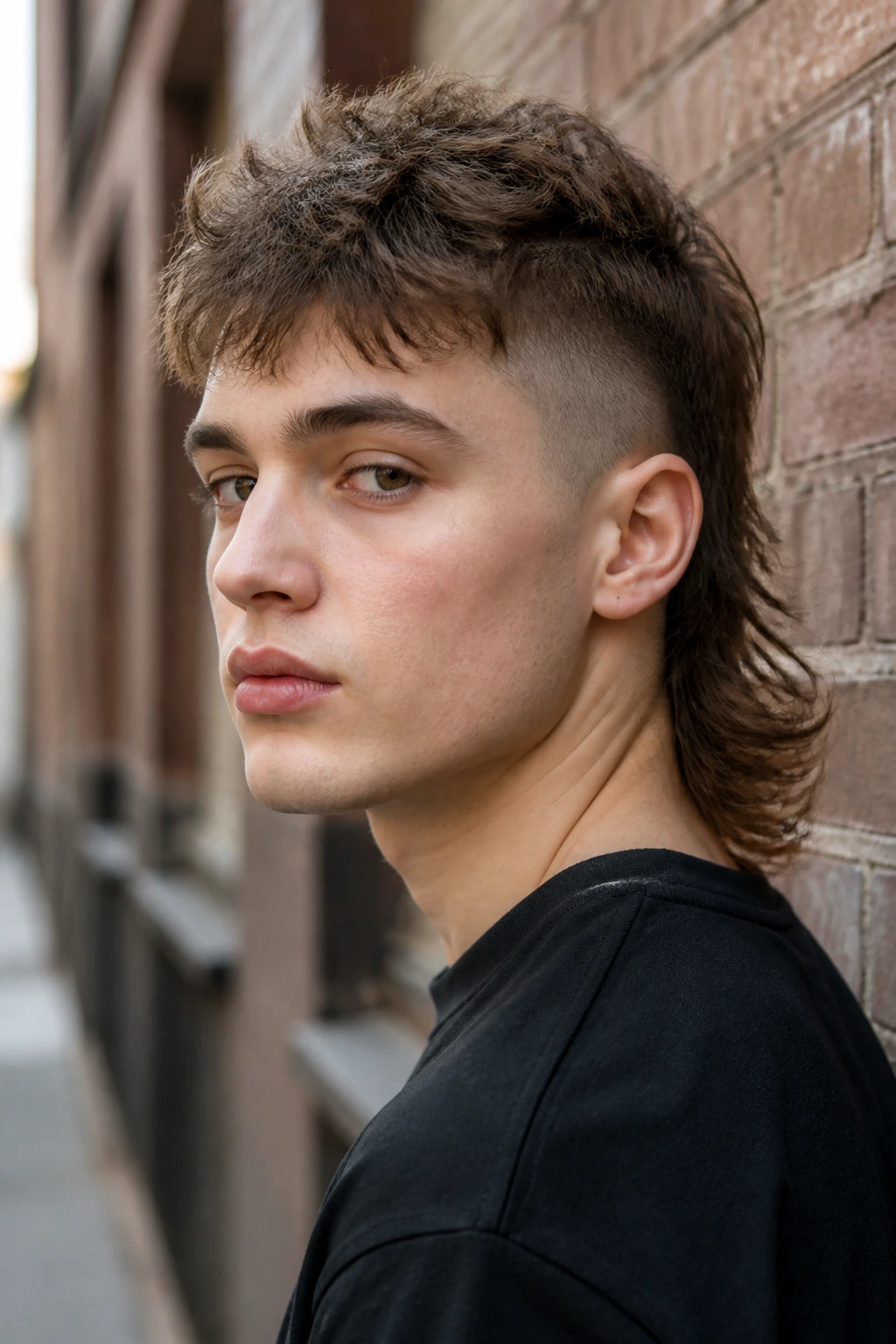
The mullet is not subtle. That’s the fun of it. Buzzed sides and a clean lower perimeter make the long back section feel intentional instead of accidental, and the top stays slightly longer so the whole cut has direction. It’s a better haircut when the back is shaped, not just left to grow wild.
This version works best when the top and back are connected by texture. You want movement at the crown and some length at the nape, with the sides carved down close. If the transition is too abrupt, the cut starts to feel unfinished. If it’s too soft, the mullet loses its bite.
A texturizing spray or light paste helps keep the shape messy in a good way. Not greasy. Not stiff. Just enough separation to let the layers show.
10. Burst Fade Faux Hawk
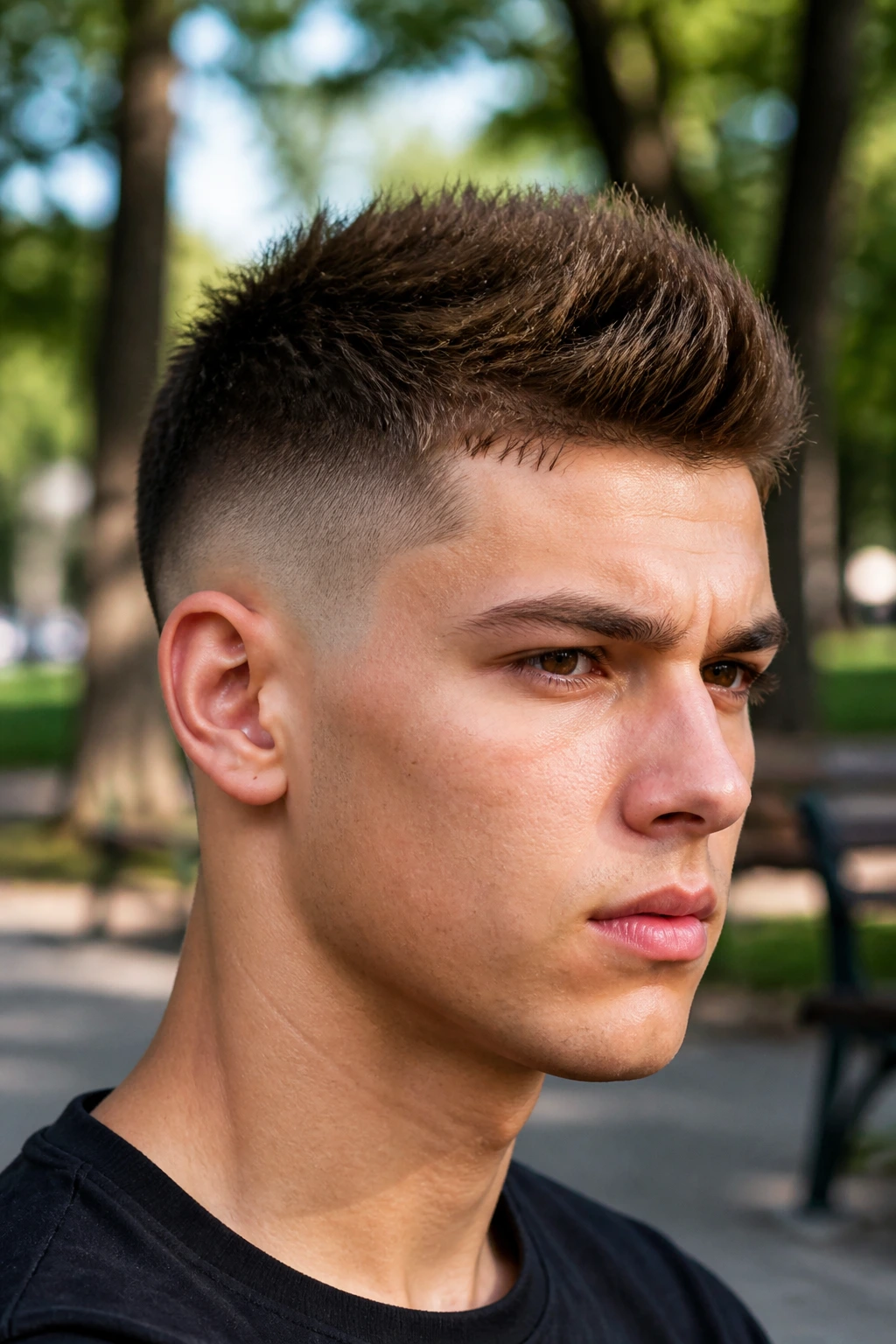
The burst fade hugs the ear and curves around the head, which makes it perfect for a faux hawk that needs some lift down the center. The sides vanish in an arc, while the middle strip stays long enough to push upward or forward. This is one of the most balanced edgy cuts on the list.
It suits thick hair especially well because the fade removes the bulk that usually crowds the ears. The top can be 3 to 6 inches, depending on how tall you want the hawk to sit. With shorter hair, it reads sporty. With longer hair, it gets a little louder.
A firm clay or paste is the move here. Use your fingers to pinch the center ridge and keep the edges soft. The point is shape, not spikes from the early-2000s playbook.
11. Temple Fade with Long Waves
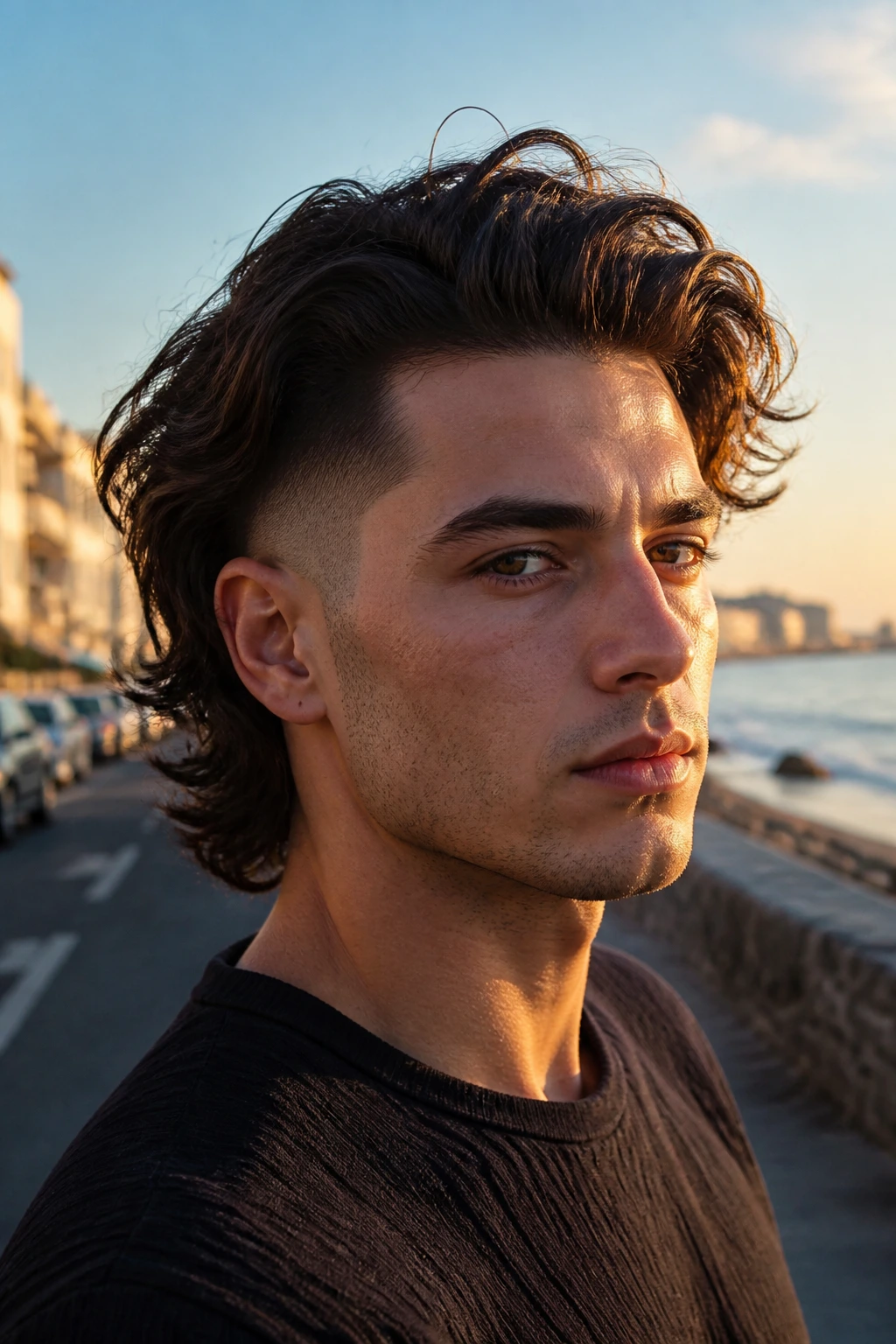
Temple fades are sneaky. They clean up just the front corners and let the rest of the hair stay long, which is why they work so well with waves. The fade keeps the temples from puffing out, and the waves keep their natural pattern on top and through the crown.
This cut is especially good if you like your hair to move. It doesn’t lock you into one shape. You can wear the waves brushed forward, pushed back, or parted loosely, and the faded temples keep the edges tidy no matter what.
A wave cream or leave-in conditioner helps define the texture without making it crunchy. Keep the neckline neat. Seriously. With this style, a fuzzy back ruins the whole polished-yet-relaxed effect.
12. Buzzed Nape with Loose Long Hair
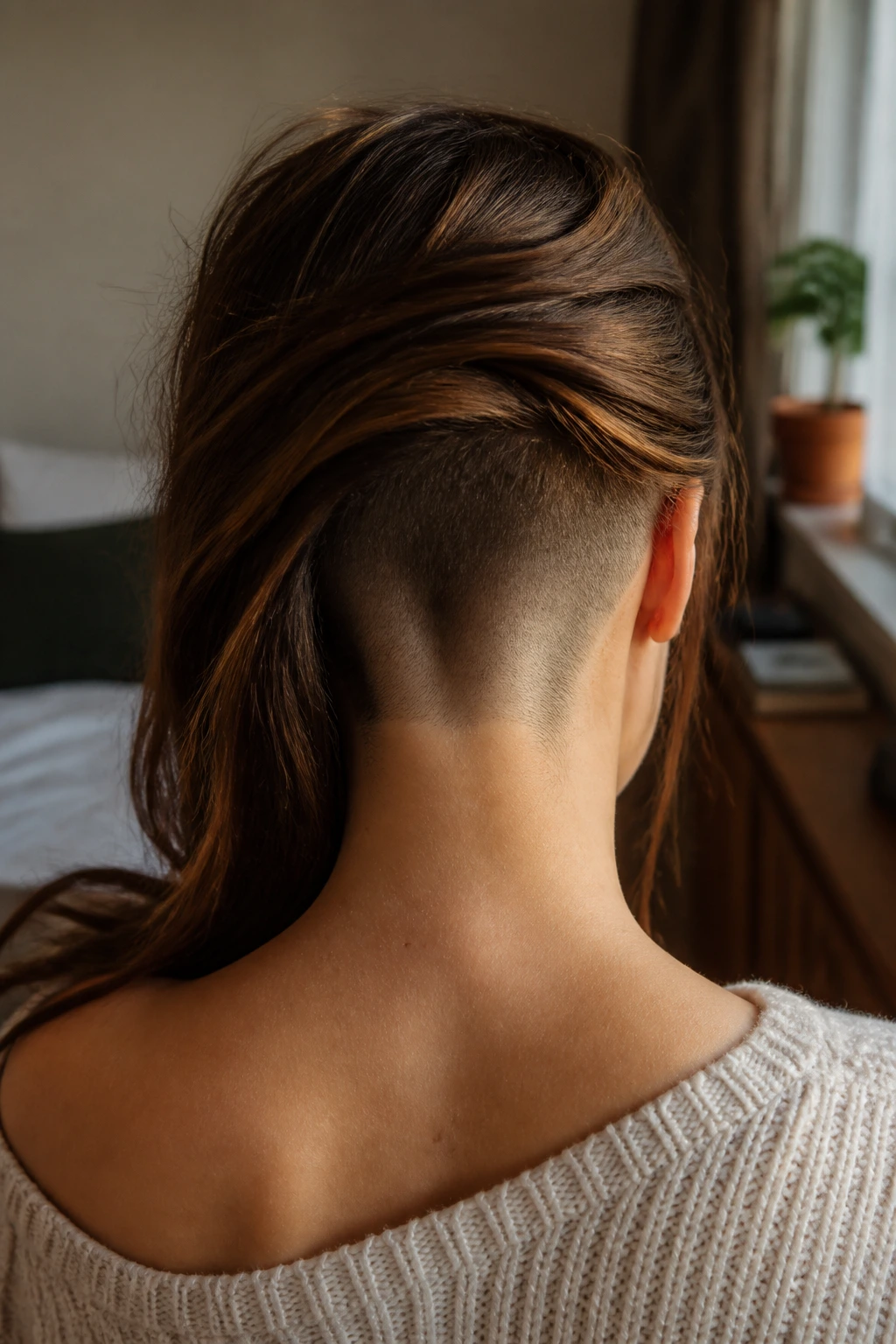
Not every buzzed style has to be dramatic. Sometimes the smartest move is just taking weight out of the nape and lower sides while leaving the rest of the hair long and loose. It’s the quietest version in the whole group, and that’s exactly why some people end up wearing it the most.
Where it shines
This works well if you like putting your hair up during the day and wearing it down at night. The buzzed nape stops the haircut from tangling against collars, and the long top still falls naturally when you let it down. It’s a nice bridge style for people who are growing out a shorter cut.
Ask for the lower back cleaned up with a trimmer or a short guard, not a shaved strip that looks obvious unless you want that look. The point is relief, not a statement.
13. Hard Part with a Heavy Top
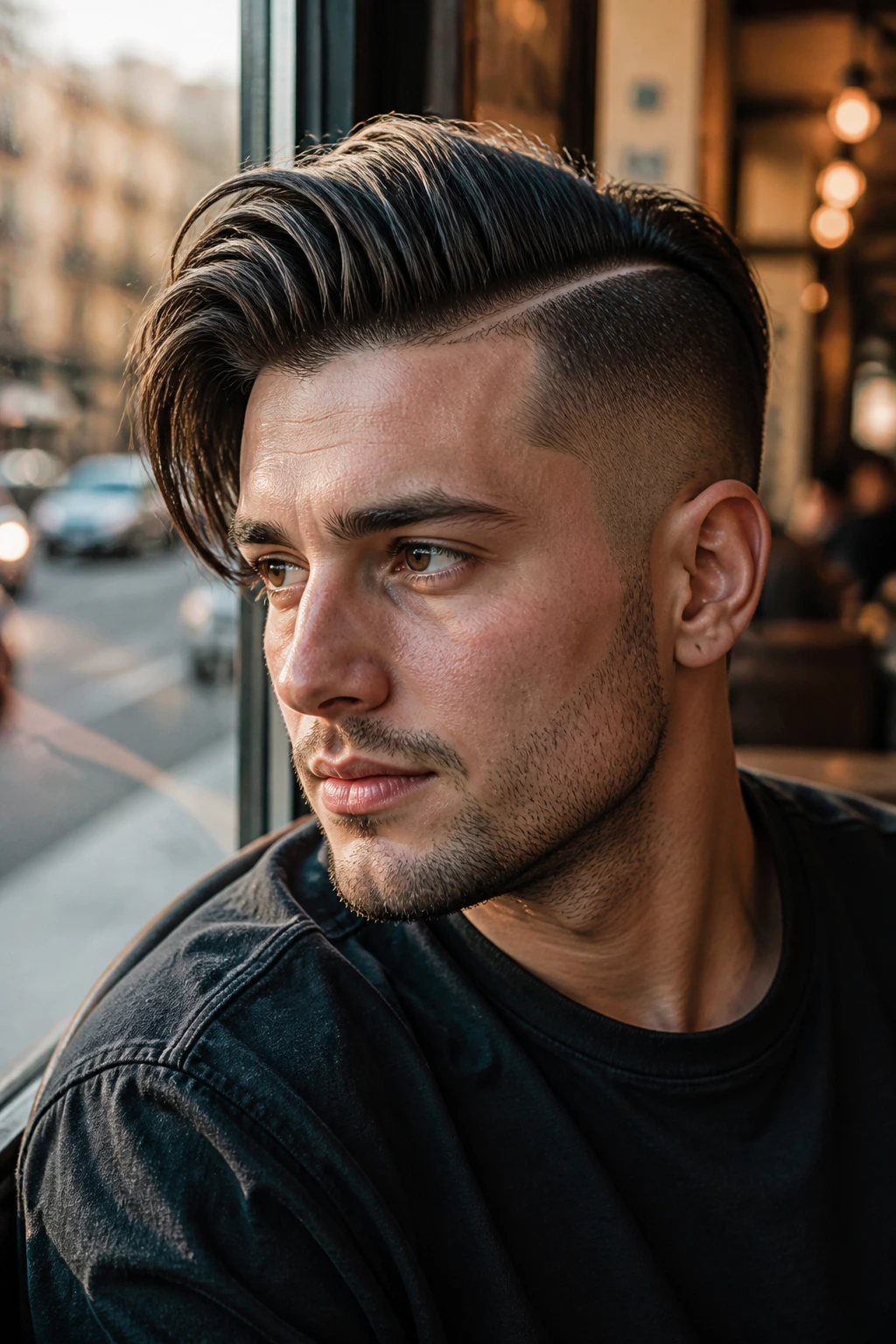
A hard part gives the haircut a line that your eye can follow immediately. Pair that with buzzed sides and a long, heavier top, and the whole thing becomes structured in a way that feels clean without being fussy. The part is shaved in, so the shape stays visible even when the hair gets a little messy.
This cut is best on straight or slightly wavy hair with enough density to hold to one side. The top should have enough weight—usually 4 to 6 inches—to stay where you put it. If the hair is too short, the hard part just looks like a line with no context.
A comb and a medium-hold cream are enough for most days. The hard part does the heavy lifting. Everything else just follows.
14. Top Knot with a Skin Faded Base
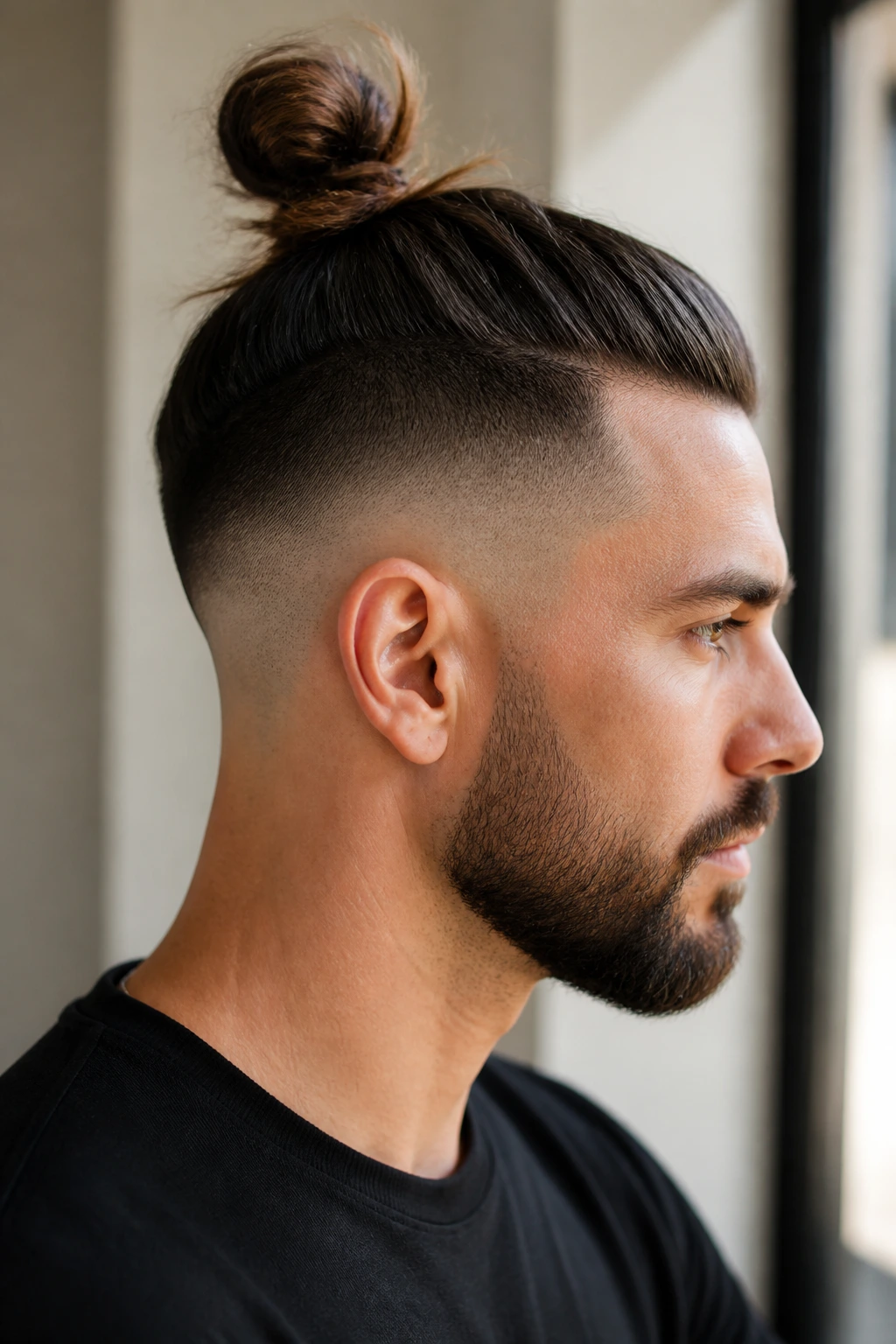
A top knot wants clean sides. Otherwise the style looks like you forgot to finish the haircut. A skin fade at the base sharpens the head shape and makes the knot look tighter, especially when the hair is pulled high rather than low.
This is a strong answer for long hair that gets in the way but still needs to stay long. You can wear the knot tight and neat or a little loose and textured, depending on how formal or casual you want the effect. The fade should be clean around the ears and down to the neck so the bun appears to float over a clear frame.
A little styling cream through the lengths helps control flyaways before you tie it up. Don’t overcomplicate it. The best top knots are held together by shape, not product.
15. Braids with Buzzed Sides
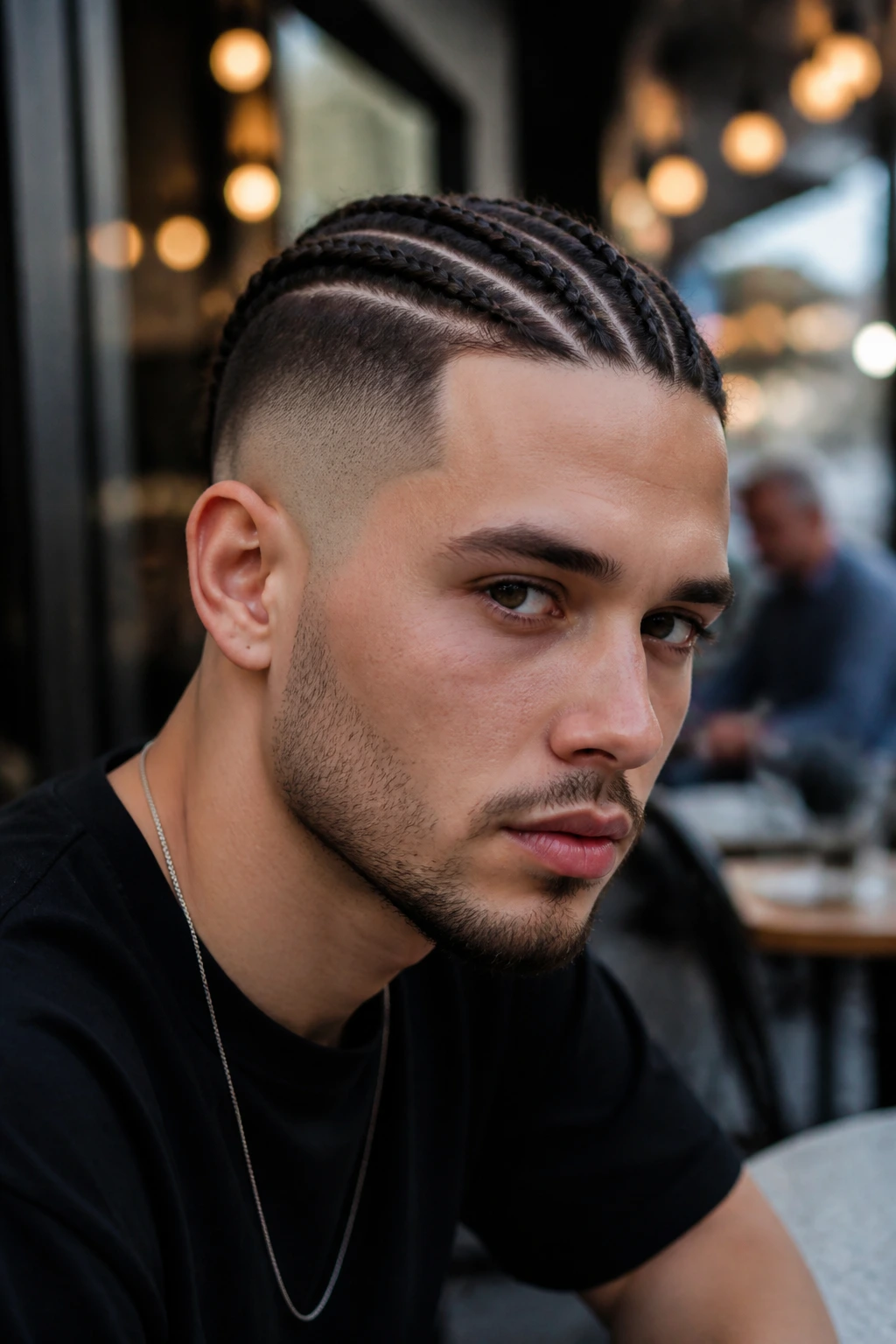
Braids and buzzed sides make sense together because the short sides remove visual noise. Cornrows, box braids, Dutch braids, or a single long braid all stand out more when the perimeter is clipped close. The haircut becomes a frame instead of a competing texture.
The best thing about this look is how clean it keeps the neckline and temples. That matters a lot with braids, which can already be busy. A fade or close taper gives the style a tighter finish and keeps the profile from getting too wide.
If you wear braids often, ask for a base that respects your parting pattern. Otherwise, the haircut can fight the braid layout, and nobody wants that. A good barber will shape the sides with the braids in mind.
16. Locs with a Tapered Perimeter
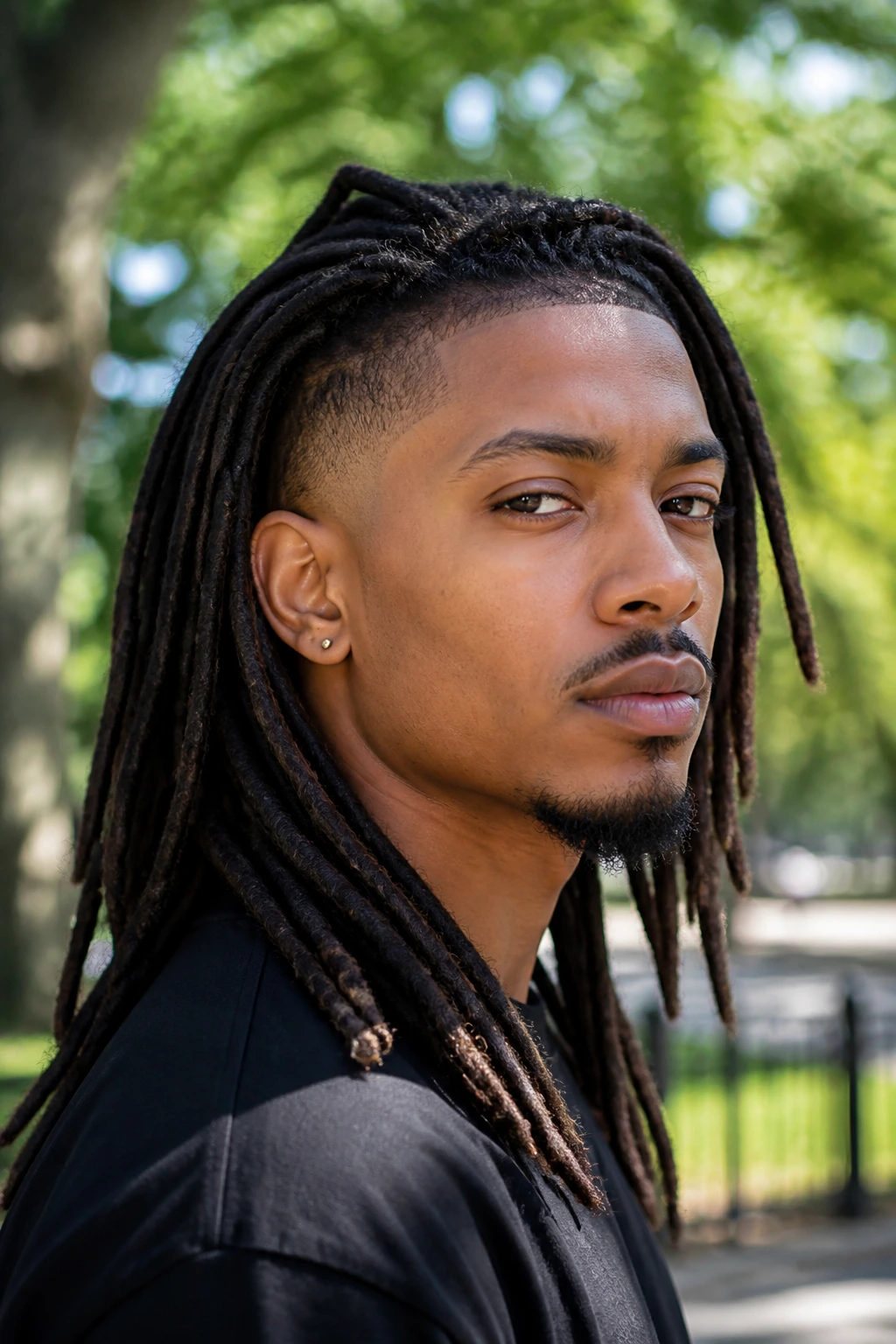
Locs look especially good with a tapered perimeter because the haircut keeps the edges crisp without stealing attention from the length. The taper around the temples, ears, and nape gives the locs room to hang cleanly. The result feels structured, not heavy.
This is the version to choose if you want your locs to stay the hero of the style. A hard fade can be too sharp for some people; a taper is softer and lets the texture lead. The top and length remain the focus, while the short edges simply keep everything neat.
Palm roll or retwist as needed, and keep the taper fresh every couple of weeks if you like a clean outline. It’s a small detail, but the whole cut depends on it.
17. Hidden Underlayer Buzz with Long Shag
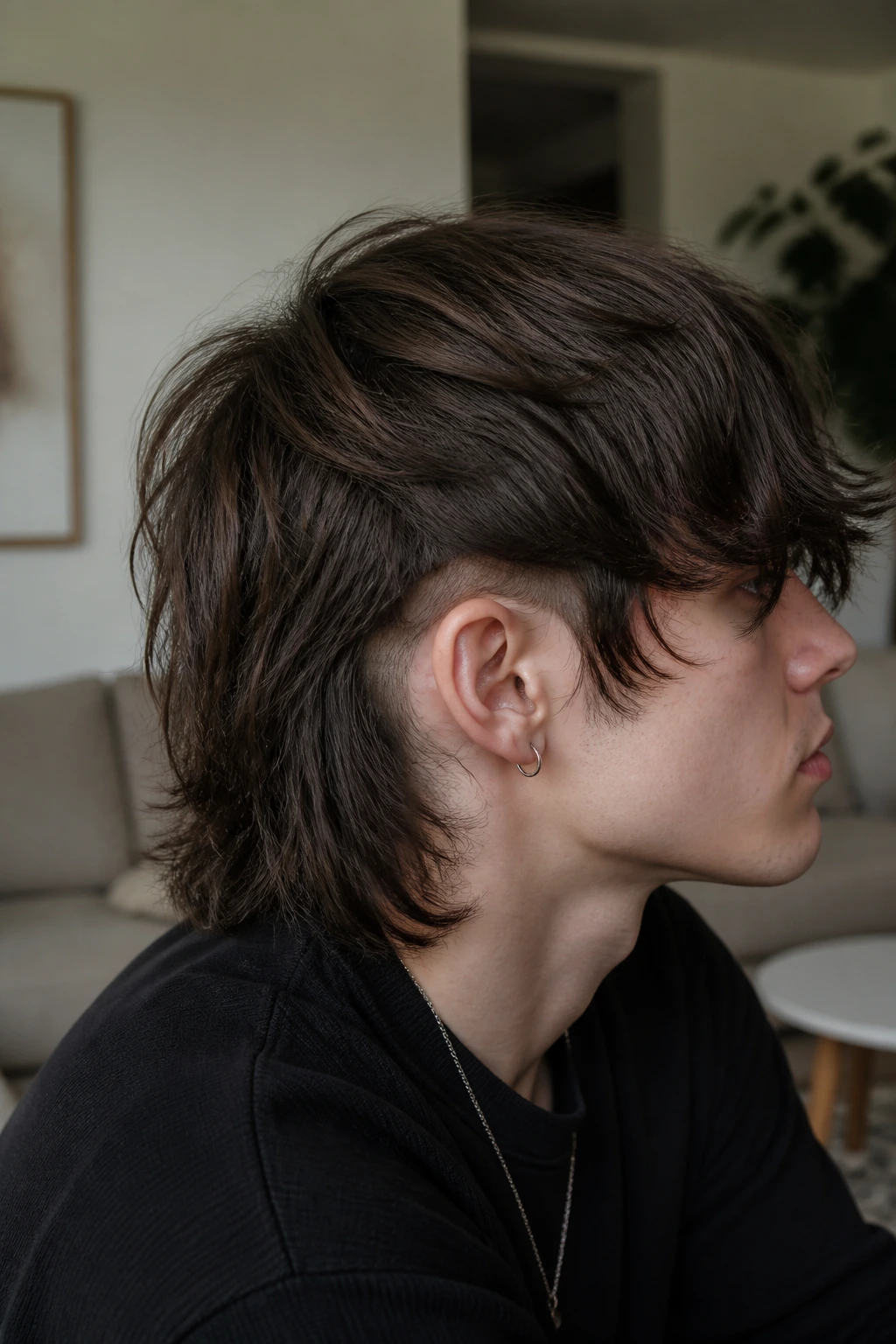
Here’s a smart one. Buzz the underlayer and keep the long shag on top. The haircut looks like full long hair from most angles, but the removed bulk underneath makes it lighter, cooler, and much easier to style. If you have thick hair, this can feel like taking a weight vest off.
The trick is not to overcut the visible layers. You want the top to fall naturally over the shaved section so the style still reads as long hair, just with more movement. It’s a quieter version of the undercut and a favorite for people who want comfort without a drastic visual change.
The payoff is real. Hair dries faster, tangles less, and sits closer to the head. That’s a lot of relief for one hidden adjustment.
18. Spiky Crop with Longer Bangs
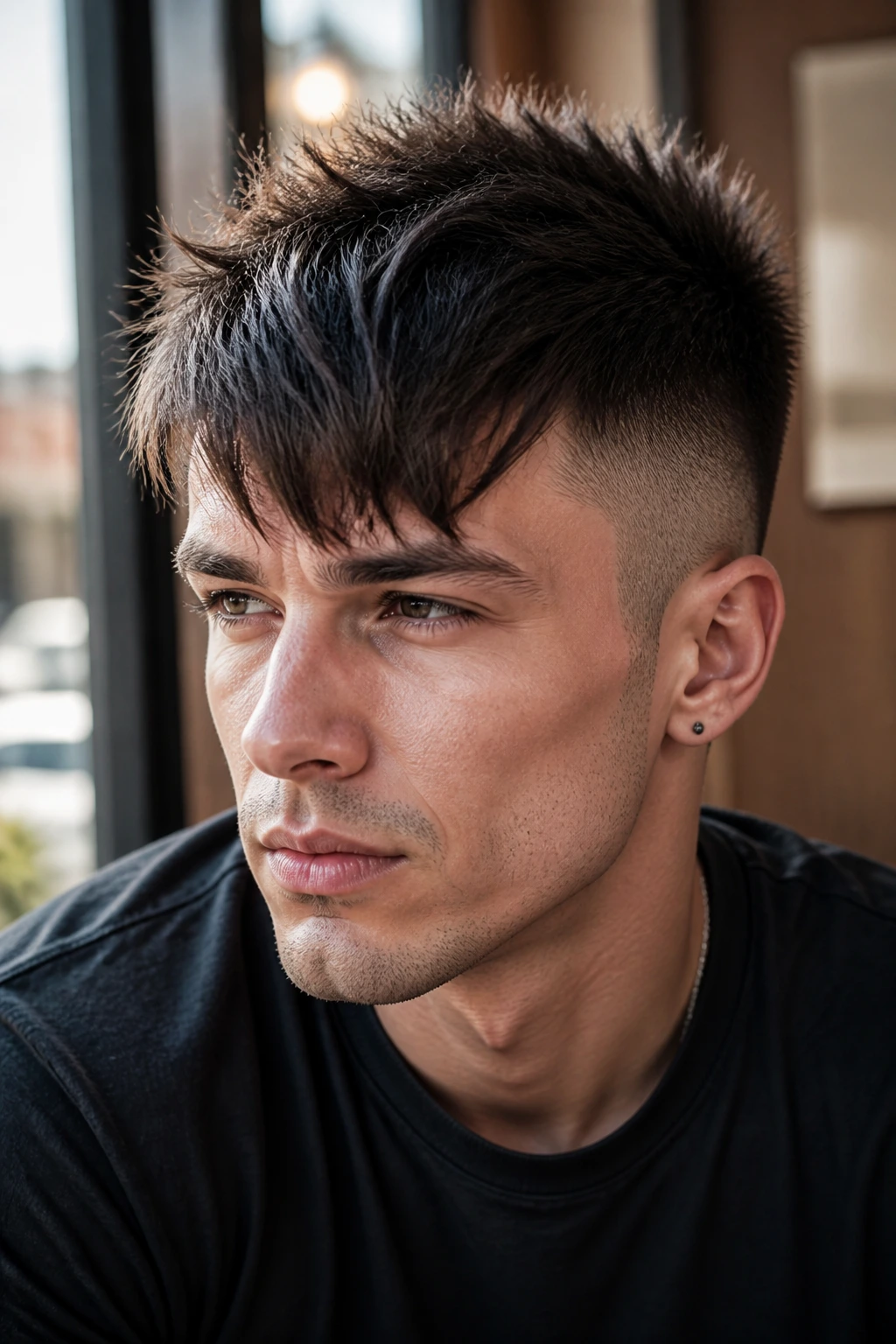
A spiky crop is usually short and blunt, but when you leave the bangs longer and buzz the sides, it picks up some attitude. The bangs can be pushed forward, lifted, or angled to one side. The sides stay close so the front becomes the focus.
How it behaves
This cut is strong on straight hair and even better if the hair has a little thickness. You can work a small amount of clay through the top, pinch the ends, and let the fringe stay a touch longer for movement. If the bangs are too short, the style loses its edge and starts looking generic.
Keep the back tidy as well. A clean nape makes the front look sharper. That balance matters more than people expect.
19. Asymmetrical Sweep with a Close Fade
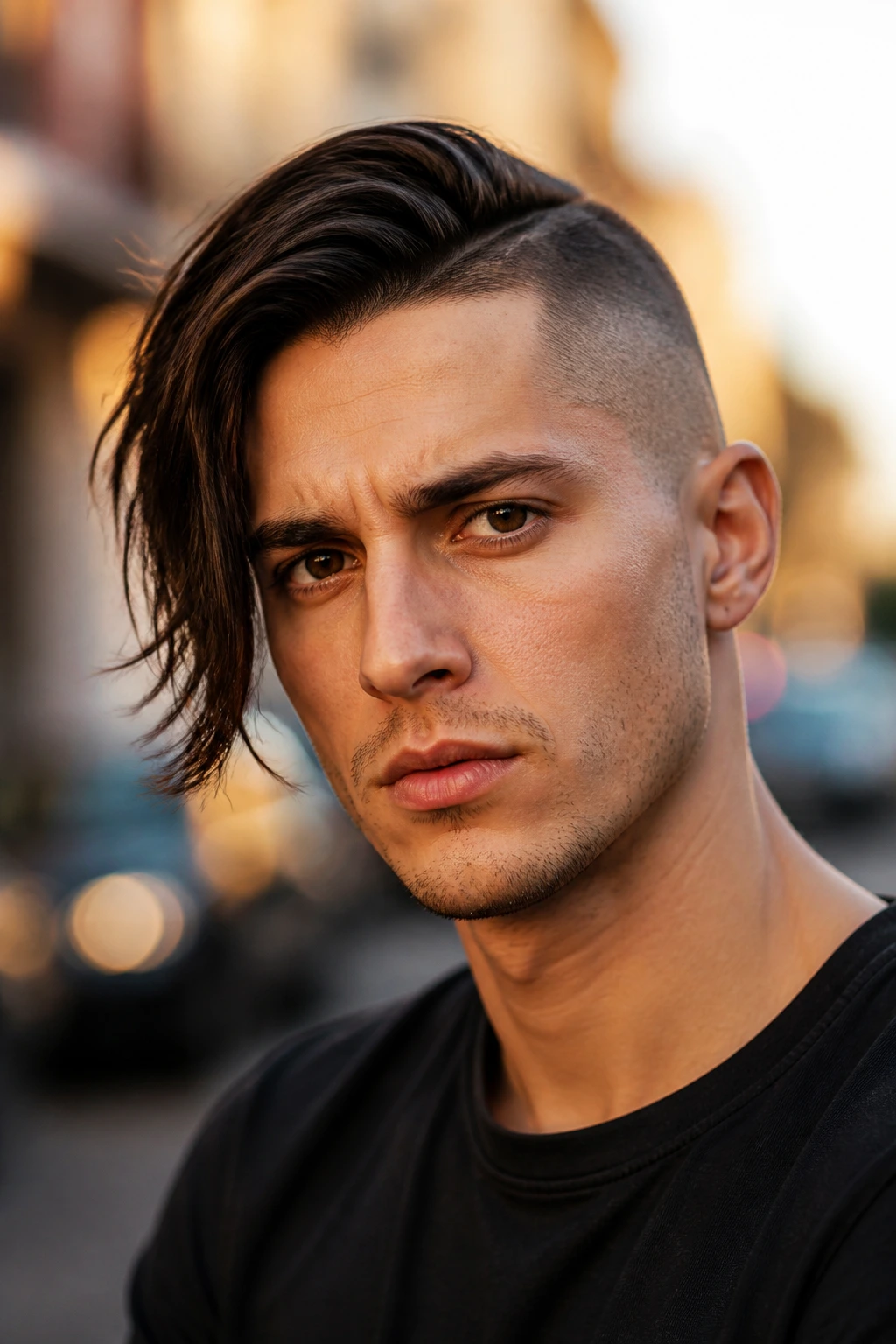
Asymmetry gives the cut a point of view. One side is buzzed closer, the other side keeps more length and sweeps across the forehead or cheekbone. It’s dramatic without needing a wild color or a massive shape change.
This version works well when you want long hair to feel directional. The sweep can soften a strong jawline, frame glasses, or draw attention toward one eye. A close fade on the shorter side keeps the contrast from looking messy, while the longer side can be tucked, brushed, or left loose.
If your hair naturally falls one way, use that. Fighting the grain is tiring, and the haircut should make life easier, not harder.
20. Dyed Sides and Natural Long Top
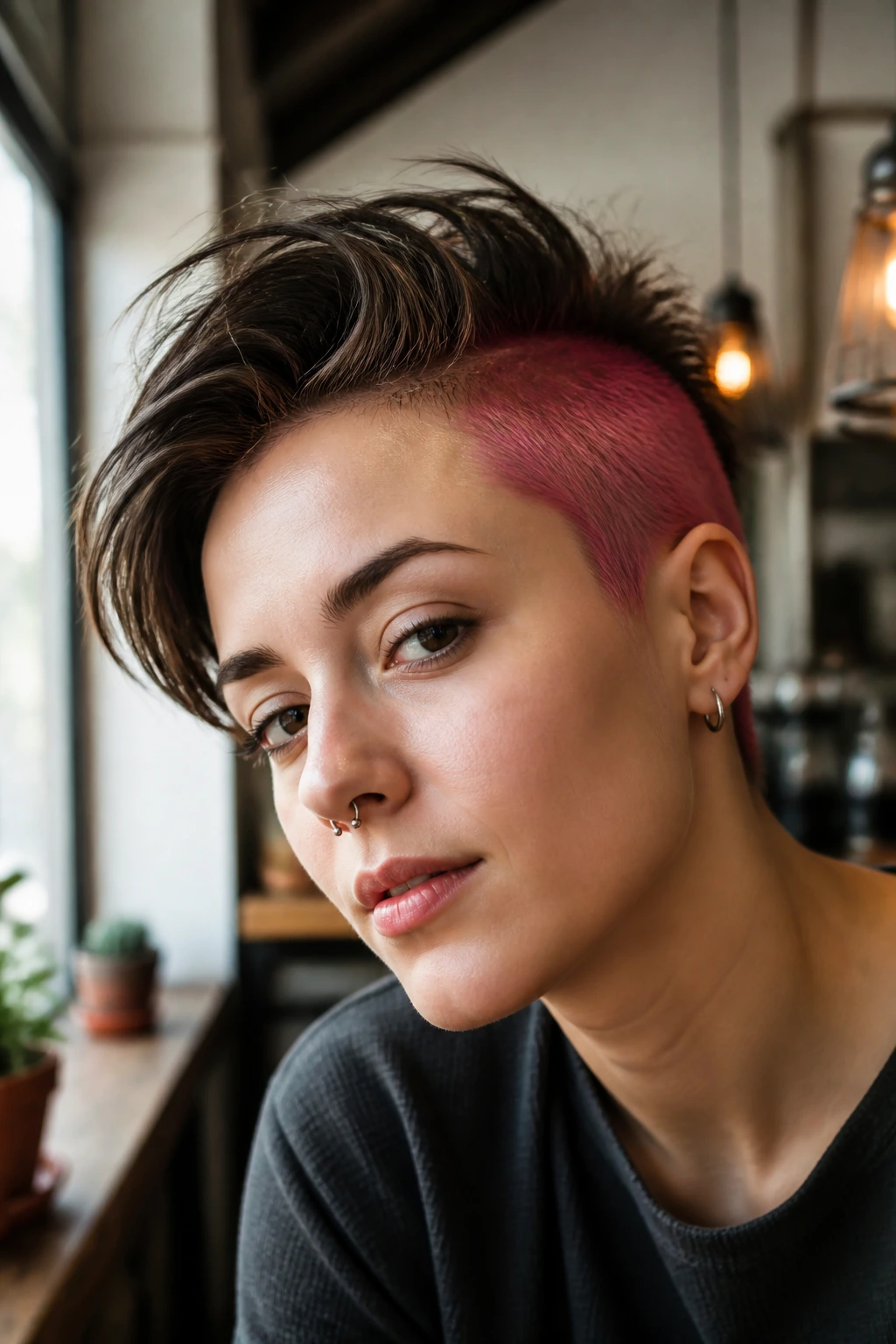
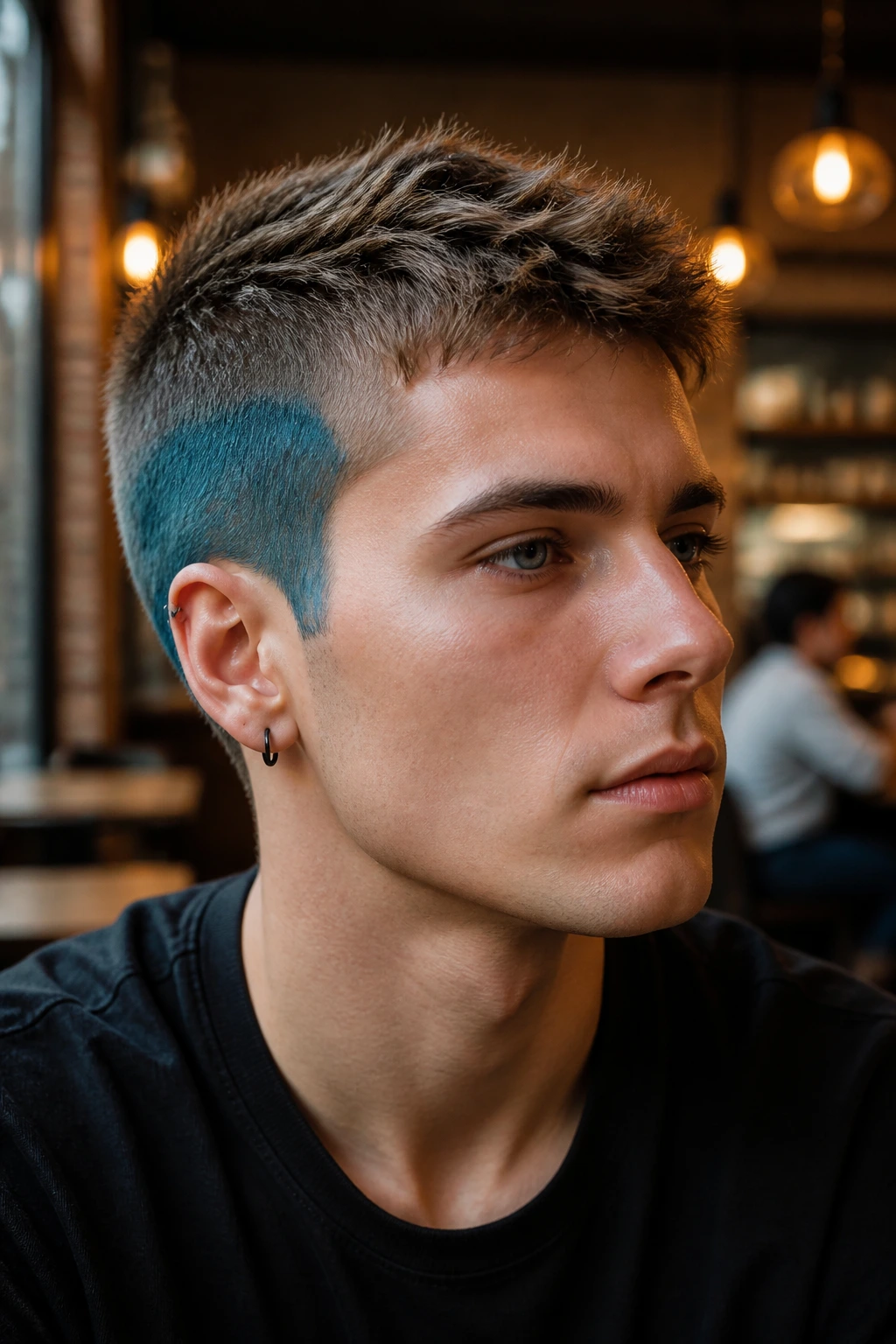
Color changes the whole equation. Buzzed sides are the perfect place for a bright bleach, a deep tone, or a sharp contrast like black sides and a natural top, because the clipped area gives the color a clean field to sit on. The long top stays untouched and becomes the anchor.
This works especially well if you want the cut to read as fashion-first rather than classic. The color does the loud work, while the long top keeps the style from feeling flat. Maintenance is the catch here: color on short sides fades fast and needs touch-ups if you want it crisp.
If the top is curly, wavy, or layered, leave it natural and let the sides carry the drama. That split is the entire point.
21. Receding Hairline Cut with Forward Length
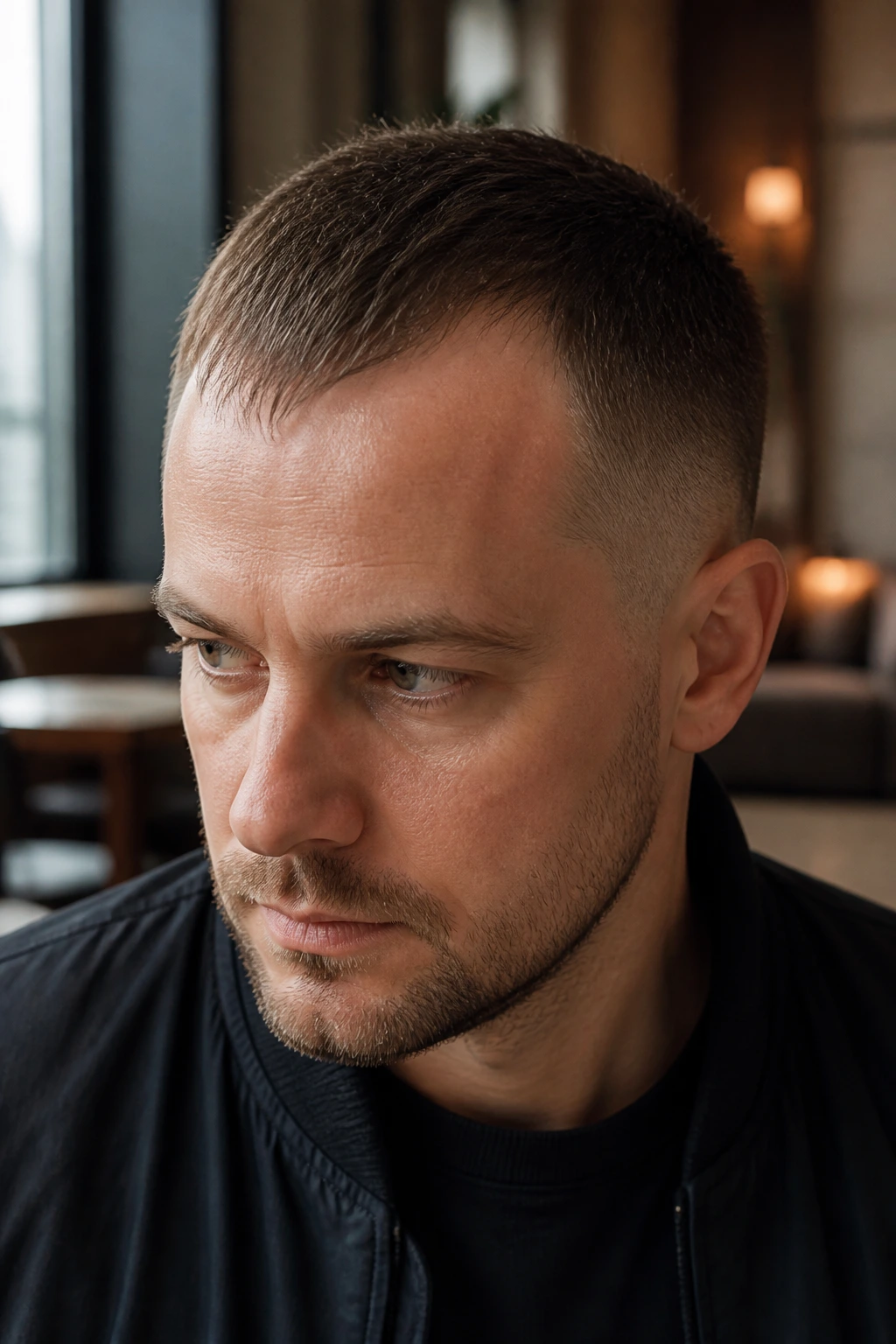
A receding hairline does not mean you need to hide under a cap forever. A buzzed side cut with forward length can make the hairline look deliberate instead of exposed. Keep the top longer in front, add texture, and use the short sides to reduce the contrast at the temples.
What to ask for
Tell the barber you want weight kept forward with a soft fade at the sides. Avoid pushing everything straight back if the hairline is thinning; that usually makes the front look thinner, not fuller. A little fringe or textured forward movement sits better and looks more relaxed.
This cut is honest, which I respect. It doesn’t pretend the hairline is unchanged. It just makes the shape work with what’s there.
22. Widows Peak Quiff with Short Sides
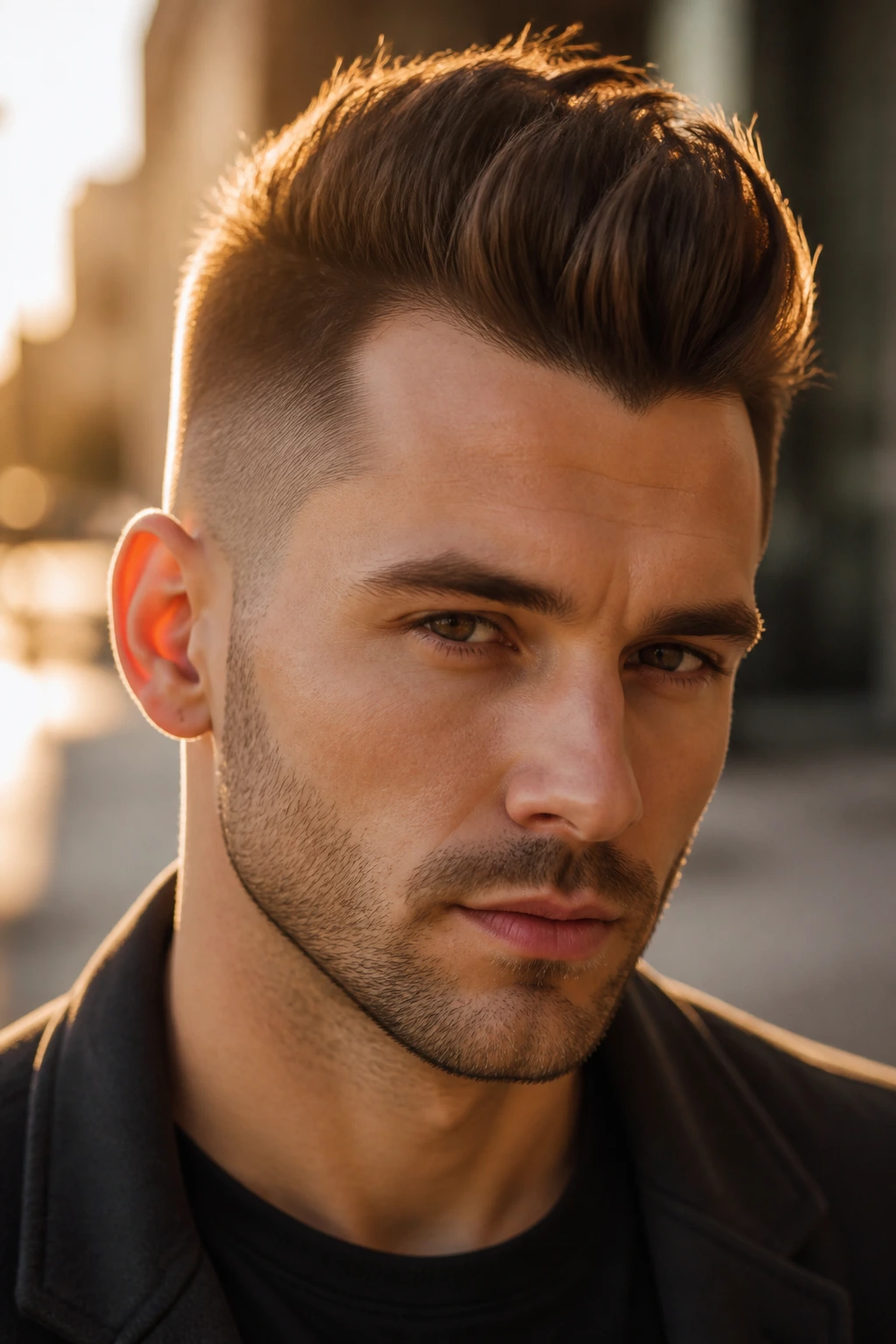
A widows peak can be a headache if the haircut ignores it. A quiff with short sides turns that V-shaped point into a feature instead of a flaw. Keep the front long enough to lift and slightly bend, then fade the sides tight so the eye stays at the center.
The quiff needs some structure, but not so much that it freezes. Blow-dry the front up and back, then lock it with a small amount of matte product. If the hair is too glossy, the peak gets emphasized in the wrong way and the style starts looking stiff.
This is one of the best options for people who want height without a full pompadour. It’s cleaner, lighter, and easier to keep looking good on an ordinary morning.
23. Beard-Balanced Buzz and Long Top
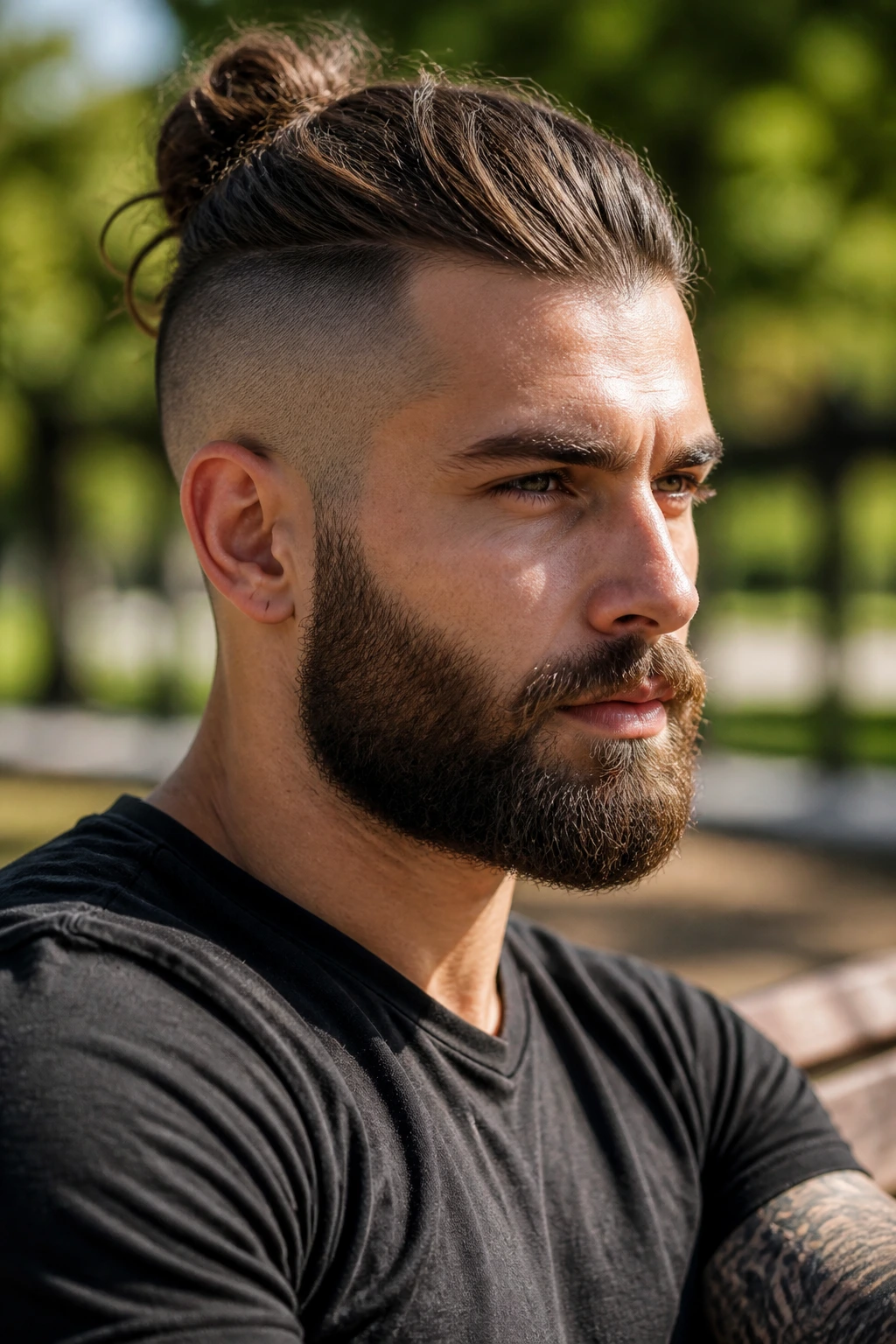
A beard changes the haircut’s proportions. When the sides are buzzed and the top stays long, the beard can act like the visual counterweight, especially if the hair is thick or the face is narrow. This is one of the few styles where the facial hair and the haircut should be planned together.
If the beard is dense, keep the top less explosive and the fade tighter. If the beard is short or neat, you can afford more volume on top. The goal is balance, not symmetry. They’re not the same thing.
This style looks best when the sideburns are blended cleanly into the fade. A hard stop between hair and beard makes the whole thing look chopped in half.
24. Soft Tapered Buzz for First-Timers
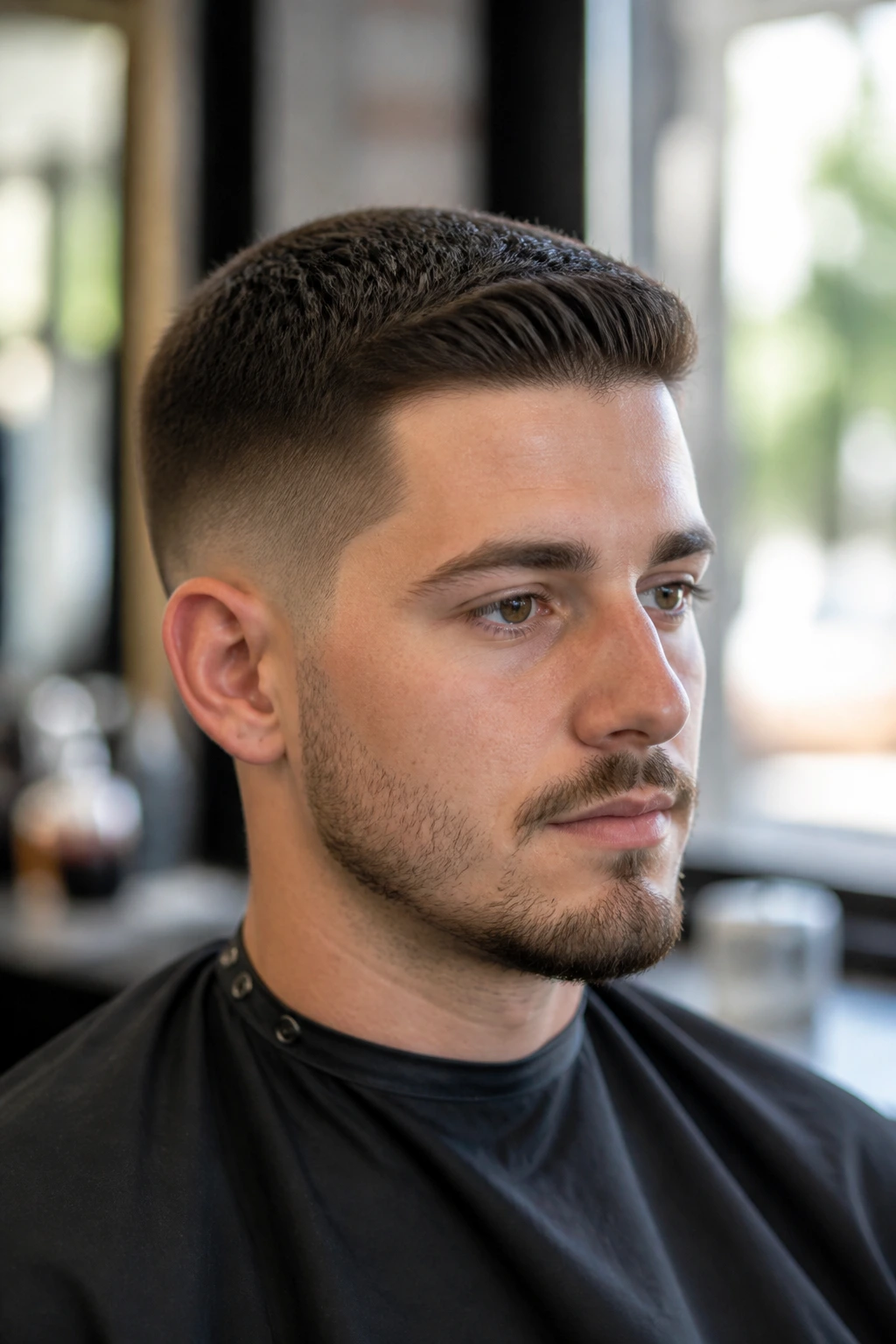
Not everyone wants to jump straight into a skin fade. A soft tapered buzz keeps more length at the sides and back, then shortens gradually so the cut still feels long-friendly. It’s the least intimidating version for someone trying buzzed sides for the first time.
The top can stay fairly long, but the transition should be gentle. That makes grow-out easier too, because there isn’t a harsh line to fight later. If you’re nervous about going short, this is the cut I’d start with before anything more dramatic.
Use a lightweight cream or spray and keep the outline tidy. The softer the fade, the more the long hair gets to stay the focus.
25. Transitional Grow-Out Cut That Stays Clean
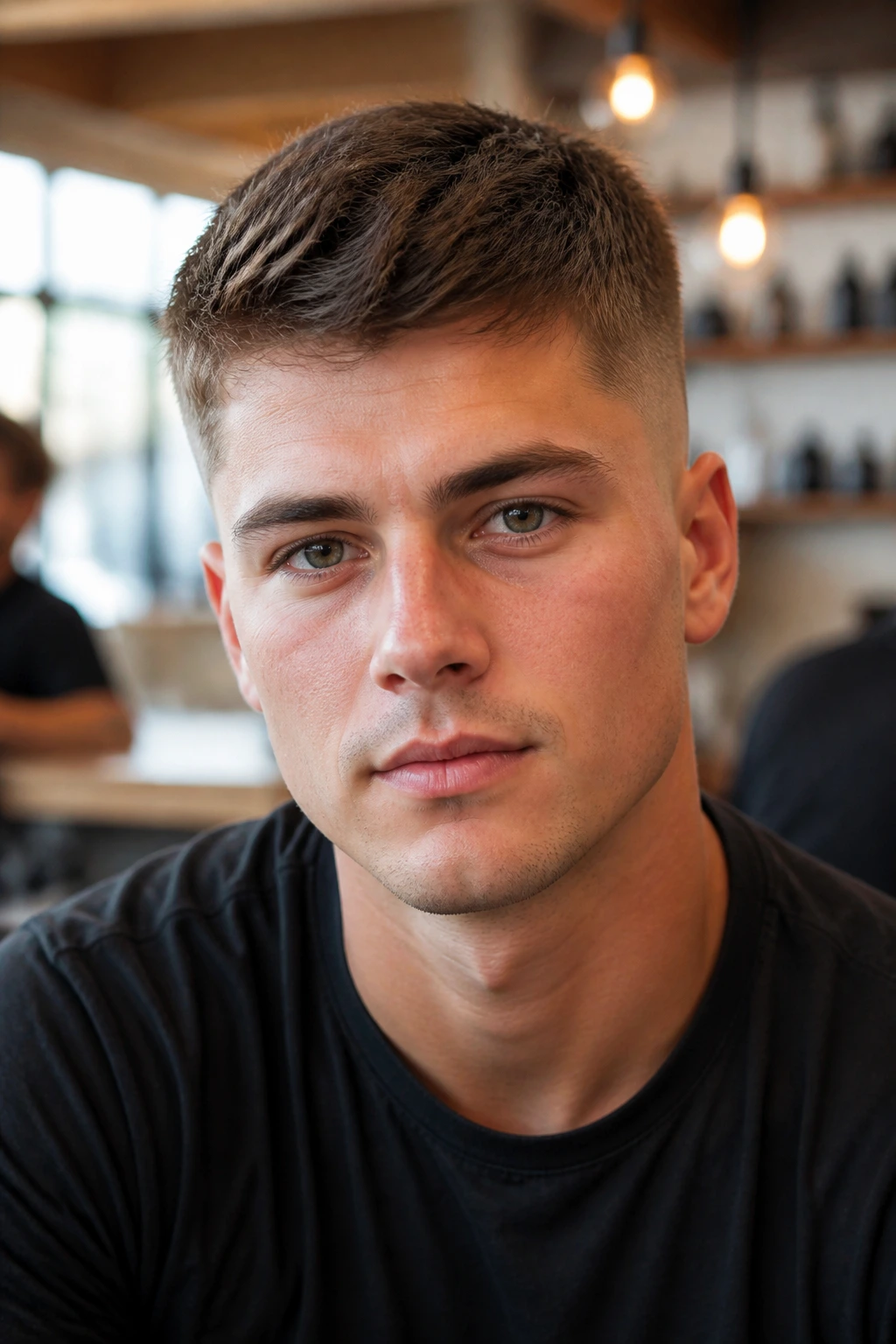
This is the cut for people who already know they might grow the style out later. The sides are clipped short enough to look neat, but not so short that the grow-out turns messy in a week. Think low taper, mid fade, or a guarded buzz that blends into longer layers on top.
It’s a smart middle ground. You get the shape now, and later the haircut can drift toward a longer layered look without a hard reset. That makes it useful if you’re not ready to commit to one long-term shape.
Ask for a cut that grows in steps, not a single cliff. That way the style keeps working even after a few weeks of real life.
Why the Contrast Works So Well on Long Hair
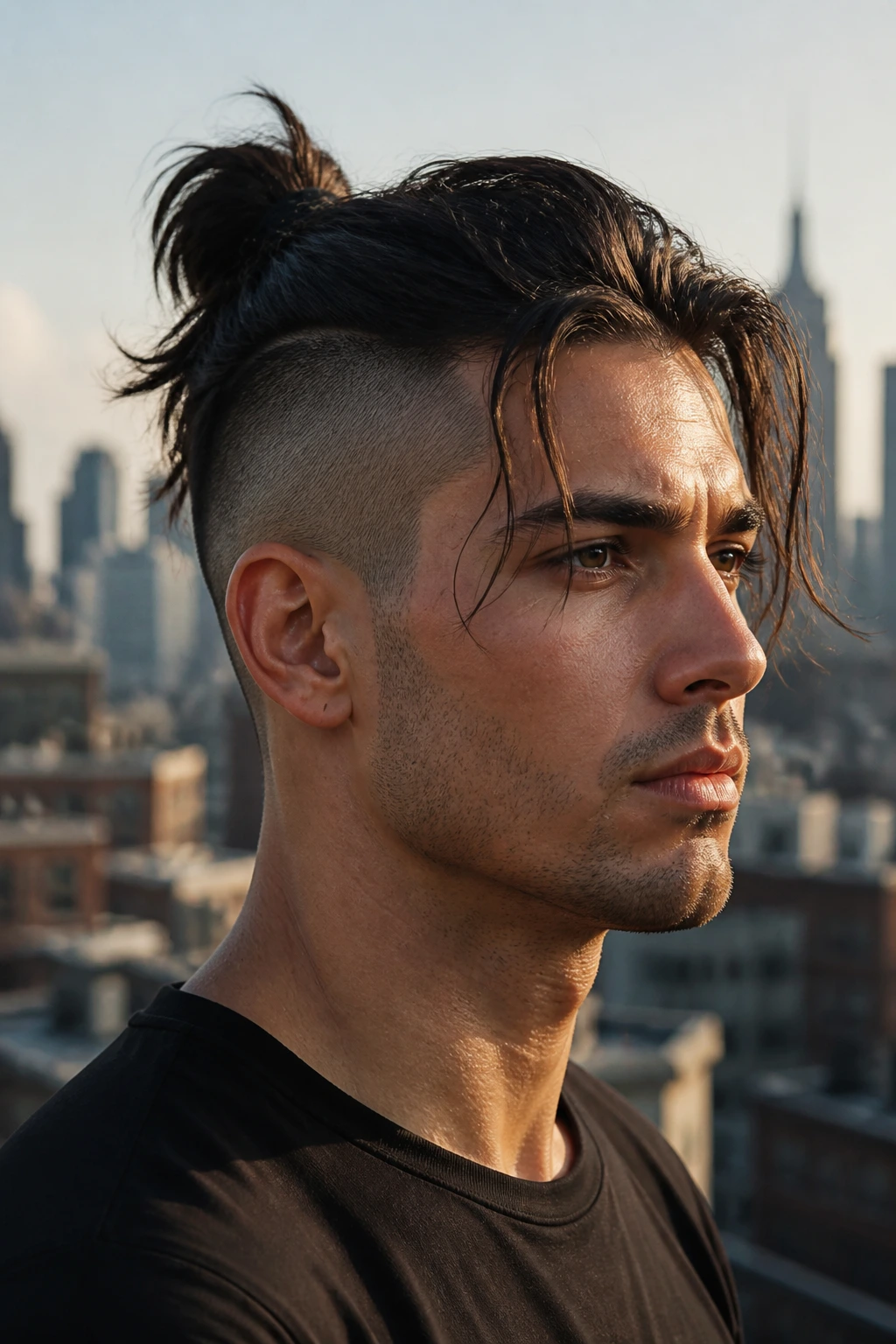
Buzzed sides change the geometry of long hair in a way scissors alone rarely can.
Long hair carries weight at the edges. The temples puff. The nape gets hot. The profile widens. When the sides are clipped down, that weight moves upward and inward, so the eye reads the top section more clearly. A 6-inch crown with a #1 fade on the sides feels lighter and cleaner than the same 6 inches sitting on a full head of hair.
That matters most on thick hair, but thin hair benefits too. Thick hair loses the mushroom effect. Fine hair gains the illusion of density because the clipped sides make the top seem fuller. Curly hair gets shape because the curl pattern can move on top without fighting the bulk around the ears.
There’s also a practical benefit that gets overlooked. Short sides dry fast. They itch less under hats. They keep collars from tangling. And when you wear the top back, you don’t get that heavy “all one length” feeling that makes long hair drag downward.
Essential Tools for These Styles
-
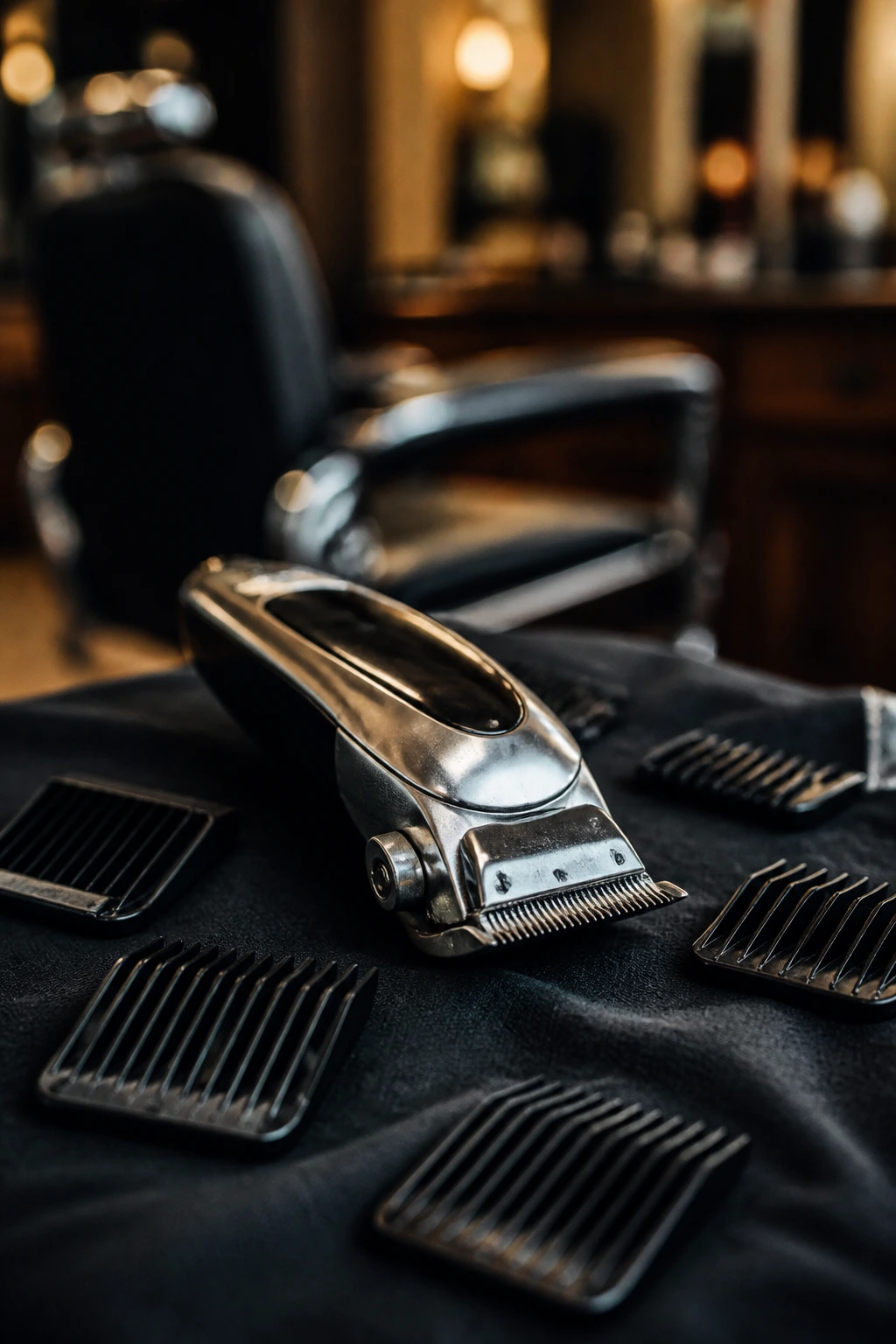
Clippers with guard sizes 0.5 through 4: You need these for the sides, taper, and undercut work; guard choice changes the whole mood of the cut.
-
Detail trimmer: Best for cleaning the neckline, ears, and hard edges around a fade.
-
Handheld mirror: Non-negotiable if you’re trimming at home or checking the back between barber visits.
-
Sectioning clips: Useful for keeping the long top out of the way while you clip the sides or shape the underlayer.
-
Hair dryer with a nozzle: Helps give lift, control cowlicks, and push long tops into shape before product goes in.
-
Vent brush or round brush: A vent brush is faster for texture; a round brush gives more lift for pomp or quiff shapes.
-
Matte clay, cream, or pomade: Pick one based on finish; matte for texture, cream for movement, pomade for shine and slick styles.
-
Curl cream or leave-in conditioner: Important for curly and coily versions so the top stays defined instead of frizzy.
-
Comb with fine and wide teeth: Fine teeth for parts and smooth styling, wide teeth for detangling long hair without ripping at it.
-
Cape or towel: Sounds basic, but it keeps clipper hair from digging into your shirt and neck.
Choosing the Right Guard, Top Length, and Product
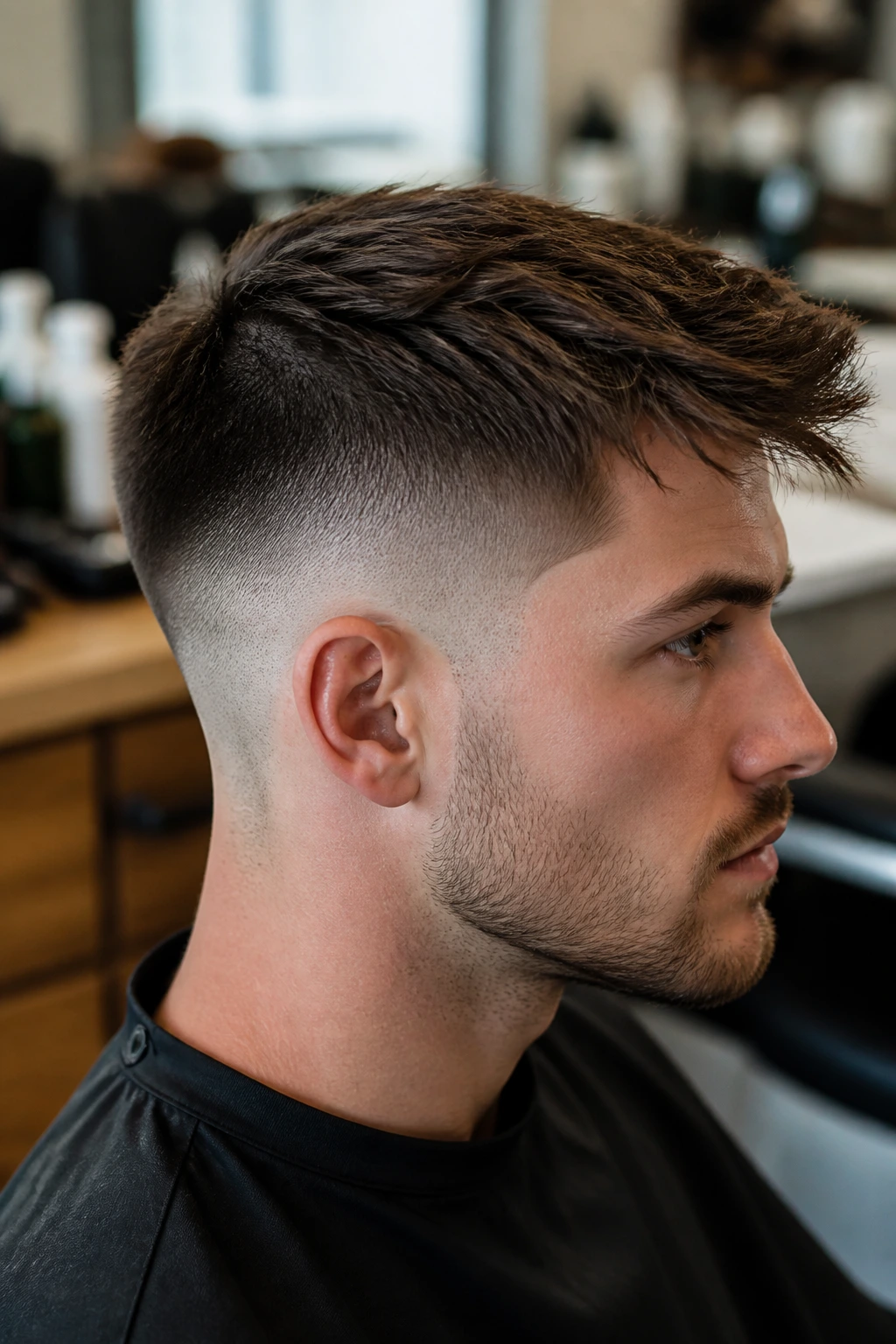
Guard numbers matter more than most people think. A #0 or skin fade makes the contrast bold and modern. A #1 or #2 softens the jump and keeps the cut more wearable if you’re nervous about your scalp showing too much. A #3 or #4 is closer to a taper and gives the style a gentler edge, which can be smart if your hair is fine or your head shape is very angular.
Top length changes the whole personality of the cut. Around 3 to 4 inches gives you texture and forward movement. 5 to 7 inches lets you slick back, side part, or quiff. 8 inches and up opens the door to buns, knots, braids, and fuller tied styles. If the top gets too long without shape, it starts to drag the whole haircut down.
Product choice should follow the haircut, not the other way around. Matte clay and paste work for textured crops, faux hawks, and messy looks. Creams give long hair movement without shine overload. Pomade suits slick-backs and side parts, but use less than you think; too much and the top collapses. For curly hair, leave-in conditioner and curl cream matter more than heavy hold. You want the shape to last, not freeze.
How to Wear These Cuts Day to Day
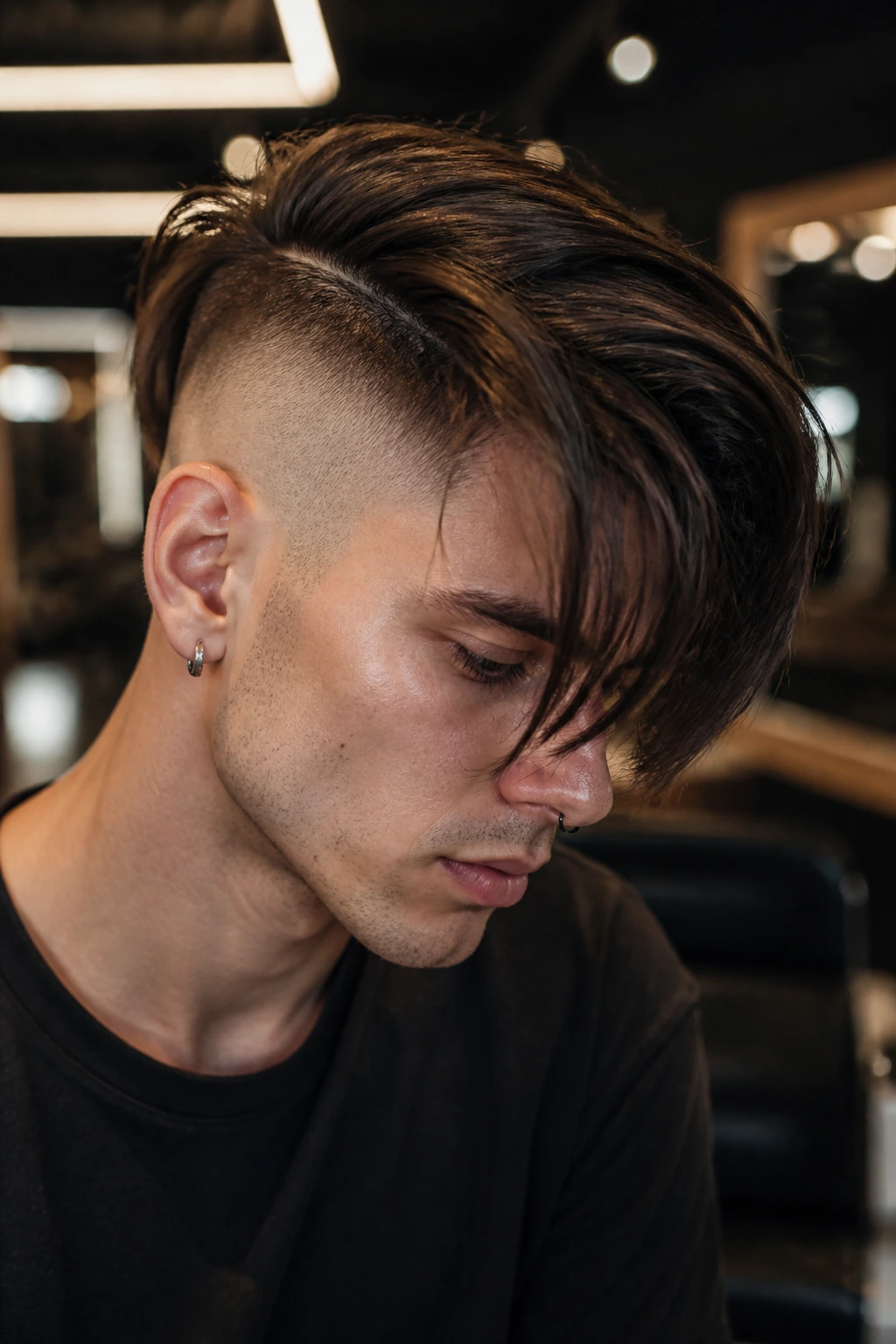
Presentation: Keep the edges tidy and choose one focal point. Either the top is the star, or the fade is the star, or the part is the star. If everything is loud at once, the cut starts looking scattered.
Pairings: Clean sideburns and a neat beard can sharpen a long-top style fast. Glasses work well with curtain fringe, side parts, and softer tapers because they add another frame line. Earrings, collars, and necklaces change the mood too, which sounds small until you see how much a buzzed side opens up the face.
Scale: If you wear the top down, use product sparingly and let the length show texture. If you wear it tied back, pull the sides clean and keep the base neat so the style looks finished from every angle. A half-up look often lands between the two and gives the most flexibility.
Finish: Matte finishes read modern and relaxed. A little shine suits slick backs, pomps, and hard parts. If you’re unsure, start with less product and add only what the hair actually needs. Hair that looks touched, not coated, usually wins.
Extra Tips for Sharper Shape and Easier Styling
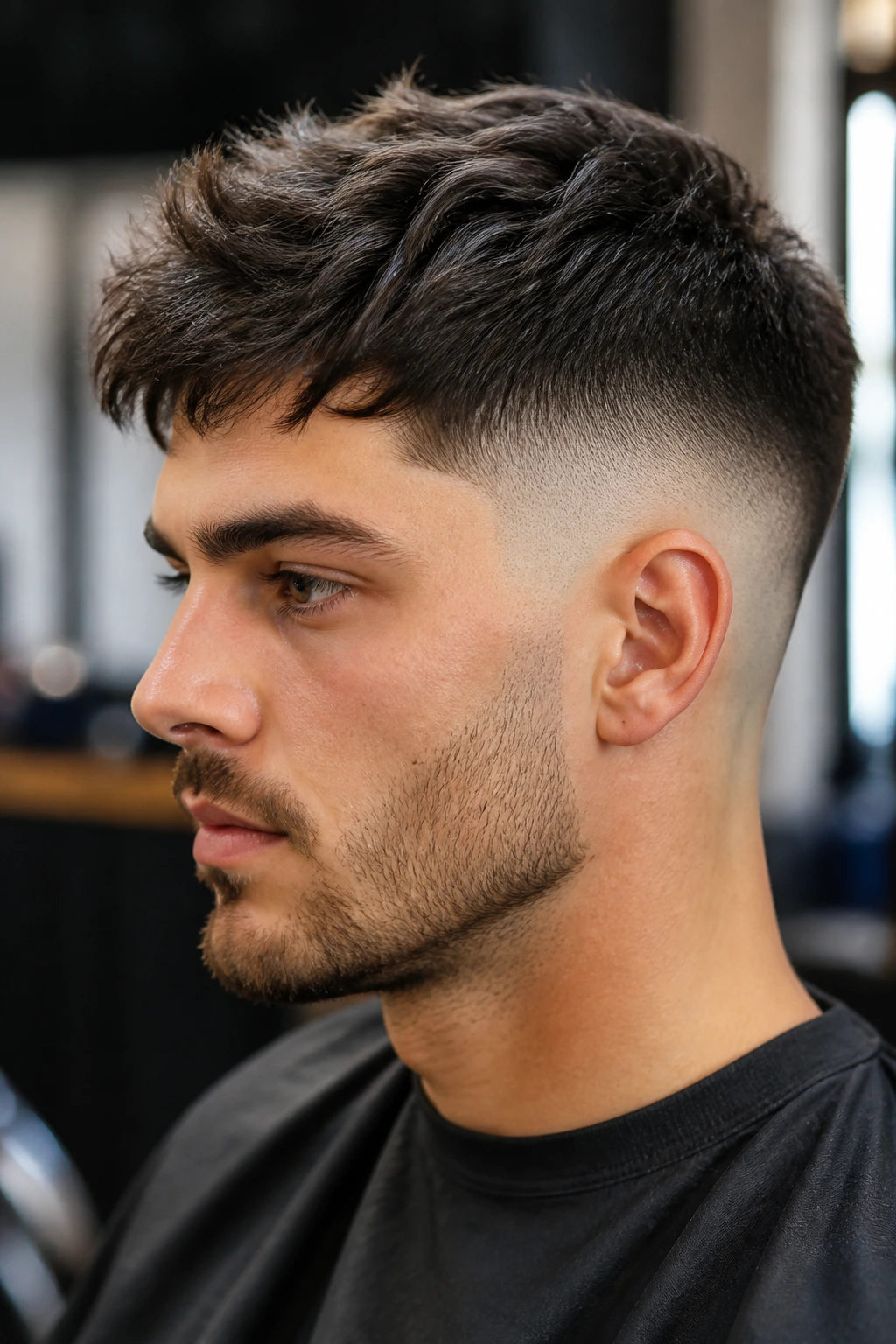
Texture Boost: Blow-dry the top in the opposite direction first, then push it into place. That small detour creates lift at the roots and saves you from dumping in extra product later.
Cleaner Lines: Ask for the neckline and around-ear detail even if you’re keeping the haircut casual. A clean edge makes the long top look intentional, not overgrown.
Soften the Transition: If a skin fade feels too exposed, move up one guard size and ask for a low taper instead. The difference is small on paper and obvious in the mirror.
Make-It-Yours: Add a shaved part, a color panel, or a sharper fringe only if the base cut already works. Decoration is nice. Bad structure with decoration is still a bad haircut.
Common Mistakes That Flatten the Style
-
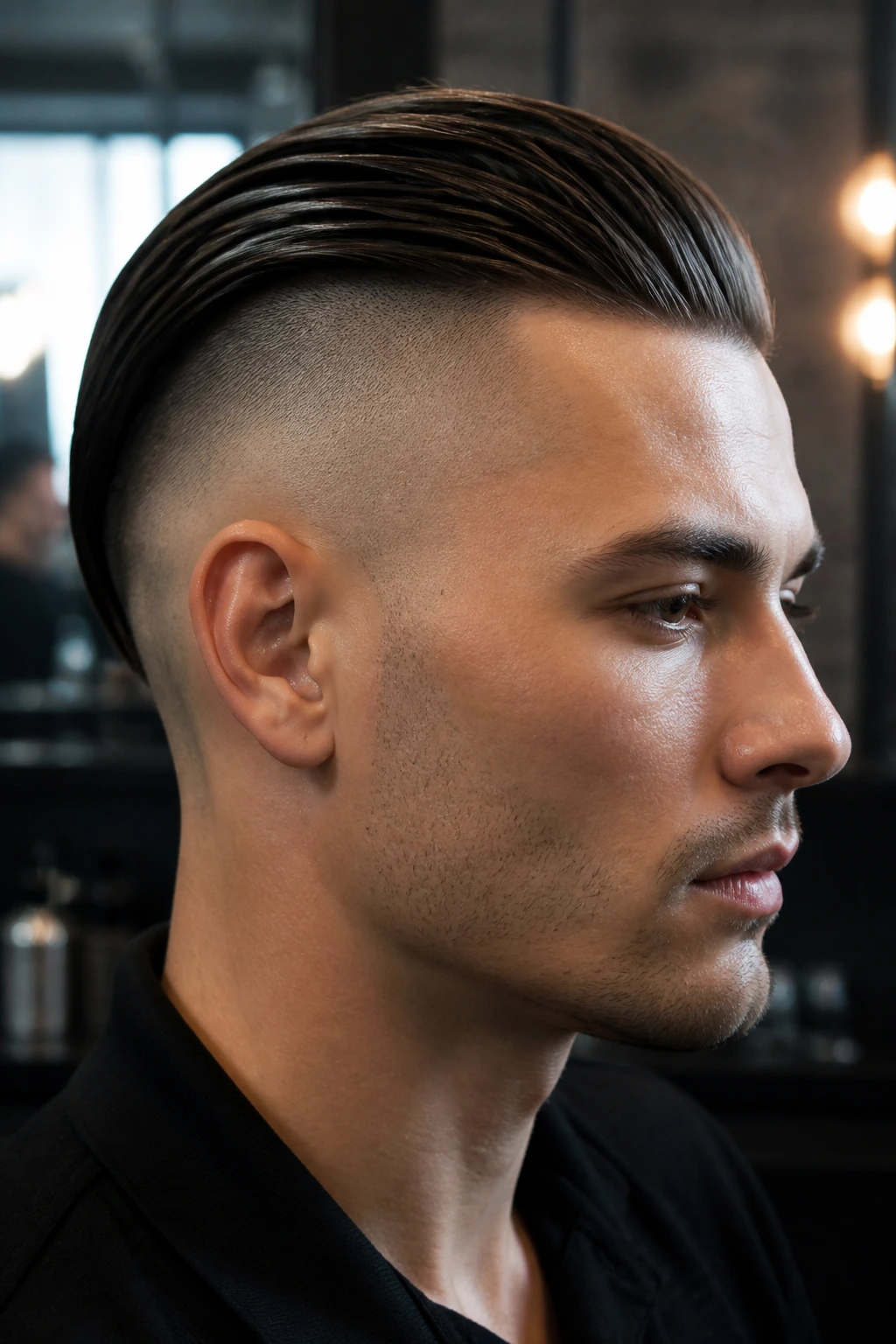
Taking the fade too high too soon: The sides can disappear into the crown on fine hair, which makes the top look thinner. Ask for a lower fade if you’re not sure.
-
Leaving the top long without shape: Long does not mean shapeless. If the top is all one length and never texturized, it hangs like a curtain and fights the rest of the cut.
-
Skipping neckline upkeep: A fuzzy nape weakens every buzzed style. Even a tidy home cleanup every couple of weeks helps.
-
Using too much product: Heavy product closes down texture and makes the long top slump. Start with a pea-sized amount and build only if the hair needs it.
-
Ignoring hair growth patterns: Cowlicks, whorls, and natural part lines matter. If you fight them, the style starts breaking apart by noon.
-
Forgetting the sideburn-beard blend: A sharp cut with a disconnected beard often looks unfinished. Blend the transition or keep the beard equally intentional.
Variations and Adaptations to Try
Low-Contrast Office Cut: Keep the sides at a #3 or #4 and taper around the ears instead of shaving them close. The result is quieter, easier to wear at work, and less stark when you want length without a bold undercut.
High-Drama Skin Fade Build: Go down to skin at the sides and keep the top long enough for a real slick-back, pompadour, or man bun. This is the version that gives you the strongest face frame and the cleanest profile.
Curl-First Version: Leave the top long enough for curl pattern and keep the fade lower so the shape doesn’t get too severe. If the curl is tight, this avoids the “too much scalp, not enough hair” problem.
Braids-and-Buzz Version: Wear the top in braids, twists, or locs while keeping the perimeter buzzed or tapered. The contrast makes the braids read more clearly and keeps the sides from ballooning out.
Color Block Version: Dye the short sides lighter, darker, or with a visible panel while leaving the long top natural. The clipped sides hold color well and make even small shifts look sharp.
Grow-Out Bridge: Start with a soft taper and a moderate top length so the haircut can drift toward a longer layered style. This is the safest choice if you’re not married to one shape for long.
Maintenance, Cleanup, and Grow-Out Timing
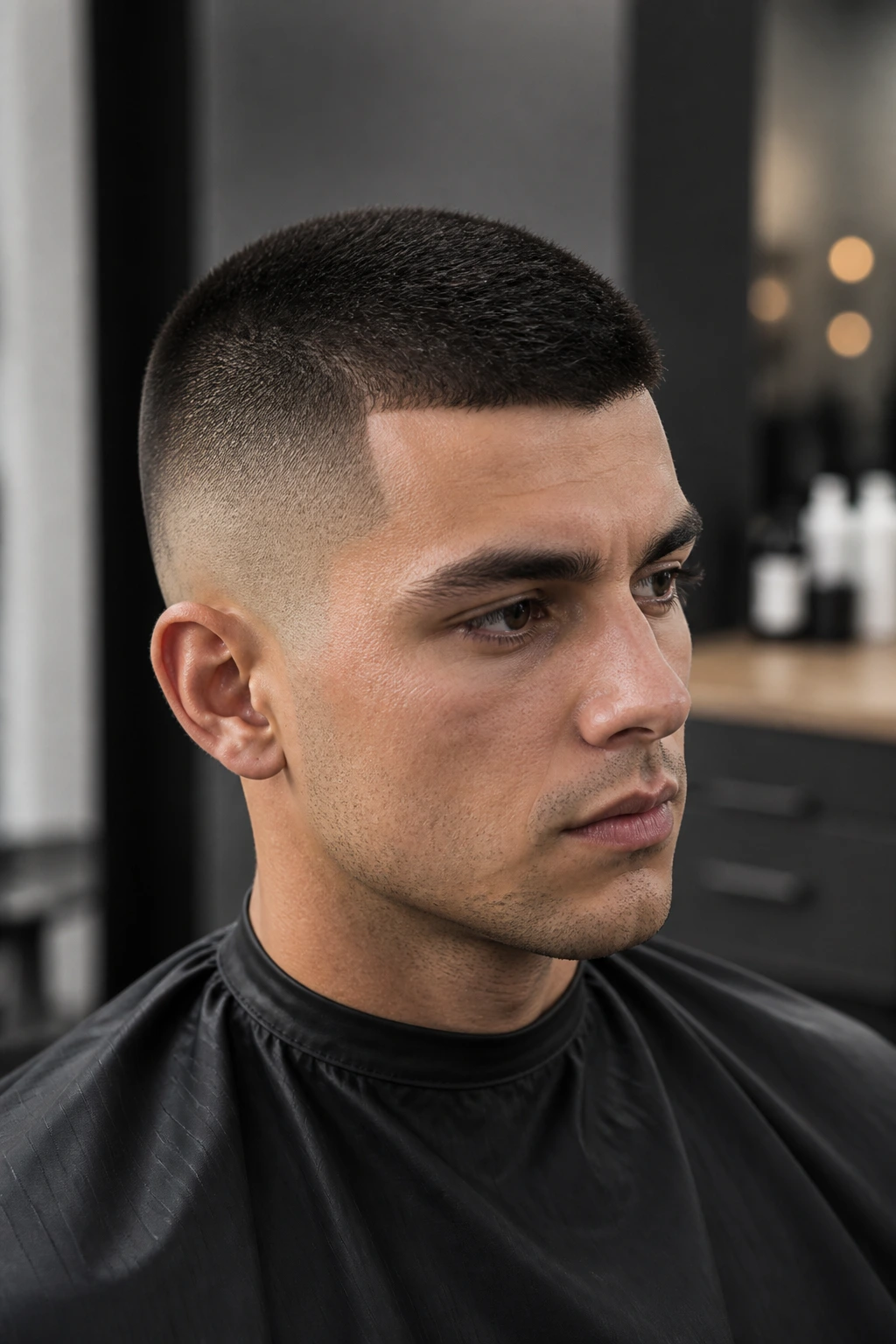
Buzzed sides demand more frequent cleanup than the long top, and that’s the tradeoff. If you like the edges crisp, plan on a barber visit every 2 to 3 weeks. A line-up or neckline touch-up every 7 to 10 days keeps the cut from looking fuzzy around the ears and nape.
The top can usually go longer between trims, but it still needs some shape control. For slick-backs, pomps, and side parts, a trim every 4 to 6 weeks keeps the ends from splitting into different directions. For buns, braids, and longer tied styles, you can stretch that farther, but the perimeter still needs cleaning.
At home, wash frequency depends on texture. Straight hair with product may need rinsing every 2 to 3 days. Curly or coily hair usually behaves better with less frequent shampooing and more conditioner or leave-in help. Short sides dry fast, so don’t overdo the heat. The top is the part that needs patience.
If you’re growing the cut out, ask for gradual changes instead of letting the fade turn ragged. Move from skin fade to #1, then #2, then taper. That keeps the shape tidy while the long hair catches up.
Questions People Ask Before Cutting the Sides
How long should the top be for buzz cut styles with long hair?
For most styles, 4 to 7 inches gives the best range. Shorter than that, and you’re mainly in textured crop territory; longer than that, and you start opening up buns, knots, braids, and layered styles.
What’s the safest way to ask for this at the barber?
Bring photos from the front, side, and back. Then name the side length you want in guard numbers—say #0.5, #1, or #2—and explain whether you want a fade, taper, or hard disconnect. That saves a lot of guesswork.
Does this work on curly hair?
Yes, and often better than people expect. Short sides reduce the side volume that makes curls feel wide, while the top keeps the curl pattern visible. The key is leaving enough length for the curl to spring instead of shrinking into fuzz.
Can I do this at home?
You can do a basic buzzed-side version at home if you have clippers, guards, and a second mirror. A clean fade is harder. If you want skin-level blending, a barber will usually do it better and faster.
What if my hairline is receding?
A forward top with texture and softer temples usually works better than a slicked-back style that exposes the front. Short sides reduce emphasis on the temples, which helps the cut look deliberate rather than defensive.
How often do I need to clean it up?
The sides usually need attention every 2 to 3 weeks. The neckline may need a quick trim sooner if you hate fuzz. The top can go longer, depending on the style.
Can I still wear my hair up with buzzed sides?
Yes, and that’s one of the best parts of this category. Buns, knots, half-ups, and braids all sit more cleanly because the sides are already out of the way.
What if the fade comes out too high?
Ask your barber to soften the transition on the next visit with a lower guard and a taper at the temples and nape. If it’s too high on day one, there’s no magic fix except letting it grow out a little and cleaning up the shape.
A Sharp Cut That Still Leaves Room to Play
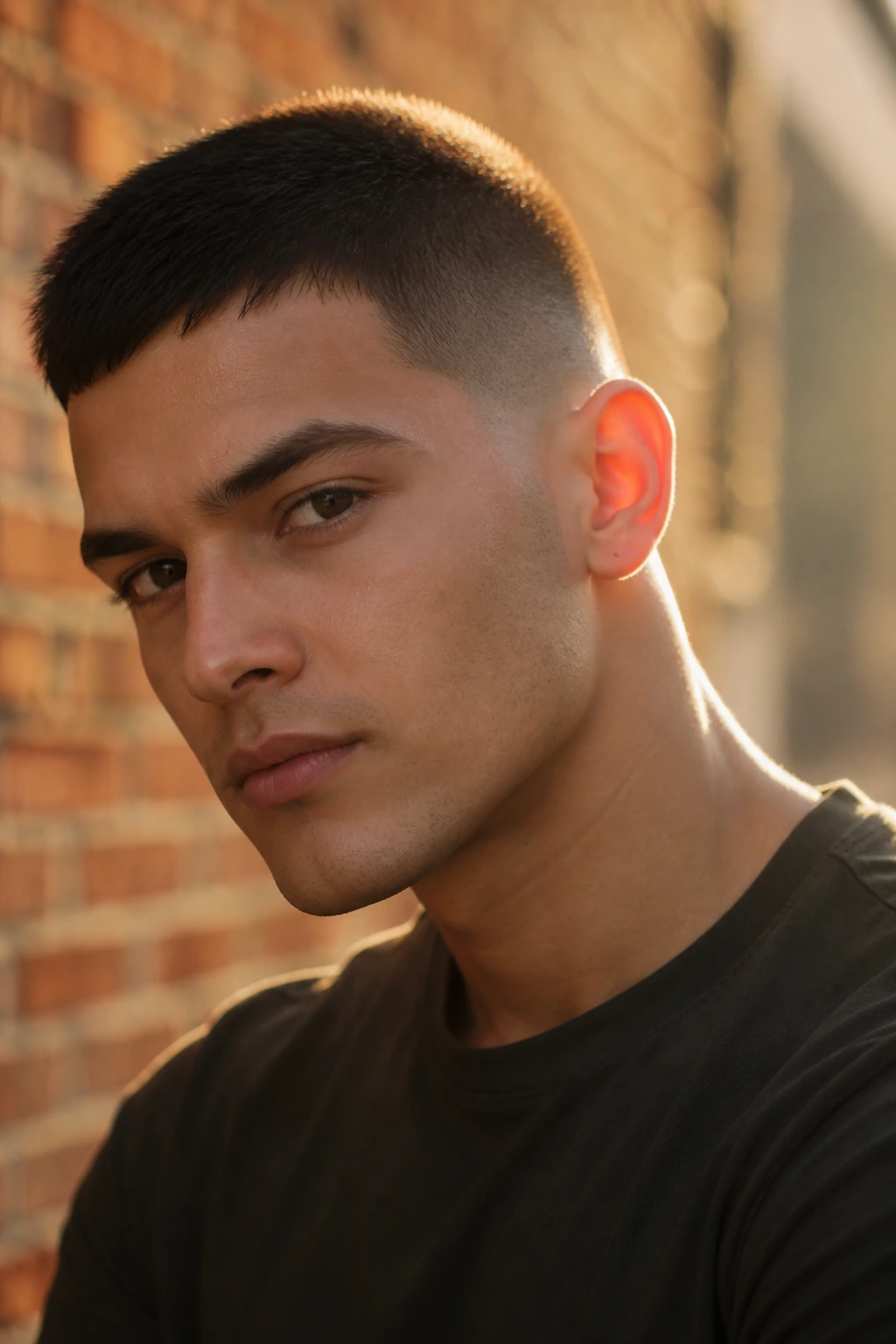
Buzzed sides change long hair in a way that feels practical first and stylish second, which is probably why the look sticks around. It removes the part of the haircut that causes the most irritation, then leaves the part people actually want to style. That’s a rare win.
The best version is the one that matches your hair’s natural movement. Fine hair usually likes softer contrast. Thick hair can take a skin fade. Curly hair wants room. Long straight hair often needs a little texture so it doesn’t fall flat. Pick the shape that works with the grain you already have, and the haircut starts paying you back almost immediately.
If you’re on the fence, start with a lower-contrast version and let the edges get bolder later. That way the cut grows with you instead of boxing you in.
