



Long hair can look luxurious right up until the ends start hanging there like a wet scarf. Add a few badly placed layers and the whole thing can tip from full to frayed in a week. Get the cut right, though, and long hair suddenly has swing, shape, and that little bit of lift around the face that makes it look styled even when you did almost nothing.
The best layered hairstyles for long hair are not about hacking away length. They’re about moving weight to the right places. A clean layer pattern can make thick hair feel lighter, fine hair feel fuller, and wavy hair stop collapsing into one heavy line. The trick is choosing the shape that works with your texture instead of fighting it.
I’ve always liked long layers that do something useful. If you tuck your hair behind one ear and the shape still looks intentional, that’s a good cut. If your ponytail falls softer, your blowout lands faster, and your ends don’t look like three separate haircuts living on the same head, even better. That’s the sweet spot we’re after here.
Why These Layers Earn Their Keep
-
They move without losing length: The best long layered cuts keep the bottom line intact while taking weight out of the middle, which is why the hair swings instead of dragging.
-
They frame the face without screaming “new haircut”: A few inches around the cheekbones or jaw can change the whole silhouette, especially when the rest of the length stays familiar.
-
They play nicer with ponytails and clips: Long layers stop the back from looking like one blunt block when you wear your hair up, and that matters more than people admit.
-
They make styling faster: Once the cut has shape, a round brush, diffuser, or quick bend with a curling iron does more of the work for you.
-
They grow out with less drama: A smart layer pattern softens as it grows. Bad layers just sit there, obvious and irritating.
-
They give thick hair somewhere to go: Dense hair needs an exit route. Layers let the bulk spread out instead of sitting like a shelf.
1. Soft Face-Framing Layers
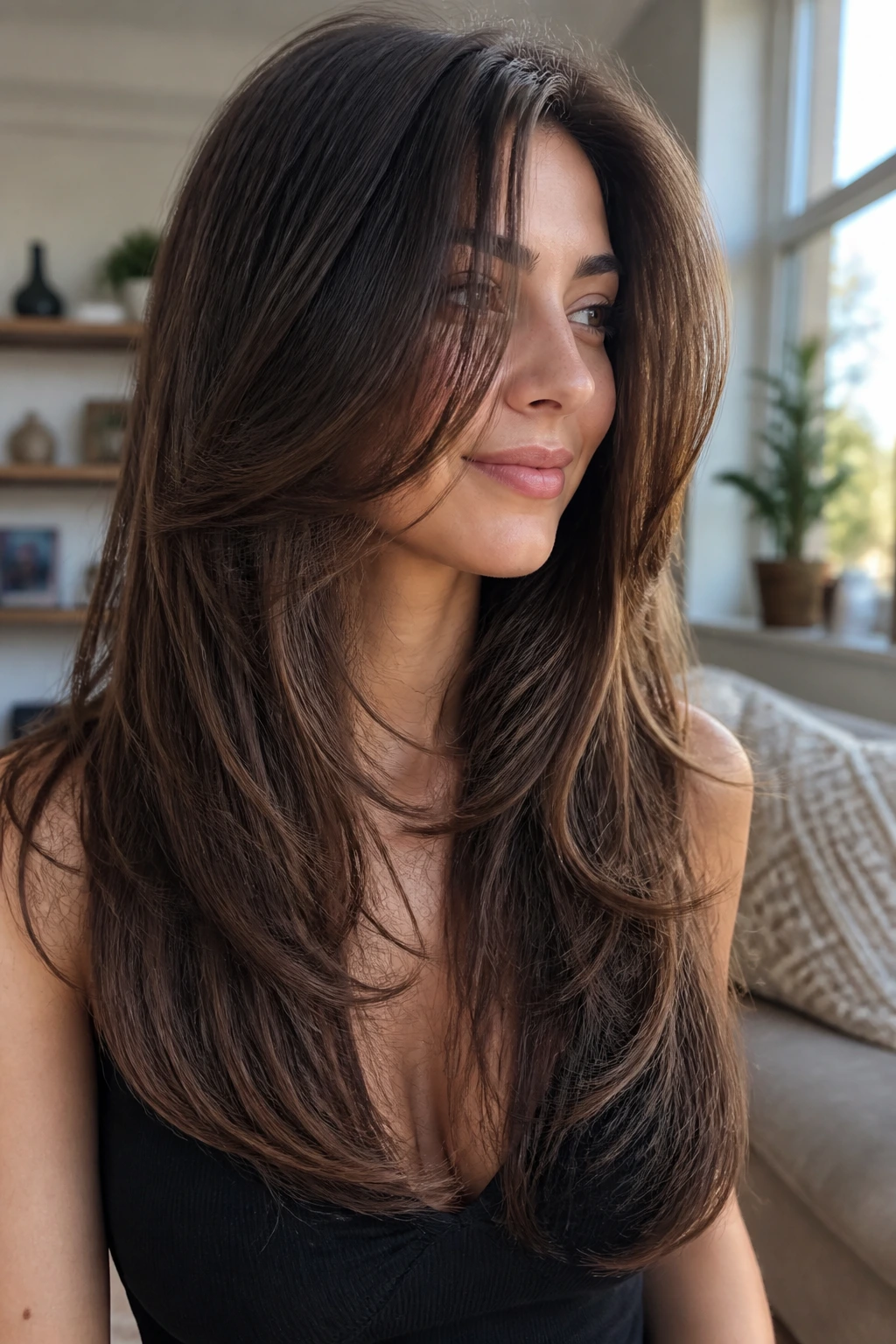
Soft face-framing layers are the quiet overachievers of long hair. They start around the cheekbone or just below the chin, then taper gradually into the rest of the length so the haircut never looks chopped up. The effect is subtle until you tuck your hair back and realize your face still has shape.
This is the cut I recommend when someone wants movement but gets nervous around scissors. It works especially well if your hair is naturally straight or only lightly wavy, because the front pieces catch a little bend and keep the whole style from feeling heavy. If you blow-dry the front sections forward first, then sweep them back with a round brush, you get that soft curtain around the face without needing much product.
Where it shines
- Long hair that feels flat at the front.
- Medium to thick hair that needs a little lightness near the face.
- Anyone who wants change without losing the length they spent two years growing.
A tiny tip: ask for the shortest pieces to be visible when your hair is down, not when it’s tucked behind the ears. That keeps the frame from disappearing the second you move.
2. Butterfly Layers
Butterfly layers are the dramatic ones in this group. The top layers land short enough to flick away from the head, while the bottom length stays long and intact, so the whole shape looks airy from the crown down. When styled with a big round brush, it gets that fluttery, lifted effect people chase with rollers and hot tools.
The reason this cut works is simple: it separates the “volume hair” from the “length hair.” You get movement high up, near the face and crown, and still keep the long, swishy hemline. It’s especially good for thick hair that tends to sit heavy at the sides. On fine hair, it can look fantastic too, but the stylist has to be careful not to over-thin the ends.
Styling note
A medium round brush and a blow dryer with a nozzle make a real difference here. Pull the upper layers up and away from the head, then give the ends a gentle underbend. Don’t flatten the front pieces too much. They need a little air or the whole thing loses the butterfly shape.
3. Curtain Bang Layers
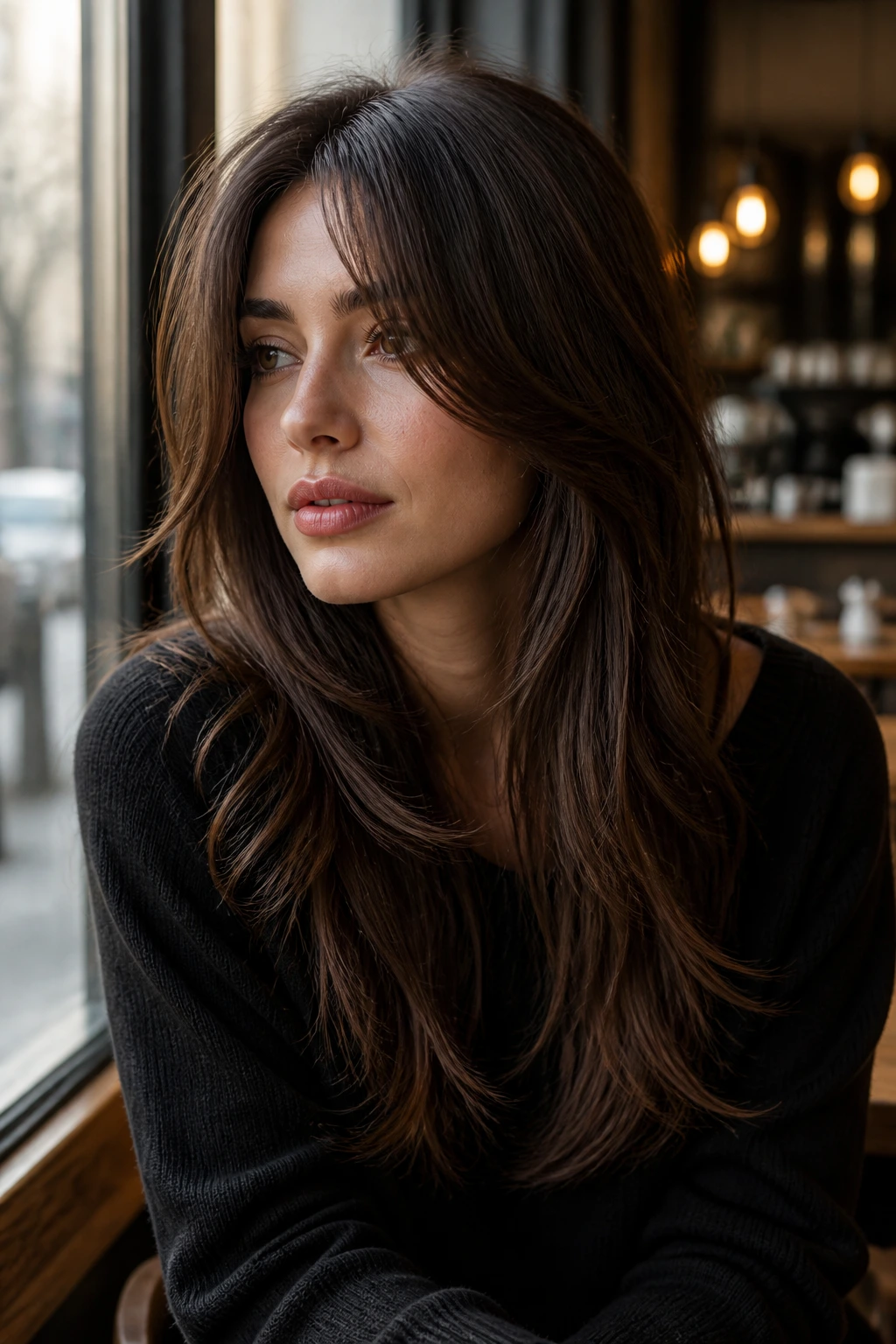
Curtain bang layers are for people who want a face frame but don’t want full fringe maintenance. The bangs split in the center and open out toward the cheekbones, then melt into longer layers so the transition feels smooth instead of abrupt. It’s a flattering trick, and one of the easiest ways to make long hair look planned.
I like this look because it gives you two styles in one. Wear it down and you get that soft, grown-in frame. Pull it back and the bangs still leave a little shape around the face, which keeps a ponytail from feeling plain. The catch is maintenance: curtain bangs need trims more often than the rest of the cut, or they drift into your eyes and stop behaving.
Best for
- Oval and round faces that benefit from vertical lines.
- Long hair worn loose most of the time.
- People who like a little styling every morning but not a full blowout.
If your hair gets oily fast at the front, dry shampoo is not optional here. Those front pieces sit closest to your skin, and they show grease sooner than the rest.
4. U-Shaped Long Layers
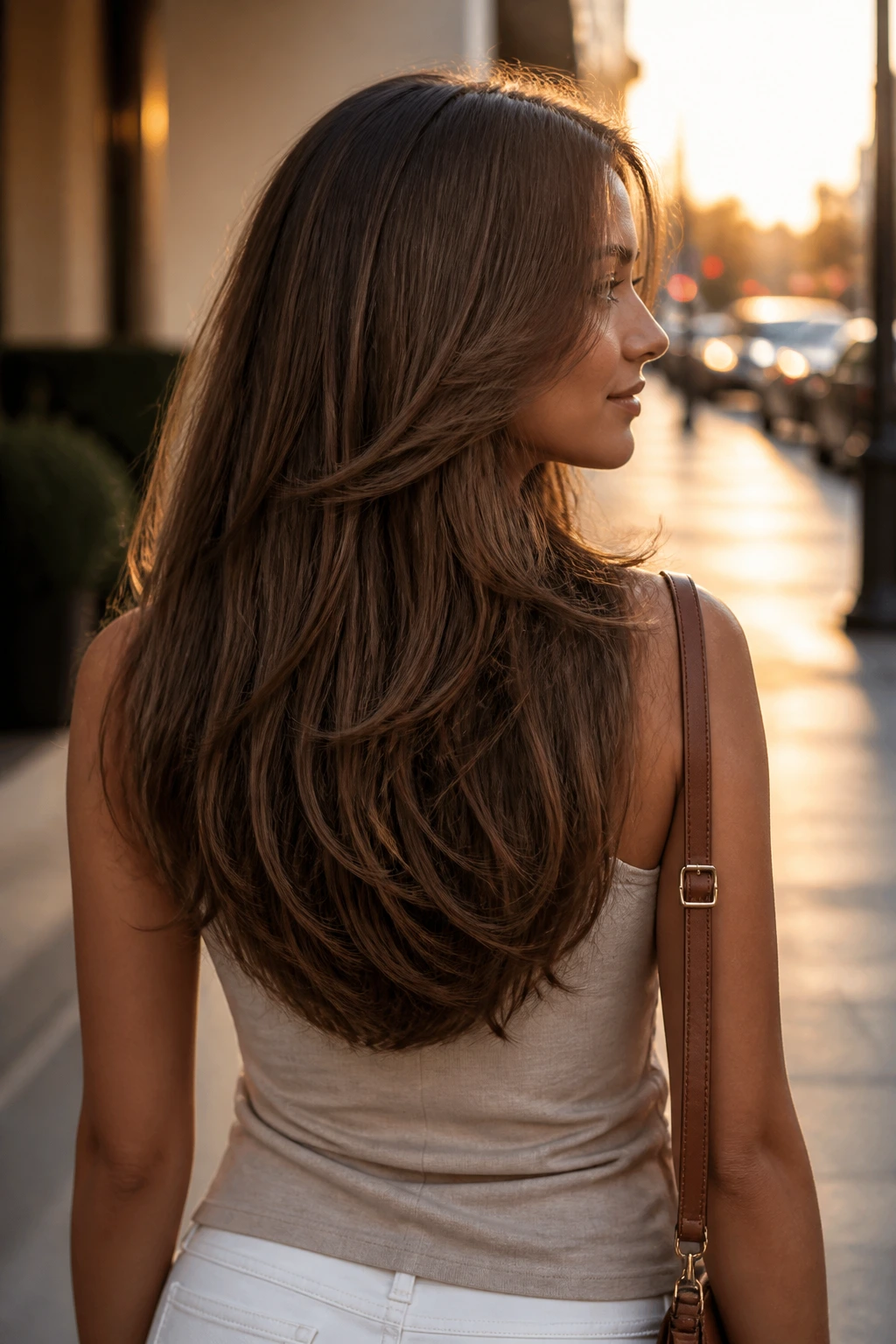
A U-shaped cut keeps the perimeter softly rounded, with the longest point at the center back and slightly shorter sides. Add long layers through the interior, and you get a shape that feels full at the bottom without looking blunt. This is one of those cuts that looks expensive even when you’ve done very little to it.
The U-shape is especially kind to straight or softly wavy hair. It gives the ends enough weight to lie cleanly, while the layers prevent the whole style from turning into one heavy curtain. If your hair is naturally thick, this is a smart choice because it removes bulk without creating that ragged, see-through finish some layers leave behind.
Quick reality check
This shape is not as dramatic as a V-cut. That’s the point. It’s for people who want polished movement, not a haircut that shouts from across the room.
5. V-Shaped Layers
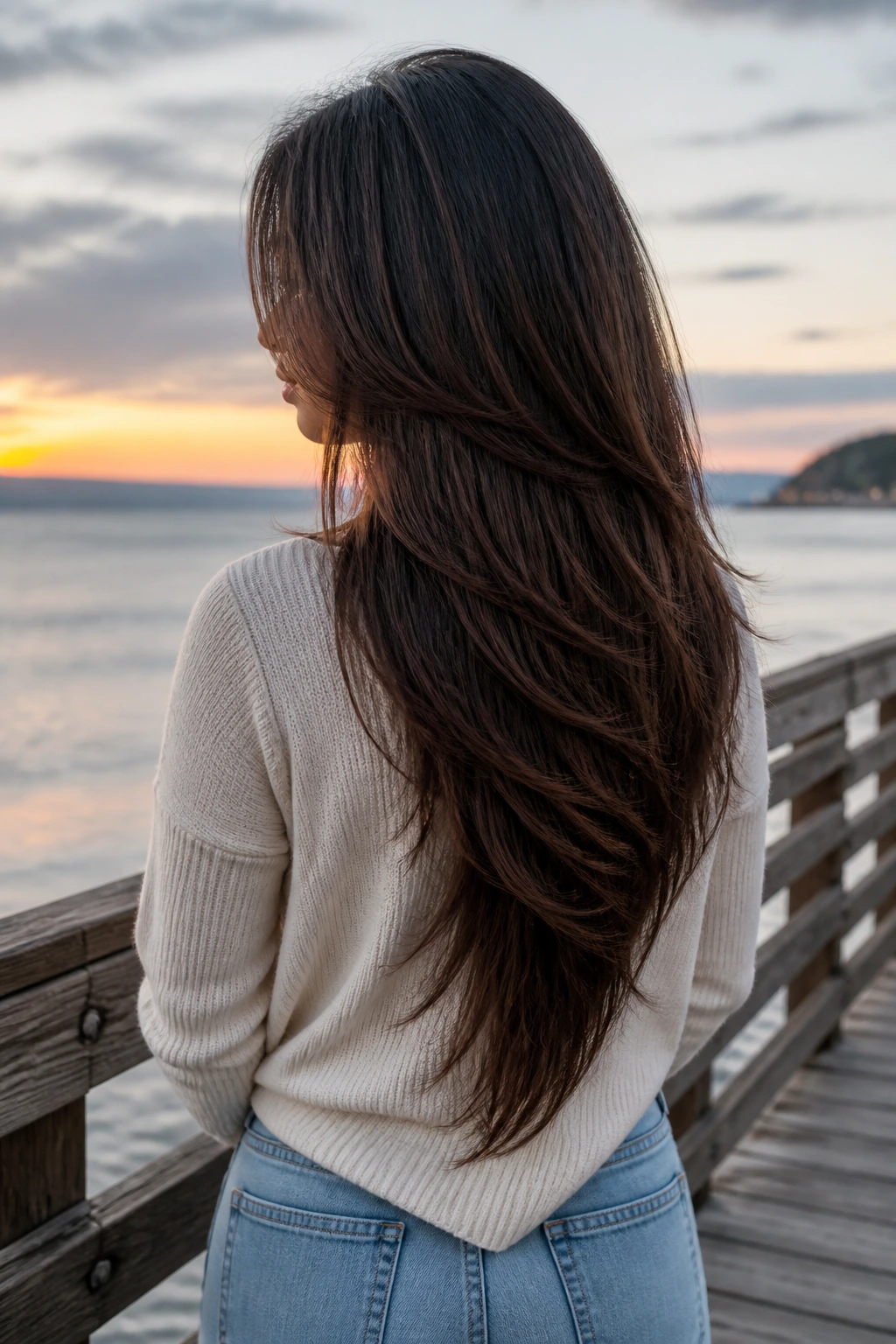
V-shaped layers give you a sharper silhouette. The longest point narrows at the center back, while the sides step up gradually, creating a pointed hemline that looks striking on long hair. When the layers are blended properly, the shape feels sleek rather than severe.
I’m partial to this cut on very thick hair, because the V helps the weight fall away from the sides and keeps the hair from ballooning at the bottom. It also makes curls and waves stack in a way that shows off their pattern. Straight hair gets a more architectural look, which can be beautiful if you like a cleaner finish.
6. Feathered Blowout Layers
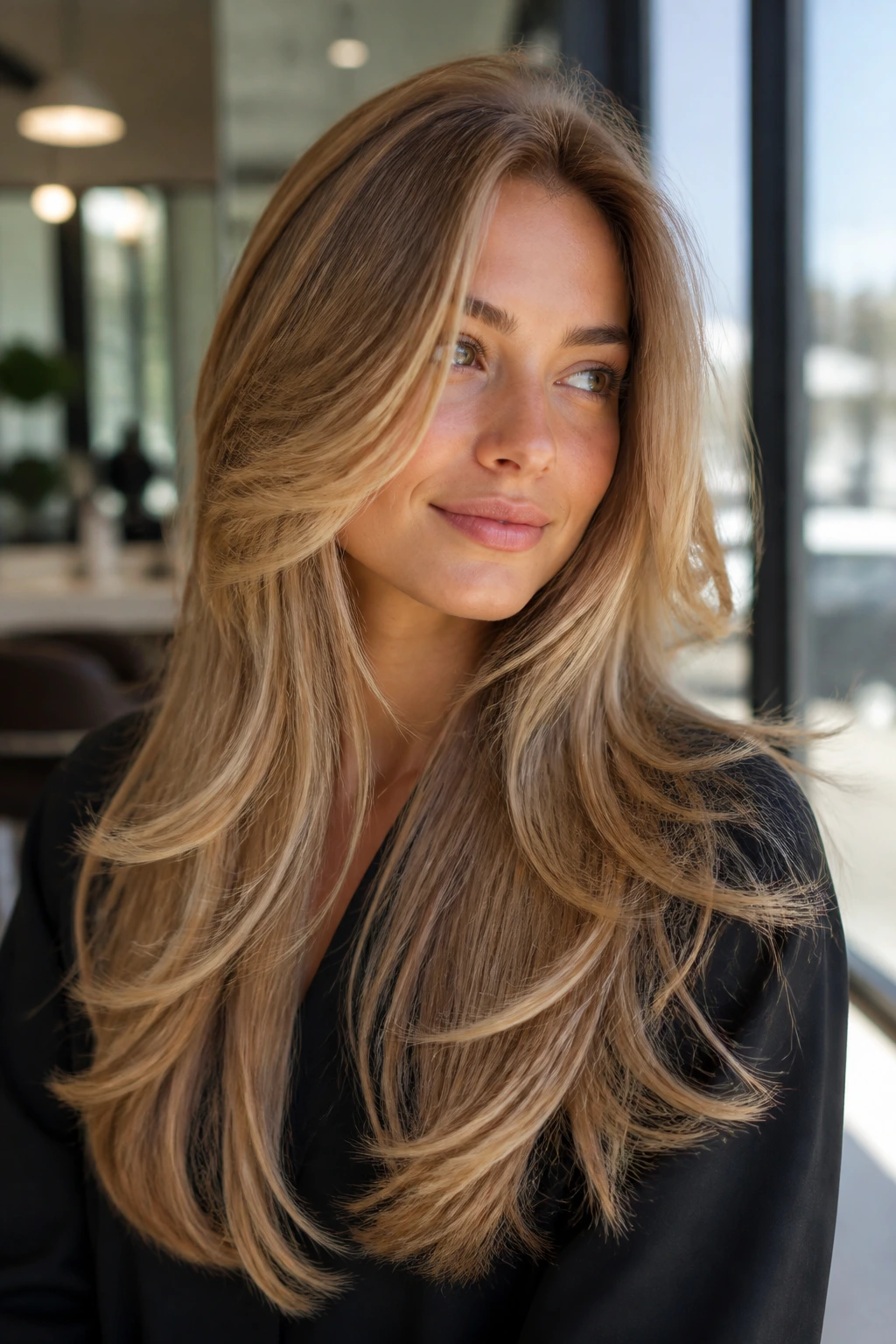
Feathered layers are the ones that look like they were made for a round brush. The ends are softly textured and blown away from the face, so the haircut gets movement without looking choppy. Think 90s blowout energy, but less helmet and more swing.
This style lives or dies by the finish. If the roots are flat and the ends are stiff, the whole thing loses its charm. But when the top has lift and the face frame flips slightly away from the cheeks, long hair suddenly looks much lighter. It’s especially good for people who wear long hair loose more often than they wear it up.
A couple of round-brush passes around the face are enough. You do not need to curl every piece. In fact, too much curl makes feathered layers look dated in a hurry.
7. Choppy Textured Layers
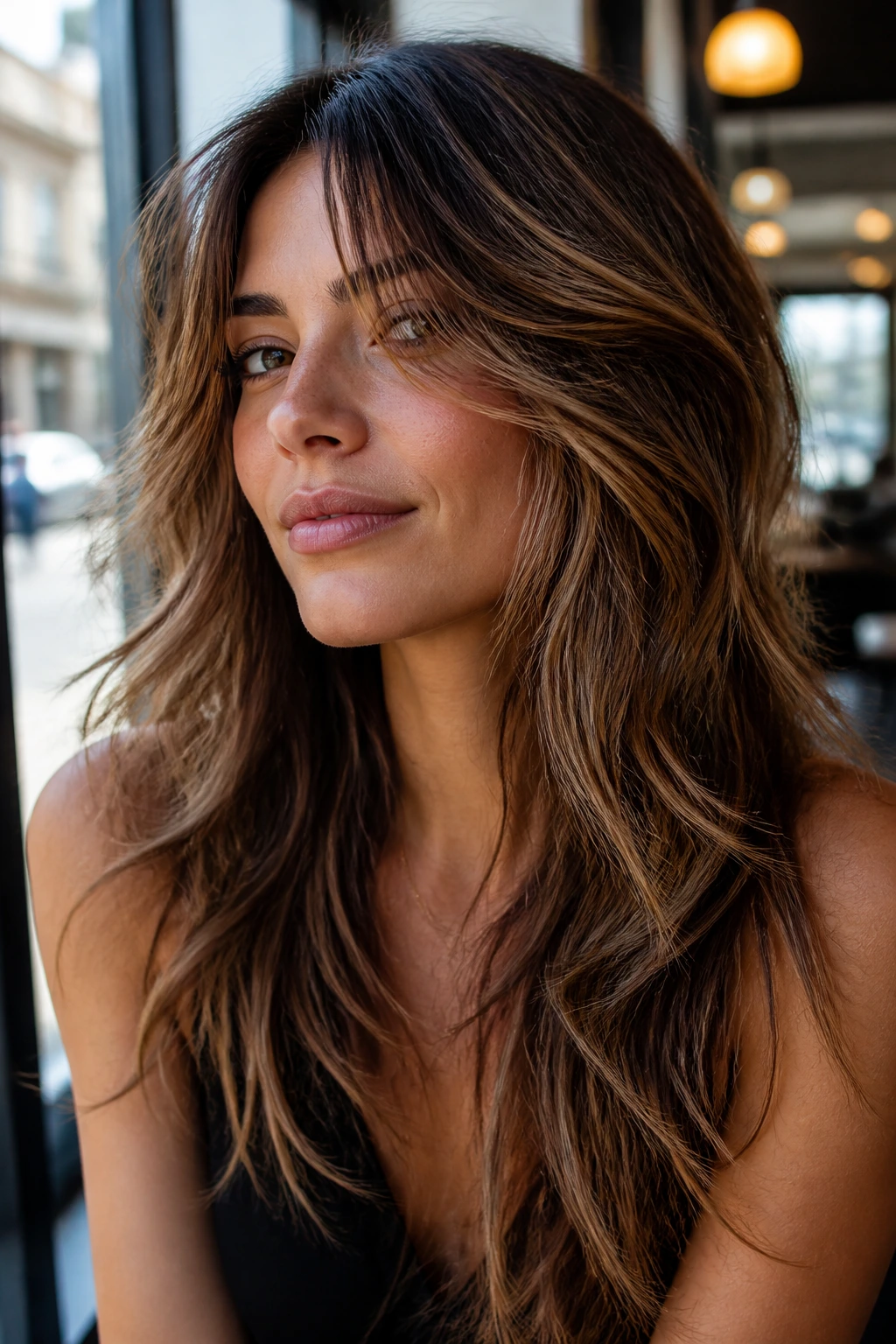
Choppy textured layers are for people who want the haircut to show. The ends are broken up a bit more, the pieces are more visible, and the shape has that edgy, slightly undone feel. On long hair, this can be a nice way to keep things from looking too sweet or too polished.
The strongest versions of this cut usually pair well with waves. Flat, pin-straight hair can make the choppiness look harsher than intended, so a soft bend from a curling iron or flat iron helps. Thick hair benefits because the texture removes some of the bulk. Fine hair can wear it too, but the layers need to be handled carefully so the ends don’t go wispy too fast.
What to ask for
Tell the stylist you want visible movement, not random thinning. That wording matters. You want deliberate pieces, not a haircut that looks like it got attacked in a hurry.
8. Invisible Layers
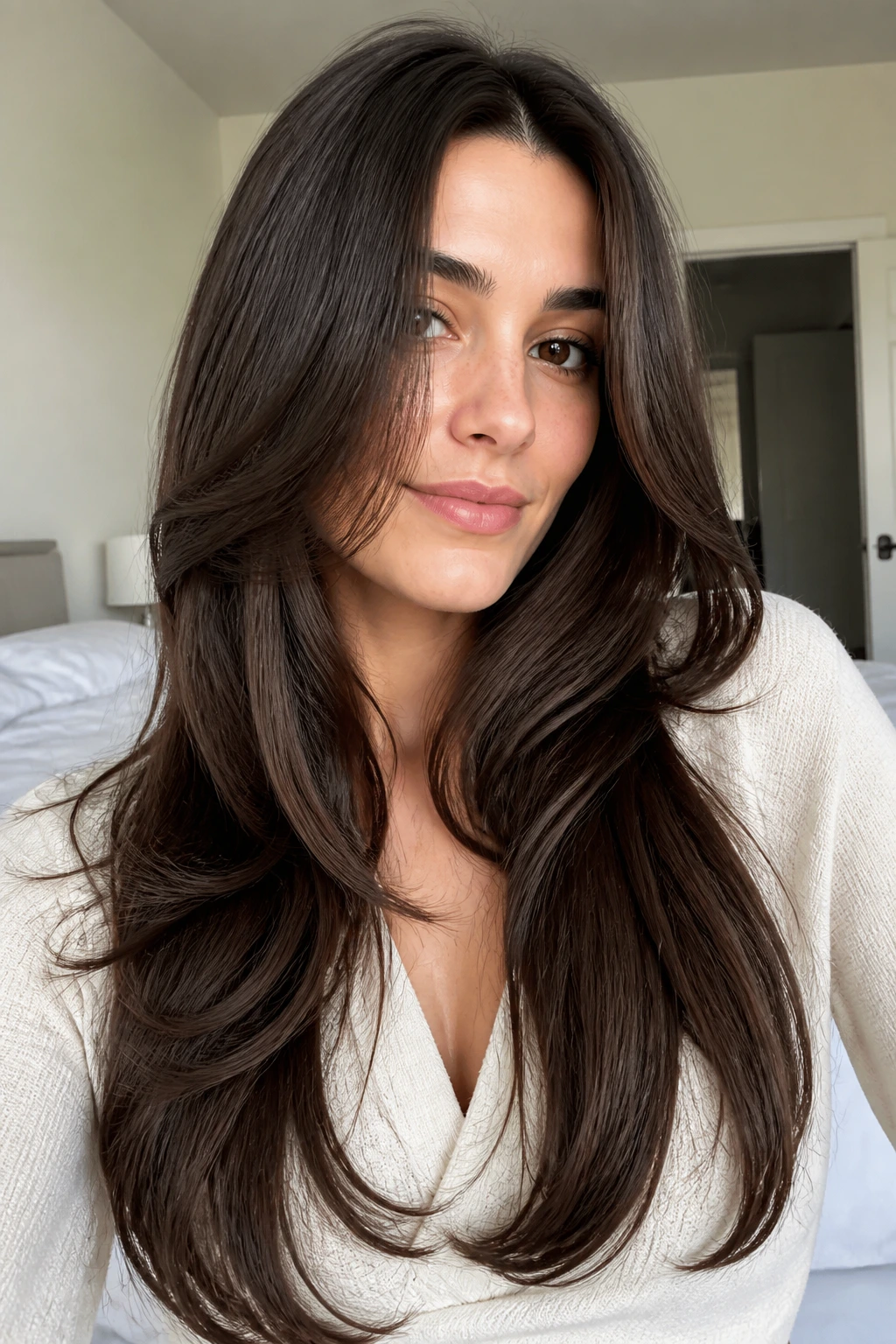
Invisible layers are the sneaky kind. The surface line stays smooth, but weight is removed from inside the haircut so the hair falls better and feels lighter. From the outside, the cut often looks almost one-length until you move it or style it with volume.
This is the move for long hair that needs body but not obvious steps. Fine hair can look fuller because the interior lift gives the roots somewhere to go. Straight hair benefits because the perimeter stays tidy. Thick hair benefits because the hidden layers stop the shape from collapsing into one heavy sheet.
I like invisible layers when someone wants low-maintenance hair that still behaves. They’re not flashy. They just work.
9. Razor-Cut Layers
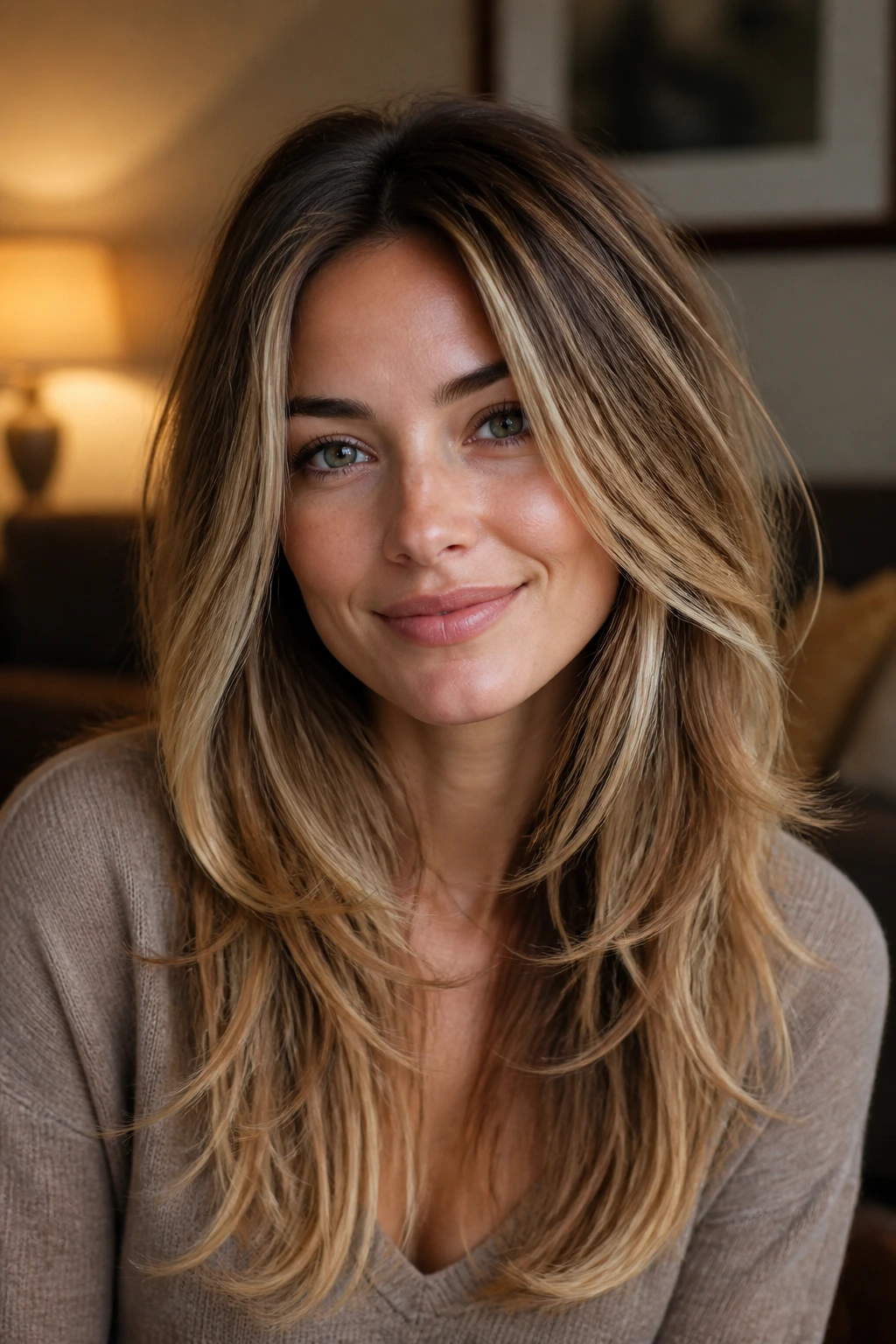
Razor-cut layers have a softer edge than scissor-cut layers, and you can usually spot them by the way the ends move. They look lighter, a little piecey, and slightly airy, which can be lovely on long hair that feels too solid. The technique can also soften bluntness around the face in a way that feels less formal.
There’s a catch, though. Razor cutting is not friendly to every texture. If your hair is already dry, frizzy, or prone to splitting, too much razor work can make the ends look fuzzy. On smoother hair, though, the result is clean and pretty. The best versions keep the layers light without chewing up the perimeter.
Use this if
- You want softness at the ends.
- Your hair is straight to wavy.
- You like a bit of separation in the layers without a heavy blowout.
10. Waterfall Layers
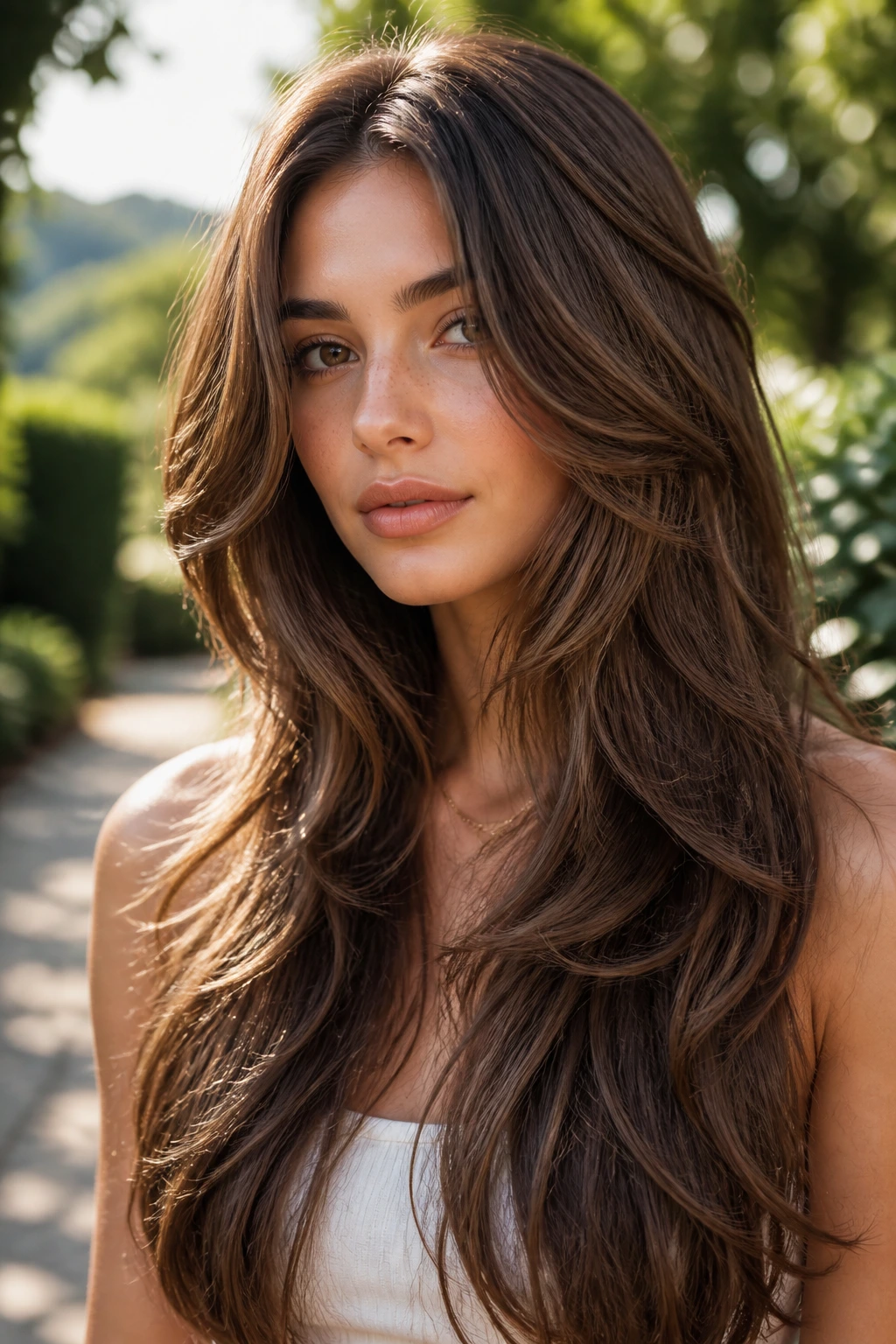
Waterfall layers are long, descending layers that seem to spill down the hair rather than interrupt it. The shape is fluid. You get a gentle drop from shorter to longer sections, and the result is one of the most elegant ways to lighten long hair without making it look overworked.
This cut does especially well on thick hair, because the layers remove mass while keeping the overall length impressive. Wavy hair loves it too, since the pattern gives the waves somewhere to cascade instead of forming one solid block. On fine hair, the stylist needs a careful hand so the bottom doesn’t look sparse.
One thing I notice with waterfall layers: they look best when the hair is clean enough to move. A heavy oil or serum can make the whole effect collapse.
11. Long Shag Layers
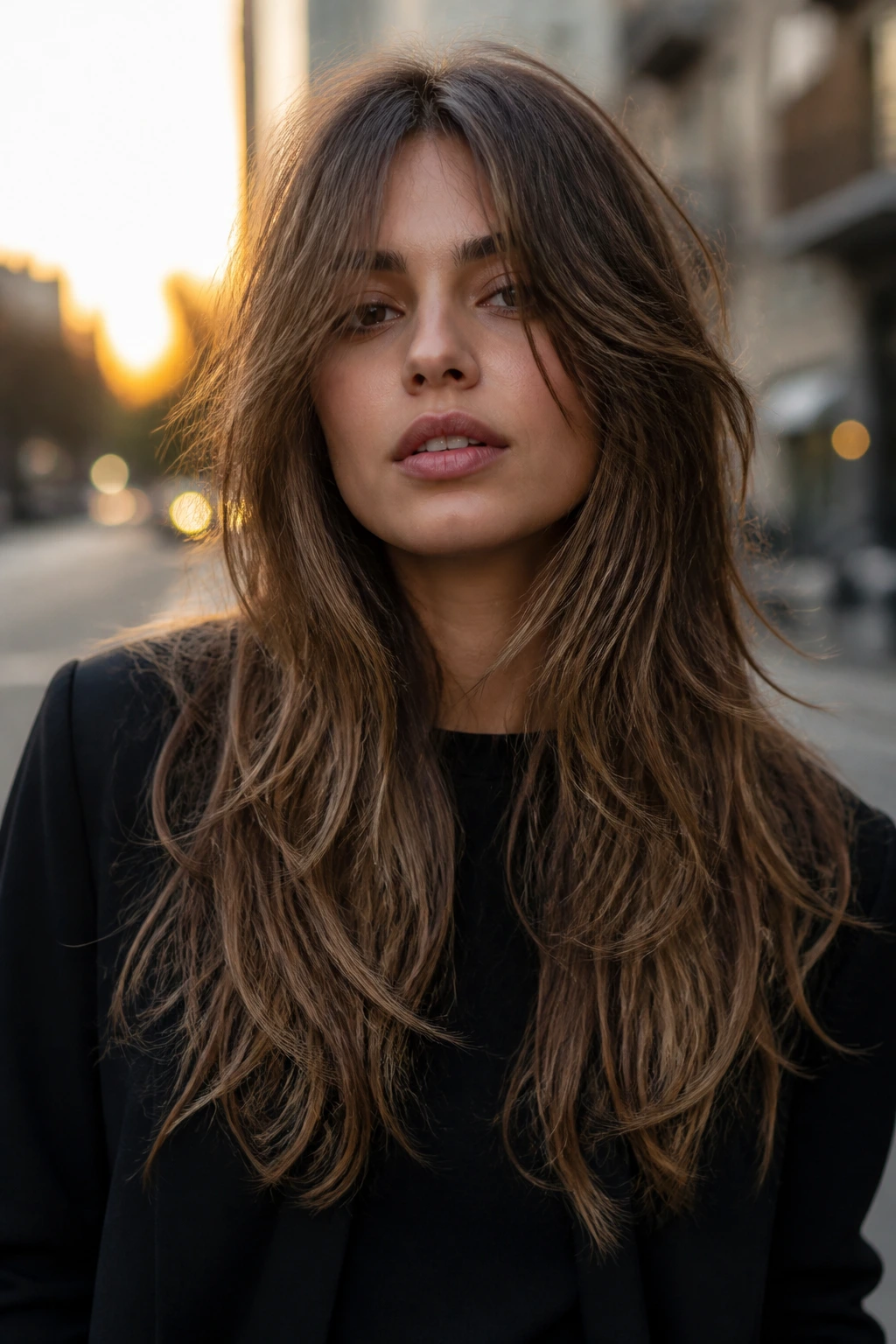
Long shag layers are messier, cooler, and less precious than many long cuts. They usually have shorter pieces around the crown, airy layers through the middle, and a fringe or face frame that keeps the style from looking flat. The whole point is texture with attitude.
If you’ve ever wanted long hair that doesn’t behave like long hair, this is the one. It’s meant to look a little thrown together, which is harder to pull off than it sounds. The best shags still have a shape; they’re not random. You want movement at the crown, then a controlled fall through the ends so the haircut doesn’t drift into frizz territory.
Best paired with
- Natural wave.
- Air-dried texture.
- A little dry shampoo at the roots.
12. Bottleneck Bang Layers
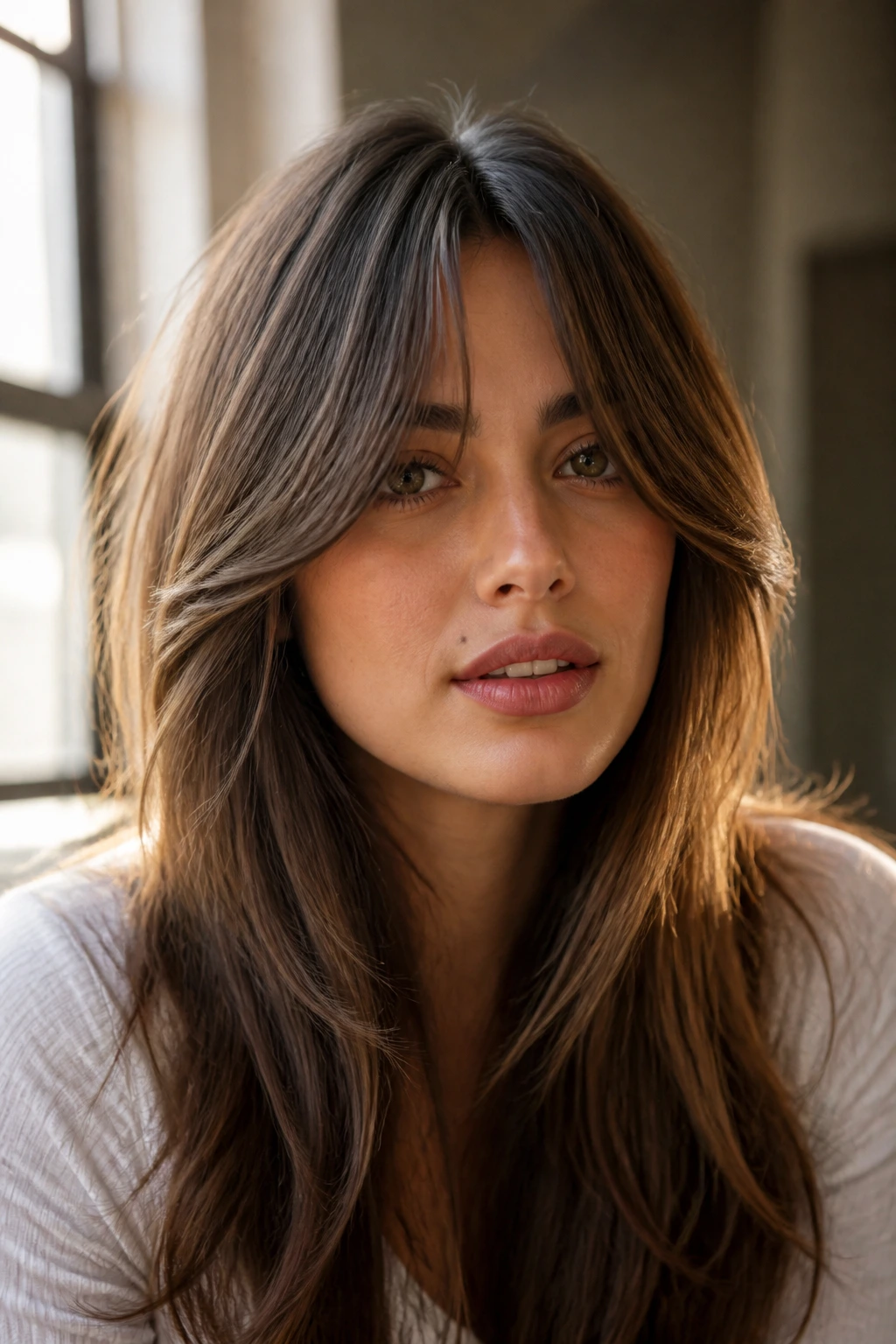
Bottleneck bangs start narrow in the center, then open outward as they reach the cheekbones, which gives them a softer, more tailored feel than blunt fringe. When they blend into long layers, the cut can look very balanced. The bangs pull attention upward, and the layers keep the rest of the hair from feeling heavy.
This style is a nice middle ground if curtain bangs feel too long and full fringe feels too committed. Bottleneck bangs work well with long hair because they don’t take over the whole face. They just frame it. On a blowout, they sweep beautifully. On natural texture, they look a little less formal but still hold the shape.
13. Rounded Layers
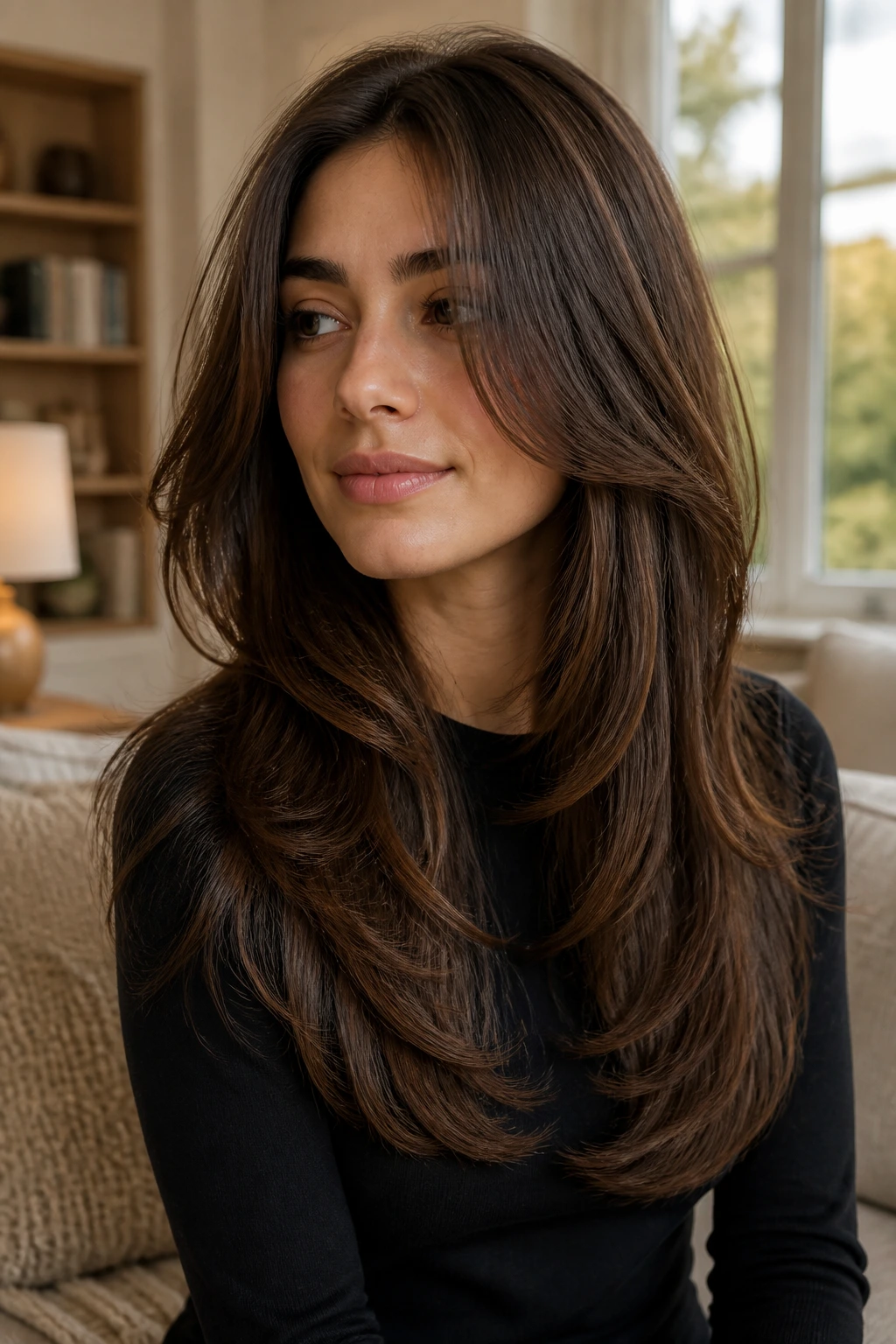
Rounded layers follow the shape of the head and create a soft arc from front to back. The silhouette feels smooth, not sharp, and that matters if you want long hair that lands in a polished way. There’s no hard point at the ends, just a gentle curve that keeps the shape full.
I reach for this kind of cut when someone has broad shoulders, a strong jaw, or a lot of density and wants the hair to balance the face rather than fight it. It’s also a good choice if the hair is naturally straight and tends to hang in one line. The rounded structure keeps the shape from feeling stiff.
A rounded layer pattern is the kind of thing you don’t fully notice until you see a bad version next to it. Then you see the difference instantly.
14. Deep Side-Part Layers
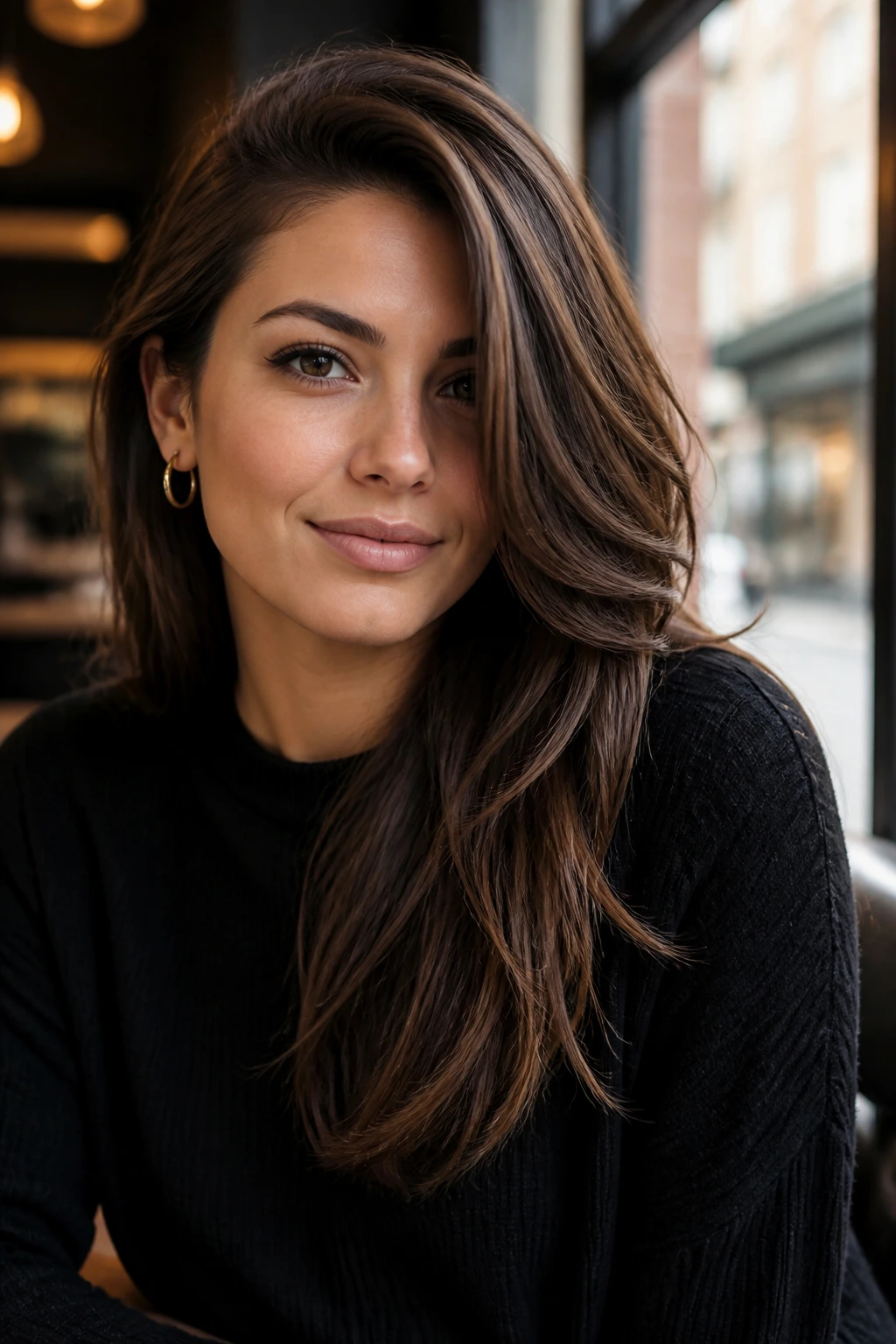
A deep side part changes long layers more than people expect. The heavier side gives drama, the lighter side opens the face, and the layers fall in a way that looks intentionally asymmetrical. It’s a small styling choice that can make a basic cut feel sharper.
This works especially well if your face is narrow, oval, or long, because the side sweep adds width where needed. The part also shifts volume away from the center, which helps if your roots tend to lie flat. Style the front sections with a little bend away from the face, and the whole thing feels more finished.
One-sentence truth: a deep side part can rescue layers that looked too polite in a middle part.
15. Beachy Wave Layers
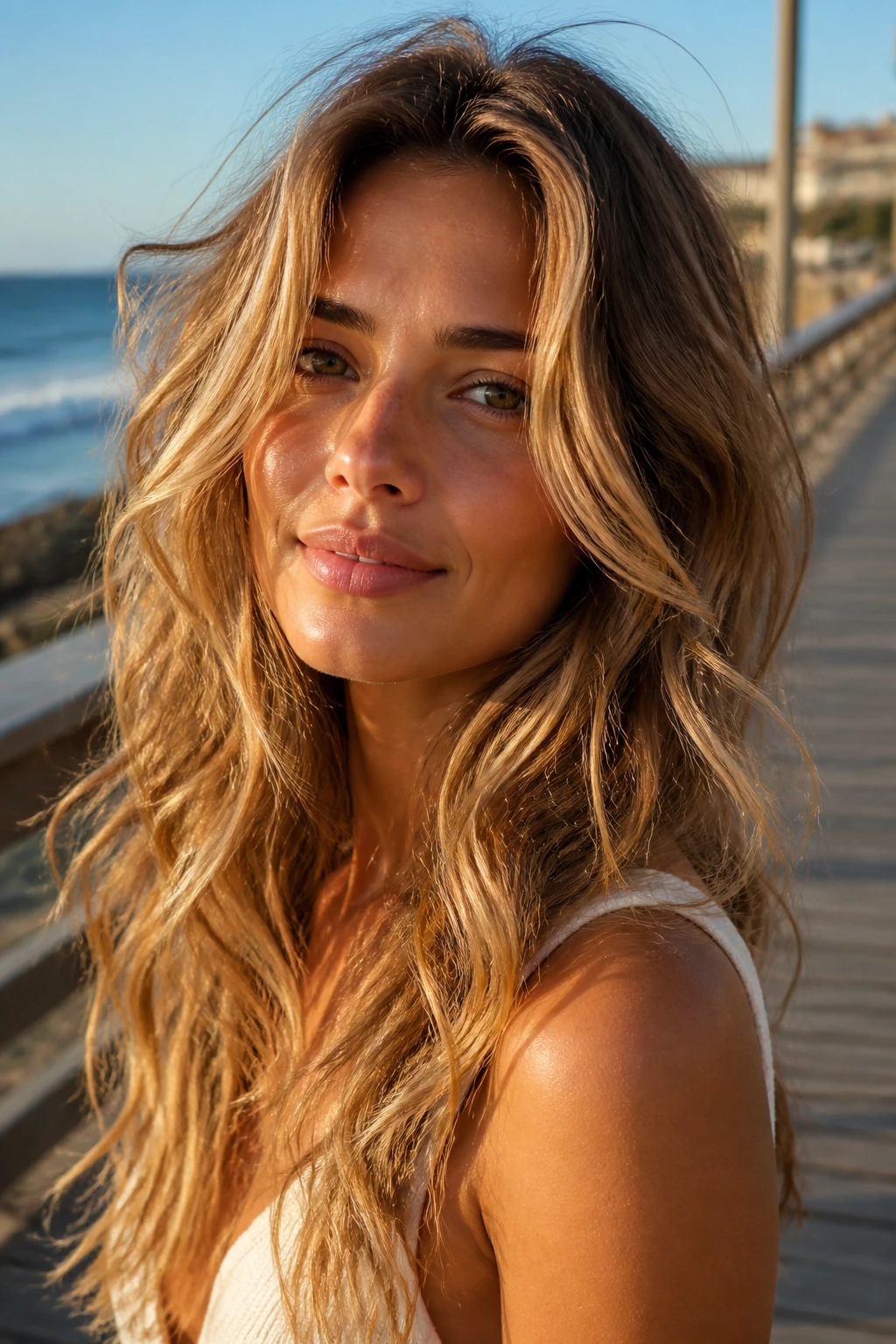
Beachy wave layers are all about giving the hair a shape that looks good when it bends and bends again. The layers are usually long enough to keep the wave pattern loose, not crimped, and the finished style has that easy texture people like when they don’t want a stiff curl.
Salt spray helps here, but not in the sticky, crunchy way that turns hair into straw. Use a light mist, scrunch a little, and let the wave pattern do the rest. If your hair is naturally wavy, this cut can make you feel like you’ve finally stopped fighting it. If it’s straight, you’ll need a curling iron or braids to get the shape, but the layers still help the bend last longer.
16. Sleek Straight Layers
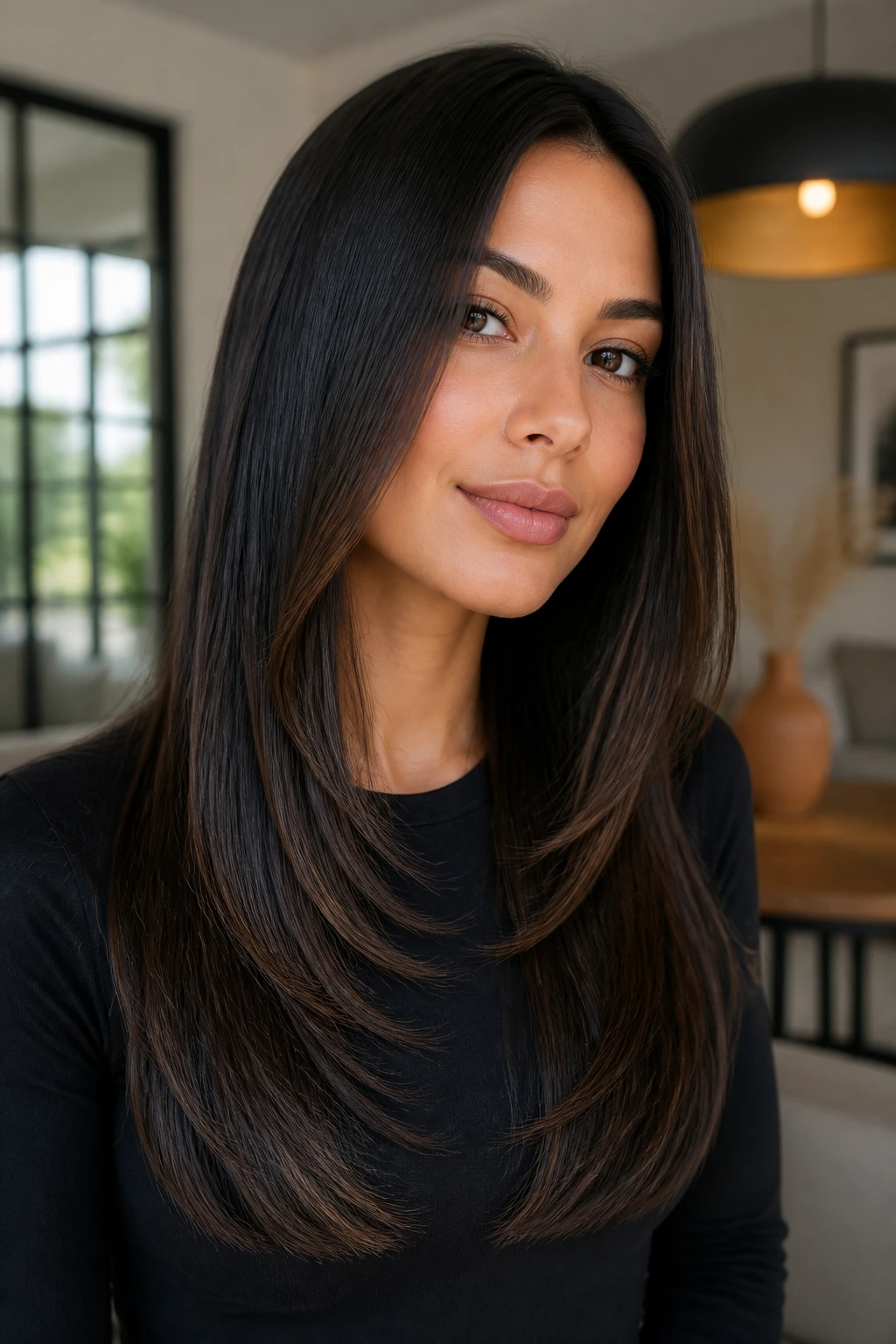
Sleek straight layers are for people who like their long hair glossy, smooth, and controlled. The layers are blended enough to keep movement, but the overall finish stays clean. On straight hair, this can look expensive in a very quiet way.
The secret is keeping the ends healthy. Straight hair reveals everything, including split ends and uneven growth, so this cut only looks sharp if the perimeter is trimmed well. A little serum at the bottom and a flat brush blow-dry can keep the layers visible without making them frizzy.
Best for
- Naturally straight hair.
- Work settings that prefer polished hair.
- Anyone who likes a tidy middle or side part.
17. Curly Dry-Cut Layers
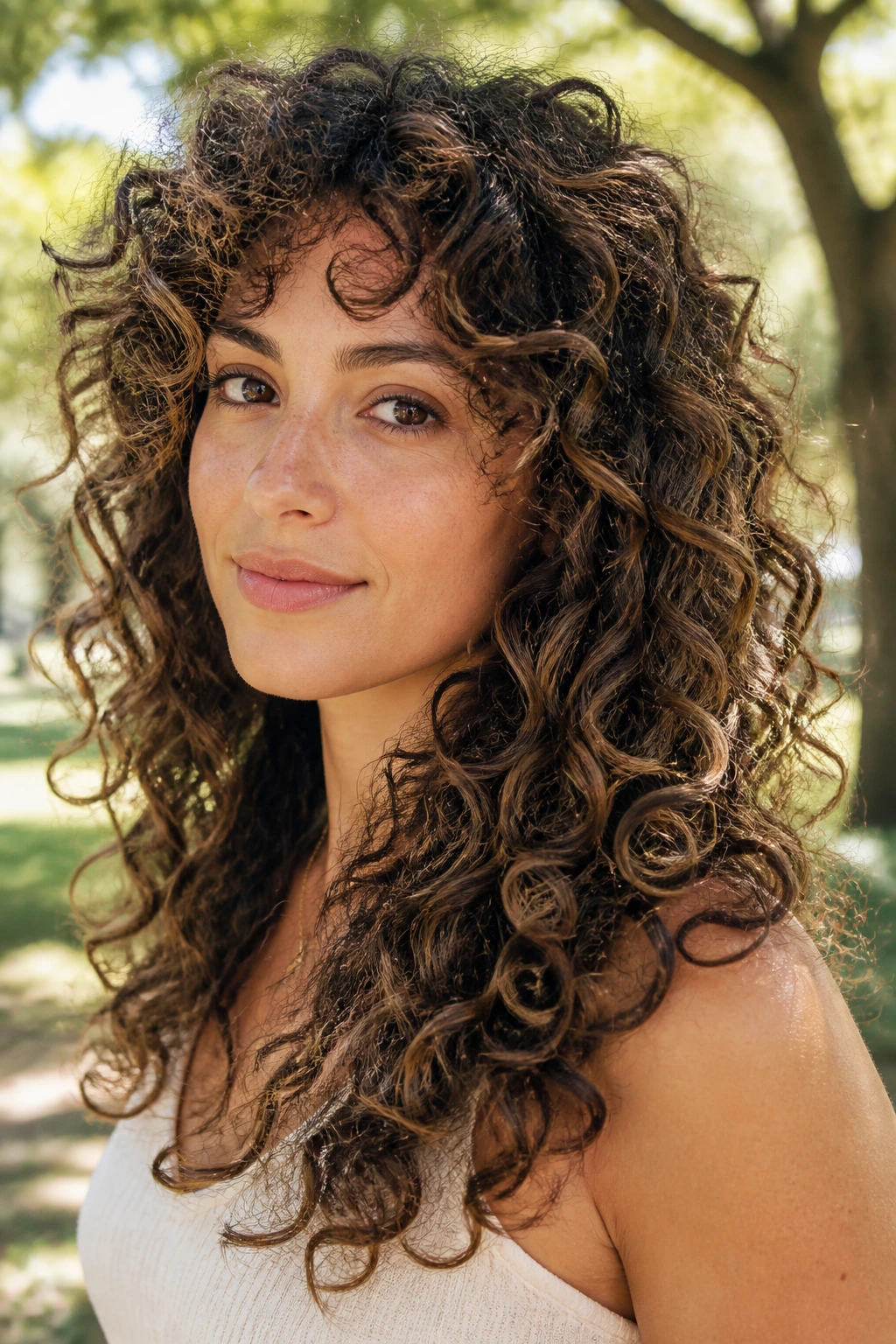
Curly hair should not be treated like straight hair with a curl added later. Dry-cut layers respect how curls spring and stack, which is why the shape often looks better after the cut than it does from a traditional wet trim. The stylist can see where the curls sit, how much they shrink, and which pieces need weight removed.
With long curly hair, the goal is usually balanced volume, not symmetrical perfection. Too many short layers can turn curls into a pyramid. Too few can leave the shape heavy and flat at the roots. A careful dry cut solves both problems by placing the layers where the curls actually need room.
18. Coily Volume Layers
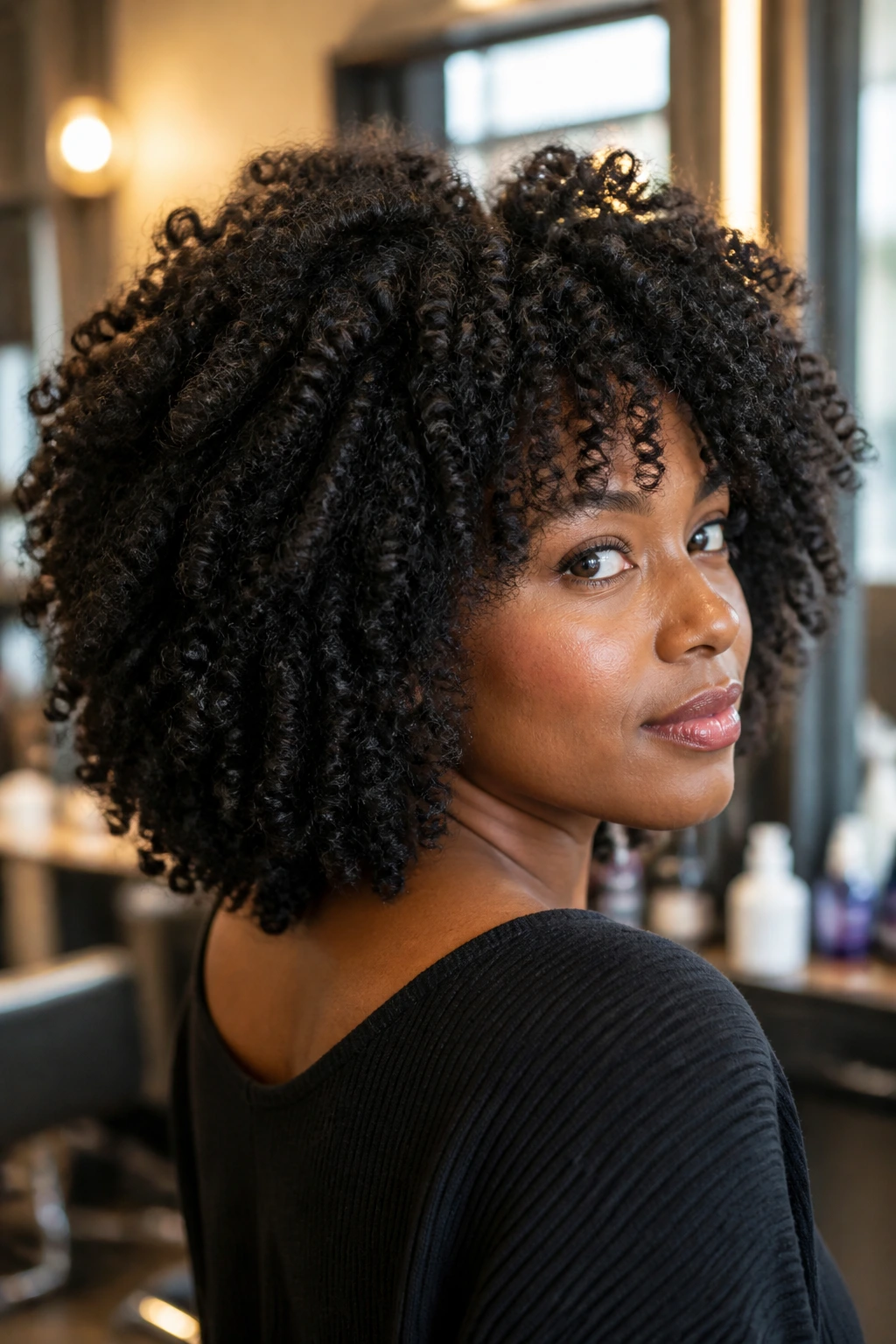
Coily hair needs layers that think in shrinkage, not inches. What looks like a modest trim on the chair can turn into a big shape change once the coils spring up, so the cut has to be planned with the natural pattern in mind. Long layered coily hair can be stunning when the shape is right, because it gives the coils room to stack without building too much bulk in one spot.
I like seeing weight removed at the right points rather than all over. Too much thinning can make coily hair frizzy and uneven. A better approach is a rounded, structured shape that keeps the ends full while shaping the upper layers for balance.
One caution: if a stylist is nervous around coils, keep looking. A good coil cut is worth waiting for.
19. Grown-Out Layers
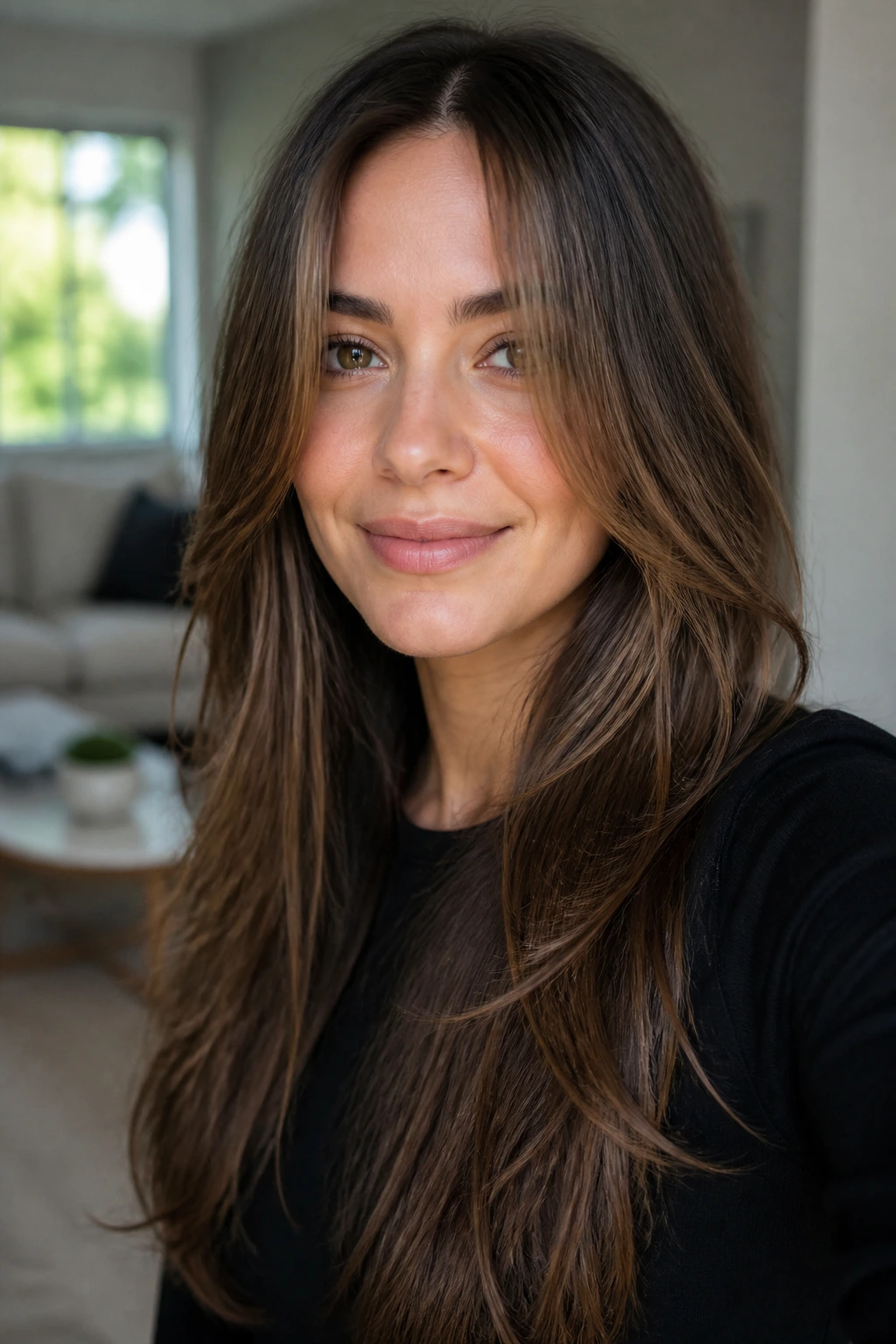
Grown-out layers are the answer for people who hate obvious maintenance. The cut still has shape, but the transitions are soft enough that it can grow for months without looking ragged. This is different from a lazy haircut. Good grown-out layers are planned that way from the start.
The shape usually starts with gentle face-framing pieces and a low-contrast layer pattern through the rest of the hair. That means fewer blunt steps and fewer awkward shelves as the cut grows. It’s a smart choice if you wear your hair in clips, braids, or loose waves, because the cut holds together in all three.
If your life does not include frequent salon visits, start here.
20. Money Piece Layers
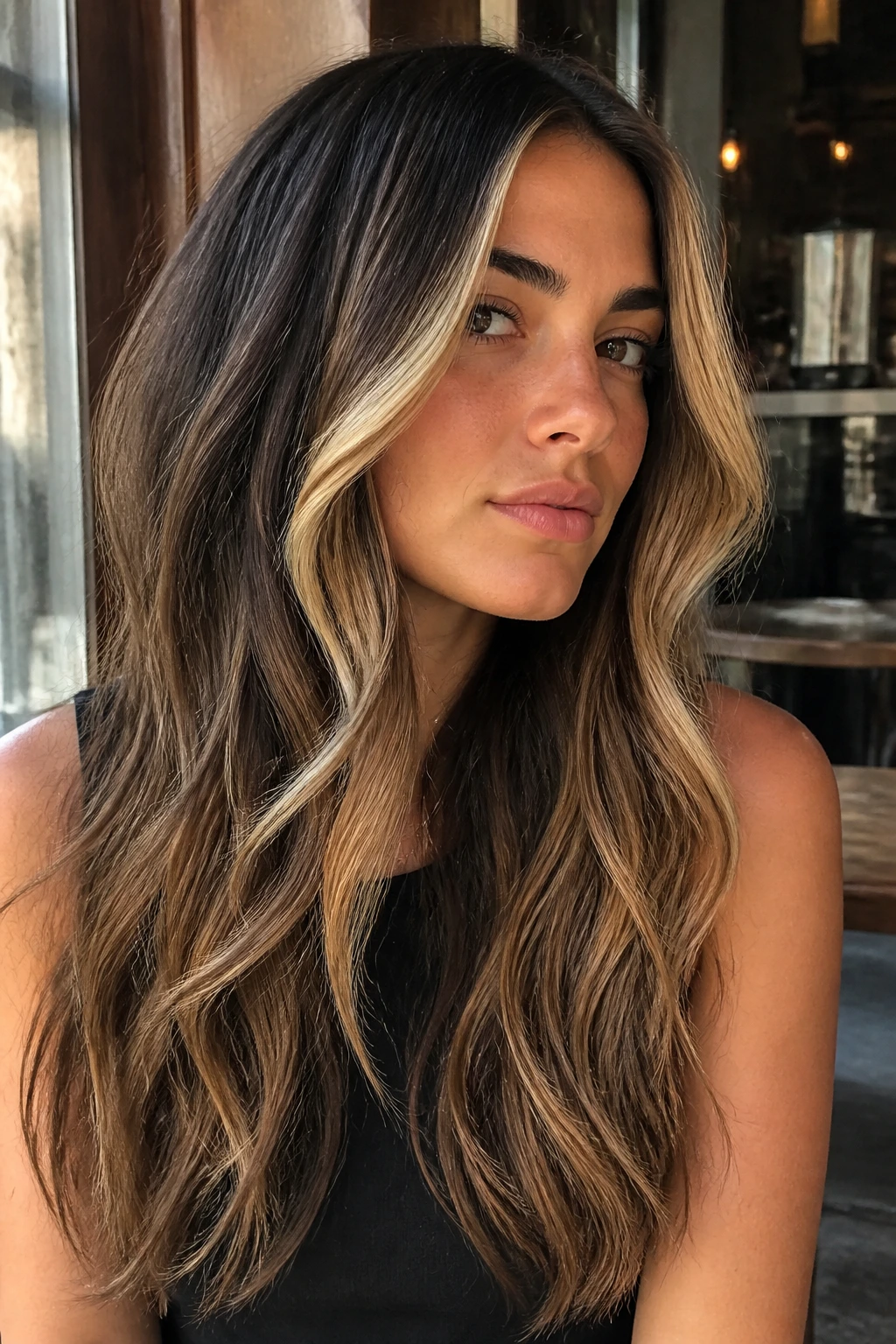
Money piece layers put brighter face-framing pieces right where the haircut already wants attention. The lighter front sections make the layers pop, especially when the rest of the hair stays a little deeper in tone. It’s a color-and-cut pairing, and it can be very effective on long hair because it draws the eye to the movement near the face.
This style is not subtle. That’s the appeal. It works best when the front layers are cut cleanly and the color shift is intentional, not stripey. If the highlights are too chunky or the layer line is too short, the whole thing can look dated. Keep the front soft, let the color sit on the same contour as the face frame, and the result feels polished.
21. Disconnected Statement Layers
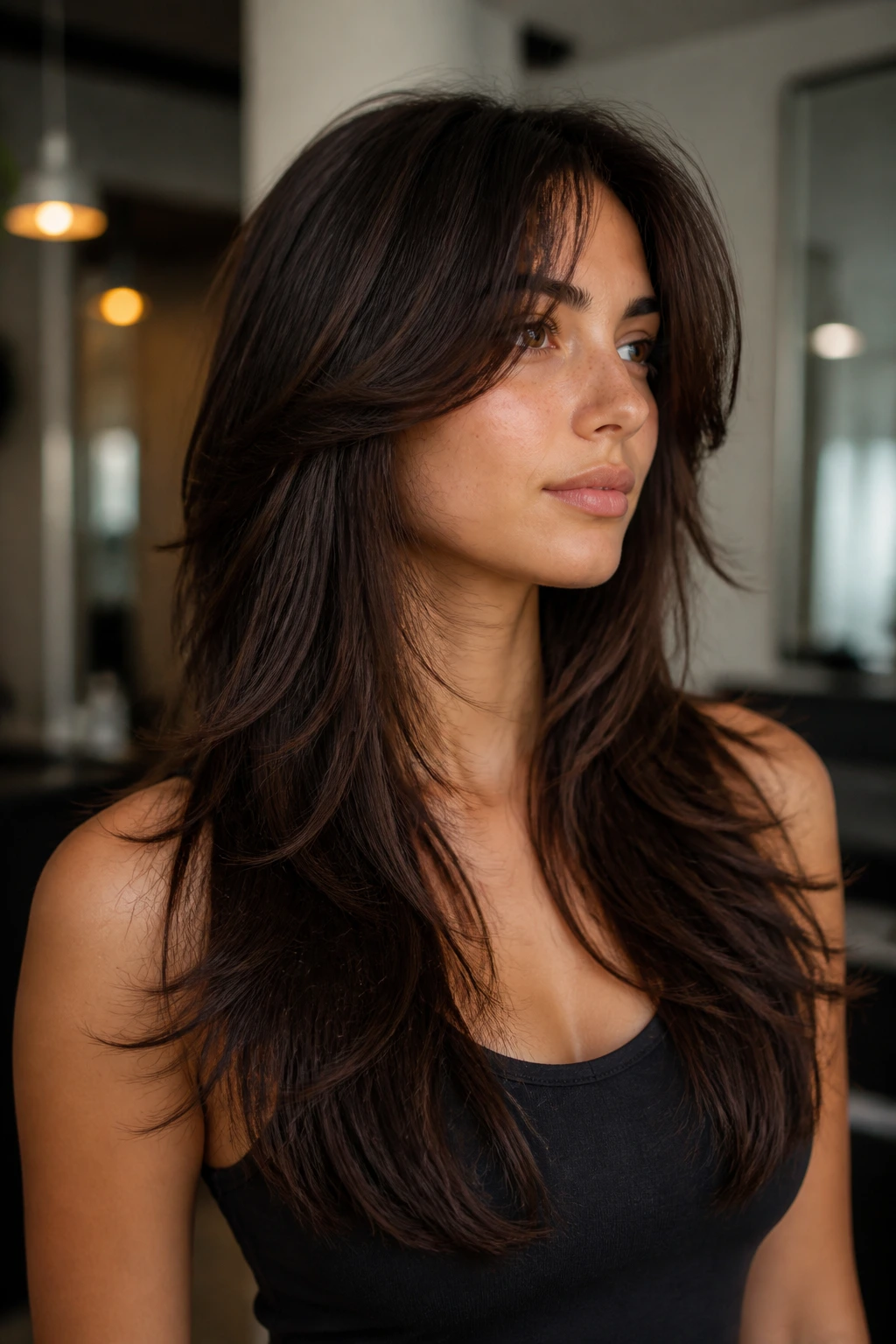
Disconnected layers are more visible and more deliberate. Instead of melting every step together, the haircut keeps some separation, which gives long hair a sharper edge. This is the style for people who like a haircut you can actually see from across the room.
It’s easiest to wear when you have decent density or naturally textured hair, because the contrast between the sections shows up better. Fine hair can wear it too, but only if the stylist avoids over-thinning the bottom. The shape should look bold, not sparse. Styled with bends or loose waves, the disconnect reads as intentional and modern. Styled pin-straight, it can look more severe.
22. Air-Dry Layers
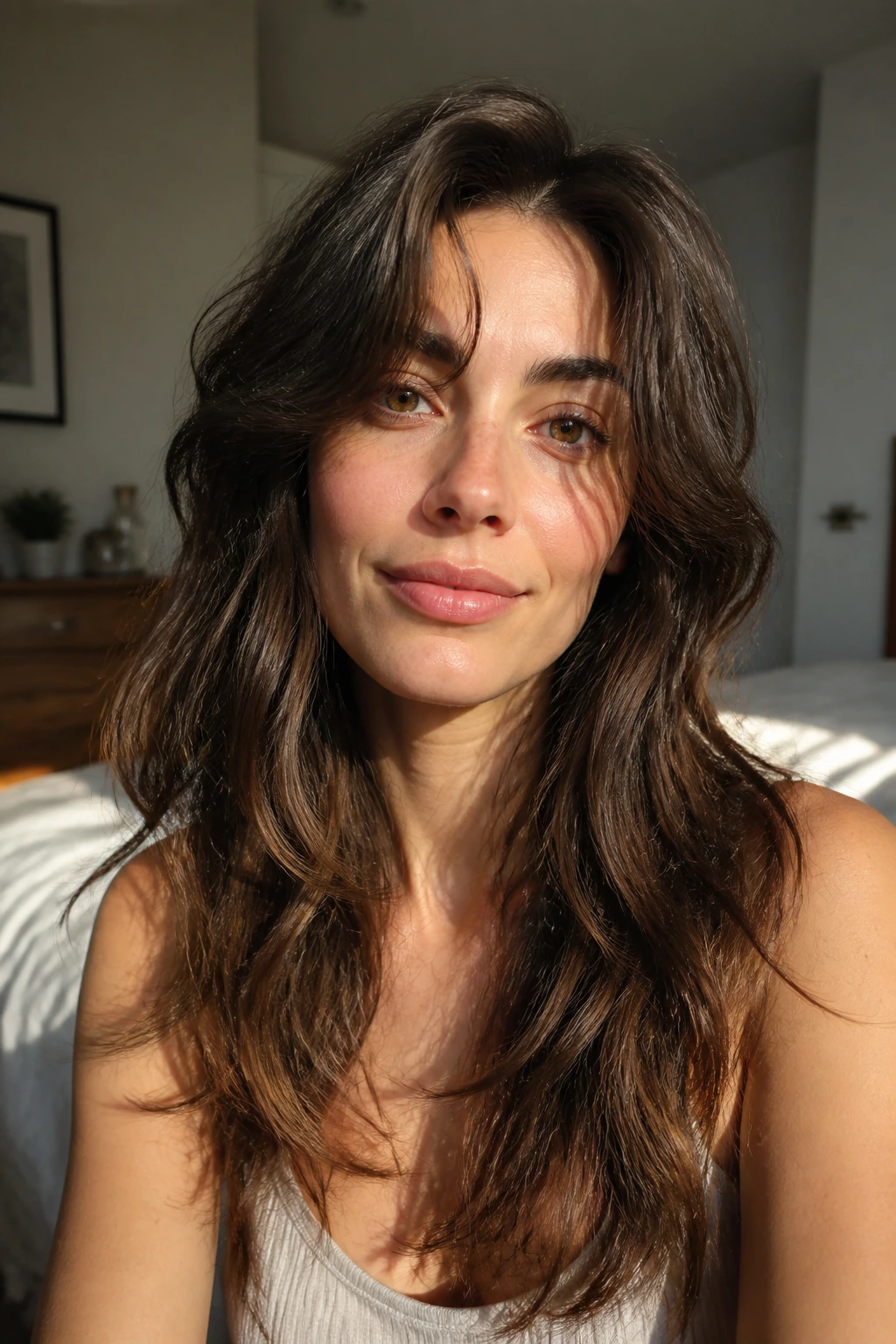
Air-dry layers are built for hair that spends most of its life away from hot tools. The layers are cut to sit well as the hair dries on its own, which means fewer awkward bends and fewer flat spots around the face. This is one of my favorite practical choices for long hair because the haircut is doing part of the styling work for you.
Wave, curl, and even some straight textures can wear this shape. The stylist just needs to know how your hair dries naturally and where it loses shape. For me, the key is balance: enough layers to keep the hair from hanging heavy, not so many that the air-dried finish turns stringy.
23. Half-Up Cascade Layers
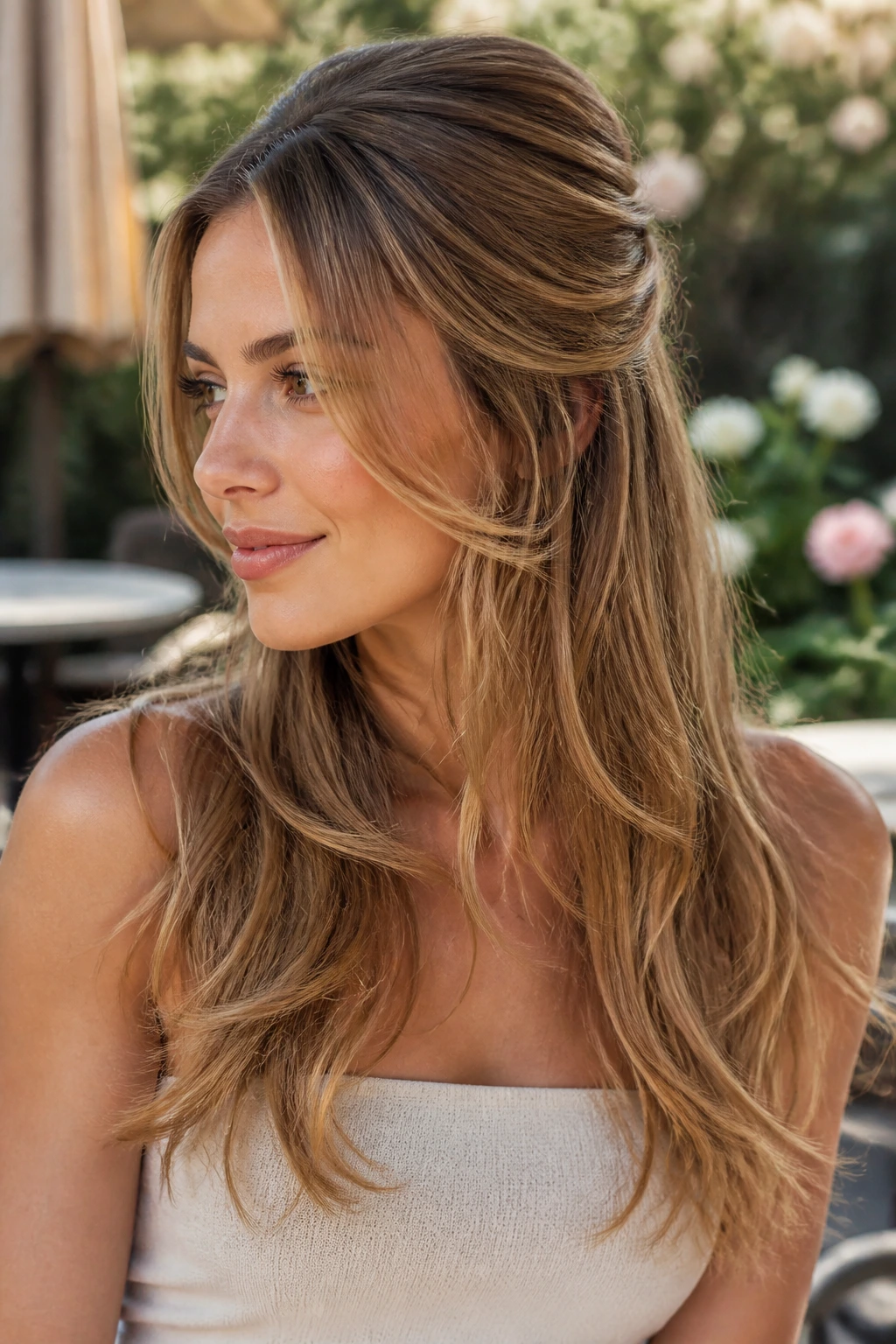
Half-up cascade layers are made for the people who live in claw clips, half buns, and loose ponytails. The layers are placed so the front still frames the face when the back is pulled up, and the remaining length falls in soft pieces instead of one heavy tail.
This is one of those practical cuts that looks better the more you use it. A half-up style can be hard on blunt, one-length long hair because the pulled section makes the rest of the hair look too flat. Layers solve that. They give the style some movement around the ears and collarbone, which makes even an everyday clip look more finished.
24. Polished Blowout Layers
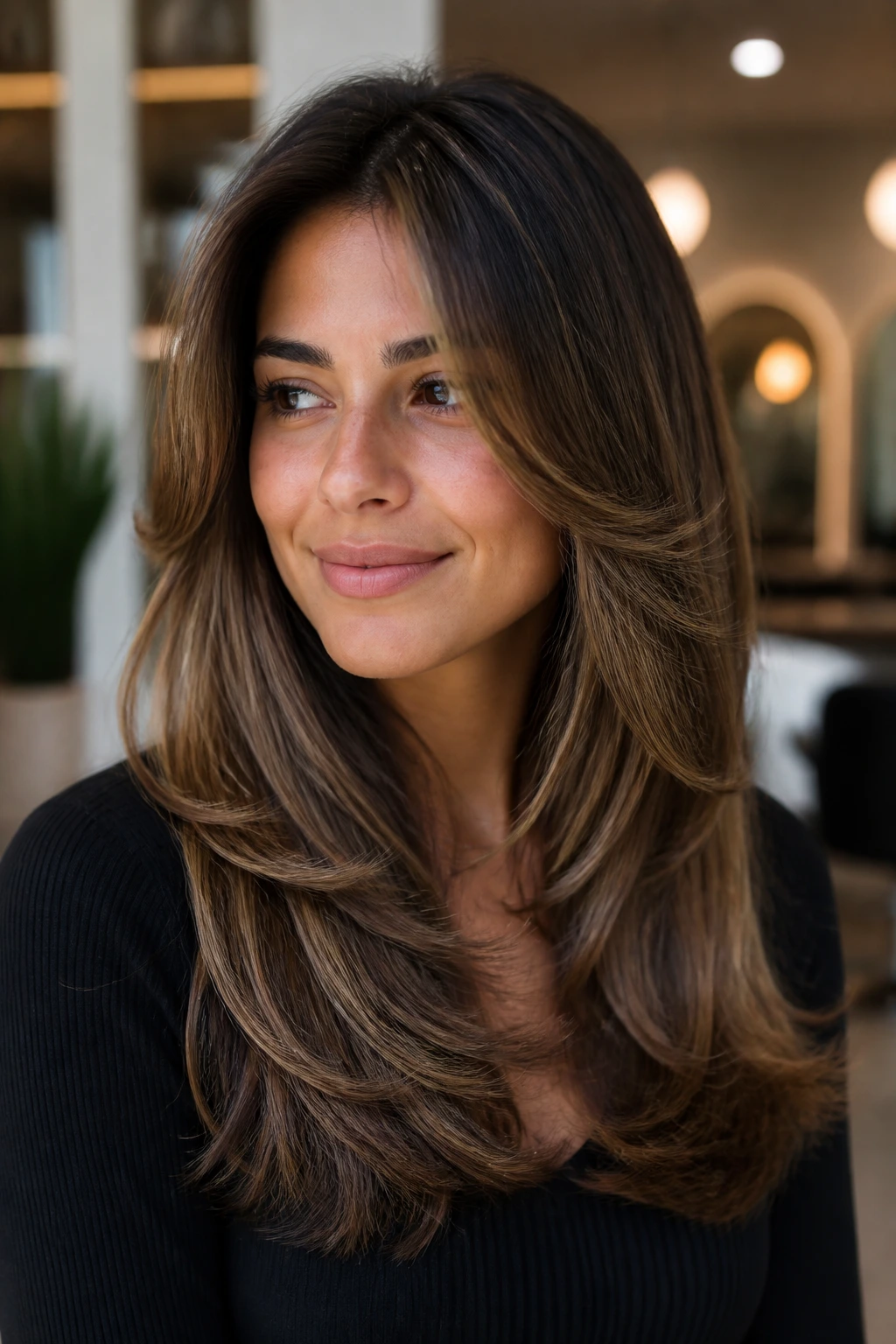
Polished blowout layers are all about smooth volume. The cut is usually built so the front can turn away from the face, the crown has a little lift, and the ends curve neatly under or outward depending on the brush work. It’s the kind of shape that makes long hair look salon-fresh for more than one night.
A round brush, a dryer with a concentrator nozzle, and a little patience matter here. You do not need huge curls. You need controlled movement. When the layers are cut well, the blowout lasts longer because the shape is already helping the hair fall in the right direction. That’s the real payoff.
25. Wispy Layered Ends
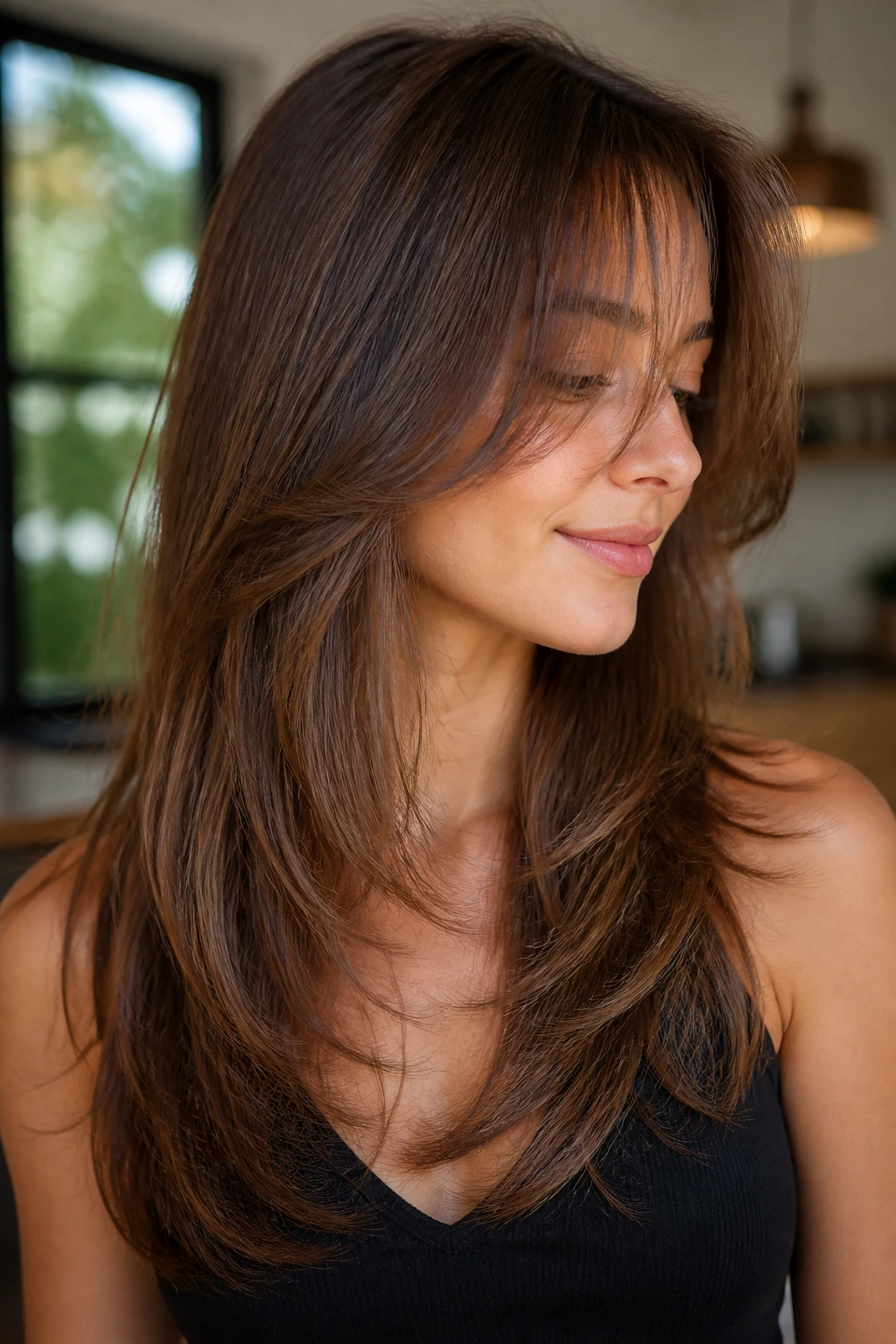
Wispy layered ends are softer, lighter, and a little more delicate at the bottom edge. The cut keeps the length, but the last few inches are textured so the ends don’t look like a heavy curtain. This works best when you want softness rather than volume.
I’d use this on long hair that already has enough bulk through the middle. It’s also useful if your ends get weighed down by a lot of styling or if you like loose waves that need a bit of separation. The one thing to watch: too much wispy cutting can make the hair look thin. A little goes a long way.
26. High-Volume Crown Layers
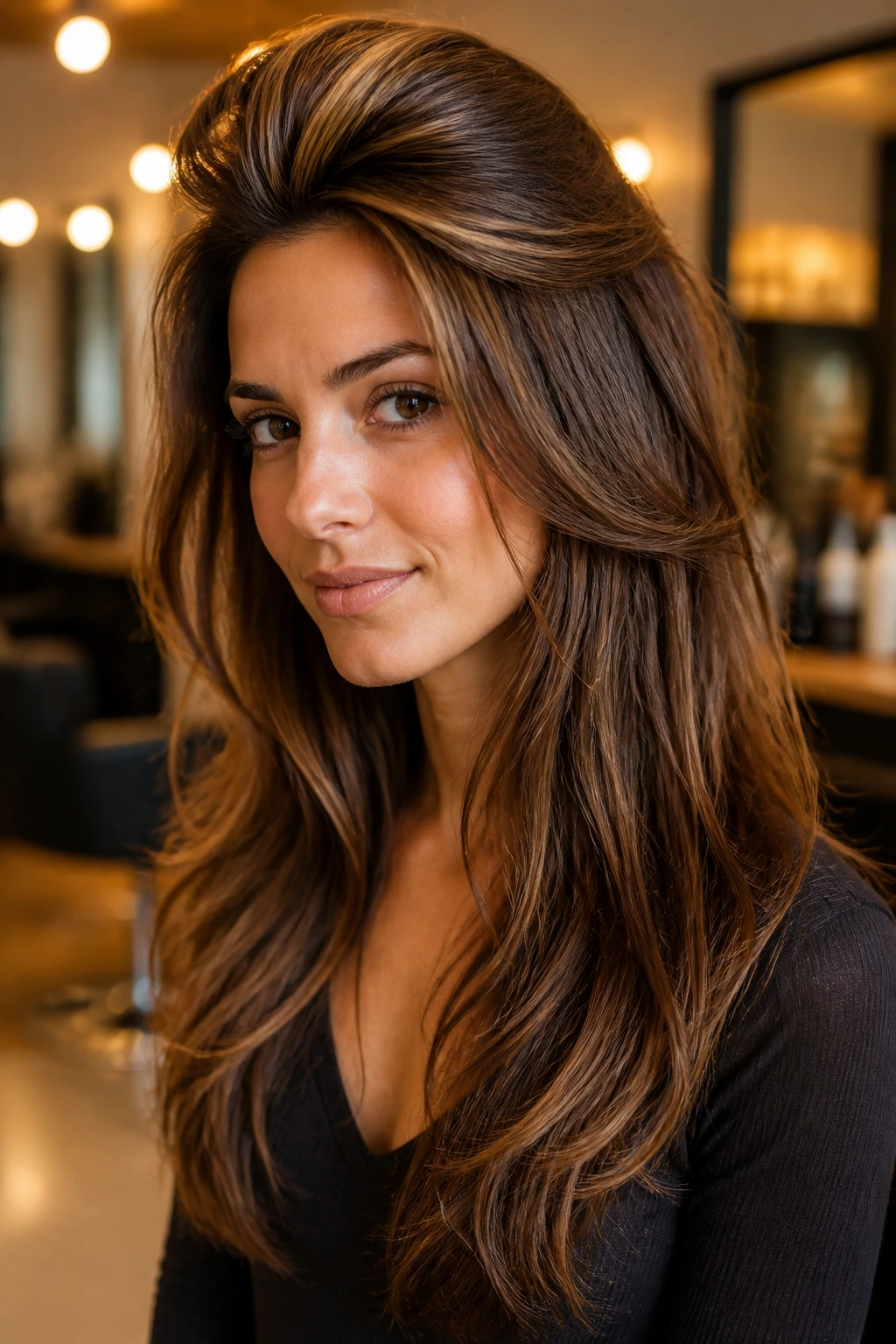
High-volume crown layers shift the action upward. The top of the haircut gets the most lift, while the lower sections stay long enough to keep the overall shape grounded. It’s a smart structure for long hair that falls flat at the roots but still has good density through the body.
The styling trick here is root lift. Blow-dry the crown up and away from the head, or set the top section on large rollers while the rest of the hair cools. If you skip that, the cut loses its point. I like this style on wavy hair and dense straight hair most of all, because both textures can support the height without collapsing.
27. Spiral Cascade Layers
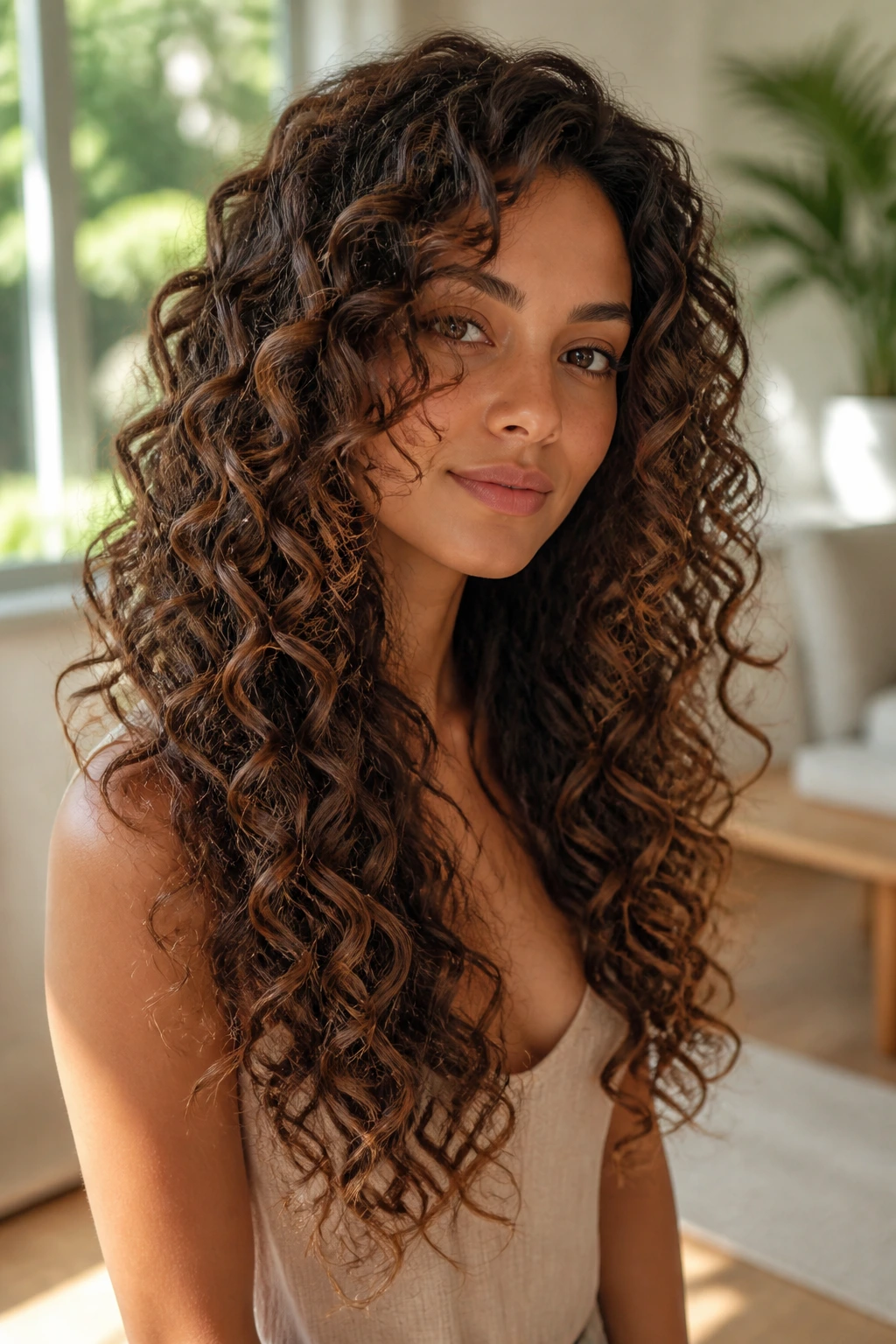
Spiral cascade layers are made for curls that need vertical movement. Instead of cutting the hair into one broad shape, the stylist lets the curl pattern fall in long spirals, which keeps the length impressive while preventing the lower half from turning into a solid block. The silhouette is longer and slimmer than a classic rounded curly cut.
This is especially useful if your curls shrink a lot when dry. The layers need to account for that spring so the finished shape doesn’t land too short at the crown. Styled with a diffuser and a curl cream that keeps the strands separated, the result is a long, falling shape that moves when you walk. Not stiff. Not puffy. Just shaped.
Why Long Layers Change the Way Hair Moves
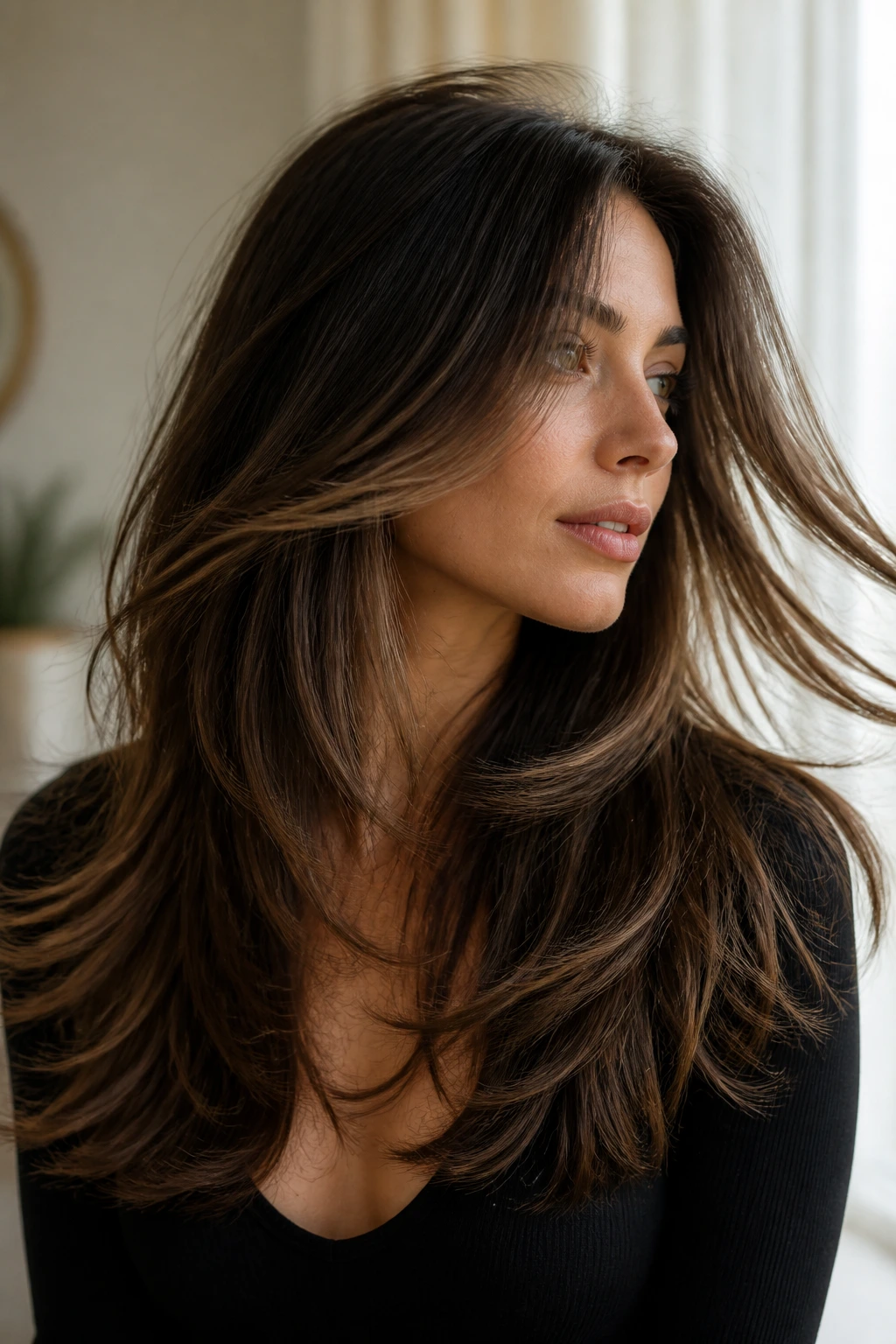
Long hair gets weighed down by its own length. That sounds obvious, but it’s the whole reason layers matter. A blunt cut can look thick at the bottom and flat at the root, while long layers redistribute that weight so the hair lifts and falls in a more natural line. You feel it the first time you turn your head and the ends don’t swing like a rope.
The best layer patterns are quiet about it. They don’t chop the hair into obvious steps unless that’s the look you want. They remove mass where the hair was sitting heavy, usually through the interior or around the face, and leave enough length at the bottom so the shape still feels lush. That’s why a good layered cut can make hair seem healthier even when the length hasn’t changed much.
Texture changes the result. Straight hair shows the lines more sharply. Wavy hair turns the layers into movement. Curly hair turns them into shape. Coily hair turns them into structure. The same haircut can behave completely differently on each texture, and that’s not a flaw. It’s the whole game.
And if you wear your hair up half the time? Layers matter even more. A ponytail with some face-framing pieces and softer lengths around the crown looks lighter and more intentional than a blunt tail. That tiny change around the face changes the whole mood of the cut.
How to Choose the Right Layer Pattern for Your Hair Type
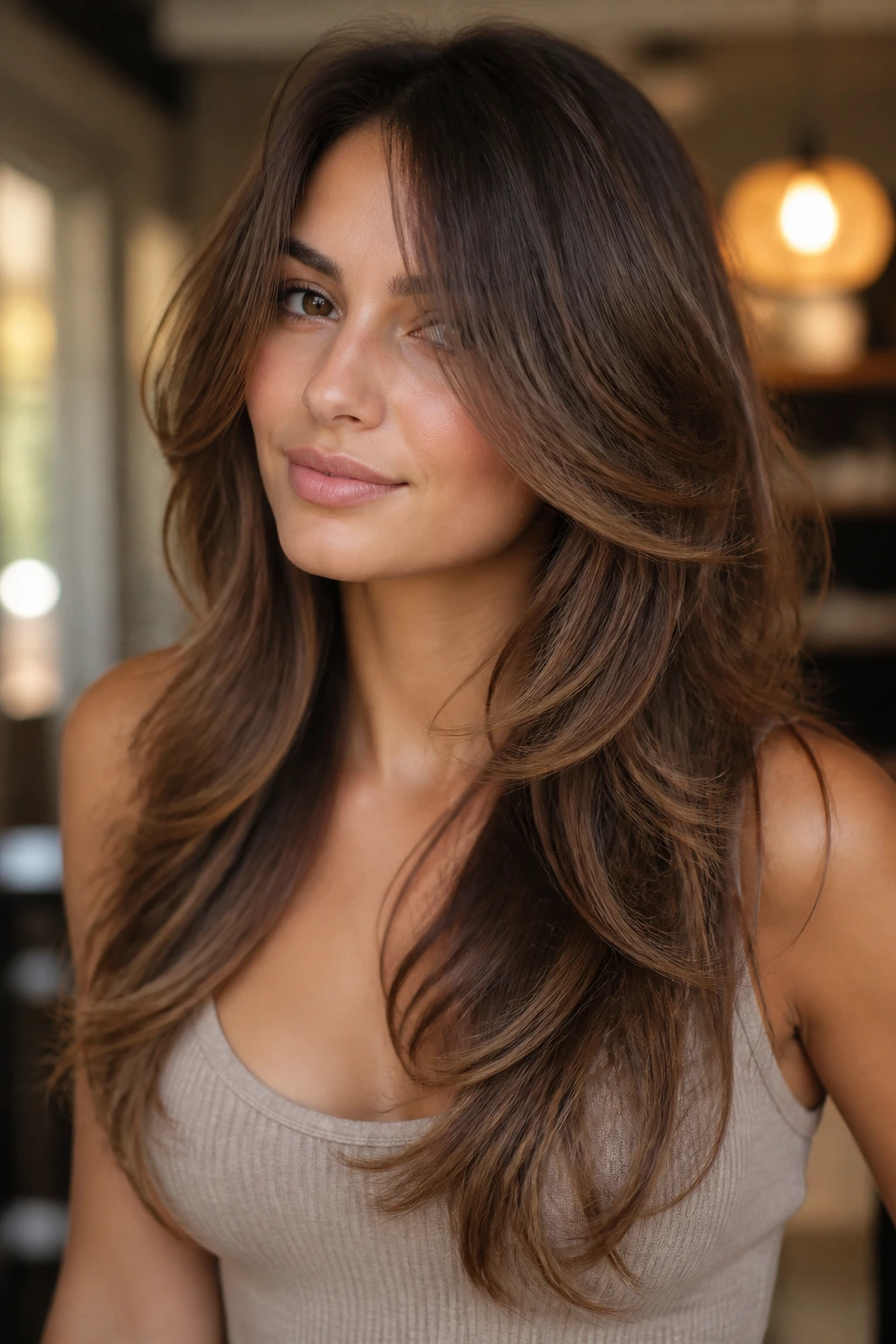
Fine hair needs a lighter hand. Too many short pieces and the ends go see-through fast, which is a heartbreak nobody needs. Invisible layers, soft face-framing pieces, and rounded cuts usually work better because they create movement without eating the perimeter.
Thick hair is the opposite problem. You have room to remove weight, so stronger shapes like butterfly layers, V-cuts, and waterfall layers can work beautifully. What you want to avoid is random thinning that leaves the hair puffy at the top and thin at the bottom. Bulk should be removed with purpose.
Curly and coily hair need length-aware cutting. Dry cutting or curl-by-curl shaping usually gives the best read on how the layers will fall once the hair dries. If someone cuts curls too aggressively while they’re stretched out, the finished shape can jump shorter than expected. That’s how people end up with a crown that feels too high and ends that look sparse.
Face shape matters, but not in the rigid, rulebook way people love to pretend. A long face can be balanced by a fuller fringe or a side sweep. A round face often benefits from vertical pieces that open below the cheekbones. A strong jaw can be softened with rounded layers or a face frame that starts lower. Still, your density and texture matter more than any face-shape chart somebody saved to Pinterest.
The Tools That Keep Long Layers Looking Intentional
-
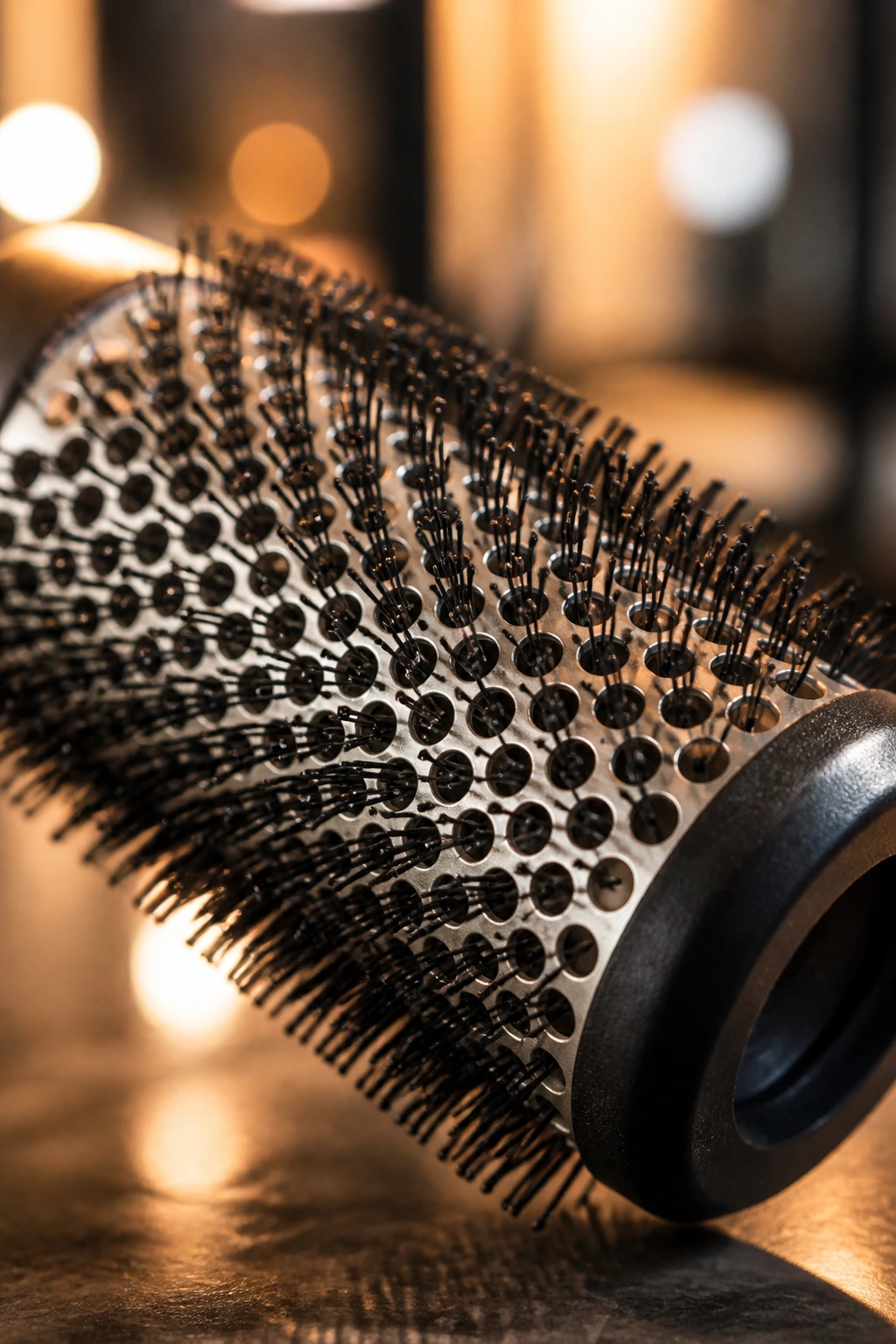
Round brush, 2 to 3 inches: Best for feathered, butterfly, and blowout layers; the barrel size controls how much bend you get.
-
Paddle brush: Useful for smoothing long, straight layers without creating too much curve.
-
Wide-tooth comb: Better for curls and waves, especially when detangling on damp hair.
-
Sectioning clips: Necessary if you want even styling; long layers hide messiness until the wrong piece flips the wrong way.
-
Blow dryer with concentrator nozzle: Keeps the air focused so the layer shape doesn’t scatter.
-
Heat protectant spray: Non-negotiable if you use hot tools; long hair loses its shine fast when it gets fried at the ends.
-
Curling iron or wand, 1 to 1.25 inches: Good for bend, wave, and polished layer definition.
-
Lightweight serum or oil: Smooths the ends without flattening the crown.
-
Texture spray or dry shampoo: Helps choppy, shaggy, and air-dried layers hold their shape.
-
Microfiber towel or old T-shirt: Gentler on wet curls and waves than a rough bath towel.
Small Styling Moves That Make Layers Show Up
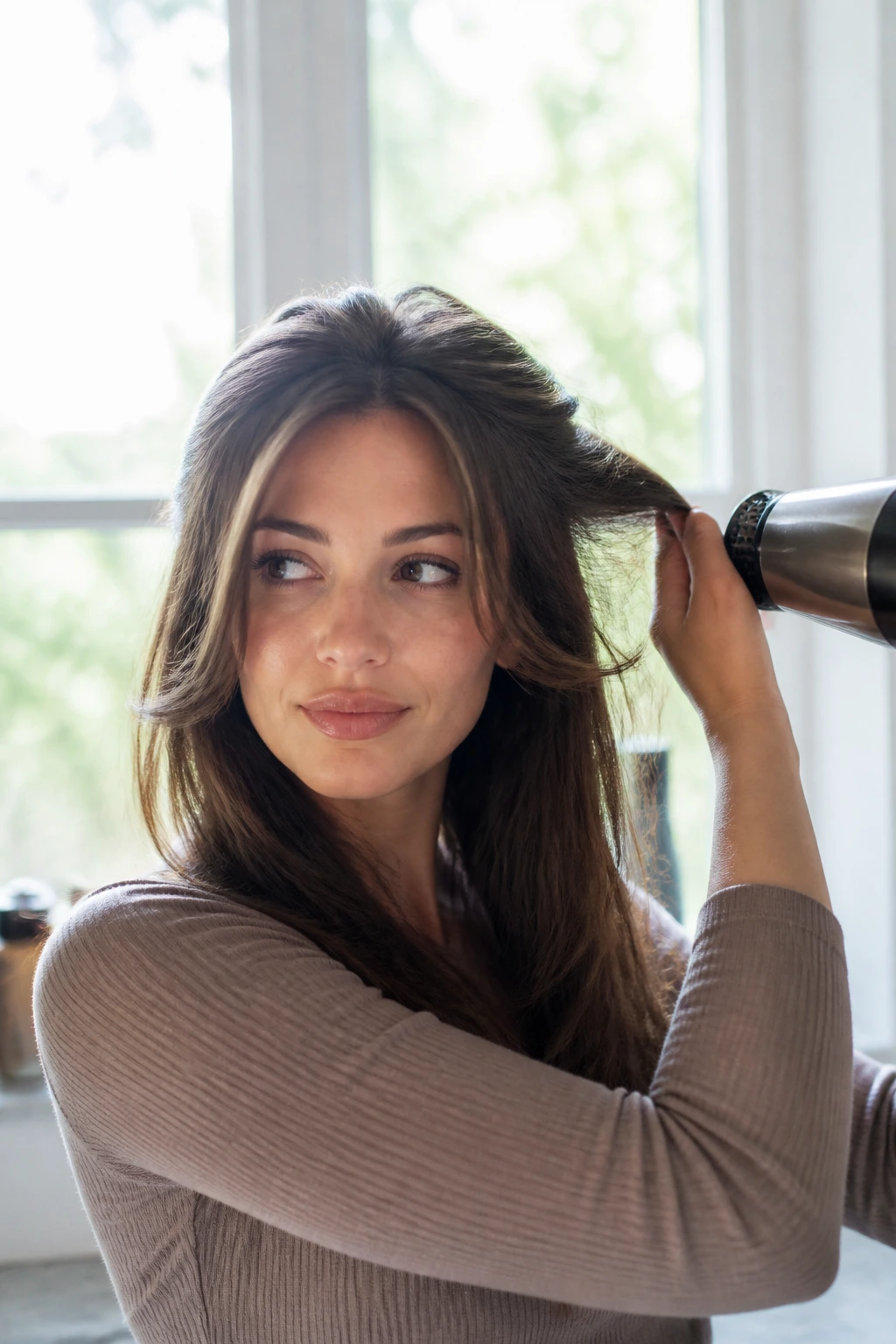
A layered cut can disappear if you style it like a one-length cut. That’s the mistake. Start with the shape. If the layers are meant to frame the face, direct the front pieces away from the cheeks while drying. If the crown needs lift, rough-dry the roots first and smooth the lengths later. Order matters.
Blow-dry direction: Dry the front pieces forward first, then sweep them back. That little reset gives the face frame more lift and keeps it from sticking flat to the head.
Product choice: Use less serum than you think. Long hair only needs a small amount at the ends; too much oil kills movement and makes the layers stick together.
Parting habit: Switch your part once in a while. A center part can make long layers feel calm and balanced. A side part pushes them into a more dramatic shape.
Finish note: If the cut looks dull, bend just the front two inches of hair with a wand or flat iron. That tiny detail changes the whole feel of the style.
Common Mistakes That Flatten Long Layers
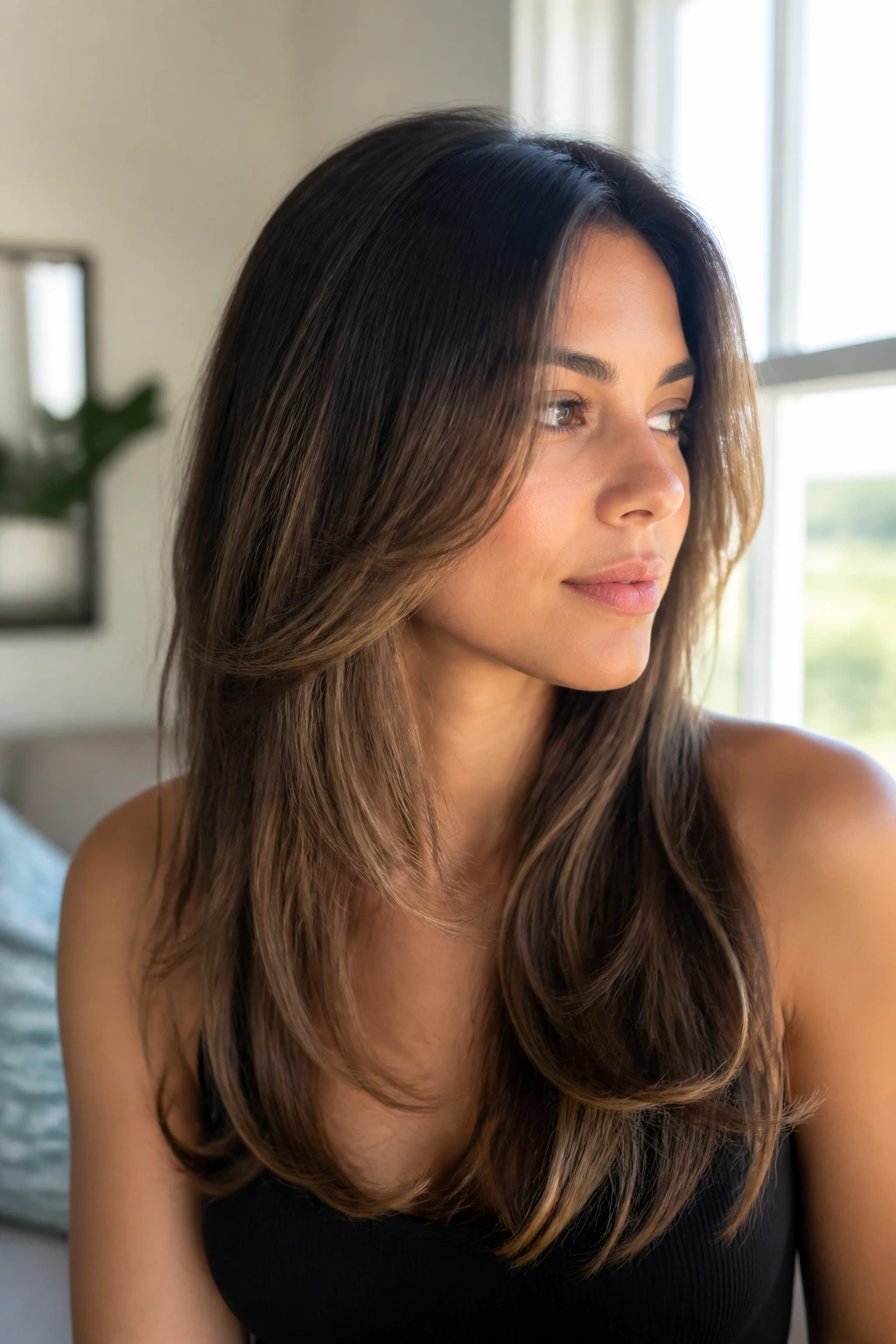
The first mistake is asking for too many short layers near the face. The symptom is obvious: the front looks busy for two weeks, then the ends start feeling thin and the shape gets weird around the collarbone. The fix is to ask where the shortest piece will land and to keep the transition soft.
Another common problem is over-thinning thick hair. It sounds useful in the chair. It’s not always useful a week later. If too much weight gets removed from the wrong spots, the hair can puff up at the crown and look stringy at the bottom. Better to remove bulk in sections than to texture the whole head into submission.
Cutting curls like straight hair causes trouble too. Curly hair shrinks, bends, and stacks in ways that a wet cut can hide. If the layers are placed without considering shrinkage, the finished shape can land too short. Dry cutting or curl-by-curl shaping avoids that mess.
The last big one is styling only the top layer. Long hair needs the face frame, crown, mid-lengths, and ends to cooperate. If you smooth the top and ignore the bottom, the cut reads flat. A little bend through the lower layers is often all it takes.
Variations Worth Trying
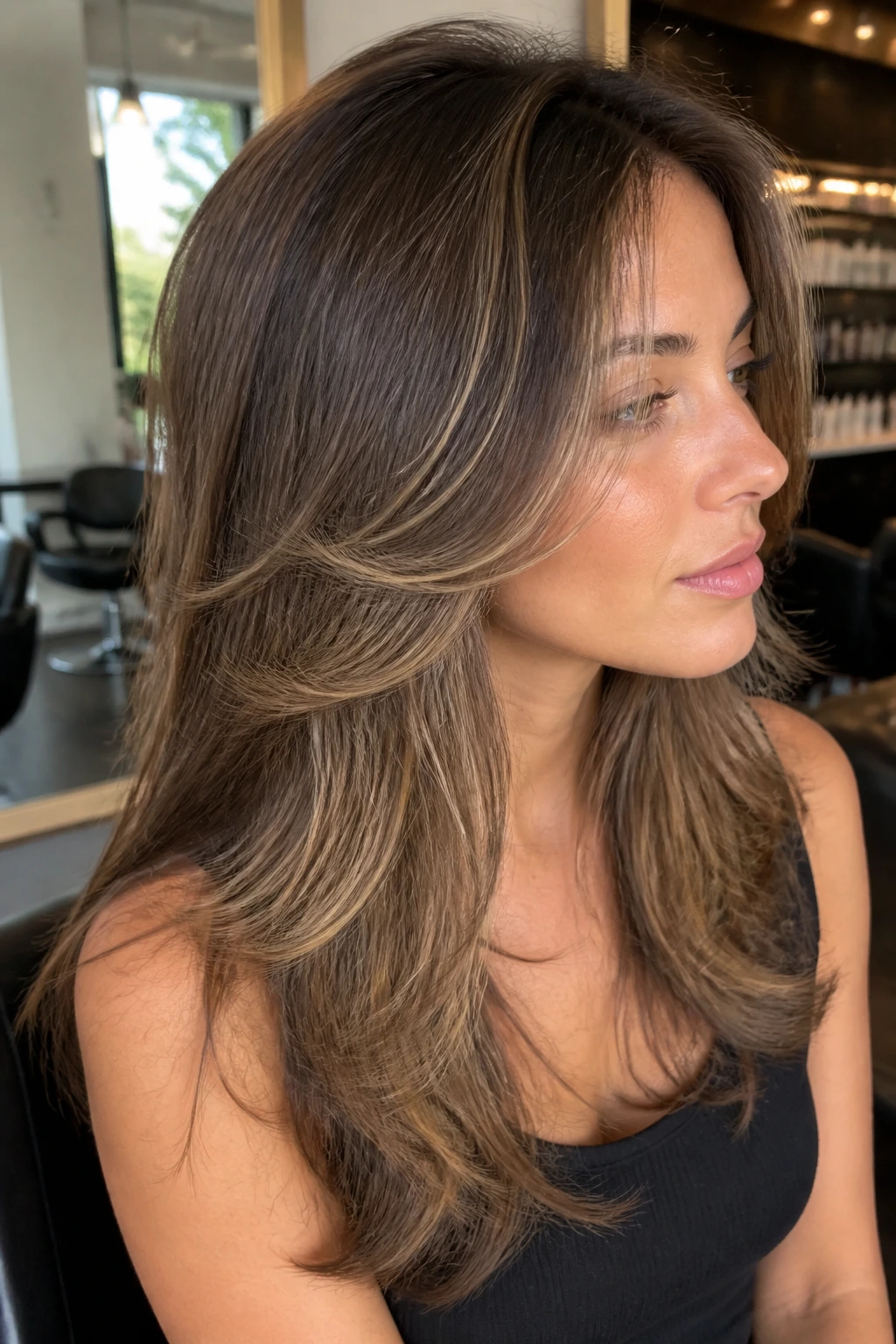
The Soft-Grown Version: Keep the layer pattern low-contrast and start the face frame lower, around the jaw or collarbone. This is the version for people who want their haircut to last and not look overdone after six weeks.
The Big-Blowout Version: Ask for more lift through the crown and shorter visible face-framing layers. It suits thick or medium-density hair and looks best with a round brush and a little root spray.
The Curl-First Version: Use dry cutting, longer interior layers, and a shape that follows the curl pattern instead of forcing it. This keeps the hair from ballooning while still letting the curl form breathe.
The Minimalist Version: Keep the perimeter almost blunt and hide most of the layering inside the shape. This is for straight or fine hair that needs movement but can’t afford to lose much weight at the ends.
The High-Drama Version: Push the layers higher, add a side part, and let the front pieces sweep hard away from the face. It’s bolder, less quiet, and excellent if you want the haircut to do more of the styling work.
Keeping Long Layers in Shape Between Salon Visits
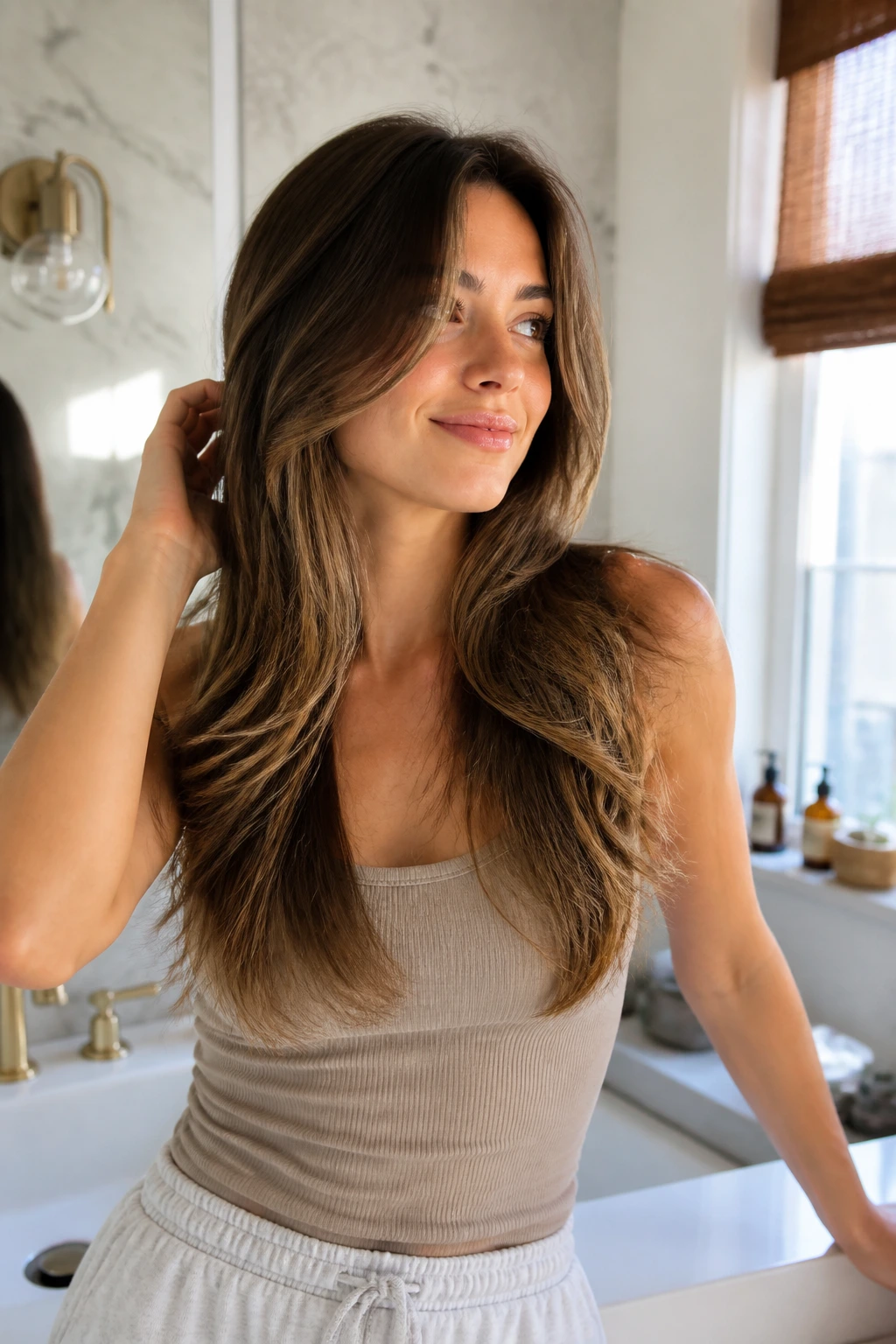
Long layers grow out best when you treat them before they start misbehaving. For most layered cuts, a trim every 8 to 12 weeks keeps the shape tidy. If you have curtain bangs, bottleneck bangs, or a strong face frame, that front section may need a refresh every 6 to 8 weeks so it doesn’t fall into your eyes or disappear into the rest of the hair.
Wash frequency matters too. Layered hair that gets overloaded with dry shampoo, serum, or heavy conditioner can lose its movement fast. Clean the roots as needed, keep conditioner mainly on the mid-lengths and ends, and rinse well. Heavy buildup is one of the fastest ways to make a good layered cut feel sleepy.
If your ends start looking see-through, don’t wait forever hoping they’ll magically thicken back up. They won’t. A small trim is cheaper than pretending the split ends are a style choice. And if the front is still good but the back feels ragged, ask for a “dusting” or a shape refresh instead of a full reset.
Frequently Asked Questions
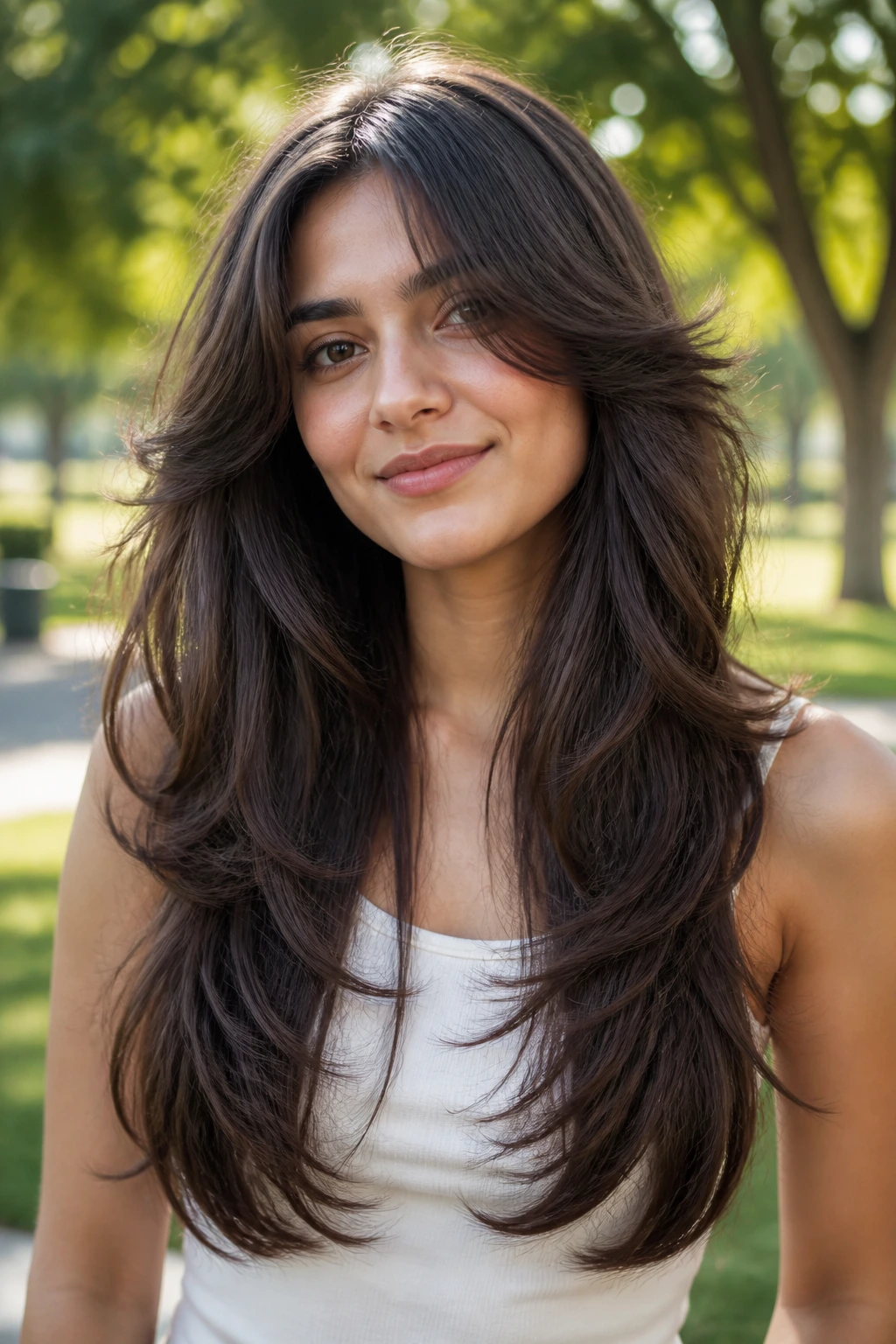
How do I know if layers will suit my long hair?
If your hair feels heavy, flat at the root, or too solid at the ends, layers usually help. They’re especially useful when your hair needs movement but you do not want to lose much length. The trick is choosing the right layer depth for your density and texture.
Are layers bad for fine hair?
Not automatically, but fine hair needs restraint. Too many short layers can make the ends look thinner than they are. Invisible layers, soft face-framing pieces, and rounded shapes usually work better because they add movement without stripping away too much weight.
What’s the difference between curtain bangs and face-framing layers?
Curtain bangs are a fringe that splits in the center and sits closer to the forehead. Face-framing layers can start lower and blend into the rest of the hair without reading like a fringe. If you want less maintenance, the layered frame is usually easier.
Do long layers work with curly hair?
Yes, but the cut needs to respect shrinkage. Dry cutting or curl-by-curl shaping tends to give the most predictable result, because the stylist can see where each curl sits naturally. If curls are cut like straight hair, the finished shape can end up too short on top.
How often should long layers be trimmed?
Most layered cuts look best with a trim every 8 to 12 weeks. Bangs and strong face-framing pieces often need attention a little sooner. If the ends start turning wispy or the shape feels bottom-heavy, that’s your sign.
Can I keep my hair in a ponytail and still wear layers?
Absolutely. In fact, some of the best long layered cuts are better in a ponytail than blunt hair because the loose pieces around the face soften the look. If you wear your hair up a lot, ask for layers that keep some length around the front and crown.
Will layers make thick hair easier to manage?
Usually, yes. Thick hair often needs weight removed from the interior or through the mid-lengths so it stops sitting like one heavy block. A well-shaped layer pattern can make drying faster and reduce how much the ends flip out on their own.
What should I do if my layers feel too choppy?
Ask for blending, not more cutting everywhere. A stylist can soften the transition between sections and remove some of the harshness without making the haircut shorter overall. Styling with a smoother finish can also help, but the real fix is in the shape.
A Cut That Keeps Moving
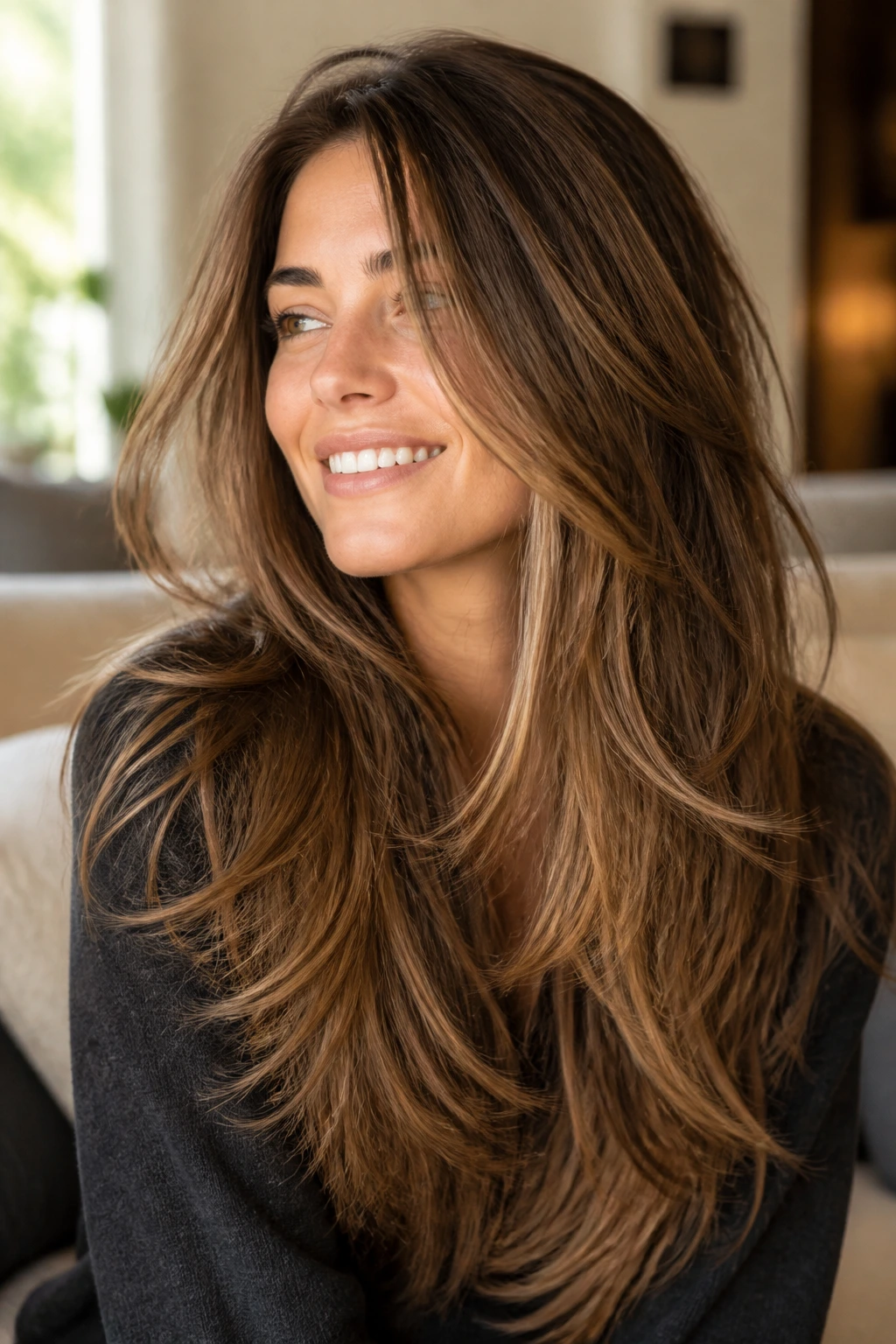
Long hair does not have to mean one long heavy shape. When the layer pattern is right, the hair moves better, sits better, and grows out better. That’s the part people feel before they can explain it.
The best versions of these layered hairstyles for long hair are the ones that suit the way you actually wear your hair. Loose and wavy. Blown out. Clipped up. Air-dried and left alone. Pick the structure that fits your routine, and the haircut does half the styling for you.
