



Medium length feathered haircuts have a way of fixing the two problems that show up most often at the shoulders: too much bulk at the bottom and too little movement everywhere else. A blunt cut can sit there like a shelf. A heavy layer can balloon out at the sides. Feathering splits the difference. The ends lift, the middle stays light, and the whole shape moves when you turn your head.
That movement is the real appeal. On hair that sits around the collarbone, the cut has enough length to swing, but not so much weight that the layers disappear. A good feathered shape also plays nicely with blow-drying, curling brushes, and even air-drying if you like a softer finish. The trick is in the layers: not choppy for the sake of drama, not wispy to the point of vanishing, but placed where the hair actually needs release.
And yes, this is one of those haircuts that changes a lot depending on the person wearing it. Fine hair wants different feathering than dense hair. Straight strands need a different hand than waves or curls. Bangs can make the whole thing read polished, shaggy, or modern in a hurry. The 25 cuts below cover the styles I’d actually point someone toward if they came in asking for movement without losing their length.
Why These Feathered Cuts Work So Well at Medium Length
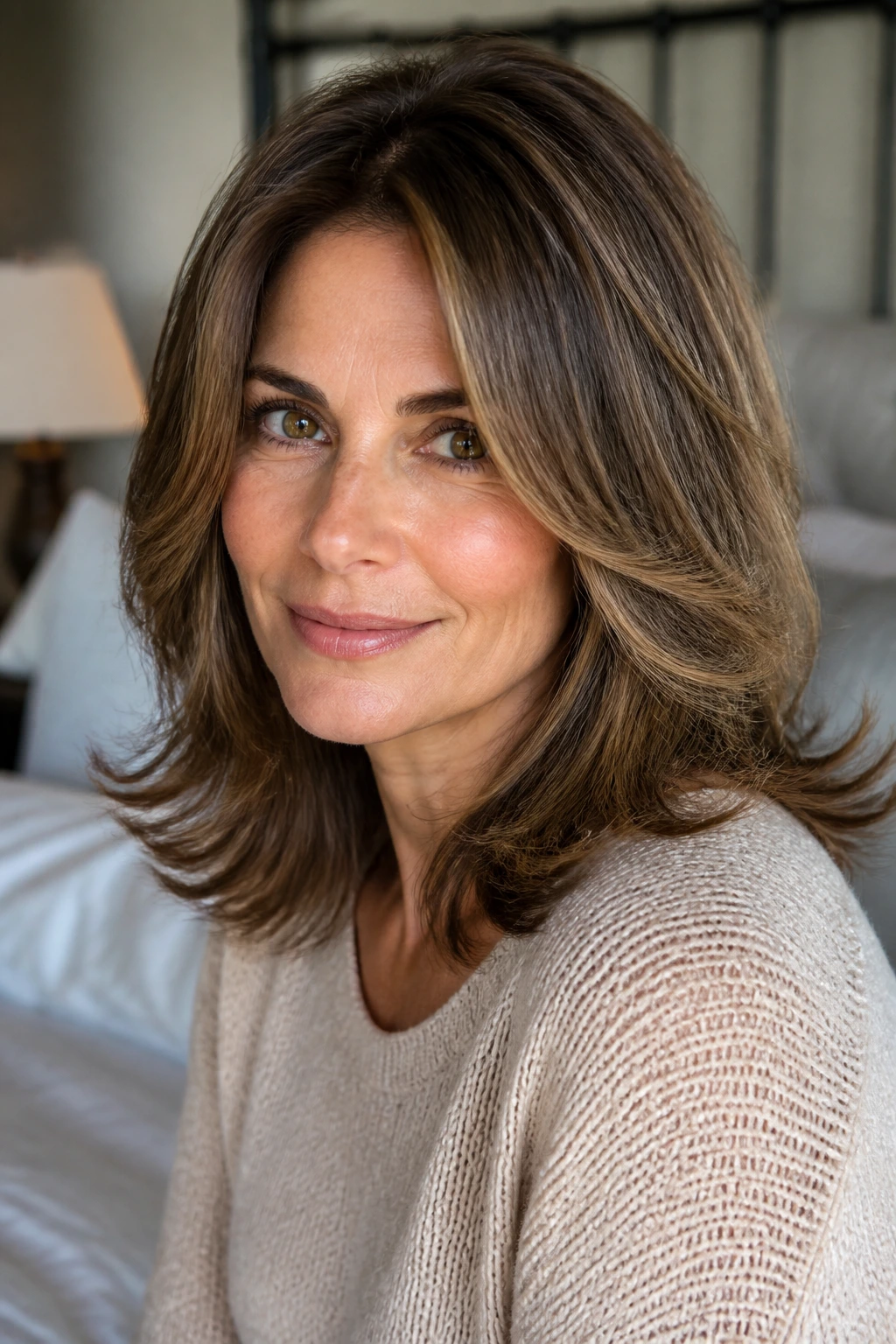
- They remove weight where medium hair usually puffs out: The layers sit in the interior, so the ends don’t turn into a blunt, triangular block.
- They make blowouts easier to shape: A round brush catches the longer pieces and flicks them away from the face instead of leaving them flat and boxy.
- They grow out with less drama: Even after six or eight weeks, feathered layers still look deliberate because the shape is already soft.
- They play well with highlights and balayage: The movement shows off lighter ribbons along the ends and face frame instead of hiding color inside one flat panel.
- They work across textures: Straight, wavy, and curly hair each use feathering differently, but all three benefit from the lighter, airier outline.
1. Classic Feathered Lob
This is the cleanest version of the whole idea. The length hits somewhere between the collarbone and the top of the shoulders, and the layers are soft enough that you notice the shape before you notice the cut lines. It has that easy swing people want from a lob, but the feathering keeps the lower half from feeling heavy or blunt.
Why It Works
The classic feathered lob works because it gives medium hair a gentle bend without forcing it into a high-maintenance style. The shortest face-framing pieces usually start around the cheekbone, then blend into longer lengths through the jaw and collarbone. That lets the hair move when you tuck it behind the ear or blow it out with a round brush.
If your hair tends to hang flat at the crown, this cut helps there too. The layers are not dramatic, but they create enough internal lift that the shape doesn’t collapse by midday.
Who It Suits
- Straight hair that needs motion
- Fine hair that looks limp in blunt cuts
- Wavy hair that needs a cleaner outline
Styling note: A 1.5- to 2-inch round brush and a quick bend under the ends keep this cut looking polished without turning it into a salon-only style.
2. Curtain Bang Feather Cut
Curtain bangs change the mood fast. They break up the face frame, open the forehead, and make the feathering feel more relaxed than formal. On medium length hair, the combination is flattering because the bangs blend into the side layers instead of sitting on top of the haircut like an afterthought.
What Makes It Different
The curtain fringe usually starts shorter near the center and gets longer as it moves outward, which creates a soft diagonal line into the feathered sides. That line is the whole point. It pulls attention toward the cheekbones and gives the rest of the cut a little motion, even if the hair itself is not especially thick.
I like this version most on hair that air-dries with a slight bend. The bangs can be blown away from the face in 30 seconds, and the rest of the layers follow the same shape.
Ask Your Stylist For
- Fringe that parts in the middle and brushes the cheekbones
- Soft interior layers through the sides
- Ends that are point-cut, not chopped blunt
If your forehead is shorter or your face is already narrow, keep the shortest fringe pieces a touch longer so the front does not take over the whole cut.
3. Side-Swept Feathered Layers
A deep side part gives feathered layers more swing. Instead of falling evenly on both sides, the hair drapes across one direction, which makes the cut feel a little more dramatic without getting loud. It’s a nice move for people who want softness but still want the hair to look styled.
The best versions keep the longest layer near the collarbone and use side-swept face framing to guide the eye downward. That prevents the top from getting too wide. It also gives the whole haircut a flattering diagonal shape, which tends to work well if your hair has a stubborn cowlick at the front.
Best for: round faces, fuller cheeks, and hair that likes to separate naturally on one side.
A side-swept feathered cut looks best when the roots have a little lift. You do not need a full blowout. A quick lift at the crown, a bit of mousse, and a brush-out from the side part are enough to keep the shape from sinking.
4. Soft Feathered Shag
This is the cut for people who like movement with a little bite. It is more layered than the classic lob, but the feathering keeps it from going shaggy in a messy way. You get texture around the face, a loose outline through the body, and enough length that it still reads as medium rather than short.
The key here is restraint. The layers should look like they were sliced in to free the hair, not hacked in to make a statement. If you go too short at the crown, the silhouette balloons. That’s the mistake. The sweet spot is a soft, lived-in outline with edges that flip or bend easily.
How to Wear It
- Air-dry with a light mousse for a looser finish
- Blow-dry the front sections away from the face for more shape
- Scrunch in a small amount of texture cream if your hair is wavy
This cut makes sense when you want your hair to look interesting even on days you barely touch it.
5. Face-Framing Feathered Midi
This one is built around the front pieces. The length stays medium, but the face frame gets more attention, which is useful if you want to soften a strong jaw or draw the eye toward the eyes and cheekbones. The back remains easy to wear, while the front does the flattering work.
The face-framing pieces usually start around the lip or chin and taper into longer layers. That shape keeps the haircut from feeling heavy at the sides. It also looks good with color, because lighter pieces around the face catch the movement first.
A face-framing feathered midi can be plain in the best way. It is not trying to do too much. The effect is clean, soft, and a little lifted near the front, which is exactly why it works on days you want your hair to look done without obvious styling.
6. Butterfly Cut at Collarbone Length
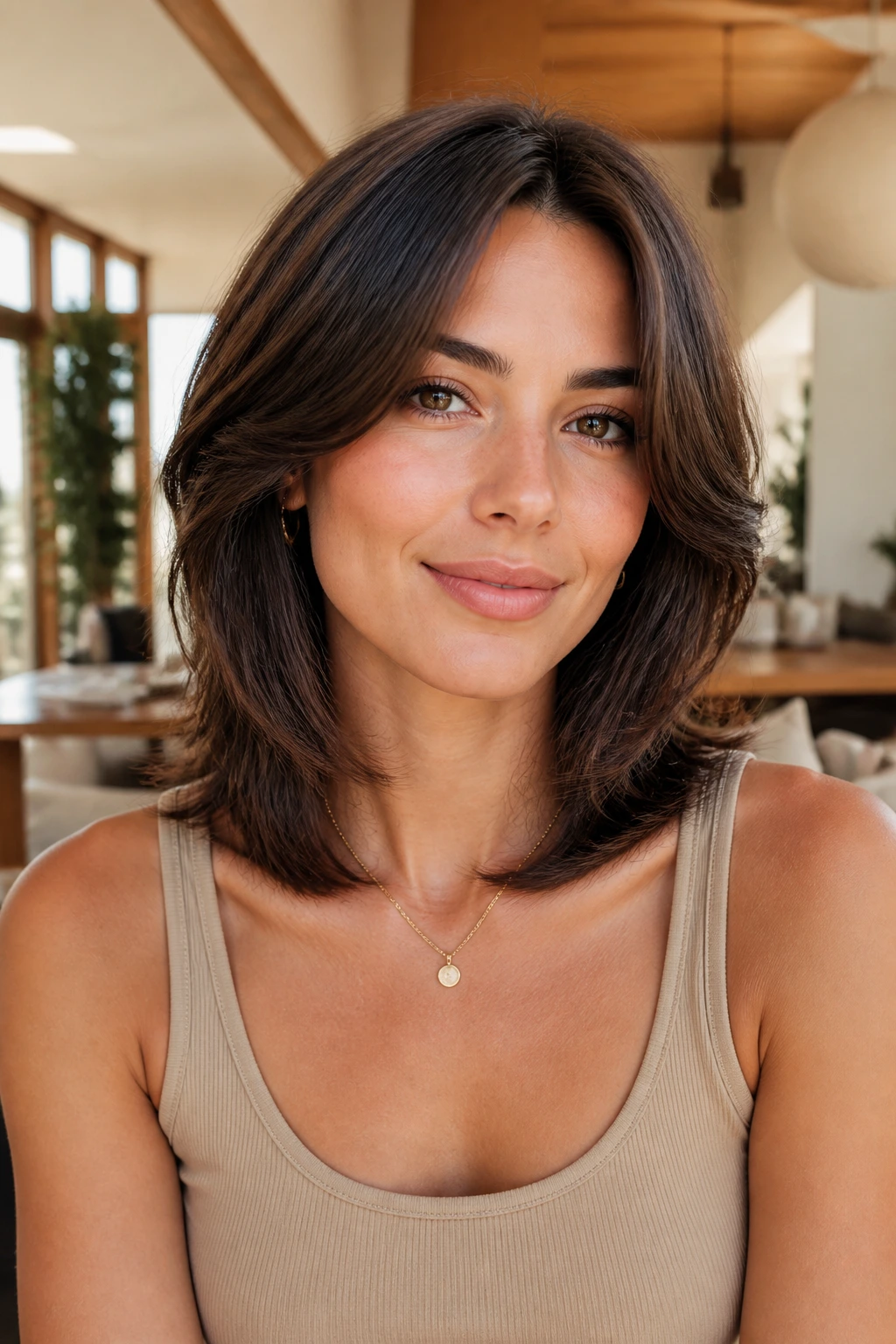
The butterfly cut has become the modern shorthand for long face framing and short interior lift. On medium hair, it lands in a sweet spot. You get the fuller front pieces that brush the shoulders and the shorter crown layers that create a blown-out shape from the side.
What I like about this version is the contrast. The front can feel almost shoulder-length curtainy, while the back remains a little fuller and longer. That gives the haircut movement from every angle, especially if you flip the ends with a brush or a medium barrel iron.
It does ask for some styling. Not a full production. Just enough blow-drying to make the shorter top layer sit off the head and the longer pieces sweep around the jaw. If you skip the styling entirely, the shape still works, but it reads softer and less dramatic.
7. Feathered Layers for Fine Hair
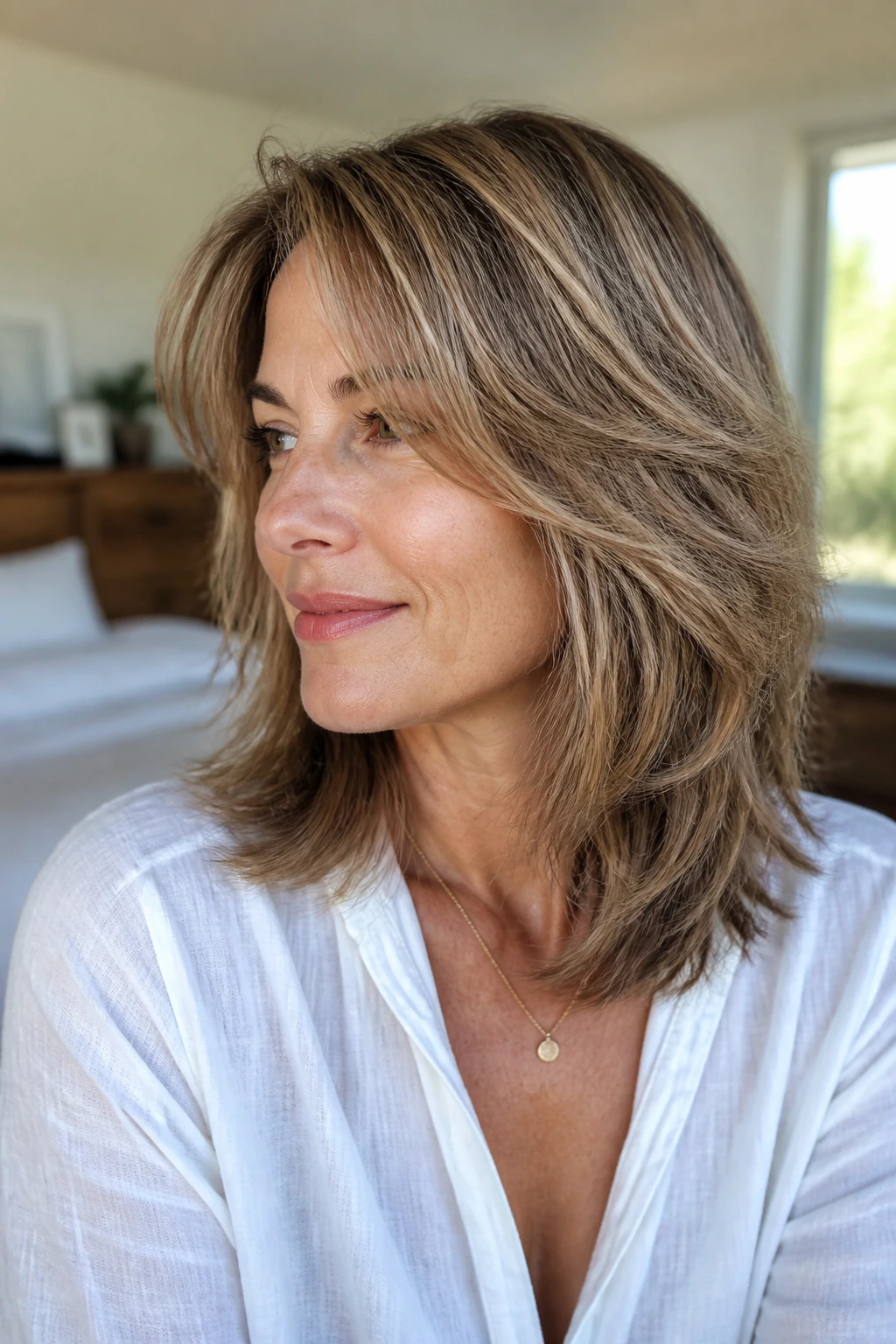
Fine hair needs a careful hand. Too many layers, and it goes see-through at the bottom. Too little, and it falls flat. Feathering solves that by removing weight in selective places instead of slicing the whole head into short pieces.
The best fine-hair feather cut keeps the perimeter visible. You still want enough density at the ends to make the hair look full. The feathering should happen just inside the line, with soft lift around the face and a little movement through the crown. That gives the illusion of volume without exposing thin spots.
Styling It Well
Use a root-lifting spray or mousse at the scalp, then dry the hair upside down for a minute before smoothing it out with a brush. A tiny bit of bend at the ends helps, too. Straight-down fine hair can look stringy fast.
This is one of those cuts where less layering usually wins.
8. Feathered Layers for Thick Hair
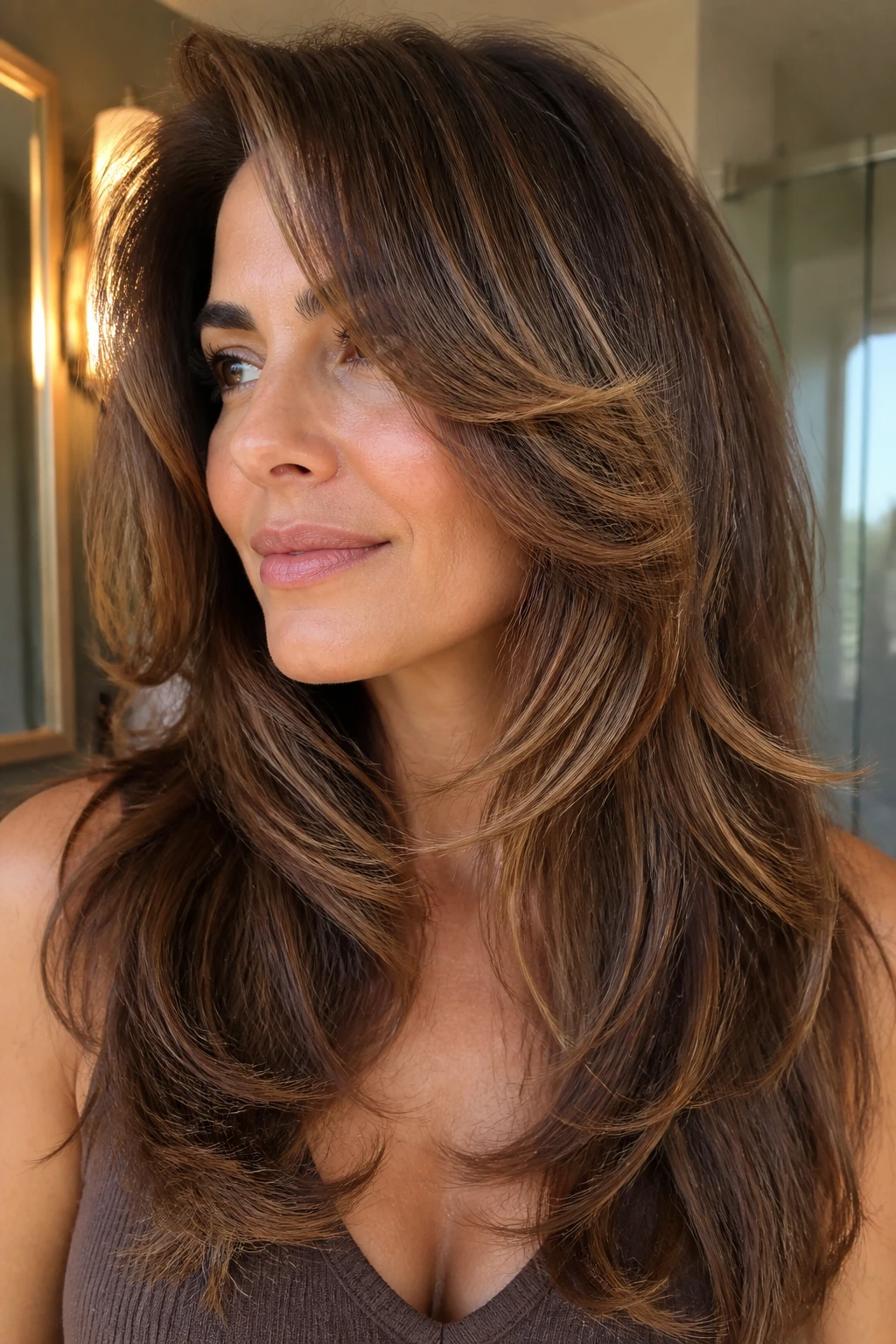
Thick hair and feathering are old friends, if the cut is handled with discipline. Thick hair often needs release through the interior so it doesn’t expand into a heavy triangle by noon. Feathered layers break up the bulk and let the ends move instead of sitting like a block.
The important thing is balance. If the stylist thins the hair too aggressively, you get frizz and random flyaways. If they leave too much weight, the haircut behaves like a blunt cut with a few soft pieces around the face. Neither is the goal.
A strong thick-hair feathered cut usually starts with longer layers through the back and softer face-framing pieces that taper into the length. That keeps the shape controlled but not stiff. Blow-drying with a nozzle attachment helps a lot here. So does a smoothing cream on the mids and ends, especially if your hair expands in humidity.
9. Feathered Cut for Wavy Hair
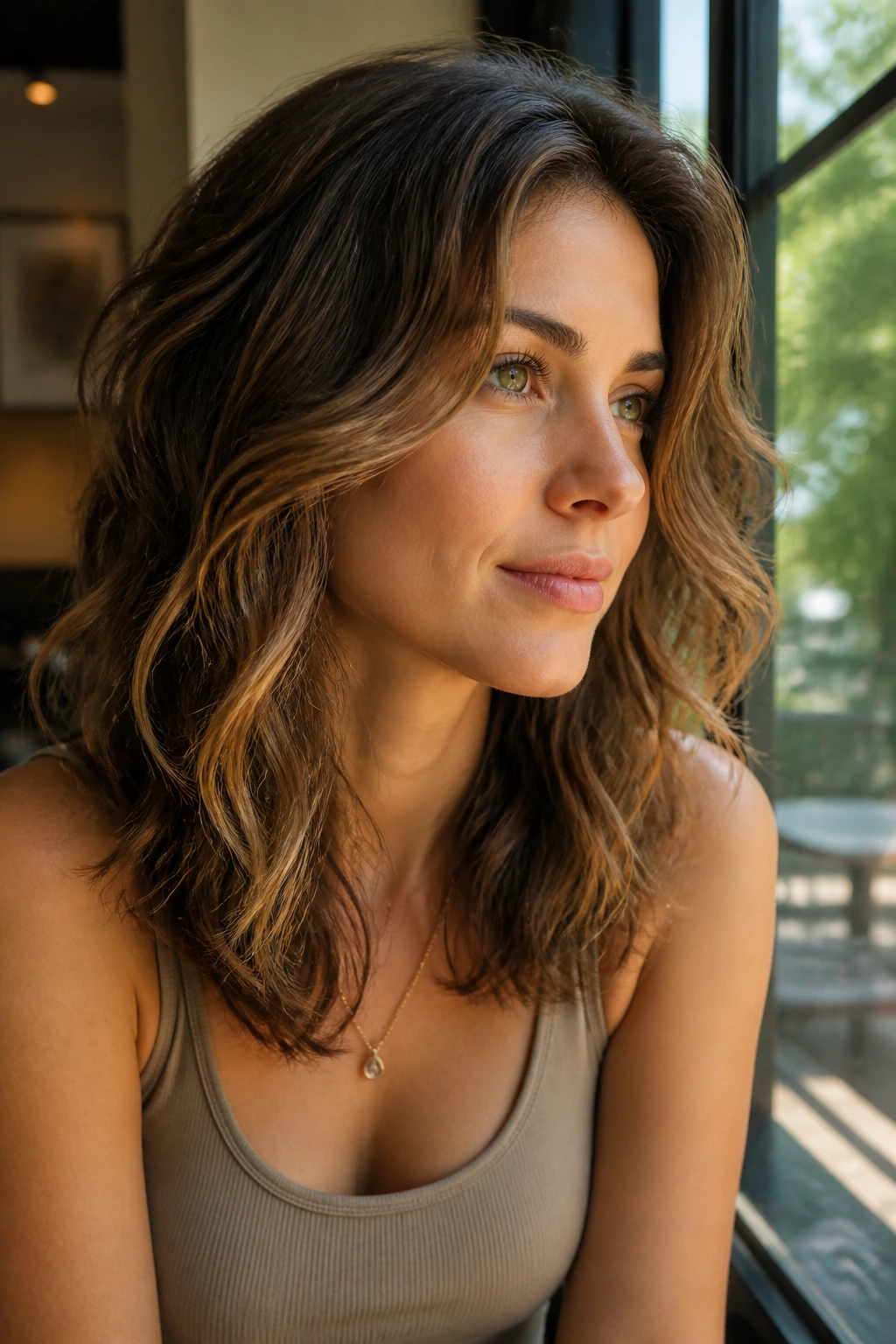
Wavy hair already wants movement, so feathering should support the wave pattern, not fight it. The trick is shaping the layers so the waves fall in clean ribbons instead of clumping into a mound at the sides. When that works, the cut looks loose and expensive without looking overdone.
I like this version at shoulder length or just below. Any shorter, and some waves bounce up too far. Any longer, and the movement can sink under its own weight. The medium zone is where the feathering shows off the wave instead of hiding it.
A diffuser helps, but you do not need to dry every inch perfectly. Scrunch out the water, set the part, and let the layers fall where they want. If the front pieces are face-framing properly, the haircut does most of the work on its own.
10. Feathered Cut for Straight Hair
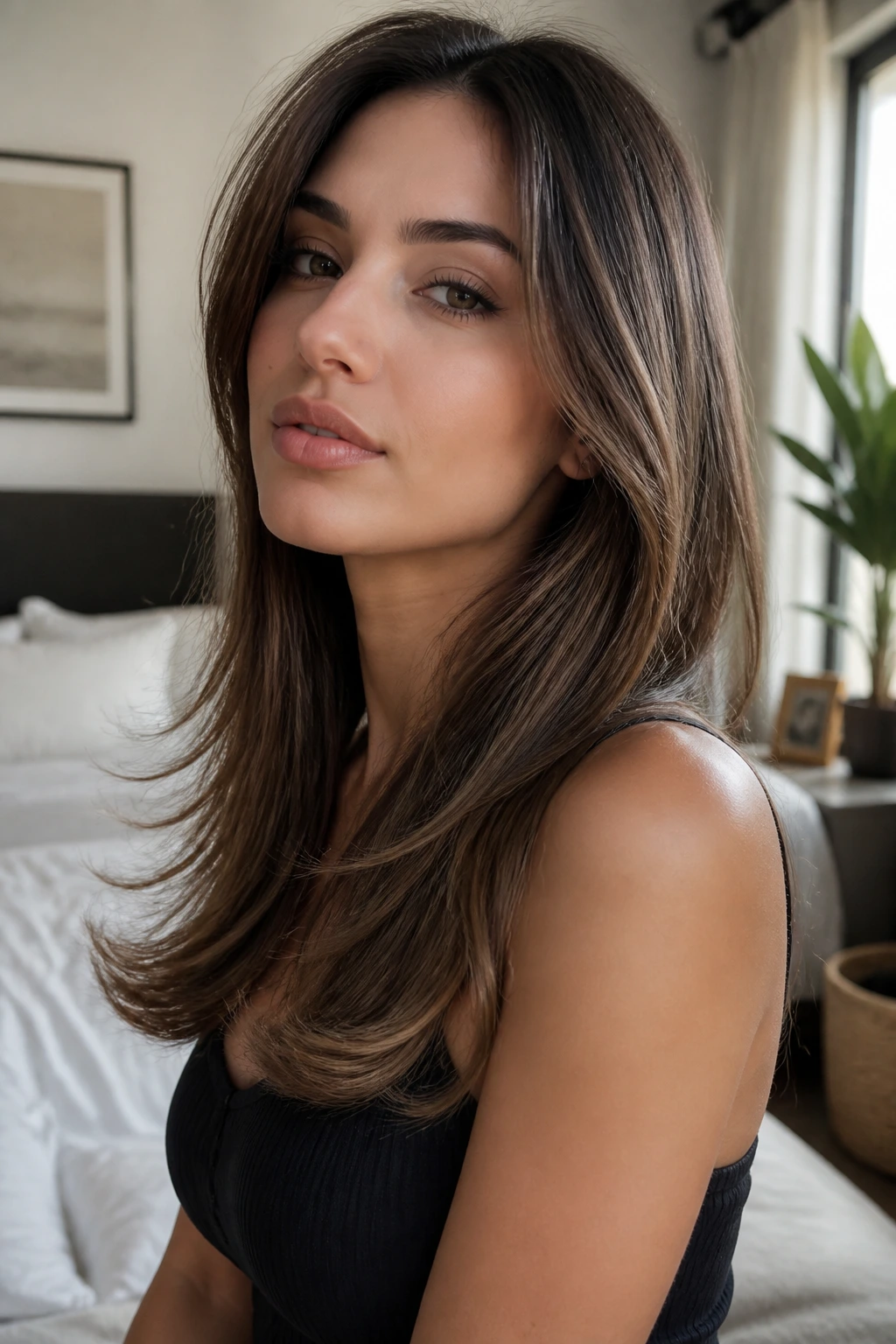
Straight hair is where feathering either looks crisp or looks invisible. There isn’t much texture to hide behind, so the placement has to be smart. The best versions use long, sleek layers that flick at the ends and a soft front that keeps the haircut from reading too blunt.
This style is especially good if your hair grows in one direction and tends to stick to your shoulders. Feathering loosens that line. It gives the ends a little air, which can make the whole shape look lighter. A flat iron is optional, but a round brush blowout brings out the best version of this cut.
How to Get It Right
Ask for ends that are point-cut, not razored into oblivion. Straight hair shows every mistake. If the layers are too short or too disconnected, the cut starts looking choppy instead of feathered.
A center part makes this look sleek. A side part makes it softer. Choose the one that matches your daily routine, not the one that sounds trendy.
11. Feathered Layers with Bottleneck Bangs
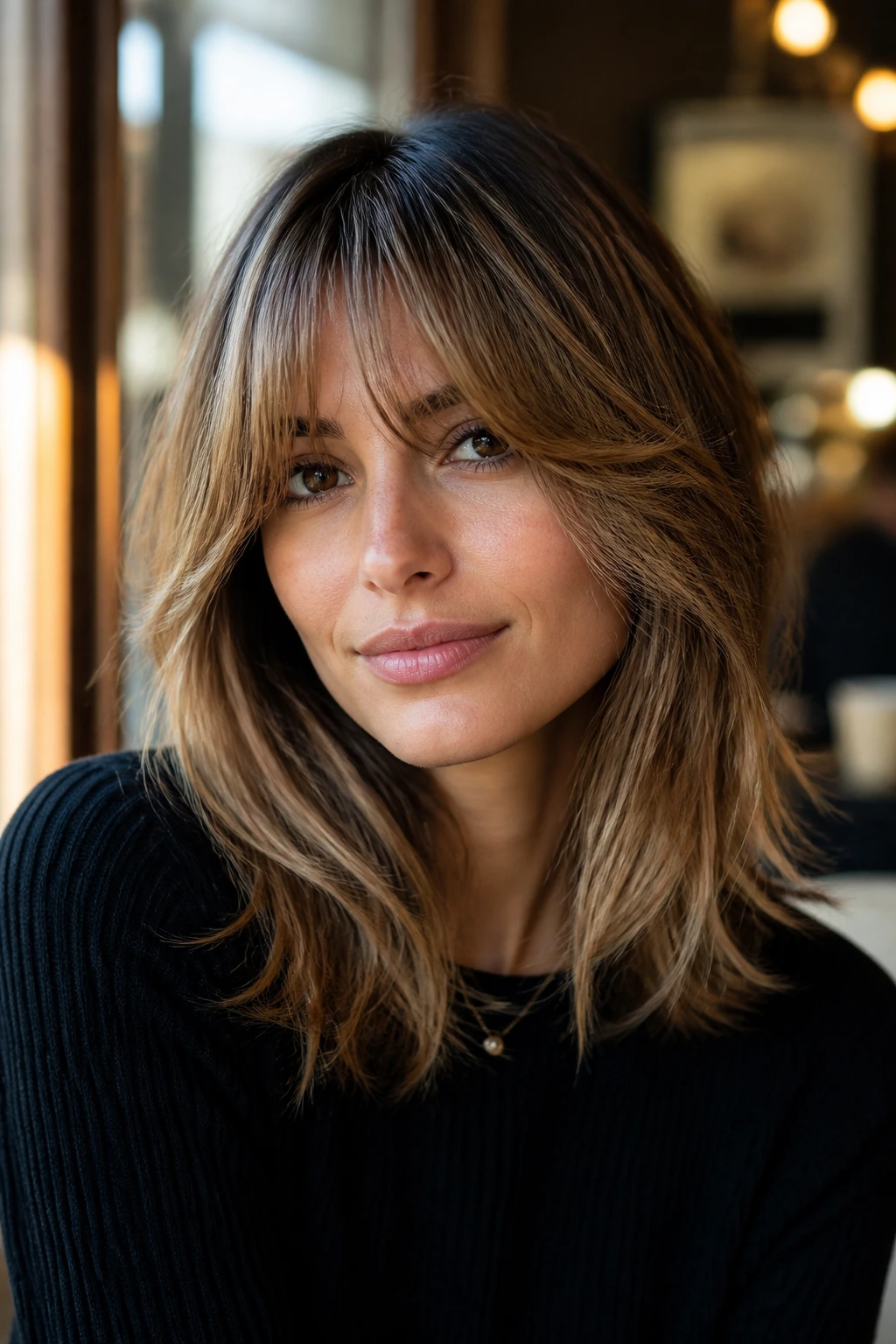
Bottleneck bangs have that slim, curved center and wider side sweep that blends beautifully into feathered sides. On medium length hair, they create a neat front frame without boxing in the forehead. The result is softer than blunt bangs and more structured than curtain bangs.
The cut works because the bangs narrow at the middle, then open outward as they meet the layers. That shape echoes the feathering through the sides, so the whole haircut feels connected. Nothing looks dropped in from another style.
This is a good choice if you want your hair to read a little more styled on day one, especially with a round brush and a fast blow-dry on the fringe. Keep the fringe pieces light, though. Heavy bangs kill the airy effect and make the haircut feel top-heavy.
12. Medium Length Feathered Haircuts with Long Side Bangs
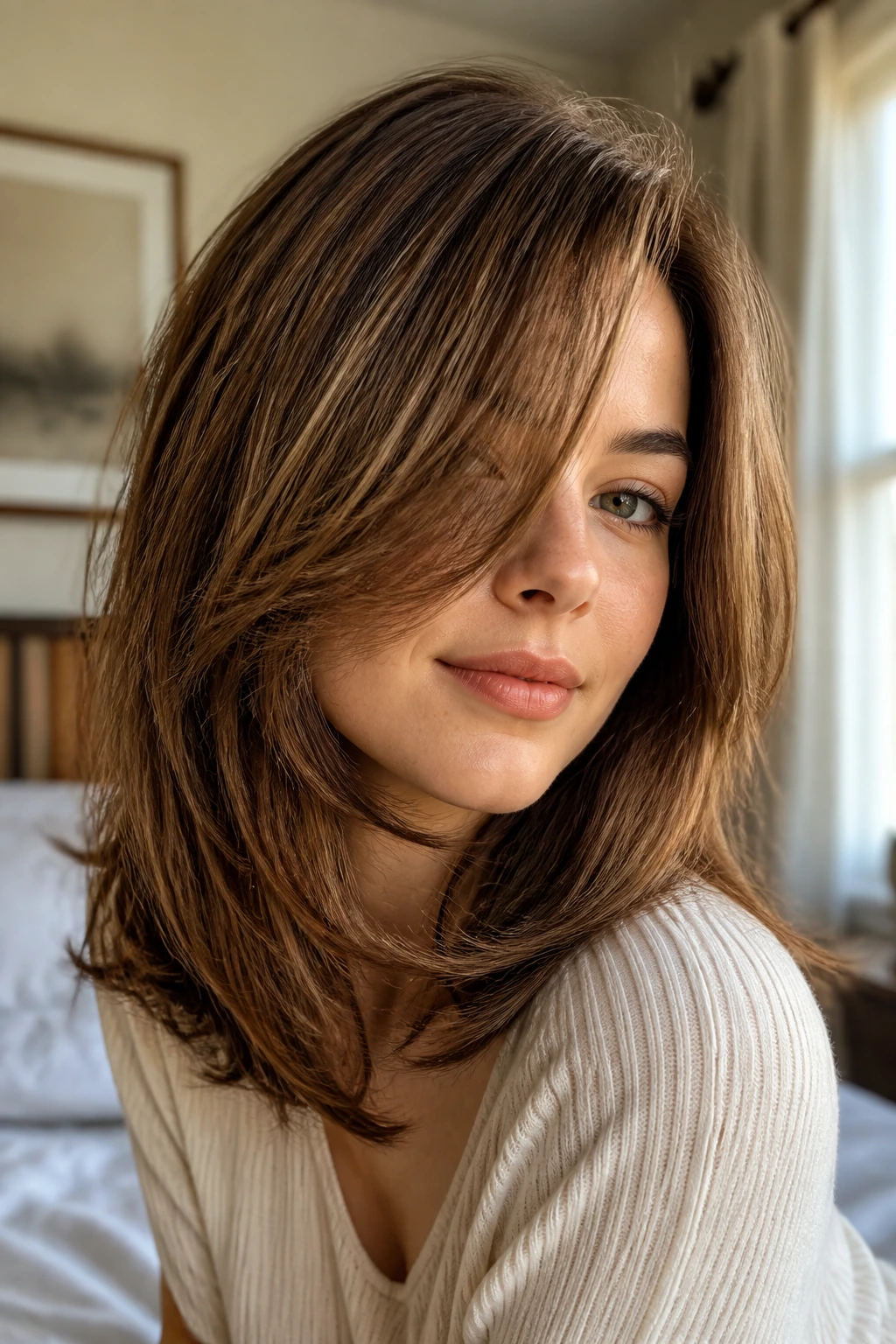
Long side bangs are a quiet way to change the whole haircut. They sweep across the cheek, soften the forehead, and give feathered layers a direction to follow. On medium length hair, that single diagonal line can make the rest of the shape feel more polished.
The best side bangs are not so thick that they become a curtain and not so sparse that they disappear. They should blend into the longer layers near the chin and the jaw. If you tuck one side behind the ear, the shape still holds, which is useful on days when you want less hair in your face.
This cut works well if you like to switch your part from time to time. A side bang can move with the part instead of fighting it, and that flexibility makes the haircut easier to live with.
13. Rounded Feathered Blowout
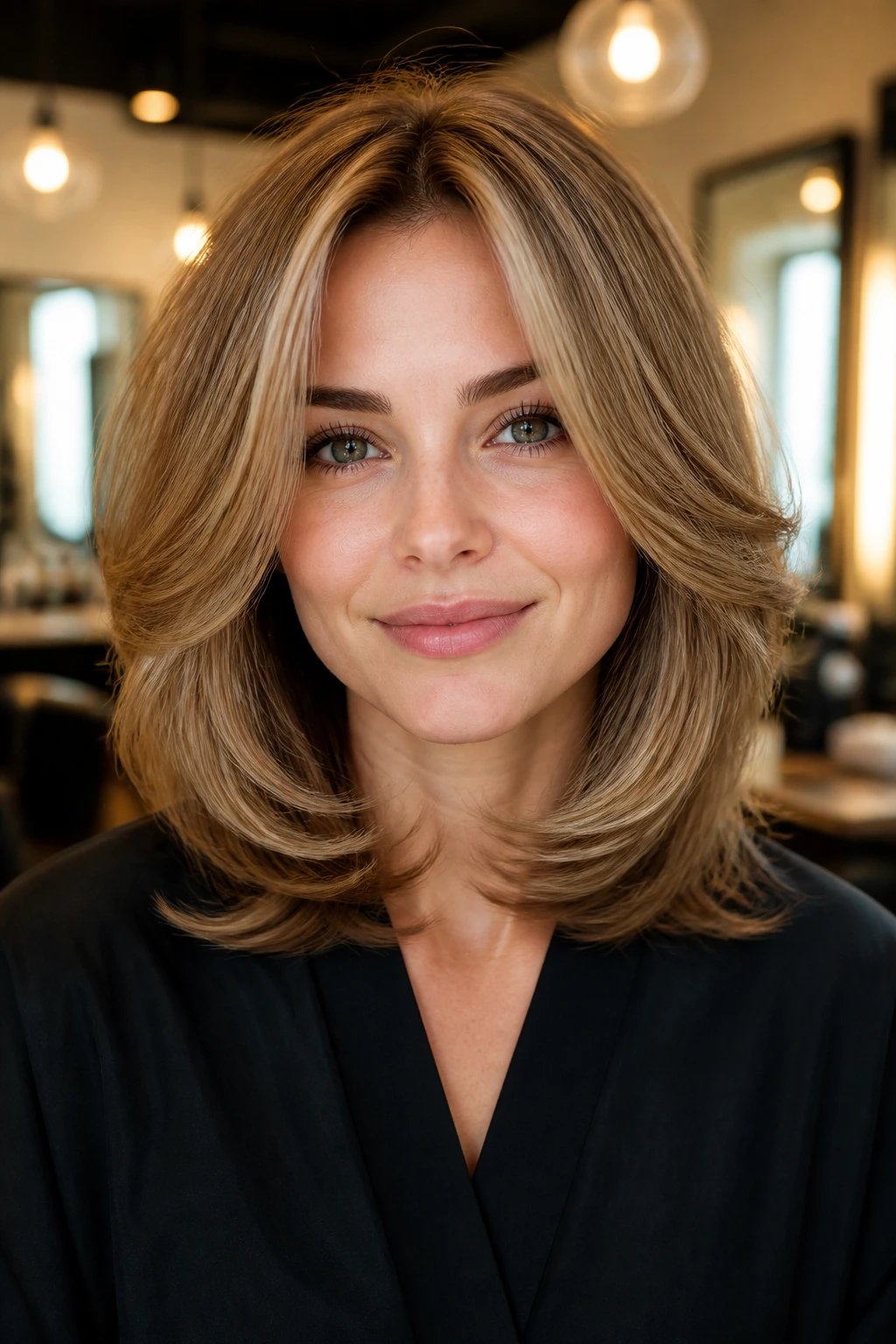
A rounded blowout cut is what you get when feathering meets a soft salon finish. The ends curve under slightly, the sides sit close to the face, and the crown has enough lift to keep the shape from drooping. It feels polished, but not stiff.
This version is especially good for medium hair that loses shape fast. The rounded silhouette gives the hair a bit of built-in structure, so even second-day hair still looks intentional after a quick brush-through. If your hair has a lot of natural bend, this cut can look expensive with almost no extra effort.
Styling Detail
Use a large round brush and direct the top layers up and away from the scalp before turning the ends under. That tiny lift at the root matters more than people think. Without it, the whole look collapses into a flat oval.
14. Flipped-End Feathered Cut
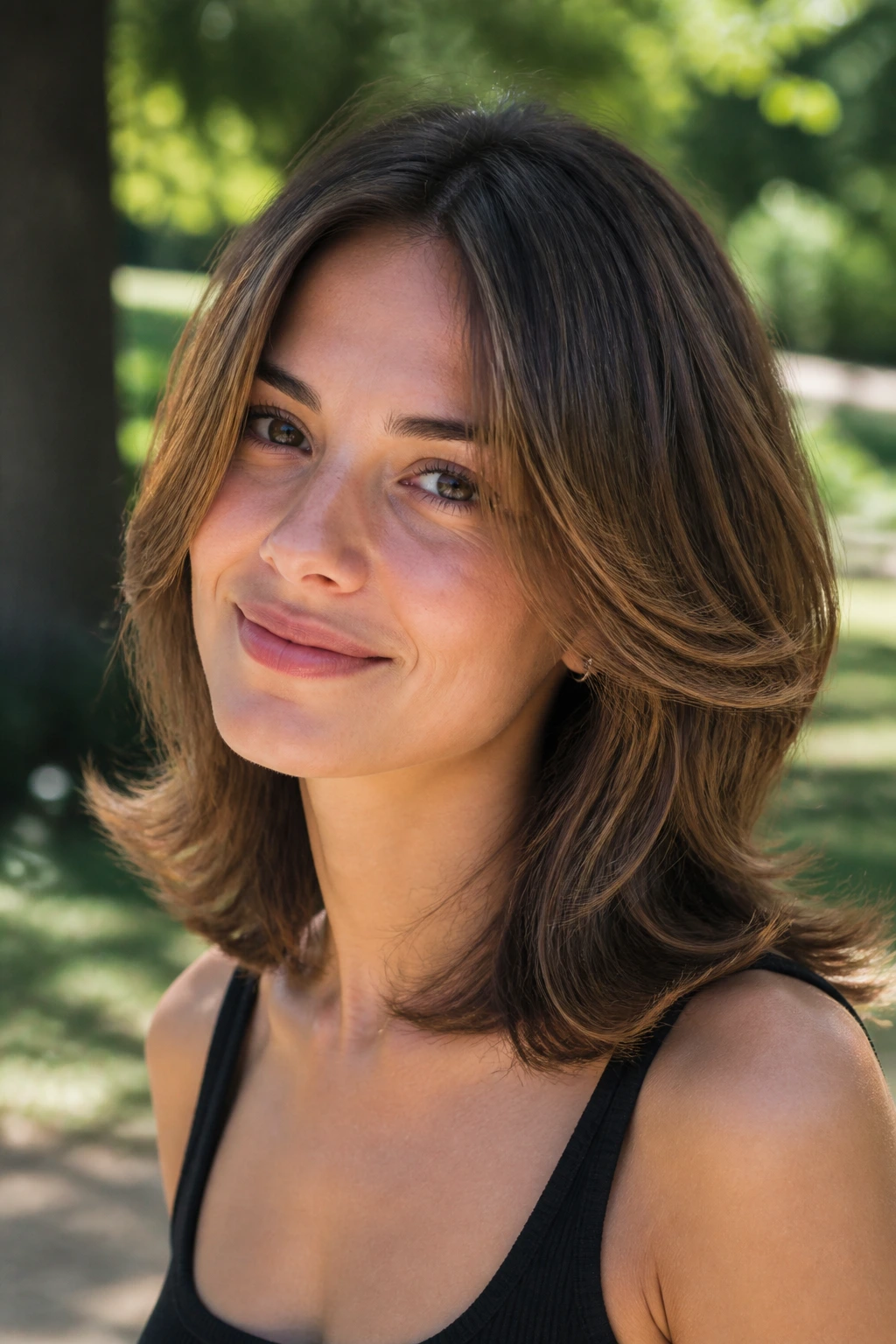
There’s something charming about a haircut that flicks out at the ends. This version leans into that shape. The layers are feathered so the bottom can flip away from the neck or shoulders, giving the style a lighter feel and a little old-school movement without turning retro.
The flipped finish works best when the medium length lands just below the shoulders. That gives the ends enough room to bend. If the cut is too short, the flip can get stiff. If it’s too long, the shape can disappear.
A little mousse or blow-dry lotion helps hold the curve. So does a round brush used just at the final inch or two. You do not need every strand to cooperate. A few soft flips are enough to make the haircut feel alive.
15. Razor-Textured Feathered Layers
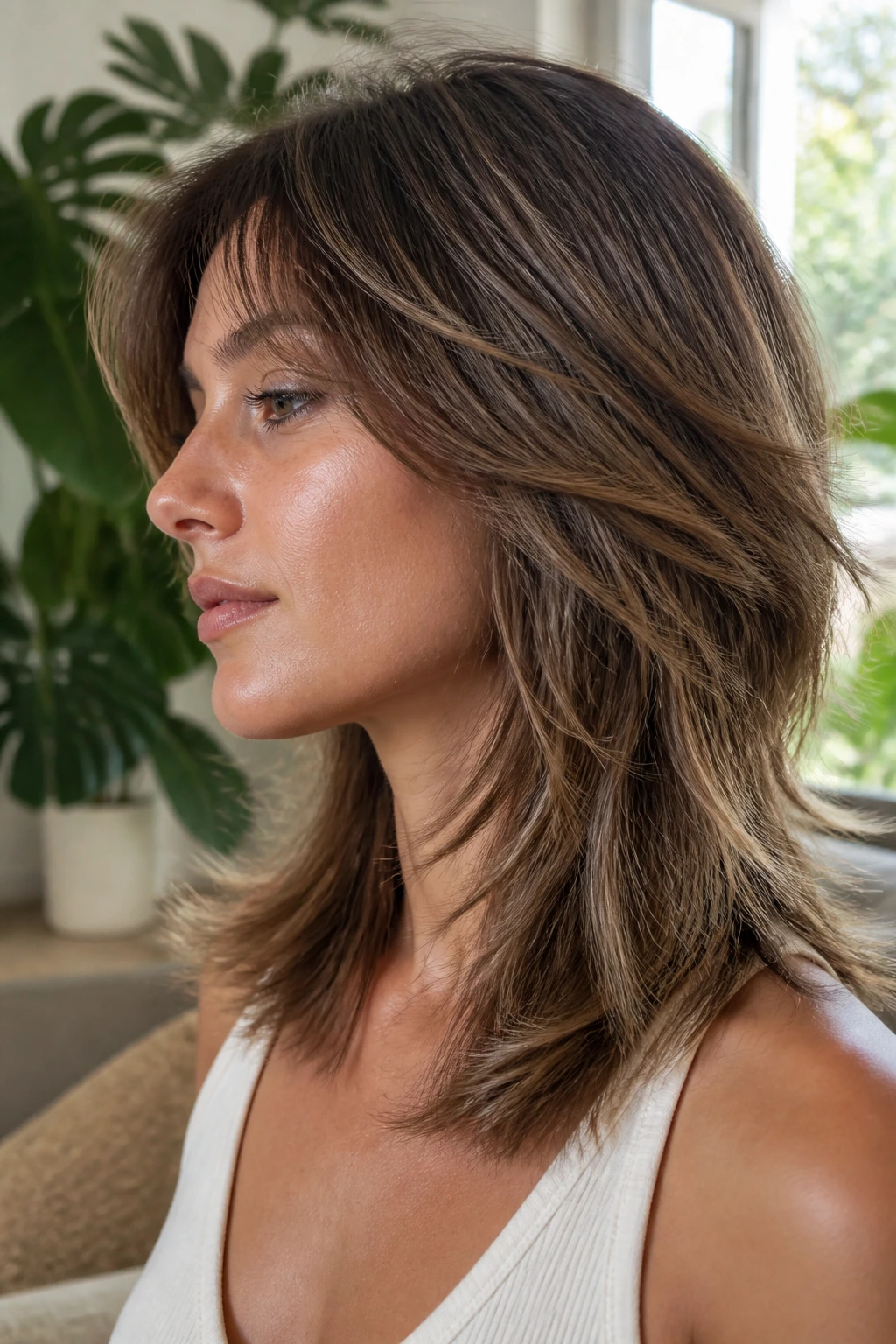
Razor-cut feathering has a sharper edge than scissor-cut feathering. It can make medium length hair feel lighter and more airy, especially if the strands are dense or coarse. The texture is softer at the tips, sometimes almost wispy, which gives the haircut a more undone finish.
This is not the cut I’d choose for very fragile or damaged hair. Razor work can fray the ends if the hair is already rough. But on healthy medium-length hair, it gives a nice piecey look that looks good with texture spray or a quick bend from a flat iron.
If you like a little separation in the ends, this is a strong option. It reads less polished than a rounded feathered lob and a little more editorial in daylight.
16. U-Shaped Feathered Cut
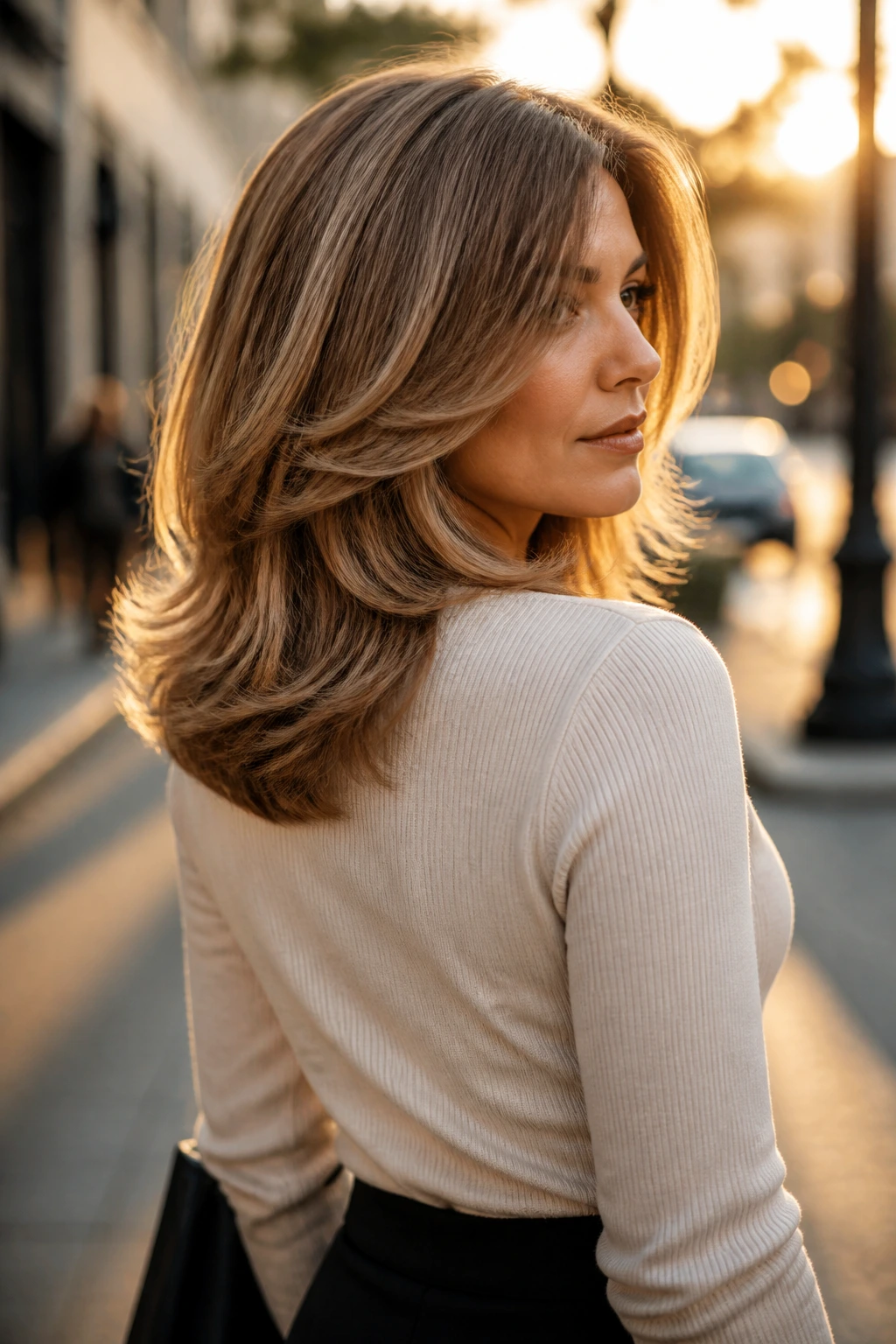
A U-shape gives the hair a gentle curve in the back, and feathering softens the sides so that curve doesn’t look heavy. The result is one of the easiest medium-length shapes to wear if you want the ends to stay full but not blunt.
The U is doing a quiet job here. It keeps the back visually longer than the sides, which flatters people who want a soft drape rather than a boxy line. Feathering on top of that curve gives the cut a smoother transition from crown to shoulder.
This shape tends to hold up well in grow-out. Even when the layers get a little long, the U still reads clean, and the feathering keeps the sides from looking like one block.
17. Collarbone Cut with Internal Feathering
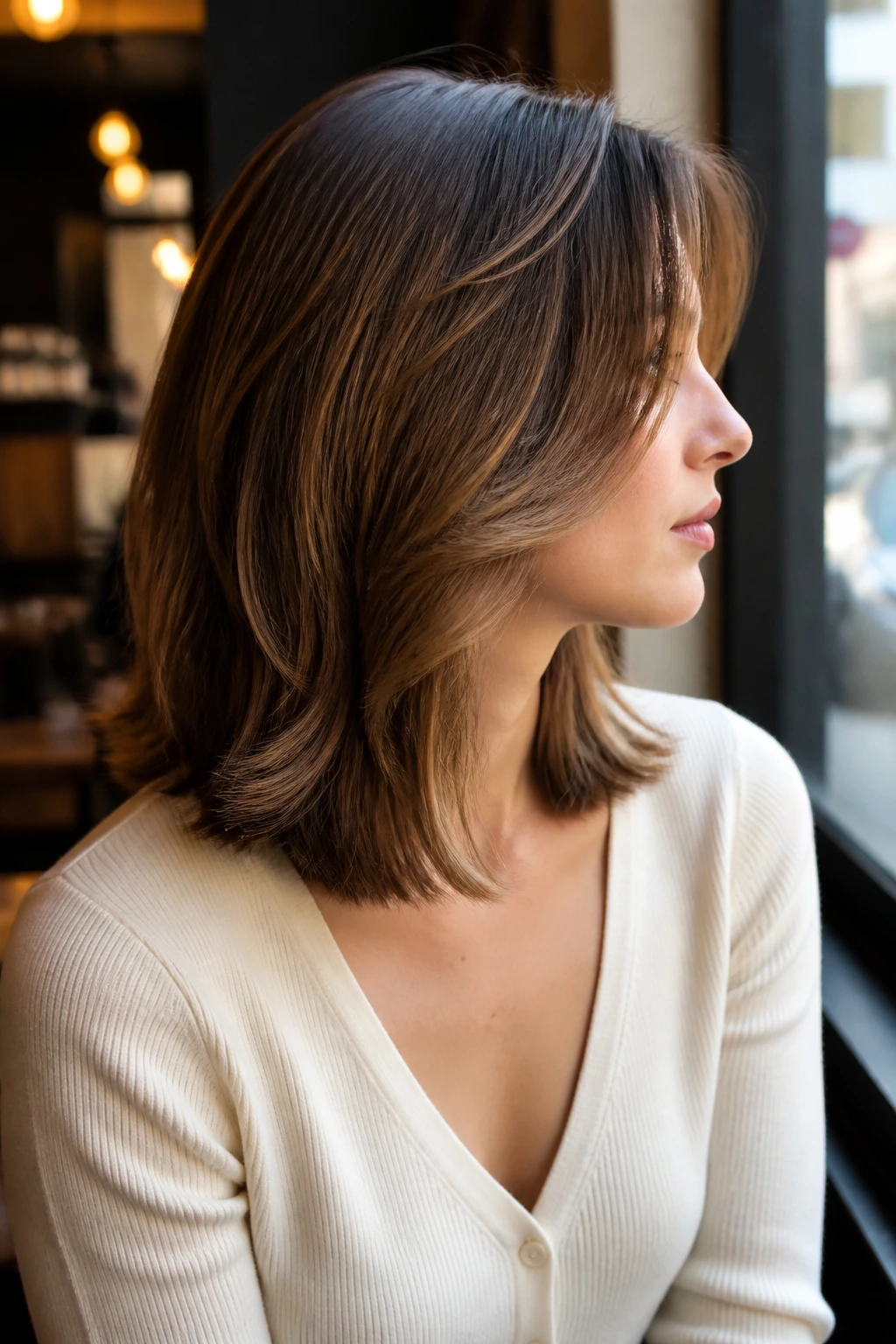
Sometimes the smartest feathered haircut is the one you barely notice at first glance. This version keeps the outline simple and hides most of the movement inside the haircut, where the layers take weight away without changing the outer shape too much.
That makes it a strong option if you want movement but still need your hair to pull back, tuck behind a jacket collar, or sit neatly for work. The feathering is there when you move, not when you stare straight at a mirror.
I like this cut on people who hate obvious layers. It gives you the benefit of shape without the look of a heavily layered style. A quick bend at the ends is enough to bring the interior structure to life.
18. Deep Side Part Feather Cut
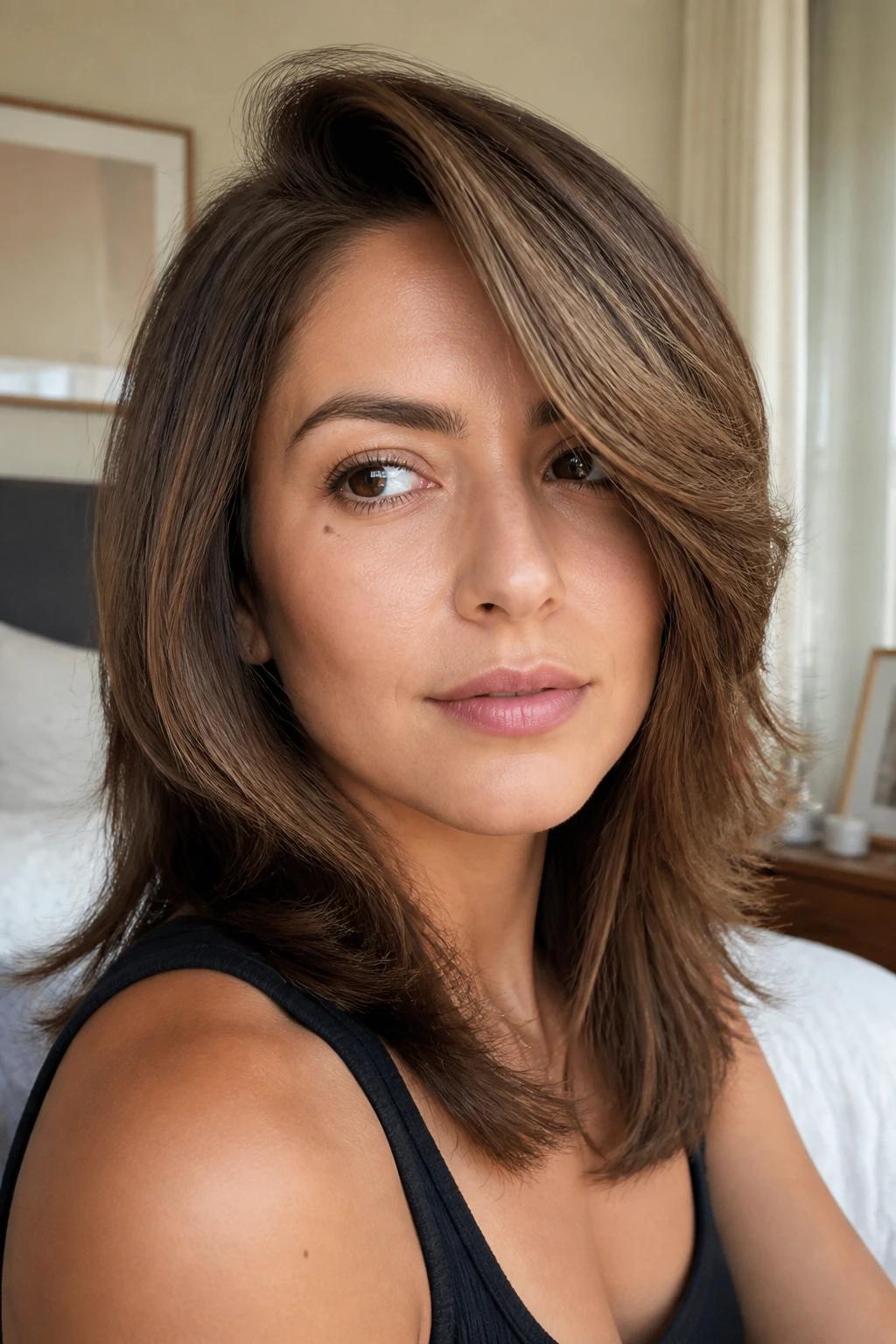
A deep side part can make even a simple medium haircut feel more deliberate. With feathering, it creates lift at the roots and a soft sweep across the face, which is useful if you want the style to look a little fuller at the top.
The part matters because it changes the way the layers fall. One side gets a little more volume, the other side tucks closer to the cheek. That asymmetry is flattering, especially on rounder faces or anyone whose hair falls flat when parted in the center.
If you wear this cut, keep a tail comb handy. A clean part does more for the shape than a pile of product ever will. Messy parts make the whole thing lose its outline.
19. Feathered Cut for Round Faces
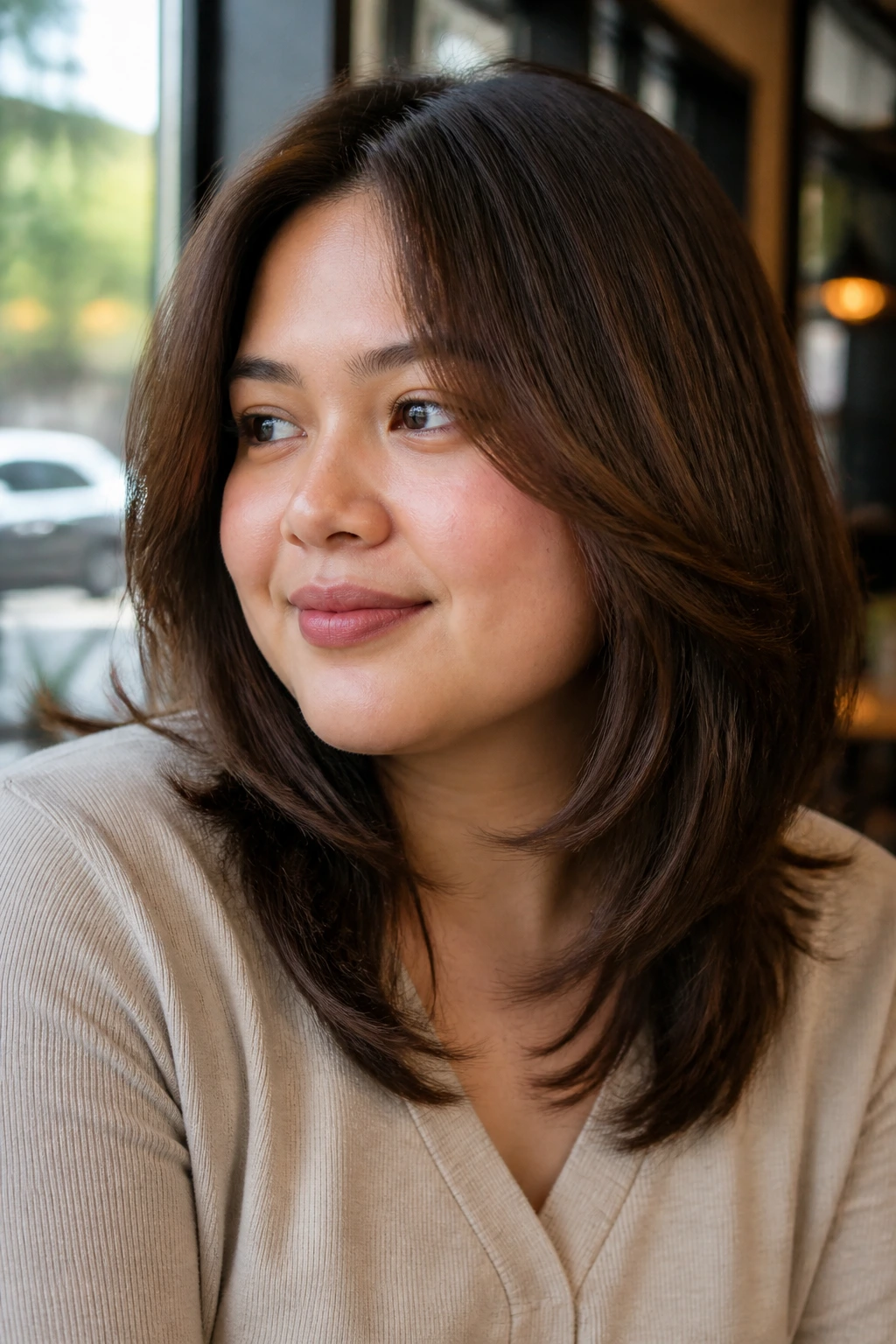
Round faces benefit from feathering when the shortest pieces start below the cheeks, not right at them. That timing matters. If the layers hit the widest point of the face, they can make the sides puff out. If they begin just under the cheekbone, they skim instead of widen.
The best round-face feathered cut usually has length in the front and a softer line through the jaw. You want vertical movement, not a puffed horizontal line. The haircut should guide the eye downward and slightly inward.
A middle part can work if the face-framing pieces are long enough. A side part can work if you want a little asymmetry. The real goal is to keep the front pieces loose, so the face doesn’t get boxed in.
20. Feathered Cut for Square Faces
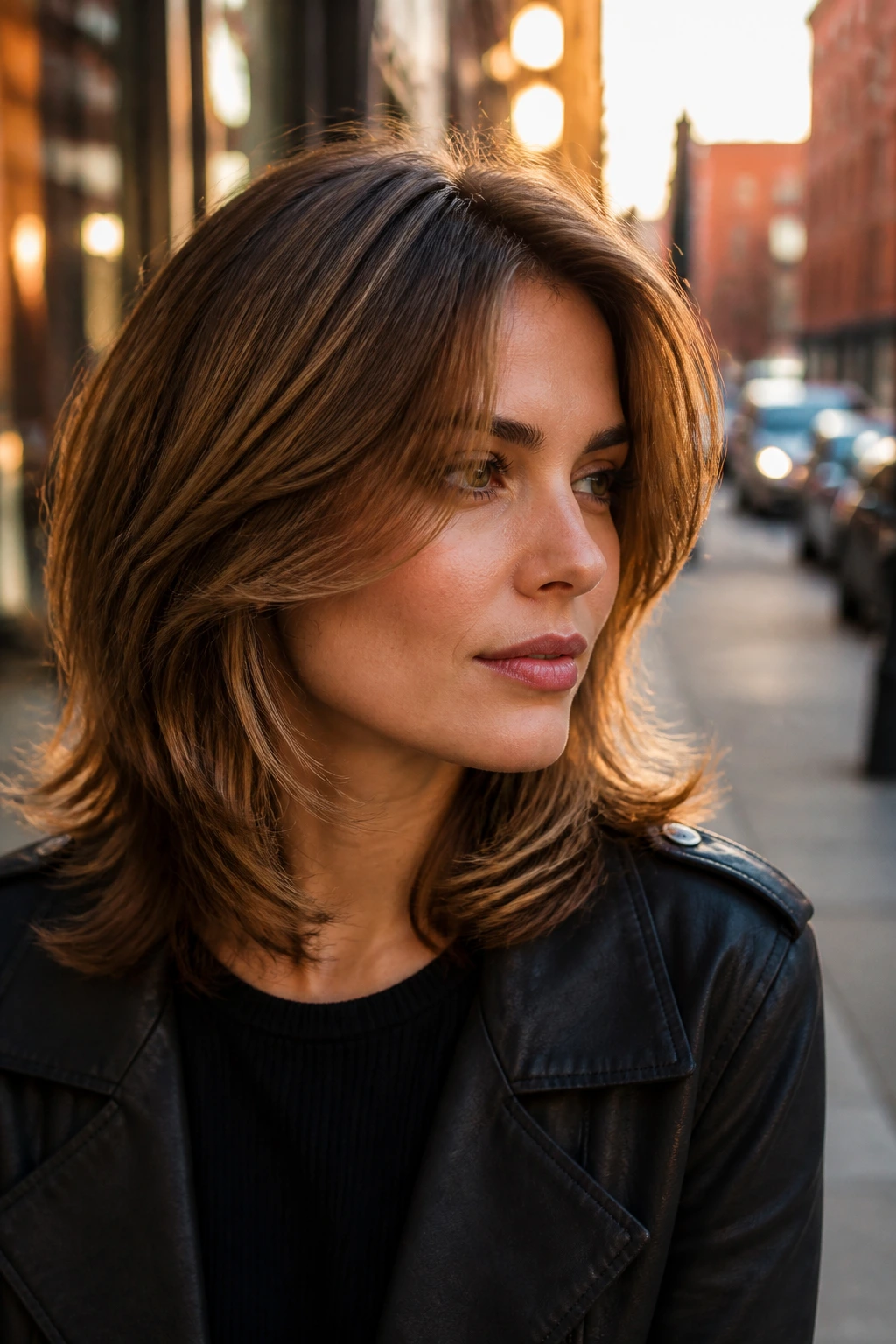
Square faces often look best when the haircut softens the jawline and avoids hard stops at the chin. Feathered layers do exactly that when they’re placed with a little curve. The hair should skim, not sit rigidly at the jaw.
This style usually looks best with side-swept or curtain-like framing pieces. Those angles break up the straight lines around the face. The medium length gives enough body to soften the lower face without hiding it.
I’d avoid any heavy blunt perimeter here. It can make the jaw look even stronger. Soft ends, a little bend, and a touch of movement around the temples usually work better.
21. Feathered Fringe Cut
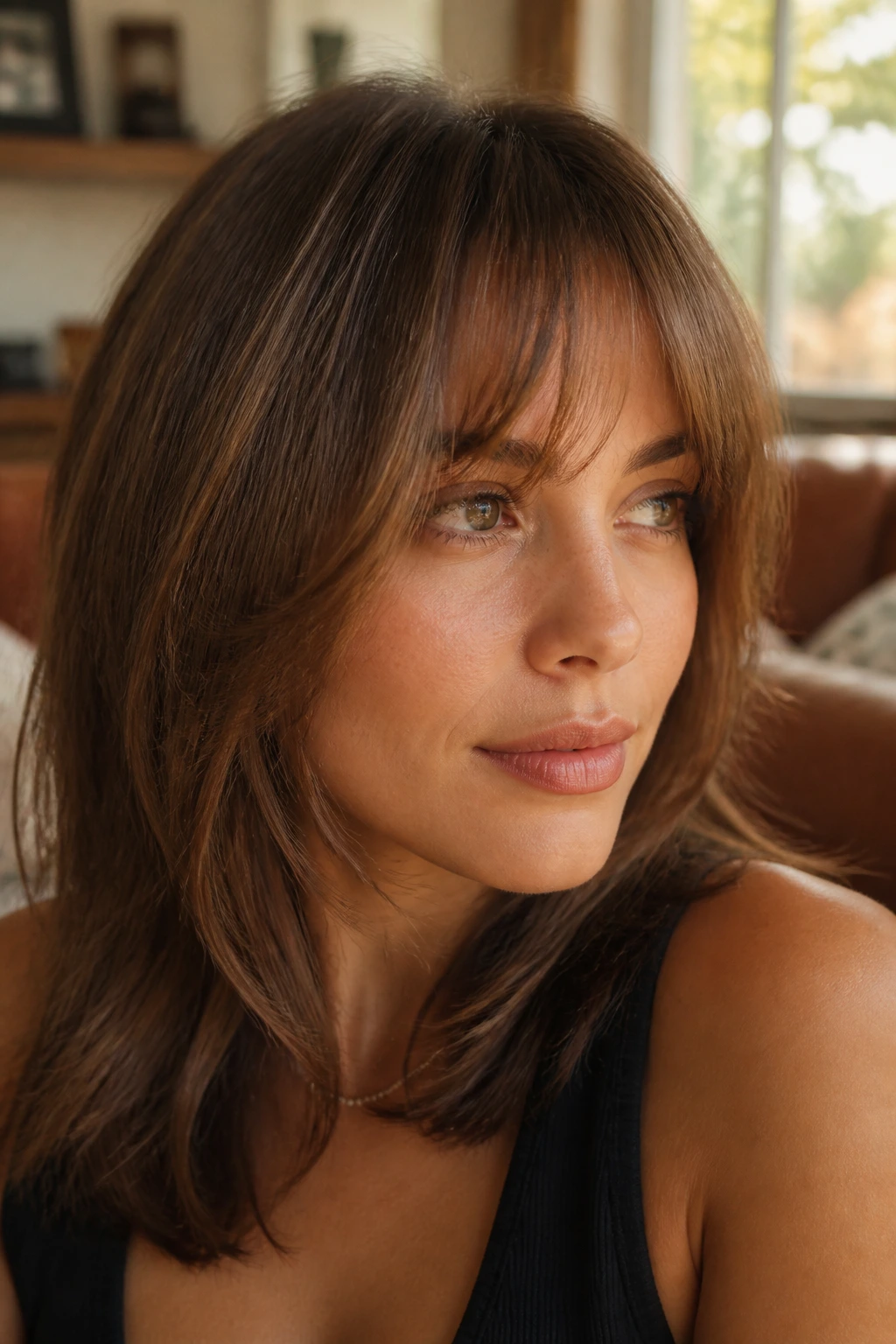
A feathered fringe is for people who want bangs, but not a full wall of them. The fringe stays soft, separated, and light enough to move with the rest of the haircut. It can be brushed forward or swept apart, which makes it easier to live with than a heavy fringe.
The biggest advantage is balance. Medium-length hair can carry a fringe without looking top-heavy if the layers around the face are feathered too. That way the front, sides, and body of the cut all belong to the same shape.
This is a smart choice if you like a little forehead coverage but hate the feeling of thick bangs sticking to your skin. The fringe should feel airy at the roots and tapered at the ends. If it’s too dense, the feathering gets lost fast.
22. Balayage-Friendly Feathered Layers
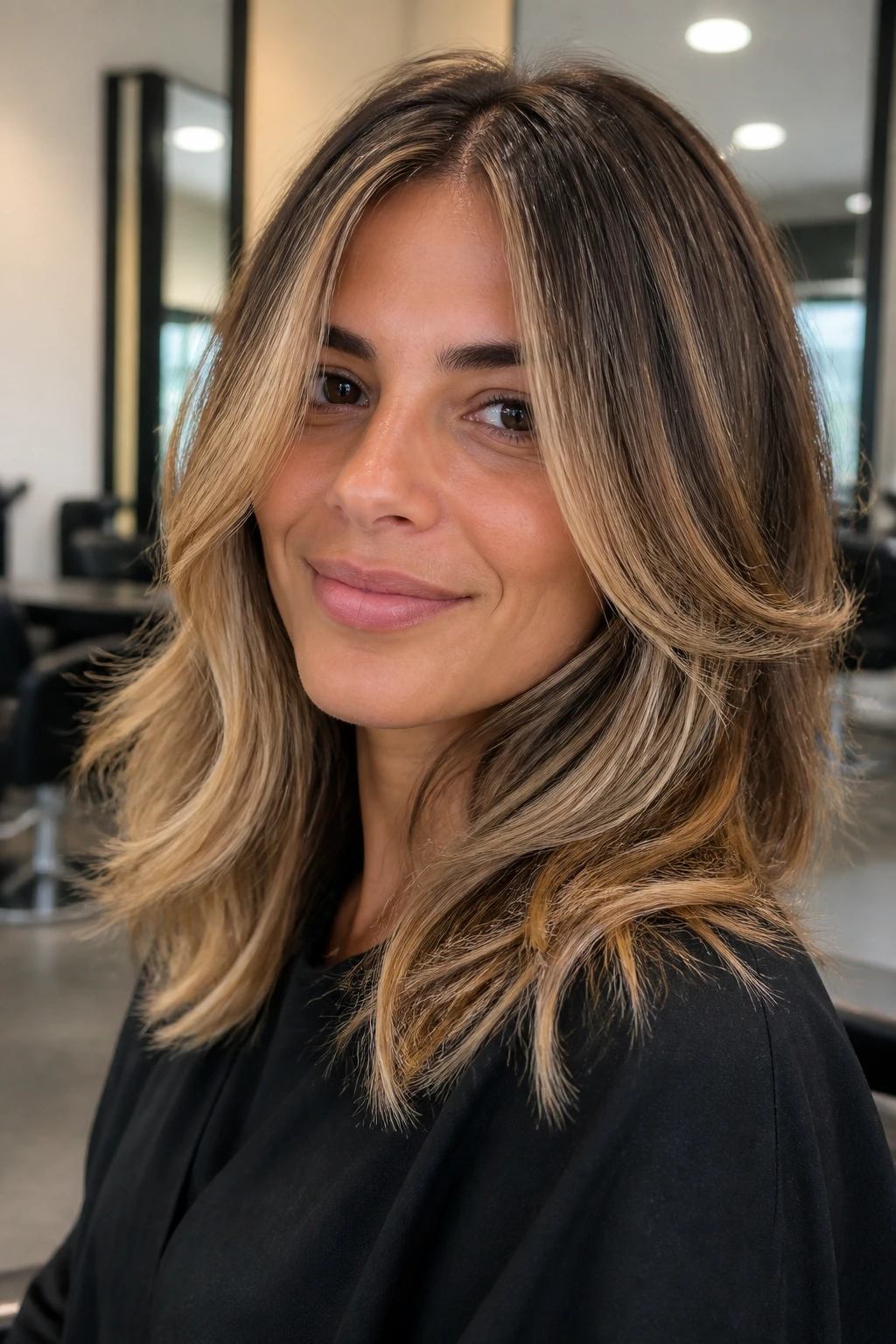
This is where haircut and color actually help each other. Feathered layers show balayage better because the lighter pieces aren’t trapped in one solid sheet of hair. They move, turn, and catch light along the ends and face frame, which makes the color look more dimensional.
Medium length is ideal for this because the color has room to travel from darker roots to lighter ends without looking stripey. The feathering keeps the transition soft. It also stops the light pieces from sitting in one heavy mass at the bottom.
If you already wear balayage, ask your stylist to place some of the lighter pieces where the layers bend outward. That’s where the color shows most clearly. A flat, blunt cut hides the work. A feathered one gives it space.
23. Modern Mullet-Lite Feather Cut
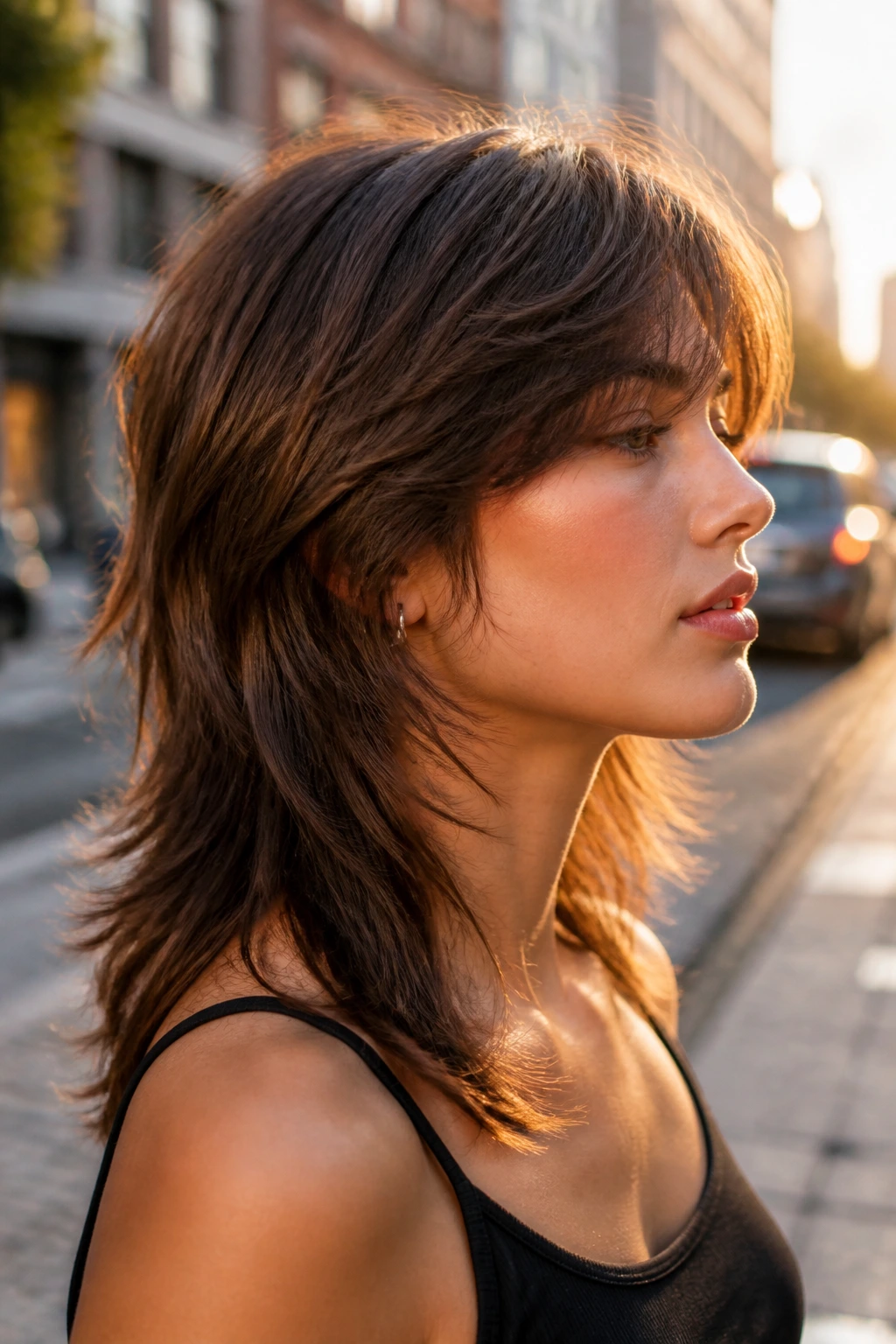
This is the boldest cut on the list, but it’s still wearable. The front stays soft and face-framing, while the back hangs a little longer and looser. It nods to the mullet shape without committing to anything severe or short in the crown.
What makes it modern is the softness. The layers are feathered instead of choppy, so the shape moves rather than spikes. That makes it a better fit for medium hair than a hard-edged version would be.
It’s a nice option if you like a little attitude in a haircut. Pair it with air-dried texture or a light wave, and it looks cool without needing a lot of polish. Skip it if you want your hair to look neat in a very conservative way.
24. Feathered Cut for Curly Medium Hair
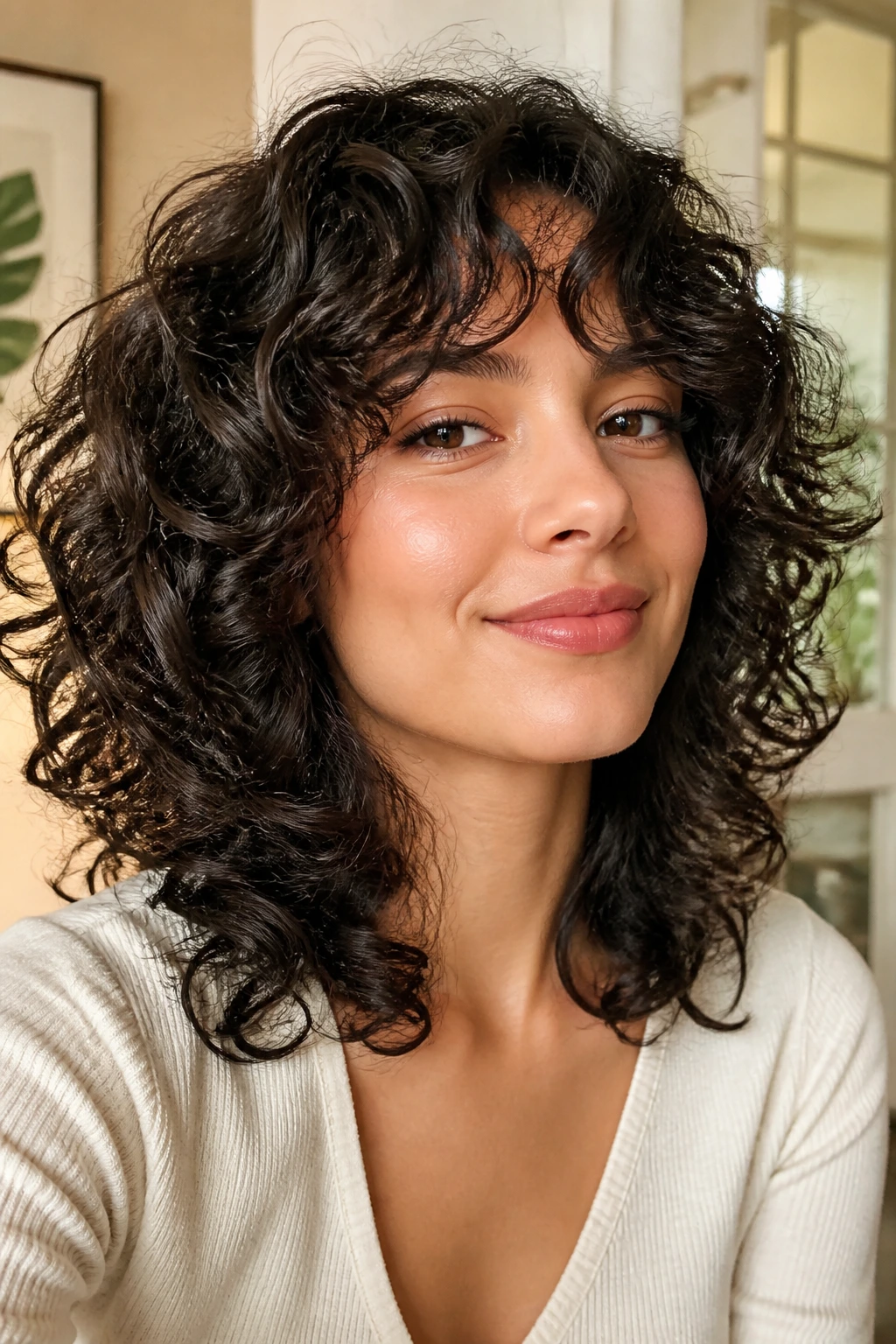
Curly hair needs longer layers than people think. Feathering can work beautifully, but the cut has to respect the curl pattern or it will spring up too much and widen into a triangle. The goal is shape, not shrinkage.
A curly feathered medium cut usually keeps the perimeter long enough to hold weight, then removes bulk inside the shape so the curls can separate. That gives the haircut movement and keeps it from looking like a helmet. The front pieces can be slightly shorter, but they should still curl into the rest of the style.
Dry-cutting or cutting the hair in its natural curl pattern helps a lot. Curly hair looks different wet than it does dry, and feathered layers need to be judged where the curl actually lives, not where it stretches.
25. Low-Maintenance Feathered Grow-Out Cut
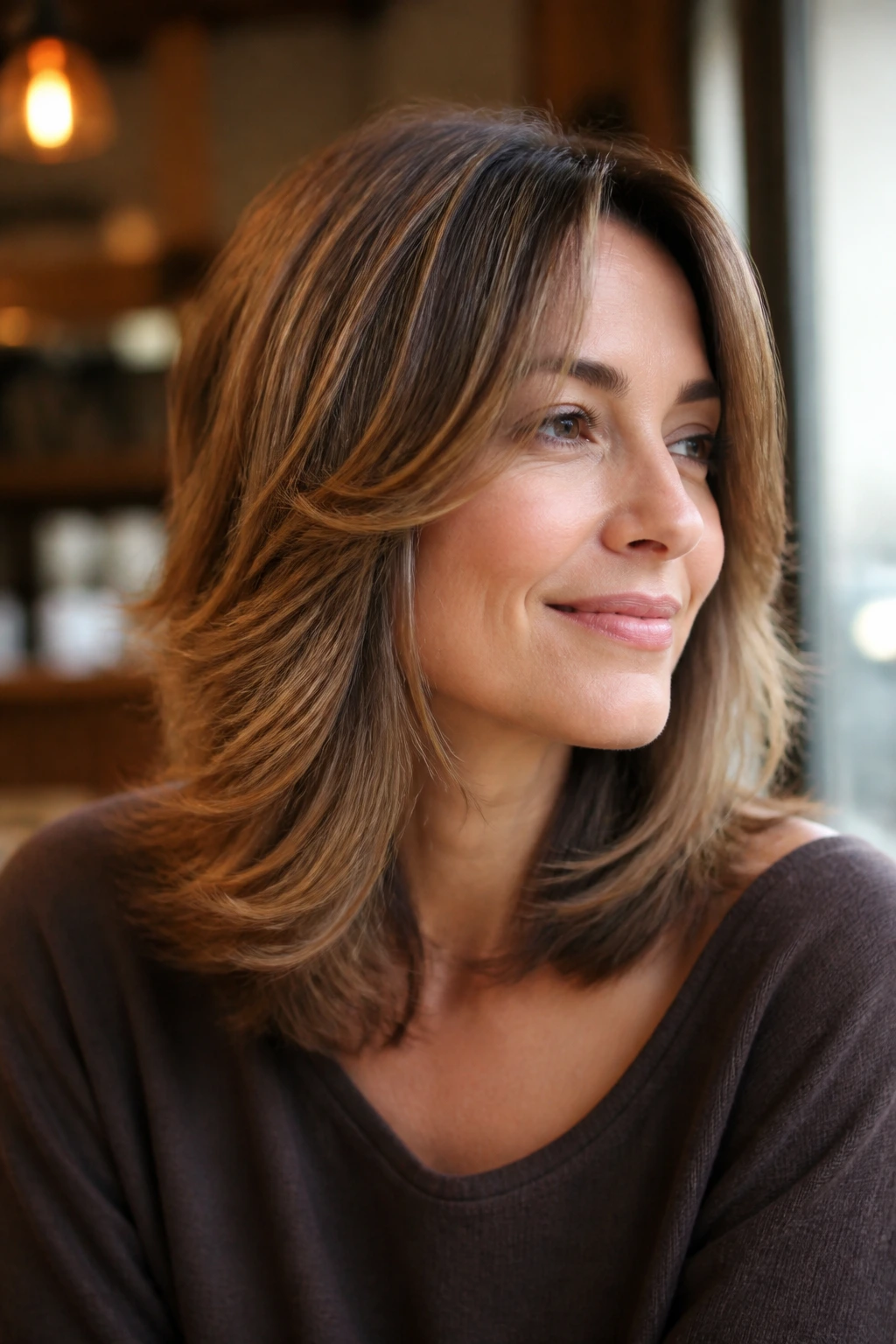
This is the one for people who want the feathered look without being trapped by it every six weeks. The shape starts soft at the collarbone, the layers are long enough to grow out well, and the face-framing pieces are kept just short enough to give movement without constant upkeep.
The trick is to avoid overcutting the crown. A grow-out-friendly feathered cut should still look like a haircut when it has been on your head for two months. That means the layers blend, the edges stay soft, and the shape doesn’t rely on a precise blowout every time you wash it.
If you’re low maintenance by nature, this is probably the smartest version on the list. It gives you the airier outline of feathering but doesn’t punish you when you let it dry on its own. That’s a fair deal.
How to Ask for the Right Feathering at the Salon
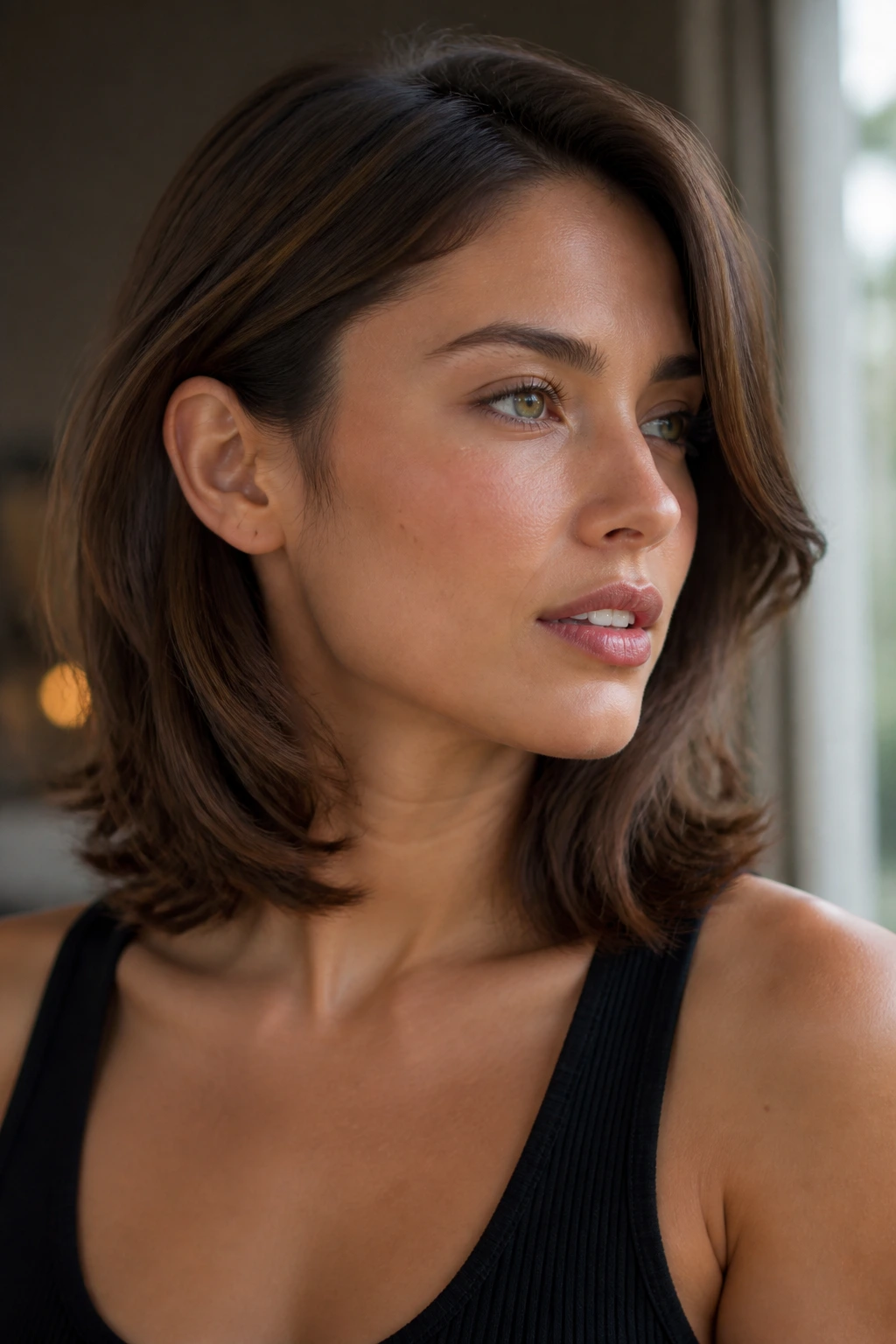
Bring photos, but bring words too. A picture can show shape, yet it won’t explain where you want the shortest layer to start, how much bulk you want removed, or whether you like the ends curved under or flicked out. That’s where the useful part lives.
Say the length first. Tell your stylist whether you want collarbone, shoulder, or just-below-shoulder length. That one detail changes where the feathering can fall.
Then name the layer behavior. If you want movement without a shag, say you want long, soft layers with weight kept at the perimeter. If you want more swing, ask for face-framing pieces that begin around the cheekbone or lip line.
Mention your styling habit. Air-dried hair needs a different cut than round-brushed hair. If you never reach for a blow dryer, the shortest layers should be longer and the ends should stay cleaner. If you love a brush-out, the cut can handle more shape.
One more thing. If your hair is very dense, ask for internal debulking rather than heavy thinning. Those are not the same. Heavy thinning can leave the ends frayed and patchy, while internal weight removal keeps the outline intact.
Common Mistakes That Make Feathered Hair Fall Flat
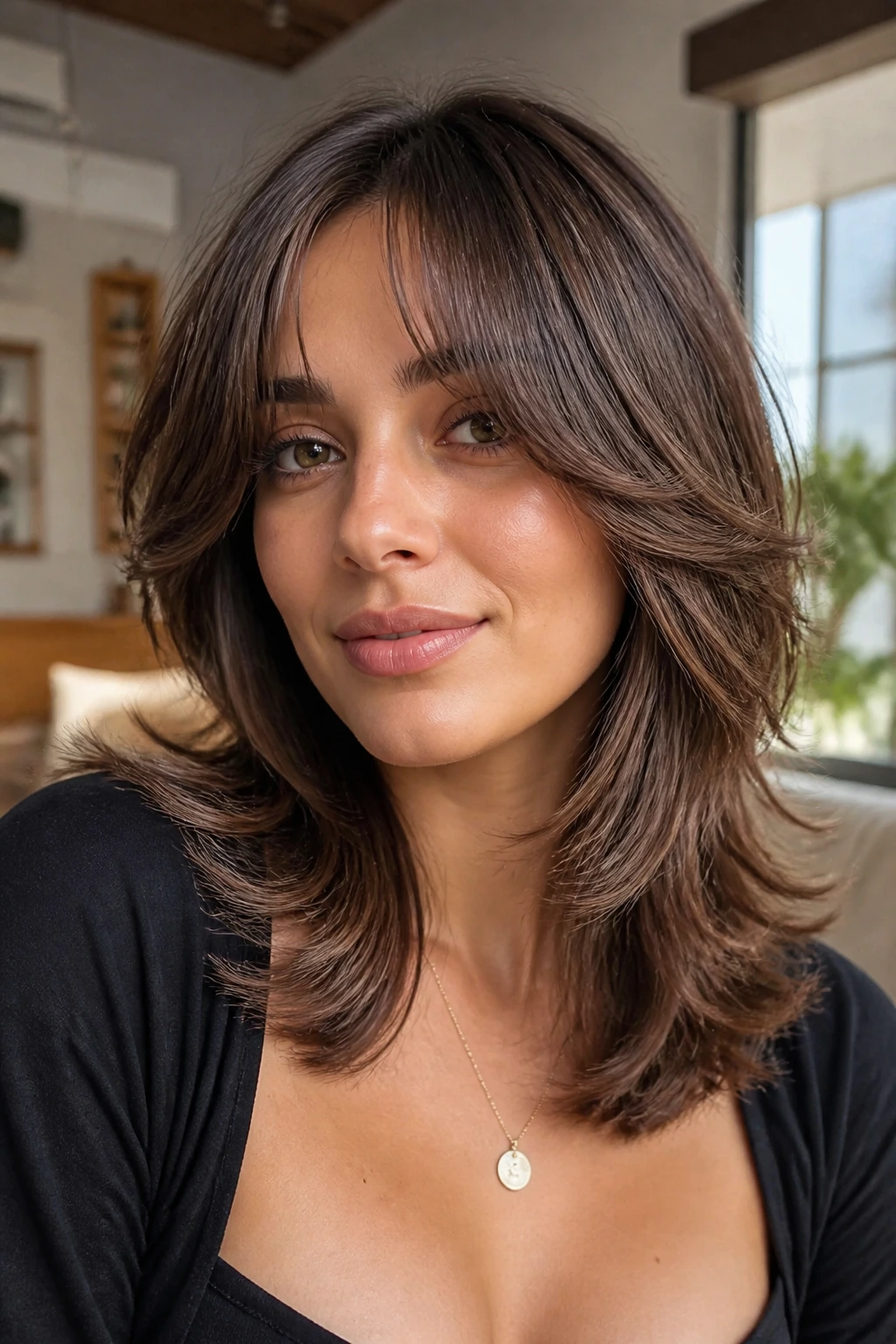
The most common problem is cutting the layers too short at the crown. The hair stands up, the sides puff, and suddenly the haircut looks wider instead of softer. The fix is simple: keep the shortest pieces long enough to blend, especially on thick or wavy hair.
Another mistake is over-thinning the ends. Feathering is supposed to lift the shape, not strip the hair until it looks see-through. If the ends go wispy and dry-looking, the cut has been pushed too far. Ask for softer blending instead of aggressive texturizing.
People also ignore the part and then blame the cut. A feathered style needs a part that works with the growth pattern. If your hair insists on moving left, fighting it into a center part can make the whole haircut look off-balance.
Heat matters too. If the cut was designed to flick and you let it air-dry into a cowlick at the front, you’re not seeing the shape. You’re seeing the accident. Even a fast 5-minute blow-dry at the roots can change that.
Smart Variations on the Feathered Theme
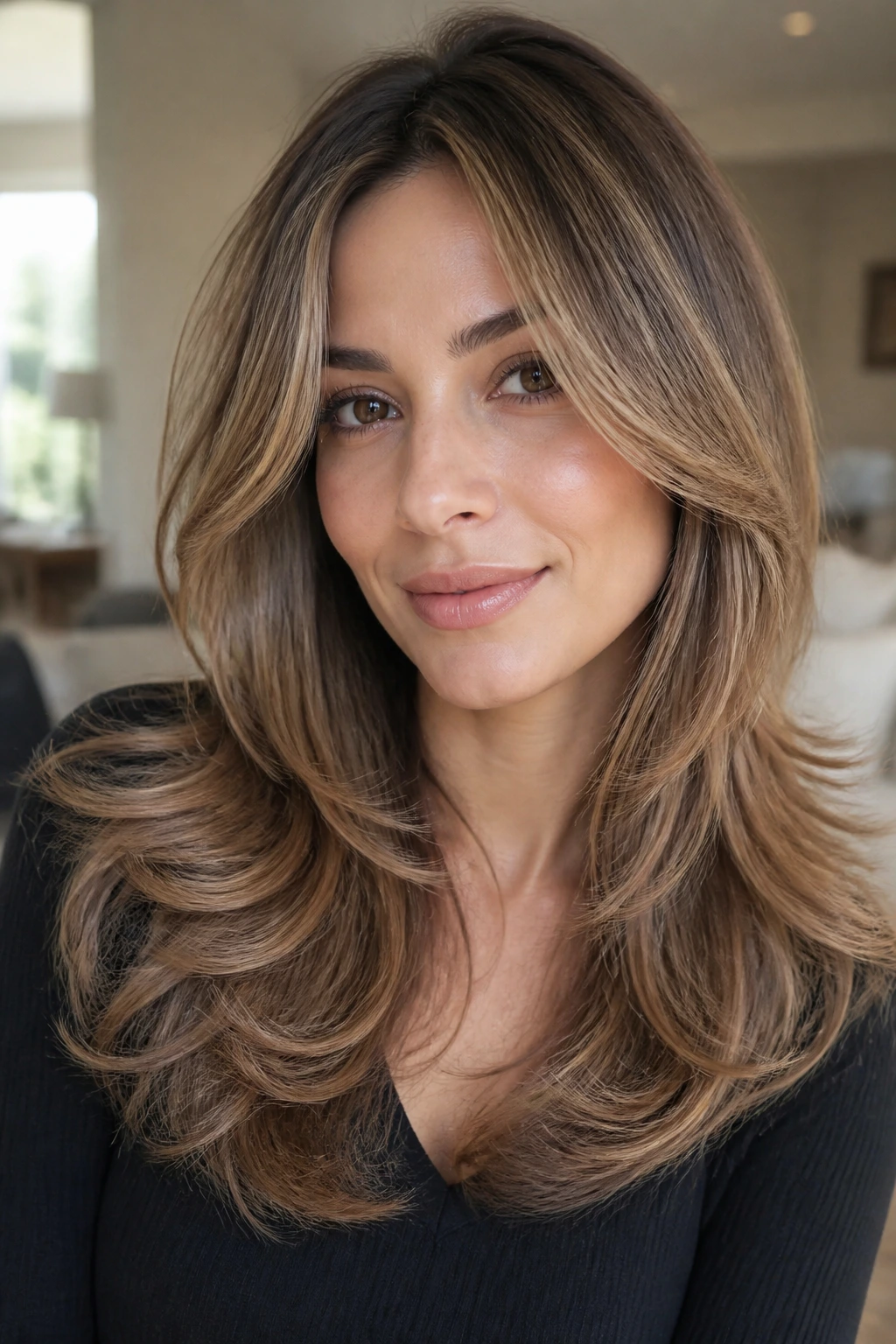
The Soft Blowout Feather: Keep the layers long, add face-framing lift, and finish with a round brush and a touch of smoothing cream. This version suits people who want a polished shape without sharp edges.
The Shag-Forward Feather: Push the layers higher and add more separation through the mids. It works best on wavy hair or on anyone who likes a little texture with their movement.
The Sleek Feather: Keep the cut cleaner, the layers longer, and the ends sharper. Straight hair carries this one well, especially with a center part and a flat iron bend at the last inch.
The Curly Feather: Cut the shape around the curl pattern and leave the perimeter long enough to avoid puffing. This version needs the least fuss once the shape is right.
The Balayage Feather: Ask for longer layers that let color ribbons move through the ends and sides. This one is for anyone who wants the haircut to show off dimension instead of hiding it.
Tools That Make Feathered Hair Easier to Wear
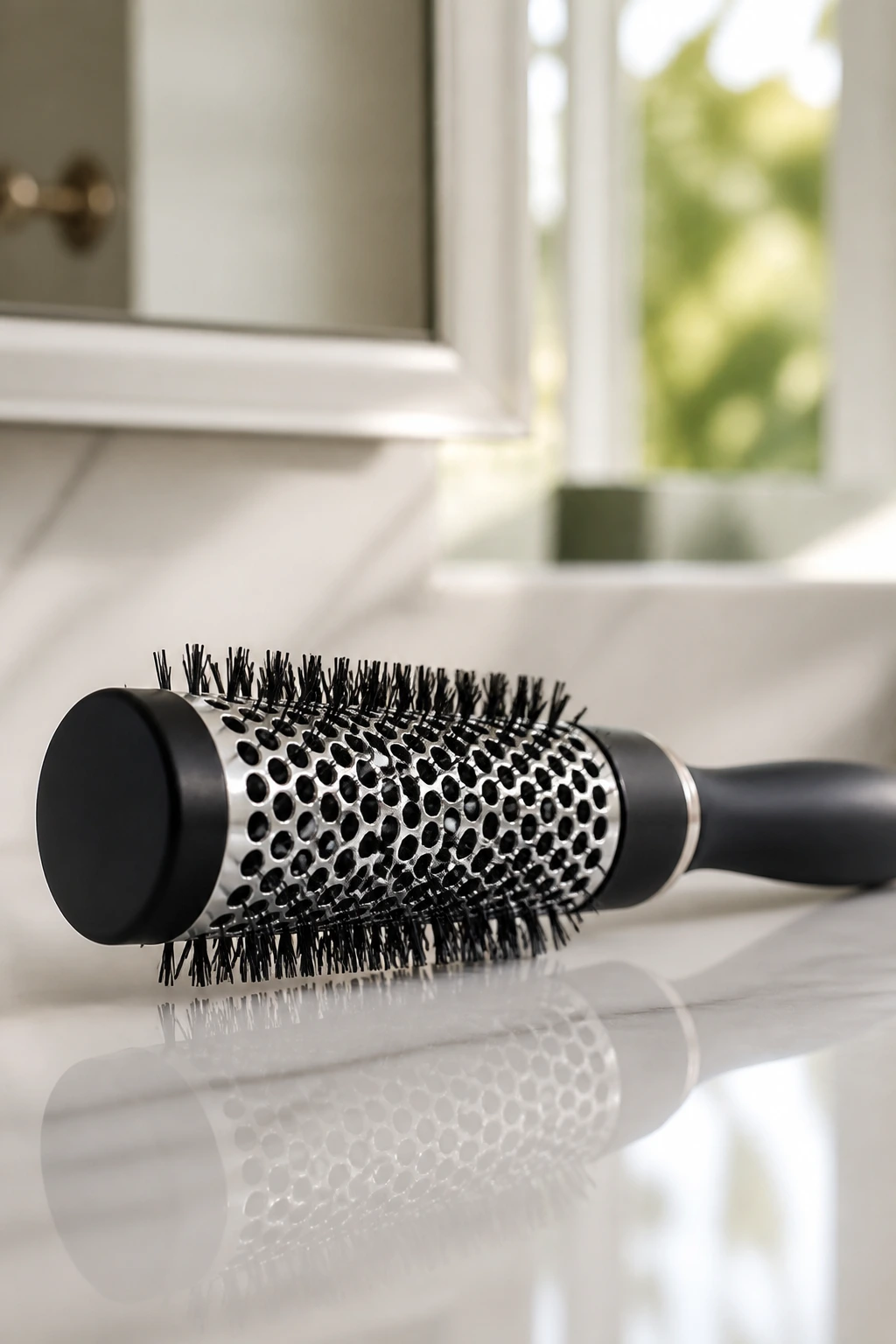
- A 1.5- to 2-inch round brush: Best for flipping the ends and shaping the face-framing pieces.
- A blow dryer with a nozzle attachment: Directs airflow so the layers sit where you want them instead of frizzing out.
- A tail comb: Helps with clean parts and sectioning before styling.
- Mousse or root lift spray: Useful if your hair is fine, flat, or stubborn at the crown.
- Lightweight smoothing cream: Keeps thick or coarse feathered layers from puffing at the ends.
- Texturizing spray: Good for shag-leaning cuts, wavy hair, and second-day movement.
- Clips: Simple, but useful for sectioning the front pieces while you dry the back.
How to Keep Feathered Layers in Shape Between Salon Visits
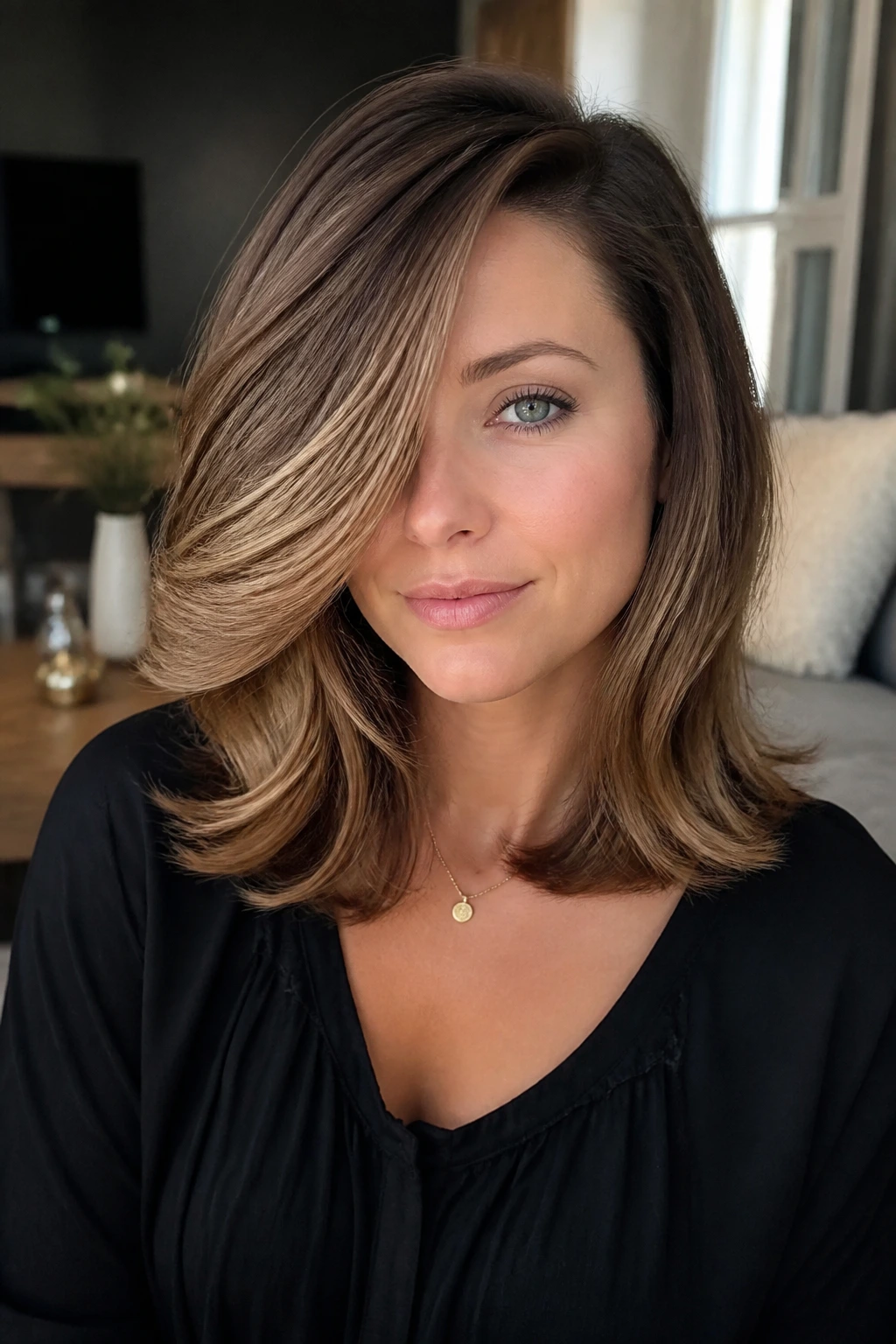
Feathered haircuts stay nicest when you stop them from turning into one long, unbroken shape. That usually means a trim every 6 to 8 weeks if your layers are short around the face, or every 8 to 10 weeks if the cut is longer and more blended. Let it go much longer than that and the feathering starts reading as a vague grown-out layer pattern.
Styling matters between visits, but it does not need to be a production. A quick root lift, a brush through the front sections, and a small bend at the ends is often enough. If the hair is waking up flat, dry shampoo at the crown helps more than people expect. It gives the top some grit, which keeps the shape from sliding down your head by lunch.
Watch the products too. Heavy oils and thick creams can weigh feathered layers down. Use them sparingly, and keep most of the product on the mids and ends. The roots need to stay light if you want the cut to keep its movement.
Frequently Asked Questions
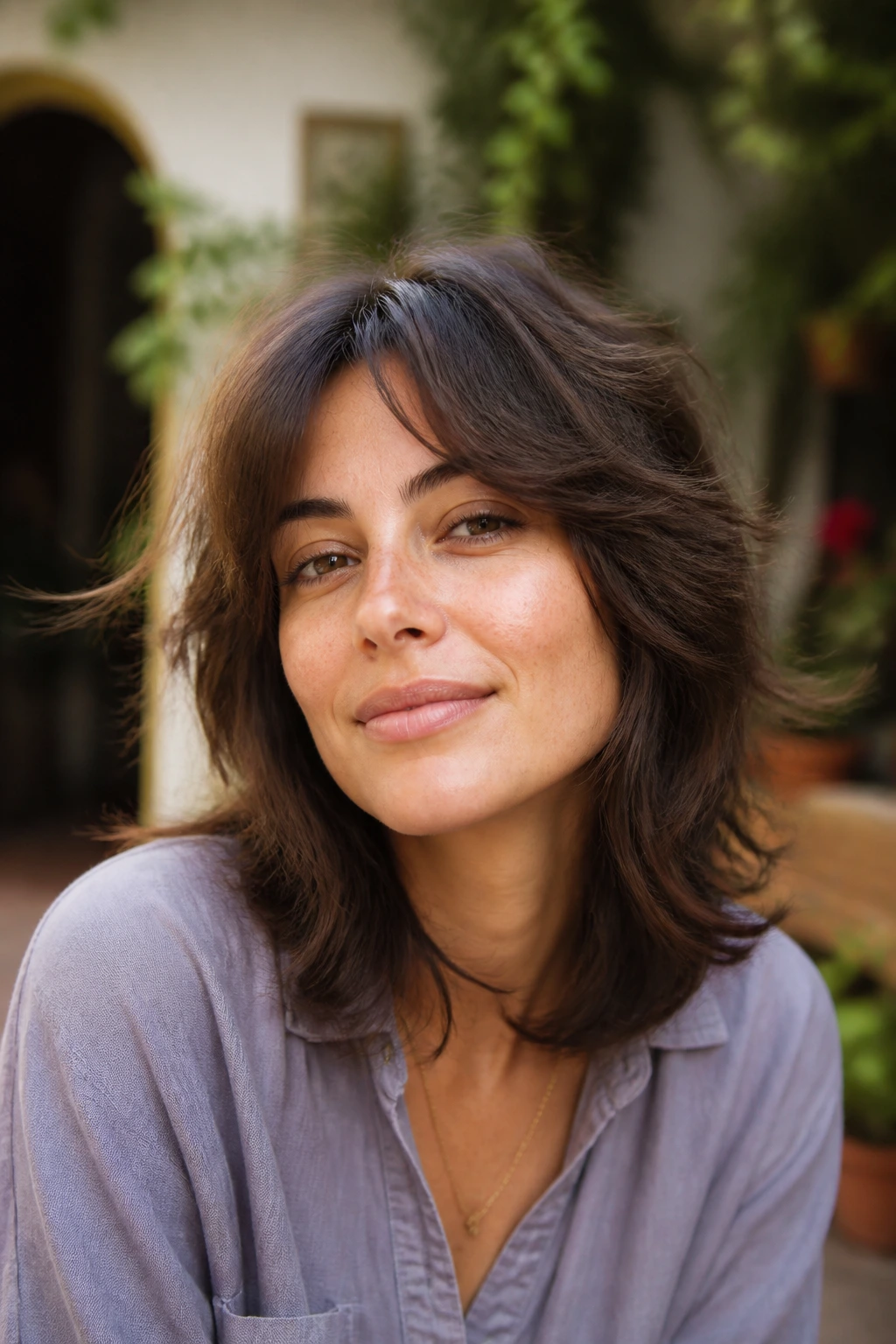
Are medium length feathered haircuts good for fine hair?
Yes, if the layers are kept long and the perimeter stays full enough to hold density. Fine hair usually looks best with soft feathering near the face and crown lift from styling, not with tons of short layers.
Do feathered cuts work on thick hair?
They do, and they often work better than blunt cuts on dense hair. The key is controlled weight removal inside the haircut, not aggressive thinning at the ends.
What’s the difference between feathered layers and a shag?
A shag usually has more separation, more edge, and a messier outline. Feathered layers are softer and more blended, with movement that still keeps the haircut polished.
Can curly hair get a feathered cut?
Absolutely, but the cut has to follow the curl pattern. Cutting curly hair dry, or at least in its natural state, helps the stylist place the layers where they won’t shrink too far.
How do I ask for feathering without getting a choppy haircut?
Ask for long, blended layers, soft face-framing pieces, and point-cut ends. If you say you want movement but still want the perimeter to feel full, that usually steers the cut in the right direction.
How often should I trim a feathered medium cut?
Most people do well with trims every 6 to 10 weeks, depending on how short the front pieces are. The shorter the face frame, the faster it shows grow-out.
Will this haircut work if I air-dry my hair?
Yes, though it will read softer and less lifted than a brushed-out version. If you air-dry, the best cuts are the ones with longer layers and a clean outline at the ends.
Can feathered hair show off balayage or highlights?
Very much so. The movement in the layers gives light pieces more chances to catch the eye, which is why feathered cuts and dimensional color often look better together than blunt cuts and color blocks.
Keeping the Feathered Shape Alive
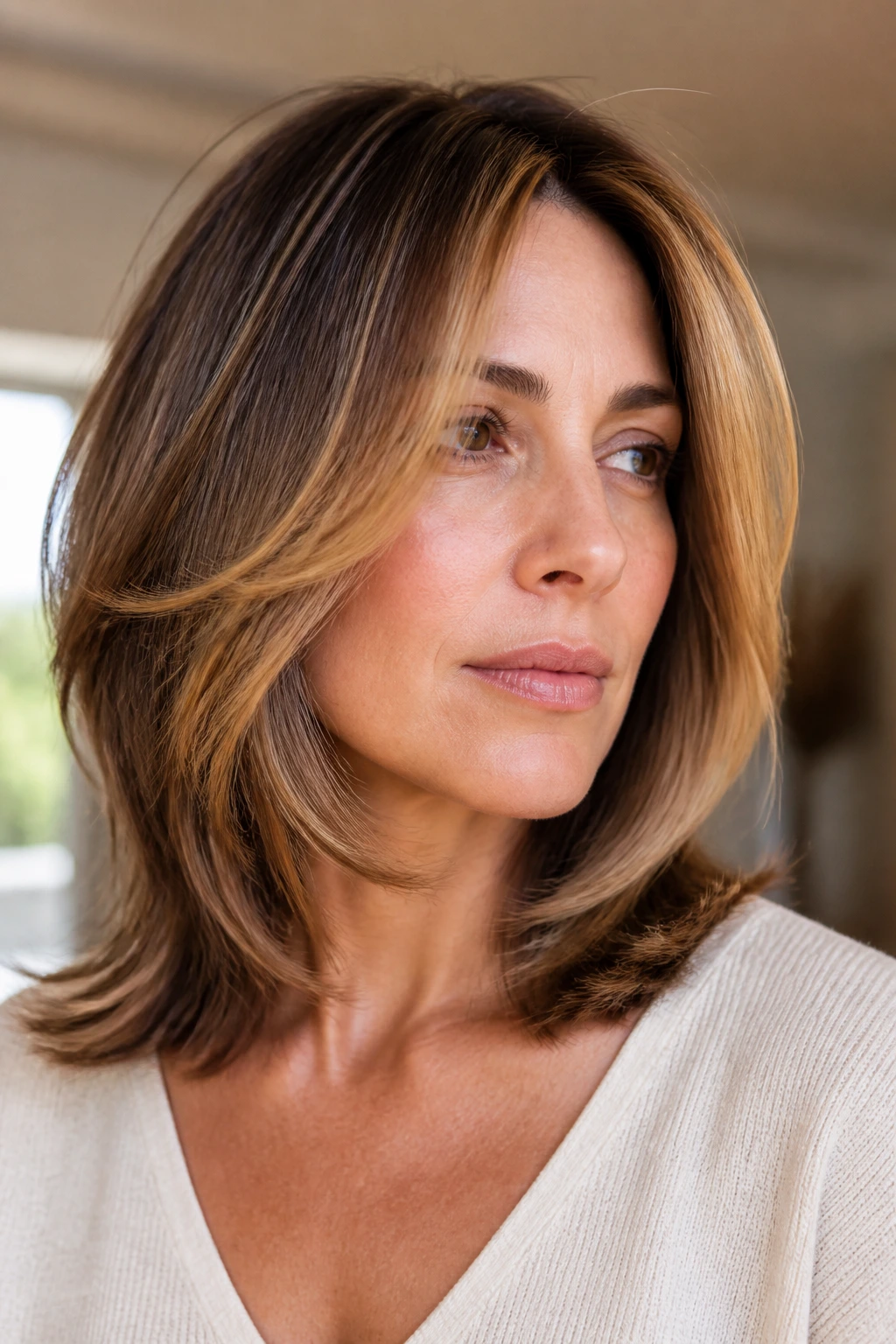
The best thing about medium length feathered haircuts is that they don’t ask for one fixed mood. They can look soft, sleek, shaggy, polished, or airy, and the same cut often moves between those looks with nothing more than a different brush or part. That flexibility is why people keep coming back to this shape.
If you want one haircut that gives your hair room to move without losing the shoulder-length security blanket, feathering is a smart place to land. Get the layers placed well, keep the perimeter honest, and do not let anyone over-thin the ends into dust. The rest is mostly about how you wear it.
And if you pair the right feathered cut with the right face frame, the whole thing starts doing more work than you’d expect. That’s the nice part. The haircut keeps showing up for you, even on days when the styling barely happens.
