



Thick wavy hair doesn’t misbehave; it asks for a better shape. The problem is that a lot of style advice treats wave pattern like a flaw to flatten, which is how you end up with hair that looks polished for 20 minutes and then swells into a triangle by lunch. The better move is to work with the bend you already have, let the density do some of the holding, and stop fighting every strand into obedience.
The best natural wave hairstyles for thick hair do three things at once: they calm the roots, give the mids room to move, and keep the ends from turning into a blunt curtain. That balance matters more than people think. A heavy, one-length cut can make thick waves sit like a helmet; too much thinning can leave the ends fuzzy and thin-looking. There’s a sweet spot, and once you find it, the whole head behaves differently.
I keep coming back to the same practical truth: thick wave hair wants structure, not suppression. A claw clip has something to grip. A braid has enough bulk to look full without help. A low bun can actually stay put for hours because the hair has weight. That’s the good part. The trick is choosing styles that use those traits instead of making you spend half the morning forcing your wave pattern into a shape it never wanted in the first place.
Why Thick Wave Hair Likes a Little Direction
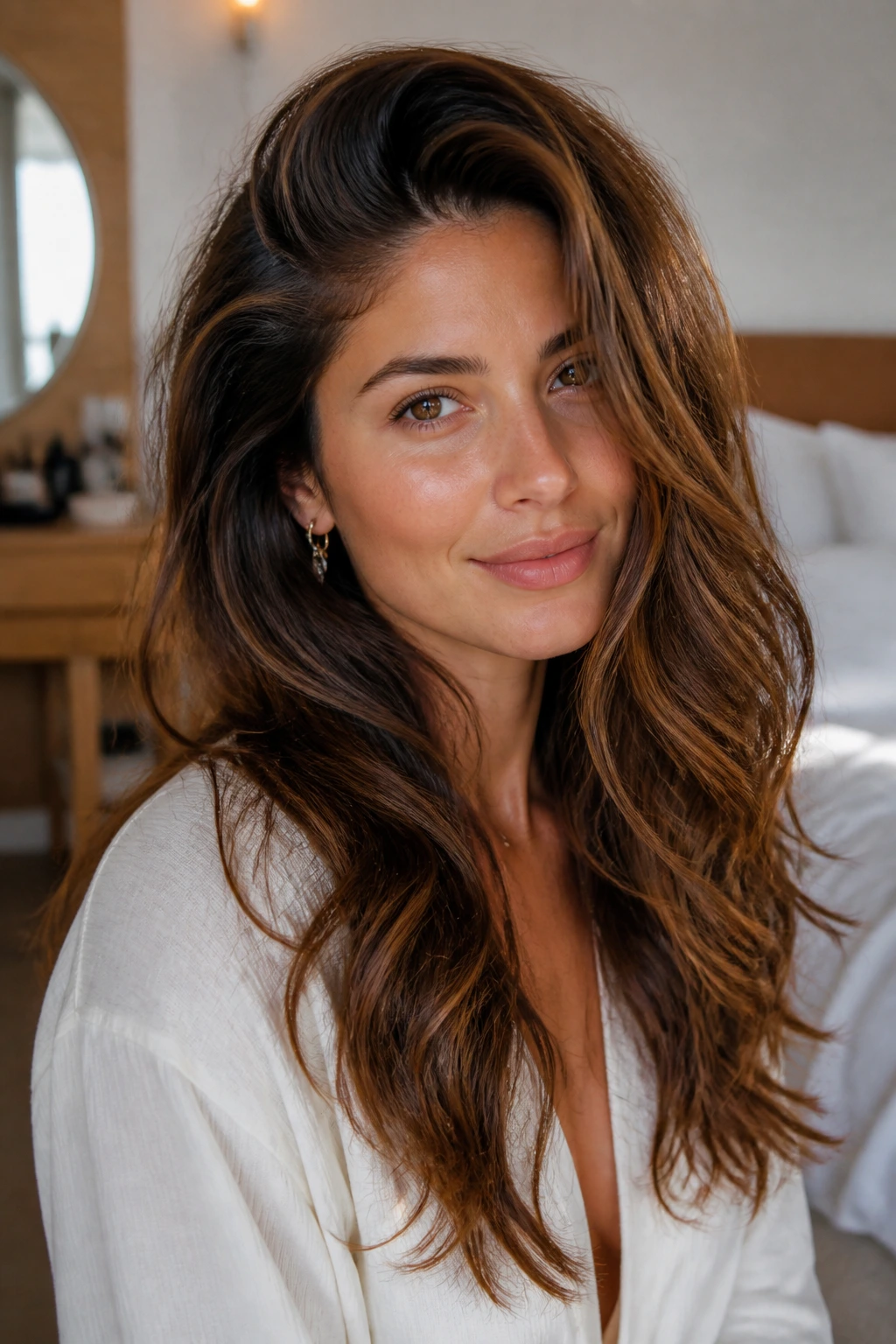
- Weight is useful, until it isn’t: Thick hair has enough mass to hold a wave pattern, but it also needs shape control near the perimeter so the sides don’t balloon out.
- Layers should release pressure, not erase density: A few strategic layers around the cheekbones and collarbone help the wave bend instead of stacking into a triangle.
- The crown needs a different treatment from the ends: Root lift keeps thick waves from lying flat at the top while the ends stay soft and movable.
- Accessories hold better in dense hair: Claw clips, pins, and braids all grip thick strands more securely than they do fine hair.
- Second-day texture often looks better than day-one perfection: Thick waves usually settle into a more defined pattern after a little time, especially if you sleep on a satin pillowcase.
- Humidity changes the finish, not the whole style: A good wave style can puff a little and still look intentional if the shape is right from the start.
1. Long Layers with a Deep Side Part
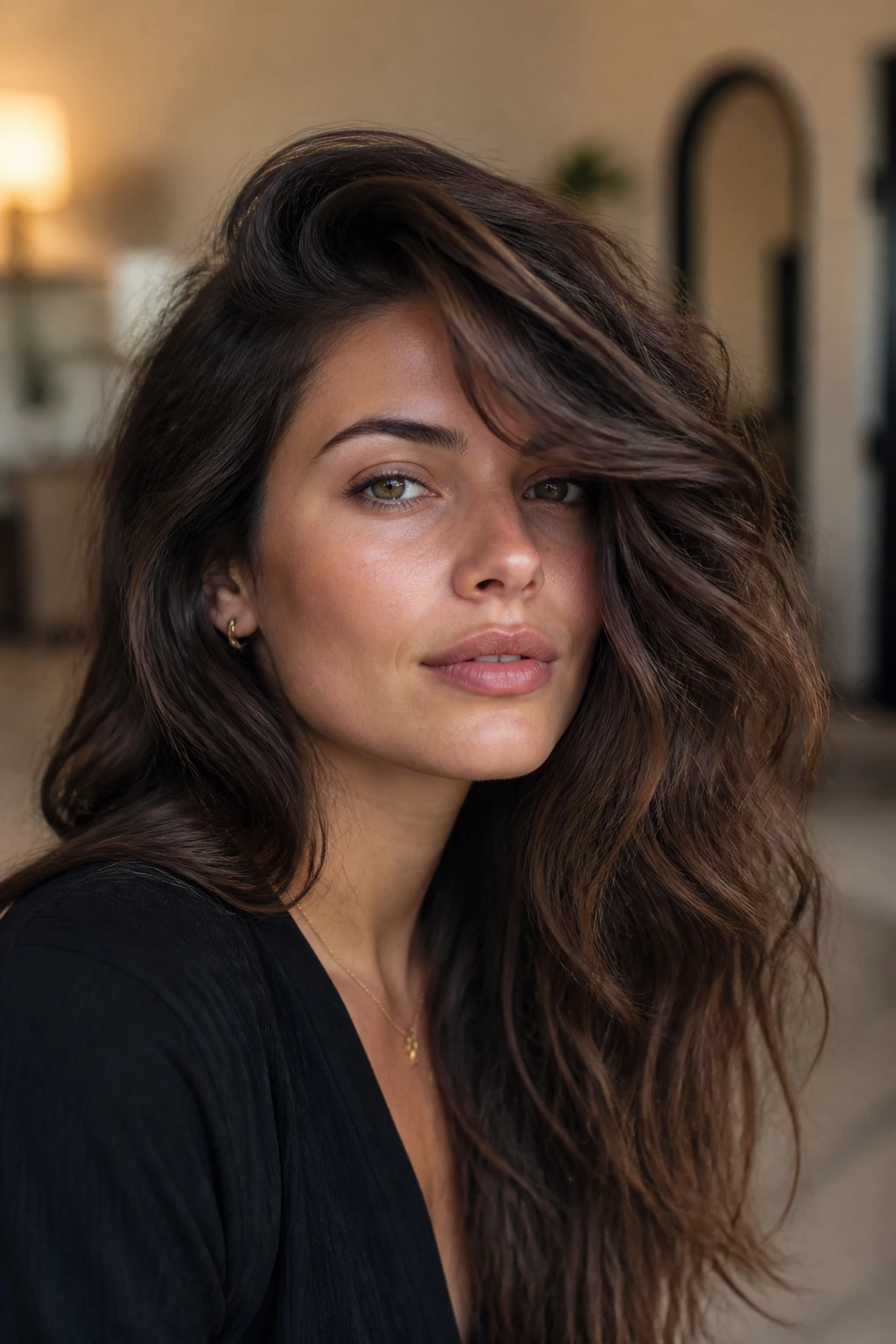
Long layers are the most forgiving starting point for thick wavy hair because they let the hair move without dumping all that weight into one blunt line. A deep side part gives the crown a little lift and shifts the bulk away from the middle, which is where thick hair can start looking heavy fast.
Why It Works
The part creates a built-in slope. That slope matters. It keeps the top from looking flat and gives the wave pattern a place to fall instead of sitting straight down the face like a sheet. A side part also makes thick hair look a little airier without removing much length.
If you air-dry, rake in a light mousse from ears down, twist the front section once, and let the roots set while clipped away from the face. When it’s dry, flip the hair back and break up the wave with your fingers. Skip the brush once it’s dry. That’s where the frizz starts.
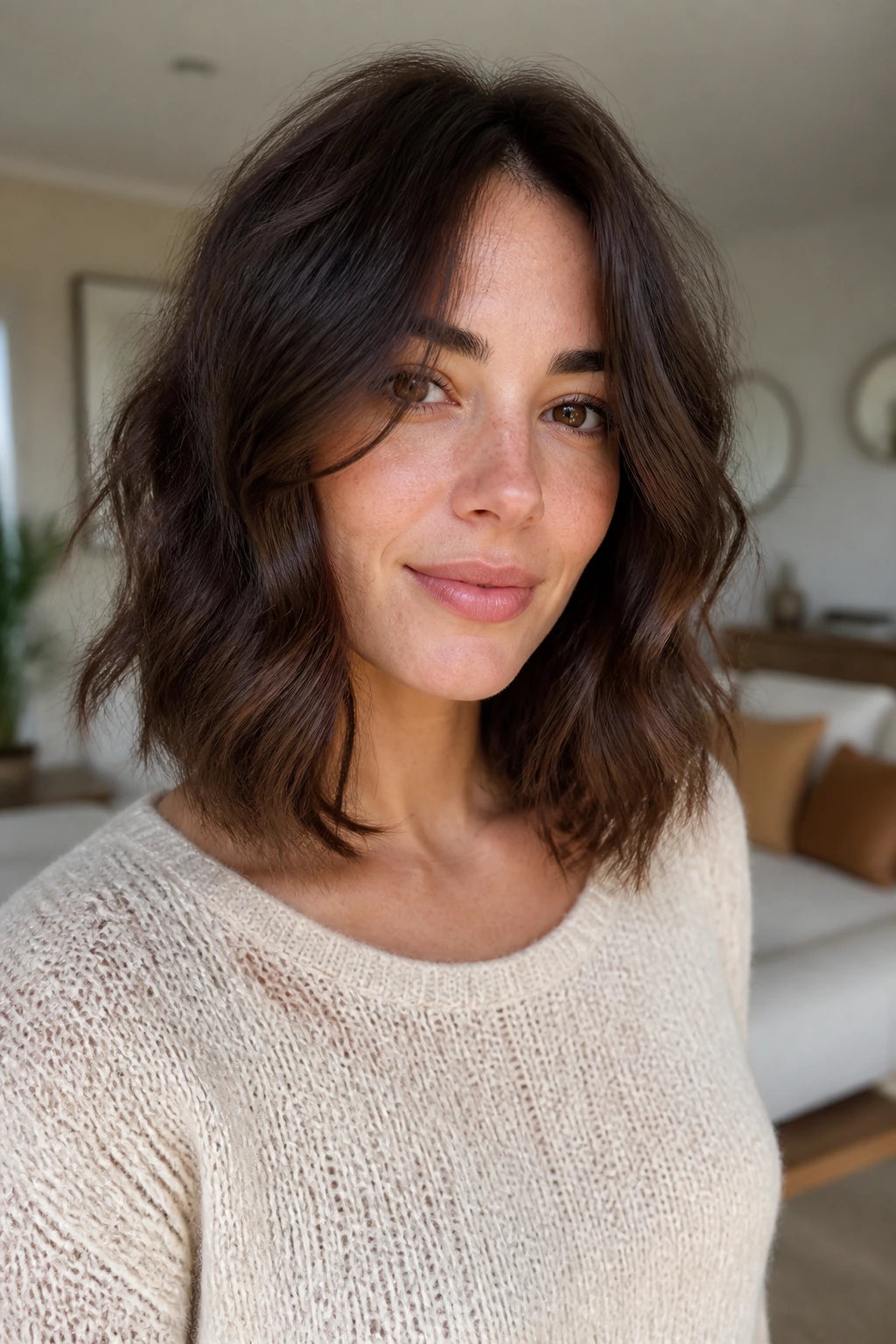
2. Collarbone Lob with Hidden Internal Layers
A collarbone lob takes the weight off thick waves without making the hair feel chopped up. Hidden internal layers are the quiet part of the cut that keeps the bulk from stacking at the bottom. You still get a full shape, but it doesn’t sit like a block.
This is the cut I’d pick for someone who likes to tuck hair behind the ear, wear it half up, or throw it in a low clip without fighting a blunt hemline. It also grows out well, which saves you from that awkward “too long to be a bob, too short to be easy” stage.
- Ask for soft internal removal, not aggressive thinning.
- Keep the length grazing the collarbone so the ends can bend in or out.
- Style with a diffuser on low heat if your waves go limp when air-dried.
- Finish with a pea-sized serum only on the outer layer.
3. Curtain Bangs That Melt into the Wave
Why do curtain bangs work so well on thick wavy hair? Because they break up the front weight before it can take over the whole face. The center opens a little, the sides soften, and the wave pattern has room to show without needing a curling iron.
Where the Fringe Should Sit
Ask for the shortest piece near the bridge of the nose or just below the brows, then let it lengthen toward the cheekbones. That shape matters more than exact length. Too short and thick waves can spring up and look choppy. Too long and the fringe disappears into the rest of the hair.
The best way to style them is almost lazy. Blow-dry the bangs forward with a round brush for about 30 seconds, then sweep them apart while they’re still warm. If you leave them to dry smashed against the forehead, they usually split in the weirdest place.
4. Half-Up Claw Clip Twist
Running late and your hair is already half dry? A half-up claw clip twist is the move. Thick wavy hair makes this style look fuller than it does on fine hair, and the loose bottom section keeps the wave pattern visible instead of hidden in a knot.
Twist the top third of the hair back from the temples, gather it at the crown, and secure with a medium or large claw clip. Leave a few wave pieces loose around the ears. That little mess near the face keeps the style from looking too severe.
A matte clip tends to grip better than a slick one. And if the clip feels like it’s straining, you’re taking too much hair. Use less. Thick hair gives you volume for free; you do not need to stuff the clip to the brim.
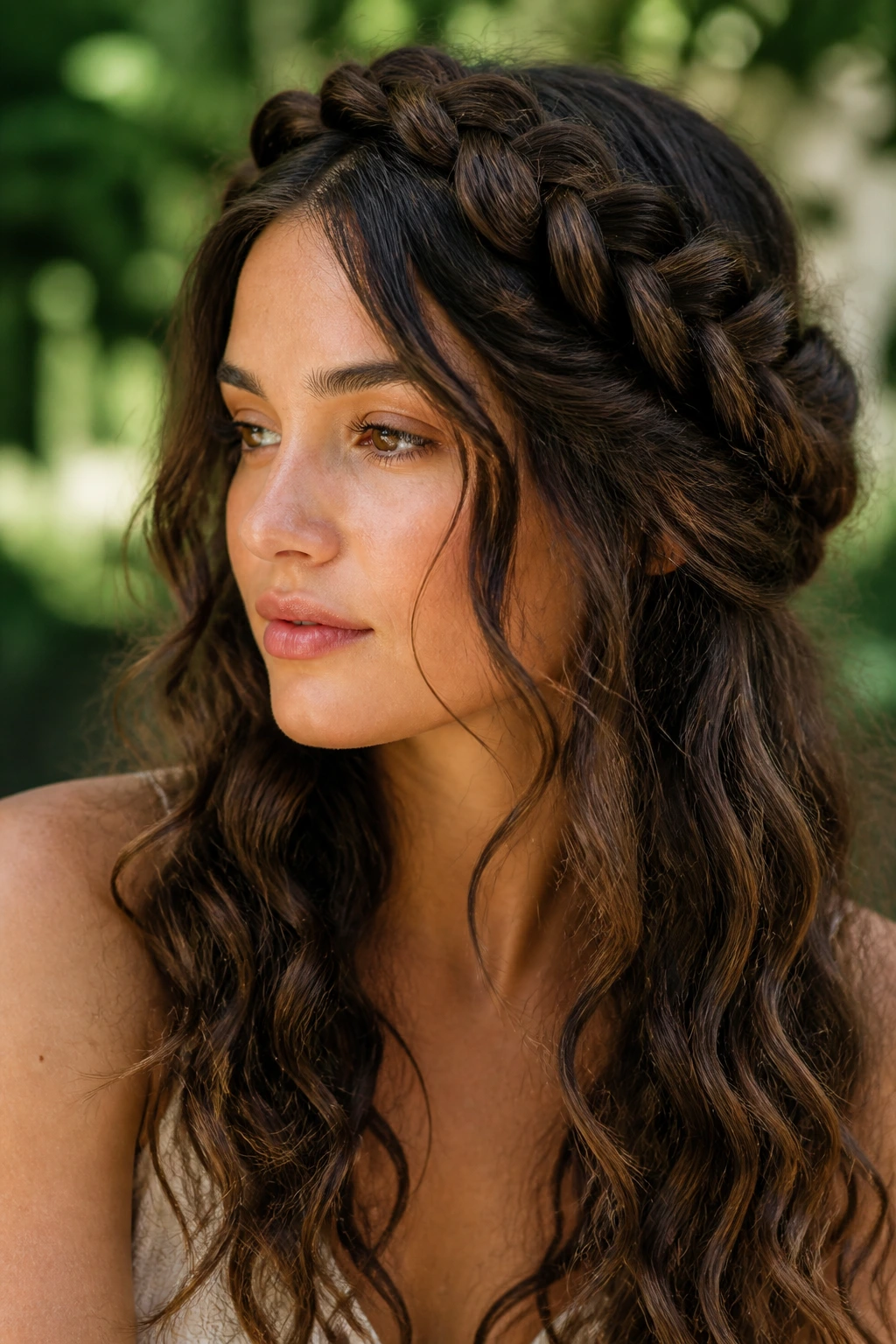
5. Braided Crown with Loose Ends
A braided crown is one of those styles that looks more complicated than it is. Thick waves give the braid enough body to look full, even when the sections are only medium-sized. The loose ends soften the whole thing so it doesn’t drift into costume territory.
Start the braid just behind one ear, angle it along the hairline, and pin it behind the other ear with two crossed bobby pins. Then stop. Leave the rest of the hair down and let the waves fall naturally through the ends. The contrast between the controlled crown and the loose length is what makes this work.
It’s especially good on hair that gets puffy at the temples. The braid presses that area into place while the rest of the wave pattern stays free.
6. Low Twisted Bun with Soft Face Pieces
A low twisted bun can look severe on thick hair if you pull every strand tight. The fix is simple: leave out two thin pieces near the front, then twist the rest low at the nape and pin it in a soft coil instead of a rigid knot.
This style sits well with thick wavy hair because the texture gives the bun some visible depth. It doesn’t look like a tiny knot fighting against too much hair. It looks like the hair has decided to cooperate for once.
Use a satin scrunchie first if your hair is slippery, then add pins around the base. If the bun starts to sag, don’t tighten everything. Pin the underside. That keeps the shape low and calm.
7. Side-Swept Waves with a Heavy Front Section
A deep side sweep can make thick waves look deliberate instead of heavy. The front section does most of the visual work here, so the rest of the hair can stay soft and loose without reading as unfinished.
Best When the Crown Feels Flat
This style is a good answer for hair that sits close to the scalp at the top but flares at the sides. Move the part well off-center, sweep the heavier side across the forehead, and clip the smaller side back behind the ear. That shift gives the top more height without teasing it into a puff.
A few loose bends near the face help the style settle. You want movement, not a helmet. If the front keeps falling forward, mist the roots with dry shampoo and let it sit for a minute before brushing through.
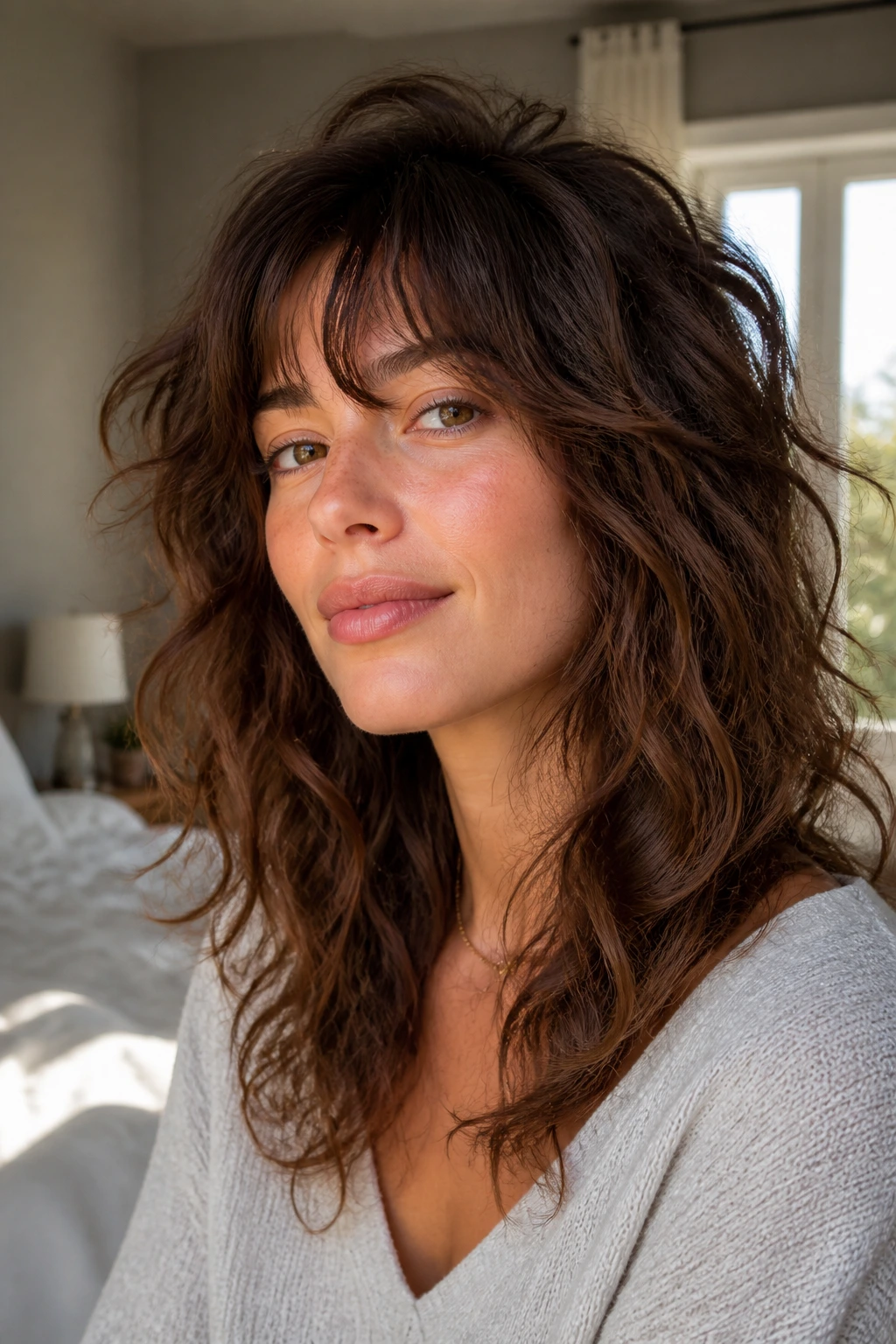
8. Soft Shag with Air-Dried Texture
The shag is one of the few cuts that makes thick waves look lighter without making them look thin. The layers land in different places, so the wave pattern breaks up into pieces instead of one giant sheet. On dense hair, that’s a blessing.
How to Get the Most From It
Ask for a shag that keeps enough length around the nape to avoid the mushroom effect. Too much top-shortening and thick hair can start to puff in the wrong place. The ends should move. The crown should breathe. That’s the shape you want.
Air-dry with a light gel or mousse, then scrunch once when the hair is about 80% dry. If you keep touching it while it’s drying, the texture gets fuzzy. Leave it alone. Seriously.
- Best for waves that clump naturally.
- Good if you want a cut that still looks interesting on day three.
- Works with or without bangs.
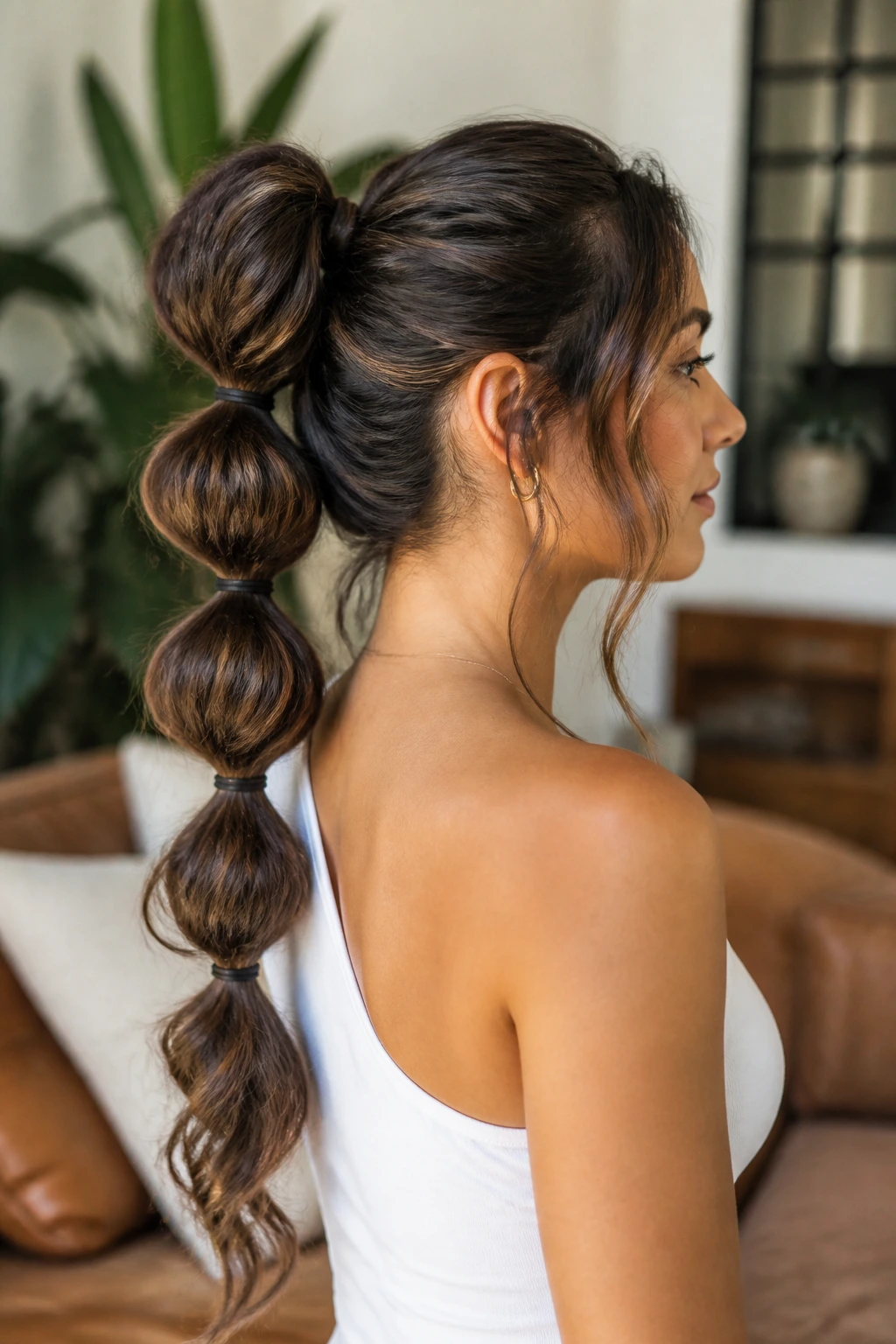
9. Bubble Ponytail on Thick Wavy Hair
A bubble ponytail sounds playful because it is, but thick hair gives it real structure. The sections puff out in a way that feels intentional rather than silly, and the wave pattern keeps the bubbles from looking too stiff.
Gather the hair into a mid or high ponytail, then add elastics every 2 to 3 inches down the length. Tug each section gently so the bubbles spread. On thick waves, you usually need less tugging than you think. The body is already there.
I like this one when the ends are doing their own thing. The style hides uneven texture better than a straight ponytail ever could. If you want it cleaner, wrap a small strand around the top elastic and pin it underneath.
10. Rope-Braid Half Pony
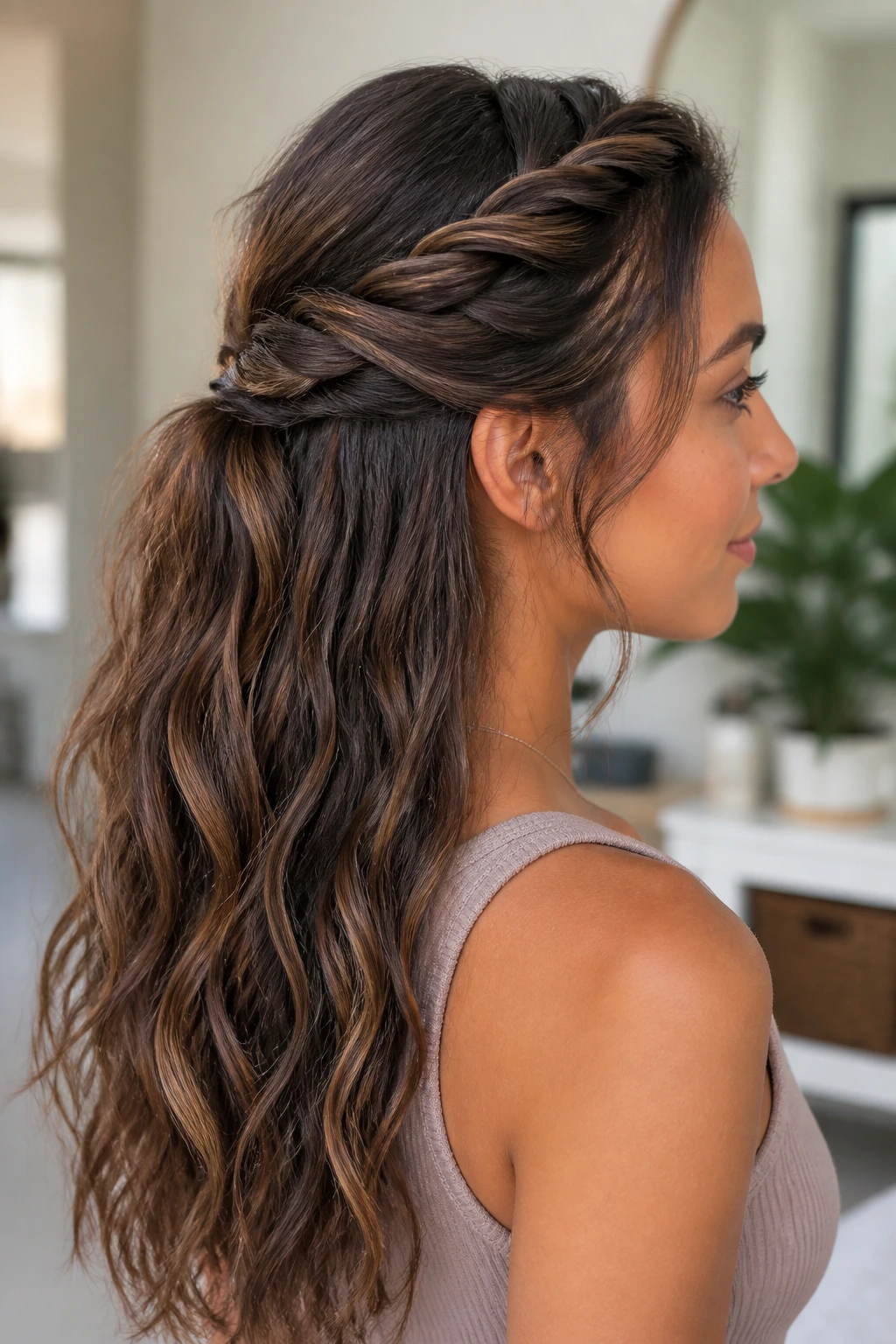
A rope-braid half pony is a good middle ground between “I did something” and “I still want my hair down.” Twist two sections from the temples, cross them at the back, and secure them into a half pony. Thick hair makes the rope texture pop in a way that fine hair rarely can.
Unlike a classic braid, a rope twist doesn’t flatten the wave pattern as much. The front stays controlled, the ends keep their bend, and the whole thing takes about half the time of a full updo. That matters on mornings when the mirror is not your friend.
Use a clear elastic first, then hide it with a small wrap if you want the finish to look cleaner. If the twists unravel, your sections are too wide. Make them narrower and twist tighter from the root.
11. Wrapped Low Ponytail

A wrapped low ponytail is a sharper look than a basic elastic-and-go pony, but it still feels easy. Thick wavy hair gives the pony enough volume that it won’t collapse into a sad rope at the nape. That alone makes this style worth keeping around.
Pull the hair back low, secure it with a strong elastic, then wrap a piece from the underside around the base. Pin the end underneath the pony. Leave the tail slightly bent instead of straightening it flat. A little wave in the length keeps the style from turning formal in a boring way.
This is the one I’d wear with a blazer or a plain tee. It sits in both places without changing much.
12. Messy French Twist
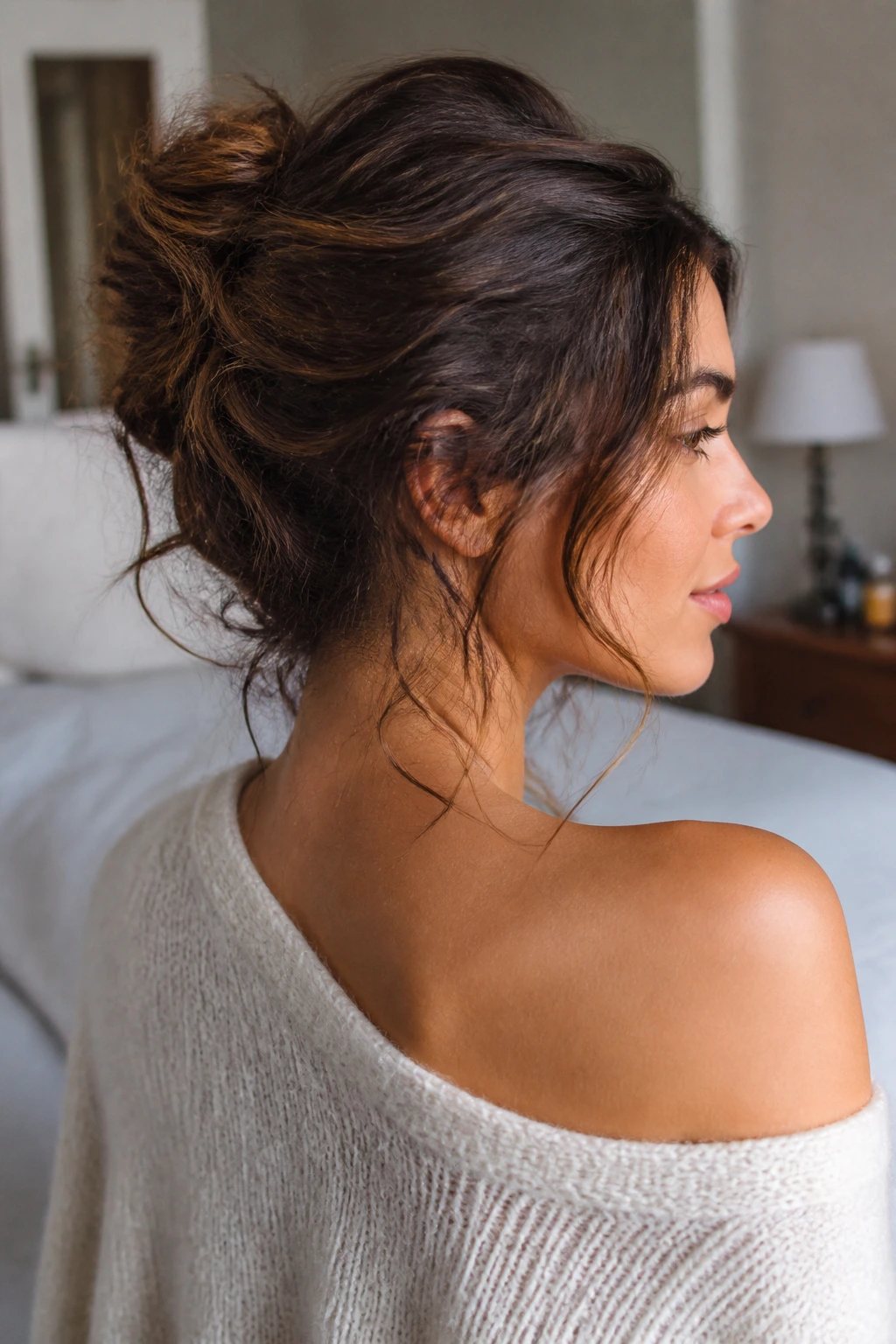
A French twist on thick wavy hair is never going to look tiny or precise, and that’s exactly why it works. The hair has enough bulk to fill the twist so it reads as shape, not as a skinny roll pinned to the head.
What Makes It Stay Put
The secret is leaving texture in the hair before you pin it. Slightly gritty second-day hair is ideal. Smooth, freshly washed hair slips. If your waves are too clean, spray in a little texture mist first, then gather the hair upward and tuck the ends into the twist.
Don’t over-pull the sides. A little looseness near the ears keeps it from looking stiff. If a few pieces fall out, leave them. The style gets better when it looks lived in, not lacquered.
13. Side-Clip Sweep
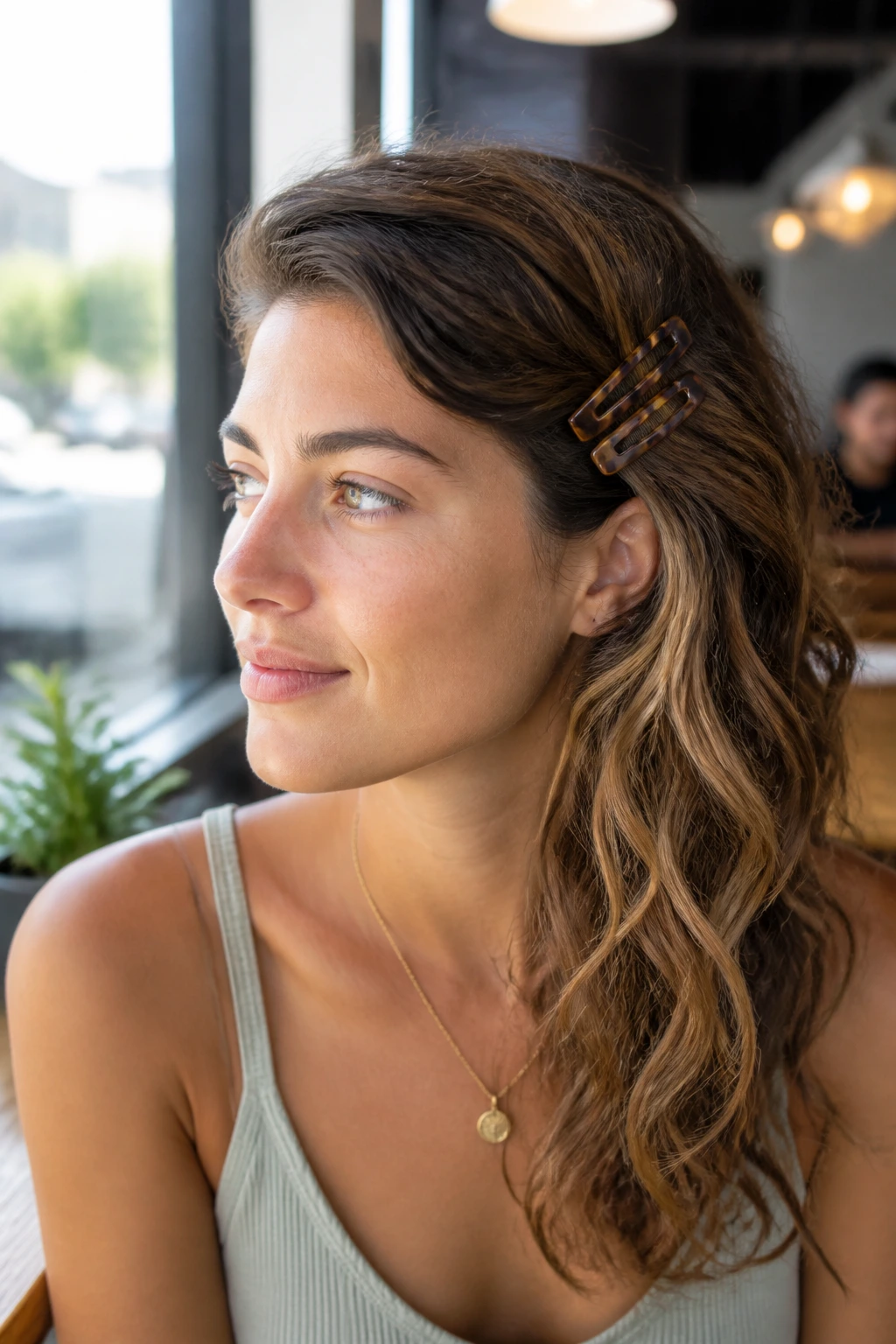
A side-clip sweep is the quickest answer when you want your hair off your face but still want the wave pattern to show. Sweep one side back, secure it with two stacked clips, and let the rest fall naturally. Thick hair makes the clipped side hold better and gives the whole shape a sense of weight.
This is the style for days when you don’t want commitment. It works with a center part or a soft side part, and it doesn’t care whether your hair is freshly washed or day-two rough. Use the clips to control the hairline, not to pin back half your head.
If the front keeps slipping, twist the section once before clipping. That tiny move makes a big difference.
14. Bixie with Natural Bend
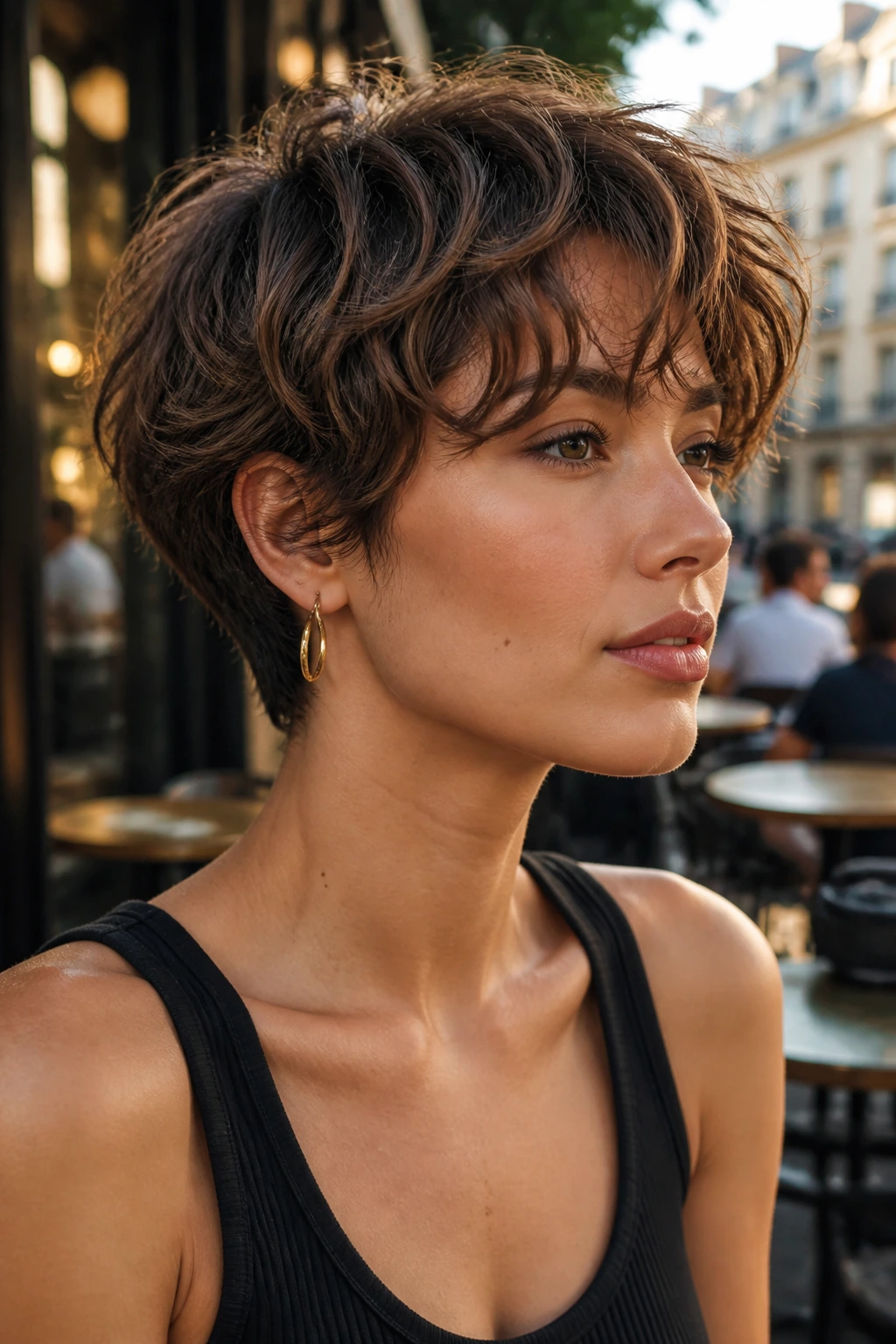
A bixie — that in-between bob and pixie length — can be brilliant on thick wavy hair if the top stays soft and the nape is controlled. The wave pattern gives the cut movement, while the shorter length takes away the drag that thick hair often carries at the bottom.
Why This Shorter Shape Works
The cut keeps the top layers a little longer so the waves have room to bend, then narrows the sides enough that the head doesn’t look round and wide. Ask for texture, but not a shredded finish. You want separation, not frayed ends.
Styling takes almost no time. A pea-sized amount of cream through damp hair, a quick scrunch, and maybe a finger-twist around the front pieces if they need direction. That’s it. If you’re someone who hates long styling sessions, this is one of the few short cuts that still respects thick hair.
15. Long V-Cut Waves
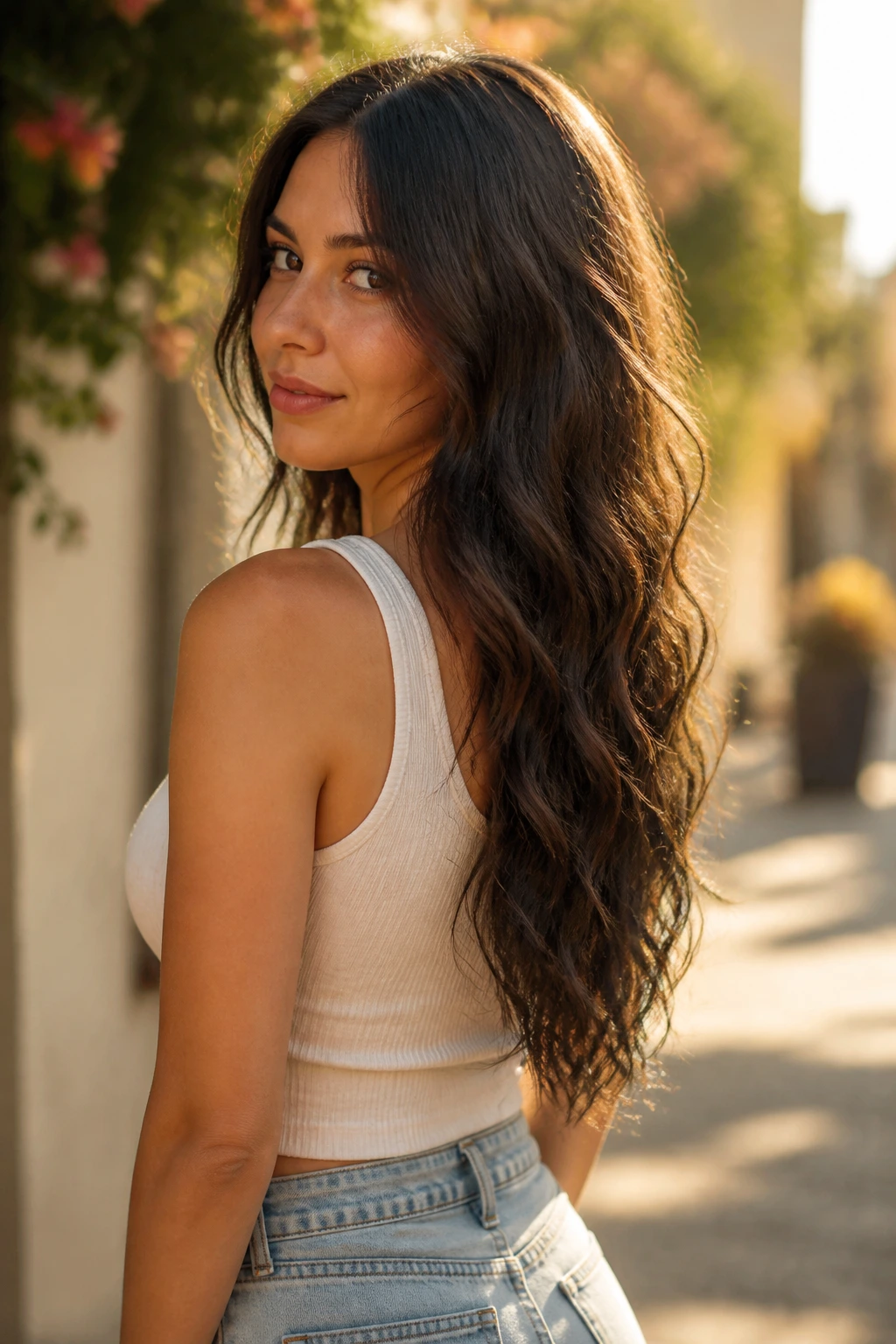
A V-cut gives long thick waves a point at the back, which sounds like a small thing until you see how much lighter the whole shape feels. The length remains, but the perimeter stops looking like one giant block.
This cut shines when the wave pattern is loose to medium. The sides drape, the center falls in that soft point, and the length feels easier to flip over one shoulder without fighting the ends. It also helps braids and ponytails fall more cleanly because there’s less blunt bulk at the bottom.
If you wear your hair mostly down, this is one of the best ways to keep length without the heaviness. The shape does the work for you.
16. Scarf-Tied Low Bun
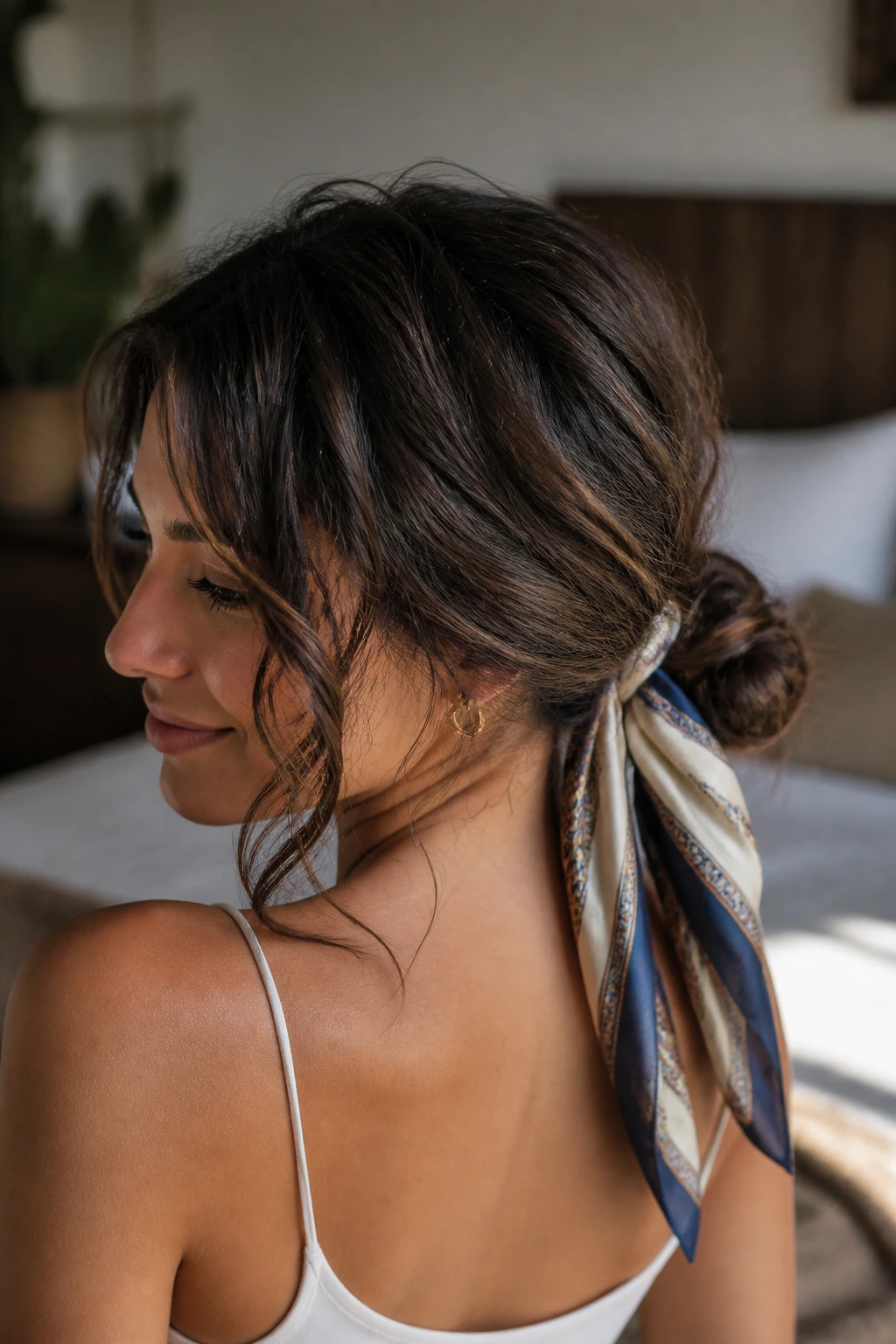
A scarf-tied low bun adds interest without demanding precision. Twist the hair into a loose bun at the nape, wrap a slim scarf around it, and let the ends of the scarf trail a bit. Thick waves make the bun substantial, so the scarf doesn’t feel like it’s hanging on for dear life.
Compared with a plain low bun, this one is softer around the face and less severe in profile. It’s also useful on days when the hair isn’t cooperating, because the scarf distracts from any uneven texture around the base.
Pick a scarf that isn’t slippery. A silk scarf looks lovely, but if your hair is very dense and soft, a cotton-silk blend grips better.
17. Twisted Halo Half-Up
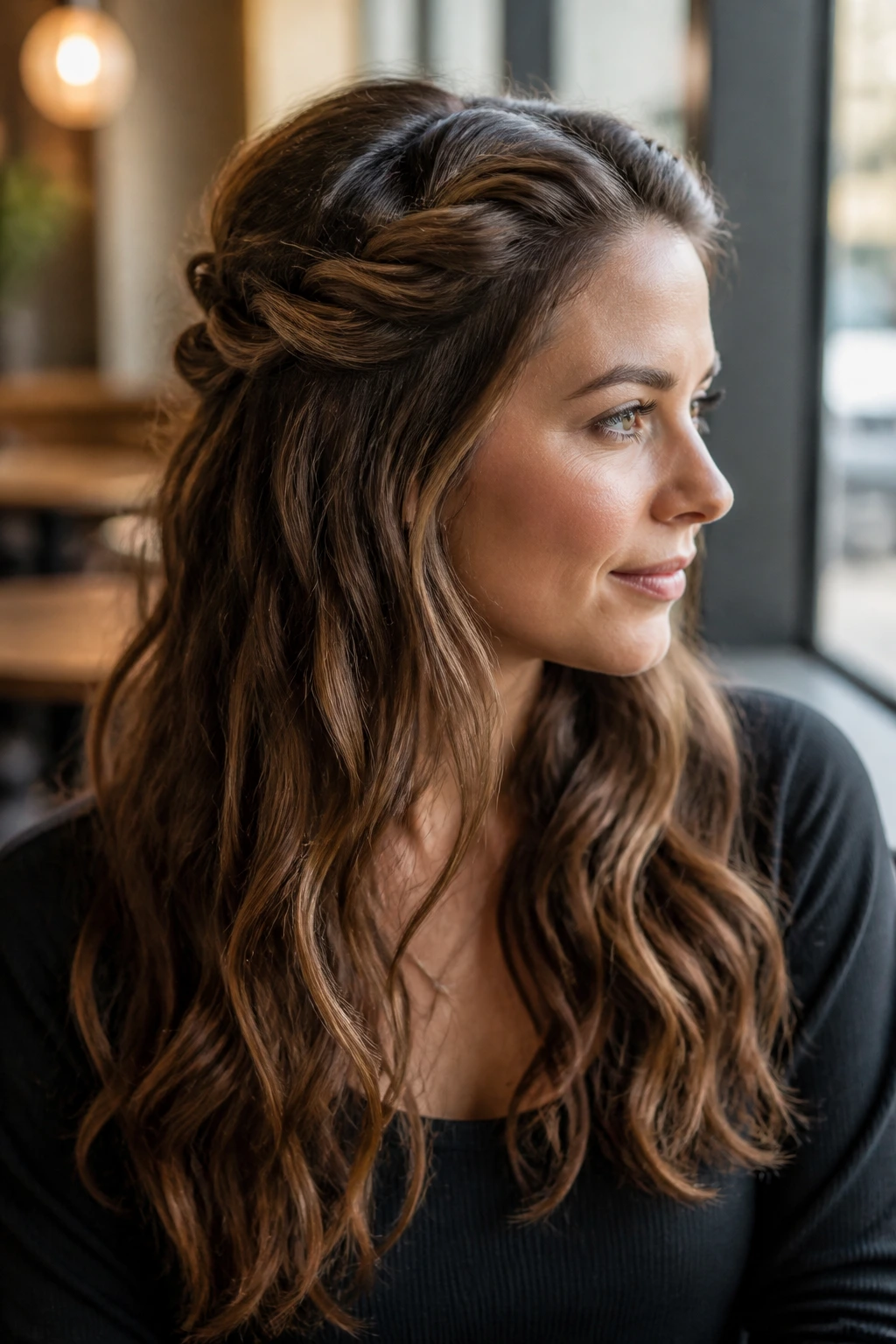
Can a half-up style stay elegant on thick hair without turning bulky? Yes, if you twist the sides back instead of braiding them too tightly. That keeps the top controlled and leaves the ends down where the wave pattern can do its thing.
Pin the Twists at the Right Spot
Anchor each side twist just above the ears, then cross them at the back of the head. Pin into the hair underneath, not just into the surface layer. Thick hair needs the support buried a little deeper or the style slides down halfway through the day.
This is one of those styles that looks better after you loosen it by a few millimeters. Pulling it too tight makes the face pieces flatten. Leaving them soft gives the whole thing a little movement.
18. Root-Sleek, Wave-Ends Look
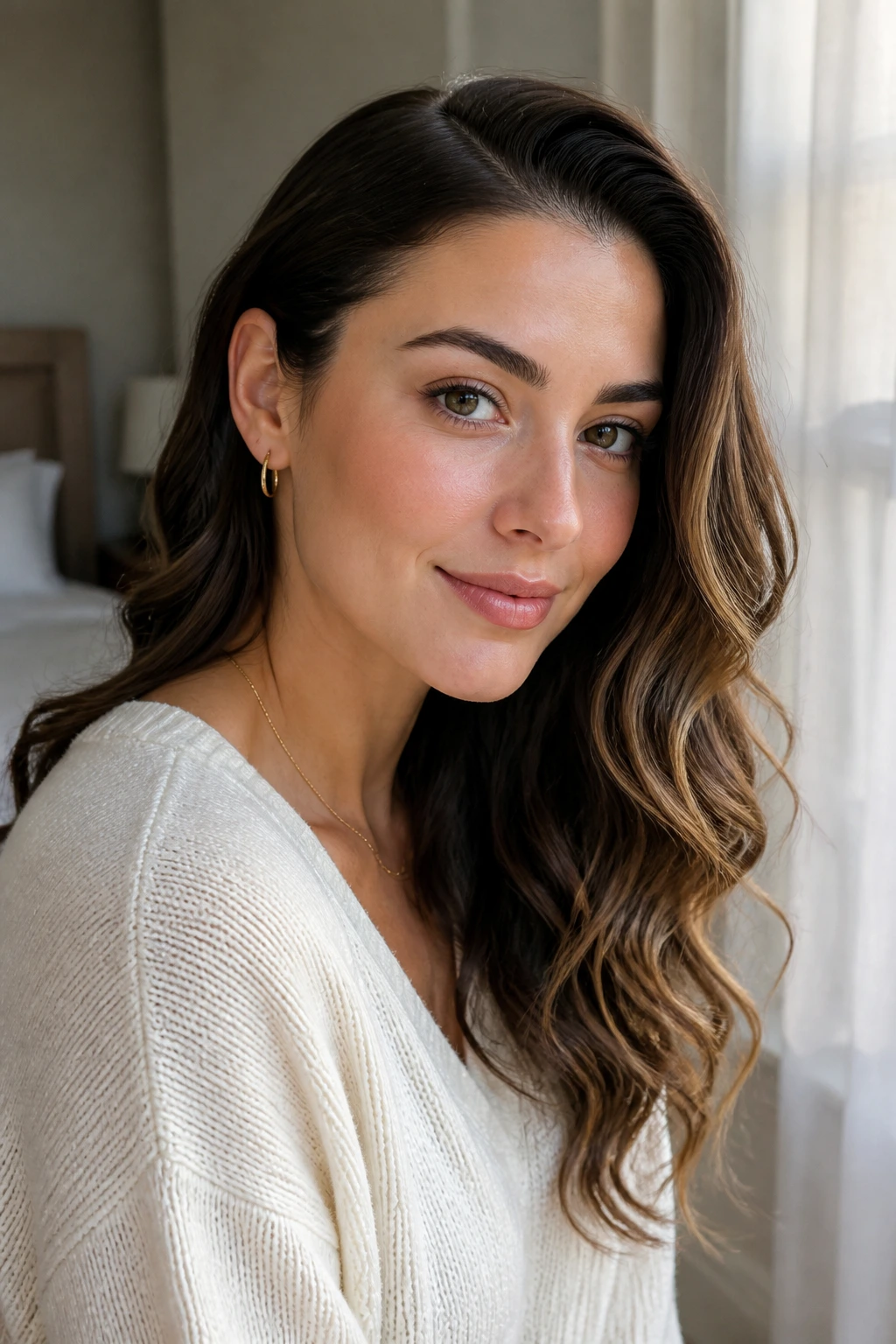
If your roots go puffy while the lengths stay pretty, lean into it. Smooth the top with a light brush and a touch of cream, then leave the wave pattern alive from the ears down. That contrast can look cleaner than trying to force the entire head into one texture.
A side part or center part both work. What matters is the transition. The top should look calm, almost glassy, and the lower half should keep its bend. It’s a sharp contrast, and it keeps thick hair from spreading out too wide around the head.
This style is especially useful when you only have time for the front section. Get the roots neat, mist the mids with water, scrunch, and move on.
19. Wide-Headband Tuck
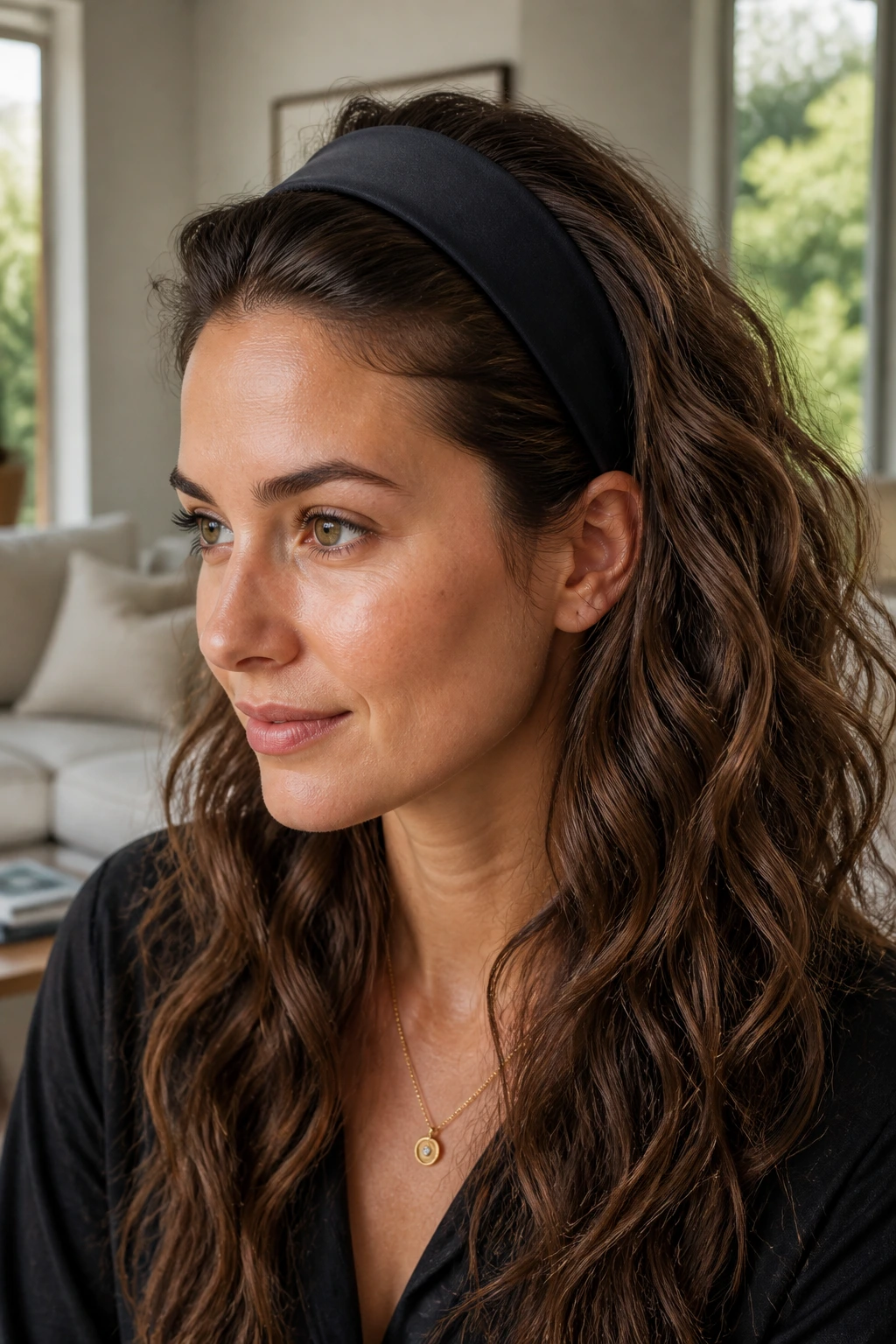
A wide headband tuck is one of the easiest ways to tame thick waves without hiding them. Push the headband on after the hair is dry or nearly dry, then tuck just the front pieces or the entire length behind the band if the hair is long enough.
The width matters. Thin headbands can dig in and split thick hair in odd places. A wider band sits more evenly and gives the style a more settled look. If the band slips, add a little texture spray at the roots first.
I like this on days when the front sections refuse to behave. The headband handles the drama so the rest of the hair can just be hair.
20. Faux Bob with Hidden Pins
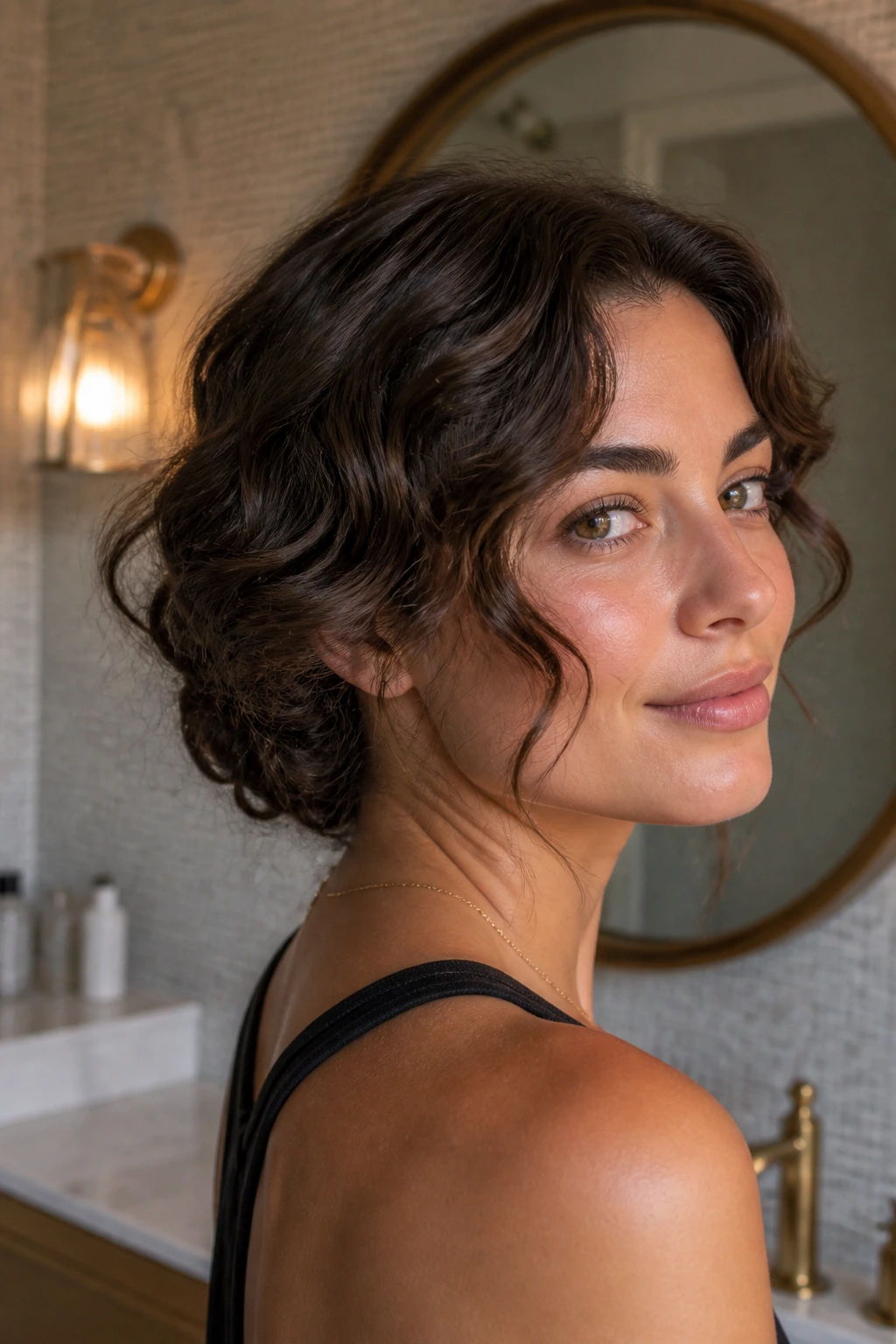
A faux bob is sneaky in the best way. You tuck the length under and pin it at the nape, which makes thick wavy hair look shorter without losing the wave texture on top. It’s also a nice break from always wearing the same length the same way.
The key is folding the ends under in loose sections rather than stuffing them into one giant roll. Thick hair needs multiple anchor points. Pin the base first, then secure the sides, then adjust the front so the wave pattern still sits softly around the face.
This style is better on medium to long lengths than on extremely long hair, where the bulk gets hard to hide. Still, when it works, it works fast.
21. Twin Dutch Braids into Loose Ends

Twin Dutch braids can look sporty on thick hair, but they also solve a practical problem: they keep the crown controlled without flattening the ends. Braid from the hairline to just past the ears, then stop and let the rest fall loose and wavy.
Why does that matter? Because the braid handles the heavy top section while the wave pattern stays visible where it looks best. The style holds better than a simple three-strand braid on thick hair, and it makes day-two texture look planned instead of tired.
If the braids puff too much, gently tug only the outer edges of each braid. Don’t panic-tighten the whole thing. That just makes the texture weird.
22. Loose Formal Updo with Pins
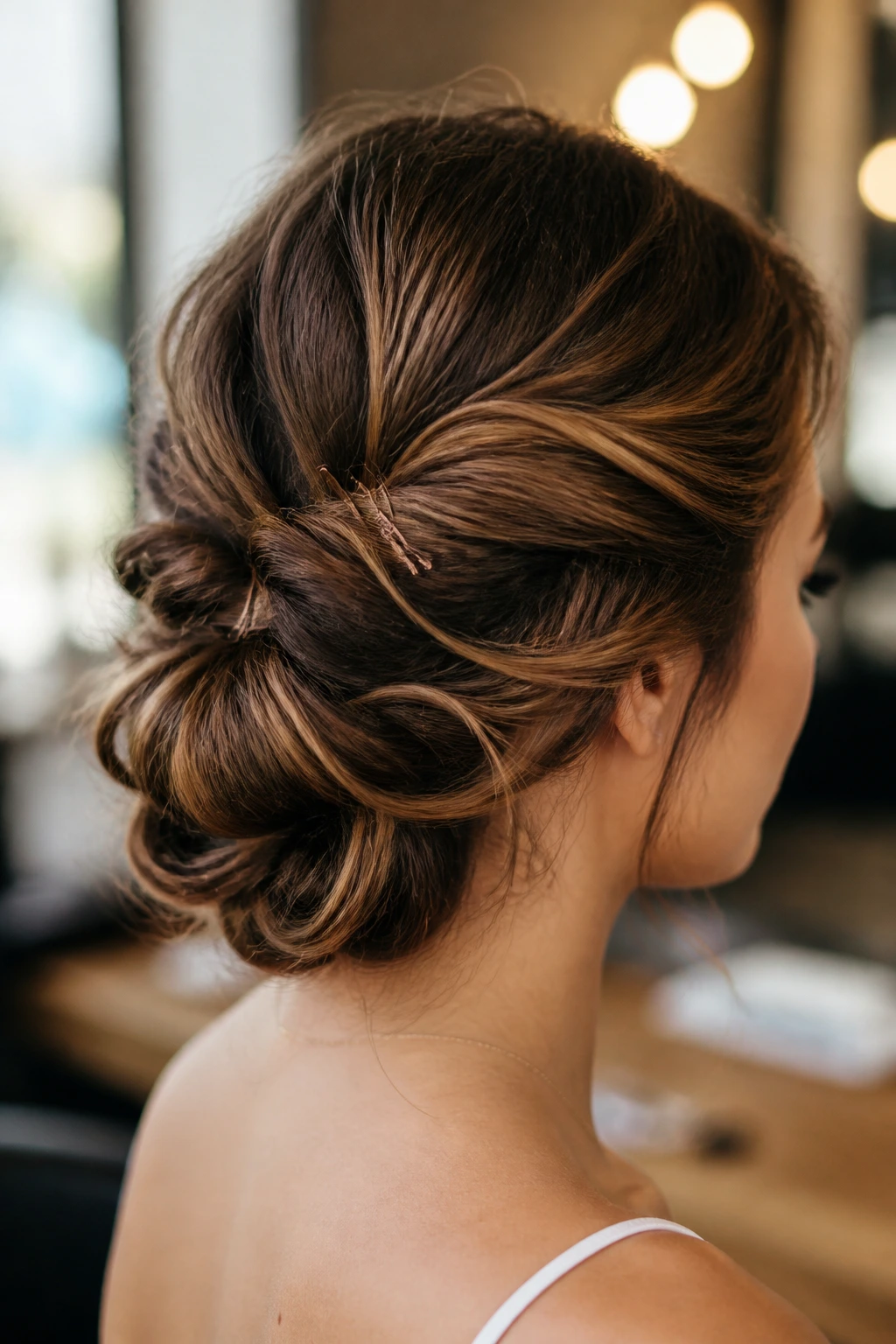
For events, thick wavy hair usually looks best in an updo that leaves some ends exposed. A fully sealed bun can look heavy. A loose formal updo, with a few pinned folds and a couple of soft tendrils, feels much more natural.
Start with the hair in two low sections, twist each one upward, and pin them into each other at the back of the head. Let the ends poke out slightly, then curl or shape those ends around the pinned sections. That imperfect edge is the whole point.
This one likes strong pins. Not flimsy ones. Thick hair can chew through bargain pins in a minute, so use a few sturdy U-pins or longer bobby pins with a little grip.
23. Air-Dried Middle-Part Waves

A middle part can be unforgiving on some hair types, but thick waves usually give it enough presence to work. The result is calm, symmetrical, and a little bit cool without trying too hard. If your hair naturally falls around the face, this style makes that bend look clean.
Don’t overwork the wave. Part the hair while it’s damp, apply mousse from mid-length to ends, and let the hair dry without brushing it out. Once dry, separate only the pieces that have clumped too much. The rest should stay together in soft S-shapes.
This is the look I’d choose when the hair already feels good and you do not want to mess it up. Sometimes that’s the best reason of all.
Why Thick Wavy Hair Needs Weight Removed in the Right Places
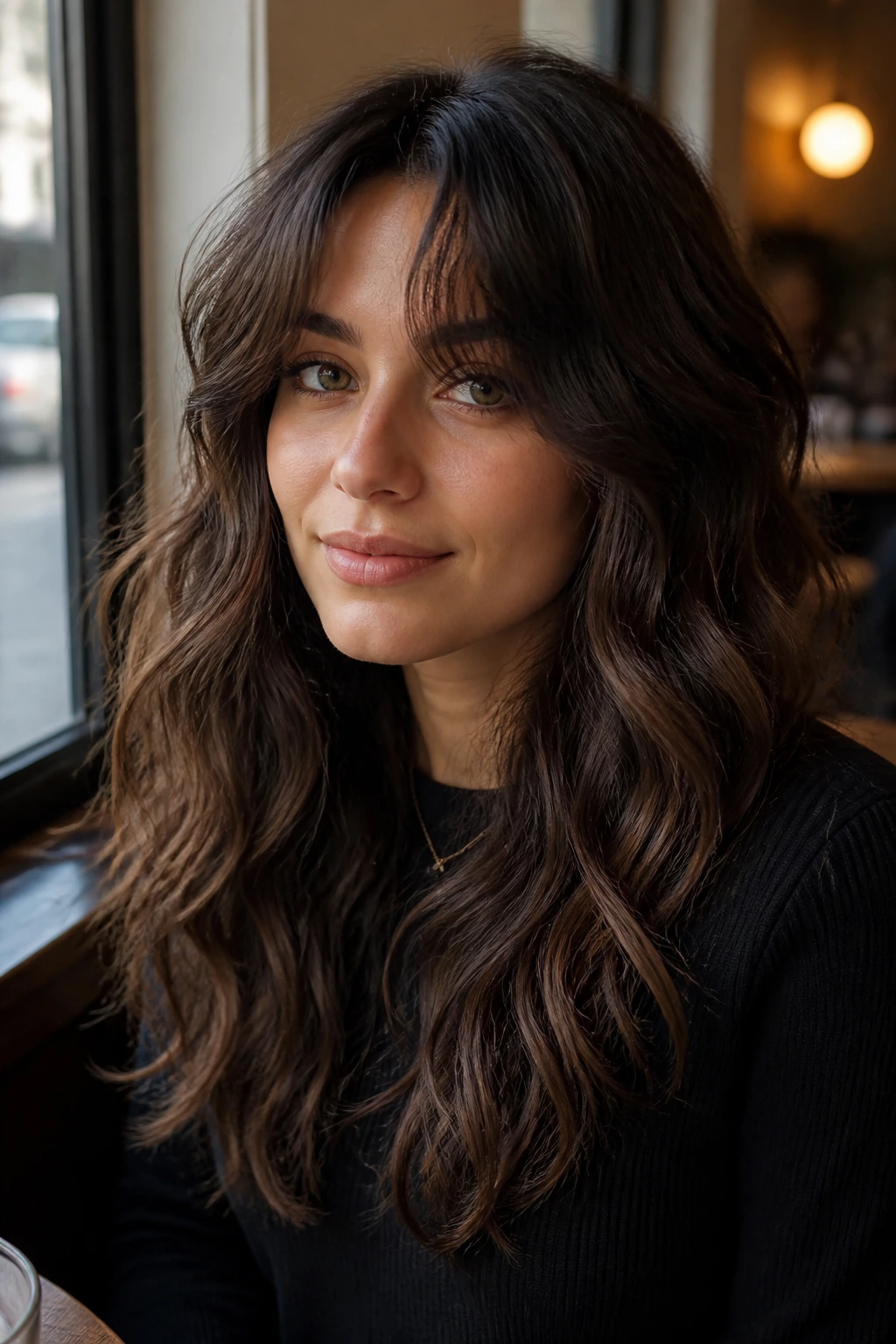
Thick wavy hair usually doesn’t need less hair. It needs the hair removed from the places where it’s making the shape awkward. That’s a different thing. A blunt bottom line can make waves puff sideways, while too many short pieces at the crown can turn the top into a little mushroom cap. Neither one is flattering, and both are common.
The cleanest cuts for thick waves tend to keep some perimeter weight, then release bulk inside the shape. That could mean long layers, a V-cut, internal layers in a lob, or a shag that keeps the bottom from sitting like a brick. The point is control. Not thinning for the sake of thinning.
If you’re asking a stylist for this kind of cut, use plain words: remove bulk without taking away the bend. That phrase matters. It tells them you still want the wave pattern to live, just in a cleaner frame.
Essential Tools for Natural Wave Hairstyles for Thick Hair
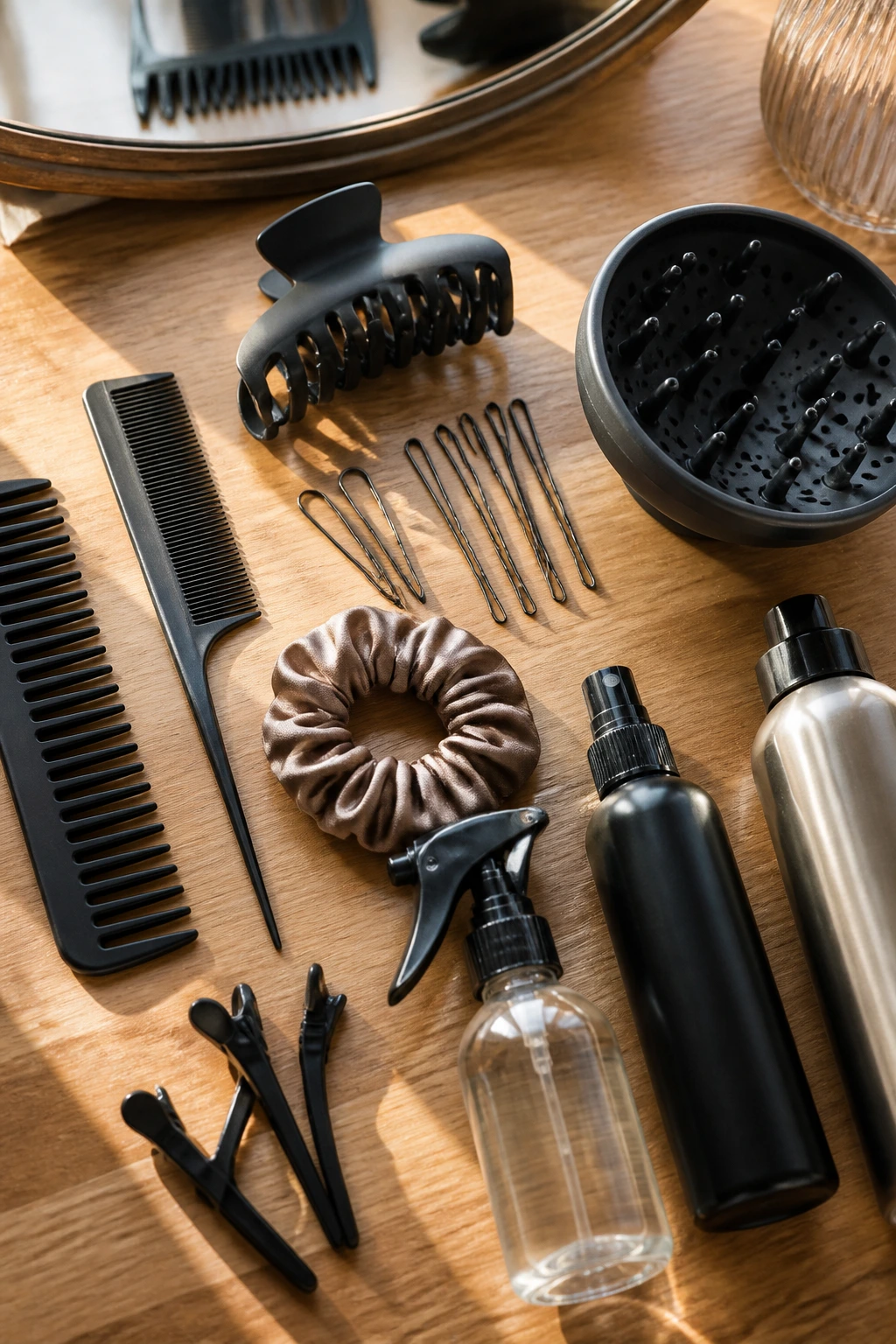
- Wide-tooth comb: Best for detangling damp thick waves without tearing apart the pattern.
- Tail comb: Useful for clean parts, especially deep side parts and center parts that need to sit straight.
- Large claw clip: Holds dense hair better than smaller clips; look for one with a strong spring and grippy teeth.
- U-pins and long bobby pins: Better than short pins for buns, twists, and faux updos.
- Satin scrunchies: These reduce tension on thick hair and don’t snag as hard at the elastic point.
- Diffuser attachment: Helps set wave pattern with less puff when you want a finished shape fast.
- Texture spray: Gives second-day grip for braids, twists, and clip styles.
- Flexible-hold hairspray: Keeps shape without turning the ends crunchy.
- Spray bottle with water: A light mist wakes up flattened sections before you reshuffle the wave.
- Small sectioning clips: Handy when you’re pinning up thick hair and need to keep one side out of the way.
Smart Product and Cut Choices for Natural Wave Hairstyles on Thick Hair
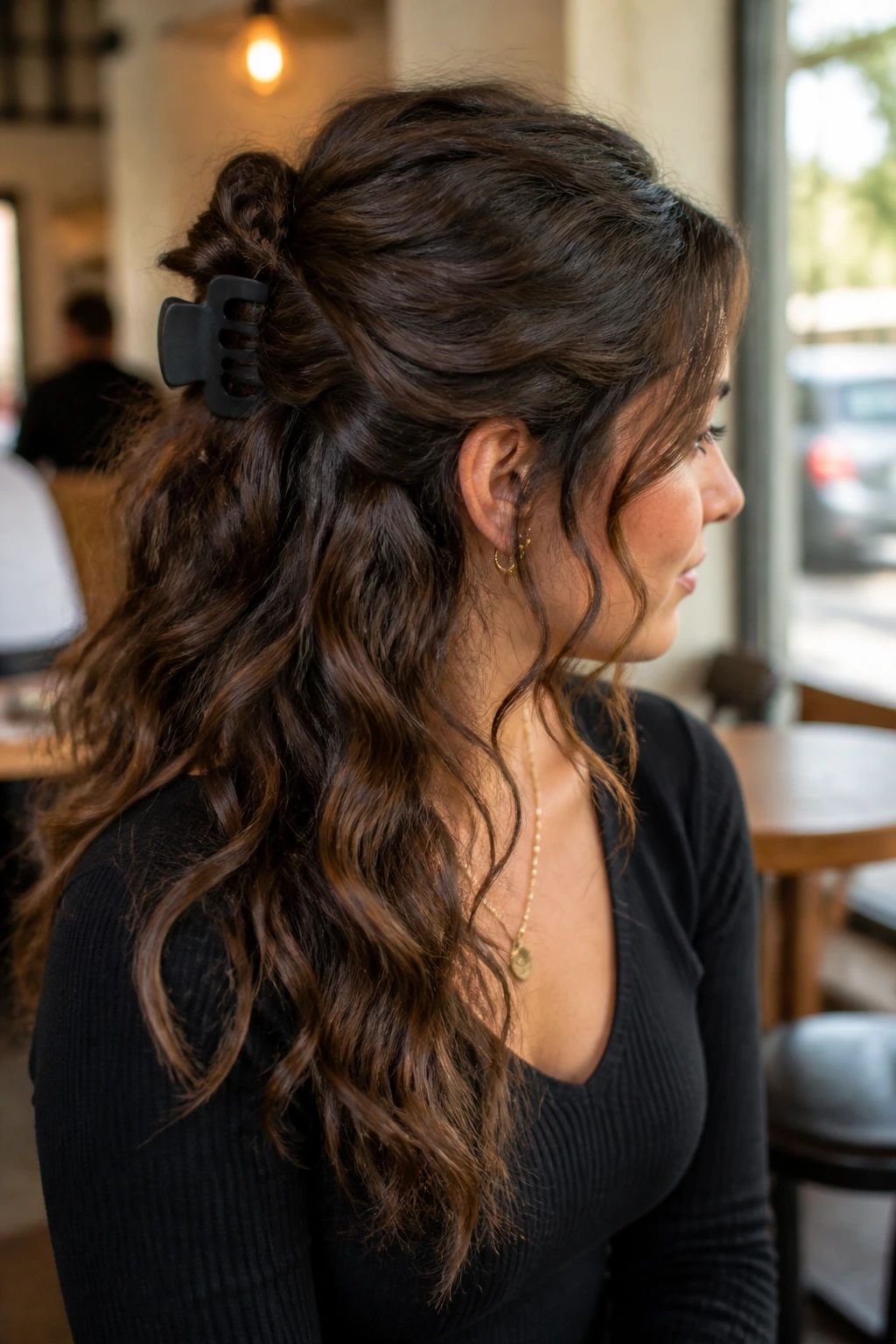
The right product depends on where your hair is fighting you. Thick but coarse waves usually like a cream or leave-in on the mids and ends. Thick but fine-stranded waves often do better with mousse or a light gel, because heavy cream can weigh the bend down and make the roots look greasy by noon.
A haircut matters just as much. If the ends keep flaring outward, ask for a soft V, rounded layers, or internal removal through the mids. If your hair sits too flat on top, ask for face framing that begins around the cheekbone or chin, not a jagged chop up near the eyes. That gives the front some movement without creating a broken line.
For styling, I’d keep three products on hand: a lightweight leave-in, a mousse or foam, and a flexible hairspray. That’s enough for most natural wave hairstyles for thick hair. If you pile on five things, the hair often gets softer but not better. And soft is not always the goal.
How to Wear These Styles from Desk to Dinner

Desk Days: The cleanest options are the low wrapped ponytail, the side-clip sweep, the collarbone lob, and the root-sleek, wave-ends look. They keep the front controlled so you’re not constantly moving hair off your face, but they still leave enough texture to look finished.
Weekends: This is where the half-up claw clip twist, the headband tuck, the bubble ponytail, and the braided crown shine. They feel relaxed, and thick waves make them look fuller without extra work. I reach for these when I want hair off my neck but don’t want a polished, serious look.
Events: The loose formal updo, the messy French twist, the scarf-tied low bun, and the faux bob are the strongest choices when you need a little drama. They work with earrings, high necklines, and open shoulders because the wave pattern gives them shape instead of making them stiff.
If Humidity Is On the Menu: Lean into styles that already embrace some movement. Braids, twists, and low buns tend to survive a damp day better than a perfectly blown-out style. Thick wave hair will react to the air. Better to pick a style that admits it.
Small Styling Tweaks That Make Thick Waves Behave Better
Root Lift: Clip the crown up for 10 to 15 minutes while the hair cools after drying. That tiny pause gives the root enough memory to stay lifted without teasing.
Shape Memory: Wrap the front pieces around your fingers while they’re damp, then let them fall. You’re not curling the whole head. You’re just teaching the first few inches where to land.
Frizz Control: Put serum or cream only on the outer layer and the very ends. If you coat the roots, thick waves can collapse and look sticky by the afternoon.
Accessory Choice: Use clips with teeth, not flat decorative ones, when the hair is heavy. Pretty is nice. Staying in place is nicer.
Refresh Tricks: A quick mist of water, a little mousse, and one minute of scrunching can rescue a flattened wave pattern. You do not need to rewash everything because one side slept weird.
Common Mistakes That Flatten Thick Waves

- Brushing dry waves from root to end: That turns a wave pattern into a puff cloud in seconds. Use a wide-tooth comb on damp hair and your fingers after it dries.
- Putting heavy cream near the scalp: The roots go limp and the mids look greasy. Keep richer products from the ears down unless your hair is extremely coarse.
- Over-thinning the ends: The shape can look wispy and frayed, especially in daylight. Ask for internal weight removal instead of aggressive texturizing shears.
- Using tiny elastics or weak clips: Thick hair pulls them apart, and then the style slips within an hour. Choose larger, stronger accessories with a real grip.
- Tying everything too tight: The hairline gets dents, the wave pattern around the face disappears, and you end up fixing it all day. Leave a little room at the scalp.
- Sleeping on rough fabric: Cotton pillowcases can rough up the surface and make the next morning harder than it needs to be. Satin or silk helps the wave stay calmer overnight.
Variations and Alternative Approaches

The Heat-Free Week: Skip irons and let the hair air-dry with mousse, a little scrunching, and one or two twists near the front. This works best if your wave pattern already clumps on its own and you don’t want to break that shape.
The Soft-Blowout Version: Blow-dry the roots smooth, then leave the mids and ends with a bend. It’s a cleaner, more polished finish that still respects texture, and it pairs well with the lob, the deep side part, and the low ponytail.
The Humidity Shield: Use a stronger-hold gel at the crown and a flexible spray on the ends. Thick wave hair doesn’t need to be shellacked, but in damp air, a bit more hold at the root keeps the shape from expanding outward.
The Short-Length Edit: For bixie or bob lengths, keep the sides slightly longer than the nape and let the top layers move. That keeps the cut from puffing out like a bell.
The Event Night Version: Swap the loose pieces for a few polished front bends, then pin the rest a little tighter than you would for daytime. The style still has wave, but it looks more deliberate under indoor light.
Keeping Thick Waves Fresh Between Washes
Thick wavy hair usually likes a wash rhythm that gives the scalp what it needs without scrubbing the wave pattern away every day. For many heads of hair, that means washing every 2 to 4 days, then refreshing in between with a little water, a little product, and a lot less touching than feels natural.
Night care matters. If the hair is long enough, a loose pineapple on top of the head keeps the waves from getting crushed. If it’s shorter, a satin pillowcase does more work than most people expect. A loose braid can help too, but only if it doesn’t leave a deep crease around the crown.
For day-two refreshes, I’d mist the hair lightly, scrunch in a pea-sized amount of mousse or curl cream, and focus on the pieces near the face and the crown. The ends usually need less than the roots. If the scalp gets oily, use dry shampoo at the part and massage it in before the oil settles completely.
Frequently Asked Questions About Natural Wave Hairstyles for Thick Hair
What haircut is best for thick wavy hair?
Long layers, a collarbone lob, a soft shag, and a V-cut are the safest bets. They take bulk out of the shape without destroying the wave pattern, which is the mistake a lot of cuts make.
Should I brush thick wavy hair when it’s dry?
Usually no. Dry brushing breaks up the clumps that make waves look defined and turns the surface fuzzy. Detangle when damp, then use fingers once the hair is dry.
How do I keep thick waves from looking puffy?
Keep heavy products off the roots, use strategic layers, and choose styles that control the crown without over-pulling the sides. A side part, low bun, or half-up twist often looks better than forcing everything straight back.
Can I wear bangs with thick wavy hair?
Yes, but the shape matters. Curtain bangs and longer face-framing pieces are easier to live with than short blunt bangs, which can spring up and separate in odd ways.
What if my waves fall flat by lunchtime?
That usually means the roots need more lift or the products are too heavy. Use mousse instead of cream near the crown, clip the roots while they cool, and keep touch-up spray or dry shampoo nearby.
Do I need heat tools for these styles?
No. Heat can help refine a front section or smooth a part, but most of these looks work with air-drying, clips, braids, and pins. That’s part of the appeal.
Which styles hold best in humidity?
Braids, low buns, wrapped ponytails, and clipped half-up styles tend to survive better than fully loose looks. They already have structure, so a little extra puff from the air doesn’t wreck the whole shape.
How often should I trim thick wavy hair?
Enough to keep the shape from getting blunt and heavy at the bottom. Many thick wavy cuts start looking better again after a trim that cleans up the ends and restores movement.
Waves That Still Feel Like You
Thick wavy hair looks best when the style admits what the hair already knows how to do. That might mean a deep side part that gives the crown a lift, a low bun that uses the weight, or a cut that removes bulk from the middle instead of carving the ends to pieces. The point isn’t to tame the wave out of existence. It’s to give it a cleaner shape.
Pick the look that matches your morning patience. Use the clip, braid, or layer that fixes the part of the hair that annoys you most. Then leave the rest alone long enough to settle. Thick waves almost always look better once they stop being overhandled, and that’s a useful thing to remember the next time the mirror starts acting dramatic.
