



Thick wavy hair has a habit of looking expensive one hour and like it’s staging a small rebellion the next. The shape matters. A blunt cut can sit beautifully for a minute, then the ends puff out, the crown collapses, and the whole thing starts to feel wider than you wanted. The right wavy hairstyles for thick hair work with the bend already in the strand instead of forcing it into submission.
That’s the real trick here: dense waves need a haircut or style that takes away weight in the right places. Long layers, clean lobs, braids, lifted half-up shapes, and textured bobs all behave differently on thick hair, and the difference is not subtle. Move the shortest layer too high and the top goes wispy. Leave too much bulk at the bottom and the outline turns square. Get it right, though, and the hair falls with a kind of easy structure that straight hair has to fake.
My bias is simple. I like styles that keep the wave visible, keep the ends from flaring, and still work on a Tuesday morning when you have no patience for a brush. The list below leans hard in that direction.
Why Thick Waves Need Their Own Playbook
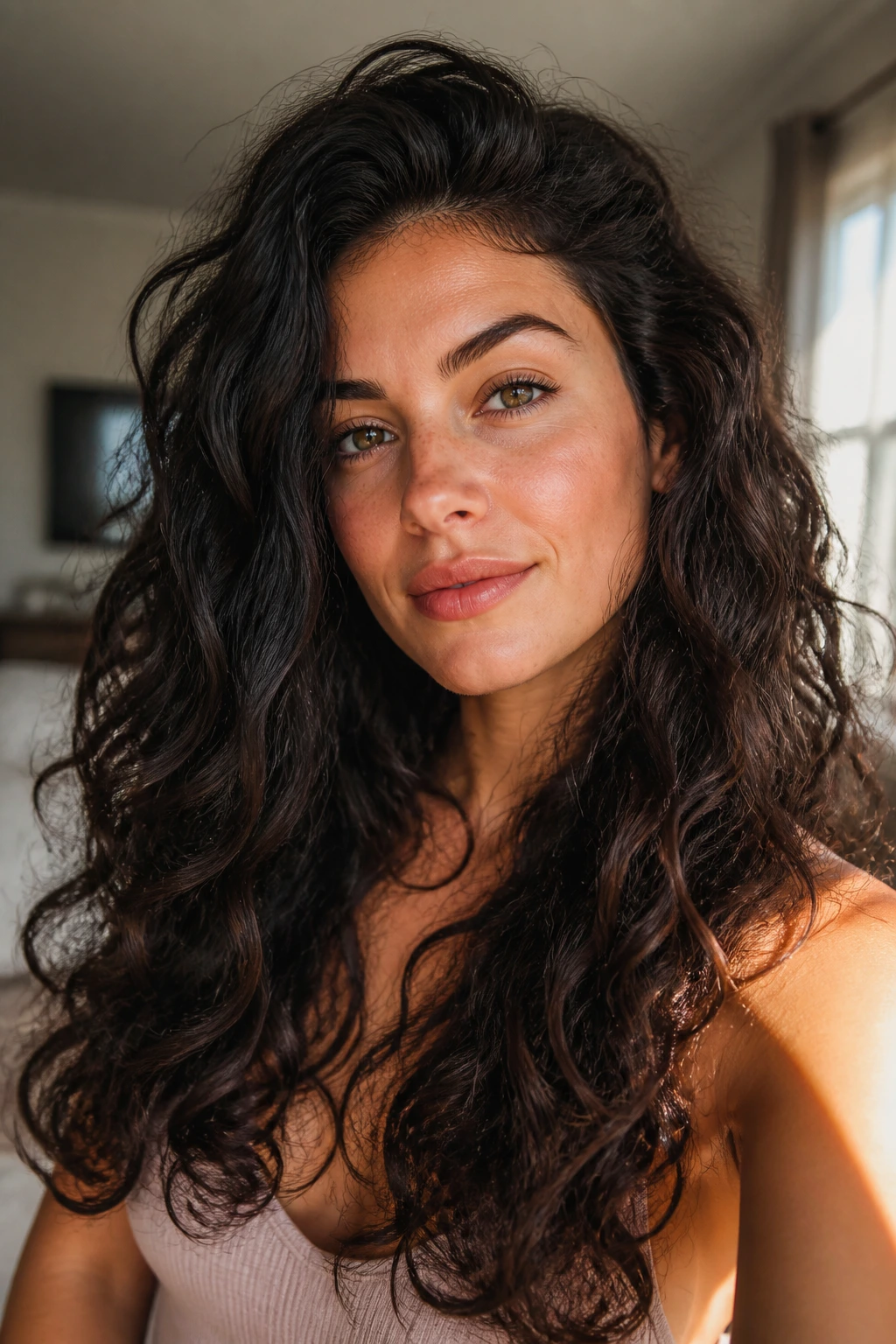
Bulk is not the enemy; misplaced bulk is. Thick wavy hair has enough density to hold shape, but if all the weight sits at the perimeter, the style can balloon outward instead of falling down. That’s why long layers, internal layers, and rounded shapes show up so often on this list.
Wave pattern changes the haircut after you leave the chair. A cut that looks neat when wet can dry into something much wider once the bend in the hair comes back. That’s not a flaw in your hair. It just means the cut has to account for shrinkage, movement, and a little spring.
Your routine matters as much as the cut. If you air-dry, the style needs to work with a bit of frizz and uneven texture. If you blow-dry, you can get away with a sharper line or more dramatic face framing. Thick waves can handle both, but the shape has to match the way you actually live.
Some styles are built for day one. Others get better on day two. Braids, ponytails, and buns often hold better after the hair has a little grip. Soft lobs and layered cuts can look better after the first wash once they settle. That flexibility is part of the appeal.
The wrong approach makes thick hair look bigger, not better. Too much thinning, too much product, or too short a top layer can make dense waves puff at the sides and flatten at the crown. The good looks in this collection avoid that trap.
1. Long Feathered Layers With Soft Ends
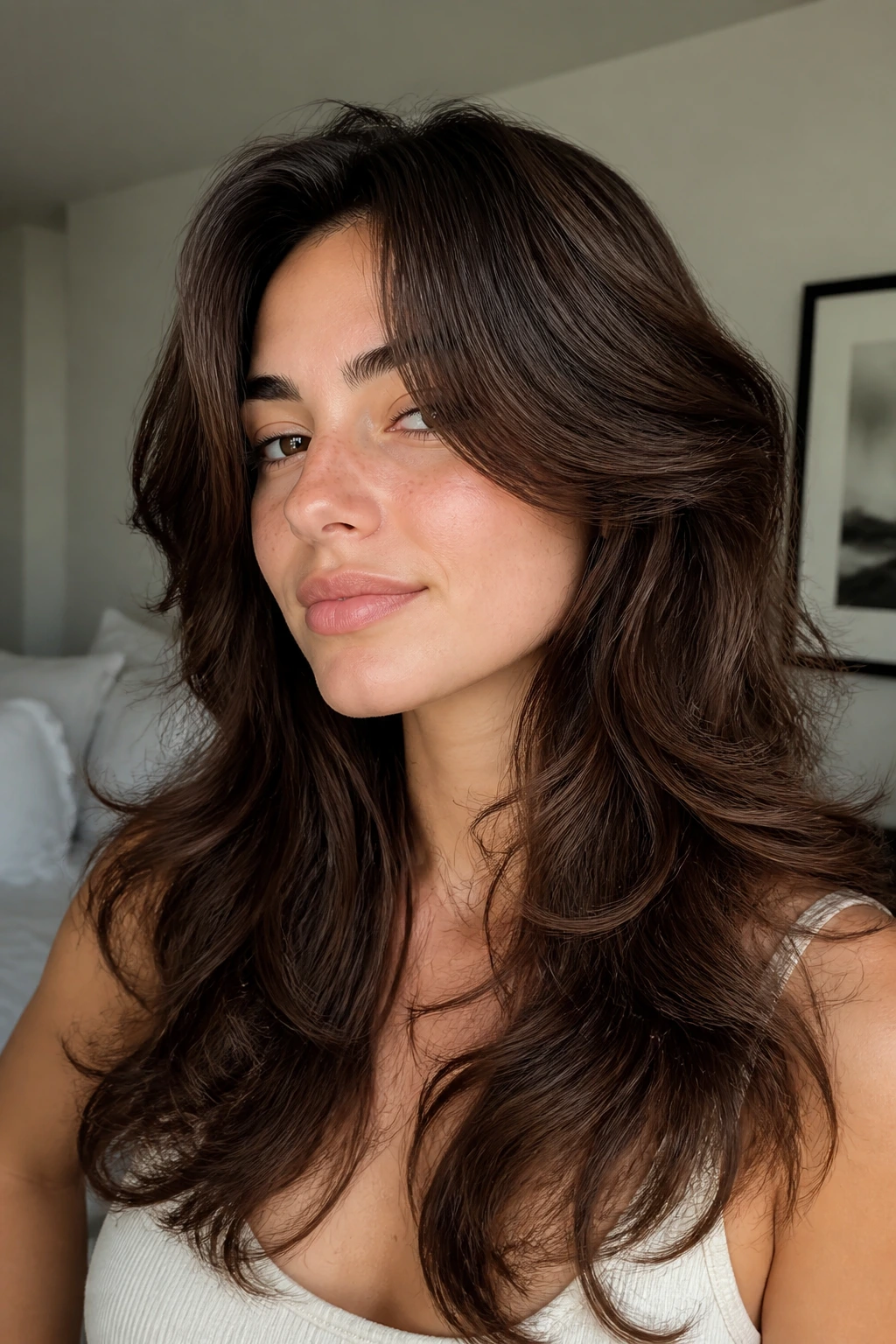
Long feathered layers are the quiet answer when thick waves keep swelling at the bottom. Ask for layers that start below the cheekbone and soften through the chest so the wave can bend without losing length.
Why it works
The mid-lengths lose weight, which is where dense hair usually feels heaviest. The ends still keep enough fullness to look plush after air-drying, and that matters. If you want to wear ponytails often, say so at the salon; the shortest layer should not sit so high that it leaves a weird gap when pulled back.
Best move: finish with a pea-size curl cream from ear level down, then scrunch once and leave it alone.
2. Butterfly Cut That Lifts the Crown
Butterfly cuts make thick wavy hair look lighter without sacrificing that long, dramatic outline. The shorter face-framing pieces create lift around the crown, while the longer bottom layer keeps the whole thing from turning into a shaggy halo.
It’s a smart choice if your hair goes flat on top by noon. The top pieces can be blown out with a round brush or set in large Velcro rollers for 10 to 15 minutes while you do makeup. Keep the product off the roots unless you enjoy collapsing the very volume you’re trying to build.
3. Collarbone Lob With Hidden Internal Layers
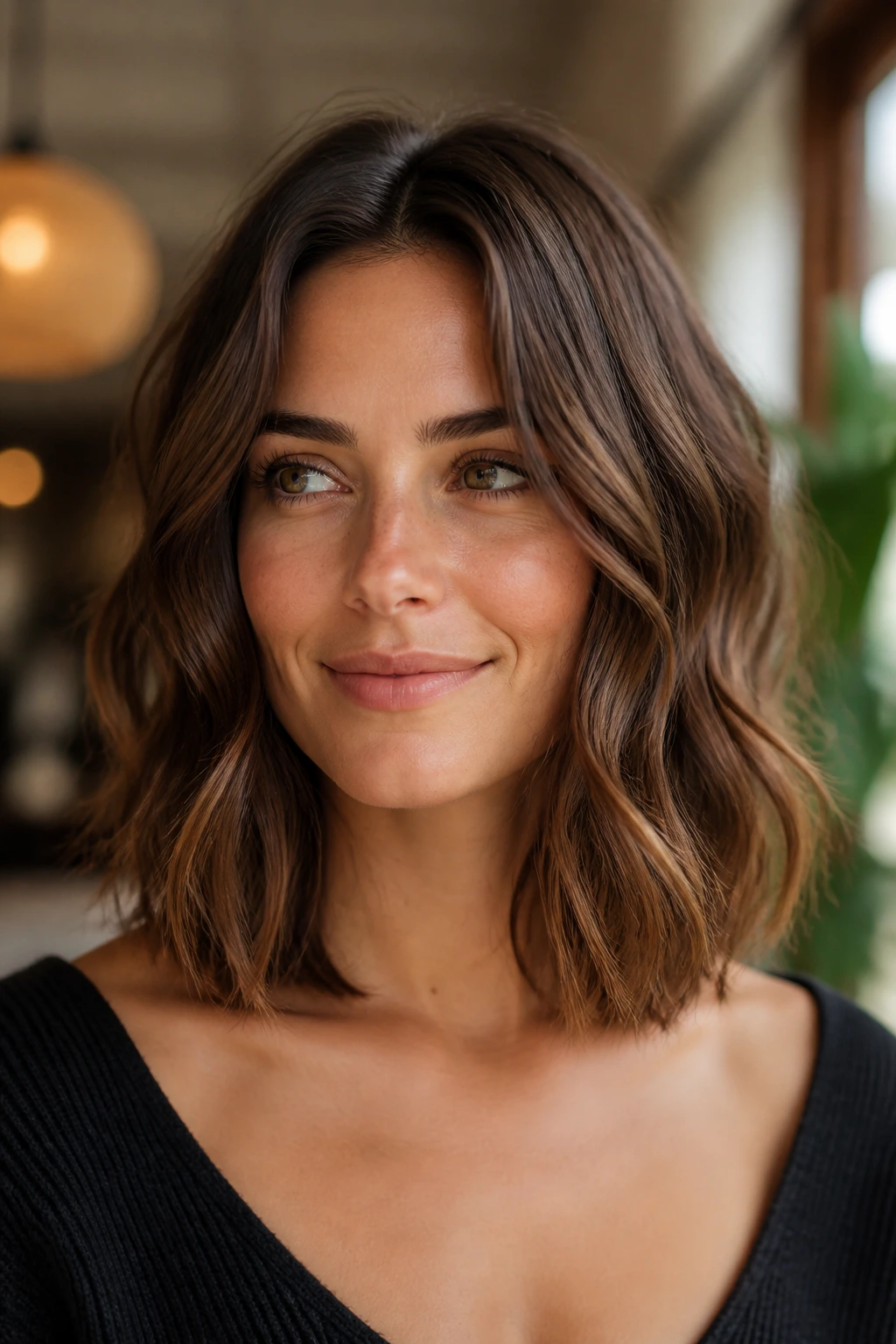
Want something cleaner than waist-length layers but less blunt than a bob? A collarbone lob with hidden internal layers sits right in that middle lane. The outline skims the collarbone, and the inside gets enough weight removed to keep the sides from puffing like a triangle.
How to wear it
This cut looks sharp with a middle part and air-dried texture, but it also behaves well with a loose bend from a 1.25-inch wand. Ask your stylist for internal layering or point cutting, not heavy razoring. The perimeter should still read as solid, just not heavy enough to hang like a curtain.
4. Curtain Bangs and Center-Part Waves
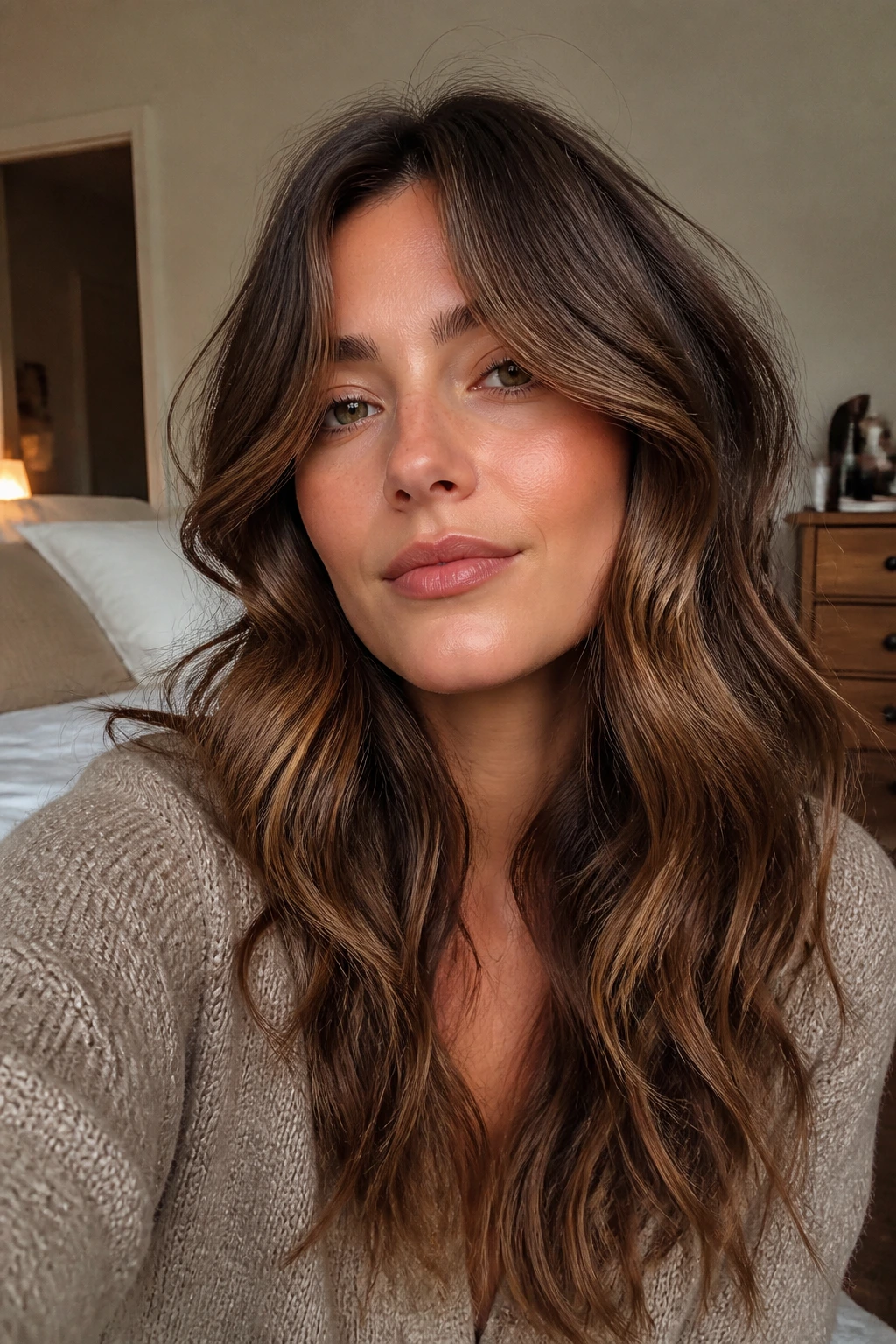
Curtain bangs can be a gift on thick waves if you keep them long enough to move. The shortest point should usually sit around brow level, then open into pieces that hit the cheekbone or lip. Too short, and they spring up. Too dense, and they swallow the forehead.
The real win is the way they soften a center part. Thick wavy hair can look severe when all the length falls straight down from the part line. Curtain bangs break that line and bring the eye back to the face. I like them best when they’re styled with a little bend, not curled into perfect loops.
5. Face-Framing Layers That Start at the Cheekbones
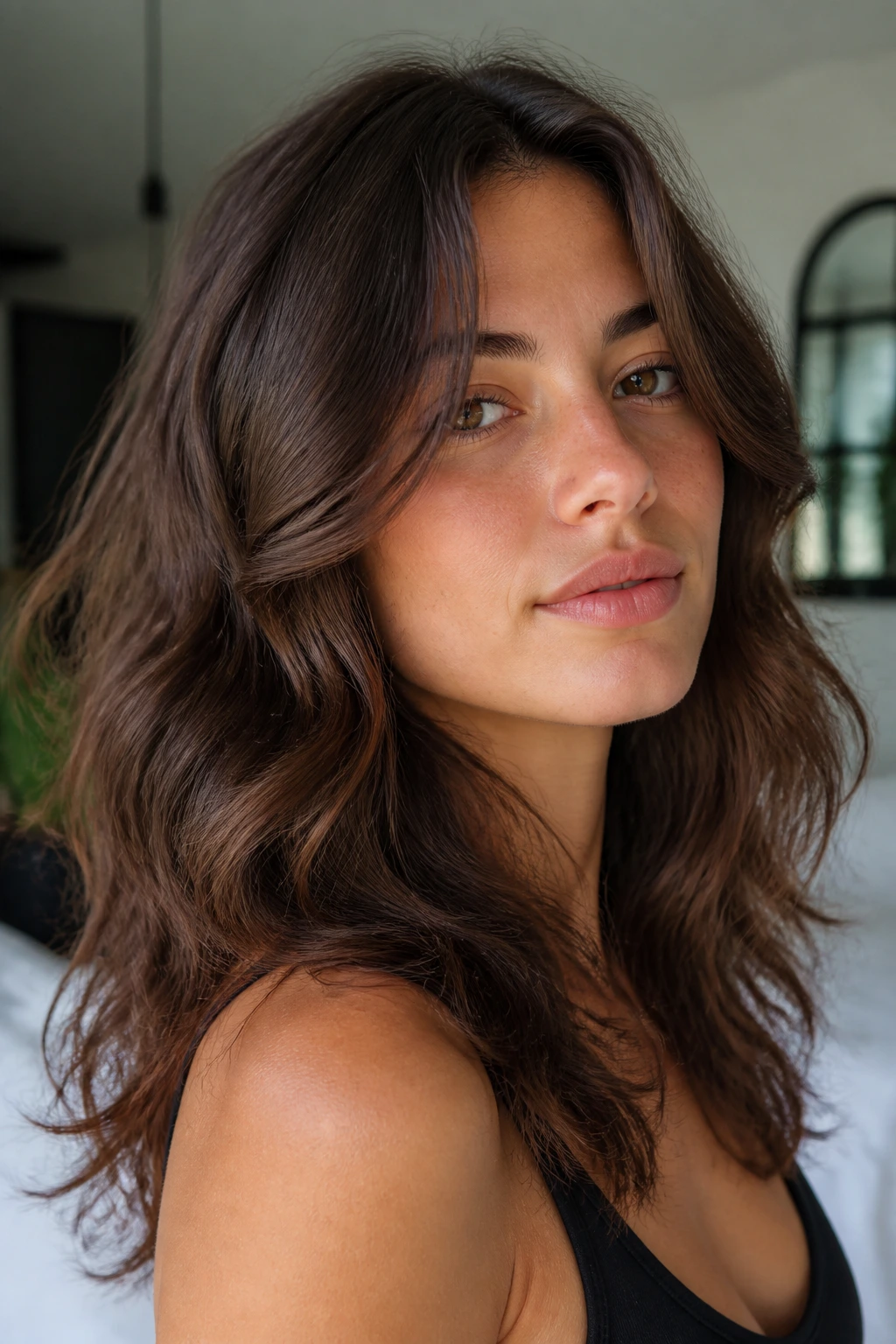
This is the cleaner option if you want movement without committing to fringe. Cheekbone-starting layers slim the front of the hair while leaving the back long and full, which is a smart trade on dense waves.
They also work with almost every lazy style. Loose ponytail? Better. Half-up clip? Better. Low bun with pieces left out? Much better. The key is placement: if the shortest layer starts too low, it can drag the face down instead of opening it up. Ask for the first layer to hit around the cheekbone or just under it.
6. Shoulder-Length Shag With Piecey Texture
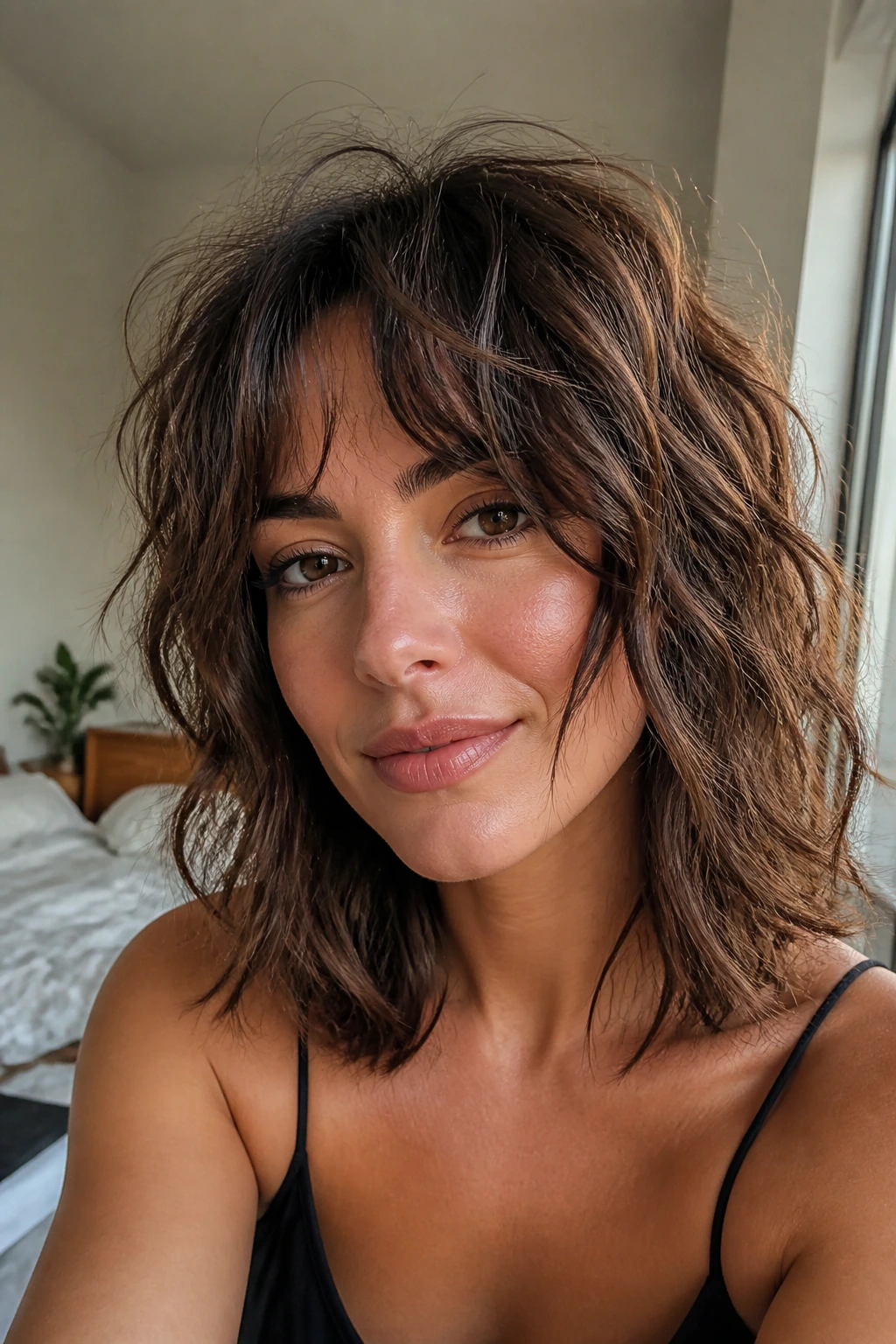
A shoulder-length shag is where thick wavy hair gets to have some fun. The layers are shorter, the texture is messier, and the result is that lived-in shape people try to fake with salt spray and a lot of hand scrunching.
This cut is happiest when you don’t try to make it polished. Use mousse at the roots, a little cream through the mids, and diffuse until the hair is about 80 percent dry. Then stop touching it. Seriously. The shag looks better when the ends stay piecey and the crown keeps a little lift.
7. U-Cut for Heavy Length
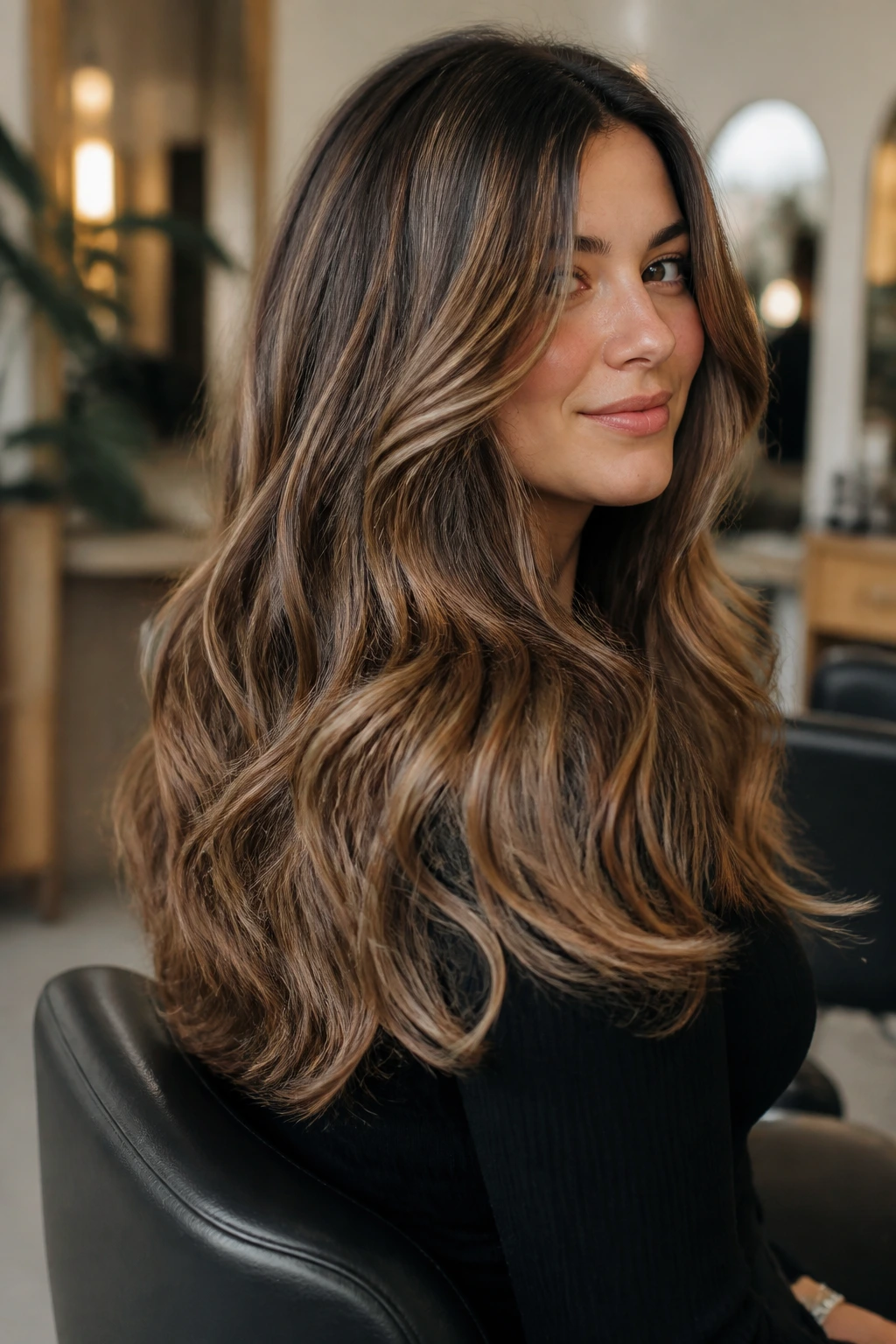
The U-cut keeps thick waves long, but rounds the outline so the bottom doesn’t look like a hard shelf. The back falls in a gentle curve instead of a straight line, which matters more than people think when the hair is dense.
What to ask for
Ask your stylist to keep the perimeter soft and the shortest support layer well below the cheekbone. The U shape lets you keep that dramatic long-hair feel while still giving the wave room to move. It’s one of my favorite options for anyone who wants length more than they want obvious layers.
8. Deep Side Part With Glossy S-Waves
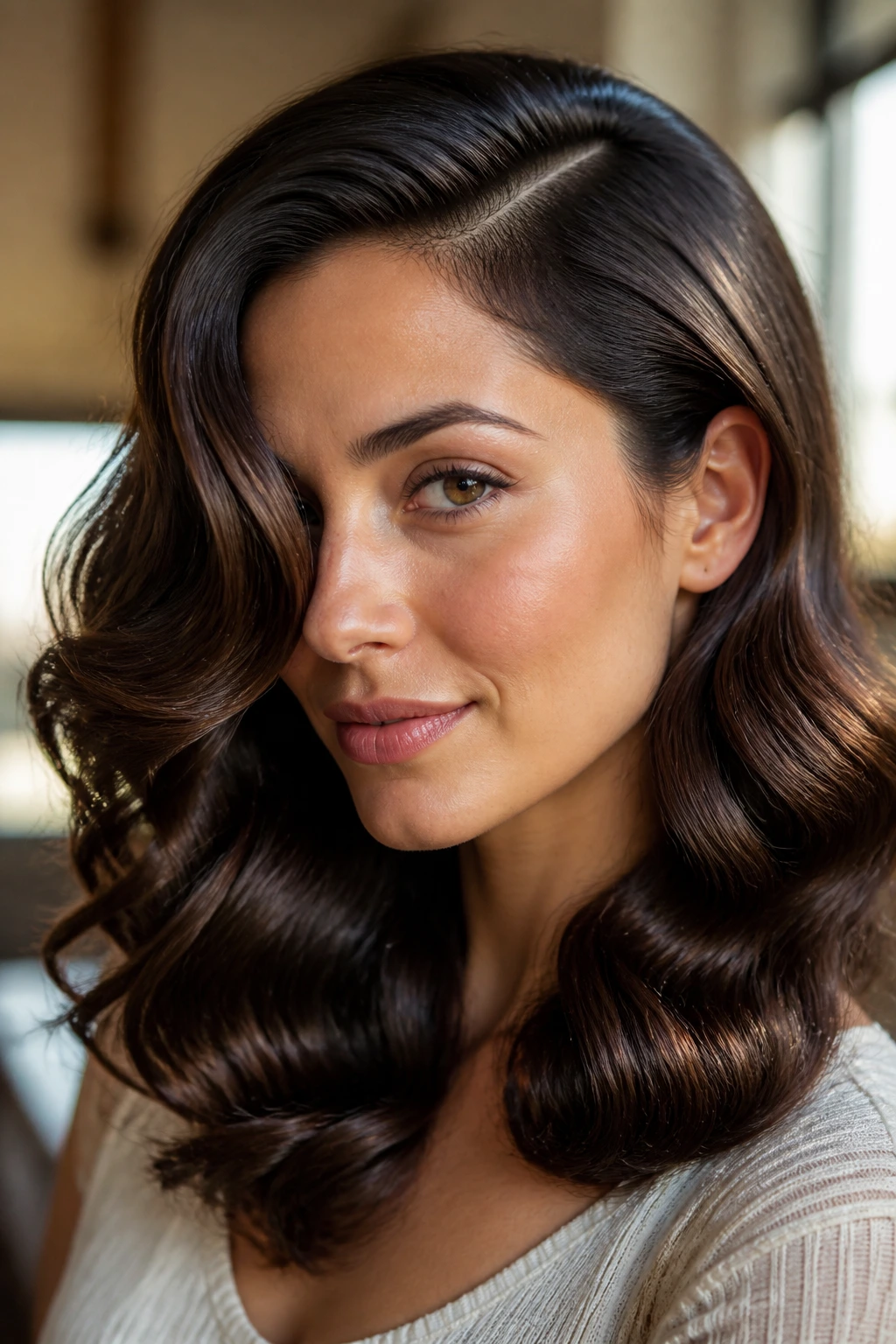
A deep side part changes the whole mood of thick wavy hair. One side gets lifted at the root, the other side falls into heavier bends, and the asymmetry makes the style look deliberate even when the waves are loose.
This works especially well if your hair has a naturally strong wave pattern but needs a little polish. Tuck the heavier side behind one ear, smooth the top with a tiny bit of serum, and leave the rest alone. The shape does the work. You do not need to curl every section into submission.
9. Half-Up Claw Clip Twist
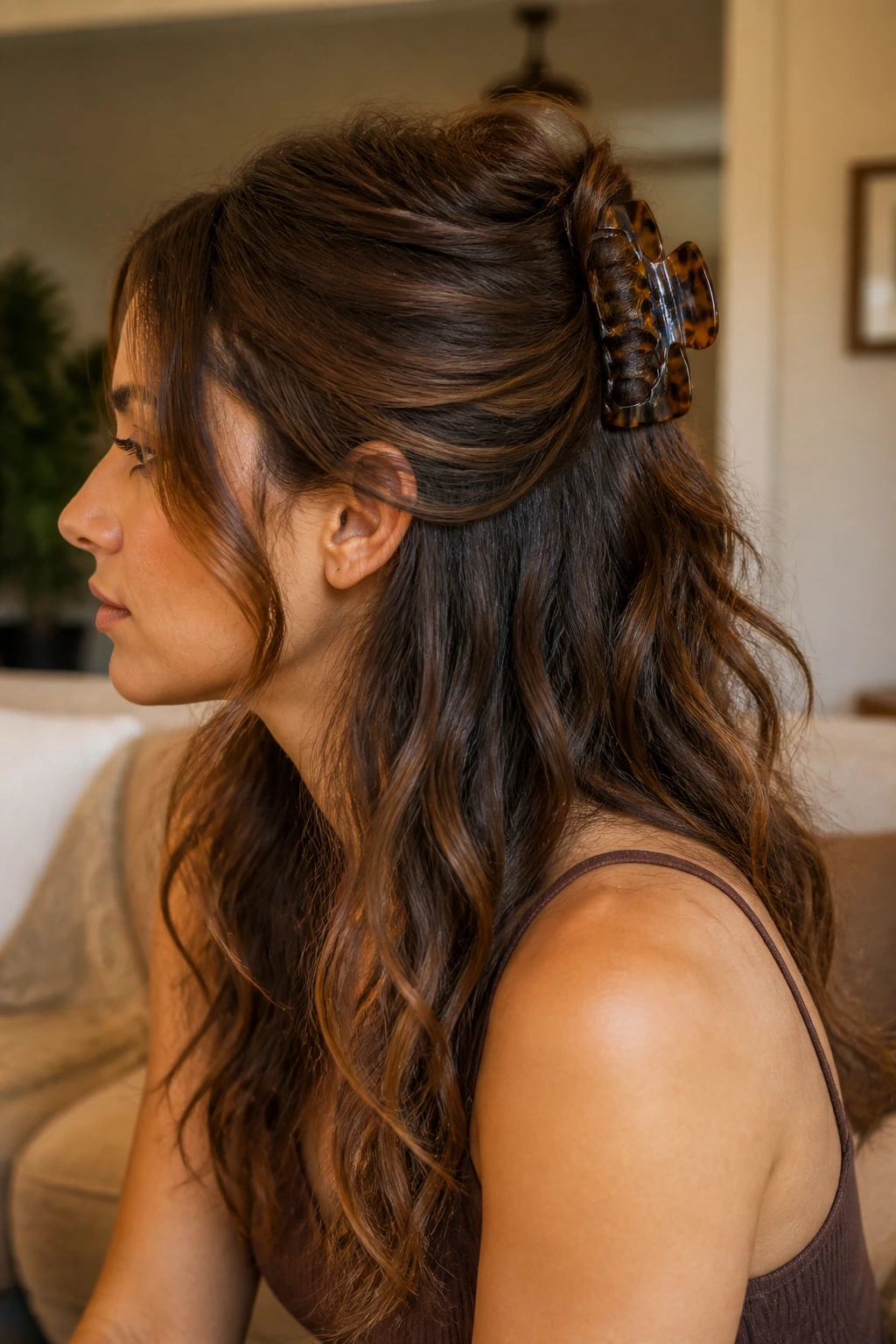
A half-up claw clip twist is the kind of style thick hair was made for. Dense waves give the clip something to grab, and the loose lower section keeps the shape from looking too severe.
Use a medium or large claw clip, depending on the volume. Gather the top half loosely, twist once, and let the ends fan out just enough to look intentional. If your hair slides out of clips, tease the crown very lightly at the roots before you twist. No need to go full prom hair. Just enough grip to stay put.
10. Braided Crown With Loose Front Pieces
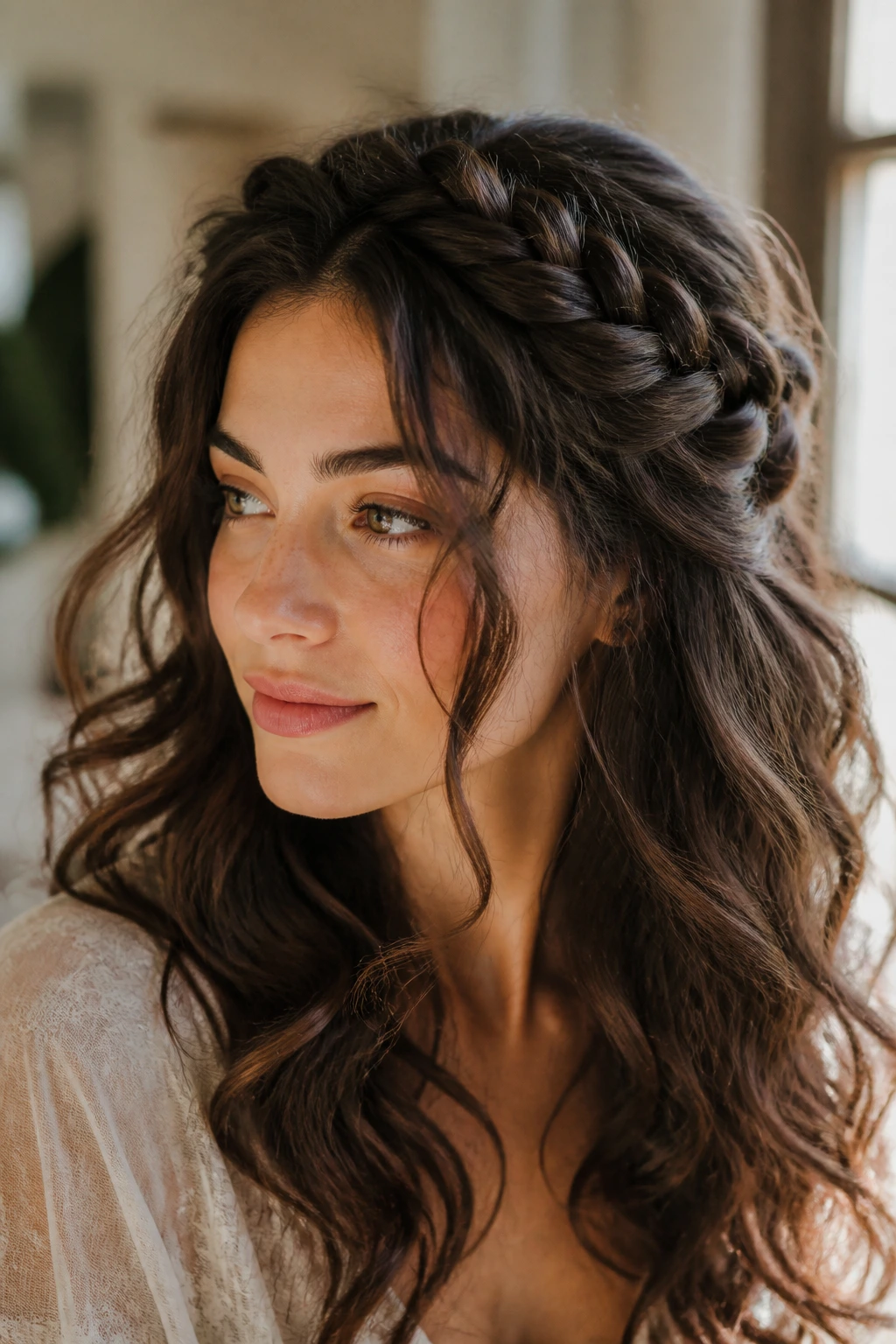
Braided crowns are one of those styles that look more complicated than they are, especially on thick waves. The density gives the braid body, so you don’t have to panic about it looking tiny or stringy.
Why it works for thick hair
The braid spreads weight around the head instead of leaving it hanging at the back. That makes it a good move on hot days, on second-day hair, or whenever you want the length out of your face without losing softness. Leave a few front pieces loose so the style doesn’t feel severe. A little wave around the temples keeps it from turning into a school-uniform braid.
11. Low Twisted Chignon
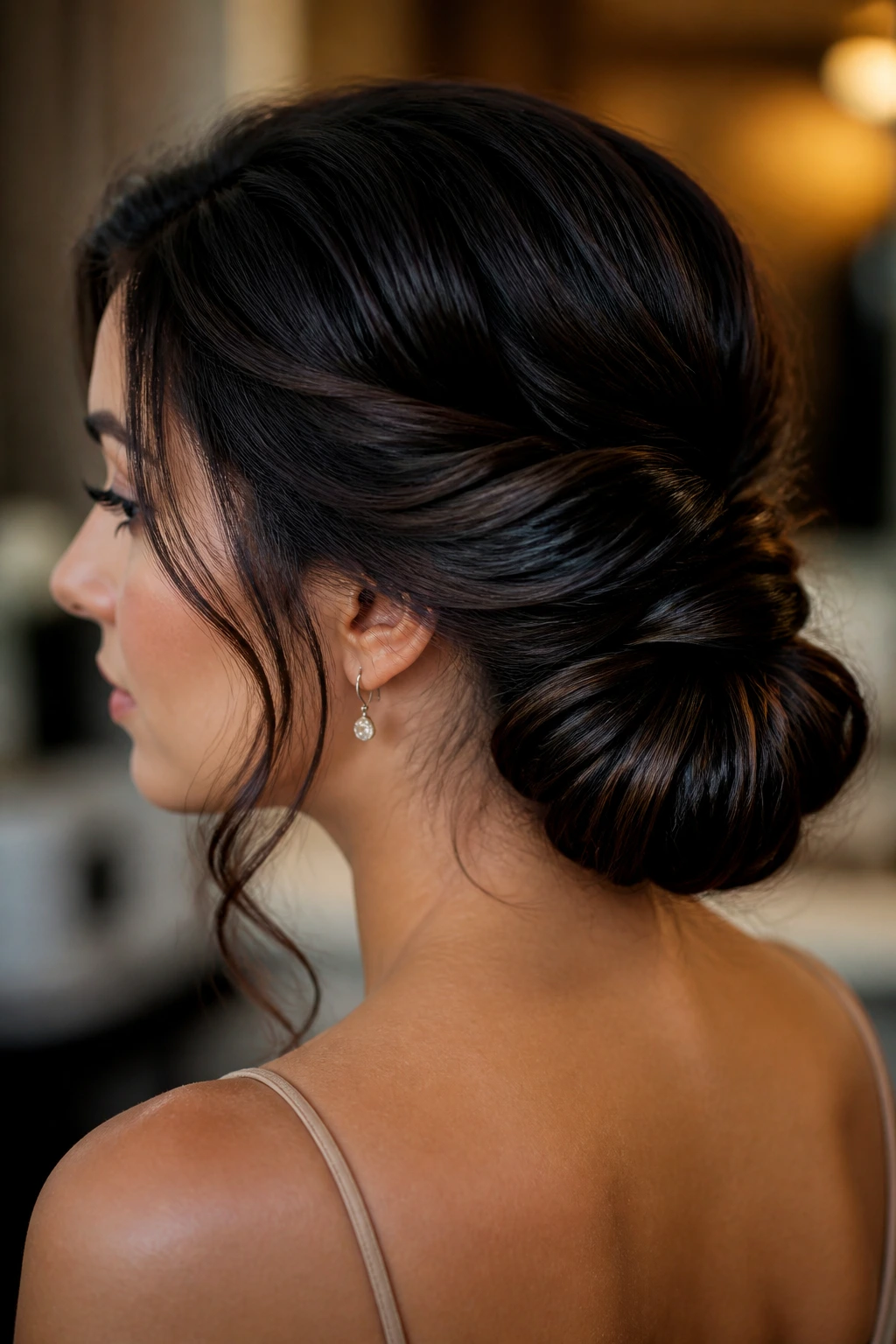
A low twisted chignon takes thick waves and turns them into something neat without making the hair look flat. The twist hides some of the bulk, and the low placement keeps the shape elegant instead of puffing up at the crown.
This is one of the better formal options on the list. Smooth the top with a touch of cream, gather the hair low at the nape, twist it into itself, and pin it with long bobby pins that point inward. Leave one or two wavy pieces loose around the face if you want it to feel less stiff.
12. High Ponytail Wrapped at the Base
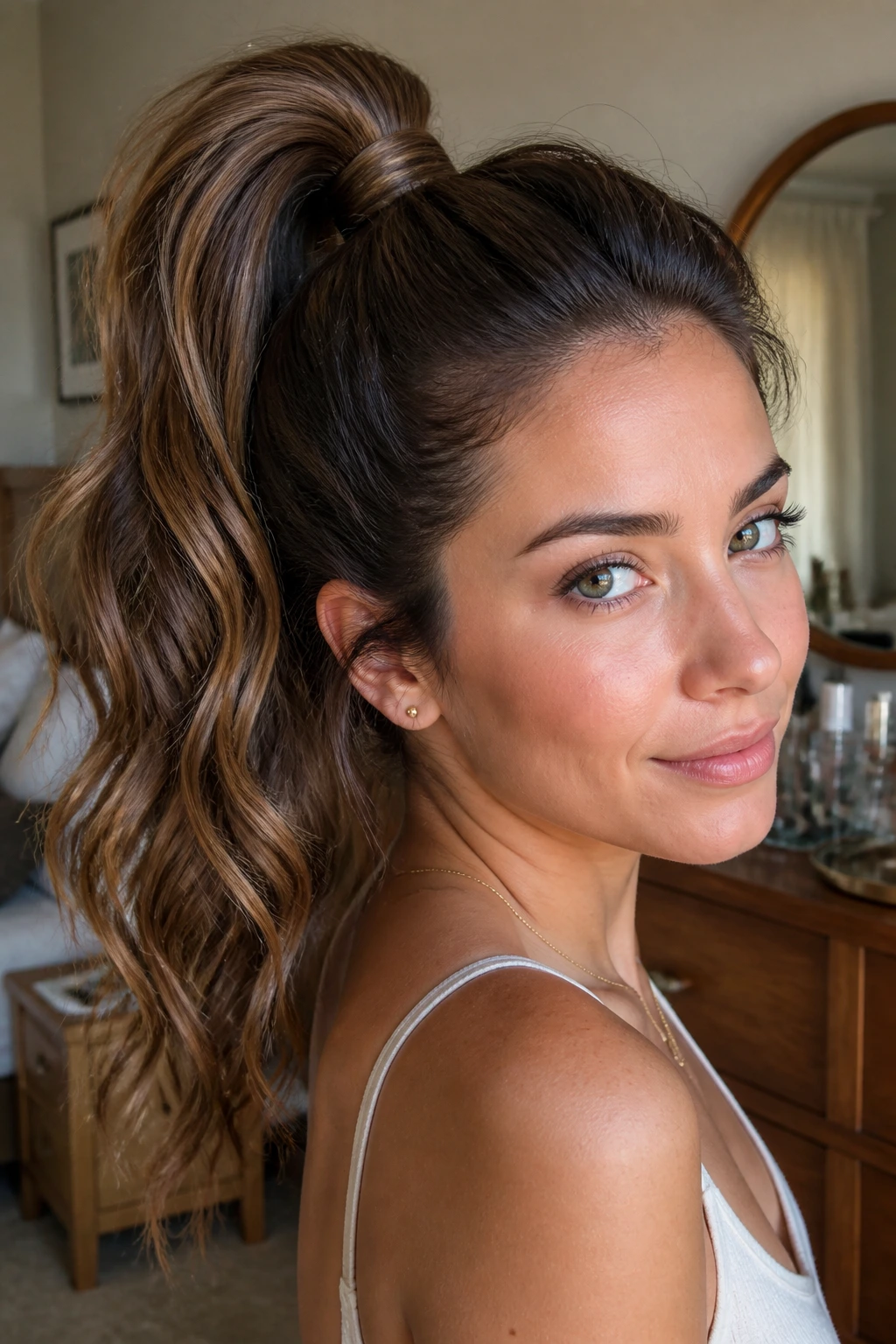
A high ponytail on thick wavy hair has real attitude. The volume makes the ponytail look full even before you add a wrap-around piece, and the waves create movement down the length instead of a stiff rope.
Brush the top lightly with a boar-bristle brush if you want it sleek, or leave some texture if you want a softer finish. Wrap a small strand around the base to hide the elastic, then pin it underneath. The ponytail looks best when the crown is smooth but not scraped flat.
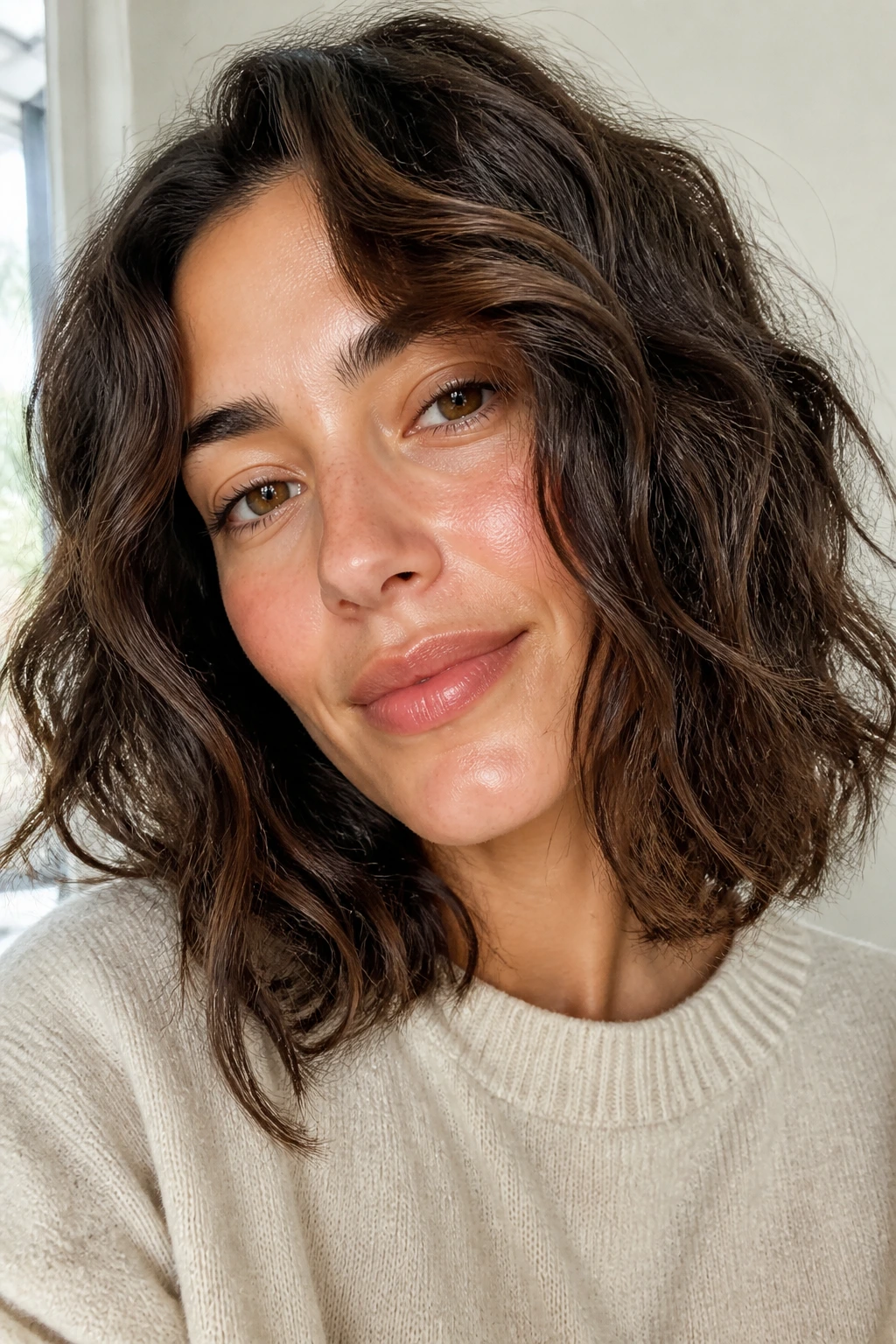
13. Tousled Lob With Air-Dried Ends
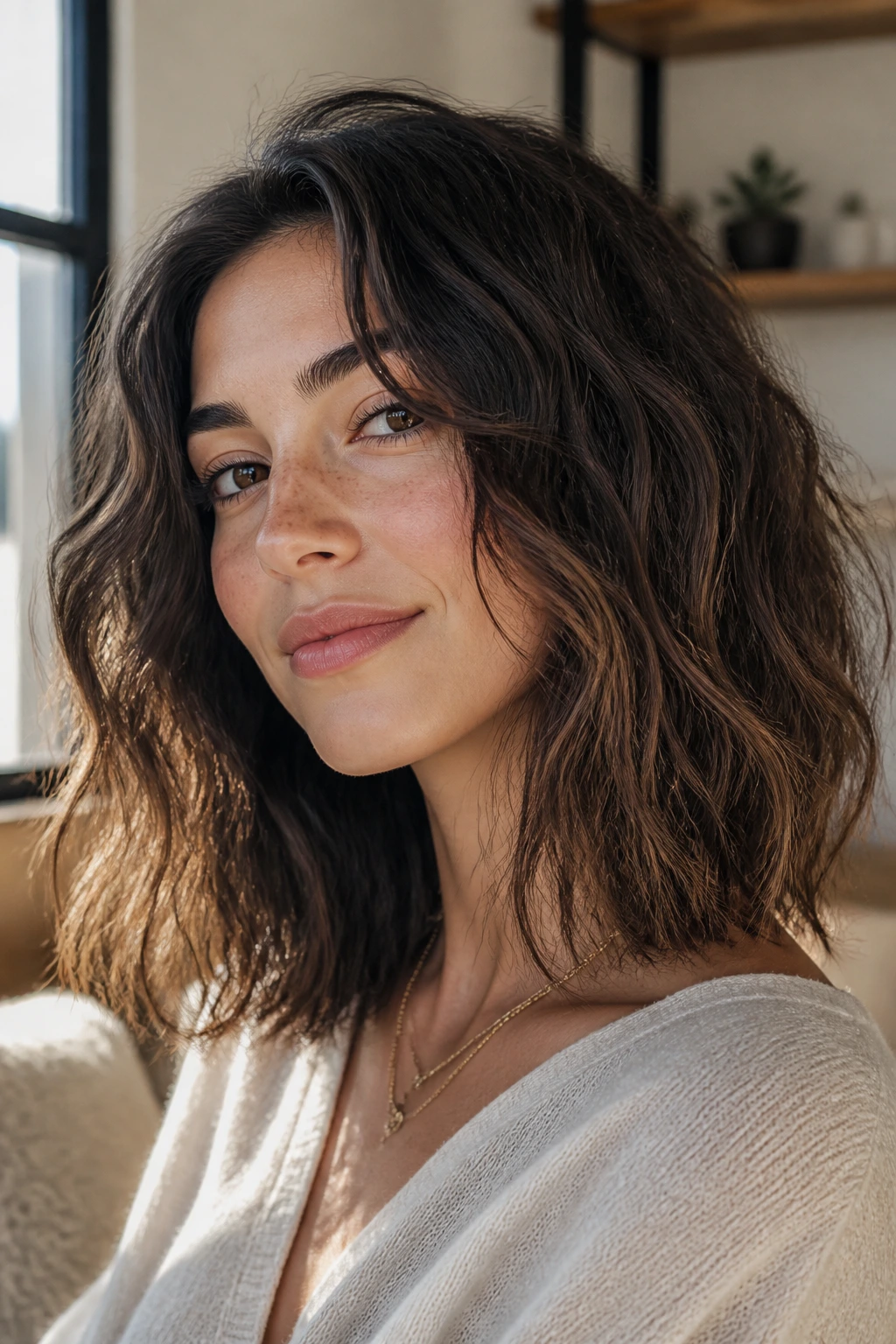
If you like shoulder-skimming hair that doesn’t feel too precious, the tousled lob is a good bet. It gives thick waves enough room to bend, but it doesn’t drown you in length.
The best version of this cut usually lands right at the collarbone or just above it. Air-dry with a light mousse and a little leave-in, then twist two or three random sections around your fingers while the hair is still damp. The finish should look soft and slightly imperfect, not deliberately curled.
14. Rounded Bob With Soft Texture
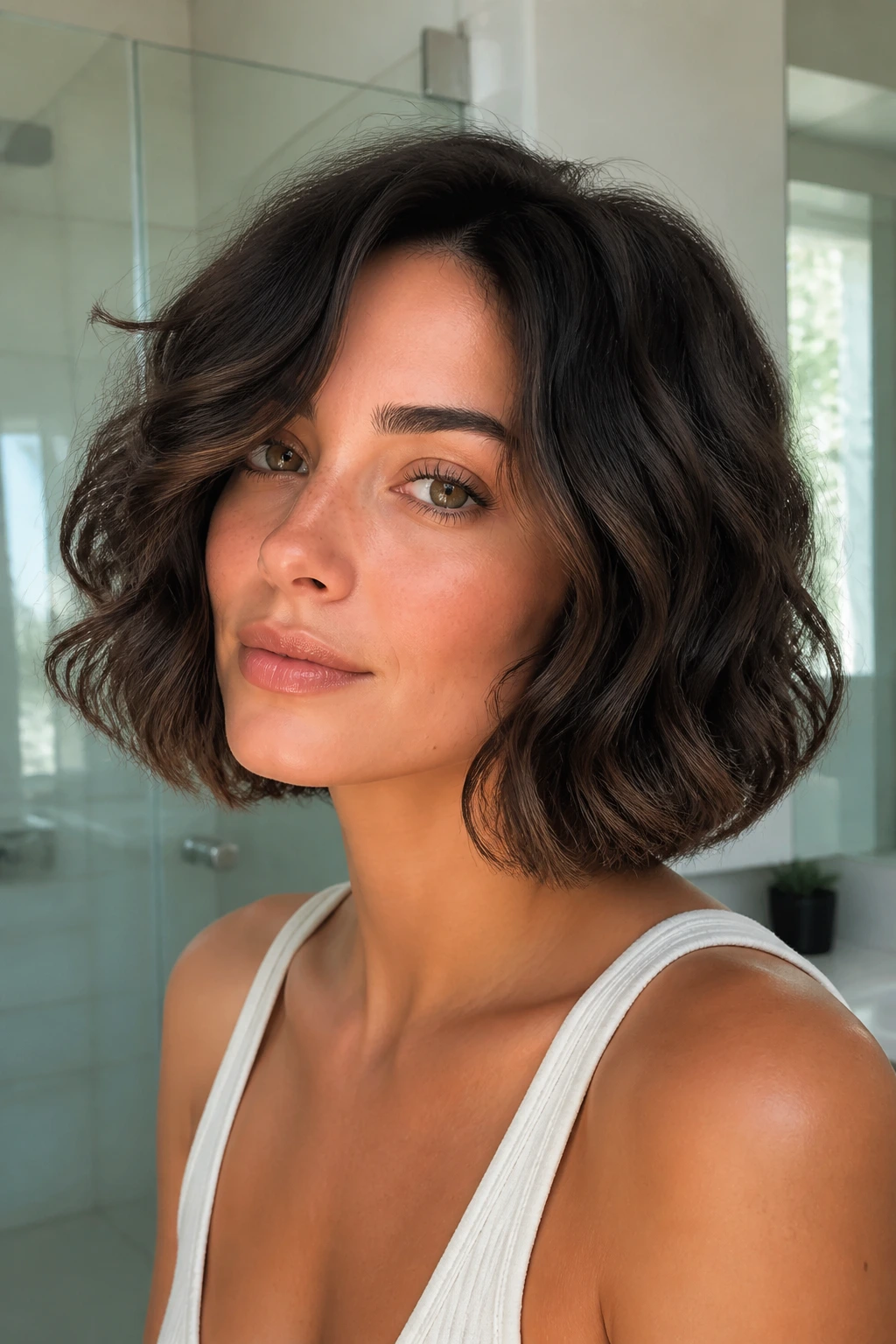
A rounded bob keeps thick waves from sticking out at the sides like a helmet. The shape curves in around the jaw and neck, which helps dense hair sit closer to the head.
This cut needs texture at the ends, or it can read too blunt. Ask for soft point cutting rather than a harsh straight line. It works especially well on hair that naturally bends under at the ends anyway. If your waves are strong, you’ll probably only need a diffuser and a little root lift spray to make it behave.
15. Wavy Wolf Cut
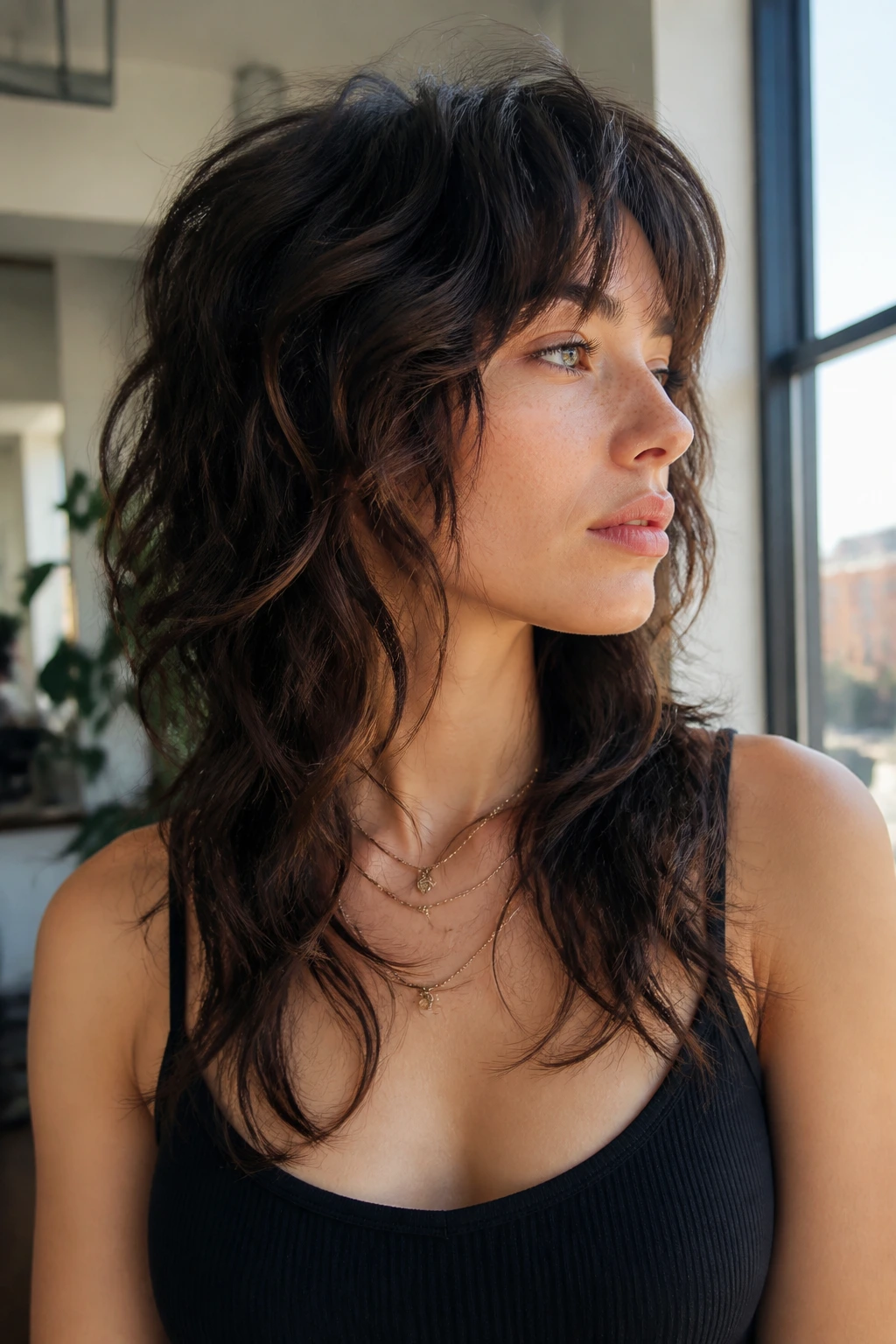
The wolf cut is unapologetic. It takes the natural bulk of thick waves and turns it into shape by keeping the crown short, the middle layered, and the ends less important than the whole silhouette.
Who should try it
This one fits people who want movement and don’t mind volume. It looks especially good if your waves already have a little grit or if you like a messy finish more than a polished one. Air-dry with mousse, then scrunch out the cast once the hair is fully dry. If you try to smooth it into submission, the cut loses the whole point.
16. Wavy Pixie With Long Top Layers
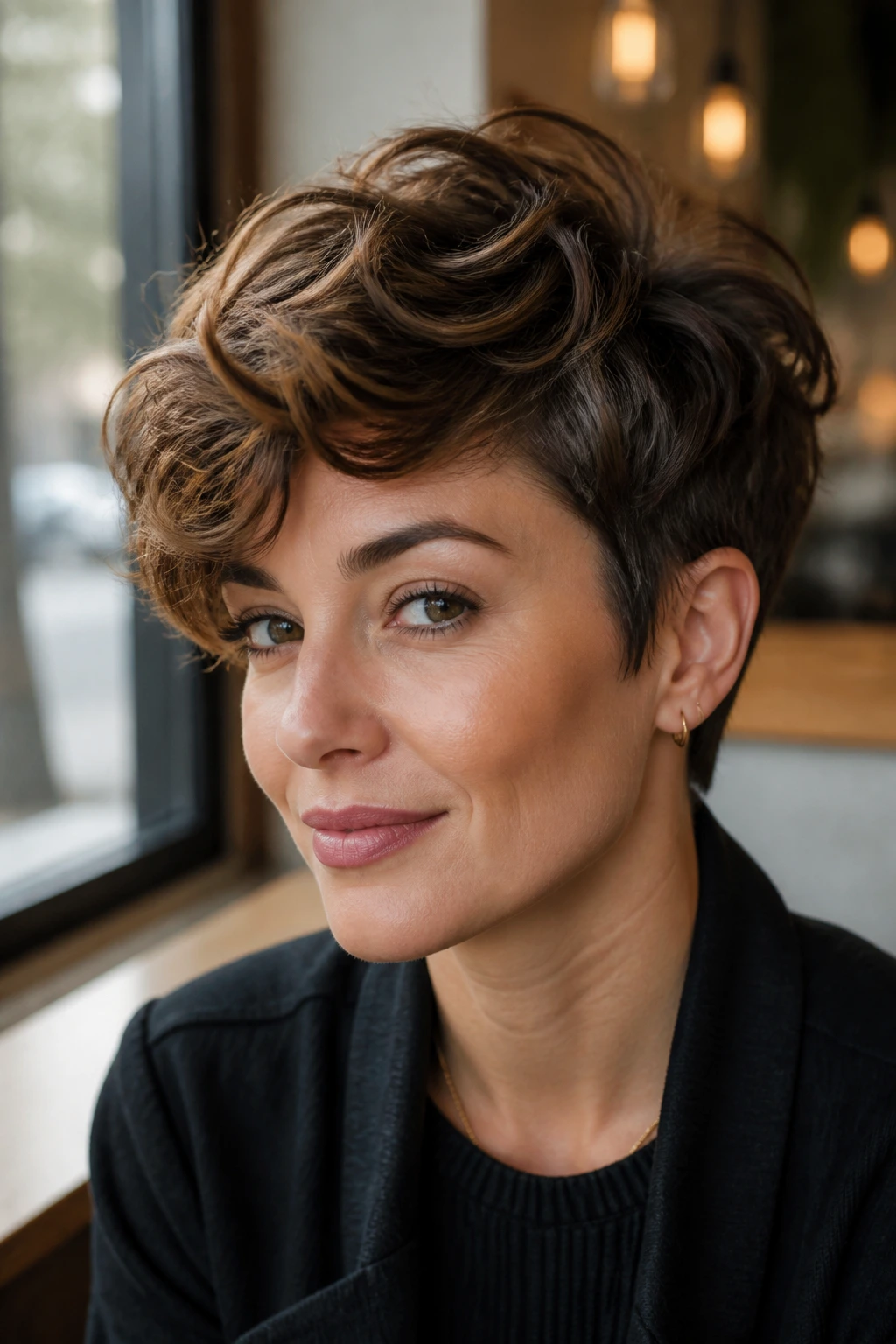
A wavy pixie on thick hair can look incredible because the density keeps the top from going sparse. The sides can stay trimmed closer, while the top layers remain long enough to show bend and movement.
The trick is not taking the top too short. You want enough length on top to push forward, sweep aside, or fluff up with a dab of styling paste. If your face likes a little softness around the temples, leave those pieces slightly longer. Short hair with wave has a lovely roughness to it when the cut is done right.
17. Mid-Length Cut With Internal Weight Removal
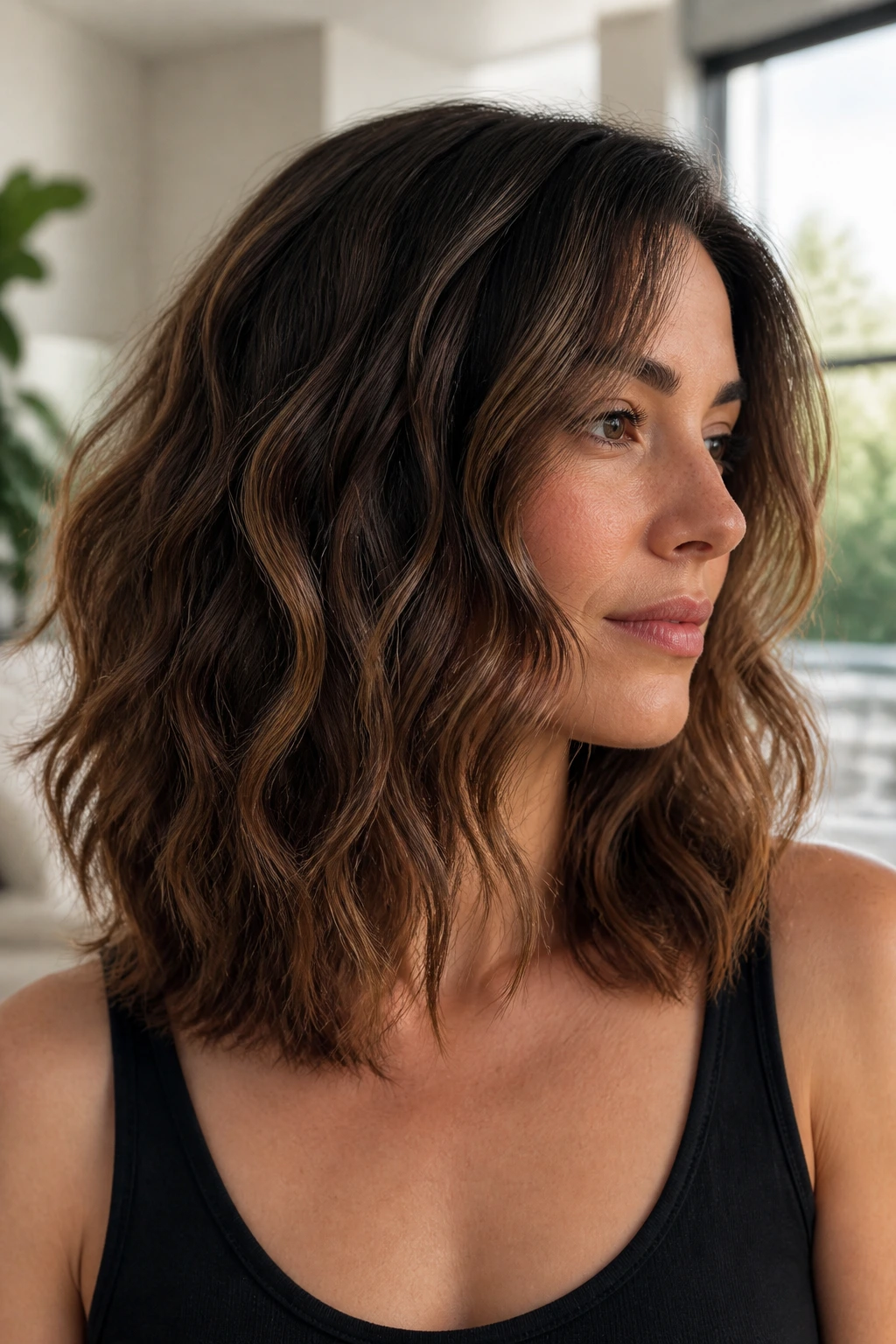
This is the no-drama answer for thick waves that need shape but not a dramatic overhaul. The hair sits between the shoulders and the chest, and the weight is removed inside the cut so the outline still feels strong.
It’s a good choice if you hate obvious layers. On the surface, the hair can look almost one-length. Underneath, though, the interior takes enough removal to stop the sides from puffing and the ends from kicking out. Ask for movement, not choppiness. Those are not the same thing.
18. Waterfall Braid Half-Style
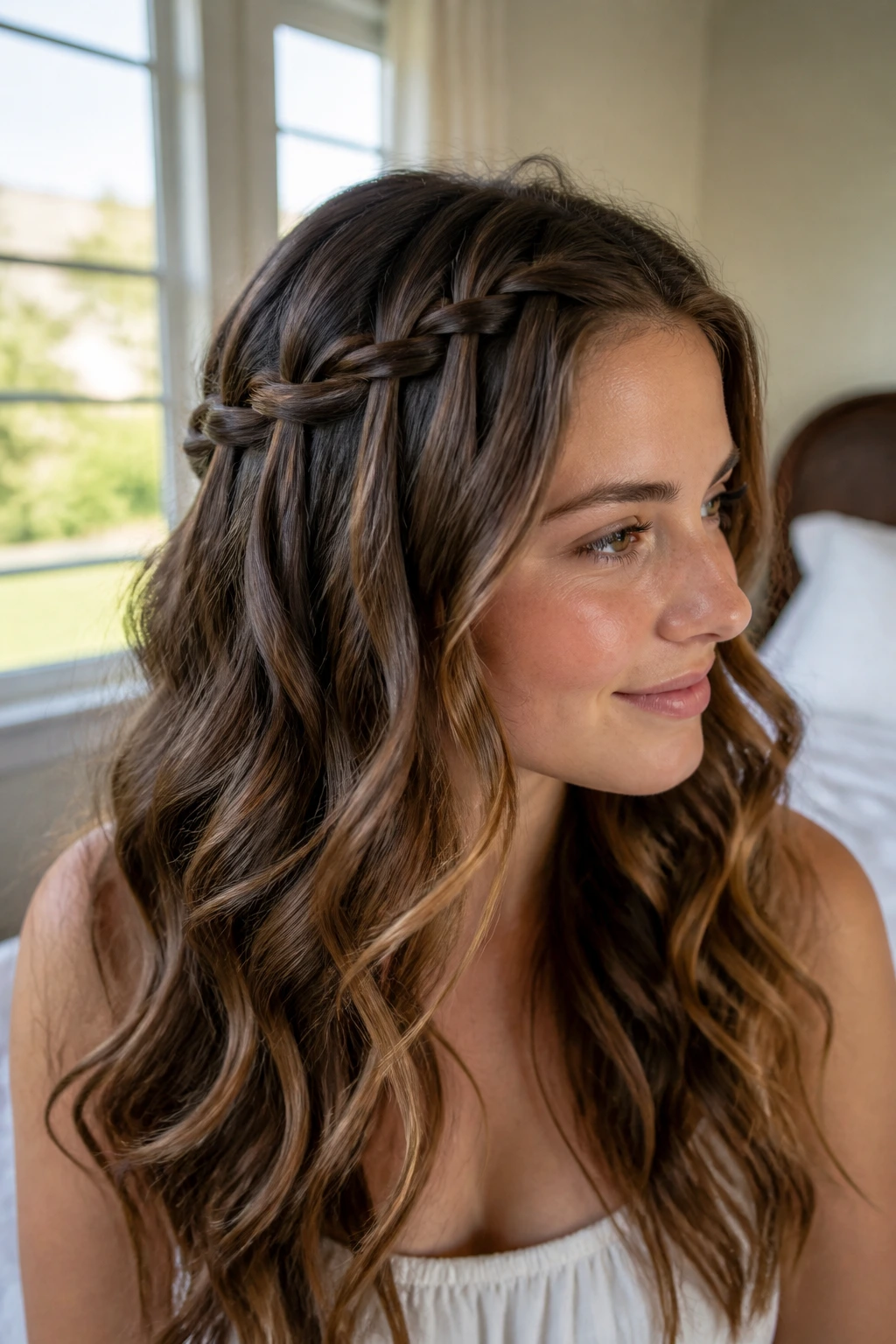
A waterfall braid gives thick wavy hair a pretty frame without hiding the length. It lets the wave pattern show through, which matters if the rest of your hair has a good bend you do not want to cover.
Use it when you want the front and crown controlled but still want the ends loose. A few small elastics and a mist of flexible-hold spray are enough. The braid should feel airy, not stiff. If your hair is very dense, a small braid with a slightly looser weave usually looks better than a tight, skinny one.
19. Messy Bun With Face-Framing Tendrils
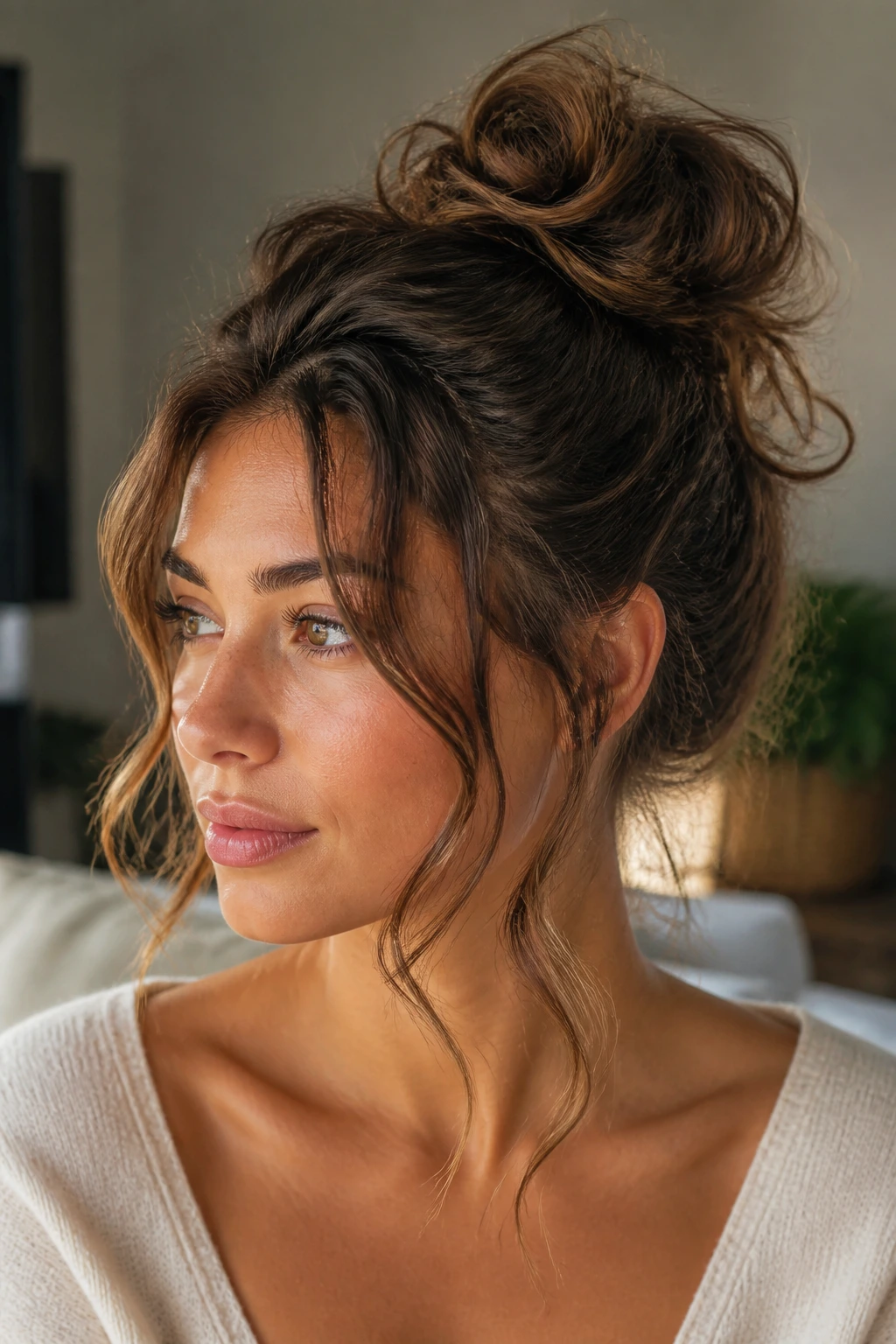
The messy bun survives for a reason. Thick wavy hair gives it body, so you don’t have to pad it out or fake fullness. A few loose tendrils around the face keep it from looking like a rushed knot.
Pull the bun higher if you want it casual, lower if you want it softer. Don’t smooth every bump; thick hair actually looks better with a little texture around the hairline. If the bun keeps collapsing, pin the base first, then wrap the hair around the pins. That small extra step makes a big difference.
20. Dutch Braid Pigtails
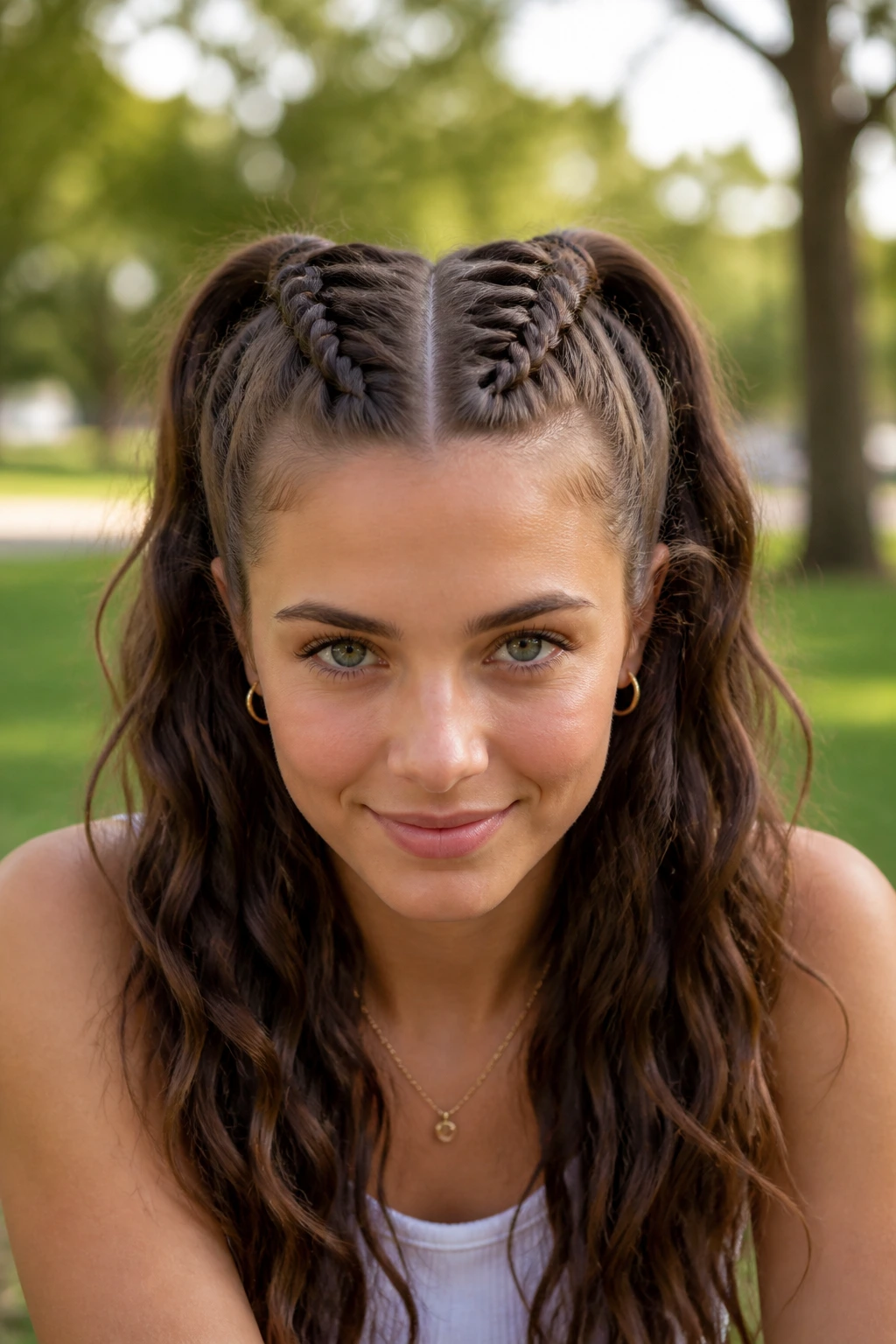
Dutch braid pigtails are practical, yes, but they also look unexpectedly good on thick waves because the braids hold a lot of body. The pattern sits on top of the hair instead of disappearing into it.
A good day-two style
This is one of the best ways to deal with hair that’s too soft after washing and too tangled to leave loose. Part down the middle, braid each side close to the scalp, and stop before the ends if you want the last few inches to stay wavy. The style is secure, sporty, and a little playful. That’s a good combination.
21. Slicked-Back Crown With Loose Waves
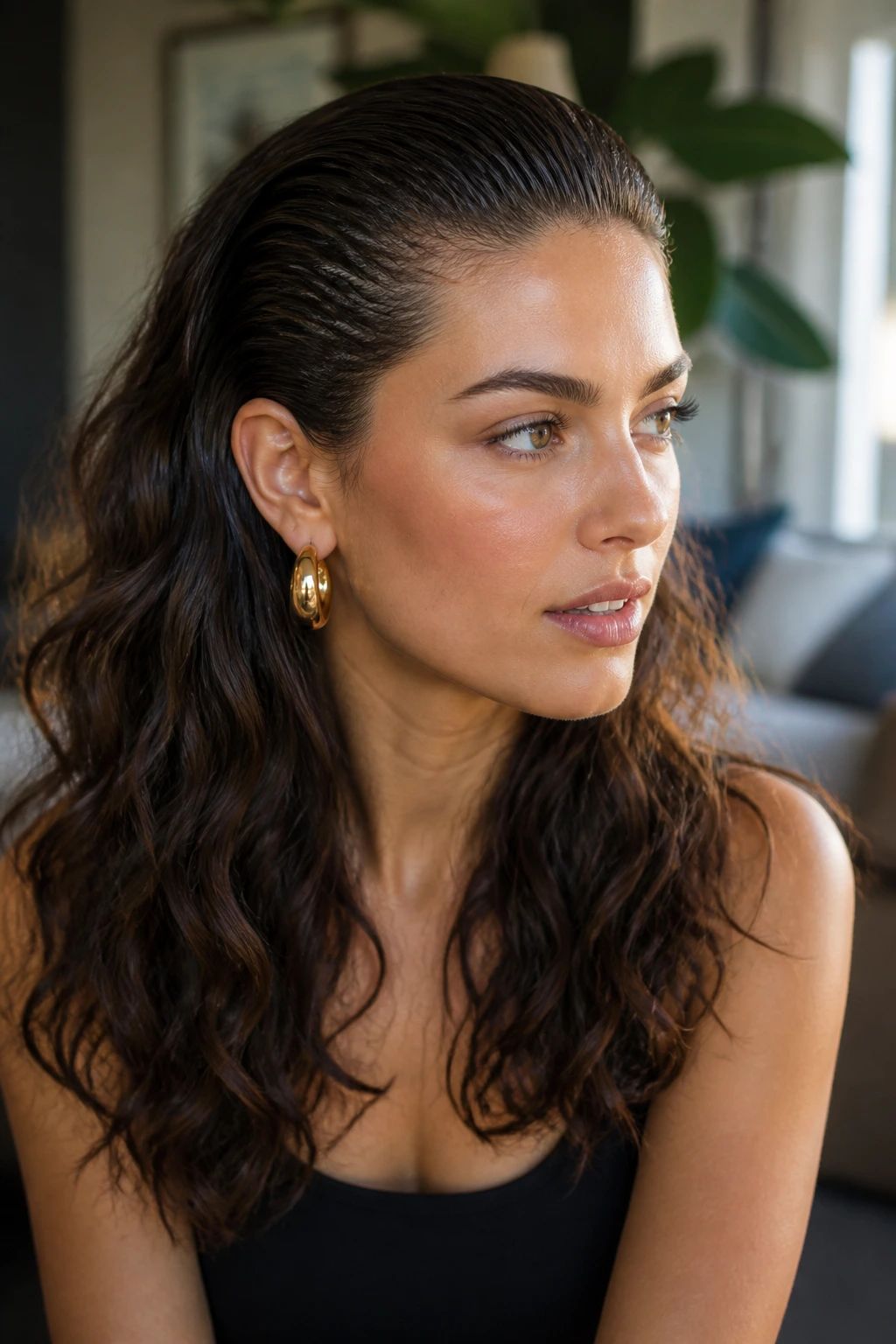
If your roots need discipline but your lengths still look good, this style solves the problem fast. The crown gets smoothed back with gel or cream, while the mid-lengths and ends stay loose and wavy.
It’s cleaner than a full wet look, and I prefer it because the texture at the bottom keeps the style from turning hard. Use a fine-tooth comb only on the top layer, then stop. The rest should keep its natural bend. This is the sort of style that works when you need your hair out of your face but still want the wave pattern to show.
22. Half-Up Knot at the Crown
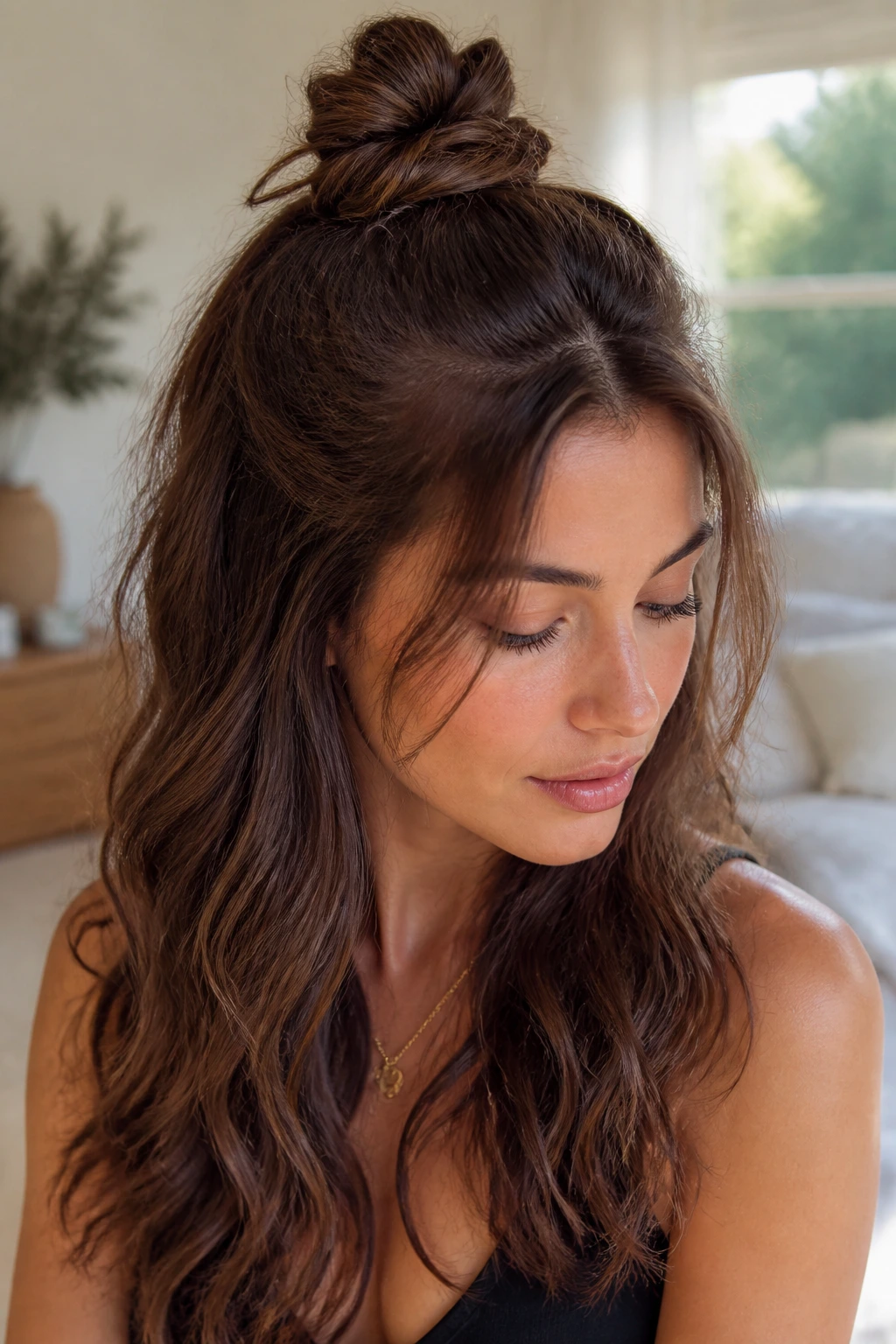
A half-up knot gives thick waves a little lift without asking the whole head to cooperate. The knot sits at the crown, so it draws attention upward and leaves the length free to move.
This one can go polished or sloppy depending on how much you twist the top section. A tighter knot reads cleaner; a looser knot looks more relaxed. Either way, thick hair makes the bun portion feel full without much effort. Use a small elastic first, then pin the knot if your hair is heavy enough to pull it down.
23. Blunt Lob Softened by Texture
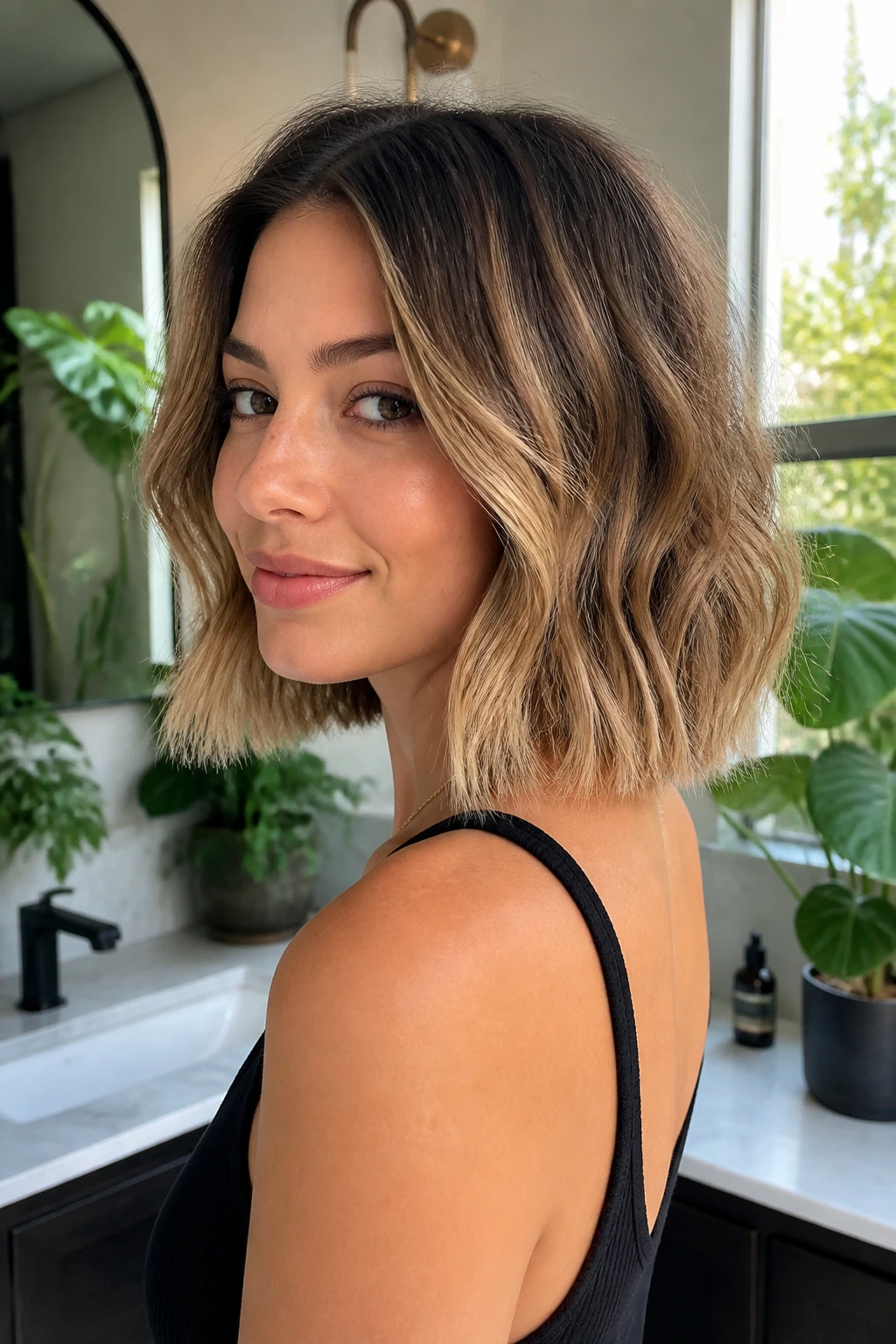
A blunt lob sounds severe, but thick wavy hair softens it fast. The line stays strong, which gives the hair shape, and the texture at the ends keeps it from looking too heavy.
This cut is for people who like structure. It’s especially good if your wave pattern is strong but not frizzy, because the blunt edge gives the hair a tidy finish. Ask for texture only at the very ends, not all the way through the shape, or you’ll lose the clean line that makes the cut interesting.
24. Long Layers Tucked Behind the Ears
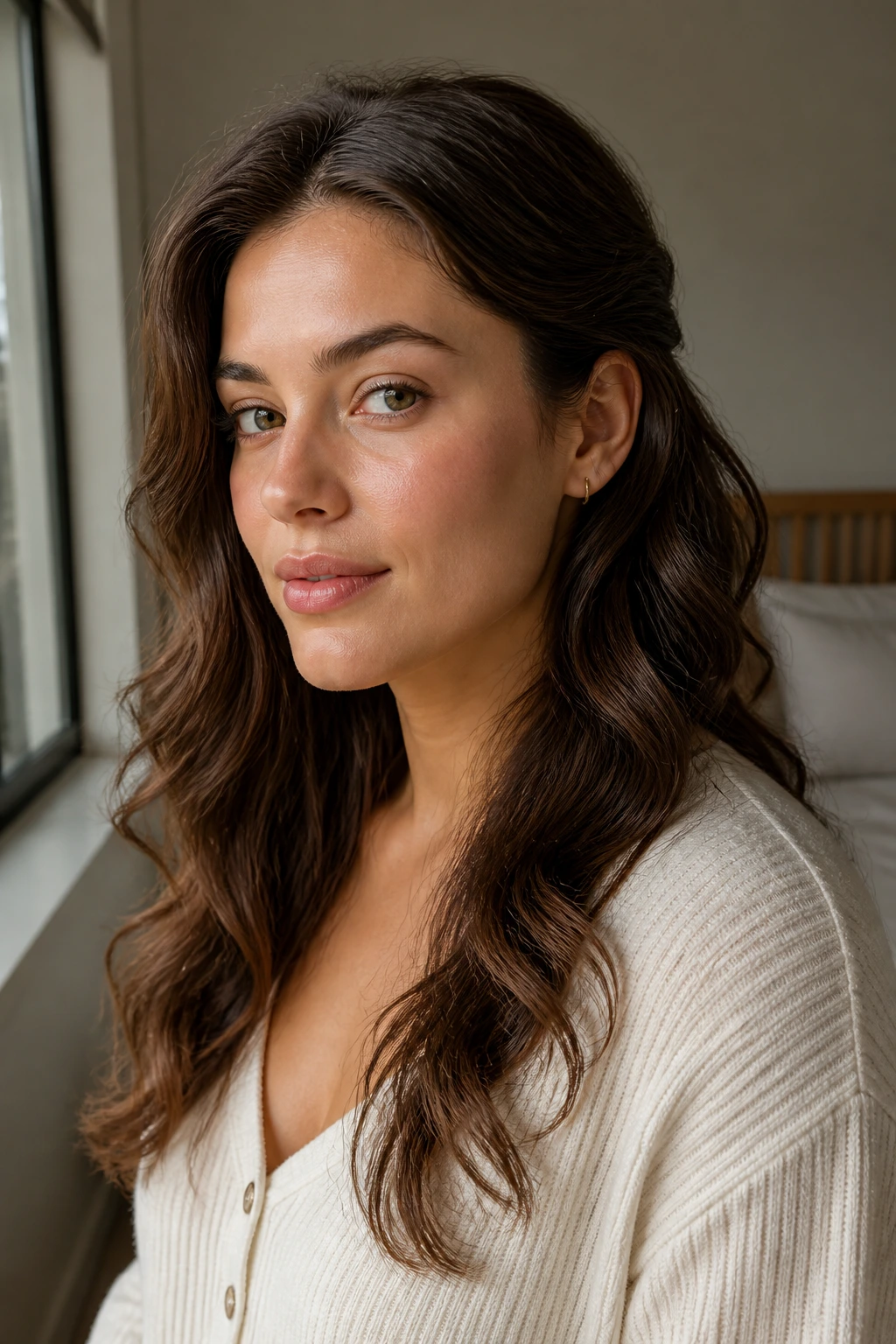
Sometimes the hairstyle is not a cut at all. It’s a tuck. Thick waves can look instantly sharper when one or both sides are tucked behind the ears, because the face opens up and the hairline looks cleaner.
The trick is to leave enough softness around the front so the tuck does not feel severe. You can secure the sides with a small pin under the top layer if the hair keeps slipping. This looks especially good with long layers, because the pieces still fall around the jaw even after they’re tucked.
25. Retro Side Sweep With Volume
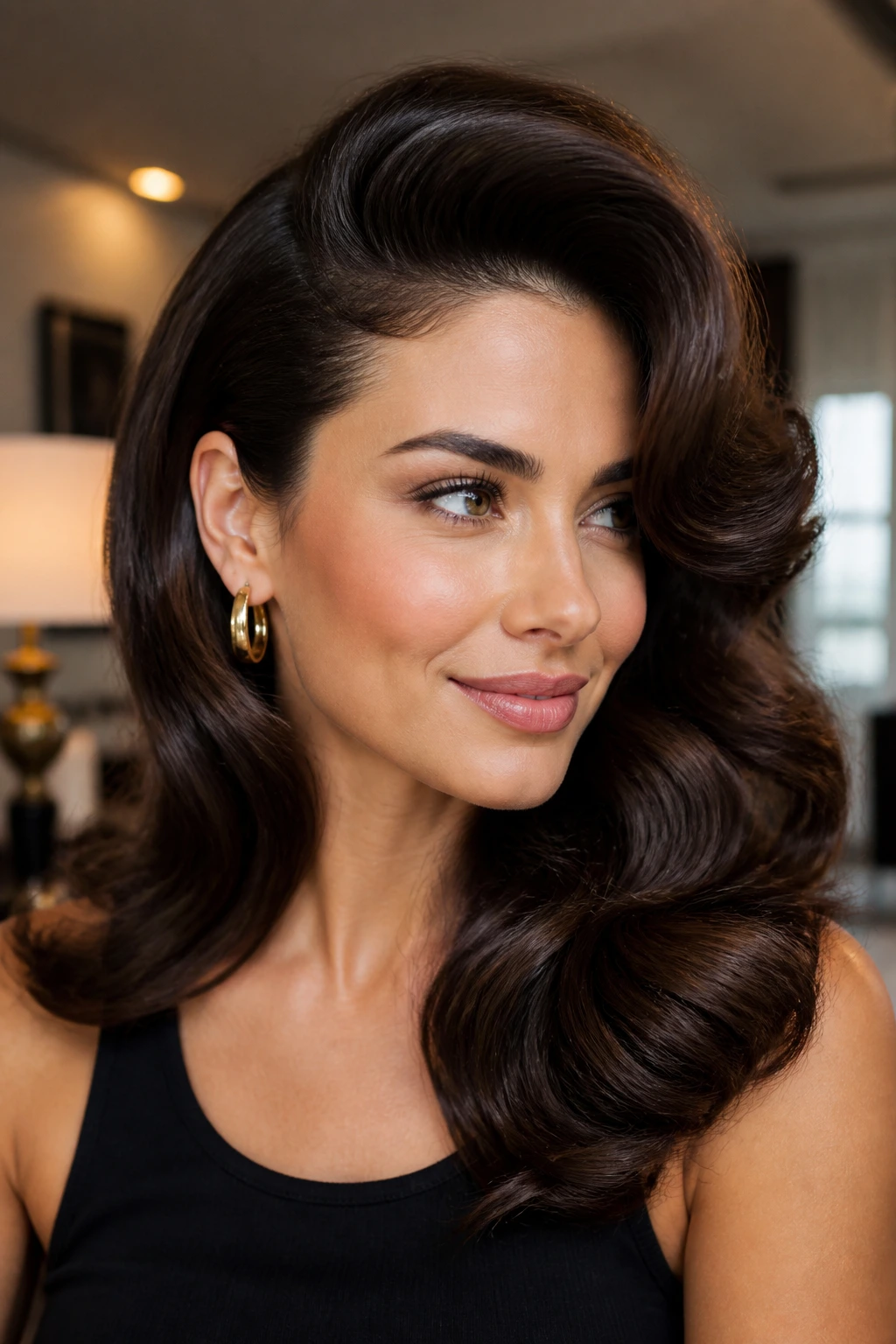
A retro side sweep gives thick wavy hair that glossy, old-school feel without making it stiff. The deep side part creates lift, and the sweep across the forehead makes the whole style feel richer.
Styling note
Set the front section with a large round brush or a couple of hot rollers, then pin it to cool before brushing it into shape. The rest of the hair can stay wavy and loose. I like this style when the goal is polished, not overdone. It has enough drama to feel intentional, and thick hair keeps it from looking fragile.
26. Low Bubble Ponytail
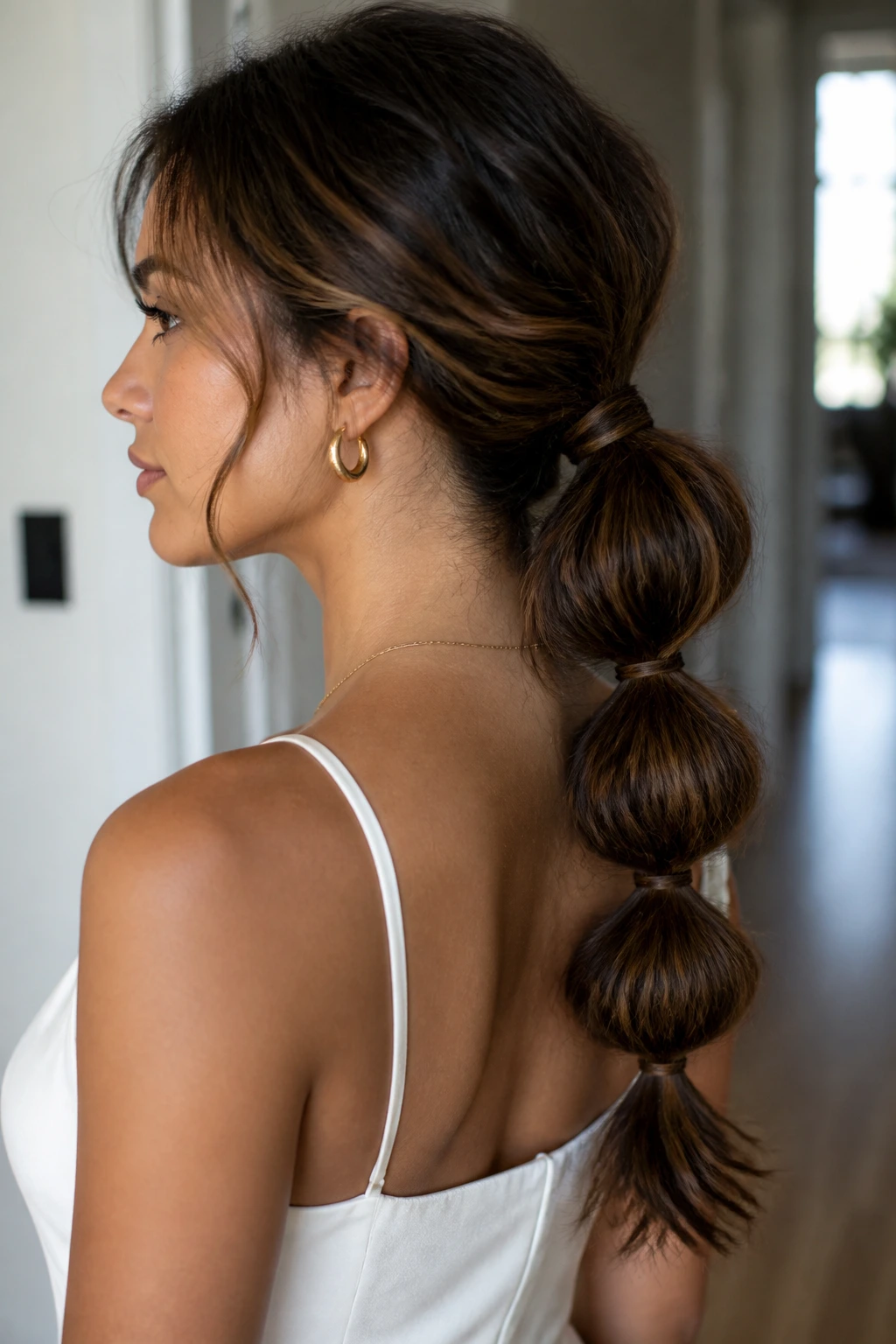
A bubble ponytail is almost unfair on thick hair. Each section puffs out with its own fullness, so the style looks deliberate instead of novelty-costume silly. The waves add shape between the elastics and keep the whole thing from feeling flat.
Use clear elastics every 2 to 3 inches down the tail, then gently tug each section to round it out. If you want it smoother at the top, wrap a small strand around the base first. The style works best when the bubbles are not perfectly even. A little irregularity makes it look less stiff.
27. Chin-Grazing Bob With Bendy Ends
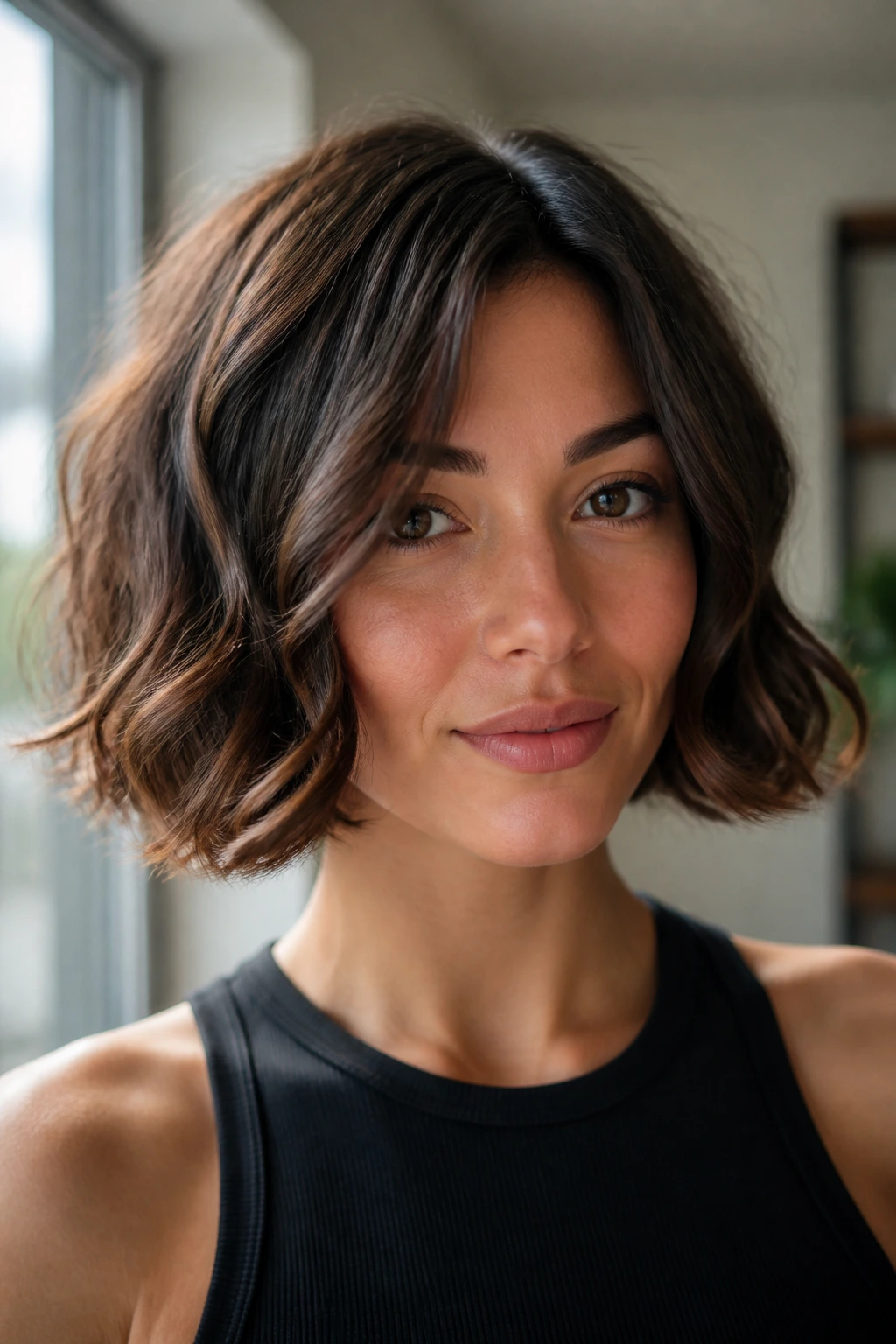
A chin-grazing bob is bold on thick wavy hair, but it can look fantastic if the ends are softened. The length hits right at the jaw, which draws attention to the face and makes the wave pattern look crisp.
This cut needs careful balance. Too much bulk, and it turns into a box. Too little texture, and it looks sharp in the wrong way. Ask for bend at the ends, not a razor-thin edge. If your waves kick outward, a quick pass with a round brush or a few loose bends from a wand can pull the shape together.
28. Twisted Half Crown
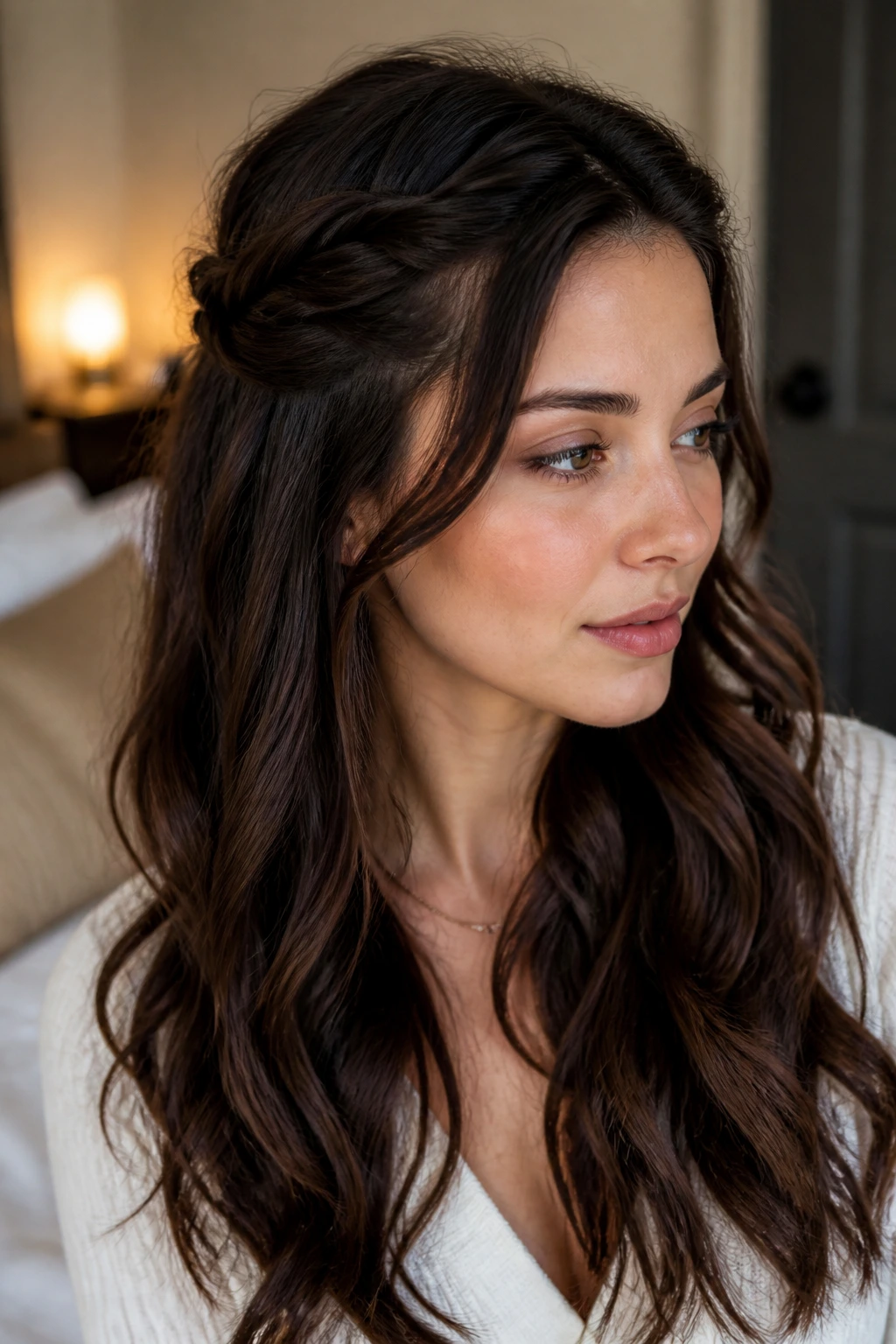
The twisted half crown sits somewhere between a braid and a pinned style. It takes the front pieces, twists them back, and lets the rest of the hair stay loose and wavy.
It’s a useful option when you want the face clear but do not want a full updo. Thick hair gives the twists enough body to hold their shape, which is half the battle. Pin them just behind the ears and let the ends fall naturally. If the style feels too pretty, loosen the twists a little. That tiny adjustment helps.
29. Off-Duty Top Knot With Loose Ends

This is the high bun’s less serious cousin. The knot sits high, sometimes a little off-center, with a few ends left out so it doesn’t feel too dressed up.
Thick hair makes this style look fuller than it does on finer textures, which is why it’s so useful on running-out-the-door days. Gather the hair loosely, twist it once or twice, and secure with an elastic and pins. The goal is not perfection. It’s a knot that holds, with enough looseness around the hairline that the whole thing still feels lived in.
30. Shoulder-Length Cut With Curved Ends
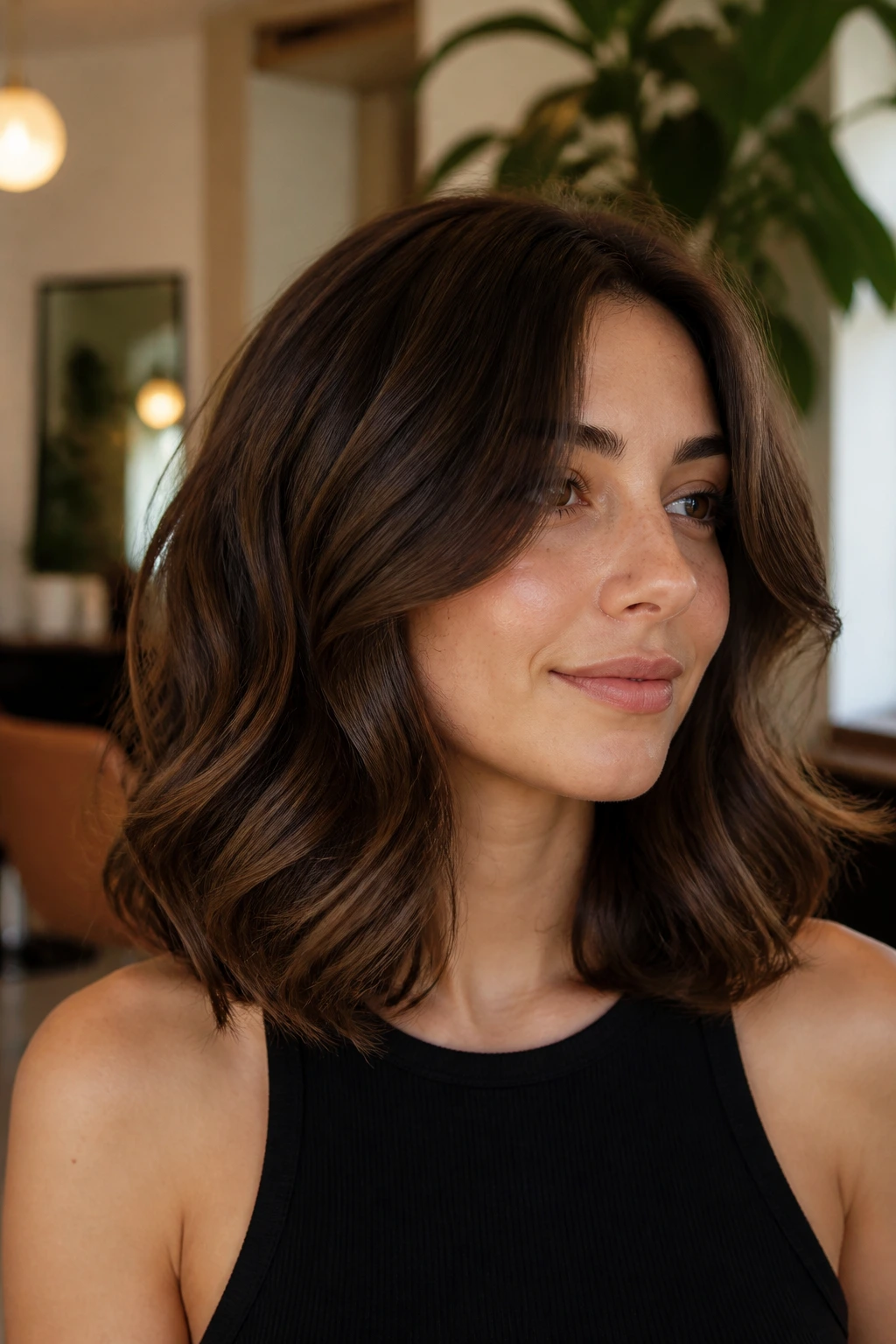
Shoulder-length hair can feel awkward on thick waves if the ends sit straight and boxy. Curved ends fix that. The hair brushes inward just enough to follow the line of the shoulders instead of kicking out.
The little details matter here
Ask for a soft curve at the perimeter and some internal removal through the sides. That gives the cut movement without making it obviously layered. It’s a good option if you want something easy to blow-dry quickly, because the shoulder length helps the shape set with very little effort. A medium round brush and 6 to 8 minutes can be enough.
31. Mermaid Length With Minimal Layers
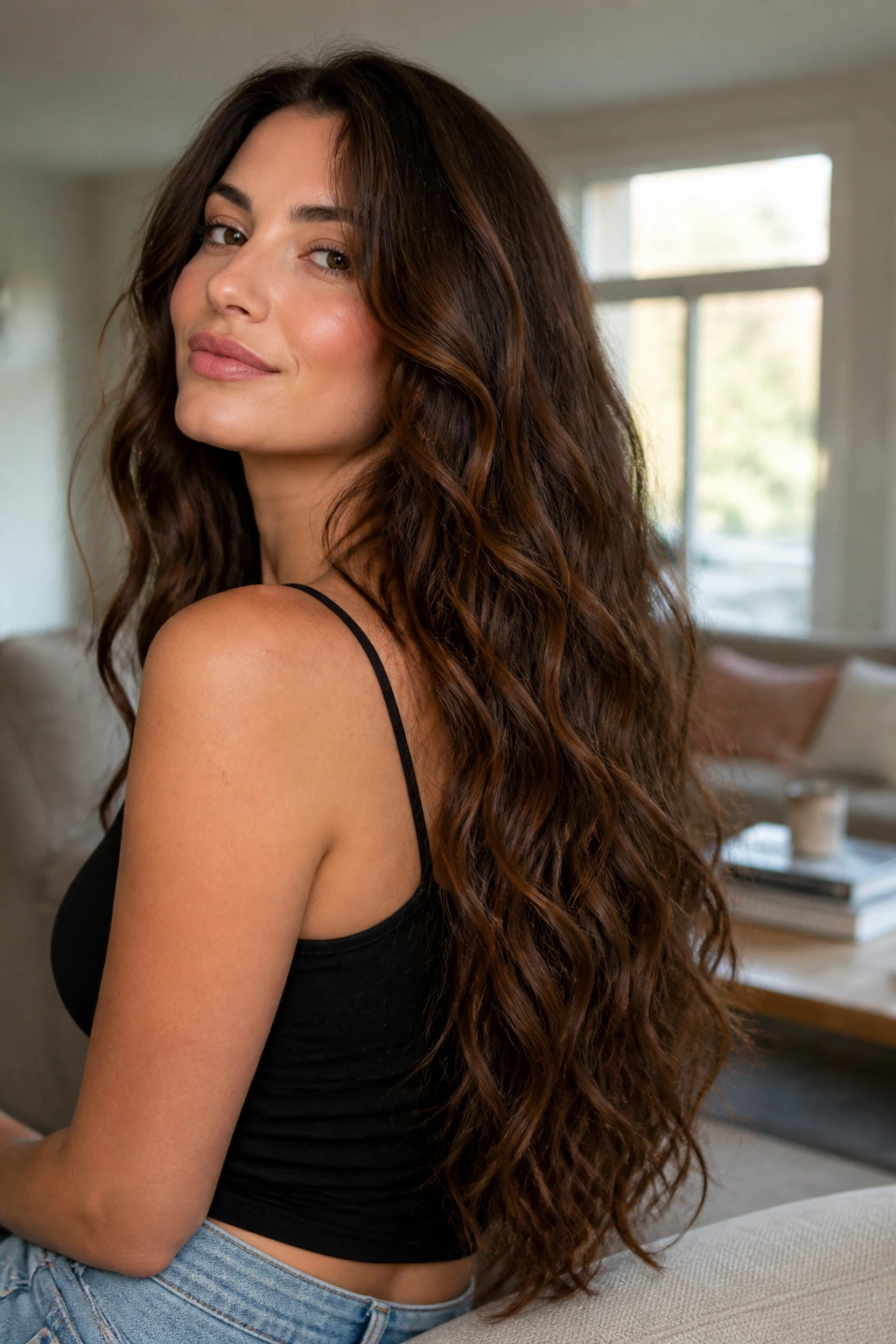
If you love long hair and you’re not ready to give it up, keep the length and use a very light hand with layering. Mermaid length on thick waves looks best when the interior gets some weight removed, but the outside line still feels lush.
This style needs discipline. The temptation is to cut in too many layers because thick hair seems to invite it. Resist that urge. Too much layering at long length can make the hair look frayed. Keep the lowest layers long, let the wave pattern do the decorating, and use a soft oil only on the last few inches if the ends get dry.
32. Asymmetrical Lob With a Deep Part
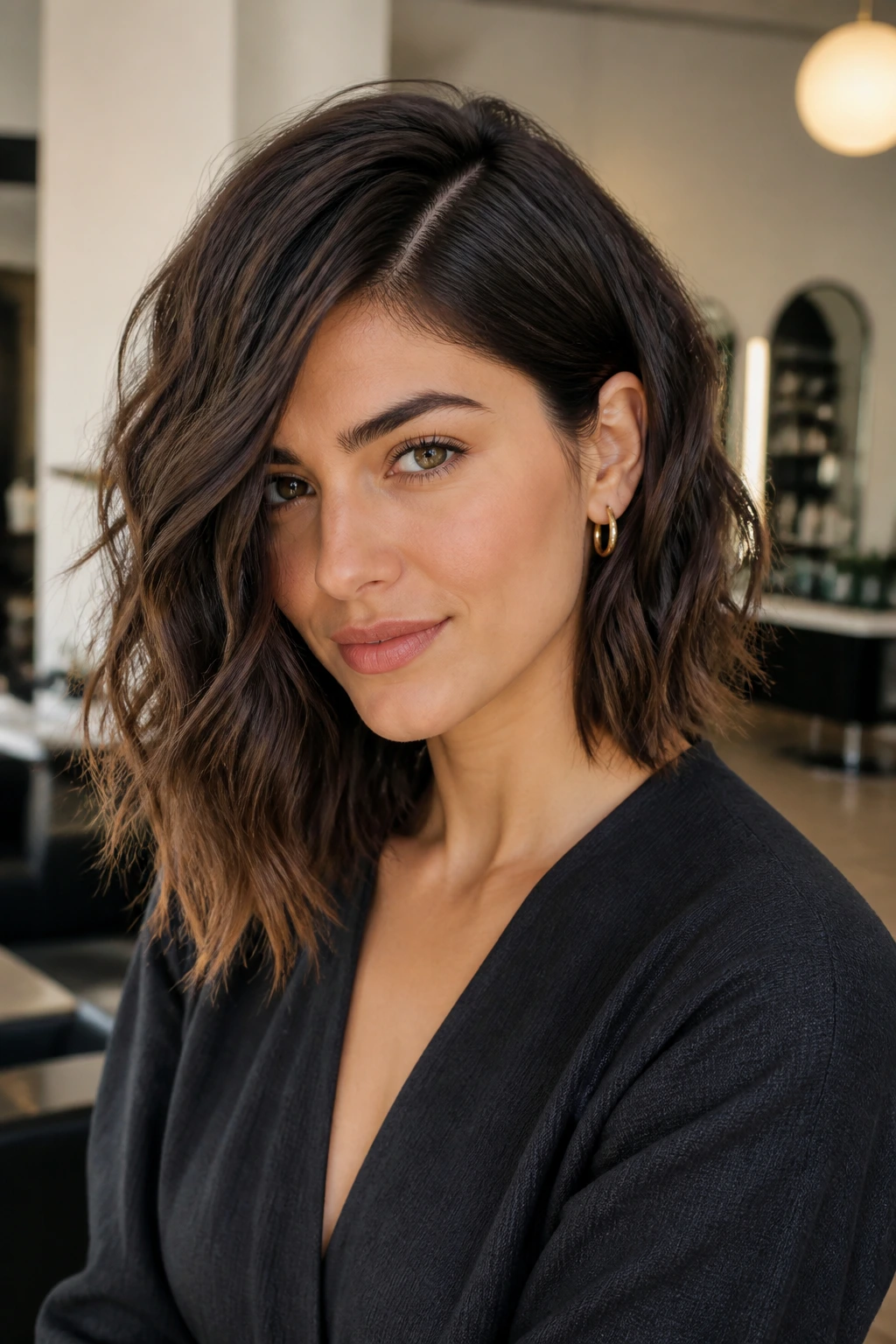
An asymmetrical lob gives thick wavy hair a little attitude without requiring a full-on edgy cut. One side sits slightly longer, the deep part adds height, and the mismatch makes the shape feel deliberate.
It works well if you want movement but don’t want bangs. The longer side can skim the collarbone while the shorter side sits near the jaw or chin. Keep the texture loose. If the cut is too polished, you lose the point. If it’s too messy, the asymmetry gets lost. Somewhere in the middle is where it really lands.
Why Wavy Hairstyles for Thick Hair Need Strategic Shape

Thick wavy hair expands. That’s the simplest way to say it, and it explains most of the styling drama people fight every day. A cut that looks neat when it’s wet can dry into something wider, shorter, or puffier than expected once the wave pattern wakes up. That’s not a failure. It’s texture doing what texture does.
The best shape depends on where your hair carries weight. Some heads need bulk removed from the mid-lengths because that’s where the hair sits like a block. Others need a softer perimeter because the ends flare out the second they dry. A good cut pays attention to both. Internal layers help here because they remove density without making the surface look choppy.
There’s also the issue of finish. Thick waves can look crisp with a blowout, or loose and romantic with air-drying, but the product order changes everything. Too much cream near the roots and you lose lift. Too much oil on the ends and they go limp. The styles in this list work because they leave room for movement while still giving the hair enough structure to settle down.
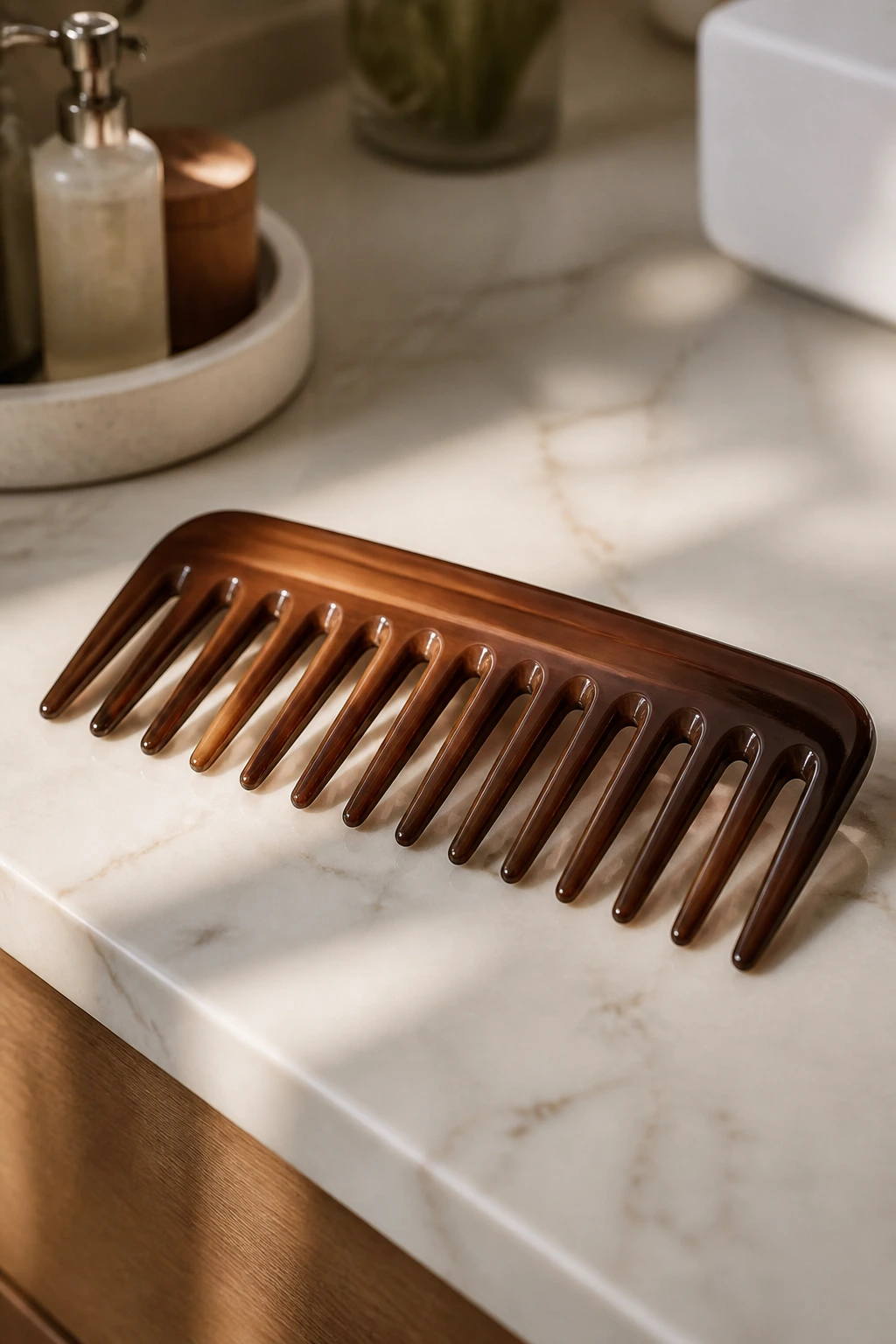
Tools That Make Thick Waves Easier to Style
-
Wide-tooth comb: Good for detangling damp hair without ripping the wave pattern apart.
-
Microfiber towel or cotton T-shirt: Cuts down on rough frizz after washing and helps keep the curl clumps intact.
-
Leave-in conditioner: Useful on the mids and ends if your hair feels dry or tangles at the neck.
-
Mousse: Gives the roots and mid-lengths a little hold without the heaviness of a cream-only routine.
-
Curl cream: Best used sparingly from ear level down; too much near the scalp can flatten the style.
-
Diffuser attachment: Helps thick waves dry with shape instead of collapsing into fuzz.
-
1.25-inch curling wand or iron: Handy for cleaning up front pieces, lobs, and side-swept styles without making the whole head look curled.
-
Duckbill clips: Great for setting the crown or pinning a twisted section while it cools.
-
Large claw clip: Thick hair needs a sturdy clip. The flimsy ones snap or slide.
-
Silk scrunchies: Better than tight elastics for ponytails, buns, and overnight braids.
-
Texturizing spray: Useful on dry hair when you want grip for braids, half-up knots, or a lived-in finish.
What to Tell Your Stylist Before They Pick Up the Shears
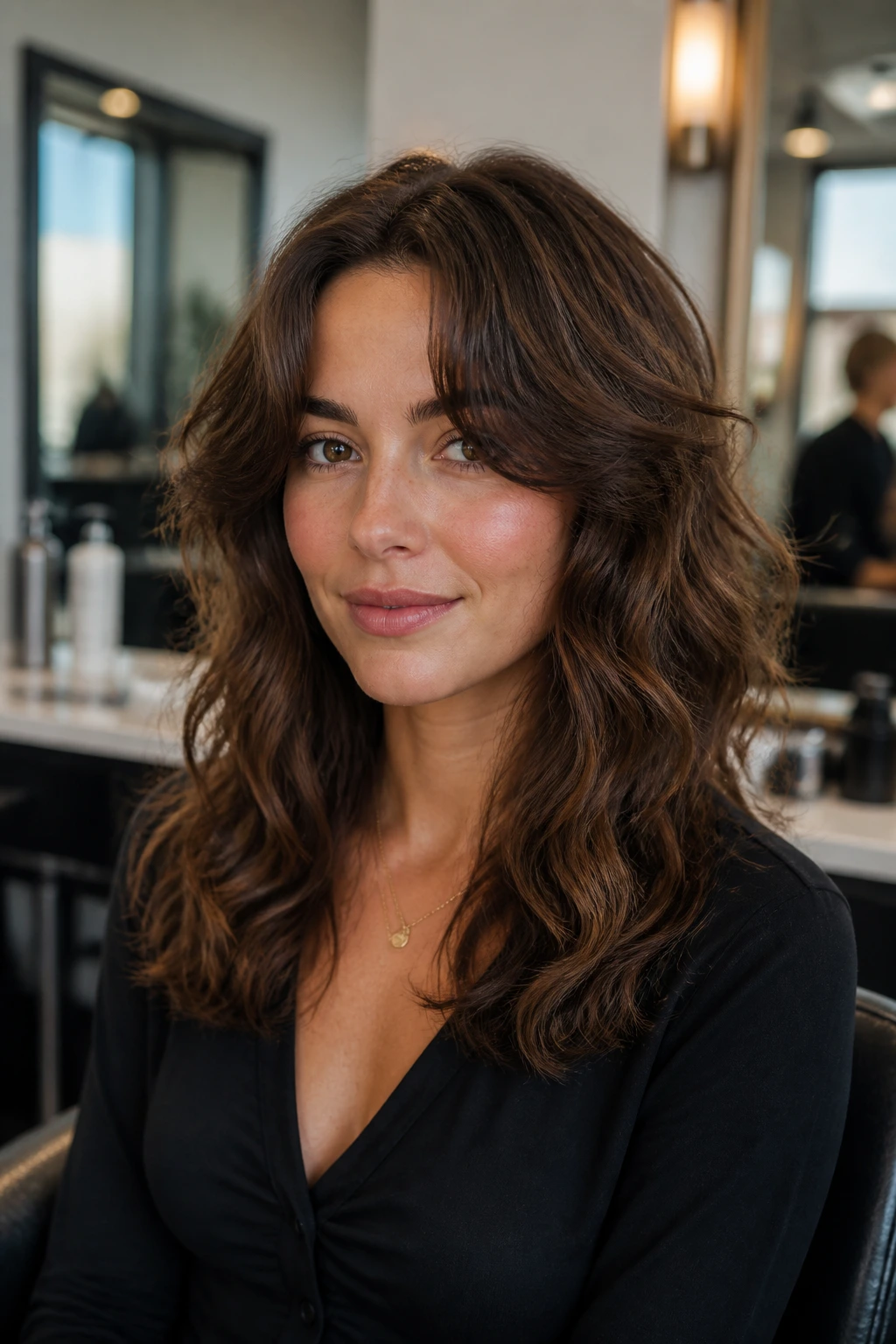
Bring photos, but bring the right kind. One photo for the silhouette, one for the fringe, one for the length. Thick wavy hair can make a style look very different from the picture, so the more clearly you separate shape from texture, the better. A photo of a haircut on fine straight hair is not the same as a photo of a style on dense waves.
Say where your wave starts. If the bend shows up near the cheekbone, layers that begin too high can blow up the sides. If your wave sits lower, you can usually get away with more face framing. Mention whether you air-dry, diffuse, or blow-dry with a brush. That one sentence saves a lot of regret.
Ask how they plan to remove bulk. Point cutting softens the ends. Internal layers remove density from inside the shape. Razor thinning can be fine in the right hands, but on thick wave it can also leave the ends fuzzy if it’s overdone. Tell them the one thing you never want to fight after the cut — triangle shape, gapy bangs, flat crown, whatever it is. That gives them a real target.
How to Style Thick Wavy Hair on Busy Mornings
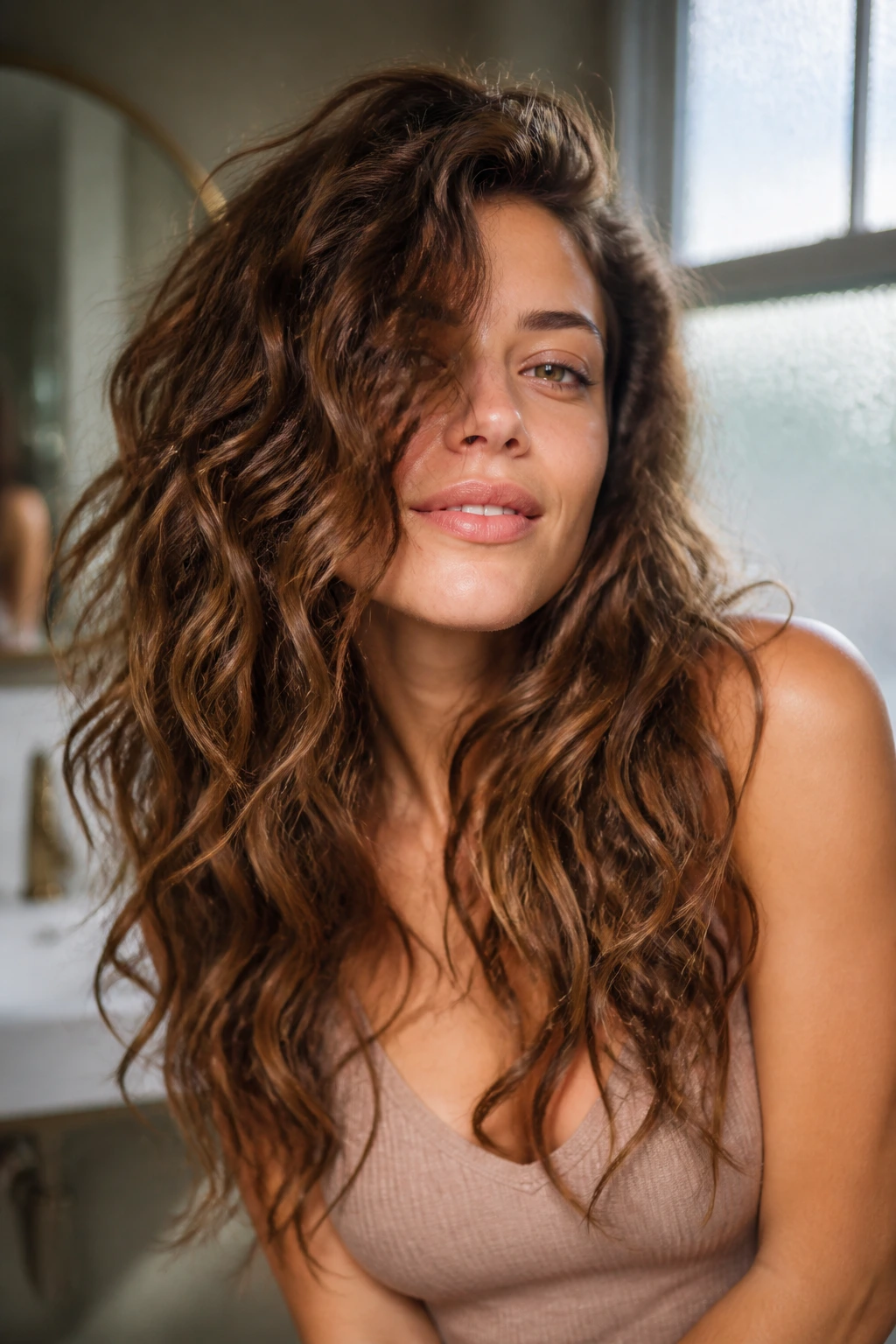
Fastest route: apply mousse to damp roots, a small amount of curl cream from the ears down, then scrunch and diffuse for 5 to 8 minutes. Stop when the hair is about 80 percent dry. Let the rest air-dry so the shape keeps moving.
Polished in ten minutes: use a blow-dry brush on the top layer only, then add a few bends with a wand around the front pieces and ends. You do not need to touch every strand. Thick waves already carry enough body; the goal is to make the outline look intentional.
Day-three reset: mist the hair lightly with water, add a pea-size amount of leave-in to the ends, and scrunch. If the crown has collapsed, clip the roots up for 10 minutes while the hair dries. That tiny lift can wake the whole style up.
If you need hold: use a flexible-hold spray only after the hair is fully dry. Spraying too early can make thick waves go sticky and heavy.
Common Mistakes That Flatten Thick Waves
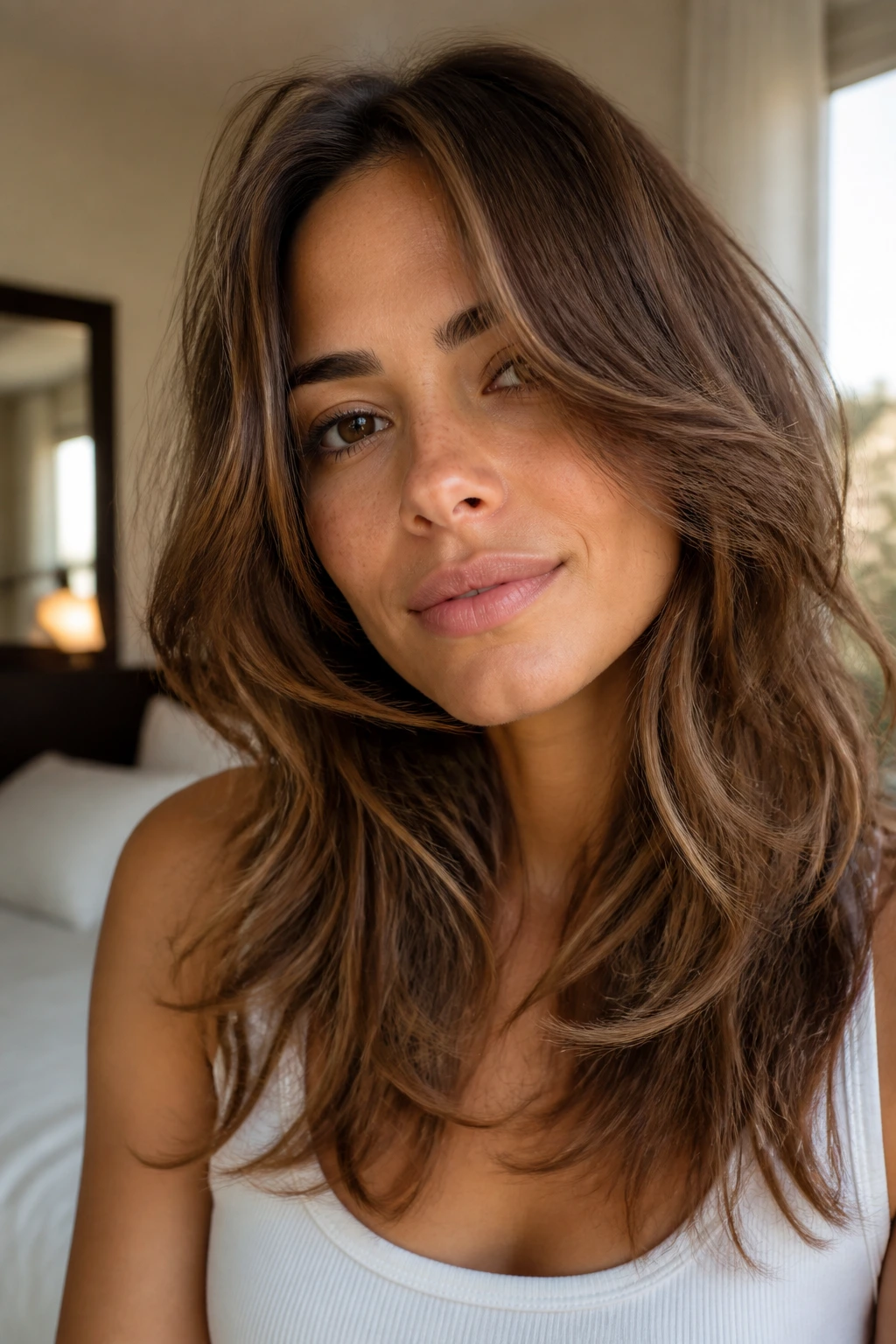
-
Over-thinning the ends: The hair may look lighter in the chair, then go fuzzy and see-through once it dries. Ask for internal layer removal or point cutting instead of aggressive thinning shears.
-
Going too blunt everywhere: A hard line can make thick waves look square at the bottom. If you like structure, keep the perimeter clean but soften the ends just enough to let them move.
-
Putting heavy product near the roots: Cream and oil up top can erase lift fast. Keep richer products from the ears down unless your hair is unusually dry at the scalp.
-
Brushing waves dry: That often turns good texture into frizz and spreads the bulk. Use fingers or a wide-tooth comb when the hair is damp, then leave it alone.
-
Cutting bangs too short and too dense: Thick wave pushes fringe upward and outward. Bangs usually need more length than people expect, plus some openness at the center.
Variations for Shorter, Longer, and Lower-Maintenance Routines
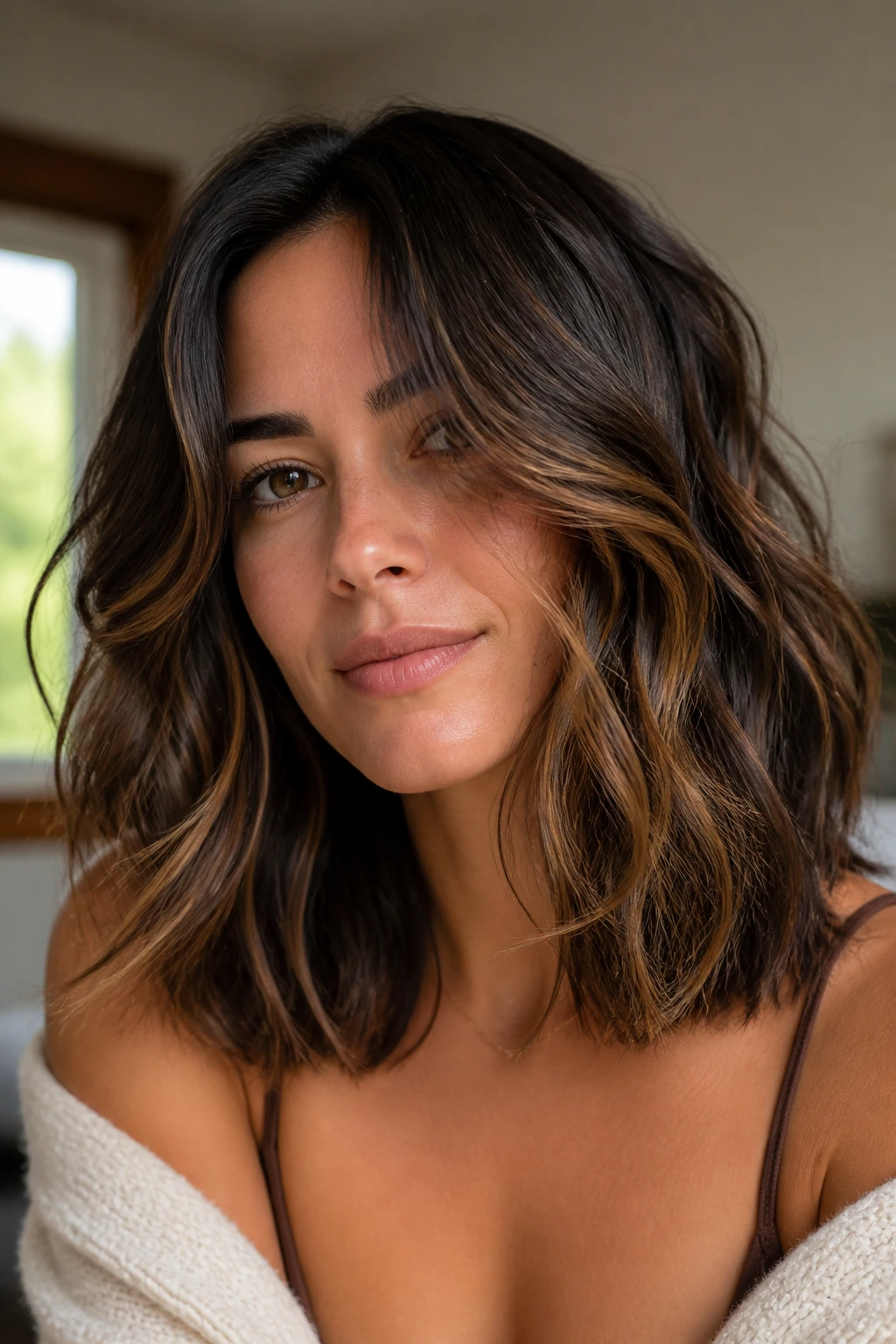
The Air-Dry Only Version: Choose a shag, long layers, or a lob with internal weight removal. These shapes can fall on their own with mousse and a little scrunching, which is the whole point if you hate hot tools.
The Glossy Night-Out Version: Pick a deep side part, retro sweep, or low twisted chignon. Add a little heat on the front pieces, smooth the crown, and leave the wave in the lower lengths so the style still feels like yours.
The Short-Hair Version: Go with a rounded bob, chin-grazing bob, or wavy pixie with long top layers. Thick hair gives short cuts more body than fine hair ever could, but the outline has to stay soft or it gets boxy fast.
The Humidity-Proof Version: Ask for a mid-length cut with internal layers and style it with mousse plus a light anti-frizz cream. The shape matters more than a heavy finishing product when the air gets sticky.
The No-Bang Version: If fringe sounds like a commitment you don’t want, use face-framing layers or an asymmetrical lob instead. You’ll still get movement around the face without having to trim the front every few weeks.
How to Keep Wavy Hairstyles for Thick Hair Fresh Between Washes
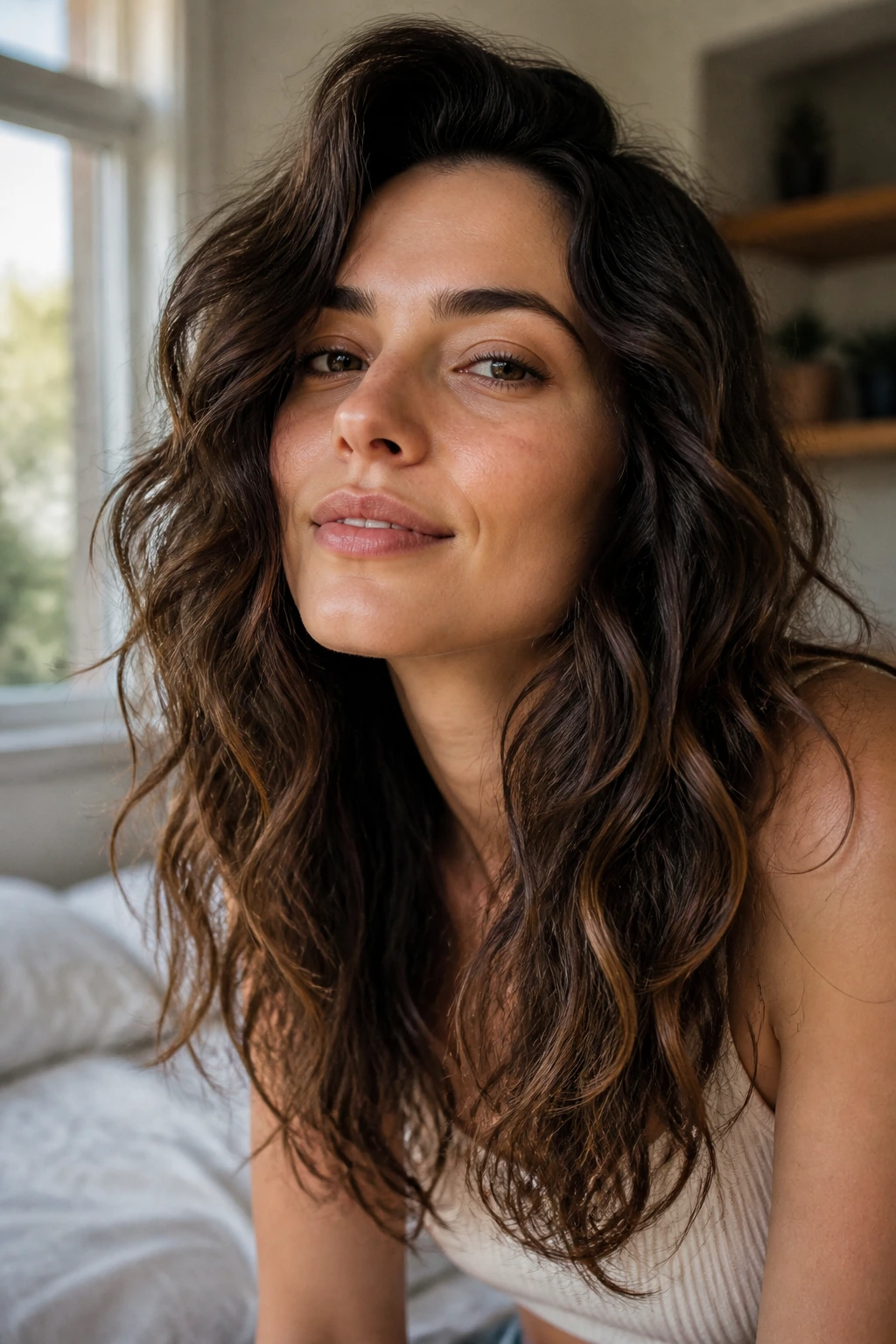
Thick waves usually behave better with a little grip, so day-two and day-three hair are not a problem. They’re a feature. Sleep in a loose braid, a low twist, or a soft pineapple at the crown, and use a silk pillowcase if you want to cut down on the roughness around the hairline. It helps more than people expect.
If the roots get oily, dry shampoo works best before the hair looks greasy. Spray it in at night, let it sit, and brush or shake it out in the morning. That gives it time to absorb instead of sitting on top of the hair like chalk. For the ends, a tiny bit of leave-in or cream is enough. Too much turns the hair heavy fast.
Trims matter too. Shorter bobs and fringes need more frequent shaping, often around every 6 to 8 weeks. Longer layers can stretch to 8 to 12 weeks if the ends stay healthy. If you use a lot of cream, mousse, or sprays, clarify every 2 to 4 weeks so buildup does not drag the wave down. Clean hair holds shape better than coated hair. That’s one of those annoying truths that keeps being true.
Frequently Asked Questions
Are layers good for thick wavy hair?
Usually, yes. Layers remove weight where thick hair tends to swell and help the wave pattern sit instead of stacking on itself. The catch is placement: layers that start too high can make the top piecey and the bottom too wide.
Is a blunt cut a bad idea for thick waves?
Not always. A blunt lob or blunt bob can look sharp and full if the ends are softened a little and the perimeter is shaped with care. The trouble starts when the whole cut is one heavy line with no internal movement.
Should thick wavy hair be cut wet or dry?
Both can work, but dry cutting gives the stylist a better look at how the hair actually falls. Wet cuts are fine if the stylist knows how your wave pattern behaves when it dries. If your hair changes a lot as it dries, dry cutting or a hybrid approach usually helps.
What’s the easiest low-maintenance style on this list?
Long feathered layers, a tousled lob, or a mid-length cut with internal weight removal are all good bets. They still look intentional when you air-dry them, and they don’t demand a perfect finish every morning.
How do I keep thick waves from frizzing up?
Don’t rough them up while they’re wet, and don’t overload them with product. Use a microfiber towel, apply cream only where you need it, and stop touching the hair once it starts drying. Frizz often comes from handling, not just humidity.
Can I wear bangs with thick wavy hair?
Yes, but they need room to move. Curtain bangs and longer fringe usually work better than short, dense bangs because the wave pattern pushes the hair upward. If you want bangs, ask for them longer than you think you need.
Which styles work best on second-day hair?
Braided crowns, Dutch braid pigtails, half-up clips, messy buns, and bubble ponytails all get better when the hair has a little texture. Freshly washed hair can be too soft and slippery for those styles to hold.
How often should thick wavy hair be trimmed?
Short cuts and fringes usually need shaping every 6 to 8 weeks. Medium and long layers can often go 8 to 12 weeks, depending on how fast the outline loses shape. If the ends start looking wide, dry, or uneven, that’s the trim sign.
A Shape That Lets the Wave Breathe
Thick wavy hair does not need to be flattened into obedience. It needs room, a little direction, and a shape that understands where the weight lives. That might mean a clean lob, a shag, a braid, or a ponytail wrapped at the base. Different days ask for different answers.
The best part is that thick waves can carry more style than most textures. They can look soft, sharp, messy, glossy, or tucked away in two pins, and the hair still has enough body to make it work. Pick the shape that matches your real routine, and the texture stops feeling like a problem you have to manage.
