



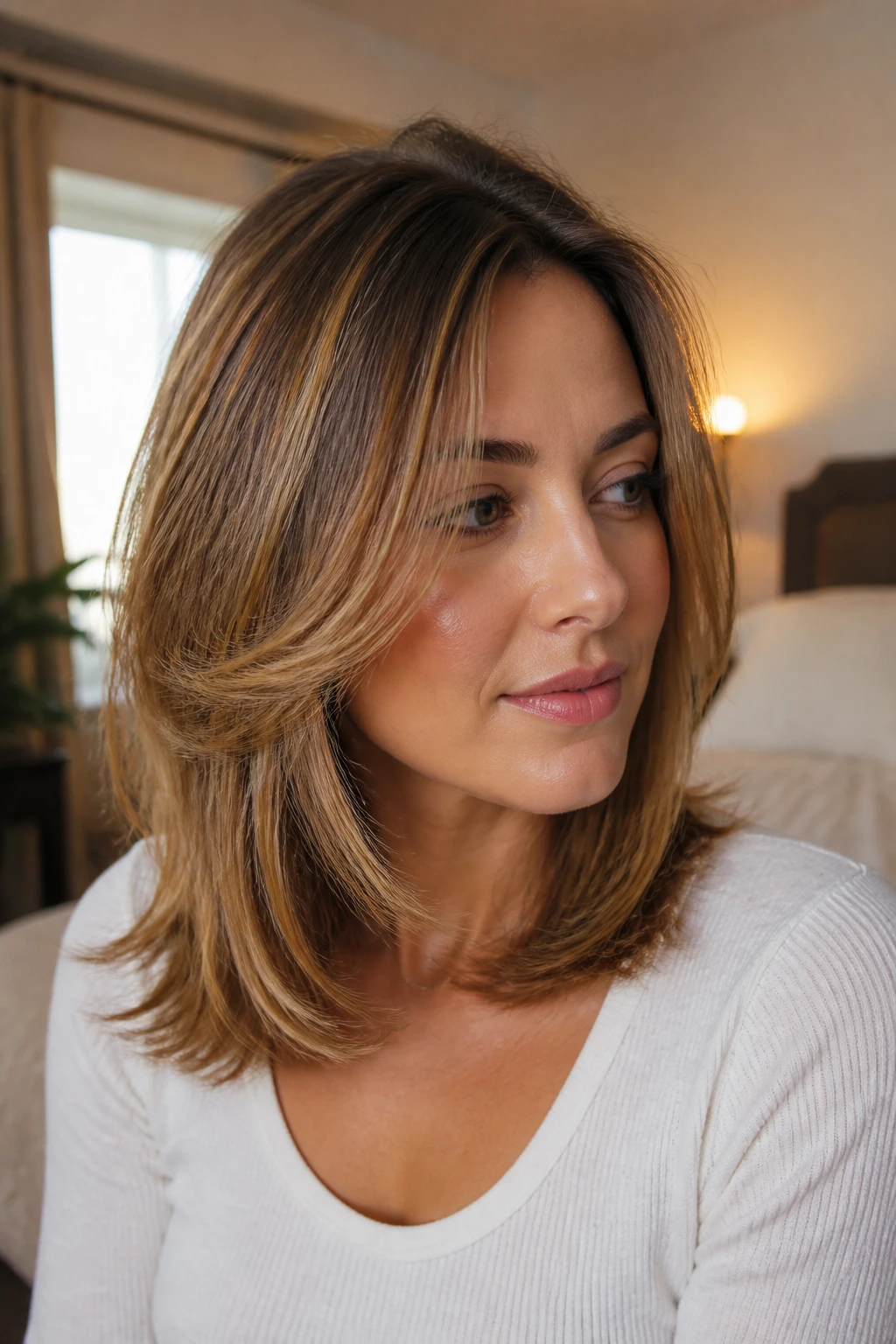
Layered haircuts for medium length hair live in a sweet spot that blunt cuts never quite reach. Give a collarbone lob a few well-placed layers and the whole thing stops hanging there like a curtain; it starts bending around the jaw, flipping at the ends, and moving when you turn your head.
The catch is placement. Start the shortest layer too high and medium-length hair can go stringy around the crown. Start too low and you get the same flat shape you had before, only with more maintenance.
That’s why the best versions of medium-length layered haircuts are specific. Fine hair needs lift without losing density. Thick hair needs weight removed without turning fluffy. Wavy and curly hair need layers that respect shrinkage, not fight it. The 32 cuts below cover all of that, from soft and barely-there to shaggy, piecey, and polished.
Why These Layered Haircuts Hit the Sweet Spot

-
They keep the length you want: Medium hair can still tuck behind the ear, hit the collarbone, or tie back, even when the layers add shape around the face.
-
They fix the “flat at the top, heavy at the bottom” problem: A few well-placed layers can stop the top from lying like a helmet and keep the ends from looking like one block.
-
They work with more than one styling habit: Air-dry, round-brush, flat-iron bend, diffuser — the same cut can shift with your routine instead of fighting it.
-
They make thick hair easier to wear: Removing bulk through the mid-lengths matters more than chopping the ends to pieces.
-
They give fine hair a better outline: A careful layered lob can lift the crown and keep the perimeter full enough to look like hair, not fuzz.
-
They grow out cleaner than a harsh chop: Medium-length layers can lose their sharpness and still look intentional for weeks, which is the part people notice in real life.
How Layer Placement Changes the Shape of Medium-Length Hair

On medium-length hair, layers are not decoration. They decide where the eye lands.
A layer that starts at the chin opens the face and gives the front pieces something to do. A layer that starts closer to the collarbone keeps more weight in the cut, which is useful if your hair is fine or if you hate the look of over-textured ends. Once the shortest pieces climb into the cheekbone zone, the cut starts behaving more like a shape than a length. That can be lovely. It can also be too much if you want to keep things calm.
The back matters too. People fixate on the front because that’s what they see in the mirror, but the crown and back sections are where a lot of the movement comes from. A little internal layering there can stop medium hair from collapsing into a heavy triangle. Too much removal, though, and the whole outline gets wispy in a hurry. Not cute.
I tend to like layered cuts that leave the bottom line honest. The perimeter should still feel like a perimeter. Once the ends are shredded beyond recognition, medium hair starts looking busy instead of movable.
1. Face-Framing Layers That Start at the Chin
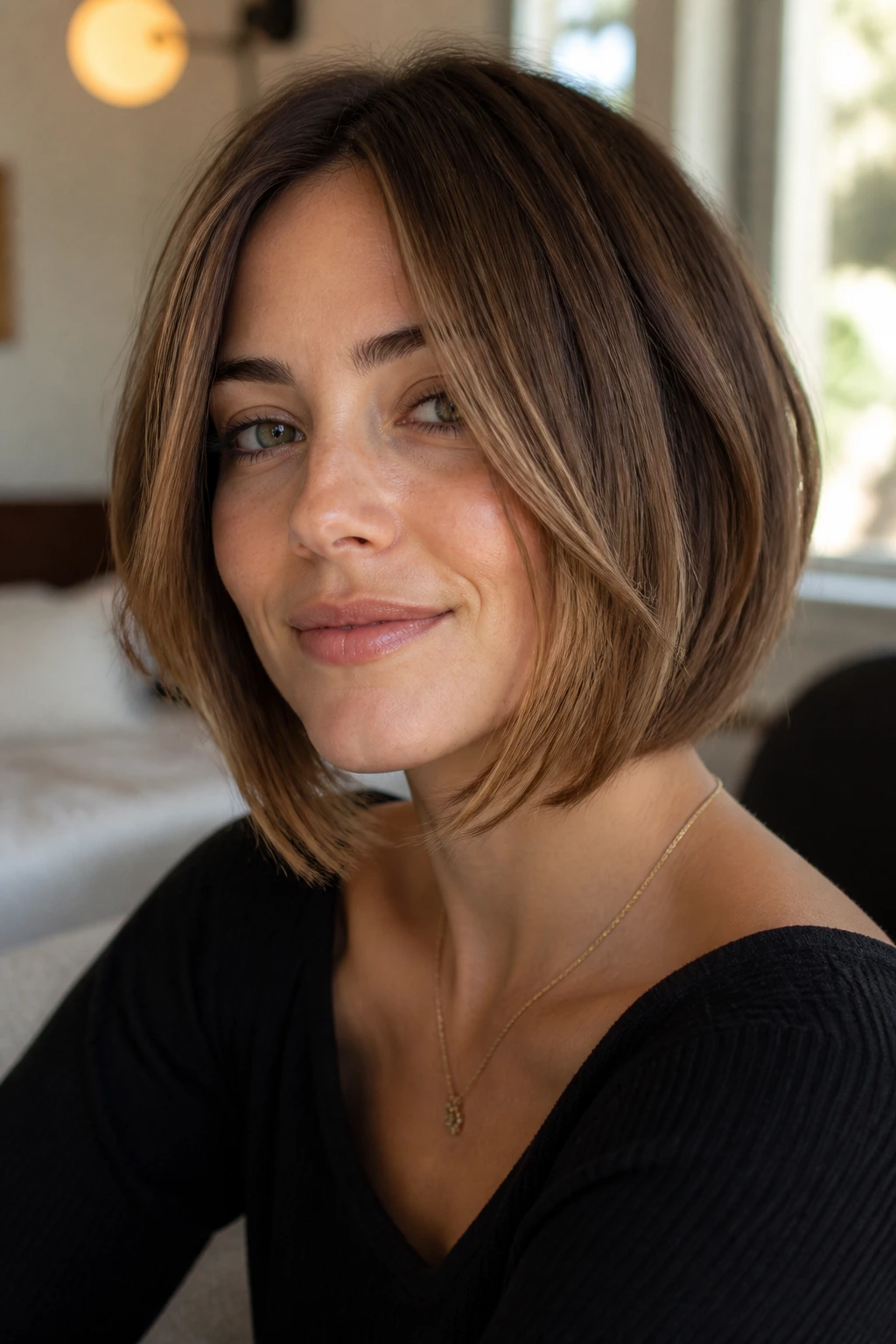
Chin-start layers are the safest place to begin if you want movement without surrendering length. The shortest front pieces skim the jaw, which softens the face and gives collarbone-length hair a little swing when you turn sideways. It’s a clean, flattering shape, and it doesn’t demand a fancy styling routine to make sense.
Why the Chin Length Works
- The front layers land low enough to keep the cut from feeling abrupt.
- They help round faces look a touch longer and square jaws look less sharp.
- They tuck easily behind the ear without disappearing into the haircut.
If you like to wear your hair down most days, this is one of the easiest cuts to live with. Ask for the front pieces to be point-cut, not hacked bluntly, so they fall in a soft line instead of sticking out like chopped fringe.
Best tip: Keep the front one inch longer than you think you want. Chin length sounds simple until you curl, brush, and bend it three different ways.
2. Curtain-Bang Layers for Soft Movement
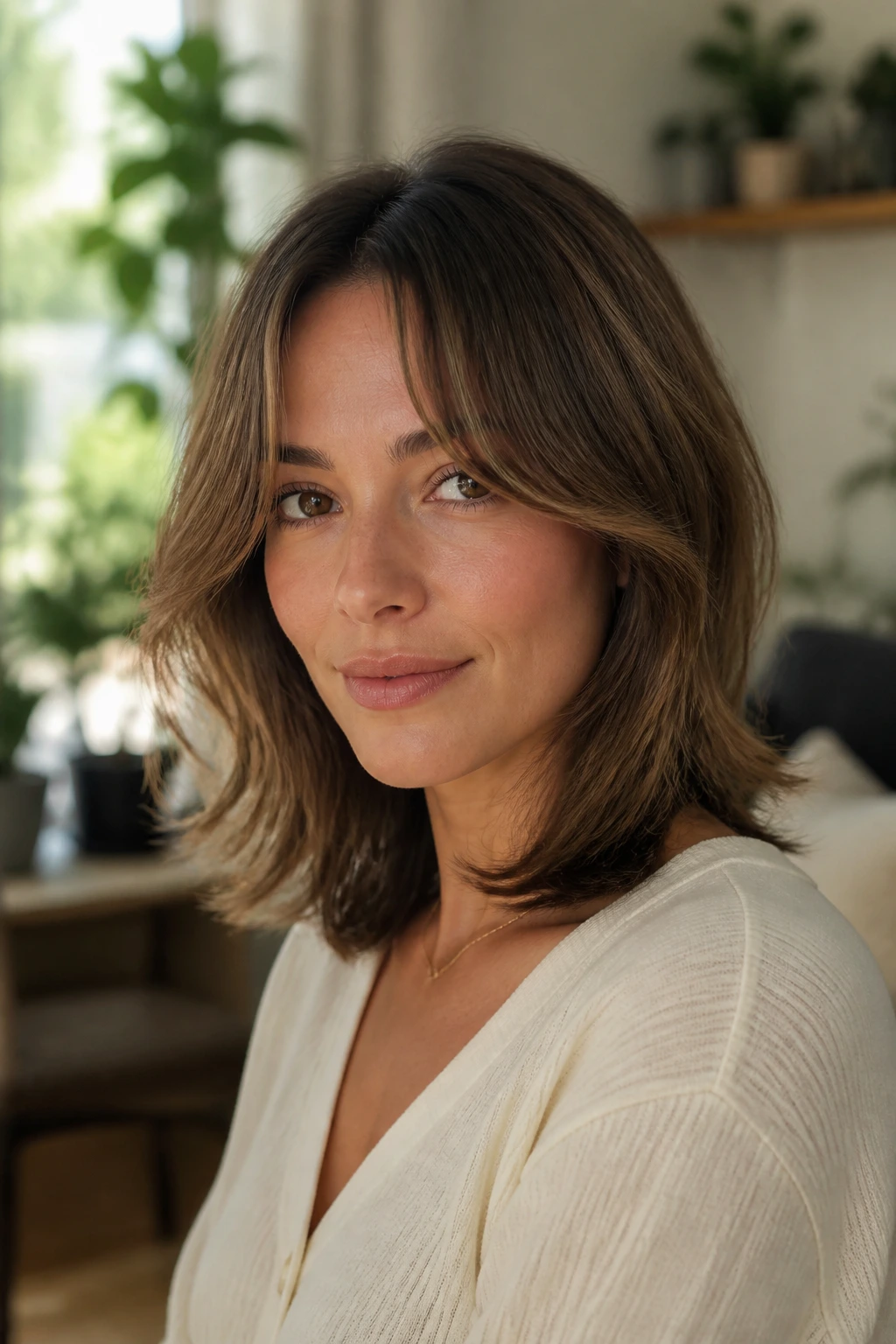
Curtain bangs are the quickest way to make layered haircuts for medium length hair look intentional. They open from the center, fall away from the face, and blend into the rest of the cut without demanding a full fringe commitment. If you want a little drama without the daily annoyance of straight-across bangs, this is the lane.
The trick is the transition. Curtain bangs should blend into cheekbone or jaw-length layers, not sit on top of the haircut like a separate accessory. When the connection is clean, the whole shape feels airy. When it’s not, the front gets bulky and the rest of the cut looks disconnected.
A medium round brush helps here, but even a quick bend with a flat iron can make the shape read properly. I like this cut on hair that already has some bend or wave. It wakes up fast.
3. Butterfly Layers That Keep Length
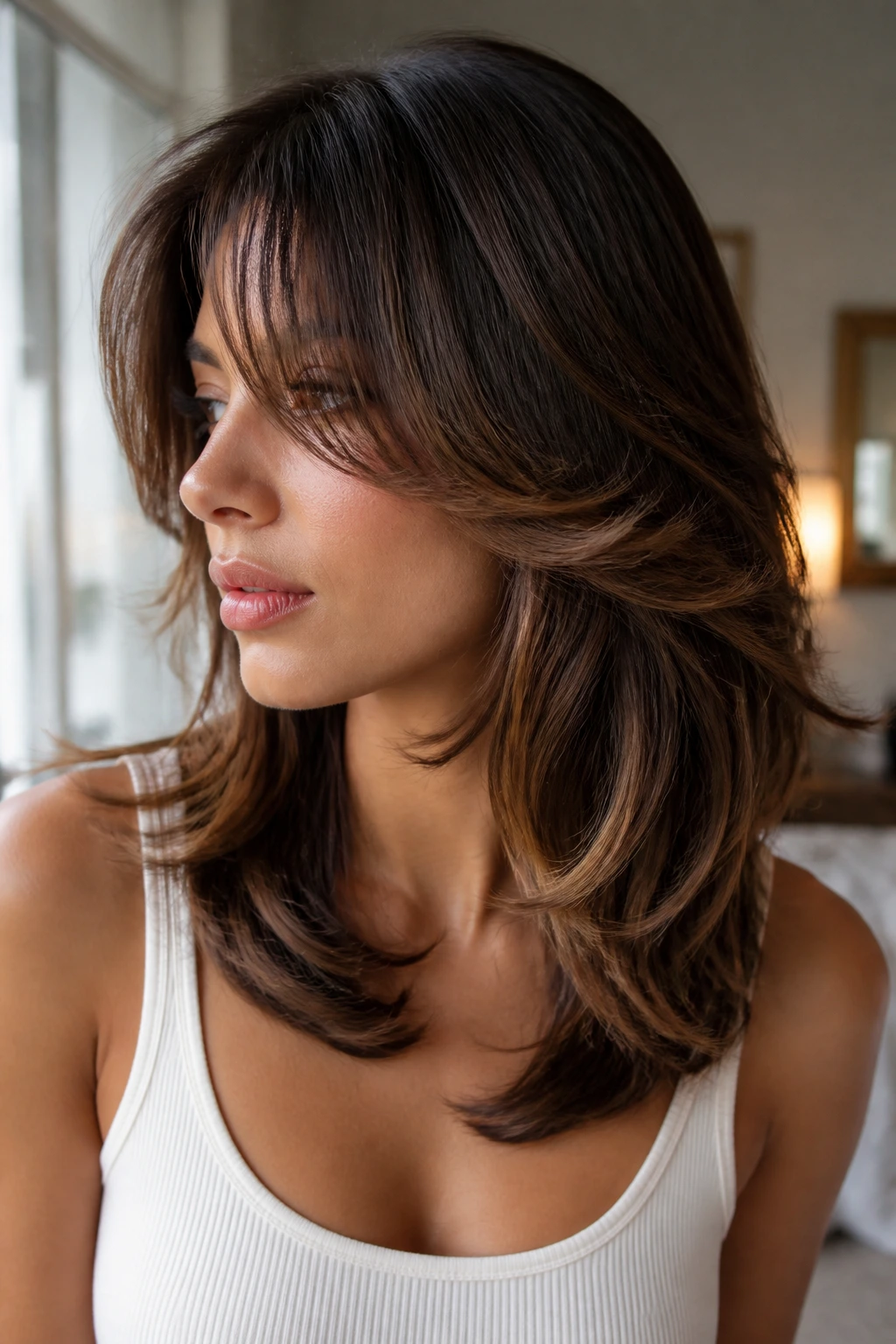
Want the volume of a shorter cut without giving up the bottom length? Butterfly layers do exactly that. The shorter pieces live around the crown and upper sides, while the longer bottom section stays intact, so the hair still reads as medium length even when the top layer flips and floats.
How to Wear It
This cut shines with a blowout or a big round-brush finish. The shorter layers lift away from the face, the longer layer swings below, and the whole shape gets that two-level movement that photographs well from the side.
It’s a smart choice if your hair feels heavy but you’re not ready for a shag. The perimeter stays useful. You still get ponytail length, and the grow-out is kinder than a dramatic chop.
Watch for this: If the shortest layer gets cut too short, the result can look top-heavy. Keep the crown pieces soft, not choppy.
4. Choppy Shag Layers

A shag on medium-length hair has attitude, but it also has range. The best versions keep the shape loose enough to wear with jeans and a T-shirt, not just with a leather jacket and a lot of texture spray. Think piecey ends, a little lift around the crown, and fringe that doesn’t behave like a helmet.
The reason this works is simple: the haircut does part of the styling for you. Internal layers break up bulk, the ends move on their own, and waves have somewhere to settle instead of puffing out at the sides. If your hair is thick and slightly wavy, this is one of the cuts that can save you time in the morning.
I would not overdo this on very fine hair. Too many short layers and it starts looking sparse. Keep the pieces longer and let the texture come from the style, not the haircut alone.
5. Collarbone Lob with Invisible Layers
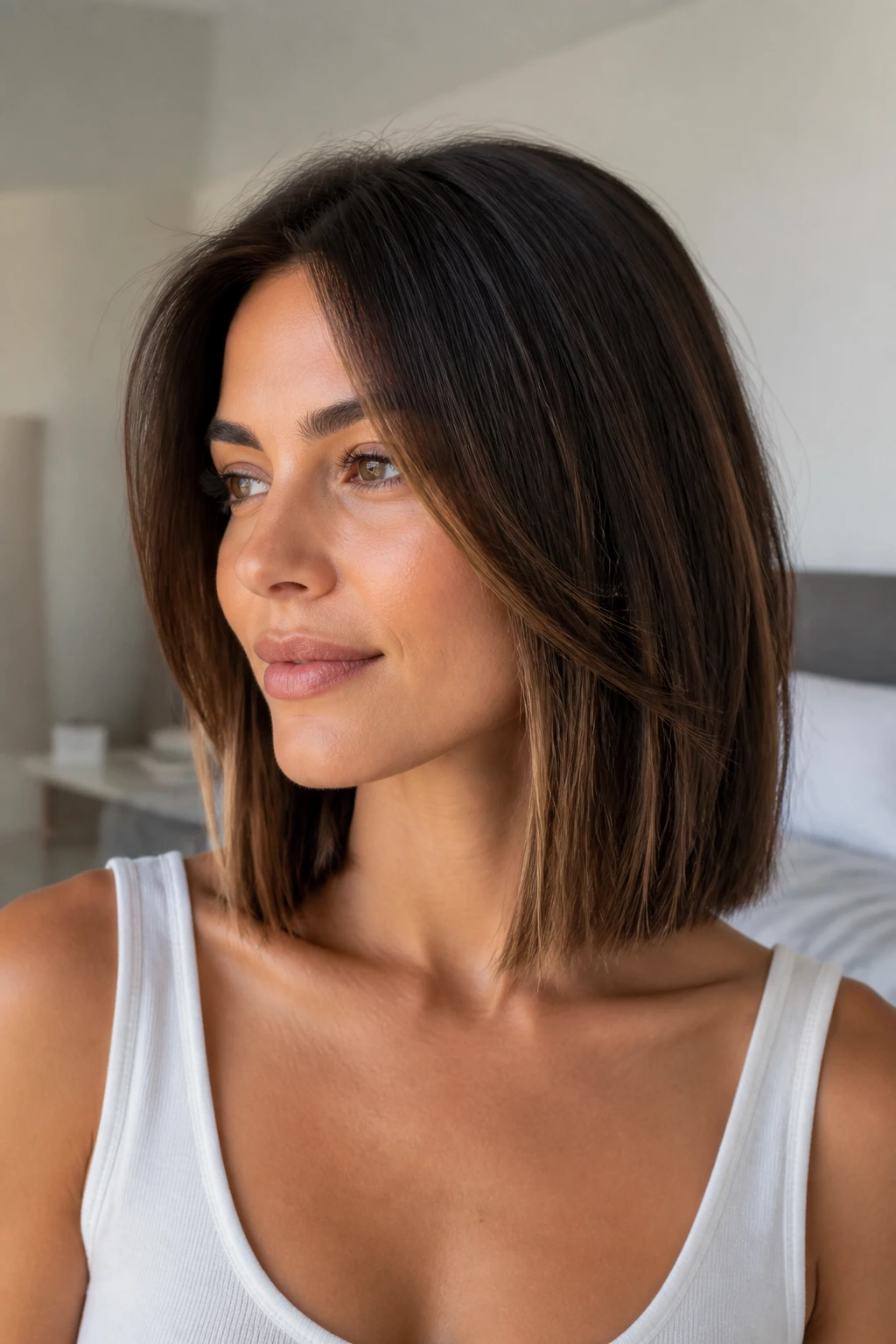
Invisible layers are the quiet ones. On the surface, the haircut still looks fairly blunt, which is exactly why it works for people who like order but still want movement. The internal layers remove enough weight to keep the cut from sticking out at the sides, while the outside line stays crisp.
That matters on straight hair. Straight medium-length hair can go limp at the crown and bulky at the ends in the same day, which is a deeply annoying combo. Invisible layers give it a little lift without turning the perimeter into a thousand little pieces.
If you want a cut that looks tidy even when you forget to style it, this is a strong pick. A paddle brush or quick bend under the ends is usually enough. No drama. No obvious layer map.
6. Rounded Layers for Fullness at the Ends
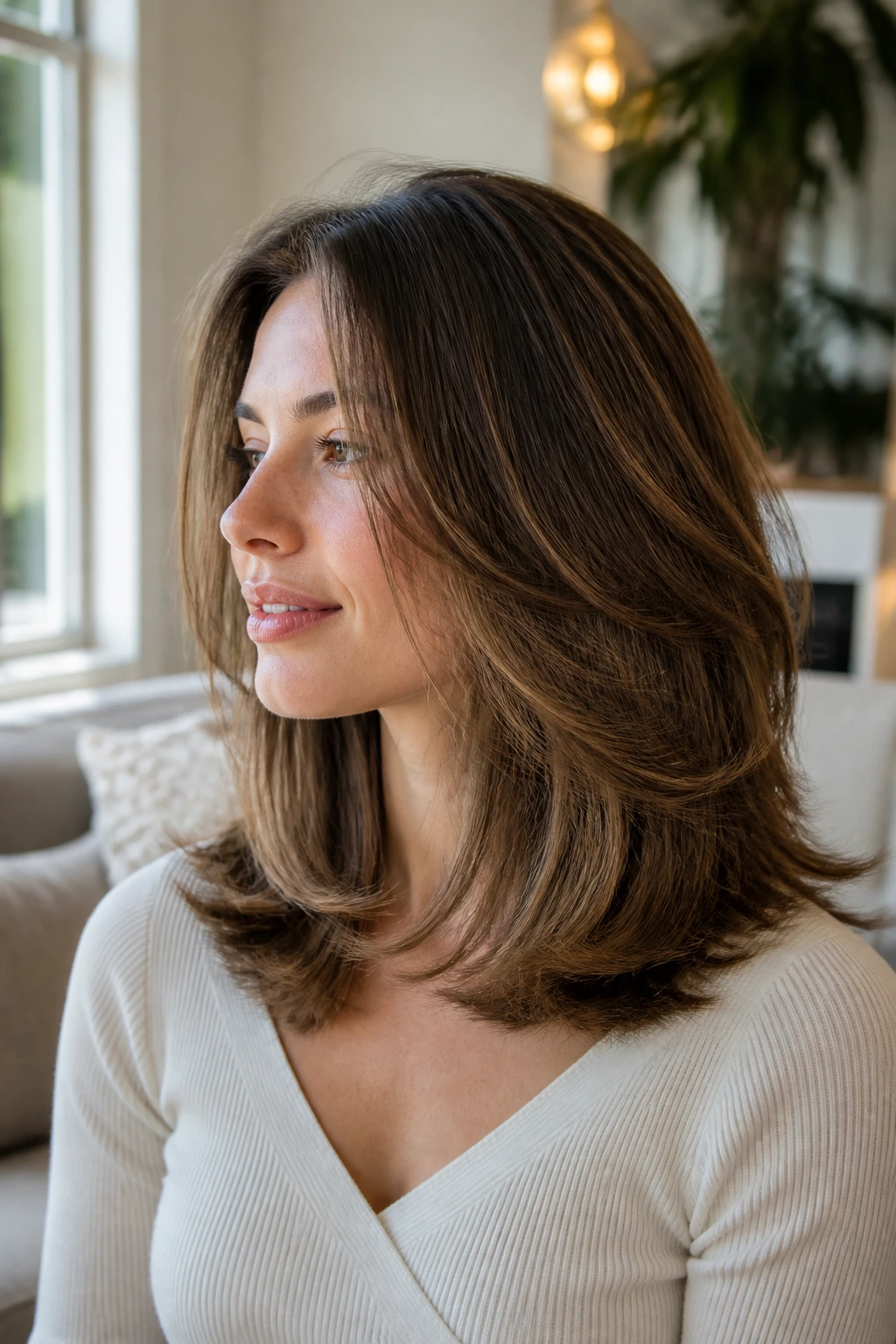
A rounded layered cut keeps the ends looking thick and slightly curved inward. Instead of pulling the shape sharply forward or leaving it square, the layers build a soft halo around the shoulders. It’s a good fix for medium hair that looks boxy when it air-dries.
The Shape at a Glance
- The perimeter stays soft but not thin.
- The ends curve instead of kicking out.
- The cut looks fuller from the side, which is where a lot of people notice it first.
I like this on straight or lightly wavy hair because a round brush can bring it to life quickly. If your hair tends to flip outward at the shoulders, ask for a little more weight left in the bottom line. That tiny adjustment changes everything.
7. U-Shaped Layered Cut
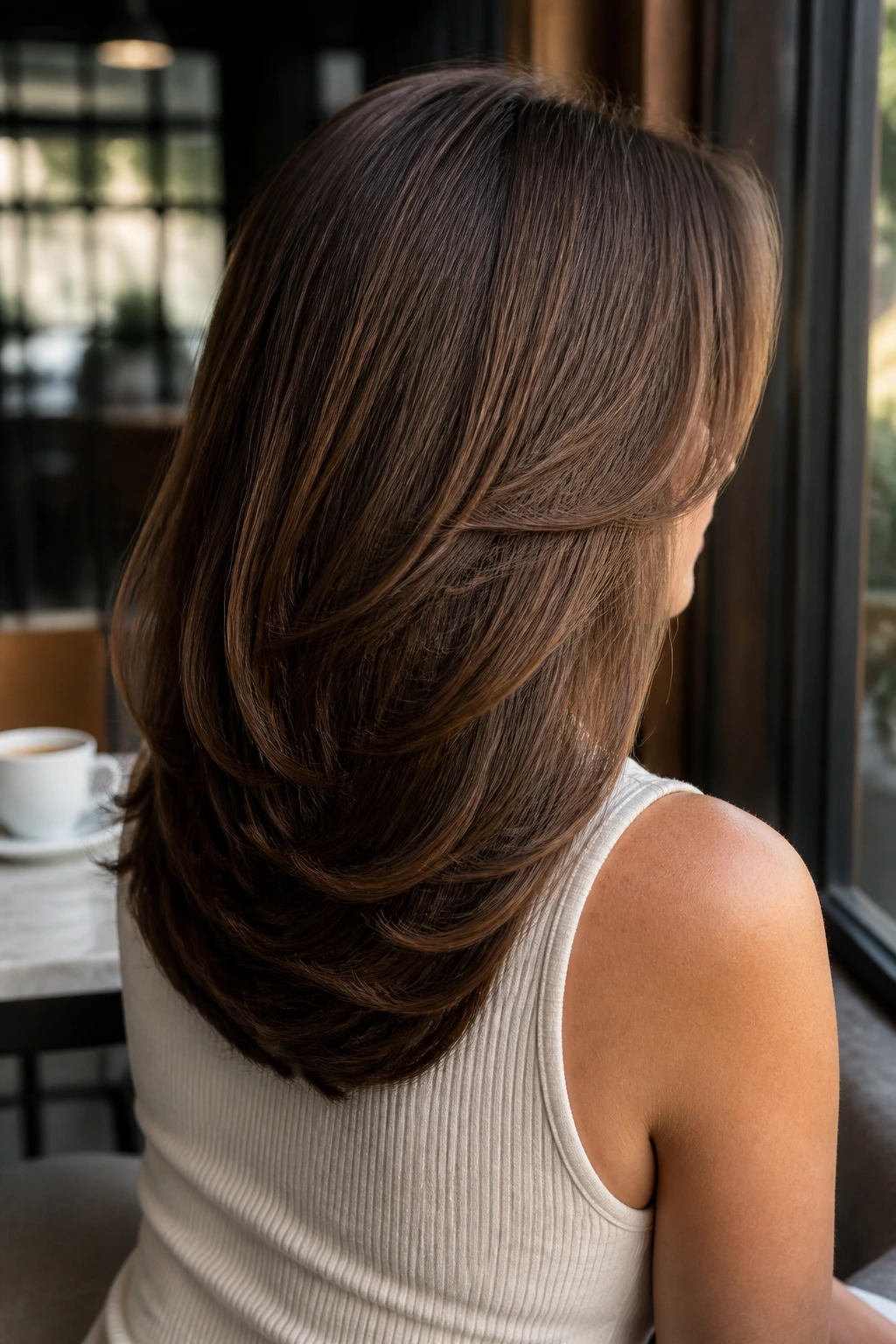
A U-shaped cut gives you a softer back view than a blunt line, but it doesn’t push the silhouette into dramatic territory. The center falls a bit longer, the sides arc gently around it, and the result feels polished rather than sharp.
This shape suits people who wear their hair down often and want the back to move when they walk. It’s also a good middle ground if you’re not sold on a V-shape, which can feel too pointed on some hair types. The U keeps the softness. The layers add swing.
I’d call this one a calm haircut. It behaves. It grows out nicely. And it doesn’t need a lot of product to stay readable.
8. V-Shaped Layers for a Sharper Silhouette
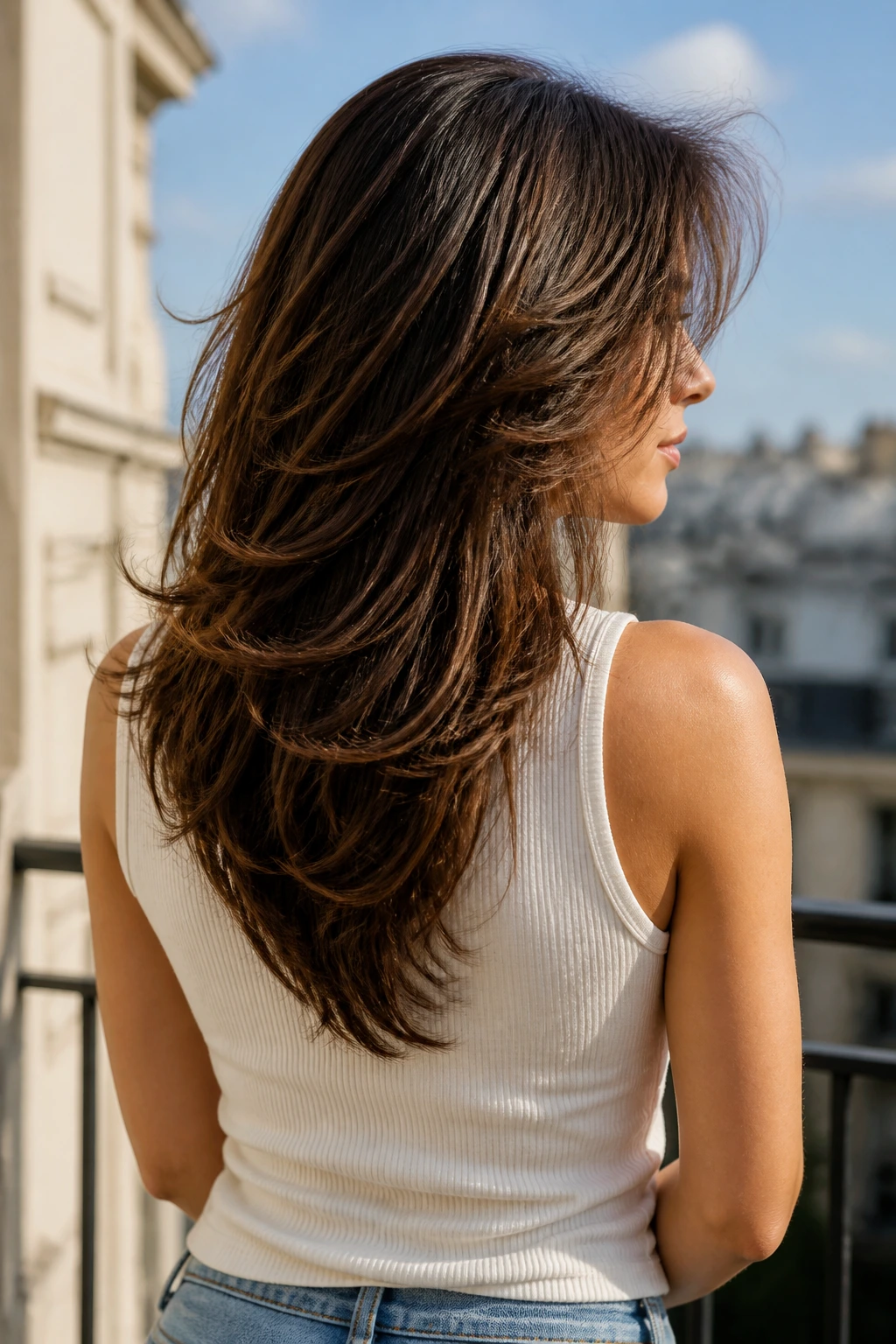
A V-shape brings more edge to medium-length hair. The back narrows to a point, and the layers fan out from there, which makes the whole cut look longer and a little more dramatic than a U-shape. On thick hair, that extra angle can keep the shape from feeling boxy.
The catch is balance. If the point gets too sharp or the layers too short, the ends can start to look stringy. On fine hair, I usually prefer a softer version of this idea, with less taper and more fullness left in the lower sections.
If you like sleek hair that still has some movement when you brush it out, this is a good option. It’s clean from the front and interesting from behind. Not every haircut manages both.
9. Feathered Layers With a 90s Blowout Feel
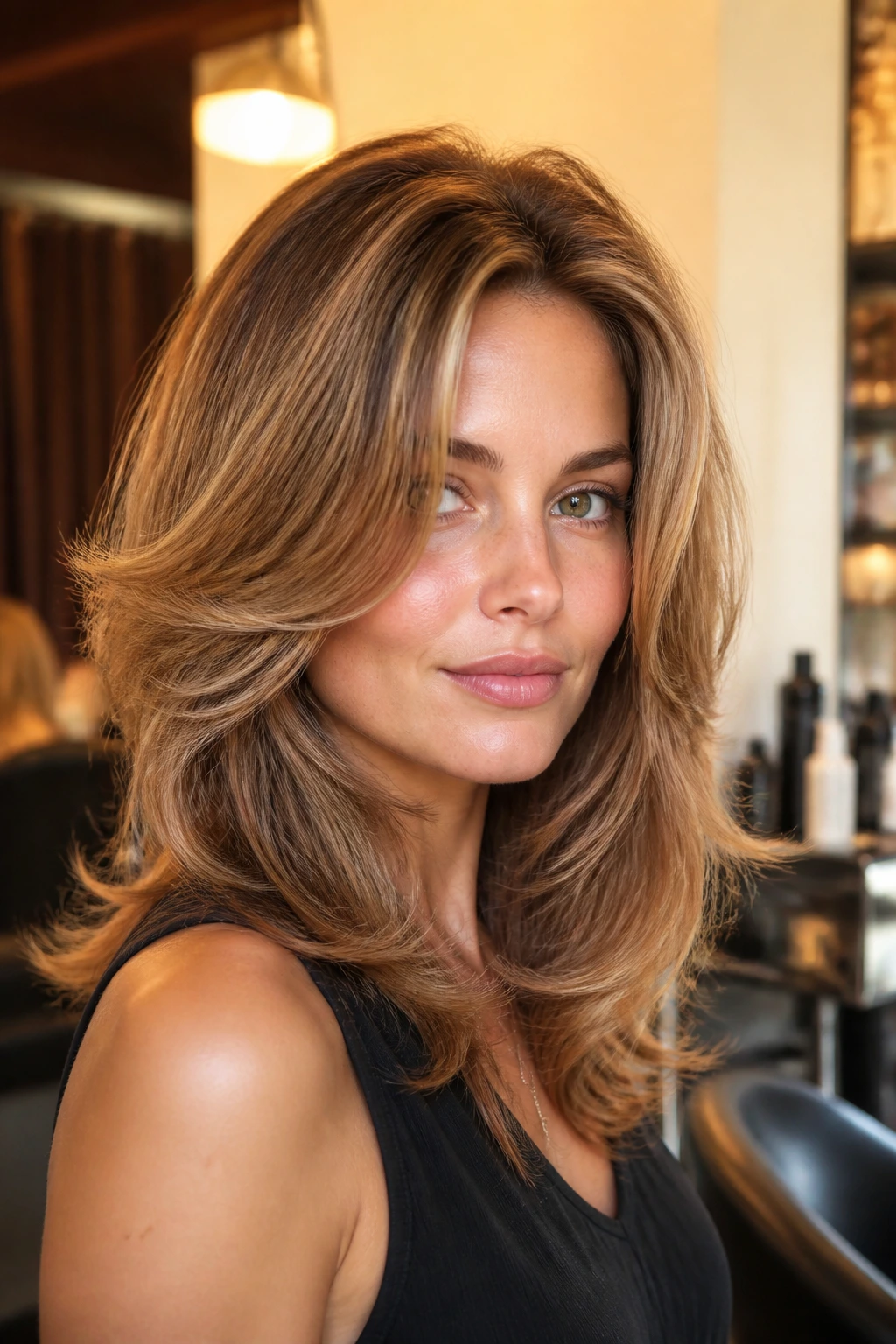
Feathered layers bring back a soft, airy swing without turning the cut into costume. The idea is simple: light pieces around the face, a brushed-out bend through the mid-lengths, and ends that feather away from the neck instead of sitting heavy on the shoulders.
This works best when the cut is done with restraint. You want movement, not shredded ends. A round brush, a little volumizing mousse, and a quick pass of heat through the front pieces are enough to bring the shape forward.
If your medium-length hair has been dragging lately, feathering can fix that fast. It gives you lift around the eyes and cheekbones while keeping the overall outline pleasant and wearable.
10. Razor-Cut Layers for Soft Edge

Razor cutting changes the feel of the ends. Instead of a blunt snip, the blade thins and softens the perimeter, which can be useful on thick hair that feels heavy at the bottom. The result is lighter, airier, and a little more undone.
It is not the right move for every head of hair. Very dry hair can fray with too much razor work, and curls need a careful hand so the shape doesn’t get fuzzy. But on straight or loose-wavy hair, a controlled razor cut can make medium-length layers sit closer to the head and move less like a block.
I like this when the goal is softness around the jaw and neck. The cut looks relaxed even when the styling is minimal.
11. Choppy Ends for a Rougher Finish
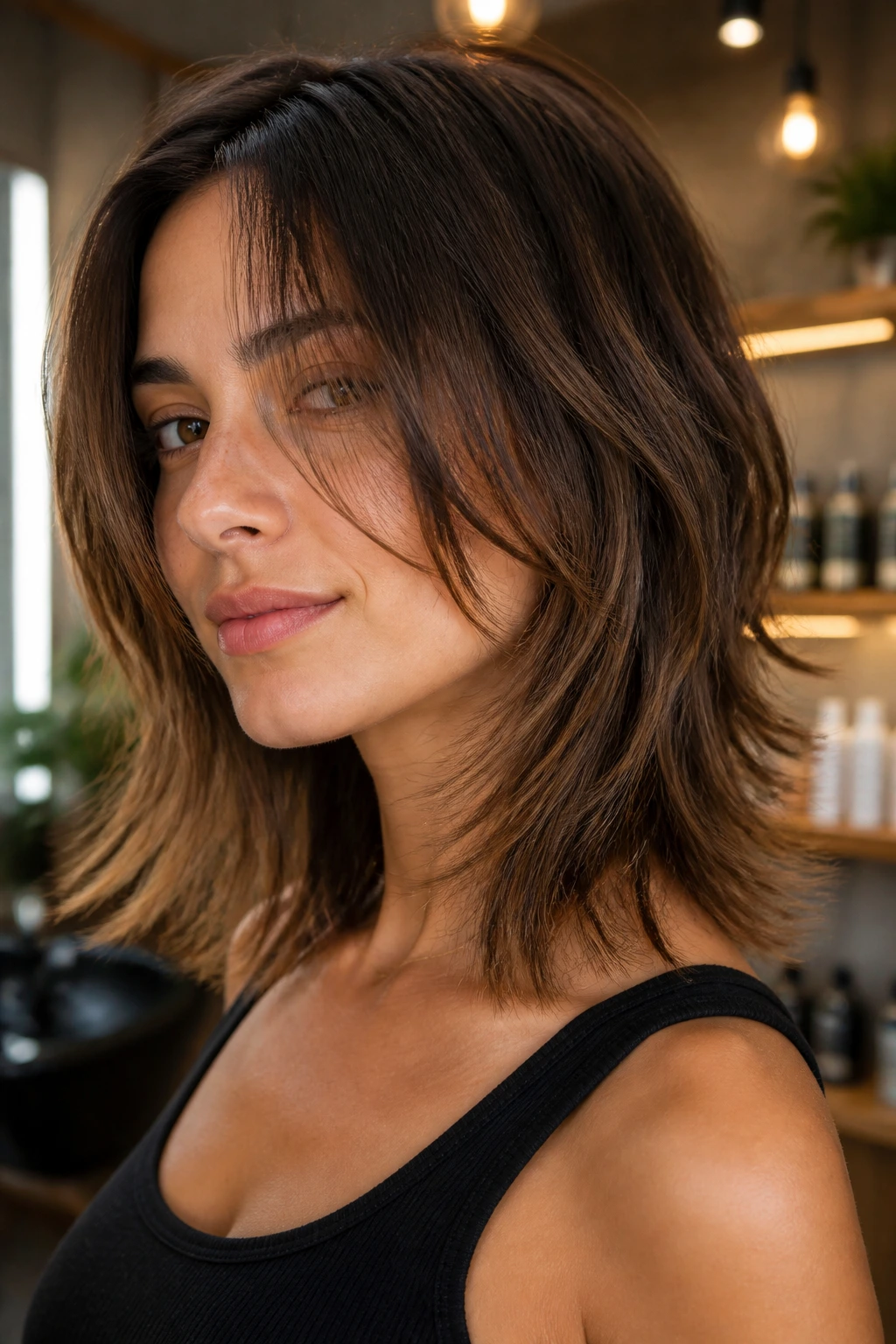
Sometimes the best move is to stop trying to make the ends behave like one smooth line. Choppy ends break that line up on purpose, which gives medium-length hair a little grit and keeps it from feeling too neat. The overall cut still has shape, just less polish.
This is especially useful if your hair naturally kicks out at the ends. Rather than forcing a smooth, salon-perfect finish every day, the haircut works with the roughness. Texture spray, a quick bend with a flat iron, or even finger-drying can be enough.
The strongest version of this look keeps the upper layers moderate and saves the choppiness for the bottom edge. Too much all over, and it starts reading as accidental.
12. Side-Swept Layers for a Deep Part
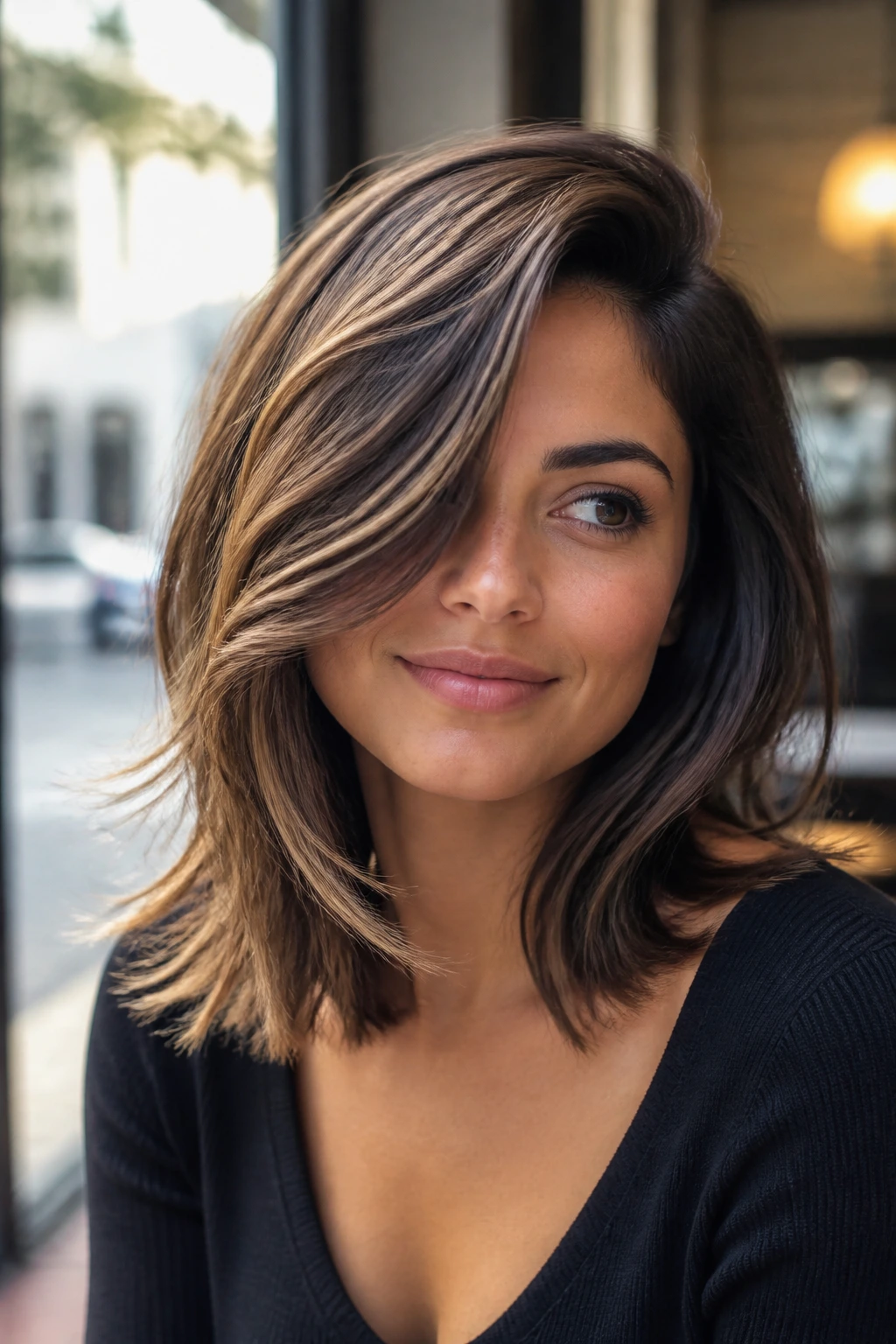
A deep side part changes the mood of medium-length layers immediately. Suddenly there’s lift on one side, movement across the forehead, and a little asymmetry that makes the haircut feel less expected. If your crown tends to lie flat, this is a smart trick.
The layers should be cut to support the side part, not fight it. One side can carry a longer sweep through the front while the opposite side tucks in tighter. That imbalance gives the cut shape without making it look lopsided.
I like this for rounder face shapes and for anyone who wants a bit more volume at the roots without using a mountain of product. It’s old-fashioned in the best sense: simple, strong, and easy to read.
13. Medium Layers for Fine Hair
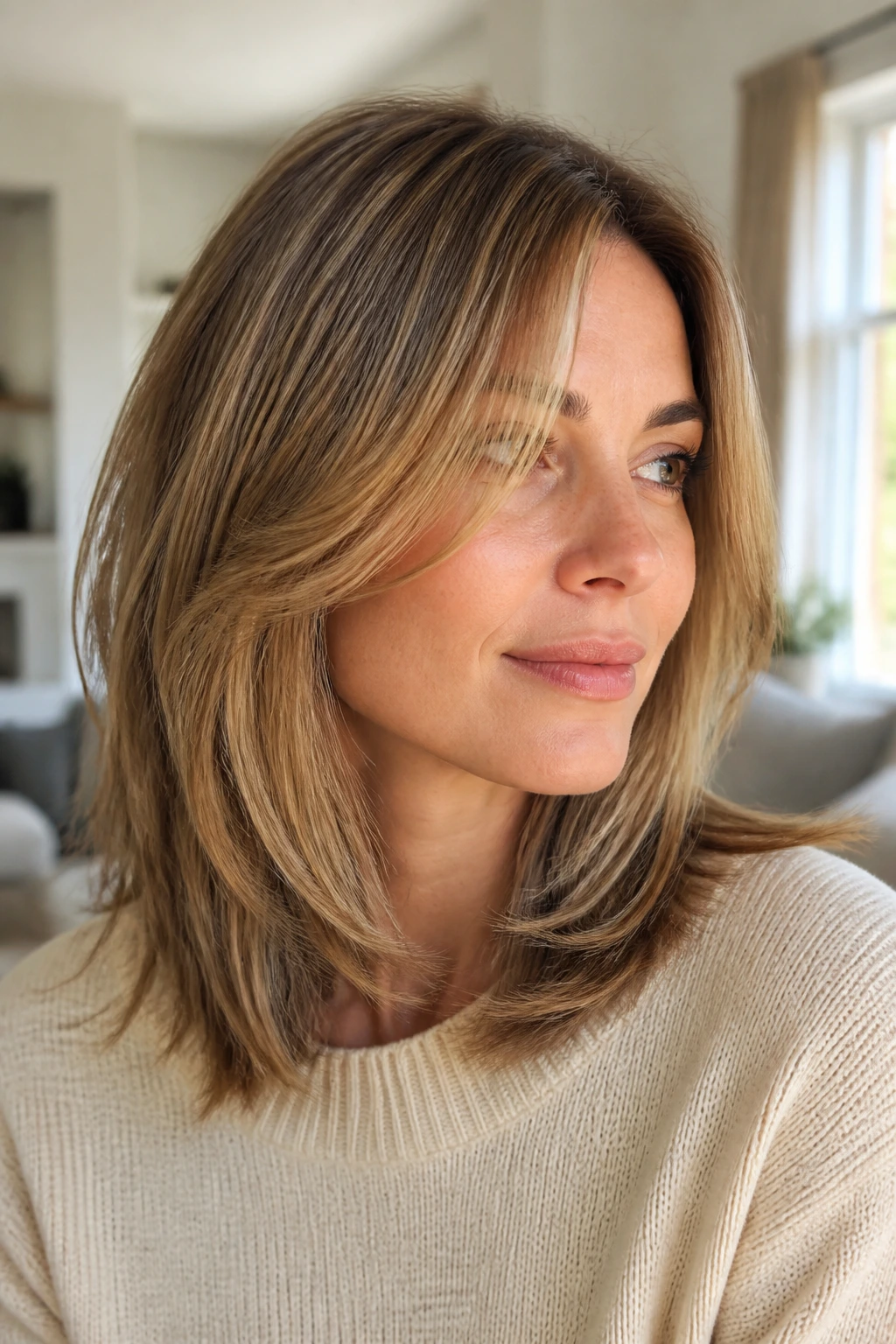
Fine hair needs strategy, not a pile of short pieces. The best layered cuts for fine medium-length hair keep the perimeter full and use a few long layers to lift the shape instead of shredding it apart. The result is movement with density still intact.
What to Ask For
- Keep the shortest layer below the cheekbone unless your hair has a lot of body.
- Ask for soft point-cutting at the ends.
- Keep the back sections long enough to hold weight.
That last part matters. Fine hair looks thin fast when the ends get too airy. A little mousse at the roots and a round brush through the front pieces can make the cut look fuller without much effort.
14. Heavy Layers for Thick Hair
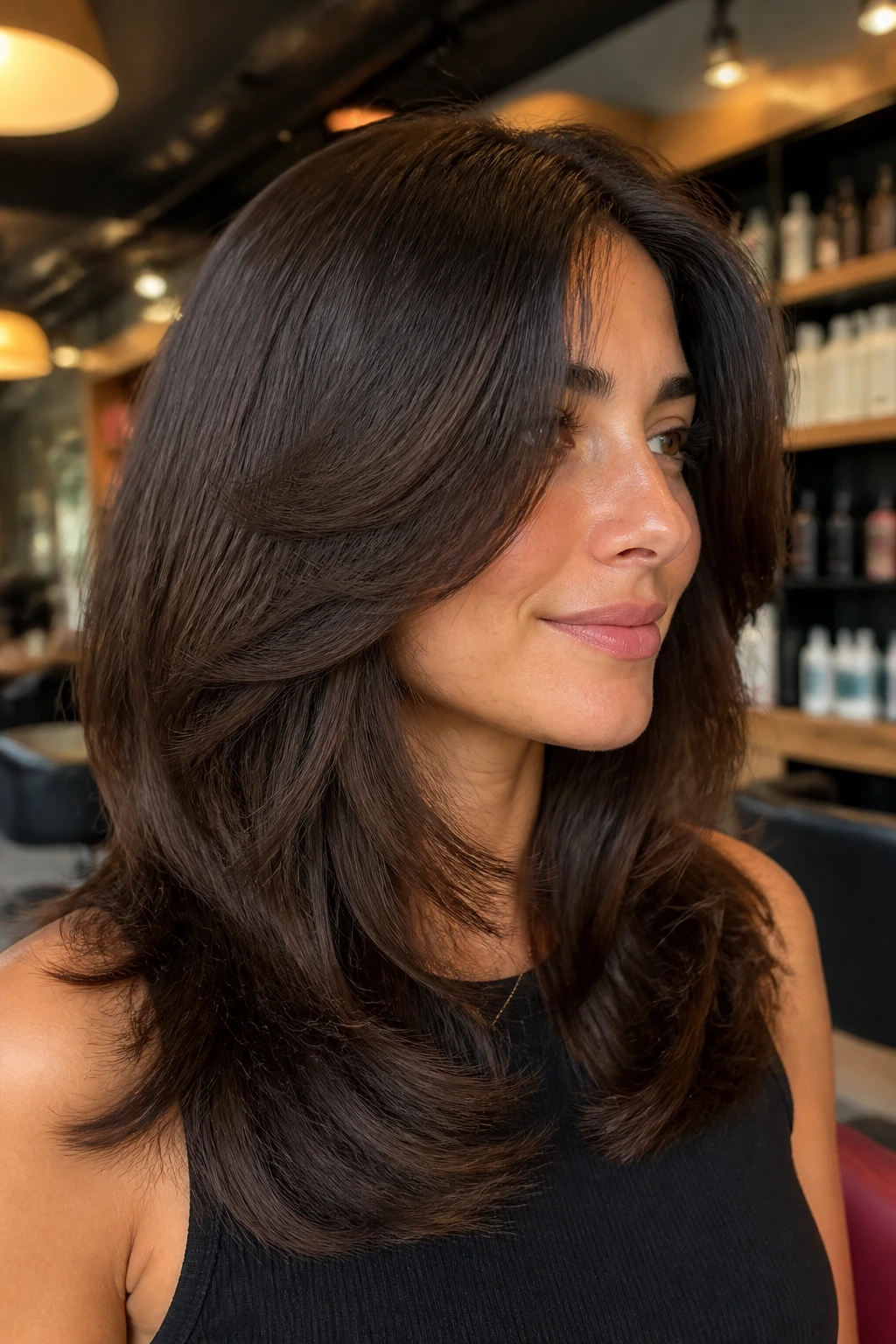
Thick hair can wear layers that would destroy finer strands. That’s the advantage. You can remove bulk through the mid-lengths and still leave enough hair behind to keep the shape rich and strong.
The real goal here is balance. If the top gets over-lightened and the bottom stays dense, the haircut balloons. If the ends get too thinned, the cut looks frayed. What you want is weight removal that lets the hair sit closer to the head and swing instead of bulking out at the sides.
This is where a good stylist earns the money. Thick hair often needs internal layering, not random chopping. Done well, it dries faster, feels less heavy on the neck, and stops fighting every brush you own.
15. Curly Layers That Respect the Pattern

Curly medium-length hair should be cut for the curl pattern, not against it. That usually means longer layers, careful shaping, and enough room for the curls to spring without collapsing into a triangle. If the cut is too short in the wrong places, the curl clumps stack up badly.
Dry or mostly dry cutting tends to help here because the stylist can see how each curl behaves. The layers should follow the natural movement, not invent a shape that only works when the hair is wet and stretched out. That’s where a lot of curly cuts go sideways.
Use leave-in cream or gel, depending on your texture, and stop touching it while it dries. Curly layers look best when they’re allowed to form their own pattern. Fighting them always costs time.
16. Wavy Air-Dry Layers

This is the cut for people who like to squeeze water out of their hair, add a little product, and leave the rest alone. Wavy air-dry layers should be soft, not chopped, so the bends have room to form without turning frizzy at the ends.
The front pieces are the most important part. If they’re too short, they can puff. If they’re too long, the wave disappears into the rest of the cut. A gentle face frame and some internal layering in the back usually gives the best result.
Air-dry hair is unpredictable on purpose. A good layered cut makes that unpredictability look deliberate instead of sloppy.
17. Straight-Hair Layers That Don’t Collapse
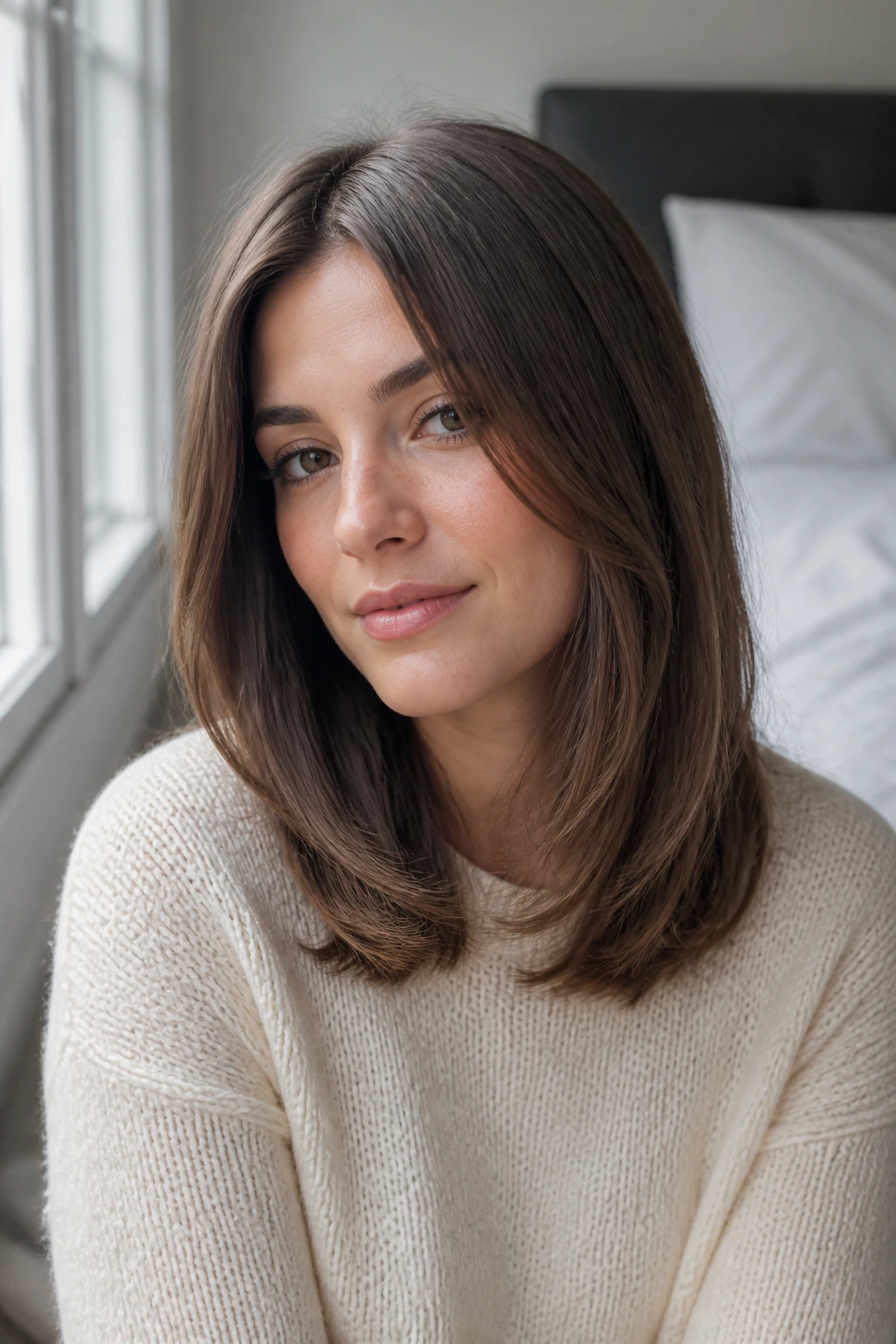
Straight hair needs movement that holds. That means clean lines, subtle graduation, and enough structure that the haircut doesn’t fold flat by lunch. Invisible layers and a slight angle through the front are often better than obvious choppy pieces.
The best straight-hair versions are about contour. A little inward bend at the ends, a touch of lift near the cheekbones, and a body line that still feels full from the back. You don’t need a lot. You need the right little bit in the right place.
Flat iron users tend to like this cut because it still looks good when straightened, which is where some layered cuts fall apart. If the shape disappears the second heat touches it, the layering was too aggressive.
18. Internal Layers for Hidden Lift
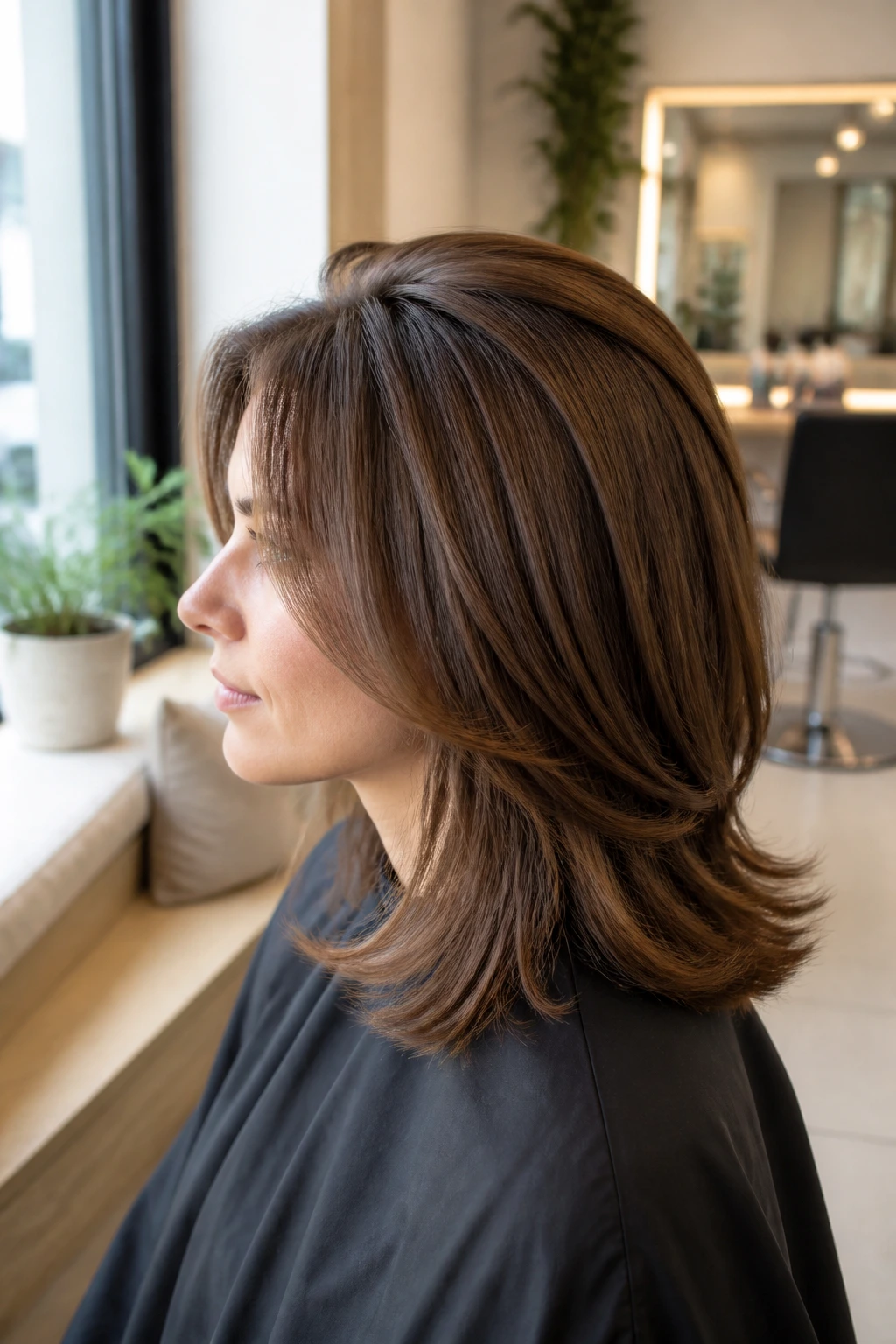
Internal layers are for people who want the haircut to look polished from the outside and more alive underneath. The top layer stays smooth, but the hidden sections are trimmed to reduce weight and create movement. It’s a quiet cut, not a flashy one.
That makes it especially useful on medium-length hair that looks dense at the bottom but flat on top. The hidden layers create lift without leaving obvious steps in the shape. You get movement when you turn your head, not when you stare at the mirror from six inches away.
I like this on straight and slightly wavy hair, especially if you live in a workplace where neat hair still matters. It’s one of the least fussy cuts on this list.
19. Layered Cut With Bottleneck Bangs

Bottleneck bangs are a softer, smarter cousin of blunt fringe. They’re narrow in the center, then widen as they travel out toward the cheekbones, which makes them blend well into medium-length layers. The front looks intentional, not chopped off and hoped for the best.
Why the Shape Matters
The narrow center opens up the face, while the wider sides connect into the rest of the haircut. That transition keeps the bangs from feeling separate from the layers. It also makes the grow-out less annoying, since the fringe can split and still look like part of the cut.
This is a good choice if you want front detail but not a full bang commitment. It has enough shape to matter and enough softness to survive a lazy styling day.
20. Soft Wolf Cut for Medium Length Hair
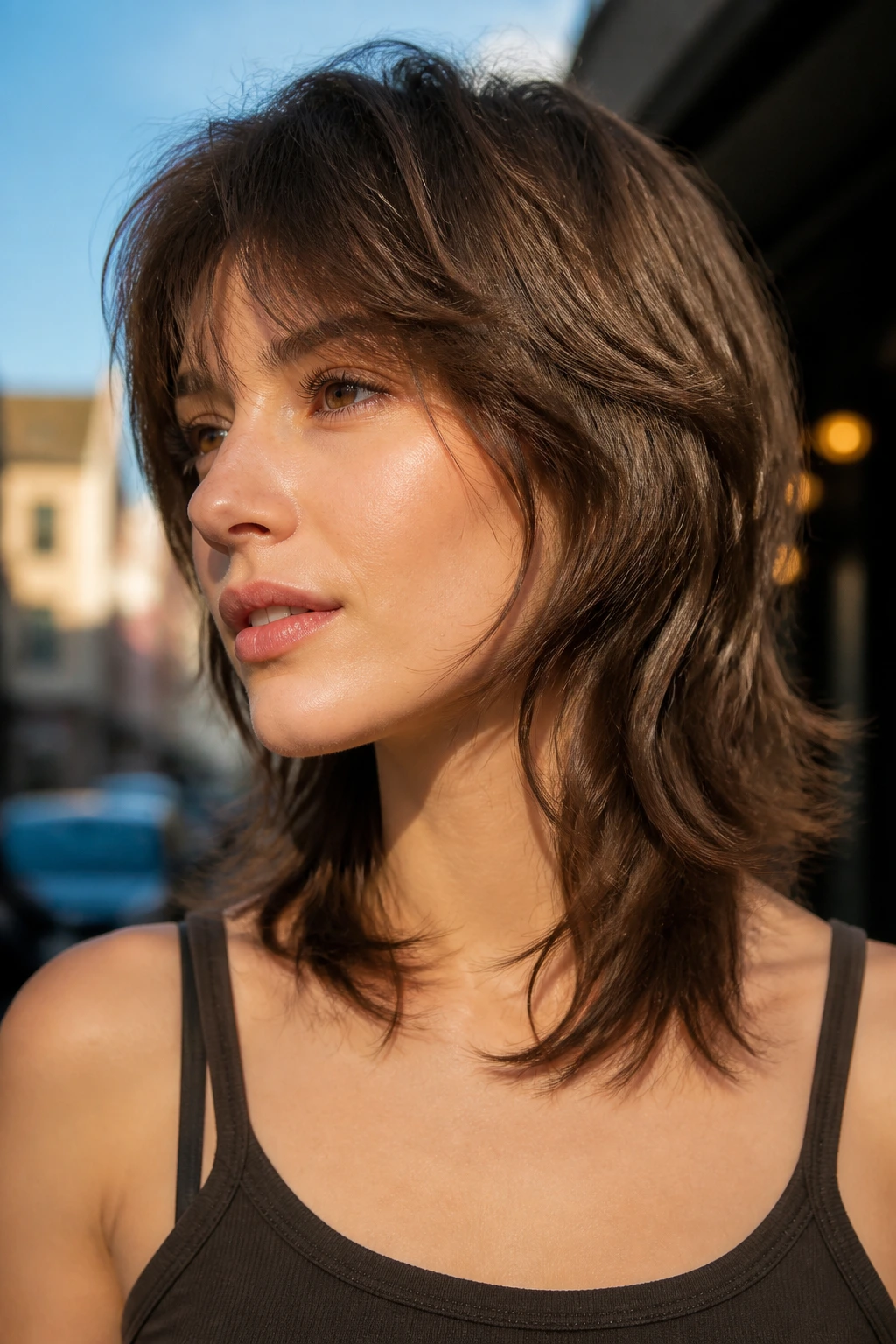
A wolf cut can go too far very fast, so I prefer the soft version on medium-length hair. Keep the crown layers shorter, let the nape stay longer, and avoid turning the ends into confetti. That gives you the airy, cool shape without the extreme shag silhouette.
The appeal is the contrast. There’s lift at the top, movement through the sides, and a slightly rebellious edge that still feels wearable. It works best on hair with a natural bend, because the layers need texture to show their shape.
If your style leans casual, this can be a fun cut. If you want smooth and tidy every day, skip it. Not every haircut needs to be friends with a brush.
21. Dimensional Layers That Show Off Highlights
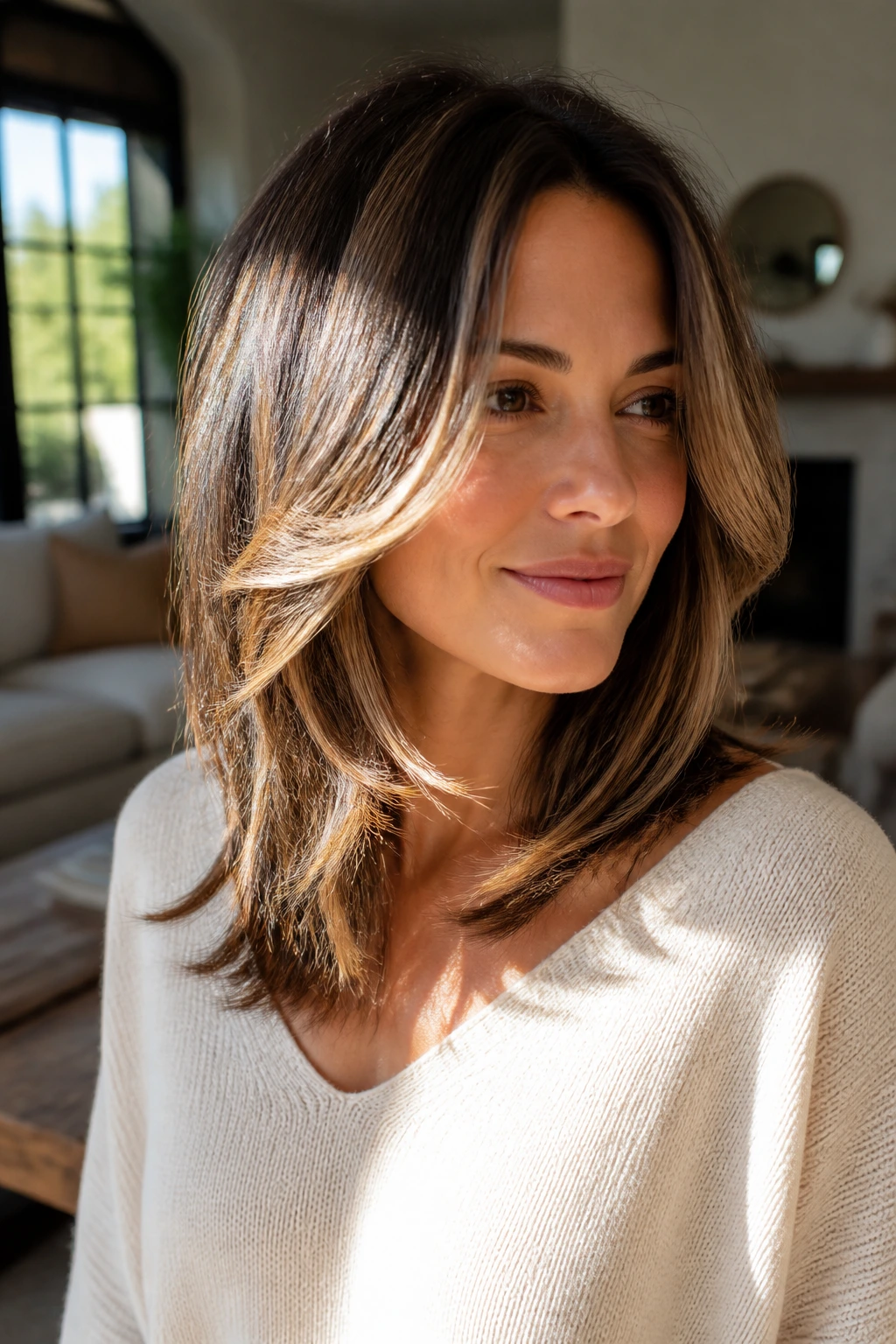
Layers and color work better together than most people expect. On medium-length hair, dimensional layers let highlights and lowlights peek through at different lengths, which makes the color look richer and less flat. A blunt line can hide that depth. Layers bring it forward.
This is especially nice with balayage, face-framing pieces, or even a simple gloss that adds shine. The movement in the cut helps light bounce across the hair in a way that looks natural, not stripey.
If your color is one of the reasons you want a new cut, tell the stylist where the lightest pieces sit. A layer map that respects the color placement usually looks better than one that ignores it.
22. Low-Maintenance Grow-Out Layers
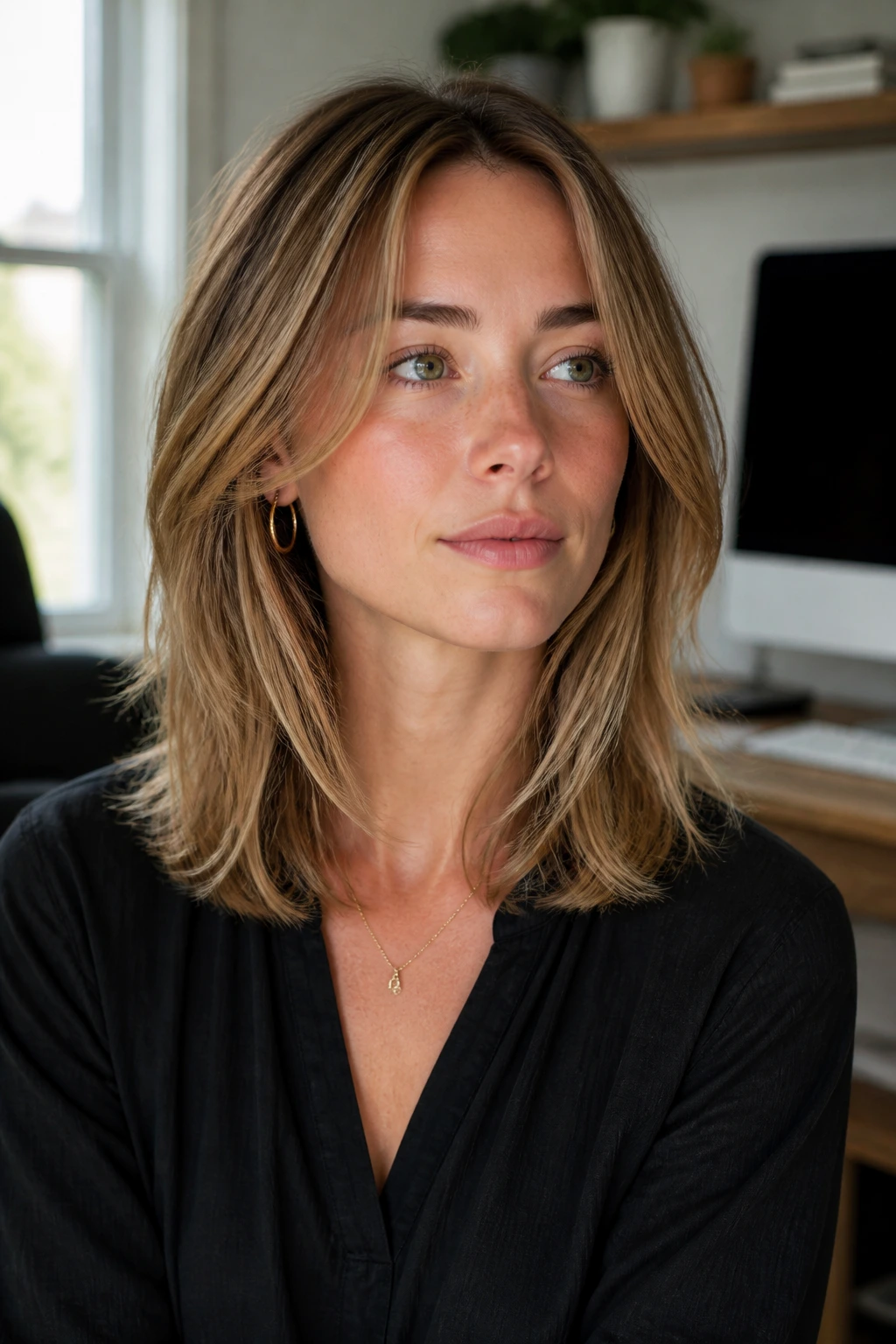
Some people want a haircut that still makes sense six weeks later. These are those layers. The shortest pieces start lower, the transitions stay soft, and the perimeter keeps enough weight that the shape doesn’t fall apart as soon as it grows.
This is a smart option if you trim less often or if you just hate obvious grow-out lines. You can wear it straight, wavy, or lightly curled, and it won’t suddenly feel like a different haircut. That matters more than it sounds.
I’d call this the practical choice. Maybe not the flashiest one, but the one you’ll appreciate when life gets messy and the salon appointment moves around.
23. Blowout Layers With Bigger Movement
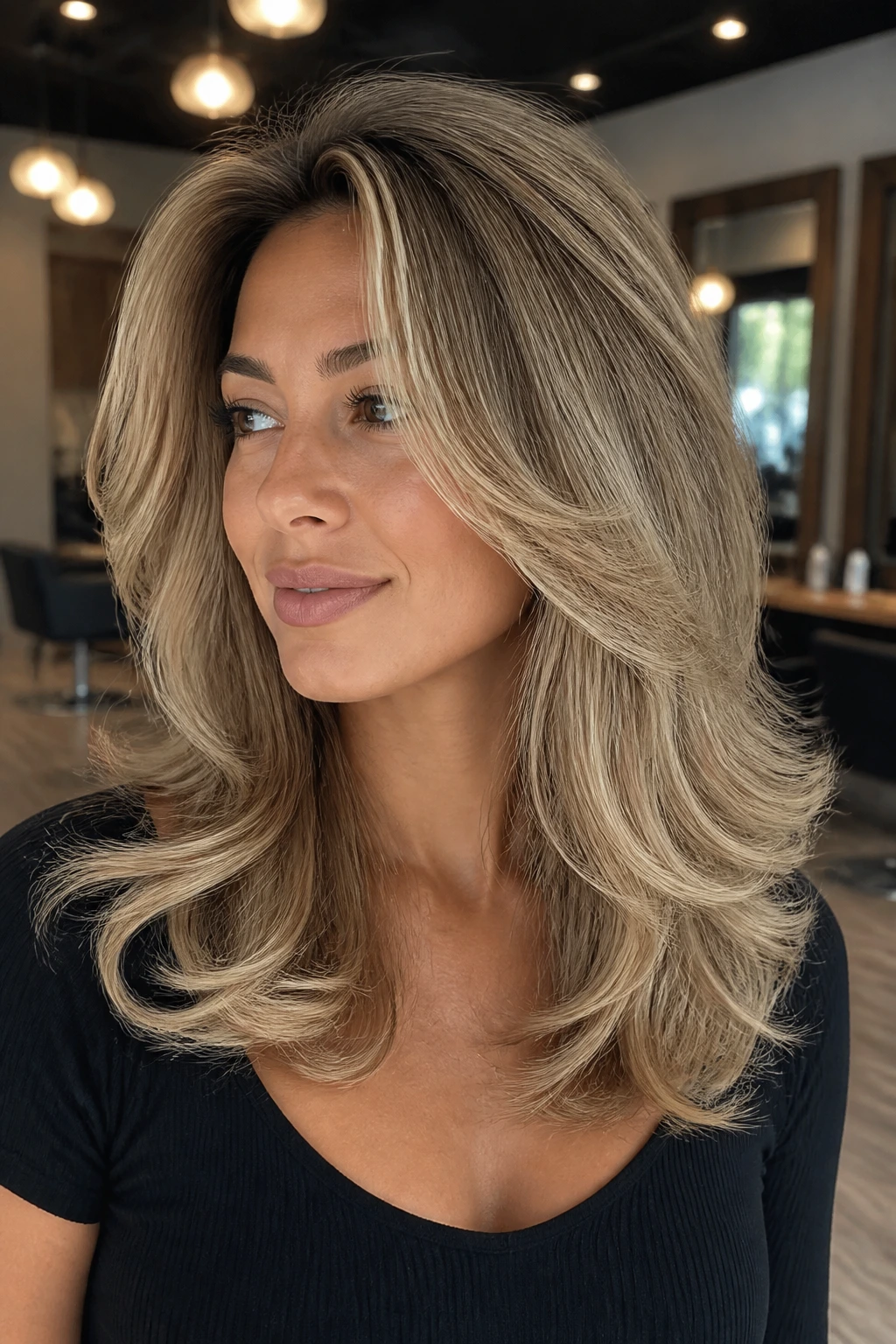
Some cuts are built for a brush and a dryer. This is one of them. Blowout layers create big, soft movement through the mid-lengths so the hair flips cleanly at the ends and lifts away from the face without needing much else.
The layer map here should support bend and volume. Think cheekbone framing, a little lift at the crown, and ends that want to curve on their own. A medium round brush and a heat protectant spray are enough to get the shape going.
If you like that salon-fresh swing, this is a satisfying haircut to wear. It looks even better on day two, when the movement settles just a bit.
24. Sloped Front Layers
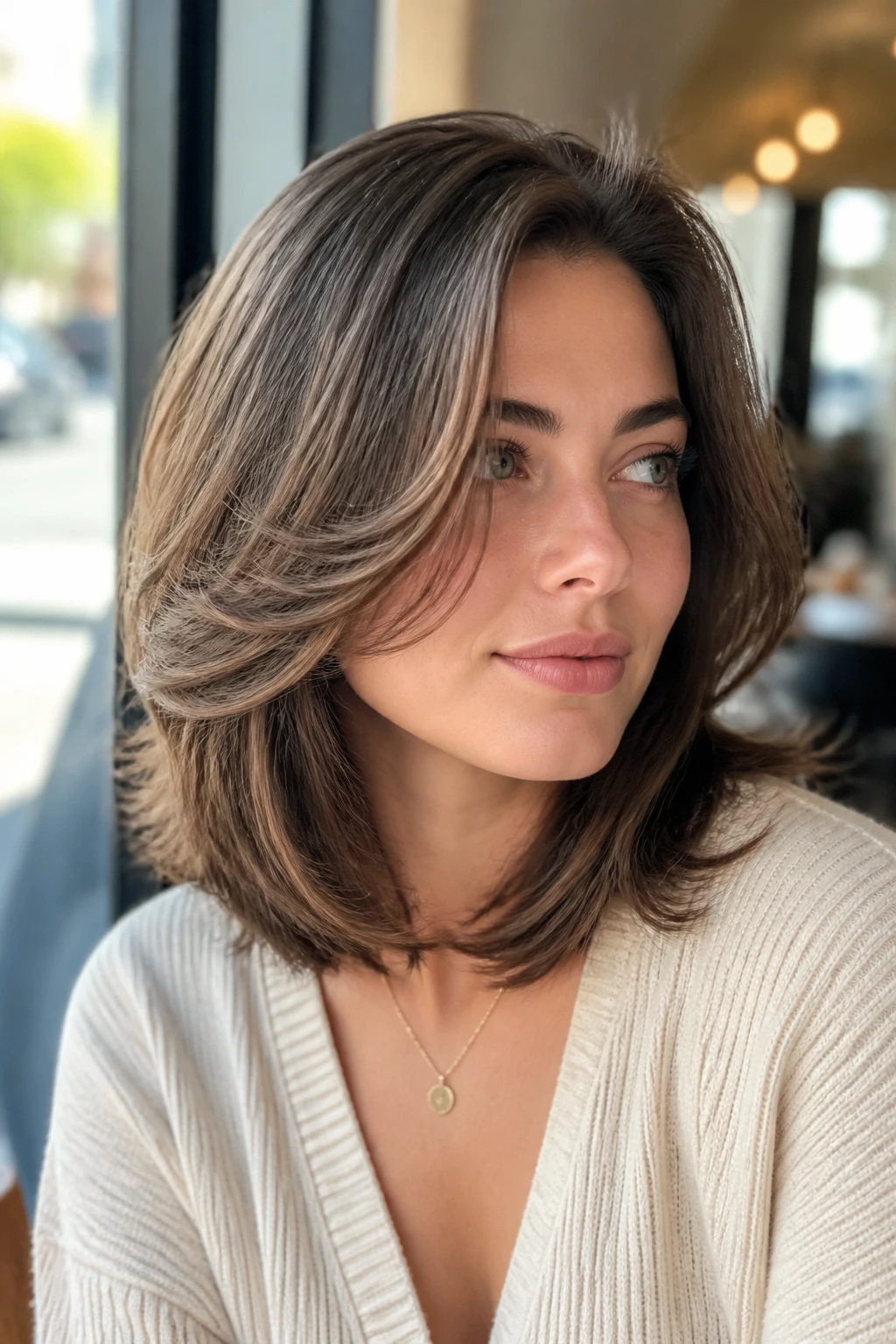
A sloped front creates a soft diagonal from the face into the rest of the haircut. The shorter pieces sit closer to the cheek or jaw, then the line lengthens as it moves back. That makes the face look more open and the cut feel more sculpted.
This shape works well with both center and side parts, but it changes the effect. A center part makes the slope feel balanced. A side part gives it more lift and drama. Either way, it keeps medium-length hair from looking boxy around the chin.
If you tend to tuck hair behind one ear, this cut gives you something nice to work with on both sides. Small detail. Big difference.
25. Piecey Layers Around the Face
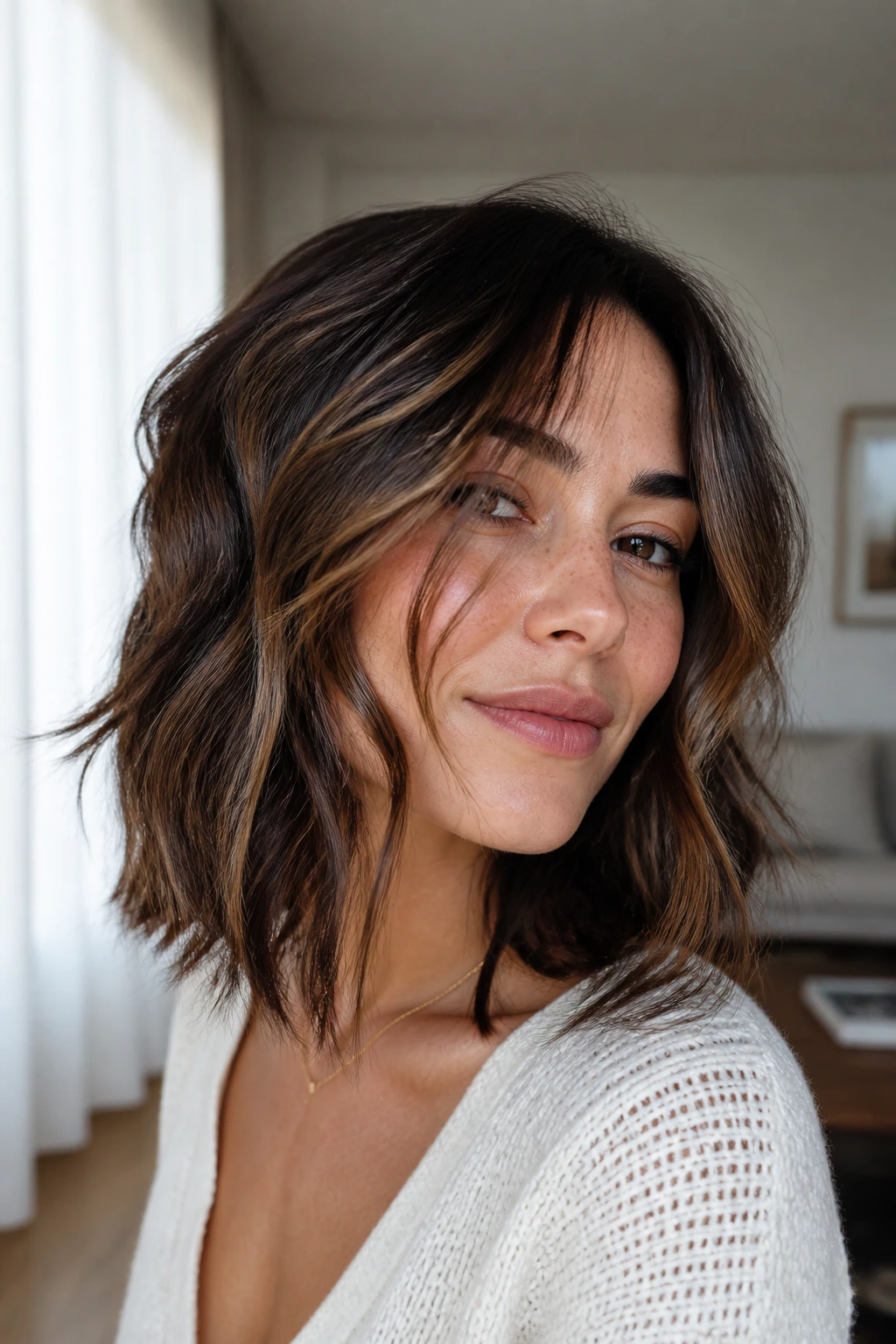
Piecey layers are for people who want the front to look separated and textured, not soft and blended. The strands around the face are defined enough to see each one, which gives medium-length hair a little edge without forcing the whole head into a shag.
Best Suited For
- Hair that wants definition at the front.
- Quick styles that rely on a bit of texture cream or pomade.
- Ponytail days, because the front pieces still do something when the rest is pulled back.
I like this cut when the rest of the hair is kept cleaner and more controlled. Too much pieceiness everywhere, and it turns messy. Just enough around the face, though, gives the haircut a sharper personality.
26. Shoulder-Grazing Layers With a Clean Line
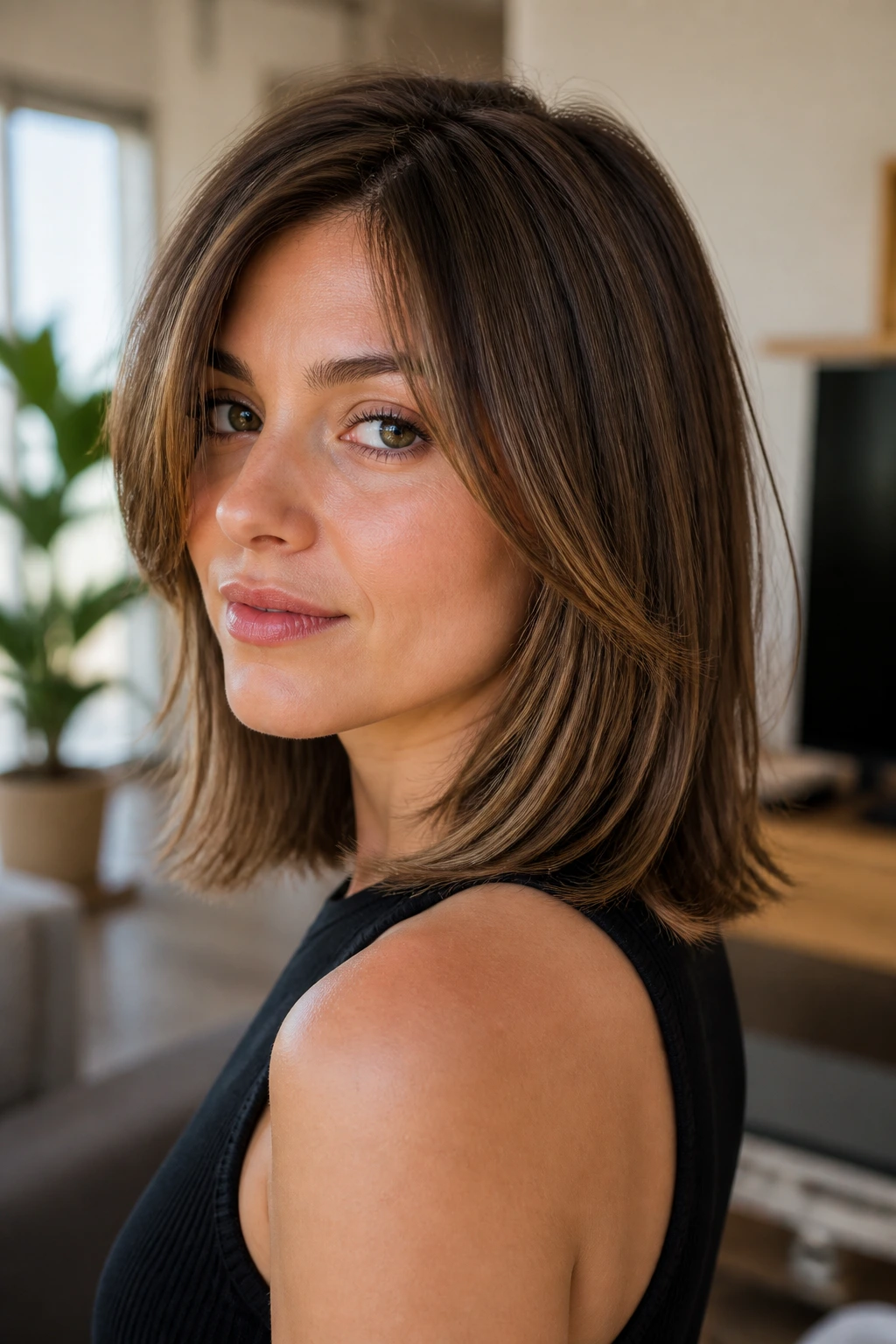
This one sits right at the shoulder and uses layers sparingly enough to keep the edge tidy. It’s a good fit if you want movement but still like the feeling of a deliberate line. The shoulder-length perimeter gives the cut structure; the layers keep it from kicking outward at every turn.
A lot of medium hair gets awkward at the shoulders because the ends either flip up or wedge under clothing. This shape avoids that by staying slightly below the shoulder with just enough break-up to move cleanly.
It’s a sensible haircut. Not boring. Sensible. There’s a difference.
27. Subtle Long Layers for First-Timers
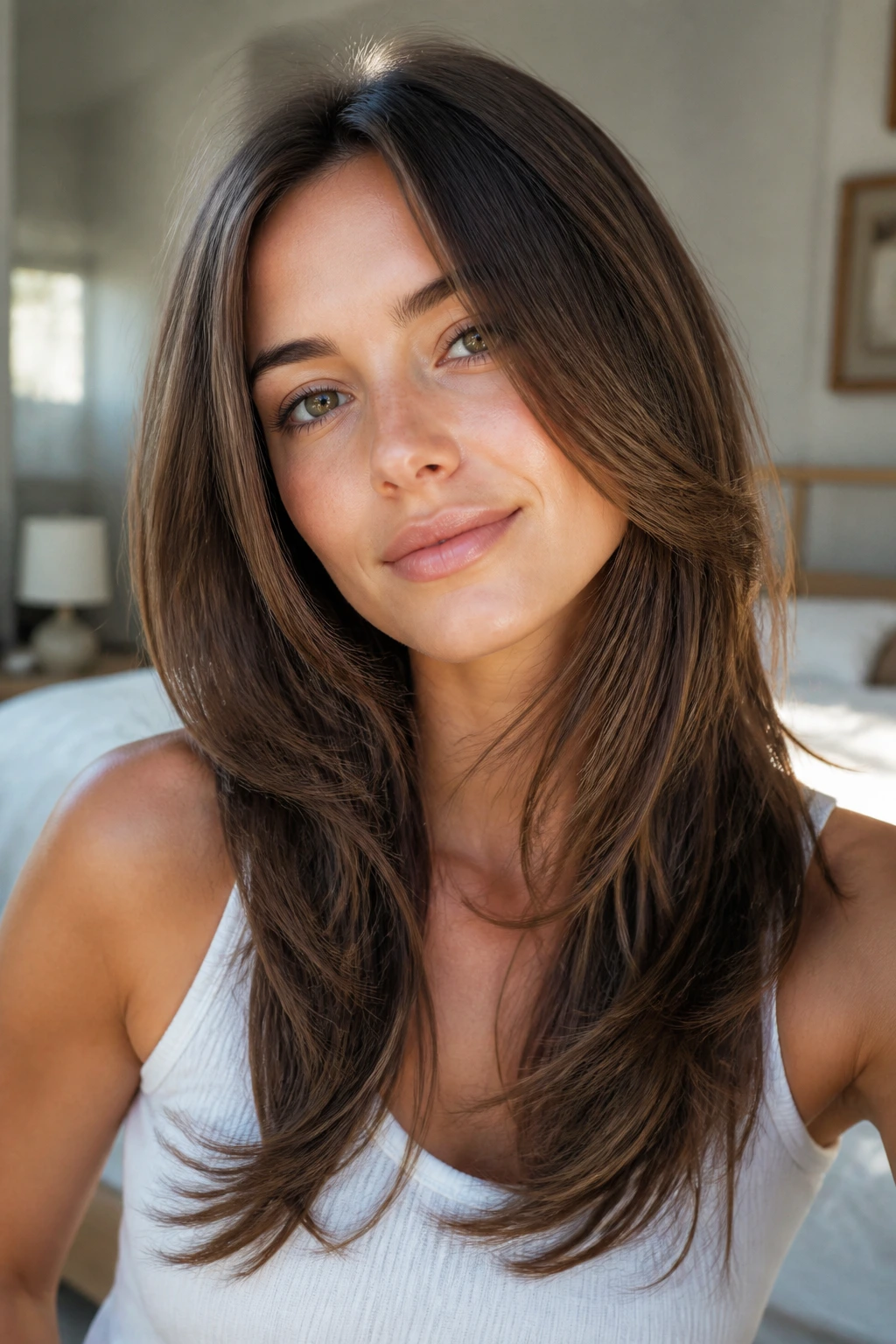
If you’ve never had layers and you’re nervous about losing length, start here. The longest layers begin well below the cheekbone, so the change is visible but not dramatic. The haircut gains movement, but the overall outline still reads like your hair.
This is also the easiest cut to grow out if you change your mind. Since the layers are long, they blend back in instead of forming a staircase around your head. That’s useful if you’re testing how much movement you actually want to live with.
Ask for a soft transition rather than a stacked look. You want the haircut to breathe, not to announce itself from across the room.
28. Volumizing Crown Layers
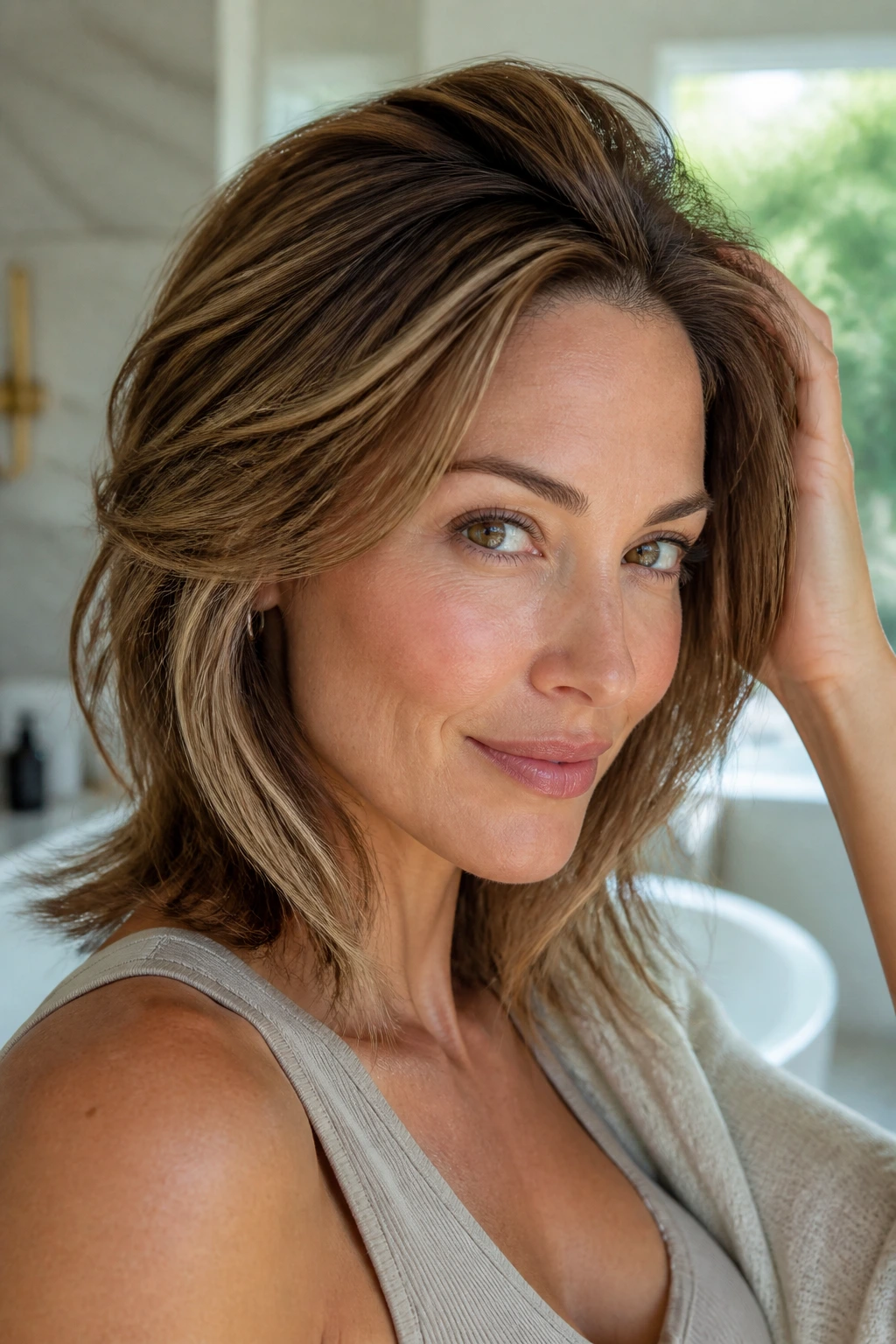
When the crown lies flat, everything else suffers. Volumizing crown layers solve that by removing a touch of weight up top and letting the roots lift more easily. The back and sides can stay longer, which keeps the haircut balanced.
How It Feels in Real Life
You notice it first when you flip your head over or clip the roots while drying. The top no longer sits plastered to the skull. That tiny bit of lift changes the whole outline, especially on medium hair that tends to settle by noon.
If you like using root clips or velcro rollers, this cut pays you back. It gives those tools something to work with instead of wasting them on hair that refuses to budge.
29. Softly Tapered Ends
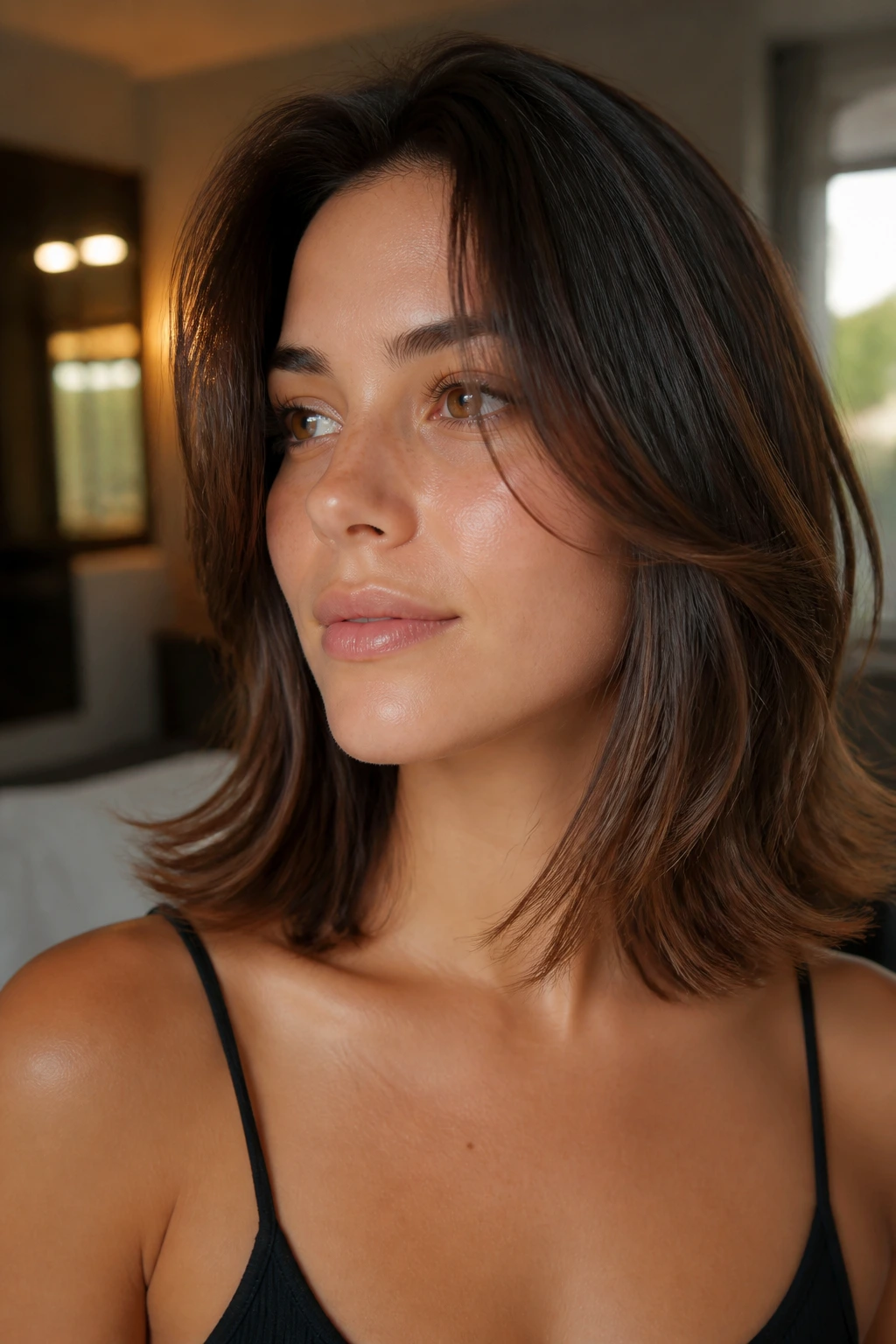
Soft tapering is the quiet fix for ends that feel too blunt or too boxy. Instead of carving obvious layers through the head, the stylist eases the bottom edge so the hair moves a little more freely. It’s subtle, but on medium-length hair subtle often reads as expensive-looking.
The trick is not to over-thin the ends. You want a soft finish, not a wispy one. On medium-density hair, a little point-cutting can make the perimeter sit better around the shoulders and slip past the collar without catching.
I like this when the haircut needs polish more than personality. Not every head of hair wants to be edgy.
30. Layered Cut With a Center Part
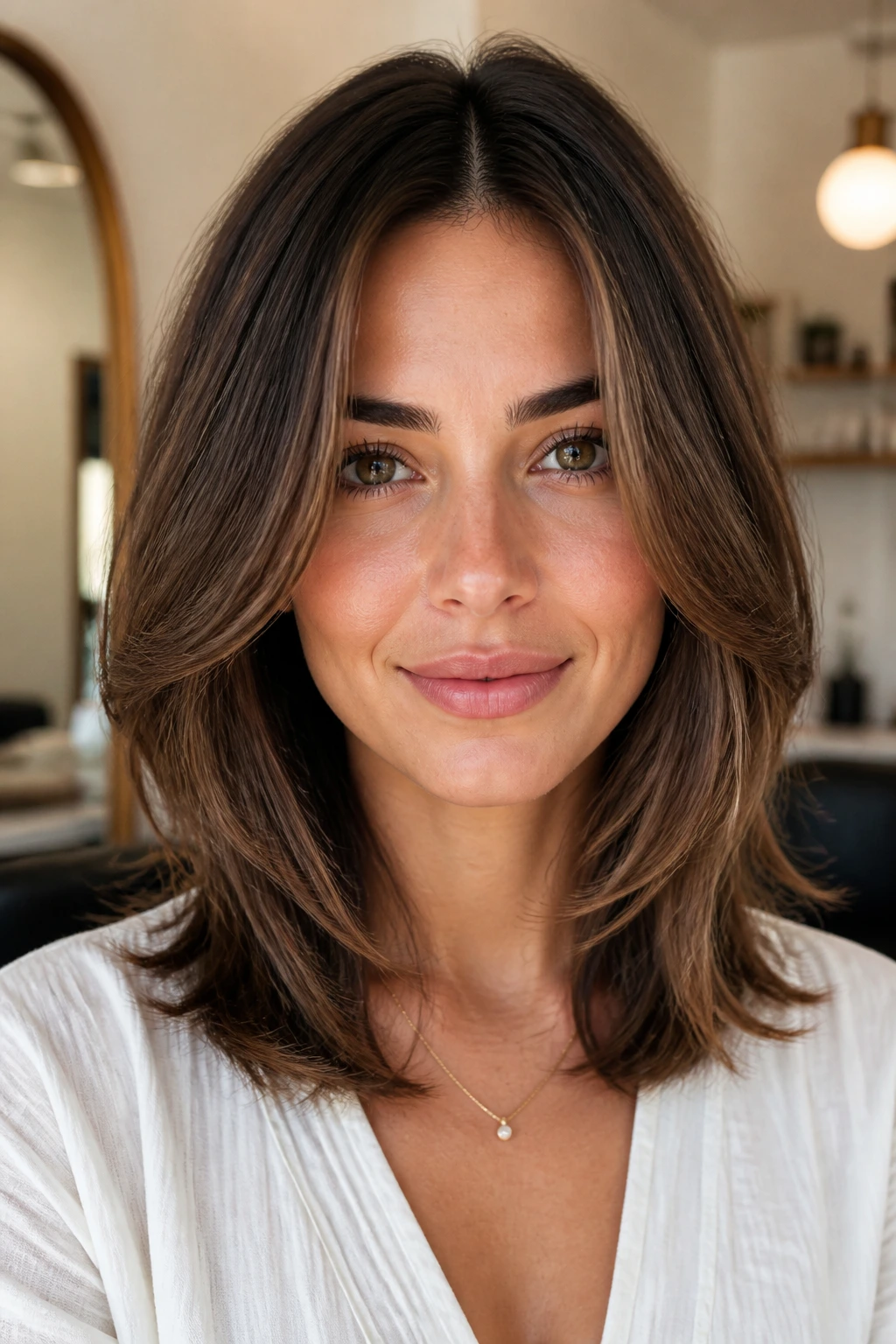
A center part shows everything. That can be a blessing or a problem, which is why the layers need to be balanced and clean. The front pieces should fall evenly on both sides, with enough length to frame the face without looking like two separate curtain rods.
This shape suits oval and long faces especially well, but it can work on almost anyone if the layers are placed with care. The center part keeps the haircut calm and modern, while the layers stop it from going flat.
If your part tends to drift, the cut still works. It just needs enough symmetry that the hair can move a little without breaking the shape.
31. Layered Cut With a Side Part
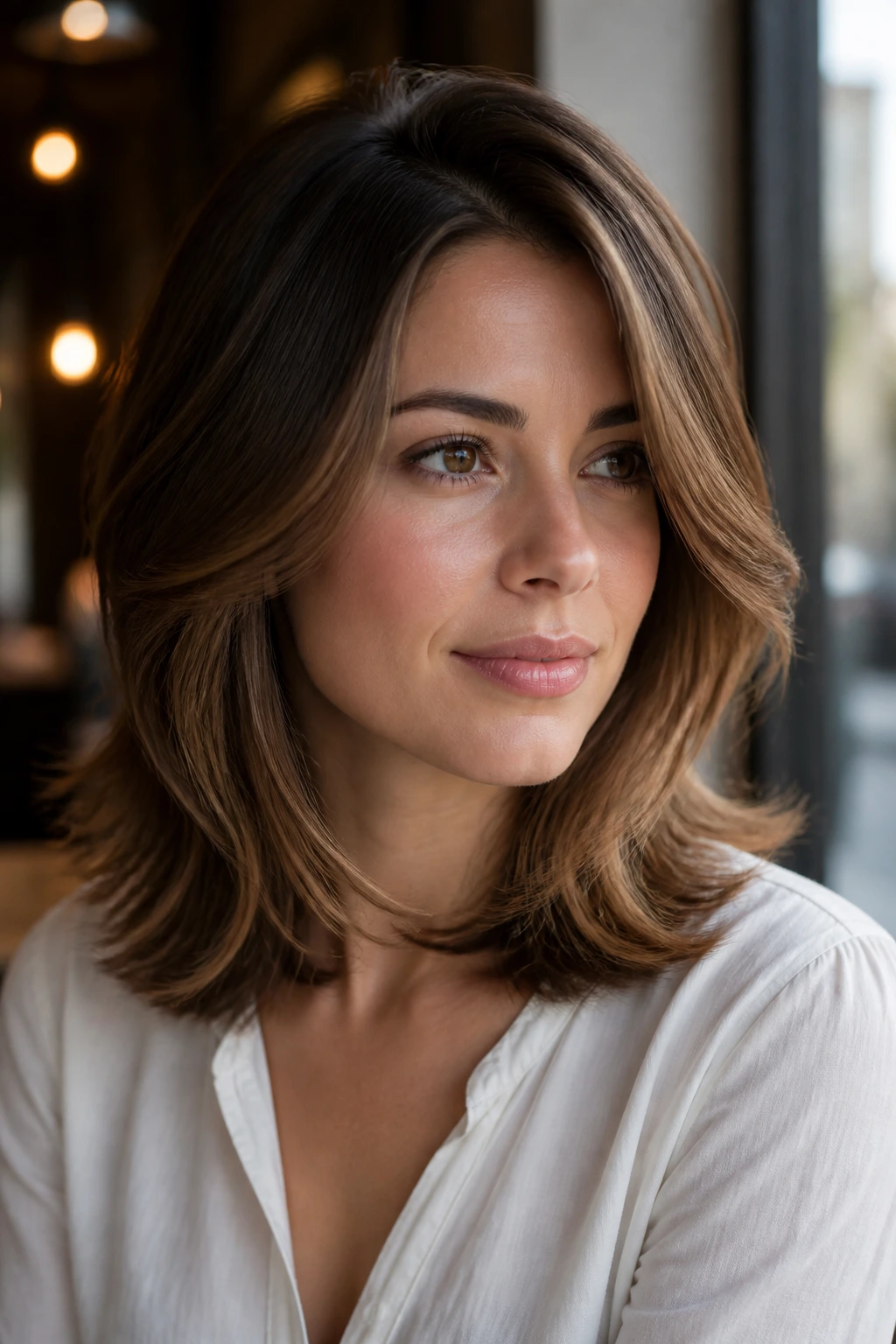
A side part gives medium-length layers more lift than people expect. One side gets a little extra volume, the front falls across the forehead in a softer sweep, and the whole haircut feels more dynamic without changing the actual length.
Why the Asymmetry Helps
A side part can hide a flat crown, stretch a round face, and make straight hair look less severe. The layers should support that movement by being a little fuller on the heavier side and a little shorter around the face where the sweep lands.
I’d choose this if you like a bit of old-school glamour with your regular haircut. It’s easy to wear, and it has enough shape to look polished even when the rest of the day is not.
32. Balanced Salon-Ready Layers
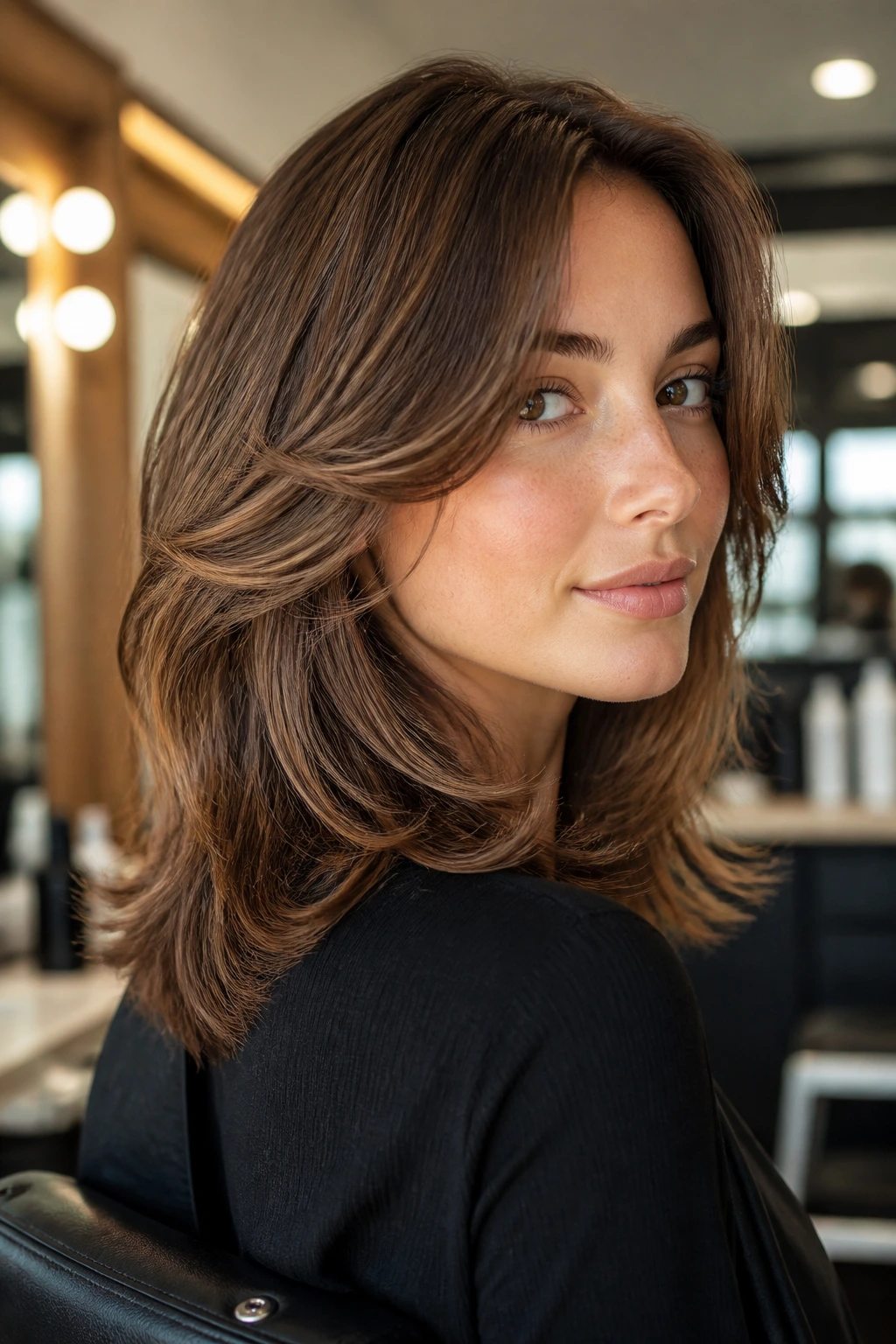
This is the cut I’d call the safest all-purpose option. The layers start around the cheekbone or just below it, the ends keep enough weight to stay thick, and the overall shape looks deliberate whether you blow it out or let it air-dry. Nothing here is extreme.
If you want a haircut that can handle most routines without constant correction, ask for this balance. It gives movement at the front, control at the ends, and enough structure through the back that the shape doesn’t disappear after two shampoos.
It is the kind of layered haircut that makes sense a month later, which matters more than it gets credit for.
How Layer Placement Changes the Whole Cut
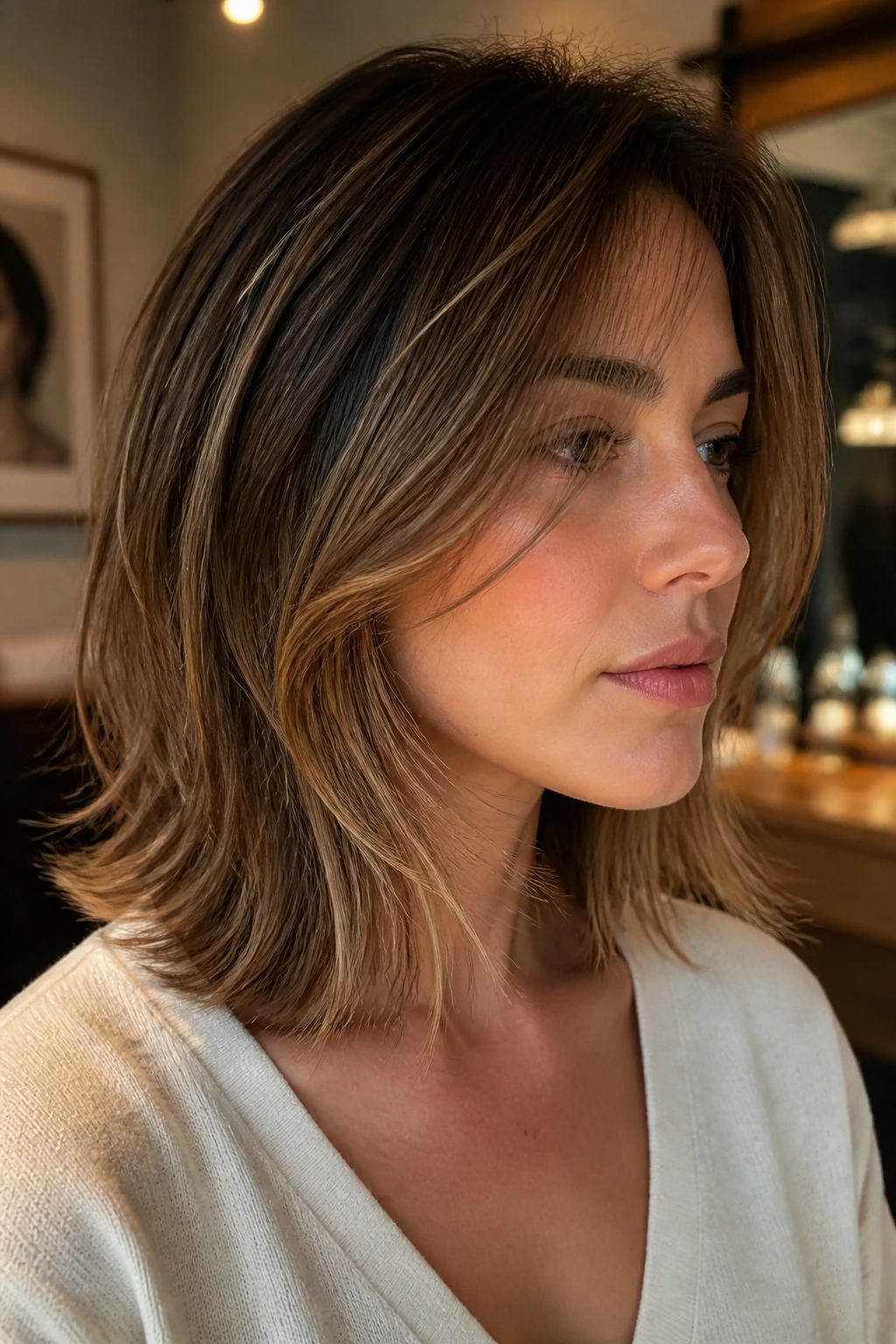
The difference between a cut that flatters and a cut that fights you often comes down to one inch. One inch on the front pieces. One inch in the crown. One inch left at the perimeter.
That sounds small, and it is. But medium-length hair lives in that middle zone where tiny changes are obvious. Push the shortest layer up to the cheekbone and you get a softer frame. Keep it closer to the collarbone and the whole shape stays heavier and more relaxed. In thick hair, that weight can be useful. In fine hair, it can be the difference between hair that moves and hair that disappears.
I also care a lot about the bottom line. If the perimeter gets shredded, the haircut loses its anchor. If it stays too heavy, the layers around it barely show up. The sweet spot is a solid edge with enough internal movement that the hair shifts instead of sitting there like one piece of fabric.
The Brushes, Blow-Dryers, and Clips That Make Layers Behave
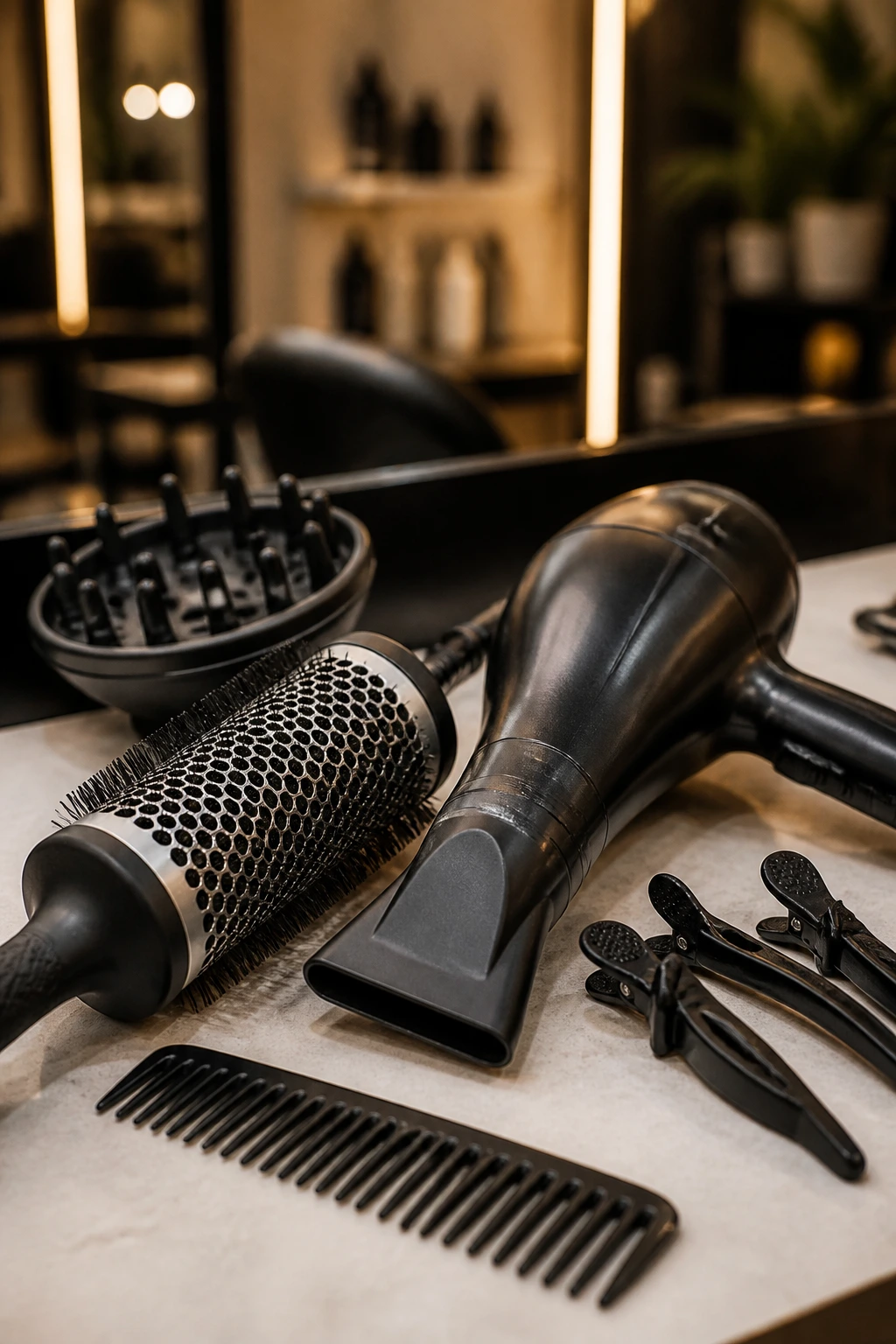
- A 1.5- to 2-inch round brush: Best for shaping the front pieces and rounding the ends under without making them look curled.
- A dryer with a concentrator nozzle: Directs air where you want it, which matters if you’re smoothing layers rather than rough-drying them.
- A wide-tooth comb: Useful for wavy or curly layered hair when you want to detangle without pulling the shape apart.
- Root clips or duckbill clips: These lift the crown while hair cools and help the top keep its shape.
- Velcro rollers: Handy for blowout styles and crown volume, especially when the front needs a little memory.
- A diffuser: Worth owning if your layers are curly or wavy and you want them to keep their pattern.
- Heat protectant spray: Non-negotiable if you use a dryer or flat iron more than a couple times a week.
- Light texturizing spray: Gives piecey layers some separation without making the hair sticky.
- A smoothing cream: Better than heavy oil on medium hair if you want the ends to lie neatly.
- A small flat iron: Best for bending the front pieces or flipping the ends without flattening the whole head.
Choosing the Right Styling Products for the Finish You Want
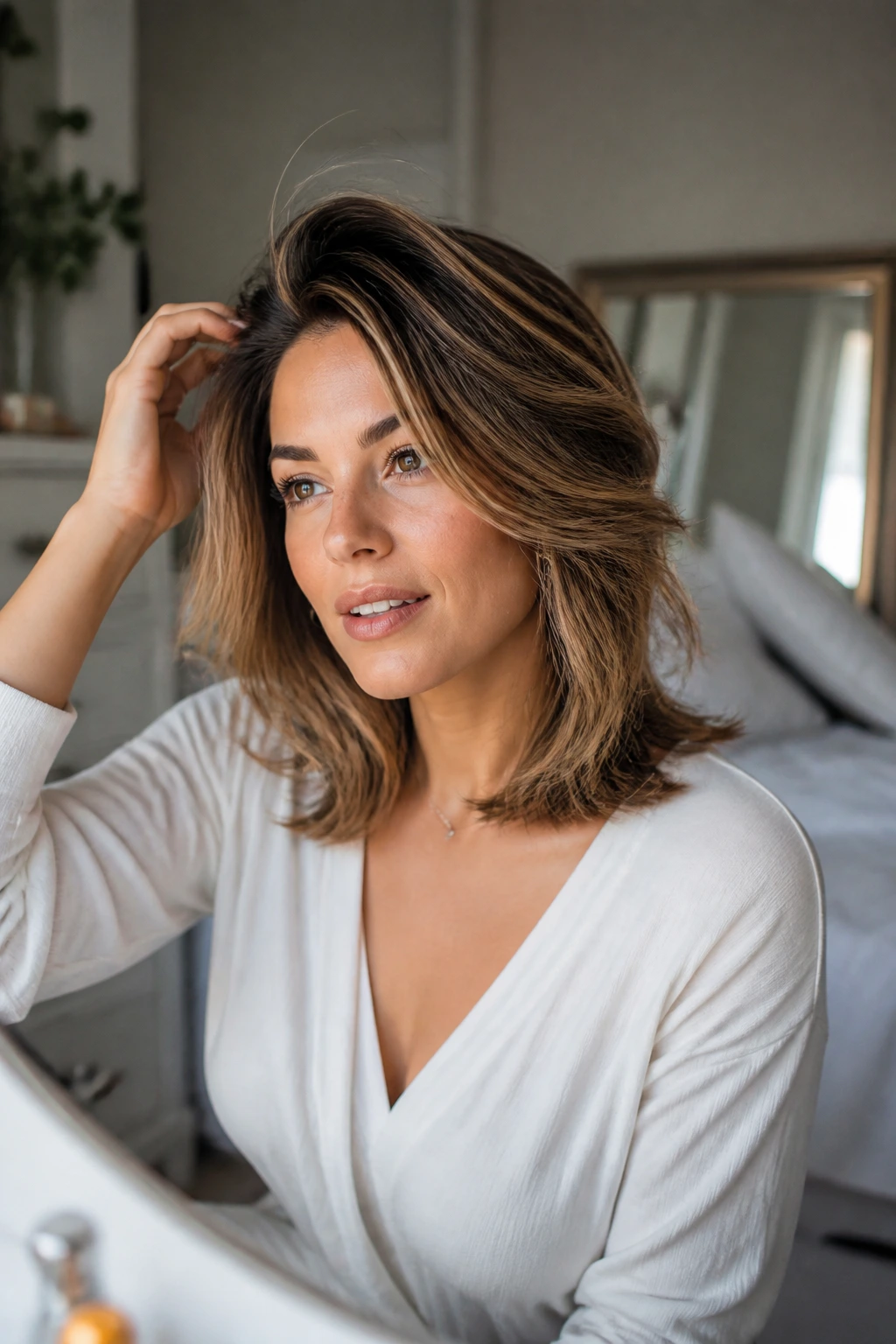
Fine hair usually likes foam, mousse, or a light root spray. Those products add a little grip without coating the strands so much that they collapse. Thick hair tends to do better with a smoothing cream through the mid-lengths and a small amount of oil on the very ends, because the goal is control, not stiffness. Wavy hair often sits in the middle; too much cream and the bend drops, too little and the frizz takes over.
Read the texture of your own hair before you buy anything. If your hair goes flat by lunchtime, skip the heavy finishing oils and pick a product that lifts at the root. If your hair spreads outward in humidity, reach for anti-frizz cream or a flexible hold spray. Curly hair usually wants moisture plus definition, which means leave-in conditioner and gel often beat a fluffy mousse.
I’m picky about texture spray. A good one gives separation at the ends. A bad one makes the hair feel dusty.
How to Ask for the Cut at the Salon
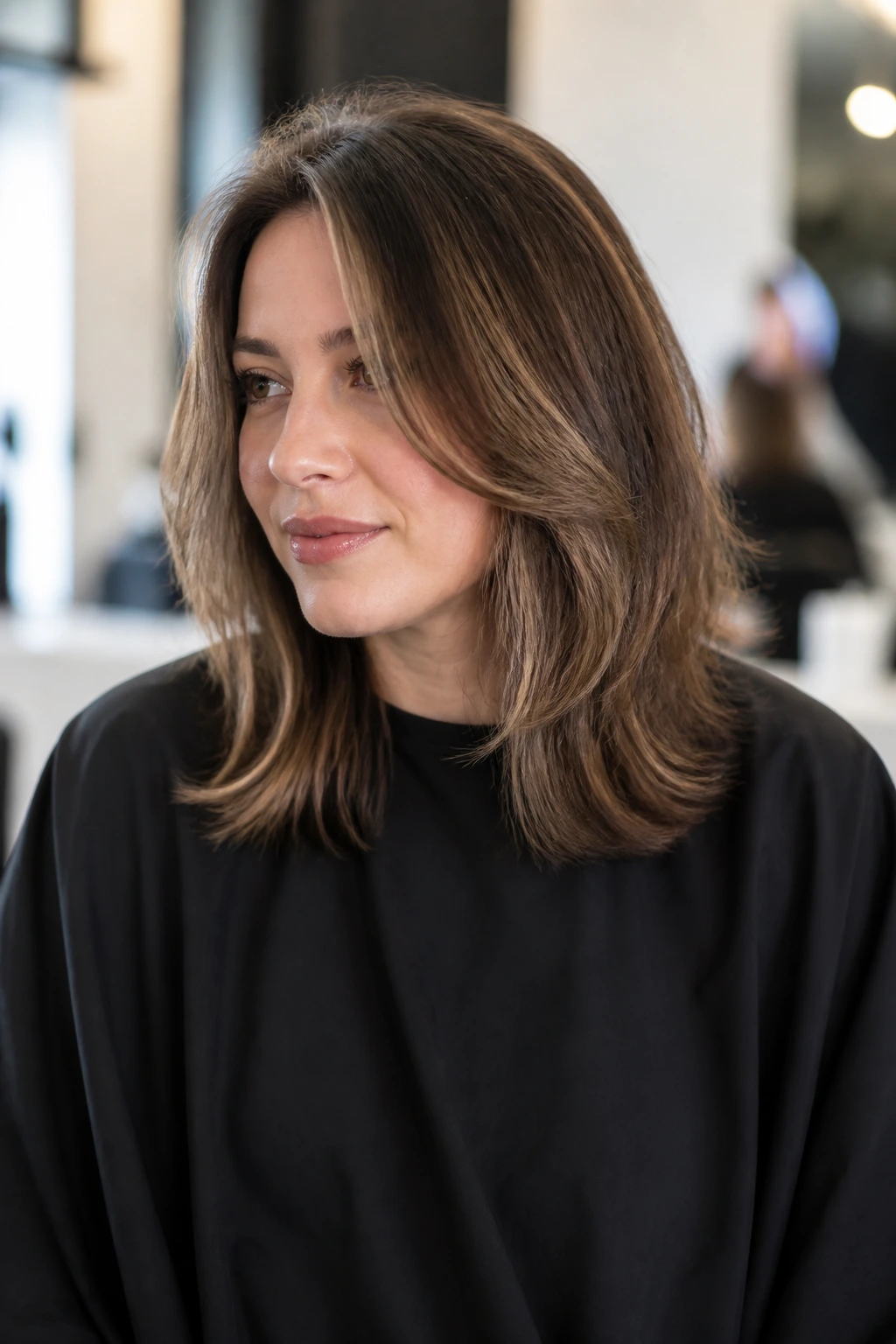
Be specific about where the shortest layer starts. Saying “some layers” is too vague. Say chin, cheekbone, collarbone, or just below the jaw. That one detail changes the haircut more than a lot of people realize.
Bring photos with the same texture and part you wear. A deep side part on pin-straight hair is not the same as a center part on loose waves. The stylist needs to see your version, not a fantasy version.
Tell them how you style your hair on an ordinary weekday. If you air-dry, say so. If you round-brush the front and ignore the rest, say that too. The best layered haircuts for medium length hair are cut to match the life you actually live.
Ask how the layers will grow out. That question weeds out a lot of bad cuts. If the answer sounds fuzzy, ask again.
How to Style Medium-Length Layers on Busy Mornings
Start with damp hair and decide what the haircut is supposed to do today. That sounds obvious, but it saves time. If you want volume, lift the roots first with mousse or spray. If you want softness, use a smoothing cream through the mid-lengths and keep the product off the crown.
For blowouts, dry the front sections first. They frame everything. If the face-framing pieces sit correctly, the rest of the cut can be a little imperfect and still look put together. Use the brush to bend the ends under or away from the face depending on the shape you want.
For air-dry days, don’t overtouch the hair after applying product. Scrunch once, part it where you want it, and leave it alone. Medium-length layers look worse when they’re fussed with every fifteen minutes.
Common Mistakes That Flatten Medium-Length Layers
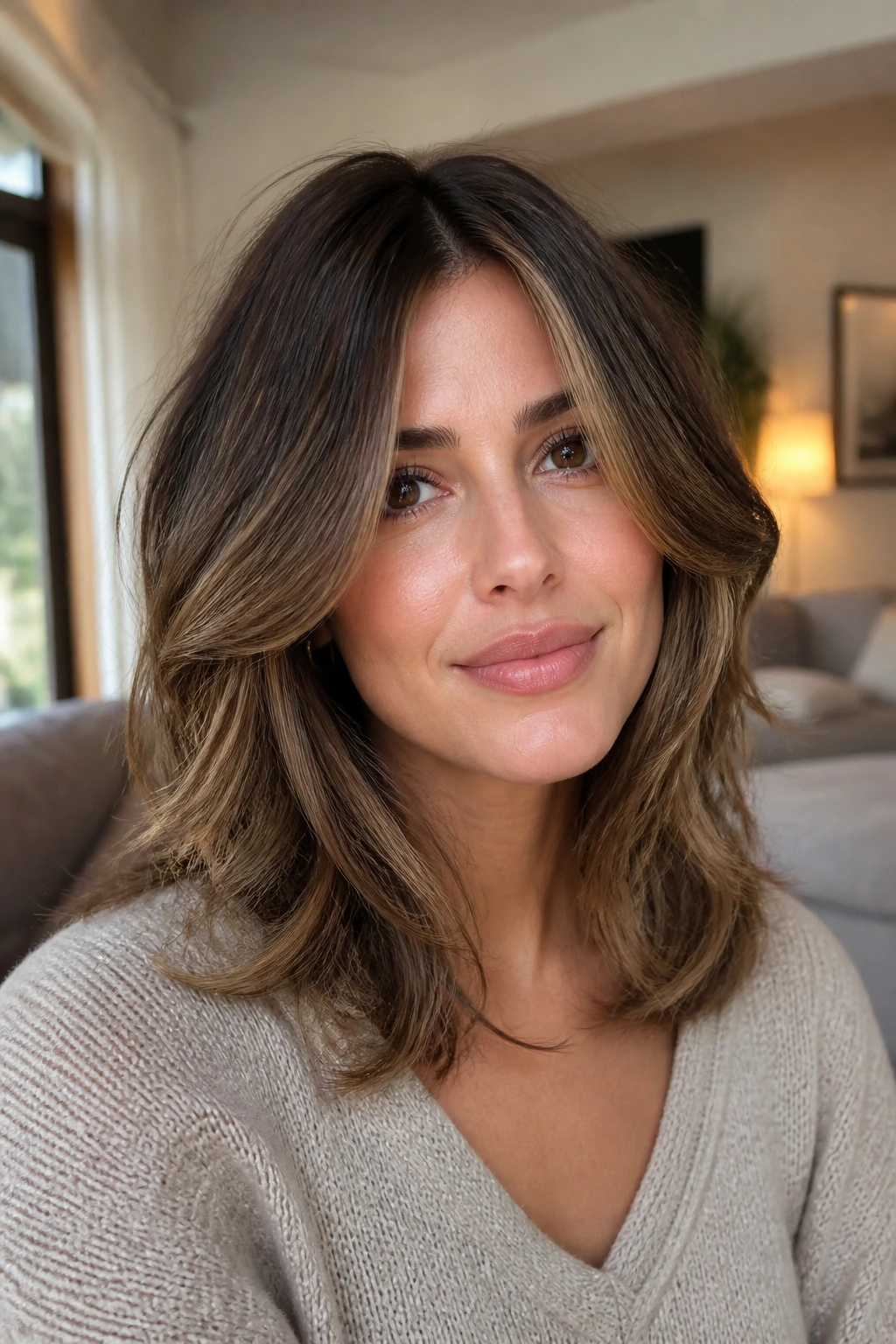
The first mistake is starting the shortest layer too high. The haircut looks exciting in the chair and then turns thin around the crown after the first shampoo. Fix it by keeping the top layers longer and asking for more movement through the mid-lengths instead of hacking into the top.
The second mistake is over-thinning thick hair. You save bulk in the salon and pay for it later when the ends look scraggly. The fix is weight removal in the right places, not aggressive texturizing everywhere.
The third mistake is ignoring your part and styling habit. A cut designed for a center part can look off if you always wear a side part. A blowout-heavy shape can feel limp if you air-dry. Tell the stylist the truth. It saves everyone time.
The last mistake is using heavy product on fine hair. The layers disappear under it. Nope. That’s not the move.
Variations and Adaptations Worth Trying
Fine-Hair Lift Layers: Keep the layers long and the perimeter full, then add mousse at the roots and a small round brush at the front. This version is for hair that needs air, not volume overload.
Thick-Hair Weight-Release Layers: Focus on internal layering and soft tapering through the mid-lengths. The goal is to stop the hair from swelling at the sides and dragging at the bottom.
Wavy Air-Dry Layers: Use gentle face-framing pieces and soft transitions through the back. This version looks best with a curl cream or light gel and a hands-off drying routine.
Curly Shape-Retention Layers: Cut to the curl pattern, not against it, and keep the layers long enough to avoid a triangular outline. Diffuse or air-dry, and let the curls do the heavy lifting.
Blowout Layers: Build the cut around round-brush movement, with front pieces that bend and ends that curve under. This one rewards heat styling and looks a little fancier on day two.
How to Keep the Cut Looking Fresh Between Trims
Layers don’t need a full reset every few weeks, but they do need small maintenance. For most medium-length cuts, a trim every 8 to 12 weeks keeps the shape from getting mushy. If you have face-framing pieces or bangs, those may need a quicker cleanup because they hit the eyes and cheekbones first.
A quick refresh at home helps a lot. Mist the front pieces lightly with water, add a touch of product, and re-bend the ends with a dryer or flat iron. The goal is not a full restyle. It’s to remind the haircut where it lives. If the crown has gone flat, clip it up while it cools after drying, or use velcro rollers for a few minutes. That small lift changes how the entire head reads.
Sleeping on a satin pillowcase can keep the ends from roughing up too fast, especially if the haircut relies on piecey layers or a smooth perimeter. And if you’re growing the cut out, resist the urge to carve more layers into it at home. That path leads to a weird staircase shape that takes ages to fix.
Frequently Asked Questions
Are layered haircuts good for medium length hair if my hair is fine?
Yes, but the layers need to stay long and soft. Fine hair usually looks best with invisible or subtle layers that lift the crown without stripping density from the ends.
Do layers make thick hair easier to manage?
They can, if the weight is removed in the right places. Thick hair usually benefits from internal layering and soft tapering rather than lots of short pieces around the face.
Should I get curtain bangs with medium-length layers?
If you want front movement and don’t mind a little styling, curtain bangs are a smart match. They blend well into layered cuts and grow out more gracefully than blunt fringe.
Can I air-dry layered hair and still get a good shape?
Absolutely. Wavy and curly hair often looks best that way, and straight hair can still work if the layers are subtle enough to hold a soft outline without heat.
How often should I trim medium-length layers?
Most cuts hold best with a trim every 8 to 12 weeks. If the haircut has shorter face-framing pieces, those may need a touch-up sooner.
What if my layers look too choppy after the cut?
Give them a week of normal styling before panicking. If they still feel too sharp, ask for soft blending or point-cutting at the ends rather than a whole new shape.
Which layered cut is easiest to grow out?
The subtle long-layer options grow out the cleanest. Invisible layers and soft, low-start layers are the least fussy once they begin to lengthen.
Can I make a layered haircut look smoother for work?
Yes. Use a smoothing cream through the mid-lengths, blow-dry the front pieces with a round brush, and keep the ends neat. The haircut can be layered without looking messy.
The Cut That Still Feels Like You

The best layered haircut for medium length hair is the one that fits your routine before it flatters your mirror selfie. That sounds plain, but it’s the truth most salon photos leave out. A smart layer map can give you shape, movement, and a cleaner outline without turning your mornings into a project.
Pick the version that respects your texture first. Then think about where you want the eye to land — chin, cheekbone, collarbone, crown. That single decision changes everything else. Once you know that, the rest is just deciding how soft, shaggy, or polished you want the finish to feel.
And that’s the real reason these 32 cuts keep showing up in the good versions of medium-length hair: they aren’t trying to do one universal thing. They’re built to let the hair sit better, move better, and look like it belongs to a real head with a real schedule.
