



Rose gold hair color has a neat trick: it can read like a whisper of peach in daylight and like warm champagne at night, which is why it never has to shout to get attention. Put it on the wrong base and it turns flat, muddy, or stubbornly pink. Put it on the right base and it looks like the hair itself picked up a soft blush from the light.
The sweet spot is narrower than people think. A rose gold gloss on a pale blonde behaves nothing like rose gold balayage on a brunette bob, and a dusty mauve-rose on ash blonde has a completely different mood from a copper-rose pixie. The gold, beige, peach, and pink pieces all pull weight in different ways, and the best versions keep one of them quieter so the whole thing stays wearable.
That balance is the reason this shade keeps showing up in salons and on screens without ever feeling stale. The good versions look expensive because they are controlled: clean lift, thoughtful tone, and placement that lets the color breathe instead of coating every strand like frosting. A bad rose gold job usually has the same problem — too much pink, not enough depth, and nowhere for the eye to rest.
Why These Rose Gold Shades Keep Looking Soft Instead of Saccharine
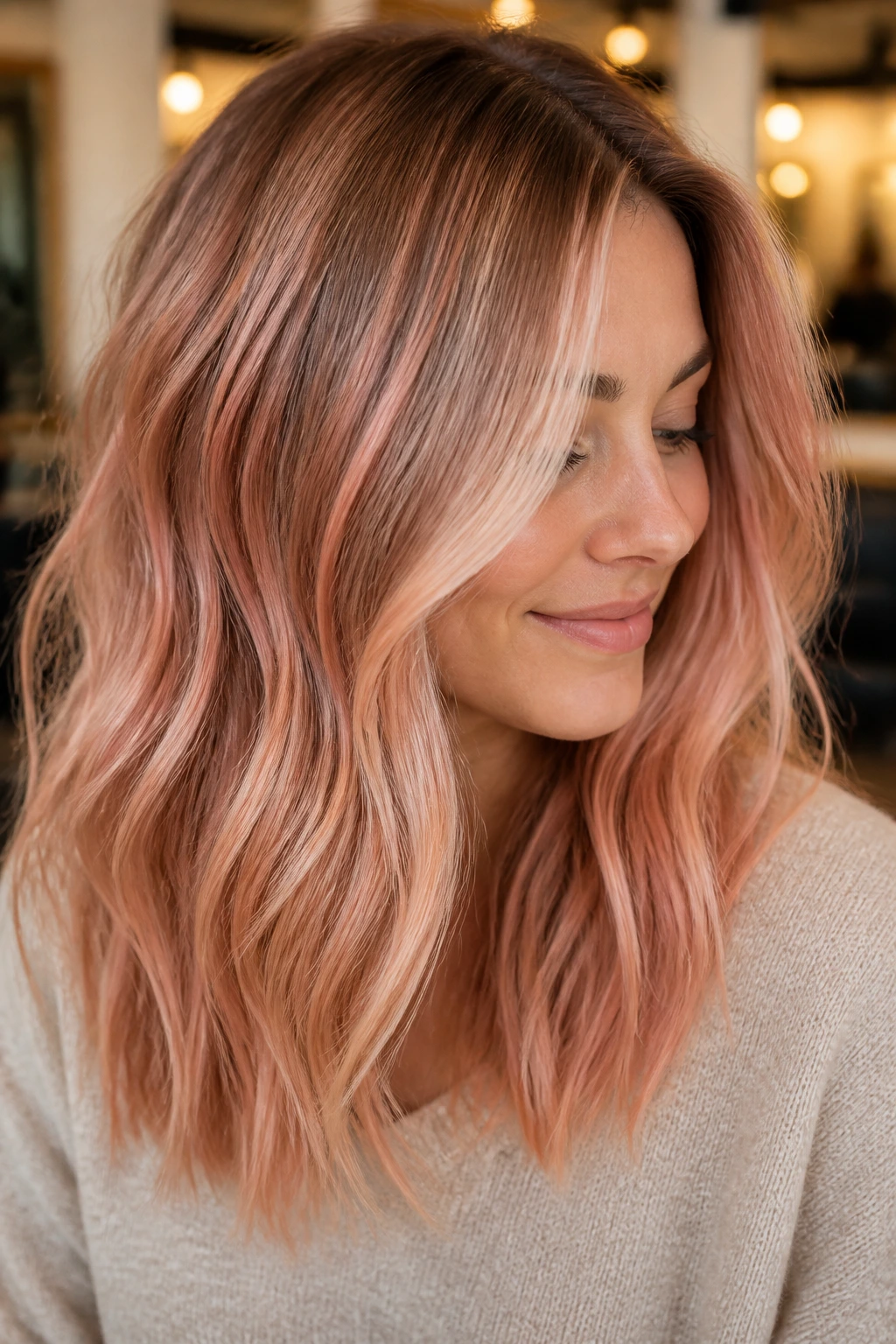
-
The beige is doing the heavy lifting: A little neutral beige keeps the pink from turning bubblegum and gives the gold room to glow instead of glare.
-
Placement matters more than saturation: Rose gold painted through the face frame, ends, or surface layers reads softer than a solid all-over pink because your eye catches the movement first.
-
Depth keeps the color grown-up: Shadow roots, lowlights, and darker mids stop the shade from looking like a filter that got pasted onto the whole head.
-
The best versions move with the haircut: A shag, bob, lob, pixie, or curl pattern changes how rose gold lands, so the same formula can feel sleek, airy, or plush depending on the cut.
-
Tone choice changes the whole mood: Peach-leaning rose gold feels warmer, mauve-leaning rose gold feels cooler, and copper-rose lands in the middle with the most lived-in warmth.
-
This shade fades in stages, not all at once: On porous hair, the pink usually softens first, then the gold lingers, which is why a good rose gold can fade into something still pleasant instead of going dead beige.
How Rose Gold Hair Gets Its Warm Glow
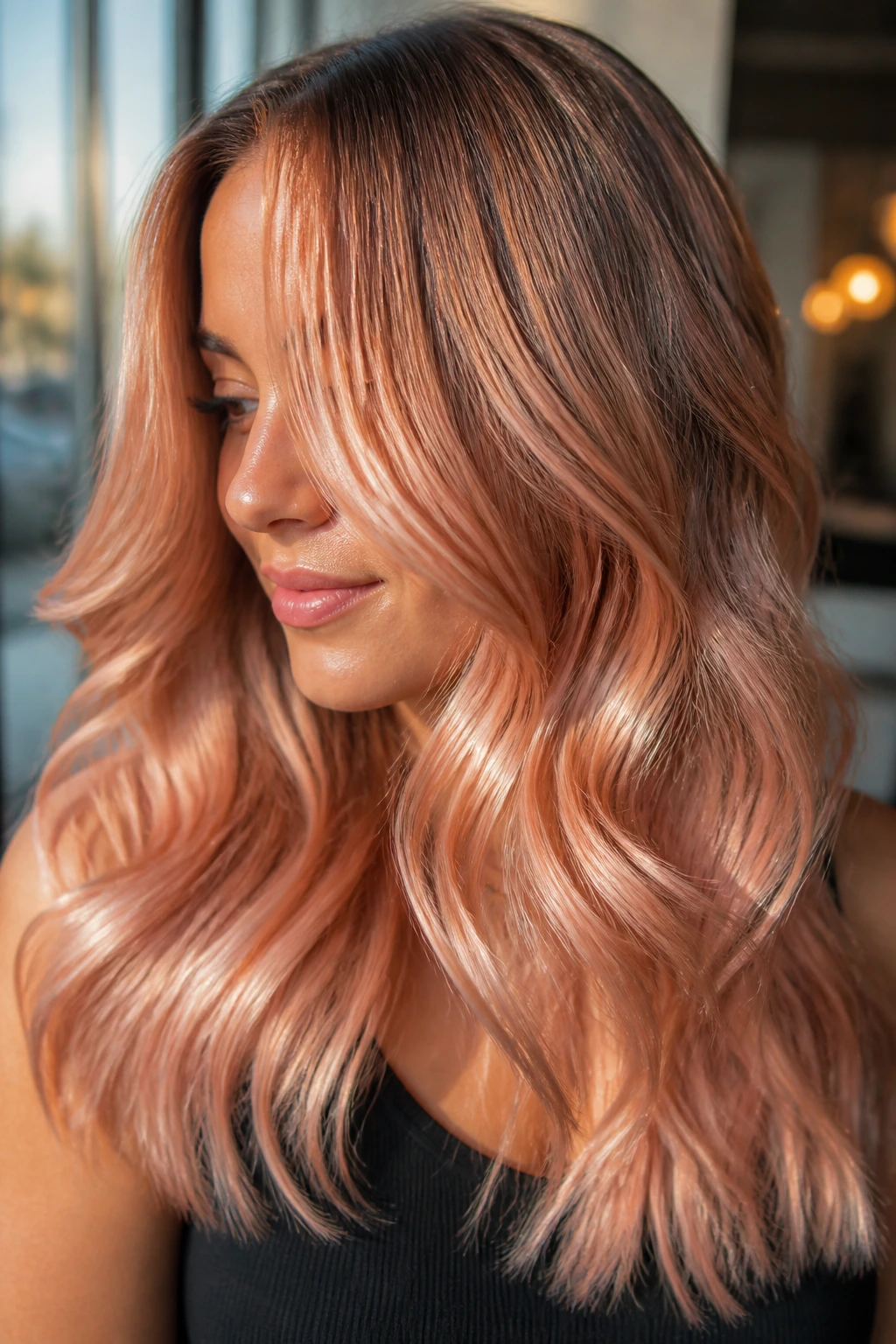
Rose gold is one of those colors that depends on restraint. The prettiest versions rarely use one loud pigment; they lean on a blend of champagne, peach, copper, and a little pink, then let one note lead while the others stay in the background.
The base level decides the mood
On a level 9 or 10 blonde, rose gold can stay airy and glossy, almost like a sheer glaze with a blush tint. On a level 7 or 8 brunette base, it needs a ribboned approach or a stronger pre-lightening step, because the warmth in the hair underneath will fight back if you try to cover it with a delicate tint.
Beige keeps the pink from screaming
I’m a big fan of beige in rose gold formulas. Beige gives the color a softer edge and keeps it from tipping into candy pink or orange-pink, especially around the face where strong color can start to look harsh under indoor lighting.
Shine does half the work
A flat rose gold always looks cheaper than a glossy one. The reflection on the cuticle is what makes the warm tone feel silky instead of chalky, so the finish matters as much as the pigment. If the hair is porous and dull, the color can still be lovely, but it needs a glaze or leave-in shine product to read the way it should.
1. Barely-There Rose Gold Gloss on Platinum Blonde
This is the quietest version in the bunch, and honestly, it’s one of the prettiest. On a level 10 blonde, a sheer rose gold gloss looks less like “colored hair” and more like the hair caught a soft sunset for ten minutes and kept a little of it.
Why it works
The beauty here is transparency. You’re not trying to repaint the hair; you’re laying a thin veil over a pale base so the pink and champagne tones can tint the light without burying the blonde underneath. If the formula is too heavy, the whole thing turns opaque fast.
Quick visual notes
- Best on platinum or near-platinum hair.
- Works well when you want a blush effect, not a statement pink.
- Fades gracefully into warm blonde rather than a strange gray-pink wash.
- Needs shine more than saturation.
Best tip: Ask for a clear or sheer gloss with a tiny amount of rose pigment. Too much pigment on this base can turn the color dusty in a week.
2. Champagne Rose Gold Bob with Soft Ends
A bob gives rose gold a clean edge that long hair sometimes hides. The cut keeps the color from spreading too thin, so you get a crisp shape at the jaw and a warm shimmer through the ends instead of a lot of diffuse pink floating around.
The champagne piece is what makes this feel polished. It softens the rose, keeps the tone bright, and stops the color from drifting into strawberry territory. On a blunt or slightly beveled bob, that mix looks deliberate rather than sweet.
If you wear your bob straight, the color reads more metallic. If you bend the ends with a flat iron or round brush, the rose catches the curve and turns softer. It’s a small shift, but it matters.
3. Soft Copper Rose Balayage on Brunette Layers
Why does rose gold balayage look so good on brunettes? Because the depth underneath gives the color somewhere to land. You’re not covering the entire head; you’re painting warmth through the surface, which makes the rose tones look richer and less fragile.
Balayage is the right move when you want movement. The hand-painted ribbons sit on the layers and show up when the hair swings, so the color never feels heavy at the roots. On dark brown hair, that contrast is what keeps the rose from disappearing.
What to ask your colorist
- Keep the root area darker for depth.
- Place the brightest rose through the mids and outer layers.
- Choose copper-rose if you want the warmest finish.
- Ask for a beige gloss over the highlights so the pink doesn’t get too loud.
This version grows out with manners, which is more than I can say for a lot of pink-adjacent colors.
4. Face-Framing Rose Gold Money Piece
A face-framing money piece is the fastest way to make rose gold visible without turning the whole head pink. The color sits where the eye goes first — temples, cheekbones, the front hairline — so even a modest amount of pigment has a big effect.
I like this idea on ponytail-wearers and anyone who tucks their hair behind the ears a lot. The rose shows up in motion, then disappears into the rest of the hair when you want it to. That little switch keeps it from feeling overworked.
- Brightest around the face, softer through the rest of the head.
- Especially good if you want to test rose gold before doing a full look.
- Easy to keep subtle with a rooted blonde or brunette base.
- Looks stronger when the hair is curled away from the face.
The trick is not making the front pieces too chunky. A thinner, well-placed money piece looks expensive. A wide one can start to read costume-y fast.
5. Dusty Rose Lob with Muted Beige Undertones
This is the version for people who keep saying, “I want rose gold, but I don’t want pink hair.” Fair enough. A dusty rose lob softens the color into a beige-pink blend that reads calm, not sugary.
The lob length helps because it gives the color enough surface area to show, but not so much that the tone gets lost in the ends. If the hair falls at the collarbone, the movement keeps the muted rose alive even when it’s worn straight.
The beige undertone is the whole point here. It keeps the shade in that sweet spot between warm and cool, which is why this one tends to age well as it fades. The pink gets softer, the beige stays steady, and the look just turns more muted rather than weird.
6. Strawberry Rose Ribbons on Creamy Blonde Waves
Unlike a full rose gold glaze, ribbons give you breathing room. Creamy blonde waves with strawberry-rose streaks let the blonde stay visible between the colored pieces, which is exactly what makes the whole thing look expensive instead of saturated.
The wave pattern matters. Loose S-bends show off the ribbon placement, while tighter curls can bunch the color together and make it look heavier than it really is. If you want dimension, keep the rose in thin, woven sections and leave a little lighter blonde around the face and crown.
How to get the most from it
A soft wave pattern is the easiest way to show off this color. If your hair is pin-straight, the ribbons can blend together and lose some of that airy contrast.
This version is a favorite when someone wants warmth without losing brightness. The blonde stays readable. The rose just warms it up.
7. Cinnamon Rose Gold Curls with Warm Depth
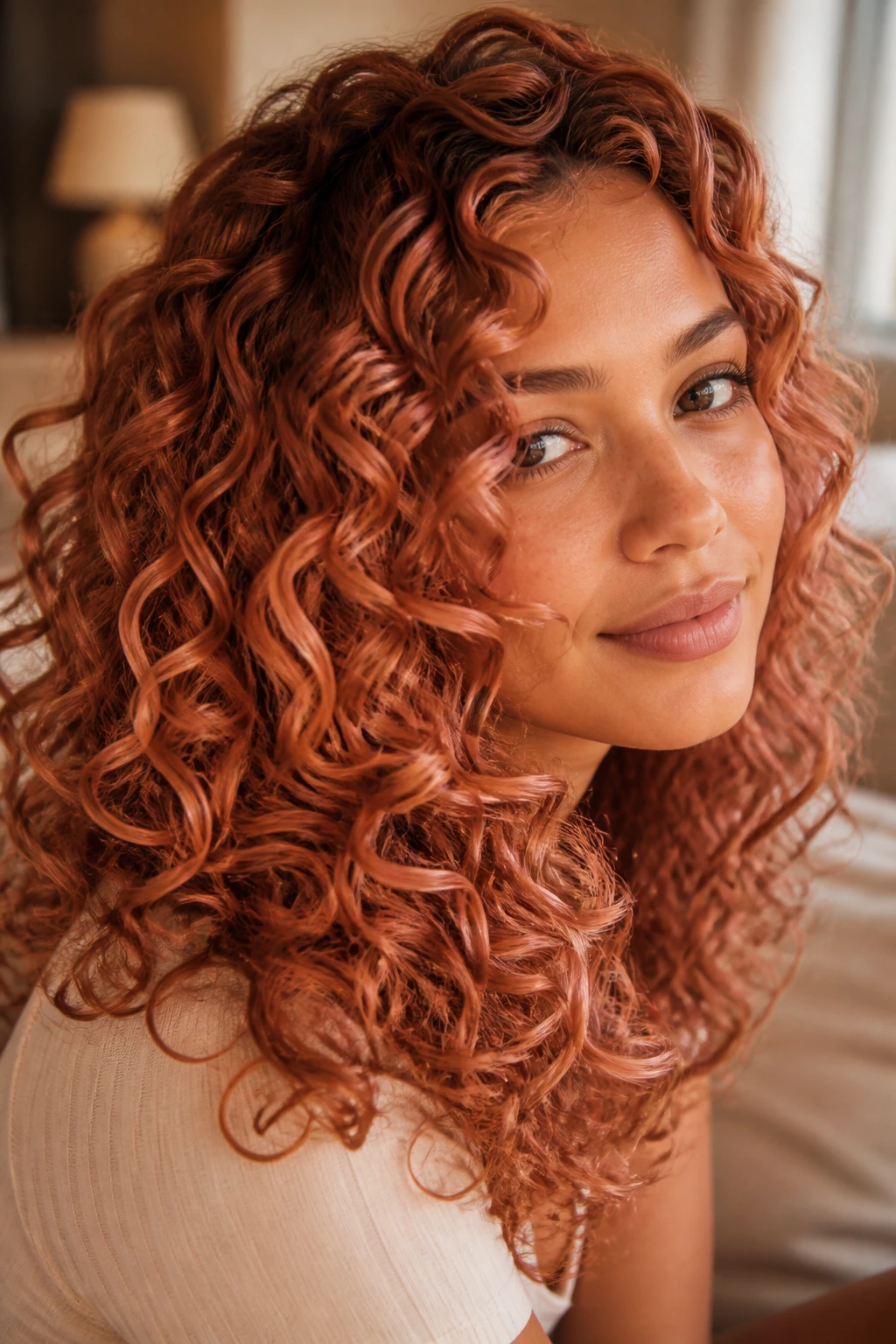
This one has more backbone than the sheer, pastel versions, and that’s why curly hair takes to it so well. Cinnamon rose gold leans copper first, pink second, which means the tone doesn’t vanish the moment the hair dries.
Curls already have built-in shadows and highlights, so a warm rose formula gets scattered across the shape in a very flattering way. The color sits on the ridges of the curl, then dips into the bends and looks deeper there. That makes the whole style feel plush.
If you’re working with dense curls, keep the root a shade deeper and let the warmer rose live through the mids and ends. That avoids the helmet effect. Nobody wants that.
8. Rooted Blush Ombré with a Shadow Root
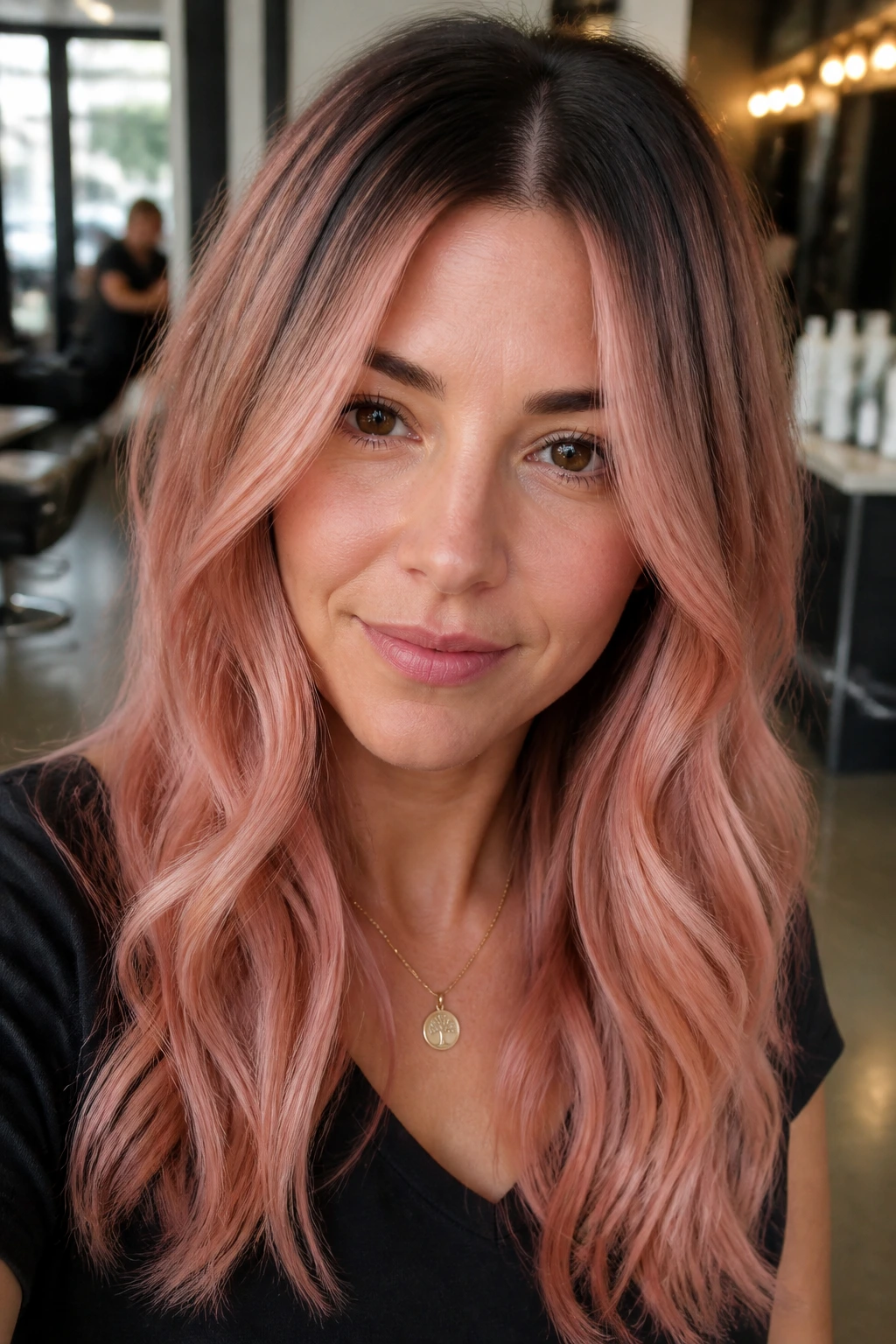
Why do rooted rose gold looks hold up so well? Because the dark base gives the pink something to lean against. A shadow root isn’t just practical; it makes the blush ends look brighter by comparison, which is a neat trick when you want color without constant upkeep.
The root is the anchor
A deeper root lets the rose gold read as intentional from the first week to the fifth. Without it, the tone can float too high and feel disconnected from the scalp, especially on hair that’s been lifted a lot.
The ombré keeps the finish soft
The transition from root to blush ends should feel gradual, not stripey. Ask for a melt, not a hard line. The change should happen over a few inches so the eye slides down the hair instead of hitting a stop sign.
This is one of the easier rose gold styles to live with. When it grows out, it still looks designed.
9. Rose Gold Highlights on a Sleek Collarbone Bob
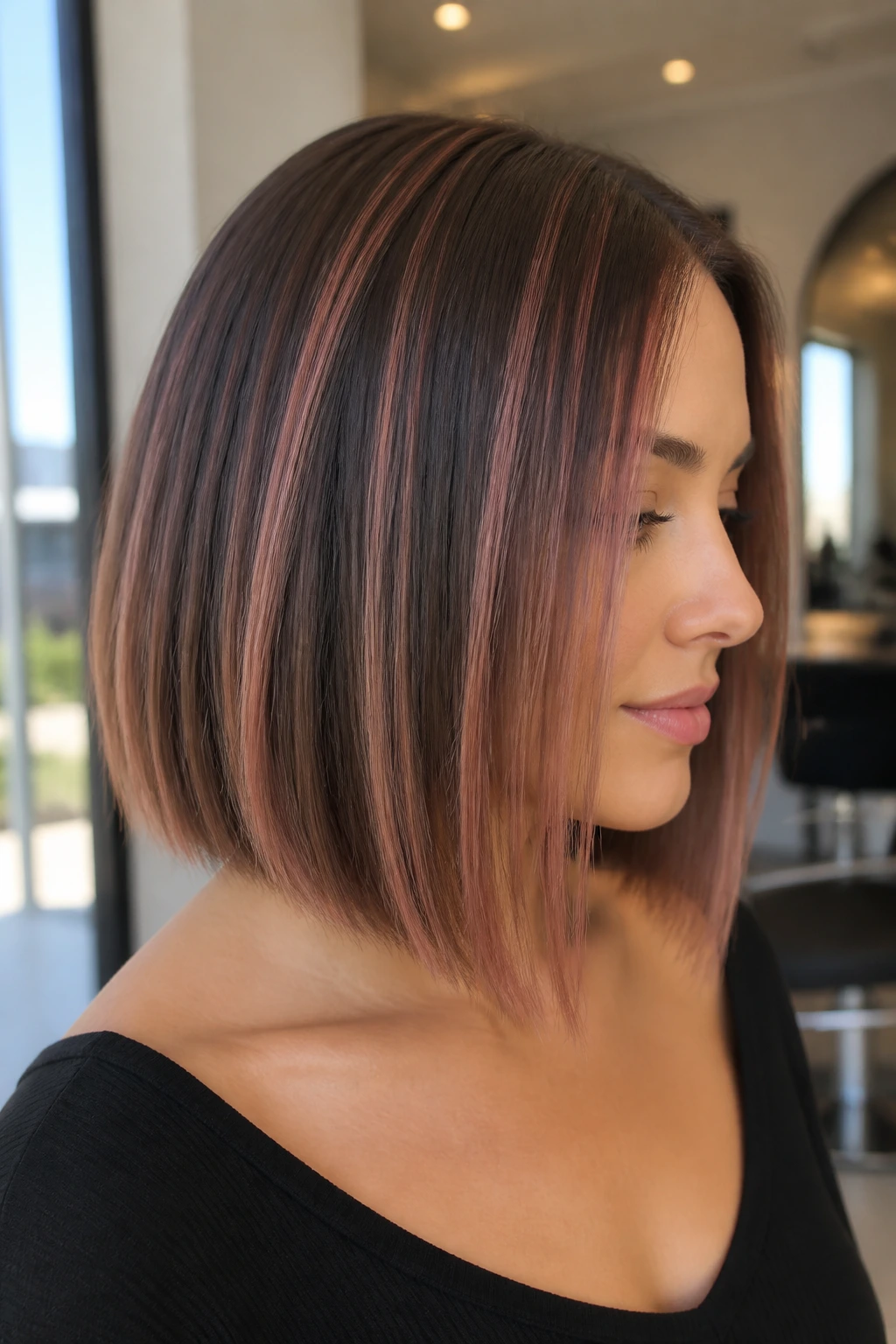
A sleek bob changes the tone of rose gold completely. Instead of airy and romantic, the color becomes sharper and more graphic because the straight line of the cut gives your eye a place to land.
The highlights should be thin and deliberate. Think polished ribbons, not chunky stripes. On a collarbone bob, even a few well-placed rose-gold foils through the front and crown can make the whole cut look richer.
- Keep the highlights narrow so the bob stays clean.
- Use a straight style to show off the contrast.
- Place extra brightness near the front if the back is cropped shorter.
- A beige toner helps the highlights blend into the base instead of floating on top.
This is the rose gold version I’d choose for someone who likes structure. The color does not need to be soft to look elegant. It just needs to be placed with some discipline.
10. Rosé Beige Melt for Medium-Length Hair
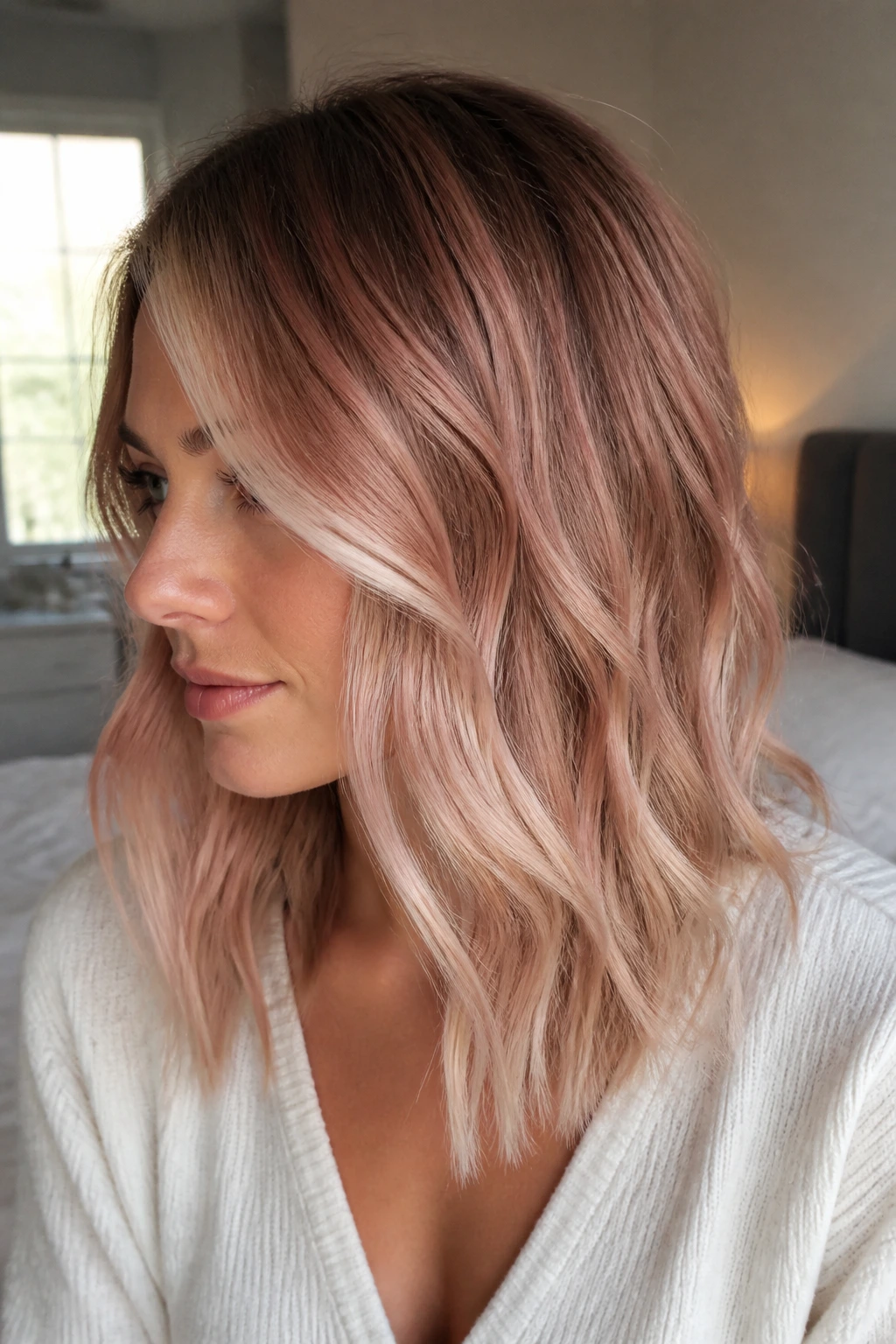
A rosé beige melt is what happens when you stop trying to make rose gold look like a color-blocked statement and let it slide through the hair instead. The root stays quiet, the mids take on the rosy warmth, and the ends carry just enough champagne sheen to catch the light.
Medium-length hair is ideal because there’s enough length for the gradient to develop without the color getting swallowed by too much hair. Shoulder-grazing cuts, especially layered ones, let the melt show from root to tip in a way that feels smooth rather than busy.
This shade works best when the tone is more blush than pink. If you push the saturation too high, the melt loses its softness. Keep the beige in the mix and it will stay wearable for longer than you’d expect.
11. Copper-Rose Pixie for Short Hair
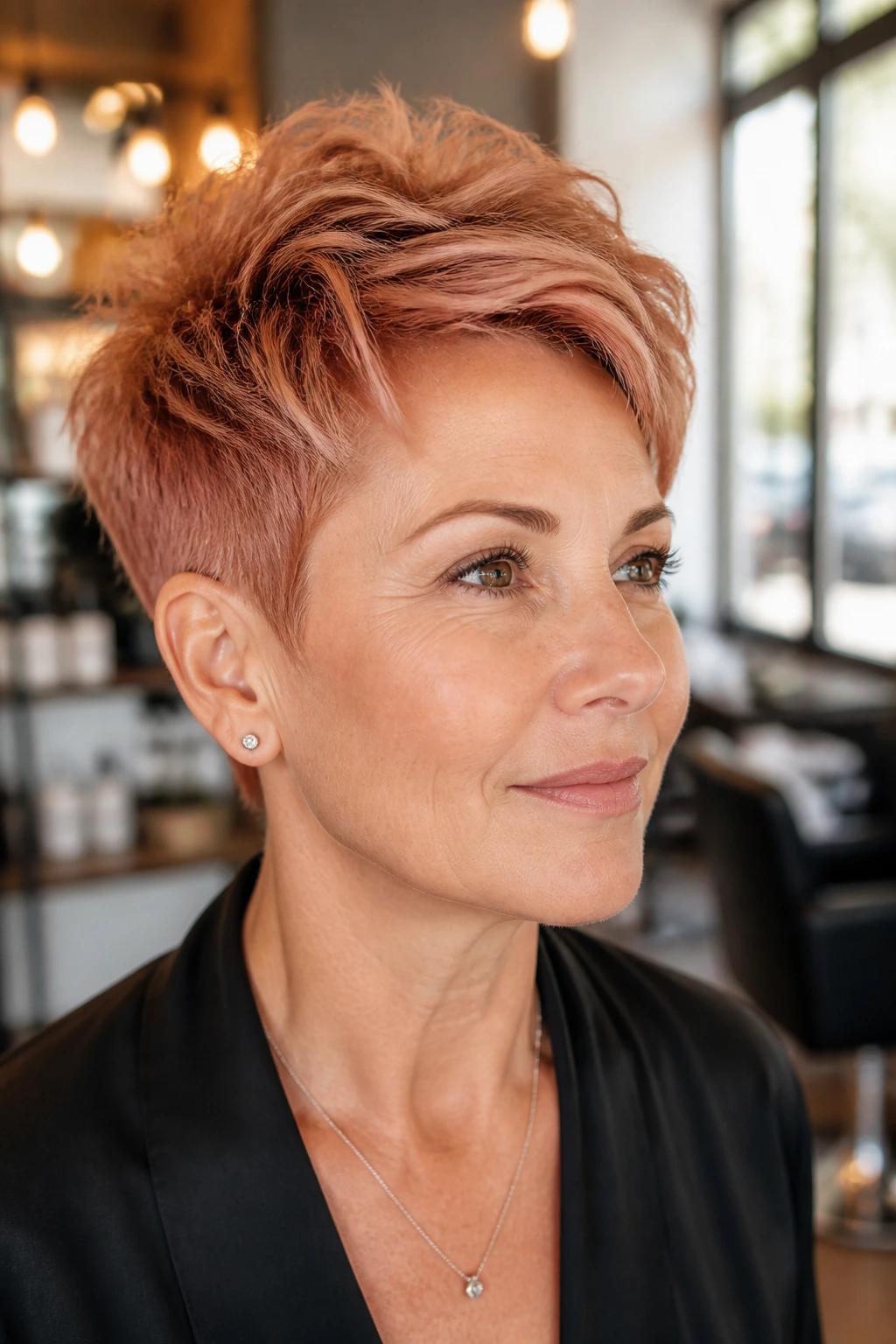
Short hair gives rose gold a different job. Instead of stretching the color down the lengths, you use it to shape the cut. A pixie with copper-rose warmth around the top and sides can look sharper and more modern than a longer, softer version.
What makes it different
Unlike balayage or ombré, a pixie doesn’t need gradient to feel dimensional. The cut already does the work. That means the color can be slightly richer, slightly warmer, and still not look heavy.
Who it suits
This is a strong choice if you want a color that shows up immediately and doesn’t hide behind layers. It also works well when you like your hair worn smooth, because the shorter shape makes the sheen more visible.
Ask for a rose-copper gloss rather than a bright pink overlay. On short hair, too much pink can look abrupt. Copper keeps it grounded.
12. Peach Rose Gold on Curly Hair
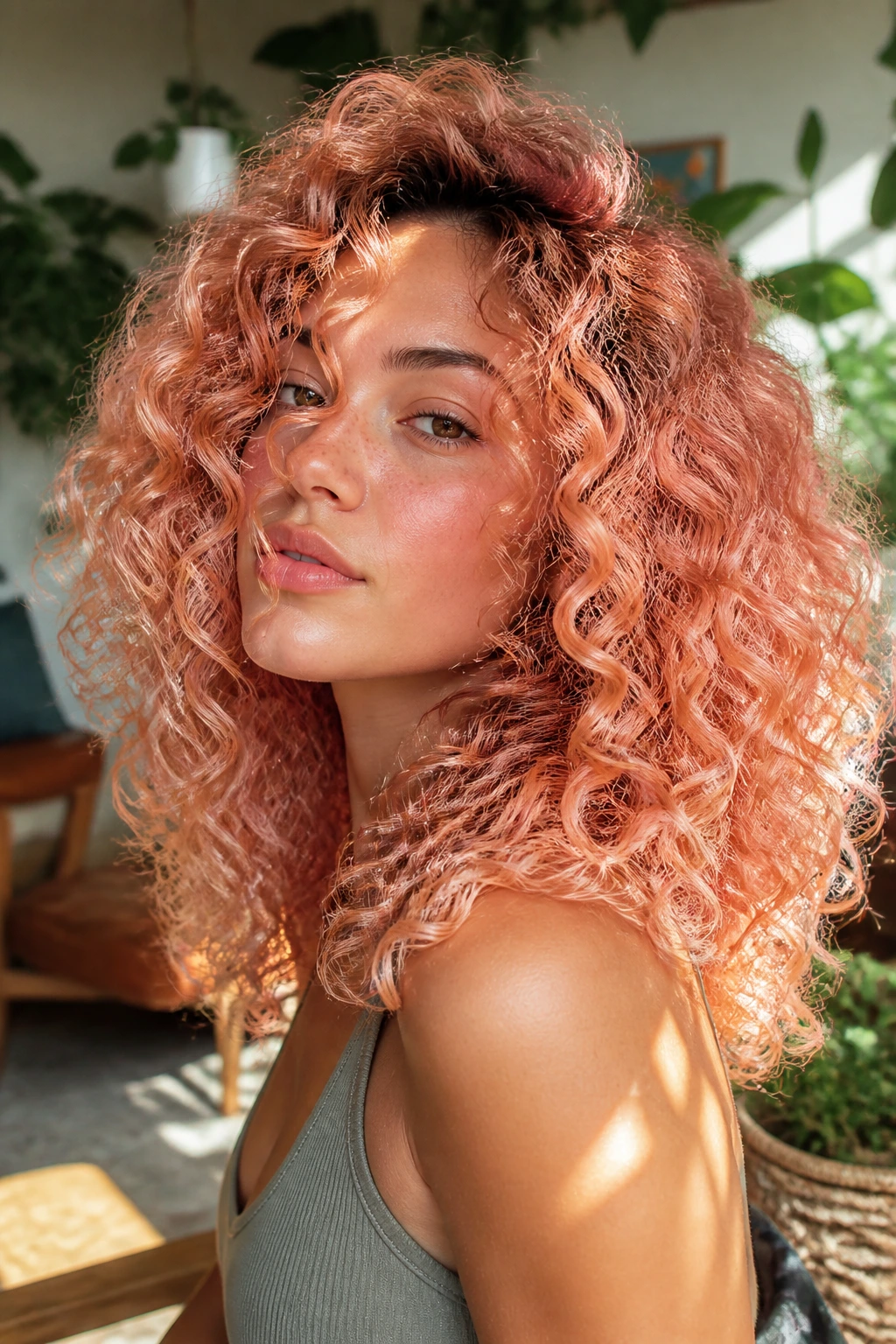
Peachy rose gold is kind to curls. It doesn’t sit on top of the texture the way a cooler pink sometimes can; it threads through the curl pattern and makes the shape feel sunlit instead of painted.
The best peach-rose versions keep the ends a little lighter and the interior a little deeper. That way the curls have shadow inside and brightness on the outside, which is what gives them that round, springy look. If all the color is the same level, the curl pattern can flatten visually.
Diffuse, don’t flatten
Let the hair dry with a diffuser or air-dry in sections so the color placement stays visible. A brushed-out finish blurs the ribbons and hides the nuance.
This shade loves dimension products: curl cream, a light gel, a touch of glossing serum. Too much oil will collapse the shine line and make the rose look dull instead of warm.
13. Peekaboo Rose Underlayer for Movement
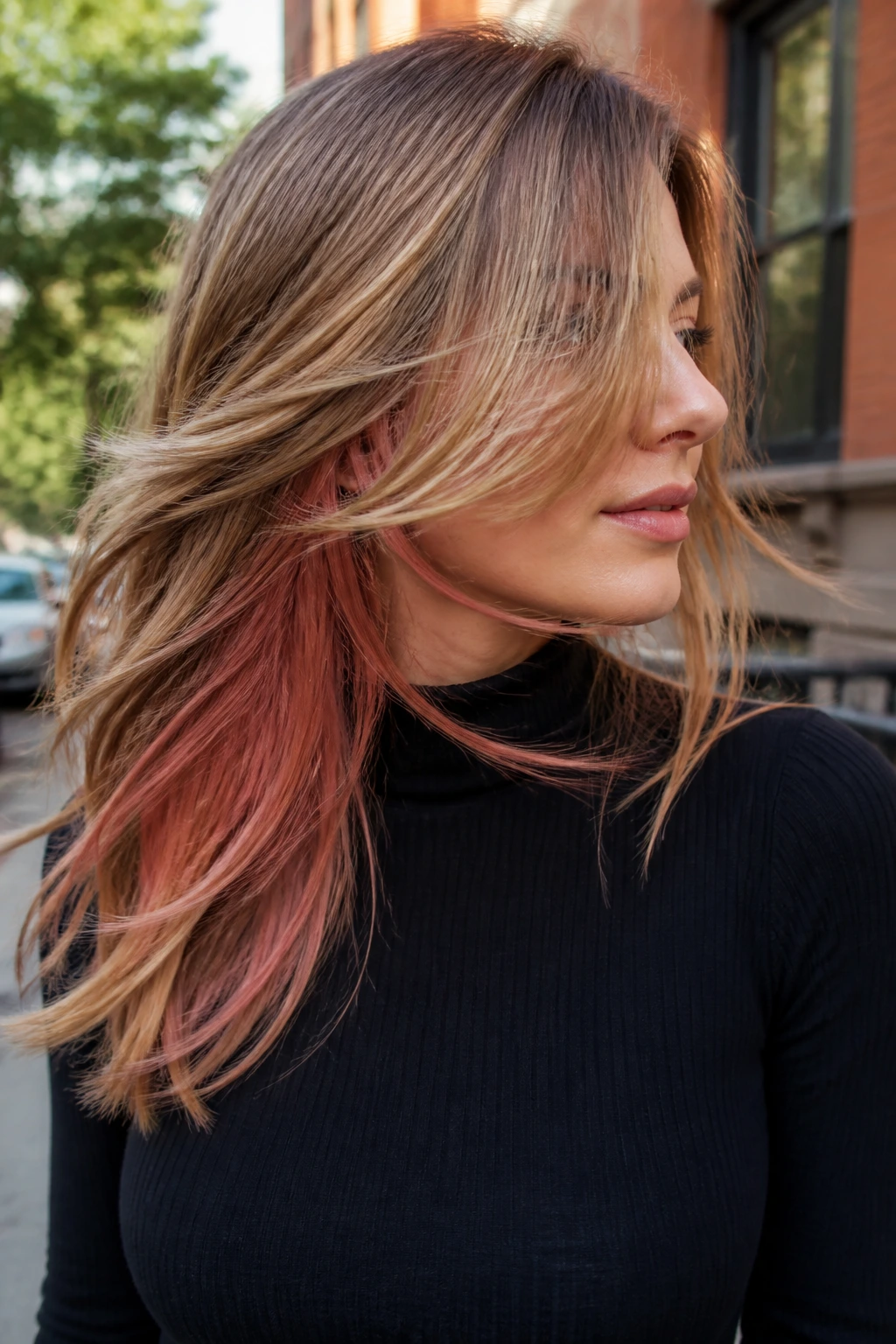
This is the playful version, but it’s smarter than it sounds. A peekaboo rose underlayer keeps the brighter color hidden under the top section of hair, so the pink only flashes when the hair moves, parts, or gets tucked behind the ears.
That makes it a solid choice if you need the look to behave at work or want something that feels less permanent at first glance. You get the warm glow without committing to an all-over pink story.
- Bright underlayer, darker or neutral top layer.
- Strongest when hair is worn up, half-up, or tucked back.
- Easy to refresh because the visible surface can stay untouched longer.
- Best when the hidden section is neatly sectioned, not randomly painted.
The fun part is the reveal. The color appears in motion, then vanishes again, which keeps it from going stale.
14. Shadow-Root Rose Gold Foilayage
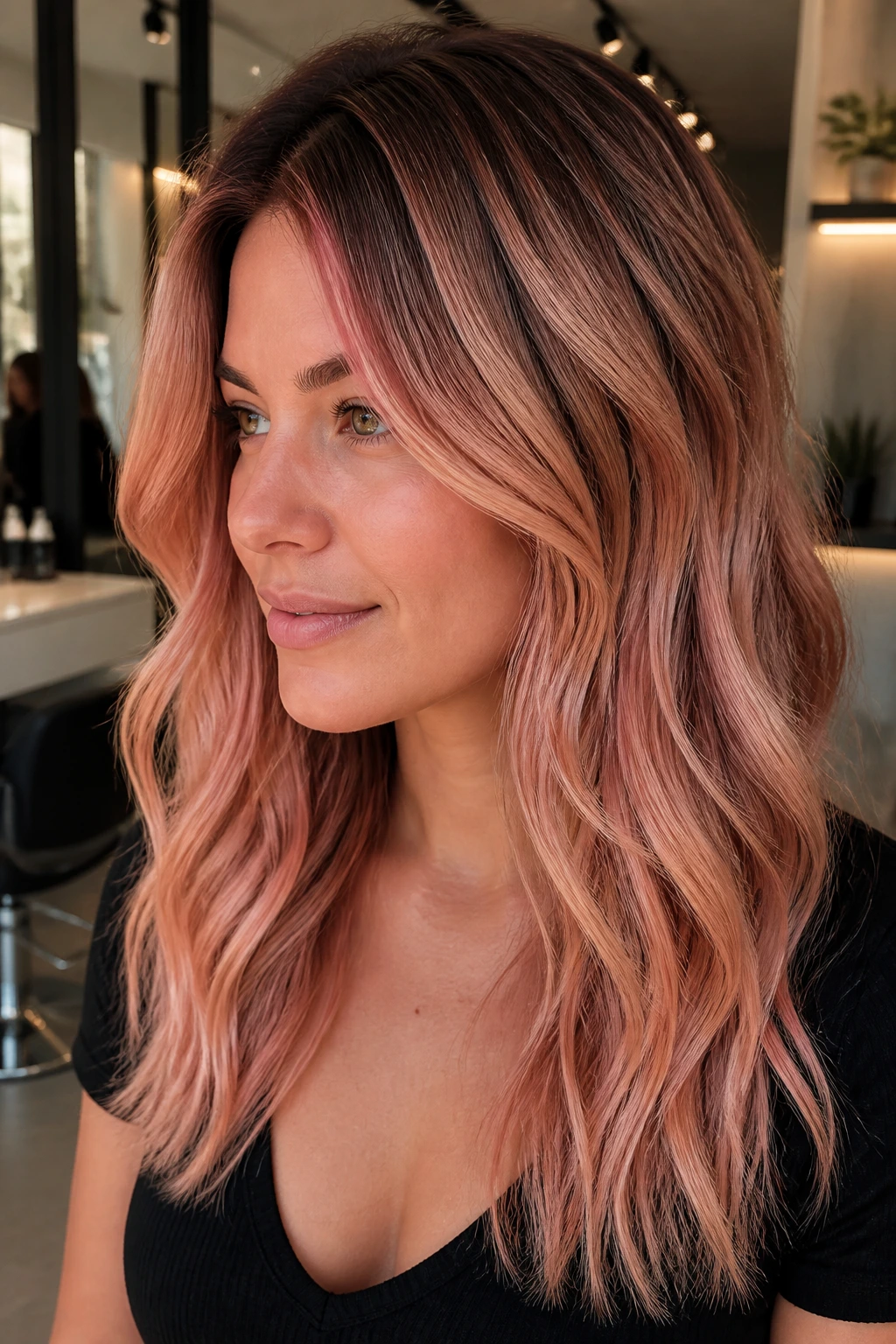
Is foilayage just balayage with extra precision? Pretty much, and that precision helps rose gold enormously. You can keep the placements airy while still choosing exactly where the brightest rose lands, which matters if the goal is soft warmth instead of a full pink wash.
The shadow root gives the whole thing a grounded start. The foils create brighter ribbons through the mids and ends. Together, they keep the color dimensional even when the hair is straightened smooth or pulled into a low bun.
If you want a more expensive-looking finish, this is the move. It keeps the root quiet, the midlengths alive, and the ends a little warmer than the rest. That’s the balance most people are actually after, even if they don’t say it that way.
15. Sunset Rose Gold Pixie Bob
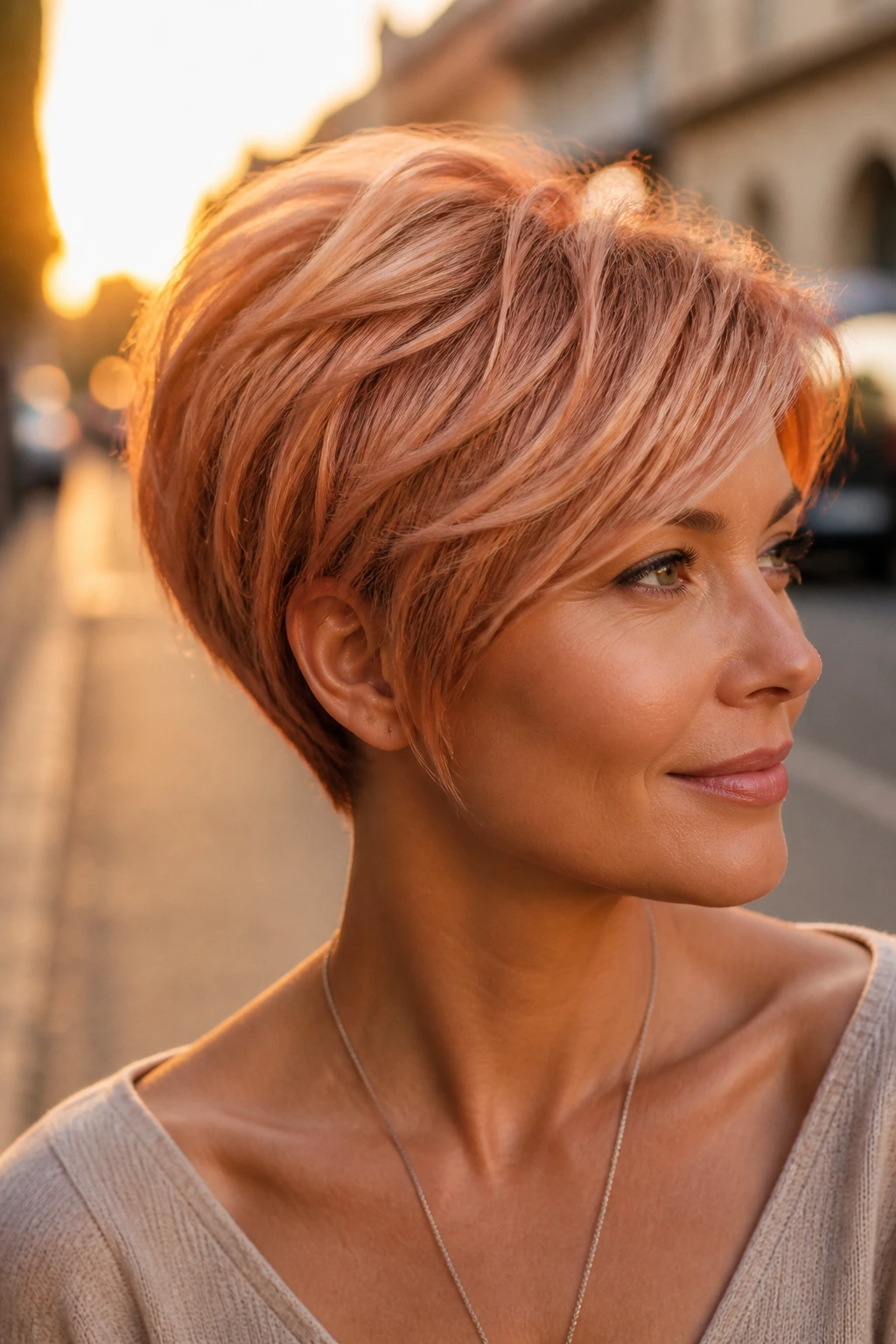
A pixie bob gives rose gold a shape that feels lively instead of dainty. The cut has enough length to show a glow through the crown and enough structure at the nape to keep the whole thing from looking fuzzy.
The sunset version is warmer than the dusty shades. It leans into peach, apricot, and a touch of copper, which makes it look especially good on hair that already has some natural gold in it. The color reads like the final hour of daylight — warm, a little glowing, and not precious.
This one is less about blending than about contrast. The cropped shape lets the color hit the viewer quickly, and the warmer tone keeps it from looking overly sweet. Short hair can carry more warmth than people think.
16. Mauve Rose Gold Gloss on Ash Blonde
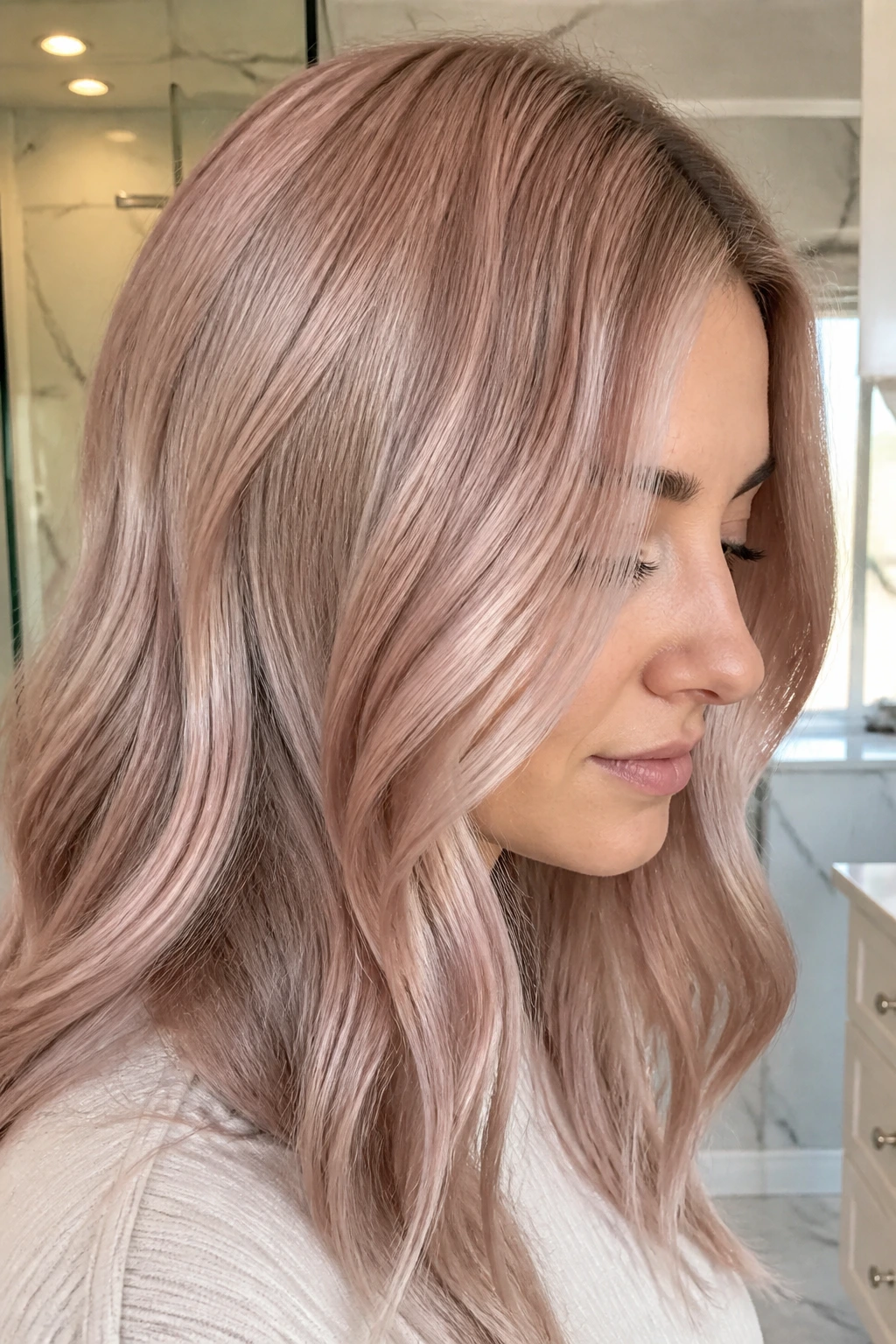
If your blonde has gone too icy, too white, or too yellow in patches, a mauve-rose gloss can clean it up without making it flat. Mauve brings in a cooler pink note, while the rose gold side keeps the hair from going purple or gray.
This is one of the few rose gold directions that can calm an overprocessed blonde instead of just decorating it. The ash base gives the mauve somewhere to sit, and the pink softens the starkness that ash blonde sometimes picks up after a few toner cycles.
When this version makes sense
It works best when the hair already has a pale, cool base and you want to shift it warmer without going copper. The gloss should be sheer, not opaque, or the hair can start to look dusty rather than airy.
Keep the finish glossy and the shade stays elegant. Let it dry dull and it loses the whole point.
17. Warm Rose Gold on Brunette Layers
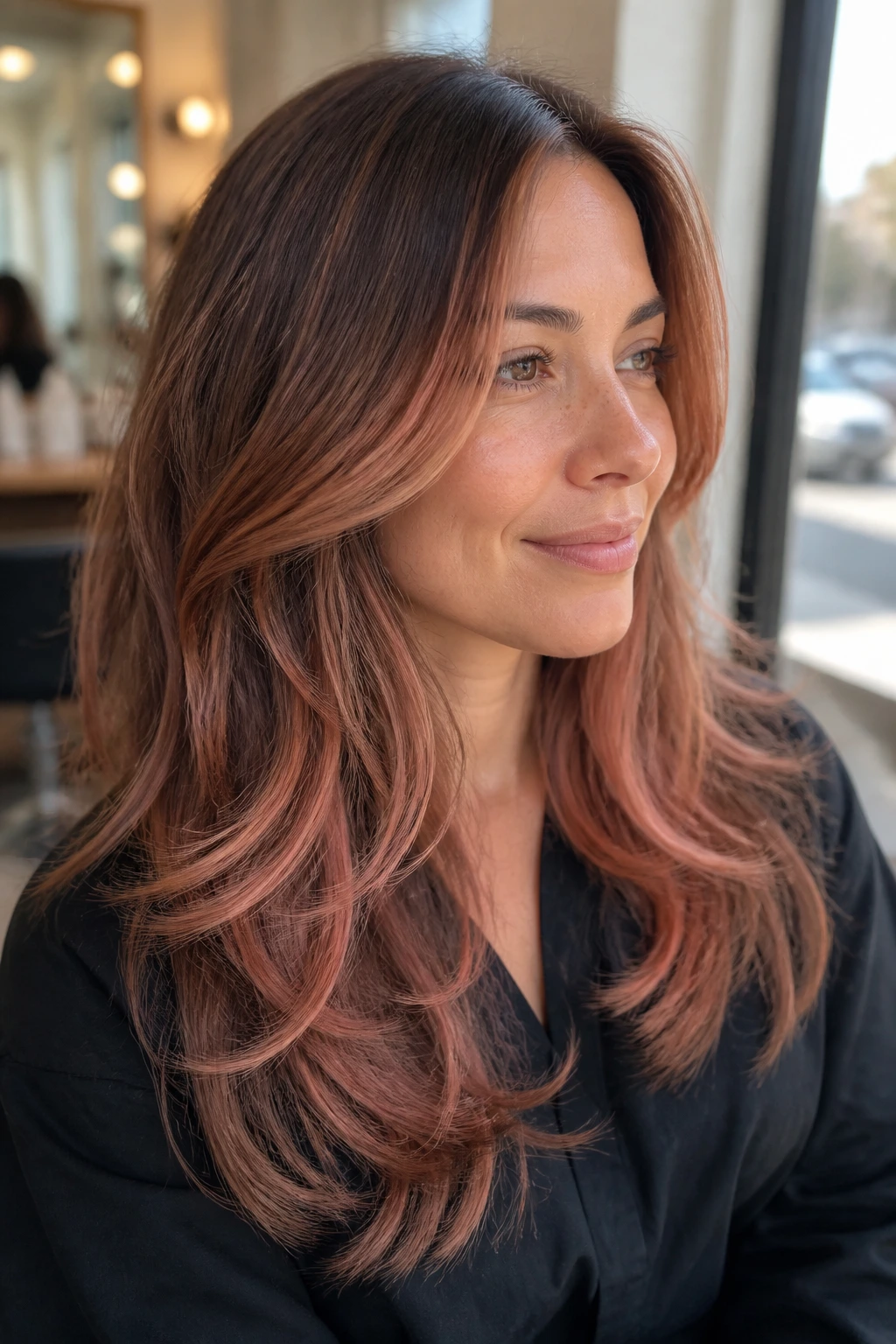
Brunette layers need warmth with backbone, and warm rose gold is exactly that. It doesn’t fight the dark base; it sits over it in ribbons and melts, which makes the color feel richer than a simple pink toner ever could.
I like this version when a client wants to see the rose in the daylight but still wants the hair to look brown first. The layers help because each bend catches a slightly different amount of light. One section flashes copper. Another goes soft pink. Another stays brown. That variation is the whole charm.
- Ask for a warm rose glaze over lifted ribbons.
- Keep some lowlights in the base so the color doesn’t flatten.
- Put the brightest rose around the face and outer layers.
- Style with a soft bend, not rigid curls, so the tones stay mixed.
This is the one that looks best when it’s not trying too hard.
18. Smoky Rose Ends with Foilayage
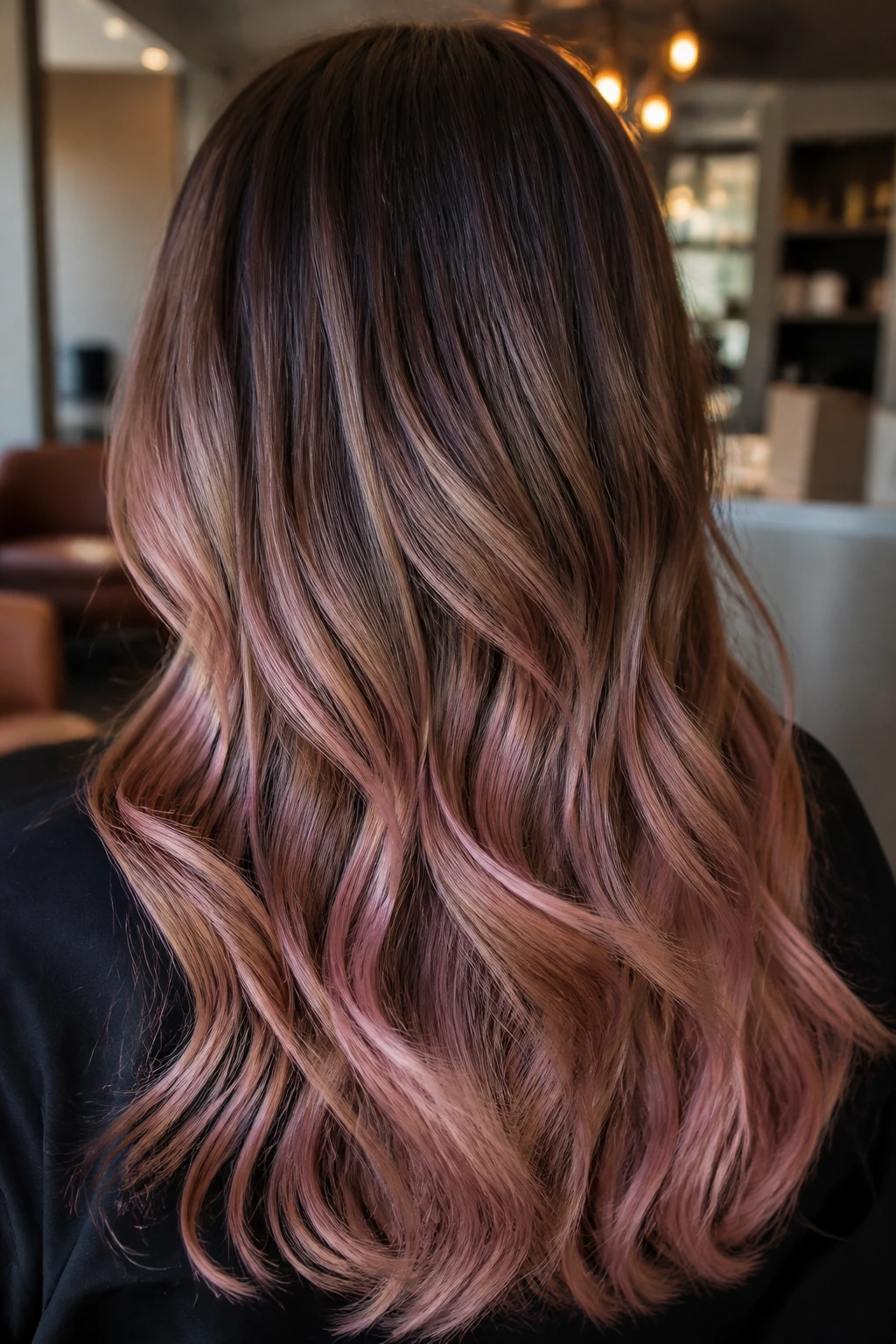
Smoky rose is for people who like their color a little muted, a little moody, and not overly sweet. Instead of a bright pink finish, the ends get a blush-rose tone with a soft smoky cast that takes the edge off the warmth.
Foilayage helps because it allows brighter ends without losing the blurred placement. That matters here. If the rose is too uniform, the smoky effect disappears. You want a version that shifts slightly from strand to strand.
This shade is especially useful on longer hair, where the ends can get too light and too thin-looking. A smoky rose finish gives them back some visual weight. It’s not louder; it just has more presence.
19. Pink Copper Shag with Airy Texture
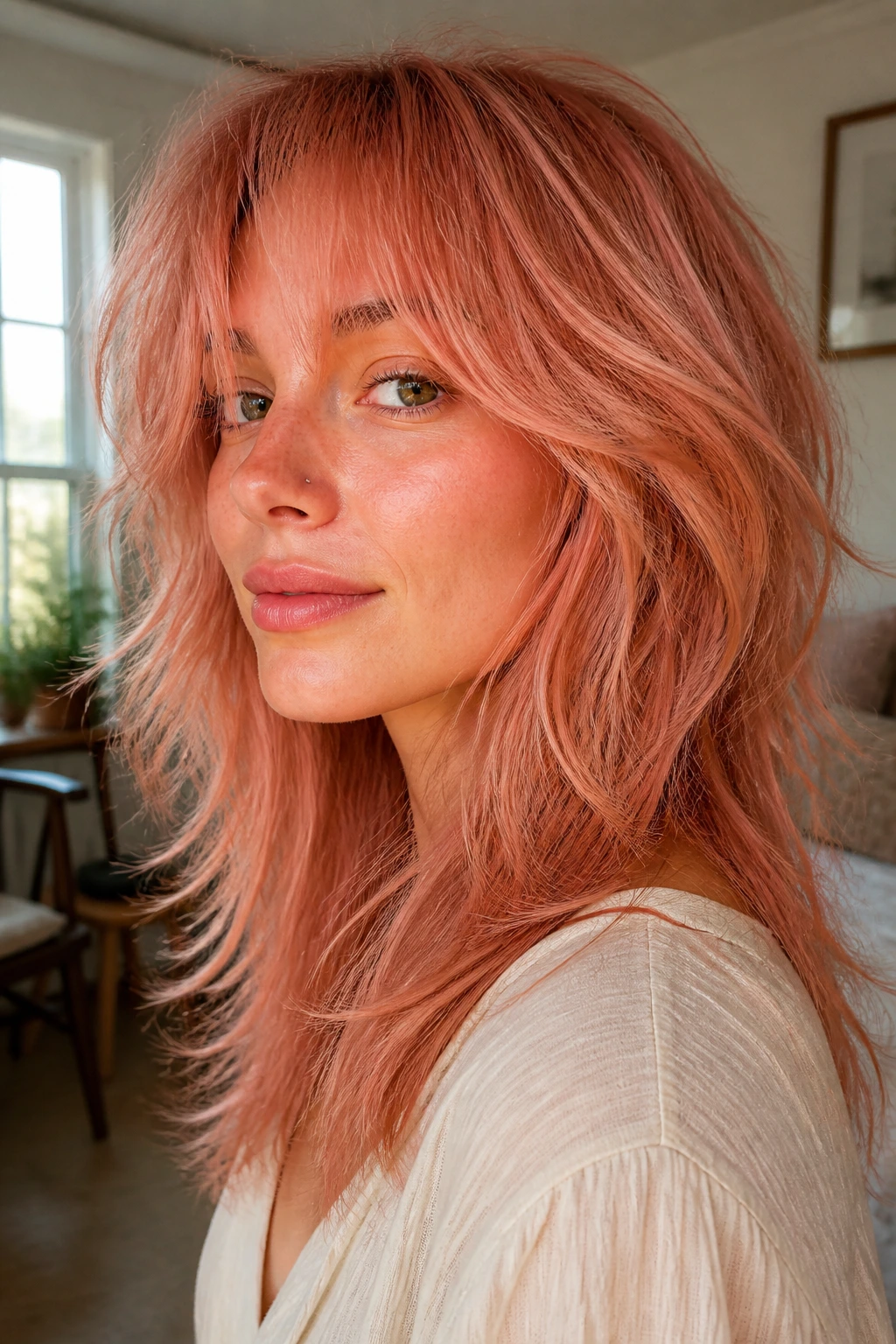
Why does a shag make rose gold look cooler? Because the layers break up the color. Instead of one solid surface, you get a messier, more lived-in frame that makes pink-copper tones feel casual and wearable.
What to watch for
The color should sit around the texture, not fight it. On a shag, too-dark roots can make the cut look heavy, while too-bright ends can make the layers look frayed. You want the rose to move through the piecey shape.
A shag also likes a slightly warmer formula. Copper keeps the color from reading fragile. Pink alone can look a little too neat on this cut, and a shag should never feel neat.
If you air-dry your hair, this is one of the easiest rose gold directions to live with. The uneven texture does the styling for you.
20. Rose Gold Over Auburn Hair
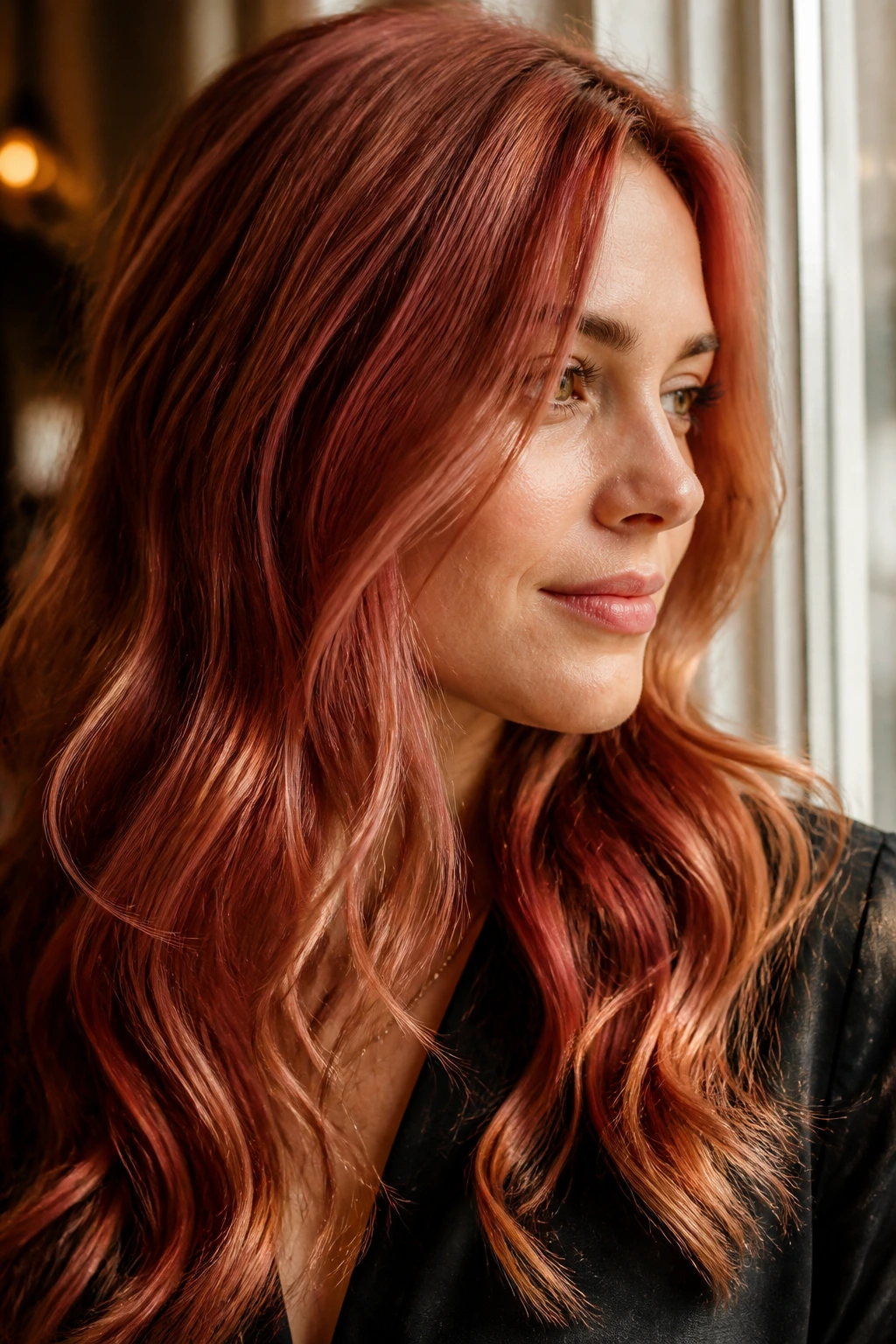
Natural auburn already has a warm backbone, so rose gold on top doesn’t need to do all the work. The result is more of a blush sheen than a total color change, which is why this version feels so believable.
The trick is respecting the base. If the auburn is strong, let it show through. Use rose gold as an accent glaze or ribbon tone, not a heavy overlay. That way the hair still reads like auburn, only warmer and a little softer around the edges.
This is one of the easiest ways to get into the rose gold family without bleaching the life out of the hair. You get the glow, the warmth, and a lot less maintenance than people assume.
21. Icy Rose Gold with Champagne Blonde Base
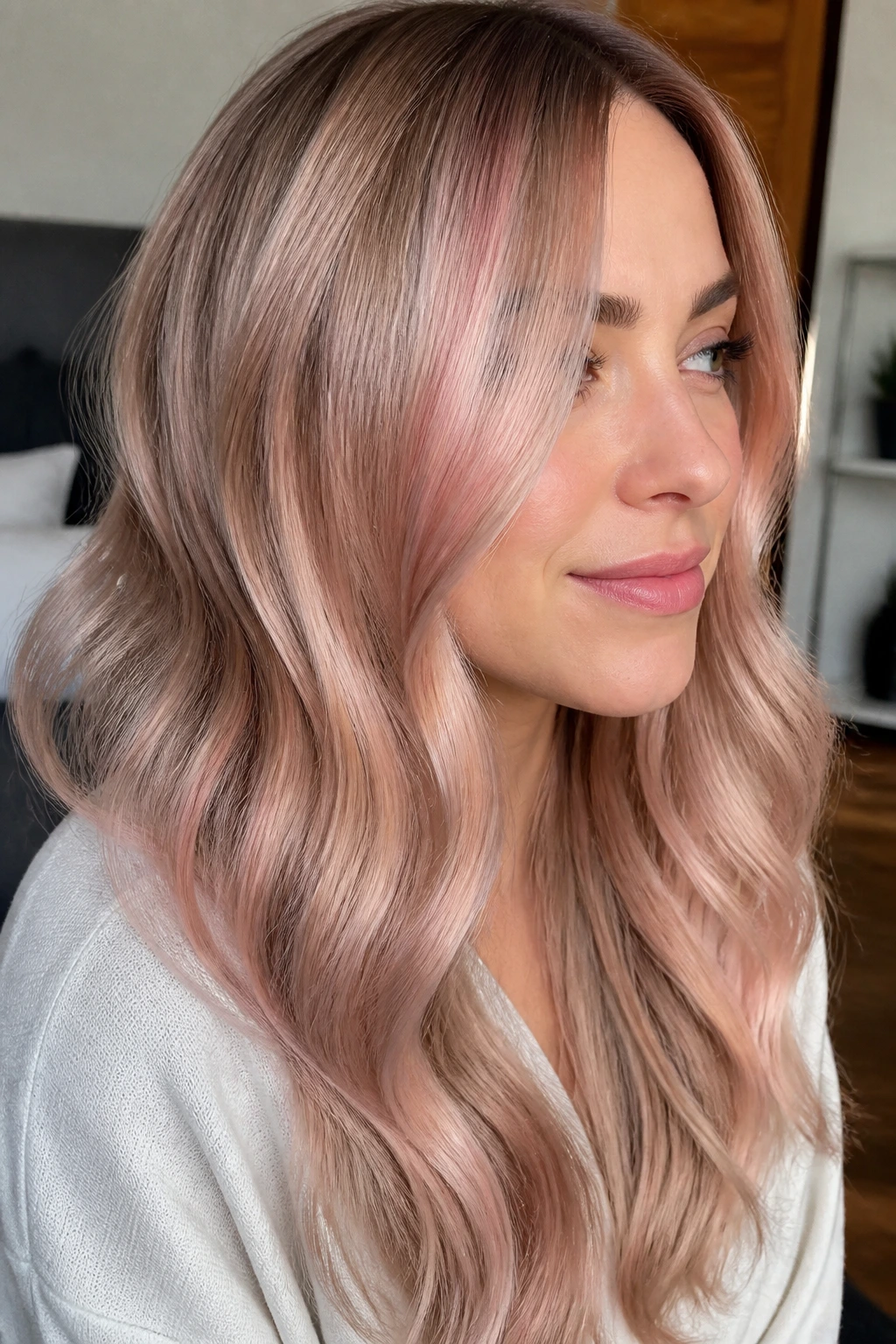
This is the coolest interpretation in the group, but it still belongs here because the champagne base keeps it from going frosty. Think pale pink with a silvery edge, softened by a beige-gold blonde underneath.
Unlike a true pastel pink, icy rose gold needs a carefully controlled base. If the blonde is too yellow, the color turns peachy fast. If it’s too white, the rose can look chalky. Champagne sits in the middle and does the boring-but-important job of balance.
This version works best when you want the rose to look refined rather than warm. It’s not the most forgiving choice, but it can be stunning on very pale hair that needs a little mood without losing brightness.
22. Dimensional Rose Gold with Cocoa Lowlights
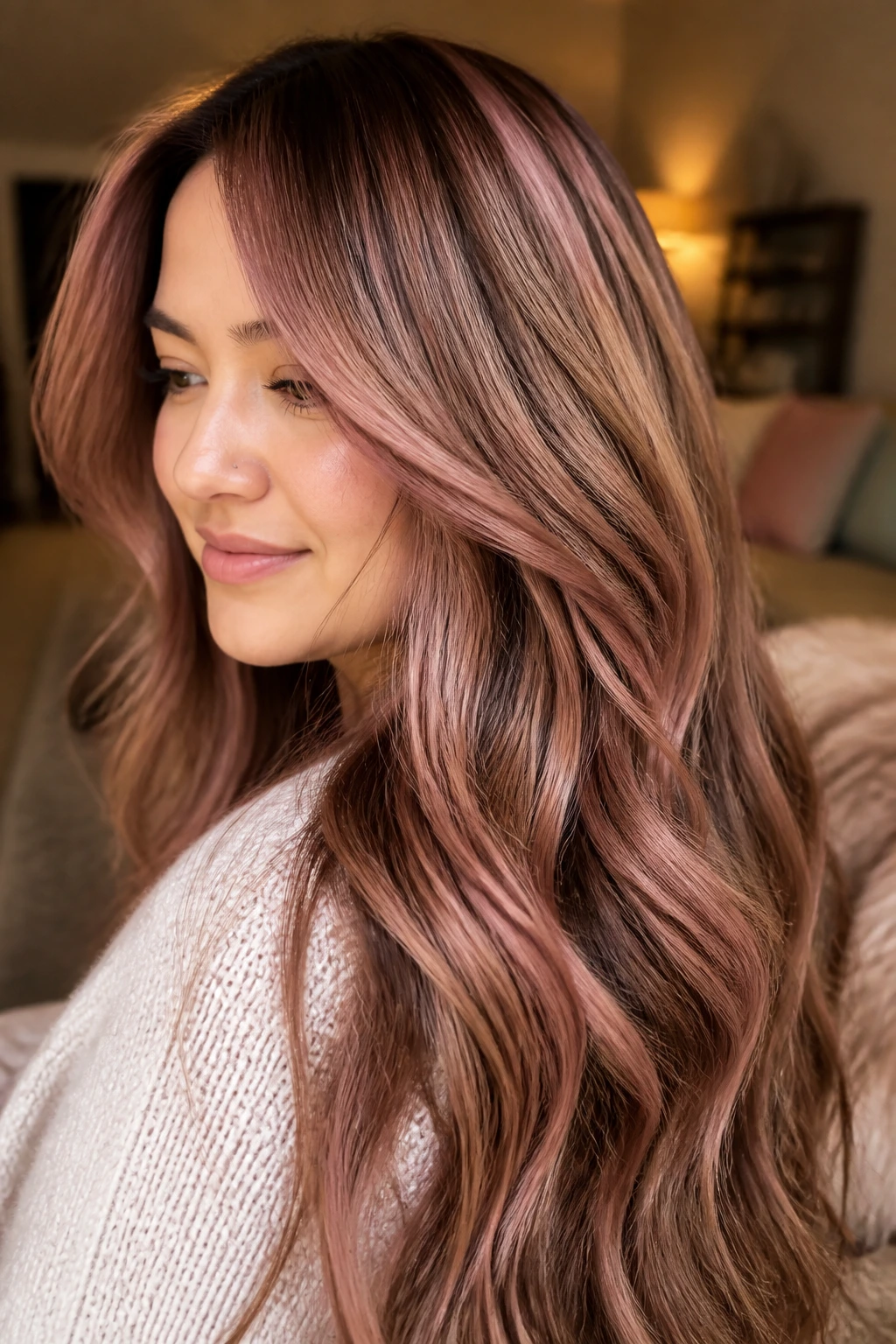
Dimensional color beats flat color almost every time, and this version proves it. Cocoa lowlights stop rose gold from floating on top of the head like a filter; they give the warm pink strands something darker to sit beside, which makes the rose look brighter by comparison.
This is one of my favorite options for longer hair because the lowlights keep the ends from looking stringy. The rose-gold pieces catch the light, the cocoa shades tuck underneath, and the overall effect feels rich rather than sugary.
- Best when you want depth, not just color.
- Keeps the style from washing out on fine hair.
- Works especially well with waves or loose bends.
- Needs a gloss refresh to keep the rose from fading too peachy.
When rose gold gets depth, it stops being a trend color and starts looking like a real hair color. That’s the version worth wearing.
How Rose Gold Hair Gets Its Warm Glow Without Going Full Pink
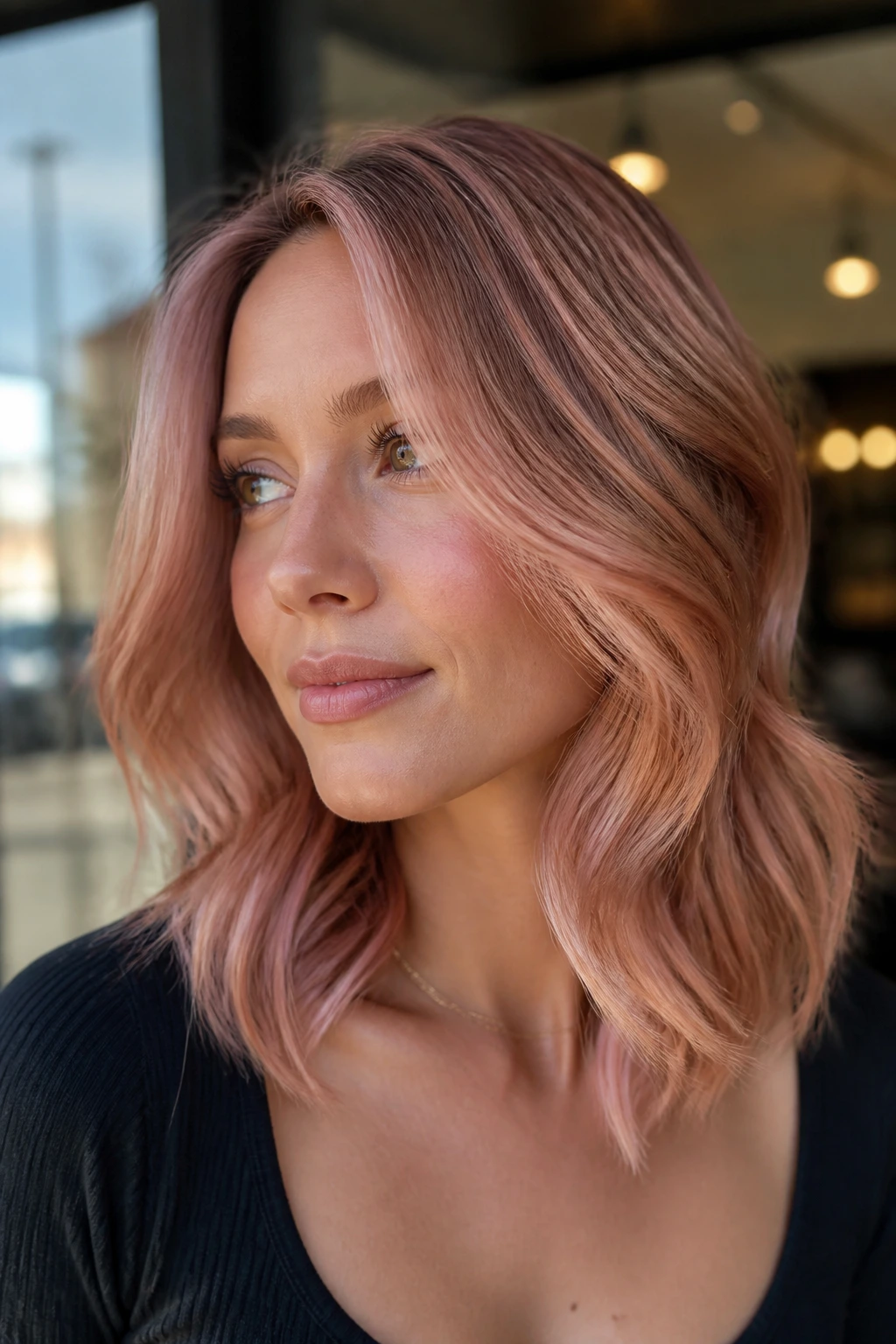
The cleanest rose gold shades usually start with a base that’s been lifted just enough, then toned with restraint. Too much lift and the color can go brittle-looking. Too little and the pink sits on top of the hair like dust.
Base control is the whole game
A level 9 or 10 blonde gives you a soft, airy blush. A level 7 or 8 brown base needs more strategy — often foils, balayage, or a rooted melt — because rose gold has to compete with the underlying pigment. If the warm pigment underneath is too strong, the rose gets swallowed.
Glosses beat heavy pigment when you want softness
A demi-permanent gloss keeps the finish flexible. It stains less aggressively, fades more gracefully, and lets the light show through. Direct dye can be fun, but it tends to sit louder on the hair and can read too pink if you’re aiming for a warm glow rather than a fashion shade.
Porosity changes everything
Dry, porous ends soak up pigment fast. That can be useful if the mids and ends need help, but it can also make the color spotty. On very porous hair, a rose gold gloss diluted with clear or beige usually looks better than a full-strength formula.
Essential Tools for Coloring and Keeping the Tone Soft
-
Color-safe sulfate-free shampoo: Keeps rose pigment from washing out too quickly and is less harsh on porous ends.
-
Color-depositing mask in rose, peach, or beige-pink: Handy for between salon visits when the tone starts to fade warmer than you want.
-
Heat protectant spray: Flat irons and curling wands can strip shine fast, and shine is half the appeal here.
-
Microfiber towel or soft cotton tee: Regular terry cloth roughs up the cuticle and makes rosy tones look dull sooner.
-
Wide-tooth comb: Helps spread conditioner or a pigmented mask evenly without yanking through fragile lightened hair.
-
Sectioning clips: Useful if you’re applying a gloss, mask, or toner at home and want even coverage.
-
Tint brush and bowl: Worth having if you do any DIY color depositing, even if you only use it every few weeks.
-
Shower filter: Optional, but hard water can make rose gold turn brassy or dull faster than you’d expect.
-
UV-protective leave-in: Sunlight fades pink tones in a hurry, and a leave-in with UV filters buys you a little extra life.
Picking the Right Rose Gold Shade for Your Base and Undertone
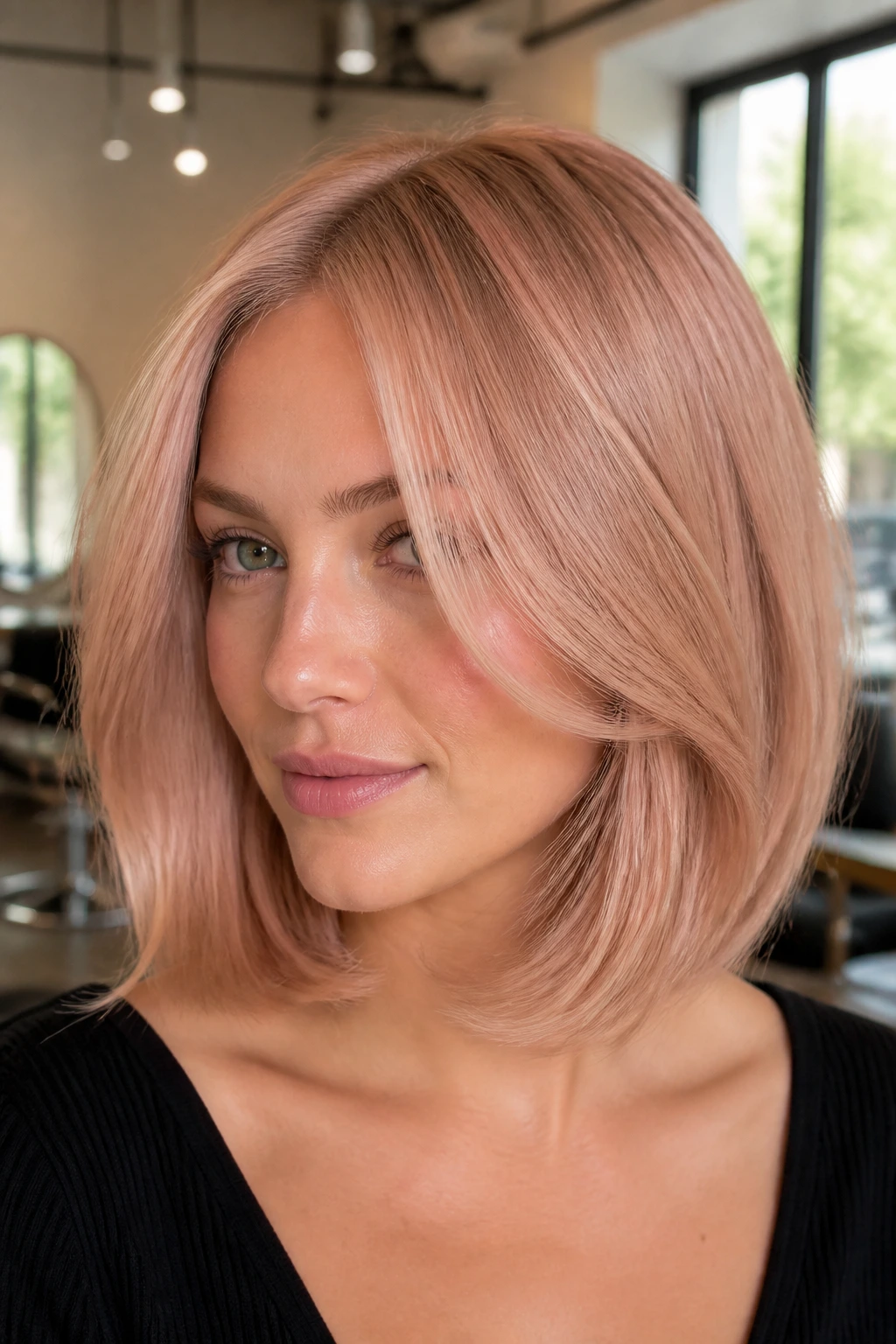
Start with the base you actually have, not the one in the photo you saved. That one choice changes everything. Rose gold on level 10 blonde is a whisper; rose gold on medium brunette usually needs pre-lightening or a far more copper-heavy formula to show up cleanly.
If your skin leans warm, copper-rose, peach-rose, and champagne-rose usually feel natural. If your skin leans cool, dusty rose, mauve-rose, and beige-pink are easier to wear because they don’t turn the whole face orange. Neutral undertones can get away with almost any version, which is unfair but true.
Porosity matters too. Hair that has been lightened a lot tends to hold onto pigment in the roughest spots and lose it fastest from the shiny ones. That’s why a careful gloss or root shadow is often smarter than a full-saturation color on damaged ends.
For the cleanest result, match the formula to the haircut. A bob can handle a sharper rose. A shag or curl pattern usually looks better with blended ribbons. A pixie wants clarity. Long hair asks for depth.
How to Wear Rose Gold Hair Without Letting the Color Fight the Cut
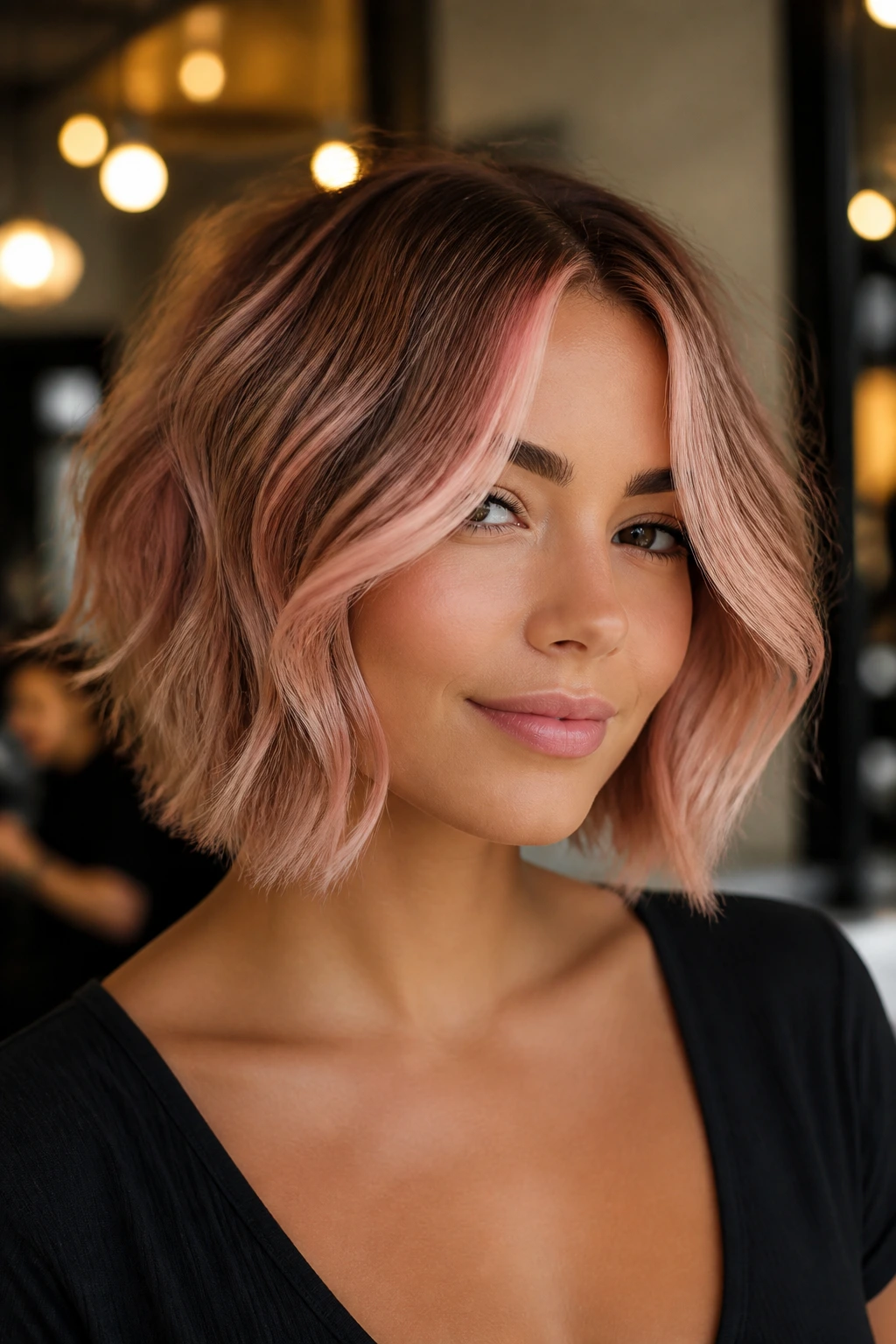
Placement: Put the brightest rose where the haircut already creates attention — the front pieces of a bob, the top layer of a shag, the ends of a lob, or the crown of a pixie bob. If you scatter the brightest color everywhere, the eye has nowhere to rest.
Texture: Loose bends show rose gold best. Air-dried waves, a soft blowout, or a gentle curl with a 1-inch iron all give the color some movement. Pin-straight hair can look sleek and glossy, but it hides dimension unless the color placement is very precise.
Makeup: Peach blush, warm nude lipstick, and soft brown liner usually sit well with rose gold hair. Heavy cool-toned mauves can fight the warmth and make the hair look more copper than rose. If the shade is cooler and mauve-leaning, a berry lip can look cleaner.
Wardrobe: Cream, camel, rust, olive, slate, washed black, and denim all let rose gold do its thing without competing. Bright neon shades can swallow the softness. Crisp white can work, but it tends to make pink tones read stronger.
Practical Ways to Keep the Pink from Going Flat
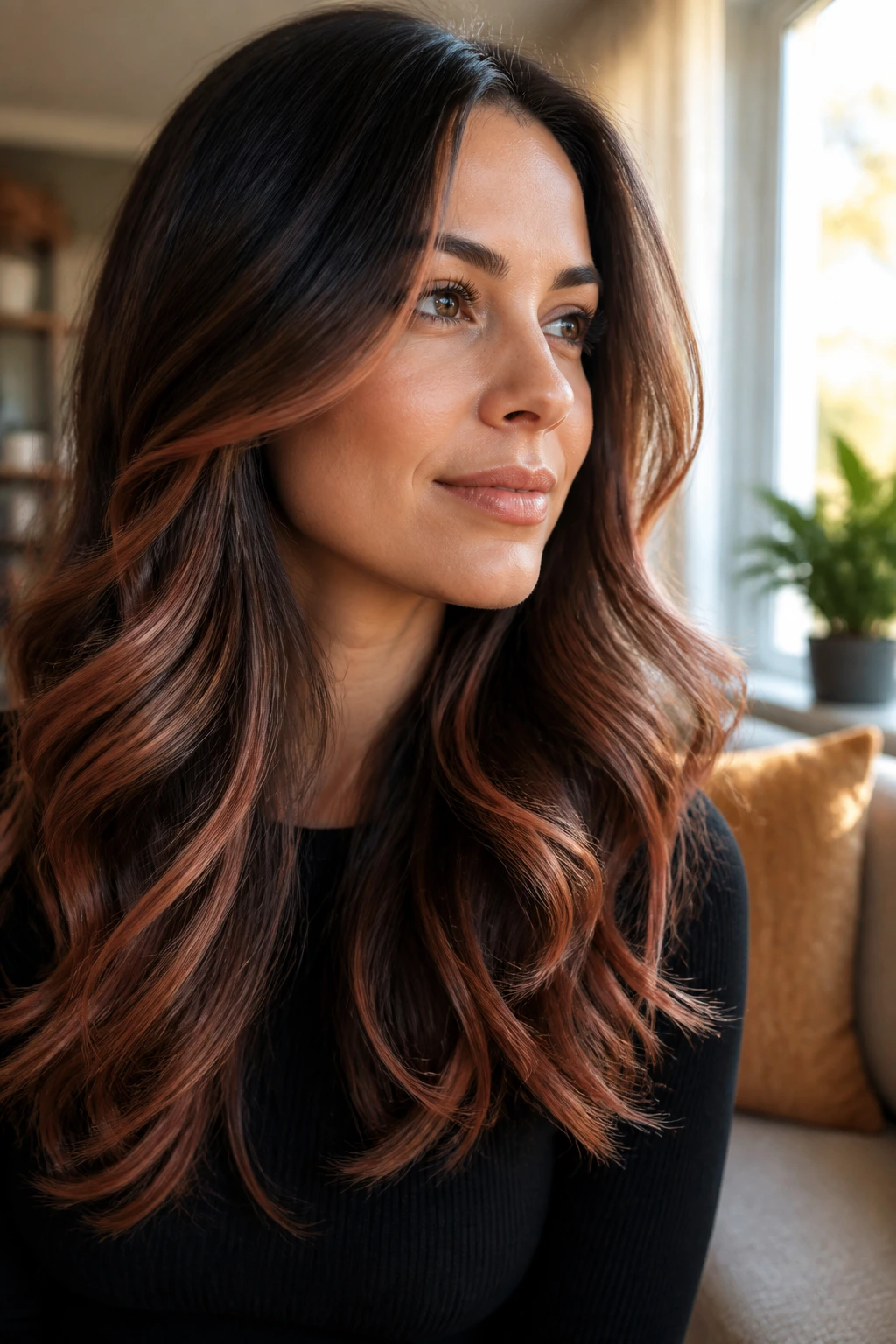
Glow Boost: A clear gloss every 4 to 6 weeks can revive the shine line without making the color much darker. That’s usually better than piling on more pigment when the only thing missing is reflection.
Customization: If the rose is fading too peachy, ask for a beige-pink conditioner or a quick glaze with a little cooler pink. If it’s fading too pink, a champagne or golden gloss can bring it back toward the soft warm end.
Styling Support: Use a low-temp blowout or a loose bend around the face. Strong heat and tight, repeated curling can make the cuticle rough, and rough cuticle means the color looks less luminous.
Make-It-Yours: For low maintenance, keep the root darker. For a bolder look, brighten the money piece. For curly hair, ask for warmer copper-rose ribbons rather than pale pink streaks, because the curl pattern already gives you enough movement.
Common Mistakes That Turn Rose Gold Muddy or Overprocessed
-
Lifting the hair too far: If the blonde is pushed to a brittle, nearly white stage, rose gold can look chalky instead of soft. A little gold underneath keeps the tone warmer and more believable.
-
Using a cool toner first: Purple or blue-heavy toners can mute the rose so much that it turns beige-gray. A neutral or beige toner usually does a better job when the goal is blush warmth.
-
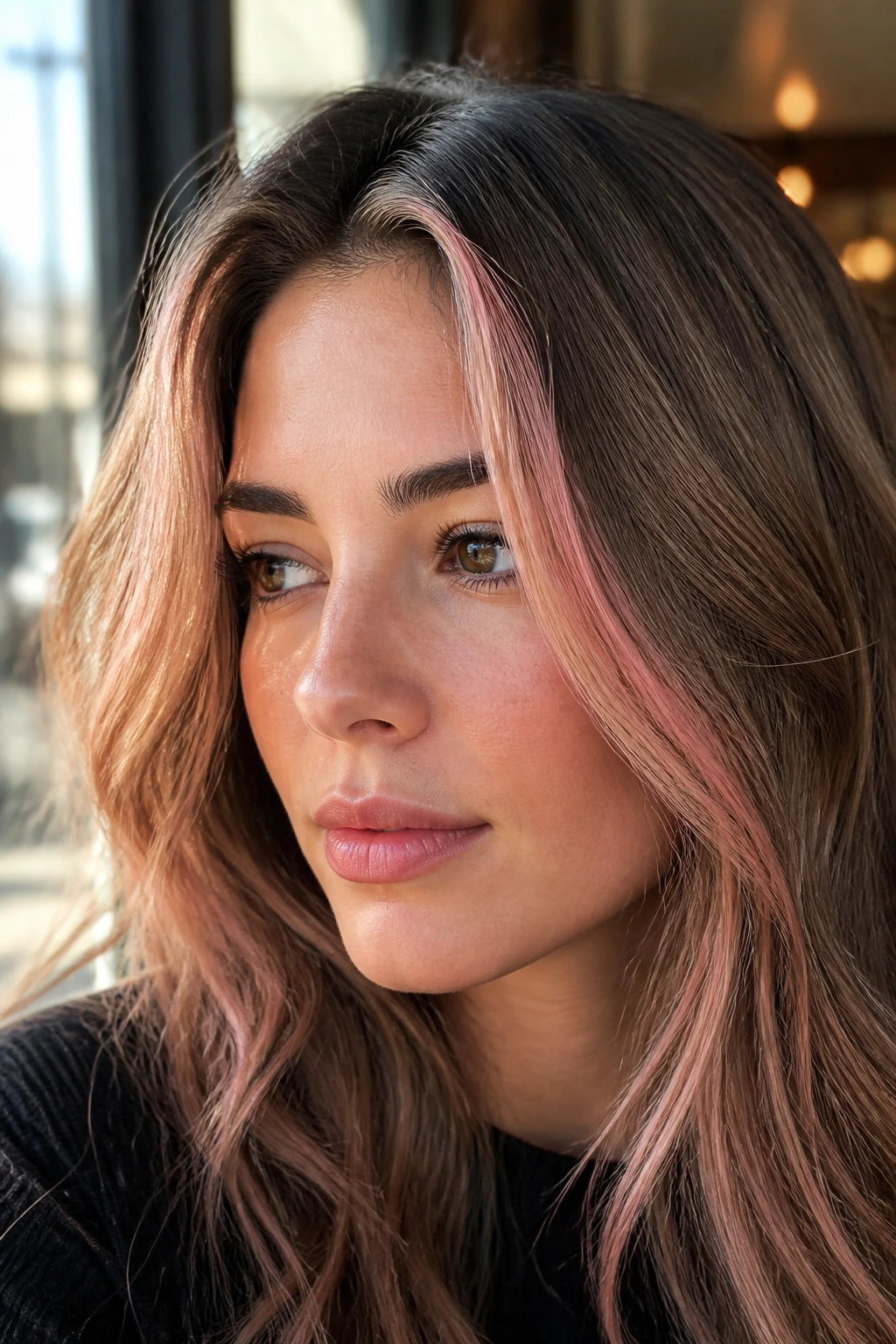
Skipping a shadow root on high-maintenance hair: All-over pastel rose on lightened hair grows out fast and can look disconnected at the scalp. A root shadow gives the color a proper frame.
-
Ignoring porosity at the ends: Porous ends grab pigment fast and can go darker or patchier than the rest of the hair. If the mids and ends are thirsty, dilute the formula or pre-fill them with clear gloss.
-
Washing too aggressively: Hot water and sulfate-heavy shampoo pull pink pigment out in a hurry. Lukewarm water and a gentle shampoo stretch the color longer.
-
Flattening the finish with too much oil: A drop or two of serum is fine. A heavy hand makes the rose look greasy and hides the shine instead of showing it.
Variations Worth Trying Beyond the Usual Pink-Blonde Mix
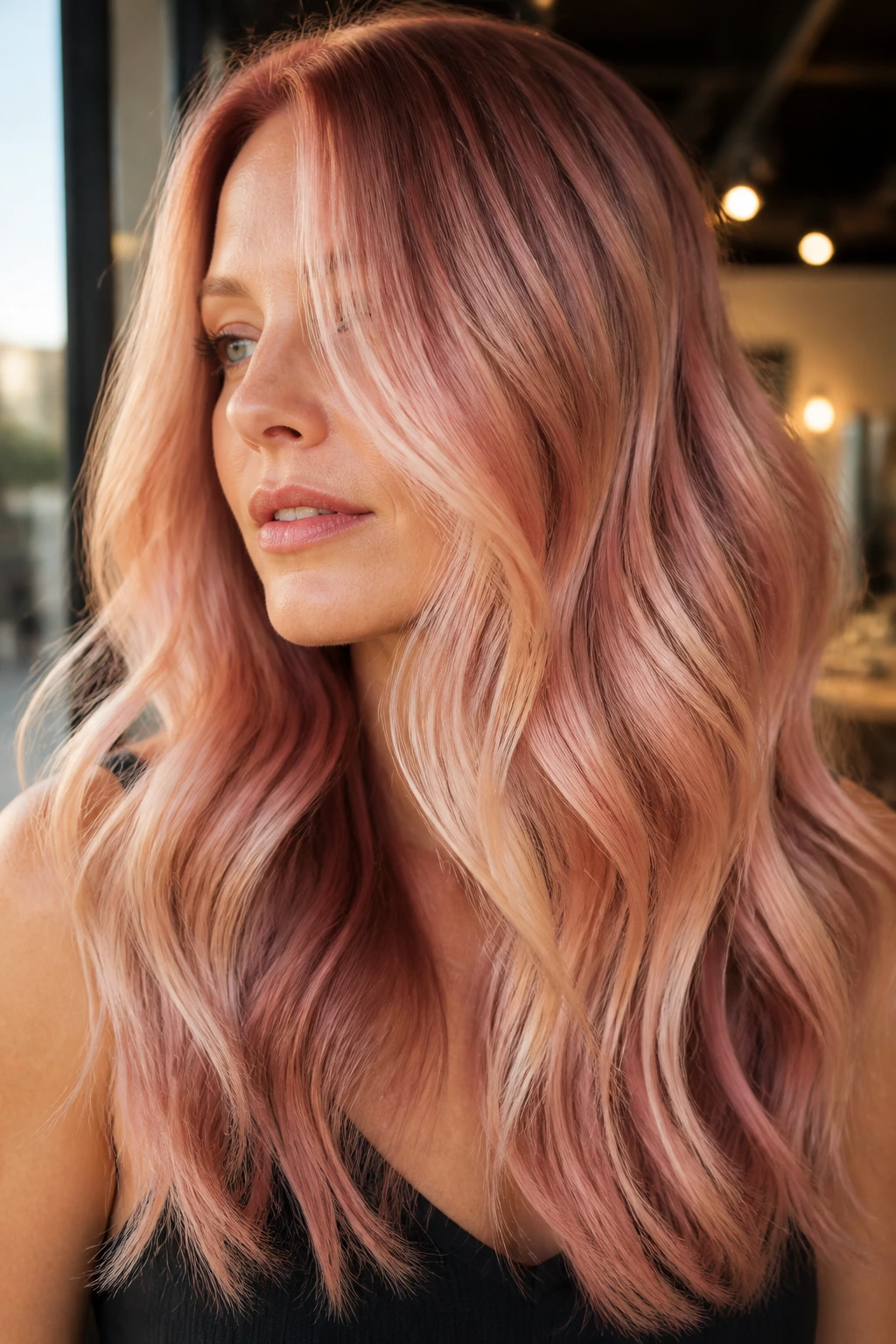
Dusty Rose Veil: A beige-rose gloss for pale blonde hair that wants softness instead of sparkle. It’s subtle, low commitment, and easy to keep polished with a clear topcoat.
Peach-Copper Glow: Best on warm bases and curls, this one leans apricot and copper more than pink. It gives the hair a sunlit finish and tends to fade in a flattering, warm direction.
Muted Mauve Melt: Cooler, quieter, and a little moodier. This version works when bright rose feels too sweet, especially on ash blonde or pale brunette bases.
Sunset Root Melt: A deeper root moving into warm rose-gold mids and lighter champagne ends. It’s one of the most forgiving ways to wear the color because the grow-out stays soft.
Rose Ribbon Lights: Thin rose-gold highlights woven through brunette or blonde hair instead of a full glaze. The result is more movement, less commitment, and a lot more dimension.
Keeping Rose Gold Hair Fresh Between Salon Visits
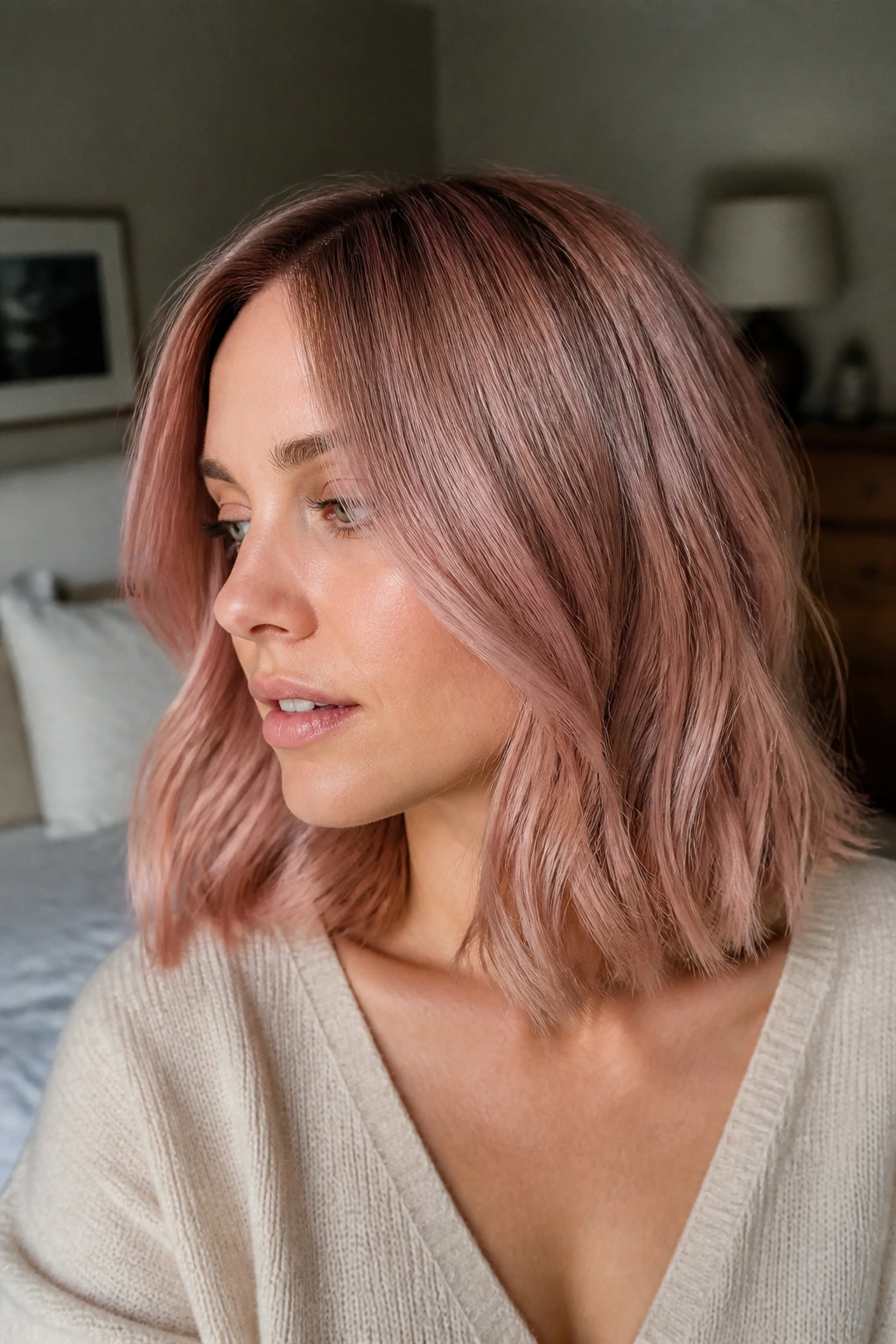
Rose gold fades best when you treat it like a tinted fabric, not a permanent dye job. That means fewer washes, cooler water, and a little pigment maintenance in between. A demi-permanent gloss on pre-lightened hair usually stays clean for about 4 to 6 weeks, while a rooted balayage or foilayage can look good for 6 to 8 weeks before it needs a refresh.
If you wash every day, the color will fade faster. Two or three washes a week is kinder to rose tones, and dry shampoo helps stretch the gap. Use lukewarm water, not hot. Hot water opens the cuticle and lets the pink slip out faster than you’d think.
For upkeep, a color-depositing mask every 1 to 2 weeks can keep the pink or peach note alive. Porous ends may only need a 3- to 5-minute processing time, while healthier midlengths can usually handle a bit more. If the shade starts turning too peachy or gold, a soft beige-pink gloss helps pull it back. If it goes too cool or too dusty, a warmer rose mask brings it forward again.
Heat and sun are the other two thieves. Use heat protectant every time you blow-dry, curl, or straighten. If you spend a lot of time outdoors, a UV leave-in or hat will save you a few salon dollars and a lot of faded ends.
Rose Gold Hair Questions People Ask Most
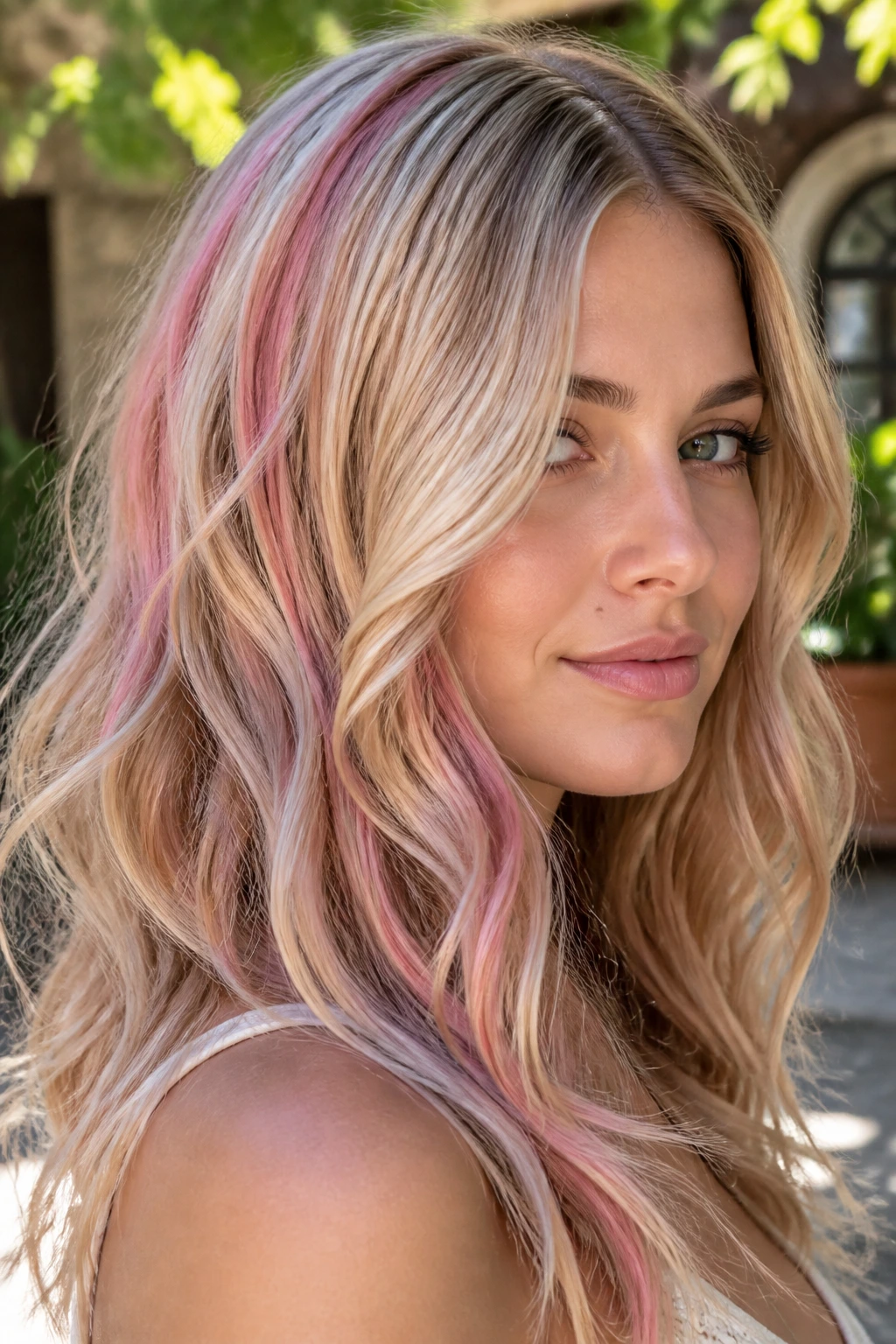
Can rose gold hair work on dark brown hair without full bleach?
Yes, but the result will be much subtler. On darker brown hair, rose gold usually shows up as a warm blush or reflective tint unless you lighten selected sections first.
How long does rose gold hair color last?
A glossed version often looks strongest for 4 to 6 weeks, while rooted balayage can stretch to 6 to 8 weeks before it needs a refresh. Porous or frequently washed hair may fade faster.
Is rose gold more pink or more copper?
That depends on the formula. Peach and copper-heavy rose gold reads warmer, while mauve or dusty rose pulls cooler and softer.
What undertones look best with rose gold hair?
Warm and neutral undertones usually handle copper-rose and peach-rose easily. Cool undertones often look better in beige-pink or mauve-rose versions that don’t push the face too orange.
Can you do rose gold on curly hair?
Absolutely, and curls often make the color look better because the texture scatters the light. The key is keeping enough depth in the formula so the tone doesn’t disappear once the curls dry.
What if my rose gold turns too orange?
That usually means the formula leaned too far into copper or the blonde underneath was too yellow. A beige or cooler rose gloss can soften it back down.
Can I wear rose gold if I wash my hair every day?
You can, but it will fade faster. A pigmented conditioner, cool water, and dry shampoo between washes make a big difference.
Is this a good at-home color, or should I go to a salon?
A clear rose gloss on already light blonde hair can be doable at home if you’re careful. Anything that needs pre-lightening, root shadowing, or balanced ribbons is better left to a colorist.
A Color That Grows Out Gracefully
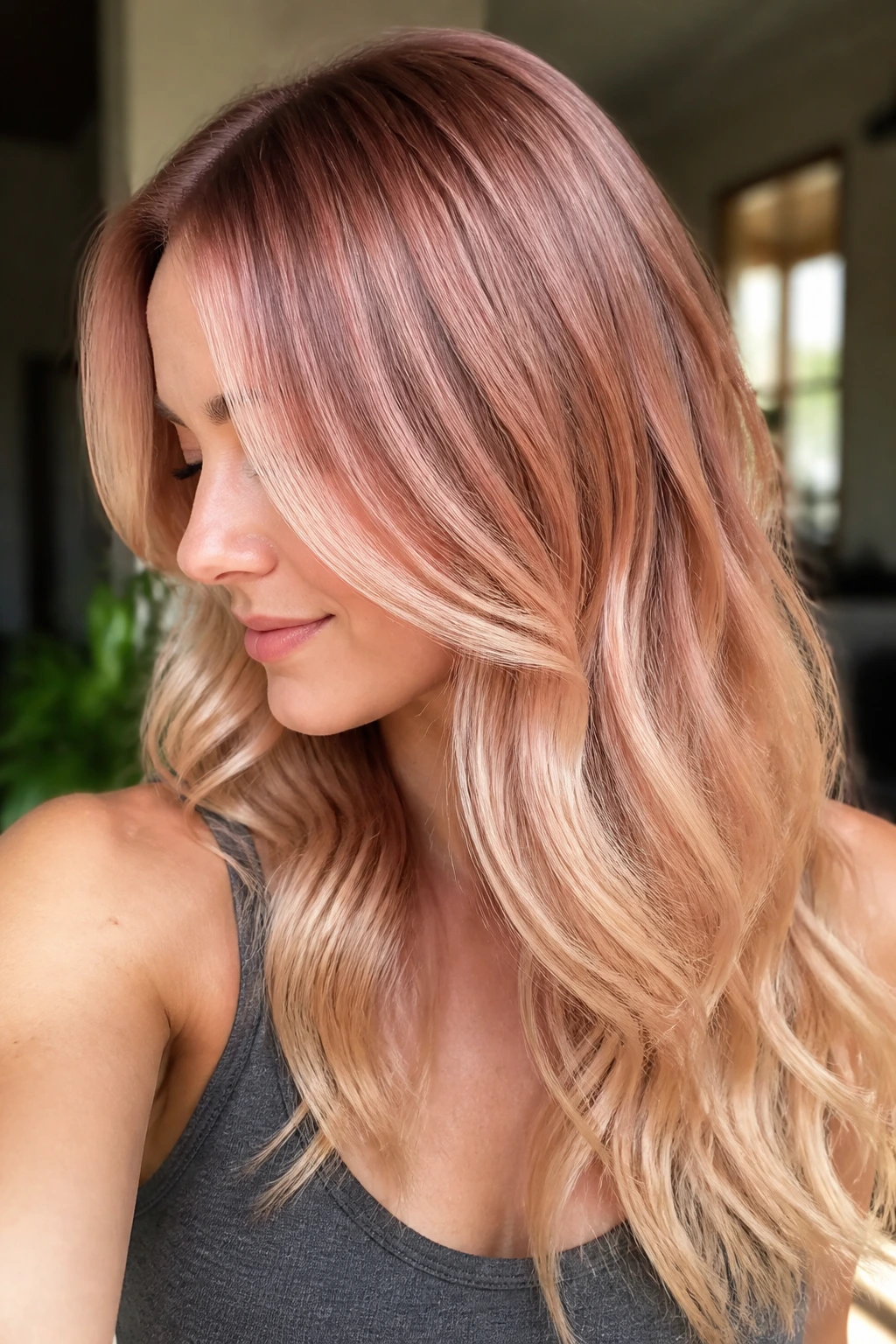
The nicest thing about rose gold is that it doesn’t have to stay loud to stay interesting. The shade can soften into peach, beige, champagne, or warm copper and still feel deliberate, which is more than most trendy colors can claim. That’s the real appeal here: the tone keeps its shape even as it fades.
If you pick the version that matches your base, your haircut, and your maintenance habits, rose gold hair color gives you warmth without the harshness that often comes with redder tones. It can be tiny and sheer. It can be rich and dimensional. It can sit on a bob, a curl, a pixie, or a long layered cut and still feel like it belongs there.
The best rose gold is never the loudest thing in the room. It’s the one that catches the light, settles back down, and still looks like hair.
