



Short shag hairstyles for red hair have a built-in advantage blunt cuts never quite get: they move. A copper crop with broken layers around the crown doesn’t sit there like a shape cut from cardboard. It flicks, bends, and changes when you turn your head, which is exactly why red tones look so alive in a shag.
Red hair is unforgiving in the nicest way. Copper throws light, auburn drinks it in, strawberry blonde can go soft and airy, and deeper burgundy shades need texture or they start to look heavy. A short shag solves that problem by putting the weight where you want it and stealing bulk where you don’t. The result is less helmet, more shape.
The real trick is balance. You want enough length to keep the silhouette strong, enough layering to show off movement, and enough fringe or face-framing to steer the cut toward your cheekbones, jawline, or brow. Get that mix right, and the whole thing looks intentional in air-dry texture, a quick blow-dry, or a slightly messy second-day finish.
Why Short Shag Hairstyles for Red Hair Work So Well
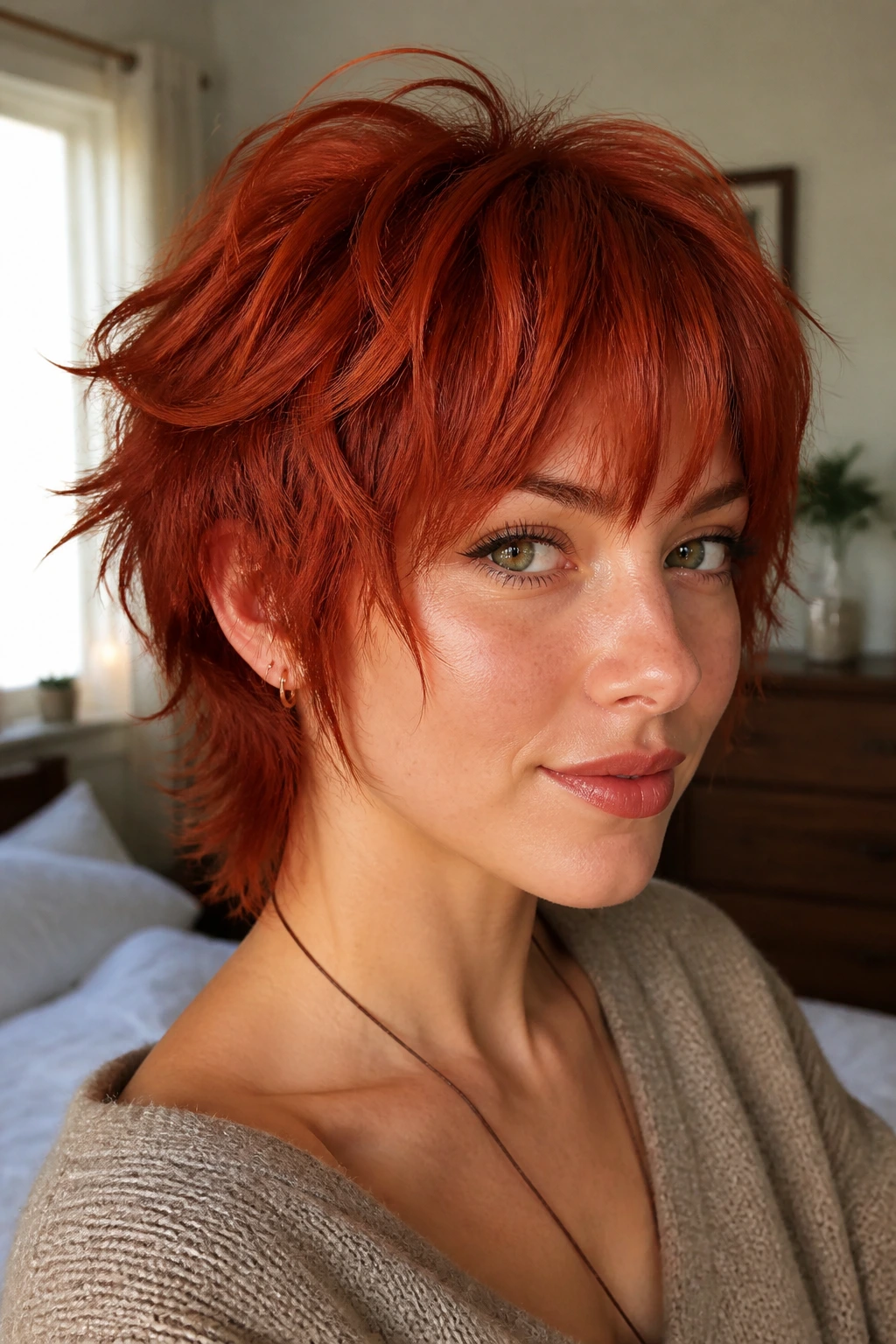
Movement, not bulk: Red shades show every hard line, so the broken layers in a shag keep short hair from turning into one solid block.
Color depth: Copper, auburn, and cherry tones look richer when the crown, sides, and ends sit at different lengths.
Easy styling: A good short shag can look finished with mousse, a diffuser, and five minutes of finger-drying. No round-brush marathon required.
Face framing: Curtain bangs, side fringe, and cheekbone pieces let you steer the cut toward your best features instead of letting the haircut sit flat and square.
Grows out with less drama: The shape can get a little shaggy between trims without looking sloppy. That’s not a bug here. It’s the whole point.
1. Copper French-Girl Shag
This one lands right at the sweet spot between soft and choppy. Think chin-length copper with airy layers at the crown, a broken fringe that brushes the brows, and ends that flip instead of sitting heavy against the neck.
It works because the cut keeps the outline strong while the interior layers stop the top from collapsing. If your hair is fine, ask for light point-cutting rather than a ton of thinning. You want movement, not gaps.
- Best for: Straight to wavy hair that needs more lift at the top.
- Styling note: Scrunch in mousse, then rough-dry the roots with your fingers.
- Color note: Bright copper makes the layer detail obvious, which is exactly why this cut looks so fresh.
2. Auburn Pixie Shag with Choppy Fringe
Auburn and a cropped shag get along better than they have any right to. The darker red tone gives the short length more depth, while the choppy fringe breaks up the forehead line so the cut doesn’t feel severe.
The shape stays close to the head at the nape and sides, then opens up at the crown with short, sliced layers. That little lift matters. Without it, the whole haircut can read as a plain pixie. With it, you get texture and attitude in the same breath.
3. Strawberry Blonde Micro Shag
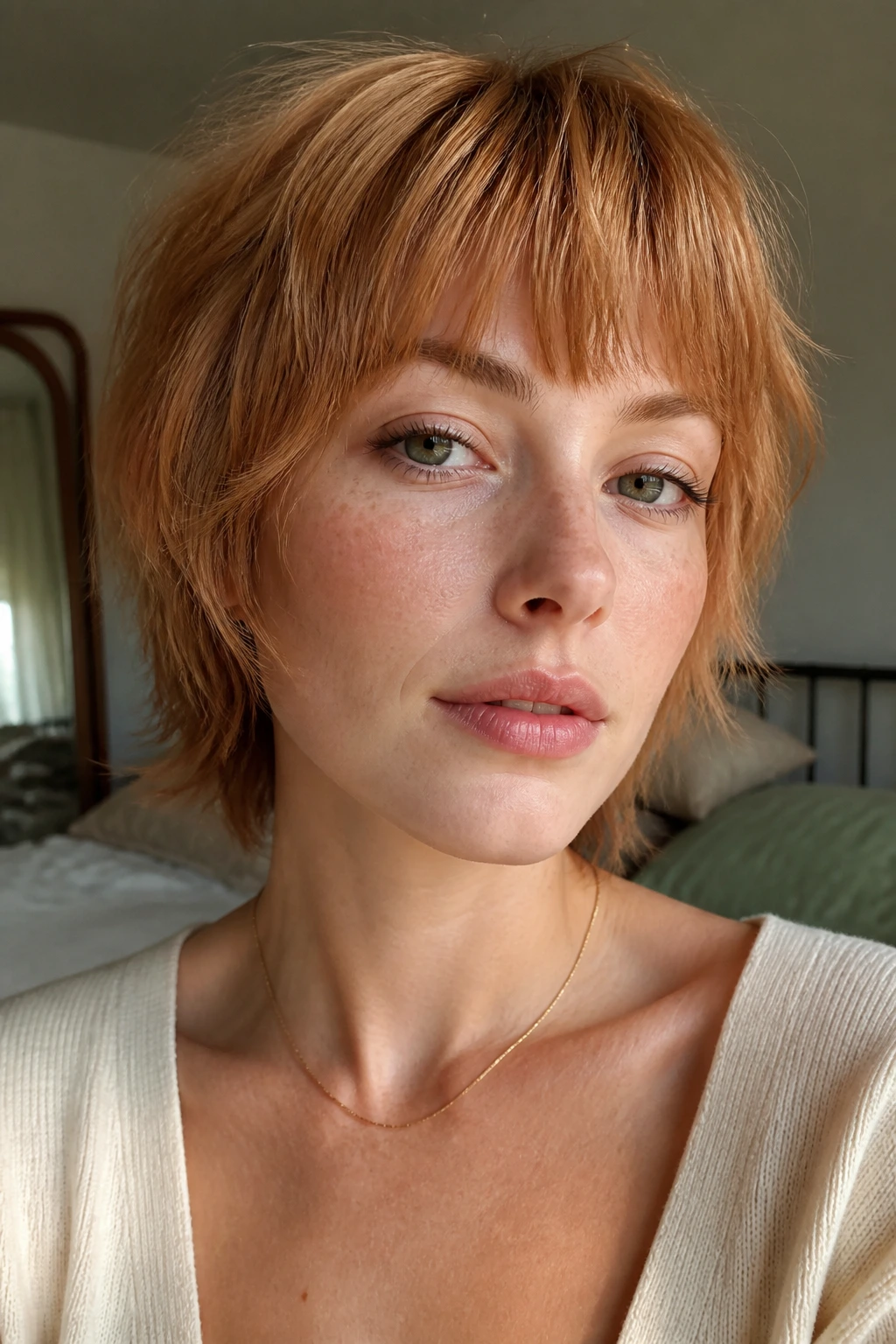
Can a shag still look soft when it’s this short? Absolutely, if you keep the fringe wispy and the layers light. Strawberry blonde tends to look airy in short cuts, and a micro shag leans into that instead of fighting it.
This version is best when you want shape without a lot of width. Keep the longest pieces just grazing the cheekbone, not the jaw, so the cut doesn’t balloon out around the middle of the face. A touch of texture spray at the ends is enough. More than that starts to look frosty and dry.
4. Ginger Curly Shag with Soft Bangs
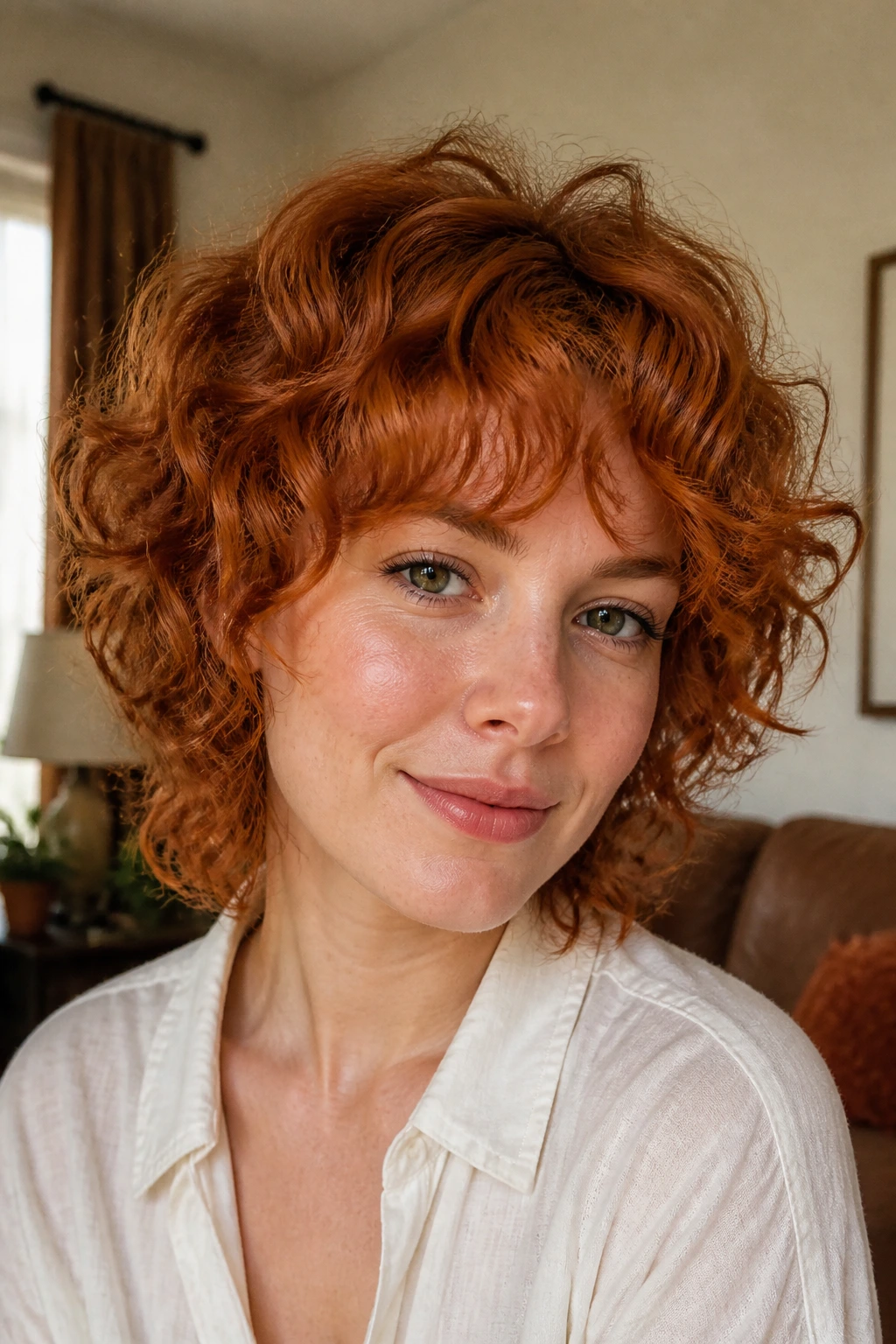
Curly ginger hair loves a shag because the layers let the curl pattern do the work. The bangs stay soft and rounded, not blunt, so they blend into the front rather than sitting like a wall.
The key here is the perimeter. Keep enough length around the chin to stop the curls from springing up too high, then remove weight from the crown so the top doesn’t puff outward. A diffuser on low heat helps keep the curl shape clean. High heat can make ginger tones look dull fast.
- Best for: Loose curls and springy curls that need shape.
- Styling note: Use a gel-cream mix, then let it dry halfway before touching it.
- Watch for: Over-thinning. Curly red hair can frizz if you get aggressive with the scissors.
5. Razored Copper Bob Shag

This is the cut for anyone who likes a bob but wants it to feel less polite. The razor gives the copper ends a feathered finish, and the shag layers stop the bob from sitting too neatly around the jaw.
The beauty of this style is the contrast. The base still behaves like a bob, so it holds its shape, but the internal texture keeps it from looking heavy. If your hair is thick, this one can remove a surprising amount of bulk without taking away the edge line.
6. Rusty Wavy Shag with Curtain Bangs
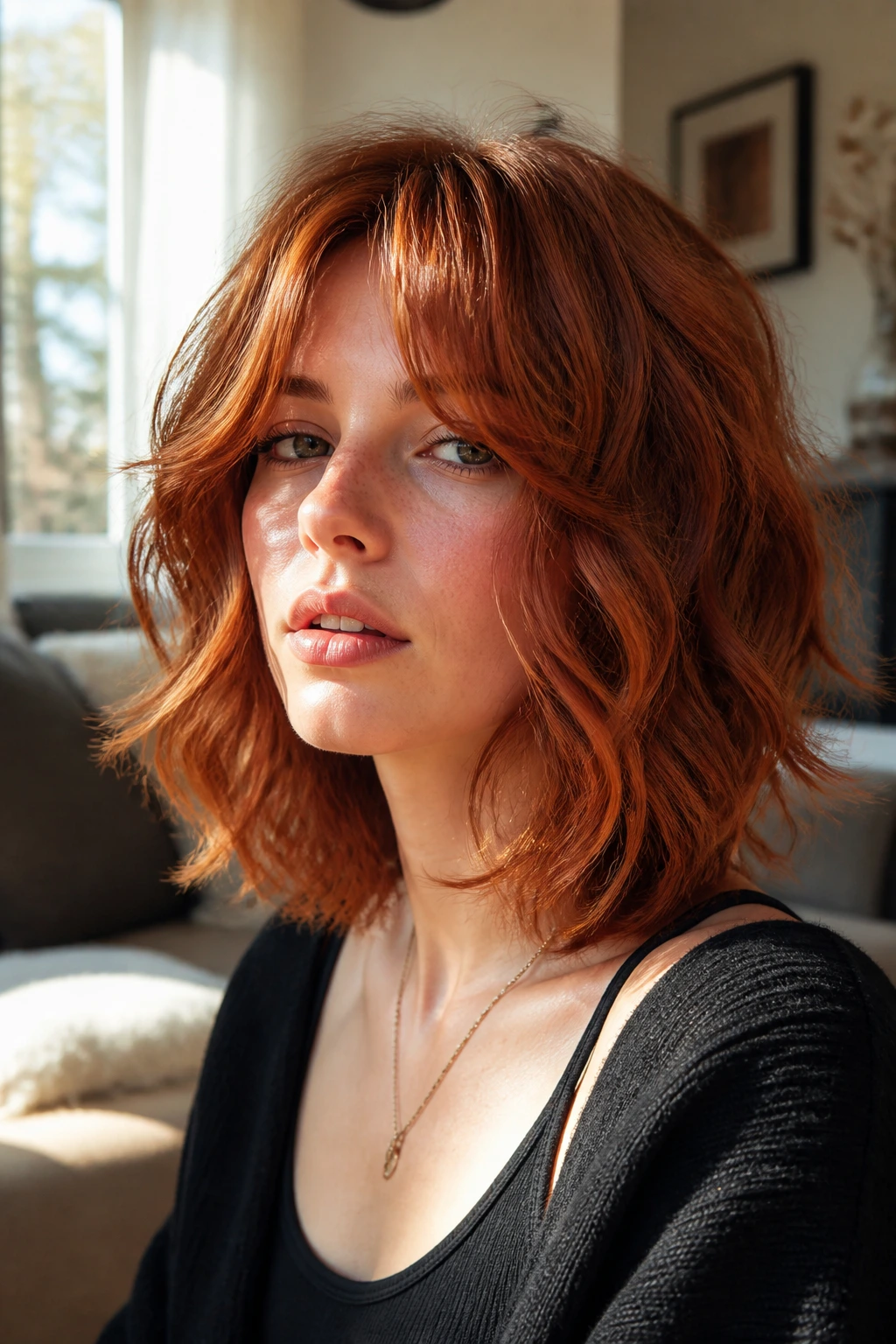
A rusty red shade and curtain bangs are a very good pair. The bangs split cleanly at the center, then fall into those wavy layers at the sides, which keeps the face open without feeling bare.
This cut works best when the shortest crown layers are around eyebrow height and the longest front pieces hit near the mouth or chin. That range gives the waves a place to bend. A 1-inch iron can sharpen the front, but honestly, this cut often looks better with just a scrunch and a bit of salt spray.
7. Burgundy Piecey Crop
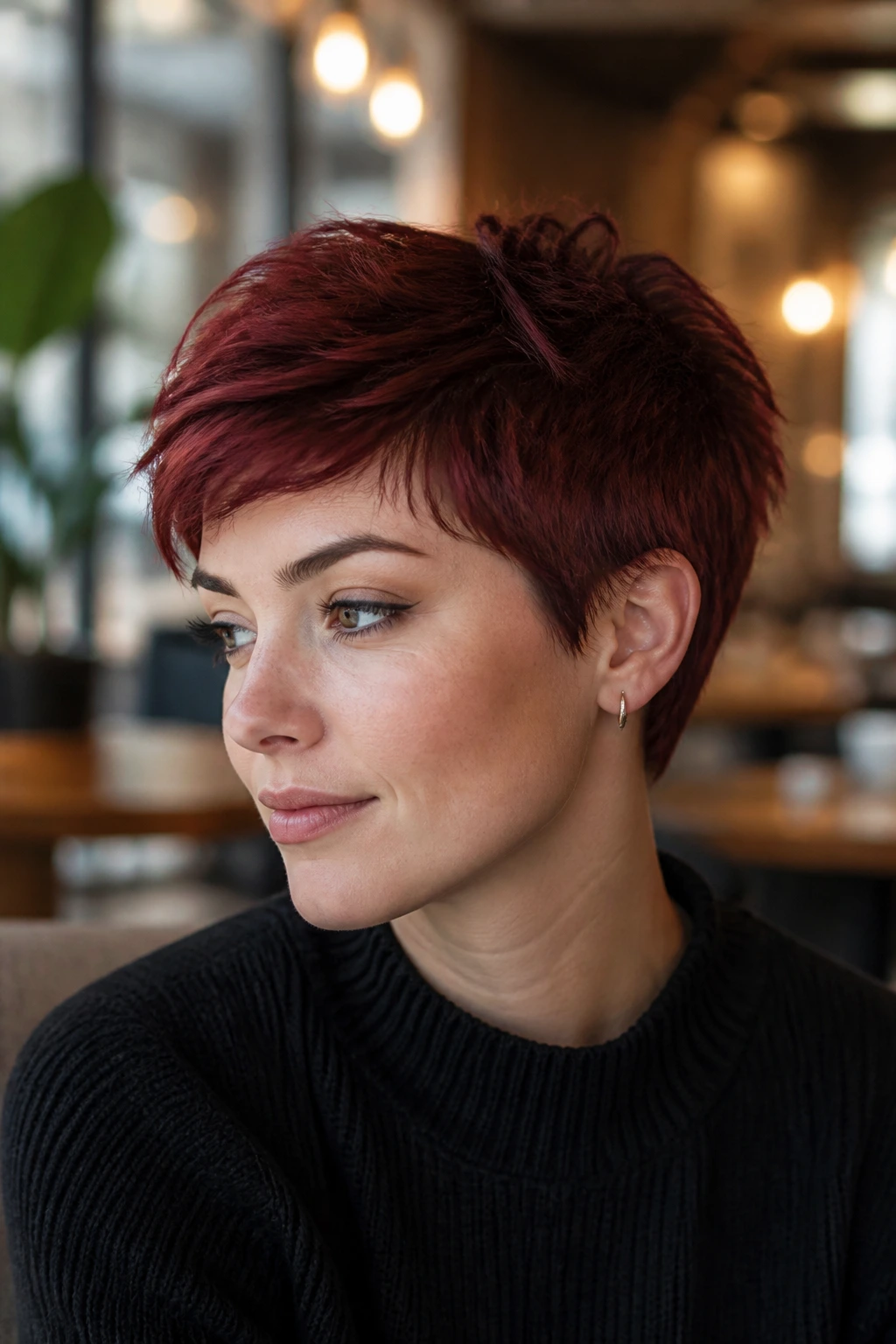
Burgundy needs texture or it can read dense, almost too solid. A piecey crop solves that by breaking the color into little planes of shine and shadow instead of one flat dark-red sheet.
Ask for short internal layers and a slightly longer top section. That keeps the crop from going puffy at the sides. A matte paste works better than a glossy cream here; burgundy already has enough depth. You want separation at the ends, not slickness.
- Best for: Straight and slightly wavy hair.
- Styling note: Work paste only into the mid-lengths and tips.
- Stylist note: Keep the nape neat. That makes the choppy top feel deliberate.
8. Feathered Cinnamon Shag
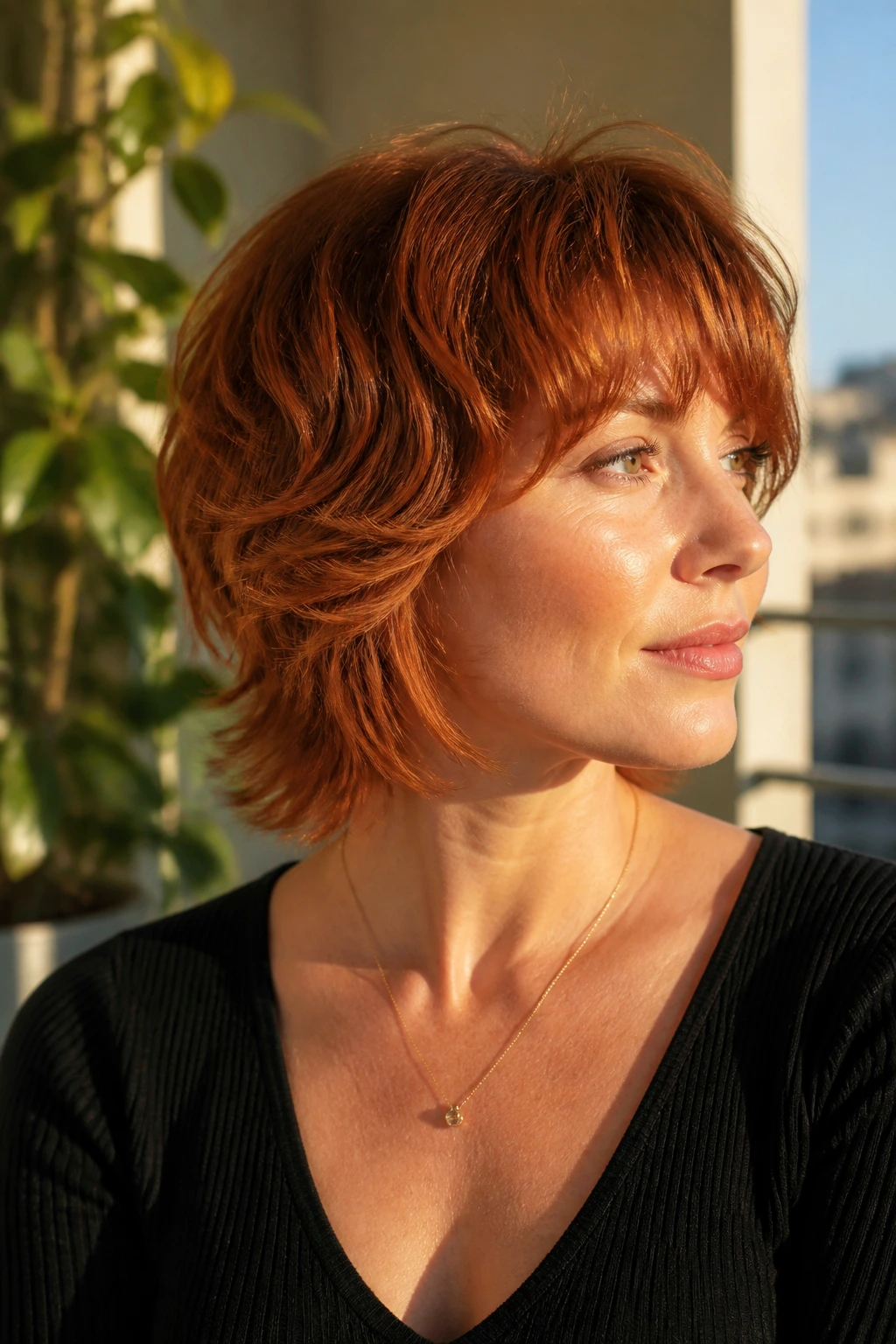
Feathering and cinnamon red belong together. The cut has a softer edge than a razor-heavy shag, which helps if you like your hair to feel light without looking jagged.
The layers usually sit around the cheekbone and temple, then taper down toward the neckline. That gives the cut a little swing when you turn your head. It also keeps the red tone from getting lost in a thick block of hair. If your hair is medium density, this is one of the easier shags to wear every day.
9. Side-Swept Red Shag Bob
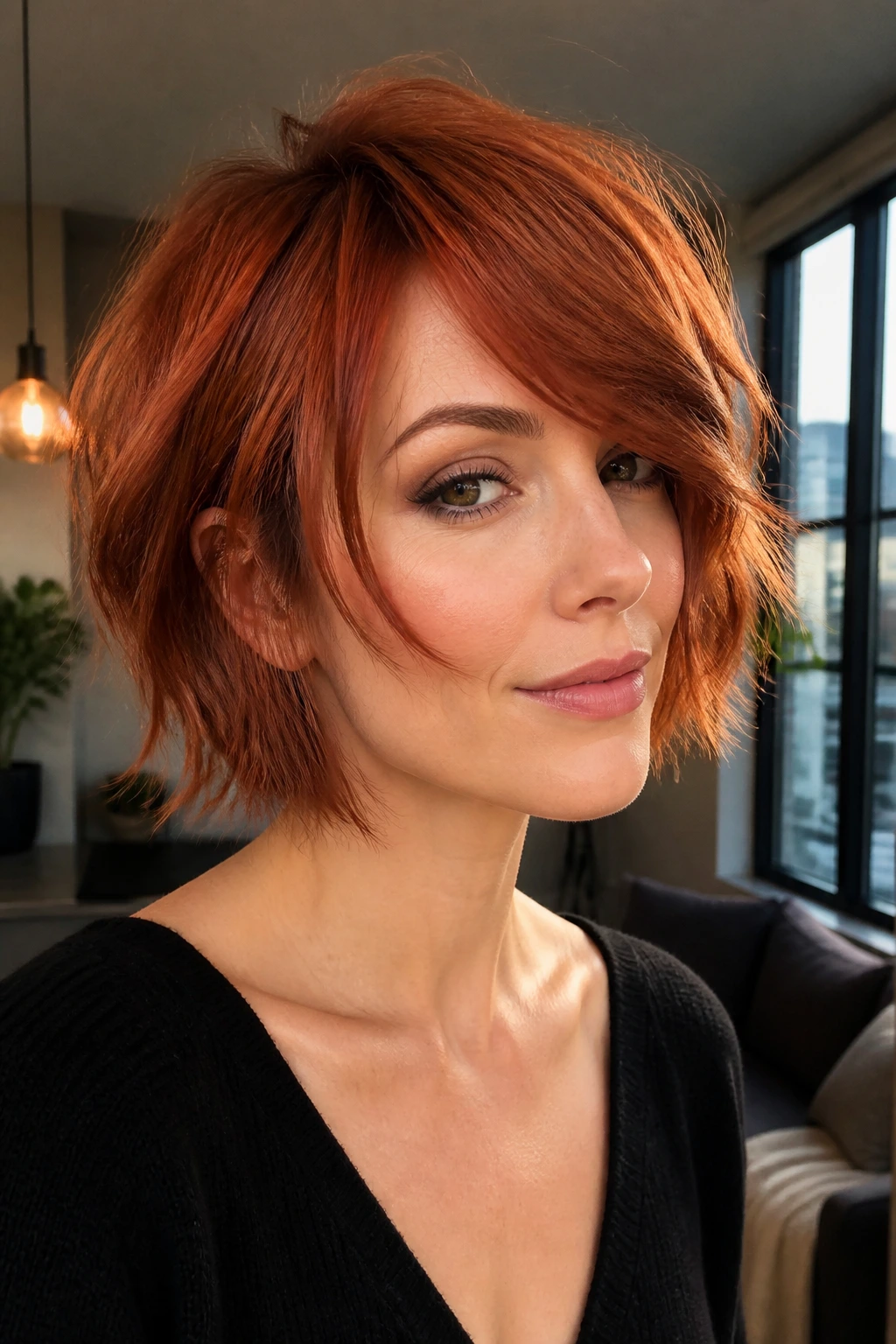
A side part changes the whole mood of a shag bob. It gives the front pieces a diagonal sweep, which is a nice fix if your hair wants to fall flat across the forehead.
This style is especially useful when the hairline grows in unevenly or you wear glasses and don’t want bangs sitting straight on the frames. Ask for the heavier side to be built with a touch more length so it doesn’t collapse. A blow-dry with a small round brush at the roots can make the sweep last longer.
10. Chin-Length Red Wolf Shag

The wolf-shag hybrid gets edgy fast, but chin length keeps it wearable. The top layers are shorter and a little wild, while the bottom still hangs just enough to hold the shape together.
It’s a good choice if you want something more directional than a traditional shag. The crown has to stay airy; if it’s too dense, the style turns triangular. If you like a bit of chaos, this one gives it to you in a controlled way.
11. Tapered Pixie Shag with Crown Lift
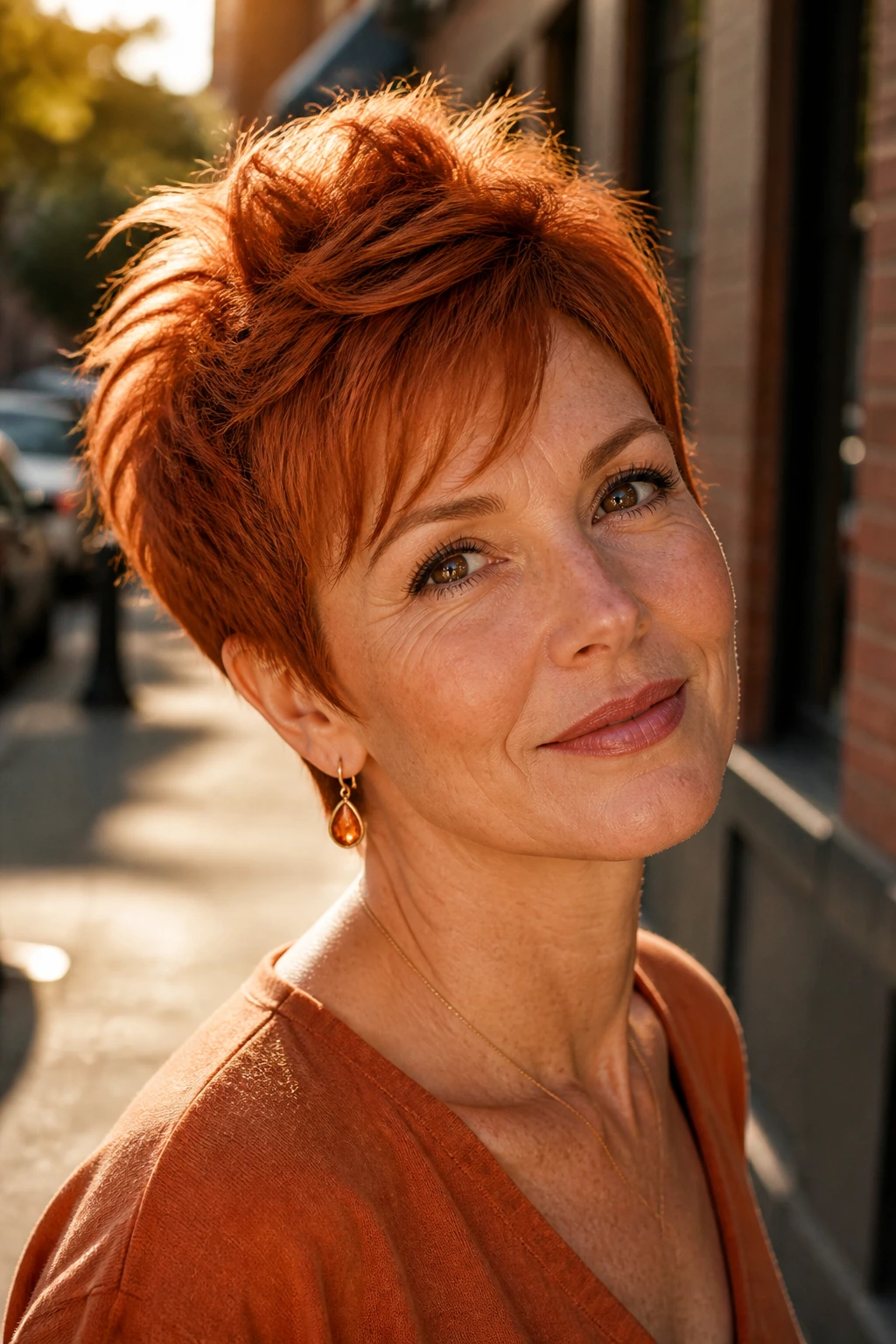
This is one of the best short shag hairstyles for red hair if you hate flat roots. The taper around the ears and nape keeps the shape tight, while the crown layers give you height where it matters.
You’ll want lightweight mousse at the base and a quick lift with your fingertips as it dries. Heavy creams drag the top down and kill the point of the cut. With bright copper or ginger tones, the lifted crown catches light in a way that makes the whole head look more dimensional.
12. Tousled Copper Shag with Baby Bangs

Baby bangs can be tricky, but paired with a tousled copper shag, they stop feeling so severe. The short fringe pulls attention upward, and the messy layer pattern keeps the rest of the cut from feeling too precious.
This style works best when the bangs are soft around the edges rather than cut into a hard line. If your forehead is short, keep them a touch longer than you think you need. The rest of the hair can be scrunched with a tiny bit of texturizing spray and left slightly imperfect. That imperfection is the charm.
13. Long-Fringe Copper Shag
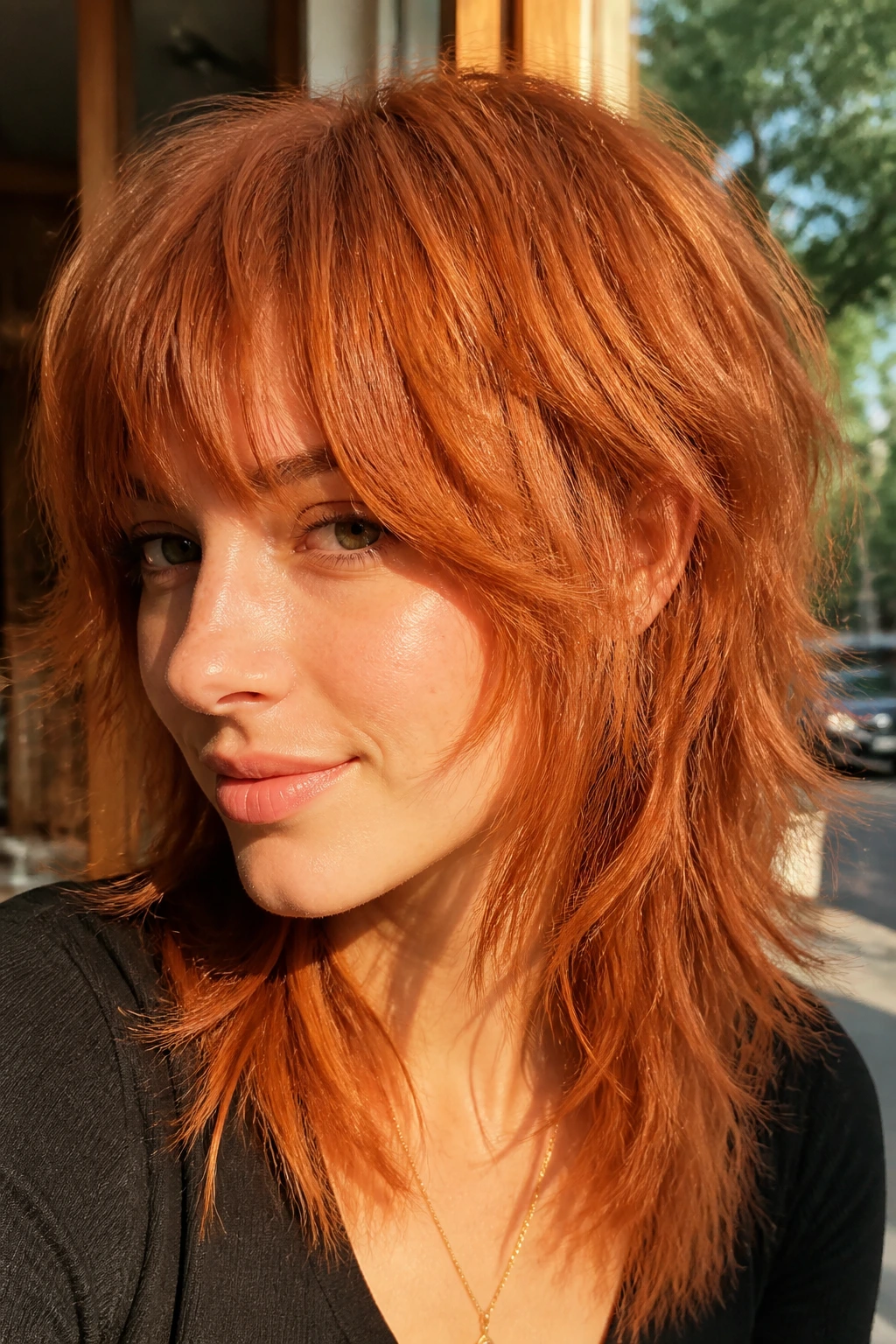
Want the shag shape without committing to short bangs? This is the move. The fringe starts longer, usually around the cheekbone, and folds into the sides so you can tuck, part, or pin it back when you need a change.
The cut is especially kind to people who grow bangs out in frustration. It still gives the face-framing effect, but it won’t box you into one styling choice. Keep the layers around the crown short enough to create lift, or the long fringe will drag the whole cut downward.
- Best for: Anyone who likes flexibility.
- Styling note: Use a small brush only on the fringe; let the rest air-dry.
- Practical note: This is one of the easiest red shags to grow out.
14. Rounded Auburn Shag Bob

A rounded shape can look unexpectedly modern in auburn. The trick is to keep the outline curved and the internal layers broken, so the haircut feels soft without turning puffy.
The rounder silhouette suits people with narrow faces or sharp features because it adds fullness around the sides. Still, the shag detail keeps it from becoming a helmet. A little root lift and a bend through the ends are enough. If you’re reaching for this cut, ask your stylist to keep the perimeter clean and do the texture work inside the shape.
15. Textured Chestnut-Red Bowl Shag
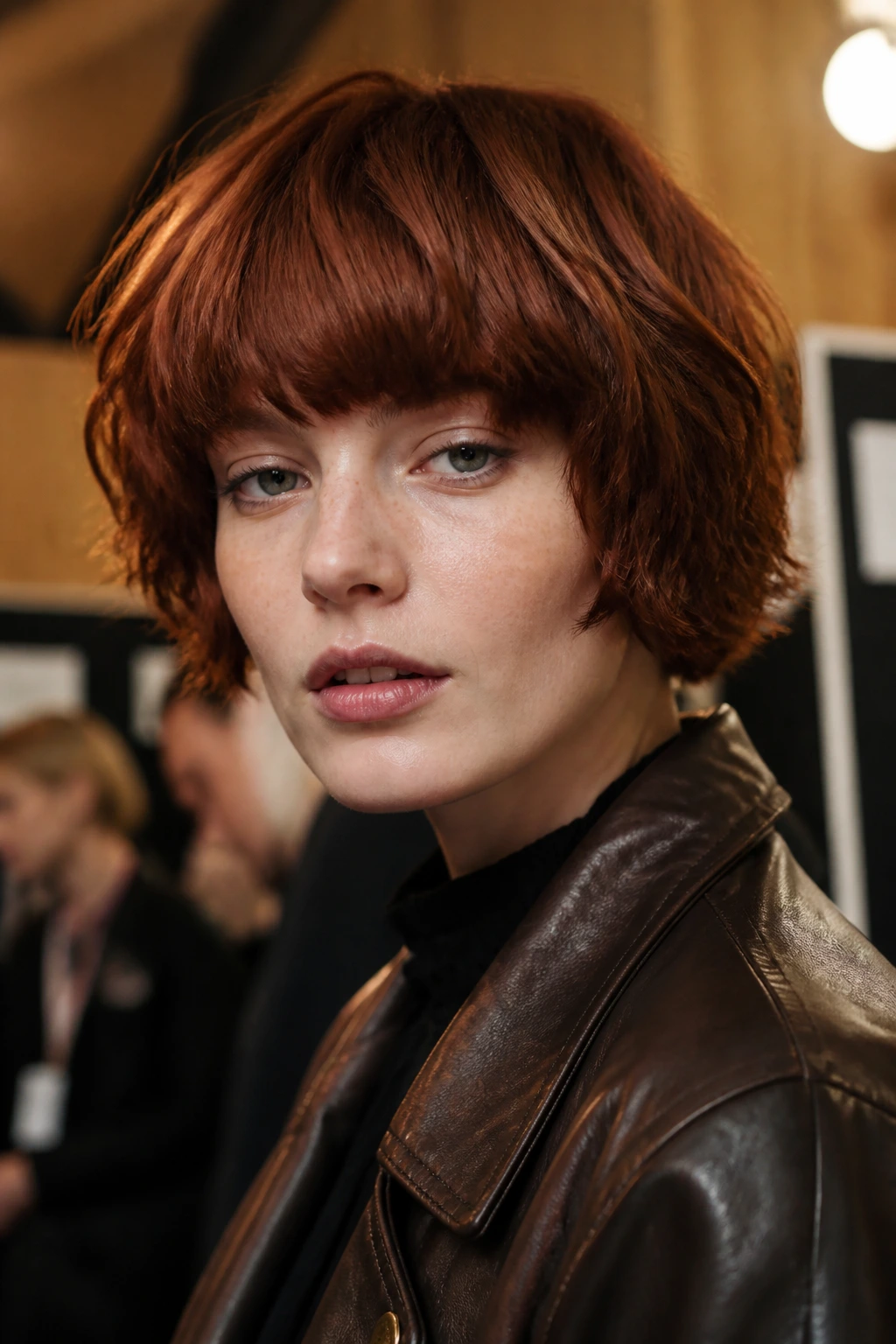
This one sounds bold because it is. A bowl-inspired shag in chestnut-red can look very fashion-forward when the edges are softened and the top is cut with enough texture to keep it from feeling rigid.
The point is not a literal bowl. It’s a curved outline with choppy layers that break the symmetry just enough. That makes the cut feel editorial instead of costume-y. It’s a strong choice if you like strong lines and don’t mind a haircut that gets noticed.
16. Air-Dried Ginger Shag

If you’re not a blow-dry person, this is your cut. The layers are placed so the hair can fall into shape after washing, especially if your ginger hair has natural wave or a loose bend.
The haircut should be built to work with your actual texture, not against it. Ask for softer weight removal at the sides and a bit more activity around the crown. Then leave it alone. A dab of leave-in cream and a quick scrunch can be enough. Air-dried shags often look best a little irregular.
17. Disconnected Red Shag with Underlayers

This is the more dramatic sibling in the group. The top layer sits clearly apart from the underlayers, which gives the haircut a bit of edge and makes the red tones read in separate bands of light.
The style works when you want contrast rather than softness. Keep the upper layers short enough to move, but leave the bottom clean so the shape doesn’t blur out. This one looks especially good in brighter copper or darker cherry-red shades where the difference between the layers is easy to see.
18. Curly Copper Shag with Face-Framing Layers

Curly hair and face-framing layers can be a messy affair if they’re cut too short. Here, the trick is to let the front pieces hit the cheekbone or just below, so the curls spring up into a shape instead of sitting awkwardly above it.
The crown should be lighter than the sides, but not so light that the top frizzes into a halo. That balance is the whole game. A diffuser and a small amount of gel help the curls clump cleanly. Once the hair dries, don’t keep poking at it. Seriously. Hands off.
19. Deep Side-Part Strawberry Shag

A deep side part gives strawberry blonde hair a little drama without needing more length. The heavier side drapes softly across the forehead, while the opposite side stays tighter and keeps the haircut from widening out.
This is a smart option if one side of your hair naturally grows flatter or if you want volume in a specific place. Ask for the front to be cut with the part in mind. Otherwise, the fringe can land wrong and fight the rest of the shape. A little root spray at the heavier side goes a long way.
- Best for: Fine hair that needs a lift near the crown.
- Styling note: Flip the part while drying, then switch it back.
- Why it works: The asymmetry makes a short cut feel less static.
20. Spiky Copper Shag with Piecey Ends
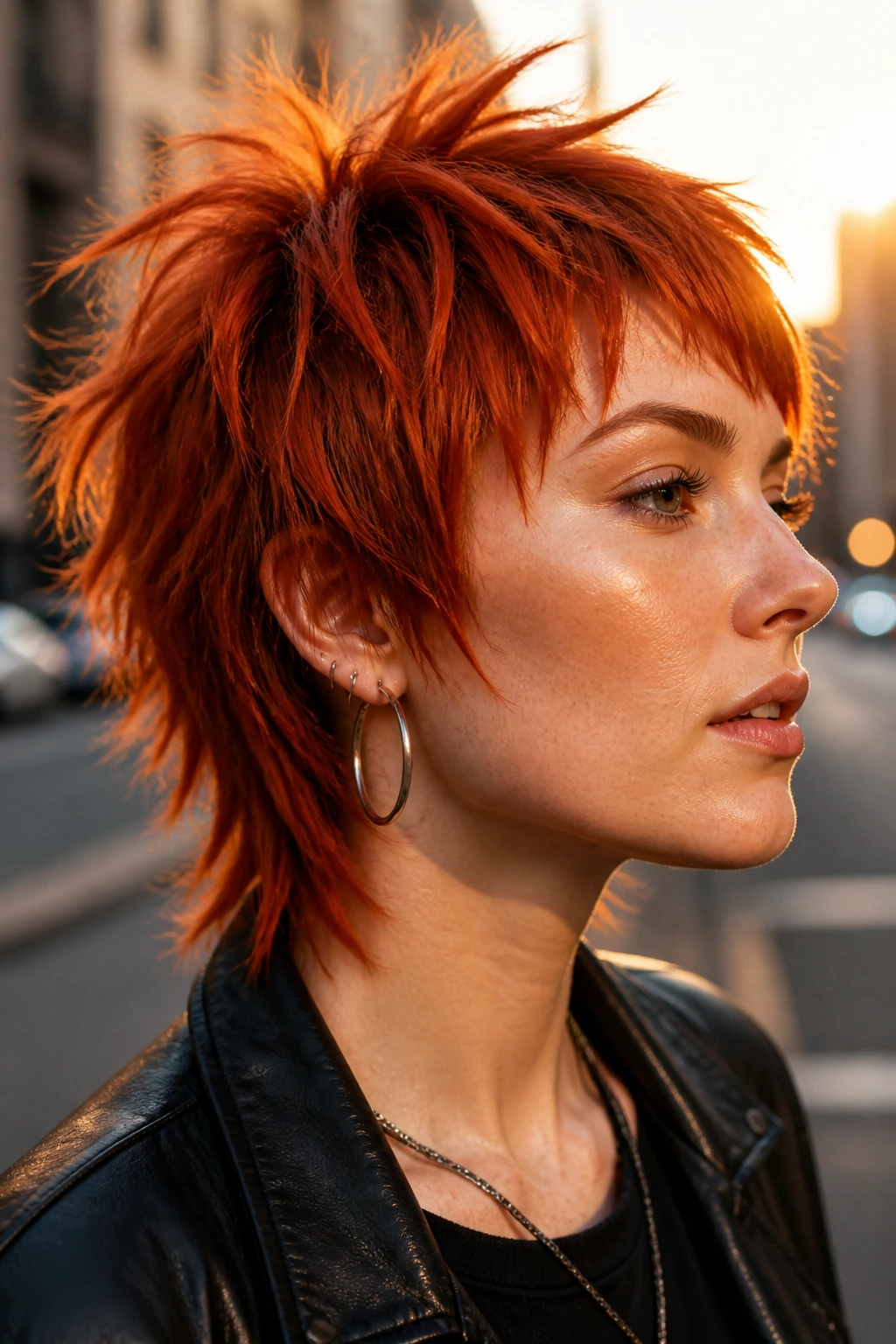
This one has a little bite. The ends are separated enough to look sharp, but not so sharp that the haircut feels harsh. Copper hair loves this treatment because the reflective tone makes every little edge show up.
Use a small amount of paste or clay, warm it in your hands, and pinch the ends into place. Don’t smear it through the whole head. That’s how a piecey shag turns greasy. If your hair is short, this style gives you movement with a bit of attitude, which is more useful than it sounds.
21. Soft Mullet Shag in Red

A soft mullet shag is a good middle ground for anyone who wants edge without going full punk. The front stays shorter and more layered, the back keeps a little extra length, and the transition between the two is blurred enough to feel wearable.
Red hair makes this cut interesting fast because the differing lengths catch light in different places. Ask your stylist for a gentle transition, not a hard disconnect, unless you want the mullet line to read loudly. This version feels best when it’s slightly messy and not over-styled.
22. Mahogany Short Shag

Mahogany red is deep enough to benefit from a smart layer pattern. Without movement, the color can look dense. With a shag, the darker shade gets little highlights of shine through the top and around the face.
This cut usually works well with a stronger perimeter and softer internal layers. That keeps the silhouette grounded. If your hair is thick, ask for weight removal just beneath the surface rather than all over. The goal is to keep the shape, not shred it.
23. Layered Red Shag for Fine Hair

Fine hair needs layers, but not the wrong kind of layers. Too much thinning and it disappears. A layered red shag for fine hair should create lift at the crown and movement through the top while leaving enough bluntness at the ends to make the hair feel fuller.
A short perimeter around the chin or cheekbone works well here. It keeps the outline from collapsing into wisps. A root-lifting spray plus a quick blow-dry with your head upside down can make the cut look fuller in under five minutes. That matters more than any magic product.
24. Dense Shag for Thick Red Hair
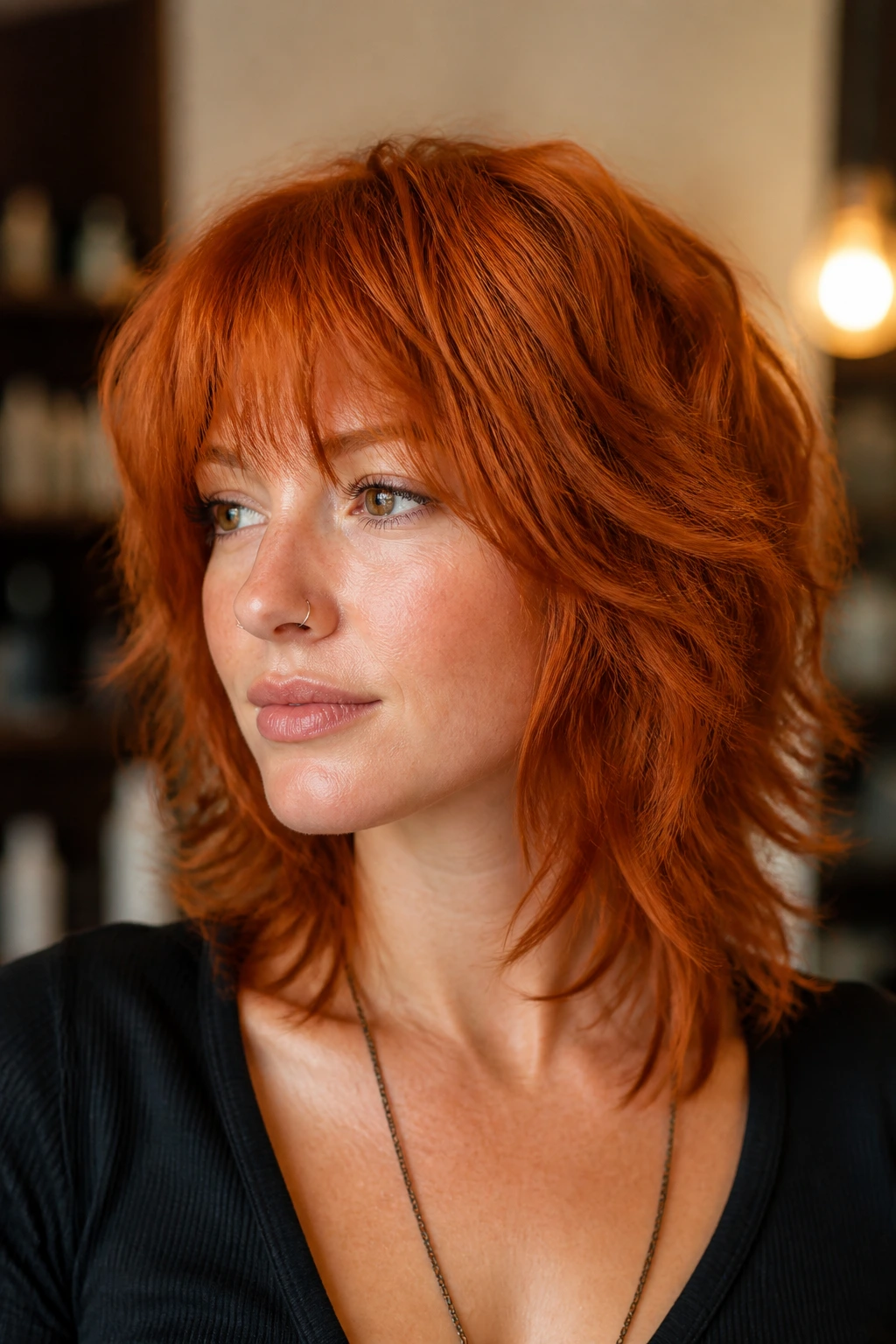
Thick red hair can be a blessing until it turns triangular. This version of the shag removes bulk in a controlled way, with interior layers that let the shape sit closer to the head.
The good news is that thick hair can hold a shag beautifully once it’s cut right. You want enough texture to break up the mass, but not so much that the ends fray. Ask for the weight to be redistributed, not attacked. Big difference. The haircut should feel lighter, not thinner.
25. Curtain Fringe Shag in Copper Rose
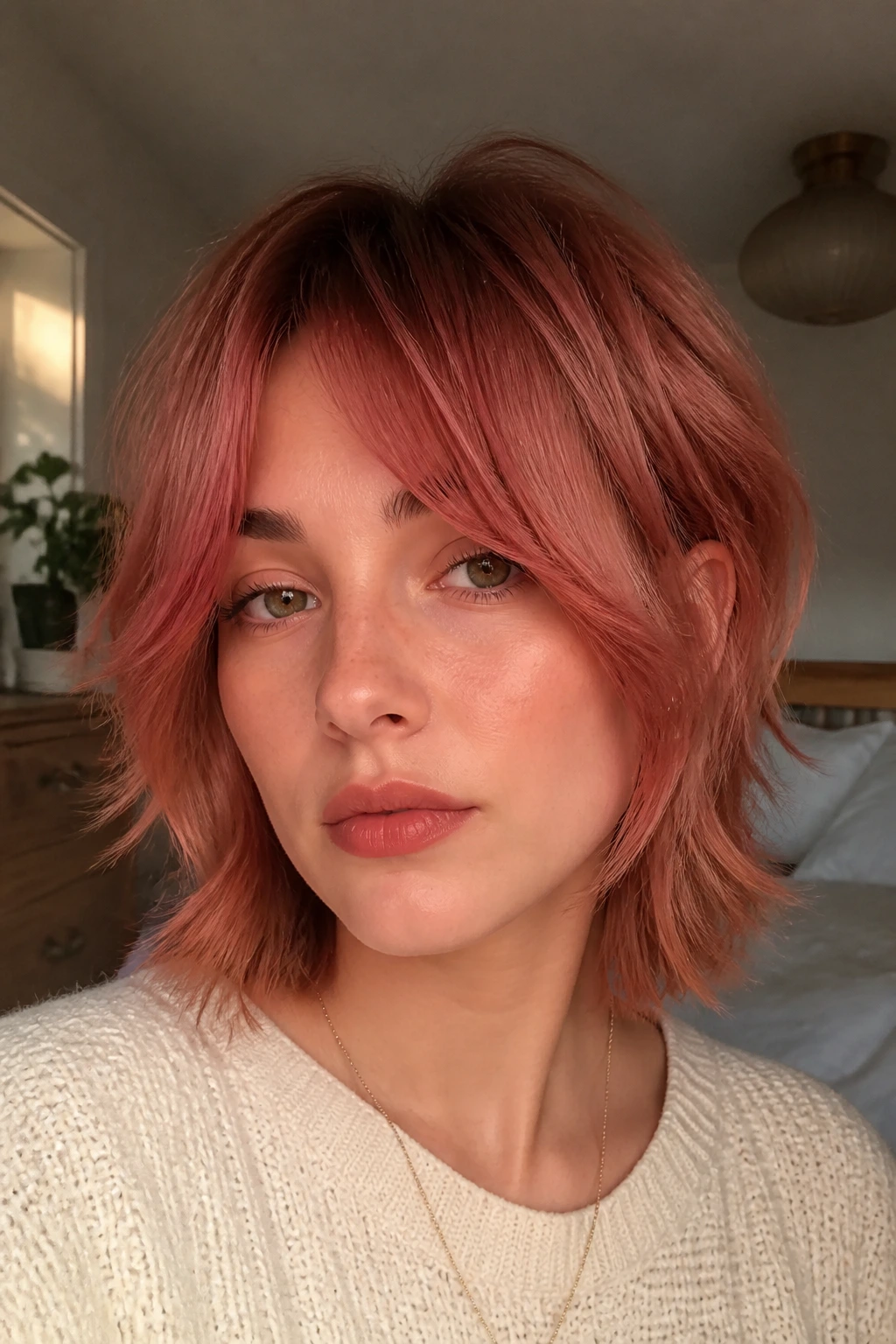
Copper rose gives you that slightly pink-warm sheen, and a curtain fringe softens the whole effect. The fringe opens at the center and falls into the sides, which keeps the cut from feeling boxy at the forehead.
This style is strong when you want romance without sweetness. The layers should sit around the cheekbone, with the longest front pieces easing toward the jaw. A bend through the fringe with a small brush is enough. You do not need a perfect blowout here; a little bend is better than a stiff curve.
- Best for: Medium hair density.
- Styling note: Dry the fringe first so it doesn’t separate weirdly.
- Visual note: The rose-copper tone looks especially good with soft texture, not glossy stiffness.
26. Cozy Copper Shag with Flipped Ends
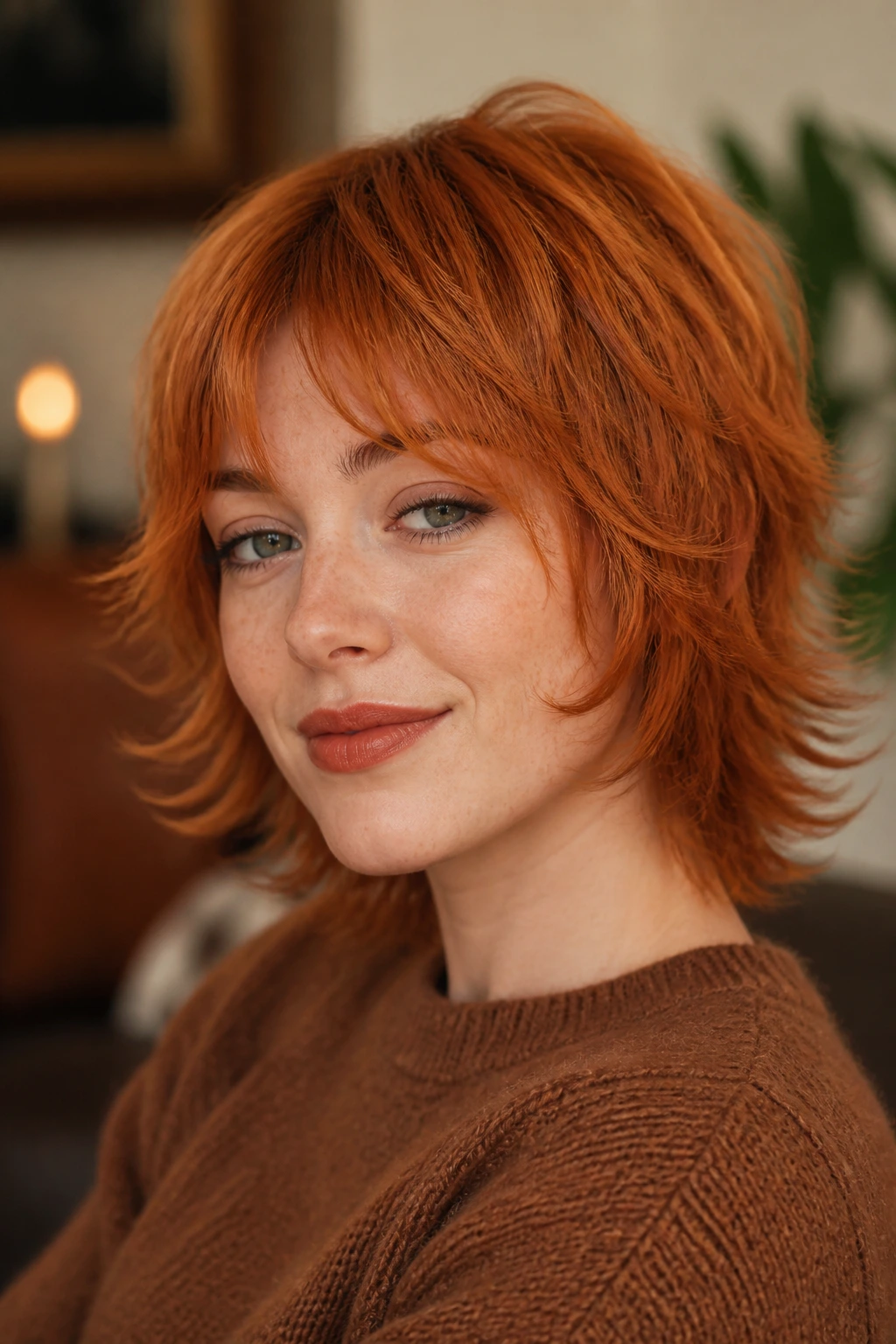
This cut has a warm, slightly nostalgic feel. The layers are short enough to flip outward, especially at the sides and nape, which gives the whole style a bit of bounce.
It’s a good pick if you want a shag that reads friendly rather than edgy. A round brush or even a quick bend with a flat iron can push the ends outward just enough. Keep the top soft so the flipped bottom doesn’t become too retro. The contrast between the two is what makes it work.
27. Messy Auburn Crop with Micro-Layers
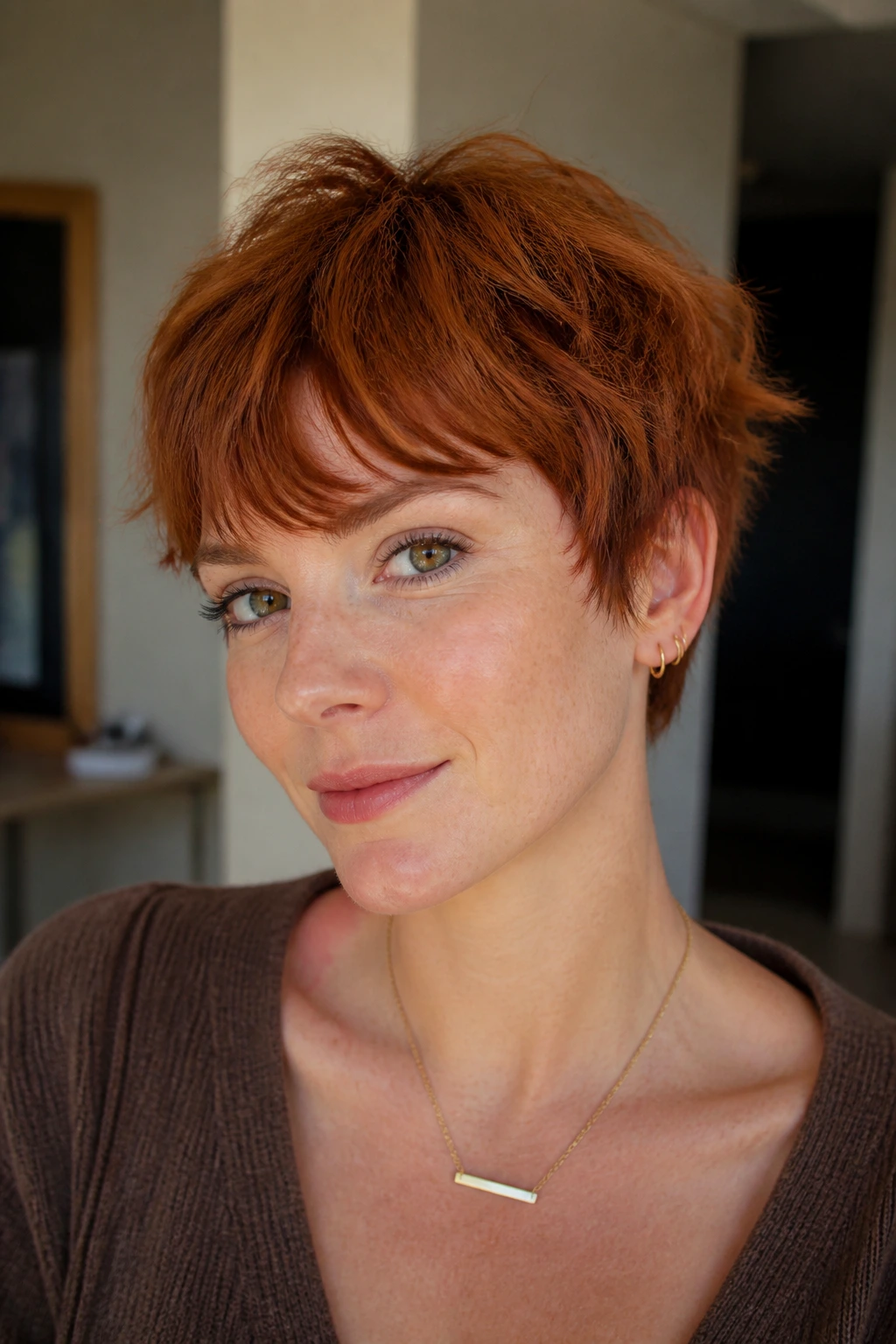
Micro-layers are tiny, and that’s the point. In an auburn crop, they create texture without making the cut feel choppy or over-deconstructed.
This is one of the easiest styles to wear if you like a low-commitment finish. The shape is short, the layers are subtle, and the color carries enough richness to keep it interesting. A little dry shampoo at the roots on day two can make it look even better. Some cuts do their best work after a night of sleep.
28. Short Shag for Coily Hair in Burnt Copper
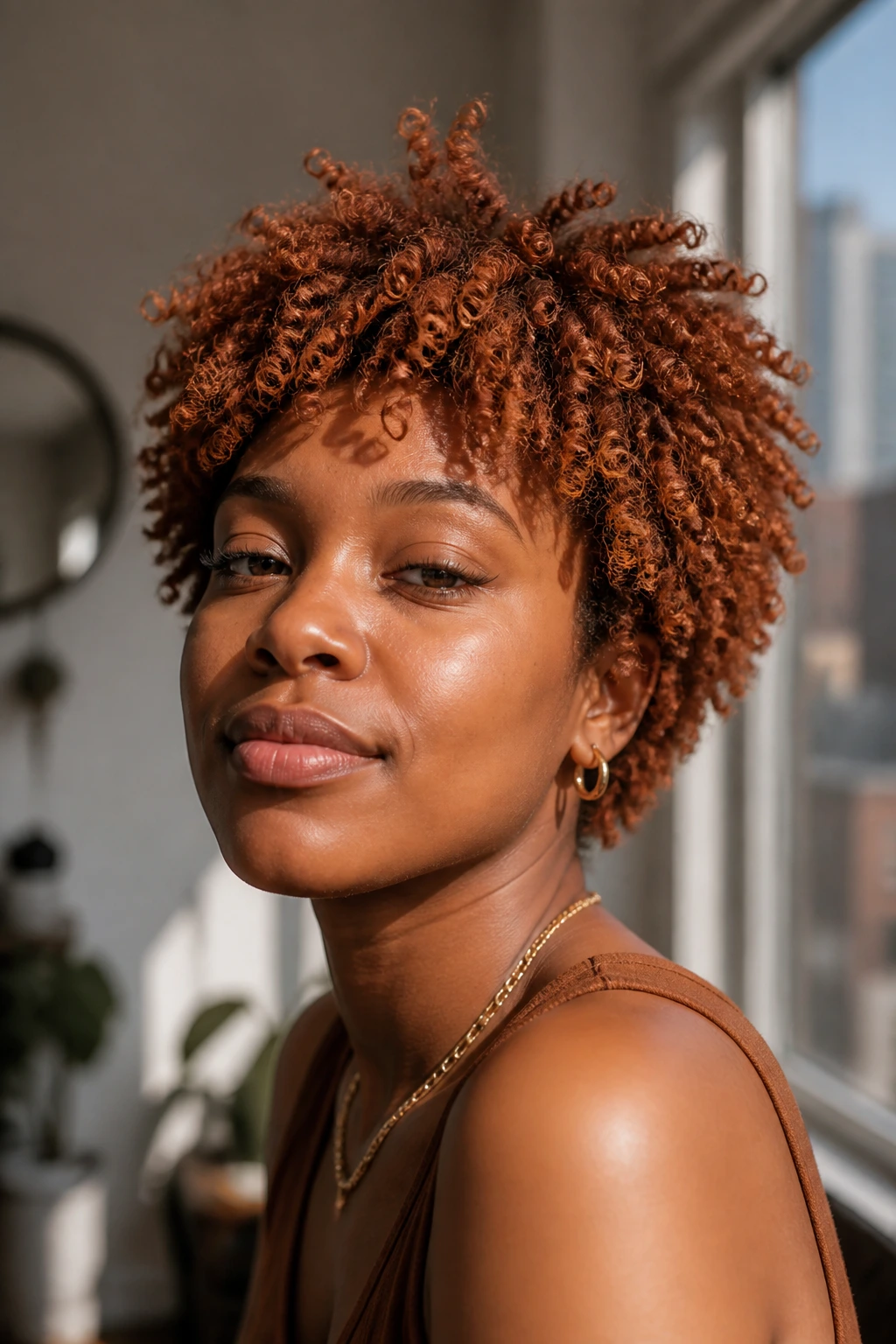
Coily hair changes the rules a bit. You want shape, but you also need to respect shrinkage, because a short shag will spring up more than you think. Burnt copper makes the coil pattern visible and gives the cut depth even at shorter lengths.
Ask for rounded layering instead of aggressive slicing. The coils need room to sit in clusters, not be broken apart too much. A defining cream and a hood or diffuser dry can keep the shape neat. If the cut is done right, the crown has lift and the sides stay soft instead of puffing out.
29. Wavy Shag with Tousled Ends in Copper Red
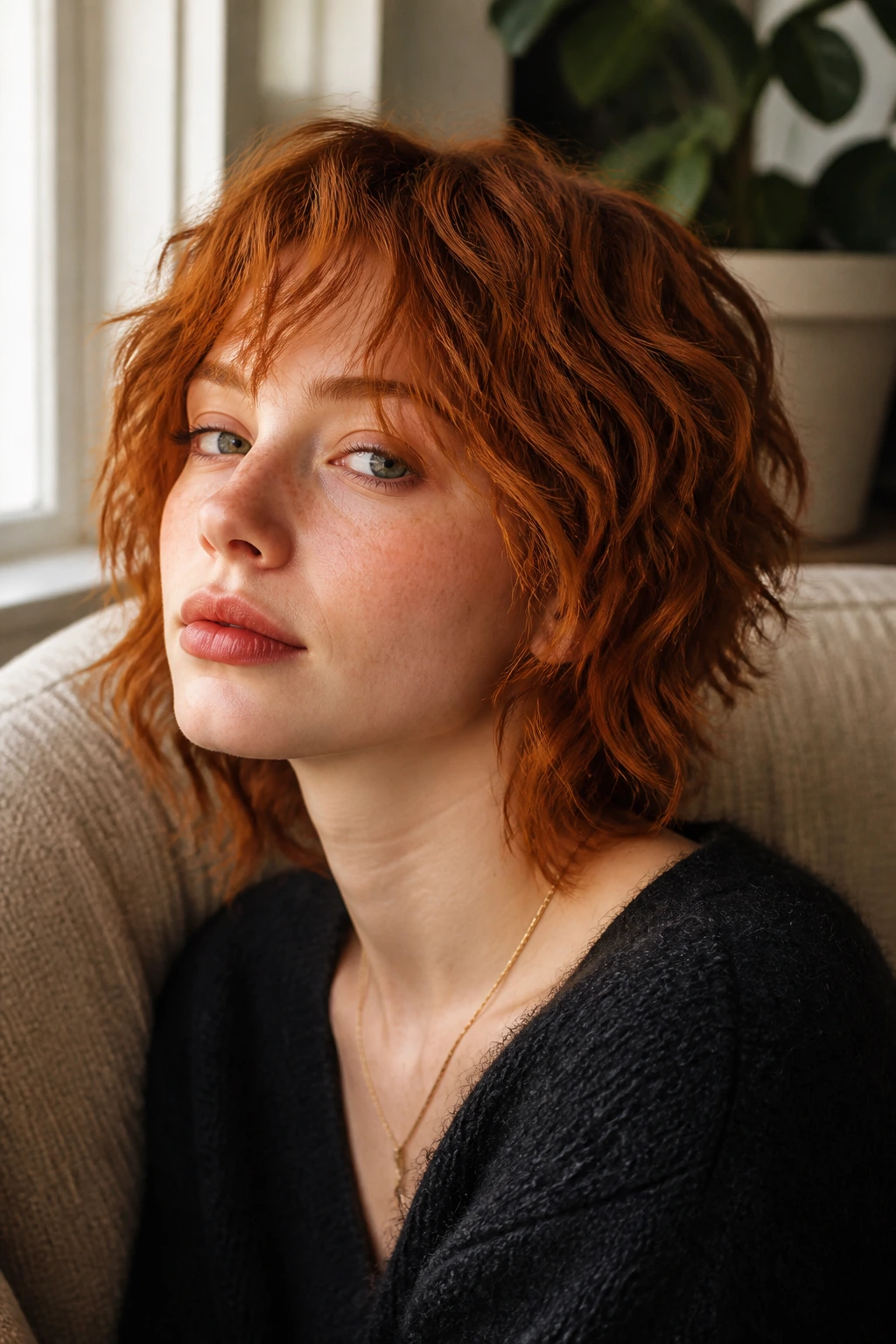
Wavy hair and a tousled shag are basically old friends. The waves fill in the space between layers, while the copper red color makes every bend show up clearly.
The ends should be lightly chipped, not blunt, so they move when you shake your head. This is a good style if you want casual texture that still looks shaped. A texturizing spray at the mid-lengths and a squeeze of the hair with a towel after washing are usually enough. No need to overthink it.
30. Sleek Razor Shag for Straight Red Hair
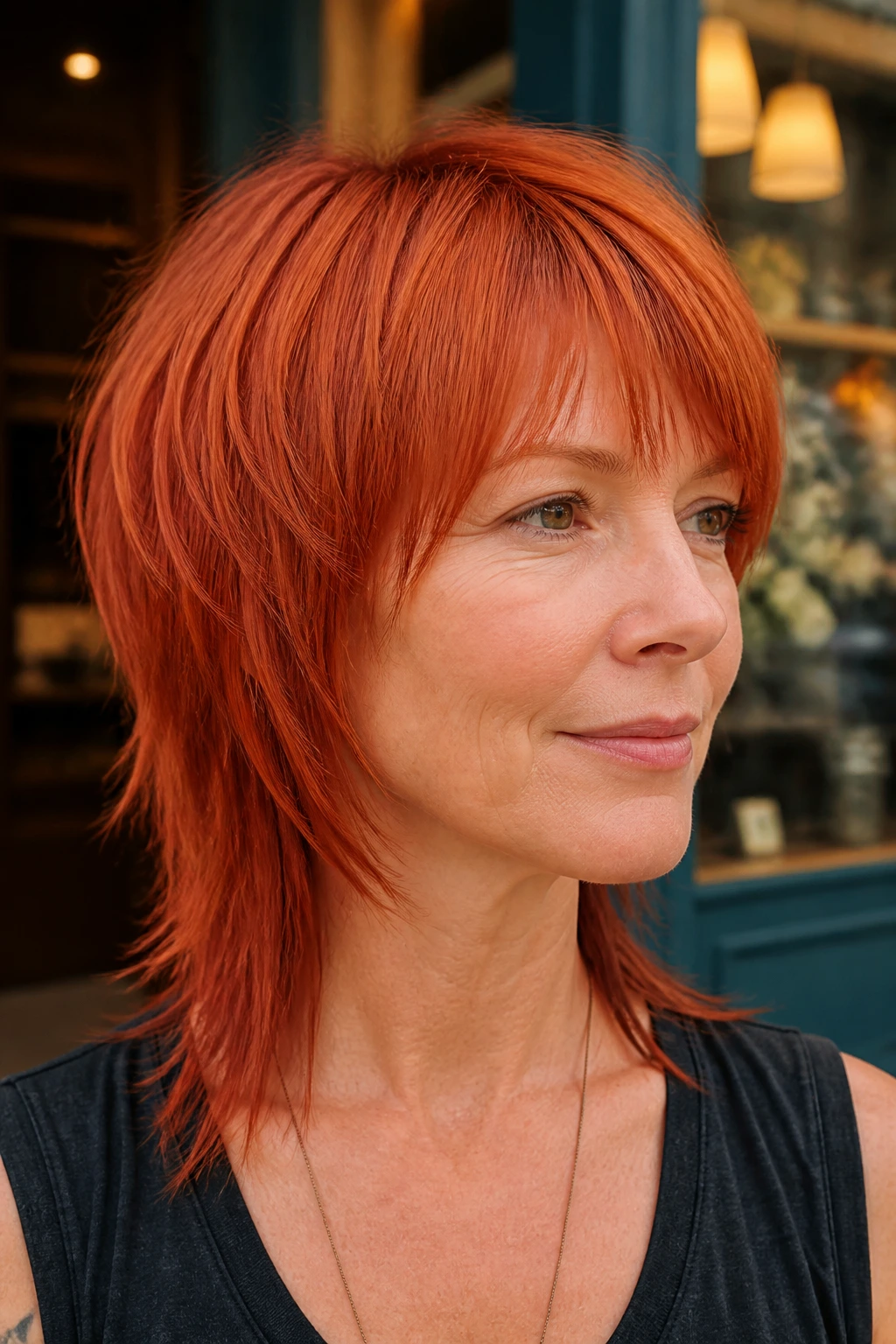
Straight hair can make a shag look too tidy unless the cut has enough razor texture. Here, the razor softens the ends so the layers don’t stack up like shelves.
This style is cleaner than the bedhead versions, but it still has movement. The crown stays lighter, the sides stay close, and the perimeter doesn’t get too wispy. It’s a strong choice if you like a straighter finish and want the haircut to feel crisp rather than fluffy. A flat iron only on the very ends can sharpen the shape.
31. Peekaboo-Inverted Red Shag
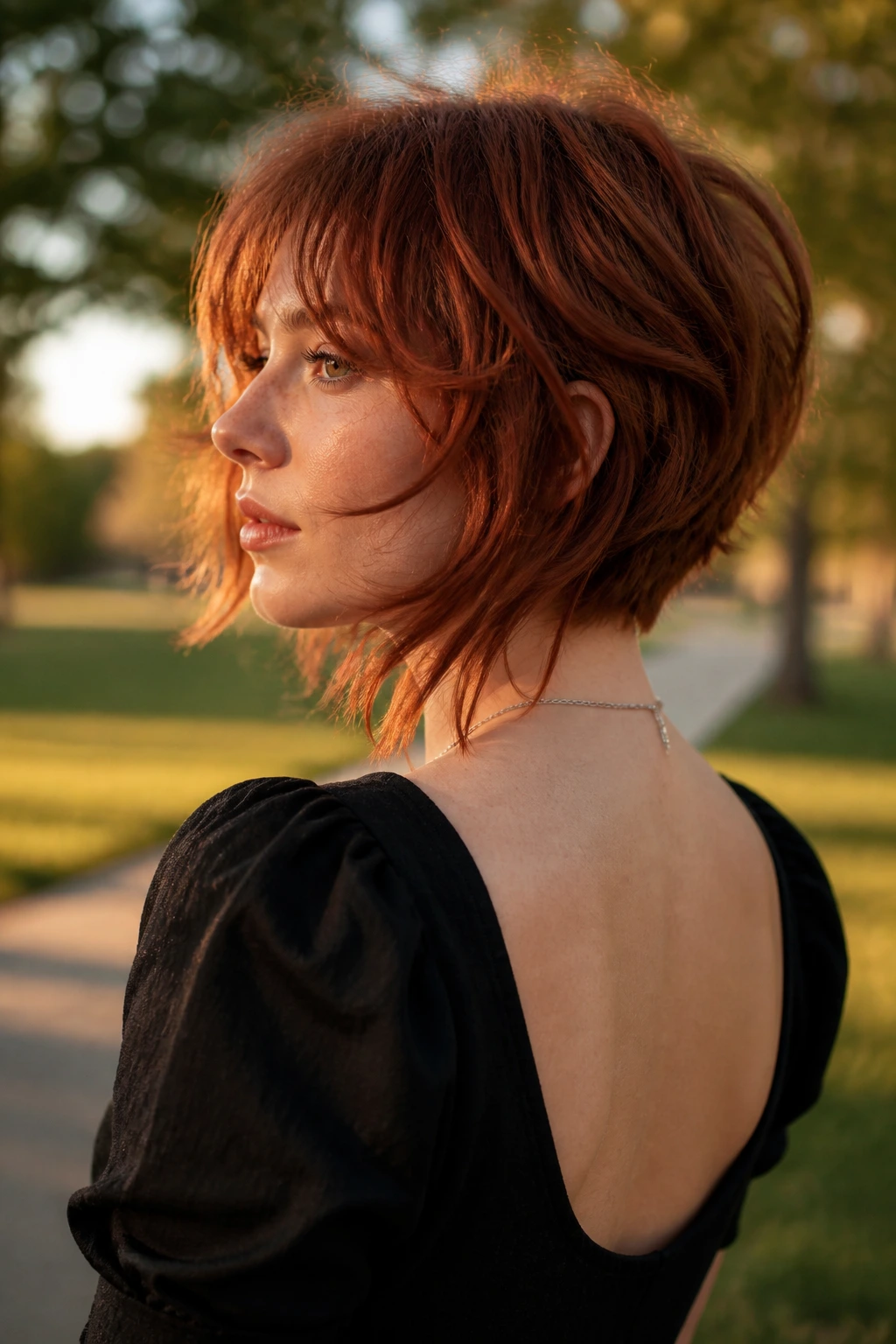
A peekaboo shape means the back sits a little shorter and the front pieces hide or reveal the neck depending on how you move. In red hair, that little shift looks especially good because the color changes under each layer catch the eye differently.
The inverted shape gives the cut some momentum. It also helps if you want the neckline clean without losing length around the face. Ask your stylist to keep the front soft so the inversion doesn’t look too obvious. This is one of those cuts that looks best when the wind catches it a bit.
- Best for: People who like structure with a little swing.
- Styling note: Tuck one side behind the ear to show the shape.
- Why it stands out: The back reads neat; the front reads lively.
32. Retro 70s Copper Shag

A retro shag can go campy fast if the layers are too symmetrical. The copper version keeps it grounded, because the color gives the cut warmth and the layers bring back that 70s movement without needing to copy the decade too literally.
Think rounded crown, airy fringe, and a little outward flip at the ends. That combination gives the style its memory of old rock photos, but the shorter length keeps it modern. A small round brush and a blast of air at the roots are enough to get the shape started.
33. Clean-Nape Red Shag with a Soft Crown
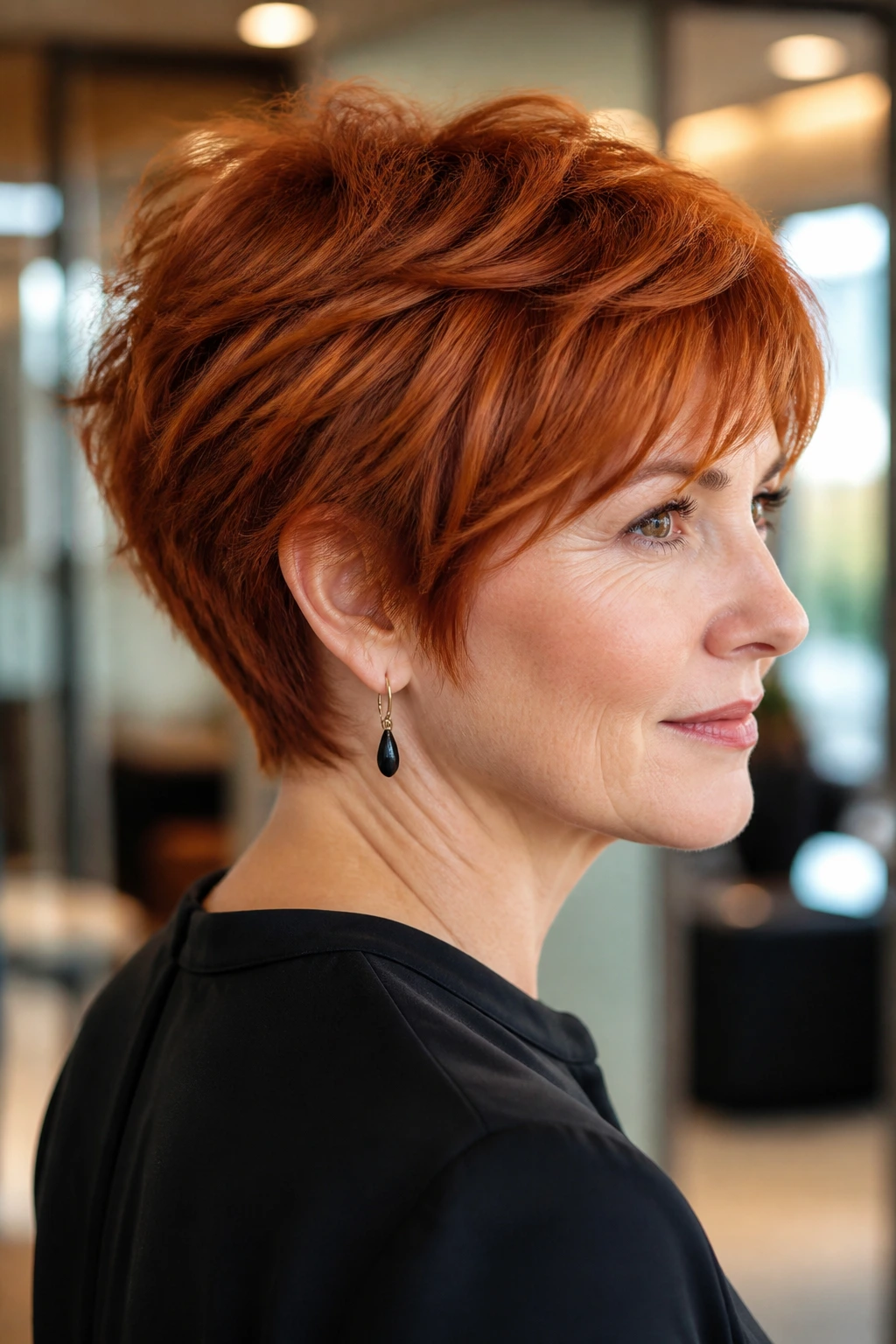
Some shags are all about wild texture. This one is about control. The nape stays clean and tidy, which makes the top layers and crown volume feel more deliberate.
That balance works especially well for professional settings where you want edge without looking messy. A soft crown keeps the top from going flat, and the clean nape stops the haircut from expanding outward at the neck. If your hair grows fast in the back, this is a smart option because the shape stays neat longer.
34. Cherry Cola Shag with Loose Bend

Cherry cola red has depth, shine, and a little drama baked in. A loose bend through the hair brings out all of it without forcing the cut into heavy waves.
This style works best when the layers are spaced enough to show the color, but not so short that the silhouette becomes choppy. A one-inch iron or a quick twist with a round brush can create a bend around the face and through the ends. It’s a good “I tried, but not too hard” haircut, which is useful more often than people admit.
35. Razor-Sharp Rust Shag
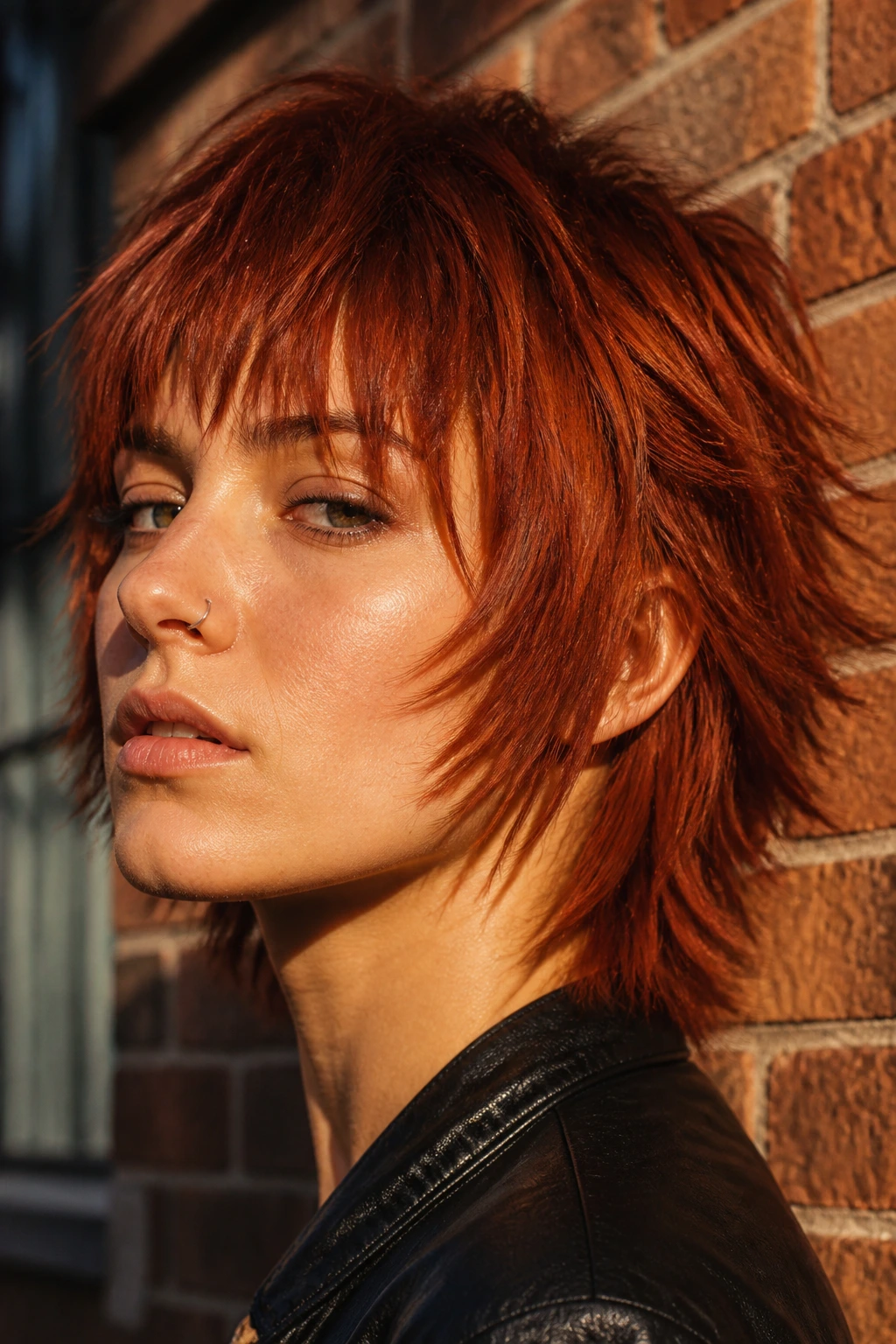
Rust red has a slightly earthy tone, and a razor-sharp shag gives it edge. The ends are sliced cleanly, which makes the texture crisp and keeps the short length from swelling out.
This is not the softest option in the group. It’s for people who want definition. The razor work should be light enough that the hair still moves, but pronounced enough to give the cut a finished line. If your hair is thick or coarse, this shape can take a lot of weight off without losing personality.
36. Glossy Auburn Shag with S-Shape Waves
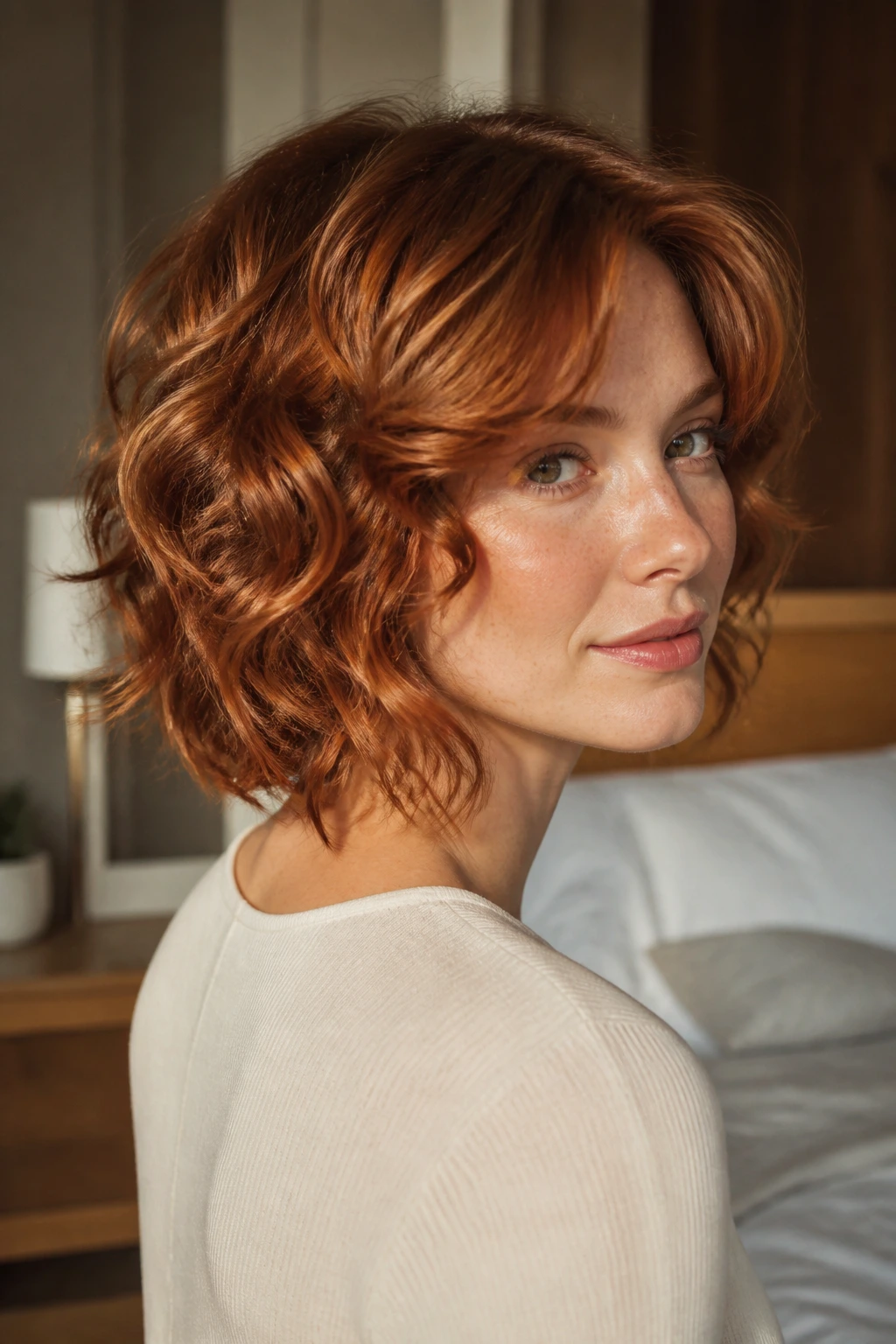
Not every shag has to look rough. A glossy auburn version with S-shaped waves feels smoother, more polished, and a little dressier without losing the layered silhouette.
The key is to keep the wave pattern loose and continuous. You want bend, not curl. A low-heat iron, brushed out while warm, can create that soft S-line through the front and sides. The auburn color adds warmth, and the shag keeps the hair from becoming too formal.
37. Mini-Bang Scarlet Shag

Mini bangs make a statement, no doubt about it. In scarlet red, they pull focus instantly, so the rest of the cut needs to stay light and balanced.
This shag should have enough texture around the crown and sides to keep the bangs from dominating the whole head. If the fringe is very short, keep the layers around the temples soft. Otherwise the cut can feel harsh. This one suits people who like strong detail and don’t mind standing out a little.
38. Romantic Flipped Shag in Cinnamon Red

A romantic shag sounds soft, and this one is. The cinnamon red tone has warmth, while the flipped layers around the jaw and neck keep the style from looking too sweet or too flat.
It’s a good closing style because it sits between casual and polished. The layers move, but they don’t shout. If you want something that looks good with a sweater, a blazer, or a bare face on a rushed morning, this is a dependable finish. The flip at the ends gives the whole cut a bit of charm.
Why Short Shag Hairstyles for Red Hair Work So Well

Red hair shows shape fast. That’s the entire story, and it’s why a shag matters so much more here than it does on a flat one-length cut.
The cut and the color feed each other: copper layers look brighter, auburn looks deeper, and burgundy looks lighter in the places where the hair breaks into pieces. A short shag creates those little changes in angle that make red read richer instead of heavier.
Short length keeps the texture honest: if your hair is a little wavy, a little thick, or a little fine in the wrong places, a shag stops the haircut from pretending otherwise. It works with the bend you already have.
The fringe does a lot of heavy lifting: curtain bangs, side-swept pieces, or a cheekbone-length front section can change the whole cut without adding length. Tiny shift. Big payoff.
The grow-out is forgiving: the line can get softer, the fringe can get messier, and the haircut still holds together. That’s rare.
Essential Tools for Styling a Short Shag
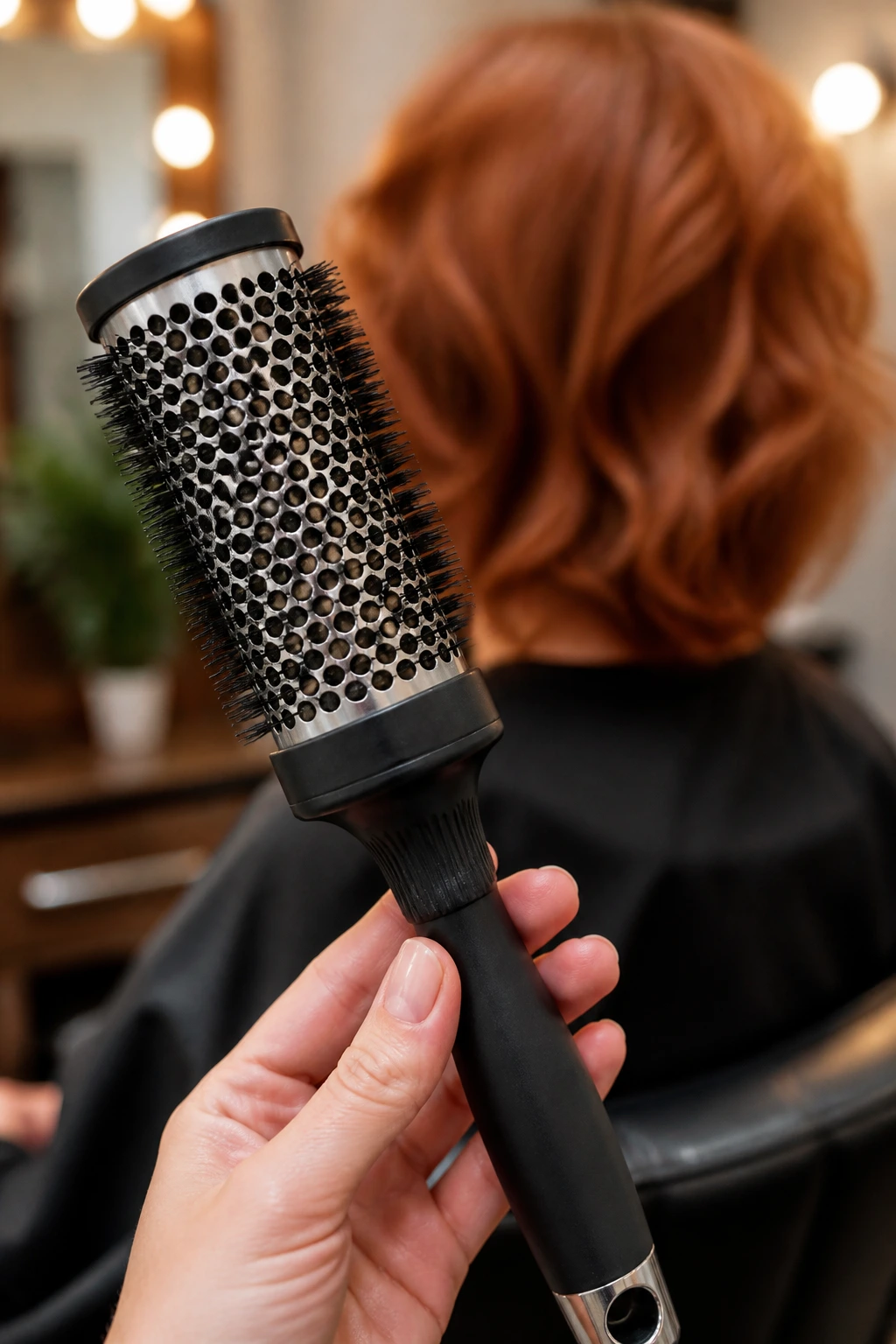
- Blow dryer with a concentrator nozzle: Helps direct the roots where you want them instead of puffing the whole head out.
- Diffuser attachment: Best for wavy or curly red hair that needs shape without frizz.
- Small round brush: Useful for lifting the crown and bending fringe away from the face.
- Texturizing spray: Gives short layers grip so they don’t fall flat by lunchtime.
- Light mousse: Good for fine to medium hair that needs root support without stiffness.
- Matte paste or clay: Best for piecey ends and shorter pixie-shag shapes.
- Heat protectant spray: Worth using before any iron or brush-dryer pass, especially on lightened copper shades.
- Wide-tooth comb: Safer than a fine comb when hair is damp and more likely to snag.
- Clips: Handy for sectioning bangs, crown, and sides so the layers dry in the right direction.
How to Ask Your Stylist for the Right Shag
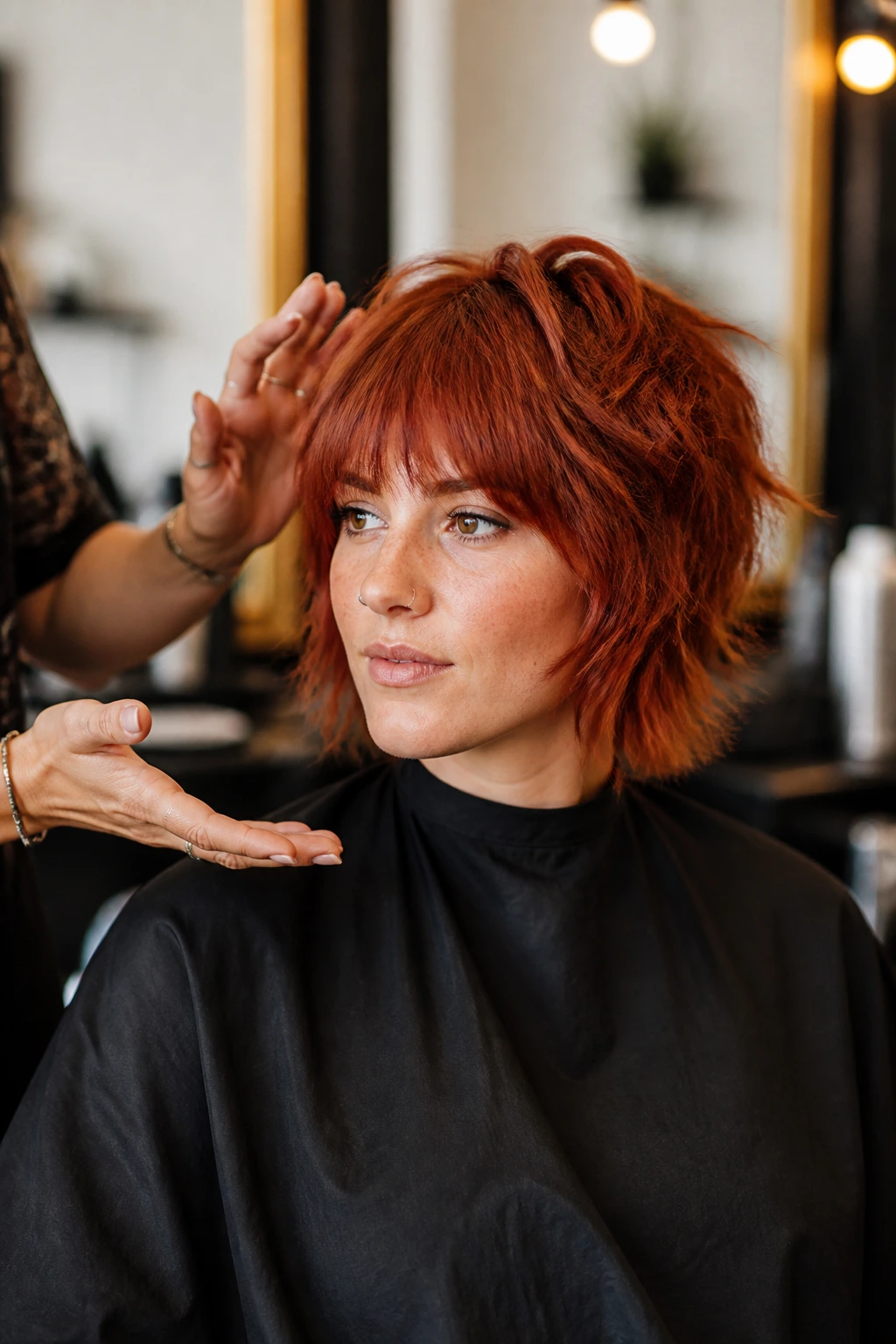
Bring photos, yes, but don’t stop there. Photos show the mood; your hair shows the reality. Tell the stylist how your hair behaves when it’s clean, dirty, blown out, or air-dried. That matters more than the picture.
Be specific about the shortest point you’re willing to go. If you want fringe that touches the brows, say so. If you want the sides to stop at the cheekbone instead of the jaw, say that too. For red hair, I’d also ask for point-cutting or razor work only where the hair needs softening. Too much texturizing can make already-fine strands look scraggly.
Matching the Cut to Copper, Auburn, and Burgundy Shades
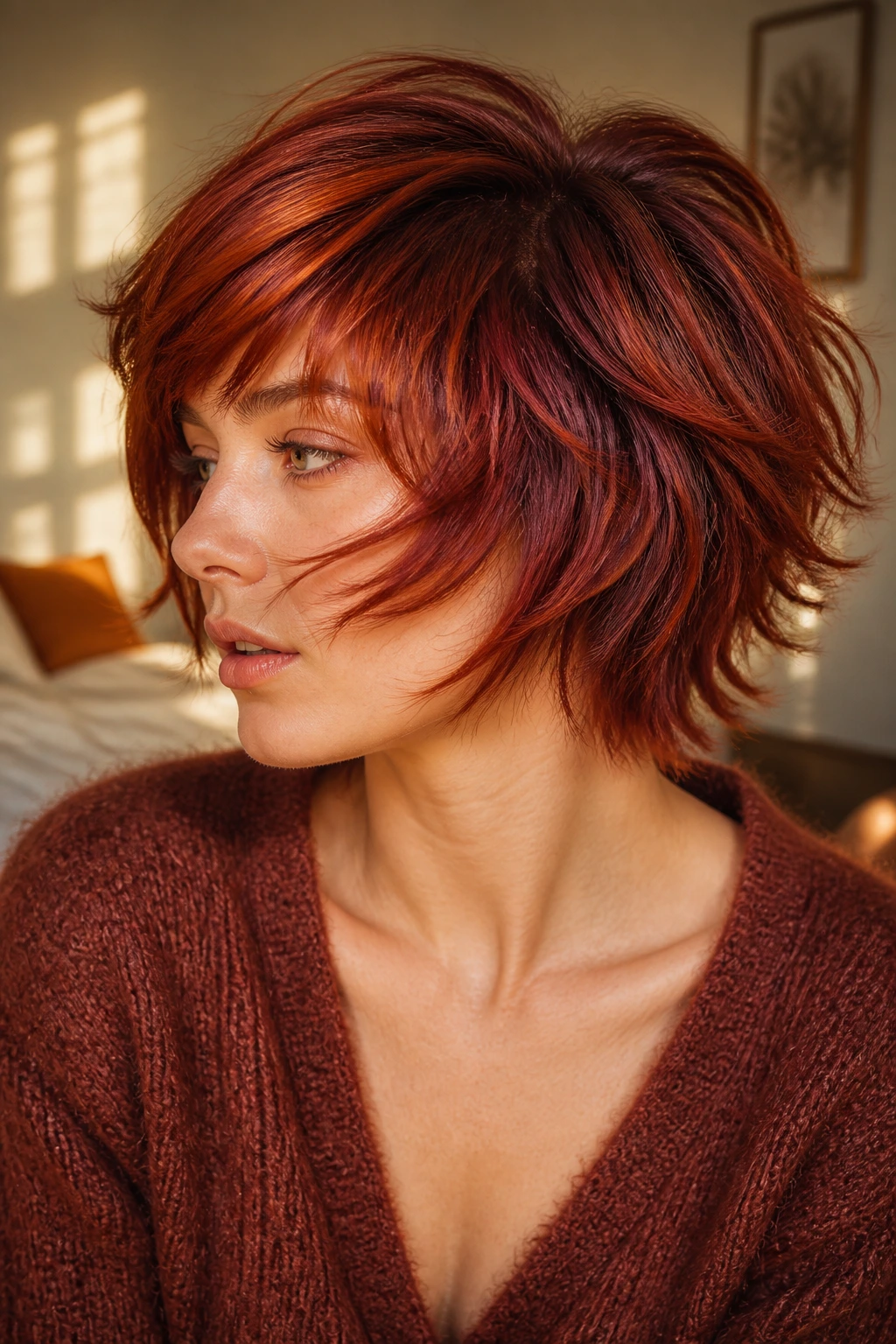
Copper shows movement the easiest. If your hair is bright or warm, you can get away with more visible layering and a messier finish because the color itself already feels alive.
Auburn likes balance. It usually looks best with a strong outline and moderate layering, so the haircut keeps some weight. Too many short pieces can make auburn hair feel dusty.
Burgundy and cherry-red shades need the most texture control. Those darker tones can read heavy under indoor light, so a shag that breaks up the surface is usually a better call than a blunt shape. If you have gloss or lowlights in the mix, short layers help those tones show instead of hiding under one flat surface.
How to Style Short Shag Hairstyles for Red Hair at Home

Start at the roots. Always. A shag loses its shape fastest when the crown goes limp, so the first job is lift, not shine. Work a small amount of mousse or root spray through damp hair, then rough-dry the top until it’s about 80 percent dry.
After that, decide how much finish you want. A diffuser gives curls and waves a cleaner edge. A round brush sharpens bangs and the front sections. Fingers alone give the most casual result, and with a lot of these cuts, that’s enough. If you use a curling iron, keep the bend loose and avoid making every section identical. Uniform curls make a shag look like it’s trying too hard.
Keeping Short Shag Hairstyles for Red Hair Sharp Between Cuts
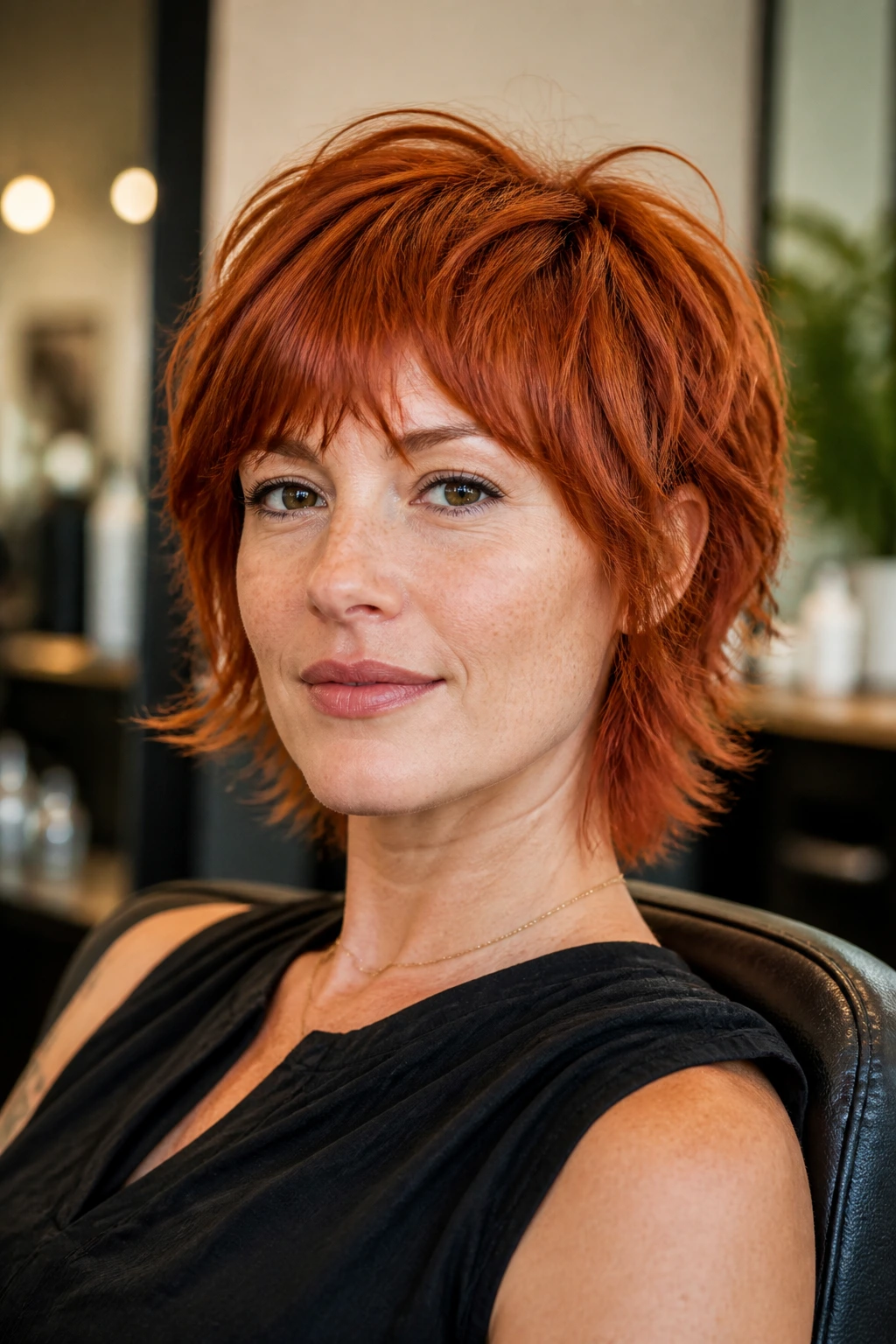
Red color fades faster than people expect, especially when the hair is porous from lightening. A color-safe shampoo and lukewarm water help more than fancy promises in glossy bottles. Wash too hot, and the shine disappears faster.
As for the cut, bangs usually need a refresh every 3 to 4 weeks if you wear them short. The rest of the shape can often go 6 to 8 weeks before it needs a proper reshaping. If the crown starts lying flat or the ends get fuzzy and triangular, that’s your cue. A tiny cleanup is cheaper than waiting until the whole style has wandered off.
Common Mistakes That Flatten or Fuzz Out a Shag
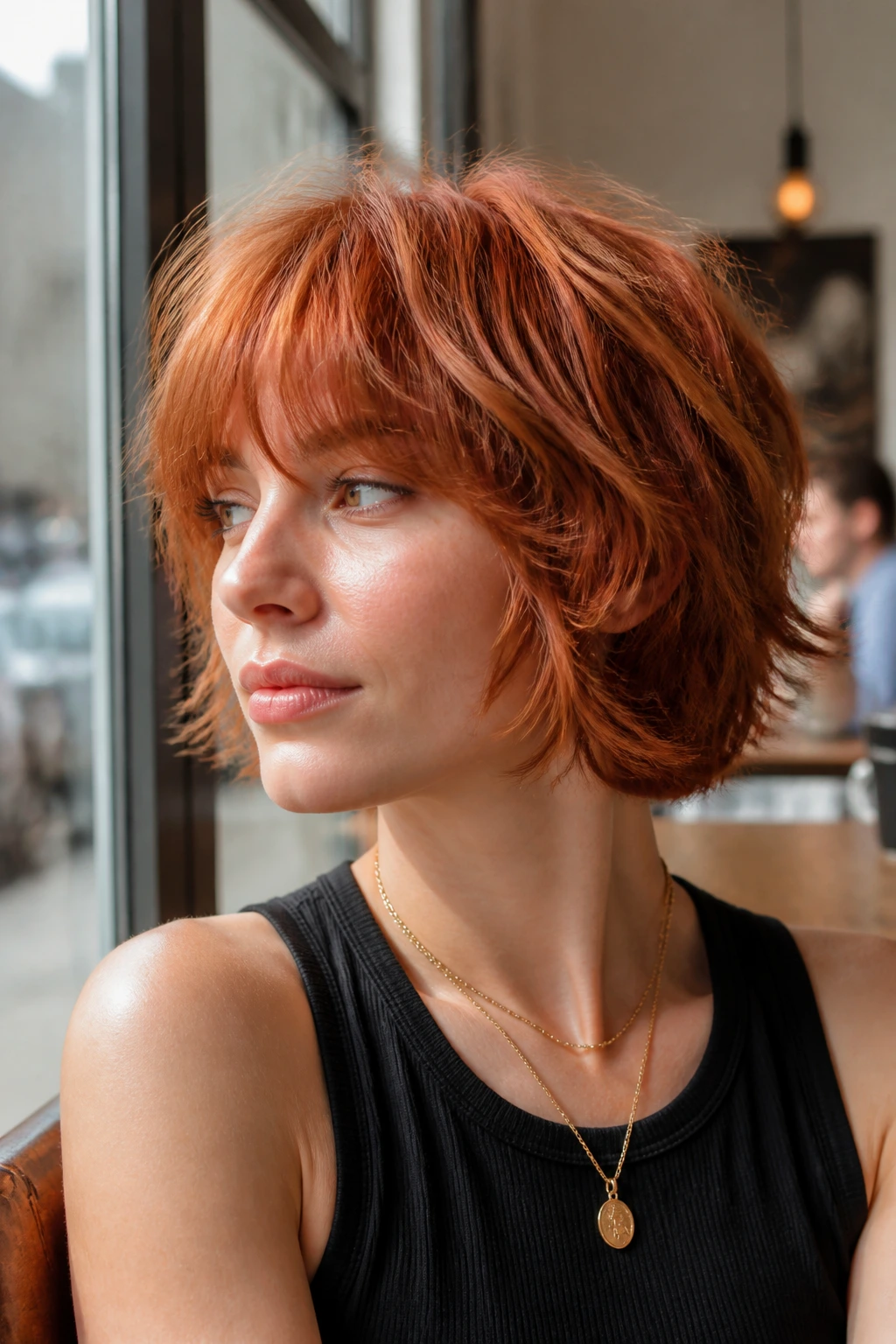
Over-thinning the ends: This is the fastest way to make red hair look stringy. The fix is to leave enough weight at the perimeter so the cut still has a shape.
Cutting the fringe too short on day one: Short bangs look charming in theory and a little shocking when they sit an inch higher after drying. Leave extra length if your hair springs up or shrinks.
Using too much oil or cream: A shag needs separation, not slippery strands that stick together. Use the smallest amount you can manage, then add more only where the hair feels dry.
Ignoring your natural bend: A straight-haired shag needs different shaping than a wavy one. If you cut against the texture, the hair will fight back every morning.
Letting the nape grow out unchecked: The back of a short shag can lose its shape first. A quick cleanup there keeps the rest of the cut looking intentional.
Variations and Adaptations to Try

Fine-Hair Lift Shag: Keep the layers light and the outline blunt enough to fake fullness. Root spray and a short crown make the biggest difference.
Thick-Hair Control Shag: Ask for internal weight removal and a cleaner perimeter. This version works best when the bulk is reduced without shredding the ends.
Curly Red Halo Shag: Let the curls sit soft around the face and keep the crown a bit looser. This version works when you want shape without flattening the curl pattern.
Low-Maintenance Air-Dry Shag: Build the cut around your natural wave, then skip the hot tools most days. It’s a smarter choice if your mornings are busy and your hair already bends on its own.
Edgy Fringe Shag: Add baby bangs or a micro-fringe if you want the haircut to feel sharper. Keep the rest of the layers softer so the fringe doesn’t overpower the face.
Frequently Asked Questions
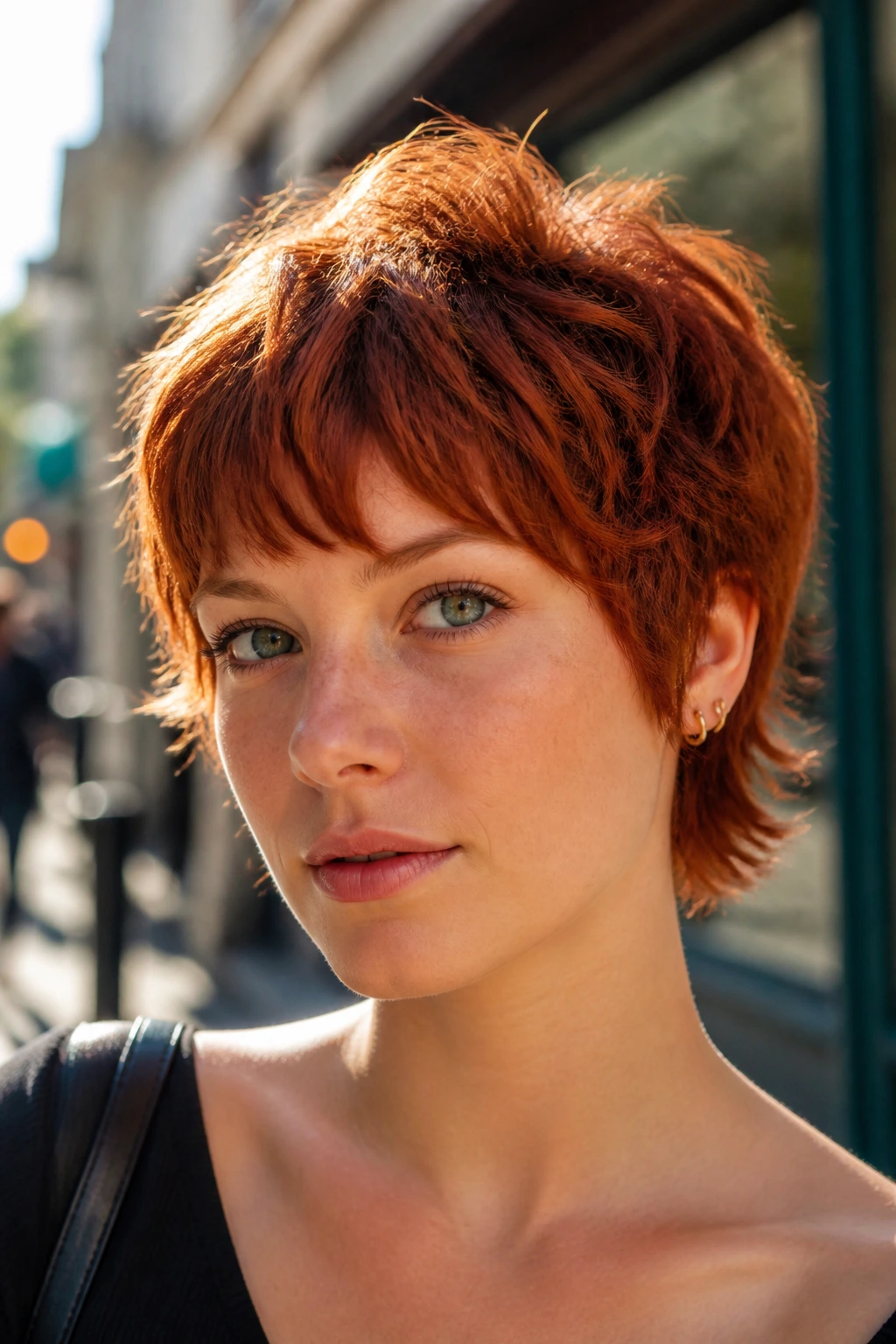
Will a short shag work if my red hair is straight?
Yes, but the cut needs enough razor texture or point-cutting to keep the layers from looking stiff. Straight red hair shows clean lines fast, so a little broken edge is what makes the shag read as a shag.
Is a shag better than a bob for red hair?
If you want movement and a softer grow-out, usually yes. A bob gives you a stronger line, but a shag gives red hair more visual depth because the layers catch the light in different places.
How often should I trim a short shag?
Most short shags need a shape refresh every 6 to 8 weeks. If you wear short bangs, trim those sooner, around every 3 to 4 weeks, so they don’t drop into your eyes.
What if my red hair is very thick?
Ask for weight removal inside the cut, not just at the ends. Thick hair can handle a shag beautifully, but if the layers are cut too high or too aggressively, the shape can puff out at the sides.
Can a shag make fine red hair look thinner?
It can if the ends are over-thinned. Keep some bluntness at the perimeter and focus the layering near the crown, where you want lift instead of see-through ends.
Do short shags need a lot of styling every day?
Not usually. A good one can be shaken out, scrunched, or rough-dried into shape with very little work. The trick is getting the cut right so the hair falls where it should.
What’s the best fringe for a red shag if I wear glasses?
A longer curtain fringe or side-swept fringe usually plays nicest with frames. Short, straight bangs can land awkwardly right on the top edge of the glasses if the length isn’t planned carefully.
The Shape That Stays Interesting
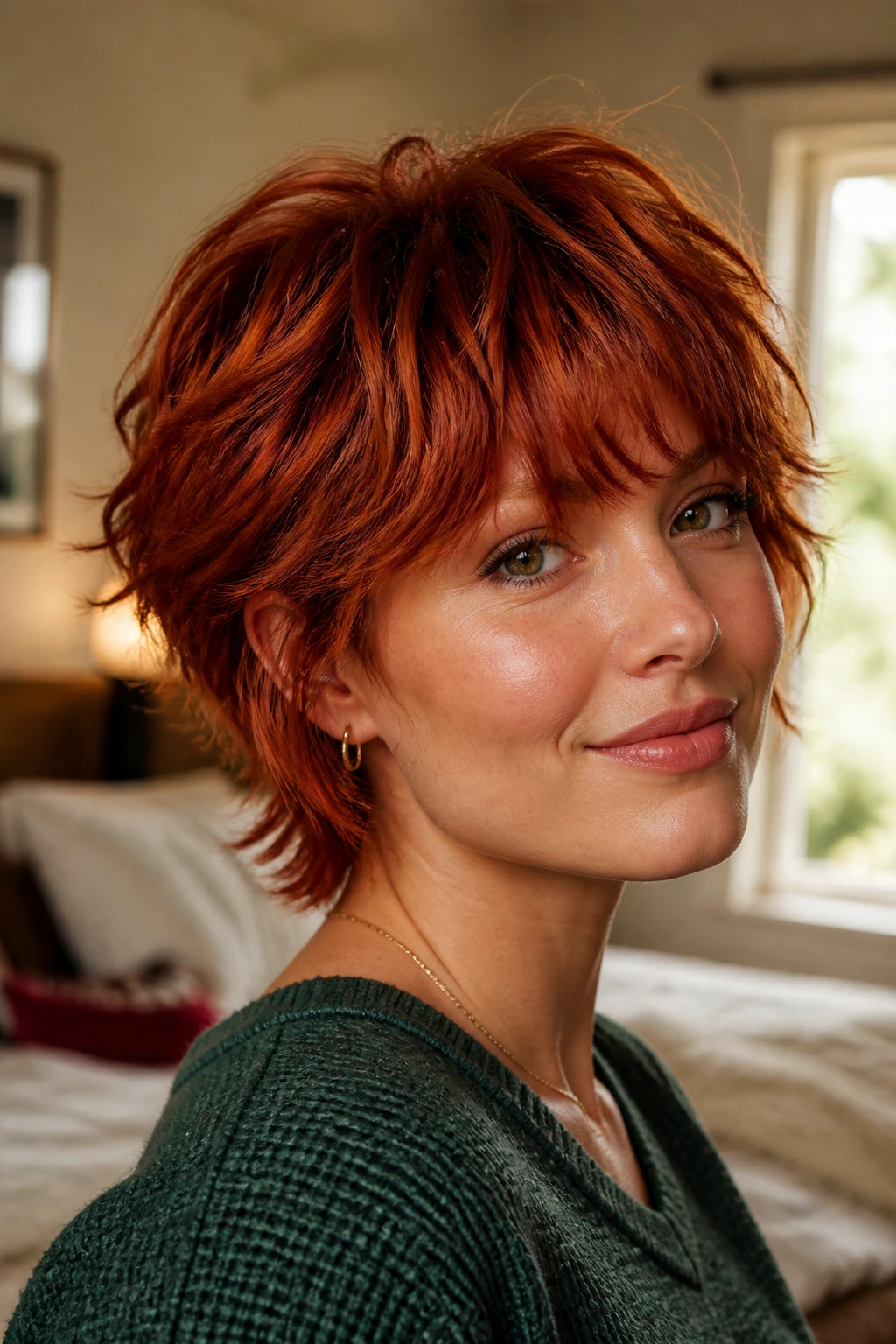
Short shag hairstyles for red hair work because they let the color and the cut do the same job at once. The layers keep the silhouette from going heavy, and the red tone keeps the texture from disappearing. It’s a clean swap: less stiffness, more movement.
If you want the easiest route, start with one of the softer versions and build from there. A good shag should feel like it belongs to your hair, not like you’re forcing your hair to behave for a photo. That’s the part worth chasing.
