



A good shag on Black natural hair does not sit still, and that’s the point. The cut should move when you turn your head, open up around the cheekbones, and keep enough structure at the crown so it doesn’t collapse into a flat shape by lunchtime. On coils and curls, the shag can look soft, edgy, playful, or sharply sculpted — sometimes all in the same cut — because the texture does half the styling for you.
The catch is shrinkage. Always shrinkage. What looks like a neat, shoulder-length layer map in the chair can shrink into a much shorter, fuller shape once it dries, and that’s where some shags go wrong. The best ones are cut with that in mind, so the hair still has a clear outline when it springs up. A shaky shag usually looks like somebody took weight off without giving the hair a shape to live in.
Black natural hair loves a shag when the layers are placed on purpose. Too many short chops at the crown and you get a halo that puffs in all the wrong places. Too much weight at the ends and the whole style hangs there like it’s waiting for a decision. The sweet spot is somewhere in the middle, where the curl pattern can breathe and the perimeter still feels deliberate.
Why These Shag Haircuts Stand Out on Black Natural Hair
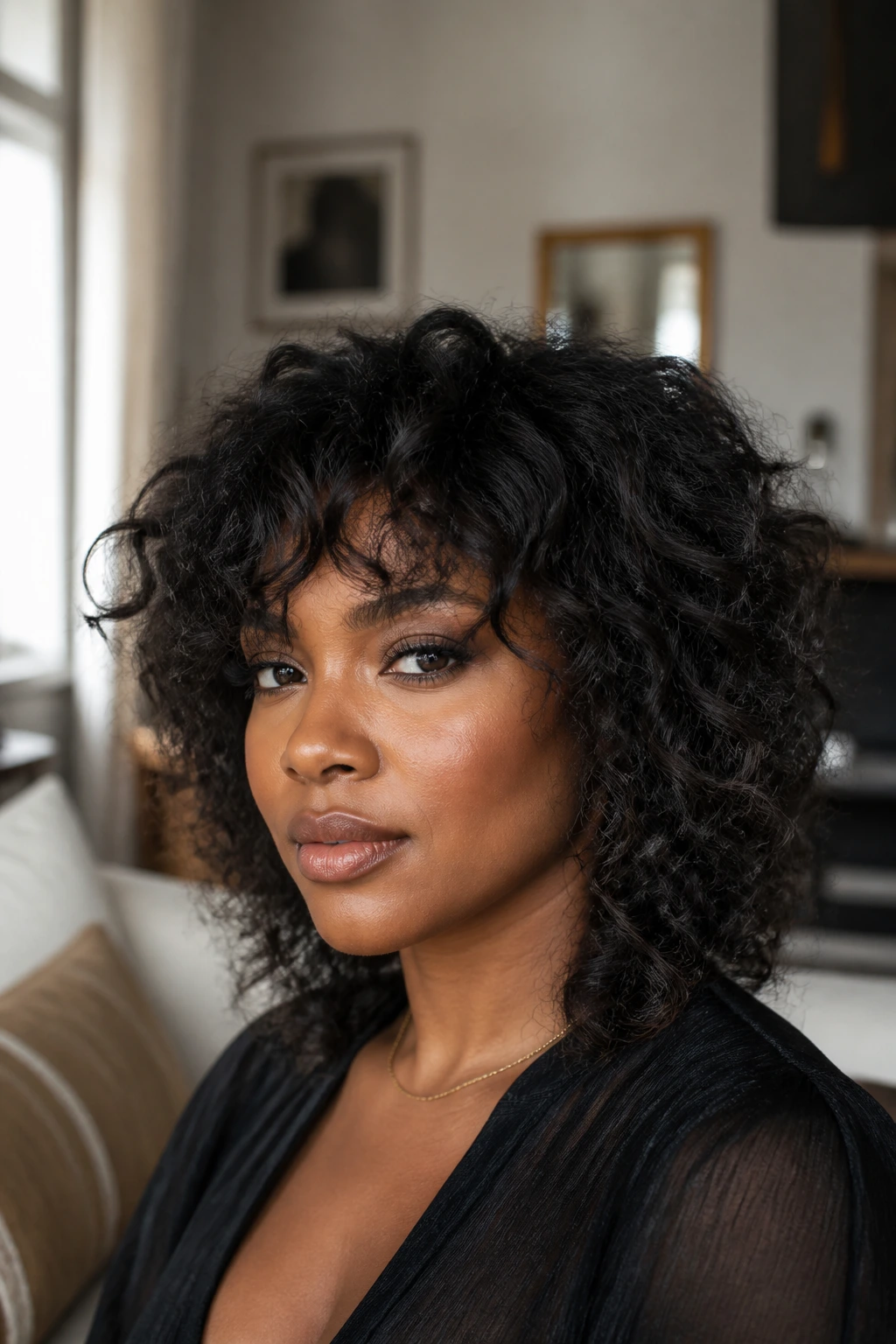
- Shrinkage-Friendly Shape: These cuts are built to look intentional after the hair dries, not just when it leaves the chair wet and stretched.
- Volume With Direction: The layers lift the crown while keeping the sides and back from ballooning into a triangle.
- Bang Options That Bend: Several of these looks use broken fringe, side-swept pieces, or curtain bangs that work with curl spring instead of fighting it.
- Length You Can Keep: A shag does not have to mean losing inches everywhere; a lot of these keep the perimeter long enough for twist-outs, braid-outs, and stretched styles.
- Texture That Does the Styling: On natural hair, the layers show off coil pattern, definition, and density instead of flattening them out.
- Salon-Friendly Descriptions: Each style includes a shape cue you can actually say out loud in the chair, which matters more than most people admit.
1. Soft Crown Shag With Airy Bangs
This version keeps the crown light and the fringe broken up, so the top never feels heavy or stiff. On Black natural hair, that matters because a blunt bang can go dense fast once it shrinks; airy pieces sit better and move instead of forming one solid curtain.
Ask for short crown layers, face-framing pieces that start around the cheekbone, and bangs that are cut to live above the brow once dry. If your curls are tight, I’d keep the fringe longer than you think. The hair always shortens on the way home.
2. Rounded Afro Shag With Tapered Ends
A rounded afro shag gives you fullness without the mushroom shape that shows up when the perimeter is left too blunt. The taper at the ends takes the edge off the bulk, so the silhouette reads soft instead of boxy.
This is one of my favorite shapes for dense hair because it respects volume instead of fighting it. The roundness keeps the style open around the temples and jaw, while the tapered finish stops the bottom from looking like one heavy shelf.
3. Shoulder-Grazing Coil Shag
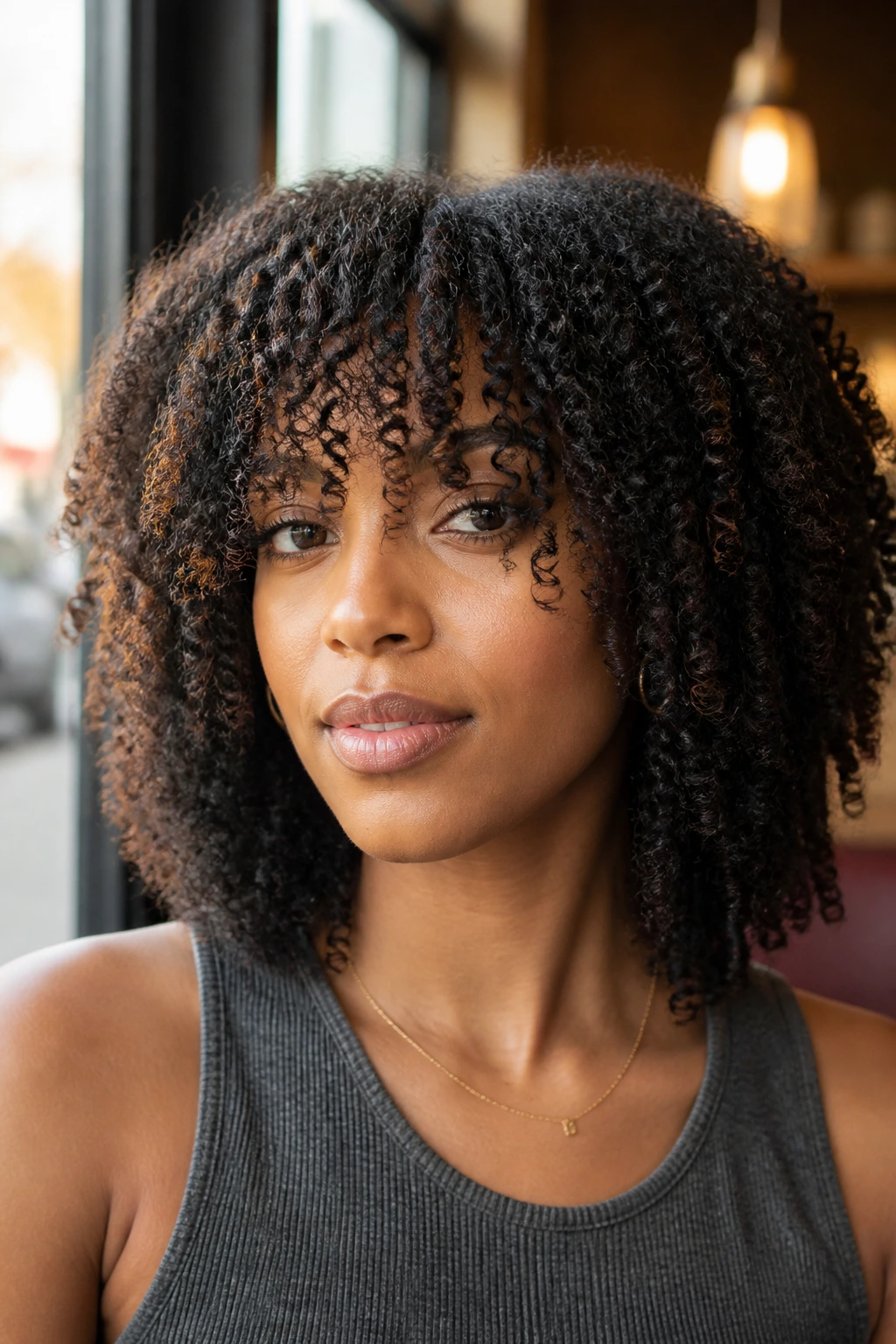
If you want movement but you are not ready to lose length, this is the safe bet. The cut sits around the shoulders when stretched, then rises into a fuller, bouncier shape once your coils dry.
The trick is where the layers start. Too high, and you lose the length you wanted to keep. Too low, and the cut just becomes long hair with some vague texture. The sweet spot is usually around the cheekbone and collarbone, where the pieces can frame the face without swallowing it.
4. TWA Shag With Micro Layers
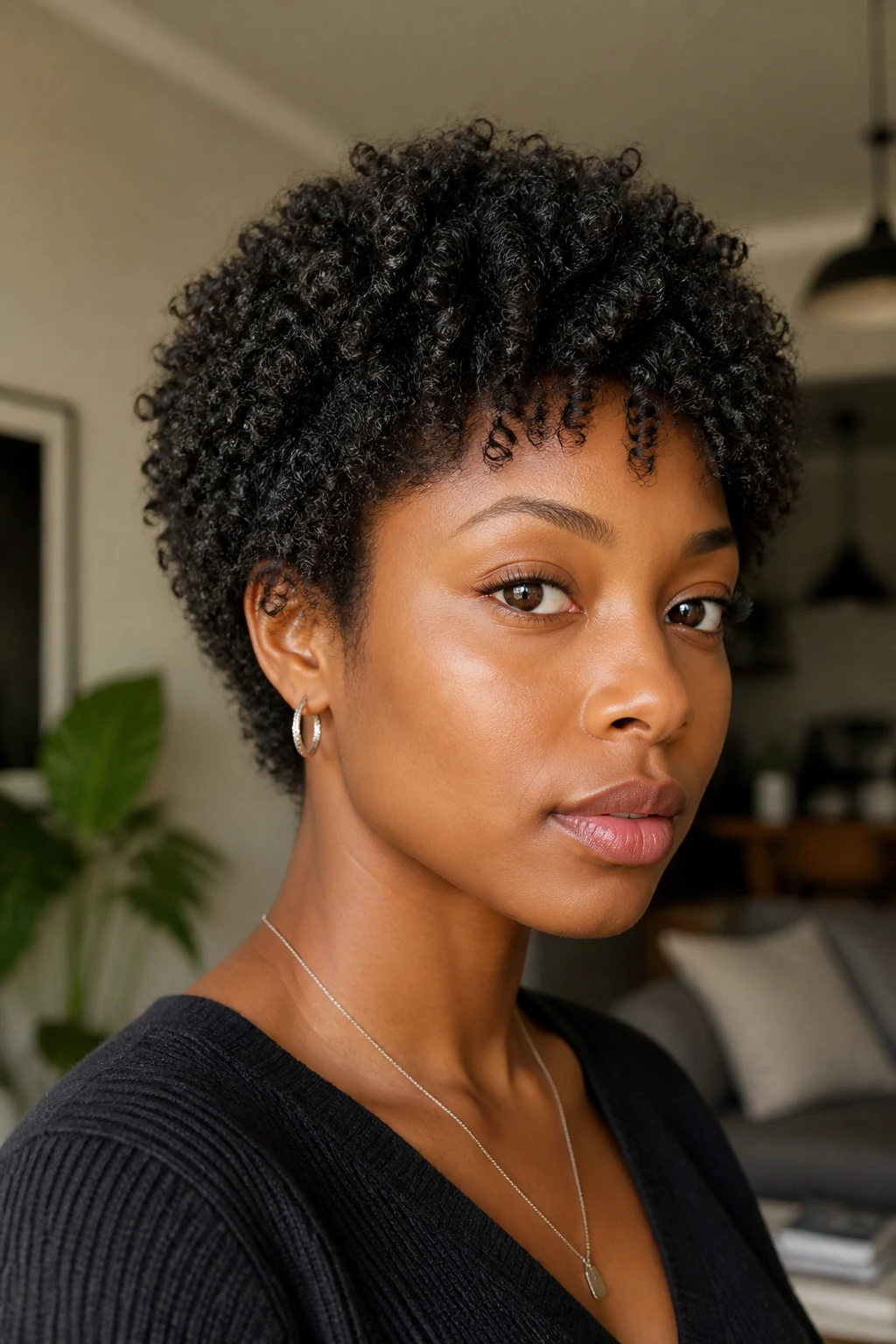
A tiny afro can still carry a shag, and honestly, it can look sharp. The layers are subtle here, more about shape than drama, so the cut stays crisp instead of fuzzy.
This works best when the stylist preserves the density on top and softens the sides just enough to create a little lift. I would skip aggressive thinning. On a TWA, that kind of snipping usually leaves see-through patches that only show up after the first wash.
5. Deep Side-Part Fringe Shag
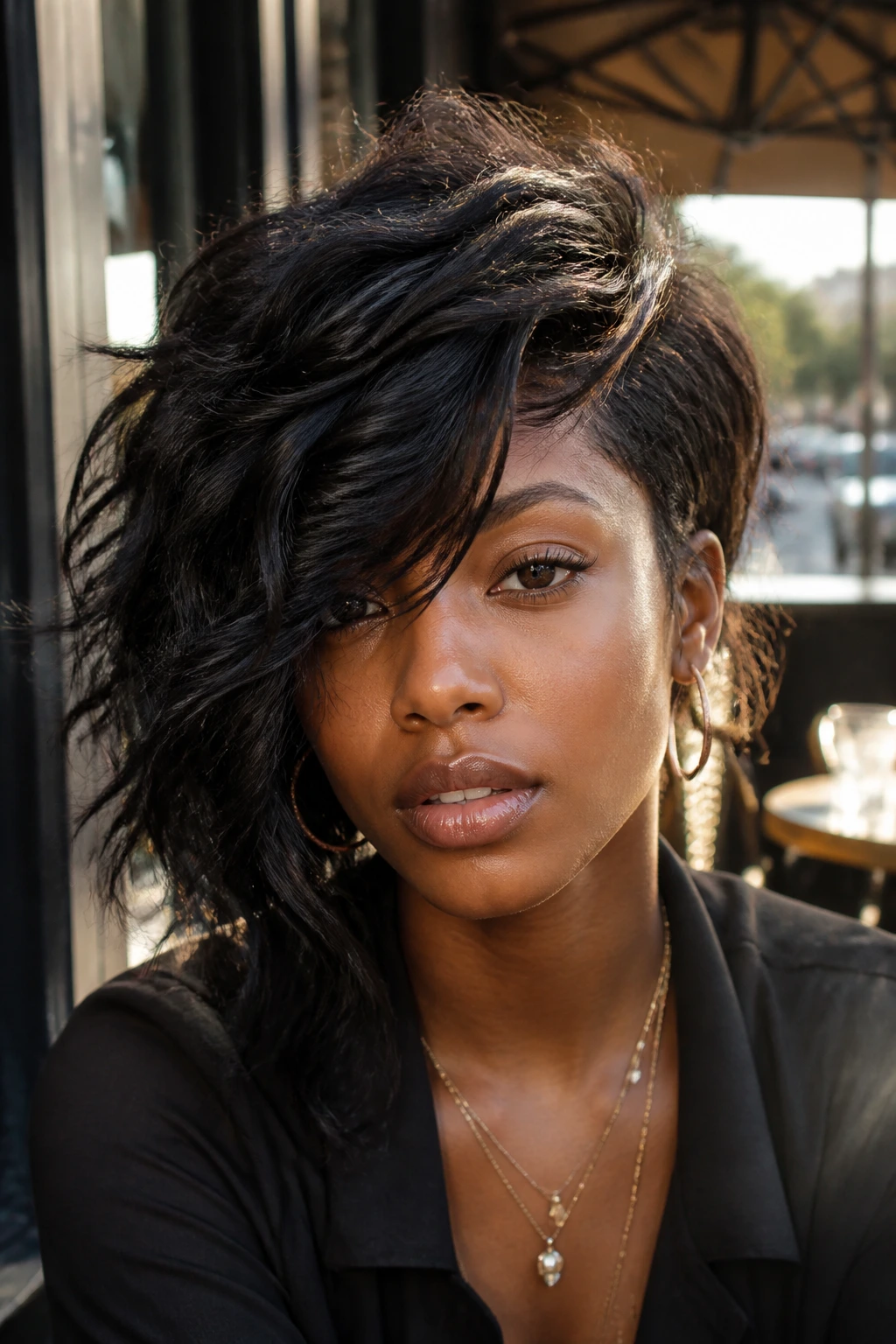
A deep side part changes the whole mood of the cut. Suddenly the shag feels a little softer, a little more asymmetrical, and much less like a standard layered fro.
The long side fringe can skim the brow or cheek, which gives you a nice angle if your face feels rounder or wider at the center. Rotate the part sometimes, though. Natural hair remembers where it lives, and a part that never moves can flatten one side and make the cut look lopsided in a bad way.
6. Wolf-Shag Hybrid
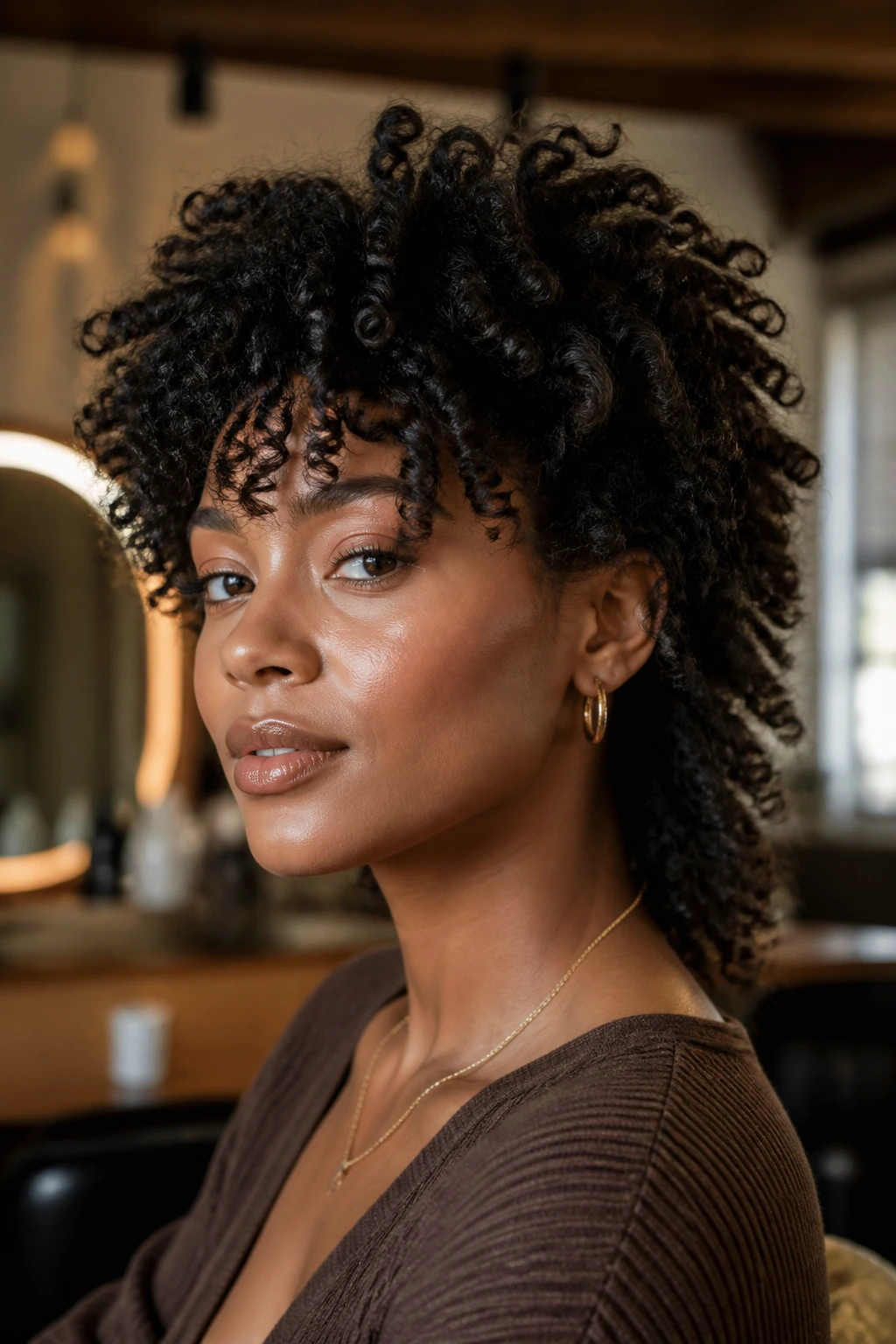
This is the bolder cousin in the family. The crown is chunkier, the nape is often longer, and the overall shape has more attitude than a classic shag.
I like this one on coils that already hold texture well because the shape shows off movement in a way that feels a little wild but still controlled. If a stylist talks about this cut like it’s a simple trim, be careful. The wolf-shag hybrid needs balance, or it becomes a lopsided grow-out moment.
7. Curly Shag Bob
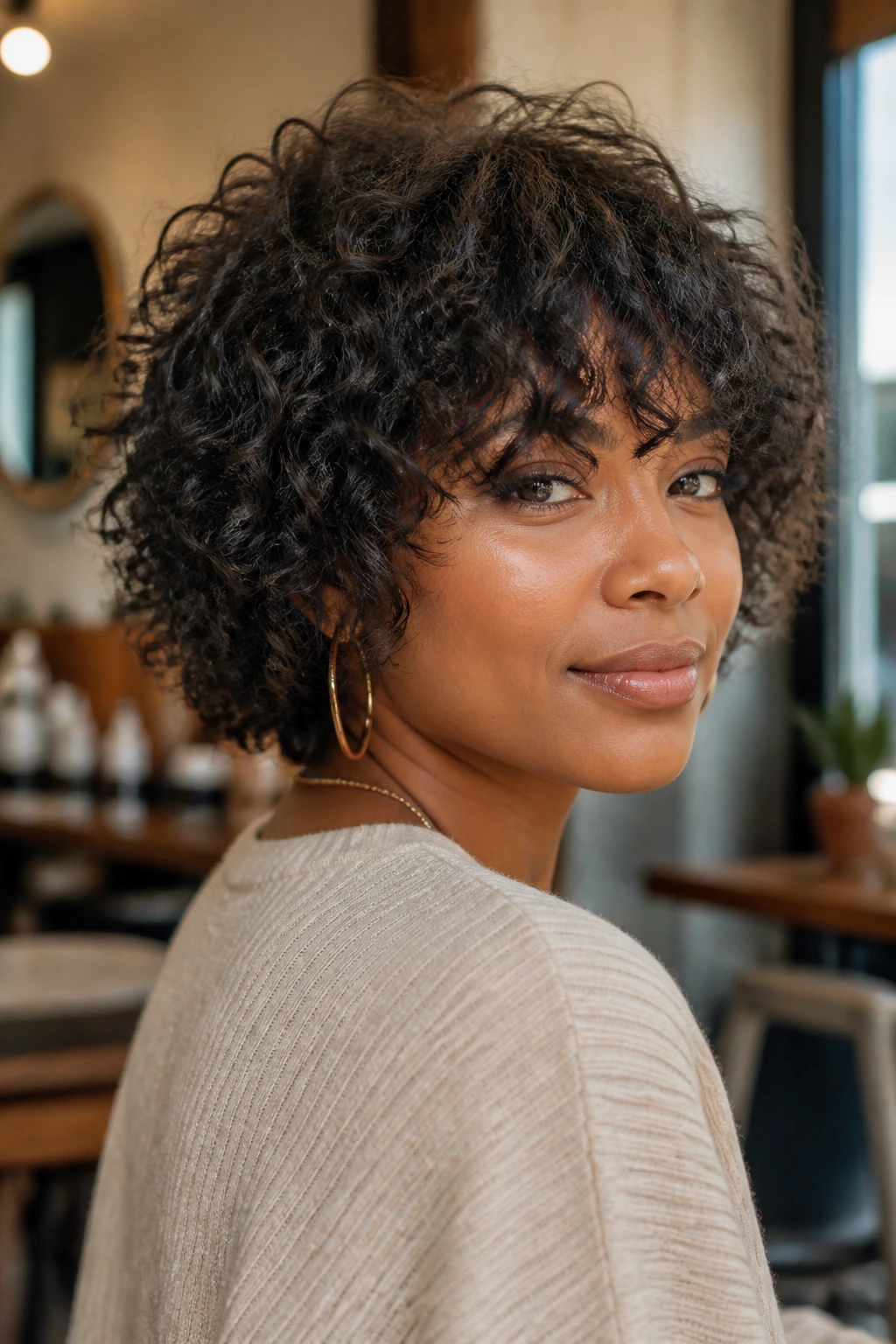
A bob with layers is one thing. A shag bob is another. The difference is that the perimeter stops acting like a solid wall and starts moving with the curl pattern.
This cut sits beautifully on looser curls and soft coils, especially if you want a shape that works with both wash-and-go styling and a quick stretch under the dryer. Keep the front a touch longer than the back if you want the face to open up a little more.
8. Feathered Mid-Length Shag
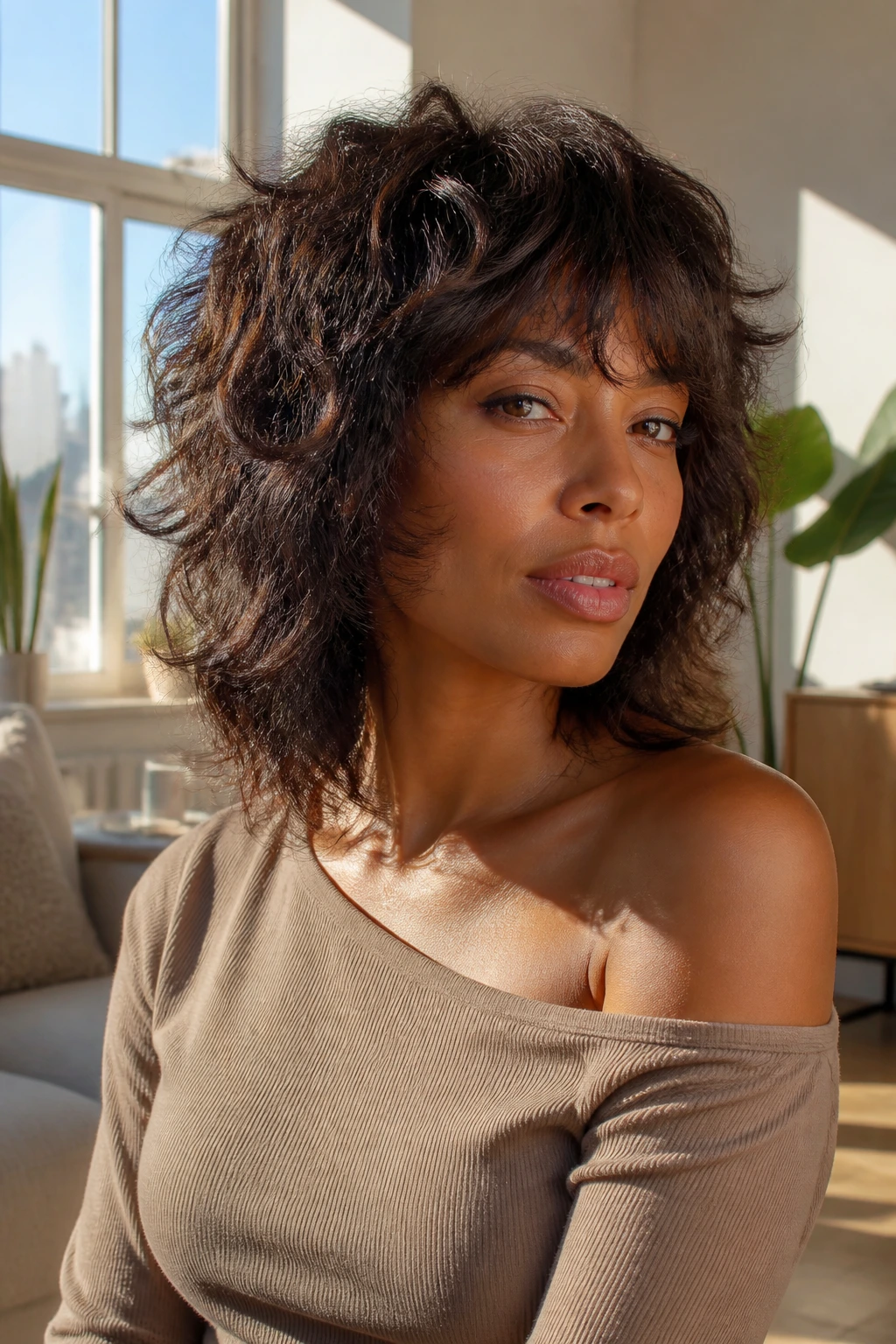
Feathered layers are softer than choppy ones. They let the hair fall in pieces instead of blocks, which is a nice fix if you hate the look of obvious cut lines.
This one is good when you want movement but not drama. The layers should blend into each other so the style looks airy from the side and slightly broken up from the front. If the cut feels too sliced, the whole thing can start to look frayed.
9. Tapered Nape Shag
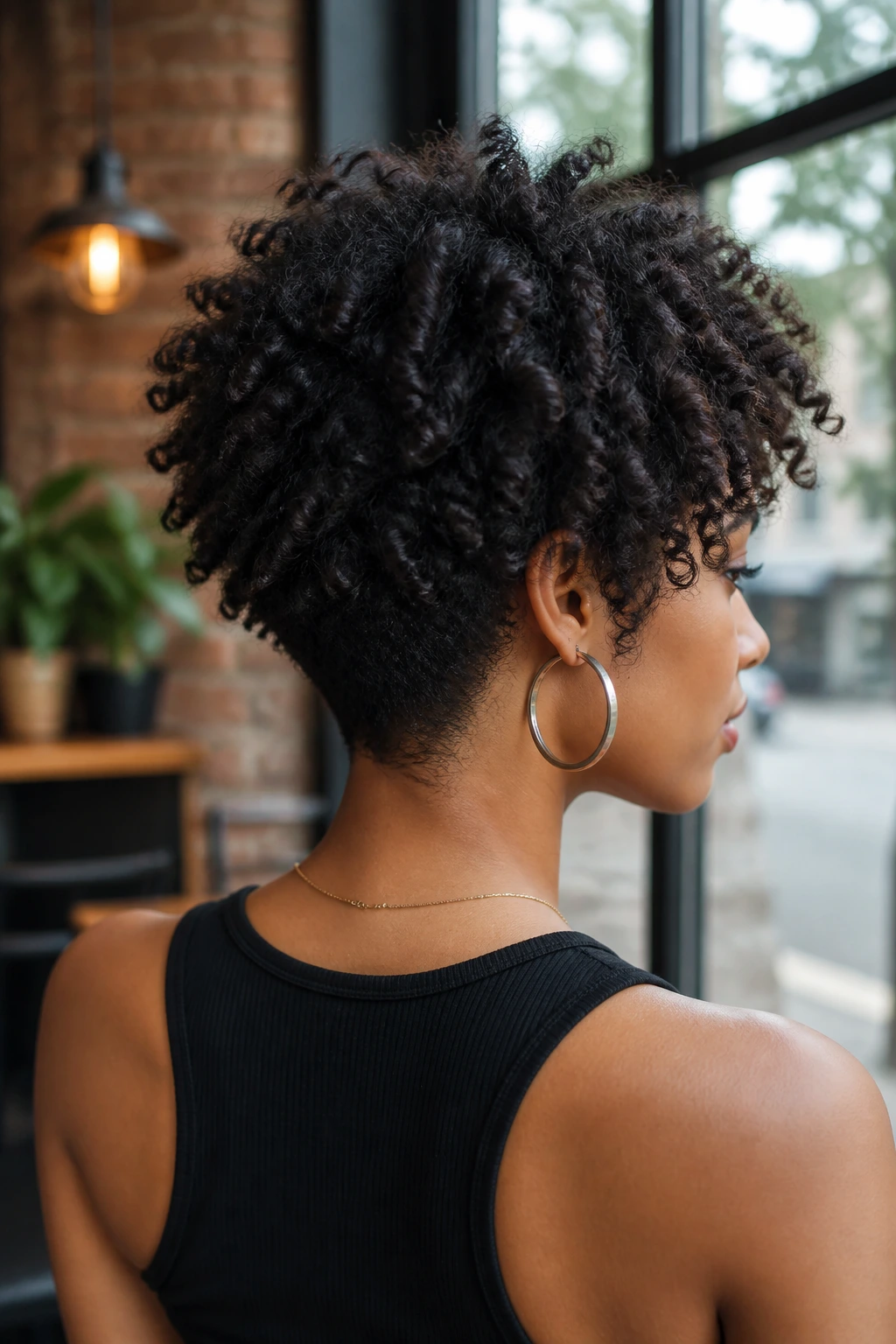
A tapered nape gives the back of the cut a clean finish, which is useful if your curls swell at the neckline and rub against collars. The top and sides stay fuller, so the shape still has personality.
I like this on people who wear jackets, scarves, or high collars a lot, because the back can get messy fast if it’s too long and too dense. A clean taper keeps the neckline from puffing out in a way that fights the rest of the style.
10. Halo Volume Shag
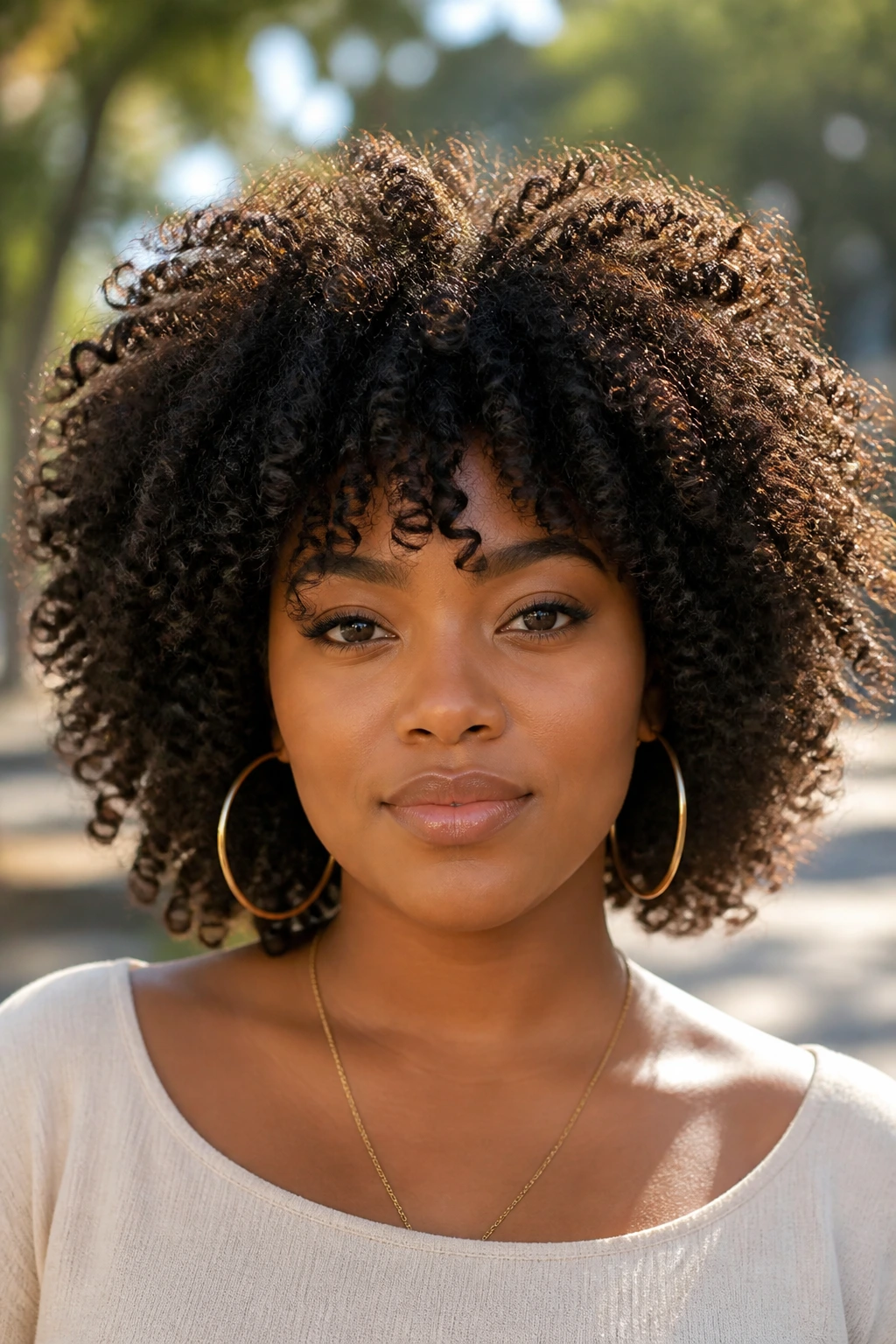
This one leans into the roundness. The shape sits like a halo around the head, with the crown lifted and the perimeter gently softened so the style never drops flat.
It’s a strong choice if you love big hair and do not want your layers to steal the volume. The best version has enough internal shaping to stop the sides from ballooning, but not so much that the cut loses its presence. Big hair. Controlled. That’s the whole appeal.
11. Curtain-Bang Shag
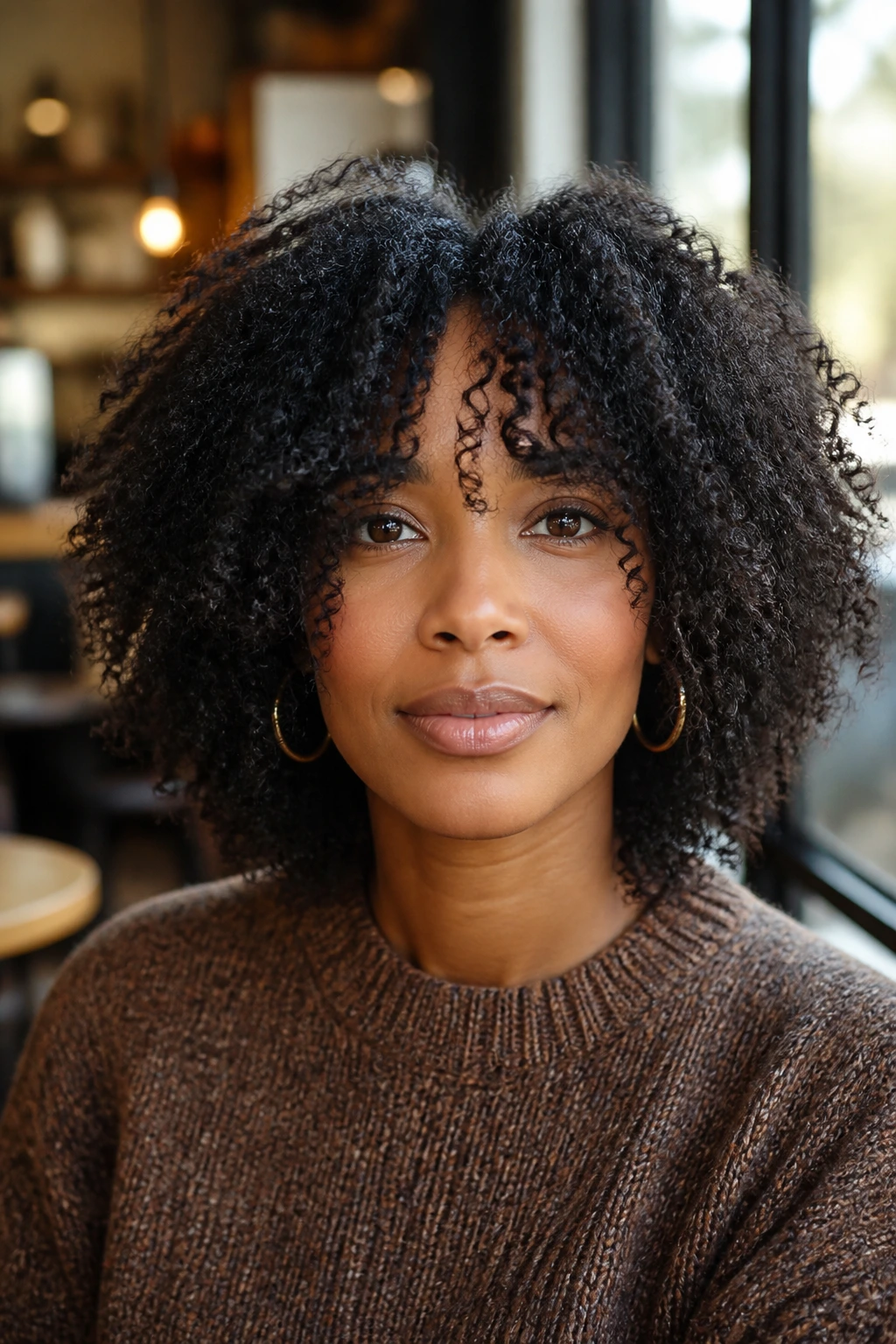
Curtain bangs can be a gift on natural hair when they are cut with enough length to bend. Split them down the middle and they frame the face without pinning you to one blunt fringe line.
This shape works best when the shortest point lands around the cheekbone or just below it, because tight curls will bounce upward. If your texture is dense, keep the center a little longer than the sides. Otherwise the bangs can spring up and crowd the forehead.
12. Jawline Layer Shag
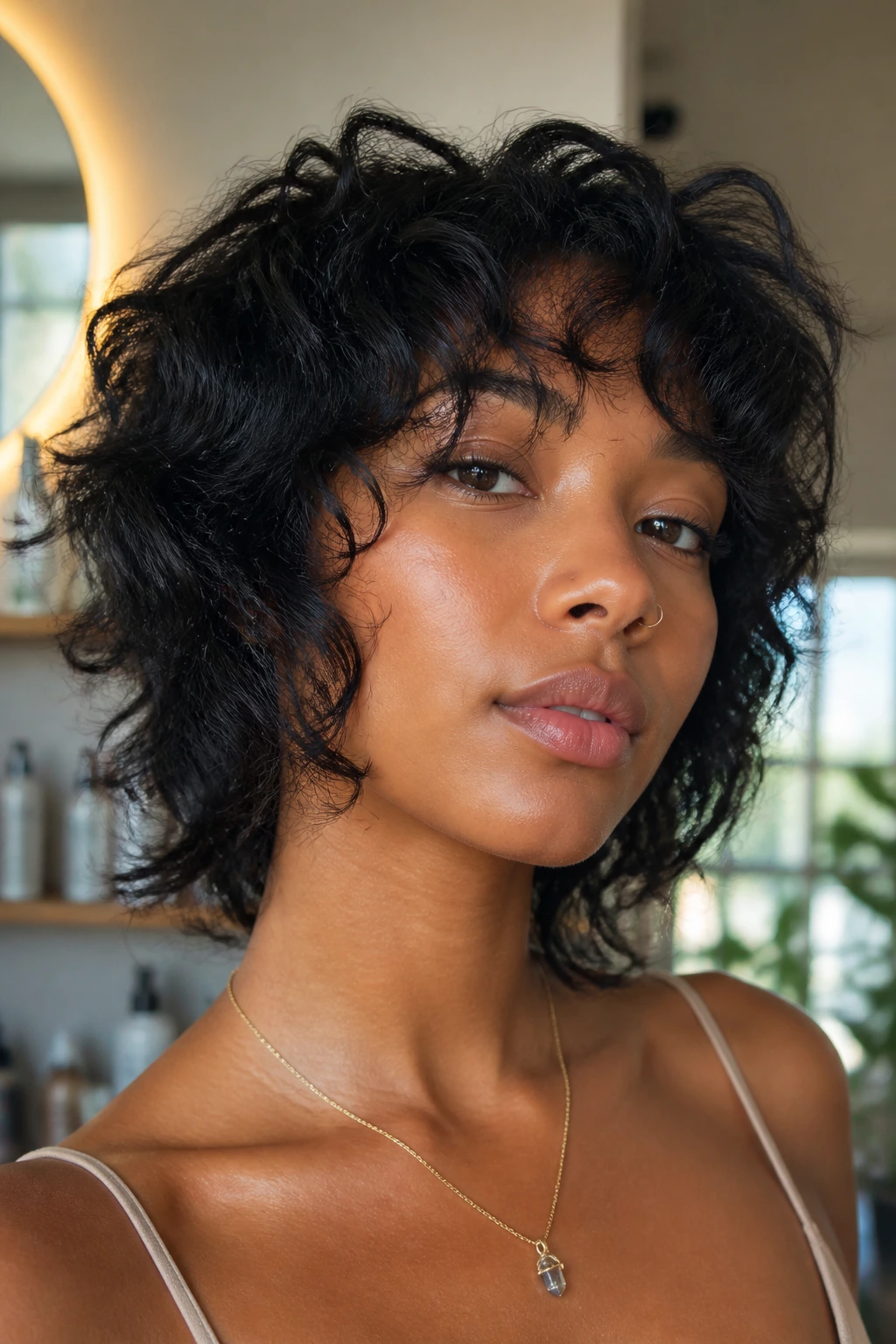
A jawline layer shag puts the movement where your face can actually use it. The front pieces skim the jaw or slightly under it, which gives the cut a clean frame without swallowing your features.
This is a good one if you want a stronger outline but still want softness around the mouth and chin. Ask for the front to be checked dry, because curl shrinkage loves to lift those pieces higher than planned.
13. Mullet-Leaning Shag
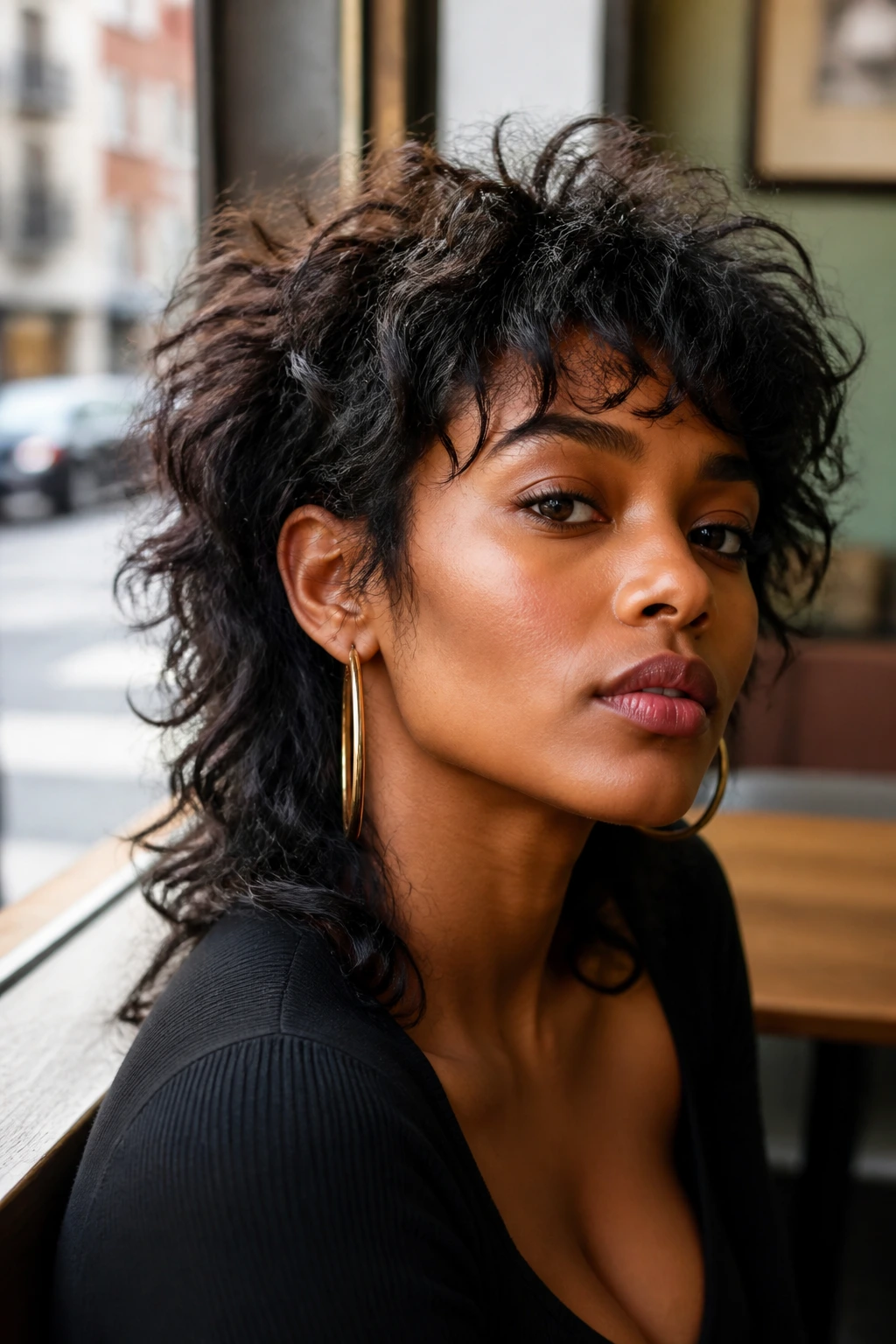
Some people want a little edge. Fine. This is that cut.
The mullet-leaning shag keeps the top lively and the back a bit longer, so the silhouette feels less polished and more deliberate. It works best when the contrast is clear but not harsh. If the back is too long and the sides are too short, the shape starts to read accidental, and nobody wants that.
14. Stretch-and-Cut Shag
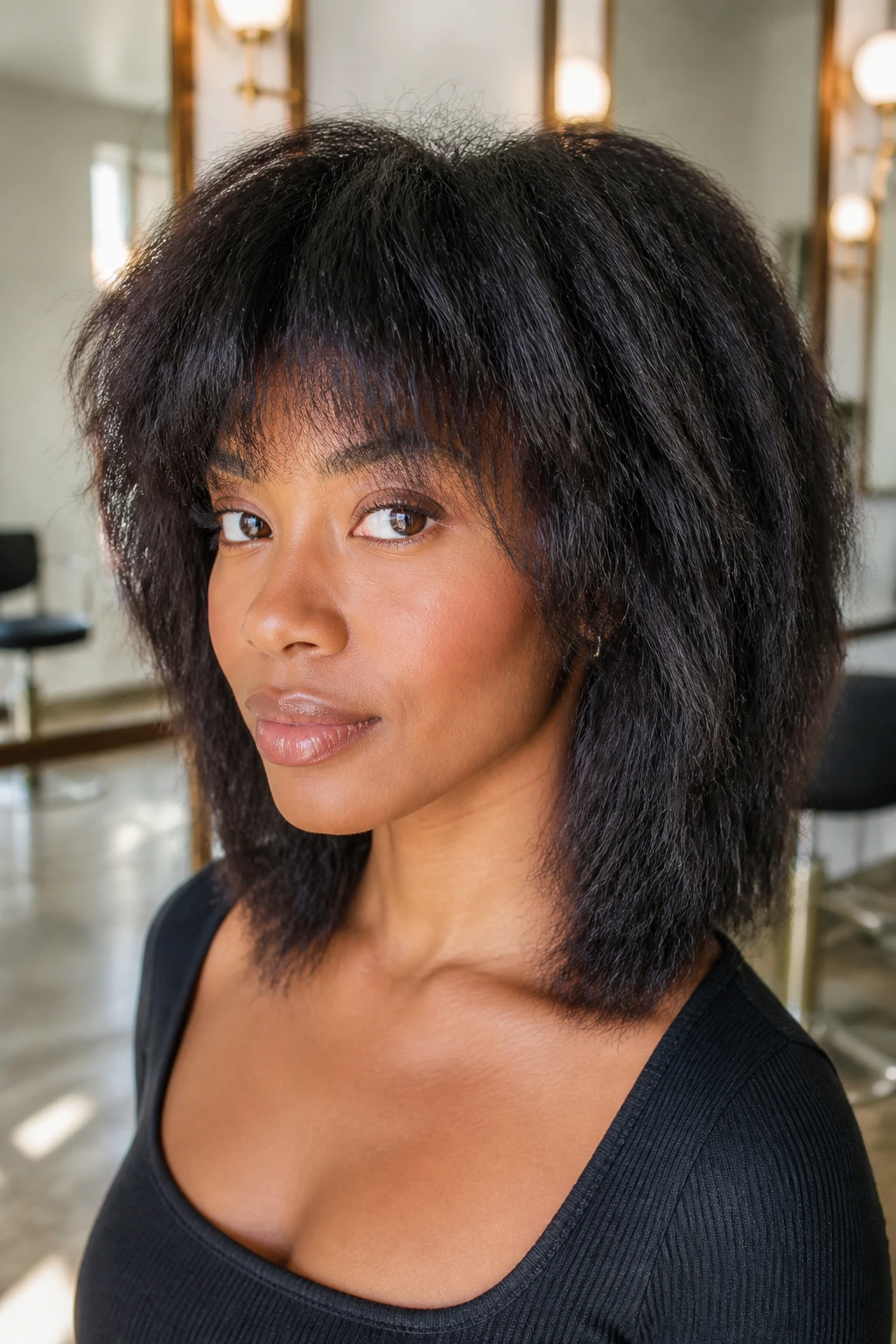
Cutting the hair in a stretched state changes the whole conversation. You can see length, proportion, and balance more clearly, which helps when you want a shag that looks predictable after twist-outs, braid-outs, or a blow-dry.
The tradeoff is simple: the hair will bounce back once it’s washed. That’s fine if your stylist knows how much shrinkage your pattern carries. It is not fine if they guess. Guessing is how people end up with bangs that live halfway up the forehead.
15. Wash-and-Go Shag
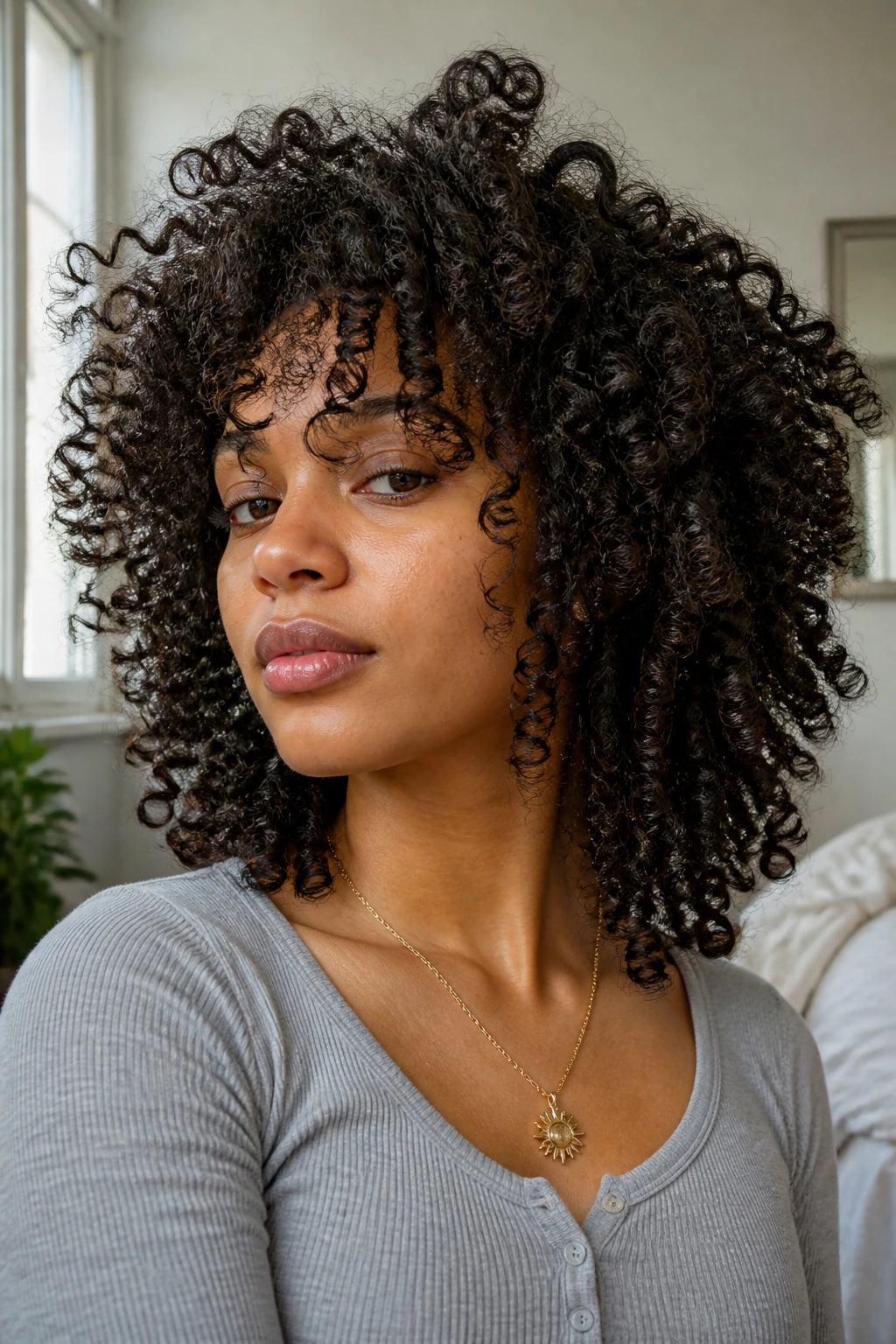
This cut is built for hair that dries into shape with minimal fuss. The layers help your curls land where they want to land, instead of hanging in one heavy curtain.
Use it if you like a wash-and-go but hate the flatness that sometimes happens around the crown. A light mousse or gel can keep the definition without weighing the cut down. If the products are too creamy, the top loses lift and the shag starts to look sleepy.
16. Defined Ringlet Shag
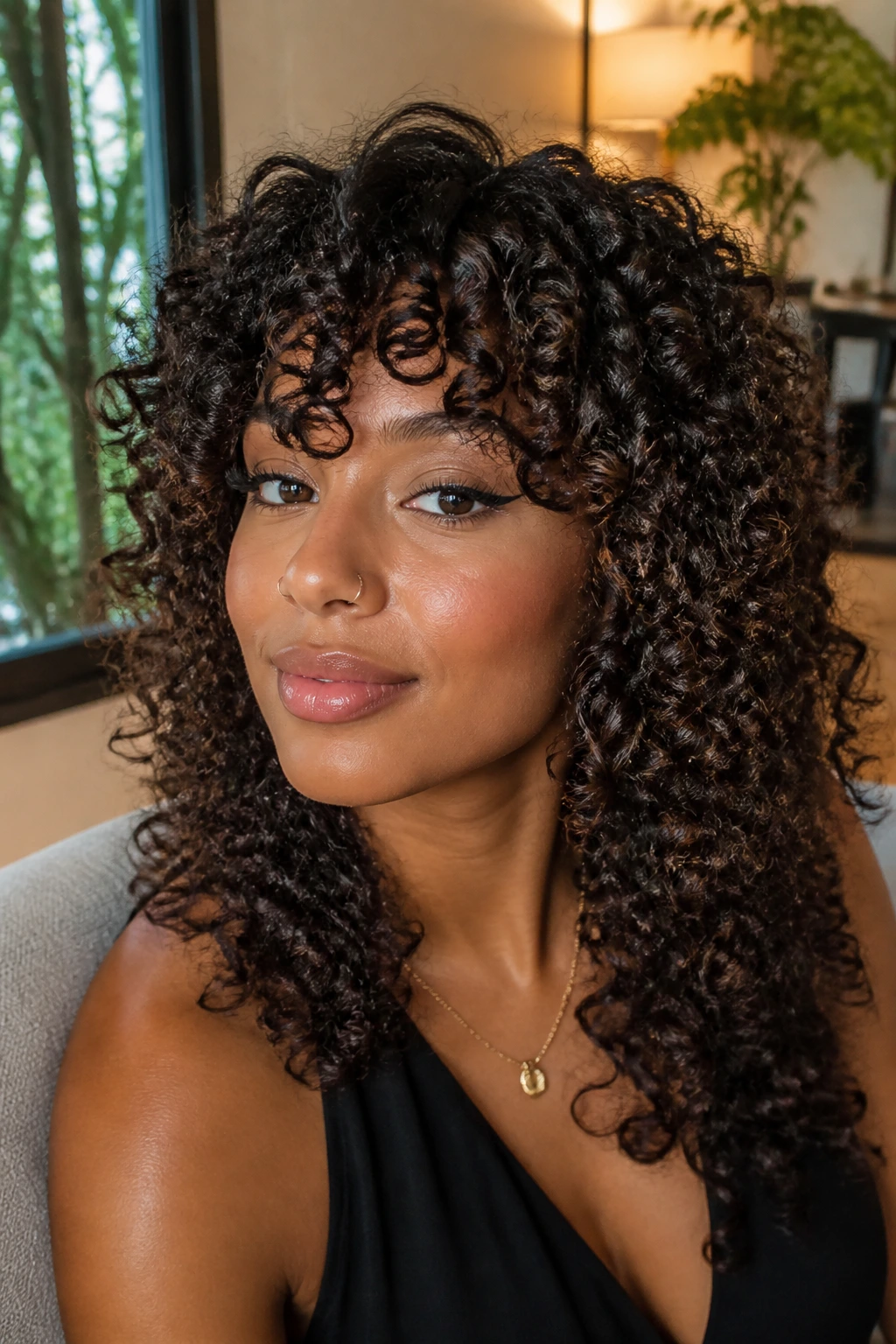
Ringlets like separation, and this cut gives them room. The layers are placed so each curl cluster can show up instead of merging into one dense mass.
It’s a strong choice for looser curls and soft coils that want shape but not a lot of bulk removal. I’d avoid over-layering here. Once the ringlets start to separate too much, the cut loses its body and can look thin at the ends.
17. Coily Pixie Shag
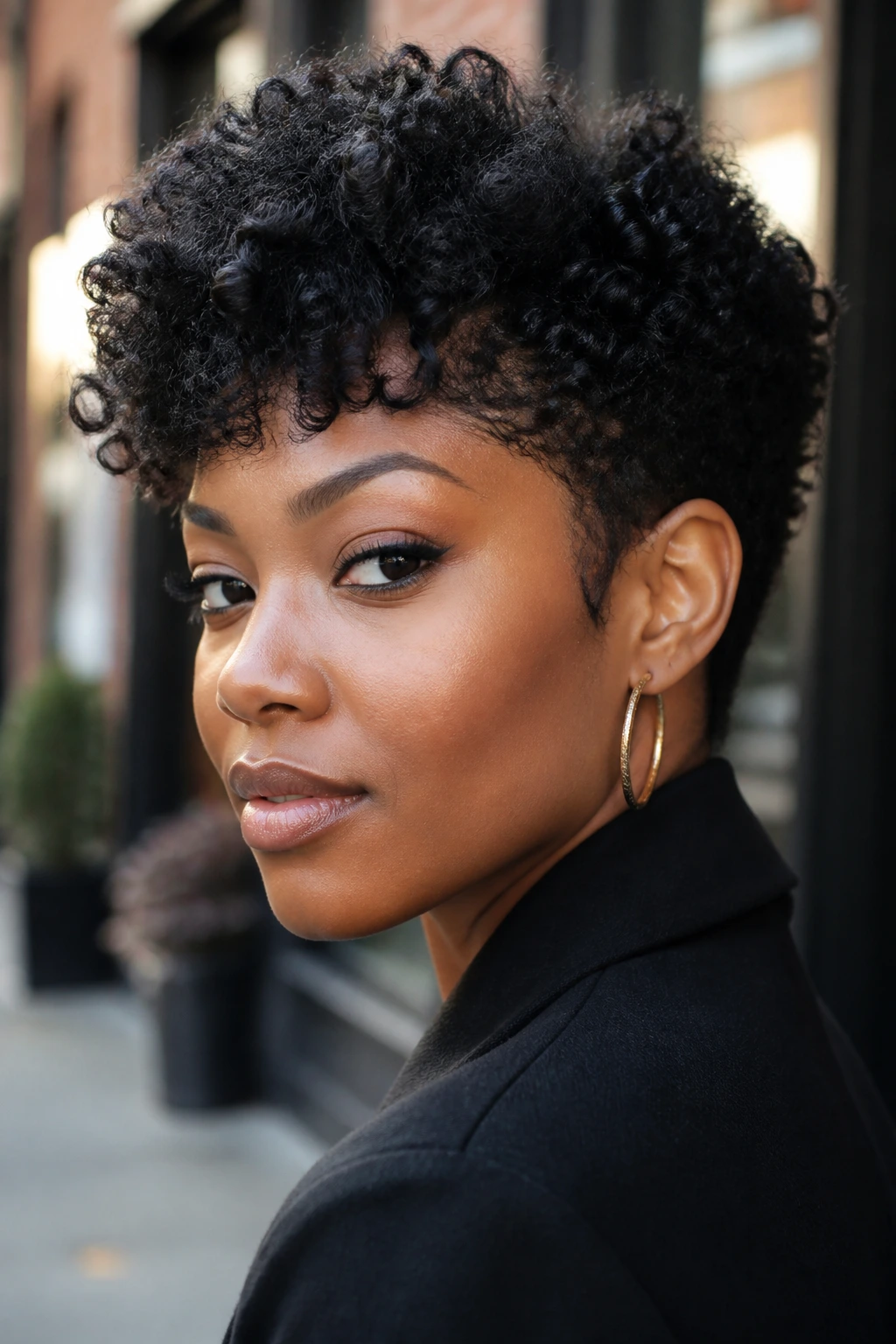
Short, sculpted, and a little cheeky. The coily pixie shag keeps the sides neat and the top piecey, which gives the hair texture without asking for a ton of length.
This cut depends on clean edges and smart layer placement. The top should have enough length to curl and lift, while the nape stays close enough to keep the silhouette tidy. If you want something low-profile but not boring, this is a strong move.
18. Layered Puff Shag
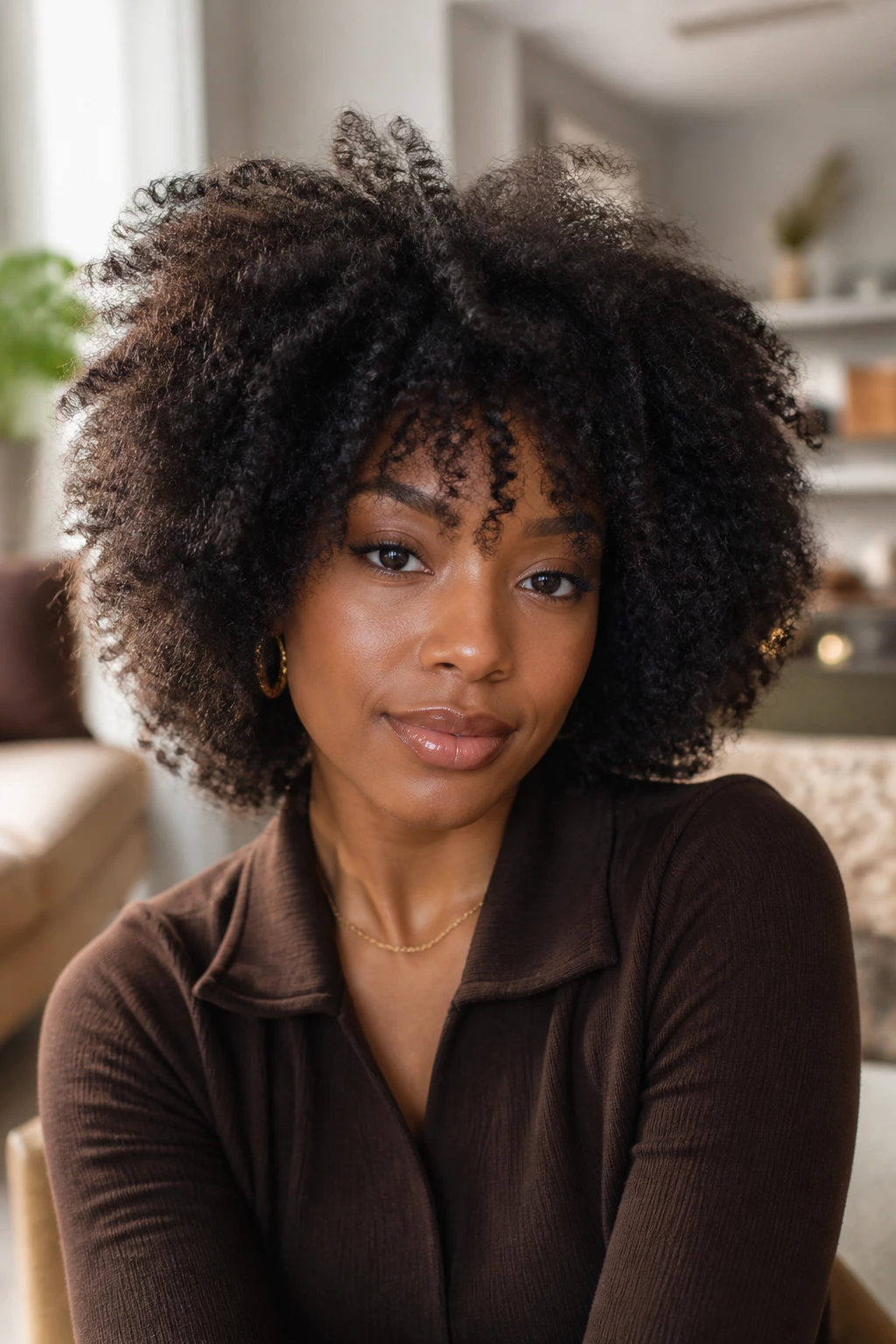
A puff does not have to be one sphere with no shape. This cut gives the hair some internal direction so the puff reads fuller and more intentional when worn loose.
It’s also handy if you pull your hair back often and want the released shape to still look styled. The layers should not be so short that they frizz away from the rest of the hair. That’s the mistake. A good puff shag has softness around the face and enough weight to sit well.
19. Asymmetrical Shag
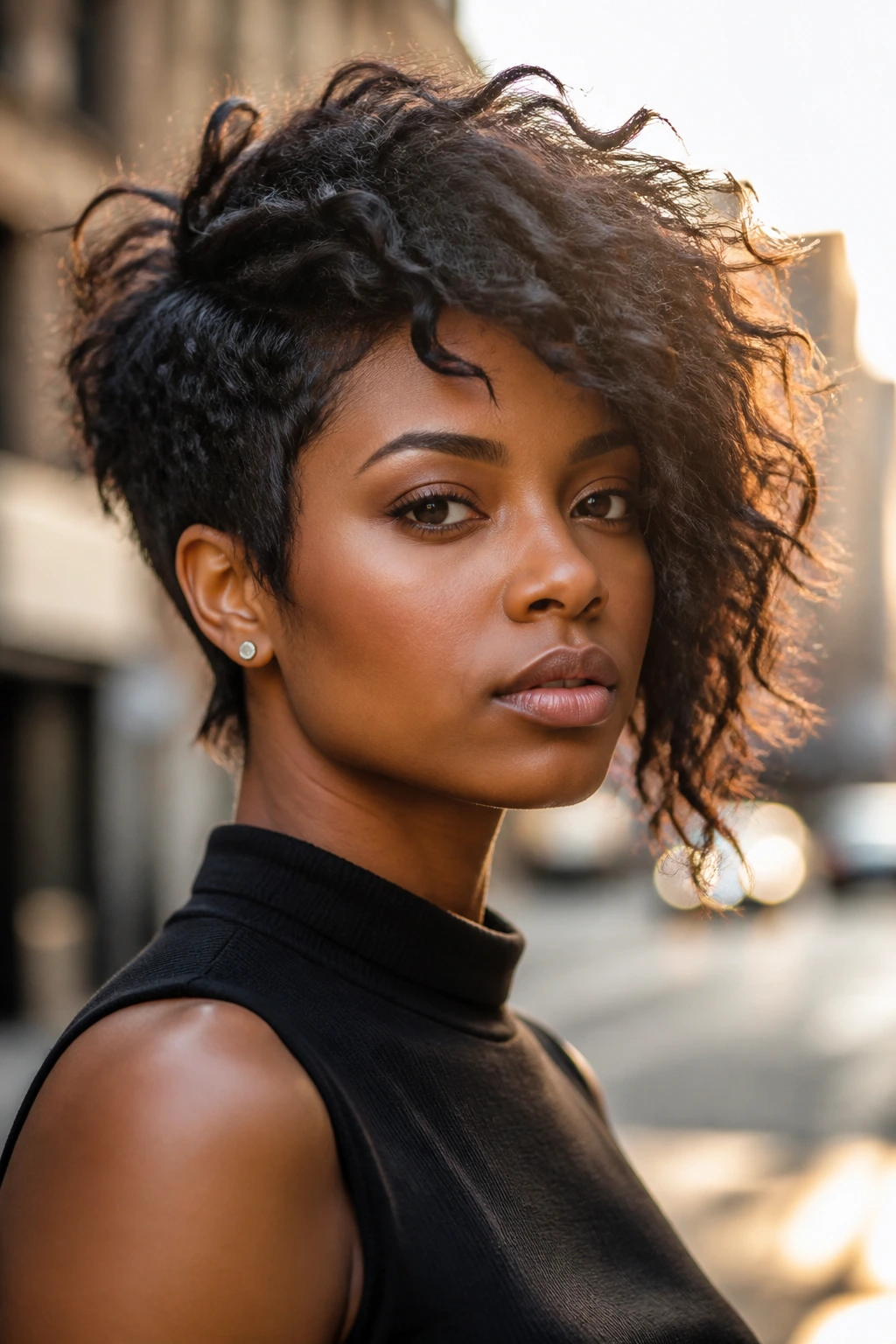
One side longer than the other changes the whole energy of the cut. It feels a little sharper, a little more modern, and a lot less predictable.
Natural hair handles asymmetry well when the layers are balanced from the top down, not just the sides. If one side is long and the other side is chopped to the bone, the shape can look uneven instead of interesting. Keep the difference visible, but not cartoonish.
20. Invisible-Layer Shag
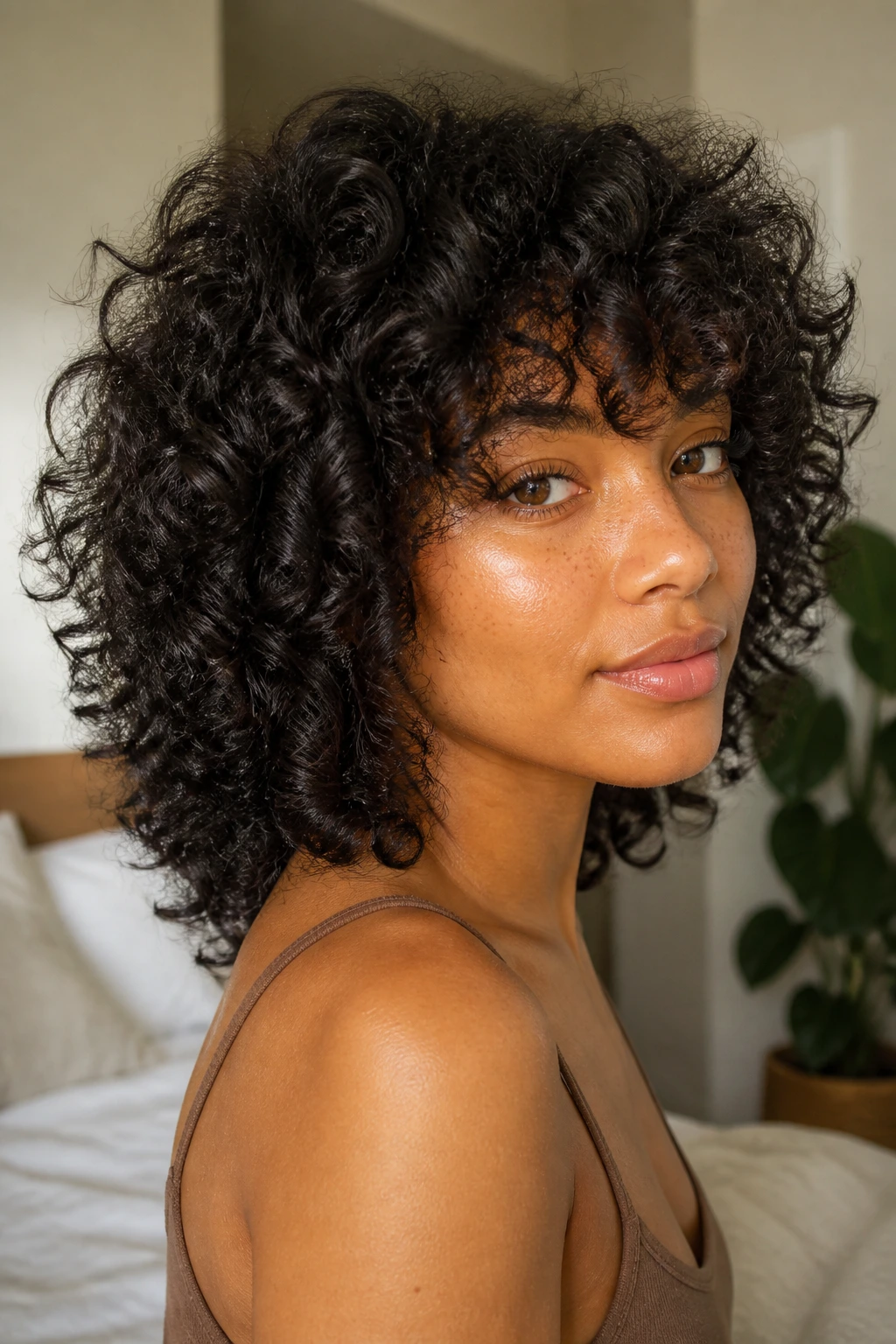
This is the version for people who want shape without seeing the cut lines. The layers blend into the curl mass, so the hair moves more than it announces itself.
It’s a smart choice when you like fullness but want a softer outline. The hair should still have lift at the crown and a little swing at the ends, just with less obvious chopping. If you hate the look of a heavily textured cut, start here.
21. Salt-and-Pepper Shag
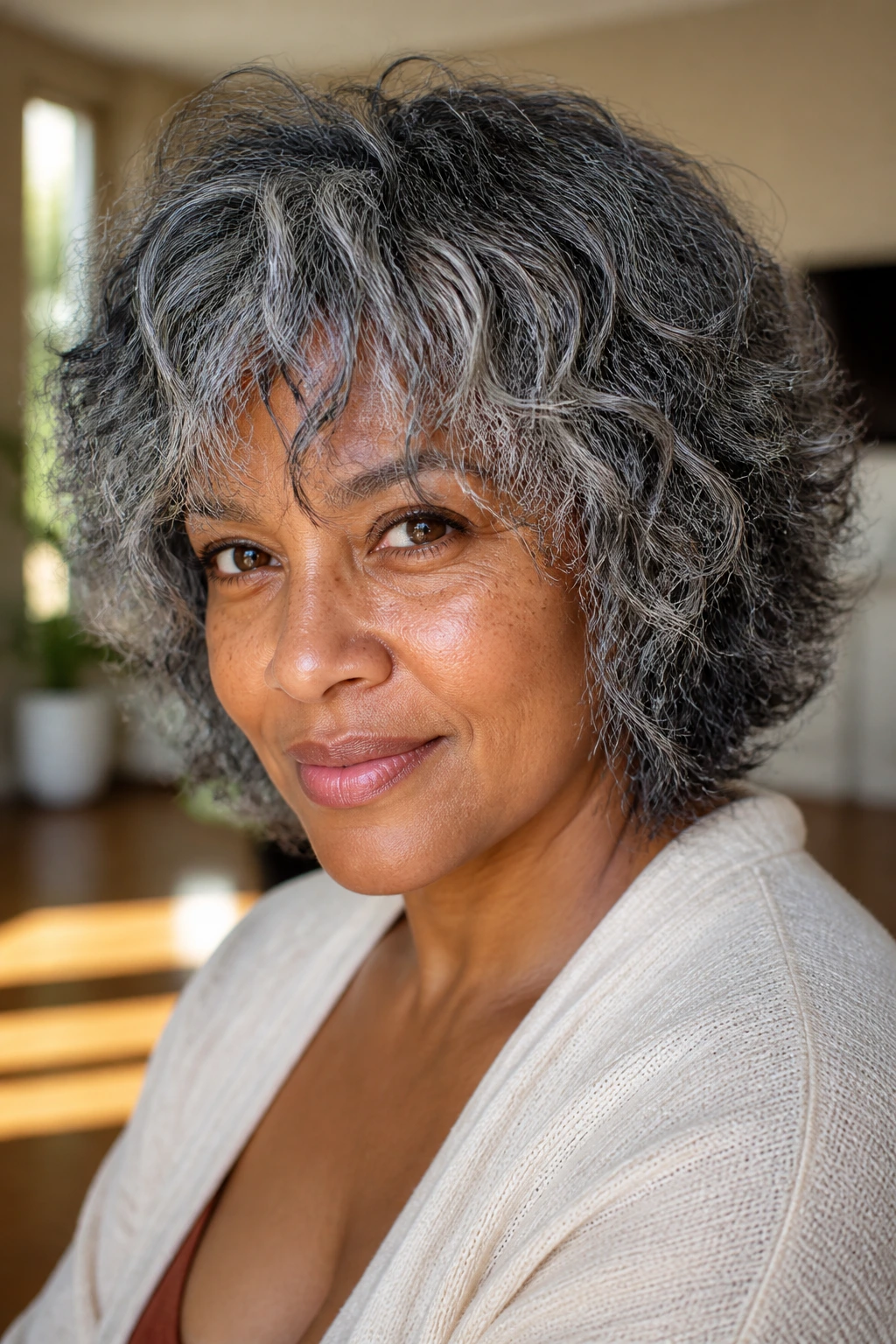
Gray and silver strands can be wiry, soft, coarse, and shiny all at once. A shag helps them move instead of hanging stiffly, which is why this shape can look so good on salt-and-pepper hair.
The fringe should be gentle, not razor-sharp, and the layers should preserve the mix of tones. A blunt shape can make gray hair look heavier than it is. Soft layering keeps the color variation visible, which is half the point.
22. Color-Kissed Shag
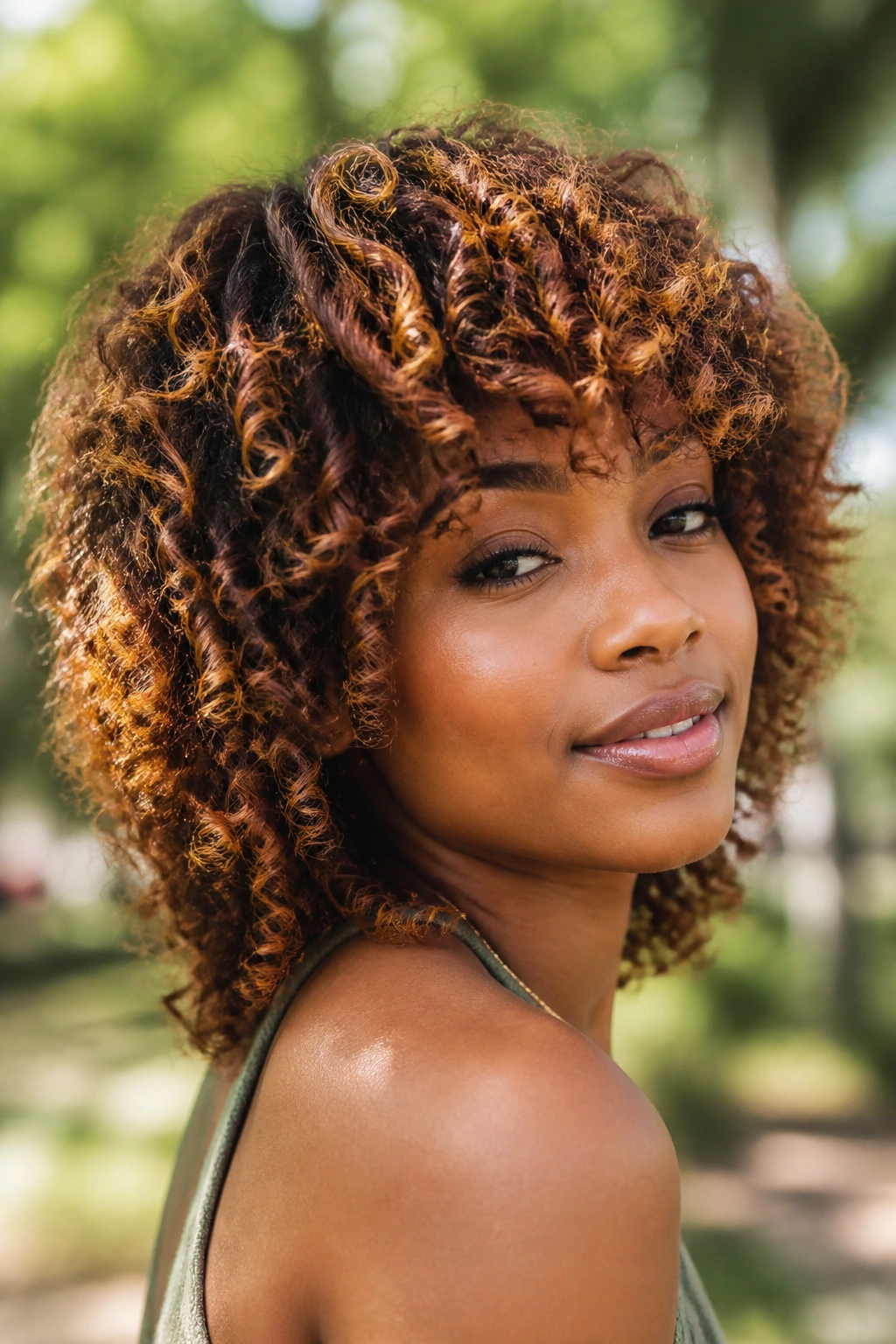
Highlights and layered natural hair get along better than people think, especially when the color is placed where the cut moves. Ends, fringe, and face-framing pieces catch the eye first.
I like honey, caramel, copper, and deep auburn on shags because they show the layer map without screaming for attention. Just keep the ends moisturized. Color can rough them up fast, and a dry shag loses its softness in a hurry.
23. Transitioning Hair Shag
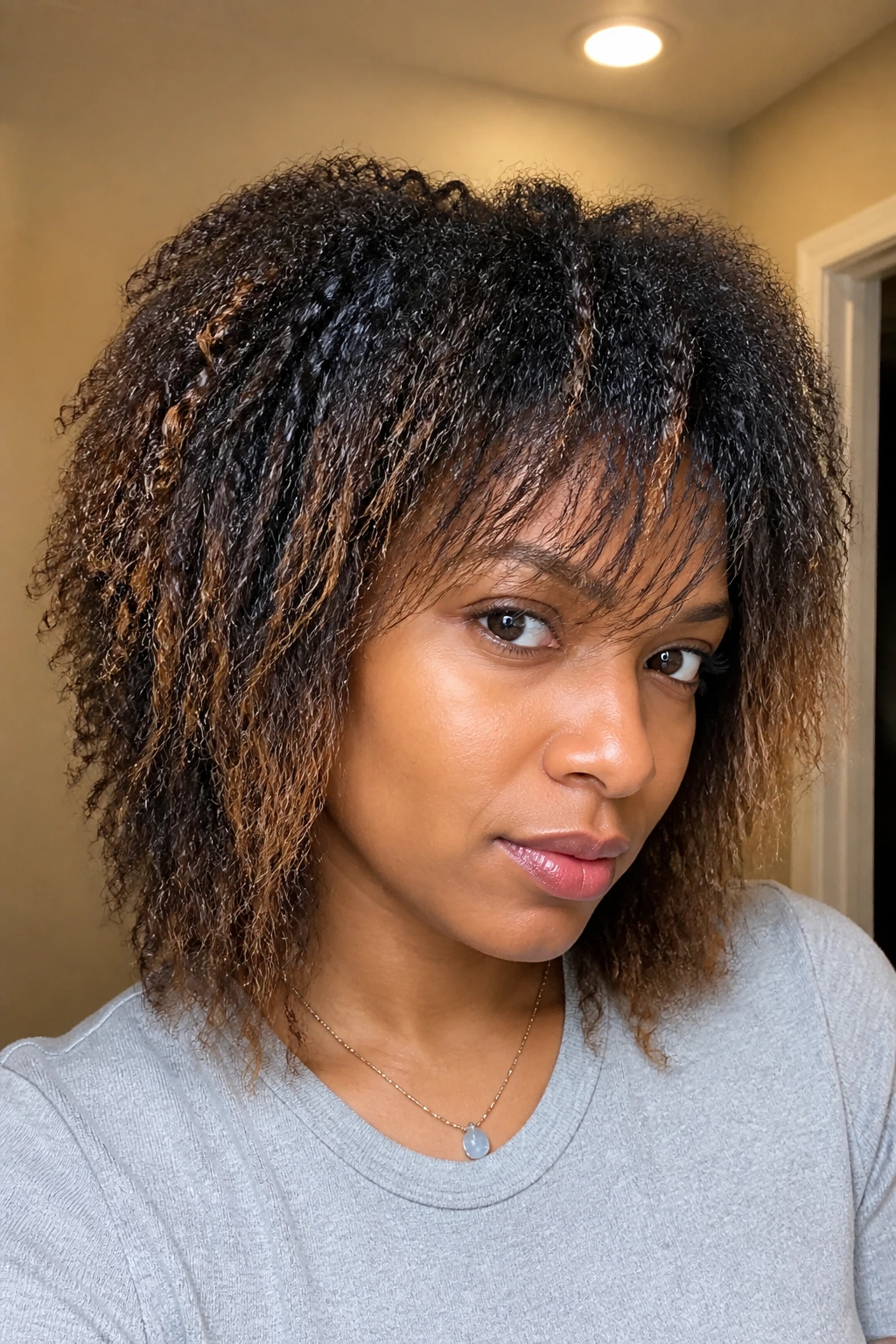
Two textures need patience, and a shag can make the grow-out feel less awkward. The layers smooth the line between the older texture and the new roots, so the hair does not sit in one obvious split.
Ask for low-contrast layers and avoid anything that removes too much length from the straighter ends if you still need coverage. The goal is to keep the cut wearable while your texture settles into itself. Heavy chopping here is a fast route to breakage.
24. Dense 4C Volume Shag
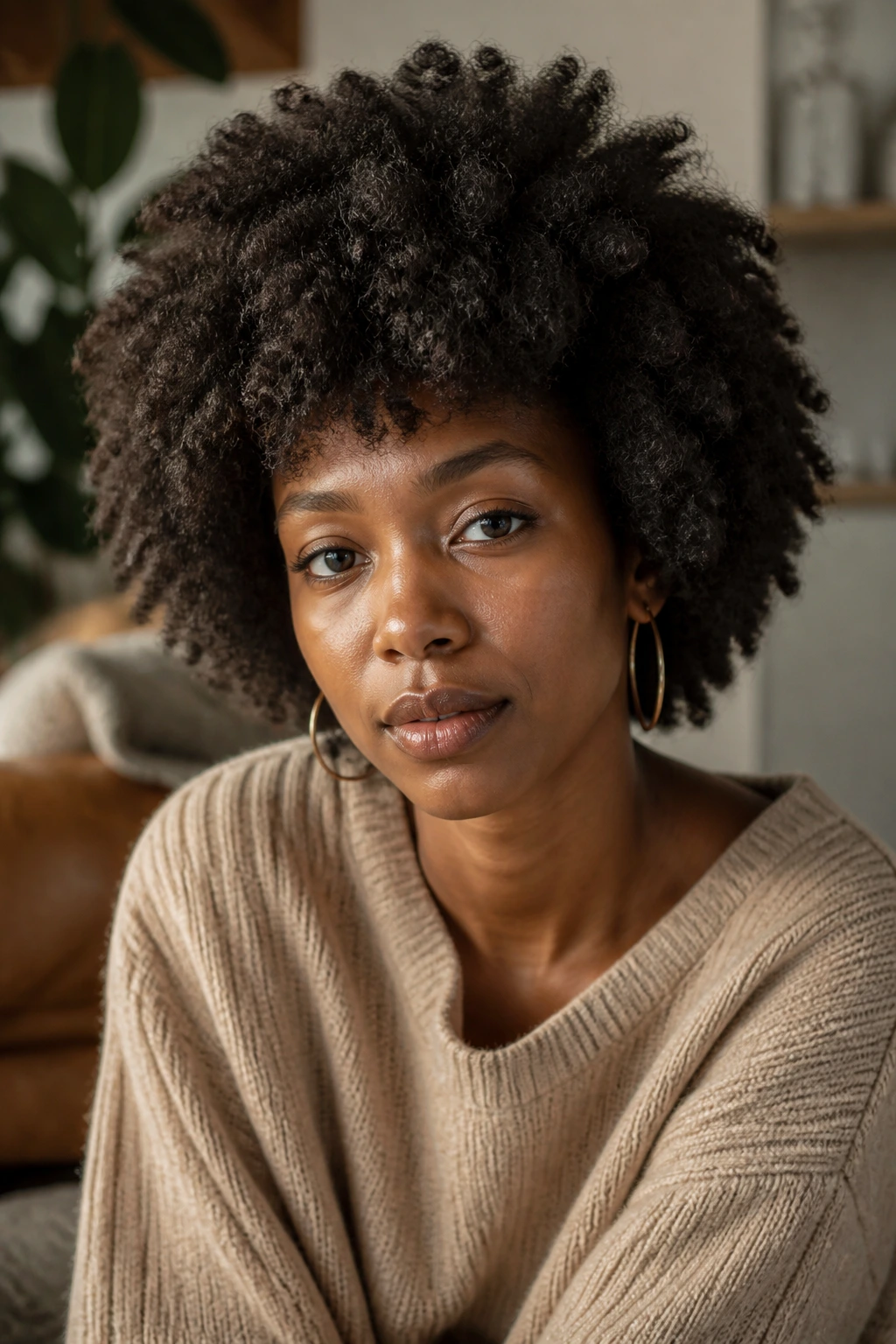
This one is for hair that refuses to act small. Dense 4C hair needs shape, not a fight, and a shag can give it that if the layers are placed with care.
I would lean toward dry cutting or at least cutting with the hair in its usual shrunken state. That makes the shape more honest. The crown can carry some short layers, but the sides need enough length to keep the silhouette from puffing out like a mushroom cap.
25. Fine-Strand Shag
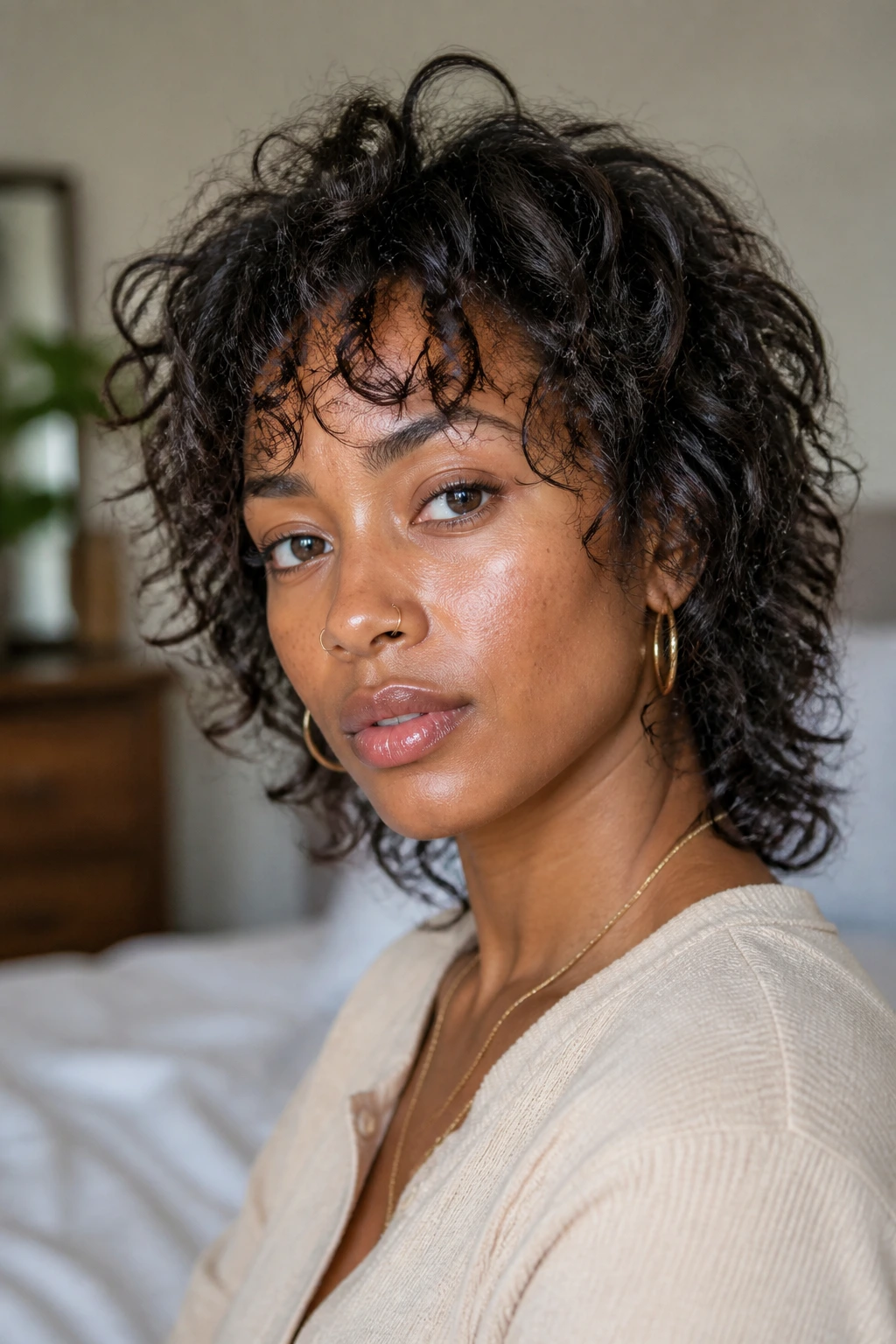
Fine strands can wear a shag, but they need restraint. Too many short layers and the hair starts to look sparse, especially at the ends.
Keep the layers longer and more spaced out. Let the movement come from the curl pattern and the styling, not from overcutting the density. This is one of those times where less really does mean more, even if that phrase gets used to death.
26. Deva-Cut Inspired Shag
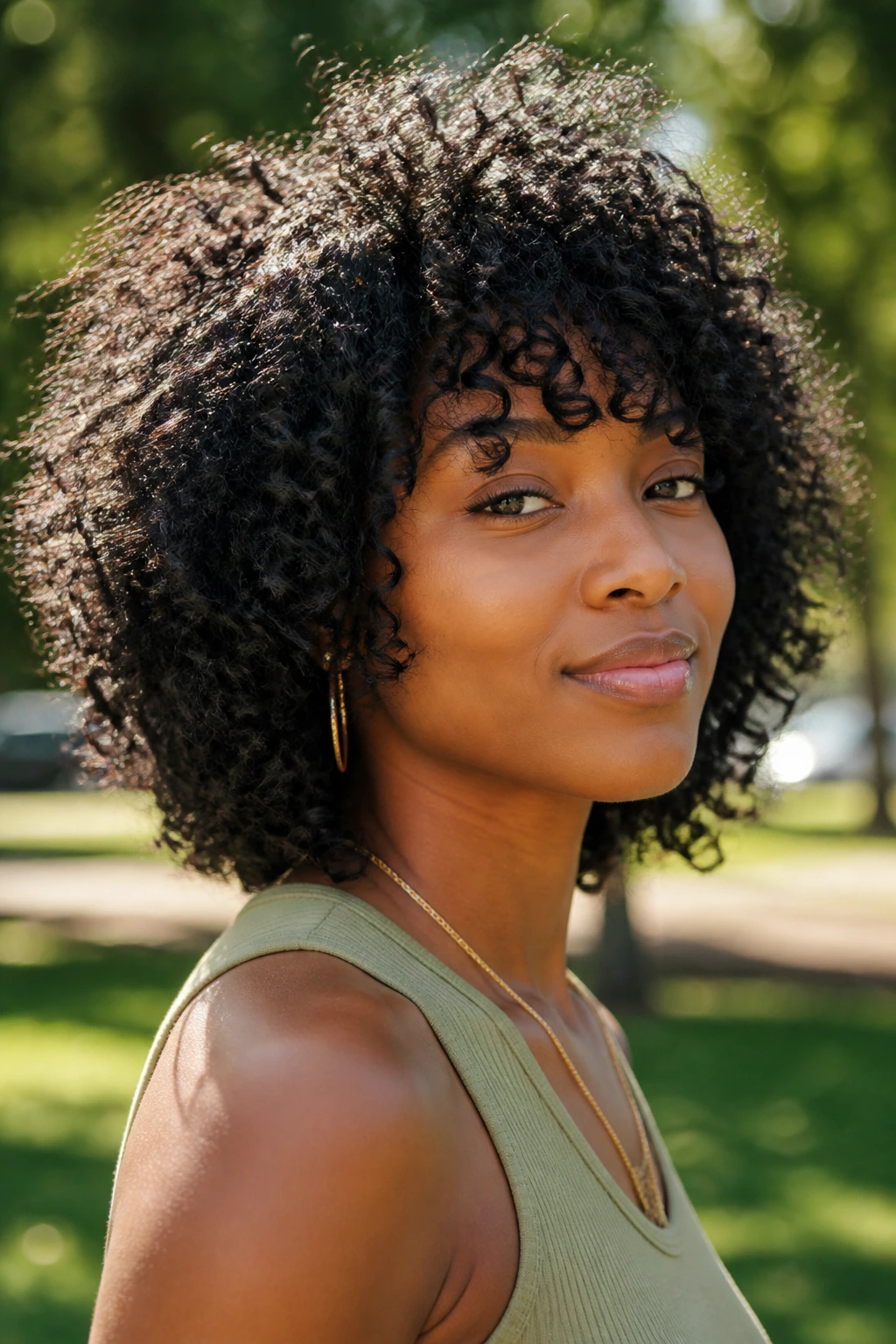
A dry, curl-by-curl cut changes how the layers behave. Each curl is shaped where it lives, so the shag follows the pattern instead of guessing at it.
This method is useful when you have mixed curl types or a lot of shrinkage. The finished shape tends to look more natural because the curls were cut in their own state. It is not magic. It just respects the hair as it actually wears.
27. Micro-Bang Shag
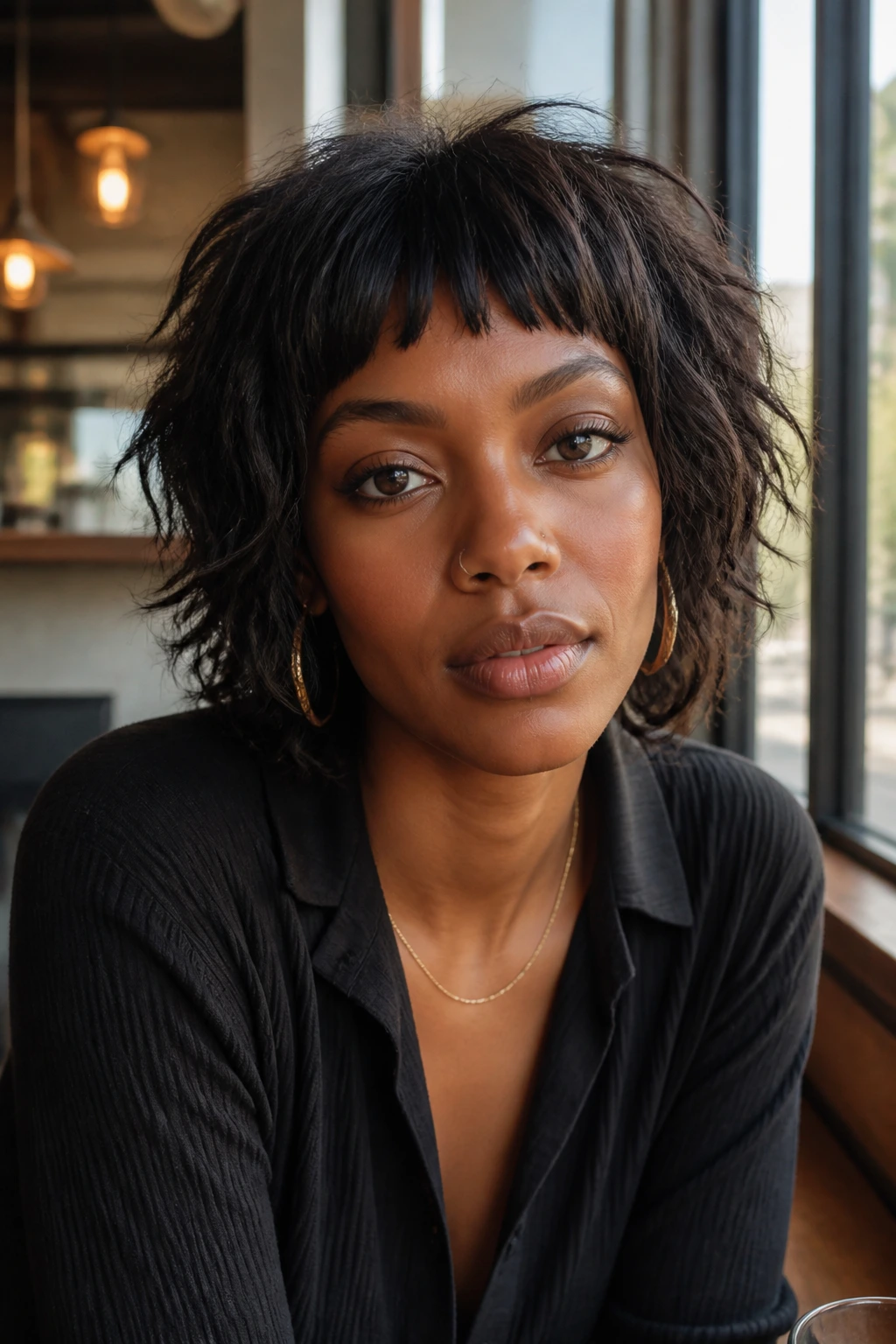
Tiny bangs are bold on Black natural hair, and that boldness is the whole appeal. The fringe sits high, the top layers stay soft, and the face gets a little edge without losing the shag shape.
This cut needs precision. Micro bangs that are even slightly too short can jump upward and stop looking intentional fast. If you want this look, ask for the bangs to be trimmed cautiously, then checked dry before anyone goes shorter.
28. Long Bohemian Shag
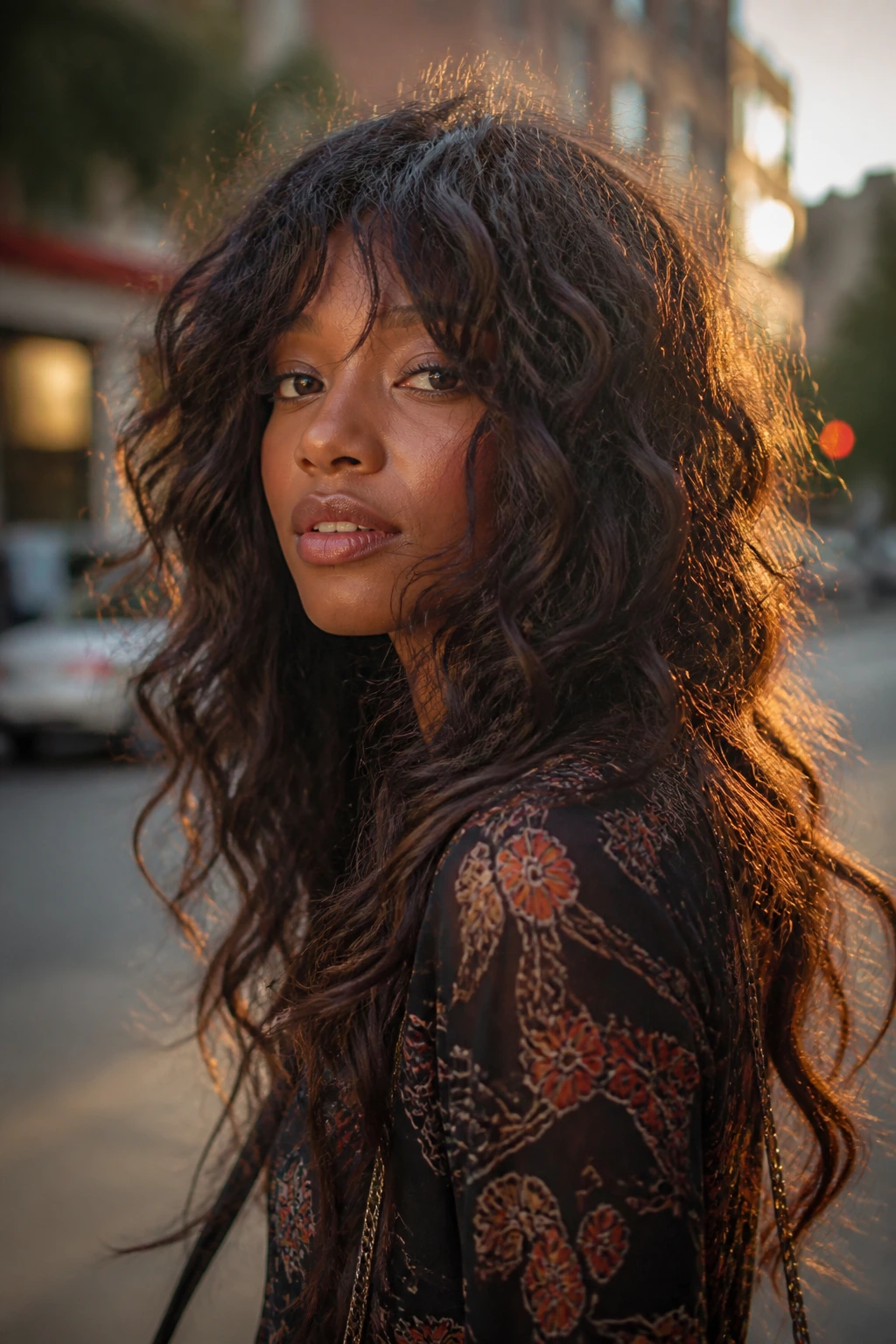
Long layers give this cut a softer, more relaxed feel. It keeps the length people love while still breaking up the heavy curtain effect that long natural hair can develop.
It’s a good match for braid-outs and twist-outs because the layers show movement once the hair is stretched. The cut should feel lived-in, not overly polished. If the ends are too blunt, the bohemian shape loses its easy swing.
29. Cropped Flipped-Layer Shag
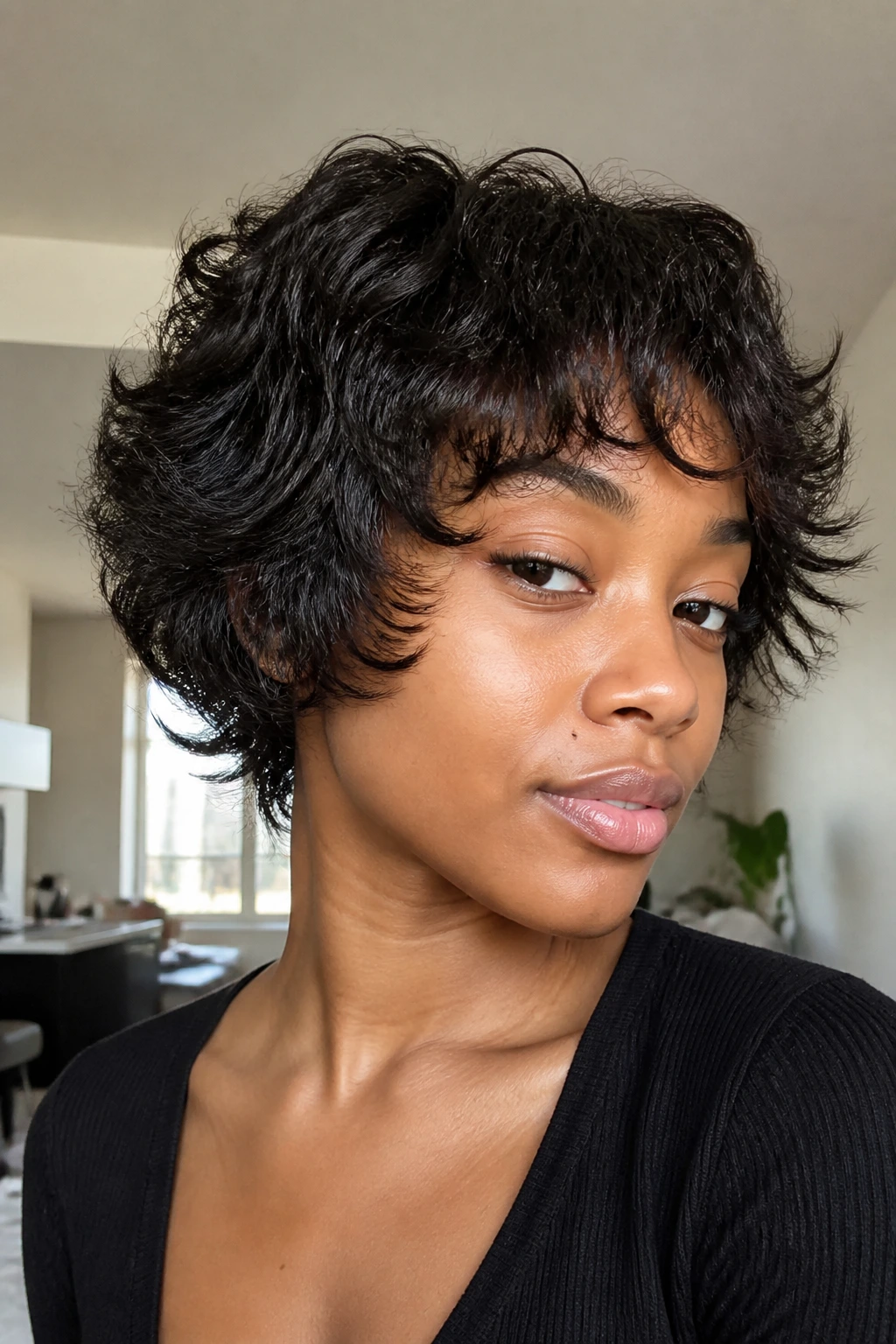
Short hair can still flick and flip. This version uses short, angled layers that turn away from the face and give the cut a playful lift.
The best part is how little styling it asks for. A bit of moisture, a diffuser pass, and a small amount of shaping at the roots is often enough. Keep the sides light, though. Too much width at the temples and the whole cut starts to feel boxy.
30. Tapered Frohawk Shag
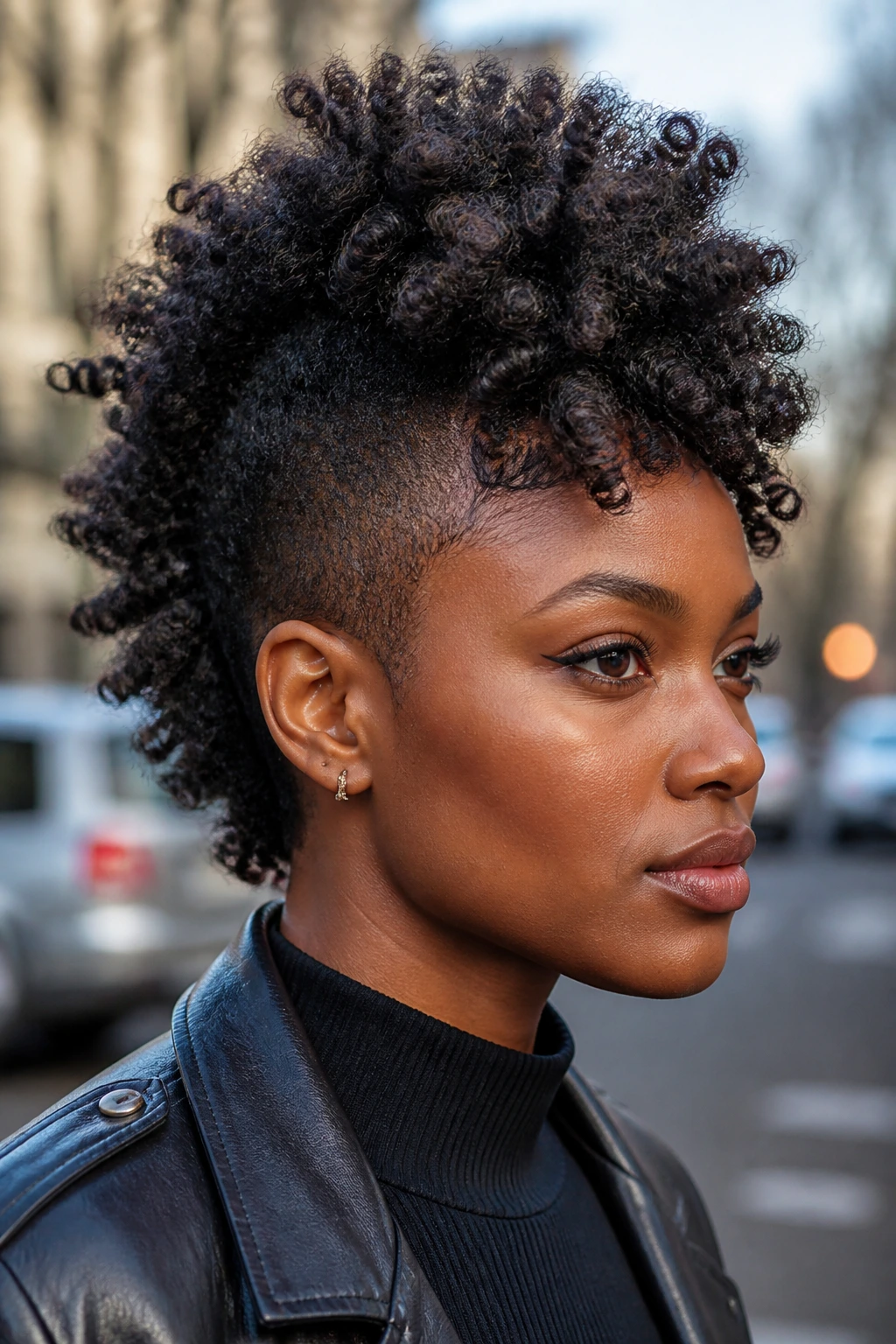
If you like a center strip of volume and shorter sides, this one brings the drama in a controlled way. The shag influence comes from the layered top and the broken shape through the crown.
It works especially well on thick natural hair because the tapered sides clear the ears and jawline while the middle keeps height. The result can look fierce or soft depending on how defined you wear it. Either way, the cut needs clean edges to keep the shape from drifting.
31. One-Side Tuck Shag
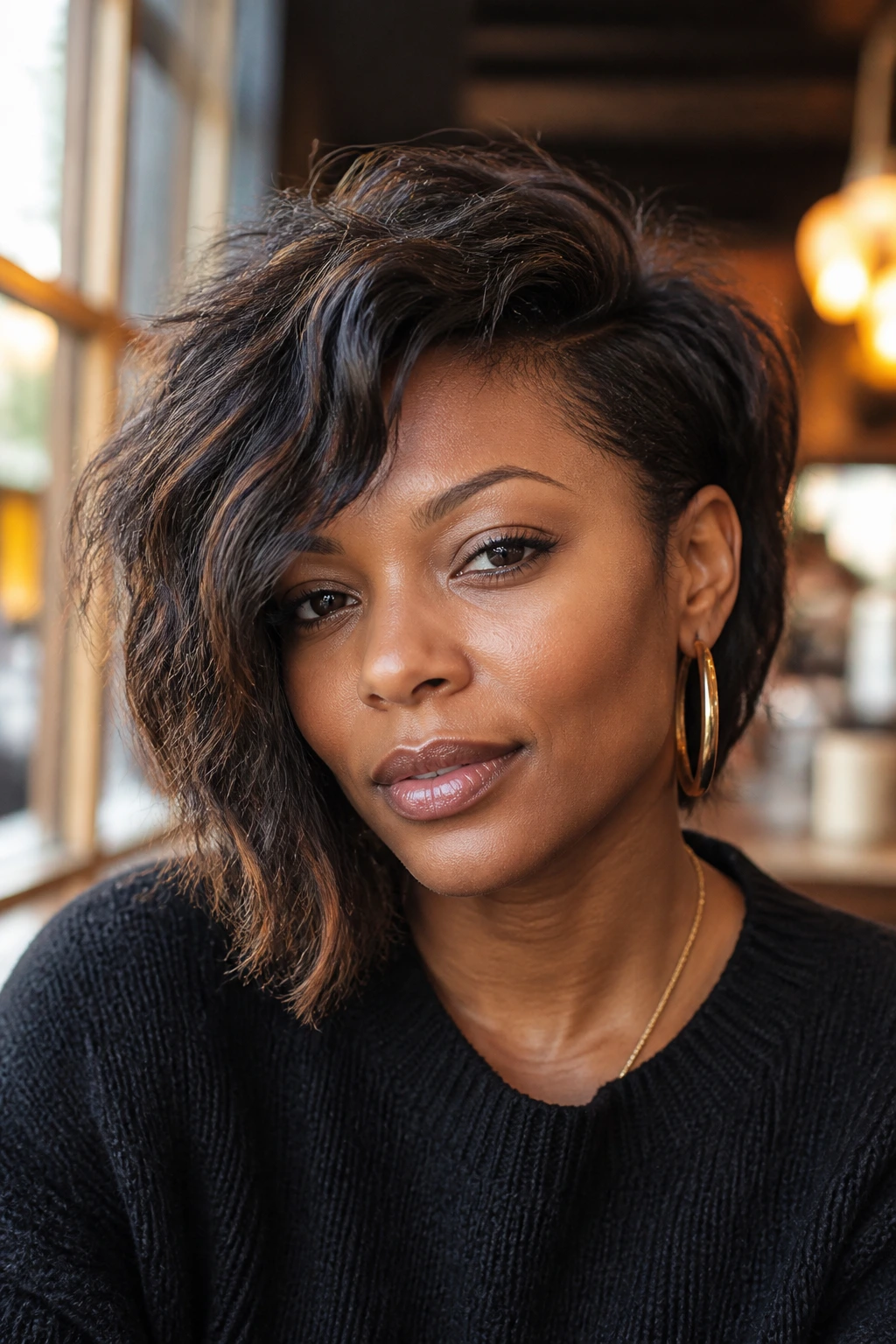
Some haircuts are made for a side tuck. This is one of them. One side stays longer and softer, so you can tuck it behind the ear while the other side falls forward with more presence.
The shape feels relaxed, but it still has a clear structure. I like this for people who wear statement earrings or glasses because the tuck keeps the face open without flattening the style. It’s subtle. That’s why it works.
32. Braid-Out Ready Shag
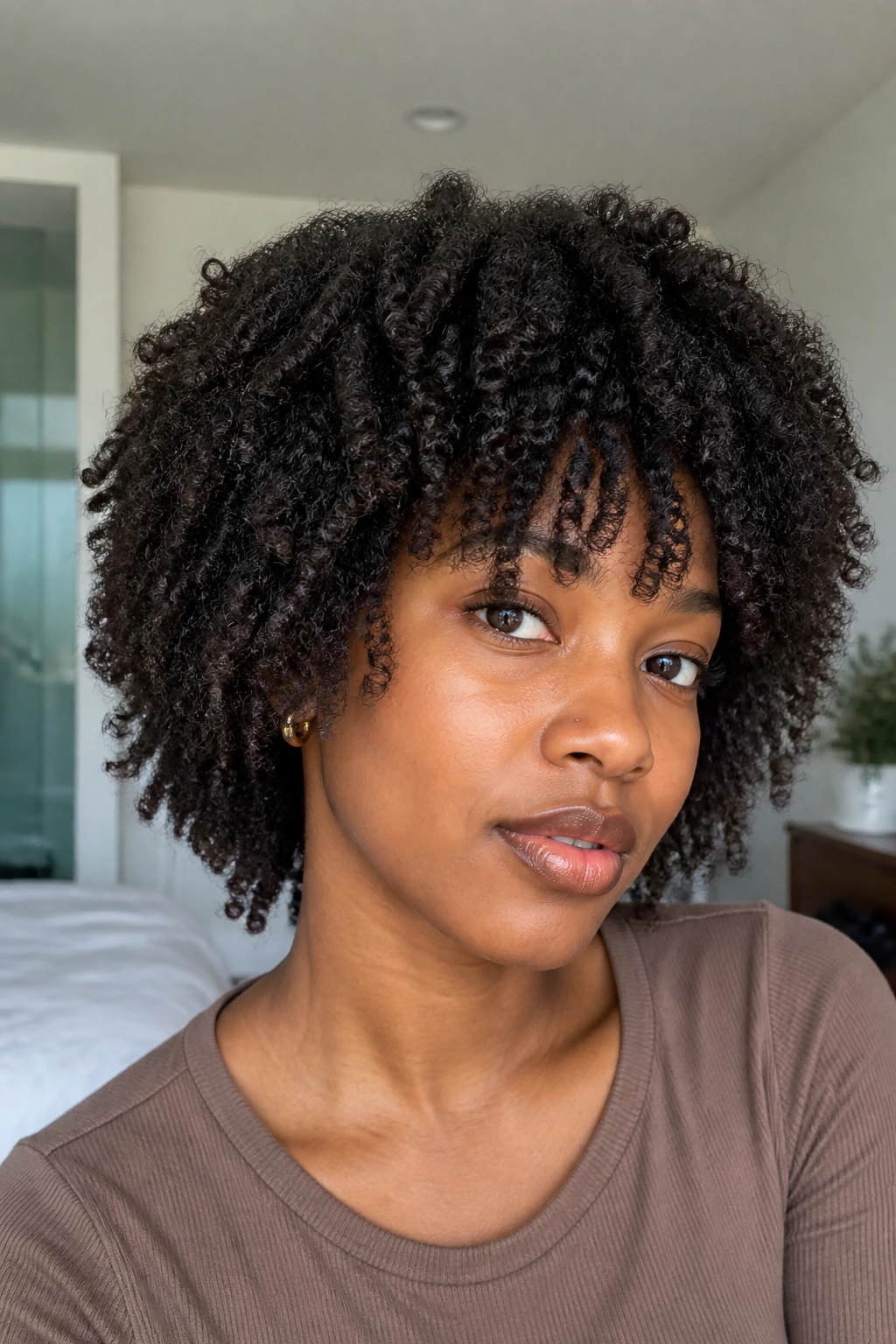
If you switch between stretched styles and loose curls, this cut gives you room to do both. The layers are placed so the hair still has shape after a braid-out, instead of turning into a blocky wall.
Ask for a perimeter that keeps enough length for stretching and internal layers that do not disappear once the hair is set. This is the kind of shag that keeps earning its keep after wash day, and that alone makes it worth a close look.
Why Shag Haircuts Work So Well on Black Natural Hair
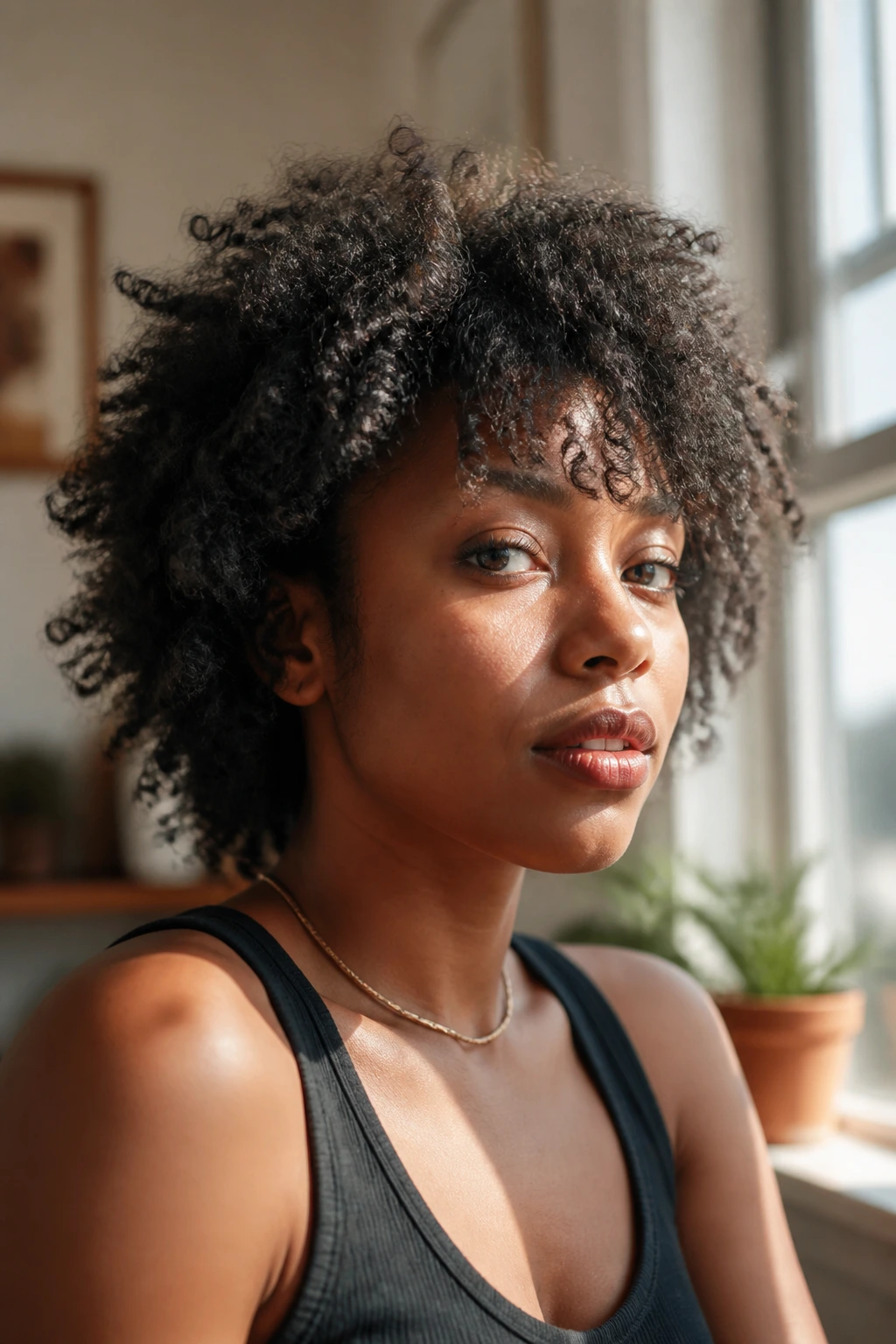
The shag and Black natural hair get along because the cut treats texture as a feature, not a problem to smooth out. Layers can release weight where the hair stacks up, especially around the crown and sides, while leaving enough length in the perimeter to preserve movement. That balance is the whole trick.
Shrinkage is part of the design
Shrinkage is not a side note here. It changes where the layers land, how the fringe sits, and how much height the cut gains once the hair dries. A stylist who cuts natural hair without checking the dry shape is basically guessing, and guessing with shrinkage is expensive.
Density needs a plan
Thick hair can swallow a shape if the inside is not shaped at all. Fine hair can look wispy if the layers are too aggressive. A shag gives both types a path, but the layer spacing has to match the density.
Dry cutting keeps the outline honest
I prefer dry or mostly dry cutting for many natural textures because it shows the real outline. Wet hair lies. It just does. A curl pattern that looks tame in the sink can rebound into a completely different shape, and the scissors need to account for that.
How to Ask for the Right Layers in the Salon Chair
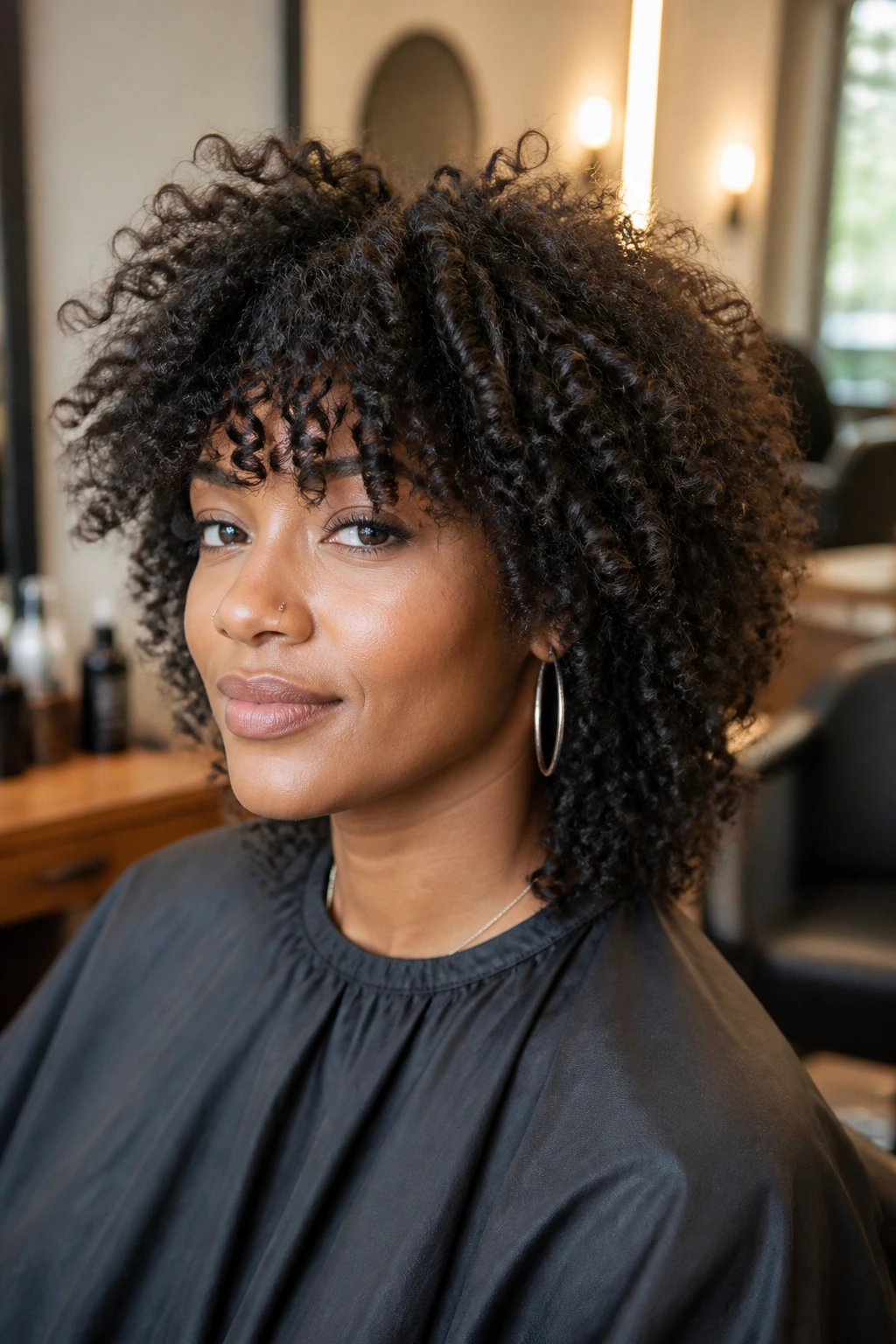
Bring pictures, yes, but bring the right pictures. A photo of a model with loose curls and a blowout does not help much if your hair lives in dense coils. You want images with a similar texture, similar density, and a similar face shape if you can find them.
Say what you want the cut to do, not just what you want it to look like. Tell the stylist if you want more volume at the crown, a softer perimeter, a face-framing fringe, or a longer back. That language gives them something to work with.
A few useful phrases:
- “I want the shape to still make sense when my hair shrinks.”
- “Keep enough length for twist-outs or braid-outs.”
- “Please check the fringe dry before making it shorter.”
- “I want layers, not a bunch of holes in my density.”
- “I wear my hair mostly natural, so cut for that state first.”
If your stylist reaches for a razor, ask why. Sometimes it’s the right tool. Sometimes it’s a fast way to fray the ends on tighter coils. I’d rather hear a clear reason than a casual promise.
Essential Tools for Styling and Maintenance
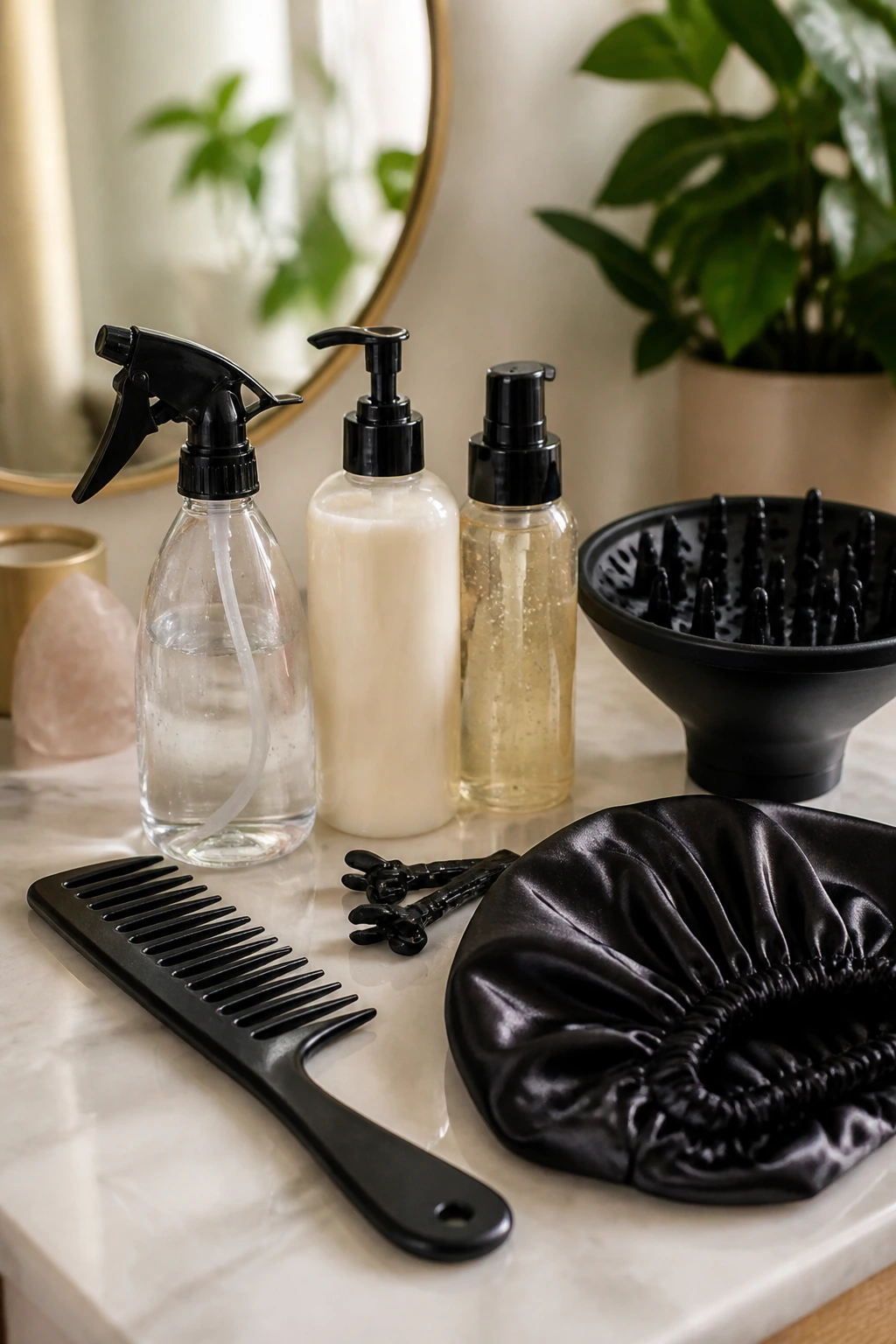
- Wide-tooth comb: Good for detangling after conditioner has softened the hair; do not rip through the crown when it’s dry.
- Spray bottle with water: Useful for refreshing fringe, crown lift, and the front pieces that flatten overnight.
- Leave-in conditioner: Keeps the layers soft so the cut moves instead of puffing into dryness.
- Light gel or foam: Helps a wash-and-go shag hold its shape without weighing down the crown.
- Diffuser attachment: A low-heat diffuser can keep the layers lifted and reduce the time hair spends dripping wet.
- Satin bonnet or scarf: Protects the fringe and crown from overnight friction, which matters a lot on layered cuts.
- Hand mirror: Handy for checking the nape and both sides after a trim or a styling session.
- Small clips: Great for pinning bangs, training a side part, or setting face-framing pieces while they dry.
Tiny Adjustments That Change the Whole Cut
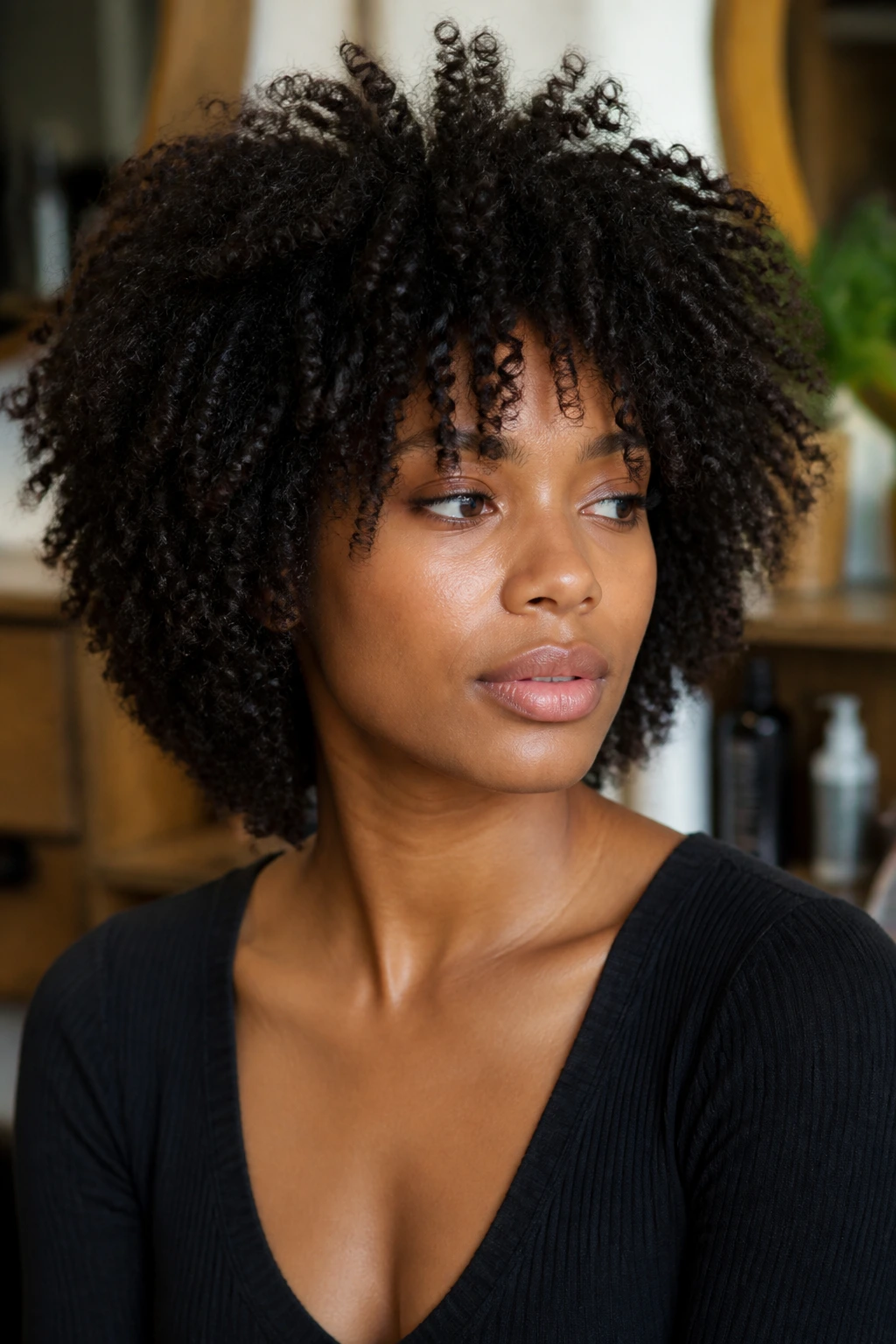
Fringe Length: Keep bangs a little longer than your first instinct. Natural hair often shrinks higher than the mirror suggests, and an extra half-inch can be the difference between soft and awkward.
Crown Control: If your hair is dense, ask for some internal removal at the crown rather than short, choppy pieces everywhere. That keeps the top lifted without turning it into a puffed mushroom.
Perimeter Weight: Long perimeter pieces can anchor the whole shag. If the ends feel too thick, soften them a bit, but do not hollow them out so much that the cut loses its line.
Finish: A curl cream, foam, or light gel changes the silhouette more than people expect. Cream adds softness; foam gives lift; heavier products can sink the shape before the day is over.
Parting Choice: A middle part opens the face and makes curtain bangs more obvious. A side part pushes the shape into something softer and more asymmetrical. Try both before deciding the cut “doesn’t work.”
How to Keep the Shape Between Wash Days
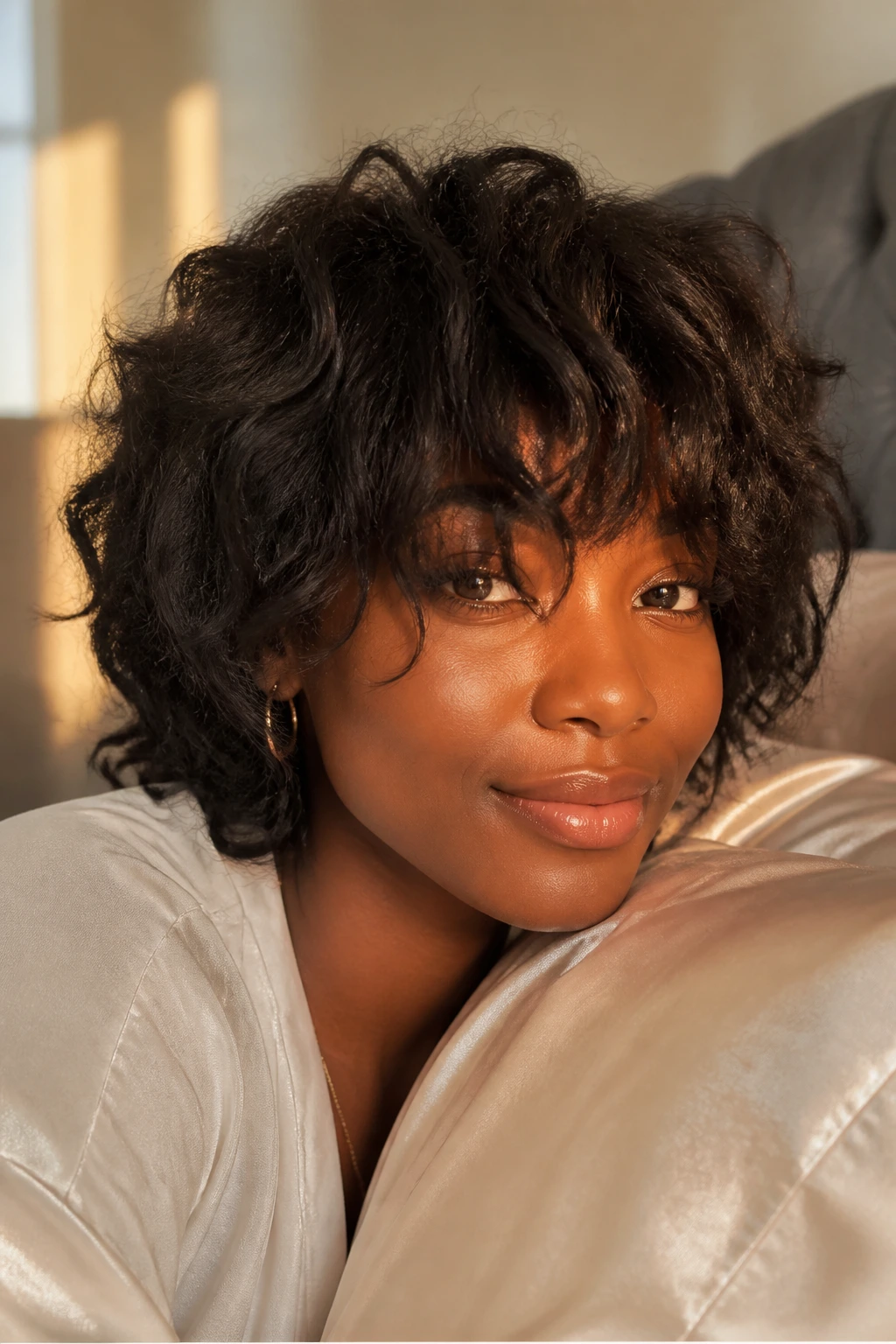
Layered natural hair needs a little more nighttime care than one-length hair. If you sleep on cotton, the crown and fringe will show it first, and the cut can flatten in a way that makes the whole style feel older than it is. Satin or silk is not a luxury here; it’s a shape-saving move.
For refresh days, I like a light mist of water mixed with a little leave-in on the driest pieces, then a quick finger-scrunch at the ends. Do not soak the whole head unless you plan to restyle it from scratch. Too much water makes the layers swell unevenly and can blur the shape you paid for.
A few practical intervals help:
- Nightly: Wear a satin bonnet or scarf, or pineapple the hair if the shape allows it.
- Every 2-3 days: Refresh the crown, bangs, and side pieces with a light mist.
- Every 7-14 days: Wash and restyle, depending on product build-up and your scalp needs.
- Every 8-12 weeks: Trim shorter shags to keep the outline sharp.
- Every 10-14 weeks: Trim longer, softer shags if the shape is still holding.
Diffusing on low heat can help preserve the lift at the roots, but do not hover in one spot forever. A dry scalp and crunchy ends are not a badge of honor.
Common Mistakes That Throw Off the Cut
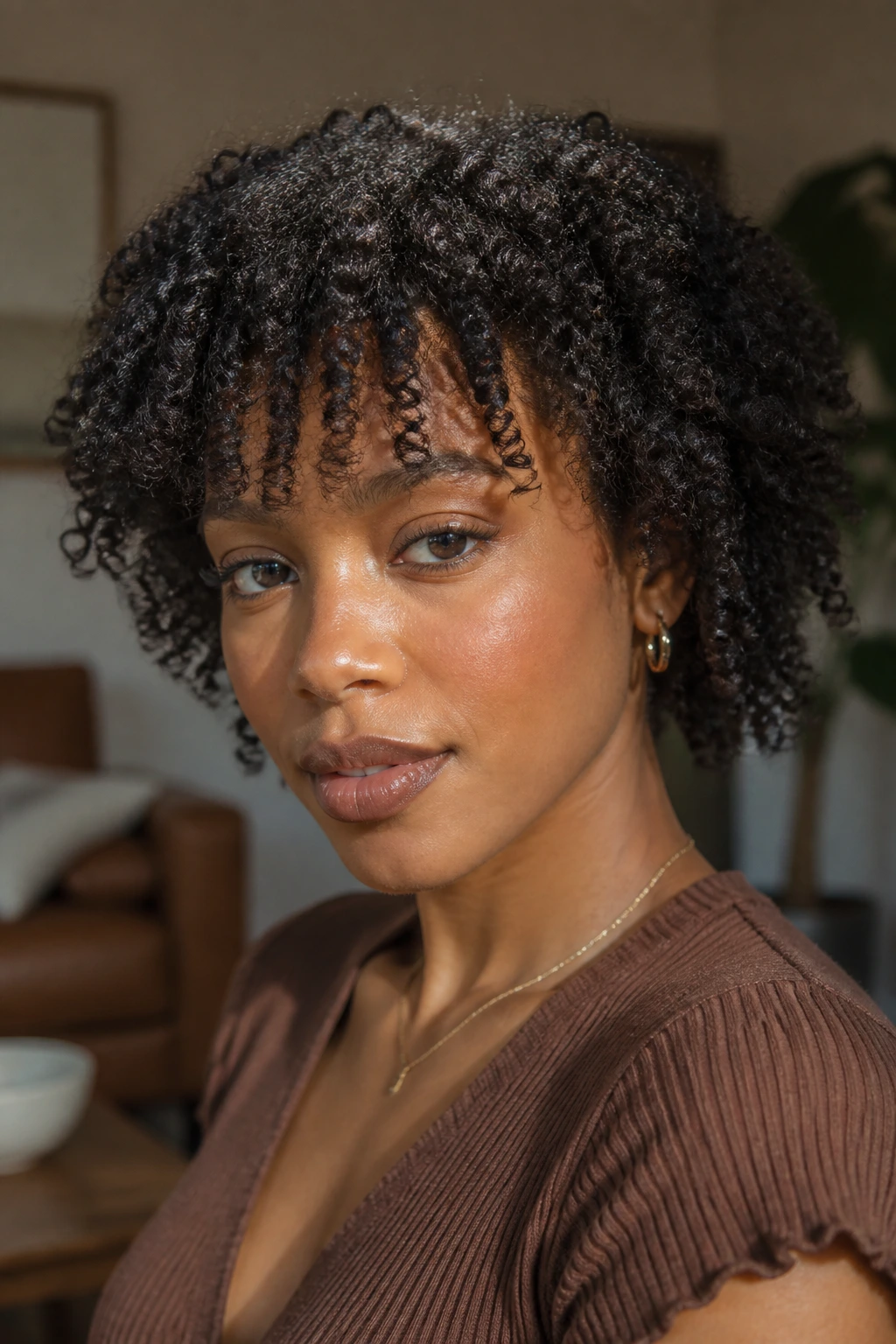
The biggest mistake is judging the cut only while it’s wet. Wet coils sit longer, lie flatter, and often hide the true balance of the layers. The fix is simple: ask for a dry check before the stylist puts the shears away.
Another problem is over-thinning. A shag is supposed to lighten the shape, not leave see-through ends that vanish after three days of wear. If your hair is fine or medium-density, too much slicing can make the cut look hungry instead of airy.
A third mistake is stacking too many short pieces at the crown. That’s how you get a round, puffed top with no direction. Better to keep some height and remove weight more selectively through the inside.
Then there’s the bang issue. Bangs cut too short on shrink-prone curls can jump straight up and sit there like they own the place. Leave a little extra length and trim after the hair has dried in its usual state.
Finally, some people ask for a shag but style it like one-length hair. Heavy creams, stretching everything flat, and brushing the life out of the top all erase the point of the cut. The shag needs a bit of lift, a bit of separation, and a bit of air.
Variations and Adaptations to Try
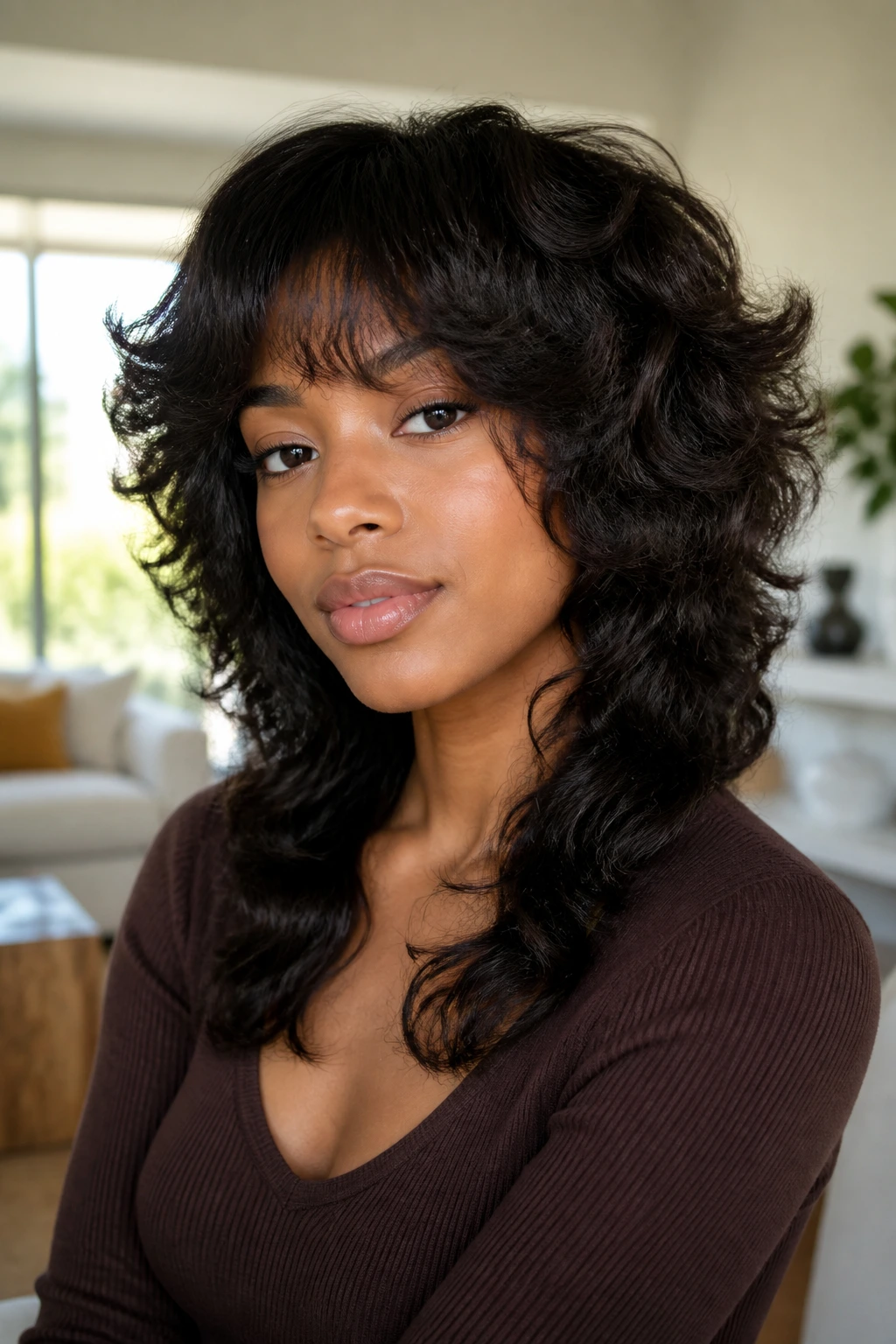
Soft-Length Shag: Keep the layers longer and quieter if you want movement without a dramatic chop. This version is good when you like the idea of a shag but do not want obvious tiering.
Bold Fringe Shag: Push the bangs forward and let them become part of the shape. This is the one to choose if the face frame matters most to you.
Tapered Natural Fro Shag: Shorten the sides and nape while keeping the top and crown fuller. It reads clean, sharp, and easy to manage.
Color-Accent Shag: Add highlights, copper pieces, or a few lighter curls around the front. The layers catch color better than one solid block of hair does.
Transition-Friendly Shag: Keep the front soft and the perimeter long enough to bridge different textures. This is useful when you are growing out relaxed ends or healing from a rough haircut.
Low-Heat Shag: Build the shape around air-drying, foam, and light stretching instead of daily heat. Good haircuts should work without a hot tool doing all the work.
Frequently Asked Questions
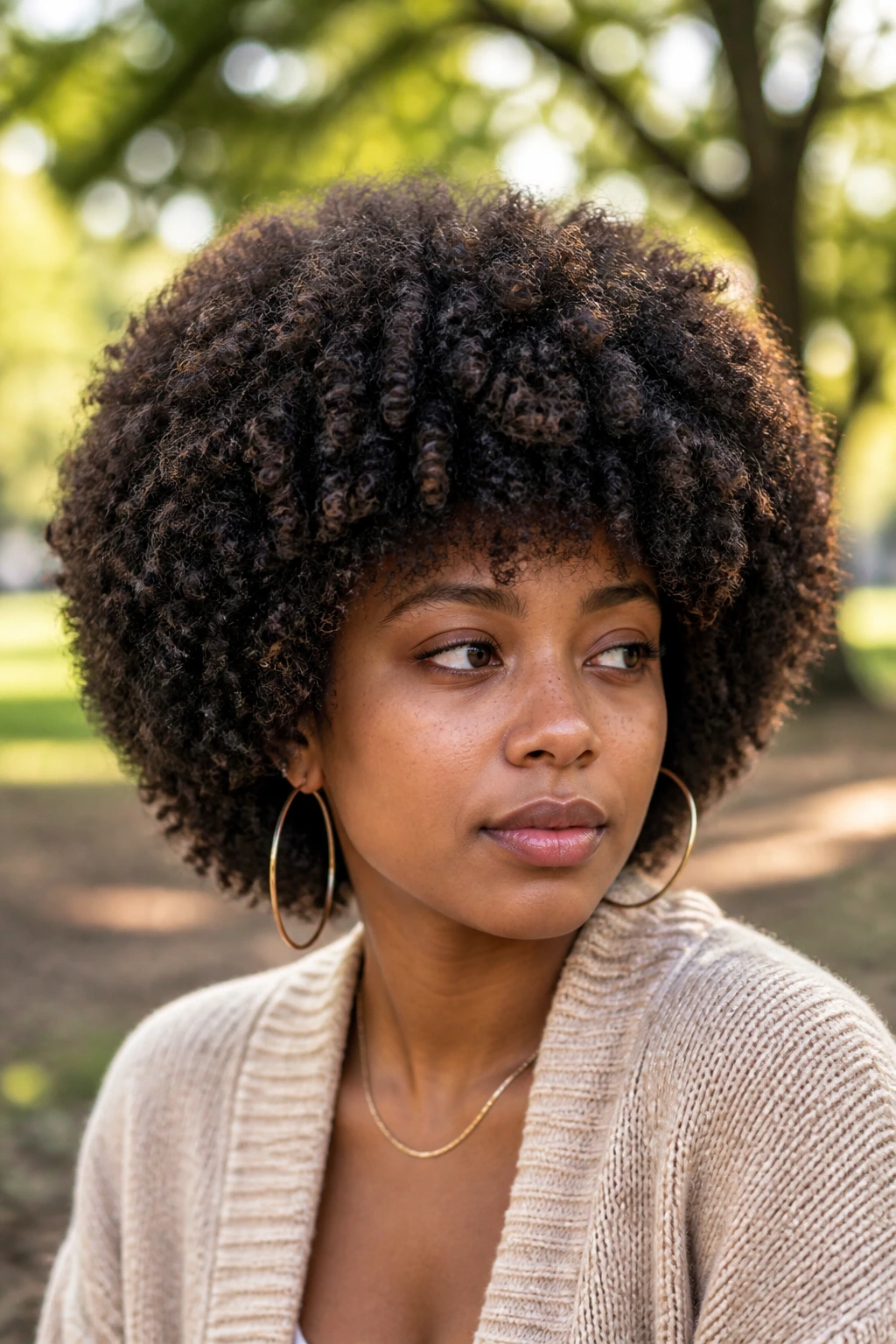
Is a shag haircut good for 4C hair?
Yes, if it’s cut with shrinkage and density in mind. The best 4C shag keeps enough length in the perimeter to preserve shape while using internal layers to stop the crown from ballooning into a triangle.
Should a shag be cut dry or wet on natural hair?
Dry or mostly dry is safer for many textures because it shows the true curl pattern. Wet hair lies and stretches, which can make a stylist cut too much off the fringe or crown.
Will a shag make my hair look thinner?
Not if the layers are placed well. The cut should remove bulk, not density, so if you already have fine strands, ask for longer layers and fewer short chops near the ends.
Can I wear twist-outs or braid-outs with a shag?
Absolutely, and the cut often looks especially good that way. The layered shape gives the stretched style movement, as long as the perimeter still has enough length to hold the pattern.
How often should I trim a shag on natural hair?
Shorter shags usually need a trim every 8-12 weeks to keep the outline crisp. Longer shags can go a little longer, but once the layers stop reading clearly, the shape starts to blur.
What if my bangs shrink too short?
Ask for them to be cut longer and checked dry before any final snip. If they still spring up more than expected, you can pin them, side-part them, or let them blend into the front layers until they grow out a bit.
Can I get a shag during a transition from relaxed to natural hair?
Yes, and it can make the grow-out look less awkward. The trick is keeping the layers soft and not cutting the straighter ends too aggressively, since those pieces still help hold the shape.
Is a razor cut safe on coily hair?
Sometimes, but only with a stylist who knows how your texture behaves. On brittle or highly coiled ends, a razor can rough up the cuticle and leave the shape frizzy, so scissors are often the safer first choice.
A Shape That Keeps Its Character
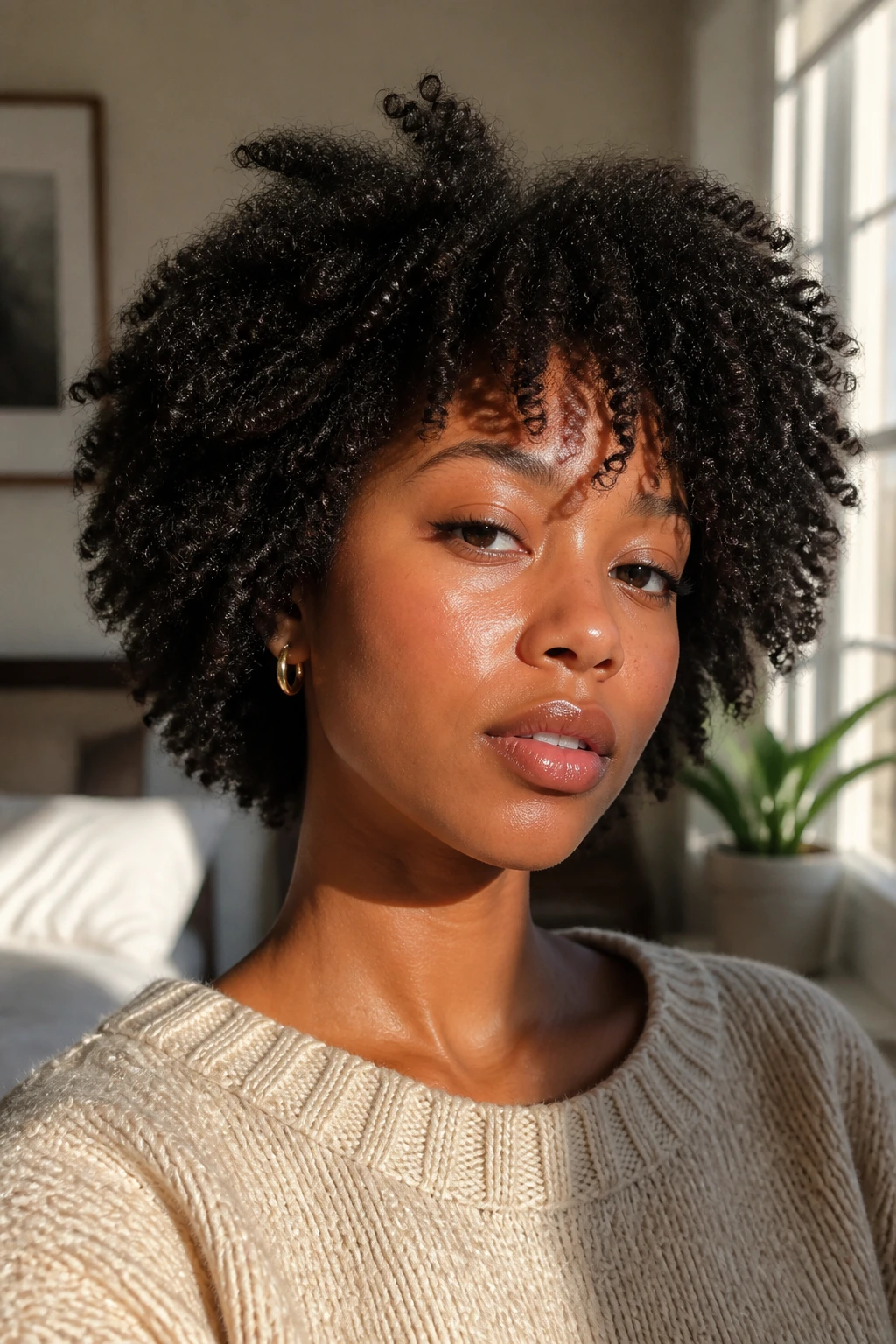
A shag on Black natural hair works when the cut understands what the hair already wants to do. It should lift where the hair naturally swells, soften where bulk gathers, and leave enough length in the right places so the style still looks like itself after shrinkage has had its say.
The smartest versions are not the loudest ones. They are the cuts that still feel balanced after a wash, still frame the face on a sleepy morning, and still look like they were designed for your texture instead of borrowed from someone else’s. Bring a photo, talk about how your hair behaves dry, and make the layers earn their keep.
