



Short curly hair and the wolf shag have a sneaky kind of chemistry. The haircut brings the kind of uneven, lived-in shape that curls already want to make on their own, which is why it often looks better on a bendy texture than on straight hair. Give the crown a little lift, keep the sides from ballooning out, and suddenly the whole head reads sharper, lighter, and more deliberate.
The part that gets missed is balance. A wolf shag on curls is not just “more layers.” It’s a specific kind of layer map: shorter on top, a little longer through the back, and face-framing pieces that let the curl pattern do the talking instead of fighting it. On short hair, that balance matters even more, because one badly placed snip can push the shape into triangle territory fast. No one wants a puffed-out helmet. Not for five minutes. Not for one photo. Not ever.
That’s why these 33 wolf shag haircuts for short curly hair lean in different directions on purpose. Some are soft and rounded. Some are choppier and louder. Some are made for tight coils, some for loose spirals, some for fine curls that need every ounce of lift they can get. The good ones work with shrinkage instead of acting surprised by it, and that makes all the difference.
Why These Wolf Shag Ideas Work on Short Curls
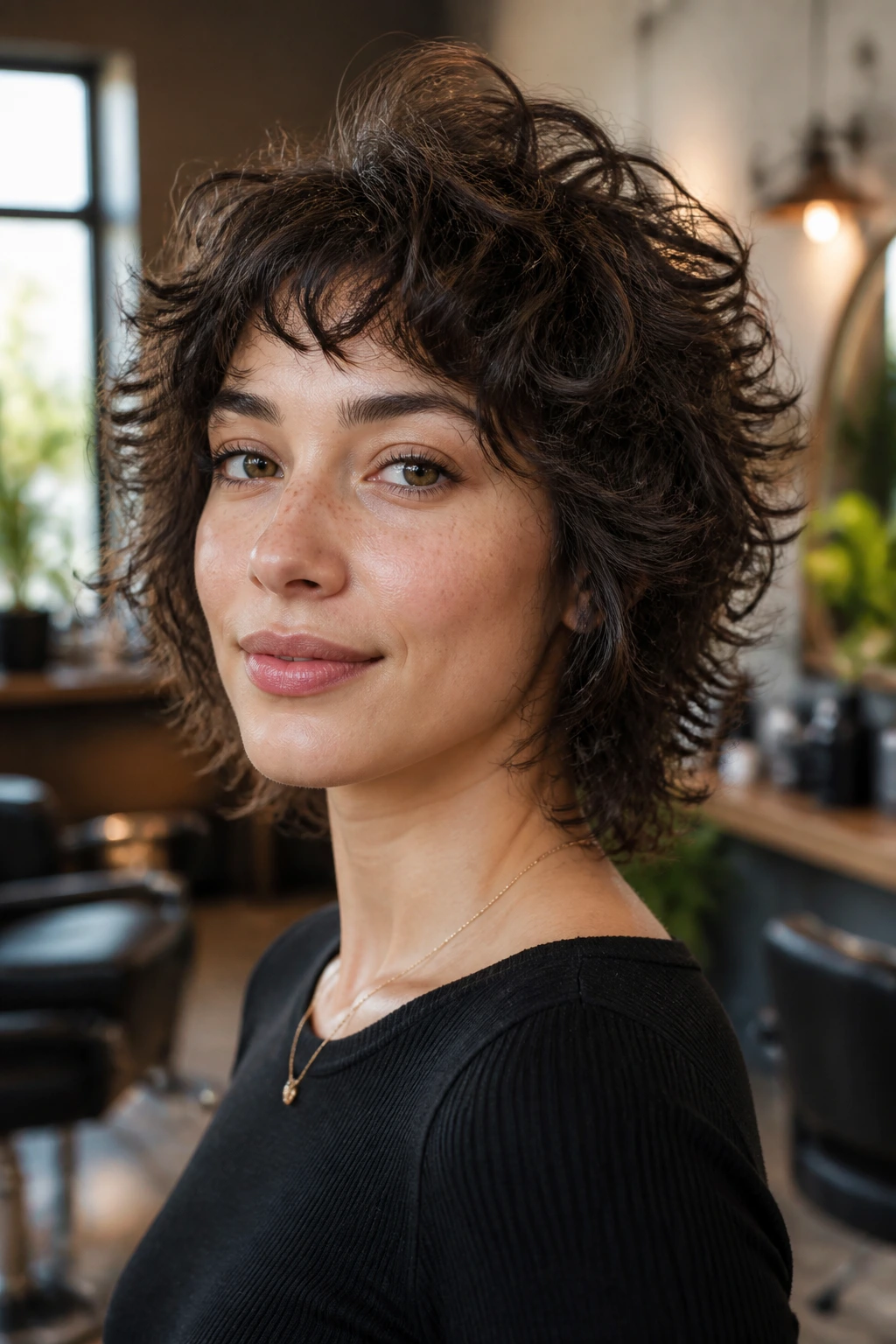
Crown lift changes the whole silhouette. On short curly hair, the crown is where the haircut either wakes up or falls flat, so these shapes keep the top short enough to stand away from the scalp instead of collapsing into the rest of the cut.
Short layers behave better than long ones here. A few well-placed layers around the cheekbones, ears, and nape give the curl pattern room to spring, while heavy, blunt weight tends to pull the whole shape into one lump.
The grow-out is kinder than a precision bob. A wolf shag can look a little shaggy on purpose, which means you do not have to panic the moment the layers lose their sharpness.
Short curls need room at the sides. When the sides get too wide, the haircut starts reading square. These shapes keep the bulk in check without shaving away the personality.
Bangs change the whole mood. A fringe can make a short curly wolf shag feel sweet, punky, retro, or messy in one cut, and that’s before you touch a diffuser.
1. Soft Crown-Lift Wolf Shag
This is the version I’d hand to someone who wants movement without the haircut shouting at the room. The crown sits a little shorter than the sides, which gives the curls enough room to rise while the ends stay soft instead of jagged. It’s especially good if your hair likes to puff at the temples but collapses on top.
Ask for dry-cut shaping if your curl pattern is uneven, with the shortest layers sitting around 2 to 3 inches through the crown and the longest pieces brushing the jawline. That keeps the silhouette from turning boxy. A light mousse at the roots and a diffuser on low heat are enough to keep the top from sinking by lunch.
2. Jawline Curl Wolf Bob
A jawline wolf bob is cleaner than a full shag, but it still keeps that little bit of bite at the ends. The shape is sharpest when the longest curls sit right at the jaw, because that gives the face a frame without making the cut feel heavy. It’s a smart choice for people who want the wolf effect without the mullet echo in the back.
If your curls are 2C to 3A, this one holds its outline well with a side part and a dime-sized curl cream. If they’re tighter, ask the stylist not to over-thin the perimeter. That’s the mistake that turns a tidy bob into frizz soup.
3. Tapered Nape Wolf Mullet
The nape is the whole point here. Keep the back a little longer, taper it close to the neck, and let the top and sides stay choppier so the haircut has that classic wolf-cut swagger without going full drama. On short curly hair, this shape gives you movement from every angle.
Best for curl patterns that shrink a lot
The tapered nape version works well when the hair springs upward after drying, because the extra length in back prevents the cut from ending up too short. It also makes thick curls feel less bulky around the collar.
- Ask for the nape to sit snug, not shaved.
- Keep the crown layers soft and airy.
- Skip heavy razor texturizing if your curls frizz easily.
A diffuser and a touch of gel at the back keep the nape from fluffing out like a triangle.
4. Rounded Halo Wolf Shag
This one has a softer outline than the sharper wolf cuts, which makes it a favorite for people who want texture without a jagged edge. The curls form a halo around the head, with the shortest pieces lifted near the crown and the longest pieces curving around the jaw. It reads playful, not messy.
The trick is keeping the layers rounded, not chopped into straight lines. A good stylist will cut this with your curl pattern dry, then refine the shape so the sides don’t stick out like little wings. If you like wearing earrings, this is a lovely cut; it leaves enough open space around the face to show them off.
5. Baby-Bang Wolf Crop
Tiny bangs change the energy fast. A baby-bang wolf crop feels a little rebellious, a little cheeky, and much shorter than most people expect when they hear “shag.” The top and sides stay compact, while the fringe lands well above the brows so the eyes stay open.
What to ask for: keep the fringe blunt enough to show, but not so dense that it becomes a shelf when the curls dry. On wavy curls, the effect is crisp. On tighter curls, the bangs will spring up more than the rest of the cut, so leave them a touch longer than you think you need.
This is one of those cuts that looks best with a bit of texture spray and no overthinking.
6. Side-Swept Curl Wolf
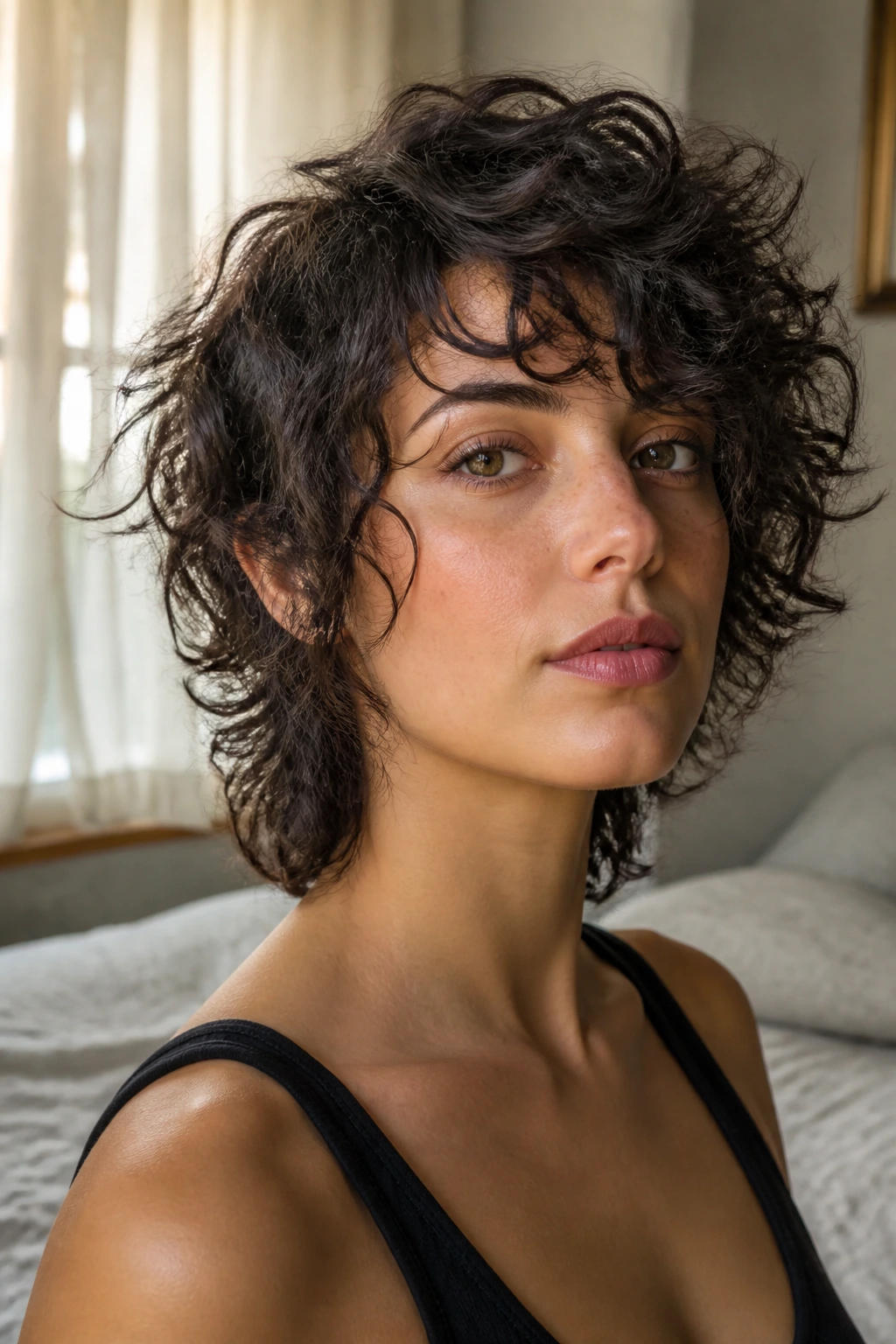
A side-swept wolf cut is the easier cousin of the full fringe version. The front pieces are left longer on one side, then blended into short crown layers so the haircut has a diagonal line across the face. That diagonal does a nice job of softening a strong jaw or balancing a broader forehead.
If your hair likes to separate into obvious curl clumps, this cut can look especially pretty when the side-swept section is finger-coiled once while damp. Not every curl has to behave the same way. That unevenness is half the charm.
7. Cheekbone-Frame Wolf Layers

This cut lives and dies by the face frame. The shortest front layers sit around the cheekbone, which pulls the eye upward and makes the rest of the hair feel lighter. It’s a good choice if your curls get dense around the cheeks and you want the shape to breathe a little.
What makes it work
The front pieces should land where the cheekbones actually sit on your face, not where a generic chart says they should. That tiny difference changes everything. If the curls are loose, the cut looks airy; if the curls are tight, it turns bouncy and sculpted.
A little cream at the front and a quick twist with your fingers while drying helps those pieces stay visible instead of disappearing into the rest of the cut.
8. Piecey Razor Wolf Shag

This one has attitude. The ends are kept chipped and piecey, which gives the haircut a rougher finish than the soft rounded versions. It works well for short curly hair that already has some texture and doesn’t need much help looking lived-in.
Be careful with the razor, though. Too much of it and the hair can puff outward at the ends, especially if your curls are dry or porous. The better version keeps the internal layers light and leaves the perimeter with enough weight to hold its shape. A little gel cast makes the piecey ends look intentional instead of frayed.
9. Stacked-Back Wolf Bob
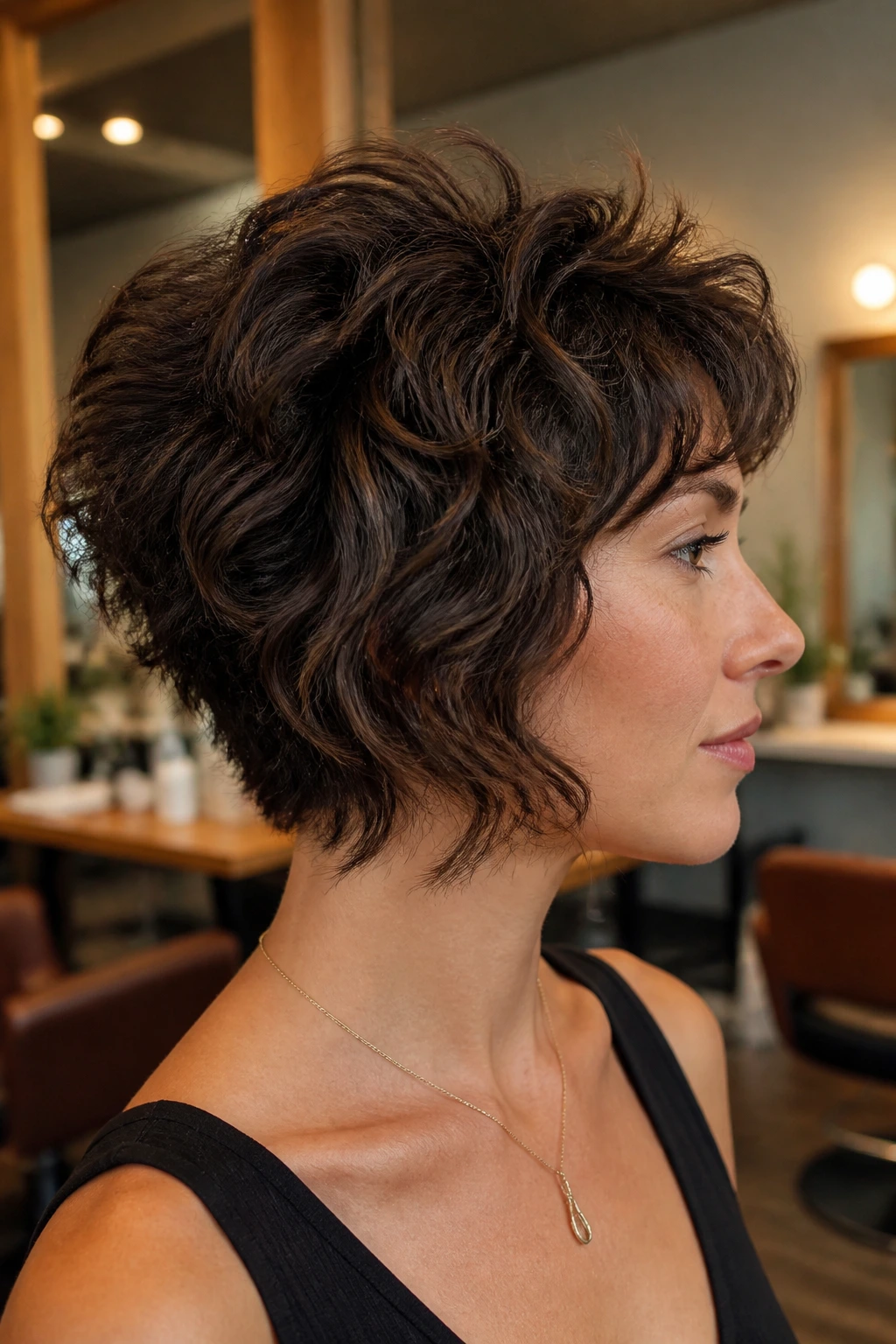
Think of this as a wolf shag with a stronger backbone. The back is stacked just enough to lift the crown and create a rounder profile, while the front stays a little softer and shorter around the chin. It’s tidy from the side and slightly wild from the top.
This cut is useful if your hair tends to lie flat in the back. The stacked shape gives the curls a place to sit, which keeps the silhouette from looking heavy against the neck. It’s one of the most flattering options for people who like short hair but hate a flat crown.
10. Fluffy Mini Wolf Mullet
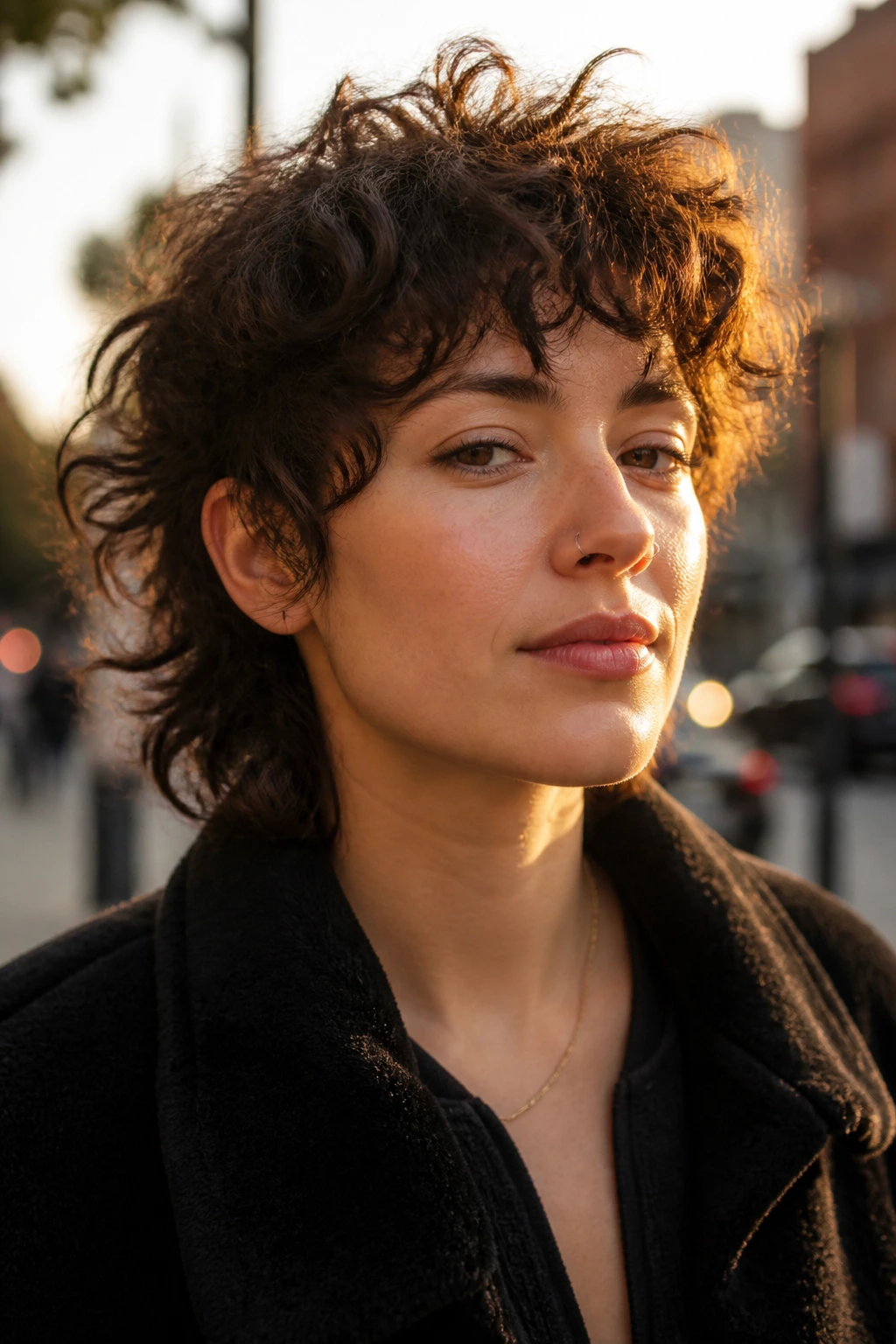
Fluff is the whole point. A mini wolf mullet on short curls has more personality than polish, and that’s exactly why it works. The back stays a touch longer, the top gets a bit of lift, and the sides are shaped so the whole cut feels airy instead of blocky.
It’s a strong choice for thick curls that want to expand rather than lie down. If you ask for too much compression around the sides, the shape loses its looseness. Leave room for the curls to move. They’ll repay you by looking fuller with almost no effort.
11. Grown-Out Pixie Wolf
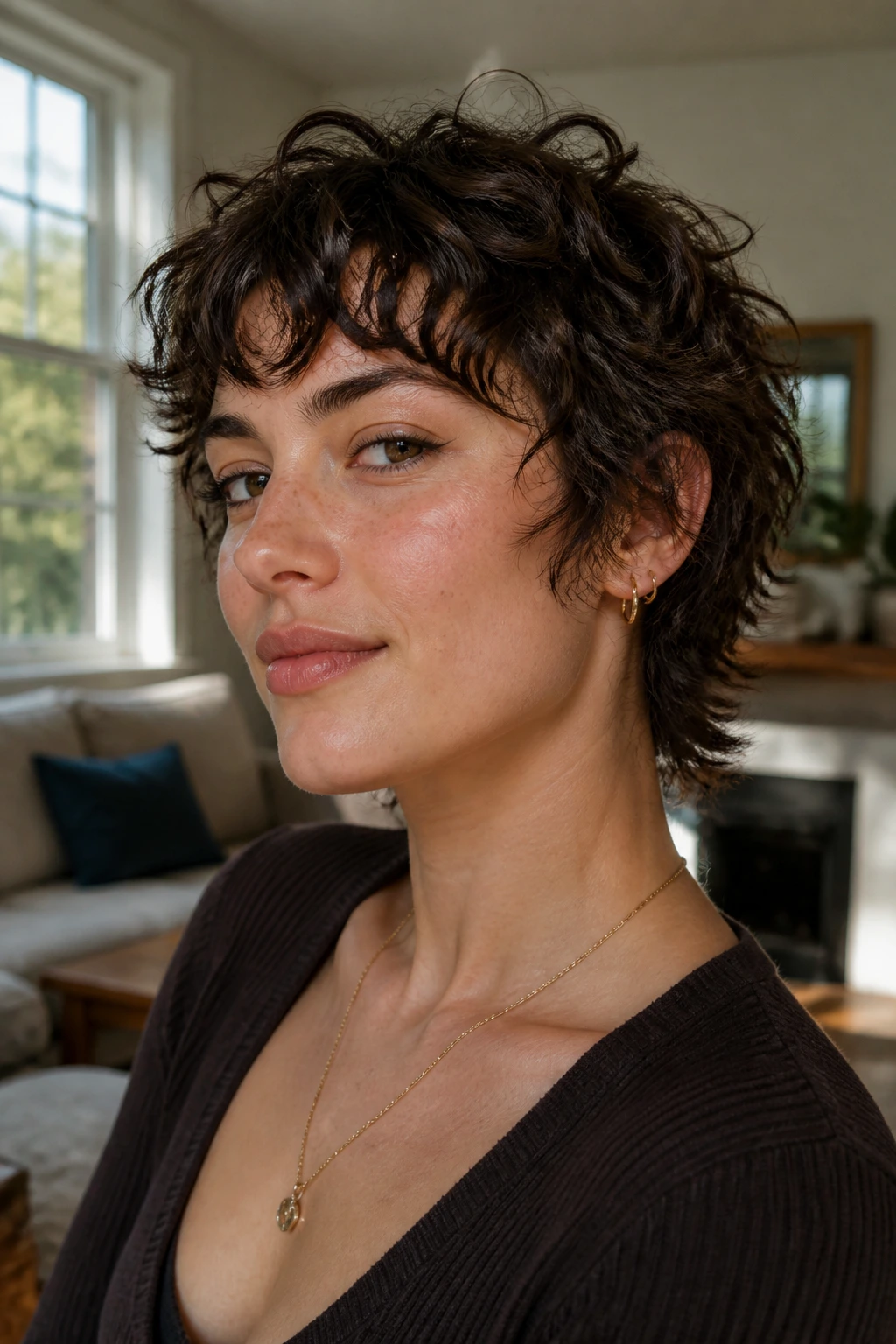
This is for anyone who likes a pixie but wants a little more texture and less neatness. The top stays cropped, the sides are soft, and the back has enough length to keep the haircut from reading as a classic pixie. On curly hair, that slight extra length becomes the difference between cute and severely round.
A grown-out pixie wolf needs a stylist who understands curl shrinkage. If the layers are cut too high on damp hair, the style can jump up shorter than planned. I’d leave a little more length in the front than you think you need, then let the curls decide how much face framing they want.
12. Chin-Hugging Wolf Shag
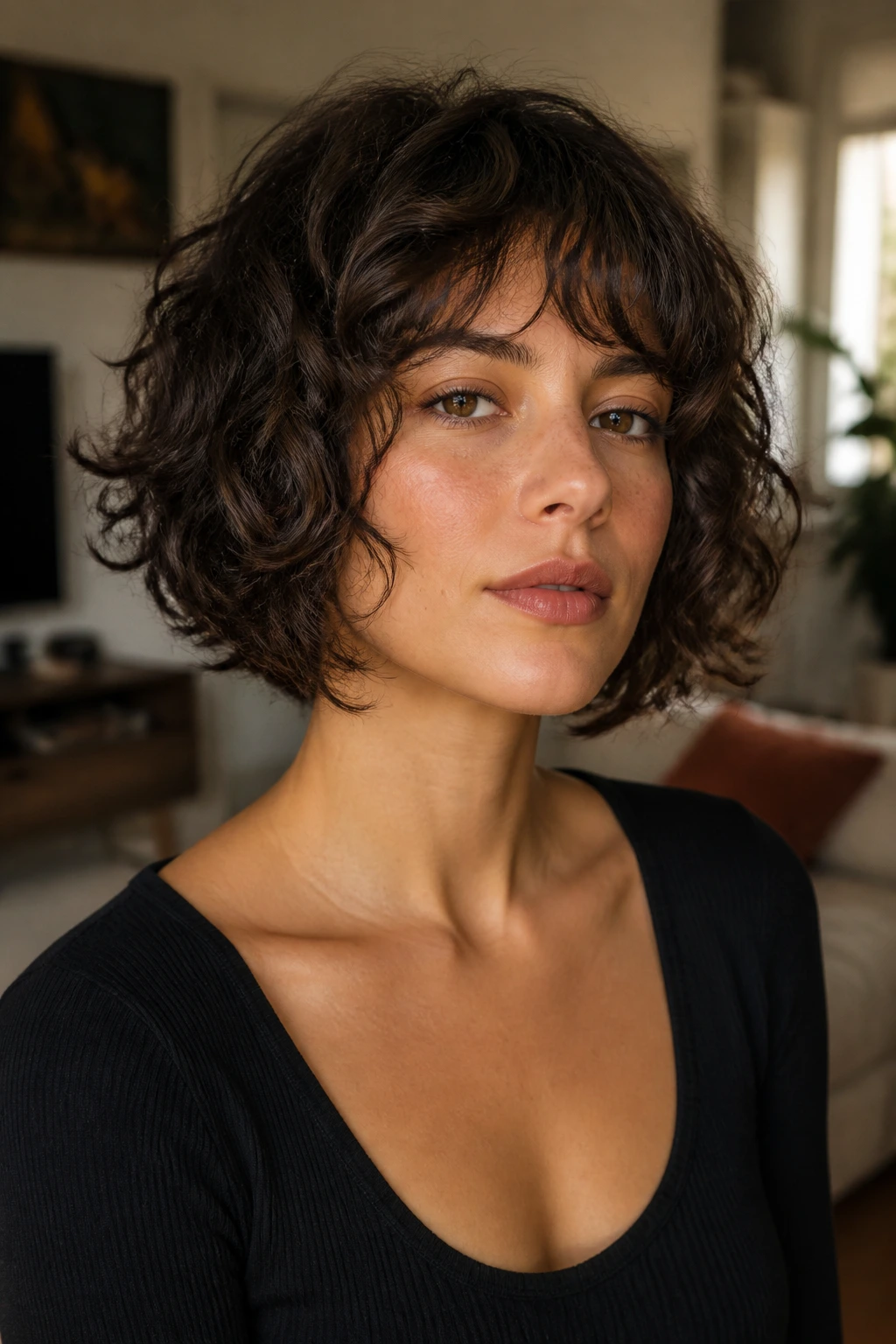
A chin-hugging shape gives the curls a clear target. The longest pieces sit close to the jaw or just under it, which keeps the haircut compact and lets the upper layers do the work. It’s a nice middle ground between a bob and a full shag.
If your face is narrow, this length can add width in a useful way. If your face is broader, ask for more break-up around the cheeks so the cut doesn’t sit like a helmet. A small amount of mousse at the roots keeps the crown from drooping into the face frame.
13. Heavy Fringe Wolf Shag

Heavy bangs make a wolf shag feel richer and moodier. The fringe sits fuller across the forehead, with the layers below it kept choppy enough to prevent the front from becoming one flat wall of hair. On curly textures, this can look gorgeous if the bangs are cut with shrinkage in mind.
The risk is weight. Too much density in the fringe can make the haircut feel top-heavy, especially when the hair dries and the curls lift. The fix is simple: keep the fringe full, but not dense, and let the inner layers take some of the bulk away.
14. Asymmetrical Wolf Cut
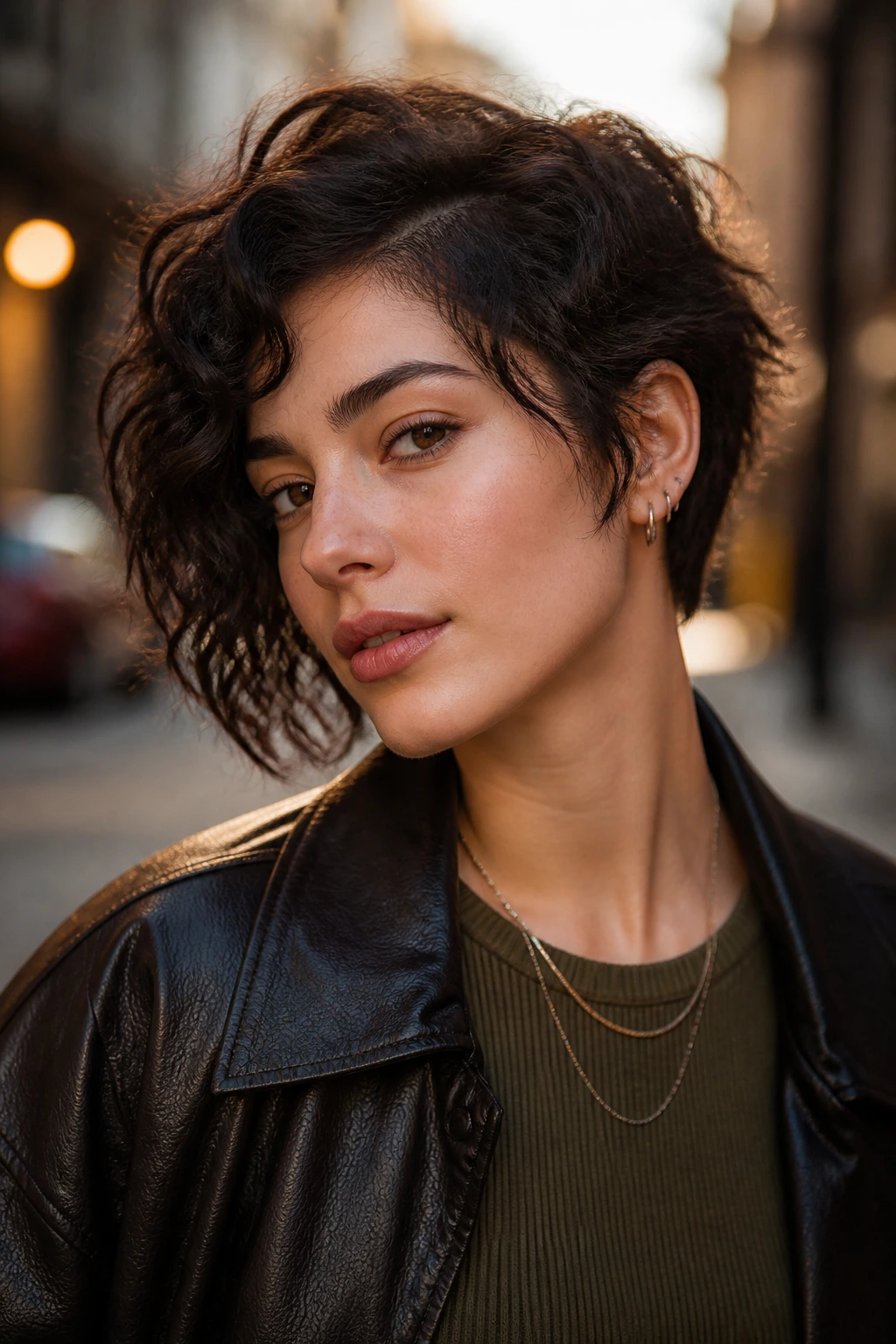
One side longer than the other changes the whole read of the haircut. It gives the wolf shag a sharper, more editorial edge, and short curls are a surprisingly good fit because the texture keeps the asymmetry from looking too severe. It feels modern without trying too hard.
Who this suits
- People who like a side part that stays put.
- Curls with enough spring to show the length difference.
- Anyone whose face shape benefits from a little diagonal movement.
Keep the shorter side grazing the cheekbone and the longer side around the jawline. If the difference is too dramatic, the shape can start to fight your natural curl pattern instead of working with it.
15. Spiral-Defined Wolf Shag
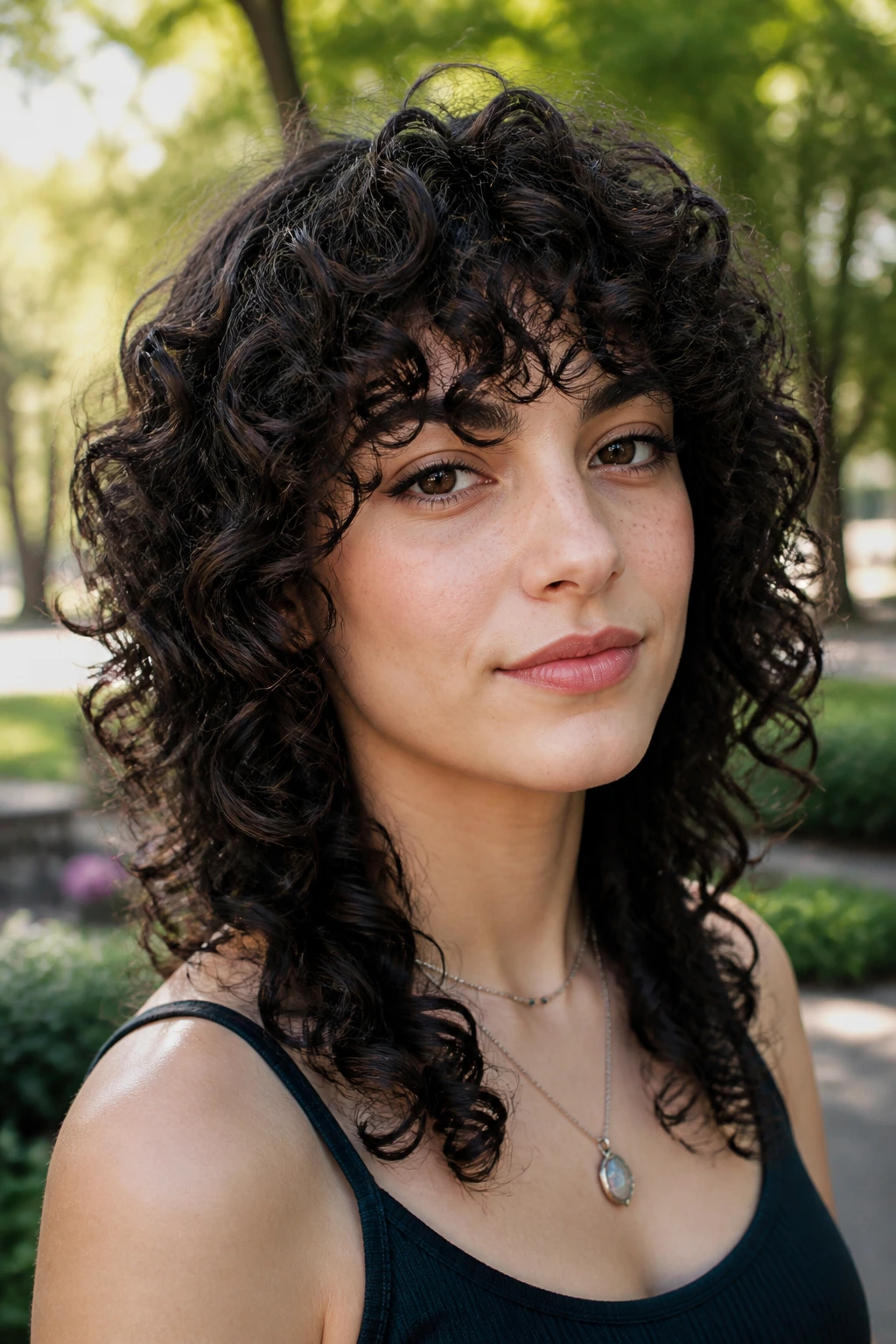
This version puts definition ahead of rough texture. The layers are there, but they’re cut to encourage the curls to stack into spirals rather than explode into volume. It’s a very good option for tighter 3B and 3C curls that look their best when each curl has a clear lane.
Use a leave-in and a small amount of gel, then let the curls dry without much touching. Once the cut dries, the spiral pattern should read clearly from top to bottom. If the ends look too thin, the stylist probably took too much off the perimeter.
16. Soft Undercut Wolf
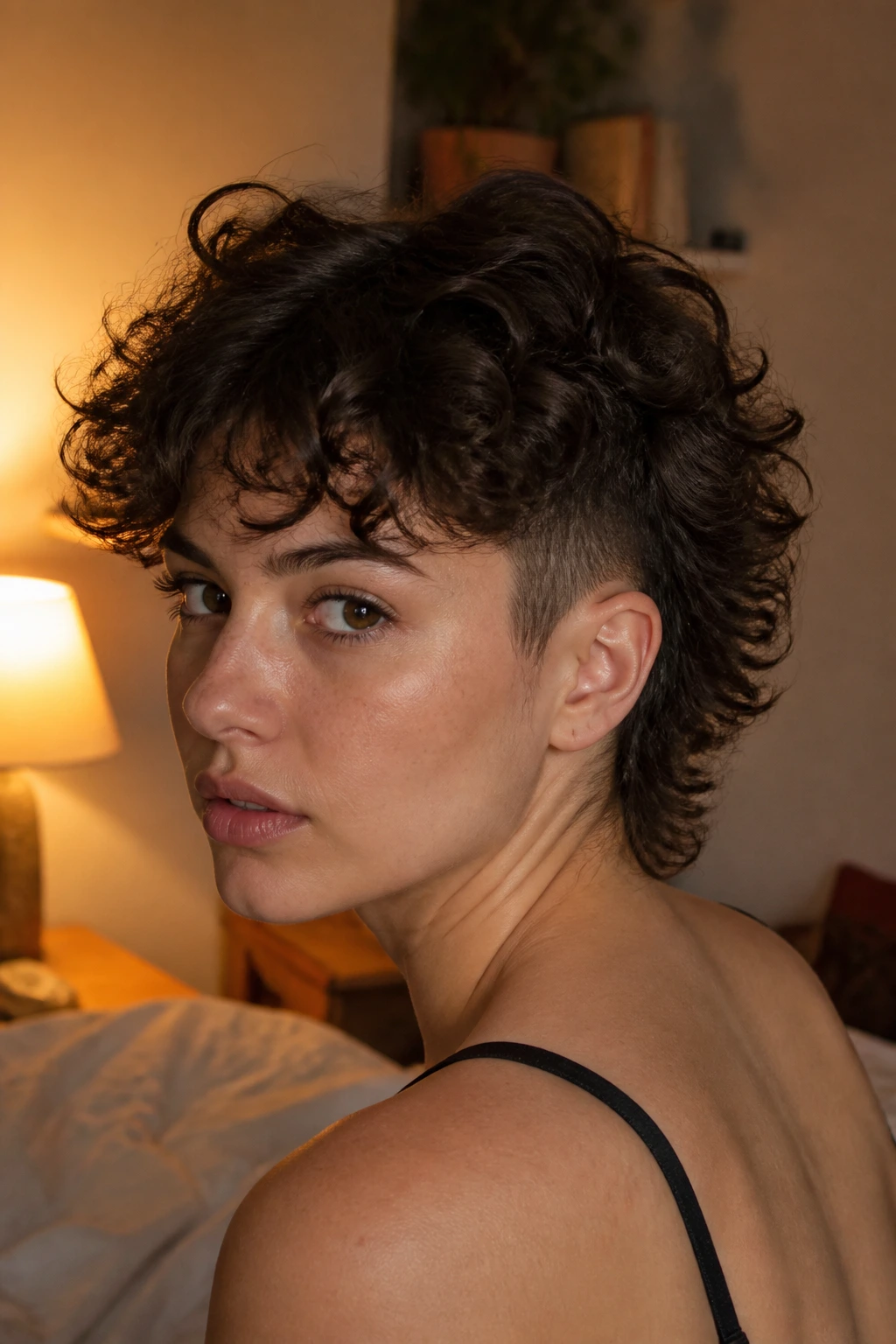
A soft undercut removes some of the hidden bulk underneath while keeping the outer layer visible and curly. It’s not a shaved, dramatic undercut unless you want it to be. Most of the time, it’s a quiet reduction of weight that helps short curly hair sit closer to the head.
This works best if your hair feels thick in the back of the head or behind the ears. Less bulk underneath means the top can lift more naturally. Ask for the undercut to stay soft around the nape and sides so you don’t create a hard line that peeks through when the hair moves.
17. Tucked-Behind-Ear Wolf Bob
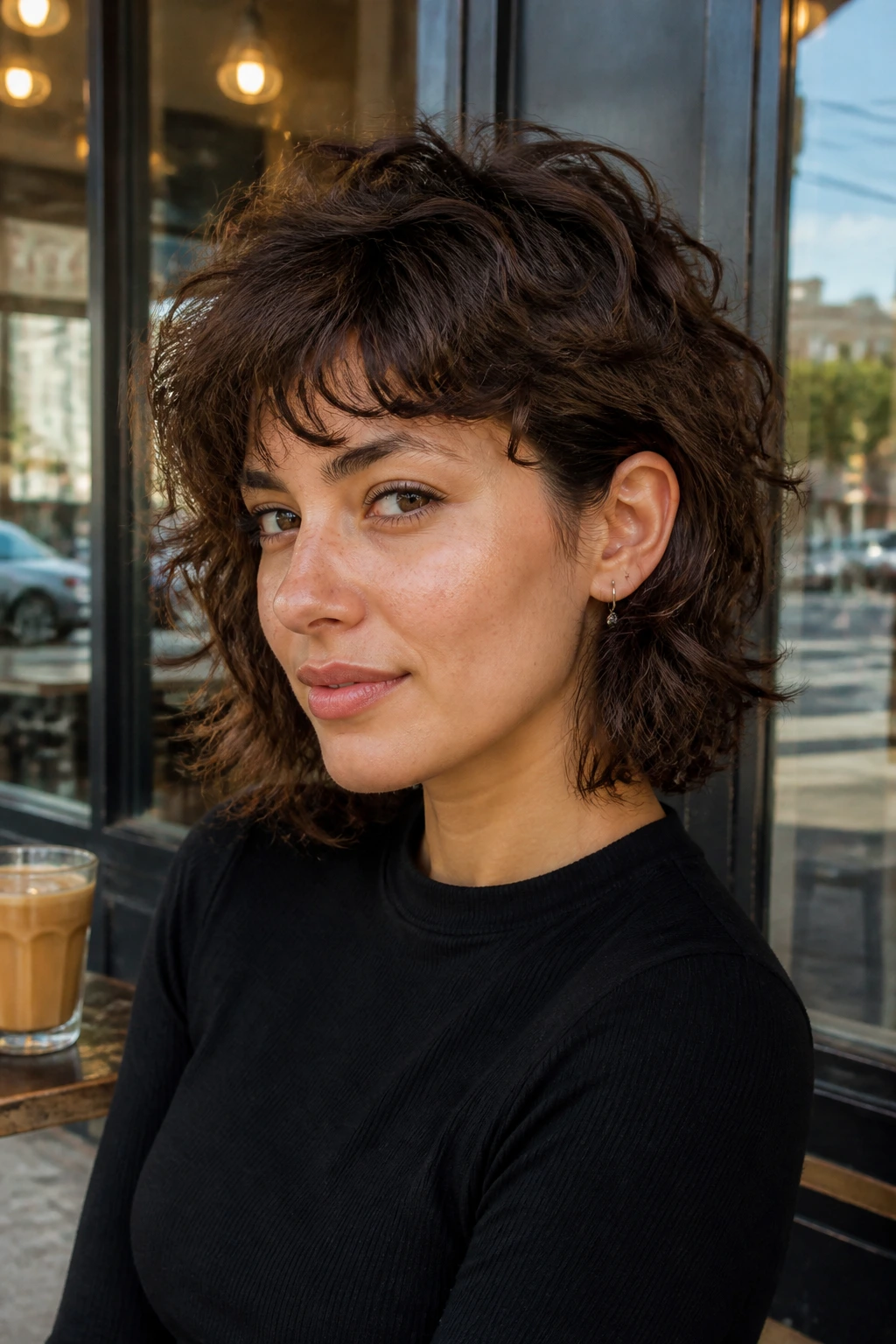
This one sounds simple, but the result is surprisingly polished when it’s cut right. The front is short enough to tuck behind the ears, while the rest of the shape stays shaggy and textured. That makes it easier to wear with glasses, earrings, or a very clean side part.
The key is balance. If the front is too short, the tuck looks accidental. If it’s too long, it keeps falling into your face and defeats the point. Ask the stylist to leave enough length near the temples to tuck without tension. That small detail matters.
18. Jaw-Short Wolf Crop
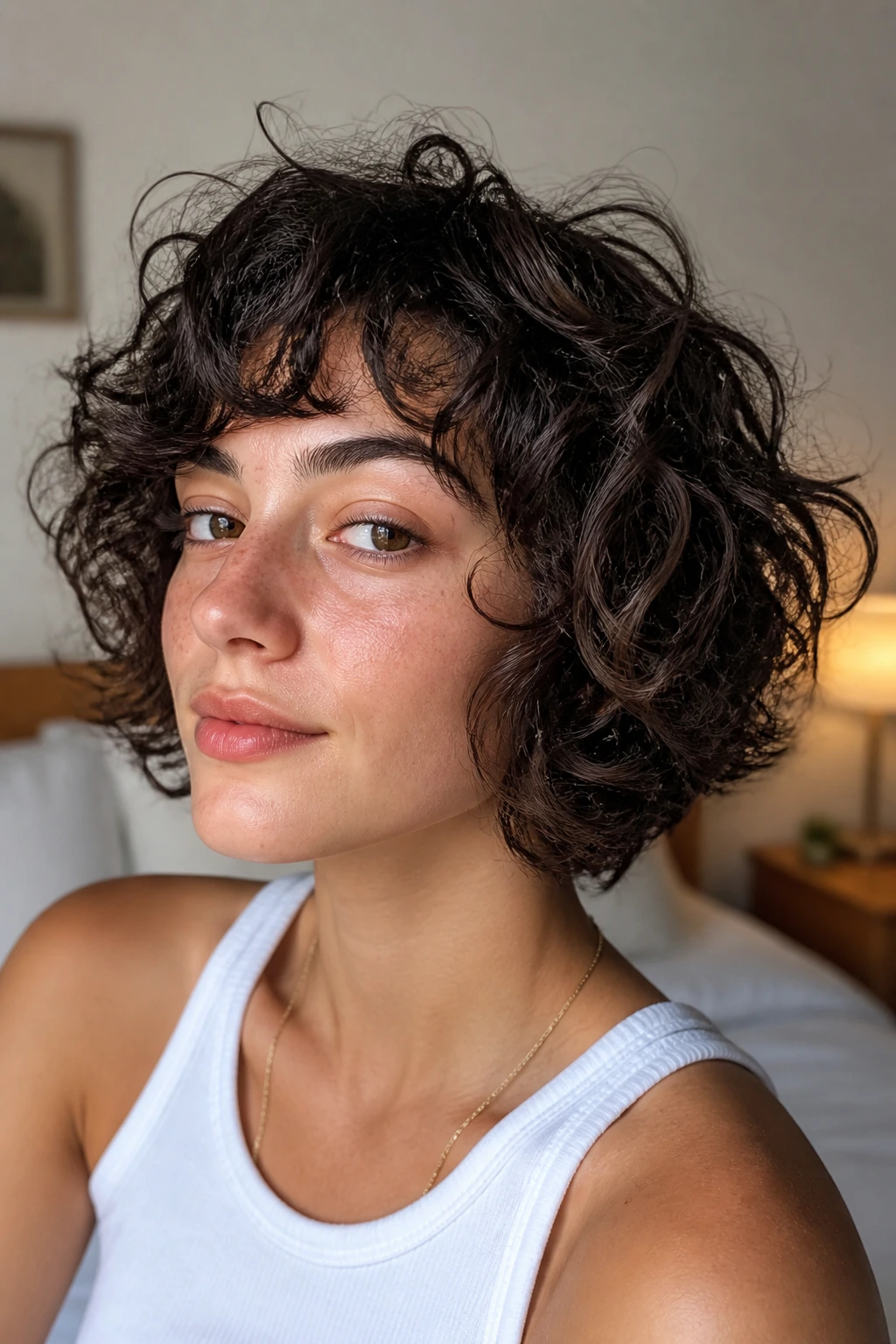
Jaw-short is exactly what it sounds like: compact, cropped, and concentrated around the lower face. It’s one of the most flattering wolf-shaped options for short curls because the haircut stays close to the head while still giving the curls enough room to spring outward.
If your curls are dense, this shape can help them stop eating your face. If they’re fine, it gives the illusion of thickness without needing much product. I like this cut with a little root lift and a light curl cream on the ends, nothing heavier.
19. Diffused Volume Wolf Shag
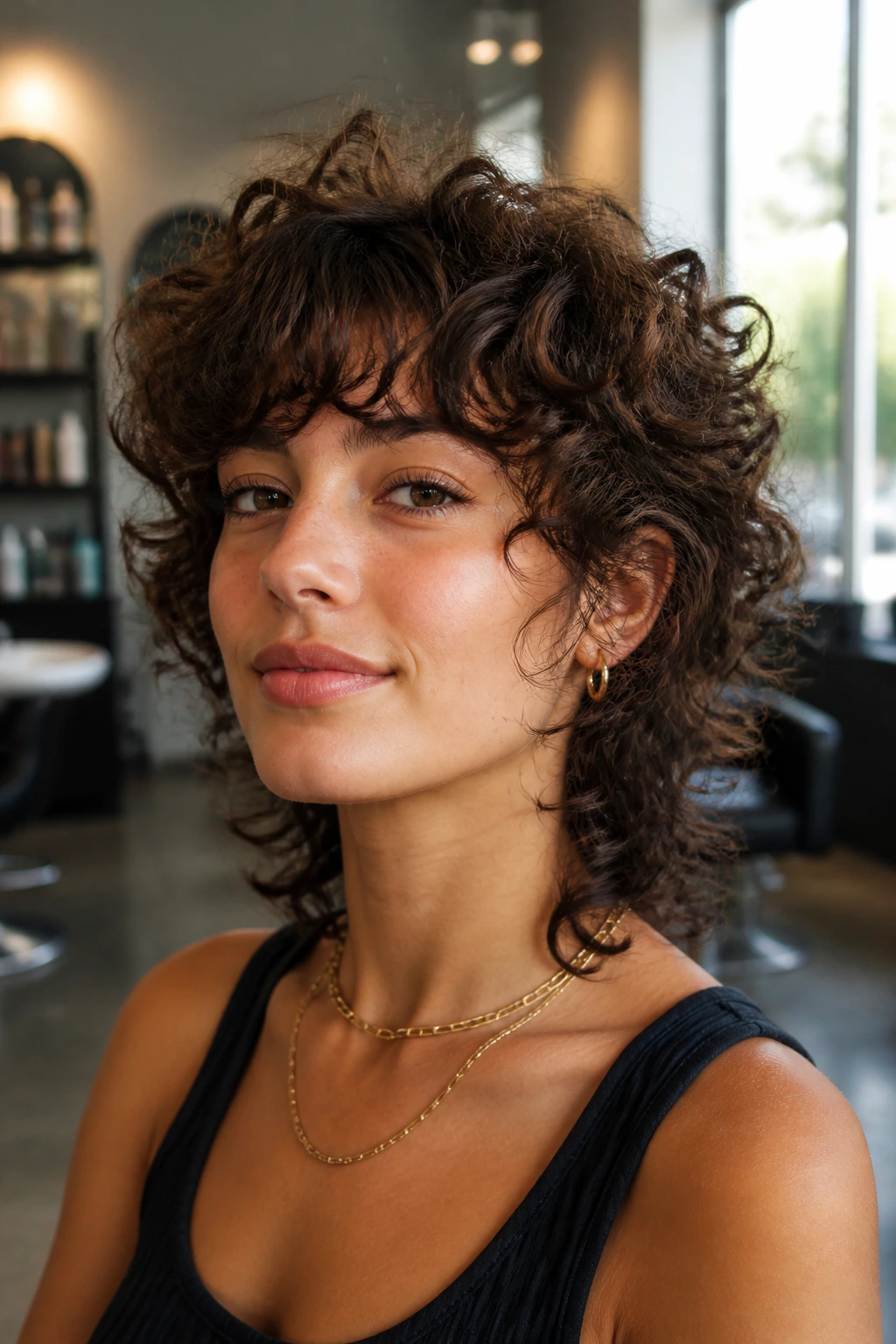
Some cuts are built to air-dry; this one likes a diffuser. The layers are arranged so the curls stack up with volume at the crown and softness at the perimeter, which gives the haircut that lightly undone wolf-shag feel without looking flat. It’s especially strong on medium-density curls.
Styling note
Start with water still dripping from the curls, then scrunch in mousse and diffuse on low heat until the outer layer is about 80 percent dry. Stop before the hair goes stiff. If you over-diffuse, you can end up with too much halo and not enough shape.
20. Face-Hugging Wolf Layers
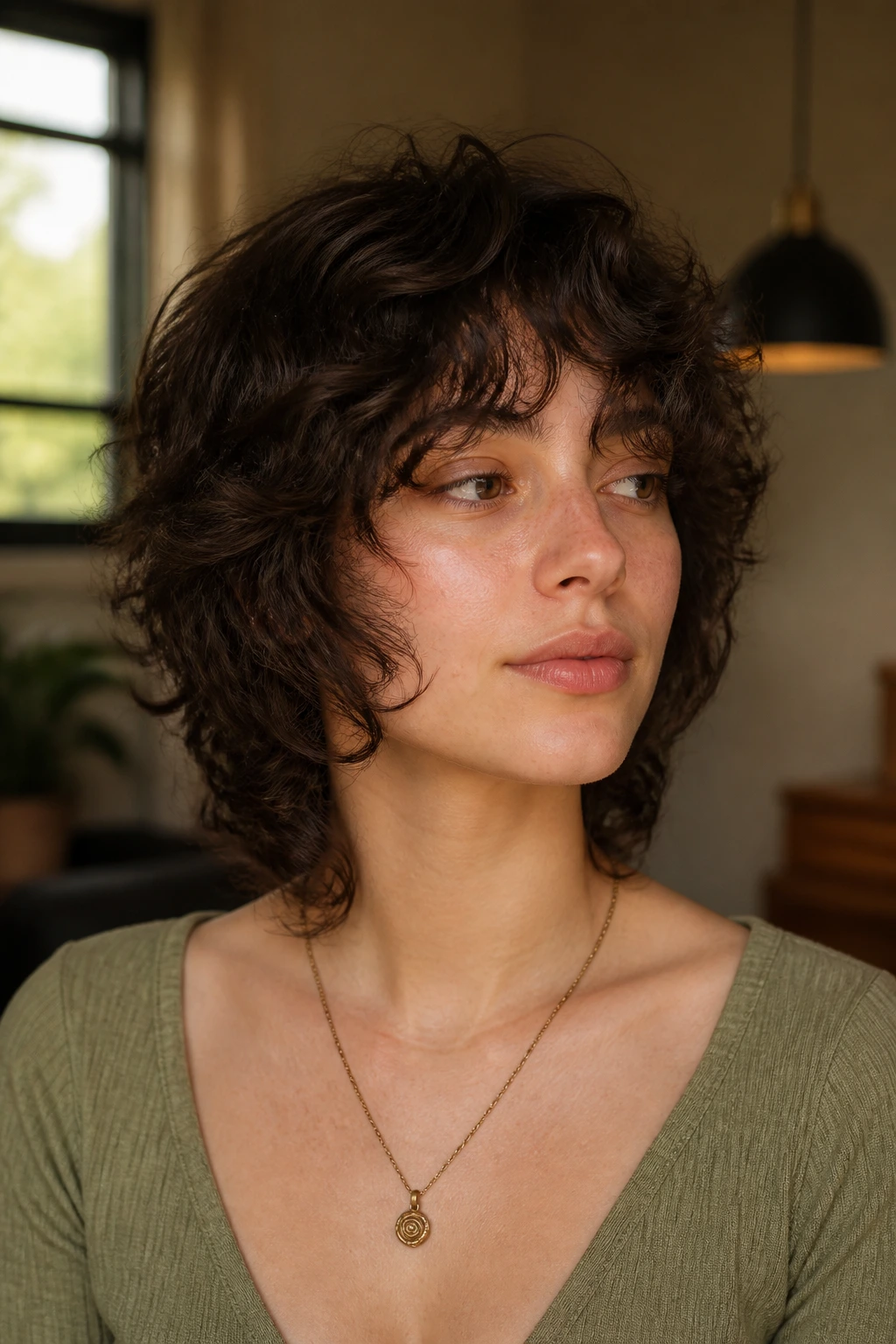
Face-hugging layers curve inward around the cheekbones and jaw, which makes short curly hair feel softer and more sculpted at the same time. This is one of the prettiest options if you want movement without visible choppiness.
The trick is keeping the front pieces long enough to bend inward instead of kicking out. On looser curls, that can mean leaving the very front a little longer than the rest of the face frame. On tighter curls, the shape should be cut with the spring factor in mind so the layers don’t end up too short once dry.
21. Ultra-Short Curl Wolf

This one has the shortest perimeter of the bunch. The top is kept shaggy, the sides are cropped close, and the curls are allowed to pop rather than drape. If you like hair that feels light on the neck and easy to reset in the morning, this cut is worth a look.
It’s not the cut for someone attached to length. It is, however, a very good answer to heavy, dense hair that takes forever to dry and tends to spread outward. With a little styling gel and a wide-tooth comb, it can look sharp without looking overworked.
22. Retro Shag Wolf

There’s a little 1970s energy in this one, but the curls keep it from feeling costume-like. The top stays full, the fringe lands somewhere between brow and cheekbone, and the ends feather out in a way that feels more rock-and-roll than tidy salon bob. It’s a fun cut when you want volume with shape.
A retro shag wolf works best if the stylist leaves visible layers instead of blending everything into softness. The separation is what gives it character. Try it with a side part and a bit of glossing cream on the surface curls if you want the shape to look more deliberate.
23. Swoopy Side-Part Wolf

A deep side part changes the whole silhouette. It creates a swoop at the front, adds lift at the crown, and makes the haircut feel longer on one side without changing the back much at all. On short curly hair, that one move can make the layers look twice as interesting.
If your hair tends to fall into a center part no matter what, this is a good reason to fight it a little. Clip the heavier side while it dries and let the roots set in the new direction. The result is a softer, more sweeping version of the wolf shag that still keeps its edge.
24. Freestyle Coil Wolf
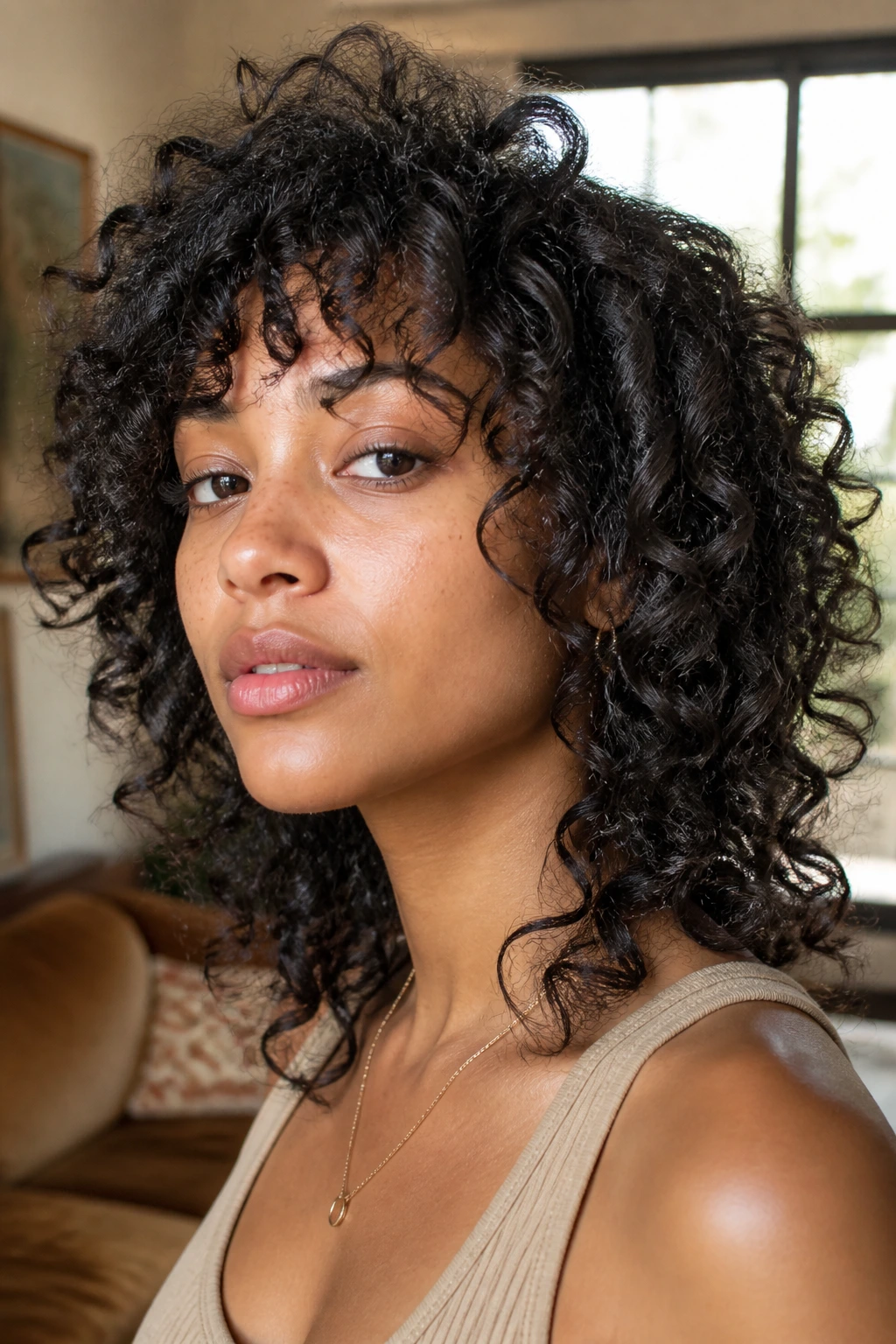
This one is all about letting the coils sit where they want. The shape is still controlled through the cut, but the finish is looser and more organic than a polished bob or a strict shag. It works beautifully on tighter curl patterns that form distinct clumps and want room to breathe.
The style depends on restraint. Too much brushing or raking breaks the coil clumps and the shape loses its charm fast. Finger detangling, a cream with slip, and a gentle scrunch are enough. Let the coils speak for themselves.
25. Choppy Mixed-Length Wolf

Some haircuts try to hide the fact that the layers are different lengths. This one leans into it. The mixed lengths create a deliberate roughness that short curls wear well, especially if you like your hair to look casual rather than perfectly finished.
It’s a strong option for thick or uneven curl patterns because the different lengths can balance density in a way a blunt cut cannot. The danger is overdoing the chop. If every section is aggressively texturized, the ends can go wispy in a bad way. Keep some weight at the perimeter and the haircut stays alive instead of tired.
26. Long Side Fringe Wolf Shag
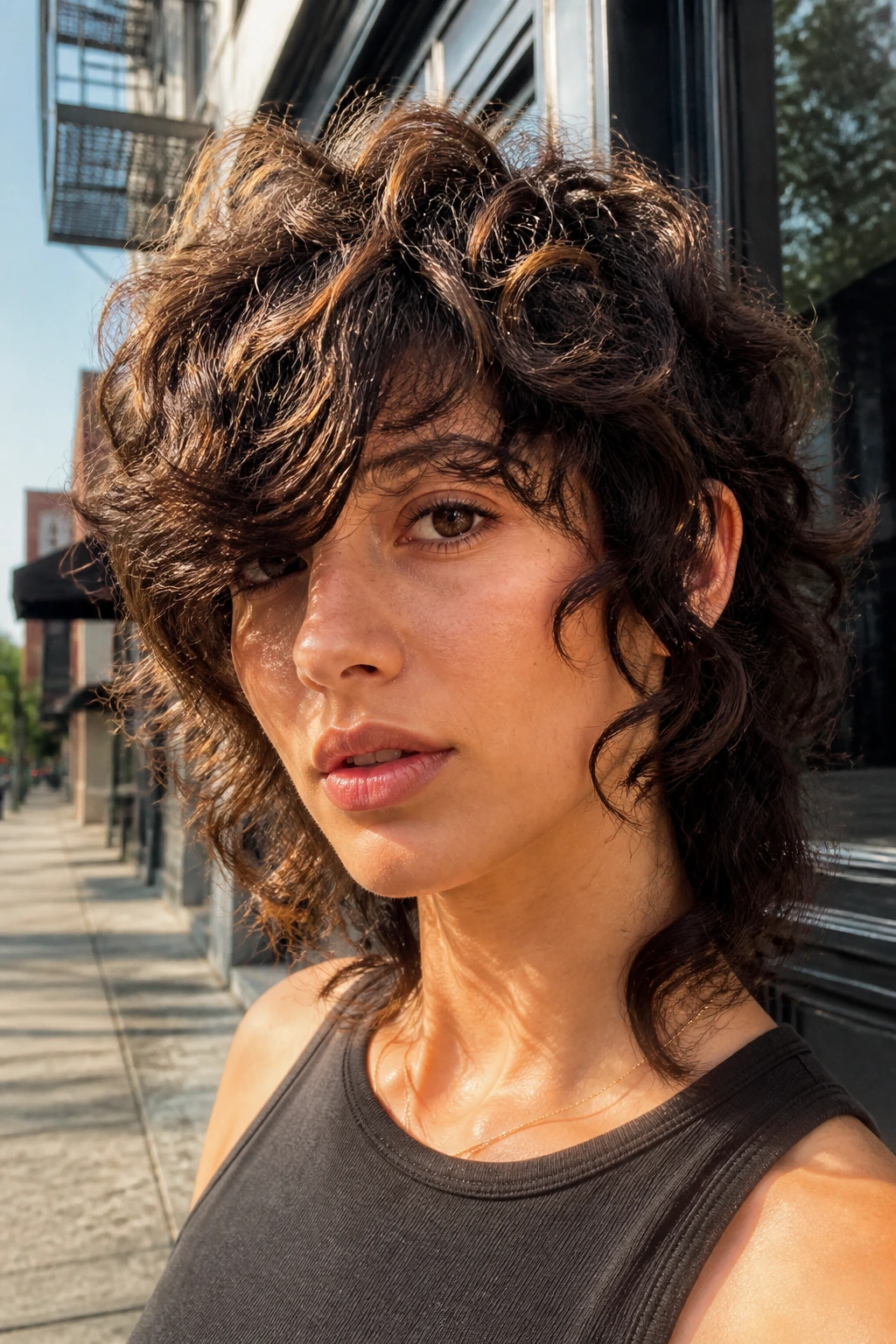
A long side fringe adds movement without the commitment of full bangs. The front piece sweeps across the forehead and blends into the side layers, which gives short curls a little drama while keeping the face open enough for glasses or bold makeup.
This shape is easy to grow out. That matters. Bangs on curly hair can be gorgeous, but they also become high-maintenance quickly if they’re cut too short. Leave the fringe long enough to tuck, pin, or wear forward, and you’ll get more mileage out of the cut.
27. Taper-and-Fluff Wolf
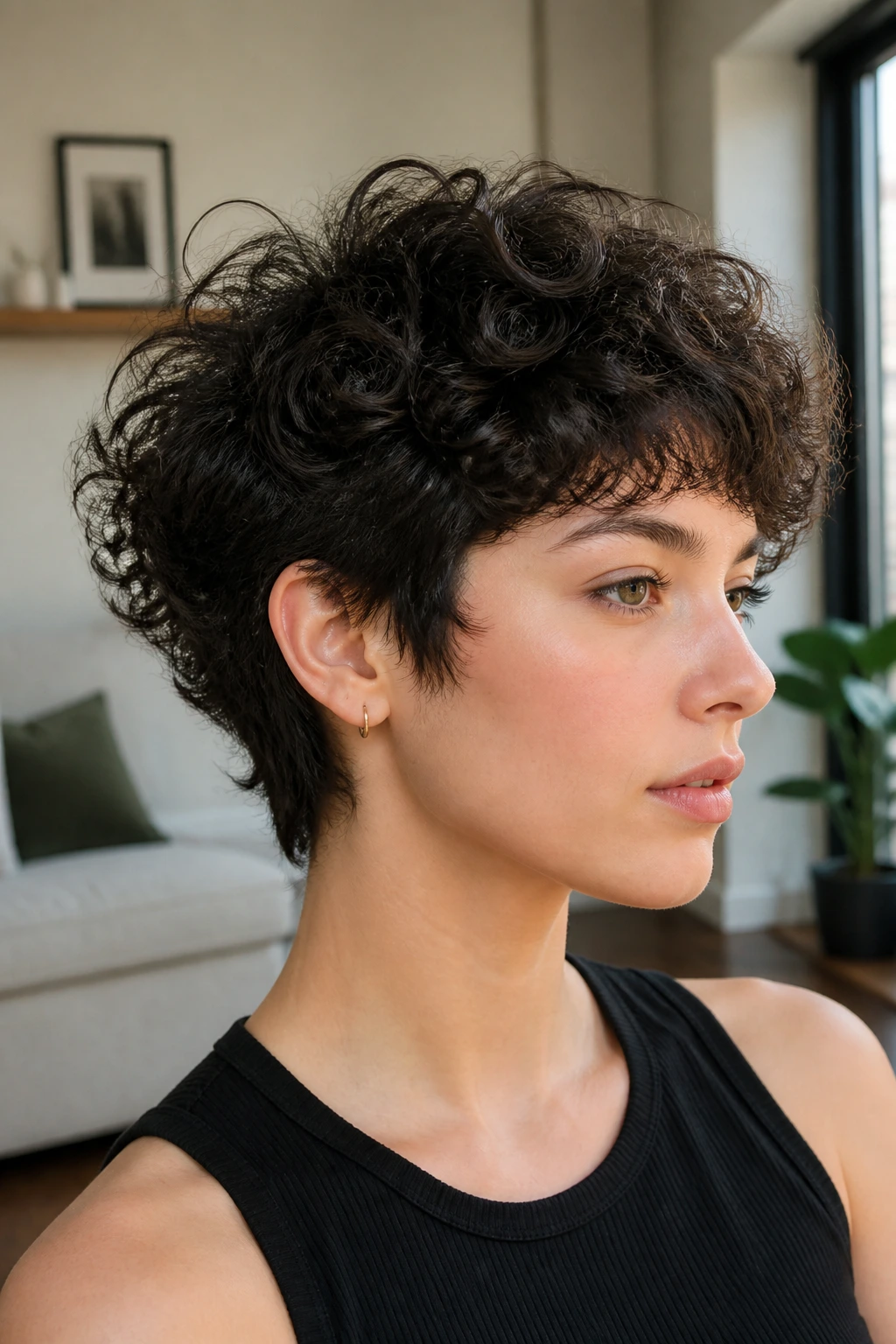
This is the haircut I think of when someone wants a short curly wolf shag that feels light but not thin. The nape tapers inward, the sides are cleaned up just enough, and the top is left fluffy and full so the haircut keeps that soft, cloud-like lift.
It suits thick curls that need bulk removed without losing shape. The important thing is where the taper happens. Too high, and the cut starts to look narrow at the neck. Too low, and the bulk stays trapped underneath. Somewhere in the middle is the sweet spot.
28. Airy Crown Wolf Crop
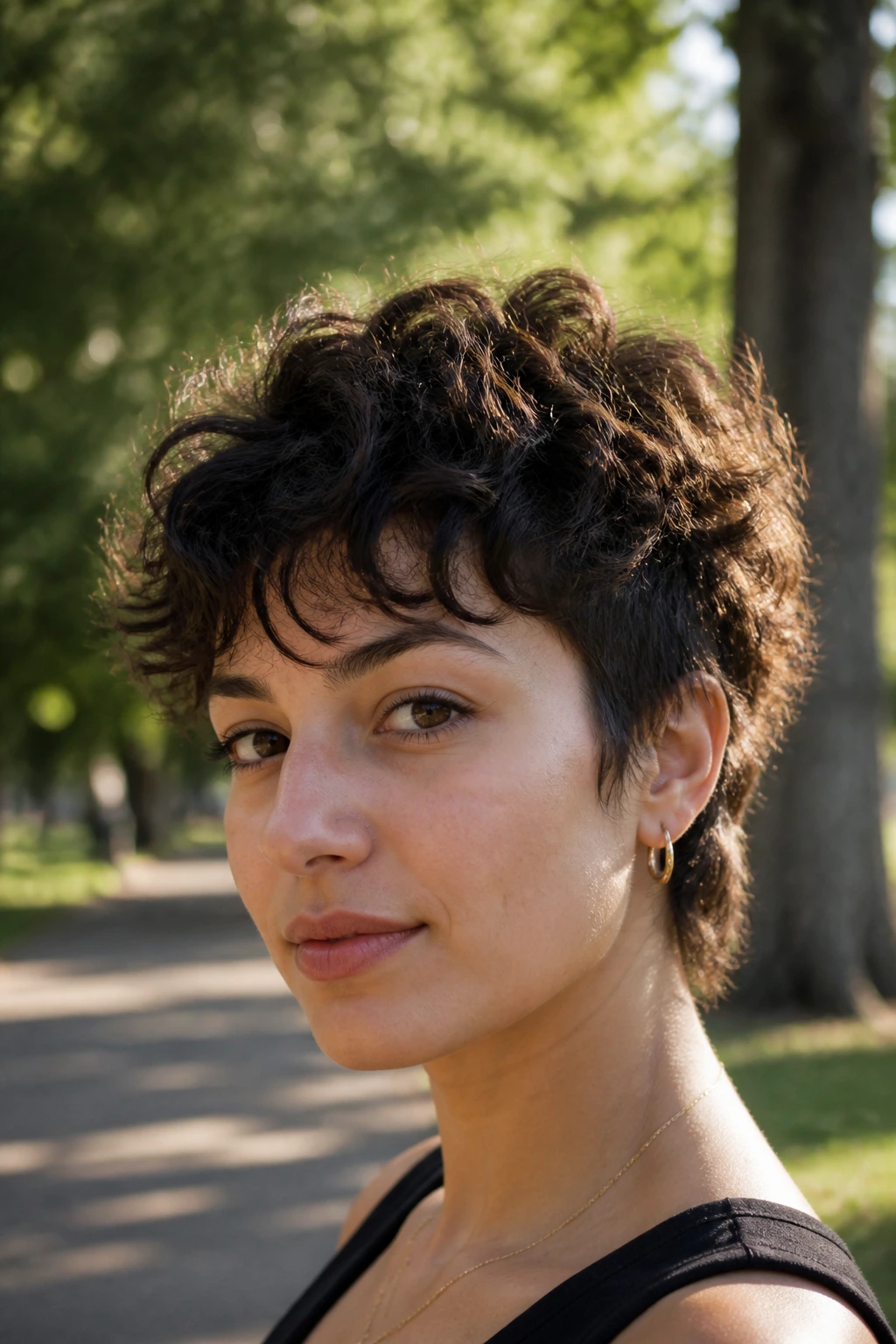
The crown gets the star treatment here. The top is cut to rise, not lie flat, and the sides are kept lighter so the hair doesn’t build a heavy outline around the head. It’s a smart choice if the top of your curls tends to get squashed under hats or after sleep.
A little root foam helps, but the cut does most of the work. If the crown layers are short enough, they’ll bounce back after a quick mist and scrunch in the morning. That makes this one good for people who need their hair to recover fast.
29. Bold Micro-Mullet Wolf
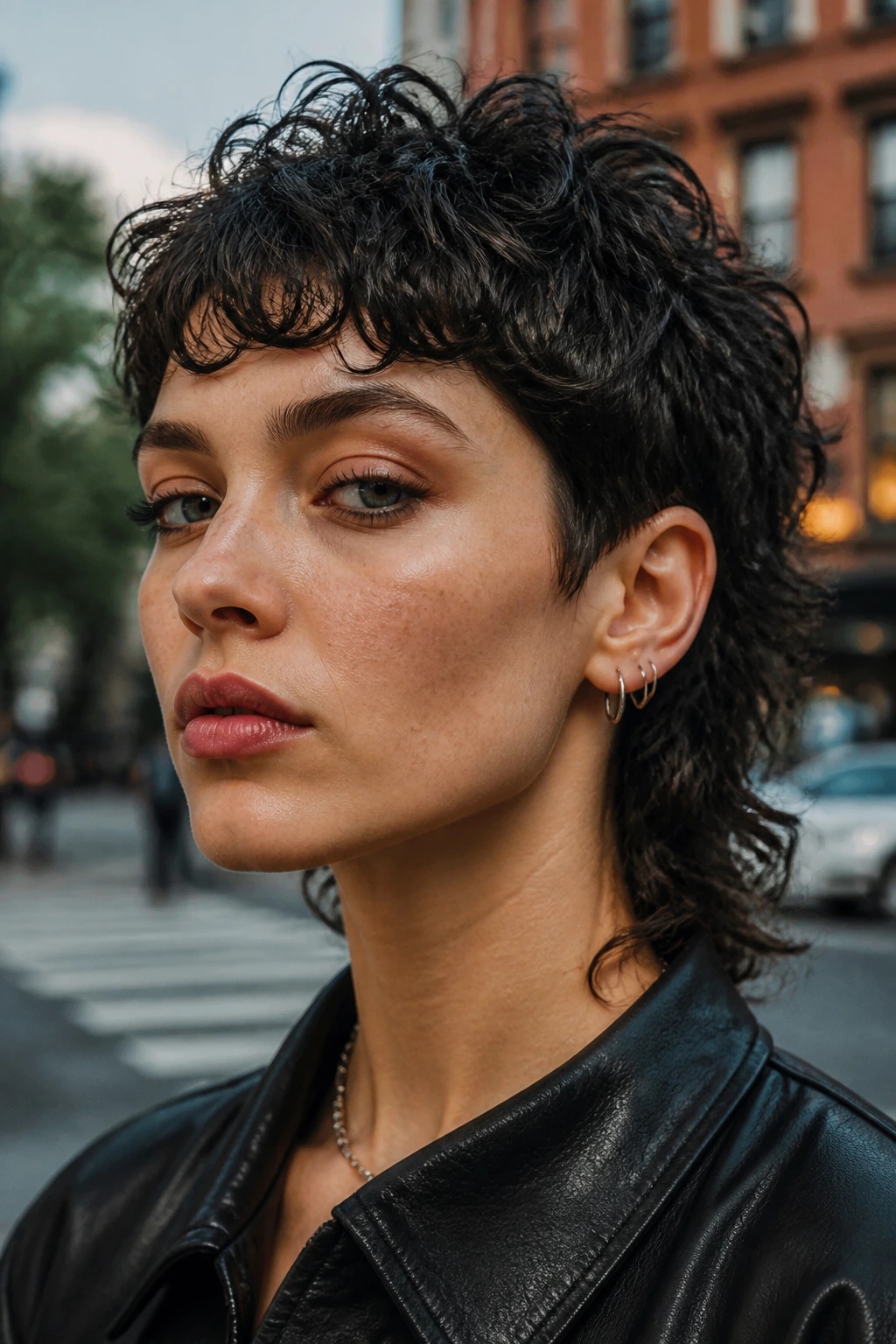
This version does not whisper. The back is a little longer, the top is short and lively, and the sides are close enough to keep the whole cut compact. It’s one of the most distinct wolf-shag looks for short curly hair, and the texture makes it feel less severe than the same shape on straight hair.
The main thing is confidence. If you want a subtle haircut, this is probably not the one. If you want a cut that gives you immediate shape and does not flatten out by noon, it’s a strong contender. Add a bit of gel at the perimeter to keep the ends from puffing.
30. Balanced Oval-Shape Wolf Shag
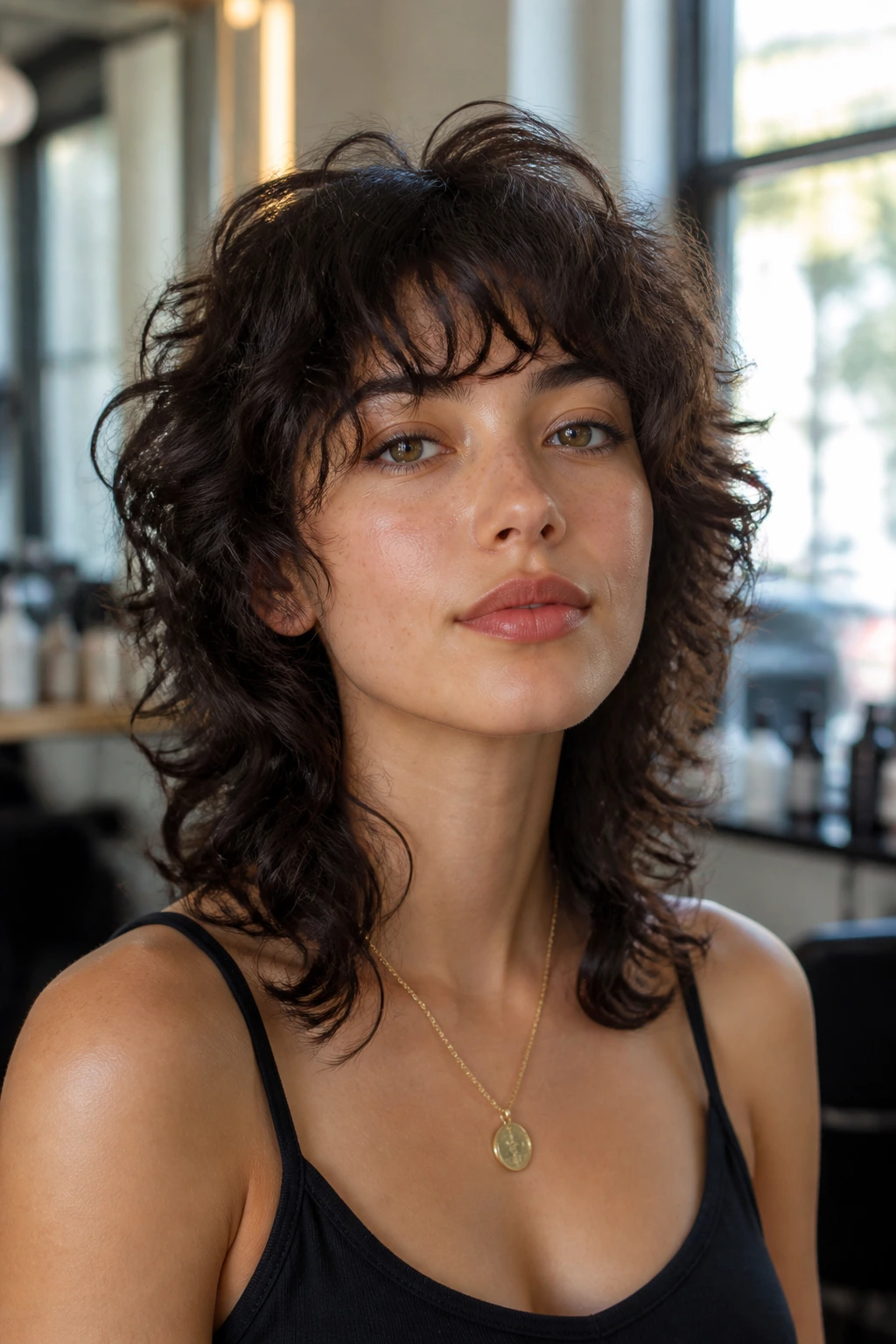
This is the most forgiving shape in the bunch. The layers are arranged so the outline reads oval instead of square, with enough lift at the crown to keep the head from looking bottom-heavy. It suits a lot of face shapes because it doesn’t pull too hard in any one direction.
Why it works on short curls
Short curls naturally want to widen at the sides. An oval outline keeps that width controlled without crushing the texture. It’s the kind of haircut that looks good with minimal styling, which is probably why people keep coming back to it.
- Keep the side layers slightly shorter than the back.
- Ask for soft internal layering around the ear.
- Use a diffuser only until the roots are set.
31. Curly Curtain-Bang Wolf

Curtain bangs on short curly hair can be finicky, but when they work, they really work. The front splits in the middle, opens around the forehead, and blends into shorter crown layers, giving the whole cut that easy, slightly French-shag feel without forcing the curls into a rigid line.
The biggest mistake here is cutting the bangs too short while the hair is wet. Curly fringe shrinks with attitude. Leave extra length, then adjust only after the hair dries in its natural pattern. That one caution saves a lot of regret.
32. Soft Mushroom-Wolf Hybrid

This is a strange little hybrid in the best way. The silhouette is rounded and mushroom-like through the top, but the layers underneath keep the wolf shag’s uneven energy alive. It’s playful, sculptural, and a little unexpected on curly texture.
If your curls are dense around the crown, this shape can control volume while still keeping the top interesting. It’s not the easiest cut to describe in words, which is why it helps to bring photos and be very clear about the outline you want. Round at the top. Not flat. Not puffy. Round.
33. Loose-Layer Wolf With Nape Taper
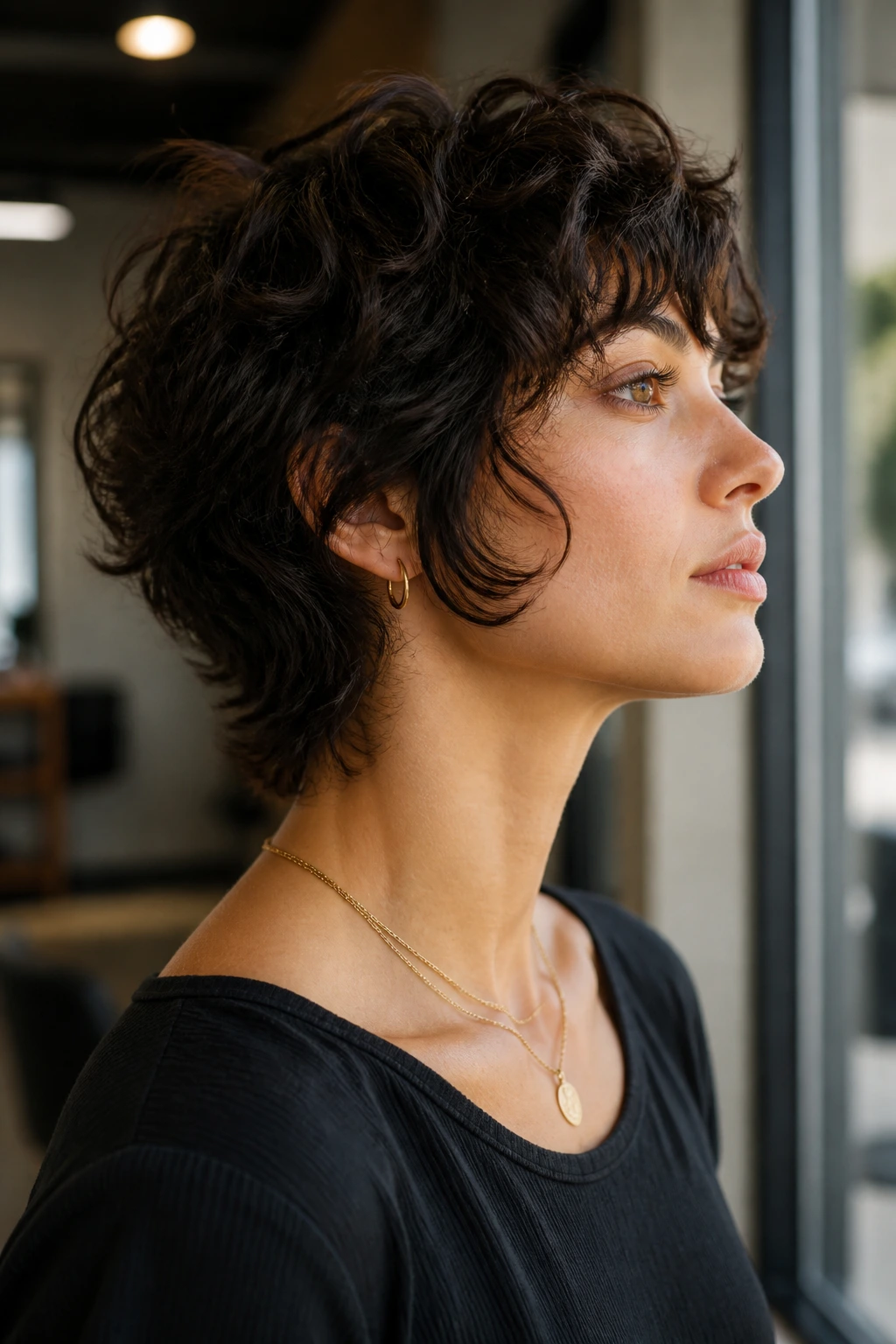
This is the quiet closer in the set. The layers stay loose, the nape is cleaned up, and the front remains soft enough to wear naturally without a lot of styling fuss. It’s one of the easiest wolf shag haircuts for short curly hair to live with if you want texture but not a daily negotiation.
It also grows out nicely. As the layers soften, the cut loses sharpness without losing its shape, which is more than I can say for some of the edgier versions above. If you want a wolf shag that behaves in real life, not just in a mirror, start here.
Why the Wolf Shag Keeps Working on Short Curls
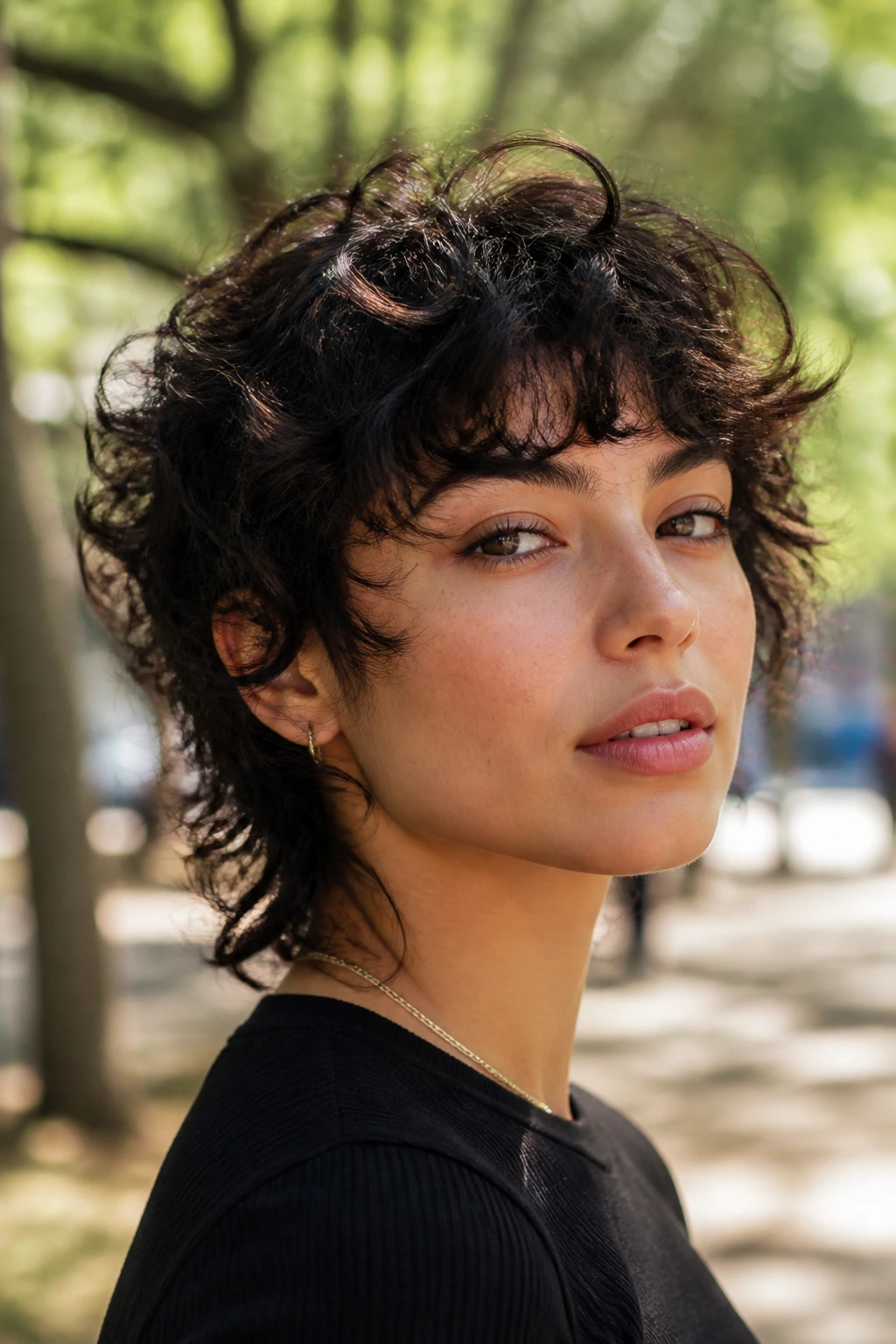
Short curly hair has a built-in trick: it never sits the same way twice. That can be annoying when you want control, and strangely useful when you want shape. The wolf shag takes that movement and gives it a frame, which is why it often looks more natural on curls than on straighter textures. The cut does not need every strand to fall in line. It just needs the crown, sides, and perimeter to agree on the overall outline.
The best versions respect shrinkage. That sounds obvious until you see how many bad cuts ignore it. A curl that lands at the jaw when wet might jump to cheekbone length once it dries, and a curl that seems tame in the chair can swell around the ears later. Good wolf-shag shaping leaves margin for that bounce. It keeps the top a little shorter, the face frame a little longer, and the back trimmed so the whole head feels balanced instead of triangular.
And that balance matters more than perfection. A short curly wolf shag can be polished, but it should still look like hair with some life in it. If it’s too cleaned up, the layers fight each other. If it’s too messy, the shape disappears. The sweet spot is a cut that looks intentional even when the curls decide to do their own thing.
What to Tell a Stylist Before the First Snip
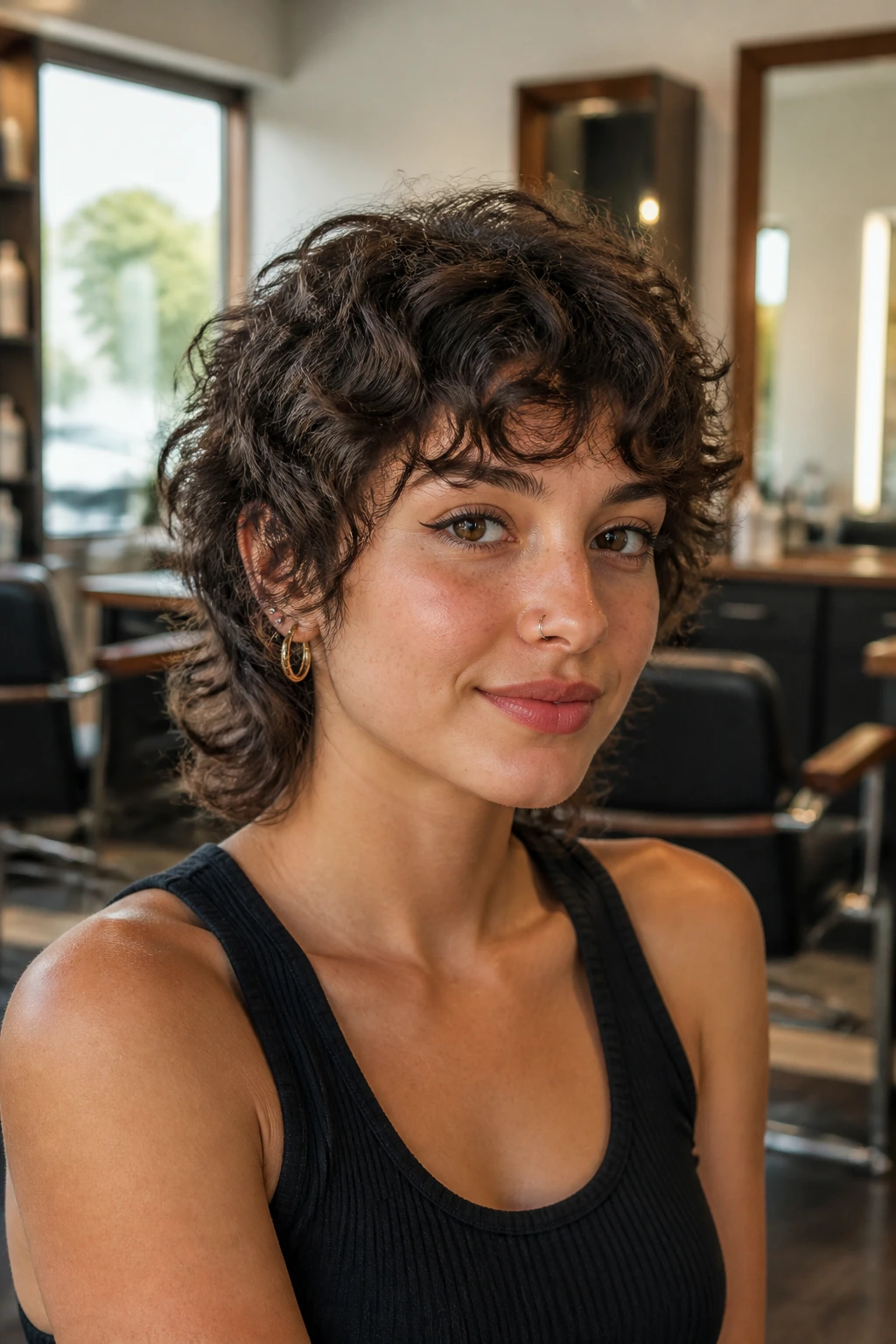
Bring your hair in its natural state. Dry, if possible. That gives the stylist the real shape of your curls, and on short hair, real shape is worth more than a tidy sectioning pattern. If your curls are uneven from root to tip, say so out loud. If one side grows flatter, mention that too. Stylists can work with that; they just need the information.
Be specific about the crown. If you want lift, say you want the shortest layers around 2 to 3 inches at the top, not a soft shrug and a guess. If you want the nape clean but not shaved, say that. If you hate bulk around the ears, say that too. Vague language is where disappointing haircuts breed.
Bring one or two photos, but don’t stop there. Point to the parts you actually want: the fringe length, the back shape, the amount of face framing. A wolf shag on curly hair can drift toward pixie, bob, or mullet depending on where the stylist places the weight. That’s not a flaw. It just means the cut needs direction.
Tools and Products That Keep the Shape Honest
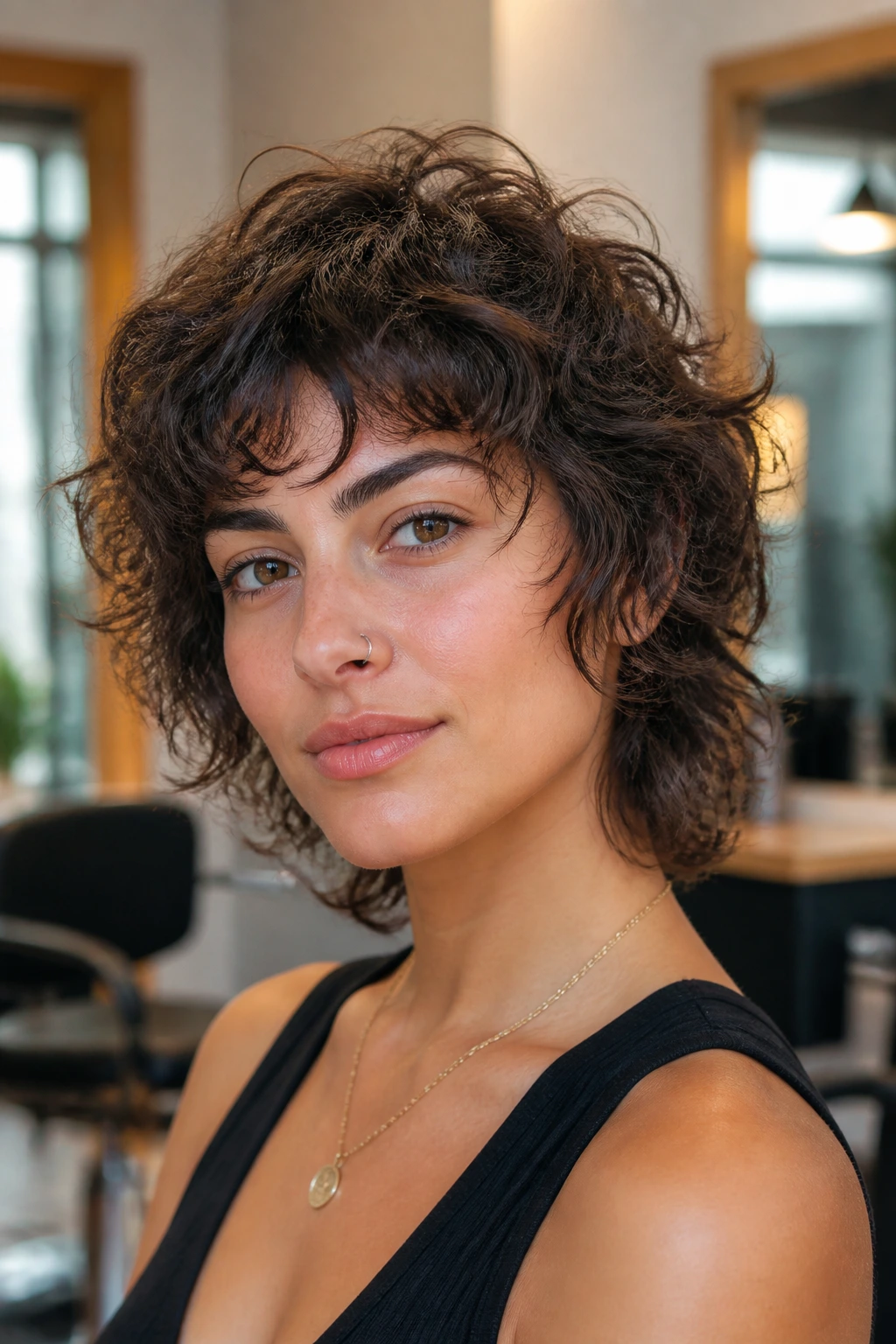
- Diffuser attachment: Keeps short curls from collapsing while they dry and helps the crown hold lift without blasting the curl pattern apart.
- Microfiber towel or cotton T-shirt: Cuts down on rough friction after washing, which matters when the layers are short and easy to frizz.
- Wide-tooth comb: Best for detangling in the shower or spreading conditioner through dense curls without stretching them out.
- Spray bottle with water: Useful for reactivating day-two curls, especially around the fringe and crown where the shape gets tired first.
- Light mousse: Good when the top needs root lift but you do not want a heavy cream to drag it down.
- Curl cream or leave-in conditioner: Helps short layers clump cleanly instead of separating into fuzzy ends.
- Duckbill or section clips: Handy when you want the fringe to set forward or the crown to dry in the right direction.
- Hand mirror: Not glamorous, but useful for checking the nape and side balance after styling.
How to Wear the Shape on Busy Mornings

Presentation: Let the haircut show its layers. Short curly wolf shags look better when the fringe and crown are not brushed into one smooth sheet. A few visible curl clumps around the forehead or cheekbones make the cut read clearly.
Styling rhythm: On wash day, scrunch in product while the hair is still damp, then diffuse just enough to set the roots. On day two, mist the flat spots, pinch a little mousse through the crown, and leave the rest alone. That usually brings the silhouette back faster than fully rewetting everything.
Accessories: Small hoops, a side clip, or glasses with a narrow top line help frame the haircut instead of competing with it. Big, bulky accessories can overwhelm the shorter layers. Keep the face open.
Outfit balance: High necks can be lovely with a tighter wolf crop because they make the nape shape more obvious. Lower necklines work better with fuller fringe cuts, where the front layers do the visual work.
Mistakes That Turn a Wolf Shag Into a Puff Ball
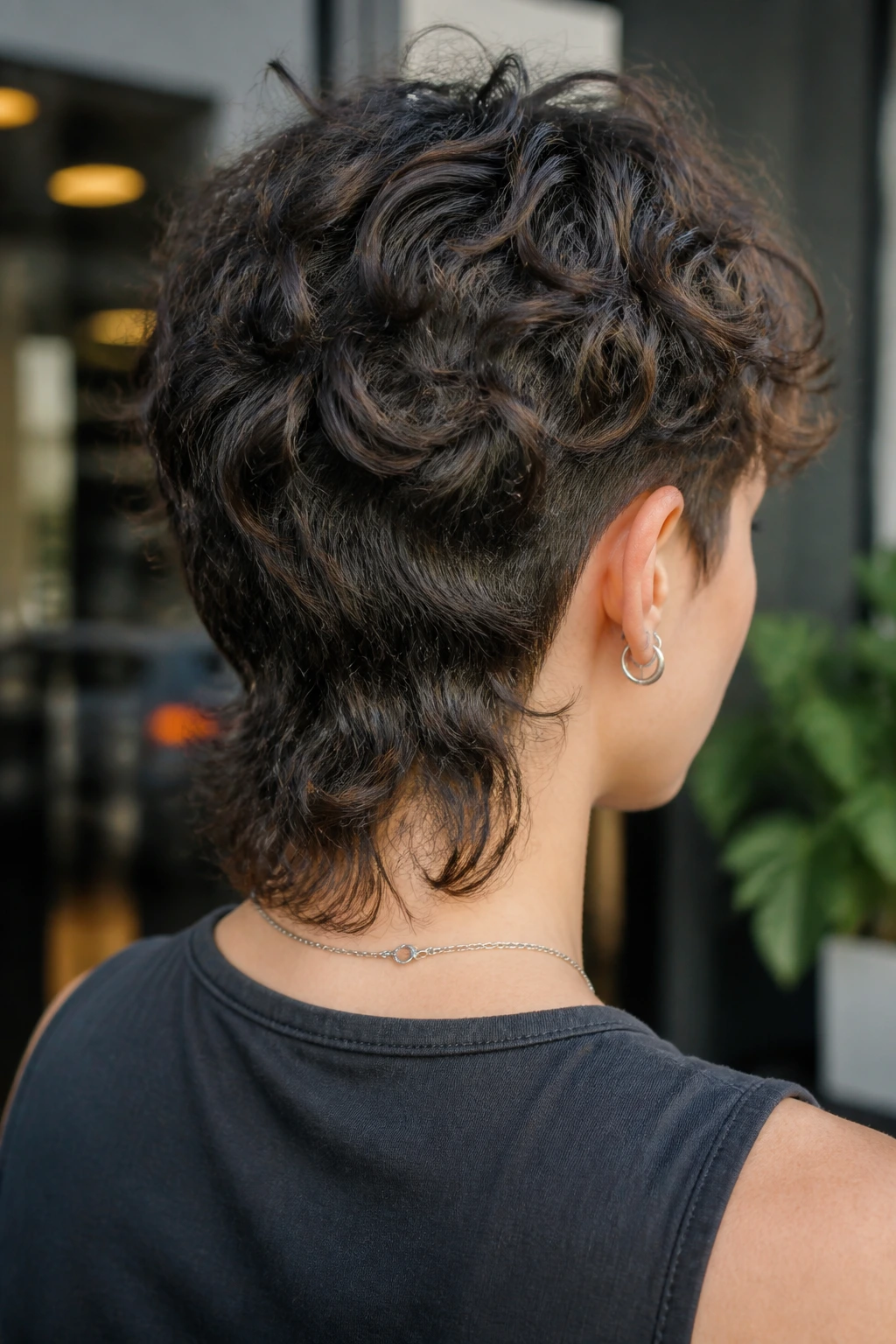
Cutting the layers too evenly. The wolf shag needs unevenness to keep its shape. If every layer lands at the same length, the cut loses that lifted crown and starts reading like a plain rounded bob.
Thinning the ends too aggressively. Short curly hair already has movement. Too much texturizing makes the ends wispy and dry-looking, especially on porous curls. Keep some weight at the perimeter so the outline stays visible.
Ignoring shrinkage. Curly hair can jump a full inch or more once dry, and on short cuts that changes everything. If the bangs or crown are cut too short, there is no easy fix besides waiting.
Using heavy oils on the root area. A slick root can flatten the top and make the shape collapse by noon. Put richer products on the mids and ends, not right at the scalp.
Trying to force the hair smooth. Brushing a short wolf shag into a perfect helmet usually ruins the point of the cut. Shape it with your hands or a diffuser, then stop.
Variations and Adaptations Worth Trying
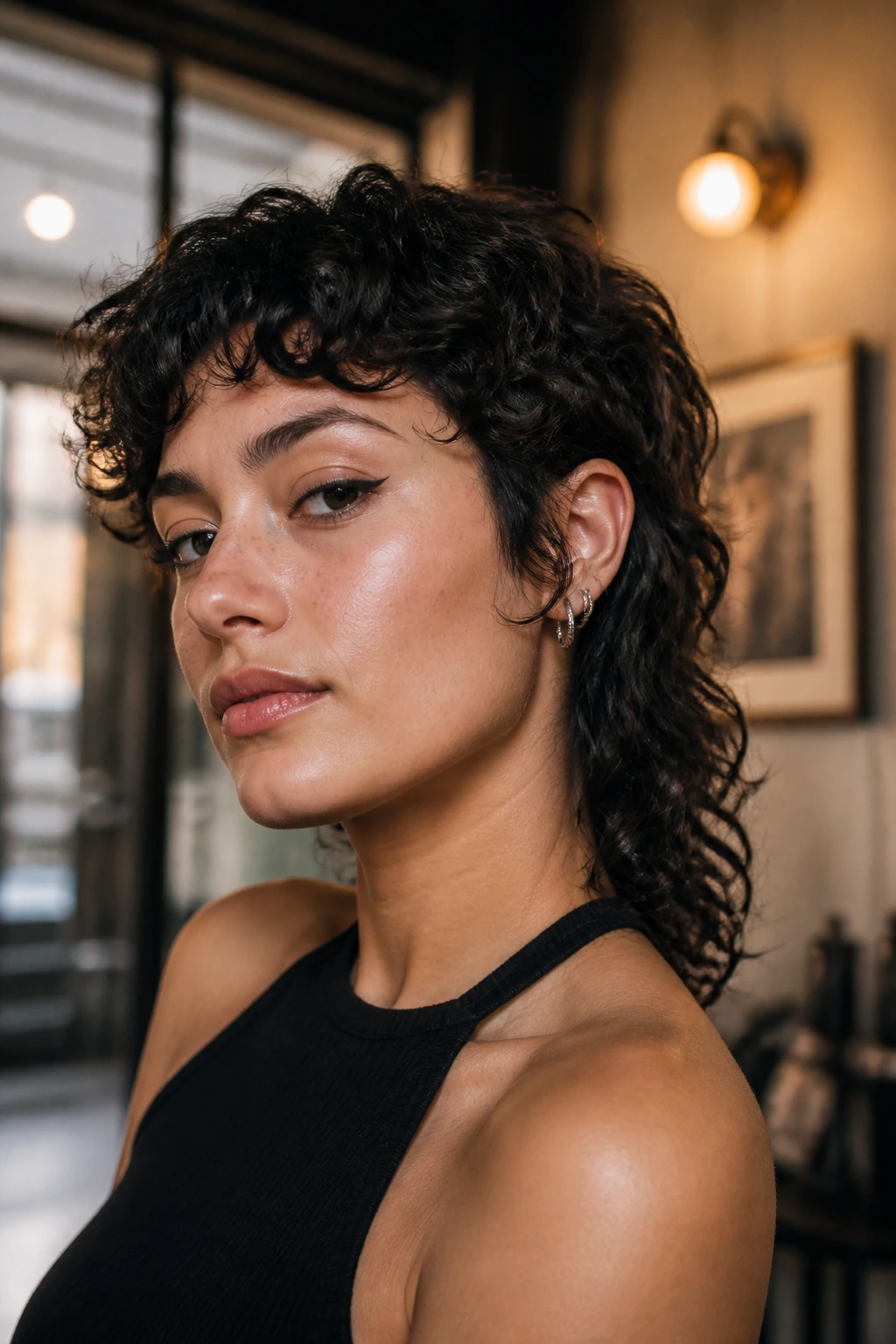
The Soft Office Wolf: Keep the fringe longer, trim the back gently, and leave the overall outline oval. It looks neat enough for a more restrained setting but still has the layers that make the wolf shag interesting.
The Punky Mini Mullet: Shorten the top, keep the nape a touch longer, and add more separation at the ends. This one has the most attitude and works best with bold curl definition.
The Rounded Curl Cloud: Ask for more rounding around the sides and less visible choppiness. It softens the look for people who want volume without sharp edges.
The Fringe-Forward Version: Put the emphasis on bangs or a long front piece and keep the rest simple. Good for anyone who likes a haircut that frames the eyes first.
The Low-Maintenance Grow-Out: Leave the layers a little longer than you think, especially around the crown. It still reads as a wolf shag, but it stays wearable longer between trims.
Keeping the Layers Light Between Trims
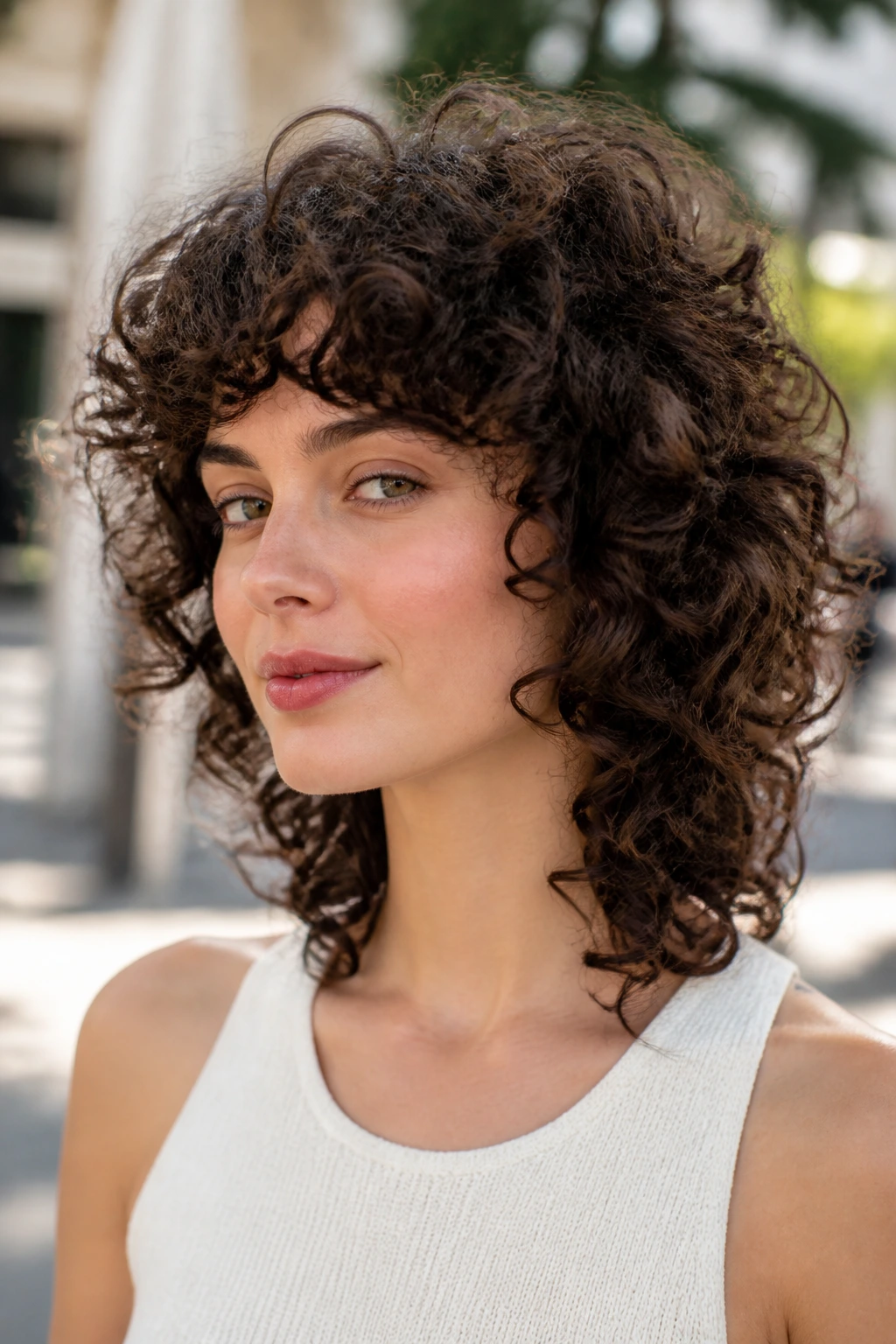
Short curly wolf shags usually hold their shape for about 6 to 10 weeks before the layers start to blur in a way that changes the silhouette. Bangs may need attention sooner, especially if they sit above the brow and spring up fast. If the fringe starts poking into your eyes or the crown loses its lift, it’s probably time for a tidy-up.
Sleep care matters. A satin pillowcase or bonnet keeps the curl clumps from mashing flat at the back and around the nape. If you prefer a pineapple, keep it loose enough that the crown does not get a dent in the same place every night. Flat spots show up fast on short cuts.
For refreshing, use a spray bottle and work in a little leave-in conditioner where the curls have gone fuzzy. Then scrunch with dry hands. If you add too much water, you’ll have to dry the whole thing again, and that gets old fast. Better to mist in sections and leave the rest alone.
Questions People Ask Before Going Short and Curly

Will a wolf shag make my curls look thinner?
Not if the layers are cut with care. A good wolf shag removes bulk where it helps and keeps enough weight at the ends so the hair still looks full. Thin-looking curls usually come from over-texturizing, not from the shape itself.
Can I get one if my curls are fine?
Yes, but the layers need to be conservative. Fine curls lose volume fast when too much length is removed, so keep the crown lift and avoid aggressive thinning through the ends. Mousse helps more than heavy cream here.
Does this cut work on tighter coils?
It can, especially if the stylist cuts it dry and respects the shrinkage. Tighter coils often look strongest in a slightly more rounded version with careful face framing, not a super-choppy one.
How short is too short for this style?
If the entire cut sits above the ear with no room for a crown layer, it starts drifting into pixie territory. That can still look good, but it’s not the same wolf-shag silhouette. Ask for enough length on top to show movement.
What if I hate bangs?
Skip them. A wolf shag does not need bangs to work. Long side pieces or face-framing layers can give you the same lift around the face without committing to a fringe.
Why does my hair triangle out after a few days?
Usually the sides are carrying too much bulk, or the crown has collapsed. A mist-and-scrunch refresh can help, but the real fix is in the cut: the sides need softer layering and the top needs enough lift.
Is it hard to grow out?
Not really, which is one of the reasons this cut stays popular. The shape softens as it grows instead of becoming a disaster line. You may want small trims around the bangs or nape, but the overall style survives the grow-out better than a blunt crop.
Can I wear it sleek sometimes?
Sure, but that’s not where this haircut looks happiest. If you stretch the curls with a brush or flat iron, the layers will show in a different way, more like a soft shag than a curly wolf cut. The texture is the point, so I’d save the straightened version for an occasional change.
The Shape That Keeps Moving
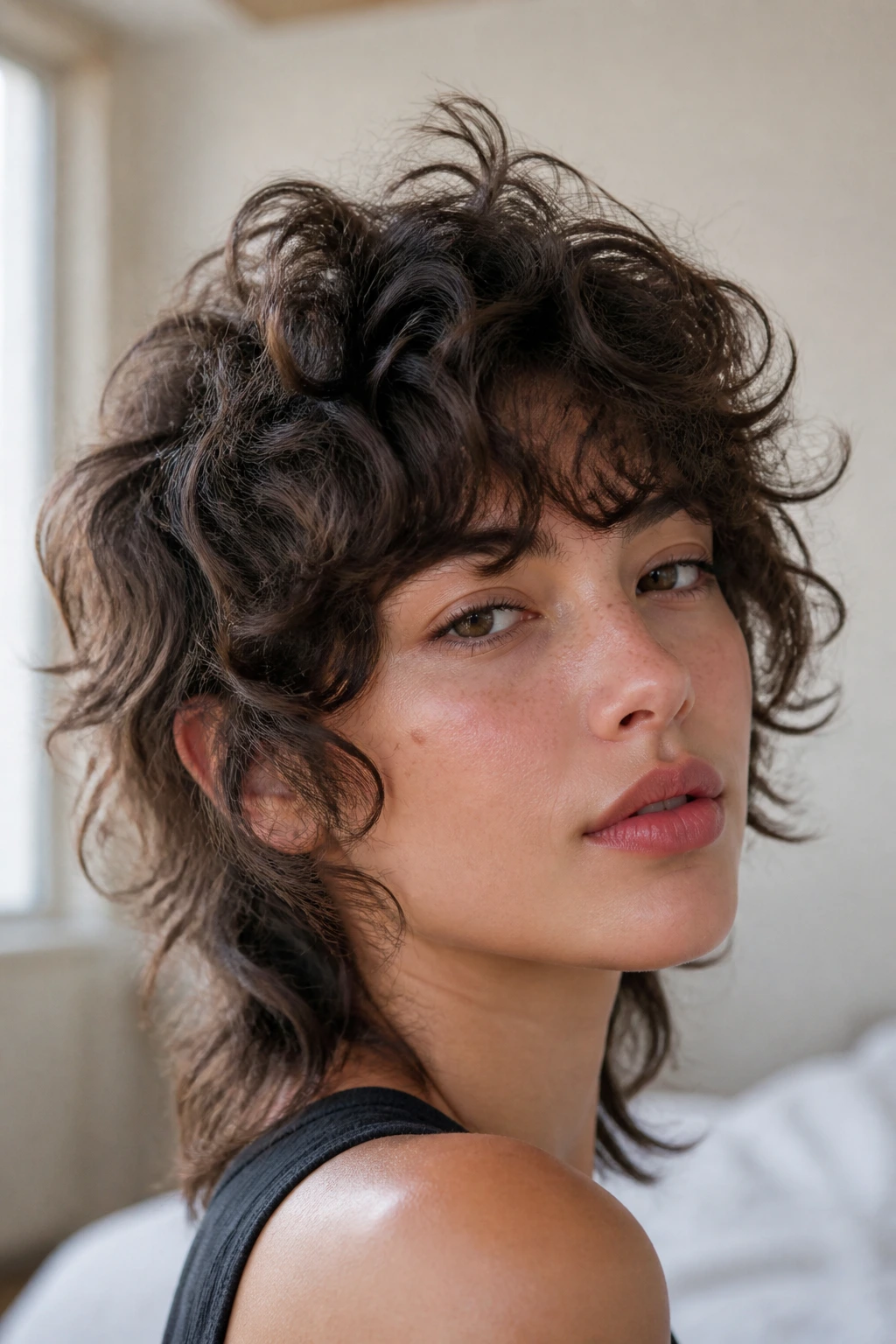
A good short curly wolf shag does something rare: it gives your hair a shape that still feels alive after the day gets hold of it. That’s why the best versions in this set are not polished in the boring sense. They’re balanced. They know where to hold volume, where to release it, and where a curl can be left to fall a little sideways without ruining the whole look.
If you bring a clear idea of your curl pattern, your shrinkage, and how much fringe you’re willing to live with, the haircut gets much easier to dial in. The rest is judgment in the chair and a little restraint with the scissors. Sometimes that is the whole game.
The next time your curls seem too short to do much with, one of these wolf shag shapes may be the thing that proves the opposite.
