



Medium hair braids for long faces live or die by placement. Put all the weight at the crown and the face reads longer. Shift the braid a little lower, widen it near the temples, or let a few pieces sit at cheekbone level, and the whole look starts to feel balanced instead of stretched.
That’s the part a lot of braid roundups miss. A long face — oblong, rectangular, call it what you like — usually looks best when the braid creates side-to-side movement and breaks up the vertical line. Medium-length hair helps here because it has enough body to hold shape, but not so much length that every braid turns into one long, narrow tail that hangs straight down and drags the face with it.
The trick isn’t to hide your face shape. It’s to frame it with intention. Some styles add width near the jaw, some bring the braid off-center, and some keep the crown calm so the eye settles where you want it to. That balance is the point, and the styles below are built around it.
Why This Collection Is Different
-
Built for width, not height: These braids favor side parts, curved lines, and lower finishes that help a long face read a little shorter and fuller.
-
Medium hair actually matters here: Shoulder-length and collarbone-length hair holds shape better than very long hair, so the braid detail stays visible instead of disappearing into length.
-
Not every style needs extensions: Some looks work with your natural length alone; others benefit from a small amount of braiding hair to add thickness where you want it.
-
The face-framing is intentional: A few of these styles leave soft pieces near the temples or cheekbones, which is usually the fastest way to soften a long face without losing polish.
-
There’s range here: You’ll find sleek options, looser boho looks, protective styles, and low-effort braids that don’t demand a salon chair and two hours of patience.
-
Most of them wear well on busy days: The styles aren’t just pretty in a mirror. They stay put, don’t collapse as fast as loose curls, and can be refreshed without starting from scratch.
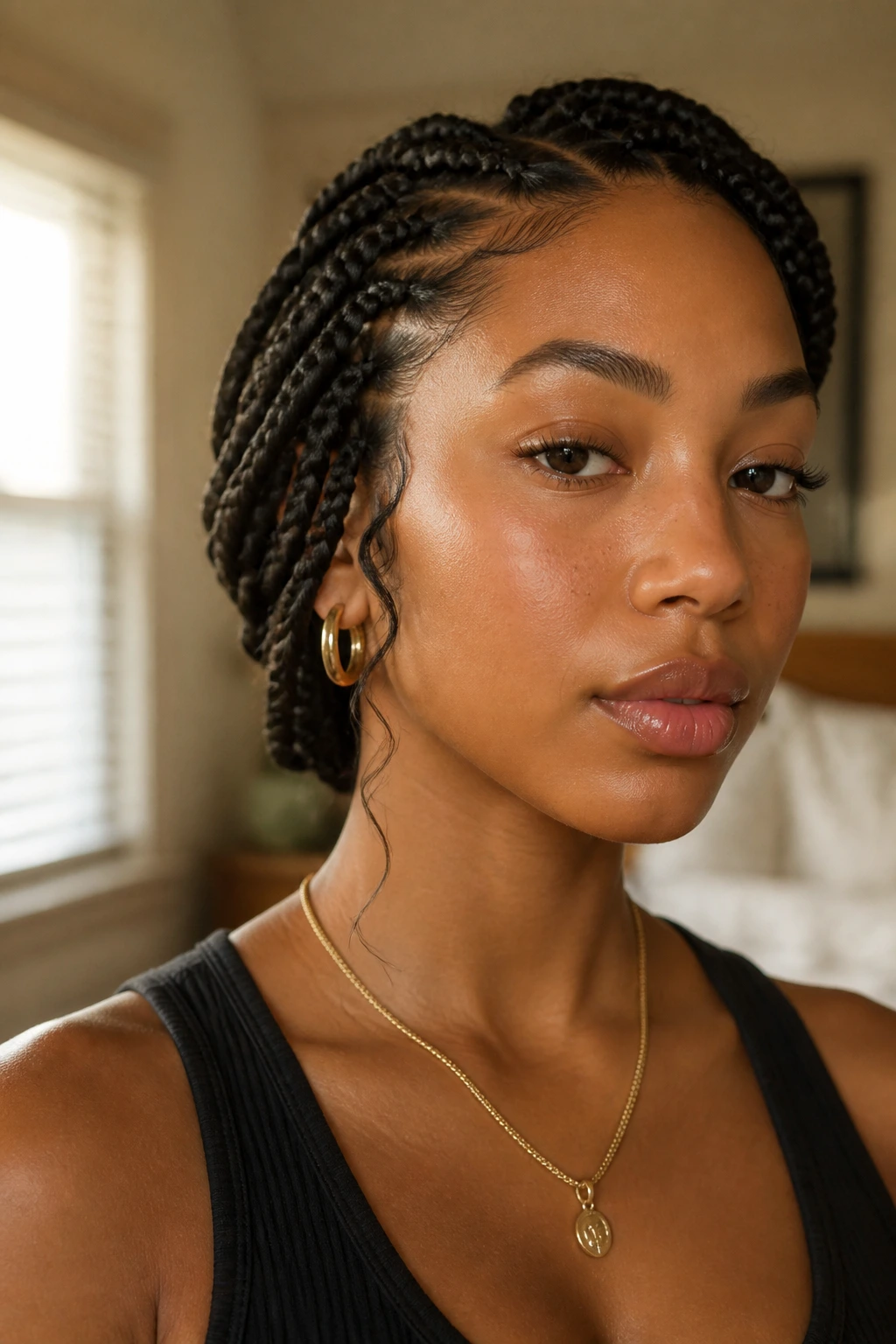
1. Side-Swept Knotless Braids
Side-swept knotless braids are one of those styles that quietly do the most work. The braid line starts off to one side, so the eye moves across the face instead of straight down it, and that alone softens a long shape fast. On medium hair, the length usually lands around the collarbone or upper chest, which is enough to feel finished without dragging the silhouette lower.
Why It Works
Knotless braids are lighter at the scalp, so the style sits flatter and more natural around the crown. That helps a long face because you are not building extra height where you do not need it. Ask for a deep side part and slightly fuller braid sections near the cheekbone side.
The best version keeps the braid tail loose enough to swing, not so tight that it looks carved from wire.
Good if you want: a protective style that still looks soft
Best placement: side part beginning above the outer brow
Braid size: medium-to-large, not pencil-thin
2. Curved Feed-In Cornrows
A straight row of cornrows can lengthen the face even more. Curved feed-ins do the opposite. The parting bends around the head, and that curve brings visual width to the sides, which is where a long face usually wants help most.
Ask for the front rows to angle outward near the temples before they sweep back. On medium hair, that shape shows up nicely without needing a ton of added hair. The look feels clean, but not severe. That matters. Too much tightness at the front can make the face look taller.
What to Tell Your Stylist
- Start the braids lower at the crown
- Keep the side rows slightly arched
- Leave the ends at medium length so they don’t read as a vertical curtain
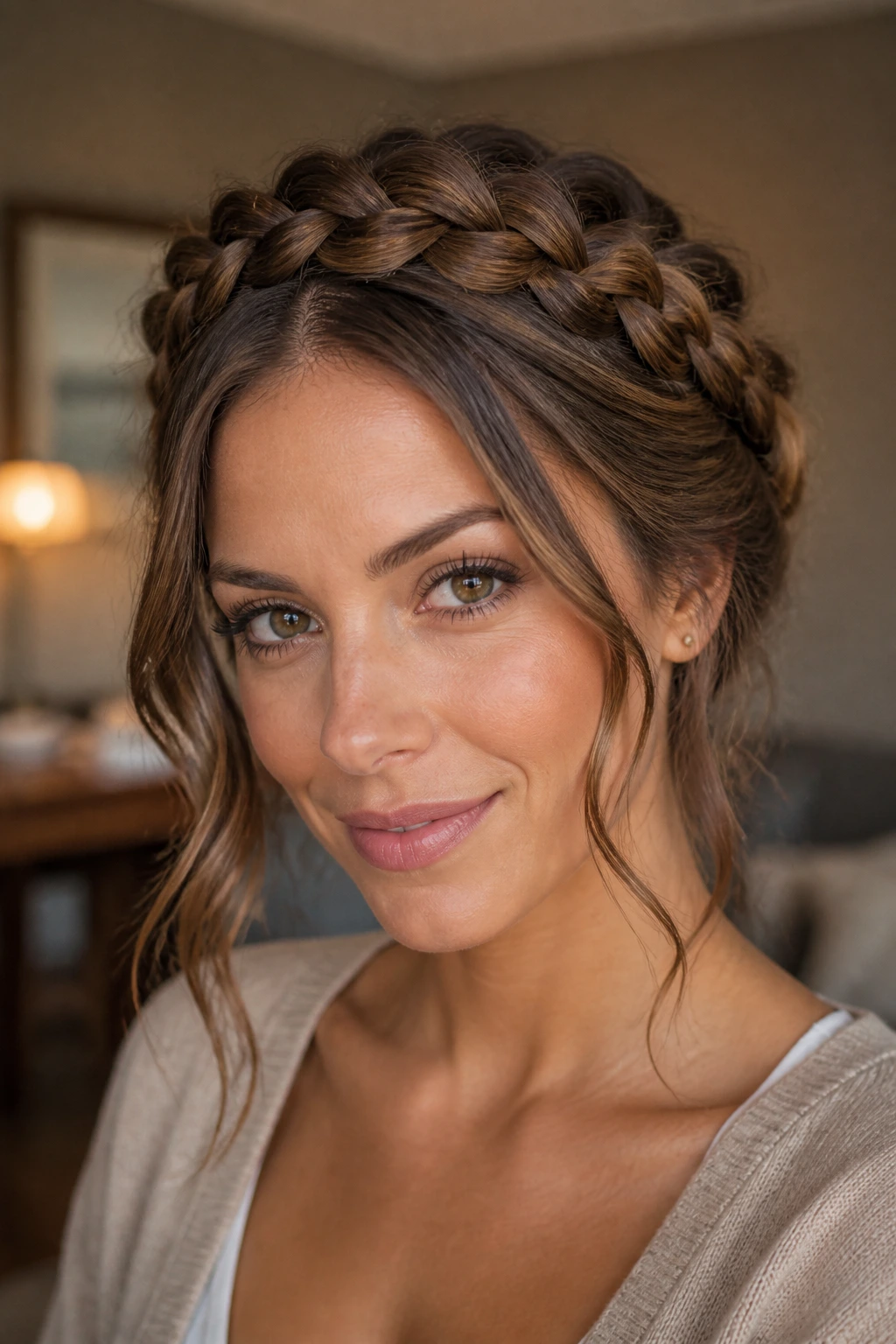
3. Halo Braid with Soft Tendrils
A halo braid can be gorgeous on a long face, but only when it stays soft. If the crown is too high and the braid sits too tight, the effect gets bridal in a way that pulls the eye upward. Leave out a few tendrils around the temples and you get balance back immediately.
This style works especially well on medium hair because the braid wraps without swallowing your length. The tendrils do a lot of the heavy lifting. They break the outline of the forehead and pull attention to the eyes and cheeks, which is exactly where you want it.
Keep the Shape Relaxed
A halo braid should sit like a frame, not a helmet. Pull the braid edges gently after it’s secured so the outer line widens a little. Tiny detail, big difference.
4. Wide Dutch Braids
Two wide Dutch braids can be a smart answer for a long face because they create side-to-side bulk right away. The raised braid texture gives the style body, and the width near the temples balances out the length of the face without relying on curls or extra accessories.
The key is not making the braids too sleek. Pancake them a little after braiding so they spread out. That flattened width helps the style look fuller on medium hair, where the braid sections can otherwise read skinny.
Best For
- Medium-density hair
- Casual days when you want something secure
- Hair that holds texture well after a little mousse or sea-salt spray
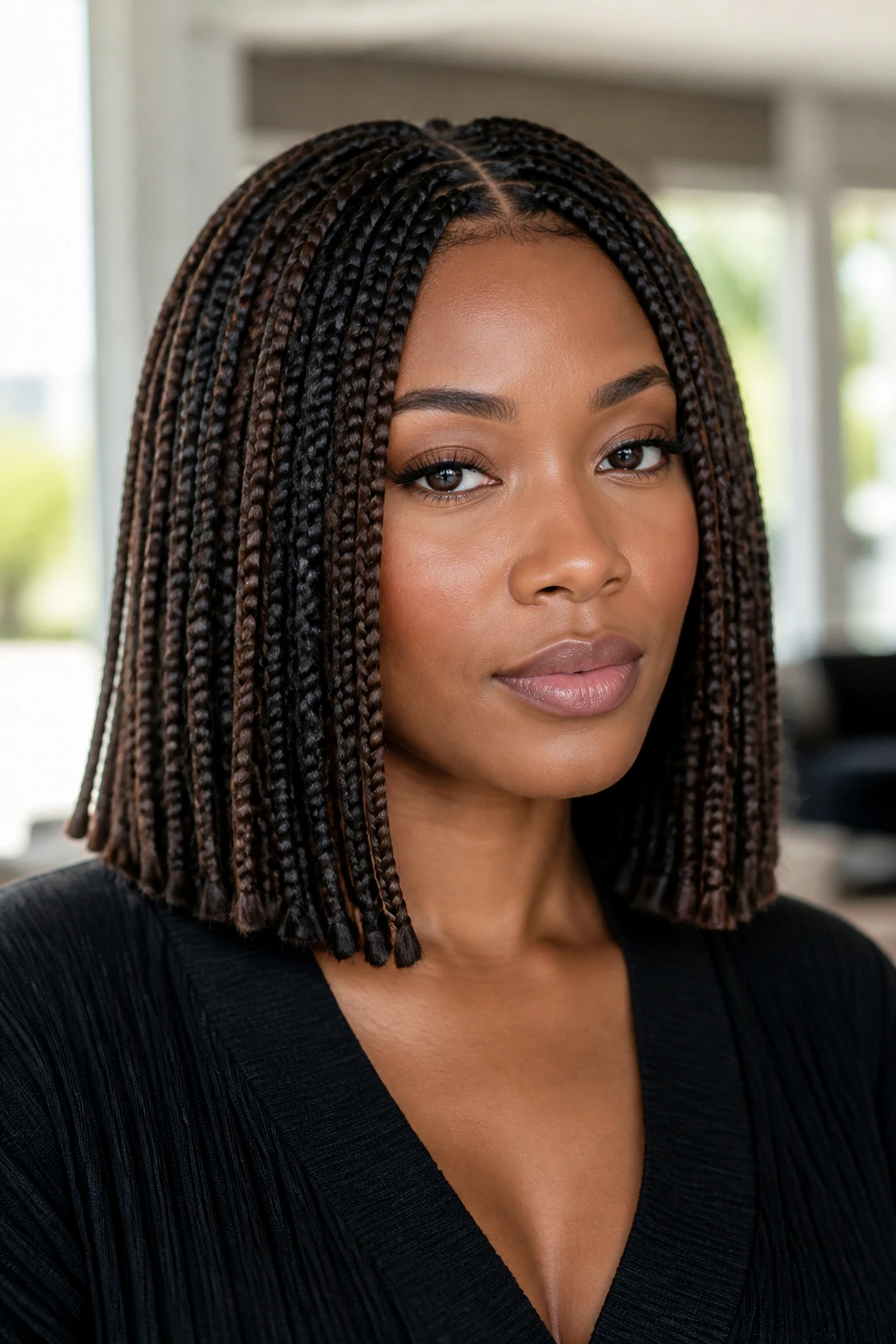
5. Braided Lob with Blunt Ends
This one is quietly excellent. A braided lob keeps the braid at a medium length, which means the style stops before it turns into a long vertical line. Add blunt ends — either your natural ends or tucked extensions cut evenly — and the braid has a visual “stop” that shortens the face a bit.
I like this for people who want braids but do not want the drama of waist-length extensions. It feels modern, tidy, and a little architectural. The blunt finish matters more than people think.
A wispy end can look pretty. A blunt end helps the whole braid read shorter and wider.
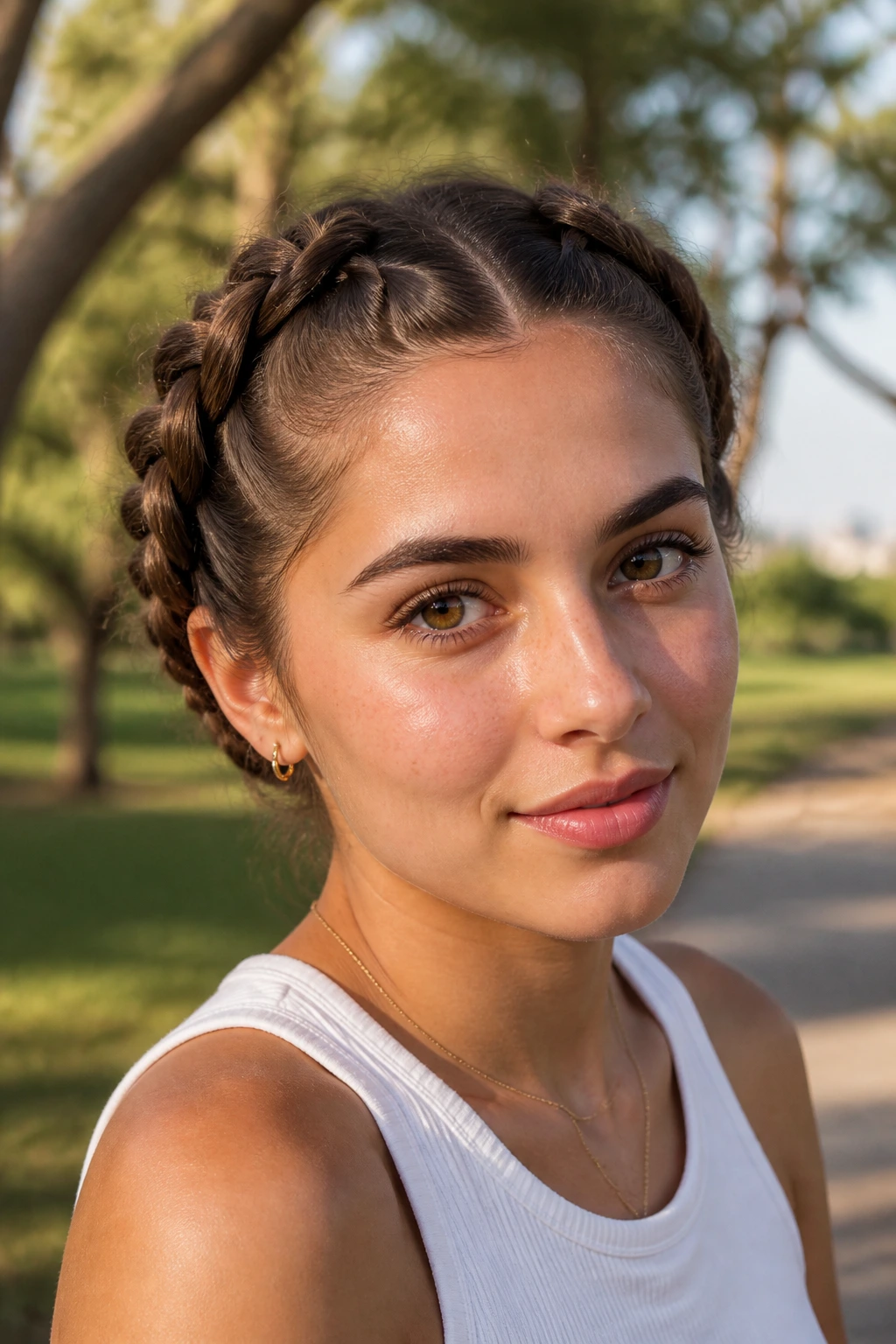
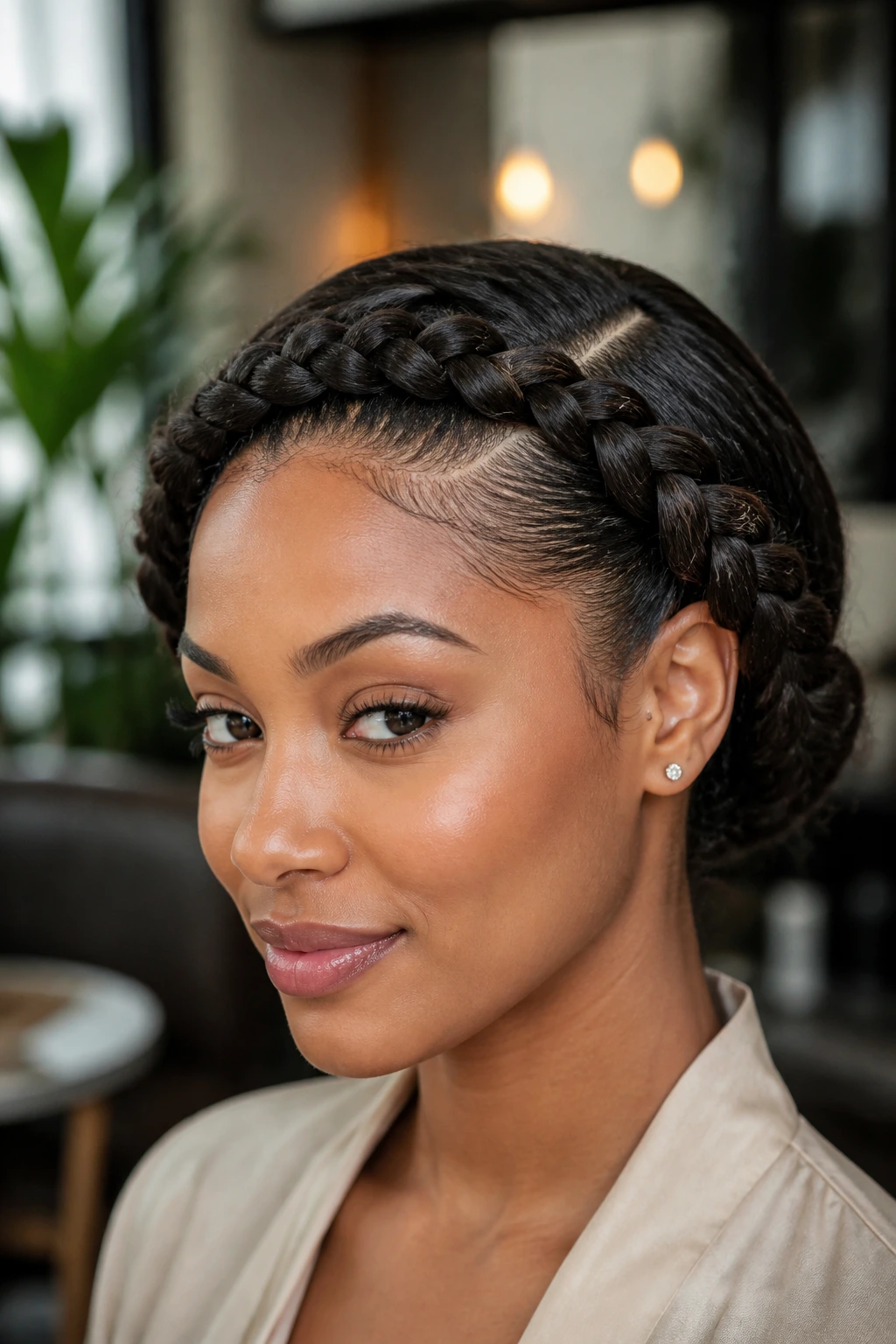
6. Deep Side-Part Crown Braid
Can a crown braid flatter a long face? Yes, if the part is deep enough to create a sideways pull. A center-part crown braid often stacks too much attention in the middle. A deep side-part version pushes the braid line off-axis, which softens the vertical shape and makes the forehead feel less dominant.
This style looks best when the braid sits low around the hairline instead of floating high above it. Keep the crown smooth, then let the braid widen near one ear. That slight imbalance looks intentional, and it gives medium hair a lot of shape.
Ask for This Detail
Tell your braider to keep the braid close to the head at the top and looser around the sides. That small adjustment changes the whole read of the style.
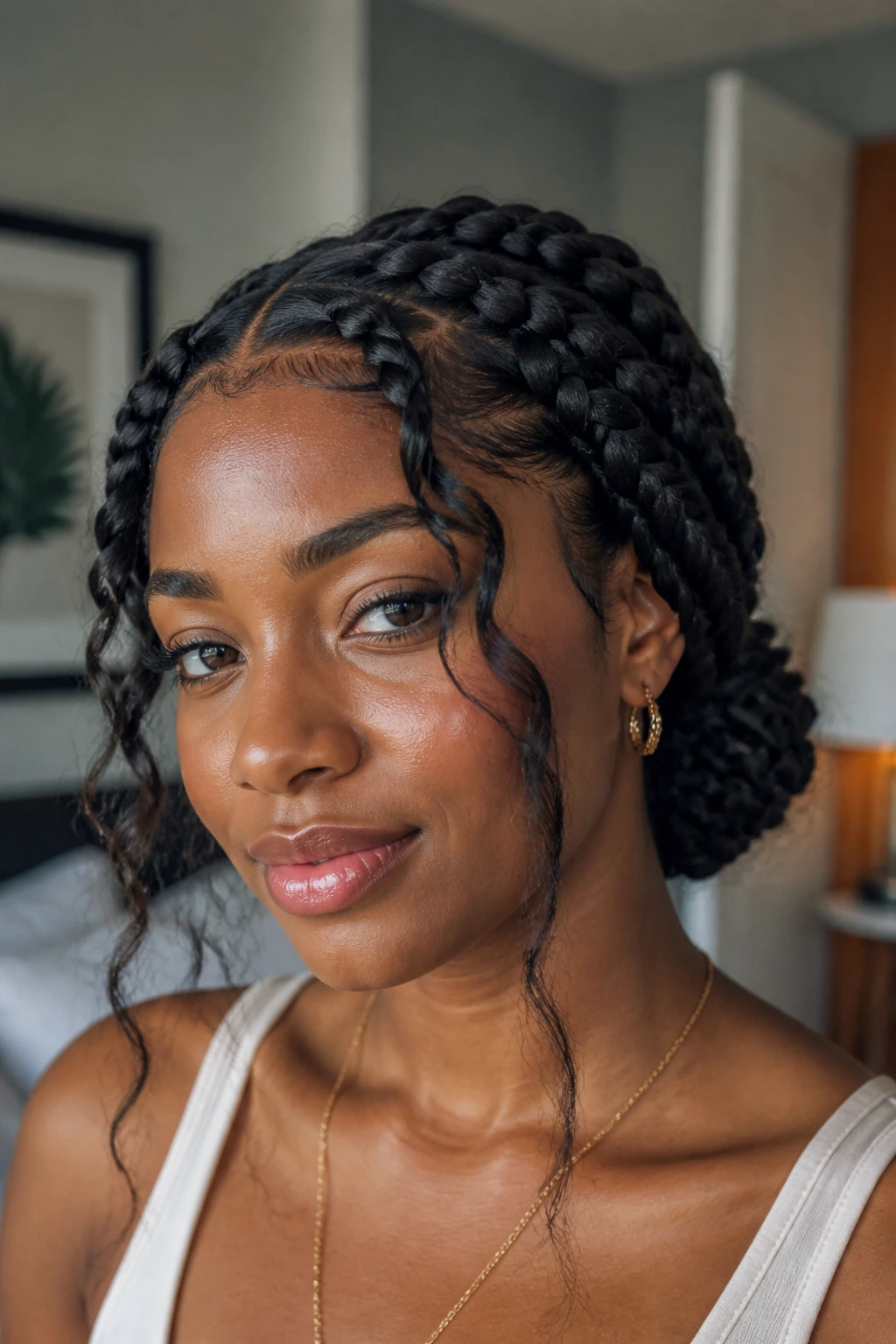
7. Goddess Braids with Loose Face Pieces
Goddess braids are excellent on long faces because they can be wide, soft, and a little sculptural without feeling heavy. Leave a pair of face pieces out at the temples, and the style stops feeling all up-and-down. It gets wider. Softer. Better.
Medium hair gives you enough length to anchor the braids, but not so much that the style loses its shape. I prefer this with a low bun or a tucked finish at the nape. The extra width around the face matters more than the length of the tail.
Why the Loose Pieces Help
Those few strands near the cheekbones interrupt the vertical line of the braid. They also make the style easier to wear with glasses, earrings, or a high-neck top.
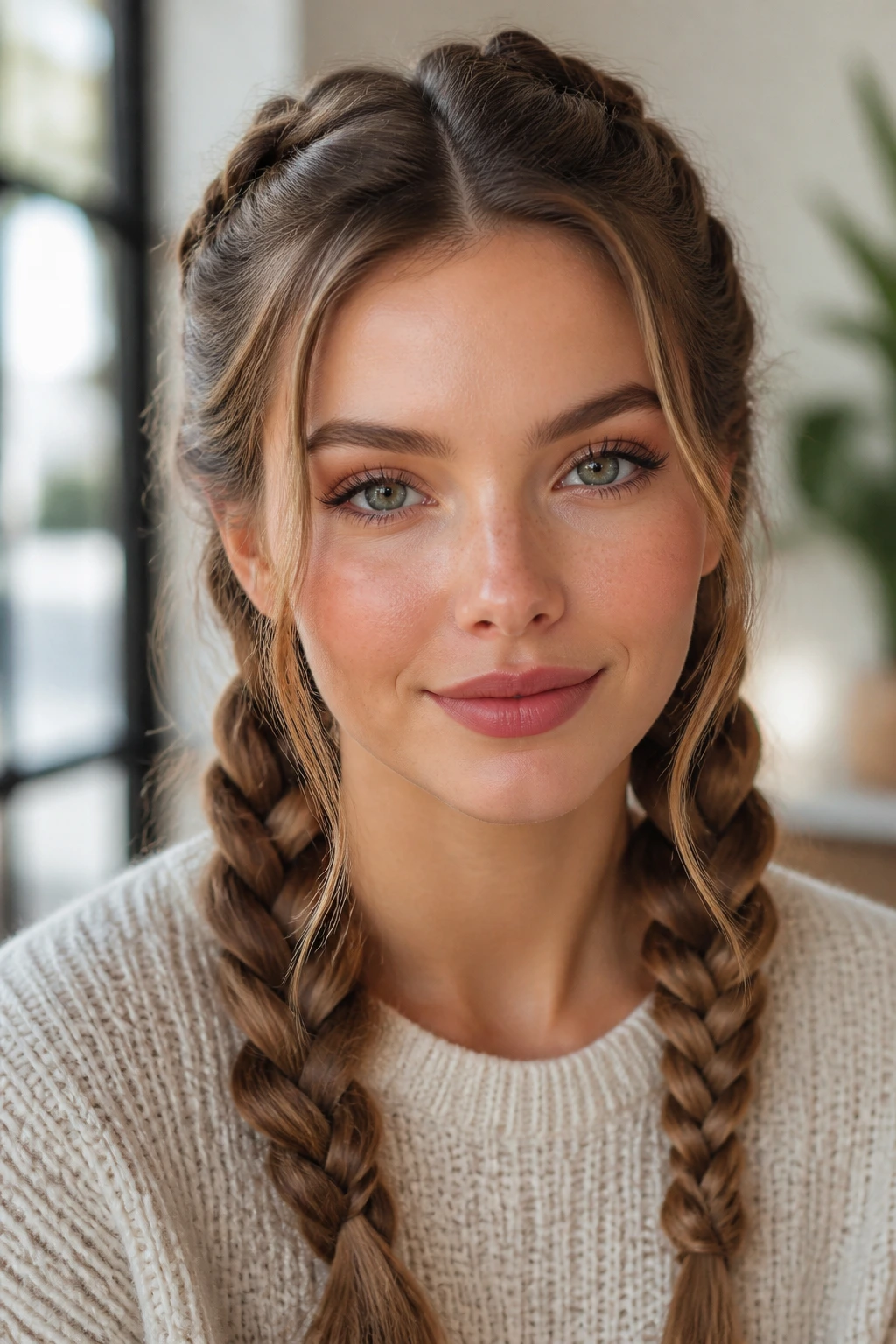
8. French Braid Pigtails
French braid pigtails are not just for school runs and gym days. On a long face, they can actually work because they split the visual load across both sides of the head. That creates width where the face needs it and keeps the braid volume from dropping straight down the center.
The trick is to keep the braids slightly loose at the top and not start them too high. If they begin too close to the crown, the effect can stretch the face. Start lower, and let the braids sit beside the cheeks instead of behind the head.
Small Style Note
Pull the outer loops a touch after braiding. You do not want fluffy chaos. You want enough fullness that the sides feel lived-in.
9. Single Side Braid Over One Shoulder
One braid over one shoulder is almost unfairly good for a long face. It brings all the visual mass to one side, which shortens the face in a very natural way. On medium hair, the braid usually lands in a nice middle zone — long enough to feel styled, short enough to avoid dragging the whole look down.
This is one of the easiest braid styles to wear with earrings, too. The braid sits off to one side and leaves the other side of the face open, which keeps the look from feeling boxed in.
Best when you want: a fast style that still looks deliberate
Avoid if: you want maximum symmetry
10. Low Braided Ponytail
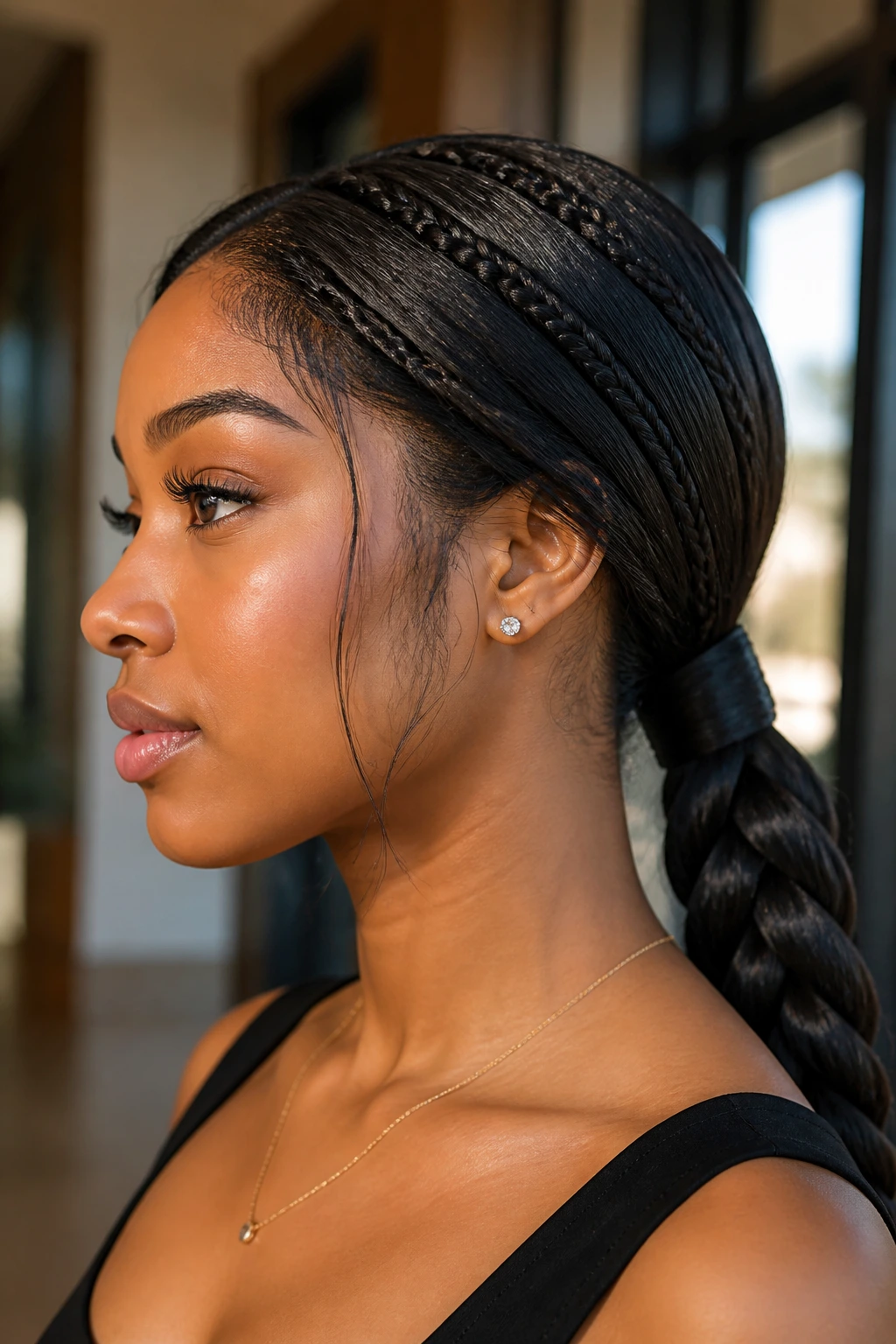
A low braided ponytail is one of the safest bets for a long face because it anchors everything near the neck. Nothing is pushed upward. Nothing fights the face shape. The braid gives polish, while the low placement keeps the silhouette grounded.
Medium hair is long enough to make the braid feel substantial, especially if you wrap a small section around the elastic. If your hair is very fine, add a little texturizing spray before braiding so the sections grip each other instead of sliding apart.
A clean low braid can look sharp. A softly loosened one looks friendlier.
11. Milkmaid Braids with Width at the Sides
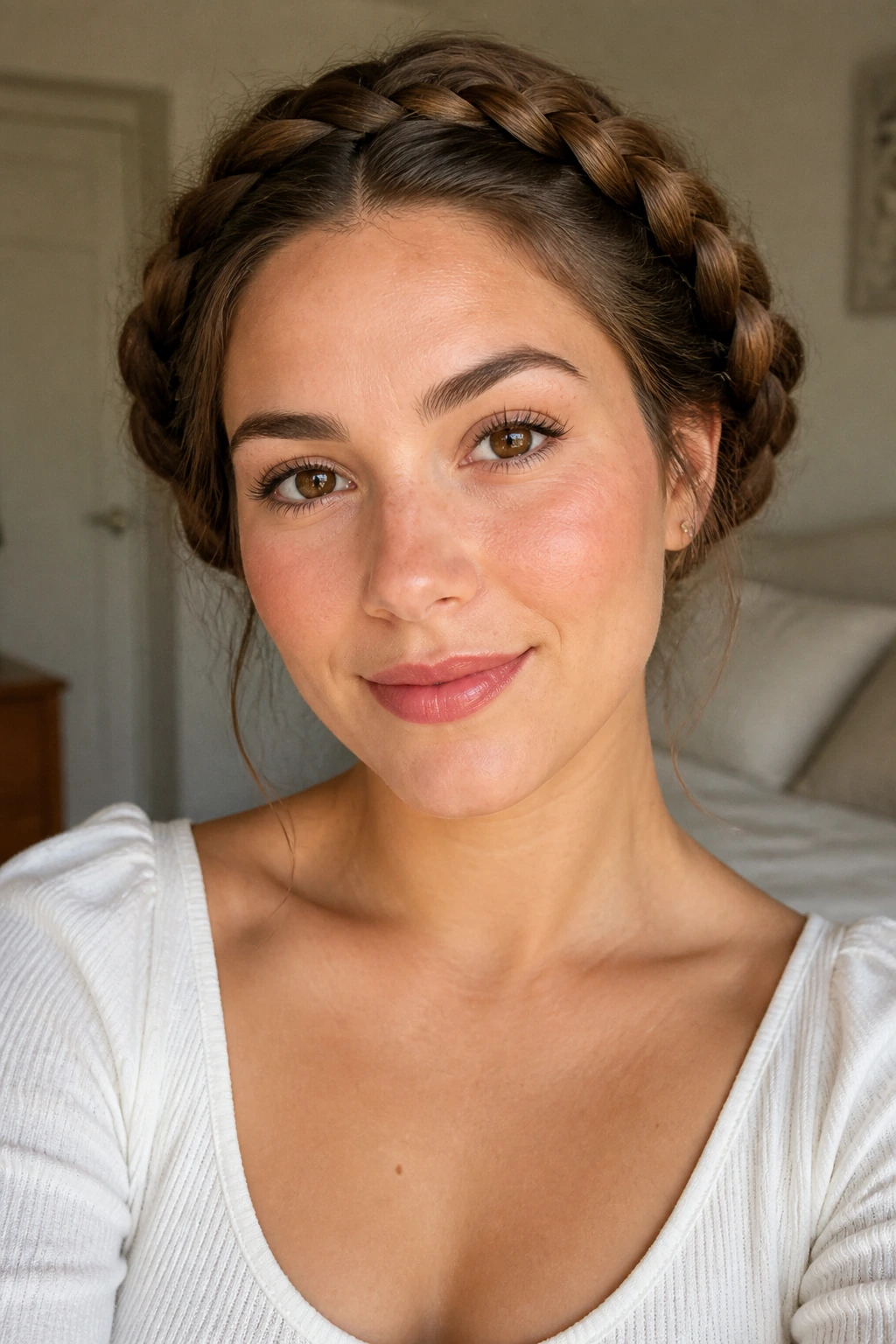
Milkmaid braids can work beautifully on a long face if they are worn low and wide. The old mistake is placing the braid crown too high, which makes the head look taller. Lower it until it hugs the upper ears, and the whole thing starts to frame the face instead of stretching it.
The width at the sides is the point here. You want the braid to sit like a band, not a tower. Medium hair can pull this off without a lot of padding, though a little backcombing at the roots helps if your strands are slippery.
Tiny Adjustment, Big Payoff
Pin the braids slightly behind the ears instead of on top of them. That one move changes the face shape conversation immediately.
12. Fishtail Side Sweep
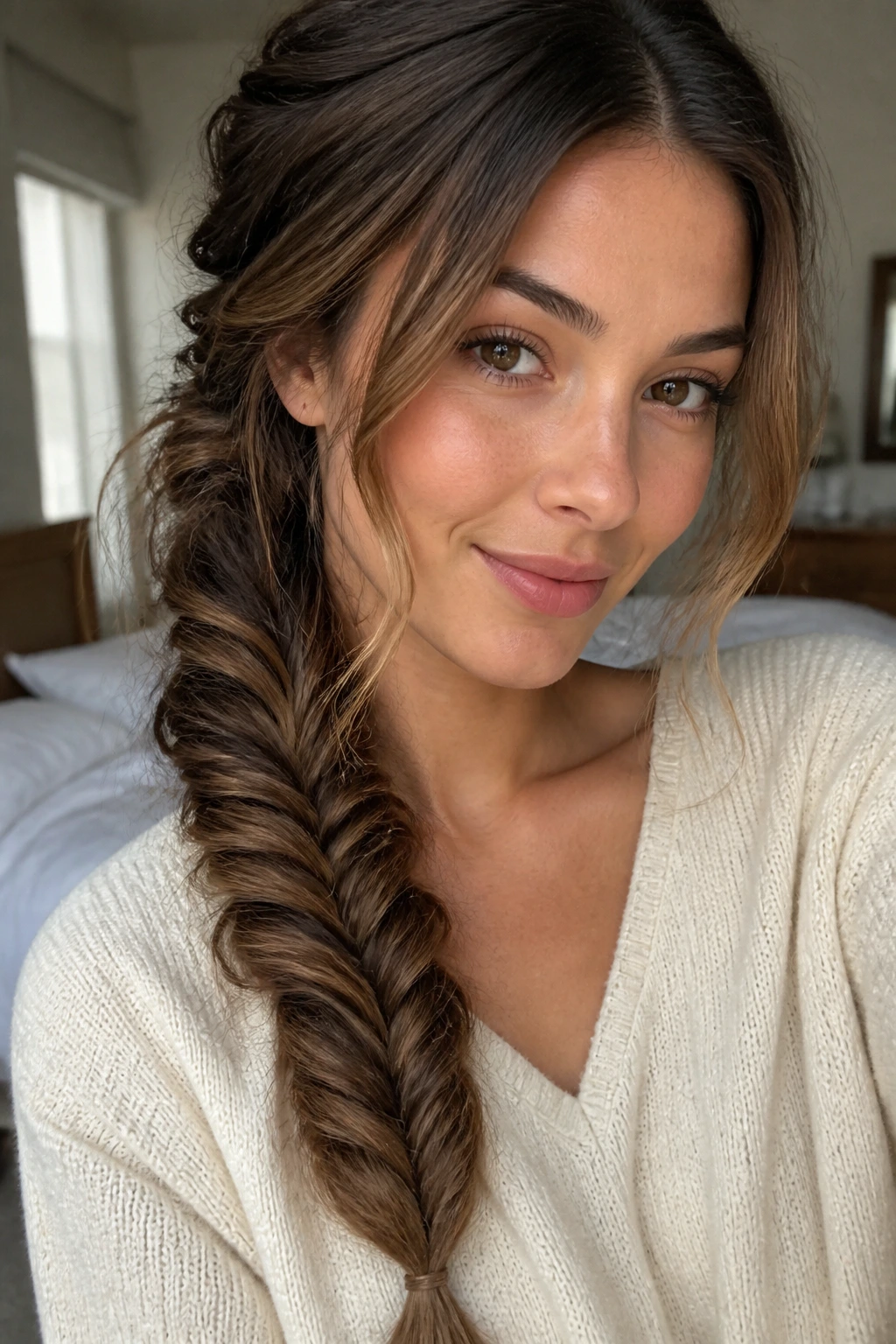
A fishtail braid has more texture than a standard three-strand braid, which makes it useful for long faces because texture draws the eye sideways. Worn to one side, it feels less linear and more full. That softer texture helps break up the long vertical field of the face.
On medium hair, fishtails often look best when the braid is not too tight. Pull the edges a little after you finish it. You want width, not perfection. A too-sleek fishtail can get thin fast and lose the balancing effect.
How to Wear It
Let the braid start low and sweep across the shoulder. That angle keeps the face from feeling stretched and gives the profile more movement.
13. Zig-Zag Part Feed-In Braids
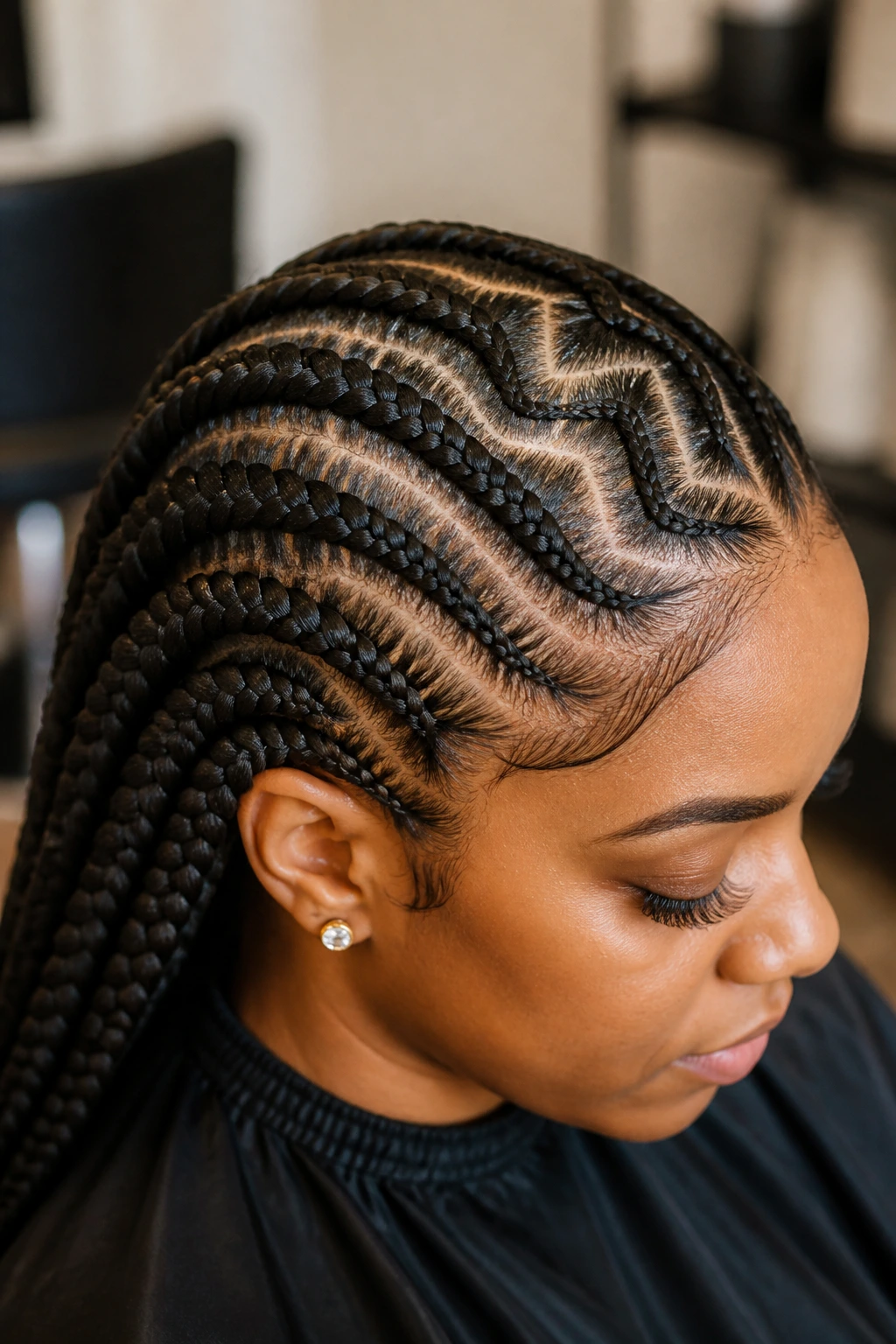
A zig-zag part is one of the easiest ways to make feed-in braids feel more playful and less severe. That matters on a long face because hard vertical lines can exaggerate length. The zig-zag breaks the pattern right at the scalp, so the eye sees shape instead of height.
This is a strong choice if you want something protective with attitude. The parting itself becomes the detail. Medium hair is enough for the base, though you can add braiding hair for fullness if you want the ends to hold more body.
Ask for: small-to-medium zig-zags, not tiny sharp angles. The part should read from a couple feet away, not only under a microscope.
14. Pull-Through Braid with Pancaked Sections
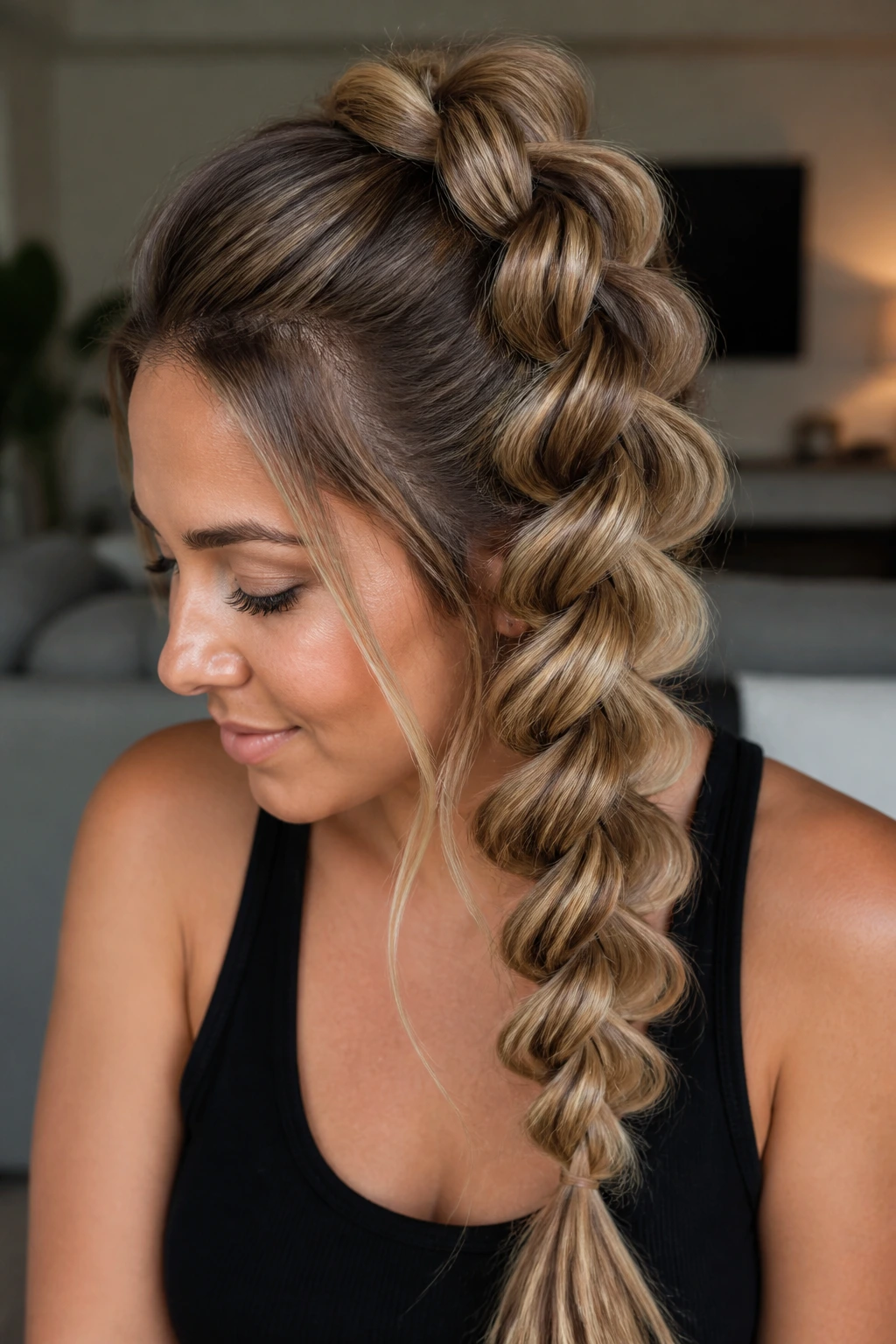
If you want a braid that looks thick even on medium hair, the pull-through braid is the one to keep in your pocket. It creates exaggerated width by stacking ponytail loops, so the result feels fuller than a classic braid. On a long face, that width is useful. It stops the style from becoming one slim line down the middle.
Pancake the sections gently after each loop is secured. That flattens the braid outward and makes it feel softer around the face. It’s a little more time than a regular braid, but the payoff is obvious.
A Good Match For
- Thin to medium hair
- Events where you want noticeable braid texture
- Anyone who likes volume without teasing the whole head
15. Rope-Twist Buns
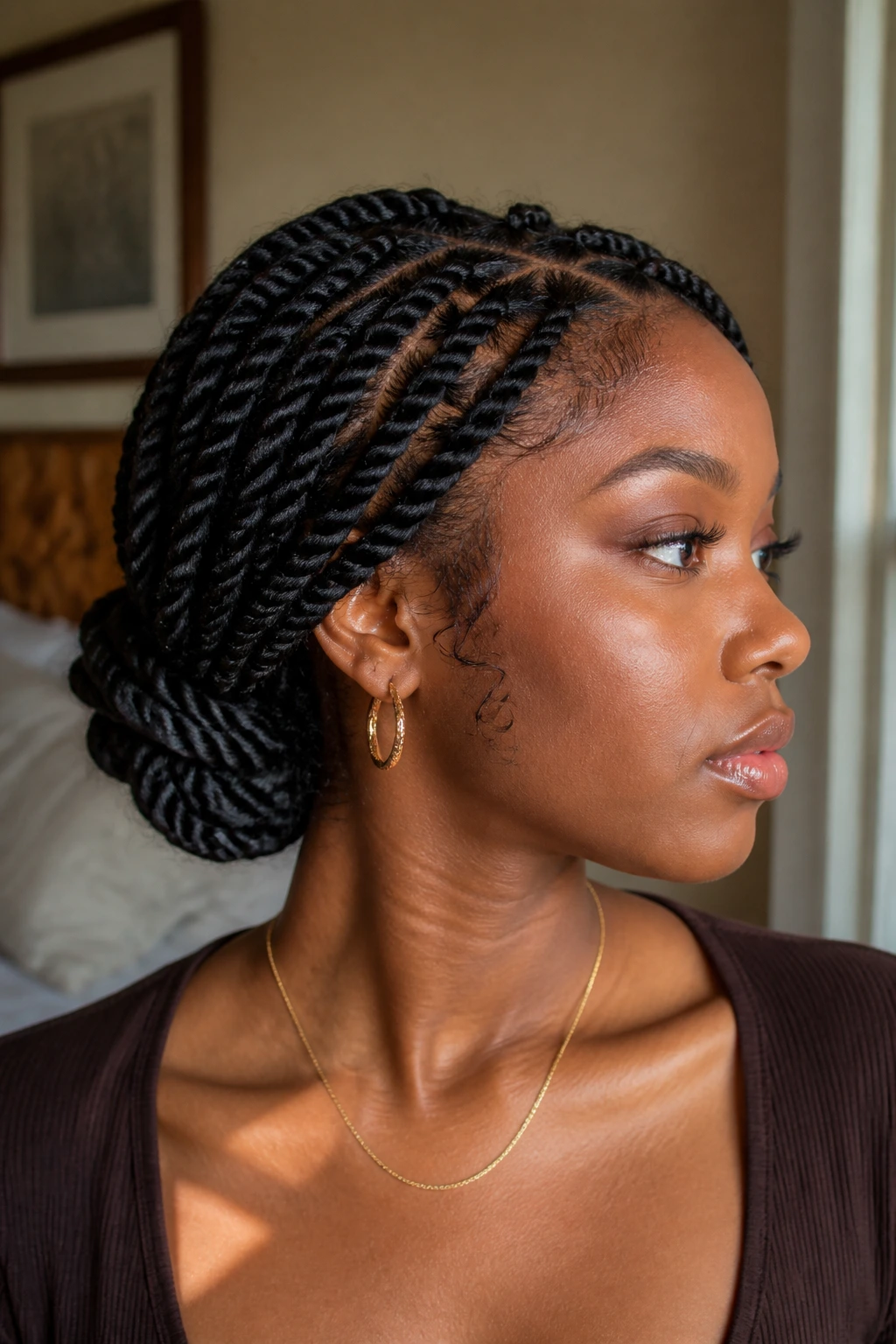
Rope twists read a little sleeker than braids, but they still fit this list because the pattern sits better on medium hair than a big, tall bun does. The key is keeping the bun low and broad. A high rope-twist bun can lengthen the face. A low one brings the eye down and out.
I like this style when the braids or twists are wrapped near the nape and not stacked on top of each other. It feels neat, and it does not fight the face shape. Add a middle or deep side part if you want a bit more softness around the forehead.
A low bun. Always better than a towering one here.
16. Half-Up Braided Crown
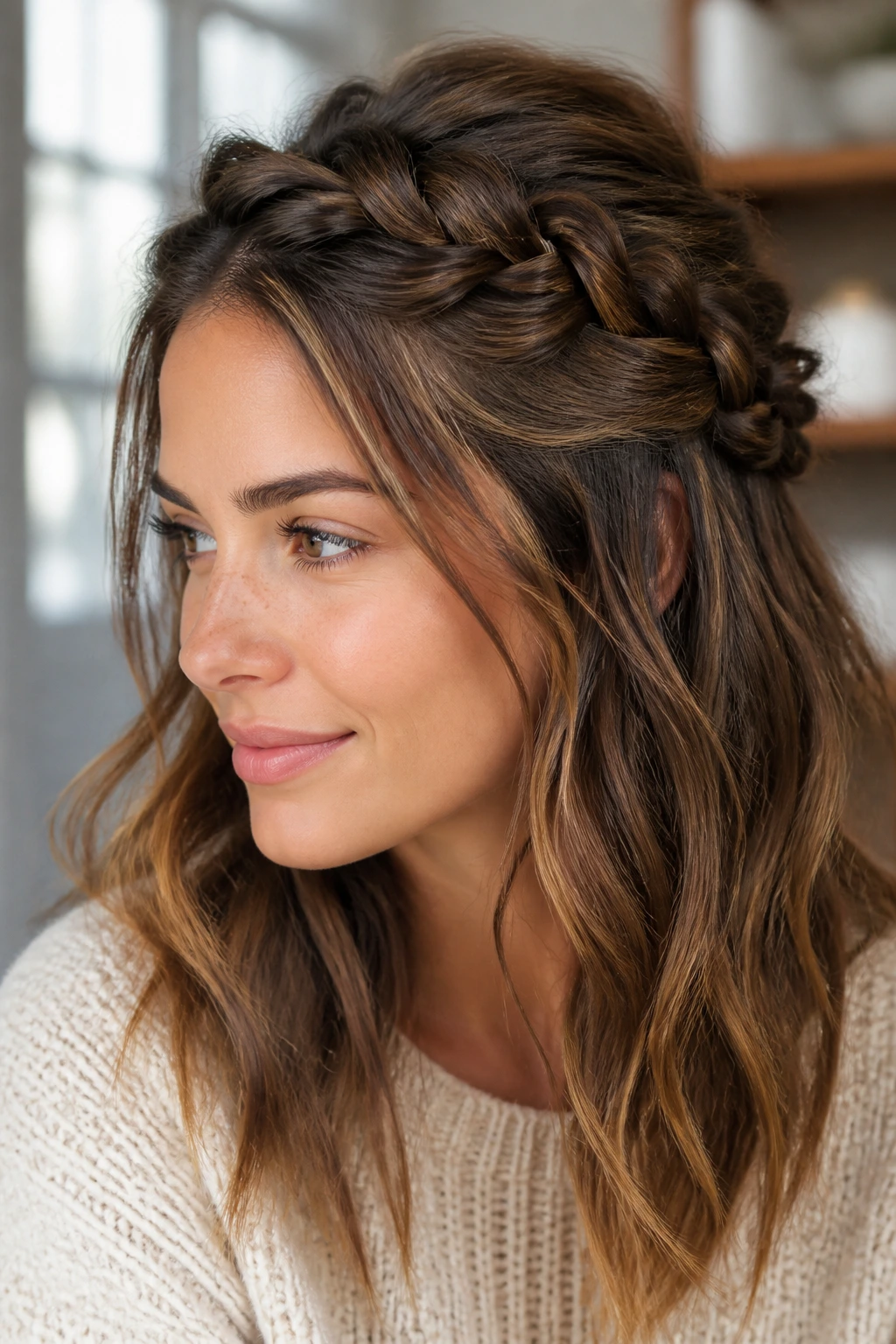
A half-up braided crown gives you lift without going too high, which is exactly the kind of balance a long face often needs. The top section is braided back, but the lower hair stays loose, so the face is framed on both levels. That lower hair matters. It keeps the whole look from reading too vertical.
Medium hair is a sweet spot for this style because the loose section still has enough weight to move. If your hair is layered, even better. The pieces around the jaw help shorten the face visually.
The Smart Part
Keep the braid line a little wider near the temples and narrower at the crown. That little shape shift makes the style flatter the face instead of climbing away from it.
17. Stitch Braids into a Low Bun
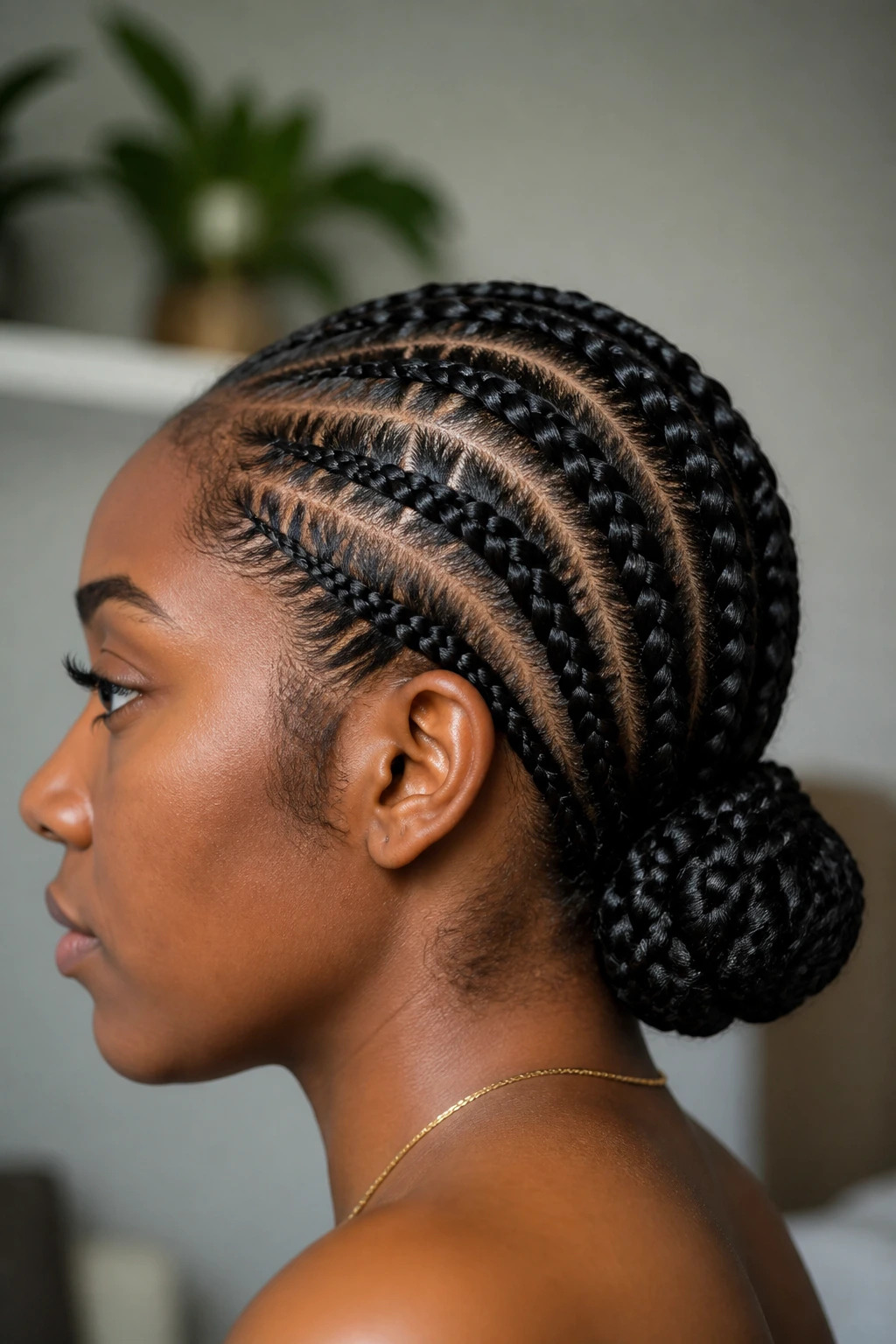
Stitch braids look sharp because the parts are clean and the sections are crisp. On a long face, they work best when they finish low. A stitch braid with a low bun keeps the scalp detail visible while placing the bulk where it will not add height.
This is one of the most polished looks in the list, and medium hair handles it well because the braid pattern stays defined. If you have thick hair, ask for slightly wider stitches so the braids do not become too tight at the temples.
Don’t Overdo the Tension
Tight stitch braids can make the forehead look more pronounced. The style should feel secure, not strained.
18. Braided Bangs with Loose Length
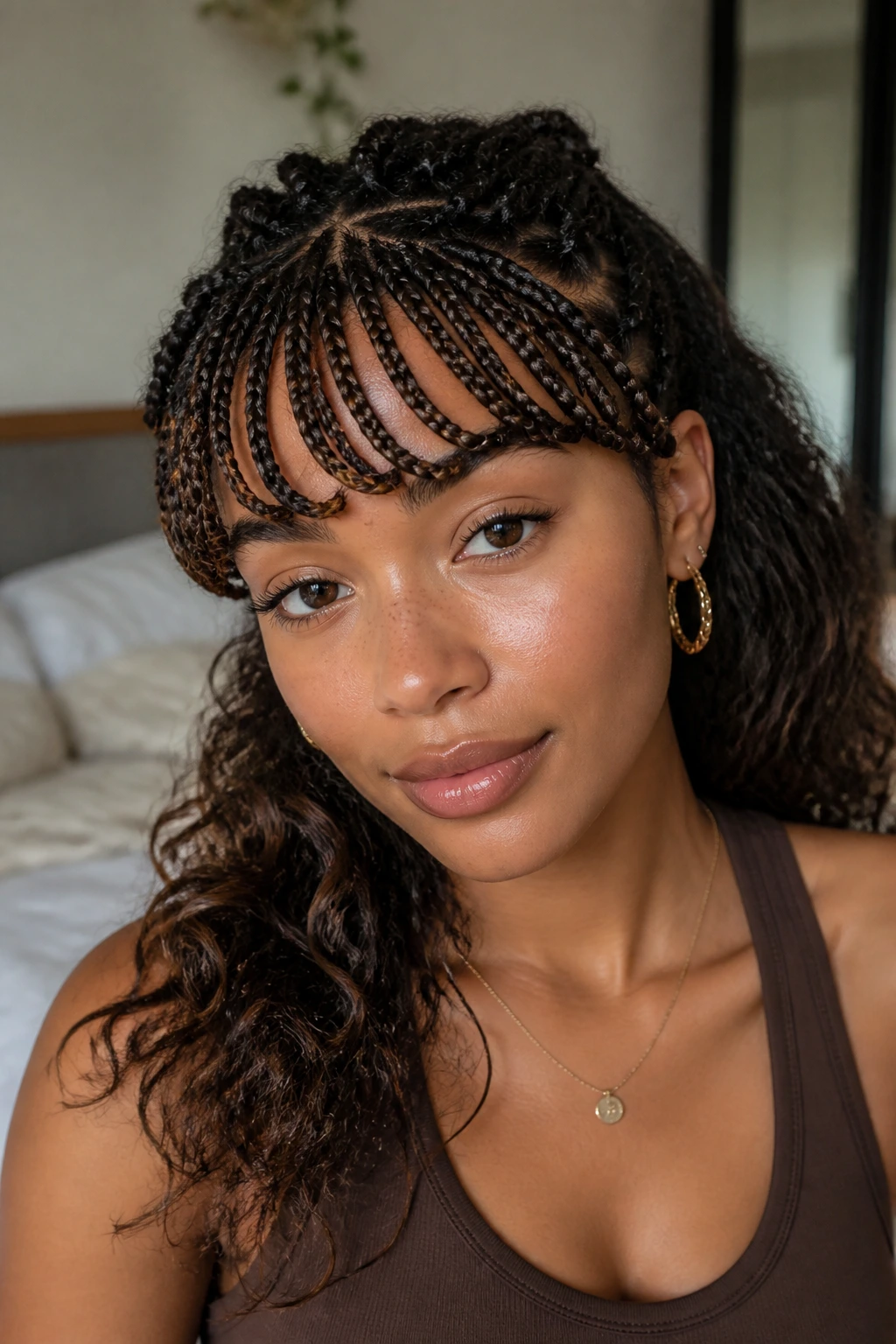
Braided bangs are underrated for long faces. Even a small braid sweeping across the front can interrupt the vertical line in a big way. The loose length behind it keeps the style soft, so you get structure without turning the whole look into a severe updo.
This works especially well on medium hair because the loose section still has enough presence to balance the front braid. A side-swept bang braid, or a tiny braid pinned near the temple, can change the whole face shape read.
Best detail: keep the front braid slightly loose and textured, not stitched so flat that it disappears into the hairline.
19. Micro Braids with Curved Ends
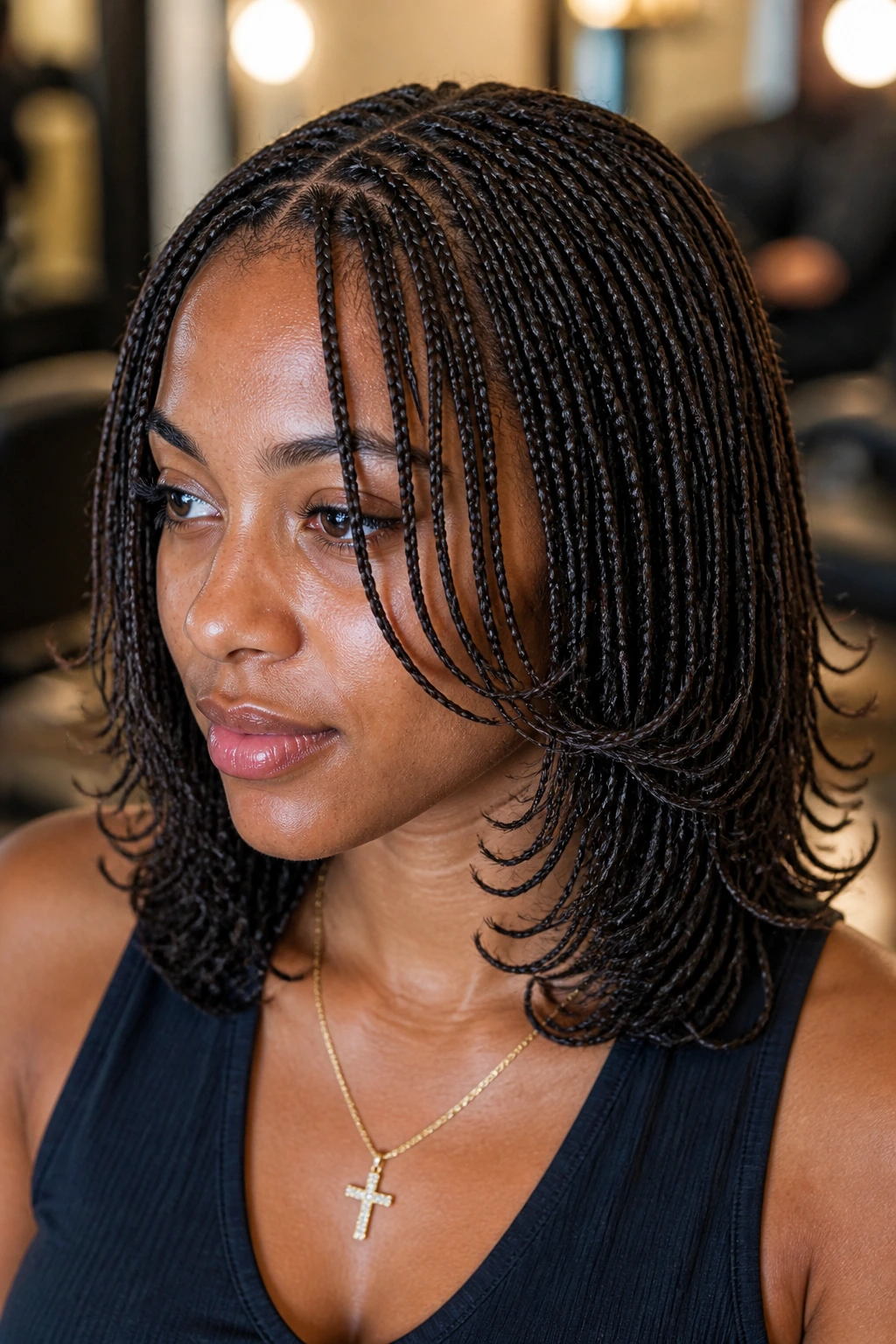
Micro braids are not the first style people think of for long faces, but the curved end placement makes them work. The danger with tiny braids is all that vertical line. The fix is simple: keep the parting soft, curve the sections around the head, and let the ends sit with a little bend rather than hanging straight.
On medium hair, micro braids have a nice density without looking too heavy. They can take time, so this is a commitment style, but the payoff is longevity and movement. A center part is not mandatory here. A side part often gives the face a better proportion.
A few curved layers at the front help a lot.
20. Waterfall Braid on Medium Hair
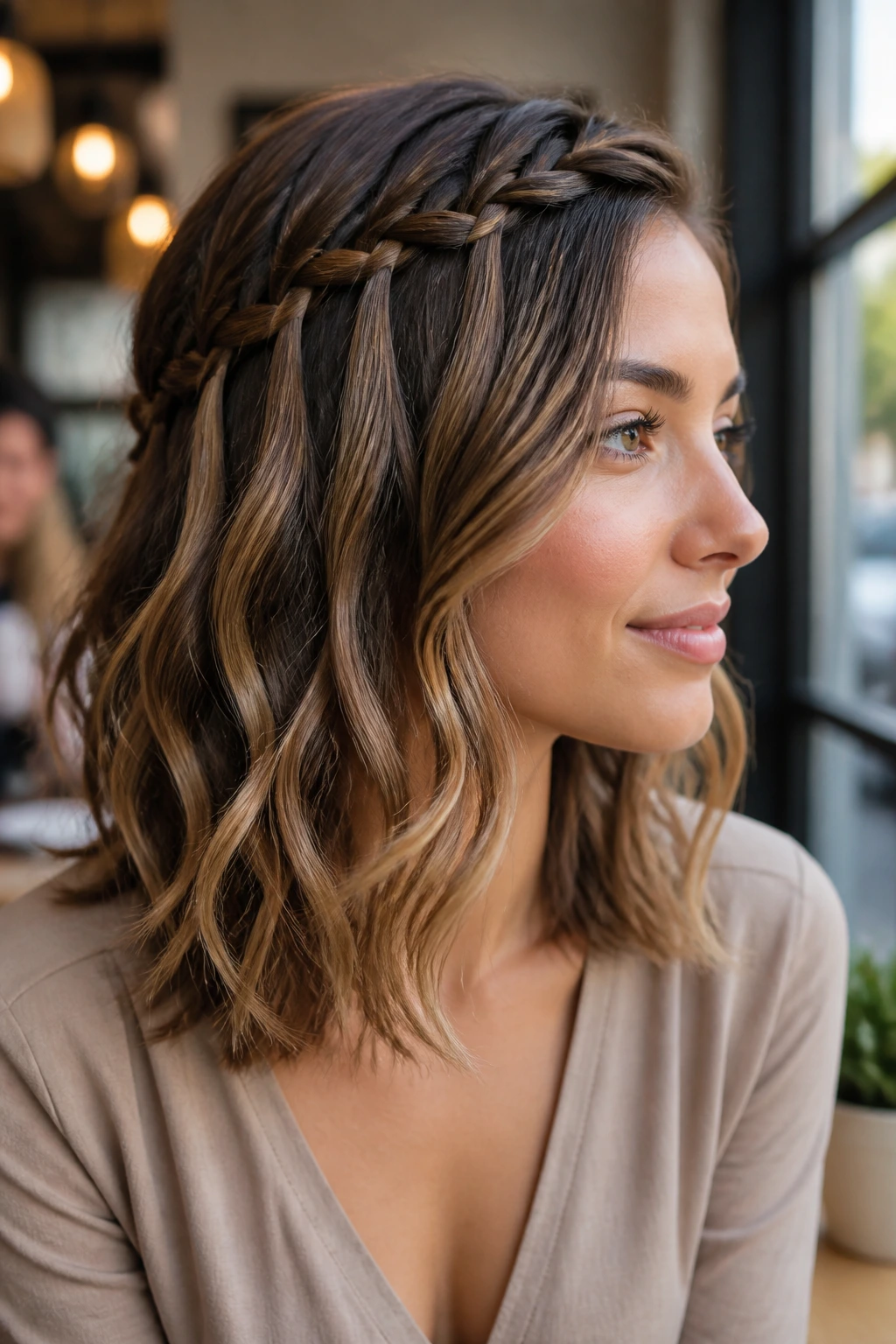
Waterfall braids bring movement without locking the hair into one hard shape. That’s useful on a long face because the gaps in the braid create horizontal breaks. The eye doesn’t just follow one long line from forehead to chin. It wanders.
Medium hair gives waterfall braids a nice drop, especially if the ends are curled lightly. The style looks more open than a full braid, so it’s good if you want something softer for events or dinner without losing all structure.
Where It Shines
- Layered medium hair
- Hair that holds a soft bend
- Days when you want a braid that still feels airy
21. Braided Space Buns
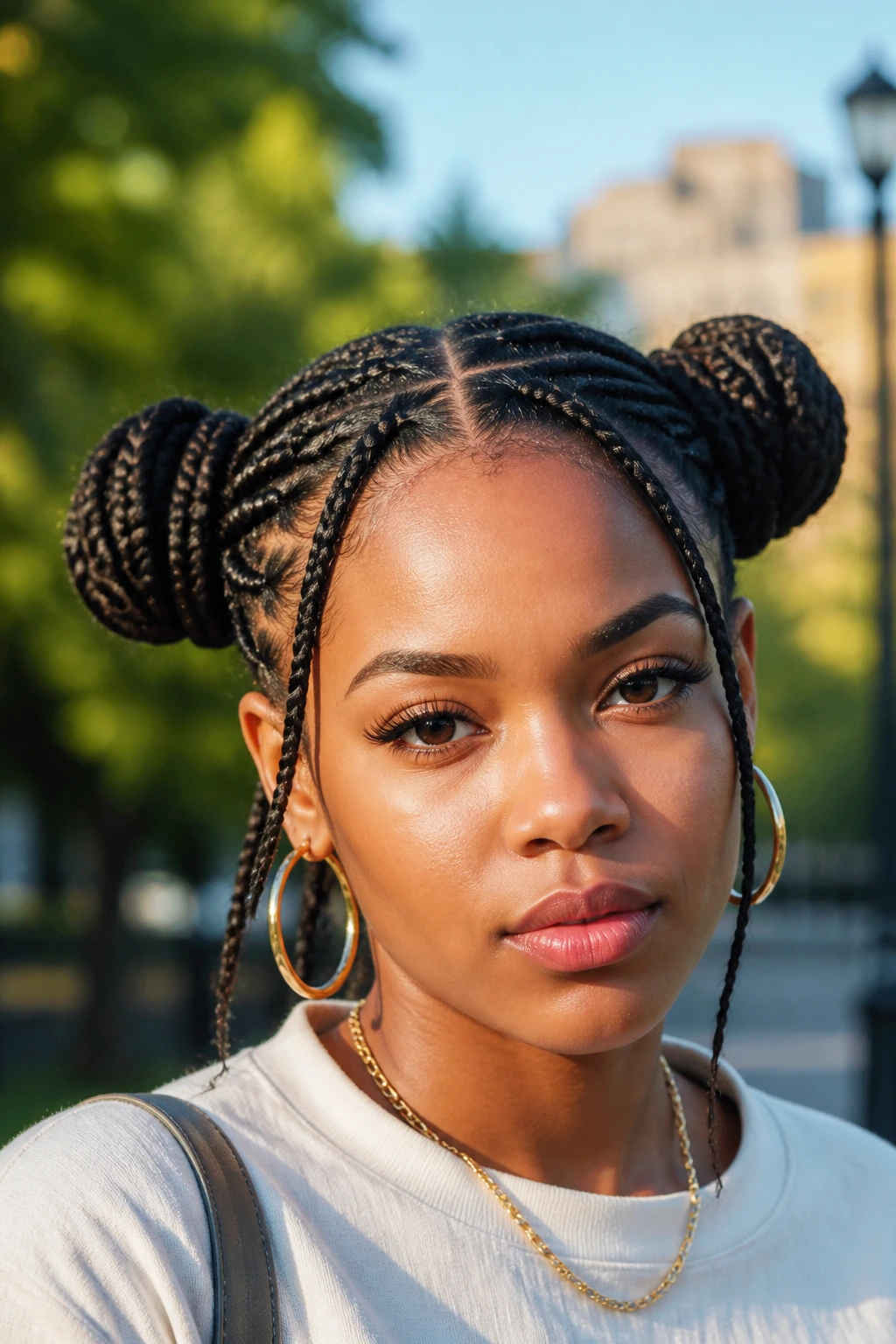
Space buns can absolutely work for long faces, but the placement has to be low enough and wide enough to avoid looking like you stacked height on top of height. Braiding the sections first helps keep the buns controlled and adds texture around the sides.
On medium hair, this style lands in a fun, wearable place. The buns should sit more toward the upper sides of the head than straight up on top. That little adjustment keeps the face from looking longer and gives the look some width.
Too high, and it’s all wrong. Slightly lower, and it works.
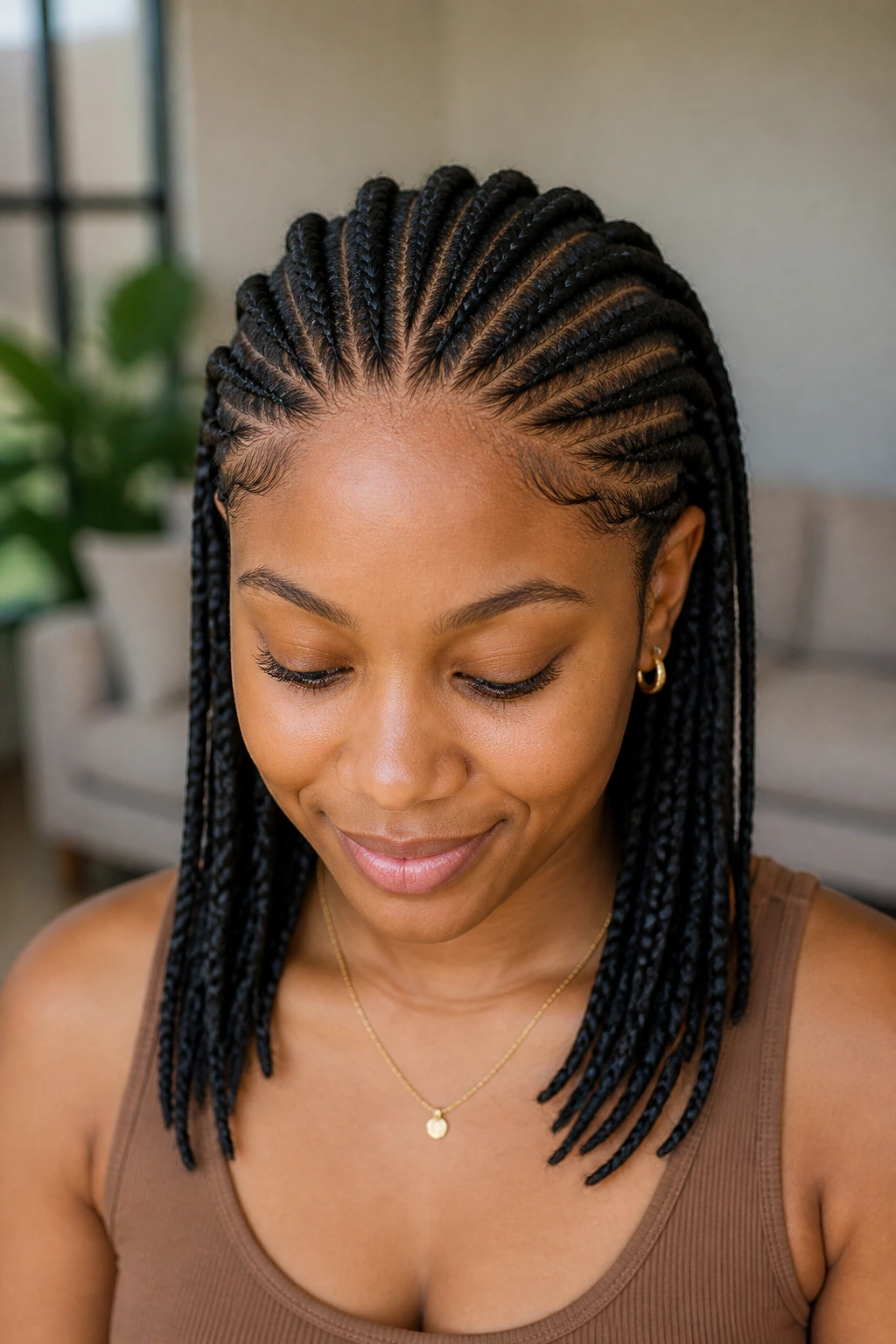
22. Cornrows with Curled Ends
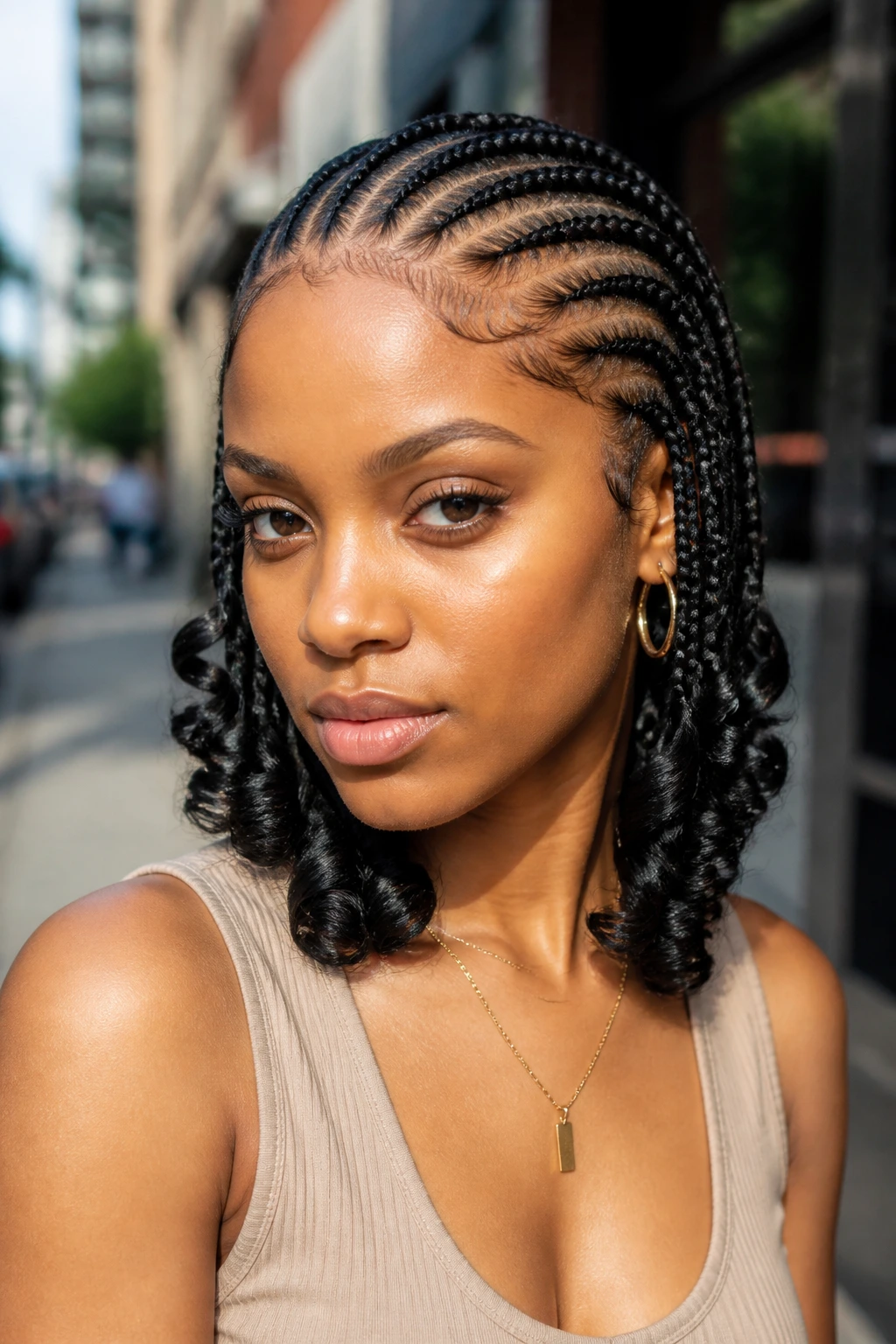
Cornrows with curled ends give you a clean scalp pattern and a softer finish, which is a smart combo for a long face. The cornrow base keeps the top neat, while the curled ends add movement around the jaw and neck.
This is one of my favorite options for medium hair because it doesn’t demand extreme length. The curls at the end can be loose, defined, or brushed out a little. What matters is that the final shape has width and motion instead of one narrow straight drop.
Best Tip
Keep the cornrows from climbing too high at the front hairline. The lower they start, the less elongated the face looks.
23. Braided Headband with Loose Hair
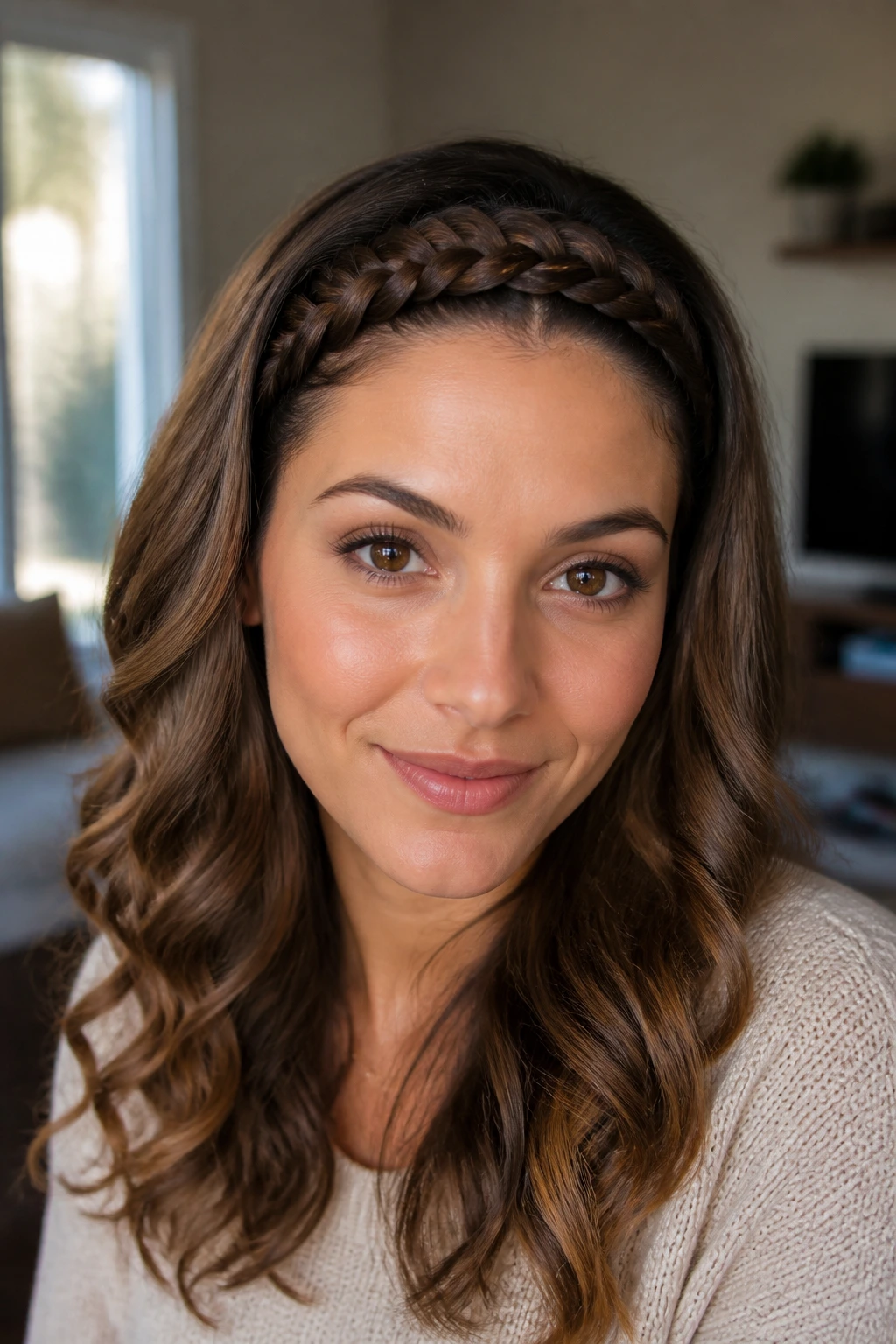
If you want a low-commitment braid style for a long face, braid the front like a headband and leave the rest loose. That braid sits across the forehead area, which visually shortens the face and gives the eyes a place to land. The loose hair below keeps the look from feeling boxed in.
Medium hair is ideal here because the loose section still has body. A little bend at the ends helps, but even straight hair works if the braid is wide enough. This is one of those styles that feels casual and polished at the same time.
A small braid can do a lot when it sits in the right place.
24. Ladder Braid Half-Up
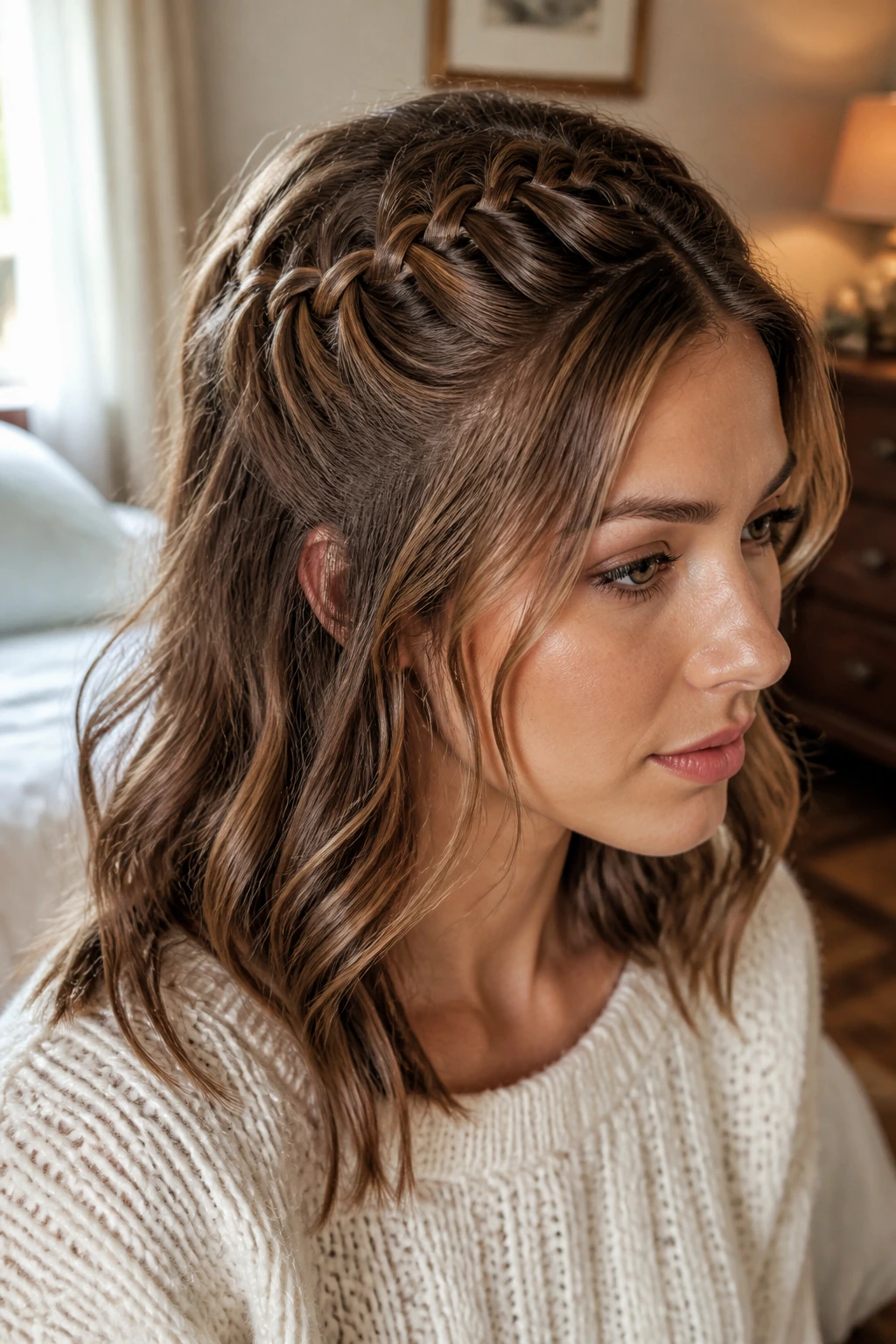
A ladder braid adds a little structure without taking over the whole head. That makes it a strong choice for long faces, especially when paired with loose hair underneath. The braided sections create horizontal movement, and the half-up shape keeps the crown from becoming too tall.
On medium hair, the ladder detail usually shows best when the braid is pulled gently wider after it’s set. Don’t keep it razor-tight. The whole point is to get a patterned shape that sits across the head instead of running straight down it.
When to Choose It
Pick this style if you want something more interesting than a basic half-up braid, but less committed than a full protective style.
25. Side Cornrows into Puff
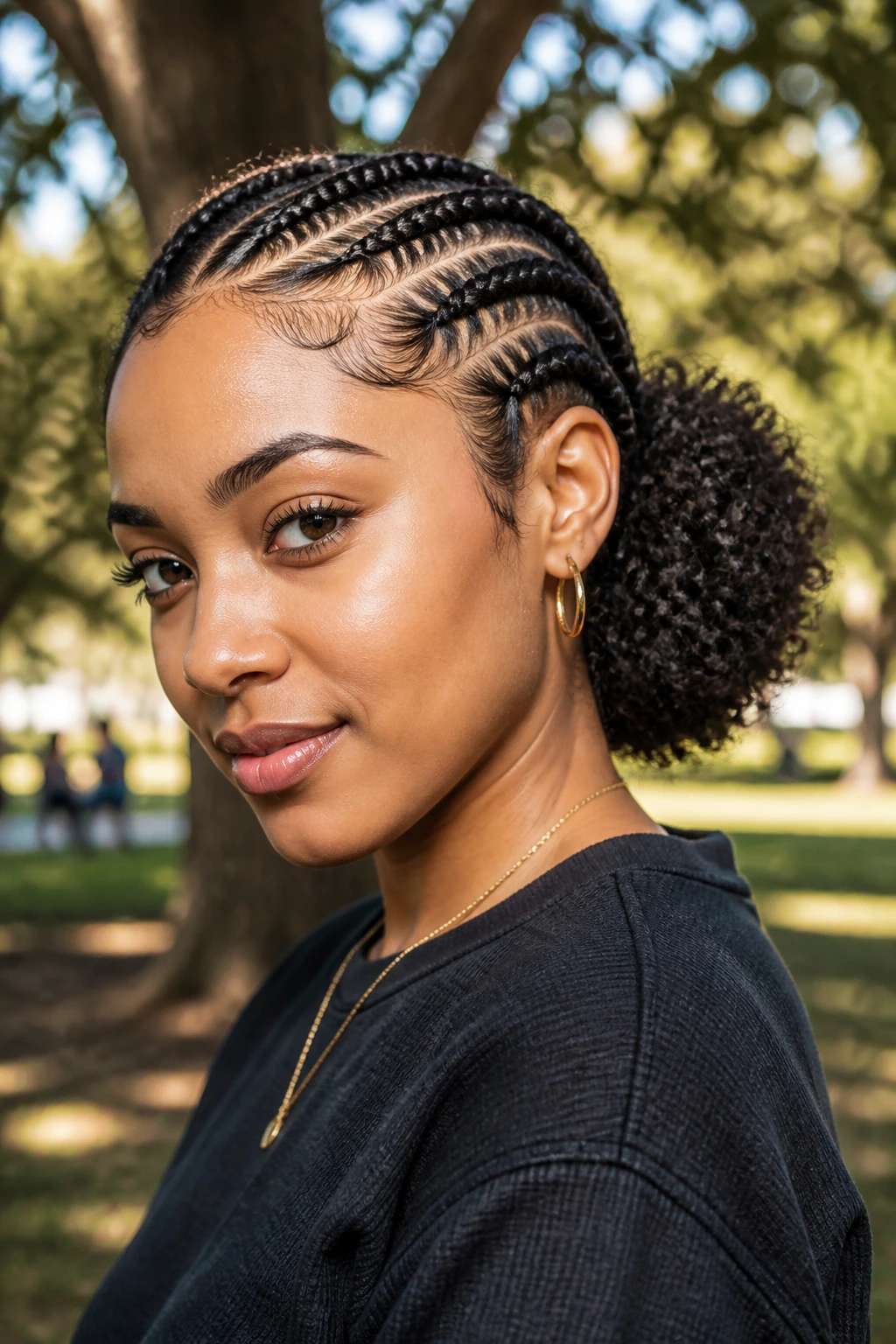
Side cornrows into a puff give you a little edge and a lot of balance. The cornrows add directional movement, while the puff sits low and wide, which is exactly where a long face benefits most. The puff acts like a soft anchor at the nape or side, so the look feels full without building height on top.
This style works well on medium hair because you do not need a huge amount of length for the puff to have shape. If your hair is textured, let the puff stay fluffy rather than trying to slick it too flat. Flat can lengthen. Fullness helps.
26. Mermaid Braid with Layers
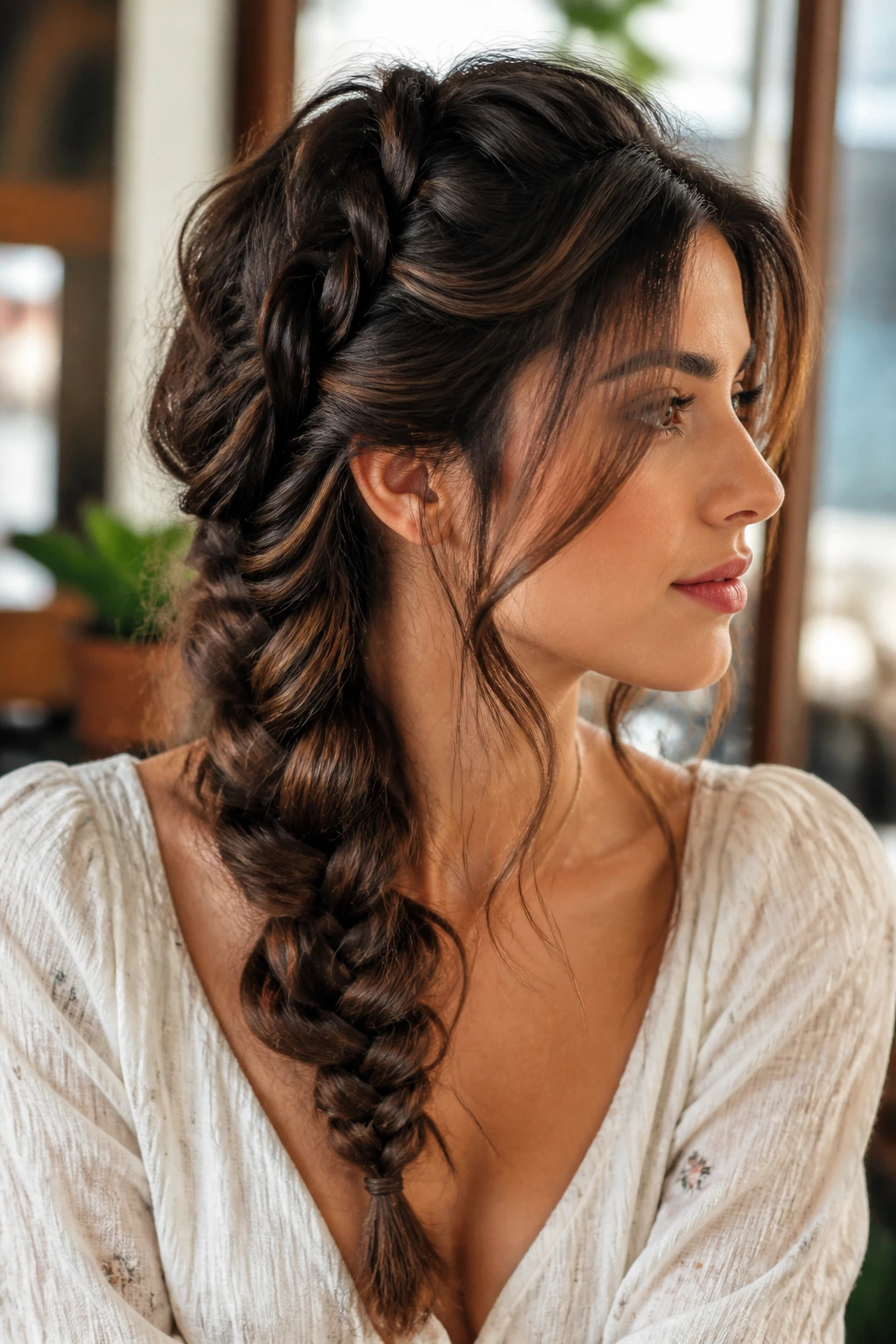
Mermaid braids are all about looser, fuller sections, and that suits a long face beautifully when the braid is kept medium in length. Layers around the face help the braid read softer and less linear. If your hair is one uniform length, the braid can still work, but a few face pieces make it better.
This style has a bit of softness that a standard three-strand braid lacks. It feels textured, romantic, and less severe. On medium hair, the braid should stop around the upper chest or shoulder area so it doesn’t become a straight vertical line.
Quick Adjustment
Pull the braid wider near the middle than at the top. That gives the face a little extra balance around the cheeks.
27. Double Dutch Braids into Low Puffs
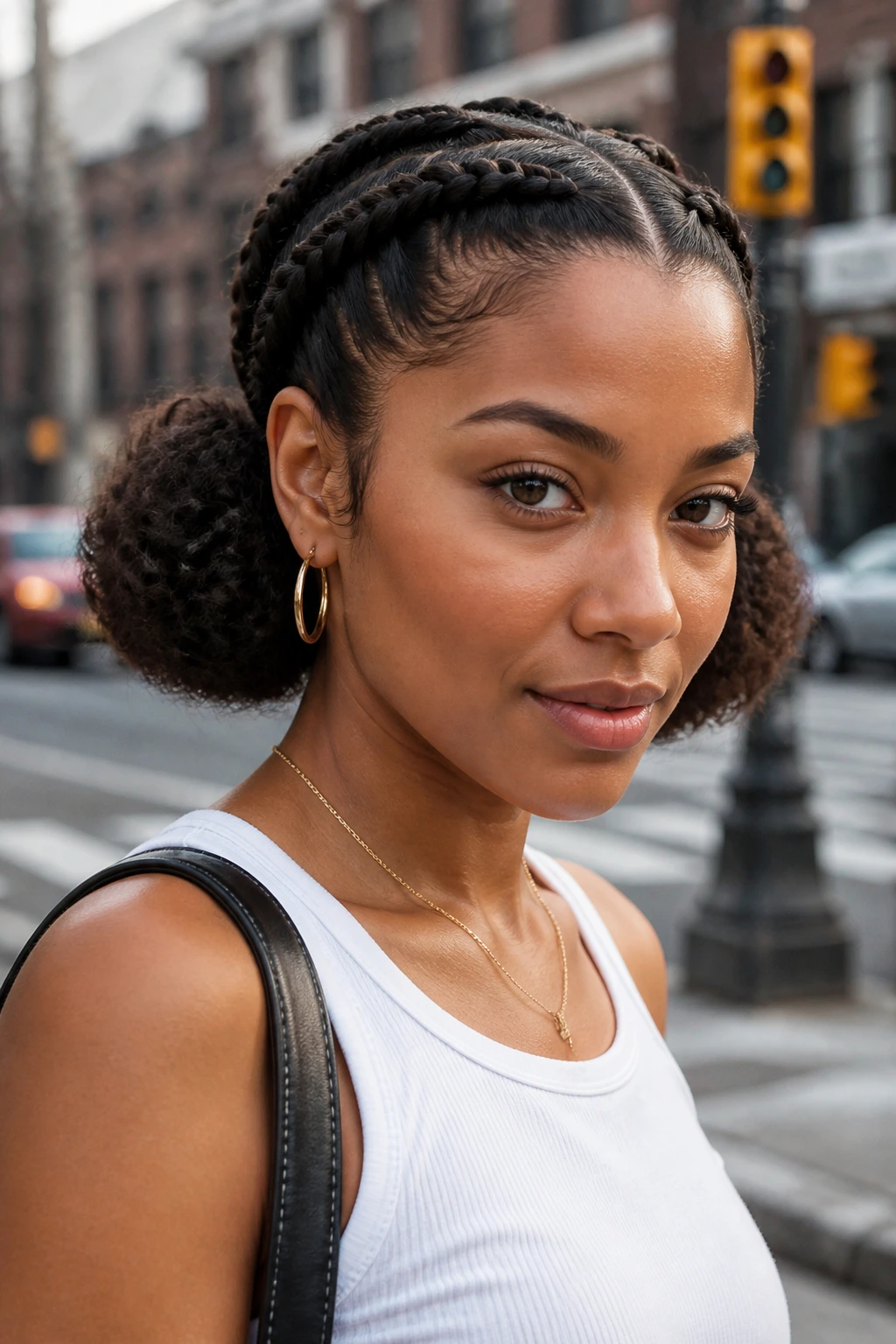
Double Dutch braids into low puffs bring structure up top and softness below. That split is useful for long faces because the braids create horizontal interest on the head while the puffs widen the lower part of the style. The result feels balanced without looking fussy.
Medium hair handles this shape well. The braids can start low enough to avoid height, and the puffs give you a rounded finish instead of a long hanging tail. If your hair is thick, the puffs can be left fuller. If it is fine, a little texturizing spray adds grip.
This style has a sporty edge, but it’s not limited to that. It can read neat, too.
28. Wrapped Braid Ponytail
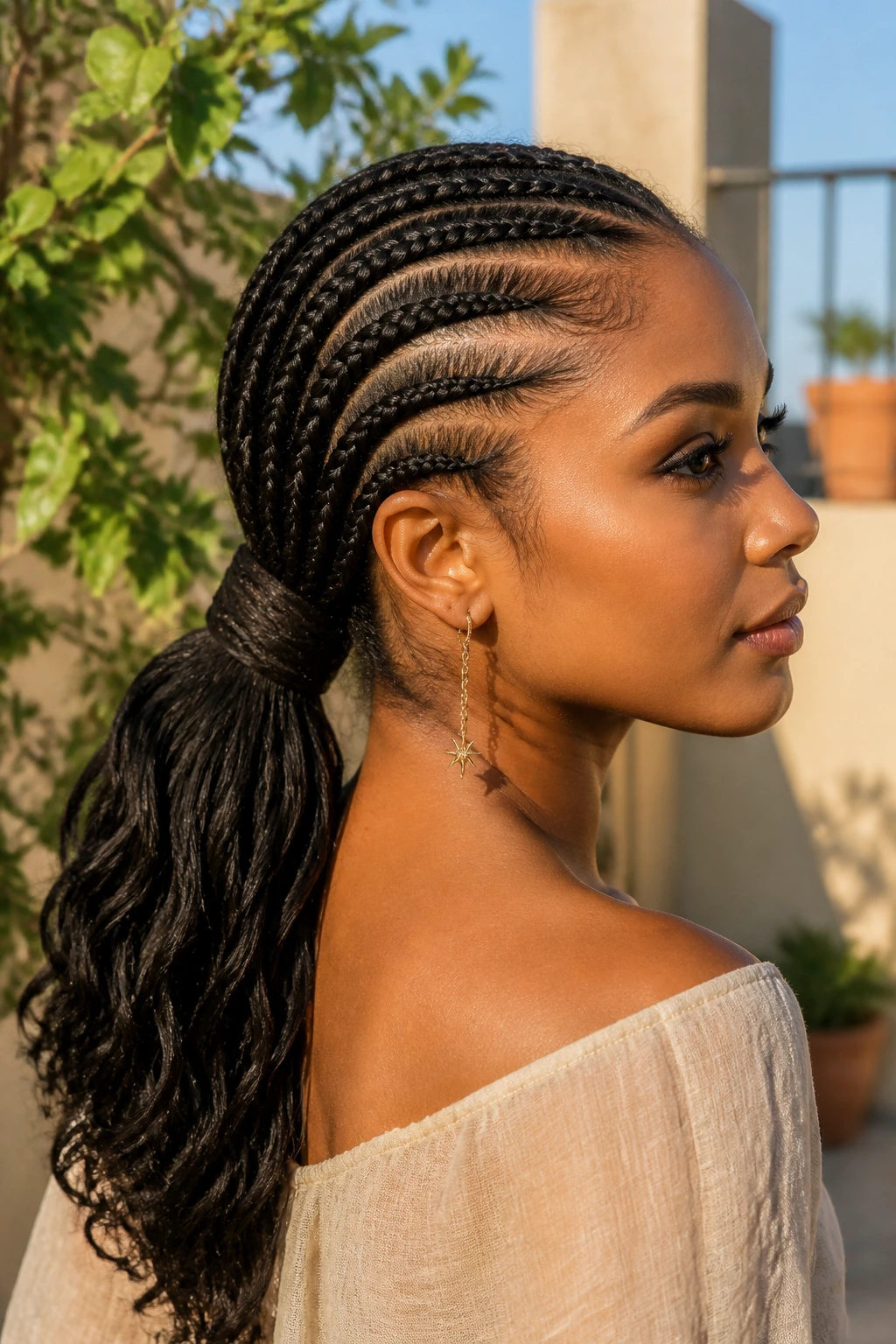
A wrapped braid ponytail is a tidy ending to the list for a reason. It’s simple, but the placement can be tuned to a long face with real precision. Keep the ponytail low to mid-low, wrap a braid around the base, and leave the tail with enough body to avoid a thin line down the center.
On medium hair, the ponytail usually sits in a flattering spot without needing much help. If you want more width, curl the tail lightly or braid it with a little looseness so it feels fuller around the shoulders.
A polished ponytail can still be face-friendly. The trick is refusing the high, snatched version.
Why Braid Placement Matters on a Long Face
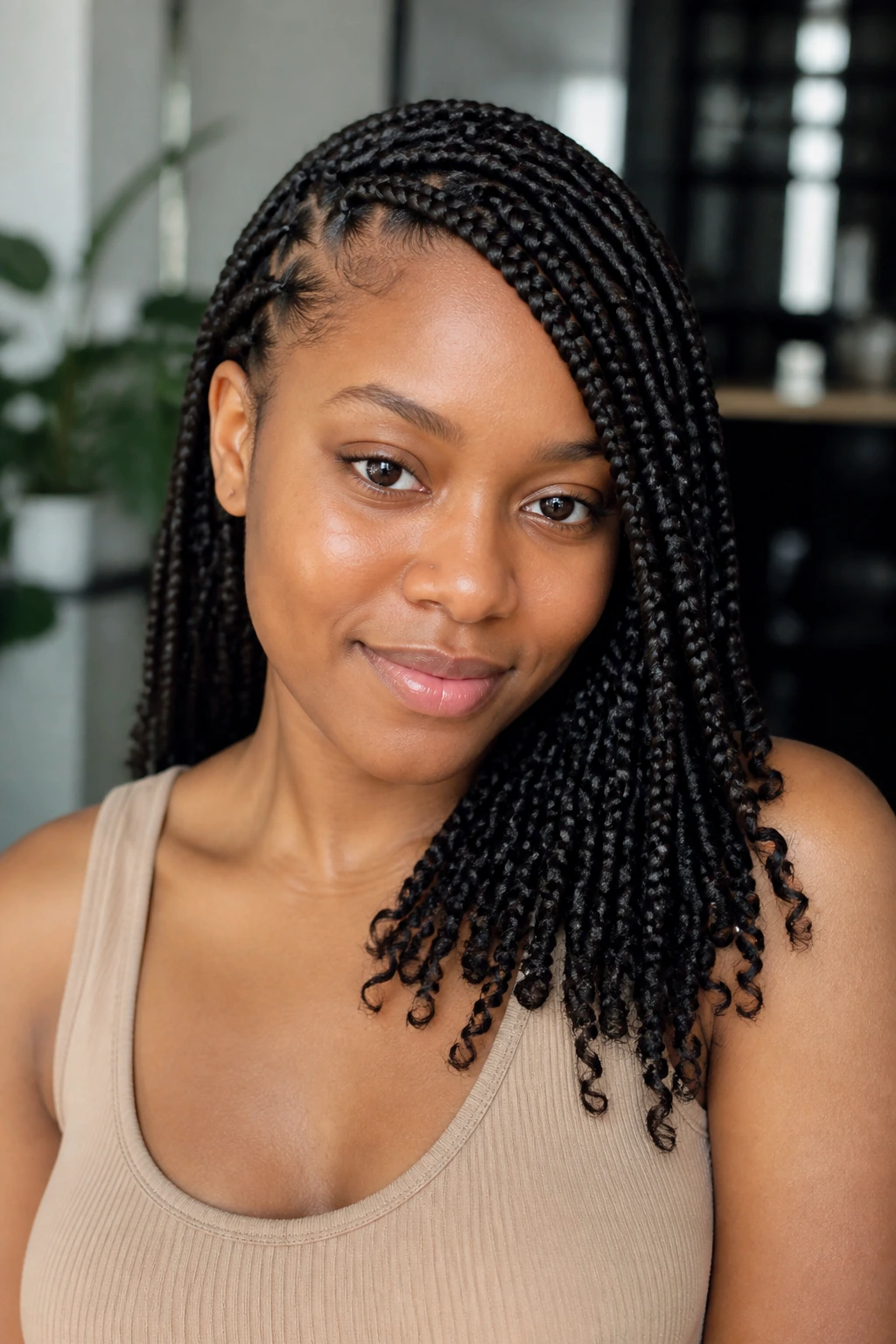
A long face already has a built-in vertical line, so the braid placement has to work with that shape instead of feeding it. High crowns, slick top sections, and narrow braids that hang straight down tend to exaggerate length. That is why side parts, low anchors, curved parts, and wider braid sections show up so often in the styles above.
The useful mental image is simple: you want the braid to create a frame, not a column. Width at the temples, cheekbones, and jaw pulls the eye outward. A low braid or a braid that sweeps across one shoulder does that without much effort. Even a small change in angle can change the way the whole face reads.
Medium hair gives you a little more control here than very long hair. There’s enough length for movement, but not so much that the braid gets swallowed by gravity and starts hanging like a rope. That means the shape you build at the scalp still matters all the way through the ends.
One more thing. Long faces are not all the same. An oblong face with a soft jaw can wear looser width around the cheeks, while a more rectangular face often benefits from a stronger side part and a braid that sits lower. Same family, different needs. Tiny difference. Big payoff.
Tools That Make Medium Hair Braids Easier
You do not need a drawer full of salon gadgets to get these styles done, but a few basics save a lot of time and a lot of frustration.
- Rat-tail comb: Clean parting matters for styles like feed-ins, stitch braids, and zig-zag sections.
- Small hair elastics: Use these for pigtails, half-up looks, and braid bases that need grip.
- Braiding gel or edge control: A small amount keeps flyaways down, especially near the temples and nape.
- Mousse: Great for smoothing braid surfaces and helping medium hair hold its shape after styling.
- Bobby pins: Useful for halo braids, crown styles, and any braid that needs to sit low and secure.
- Sectioning clips: These keep the hair out of your way while you work one braid at a time.
- Satin scarf or bonnet: Necessary if you want the style to survive the night without frizzing out.
- Light oil or scalp spray: Helps with comfort on protective styles, but use a light hand. Too much oil makes the roots greasy fast.
Picking Hair, Extensions, and Products That Behave
What you choose at the start changes how the braid wears later. For medium hair, the biggest question is whether you want a braid built entirely from your own length or one that uses added hair for thickness and finish. Knotless braids, feed-ins, goddess braids, and cornrows often look fuller with a little braiding hair. Side braids, Dutch braids, halo braids, and braided crowns can usually stand on their own.
If you add extensions, choose a texture that does not fight your own hair. Smooth synthetic braid hair is fine for a sleek finish. A softer, yaky texture blends better when you want the braid to look less shiny and more natural. The wrong texture mismatch can make the style puff weirdly at the root and look bulky where you do not want it.
Products matter too. A hard gel can make the hair look stiff and shiny in a way that works for stitch braids but feels wrong for softer side braids. Mousse, on the other hand, is a safer day-to-day choice because it smooths the braid surface without turning the whole style into plastic. If your hair is dry or textured, prep it with a leave-in before braiding, then keep the finish light.
How to Wear These Braids So They Balance a Long Face
Placement: Keep the braid line low enough to frame the face, not climb over it. A deep side part, a low crown, or a braid that sits near the cheekbone usually works better than a centered style that shoots straight down the middle.
Finish: Loosen the outer braid sections a touch if the style looks too narrow. A little width at the sides gives the face a better proportion, especially on medium hair where the braid can otherwise look thin.
Accessories: Earrings, clips, cuffs, and beads should sit where they help the eye move sideways. A pair of medium hoops or a braid cuff near the jaw can do more than a dozen tiny accessories stacked on top.
Occasions: Sleeker versions of these braids fit work or formal settings, while wider, looser versions feel better for weekends, travel, and casual wear. The same braid can read different depending on how much tension and texture you leave in it.
Small Styling Tweaks That Change the Whole Look
Face-framing pieces: Even two small strands left at the temples can soften a long face faster than a complicated part. Use them when the braid feels too severe.
Curved parts: Straight lines are efficient, but curved parts add width. A soft arc around the brow line gives the braid a friendlier shape.
Lower anchors: Put the braid base lower than you think. A few centimeters can keep the look from creeping upward and stretching the face.
Thicker braid sections: Thin braids can look elegant, but they also read longer. Wider sections bring the braid into a more balanced shape for medium hair.
A little texture at the ends: Curl, bend, or gently wave the braid tail if you want the style to stop looking like one long straight line. That tiny finish can change the whole silhouette.
Common Mistakes to Avoid
-
Starting the braid too high: If every braid begins at the crown, the style adds height where a long face does not need it. Start lower or shift the part sideways.
-
Making the braid too tight at the front: Tight front tension pulls the eye upward and can make the forehead look longer. The fix is simple: keep the first few inches relaxed.
-
Choosing tiny braids without adding width elsewhere: Micro-thin braids can look sleek, but on a long face they may read as too vertical. Add side fullness, face pieces, or a lower finish.
-
Ignoring the ends: Straight, narrow ends can drag the eye down. Curl them, blunt them, or fluff them a bit so they stop acting like a ruler.
-
Packing too much hair on top: High buns, piled-up puffs, and tall crown shapes often make the face look longer. Move the volume lower and wider.
-
Using too much product: Heavy gel and thick oils can flatten the roots and make the style look greasy before the day is over. Use just enough to smooth the hair, then stop.
Variations and Adaptations to Try
Soft Side-Sweep Version: Keep the braid low and sweep everything over one shoulder, then leave a few temple pieces out. This is the easiest way to make a braid feel gentler on a long face.
Protective Hair-Add Version: Add braiding hair to knotless braids, feed-ins, or goddess braids if you want more thickness around the sides. The extra body gives the face more balance and helps medium hair hold shape longer.
Minimalist Workday Version: Choose a low braided ponytail, a braided headband, or a single side braid with no accessories. These styles stay neat without asking for too much time in the morning.
Texture-Heavy Weekend Version: Pancake the braid, add a little mousse, and let the ends stay loose or curled. The extra texture breaks up the vertical line and gives the style more movement.
Event-Ready Version: Go for a halo braid, crown braid, or double Dutch braids with low buns. These have enough structure for a dressier setting without pushing the face upward.
Natural-Hair Version: Use your own length in French braids, cornrows, braided puffs, or crown styles with no extensions. This keeps the style lighter at the scalp and often feels better for day-to-day wear.
Night Care, Wash Days, and How Long Braids Stay Fresh
Braids last longer when you treat them like a style, not a one-day project. For most medium-hair braid looks, a satin scarf or bonnet at night makes the biggest difference. It keeps the surface from fuzzing up and helps the parts stay cleaner. If you sleep rough, use both a bonnet and a silk pillowcase. Yes, both. The extra layer is worth it.
For protective styles, a light scalp refresh once or twice a week is enough for most people. Use a small amount of scalp oil or a diluted scalp spray, not a heavy pour. The goal is comfort and cleanliness, not shine that slides down your forehead by lunchtime. If the style starts to itch, check tension first before reaching for more product.
Wash-day timing depends on the braid type. Loose styles like side braids, halo braids, and braided crowns can usually be refreshed after a few days with dry shampoo at the roots or a light mousse along the braid surface. Protective styles like knotless braids or feed-ins often stay neat for several weeks if the scalp is kept clean and the ends are not overhandled. Once the hairline starts looking fuzzy and the braid base starts loosening, that’s your cue to schedule a redo.
Medium hair tends to show wear at the front first. The nape may look fine while the temples start frizzing. That’s normal. Refresh the front pieces, smooth the sides, and leave the rest alone if you can. Chasing perfection all over the head usually makes the style look worse, not better.
Frequently Asked Questions
What braid styles flatter a long face the most?
Styles that add width at the sides or sit low on the head tend to work best. Side braids, deep side parts, low braided ponytails, halo braids with soft tendrils, and wide Dutch braids all help break up the vertical line of a long face.
Should I avoid center parts if I have a long face?
Not always, but a center part needs help. If you wear one, pair it with width at the temples, a braid that sits low, or soft pieces around the face. A bare center part with a tall crown can make the face look longer than it already is.
Can medium-length hair handle knotless or feed-in braids?
Yes, especially if you add a little braiding hair for thickness or length. Medium hair is often a sweet spot for these styles because the braid has enough base to hold, but not so much weight that it gets pulled flat.
Are tiny braids bad for long faces?
Not bad, just tricky. Tiny braids can look sleek, but they also create a lot of vertical line, which may stretch the face if you do nothing else. Use a side part, curved sectioning, or fuller ends to balance them out.
What’s the easiest braid style for a long face and medium hair?
A single side braid or a low braided ponytail is usually the simplest place to start. Both styles keep the braid low and off-center, which gives you face balance without a lot of effort.
How tight should braids be around the hairline?
Secure, not painful. If you feel a pulling sensation or see the skin lifting at the front, the braid is too tight. Long faces do not need extra tension at the crown; they need shape and placement.
What if my hair is fine and my braids look too thin?
Use texturizing spray, mousse, or a small amount of added braiding hair to build body. Fine hair often needs width more than length, so choose styles that pancake well or finish low and full.
Can I wear these styles to work or formal events?
Absolutely. The sleeker versions — stitch braids into a bun, a wrapped braid ponytail, a crown braid, or a braided lob — read polished enough for dressier settings. Looser versions fit casual days or weekends better.
How long do protective braid styles usually last on medium hair?
That depends on the style, your texture, and how well you wrap it at night, but many protective looks stay neat for several weeks. The front hairline usually shows wear first, so watch the temples and edges rather than waiting for the whole style to collapse.
Braids That Give Long Faces Room to Breathe
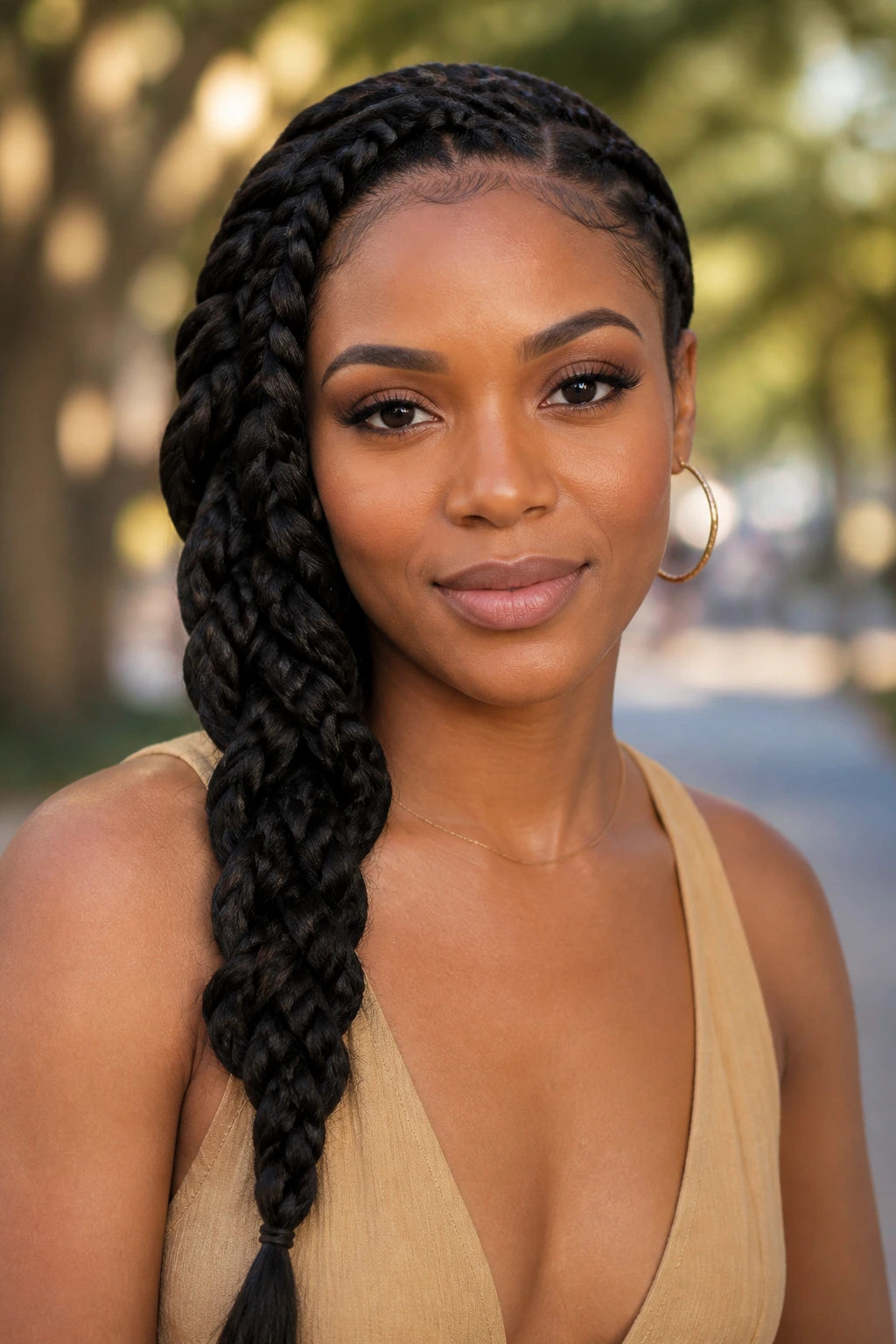
A long face does not need to be hidden, and it definitely does not need to be fought with a braid that shoots straight down the center like a ruler. The better move is usually simpler: bring the braid lower, widen it a little, and let the shape travel sideways where the face needs relief.
Medium hair makes that easier than people expect. It holds braid structure without becoming too heavy, and it gives you enough length for movement without forcing every style into a vertical drop. That is a very useful middle ground, and honestly, it’s where a lot of the best braid styles live.
If you keep one rule in mind, make it this: let the braid frame the face instead of extending it. Everything else — the side part, the low bun, the loose tendrils, the curved cornrows — is just a way of getting there.
