



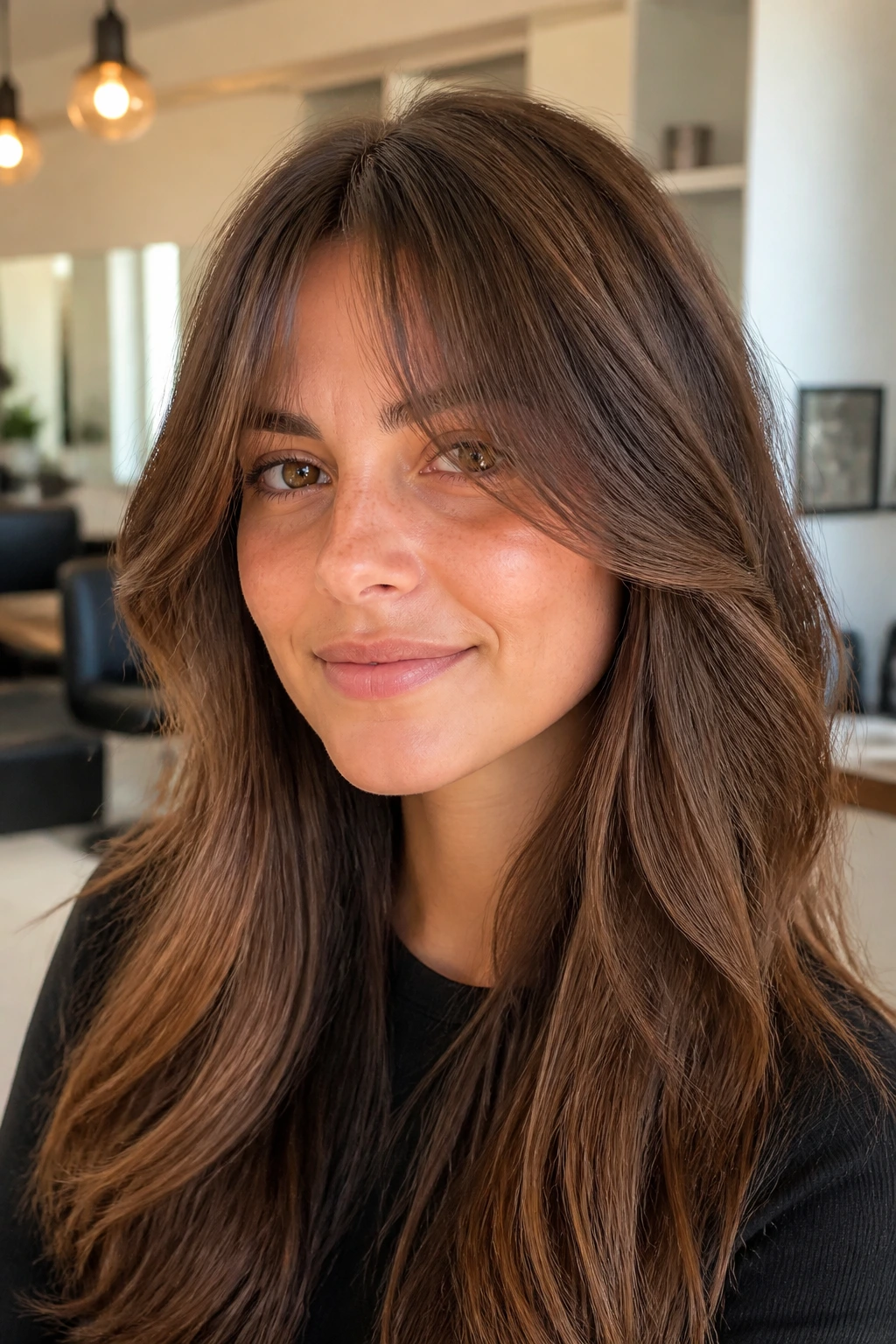
Soft bottleneck bangs do something blunt fringe never quite manages: they make the front of the face look lighter without making the haircut feel flimsy. The center is trimmed shorter, the sides are kept longer, and the whole shape melts into the cheekbone area instead of stopping in a hard line across the forehead. That small shift changes the mood completely.
A straight-across bang can feel like a statement. A curtain bang can drift open until it loses its point. Soft bottleneck bangs sit in the pocket between those two extremes, which is why they’re such a smart choice when you want movement, eye framing, and a little softness around the hairline. The best versions look like they were cut to work with your face, not against it.
The real trick is choosing the right version. The shortest piece, the temple length, and how much weight gets removed all change the result by a lot. Thick hair needs a different interior shape than fine hair. Curly hair needs room for shrinkage. A short forehead wants a lighter touch than a long one. That’s where the range comes in.
Why These Soft Bottleneck Bang Styles Work So Well
-
The shape is forgiving: The center can grow a little, the sides can drift, and the fringe still looks intentional instead of chopped off at the wrong moment.
-
The face-framing is built in: Shorter center pieces open up the middle of the face, while longer temple pieces pull the eye outward toward the cheekbones and jaw.
-
Texture changes the vibe, not the whole haircut: Straight hair can look sleek, waves can look airy, and curls can keep their natural bend without losing the bottleneck shape.
-
You can tune the density: A heavier version gives more coverage, while a lighter version keeps the forehead open and the fringe barely there.
-
It plays well with grow-out: If you get tired of bangs, this shape turns into face-framing layers faster than a blunt fringe ever will.
1. Brow-Skimming Soft Bottleneck Bangs
A brow-skimming bottleneck fringe is the cleanest place to start if you want the shape without a lot of drama. The center sits just above the brows, and the temple pieces taper down toward the upper cheekbones. It’s soft enough to wear with bare skin and mascara, but defined enough that it doesn’t disappear into your haircut.
Why the brow line matters
That tiny gap above the brow gives the eye some room. Too short, and the bangs jump into “baby fringe” territory. Too long, and they start reading as face-framing layers instead of bangs at all.
- Keep the center just high enough to clear the lashes when dry.
- Ask for the sides to be point-cut so they melt into the rest of the haircut.
- This shape works especially well on oval, heart, and balanced square faces.
- A small round brush or a quick bend with a flat iron is usually enough.
My favorite part: it looks polished after ten minutes, but it does not demand a perfect blowout every single day.
2. Cheekbone-Skimming Soft Bottleneck Bangs

This is the most face-lifting version in the set. The center opens above the brows, then the fringe slides down in a soft diagonal so the longest pieces kiss the top of the cheekbone. That diagonal matters. It pulls attention upward and outward, which keeps the front of the haircut from feeling boxy.
Cheekbone-skimming bottleneck bangs are especially nice if you like makeup to show. They frame the eyes without stealing the whole scene, and they give you that little break of skin between fringe and brow that makes the face look less crowded.
They also play well with a center part. Not the harsh kind. A loose, almost lazy part that lets the fringe split naturally and fall the way it wants. On wavy hair, I’d keep the ends soft and a touch piecey. On straight hair, a bend at the middle of the fringe is enough.
3. Jawline-Grazing Soft Bottleneck Bangs

Picture a fringe that is almost gone by the time it reaches the jaw. That’s the mood here. The center still starts shorter, but the outer pieces drop longer, so the whole shape guides the eye from the forehead down to the jawline instead of stopping at the cheeks.
This version is a smart pick for longer faces, sharper chins, or anyone who wants to bring a little width to the lower half of the face. It also suits people who tuck hair behind the ears a lot. The longer sides keep working even when the rest of the hair is pulled back.
How to wear it
- Blow the center forward first, then sweep the temple pieces away from the face.
- Keep the ends soft, not razor-thin, or the line starts to fray.
- If your hair is fine, leave a little more density through the side pieces so they don’t vanish by midday.
It’s one of those cuts that looks casual from a distance and very deliberate up close. That’s a good thing.
4. Feather-Removed Soft Bottleneck Bangs for Thick Hair

Thick hair can swallow a soft fringe if the interior weight stays put. The result is a front section that hangs too heavy, sticks to the forehead, and turns into a little curtain nobody asked for. This version fixes that by removing bulk from the inside, not the surface.
A stylist should keep the shortest center piece soft and controlled, then use point-cutting or subtle slide-cutting to break up the temple area. I would not ask for aggressive thinning shears right at the front. That can create tiny see-through gaps, and thick hair almost never needs that kind of rough treatment to begin with.
The best version moves. It sways when you turn your head. It doesn’t sit there like a solid block. If your hair springs up at the roots, ask for a little extra length in the center so the bangs settle where you want them after drying.
5. Wispy Soft Bottleneck Bangs for Fine Hair
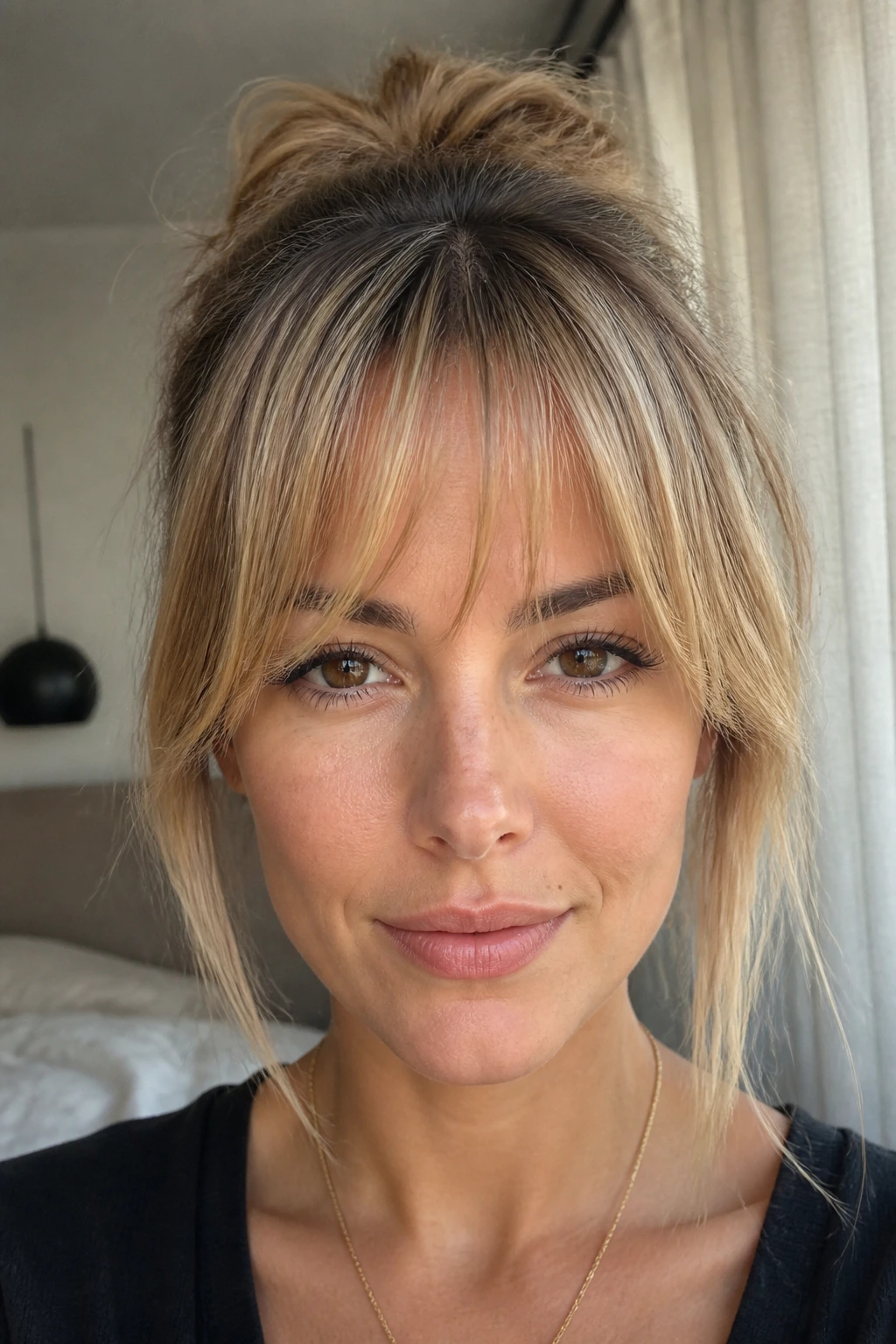
Can fine hair pull off bottleneck bangs without looking sparse? Yes, if the cut keeps density in the center and only softens the edges. The mistake is trying to make fine hair look “lighter” by taking too much out of it. That usually leaves the fringe stringy and makes every strand work too hard.
This version keeps the center fuller than you might expect. The sides are softened just enough to move, but not so much that they disappear. A few clean point cuts are better than a long session with thinning shears.
What makes it work
A little root lift at the front does more for fine hair than extra layering in the bang itself. A dab of mousse at the roots, a quick blow-dry with a small brush, and a cool shot at the end help the fringe hold its shape without feeling stiff.
The best result looks airy, not thin. That’s a difference you can see from across the room.
6. Wavy Air-Dry Soft Bottleneck Bangs

Wavy hair gives this fringe a nice built-in bend, which is half the battle. The trick is not to force the bangs into a perfectly symmetrical shape while they’re wet. Wavy strands will shift as they dry, and if you fight that too hard, you end up with a fringe that looks overworked.
I like this version with a little leave-in cream and a small amount of mousse through the front section. Scrunch the sides lightly, then clip the center forward for a few minutes while it sets. Once it dries, separate the pieces with your fingers instead of brushing them flat.
The result is softer than a polished blowout and easier to live with on a normal day. You get movement around the eyes, and the fringe still falls in a clear bottleneck shape rather than into a fuzzy blur.
7. Curly Soft Bottleneck Bangs with Shrinkage Room
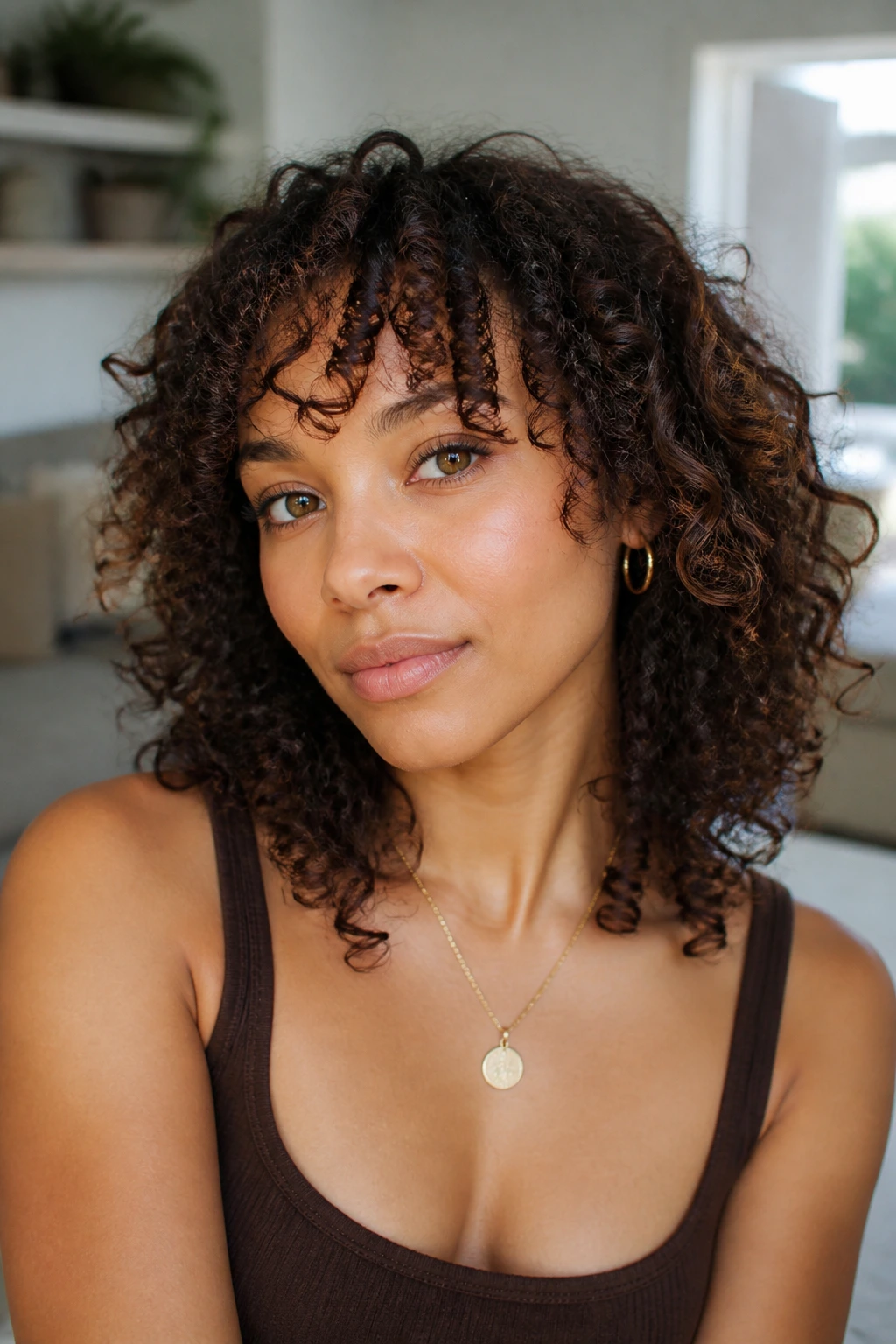
Will curly hair work with bottleneck bangs? Absolutely, but the cut has to respect shrinkage. A curl that looks like a polite eyebrow kiss when wet can bounce up an inch or two once it dries, and that’s how people end up with bangs that are shorter than planned by the time they leave the house.
The safest move is a dry or mostly dry cut, with the center left longer than the final target. The temple pieces should be shaped to follow the curl pattern instead of fighting it. That gives the bangs a soft opening at the center and enough length on the sides to blend into the rest of the cut.
How to style them
Use curl cream, then either air-dry or diffuse on low heat. Don’t rake through them too much once they start to form. Curly bottleneck bangs look best when the curl pattern stays intact and the front section still feels like part of the haircut, not a separate mini-haircut stuck on top.
8. Shag-Linked Soft Bottleneck Bangs

If your hair already lives in layers, a hard-edged fringe can feel like a stranger. Shag-linked bottleneck bangs solve that by echoing the shag’s movement through the front section. The center still sits shortest, but the edges blend into the face-framing layers so the whole haircut reads as one shape.
This version loves texture. It likes a little grit. A touch of texture spray or a light cream on damp hair helps the front pieces stay separated without turning crunchy. The goal is not perfect symmetry. The goal is a front section that joins the shag instead of competing with it.
I especially like this shape on medium to thick hair because the layers in the rest of the haircut give the bangs somewhere to go. Without that connection, even soft bangs can feel isolated.
9. Bob-Friendly Soft Bottleneck Bangs

A bob can get sharp fast. One blunt line too many, and the whole haircut starts to feel architectural in a way that isn’t always flattering. Soft bottleneck bangs break that up. The shorter center gives the bob some lift, and the longer sides keep the front from becoming a block.
Unlike a full curtain fringe, this version doesn’t need a dramatic split to make sense. The part can be loose, and the outer pieces can fall right into the bob’s cheekbone line. That’s useful if your bob is chin-length or just below it, because the bangs help connect the face frame to the perimeter.
For a sleek bob, I’d style the fringe with a round brush and tuck the ends under slightly. For a choppier bob, let the bangs stay a little piecey so they don’t look too polished next to the rest of the cut.
10. Lob-Friendly Soft Bottleneck Bangs

A lob gives you more room to play with the front because the length isn’t so short that the bangs have to do all the work. That makes it a good match for a softer bottleneck shape. The fringe can open a little wider at the sides, and the face-framing pieces can travel farther without crowding the shoulders.
This is the kind of version I recommend if you like hair that moves when you walk. The lob’s length keeps the front from feeling too cropped, and the bangs help keep the haircut from looking heavy around the jaw. On wavy hair, this pairing is especially good because the fringe and the lob can share the same bend.
Keep the center soft, not chopped. A lob already has enough presence. The bangs should lighten the front, not build a second wall.
11. Round-Face Soft Bottleneck Bangs

Round faces usually do best when the fringe creates some vertical line without stopping too early at the sides. That means the center can sit a touch shorter, but the temple pieces need to drop past the cheekbones and keep going toward the jaw. The eye needs a path to follow.
The mistake with a round face is stopping the outer pieces right at the widest point. That can make the face feel wider than it is. A better version lets the fringe open in the middle and narrow slightly as it moves outward, which gives the face more length and keeps the front of the haircut from turning square.
A little volume at the crown helps too. Not teased, not stiff. Just enough root lift that the bangs don’t collapse straight down onto the forehead.
12. Long-Face Soft Bottleneck Bangs

Long faces usually need a little width, not more vertical space. So this version sits a little lower and a little fuller through the center. The temple pieces still taper, but they stay closer to the cheekbone line instead of falling too far down and stretching the face even more.
This is one of the few times I’d say a softer, denser center can be your friend. You don’t want a heavy slab, but you do want enough coverage to shorten the visible forehead space a bit. A shallow part and a gentle bend in the fringe help keep the shape open without making it too airy.
If your hair is straight, a slight inward curve at the center can make the whole face feel more balanced. On wavy hair, the natural bend usually does the job for you.
13. Heart-Shaped Face Soft Bottleneck Bangs

Heart-shaped faces often carry more width through the forehead and a narrower chin. Bottleneck bangs can balance that out beautifully if the shortest center piece is soft, not severe. The outer pieces should taper in a way that directs the eye to the cheekbones and jaw rather than leaving all the attention up top.
I’d avoid a center that’s too short here. That can make the forehead feel even broader. A better choice is a fringe that opens in the middle, then slides down just enough at the sides to soften the upper face.
This shape looks lovely with layered hair that starts around the chin. It gives the bangs somewhere to land and keeps the haircut from reading as all forehead and no lower-half detail.
14. Glasses-Friendly Soft Bottleneck Bangs

Glasses change the whole equation. Frames sit right where bangs want to live, so the fringe has to stay out of the lens line without looking awkward. A glasses-friendly bottleneck shape usually keeps the center just high enough to clear the frames, then lets the temple pieces grow long enough to tuck or brush beside the arms.
The best part is that this style can flatter the frames instead of fighting them. Thin metal frames can handle a lighter fringe. Chunkier acetate frames often look better with a slightly fuller center so the top half of the face doesn’t disappear.
If your glasses sit high on the bridge, ask your stylist to check the fringe length with the frames on. That tiny detail saves a lot of annoyance later.
15. Low-Maintenance Grow-Out Soft Bottleneck Bangs

Some people love bangs in theory and resent every trim in practice. This version is for them. The cut starts a little longer, the center is softened rather than carved out, and the sides are connected enough to the rest of the haircut that they don’t scream “bangs” when they grow an extra half-inch.
The grow-out is the point. It should still look like a face frame at week six, not a mistake at week three. That means avoiding a harsh center-to-side jump and keeping the outline broken up with soft point cuts.
I’d pick this if you’re unsure about commitment or if your schedule makes salon visits annoying. It gives you the bottleneck effect now and a clean exit later.
16. Air-Dried Soft Bottleneck Bangs

Do you want bangs that behave without a blowout? Start here. Air-dried soft bottleneck bangs rely on a little product and a good parting, not a full styling session. The front section should be encouraged into shape while it’s damp, then left alone long enough to settle.
A small amount of mousse at the roots and a whisper of cream through the ends keep the fringe from separating into random little flags. Clip the center forward for ten minutes if it wants to split, then let it fall naturally. Fingers work better than a brush once the shape starts forming.
How to get the most from them
Do not touch them too much while they dry. That’s where the frizz comes from. Once the fringe is set, a quick mist of water and a reshape with your hands is usually enough to reset it the next morning.
17. Blowout Soft Bottleneck Bangs
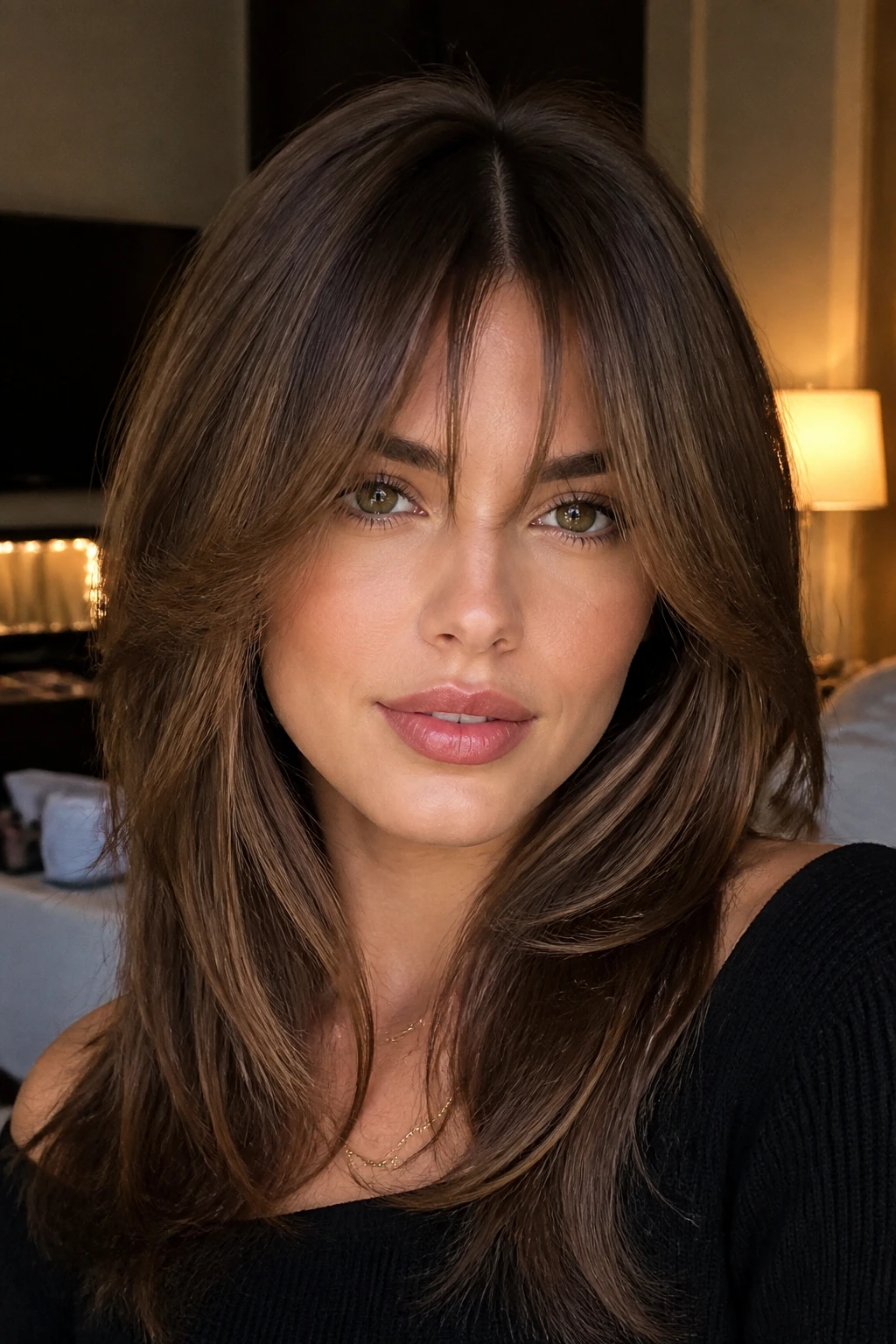
This is the polished version, the one that looks as if the front of the haircut was given a proper plan. The center is blow-dried forward first, then bent slightly under or away from the face depending on the rest of the style. The temple pieces get more direction and a softer sweep.
A small round brush is the workhorse here. Not a giant one. A brush that’s too big tends to flatten the bend and stretch the fringe wider than you want. Finish with a cool shot so the shape holds instead of slumping the moment the dryer turns off.
The blowout version is the one I’d choose for a dinner, a meeting, or any day when you want the bangs to look deliberate from the first glance. It’s still soft. Just neater.
18. Piecey Textured Soft Bottleneck Bangs

A piecey fringe has a little separation between strands, which keeps the front from looking dense or flat. That separation is useful with bottleneck bangs because the shape already depends on movement. The center stays visible, the sides break into lighter sections, and the whole cut feels less heavy.
The danger is overdoing product. Too much oil or cream, and “piecey” becomes greasy. A dry texture spray or a tiny amount of matte pomade on the ends works better. You want the pieces to sit next to each other, not glue themselves together.
This version is especially nice on medium-density hair that needs a bit of edge. It has more attitude than the airy versions, but it still keeps the forehead soft.
19. Curtain-End Soft Bottleneck Bangs

Some bottleneck bangs split aggressively. This version opens a little more gently. The center stays the shortest point, but the ends drift outward almost like curtain bangs, which makes the cut feel looser and more relaxed around the temples.
That extra openness is good if you like your fringe to blend into the rest of your hair instead of sitting in a defined front band. It also helps if your face is narrow and you want more width at the sides. The outer pieces can hit at cheekbone level or just below, then disappear into the lengths.
I’d describe this one as the softest hybrid in the bunch. It feels a little less styled, which is exactly the point.
20. Cowlick-Proof Soft Bottleneck Bangs

If your fringe splits the moment it dries, you already know the headache. A cowlick at the hairline can push the center of bottleneck bangs off to one side, and the style loses its shape before lunch. The fix starts in the cut. You need enough weight at the center to resist the split, plus enough length to let the hair settle where it wants.
Styling matters just as much. Blow the bangs from side to side first, then direct them where you want them to land. A clip across the front while they cool can make a huge difference. So can a little root spray at the base, not the ends.
This is not a lazy cut. It rewards a few careful minutes in the morning, and then it behaves much better.
21. Micro-Layered Soft Bottleneck Bangs

Micro-layers are tiny internal changes, not obvious steps or shaggy chunks. They’re useful when the fringe is dense but you still want softness around the eyes. The idea is to remove just enough bulk for the bangs to move, while keeping the outer line intact.
This version works well on straight or slightly wavy hair that tends to sit flat. The micro-layers give the front a bit of lift without making it look choppy. I would keep the shortest center section controlled and let the layering show more through the sides than the middle.
Why this helps
A micro-layered fringe can bend more easily under a brush and doesn’t form that solid curtain look when it gets humid. It’s one of the better choices if you want softness with some structure.
22. Tuck-Back Side Soft Bottleneck Bangs

This is the version for people who like to show a little face and a little ear. One side of the fringe is left long enough to tuck behind the ear, while the other side falls naturally across the cheek. The center still does the bottleneck job, but the asymmetry makes the whole cut feel more relaxed.
It’s a useful choice if you wear earrings, glasses, or just like changing your part without changing the haircut. The tucked side keeps the fringe from feeling too full, and the loose side maintains the softness near the eyes.
A subtle side part works best here. Nothing severe. The whole point is movement, not a hard angle.
23. Retro Flippy Soft Bottleneck Bangs

There’s a little 70s energy in this version, but it’s softened enough that it doesn’t tip into costume territory. The center is lightly curved, and the sides flip away from the face instead of lying flat against it. Think of a round-brush bend with a little extra spring at the ends.
This style loves a good blowout. The bangs should be dried so they float, not cling. A velcro roller at the center while you finish the rest of your hair can help the fringe keep that lifted shape, and it saves you from overworking the brush.
It pairs especially well with layered lengths and a little volume through the crown. Flat roots make the retro flip look forced. A bit of air up top makes it look like it belongs.
24. Minimalist Soft Bottleneck Bangs

Not everyone wants bangs that announce themselves from across the room. This version keeps the shape barely there: a soft center opening, light temple pieces, and just enough fringe to blur the forehead without swallowing it. It’s the most cautious option in the lineup.
I like this for first-timers who want a preview rather than a plunge. It gives you the bottleneck idea without demanding that the front of your haircut become the main event. On straight hair, it can be almost invisible until it catches the light or moves.
The key is restraint. Keep the density light, the edges soft, and the side pieces long enough to vanish into the haircut when you want them gone.
25. Dramatic Soft Bottleneck Bangs

This is the bold one. The center opens wider, the temple pieces drop more noticeably, and the contrast between shortest and longest points is stronger than in the softer versions. It still counts as soft bottleneck bangs because the edges are feathered, but the shape has more presence.
If your haircut is simple, this fringe adds all the punctuation it needs. If your hair is already layered and textured, the dramatic version can pull the whole look together. I’d especially point people to it if they want the fringe to show in photos without looking blunt.
The trade-off is upkeep. More contrast means the shape needs a little more attention as it grows. Worth it if you like the look. Not worth it if you want to forget the front of your hair exists.
26. High-Forehead Soft Bottleneck Bangs

A higher forehead can take a stronger center without feeling crowded, but the wrong fringe can also leave too much empty space on the sides. This version keeps the center a little fuller and slightly lower, then lets the temple pieces frame the face without dropping too far.
The goal is to reduce the visible length of the forehead while keeping the bangs airy. That usually means a soft but purposeful center section and sides that land around the cheekbone, not the jaw. Too much length in the sides can pull the eye down and undo the balance.
This is one of the best examples of shape logic doing the work. No tricks. Just the right line in the right place.
27. Short-Forehead Soft Bottleneck Bangs

Short foreheads need breathing room. A heavy fringe can make the top third of the face feel cramped, especially if the hairline sits low. This version keeps the shortest point slightly higher, the weight lighter, and the side pieces long enough to frame without swallowing the forehead.
I’d avoid a center that comes too far down. The best look is delicate, almost airy. It should hint at the shape of bottleneck bangs without closing off the face. If your hair is thick, the density needs to come out of the front so the fringe doesn’t sit like a cap.
This is the one that proves bangs do not have to be big to make an impact.
28. Transition-to-Curtain Soft Bottleneck Bangs

Some bangs are born to stay bangs. These are made to become something else. A transition-to-curtain bottleneck fringe starts with a soft center and long temple pieces, but the sides are cut so they can keep growing into proper curtain layers without an awkward middle stage.
That makes this a smart choice if you want to try the shape and later move it out of your face. The center shouldn’t be too short, and the outer pieces should already be connected to the front layers of the haircut. Then, when you part them wider over time, the shape still makes sense.
It’s the neatest exit plan in the whole group. Which, honestly, is half the appeal.
Why Bottleneck Bangs Look Better When the Cut Fits the Hair

The shape only works when the cut respects the way your hair already behaves. Straight hair wants a little bend or it goes flat. Wavy hair needs enough weight to keep the fringe from puffing out at the sides. Curly hair needs room for shrinkage, and thick hair needs bulk removed from the inside rather than hacked off at the outline.
That’s why a good bottleneck fringe isn’t one size, even when the silhouette looks simple. The same short center can sit on the brow, float above it, or land lower near the lashes depending on density, forehead height, and texture. The temple pieces do the rest of the work by deciding how much of the cheekbone and jaw they frame.
A stylist who understands that geometry will cut a much better fringe than someone who just copies a photo. Photos lie a little. Hairline, cowlicks, and density do not.
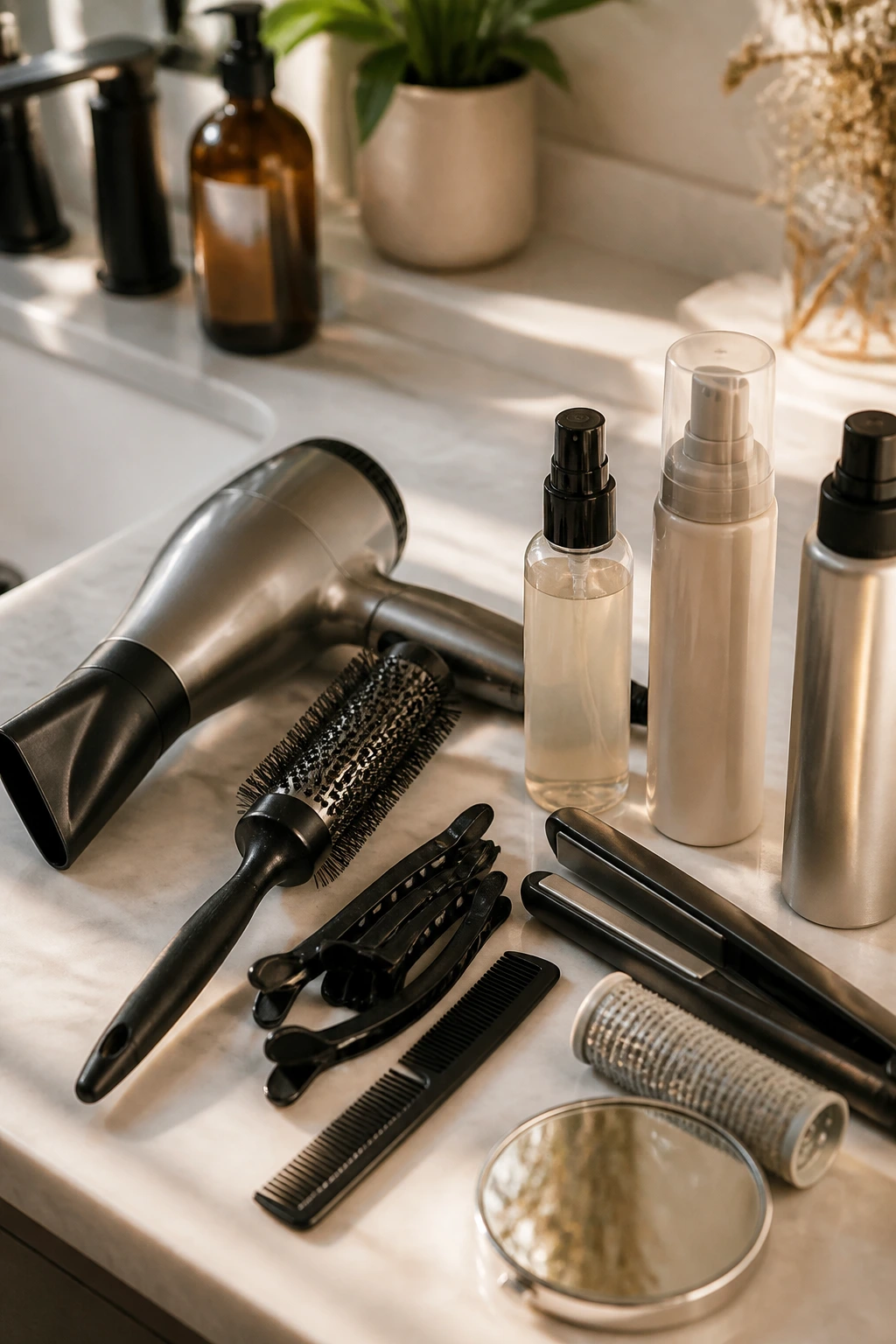
Essential Tools for Styling Soft Bottleneck Bangs
-
Hair dryer with a nozzle attachment: Directs airflow so the fringe doesn’t fly apart while you dry it.
-
Small round brush, about 1 to 1.25 inches: Gives the center a soft bend and helps the temple pieces sweep away from the face.
-
Sectioning clips: Hold the rest of the hair out of the way so you can focus on the front section first.
-
Fine-tooth comb: Good for checking the part and separating the center from the longer sides.
-
Lightweight mousse or blow-dry cream: Adds shape without turning the bangs stiff or greasy.
-
Heat protectant spray: Worth using every time you heat-style, especially on the front pieces that get touched most.
-
Mini flat iron: Useful for tiny touch-ups, cowlick control, or a quick bevel at the ends.
-
Velcro roller or two duckbill clips: Helps the fringe cool in shape after a blow-dry.
-
Texture spray or dry shampoo: Adds grit and lifts the roots on day two or three.
-
Tote-size styling mirror: Small but handy when you need to check both sides of the fringe from the back of a bathroom cabinet or a hotel sink.
What to Tell Your Stylist Before the First Snip

Bring photos, yes, but also bring a sentence. Photos show shape; words explain the part you actually care about. Say where you want the shortest center piece to land relative to your brows, and say what you do with your hair on a normal morning. Air-dried? Brushed smooth? Usually pinned back? That changes the cut more than most people think.
Tell the stylist about your hairline, your cowlicks, and whether your hair shrinks when it dries. Curly and wavy hair need that note. Fine hair needs a warning about over-thinning. Thick hair needs a plan for removing weight without stripping away the soft edge that makes bottleneck bangs look like bottleneck bangs instead of a chopped front section.
One thing I’d be specific about: ask for the fringe to connect to your face-framing pieces. That connection is what keeps the cut from looking pasted on. If you want the bangs to grow out cleanly, say that too. A stylist can leave a little more length in the center and a more gradual drop at the sides, which buys you time later.
How to Wear These Bangs Without Fighting Them

Presentation: The center should read as the shortest point, but it does not need to sit dead flat on the forehead. A slight bend, a soft split, or a piecey finish all keep the shape alive. If the bangs look pressed into place, they lose the softness that makes this style work.
Pairings: Soft bottleneck bangs look good with loose waves, a low bun, a bob, a lob, and half-up styles. They also sit well with glasses because the longer side pieces can move around the frames instead of crashing into them.
Balance: If your face feels wider at the cheeks, let the temple pieces travel longer. If your face feels longer, keep a little more density through the center. Small changes. Big effect.
Texture: Straight hair usually benefits from a round-brush bend. Wavy hair can air-dry with a little cream. Curly hair needs enough length that the final shape survives the curl spring. Skip the heavy oil at the roots unless you want the fringe to separate in the wrong way.
Additional Styling Tips and Shape Boosters
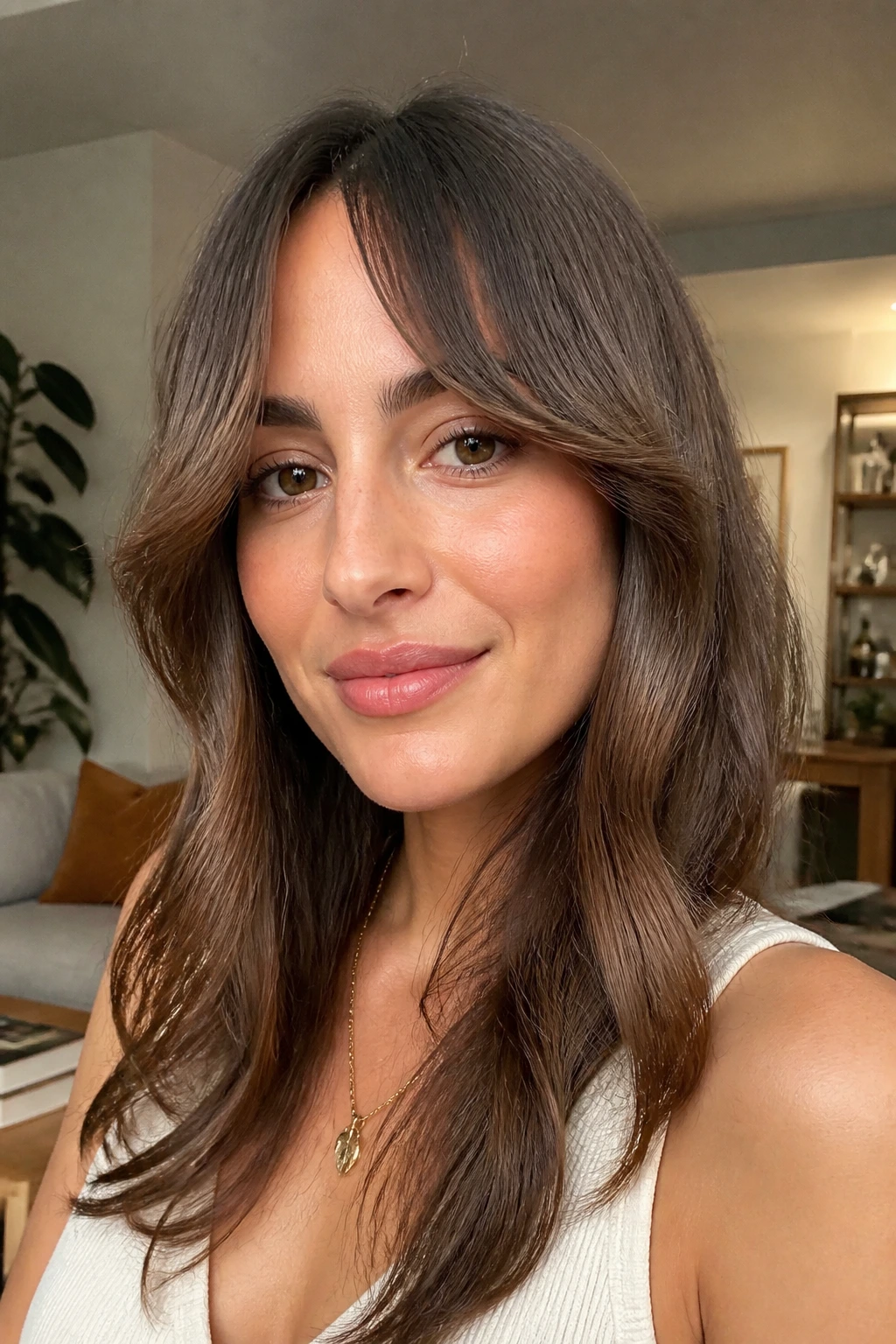
Root Lift: Clip the front section up at the roots while it cools. Even five minutes makes a difference. Flat bangs are the quickest way to lose the bottleneck shape.
Face-Framing Direction: Blow the center forward first, then sweep the outer pieces away from the face. That tiny redirection helps the fringe open instead of collapsing into one lump.
Texture Control: If the bangs start looking too fluffy, use a pea-sized touch of cream only on the ends. Put product near the root and you’ll get grease faster than shape.
Quick Fix: If one side sticks out weird, mist it lightly with water and re-bend that section with your fingers or a mini flat iron. Don’t redo the whole fringe for one stubborn piece. That’s how people overstyle bangs by accident.
Trim, Washday, and Grow-Out Guidance

Bangs get oily faster than the rest of the hair because they sit against skin all day. If the front section turns shiny before the rest of your hair does, that’s normal. A quick wash of the bangs alone, or a little dry shampoo worked into the roots, can reset them without a full hair wash.
For trims, the center usually needs attention first. If you wear the bangs often, plan on a tidy-up every 4 to 6 weeks. If the fringe is deliberately longer and softer, you can often stretch that to 6 to 8 weeks. Curly hair needs the trim check done in its natural pattern, not straightened flat, or the length will lie to you.
At night, keep the fringe off your face if you can. A loose clip at the crown or a soft pin can stop forehead oils from flattening the shape. In the morning, a tiny mist of water and a quick brush usually bring the front back to life. Bangs do not need a full production every day. They just need a little respect.
Variations and Adaptations to Try

Air-Dry Bottleneck: Keep the cut a little softer, use lightweight cream, and let waves or curls do the shaping. This version saves time and looks best when the hair has a little natural bend.
Blowout Bottleneck: Ask for slightly more density through the center and use a round brush for lift. This is the neatest version and works well when you want the fringe to look polished.
Curly Bottleneck: Leave extra length for shrinkage and shape the sides to follow the curl pattern. It should look intentional in curl form, not like a straight bang that was forced into a spiral.
Razor-Soft Bottleneck: Best for dense straight hair that needs edge-softening. A light razor or slide-cut finish can remove stiffness, but only if the stylist knows how to keep the fringe from fraying.
Transition Bottleneck: Make the outer pieces long enough to become curtain layers later. This is the best pick if you want the option to grow the bangs out without an awkward middle phase.
Statement Bottleneck: Increase the contrast between the shortest center and the longer temples. You get a stronger shape, more framing, and a fringe that reads from across the room.
Common Mistakes to Avoid
-
Cutting the center too short: The fringe sits like a shelf and can crowd the eyes. Fix it by keeping the shortest point just above the brow or letting it land softly at brow level.
-
Over-thinning fine hair: The bangs go see-through and separate in odd places. Ask for gentle point cuts instead of heavy texturizing.
-
Ignoring shrinkage on curls and waves: The fringe jumps up after drying and ends up much shorter than planned. Leave extra length and check the cut in the hair’s natural state.
-
Forgetting the side connection: The bangs look stuck on instead of blended into the haircut. The temple pieces should melt into layers near the cheekbone.
-
Styling them flat against the forehead: The front section loses shape and gets greasy faster. Use root lift, a little bend, and a cool shot so the bangs keep some air in them.
-
Not checking the part line: A cowlick or a stubborn growth pattern can split the center differently than you expect. Dry the fringe in the direction it wants to go, then shape from there.
Frequently Asked Questions

How are soft bottleneck bangs different from curtain bangs?
Curtain bangs are usually longer and more openly parted from the start. Soft bottleneck bangs begin with a shorter center and longer sides, so the middle has more presence before the fringe opens out. The result is a little more face focus and a little less drape.
Can I get this style if I have curly hair?
Yes, but the cut should account for shrinkage. Curly bottleneck bangs usually need to be left longer than you think, and they should be shaped in the curl pattern rather than straightened into place first.
Do soft bottleneck bangs work with glasses?
They can work very well. The trick is to keep the center high enough to clear the frames and let the side pieces move around the arms instead of sitting right on top of them.
How often will I need a trim?
If you wear the fringe every day, most people need a tidy-up every 4 to 6 weeks. Softer, longer versions can stretch farther, especially if the sides are already blending into face-framing layers.
What if my bangs split in the middle every morning?
That usually means you’re dealing with a cowlick or a strong growth pattern. Blow-dry the fringe from side to side first, then direct it where you want it to land and clip it there while it cools.
Can this shape work on a short forehead?
Yes, but keep the center lighter and a touch higher so the forehead doesn’t feel crowded. A heavy, low fringe can shrink the visible face space too much.
What if I want to grow them out later?
Ask for a version with longer temple pieces and a softer center to begin with. That way the fringe can turn into curtain layers instead of hanging in an awkward in-between stage.
Do I need to heat-style these bangs every day?
No. Wavy and curly versions can air-dry nicely, and even straight hair only needs a quick bend if the cut is right. The daily effort drops when the fringe is shaped to your texture instead of fighting it.
The Fringe That Softens Everything

Soft bottleneck bangs are popular for a reason that has nothing to do with trend noise. They can be subtle or bold, polished or loose, and they still hold onto that same useful shape: shorter in the middle, longer at the sides, easy to blend into the rest of the haircut. That’s a rare kind of flexibility.
The best version is the one that matches your hairline, your texture, and how much time you’re willing to spend with a brush in your hand. Get those three things lined up, and the fringe starts working with you instead of against you. If you’ve been circling around bangs for a while, this is the shape I’d trust first.
