



The best wavy hairstyles for medium length hair over 50 do one thing long, heavy cuts often miss: they let the wave move without making the face disappear under it. The shoulder line matters. Once hair lands around the collarbone, the bend has room to swing, the ends stop dragging, and the whole cut can look lived-in instead of overworked.
That length also solves a very practical problem. Hair that’s gone a little finer at the temples, a little drier at the ends, or a little more stubborn at the crown can still look full at medium length — but only if the shape is right. A blunt edge can feel sharp and modern. A few carefully placed layers can keep the wave from puffing out like a triangle. And yes, gray and silver strands often show the texture better than dyed hair ever did.
The trick is not chasing a younger look. It’s choosing a cut and style that make your hair do the best version of what it already wants to do. Some days that means loose bends and a side part. Other days it means a soft shag, a tucked lob, or a half-up twist that keeps the front neat while leaving the ends in motion. The good ones are the styles that still look like you after a windy walk, a long lunch, or a full day of being alive.
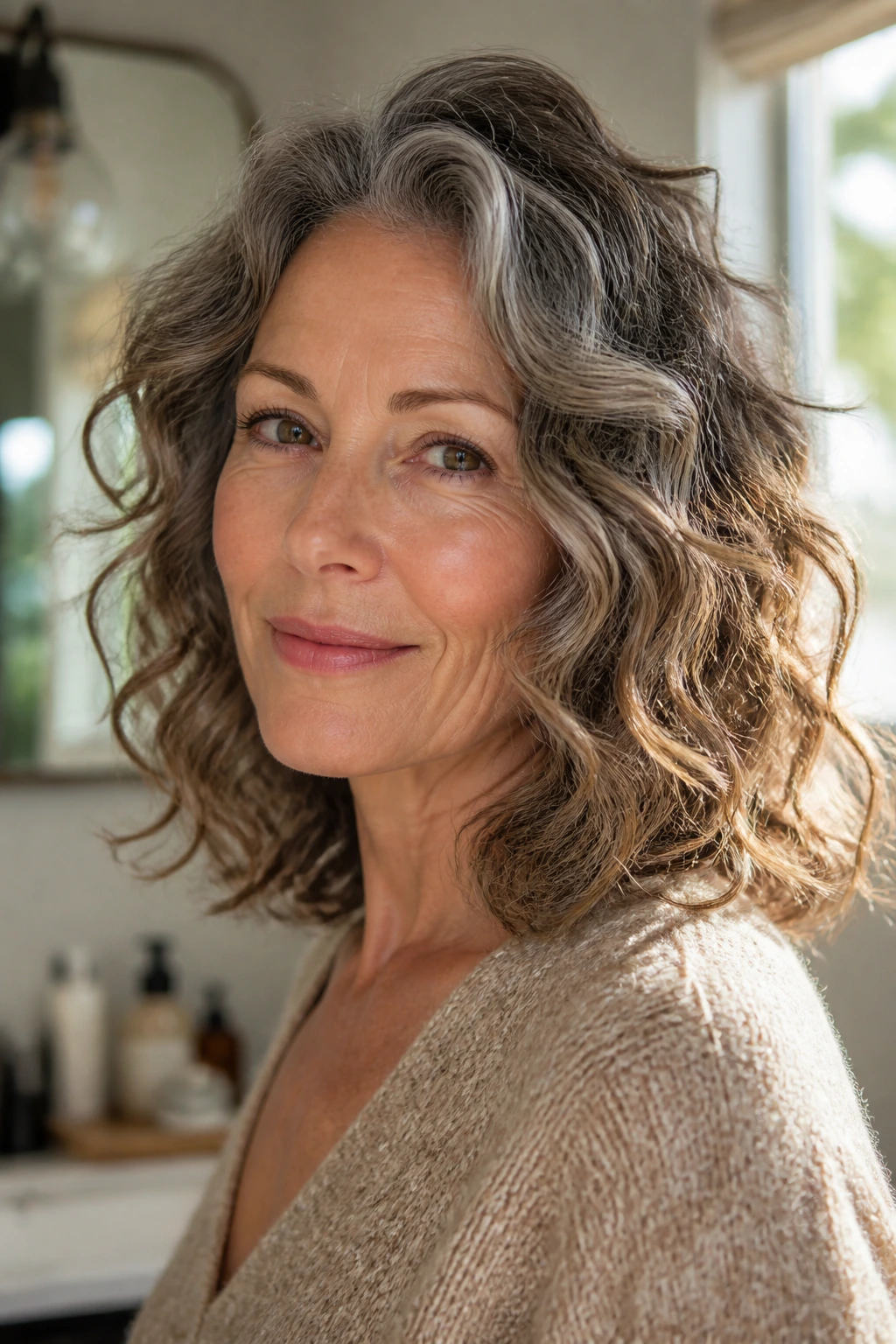
Why This Collection Is Different
-
It works with real wave patterns: These looks leave room for bends, frizz, cowlicks, and the odd flatter patch instead of forcing every section into the same curl.
-
It flatters the jaw and neck: Medium length keeps the outline soft without letting hair sit so long that it pulls the face down.
-
It gives fine hair some lift: Several of these styles use crown height, beveled ends, or subtle layers so the hair doesn’t collapse by midday.
-
It gives thicker hair a cleaner shape: Longer layers, angled cuts, and smooth finishes stop dense waves from turning into a wide triangle.
-
It plays nicely with silver strands: Gray and white hair often shows wave texture in a more dramatic way, which means less effort can look more intentional.
-
It leaves room for glasses, bangs, and low-effort styling: That middle length is forgiving. You can tuck it, clip it, pin it, or leave it loose without fighting the cut every time.
Why Medium-Length Waves Sit in the Sweet Spot
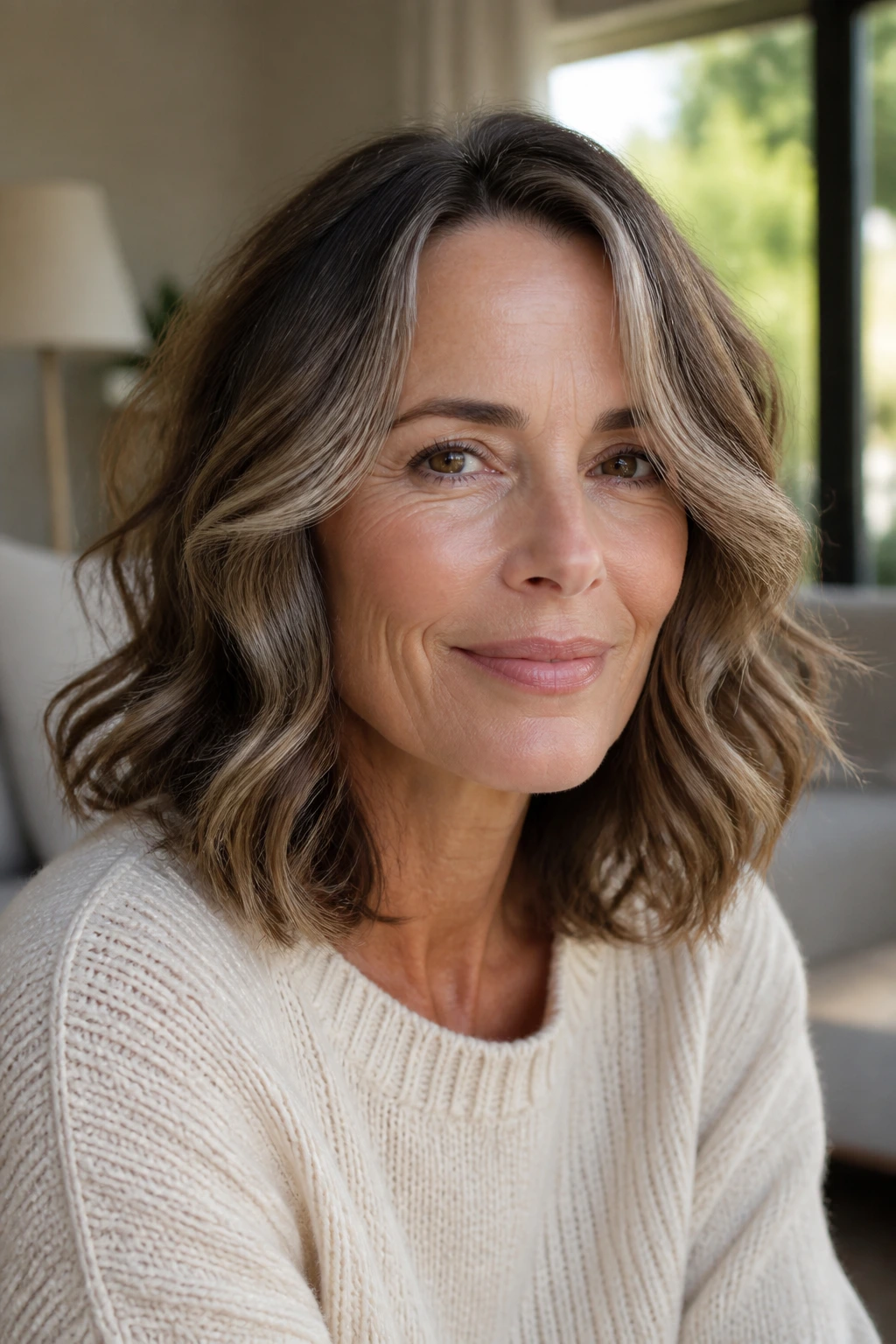
Hair changes shape as the years add up. The ends can dry faster, the crown can lose some lift, and the wave pattern can get a little less obedient than it used to be. Medium length helps because it removes enough weight to bring back movement, but not so much that the hair starts sticking out in odd places.
The cut matters more than the curl. That’s the part most people miss. A shoulder-length wave on heavy, one-length hair can hang like a wet towel. The same hair with face-framing layers, a softened perimeter, or a bit of bevel at the ends suddenly starts behaving. The difference is not subtle when you see it in the mirror.
What a good medium-length wave actually does
It should skim the shoulders, not sit on them like a blanket. It should bend at the mid-lengths and keep the ends soft. And it should give the cheekbones, jaw, and neck some shape without looking like the haircut is wearing you.
When layers help, and when they don’t
Layers are a tool, not a personality. Fine hair usually likes a few long layers around the cheekbone or collarbone, because too many short layers can make the ends look thin and see-through. Thicker hair usually needs more shaping through the interior so the wave can stack without swelling outward.
A blunt edge has its own place. If your hair already has decent density, a clean line with a little bevel can look expensive in the plain old-fashioned sense of the word: tidy, strong, and not trying too hard. That’s useful when you want the wave to be the main feature, not the haircut itself.
How to Choose Wavy Hairstyles for Medium Length Hair Over 50
Picking the right version is less about age and more about how your hair behaves on an ordinary Tuesday. Fine hair, dense hair, grays that resist color, waves that flatten at the crown, waves that puff at the ends — these each need a different cut strategy. Ignore that, and even a good haircut can feel off by noon.
Fine or thinning hair
Go for lift at the crown, not choppy layers everywhere. A collarbone lob with a side part, a soft layer around the face, or beveled ends can make the hair look fuller without taking away too much weight. If the ends start to look wispy, the cut is too aggressive.
Thick or coarse hair
Keep the outline cleaner. Long layers through the interior help the wave sit down, while the perimeter stays strong enough to hold its shape. Thick hair often looks best when the front is a touch longer than the back, because that keeps the profile from ballooning.
Gray, silver, or salt-and-pepper hair
This texture often shows movement beautifully, but it can also look dry if the finish is rough. A gloss, a light cream, or a brush-out with a flexible spray can stop silver waves from reading wiry. I’d avoid overly crunchy products here. They make the hair look older, not sharper.
Glasses and face shape
Glasses change everything. Frames need a little clearance near the temples, so a style with side-swept fringe or soft layers around the cheekbones usually wins. If your face is round, a side part or angled lob can add a vertical line. If it’s long, a bit of width through the sides can help balance the length.
Essential Tools and Products for These Looks
-
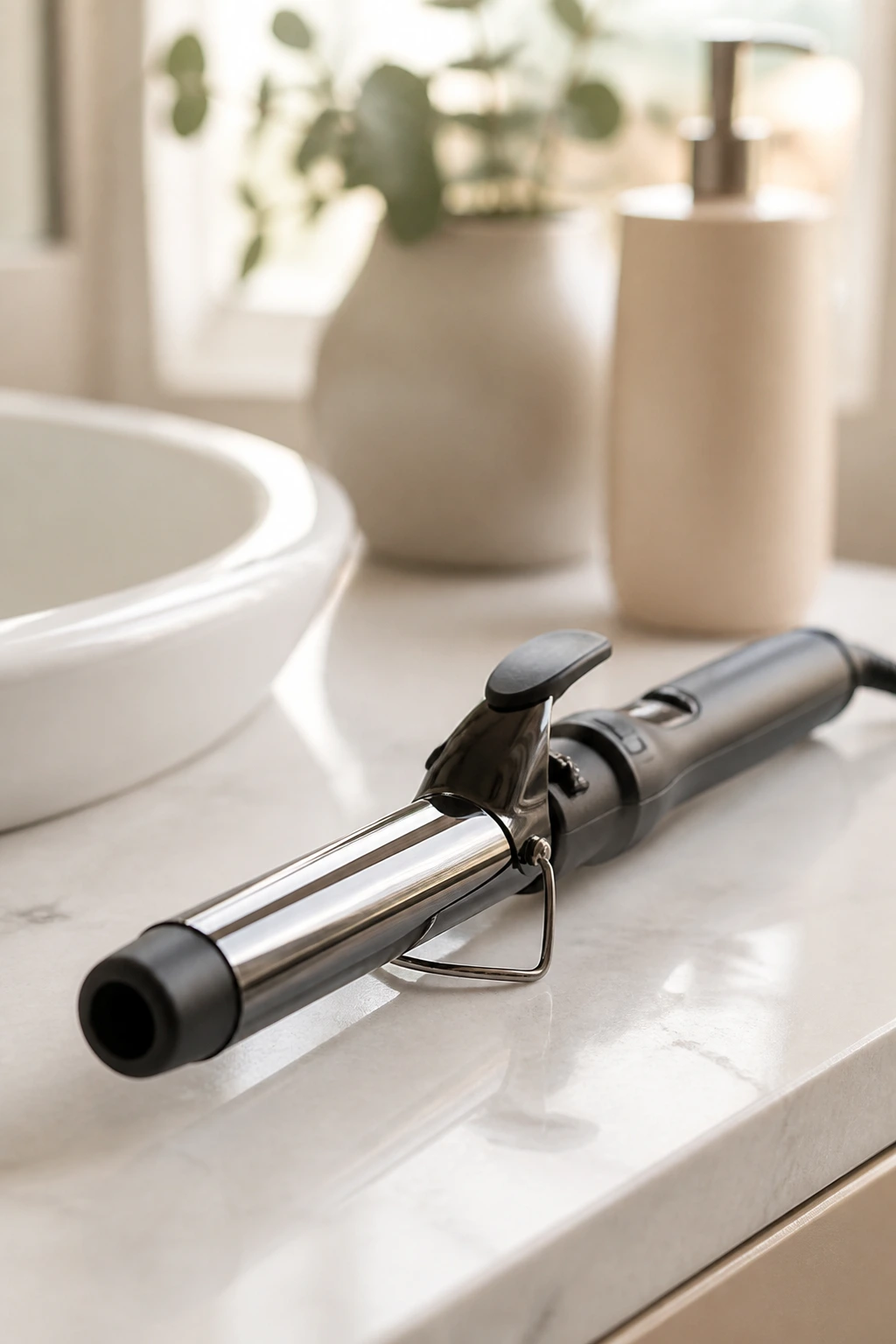
1.25-inch curling iron or wand: This size gives medium waves that bend, not ringlets that fight the cut.
-
Heat protectant spray: Use it every time you touch hot tools. Dry ends over 50 do not forgive skipped protection.
-
Volumizing mousse: A golf-ball amount at the roots and mids can give lift without turning the hair sticky.
-
Lightweight leave-in conditioner: Good for gray, dry, or sun-tired hair; keep it off the roots.
-
Flexible-hold hairspray: You want movement that stays. Helmet hair helps nobody.
-
Diffuser attachment: Handy for air-drying or rough-drying natural waves without blowing them flat.
-
Wide-tooth comb: Better than a brush when hair is damp and springy.
-
Sectioning clips: They make crown lift, bang drying, and root clipping much easier.
-
Velcro rollers or large hot rollers: A quick way to get lift through the front without using a curling iron on every piece.
-
Microfiber towel or cotton T-shirt: Less friction means less frizz. Plain and simple.
How to Wear These Waves on Busy Mornings and Event Nights
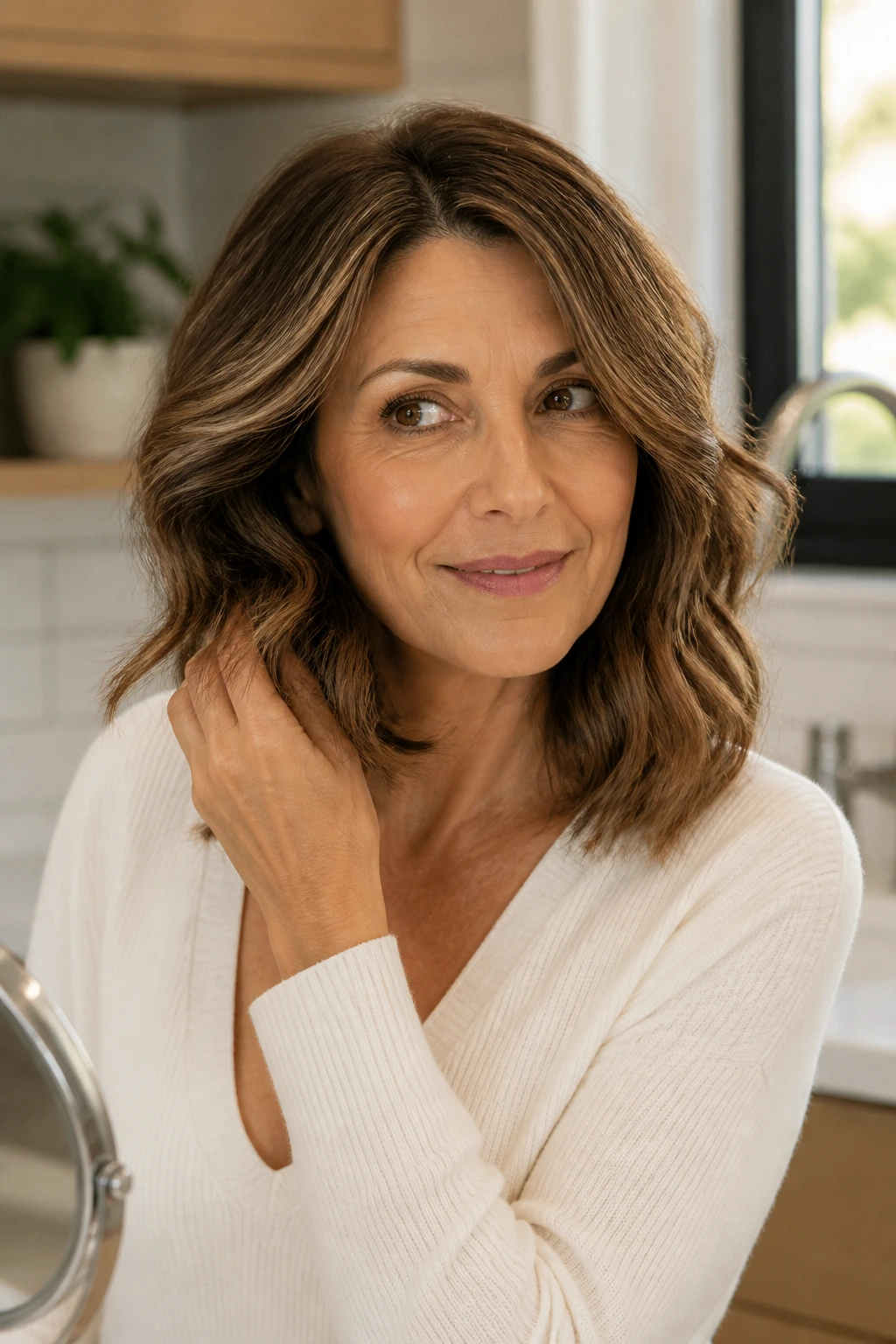
Morning hair and evening hair are not the same job. A style that looks soft and relaxed at breakfast may need one extra move at night, and that’s fine. The point is to build a shape that survives a workday, not one that only behaves for twenty minutes after the mirror.
On busy mornings, the fastest win is a side part, a little root lift, and two or three polished pieces around the face. If the back is doing something odd, twist the top half back with a clip and let the ends stay loose. That leaves you looking deliberate without standing at the sink for half an hour.
For dinner or an event, brushed-out waves or a low half-up twist give the hair a cleaner line. A tiny bit of shine cream on the ends — tiny — keeps silver or highlighted hair from going fuzzy under lights. And if the front has gone flat, pin two velcro rollers into the crown for ten minutes while you do makeup. Old trick. Still works.
1. Shoulder-Grazing Layers With a Soft Side Part
This is the haircut I suggest to people who want movement without drama. The length skims the shoulders, the side part lifts the front, and the layers are long enough that the wave keeps its shape instead of breaking apart. It’s a calm cut. No fuss, no helmet, no hard edge.
Why it works
The shoulder-grazing length gives medium waves enough room to swing while still staying neat around the neck and collarbone. A soft side part pulls the eye upward, which helps if the hair has started to flatten at the temples. The whole thing looks especially good when the wave is loose, almost brushed through.
Styling note
Use mousse at the roots, then dry with a diffuser or large round brush. Keep the ends slightly curved inward so they don’t kick out in a strange way. If you like a more casual finish, run your fingers through it once the hair is cool and stop there.
Quick tip: If your wave turns puffy in humidity, a pea-sized dab of cream on the last two inches is usually enough.
2. Collarbone Lob With Loose, Airy Bends
A collarbone lob is one of those cuts that earns its keep every day. It looks polished even when it’s barely styled, and the length sits in the zone where wavy hair can still feel airy instead of heavy. I like it best with bends, not tight curls. Loose bends are kinder.
The trick is to curl away from the face in alternating sections and leave the very ends out on a few pieces. That keeps the movement soft and stops the style from looking too uniform. If your hair is fine, this is one of the easiest ways to make it look like there’s more of it.
Best for
- Hair that flattens when it gets too long
- People who like to tuck one side behind the ear
- Anyone who wants a cut that can go sleek or casual with the same base
A lightweight spray before heat and a little flexible hairspray after is usually enough. Anything stiffer tends to make the bends fall in one large lump. Not pretty.
3. Curtain Bangs and Wavy Lengths
Curtain bangs can be a little tricky, and I’m not going to pretend otherwise. When they’re cut too short, they sit like a shelf. When they’re too heavy, they fight the rest of the hair. Done well, though, they open the face and make medium waves look fuller around the front.
The best version starts around the cheekbones and blends into layers that fall toward the collarbone. That lets the bangs move with the wave instead of hanging in a separate block. If you wear glasses, this shape is especially useful because it softens the frame line without dropping hair into your eyes every five minutes.
Styling note
Dry the bangs first, using a round brush or a roller set away from the face. Then let the rest of the wave take over. If the fringe splits awkwardly, a quick mist of water and a two-minute re-dry usually fixes it faster than fighting with a brush.
Watch for: If the bangs stick out like wings, they’re too short or too thick for your wave pattern.
4. Feathered Waves With Crown Lift
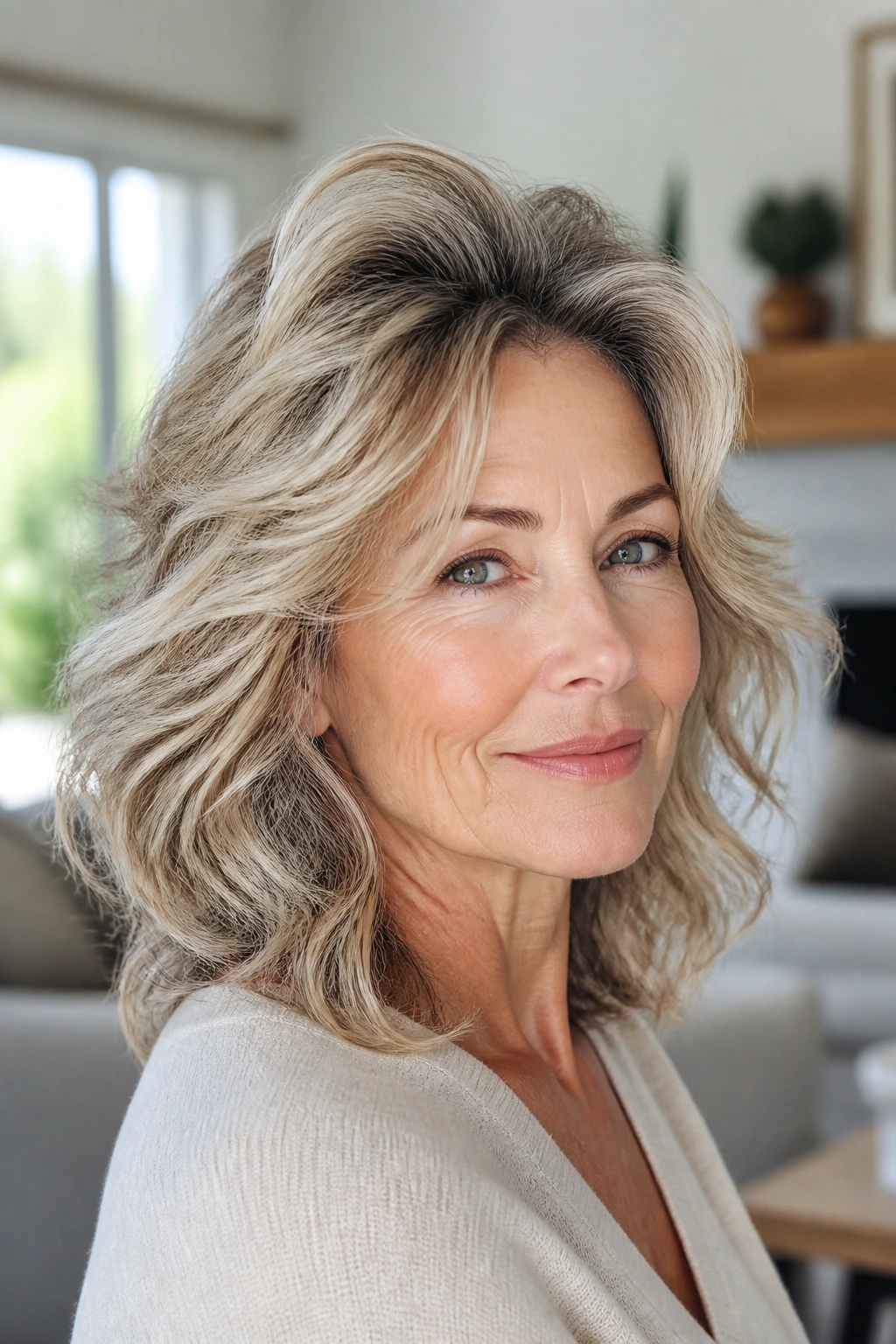
This one gives the hair a little lift at the roots and a little softness at the edges, which is a useful combination when the crown has gone flatter over time. Feathered layers around the top keep the hair from feeling blocky, while the lower lengths still swing.
A lot of people think they need more curl when what they actually need is more shape at the root. That’s the difference here. The wave is not bigger everywhere. It’s smarter. The crown gets clipped up while drying, or set with rollers for ten minutes, and the rest falls naturally.
How I’d style it
- Apply mousse at the roots.
- Clip the crown upward while the hair dries.
- Use a large-barrel iron only on the front and outer layers.
- Finish with a spray that holds without crunch.
The result is soft, not fluffy. There’s a difference. Soft looks intentional. Fluffy looks like you got caught in a breeze and lost the argument.
5. Modern Shag With Soft Fringe

A shag on medium-length wavy hair over 50 is not about looking edgy. It’s about freeing the wave. The layers are shorter through the interior, the fringe is soft rather than blunt, and the hair can air-dry into that slightly undone shape that does not need much help.
This style works best when the hair has some natural bend and a little density. On very fine hair, too many short pieces can expose the ends. On thick hair, the shag can remove bulk in a way that makes the whole head feel lighter. If your hair gets bigger at the sides and flatter at the top, this cut can help balance both.
Use a salt-free texture spray or a lightweight foam. Too much grit turns the ends into straw. I’d skip heavy oils here unless the hair is truly dry. The shag wants movement, not slickness.
6. Angled Lob That Hugs the Jaw
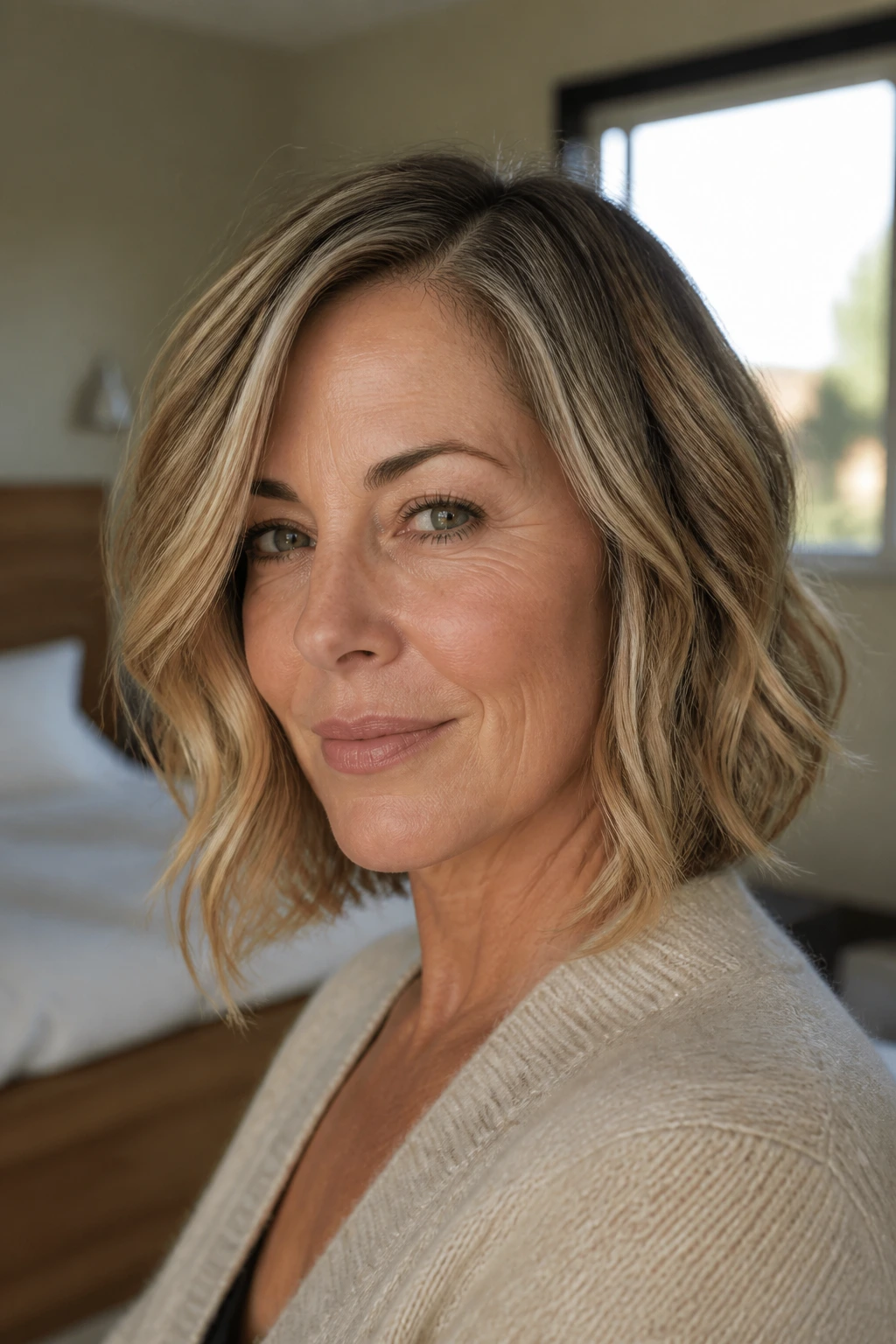
An angled lob is one of the cleanest ways to wear medium-length waves without letting them sprawl. The front stays a little longer, the back sits a bit higher, and the whole cut wraps the jaw in a way that feels neat, not severe. It’s a very useful shape if you like definition.
The angle gives the face some structure, especially when the wave is styled with a side part. It also keeps the neckline open, which matters more than people admit. Hair that ends right on the broadest part of the shoulder can feel bulky; this one avoids that trap.
Styling notes
- Blow-dry the front downward first so the angle reads clearly.
- Add a soft bend through the mid-lengths with a large iron.
- Tuck one side behind the ear if you want more face shape.
The best angled lobs still move. If the ends are pin-straight while the rest is wavy, the contrast looks awkward. Keep the finish consistent.
7. Brushed-Out Waves With a Smooth Finish
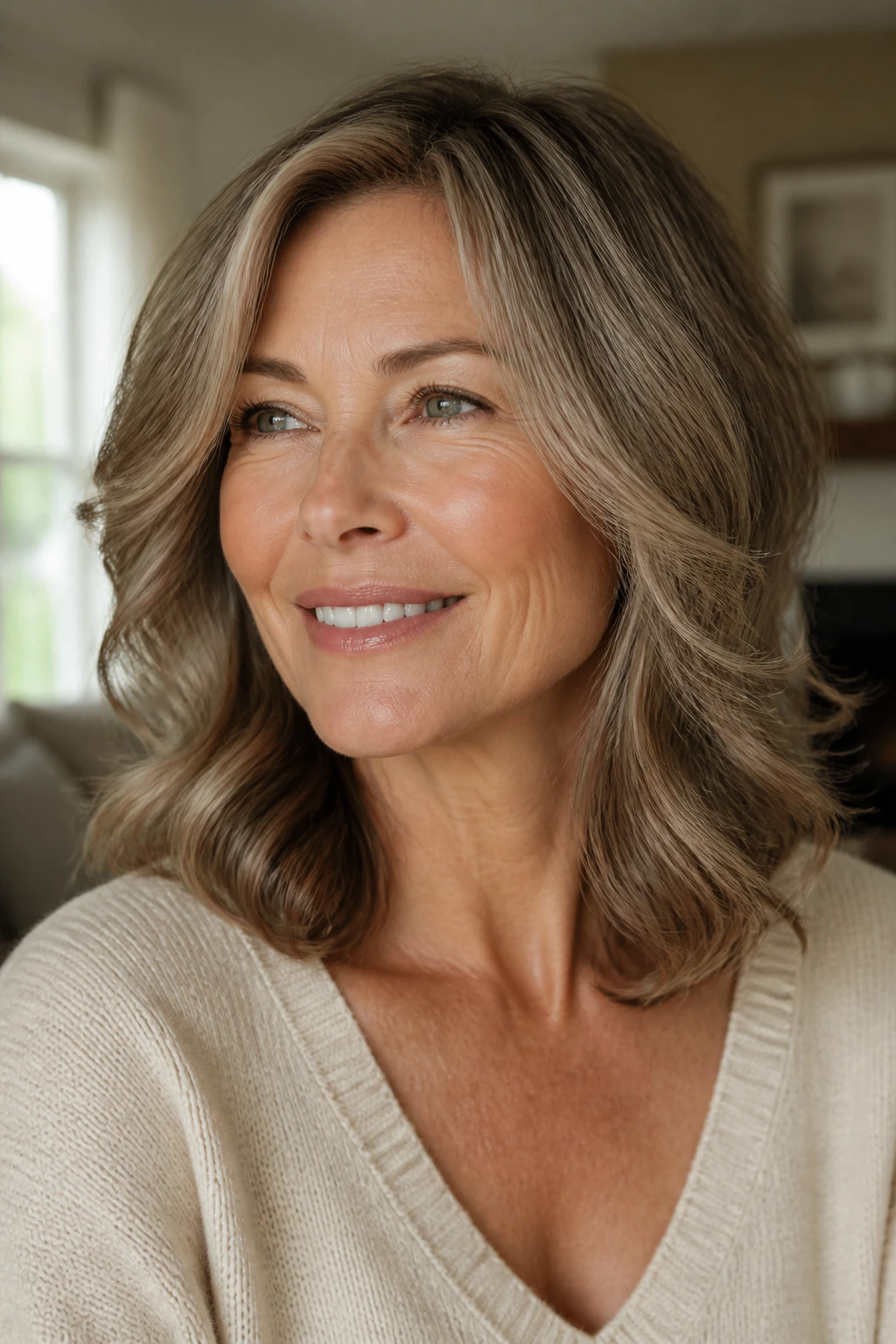
This is the polished cousin of loose waves. Curl or wave the hair, let it cool, then brush it out gently so the whole shape becomes softer and more uniform. The result is glossy, calm, and a little old-school in the best way.
Brushed-out waves are especially flattering when you want the hair to look intentional without looking stiff. They also work well for silver hair, because the shine catches on the bends instead of sitting in one hard stripe. A boar-bristle brush or a wide paddle brush makes the finish smoother; a regular dense brush can puff the wave apart.
A tiny detail that matters
Let the hair cool fully before brushing. If you rush that part, the shape collapses and the wave never really sets. That’s one of those boring rules that turns into a good hair day.
A mist of flexible hairspray after brushing keeps the wave in place without turning it into lacquer. I’d use this style for dinner, photos, or any day when you want the hair to look a little more dressed up.
8. Face-Framing Layers That Open the Cheeks
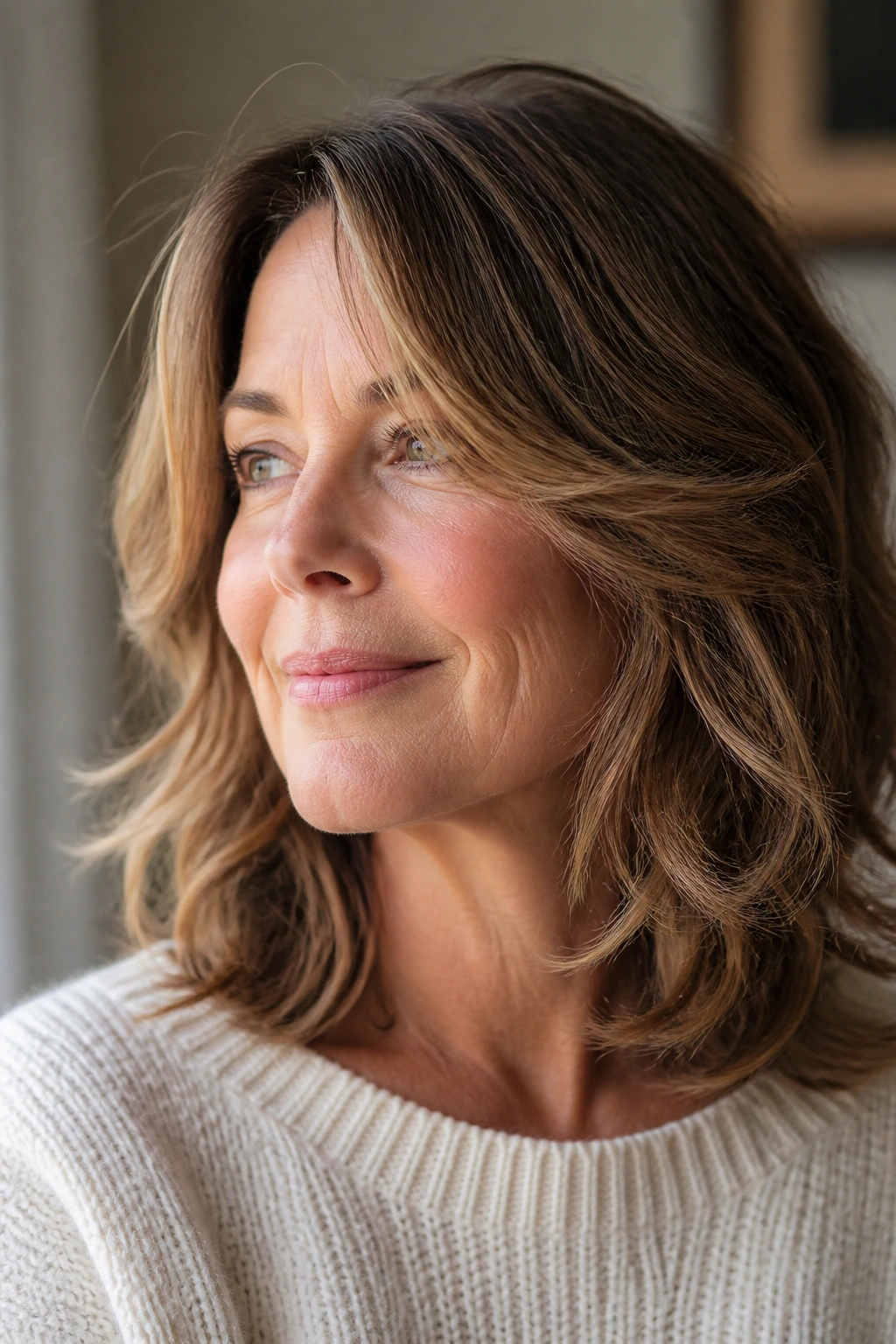
Face-framing layers are the kind of haircut detail that pays off every time you turn your head. They start somewhere between the cheekbone and jaw, then blend back into the longer length so the wave stays soft around the face. Done right, they make the whole haircut look lighter.
The shape is useful if you want to soften the cheeks or bring attention upward without cutting bangs. It also helps when the rest of the hair is medium length and you want movement near the front but not too much chopping through the back. There’s a reason stylists reach for this trick so often. It works.
Good choices here
- Fine hair: keep the face-framing pieces long and subtle.
- Thick hair: let them start a little shorter so they don’t disappear.
- Round face: keep the front pieces below the cheekbone.
- Longer face: let them sit closer to the cheekbone for width.
If you wear earrings, this cut gives them room to show. That sounds small. It isn’t.
9. Deep Side Part With Lift at the Temple
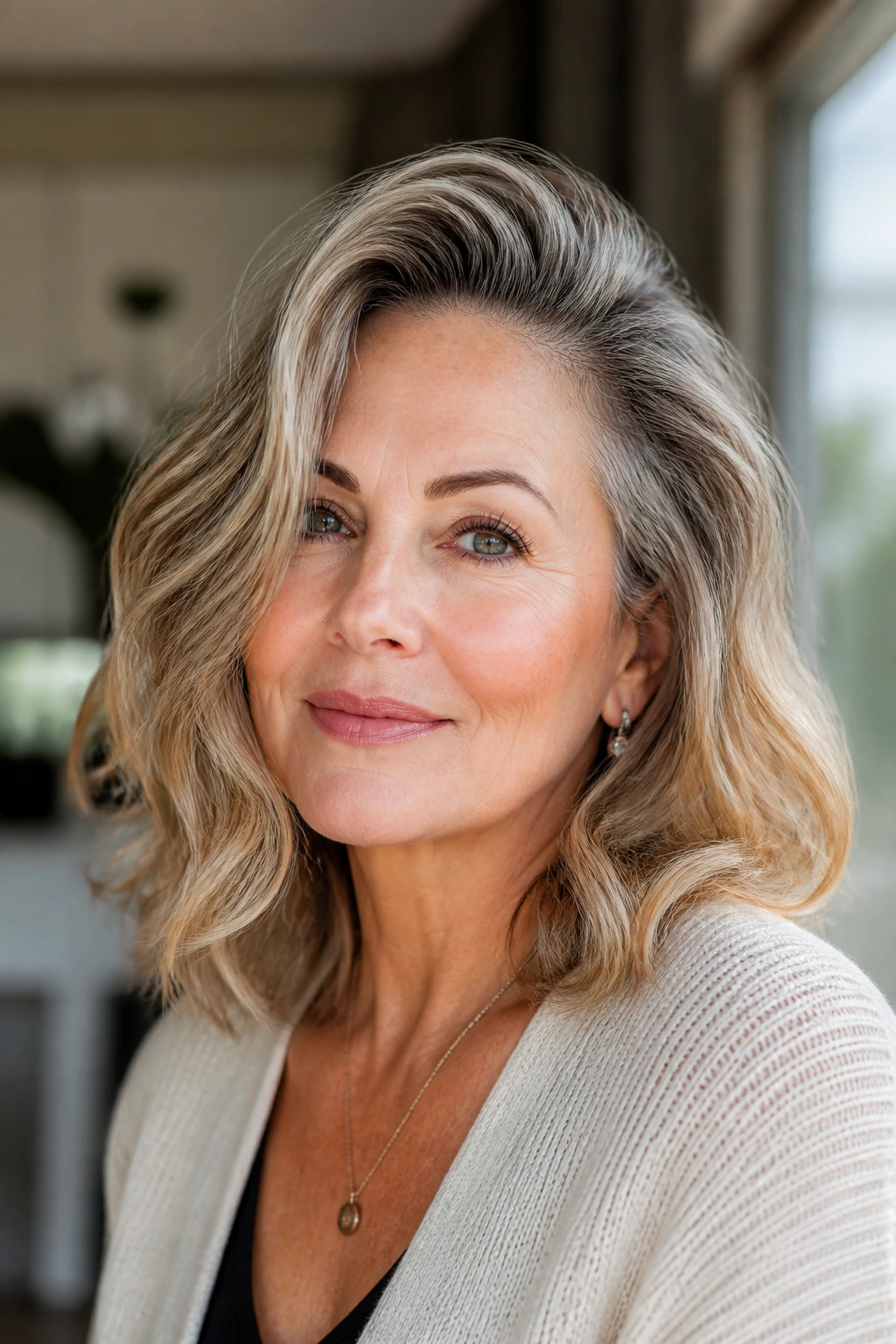
A deep side part can change the whole mood of medium-length waves in one move. It adds height where the hair tends to flatten and makes the style feel a little more dramatic without adding one extra inch of length. If you’ve got a cowlick, this is often the part that helps it rather than fighting it.
The temple area matters more than most people think. When that zone lifts, the face opens up and the wave reads as fuller. It also gives a nice asymmetry, which is useful if one side of your hair always looks better than the other. Some days you use what the hair gives you. This is one of those days.
Dry the part where it lives, not where you wish it lived. Then clip the heavier side up for a few minutes while the roots cool in place. That little pause makes a bigger difference than another round of product.
10. Half-Up Twist With Loose Ends
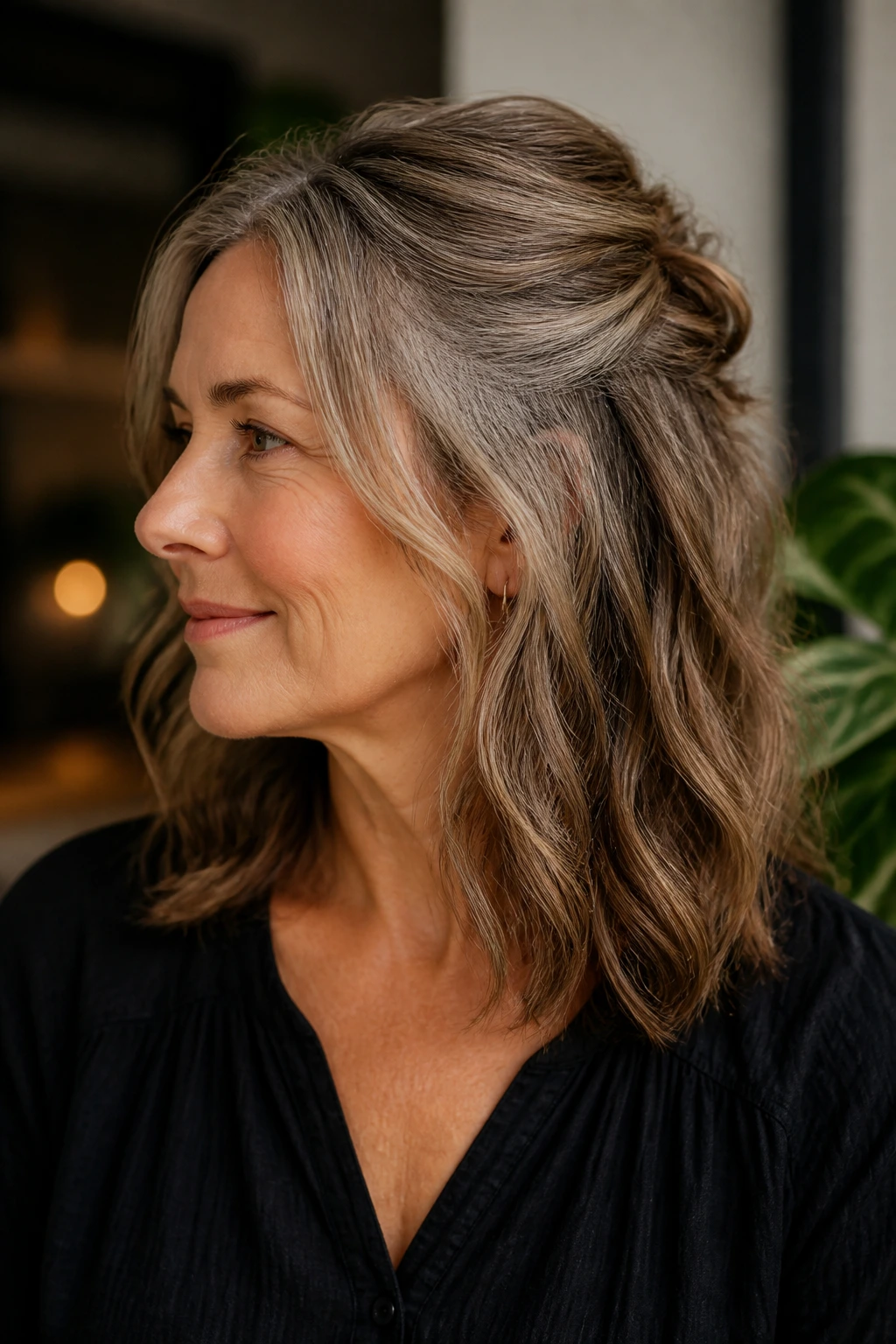
A half-up twist is the hairstyle I reach for when the front pieces are behaving badly and the ends are still nice. Pulling the top section back gives the hair structure, but leaving the lower waves loose keeps the style from looking severe. It also keeps hair off the face without sacrificing movement.
This version is good for lunch dates, workdays, and days when you want the haircut to look styled with almost no effort. Twist each side back loosely, cross them at the crown, and pin them with a small claw clip or decorative barrette. Do not pull it tight. Tight half-up styles can drag the wave flat around the front.
Best detail
A little texture at the roots helps this stay put. If the hair is freshly washed and slippery, rough-dry the crown first or use a touch of dry shampoo before pinning. That gives the clip something to hold.
11. Low Chignon With Wavy Tendrils
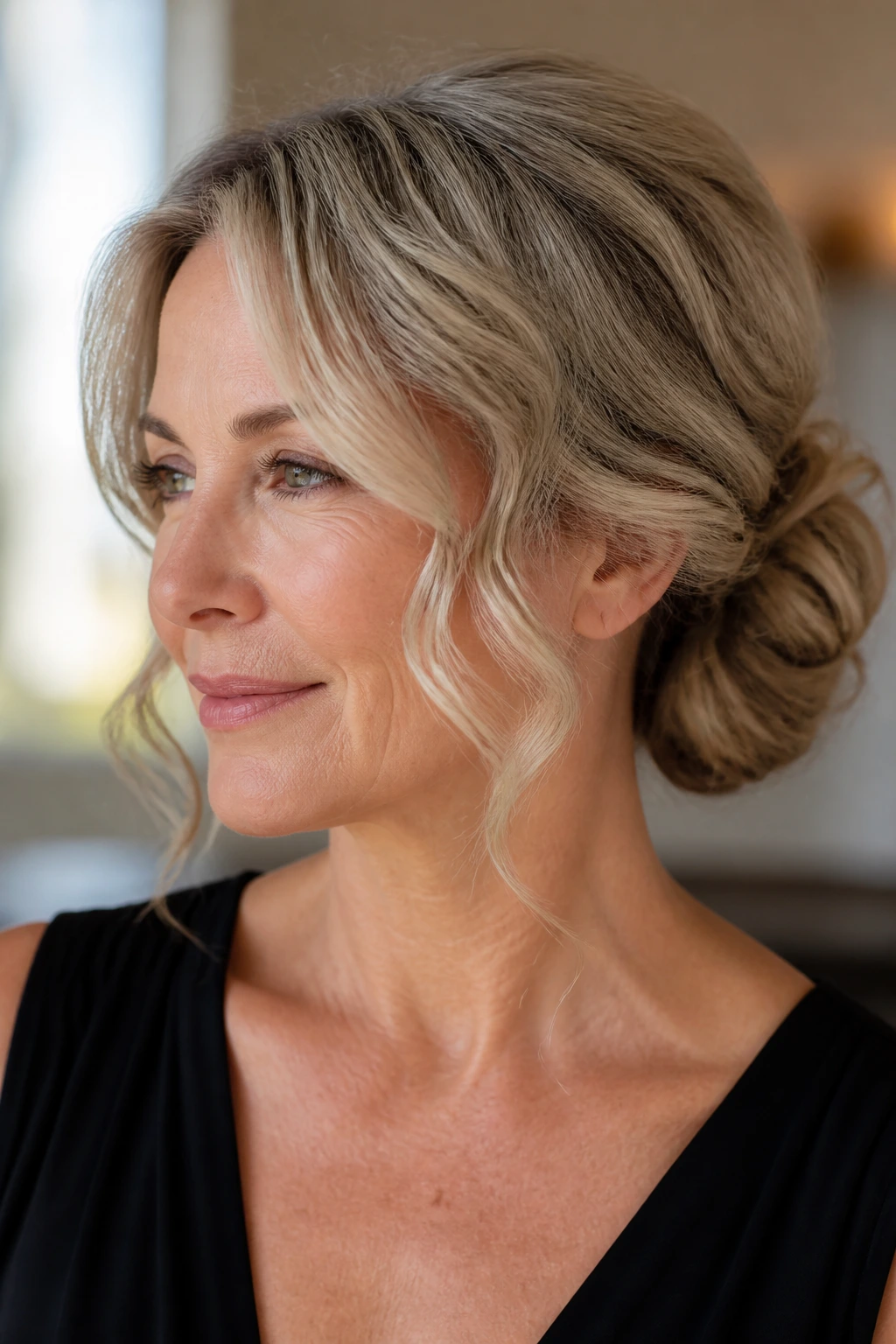
When medium-length hair is waved first and pinned low, it can look far richer than a plain bun. A low chignon with a few loose tendrils around the face feels soft and put together without being fussy. It’s a useful option for events, long dinners, or any day when you want the neck clear.
The important part is not to over-smooth the top. Keep a little bend through the crown and let the front pieces stay soft. If the bun is too tight, the whole thing starts to look formal in a stale way. If it’s too loose, the style falls apart. The middle ground is the sweet spot.
Quick setup
- Mist the hair with a light flexible spray.
- Gather it at the nape.
- Twist into a bun and pin from multiple directions.
- Pull out two or three thin face-framing pieces.
That’s enough. Anything else tends to get needy.
12. Blunt Mid-Length Cut With Beveled Ends
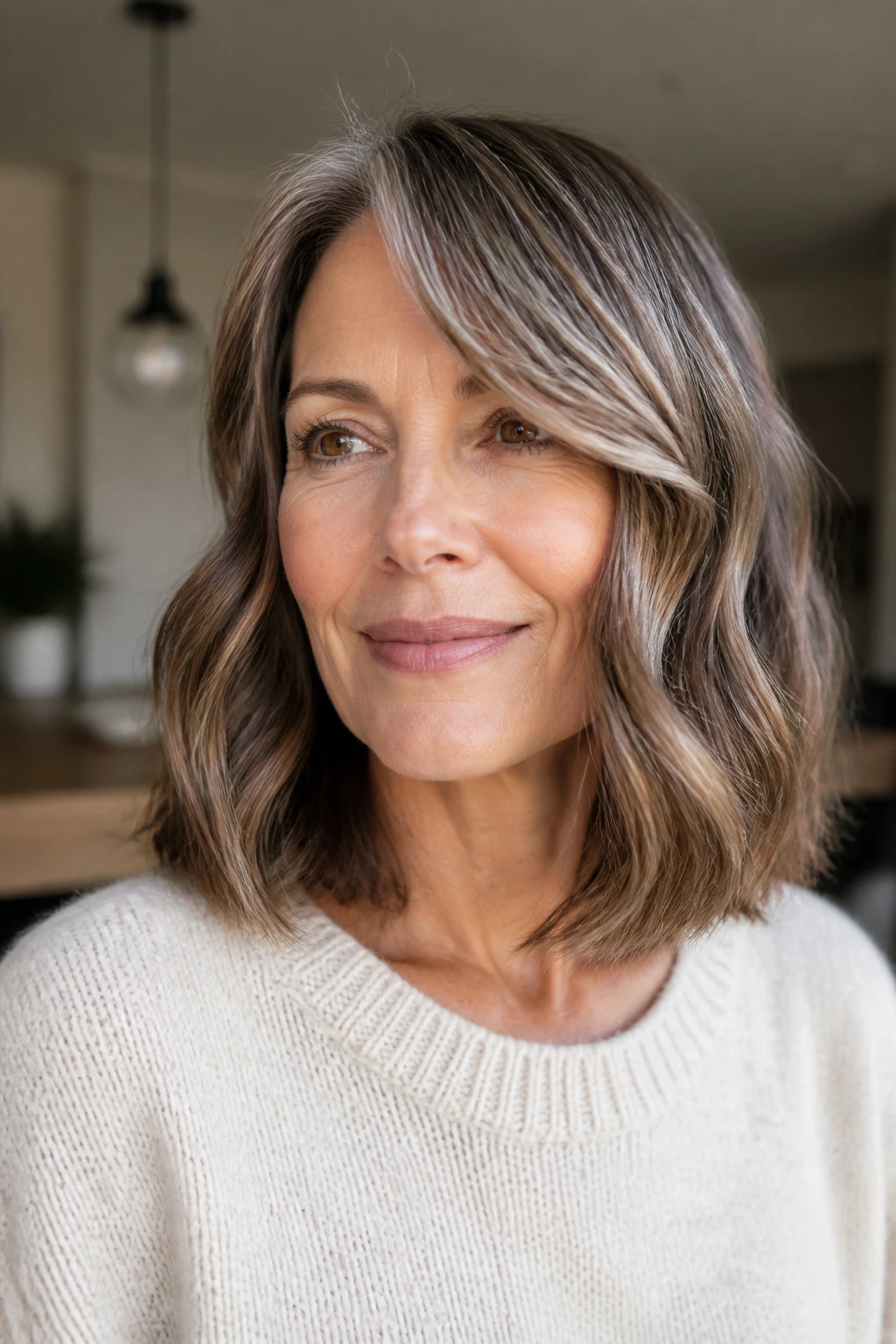
A blunt cut sounds severe on paper, but on wavy hair it can look very elegant when the ends are beveled just enough to avoid a blocky edge. Medium length keeps it from feeling heavy, and the blunt line gives the wave a clean perimeter. That contrast is the whole point.
This is a strong choice if your hair is dense or if you want the ends to look thicker. It can also make highlights or silver strands appear more deliberate because the shape is so clear. A blunt cut is not lazy. It is precise.
What keeps it from looking hard
A soft bend at the ends. Just a hint. If the hair flips out too much, it stops reading as polished and starts reading as untamed. A flat iron bend or a round brush through the last inch can fix that quickly.
People with very fine hair should be cautious here. A blunt line can still work, but it needs enough density at the bottom to avoid looking see-through.
13. Soft Flip-Out Ends at the Collarbone
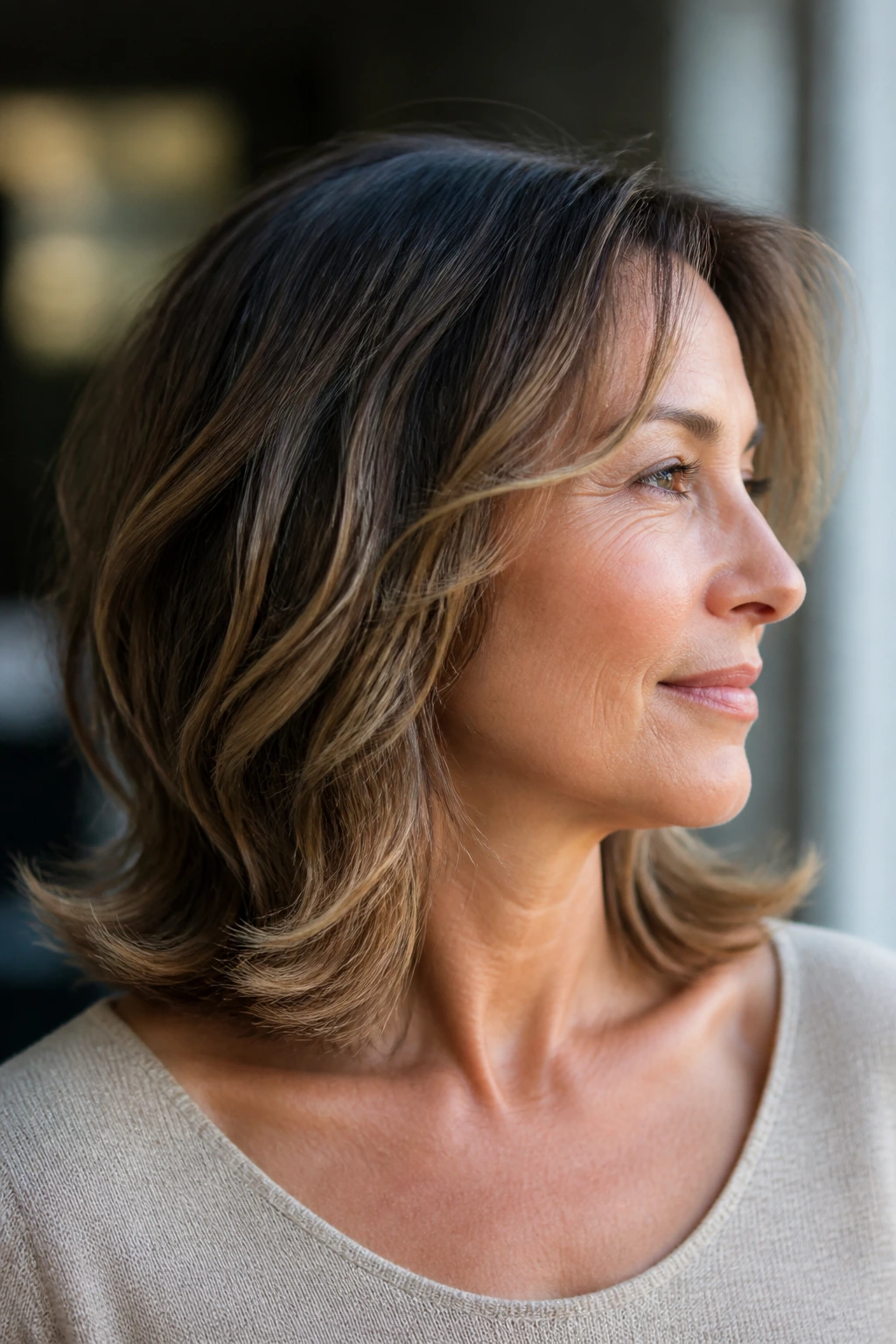
Flip-outs have a reputation for looking dated when they’re overdone, but a gentle flip at the collarbone can add movement and a little lift right where medium hair tends to hang. The trick is restraint. Think soft turn, not hard curl.
This style suits women who want the ends to feel lively without going into full wave mode all the way down. It works well with a side part, and it looks especially nice when the front pieces are a touch longer than the back. That gives the face a frame while the ends do a small bit of work.
Use a round brush or a flat iron to bend the last two inches away from the neck. Keep the rest of the wave loose. If you flick the ends on every piece, the shape gets noisy fast. One small turn is enough.
14. Rounded Layers for a Fuller Silhouette
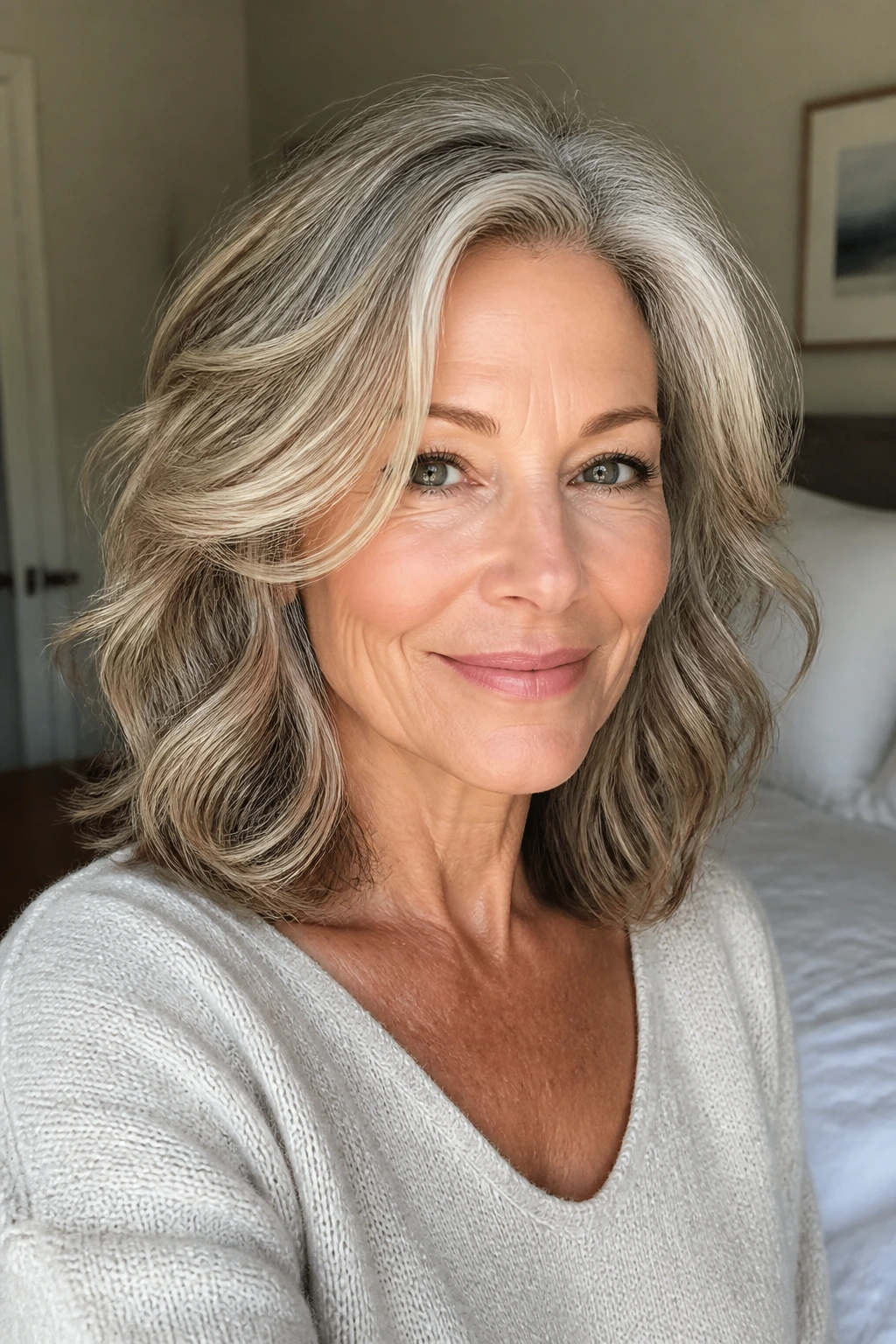
Rounded layers create a curve around the head instead of a flat, straight outline. That makes the hair look fuller in a way that’s hard to fake with product alone. If your hair has lost some width through the sides, this shape can bring it back.
The layering is controlled, not choppy. Shorter pieces sit around the crown and upper sides, while the lengths stay long enough to keep the wave moving. It’s a nice balance for medium hair because it gives body without opening holes in the shape.
Good move for styling
Set the top section in a few large velcro rollers after blow-drying. Ten to fifteen minutes is often enough. Then let the rest fall naturally. That little bit of lift at the top keeps the round shape visible all day.
If you want the hair to feel expensive in the plain sense — neat, full, and finished — this is one of the stronger choices.
15. Tousled Waves With Broken-Up Texture
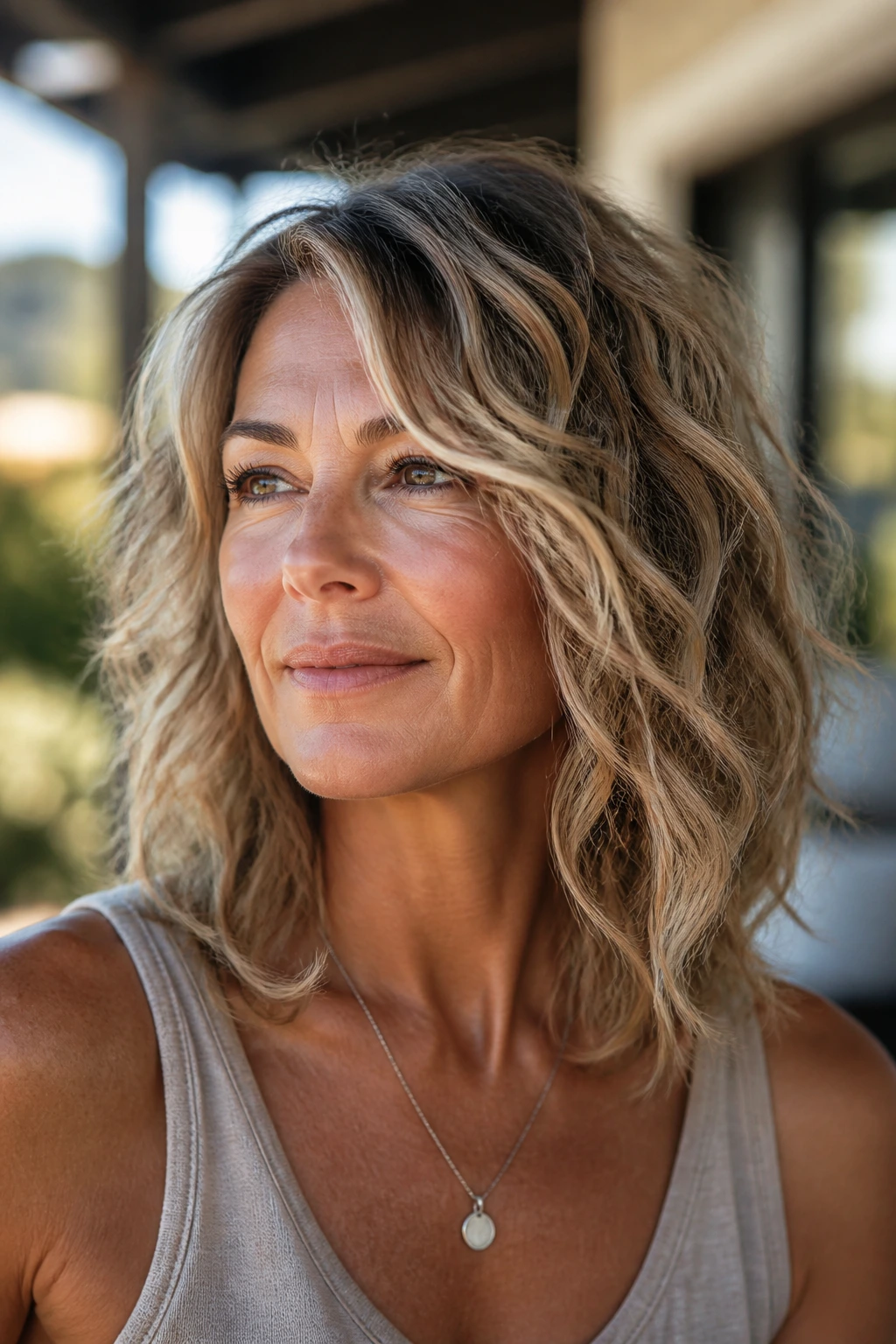
Tousled waves sound casual, but the good version is controlled. The hair should look like it had a nice day, not like it lost a fight with a pillow. Broken-up texture gives medium hair a little edge and keeps the wave from clumping into one thick mass.
This works especially well on hair that has some natural bend but not much polish. A texturizing spray through the mids and ends, plus a few finger-twisted pieces around the front, is usually enough. If you’ve got thicker waves, this can stop the style from feeling too heavy. If your hair is fine, go easy on the spray or the ends will dry out fast.
What to aim for
Separate the pieces just enough to see movement. Stop before the hair turns fuzzy. There’s a narrow line there, and it’s worth respecting.
16. Side-Swept Fringe With Long Waves
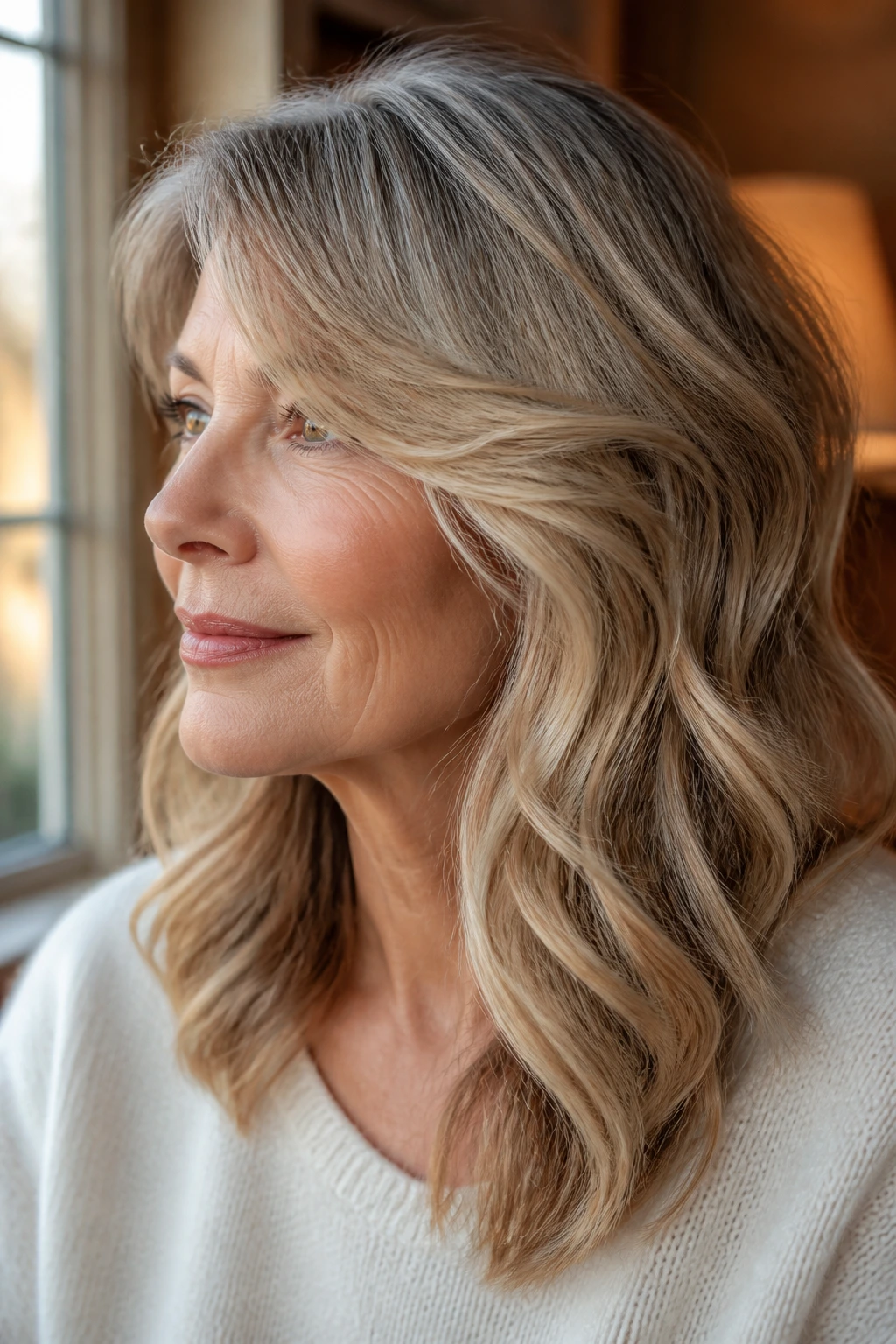
A side-swept fringe is a very practical answer to the question of bangs. It gives softness without the straight-across commitment, and it blends into the rest of the wave more easily than a blunt fringe. If your forehead is a feature you’d rather soften, this is a smart place to start.
The best version sweeps from a deeper side part and joins the longer waves around the cheekbones. That keeps the shape fluid. It also means the fringe won’t split awkwardly as easily as curtain bangs can on some textures. Less drama. More control.
Styling trick
Dry the fringe first, directing it across the forehead with a brush or your fingers. Once it cools, it will stay where you put it longer. If it starts to separate, a tiny touch of styling cream on the very ends can help it cling together without looking greasy.
17. Air-Dried Lob With a Soft Bend
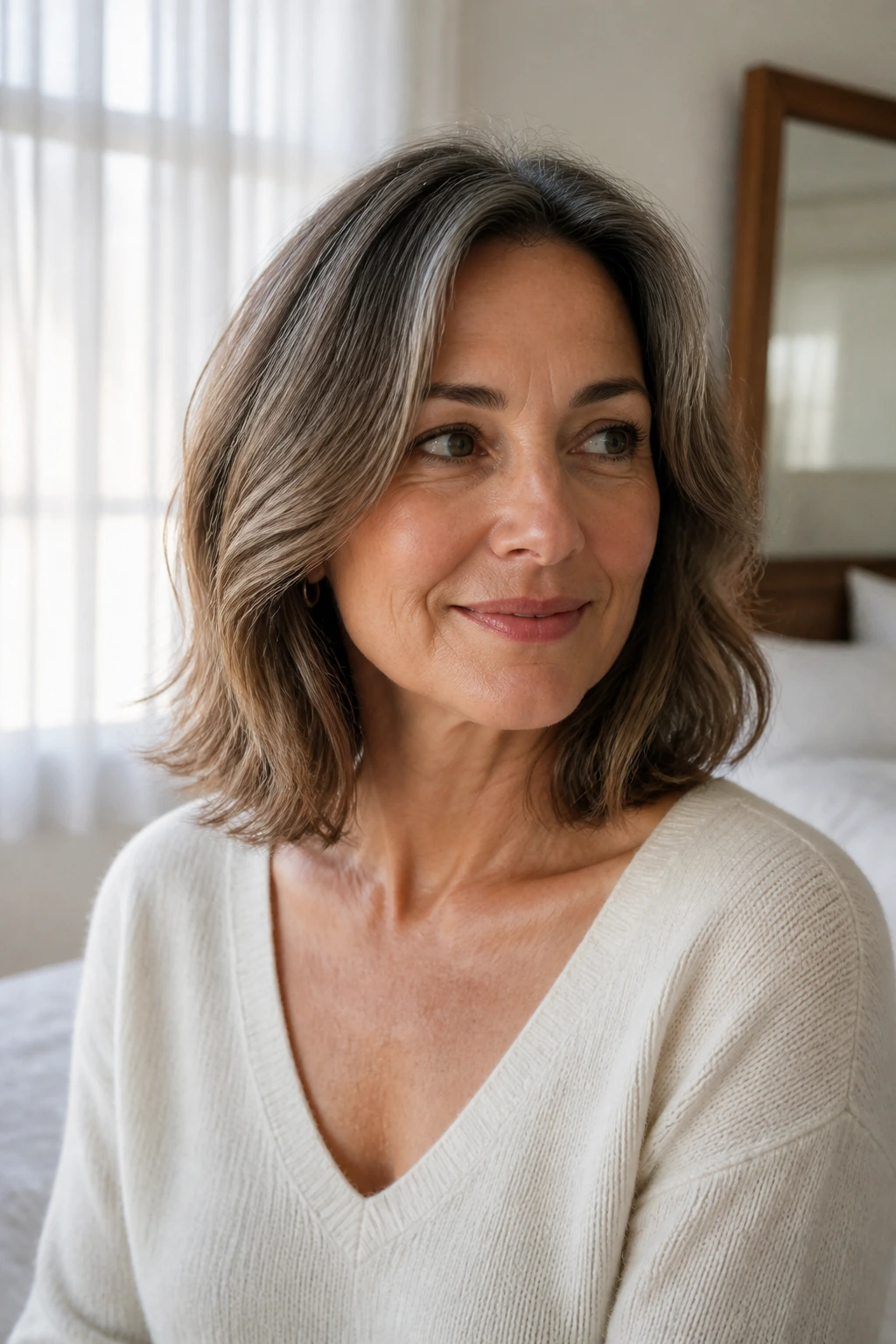
This is the low-maintenance option that still looks like you made an effort. A lob that air-dries into a soft bend needs the right cut and the right product, not a hot tool marathon. The wave should settle into place on its own and leave the ends a little polished.
Use leave-in conditioner on the lower half, a light mousse through the mids, and then scrunch gently. If your hair is longer in front, tuck it behind the ear while it dries once or twice so the bend doesn’t get stuck in one direction. That tiny bit of attention helps a lot.
When this works best
- Natural wave that returns after washing
- Hair that frizzes when over-styled
- People who hate daily heat tools
If the bend disappears by noon, the cut probably needs more interior shaping or a bit more product at the roots.
18. Glossy Center-Part Waves
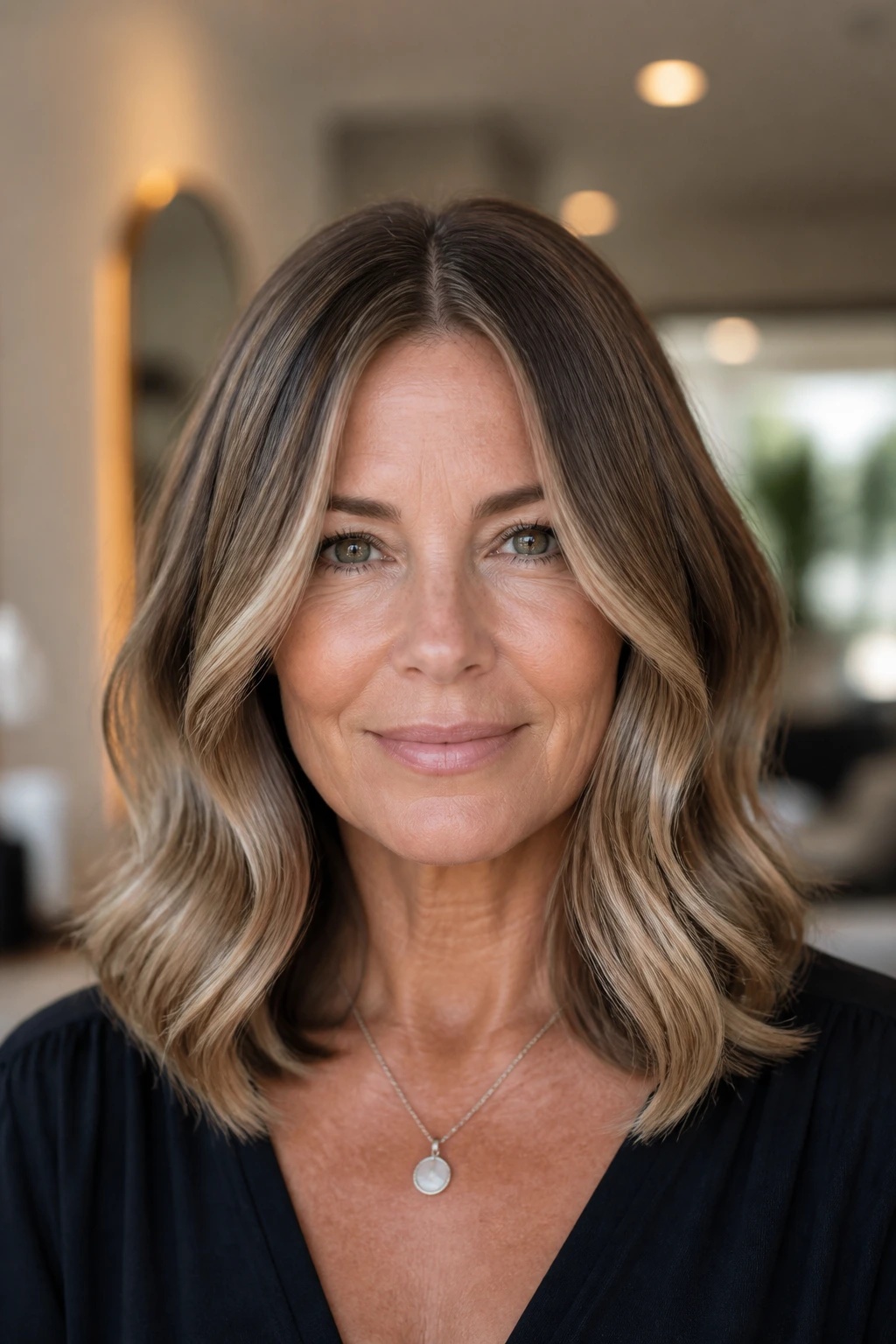
A center part with glossy waves is cleaner than people expect. It can look modern, especially when the hair sits at the collarbone and the waves are wide and smooth. The middle line gives symmetry, and the shine keeps the style from reading flat.
This one is lovely on silver hair, highlighted hair, or dark hair with some depth through the ends. The key is finish. A matte, dry wave with a center part can look tired fast. A touch of shine serum through the last inch, or a gloss treatment at the salon, changes the whole thing.
Keep it from feeling severe
Leave a little softness around the face. The center part should be clean; the front pieces should not be rigid. A few loose bends near the cheekbones make the style feel human, not architectural.
19. Glasses-Friendly Wavy Lob

If you wear glasses, you already know the wrong haircut can turn into a daily annoyance. This lob clears the frames, keeps the front pieces soft, and avoids a fringe that keeps poking the lenses. It’s medium length done with real life in mind.
The length should sit around the collarbone or just above it, with enough layering to keep the sides from crowding the temples. The waves can be loose and polished or a little undone. Either way, the hair needs to stay out of the frame line near the ears. That’s the whole trick.
A side part tends to work well because it creates space above one frame edge and lifts the eye. If you want bangs, make them soft and longer. Short bangs with glasses can be a battle you do not need.
20. Crown-Braided Half-Up Style
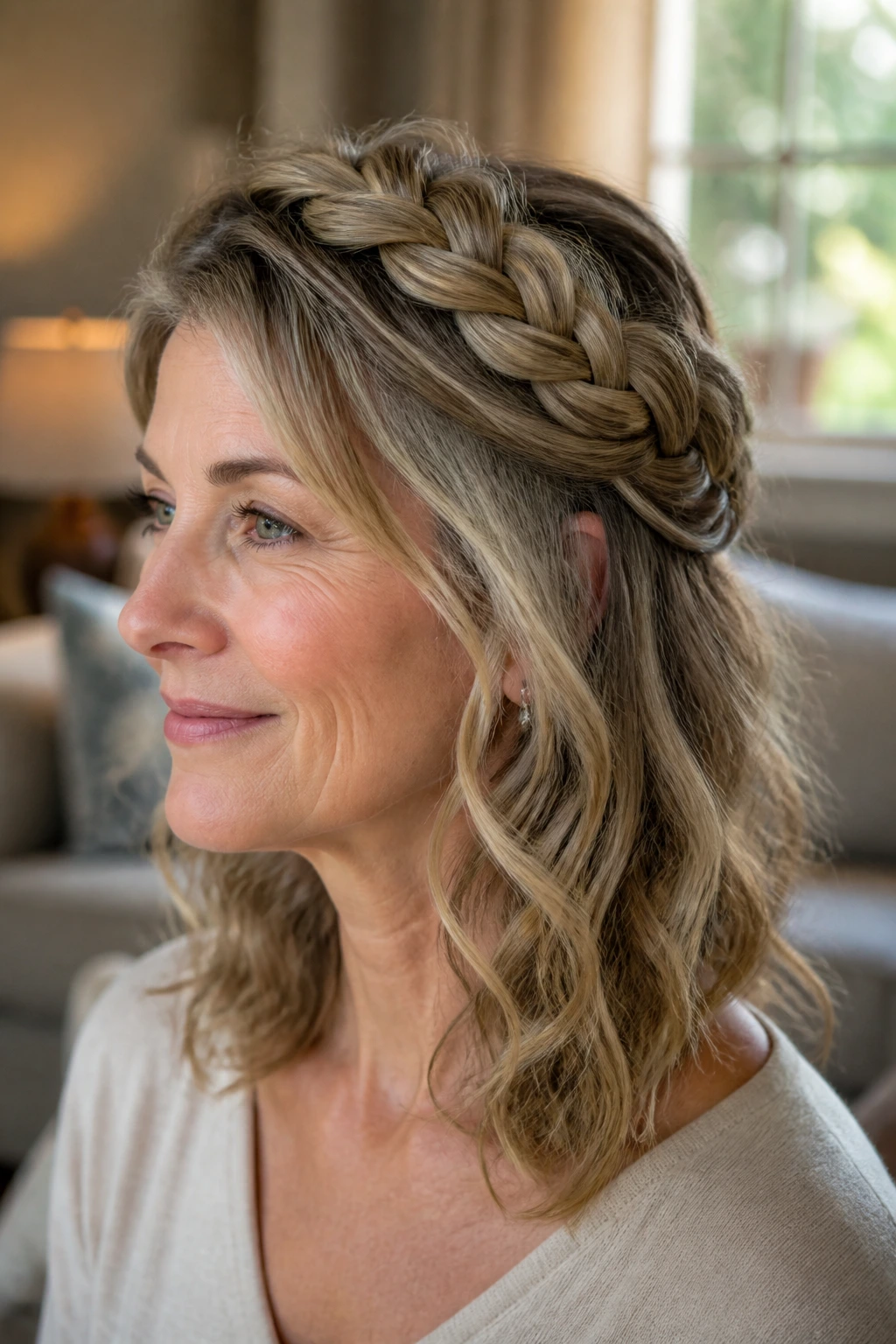
A small braid at the crown can add texture and pin back the top layer without taking away the wave. This is useful when the roots need a little help but you still want the ends on display. It’s also a nice way to hide second-day hair that’s acting a little odd.
The braid should be narrow and loose. That keeps it from looking childish or overdone. Pull it back into a half-up shape and let the rest of the hair fall in waves. If the braid is too tight, the scalp shows more and the crown can look flat.
Best use
This is a good event style for medium wavy hair because it gives the front shape while leaving the ends soft. It also works when the wind is doing rude things outside.
21. Low Ponytail With a Wrapped Base
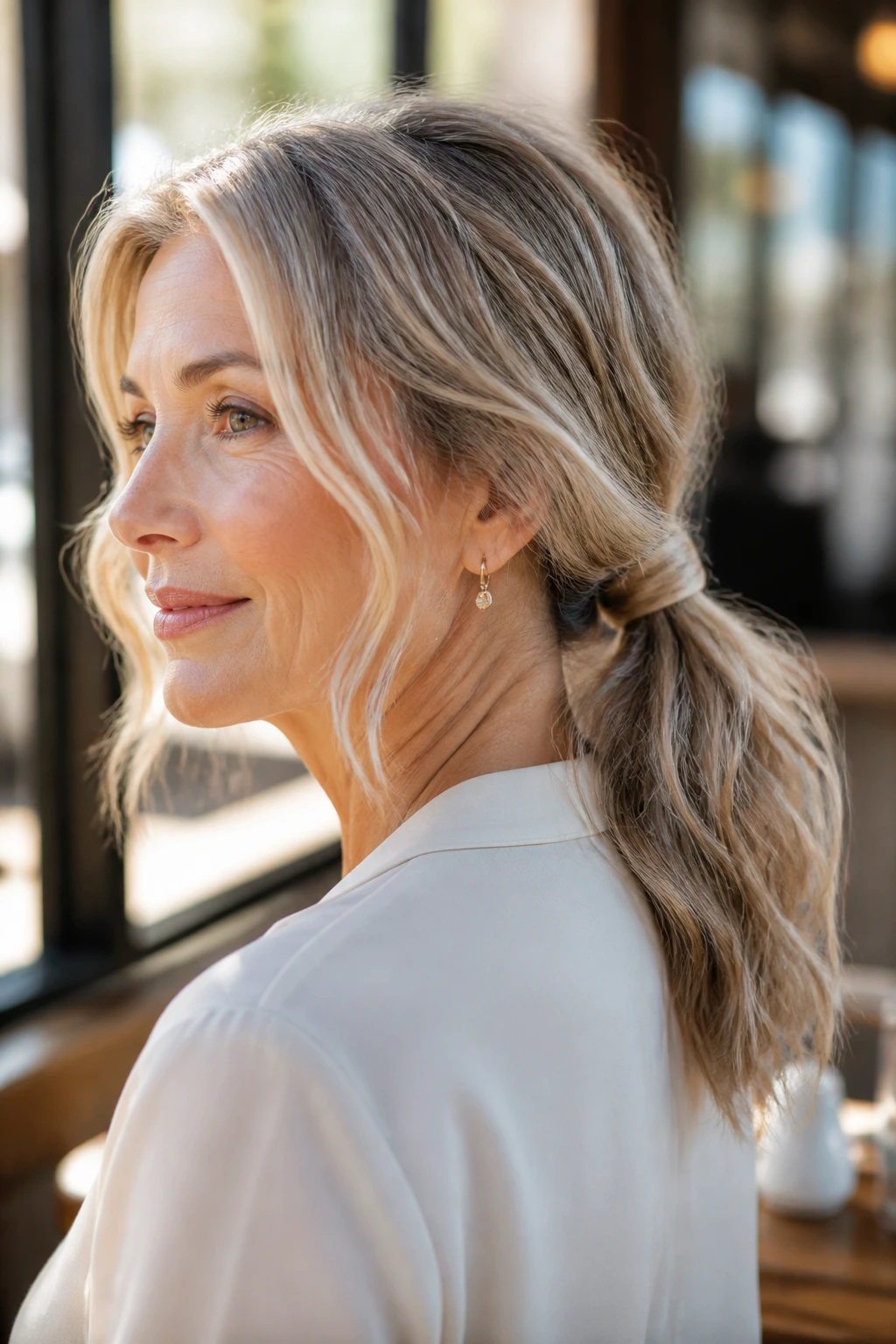
A low ponytail does not have to be boring. On medium-length wavy hair, it can look elegant when the top is kept smooth, the waves stay visible in the tail, and a small section of hair wraps the elastic. That last step matters. It cleans the whole look up.
Pull the ponytail to the nape or a touch higher, depending on where the wave sits best. Leave the tail loose instead of brushing it into stiffness. If the ends are dry, a tiny bit of cream on the bottom inch gives the tail a finished feel. Not greasy. Finished.
Why it earns a spot
It keeps the neck open, handles humidity better than loose waves, and still lets the texture show. That’s a practical haircut-style combo, which is worth more than people give it credit for.
22. Silver-Dimension Waves With a Natural Finish
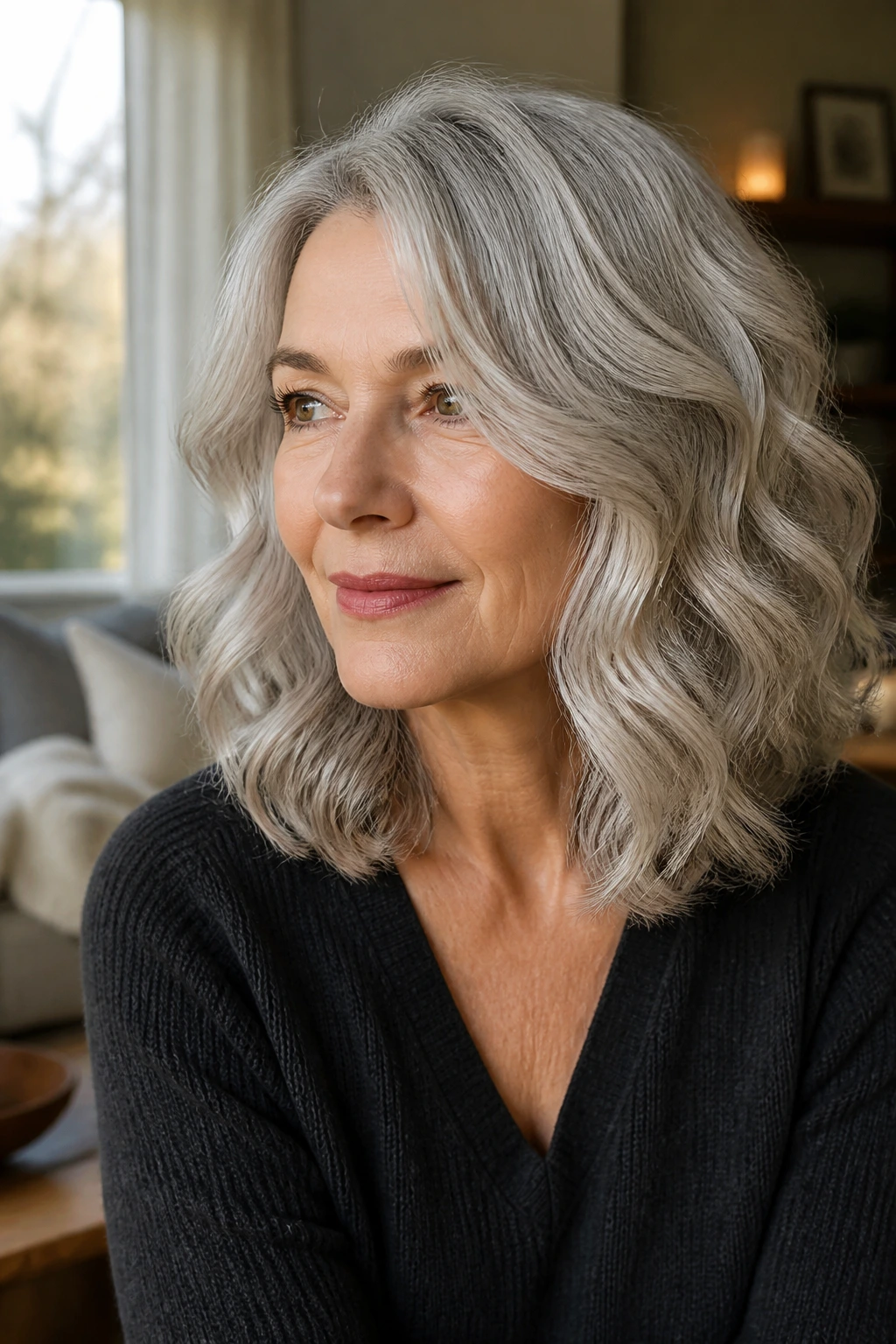
Gray hair often looks best when the wave is not trying to be too perfect. Silver strands catch light in a way dyed hair often doesn’t, so the style should let that dimension show. Medium length gives the wave enough body to move, and a natural finish keeps the texture from turning stiff.
This is a good place for soft layers, a gentle side part, and a light gloss rather than heavy shine spray. The goal is not to make silver hair look younger. The goal is to make it look deliberate, healthy, and full of shape. That’s a better target anyway.
Small finishing note
If the silver hair is coarse, use a cream on the ends and stop. If it’s fine, use mousse at the roots and very little else. The texture tells you what it needs; the trick is listening.
How to Keep the Shape Between Washes
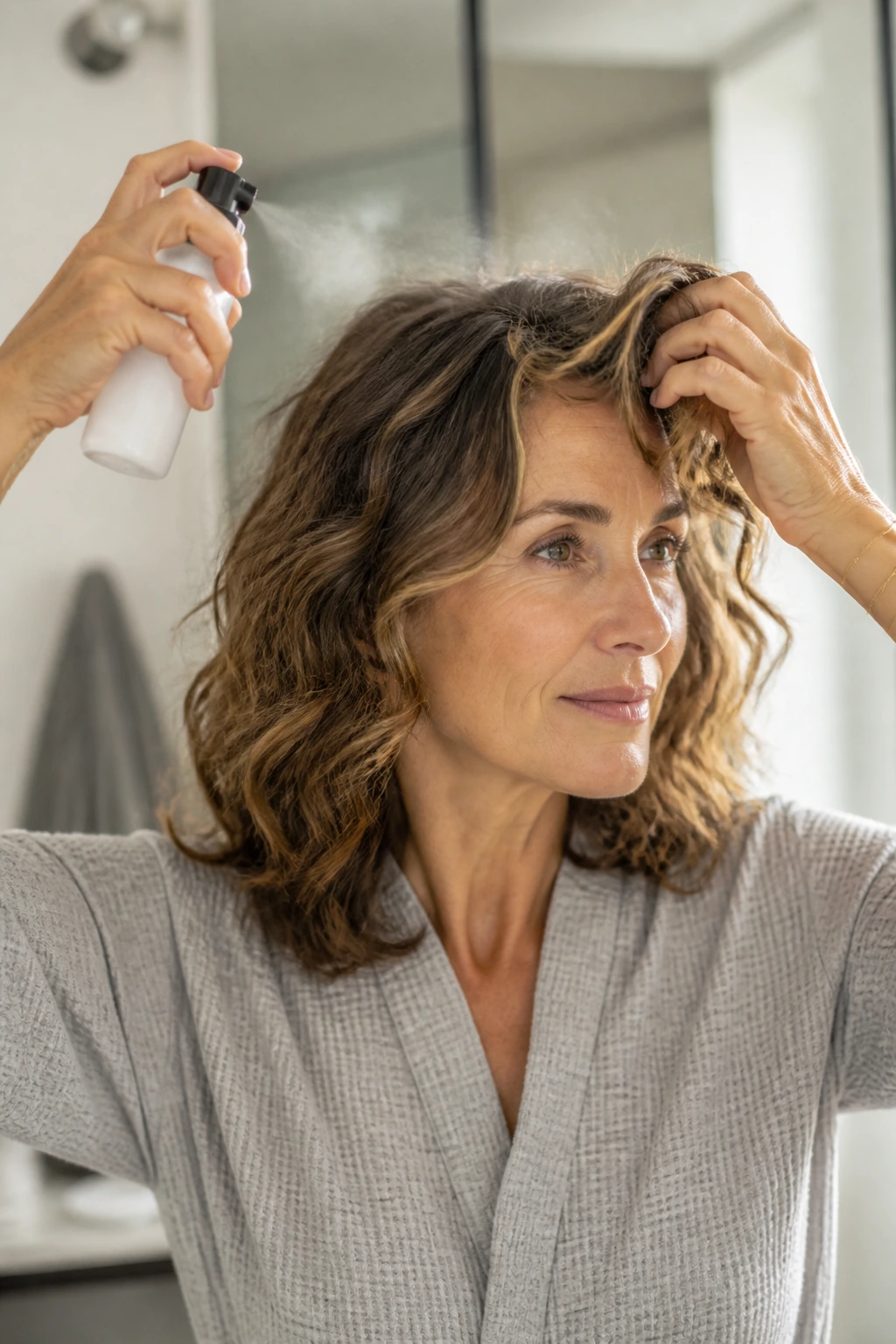
Medium-length waves usually look their best on day one or day two, then start asking for help. That does not mean the style failed. It means the hair wants a small refresh, not a full restart. A little mist of water, a touch of mousse, and a quick scrunch at the crown can wake the wave back up faster than washing again.
The ends are the part to watch. Once they start looking dry or split, the whole style gets fuzzy even if the roots are fine. A lightweight cream on the bottom inch after washing helps. So does sleeping on a silk or satin pillowcase, which cuts down on the roughing-up that happens overnight.
My trim schedule rule of thumb
- Layered or shaggy styles: every 6 to 8 weeks
- Blunt lob or beveled cut: every 8 to 10 weeks
- Curtain bangs or fringe: small trims every 3 to 4 weeks if you want the shape to stay precise
Day-two and day-three rescue
Dry shampoo at the roots. Mist the mid-lengths lightly with water. Twist two front pieces around your fingers while they dry for a minute. That’s often enough to bring the style back without overloading it.
Common Mistakes in Wavy Hairstyles for Medium Length Hair Over 50
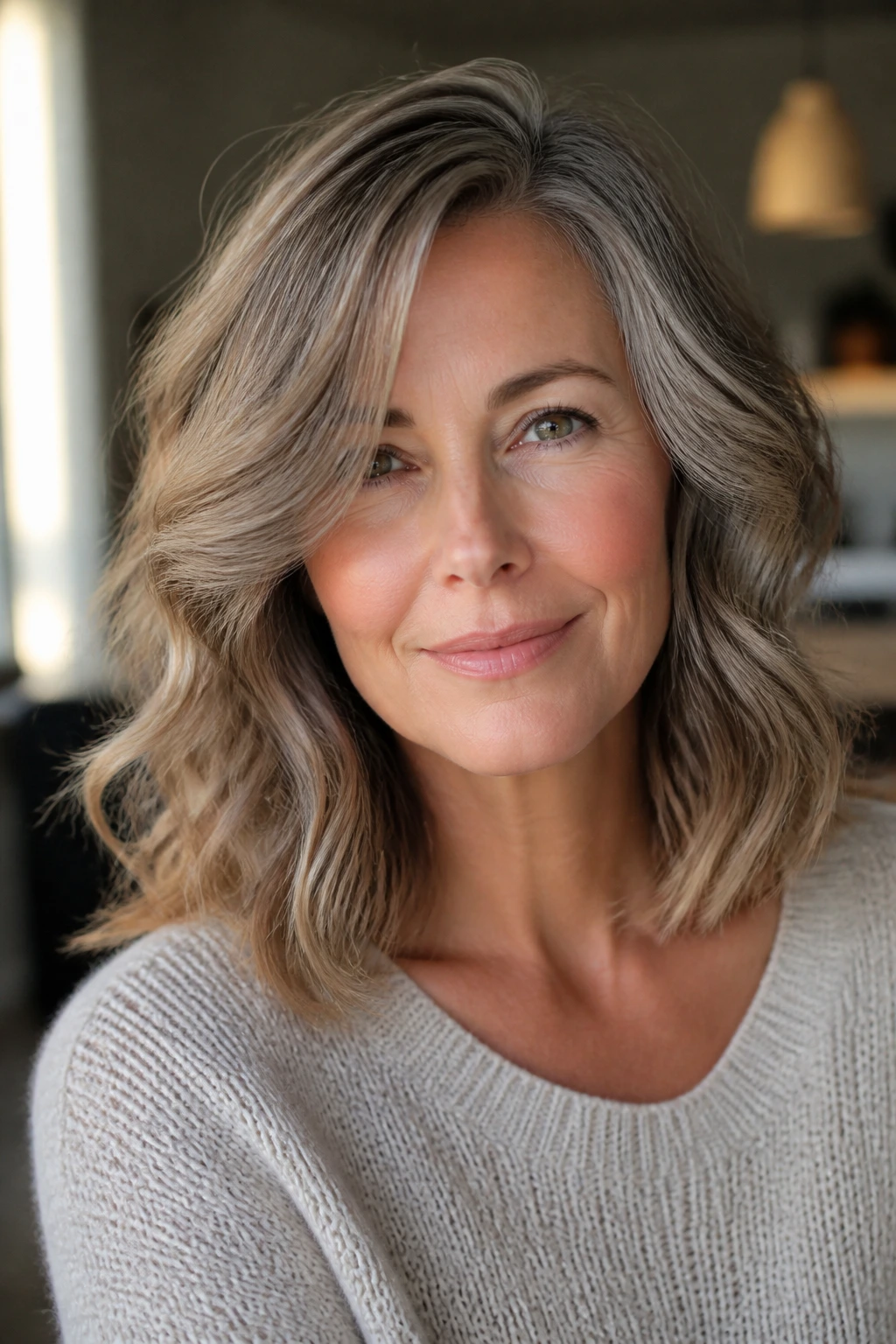
The biggest mistake is cutting too many short layers through the top and sides. The hair might look airy for one hour, then it starts to puff and expose the ends. The fix is to keep the layers longer and the interior shaping softer, especially if the hair is fine or dry.
Another common slip is using too much heavy oil. Wavy hair around shoulder length can swallow a product fast, and when that happens the roots go flat while the ends look stringy. Use products in tiny amounts, mostly from the mids down. If your fingers feel slick after one pass, you already used enough.
A few more problems to watch
- Ignoring the natural part: A fight with the cowlick usually ends badly. Work with the part that wants to live there.
- Cutting bangs too short: Short fringe on wavy hair can spring up and look like a mistake. Leave yourself room.
- Curling every piece the same way: That gives you a stiff pattern. Alternate directions and brush some pieces out.
- Waiting too long between trims: Medium waves can hide split ends for a while, then suddenly reveal them at the worst moment.
If the style feels wide at the bottom, it needs less bulk there. If it feels flat on top, it needs lift, not more curl. Those are different problems.
Variations and Alternatives to Try
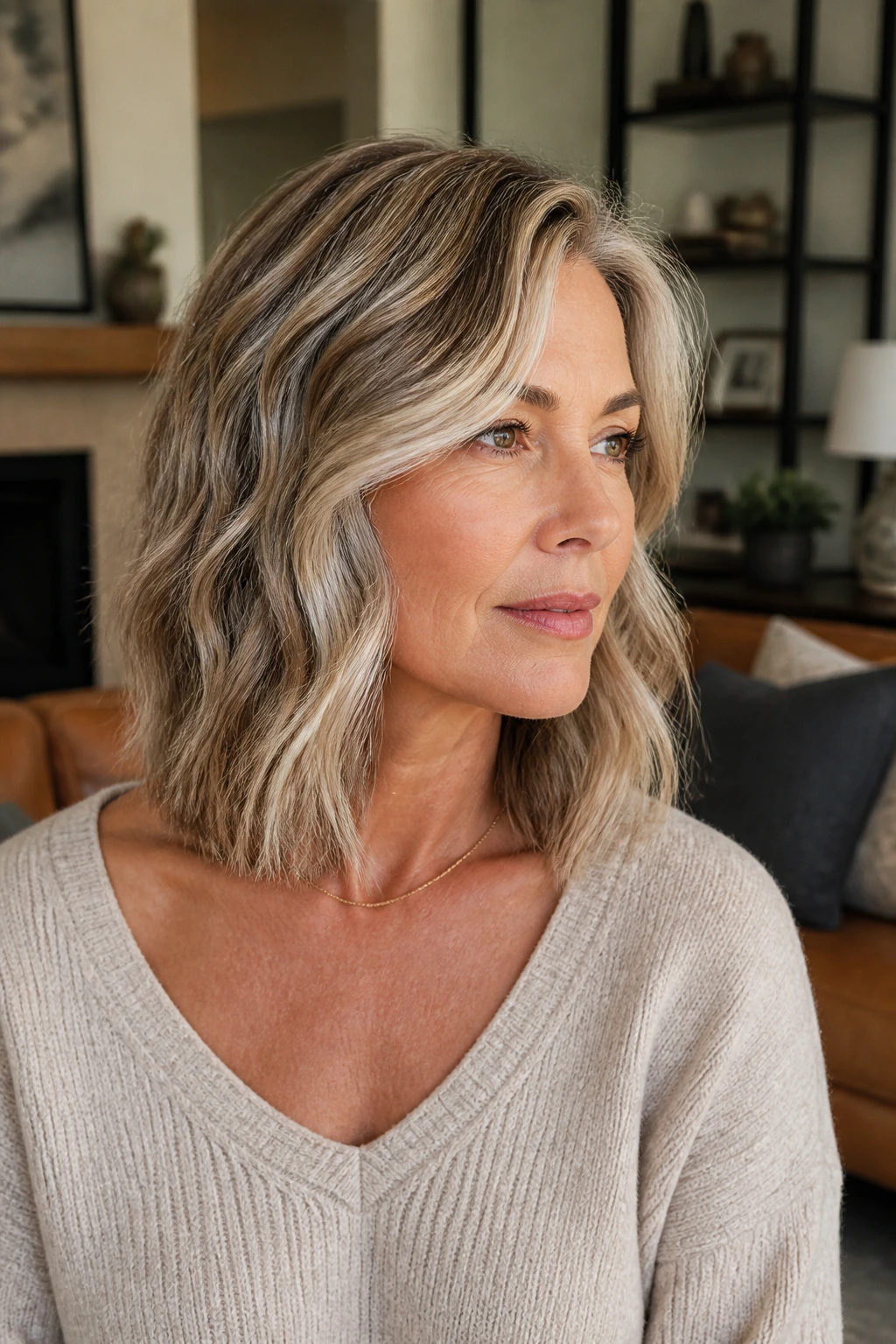
The Low-Heat Air-Dry Version
Use mousse, a leave-in on the ends, and a gentle scrunch, then let the hair dry on its own. This works well if your hair already has a bend and you want the morning to stay short. If the roots need help, clip the crown up for twenty minutes while it dries.
The Fine-Hair Lift Version
Choose a collarbone lob with long layers and a side part. Add root-lift spray at the crown and avoid over-conditioning the mids. Fine hair usually needs lift more than it needs more product.
The Thick-Hair Control Version
Keep the outline a little cleaner with longer internal layers and a slightly angled perimeter. Use a cream only on the ends and let the wave settle under its own weight. Thick hair often looks best when the shape is calm.
The Silver-First Version
Lean into shine and movement instead of trying to flatten the wave. A clear gloss, a light cream, and a soft part can make silver strands look deliberate and dimensional. Skip heavy powders that leave a chalky finish.
The Event-Ready Version
Brush out the waves, pin a side back, and add one polished clip or barrette. A small amount of shine spray on the mids and ends finishes it off. This version still feels like your hair, just dressed up a little.
Essential Maintenance for Medium Waves
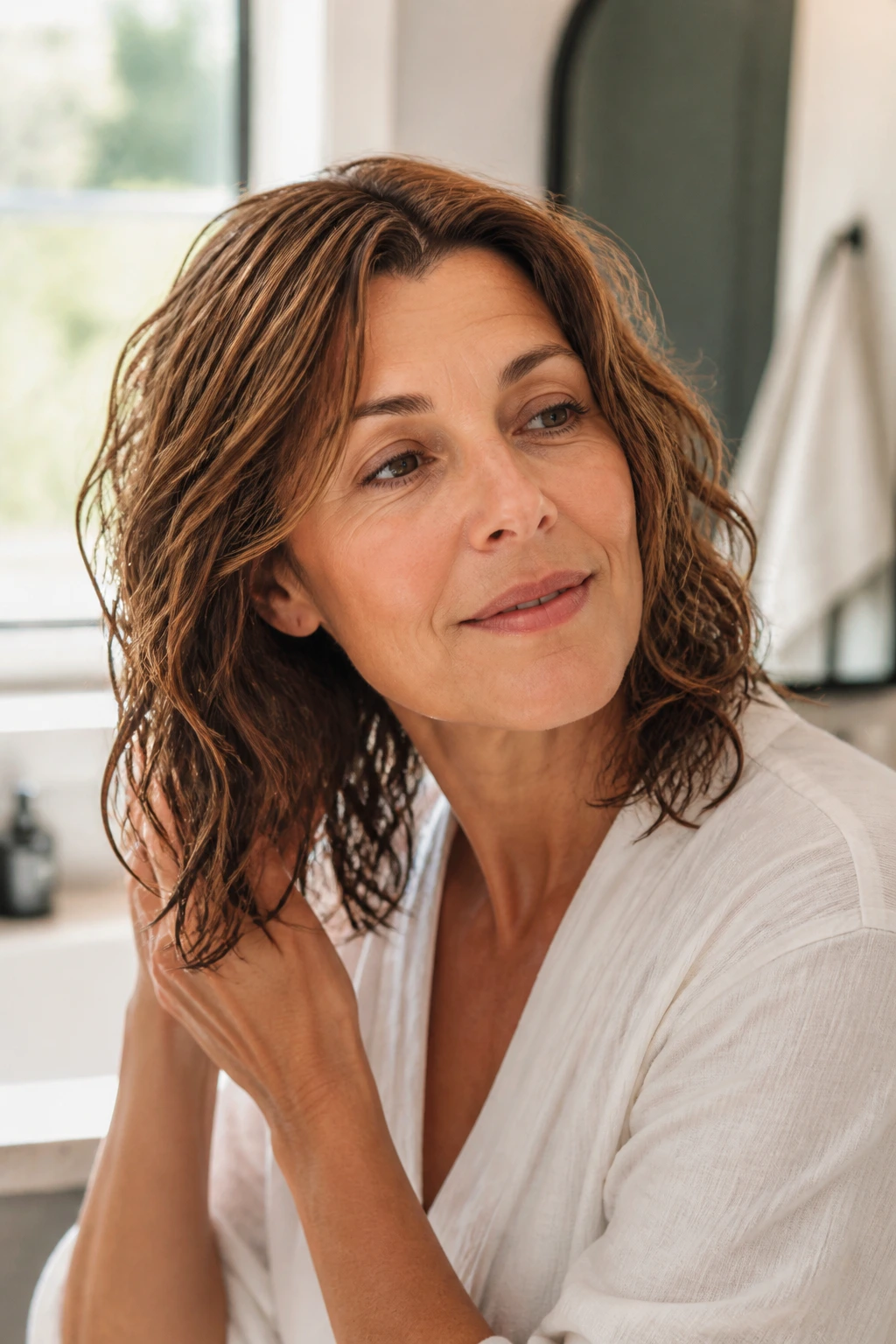
Medium waves need a little care, but not a shrine. Cleanse often enough to keep the roots from getting weighed down, condition the lower half, and trim before the ends go ragged. If the cut relies on shape, the shape has to be maintained. That part is non-negotiable.
A weekly mask can help dry or silver hair, especially if you use heat. Keep it light if your hair is fine; thick hair can usually take more moisture. And once a month, check the crown, the fringe, and the perimeter in natural light. Those are the places that reveal the haircut’s real condition.
Simple upkeep routine
- Wash: every 2 to 4 days, depending on scalp oil and product use
- Refresh: between washes with water mist, mousse, or dry shampoo
- Protect: heat protectant before any hot-tool styling
- Trim: on a regular schedule before the ends fray
Additional Tips and Style Boosters
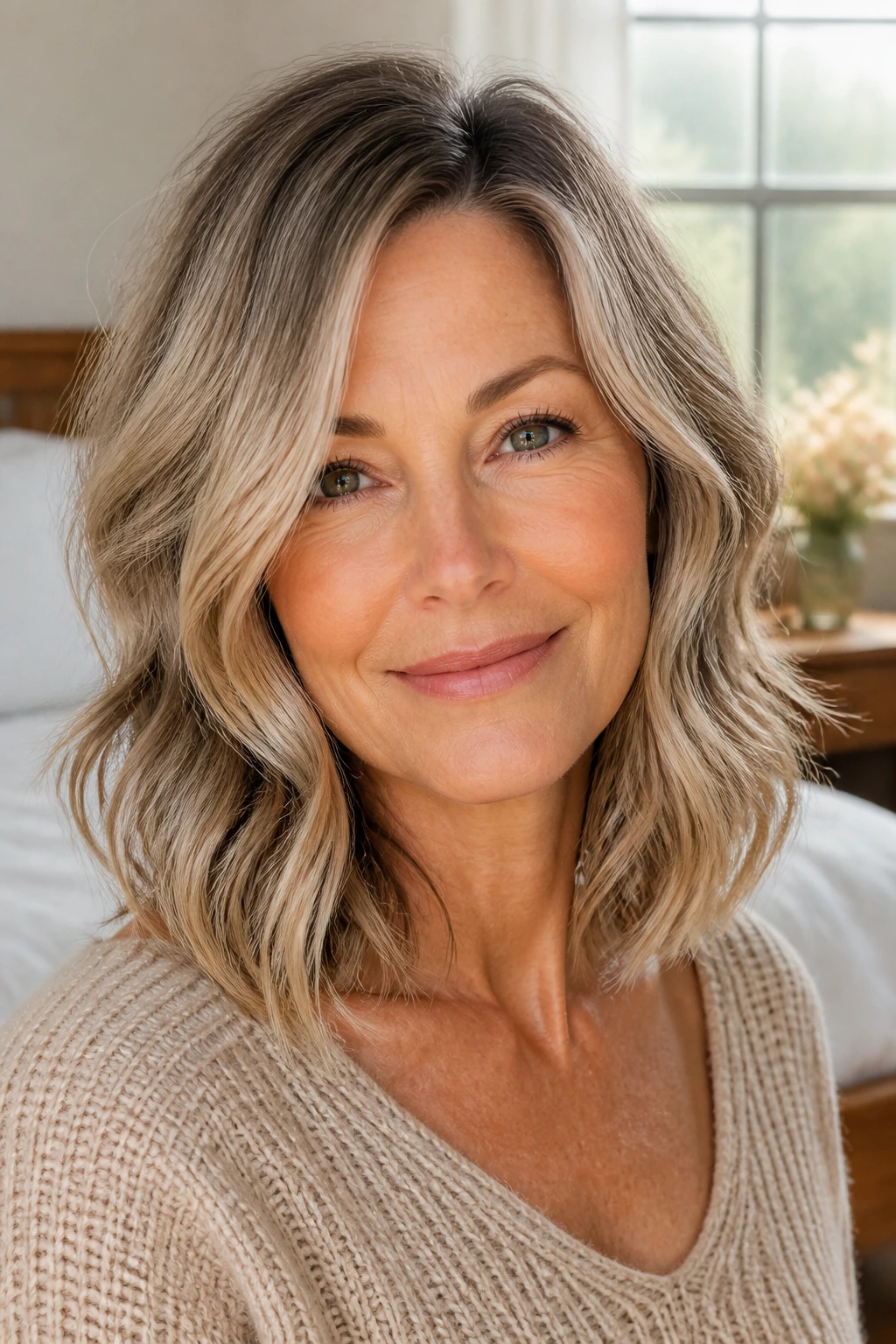
Root Lift: If the crown lies flat, clip it straight up for ten to fifteen minutes while the hair cools. That tiny habit can change the whole profile of the haircut.
Texture: If the waves are too soft, add definition with one or two twists around a curling iron rather than redoing the whole head. You only need enough movement for the eye to catch.
Finish: A drop of shine serum on the ends is usually enough. More than that and the style can go limp fast.
Make-It-Yours: If you love a sharper look, ask for a cleaner perimeter. If you want softer movement, ask for long face-framing pieces and a little more internal shaping. That one conversation saves a lot of bad hair days.
Frequently Asked Questions
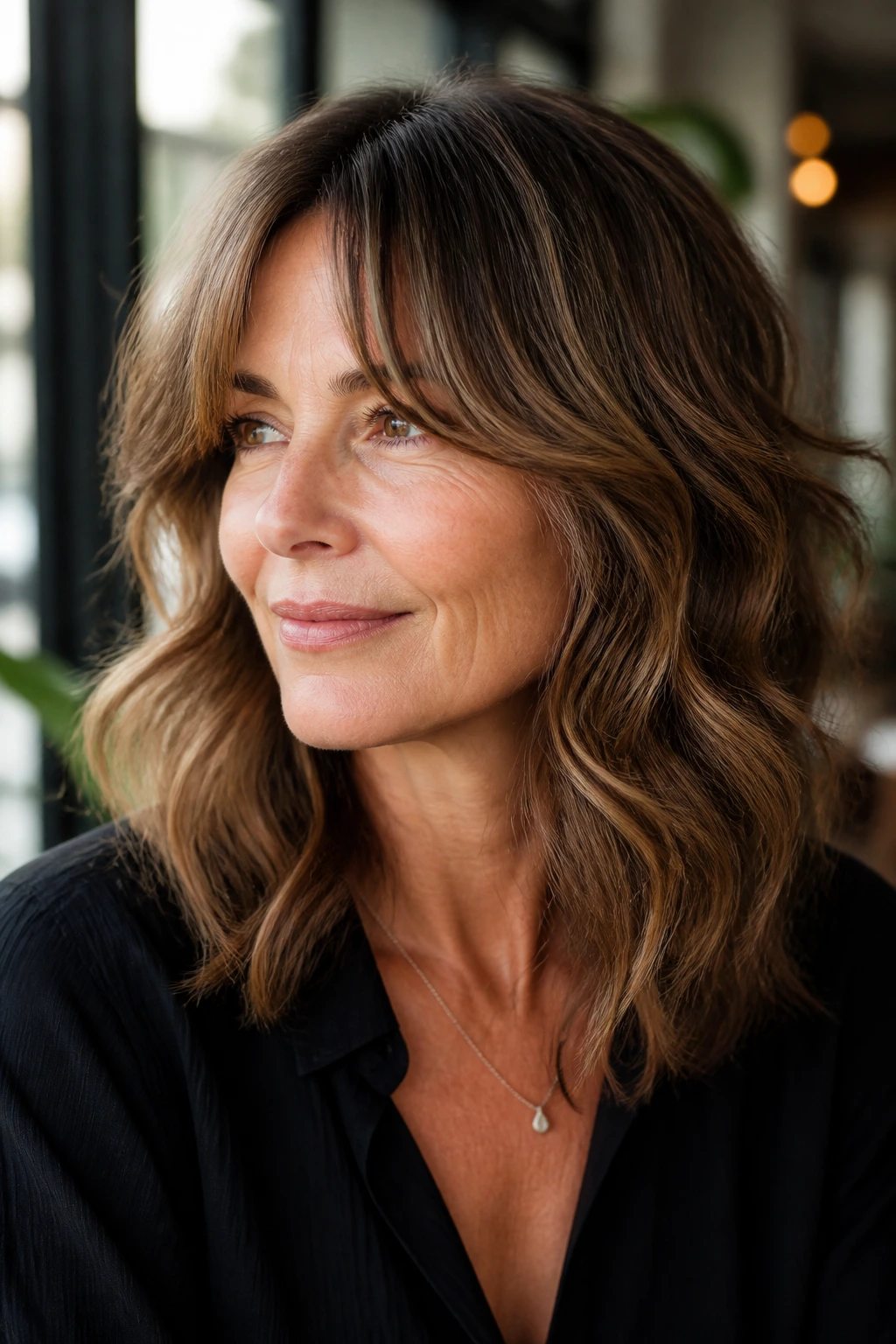
Do medium-length waves need layers after 50?
Not always, but they often need some shaping. A blunt lob can work if the hair has enough density, while fine or flat hair usually benefits from long layers that let the wave move. The key is not to over-layer the top.
Can fine hair still wear these styles without looking thin?
Yes, if the cut keeps enough weight at the ends and puts the lift in the right place. A shoulder-grazing lob, side part, or soft crown lift usually gives more fullness than choppy layers that remove too much bulk.
What part is most flattering if the crown is thinning?
A slightly off-center or deep side part usually helps because it creates height and breaks up the flatness at the top. A dead-center part can work, but only if the crown still has enough volume to support it.
Should I air-dry or use hot tools?
Both can work. Air-drying gives a softer, more casual finish, while a 1.25-inch iron can shape the front and keep the ends tidy. I’d use heat on the pieces that frame the face and let the rest do what it wants.
How often should medium wavy hair be trimmed?
Layered cuts usually need a trim every 6 to 8 weeks to keep the shape from going fuzzy. Blunter cuts can stretch a little longer, around 8 to 10 weeks, if the ends are still in good shape.
What if my waves frizz by lunchtime?
Use less product at the roots, more moisture on the ends, and a flexible hold spray instead of something stiff. Frizz often shows up when the hair is dry, touched too much, or blown around with too much heat.
Can I wear bangs with wavy hair and glasses?
Yes, but keep the fringe soft and longer so it clears the frame line. Curtain bangs or side-swept fringe usually behave better than short, blunt bangs, which can fight both the wave and the lenses.
Is a shag too young-looking for over 50?
Only if it’s cut too choppy or styled too wild. A softer shag with controlled layers and a neat perimeter can look current without looking like you borrowed someone else’s hair idea.
The Shape That Does the Heavy Lifting
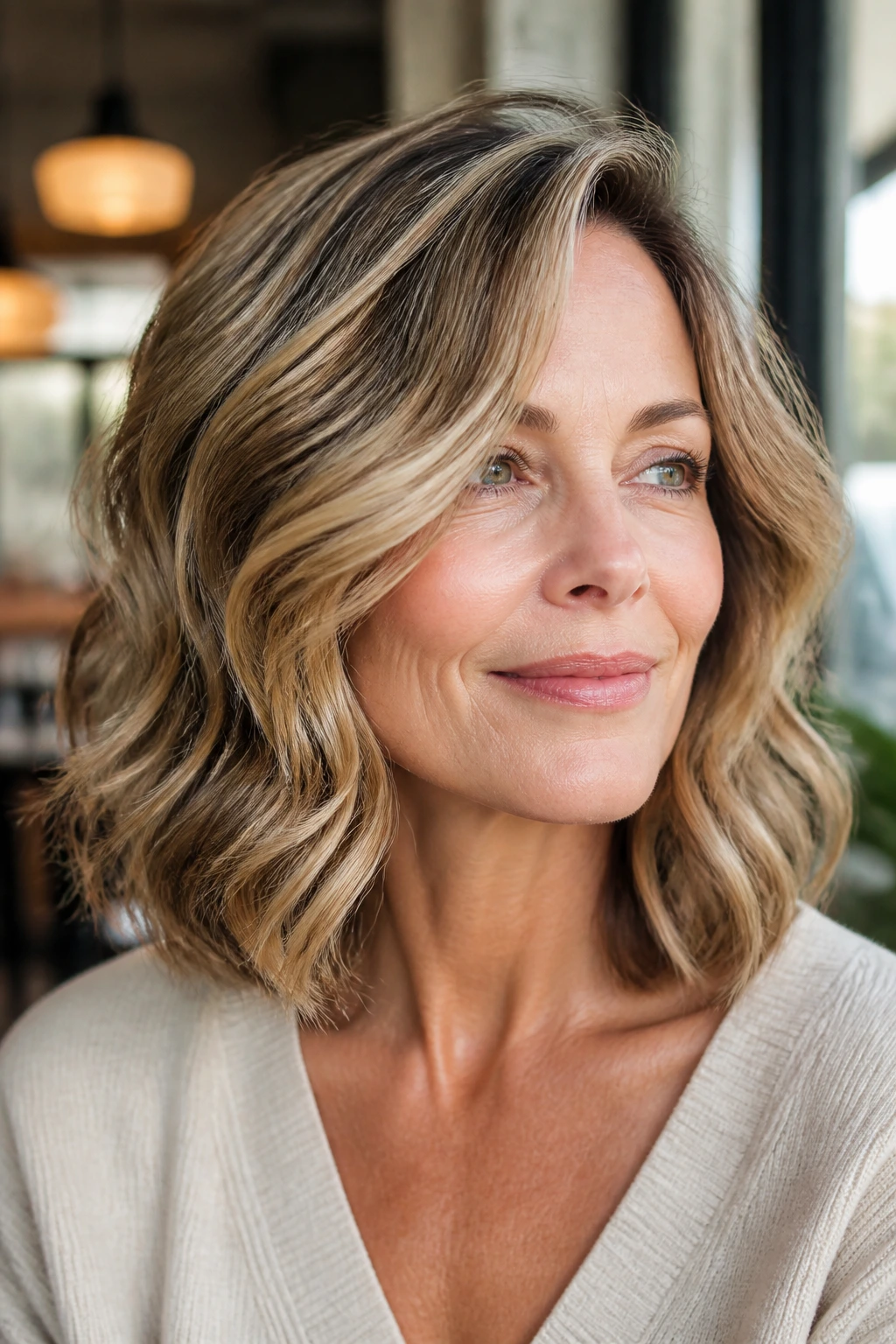
The best medium-length wavy styles do not ask your hair to become a different texture. They give the wave a better place to live. That’s the real shift here. Once the cut respects the bend, the ends, and the way hair sits around the jaw and collarbone, the whole thing stops feeling like maintenance and starts feeling like shape.
I like that these styles leave room for personality. One person wants a polished center part. Another wants a side-swept fringe and a soft twist at the crown. Another just wants silver waves that look clean on a normal day. All of those are valid, and all of them sit comfortably in this length range.
Pick one shape, wear it through a few wash cycles, and pay attention to what your hair does at the crown and around the face. That’s where the answer usually shows up.
