



A good taper haircut does something sneaky: it makes the rest of the cut look cleaner than it really is.
That soft fade at the temples, around the ears, and down into the nape changes the whole read of the haircut. A plain crop looks more finished. A long top looks more deliberate. Even a buzz cut can feel tailored instead of bare-bones when the taper is handled with a steady hand and a decent eye for balance.
That’s why taper haircuts keep showing up in barbershops on every kind of head shape and hair type. Straight hair, curls, coils, waves, thick hair, thinning hair — a taper can tighten the edges without stealing the personality from the top. And when the cut is done well, it grows out in a way that still looks respectable, which is a small detail until you’re three weeks past your appointment and your sideburns haven’t gone feral.
Why a Taper Makes the Whole Cut Look Sharper
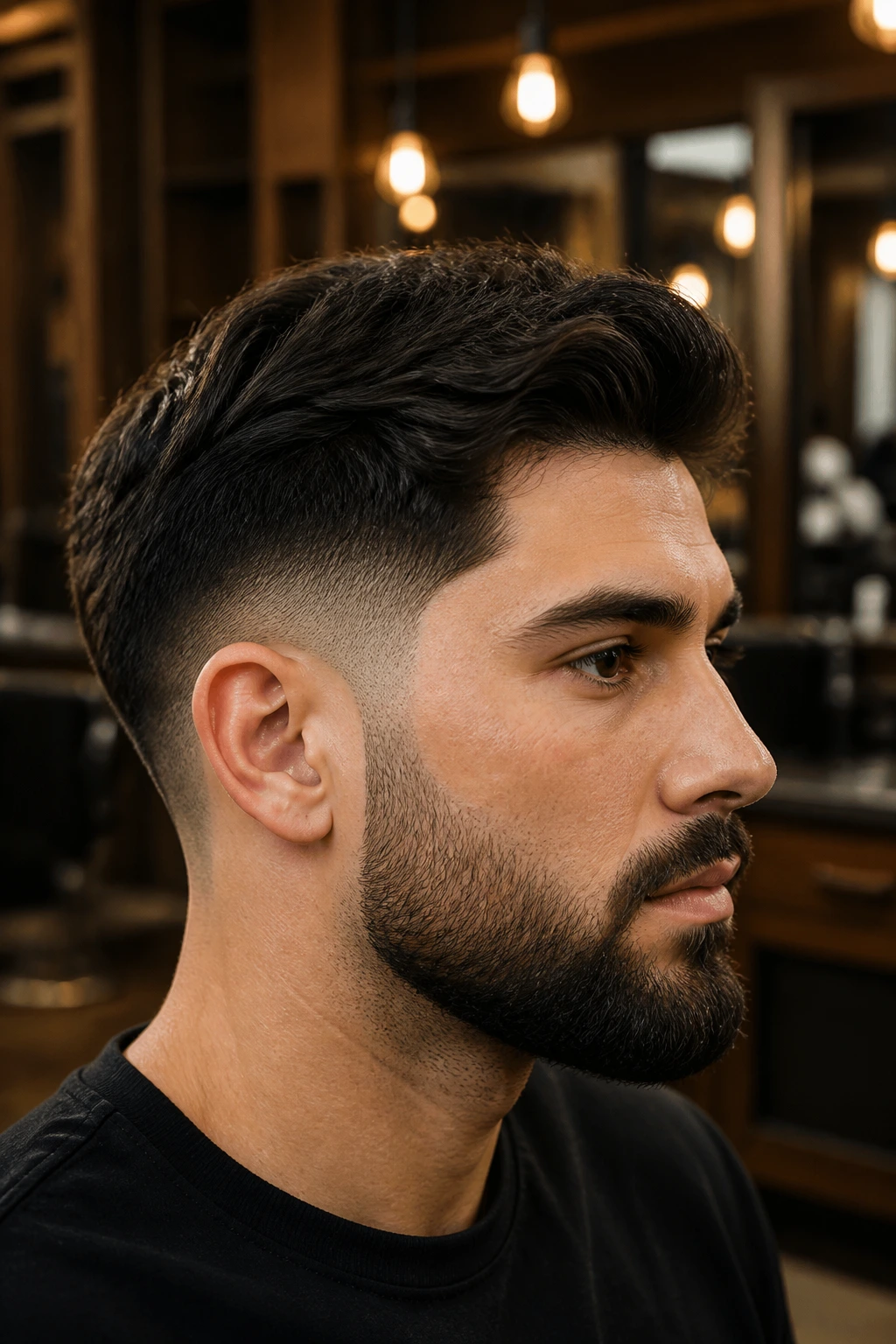
Clean edges change the mood of a haircut fast. A taper trims the visual weight at the temples and neckline, so the eye goes straight to the shape on top instead of getting stuck on fuzzy edges.
- The grow-out is kinder: A taper softens the transition as hair grows, which means the cut stays neat longer than a hard, blunt outline.
- It works with almost any top length: Short crops, side parts, curly tops, and longer swept-back styles all look more intentional when the sides are cleaned up.
- It keeps the haircut from looking boxy: That matters a lot if your head shape is round, wide, or strong through the jawline.
- It pairs well with facial hair: A careful taper can connect sideburns to a beard without that heavy, chopped-off look.
- It gives barbers room to tune the cut: Low, mid, and high tapers each send a different signal. Same family of haircut. Very different vibe.
A taper is one of those haircuts that rewards restraint. Too much clipper work and you lose the whole point. Too little, and the sides look unfinished. The sweet spot is a clean graduation that feels crisp up close and calm from across the room.
That balance is the reason these cuts keep working in offices, at weddings, on weekends, and everywhere in between.
1. Low Taper with a Textured Crop
The low taper with a textured crop is the haircut I’d hand to someone who wants to look put together without looking like they tried too hard. The sides are kept tight only around the sideburns and neckline, while the top stays choppy and short — usually somewhere around 1.5 to 2.5 inches. It gives you movement on top, but the silhouette stays tidy.
Why It Works
A low taper keeps most of the head’s shape intact, which helps the crop look fuller than it is. That’s useful if your hair sits flat on the sides or tends to puff up after a few hours. The chopped top gives you texture without needing a lot of product; a pea-sized amount of matte clay is usually enough.
Ask for a soft taper at the temples, a clean neckline, and a top that’s cut with point-cutting rather than blunt scissors. That little detail matters. It keeps the crop from turning into a bowl cut when it grows out.
If you like a quiet haircut that still has edges, this is the one.
2. Mid Taper with a Side Part
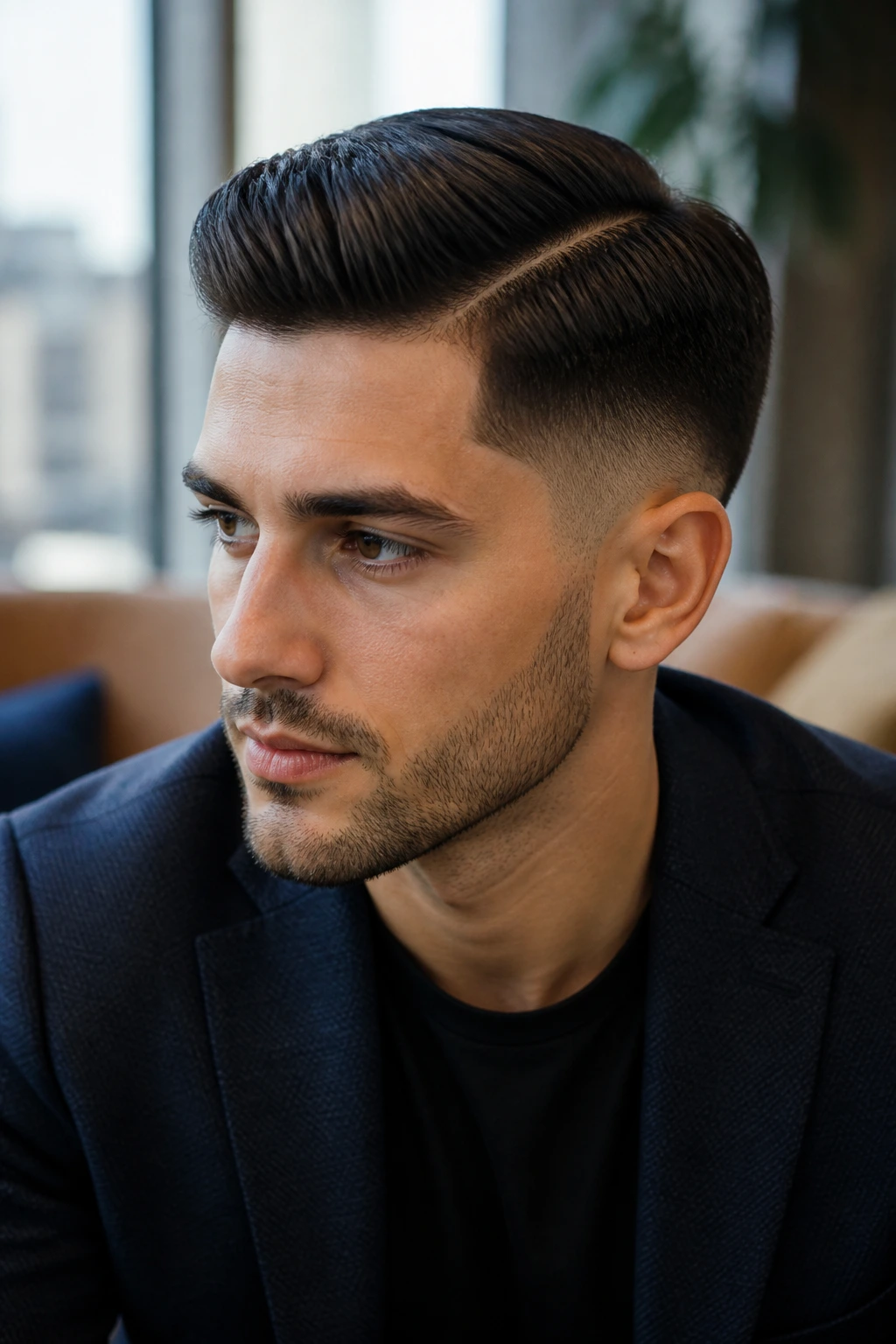
There’s a reason the side part refuses to leave the room. Add a mid taper, and the whole thing starts looking sharper and less dated. The taper begins a little higher than a low taper, usually around the temple area, which gives the style a cleaner frame without pushing it into severe territory.
What Makes It Feel So Polished
The side part gives the haircut direction. The taper gives it discipline. Together, they make even a simple comb-over read as deliberate instead of accidental.
This cut works best when the top has enough length to move — about 2.5 to 4 inches is the range I’d want here. A light cream or low-shine pomade keeps the part in place without making the hair look wet or stiff. If your hair is coarse, a quick blow-dry with the part set first makes the whole thing behave better.
A mid taper with a side part is one of those cuts that looks equally right with a blazer or a plain white T-shirt. That’s not a cliché. It’s the whole draw.
3. High Taper with a Slick Back
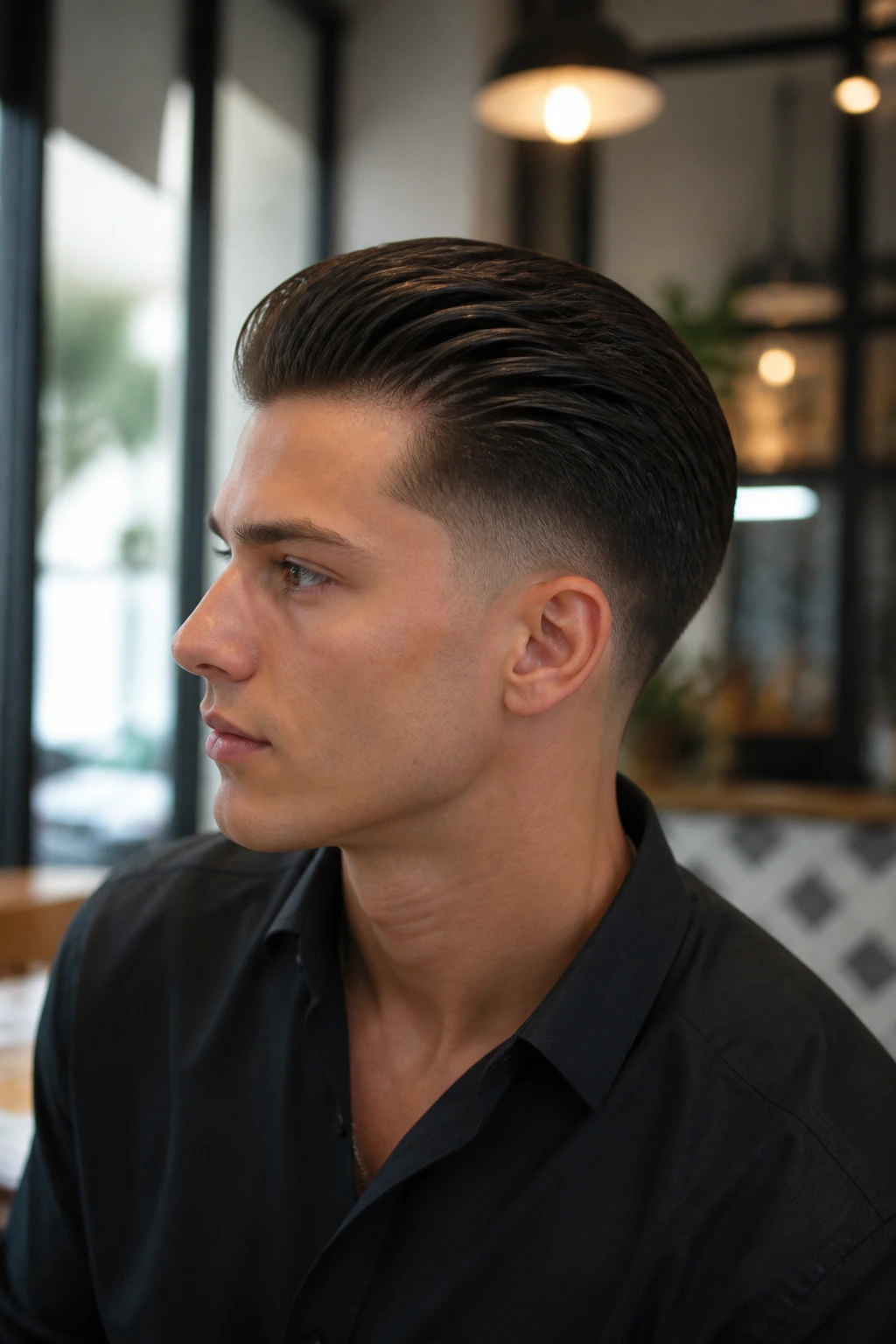
A high taper with a slick back brings more contrast, and that contrast is the point. The taper climbs higher at the sides and back, so the top becomes the star of the show. If the hair on top is medium length and combs back cleanly, this cut has a very direct, sharp finish.
The Part That Matters Most
The slick back only works if the top has enough length and density. I’d want at least 3 inches to start, and more if your hair has a stubborn cowlick at the front. Blow-dry the top backward first, then use a medium-hold pomade or cream. If you go too shiny, the whole thing can look greasy instead of controlled.
This cut is especially good if you want your face to feel a little longer and leaner visually. The high taper clears the sides, the slicked top adds height, and the result feels clean from every angle.
A lot of people ask for this cut and then keep the product too heavy. Don’t. You want control, not lacquer.
4. Burst Taper with a Curly Top
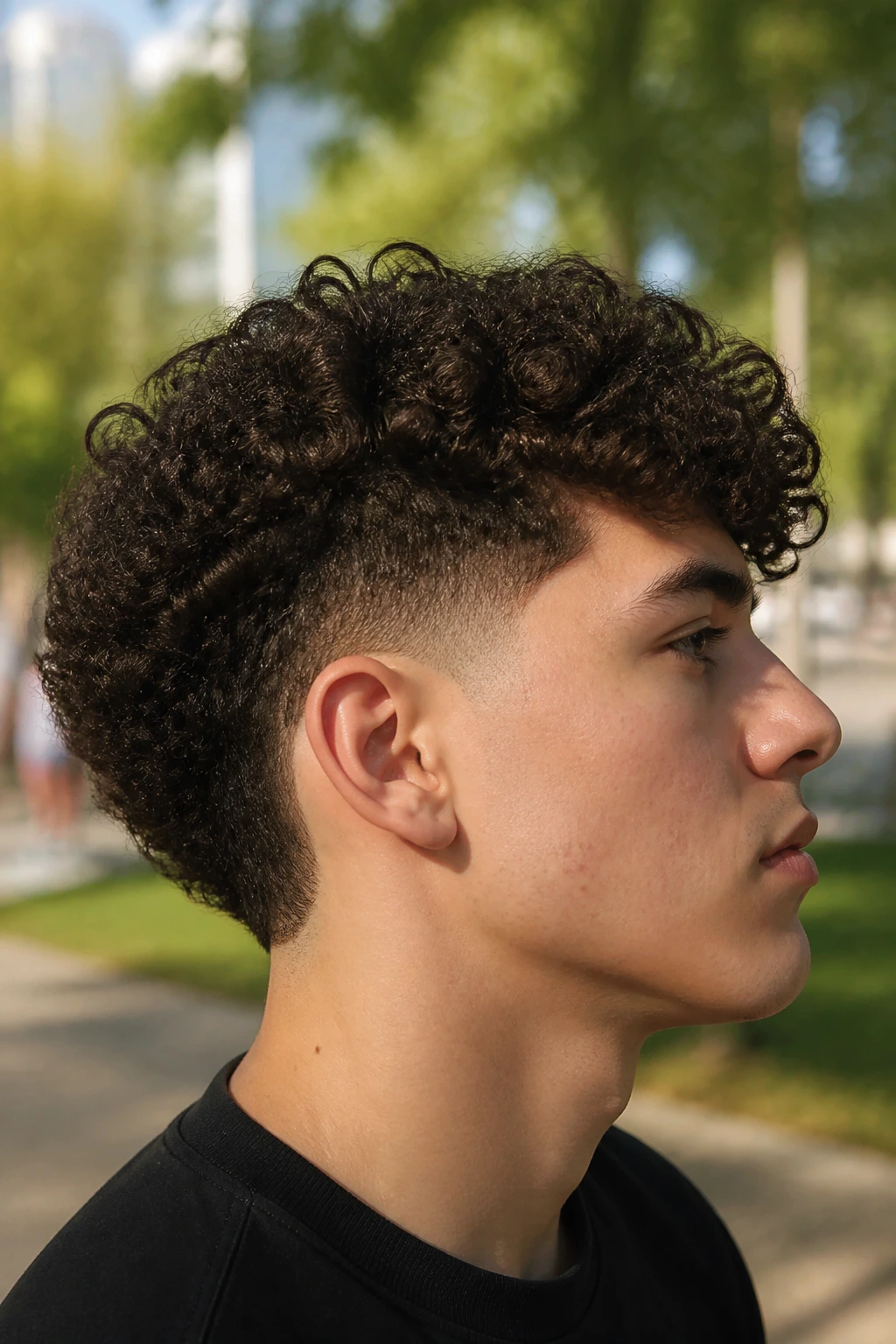
Curly hair loves a burst taper when the barber knows how to leave the curl pattern alone. The taper curves around the ear instead of dropping in a straight line, which keeps the silhouette round and natural. It’s one of the few clean cuts that doesn’t fight curl.
Why Curls Look Better Here
The burst shape gives your curls room to stack up without turning the sides bulky. That matters. If the taper is too straight, curly hair can puff at the wrong spots and throw the whole shape off.
Keep the top around 2 to 4 inches if you want a soft, touchable finish. A curl cream or lightweight leave-in makes more sense here than a heavy paste. If your curls are tighter, a diffuser on low heat can help set the pattern without blasting it apart.
This is a smart cut for anyone who wants the sides neat but still wants the top to look alive. Not stiff. Not shellacked. Alive.
5. Temple Taper with a Short Afro
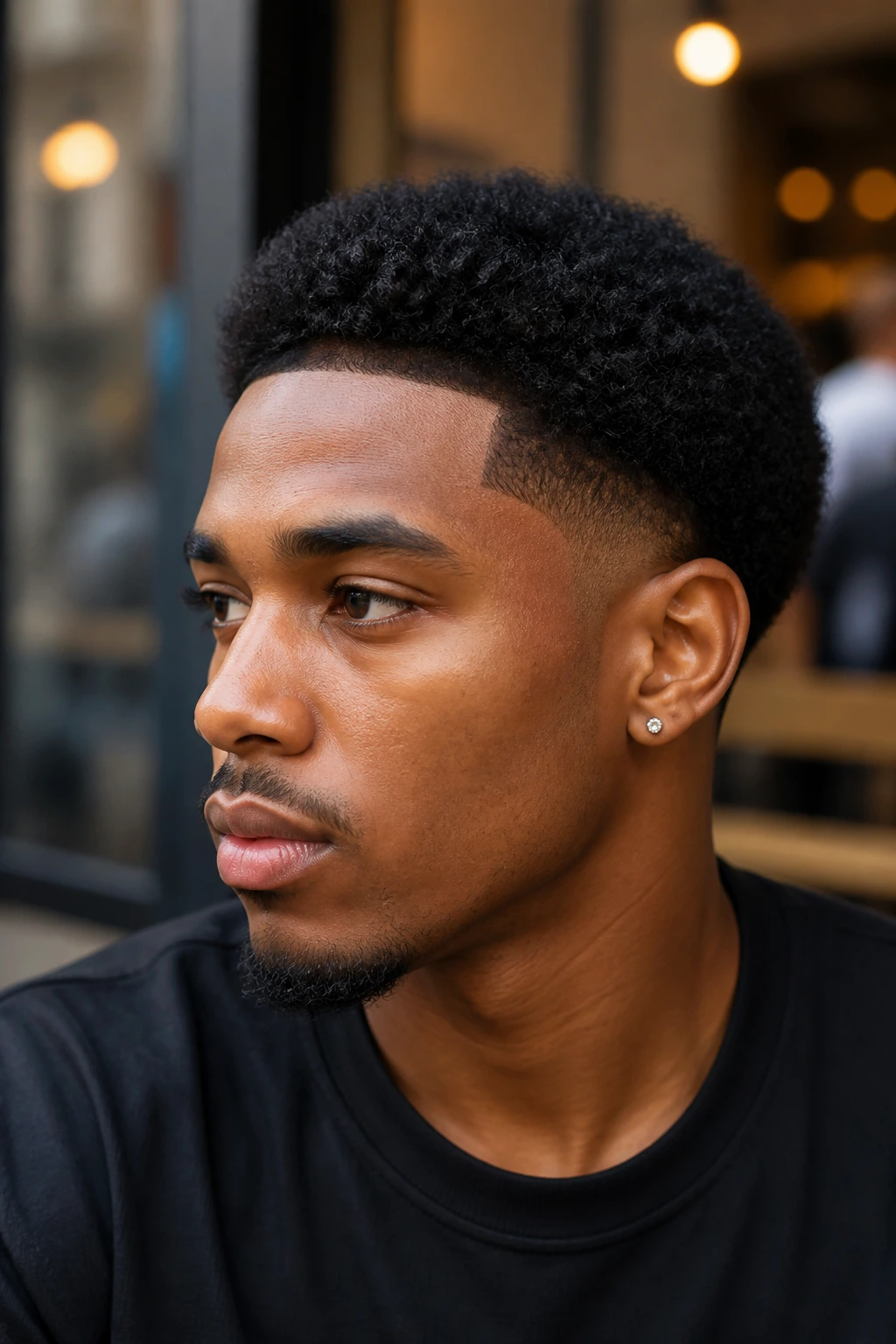
A temple taper with a short afro is one of the cleanest ways to let texture stay natural while still giving the haircut sharp edges. The temples get tightened first, then the nape, and the top keeps its rounded shape. It’s restrained, but not flat.
The Detail That Changes Everything
The temple area is where this cut earns its polish. A clean outline around the temples makes the whole afro look more intentional, even when the top is kept short and soft. A line-up at the forehead can help, too, if it’s not pushed too square.
This cut works best when the barber leaves enough length on top for shape, not just height. Think controlled fullness rather than a boxy silhouette. A pick, a light curl cream, and a little moisture go a long way. Dry coils with no product can make the top look fuzzy, which is not the same thing as texture.
If you want a cut that feels modern but still respects natural hair, this is a strong move.
6. Drop Taper with 360 Waves
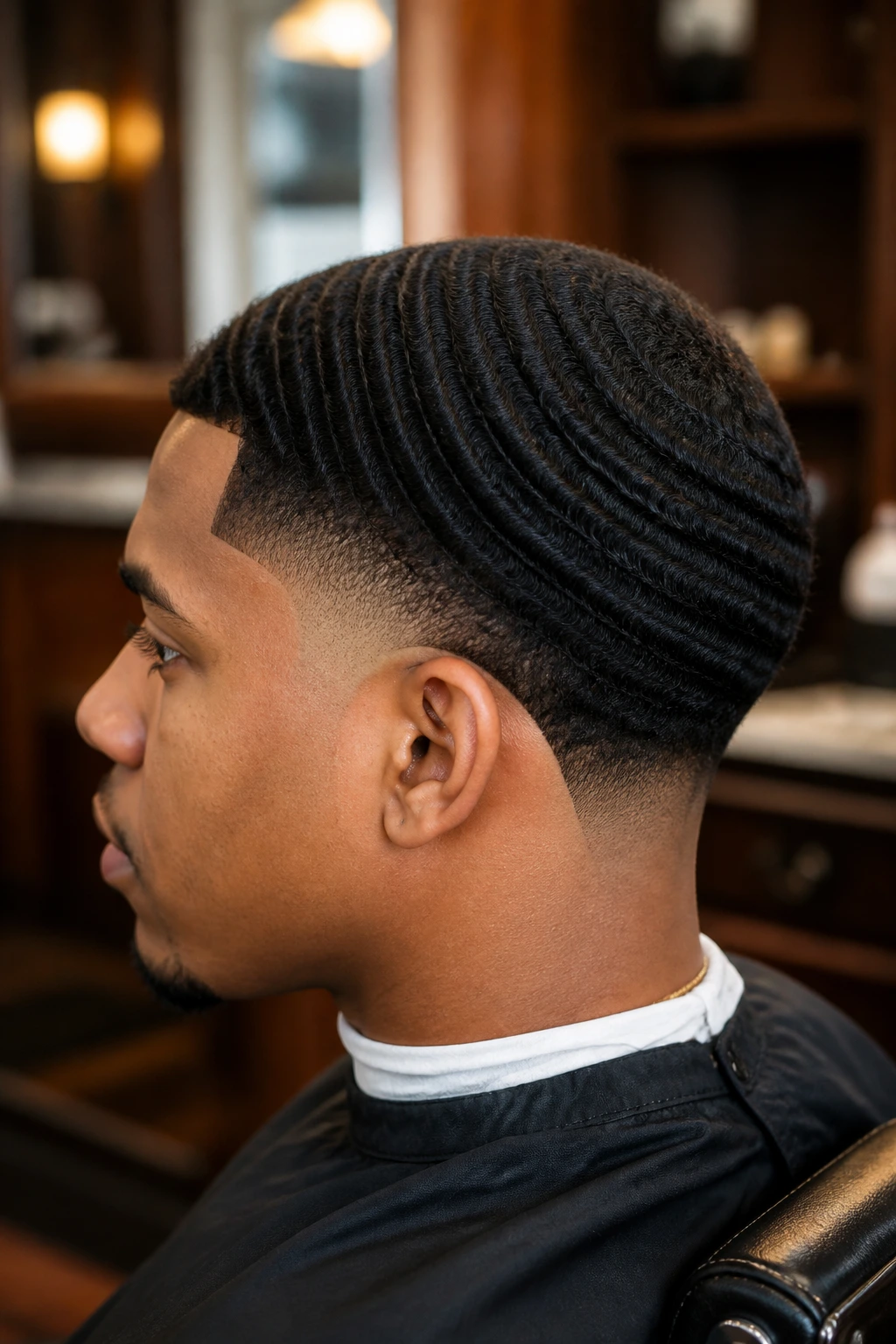
A drop taper follows the curve of the head, dipping lower behind the ear and then dropping into the neckline. On 360 waves, that shape is almost unfair in the best way. It frames the pattern instead of interrupting it.
Why It Reads So Clean
Unlike a straight taper that cuts across the sides, the drop version moves with the head’s shape. That makes the haircut look more tailored, especially when the waves are brushed in tight and the edges are crisp.
The top stays short enough to let the wave pattern show clearly. Most guys live somewhere around a #1.5 to #3 on top, depending on wave depth and scalp visibility. A wave pomade or light grease helps, but too much product clogs the look. You want sheen, not shine that pools under light.
Brush work matters here. A lot. If the pattern is loose near the crown, the taper won’t rescue it.
7. Skin Taper with a Pompadour
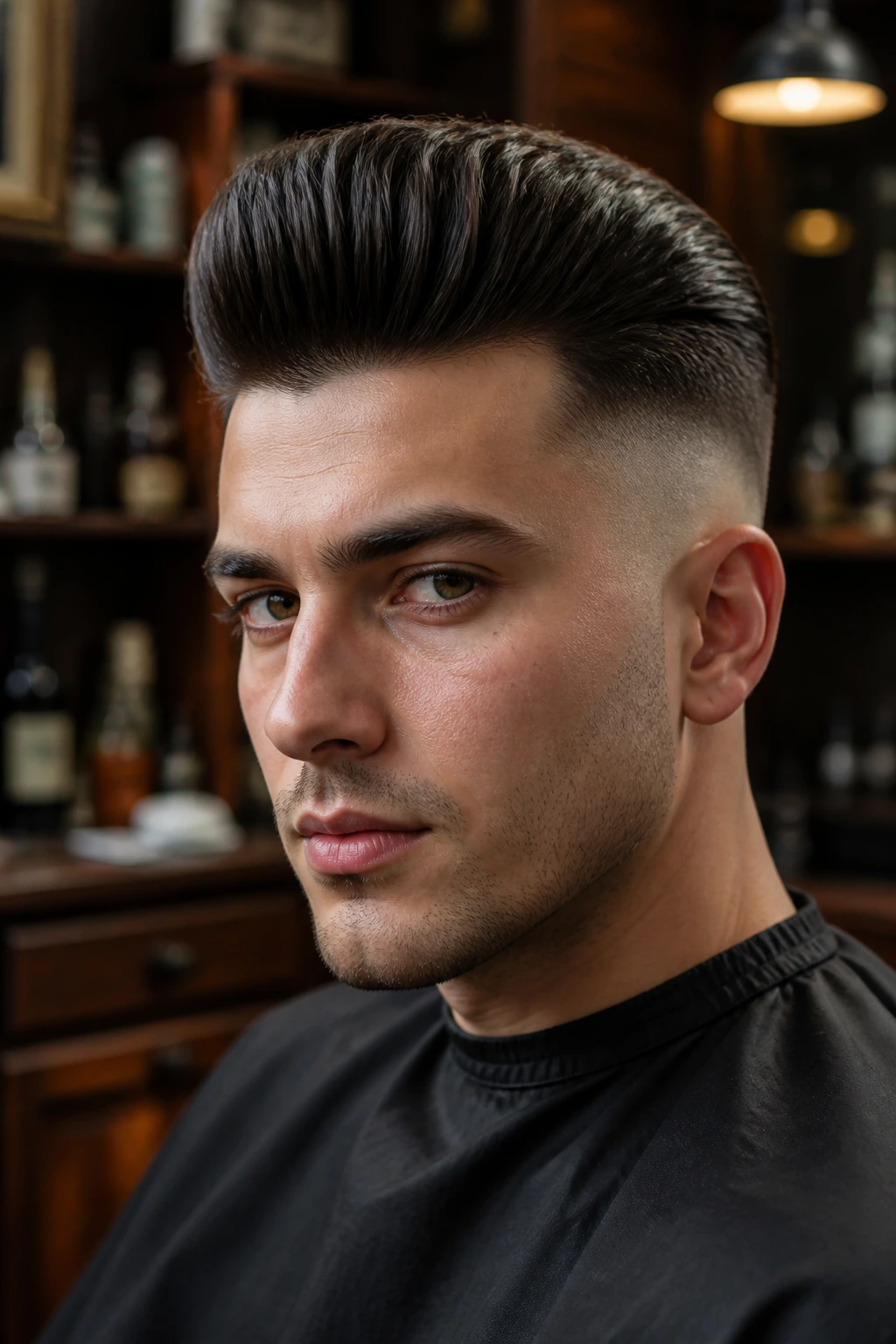
A skin taper with a pompadour is old-school polish with a harder edge. The sides go down to skin at the temples and neckline, then the top lifts forward and back into that high, rounded front shape. It’s a strong haircut. No mistaking it.
Why It Looks So Intentional
The contrast between bare sides and a lifted top makes the pompadour feel sculpted, not casual. That can be a good thing if you like a haircut with a little drama and a lot of structure.
For this cut, the top usually needs 4 inches or more. If your hair is fine, the barber should leave enough density so the front doesn’t collapse after an hour. Blow-dry the front upward with a round brush and use a product with enough hold to keep the shape from falling flat. A matte pomade or strong cream usually looks better than a high-gloss finish unless you want a true retro look.
This cut does demand upkeep. The skin taper shows grow-out faster than a low taper. But when it’s fresh, it’s hard to beat.
8. Taper Buzz Cut with a Line-Up
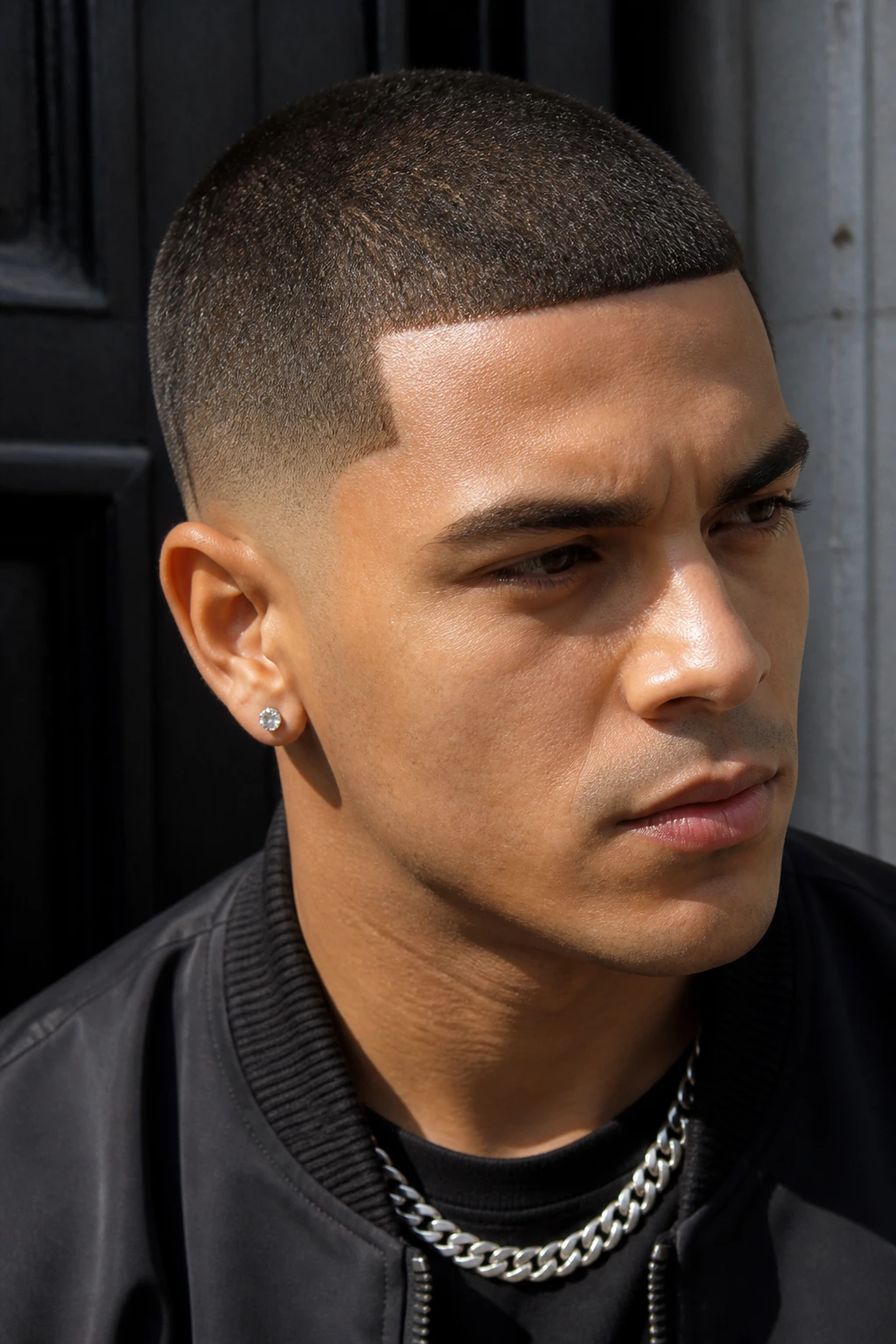
A taper buzz cut sounds simple because it is simple, and that’s the appeal. The top is kept short — usually somewhere from a #1 to a #3 guard — while the taper cleans the temples and neckline. A sharp line-up at the forehead pulls the whole thing together.
What Keeps It From Looking Bare
The line-up. That’s the whole trick.
Without it, a buzz cut can look like you ran a clipper over your head and stopped early. With it, the haircut looks deliberate and edged. The taper adds shape at the sides, which softens the roundness that buzz cuts can sometimes have on their own.
This is a good cut if you want very little daily styling. A quick brush, a little moisturizer on the scalp if needed, and you’re done. If your hairline is uneven, ask for a natural line-up instead of a hard box. That can make the whole cut read cleaner without drawing attention to any awkward corners.
Low effort. Sharp result. That’s the job here.
9. Tapered French Crop
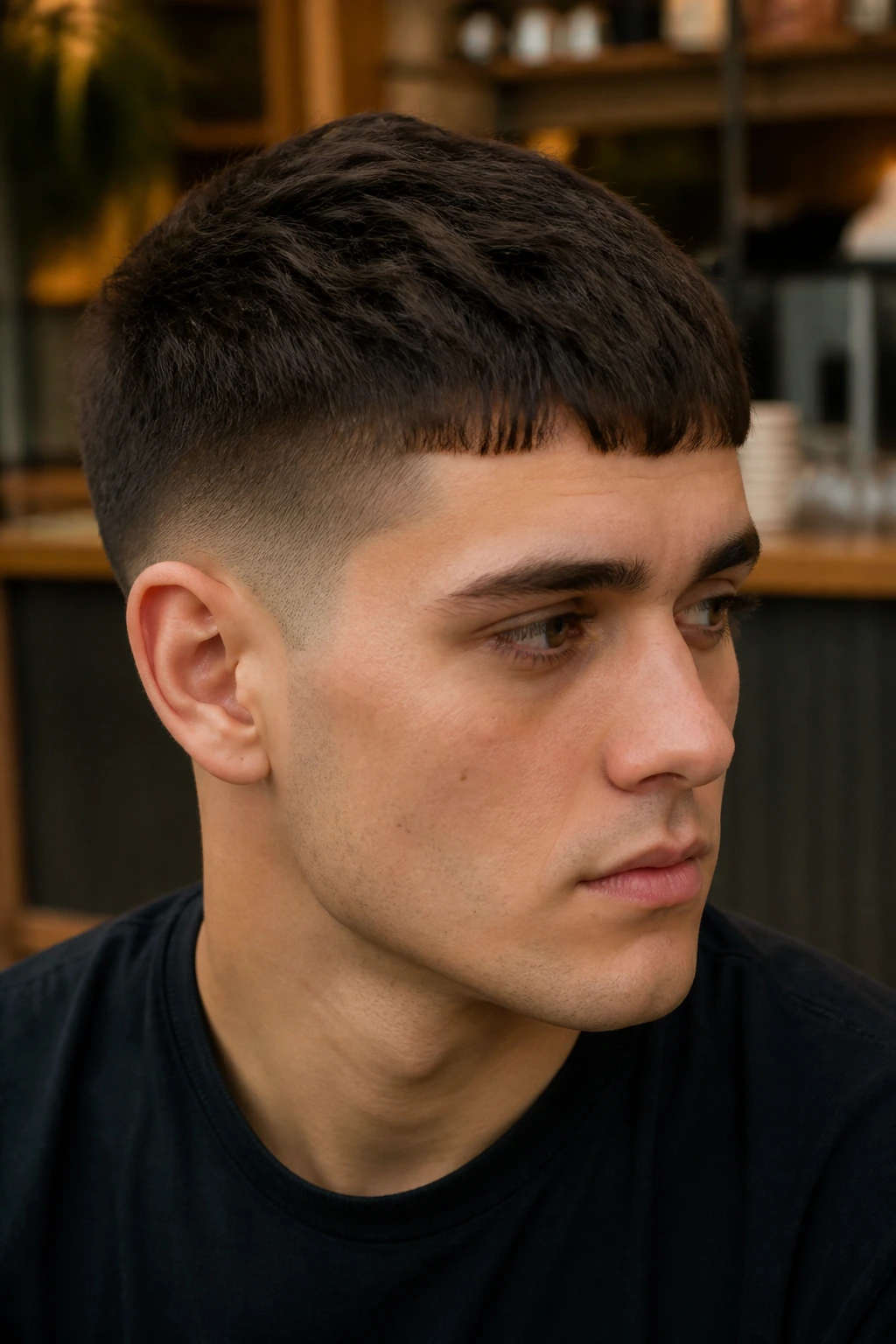
The tapered French crop is blunt, tidy, and a little tough in the right way. The fringe stays short and straight across the front, while the sides taper down around the temples and neckline. It looks especially good when the top has texture and the fringe sits just above the brows.
Why It Works Better Than It Sounds
The French crop can go wrong fast if it’s cut too heavy. The taper keeps that from happening. By cleaning up the sides, it gives the fringe room to stand out without making the head look top-heavy.
I like this cut on straight or slightly wavy hair, especially when the top is cut with controlled point texture rather than severe bluntness. Use a matte paste and push the front forward with your fingers. A comb makes it look too neat, which defeats part of the charm.
If your forehead is on the longer side, this cut can feel balanced. If your hairline is strong, it can look even cleaner.
10. Ivy League Taper
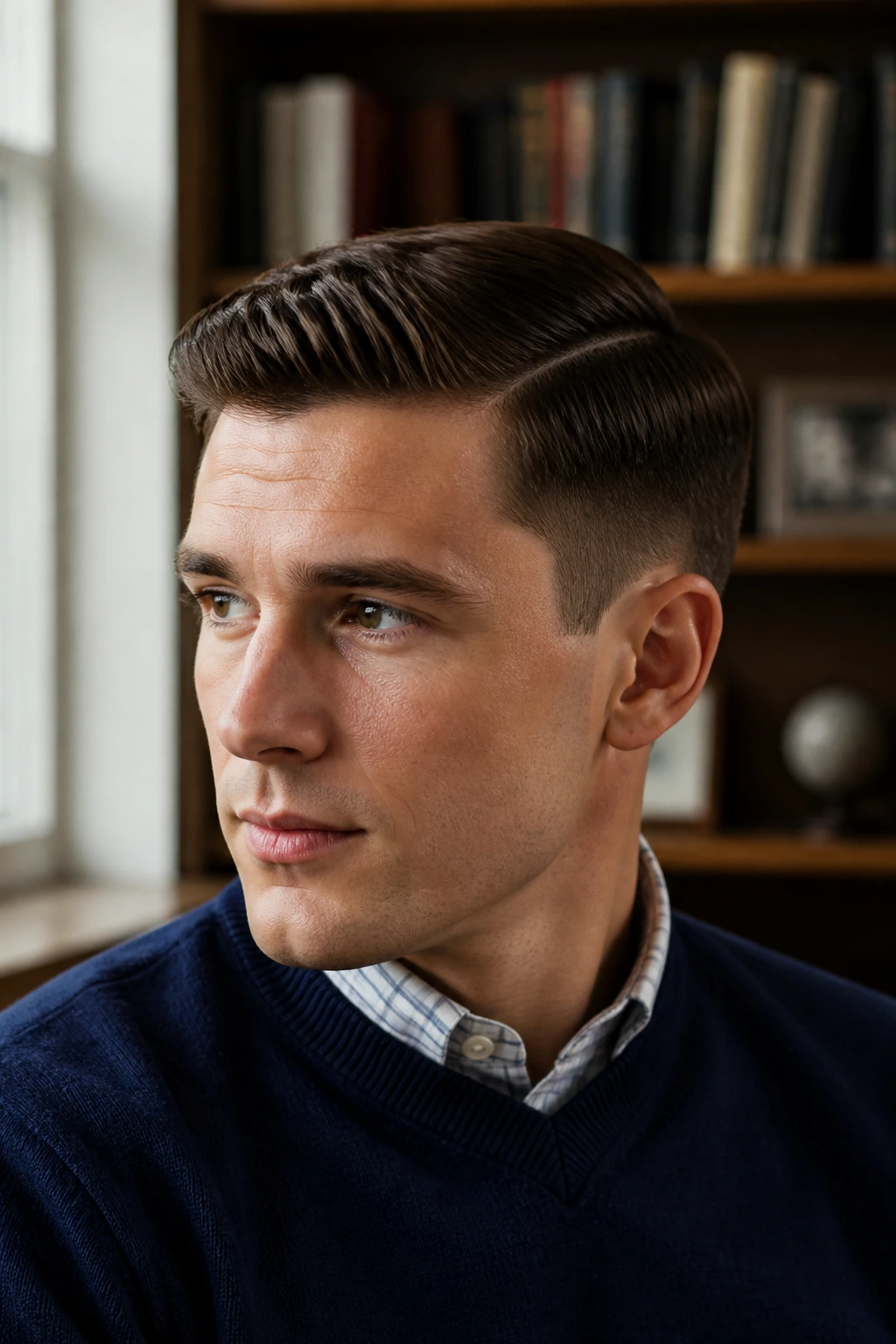
The Ivy League taper is what happens when a crew cut grows up, learns to sit still, and starts wearing better shirts. The top is left long enough to side-part or sweep slightly, while the taper keeps the edges crisp. It’s conservative, but not sleepy.
The Shape That Makes It Work
This cut is built on controlled length. Usually, you want around 2 to 3 inches on top, with the front just a touch longer if you plan to brush it back or across. The sides should taper cleanly without jumping into a dramatic fade.
A small amount of cream or light pomade keeps the top in place and preserves some natural movement. If you want the cut to look especially tidy, use a comb for the part and then finish with your fingers to break the stiffness. That little bit of looseness keeps it from looking like a banker’s helmet.
It’s one of the best haircut choices for anyone who wants polish without obvious styling.
11. Comb Over Taper
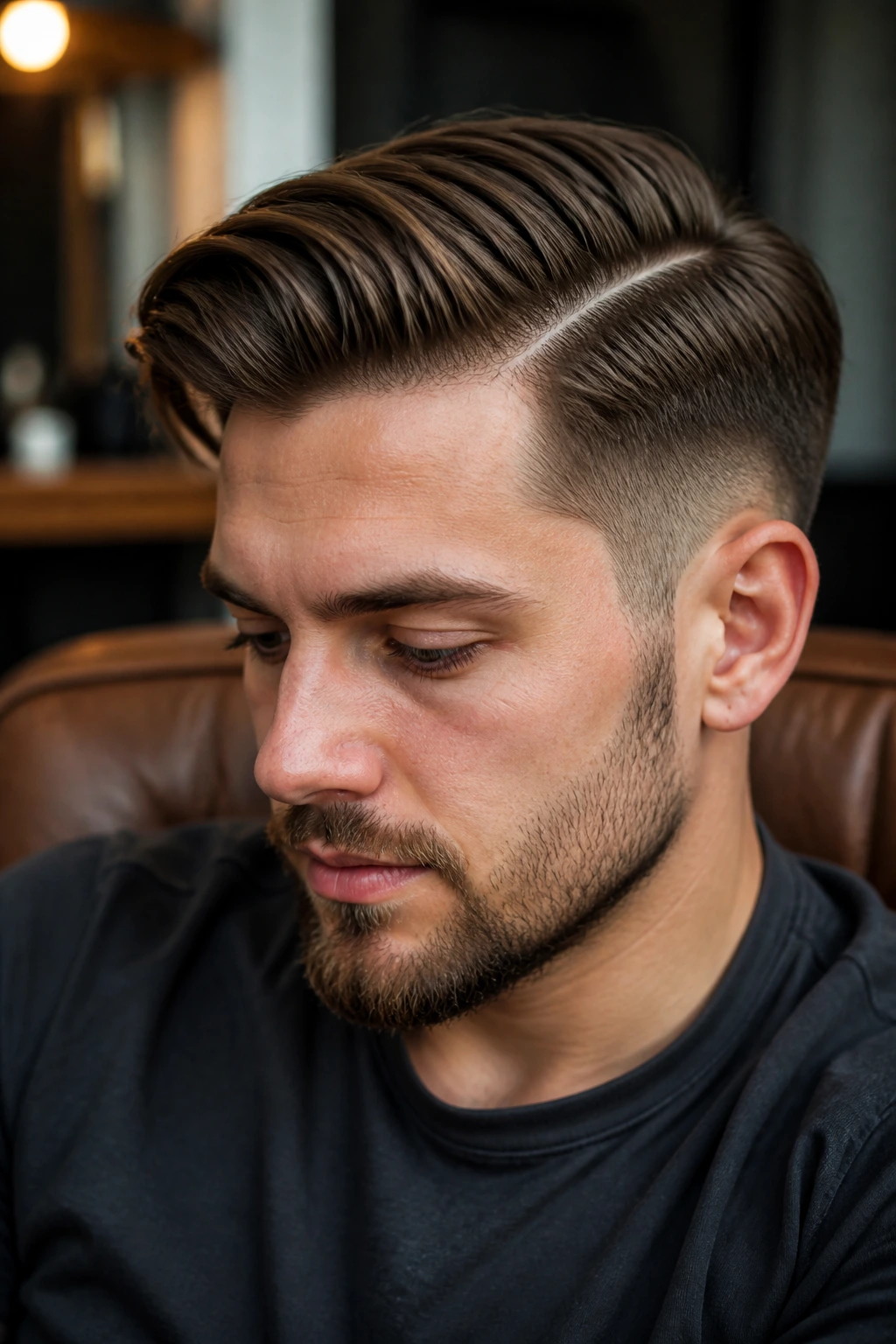
A comb over taper gets a bad reputation when it’s done too stiffly. Done well, though, it can be one of the cleanest looks in the chair. The taper trims the sides enough to keep the top visually separate, and the top sweeps over with structure instead of trying to hide anything.
What Makes It Look Modern
The modern comb over needs a little space and a little lift. You want the top long enough to move — usually 3 inches or more — and you want the part to sit naturally, not drawn like a razor line unless that hard part is your thing.
This haircut works especially well for thicker hair because the comb-over shape uses that density instead of fighting it. Blow-dry the top in the direction you want it to go, then use a medium-hold product so the hair stays flexible. If the product is too slick, the cut looks heavy. If it’s too dry, the part falls apart by lunch.
A good comb over taper says you pay attention to details. Quietly. No need to yell it.
12. Curly Fringe Taper
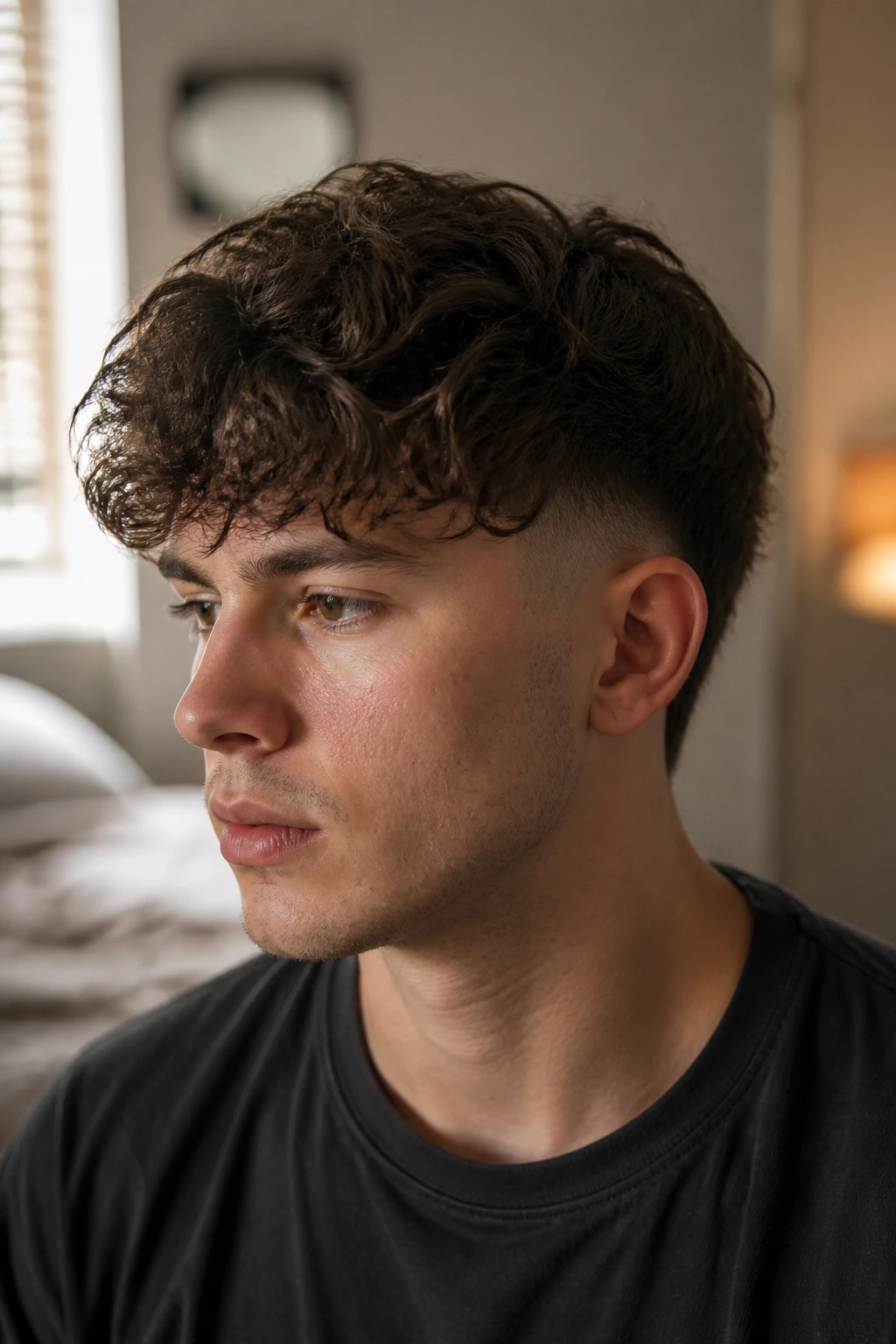
A curly fringe taper lets the front of the hair drop forward instead of forcing it back, which is a smart move for curls that naturally want to sit there anyway. The taper keeps the sides clean, but the fringe stays soft and a little irregular in the best way.
Why This Version Feels Easier to Wear
Curls don’t like being bullied into shape for long. This cut works because it gives the front a direction that matches the hair’s natural behavior. The result feels tidy, but not overmanaged.
Keep the fringe long enough to curl but short enough to stay off the eyes — usually around 2 to 4 inches depending on curl tightness. A leave-in and a bit of curl cream can stop the front from frizzing out. If your curls are looser, a diffuser helps keep definition without stretching everything out.
The curly fringe taper is a good answer for anyone who wants polish but refuses to flatten texture into submission.
13. Caesar Taper
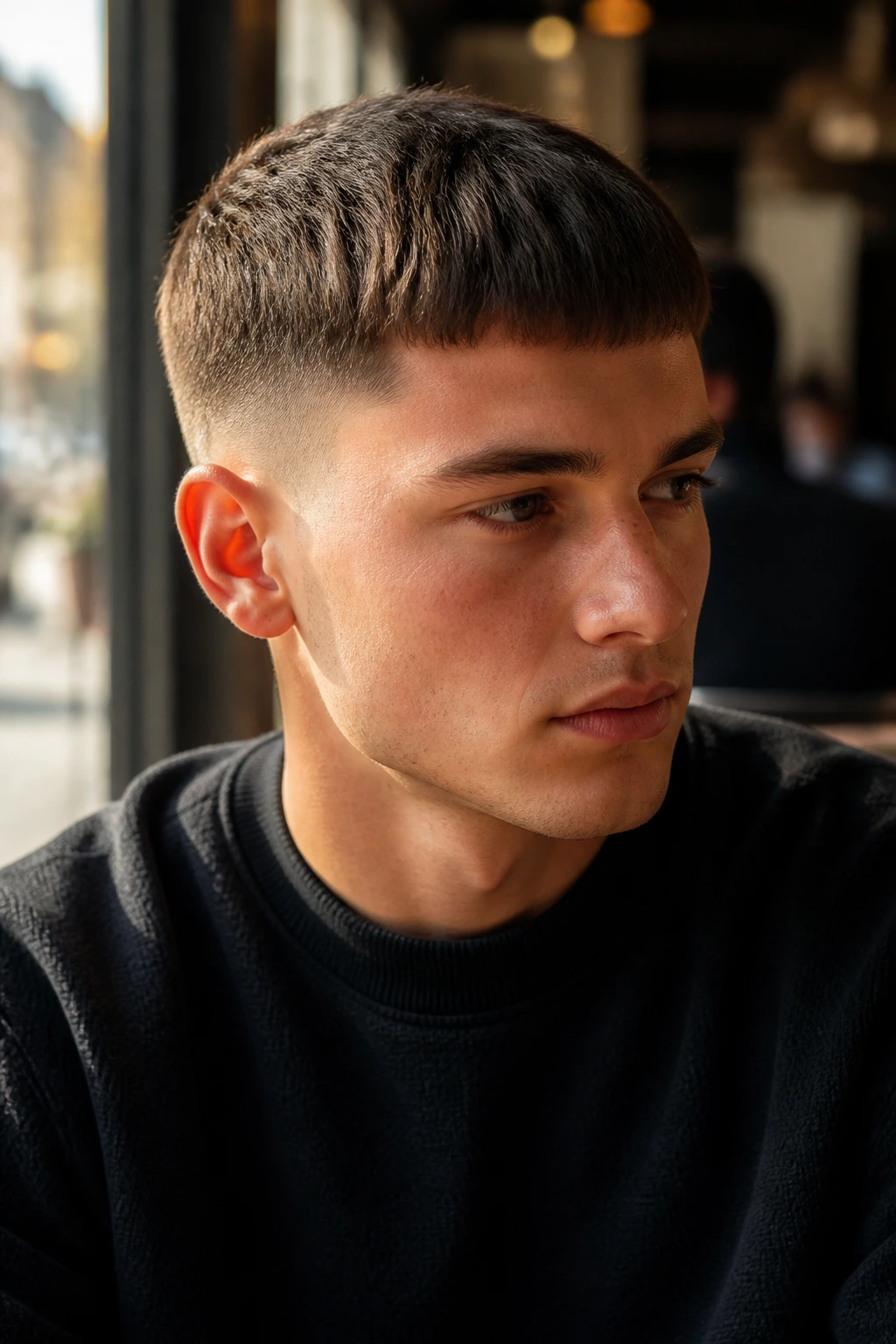
The Caesar taper is blunt, short, and strangely elegant when it’s cut with care. The fringe is kept short and even across the front, then the taper sharpens the edges around the ears and nape. It’s a small haircut that still holds a lot of shape.
The Straight-Ahead Appeal
The Caesar is useful because it does not need much from you. No blow-dryer. No elaborate styling. If the cut is even and the fringe sits clean, you’re done. That makes it a strong choice for busy mornings or for hair that tends to lose shape fast when grown out.
This version works well on straight hair and on hair with some wave, though the barber has to be careful not to take the top too high. If the front is cut too short, the whole thing can look severe. Keep the fringe slightly textured rather than perfectly blunt if you want a softer finish.
A Caesar with a taper feels disciplined. That’s the word. Not flashy. Disciplined.
14. Tapered Quiff
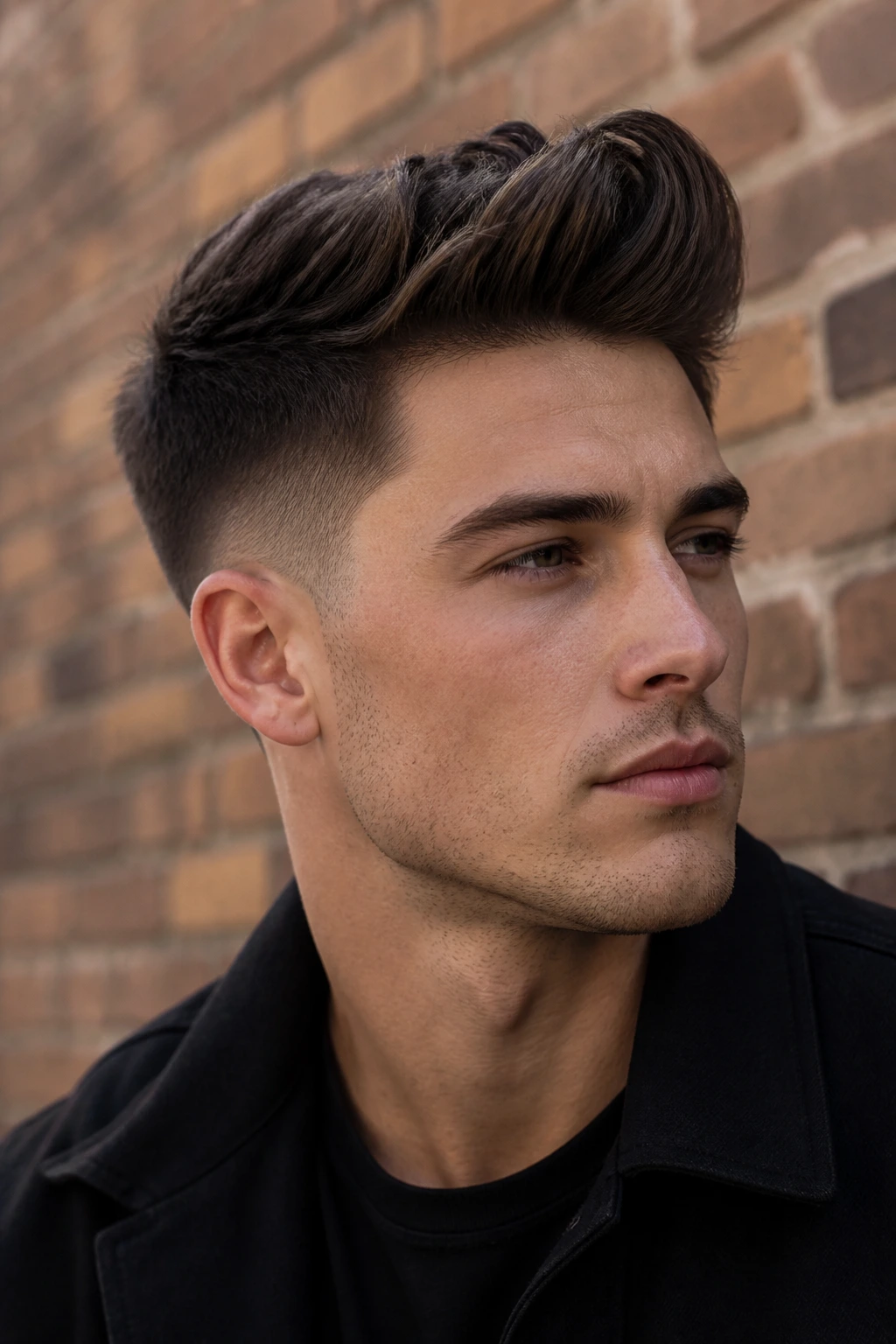
A tapered quiff brings height to the front without letting the sides get noisy. The taper keeps the outline sharp, while the quiff lifts upward and back in a shape that feels clean, not fussy. It’s one of the best choices if you want a haircut with movement and a little presence.
Why the Front Needs Real Work
The quiff lives or dies by the front section. You need enough length — usually 3 to 5 inches — and you need some natural lift. Fine hair can work here, but it needs strong blow-drying and a product that can hold the front without turning it crunchy.
Ask the barber for softer texture near the top, not a bunch of choppy layers that collapse the shape. Then blow-dry the front upward using a brush or your fingers, depending on how structured you want it. A matte paste keeps the finish modern.
This haircut is a little more work than a crop or buzz cut. Worth it, if you like a front shape that actually does something.
15. Crew Cut Taper
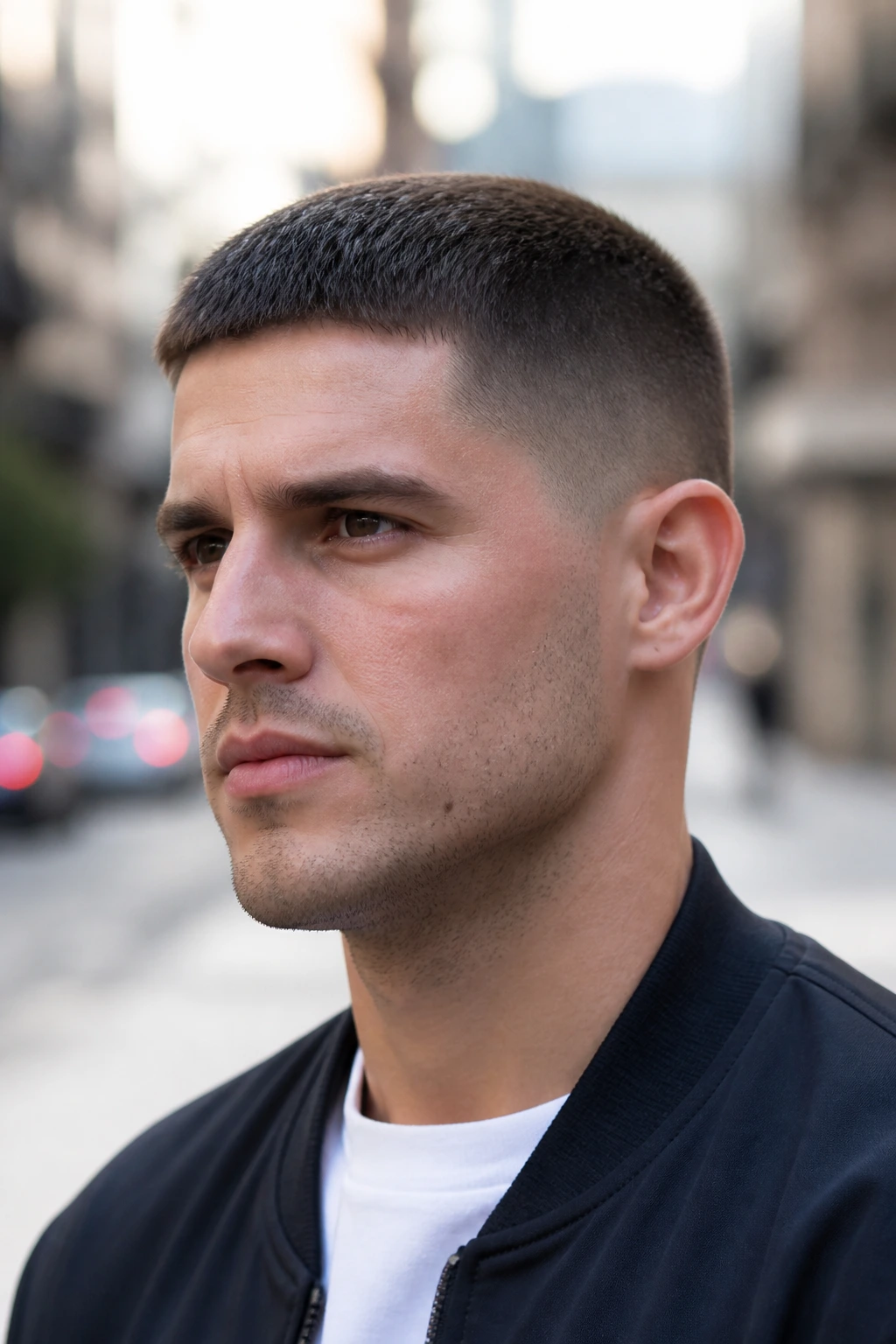
A crew cut taper is one of the most practical sharp haircuts out there. The top stays short, the sides taper cleanly, and the shape still has enough distinction to look like a decision rather than a default.
Why It Holds Up So Well
The crew cut works because it doesn’t rely on styling to do the heavy lifting. The taper keeps the edges crisp, and the top is short enough that it stays under control even if you skip product entirely.
If you want a more polished version, leave a little extra length at the front and brush it slightly upward. If you want something closer to athletic and bare, keep the top even shorter and let the taper do the clean-up work. A #2 or #3 on top is common, but the exact number depends on your hair density and how much scalp you want to show.
This is one of those haircuts that makes a person look neat from every angle. Which, frankly, is the point.
16. Hard Part Taper with Volume
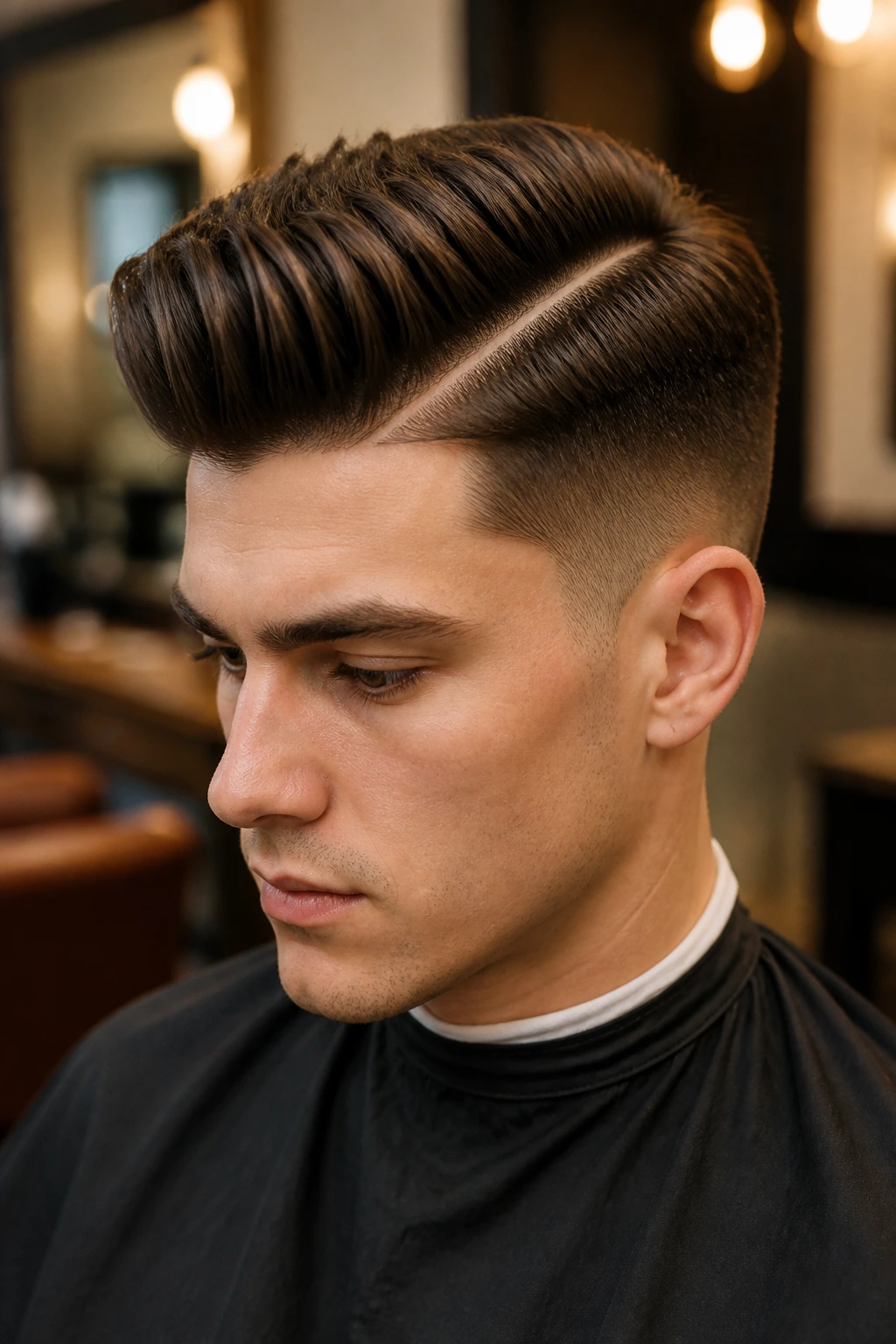
A hard part taper gives the haircut a very clear line of direction. The barber carves or defines the part, the taper cleans the sides, and the top gets enough volume to stand apart from the rest. If you like crisp structure, this is one of the more satisfying options.
The Part Is the Center of Gravity
Everything about this haircut points back to the part. That means the part has to sit in the right place for your growth pattern. If it’s forced too far over, the top gets awkward and the hair fights back all day.
Leave enough length on top — around 3 inches or more — so the volume has somewhere to live. A blow-dryer and a light pomade help hold the shape without making it heavy. The hard part should look precise, not drawn on like a marker line. And the taper around the ears should be clean enough that the top feels even more defined by contrast.
This cut works well in settings where you want to look polished without looking bland.
17. Tapered Faux Hawk
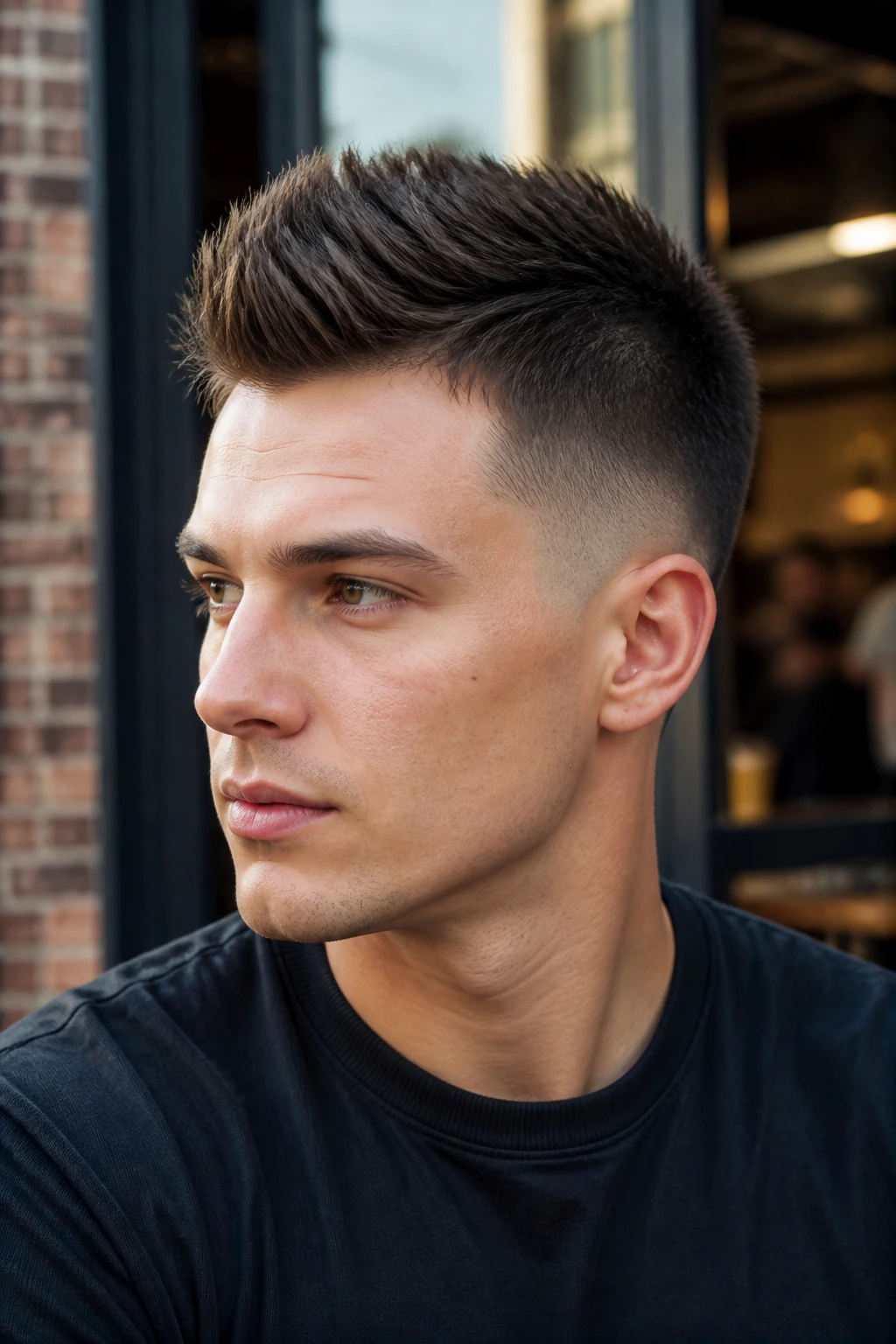
A tapered faux hawk keeps the center strip of hair active while the sides stay controlled. It’s the polished cousin of the mohawk, which is why it works better in more settings than people expect. The taper keeps the sides from getting loud, and that matters.
Why It’s More Wearable Than It Sounds
The faux hawk can look overdone when the contrast is too extreme. A taper fixes that by keeping the transition smooth around the temple and neckline areas. The center strip still gives you shape, but it doesn’t feel like a costume.
This cut likes thick hair, coarse hair, and curly hair especially well. Keep the center slightly longer than the sides, then use a matte paste to push the hair upward and inward. If the front flops, a quick blow-dry helps. If the sides puff out, the taper probably isn’t tight enough.
It’s a good choice for someone who wants edge, but not too much. That line matters.
18. Businessman Taper with a Natural Part
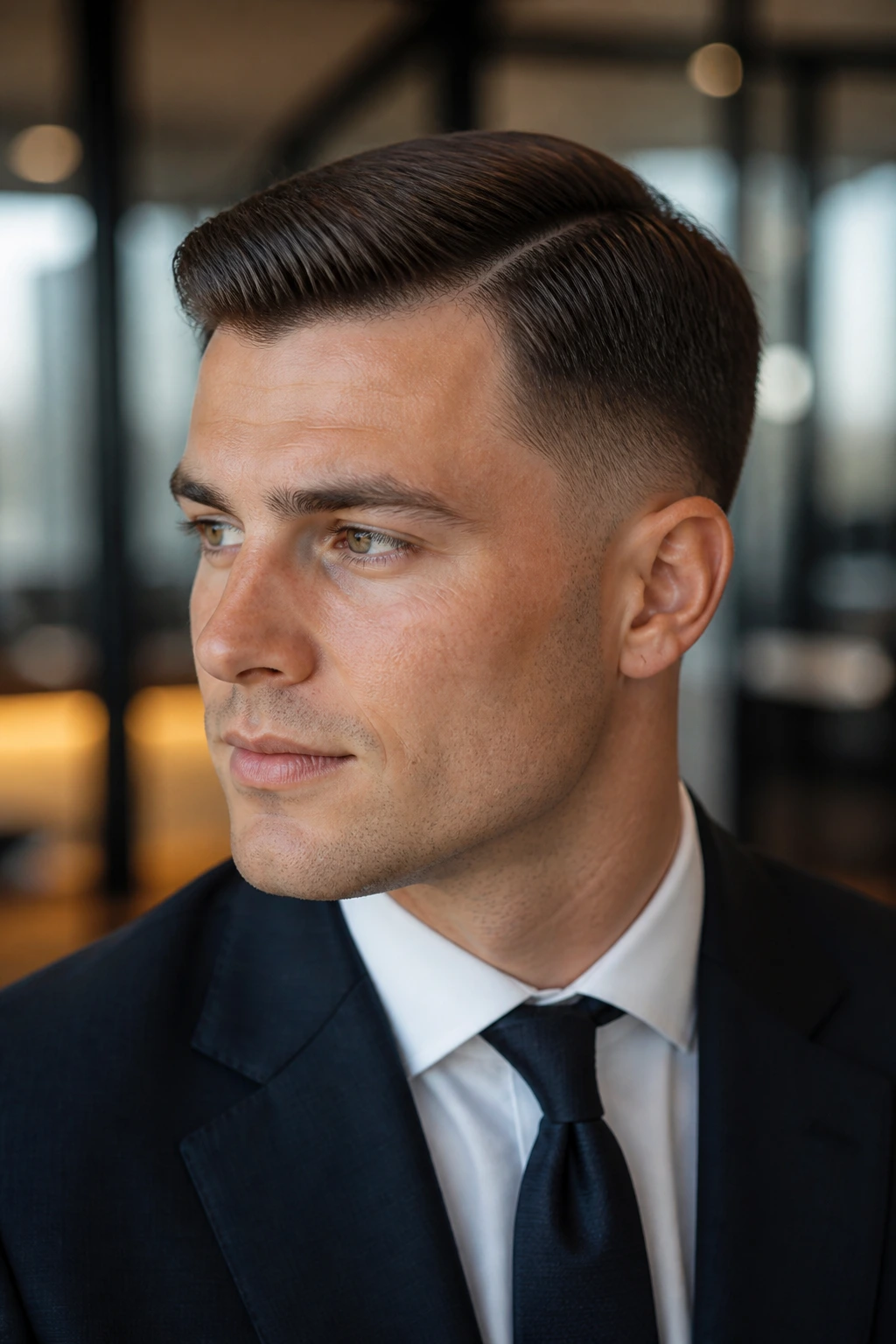
The businessman taper is the haircut for people who want to look neat without obvious styling fingerprints. The part is soft, maybe even a little imperfect, and the taper keeps the edges honest. Nothing dramatic. Everything in place.
The Best Thing About It
This cut never asks for attention. That sounds boring until you realize how useful that is. It works in offices, at dinner, at interviews, on days when you’re late, and on days when you want your hair to look expensive without looking sculpted.
Keep the top medium length, around 2.5 to 4 inches, and let the barber respect your natural part if you have one. A small amount of cream is enough. You’re aiming for direction, not stiffness. If your hair has a swirl at the crown, don’t fight it too hard — the best version of this haircut usually follows the hair’s habits instead of arguing with them.
This is the haircut I’d call quiet, but not forgettable.
19. Disconnected Taper Undercut
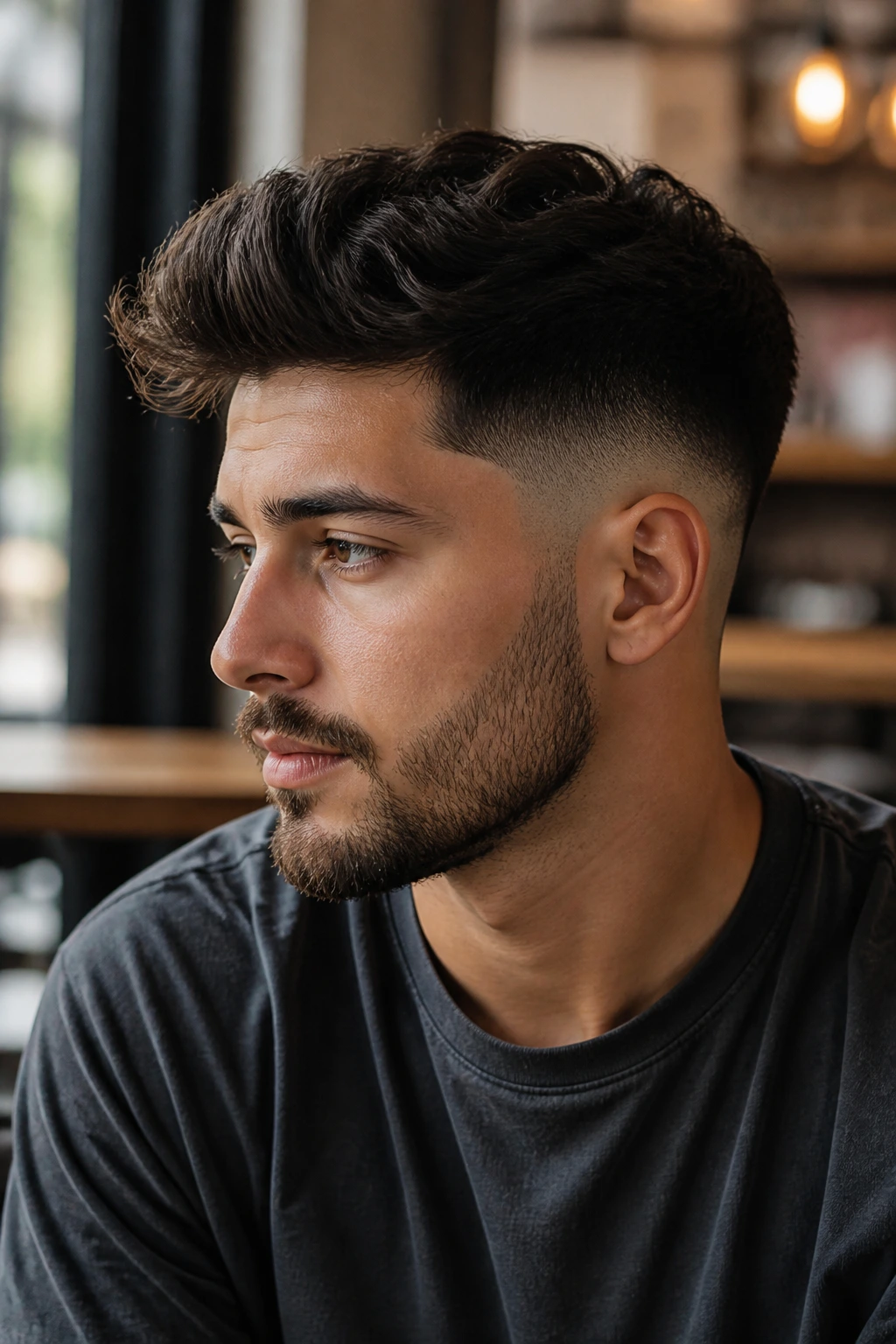
A disconnected taper undercut is where the haircut gets more fashion-forward. The top sits clearly apart from the sides, and the taper only does the cleanup work at the edges, nape, and around the ears. The separation is the whole story.
Where It Wins and Where It Doesn’t
This cut looks sharp when the top has enough length to show the contrast, usually 4 inches or more. If the top is too short, the disconnect can look accidental instead of intentional. That’s the trap.
Style matters here. You can comb the top back, sweep it sideways, or keep it textured and loose. What you can’t do is ignore it. This haircut needs some kind of styling, even if it’s only a quick blow-dry and a little paste. If you want a cut that reads neat but still has a sharper fashion edge, this one delivers.
It’s not the most subtle choice on this list. That’s fine. Subtle isn’t always the goal.
20. Low Taper with Beard Blend
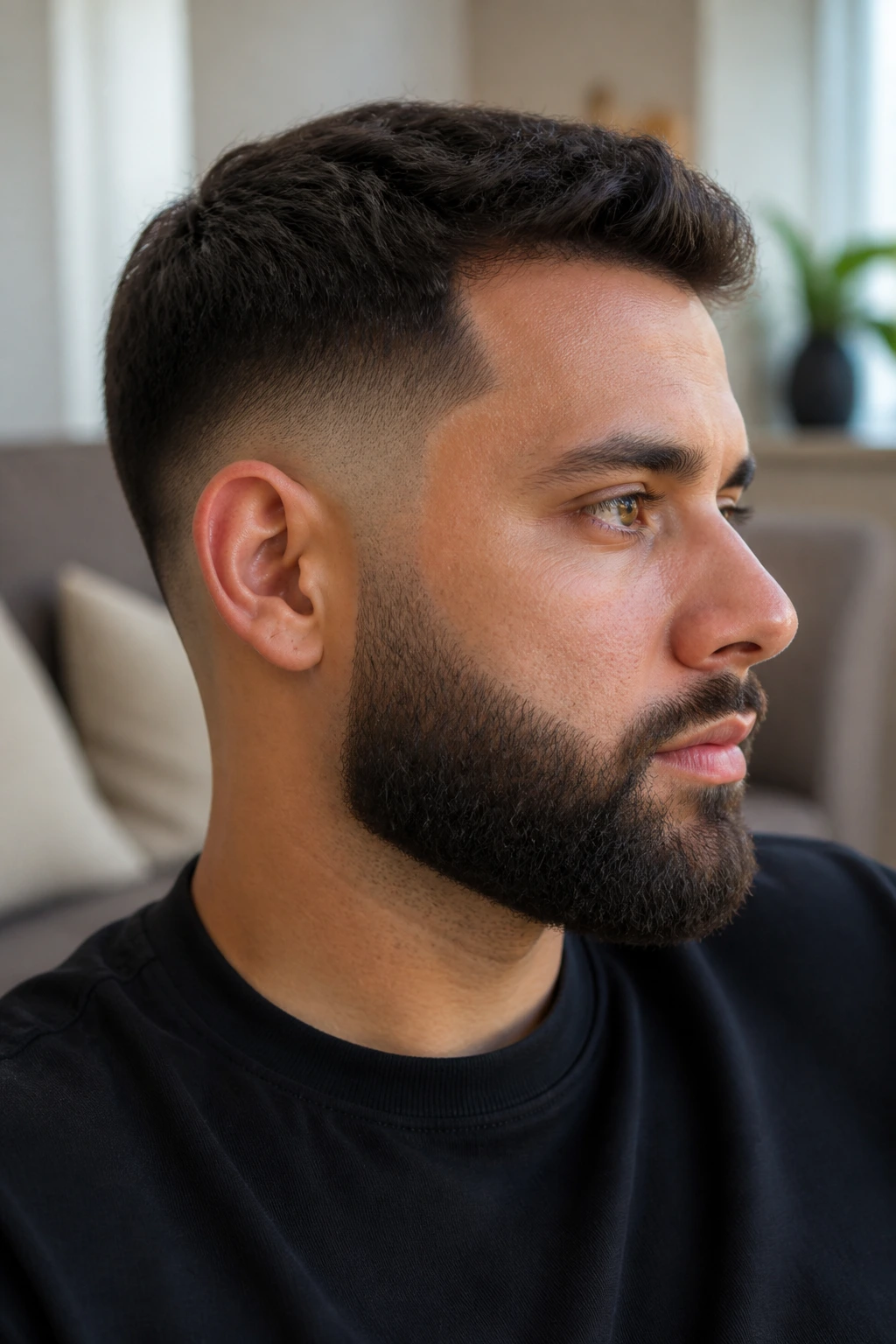
A low taper with a beard blend is one of the cleanest ways to make hair and facial hair look like they belong to the same face. The taper softens the sideburn zone instead of chopping it off, then the beard takes over below it with a gradual shift in length.
Why the Transition Matters
If the sideburns end abruptly, the whole look can feel chopped up. A beard blend fixes that by letting the taper and beard meet in a controlled way. The effect is especially good if your beard is dense enough to carry a gentle fade from the temple down to the jaw.
Ask for the sideburn area to be blended, not disconnected. That small wording change matters at the chair. You want a clean transition from haircut to beard, with the neckline tidy but not strangled. A beard trimmer with a few guard lengths helps maintain that line between appointments.
This cut works best when the beard is trimmed often enough to keep its shape. A taper can’t save an unkempt beard. It can only frame it.
21. High Taper with Long Top Layers
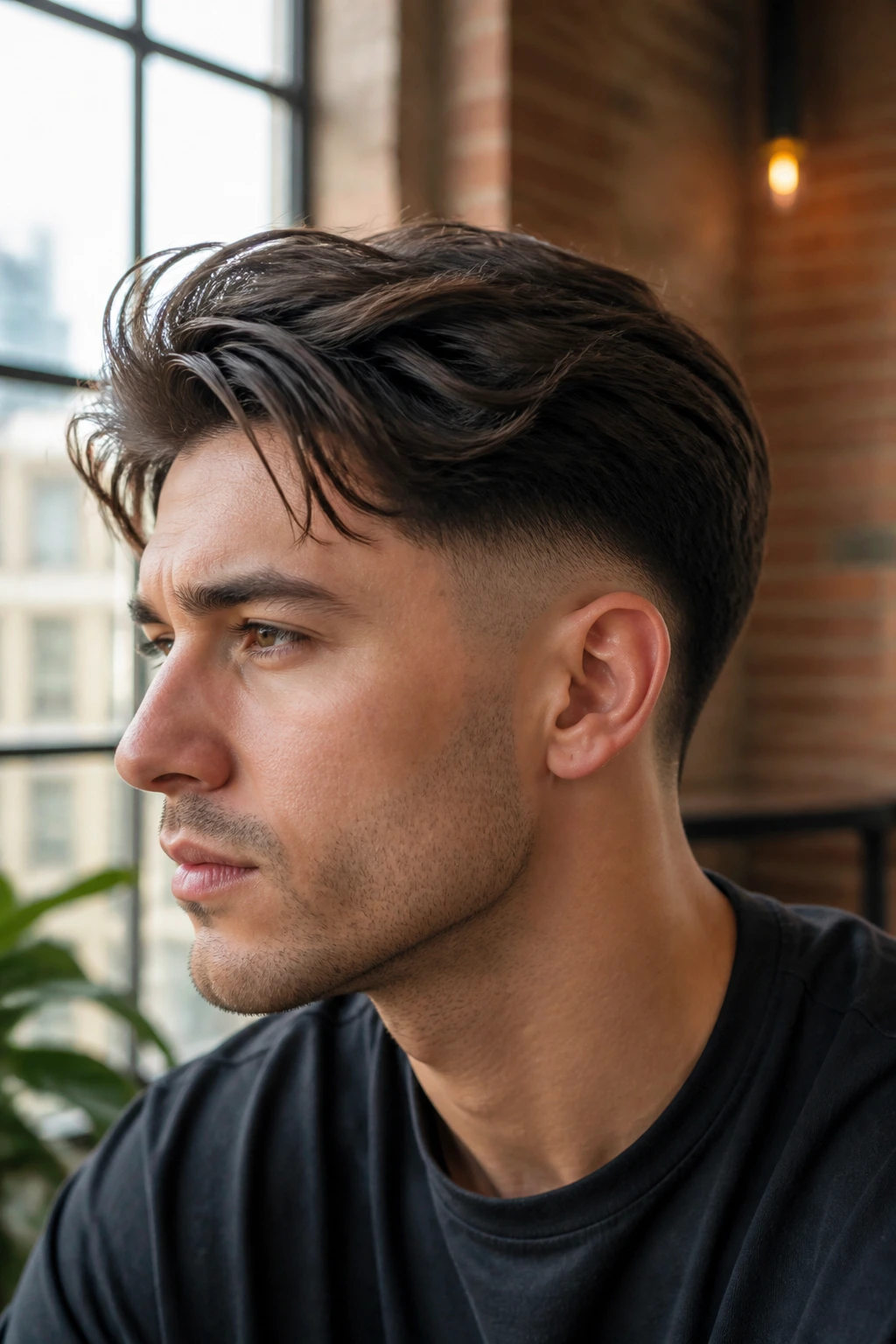
A high taper with long top layers gives you more movement, more shape, and a little more room to play. The sides are tightened higher up, but the top stays long enough to sweep, part, or break apart with fingers. It feels modern without getting too stiff.
The Layering Makes It Move
Long top layers need a barber who understands how the hair will sit when it dries. If the layers are cut too blunt, the top can feel bulky. If they’re cut too thin, the shape gets wispy and hard to control. The middle path is where this lives.
This cut works especially well on thick, wavy hair because the taper makes the sides neat while the top keeps the natural bend. A flexible cream or light paste is often enough. You can brush it back on one day and let it fall forward the next. That flexibility is part of the appeal.
It is a little more maintenance-heavy than a crop or crew cut. But if you like hair that moves when you move, that trade is worth it.
22. Blowout Taper
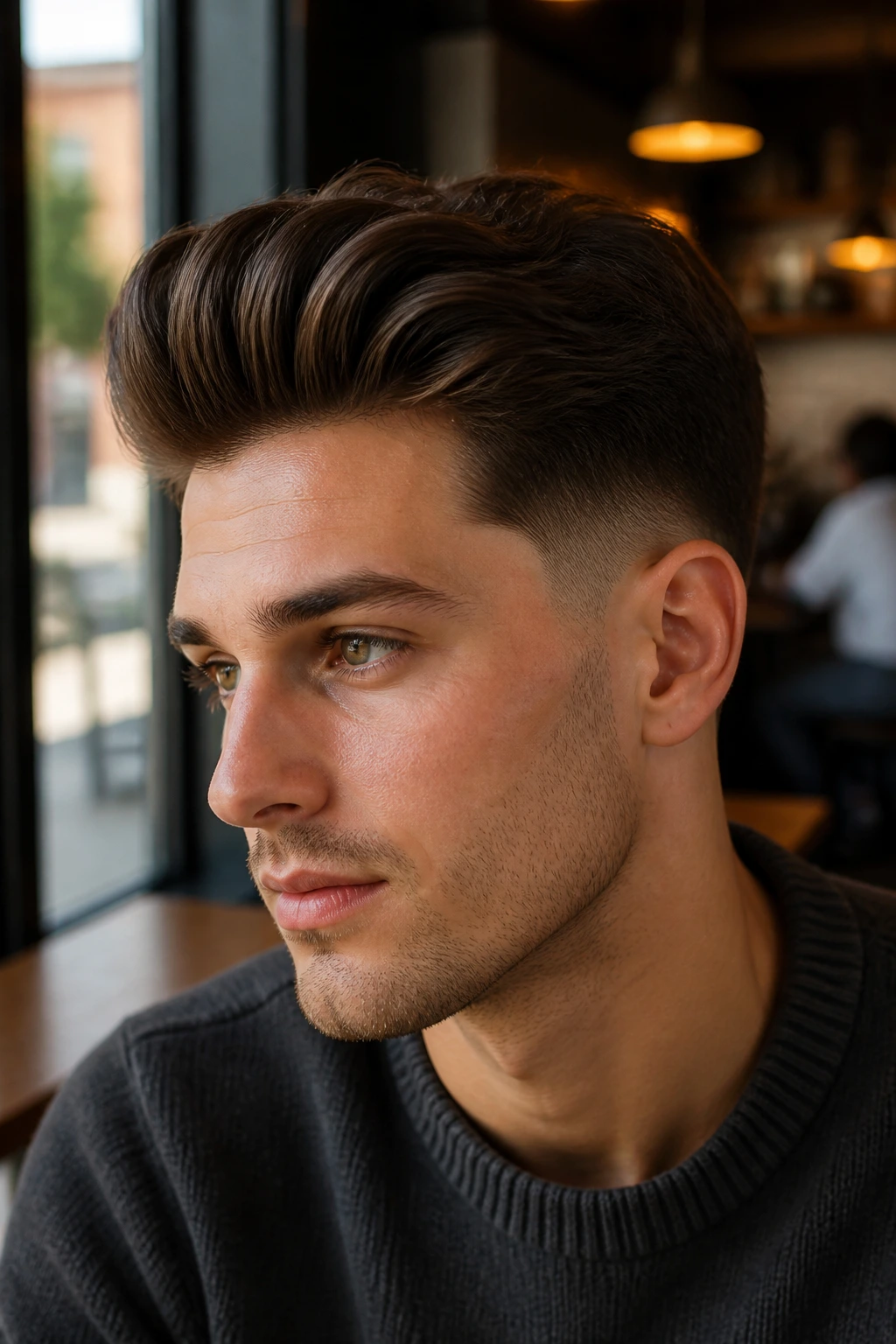
A blowout taper has lift at the crown and some energy around the front, but the taper keeps the outline from turning into a giant puff. The whole point is controlled volume. Airy, yes. Messy, no.
How to Keep It From Getting Too Big
The top needs a shape that the blow-dryer can support, not fight. That means medium length with some natural density. Use a round brush or your fingers and direct the airflow upward and slightly back. A medium-hold product keeps the style from collapsing, but too much product will flatten the very volume you’re trying to keep.
This cut works especially well on hair that naturally wants to stand up. If your hair lies down hard, the blowout can turn into a daily project. Not impossible. Just more work than the barber chair makes it seem.
The taper gives the haircut its manners. Without it, the blowout can look too loose around the edges.
23. Tapered Brush Cut
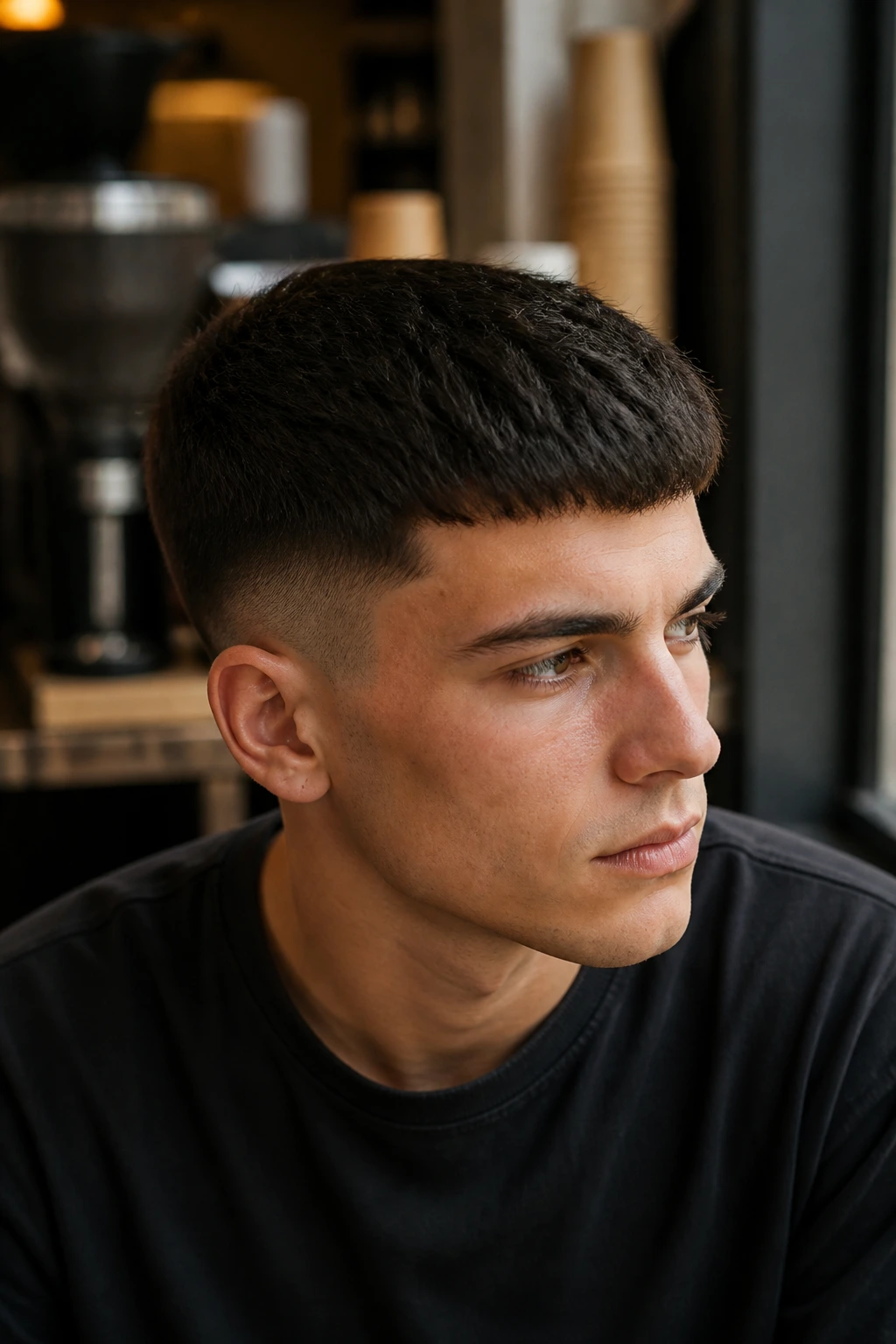
A tapered brush cut is short, neat, and a little old-fashioned in the best way. The top is trimmed short enough to brush forward or slightly upward, and the taper keeps the whole cut from looking too blunt.
Why It Feels So Balanced
The brush cut sits in a useful middle zone. It’s shorter than a French crop, longer than a buzz cut, and easier to maintain than a quiff. That makes it a strong pick if you want something disciplined but not severe.
I like this cut on straight and slightly wavy hair because the texture shows without becoming unruly. A matte cream or very light paste can keep the top in place, but a lot of days you won’t need much at all. Ask the barber to keep the top even and the transition smooth so the side shape doesn’t feel hard-edged.
It’s one of those haircuts that quietly improves the face around it. Clean, but not sterile.
24. Tapered Afro with a Clean Outline
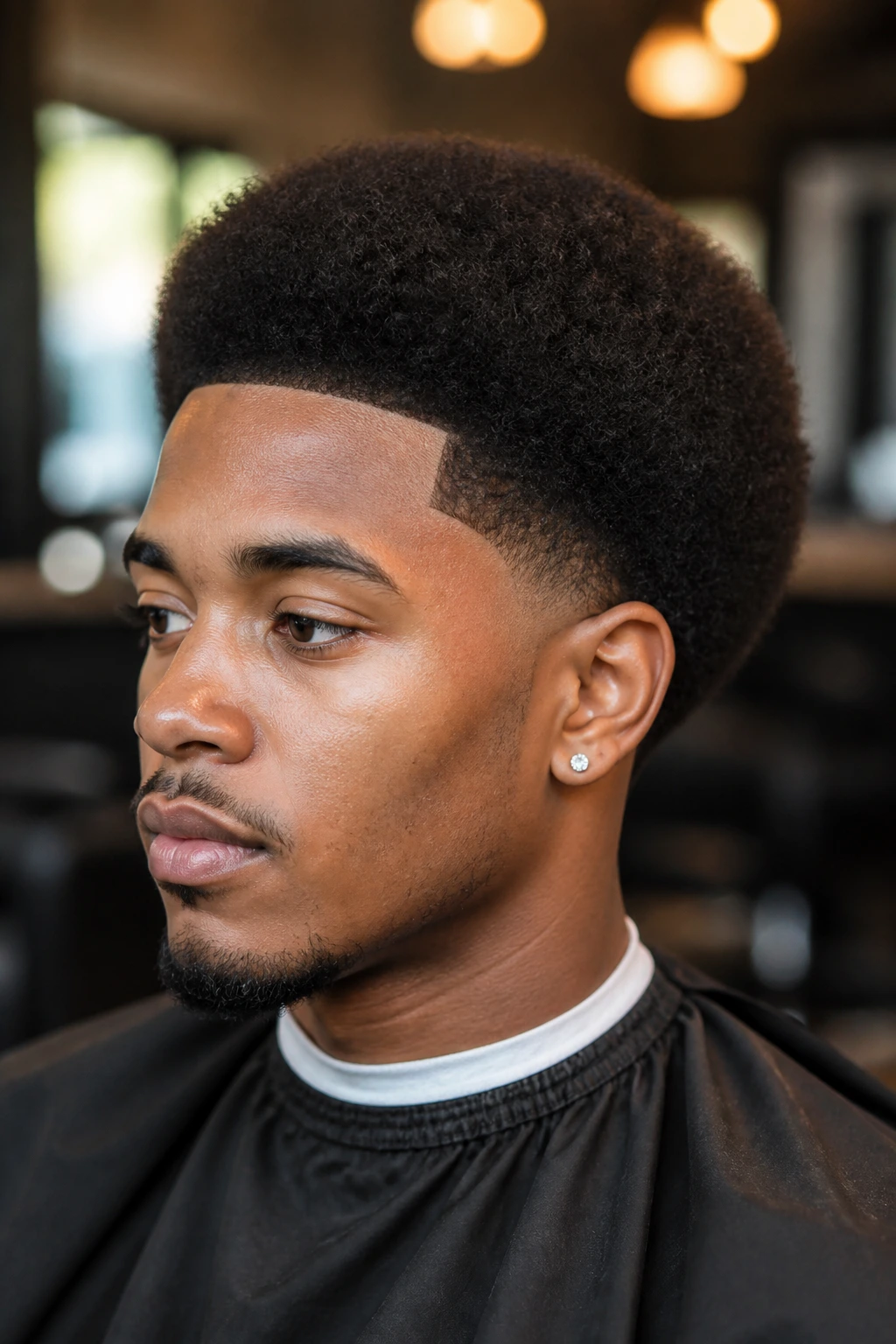
A tapered afro with a clean outline lets the natural shape stay full while the edges get sharpened. The taper at the temples and nape keeps the silhouette neat, and the outline around the forehead and beard area can make the whole style look crisp without flattening texture.
Why This Version Stands Out
The best part here is the contrast between softness and structure. The top stays rounded and full, but the edges are defined enough that the haircut reads intentional from a distance. That’s harder to do than it sounds. A good shape-up matters more than most people realize.
Moisture matters, too. Dry hair turns fuzzy fast, and a taper can’t hide that. A leave-in conditioner or curl cream helps maintain the shape, and a pick can lift the roots without roughing up the coil pattern. If your hair grows fast at the temples, this cut needs regular cleanups to keep the outline sharp.
This is a polished natural style, not a compromise.
25. Side-Swept Taper with Soft Flow
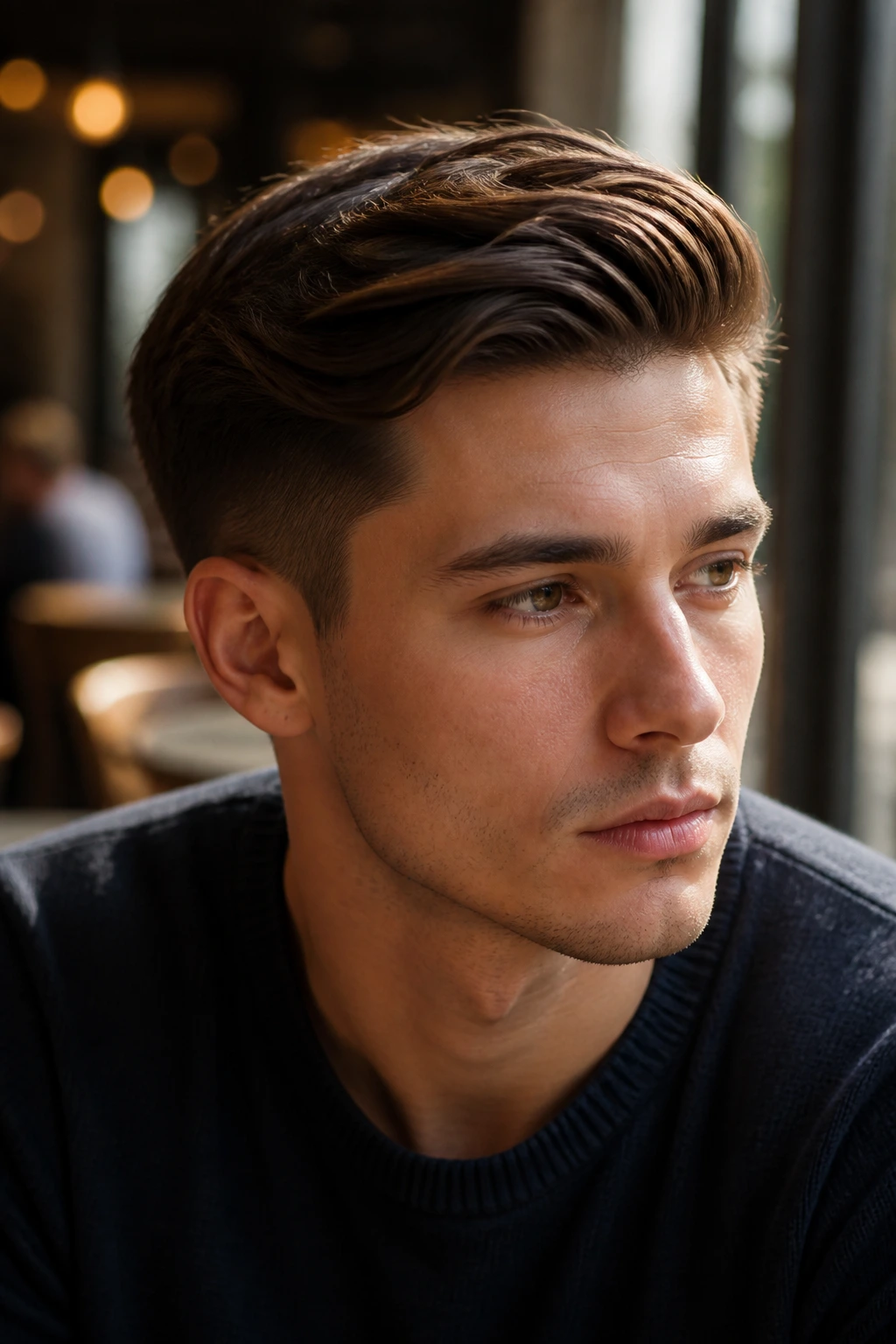
A side-swept taper is for the person who wants movement without chaos. The top stays long enough to sweep across the head, but the taper keeps the sides clean so the shape doesn’t sprawl. It’s smooth, tidy, and a little more relaxed than the hard-part version.
The Difference Is in the Finish
This cut looks best when the top has some bend or wave. Straight hair can still work, but it needs a touch of texture so the sweep doesn’t collapse into a flat sheet. Keep the product light — cream, soft pomade, or even a little styling lotion if you want a less structured finish.
The side sweep is useful because it softens strong features without making the haircut feel precious. It’s a good bridge between formal and casual. The taper handles the edges, and the top does the talking.
If you want one haircut that can drift from weekday to weekend without much fuss, this is near the top of the pile.
What Gives a Taper Haircut Its Clean Finish
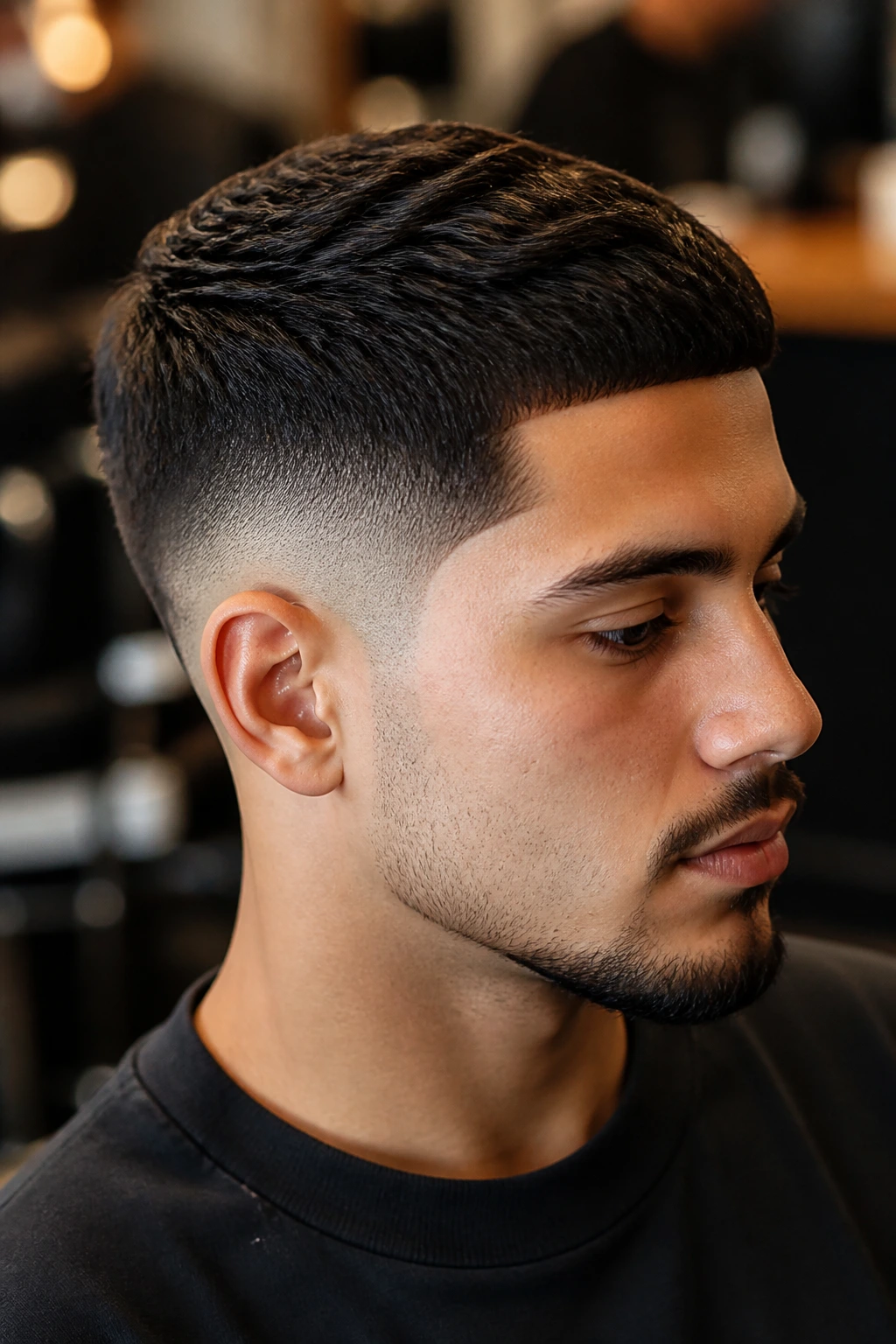
The thing that separates a sharp taper from a haircut that just looks short is the transition. Good tapers do not look chopped. They move from full to short in a smooth line, and that line is different depending on whether the barber is working low, mid, high, or skin tight.
That transition also changes how the haircut grows out. A low taper can stay tidy for a while because the grow-out sits closer to the hairline. A skin taper looks crisp fast, but it also shows regrowth sooner. A high taper gives you more contrast and more attitude, but it leaves less forgiveness if the top is left unmanaged for too long.
There’s another reason tapers keep winning: they let the top stay honest. If your hair is curly, the taper doesn’t erase the curl. If it’s straight, the taper doesn’t make it look pasted down. If it’s thick, the taper trims the bulk where it gets in the way most. And if your hairline is changing a little, a taper can soften the edges instead of shouting about them.
That’s the real trick. The taper is not the whole haircut. It’s the part that makes the haircut look finished.
The Clippers, Trimmers, Combs, and Products You’ll Actually Use
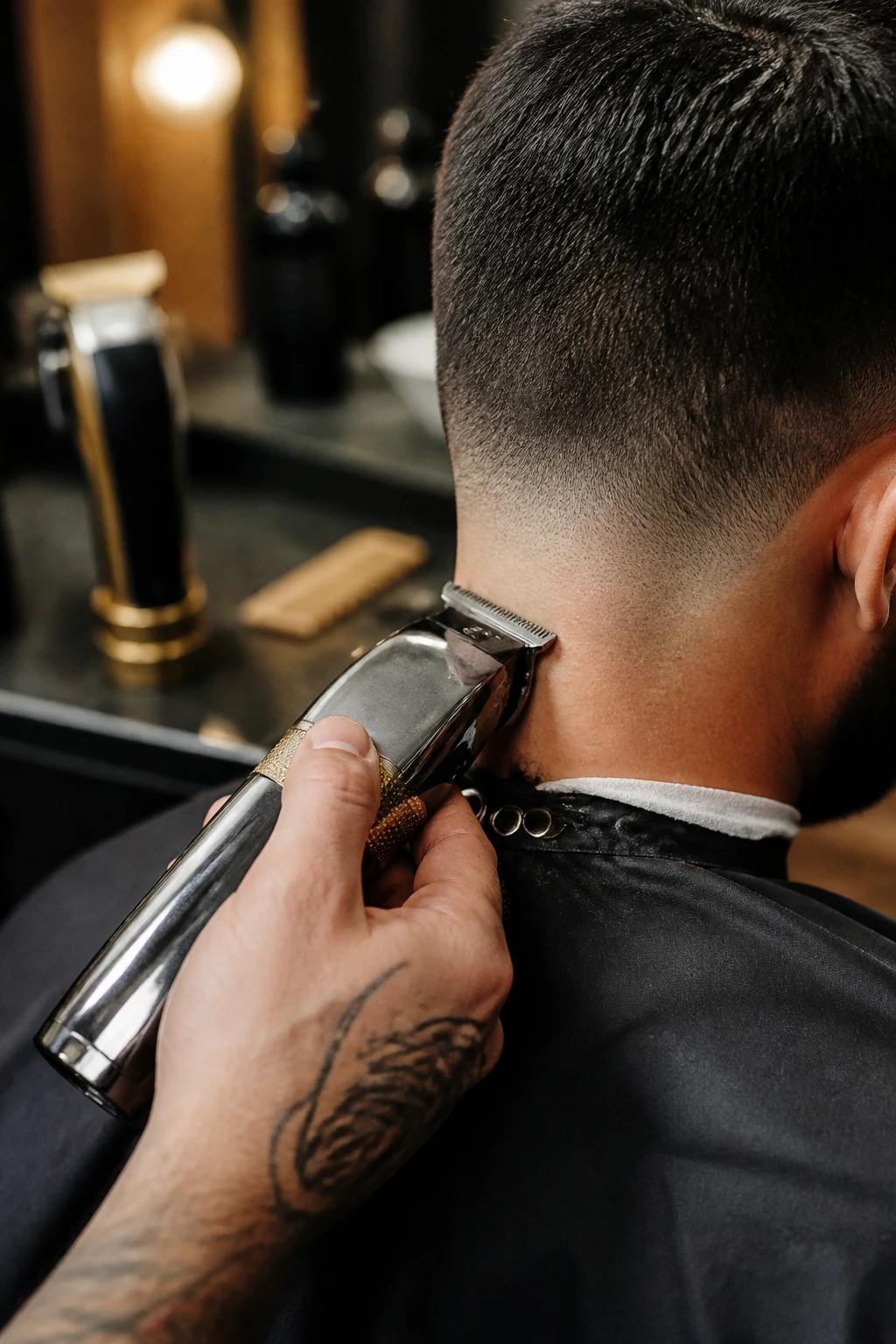
You do not need a shelf full of gear to keep a taper looking decent, but the right tools matter a lot.
- Adjustable clippers: Useful for cleanups if you trust your hand, especially around the neckline and sideburns.
- Detail trimmer: The sharper edge tool for line-ups, temples, and beard blend work.
- Clipper guards from #0.5 to #4: Enough range for low, mid, and higher taper sections at home.
- Fine-tooth comb and wide-tooth comb: The fine comb helps with side parts and slick backs; the wide comb is better for curls and textured tops.
- Scissors or shears: Handy for trimming the top of a crop, fringe, or longer layered style.
- Blow dryer: Very useful for quiffs, pompadours, comb overs, and side sweeps.
- Round brush: Helps lift the front on volume-heavy cuts and keeps the shape controlled.
- Matte clay or paste: Best for crops, quiffs, brush cuts, and textured tops that should look dry and clean.
- Light pomade or cream: Better for side parts, slick backs, and polished comb overs where a little shine makes sense.
- Curl cream or leave-in conditioner: Good for curly tops, afros, and fringe cuts that need definition without crunch.
- Hand mirror: Lets you check the neckline and back taper instead of guessing.
- Cape and neck duster: Not glamorous, but they make cleanup easier and keep hair from sticking everywhere.
If you’re planning to do touch-ups at home, the trimmer matters more than the clippers. Most bad at-home haircuts start with people trying to freehand too much with the wrong tool.
How to Choose the Right Taper for Your Hair Type
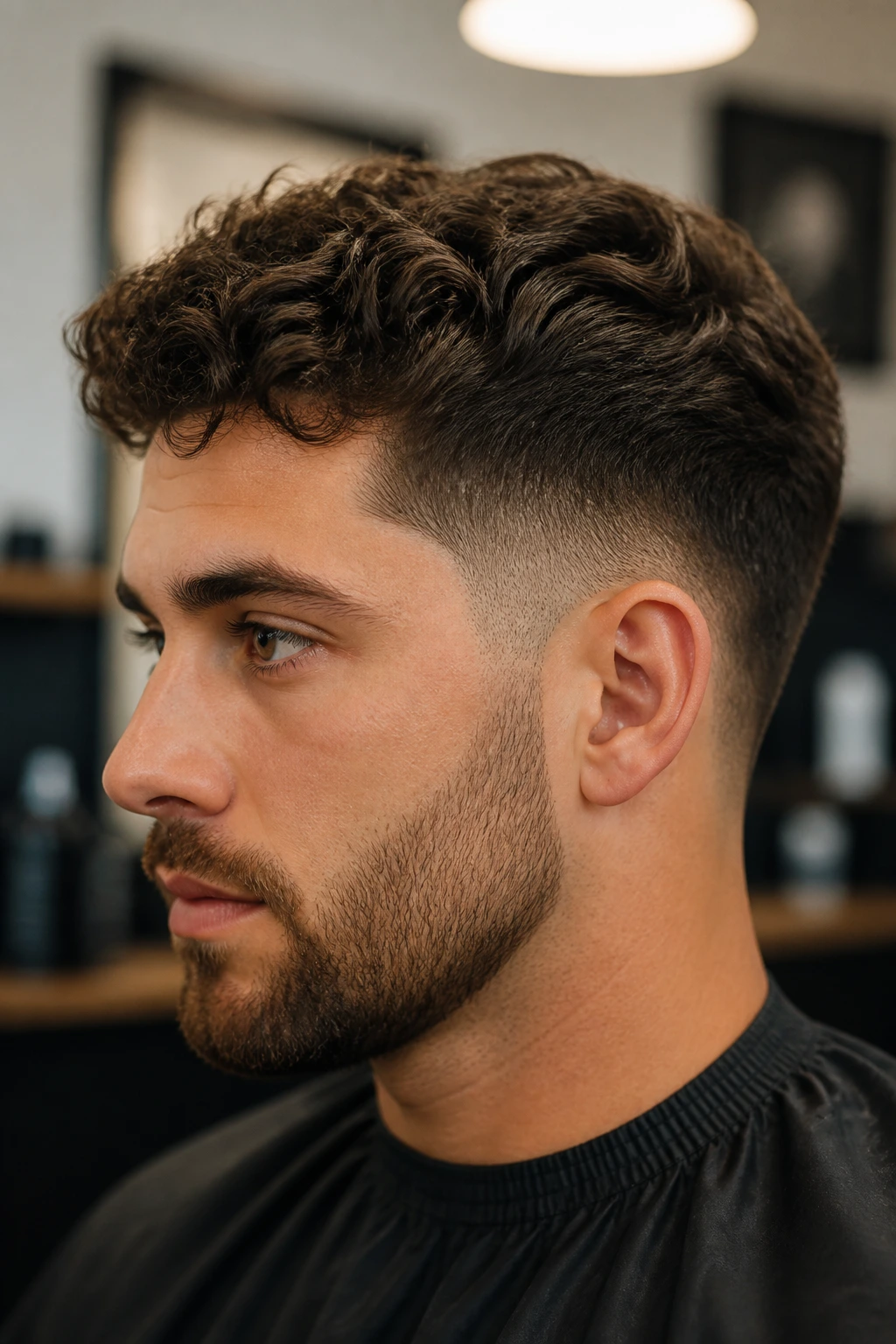
Straight hair usually shows every line, which can be a blessing and a curse. It makes a side part look crisp, but it also means a bad blend is easy to spot. A low or mid taper with a textured top tends to work well because it adds shape without overexposing the scalp.
Wavy hair sits in a sweet spot. It has enough movement to make a quiff, comb over, or side-swept taper feel alive, but not so much spring that the cut turns wild. If your waves puff at the sides, keep the taper a little tighter around the temples and leave enough top length for weight.
Curly and coily hair need shape more than forcing. That’s why burst tapers, temple tapers, taper afros, and curly fringes work so well. The haircut should respect the hair’s natural pattern and clean up the perimeter, not flatten the whole thing into a different texture.
Thinning hair needs careful handling. A low taper or a soft Ivy League often works better than a high taper because too much skin exposure can make the top look lighter than it is. Keep product light, avoid greasy shine, and let the hair move a little instead of trying to hold it into place.
Beard wearers should think about the sideburn transition before anything else. A taper can look polished, but only if the beard and haircut speak the same language. Hard disconnects are a choice. Blended sideburns are another. Pick one on purpose.
How to Style a Taper So It Reads Polished, Not Overworked
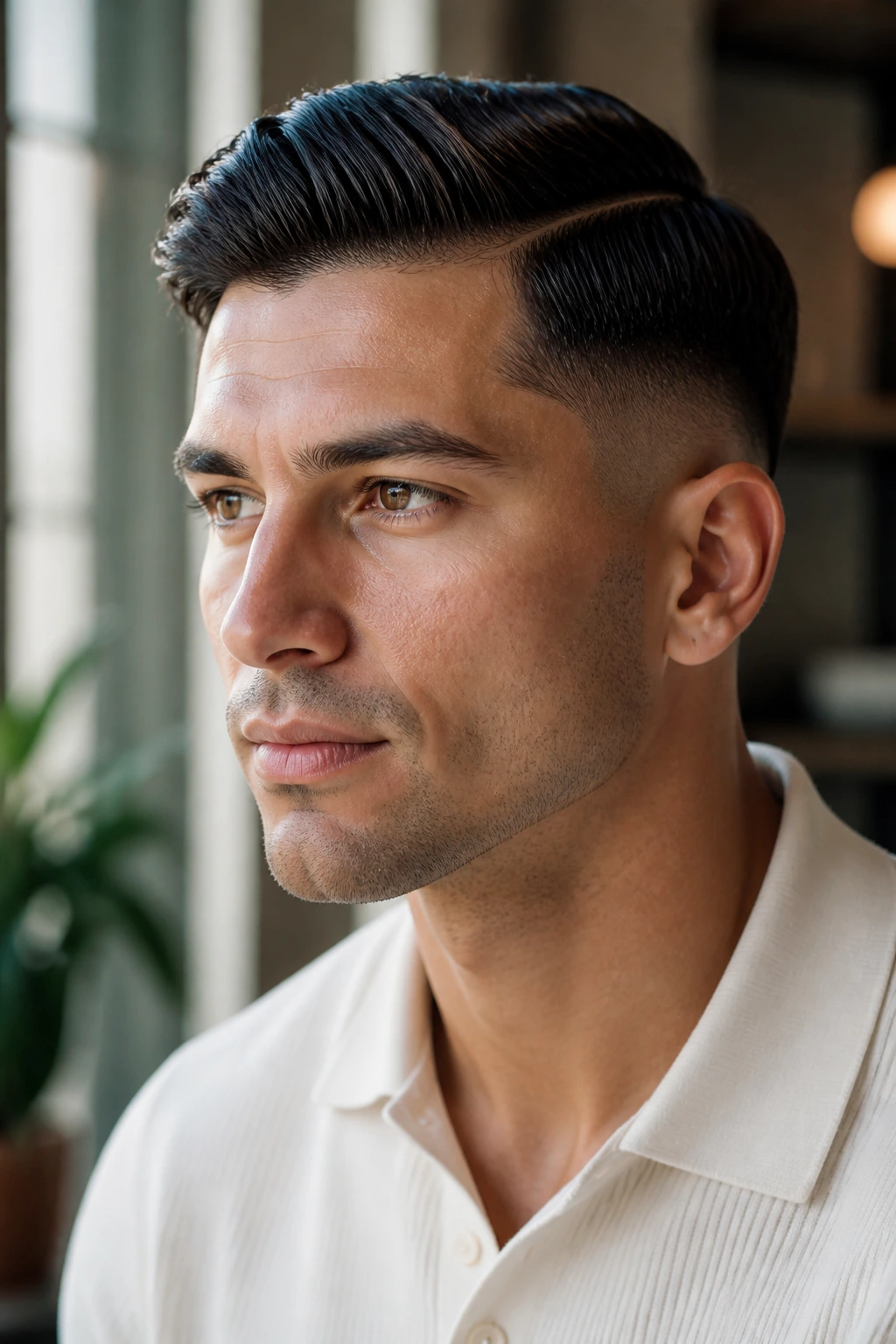
A taper haircut looks best when the styling matches the cut’s attitude. If the cut is clean, the product should be clean too. Heavy shine on a textured crop makes the top look damp and old-fashioned in a hurry. Too-dry paste on a slick back makes it look unfinished. The finish has to match the shape.
Matte finish: Best for crops, brush cuts, French crops, and tapered quiffs that should look modern and touchable. Work a small amount through damp or dry hair, then break it up with your fingers.
Soft shine: Better for side parts, business tapers, and comb overs. A cream or light pomade gives polish without turning the hair into a helmet.
Lift at the front: Quiffs, pompadours, and blowout tapers need the front to be dried upward first. Product comes second. If you skip the dryer, the hair usually collapses by midday.
Curls with definition: Use curl cream or leave-in on damp hair, then let it air-dry or diffuse on low. Don’t rake through it a hundred times. That just turns defined curls into fuzzy volume.
The easy rule is this: use enough product to guide the hair, not enough to freeze it. A taper already brings the structure. You’re there to support it.
Small Details That Change the Whole Cut
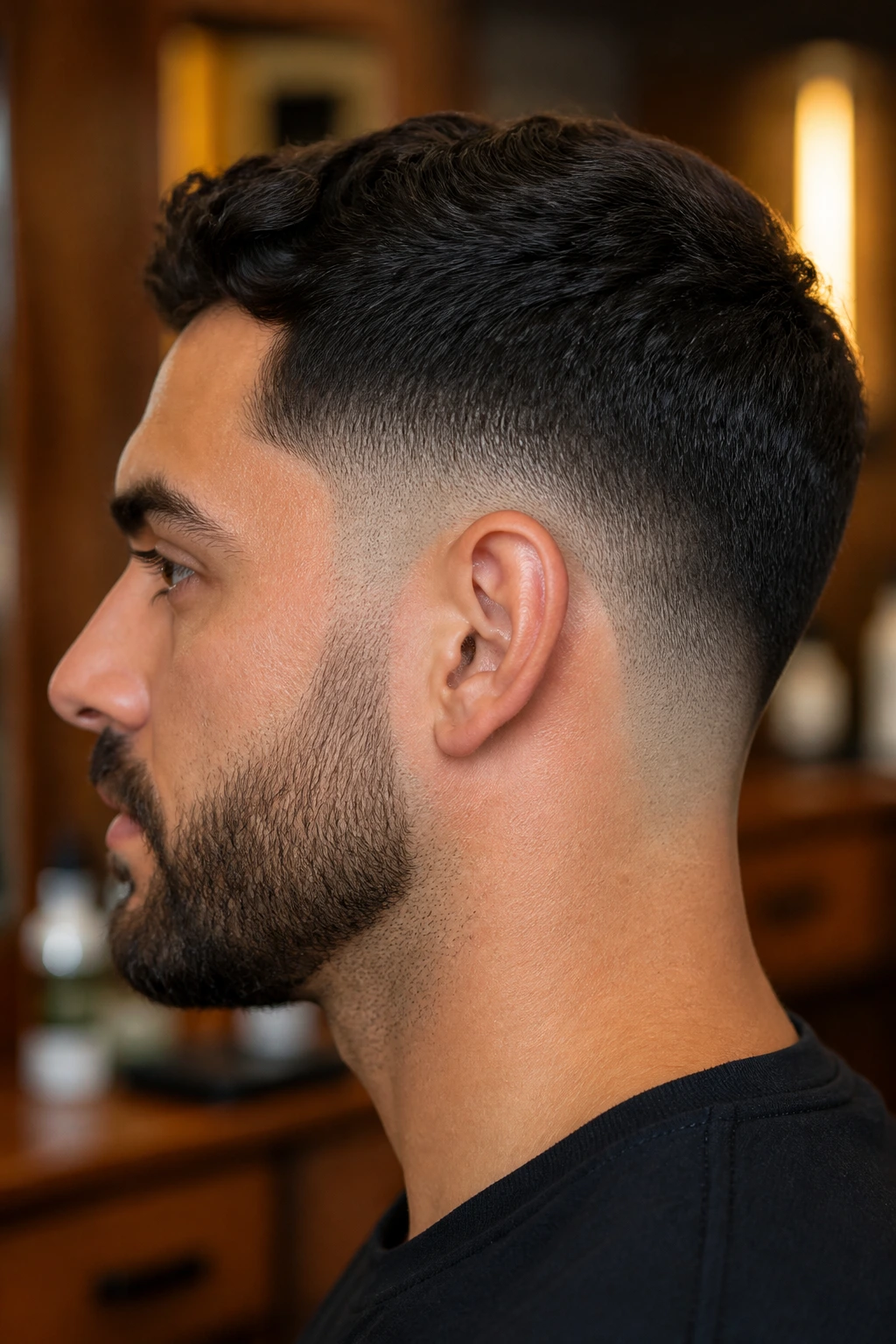
A taper lives or dies in the details most people don’t notice until they’re wrong. The first is the neckline. A natural neckline looks softer and grows out easier. A squared neckline looks cleaner for longer, but it can also look harsh if it’s cut too high.
Temple length matters, too. If the taper starts too far forward, the haircut can make the face look narrow in a bad way. Too far back, and the sides keep too much bulk. You want the taper to support the haircut, not bully it.
The beard blend is another one. A taper that stops cold at the sideburn often looks unfinished next to facial hair. A short, gradual shift from temple into beard cleans that up fast. Same with the parting choice. A hard part gives a haircut attitude. A soft part keeps it calm. They do not communicate the same thing, and they should not.
One more thing: ask your barber to cut according to how your hair grows, not only how you want it to sit on day one. Cowlicks, dense spots, and flat crowns change the result. Good haircuts respect the head they’re living on.
How to Keep the Shape Between Barber Visits
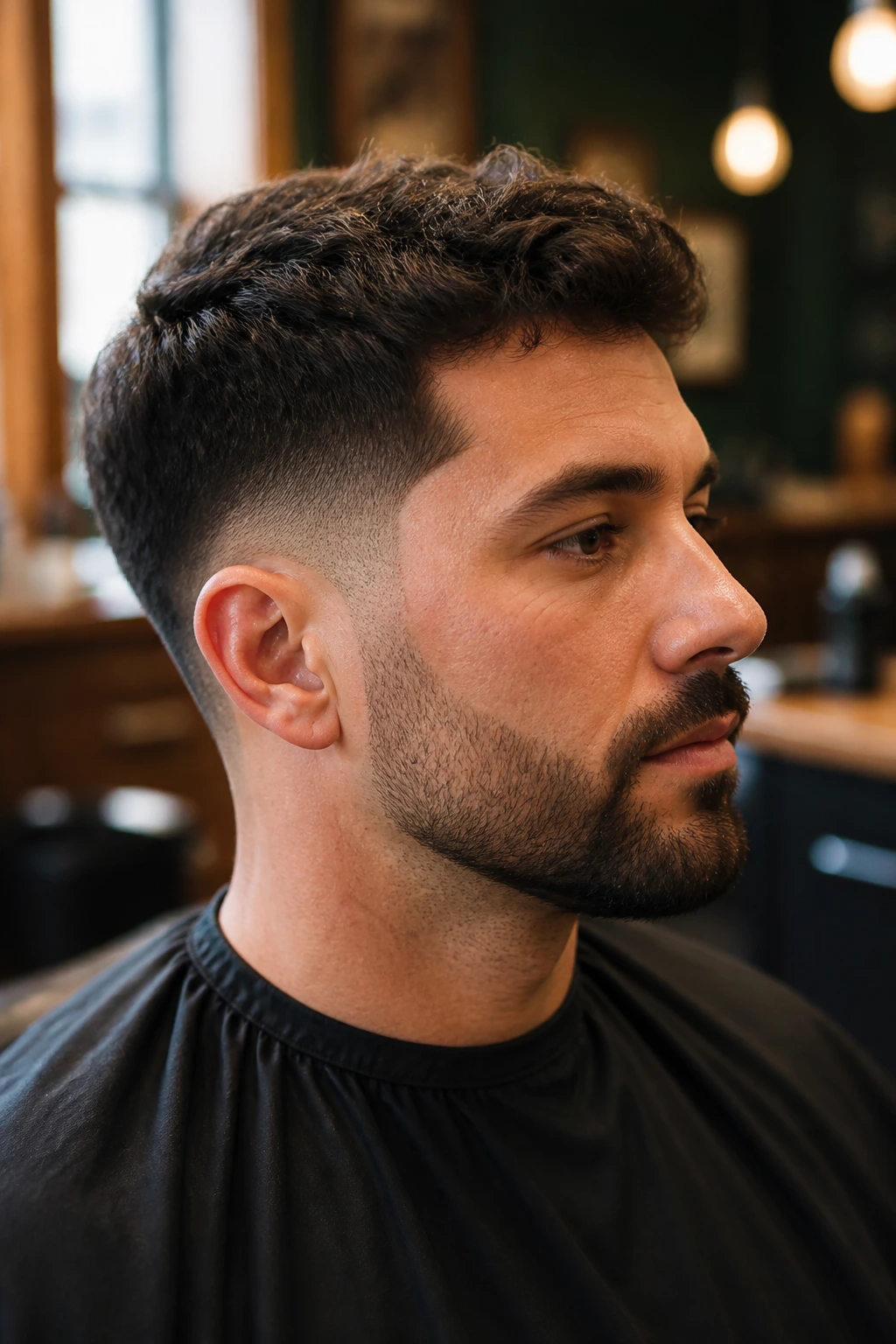
A taper looks best when it’s not left to fend for itself for too long. Most low tapers can go about 3 to 4 weeks before the sides start losing their edge. Mid and high tapers often need cleanup a little sooner, around 2 to 3 weeks, because the contrast disappears faster. Skin tapers show regrowth even sooner, which is the price of that sharp first-week finish.
If you want to stretch the cut, focus on the neckline and sideburns. A quick trim every 7 to 10 days with a detail trimmer can keep the haircut looking fresh without touching the full blend. Don’t chase the fade higher and higher at home unless you know exactly what you’re doing. That’s how a clean taper turns into a lopsided emergency.
Product buildup matters, especially on shorter cuts. Wash the scalp often enough to keep the hair from looking greasy, but not so aggressively that curly hair dries out. For textured tops, a light rinse and a quick refresh with a damp towel or a little water can bring the shape back faster than adding more product.
Beard blends need their own schedule. If the sideburn area is part of the look, clean it weekly so the transition stays visible. If the beard is fuller, trim the edges before they start swallowing the taper. Hair grows. Shape disappears. That’s the whole game.
Taper Haircut Variations Worth Asking For
Office-Safe Low Taper: Keep the taper soft at the temples and leave the top with a side part or brushed finish. This version works when you want the cut to look clean in a meeting without reading as loud.
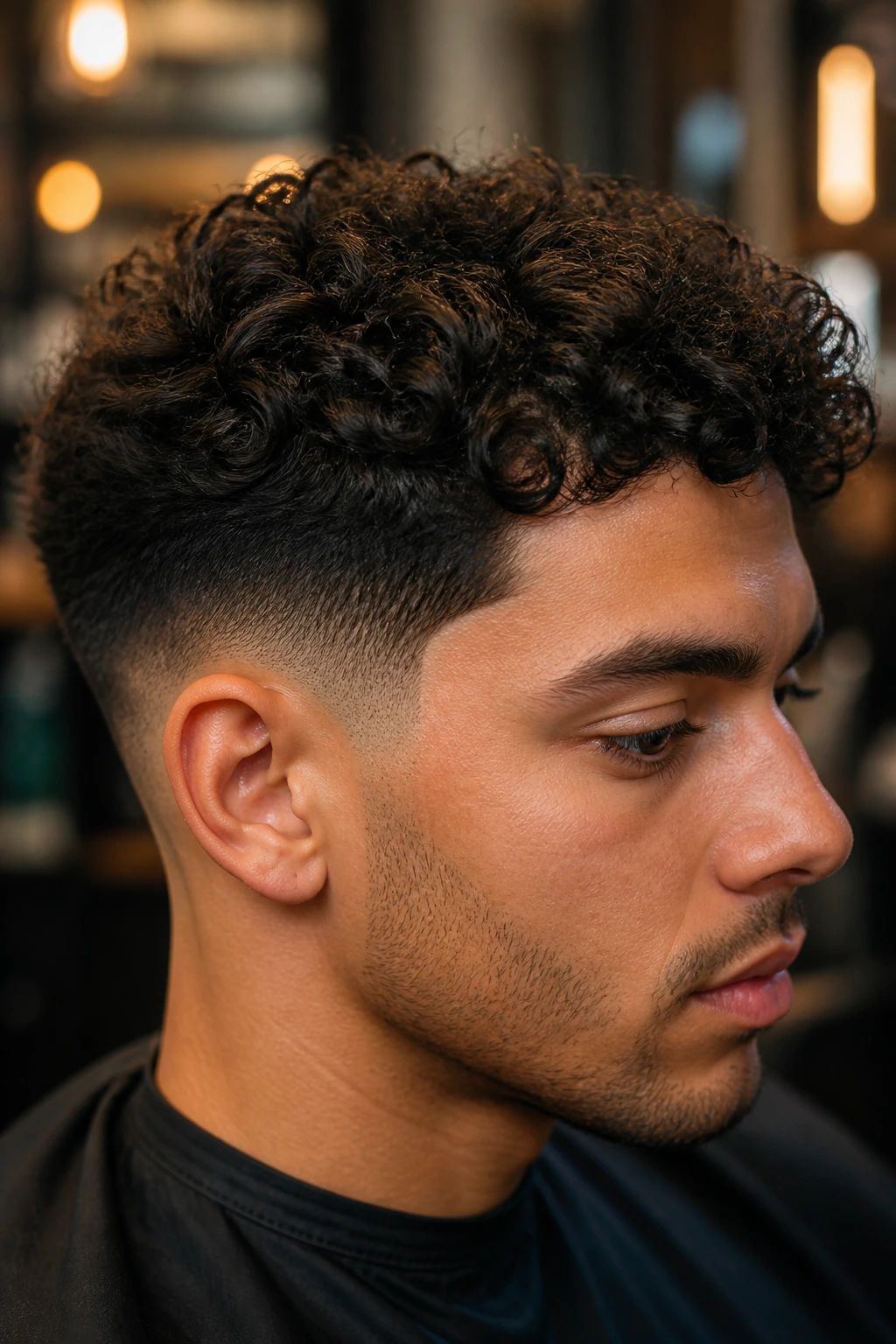
Curly-First Taper: Ask the barber to leave enough length for curl definition and taper only the perimeter. Good if you want texture to lead the haircut instead of being flattened by it.
Beard-Blend Taper: Build the sideburns into the beard gradually rather than dropping the haircut into the facial hair. Best for dense beards and anyone who likes a unified silhouette.
High-Contrast Skin Taper: Use a tighter taper around the ears and neckline for stronger contrast. This is the sharper, bolder version, and it looks best when the top has real shape.
Soft Grow-Out Taper: Keep the taper low and avoid super-hard edges so the cut still looks decent several weeks later. Smart choice if you cannot get to the barber often.
Texture-Heavy Taper: Leave the top choppier and use a matte finish. That version works well for crops, quiffs, and side-swept cuts that should feel a little rougher around the edges.
Common Mistakes That Make a Taper Look Off
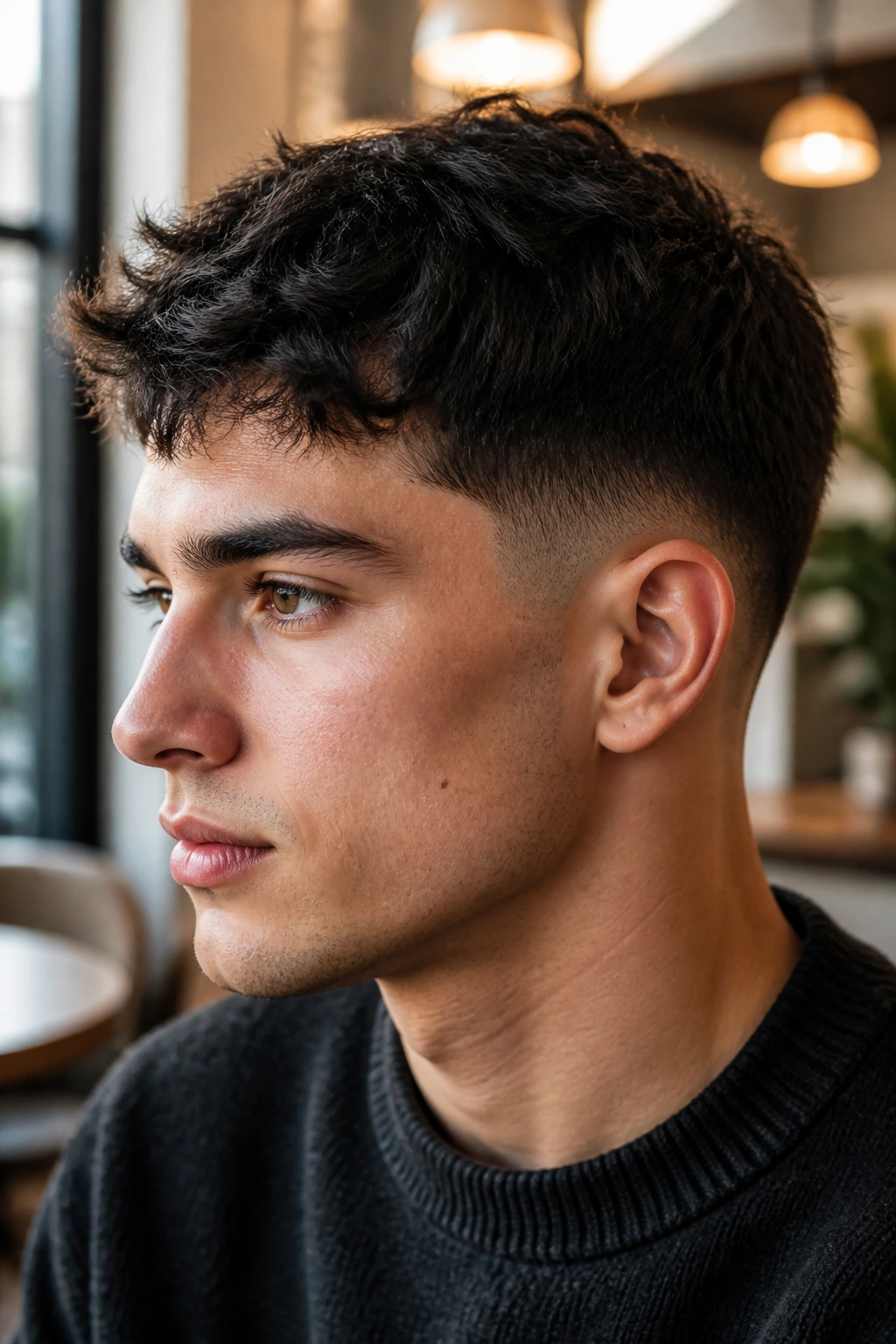
Calling every short fade a taper: They’re not the same thing. A taper is usually more restrained and focused around the edges, while a fade can climb much higher and disappear more aggressively. If you want a taper, say that clearly at the chair.
Cutting the top too short for the style: A slick back with 1 inch of hair on top is not a slick back. A quiff with no front length is just short hair standing up badly. The top has to match the style you want.
Letting the neckline get too high: A high squared neckline can make the back of the haircut look blocky fast. If that shape works for you, fine. If not, ask for a natural neckline or a softer taper at the nape.
Overusing glossy product: Heavy shine can make crops, French cuts, and textured tapers look greasy. If the haircut is supposed to read sharp, start with a matte or low-shine product and add more only if the style needs it.
Ignoring your growth pattern: Cowlicks, widow’s peaks, and dense crowns change how the taper sits. A barber can work with them, but not if the cut is forced into a shape your hair refuses to keep.
Forgetting the beard connection: A clean taper beside a messy beard is a mismatch. If you wear facial hair, the sideburns and jawline should be part of the plan, not an afterthought.
Questions People Ask Before Booking a Taper
What’s the real difference between a taper and a fade?
A taper usually keeps more weight on the sides and focuses the shortest length around the temples and neckline. A fade tends to climb higher and move more aggressively into skin or very short lengths.
Which taper haircut works best for curly hair?
Burst tapers, temple tapers, and curly fringe tapers usually work well because they respect the natural curl pattern. They clean the edges without forcing the top into a shape curls don’t want.
Can I get a taper if my hair is thinning?
Yes, but keep it subtle. A low taper or soft Ivy League often works better than a high-contrast skin taper, because too much scalp exposure can make the top look lighter than it is.
How often should I clean up a taper?
For most cuts, every 2 to 4 weeks keeps the shape intact. If you like a skin taper or a very crisp line-up, you may want a quick edge cleanup more often.
Does a taper work with a beard?
Absolutely, and it can look better than a hard disconnect if the blend is done well. Ask for the sideburns and beard to transition gradually instead of stopping cold.
Can I style a taper without a blow-dryer?
Yes, for shorter cuts like crops, buzz cuts, Caesar cuts, and brush cuts. Longer styles — pompadours, quiffs, slick backs, blowouts — usually behave better with heat and direction first.
What should I tell the barber so I don’t get the wrong thing?
Name the taper height — low, mid, high, or skin — and say how much length you want on top in inches if you can. A photo helps, but the guard numbers and the amount of top length matter just as much.
Which taper is the easiest to keep looking neat?
The crew cut taper, buzz taper, and brushed crop are the easiest to manage day to day. They don’t need much styling, and the taper does most of the visual work.
The Shape That Stays Sharp
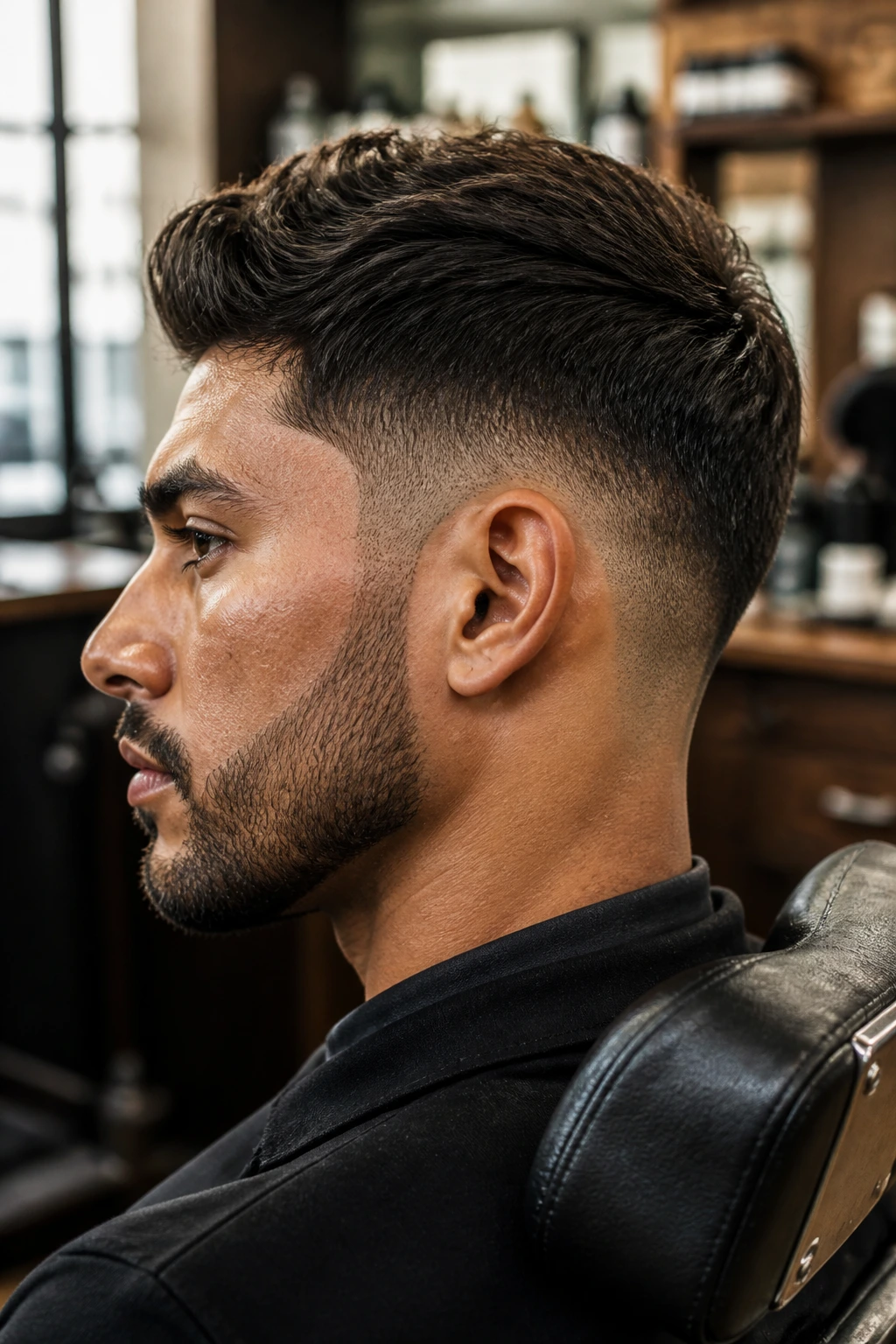
A taper haircut works because it respects the outline of the head while tightening the parts that usually go fuzzy first. That’s a small idea, but it changes everything. A good taper makes a haircut look purposeful from the first day and forgiving by the third week.
The best version for you depends on what sits on top — curls, waves, straight strands, a beard, a hairline that’s changing a little, or just the amount of time you want to spend in front of a mirror. Bring that into the conversation before the clipper turns on. A barber can do a lot with a taper, but only if the target is clear.
If you want a cut that stays clean without feeling stiff, start with the taper that fits your hair, then build the rest around it. The edges will do more work than people think.
