



Short hair does not hide a weak color choice. A blunt bob, a pixie, a bixie, even a choppy little crop will show every ribbon of tone, every root line, every patch of brass if the shade is off by half a level. That’s the charm of it, honestly. The best hair color ideas for short hair feel sharper, cleaner, and more deliberate because there’s less length to distract from the color itself.
And short hair is merciless in a good way. A one-inch money piece can brighten a face fast. A root shadow can turn a basic blonde into something that looks expensive without screaming for attention. A glossy copper on a textured crop can make the cut look fuller than it really is. There’s nowhere to hide, which is exactly why the right shade makes such a difference.
I’ve always liked color on short hair better than people expect. Long hair can carry a decent color job by sheer volume. Short hair has to earn its keep with placement, shine, and contrast. Get those three things right, and even the simplest cut starts acting like it has a better wardrobe than you do.
Why These Short Hair Colors Work So Well
-
Fast payoff: On a pixie or bob, a small amount of lightening or depth changes the whole silhouette, so you see the result without waiting for inches of growth.
-
Less product waste: Shorter hair uses less bleach, toner, and gloss, which makes richer colors like copper, silver, and rose gold more realistic to maintain.
-
Sharper shape: A bright fringe, a shadow root, or a hidden panel can make the haircut itself look more intentional; the color starts doing some of the styling for you.
-
Better grow-out control: Rooted blondes and lived-in brunettes soften the line where regrowth appears, which matters a lot when your nape and temples are always visible.
-
More room for texture: Short layers show off micro-highlights, peekaboo panels, and glaze finishes in a way long hair often buries.
-
Easier to switch moods: The same bob can read polished, edgy, or soft just by changing the tone and finish. That’s the fun part.
Why Short Hair Changes the Whole Color Conversation
Short hair behaves differently from long hair because the cut itself is already doing work. A pixie has a built-in edge. A bob has a built-in line. A shag has movement that color can either sharpen or muddy. So when you choose a shade, you’re not only picking a tone. You’re deciding how the haircut will read from across the room.
Roots show faster on short hair. That sounds annoying, but it’s also why rooted looks are so useful here. A soft shadow at the scalp can make a blonde bob look softer for longer, and it keeps a dark pixie from turning into a hard helmet of color as it grows. Around the hairline and nape, regrowth can look obvious within weeks, so a smart placement plan matters more than trying to color every strand the same way.
Texture matters too. On short hair, a color that looks flat on a long blowout can look rich and layered once it hits a crop, a tousled bob, or a round-brushed pixie. The little bends and flips catch light. That’s the point. A good color on short hair should move when the cut moves.
1. Icy Platinum Pixie
Icy platinum on a pixie is blunt, bright, and slightly ruthless in the best way. There’s no curtain of hair to soften it, so every line of the cut comes through cleanly: temple, fringe, nape, all of it. If you like sharp edges and cool tones, this is the one that looks expensive when the tone is kept pale and not yellow.
Why It Works on Short Hair
Platinum on short hair reads as a shape choice, not just a color choice. The cropped length keeps the lift from feeling bulky, and the pale tone makes the texture look crisp instead of fuzzy. You do need regular toner, though. Skip that, and the whole thing slides into banana territory fast.
- Best on: close pixies, undercut crops, and textured fringes.
- Ask for: a clean lift to pale yellow, then a violet or pearl toner.
- Watch for: breakage around the hairline if the lightener sits too long.
Best tip: keep the roots soft with a tiny shadow, not a hard line. It makes the grow-out less brutal.
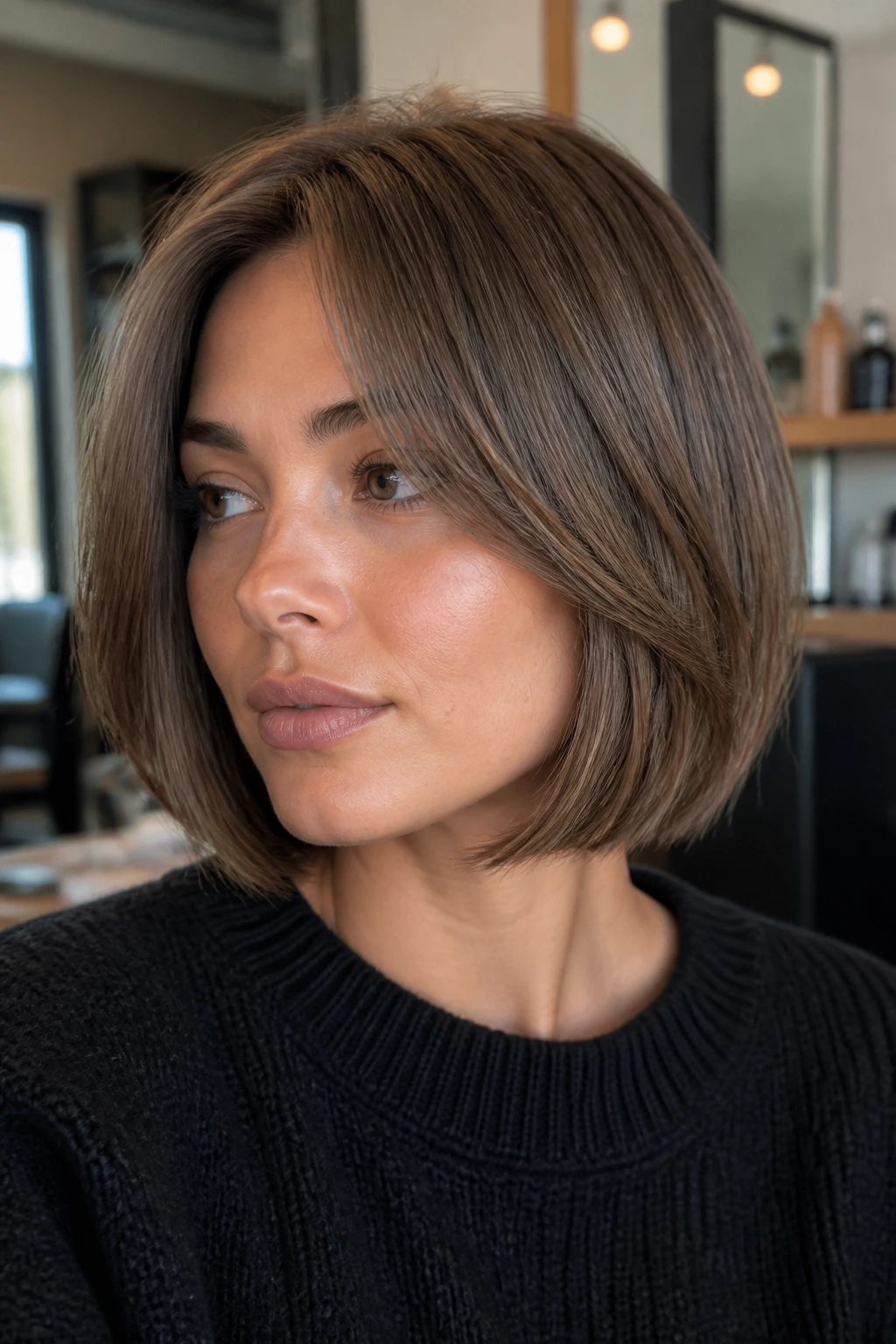
2. Mushroom Brown Bob
Mushroom brown is the color people choose when they want brunette depth without warm red or orange shouting at them. On a bob, that cool taupe-brown sits right between ash and beige, which keeps the cut looking modern instead of heavy. It’s one of my favorite choices for straight, tucked-behind-the-ear styles because the tone changes slightly as the light moves.
This works especially well when the bob has a blunt edge or a soft bevel. The color gives you enough dimension that the cut does not need chunky highlights. If your natural shade leans warm, ask for a neutralizing gloss so the brown stays mushroomy instead of turning muddy.
The grow-out is gentle, which is half the appeal. You can go six or eight weeks before it starts looking tired. That’s unusually forgiving for a short cut.
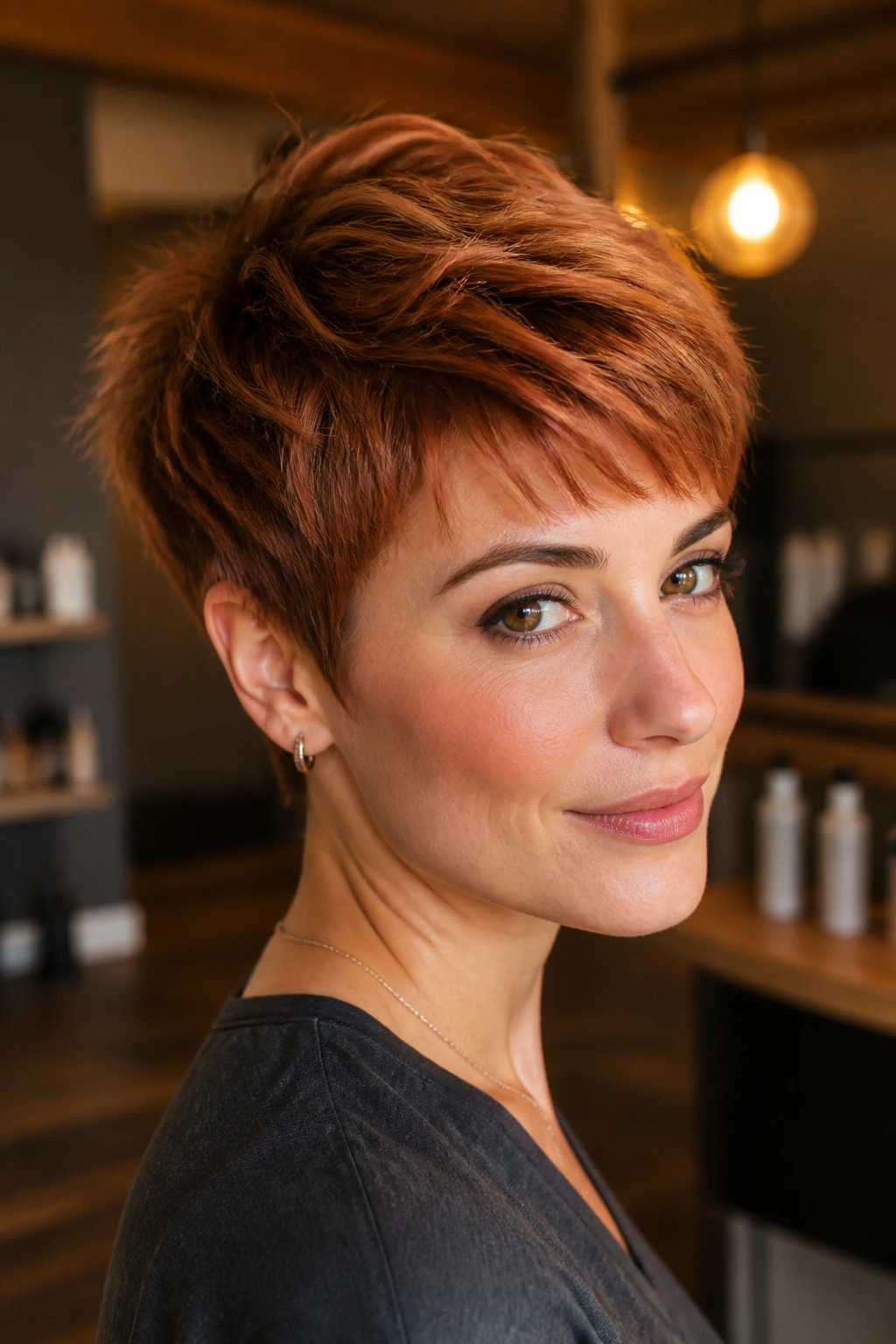
3. Copper Gloss Crop
Copper on short hair is all about shine. A crop doesn’t need inches of red-orange to make a statement; it needs a glossy finish that catches on the ends and around the fringe. This shade looks especially good when the cut has some rough texture, because the copper picks up every little ridge.
What Makes It Pop
On a short crop, copper looks more intentional than it does on long layers. The color has less space to flatten out, so you get a richer read from the same formula. If your base is medium brown or dark blonde, a copper gloss can add warmth without a full bleach job.
What to ask for: copper-gold at the root, brighter apricot through the ends if you want extra lift.
What to avoid: anything too red if you hate seeing fade into pinkish orange.
Maintenance note: copper fades fast with hot water and harsh shampoo, so sulfate-free cleansing is not optional if you want the tone to stay rich.
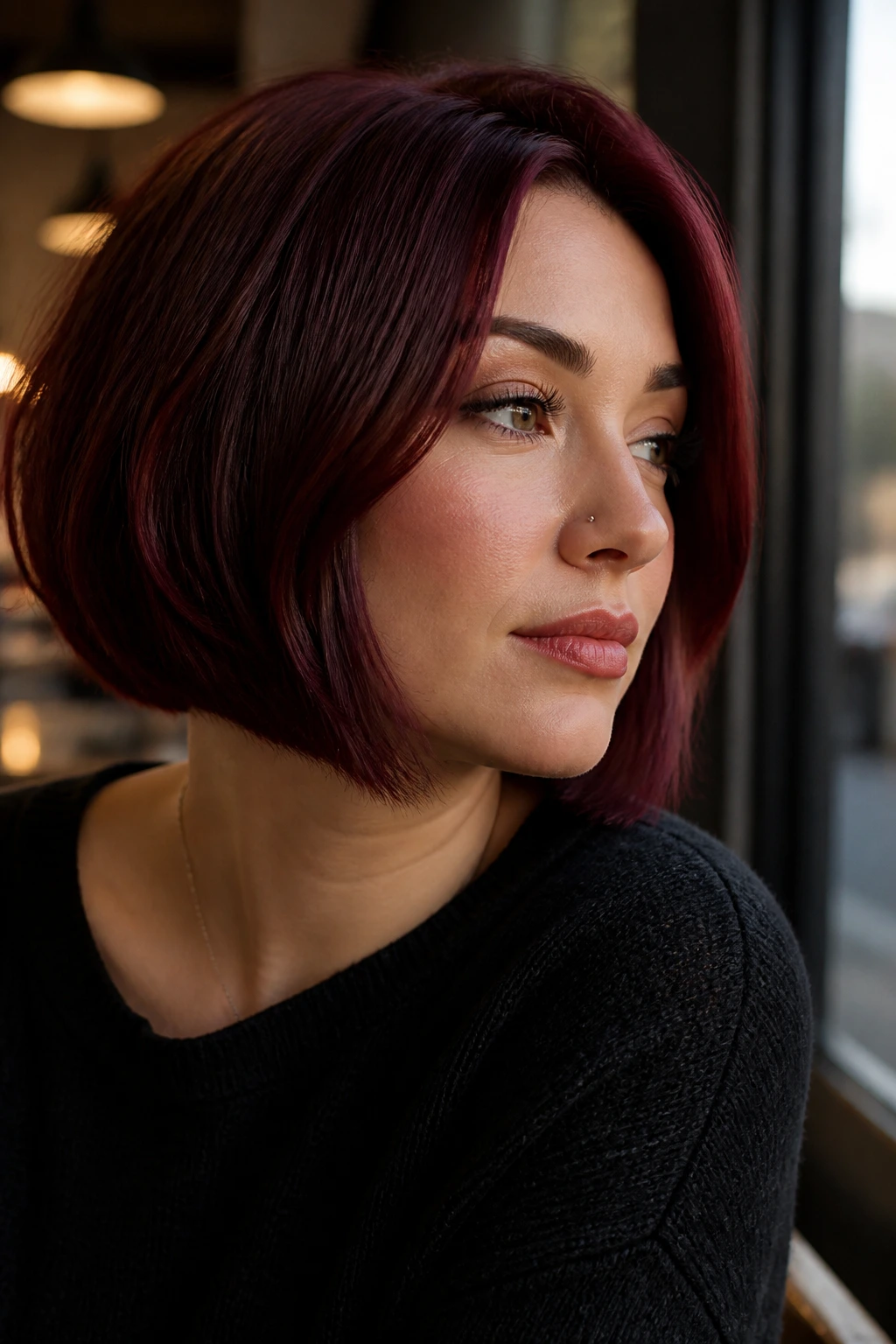
4. Cherry Cola Bob
Cherry cola is one of those shades that looks darker in shadow and redder when the light hits it. On a short bob, that makes the cut look glossy and a little expensive, like you meant to choose that exact tone rather than just picking “dark red” off a chart. It’s a good color if you want depth without going fully black.
The best version has a brunette base with red-violet reflect. That keeps it from looking flat. A blunt bob or a beveled one makes the most of it because the shine lands on the surface instead of disappearing into layers. Under daylight, you get that dark cherry effect. Indoors, it reads more like polished wine.
If you like makeup that leans berry, this shade makes the whole face look more coordinated without trying too hard.
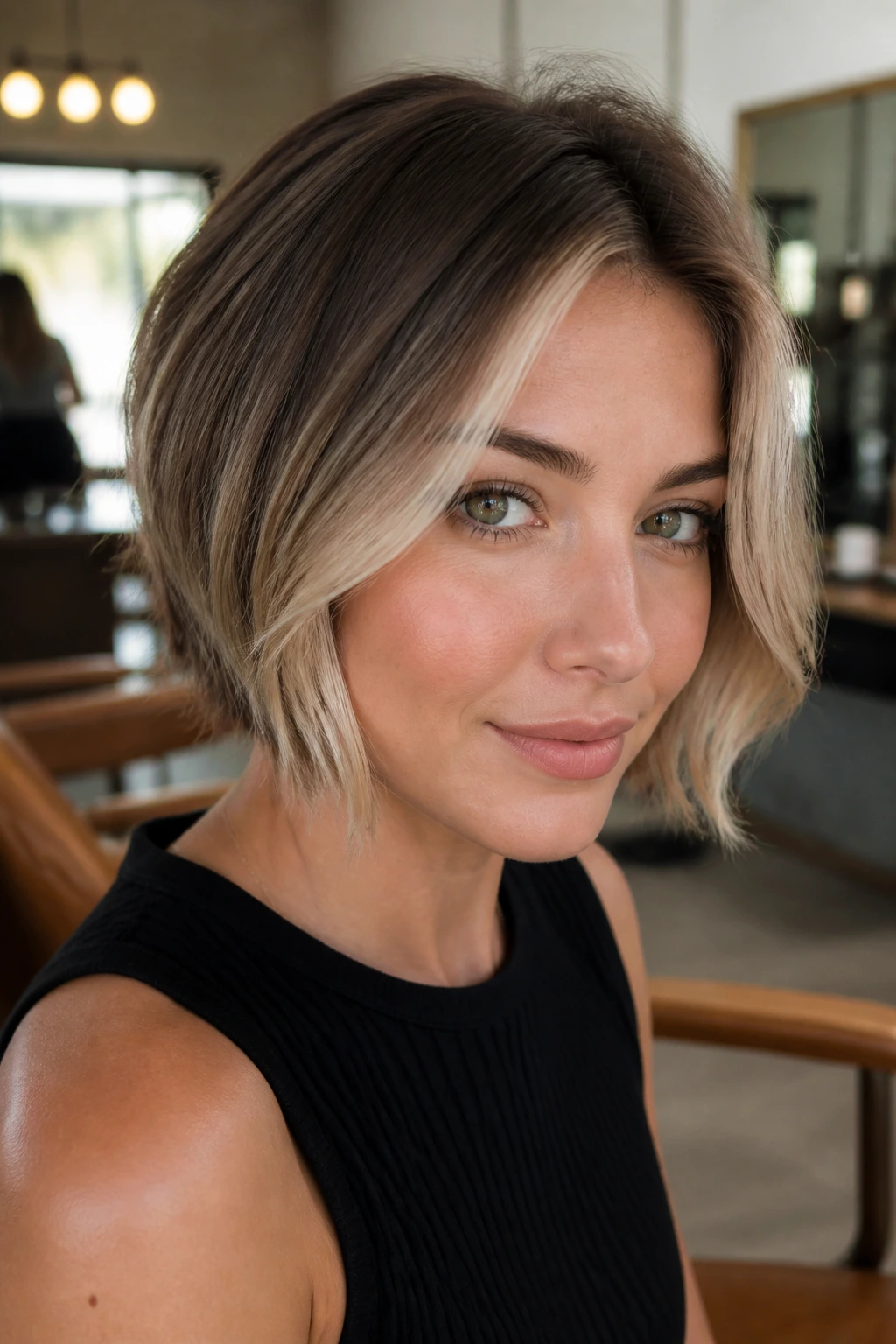
5. Beige Blonde Money Piece
A bright money piece on short hair can do more than a full highlight job if the placement is right. Two face-framing ribbons around the front can lift the eyes, make cheekbones stand out, and give a bob the illusion of more shape. Beige blonde keeps it soft, so the front doesn’t look striped.
This is a smart choice when you want a noticeable change without bleaching every section. It works on bobs, bixies, and longer crops with fringe because the bright front pieces can sit close to the part and the temple. If the rest of your hair is brunette, the contrast feels clean rather than loud.
The trick is keeping the beige tone warm enough to look soft, not icy enough to fight your natural base. That balance matters. Too cool, and the front pieces can look harsh next to short dark roots.
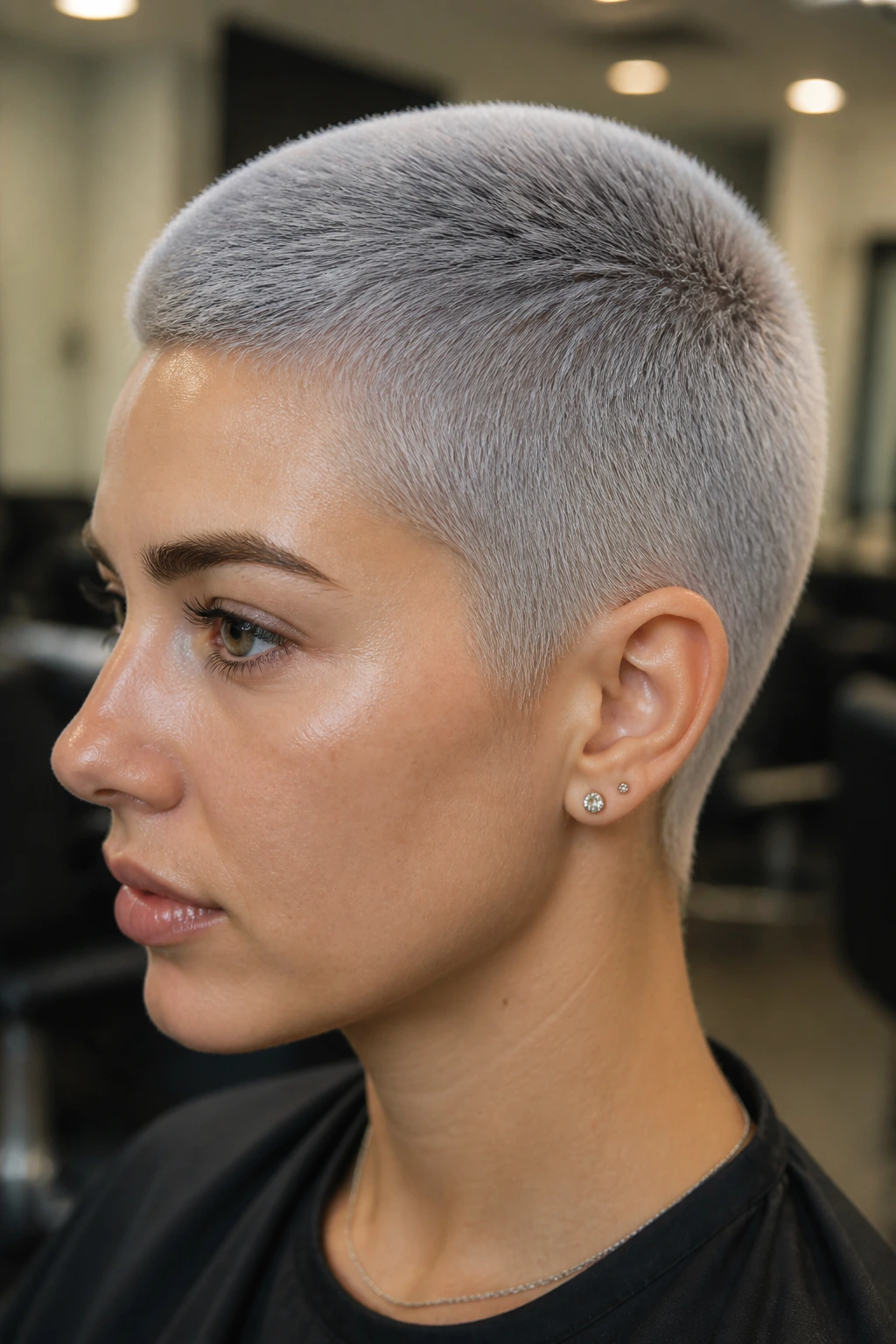
6. Smoky Silver Buzz Cut
A buzz cut gives silver nowhere to hide. That’s exactly why it looks so good when the tone is right. Smoky silver is softer than chrome and less stark than white blonde, which keeps the result from reading costume-y. On very short hair, the scalp tone and hair tone start interacting, so the shade has to look deliberate from every angle.
You’ll usually need a very clean lift before toning, and that part is not negotiable if you want a true silver instead of yellow-gray. On a buzz cut, the finish matters almost as much as the formula. A slightly matte product can make the whole color feel flat, while a light sheen keeps the silver dimensional.
This is a bold look, yes. It’s also weirdly practical because maintenance is concentrated on a tiny amount of hair. You can keep it sharp with regular toners and frequent trims.
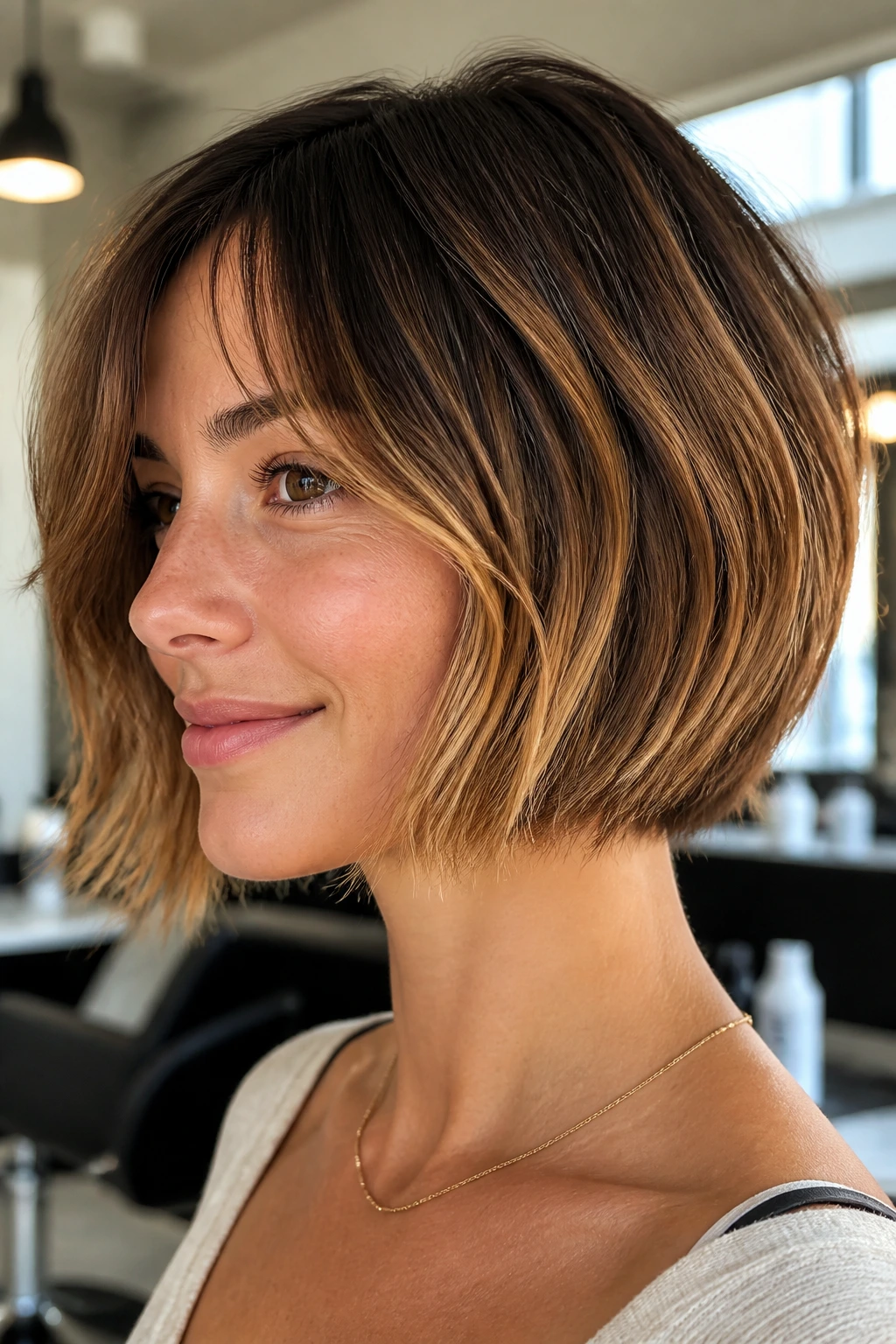
7. Honey Balayage French Bob
Honey balayage on a French bob is all about soft movement. Instead of obvious stripes, you get warm ribbons that sit higher near the surface and fade into the base. On a chin-length bob with a little bend in the ends, that honey tone catches light in a way that feels easy and flattering without being bland.
Balayage on short hair needs a lighter hand than people expect. The pieces should be narrow and placed where the hair flips or curves, not dropped randomly through the ends. That’s what keeps the bob from looking spotty. Honey works especially well if your natural color is light brown or dark blonde and you want warmth without going full blonde.
A French bob with this color looks best when the surface is smooth but not stiff. Slight movement. A little air. Enough to show the color shift.
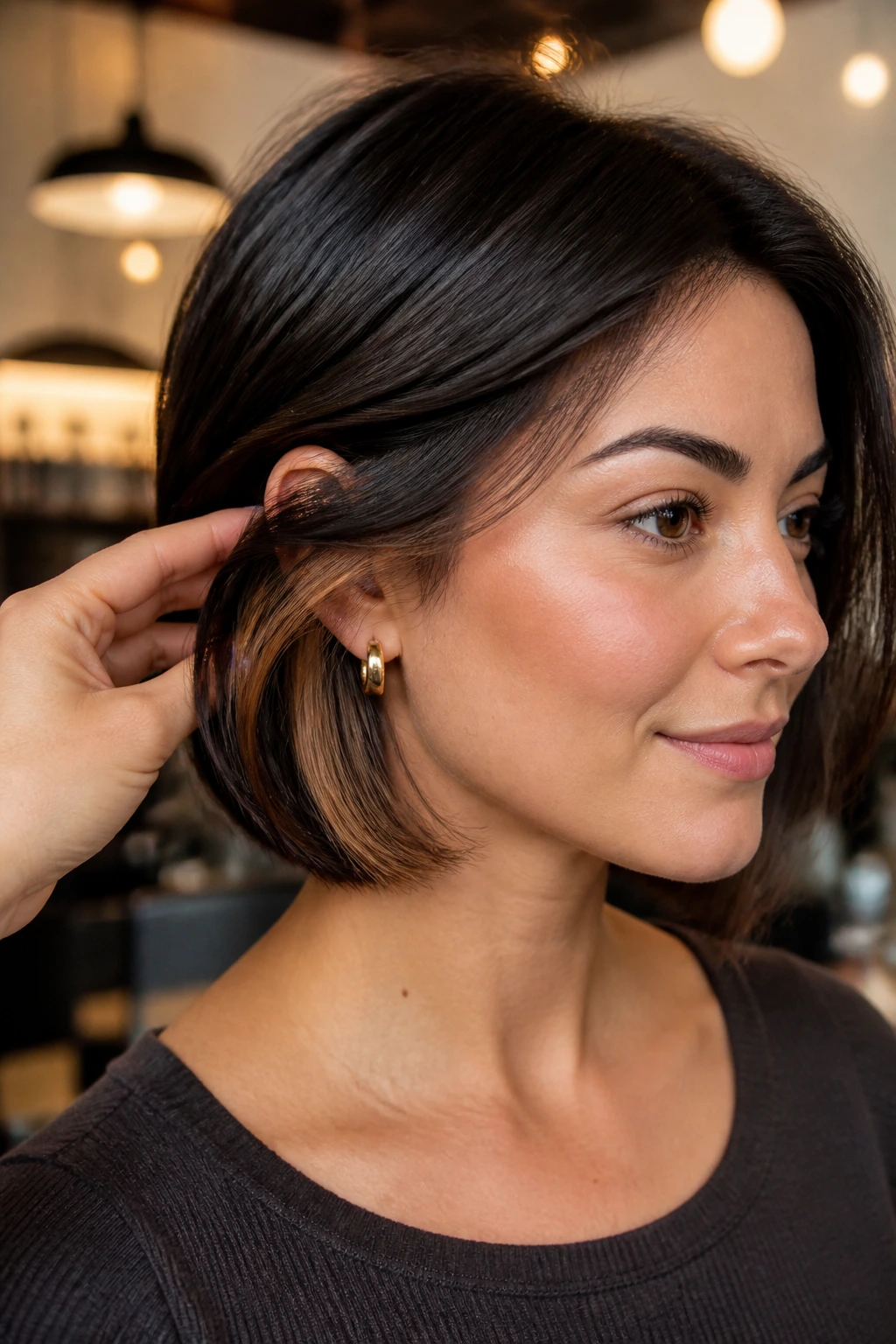
8. Espresso Gloss with Caramel Peekaboo
Espresso gloss is for the person who wants dark hair that still has life in it. Add caramel peekaboo sections underneath, and the whole cut starts acting differently when you tuck it behind the ear or flip it on one side. On short hair, hidden color is fun because it appears and disappears as you move.
The espresso base should stay rich and shiny, not flat black. Caramel underneath gives warmth without taking over the surface. It works especially well on bobs with layers, because the top veil can stay smooth while the lower pieces flash in the light. That contrast is the point.
If you don’t want a loud color commitment, this is one of the smarter choices in the whole list. It gives you a little drama without making every day feel like a costume change.
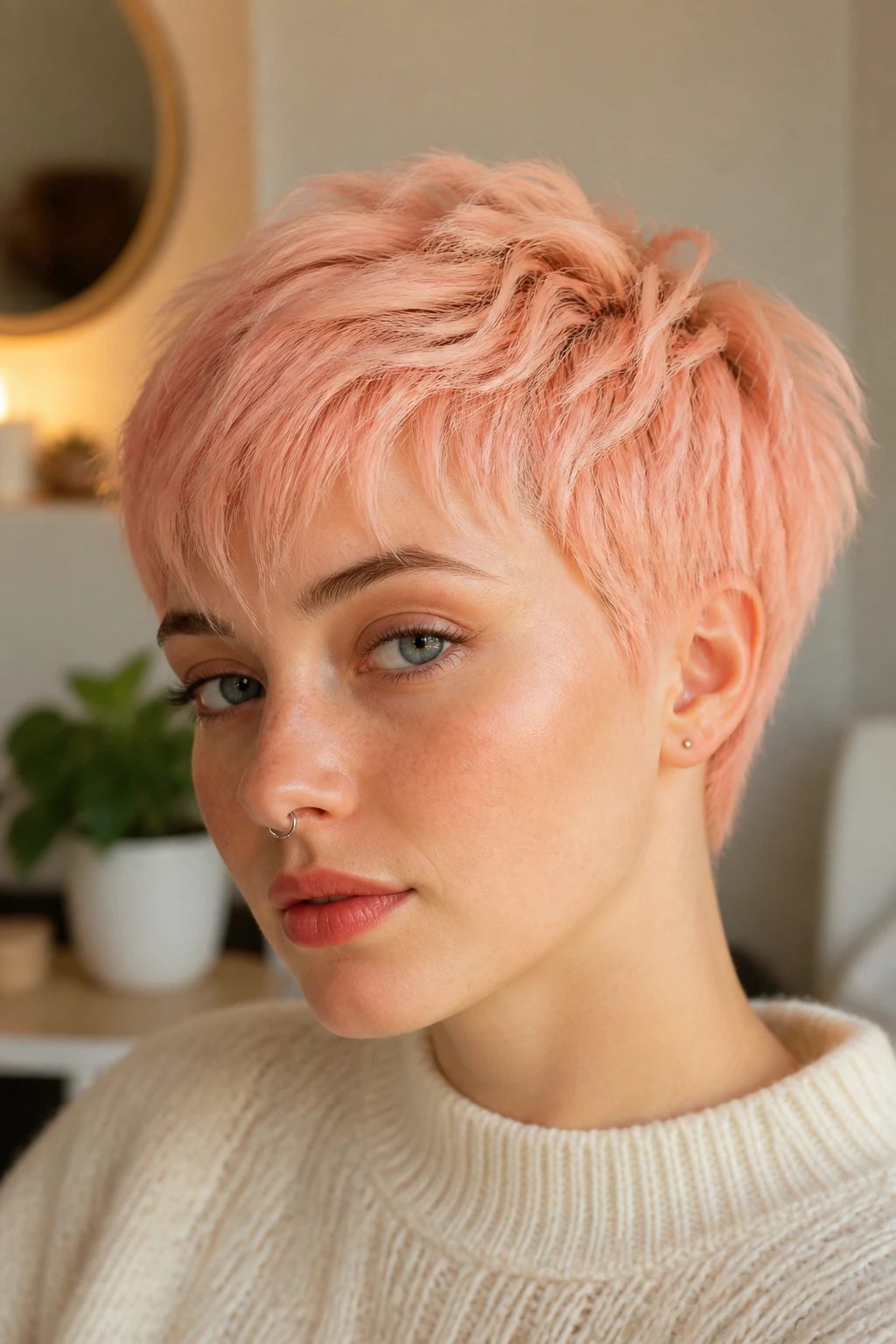
9. Peach Pastel Textured Crop
Peach pastel on a textured crop feels soft, airy, and a little cheeky. It is not a shy color, but it also isn’t shouting from the rooftops the way neon orange does. The texture helps it immensely. On short, choppy layers, the peach reads as a blend of blush, apricot, and warm pink instead of a single flat pastel.
This shade needs a light base. Usually pale blonde. If the hair is too dark underneath, the peach turns muddy and loses that washed-cotton-candy look that makes it special. A matte pomade or a light cream helps separate the pieces so the pastel doesn’t blur into a single blob.
It fades fast. That is part of the deal. Use a color-depositing mask to keep the warmth alive between appointments.
10. Jet Black Blunt Bob
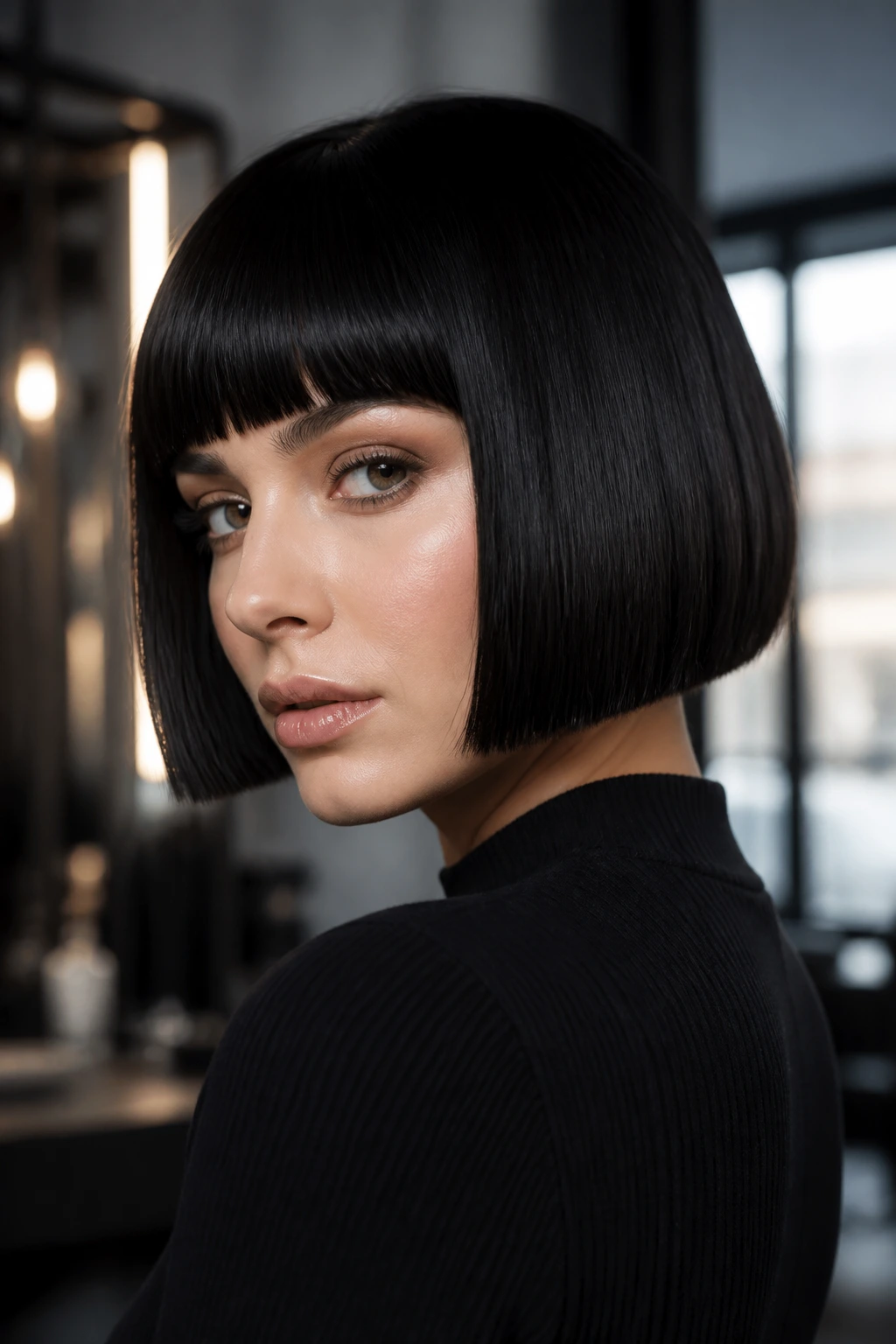
Jet black on a blunt bob is severe in a clean, satisfying way. The cut line does the talking, and the color gives it weight. This works when you want your hair to look glassy, graphic, and obviously deliberate. If the bob is even slightly uneven, black will show it, so the cut has to be precise.
The shine makes or breaks this look. A dull black bob can seem heavy. A glossy one looks sleek and expensive. I prefer it with a center part or a deep side part, because both setups let the haircut frame the face without breaking the shape.
This is not the easiest color to maintain if your natural hair is lighter, since regrowth shows fast. But on the right cut, it’s one of the strongest short-hair color ideas in the entire set.
11. Rose Gold Layered Pixie
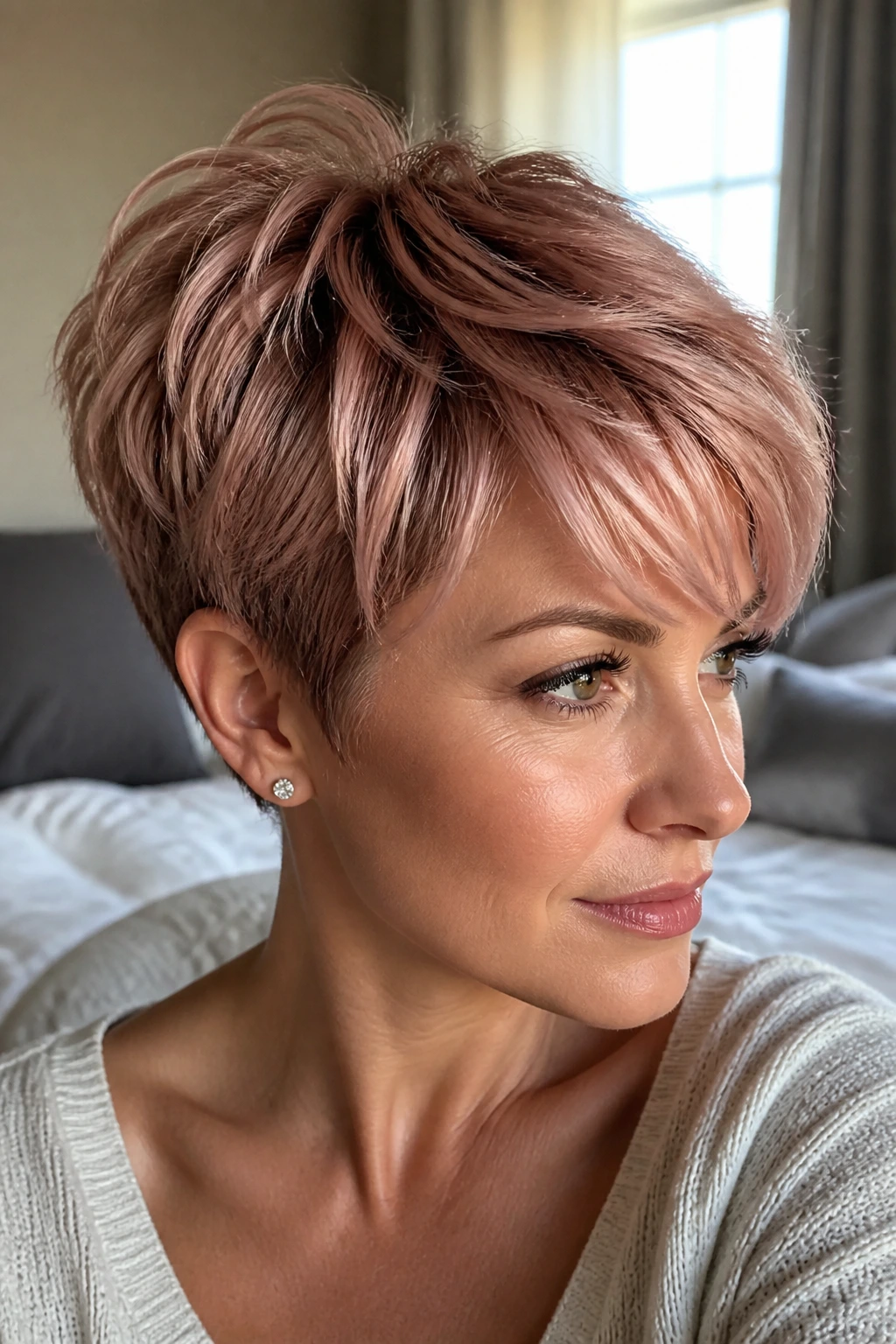
Rose gold on a layered pixie works because the layers break up the color and keep it from looking like one solid candy shell. The pink-gold mix gives the crop a warmer, softer feel than platinum, while still reading fashion-forward. It’s especially nice when the top is a little longer than the sides, so the rose tones can catch along the crown.
Why It’s a Good Fit
Short layers let rose gold shimmer instead of sitting flat. That means the color looks different depending on how you rough-dry it, which is a gift. If you wear a lot of gold jewelry or peach-toned makeup, this shade has a natural harmony that does a lot of the styling work for you.
- Best paired with: soft texture, side-swept fringe, or a tiny bit of root lift.
- Needs: pre-lightening to a pale yellow base before toning.
- Watch for: too much pink pigment, which can read bubblegum rather than rose.
12. Bronze Brunette Shag
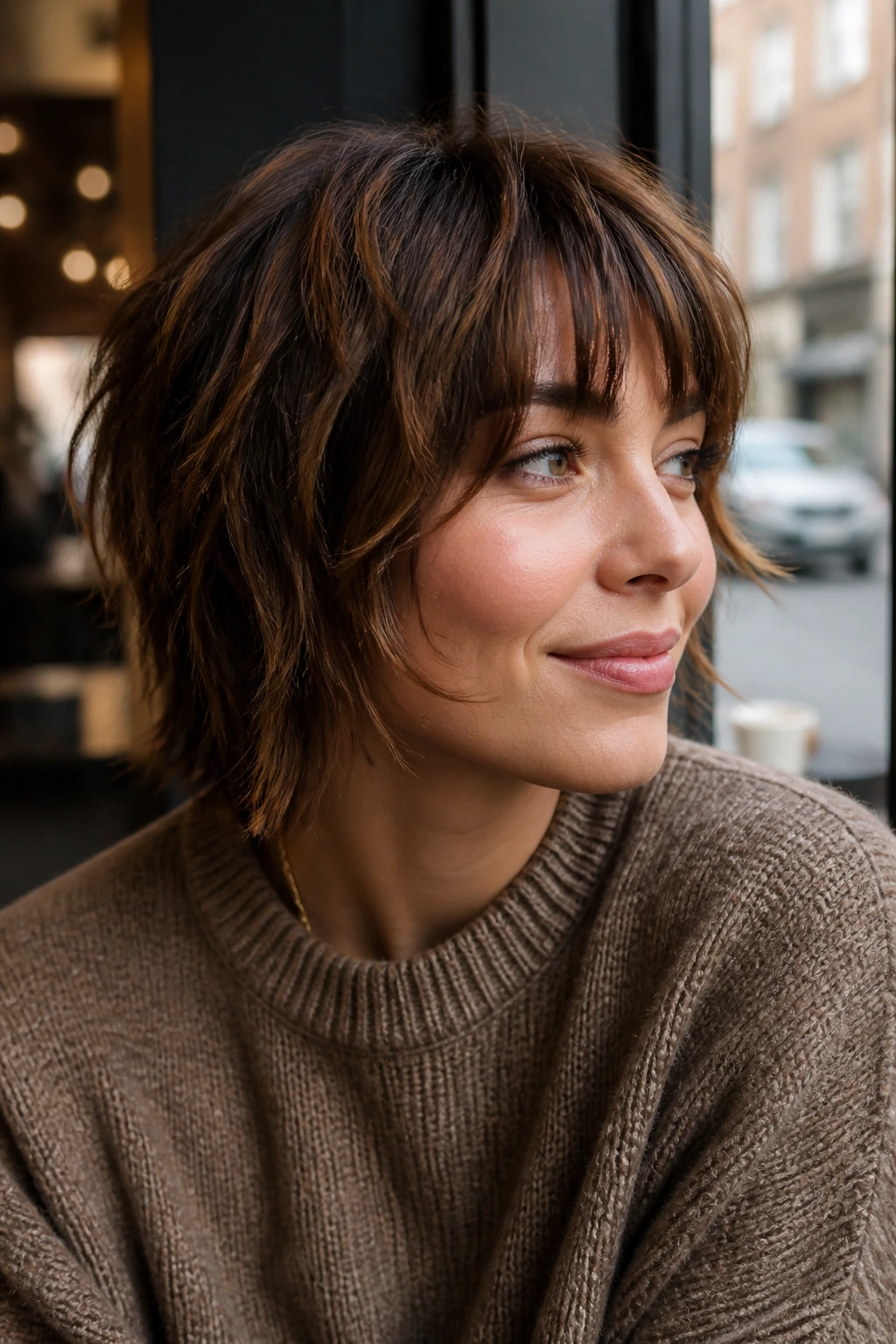
Bronze brunette is what happens when brown hair refuses to sit still. The base stays dark enough to feel grounded, but the bronze ribbons add warmth and shine through the shaggy layers. On short hair, that movement matters. It keeps the cut from collapsing into one flat sheet.
This color works especially well when the shag has a little fringe and a few uneven pieces around the cheeks. Bronze catches on those bends and creates a kind of built-in highlight without the obvious stripe. It’s a good middle ground if you want dimension but not high-maintenance blonde.
I like this one for anyone who says they want “just a subtle change” and then gets bored three weeks later. Bronze has enough personality to matter, but it still behaves like brunette.
13. Blue-Black Shine Crop
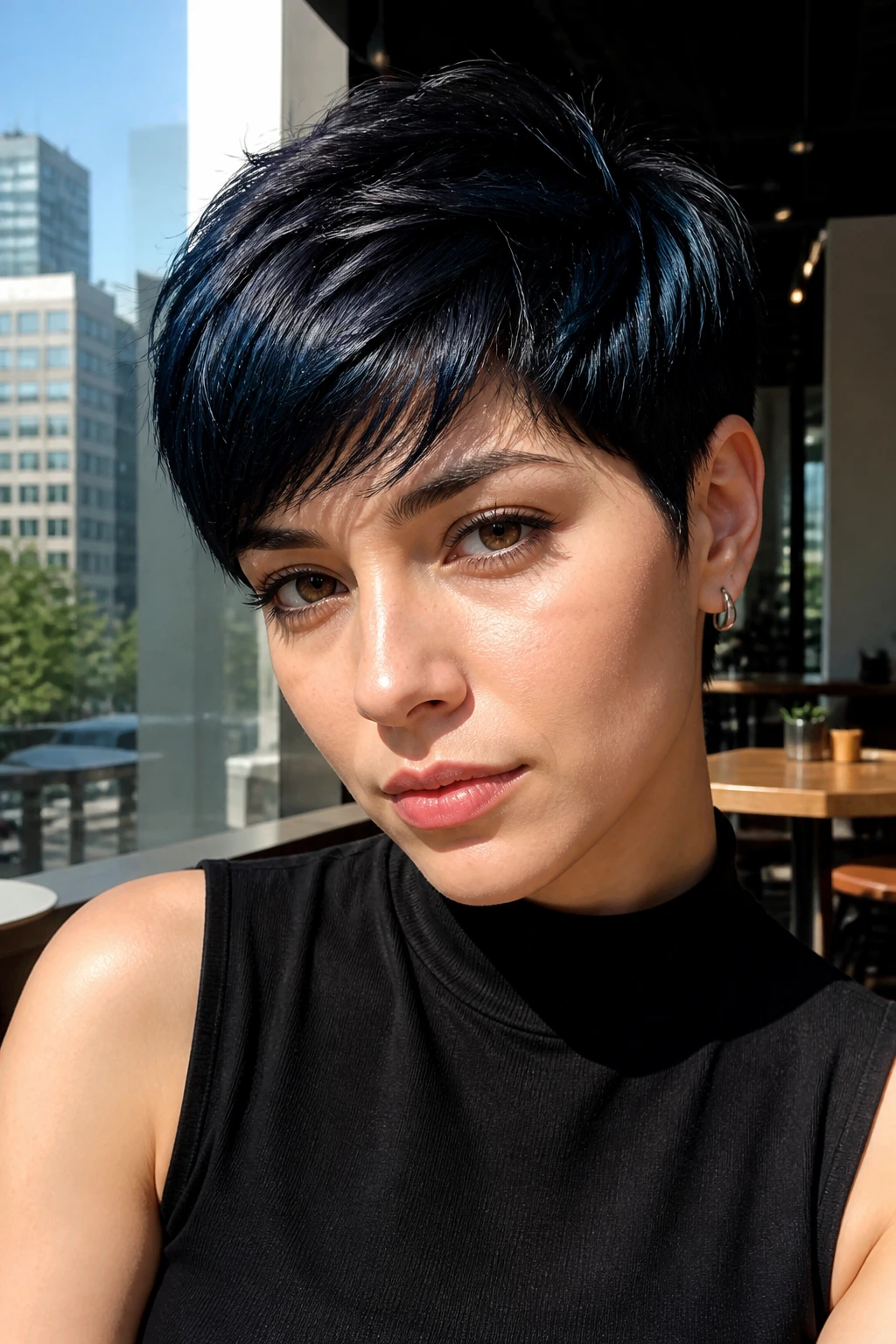
Blue-black is black with a cool blue reflection, and on a short crop it looks sharper than plain black ever could. The blue note shows up most in direct light, especially on the fringe and crown, where the hair lies smooth. That slight reflect keeps the color from feeling heavy or dull.
This is a good option if you want dark hair with edge and shine. It suits pixies, crops, and tiny bobs that have a polished finish. If the cut is textured, the blue-black can look even more dimensional because the light hits the ends at different angles.
Use a shine spray sparingly. A lot of people overdo it and end up with greasy-looking color. You want glossy. Not slick.
14. Strawberry Blonde Bob
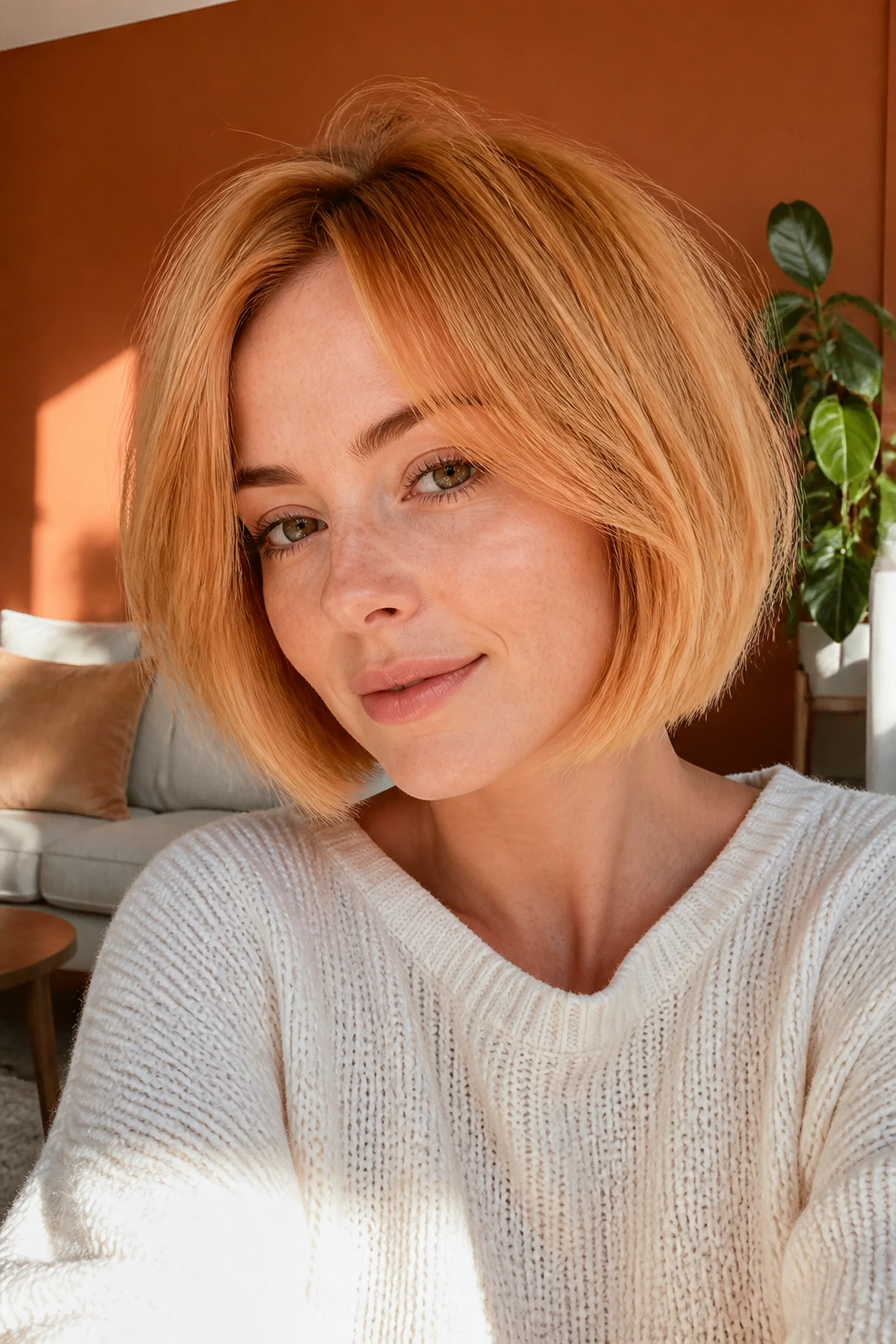
Strawberry blonde on short hair is softer than people think. It sits between blonde and copper, which makes it perfect for a bob that needs warmth without a heavy red cast. On a short cut, the shade feels fresh and airy, especially when the ends are a little brighter than the root.
This is one of the most forgiving warm blondes if your skin tone likes a peach or neutral glow. The color doesn’t need to be loud to work. A little copper reflect is enough. On a wavy bob, the shade looks even better because the lighter pieces catch on every curve.
If you hate obvious grow-out, ask for a root that is a shade deeper than the mid-lengths. It keeps the whole thing from looking washed out by week three.
15. Toffee Melt Wavy Lob
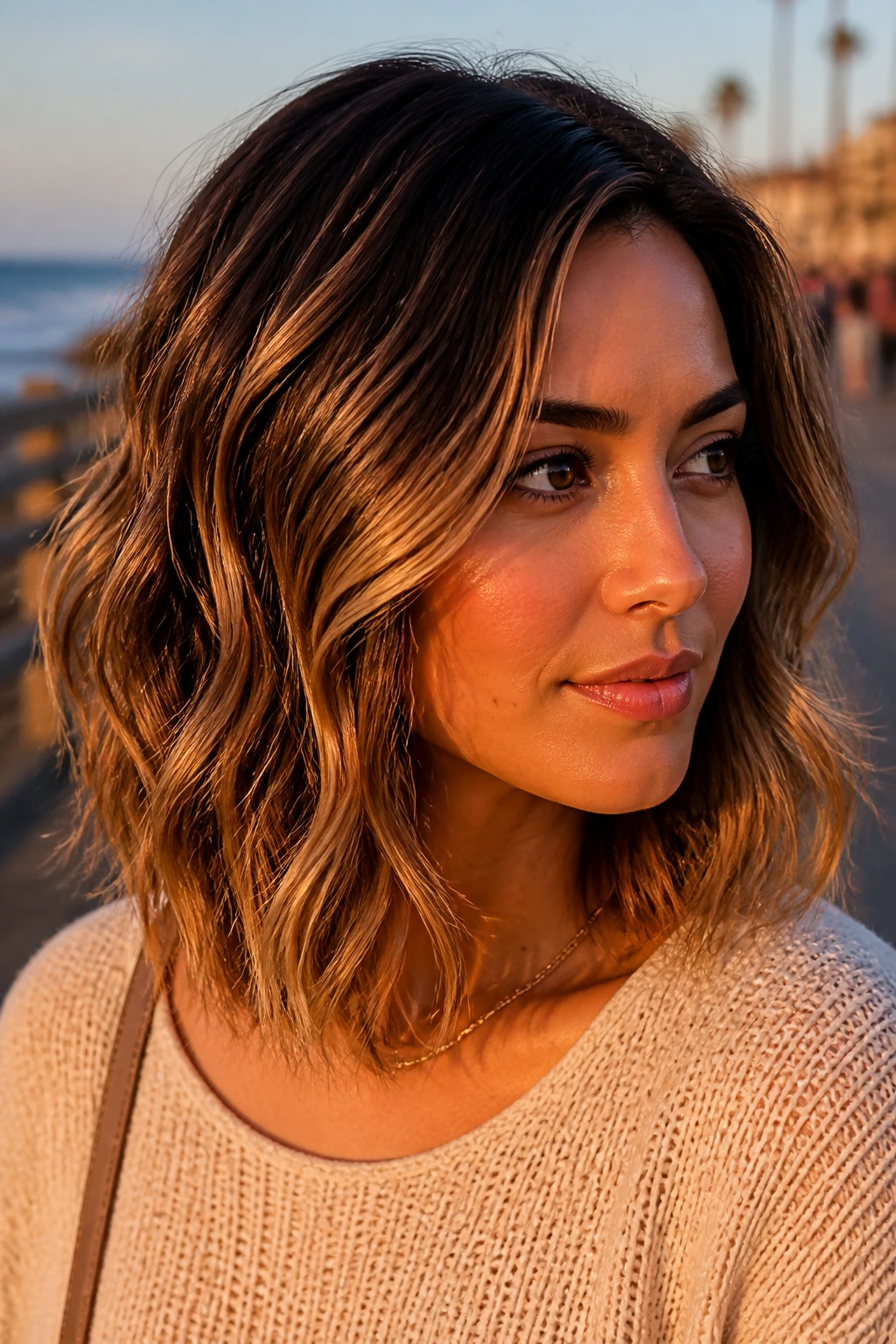
A toffee melt is one of those colors that sounds sweet and actually earns the name. On a wavy lob, the deeper root blends into caramel and toffee ends, so the movement in the hair makes the color feel almost layered by itself. The lob length gives the blend room to show, which is why this idea works so well even though it’s technically a short style.
Why It’s a Smart Choice
It gives you depth at the root and brightness around the ends without looking striped. That’s important on shorter hair, where bad highlight placement can show in one glance. The soft wave pattern keeps the transition smooth and makes the whole cut look fuller.
- Best for: shoulder-grazing bobs, loose waves, and side parts.
- Ask for: a shadow root with caramel mids and warm toffee ends.
- Best upkeep: gloss refresh every 6 to 8 weeks.
16. Lavender Smoke Pixie
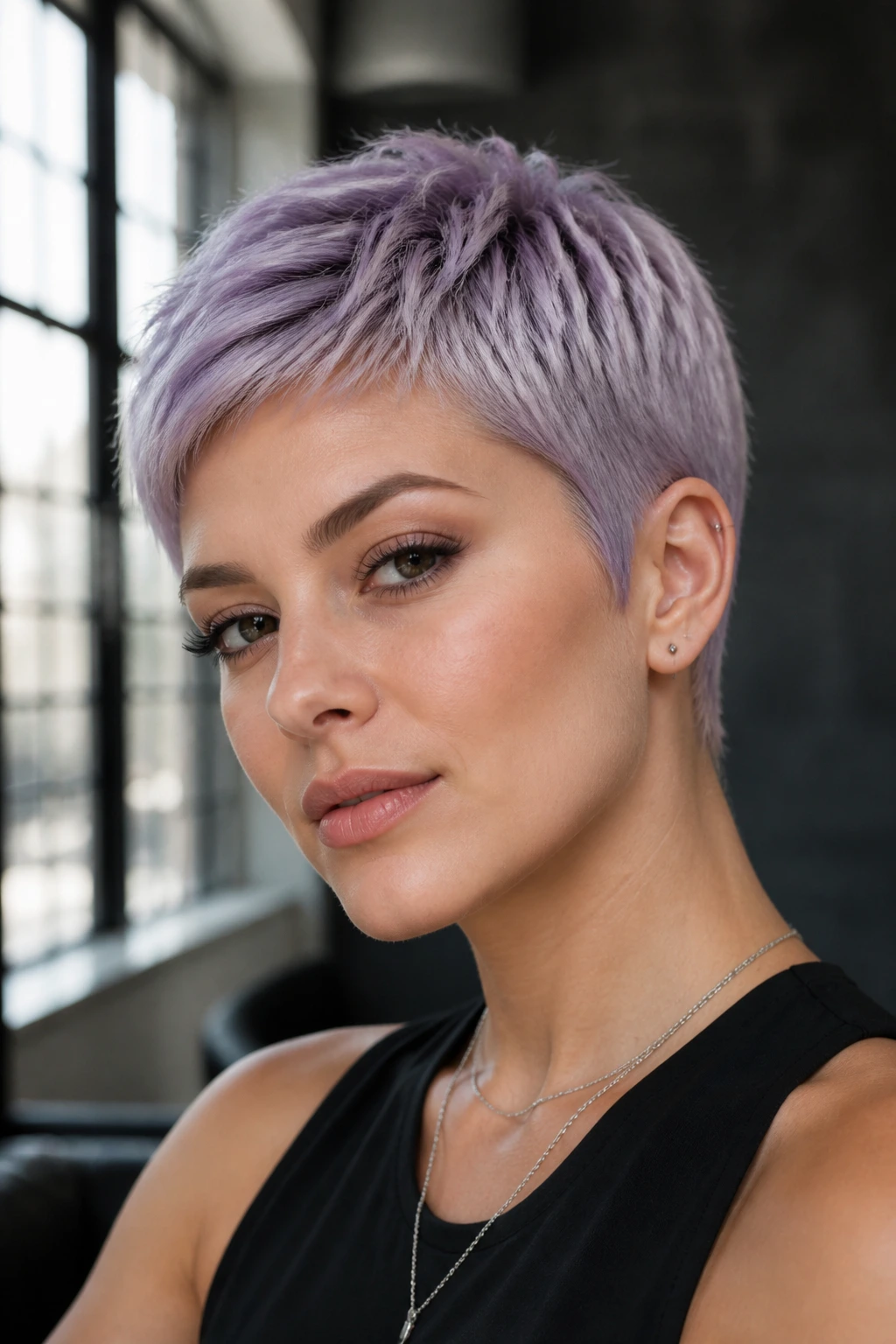
Lavender smoke is the cooler cousin of pastel lilac. It has a grayish veil that keeps the color from looking sugary. On a pixie, that matters, because too much sweetness can fight the cut. The smoke tone makes the color feel modern and a little mysterious.
This one needs a pale base, and it fades in a very specific way: lavender first, then silver-lilac, then soft gray. That progression is part of the appeal if you like changing tones over time. A bit of texture paste helps separate the crown so the color looks more intentional than helmet-like.
If your wardrobe leans black, white, charcoal, or denim, this shade slides in easily. It’s one of the few fashion colors that can still look restrained on short hair.
17. Dimensional Chocolate Micro-Highlights
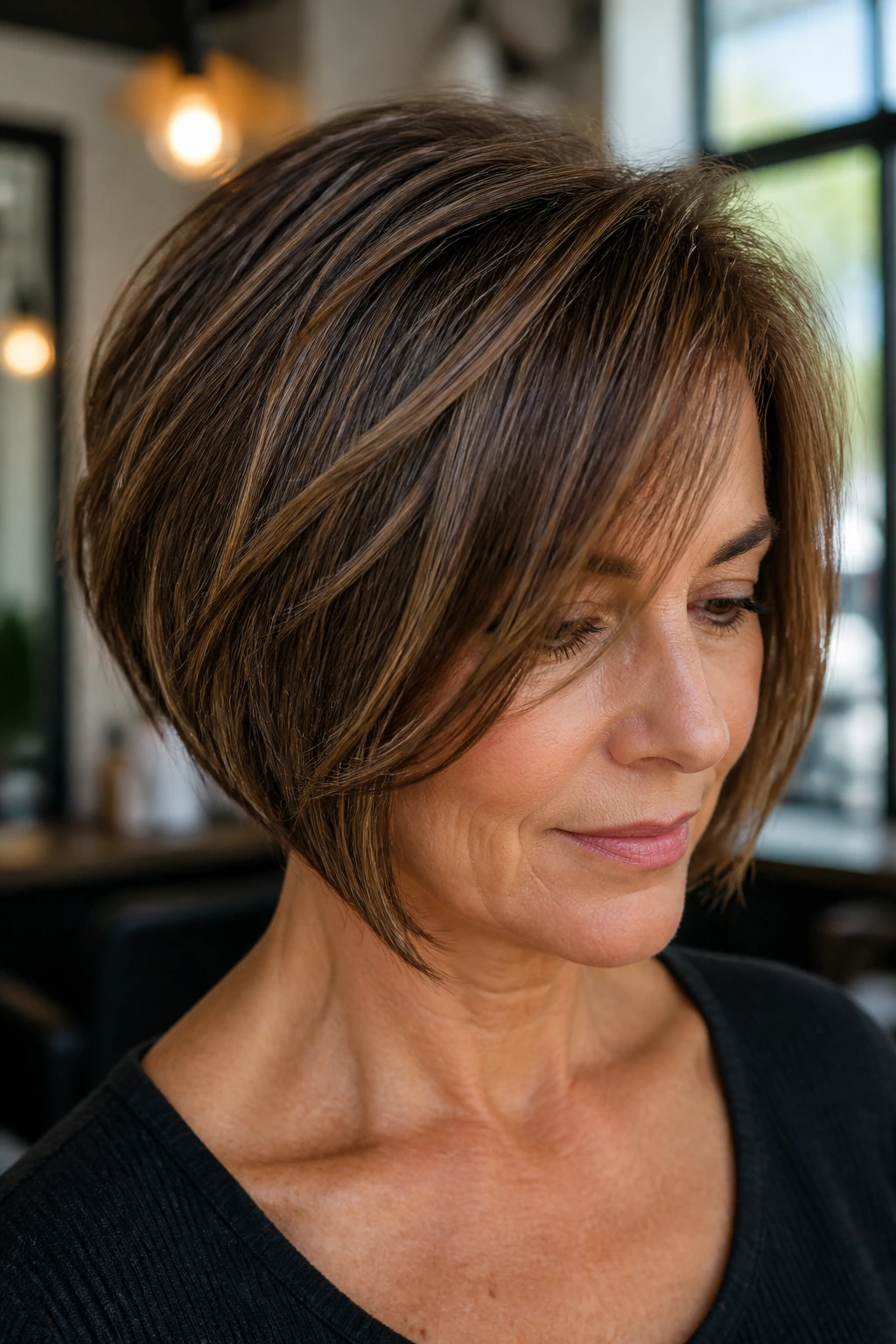
Chocolate brown with micro-highlights is the quietest color on this list, and I mean that as praise. Instead of obvious streaks, you get tiny lighter threads threaded through a rich brunette base. On a short cut, that slight contrast is enough to show the shape without tipping into chunky 1990s territory.
This is especially good for layered bobs and bixies, where movement matters more than obvious brightness. The micro-highlights soften the surface and keep the cut from looking like one block of brown. You can go warmer or cooler with the highlight tone depending on whether you want caramel or mocha contrast.
If you’re allergic to obvious maintenance, this is a sensible choice. It grows out softly and doesn’t demand much attention between trims.
18. Champagne Blonde Buzz Cut
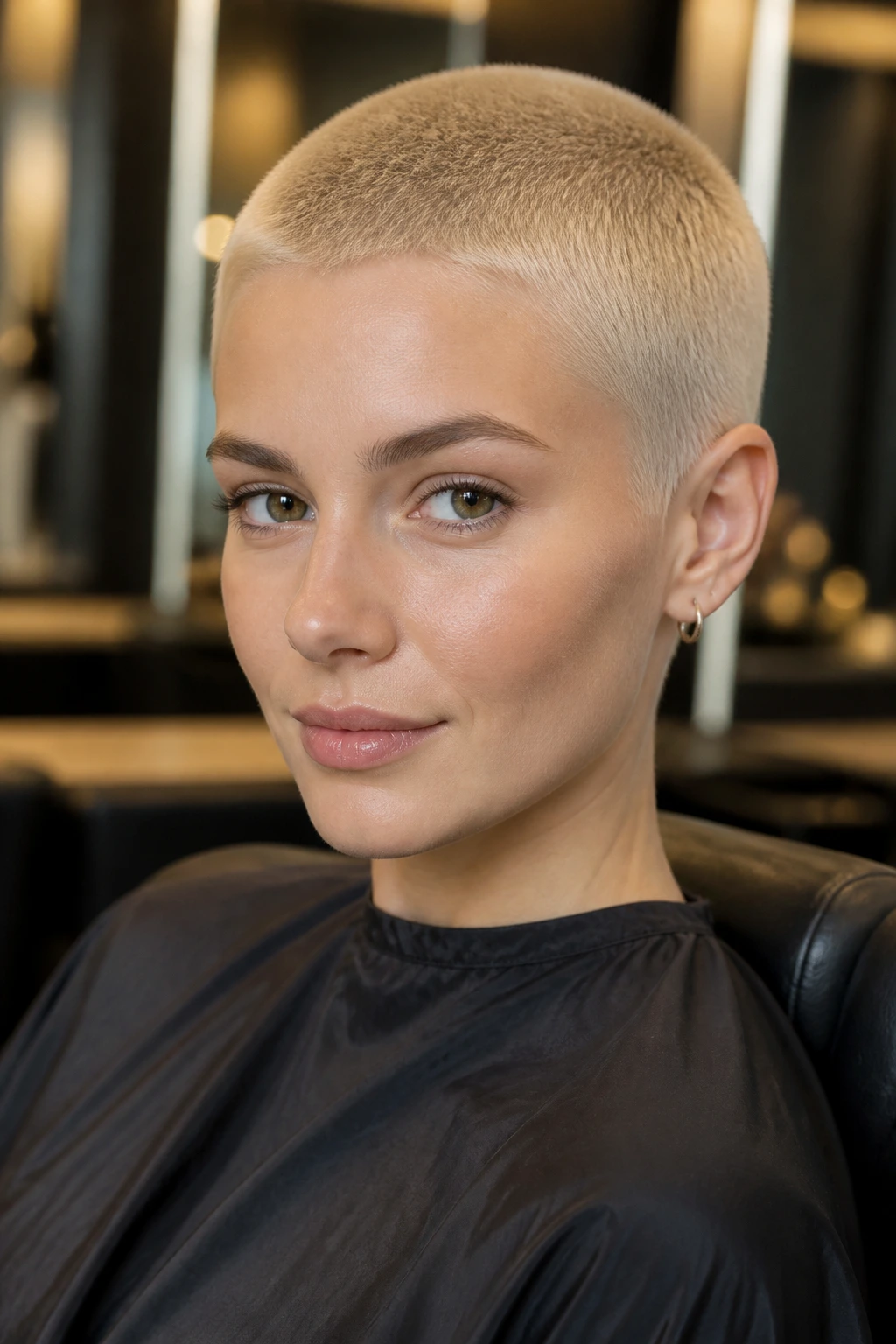
Champagne blonde is creamier than platinum and more refined than beige. On a buzz cut, the tone reads clean and polished because the short length lets the color sit right against the scalp without visual clutter. There’s no room for fuzziness here. The hue has to be even.
This color works best when the lift is controlled carefully and toned to remove brass without turning gray. I like champagne blonde when someone wants light hair but doesn’t want the high-contrast look of icy silver. It feels softer, especially if your eyebrows and lashes are dark.
You will need more frequent root maintenance than you’d think, because even a half-inch of regrowth changes the look. That is the trade-off. The payoff is a very crisp finish.
19. Emerald Peekaboo Bixie
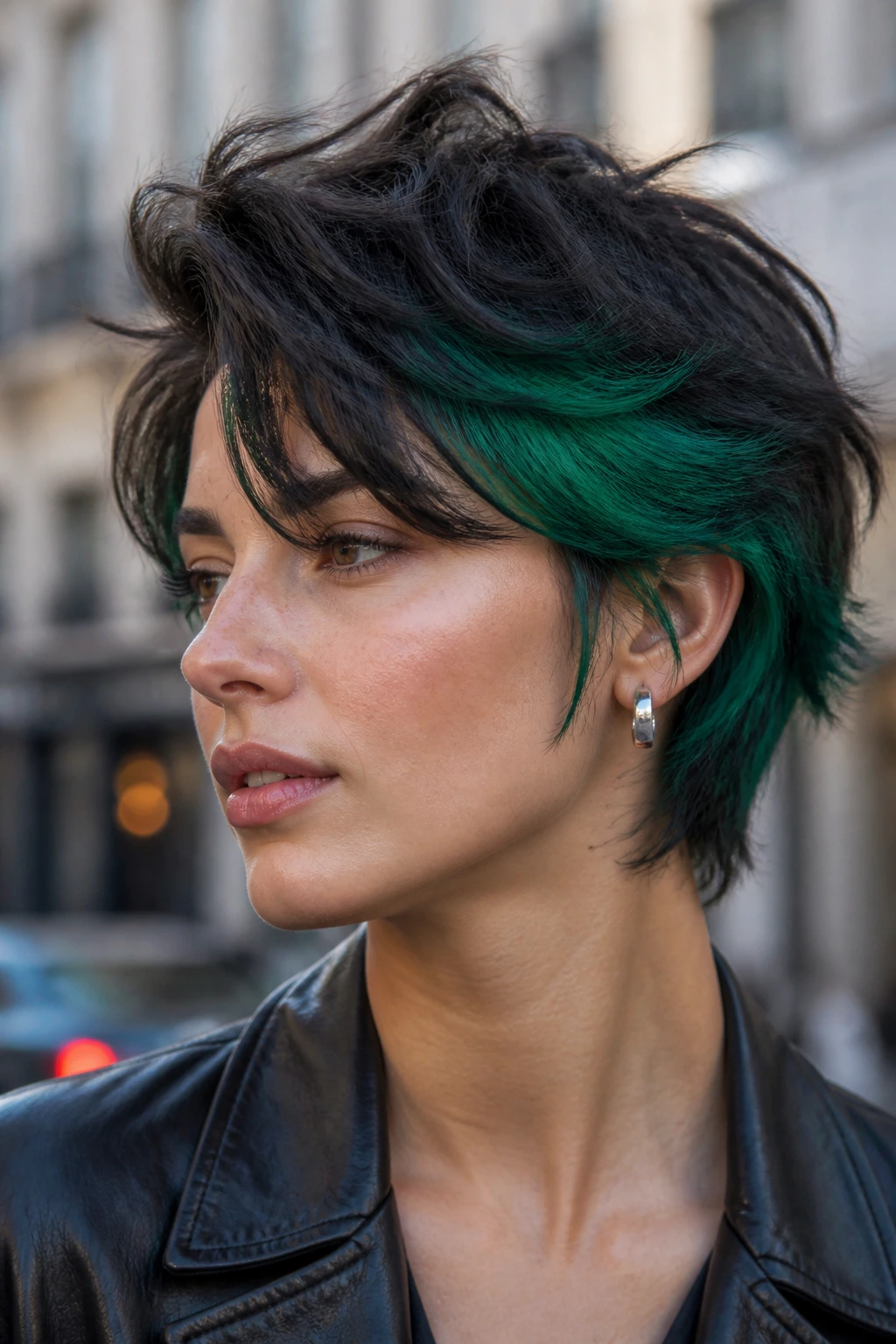
Emerald peekaboo color is pure fun on a bixie. The cut already has a little swing between bob and pixie, so hidden jewel-tone panels underneath the top layers make the shape feel alive. When the hair moves, the green flashes. When it’s still, the look stays wearable.
This is a good place for fashion color because you can control the intensity. A deeper jewel emerald reads richer than a flat neon green, and it plays better with darker bases. If your hair is lighter, the shade can go brighter underneath without taking over the whole cut.
It’s a smart choice if you want surprise without daily commitment. Tucked behind the ear, it looks intentional. Swept forward, it can almost disappear. That versatility is the whole point.
20. Cinnamon Swirl Balayage
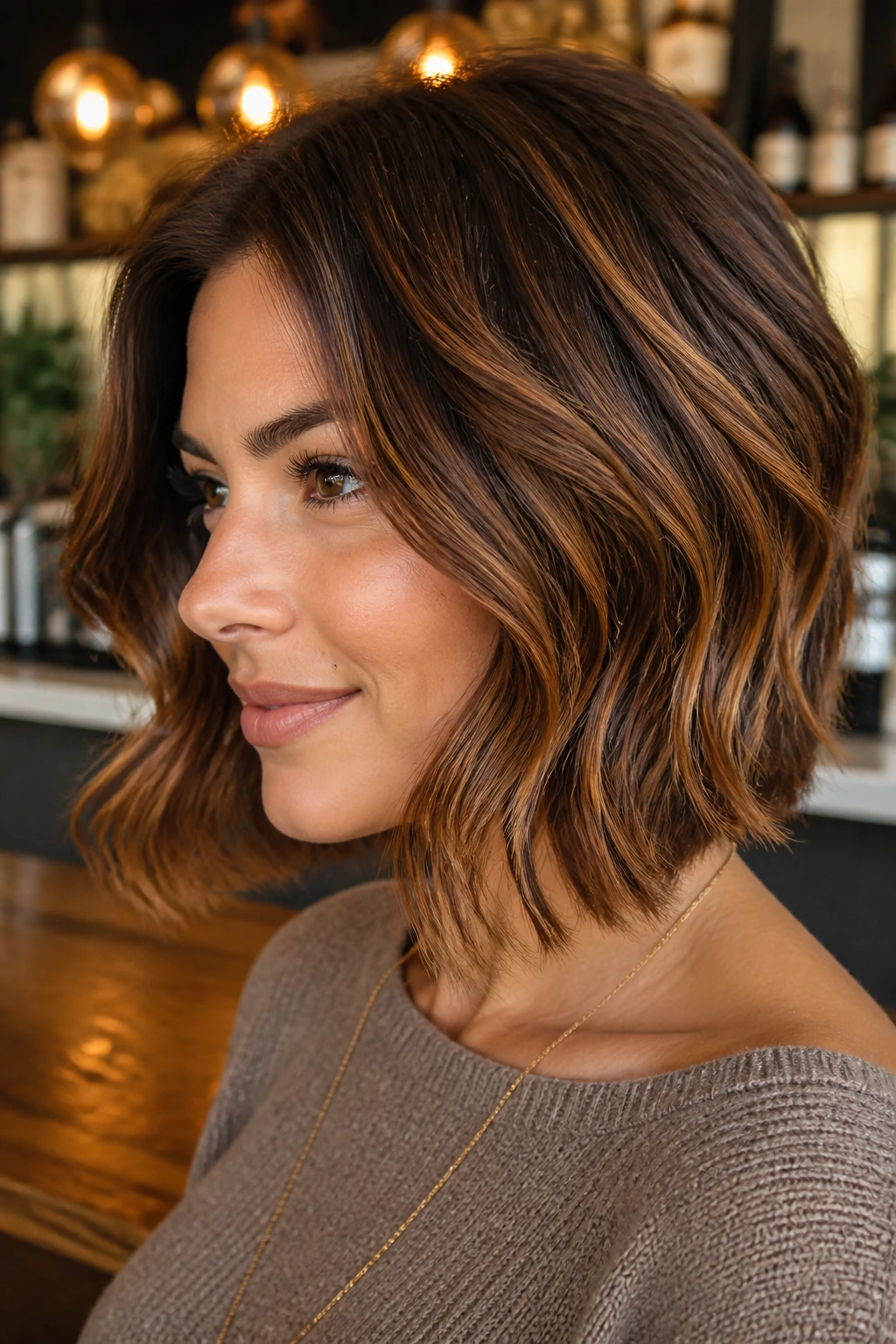
Cinnamon swirl balayage brings warmth without going full copper. The color sits in that red-brown zone that gives short hair depth and motion, especially on bobs and shaggy crops. On a short cut, balayage has to be placed in a way that follows the movement of the hair, not just the shape on paper.
I like this look when the base is medium brown or dark blonde. The cinnamon tones add just enough contrast to keep the hair from reading flat, and the placement around the surface gives the illusion of thickness. It’s especially good for anyone who wants warmth but not a bright red maintenance plan.
The fade is graceful if you stay close to the cinnamon family. It won’t scream at you when the tone softens a little. That’s one reason people return to it.
21. Sand Bronde Lived-In Bob
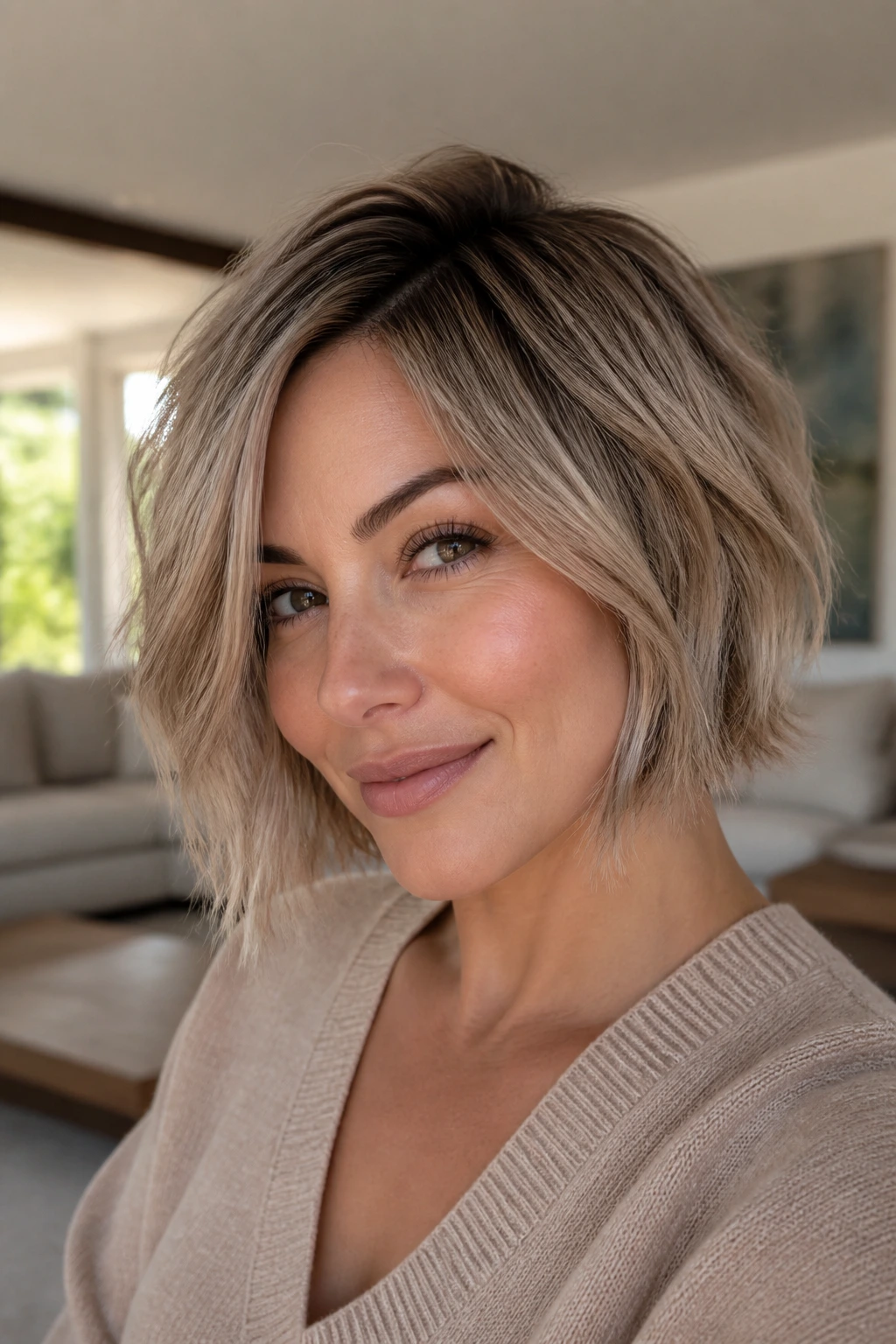
Sand bronde sits in the middle ground between brunette and blonde, and on a lived-in bob, that’s a very useful place to be. The color looks natural, but not boring. It has enough beige and ash to soften the brown, enough warmth to keep the blonde from turning flat, and enough depth at the root to make the grow-out behave.
This is one of my go-to recommendations for someone who wants a low-drama bob. It looks good air-dried, brushed smooth, or tucked under. It also works on hair that doesn’t lift evenly, because the neutral blend forgives a little variation in tone.
If you hate the look of obvious salon visits, choose this. It’s the definition of “my hair, but cleaner.”
22. Scarlet Dip-Dye Ends
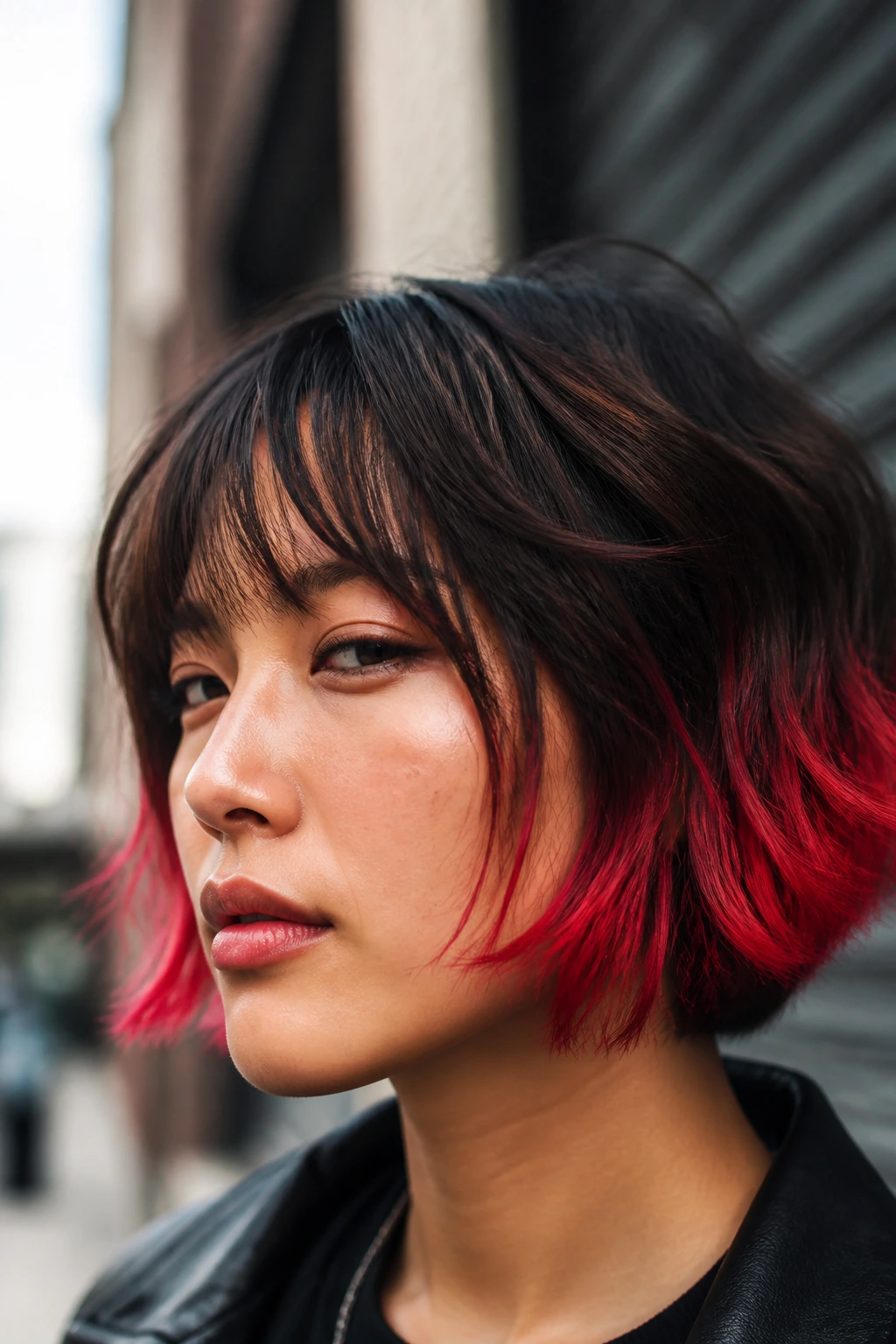
Scarlet dip-dye on short hair is a small amount of color with a big attitude. On a blunt bob or textured crop, the red ends read like a deliberate design choice, not an afterthought. Because the cut is short, the color block lands faster and cleaner than it would on long hair.
The key is keeping the scarlet section dense enough to look vivid, but low enough that it doesn’t fight the root color. I like it best when the top stays dark or neutral and the ends flare into red. That contrast makes the silhouette sharper.
This one is especially handy if you want to cut the colored ends off later. The commitment lives at the bottom. Very tidy, in a weird way.
23. Cool Bronde Bixie
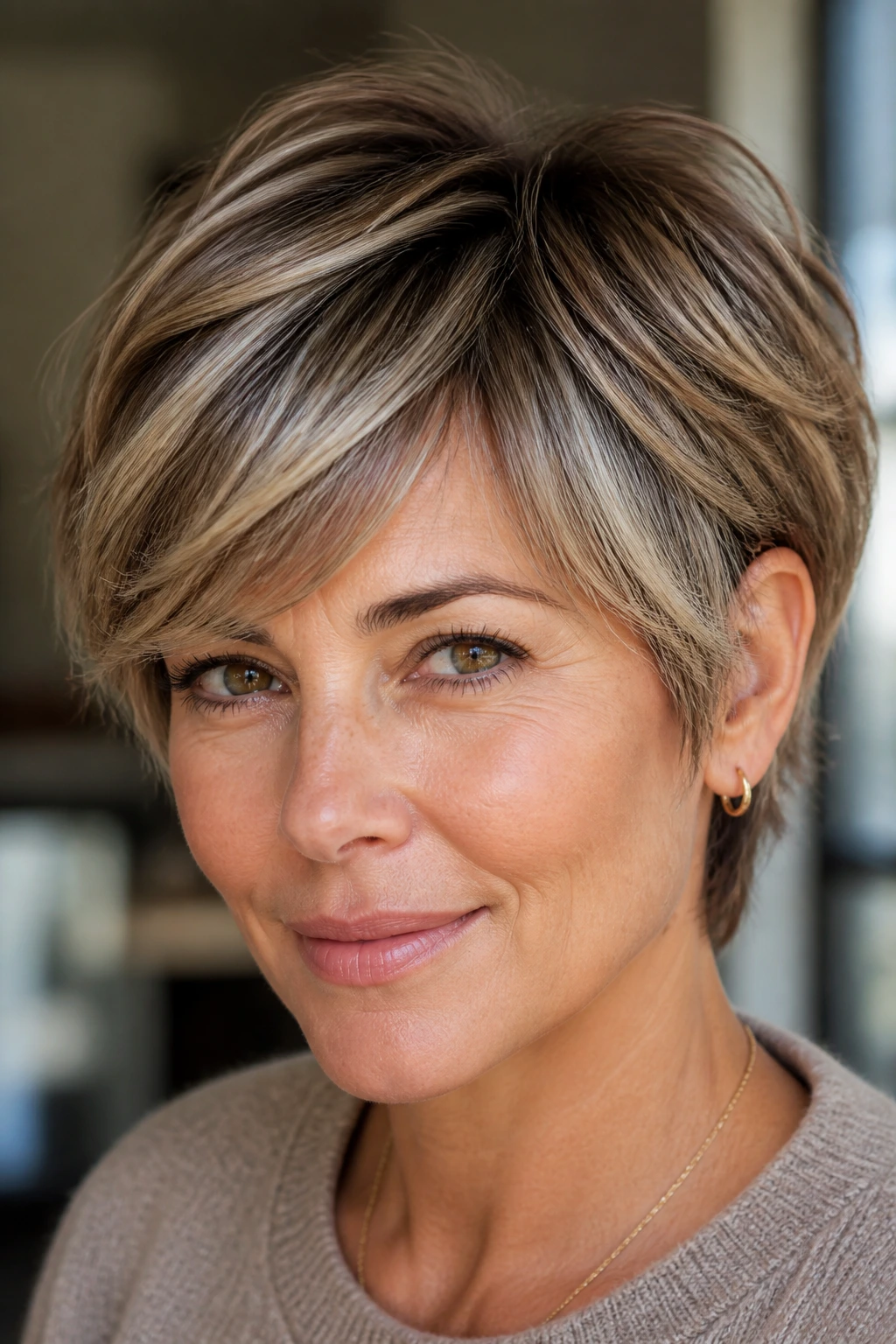
Cool bronde is brunette with enough blonde lift to keep it from sinking into one note. On a bixie, the mix is perfect because the shape has both bob weight and pixie movement. The ash-beige blend keeps the layers from looking striped, which can happen fast on short cuts if the highlights are too chunky.
This color is ideal if you want a softer, cooler version of balayage. It works well on naturally medium brown hair and on lighter brunettes who want dimension without a dramatic blonde shift. The bixie cut does some of the heavy lifting by showing off the contrast around the crown and cheeks.
You can wear it rough, polished, or somewhere in between. The color doesn’t fight the styling, which is why it stays useful.
24. Buttercream Blonde Root Smudge
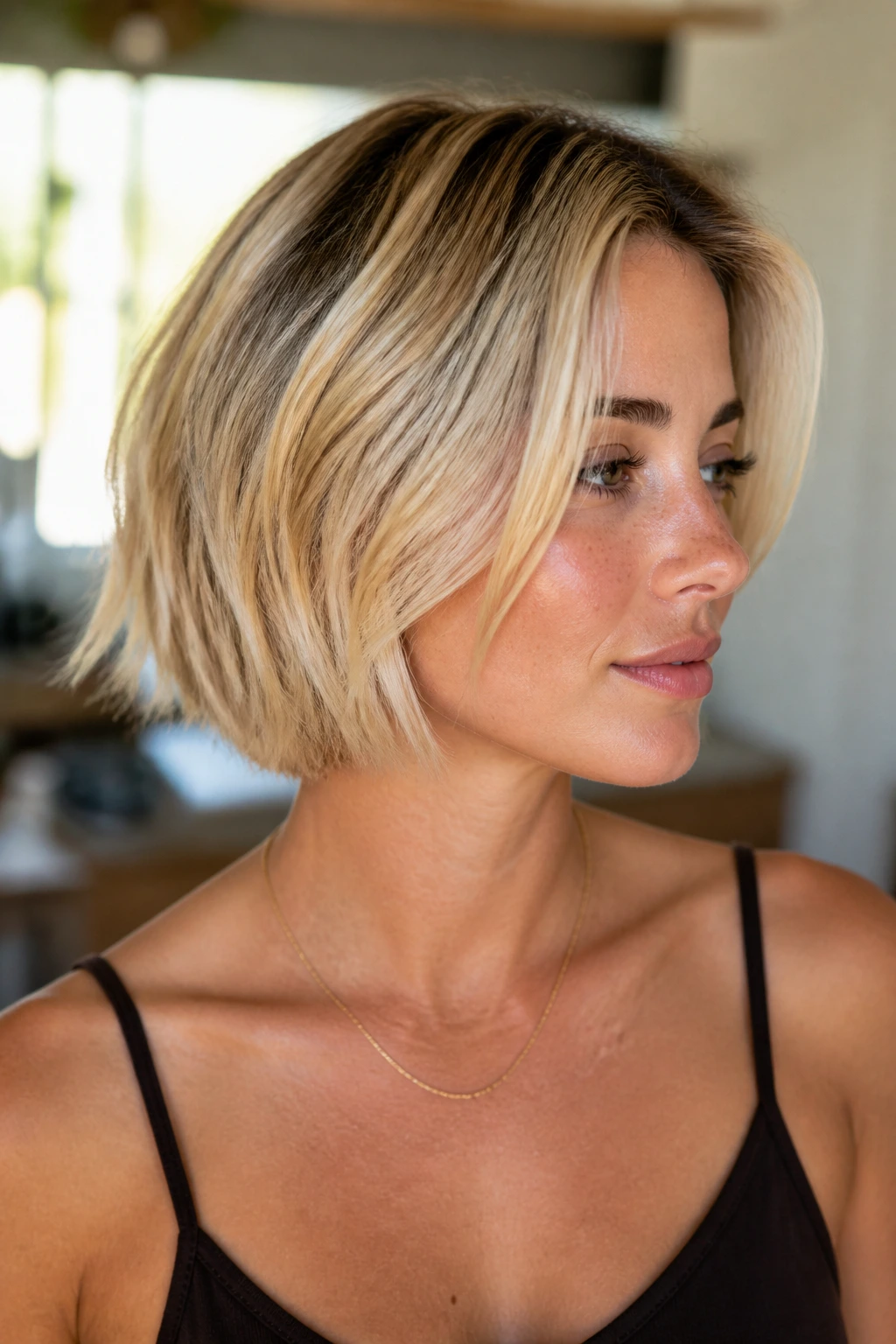
Buttercream blonde is brighter than beige but softer than icy platinum, and the root smudge keeps it wearable on short hair. That smudge matters. It gives the root area a whisper of depth so the blonde doesn’t look like a helmet sitting on top of the head. On a bob or crop, that can be the difference between chic and shouty.
This is a smart pick if you want a lighter blonde that grows out in a more relaxed way. The ends can stay creamy while the root stays a shade deeper, which helps the cut keep some shape as it moves through its next few weeks. A soft blowout brings out the creaminess best.
If you’ve tried blondes before and thought they looked too hard or too white, this shade usually lands better.
25. Slate Gray Crop
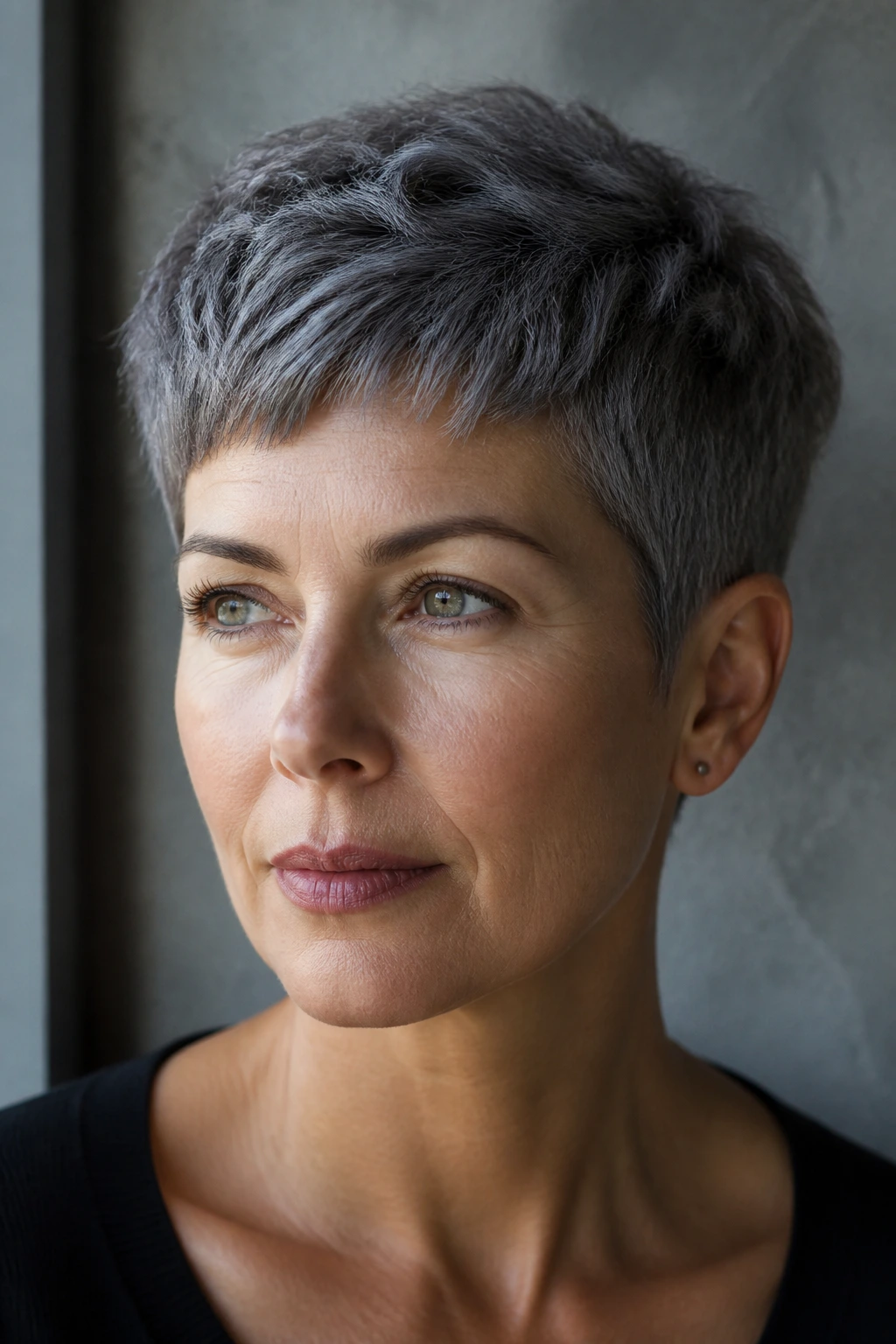
Slate gray feels cooler and more grounded than silver. It sits in that smoky charcoal zone that makes short hair look sharp without turning it into a mirror. On a crop, the color is strongest when the cut has texture at the crown and a little softness around the edges.
Why It Stands Out
Gray can go flat if it’s too one-note, but slate has enough depth to stay interesting. It suits people who like cooler tones but don’t want the high-lift upkeep of blonde. It also looks good as it fades because the color only gets more stone-like.
Best pairing: a rough-dried finish, matte styling cream, and a clean neckline.
Avoid: too much warmth underneath, which can turn slate into dull brown-gray.
26. Apricot Copper Bob
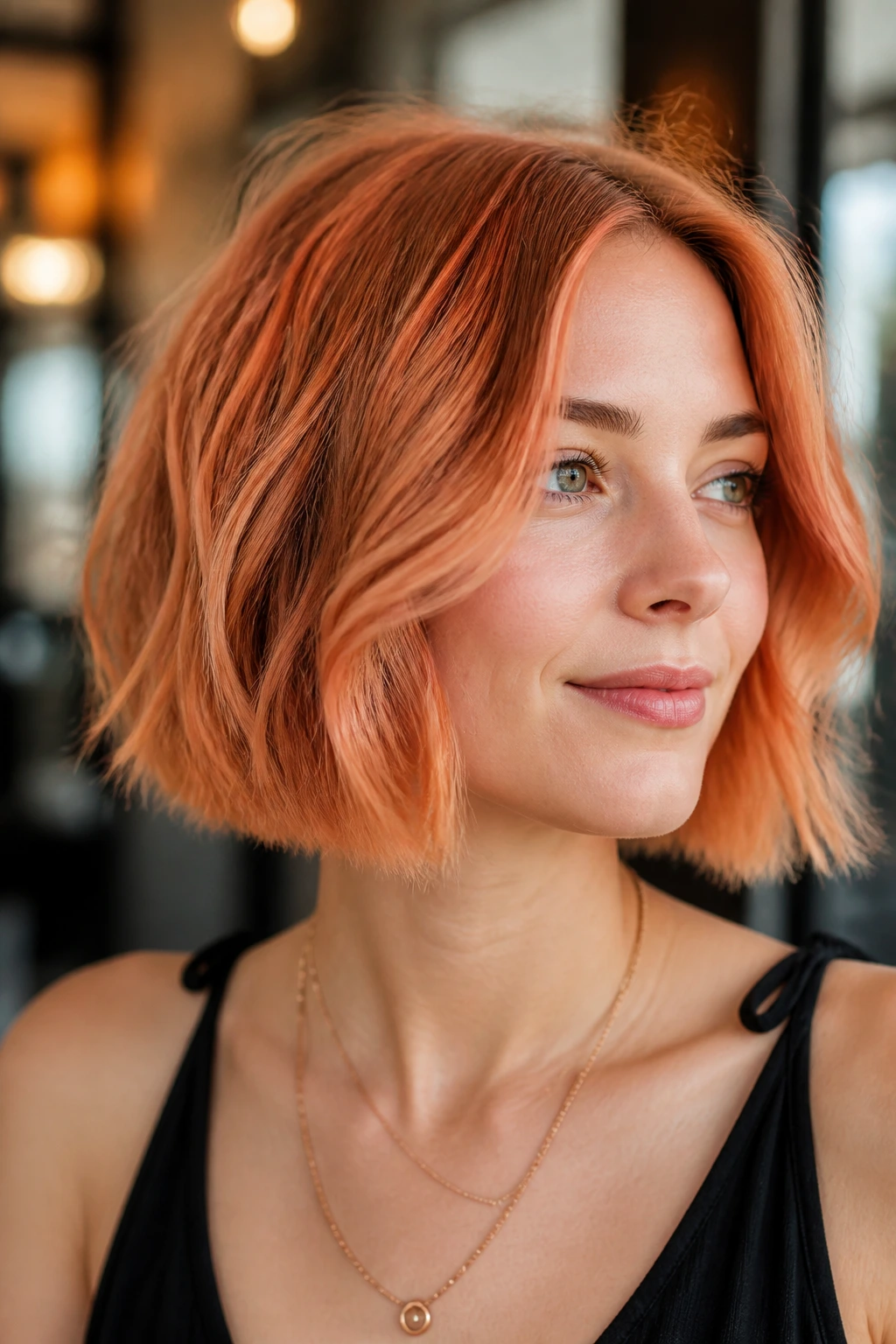
Apricot copper has more peach than a standard copper and more life than a soft strawberry blonde. On a bob, that balance is lovely because the color doesn’t overpower the cut. It glows a little at the ends and near the face, which keeps the whole style from looking heavy.
This is one of the more wearable warm shades if you’re nervous about going orange. It sits in a friendly zone. The bob shape helps too, because the curve at the ends reflects the warm tone instead of swallowing it. If your hair lifts to a gold base easily, this shade is a natural fit.
It fades in a flattering direction, usually toward softer peach. That’s not a bad outcome. In fact, it’s one reason people like it.
27. Mocha Melt with Caramel Ends
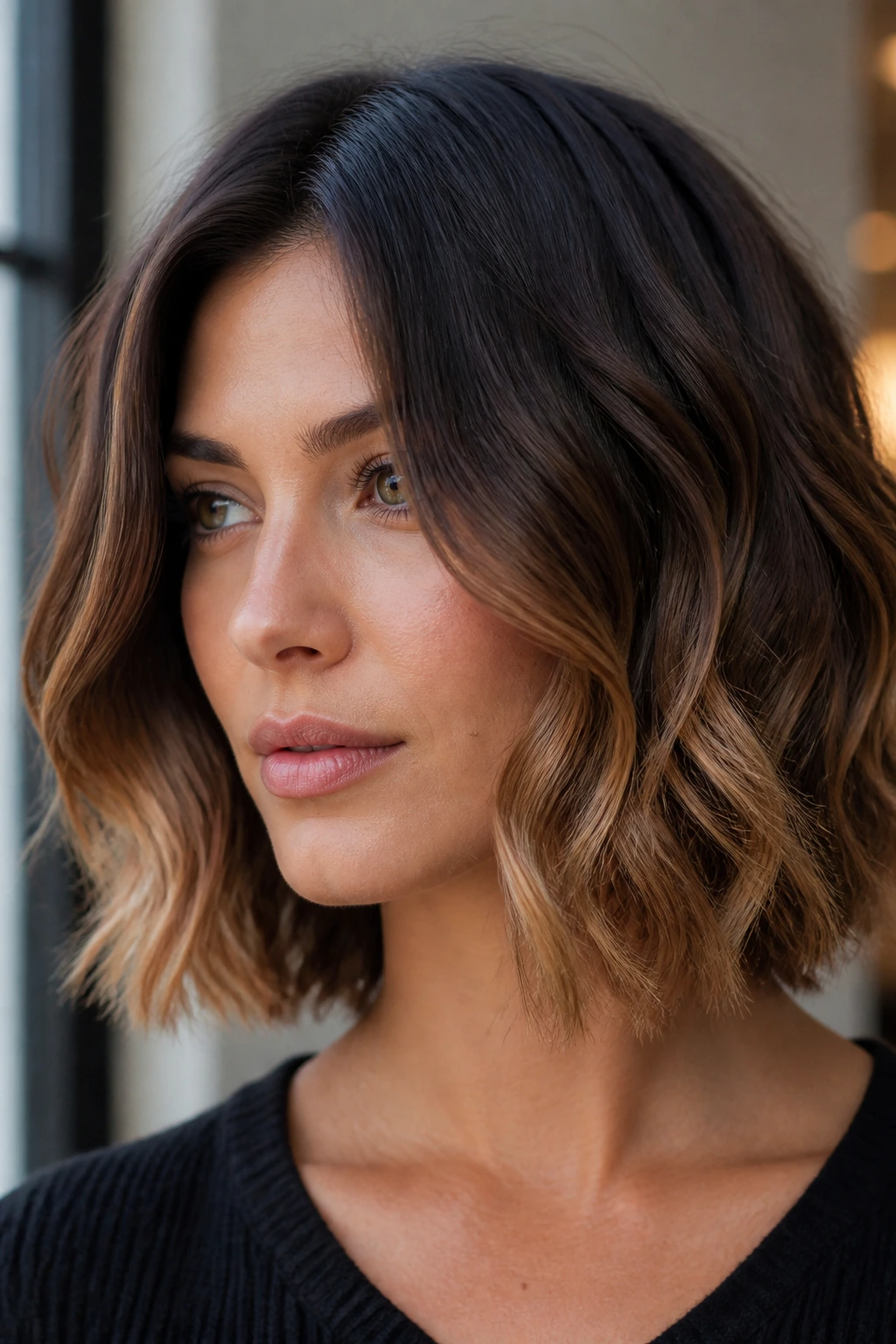
Mocha melt is deeper and a little richer than toffee. On short hair, the dark mocha root gives the cut a grounded base, while caramel ends brighten the perimeter and make the shape feel fuller. The effect is strongest on wavy bobs and short lobs, where the ends move enough to catch the lighter tone.
The melt should be smooth. No harsh lines. If the transition is too obvious, the whole thing starts looking like grown-out color instead of design. Ask for soft blending through the mid-lengths and a slightly warmer finish at the tips.
This one is good if you want dimension that still reads as brunette first and highlight second. Clean, easy, and not remotely boring.
28. Frosted Tips Textured Crop
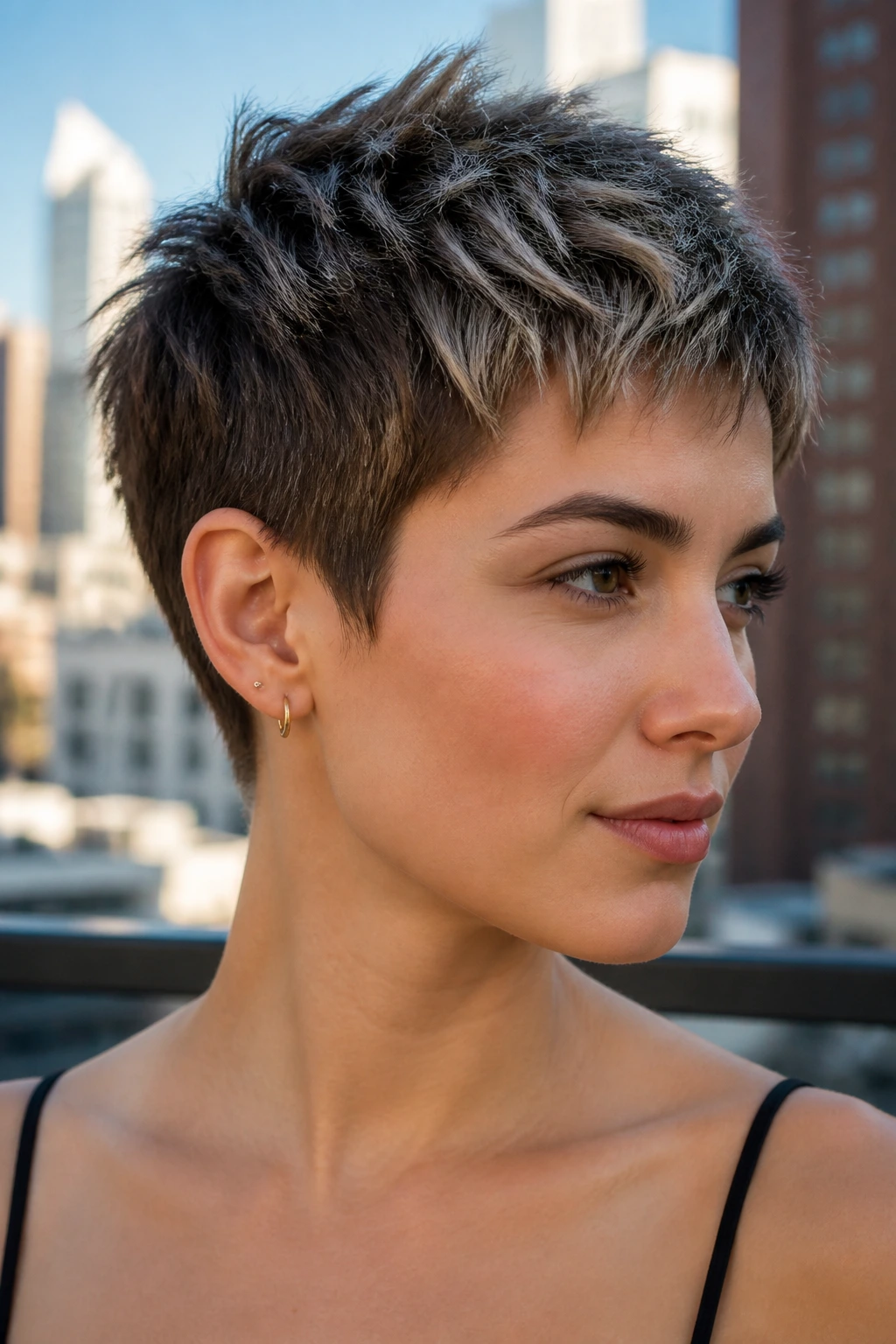
Frosted tips are back only if you do them with restraint. On a textured crop, the modern version is softer, shorter, and much more deliberate than the spiky old-school version. The light pieces sit on the ends and edges, not all over the head, so the cut looks piecey instead of gimmicky.
I like this for someone who wants contrast without coloring the whole head. It works best on choppy layers where the tips naturally separate. If the hair is too smooth, the effect can look dated. Texture paste, a little scrunching, and a matte finish make the difference.
This is a playful choice, not a serious one. Sometimes that’s the right mood.
29. Split-Dye Bob
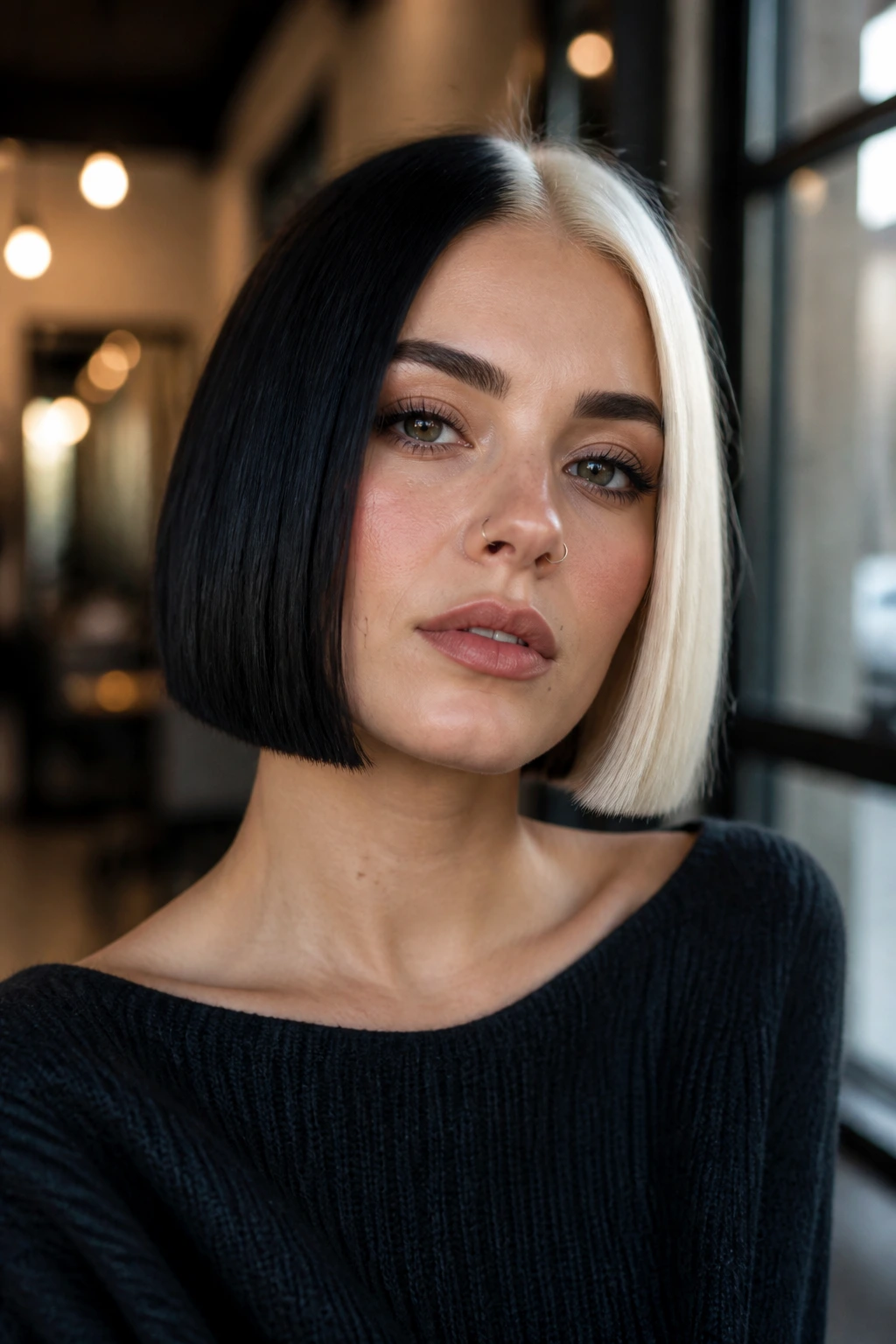
Split dye on a short bob is all about the graphic line. One side dark, one side light. Or one side cool, the other warm. The shorter the cut, the cleaner the division looks, which is why bobs can wear this style better than longer hair. The shape acts like a frame.
Best Way to Wear It
Keep the cut blunt or only slightly layered so the split has a clear edge. Smooth styling shows off the contrast best, though a bit of bend can soften the line if you don’t want it too severe. If you’re trying fashion color for the first time, this is a surprisingly tidy entry point because the impact is strong without needing the whole head transformed.
- Great for: center parts, straight blowouts, and sharp jawline-framing cuts.
- Maintenance note: touch-ups matter most where the line sits at the part and front edge.
30. Soft Lilac Underlayer
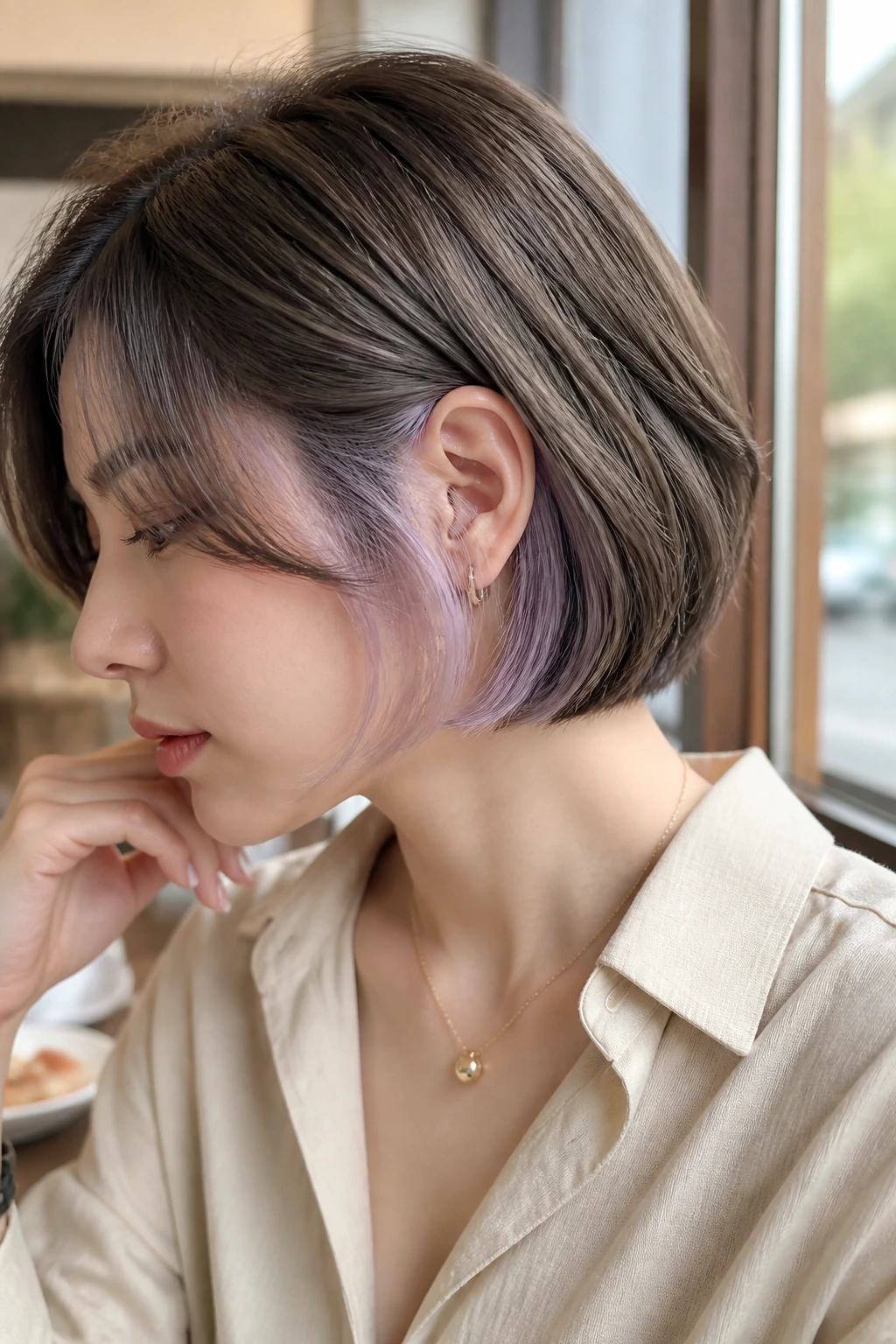
Soft lilac hidden under the top layer is the kind of color that rewards movement. On short hair, especially a bob with some swing, the color appears when you tuck one side behind the ear or when the ends flip outward. The top layer can stay neutral, which keeps the look wearable in plain clothes and normal light.
This is one of the best choices if you want color but not constant attention. It’s playful without being loud. The lilac can lean more gray or more pink depending on your base and toner, but the hidden placement is what makes it feel modern.
It also grows out more quietly than all-over pastel. That matters if you want to enjoy the color without staring at your roots every morning.
31. Rusty Auburn French Bob
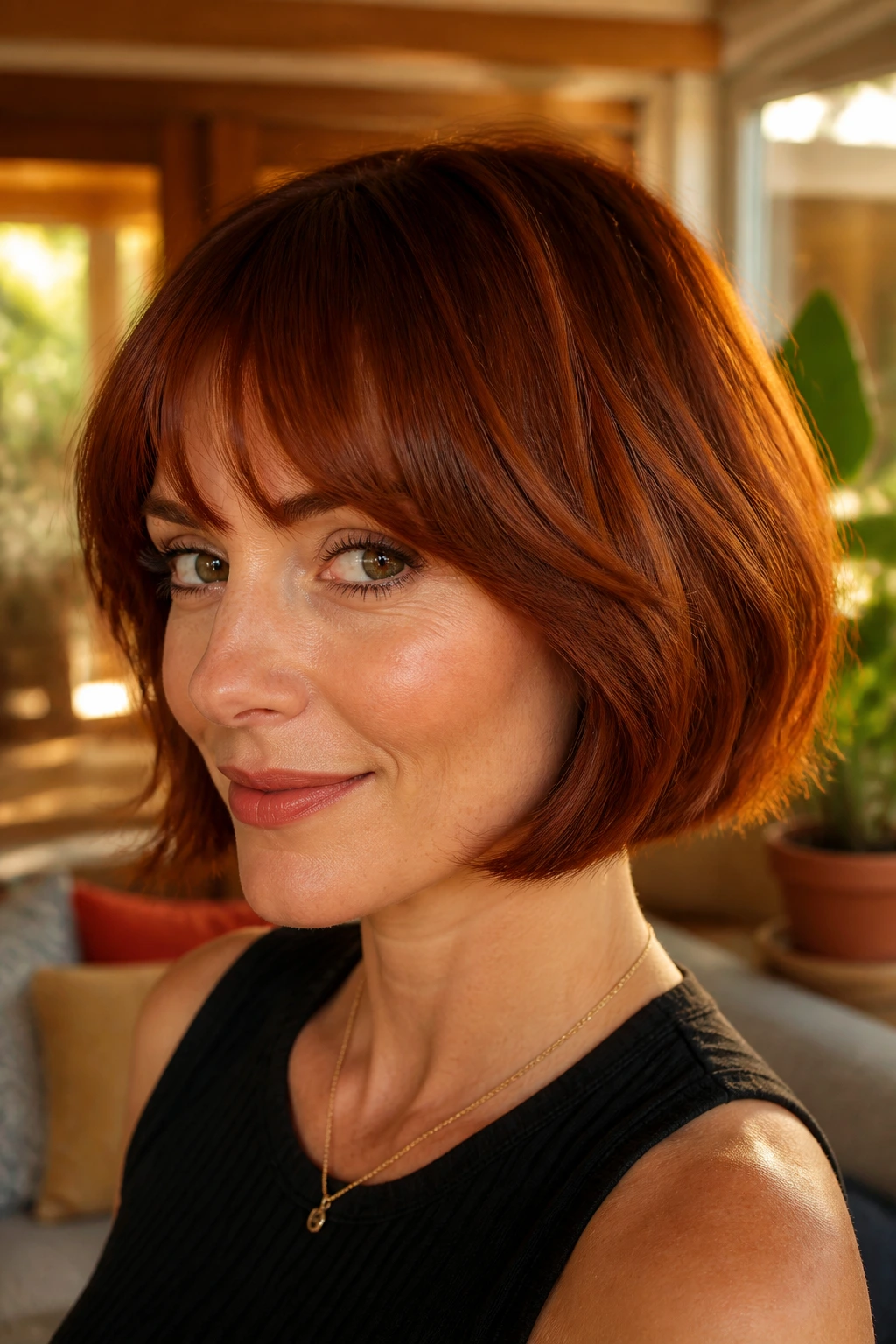
Rusty auburn on a French bob gives you warmth with a little edge. The auburn tone is deeper than copper and more earthy than cherry red, which makes it feel rich rather than flashy. On a chin-length bob with light movement, the shade gives the haircut a kind of easy seriousness I really like.
This color works especially well when the fringe is soft and the ends curve inward or flick slightly out. The warmth stays visible around the face, where it matters most, and the rest of the cut can remain a touch darker. That keeps the auburn from overwhelming the shape.
If you want red but you don’t want to babysit a bright red, this is the safer, smarter version.
32. Sandy Bronde with Curtain Bangs
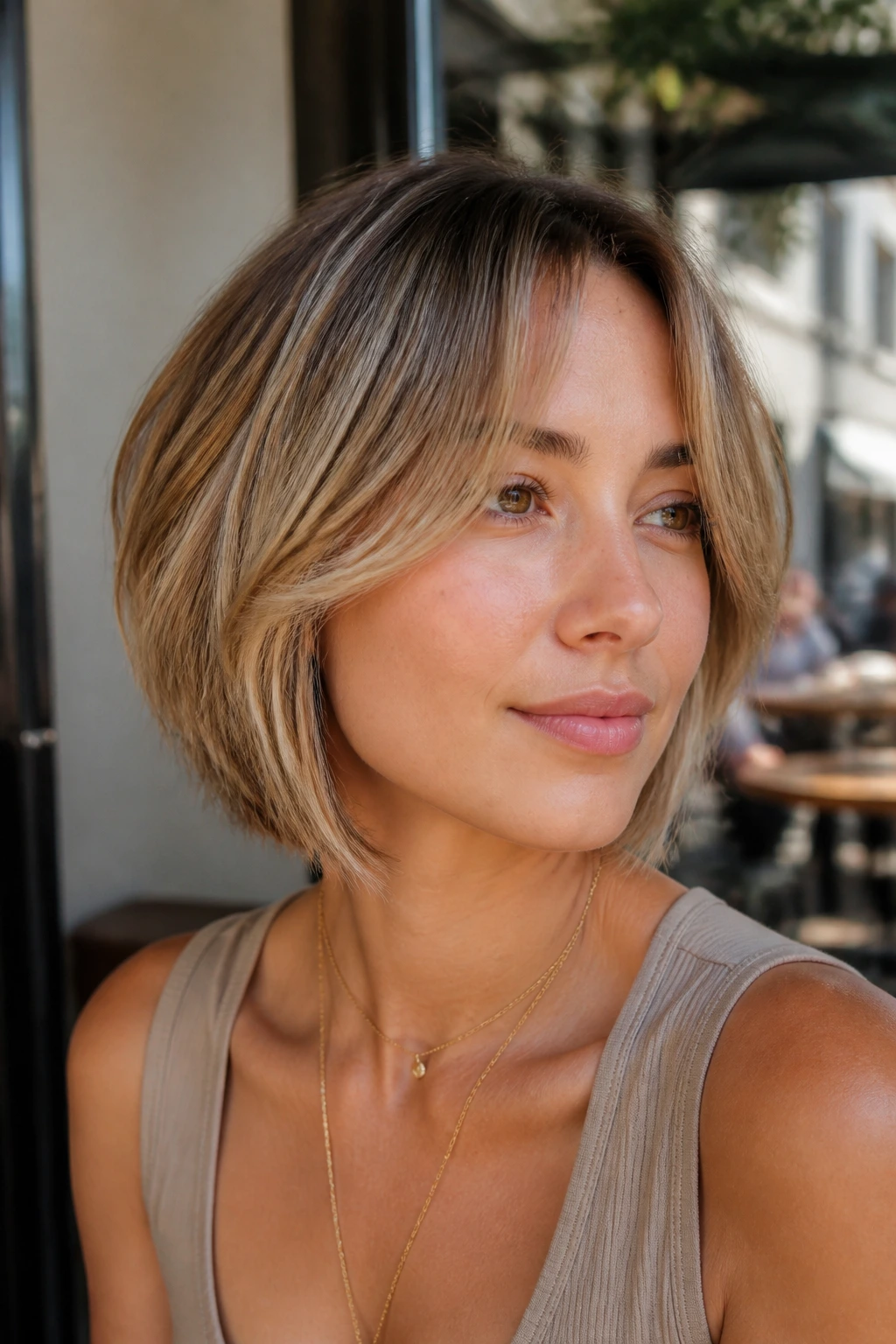
Sandy bronde is one of the easiest short-hair colors to live with because it doesn’t demand a single hard identity. It’s brown, but lighter. Blonde, but grounded. On a short layered lob or bob with curtain bangs, the color gives the face-framing pieces a soft glow without creating obvious stripes.
Curtain bangs matter here because they pull the lighter pieces right where you can see them. The rest of the hair can stay more neutral, which keeps maintenance manageable. If your natural base is medium brown, this is often a very believable transition shade.
It’s a nice answer for anyone who wants dimension but hates the look of obvious highlights. The whole thing feels easy, and that’s not a bad design goal.
33. Teal Hidden Panels
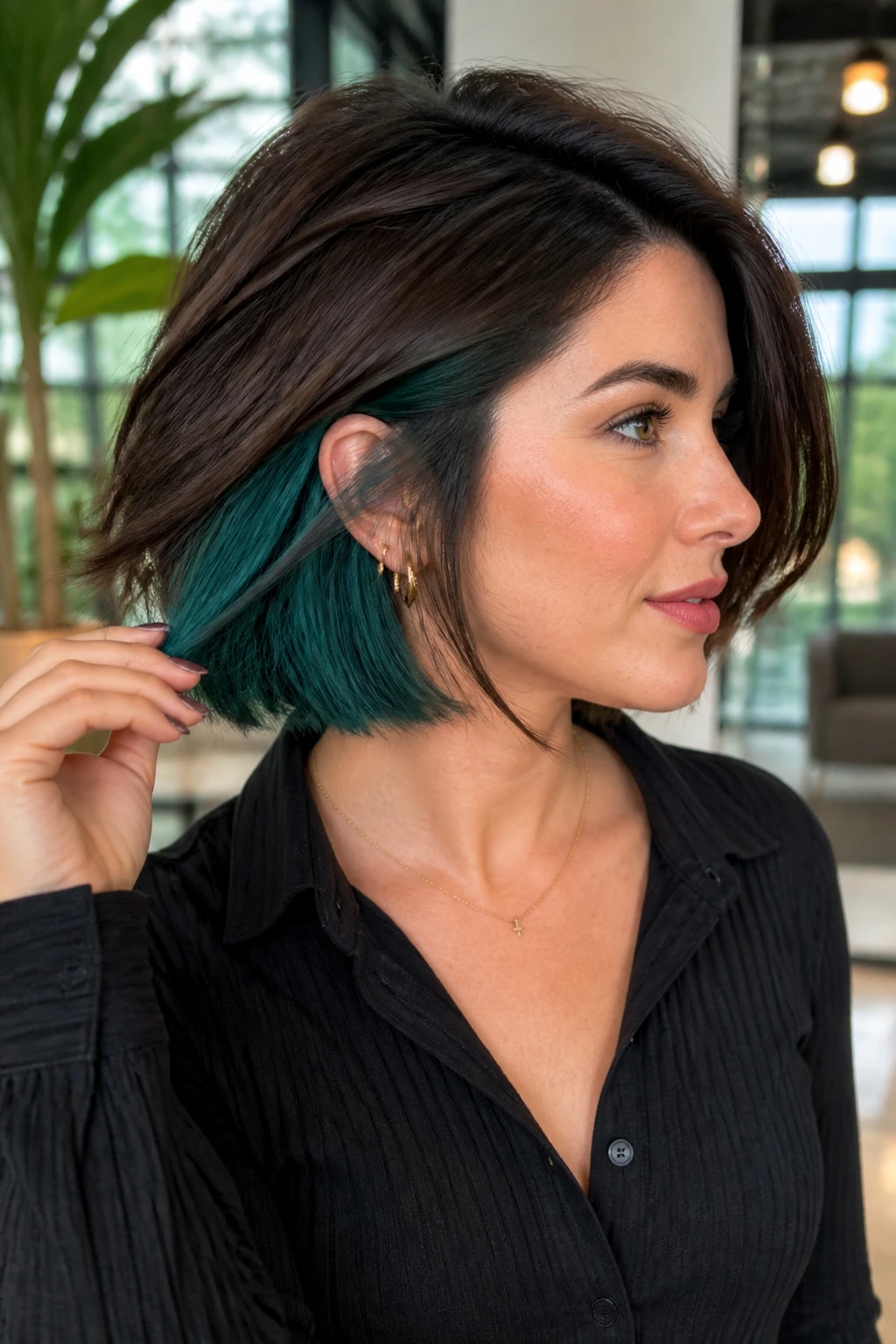
Teal hidden panels are for the person who wants surprise, not constant exposure. On short hair, tucked panels underneath the top layer can flash teal when the head moves or the hair is pinned back. Because the cut is shorter, the hidden color appears more often than people expect.
This works best when the panels are placed where the hair naturally opens: behind the ear, at the nape, or under a top layer that flips. If your base is dark, the teal reads deeper and moodier. If your hair is lighter, it can go brighter and more electric.
I like this choice for people who need something professional-ish on top and fun underneath. It’s a good compromise, and those are rare.
34. Burnt Sienna Gloss Pixie
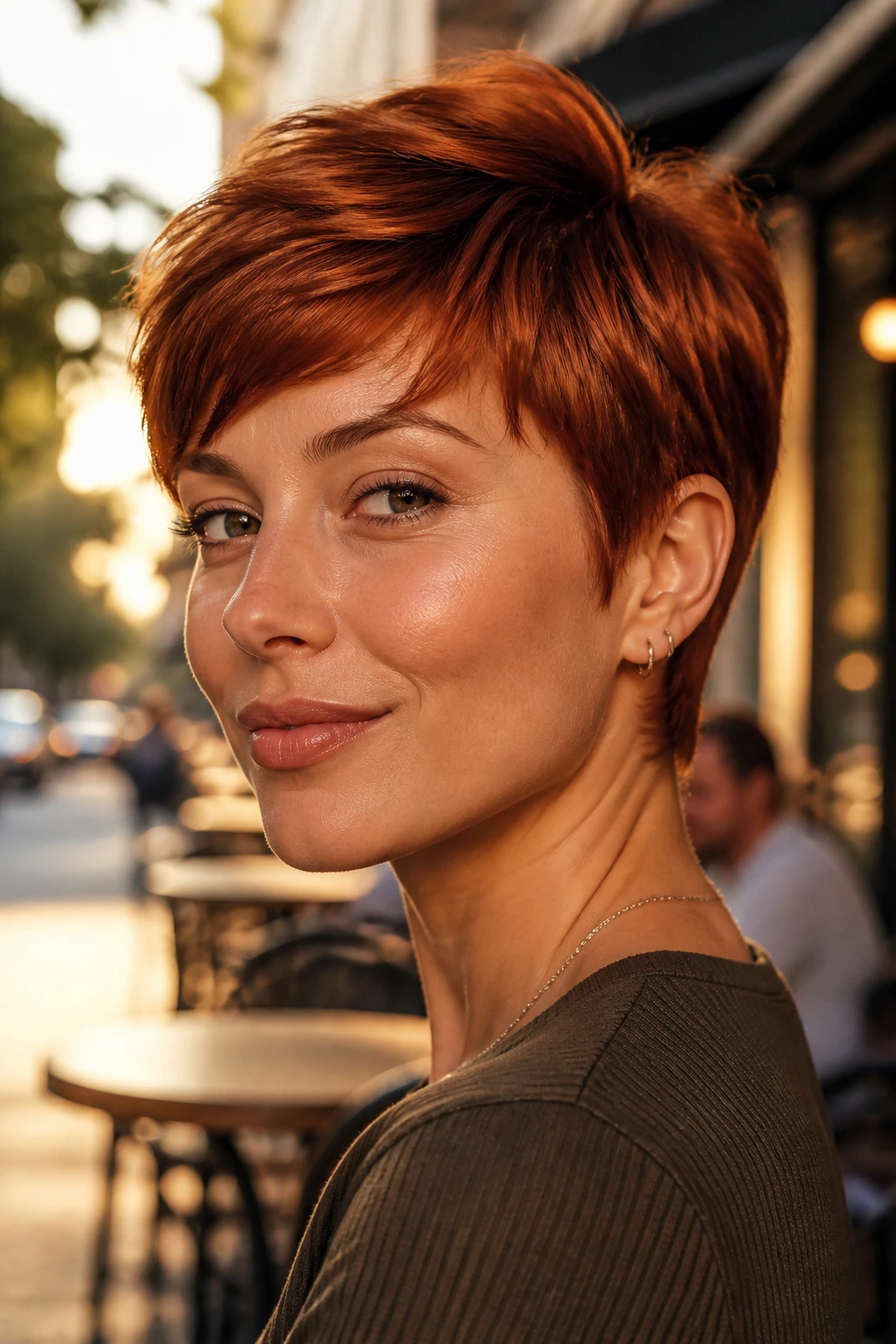
Burnt sienna sits somewhere between warm brown, red clay, and brick copper. On a pixie, that earthy warmth feels especially rich because the cut keeps the color close to the face. A glossy finish gives it depth, and the short length makes the tone look more intentional than if it were stretched across long hair.
This is a strong option if you want warmth without neon copper or bright auburn. It works with texture too. In a rougher pixie, the color catches on the ends and makes the haircut look fuller. In a smooth one, it reads more polished and compact.
It also fades in a dignified way, which sounds silly until you’ve watched red tones turn weird. Burnt sienna softens instead of collapsing.
35. Graphite and Silver Smoke Bob
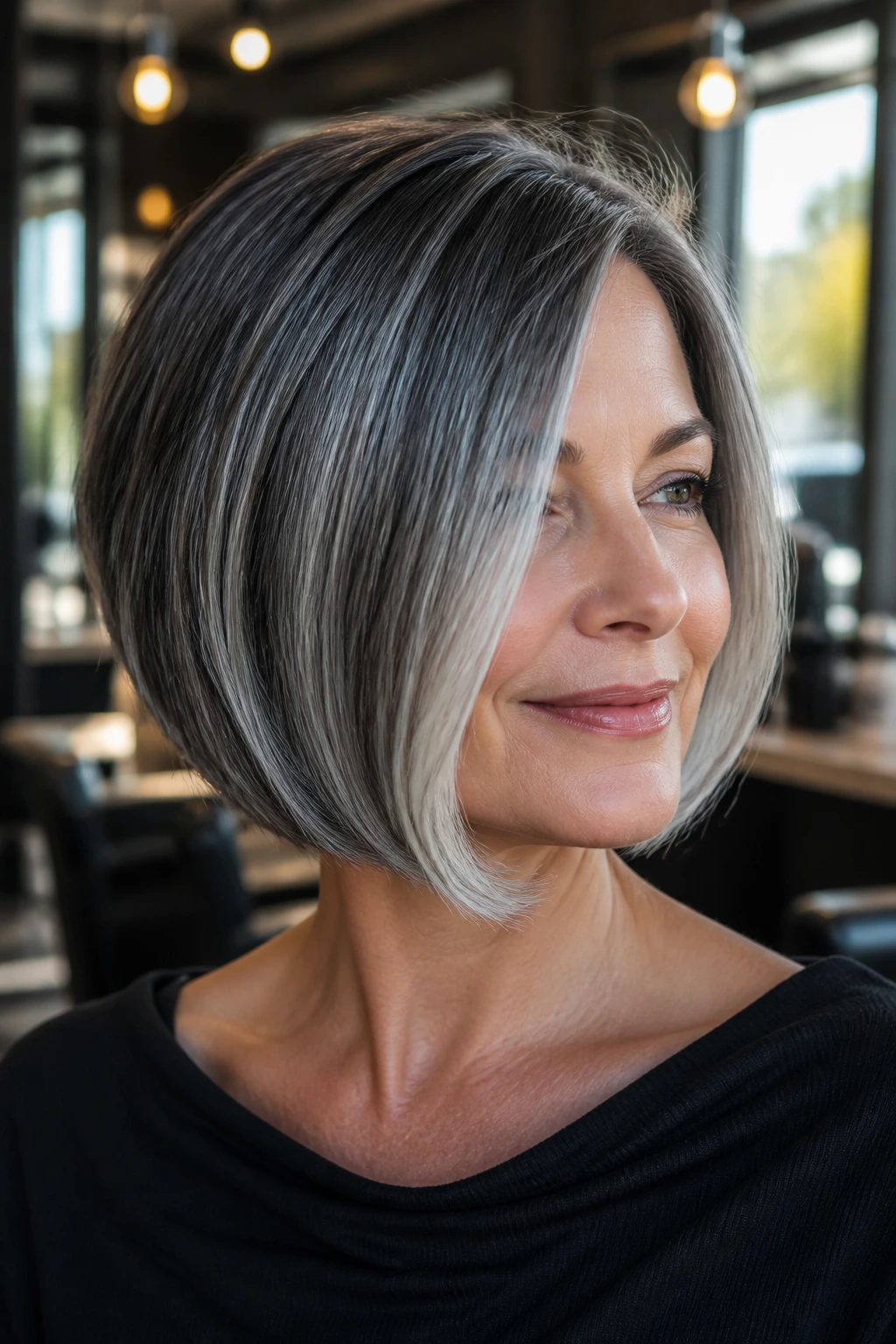
Graphite and silver is a smoky, metallic mix that makes a bob look sharp from every angle. The darker graphite base keeps the style grounded, while silver ribbons or panels add a cool flash that shows up as the head turns. On a bob with a clean line, the contrast is clean rather than busy.
This is a smart choice if you want cool tones but don’t want to go full white blonde. The graphite gives the silver something to sit against, which makes the whole look feel thicker and more dimensional. It’s especially nice with a slight bevel at the ends, because the curve catches the light.
The maintenance is a little more involved than a brunette gloss, but the result has real impact. Not loud. Just sharp.
How to Choose the Shade That Fits the Cut
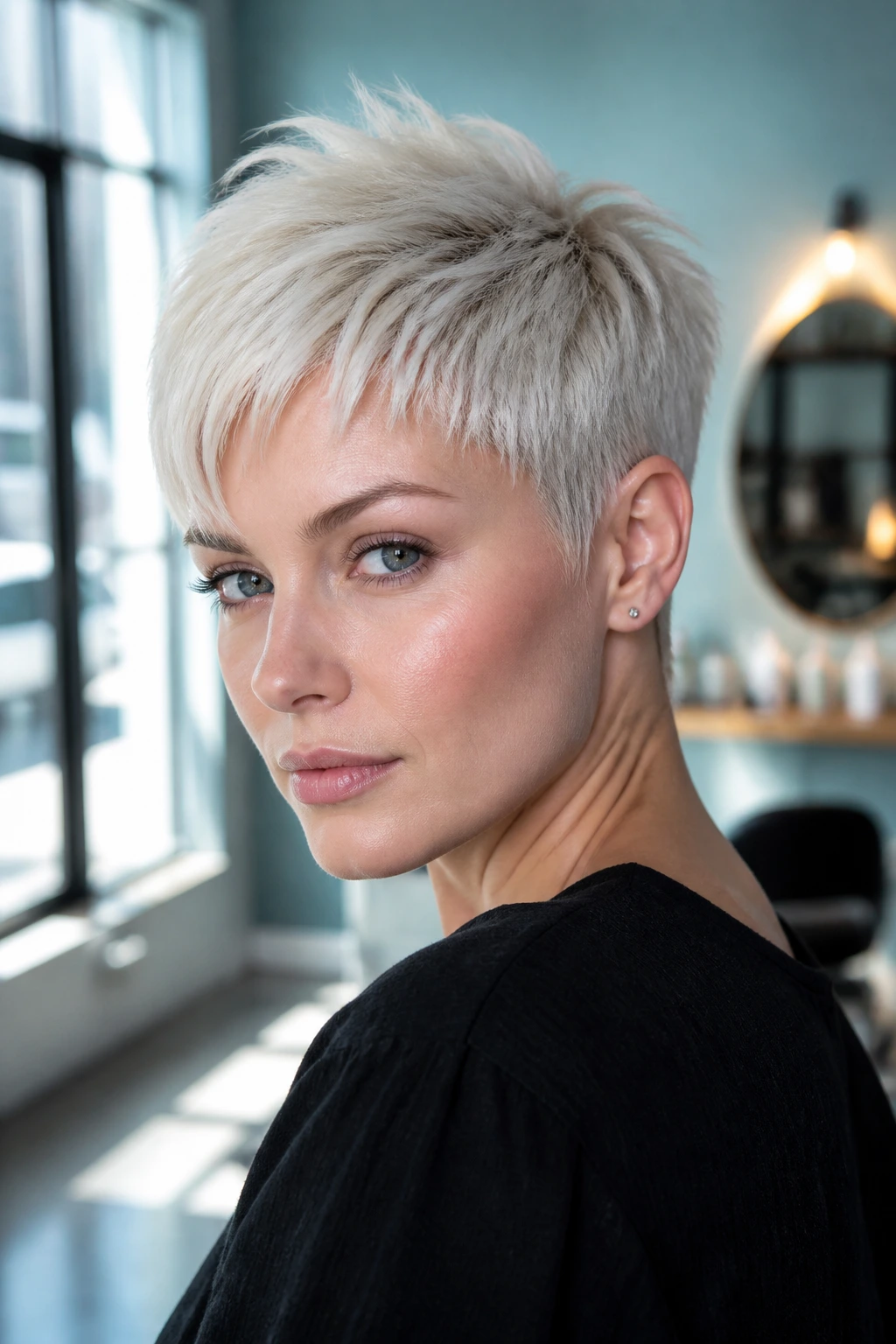
Short hair changes how color lands, so the first decision is not “what color do I like?” It’s “what does this cut need?” A blunt bob usually wants shine or crisp contrast. A pixie usually wants dimension or a strong tone shift. A shag needs pieces that move, not a single heavy blanket of color. If you match the formula to the shape, the haircut starts looking intentional instead of merely dyed.
The base color matters too. If you’re starting from a level 4 brunette, a soft copper, auburn, or mocha melt will usually feel more natural than trying to jump straight to pastel. If your hair is already light, beige blonde, peach, lilac, or silver become easier to wear and maintain. Short hair gives you less room for error, which is why a strand test is worth the time.
Essential Tools for These Looks
-
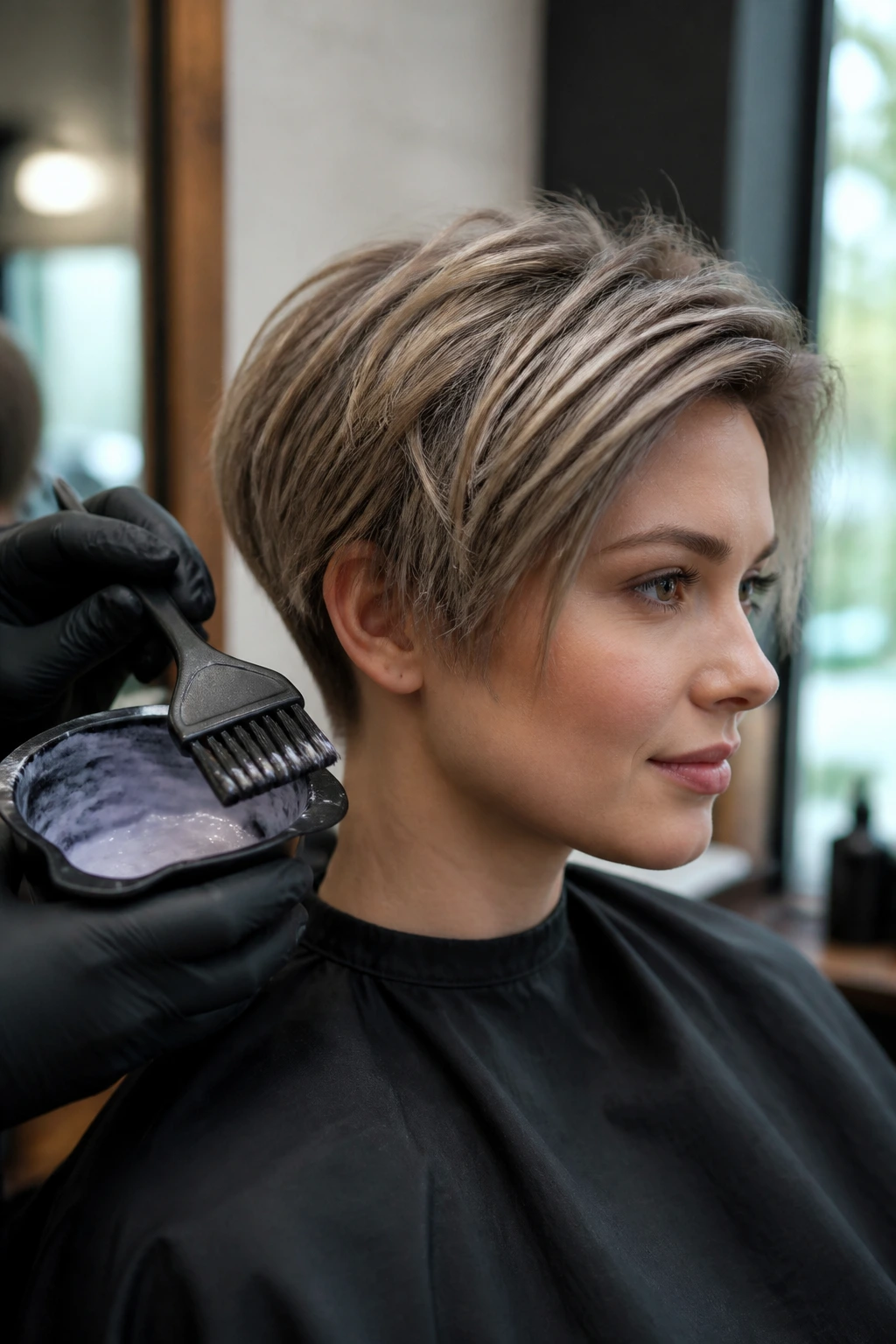
Color bowl and brush: Better than squeezing color straight from the bottle if you want even saturation on short layers.
-
Gloves and a cape or old towel: Short hair still stains shirts, especially around the nape and ears.
-
Foils or balayage board: Useful for money pieces, peekaboo panels, and any placement that needs a clean edge.
-
Toner or gloss: This is what keeps blondes, silvers, and coppers from looking muddy or brassy after the initial service.
-
Color-safe shampoo and conditioner: Sulfate-free is the safer default for dyed short hair; it helps the tone last longer.
-
Purple or blue shampoo: Keep one in the cabinet for blonde, silver, and cool brunette shades, but don’t use it every wash.
-
Heat protectant: Short hair gets heat-styled fast, which means it gets damaged fast if you skip protection.
-
Texture cream, matte paste, or lightweight serum: The finish changes how the color reads, and short hair needs that finish to show the work.
Smart Shopping for the Right Color Formula
Buying color for short hair is a little different from buying it for long lengths. You are not shopping for mass. You’re shopping for control. For softer changes, demi-permanent color or gloss is usually kinder because it adds tone without a huge commitment. For dark-to-light changes, you need a proper lightener, and if the goal is silver, pastel, or platinum, the hair has to be lifted to a pale yellow base before toner goes on.
Watch the developer strength. A 10-volume developer is gentler and usually fine for deposit-only color or tone correction. A 20-volume developer lifts more, but it also asks more from the hair. On a short cut, that can still be useful because the length is small, but it should be chosen with a purpose. No guessing. No “let’s see what happens.”
If you’re buying at-home color, pay attention to undertone language. Ash knocks out warmth. Gold adds warmth. Copper adds red-orange warmth. Beige sits in the middle. If your short hair tends to go brassy, cool or neutral formulas are safer. If it turns flat, a little warmth keeps it from looking dull.
How to Wear and Style These Colors
Finish: Sleek styling makes dark shades like jet black, blue-black, and graphite look sharper. Rough-dried texture works better for copper, rose gold, and bronde because the bend gives the color places to catch.
Parting: A deep side part can make a money piece or peekaboo panel more obvious. A center part makes a blunt bob or split-dye look cleaner and more graphic.
Accessories: Gold hoops love copper, apricot, and strawberry blonde. Silver jewelry usually looks strongest with smoky silver, graphite, or icy blonde. That isn’t a rule carved in stone, but it does help the whole look feel finished.
Makeup: Berry blush and soft brown lipstick flatter cherry cola, rust, and auburn shades. Cool pinks and mauves sit nicely beside lilac, silver, and slate. Keep the makeup slightly simpler when the hair is already loud.
Additional Tips and Color Boosters
Gloss Finish: A clear or tinted gloss every 4 to 6 weeks can keep short hair from looking dusty, especially on brunette, copper, and blonde shades. On short cuts, shine is not optional; it’s part of the haircut.
Texture Boost: Use a little paste or cream to separate the ends on pixies and crops. Short hair color often looks better when the strands are not fused together.
Customization: If a full head of bright color feels like too much, move the action to the front fringe, nape, or underlayer. Short hair is perfect for that kind of selective drama.
Make-It-Yours: If your hair is curly, choose placements that follow the curl pattern instead of fighting it. If it’s straight, use contrast in the root or ends so the color doesn’t vanish on a smooth surface.
Common Mistakes to Avoid
The first mistake is going too light without enough tone correction. On short hair, brass sits right near the face and can make the whole style look unfinished. The fix is simple: lift to the right level, then tone. Not before. Not halfway. After.
Another common miss is painting color too evenly on a cut that needs movement. A pixie or shag can look heavy if every section gets the same saturation. You usually want more depth at the root or underneath, and more brightness where the light hits.
People also underestimate how fast short hair shows regrowth. A root that feels barely noticeable on long hair can look deliberate and edgy on a bob for the first week, then start feeling like an accident after that. Choose rooted styles if you hate frequent touch-ups.
And one more: using harsh shampoo every wash. That strips blonde, copper, and pastel tones fast. Color-safe cleansing and cooler water do more than most people think.
Variations and Adaptations to Try
Low-Maintenance Root Shadow: Keep the root 1 to 2 shades deeper than the mids and ends. This works especially well on blondes, brondes, and silver looks because it softens the grow-out and makes short hair easier to live with.
Office-Friendly Fashion Color: Hide the bold shade under the top layer or keep it in the money piece. Teal panels, lilac underlayers, and emerald peekaboo work well here because the color shows only when you want it to.
Curly Short Hair Version: Choose a dimension-first formula like bronze brunette, cinnamon swirl, or chocolate micro-highlights. Curly short hair needs contrast that follows the curl pattern, not chunky stripes that disappear into the bend.
Dark-Haired Shortcut: If you’re starting from dark brown or black and do not want a heavy bleach session, go for cherry cola, espresso caramel, burnt sienna, or blue-black. These shades look rich on short hair without requiring a full level-9 lift.
Bold Weekend Version: Try split dye, scarlet dip-dye ends, or teal hidden panels. The shorter the cut, the easier it is to commit to a strong shape without the color taking over your life.
Make the Color Last on Short Hair
Short hair color has a different maintenance rhythm than long hair. Because there’s less length, the grow-out is visible sooner, but the actual color service often uses fewer products and less time. That trade-off is one reason people get hooked on short cuts. You see the change fast.
For brunettes and deep reds, a gloss refresh every 4 to 8 weeks is usually enough to keep the tone from looking tired. For blondes and silvers, toner often needs a touch-up around every 4 to 6 weeks, especially if your water is hard or your hair pulls warm. Fashion colors like peach, lilac, teal, and emerald tend to fade sooner, so color-depositing conditioners can stretch the life between salon visits.
Wash with lukewarm water. Hot water opens the cuticle too much and sends pigment down the drain. If you use heat tools, a protectant matters every single time. Short hair gets styled quickly, which means it gets exposed quickly too.
Frequently Asked Questions
Can you do balayage on very short hair?
Yes, but the placement has to be tighter and more intentional than it would be on long hair. On a pixie or short bob, balayage usually works best when the lighter pieces follow the top layers, fringe, and ends that move the most.
What short hair color is easiest to maintain?
Rooted brunettes, mushroom brown, sand bronde, and soft auburn shades are the easiest to live with. They grow out softly and do not demand constant toner appointments.
Do fashion colors last longer on short hair?
Sometimes they feel more manageable because there’s less hair to cover, but the actual pigment still fades at the usual pace. Peach, lilac, and teal still need color-depositing masks or regular refreshes if you want them to stay vivid.
How do I keep blonde short hair from turning brassy?
Use a toner that matches your base, wash less often, and avoid very hot water. Purple shampoo helps, but it won’t fix badly lifted hair. If the base is too yellow, toner alone can only do so much.
Is it harder to color curly short hair?
It’s different, not harder. Curl pattern can hide or reveal color in strange ways, so placement has to follow the curl shape. Micro-highlights, bronze ribbons, and hidden panels usually work better than chunky stripes.
Can I go from dark brunette to silver on short hair in one appointment?
Maybe, but not always safely. If the hair is healthy and lifts quickly, it can happen. If the hair is resistant or already compromised, a slower process is smarter. Short length does not cancel out damage.
What should I tell my colorist before a short-hair appointment?
Bring photos of the haircut from the front, side, and back if you can. Tell them how often you’re willing to come back for maintenance, whether you style with heat, and whether you want grow-out to look soft or sharp. That conversation saves more regret than people expect.
The Color That Makes the Cut Work Harder
Short hair doesn’t need a huge color idea to make an impact. Sometimes one crisp money piece does more than a full head of highlights. Sometimes a rooted brunette with the right gloss looks better than a complicated blonde service. The trick is matching the shade to the cut instead of treating the cut like a blank canvas.
If there’s one thing I’d trust over trends, it’s this: the best short-hair color is the one that sharpens the shape you already have. A bob gets cleaner. A pixie gets livelier. A bixie gets movement. That’s the real payoff, and it tends to hold up long after the salon mirror glow fades.
Pick the tone that makes your haircut look more like itself. Then wear it hard.
