



Long hair can look polished one day and heavy the next. A blunt hemline that felt fine six months ago starts sitting like a damp towel on the shoulders, and suddenly every ponytail feels like a compromise. That’s why haircut ideas for women with long hair matter so much: the right shape changes how the hair falls, how fast it dries, and how much work you do before you leave the house.
The best long haircuts are rarely the loudest ones. They’re the cuts that fix the silhouette. A soft U-shape can stop thick hair from looking like one solid block. A blunt line can make fine hair look denser. Curtain bangs can do more for a face than another two inches of length ever will. Some of the ideas below barely look dramatic on day one, and that is the point. They earn their keep when you shake your hair loose the next morning and it still has a bit of movement.
A few of these cuts are easygoing. A few need a round brush. One or two are for women who actually want to make a statement and don’t mind a little maintenance. That spread is the whole reason the list works.
Why These Long-Hair Haircut Ideas Stand Out
-
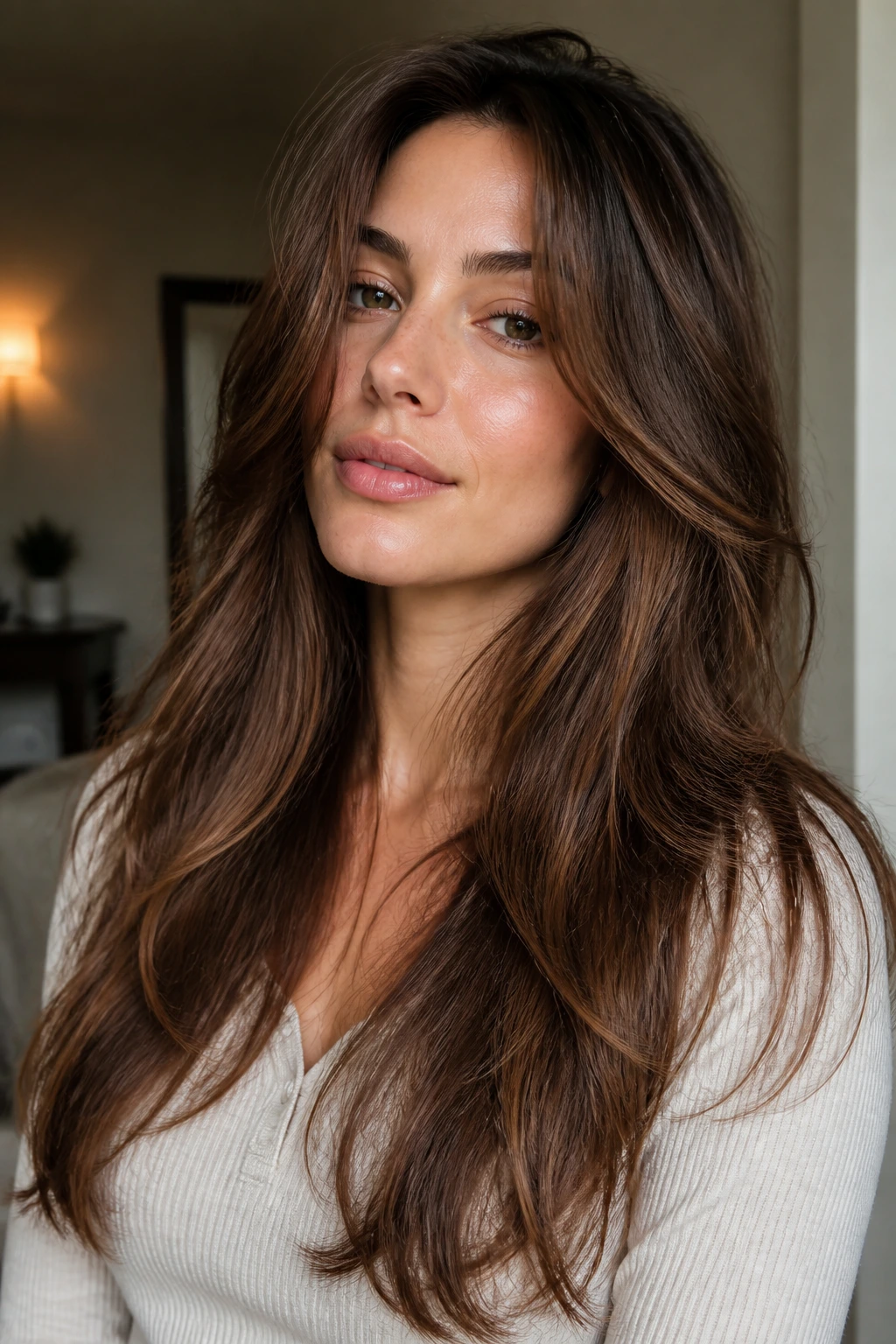
Shape first, length second: The smartest cuts here change the outline of the hair so it stops hanging straight down like one heavy sheet.
-
Better movement without losing inches: Several of these ideas keep the overall length intact while removing weight from the right spots, especially around the crown and face.
-
More control over density: Thick hair can feel lighter without turning wispy, and fine hair can look fuller without being over-layered.
-
A cleaner grow-out: The better choices don’t collapse after three weeks. They still look intentional when the layers start to soften.
-
Fringe options without panic: If you want a change but don’t want to lose long hair, bangs and face-framing pieces do a lot of the work.
-
Works with real routines: Some of these cuts air-dry well, some love a blowout, and some are only worth it if you’re fine with a little styling time.
1. Soft U-Shape Layers
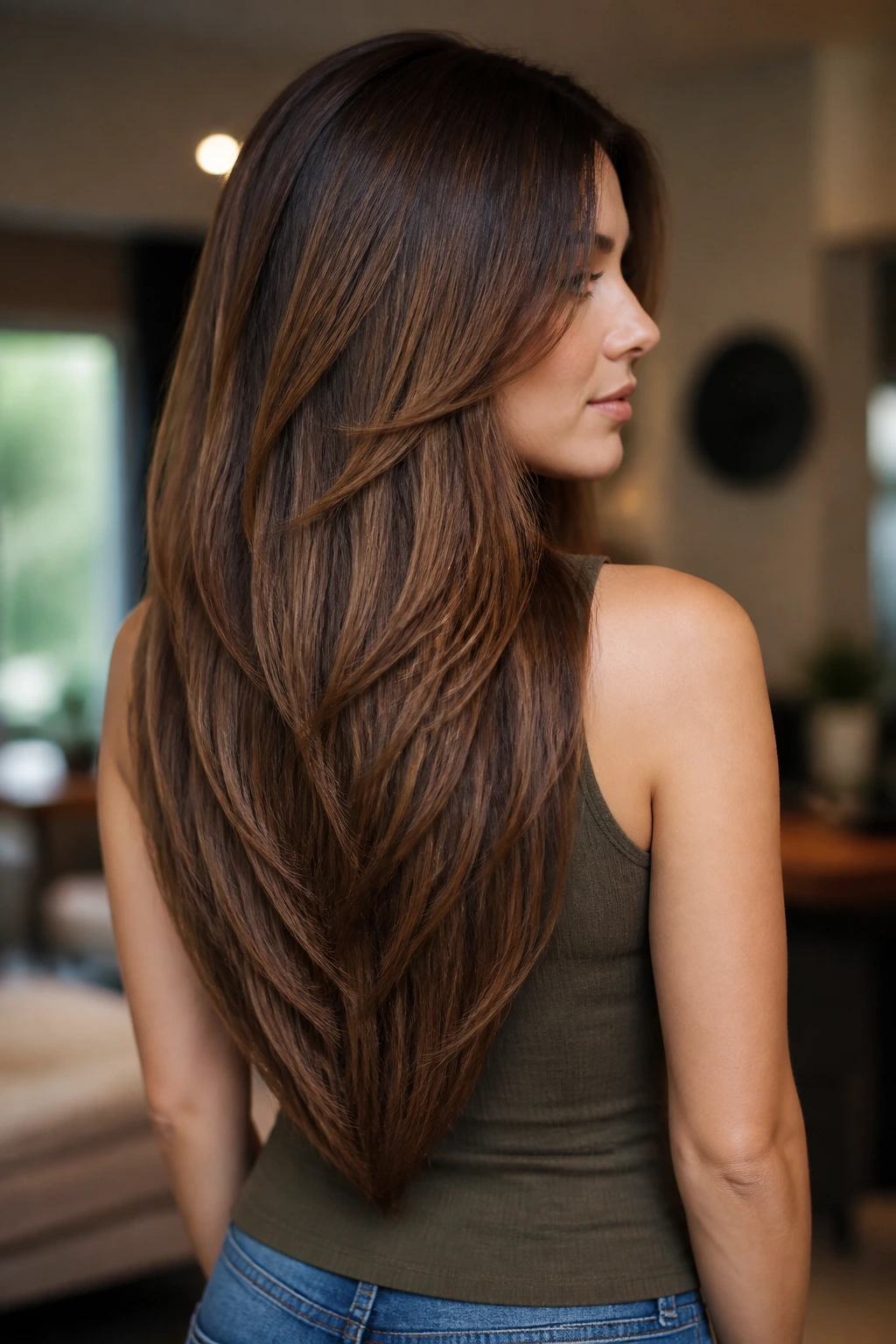
A soft U-shape is one of those cuts that quietly makes long hair look more expensive without trying to announce itself. The perimeter curves gently around the back, so the ends don’t form one hard line. On straight hair, the shape reads clean and smooth. On wavy hair, it keeps the movement from puffing out at the sides.
What to Ask For
- Keep the longest length at the back.
- Ask for layers that blend into a shallow U, not a sharp point.
- Leave the face frame below the chin if you want the cut to grow out smoothly.
The reason this shape works is simple: it softens the bottom edge while keeping the length believable. There’s no choppy ladder effect, which is why it suits women who like their long hair but hate the blocky feel that comes from one blunt cut. It’s also forgiving. A U-shape can be worn down, tucked behind the ears, or tied back without looking strangely hacked off at the front.
If your hair is thick, this is a calm choice. If your hair is fine, keep the layers light so the ends don’t look too thin. One good trim every 8 to 10 weeks keeps the curve visible.
2. Dramatic V-Cut Layers
A V-cut gives long hair a sharper point at the back, and that point can look gorgeous when the hair is straight, glossy, or a little wavy. It’s more defined than a U-shape and a bit more dramatic. You see the line. You feel the swing.
The V-shape is especially useful when the hair is dense and heavy. Instead of making the whole bottom edge bulky, the cut lets the length taper toward the center back. That can make long hair feel lighter on the shoulders without sacrificing the impression of fullness. It also looks good from the side, which is where many long cuts fail.
This one asks for a stylist who knows how to blend. If the point is too sharp, it can look dated fast. The better version is soft enough that the hair still moves naturally. If you wear a lot of low ponytails or half-up styles, the V shows beautifully. If you want a clean, polished shape that still has a little edge, this is a strong pick.
3. Butterfly Cut
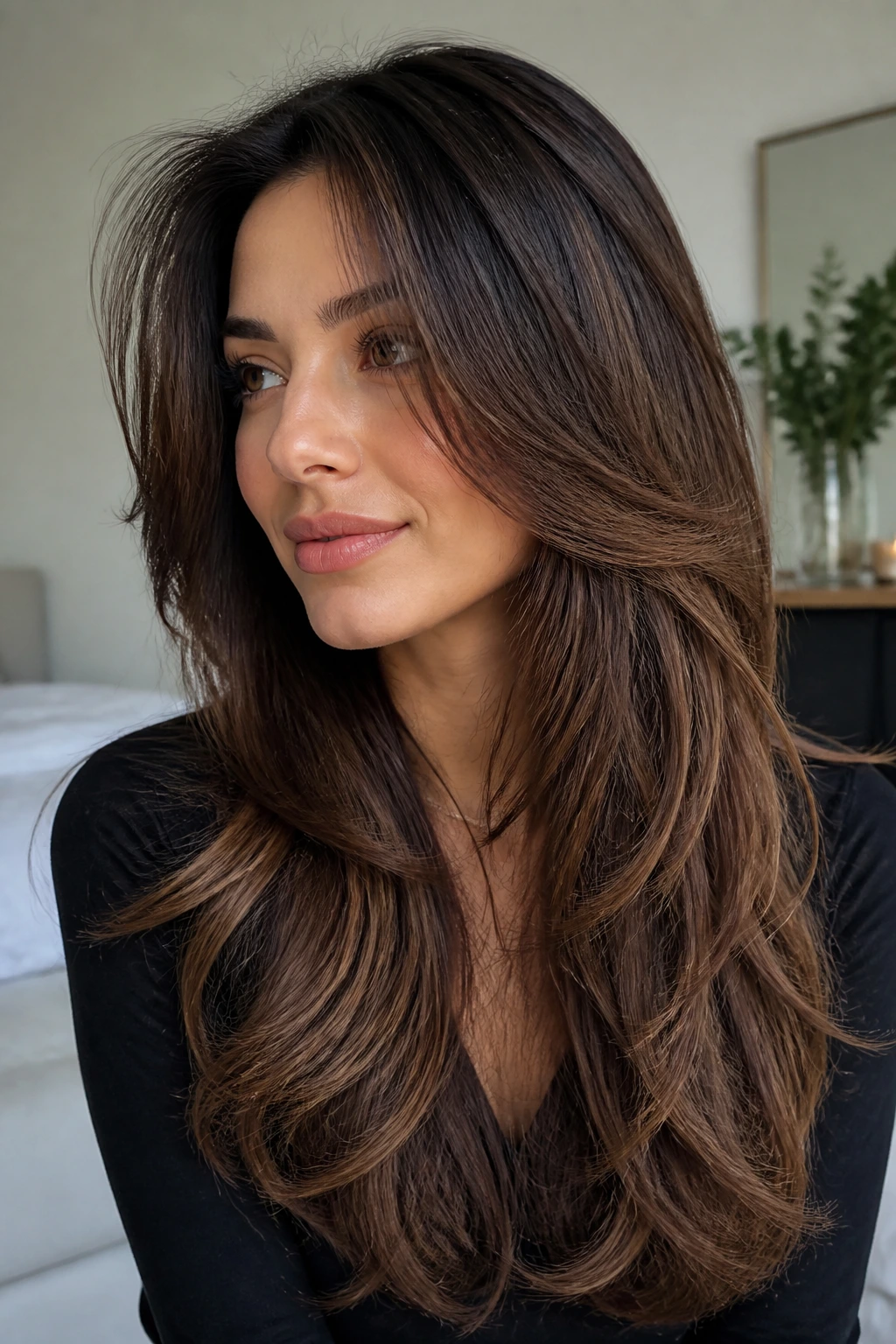
The butterfly cut is the cut people keep bringing up when they want volume at the top without saying goodbye to long hair. It uses shorter layers around the crown and face, then leaves the length hanging below. The result is a cut that flips and moves in a way plain long hair often doesn’t.
What makes it work is the contrast. The upper layers create lift, while the lower length keeps the whole thing grounded. That means you can get a bouncy, fuller look without actually chopping off the ends. It’s a clever cut, but only if your stylist respects the difference between “lightness” and “over-thinned.”
Best on medium to thick hair. On very fine hair, too many layers can make the ends look empty. If you like a blowout, this cut pays off quickly. If you air-dry and walk away, it can still look good, but the volume sits lower and softer.
4. Curtain Bangs with Long Layers
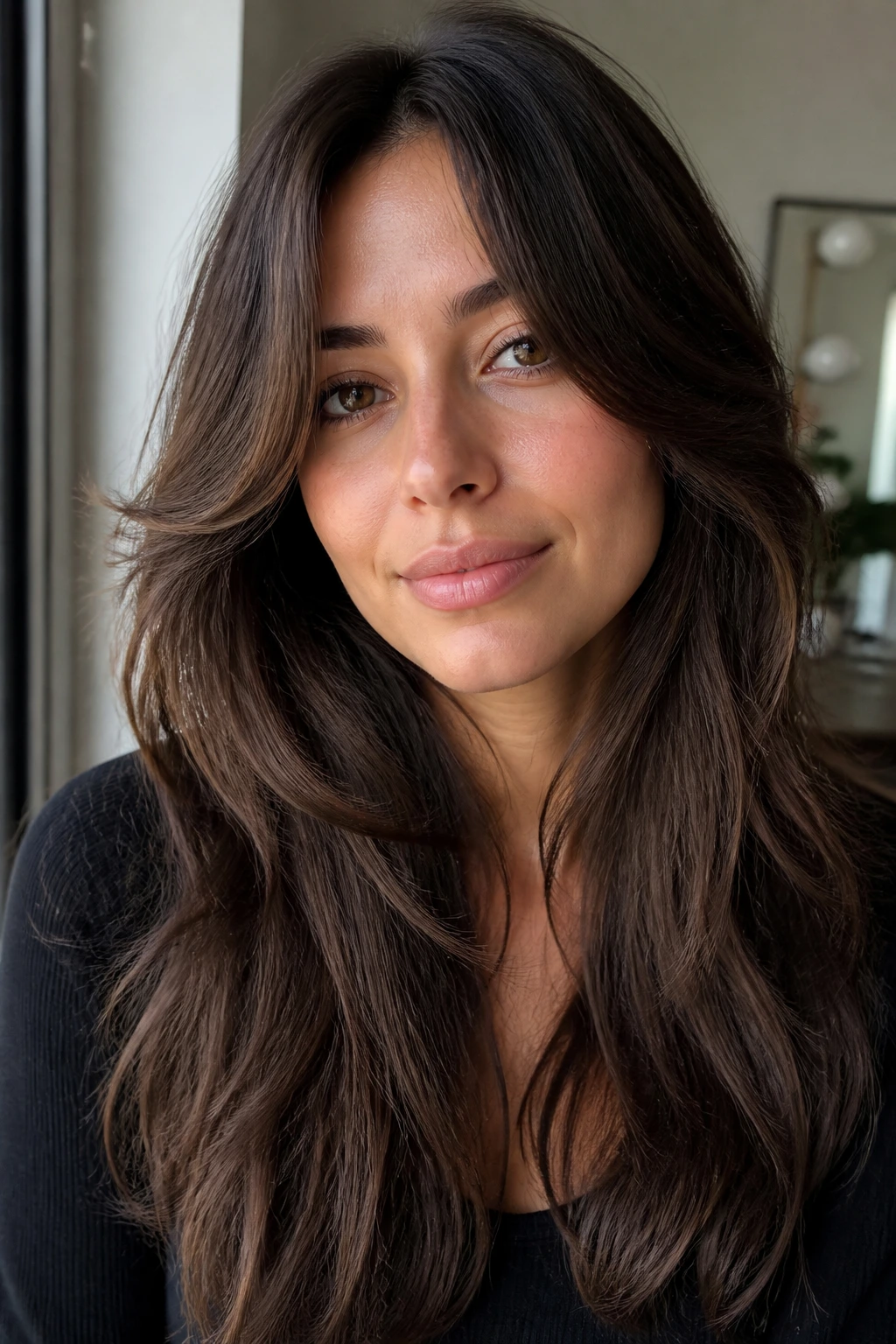
Curtain bangs can change long hair more than a full haircut sometimes. That split fringe opens in the middle, sweeps away from the face, and blends into long layers so the front doesn’t feel chopped off. It gives you shape near the eyes and cheekbones without taking a huge bite out of the length.
The best thing about curtain bangs is how they soften a long face, a strong forehead, or a haircut that feels too straight down. They’re also easier to grow out than blunt bangs. Not effortless. Just easier. You still need trims every 6 to 8 weeks if you want them to sit right, especially if your hair lies flat or grows quickly across the brow.
They work best when the face frame starts around the cheekbone or lip and then slides into the rest of the cut. If you’re nervous about bangs, this is the entry point I’d trust first.
5. Cheekbone-Grazing Face-Framing Layers
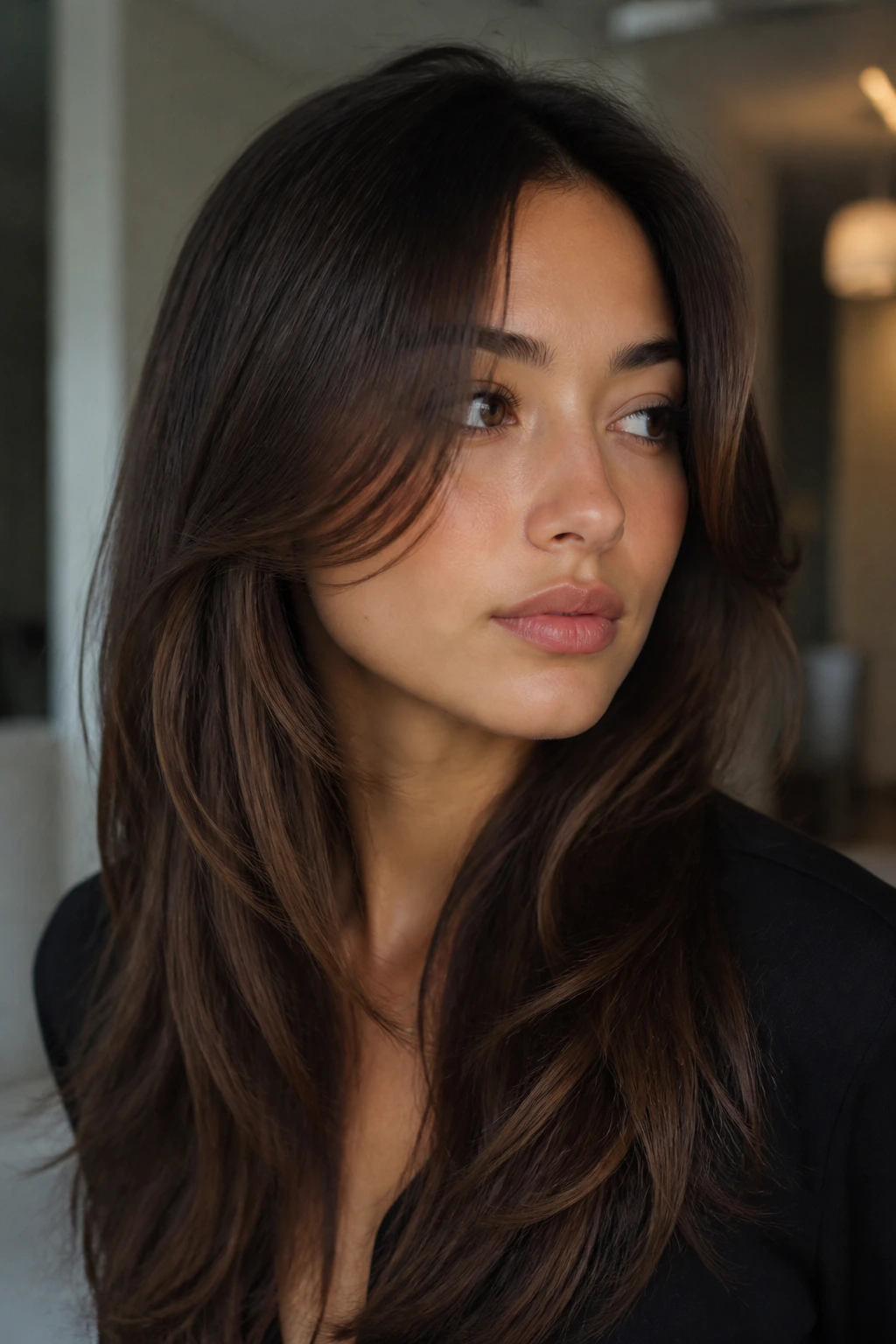
Sometimes the smartest move is to keep the length and just change what happens around the face. Cheekbone-grazing layers do that neatly. They bring the eye upward, soften the front, and keep the rest of the hair long and calm.
This cut is especially useful if you want movement but don’t want full bangs. The front pieces can be swept back, tucked behind the ear, or curled under for a more finished look. On round faces, the longer front angle can add a bit of vertical line. On square faces, it can blunt the edges just enough.
The trick is placement. If the shortest piece lands too high, the cut starts feeling like a grown-out shag. If it lands too low, the face frame disappears. Most stylists will keep the shortest point somewhere between the cheekbone and jawline, depending on your bone structure and how you wear your part.
6. Invisible Layers
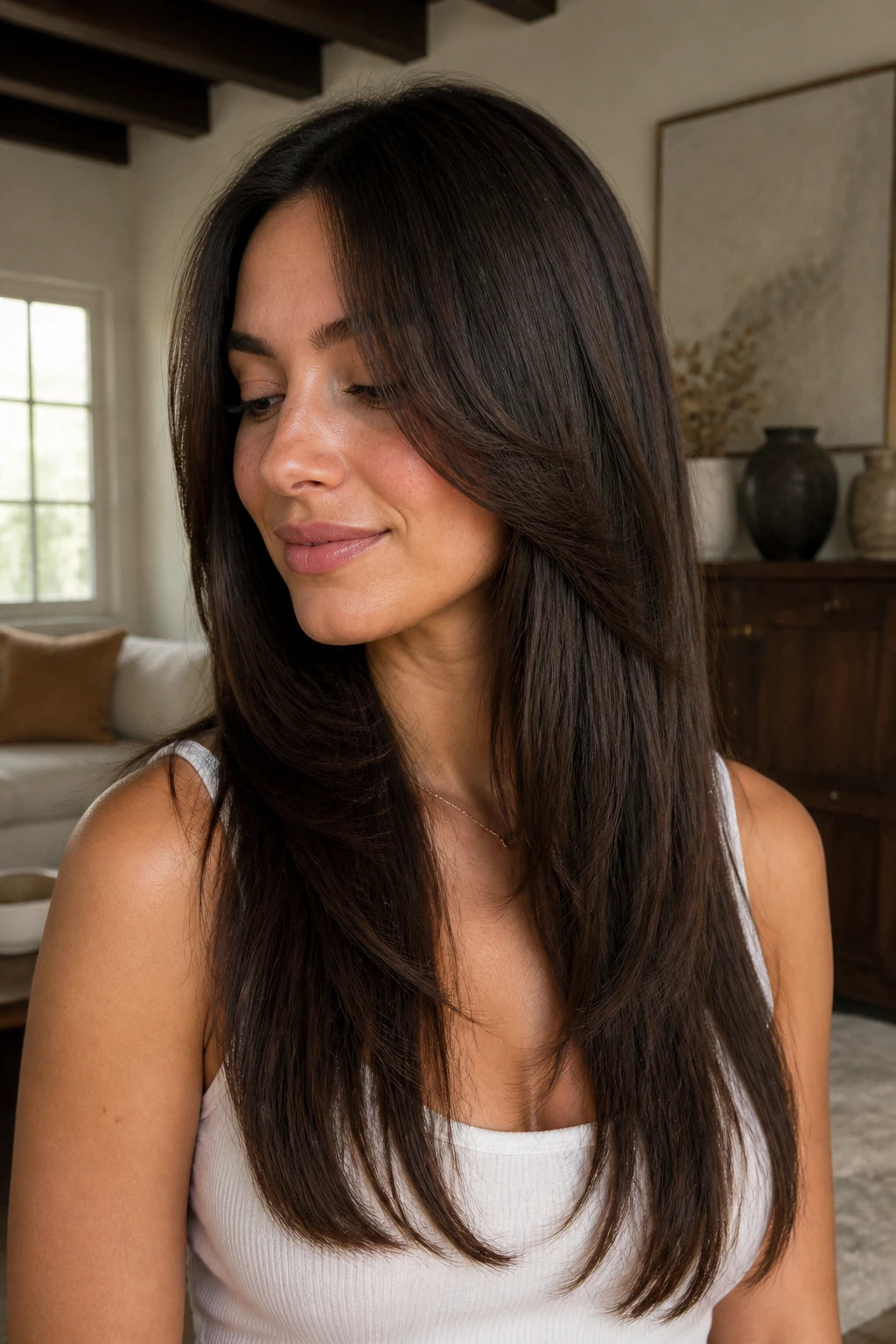
Invisible layers are for women who want movement without the obvious staircase effect that some layered cuts leave behind. The layers are hidden inside the hair, so the outline stays smooth while the interior loses weight. From the outside, the cut can look almost blunt. That’s the charm.
This is a smart option for long hair that feels too dense but still needs to look polished. It can be especially good on fine hair that would get stringy with visible layers. The hair keeps its length and shape, but it stops behaving like one flat sheet.
If you usually wear your hair straight or in soft waves, invisible layers are worth a close look. They won’t create big, dramatic texture on their own. They make the hair fall better. That sounds modest until you live with it for a few weeks and realize you spend less time wrestling the ends.
7. Long Shag
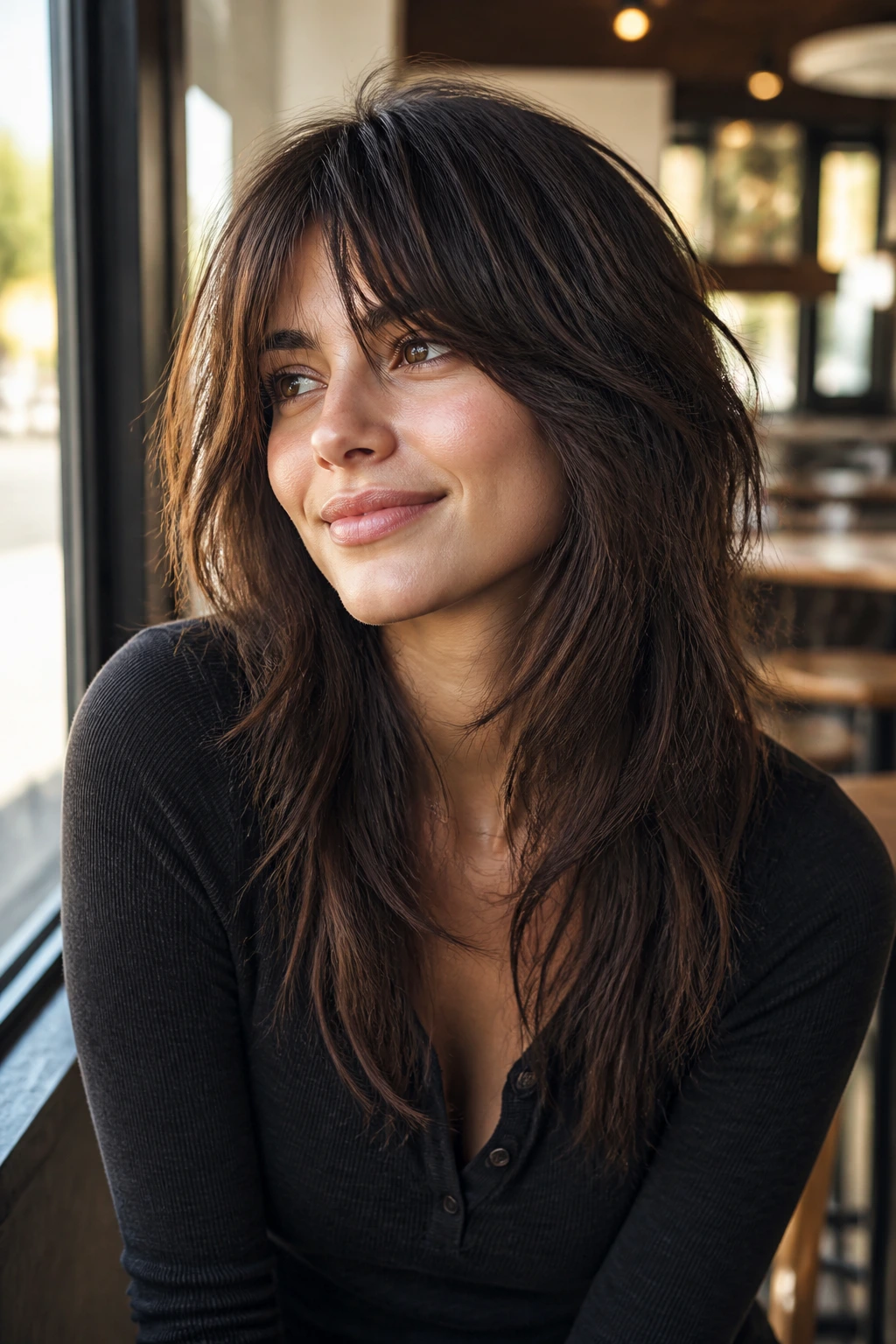
A long shag has attitude, but it doesn’t have to look wild. The right version keeps the length, adds shaggy texture through the crown and mid-lengths, and leaves the ends a little piecey. It reads relaxed, a little rock-and-roll, and very much not afraid of a texture spray.
The cut is especially good if your hair already has some bend or wave. It gives natural movement a place to go. Straight hair can wear it too, but it usually needs more styling to show the layers. The shag is not the cut for someone who wants every strand to sit in a perfect place. It likes a little mess.
What I like about it most is that it takes long hair out of the “just hanging there” category. It gives the shape a pulse. If you’re tired of sleek and want something with more grit, this is the one.
8. Soft Wolf Cut
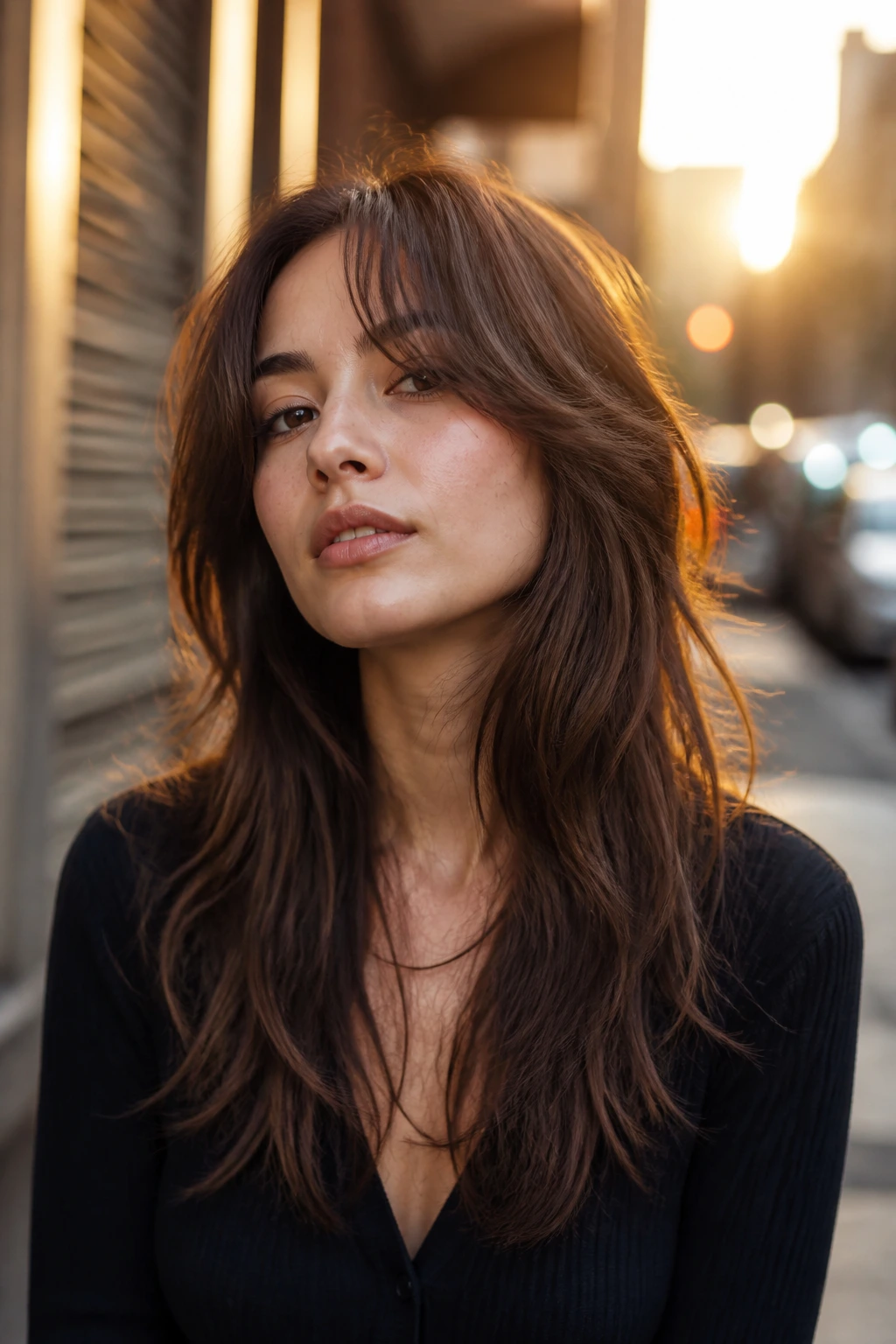
The wolf cut borrows from the shag, then leans a little edgier with more disconnect between the top and the bottom. On long hair, the softer version is the one I’d recommend. You keep the length, but the crown gets more lift and the ends get more texture.
A soft wolf cut works best when the stylist avoids making the layers too severe. The goal is movement, not a costume. If it’s done well, it gives long hair a lived-in shape that looks cool with air-drying, braids, and messy knots. If it’s done badly, it can look like someone attacked the hair with thinning shears in the dark.
This cut suits women who want a noticeable change and are okay with a bit of styling product. A light mousse or cream through the mid-lengths makes the layers show up better. If you like hair that looks a little undone on purpose, this one does that job.
9. Feathered Layers
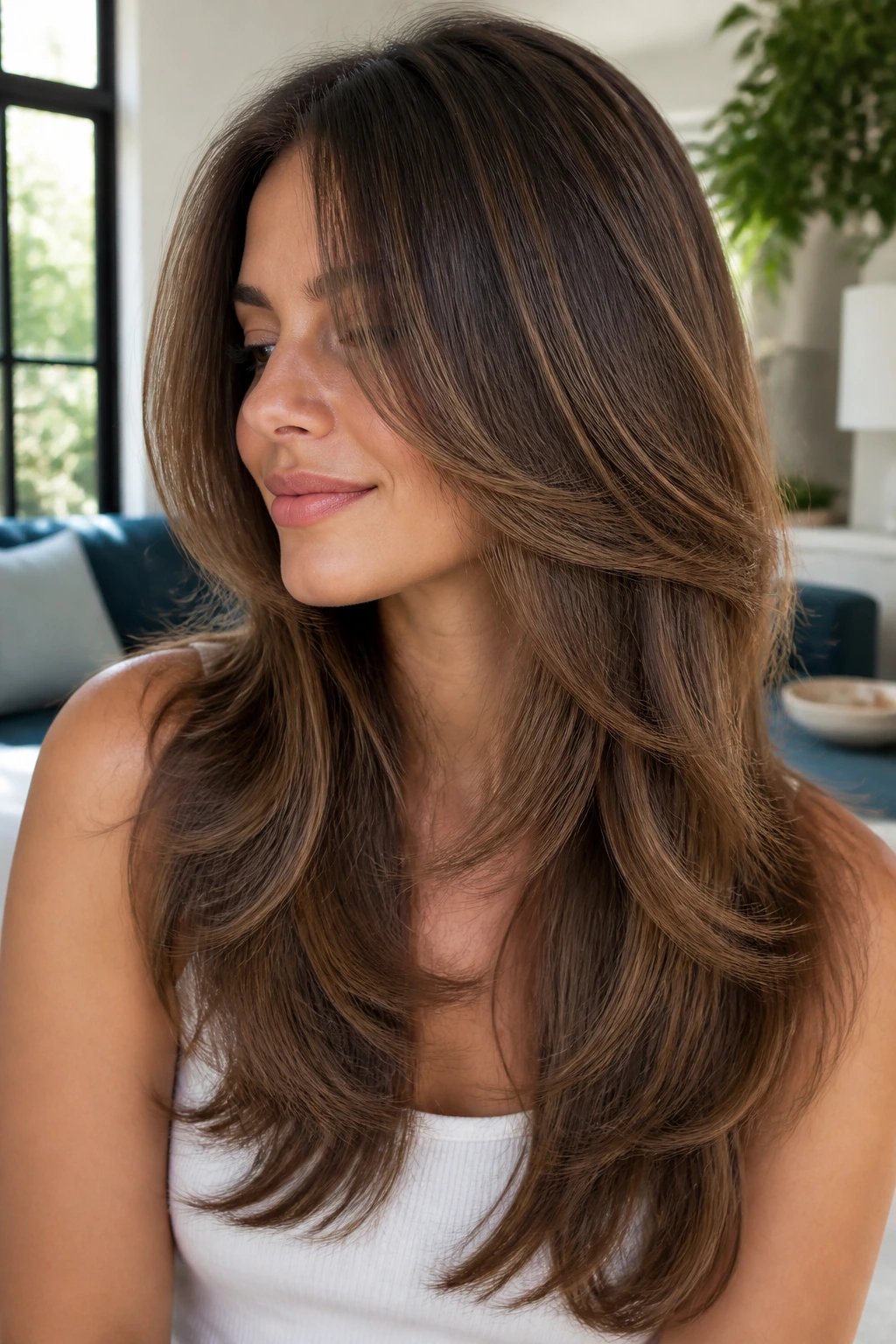
Feathered layers have that airy, brushed-out look that makes long hair feel softer around the edges. They were born in the era of round brushes and big blowouts, and they still work because they remove bulk without making the hair look chopped up.
The shape is especially flattering on medium to thick straight hair. The layers taper away from the face and through the body of the hair, which gives a sense of lift and swing. The ends don’t sit as heavily on the shoulders, and the whole cut looks like it was meant to move.
This is a styling-friendly cut. It loves a blow dryer, a medium round brush, and a little finishing cream on the ends. Air-dried feathering exists, sure, but the cut shines when it’s given some shape. If you miss that soft salon blowout feel, this is the long haircut to chase.
10. Classic Blunt Long Cut
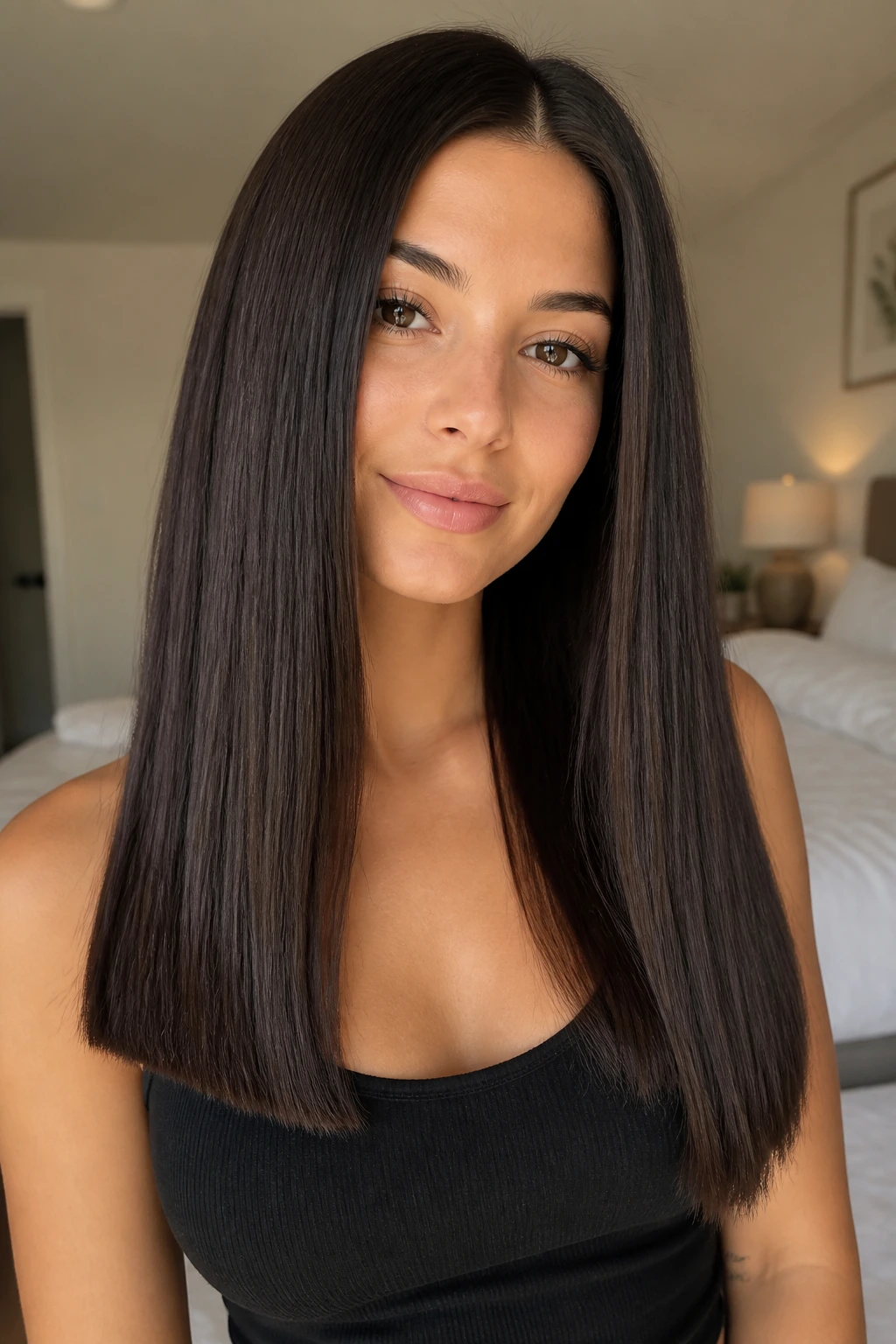
A blunt long cut is the cleanest option in the stack, and it can be stunning on the right hair. No layers. No frayed ends. Just a firm line that makes long hair look thick, deliberate, and a bit graphic.
This cut is especially good for fine hair because the blunt edge creates the illusion of density. It’s also a smart move if you like wearing your hair sleek, center-parted, or in simple half-up styles. The line does the work. The styling can stay simple.
The catch is that blunt long cuts need maintenance. Split ends show faster, and the silhouette starts to fray when the trim gets too old. If you’re committed to regular trims, though, the payoff is clean and strong. It’s one of the few long cuts that can make hair look fuller without any layering trick at all.
11. Razor-Cut Ends
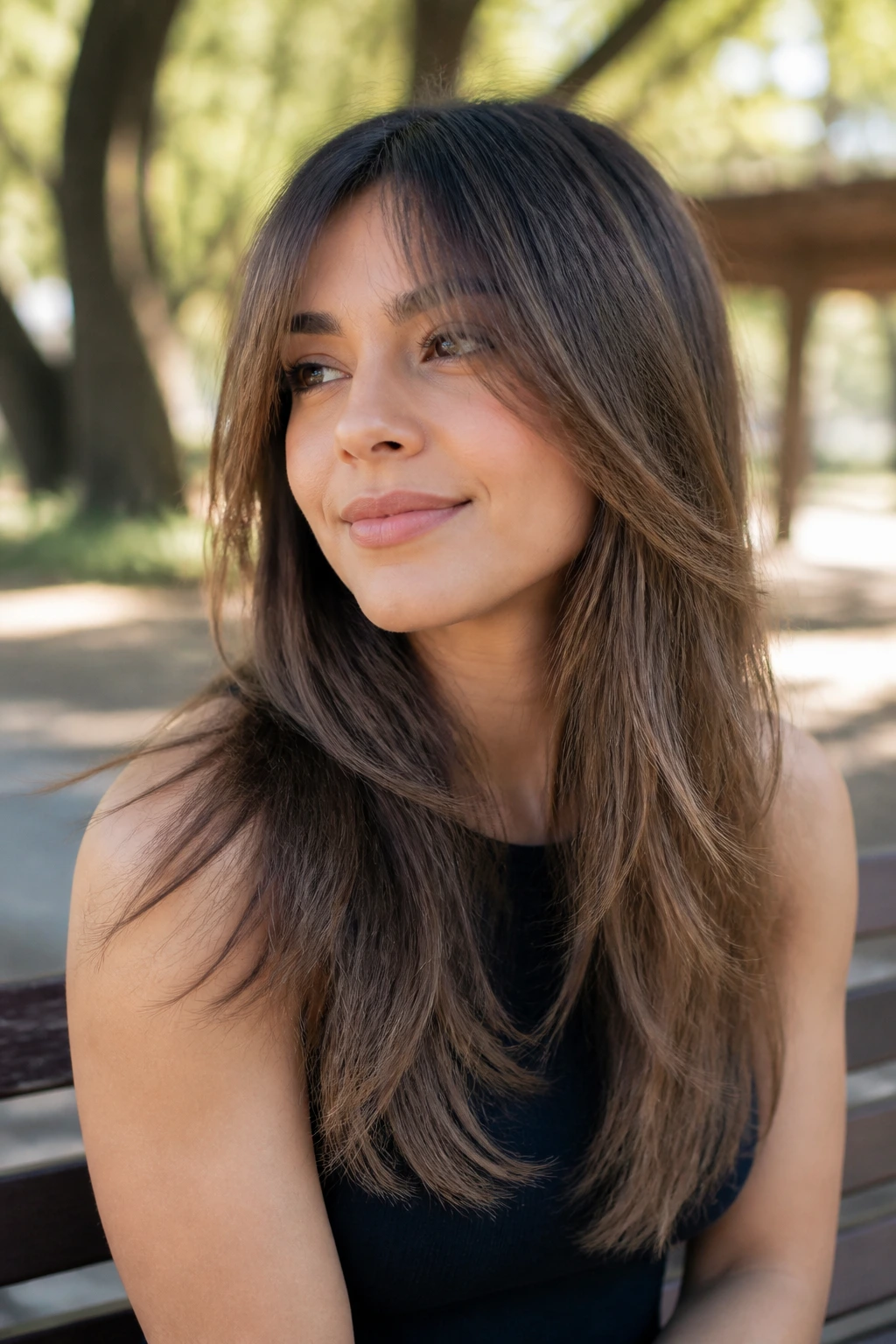
Razor-cut ends give long hair a softer, more separated finish than scissors alone usually create. The effect is airy, slightly wispy, and a little lived-in. It’s a good choice if you want your long hair to move instead of sitting in one heavy line.
The reason people like razor cutting is the texture. The ends don’t feel blunt or dense. They feather away lightly, which can be a relief on thick hair that turns bulky at the bottom. But here’s the catch: the razor has to be used with care. On fragile, very dry, or overly porous hair, it can make the ends look rough faster.
I’d lean toward this cut if your hair is healthy, straight to wavy, and you like a softer edge. It pairs well with loose waves and tousled styling. If you want neatness above all else, skip it. This is a cut with a bit of looseness built in.
12. Choppy Textured Layers
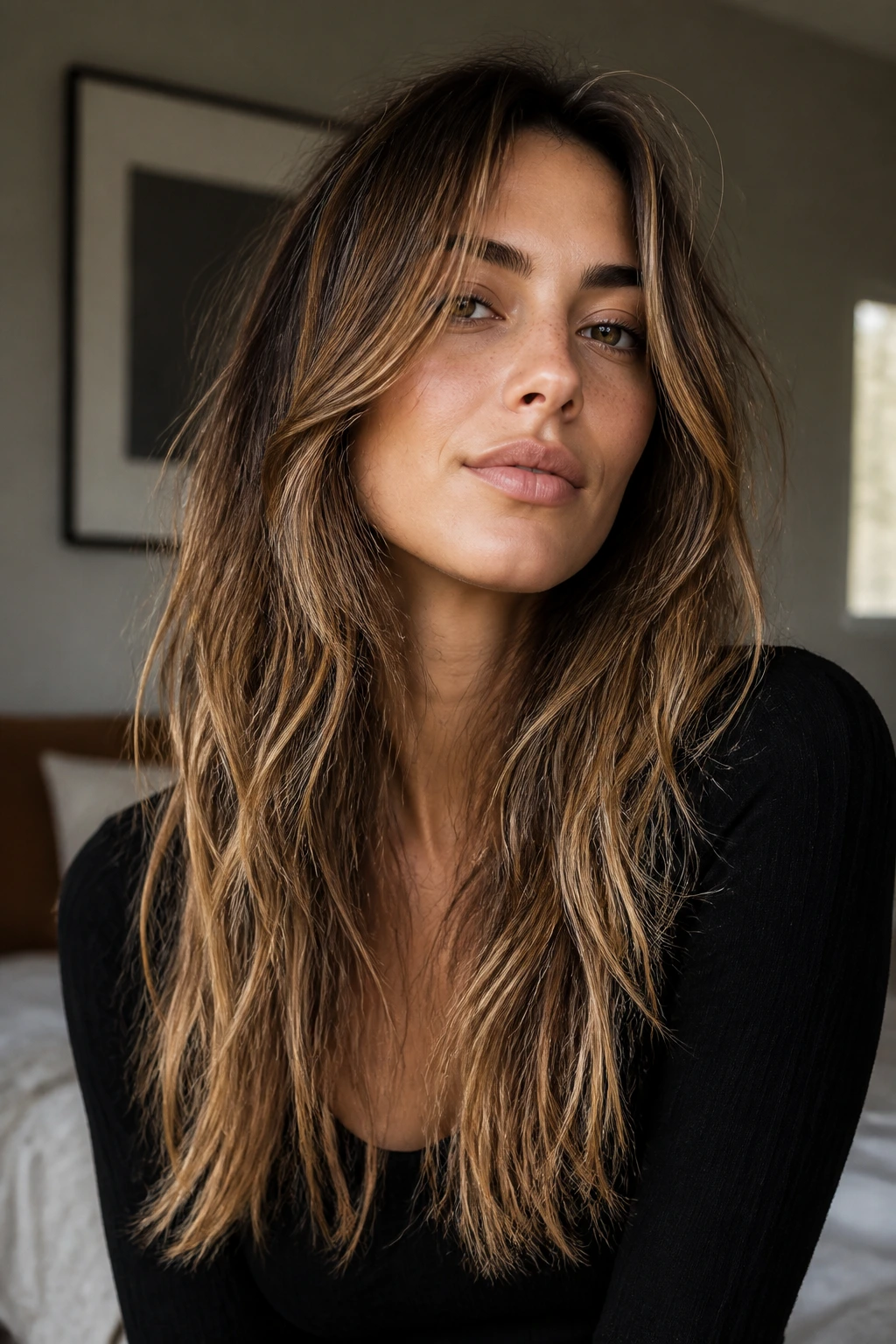
Choppy textured layers are for women who want their long hair to look piecey and intentionally undone. The layers are more visible here, and the finish is less polished than a feathered or invisible-layered cut. It’s casual. A little edgy. Very on purpose.
This cut works best on medium to thick hair with some natural wave or bend. The choppiness helps the hair avoid that heavy triangle shape that long dense hair can pick up. It also behaves well with dry texture spray, which separates the layers and makes the shape more obvious.
What I’d avoid is overdoing it on fine hair. Too much choppiness can leave the ends looking thin and sad. Keep the layers controlled and the density balanced. If you want long hair that feels youthful and loose rather than smooth and formal, this is a good lane to stay in.
13. Rounded Layers
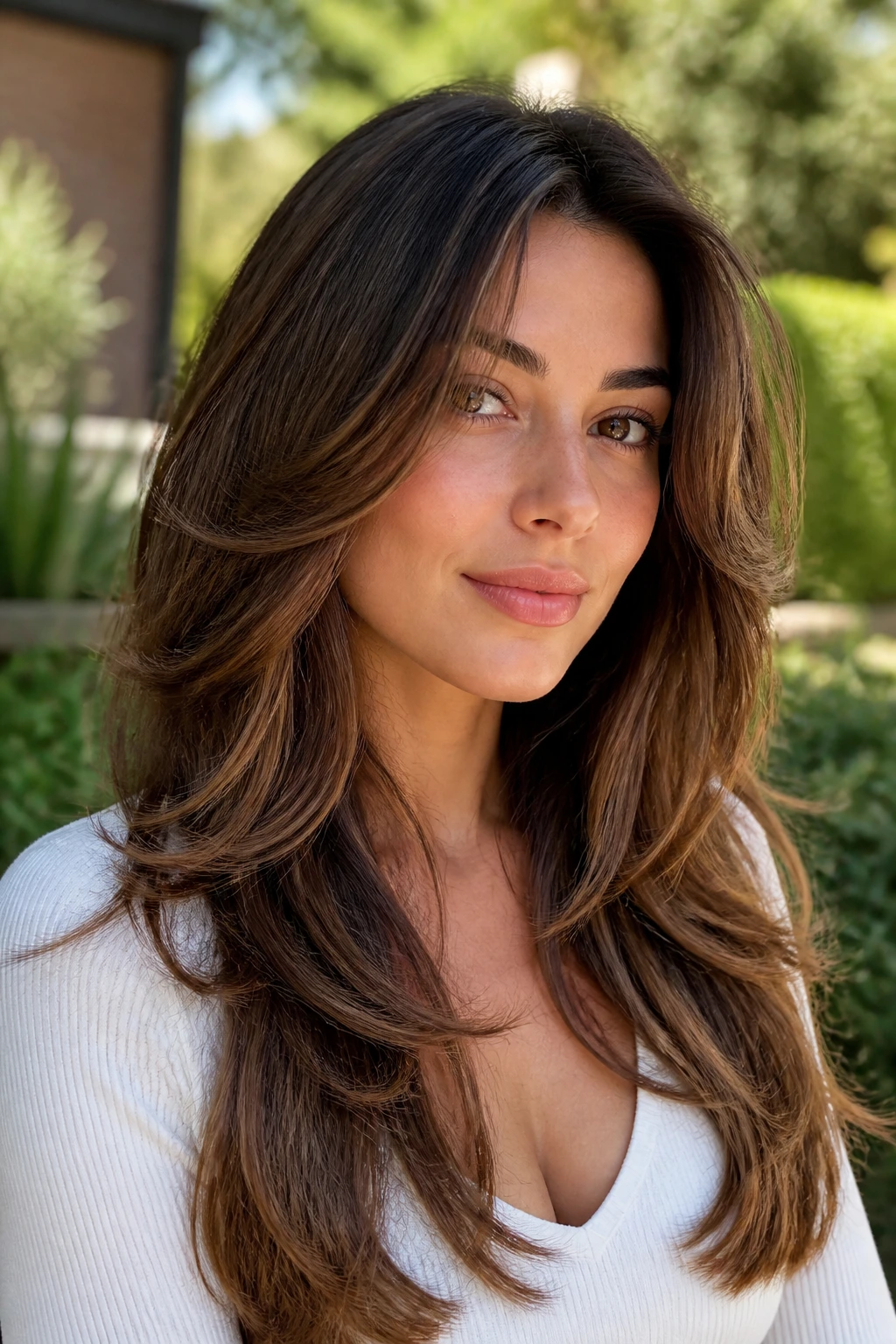
Rounded layers create a soft halo around the head instead of a sharp point or a flat drop. The shape feels plush, balanced, and very wearable. It’s a nice answer for women who want long hair that looks cared for without looking stiff.
This cut is especially flattering if your hair tends to puff at the sides or sit flat at the crown. The rounded silhouette adds fullness where you want it and keeps the bottom from feeling too weighty. It tends to look elegant in motion, which sounds fussy, but really just means the hair falls nicely when you walk.
If you wear your hair down most of the time, rounded layers keep the shape from becoming boring. They’re also a good compromise between a blunt cut and a heavily layered one. You get movement, but not chaos.
14. Step Layers
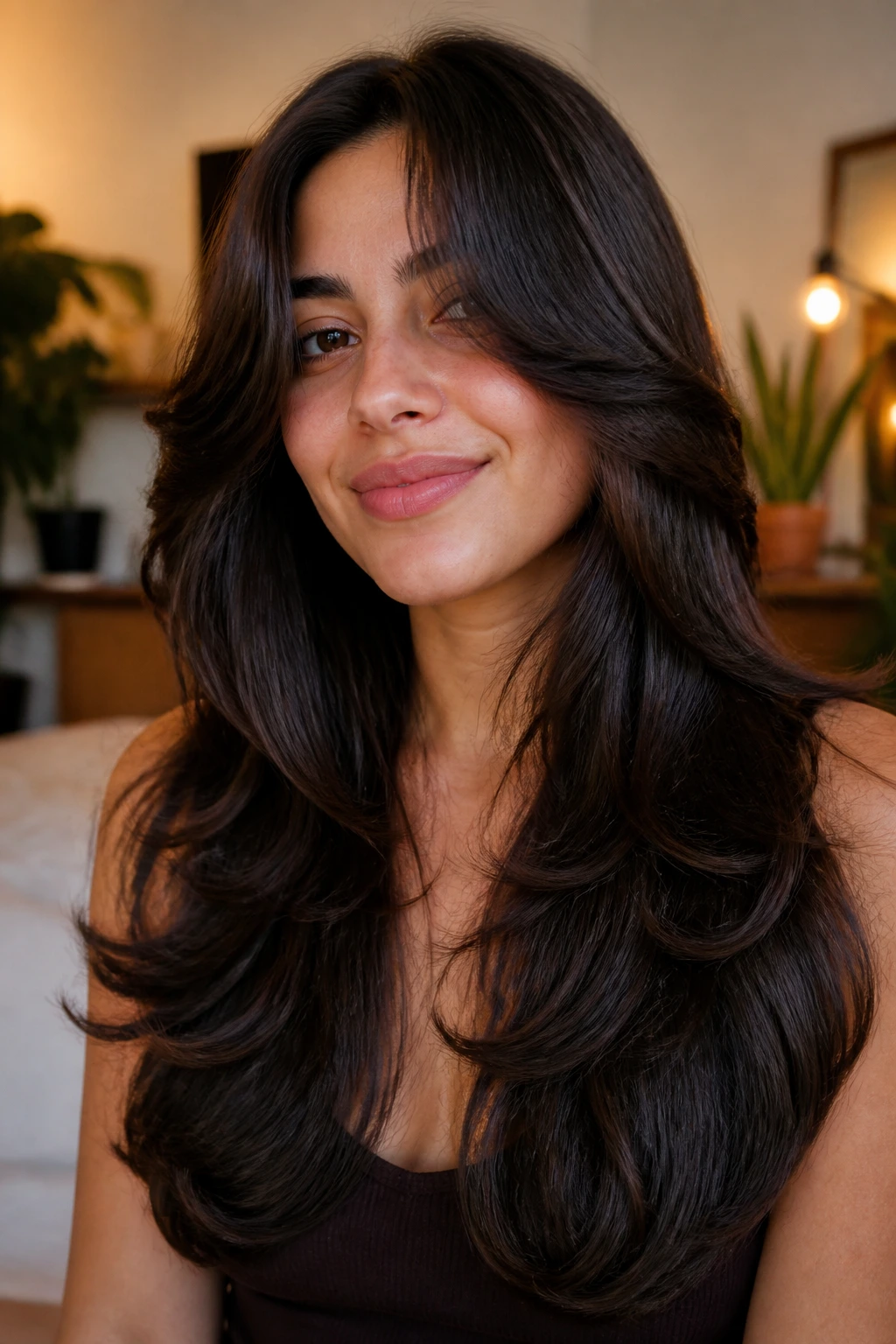
Step layers are more obvious than rounded or invisible layers. The lengths stack in visible sections, which creates a bold, tiered effect. Some women love that because it gives long hair a very clear shape. Others hate it because it does not pretend to be subtle.
This cut works best when the hair is thick enough to support those visible levels. On dense hair, the steps lighten the bulk and make the length feel more alive. On thinner hair, the layers can start looking too separated unless the stylist keeps them soft.
If you like a haircut people notice, step layers have that quality. They pair well with natural waves and bigger styling. They’re not the best choice if you want a whisper-quiet grow-out. They are for women who want the haircut itself to be part of the look.
15. Bottleneck Bangs with Long Lengths
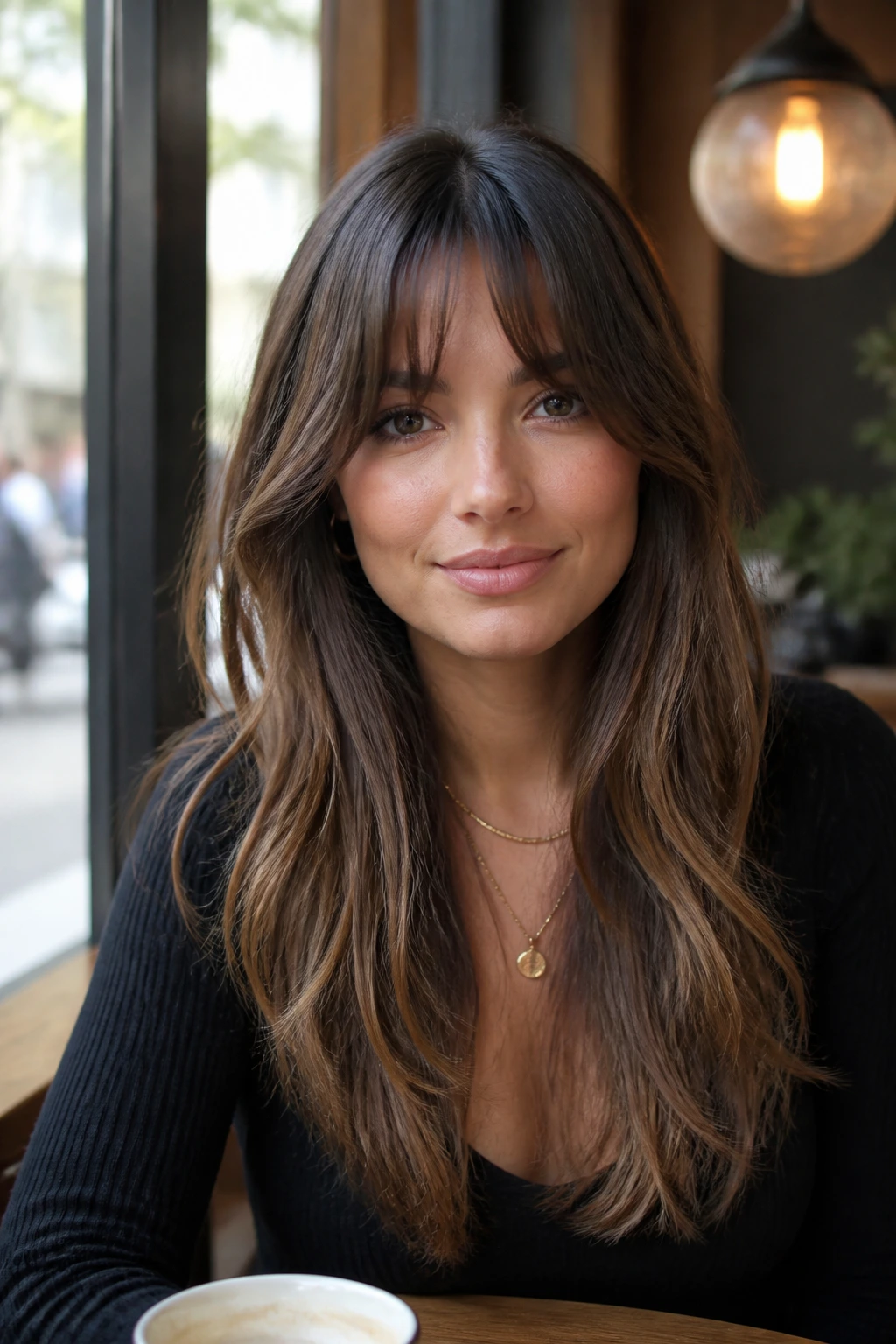
Bottleneck bangs are a smart fringe option because they start narrow in the center and open up wider toward the sides. That makes them softer than a blunt bang and less fussy than a full curtain fringe. On long hair, they give you face shape without swallowing the length.
What makes them work is the balance. The center coverage feels flattering, but the side pieces stop the look from feeling boxed in. They’re a good fit for women who want some forehead coverage and a bit of styling interest without committing to a heavy bang line.
They need regular trims, though. If the center grows too long, the shape collapses and you’re back to an awkward in-between stage. Keep them brushed forward after washing and dried with a small round brush or your fingers. They’re one of those details that look effortless only after a little thought.
16. Side-Swept Fringe with Long Hair
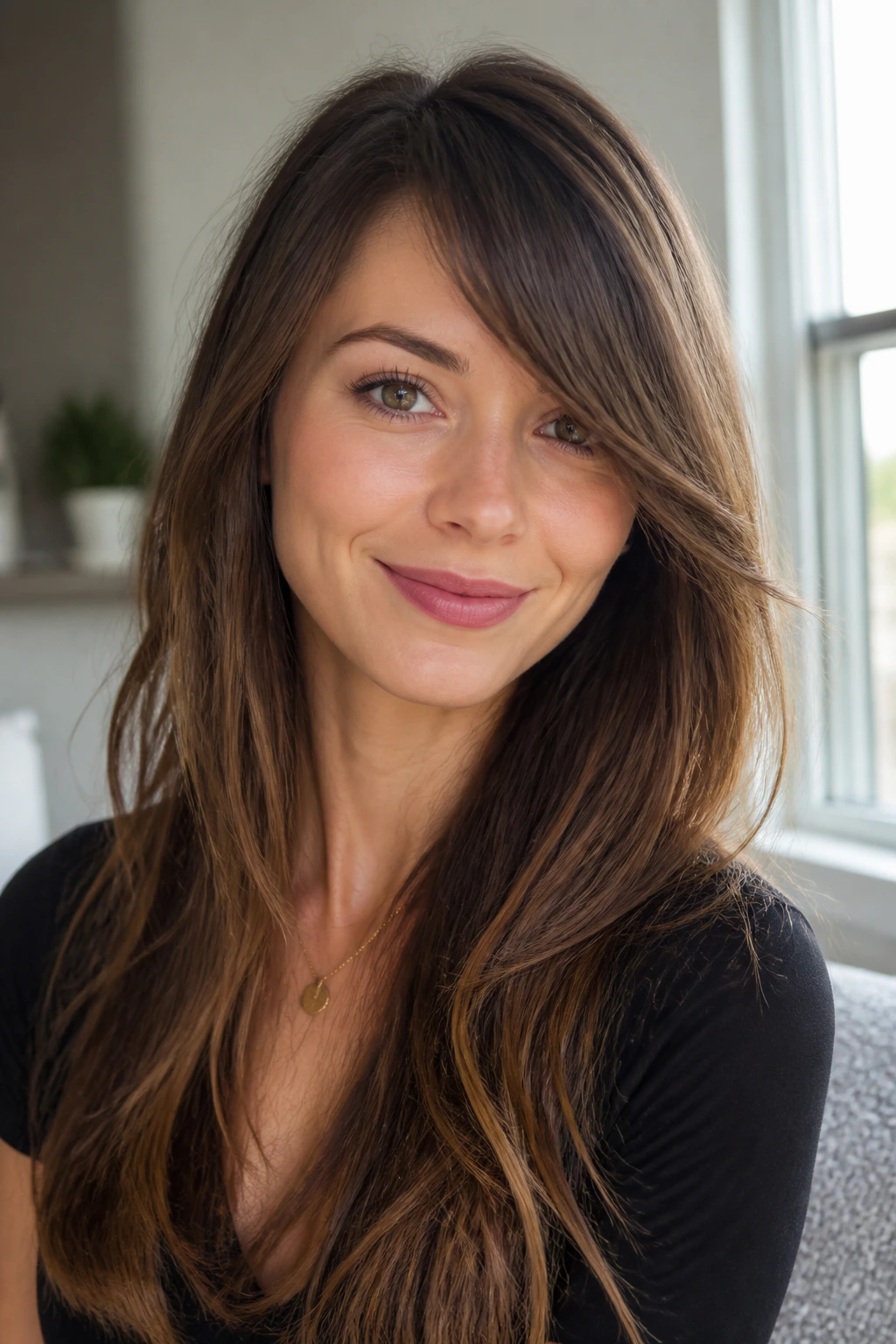
A side-swept fringe is one of the gentlest ways to change long hair. It gives the front a diagonal line, softens the face, and blends into the rest of the cut with less commitment than full bangs. If you like the idea of fringe but hate the idea of daily bang maintenance, this is the compromise to look at.
It’s particularly flattering on square or long faces because the diagonal sweep breaks up straight lines. It also grows out more gracefully than a blunt fringe. That matters more than people admit. A bad bang week can be an entire mood.
This cut usually needs a bit of styling to sit where you want it. A round brush or a quick pass with a dryer nozzle helps it fall in the right direction. Once it does, it gives long hair a softer front edge and makes the whole cut feel finished.
17. Full Straight Fringe with Long Lengths
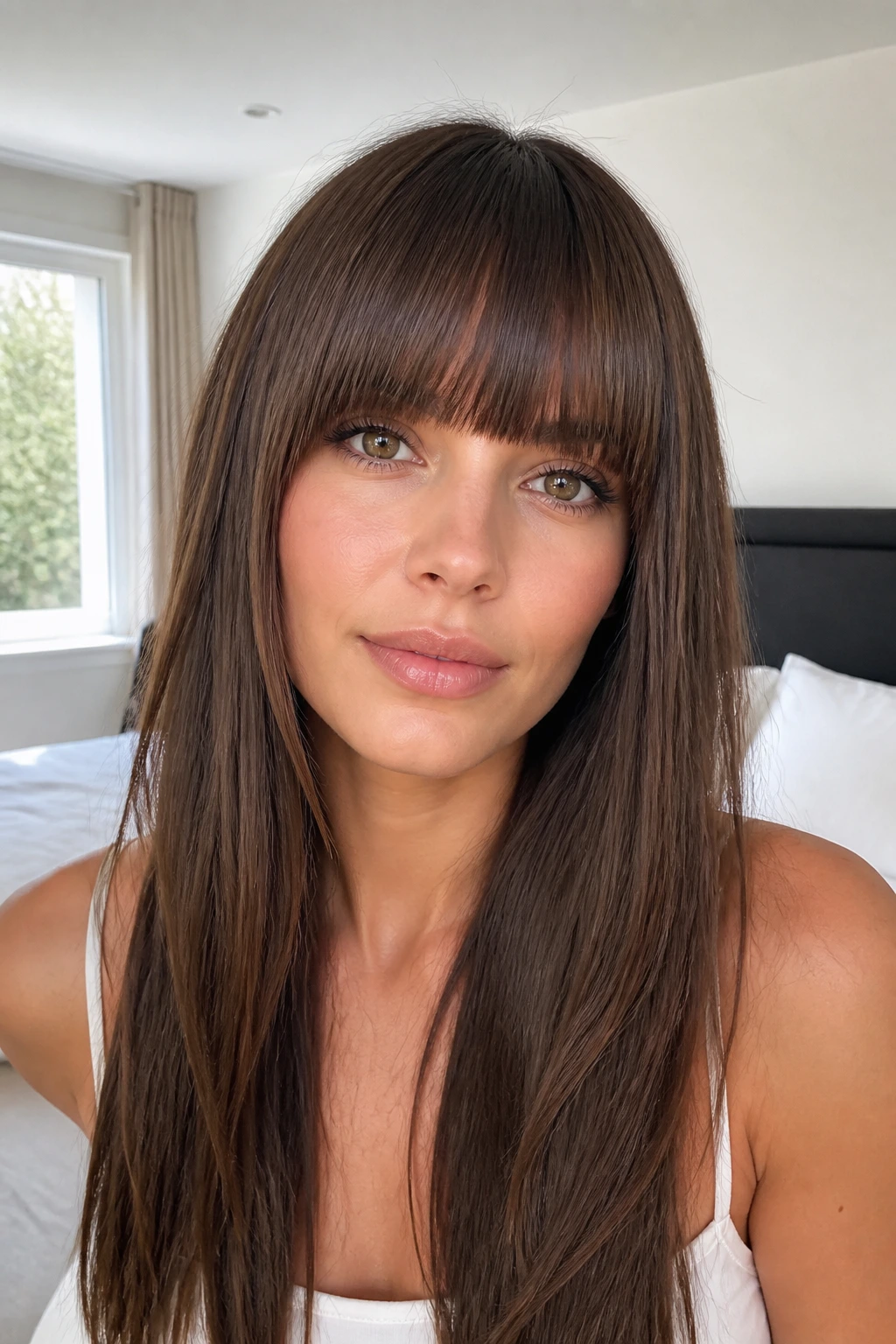
A full straight fringe makes a strong contrast against long hair, and that contrast is the whole point. The bangs create a bold frame at the front while the length stays dramatic below. It can look sharp, elegant, romantic, or a little mysterious depending on how the rest of the hair is styled.
This is not the lowest-maintenance choice. Bangs like this need trims every 4 to 6 weeks, and they tend to show oil faster than the rest of the hair. Still, if you want a serious change without cutting the length, it’s one of the fastest ways to do it.
The style works best when the bangs are cut with enough density to sit cleanly, but not so thick that they feel like a helmet. If your hairline grows straight and your forehead is something you want to soften or cover, a full fringe can be worth the upkeep.
18. Dry-Cut Shape Layers for Waves and Curls
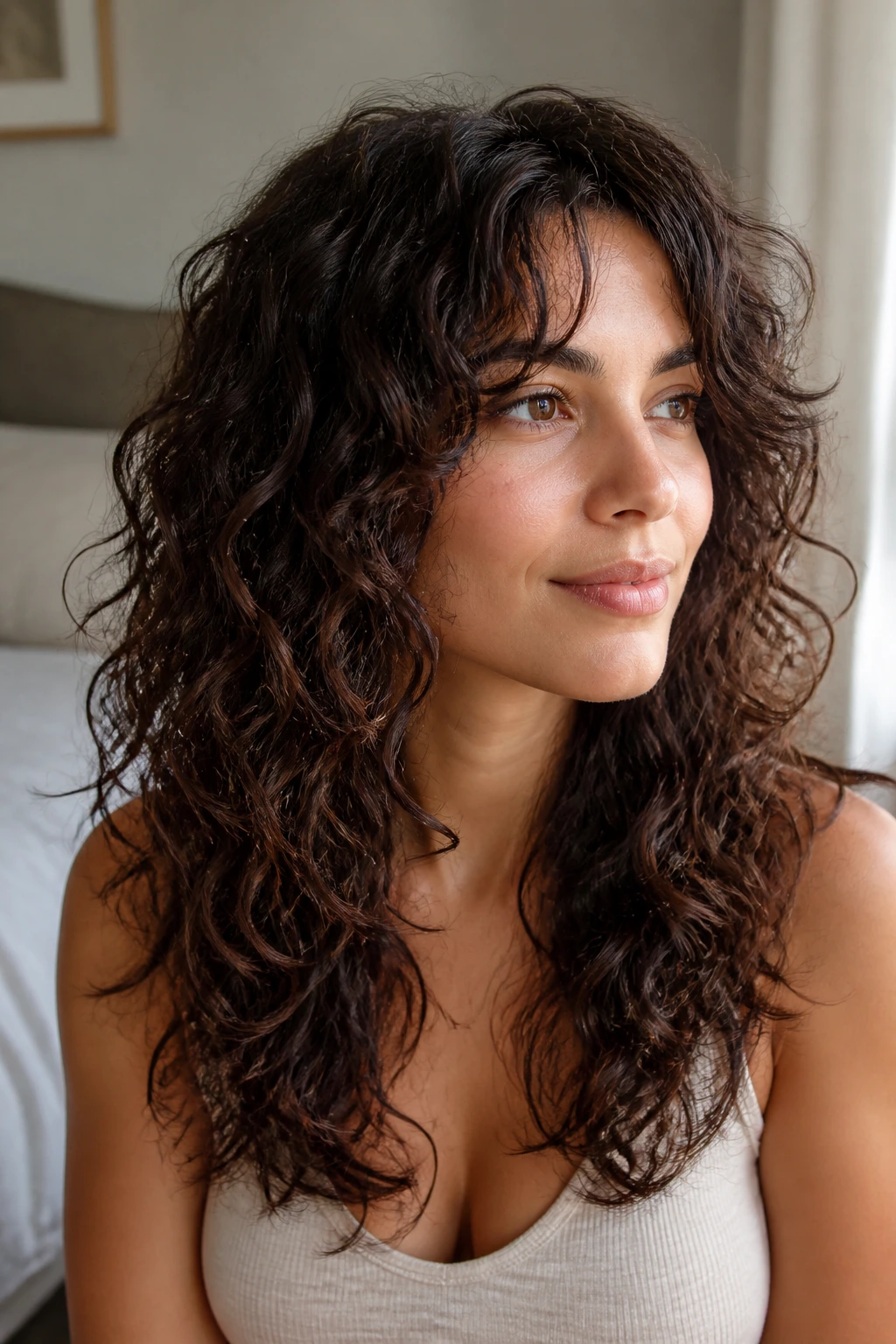
Wavy and curly long hair needs its own rules. A dry-cut shape is often the better answer because the stylist can see where the curl falls when it’s in its natural state. That matters. A curl that looks shoulder-length wet can shrink several inches once it dries.
The shape layers in this cut are usually longer and more controlled than the airy layers you’d give straight hair. The goal is to keep the curl family together so the hair doesn’t balloon into triangles or lose its outline. You want movement, not random holes.
If your hair bends easily, ask for a cut that respects shrinkage and avoids aggressive texturizing. That one conversation can save you a lot of frustration later. Curly long hair can be gorgeous with shape, but it needs a stylist who understands how it behaves outside the chair.
19. Crown Layers for Extra Lift
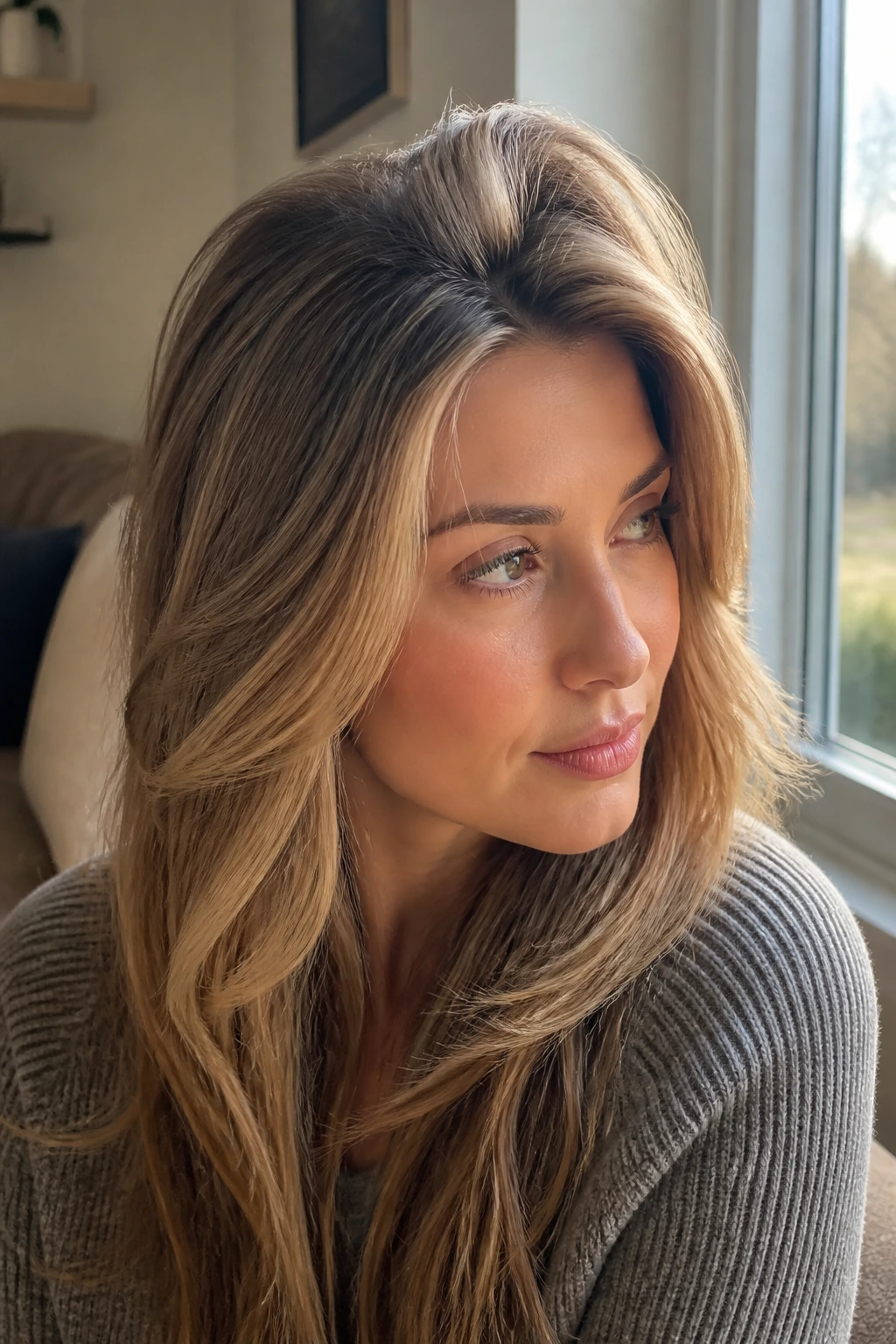
Crown layers are all about making the top of the head look less flat. The length stays long, but the top section gets enough internal shaping to lift the roots a little and stop the hair from collapsing straight down.
This is a strong choice for fine hair that looks limp at the crown or thick hair that feels heavy on top. The layers don’t need to be dramatic. They just need to remove the right amount of weight from the upper section so the hair has a better profile when you wear it down.
It’s one of those cuts that makes a blow-dry easier, too. Round-brushing the roots becomes less of a wrestling match because the shape is already doing half the work. If your long hair tends to stick to your scalp, crown layers can change the whole feeling of the cut.
20. Tapered Ends with Long Layers
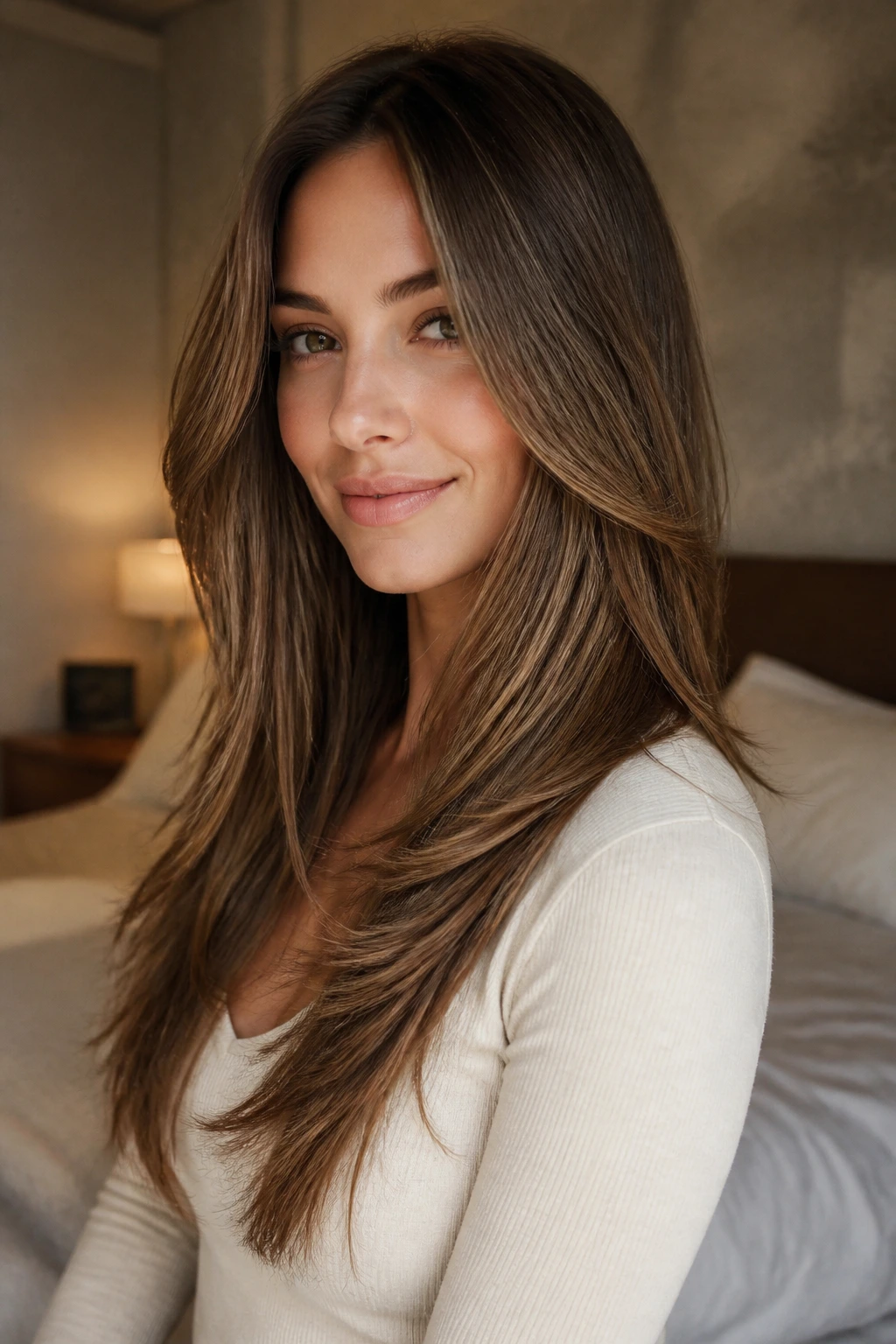
Tapered ends make the bottom of long hair feel lighter without turning it into a thin ragged line. The cut narrows the shape gradually, so the perimeter still looks deliberate while the ends move more freely. It’s a clean way to keep density from collecting at the bottom.
I like this on women who want length but hate that thick, blunt wedge some long hair develops after too many months. The taper gives the impression of swing. It also helps long layers blend more naturally, because the shape doesn’t stop abruptly at one point.
If you wear your hair in braids, low knots, or soft waves, tapered ends can make those styles lie flatter and cleaner. If your hair is already fine and sparse at the bottom, go easy. Too much taper and the length starts looking hungry.
21. Curved Face-Contouring Pieces
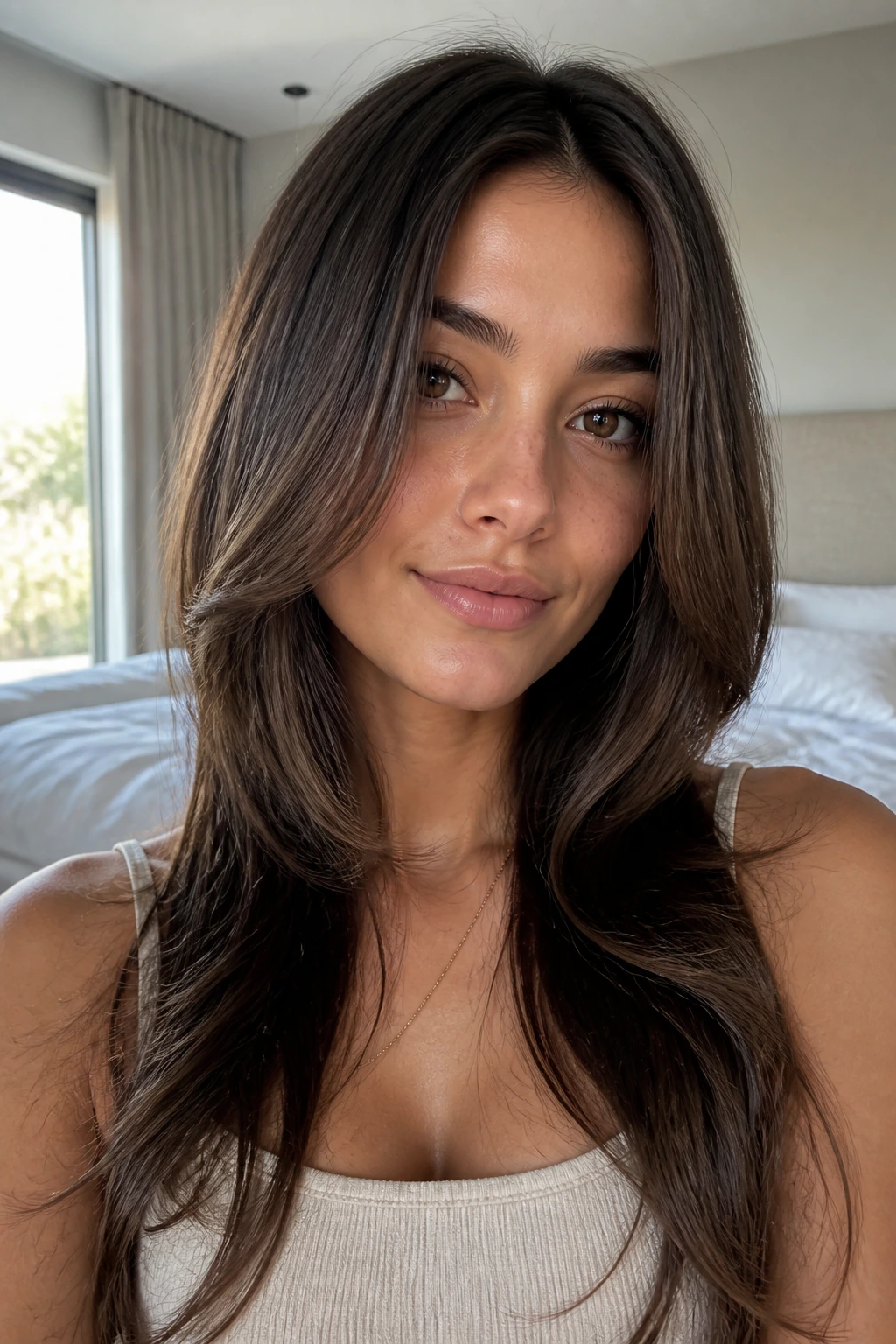
Curved face-contouring pieces are more polished than heavy layers and less committed than bangs. They start around the cheek or jaw, then curve inward toward the neck so the front of the hair feels shaped but not chopped. It’s a flattering move when you want your long hair to frame the face without taking over the whole cut.
This shape works especially well if you wear a center part and like a smooth finish. The pieces draw attention to the eyes and cheekbones, then disappear back into the rest of the length. That’s why it’s a good cut for women who want something visible but not loud.
The styling matters a little here. A large round brush or a quick bend with a flat iron helps the curve show up. Without that, the pieces can flatten and lose the effect. Still, when they’re done right, they’re one of the most elegant ways to change long hair without a full restyle.
22. Soft A-Line Long Cut
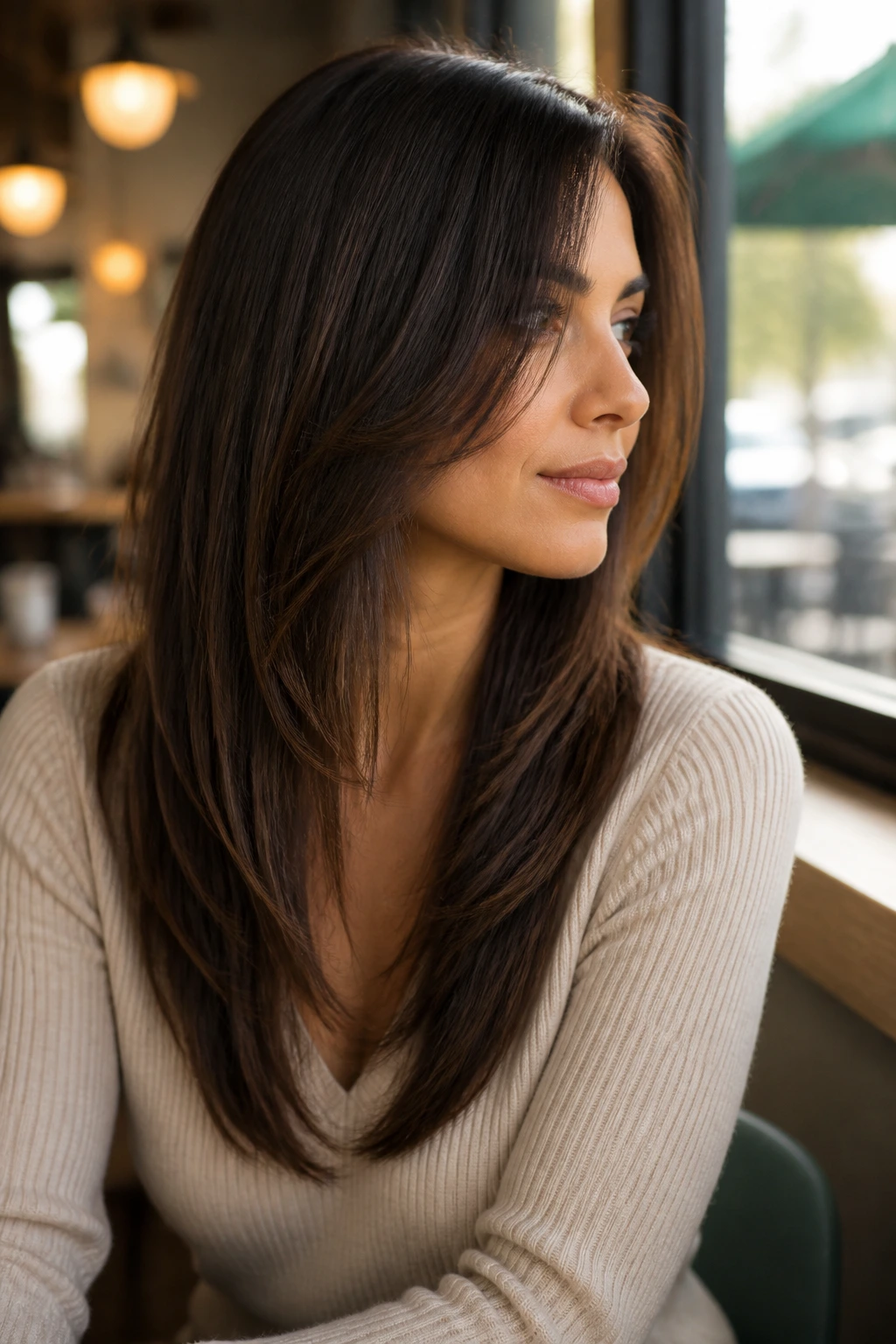
A soft A-line long cut is longer in the front and slightly shorter in the back, but not so much that it turns into a bob shape. The angle is subtle. The hair still reads as long, but it has a forward sweep that gives the face a cleaner frame.
This is a nice option if you want your hair to fall a little more toward the shoulders and collarbone instead of sitting straight down the middle of the back. It can be especially flattering on straight or slightly wavy hair because the line stays visible. On curly hair, the angle needs careful handling so it doesn’t vanish entirely.
The beauty of a soft A-line is that it offers shape without obvious layers. If you like structure more than texture, this one sits in the right place. It also grows out in a fairly graceful way, which is worth more than people think.
23. Hidden Undercut for Thick Long Hair
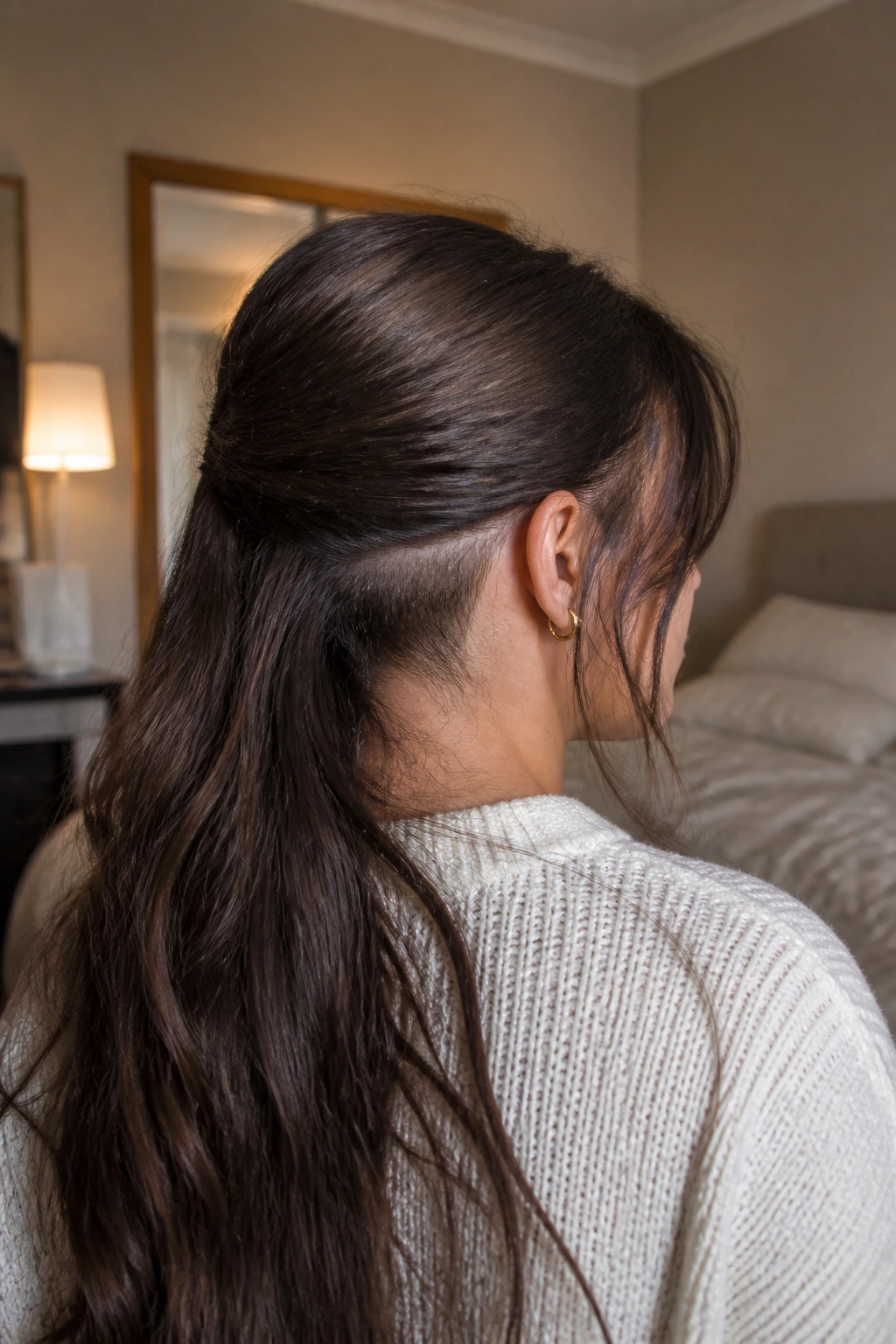
A hidden undercut is the haircut equivalent of taking a heavy coat off your shoulders without changing how it looks from the front. The underside, usually at the nape or lower back section, gets trimmed much shorter so the hair loses weight where nobody sees it.
For very thick long hair, this can be a relief. It helps the top sit flatter, lets the hair dry faster, and makes buns and ponytails less bulky. The outside still looks long and full. Only you know how much easier it feels.
This is not a casual decision, though. It grows out in stages, and you need a stylist who’s comfortable hiding the shorter section neatly. If you like long hair but are tired of how hot, heavy, or slow-drying it gets, a hidden undercut can be a practical fix.
24. Wispy Micro Fringe with Long Hair
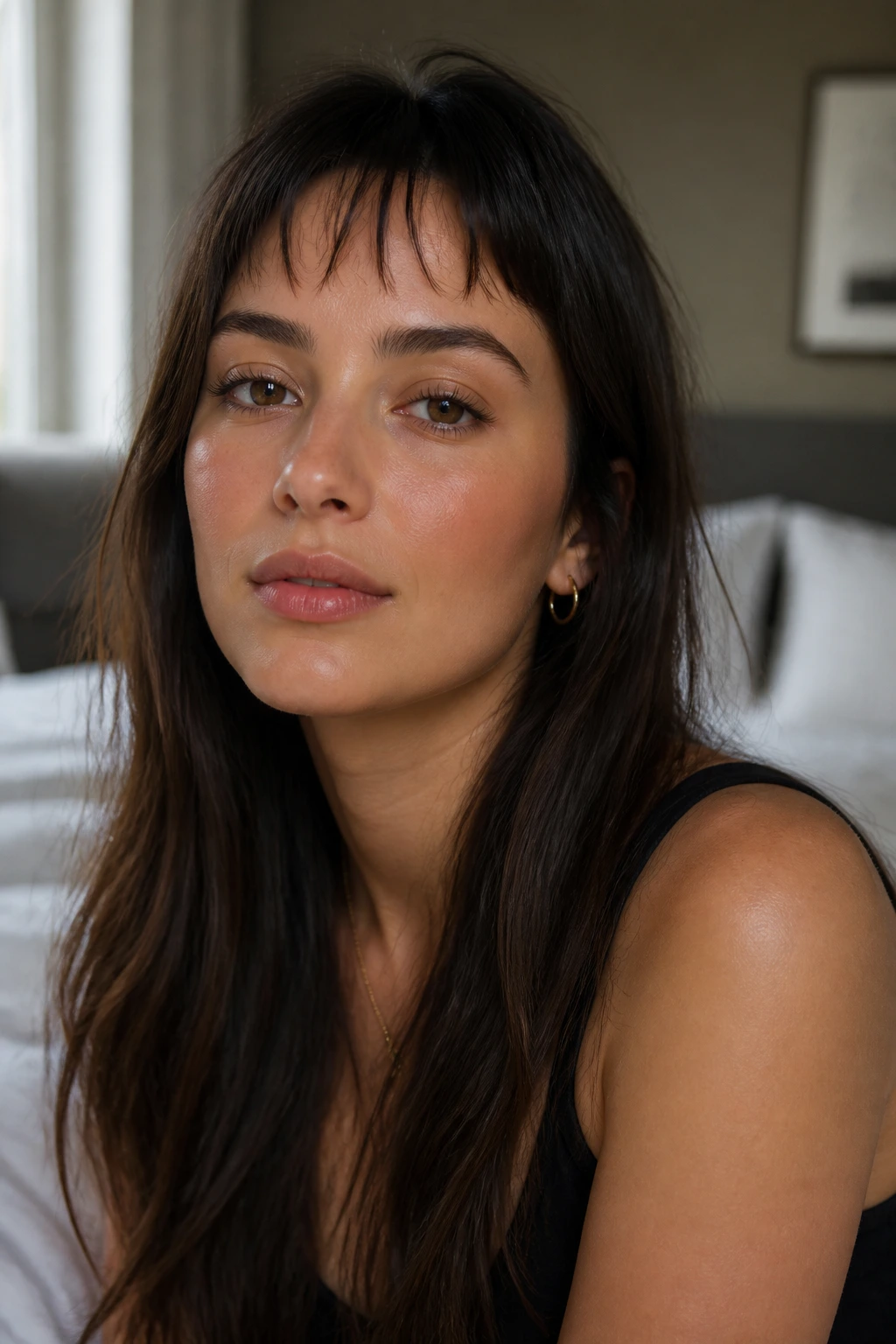
A wispy micro fringe gives long hair a sharp little punctuation mark at the front. It sits higher on the forehead, stays light instead of dense, and creates a strong contrast with the length behind it. On the right face, it looks editorial and a bit mischievous.
This is one of the more committed choices in the whole list. It grows out fast, it shows on the face every day, and it asks for regular trimming. But if you want your long hair to feel fashion-forward without losing inches, it does that well.
I’d only recommend it if you enjoy having your haircut be part of your look. It pairs best with straight or softly waved hair and a bit of styling discipline. If you want subtle, this is not subtle. If you want a small front detail that changes the mood of the whole cut, it’s a strong final option.
How to Choose the Right Long Haircut Before You Sit Down
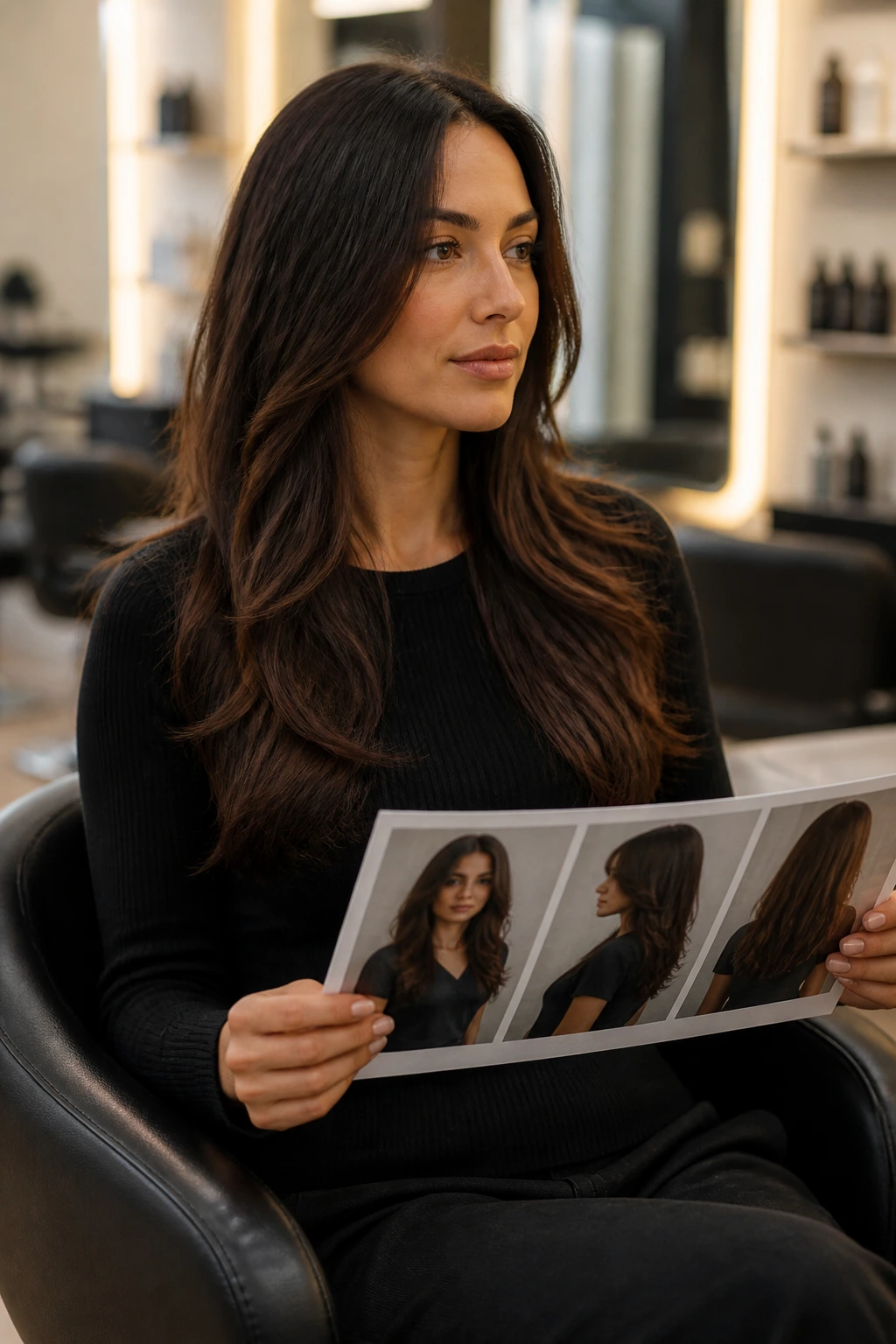
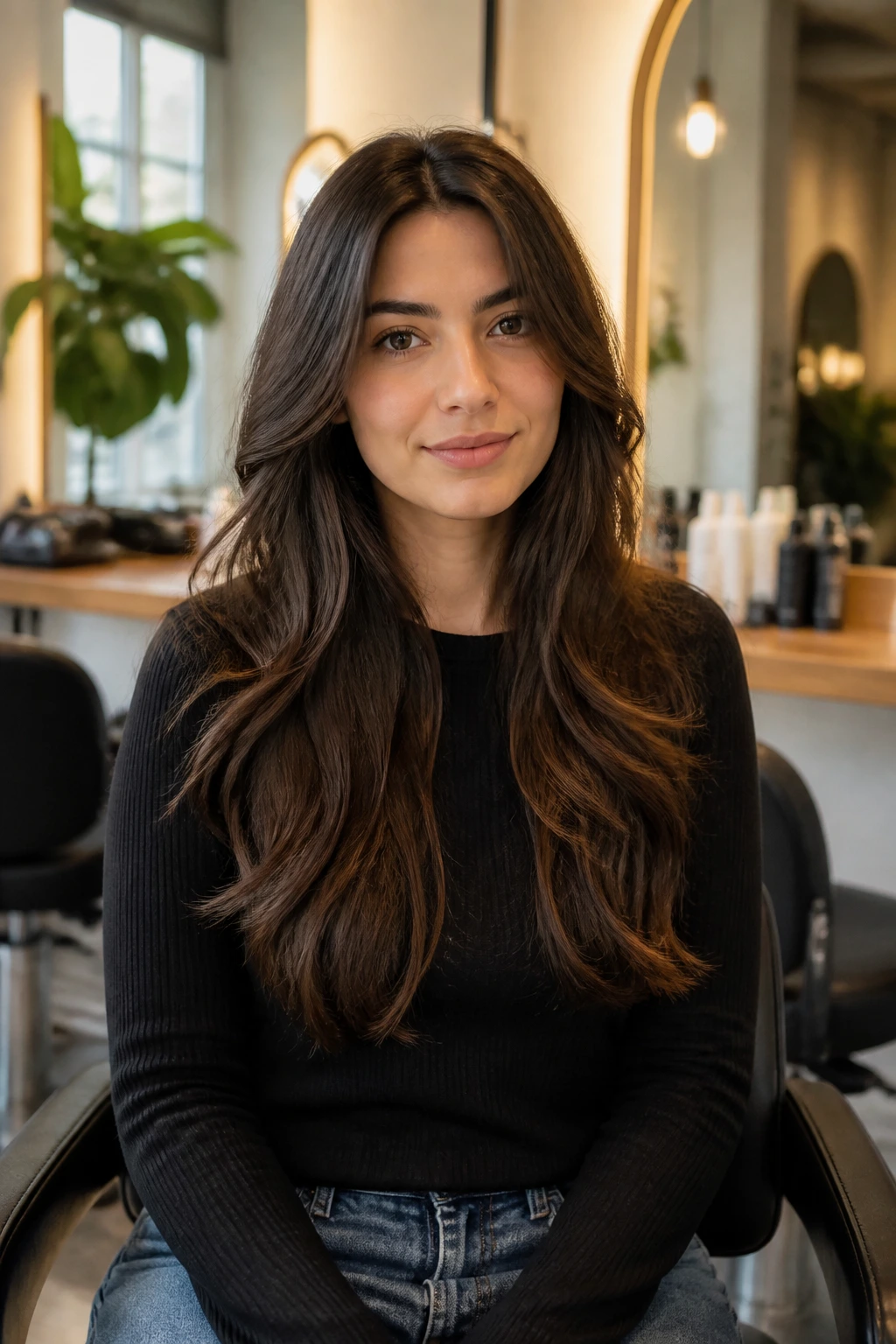
The worst long-hair booking mistake is asking for “layers” and leaving the rest to chance. Layers can mean a gentle face frame, a shag, a butterfly cut, or a shape that loses half the ends you wanted to keep. Bring a photo, yes, but bring one that shows the front, side, and back if you can find it. One photo of a perfect blowout on glossy hair tells your stylist less than a messy, real-life picture ever will.
Think about your daily habit first. If you air-dry, a feathered or razor-heavy cut may not land the way you want. If you blow-dry with a brush, butterfly layers, rounded layers, and curtain bangs have more room to behave. If you live in a claw clip, a blunt long cut or soft U-shape will usually look cleaner when it’s pulled back.
Say where you want the shortest piece to land. Chin, cheekbone, collarbone, jawline — those words matter. They give the stylist a map. If you’re nervous, ask them to keep the front pieces longer than you think you want. Hair grows, but a too-short face frame is annoying for weeks.
Be honest about your patience. Bangs need trims. High-texture cuts need product. Invisible layers need less styling, but they also give less drama. Pick the cut that fits the life you actually live, not the one you imagine on a calm morning with a full hour to spare.
What to Bring to the Salon Chair
-
3 reference photos with different angles: One front view, one side view, and one photo that shows the ends tell your stylist more than a single posed shot.
-
A photo of your hair on a normal day: This helps the stylist see how your texture behaves without heat styling or heavy product.
-
A note on your part: Center part, side part, or both matters for where the layers should fall.
-
A clear length line: Point to where the cut can start, whether that’s the collarbone, ribcage, or lower back.
-
A hair tie or clip you actually use: This matters if you wear ponytails or buns often; some fringe choices fight those styles.
-
A wide-tooth comb or brush you already own: It helps the stylist understand how much tension your routine puts on the hair.
-
A small notebook note on upkeep: Bang trims, blow-dry time, and how often you visit the salon are worth saying out loud.
Keeping Long Haircuts in Shape Between Visits
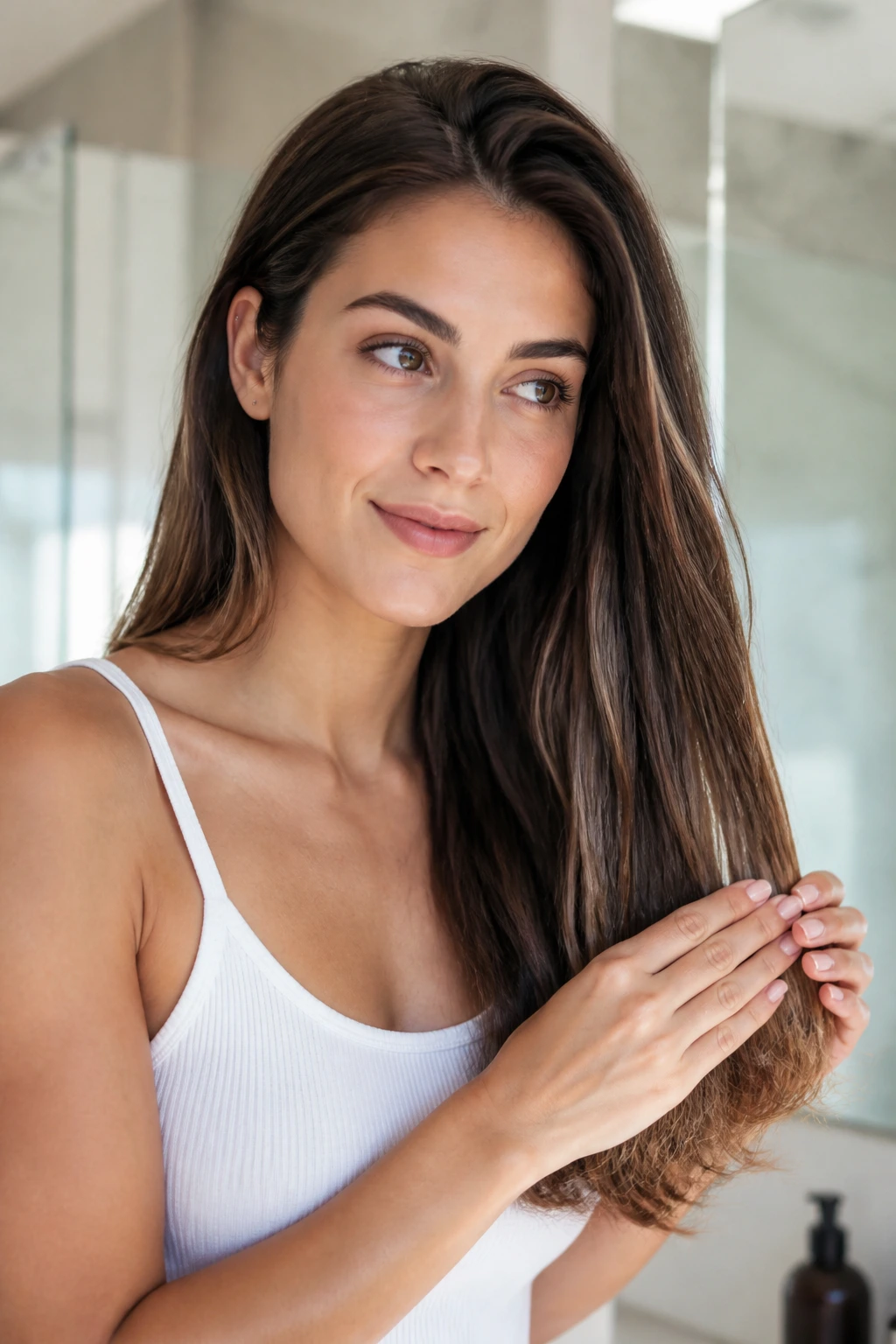
Long hair can survive a lot, but the shape gets fuzzy faster than people expect. The cut itself may still be there after ten weeks, yet the perimeter can start to look soft, and the face frame can drift into your eyes. Bangs need the most attention. Plan on 4 to 6 weeks for a clean fringe line, especially if you’re wearing curtain bangs, bottleneck bangs, or a straight fringe.
Layers last a little longer. Soft U-shapes, invisible layers, and rounded cuts can often go 8 to 12 weeks before they start losing their outline. More textured cuts — shags, wolf cuts, and choppy layers — can stretch a bit if the overall silhouette still feels balanced. The rule I use is simple: if the ends stop moving and start hanging, it’s time.
A few habits help more than people think. Sleep with hair loosely braided if the front pieces kink too hard. Use a light serum only on the ends if your layers start puffing. And if your haircut depends on a blowout, don’t wait until the hair is matted to brush it out properly. The shape lasts longer when the ends don’t split and fray into dust.
Common Mistakes That Make Long Hair Look Heavy
-
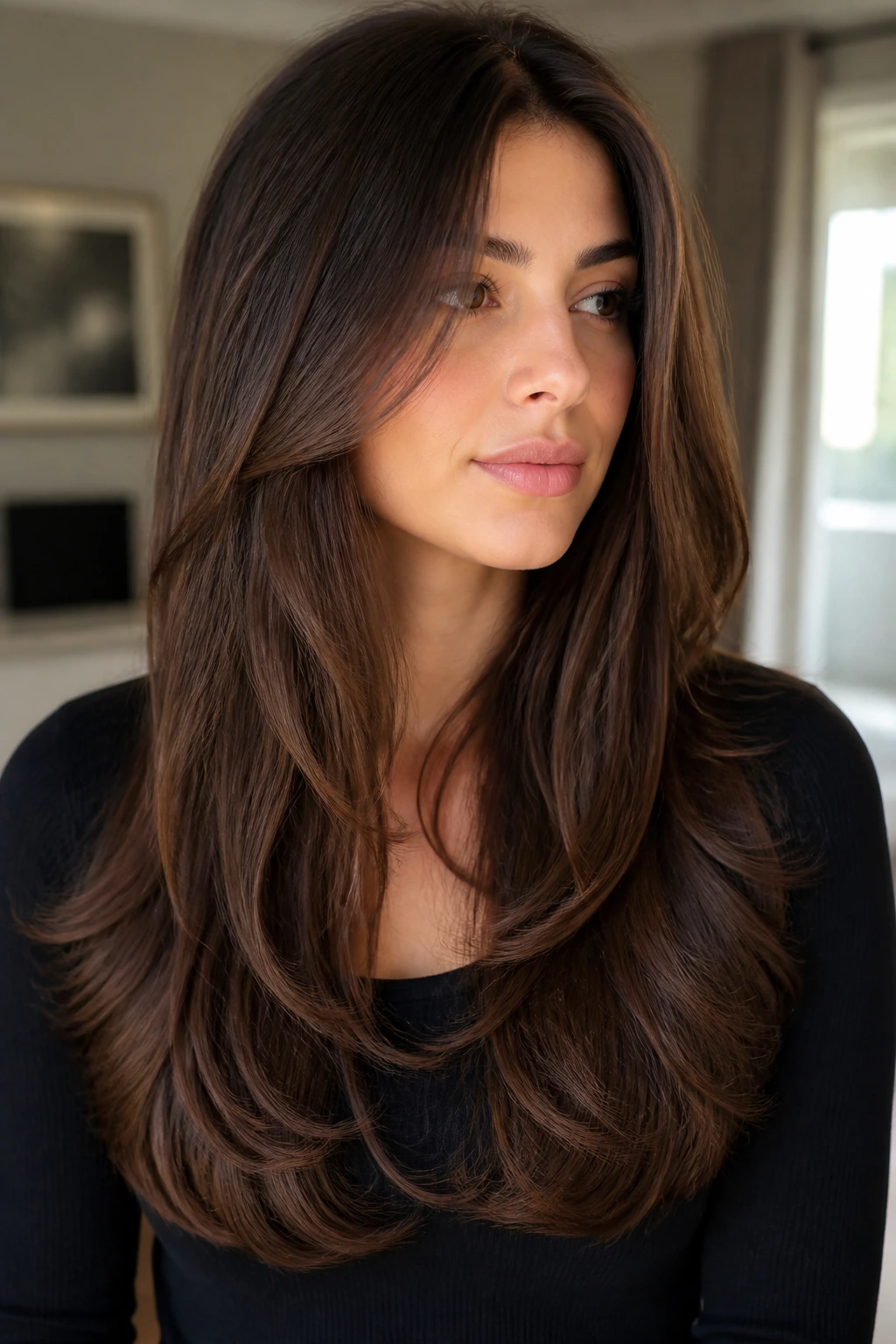
Asking for layers without naming your texture: Fine straight hair and thick curly hair need different layer patterns. If you don’t mention that, you may leave with a cut that collapses or frizzes.
-
Cutting face-framing pieces too short: A front piece that starts too high can look cute for one day and annoying for three months. If you’re unsure, keep the shortest piece longer and soften it later.
-
Over-thinning thick hair: The ends can start looking see-through fast. You want weight removed in the interior, not a stringy bottom line that feels sad when you wear it down.
-
Ignoring your styling routine: A curtain bang on someone who never blow-dries can sit like a wet comma on the forehead. Be realistic about what happens after wash day.
-
Skipping trims until the shape disappears: Long hair can hide split ends for a while, but the whole silhouette gets dull. Once the perimeter frays, even a good haircut looks tired.
-
Choosing a trendy cut that fights your part: If your cowlick shoves hair left and you want a blunt fringe that sits right, you’re setting yourself up for daily annoyance. Work with the growth pattern, not against it.
Smart Variations for Different Hair Types and Routines
Fine Hair Version: Keep the outline blunt or softly U-shaped, and ask for very light internal layers only. Too many layers can make the ends look thin, especially when the hair is long and not especially dense.
Thick Hair Version: Go for butterfly layers, a hidden undercut, or a tapered finish. These remove bulk from the spots that actually feel heavy, which is the only reason thick hair ever starts to feel bearable in summer.
Wavy or Curly Version: Ask for a dry-cut shape with longer layers and a visible perimeter. Curly hair needs enough length in the layers to avoid shrinking into a puffball once it dries.
Low-Maintenance Version: Choose invisible layers, a soft U-shape, or a long blunt cut with face-framing pieces kept below the chin. These hold their shape longer and don’t demand much beyond a trim schedule.
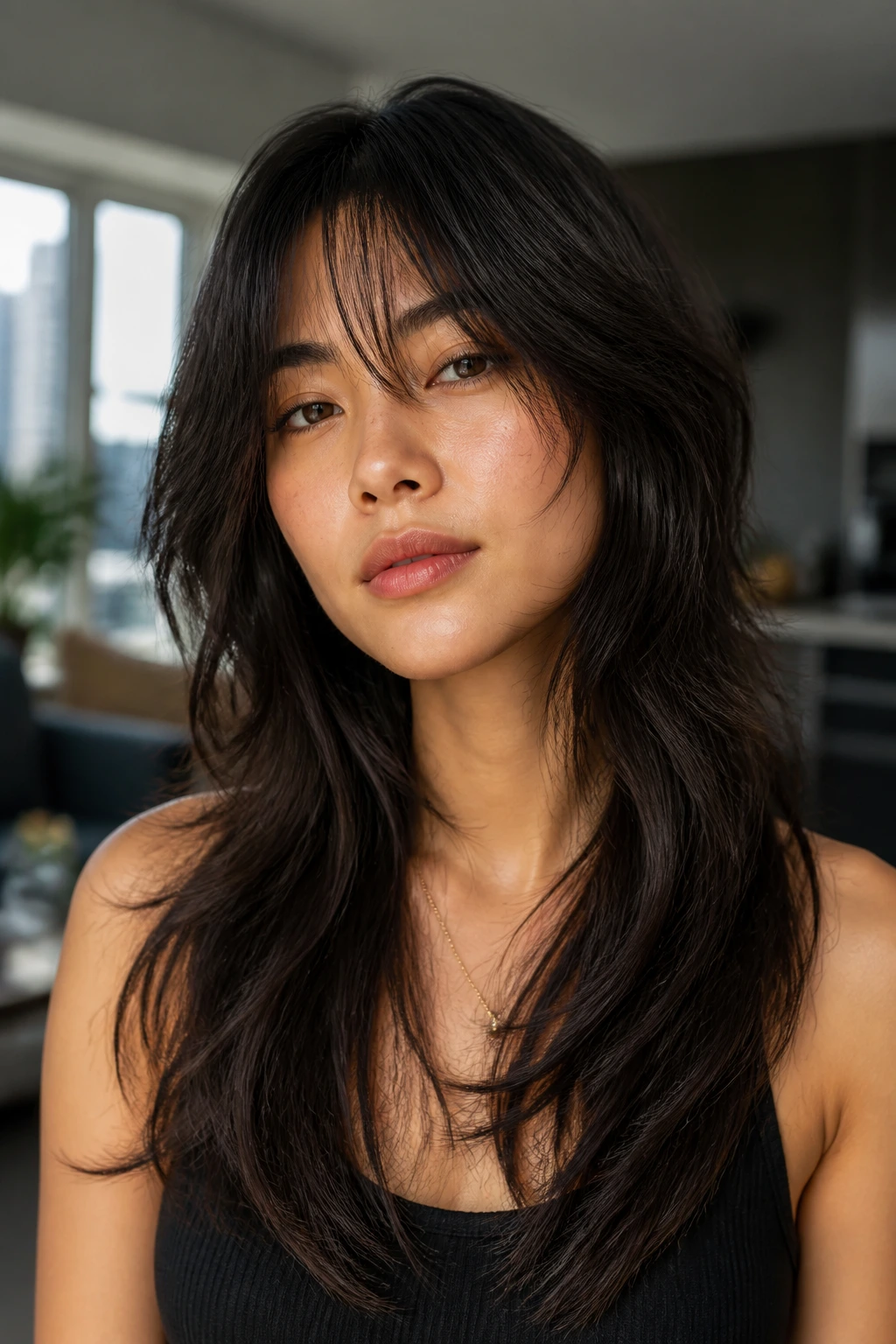
Edgier Version: Wolf cuts, shag cuts, disconnected layers, and micro fringes give long hair more attitude. They need a little more product and a little more styling, but they also make the haircut itself part of the look.
Frequently Asked Questions
Which haircut idea works best for fine long hair?
A blunt long cut, soft U-shape layers, or invisible layers usually give fine hair the best chance to look fuller. Heavy choppy layers can make the ends look sparse, especially if the hair is naturally straight and doesn’t have much body.
What long haircut makes thick hair feel lighter?
Butterfly cuts, hidden undercuts, tapered ends, and long shag variations do a good job of reducing bulk. The trick is to remove weight inside the cut, not just thin the ends until they go wispy.
Can I get bangs and still keep long hair low-maintenance?
Yes, but pick your fringe carefully. Curtain bangs and side-swept fringe are easier to live with than blunt bangs or micro fringe, which need more regular trimming and more morning attention.
How often should long layered hair be trimmed?
Most long layered cuts stay in shape for about 8 to 12 weeks. Bangs and short face-framing pieces need closer attention, often every 4 to 6 weeks, or they start falling into the eyes and losing their shape.
What should I say if I want movement but not a dramatic change?
Ask for invisible layers, a soft U-shape, or cheekbone-grazing face-framing pieces. Tell the stylist you want the haircut to move more, not look shorter. That wording helps a lot.
What if my stylist cuts too many layers?
If the ends look thin or see-through, ask for a softer perimeter at the next appointment rather than more texture. Sometimes the fix is to let the shape grow for a few weeks and then clean up the line instead of chasing it with more cutting.
Do these cuts work with ponytails and buns?
Some do better than others. Soft U-shapes, blunt long cuts, and invisible layers tend to slide into tied-back styles cleanly, while curtain bangs, shag cuts, and wolf cuts leave more pieces around the face on purpose.
Should curly hair follow the same long-hair rules as straight hair?
Not really. Curly hair needs its own cut plan because shrinkage changes everything once the hair dries. A dry-cut shape, longer layers, and a stylist who understands curl pattern are worth more than any trendy name.
The Long Cuts I’d Keep on My Radar
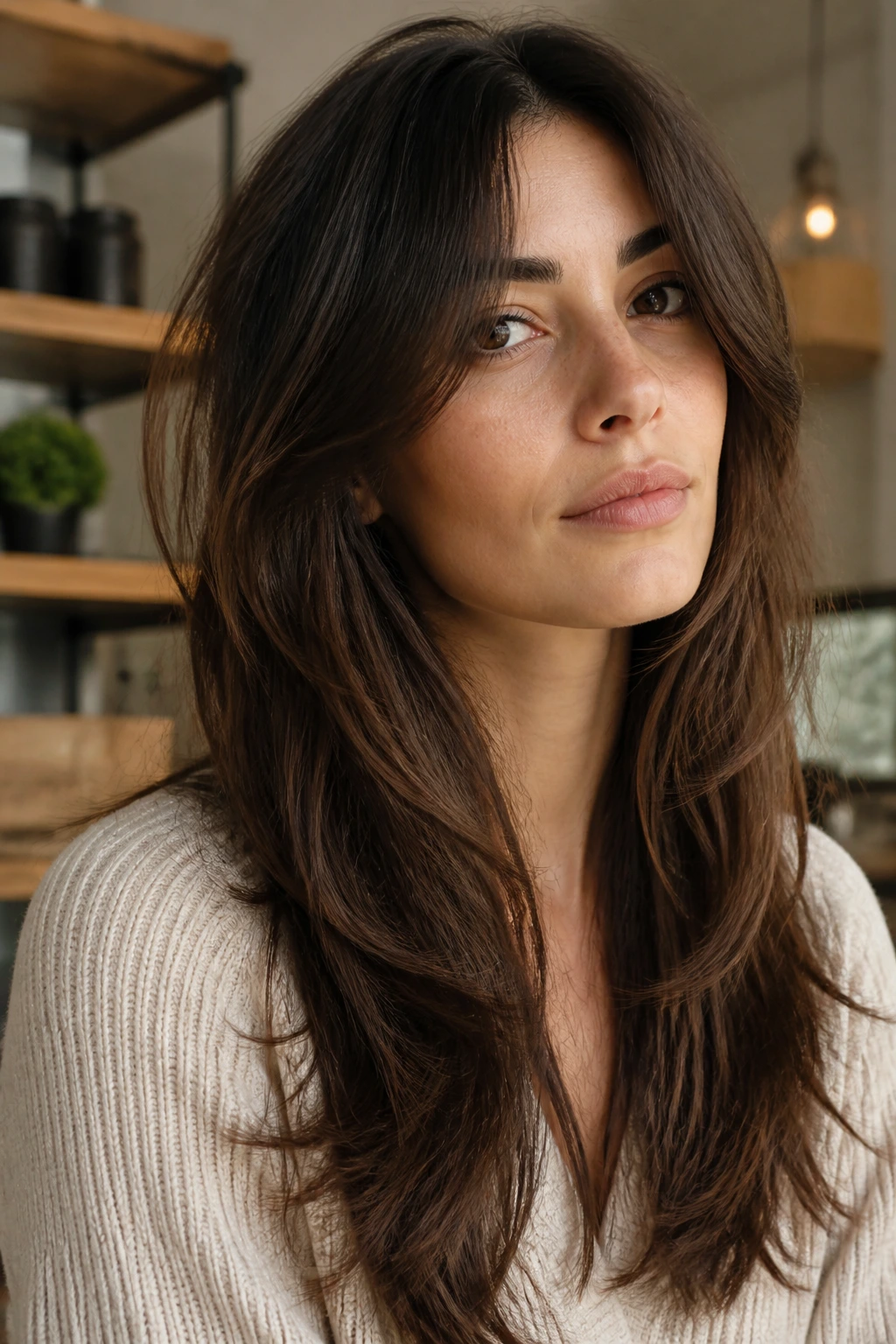
Long hair does not need to be rescued. It needs a shape that earns its keep. That can mean a blunt line that makes fine hair look denser, a butterfly cut that gives heavy hair some breathing room, or a face frame that changes the whole mood with only a few inches of scissors.
The best part is that long hair gives you room to choose. You can stay polished, get a little texture, add bangs, or lean all the way into something edgier. The right cut should make your hair easier to live with on a normal Tuesday, not just prettier for a single photo.
If you’re staring at your own length and wondering what to do next, start with the silhouette, then work backward from your routine. That’s where the good choices usually sit.
