



Rocker shag haircuts for older women work because they do something most tidy cuts refuse to do: they leave room for a little attitude. The shape is all broken lines, soft lift, and movement that doesn’t collapse the second you leave the salon chair. On silver hair, that texture can look especially sharp. On fine hair, it can fake density. On thick hair, it can stop the whole head from turning into one heavy block.
And that’s the part I keep coming back to. A shag is not about looking younger. It’s about giving the hair a better job. Instead of hanging straight down and showing every flat spot, the layers bend, flick, feather, and separate. You get cheekbone framing where you want it, a bit of lift at the crown, and ends that don’t look like they were cut with a ruler. When the cut is done well, it has that slightly lived-in, slightly rebellious feel that a one-length bob usually can’t pull off.
The best rocker shag haircuts for older women are not all wild and choppy, either. Some are whisper-soft around the face. Some keep length. Some sit right at the jaw and feel lean and cool. The trick is matching the amount of edge to the hair you actually have, not the hair you wish you had on a humid day with no styling time and a coat of dry shampoo at the roots.
Why These Rocker Shag Haircuts Feel Right on Mature Hair

- They create movement where hair tends to go flat: A few well-placed layers at the crown and around the cheeks stop the cut from hanging in one straight line.
- They work with gray and silver tones instead of fighting them: Broken layers make white, silver, and salt-and-pepper strands look dimensional, not dull.
- They can soften strong features without hiding the face: Curtain bangs, side-swept fringes, and face-framing pieces take the edge off the jaw and forehead.
- They’re useful for both fine and thick hair: Fine hair gets lift; thick hair gets weight removed in the right places, so the head shape doesn’t balloon.
- They look better a little imperfect: A shag often improves after a few minutes of finger-styling, which is handy if you’d rather not spend half your morning with a round brush.
- They can be as bold or as quiet as you want: A rocker shag can read edgy, elegant, or somewhere in between, depending on bang length, layer depth, and finish.
1. Shoulder-Length Razor Shag with Curtain Bangs
This is the kind of shag that makes shoulder length look alive instead of safe. The razor work keeps the ends light, and the curtain bangs split the forehead in a way that feels open, not severe. On hair with a little bend, the layers fall into that soft, undone shape that looks better with a few fingerprints in it than with a perfect blowout.
What I like most here is the balance. You get enough length to tuck behind the ears or pull into a clip, but the crown still gets some lift. If your hair has started to feel flat at the roots and heavy at the bottom, this cut changes the whole silhouette. Ask for the bangs to hit just below the brows if you wear glasses, or a touch shorter if you want more cheekbone action.
A light mousse at the roots and a quick rough-dry are usually enough. The ends should flick, not puff.
2. Silver Wolf Shag with Soft Ends
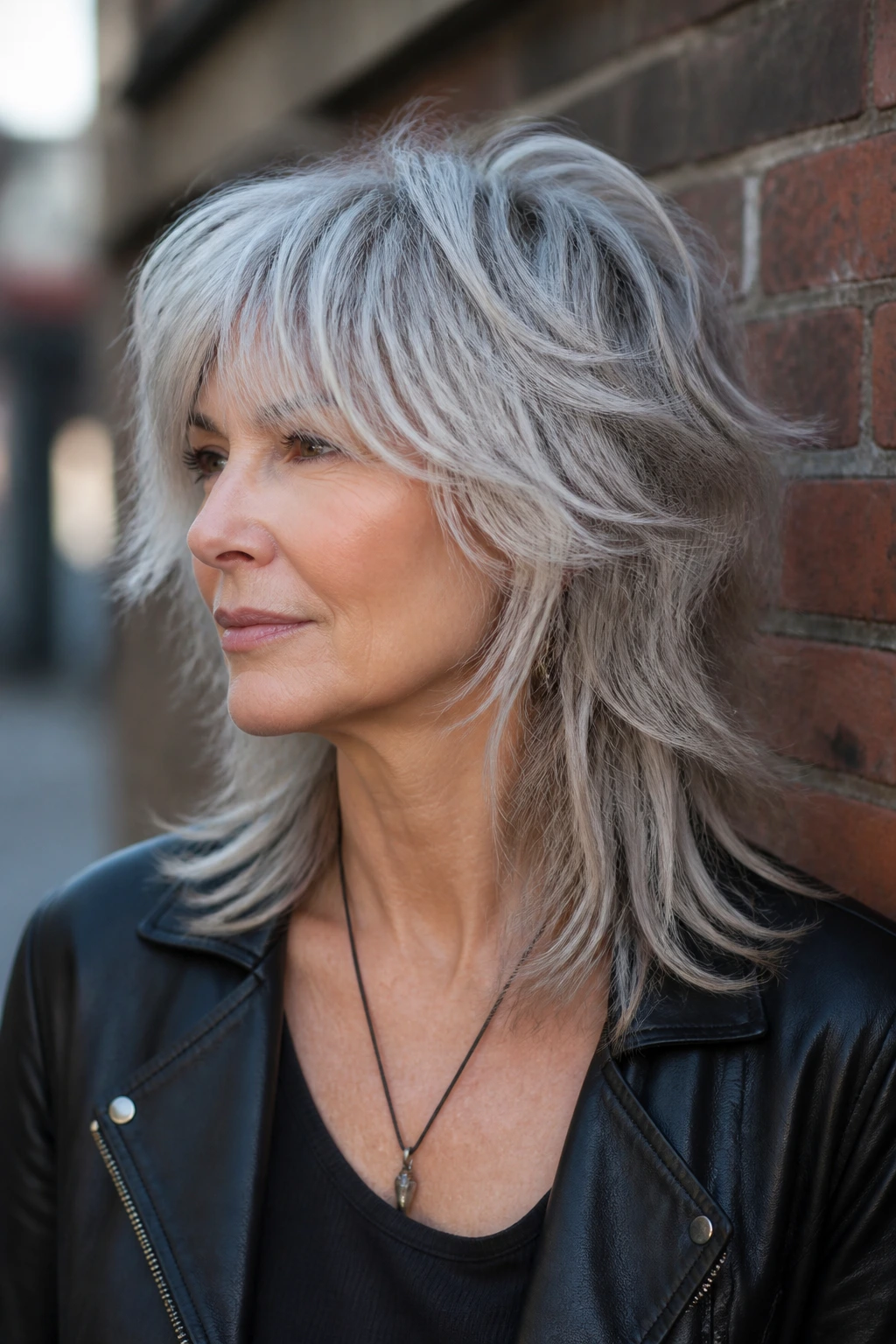
This is the boldest cut in the group, but it does not have to look harsh. When the back is kept a little longer and the perimeter is softened, a wolf-inspired shag on silver hair gets that cool, slightly rebellious outline without turning into a helmet of spikes. The contrast between short crown layers and a looser lower section is what gives it the attitude.
Why It Stands Out
The trick is in the ratio. Too many short layers and the whole shape can go fuzzy. Keep the top pieces choppy and the ends feathered, and you get movement that still reads polished enough for daily wear.
Ask your stylist for a soft disconnect at the crown, not a hard mullet line. That’s the difference between playful and costume-y. If your hair is coarse, a little internal debulking helps; if it’s fine, the length through the nape gives the cut something to hang on to.
A silver wolf shag looks best when the texture is piecey, not crunchy. Use a tiny bit of paste through the mid-lengths and leave the ends loose.
- Best for: women who want edge without a severe finish
- Best pairing: naturally gray or highlighted hair
- Best styling move: finger-scrunching with a diffuser
3. Chin-Length Shag Bob with Piecey Fringe

Why does a bob sometimes feel too stiff after a certain age? Because it keeps every edge in one neat place. A chin-length shag bob breaks that habit immediately. The fringe creates some noise up front, and the layers around the jaw keep the cut from sitting like a box.
This is one of my favorites for women who want something short enough to feel fresh but not so short that it starts acting like a helmet. The chin line is flattering on a lot of face shapes, especially if the front is angled just a touch longer than the back. That little shift matters. It keeps the eye moving.
What To Ask For
Ask for a bob shape with shattered ends, not blunt ones. The fringe should be airy enough that it moves when you blink, not dense enough to sit flat on the forehead.
The styling is easy. Blow-dry the fringe forward with a round brush, then bend the ends under or out with your hands. A touch of dry texture spray at the crown stops the whole cut from looking too neat. If the fringe gets greasy fast, dry shampoo at the roots works better than piling on more product.
4. Curly Rocker Shag with Crown Lift

Picture curls that used to sit wide at the sides and now finally have somewhere to go. That’s what this cut does. It removes bulk where curls bunch up and leaves just enough length to keep the shape springy. The crown gets lift, the sides collapse less, and the whole head looks lighter.
Curly hair often needs a shag cut while dry, or at least partially dry, so the stylist can see where the curls live. If the layers are placed while the hair is soaking wet and stretched, you can lose the shape later. That’s the annoying part nobody warns you about. Dry cutting can save you from a bad surprise.
The best version keeps the shortest pieces around the face and crown, with longer curls through the lower half. That gives you the rocker feel without sacrificing the curl pattern. Use a curl cream sparingly, then diffuse on low heat until the roots are dry and the curls still feel touchable. Heavy oils are the fastest way to flatten this look.
5. Pixie Shag with Long Top Layers
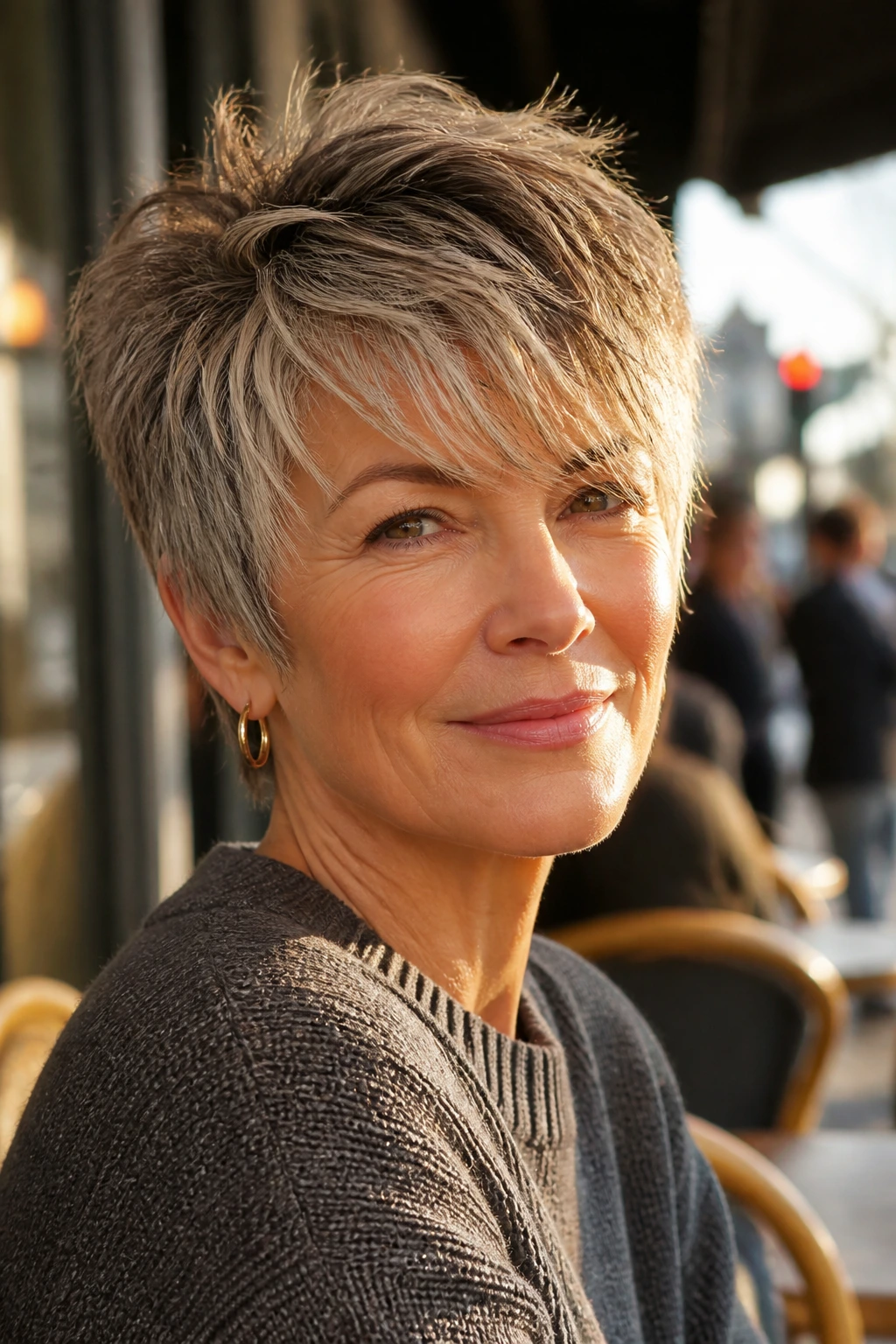
A pixie shag is for the woman who wants shorter hair but refuses to look tidy all the time. The sides stay neat enough to sit close to the head, while the top layers keep enough length to sweep, spike, or part in a messy side line. It has more personality than a classic pixie and less fuss than a longer shag.
It’s especially good if your hairline has changed a little or your temples have gone finer. The longer top gives you coverage where you want it, and the shorter sides stop the cut from feeling bulky around the ears. That balance matters more than people think. Too much length on top and it starts looking like a grown-out cut; too little and it loses the rocker thing entirely.
Styling Note
Use a pea-sized amount of molding cream, warm it between your palms, and work it through the top only. Then push the hair in the direction you want it to fall. Don’t overthink the finish. The charm is in the piecey separation, not in making every strand behave.
6. Collarbone Shag with Feathered Sides
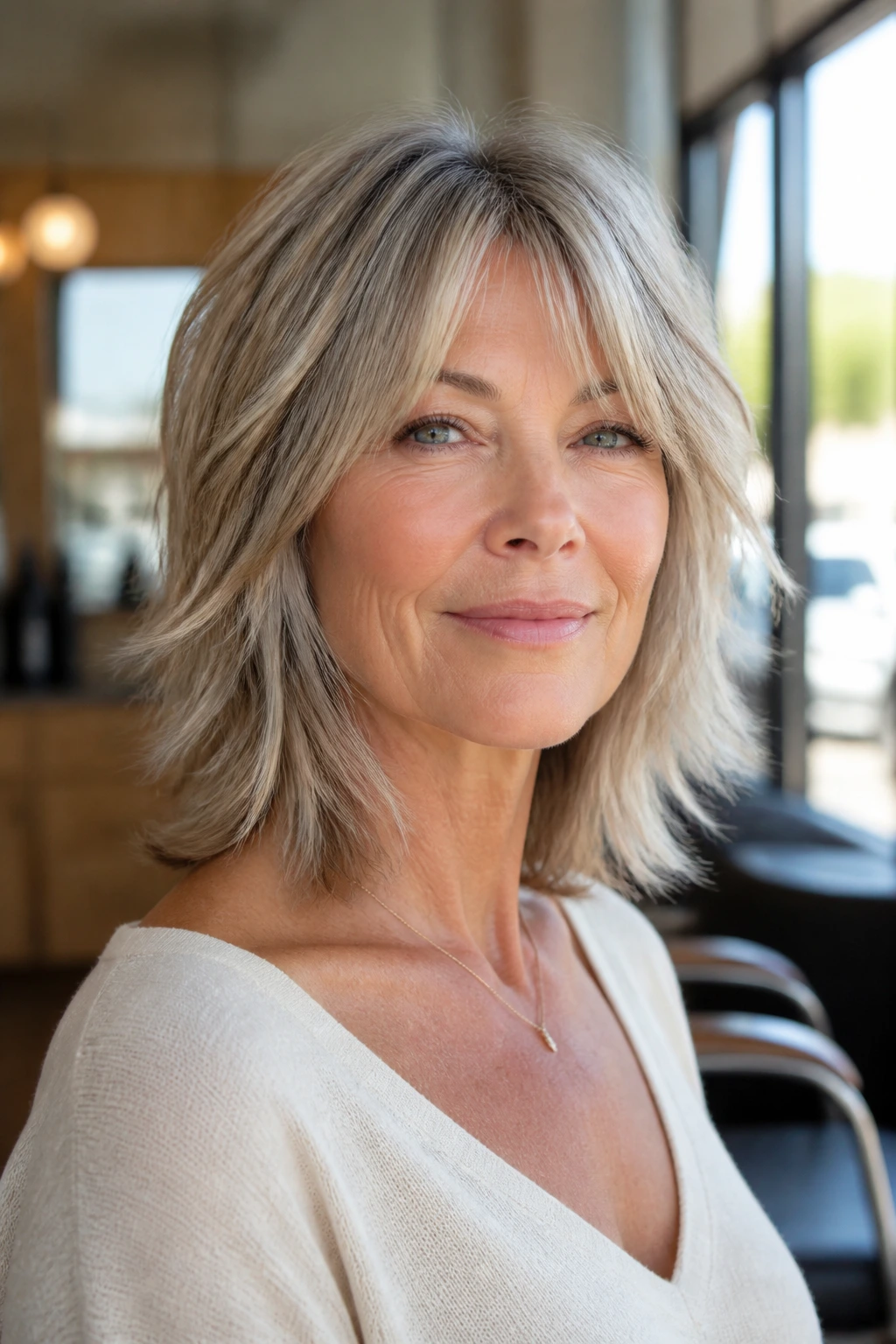
The collarbone is a smart place to land when you want movement without losing the option to clip it back. A feathered shag at this length gives the sides a soft sweep that skims the neck and jaw instead of sitting heavy against them. It’s cleaner than a wild long shag, but it still has that slight rock-and-roll looseness.
Compared with a blunt lob, this cut feels airier the second you move your head. The sides lift away instead of clinging, which is useful if your hair tends to swell around the cheeks. Ask for the feathers to start around the cheekbone if you want a little lift near the face, or lower if you want the cut to stay calmer.
This is one of those cuts that looks better on day two. The texture settles, the pieces separate, and the whole thing gets a little more interesting. A mist of wave spray and a quick scrunch are enough for most hair types.
7. Long Shag with Face-Framing Swoops
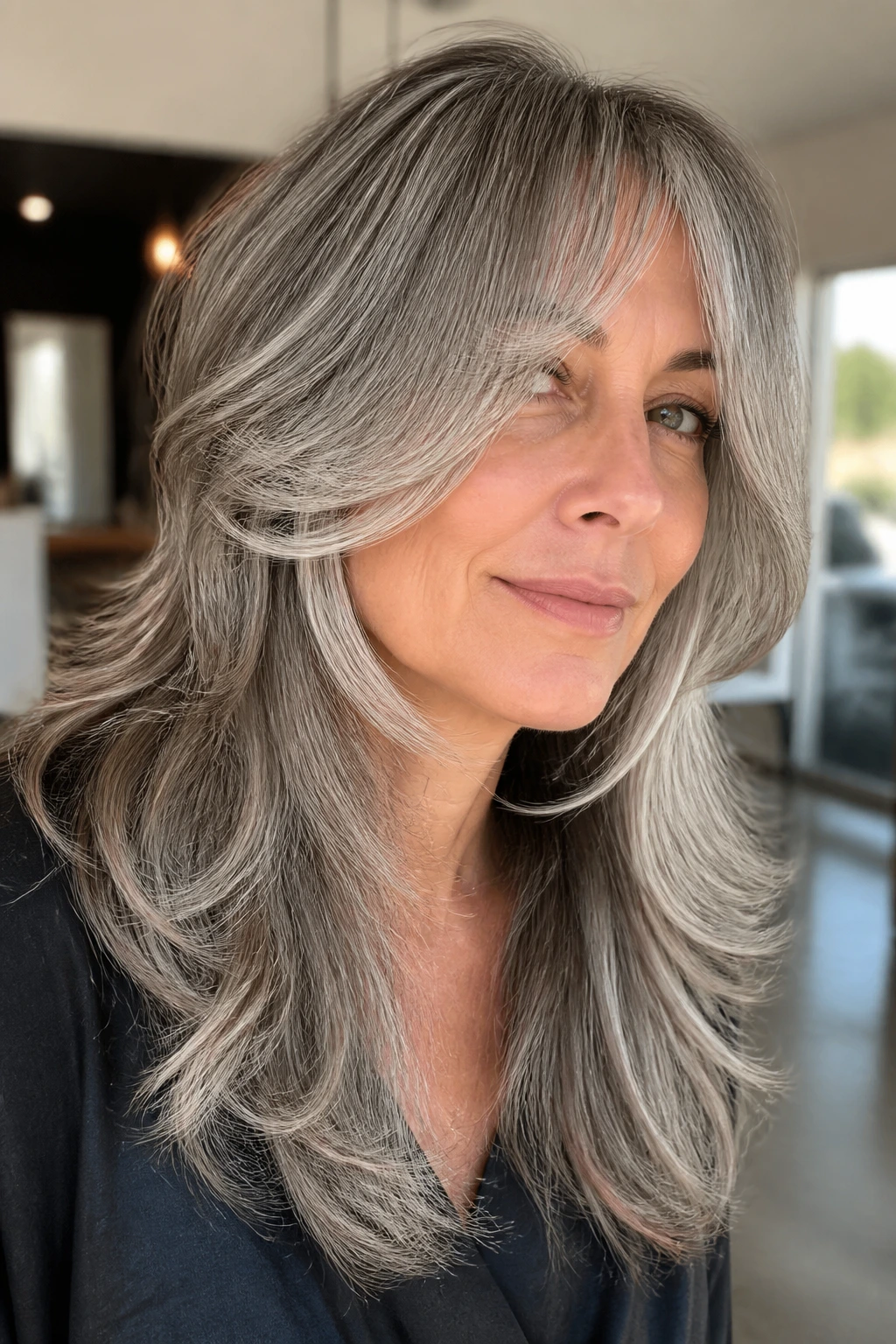
Can a long cut still feel edgy? Absolutely, if the layers are cut with intent. A long shag keeps the length but breaks it up with swooping pieces that angle away from the face. That means you can keep ponytail length while still getting the lift and movement that make a shag worth wearing.
Best for Women Who Don’t Want Short Hair
This is the answer for someone who likes hair on the shoulders or lower but hates the dead weight that can creep into long styles. The front layers should start around the chin or collarbone, depending on face shape, and the back can stay long enough to keep a fuller outline. If your hair is fine, avoid over-layering the ends; you want swing, not wisps.
Styling is simple if you work with the hair’s bend. Blow-dry the front pieces away from the face using a round brush, then let the lengths fall naturally. A few bent sections with a medium iron can make the cut look deliberate without making it stiff. The goal is soft movement with a little bite. Nothing fussy.
8. Tapered Nape Shag with Side Sweep
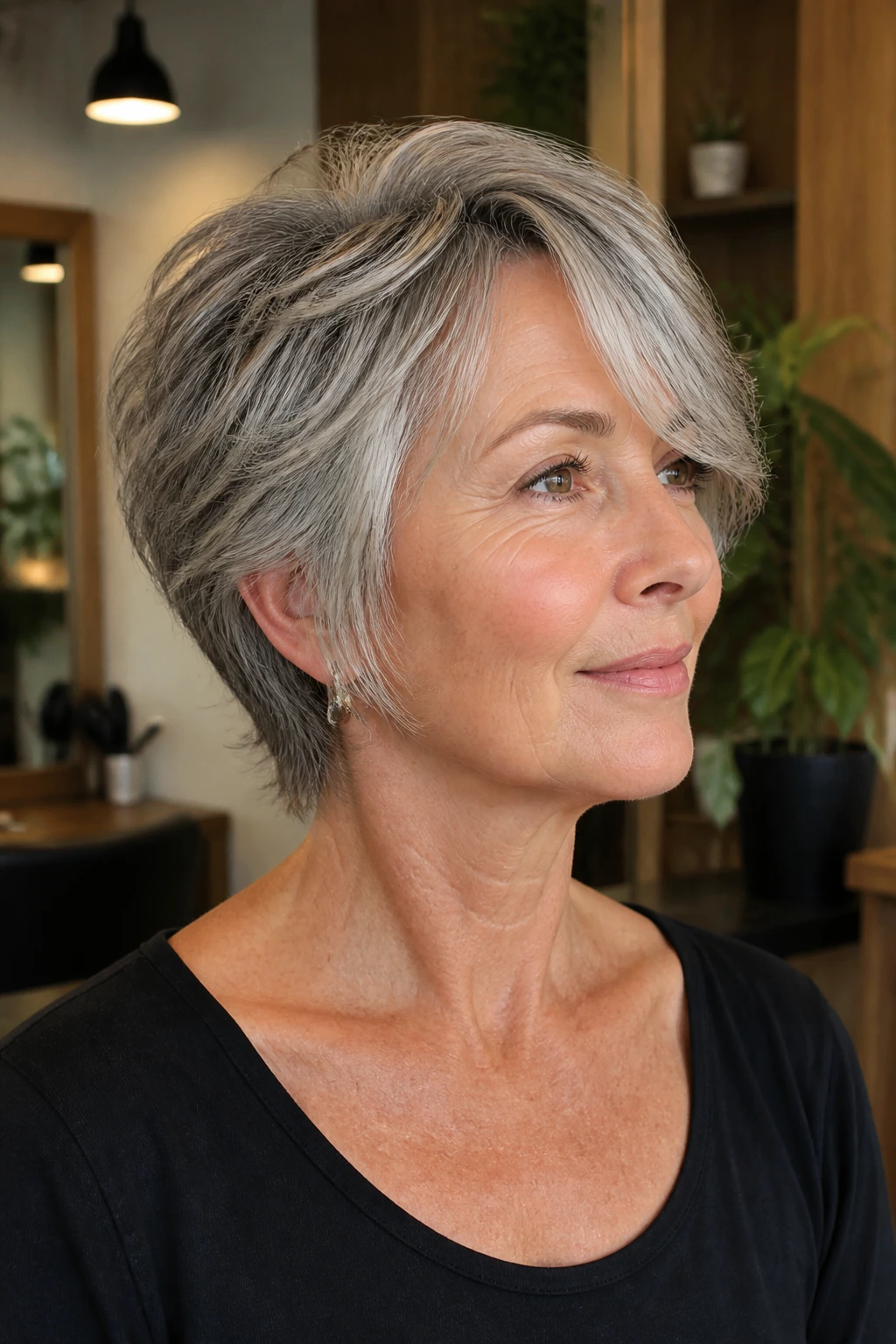
I like this one on women who want the neck area cleaner but still want some softness around the face. The nape is tapered so the back lies close and neat, while the top and sides stay longer and side-swept. It gives the cut a little tailoring without losing the shag’s attitude.
Here’s what makes it work: the side sweep keeps the forehead from looking too bare, and the tapered nape stops the back from puffing out under collars and scarves. That matters more than most people admit. A cut can look great for ten minutes and then get wrecked by a jacket collar. This shape behaves better.
- Good for: glasses, earrings, and high necklines
- Ask for: a soft taper at the nape, not a clipped fade
- Style with: a root-lifting spray and a side part slightly off center
If you wear your hair tucked behind one ear often, this is a strong choice. It has shape even when one side gets flattened.
9. Wavy Midi Shag with Air-Dried Texture
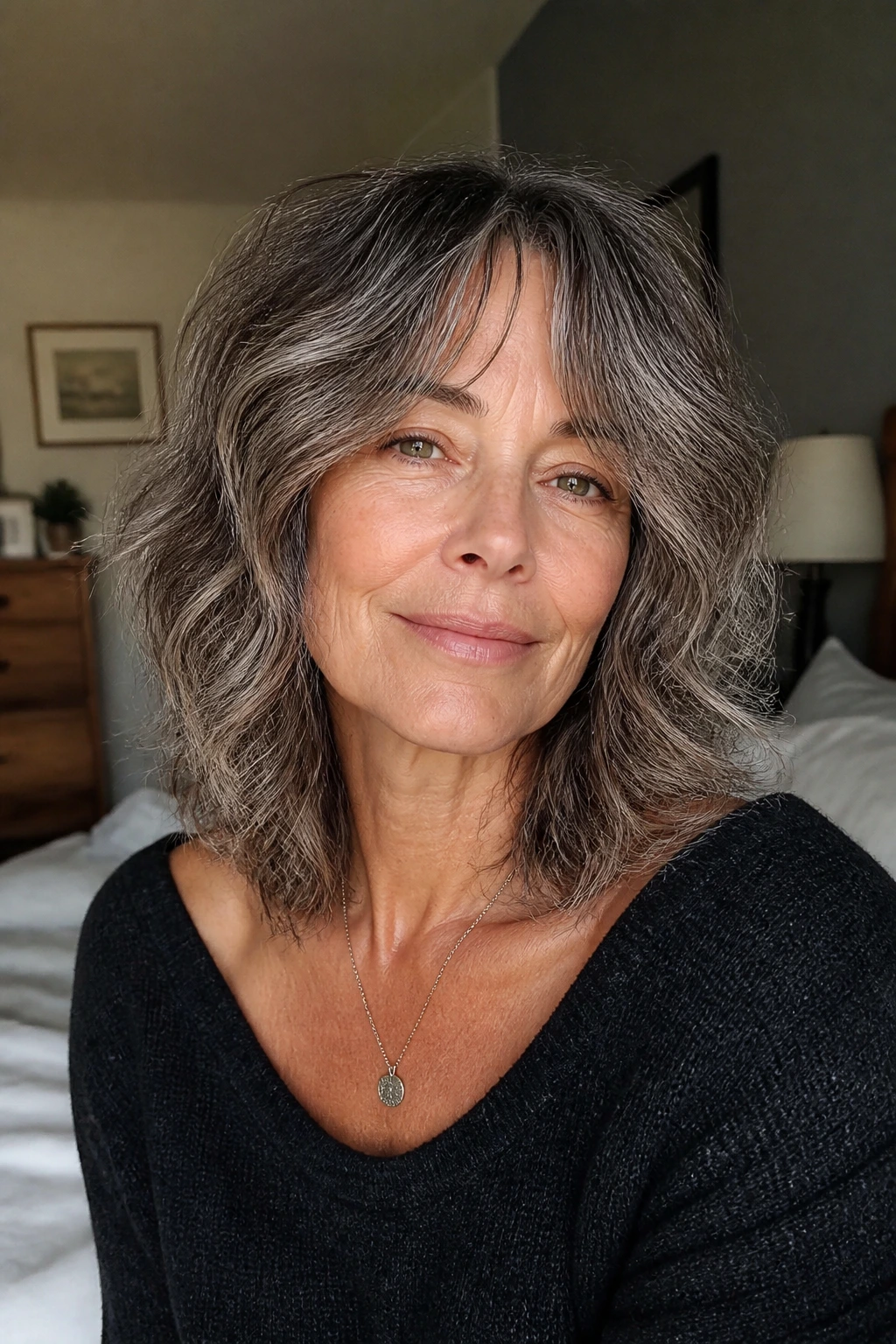
Wavy hair and shag cuts tend to get along because both like a little freedom. A midi length, somewhere between the shoulders and collarbone, gives the waves space to break up naturally while the layers stop the bottom from looking too blunt. The whole effect is relaxed, but not lazy.
This cut shines when you skip the polished finish and let the wave pattern do the work. A light mousse through damp hair, a quick rake with your fingers, and a little air-dry time are usually enough. If the front pieces dry too flat, twist them once or twice while they’re still damp. That tiny move can save the whole shape.
It’s a good option if you don’t want to wrestle with hot tools every morning. The layers are doing most of the work, which is exactly how a shag should feel.
10. Choppy Crop Shag with Micro Bangs

This one is sharp, small, and unapologetic. The crop keeps the sides close, the micro bangs open a lot of forehead, and the choppy layers on top bring all the edge. On the right face shape, it looks fearless. On the wrong one, it can feel too severe, so this is a cut to choose with your eyes open.
What Makes It Work
The magic is in the contrast between the short fringe and the textured crown. The micro bangs should be wispy enough to show a little skin and not form one dense line across the forehead. Ask for point cutting, not a blunt chop. That keeps the bangs from feeling boxed in.
This style looks especially good if you like earrings, bold lipstick, or a strong brow. It leaves the face front and center. If your hair is very fine, the crop can create a sense of body. If your hair is thick, the stylist will need to remove bulk carefully so the top doesn’t go puffy.
A matte paste is usually better than shine-heavy cream here. You want separation, not slickness.
11. Rounded Shag for Thick Hair
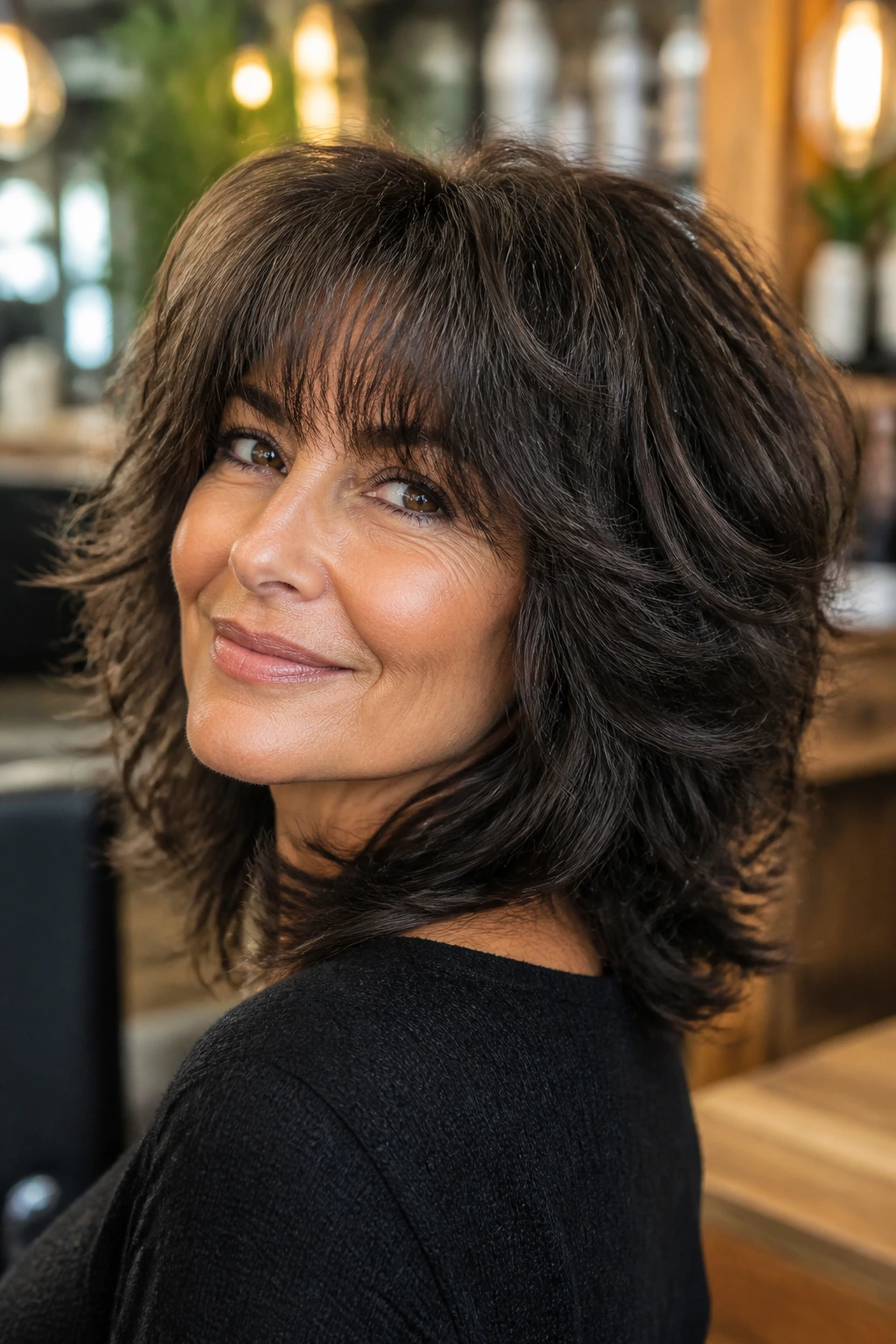
Thick hair can make a shag look either expensive or gigantic. The difference comes down to the shape. A rounded shag keeps some fullness through the crown and sides but removes enough weight inside the cut so the whole head doesn’t triangle outward. That internal work matters far more than the surface layer you see in the mirror.
How to Keep It from Puffing Up
The best way to tame thick hair is to ask for weight removal in the right zones: around the nape, through the back interior, and under the surface near the sides. Don’t let the stylist thin everything with a razor just to make it feel “light.” That often creates fuzzy ends and flyaways without fixing the bulk.
A rounded shag is especially good if your hair expands when it dries. The controlled curve keeps it from taking over your shoulders. Blow-dry with a nozzle attachment, directing the hair down first and then lifting at the crown with a round brush. That gives shape without frizz.
If your hair has a natural wave, use it. A straight iron can flatten the whole point of the cut.
12. Low-Maintenance Gray Shag with Deep Side Part
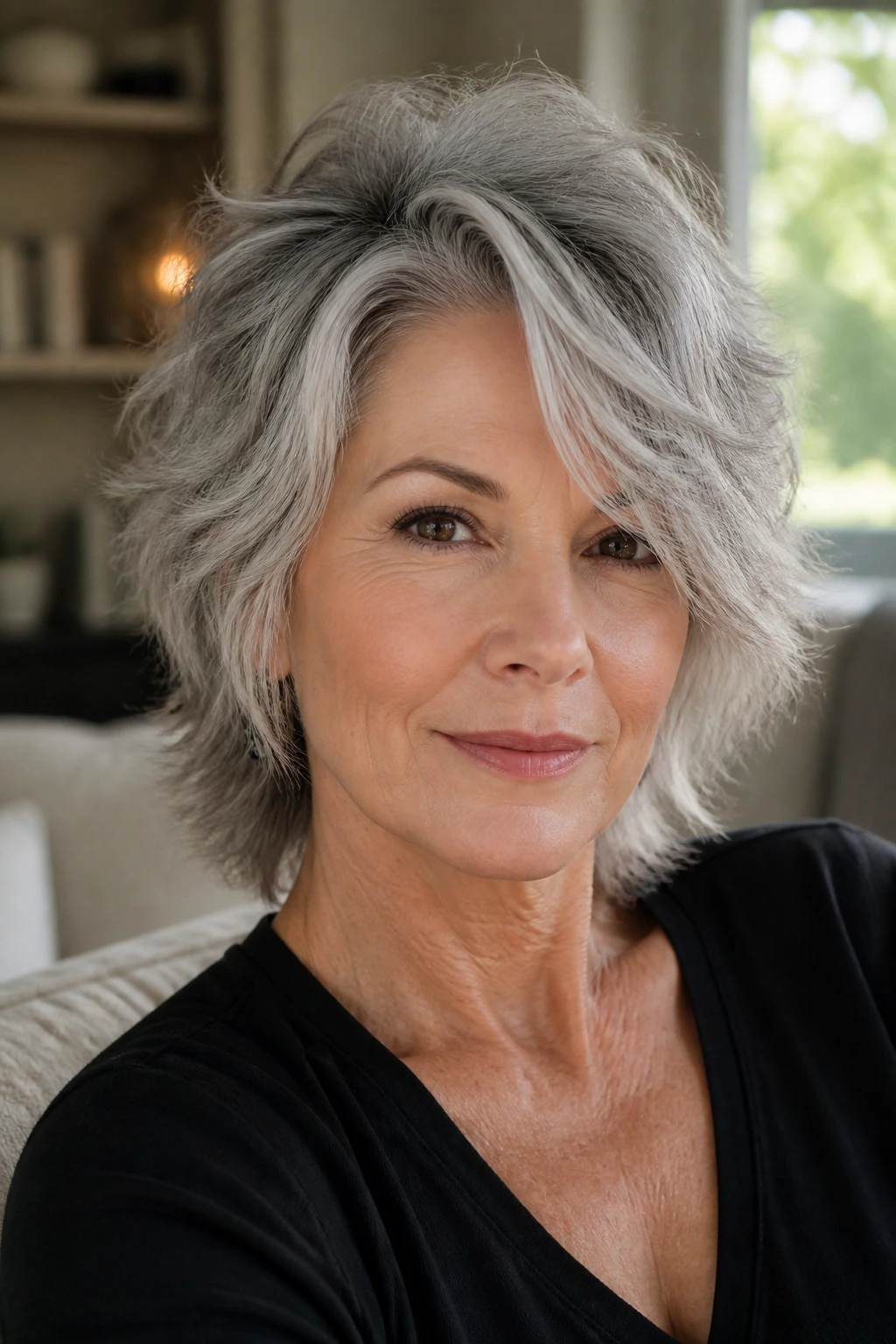
A deep side part is one of the easiest tricks in the book, and it still works. It gives the roots instant lift, breaks up flatness near the crown, and lets a gray shag fall into a shape that feels deliberate. The cut itself stays soft and layered, but the part adds a little drama without any extra length.
This version is for women who want to walk out of the house with less styling and still look finished. The side part should sit where the hair naturally resists a little, not where you’re forcing it into submission. That resistance is the whole point. It creates lift and keeps the front from looking slicked to the head.
- Best for: straight-to-wavy hair that lies flat at the roots
- Best finish: a touch of texture spray at the crown
- Best bang choice: side-swept fringe or cheekbone-length pieces
If your gray hair is coarse, a light smoothing cream on the ends will keep the cut from frizzing out. Leave the roots alone.
13. Glam Rock Shag with Voluminous Crown
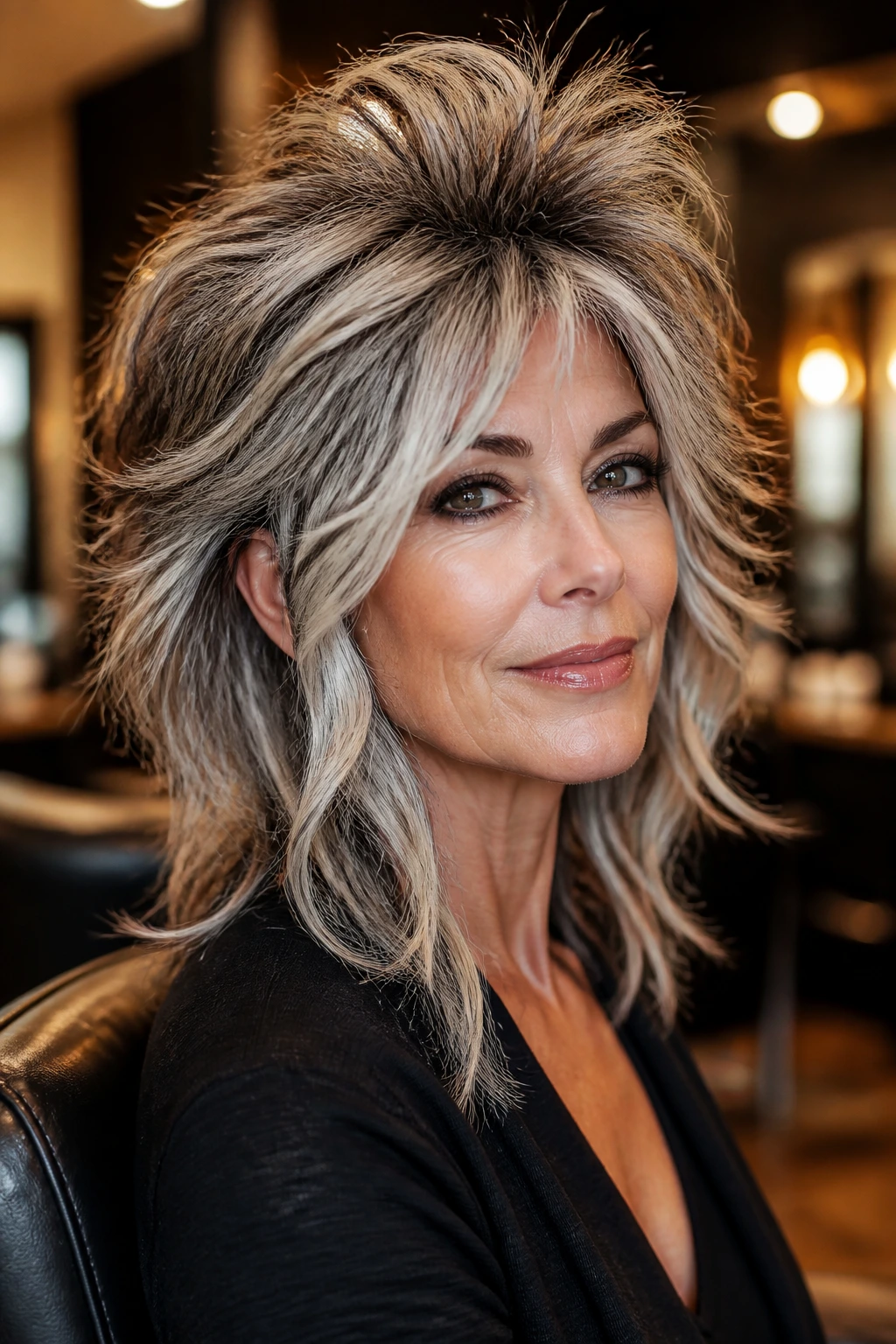
This is the cut for someone who likes a little theater in the hair. The crown gets a real lift, the layers stack in a way that creates height, and the face is framed by longer, swept pieces that keep the volume from looking cartoonish. It’s rocker, yes, but it has polish too.
The big mistake people make with crown volume is using too much product at the base. That can make the hair collapse under its own weight. A better approach is mousse at the roots, a medium round brush, and a quick blast of heat where the scalp meets the lift. Then leave it alone. Poking at it too much after styling kills the shape.
This cut works beautifully with silver highlights or dimensional gray because the layers catch the light in different places. The result looks fuller than a flat, one-length style ever could. If you’ve got a strong cheekbone line or a long neck, the silhouette can be very flattering. It has presence.
14. Messy Mullet Shag with Soft Back Length

A mullet-shaped shag sounds brash on paper. In practice, a soft version can be one of the easiest edgy cuts to wear. The front stays shorter and more face-framing, while the back holds a little extra length so the shape has swing. The key word here is soft. Nobody needs a hard line from 1983 unless they actually want it.
What separates this from a true mullet is the blending. The back should not look like a separate section pasted on after the fact. The layers need to melt into one another so the cut moves as a single shape. That’s what makes it wearable on older women without feeling costume-like.
If your hair is straight, use a slight bend at the ends to keep it from looking severe. If it’s wavy, let the texture do the work. The cut rewards a bit of mess. Too much smoothing and you lose the point.
15. Feathered Shag for Fine Hair
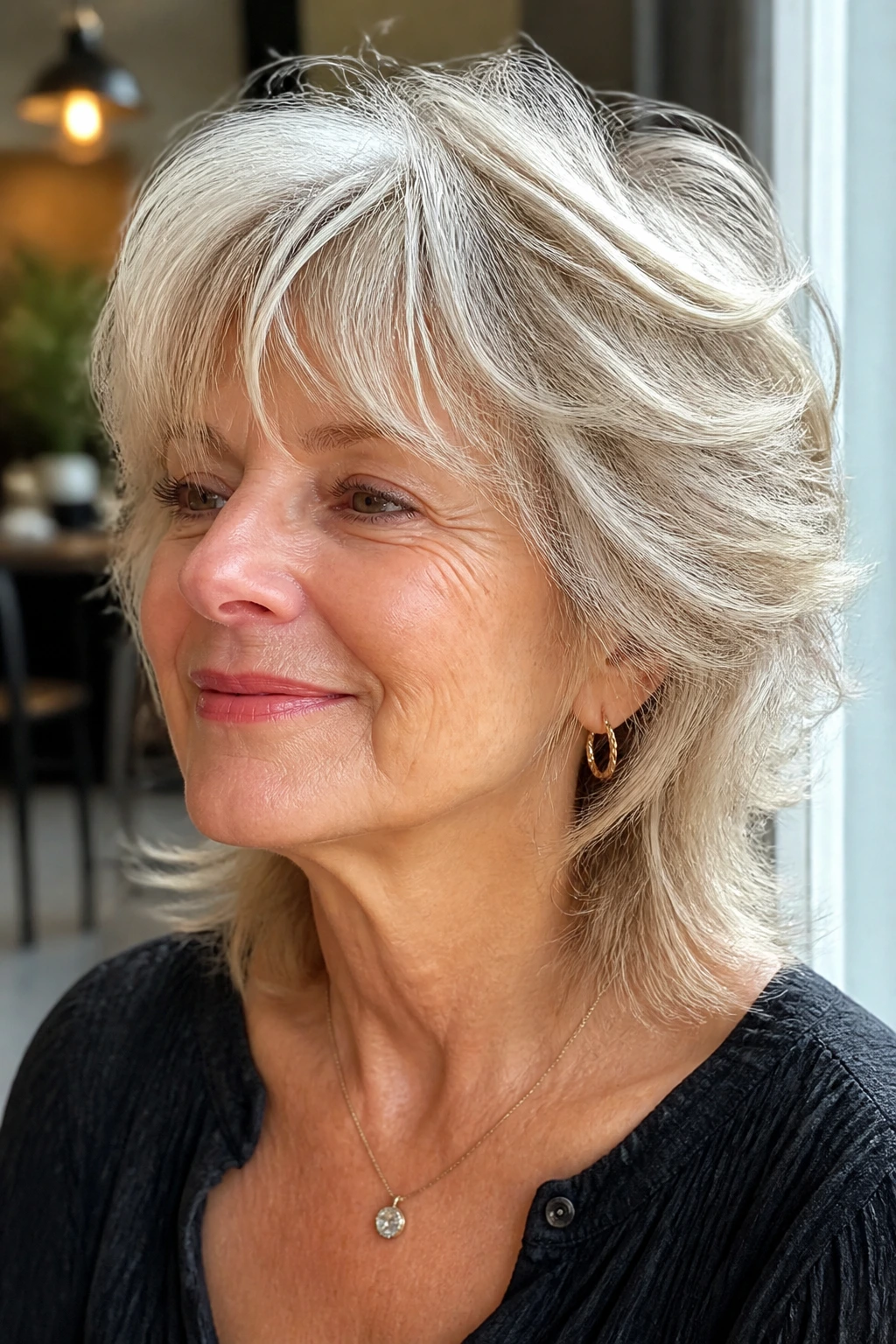
Fine hair usually needs lift more than it needs length. A feathered shag gives you exactly that, because the layers are sliced to look soft and airy rather than heavy. The goal is not to pack in more hair. It’s to make the hair you already have look like it has room to move.
Why It Flatters Thin or Finer Strands
The feathering creates separation without obvious gaps, which is the main thing fine hair needs from a shag. The crown gets some height, the sides don’t hang in one limp sheet, and the ends flick instead of stringing out. If your hair has started to feel see-through at the tips, this shape helps a lot.
Ask for longer internal layers and very light texture at the perimeter. Too much thinning can make fine hair look sparse, especially if the ends are already fragile. A little root lift spray and a round brush at the top section are usually enough. You don’t need a pile of product.
This cut can also make gray hair look brighter, because the layers keep the light moving across the surface.
16. Soft Razor Lob with Bottleneck Bangs

A lob with razor-soft ends feels modern without trying too hard. Add bottleneck bangs — narrow at the top, a little wider as they curve down — and the whole haircut gets a gentle rocker mood. It’s a nice choice if you want a shaped fringe without committing to a heavy curtain bang.
This cut is especially friendly if you like wearing your hair loose but still want the face framed. The bangs draw the eye inward; the lob keeps the shoulders clear; the razor-soft perimeter stops the ends from hanging like one blunt shelf. It’s a small thing, but it changes the whole mood of the hair.
- Ask for: bangs that open the center of the forehead and soften toward the temples
- Use: a flat brush or round brush depending on how much bend you want
- Skip: heavy oils near the fringe, which make the bang collapse fast
If your face is wider at the cheek line, this shape can be a quiet win. The framing narrows the visual width without making the cut feel severe.
17. Undercut Nape Shag for Extra Edge
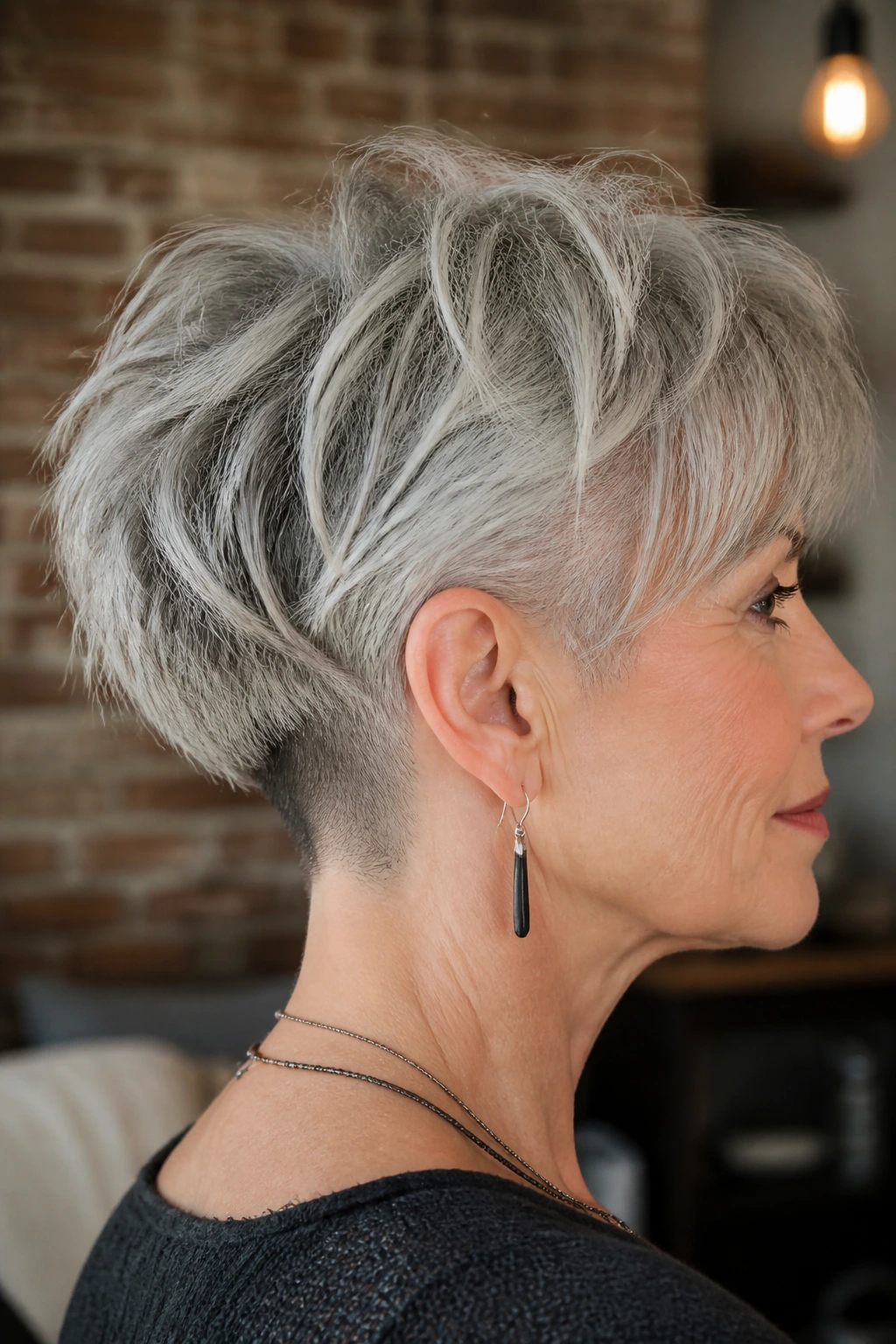
Sometimes the issue isn’t style. It’s bulk. An undercut at the nape can take the weight out from underneath while the top layers keep the shag shape intact. Hidden well, it makes the haircut lighter to wear, easier to dry, and less likely to swell under collars or in humid weather.
This is a practical rebel’s haircut. It looks like a shag from the outside, but it behaves more like a controlled cut underneath. That can be especially useful for women with dense hair that sits heavy at the neck. The undercut doesn’t have to be shaved to the skin; even a small internal removal makes a difference.
If you want edge without a lot of visible drama, this is a strong move. The top can stay soft and swingy while the lower section stays neat. It’s not for everyone. But if your neck gets hot under hair or your style feels too thick at the base, this solves a real problem.
18. Shoulder-Grazing Shag with Wispy Bangs
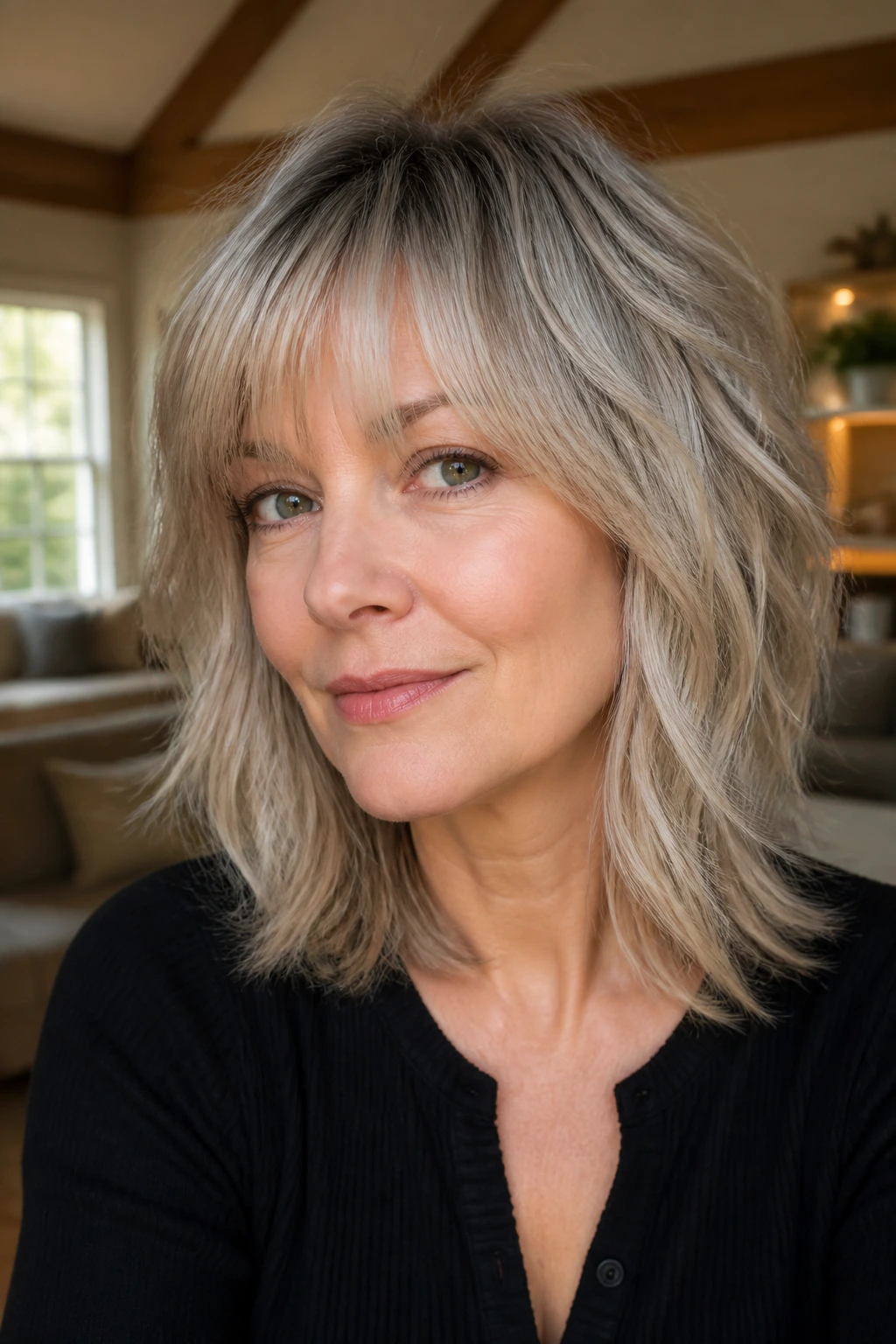
This is the friendly version of a rocker shag. The layers are there, the bangs are there, and the ends have movement, but nothing feels harsh. Shoulder-grazing length gives the hair enough body to swing, while wispy bangs soften the forehead without turning into a heavy curtain.
Best for Women Who Want Edge Without Drama
The bangs should be cut lightly enough that you can see a little skin through them. That keeps them airy and stops them from sticking to the forehead. Around the shoulders, the layers should bevel outward just enough to show shape when you move, but not so much that the cut flips out in a dated way.
This one is a strong choice if you wear earrings, glasses, or simple necklines, because the hair frames those details instead of competing with them. Styling is fast. A rough dry, a bit of lift at the crown, and a small twist at the front pieces are usually enough.
If you want a haircut that can look finished in five minutes and still feel like it has personality, this is a good place to start.
19. Salt-and-Pepper Shag Bob with Glasses-Friendly Framing
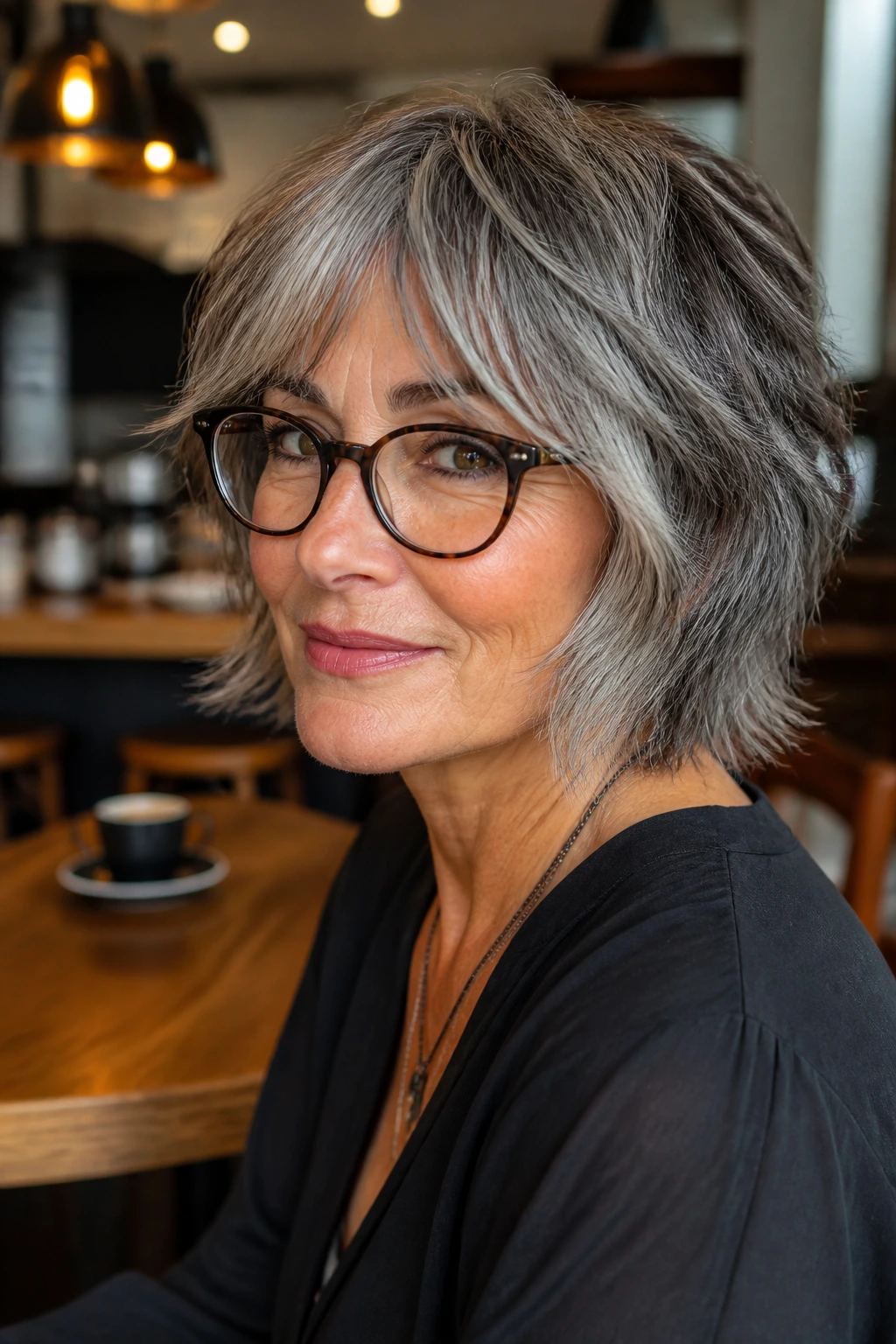
Does a shag work with glasses? Yes, if the front is handled properly. A salt-and-pepper shag bob with framing pieces that stop just around the glasses line can look sharp and comfortable at the same time. The cut needs to leave space where the frames sit, not fight them.
This version feels especially good on hair that has a mix of coarse and soft strands, because the bob shape keeps control while the shag layers add movement. The framing should avoid dropping directly into the top of the frames. That’s the common mistake. The right length either sits above the frame or brushes just below it, depending on the style of the glasses.
The Framing Rule
If your frames are heavy, keep the hair a touch lighter around the temples. If your frames are delicate, you can let the layers be a little fuller. Either way, the cut should create a clean space around the eyes. That little gap makes the face look more open, and it keeps the glasses from getting swallowed by hair.
A side part often helps here. It lifts the front and gives the shape a little asymmetry, which suits the rocker vibe without shouting.
20. Layered Shag with Blended Ends
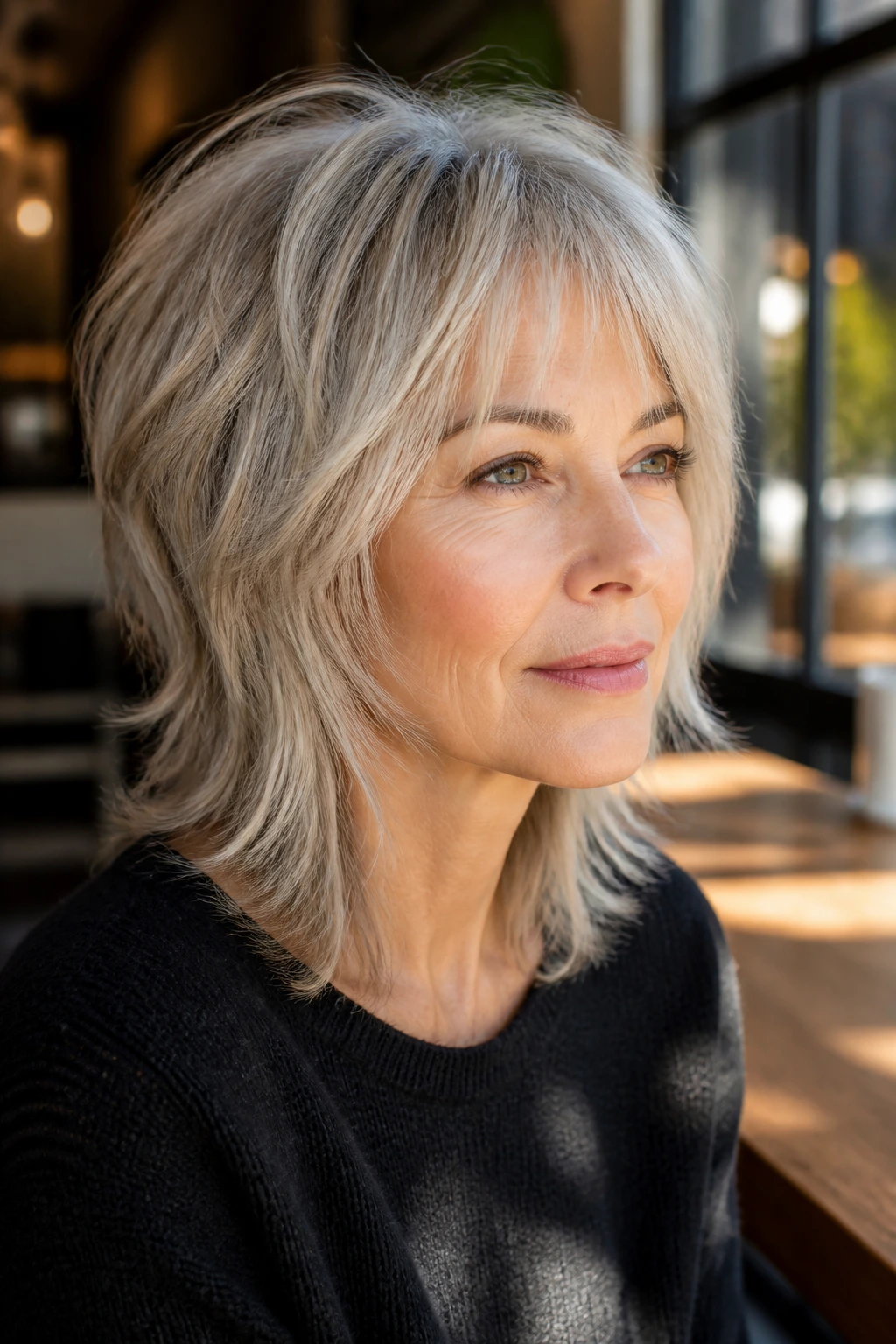
Some people want the energy of a shag but not the obvious choppiness. That’s where a layered shag with blended ends comes in. The layers are still there, but the finish is softer and more merged, which makes the cut easier to wear for women who prefer subtle movement over a big statement.
This is a good compromise if you’ve had blunt cuts for years and want to move into something looser without feeling like you’ve changed personalities overnight. The ends should still move, but they won’t look shredded. Ask for point cutting and light texturizing, not aggressive slicing. That gives you softness while preserving shape.
If your hair is medium density, this cut often lands in the sweet spot. It creates lift around the crown and cheekbones without exposing too much scalp or making the ends look thin. It’s a quieter rocker shag. Still cool. Just less shouty.
21. Airy Shag for Naturally Curly Hair

Curly hair likes room. Squeeze it too tightly into one shape and it fights back. An airy shag gives curls space to spring up, while the layers are placed so the shape stays rounded rather than puffy. The result is movement with some control, which is a better deal than trying to force curls into obedience.
The top layers should encourage lift without making the crown frizzy. The side pieces can be shorter near the cheekbones and longer as they drop toward the jaw. That keeps the face frame from looking boxy. If the curls are tight, a dry trim or curl-by-curl shaping can help the stylist see the real fall pattern.
Use a light cream, not a heavy butter. Scrunch, diffuse, and stop touching it. Curls in a shag usually look best when they’re allowed to settle on their own. The cut does half the styling for you.
22. Sleek Rocker Shag with Subtle Flip
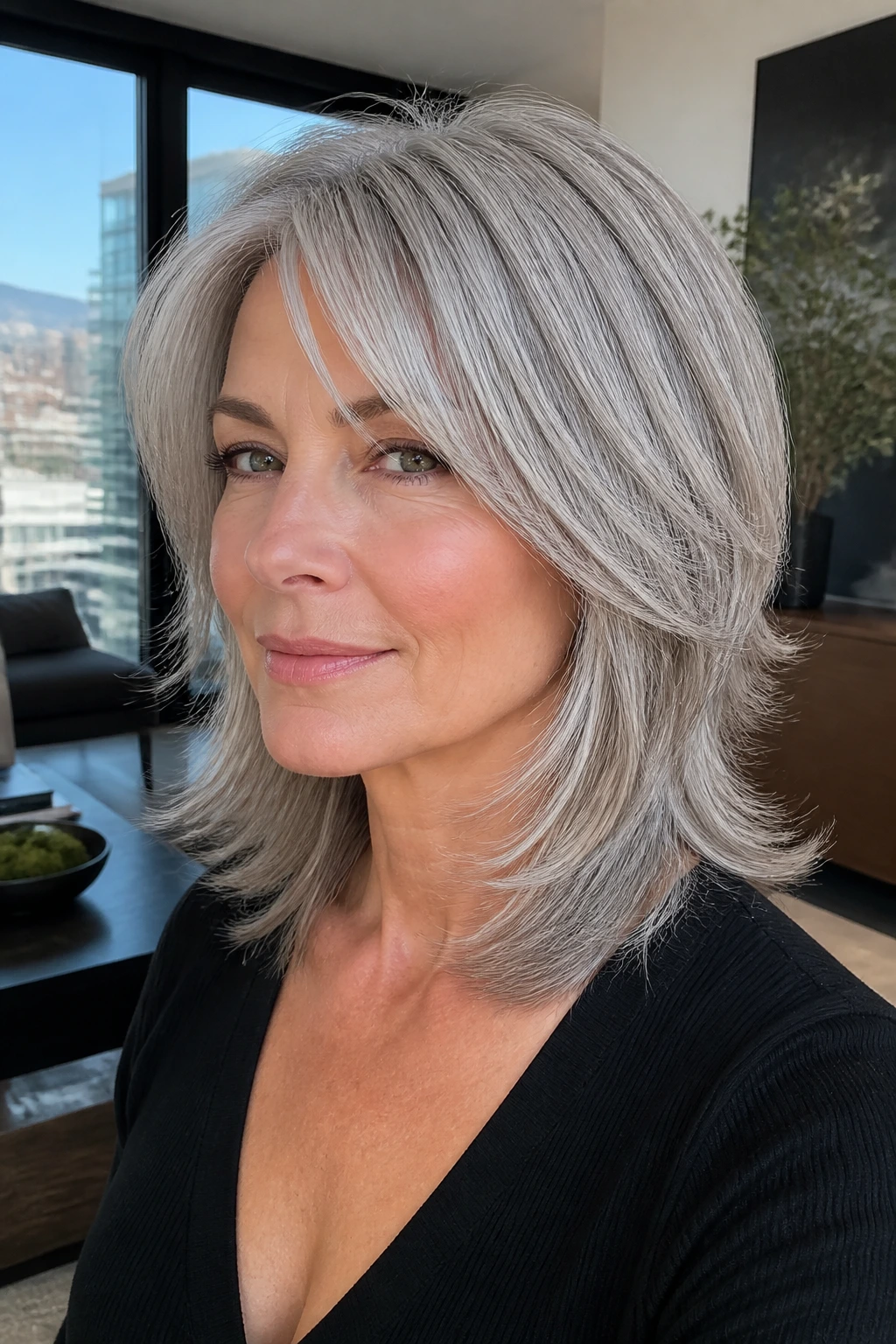
Not every rocker shag has to look messy. Some of the best ones have a cleaner finish with just a little bend at the ends. A sleek rocker shag keeps the lines controlled, then flips the front or lower layers outward just enough to show the cut’s shape. It’s neat with a wink.
This is a nice fit for women who like polished clothes, sharper collars, or a more tailored look but still want the haircut to have some motion. The styling matters here. Use a smoothing cream through the mid-lengths, then bend the ends with a brush or flat iron so they kick away from the neck a little. That subtle flip is what gives the haircut attitude.
The cut should never go pin-straight from root to tip. If it does, all the personality leaves the room. A little movement at the ends keeps it from feeling too serious.
23. Minimalist Shag with Barely-There Layers

What if you want the shag idea without a lot of visible choppiness? Then this is your cut. The layers are soft, almost hidden, but they still break up the outline enough to keep the hair from sitting flat. It’s a restrained version of the rocker shag, which makes it a smart entry point for women who want texture but don’t want to commit to obvious separation.
How to Keep It Subtle
Ask for long internal layers and a lightly textured perimeter. The silhouette should still move when you turn your head, but it shouldn’t scream “layered cut” from across the room. That matters if you wear your hair in simple shapes and only want a little edge in the finish.
This version works especially well on straight or slightly wavy hair that tends to get limp at the ends. The hidden layers create a bend without making the hair look thin. If you want to add more rocker energy later, you can always shorten the fringe or deepen the texture at the crown. Starting soft gives you room to build.
Why Rocker Shag Haircuts Work So Well on Older Women
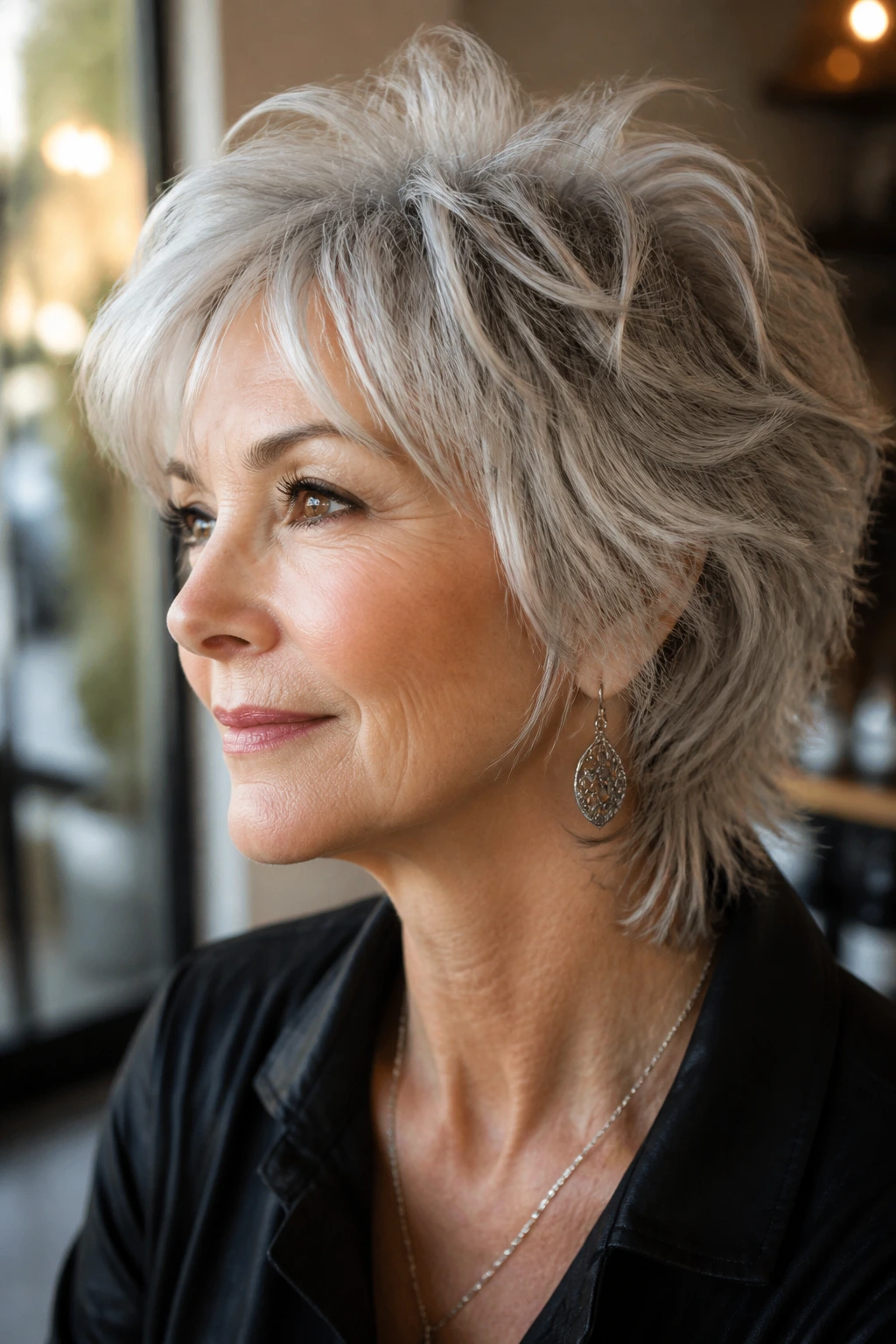
A shag is one of the few cuts that can solve several hair problems at once without looking like it is trying too hard. Fine hair gets lift. Thick hair loses some of the bulk that makes it sit heavy. Gray hair gets shape. And faces get framed in pieces instead of one hard line that stops at the chin and behaves like a shelf.
The other reason these cuts age well is that they do not depend on perfection. A blunt bob can look stunning, but it can also show every bend, every flat spot, every awkward grow-out line. A shag hides that stuff in plain sight. If the crown is a little flat one day, the layers still read as movement. If the fringe separates, it looks intentional instead of broken.
There’s also a practical side that matters. Mature hair often changes texture over time — a little finer here, a little wirier there, sometimes both at once. Rocker shag haircuts handle those changes better than rigid shapes because the cut already expects unevenness. That is not a flaw. It’s the whole point.
How to Ask for the Right Rocker Shag at the Salon
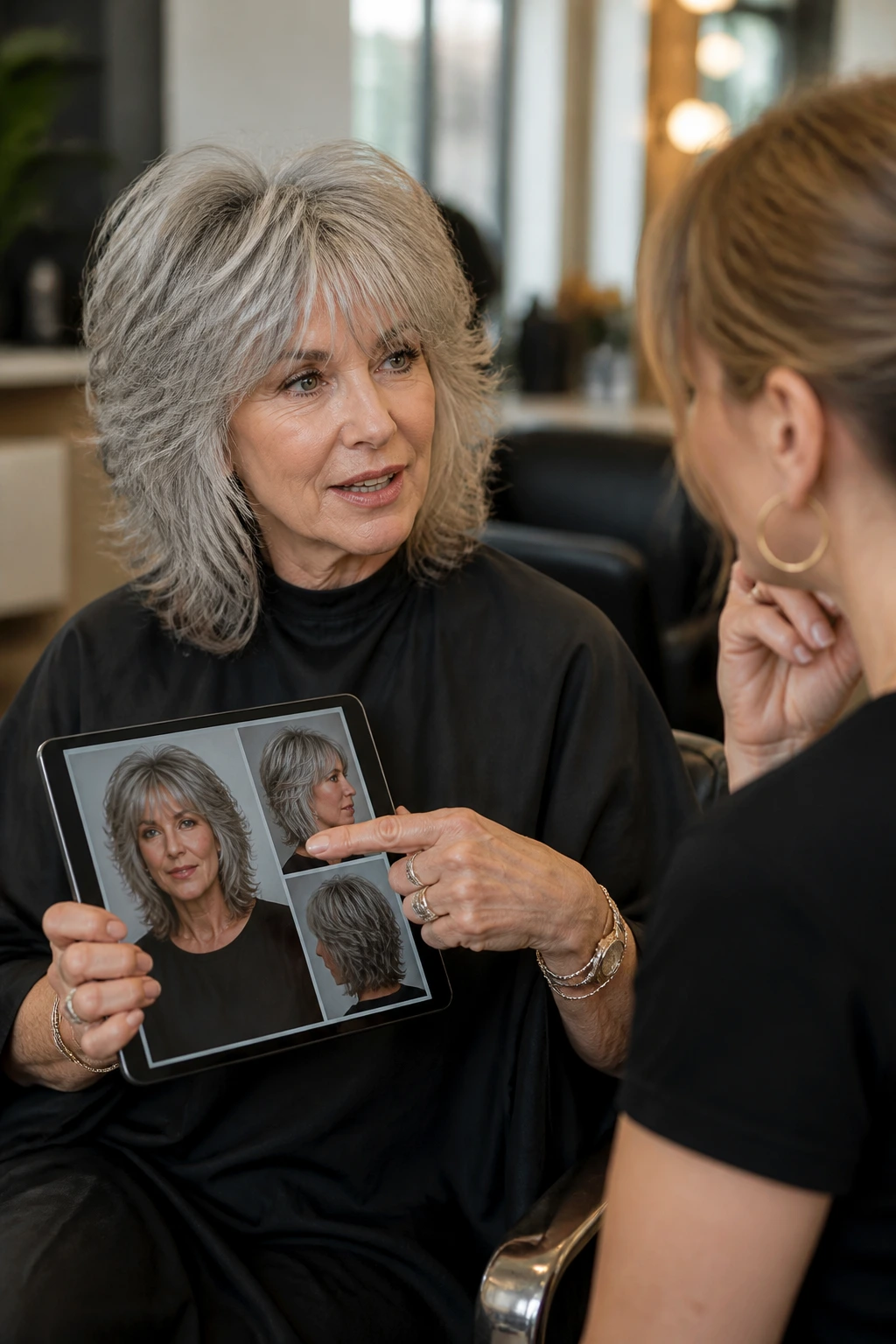
Bring a photo, yes, but bring one that shows the front, the side, and the back if you can find it. One perfect front shot can hide a mess of layering in the back, and that’s how people end up with a shape they did not mean to order. The cut should be described in plain language: shorter crown layers, face-framing pieces, and a perimeter that is textured rather than blunt.
Say what you want to keep: length at the shoulders, fullness at the crown, softness around the jaw, or room for glasses. That saves time and keeps the conversation out of vague territory.
Say what you do not want: too much thinning, a severe mullet line, bangs that split awkwardly, or a fringe that lands in your eyelashes and blocks your view. Those details help more than saying you want it “edgy.”
Mention your daily reality: air-drying, frequent gym visits, cowlicks, curly areas, or a hairline that won’t lie flat. A good shag is built around those details, not added afterward like an apology.
Styling Tricks That Keep the Edge Without the Fuss
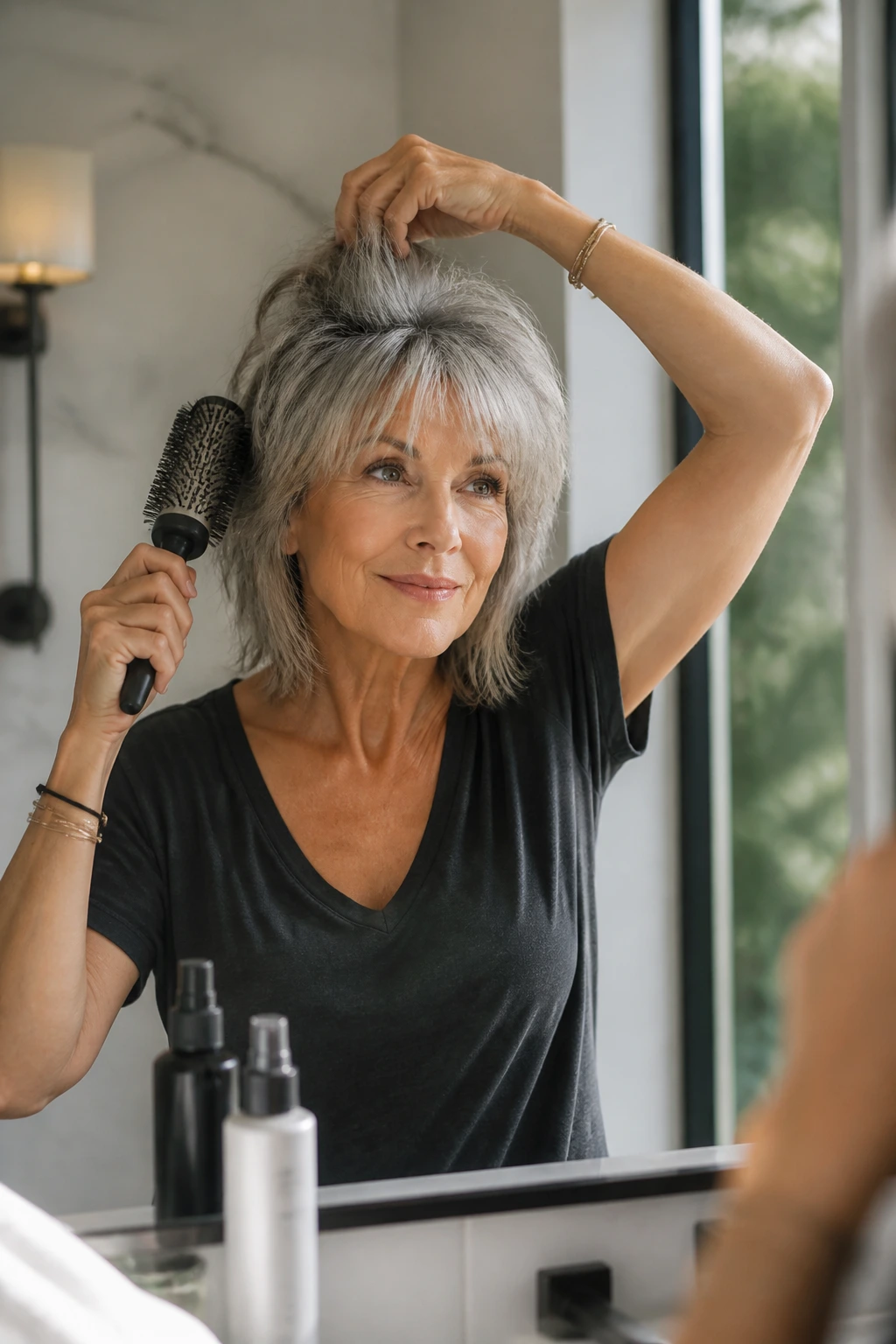
Root lift first: Put mousse or a root spray at the crown while the hair is damp. That’s where the shape comes from, and it beats piling product onto the ends and hoping for the best.
Dry the front with intent: Curtain bangs, wispy fringe, and face-framing layers need a quick round brush bend or a small twist with your fingers. If you let the front dry straight and flat, the whole cut loses energy.
Use less cream than you think: Heavy smoothing product can smother a shag. Start with a dime-sized amount, warm it in your hands, and keep it mostly on the mid-lengths and ends.
Refresh instead of rebuilding: The next day, mist the hair lightly with water, scrunch the layers, and add a touch of texture spray. You do not need to start over every morning.
The Mistakes That Make a Shag Look Messy Instead of Cool
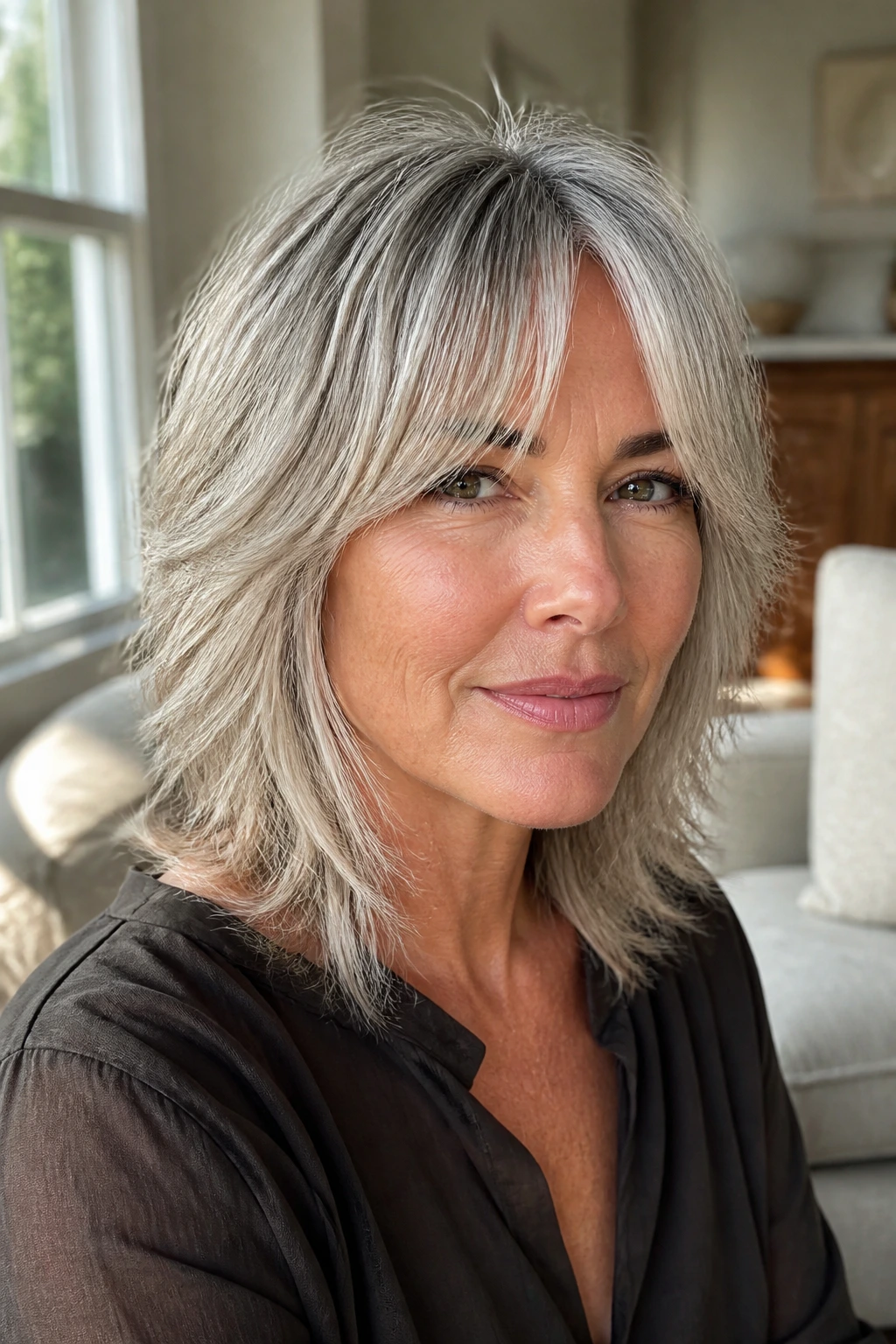
The first mistake is too many short layers in fine hair. The hair starts to look see-through, especially around the ends, and the shape loses weight. The fix is longer interior layers and less thinning at the perimeter.
The second is a fringe that is too dense. Thick bangs can swallow the face and make the whole haircut feel heavy. Ask for softness, point cutting, and enough space at the forehead that your features can still breathe.
The third is over-smoothing the finish. A shag needs some separation. If every strand gets coated in oil or flattened straight, you lose the piecey movement that makes the cut work in the first place.
The fourth is ignoring the way your hair grows. Cowlicks at the front, a strong swirl at the crown, or a nape that flips out should change the cut plan. If they’re ignored, the haircut fights you every morning. And nobody needs that.
Variations If You Want More Edge or Less Fuss
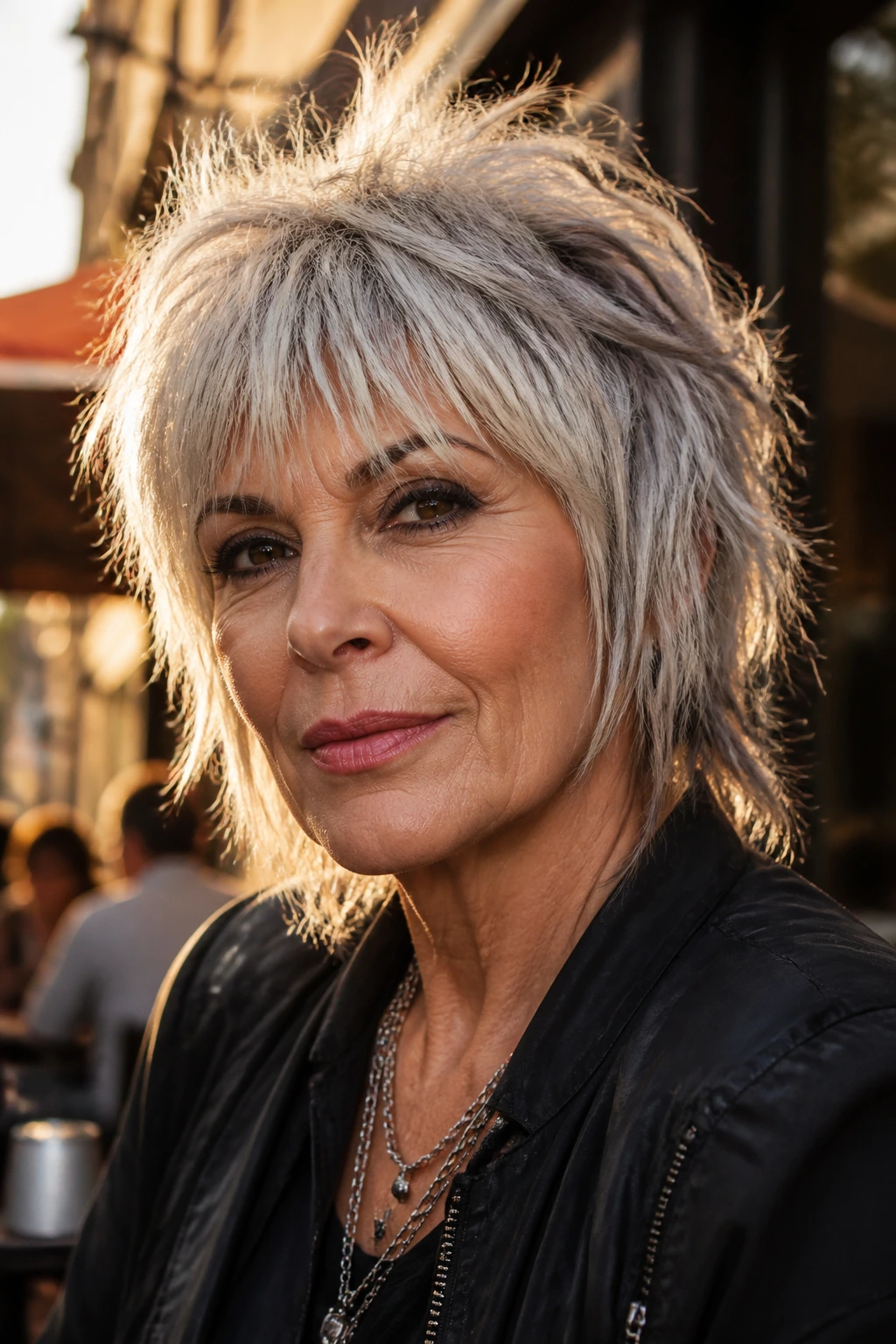
The Softer Sister Cut: Keep the shag structure, but ask for longer layers and a feathered fringe. It looks less choppy and grows out cleanly, which helps if you like salon visits spaced out a little farther apart.
The High-Contrast Rebel: Short crown layers, sharper fringe, and more obvious separation at the ends. This version has the most attitude and looks best when you enjoy texture spray, piecey styling, and a little mess.
The Glasses-Friendly Frame: Keep the front pieces slightly longer so they slide around the frames instead of sitting on top of them. This is a practical tweak, but it changes the whole balance of the cut.
The Gray Glow Version: A shag with softer edges and a strong side part so silver strands reflect light in different directions. That little change makes white and salt-and-pepper hair look fuller and more dimensional.
The Low-Effort Air-Dry Shape: Ask for layers that encourage your natural wave or curl pattern rather than requiring a blowout. The cut does the work; you do less.
Tools and Products That Make Styling Easier
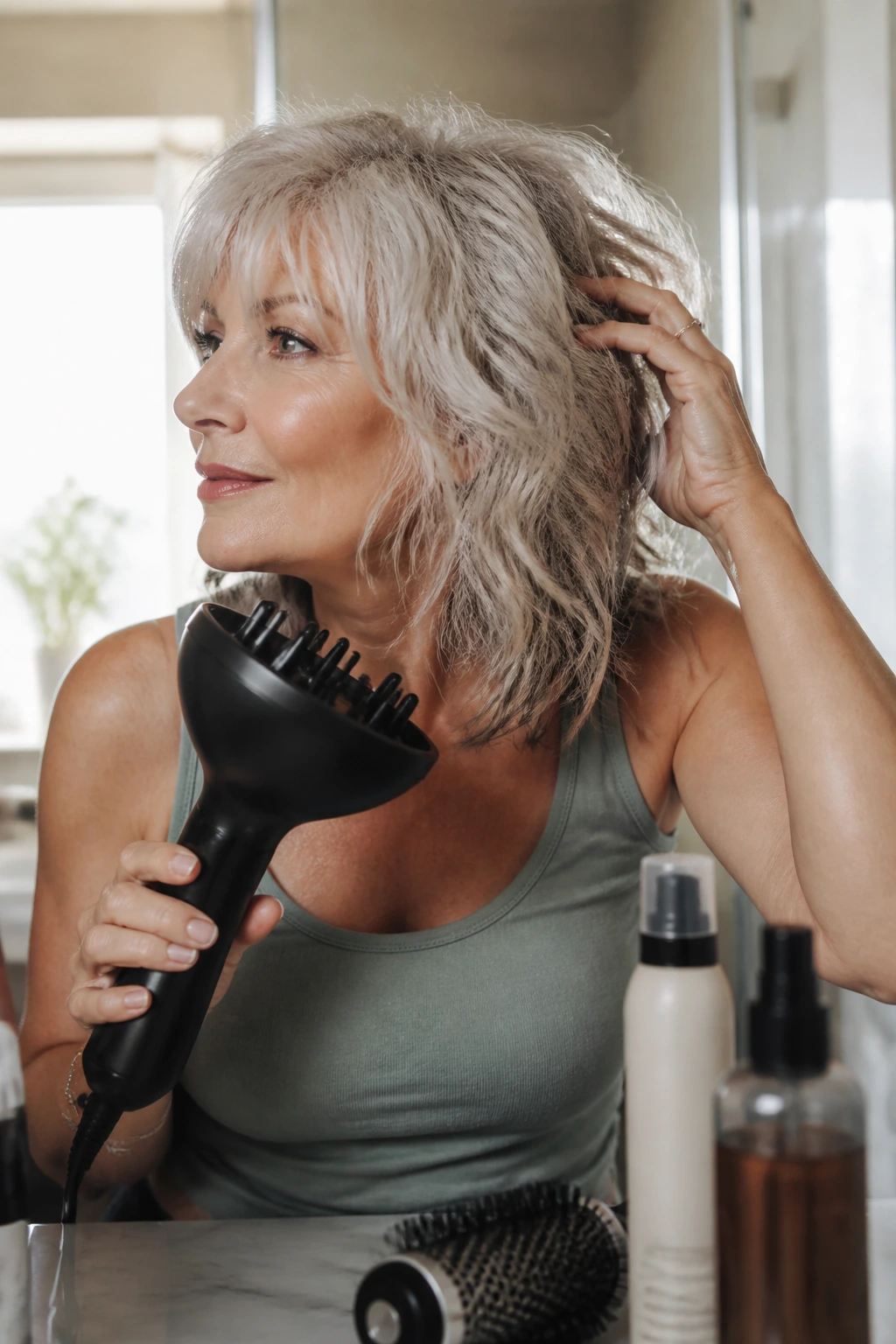
- Blow-dryer with a nozzle: Keeps airflow directed so the cut doesn’t puff up in random places.
- Small or medium round brush: Useful for turning the fringe and lifting the crown without making the finish stiff.
- Diffuser: A must for curly or wavy shags if you want the layers to hold their shape.
- Light mousse: Adds root support without smothering the texture.
- Texture spray or dry finishing spray: Helps the layers stay piecey instead of sliding into one flat sheet.
- Wide-tooth comb: Safer than a fine comb for curlier or more fragile hair.
- Hair clips: Handy for sectioning the front while you dry the crown.
- Smoothing cream or serum: Use a small amount on the ends if they frizz or feel rough.
- A good hand mirror: Sounds basic, but checking the back matters when the cut has internal shape.
Keeping the Shape Between Salon Visits
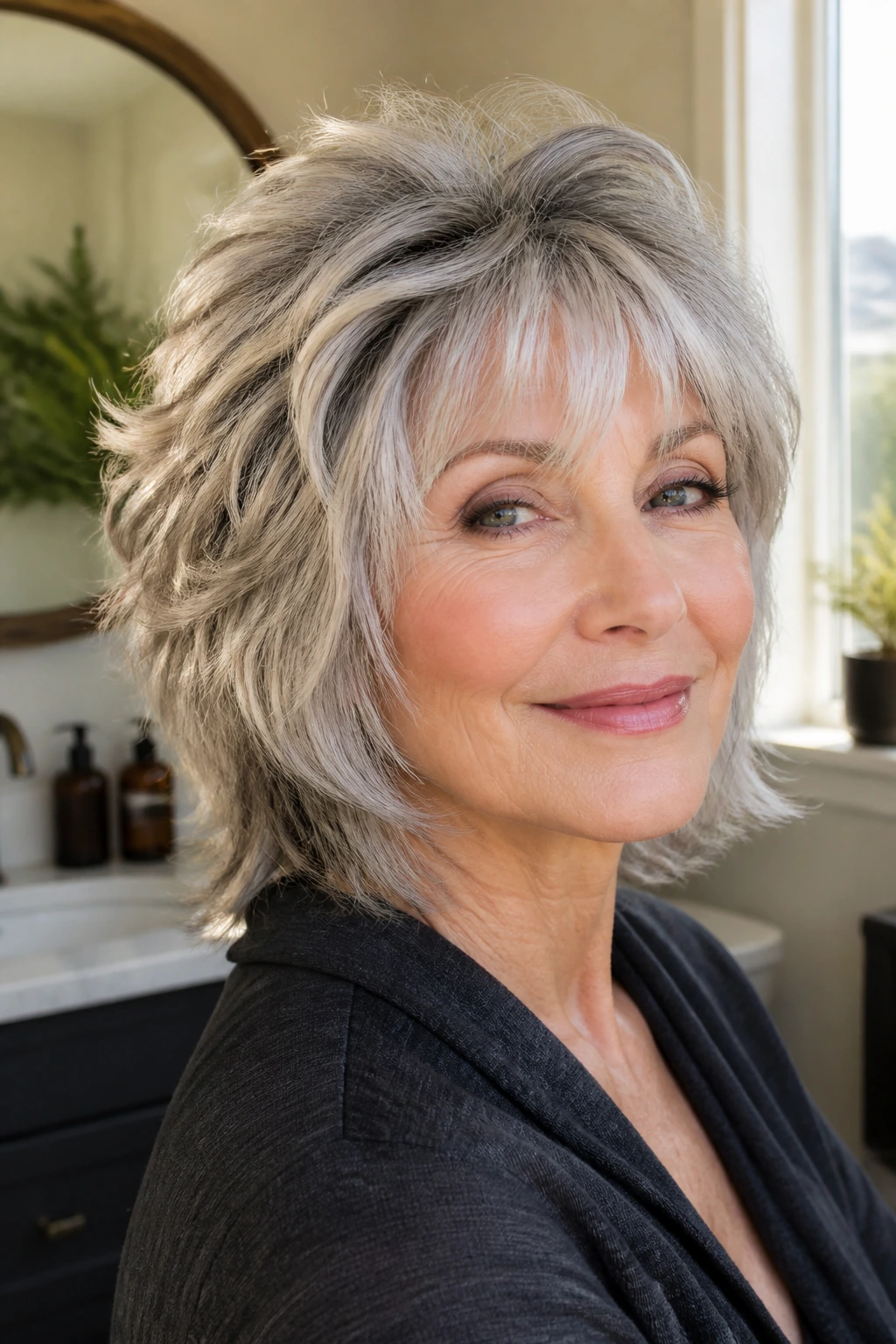
A shag does not need a daily reinvention, but it does need some maintenance. Fringe pieces usually need a trim every 3 to 5 weeks if they sit on the face and bother your eyes. The full shape can usually go about 6 to 10 weeks before it starts losing its balance, though very short shags or pixie shags may want a cleaner schedule.
Sleep matters more than people think. A silk or satin pillowcase helps keep the layers from getting crushed and frizzy. If your fringe flips weirdly overnight, pinning it loosely with a soft clip before bed can save you a morning battle. Dry shampoo at the roots on day two or three helps keep the crown from sliding flat.
If you plan to grow the cut out, ask for the perimeter to stay soft instead of chopped too short. That makes the grow-out less awkward. A shag can drift into a lob or a longer layered shape fairly gracefully if the initial structure was handled well.
Questions Older Women Ask Before Cutting One In
Will a shag make fine hair look thinner?
Not if the layers are handled carefully. Fine hair needs lift and interior movement, not a pile of short pieces at the ends. A good shag keeps the perimeter strong enough to hold shape.
Can I wear a shag if my hair is curly?
Yes, and curly hair often looks better in a shag than in a blunt cut. The layers need to be placed with the curl pattern in mind, ideally with some shaping done while the hair is dry.
Do rocker shag haircuts work with glasses?
They do, as long as the front layers are planned around the frame line. The bangs and face-framing pieces should either sit above the frames or move around them, not land right on top.
Will a shag be hard to style every day?
Usually not. Most versions need a little root lift and some finger separation, not a long blow-dry session. The more naturally wavy your hair is, the easier it gets.
What if my hair is very thick?
A shag can help, but only if the bulk is removed in the right places. You want internal shaping and weight control, not aggressive thinning that makes the ends fray.
Can I ask for a softer version?
Absolutely. A shag does not need to be wild. You can keep the layers long, soften the bang, and still get the movement without the obvious edge.
How often should I trim it?
Most shag shapes stay at their best with a trim every 6 to 10 weeks. Short fringes and pixie versions usually need more frequent cleanups.
Is a razor cut a bad idea on damaged hair?
It can be, depending on the condition of the ends. If the hair is fragile or overprocessed, scissors and point cutting may be kinder than a heavy razor pass.
The Shape With a Little Attitude
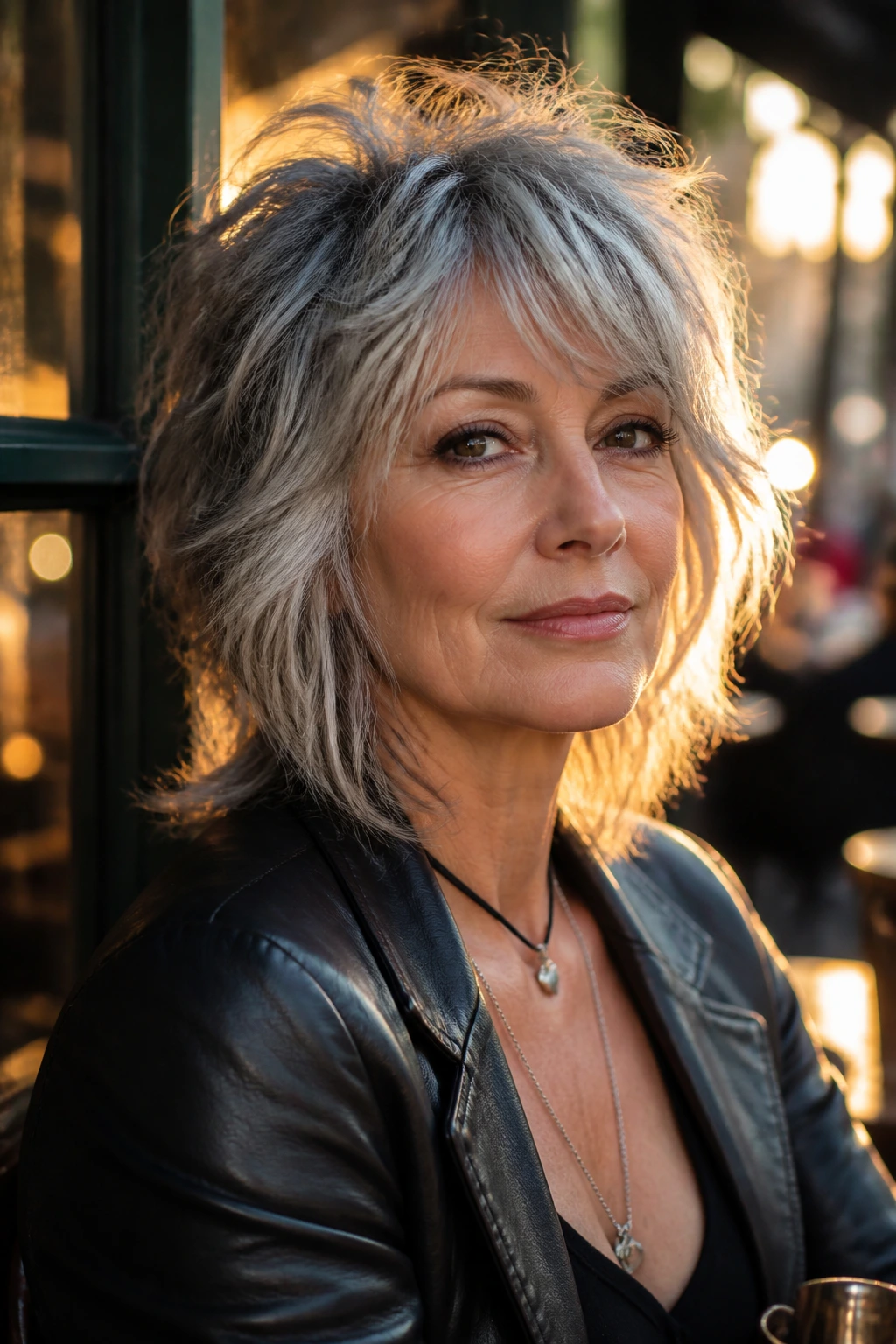
The best rocker shag haircuts for older women do not pretend age is a problem to hide. They work with texture, movement, and a face that has earned a little character. Some of these cuts are soft enough for everyday wear. Some have sharper edges. A few lean bold. All of them rely on the same idea: give the hair a shape that moves instead of a shape that merely sits there.
If you take one thing from this, make it the fit between the cut and the hair you actually live with. That’s where the good shag lives. Not in the fantasy version, not in the over-styled salon photo, but in the version that still looks like itself after a wind gust, a nap, and a normal morning.
