



Shag haircuts for medium length wavy hair have one unfair advantage: the wave does half the styling before you touch a brush. A collarbone-grazing cut can look airy, loose, and a little rebellious without sliding into full-on mullet territory. The magic lives in where the layers start and how much weight you leave at the ends.
A bad shag on wavy hair is easy to spot. The top balloons, the sides flip out, and the whole shape starts reading as wide instead of lived-in. Get the layering right, though, and the cut does something better: it lets the hair move instead of sitting there like a heavy sheet.
That is why medium length matters so much. You have room for curtain bangs, bottleneck bangs, or a longer fringe, and enough length to keep the outline from getting fuzzy. Some versions lean polished, some go softer, some borrow a little from the wolf cut, and a few are shamelessly cool in the best way. Picking the right one depends on your wave pattern, your density, and how much work you want to do in the morning.
Why These 27 Cuts Earn Their Spot
-
The length is forgiving: Medium hair gives a shag enough weight to keep from puffing out, but not so much length that the layers disappear into the ends.
-
Waves do the heavy lifting: A natural bend gives these cuts texture without needing a curling iron every morning, which is the whole point if you ask me.
-
Bang options are built in: Curtain bangs, bottle-neck fringe, wispy pieces, and side-swept fronts all sit naturally with this shape.
-
They grow out with less drama: The perimeter stays useful while the layers soften, so you do not get that blunt “I missed my appointment” look so fast.
-
They fit different moods: Some of these shags read soft and face-framing, others lean rocker, and a few sit neatly in the middle.
Why Medium-Length Waves and a Shag Cut Get Along So Well
Medium length is the sweet spot because it gives the cut somewhere to go. On hair that lands around the collarbone or just above the shoulders, the layers can collapse inward, flick out, or separate in a way that looks intentional. That same layering on a shorter cut can get too airy. On a much longer cut, it can disappear under the weight.
The other reason this pairing works is that wavy hair already has built-in bends. A shag does not need to create motion from scratch; it only needs to guide the motion. If the shortest layers sit around cheekbone or lip level, the face frame opens up without lifting the whole crown into a mushroom shape. If the interior is over-thinned, though, the ends start looking sparse fast. That is the line to watch.
I like medium shags that keep a little heaviness at the perimeter. That extra weight keeps the silhouette from turning fuzzy on humid days and helps the cut sit better when you air-dry it. Too many stylists go after “texture” like it is a religion. It is not. On wavy hair, the smarter move is usually controlled texture.
One more thing. The best shag is not the one with the most layers. It is the one that makes your hair move without making you fight it.
1. Soft Curtain Shag
The soft curtain shag is the one I recommend when someone wants movement without looking like they raided a backstage dressing room. The longest pieces skim the collarbone, while the face frame opens at the cheekbones and falls away in the middle. On medium wavy hair, that gives you lift where you want it and enough length left behind to keep the shape calm.
Why it works
The center-split fringe softens the forehead and helps waves fall in a looser pattern around the face. It is especially good if your hair bends more at the ends than at the roots, because the curtain pieces create shape even on slower wave days.
Ask for this
- Layers that begin around the cheekbone, not the chin
- Curtain bangs that split near the bridge of the nose
- A collarbone perimeter with soft, not blunt, ends
Best for
Round faces, heart faces, and anyone who wants a shag that can still pass as polished with a blazer.
2. Razor-Edged Wavy Shag
This is the shag for hair that swells when it dries. A razor finish removes some of the bulk and leaves the ends a little feathered, which keeps dense waves from looking like a helmet. The result feels more separated, more lived-in, and a bit cooler than a blunt scissor cut.
The catch is that razor work is not a free pass for everyone. If your ends are fragile or you heat-style a lot, too much razor thinning can make the bottom look wispy in a bad way. I like this version best on healthy, medium-to-thick hair that naturally holds a bend.
A little mousse at the roots and a touch of cream on the mids is enough. Do not drown it in oil. That kills the separation the cut is trying to give you.
3. Heavy Bang Shag
What if you want the shag shape, but you also want the fringe to make a statement? That is where the heavy bang version lands. The bangs sit fuller across the forehead, then the layers fall away at the sides so the face does not get boxed in. On medium waves, it looks bold without needing a lot of styling tricks.
The key is balance. Heavy bangs need a little more daily attention than curtain fringe, because they show cowlicks and humidity faster. But the payoff is strong: they can make long foreheads look shorter, pull focus to the eyes, and give the whole haircut a sharper edge. Keep the rest of the layers soft so the front does not overwhelm the cut.
If your waves get frizzy, have the bangs cut long enough to move when dry. Short bangs on wavy hair are a dare. Sometimes that is fun. Sometimes it is a mistake.
4. Collarbone Wolf Shag
The collarbone wolf shag sits right between “cool” and “I still want to wear this to lunch.” It borrows the shorter crown and longer nape idea from the wolf cut, but on medium length hair it stays softer and more wearable. The top gets lift, the sides get attitude, and the bottom keeps enough length to avoid a full-on mullet silhouette.
Who it suits
This one is best if you like a little edge and your waves hold shape well. Thick or medium-density hair handles the crown layers beautifully. Fine hair can wear it too, but the cut has to stay lighter at the top so it does not get see-through.
Styling note
A diffuser helps, but only for 5 to 8 minutes. The rest can air-dry. If you overwork it, the shape turns fuzzy fast.
The collarbone length is what keeps this version from getting too aggressive. It has some bite, but not the kind that demands a leather jacket to make sense.
5. French Girl Shag
The French girl shag is softer than the name suggests. Think airy fringe, cheek-skimming layers, and ends that bend instead of spiking out. On medium wavy hair, it reads as relaxed rather than messy, which is why I keep coming back to it for people who want shape without obvious chunkiness.
It also grows out well. That matters more than people admit. A shag that looks fine for two weeks and then falls apart is a bad haircut. This version tends to blur nicely as it lengthens, especially if the bangs stay a little longer and the layers stay soft around the jaw.
If your waves are fine or medium, this is one of the safer picks. It gives motion without stripping the hair of its body.
6. Feathered 70s Shag
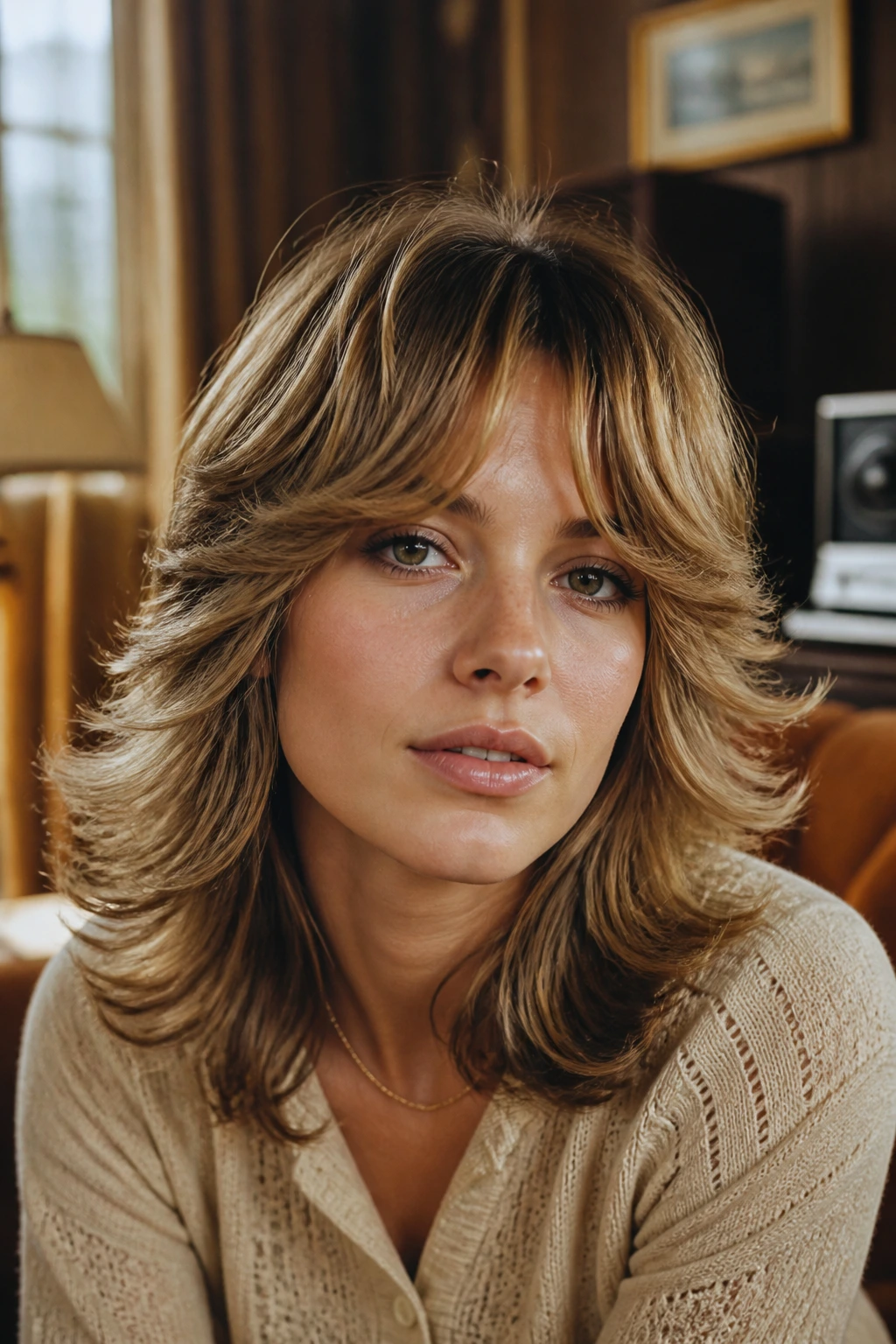
The feathered 70s shag has that lifted, blown-out shape that makes medium waves look fuller at the crown and airy at the ends. It is not the same as a choppy shag. The layers are more directional, and the ends tend to flip outward in a smoother way.
A round brush makes a big difference here. So does a blow-dry that starts at the roots. If you let the hair dry flat and expect feathering to appear by magic, it will not. This cut likes a little intention.
It is especially good on hair that falls heavy through the sides. Feathering breaks up that weight while keeping the overall outline soft. If you love the feel of a little movement around the cheekbones, this one earns its keep.
7. Choppy Layer Shag with Bottleneck Bangs
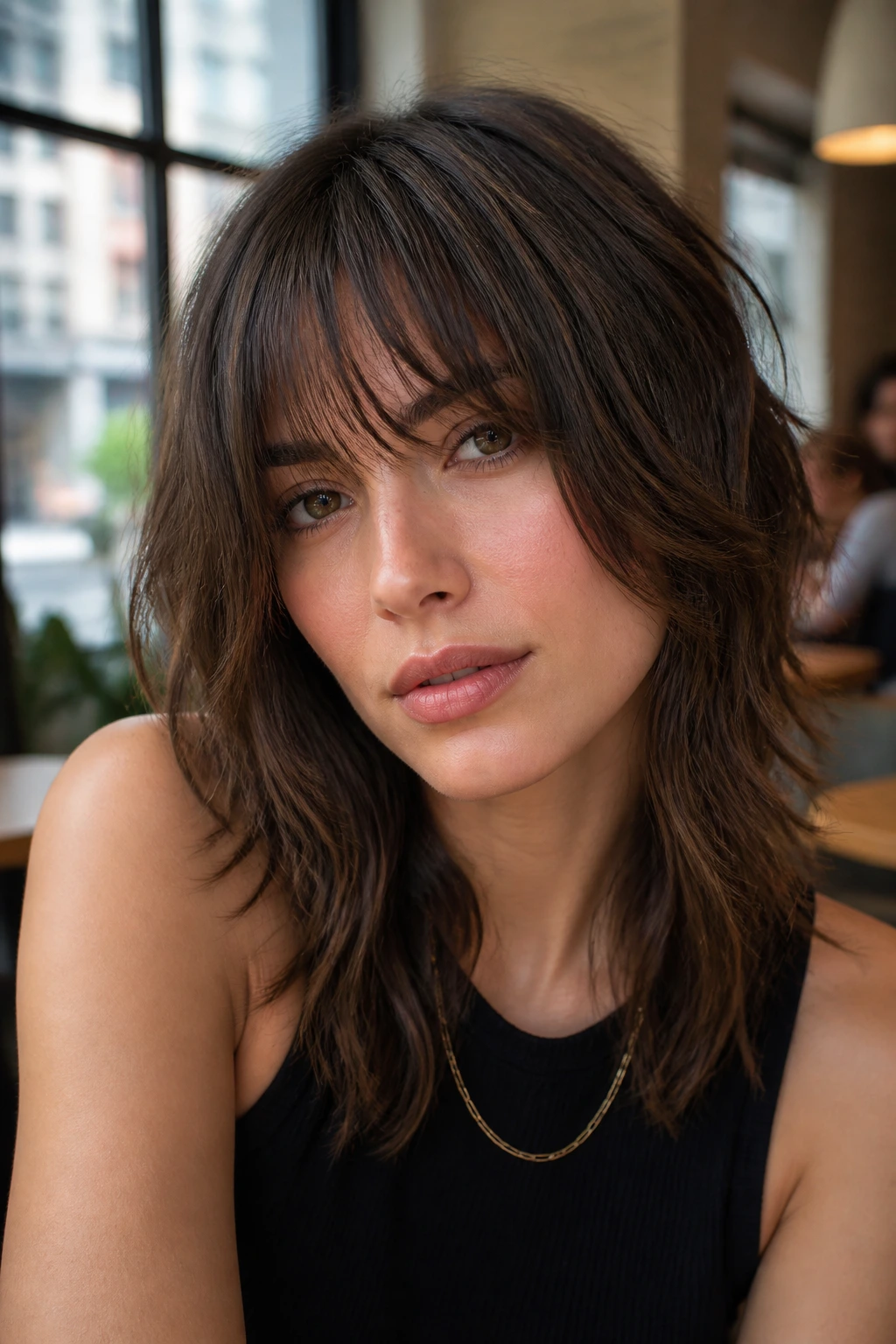
The bottleneck bang is the smartest part of this cut. It starts slimmer near the center, then widens into a face frame around the cheekbones, which gives medium wavy hair a nice transition from fringe to layers. The choppy body below adds separation without making the haircut look shredded.
Why it works
The fringe and layers work as one shape instead of two separate ideas. That matters. A shag can look disconnected if the bang area is too blunt or too short, and bottleneck bangs solve that by easing the front into the rest of the cut.
What to ask for
- A longer fringe that can tuck or split
- Choppy layers that start below the eyebrow zone
- Soft point-cut ends, not heavy razoring
This one suits anyone who wants a little edge but does not want the face frame to feel severe. It has enough shape for styling photos and enough softness for regular life.
8. Low-Maintenance Air-Dry Shag

If your mornings are already crowded, this is the one to look at. The air-dry shag keeps the layering lower and the front softer, so the cut falls into place with less coaxing. On medium wavy hair, that means you can leave the towel alone, scrunch in a little mousse, and get on with your day.
The trick is not to overlayer the crown. If the top is cut too short, the hair will puff before it dries. A better air-dry shag keeps the longest face-framing pieces intact and lets the natural bend do most of the work. It is not the most dramatic version on this list, but it might be the one you actually wear the most.
A wide-tooth comb and a microfiber towel go a long way here. That is about it. No parade of hot tools required.
9. Grown-Out Shag with Long Fringe
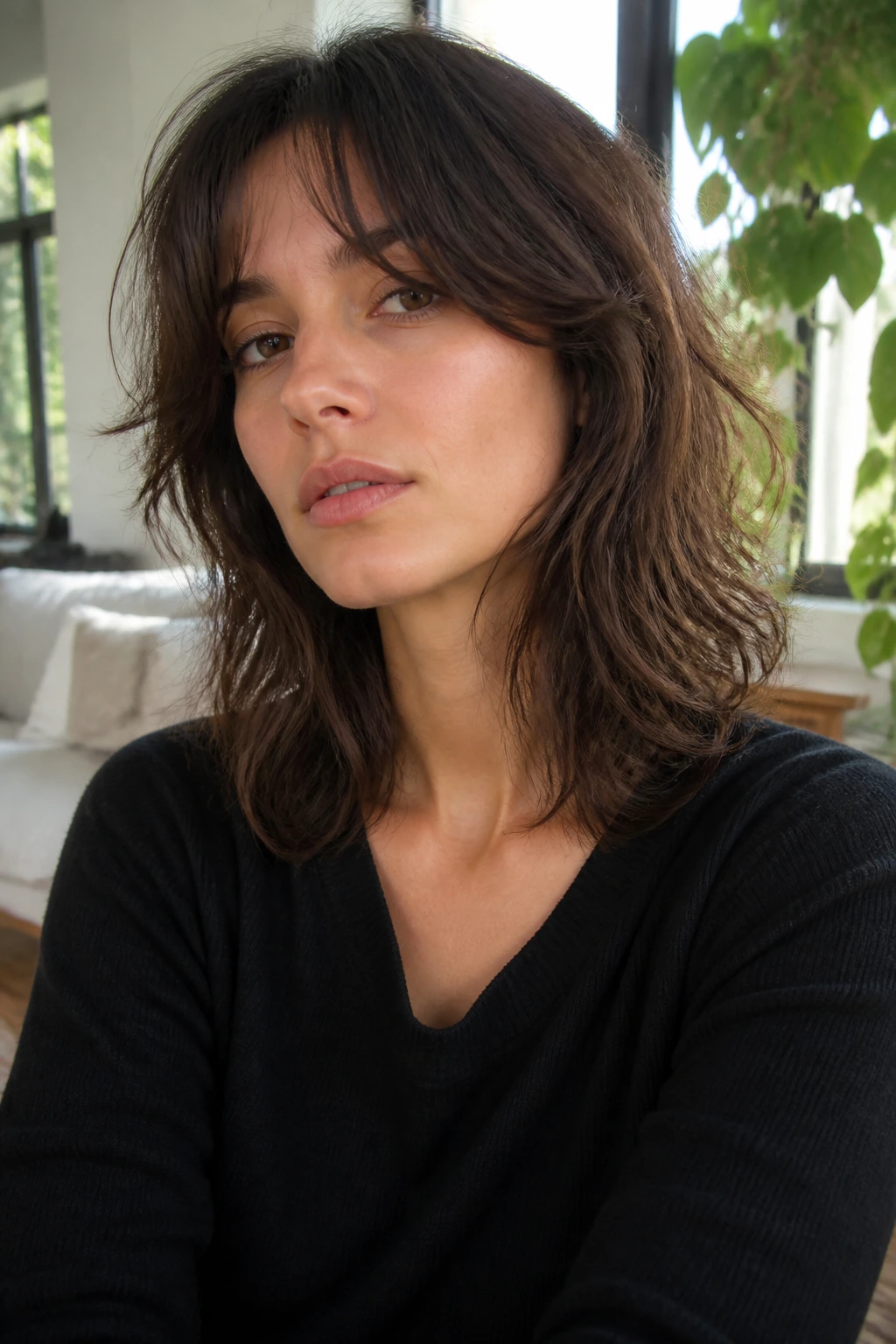
What do you get when you want the shag shape but you are tired of constant trims? This. The grown-out version keeps the fringe long enough to tuck behind the ears or split in the middle, while the layers melt more slowly into the rest of the hair. It is a quiet cut, in the good sense.
The length around the face usually hits around the mouth or just below, which gives waves room to swing without sitting in the eyes. That makes it a smart choice if you are growing out bangs or if you hate frequent salon visits. It also plays nicely with glasses, because the fringe does not sit right on top of the frames.
This is the version I would choose if I wanted a shag without committing to a hard edge.
10. Side-Part Shag with Face-Framing Pieces
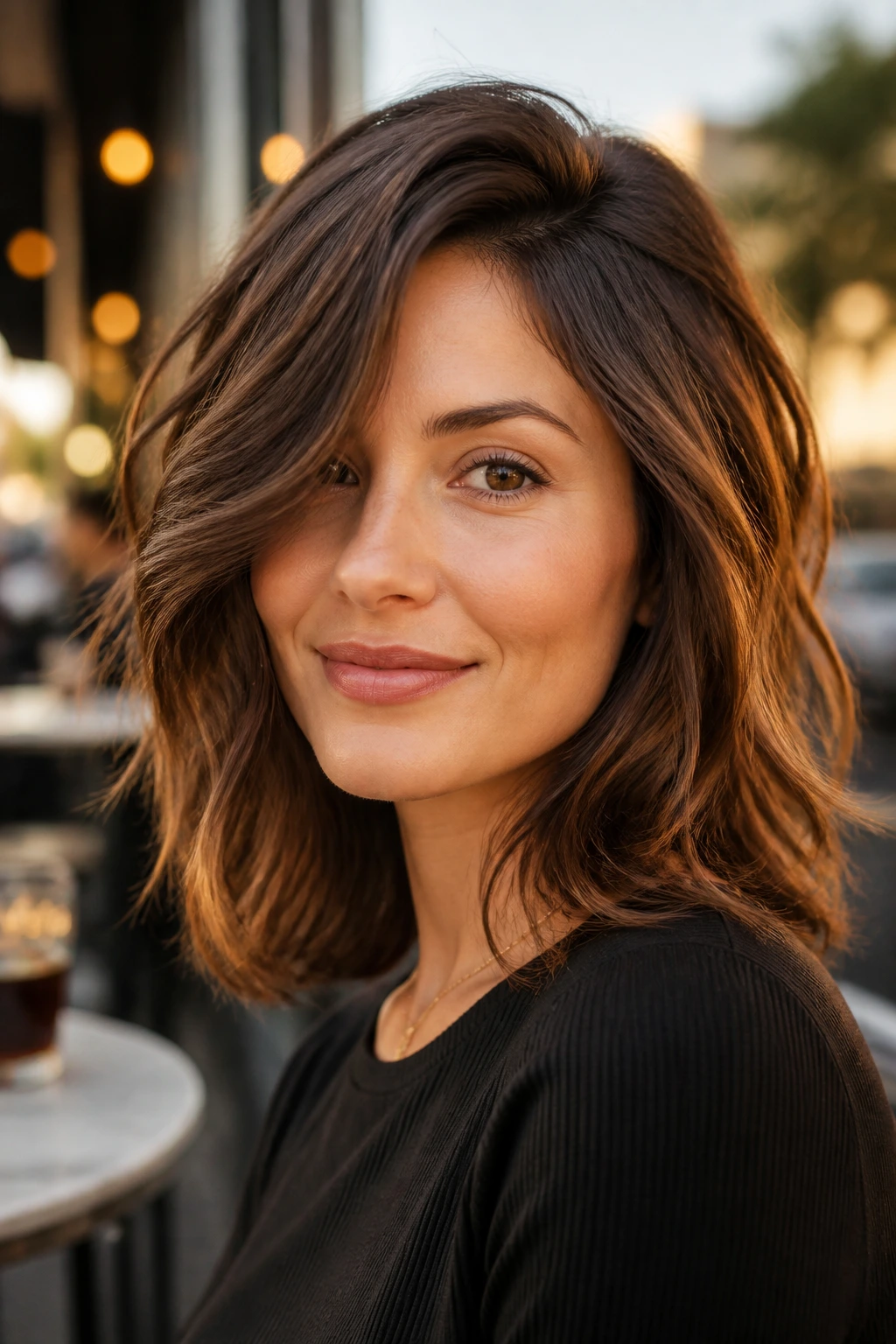
A deep side part changes the whole mood of a shag. It adds lift at the roots, gives the face frame more movement, and keeps medium waves from settling into the same old center-part pattern. If your hair tends to lie flat on top, this cut gives it a quick rescue.
The face-framing pieces should be long enough to sweep past the cheekbone and soften the jawline. One side can tuck behind the ear; the other can fall forward and create that slightly undone bend that waves are so good at. That asymmetry is the point.
This cut is especially nice for square or round faces. The diagonal line of the part and fringe makes the whole shape feel lighter. It also looks good on day two, which is a practical detail more people should care about.
11. Piecey Textured Shag

The piecey shag is for people who like separation more than softness. Each section has a bit of definition, almost as if the cut was designed to show where one wave ends and the next begins. On medium wavy hair, that can look sharp in a very casual way.
The move here is restraint. You want texture, not shredded ends. A pea-size bit of paste or cream through the mids is enough to break the waves apart. If you overdo the products, the style goes greasy fast and the whole point disappears.
This one is best on thicker waves or hair with a little grit to it. Fine hair can wear it too, but the layers need to stay light enough that the ends do not thin out.
12. Dimensional Color Shag
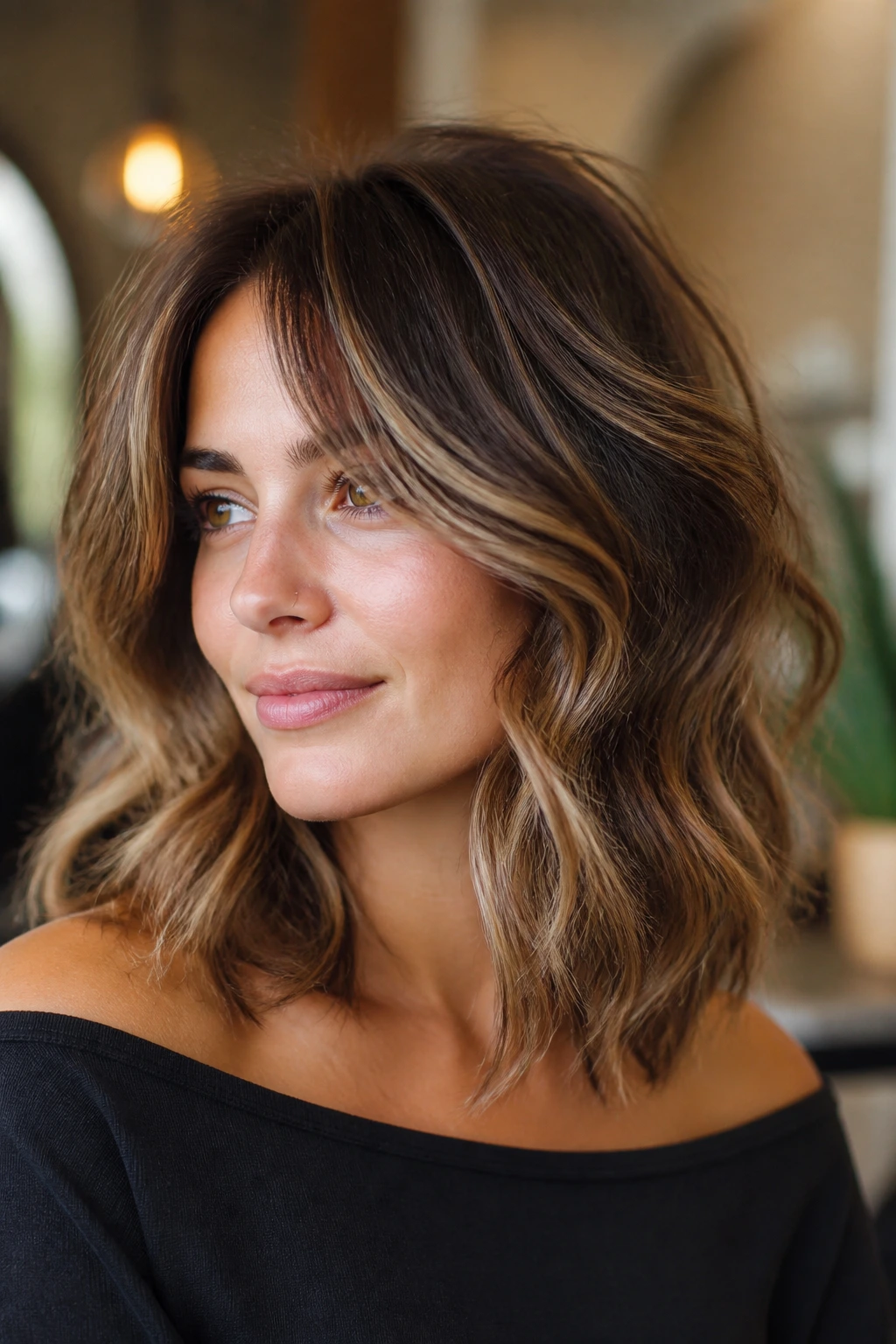
A shag and dimensional color have a pretty obvious chemistry. The layers show off ribbons of light, and the highs and lows of balayage or soft highlights make the cut look deeper. Even a plain brunette shade can look richer when the layers are placed well, but the right color placement gives the haircut more shape than another round of texturizing ever could.
Ask for lighter pieces around the face and through the top layers, not just random streaks everywhere. That is what makes the movement visible. On medium wavy hair, the color catches the bends and makes the shape easier to read, especially when the hair is loose and not heavily styled.
I like this one when someone wants the haircut to look a little more deliberate. The color does some of the visual work so the layers do not need to shout.
13. Soft Mullet-Inspired Shag
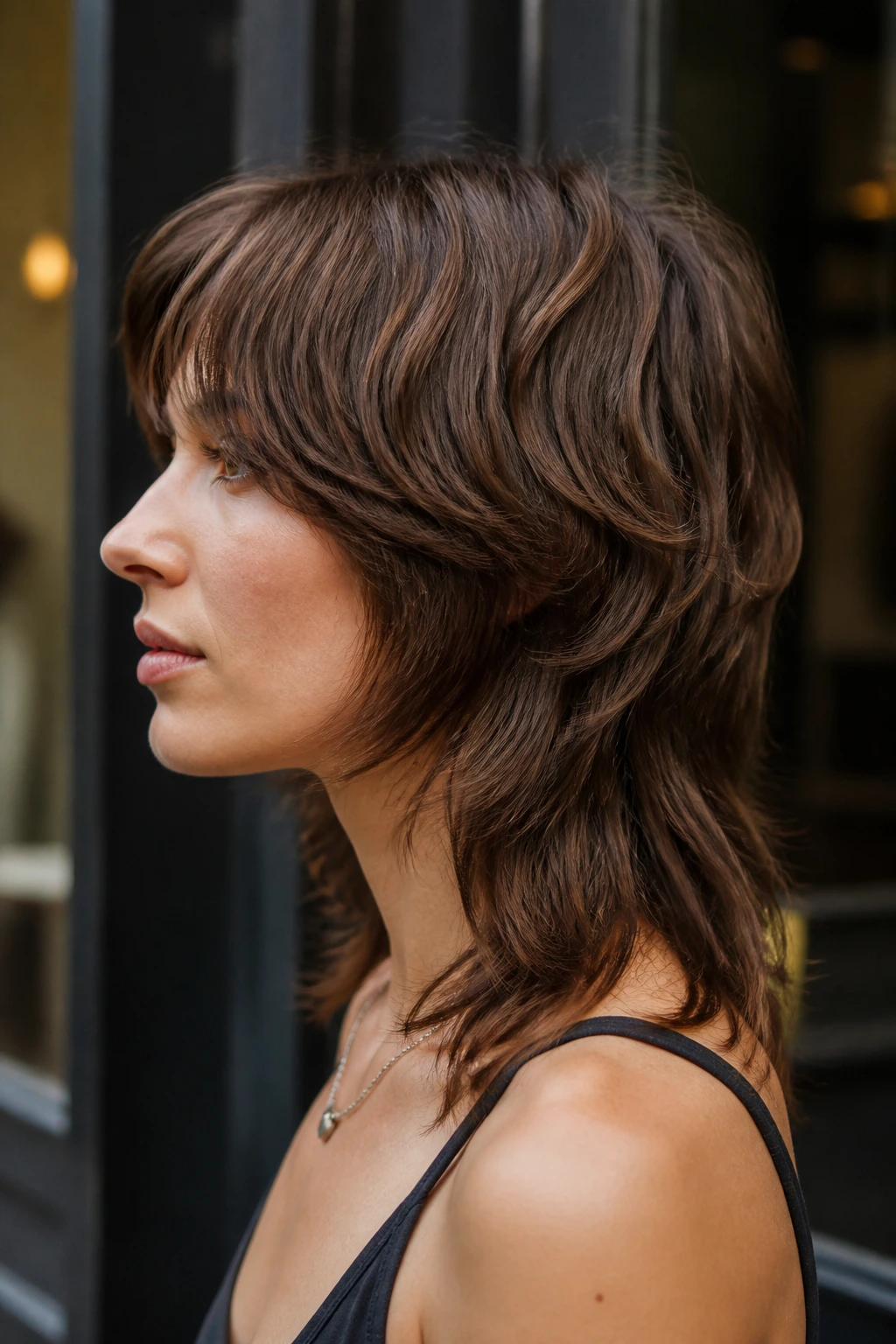
This one has attitude, but it is still medium length, which keeps it from feeling costume-y. The crown is shorter, the back hangs a little longer, and the sides stay soft enough to frame the face. It is basically the shag’s slightly louder cousin.
Keep it wearable
- Leave enough length through the nape so the haircut still brushes the shoulders.
- Keep the front soft if you do not want a sharp retro effect.
- Use a matte paste at the ends if you want a more broken-up finish.
The soft mullet-inspired shag is for someone who likes shape and does not mind being noticed. Wavy hair helps a lot here because the natural movement keeps the cut from looking too rigid. If you want something tame, skip this one. If you want a little swagger, it has that in spades.
14. Invisible Layer Shag
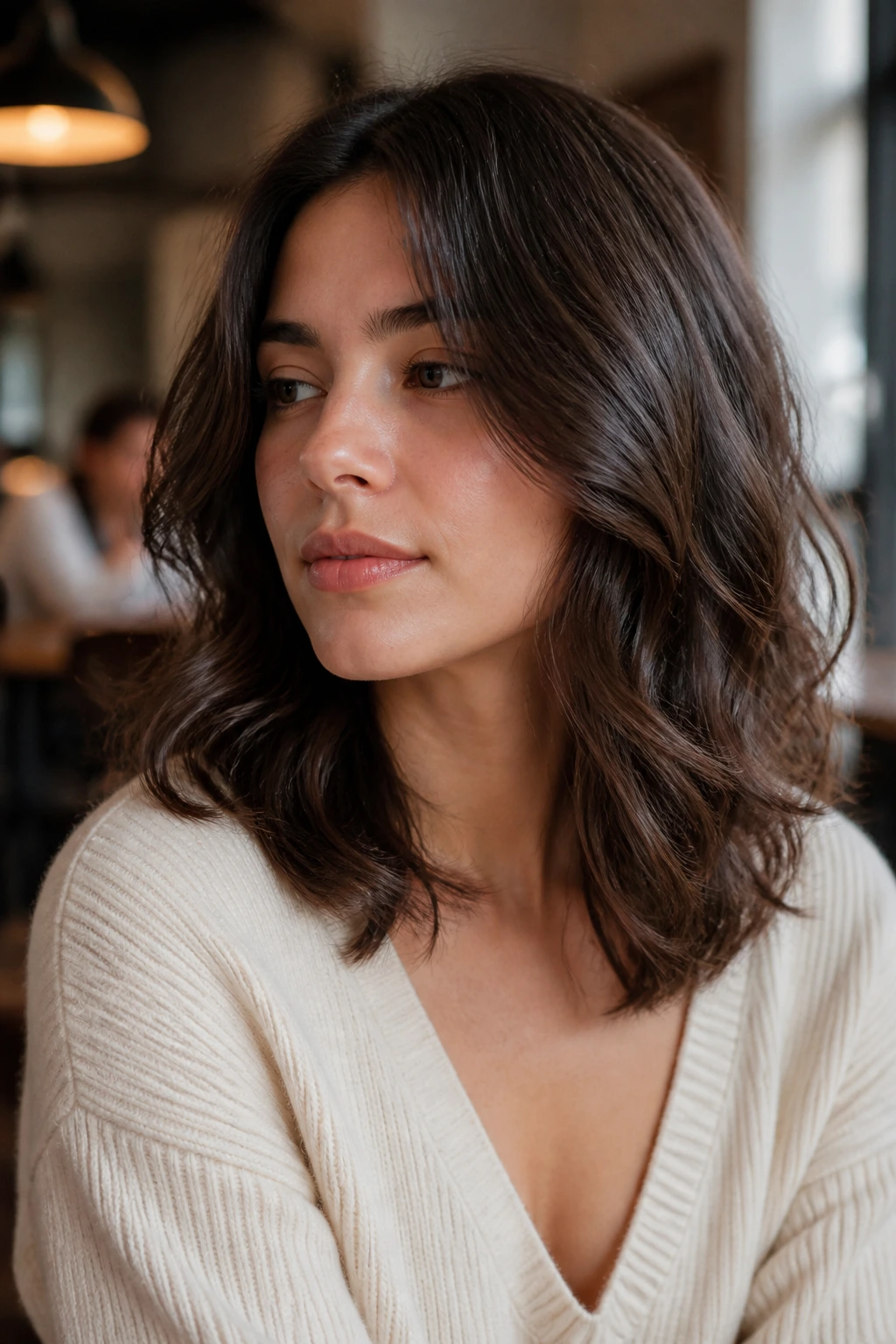
The invisible layer shag is the sneaky one. From the outside, the perimeter looks clean and almost simple. Underneath, the layers are doing enough work to keep the waves from sitting flat. That makes it a smart pick for anyone who wants movement without obvious choppy steps.
It is especially useful on thick hair. The haircut can shed weight from the interior while keeping the outer line neat, which means the shape behaves better when you wear it straight or half-dry. On medium waves, it gives you volume without the “stacked” look that some shags can have.
If you prefer hair that looks composed from the front and a little more lived-in when you move, this version is worth a serious look.
15. Shaggy Lob with Wispy Bangs
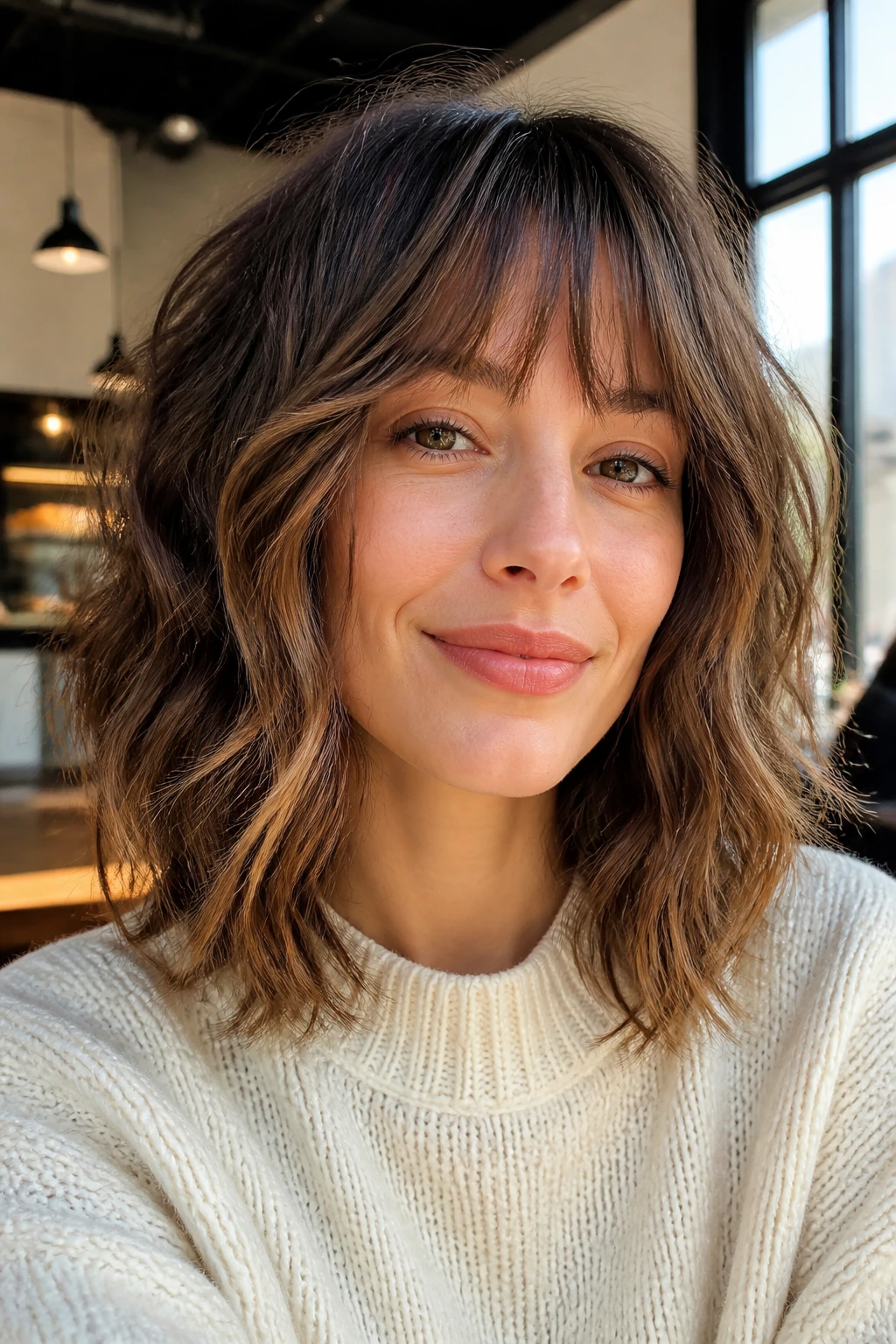
The shaggy lob with wispy bangs is the version I point to when someone says, “I want a shag, but I still need it to look clean.” The lob length keeps the outline steady, while the bangs soften the forehead without taking over the whole haircut. It is a nice middle road.
The wispy fringe is not heavy, so it bends into wavy hair instead of fighting it. That makes the front easier to style, especially if you prefer a fast blow-dry or a quick finger-twist while the hair is damp. The shape stays friendly as it grows, which is another point in its favor.
There is a reason this one shows up often in salon chairs. It does not ask for much, and it gives back enough movement to make the haircut feel current without trying too hard.
16. Polished Blowout Shag

If your favorite version of a shag is the one that looks smooth at the roots and softly bent at the ends, this is your lane. The polished blowout shag keeps the layers structured enough for a round brush, which means medium waves can be shaped into a cleaner line instead of left fully undone.
This is the one I’d pick for somebody who wears button-downs, blazers, or anything with a crisp shoulder line. The haircut still has texture, but it reads more refined than grungy. A little heat protectant, a medium round brush, and a final cool shot of air are enough to set the bend.
It is also a good bridge haircut if you are moving away from a blunt lob and want more movement without jumping straight into a highly textured shag.
17. Beachy Wave Shag
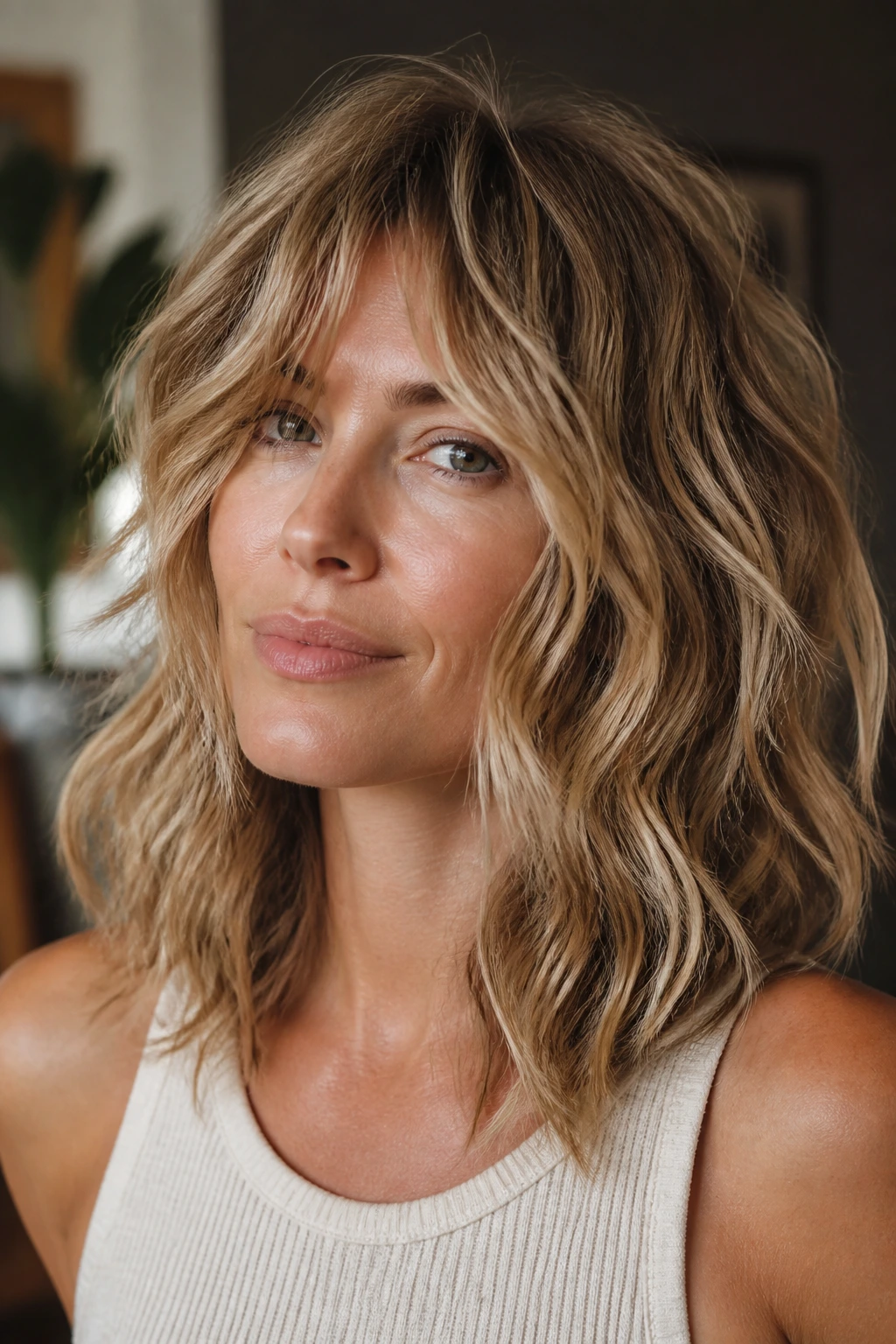
The beachy shag is all about relaxed bends and ends that separate instead of clump. On medium length wavy hair, it can look effortless without feeling flat, as long as you keep the texture product light. Too much salt spray and it turns crunchy. Nobody needs that.
A diffuser helps if your roots go limp. If not, air-drying halfway and finishing with a few minutes of low heat usually does the trick. I like this cut best when the layers are soft enough to move but not so soft that the whole shape disappears in the humidity.
This version lives well in casual clothes and bare faces. But it can also look sharp with a little lipstick and a clean side part. That range is the selling point.
18. Crown-Volume Shag
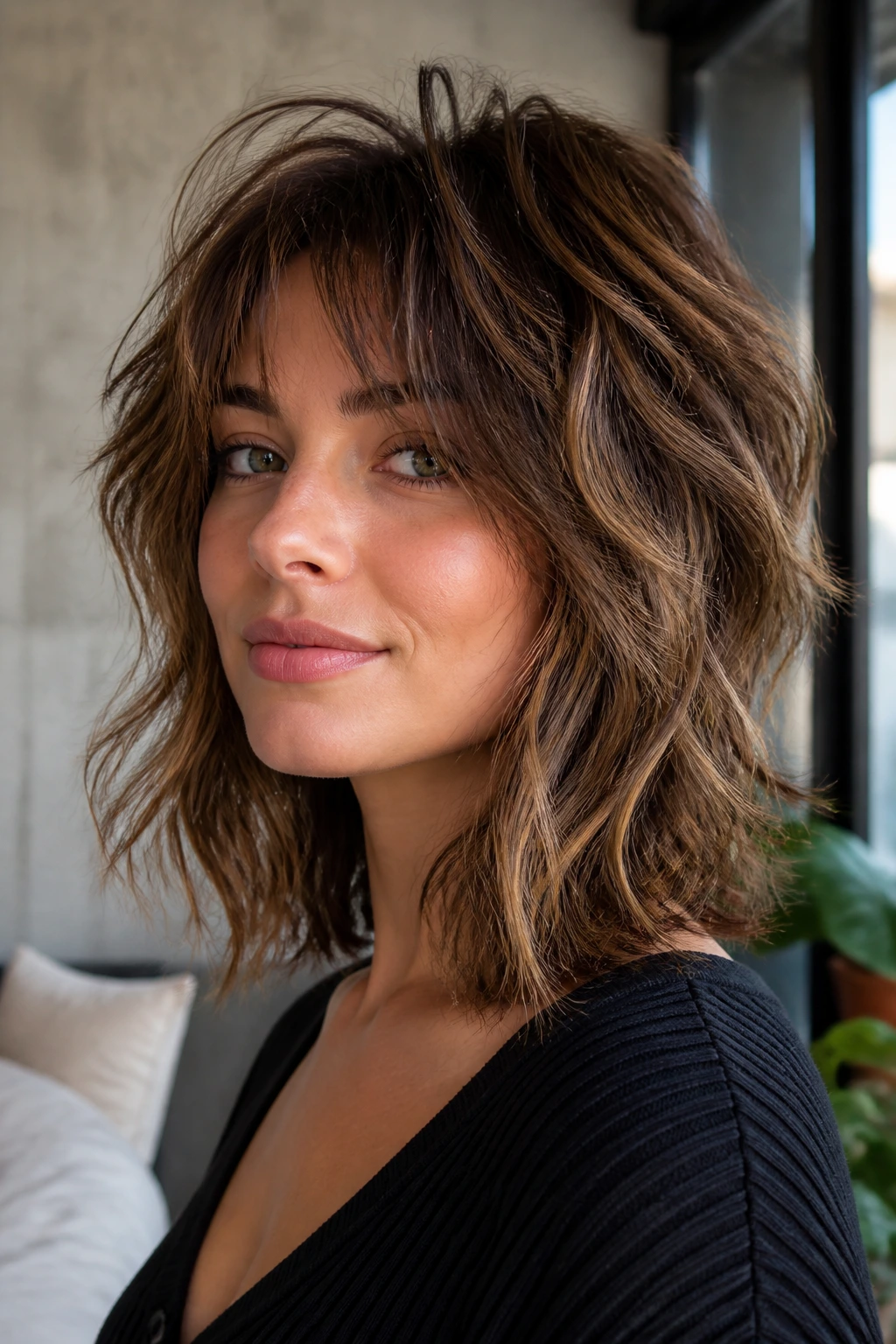
Some people want the sides to move. Others want the top to wake up first. The crown-volume shag is for the second group. It lifts the hair at the roots and keeps the top layers shorter so the shape has a little height before the waves settle into the lengths.
This is especially useful if your hair lies flat at the scalp or if your wave pattern is stronger from mid-length down. A light mousse at the roots and a few clips while drying can make a big difference. Without that lift, the cut can look heavy through the crown. With it, the whole shape feels lighter and more alive.
It is a good choice for round faces too, because the crown height adds length without making the sides too wide.
19. Rounded Shag for Thick Waves
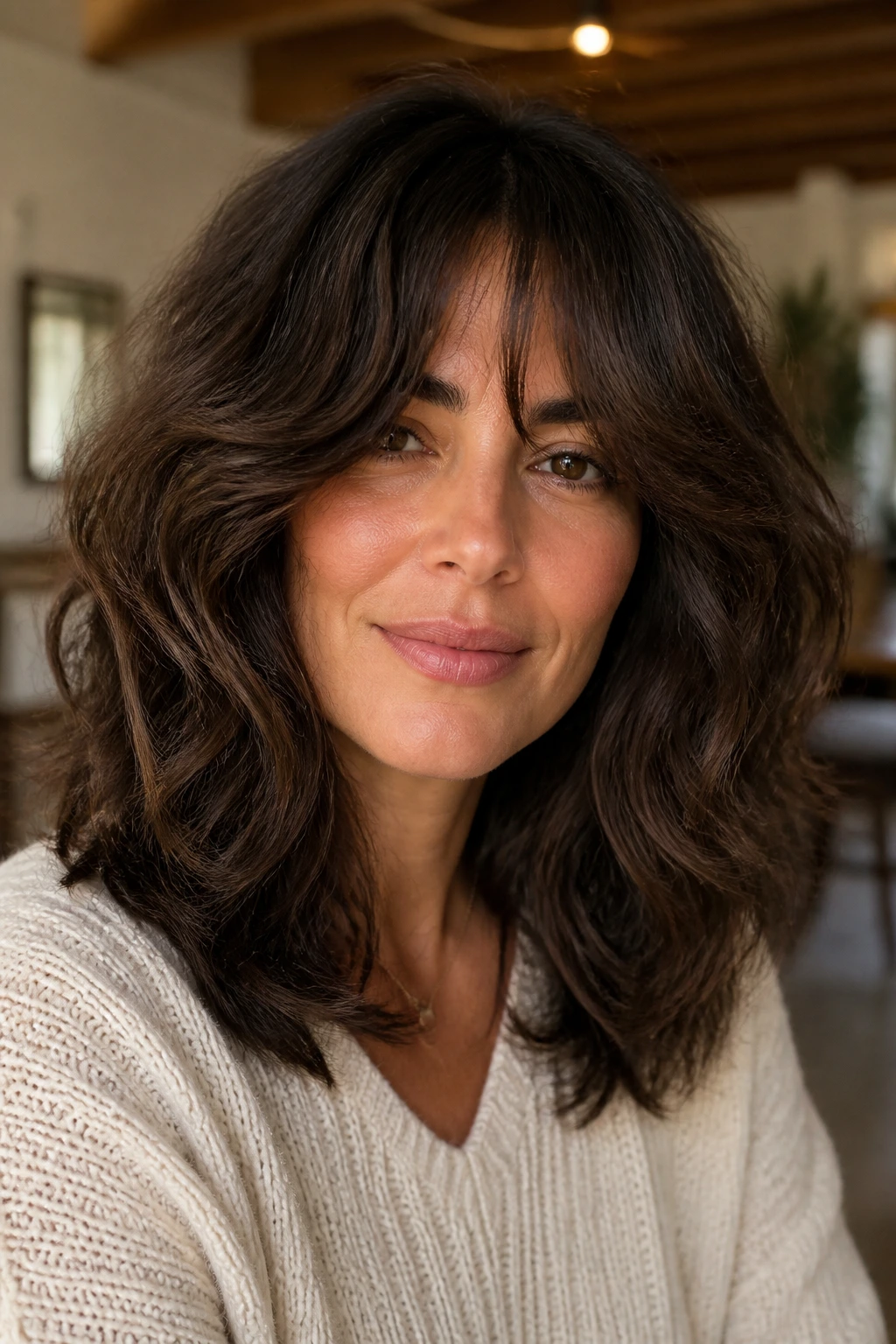
Why thick hair likes this shape
A rounded shag keeps the silhouette soft instead of boxy. Thick waves tend to stack on themselves, and if the cut is too straight through the sides, the shape can flare out like a bell. Rounded layers remove weight from the interior and let the ends settle into a curve.
What to ask for
- Internal layering, not aggressive thinning
- Soft edges around the jaw and collarbone
- Enough length left at the bottom to anchor the shape
This is one of my favorite cuts for dense hair because it solves a real problem instead of just adding texture for the sake of it. The curve keeps the hair moving, but the outline still feels controlled.
20. Lightweight Shag for Fine Waves
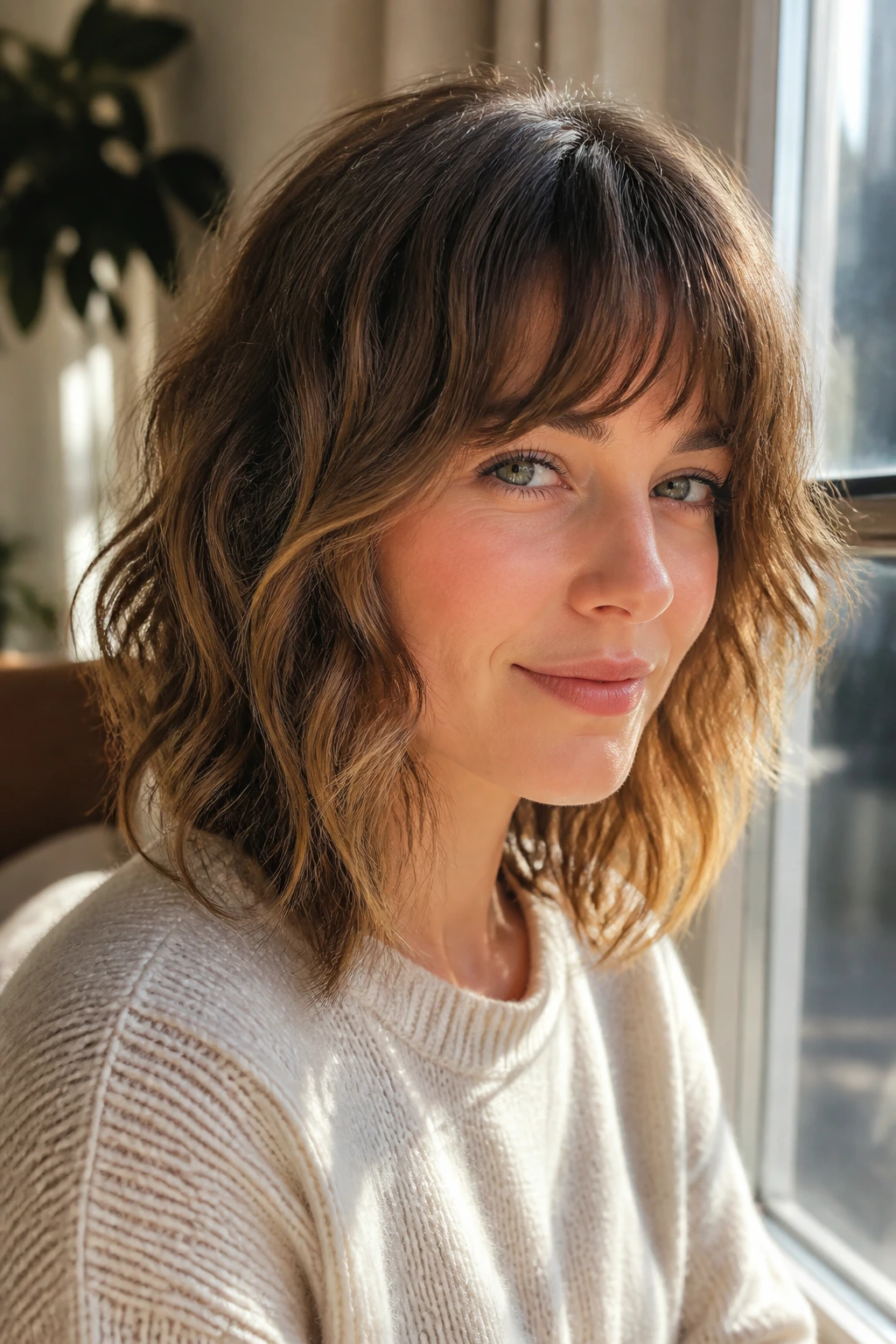
Fine wavy hair needs a different kind of kindness. Too much thinning and the ends go limp. Too many short layers and the top sits on the head like a puff. The lightweight shag gets around that by keeping the layering soft and lower, with just enough face framing to create shape.
The goal is to keep density where the hair needs it most. That means leaving the perimeter full enough to support the waves and avoiding overdone razoring. A little root lift spray, a soft mousse, and a low-heat diffuse can make the cut look fuller than it actually is.
If your hair tends to look stringy when it gets too many layers, this is the version to show your stylist.
21. Center-Part Shag with Long Curtain Pieces
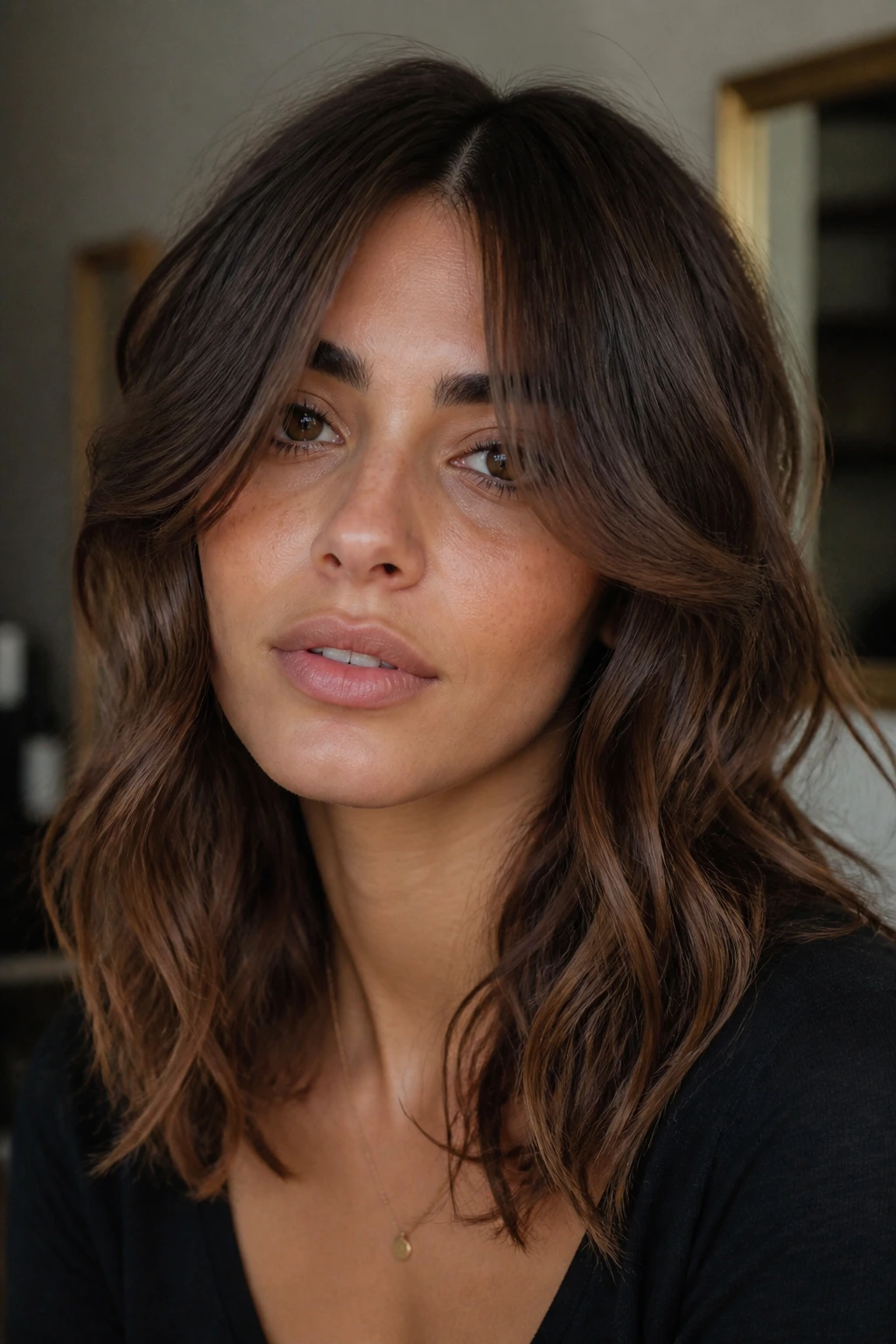
A center part can make a shag look calm instead of wild. The long curtain pieces fall from the part, split around the cheekbones, and frame the face without hiding it. Medium waves help here because the bend keeps the middle from looking too flat.
This cut is especially flattering if you have an oval or heart-shaped face, though it can work on a lot of people when the fringe is kept long. The trick is not to cut the front too short. Once the curtain pieces start living around the nose and lips, the whole haircut feels more flexible.
I like this one for people who want symmetry with movement. It feels orderly from the front and a little untidy in motion, which is a nice combination.
22. Deep Side-Swept Shag
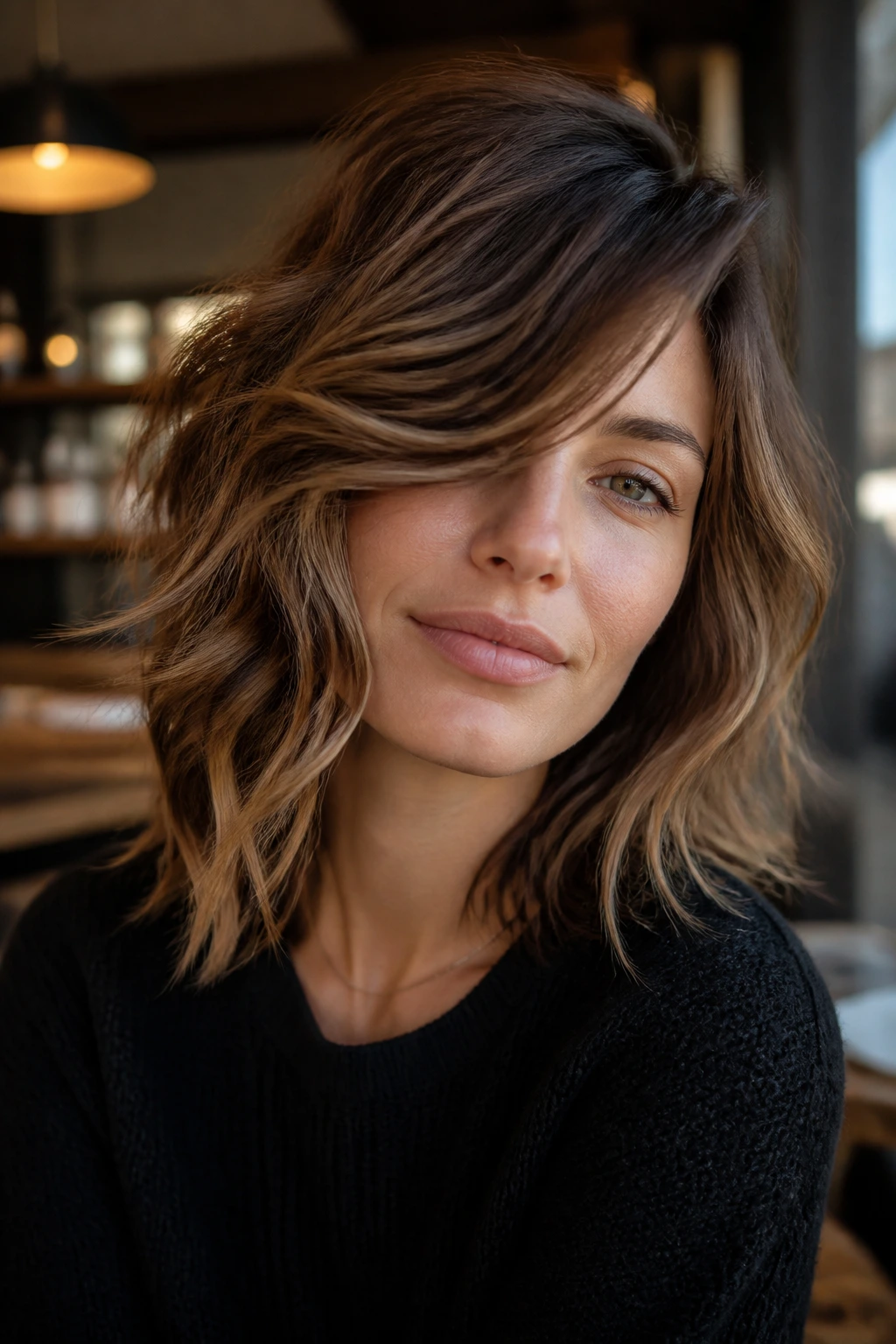
A deep side-swept shag brings drama without making the haircut hard to wear. The side part shifts the volume, the front sweeps across the forehead, and the layers fall with a softer angle. Medium waves make the movement look natural instead of forced.
This is a strong pick if your face is square or your hair has a habit of sitting too evenly on both sides. The side sweep breaks up the symmetry and gives the style some lean. One side can tuck behind the ear; the other can fall into the cheekbones. That contrast is where the shape gets interesting.
It is also a useful option for people who want their hair to look different with almost no extra effort. Change the part. That is half the haircut right there.
23. Shag with Curved Under Ends
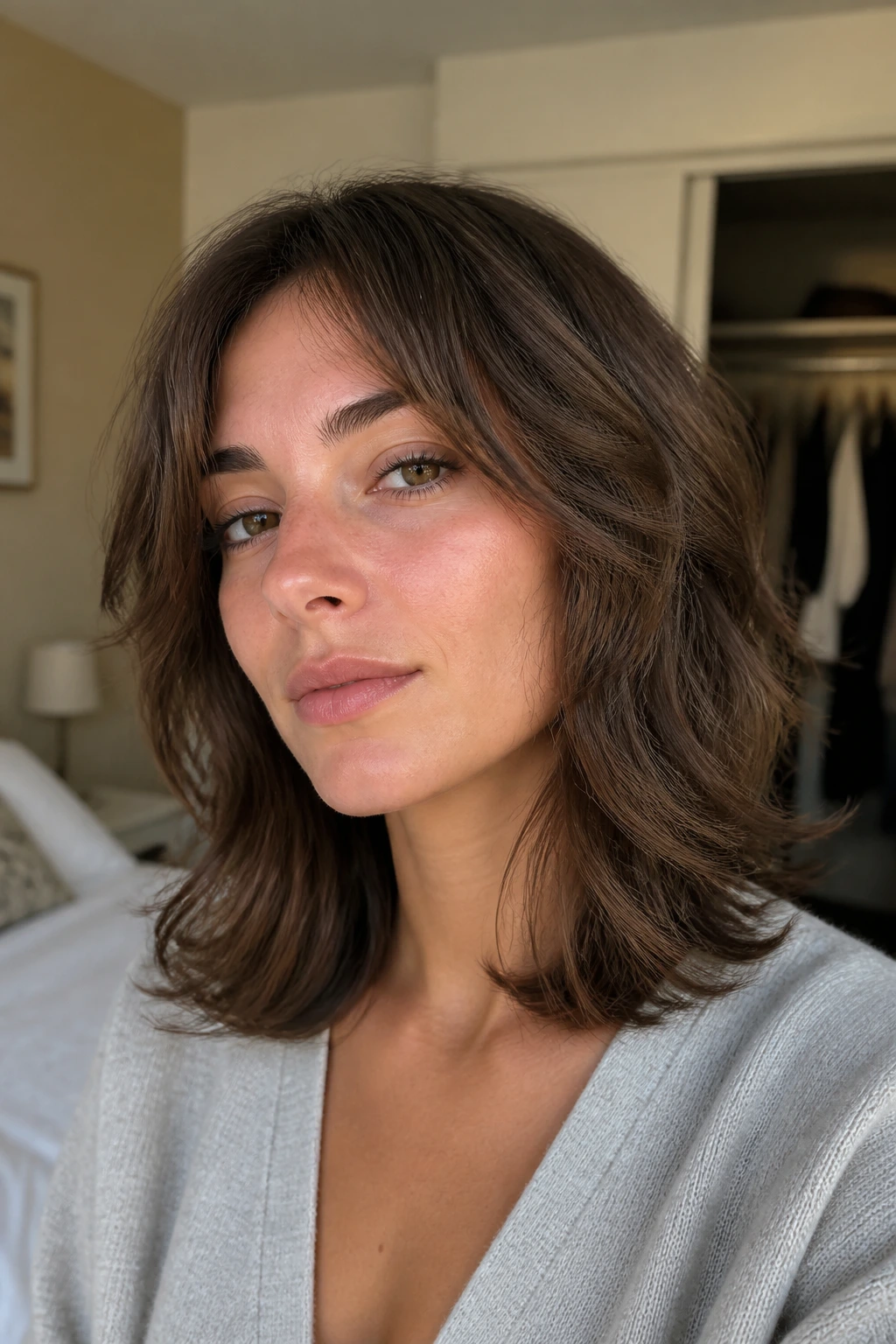
Most people picture shag ends flipping out. This version goes the other direction. The ends curve under just enough to keep the haircut looking tidy, which makes it easier to wear in settings where you do not want the full undone effect.
A round brush or a large curling brush helps train the ends downward. On medium waves, that creates a softer outline that still shows the layer work. It is a nice compromise for anyone who likes texture but not chaos.
If your wardrobe leans neat — think clean tees, tailored jackets, simple jewelry — this is one of the easiest shags to make sense of. It has movement, but the finish stays controlled.
24. Shag with Micro-Fringe Accent

Micro fringe is not subtle. That is the whole point. On medium wavy hair, though, it can work if the rest of the cut is soft enough to keep the fringe from looking separate and severe. The contrast between the short bangs and the wavy lengths gives the haircut a lot of personality.
The catch? Micro fringe wants maintenance. Wavy hair can make short bangs kick up or bend unevenly, so this is not the lazy option. If you are fine trimming the fringe often and reshaping it when it dries, the result can be striking.
I would not hand this to someone who wants a no-fuss cut. I would hand it to someone who likes a little risk with their texture.
25. Tousled Mid-Length Shag

This is the classic middle-ground version, the one that sits comfortably between soft and edgy. The layers are visible, but not shredded. The fringe is there, but not bossy. The waves can fall where they want and still look planned.
The easy version
- Keep the face frame long enough to tuck behind the ears.
- Ask for piecey ends rather than heavy texturizing.
- Style it with a little cream and a diffuse, not a full blowout.
The tousled mid-length shag works because it leaves room for the hair to do its own thing. That matters on wavy textures. If a cut fights the natural bend, you spend more time fixing it than wearing it.
26. Rocker Shag with Choppy Ends
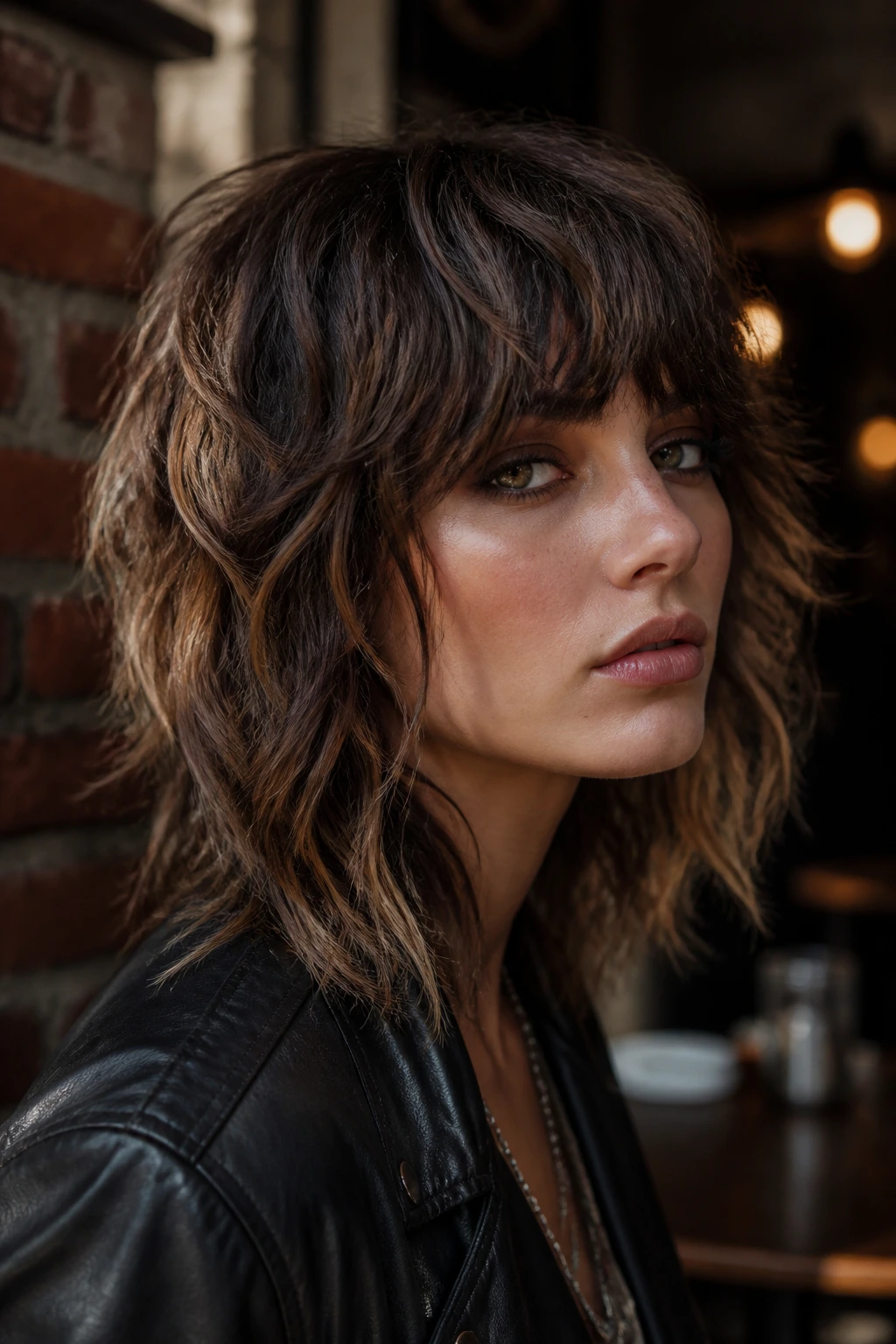
This is the one with the most attitude. The choppy ends are obvious, the layers are a little jagged, and the whole shape looks better when it is not too perfect. Medium wavy hair gives it the right amount of roughness so it feels intentional rather than messy.
This version likes a matte finish. A touch of texturizing balm or a dry spray at the ends can make the separation show up. It is especially good on dense hair that can support all that layering without going sparse.
If you wear black jeans, boots, vintage tees, or anything with a little edge, this cut will make sense fast. If you want softness, it will not.
27. Soft Modern Shag
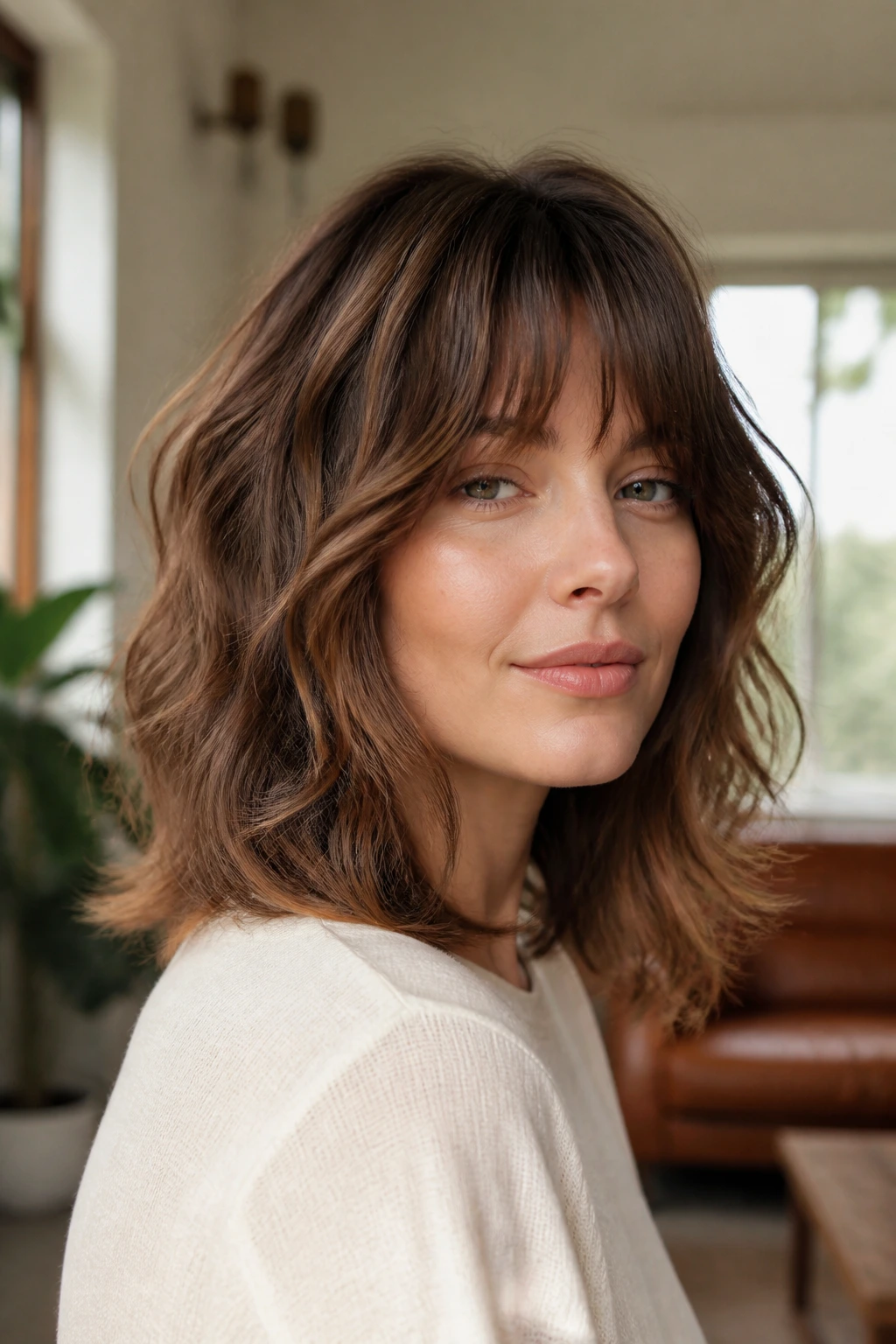
The soft modern shag is the safest place to land if you want one haircut that can swing between polished and relaxed. The layers are there, but they are not loud. The fringe softens the face, the length stays around the collarbone, and the whole shape keeps its weight in a smart way.
It is the version I would show to someone who says they like shags but worry about looking too choppy. It keeps the silhouette current without shouting. Medium waves do the rest. A little cream, a little scrunch, maybe a quick bend with a curling iron on the front pieces if you feel like it.
If you only bring one photo to the salon, make it this kind of shag. It has enough structure to feel intentional and enough softness to survive a normal week.
How to Style a Shag Without Flattening the Wave
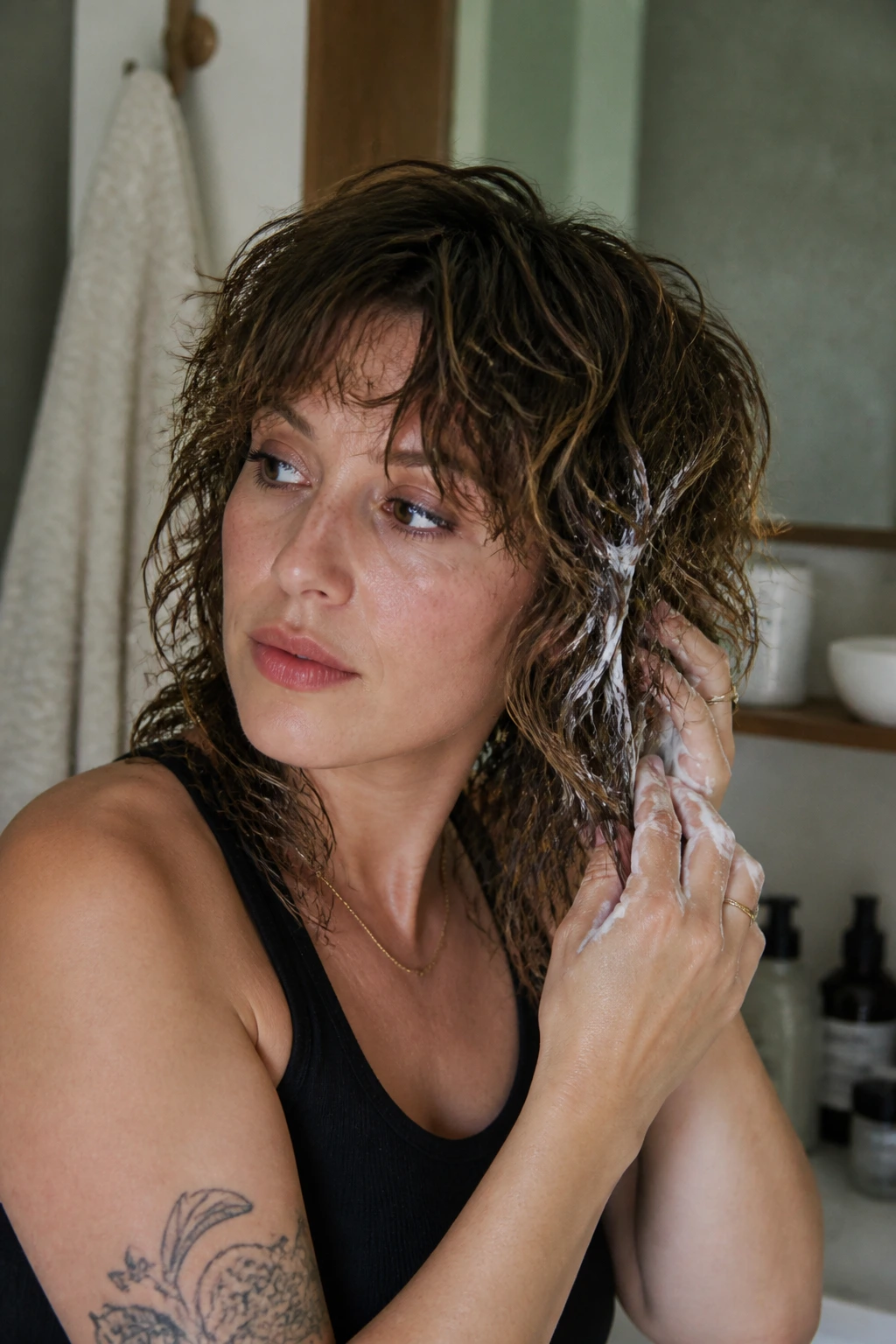
The worst thing you can do to a shag on wavy hair is over-handle it. Brushing it dry, piling on thick oils, or blasting it with high heat can crush the bend that makes the haircut worth having. Start with damp hair, not soaking hair, and work a light leave-in through the mids and ends.
Air-dry in stages: Scrunch in a light mousse, then leave the hair alone for 15 to 20 minutes before touching it again. That lets the waves set instead of stretching them flat.
Diffuse gently: If you use a diffuser, keep it on low heat and low speed. Cup the ends, lift the roots for a minute or two, and stop once the hair is about 80% dry. Over-diffusing makes the layers puff.
Refresh the front separately: Bangs and face-framing pieces usually need more help than the rest of the cut. A quick mist of water, a round brush, or a two-minute hit with a dryer can fix the front without restyling the whole head.
Use less product than you think: Wavy shag hair likes airy texture, not a heavy coating. If the hair feels sticky or coated, you’ve used too much.
Essential Tools for Styling These Cuts
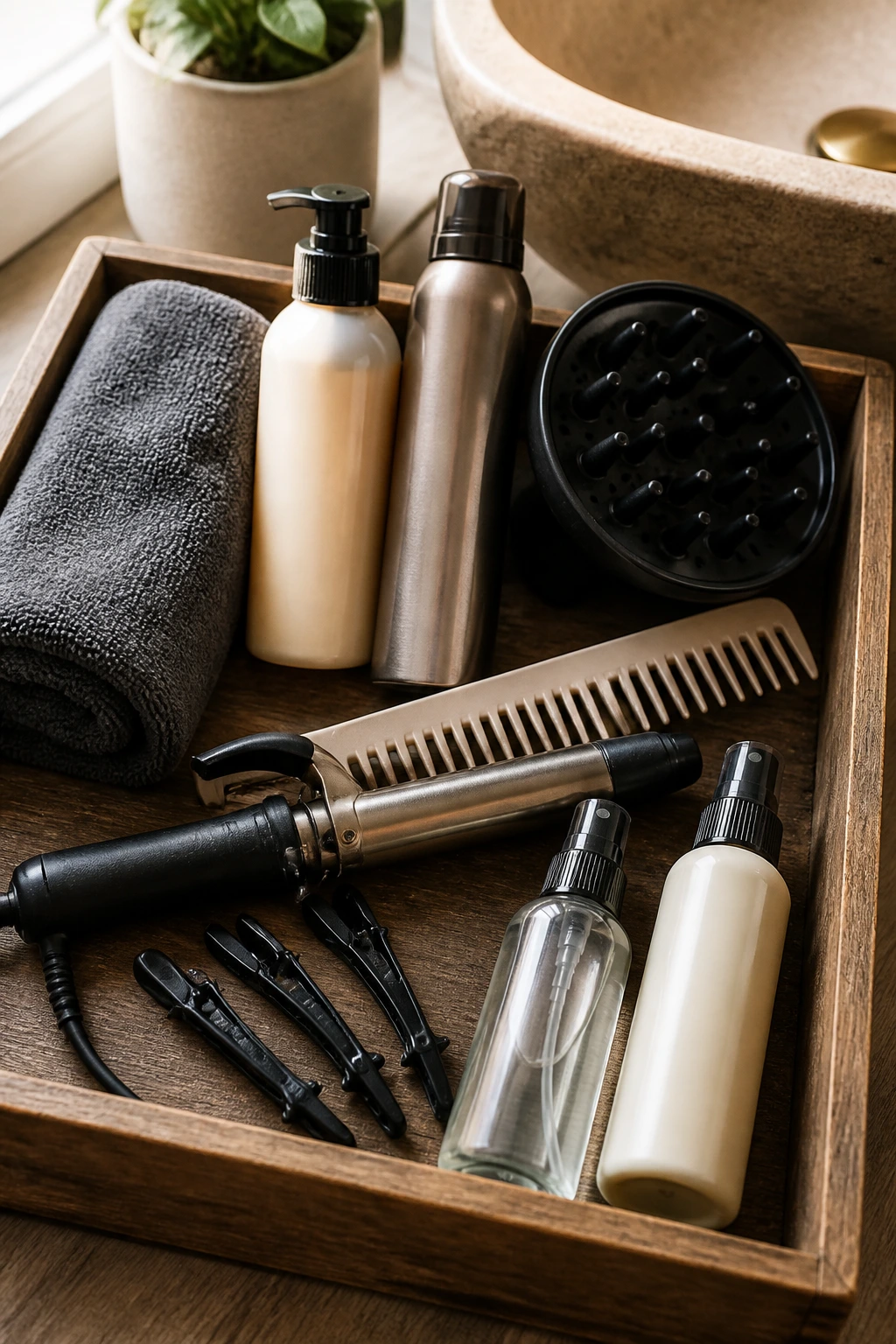
- Microfiber towel or soft T-shirt: Cuts down on rough frizz when you scrunch out water.
- Leave-in conditioner: Keeps the ends from looking dry, especially on layered cuts.
- Lightweight mousse: Adds root lift and helps waves hold their shape without feeling stiff.
- Diffuser attachment: Useful if your crown collapses or you want more defined bends.
- Wide-tooth comb: Good for distributing product through damp hair without pulling apart the wave pattern.
- 1-inch or 1.25-inch curling iron: Handy for refreshing front pieces or giving flat spots a quick bend.
- Texturizing spray: Works best on dry hair and should stay light; too much makes the hair gritty.
- Duckbill clips: Great for lifting roots at the crown while the hair dries.
- Heat protectant spray: Worth using whenever you smooth, curl, or round-brush the fringe.
What to Tell Your Stylist Before the First Snip
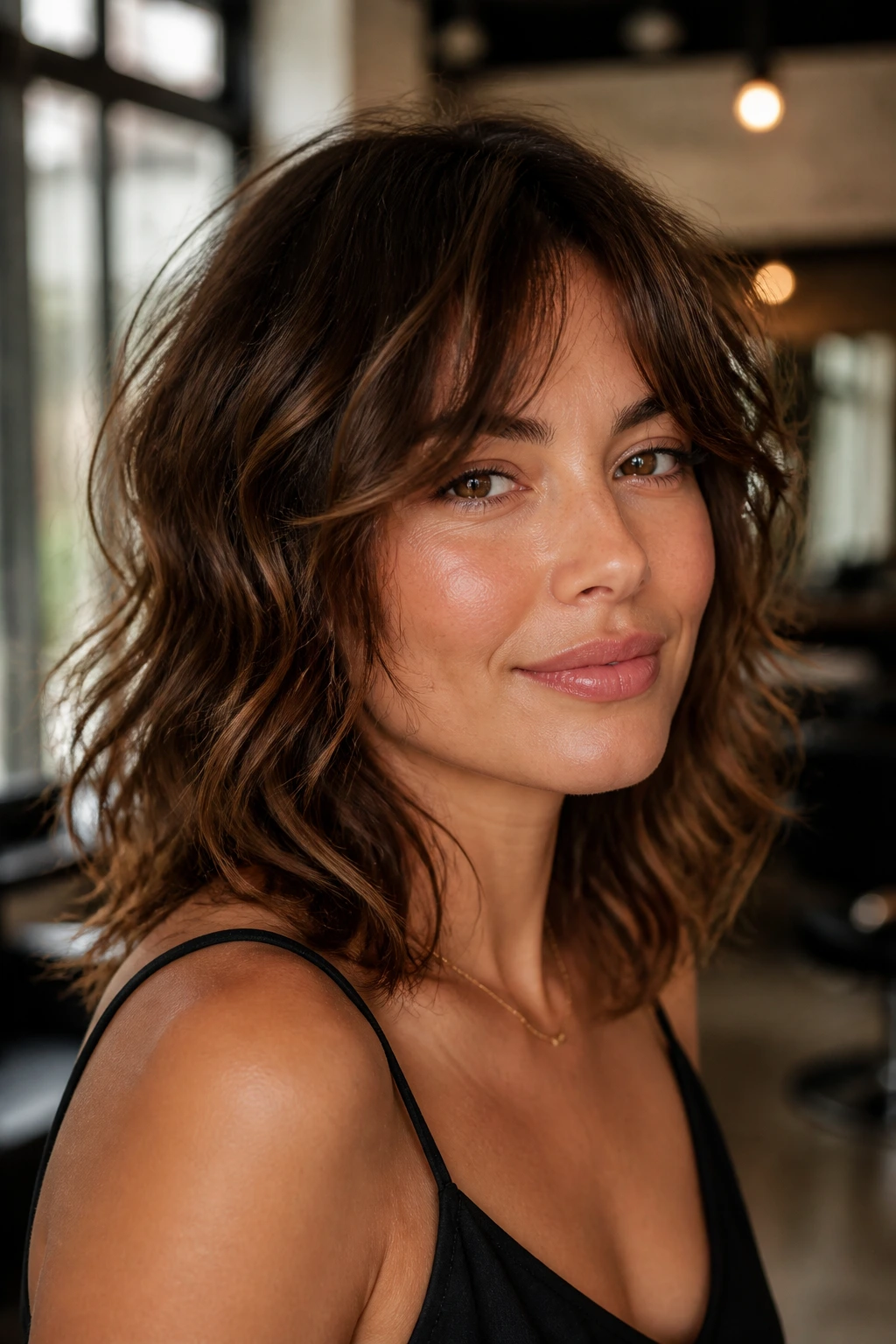
Bringing a photo helps, but the photo is only half the conversation. The other half is telling the stylist where you actually part your hair, how much effort you want to put in, and whether you like your ends piecey or soft. Those details change the whole cut.
Say things like, “Keep the longest pieces around my collarbone,” or “I want the layers to start around my cheekbones, not higher.” If you like bangs, say how much forehead you want covered and whether you wear them swept aside or split in the middle. That matters more than people think.
One more useful line: “I want the perimeter to keep some weight.” That tells the stylist not to over-thin the bottom. On medium wavy hair, that weight is often the difference between a shag that sits nicely and one that frizzes out by lunch.
If your hair is thick, ask for internal removal. If it is fine, ask for softer layers and less razoring. Same idea, different execution.
Maintenance, Trims, and Grow-Out
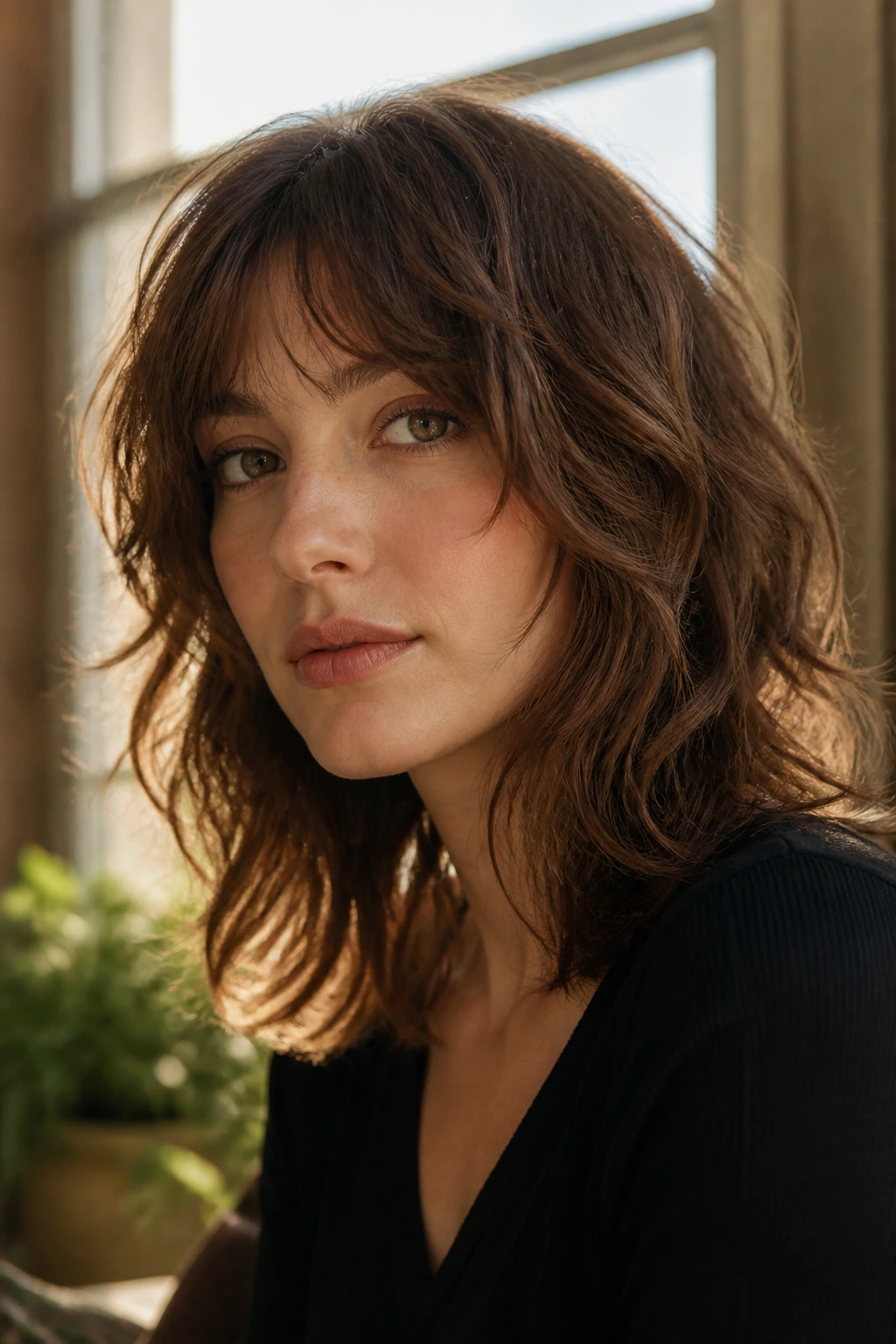
A good shag should not feel like a monthly emergency. For most medium-length wavy cuts, a shape-up every 8 to 10 weeks keeps the layers in line. If you wear bangs, the fringe may need attention sooner — usually every 4 to 6 weeks, depending on how fast your hair grows and how much the wave shrinks when it dries.
The grow-out phase matters too. A shag that is cut with too many short layers can get awkward fast once the pieces hit the shoulders and start flipping in different directions. That is why I like versions that keep the perimeter a little heavier. They age better. If you know you want to stretch time between appointments, ask for soft layers and a longer front.
Wavy shag hair also gets product buildup faster than people expect, especially if you use texturizing spray, mousse, or dry shampoo. A clarifying wash every 2 to 4 weeks helps reset the texture. Use a silk pillowcase or a loose bonnet if your waves flatten at night; it keeps the layers from getting mashed into odd bends by morning.
Additional Tips and Style Boosters
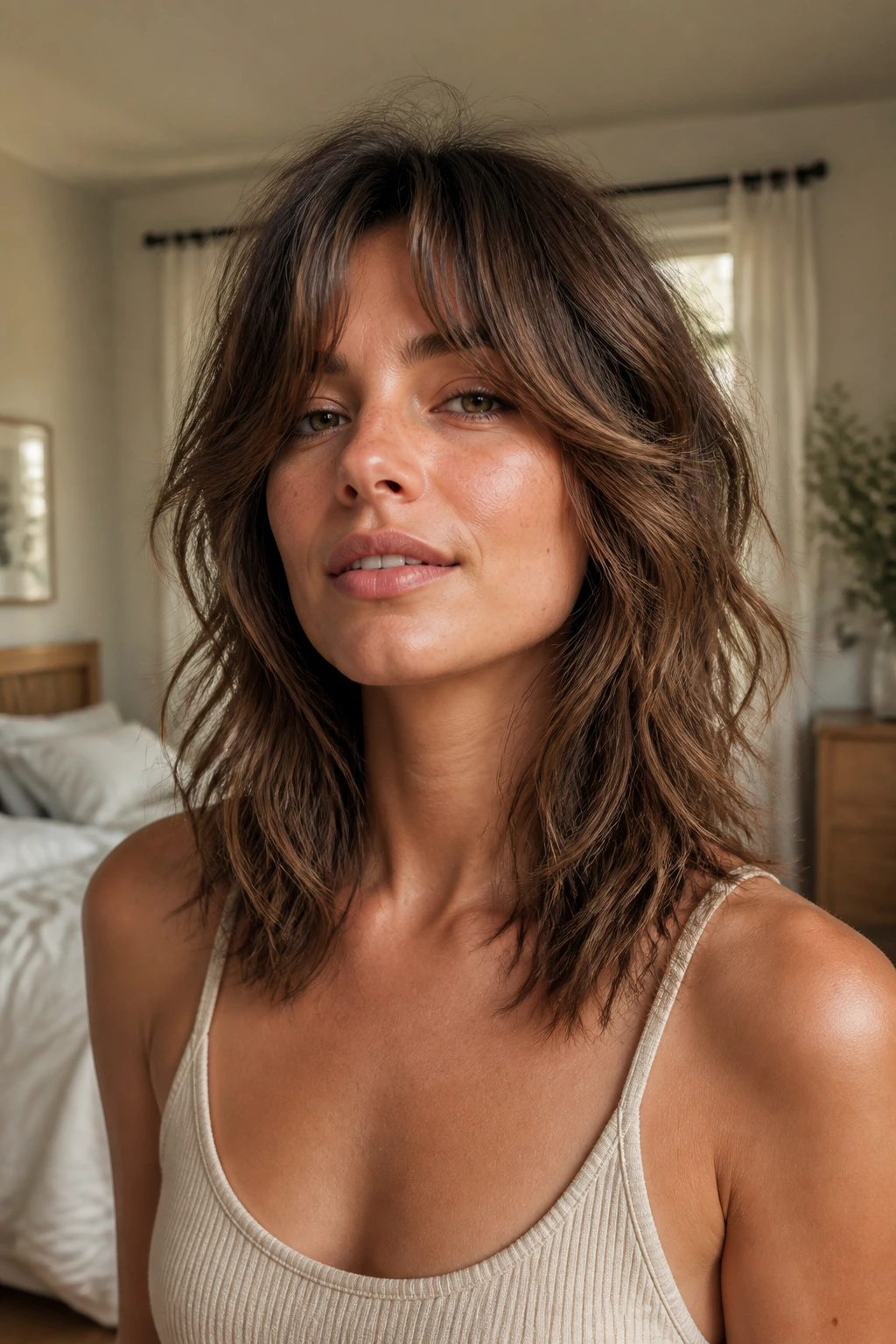
Texture Boost: A pea-size bit of styling cream on the very ends can stop the haircut from looking dry, but keep it off the roots. That is where the collapse starts.
Shape Control: If the sides puff out, clip the crown while the hair dries and keep the top section slightly lifted away from the head. A little root memory goes a long way.
Color Placement: Face-framing highlights, a few darker lowlights underneath, or a soft money piece can make the layers show up more clearly. Color is a shape tool here, not just decoration.
Make-It-Yours: If you hate fringe, keep the front long and sweep it back. If you love bangs, lean into curtain or bottleneck styles. The cut bends around that choice more easily than people expect.
Second-Day Fix: Mist the front with water, twist two or three front pieces around your fingers, and let them dry for five minutes. It is a fast reset when the whole cut starts to feel sleepy.
Common Mistakes That Make a Shag Puff or Collapse
-
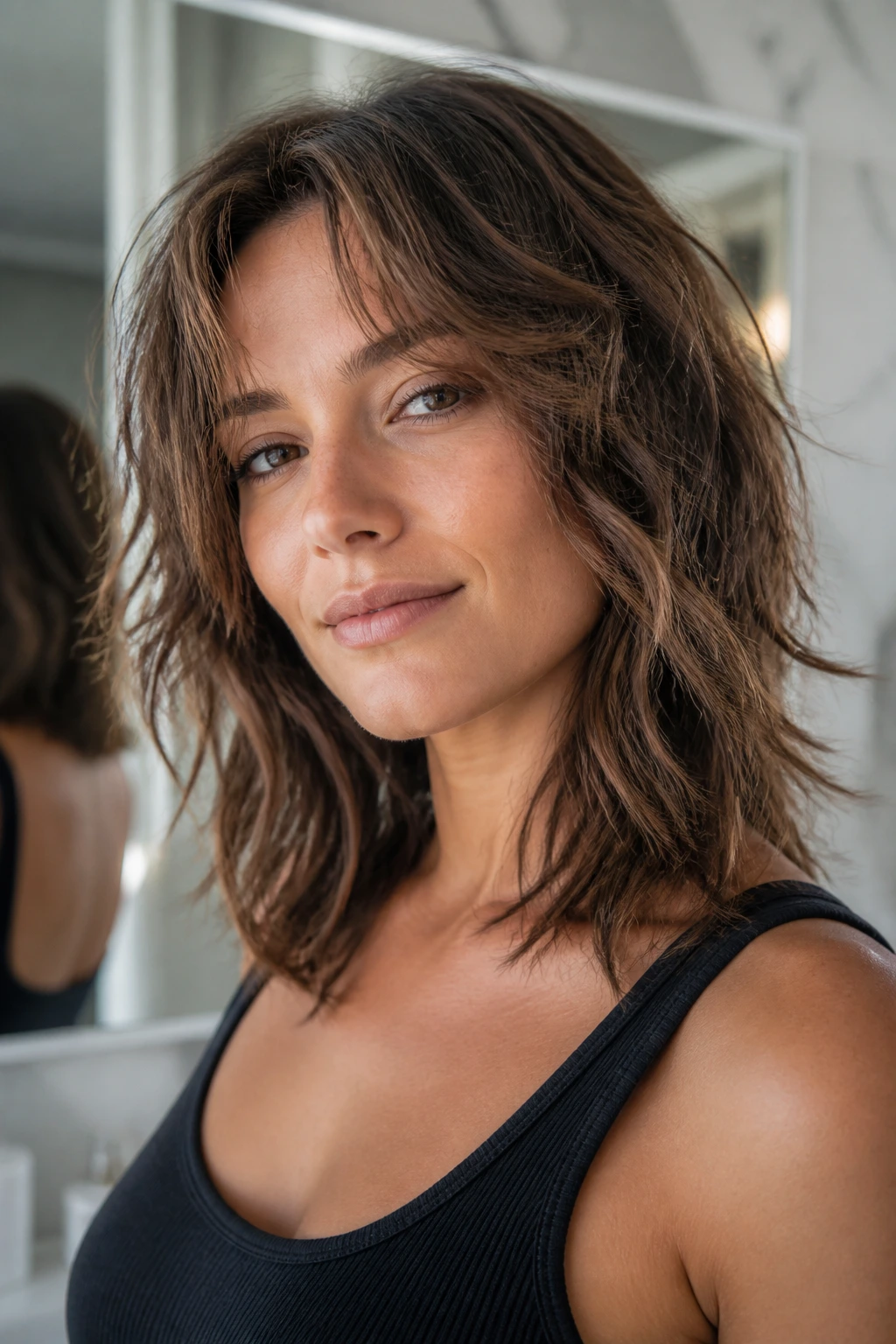
Starting the shortest layers too high: The top gets big and the sides flare out. Ask for layers that begin lower, around the cheekbone or below, if your hair already has volume.
-
Over-thinning fine waves: The ends go stringy and the haircut loses body. Fine hair needs shape, not aggressive texturizing.
-
Cutting the fringe too short for a wavy pattern: Waves shrink, curl, and kick in different directions. Leave more length than you think, especially if the bangs will dry with a bend.
-
Brushing the hair dry: You erase the separation and stir up frizz. Use fingers or a wide-tooth comb unless you are intentionally smoothing the whole style.
-
Using too much salt spray or dry texturizer: The hair can feel rough and look dusty. A little product is enough; if you can feel a crust, you’ve gone too far.
-
Ignoring the perimeter weight: A shag with no anchor at the bottom starts to look airy in the wrong way. Keep enough length at the ends to hold the silhouette together.
Variations and Adaptations to Try
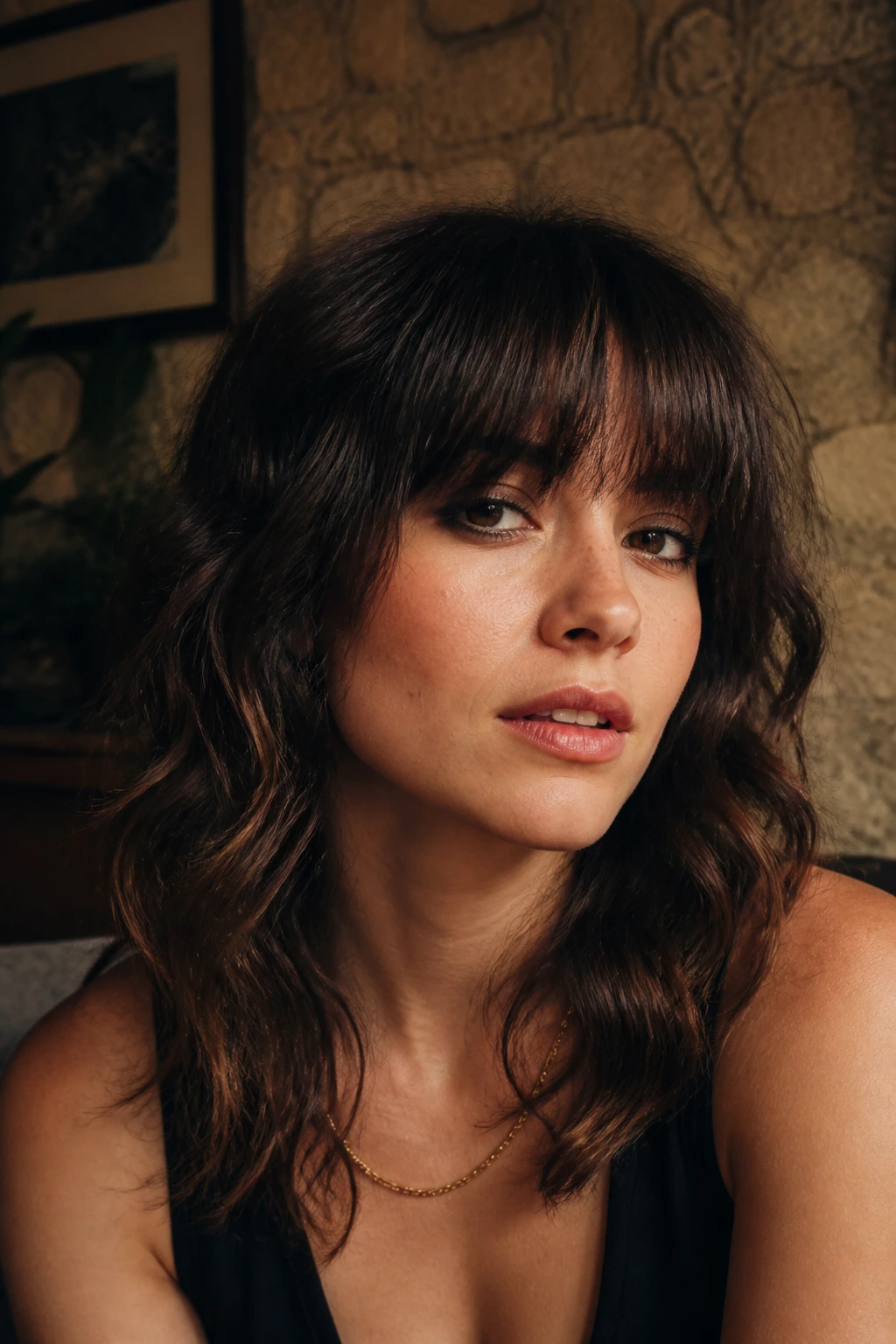
The Soft Office Version: Keep the layers low, the fringe long, and the ends curved under. It looks calm with a button-down and still moves when you shake it loose.
The Heavy-Texture Version: Use more piece separation, a little more crown lift, and a matte finish. This is the version for thicker waves that can handle extra definition.
The Grow-Out Friendly Version: Ask for a heavier perimeter and longer curtain pieces. It holds its shape longer and makes the awkward middle stage less annoying.
The Curl-Enhancing Version: Place the shortest layers where your wave naturally bends, not where you wish it bent. That helps the cut clump nicely instead of fighting your texture.
The Color-Led Version: Add soft highlights around the front layers and a few lowlights underneath. The haircut reads deeper, especially when the hair moves.
Frequently Asked Questions About Shag Haircuts for Medium Length Wavy Hair

Do shag haircuts work on fine wavy hair?
Yes, but the layering needs to stay light. Fine hair usually does better with softer layers and a heavier bottom edge so the ends do not look thin.
Will a shag make my hair look frizzy?
It can if the cut is over-thinned or styled too aggressively. The right shag should show movement, not static. A light leave-in and a small amount of mousse usually keep the shape calm.
How short should medium length be for a shag?
I like it from just above the shoulders to the collarbone. That range gives the layers enough room to move while keeping the outline from puffing out too much.
Are bangs necessary with a shag?
No. Curtain bangs, side-swept fringe, and long face-framing pieces all work. If you hate forehead hair, keep the front long and let the layers do the talking.
Can I air-dry a shag and still have it look intentional?
Yes, if the cut is shaped well and you use a little product. Scrunch in mousse, keep your hands off it while it sets, and finish with a tiny bit of cream on the ends if they look dry.
What if my waves are uneven from side to side?
That is normal. A deep side part or a longer front piece on the flatter side usually helps balance things out. Uneven wave patterns are easier to hide in a shag than in a blunt cut.
How often should I trim it?
Most medium shags need shaping every 8 to 10 weeks, with fringe trims sooner if you wear bangs. If you are trying to grow it out, stretch the perimeter trims and just clean up the front.
What if my hair gets triangle-shaped?
That means too much width is sitting through the middle and not enough weight is left at the ends. Ask for a softer, lower layer placement and less bulk removal around the sides.
The Cut That Keeps Its Shape

The reason shag haircuts for medium length wavy hair keep showing up in salons is simple: they solve more problems than they create. They give waves somewhere to land, they let fringe frame the face instead of fighting it, and they can lean soft or sharp without changing the basic formula.
The smartest versions are the ones that respect the hair you already have. Not the ones that fight it. If you keep the perimeter honest, the layers controlled, and the texture light enough to move, a shag can carry you through a lot of ordinary days without looking ordinary at all.
