



Short curly shag cuts for fine hair earn their keep fast. The right one gives the crown lift, keeps the ends from turning see-through, and lets your curl pattern do the lifting instead of sitting under it like dead weight.
Fine hair is a slippery phrase. Sometimes it means the strands themselves are slim. Sometimes the strand is fine but there’s plenty of it, and the scalp still looks full if the shape is right. Those are not the same problem, and a good shag treats them differently. A cut that works on dense curls can swallow sparse hair if the layers get carved too deep; a cut that works on low density can feel too tidy if the curls need more room.
The sweet spot is a short shape with enough weight at the perimeter to look intentional, enough internal layering to keep the curl from collapsing, and enough bang freedom to soften the face without stealing the whole front of the haircut. That balance is where these cuts live.
Why These Cuts Work So Well for Fine Curls

-
Crown lift without a ton of length: Short curly shag cuts move weight upward, so the top can rise instead of hanging down and stretching the curl pattern.
-
The ends still look solid: A smart shag keeps a little bulk at the hem, which matters when fine strands start to look stringy below the jaw.
-
Bang options are flexible: Curtain bangs, bottleneck bangs, side-swept fringe, and micro fringe all change the balance at the front without forcing the whole cut to be short.
-
Air-drying gets easier: A shag built for fine curls tends to dry with shape already in place, so you’re not fighting a flat crown at noon.
-
The grow-out is less rude: Good layers can soften as they grow instead of turning into a blunt helmet or a sad triangle.
1. Chin-Length Curly Shag With Curtain Bangs
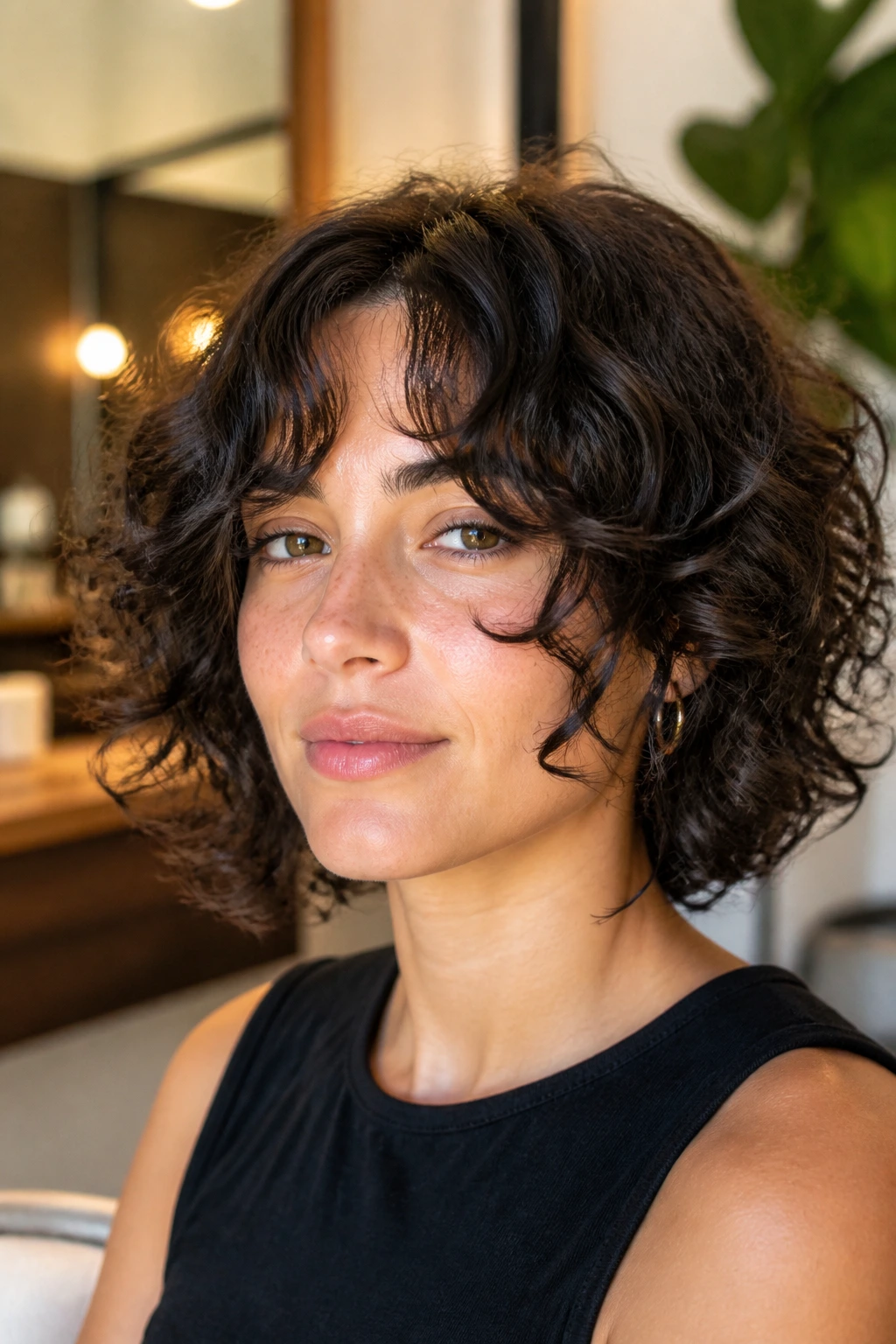
A chin-length curly shag with curtain bangs is the one I reach for when the curls need lift at the cheekbones and a little relief at the crown. Keep the perimeter brushing the chin, not the neck, so the shape stays full instead of wispy.
The curtain fringe should land a touch longer than you think, because curls spring up once they dry. Ask for shallow layers through the top rather than a heavy chop through the interior; that keeps the front soft and the silhouette clean.
2. Cropped Shag Bob With Wispy Fringe
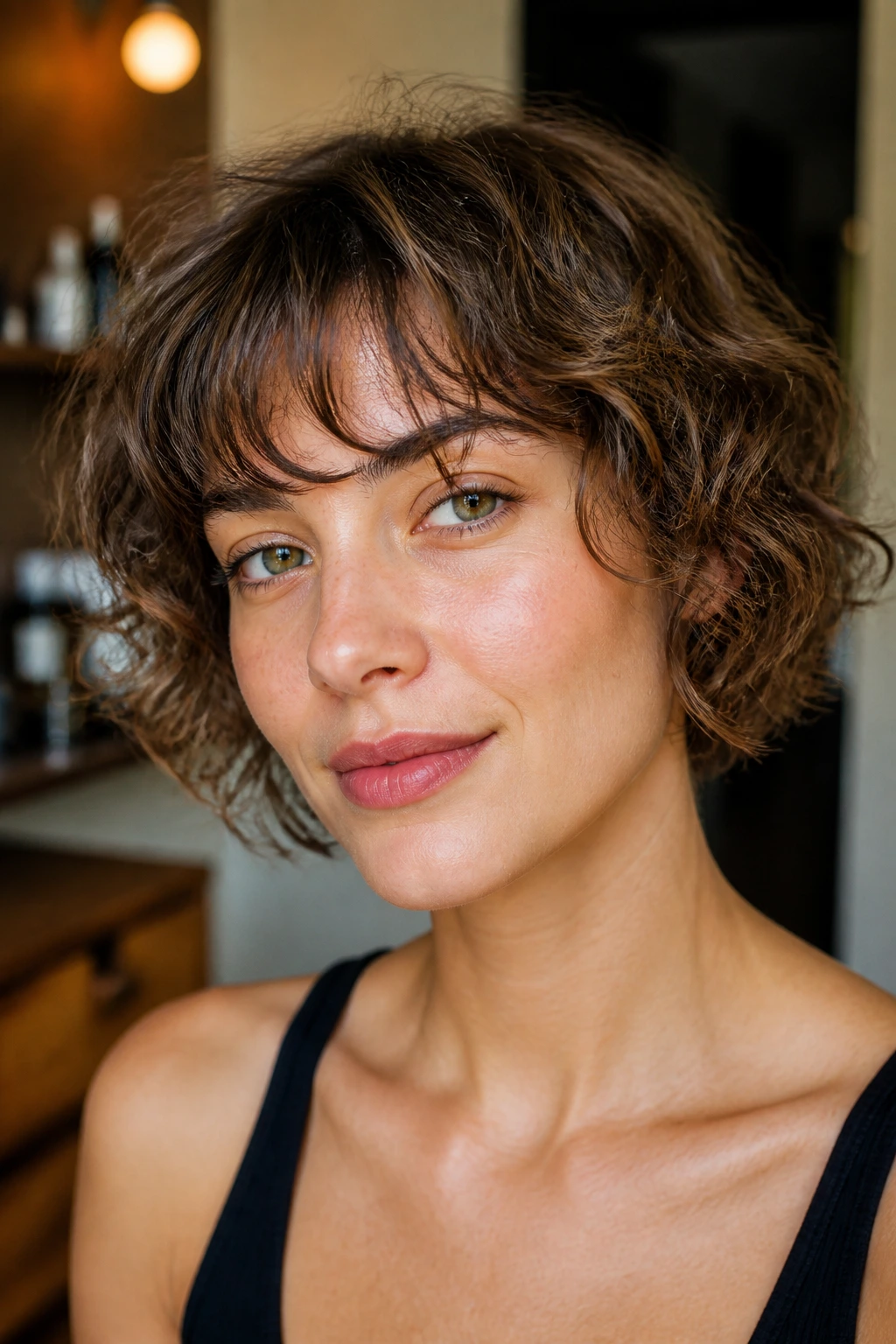
This cut lives in the sweet spot between tidy and undone. The bob perimeter gives fine curls a denser-looking edge, while the wispy fringe breaks up the front so the haircut doesn’t feel boxy.
The key is restraint. Too many short pieces at the crown and the whole thing starts to puff in the wrong spots. I like this shape for people who want movement but still need the ends to look like they belong to the same head of hair.
3. Micro Shag With a Tapered Nape
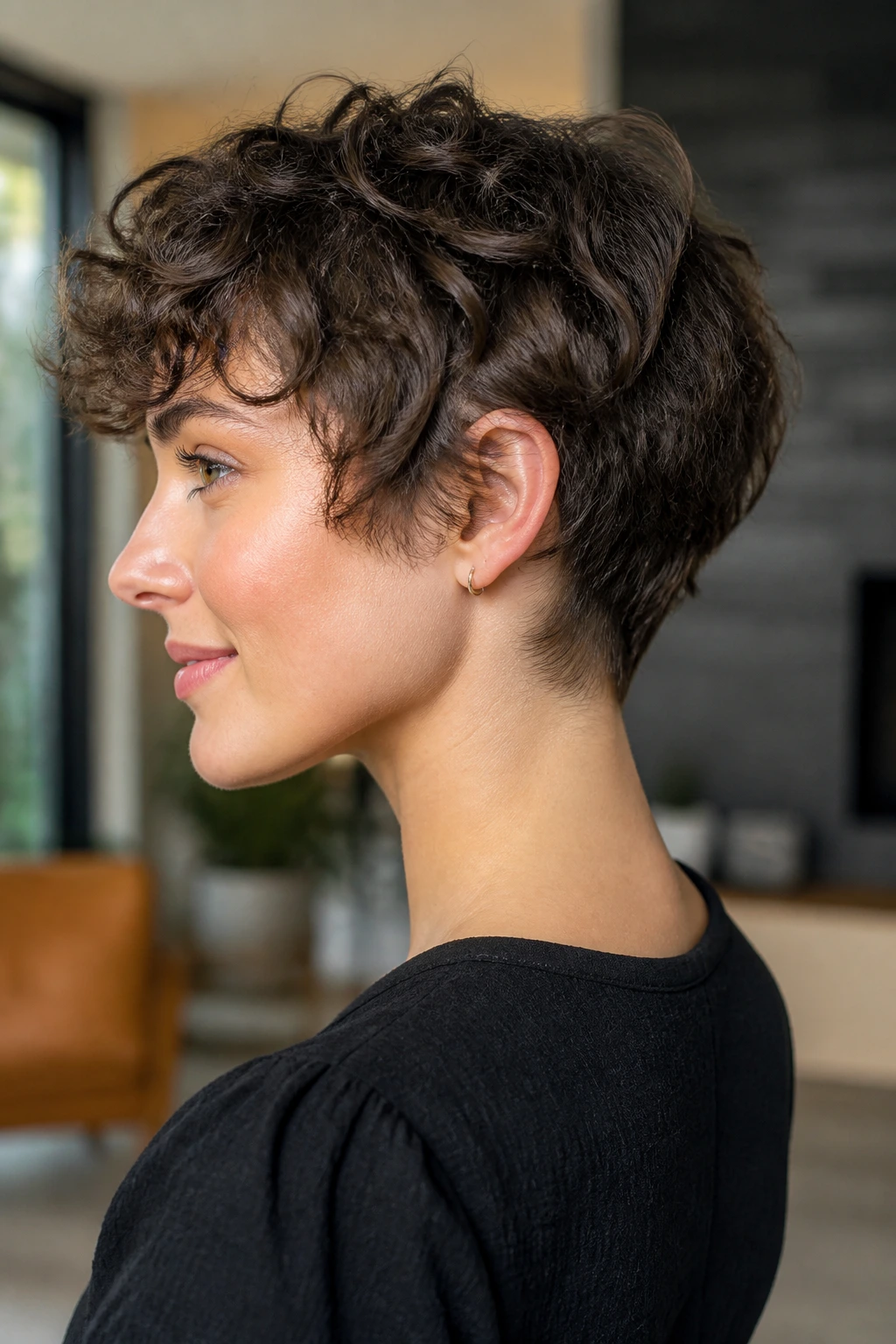
Can a tiny shag work on very fine curls? Yes, if the nape stays neat and the top keeps a little length. The tapered back removes bulk where it can get fluffy, while the crown still has enough room to show off the curl.
This one does ask for maintenance. If you let it go too long, the nape starts to grow into a soft mullet whether you planned that or not. Keep the edges clean every 6 to 8 weeks if you want the shape to stay sharp.
4. Rounded Curly Pixie Shag
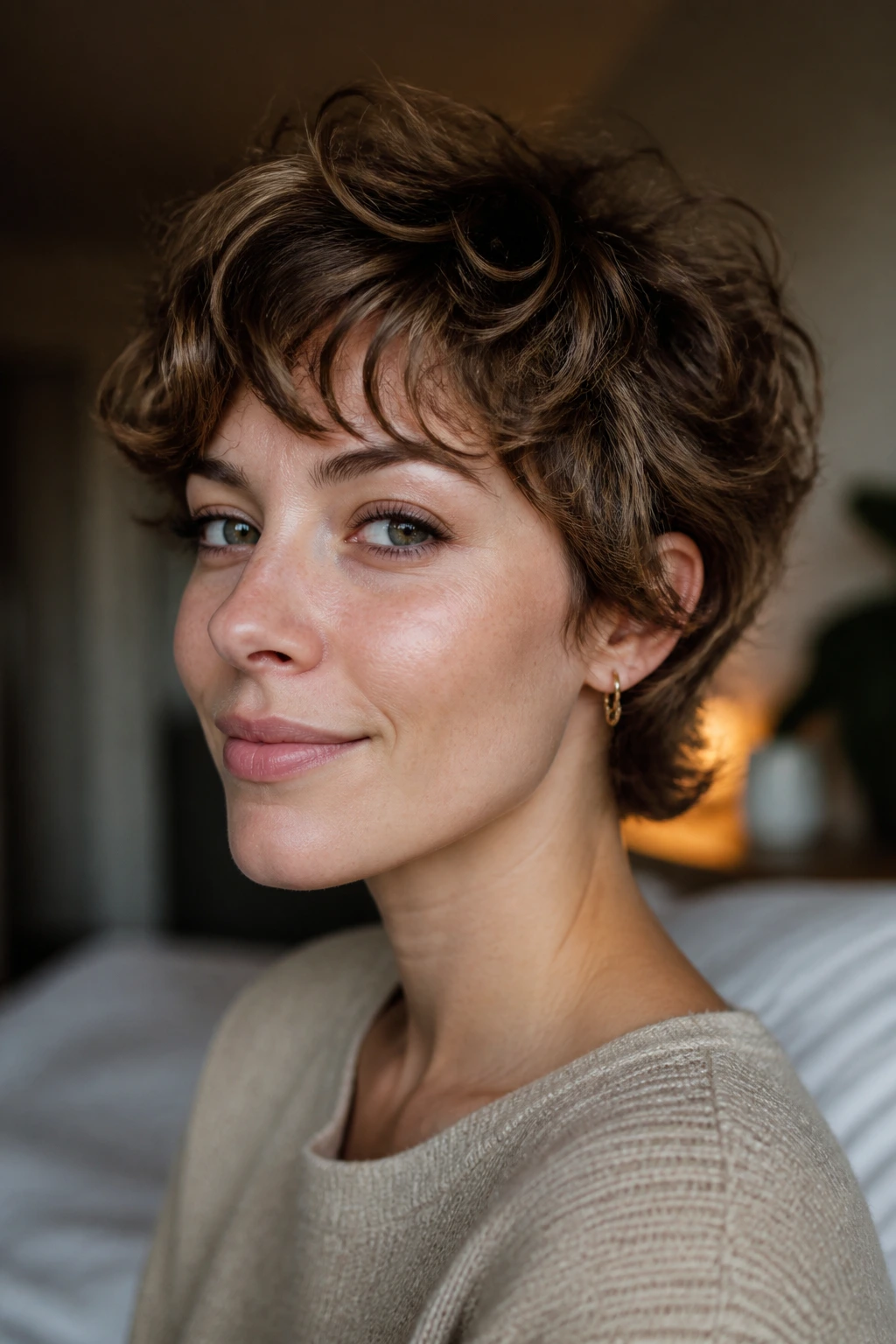
A rounded curly pixie shag is a smart move when you want a short cut that still feels soft around the head. The roundness keeps fine curls from sticking out in hard corners, which is what makes many pixie cuts look harsh on curly hair.
Ask for feathered top layers and a gentle outline around the ears. The goal is lift, not spikiness. If your hairline is delicate, this shape can be kinder than a choppy crop because it keeps more visual fullness where the eye lands first.
5. Jaw-Grazing Shag With Piecey Ends
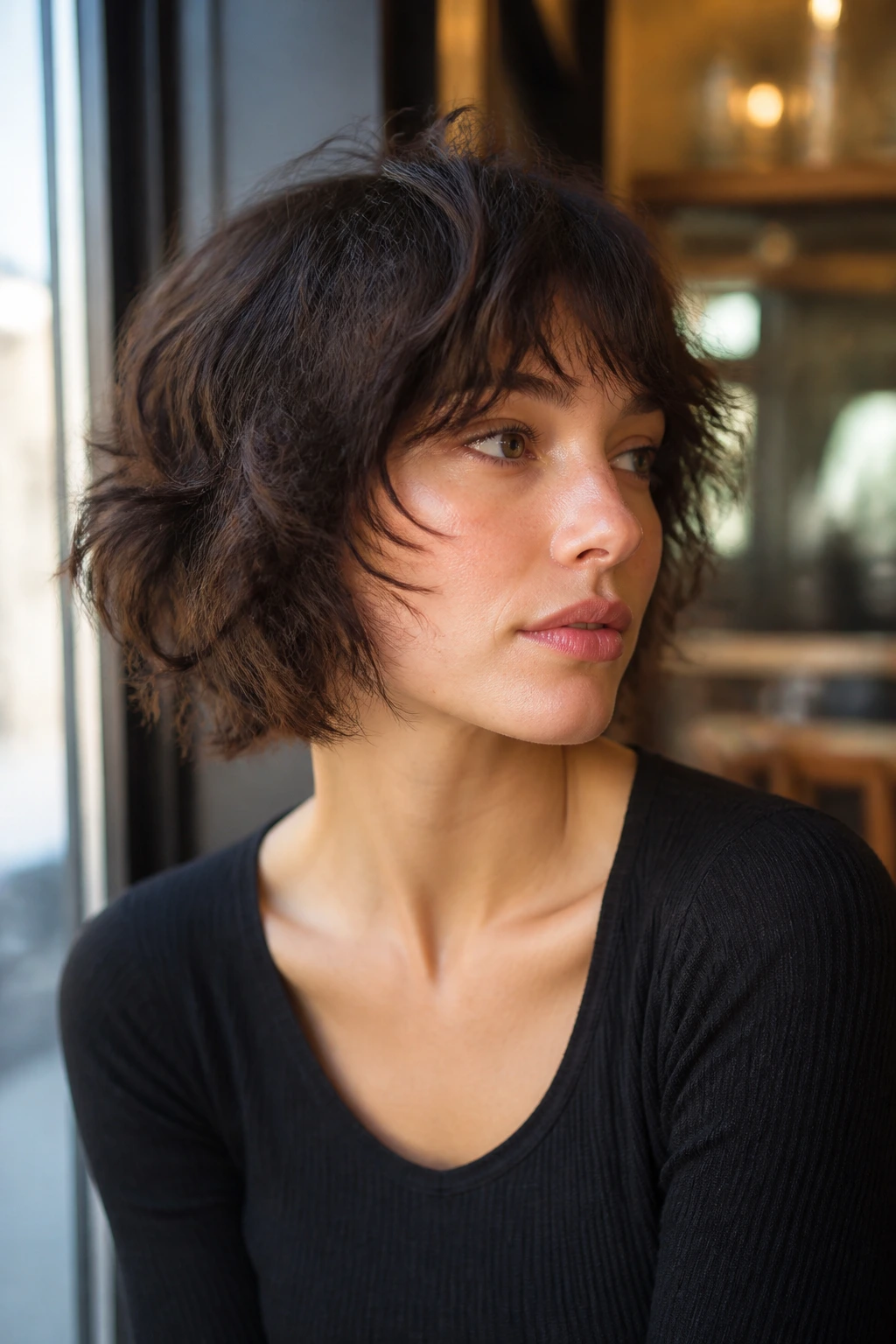
Jaw-grazing length gives fine curls a little more swing, and piecey ends stop the haircut from looking heavy. It’s a strong choice when you want short hair, but not hair that sits on your face like a helmet.
The trick is to keep the longest bits at the jaw and let the inner layers break up the bulk above them. That gives the cut a little swing when you turn your head, which matters more than people think. Hair that moves reads as fuller.
6. Short Wolf Shag With Airy Crown Layers
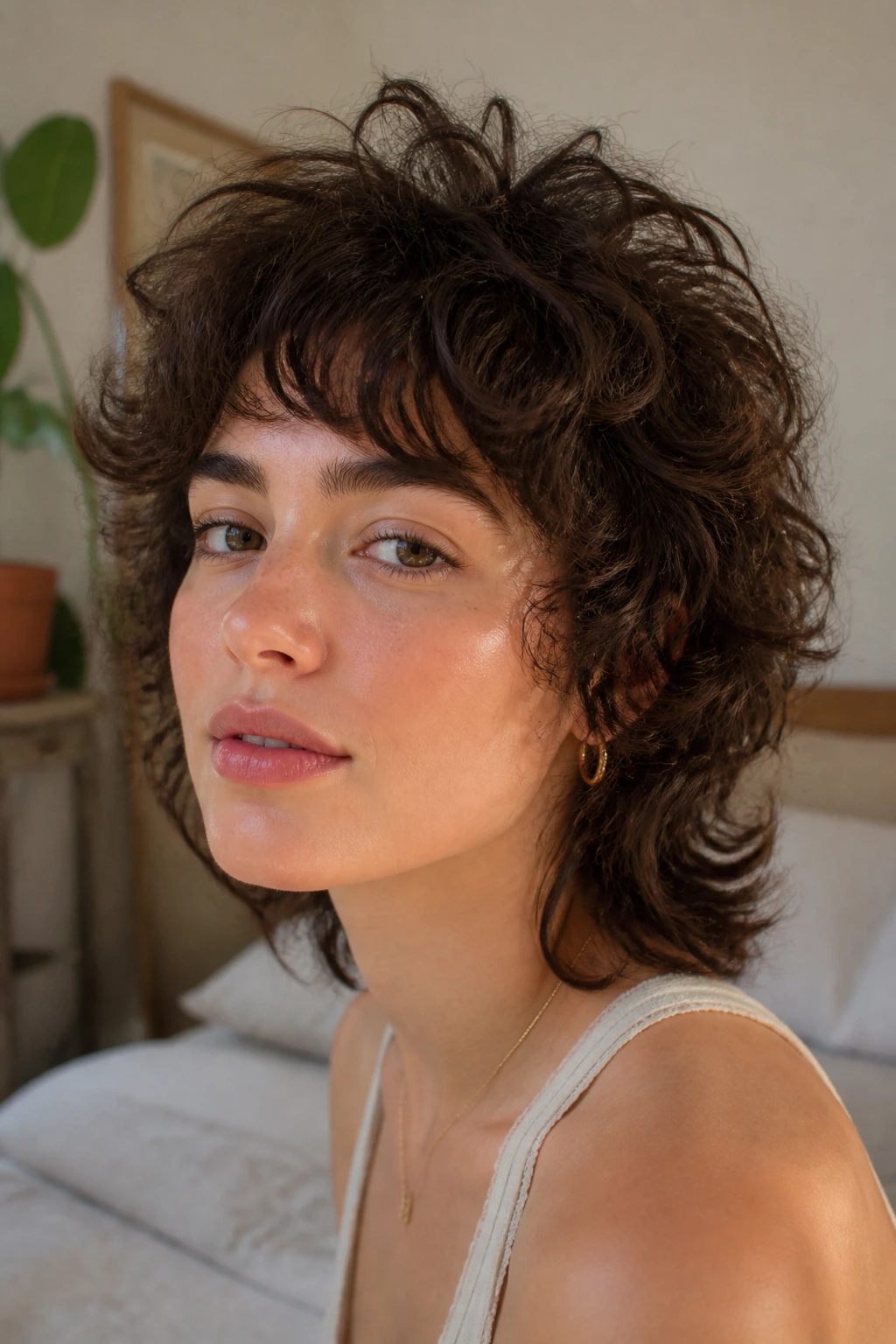
This is the shag for people who like a little edge. The wolf-shag shape adds volume high on the head and keeps the sides loose, which can be a gift for fine curls that collapse at the crown by lunchtime.
Do not let the stylist go wild with thinning shears here. Fine hair needs space, not damage. A better version uses soft internal layers and a light, slightly longer fringe so the top looks lifted rather than hacked.
7. Soft French Shag With a Side-Swept Fringe
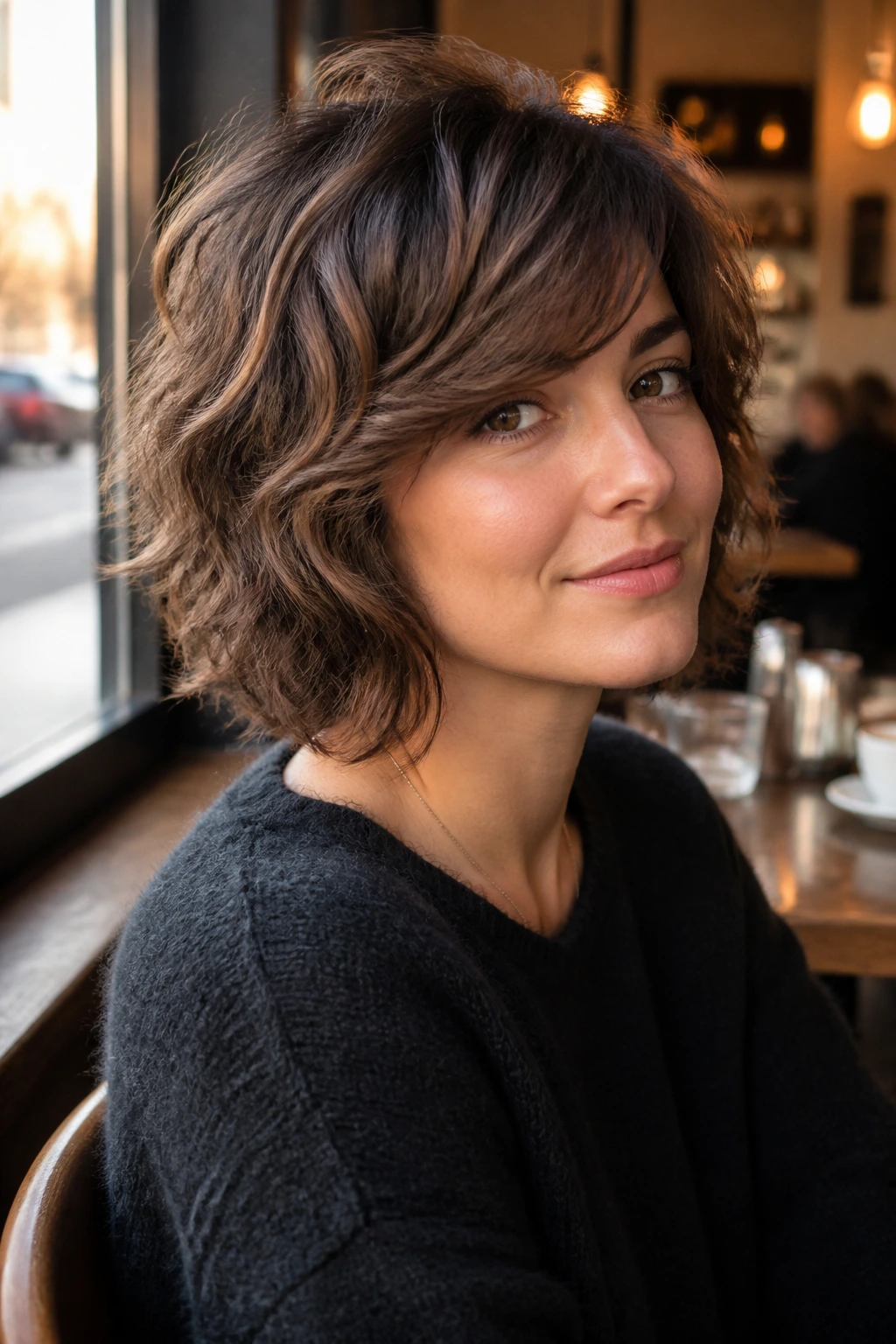
A French-style shag leans softer and a little more brushed-out, which suits fine curls that don’t want to look overworked. The side-swept fringe is useful if your hairline has a cowlick or your center part keeps splitting open.
This shape tends to fall nicely even when you don’t style it much. I like it for people who want a romantic bend rather than a messy, piecey finish. It’s less dramatic than a wolf cut, and that’s the point.
8. Layered Mixie for Loose Curls
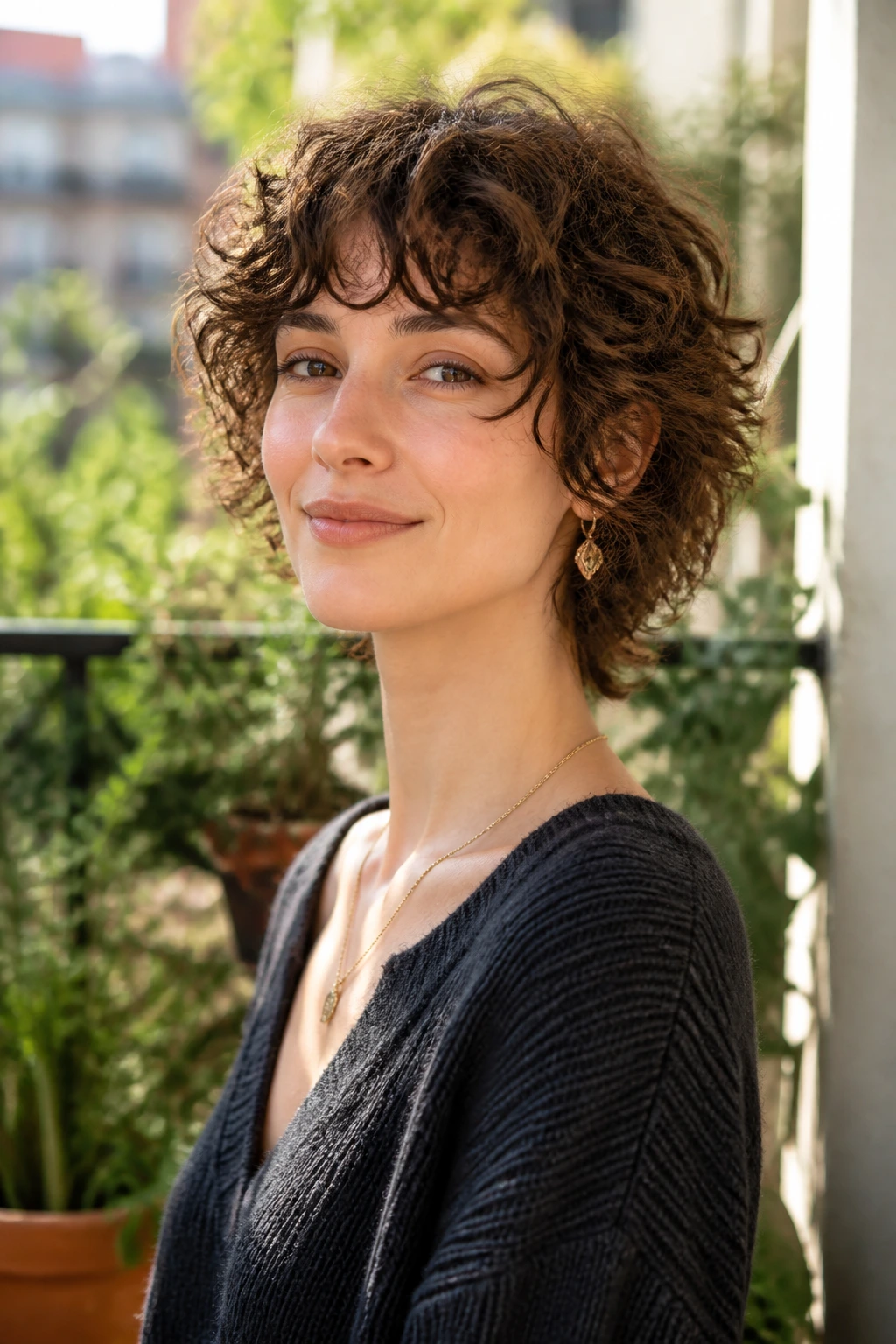
A mixie — part pixie, part mullet — can be very good on fine curls if the top stays soft and the back stays controlled. It opens the neckline, keeps the top lively, and avoids the flat shelf effect that can happen with one-length cuts.
Loose curls shine here because they create their own texture. The haircut should support that texture, not force it. If your wave pattern is soft and you hate spending time with a diffuser, this might be the most interesting short option on the list.
9. Collarbone Shag With Invisible Layers

Collarbone length isn’t ultra-short, but on fine curly hair it can still read as compact and light. Invisible layers are the real trick here. They remove weight inside the cut without leaving obvious holes in the silhouette.
This version is good when you want a little more length near the face but still need the crown to lift. It’s also forgiving if your curls vary from one side to the other, because the longer outline keeps the whole thing from looking uneven when the hair dries.
10. Curly Mullet Shag With a Light Nape
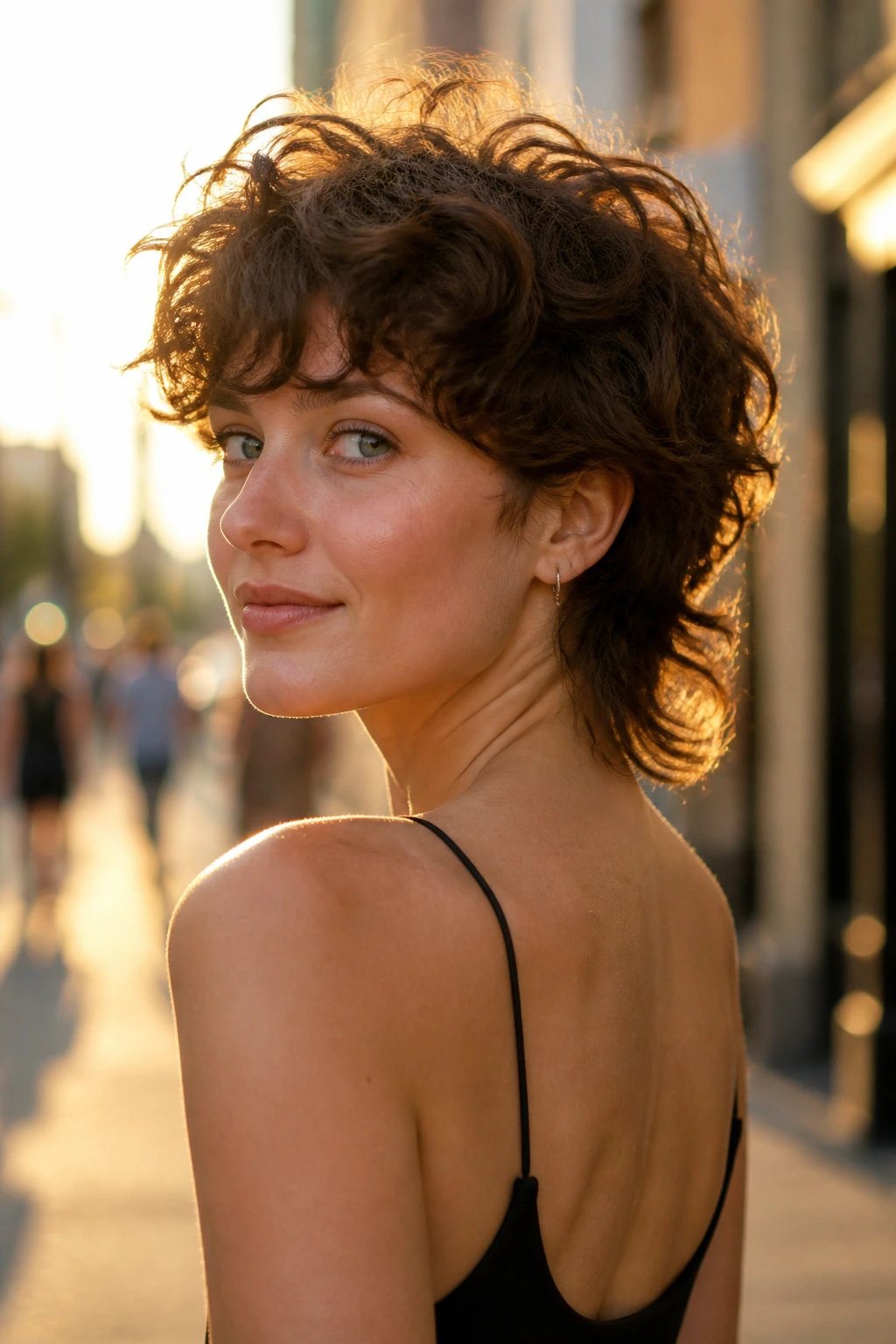
A curly mullet shag sounds bolder than it feels when it’s done well. The front stays lively, the crown gets height, and the nape is kept soft rather than chopped into a hard line.
Fine hair benefits here because the shorter back removes drag. The warning is simple: keep the layers feather-light at the temples, or the cut can start to feel too narrow. The best version looks cheeky, not dated.
11. Side-Part Shag With Long Face Framing
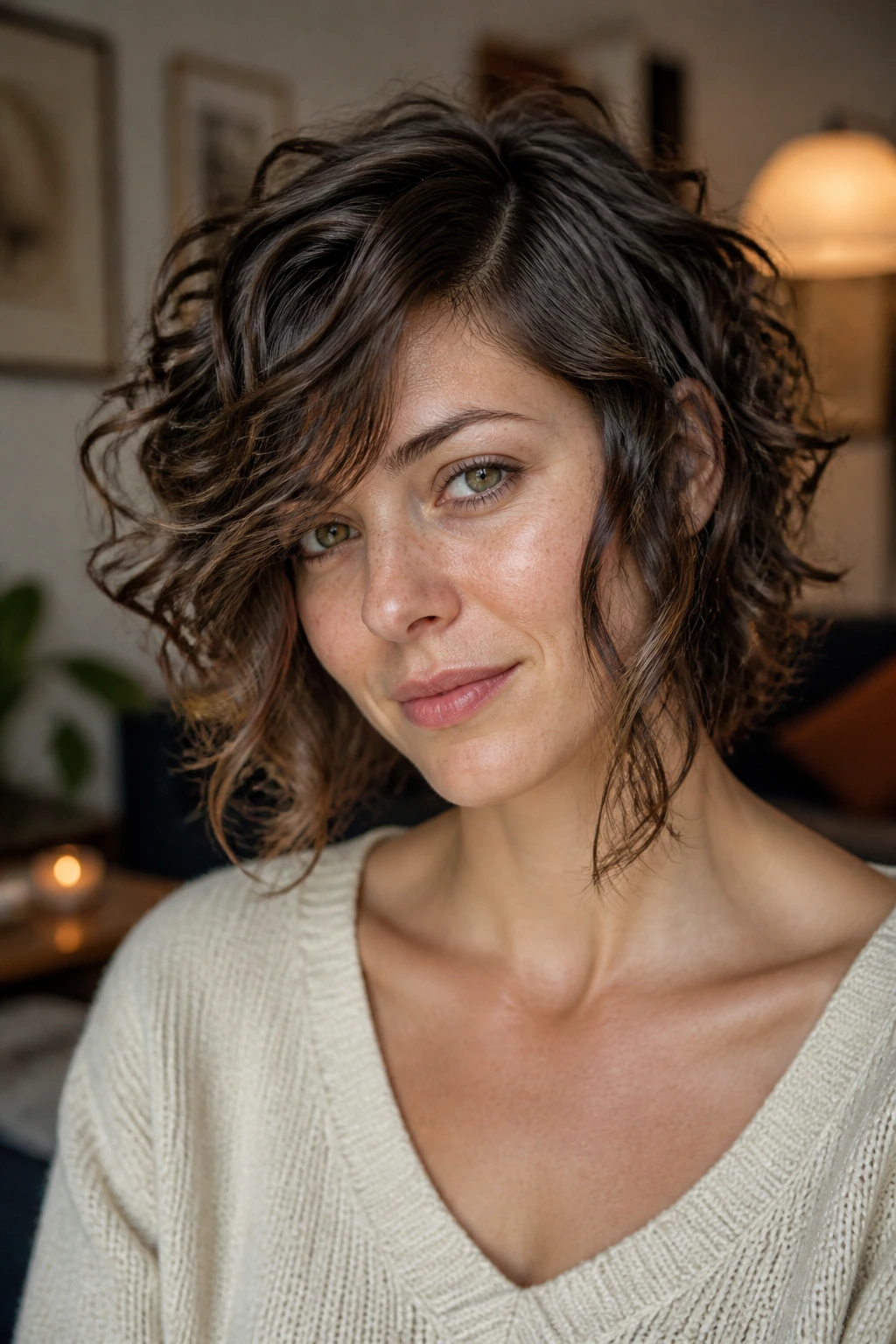
A side part can save fine curls that go limp in the middle. It shifts the weight, gives the roots somewhere to stand up, and creates a little asymmetry that keeps the haircut from looking too neat.
Long face-framing pieces matter here. They should graze the cheekbone or jaw, not stop high on the face. That extra bit of length helps the sides feel full without forcing the curl to bunch up into a triangle.
12. Bottleneck Bang Shag for Fine Waves
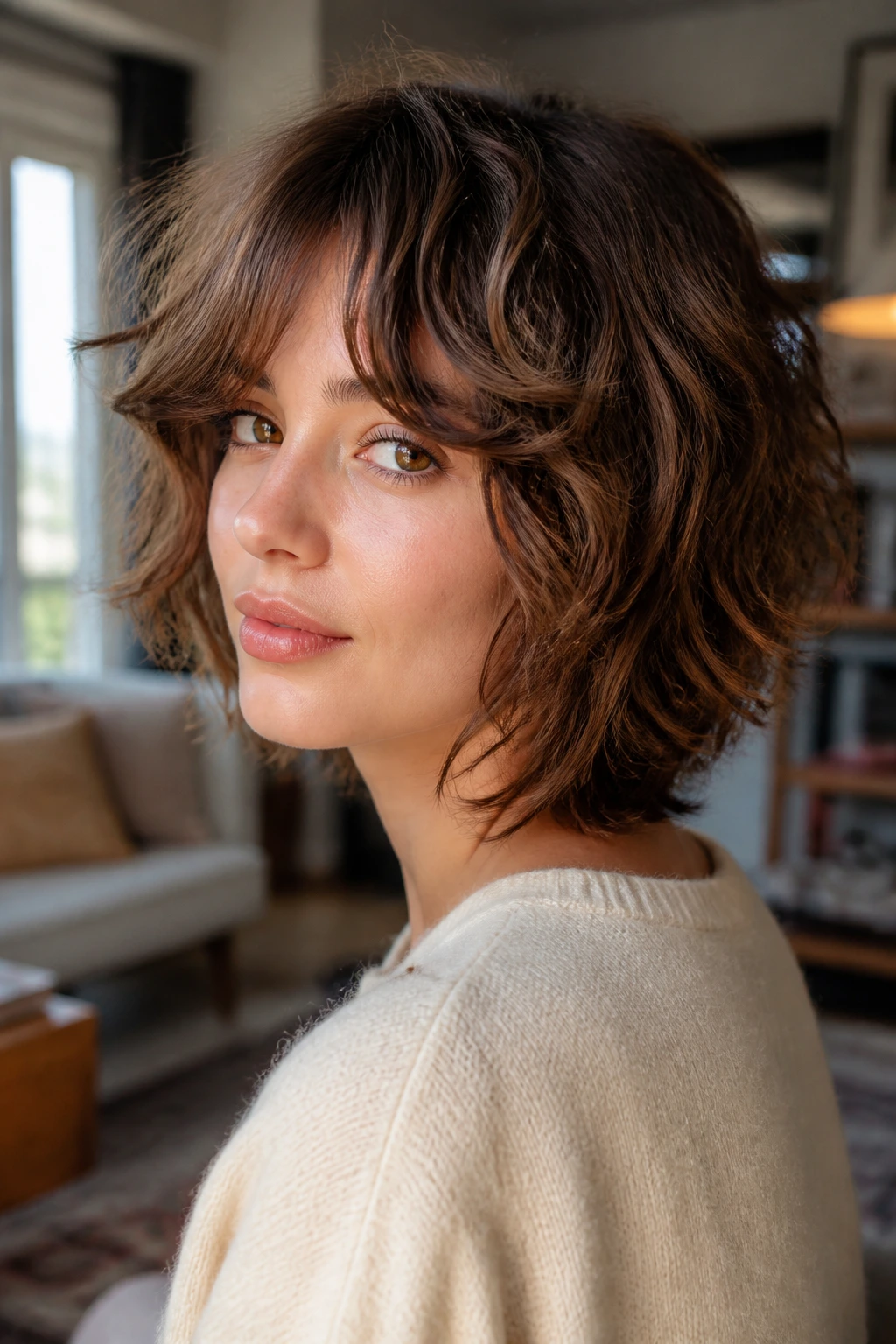
Bottleneck bangs are a good move when your curls are loose enough to behave like waves on some days. They open at the center and taper out toward the cheek, so the front feels soft without eating too much density.
This shape is easier to live with than blunt bangs on fine hair. The pieces can separate a little and still look intentional. If you’re nervous about fringe, this is one of the safest places to start.
13. U-Shaped Curly Shag Bob
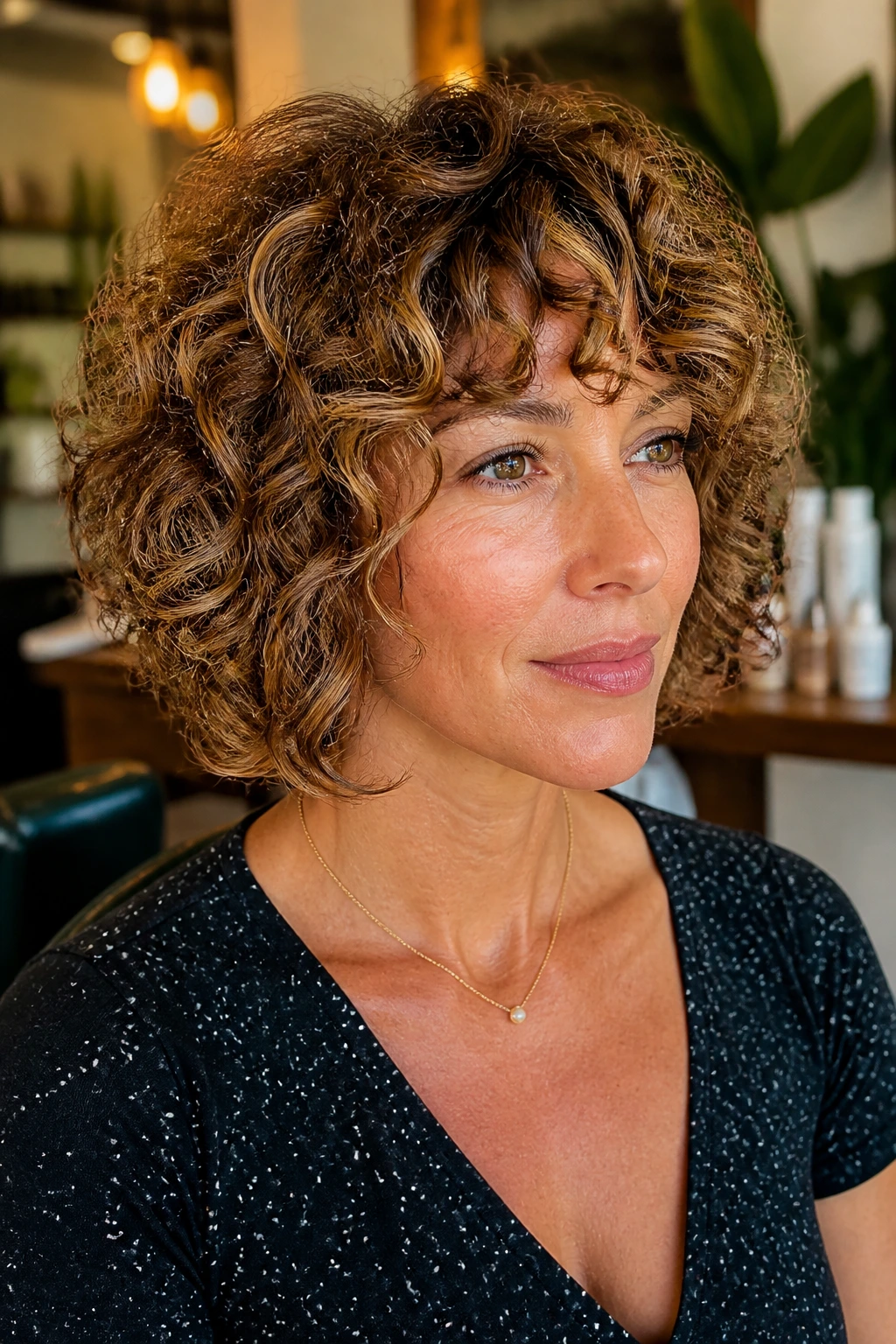
A U-shaped perimeter gives the sides and back a little more softness than a straight bob line. On fine curls, that matters because a flat edge can make the ends look thinner than they are.
The U shape also works nicely when the curls spring at different rates. The longer center back keeps the overall outline full, while the layers above it prevent the haircut from sitting like one heavy block. Clean, but not severe.
14. Razor-Textured Shag for 2A Waves
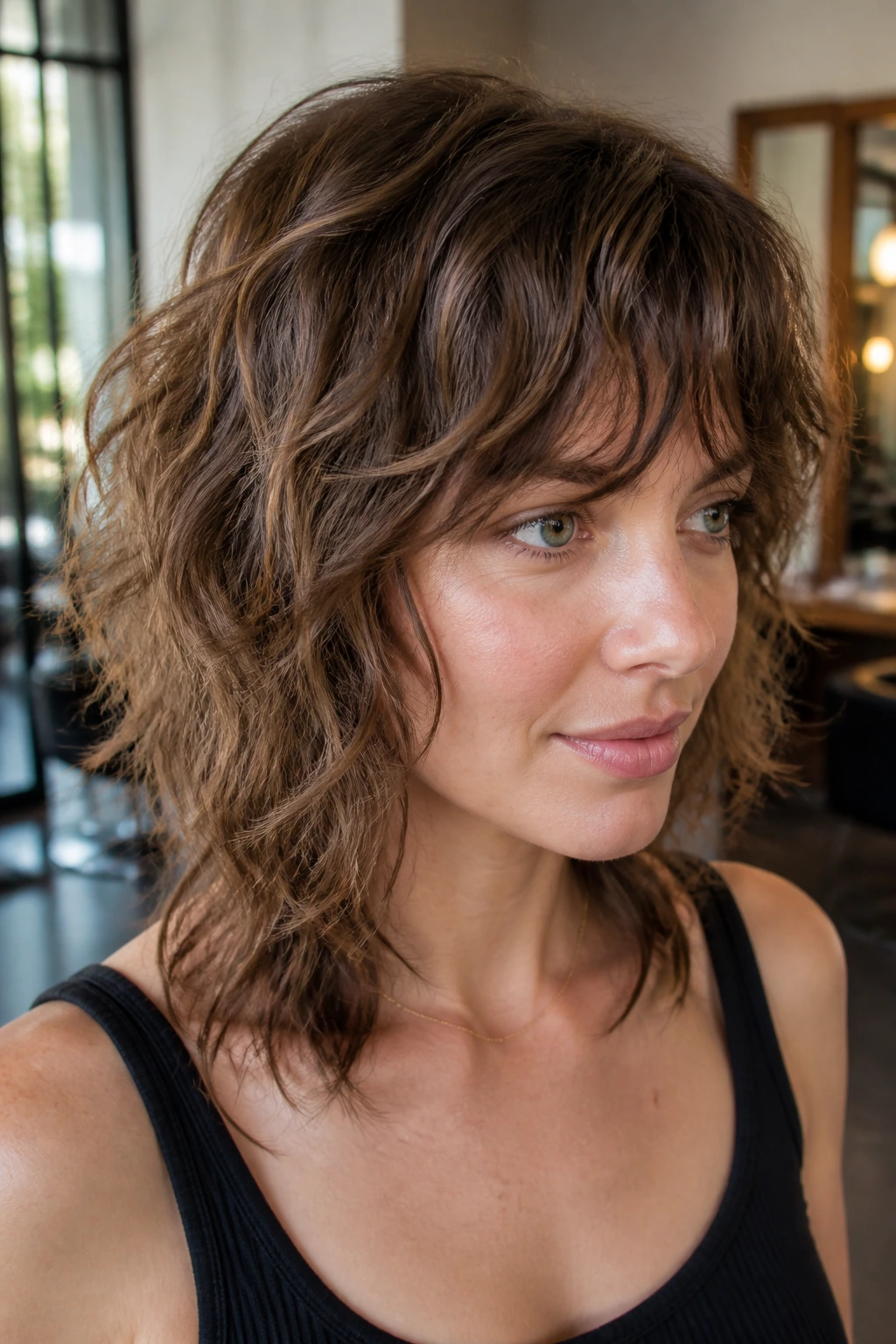
Razor cutting can be useful on the right head of hair, and 2A waves are often that head. The razor softens the ends and helps the hair fall in loose bends rather than chunky shelves.
But here’s the catch: on very fine hair, a heavy razor hand can make the ends fray. The better version uses a light touch and keeps most of the structure in the perimeter. If the waves are soft and the density is modest, it can look airy in a good way.
15. Springy 3A Shag With a Lifted Crown
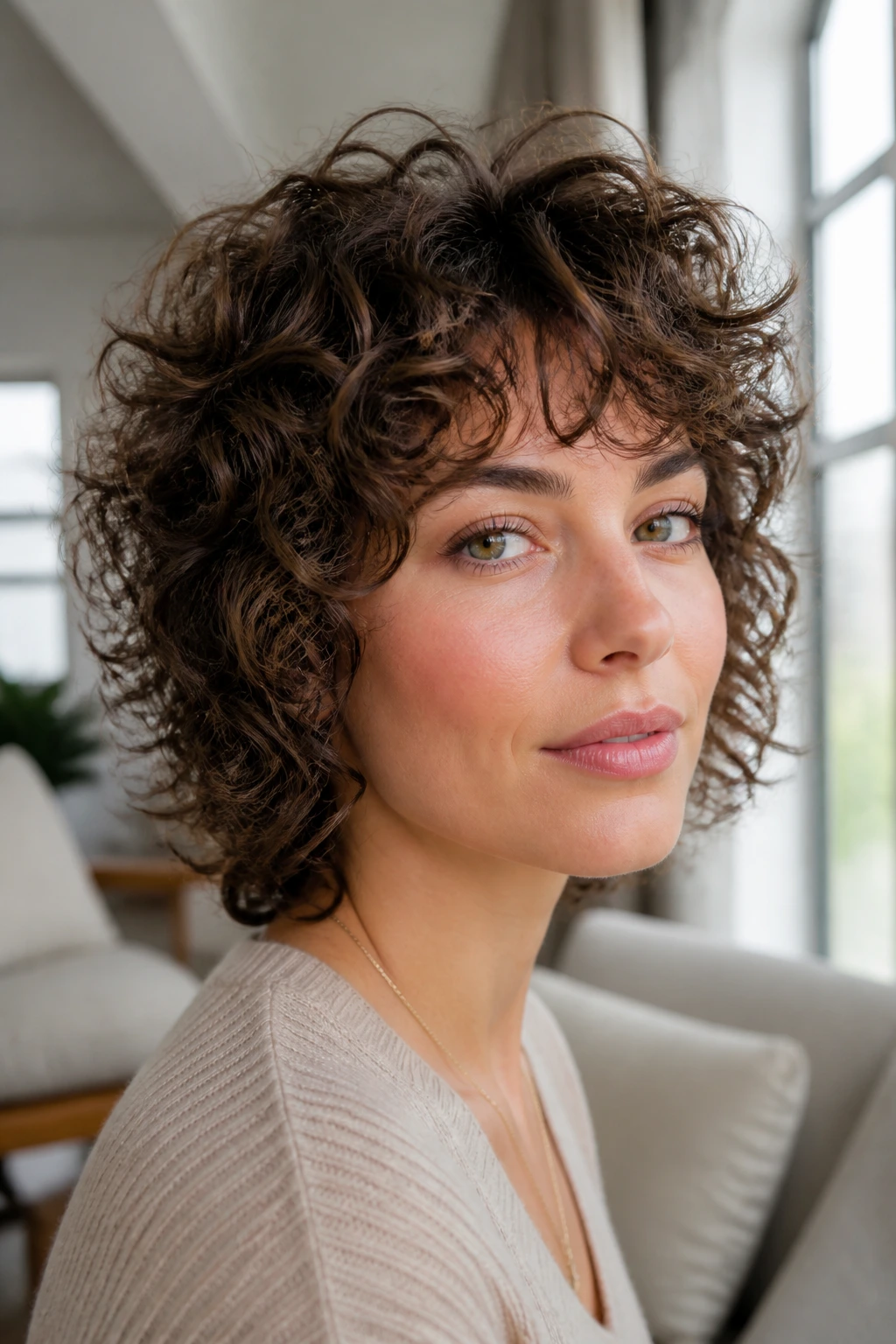
3A curls already have enough spring to make a shag look alive, so the cut should respect that bounce. Keep the crown lifted, keep the layers staggered, and do not overpack the front with short bits that spring into a shelf.
This is one of those cuts that looks better when the curl pattern is allowed to finish the shape. The stylist’s job is to remove weight where the hair drags and leave enough length where the curl needs space. Easy to say, harder to cut well.
16. Spiral-Friendly 3B Shag With Deeper Layers
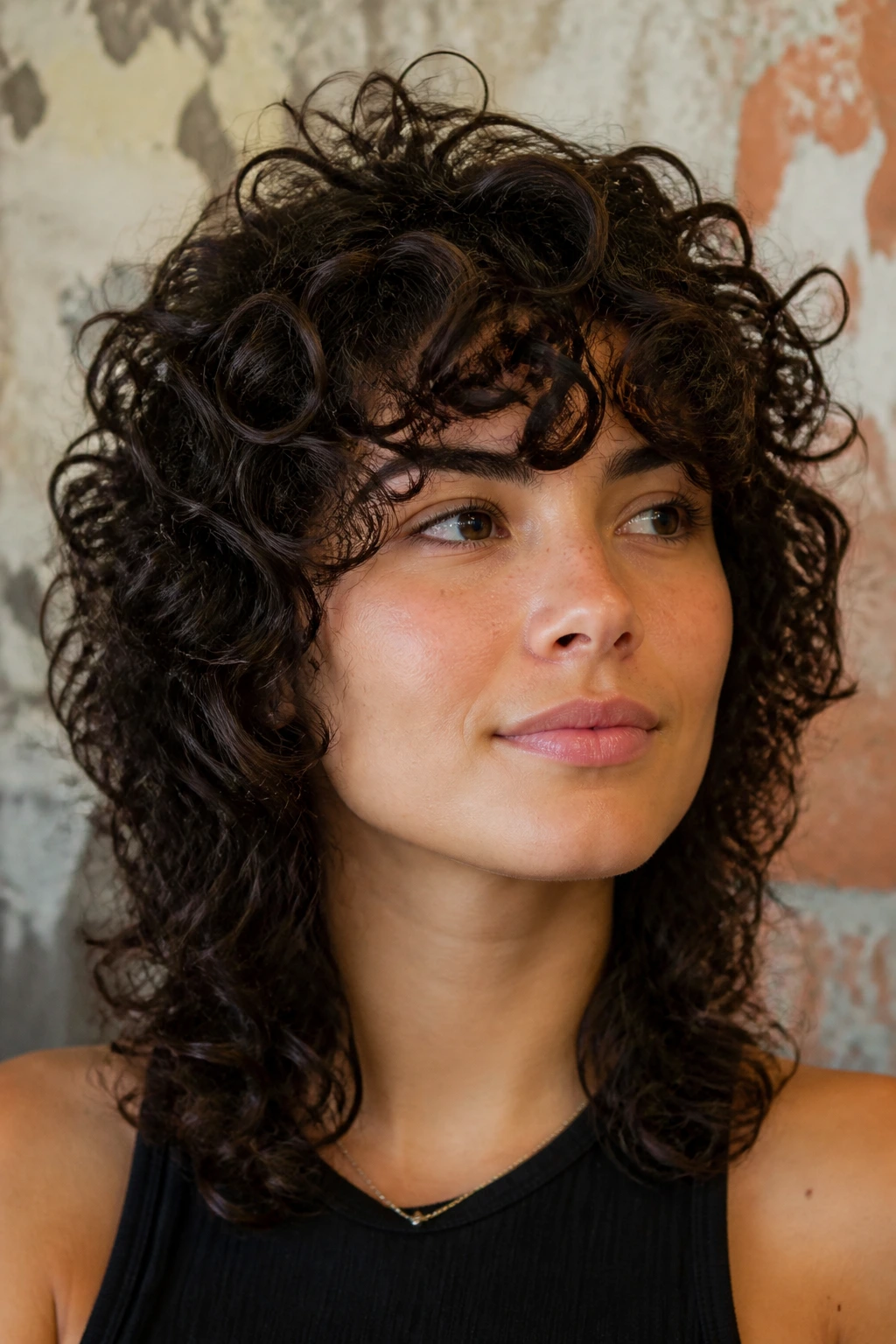
3B curls can carry more shape than people expect, but on fine strands the layering has to be careful. Deeper layers help stop the classic pyramid effect, where the top balloons and the bottom disappears.
The best version leaves enough length at the perimeter to keep the silhouette grounded. Too many high layers and the curls pop up too close to the scalp, which can expose more head than you meant to show. Balance is everything here.
17. Glasses-Friendly Shag With Soft Edges
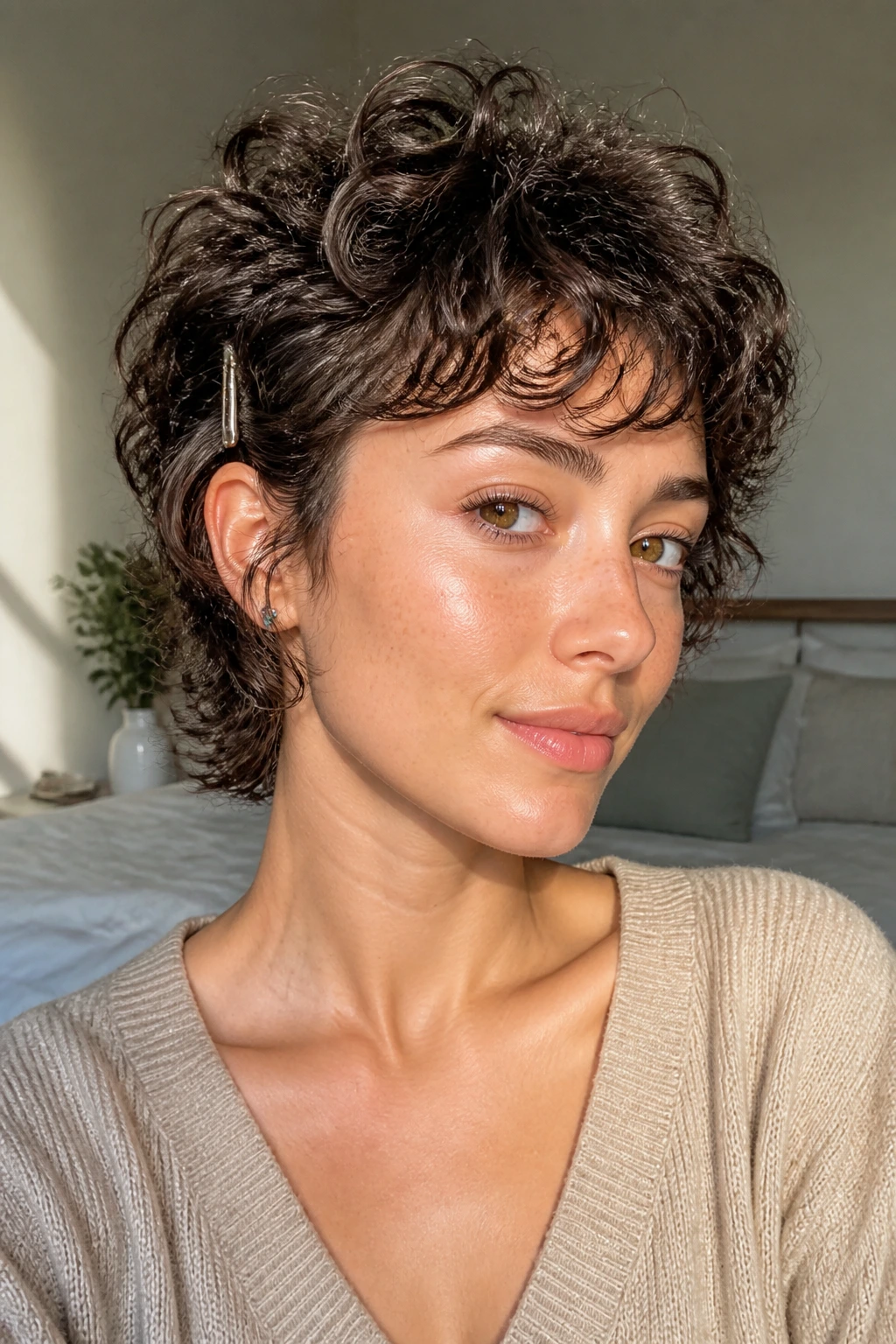
If you wear glasses, fringe placement matters more than almost anything. A glasses-friendly shag keeps the front soft enough to sit above or around the frames without brushing your lenses every time you move.
Soft edges near the temples help too. They keep the shape from crowding the face and make the whole haircut easier to wear all day. Fine hair can look especially neat in this version because the glasses add structure while the curls add movement.
18. Oval-Face Short Curly Shag With Balanced Fringe

Oval faces can wear almost anything, which is both a blessing and a trap. A balanced fringe helps keep the shape from sliding too far into “generic short curly haircut” territory.
What I like here is moderation: not too much width at the cheeks, not too much height at the crown. Let the fringe skim the brow line and keep the sides a little looser. The cut should frame the face, not outline it like a sticker.
19. Round-Face Shag With Vertical Volume

Round faces often do better with a bit more height than width, and a shag can give that without feeling severe. The curls should stack upward at the crown and taper gently around the cheeks.
Avoid heavy side pieces that stop right at the widest part of the face. That’s the move that makes the head look wider than it is. A good round-face shag keeps the eye moving up and down, not side to side.
20. Heart-Face Shag With Cheekbone Layers
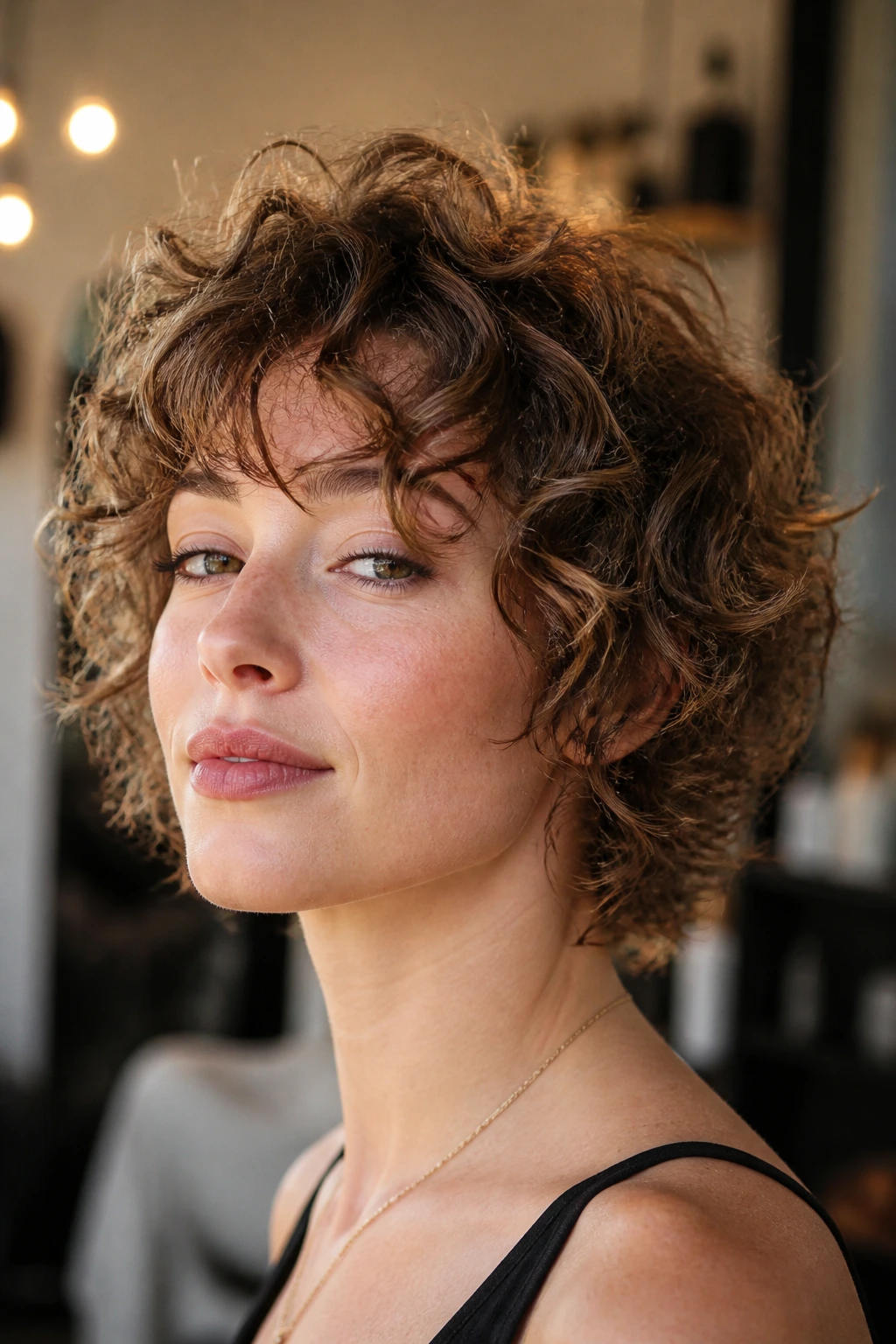
Heart-shaped faces usually carry more width at the forehead and less at the jaw, so cheekbone layers are your friend. They create a landing point in the middle of the face and stop the front from floating too high.
I like a little softness near the temples here, too. It keeps the hair from shouting at the forehead. Fine curls can do this beautifully if the ends are not over-thinned — that way, the hair still has enough presence around the chin.
21. Grown-Out Shag That Still Looks Intentional
Some cuts only look good on day one. This is not one of them, if it’s built right. A grow-out-friendly shag keeps the longest front pieces a little longer and avoids overcutting the crown.
That matters when you don’t make salon visits your whole personality. The shape softens as it grows, but it keeps its outline. For fine hair, that means fewer awkward weeks where the top is short and the ends are too soft to do anything useful.
22. Air-Dry Shag With Minimal Styling
An air-dry shag should be cut with the curl’s natural fall in mind, not against it. That means fewer fussy layers, cleaner face framing, and an outline that still makes sense when the hair dries without help.
This is the cut I’d recommend to someone who wants to wash, scrunch, and leave. It does not need a big styling routine, but it does need a light hand at the salon. Over-texturizing a cut like this defeats the whole point.
23. Diffused High-Volume Shag
Diffusing gives fine curls a fighting chance at the root, and this cut is built to take advantage of that. The layers should lift away from the scalp without scattering the ends into fluff.
Use a low heat, medium airflow, and a few root clips while the hair is still damp. That little bit of discipline pays off in height. The cut itself should be strong enough that you’re not relying on product to fake the shape.
24. Sleek-Root Curly Shag
Some people want curl movement but not the frizz halo that can show up near the root. A sleek-root shag keeps the top smooth while the ends stay textured and alive.
This works well when your hair frizzes but your curl pattern is still worth showing. Use it if you like a more polished front and a looser finish through the body. The contrast is the whole appeal.
25. Feathered Crown Shag
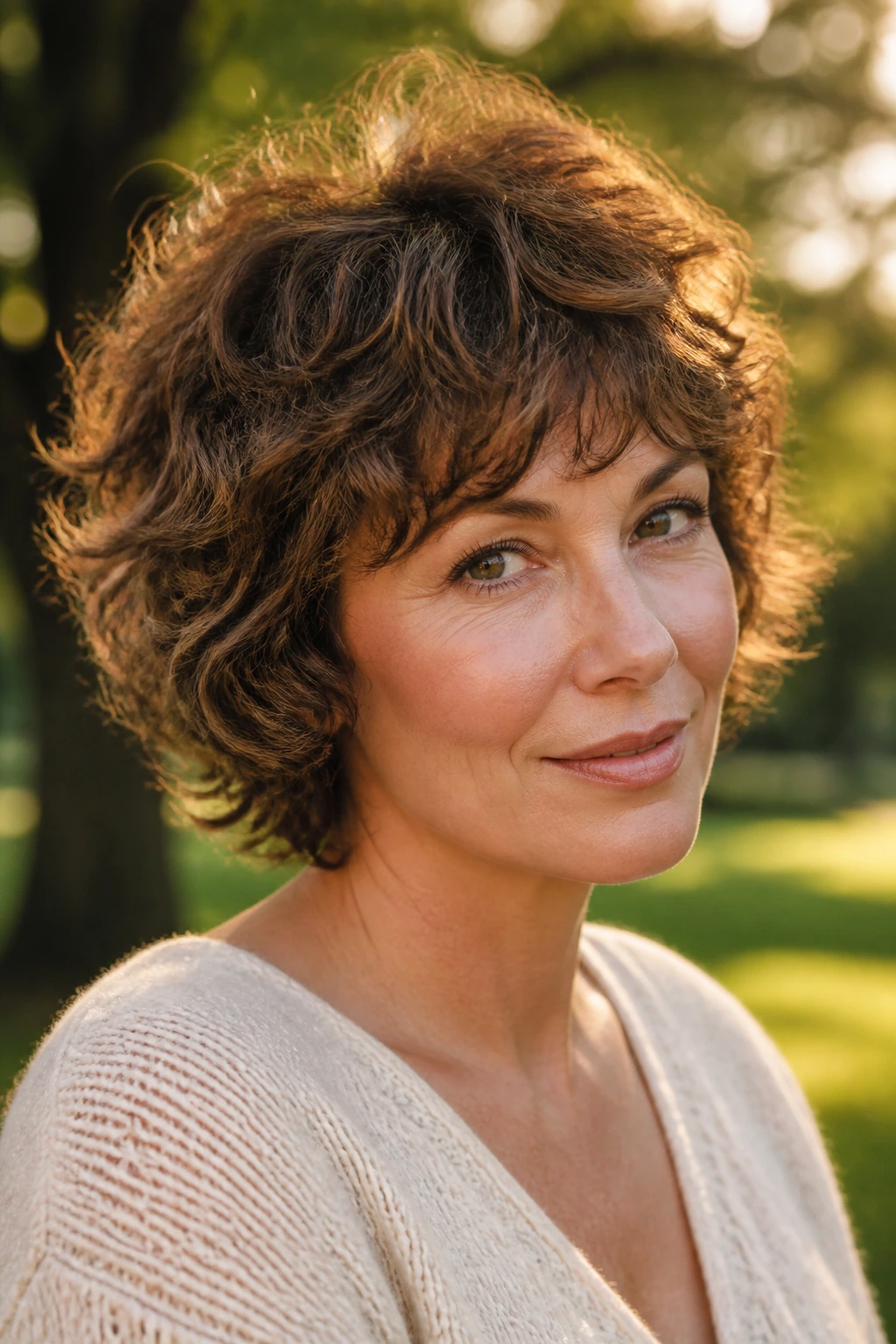
A feathered crown can make fine curls look like they’ve got more air in them. The top layers are softly reduced so the curls can lift instead of lying heavy and separating.
The danger is going too far. Feathering should suggest movement, not expose the scalp. When it’s right, the crown looks light and the rest of the cut still has enough fullness to anchor the shape.
26. Choppy Ends Shag

Choppy ends add texture, and texture can be your best friend when the hair itself is fine. Those broken-up ends keep the shape from looking blunt and heavy, especially when the curls settle into smaller clumps.
I prefer this on hair that already has some natural bend. It keeps the cut playful without going too short on top. Just ask for controlled choppiness, not random thinning, because those are very different things.
27. Hidden-Undercut Shag
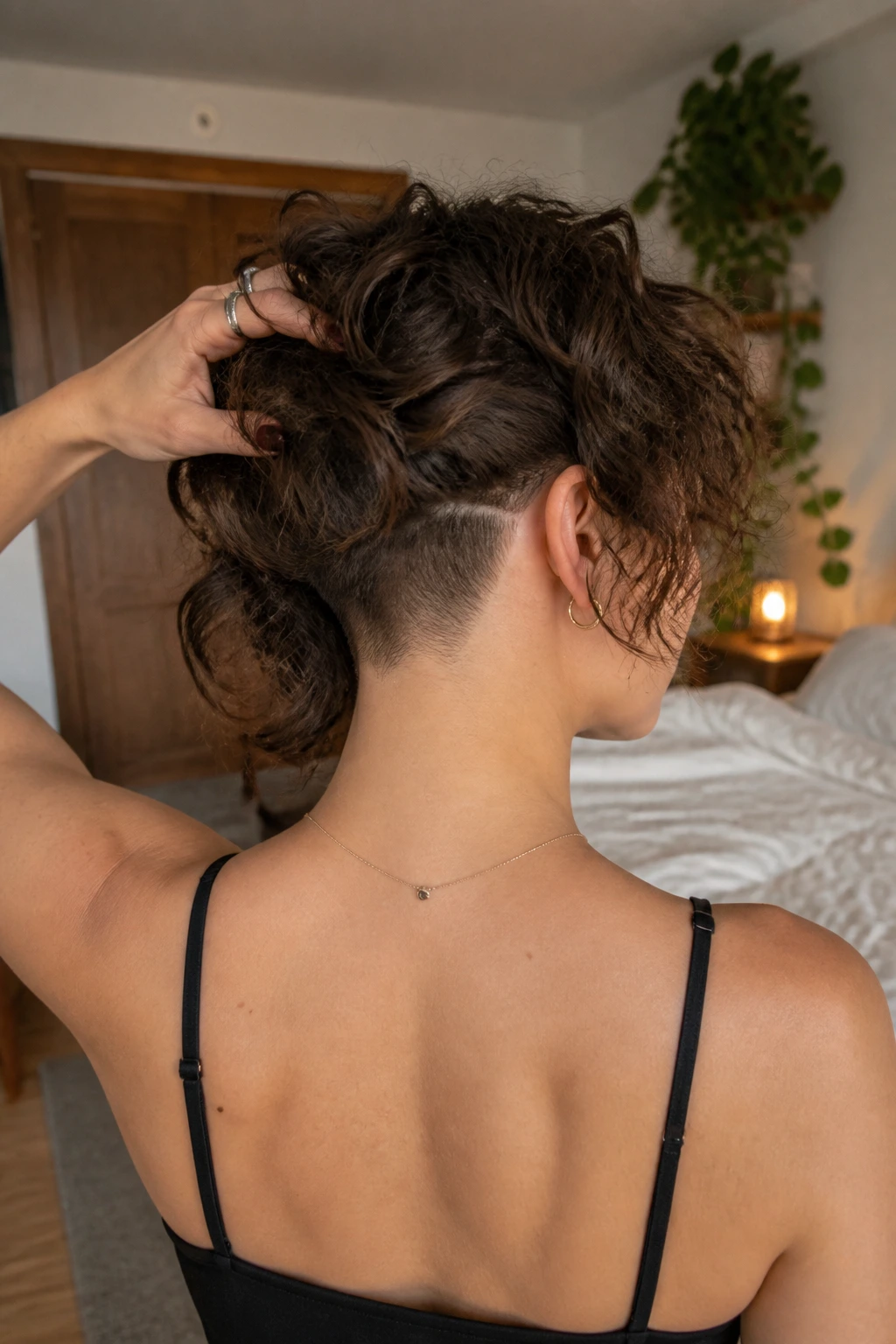
A hidden undercut can be useful if the nape gets bulky while the top stays fine. It removes weight under the surface so the visible layers can sit lighter and move more freely.
This is not about shaving half the head. It’s a small, quiet move that can make a big difference for people whose hair puffs at the neck. If you like your short shag to lie closer to the head, this trick is worth discussing.
28. Face-Framing First Shag
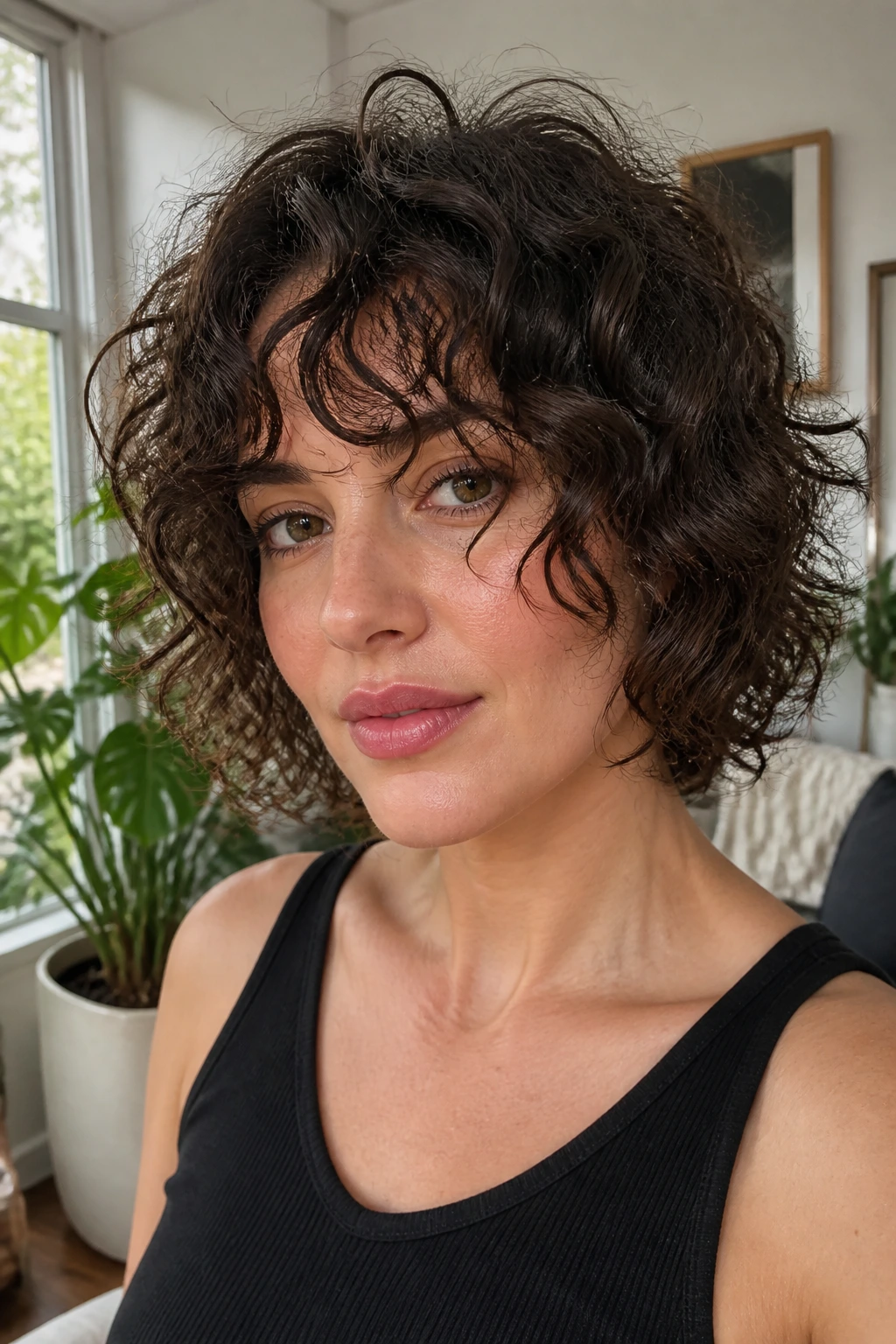
Some shag cuts treat the fringe as the star. This one starts with the front pieces and builds the rest of the layers to support them. It’s a smart approach when the face shape needs softening more than the crown needs drama.
Fine hair benefits because the eye goes straight to the framing pieces. Those curls can sit a little longer, bend around the cheek, and make the whole haircut feel fuller than it really is. Sometimes the front does the heavy lifting.
29. Nape-Length Shag With Lifted Sides
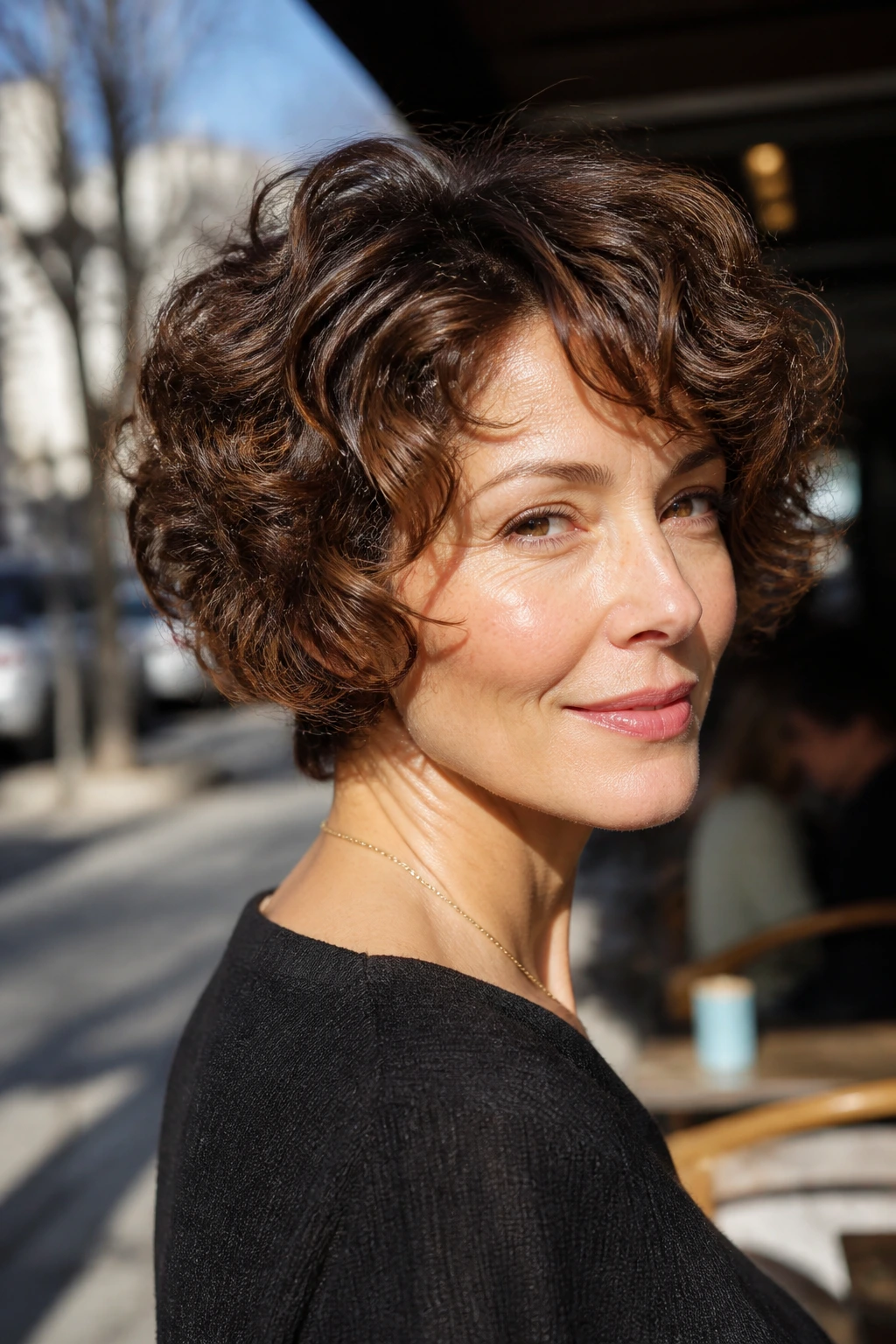
When the nape is short and the sides stay lifted, the haircut feels light without getting airy in a bad way. That balance is useful for fine hair that tends to collapse at the temples but frizz at the neck.
Keep the side layers cheeky and the back clean. It gives the haircut a tidy base and a little swing up top. The shape reads as deliberate even when the curls are having their own weather.
30. Soft Halo Shag
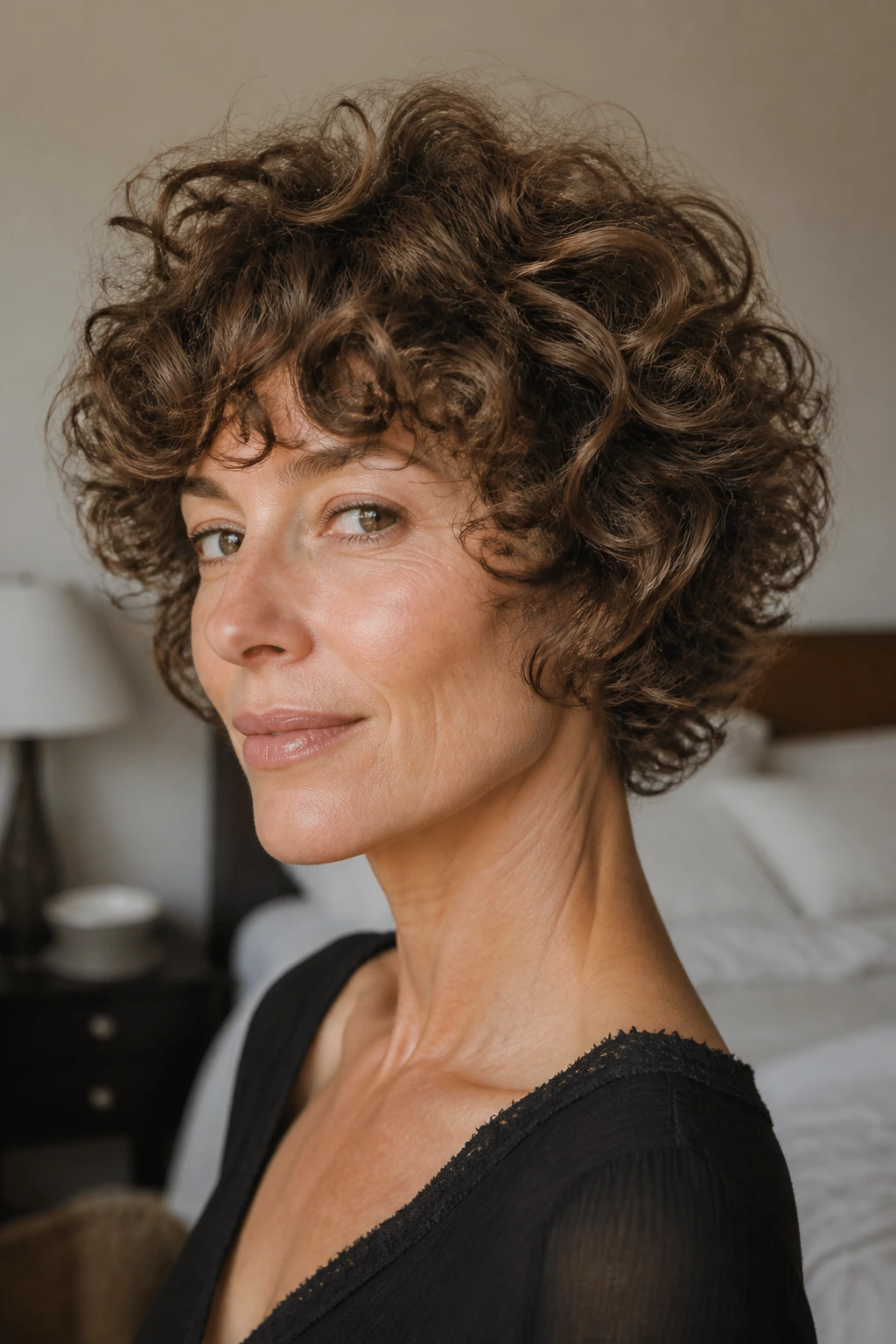
A halo shag builds softness around the upper head instead of flattening the crown into a line. It’s flattering on fine curls because the shape feels rounded and full without needing a lot of length.
This is a lovely option if you dislike sharp angles around the face. The layers should orbit the head rather than carve into it. Think cloud, not spike.
31. Asymmetrical Curly Shag
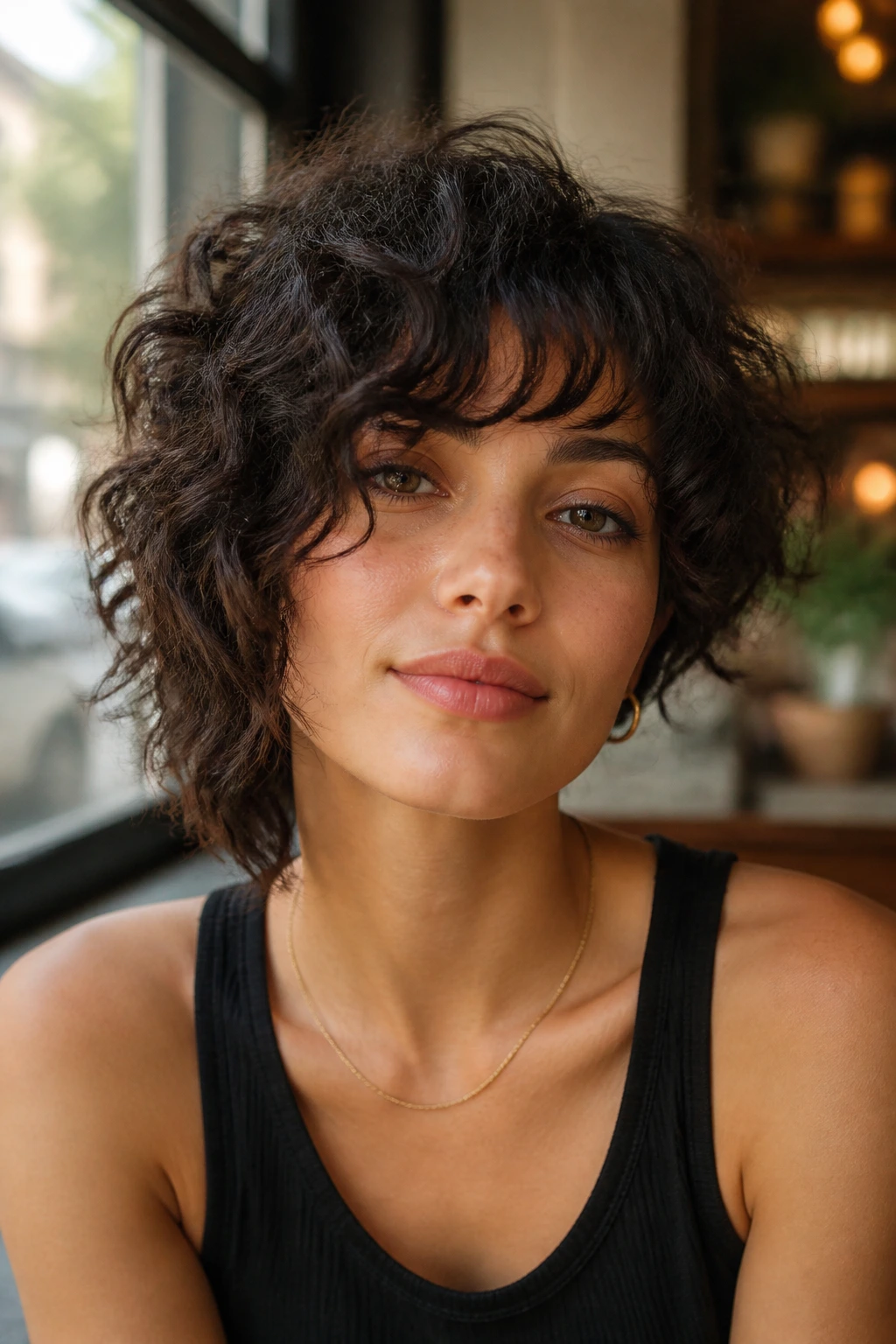
An asymmetrical shag brings a little tension to the shape, which can be useful if one side of your hair is more stubborn than the other. Keeping one side a touch longer also helps if your part naturally falls off-center.
The difference should be subtle, not theatrical. Fine hair can lose its shape fast, and a giant asymmetry can look accidental once the curls shrink. A small shift in length is often enough to make the cut feel fresh.
32. Retro 70s-Inspired Curly Shag

The retro version leans on movement, soft bangs, and a little flip around the ends. It’s less about precision and more about the airy swing that keeps curls from sitting still.
Fine hair often benefits from that old-school looseness because the layers are not trying to do too much at once. Ask for a shag that flicks around the cheekbone and collar area, not one that gets razor-thin at the bottom. Nostalgic, yes. Fragile, no.
33. Low-Maintenance Workweek Shag
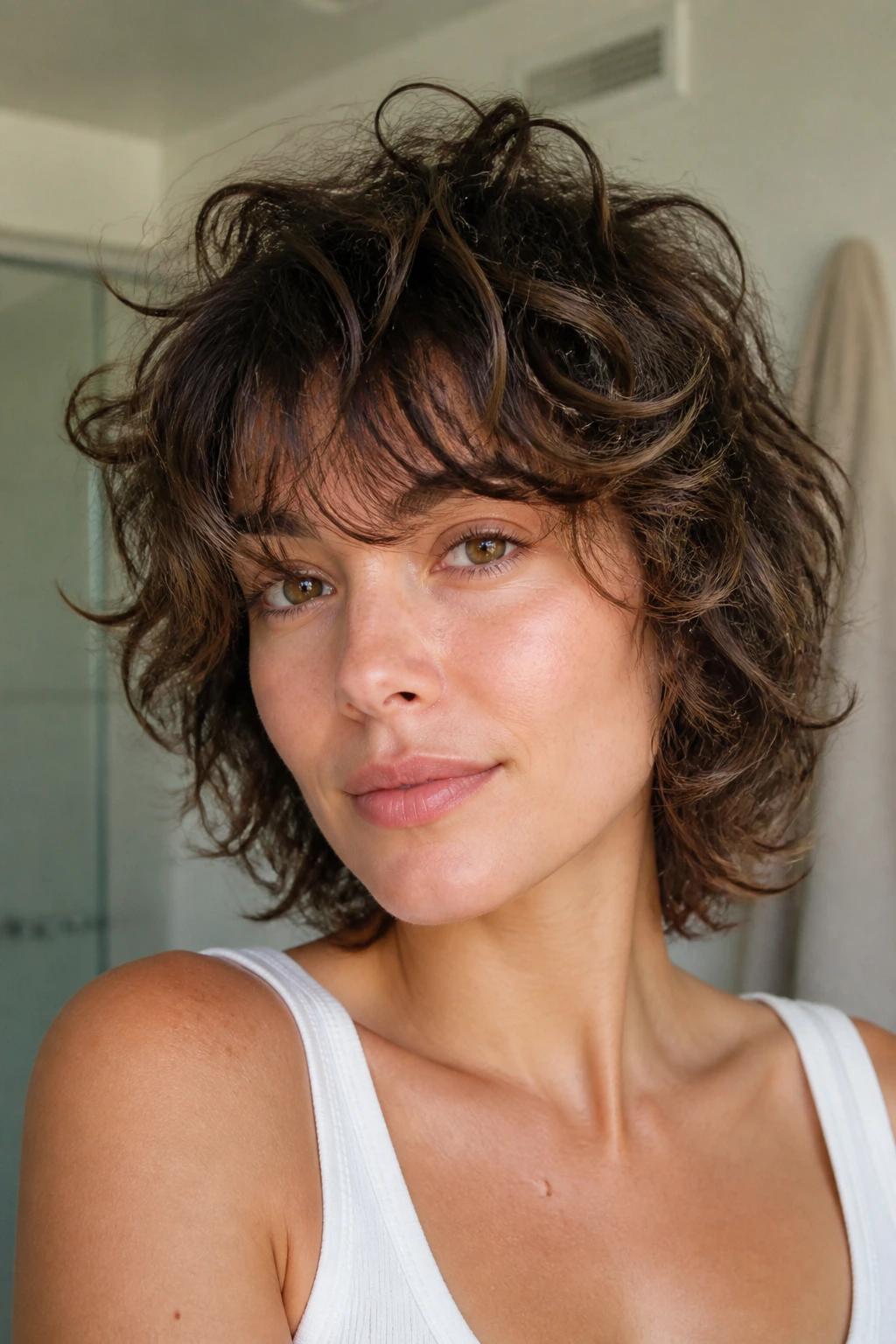
This cut is for people who want the shag shape without a daily styling project. The layers stay broad, the fringe stays long enough to behave, and the outline survives a few lazy days.
I’d choose it if your curl pattern is stable and your hair doesn’t balloon into frizz the second it dries. The haircut should do most of the work. If you need a flat iron every morning, the cut is asking for the wrong kind of life.
34. Fine Hair Shag With Micro Curtain Fringe

Micro curtain fringe can look sharp on small faces and fine hair, as long as it’s not cut too short. The split in the middle opens the front and gives the crown room to breathe.
I like this more than a heavy fringe when the hairline is delicate. It leaves enough density around the forehead to keep the cut from going sparse, and it’s easier to grow out. A small change, but a useful one.
35. Blunt-Edge Shag for Extra Density
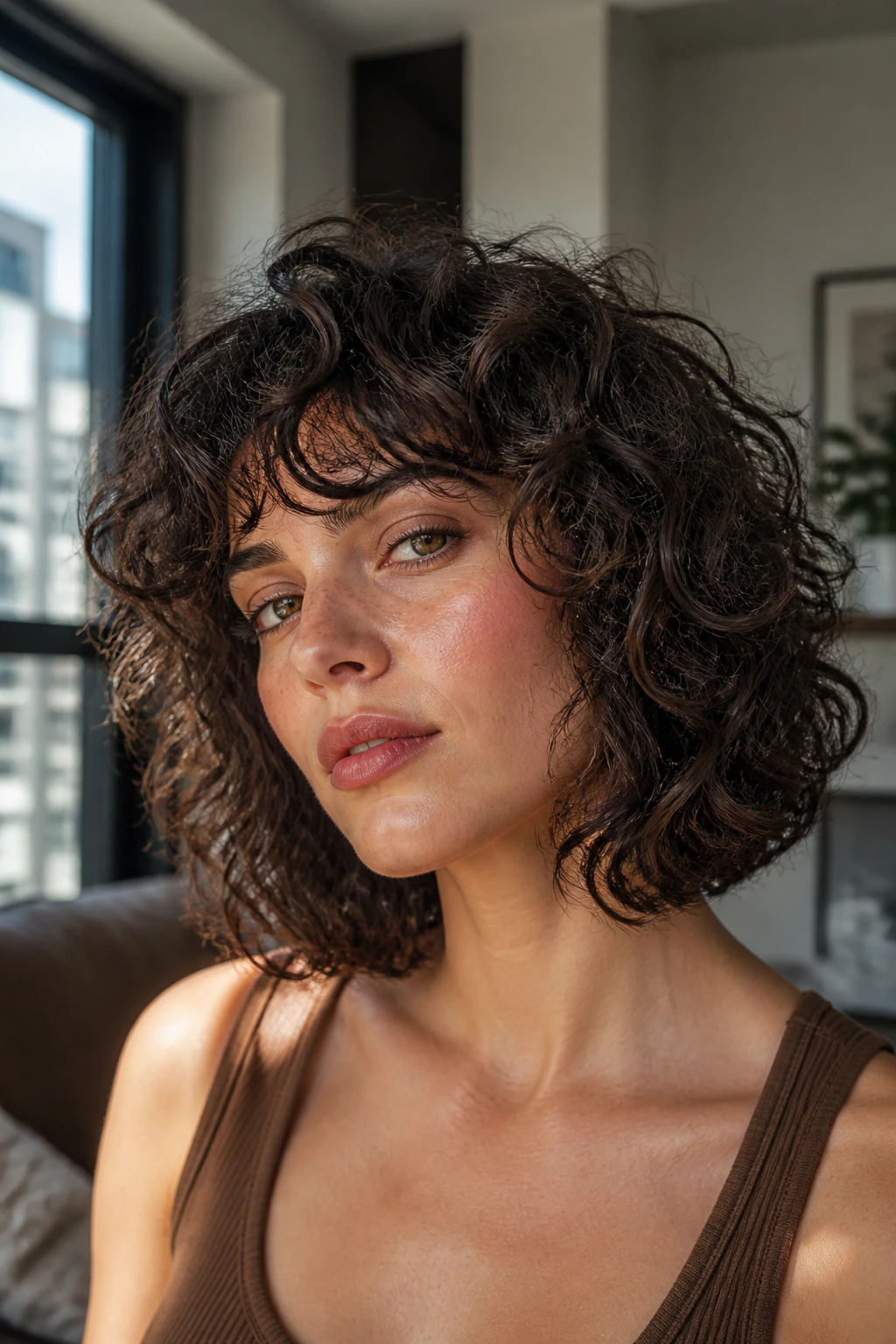
A blunt edge can be your friend when the ends need help looking fuller. The interior layers can still move, but the hem stays stronger, which gives fine curls a little more visual weight.
This is the version I trust when someone says, “My ends disappear after a haircut.” Too much texture at the bottom will only make that worse. Keep the perimeter disciplined and let the upper layers supply the motion.
36. Long-on-Top, Short-on-Sides Shag
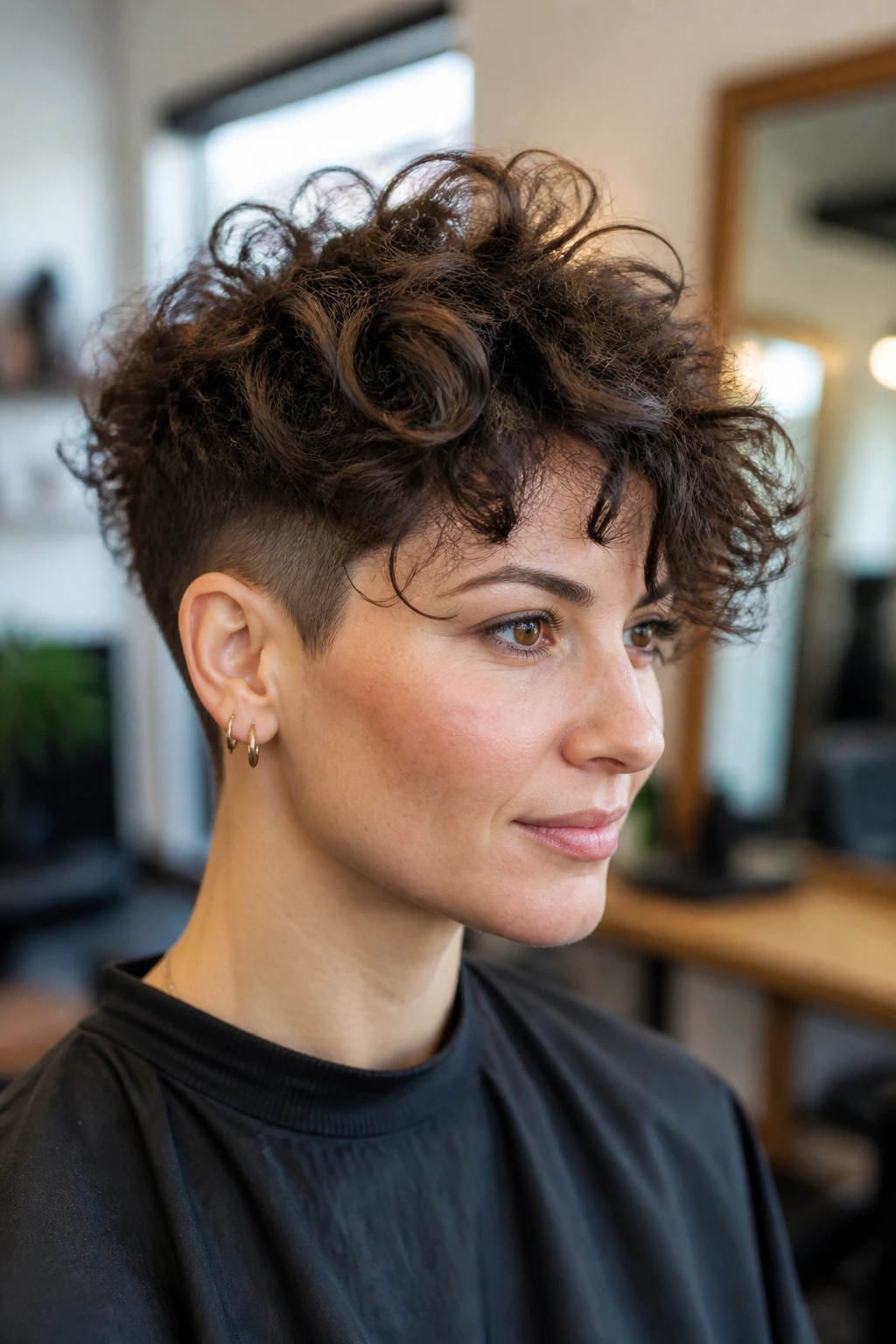
This shape leans a little more architectural. The top stays longer and puffier, while the sides and lower sections are trimmed down enough to keep the silhouette neat.
It works well on fine curls that want height without a lot of width. There’s a quiet confidence to this version — not because it’s dramatic, but because it knows where the weight belongs. High on the head. Not everywhere.
37. Curly Shag With Soft Flip-Out Ends

Flip-out ends can look charming on short curly hair when the cut is built for them. The ends curl away from the neck and jaw, which gives the style a breezy finish instead of a tight cap.
This version is especially good if your curls naturally bend outward. The stylist should preserve that movement rather than forcing the ends inward. Fine hair gets a little extra presence from the flip, and that helps the outline stay visible.
38. Grow-Out-Proof Curly Shag
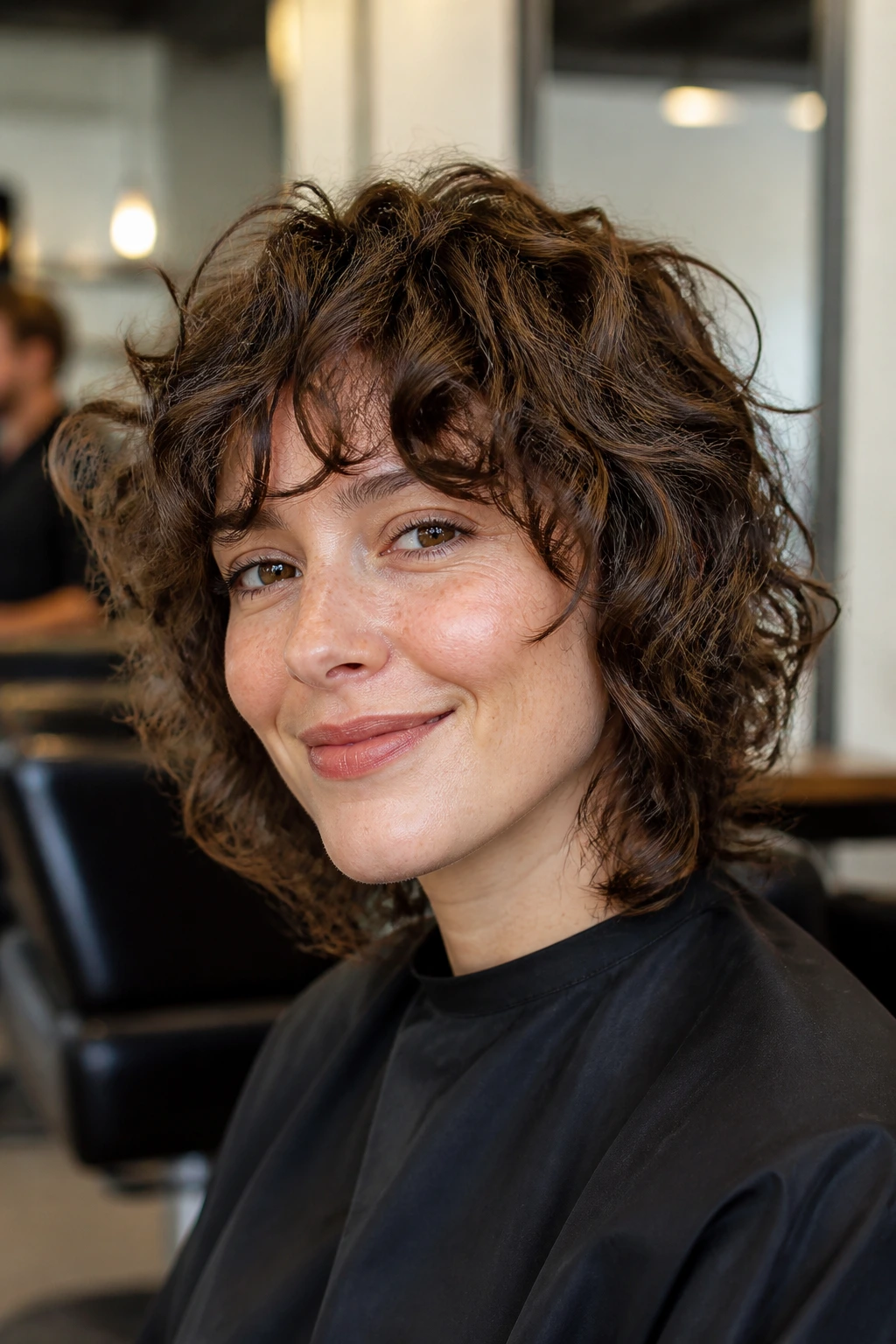
A grow-out-proof shag is the one I’d choose for someone who knows life will interrupt the salon schedule. The layers are staggered enough to soften over time, and the fringe is long enough to keep behaving as it grows.
The best part is that it still looks like a haircut after a few weeks, not a forgotten appointment. For fine hair, that matters a lot. You want the shape to age into itself, not out of it.
How a Curly Shag Builds Lift Without Stealing Density
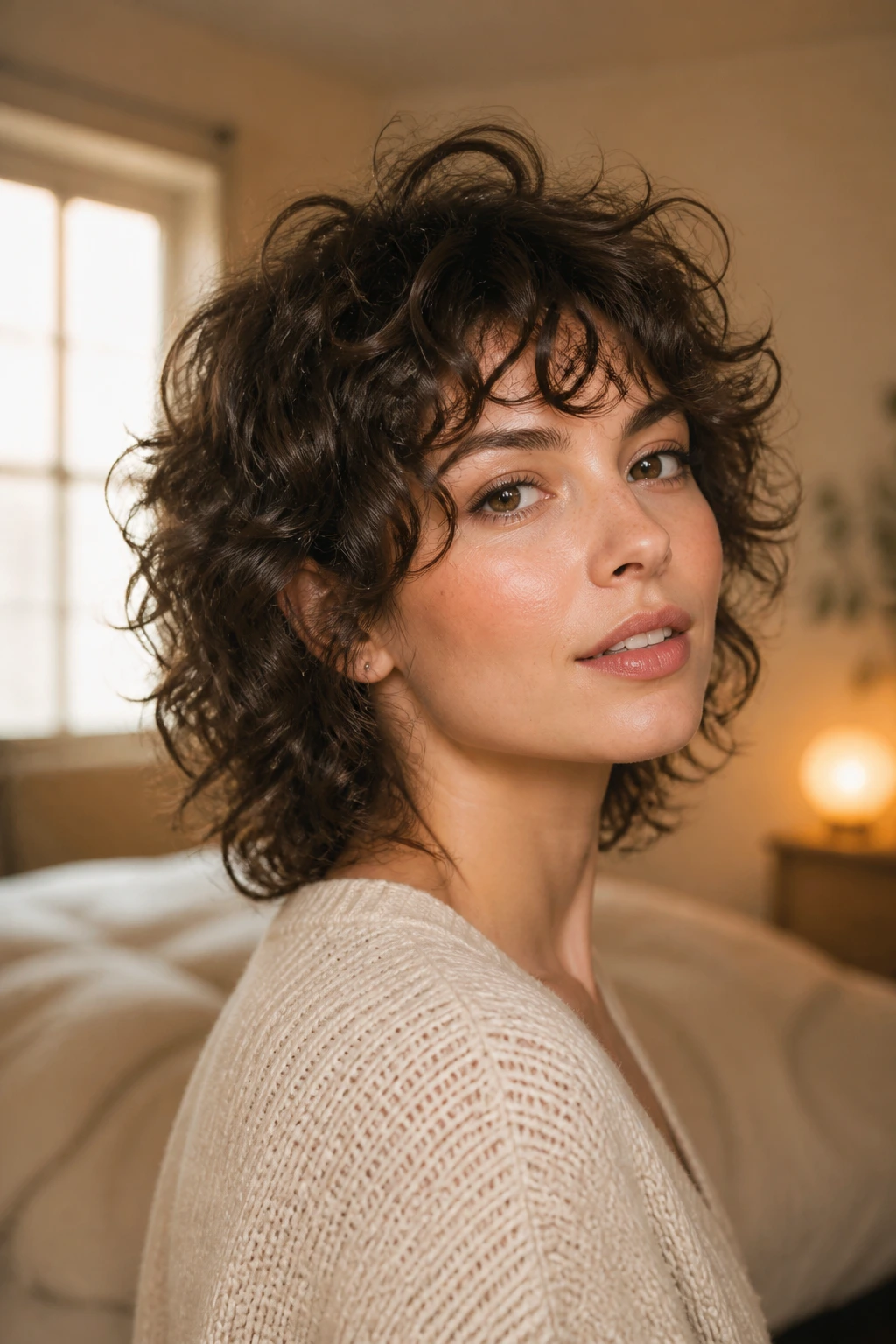
Fine curls do not need more layers. They need better-placed layers.
That sounds picky, and it is. The whole trick is to remove weight where the hair drags and leave structure where the hair looks fragile. If you thin the crown too hard, the top goes see-through. If you keep everything one length, the curl collapses into a flat sheet. The shag sits between those two bad outcomes and, when it’s done well, the haircut looks lighter without actually losing its backbone.
Fine strands and low density are not the same thing
A person with slim strands can still have a full head of hair. A person with coarse strands can still have very little density. Stylists who treat those two situations the same usually create problems. Fine strand hair often needs gentler texturizing and a stronger perimeter. Lower density hair often needs layers that are spaced farther apart so the scalp does not show through at the part.
Dry cutting tells the truth
Curly hair lies when it’s wet. The bends stretch, the length changes, and the weight distribution looks nothing like the finished shape. That is why dry cutting, or at least checking the shape dry before final texturizing, is so useful for short curly shag cuts for fine hair. It shows the real spring pattern and keeps the layers from landing too high.
Where the weight should stay
My bias is simple: keep the bottom line sturdier than you think. The perimeter is what stops fine curls from drifting into fluff. The top can be airy, the fringe can be soft, but the edge needs enough presence to ground the whole cut. That one detail is often the difference between “full” and “fuzzy.”
Essential Tools for Styling Curly Shags
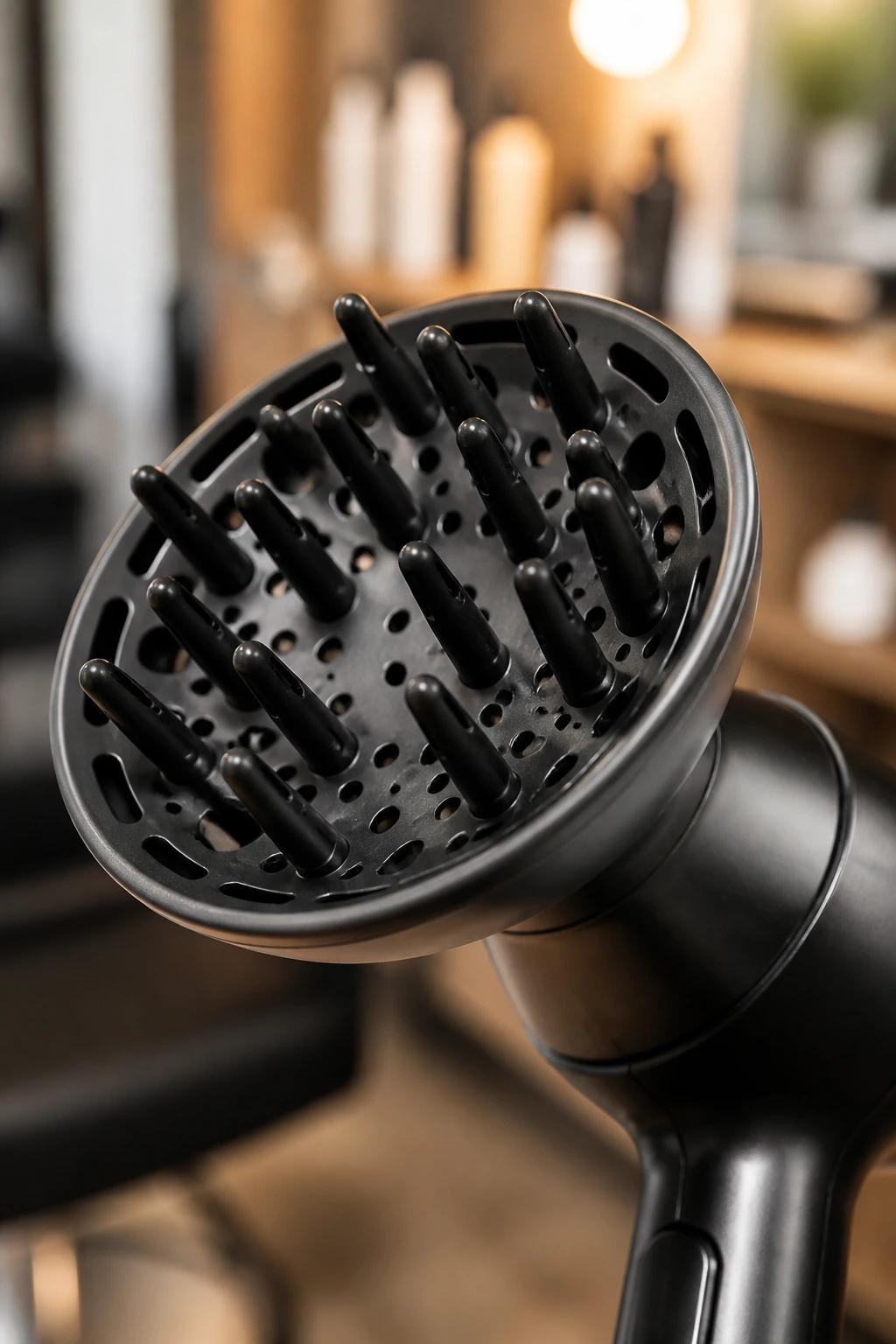
-
A diffuser attachment: Use it on low heat and medium airflow to lift the roots without blasting the curl apart.
-
A lightweight mousse or foam: This gives fine curls hold without the sticky drag that heavy cream can leave behind.
-
A wide-tooth comb: Good for distributing product through wet hair without ripping apart curl clumps.
-
A microfiber towel or cotton T-shirt: Both cut down on rough frizz while you blot water from the ends.
-
Root clips: These hold the crown up while the hair dries, which matters when volume disappears fast.
-
A small duckbill clip or two: Handy for setting curtain bangs or coaxing a side part into place.
-
A nozzle dryer, if you prefer a smoother root: Useful when the roots frizz but the ends curl nicely.
-
A satin pillowcase: Less friction overnight means less puffing and fewer crushed bangs by morning.
How to Ask for the Right Layers at the Salon
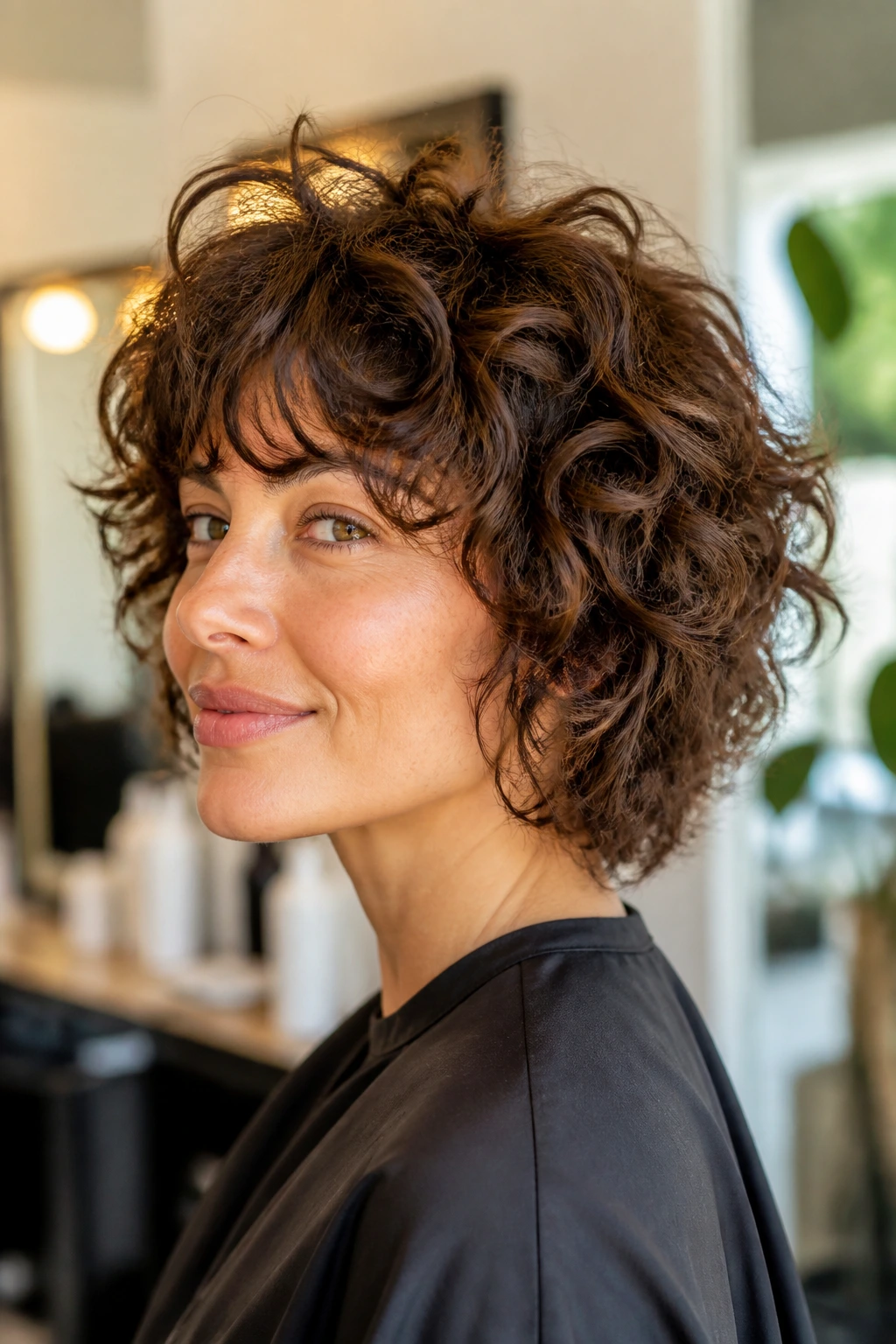
The easiest way to get a bad shag is to ask for “lots of layers” and stop talking. That phrase is too vague for fine curly hair. Bring photos, yes, but bring photos of the cut as it lives on a real head, not only on a model with a diffuser and a ring light.
Say what you want the shape to do. Do you want the crown lifted? Do you want the perimeter to stay full? Do you air-dry, diffuse, or both? A stylist can work with that. They can also hear when you do not want aggressive thinning, which is worth saying out loud if your hair is already delicate.
Say these things clearly
- “I want the bottom line to stay full.”
- “Please keep the crown layers soft, not see-through.”
- “My curls shrink a lot when dry.”
- “I wear glasses, so I need the fringe to clear my frames.”
- “I style with a diffuser only on some days.”
Watch for these salon shortcuts
If a stylist reaches for thinning shears before looking at your dry curl pattern, pause. Fine curly hair can be shredded by too much internal texturizing. Point cutting and careful dry shaping often do a better job. Also mention whether your hair is fine but dense, or fine and sparse; that one detail changes the whole cut.
Choosing Products That Support the Cut Instead of Flattening It
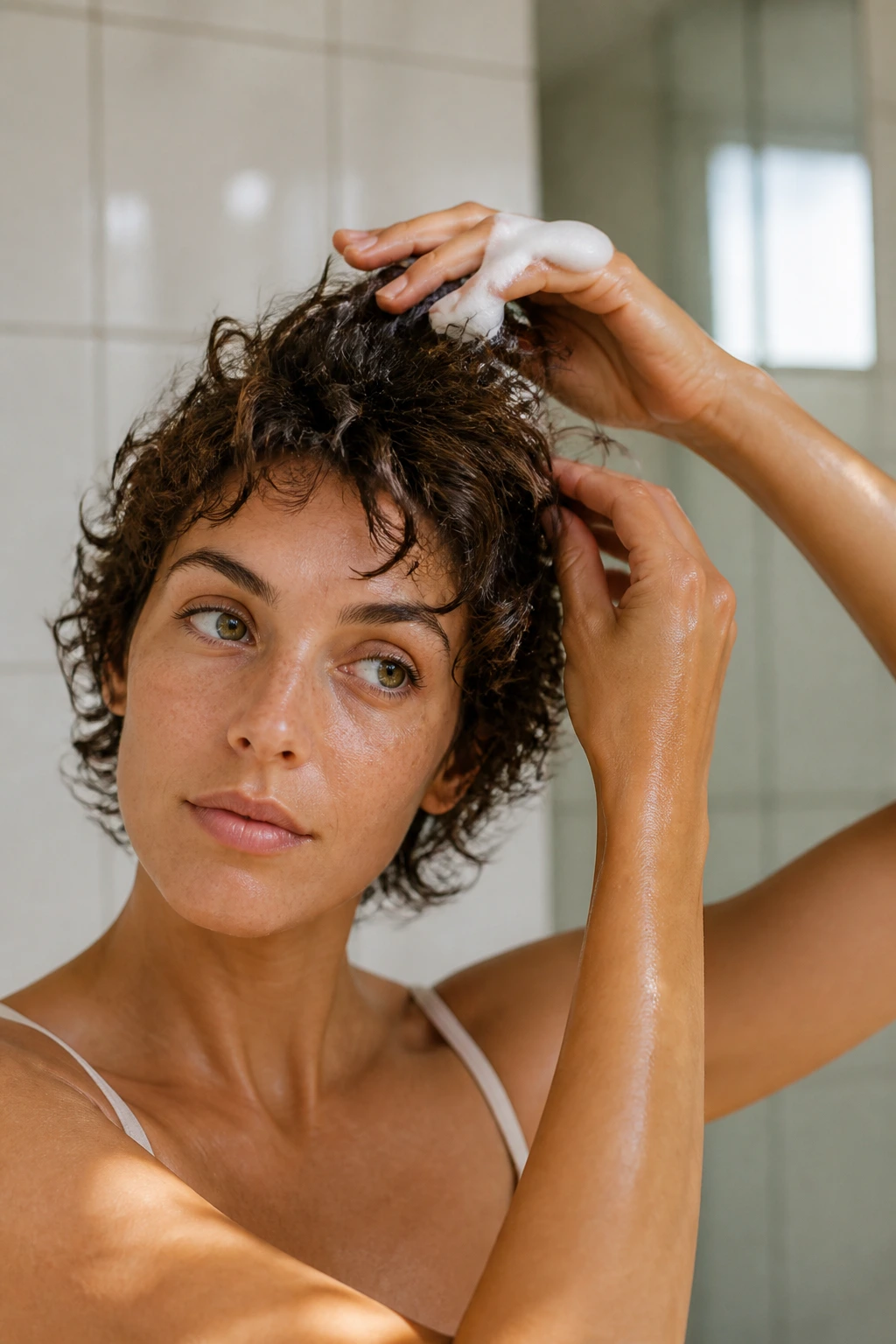
Heavy products are the enemy here. Not all of them, but enough of them. Fine curls usually do better with mousse, foam, light gels, and a small amount of leave-in conditioner than with thick creams or oils piled onto soaking hair.
Start light. A golf-ball-sized foam can be plenty for a short shag if you distribute it well, and a gel cast can hold the shape without making the curls droop. If your hair tangles easily, use a tiny bit of leave-in only from mid-length to ends. The roots should stay as clean and weightless as possible.
What to reach for first
- Volumizing mousse or foam for root lift and soft hold.
- Light gel if frizz appears before the hair is fully dry.
- A small amount of leave-in on the ends only if they feel rough.
- Clarifying shampoo every so often if product build-up makes the cut collapse.
What to use less often
Rich curl creams, butter-heavy stylers, and thick oils can all flatten the crown on fine hair. They are not bad products. They’re just the wrong tool for this job. If your shag goes flat three hours after styling, the product pile is usually the first thing I’d cut back.
How to Style and Refresh the Cut Between Washes
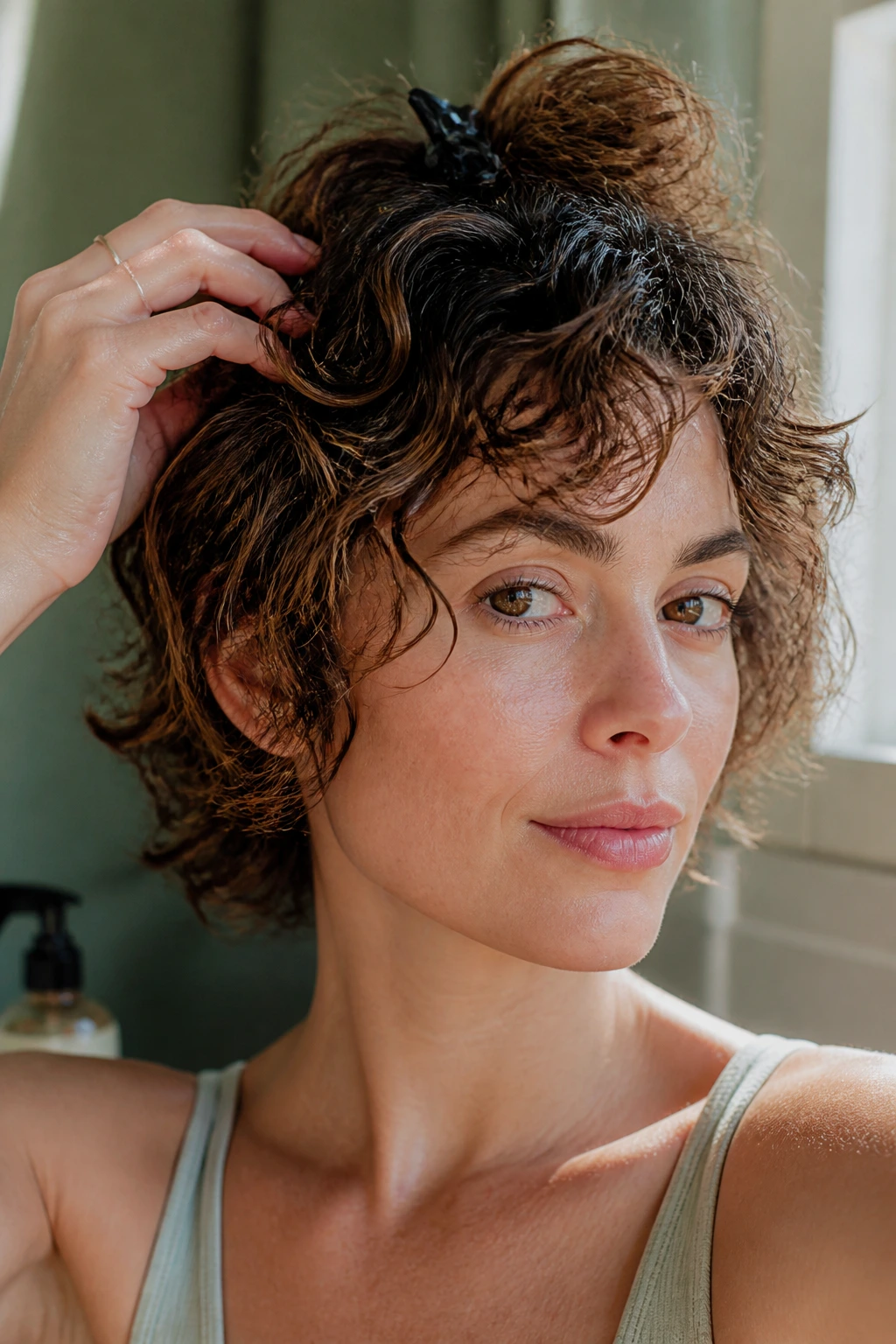
The best way to style a short curly shag is to protect the shape before it disappears. Start on wet hair if you can. Scrunch in product, lift the roots with clips, and either diffuse on low heat or let it air-dry with the crown still propped up.
The first dry matters. If the roots dry smashed, they usually stay that way until the next wash. That’s why I like a quick root clip at the crown and a little extra time spent on the front pieces. The front is what people see first, and it’s also where fine hair tends to split in a way that makes the cut look tired.
Wash day
Use a lightweight cleanser, condition only from mid-length to ends, and keep the conditioner off the roots. Apply mousse or foam to soaking-wet hair. Then scrunch, clip the crown, and dry without touching the curls too much.
Second-day reset
Mist the flat spots with water, squeeze in a pea-sized amount of foam, and twist a few curls around your fingers if they’ve separated. Don’t soak the whole head again. You’re waking the shape up, not restarting the whole wash routine.
Overnight care
A satin pillowcase helps, but a loose pineapple or a soft clip at the top of the head can help more. Keep the curls loose enough that they don’t get a hard bend. No tight scrunchies. Those leave marks fast on fine hair.
Extra Styling Tips and Personal Tweaks
Bigger Root Lift: Clip the crown while the hair is still damp, then aim the diffuser up from underneath instead of straight on. That puts the lift where the cut needs it most.
Softer Fringe: Dry bangs on their own first, then let them settle into the rest of the hair. Fringe that dries last tends to split less, and it keeps curtain bangs from hanging in your eyes.
More Edge: Tuck one side behind the ear or use a small clip to break up the shape. Fine hair can look sharper with one slightly controlled section and the rest loose.
Less Work: Ask for longer top layers and a cleaner perimeter. You’ll lose a little drama, but you’ll gain a cut that can survive a rushed morning and still look planned.
Common Mistakes That Flatten the Shape
Over-layering the crown: The symptom is scalp showing through at the top while the ends look too thin to do anything with. The fix is simple: keep more weight in the perimeter and ask for softer layers higher up, not a lot of short pieces near the scalp.
Using heavy cream on every curl: If the hair dries limp and stringy by lunch, the product is too rich. Swap to foam or mousse first, then add only a touch of leave-in to the very ends if needed.
Cutting the fringe too short: Curly bangs spring up a lot, especially on fine hair. If the fringe lands at the brow when wet, it may live several millimeters shorter once dry. Ask for more length than feels safe in the chair.
Ignoring density: Fine strand hair and sparse hair are not the same, and the haircut should not pretend they are. A dense head can handle more texture; a sparse head needs a cleaner outline.
Letting the grow-out go unchecked: A shag that is never trimmed can slip from stylish to shapeless fast. The nape gets shaggy, the fringe splits, and the crown loses its purpose. Small maintenance beats a dramatic rescue cut.
Variations and Adaptations to Try
Air-Dried and Easy: Keep the layers broad, the fringe longer, and the perimeter full. This version is for curl patterns that behave reasonably without a diffuser and for people who would rather not think about styling before coffee.
Big-Volume Diffused: Ask for a stronger crown shape, then use clips and a diffuser to build lift. It suits hair that wants body and can take a little hold product without going sticky.
Soft Fringe Office Version: Replace short bangs with a longer curtain or side-swept fringe. The shape reads polished enough for a workplace but still gives the haircut some movement around the eyes and cheekbones.
Humidity Guard Shag: Use a light gel cast and avoid over-layering the ends. This version helps the curl hold together when the air is sticky and the frizz wants to spread.
Silver or Salt-and-Pepper Curly Shag: Softer layers and a clean outline keep gray curls from looking frayed. Shine matters more here, so skip heavy styling creams that mute the natural gleam.
Trim Schedule, Grow-Out, and Sleep Protection
Short curly shag cuts need a little maintenance if you want the shape to stay readable. Fringe and face-framing pieces usually need a cleanup every 6 to 8 weeks. The overall cut can often go 8 to 12 weeks if you’re fine with a softer, more grown-out look.
Sleeping on a satin pillowcase helps reduce friction, but I’d still put the curl into a loose pineapple or clip the top section up when the shape is fragile. That matters most the first few nights after wash day, when the crown has the easiest time getting squashed. If the cut starts to lose energy, refresh the front first and leave the ends alone.
Frequently Asked Questions
Will a shag make fine curly hair look thinner?
It can, if the layers are too aggressive or the perimeter gets thinned out. A good short curly shag keeps enough weight at the ends to look full while removing bulk where the curl drags.
Is a dry cut better than a wet cut for this style?
For many curly heads, yes. Dry cutting shows the real spring of the curl, which helps avoid layers that end up too short once the hair dries.
Can I wear a short curly shag if my curls are more wave than spiral?
Absolutely. Loose waves often look especially good in shag shapes because the layers create movement that the hair does not make on its own. A softer fringe and less internal texturizing usually work best.
How often should I trim it?
If you want the fringe and crown to stay crisp, plan on 6 to 8 weeks. If you like a lived-in shape, you can stretch to 10 or 12 weeks and let the layers soften.
What if my bangs keep separating?
That usually means they’re too short, too heavy, or dried in the wrong direction. Let them grow a little, dry them first on wash day, and use less product at the front.
Can fine but dense hair handle more layers than fine and sparse hair?
Yes. Dense hair can usually take more internal shaping because there’s more hair left to support the outline. Sparse hair needs a cleaner perimeter and lighter layering so it doesn’t go see-through.
Do I need heat styling to make a short curly shag look good?
No. A diffuser helps, but a good cut should still hold shape with air-drying if the product is right and the layers are placed well. Heat is a tool, not a requirement.
What should I tell my stylist if I hate choppy hair?
Say you want soft layers, not shredded ends. Ask for a shape that keeps density at the perimeter and uses movement mostly around the face and crown.
The Shape That Keeps Fine Curls Standing Up
The best short curly shag on fine hair does not fight the strand. It gives the curl a place to land, a place to lift, and enough edge to keep the outline from going soft too fast.
That’s why these cuts are worth the conversation at the salon. You are not just choosing length; you’re choosing where the hair should carry weight, where it should float, and how much work you want to do on a Tuesday morning. Pick the version that matches your curl pattern and your patience, and the cut will do the rest.
