



Thick curls can look glorious right after a wash and a little unruly by lunch. The back balloons, the sides spread, and suddenly the shape has more width than line.
That’s where stacked curly haircuts for thick hair earn their keep. The stack shifts weight upward, lets the curls fold into each other instead of dragging straight down, and keeps the neckline from turning into one heavy block. Done well, the cut feels lifted at the crown, lighter at the nape, and still full enough to look like hair with a point of view.
A good stack is not about taking a ton off. It’s about putting the length where the curl can actually spring. Cut it wrong and you get a wedge or a shelf. Cut it well and the back moves cleanly, the front still has swing, and the whole head reads as shaped instead of simply shorter.
Why Stacked Curly Cuts Earn Their Keep
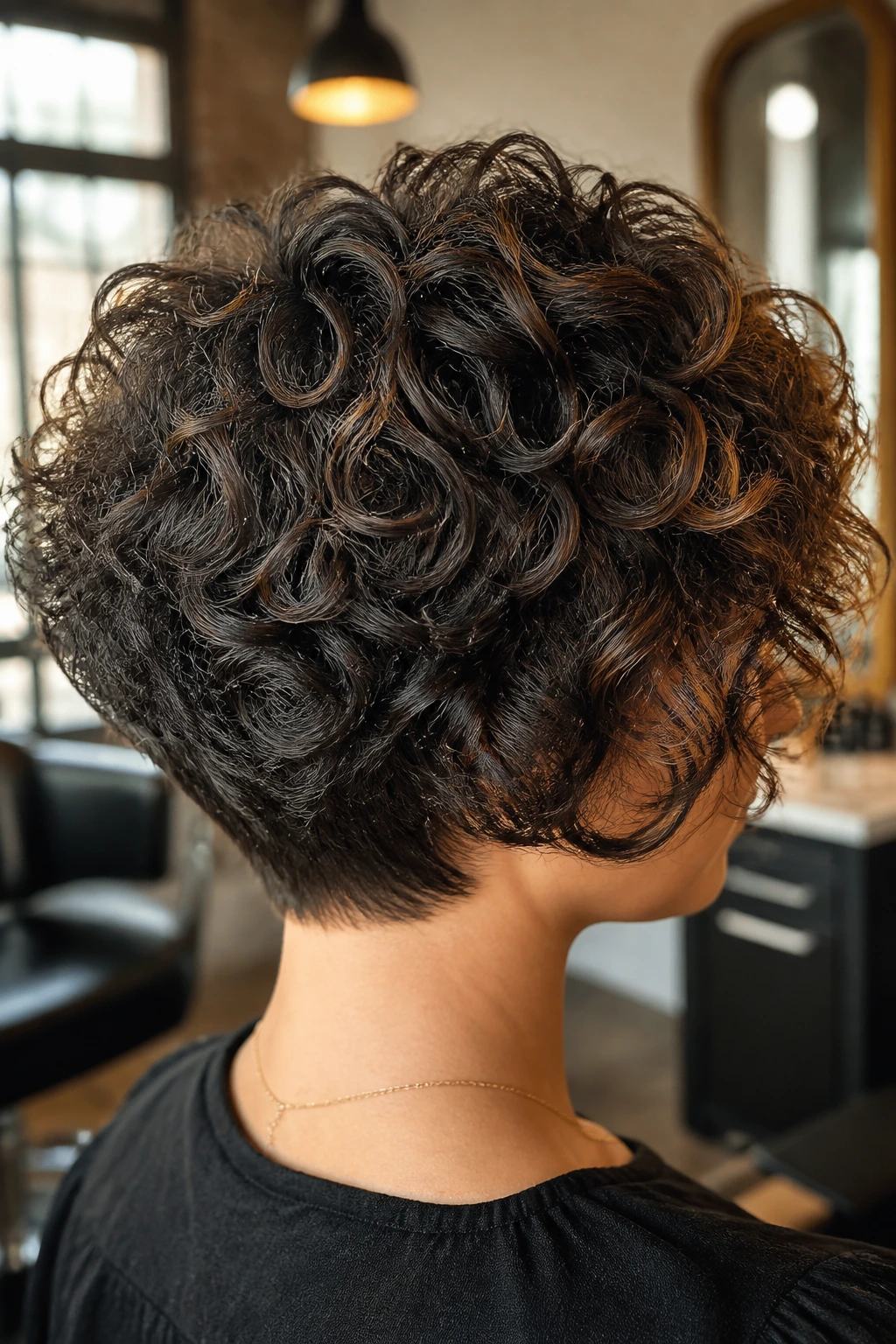
-
Bulk comes off the back first: Thick curls usually build the most visual weight at the nape, so a stack clears out the area that makes the silhouette feel bottom-heavy.
-
The crown gets room to breathe: Shorter graduation in the back lifts the top section without needing aggressive teasing, clips, or a ton of mousse.
-
The front stays wearable: A good stack keeps enough length around the face for tucking, pinning, and growing out without panic.
-
Shrinkage works with the cut, not against it: Curly hair can jump up 1 to 3 inches, so the dry shape matters more than the wet outline.
-
The shape grows out cleaner: Softer stacks hold their line longer than blunt one-length cuts, especially when the hair is dense and frizz-prone.
-
You can go subtle or dramatic: The same idea can live in a rounded bob, a lob, a pixie, or a shaggy crop without losing the stacked back.
How the Graduation Changes a Thick Curly Shape
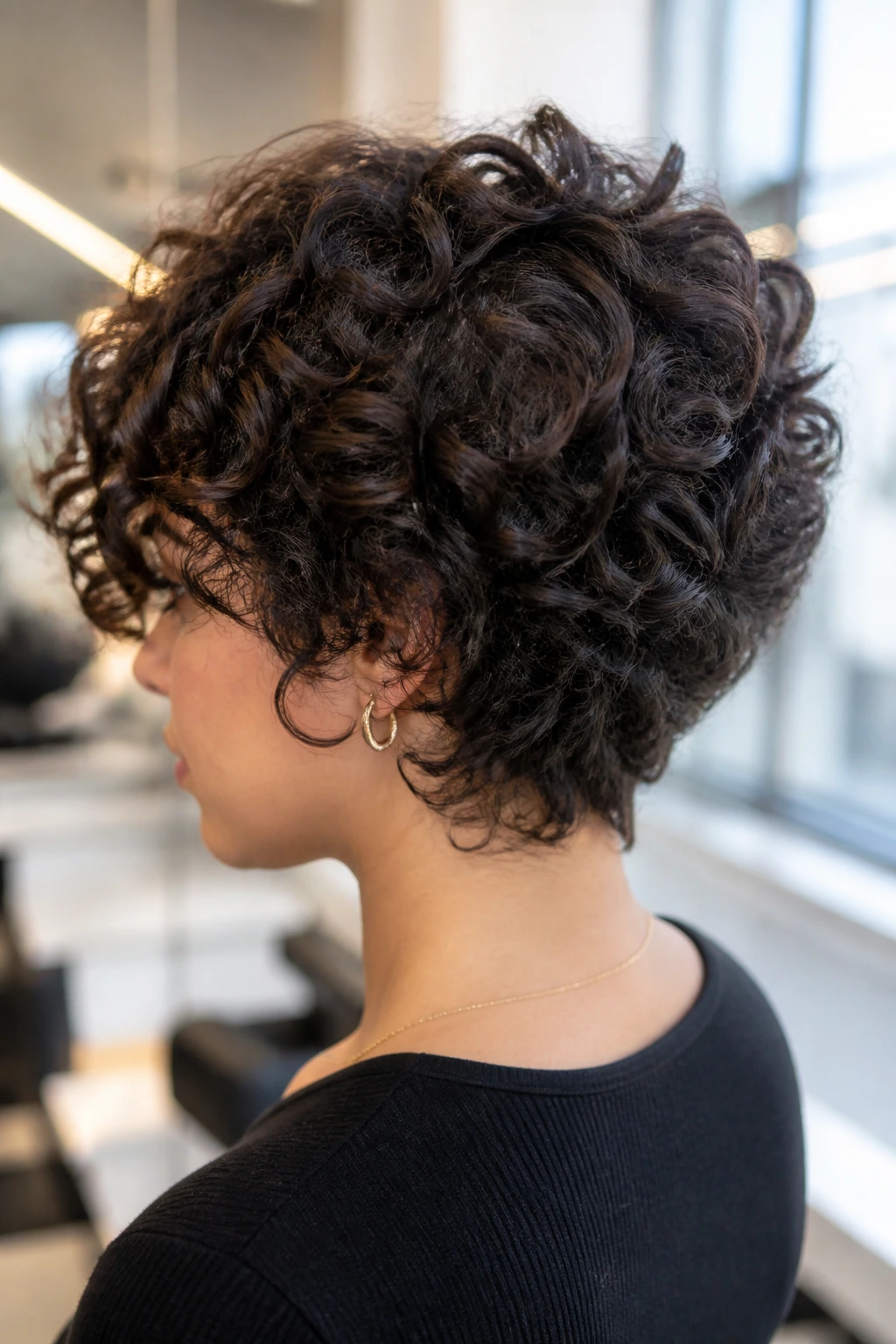
Stacking is geometry with opinions. The shortest layers usually live around the nape and move upward through the back of the head, while the sides and front stay longer. On thick curls, that change in length matters more than most people expect, because every extra half-inch at the wrong spot turns into a puffed ledge once the hair dries.
The important part is where the weight stops. If the back is too blunt, thick curls sit like a shelf against the neck. If the stack is too aggressive, the back can get hollow and the whole cut starts to look taller than it should. The sweet spot is a back that rises cleanly without exposing too much scalp or making the crown look like it’s standing on stilts.
Dry curl pattern tells the truth
A wet curl lies. Not maliciously — it just does not know its own shape yet. The finished line only shows up when the hair dries and shrinks into place. That is why dry cutting, curl-by-curl checking, or a wet cut followed by a dry refine can all work, while a blind wet cut often misses the real silhouette.
Thick hair is not one thing
Density and strand width are not the same animal. Dense hair has more strands packed into the same space. Coarse strands have more body per strand. A good stacked cut respects both, because a dense head may need more interior removal, while coarse curls often need cleaner weight lines and fewer ragged ends.
The Tools That Make Styling Less Messy
-
Diffuser attachment: A deep-bowl diffuser with long fingers helps set the crown without blasting the stack flat.
-
Microfiber towel or cotton T-shirt: Squeezes out water without roughing up the curl clumps.
-
Leave-in conditioner: Keep it light at the roots and a touch richer through the mids if your ends feel dry.
-
Curl cream or mousse: Mousse gives lift with less drag; cream gives slip and softness. Thick curls often like both, but not in heavy amounts.
-
Strong-hold gel: Useful when the back tends to puff out by afternoon or when you need the stack to keep its line.
-
Duckbill or small sectioning clips: Clip the crown while it dries for extra lift right where the stack begins.
-
Wide-tooth comb or curl brush: Pick one and use it with intention. Do not bounce between five tools and expect the curl pattern to stay calm.
-
Hand mirror: A stacked cut lives in the back. You need to see the nape, not guess at it.
What to Tell the Stylist Before the First Snip
Bring photos, but bring the right photos. A stacked cut is won or lost in the back, and front-facing inspiration shots can hide the part that matters most. If you have thick curls, show a side view and a back view, not just the pose with one shoulder turned.
Say how your hair behaves when it dries. If it shrinks fast, say so. If the crown goes wide, say that too. If you air-dry most days, say that before anyone reaches for the round brush and tries to turn your curls into a blowout fantasy.
A few phrases help more than vague requests:
- “I want weight removed at the nape, but I do not want the front to collapse.”
- “My curls shrink a lot, so please leave room for that.”
- “I wear this hair curly, not stretched.”
- “I still want to tuck pieces behind my ears.”
- “Please check the shape when it’s dry.”
That last line matters. It keeps the cut honest.
1. Chin-Length Curly Bob with a High Stack
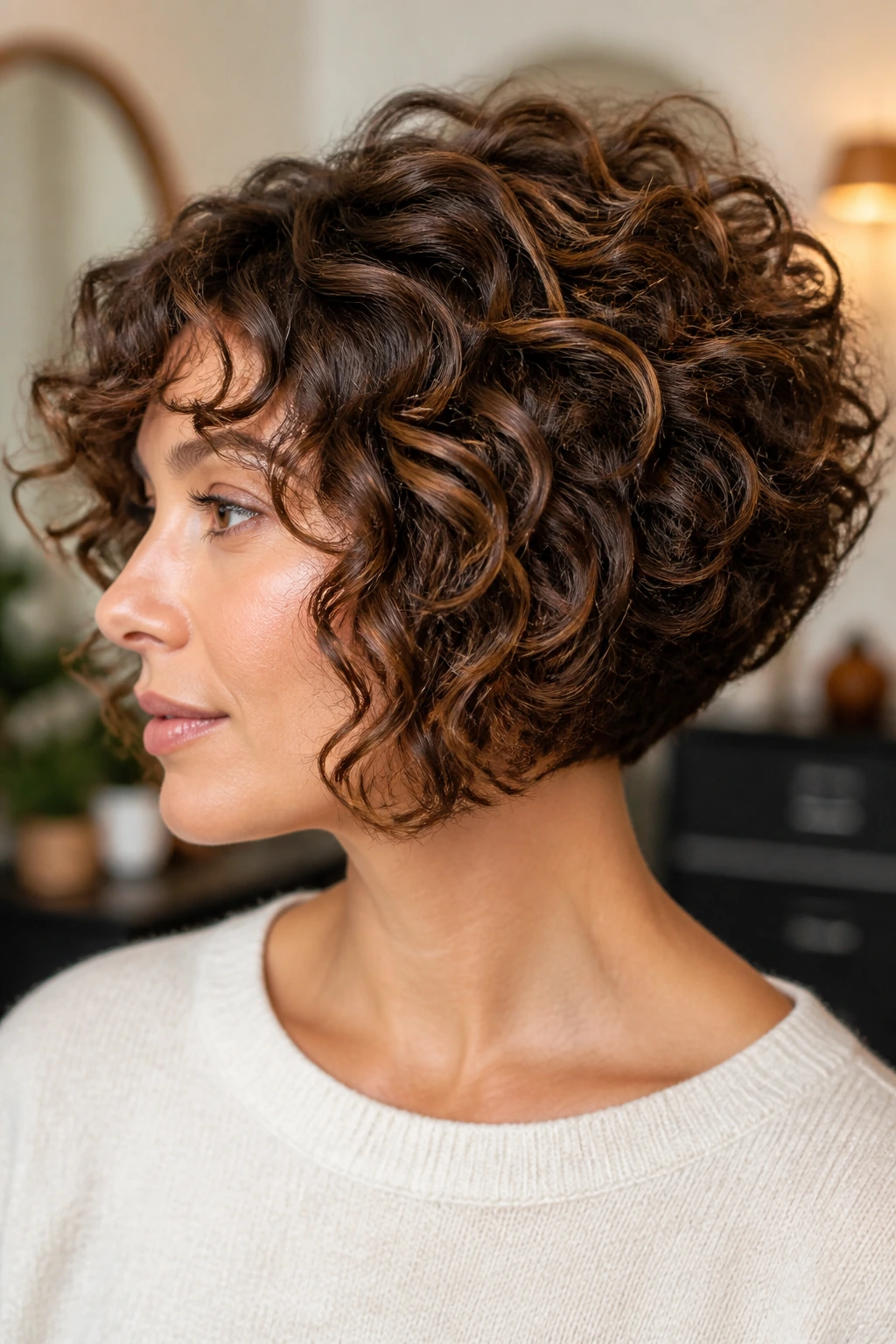
At chin length, thick curls have nowhere to hide. This version lifts the back enough to clear the neck while the front lands right at the jaw, which gives the face a crisp frame without feeling severe. It’s a clean, tight shape, but not a helmet. The curls still move.
Why It Works
The back carries the heaviest part of the haircut, so the stack trims the bulk where thick hair usually swells first. The chin-length front keeps enough weight around the jaw to stop the cut from shooting straight up. On curls that shrink a lot, I like this better than a blunt bob because the shape stays visible even after the dry-down.
- Ask for the shortest point at the nape, then a gradual rise toward the occipital bone.
- Keep the front pieces at or just below chin level when dry.
- Use a light mousse at the roots and a gel on the ends for a smoother edge.
Tip: If your hair shrinks more than you think, have the stylist leave the front a half-inch longer than your first instinct.
2. Rounded Stacked Bob with a Soft Nape
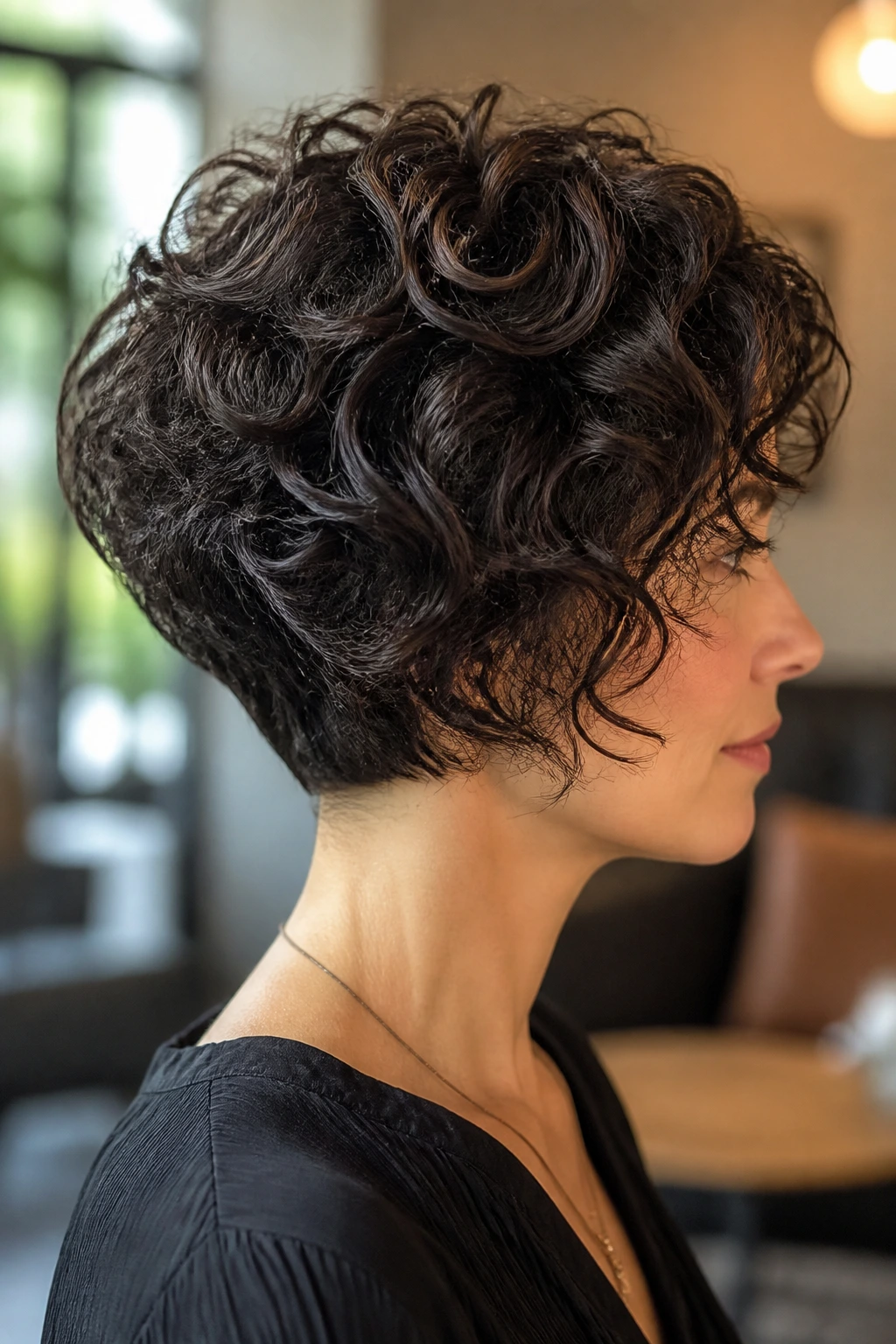
A rounded stack is the quiet version of a stacked cut. No hard angle. No sharp corner. Just a soft dome that hugs the head and lets the curls build into a neat curve instead of a wide triangle. It’s the cut I reach for when someone wants shape but hates looking “cut.”
The soft nape matters here. If the neckline is too blunt, the curl ends can kick out and make the whole back look boxy. With a rounded stack, the layers step up gently, so the silhouette feels fuller at the crown and calmer at the base.
This shape works well if your curls already have a lot of spring. It also behaves nicely with side parts, because the curve keeps the profile smooth from almost any angle.
3. Sharp Angled Curly Bob with a Clean Underline
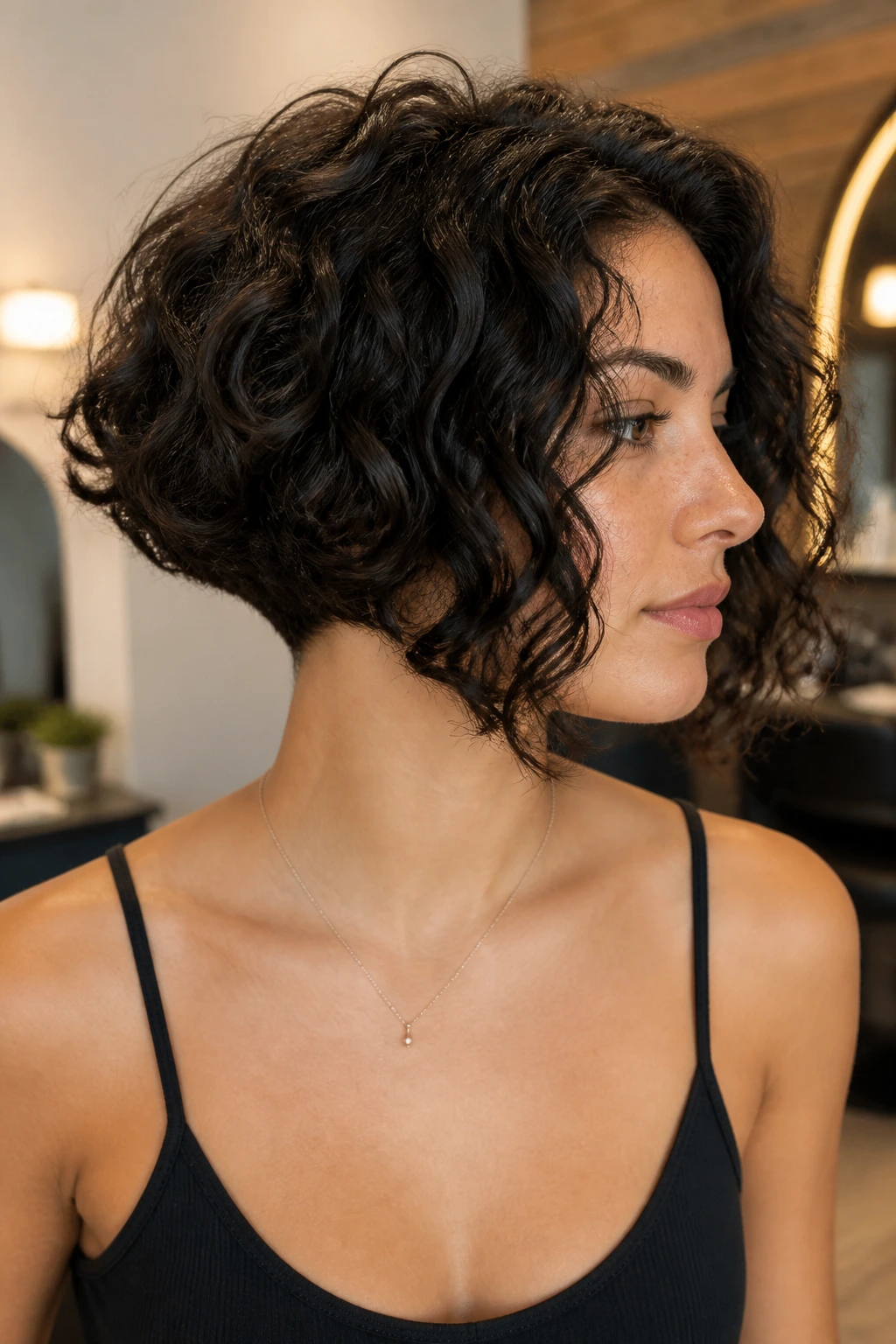
Want the back off your neck but still want a little drama? This is the stronger line. The back sits short and the front drops longer toward the jaw, so the cut reads as angled even after shrinkage. Thick curls love the structure because the shape gives all that volume somewhere to go.
How to Wear It
Let the front pieces dry with a gentle side part and don’t scrunch them into the face. That angle looks best when the front is allowed to swing, not puff. If you like the look tucked behind one ear, this cut gives you that option without losing the line.
A clean underline matters more than people think. If the back is too uneven, the angle disappears and the cut turns bulky. Keep the ends tidy, and skip aggressive thinning shears. They chew up the perimeter and leave a frayed look that thick curls rarely forgive.
4. Collarbone Stacked Lob with Internal Layers
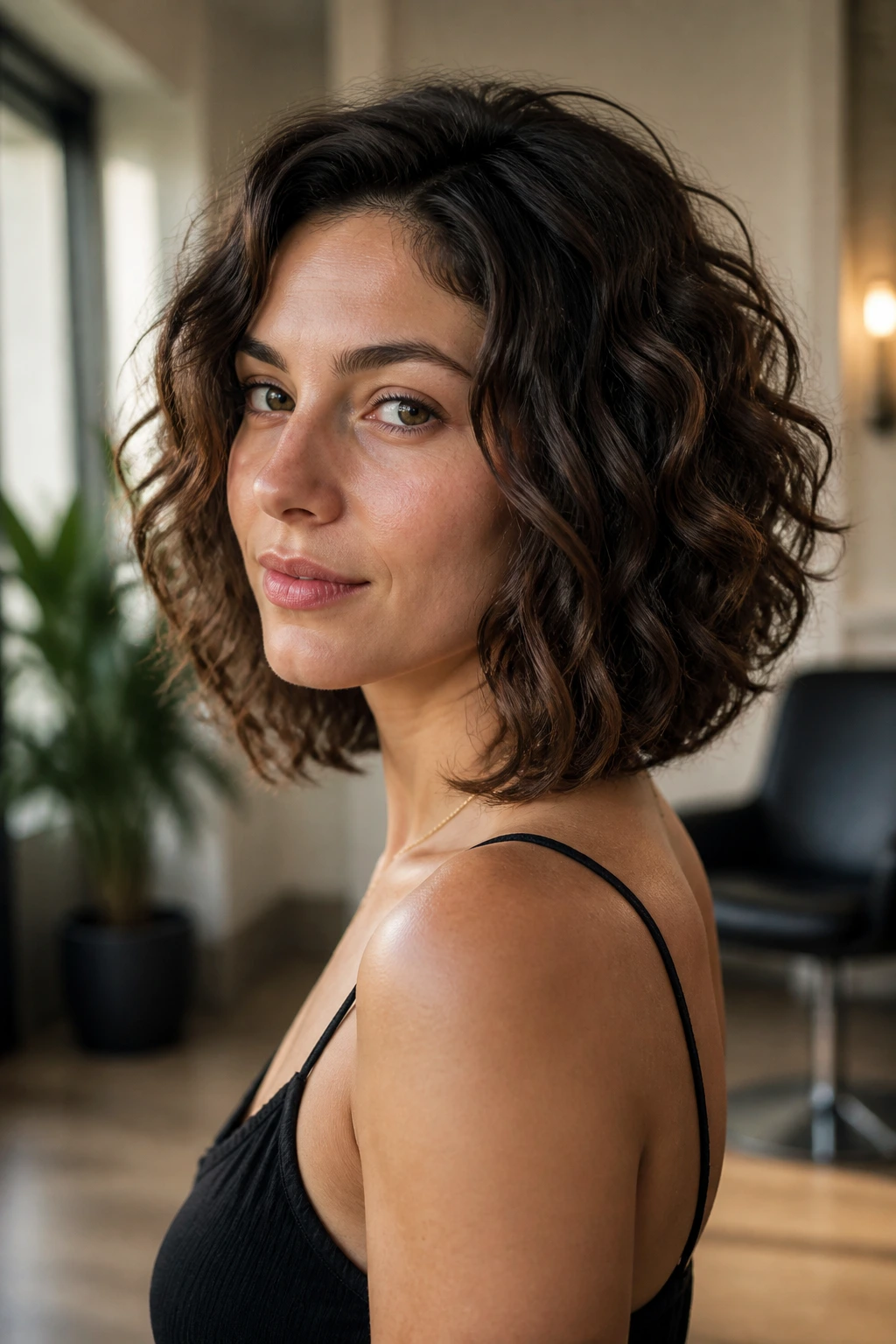
This is the version for people who want the shape of a stack without living in a short bob. The length brushes the collarbone, while the interior layers lift the back and strip out the weight that thick curls love to hoard. It’s a practical cut. It also happens to look polished in a way that still feels curly, not overworked.
The internal layers matter more than the outside line here. From the front, the lob stays long enough to clip back or pull into a low twist. From the side, the stack keeps the back from hanging like a curtain. I like this shape when someone says they want movement, but they still need hair that behaves at a desk or under a coat collar.
5. Tapered Nape Crop for Dense Curls
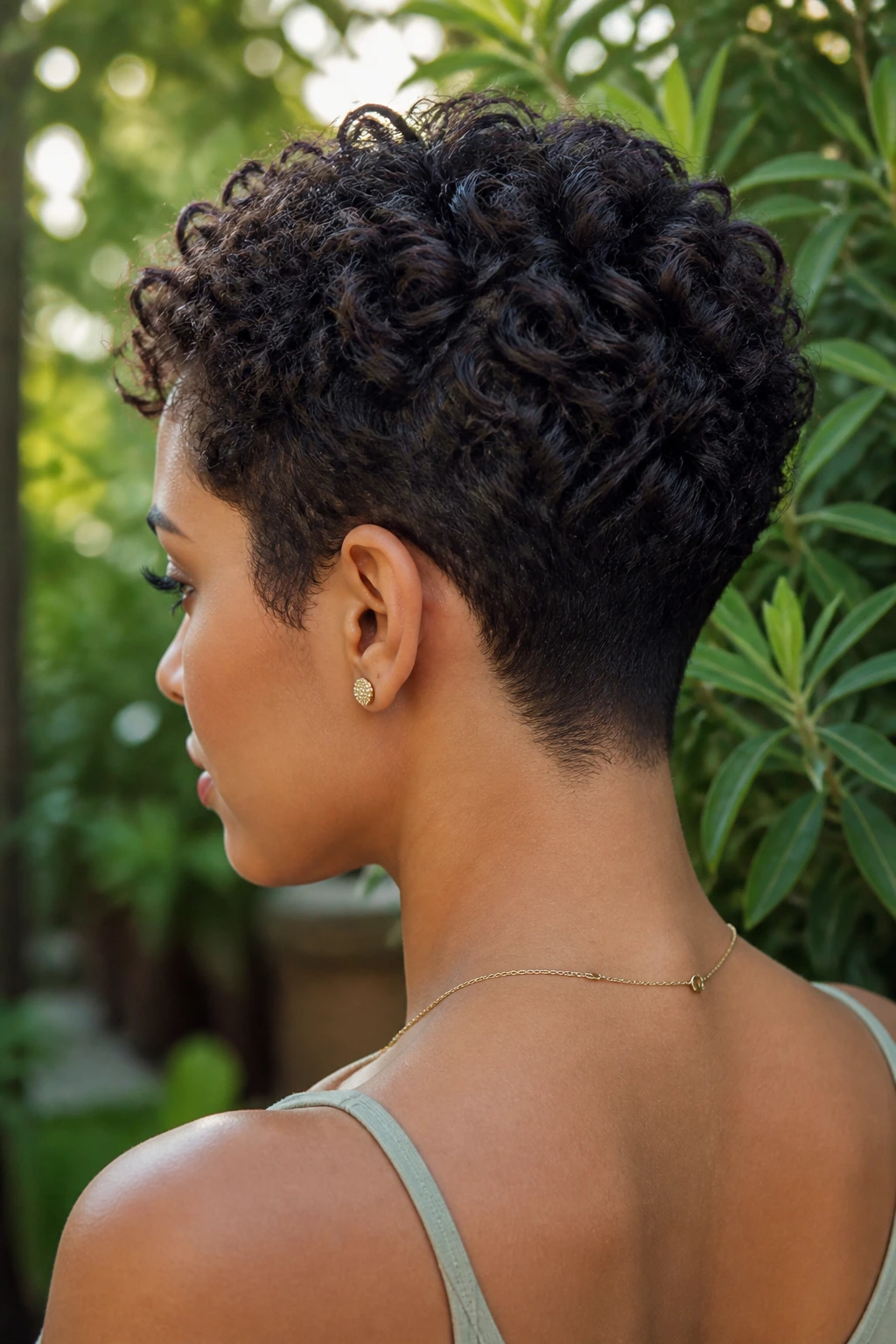
A tapered nape crop is all about the neckline. The hair at the back is cleaned up close to the neck, while the upper layers keep enough length to spring. Thick curls can look beautifully compact in this cut, almost sculpted, but only if the nape taper is soft enough that the hair still bends instead of sticking out.
This is the one with the shortest maintenance. If your hair grows fast at the neck, the shape can blur in a few weeks. That is not a flaw. It’s just the price of a sharp neckline. The upside is that the back stays light, which is a relief when thick curls start to swell around a jacket collar or scarf.
6. Curly Pixie with a Volumized Crown
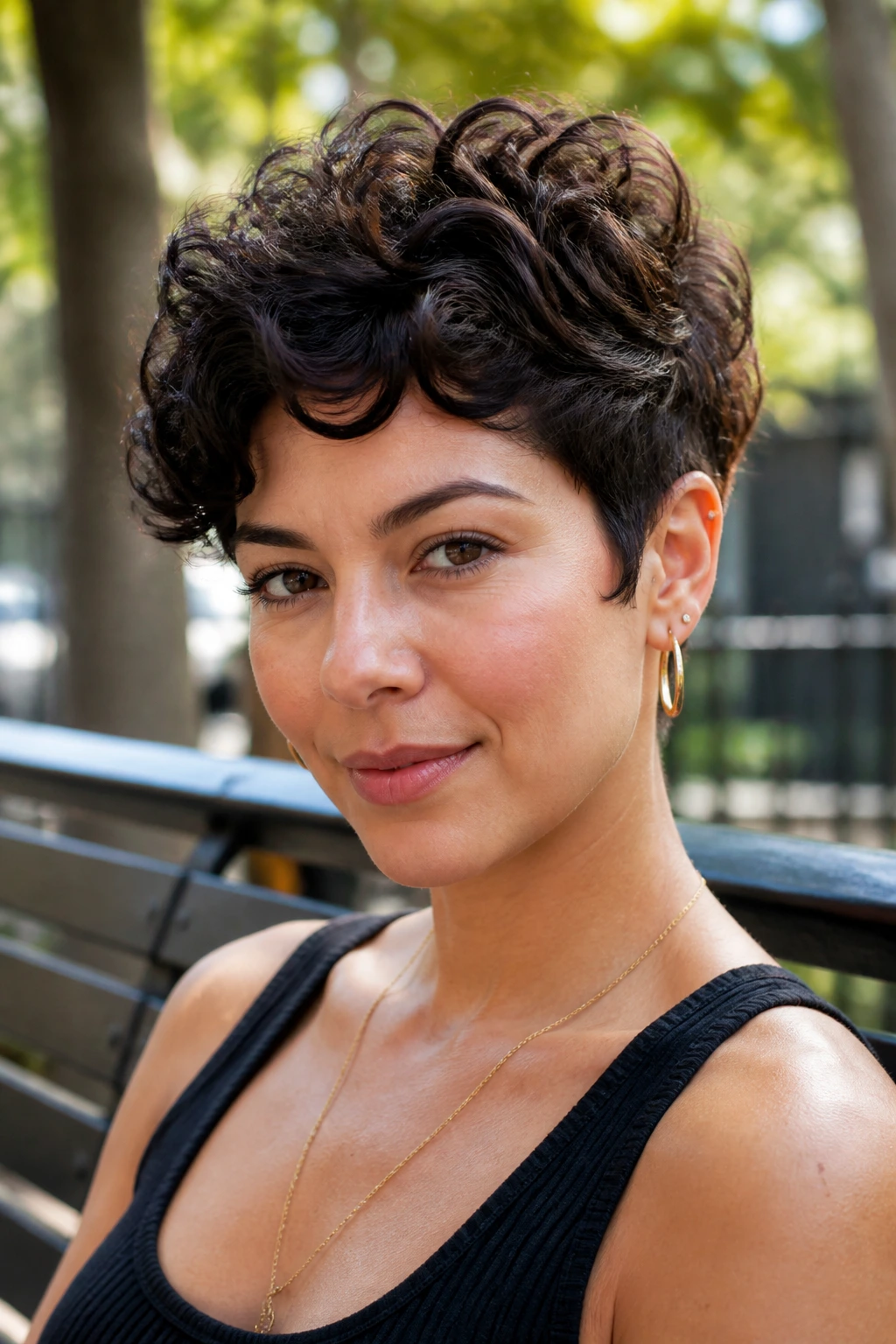
A pixie on thick curls should never flatten on top. That’s the whole point of the stack here: the crown stays long enough to curl upward, while the sides and nape are trimmed closer so the head doesn’t read wide and squat. If the top is cut too short, the curl pattern loses its shape and starts to stick out like fuzz.
I like this cut for someone who wants a bold neckline and doesn’t mind more frequent shaping. Keep the top around 2.5 to 4 inches if your curl pattern is springy; that gives the curl room to coil instead of spiking. A little cream, a little gel, and a diffuser set on low heat usually keep the crown from collapsing.
7. Asymmetrical Stacked Bob with a Long Side
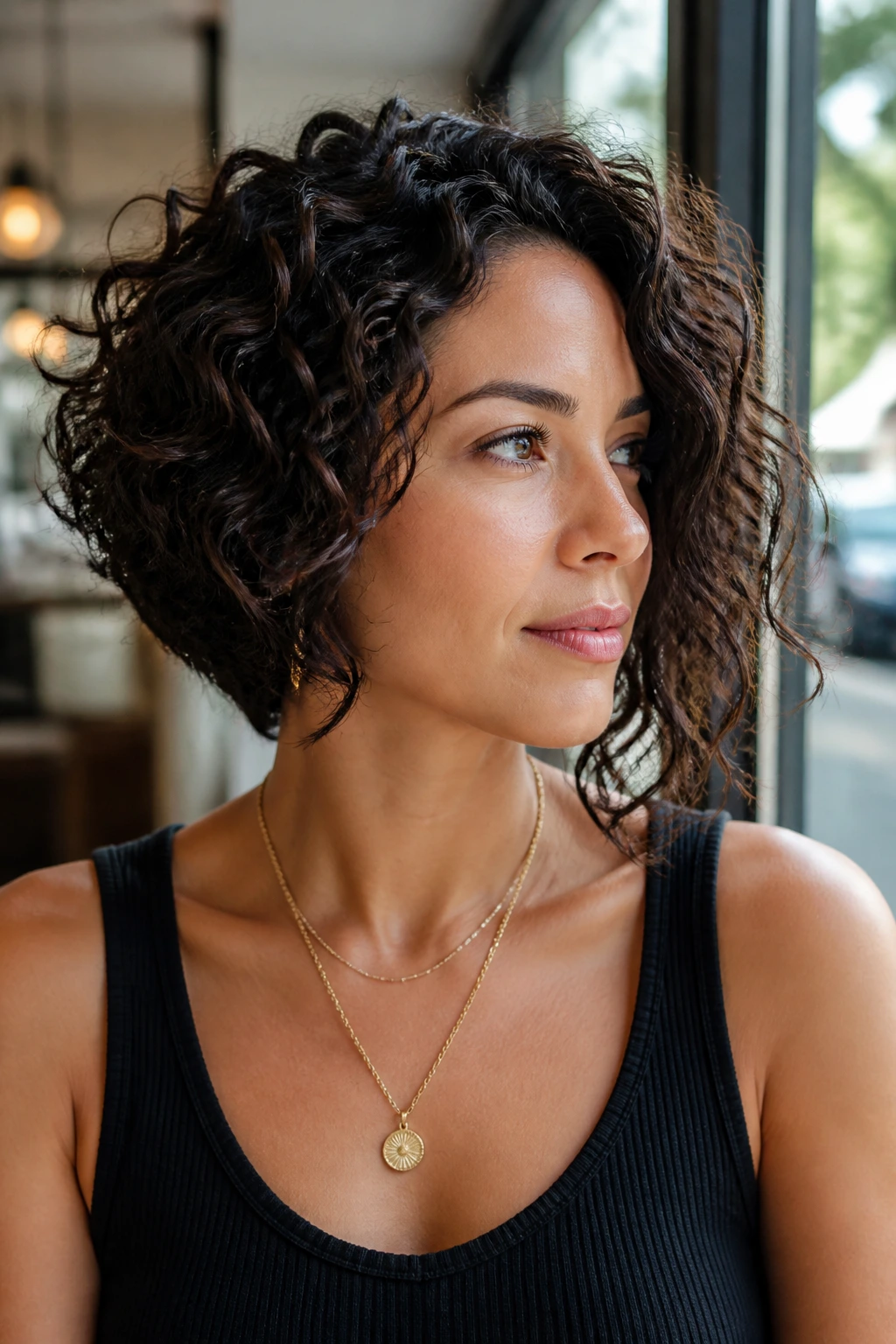
One side longer, one side shorter. Simple. Effective. And, on thick curls, surprisingly useful. The asymmetry shifts the eye away from width and gives the curls a place to fall that feels deliberate rather than random. The stack in the back keeps the bulk from sitting low, while the longer side adds movement across the face.
What Makes It Different
A symmetrical bob can look dense fast on thick hair. This one breaks the shape up. The longer side should stay just long enough to tuck behind the ear or graze the jaw, not so long that the imbalance feels accidental. Keep the length gap modest, because shrinkage will exaggerate it once the curls dry.
Best for people who like a haircut with a little attitude. Not too much. Just enough to make the back and front feel like they’re having a conversation instead of arguing.
8. Shaggy Stacked Cut with Curtain Bangs

This is probably the most forgiving option if you hate the look of one solid curl mass. The stack in the back removes weight, the shag layers break up the sides, and the curtain bangs soften the forehead without pinning the whole cut to one shape. Thick curls can handle the extra movement here because the hair already has body.
The bangs should open through the center and land somewhere near the cheekbone or nose when dry, depending on your shrinkage. Cut them too short and they pop up like springs. Too long and they collapse into the face. The sweet spot is that curtain-bang haze where the front feels light, not chopped.
9. Inverted Curly Bob with Cheekbone-Length Fronts
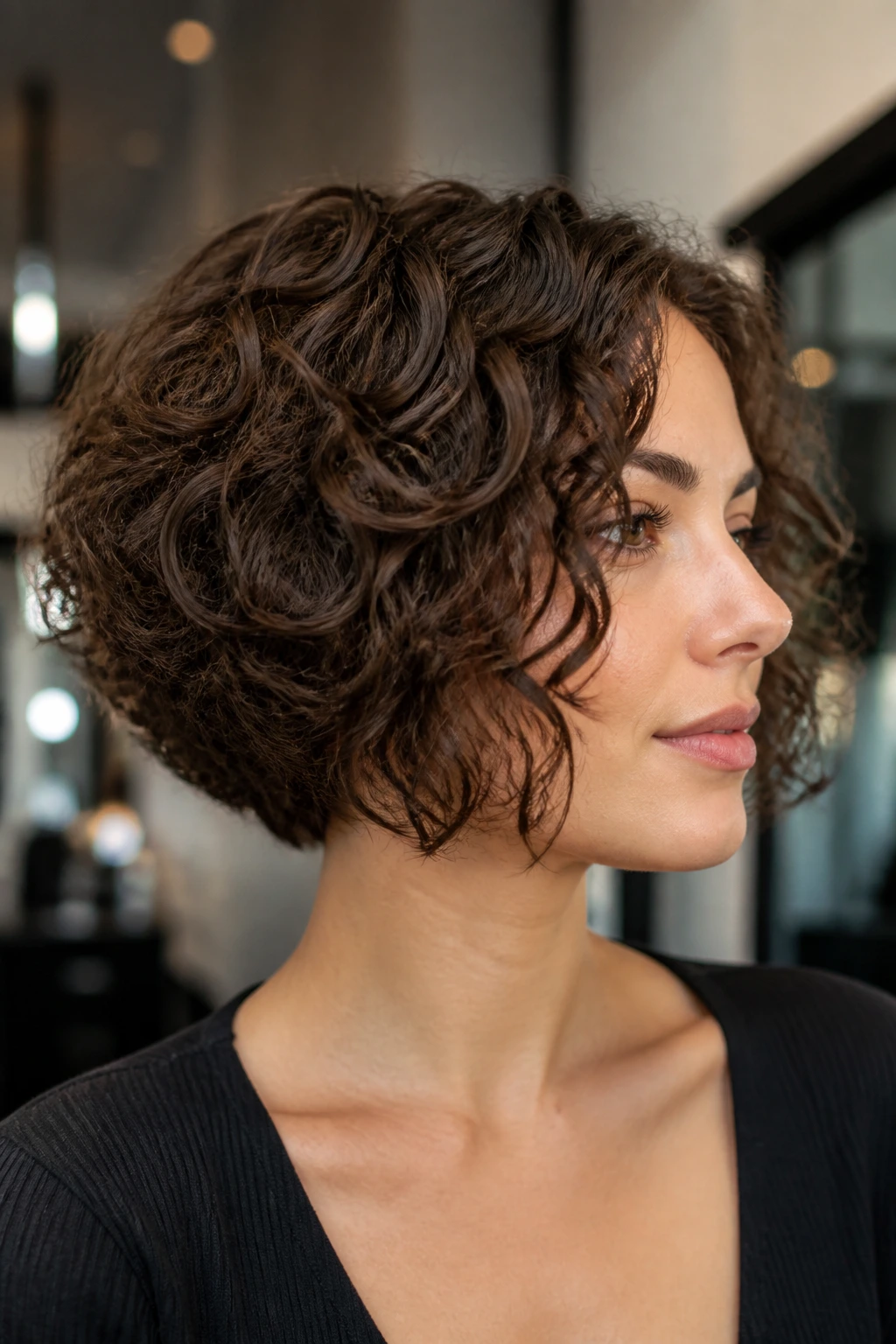
An inverted bob is the stacked cut in its classic form: shorter in back, longer in front, with a clear slope between the two. On thick curls, the cheekbone-length front is the part I like most. It gives the face shape without overloading the jaw, which is where dense curls can start to look heavy.
The back should not be so short that the scalp starts showing between curl clumps. That happens fast on dry, curly hair. Leave enough length for the curls to stack on themselves, not fight for space. The result should feel lifted, not chopped.
10. Ear-Hugging Stacked Crop for Tight Curls
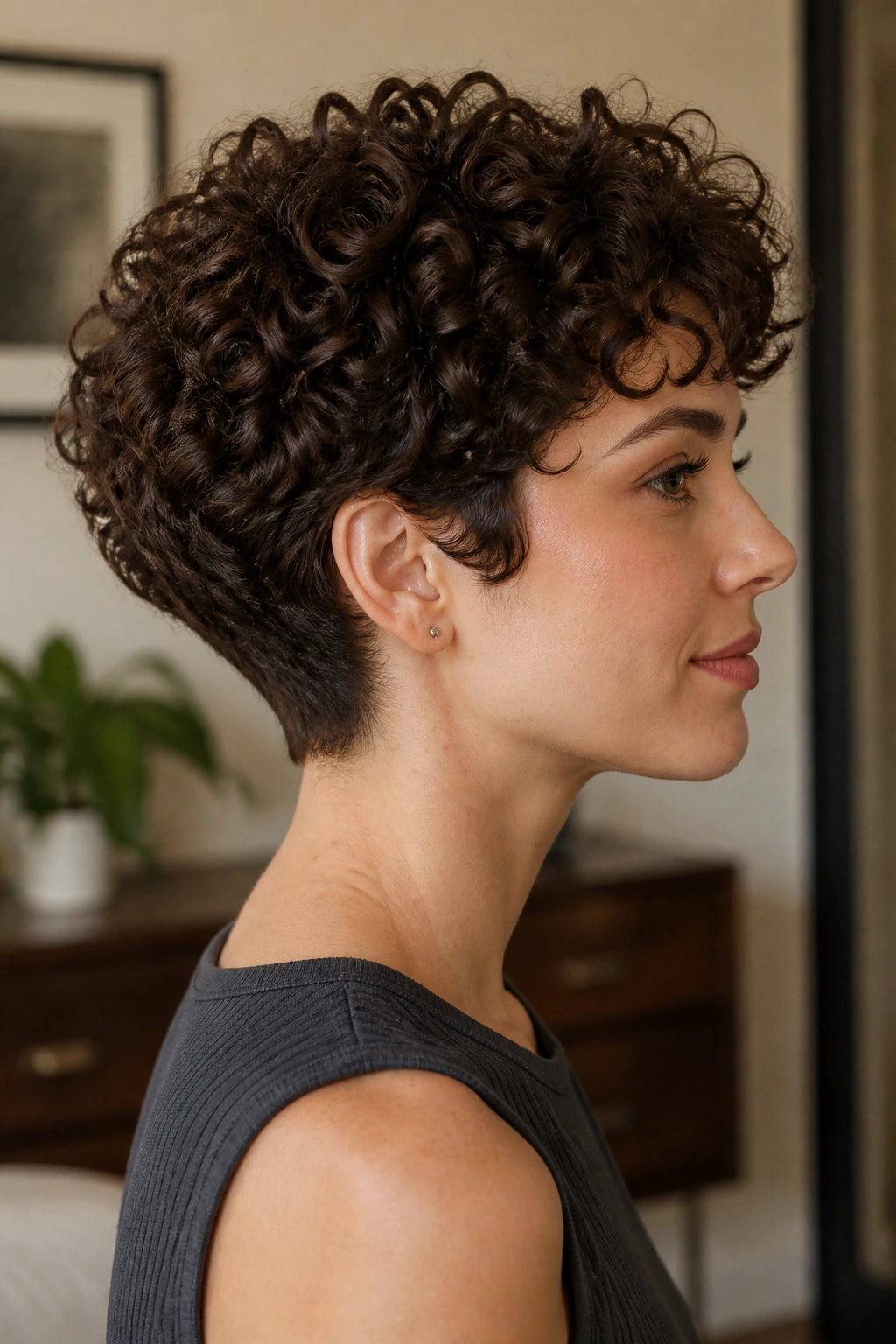
This cut hugs the head close around the ears and keeps the back neatly stacked so the nape doesn’t balloon outward. Tight curls handle this shape well because the curl pattern already has compact spring. The challenge is keeping the side pieces soft enough that the haircut doesn’t look clipped to the skull.
If you wear glasses, this shape is especially useful. The curls can sit just above the arms instead of fighting them. Ask the stylist to check the side length dry, because tight curls shrink more than most people expect, and the ear line can disappear if they cut too high.
11. Side-Part Stacked Bob with Sweeping Front Volume
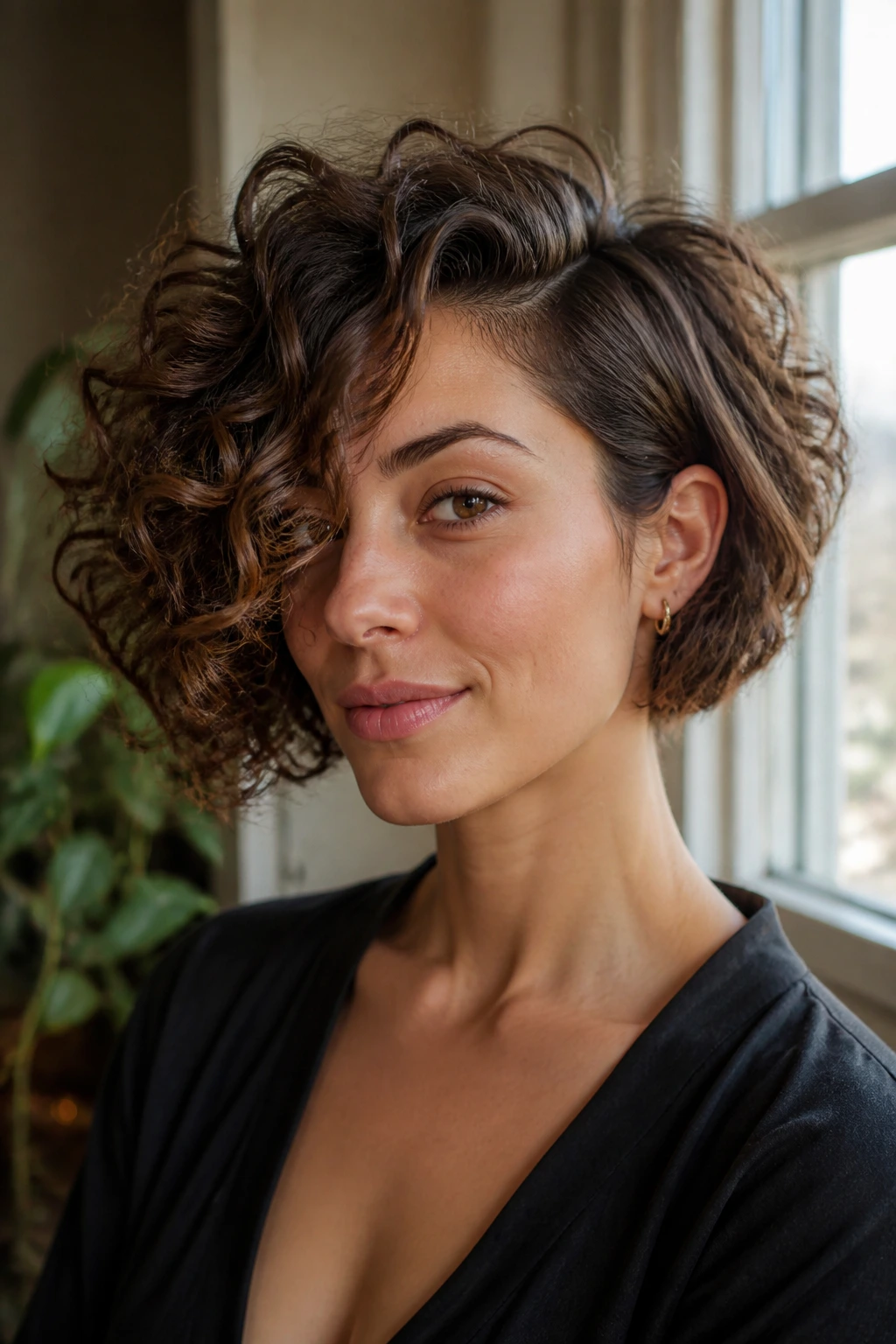
Move the part an inch or two and the whole haircut changes. A side part gives thick curls a place to build height without widening both sides at once, and the stack in the back keeps the lower half from getting heavy. This is one of those cuts that looks more intentional when it’s a little imperfect.
The front volume should sweep across the forehead and cheek, not sit in a hard curtain. I like this shape for people who want lift at the roots without teasing or heavy product. A root clip at the crown while the hair dries can help the side part stand up on its own.
12. U-Shaped Stacked Cut That Keeps Length in Back

A blunt line can feel too stiff on thick curls. A U-shaped perimeter softens the back so the cut grows out more politely, while the stack inside the shape removes the weight you do not want. That means the hair still looks full, but not blocky.
This is the version for people who want length first and structure second. The center back keeps more length than the sides, which helps the curls fall in a gentle arc instead of a square edge. From the front, it looks casual. From the side, it has enough lift to keep the profile from drooping.
13. Tapered Curly Cut for a Clean Neckline
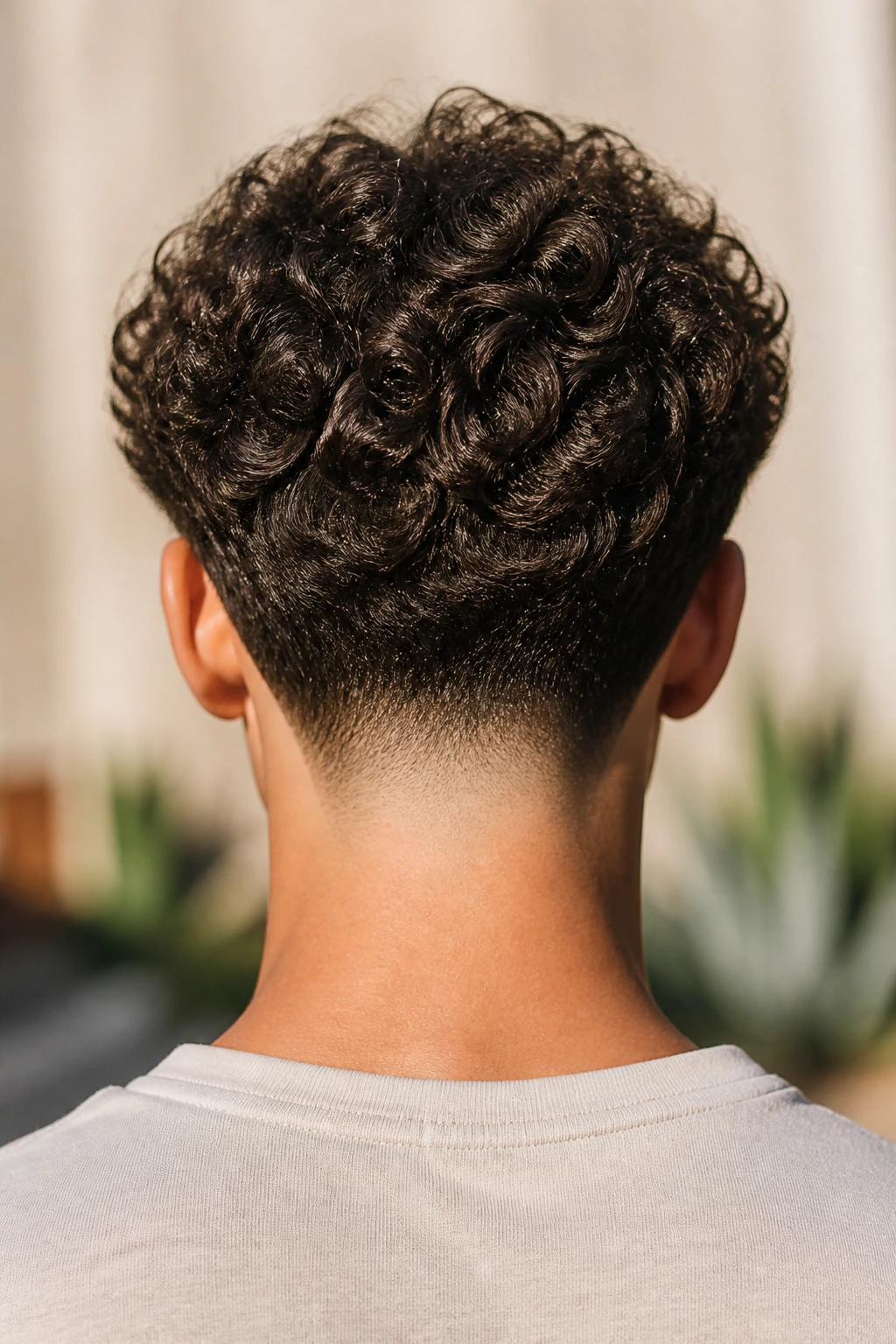
The neckline sells this cut. If the nape is neat and the taper is soft, the whole shape looks sharpened in the best way. Thick curls often bunch up at the collar, and this solves that problem without forcing the rest of the hair to go short.
A tapered neckline also shows off earrings and open collars better than a heavy bob. I like this when someone wants the hair to sit away from the neck, especially if their curls thicken as they dry. Keep the top a bit longer than you think you need; shrinkage will do the rest.
14. Deva-Inspired Stacked Layers for 3A and 3B Curls
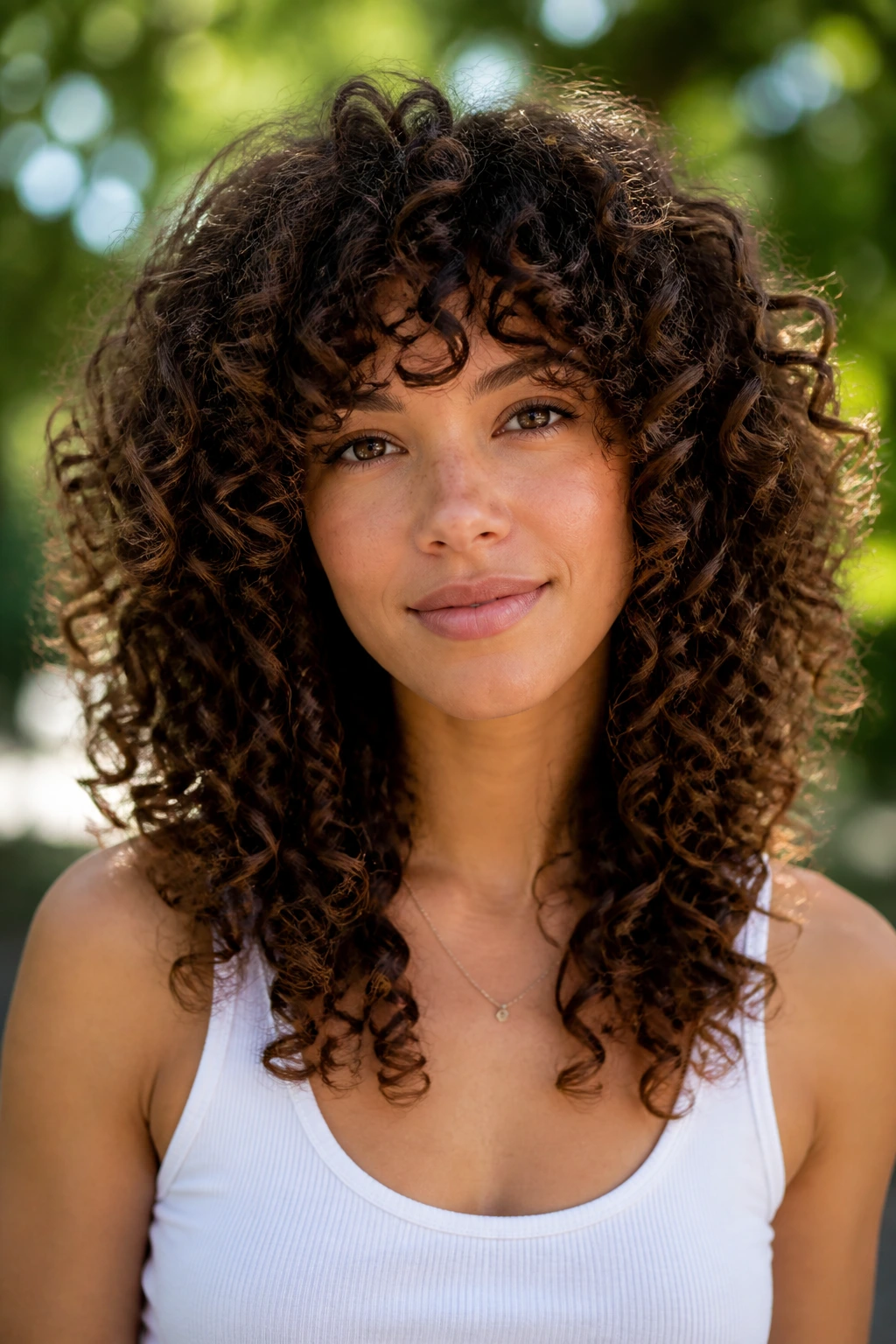
This one relies on curl-by-curl observation more than any single shape. The stylist should be reading the clumps, not guessing at them. 3A and 3B curls can hide a lot of unevenness when wet, so the stack needs to be checked dry, section by section, to keep the back from kicking out on one side.
The best version of this cut keeps the internal layers soft and the perimeter clean. Too much texturizing makes the curls fray. Too little graduation leaves a dense block. The middle ground is a cut that feels tailored but still loose enough to air-dry without turning into a triangle.
15. Shoulder-Skimming Stacked Lob with Bounce
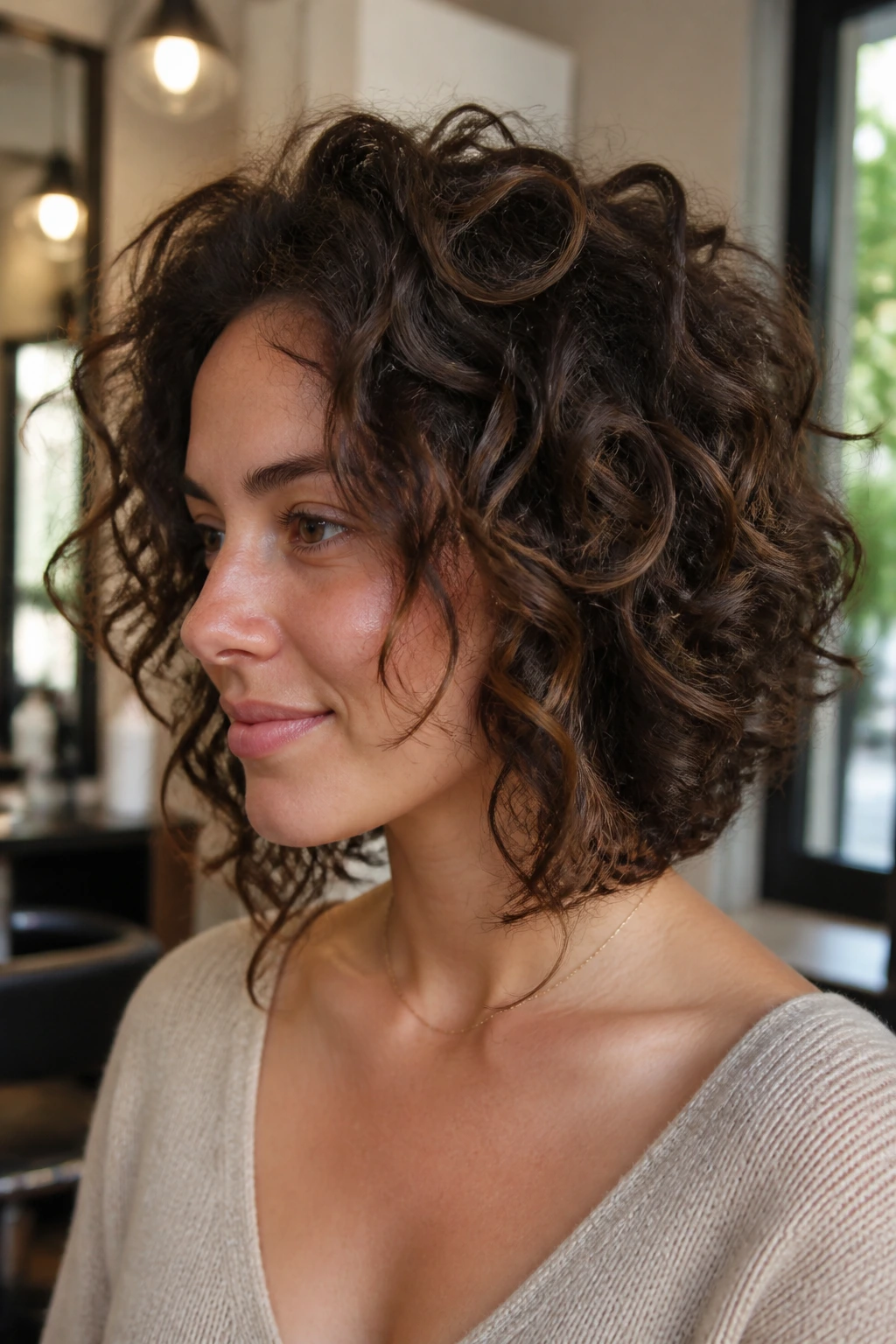
Shoulder-skimming curls can go two ways: they either bounce up in a lively way or hit the shoulders and flip outward like they’re protesting. A stacked lob solves that by taking weight out of the back so the curls have room to sit just above the shoulder line.
The front stays long enough to tuck, pin, or curl under a scarf. The back needs to be short enough that it does not drag the whole shape down. I like this cut for people growing out a bob, because it looks deliberate even in that awkward middle stage.
How to style it
Use a lightweight mousse at the roots, then a gel through the mids. That keeps the bounce without making the ends sticky. If your shoulders tend to kick the curls outward, dry the hair with your head turned side to side so the perimeter does not settle into one hard bend.
16. Front-Weighted Stack That Opens Up the Face

This cut moves the visual weight forward. The back is kept lighter and shorter, while the front pieces stay longer and often land below the jaw. Thick hair benefits from that shift because the face gets room to breathe, and the back stops carrying all the volume.
It works especially well if you like to wear one side tucked and the other loose. The stack in the back keeps the profile from getting flat, while the longer front pieces soften the cheek area. If your hair grows wide at the temples, this is one of the easiest shapes to live with.
17. Soft French Bob with a Curly Stack

A French bob on curls should feel slightly undone, not stiffly architectural. The stack gives the back enough lift to keep the neck visible, while the front stays soft around the jaw and cheek. Thick curls make this shape look fuller than straight hair ever will, which is half the appeal.
I would not over-polish this one. A little irregularity helps. Let the curls separate naturally, and keep the perimeter clean enough that the shape still reads. If the fringe is part of the look, leave it longer at first. Curly bangs have a habit of springing higher than anyone expected.
18. Wolf Cut with a Gentle Stacked Back

A wolf cut can get wild fast on thick curls, which is why the back stack matters. It keeps the lower half from turning into a shaggy mushroom and gives the cut a base. Without that, the top can get tall while the rest spreads sideways.
This version is best for people who like movement and do not want a tidy line. The layers around the face stay loose, the back is graduated, and the whole cut feels more lived-in than precise. It is not the calmest haircut in the bunch. It is one of the easiest to wear if you like texture that looks a little unruly on purpose.
19. Curly Stack for 3C Ringlets
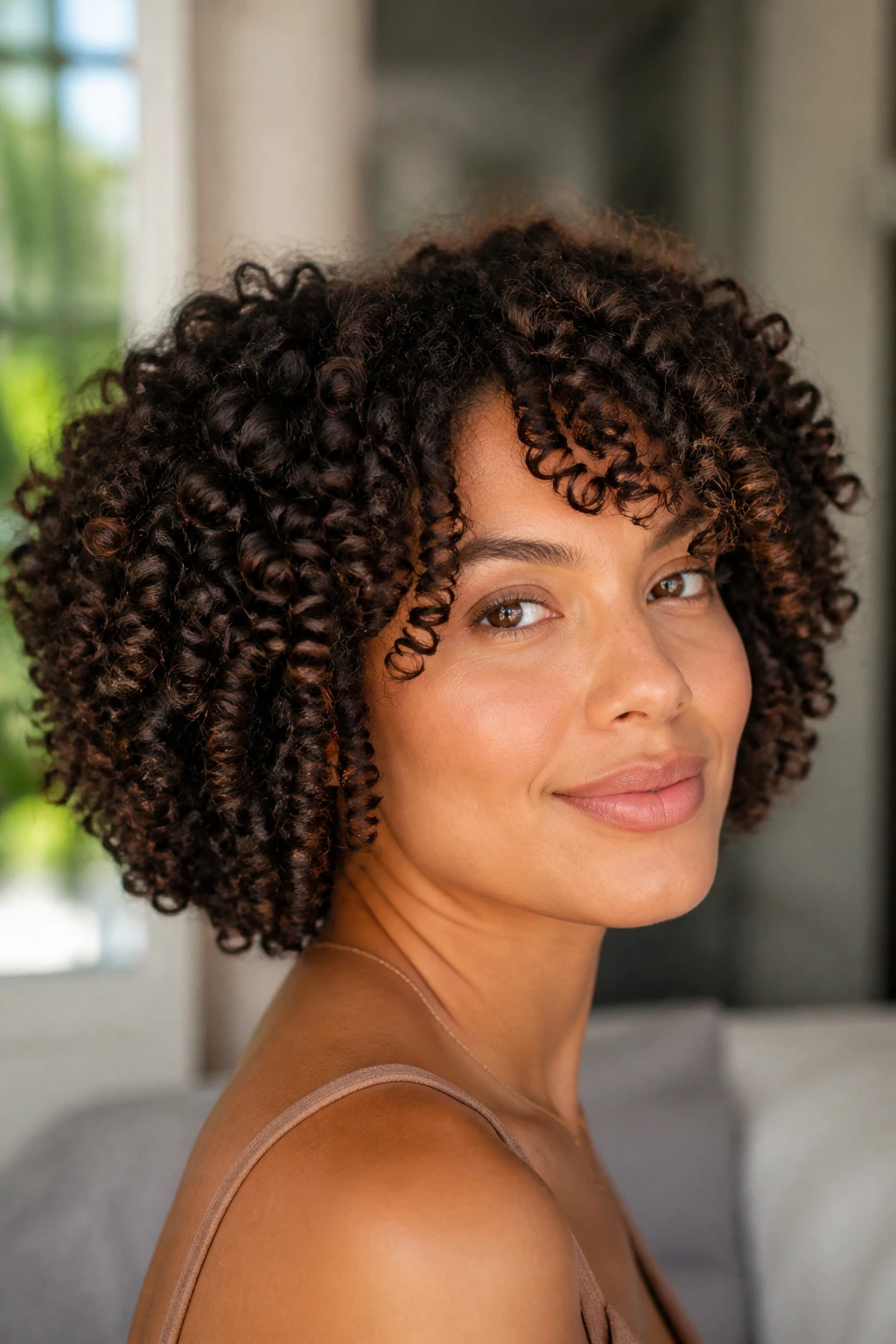
Ringlets are sneaky. They look compact when wet, then spring up once they dry and suddenly the shape is three inches shorter. A stack for 3C hair needs enough length reserve to account for that bounce, or the back will end up too short and too wide.
The best version keeps the curl clumps intact and avoids over-thinning the ends. Ringlets need definition more than they need drastic debulking. If the stylist cuts too aggressively, the curls separate and puff instead of spiraling. I like a soft stack here, one that shapes the back without breaking the spring.
20. Curly Stack for 4A Coils
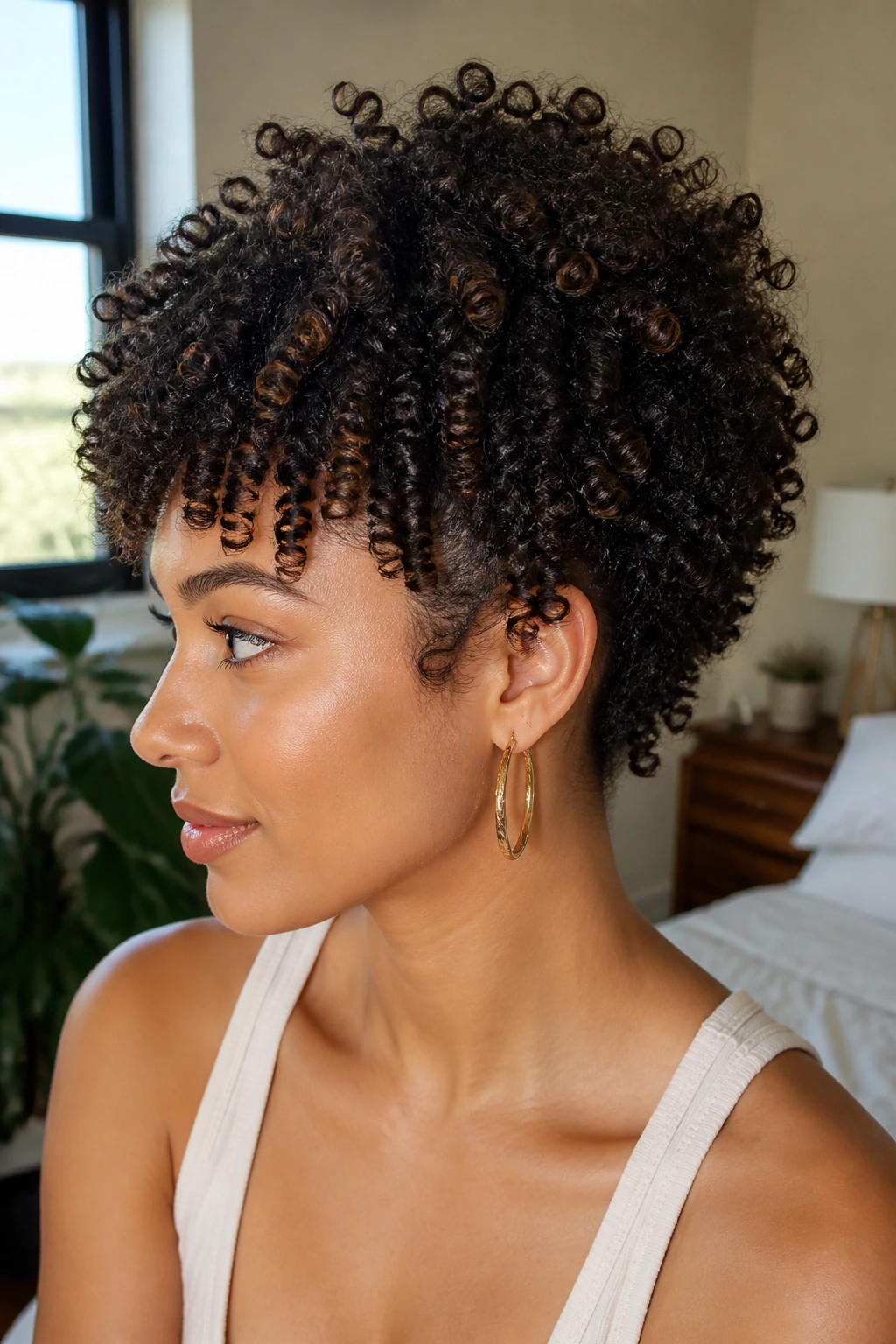
4A coils pull up hard, so the cut has to leave room for shrinkage from the start. A stack on this texture works best when the top and crown are allowed a little extra length, while the back gradually tightens toward the nape. That keeps the silhouette rounded instead of mushrooming.
Moisture matters here. Coils can look crisp and sculpted or dry and frayed, and the cut should support the first version. Keep the layers clean, not shredded, and check the shape dry before taking any more off. The back should feel compact, not exposed.
21. Curly Stack for 4B Density
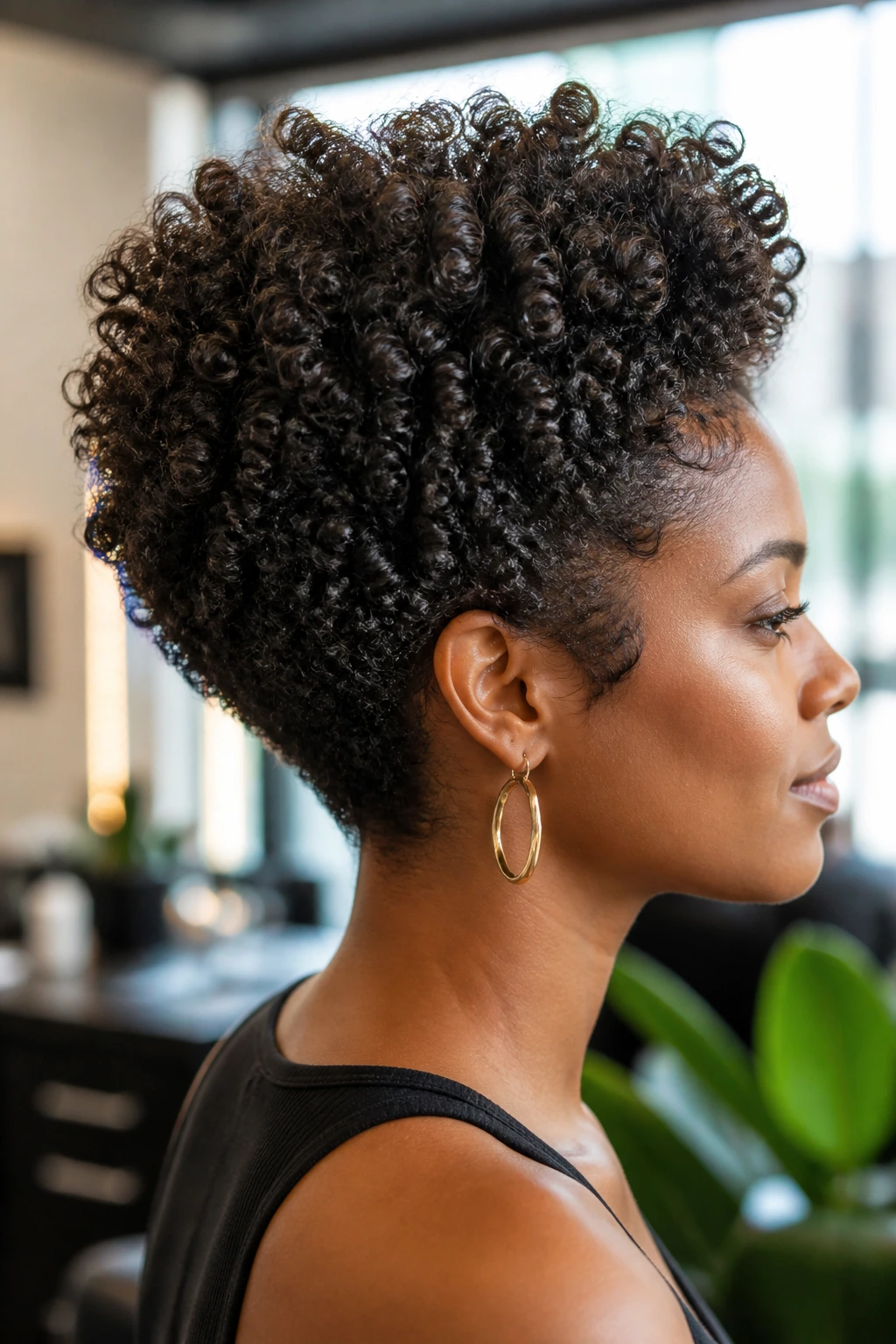
With 4B hair, the issue is often density first and length second. The cut needs to carve shape through the interior, not just remove a little at the ends and call it done. A stack helps by lifting the back, but the real job is creating enough structure that the head reads as shaped instead of simply full.
What to avoid
Skip aggressive razor work. It tends to fray 4B ends and can make the cut look fuzzy at the perimeter. Ask for clean sectioning, measured graduation, and a shape that keeps the neckline neat without stripping too much density away. The hair should still feel rich. Just not heavy in the wrong places.
22. Long Stacked Layers That Remove Bulk Without Losing Length
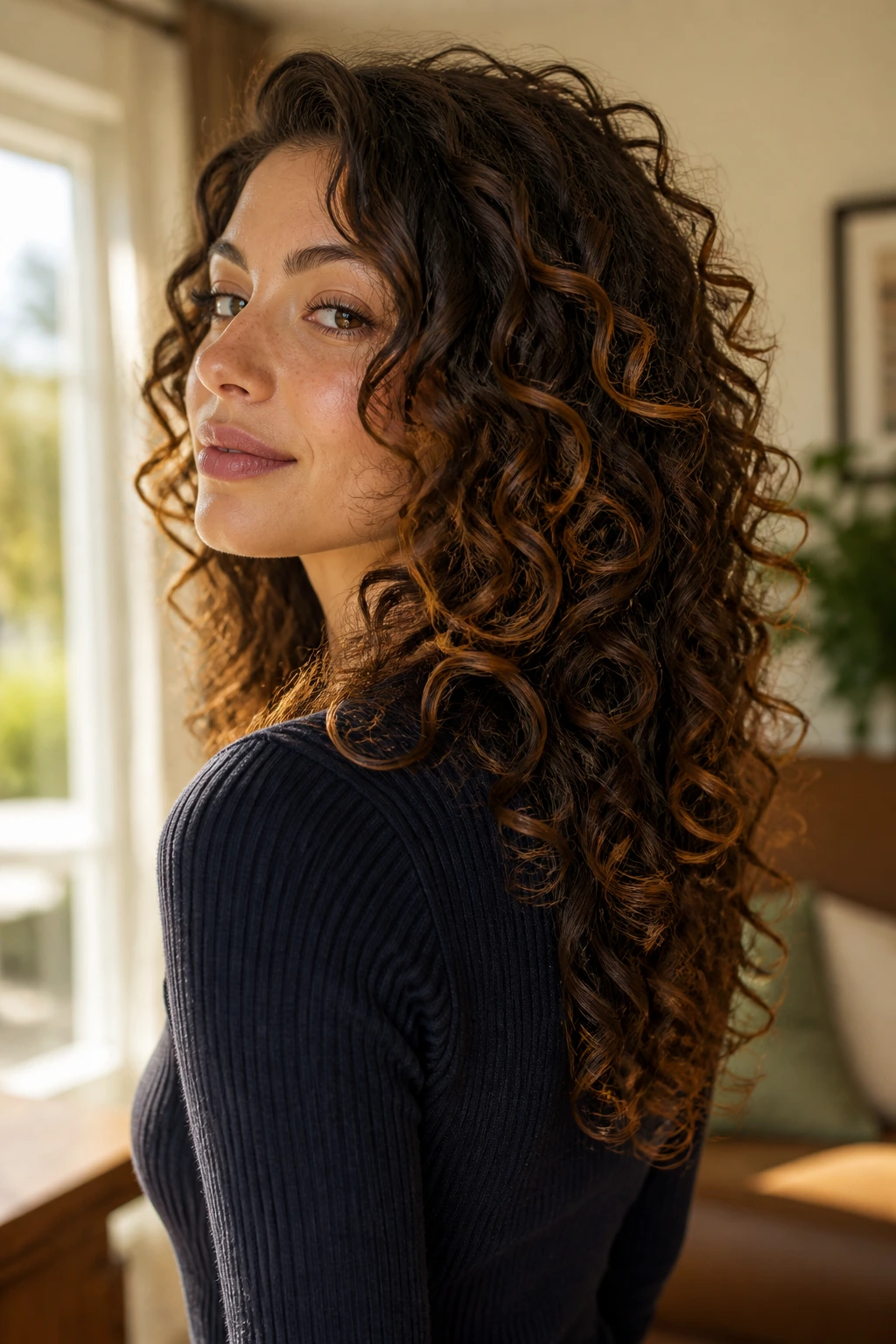
If you love length but hate the drag, this is the compromise that makes sense. The perimeter stays long, sometimes bra-strap length or longer, while the layers inside the back rise just enough to stop the curls from hanging like a curtain. Thick hair gets the relief without the shock.
It is a good cut for people who wear curls both down and pulled back. The stack is hidden enough that the hair still looks long from the front, but the back no longer sits like one solid block. That hidden lift can make long curls feel lighter by a surprising margin.
23. Rounded A-Line Curly Cut with a Wide Shape
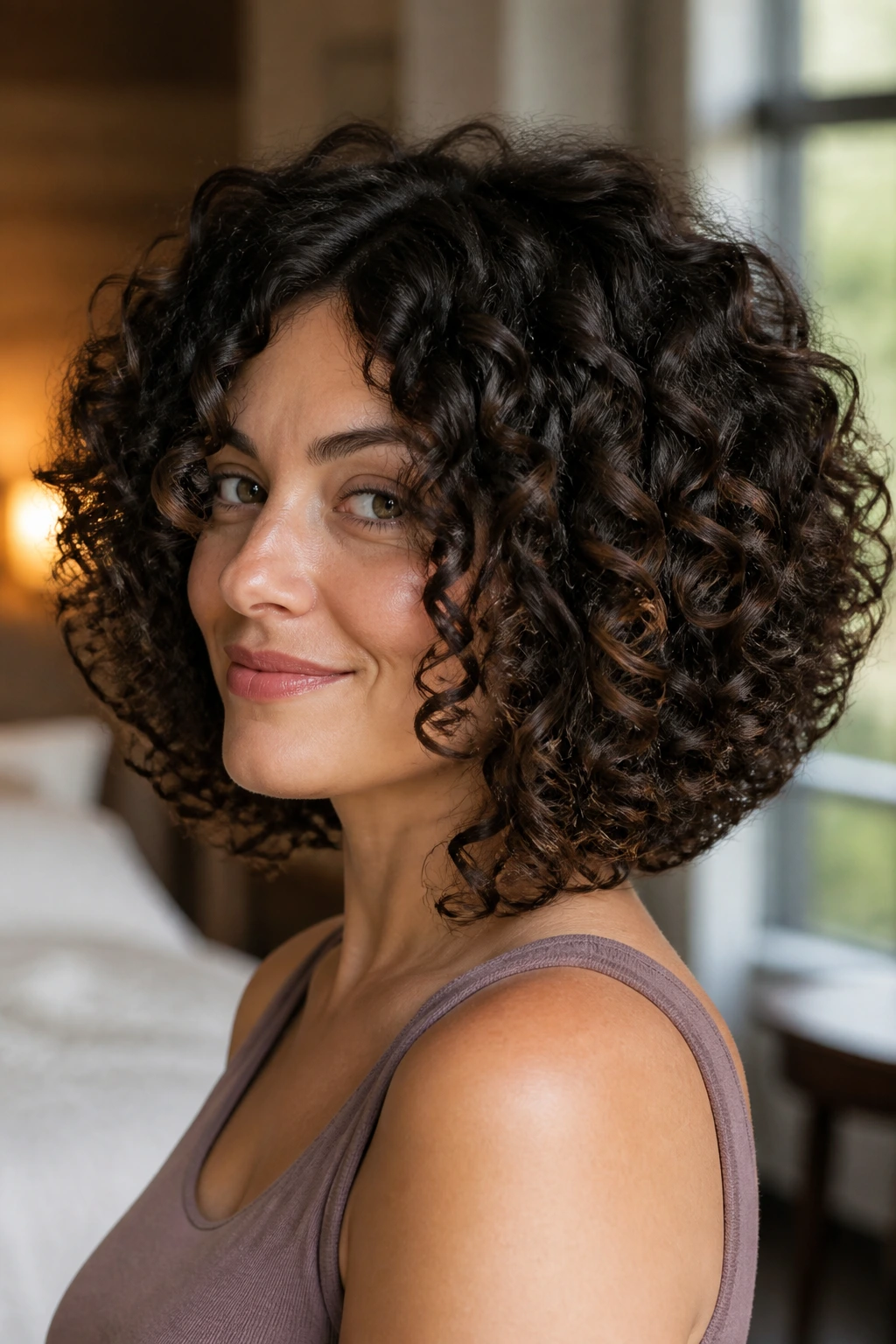
The words “wide shape” sound suspicious until you see it on thick curls. A rounded A-line can create width that feels intentional instead of accidental, because the stack keeps the back from collapsing and the curved perimeter stops the ends from looking square.
This cut is useful when your curls already want to expand at the sides. Instead of fighting that, you shape it. The line should arc gently from the nape toward the jaw, never cutting into a stiff point. I like this on thicker curls that need a bit of space to look balanced.
24. Hidden Stack for Hair You Want to Keep Longer

Not every stack needs to shout. This version keeps the graduation low and subtle, mostly tucked into the back so the front reads as length. It is the one I’d pick for anyone who wants to keep the hair looking conservative from the front while still taking weight off the nape.
The trick is to make the hidden stack do work without exposing too much of the scalp or breaking the perimeter. It should feel like the hair is moving better, not like a dramatic haircut has happened. That makes it useful for people who need a softer office look, or anyone who wants to grow out a shorter style without going back to square one.
25. Stacked Cut with Micro Fringe
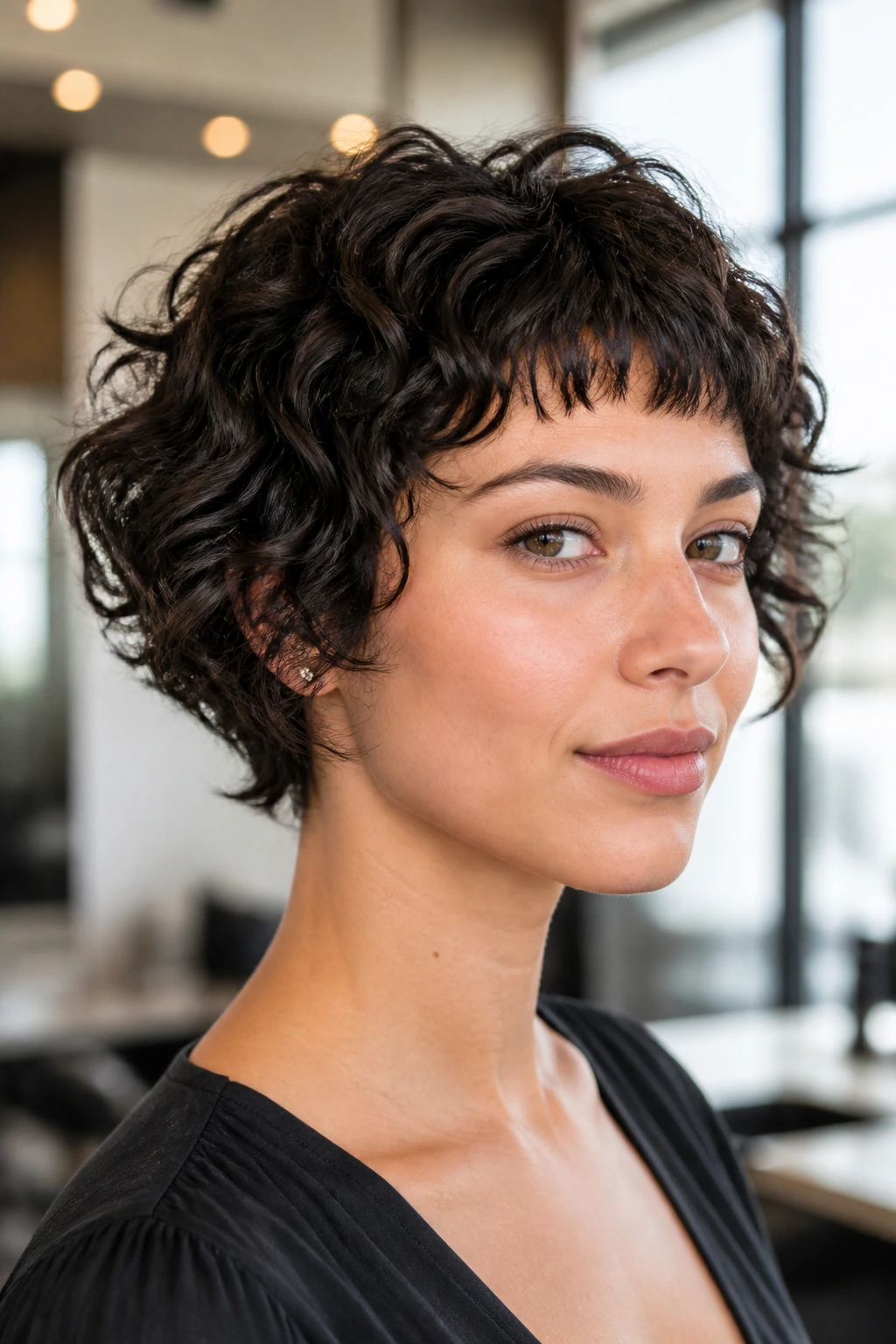
Micro fringe changes the whole equation. It pulls the eye upward, which means the stack in the back can be a little stronger without making the face feel crowded. Thick curls with a tiny fringe have a lot of personality, and not much room for indecision.
The fringe needs to be cut with shrinkage in mind. Curly micro bangs can jump fast, so I would rather start longer and refine than chop them too high. The back should stay soft enough that the fringe does not feel disconnected from the rest of the head. Short front, lifted back. Clean, but not severe.
26. Stacked Cut with Side-Swept Fringe
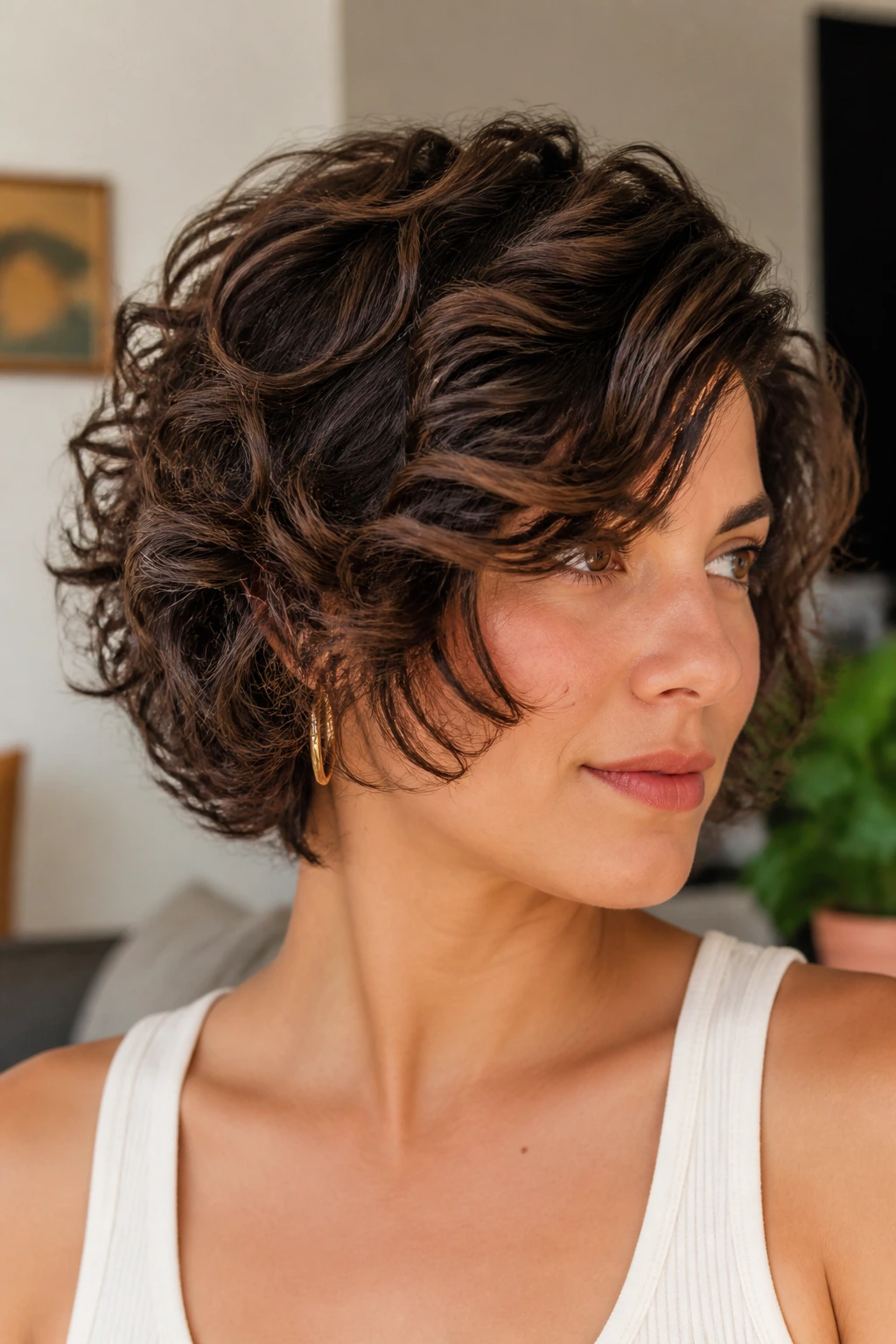
If micro bangs feel too committed, a side-swept fringe is the calmer answer. It frames the face, softens the forehead, and blends into the stack without demanding a daily battle in the mirror. Thick hair benefits because the fringe can borrow weight from the front instead of fighting against it.
This cut is friendly to grow-out. The fringe can merge into the front layers as it gets longer, which keeps the silhouette from looking awkward after a month or two. I like this when someone wants face framing but does not want a true bang routine.
27. Jawline Curly Cut with Tapered Sides
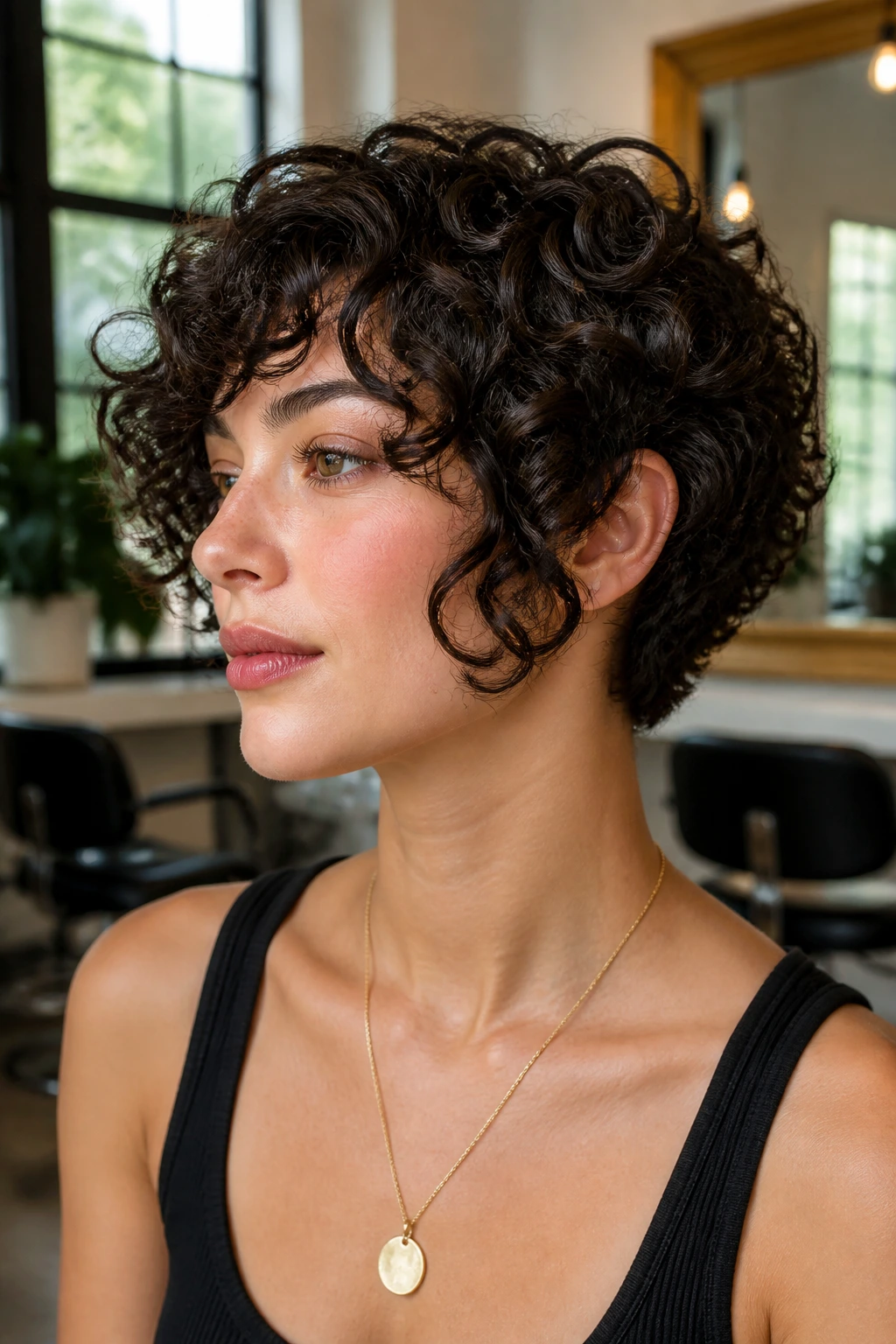
This haircut traces the jaw instead of sitting on top of it. The sides taper in a little closer, the back carries the stack, and the whole shape stays neat around the lower face. Thick curls can make the jaw area look heavy if they are all cut to the same length, so this shape solves a very real problem.
Keep the side pieces soft enough to move. If they are too tight, the haircut starts to look boxed in. A little length below the jaw, combined with a clean nape, usually gives the best balance. It’s especially good if you like strong cheekbones or wear glasses and want the frames to stay visible.
28. Feathered Stacked Layers for Airy Movement
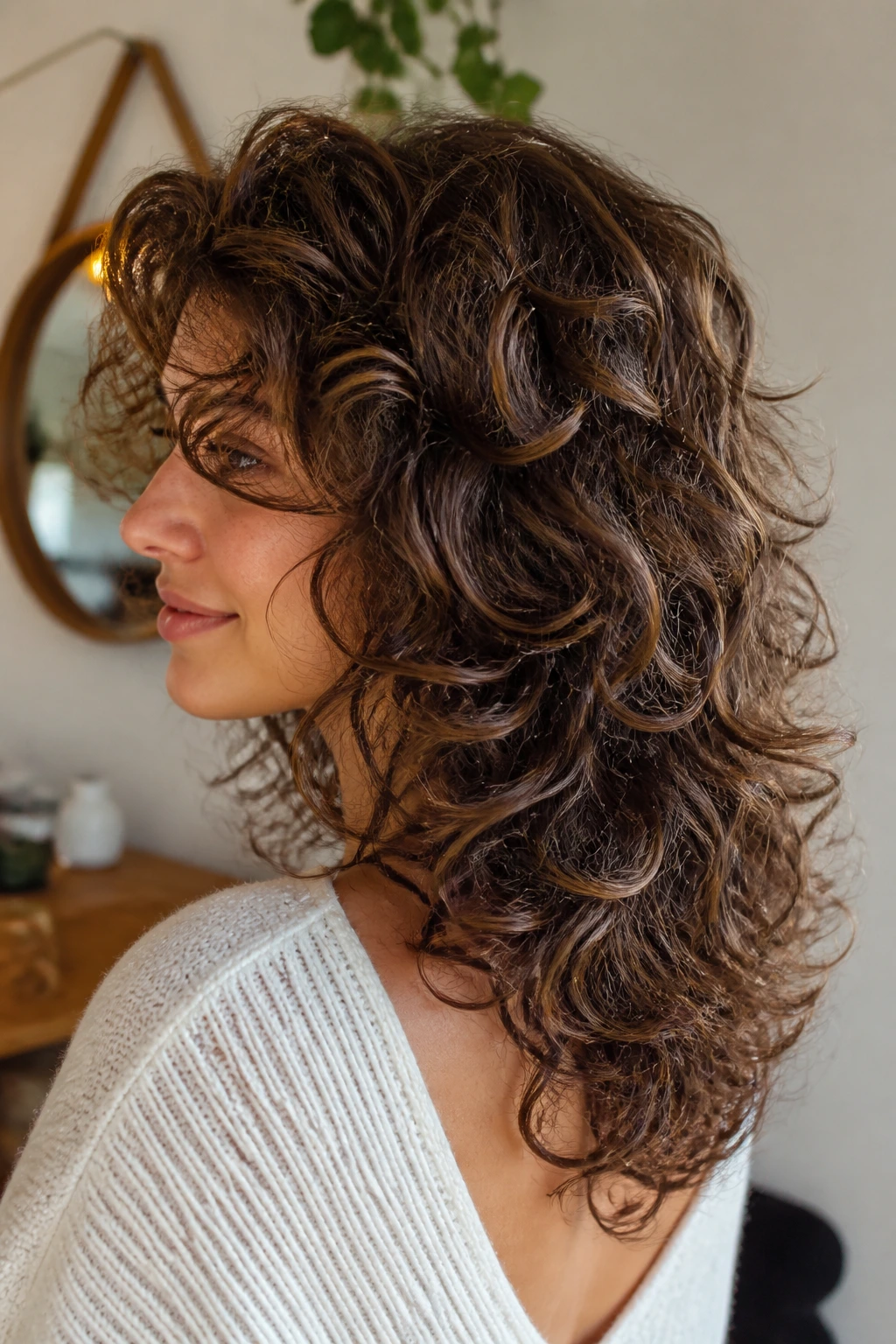
Feathered layers can go wrong fast on curly hair if they’re overdone. Done carefully, though, they take the weight off thick curls and let the shape breathe. The stack in the back gives the base, while the feathering softens the transition from crown to ends.
The trick is restraint
Ask for point cutting, not shredding. You want the ends to look light, not ragged. When the hair dries, the layers should separate into soft ribbons, not a frizz halo. This is a good choice if your curls are dense enough to feel heavy by midday and you want motion without chopping off much length.
29. Silver Curls with a Soft Stack
Gray and silver curls often have their own attitude — a little wirier, a little more stubborn, and sometimes puffier at the crown than the old texture used to be. A soft stack keeps that from becoming a cube. It adds movement at the back while letting the silver strands do what they already want to do: catch light and show texture.
The gentle version matters here because harsh lines can make silver curls look dry. Softer graduation keeps the shape plush. I like this cut when the color is part of the story, because the stack gives the hair enough structure to show the tone changes without looking stiff.
30. Stacked Cut with a Shaved Nape Accent
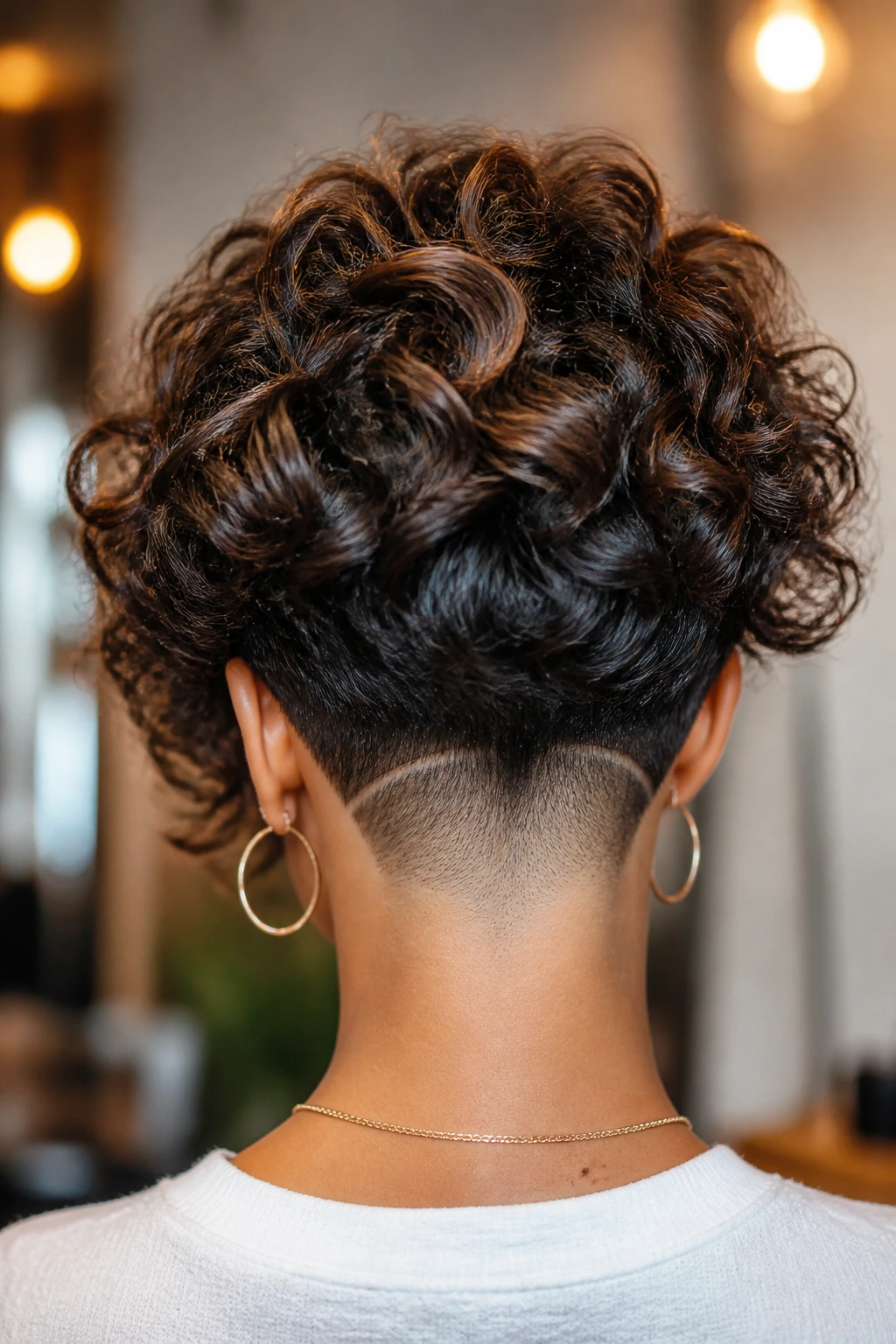
This is the bold one. The nape is clipped or shaved underneath, while the upper curls sit on top like a compact halo. Thick hair often makes this move more practical than it sounds, because the undercut removes bulk where your diffuser can’t do much anyway.
You do need to like upkeep. The shaved area grows out fast and loses its neat line. Still, if the back of your hair gets hot, heavy, or bulky against collars, this solves the problem in one clean stroke. The top should still have enough length to curl over the undercut, so the effect stays soft from the outside.
31. Air-Dry Stack with Minimal Product
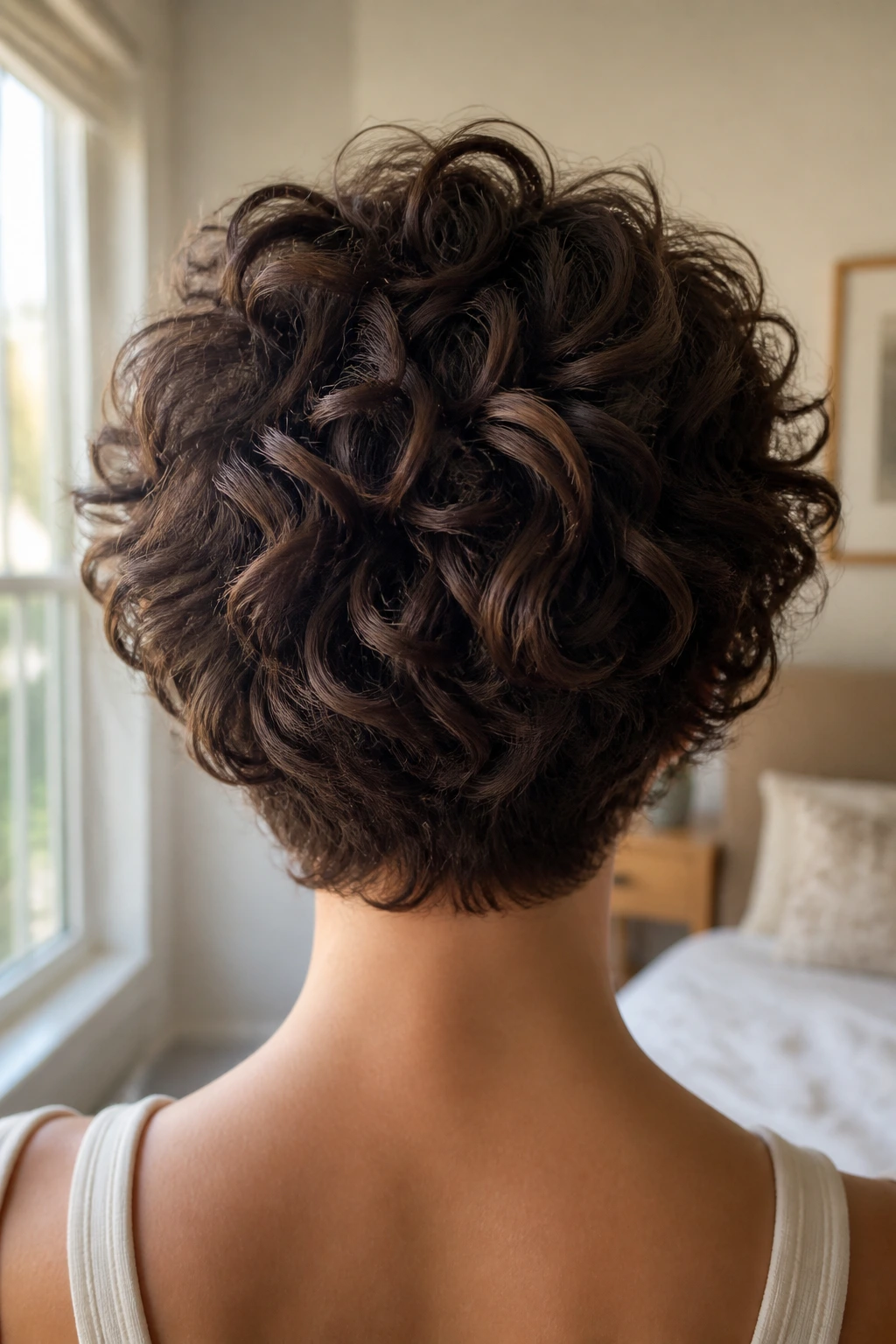
Can a stacked cut still work if you barely diffuse? Yes. It just has to be cut with that habit in mind. The back should sit in a way that lets the curls settle on their own instead of depending on forced lift from the dryer. That means the graduation is a little gentler and the interior layers are placed with more care.
How to style it
Use a light leave-in, a small amount of mousse, and stop touching the hair once it starts to form its curl pattern. If you constantly scrunch the back while it dries, the stack can lose its line and puff out. This version is for the person who wants shape without turning wash day into a project.
32. Grow-Out Friendly Curly Stack
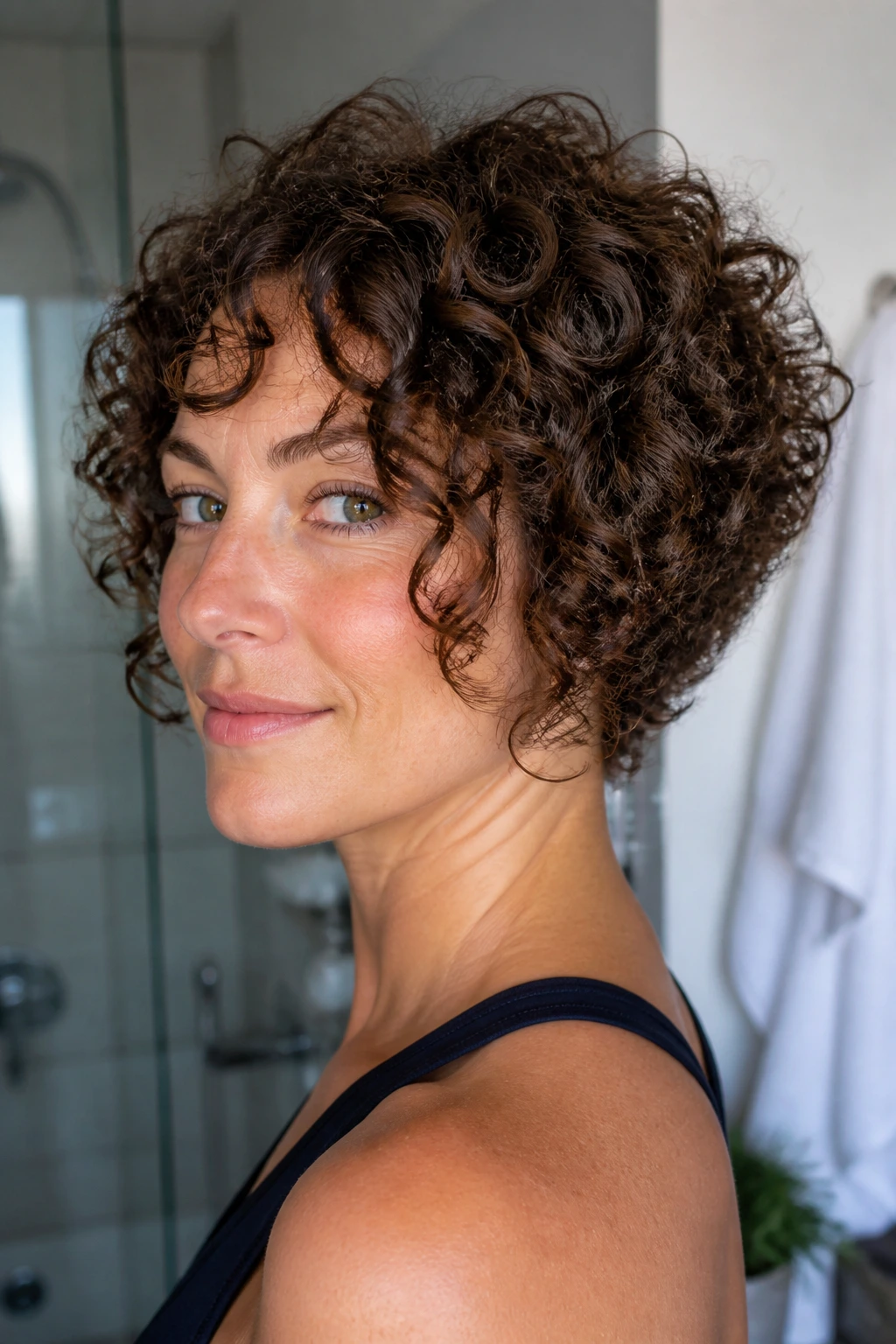
If you hate that awkward middle stage after a haircut, this is the one to ask for. The graduation stays low, the front keeps a little extra length, and the back is shaped so it still looks deliberate when the layers start to soften. Thick curls need that kind of grace, because every grow-out adds volume in places you did not plan for.
The cut should still look clean after eight to twelve weeks, not just on day one. That means no hyper-sharp angles, no microscopic nape, and no over-thinned ends that disappear into frizz. I like this option for anyone who cannot get to the salon every month and needs the shape to hold its nerve.
How to Wear a Stacked Curly Cut in Daily Life
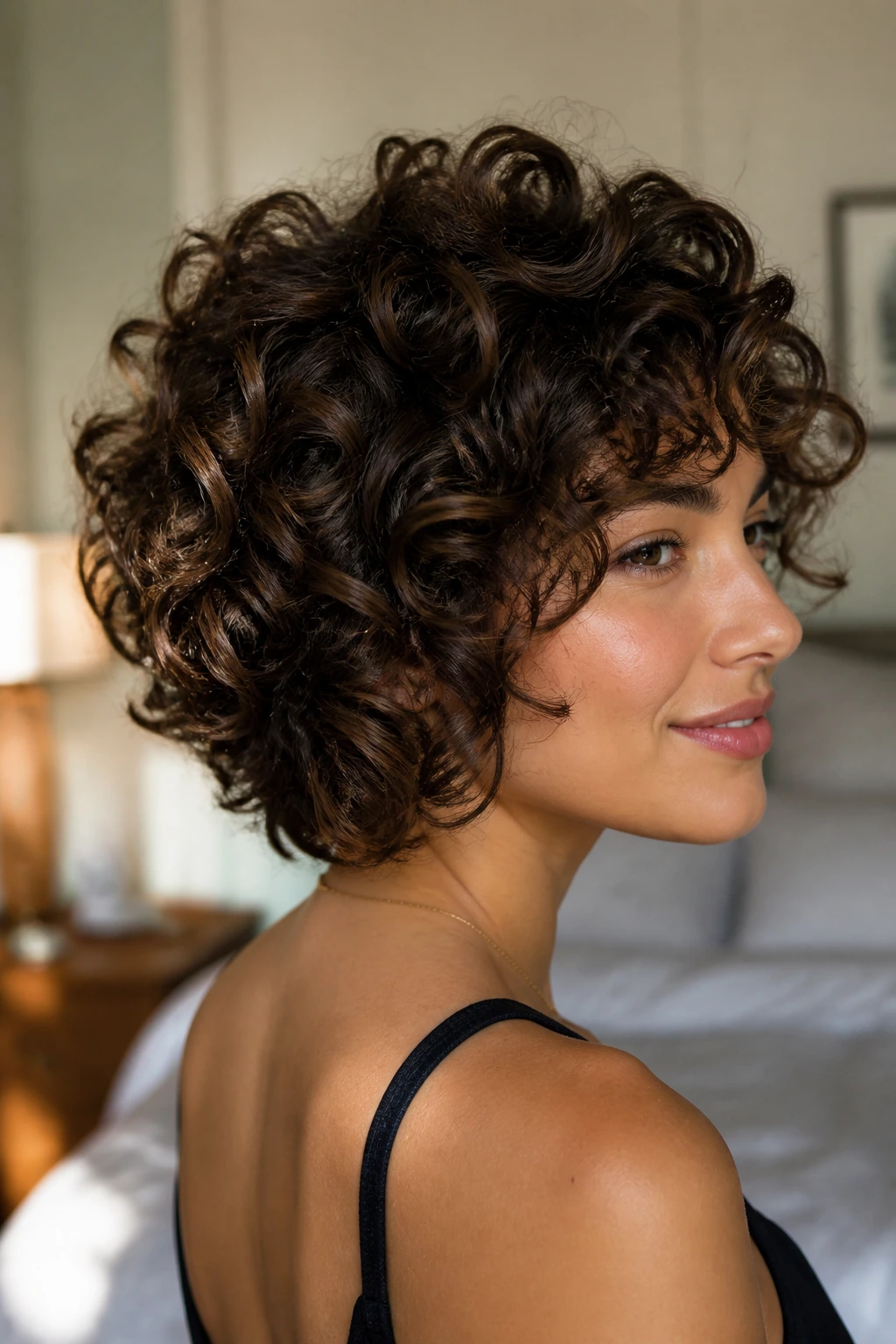
Shape: Let the back sit close to the head and keep the crown lifted. That contrast is what makes a stacked cut read as intentional instead of just “shorter in back.”
Styling: On thick curls, a little hold goes farther than a lot of cream. A mousse at the roots and a gel through the mids usually gives enough structure to keep the nape from puffing by afternoon. If your hair is especially dense, clip the crown for ten minutes while it dries. That small move changes the whole top line.
Pairings: Open necklines, simple collars, and earrings with some length all show off the haircut better than a high turtleneck does. A stacked nape looks especially good when there’s room around the neck. Glasses can work well too, as long as the side pieces are long enough to clear the arms.
Best moments: This is the cut that looks sharpest when the curls are dry and settled, not overhandled. Let it breathe a bit. The shape should do the talking.
Small Upgrades That Make the Cut Look Intentional
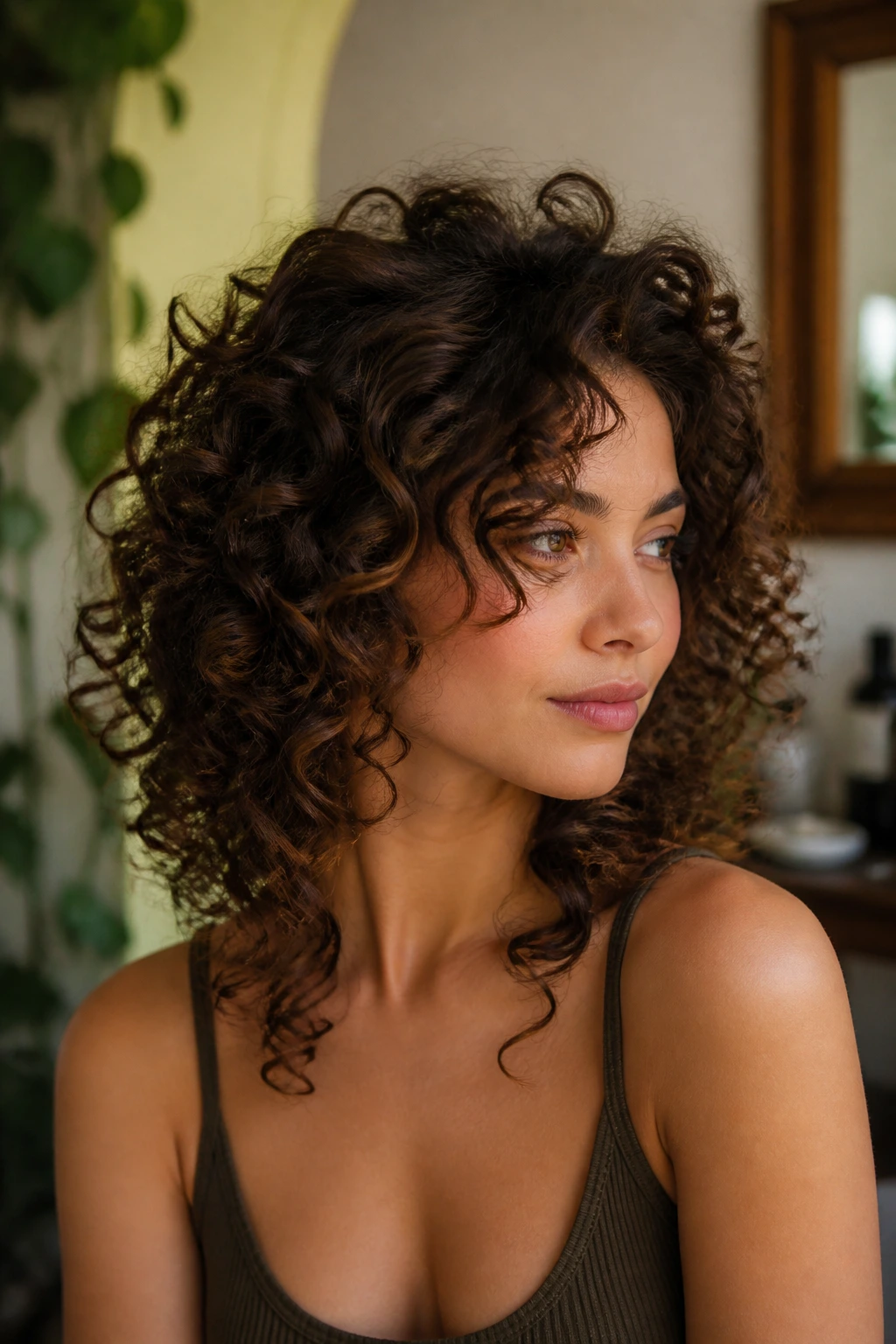
Root Lift: Clip the crown while the hair is still damp and let it dry for a few minutes before removing the clips. You do not need a full salon blowout to get lift where the stack starts.
Frizz Control: Put the heavier product on the mids and ends, not at the root line. Thick curls collapse fast when the scalp area gets weighed down, and the stack loses its height.
Face Framing: Ask for one or two longer pieces near the cheekbone if you wear the cut pinned back or tucked often. Those pieces stop the front from feeling too blunt as the haircut grows.
Make-It-Yours: If you like a sharper edge, keep the nape neat and the front longer. If you prefer softness, ask for rounded corners and less contrast between back and sides. The shape changes a lot with only half an inch of difference.
Color Cue: A few ribbons of lighter color around the crown and front can show the layers more clearly. Not because color “adds dimension” — I hate that phrase — but because the curl clumps read better when the eye can separate them.
Common Mistakes That Turn a Stack into a Pyramid

-
Stacking too high at the crown: The hair shoots upward and leaves the back hollow. The fix is a lower, softer graduation that keeps the top rounded instead of tall.
-
Over-thinning the ends: The haircut starts to look stringy or frayed once it dries. Thick curls need weight control, not a shredded perimeter.
-
Ignoring shrinkage: A line that looks balanced wet can jump several inches dry. Ask the stylist to check the shape after it dries and adjust before they call it done.
-
Leaving the nape blunt: That’s how you get the shelf effect. The back needs a step, not a wall.
-
Using too much heavy cream at the roots: The stack flops, the crown collapses, and the whole cut looks lower than it should. Keep the root area lighter.
-
Treating all curls as one pattern: Mixed textures need separate decisions in the front, crown, and nape. One length rule rarely works across the whole head.
Variations and Alternatives to Try

The Soft Stack: Keep the graduation low and the perimeter rounded. This works when you want shape but not a dramatic inversion.
The Short-Back Lob: Leave the front at collarbone length and take the back slightly shorter. It gives you stack without the maintenance of a true bob.
The Curly Shag Stack: Add more face layers and a looser fringe. Choose this if you like movement more than symmetry.
The Nape-Open Crop: Combine a stacked back with a cleaner neckline or undercut. This is the boldest route when bulk at the neck is the main problem.
The Grow-Out Stack: Keep the front pieces long and the back graduation soft. It’s the safest choice if you know you’ll be stretching time between trims.
Keeping the Shape Between Wash Days
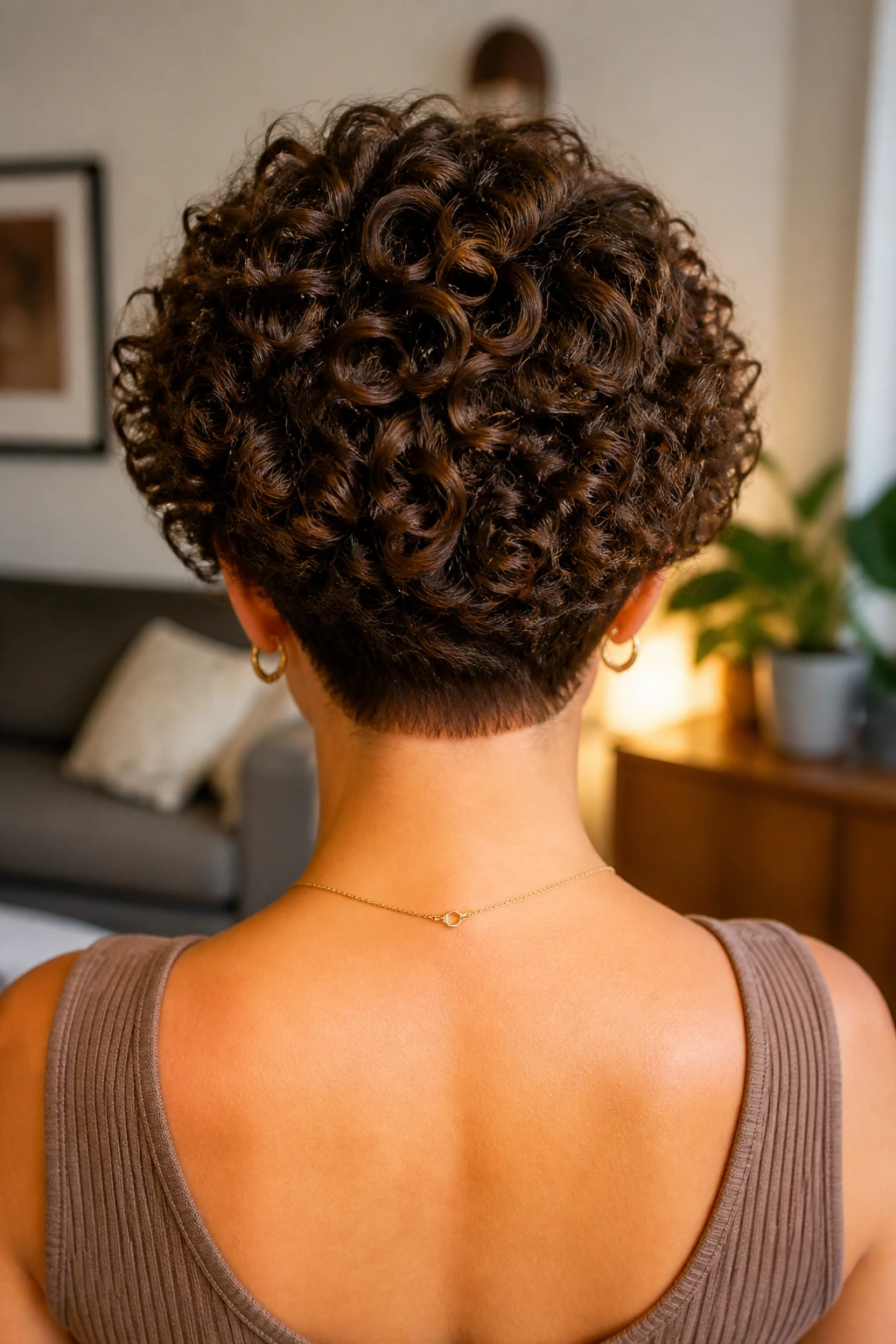
The back of a stacked curly cut usually tells the truth by day two or three. If it starts puffing, the fix is small and specific. Mist the nape lightly with water, glaze a pea-sized amount of gel over the surface, and let it dry without touching. Heavy rescue product almost always makes it worse.
Night care: A satin pillowcase or bonnet keeps the back from roughing up. If your curls flatten at the crown, pineapple loosely or clip the top section up so the stack doesn’t get crushed under your head.
Refresh rhythm: For most thick curly stacks, a quick refresh every one to three days is enough. That might be a water spray, a little mousse at the roots, or a diffused five-minute reset on low heat.
Trim cadence: Short stacks and crops usually want shape-ups every 4 to 8 weeks. Bobs and lobs can stretch to 8 to 12 weeks. The thicker the hair and the sharper the line, the sooner the silhouette starts to blur.
When to book again: If the nape feels bulky, the crown sits too low, or the front no longer frames your face, the cut is asking for help. Don’t wait until the whole head feels expanded beyond reason.
Questions People Ask Before They Book a Stack
Can a stacked curly haircut work if my hair is more dense than coarse?
Yes. Density usually benefits from a stack because the back can get heavy fast, even when the strands themselves are not especially thick. The stylist just needs to be careful about interior weight removal so the hair does not end up frizzy at the ends.
Should a curly stack be cut wet or dry?
Either can work, but the finished shape needs a dry check. Wet curls lie about their length. A curly specialist will usually refine the line after the hair dries so the stack lands where your shrinkage actually lives.
Will a stack make my hair look too triangular?
Only if the back is too blunt or the sides are left too wide. A better stack keeps the crown lifted, the nape lighter, and the front long enough to balance the shape.
How short can the back be on thick curls?
Short enough to clear the nape, but not so short that the curls lose their ability to stack on themselves. If you want a pixie or crop, keep extra length at the top and crown so the curl pattern still has room.
Can I wear this cut with bangs?
Absolutely. Curtain bangs and side-swept fringe usually behave better than micro bangs if you want less daily fuss. Curly bangs need to be cut longer than straight ones because they spring up fast.
What if the back flips outward?
That usually means the layers are sitting too high or the nape is too blunt. A light refresh with gel can calm it, but the real fix is in the cut. Ask the stylist to soften the back step and leave enough weight to bend inward.
How often does a stacked curly cut need trimming?
Short versions may need a cleanup every 4 to 8 weeks, while longer versions can go 8 to 12 weeks. If the shape is subtle, you can usually stretch it longer.
Can I grow a stacked cut out without hating the in-between stage?
Yes, if the graduation is soft and the front keeps a little extra length. The sharper the angle, the rougher the grow-out. That’s why I prefer a gentler stack for anyone who isn’t trim-happy.
The Shape That Keeps Its Line
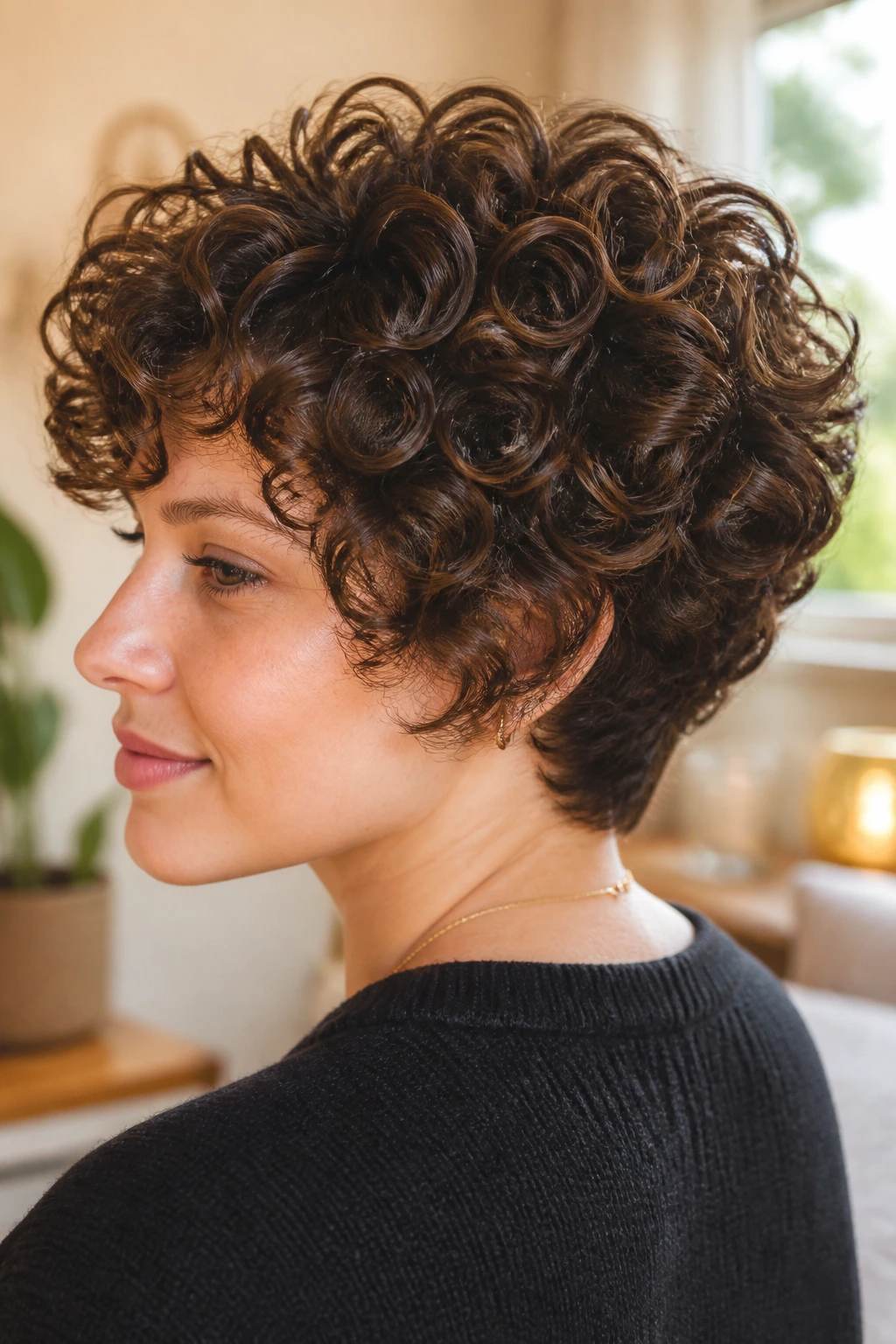
A stacked curly haircut does one thing better than almost any other shape: it gives thick hair a place to land. The back stops fighting the neck, the crown gets a little lift, and the front still has enough length to feel like yours when the mood changes.
The best versions are the ones that respect shrinkage instead of arguing with it. That’s the whole trick. Leave enough room for the curl to spring, keep the nape honest, and choose the amount of stack that matches how much maintenance you’re willing to live with. The right cut will not flatten your texture. It will give it a cleaner outline to live inside.
