



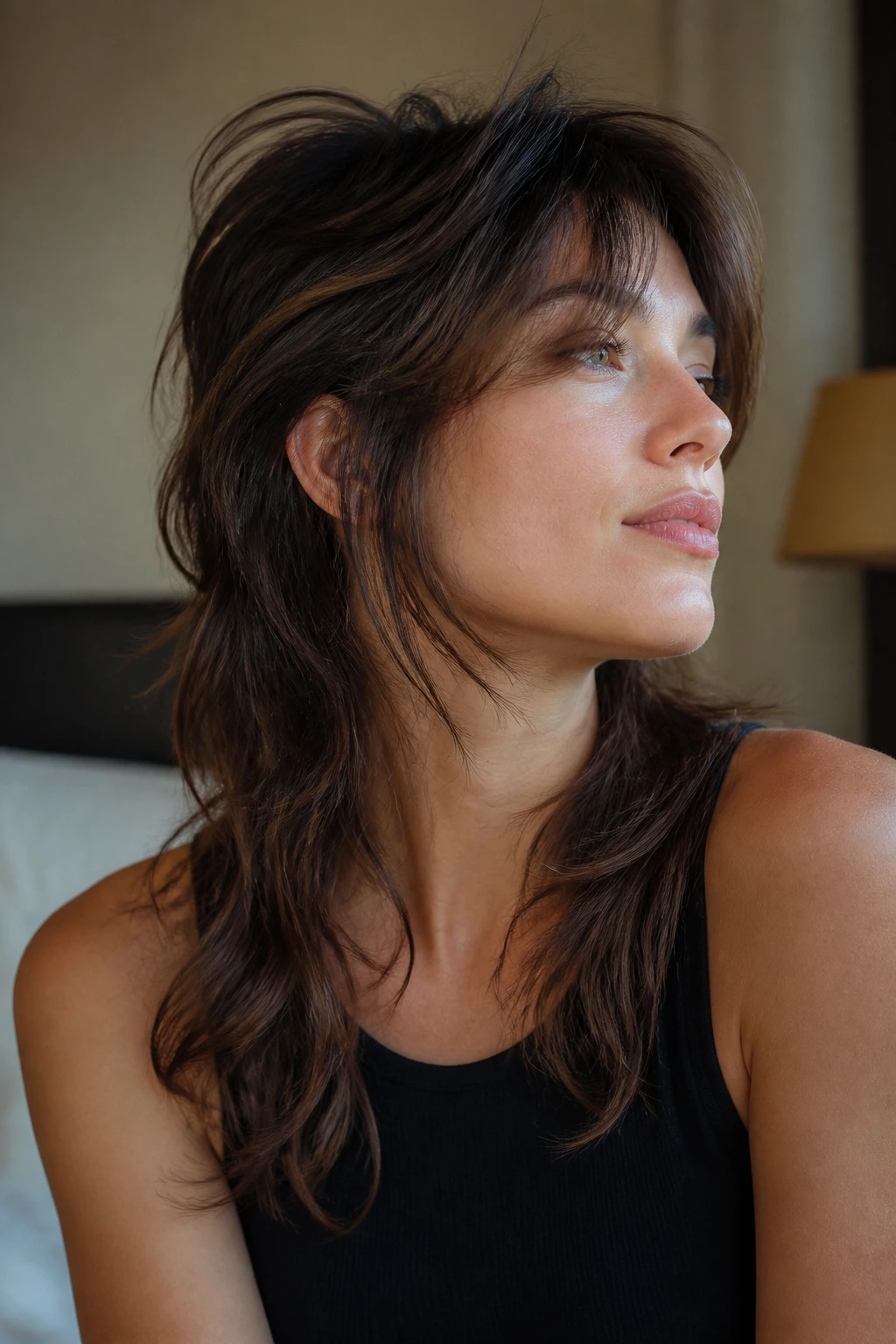
The modern mullet for women stopped being a joke the minute stylists started treating it like a shape, not a dare. The whole haircut lives or dies on balance: short where hair needs lift, long where you want swing, and soft enough around the face that it doesn’t look like an old costume piece from a bad yearbook photo. When those lines are handled well, the cut has a clean, sharp energy that feels current without trying too hard.
Modern mullet hairstyles for women work because they let the hair do two things at once. The crown can stay light and airy, while the back keeps enough length to move when you turn your head. That contrast is the point. It’s also why the cut can look wildly different depending on fringe, texture, and how much contrast you leave between the front and the nape.
The trick is not to think of it as one haircut. It’s a family of cuts. Some are soft and face-framing, some are blunt and punky, some are barely a mullet at all unless you look at the profile. Once you start seeing the range, the old stereotype falls apart fast — and the best versions become a lot easier to spot.
Why These 32 Cuts Deserve a Real Look
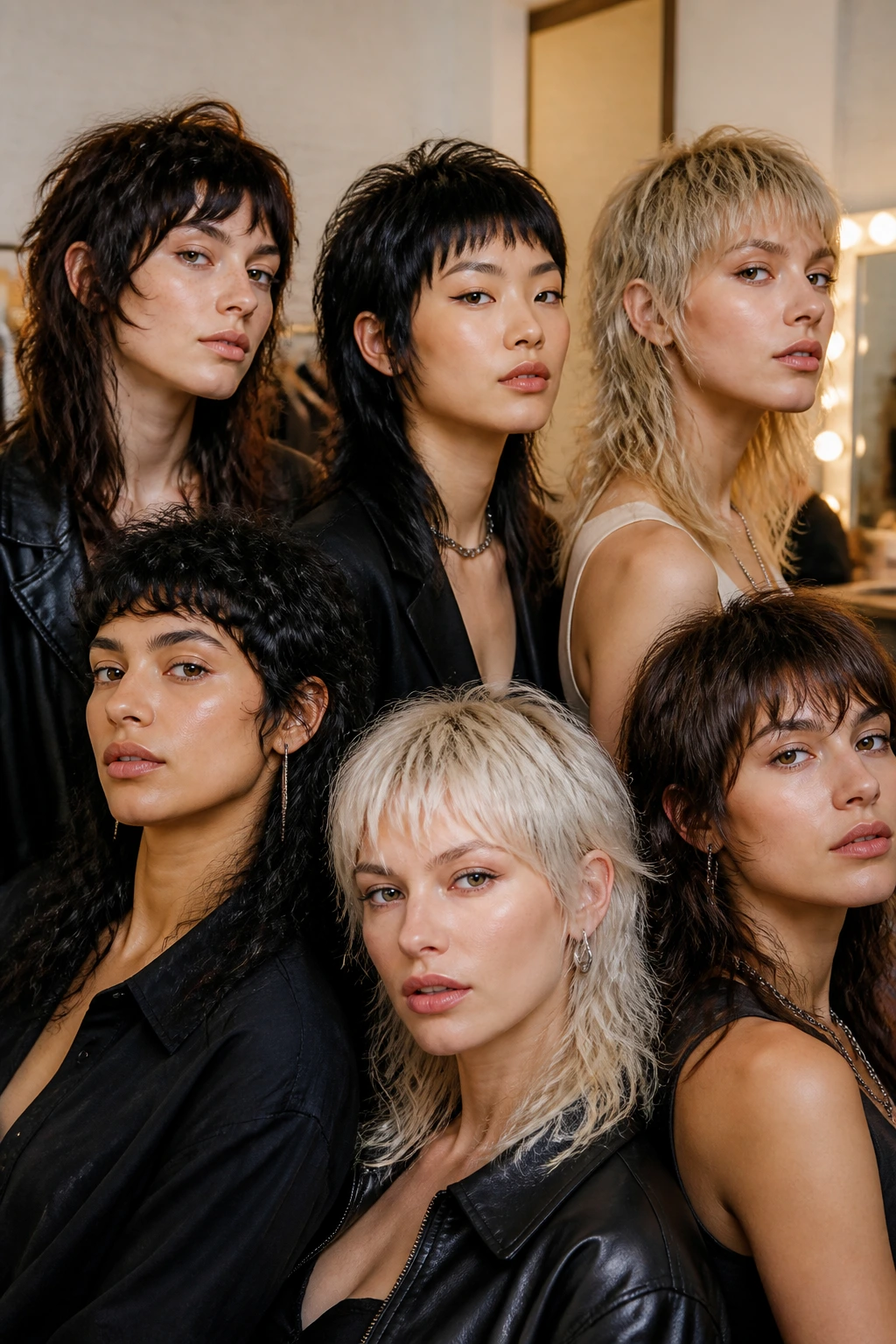
- The shape is adjustable: You can keep the crown neat, the fringe soft, and the back long enough to suit your comfort level.
- Texture matters more than perfection: Wavy, curly, and straight hair all have a lane here if the cut is tailored to how your hair actually falls.
- The grow-out is kinder than people expect: A good mullet can slide into a shag, lob, or layered bob without that awkward shelf line.
- Fringe changes everything: Curtain bangs, micro bangs, and heavy fringes each push the haircut in a completely different direction.
- It can be subtle or loud: One version can pass as a layered short cut; another can lean full statement with shaved sides or vivid color.
- Salon language is easy once you know the parts: Ask for the crown, side transition, and nape separately, and the whole conversation gets clearer.
The best part is that none of these styles depends on one hair type or one face shape. The haircut works when the length changes are intentional, not random. That’s the line that separates a modern mullet from a half-grown-out shag.
1. Curtain-Bang Mullet With a Soft Jawline
This is the one that eases people in. Curtain bangs split at the center and fall into cheekbone-length pieces, so the front opens up the face while the back keeps the edge. On medium-length hair, the whole cut moves in a way that feels deliberate, not messy.
Why It Works
Ask for the fringe to graze just below the brow and for the side layers to taper into the longer back pieces. That softens the transition zone, which is where a lot of bad mullets go wrong. A round brush and a quick bend through the ends keep the whole shape from collapsing into flatness.
- Best on hair with a little natural bend.
- Keep the nape about 1 to 2 inches longer than the sides.
- Use a light cream instead of a heavy oil.
Tip: If the crown gets too short, the whole cut puffs up fast. Leave a little weight up top.
2. Pixie-Length Mullet With a Tight Nape
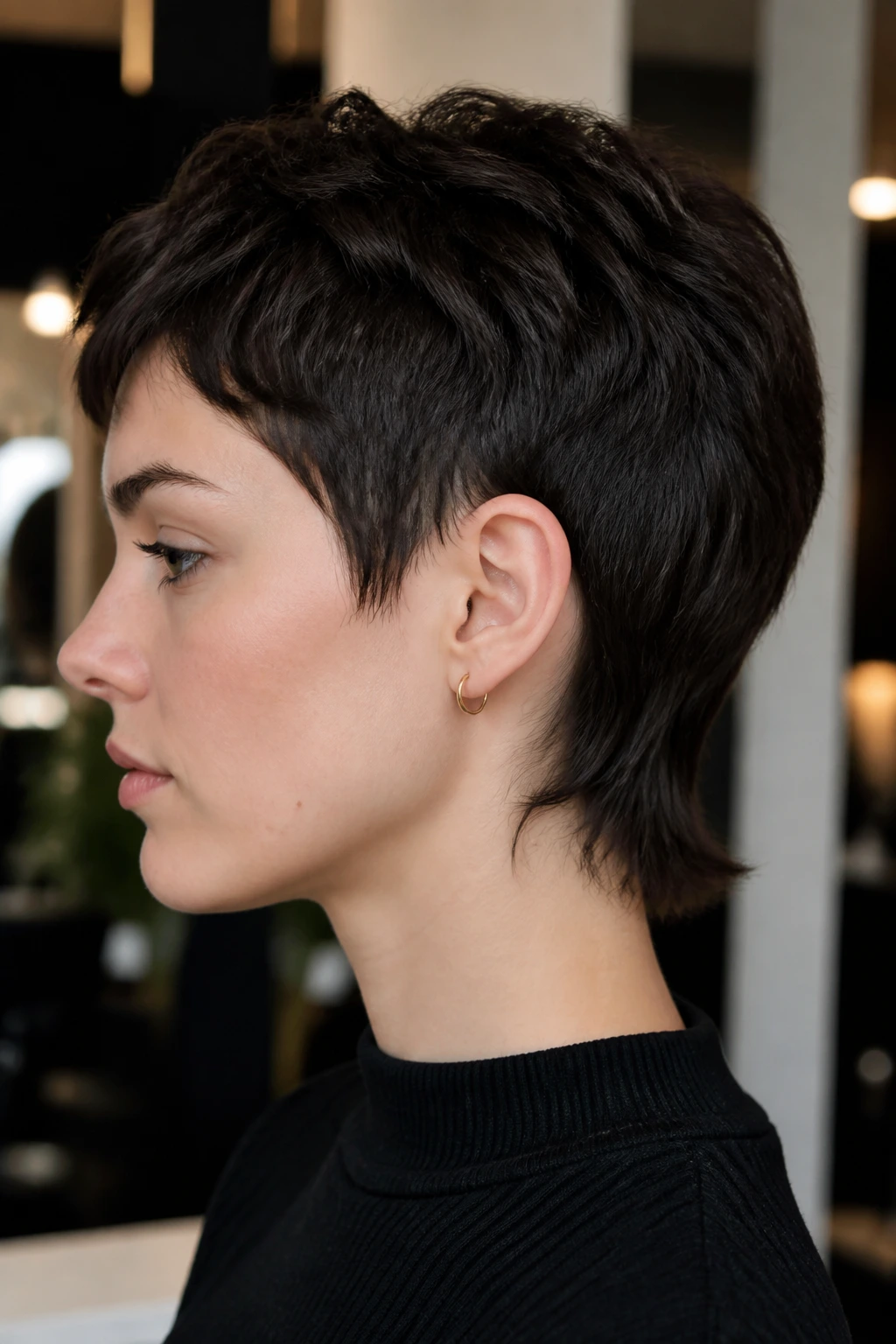
This is the sharp one. The sides sit close to the head, the crown stays short enough to lift, and the nape hangs on just long enough to keep the silhouette from becoming a standard pixie. It’s neat, but it still has attitude.
The version I like best has a close neckline, a soft top, and a little length behind the ears so the shape reads from the side. A pea-sized amount of matte paste through dry hair gives it grip without shine. If you want something quick in the morning, this cut behaves.
It also suits fine hair because the shorter top adds lift without requiring much styling. The price of that convenience is upkeep. You’ll want neck cleanups more often than with longer versions, because a grown-out nape loses the point fast.
3. Wolf-Cut Mullet With Heavy Texture
Why does this one work so well on hair that already has movement? Because the cut expects it. The wolf-cut mullet uses layered crown pieces, cheekbone-skimming fringe, and a longer back, so the whole head has a lived-in lift that doesn’t need to be forced into place.
How to Wear It
Sea salt spray on damp hair, finger-drying until the roots are mostly dry, and then a little scrunching at the ends will get you close. Don’t brush it smooth unless you want to flatten the texture. The best wolf-cut mullets look a touch wild, but never accidental.
This is the cut that rewards people who dislike spending a long time with hot tools. The texture can do the work if the layers are cut with enough shape. Thick hair usually loves it, though the crown needs careful thinning so it doesn’t balloon.
4. Long Mullet With Floating Layers
Picture a woman who wants to keep her length, but refuses to let the hair behave like one heavy curtain. That’s this cut. The front stays soft, the crown gets lifted with invisible layers, and the back moves instead of hanging like dead weight.
- Keep the shortest face pieces near the cheekbone.
- Let the back graze the collarbone or go past it.
- Use a 1.25-inch iron only on the front if the back already has wave.
- Ask for point-cut ends so the layers don’t stack into a block.
The long mullet works because it keeps the shape readable even when the hair is down. The profile still gives you that mullet silhouette, but the longer length makes it easier to wear in conservative settings or on days when you want something less dramatic. My take: this is the safest place to start if you’re mullet-curious and not ready to lose much length.
5. Curly Mullet That Lets the Ringlets Move
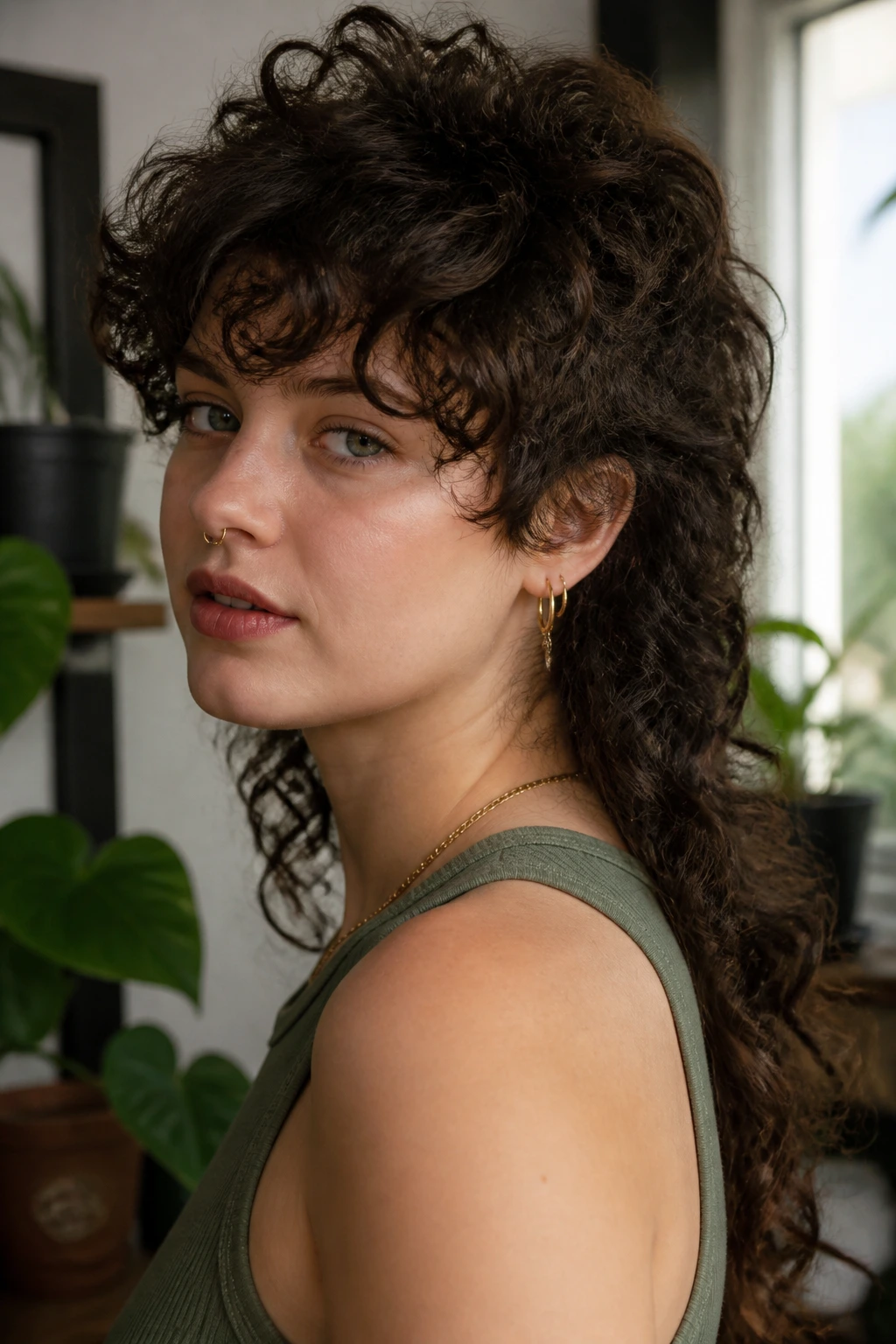
Curly hair makes a strong argument for the mullet, mainly because the shape gives curls room to bounce where they want to bounce. The crown gets shortened enough to free up lift, the face frame opens around the cheeks, and the back keeps enough length so the curls stack in a nice cascade instead of mushrooming into a triangle.
The main mistake here is overthinning. Curly hair already has space between the strands, so the cut needs shape, not random removal. I prefer a dry or mostly dry cut for this one, because shrinkage changes everything once the hair dries. A curl cream and a diffuser are plenty; no need to pile on heavy products.
If your curls spring up a lot, ask for the back to be cut longer than you think you need. That little bit of extra length disappears once the ringlet pattern kicks in.
6. Wavy Choppy Mullet With Airy Ends
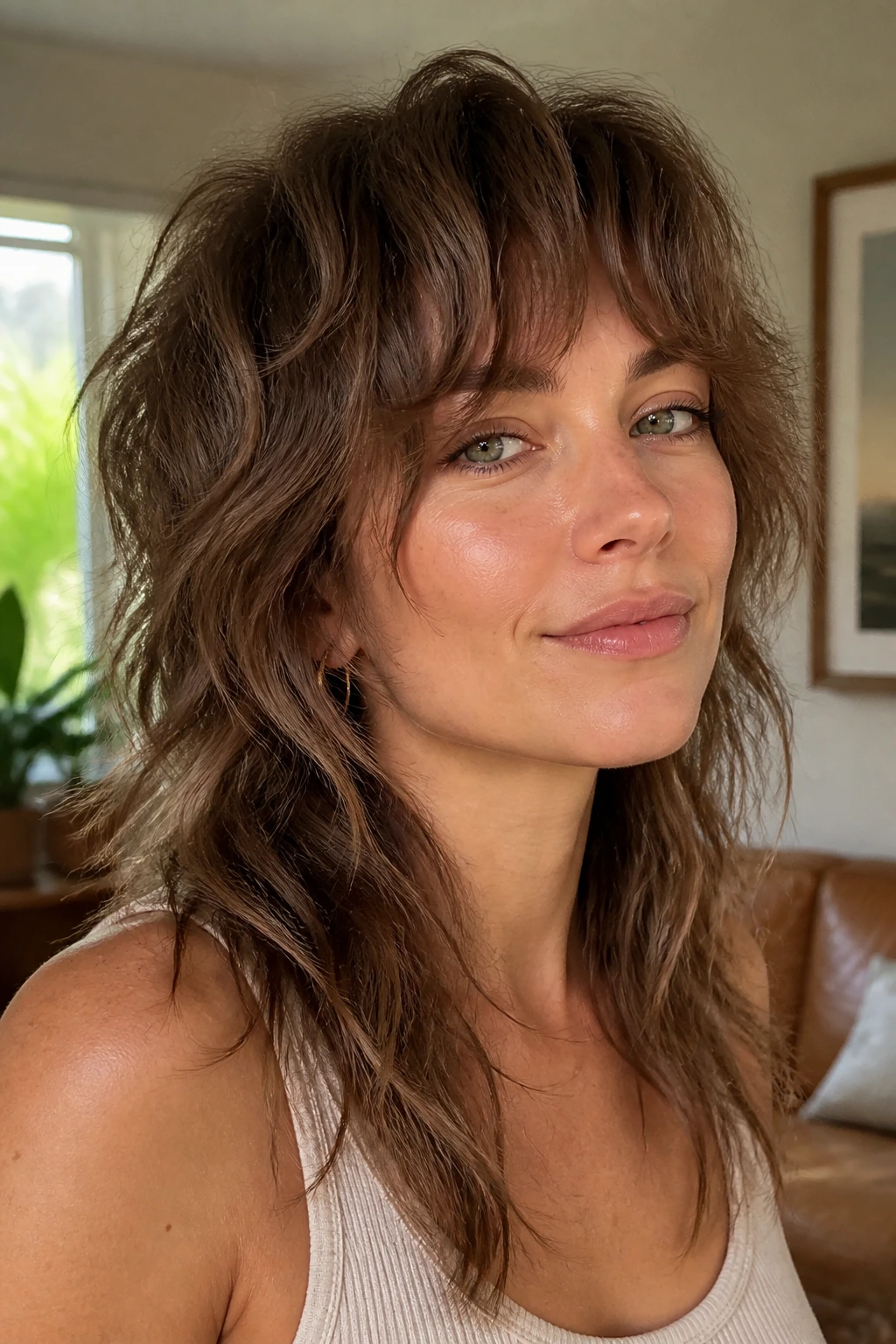
Unlike a classic shag, this version keeps the back longer and the ends a little more visible. The effect is looser and more directional. Wavy hair gives it a natural break in the line, so the cut feels casual without losing shape.
The best way to style it is with a light mousse at the roots, a quick rough-dry, and a few bends through the front pieces with a curling wand. You do not need tight curls. In fact, too much curl makes the cut look busier than it should. Keep the separation soft and the ends feathery.
This is one of the easiest modern mullet hairstyles for women to wear if you like that undone, air-dried look but still want the haircut to have a clear profile. It’s low effort, but not lazy. There’s a difference.
7. Micro-Bang Mullet for a Sharp Frame
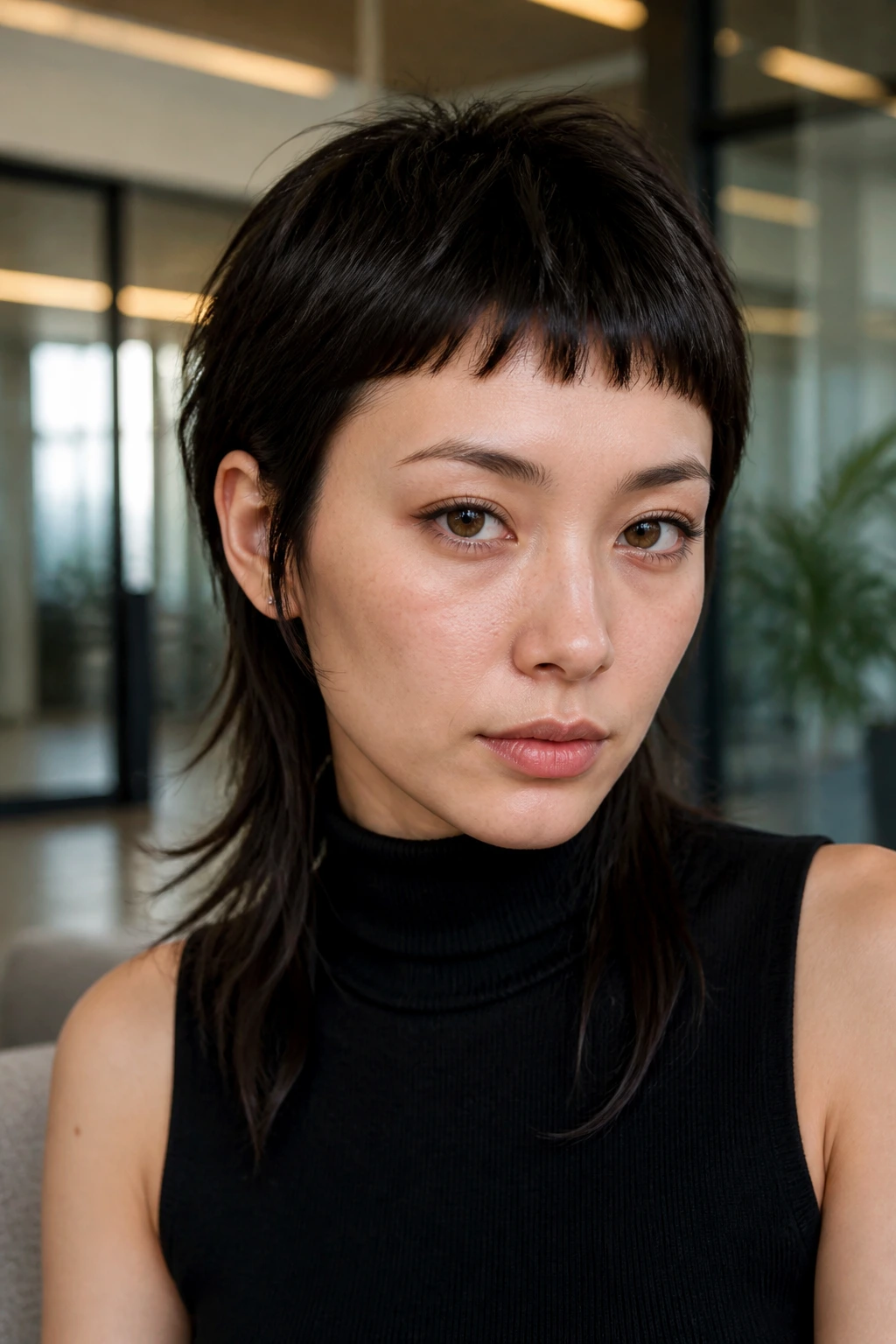
A micro-bang mullet is not shy. The short fringe puts the eyes front and center, and the longer back keeps the haircut from feeling like a cropped pixie. On the right face, that contrast looks electric.
Why It Works
The fringe cuts a hard line across the forehead, which makes the rest of the shape feel even more deliberate. Keep the crown slightly textured and the sides close enough to show the cheekbones. If the bangs are too thick, the whole style can tip into costume territory, so ask for softness through the points.
Best Details to Ask For
- Fringe above the brow, not in the middle of the forehead.
- A soft crown with enough lift to keep the top from lying flat.
- A nape that’s clearly longer than the front fringe.
My take: this cut works best when the rest of the hair is kept simple. Let the fringe do the talking.
8. Tapered Mullet That Reads Office-Friendly

This is the version for anyone who wants the mullet shape without walking into a room looking like they changed personalities in the parking lot. The sides taper neatly, the crown stays controlled, and the back keeps a clean, manageable length.
The key is softness in the transition. You want the front to melt into the middle, not separate from it. A blow-dry with a paddle brush or a soft round brush keeps the silhouette tidy, and a small amount of smoothing cream helps the ends lie in the same direction. It’s one of the best options if your hair has to look polished during the week and a little freer on the weekend.
I like this version on straight or slightly wavy hair because it keeps the lines readable. No chaos. No puff.
9. Sleek Glass-Hair Mullet With Clean Ends
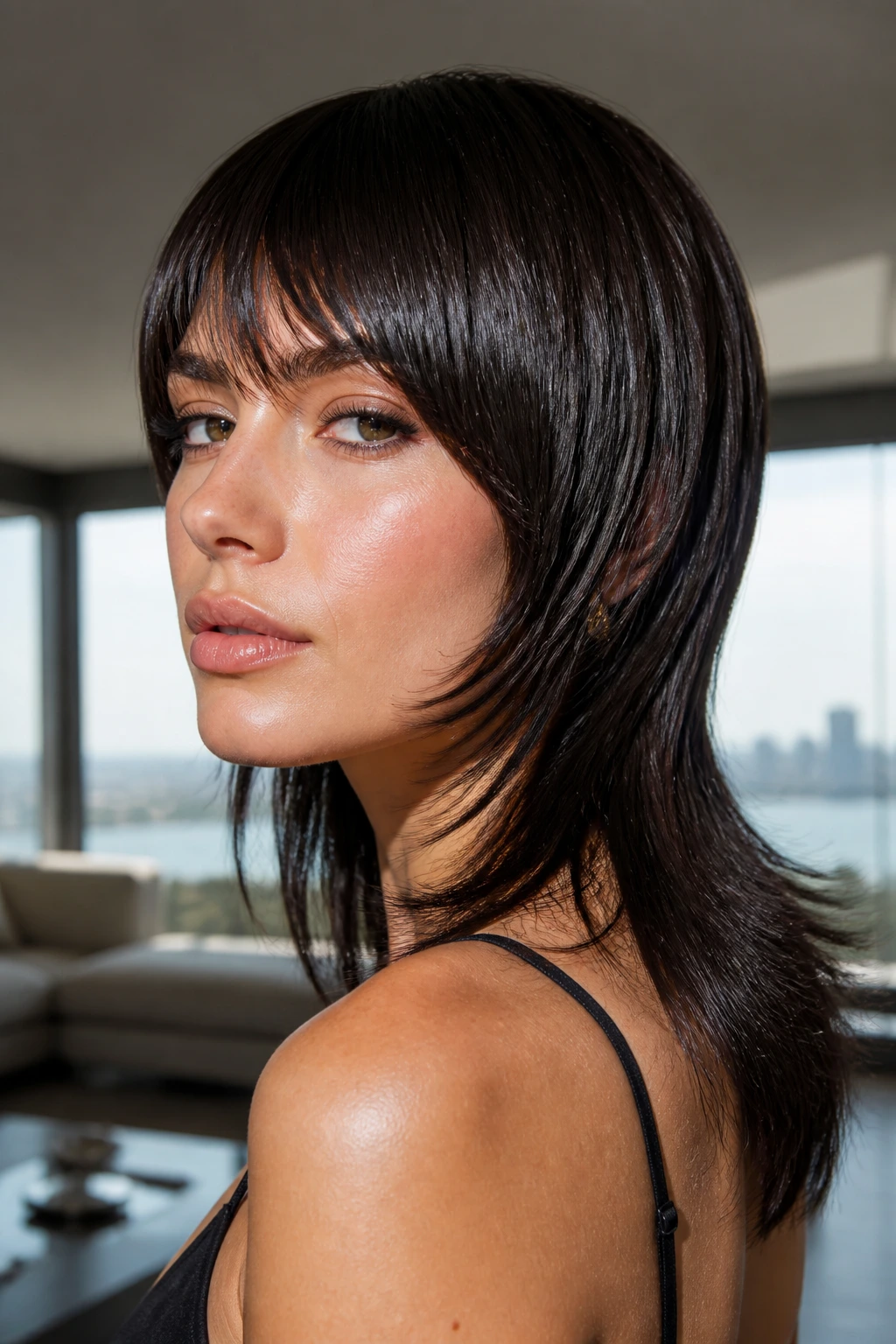
Why does a mullet look so different when the finish is sleek? Because the shape becomes architectural. The shiny top and the longer back create a clean line that feels much sharper than a tousled version, especially on dark or naturally glossy hair.
Use heat protectant first, then flatten only the top and front pieces with a flat iron. Keep the back smooth, but do not flatten all the movement out of it. The whole point is contrast, not stiffness. A tiny drop of serum on the ends will control flyaways without turning the haircut greasy.
This works when you want the cut to feel deliberate and polished. It’s a good answer for people who like sharp clothes, clear lines, and a hairstyle that behaves in a straight mirror.
10. Asymmetrical Mullet With a Deep Side Sweep
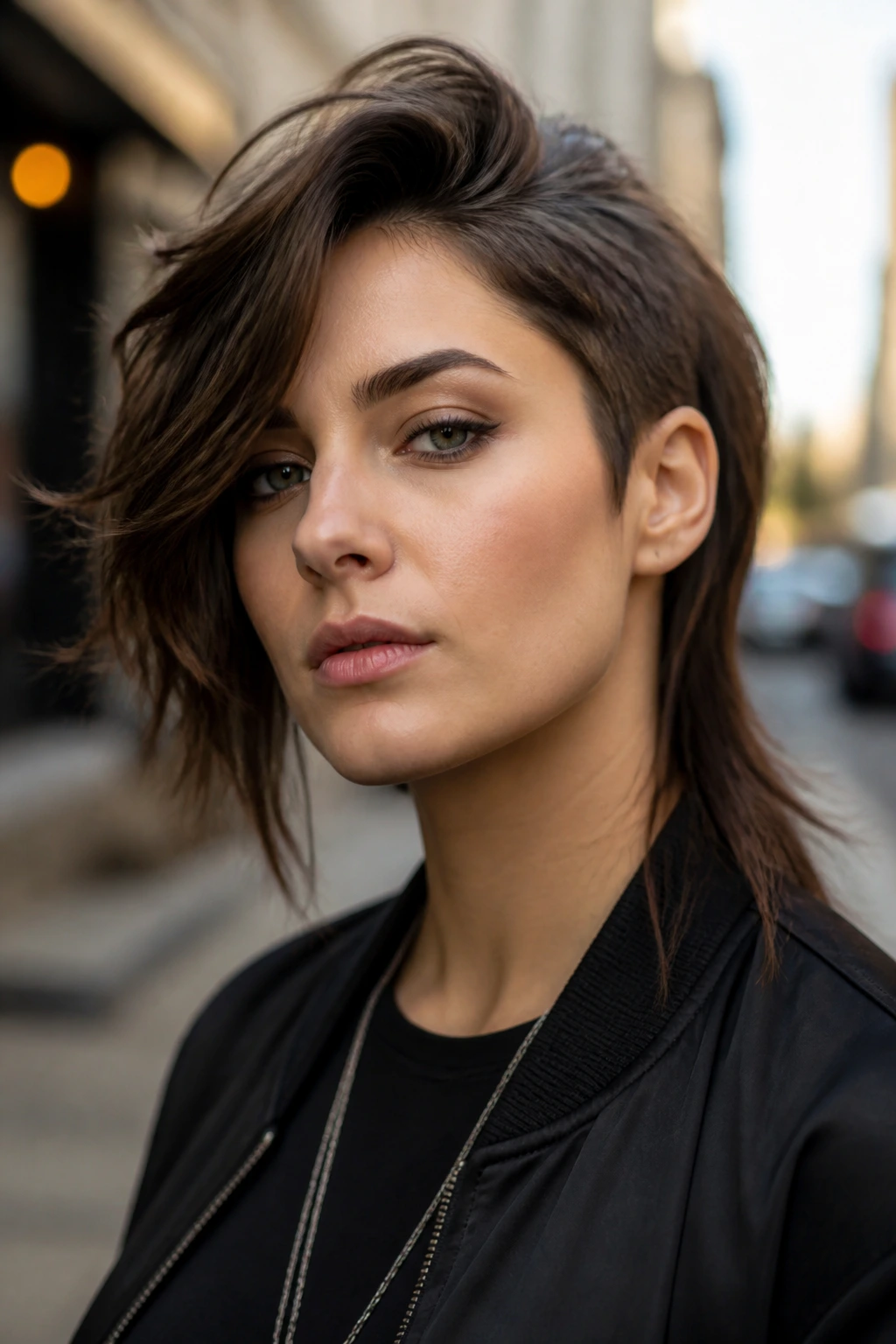
Sometimes the easiest way to modernize the cut is to break the symmetry. One side drops longer, the part shifts deep, and the fringe sweeps across the face instead of splitting it down the middle. It changes the whole mood.
A deep side part can make the cheekbones look stronger and the front pieces more sculpted. The shorter side keeps the neckline neat, while the longer side gives the cut a little drama when you turn your head. If you like a profile that changes as you move, this one has a lot to offer.
Ask your stylist to keep the asymmetry obvious but not jagged. The difference should feel designed, not like the cut got interrupted halfway through. A light wax through the longer front piece helps the shape stay in place.
11. Feathered Mullet With Light, Flicked-Out Ends
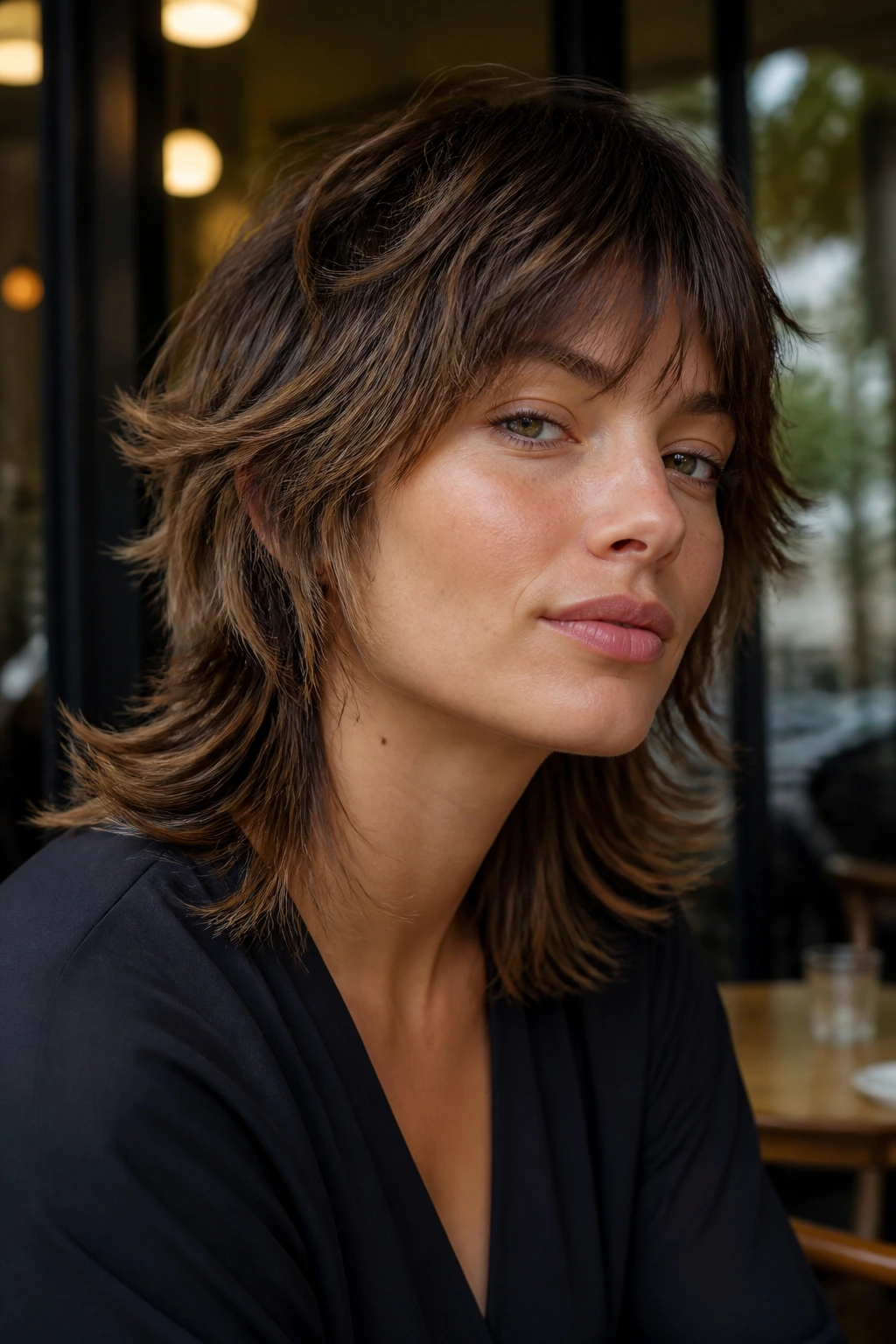
The feathered version borrows the best part of older layered cuts and leaves the rest behind. The ends flick away from the neck and cheek, which makes the haircut feel airy instead of heavy. It’s a good one for medium-density hair that needs movement more than aggression.
There’s a softness to feathering that I still think gets overlooked. When the layers are cut cleanly, the haircut opens up around the face without losing the mullet profile. Blow-drying with a round brush and lifting the ends outward is enough. You don’t need big volume to make it work.
This is a solid choice if you want your hair to look styled without appearing overworked. It has shape, but it doesn’t announce every layer.
12. Undercut Mullet With a Hidden Edge
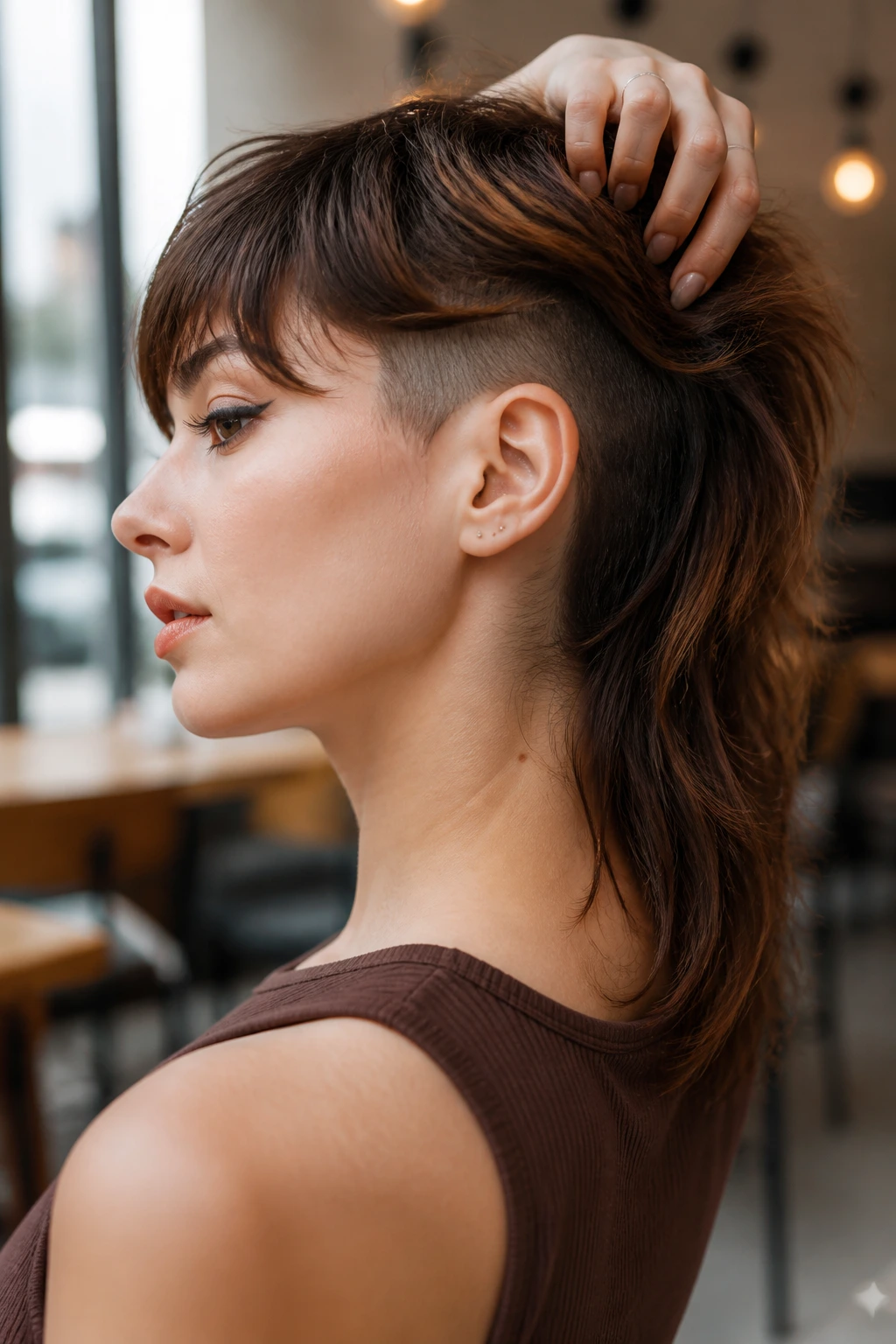
Unlike a mullet that keeps the sides visible, this one hides the drama underneath. The top and back stay layered, but the lower sections are clipped shorter so the bulk disappears where it would otherwise swell out. It’s a smart move for thick hair.
You get two benefits at once: less heat and less weight. That matters. When thick hair sits on the neck in one heavy sheet, the whole haircut goes flat at the crown and puffs at the ends. The undercut fixes that by removing bulk in the right place.
This version needs more maintenance than it first appears. The hidden section grows fast, and once it starts to push outward, the outline gets fuzzy. If you like a clean silhouette and don’t mind a slightly more technical cut, this one earns its keep.
13. Bixie Mullet Between Bob and Pixie
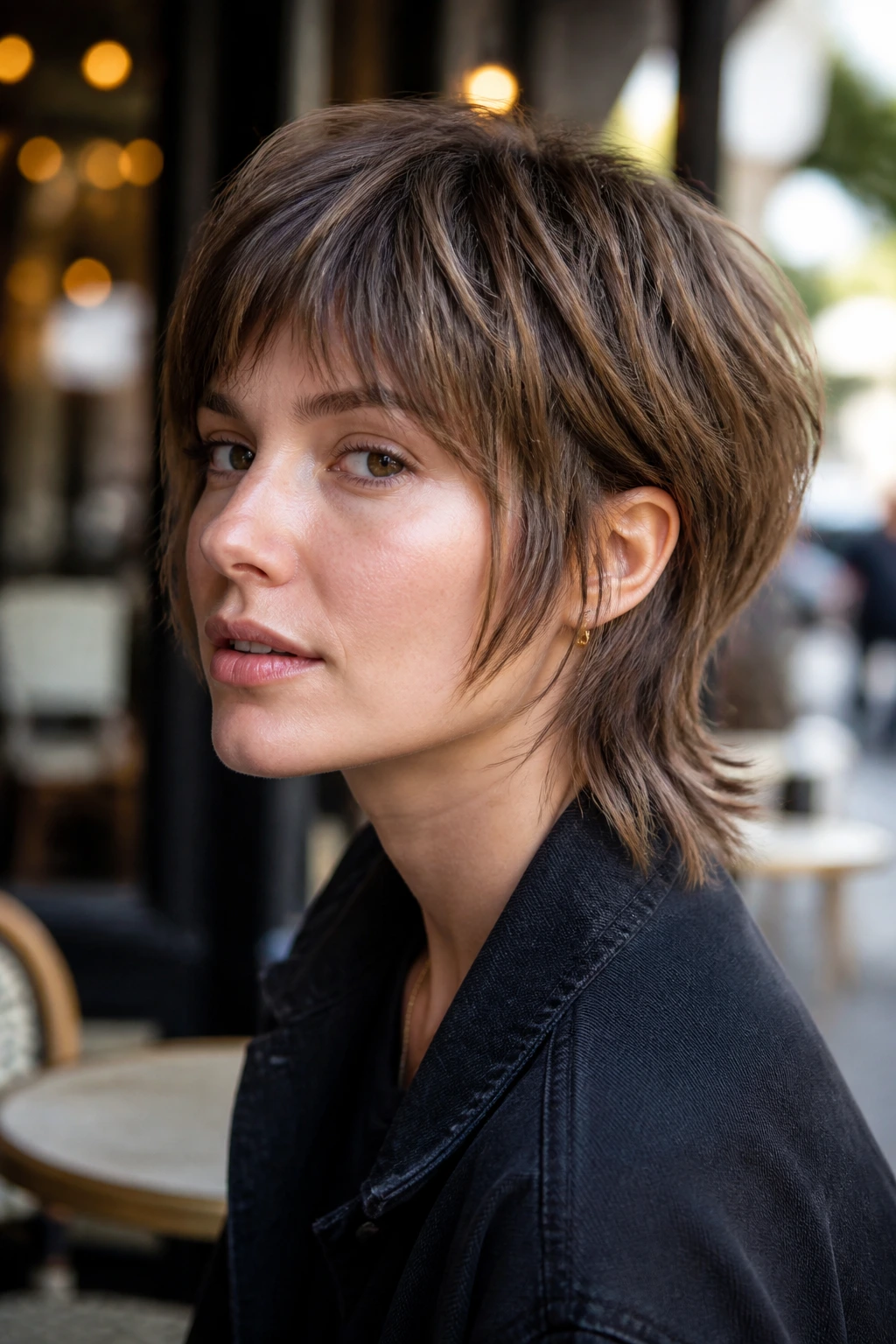
A bixie mullet sits in that useful middle zone where the front looks bob-like and the back keeps a little tail. It’s short enough to feel fresh, but it still has the backward length that makes the mullet recognizable.
Why It Works
The front weight keeps it from turning into a strict pixie, while the longer back prevents the bob line from looking too neat. This is a good cut for straight hair because the shape is easy to read, and for fine hair because the shorter length can create the illusion of fullness. A little root lift spray at the crown helps it stand up without teasing.
What to Ask For
- Chin-to-jawline pieces in front.
- A clean nape with a soft tail.
- Light layering, not choppy removal.
Tip: if you’re growing out a pixie, this is often the cleanest next step.
14. Heavy-Fringe Mullet That Puts the Eyes First
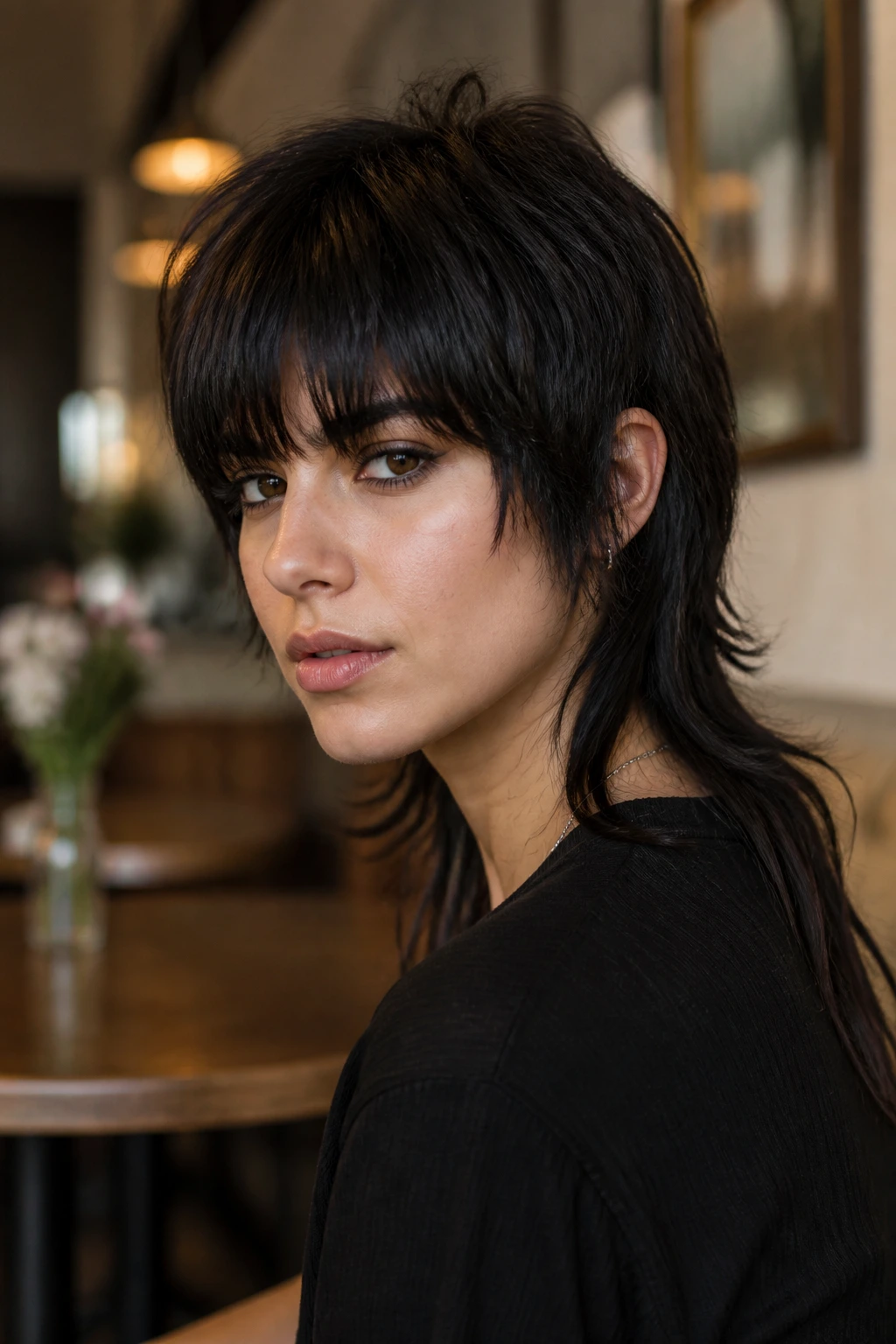
This cut uses a full fringe like a frame. The bangs sit lower and fuller than curtain bangs, so the eyes become the main feature before the back length ever enters the conversation. It’s a bold shape, but a useful one.
The trick is not letting the fringe get too thick through the bottom. A blunt, heavy line can look severe fast, especially if the back is also short. A little internal texture keeps the bangs from feeling like a wall. Pair that with a softer crown and the haircut suddenly feels intentional.
I like this version on longer faces because it shortens the visual length of the forehead. It also does a good job of balancing a sharper jaw if the side layers are kept soft.
15. Korean-Inspired Soft Mullet With Rounded Layers

Why do some soft mullets feel so easy to wear? Because the silhouette is rounded, not chopped. The Korean-inspired version keeps the top airy, the fringe gentle, and the back loose enough to move without showing hard disconnects.
The finish matters here. Blow-dry with a round brush, bend the ends inward or outward depending on your preference, and keep the product light. Heavy wax will kill the softness. This cut is less about attitude and more about flow, which is probably why so many people who want a softer mullet end up here.
If you want a shape that reads feminine without losing the mullet outline, this is one of the most reliable directions. It doesn’t shout. It just sits well.
16. Platinum Razor Mullet With a Bright Finish
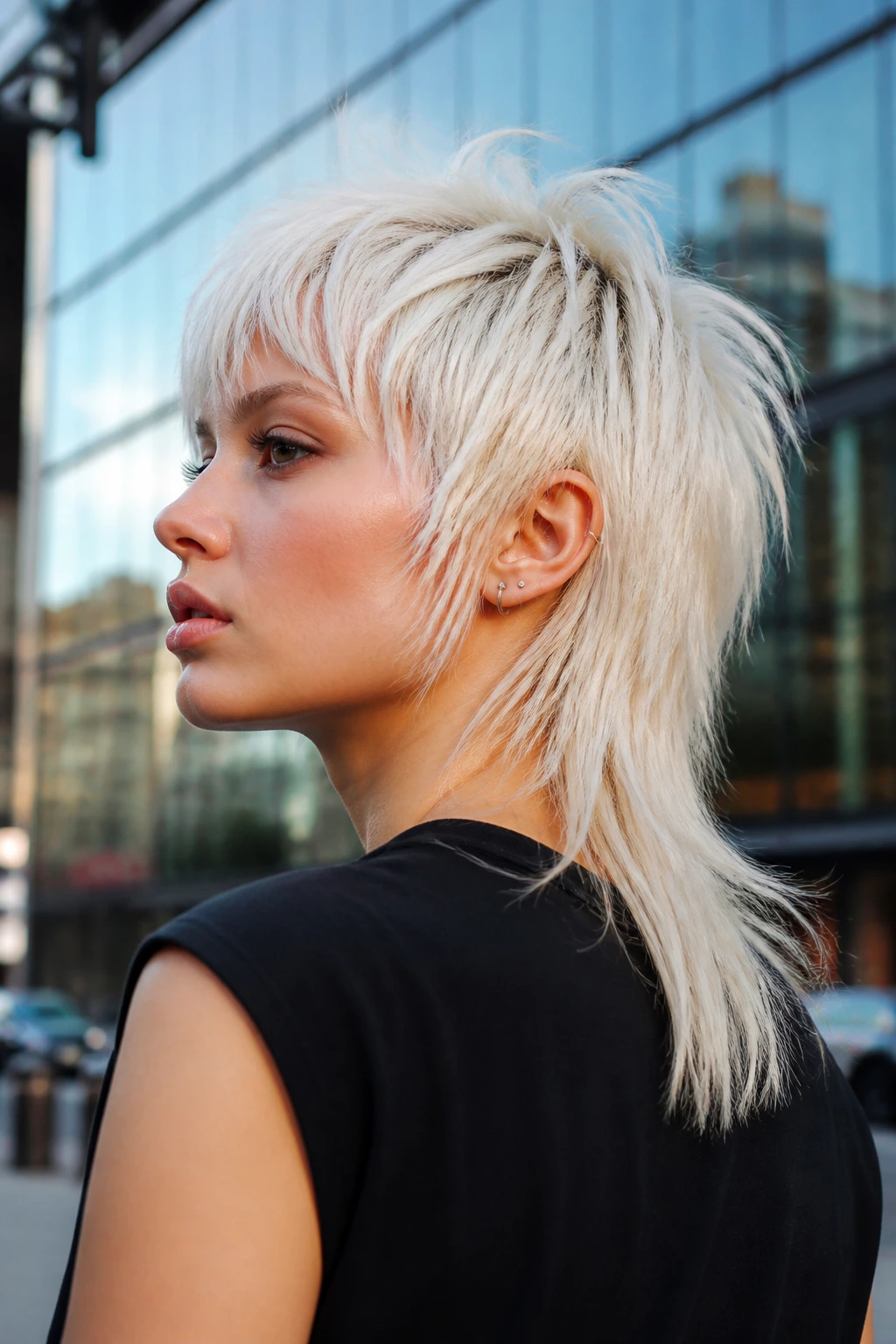
A platinum mullet is not for the faint of heart, and I mean that in the best way. The pale color makes every layer visible, so the haircut either looks razor-sharp or it looks unfinished. There’s no hiding under dim light.
A razor-cut finish gives the ends a narrow, textured edge that helps the blonde stay airy. Just know that bleach changes the texture, so the hair needs more moisture than a darker version would. Bond-building treatment, color-safe shampoo, and a toning mask matter here more than on any other version in this list.
The payoff is obvious. Platinum makes the cut read as fashion-forward from across the room, especially when the fringe and nape are both kept clean.
17. Air-Dry Mullet for Low-Fuss Styling

Some mullets need a brush. This one doesn’t. The air-dry version leans into your natural bend, letting the fringe, crown, and back settle on their own after a wash. It’s not lazy. It’s strategic.
Mousse at the roots, a leave-in cream through the mid-lengths, and a little scrunching are usually enough. If your hair is straight, this version will still need a few bends from your hands or a soft braid while damp. Wavy and curly textures usually get the nicest result with the least work.
The reason I keep recommending this shape to people with busy mornings is simple: the haircut carries the styling burden. When the layers are placed well, the texture can do a lot of the job on its own.
18. Thick-Hair Mullet With Chunky Internal Layers
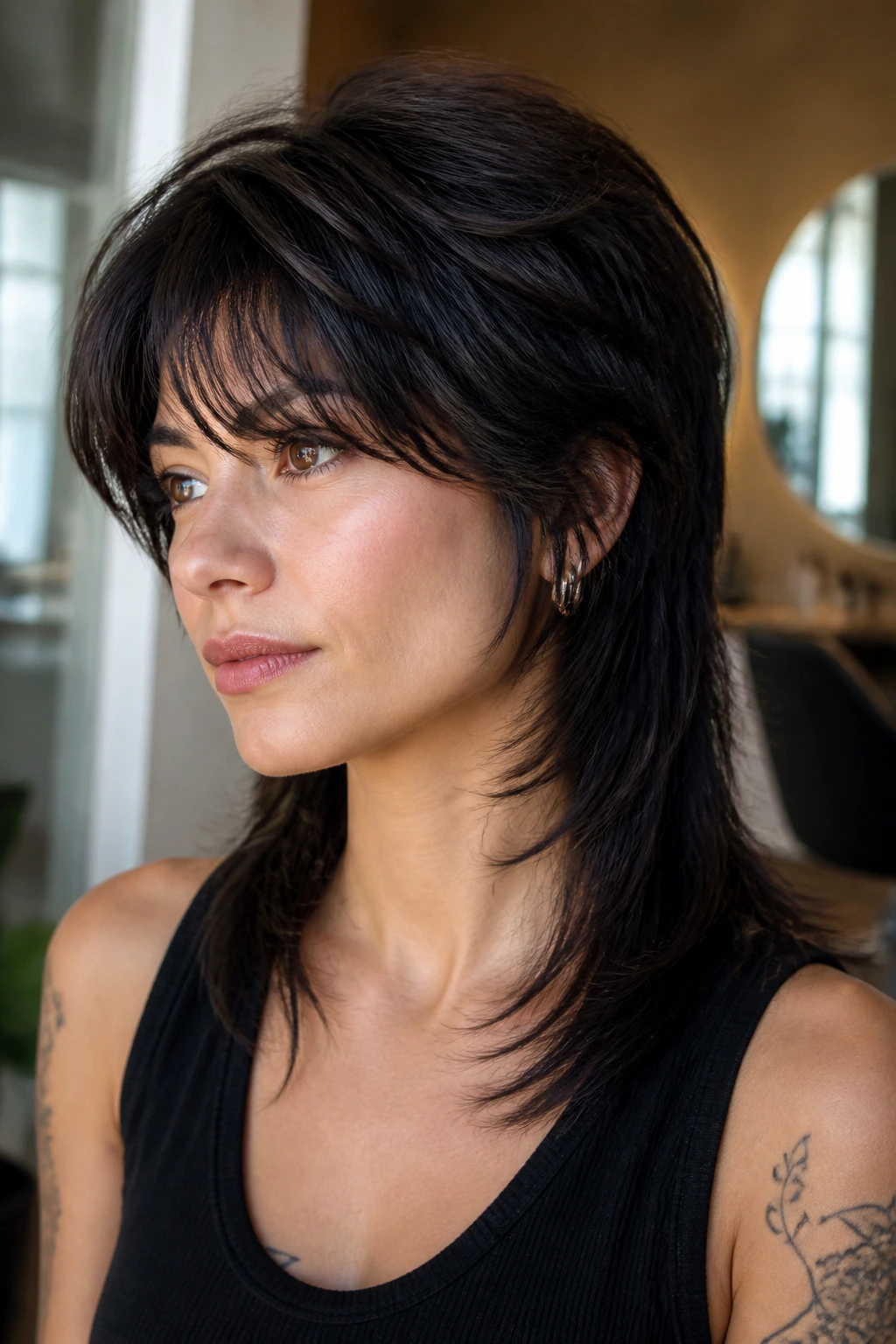
Unlike a lot of thinning-shears horror stories, this cut should not feel shredded. The bulk needs to come out from the inside, where it helps the hair sit closer to the head without killing the outline. That keeps the top from ballooning and the back from turning into a triangle.
Thick hair often looks best when the layers are chunkier and more deliberate. Too many tiny layers create fluff. The better move is clean internal debulking, a controlled fringe, and a back that still has enough length to show movement. A smoothing cream or a light blow-dry balm keeps the surface from turning fuzzy.
This is the version I’d send to anyone with dense hair who says, “I want shape, not pouf.” That’s the whole brief.
19. Fine-Hair Mullet Built Around Crown Lift
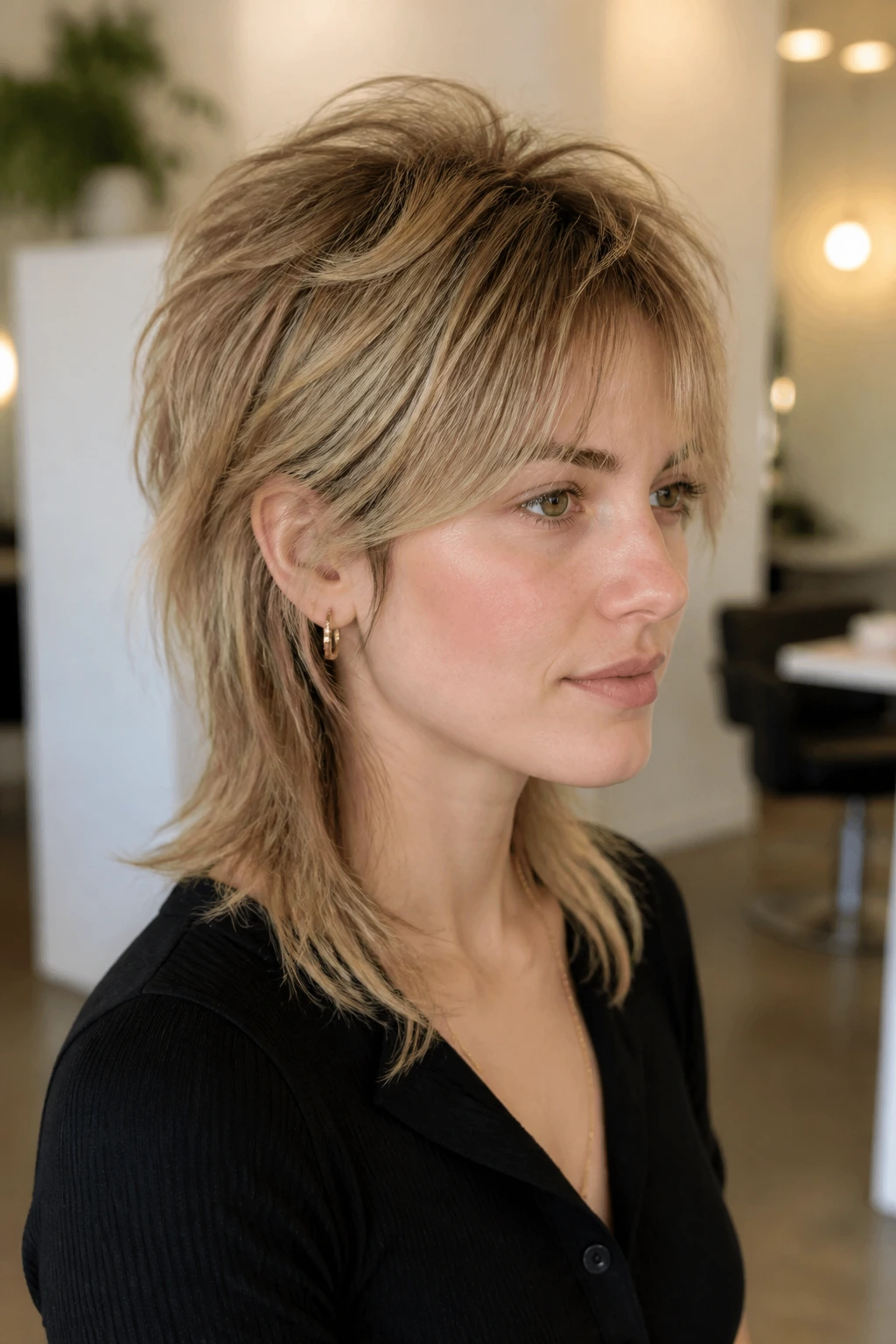
Fine hair needs a little persuasion, not a lot of chopping. If the layers get too aggressive, the ends go wispy and the shape collapses. The better version keeps more length around the perimeter and uses the crown for lift.
Why It Works
Root-lifting spray at the scalp, a small round brush, and a light back-and-forth blow-dry at the top can create height without teasing the hair into a nest. Keep the ends clean. That makes the haircut look fuller, not thinner. A soft fringe can help the front appear denser than it is.
What to Avoid
- Too many short layers at once.
- Heavy oils on the crown.
- A blunt, overthick fringe that eats the volume.
My take: fine hair mullets live or die on restraint. Leave some weight where the hair needs substance.
20. Face-Framing Mullet That Softens Strong Features

This one is all about the front. The back can be fairly simple, but the face frame gets extra attention so the jaw, cheeks, and forehead all feel a little softer. It’s a smart cut for anyone with sharper features who wants movement without hard lines.
The front pieces should hit where your face wants softness most often — cheekbone, jaw, or just below. A middle part can keep things balanced, though a slight off-center part often gives more lift. If the fringe is too short, the cut starts fighting the face instead of flattering it.
I like this when the goal is to keep the mullet shape but avoid anything harsh. It’s one of those cuts that looks better in motion than in a static photo.
21. Rounded Mullet With a Feminine Silhouette
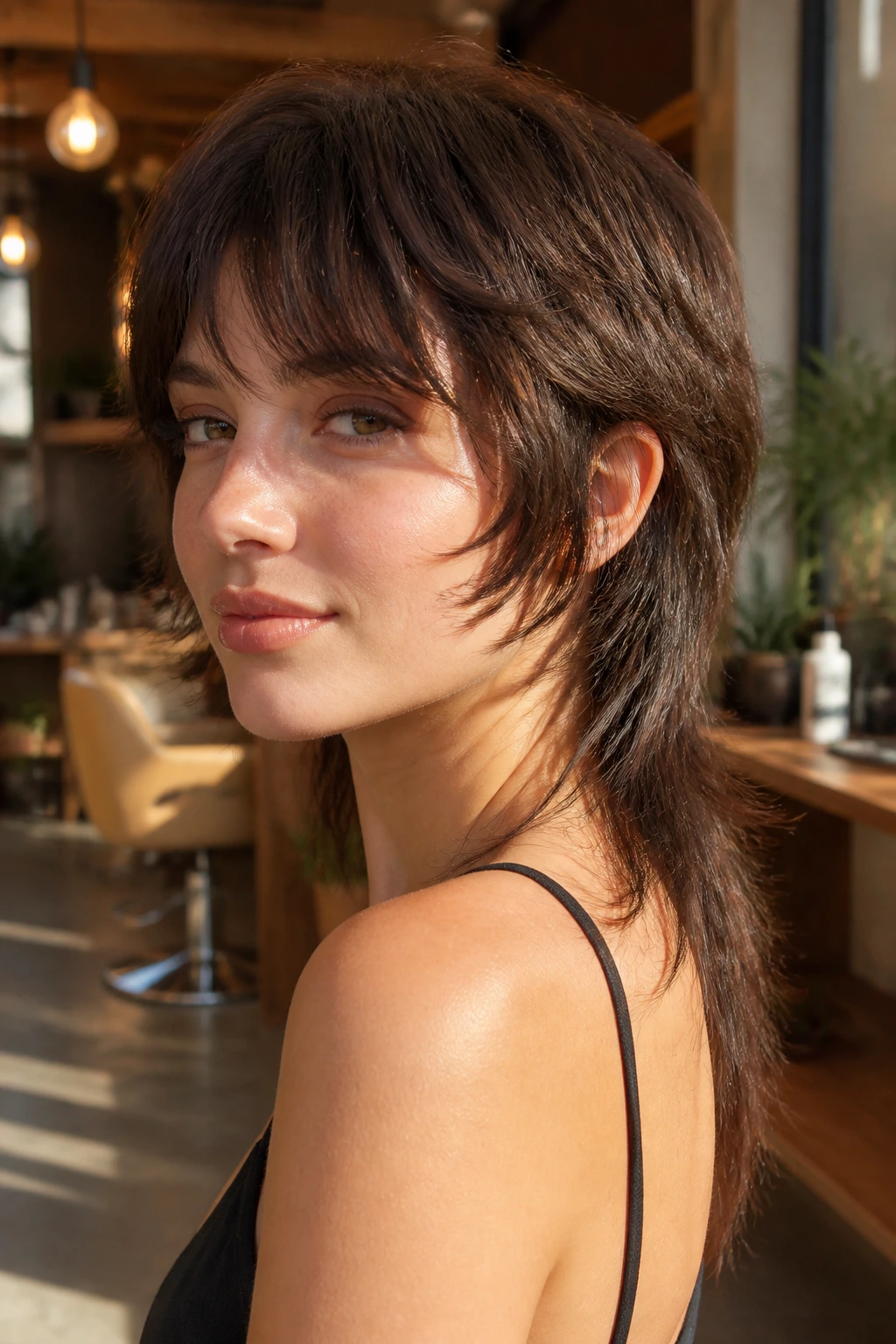
Can a mullet look soft all the way around? Absolutely, if the silhouette curves instead of angling hard. This version uses rounded layers near the crown and around the ears, then lets the back taper into a longer finish.
The roundness helps the haircut feel connected. That matters when you do not want visible disconnect between the front and the back. A blowout with a round brush, especially one that bends the sides inward, keeps the cut plush rather than spiky.
This is a good choice for oval and heart-shaped faces because it doesn’t drag the eye downward too aggressively. It sits in a sweet spot between layered and edgy.
22. Shaved-Sides Mullet With a Clear Contrast
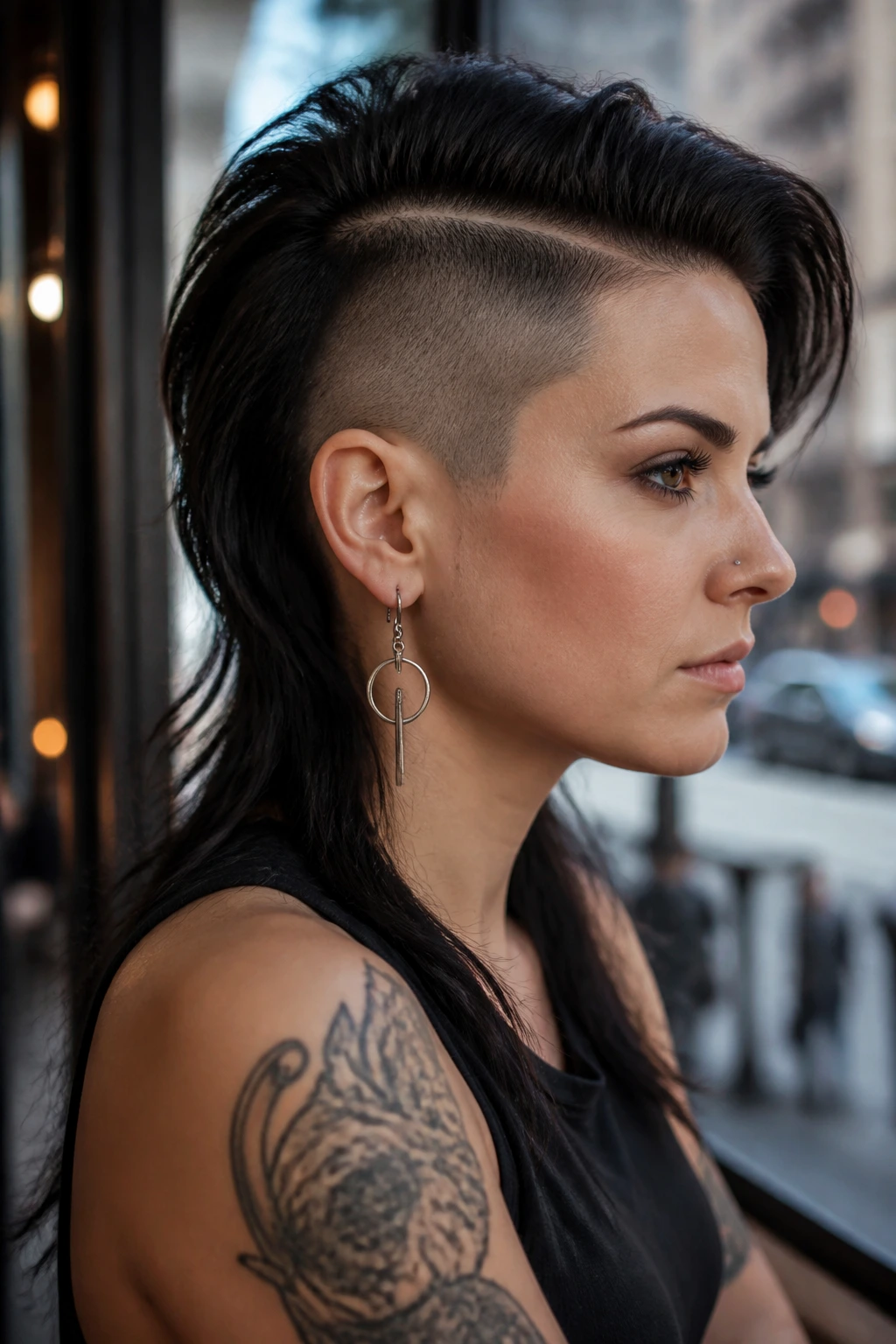
A shaved-sides mullet does not try to be subtle. The sides are visibly short, sometimes down to clipper work, and the top plus back keep the length. The contrast is the whole point, and it looks best when the cut line is crisp.
The maintenance is real. The shaved area grows out quickly, and the difference softens faster than most people expect. If you like sharp outlines and don’t mind seeing your stylist often, this version gives the most dramatic side profile in the bunch.
It’s also one of the clearest ways to make a mullet look modern. The hard contrast reads current, not nostalgic, especially when paired with matte texture on top.
23. Retro ’80s Revival Mullet With a Modern Edge
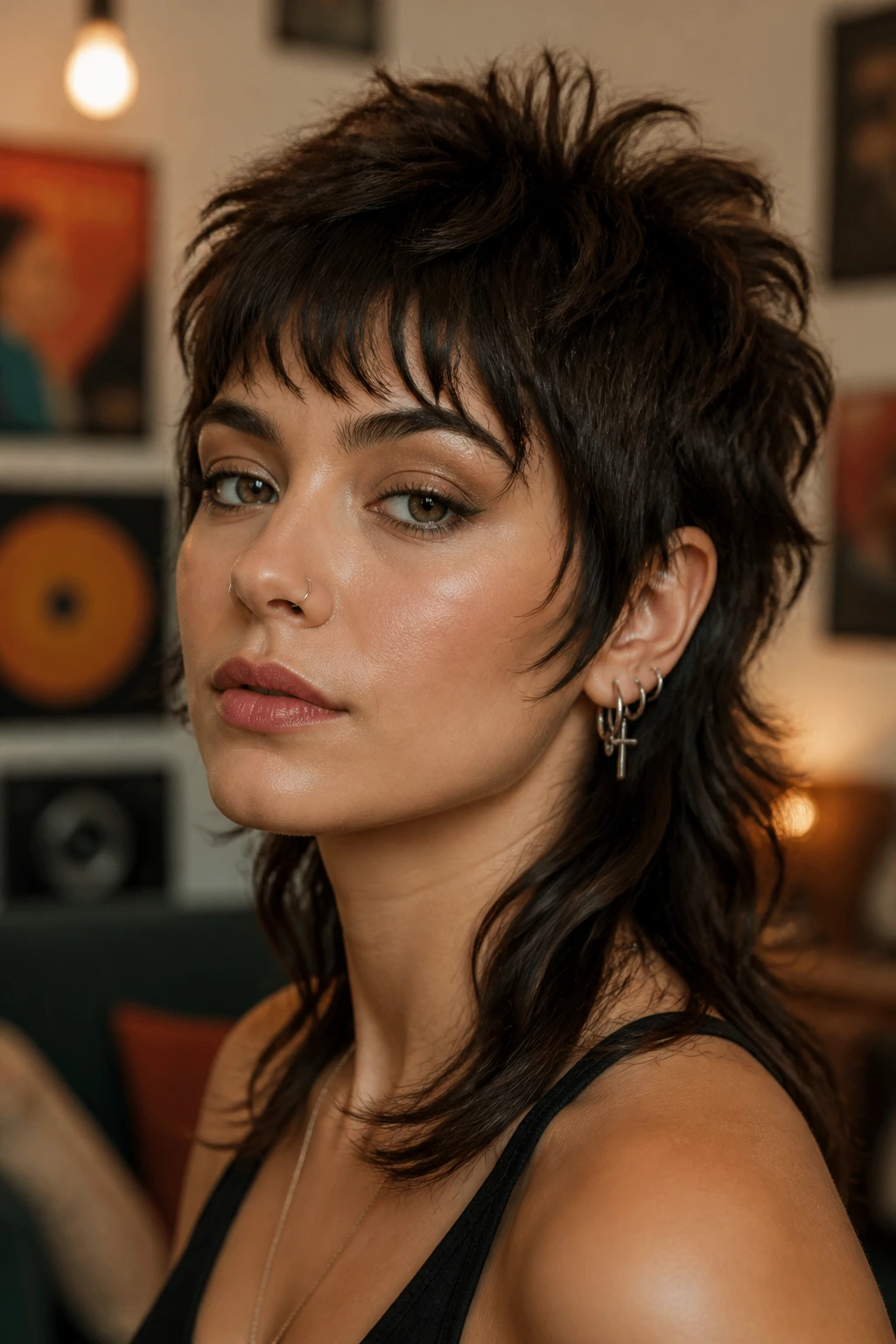
This version borrows the old attitude but trims away the excess. There’s still height at the crown, still length in the back, but the fringe is softer and the sides are more controlled. That’s the difference between revival and parody.
A little mousse at the root and a round brush can bring back that lifted shape without turning it into a helmet. Keep the volume focused at the top, not blown out everywhere. The silhouette should feel intentional, not theatrical.
I like this on people who want a wink of nostalgia without leaning fully into costume. It has the spirit of the old cut and the shape discipline of the newer one.
24. Silver-Hair Mullet That Leans into the Shine
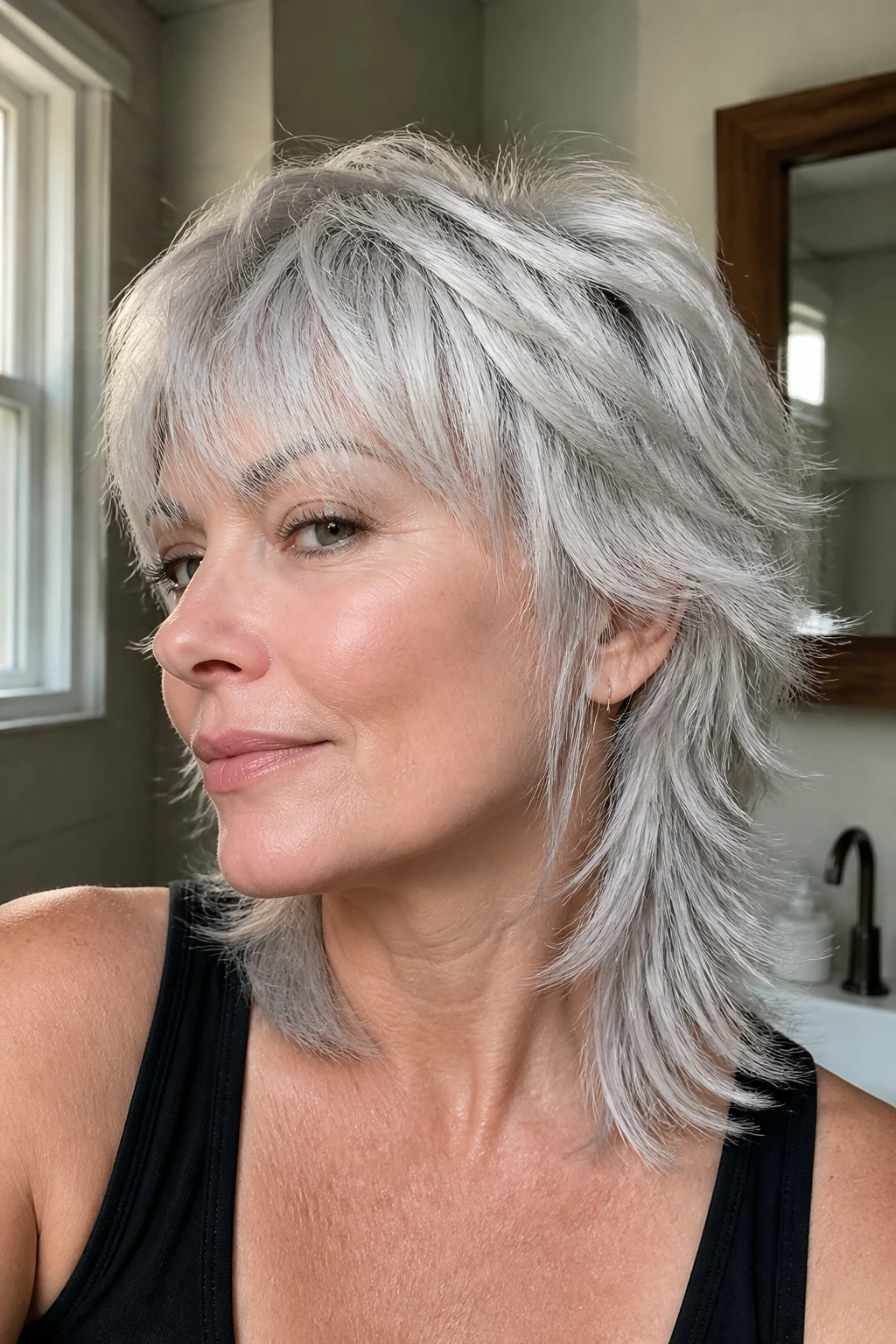
Silver and gray hair make texture easier to see, which is exactly why this cut can look so clean. The light-catching strands show the layers more clearly, and a mullet shape gives those strands someplace to move. A glossy finish can make the whole thing look very crisp.
The one thing I would watch is dryness, because silver hair can go wiry at the ends. A hydrating conditioner, a mild toner if brass shows up, and a light serum on the mid-lengths are enough to keep the surface smooth. You want shine, not limpness.
This is a strong choice if you want the haircut to work with the hair you already have instead of hiding it.
25. Money-Piece Mullet With Bright Front Strands

A money-piece mullet works because the light front sections change the geometry of the cut. Brightening the pieces closest to the face makes the fringe and cheekbone layers stand out, which gives the whole haircut a stronger frame.
Why It Works
The color pulls the eye forward first, then the back length follows. That means the haircut reads as layered and designed even before someone notices the nape. Keep the highlights close to the front hairline and through the first face-framing layer, not all over the head. The contrast should help the shape, not scatter it.
Best Use
- Use on darker natural bases for stronger contrast.
- Keep the back a shade deeper if you want the front to pop.
- Refresh the front pieces before the rest of the color fades.
Tip: this is one of the fastest ways to modernize a mullet without changing the cut itself.
26. Beach-Wave Mullet With Loose Separation
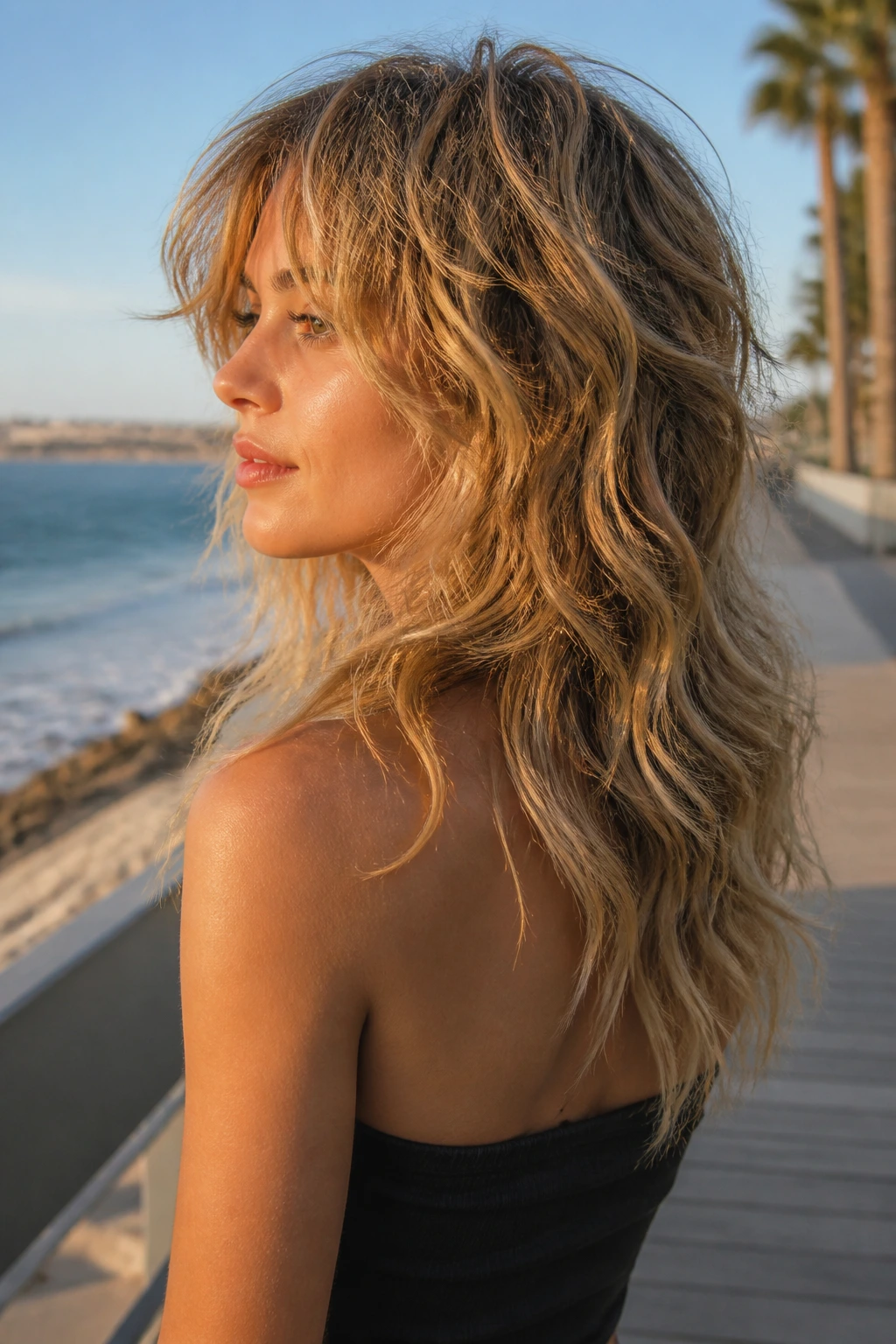
This is the casual cousin in the family. The waves are loose, the ends stay separated, and the finish feels like hair that dried in salt air after a long afternoon. The back still has length, but the whole cut is softened by movement.
A curling wand works best if you alternate direction and leave the last inch of the ends out. That keeps the shape from becoming too neat. Finish with a texture spray and break the waves up with your fingers once they cool. You want loose pieces, not ringlets.
This version is a good pick if you live in simple T-shirts and denim and want the haircut to do a little more visual work than your outfit does.
27. Curly-Bang Mullet With a Framed Forehead
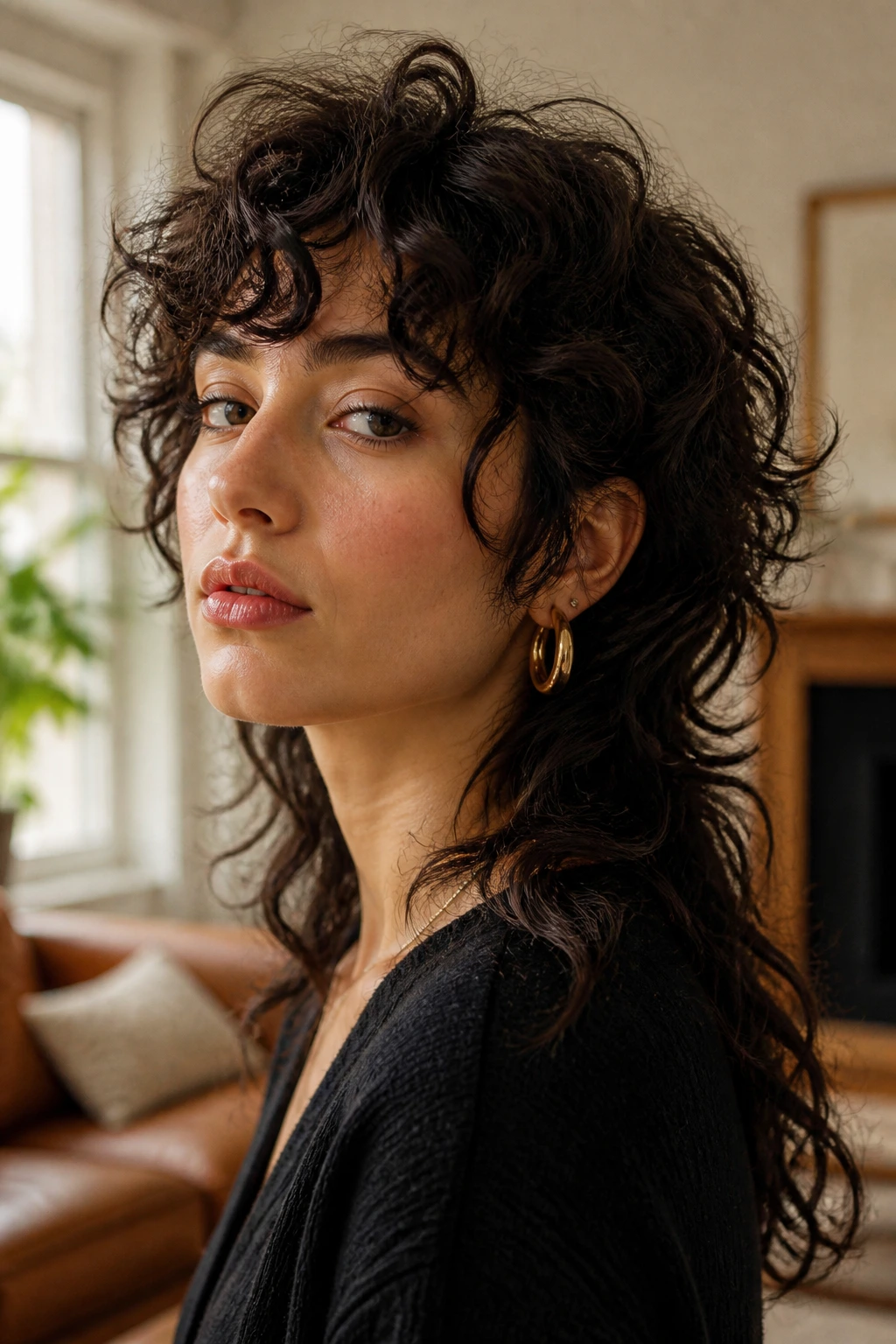
Curly bangs are a commitment, but a useful one. They put texture right at the front of the face, which makes the haircut feel playful and direct. The back stays longer, so the whole shape still reads as a mullet rather than just a curly crop.
The key is shrinkage. Curly bangs often land shorter than expected once they dry, so the cut should start longer than you think. A curl cream and diffuser will keep the fringe soft and defined. If the bangs are cut too short, they can bounce up into the middle of the forehead and steal the whole shape.
This one works especially well when you want the front of the haircut to feel lively and the back to stay relaxed.
28. Short-Nape Mullet That Keeps the Neck Clean
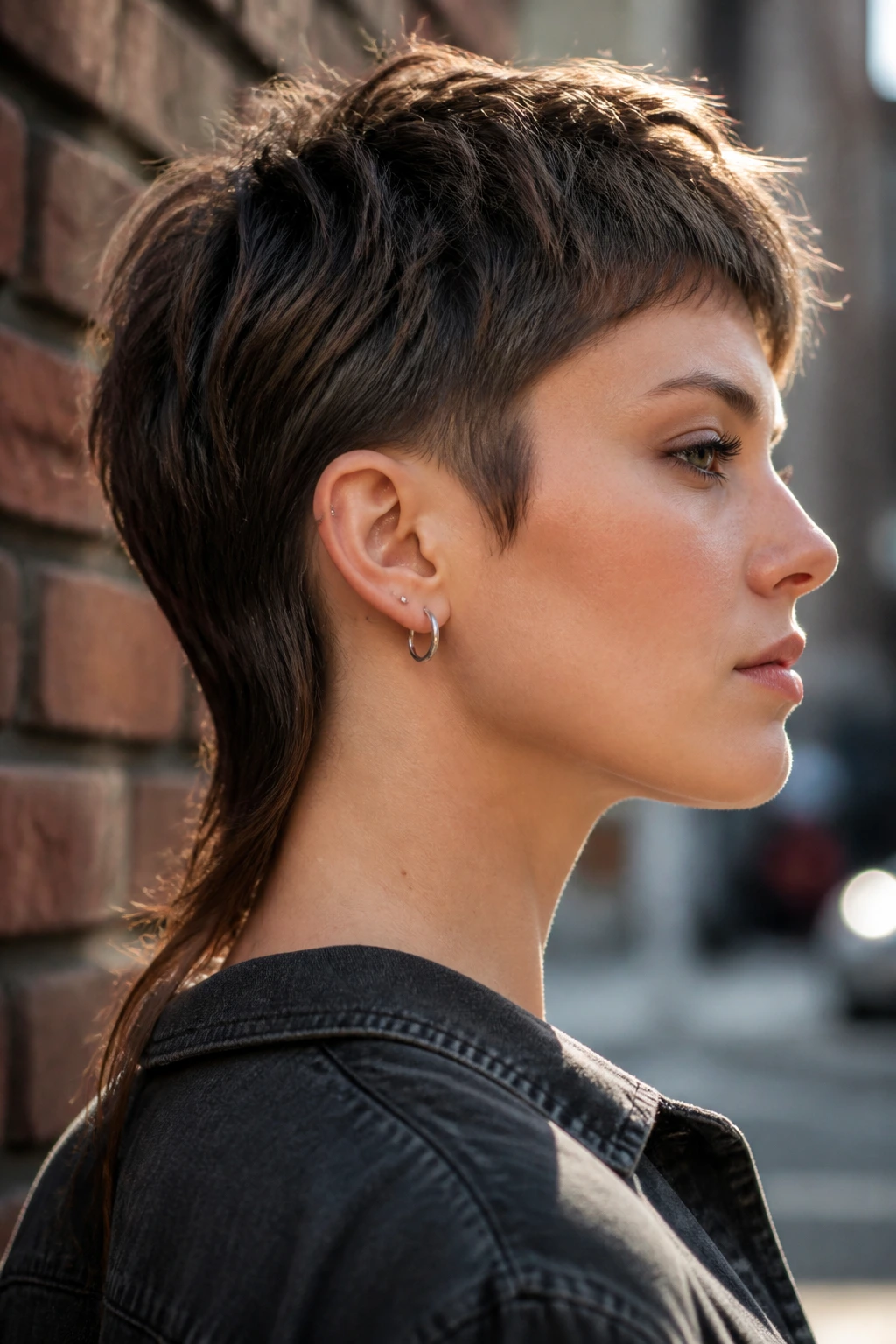
A short-nape mullet is a practical haircut dressed in attitude. The neckline is cleaned up close, the back doesn’t drag on the collar, and the rest of the hair still keeps enough length to make the shape visible. It’s tidy in a way that is easy to live with.
What to Ask For
Ask for the nape to sit close to the skin, with the longest back pieces starting just above the neckline. The crown should still have some texture so the cut doesn’t become a plain short crop. A small round brush at the roots can give the top lift without adding much work.
When It Helps Most
- Warm weather.
- Active routines.
- People who hate collar hair.
The shape stays cleaner longer than fuller versions, which makes it one of the easier modern mullets to maintain day to day.
29. Cascade Mullet With Long Back Movement
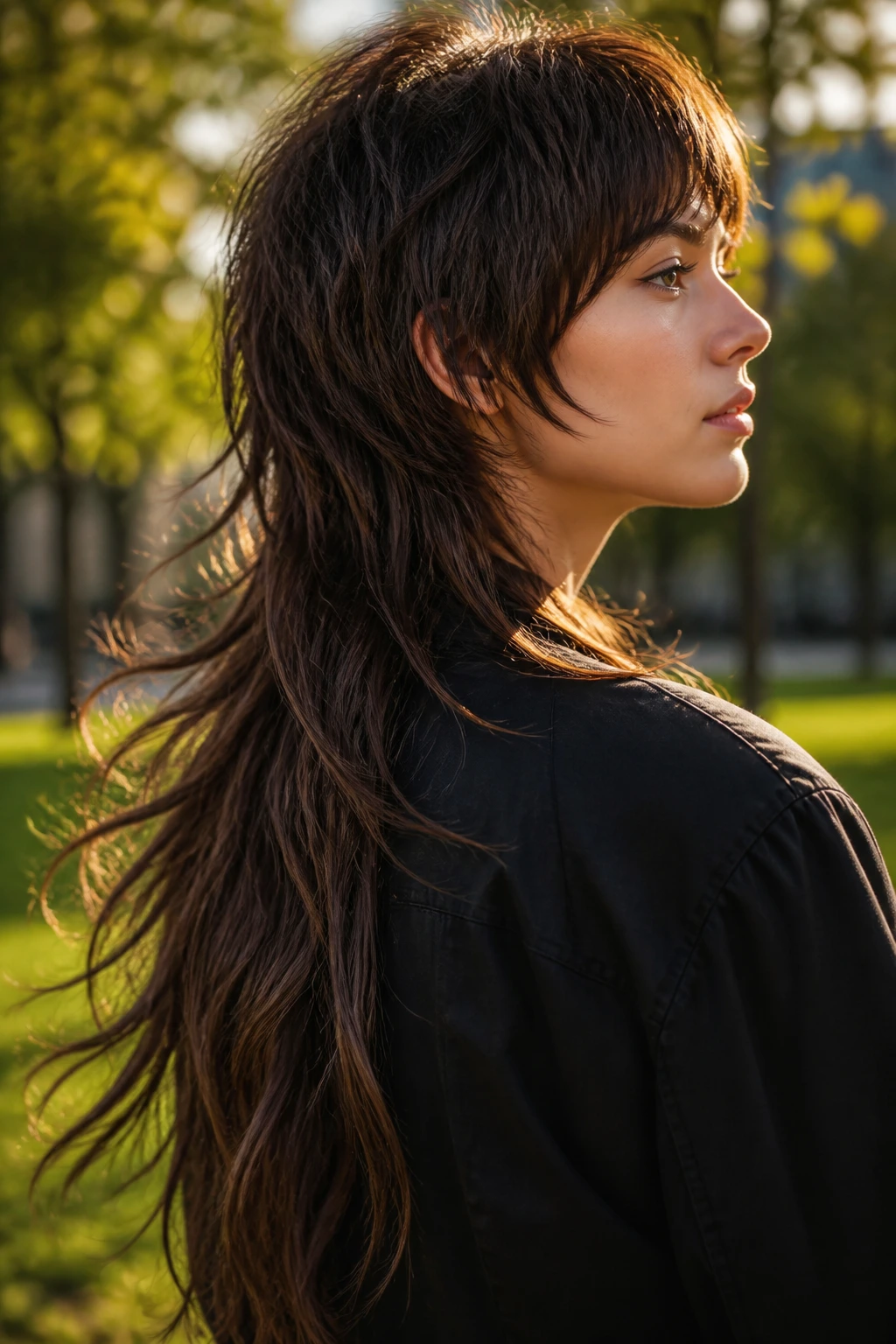
If you like long hair but want the back to feel lighter, this is the answer. The cascade mullet keeps the length and lets the layers spill down the back in a way that still reads as a mullet from the side. It’s more fluid than blocky.
The trick is to avoid a blunt shelf in the back. Long layers should step down rather than stop all at once, or the shape looks heavy. A center part or a soft off-center part both work here, depending on how much face-framing you want. A long iron bend through only the front can keep the length from looking too plain.
This is the style I’d point to if someone says, “I want to keep my hair long, but I’m bored of it hanging there.” Fair enough.
30. Vivid-Color Mullet That Makes the Cut Pop
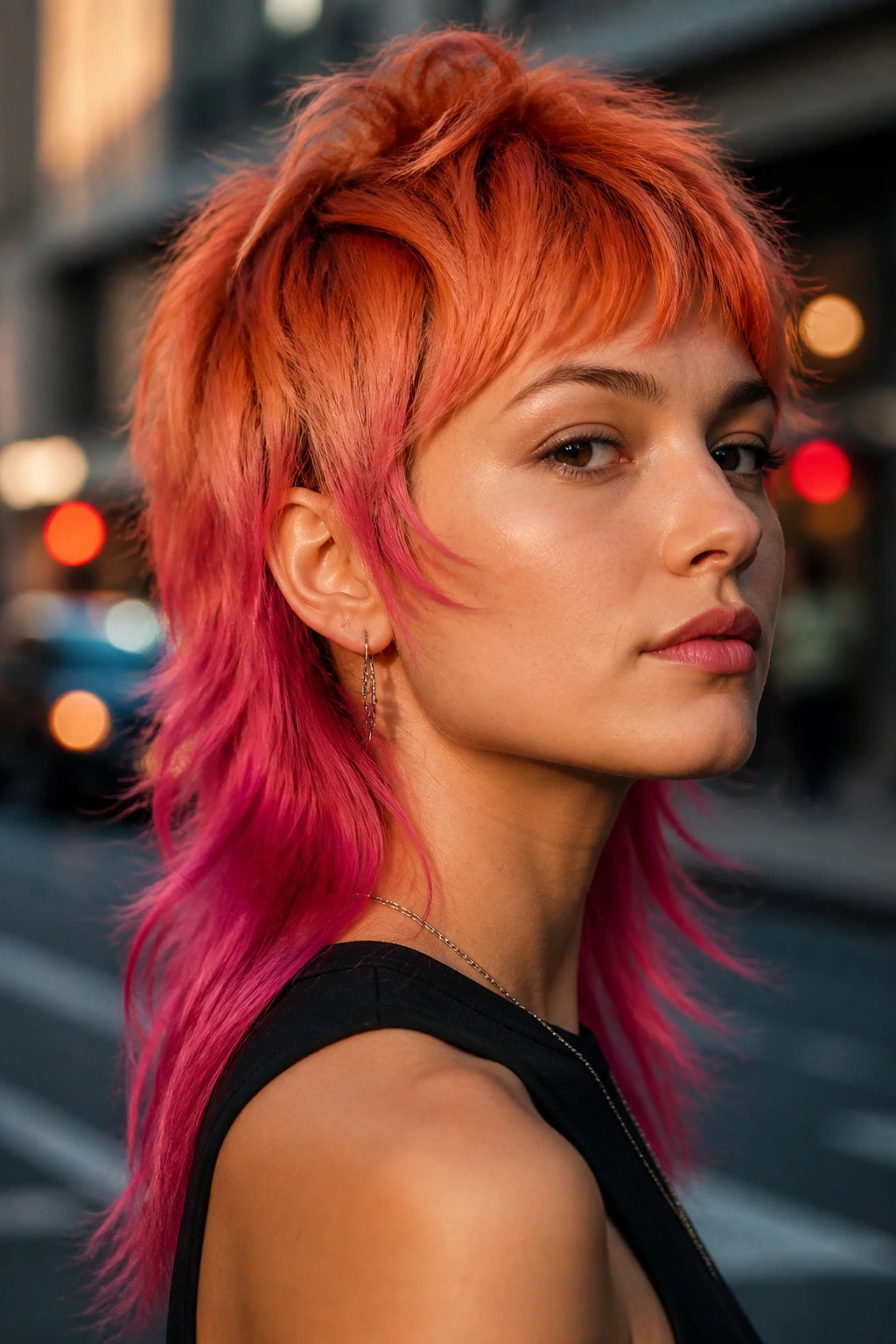
Color changes the cut faster than almost anything else. A bright copper, electric pink, cobalt blue, or split-panel shade can make the layers pop even when the haircut itself stays fairly simple. That’s why vivid color and mullets get along so well.
The haircut gives the color structure, and the color makes the haircut easier to read. If the back is slightly longer than the front and the fringe is clean, every panel of color lands with more force. Just know that vivid shades often need more upkeep than natural color. Fading can make the shape look flat if the tone goes muddy.
This version is for people who want the haircut to be part of the statement, not just the frame around it.
31. Punk-Spike Mullet With Piecey Height
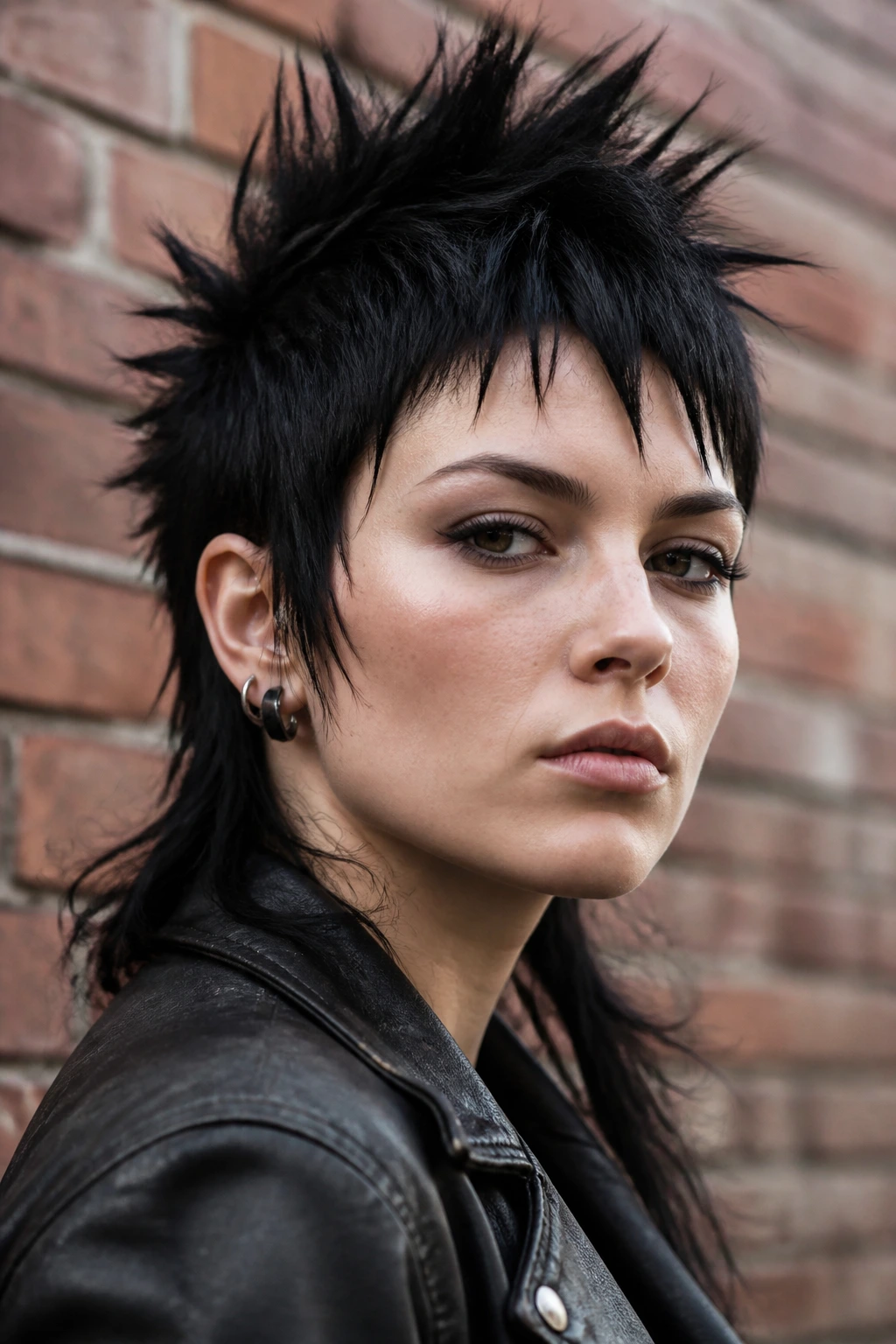
This one has bite. The top is short and texturized enough to stand up in pieces, the fringe is broken into sharp sections, and the back keeps the length so the cut still belongs in mullet territory. It looks best when the styling is slightly rough, not polished.
Why It Works
The piecey top creates a little vertical lift, which makes the outline feel more aggressive. Use a matte paste or a dry wax, then push the pieces upward and forward with your fingertips. A flat, shiny finish kills the whole effect. This is a cut that wants separation.
Best For
- Straight or coarse hair that can hold shape.
- Short styling routines.
- People who like a harder edge.
Tip: keep the back softer than the top. Too much sharpness all over turns the whole haircut into a block.
32. Soft Shag-Mullet Hybrid With the Least Drama
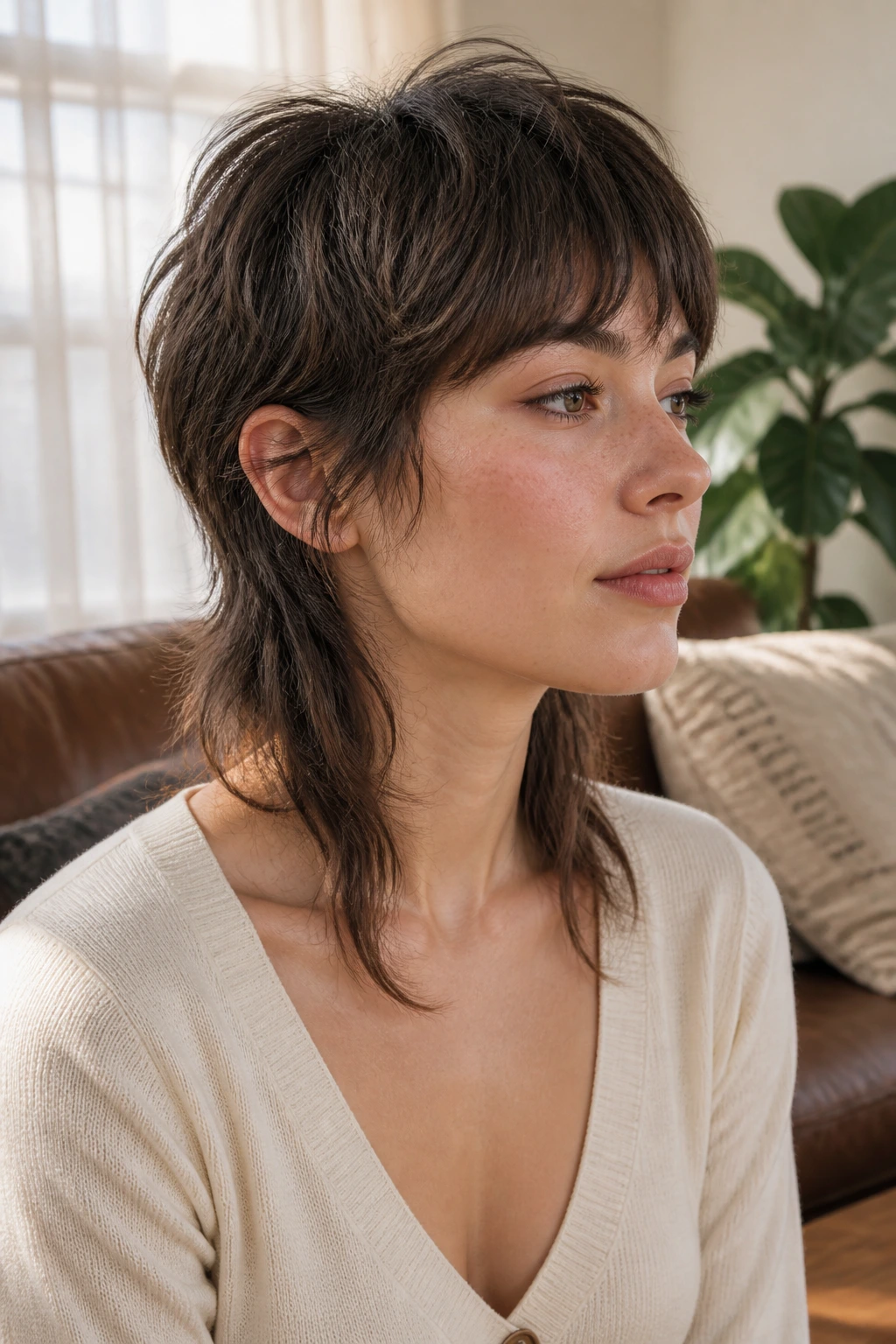
This is the gentlest door into the style. It borrows the crown lift and fringe softness of a shag, then leaves enough back length to keep the mullet shape visible. If you want the idea of a mullet without the louder contrast, this is where I’d start.
The cut works because it blurs the transition zones. Nothing is too short, nothing is too severe, and the whole thing grows out with less fuss than a high-contrast version. A little mousse, a little scrunching, and a light pass with a diffuser or air dry will usually do the job.
I think this is the smartest pick for first-timers. It has personality, but it does not demand a wardrobe change to match it.
What Makes the Modern Mullet Look Intentional Instead of Costume-Y
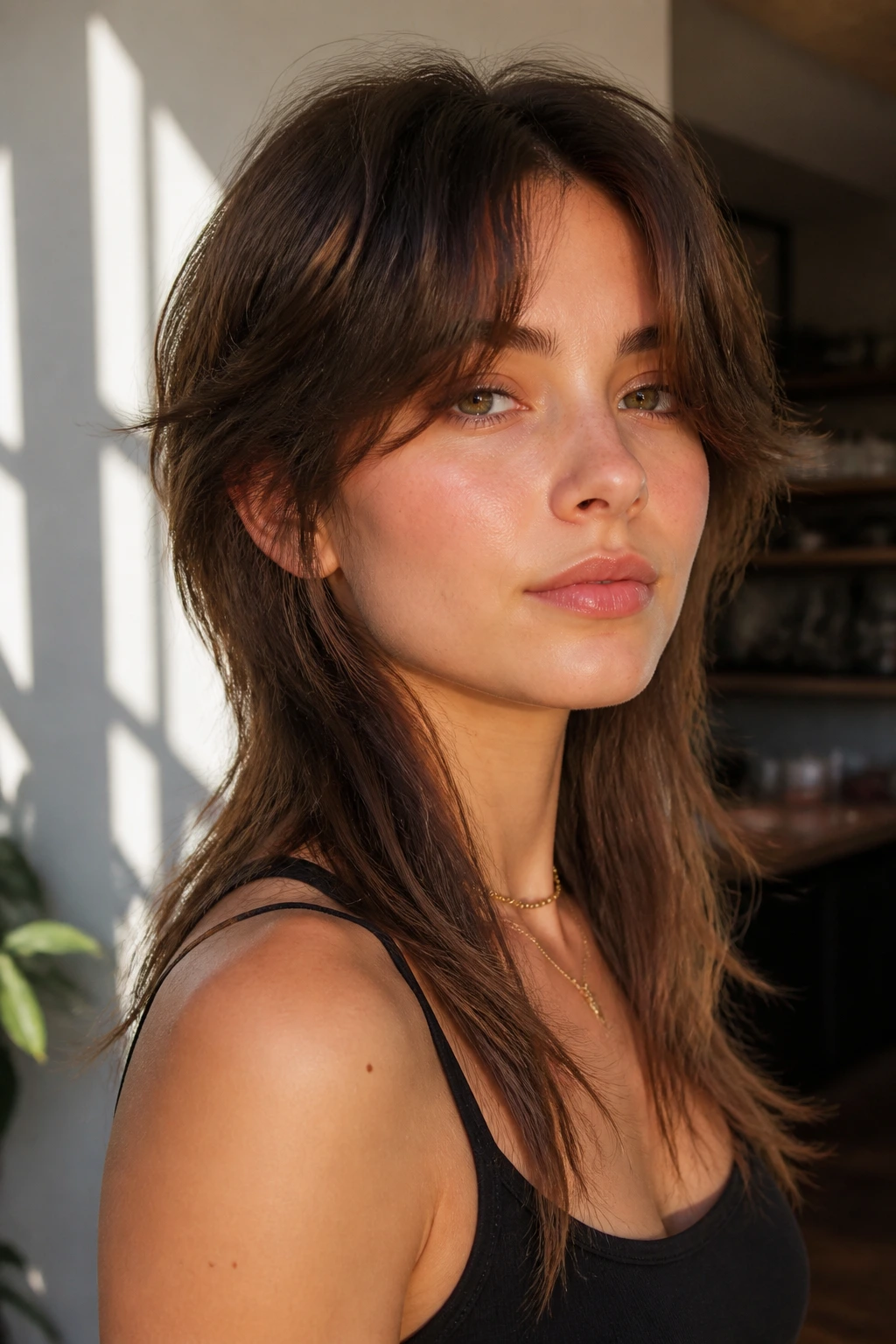
A modern mullet works when the haircut has a plan. The crown needs enough lift to keep the top from sitting flat, the front needs a clean fringe or face frame, and the back has to be long on purpose rather than long by accident. If any one of those pieces goes missing, the whole shape starts looking unfinished.
The best versions use a clear transition zone. That means the change from short to long is softened, angled, or layered in a way that fits the texture. A blunt jump from crown to nape can look harsh unless that’s the look you actually want. Most women do better with a little blending around the ears and sideburns, because it lets the haircut sit with the face instead of away from it.
Color and finish matter too. A soft bend with a brush, a little shine at the ends, or a matte texture on the top can change the reading of the cut fast. The same shape can look polished, punky, romantic, or athletic just by switching the styling product.
How to Match the Cut to Your Hair Texture and Face Shape
Fine Hair
Fine hair needs restraint. Too many short layers can make the ends disappear, so it’s usually smarter to keep the perimeter a little fuller and ask for lift at the crown rather than everywhere. Root spray, a small round brush, and a light mousse do more here than heavy styling cream.
Thick Hair
Thick hair benefits from internal removal, not random thinning. The goal is to reduce bulk in the places that puff out — usually the crown and around the nape — while keeping enough structure for the shape to show. If the hair is thick and straight, the cut can turn blocky fast if the layers are too blunt.
Wavy and Curly Hair
Waves and curls love a mullet when the shrinkage is respected. The cut should usually be done dry or mostly dry, or at least with the shape checked as it dries. A diffuser, curl cream, and leave-in conditioner help the texture stay defined instead of frizzy.
Face Shape Notes
Round faces often look good with a little length in the front pieces to create vertical lines. Longer faces can use fuller bangs or a heavier fringe to balance the forehead. Square jaws usually benefit from softer side layers that break up the outline, while oval faces can wear almost any version as long as the balance feels right.
What to Ask for in the Salon Chair
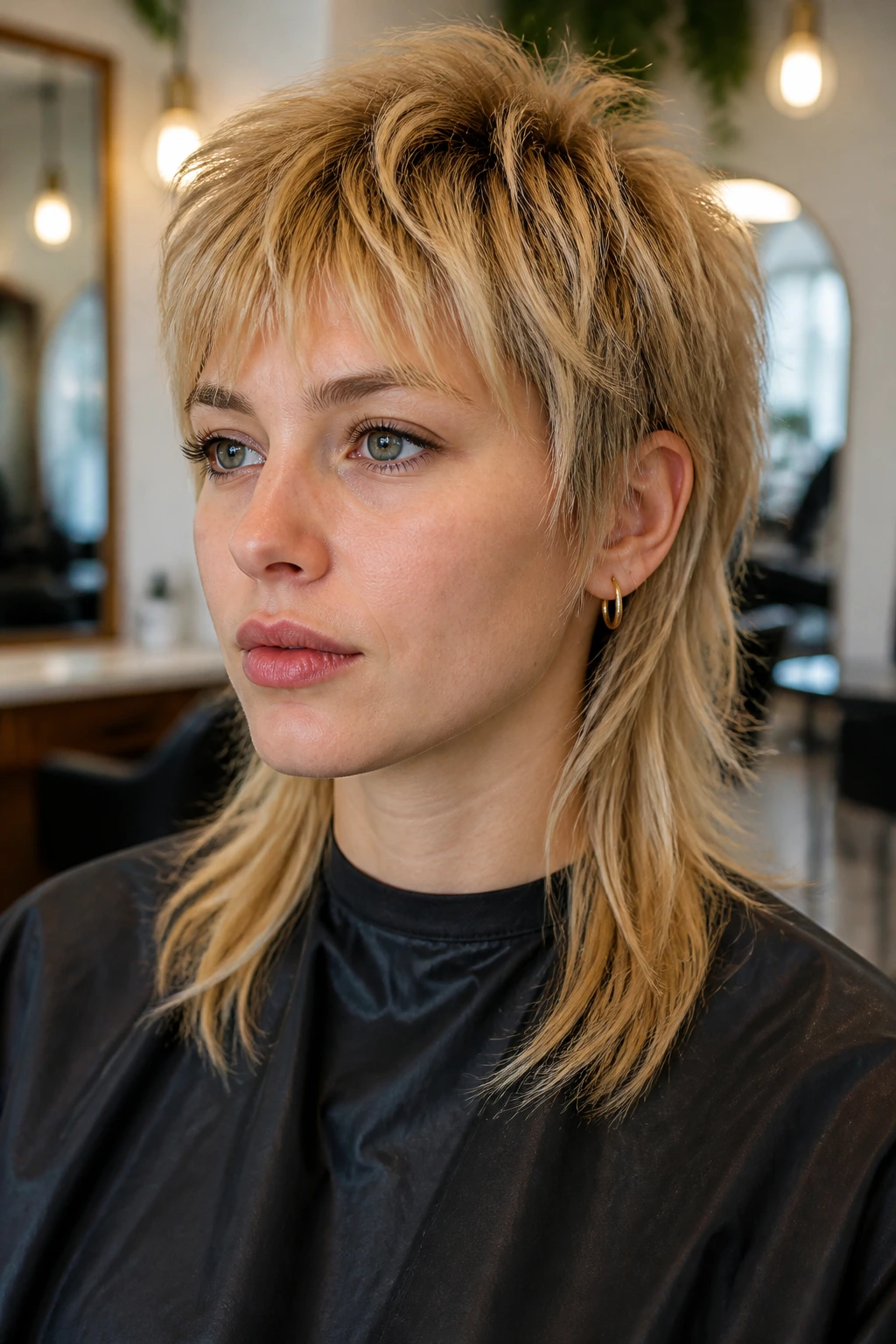
If you want a good modern mullet, skip the vague request and talk in pieces. Say how short you want the crown, where you want the longest back section to land, and whether the side transition should feel soft or visibly disconnected. That conversation gives the stylist something concrete to cut to.
Bring up the fringe before anything else if bangs matter to you. Curtain bangs, heavy fringe, micro bangs, and wispy face-framing pieces all change the final shape more than people expect. If you hate styling your bangs, say that. A good stylist can build a version that needs less daily wrestling.
One useful phrase: tell them you want the haircut to move in the front and hang in the back. That sounds simple because it is. If your hair has a cowlick, a strong part, or a stubborn cowlick near the nape, mention that too. Those details are the difference between a shape that sits well and one that fights you every morning.
Styling Tools That Actually Help
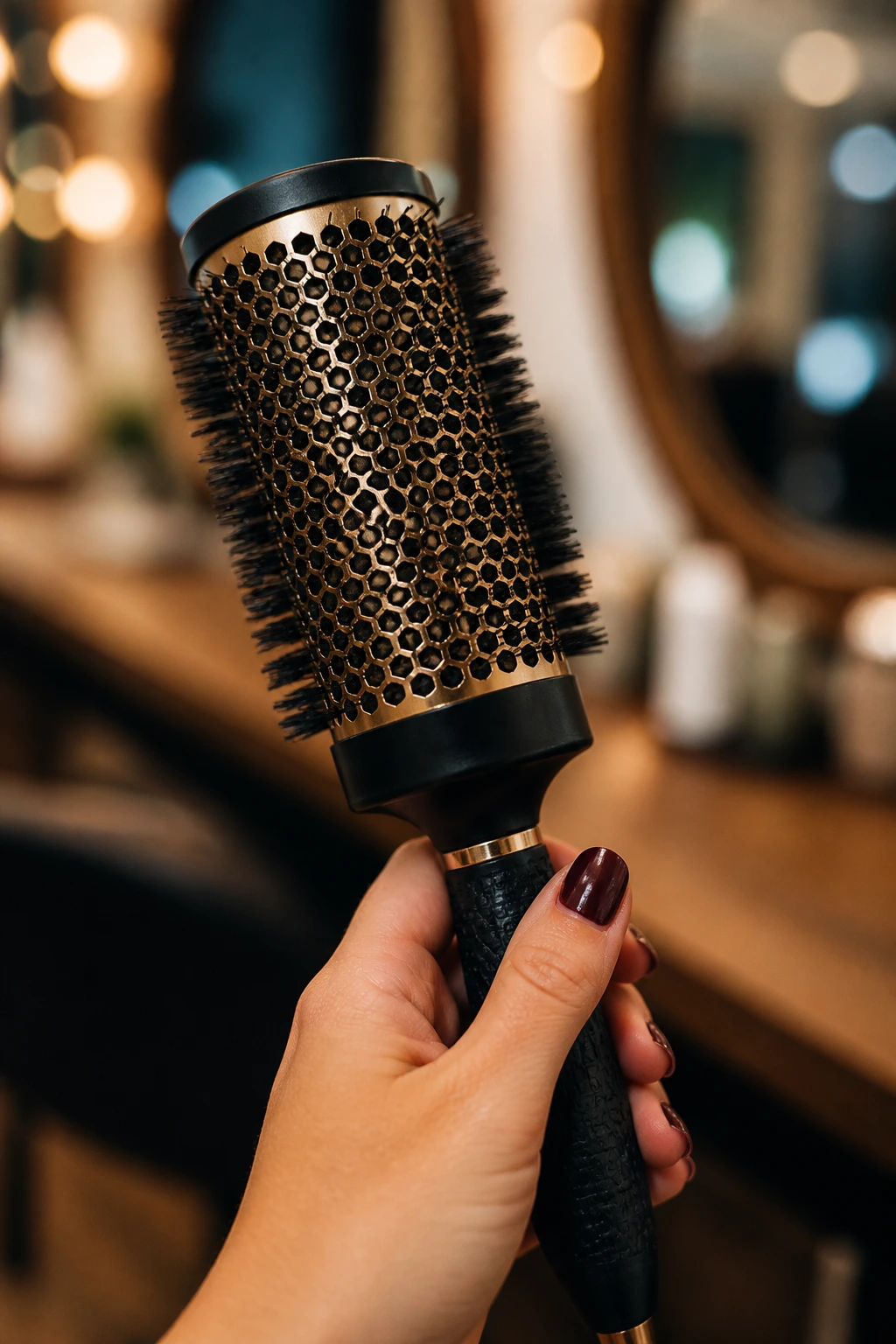
- Round brush, 1 to 1.5 inches: Best for lifting the crown and bending the front pieces away from the face.
- Diffuser attachment: A must if your hair is wavy or curly and you want the pattern to stay defined.
- Heat protectant spray: Use it before blow-drying or flat ironing; bleached and fine hair especially need it.
- Texturizing spray: Good for piecey ends and that slightly separated finish on shaggy versions.
- Mousse or root-lift foam: Helps the top stay buoyant instead of collapsing by midday.
- Matte paste or dry wax: Best for short, punkier, or pixie-length mullets where separation matters.
- Smoothing cream or light serum: Useful on sleeker versions and on the ends of long cuts.
- Tail comb and clips: Handy for sectioning the fringe, crown, and nape so you don’t overstyle one area and ignore the rest.
How to Style the Cut at Home Without Rewashing

Start with dry shampoo at the roots if the hair feels flat at the scalp. The mullet shape lives there first. If the top is limp, the rest of the haircut can’t save it.
For blow-dried versions, work in sections. Lift the crown with a round brush, direct the fringe where you want it to fall, and leave the back a little looser so it keeps movement. You do not need to smooth every strand into place. In fact, overworking the back usually kills the shape.
For air-dry or wavy versions, scrunch in product while the hair is damp, then leave the roots alone until they dry. If the front needs a little more shape, twirl the face-framing pieces around your fingers while they’re still wet. That tiny move often matters more than another round of product.
Heat styling should follow the cut, not fight it. Bend the front away from the face if you want softness, or flip the ends a little if you want more edge. The back usually needs less intervention than people think.
How to Keep It Looking Good Between Cuts
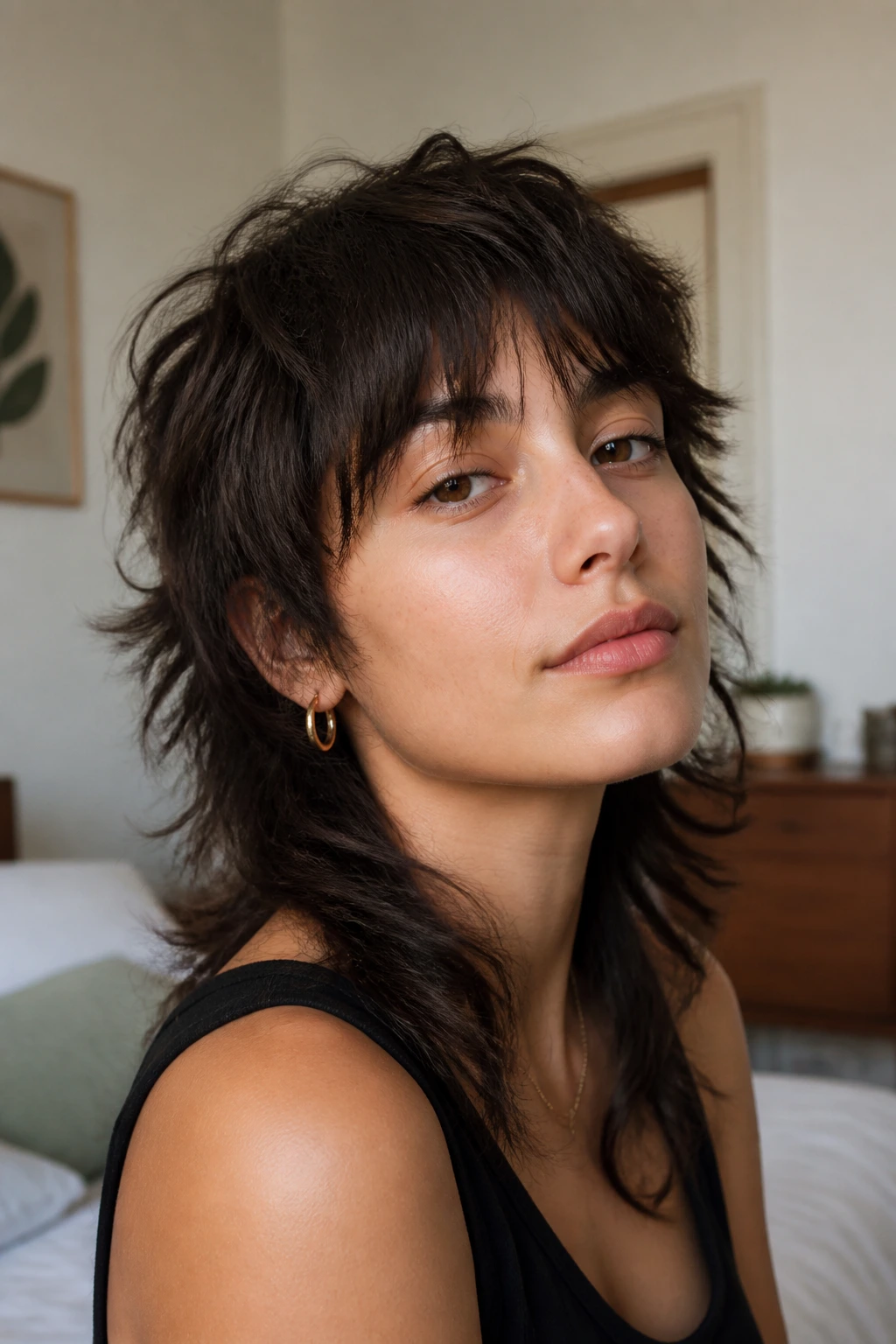
A modern mullet does not need daily panic, but it does need timing. Fringe trims every 3 to 4 weeks keep the eyes open. Full shape cleanups usually land well around 6 to 8 weeks, though shorter and more disconnected versions may need a faster return to the chair. If you’ve got a shaved side or a very short nape, the schedule gets tighter.
Night care matters more than a lot of people admit. A satin pillowcase helps the fringe and crown stay smoother, and a loose clip or soft tie can keep the front pieces from bending weirdly while you sleep. If the hair tends to flatten overnight, a quick root refresh with dry shampoo and a blast from the blow-dryer at the scalp will wake the shape up fast.
Color-treated versions need their own rhythm. Toners fade, copper shifts, and vivid shades lose punch fastest at the front where the hair gets washed and touched more often. If your cut depends on color contrast, plan for quicker touch-ups than you would with a natural shade.
Common Mistakes That Flatten a Mullet
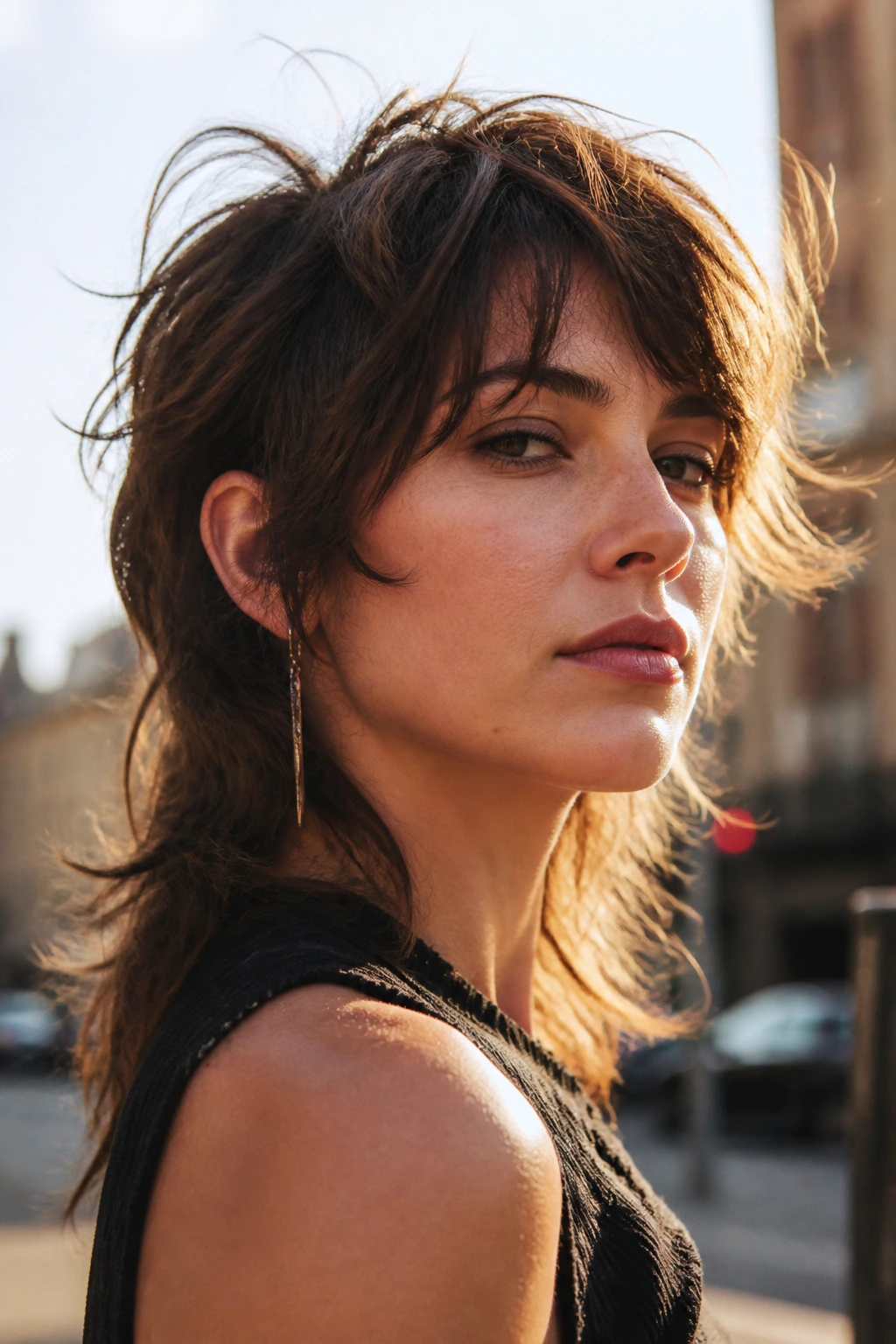
- Cutting the crown too short: The top balloons and the whole haircut loses balance. Ask for lift, not a clipped-down cap.
- Leaving the transition zone too blunt: A harsh jump from short to long can look heavy. Point-cutting or soft layering usually fixes it.
- Using too much heavy oil: The ends go stringy and the crown goes limp. Use a light cream or a few drops of serum instead.
- Ignoring hair shrinkage: Curly and wavy hair always bounce shorter than it looks wet. Cut with dry shape in mind, not wet length alone.
- Styling every section the same way: The front, crown, and back do not need identical product or heat. Treating them all the same flattens the personality of the cut.
- Waiting too long for trims: Once the nape loses its shape, the haircut starts to read as grown out instead of deliberate.
Ways to Make the Cut Softer, Sharper, or More Personal
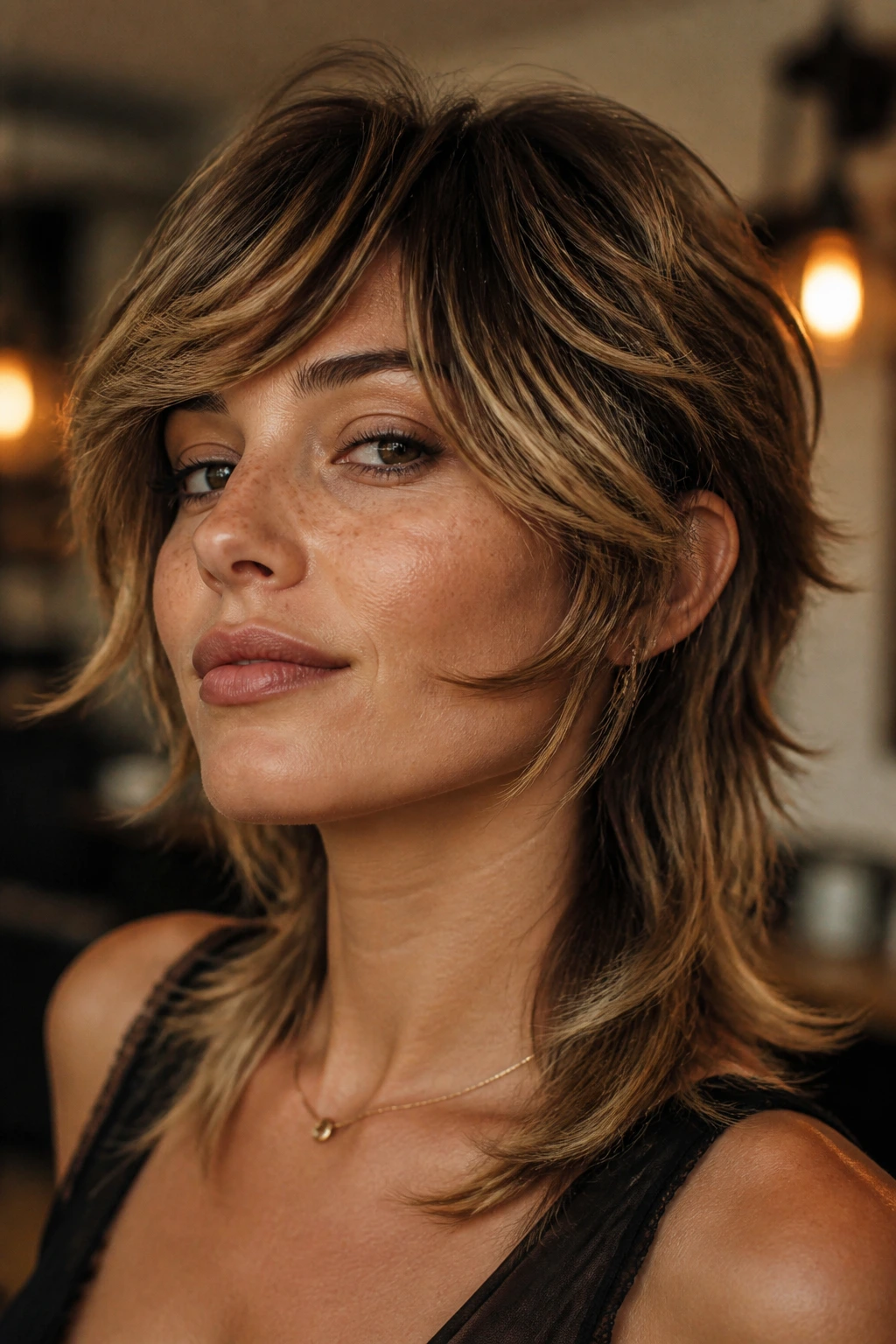
Soft Fringe Sweep: Keep the front pieces longer and bend them around the cheekbones. This is the easiest way to make the cut feel gentler without losing the silhouette.
Sharper Side Contrast: Shorten the sides more clearly and keep the top piecey. That pushes the haircut toward street style and away from softness.
Curl-First Shape: Cut the haircut around the curl pattern instead of forcing the curls into a straight-hair outline. This is the right move when texture does most of the work.
Color-Forward Version: Add a money piece, a bright front panel, or a vivid all-over shade to make the layers more visible. The shape becomes easier to read with color separation.
Grow-Out Friendly Version: Keep the back below the collarbone and the crown only moderately short. This gives you a cleaner path into a shag, lob, or layered bob if you change your mind later.
Growing It Out Without the Awkward Triangle
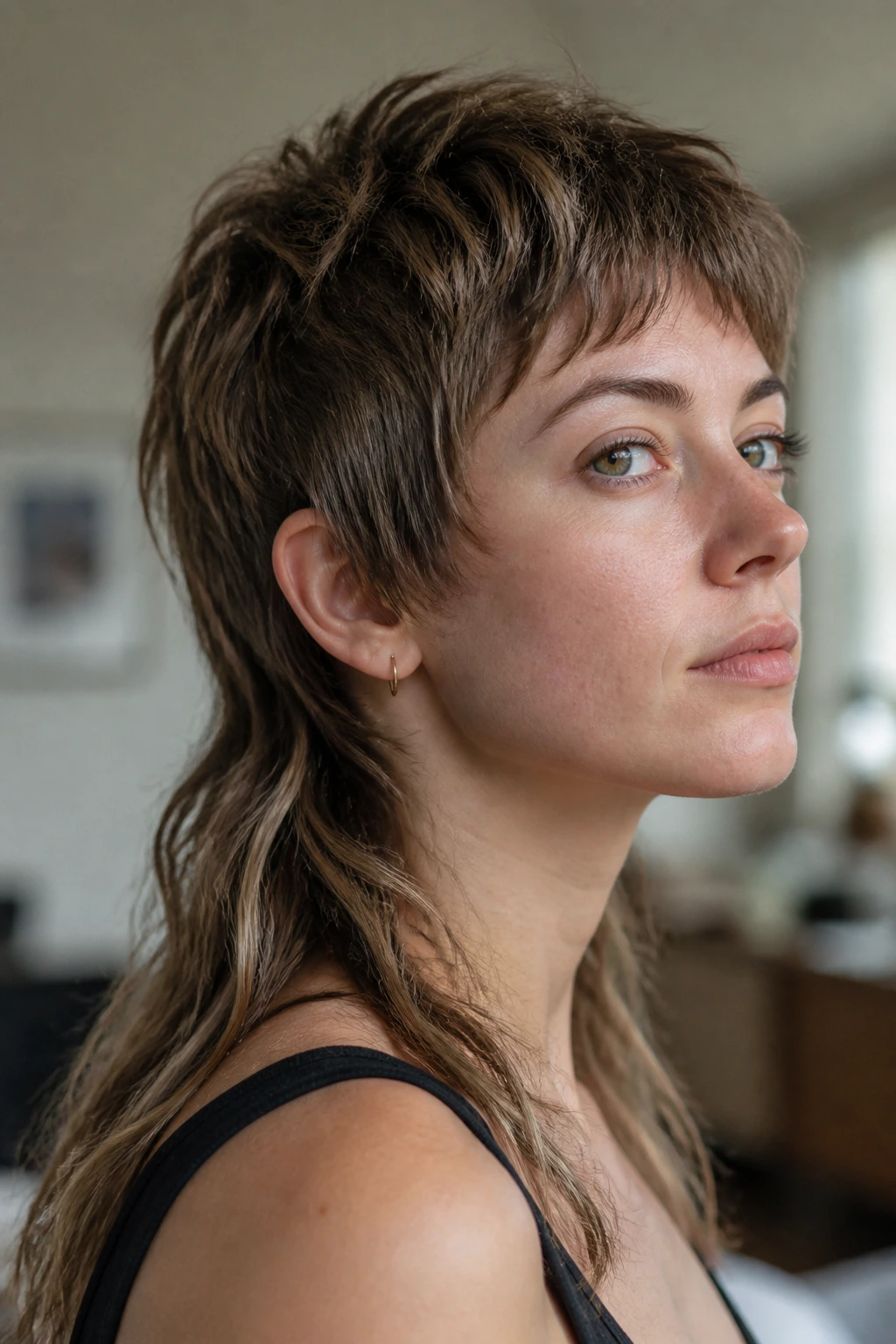
The awkward phase is usually worse in theory than in real life, provided you trim with a plan. If you want to grow out a mullet, the first step is to soften the disconnect instead of letting everything run wild. A few trims that blend the back into the sides can keep the shape from turning into a weird triangle around the shoulders.
From there, you can steer it toward a shag or layered lob. The back loses some length, the crown stays textured, and the fringe gets kept at a usable point. That transition works much better when you do not let the neckline overgrow for months at a time. The nape is the first place the silhouette starts to wobble.
If you’re nervous about change, trim the fringe and the nape first. Those two pieces tell the eye where the haircut is going. The rest can follow later.
Frequently Asked Questions
Do modern mullet hairstyles for women work on fine hair?
Yes, but the cut has to be lighter and more controlled. Fine hair usually looks better with lift at the crown and a cleaner perimeter than with a lot of chopped-up layers, or the ends start to disappear.
Can curly hair wear a mullet without looking triangular?
Absolutely. The trick is to cut for shrinkage and keep the internal shape soft so the curls stack instead of ballooning. A dry or mostly dry cut is often the cleanest way to get there.
How often should a mullet be trimmed?
Most versions need a shape cleanup every 6 to 8 weeks, but shorter napes, undercuts, and shaved sides ask for faster maintenance. Fringe trims often need to happen sooner, especially if the bangs are part of the look.
What should I tell my stylist if I want a softer version?
Say you want the front to blend into the back instead of creating a hard disconnect. Mention the length you want at the cheekbones and nape, and ask for point-cutting or soft layering through the transition zone.
Is a mullet hard to style every day?
Not if the cut fits the texture. A wavy or curly version can air-dry with a little product, while sleeker versions usually need a brush and a short blow-dry at the crown and fringe.
What if the back gets too flat?
Spritz the roots at the crown with a lift spray, then rough-dry the top section upside down for a few seconds. The back usually looks flatter when the top has lost height, so start there before overloading the ends with product.
Can I grow a mullet into a bob later?
Yes, and that’s one reason people like this cut. If you keep the front pieces and crown blended on the way down, the shape can move into a shaggy bob or lob without a brutal line in the back.
Does color make a mullet easier to wear?
Sometimes. A front highlight, vivid panel, or glossy silver finish can show the layers more clearly, which helps the haircut look deliberate. The downside is upkeep, especially if the shape depends on a bright fringe or contrast around the face.
The Cut That Keeps Its Shape
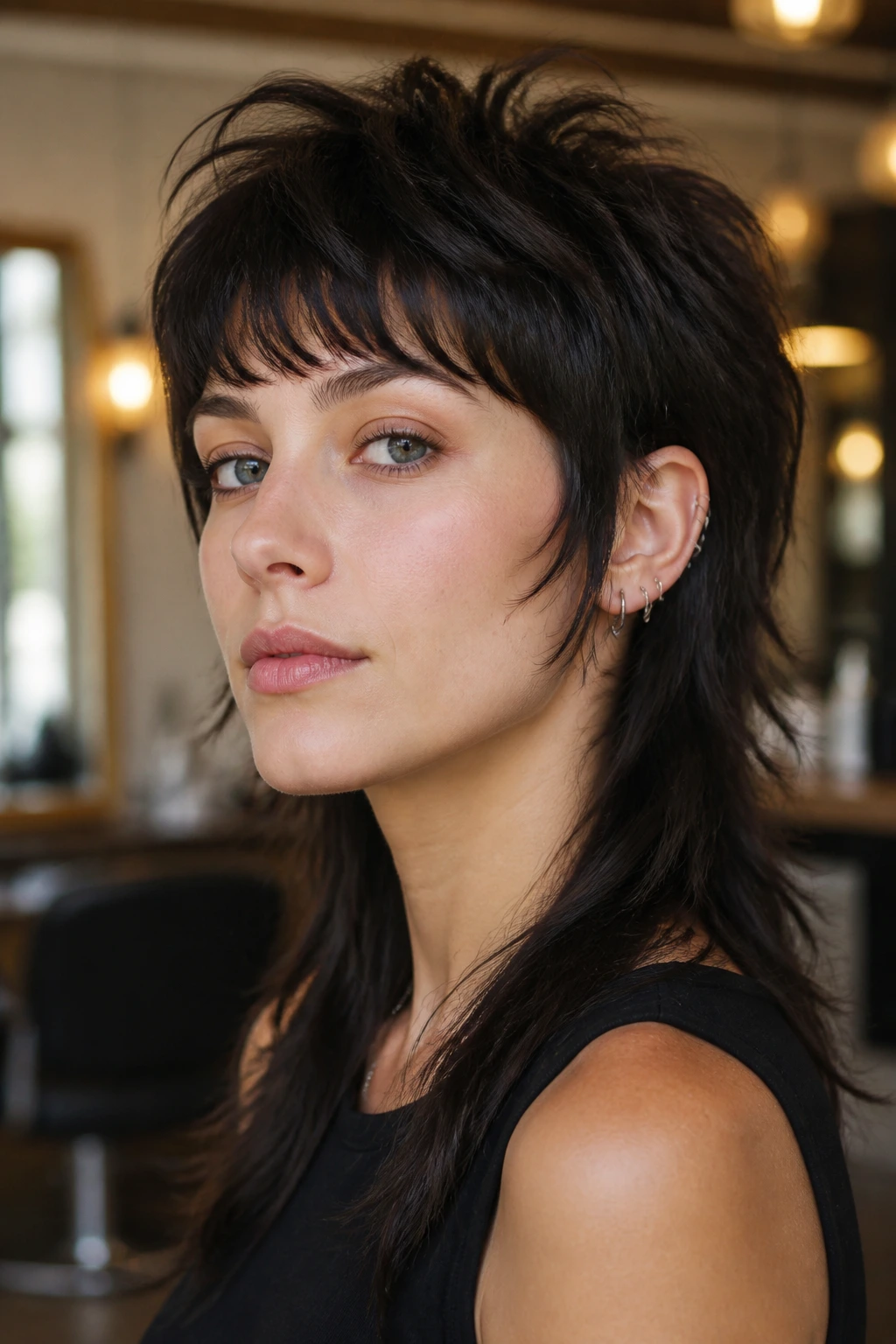
A good mullet is not about shock value. It’s about control. Once the fringe, crown, and nape are all doing their own jobs on purpose, the cut stops looking like a relic and starts looking like a smart piece of styling architecture.
That’s why these versions keep hanging around. Some are soft enough for daily wear, some are loud enough to carry an outfit, and some sit right in the middle where hair just looks better because it has somewhere to go. Pick the one that matches your texture first. The attitude can follow later.
