



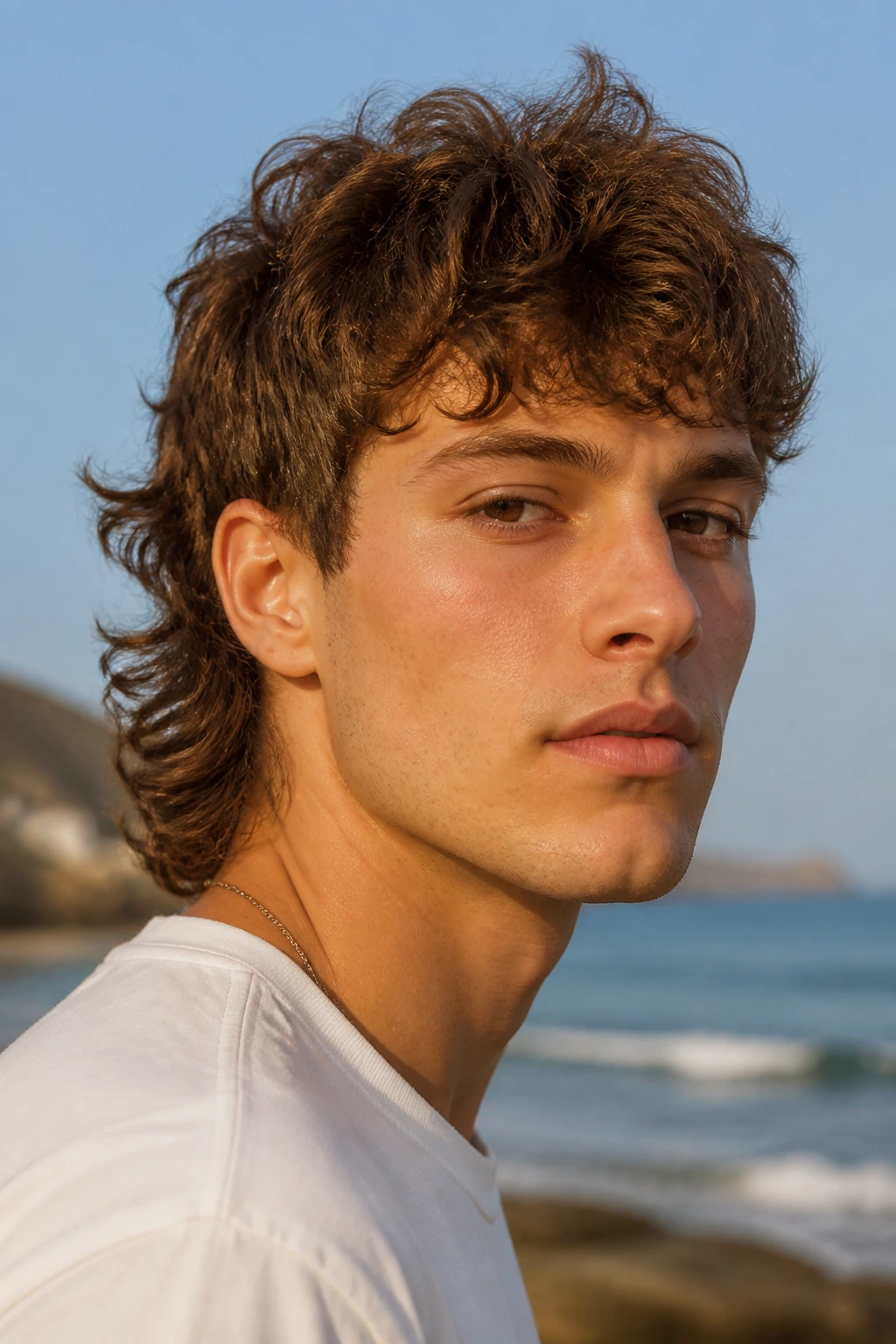
Short mullet hairstyles for wavy hair have a useful trick built in: the wave pattern softens the cut before you touch a single product, so the shape looks lived-in instead of stiff. That matters, because a short mullet can go wrong fast. Too blunt at the sides and it turns boxy; too thin through the back and it starts to read like a bad grow-out.
What I like about this haircut is how much forgiveness it gives. The top can sit a little messy, the nape can move, and the whole shape still reads on purpose as long as the layers are placed with some care. Waves do the heavy lifting here. You just need the right balance of weight, fringe, and neck length.
The 33 looks below range from soft and office-safe to sharp and punkish, and the differences are not cosmetic trivia. A half-inch at the fringe or a stronger taper around the ears changes the entire mood. If you’ve ever wanted a mullet that feels modern instead of costume-y, the details matter more than the label.
Why These Short Mullets Work So Well on Waves
-
Wave Memory: Wavy hair keeps a little bend even after it dries, which means a short mullet can hold shape without hot tools fighting it every morning.
-
Cleaner Outline: The shorter sides stop the wave from puffing out at the temples, so the haircut reads as a shape, not a halo.
-
Low-Fuss Texture: A mist of water, a pea-sized dab of cream, and a quick scrunch is often enough to bring the cut back to life.
-
Grow-Out Grace: The back can get a touch longer between trims and still look intentional, especially when the crown and fringe stay textured.
-
Face-Frame Control: Waves around the front let you soften a jawline, open up a forehead, or offset a strong cheekbone without committing to a heavy fringe.
1. Soft Wolf-Cut Mullet
The soft wolf-cut mullet is the one I reach for when someone wants movement without the drama of a hard edge. It keeps the crown airy, lets the top fall in loose, choppy layers, and gives the nape just enough length to whisper “mullet” instead of shout it.
Why It Works on Wavy Hair
Waves love broken layers. A soft wolf cut keeps the bulk out of the crown, which matters if your hair puffs up as soon as humidity shows up. Ask for the layers to be point-cut, not buzzed away with a razor, so the ends keep a little softness.
- Leave the fringe around eyebrow length when dry.
- Keep the nape slightly longer than the sides.
- Use a light curl cream, not heavy butter.
Best for: medium-thick waves that need shape without looking overworked.
2. Curtain Fringe Mullet
A curtain fringe on a short mullet does something sneaky: it makes the whole cut feel calmer. The front splits gently down the middle, bends around the cheekbones, and keeps the back from feeling like the loudest thing in the room.
This version is especially good if your waves fall forward on their own. You’re not forcing them into a perfect center part. You’re just giving them a lane. Keep the fringe long enough to tuck behind the ears when needed, because a too-short curtain fringe tends to bounce up and lose the point.
3. Tapered Nape Mullet
Not every mullet needs a dramatic tail. The tapered nape version keeps the back neat and close to the neck while still leaving a little swing at the bottom, which is exactly why it works on wavy hair that can turn fluffy at the edges.
What to Ask For
Tell your stylist you want the back tapered with scissors or a low clipper guard, not chopped blunt. The result should hug the neckline and grow out without that awkward shelf right above the shirt collar. If your hair is dense, this cut keeps the back from looking square.
4. Razor-Broken Shullet
The razor-broken shullet is for thick, textured waves that need air between the strands. The razor slices through bulk and leaves the ends a little frayed in the good way, which makes the whole cut read light and piecey.
Be careful, though. Too much razor work and the hair goes fuzzy, especially if it’s dry or color-treated. I’d keep this one on hair that has some natural shine left in it and avoid piling on heavy conditioner near the roots. The shape wants lift, not slip.
- Best on coarse or dense waves
- Keep the fringe irregular, not perfectly straight
- Finish with matte paste on the ends
5. French Crop Mullet
This one is the quiet rebel of the group. The front sits closer to a French crop, with a short, tidy fringe and a compact top, while the back carries the mullet part in a softer, shorter line than people expect.
That contrast is the appeal. The front looks controlled. The back moves. If your waves are loose and don’t want to cooperate with a long fringe, this cut keeps the profile clean while still giving you texture where it counts.
6. Pixie-Length Mullet
Can a mullet be this short and still count? Absolutely. The pixie-length mullet keeps the sides and top cropped close, then leaves a tiny kick at the nape so the silhouette still has that familiar shape.
This version is a smart move for fine wavy hair, because long layers can make fine texture look see-through. Shorter pieces hold together better. Keep the top soft and avoid over-thinning the back, or the whole thing will collapse into a pixie with a confused neck line.
7. Burst-Fade Mullet
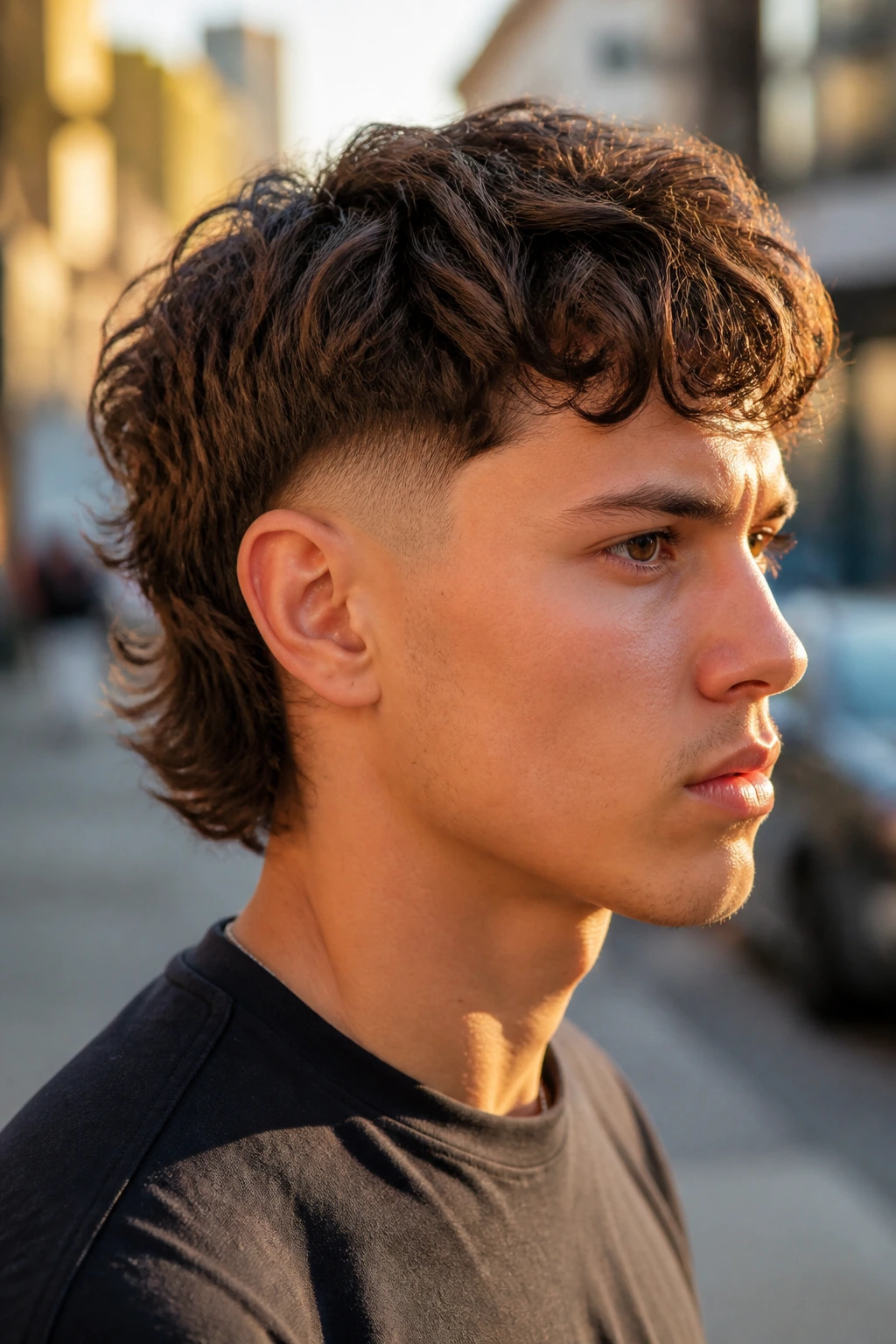
The burst-fade mullet cleans up the area around the ears and lets the back stay textured and lively. It’s sharper than the soft wolf version, but still very wearable if you like a little edge without going full clipper showpiece.
Why It Works
The fade creates a frame, and the waves supply the softness. That combination stops the haircut from looking blocky. If you have dense hair, this is one of the easiest ways to keep the sides under control while preserving enough length in the back for movement.
8. Side-Part Wave Mullet
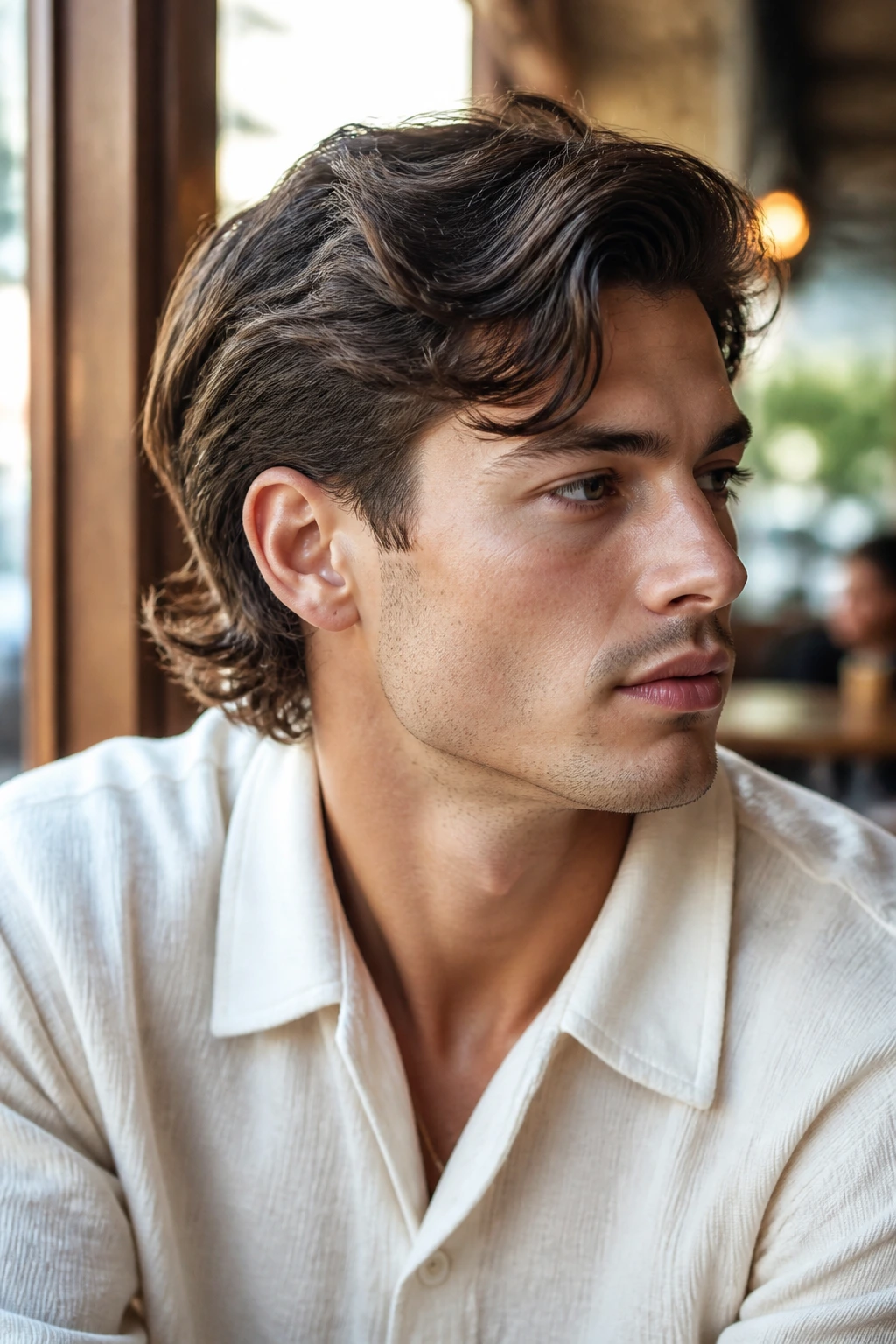
A deep side part changes everything. It gives the front more lift, sends the wave pattern in a clear direction, and keeps the cut from falling into that center-heavy shape that can make waves look flat at the root.
I like this version on people whose hair naturally leans one way anyway. Don’t fight the cowlick if it already has an opinion. Work with it, let the top sweep across the forehead, and keep the back shorter than the crown so the shape still reads as a mullet rather than a shag with a side part.
9. Feathered 70s Mullet
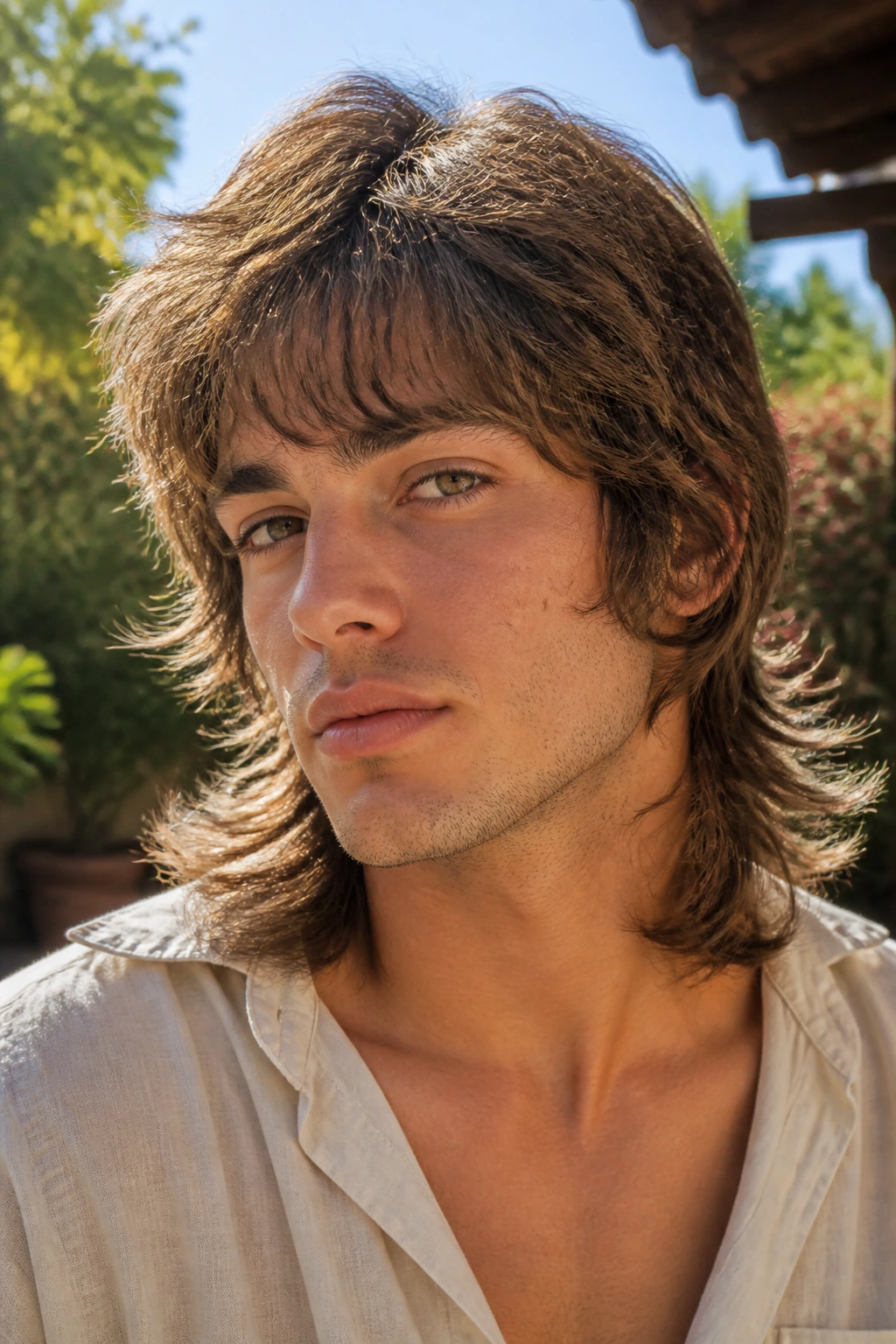
Feathering is where this cut starts to feel airy instead of chopped. The layers flip outward at the ends, which gives wavy hair a little movement even on days when it dries in a stubborn heap.
How to Style It
A round brush helps if you like polish, but you can also air-dry and then twist the ends with your fingers while they’re still damp. The goal is a soft flip, not a curl. Keep the layers long enough to move, or the feathering turns into frizz at the collar.
10. Micro Mullet

The micro mullet is the answer for people who want the attitude but not the tail. It keeps the haircut compact, with just a hint of extra length at the back and enough texture on top to show off the wave pattern.
This is a good office-friendly option if your workplace is conservative but not fussy. The shape stays neat from the front, and the nape stays slightly longer so the whole cut still has some identity. If your hair grows fast, this version also buys you a little more time between trims.
- Keep the perimeter soft, not razor-sharp
- Ask for minimal length difference between crown and nape
- Use a light matte product, not glossy pomade
11. Choppy Fringe Mullet

The choppy fringe mullet gives the forehead some texture without turning the front into a heavy curtain. The fringe is broken into short, uneven pieces, which helps wavy hair settle instead of sitting in one flat line.
What I like here is the speed. It looks deliberate even when you have done almost nothing to it. Scrunch the front with a touch of cream, separate a few pieces with your fingers, and leave the rest alone. If you comb this fringe too much, you lose the point.
12. Undercut Wave Mullet
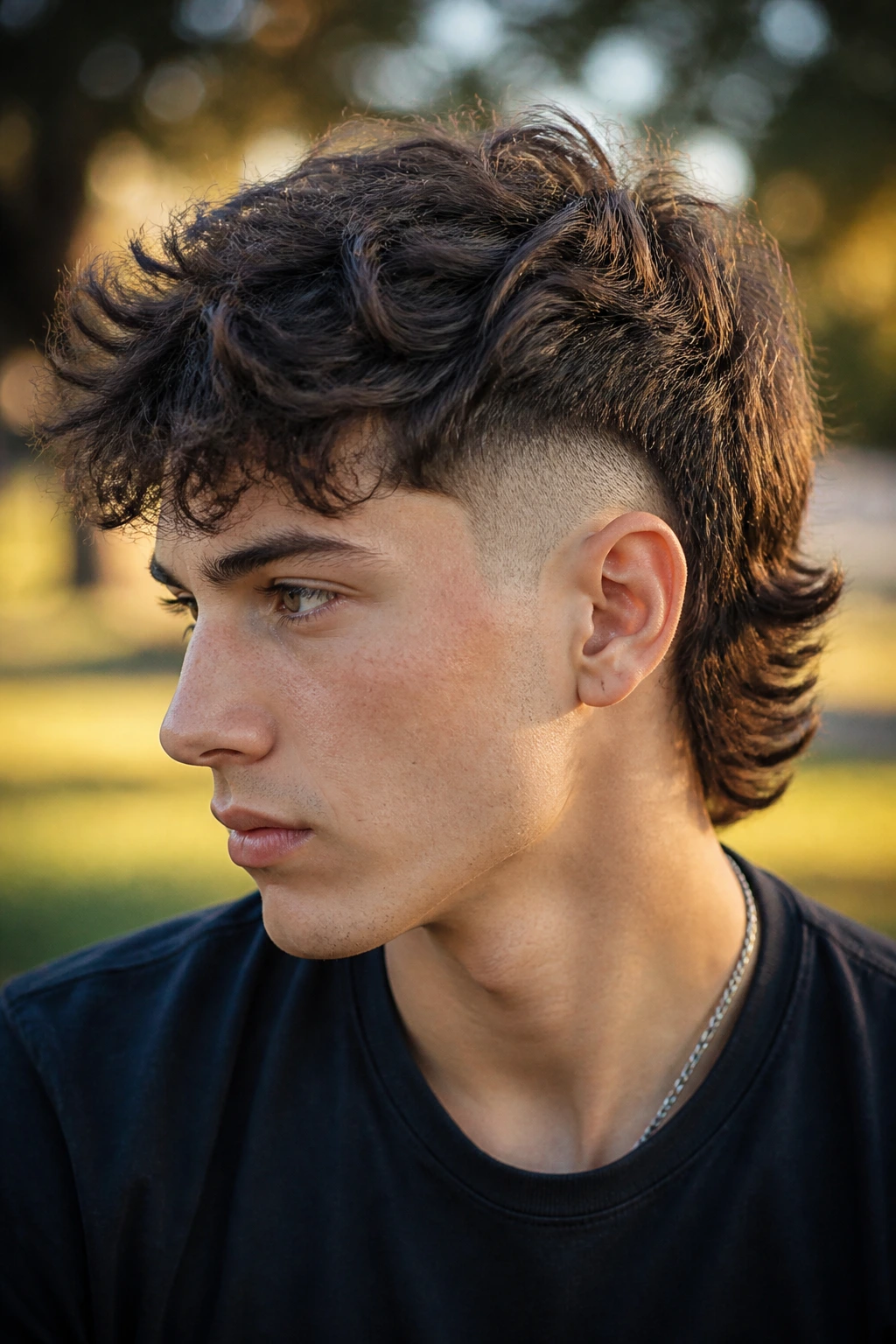
The undercut version is clean on the sides and fuller everywhere else, which makes it a strong pick for thick waves that get bulky around the ears. The contrast can be dramatic, but it doesn’t have to feel extreme.
Compared with a burst fade, the undercut gives you a harder boundary. That suits people who want a sharper profile and less hair touching the sides of the face. If your waves are fine, though, be careful: too much undercut can make the top look thin from the side.
13. Surf-Textured Mullet
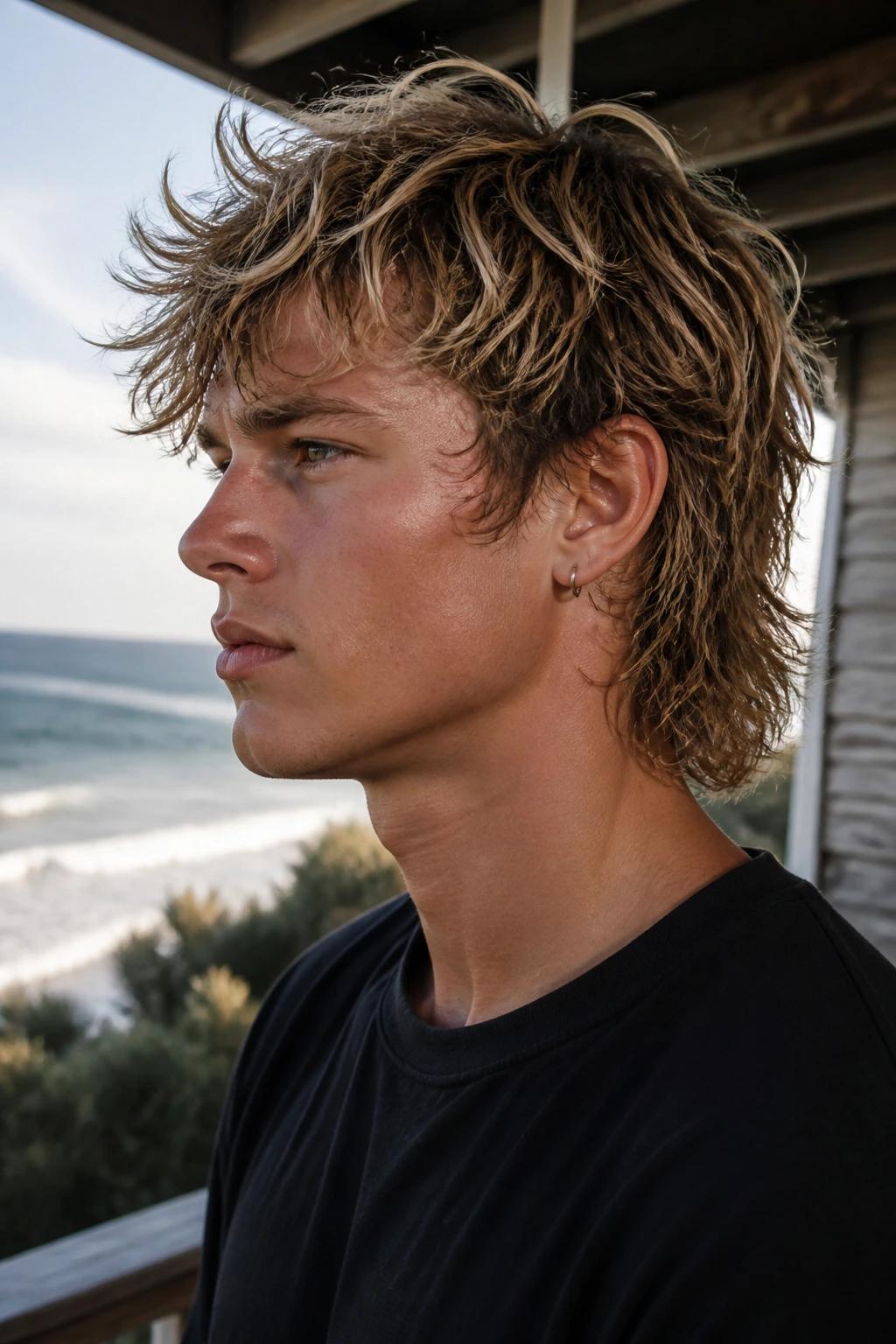
A surf-textured mullet should look like it dried on a windy porch after a long day near salt water. Not greasy. Not crunchy. Just broken up enough that every wave has its own line.
Why It Works on Wavy Hair
Waves already want to clump and separate. A sea-salt spray or light texturizing mist helps define that separation without adding too much weight. I’d keep the length short around the ears and a little fuller at the crown, because the contrast gives the style its movement.
14. Swoopy Layered Mullet
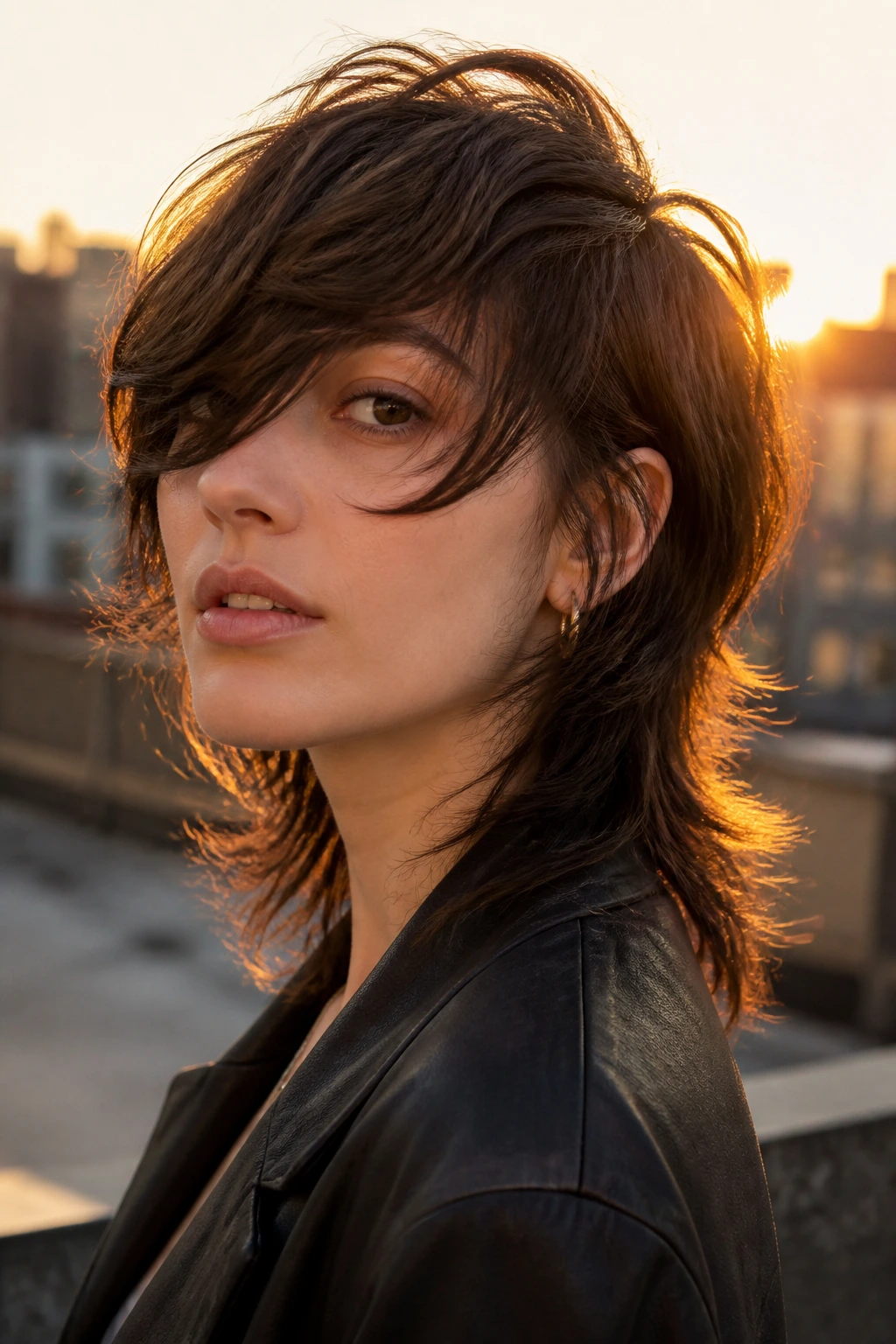
This one leans into motion. The front pieces sweep diagonally across the face, the top stays layered, and the back keeps a little longer shape so the whole cut feels like it’s sliding rather than sitting still.
It’s a strong choice if your face shape likes softness around the cheekbones. Oval and heart shapes usually wear it well. Ask for the front to hit somewhere between eyebrow and cheekbone when dry, because waves shrink more than most people expect.
15. Rounded Bouncy Mullet

The rounded bouncy mullet works because it avoids harsh corners. The silhouette curves gently around the head, which gives finer wavy hair more body without making the cut look puffed up.
What It Does Better Than a Flat Crop
A flat crop can make waves look pressed down. This one leaves a little air in the layers, especially through the crown and mid-lengths. If you want volume but not chaos, ask for soft graduation rather than aggressive thinning.
16. Wet-Look Mullet
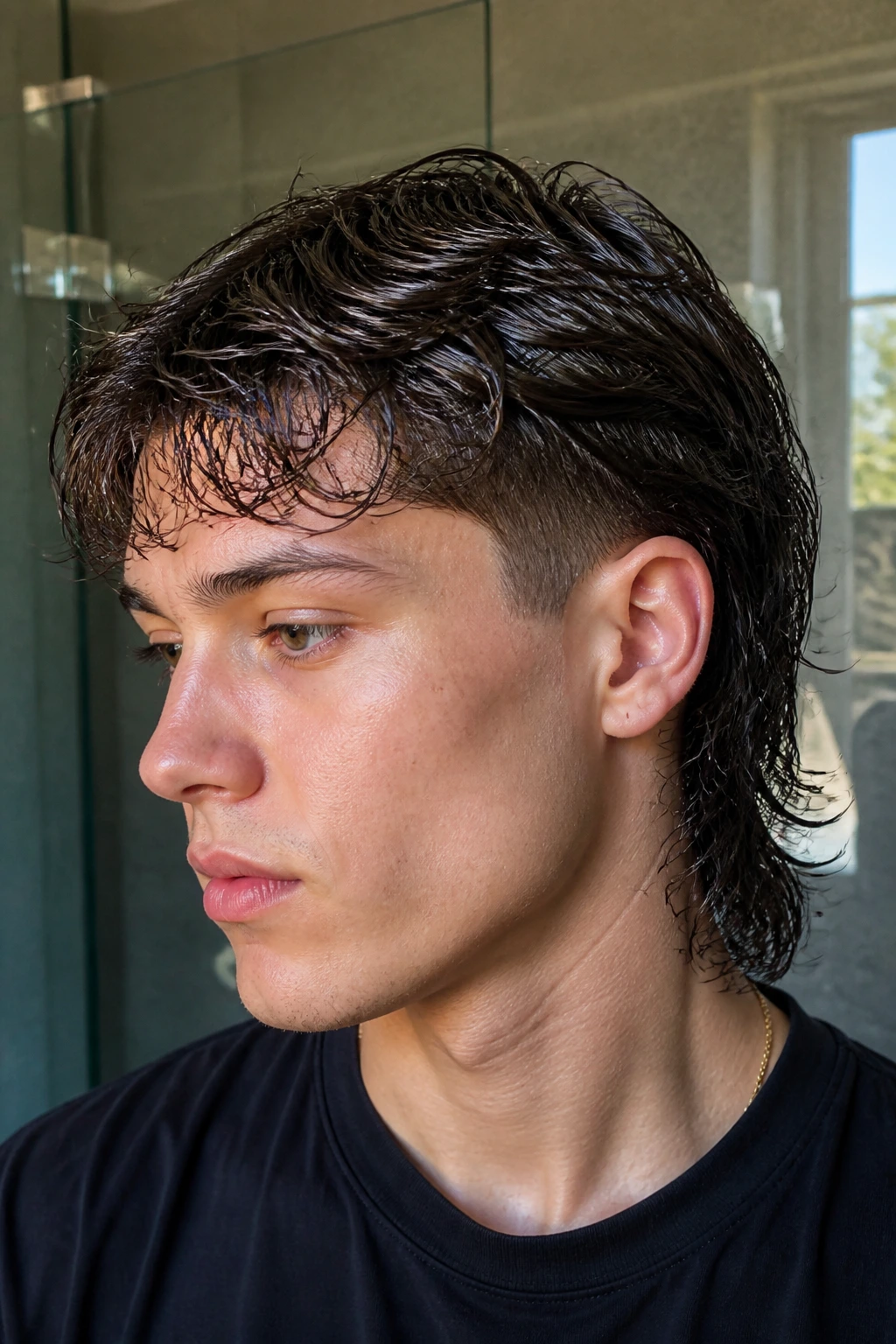
A wet-look mullet is one of the few versions that actually benefits from a bit of shine. The style starts with damp hair, a touch of gel or gloss cream, and fingers that push the waves into slim, defined strands.
That said, this is not the cut for anyone who hates product feel. You’ll see every piece. The upside is control. The sides stay tidy, the top stays glossy, and the back keeps enough length to catch the light without needing a brush every ten minutes.
17. Bedhead Mullet

The bedhead mullet is gloriously unbothered. It works when you want the cut to look messy on purpose, not neglected. The waves should fall in uneven pieces, with a little bend at the front and a choppy kick at the nape.
I’d keep the layers soft and the fringe irregular here. The cut should feel like it got dressed in a hurry and still looked good on the way out the door. If you over-style this one, you miss the entire point.
18. Clean-Edged Mullet
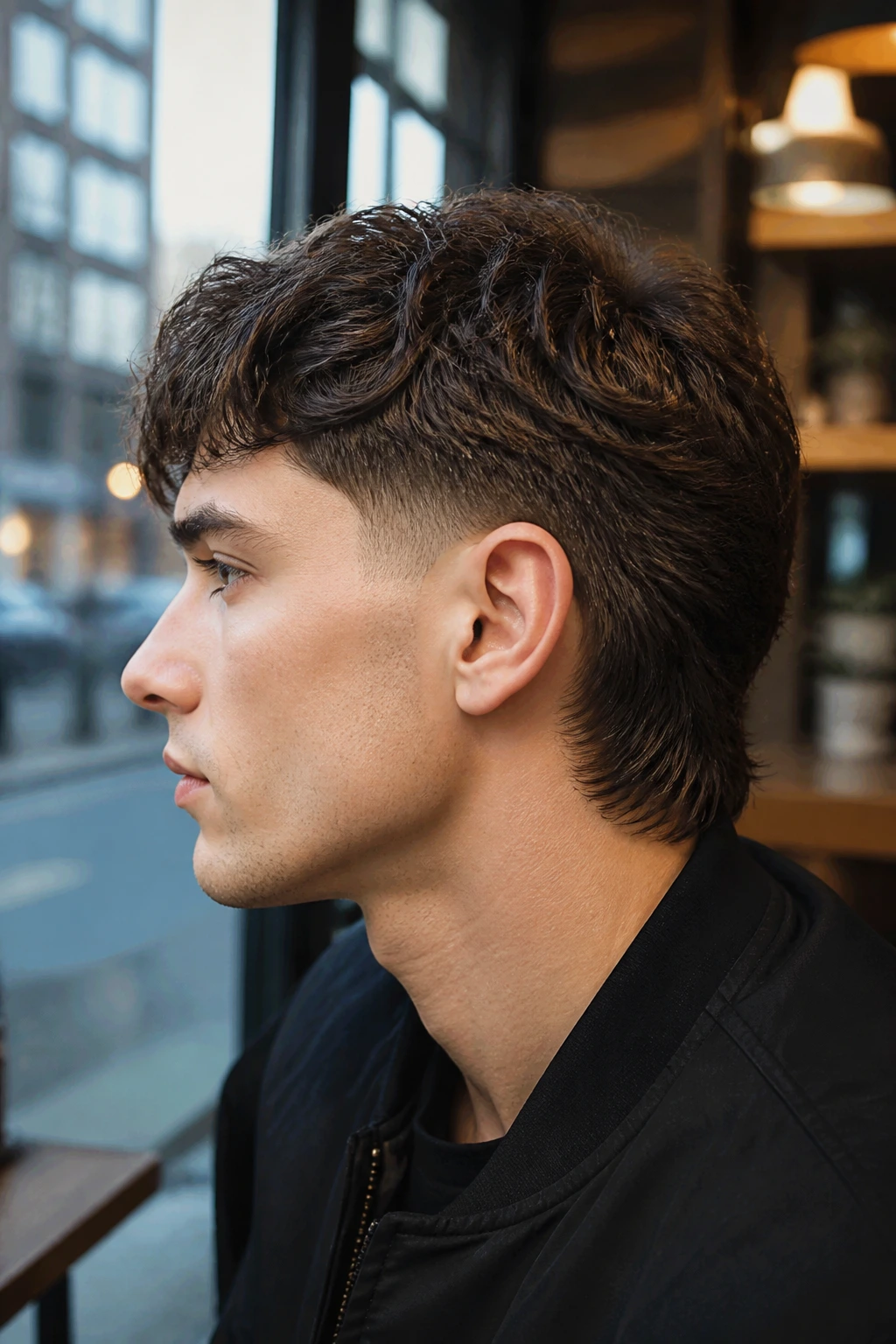
This version draws a sharper outline around the ears and neckline, which can be a relief if your waves like to expand sideways. The top still has texture, but the edges give the haircut a frame that reads clean from across the room.
It’s a good pick for people who need a short mullet that looks neat under jackets, collars, or helmets. The trade-off is maintenance. Clean edges need regular touch-ups, or the shape blurs faster than a softer cut.
19. Asymmetrical Mullet
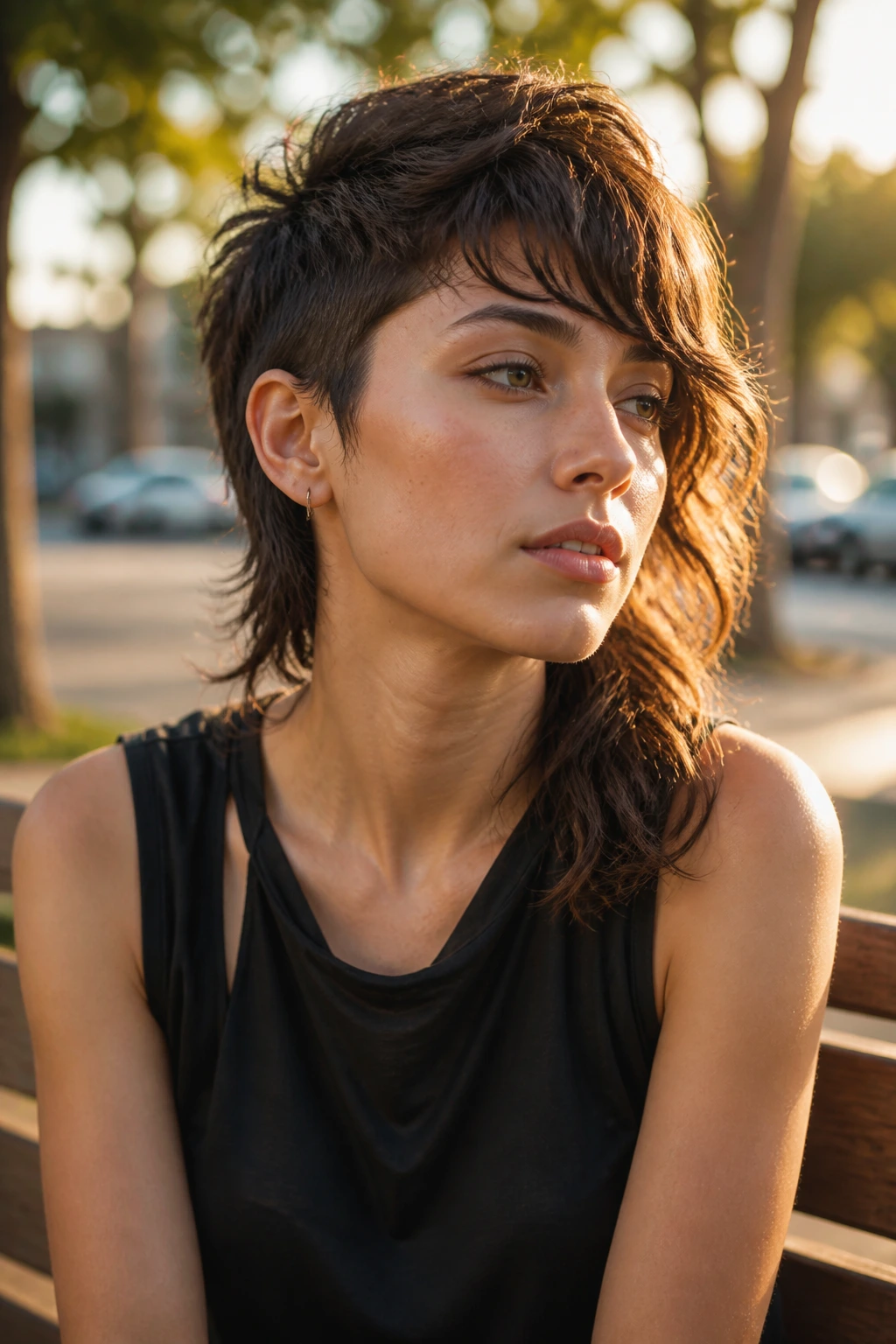
An asymmetrical mullet is for the person who doesn’t mind a little off-balance energy. One side can sit slightly longer, the fringe can fall heavier on one side, or the back can taper unevenly enough to feel intentional.
Why It Works
Waves already create irregular movement. Asymmetry makes that movement look designed instead of accidental. If one side of your head has a stubborn cowlick or a denser patch, this is a smart way to work with it instead of forcing both sides to match perfectly.
20. Ear-Tuck Mullet
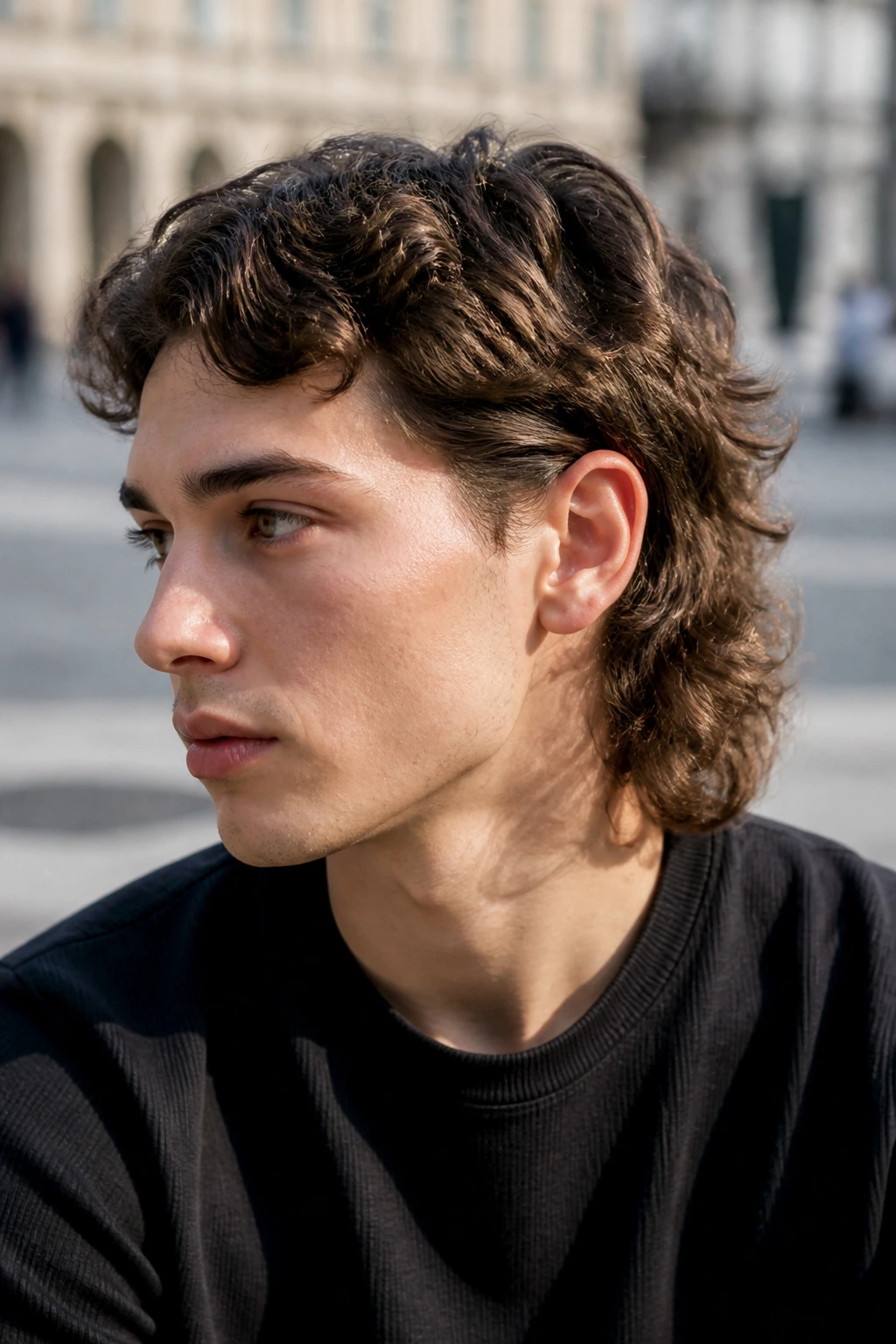
The ear-tuck mullet keeps the front pieces short enough to tuck back without fighting them. That sounds small, but it changes the haircut’s mood completely. You can show off your ears, your glasses, or a sharper jawline when you want the face more open.
This cut suits people who get annoyed by hair hanging into their cheeks all day. Keep the side length light and the top textured. The back can stay a little longer, but the front should feel cooperative.
21. Short Shag Mullet
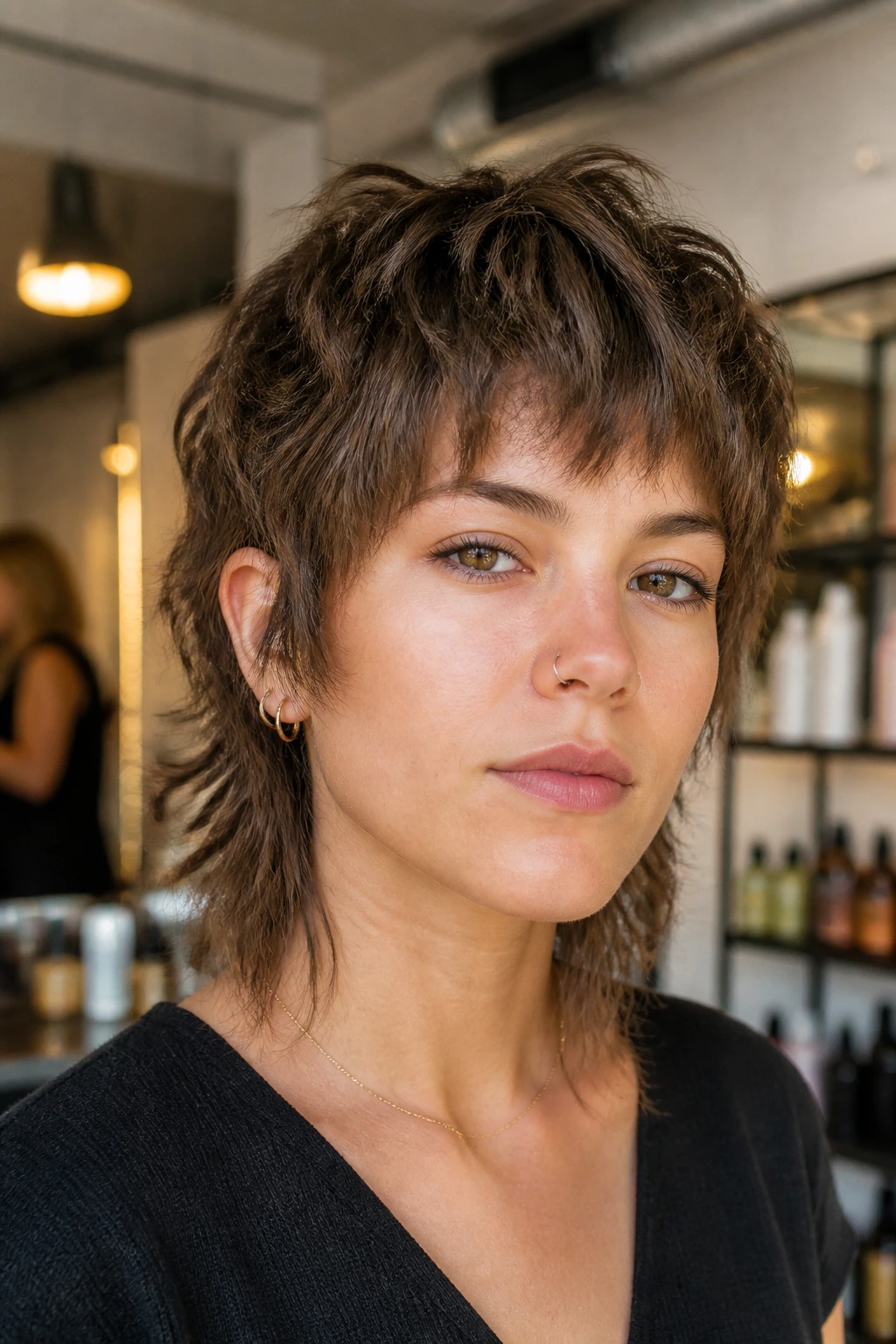
Is it a shag or a mullet? The answer is yes. The short shag mullet blends shag layers with a faint tail at the back, which gives wavy hair plenty of movement without forcing a dramatic contrast.
How to Style It
Air-dry first, then break up the crown with a small amount of paste. You want the layers to fall in slightly different directions. That randomness is what keeps the shape from turning into a neat little helmet.
22. Grow-Out Mullet
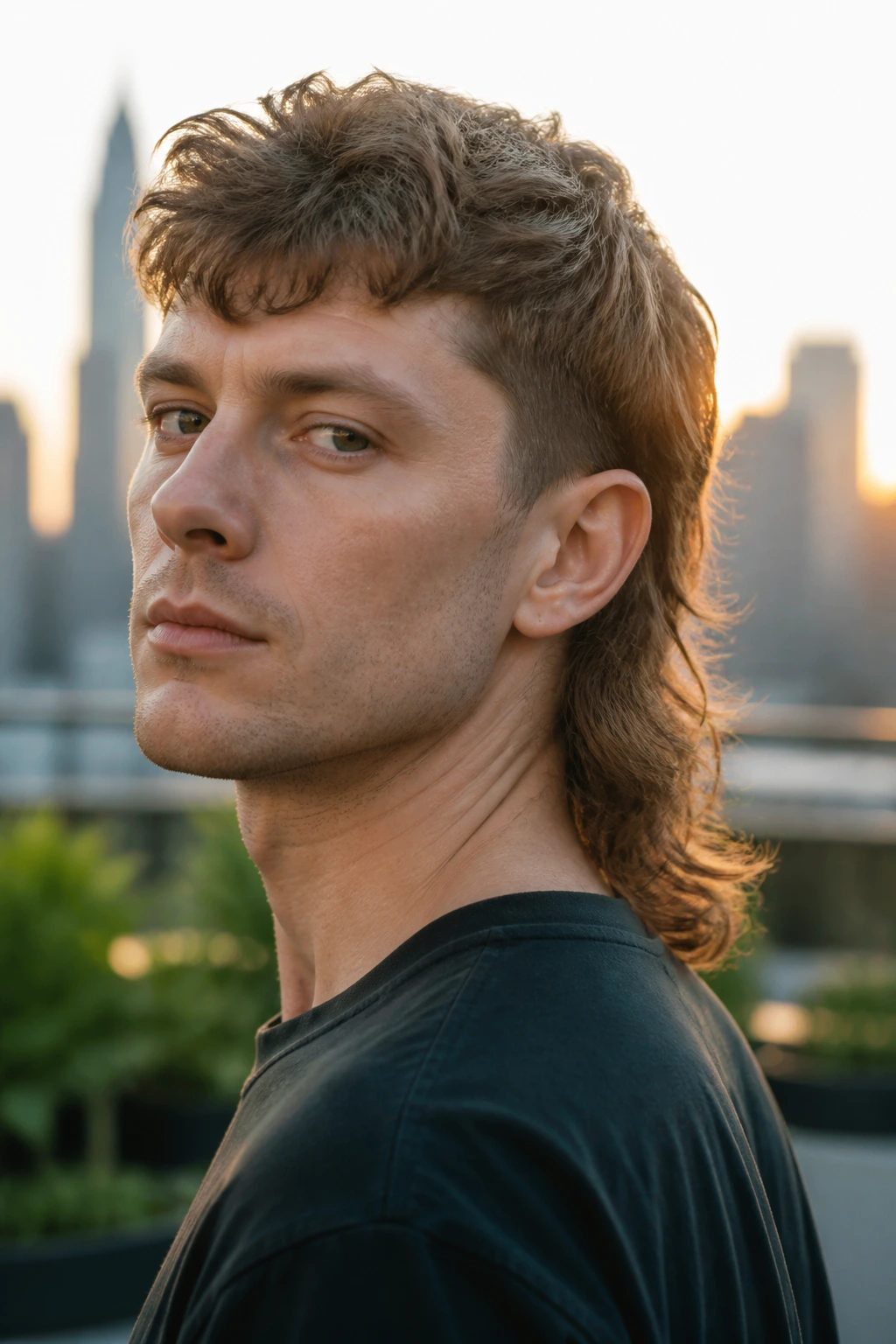
The grow-out mullet is built for people who don’t want to panic at week five. The back stays soft enough to keep length, the crown stays textured, and the sides are tapered so the shape still reads as a haircut while it grows.
A lot of short cuts lose their structure fast. This one buys you breathing room. Ask for a softer transition between the top and the nape, and avoid a super-short fade if you know you’ll wait longer between trims.
- Works well with loose or medium waves
- Keeps shape as the back gets longer
- Needs only light styling to look intentional
23. Piecey Taper Mullet
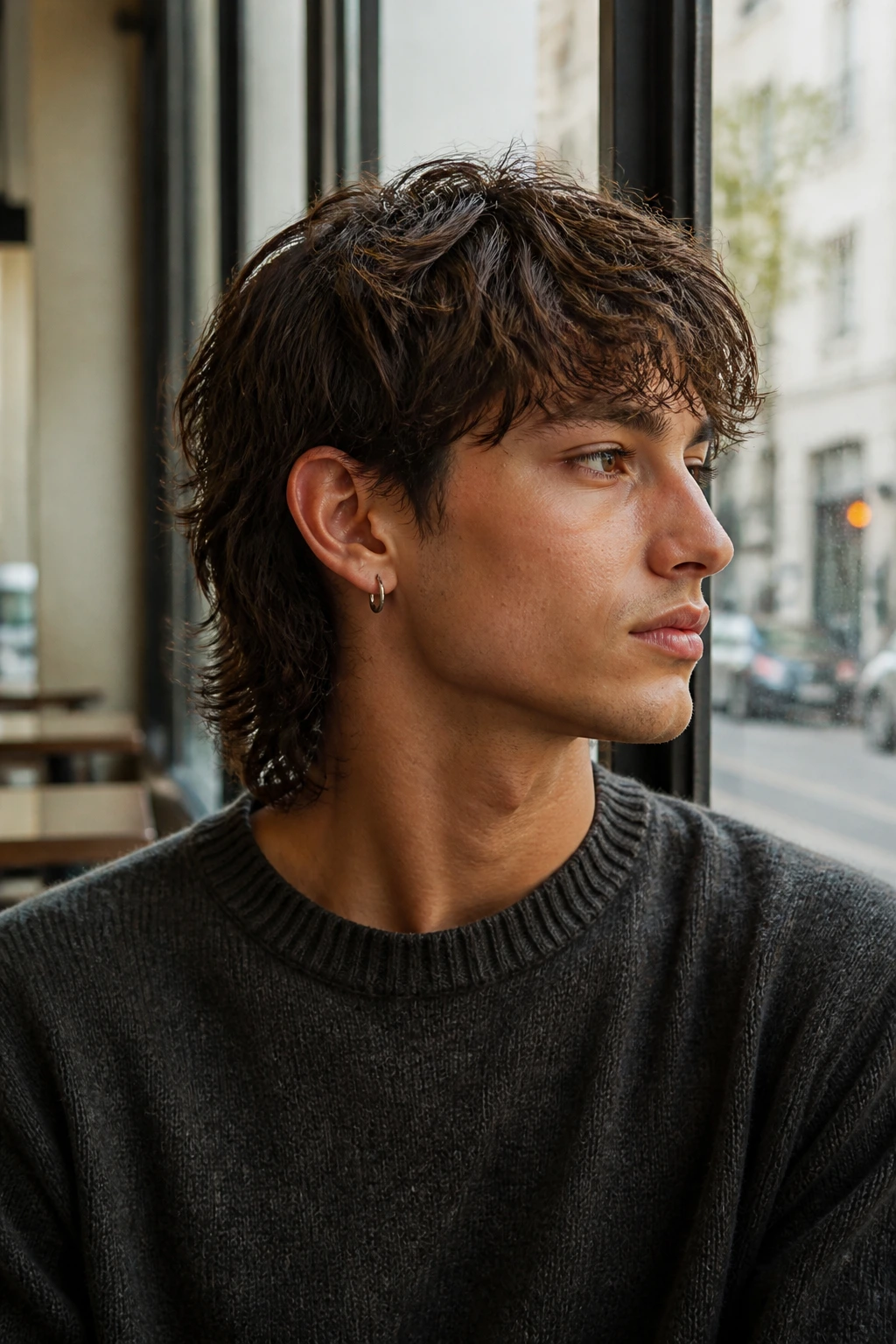
Piecey layers are the whole story here. The cut is tapered enough to stay neat, but the ends are separated enough that each wave reads as its own strand instead of one blurred mass.
This version is a sweet spot for fine-to-medium wavy hair. Too much layering and it goes wispy; too little and it feels heavy. Ask your stylist to leave a little weight in the back so the pieces don’t float away from the neck.
24. Soft Mohawk Mullet
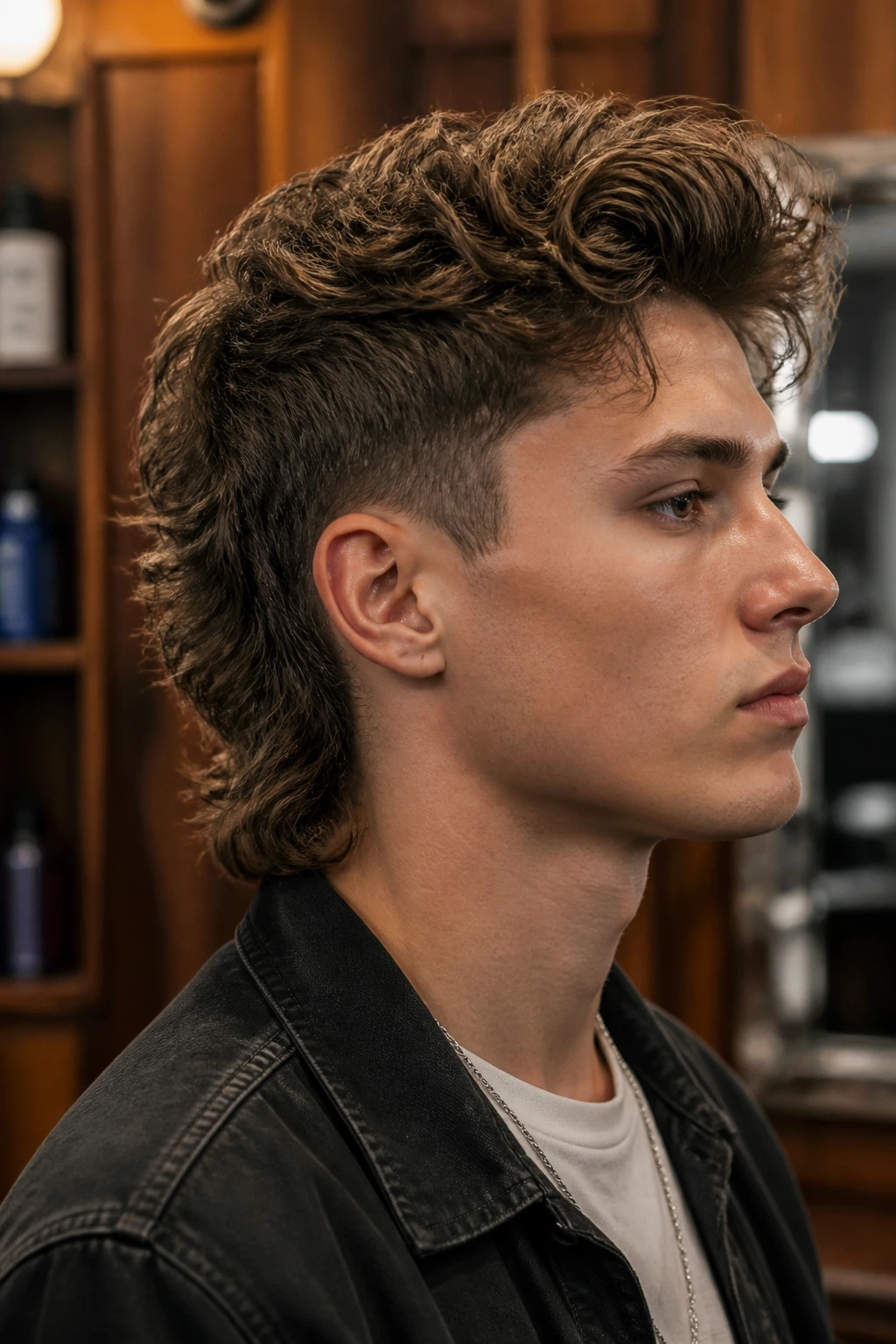
The soft mohawk mullet keeps the center of the head a little higher and the sides tighter, but it stops short of full punk territory. The waves run through the middle like a narrow ridge, and the back keeps just enough length to hold the mullet line.
Compared with the burst-fade versions, this one feels more vertical. If your hair naturally stands up in the crown, you may love that. If it lies flat, you’ll need a diffuser or root lift spray to keep the center from collapsing.
25. Bowl-Mullet Hybrid
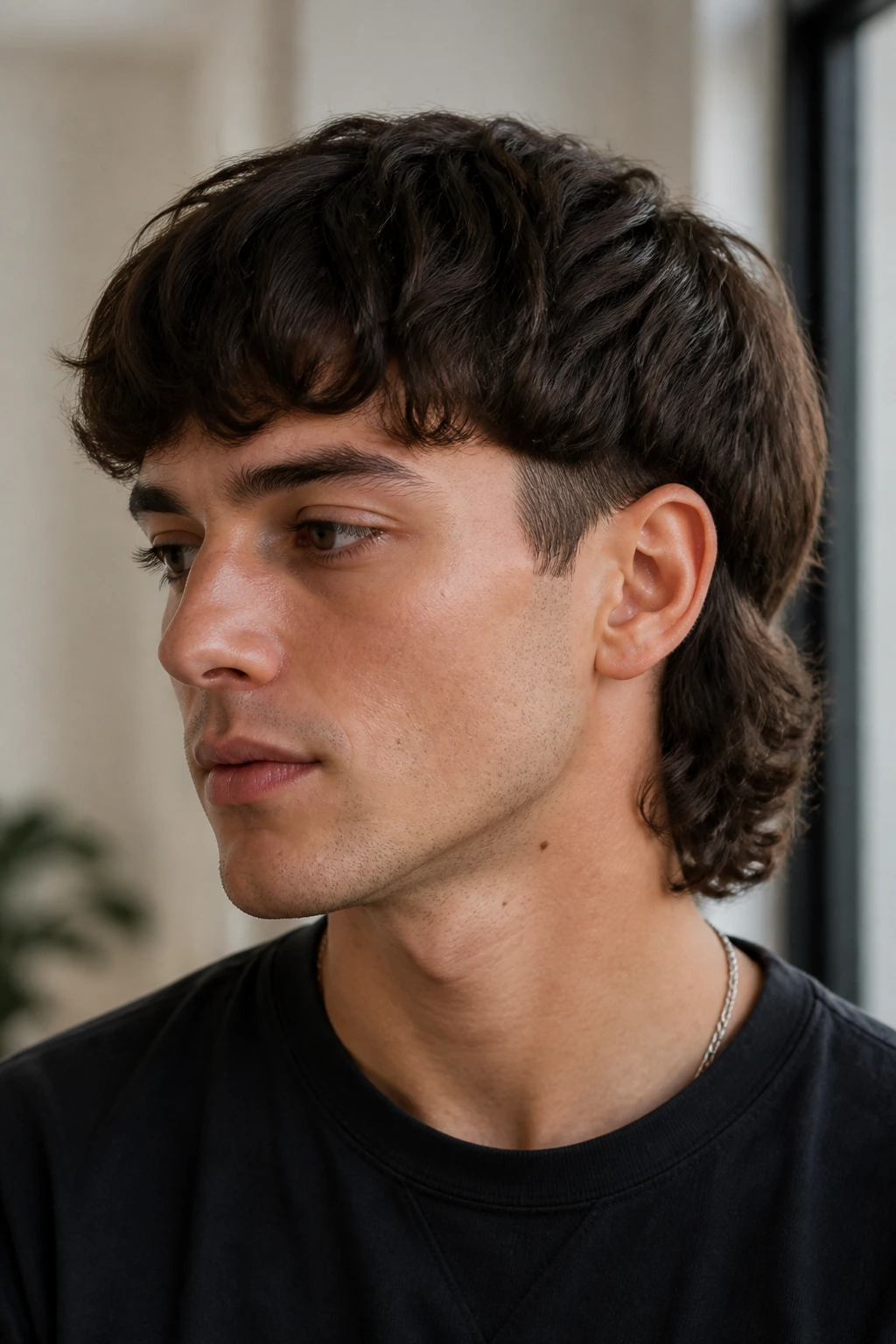
This one sounds odd until you see it done well. The bowl-mullet hybrid uses a rounded top shape, but the sides are softened and the back is left longer, so the result feels deliberate instead of retro in the wrong way.
Keeping It Modern
The trick is not to make the top too blunt. Waves need room to break up the line. Ask for subtle layering near the perimeter and a softly tapered nape, or the cut can start to look helmet-like fast. Done right, it has a sharp graphic feel that still moves.
26. Side-Swept Fringe Mullet
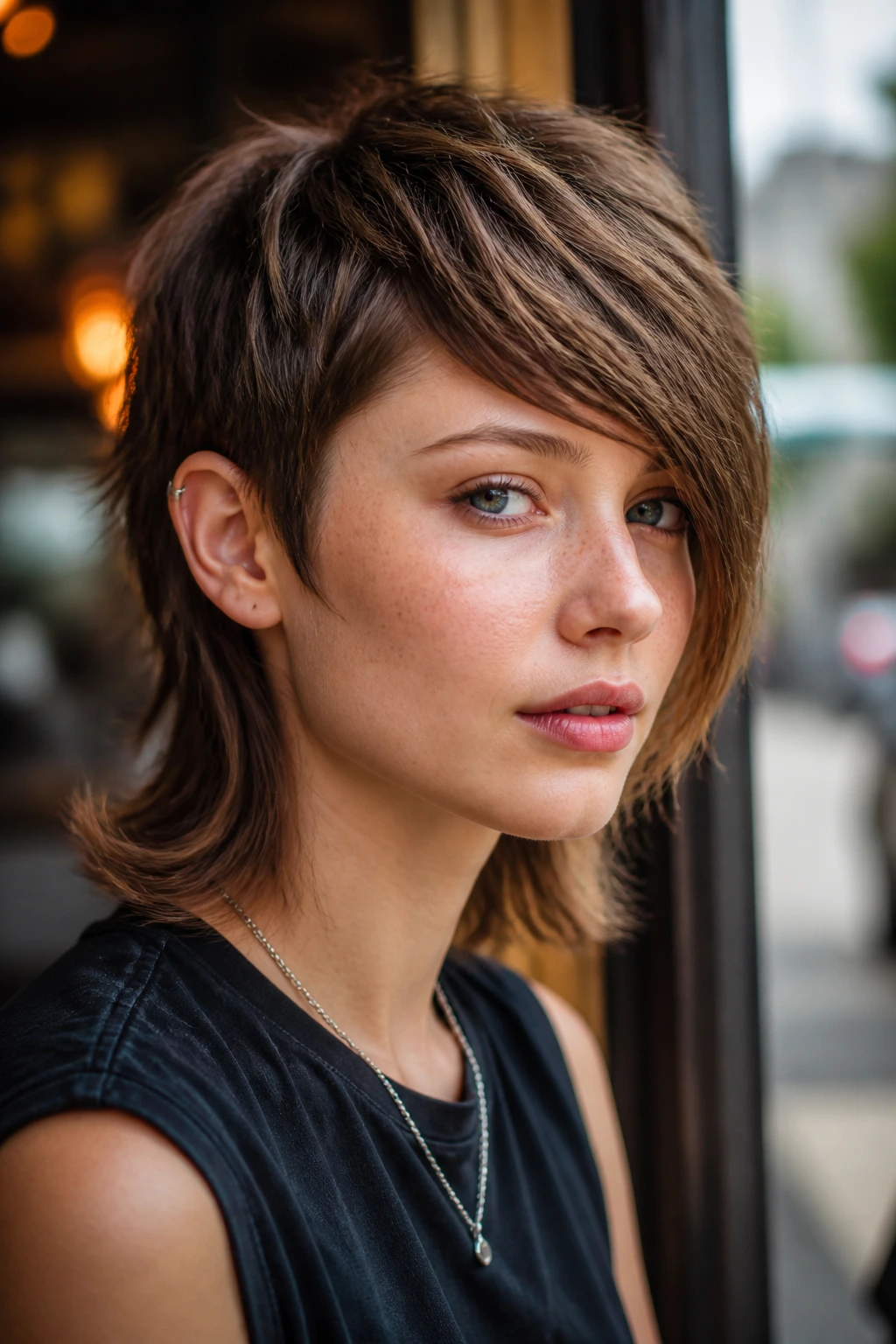
A side-swept fringe changes the whole front of the haircut. It softens the forehead, adds diagonal movement, and gives you a more polished shape than a center-parted fringe usually does.
This version suits square or broad faces especially well, because the diagonal line breaks up width. Keep the fringe long enough to sit near the cheekbone when dry, and let the back stay shorter so the front doesn’t overpower the haircut.
27. Razor Shag Mullet
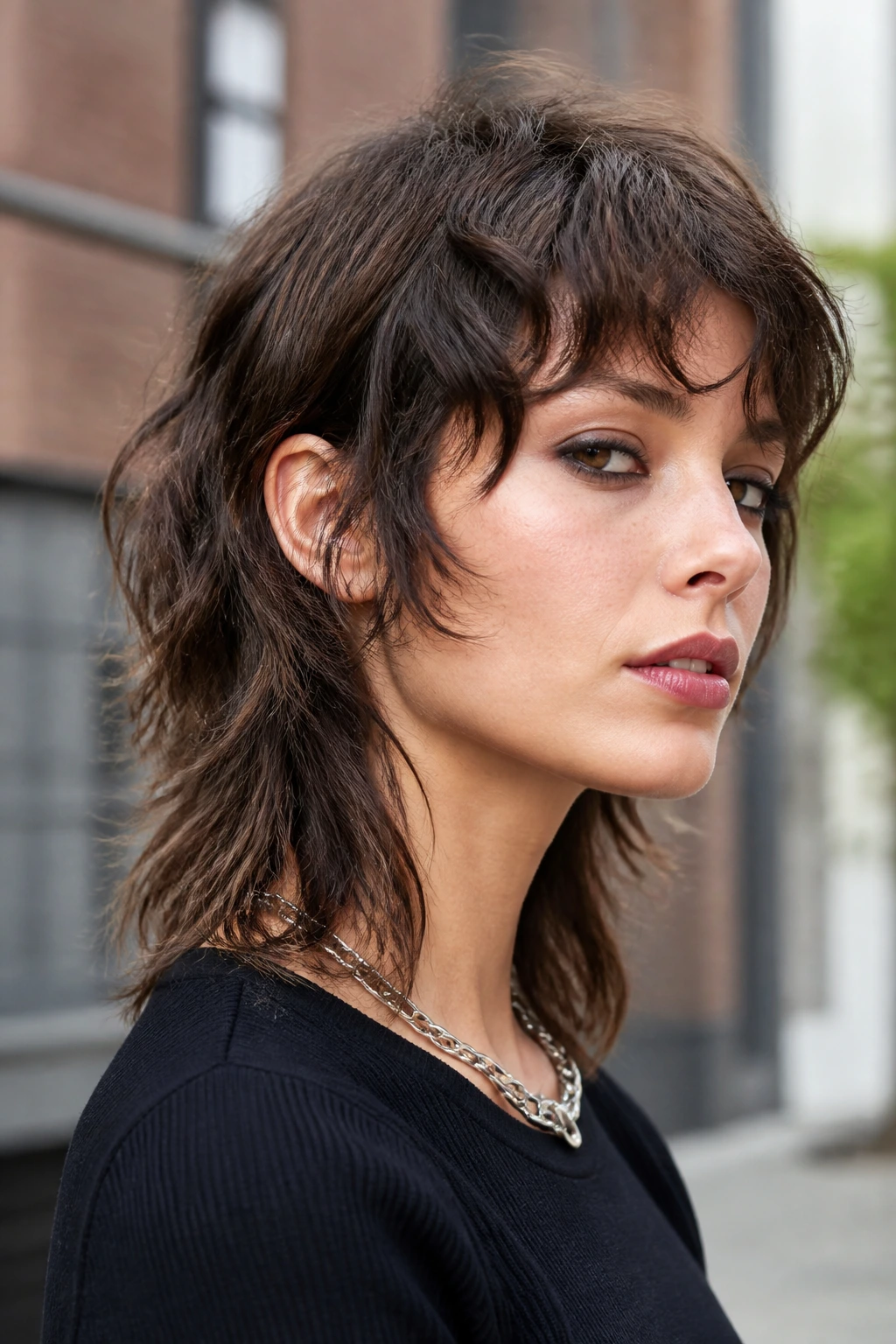
What happens when a shag gets shorter and sharper? You get this. The razor shag mullet is layered, sliced, and feather-light at the ends, which lets wavy hair move without feeling bulky.
The downside is dryness. If your hair already frays at the ends, don’t overdo the razor work. A better version uses scissors for most of the shape and a light razor touch only where you want air. It should look piecey, not shredded.
28. Air-Dried Natural Mullet
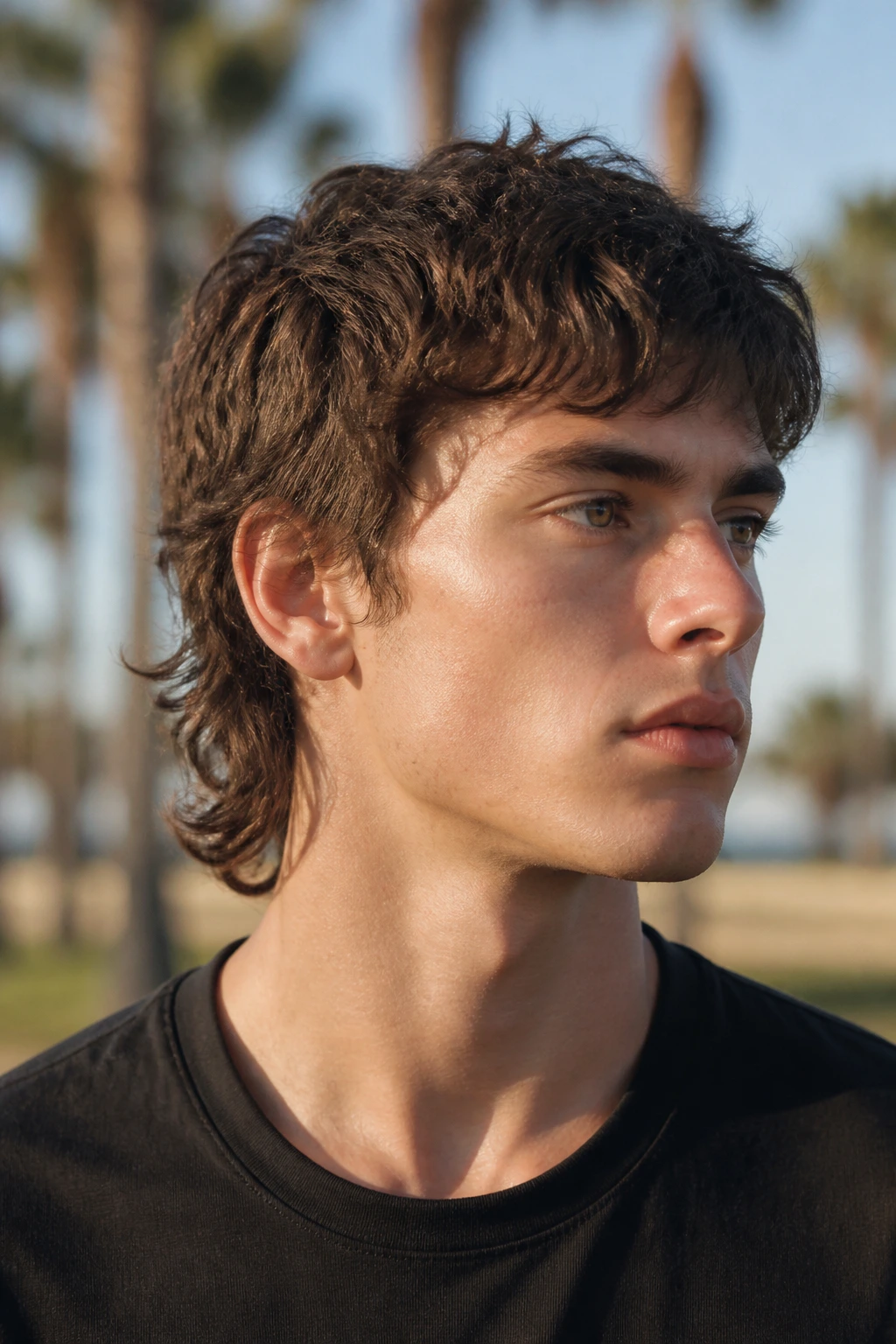
This is the one for people who want to stop negotiating with the blow dryer. The air-dried natural mullet relies on the wave pattern itself, so the cut has to be built with enough structure to survive a hands-off finish.
What to Ask For
Ask for soft layers around the crown, a controlled nape, and a little face-framing length in front. Then leave the hair alone while it dries. A towel rub will make it frizzy. A gentle squeeze with a T-shirt or microfiber cloth is the better move.
29. High-Contrast Fade Mullet
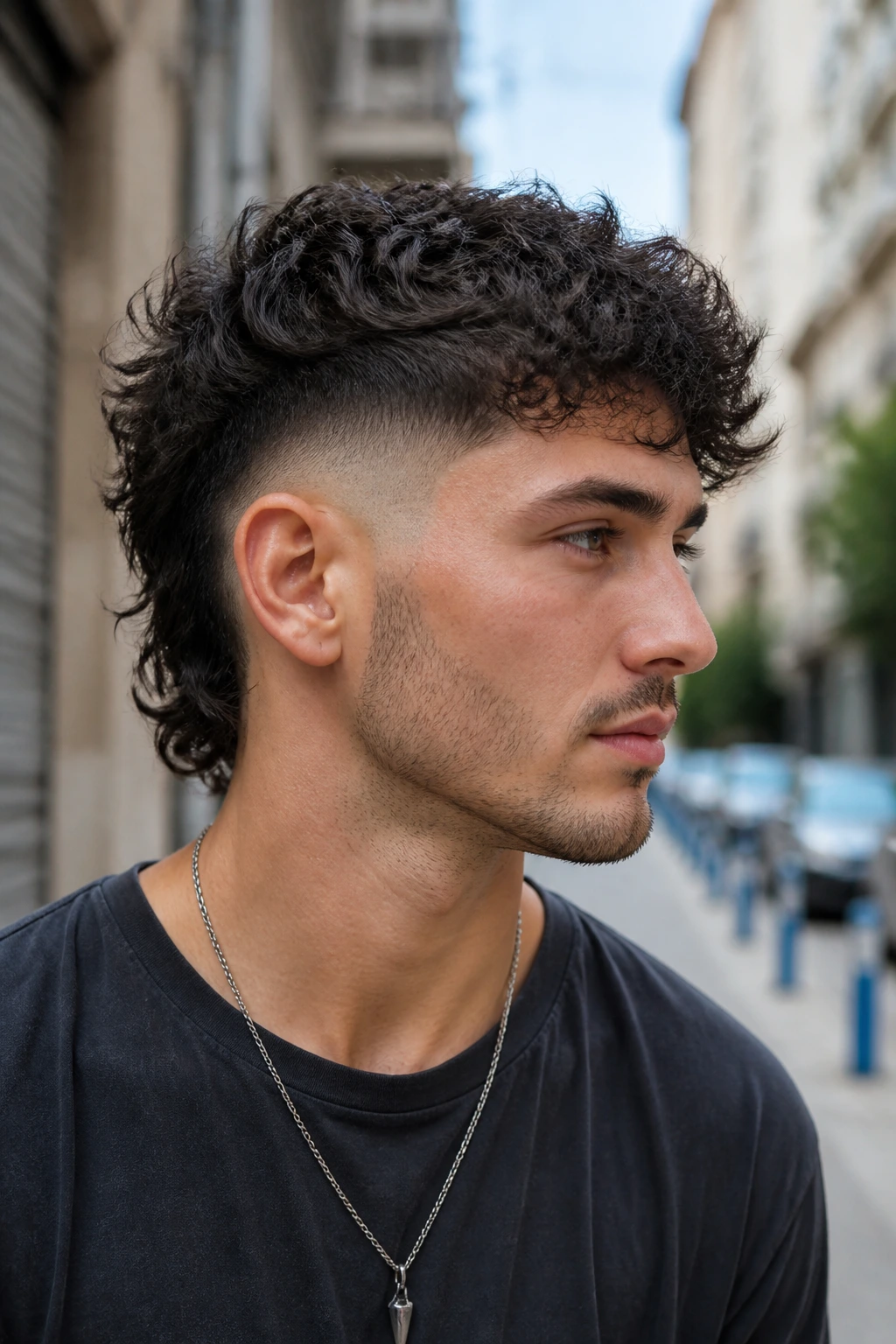
The high-contrast fade mullet puts a lot of the action into the cut line. The sides are taken down tight, sometimes almost skin-close, while the top and back stay textured enough to show off the wave pattern.
This version looks sharp from the side and surprisingly easy from the front. It’s especially good for dense hair that gets hot around the ears. If your hair is very fine, though, the contrast can make the top feel isolated, so keep some density on the crown.
30. Face-Framing Mullet
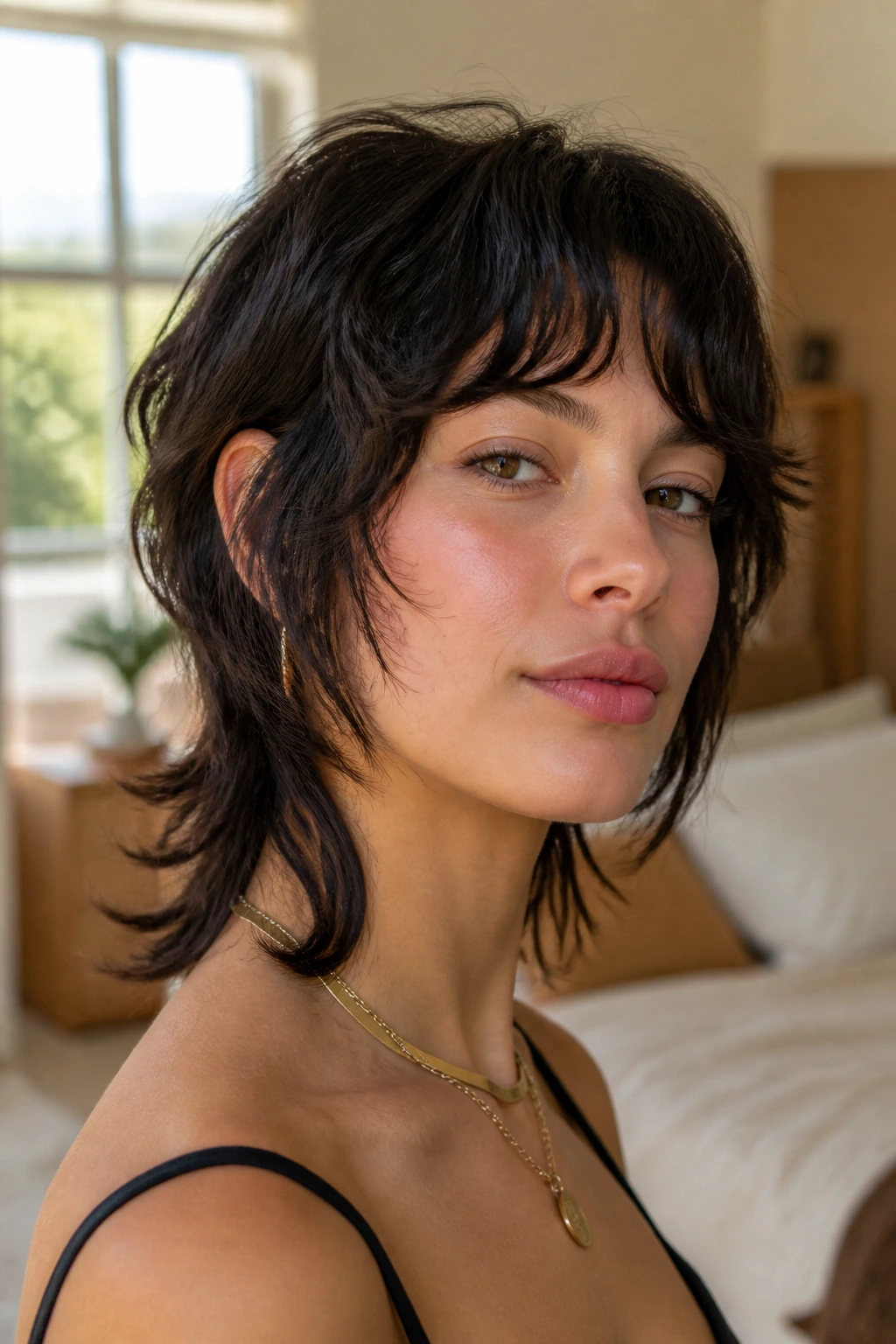
This cut is built around the front pieces. The hair near the jaw and cheekbones is left long enough to create shape, while the back stays short enough to keep the mullet structure obvious.
I like this version when someone wants the haircut to soften the face instead of exposing it. It can flatter longer faces by bringing a bit of width near the cheeks, and it can soften a stronger jawline without hiding it completely. Keep the front slightly longer than you think.
31. Punk Mullet
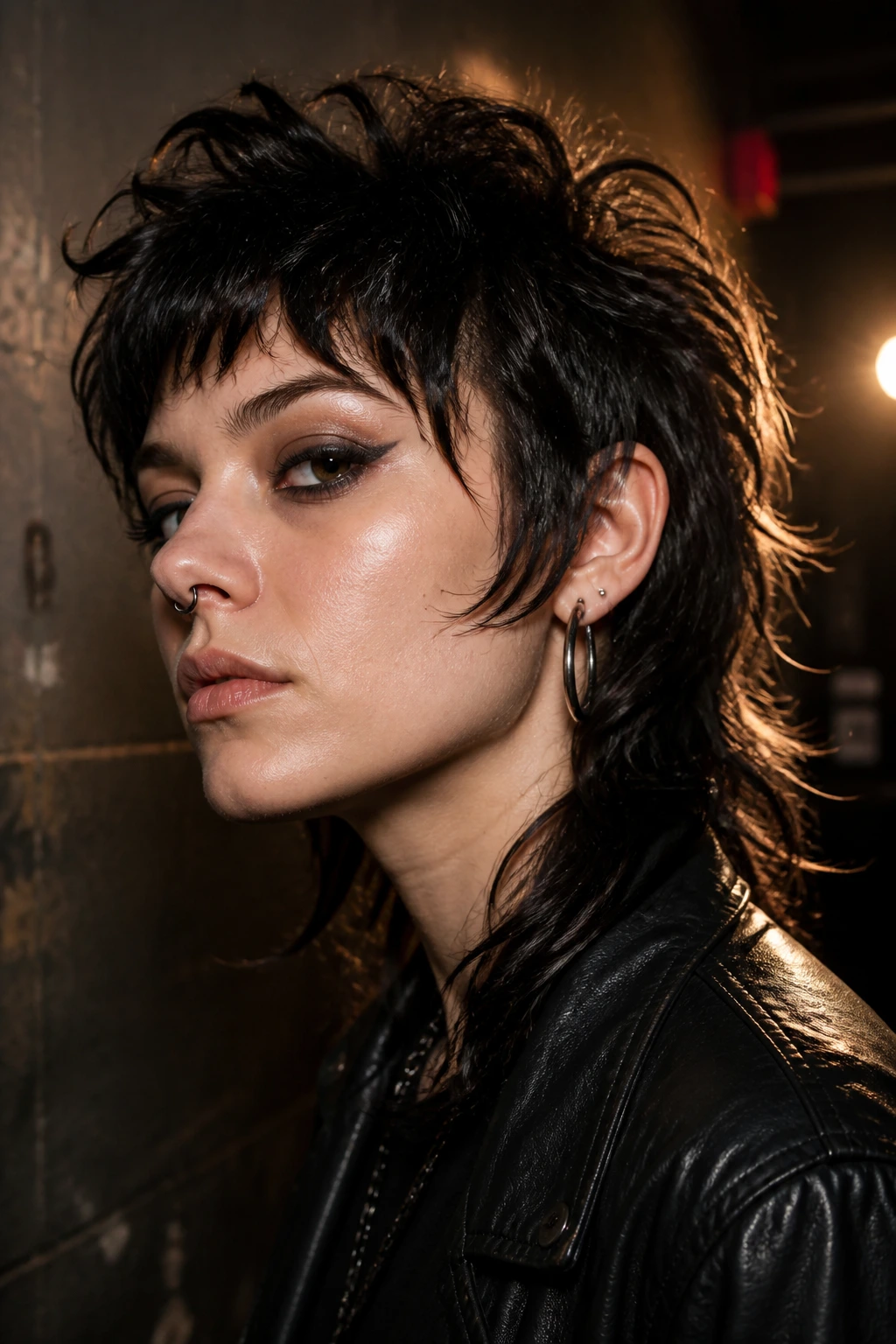
The punk mullet wants attitude first and neatness second. It usually means choppy texture, sharper ends, maybe a harder fade, and sometimes a little lift at the crown so the whole thing stands up with purpose.
Where the Energy Comes From
The texture. That’s the whole game. Waves help because they already bring motion, and the cut turns that motion into something a little louder. If you want the haircut to look intentional in a more rebellious way, use matte paste and keep the front pieces uneven.
32. Retro Rocker Mullet
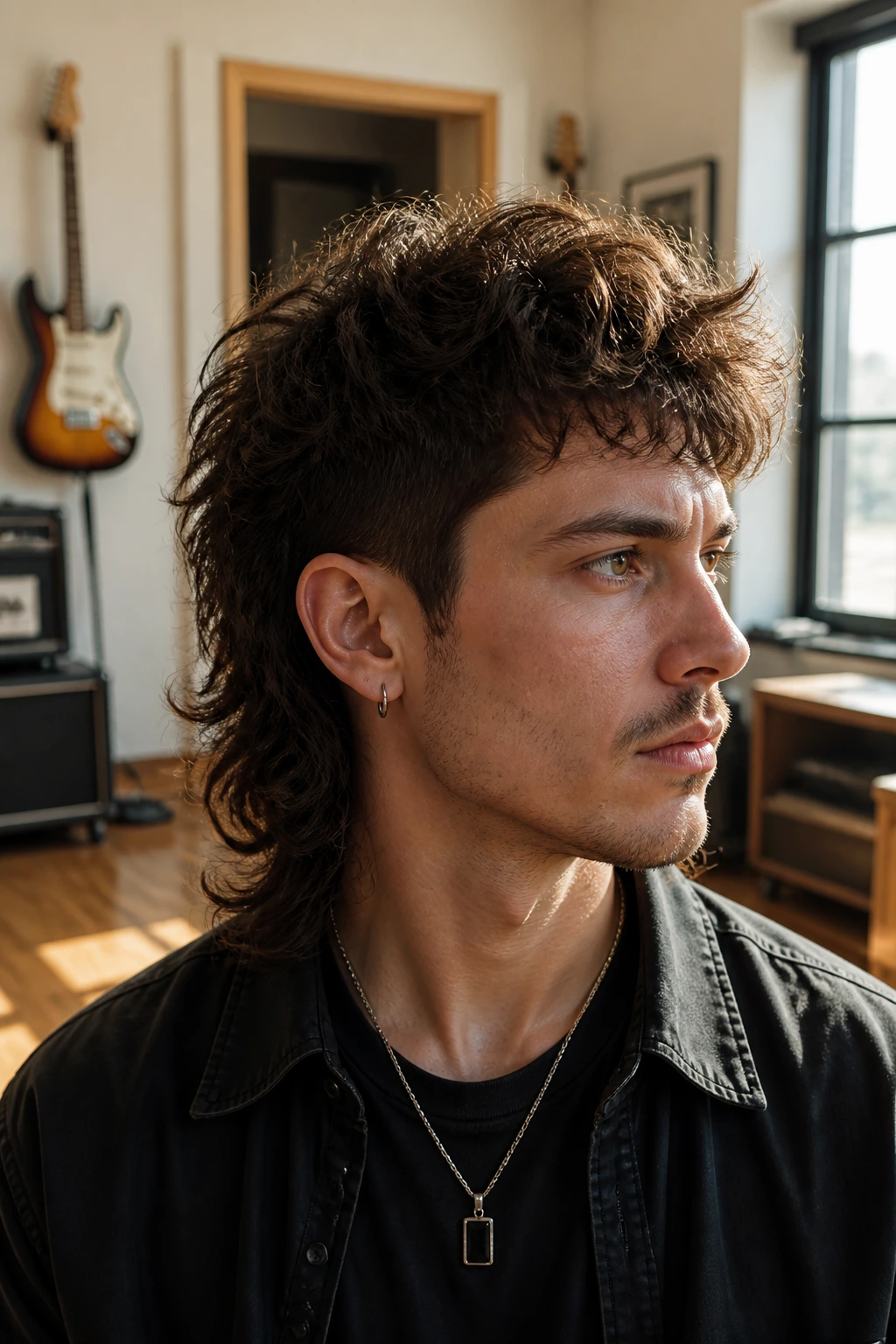
This version feels like it belongs in a music room, not a barber brochure. The crown has more volume, the back keeps a fuller length, and the sides are shaped enough to avoid looking messy in a bad way.
Compared with a modern micro mullet, this one is warmer and thicker. It works well on coarse or medium wavy hair that can hold a bit of body. I’d avoid thinning it too much, because the richness of the shape is part of the charm.
33. Minimalist Wave Mullet
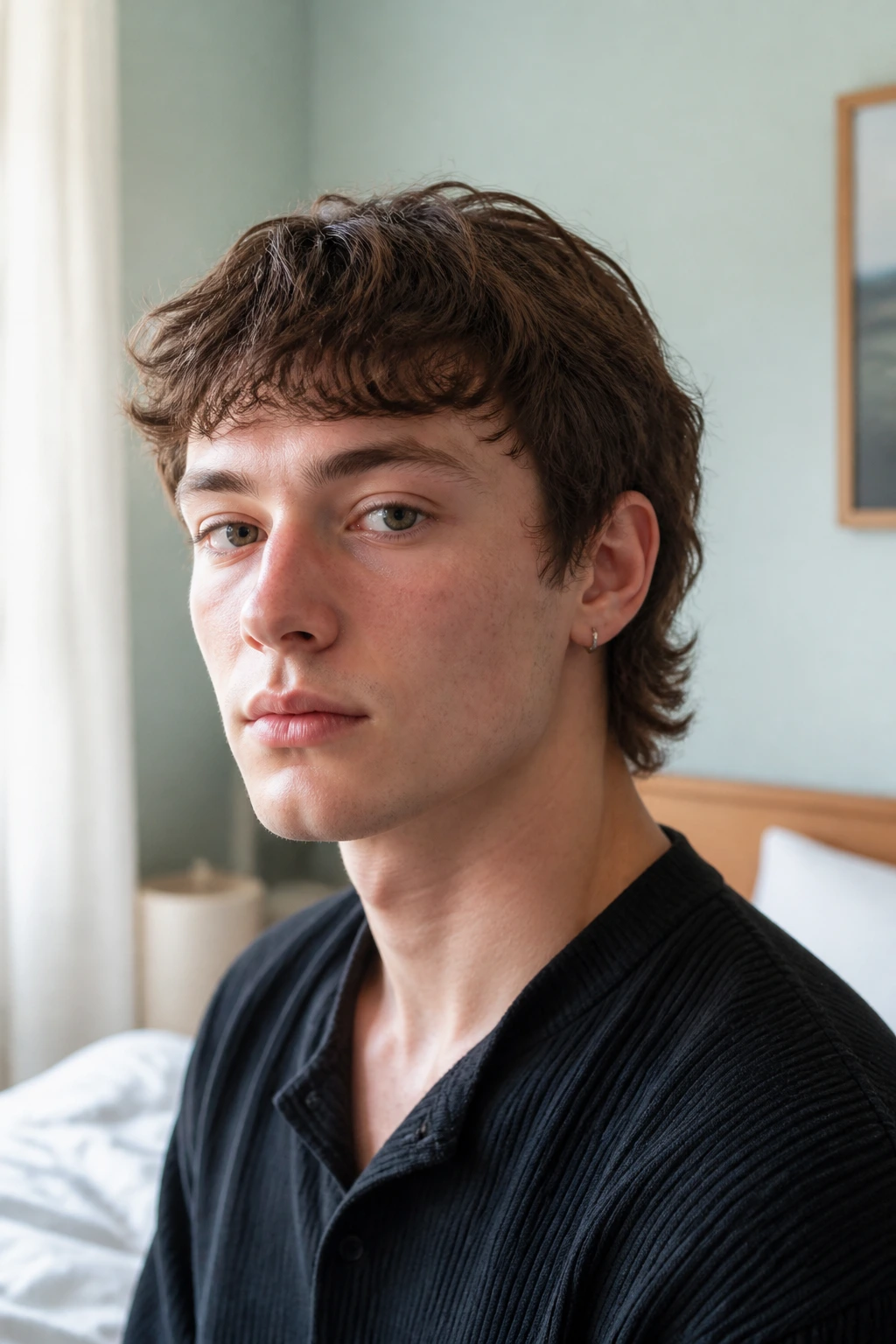
Can a mullet stay subtle? Yes, and this is the proof. The minimalist wave mullet keeps the length difference small, the sides soft, and the top close enough to the head that the haircut reads clean from the front.
The goal is restraint. You still get the slight kick at the nape, the slight bend through the top, and the slightly longer fringe or back that makes the whole thing register as a mullet. Just don’t overshoot it with product. The haircut does the talking.
How Wavy Hair Changes the Shape of a Short Mullet
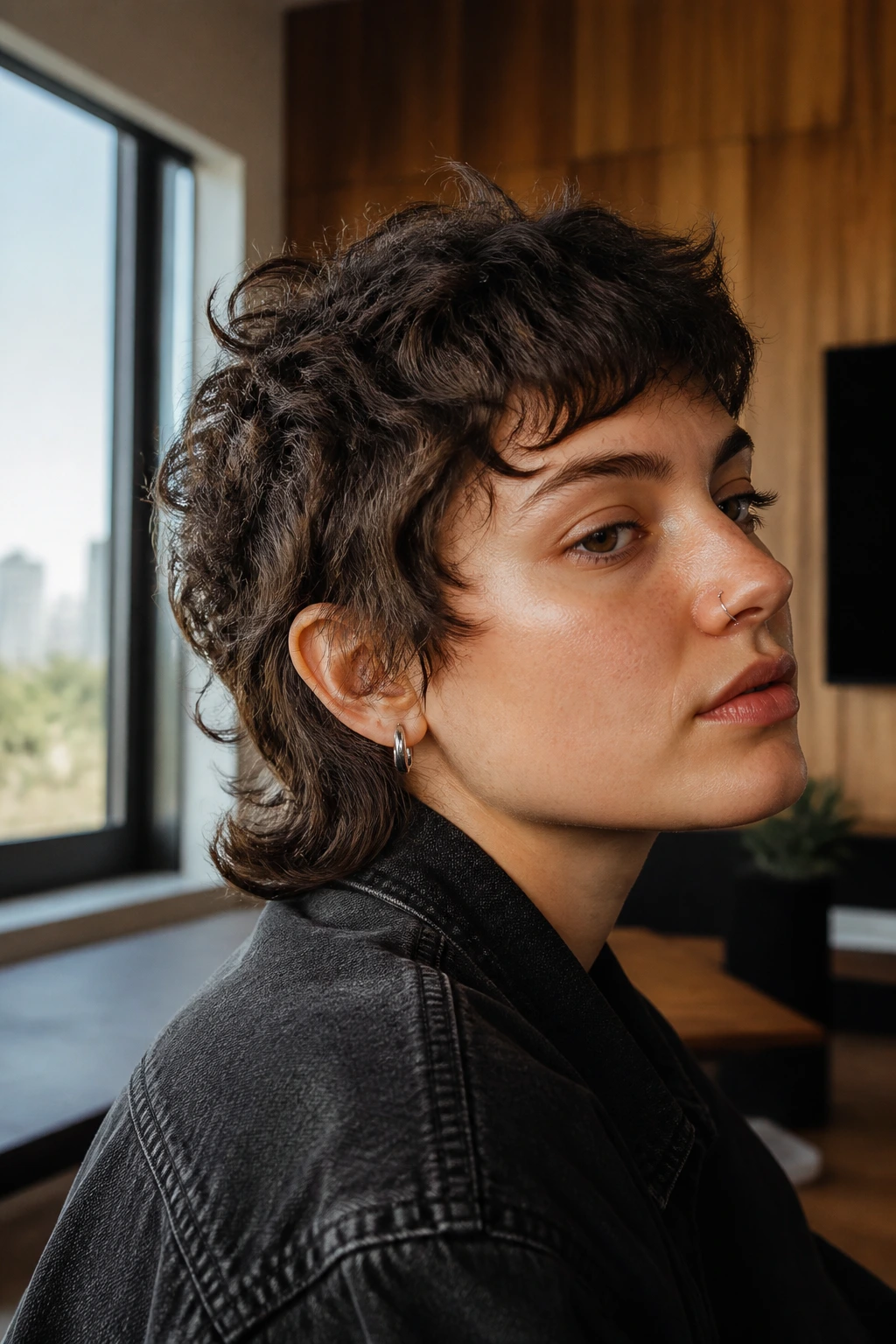
Wavy hair changes the rules because it doesn’t sit still the way straight hair does. A short mullet on waves will usually dry shorter at the crown, wider through the sides, and fuller at the ends than it looked when the stylist first combed it out. That’s not a flaw. That’s the whole point of cutting for texture instead of fighting it.
The most useful thing to remember is shrinkage. A wave can eat up half an inch to a full inch in the front and a bit more in the nape depending on density and porosity. If the stylist only looks at the hair wet, the finished cut can land too short and too square. I prefer a dry check or at least a careful conversation about how the waves sit once they settle.
The back matters more here than people think. Too much weight and the mullet loses lift. Too little and it starts to kick out in a way that looks accidental. The sweet spot is a soft, tapered nape with enough texture to bend, not stick.
What to Tell Your Stylist Before the First Snip
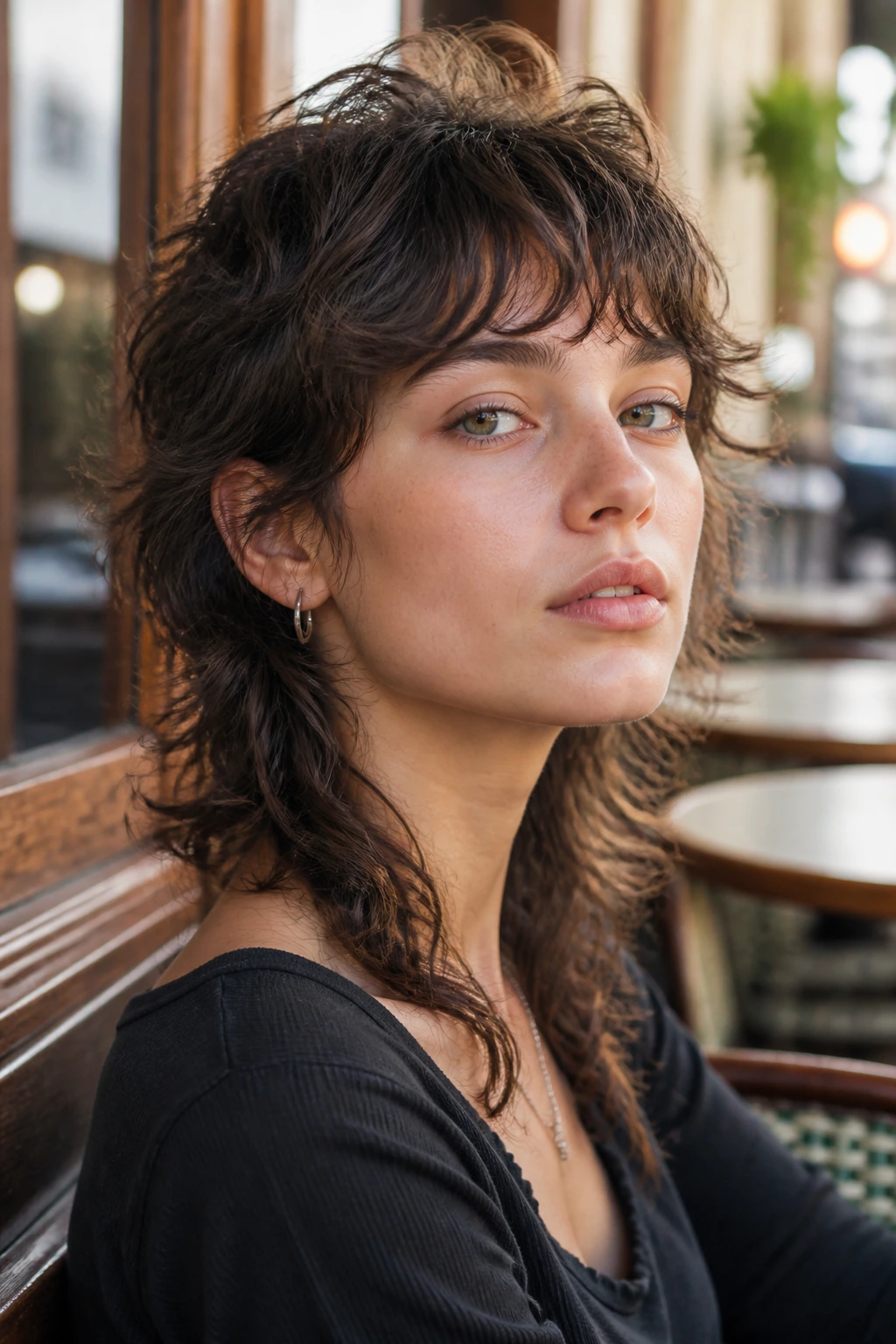
Bring photos, but bring words too. Photos show mood; words explain weight, length, and maintenance. Say whether you want the cut to feel soft, edgy, office-friendly, or close-cropped. Those are not cosmetic details. They decide where the shortest point lands around the ears and how much lives at the nape.
Length: Tell them how short you’re willing to go on the sides, because “short” can mean a lot of different things in a mullet conversation. If you wear glasses, need a helmet, or hate hair touching your neck, mention it. That changes the sideburn area and the back perimeter.
Texture: Ask for point-cutting or soft layering if you want the waves to move. If you want sharper definition, request cleaner lines near the fringe and temple. A razor can help on thick hair, but it is not a cure-all.
Balance: Decide whether you want the front, crown, or back to be the most visible part. One of those has to lead. If all three fight for attention, the cut looks noisy.
Styling Tools That Earn Their Spot on the Counter
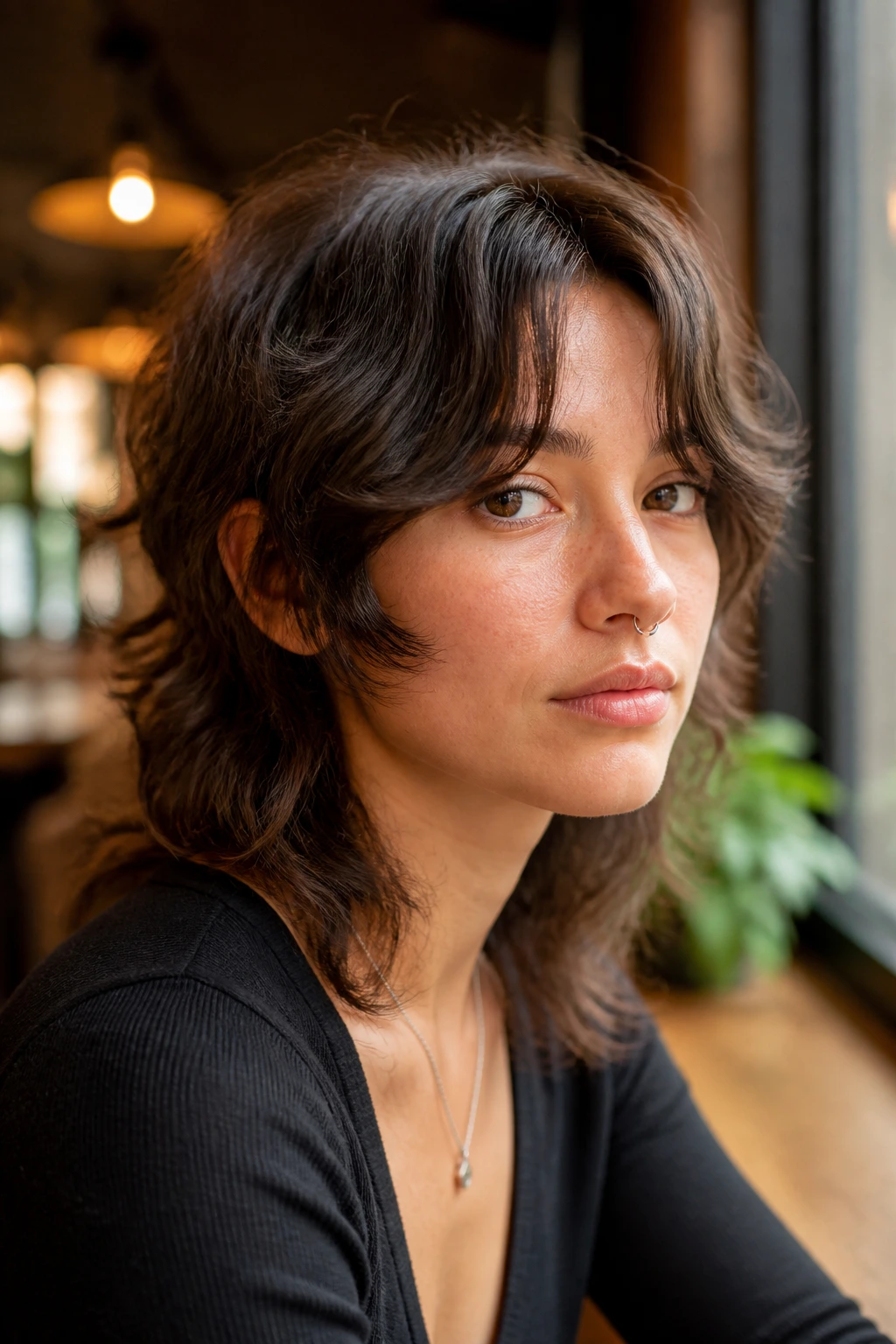
- Spray bottle: A quick mist wakes up the waves without forcing a full wash.
- Microfiber towel or T-shirt: Better than terry cloth for keeping the top from frizzing apart.
- Diffuser attachment: Useful if you want lift at the crown without blasting the wave pattern flat.
- Matte paste or clay: Good for separating ends and adding grip to short layers.
- Light curl cream: Helps looser waves hold their bend without looking oily.
- Sea salt spray: Works well on surf-textured and bedhead versions, but don’t drown the hair in it.
- Fine-tooth comb: Handy for cleaner fringes and side parts, though fingers work better for messier looks.
- Hand mirror: Essential if you want to check the nape and sides without guessing.
Practical Ways to Wear the Cut Day to Day
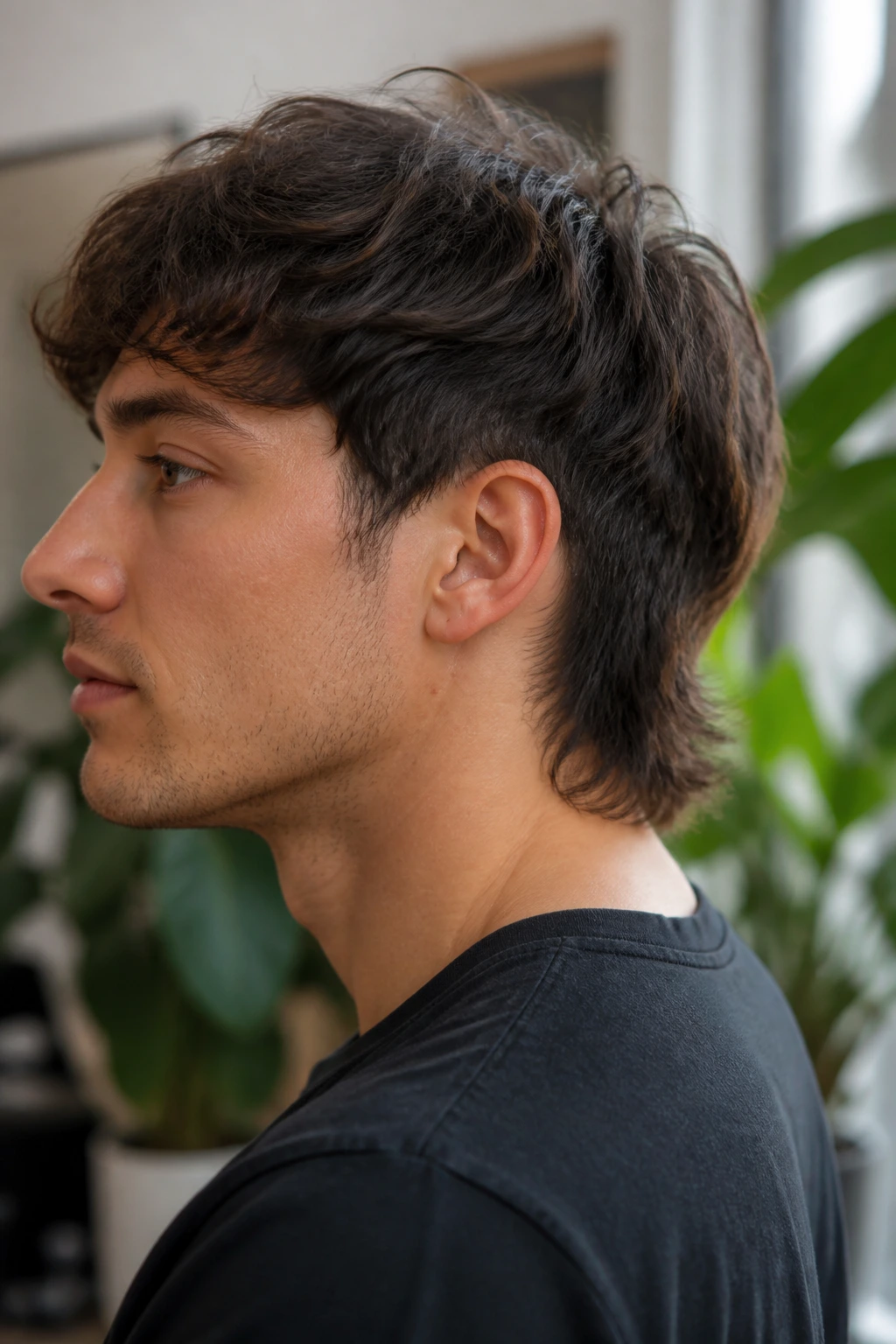
The easiest short mullets are the ones you don’t overthink. After washing, squeeze out water, work in a small amount of curl cream or foam, and let the wave pattern set before you touch it again. Constant fiddling breaks the clumps apart and makes the ends fuzzy.
Air-Dry First: Give the hair a few minutes to start forming on its own. If the front wants to split into a curtain, let it. If the crown sits a little high, don’t flatten it immediately.
Diffuse Only Where Needed: Use the diffuser at low heat on the roots and crown, not all over. The goal is lift, not a blown-out helmet.
Finish Lightly: A rice-grain amount of matte paste or a few drops of cream on the ends is enough for many of these cuts. If your hands feel coated, you’ve used too much.
Reset on Day Two: Mist the hair, scrunch the bends back into place, and smooth the fringe with damp fingers. That’s often enough. The cut should be able to survive a lazy morning.
Common Mistakes That Make the Shape Look Off
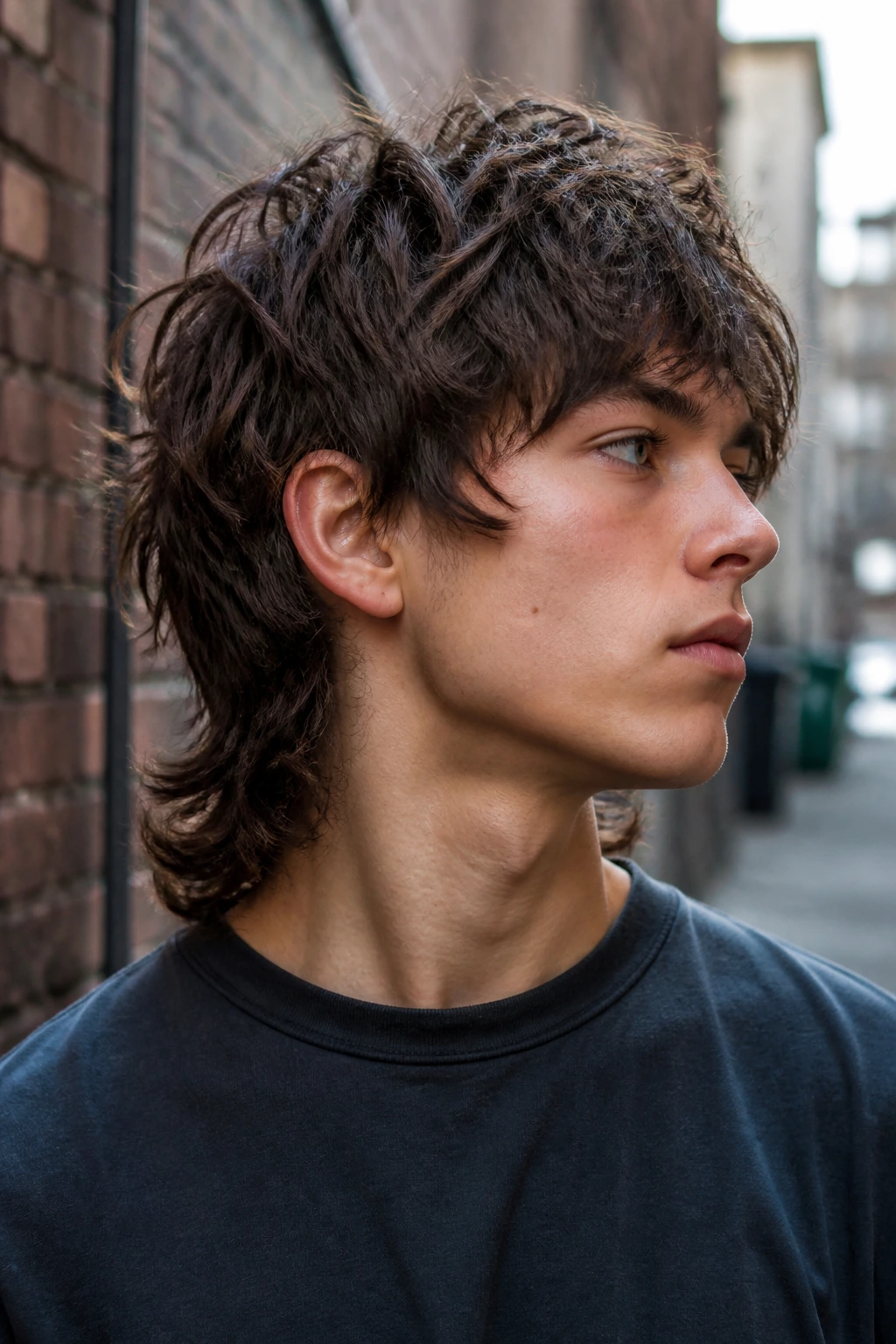
- Cutting the sides too tight for your density: The hair puffs up around the ears and makes the head look wider. Leave a little weight if your waves are thick.
- Taking the back too blunt: A hard line at the nape can make the cut look like a bad shelf. Ask for soft point-cutting so the ends fall together.
- Overloading with product: Too much cream or gel drags the waves down and exposes every split end. Start small and add only if the hair still feels dry.
- Ignoring shrinkage: Wavy hair often sits shorter once it dries. If the fringe lands at the eyebrow wet, it may sit high above it dry.
- Trying to force symmetry: Waves rarely mirror perfectly, and that’s fine. Chasing perfect balance can make the whole style look stiff.
- Skipping trims for too long: The back starts to kick out, the sides lose shape, and the whole thing turns from intentional to accidental.
Variations and Alternatives to Try
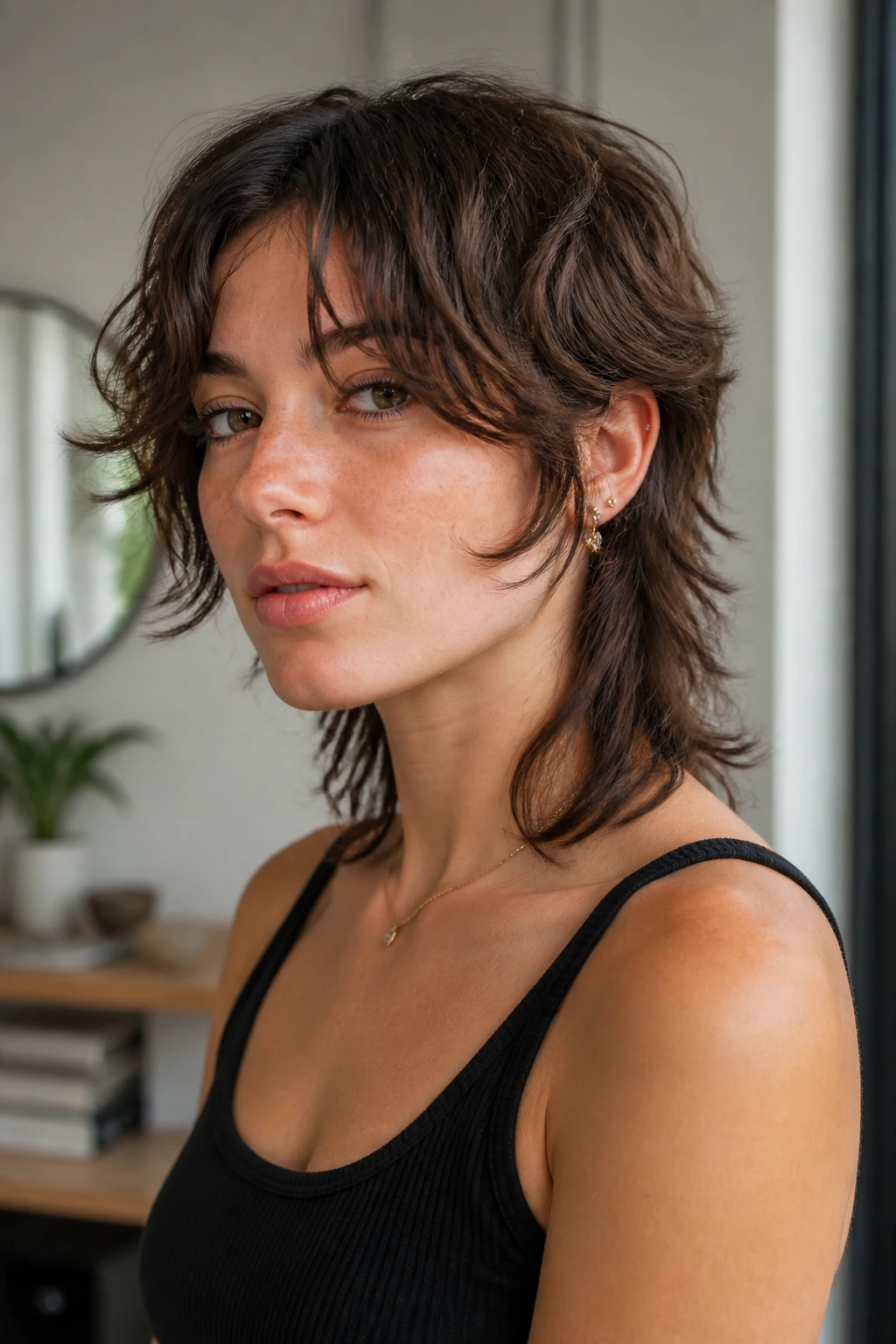
The Softer Shullet: If a mullet feels too sharp, ask for longer layers through the crown and a gentler transition into the nape. You’ll still get movement, but the outline stays less dramatic.
The Fade-Forward Version: This swaps in a tighter fade around the sides while keeping the top wavy and the back short. It’s a smart option if you want the haircut to look clean from the front and sharper from the side.
The Fringe-First Version: Here, the fringe becomes the star. Keep the front longer and more visible, then let the rest of the cut stay compact. It works well if you like face framing more than back length.
The Curl-Friendly Version: For stronger waves or loose curls, leave a touch more length everywhere so shrinkage doesn’t eat the shape. This avoids the too-short, too-spiky look that can happen with overcutting.
The Office-Safe Version: Keep the transition softer, the nape shorter, and the perimeter tidy. The result still reads as a mullet, but it won’t demand a conversation every time you walk into a meeting.
Trims, Wash Days, and Grow-Out Between Cuts
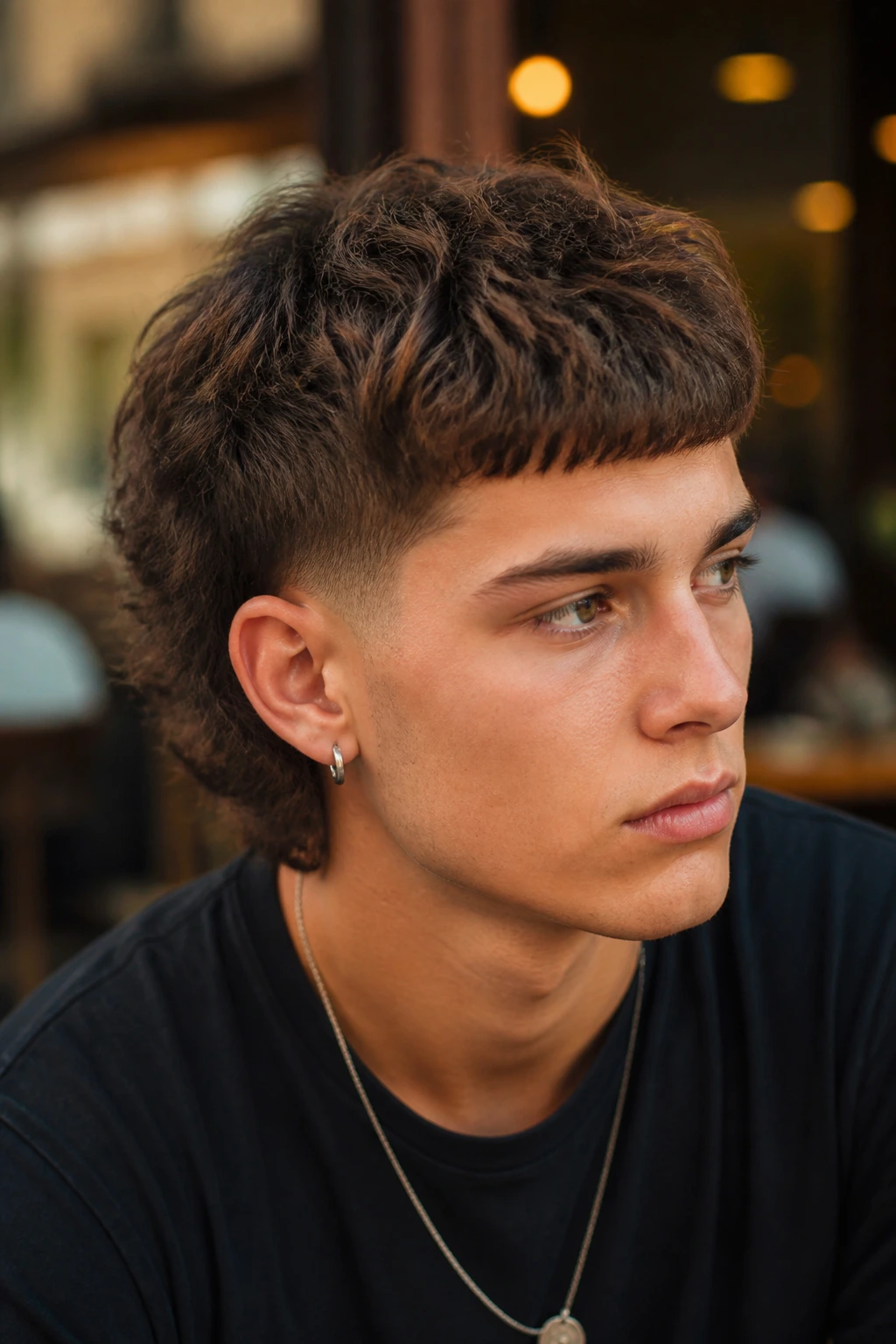
Short mullets live or die on maintenance, and the schedule depends on how crisp you want the shape. If you like clean fades or sharp edges, plan on a touch-up every 3 to 4 weeks. Softer, shaggier versions can stretch closer to 6 to 8 weeks before the nape starts misbehaving.
Wash frequency matters too. Wavy hair usually does better with 2 to 4 washes a week, depending on scalp oil and product use. If you wash daily, the top can go flat and the ends can feel stripped. If you go too long without cleansing, the back and fringe start clumping in the wrong way, especially after sea-salt spray or matte paste.
Night care helps. A satin pillowcase cuts down on friction, and if your waves puff up at the crown, a loose clip or a very soft headband can keep the front from folding awkwardly while you sleep. For second-day hair, a light mist and finger scrunch usually work better than a full restart.
Questions People Ask Before They Commit
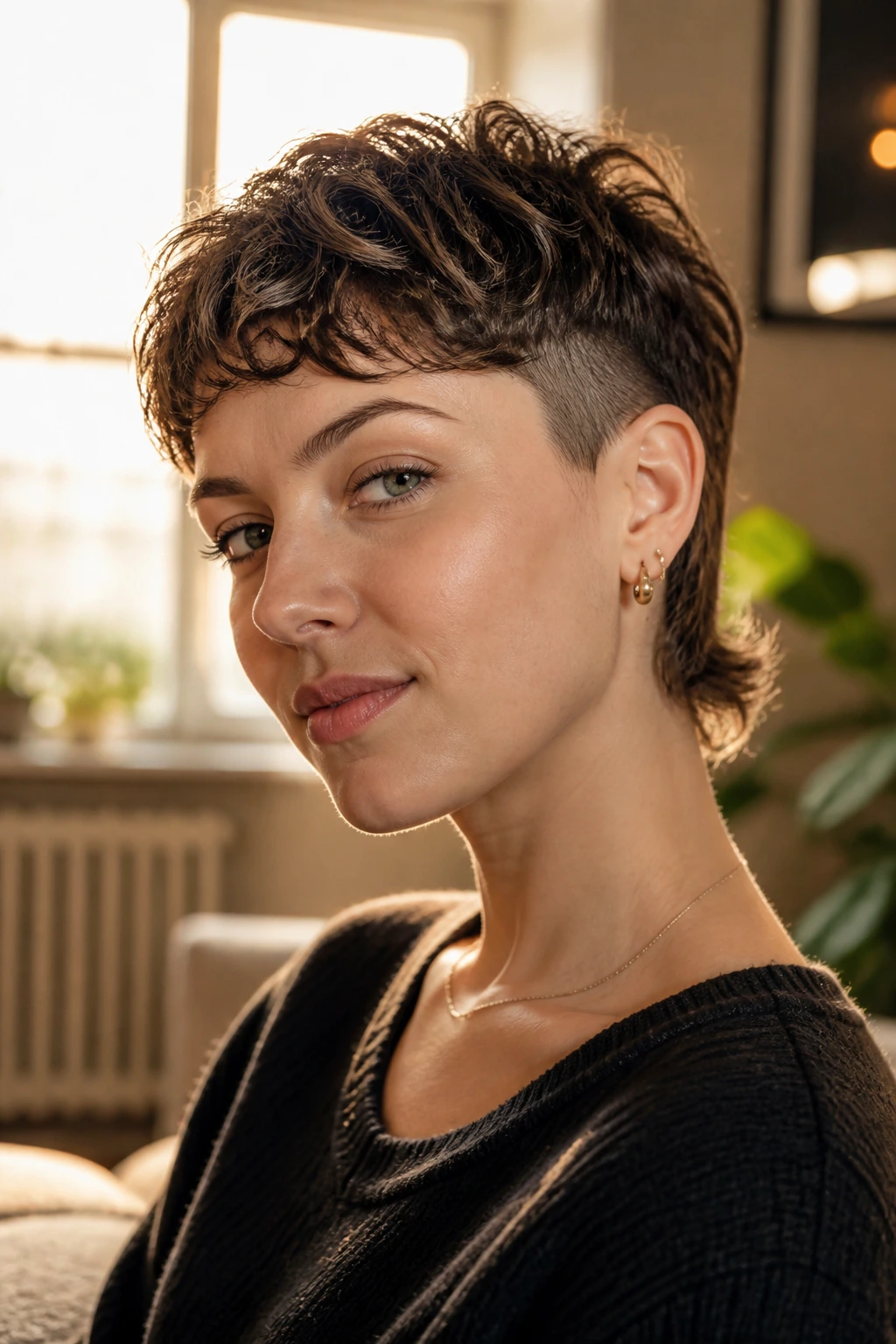
Will a short mullet work if my waves are loose, not curly?
Yes, and loose waves often make the cut look cleaner because the shape stays visible without getting overly fluffy. Ask for enough texture at the crown so the front doesn’t lie flat.
Is a short mullet good for thick wavy hair?
Very. Thick waves can hold the side taper and still keep movement in the top and back. The main thing is to remove bulk carefully, not aggressively.
Can fine wavy hair wear this cut without looking stringy?
It can, but the length needs to stay compact. A micro mullet, French crop mullet, or minimalist wave mullet usually works better than a heavily layered version.
What if my hair flips out at the nape?
That usually means the back is sitting too blunt or too heavy. A softer taper and a little more length at the neck can calm the flip.
How do I style it without heat?
Use a spray bottle, a small amount of cream or foam, and scrunch. Let the hair air-dry, then separate a few pieces at the end with dry fingers.
What’s the difference between a mullet and a shullet?
A shullet leans more shaggy and layered through the whole head, while a mullet usually has a clearer distinction between the shorter top/sides and the longer back.
Can I ask for a fade and still keep the waves?
Yes. A fade on the sides can make the wave pattern on top stand out more. Just keep enough length in the crown so the hair doesn’t look disconnected.
How do I stop the fringe from getting too bulky?
Have the fringe point-cut, not hacked straight across, and keep product light at the roots. Heavy cream near the front is the fastest way to make it slump.
A Shape That Holds Its Own

A good short mullet on wavy hair doesn’t need to apologize for itself. The waves soften the edges, the cut keeps the shape visible, and the whole thing works because it understands texture instead of pretending texture is a problem to solve.
The versions worth wearing are the ones that suit your density, your cowlicks, and your patience for styling. Get those three things right, and the haircut stops looking like a reference photo and starts looking like yours.
