



Fine hair can look airy, polished, and full of movement in a salon chair, then collapse into a flat sheet by lunch. That gap between “fresh cut” and “why does this look tired already?” is exactly where short shaggy hair with curtain bangs for fine hair earns its keep. The right shag does not fight your texture. It gives it structure, a little grit, and enough broken-up shape that the ends stop looking like they’ve given up.
Curtain bangs help because they split the front into two soft panels instead of one heavy block. On fine strands, that matters. A blunt fringe can swallow the face and make the top feel dense in the wrong place; curtain bangs open the front, keep the crown light, and let the haircut breathe. Add a shaggy perimeter, and you get motion without the frayed, see-through finish that too many sliced layers create.
The trick is balance. Too many short layers and fine hair starts to look stringy. Too little layering and it loses the lift that makes a shag worth wearing in the first place. The best versions keep a strong outline, use softness where the face needs it, and leave enough weight in the bottom sections that the cut still reads as hair, not mist.
Why This Collection Flatters Fine Hair So Well
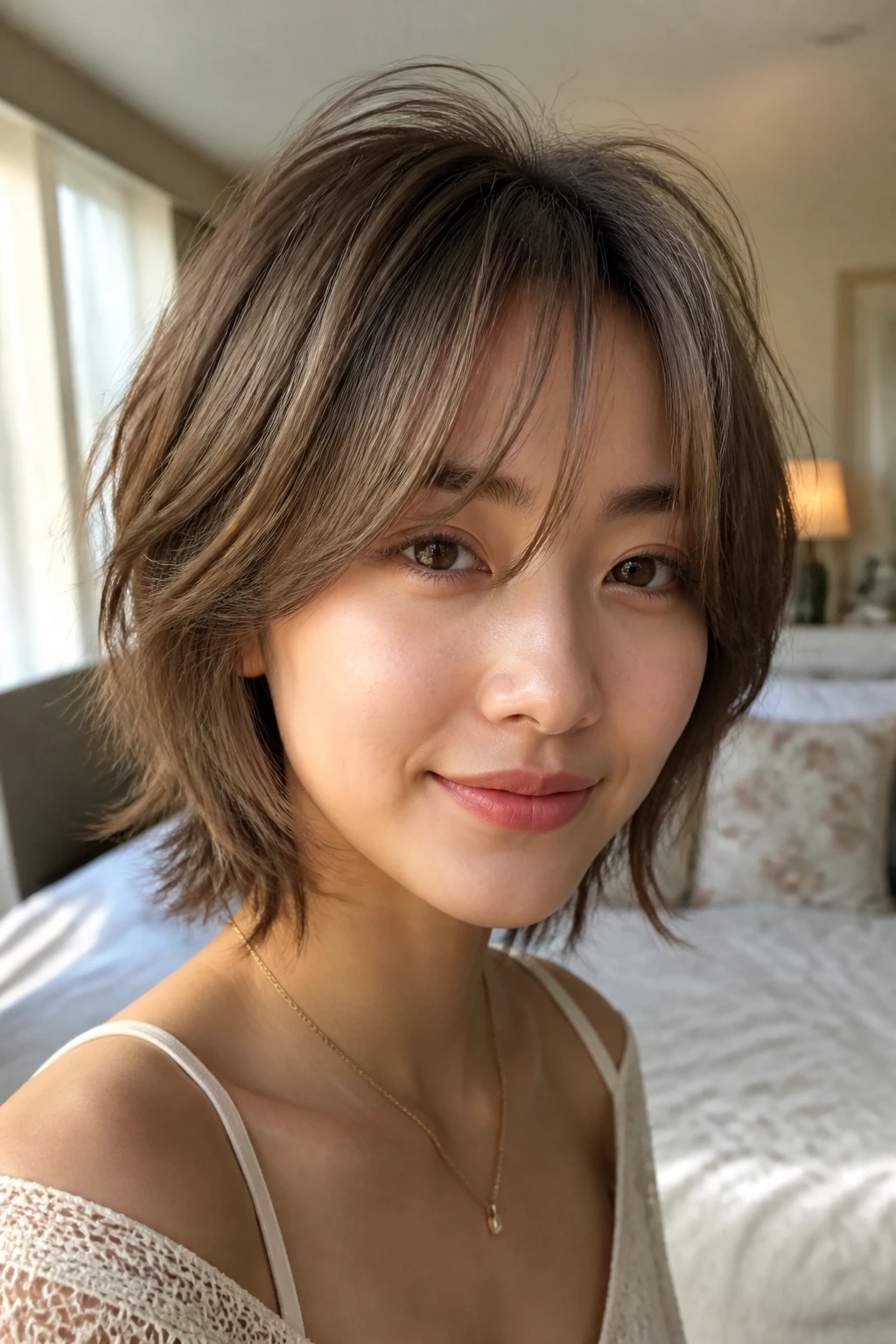
- It removes dead weight where fine hair sags fastest: Shorter layers at the crown and around the face stop the cut from dragging itself down by noon.
- Curtain bangs make the front look intentional: That soft split around the center or slightly off-center part gives fine hair shape without boxing in the forehead.
- The perimeter stays visible: A clean edge at the jaw, chin, or collarbone keeps the ends from disappearing into wispy bits.
- Styling gets faster, not fussier: A quick bend with a round brush, a flat iron, or a diffuser can change the whole silhouette in minutes.
- It gives the illusion of density without bulky bulk: That sounds contradictory, but it’s the whole point—movement at the top, enough body at the bottom.
- It grows out better than many blunt cuts: As the layers soften, the shape usually turns into an even better messy bob instead of a shapeless mop.
1. Chin-Length Shag with Soft Curtain Bangs
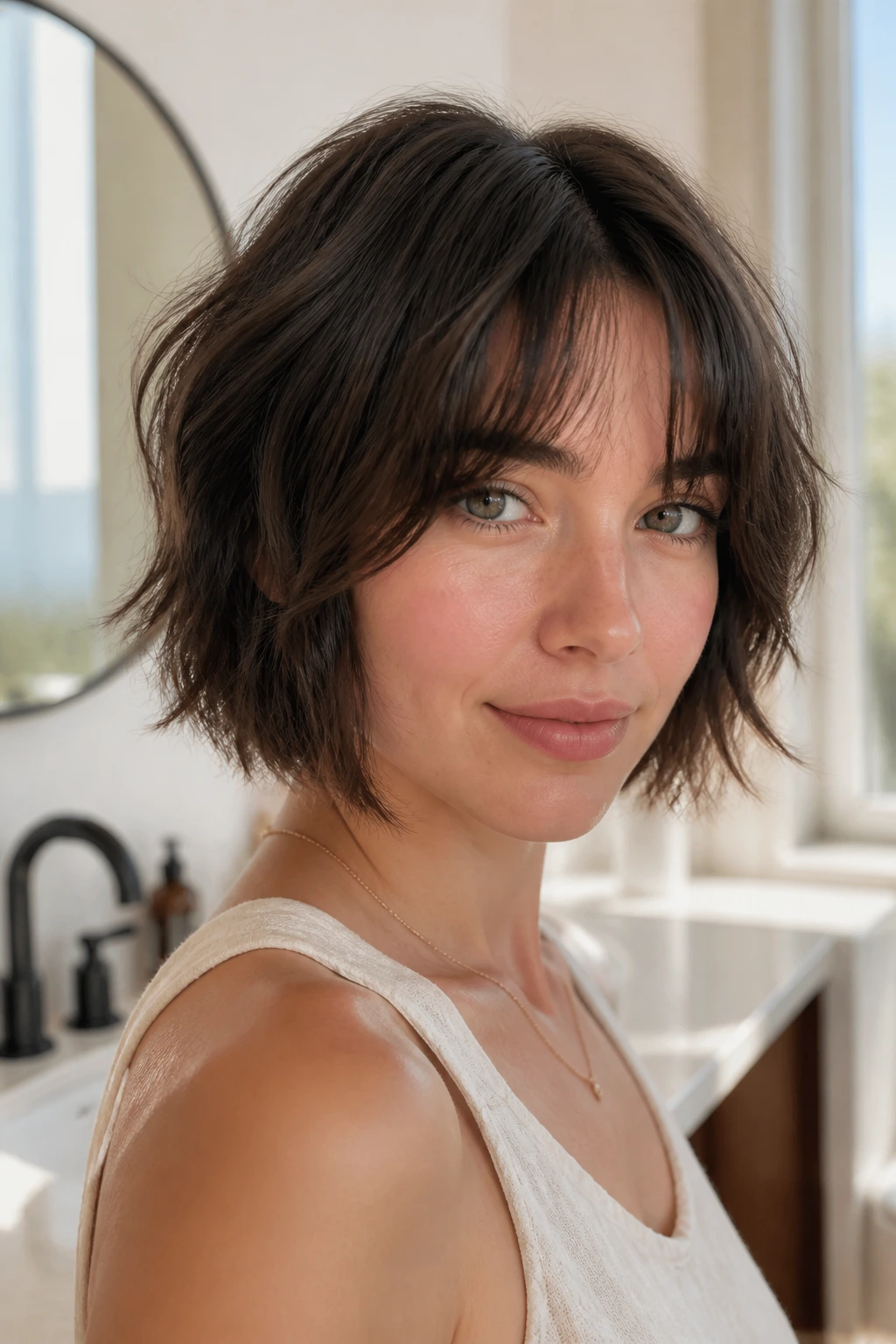
This is the version I reach for when fine hair needs lift but not a lot of drama. The cut lands right around the chin, which is one of the best places for thin strands because the outline stays visible and the hair doesn’t have to travel far before it hits the shoulders. The curtain bangs start soft, usually around the cheekbone, and open away from the face instead of sitting there like a helmet.
Why It Works on Fine Hair
A chin-length shag keeps the bottom line strong, and that matters more than people think. Fine hair tends to lose its shape at the ends first, so a cut that stops before the collarbone can look fuller with less effort.
Ask for internal layering, not aggressive thinning. You want movement through the sides and crown, then a perimeter that still looks like it has a pulse.
Quick Read on the Shape
- Best length: chin to just below the jaw
- Best fringe: curtain pieces that graze the cheekbones
- Best finish: a quick bend with a 1-inch brush or flat iron
- Watch out for: over-texturizing the ends until they look transparent
My take: If your hair goes limp easily, this is the cut that gives you the most shape for the least daily work.
2. Jaw-Grazing French Shag
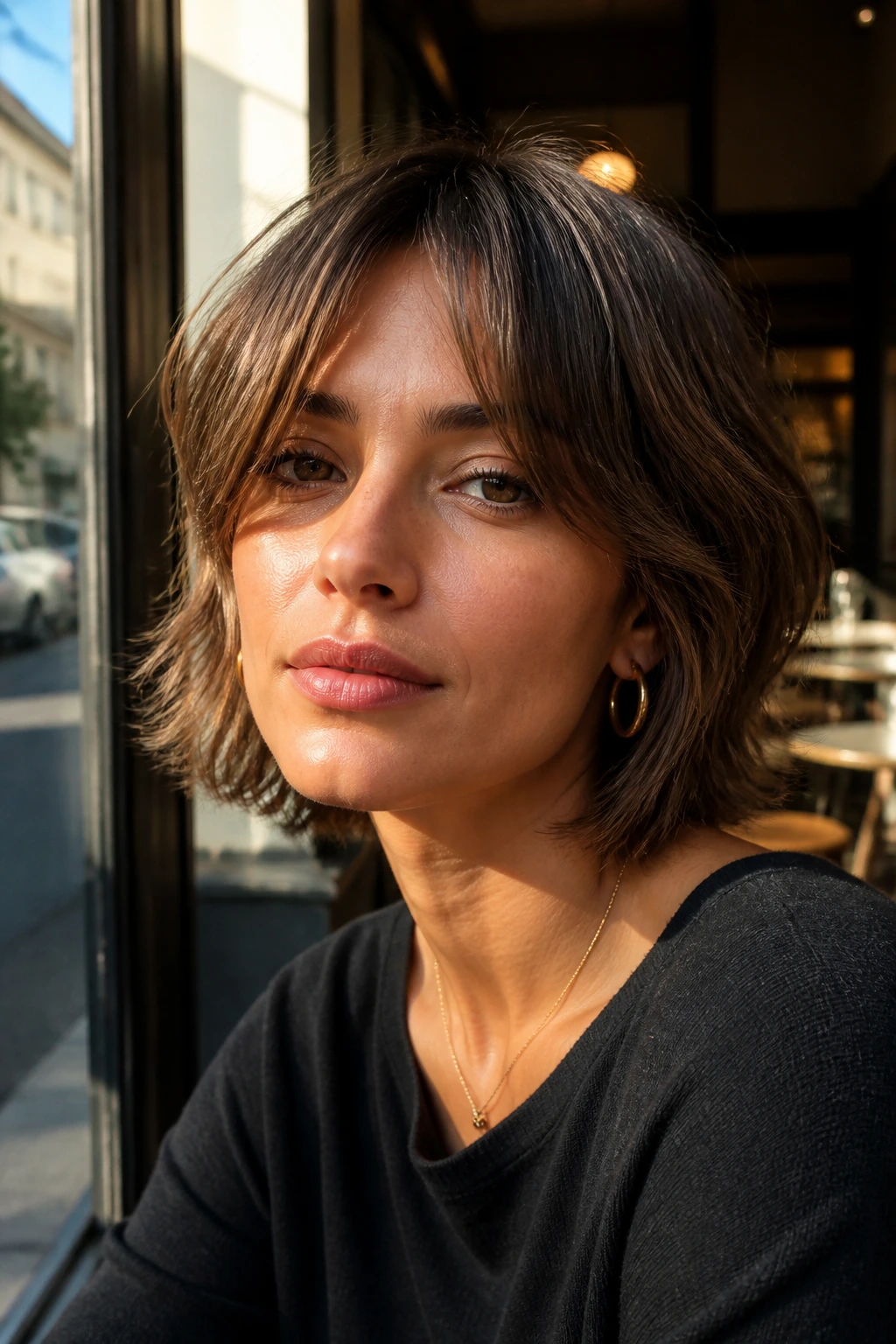
The jaw-grazing version has a little more attitude. It sits just below the ears and around the jawline, which means the haircut makes a clean frame before the hair has a chance to droop. On fine hair, that extra bit of crispness is a gift. The whole cut looks lighter, but not thin.
This shape works especially well if your hair falls straight and refuses to hold a heavy style. The bangs should split softly in the middle and taper long enough that they can blend into the sides. If they’re too short, the whole thing starts reading like a chopped pixie that missed the memo.
The French-shag feel comes from the relaxed finish. You do not want every layer dialed up to max texture. A little bend at the ends, a little airy lift near the crown, and that’s enough. It’s the kind of cut that looks even better after a rough day and a dry shampoo spritz.
3. Collarbone Shag with Flipped Ends
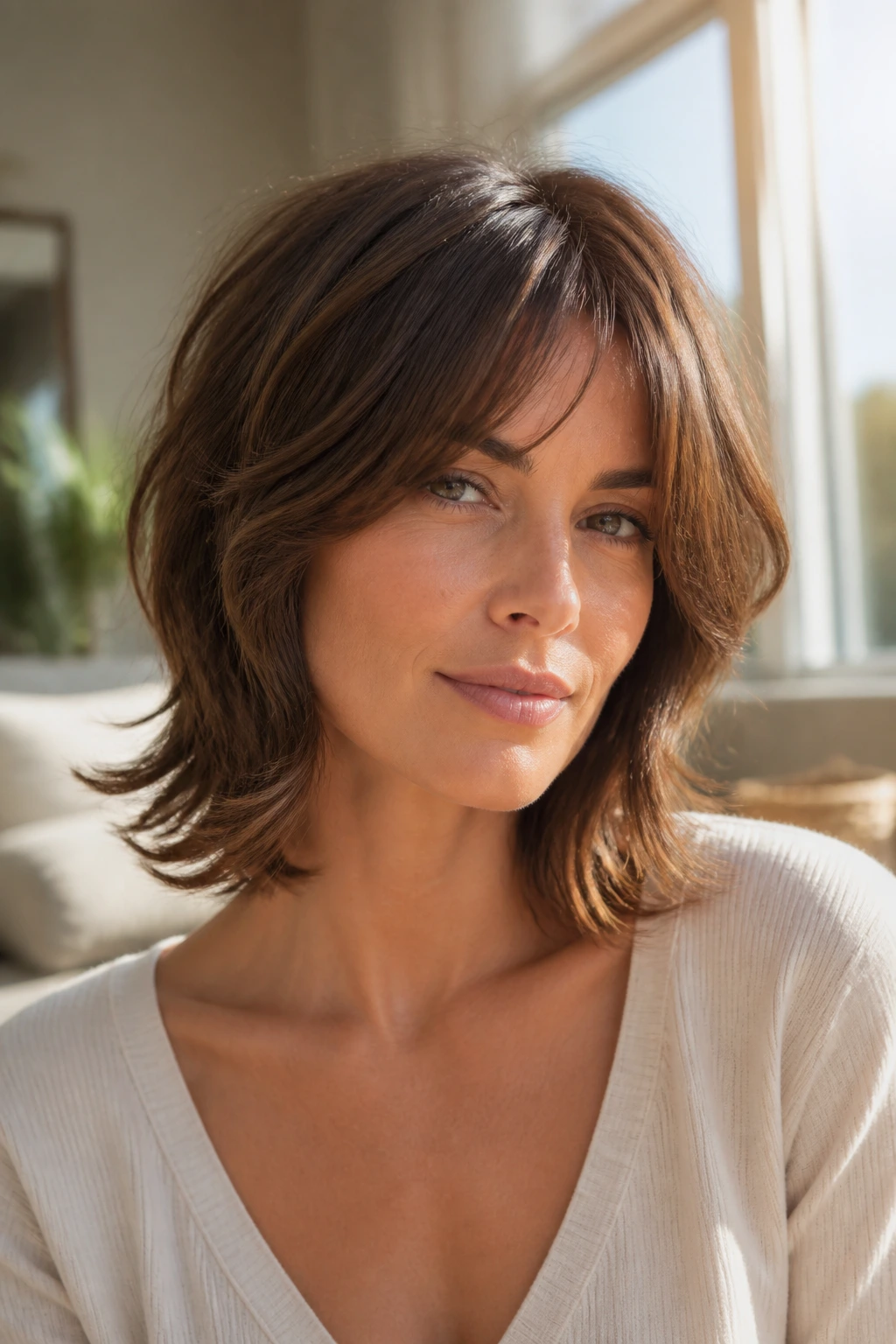
Why does this one work so well? Because collarbone length gives fine hair a little swing without weighing it down. The ends can flick outward or curve inward, which means the style has movement even when you barely touch it. Curtain bangs soften the front, while the length below the chin keeps the silhouette from feeling too sharp.
How to Style It
- Use a lightweight mousse at the roots on damp hair.
- Dry the bangs first, sweeping them away from the face with a round brush.
- Flip the ends slightly with a brush or flat iron so the cut doesn’t hang straight.
- Finish with a whisper of texture spray at mid-lengths, not oil at the ends.
This version is a good middle ground if you want the shag shape without going too short. It can slip into a workday ponytail, which sounds boring until you need the option.
4. Airy Micro Shag with Face-Framing Bangs
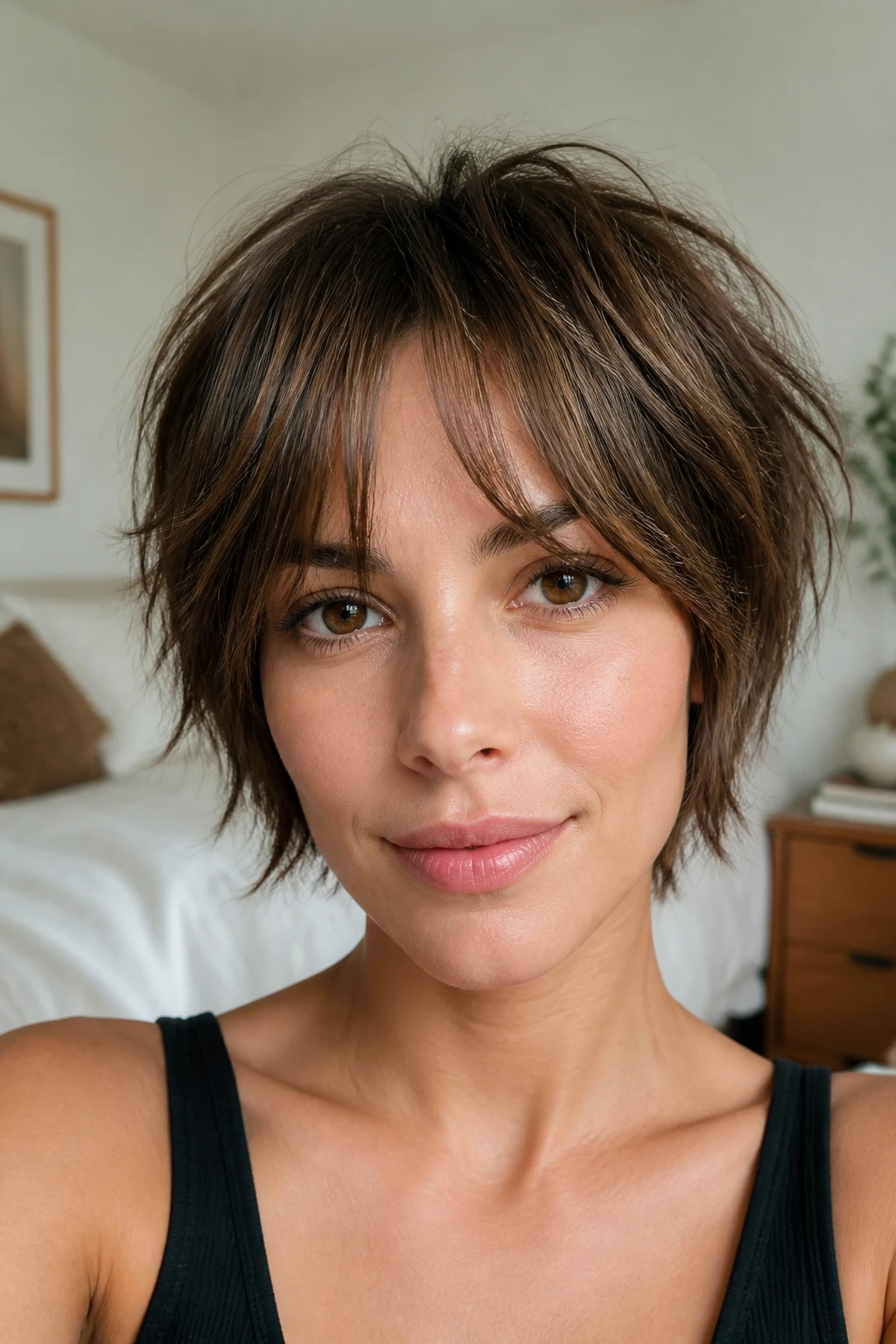
A micro shag is the spicy one in the group. It’s shorter, choppier, and built for people who want hair that feels lighter around the neck and ears. Fine hair can actually benefit from this shape because there’s less weight pulling the crown flat, and the face-framing pieces keep the cut from turning severe.
The trick is restraint. A micro shag should feel cropped, not shredded. If the stylist goes too hard with thinning shears, you’ll see too much scalp and too little shape. The best version has tiny layers around the crown, a soft fringe that splits into curtain pieces, and enough density left at the nape to keep the cut grounded.
It’s a good pick if you style in under ten minutes and don’t mind a little edge. Not everyone wants polished. Some people want a haircut that looks like it has opinions.
5. Rounded Bob Shag with Feathered Sides

This is the friendliest cut in the bunch. It keeps the overall outline curved, almost bob-like, but the sides are feathered enough that the shape never turns stiff. Fine hair loves a rounded silhouette because the eye reads fullness at the widest point of the curve, even if the strands themselves are light.
The curtain bangs are usually longer here, almost brushing the cheekbones before they fall open. That helps the cut feel soft instead of blocky. If you’ve got a narrow face or delicate features, this shape can be especially useful because it adds width where you want it and not where you don’t.
I like this version on hair that’s straight to softly wavy. It does not need a lot of product. A small amount of mousse at the root and a few bends through the side layers are enough to make it behave.
6. Razored Pixie Shag with Long Curtains
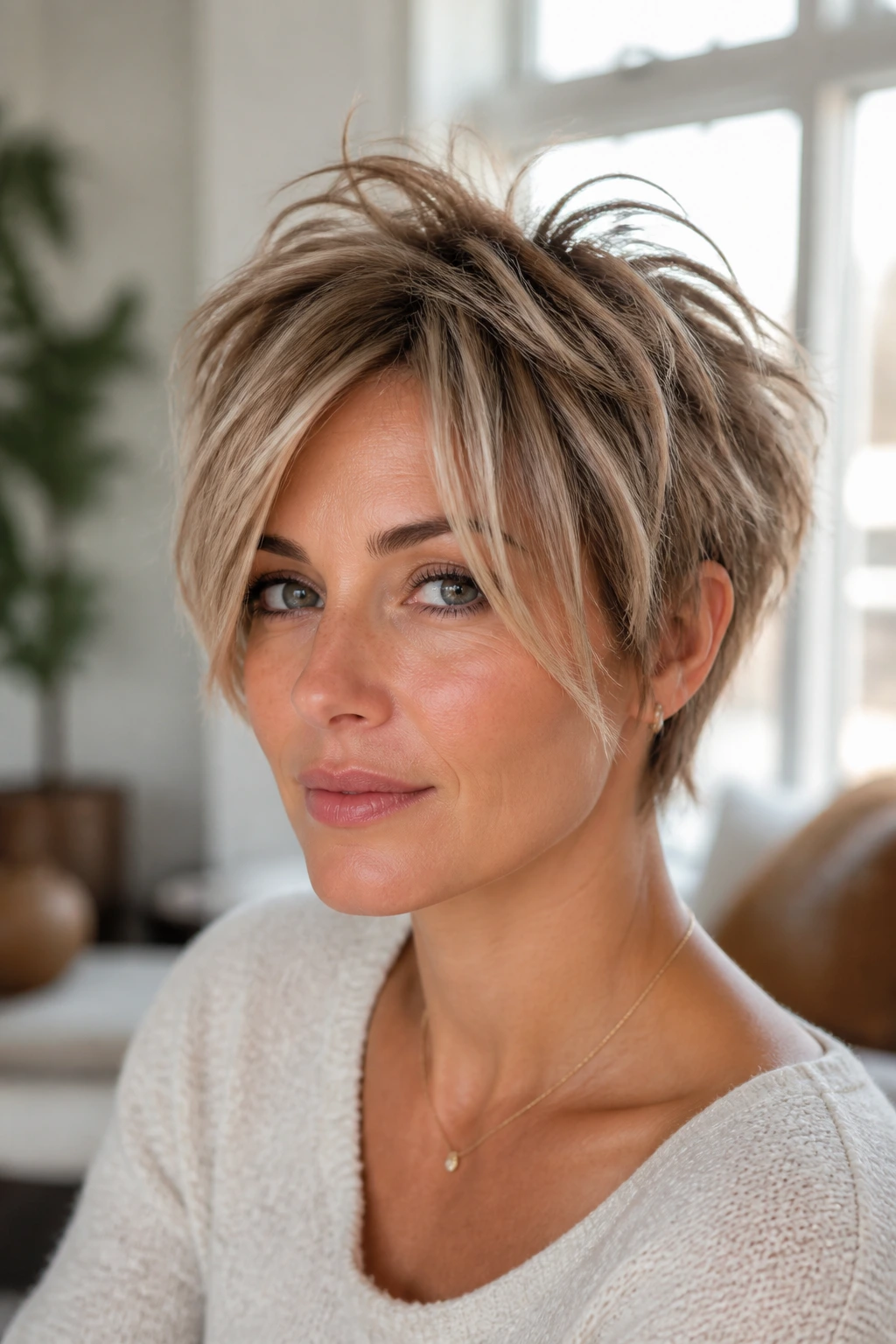
This one is not shy. It’s the closest thing to a pixie in the collection, but the curtain fringe keeps it from looking too cropped. Fine hair can wear this cut well when the perimeter is left soft and the top gets the most movement. The razored texture is there to break up the shape, not to carve it into oblivion.
A lot of people assume very short shaggy hair will make fine strands look even thinner. Sometimes it does. But when the top is lifted and the sides are feathered just enough, the cut can look denser because the hair is no longer hanging all the way past the face.
Best for someone who likes a little edge and doesn’t mind regular trims. The bangs should be long enough to tuck behind the ears on bad days. That detail saves the whole haircut more than people realize.
7. Lob Shag with Center-Opening Bangs
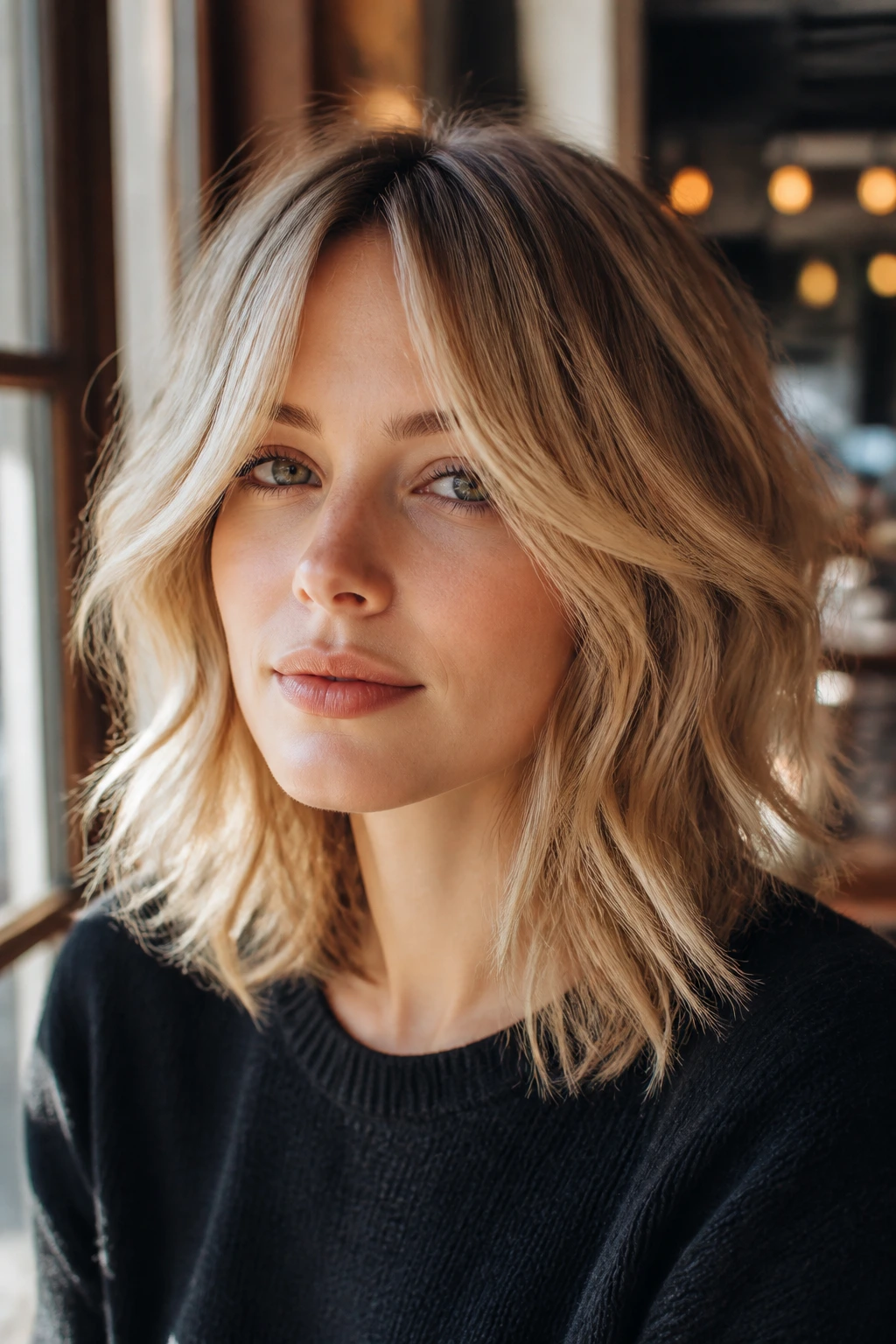
The lob shag is the safe bet that still has enough personality to avoid boredom. It lands somewhere between the chin and collarbone, which gives fine hair a bit more length to play with while keeping the outline strong. The curtain bangs open from the center and fall into the side layers, so the front looks soft rather than heavy.
What to Watch For
- Keep the layers internal and controlled.
- Ask for a blunt-ish base so the ends don’t dissolve.
- Use a round brush only on the top layer if you want lift without a full blowout.
- Skip heavy creams; they flatten the front fast.
This is the haircut for someone who wants movement but also wants to be able to grow it out without panic. It’s practical. Slightly pretty. Not precious.
8. Soft Wolf Cut for Fine Hair
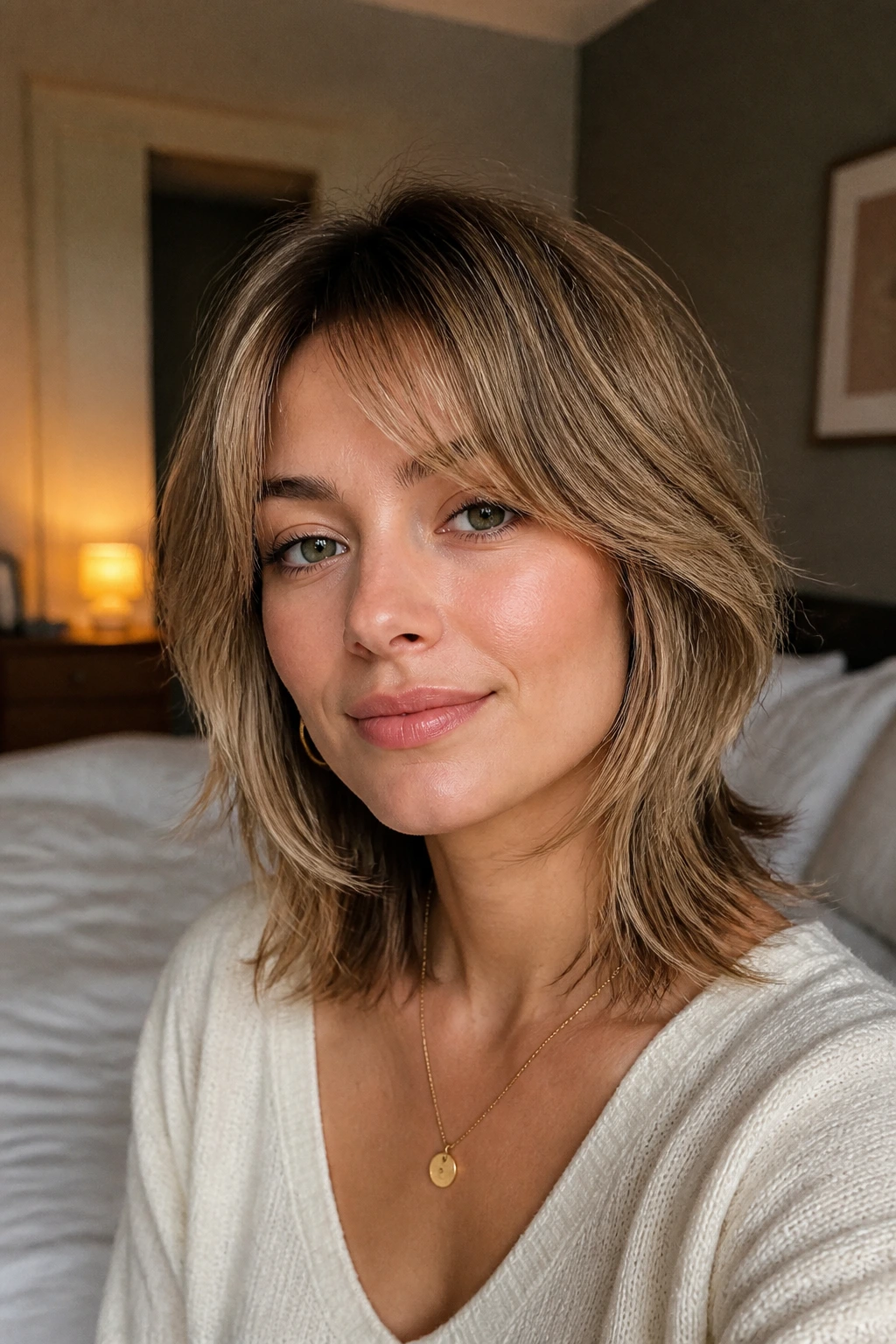
A soft wolf cut is basically a shag with its edges turned down a notch. That matters for fine hair, because the dramatic version of a wolf cut can create too much separation and leave the ends looking skinny. The softened version keeps the crown airy, the bangs split open, and the bottom line just full enough to read as a deliberate shape.
The key is not to over-commit to the mullet side of the family. Keep the nape shorter than the top, yes, but not so short that the back disconnects from the front. Curtain bangs should blend into cheekbone layers rather than stop abruptly.
This cut works best if you like a messy finish. Sleek is not the point. A little piecey texture, a little swing at the back, and enough irregularity to make the whole thing feel alive.
9. Tapered Crop Shag with Sweeping Bangs
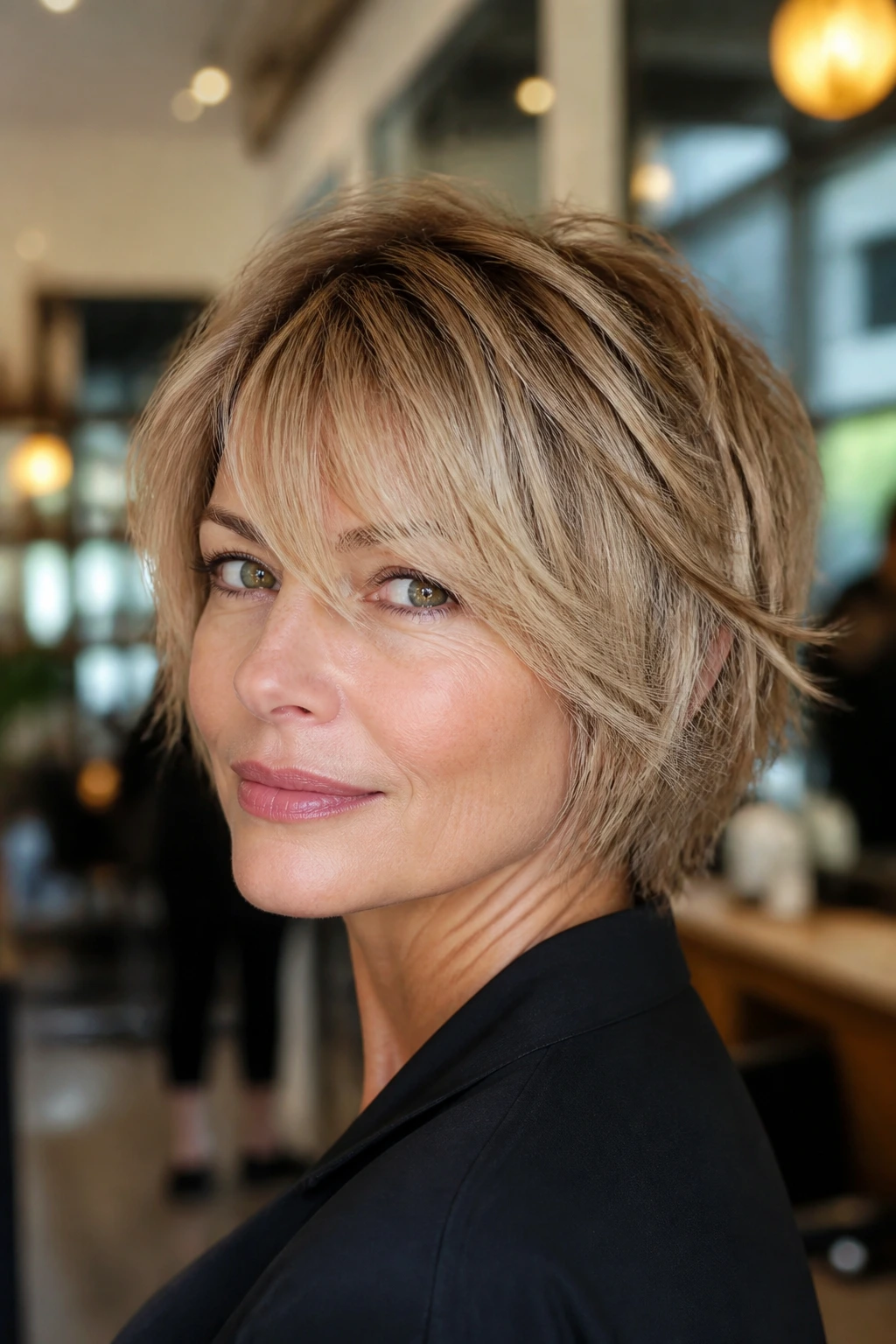
Does fine hair need more length? Not always. Sometimes it needs a better shape. The tapered crop shag is short through the back and sides, fuller at the top, and softly swept through the fringe so the face doesn’t get swallowed. On fine hair, that crown lift can be worth more than an extra two inches of length.
How to Style It
Start with mousse at the roots and a tiny bit of heat protectant through the top. Blow-dry the bangs forward first, then sweep them away from the face with a brush while they’re still warm. The cut looks best when the crown has a little lift and the ends are broken up, not straight.
This one is ideal if your hair collapses near the nape or lies flat against the scalp. It gives shape from above, where thin strands often need it most.
10. Blunt-Base Shag Bob

This cut is for anyone who has seen a too-layered bob turn into a puff of stringy ends. The blunt base keeps the bottom line solid, while the shag layers sit inside the shape instead of eating it alive. Curtain bangs soften the front, but the haircut still has a clear edge.
Fine hair often looks better with one strong shape anchor. That anchor is the base line. Without it, the layers can steal too much weight, and the whole style starts looking see-through in daylight.
The blunt-base shag bob is a smart compromise. You get movement at the top, but the silhouette stays full enough for the eye to read. If you’ve been burned by overly razored bobs, this is the corrective move.
11. Feathered Layered Bob with Light Curtains
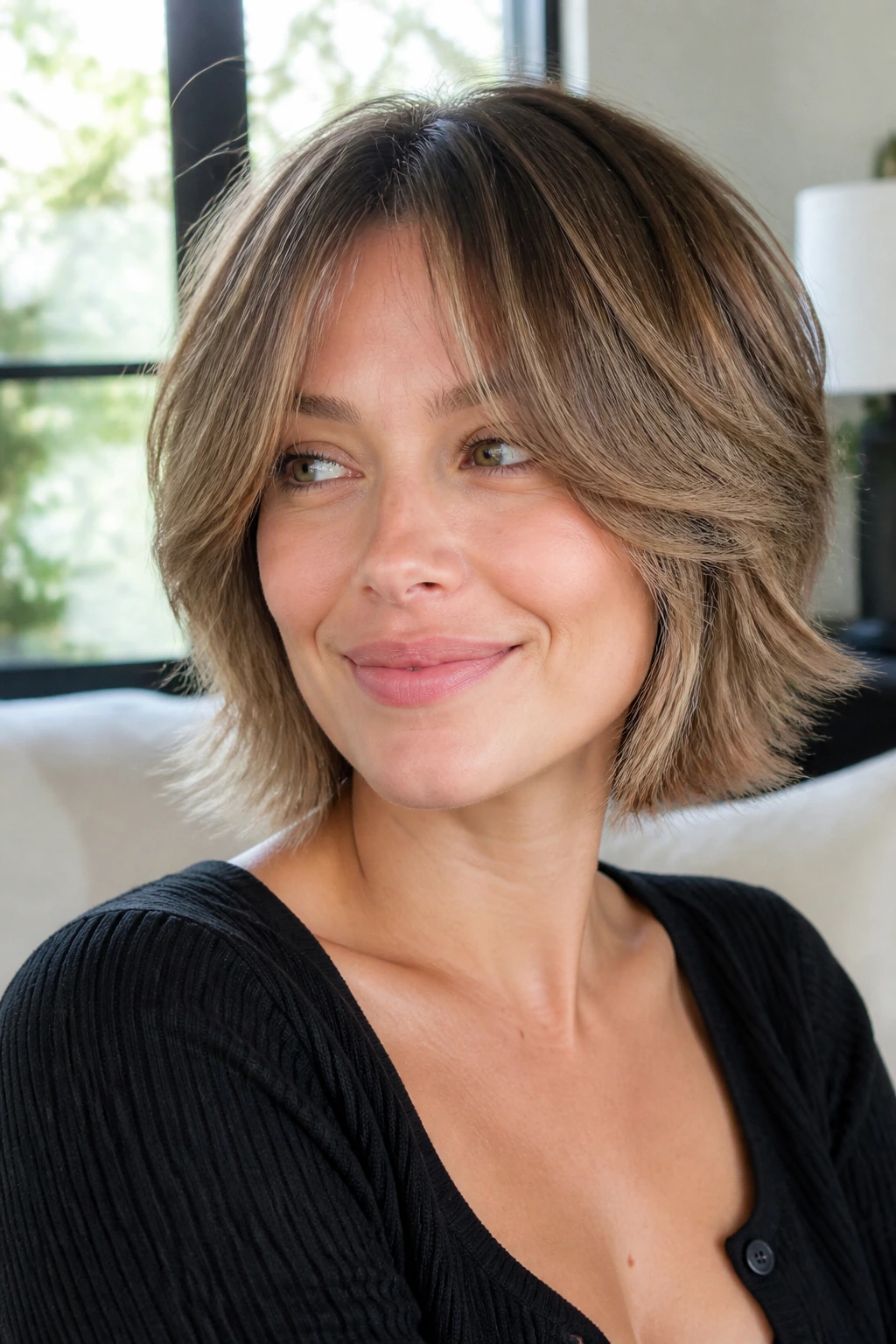
This one leans classic, but not boring. Feathering gives the layers a soft exit instead of a blunt chop, which is useful when the hair itself is fine and delicate. The curtain bangs should be lighter here, almost airy panels that brush outward from the center rather than heavy pieces that sit on the forehead.
The cut shines when it’s moved a little. A small brush, a quick twist at the ends, and some separation through the crown are usually enough. If you air-dry it, the feathering keeps the shape from turning stiff.
I like this option for people who want something tidy enough for work but not polished to the point of feeling overstyled. It has enough softness to feel modern and enough structure to survive a long day.
12. Curly Short Shag with Dry-Cut Bangs
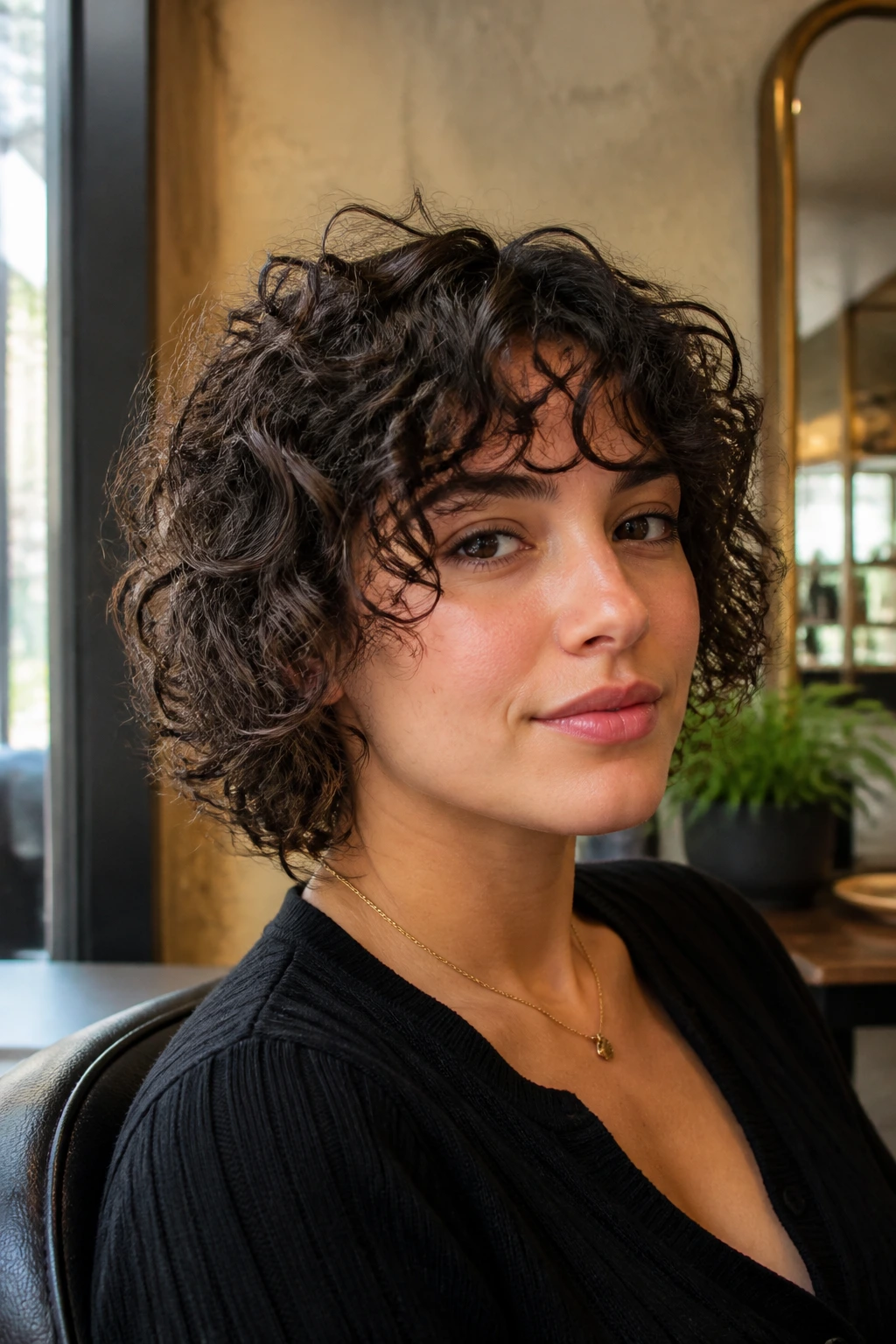
Curly or wavy fine hair needs a different rulebook. If you cut it wet like straight hair, the final shape can shrink and surprise you in the worst way. A dry-cut short shag with curtain bangs lets the stylist see where the curls sit naturally, which helps avoid a fringe that lands too high or too dense.
This version should have layers that encourage curl clumps, not break them apart. The curtain bangs usually need to be longer than you think because curl bounce can lift them up once the hair dries. That’s not a problem. It’s a warning.
A soft diffuser is your friend here. So is a light cream instead of a heavy butter-like product that weighs the curl pattern down. Fine curls don’t need more grease. They need room.
13. Side-Part Curtain Shag

Not everyone loves a center part, and the haircut should not force one. A side-part curtain shag keeps the front open but lets the part fall where the hair naturally wants to sit. That makes it easier to wear on fine hair, especially if your crown has a cowlick or your face shape doesn’t love a dead-center split.
Why It’s Worth Trying
- The side part creates instant lift at the root.
- The bangs can still frame the face without looking symmetrical.
- The asymmetry makes fine hair look a touch thicker, because the eye sees movement.
- It’s a smart option for glasses wearers; the fringe can slide around the frames instead of fighting them.
The shape works best when the longer side around the cheekbone is slightly heavier than the short side. That tiny imbalance gives the cut some backbone.
14. Mushroom Shag with Soft Edges
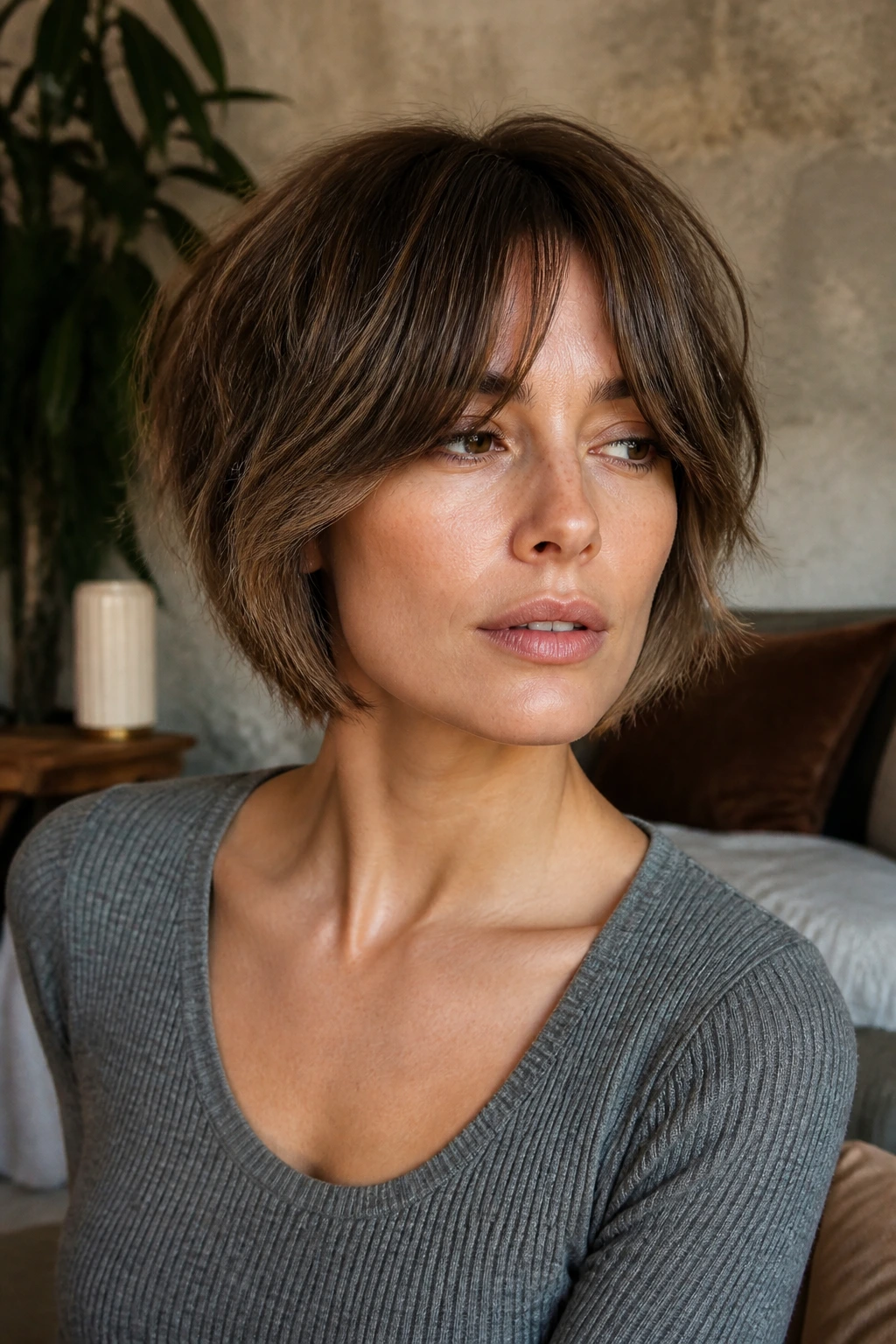
The mushroom shag sounds quirky because it is. The silhouette is rounded through the crown and sides, with soft edges that stop the cut from becoming too severe. On fine hair, that rounded shape can create the illusion of a lot more body than the actual strand count suggests.
What makes this version different is the balance between fullness and softness. You want the top to feel cushioned, not bulky. Curtain bangs help by opening the front and breaking the dome effect, so the cut doesn’t read like a helmet.
It’s a strong option if your hair tends to puff at the sides and collapse at the roots. The mushroom shape gives you a little architecture without making the hair look overworked. Strange name. Good haircut.
15. Asymmetrical Shag Bob
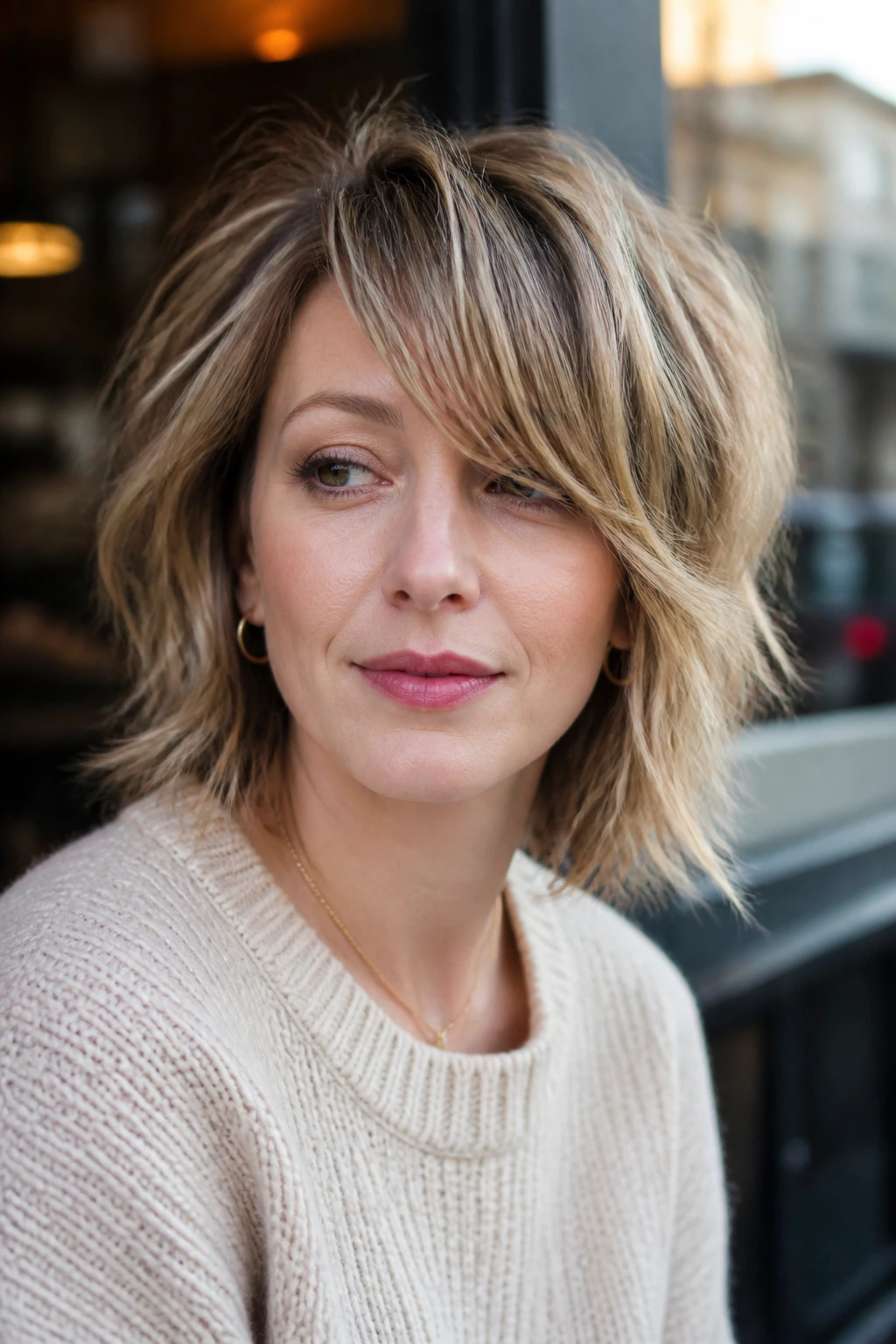
Why do symmetrical cuts sometimes make fine hair look flatter? Because the eye gets one unbroken line and no place to land. An asymmetrical shag bob breaks that line on purpose. One side stays a touch longer, the layers move at slightly different points, and the curtain bangs can lean a bit off-center.
How It Reads on Fine Hair
The haircut looks fuller because there’s more visual tension. Your eye keeps moving. That movement matters when the strands themselves are soft and light. The shape should still feel wearable, though—this is not about extreme angles or a sharp editorial cut.
Ask for a slight difference between the left and right sides, not a dramatic one. A quarter-inch to half-inch shift is enough. Too much, and the cut starts looking fussy.
16. Grown-Out Pixie Shag with Curtain Fringe
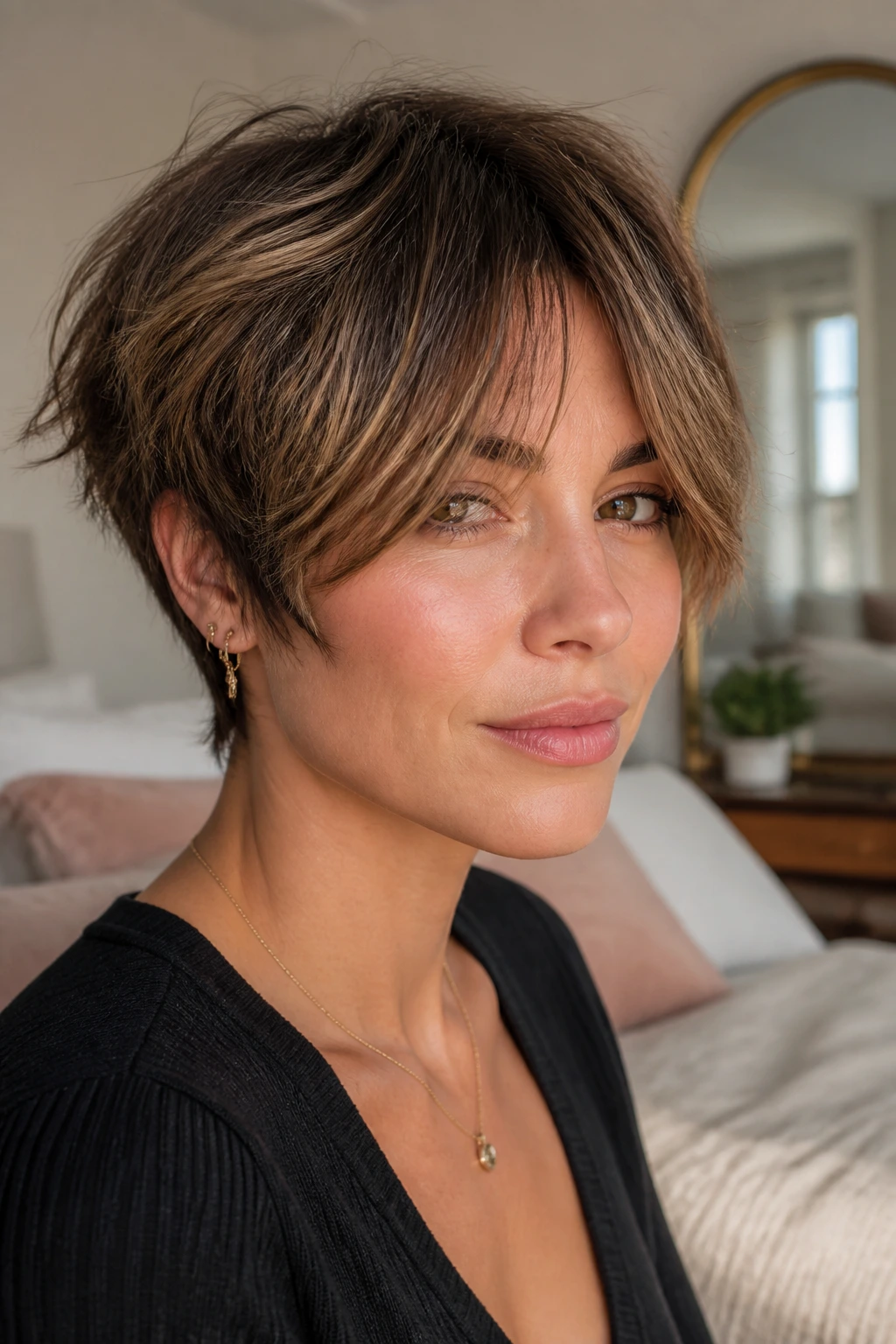
This is the best friend of anyone trying to move past a pixie without suffering through the awkward in-between stage. Fine hair can look especially flat during grow-out, because the weight shifts in weird places. A grown-out pixie shag uses short crown layers, soft side movement, and longer curtain fringe to keep the shape from turning boxy.
The front is the hero here. Long fringe pieces can be brushed apart, tucked back, or parted softly to the side. That flexibility buys you time between trims, which is handy if your hair grows in patches or loses structure quickly.
The back should stay neat. If the nape gets too fluffy, the whole cut loses its intention. Keep the edges tidy and let the top do the talking.
17. Choppy Box Bob Shag
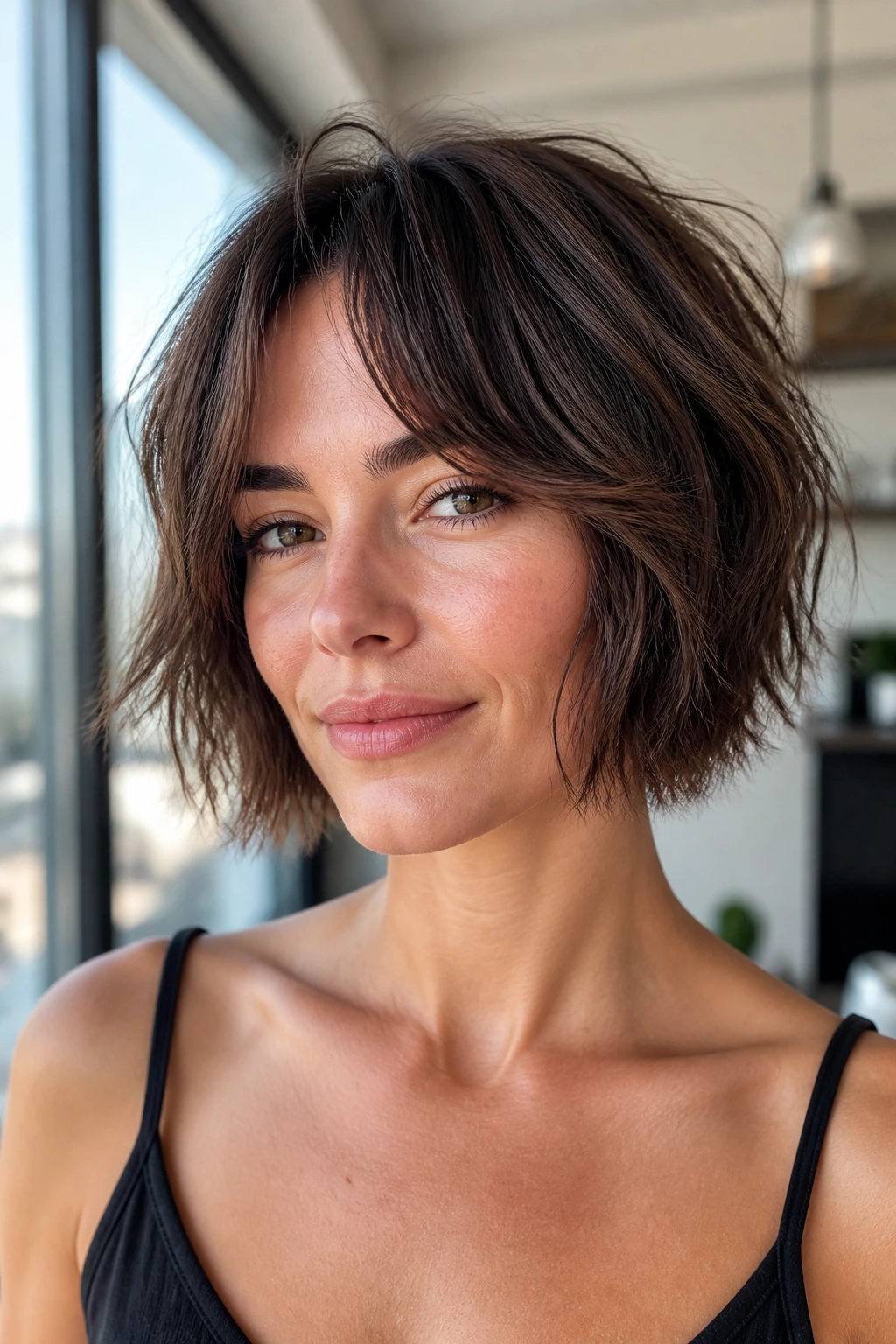
The box bob sounds rigid, but the shag treatment softens the hard edges just enough to make it wearable. Think of it as a square-ish bob with broken-up texture through the top and sides. Fine hair benefits from the stronger perimeter because it stops the ends from looking see-through.
Curtain bangs keep this cut from getting too architectural. They open the front and break the square outline near the cheekbones, which makes the whole shape feel more relaxed. That’s the useful part.
This is a good choice if you like structure and don’t want a heavily layered look. It gives you the bones of a bob, with a little movement worked in so the style doesn’t sit there like a helmet.
18. Loose S-Wave Shag
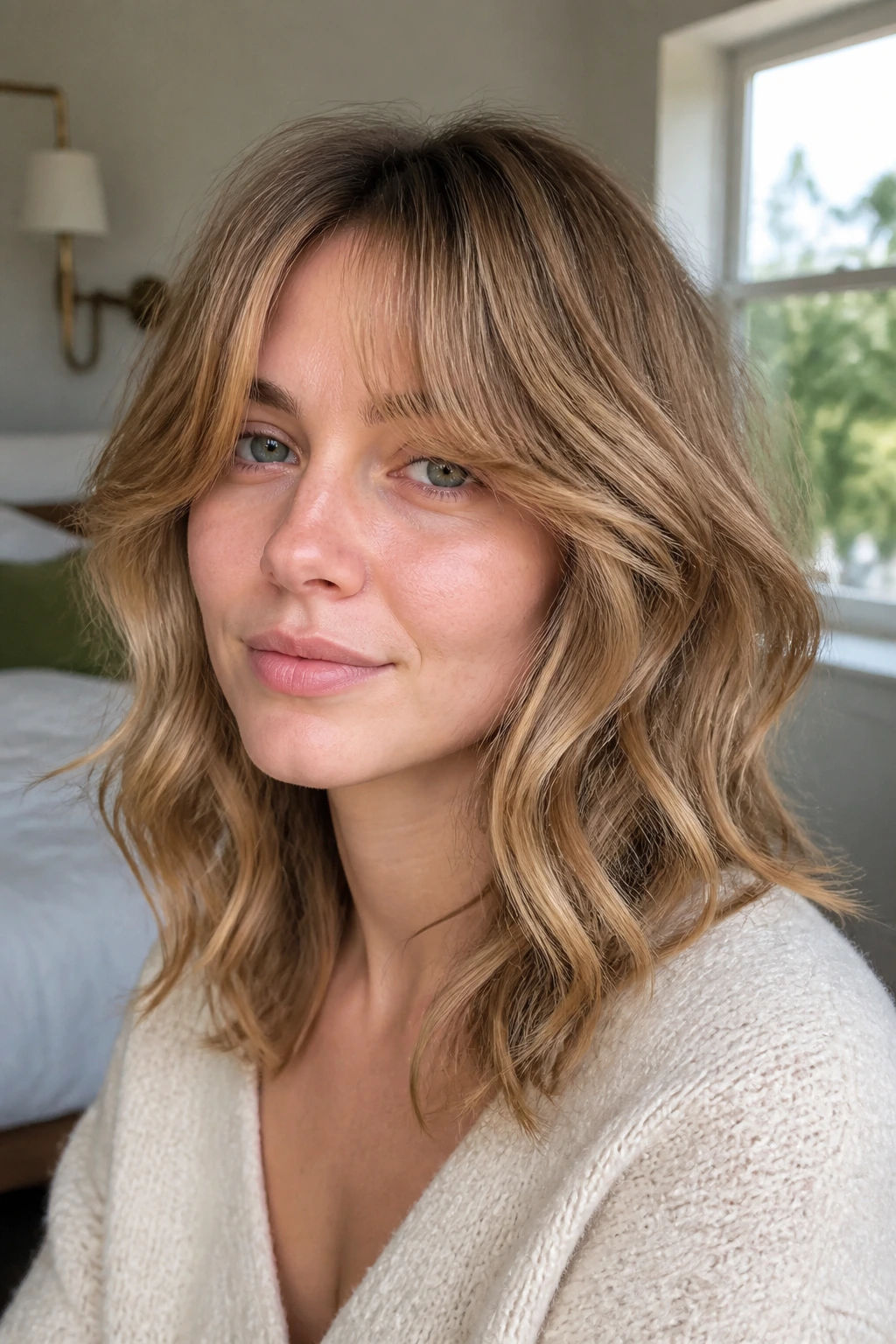
Some cuts are all about shape; this one is about motion. The loose S-wave shag depends on a soft bend through the mid-lengths, which makes fine hair look like it has more body than it really does. Curtain bangs help by framing the face and pulling the eye into the curve of the wave.
The haircut itself should be subtle. Too many layers and the wave pattern falls apart. You want enough shape at the crown and sides to support the bend, but not so much that the ends get frayed.
This version is especially good if your hair holds a soft wave when you air-dry or sleep in a loose twist. It gives you a little romance without forcing a full blowout every time you wash it.
19. Bixie with Airy Curtain Bangs
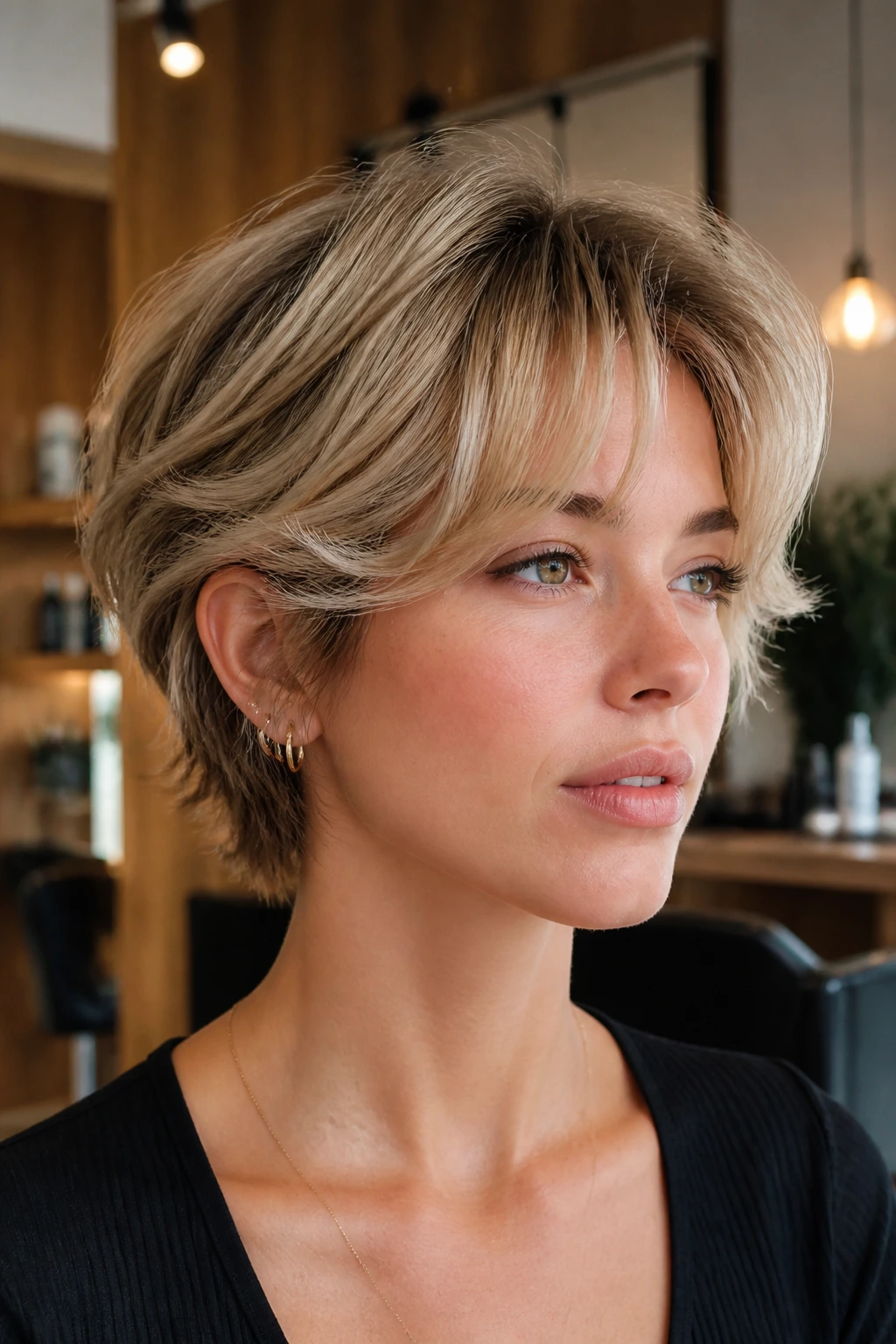
The bixie sits between a bob and a pixie, and fine hair often loves that middle ground. It’s short enough to feel light around the neck, but long enough on top to build texture and keep the crown from lying flat. The airy curtain bangs are what keep it from becoming too boyish or too severe.
What Makes It Different
- The top has more movement than a classic bob.
- The sides stay soft instead of being cut into a hard line.
- The fringe opens the face, which keeps the short length from feeling abrupt.
- The cut grows out in a useful way, especially if you hate frequent salon trips.
Ask for softness near the temples and a light hand with the texturizing shears. On fine hair, the bixie should feel lifted, not sparse.
20. Piecey Razor Bob
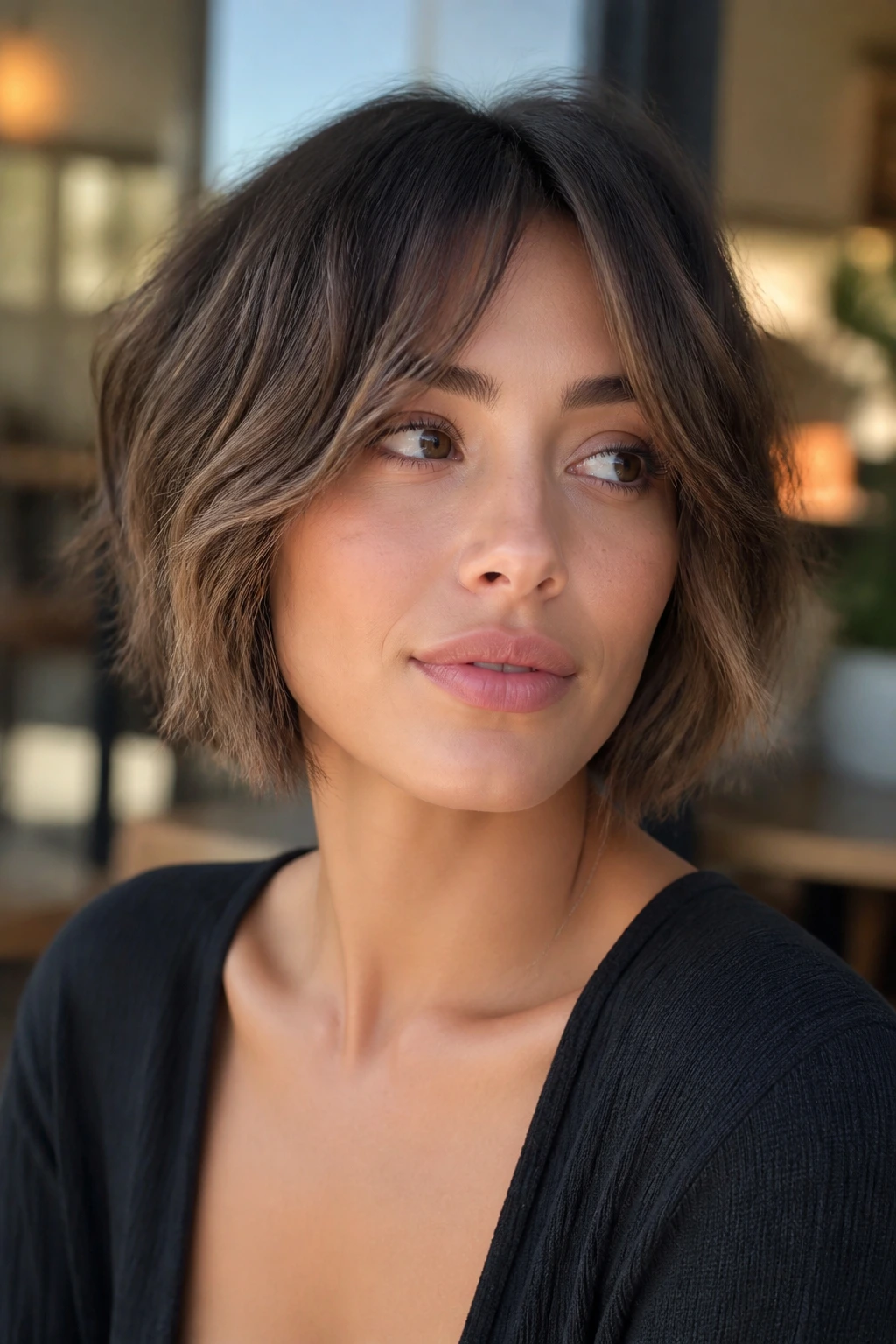
A piecey razor bob can look fantastic on fine hair, but only if the razor is used with some restraint. The cut should create separation and swing, not create a shredded perimeter. Curtain bangs are essential here because they soften the front and keep the razor work from feeling too sharp.
The best version has a strong bob outline with just enough internal texture to make the strands move. It’s a smart style if your hair is straight and slippery, because the razor can help create a little natural grip.
I’d skip this if your hair is already fragile or prone to breakage. Razor cutting can be lovely, but it should never be the thing that makes the ends look dry.
21. Nape-Tapered Shag
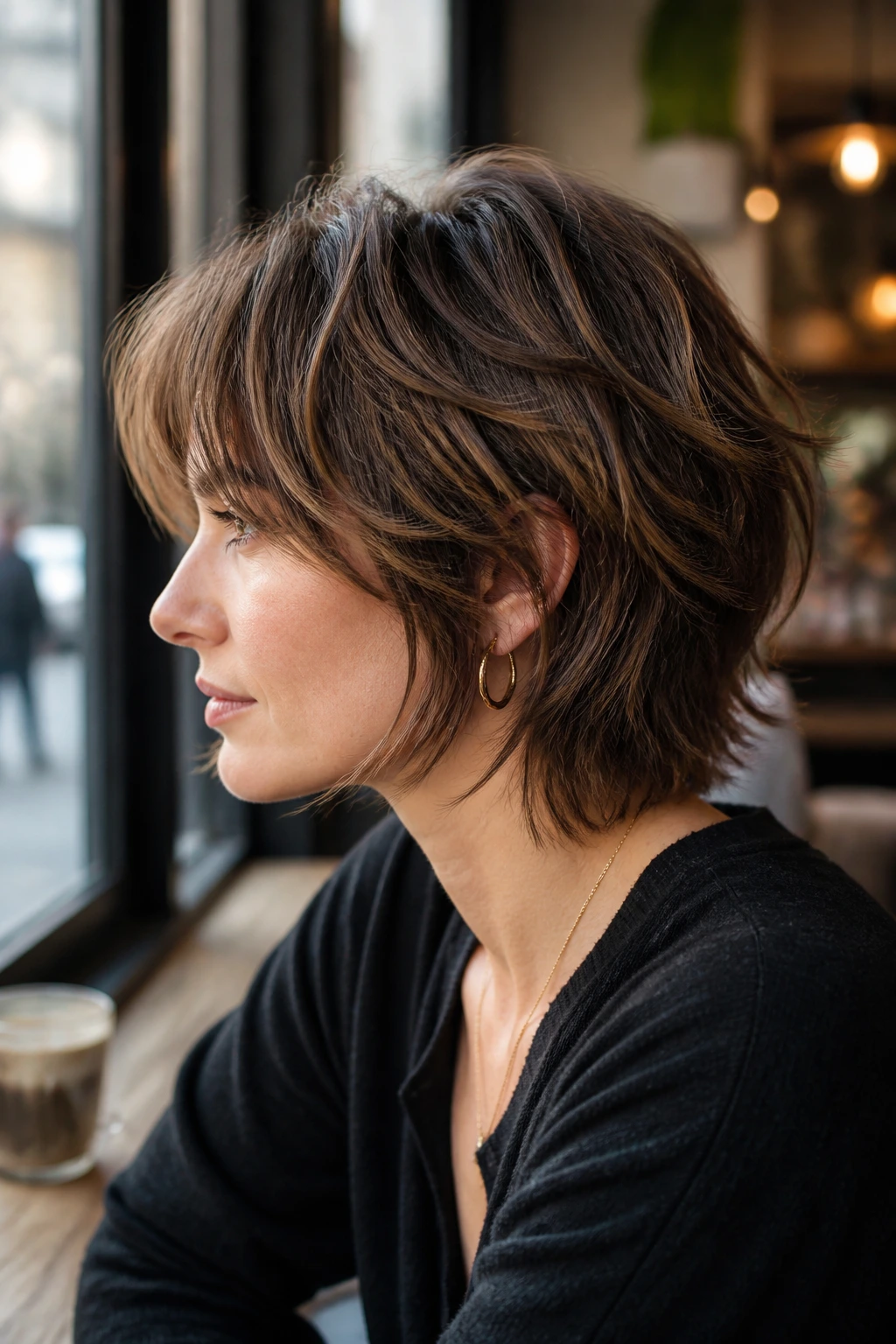
Here’s the thing: fine hair often needs less weight in the back, not more length. A nape-tapered shag removes bulk where the neck meets the cut and leaves the top and fringe with the most movement. That small shift changes the whole shape.
Best For
- Hair that puffs at the nape but lies flat on top
- People who want a clean neck area with soft layers around the face
- Anyone who likes a cut that looks tidy from the side but not stiff
The curtain bangs can be longer here, almost skimming the cheekbones, so the front stays soft while the back stays neat. It’s a good compromise between polish and texture.
22. Bouncy Flip Shag

The bouncy flip shag is all about energy at the ends. Instead of hanging straight, the layers curve out just enough to catch the light and keep the silhouette from collapsing. Fine hair looks fuller when the ends don’t point straight down, and this shape leans into that trick without overdoing it.
A round brush or large velcro roller helps here. Blow the face-framing pieces away from the face, then flip the ends of the sides and back just a touch. Not curls. Flips. There’s a difference, and it matters.
It’s a cheerful cut, honestly. Slightly retro, slightly messy, and good for hair that needs a little lift without an hour of styling.
23. Low-Maintenance Air-Dry Shag
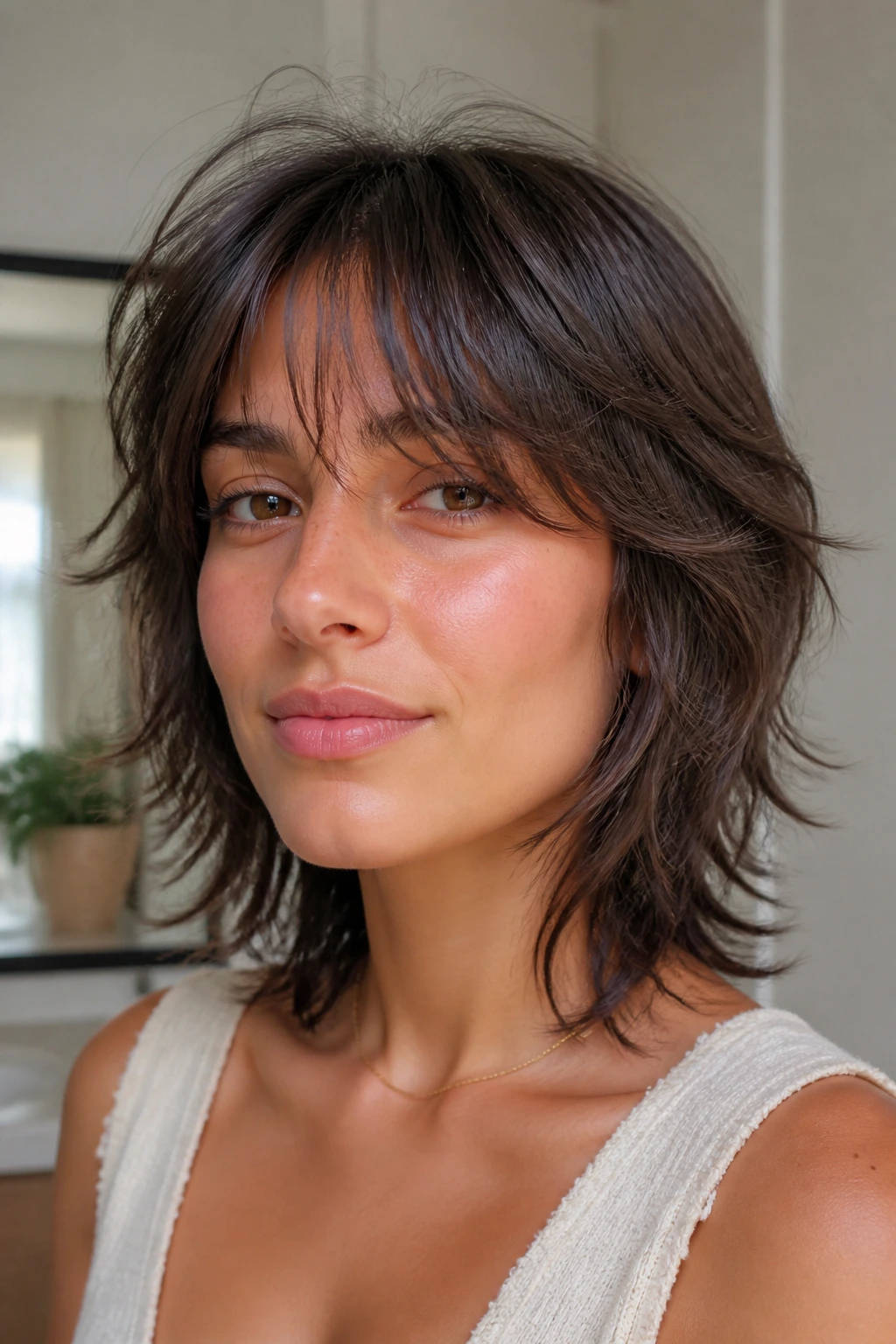
If you want a shag that behaves after a towel squeeze and a bit of product, this is the one. The layers are mapped to dry well on their own, which makes it useful for fine hair that loses shape when heat styling gets skipped. Curtain bangs stay soft, not overbuilt, so they can fall into place with minimal help.
The trick is not to chop the interior too hard. Air-dry cuts need shape, but they also need enough structure that the hair doesn’t separate into little limp pieces. The perimeter should stay visible, and the crown should have some lift built in.
This cut is for the person who wants to wash, scrunch, and leave the bathroom. No shame in that.
24. High-Lift Crown Shag with Long Curtains
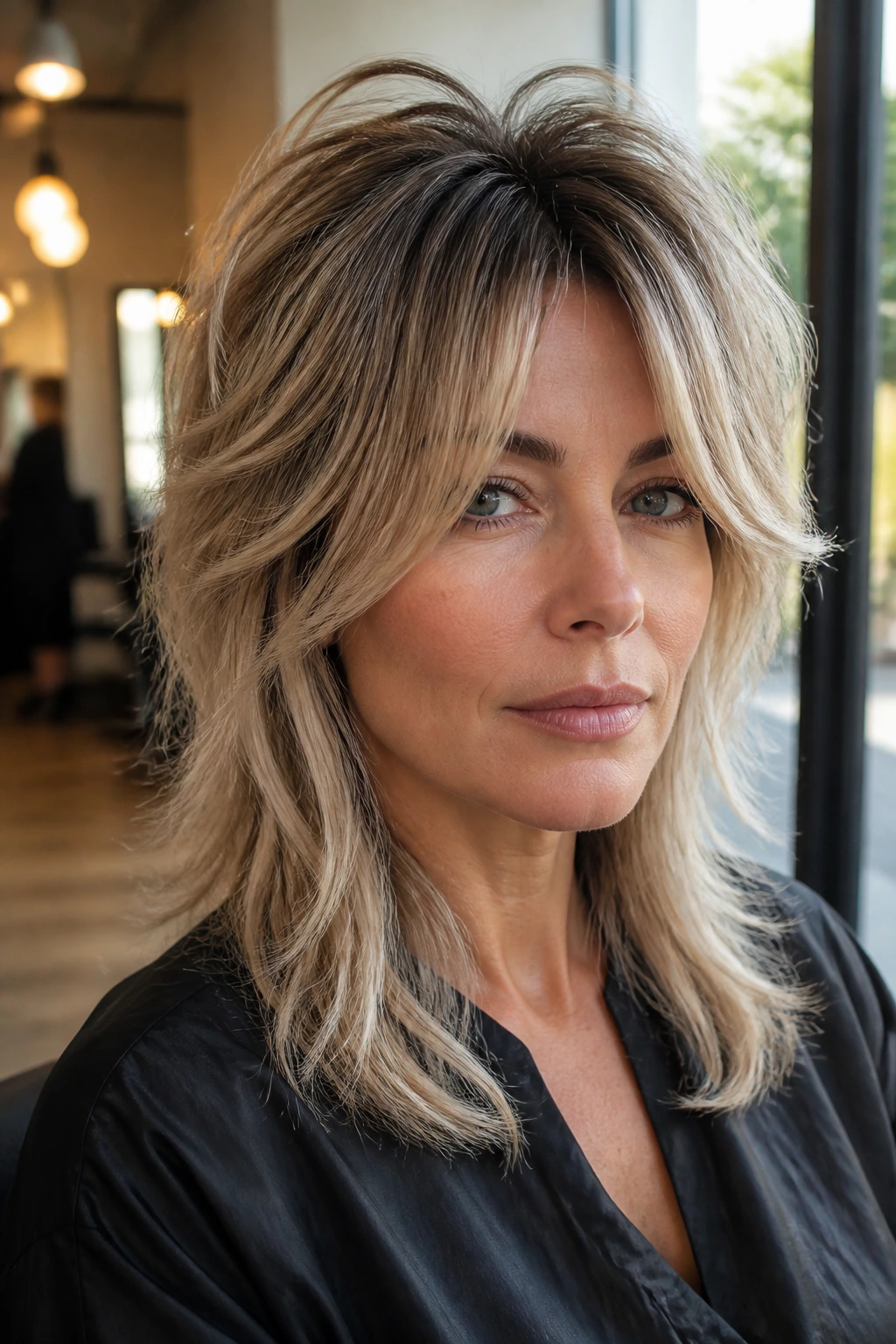
The last one on the list is for hair that goes flat at the root before it does anything else. The crown is cut to create lift, while the curtain bangs stay long enough to frame the face and keep the front from feeling chopped. Fine hair can look surprisingly full in this shape because the height sits where the eye notices it first.
Why It Wins on Fine Hair
The crown gets the shortest, most active layers, which pushes movement up where it counts. The lengths below keep enough weight to avoid that fuzzy finish that short shag cuts sometimes get. It’s a smart balance, and not a common one.
If you wear your hair half up a lot, this cut also behaves well. The lifted crown gives you shape even when the back is pinned out of the way.
Why Short Shaggy Hair With Curtain Bangs Flatters Fine Hair
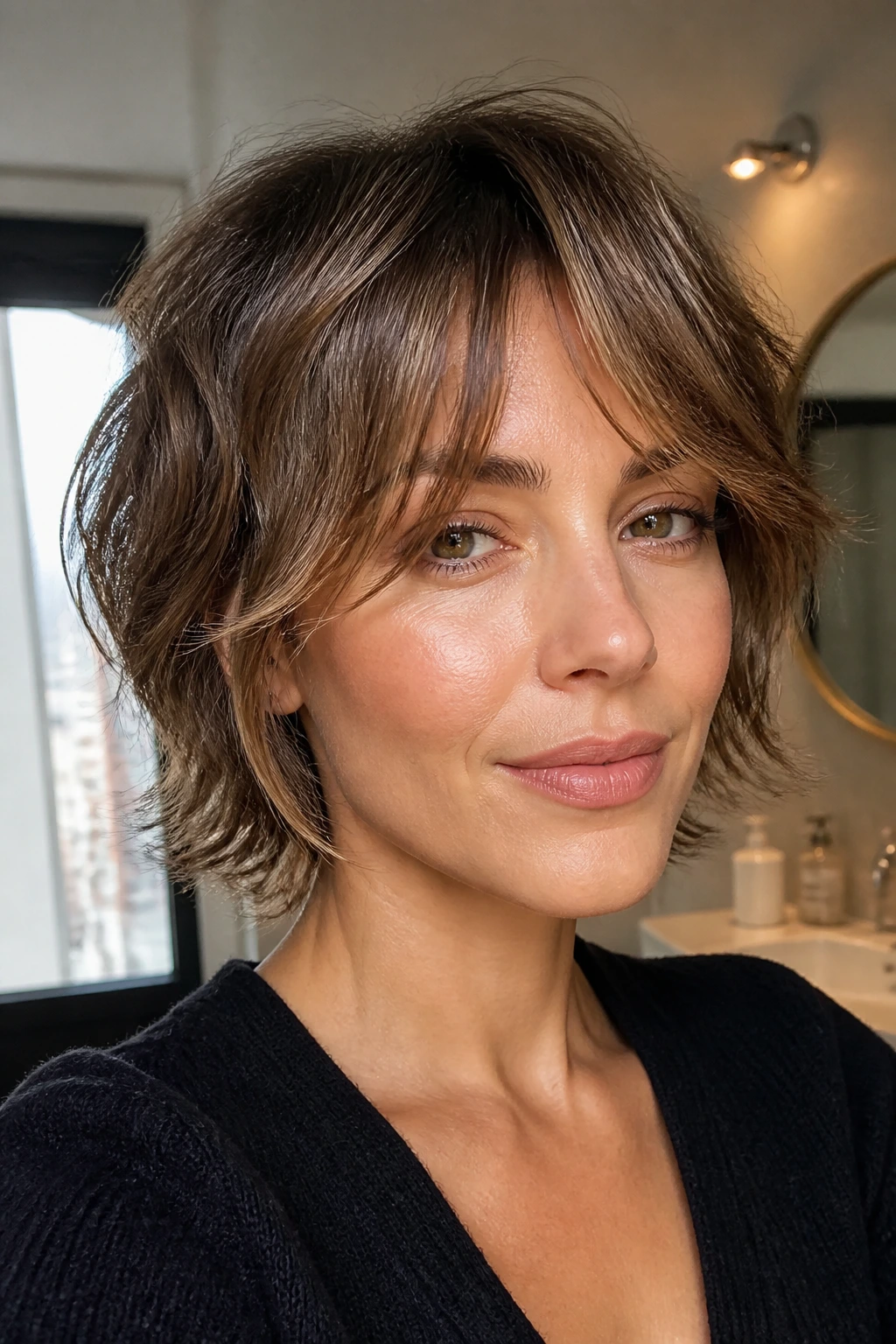
The shag works on fine hair when it stops trying to make every strand do the same thing. That’s the basic idea. Curtain bangs open the face, the layers add movement, and the short length keeps the shape from dragging down under its own weight.
There’s a catch, though. Fine hair needs careful layering, not just more layers. If the perimeter gets too sliced up, the cut starts to look thin at the ends and big in all the wrong places near the crown. The best shag keeps a visible outline, then breaks it up only where movement helps.
I also like that these cuts can be tuned for different kinds of fine hair. Fine and dense is not the same as fine and sparse. Dense fine hair can take a little more internal texture; sparse fine hair usually looks better with stronger edges and softer movement through the top. That distinction matters more than face shape sometimes.
What to Tell Your Stylist Before the First Snip
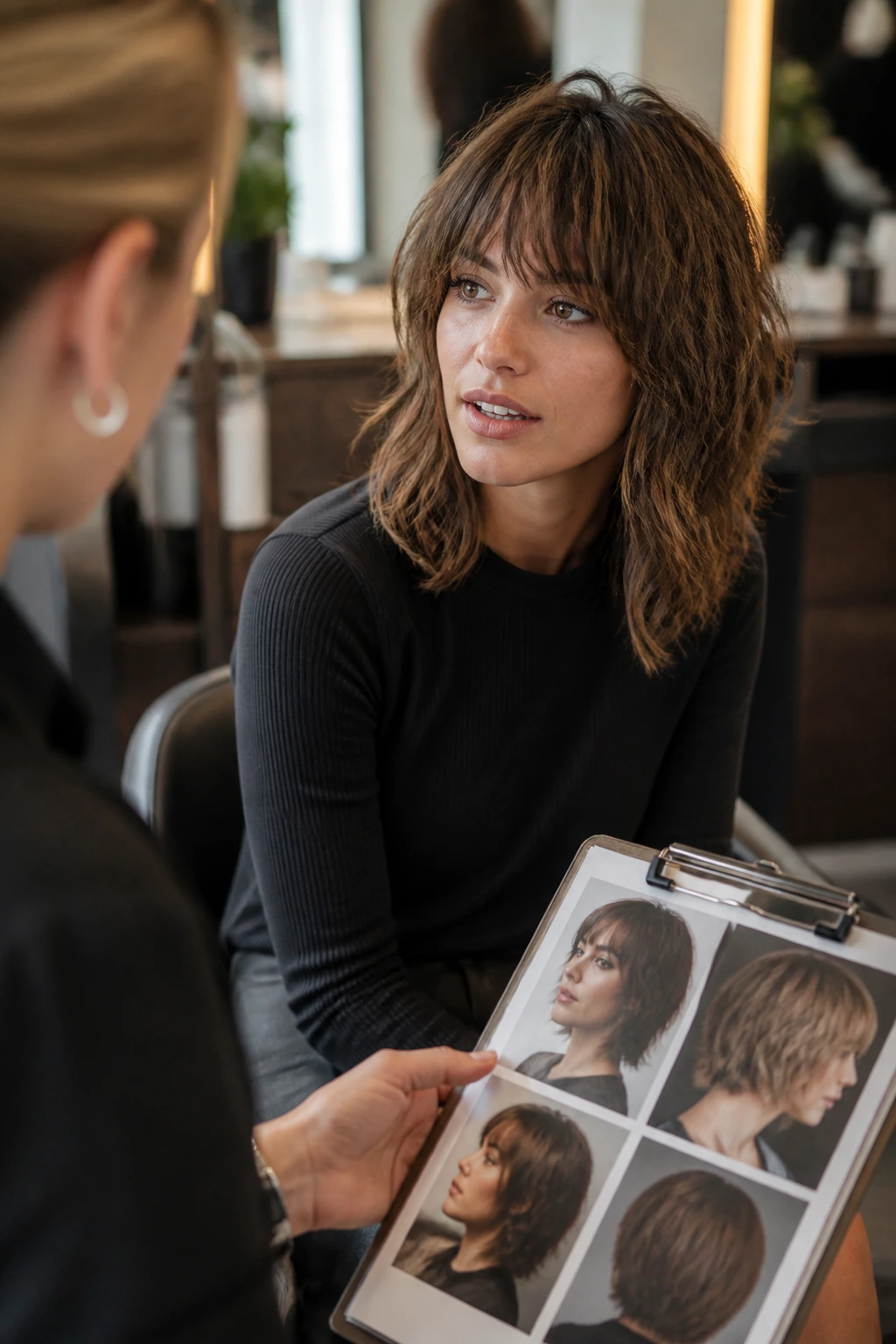
Bring photos, but bring the right photos. You want images that match the length and outline you actually want, not just the mood. A shag can look wildly different at chin length versus collarbone length, and one picture does not always tell the whole story.
Say the words fine hair out loud and then explain whether you mean sparse density or soft strand texture. Stylists hear both versions of that phrase all day, and they are not the same problem. If your hair is fine but thick in quantity, you can usually handle more internal layering. If it is fine and thin in quantity, keep the layers softer and the base stronger.
Mention your cowlicks, your natural part, and whether your bangs tend to split or stick to one side. That little detail saves a lot of grief. Ask for curtain bangs that are long enough to open away from the face, not short enough to sit like mini wings on the forehead.
One more thing. Ask for a perimeter that still looks deliberate when the hair is tucked behind the ears. If the outline disappears the second the hair moves, the cut was thinned too far.
Tools and Products That Keep the Shape Alive
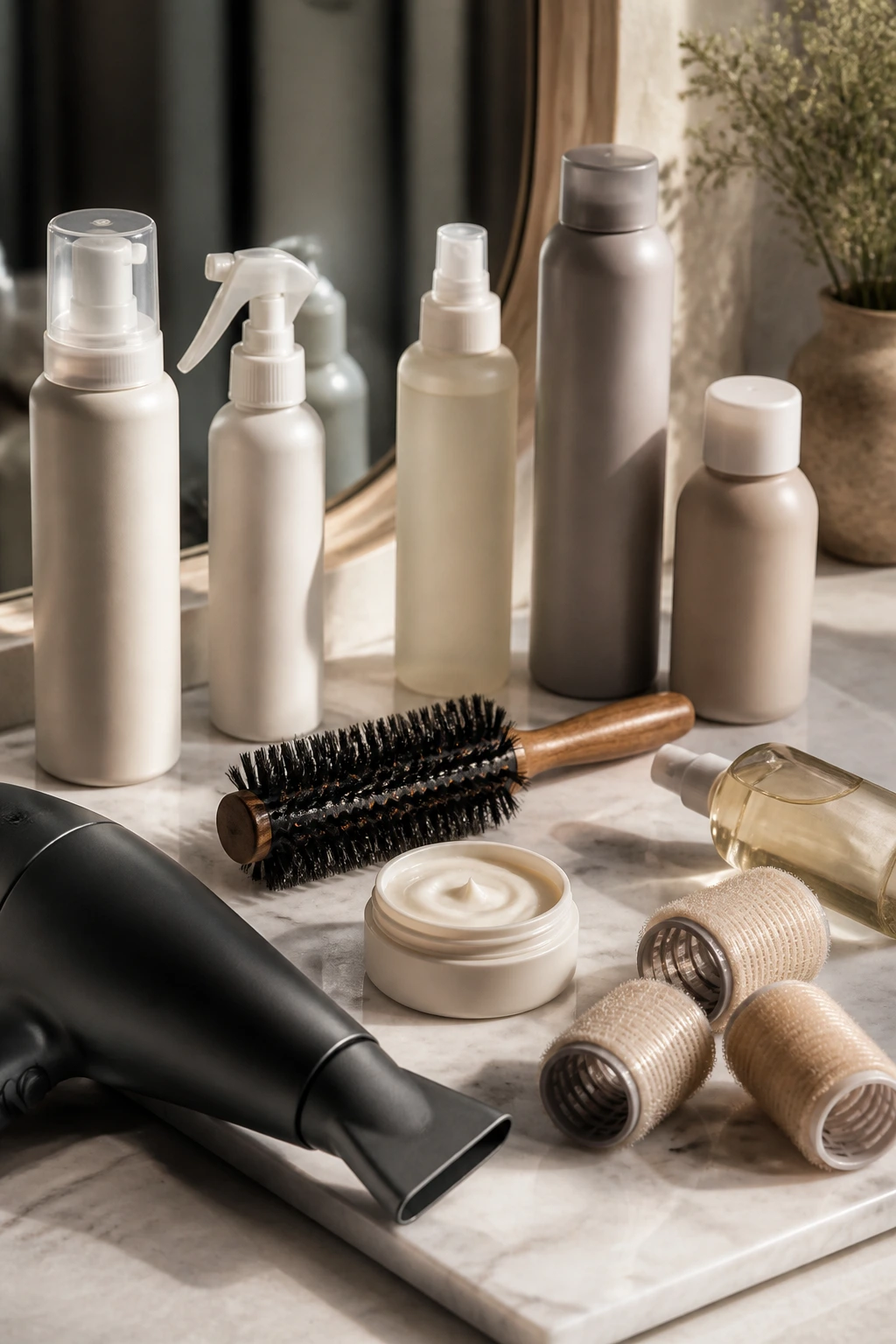
- Lightweight mousse: Gives the roots some grip without turning fine hair sticky or stiff.
- Root-lift spray: Useful at the crown if your hair falls flat within an hour of drying.
- Heat protectant: Keeps short layers and curtain bangs from drying out when you use a brush or iron.
- 1-inch round brush: Small enough to create bend in the fringe and side pieces without making the hair puffy.
- Blow dryer with a concentrator nozzle: Helps aim the airflow so the bangs and crown go where you want them.
- Dry shampoo: Best on day two and day three, especially at the roots where fine hair gets oily fast.
- Texturizing spray: Good for separation through the mid-lengths; use sparingly or the ends get dusty.
- Light styling cream or balm: Useful only on the very tips if they look fuzzy. Too much will flatten the whole cut.
- Velcro rollers or large clips: Handy for setting the fringe while it cools if you want a softer bend.
- Microfiber towel or T-shirt: Cuts down on rough friction after washing, which matters more on delicate strands than people admit.
How to Style the Cut Without Crushing the Crown
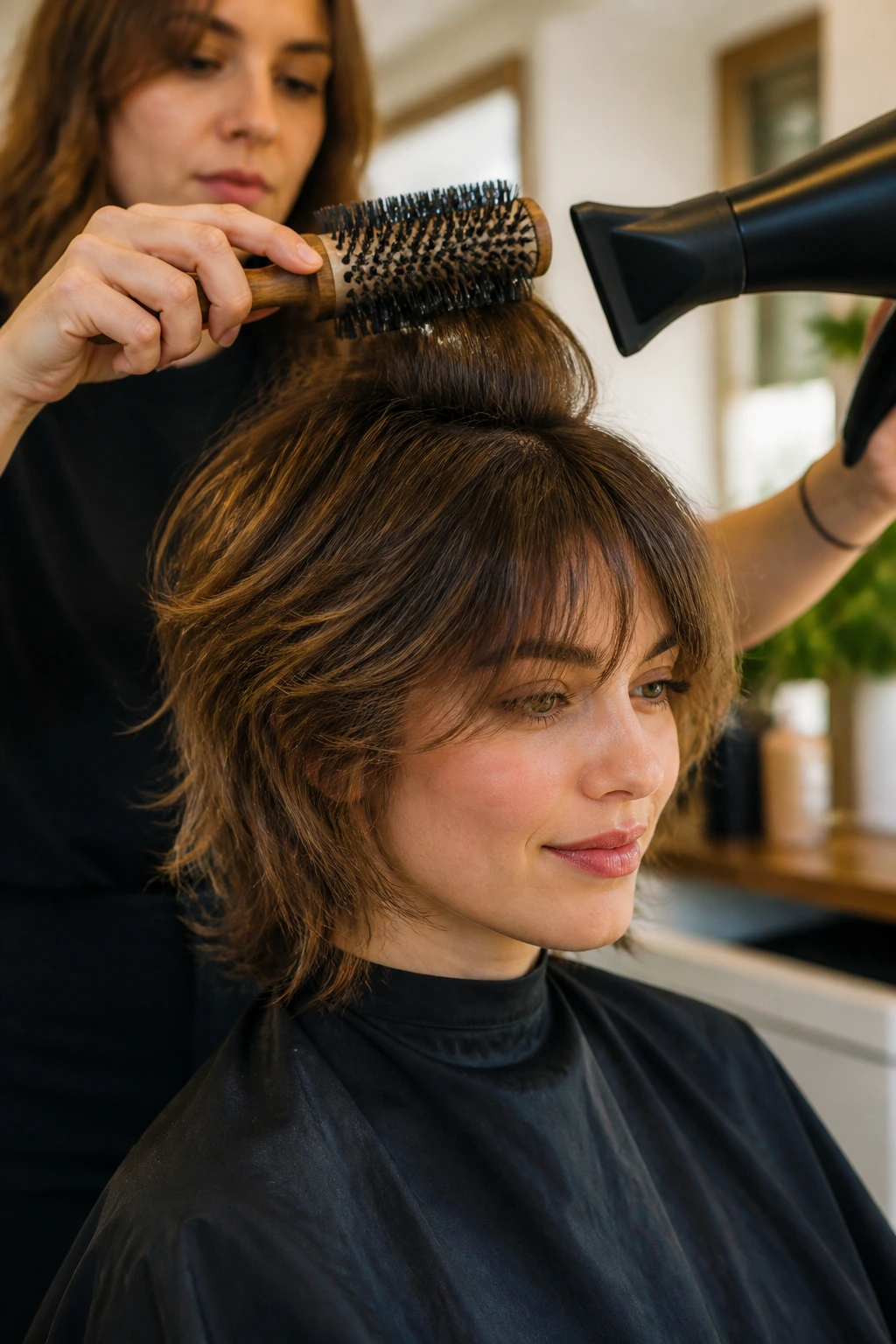
Start at the roots, not the ends. Fine hair gets weighed down fast, and loading product onto the mid-lengths before the crown is dry is one of the quickest ways to erase the point of the cut. A golf-ball-sized amount of mousse is enough for many shoulder-length versions, and less if your hair is very sparse.
For curtain bangs, direct the first pass of heat away from the face, then switch directions on the second pass. That little back-and-forth gives the fringe its opening shape instead of one hard bend. If you’re using a round brush, wrap the hair for only a few seconds, then cool it before you let it drop. Heat sets shape; cool air locks it in.
Do not drown the ends in oil. Fine hair usually needs shine at the mid-lengths and tip polish in tiny amounts, not a full coating that turns the shag into a flat sheet. A touch of dry shampoo at the roots on day two can buy you another full day of lift.
And if you’re short on time, focus on three spots: crown, fringe, and face frame. Those are the pieces people notice first. The back can stay a little imperfect.
Common Mistakes That Make Fine Hair Look Flatter
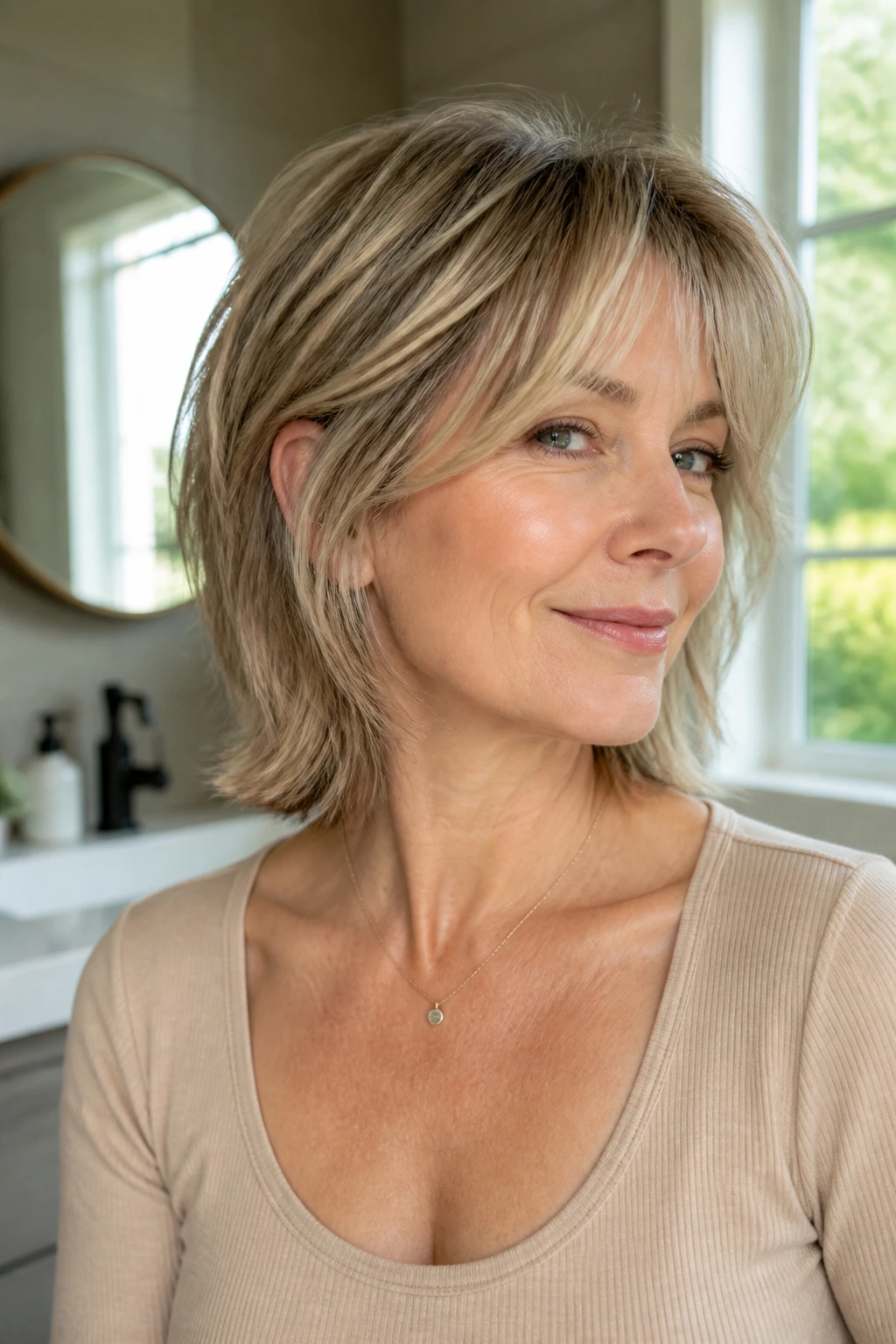
The biggest mistake is cutting too many short layers into the lower half of the head. That sounds like it should add volume, but the symptom is the opposite: the ends go stringy, the shape frays, and the hair looks thinner in daylight. The fix is a stronger perimeter with the texture placed higher up.
Second, curtain bangs that are too short will fight the cut instead of softening it. If the fringe stops high on the forehead, it can make the face look wider and the haircut feel less relaxed. Keep the center longer than your first instinct. Usually that reads better on fine hair.
Third, people use heavy creams because they’re afraid of frizz. The result is limp bangs and a crown that settles flat before lunch. Swap the heavy cream for a light mousse or spray, then use a tiny dab of balm only on the very tips if needed.
Cowlicks cause trouble too. If the part or fringe placement ignores the way your hair grows, the curtain bangs will split weirdly and one side will sit higher. Tell your stylist where the hair pushes and where it resists. That conversation matters.
Skip aggressive thinning shears unless your hair is dense enough to handle them. On delicate strands, too much thinning can leave visible gaps that do not grow out gracefully.
Variations and Adaptations to Borrow
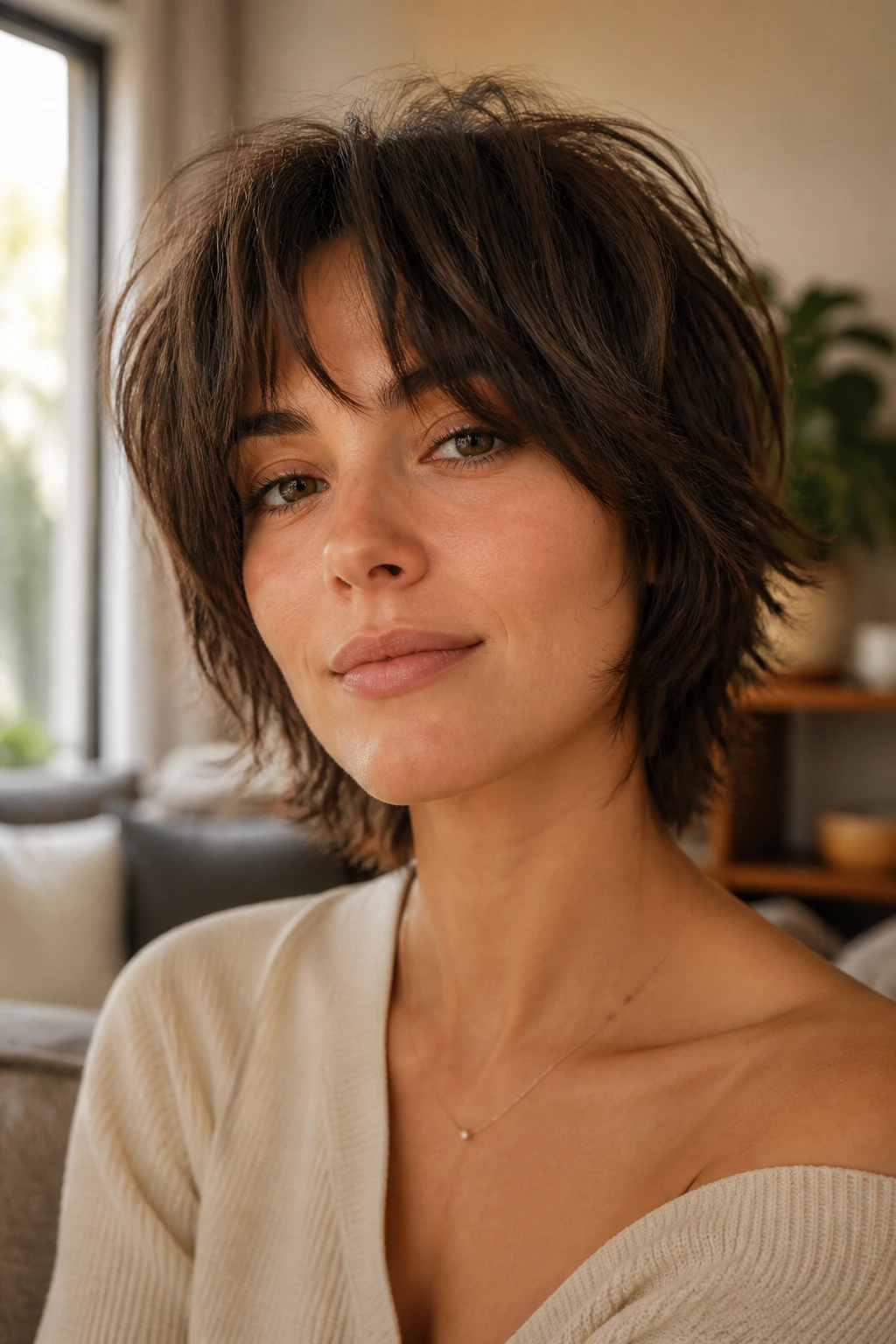
The Air-Dry Edit: Ask for softer internal layering and a slightly stronger base line. This version works best if you don’t want to heat-style every wash day and prefer the hair to settle on its own.
The Blowout Edit: Keep the layers lighter through the front and crown so a round brush can build lift fast. This version is ideal if you like smooth curtain bangs with a soft bend rather than a rough, piecey finish.
The Straight-Hair Edit: Leave the ends a touch blunt and avoid over-razoring the interior. Straight fine hair often needs the perimeter to do more of the work, or the whole cut can go transparent.
The Wavy Edit: Make the layers more staggered and the bangs longer so the wave has room to bounce. This keeps the shape from shrinking too much and lets the curtain fringe fold naturally into the sides.
The Grow-Out Edit: Choose longer bangs, a slightly lower crown point, and a bob-to-lob length. This gives you a cut that still looks intentional six to eight weeks later instead of one that demands a rescue mission.
Keeping the Shape Between Salon Visits
Fine hair does not usually need heroic maintenance, but it does need regular trimming. Most of these cuts hold their shape best with a clean-up every 6 to 8 weeks. Curtain bangs often need attention even sooner, especially if they start poking into your eyes or falling straight into the cheeks.
Wash routine matters more than people want to admit. Too much conditioner near the roots will flatten the crown. Keep conditioner from the ears down, and rinse well. If your hair gets oily fast, a light dry shampoo at the roots on day two can revive the lift without a full wash.
If the cut starts looking tired, do not reach for heavy serums first. Mist the bangs lightly with water, re-bend them with your fingers or a small brush, and then warm them with a blow dryer for a few seconds. That quick reset is usually enough. For ends that look fuzzy, use a drop of cream, not a palmful.
Sleeping on a smooth pillowcase helps too. It cuts down on friction, which is useful when your haircut depends on soft movement instead of blunt weight.
Frequently Asked Questions
Will curtain bangs work if my fine hair is very straight?
Yes, but they need a little bend to look intentional. A tiny round brush or a quick pass with a flat iron can help the bangs open away from the face instead of hanging flat and separated.
Is a shag or a bob better for very fine hair?
A strong bob can look fuller at the perimeter, while a shag gives more movement at the crown and sides. If your hair tends to collapse flat, the shag usually gives more life; if your ends disappear easily, a bob-based shag is safer.
How short can I go before fine hair starts to look sparse?
That depends on density, but chin-length and jaw-length shapes are often the safest short spots. Once you go much shorter, the crown and fringe placement matter more than the length itself.
Should I ask for layers or texture?
Both, but not the same amount everywhere. Layers create shape; texture creates movement. On fine hair, too much texture at the ends can make the hair look see-through, so ask for softness rather than aggressive thinning.
Can I wear this cut without heat styling?
Yes, if the haircut is mapped for air-drying from the start. The best air-dry versions keep the layers controlled and the curtain bangs long enough to settle naturally instead of sticking up.
What if my bangs split weirdly because of a cowlick?
Tell your stylist before the cut. They can shift the part, lengthen one side, or build the fringe to follow the growth pattern instead of fighting it. That usually fixes the problem better than trying to train the cowlick into submission.
How often should curtain bangs be trimmed?
Usually every 3 to 5 weeks, depending on how fast your hair grows and how short the fringe starts. Let them go too long and they lose the face-framing effect that makes the whole haircut work.
Can I grow out a pixie into one of these shaggy looks?
Absolutely. A grown-out pixie shag is one of the easier transitions because the curtain fringe gives you something to shape while the sides and back catch up. Keep the neckline neat and the top soft.
Soft Ends, Real Movement
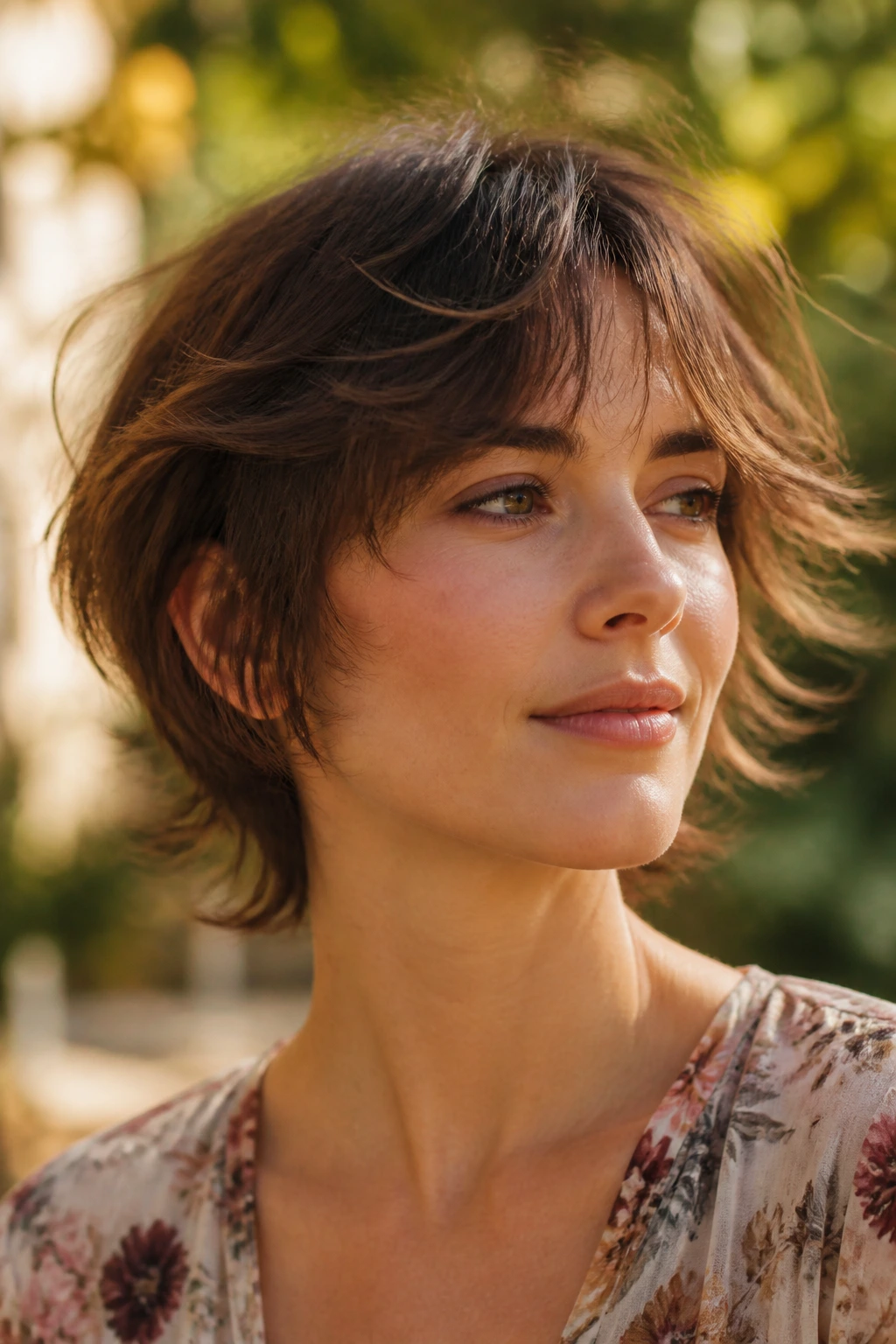
Short shaggy hair with curtain bangs for fine hair works because it respects the way delicate strands behave. It lifts where the hair wants to collapse, keeps the outline strong enough to read from across the room, and leaves the front soft instead of heavy. That combination is harder to get than it sounds.
The best version for you is the one that matches your density, your part, and how much styling you’re willing to do on a Tuesday morning. Start with the shape that gives the crown a little help and the bangs room to breathe, then let the rest fall into place.
