



Long hair and undercuts have a useful little tension built into them. The length stays soft and familiar from the outside, but the underside can be trimmed, shaved, or carved back so the hair moves differently, sits cleaner, and stops dragging around like a heavy curtain. For women with long hair, undercut styles are not about giving up length. They’re about changing the shape, the weight, and the way your hair behaves when it’s tied up, tucked back, or left loose.
The part that surprises people is how specific the result can be. A narrow nape panel does one job. A side shave does another. A V-shaped undercut changes the look of a ponytail in a way a flat strip never will. Add curls, braids, bangs, or a deep side part, and the same basic idea can look discreet, sharp, playful, or nearly invisible until you turn your head.
A good undercut lives in the details: how high it starts, whether the line is blunt or faded, how much hair is removed, and where your natural cowlicks kick up at the neckline. Those small choices matter more than the word “undercut” suggests. Start with the quiet options first. The louder ones are waiting right behind them.
Why These Undercuts Are Worth a Look
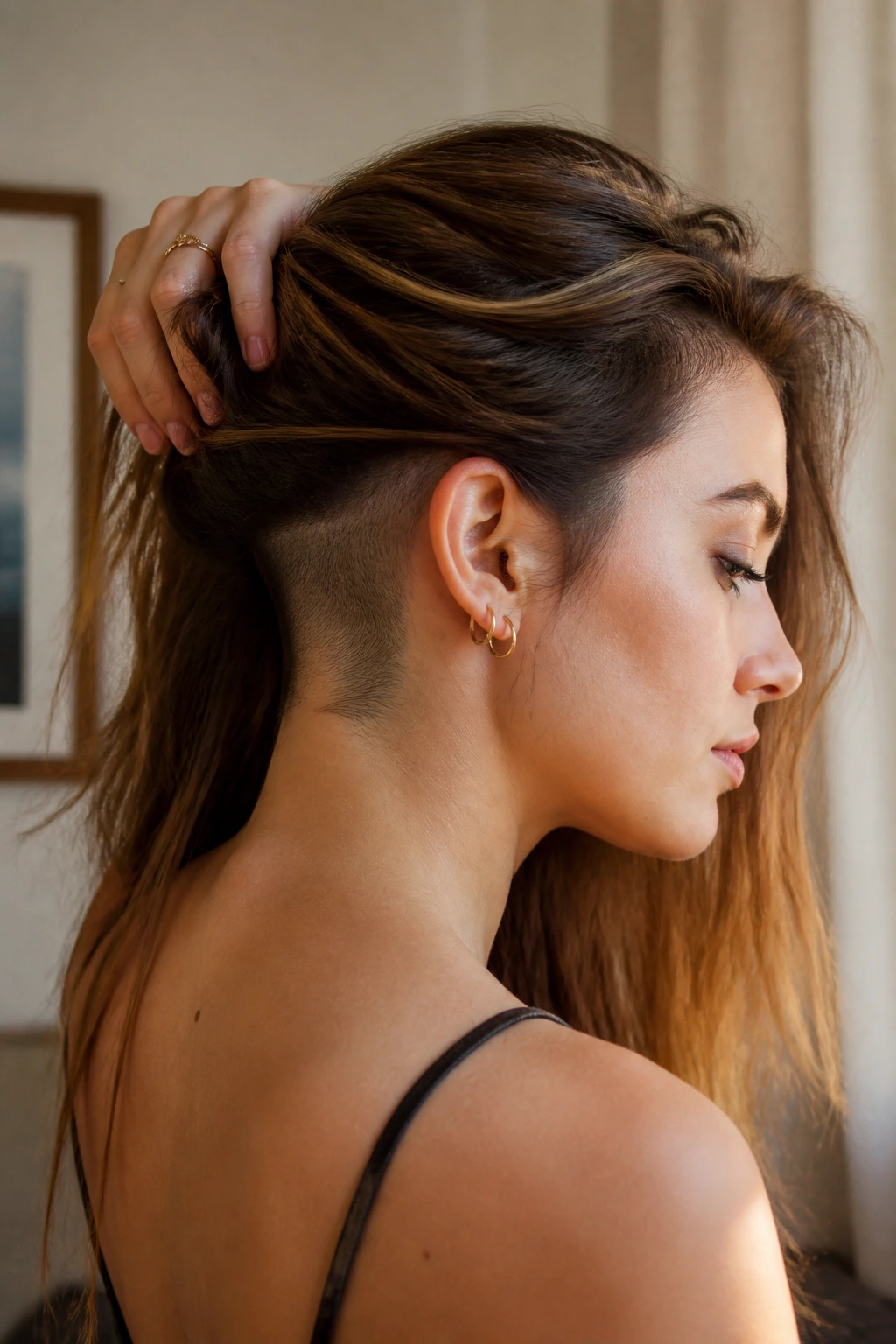
-
Bulk Relief: A small shave at the nape can take the weight out of thick long hair, especially if your ponytail feels like it’s pulling on your scalp by lunchtime.
-
Shape Control: Undercuts change the way long hair falls around the neck and shoulders, which means less triangle shape, less puff at the bottom, and a cleaner line when hair is tied up.
-
Hidden or Bold: Some versions disappear under loose hair, while others show only when you twist your hair into a bun or ponytail. That gives you room to be subtle on Monday and louder on Friday.
-
Better Updos: Braids, knots, and high ponytails often sit flatter and feel lighter once the lower section isn’t carrying so much density.
-
More Room for Personality: A shaved panel gives you a place for lines, color, or a sharper silhouette without touching the length you already like.
1. Hidden Nape Strip
A hidden nape strip is the quietest place to start, and I mean that in the best way. The shave sits low along the neckline, usually no wider than a couple of fingers at first, so the long hair still falls over it like a curtain. When your hair is down, it reads as untouched. When you lift it into a ponytail, the difference is obvious: less bulk, less pressure, and a cleaner line at the back of the neck.
Best for people who want less hair without a dramatic reveal
This version works especially well if your hair is thick at the bottom but you don’t want visible side shaving. Ask for a low strip that follows the curve of your hairline and stops before it climbs too high behind the ears. A #1 or #2 guard keeps the result soft enough to grow out without looking choppy.
The best part? It buys you comfort without changing your silhouette from the front. That matters if you wear your hair loose most of the time and only want the undercut to show when you decide it should.
2. V-Shaped Nape Undercut
The V-shape makes a low ponytail look sharper almost instantly. Instead of a flat horizontal shave, the center point dips down toward the spine, then angles up toward each side. When the hair is gathered, the shape peeks through in a way that feels deliberate, not accidental.
The V is a smart choice if you like long hair but hate the heavy wedge that collects at the base of a ponytail. It also gives the neckline a little movement. Straight lines can feel boxy on very long hair; the V softens that and still keeps the cut readable.
If you want it subtle, keep the point shallow. If you want it obvious, ask the stylist to raise the sides a little farther up behind the ears. Either way, this is one of those undercut styles for women with long hair that looks more refined than rebellious.
3. U-Shaped Nape Undercut
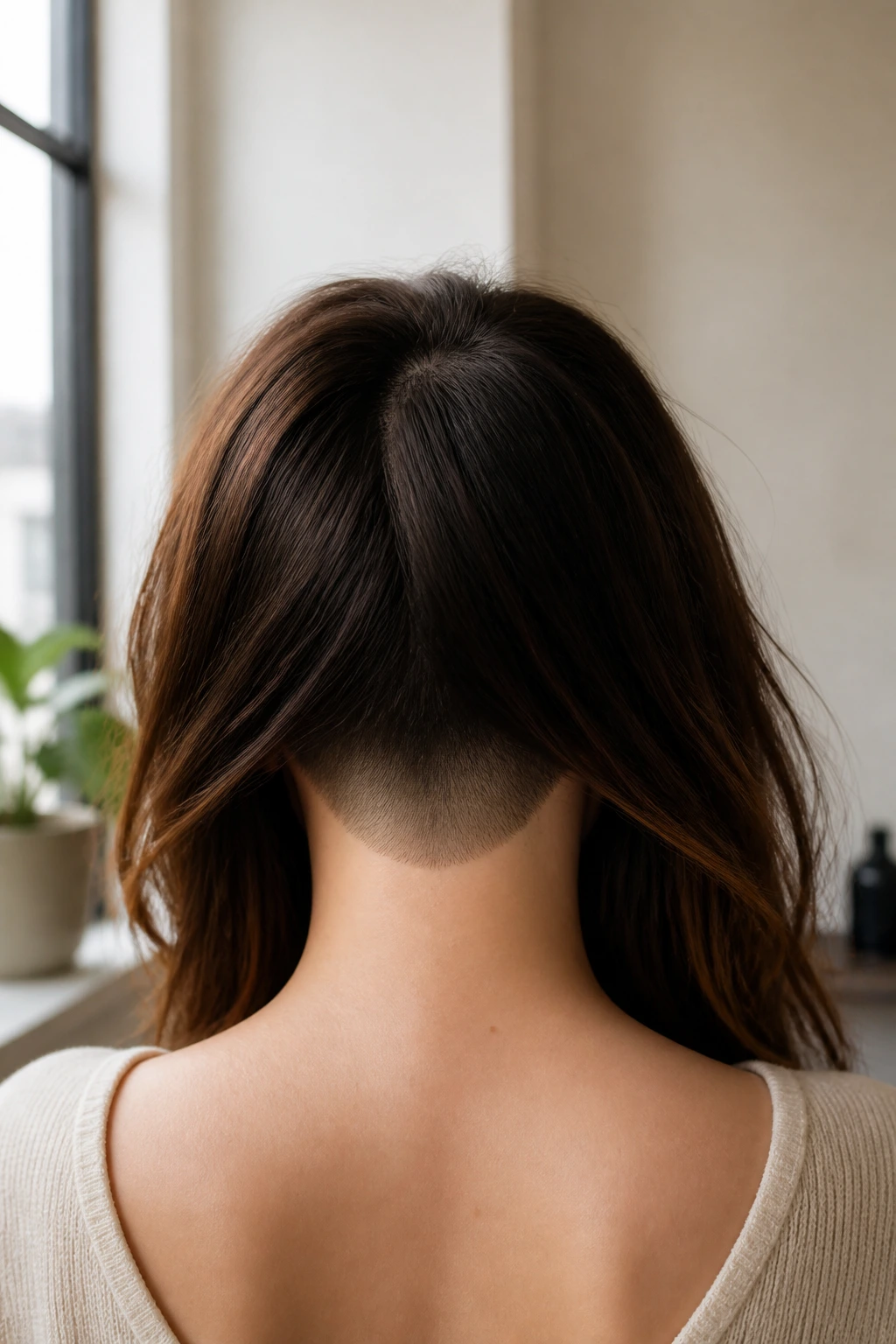
The U-shape is the gentler cousin of the V. The curve follows the natural neckline and tends to look softer when the hair is down, especially if your lengths are wavy or curled. It’s the kind of shave that feels almost tailored.
Ask for a rounded lower edge if you want the undercut to disappear under loose hair and reveal itself only in updos. The roundness matters. A hard edge can look abrupt under long layers, while a U-shape keeps the back of the head from looking cut off.
This one is particularly good for thick hair that fans out at the nape. You keep the shape of your length, but the underside stops behaving like a padded winter coat. A little dramatic? Maybe. Accurate? Absolutely.
4. Temple Shave and Side Tuck
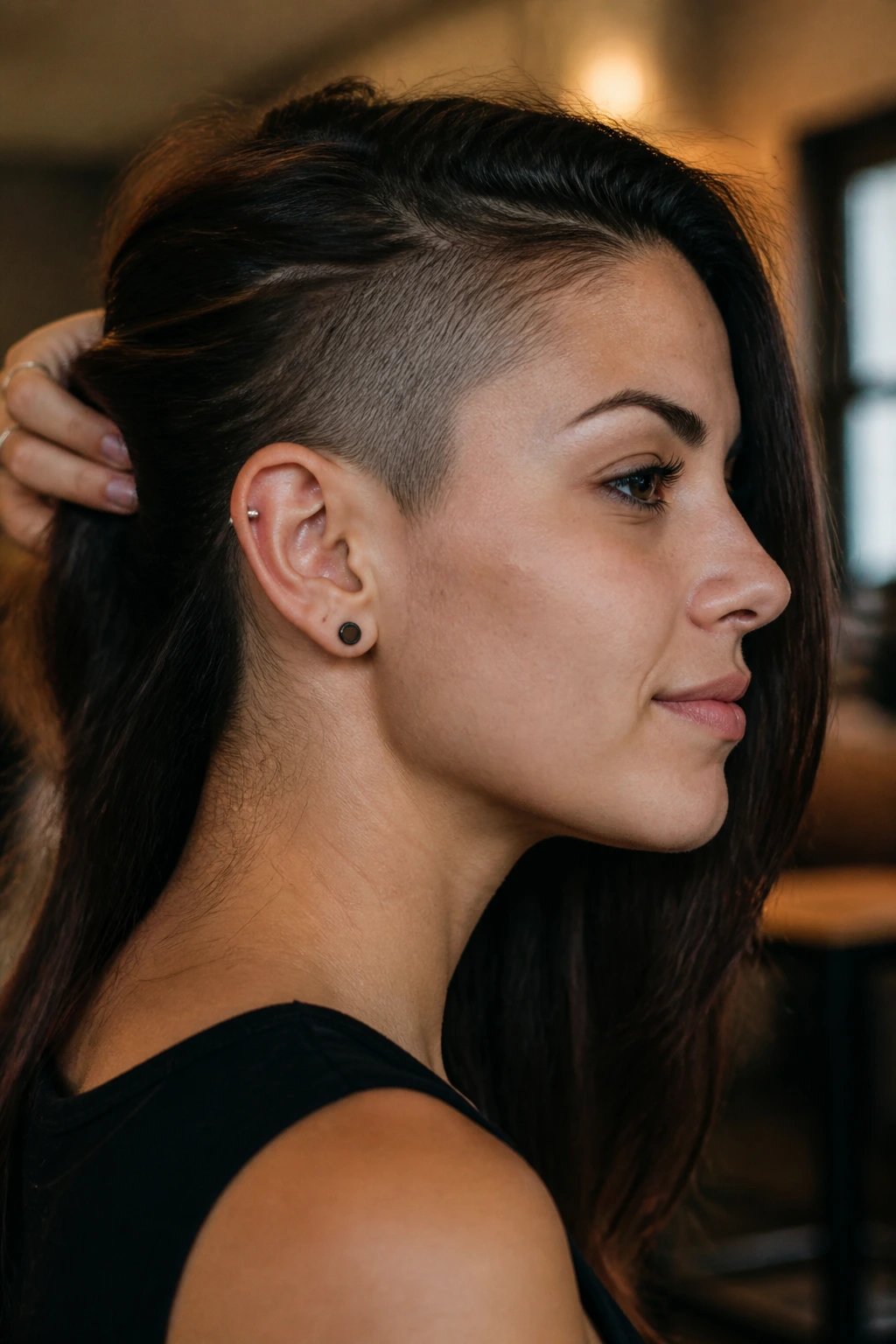
A temple shave is for the woman who keeps tucking her hair behind one ear and wishes the whole side would just behave. The shave sits in that small zone near the temple and above the sideburn, often hidden by long layers unless you sweep the hair back or tuck it loosely.
That tiny placement changes the feel of side-parted hair more than people expect. It sharpens the face line, opens up the side of the head, and makes glasses, hoops, and statement earrings look more intentional. If you wear a lot of one-sided styles, this is a tidy fit.
What to ask for
- A narrow section above the ear, not a full side shave.
- A soft edge if you want it to blend into long layers.
- A clean line if you want the cut to read as graphic when the hair is tucked back.
This is one of the easiest undercuts to live with because it can be hidden, shown, and hidden again in about five seconds.
5. Single Side Panel Undercut
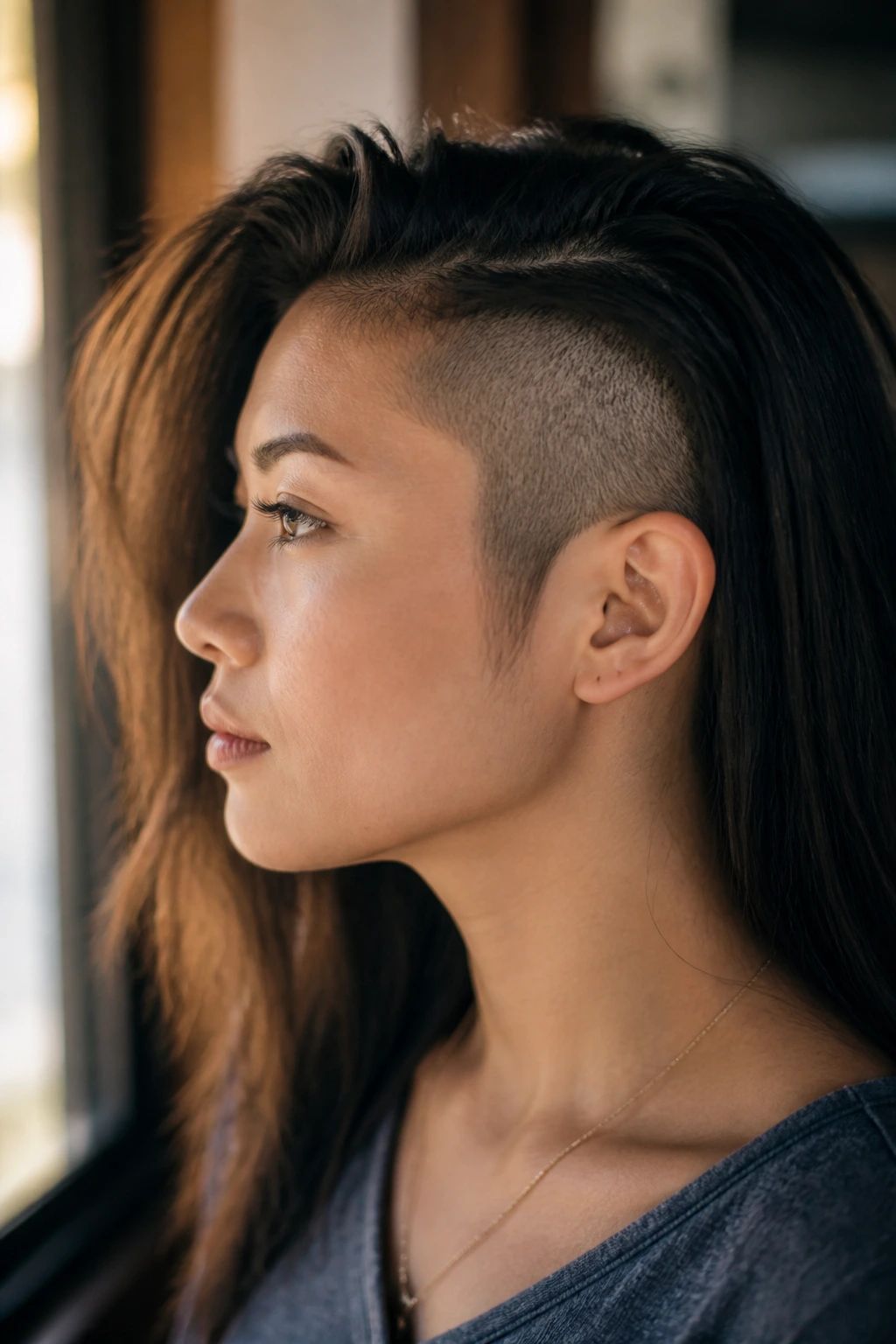
One side only. That’s the whole charm. A single side panel undercut lets the long hair keep its softness while one side carries the contrast, which makes the style feel modern without tipping into full rock-star territory unless you want it there.
The trick is placement. Start just above the ear and keep the panel low enough that it doesn’t swallow the whole side of the head. A strong side part can cover it completely. A deep tuck behind the ear shows it off. That flexibility is the real appeal.
I like this shape on straight hair and on loose waves because the side panel interrupts the flow just enough. It also works if your hair is thick around the ears, where bulk can make the whole profile look wider than you want.
6. Double Side Undercut
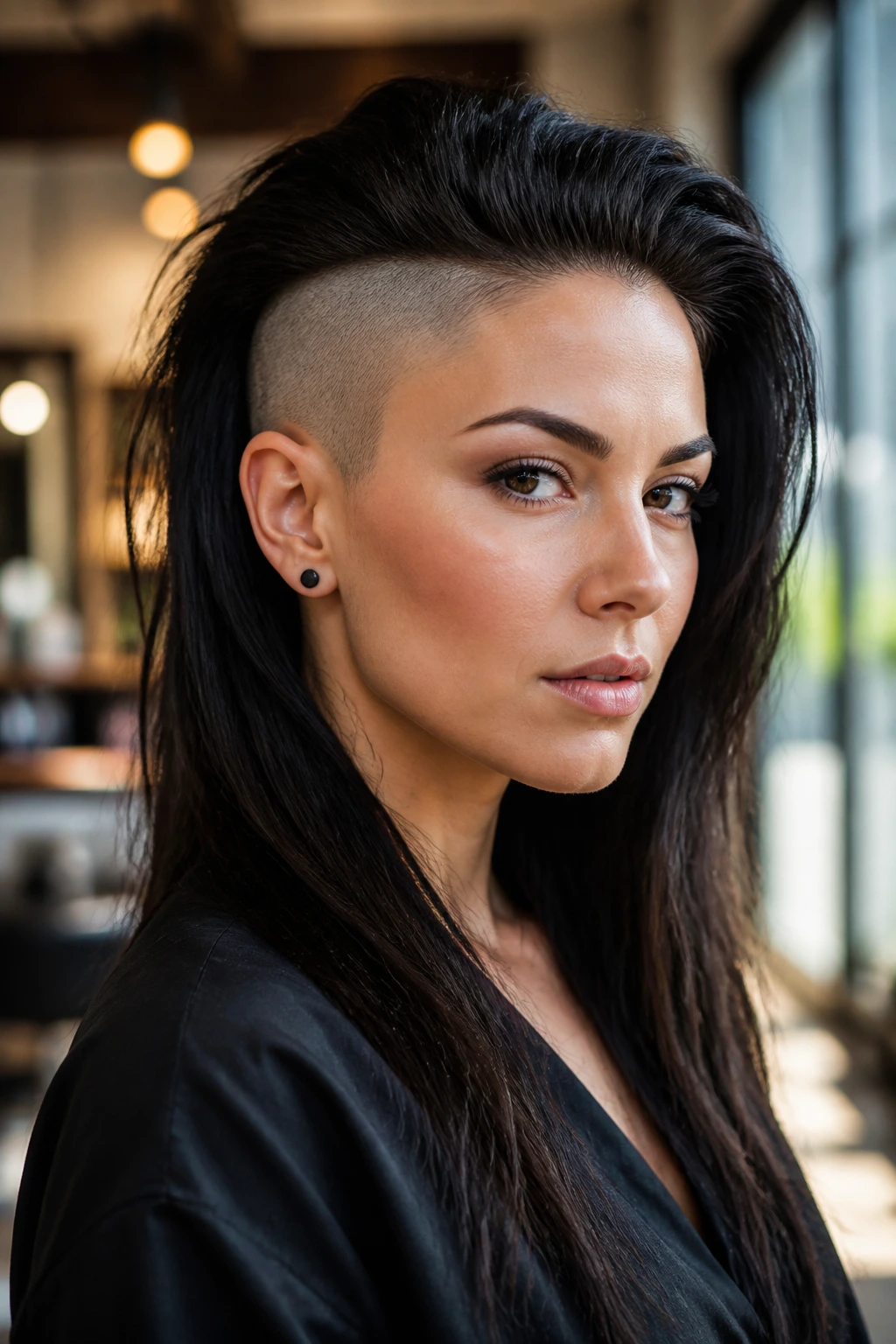
Two sides shaved, long hair on top. Simple idea, bigger effect. A double side undercut narrows the profile and makes the hair on top feel almost suspended, especially when you pull it into a half-up style or low knot.
This cut reads bolder than a single panel, but it doesn’t have to be severe. Keep the shaved sections low and narrow if you want a wearable version. Push them higher toward the temple if you want the long hair to sit like a veil over a sharper base.
Best for thick hair: it removes width where bulk tends to pile up.
Best for fine hair: keep the panels modest, or the top can start looking sparse.
If you’ve ever wanted your long hair to feel lighter on your scalp without losing the length, this is one of the cleanest fixes.
7. Curly Crown Relief
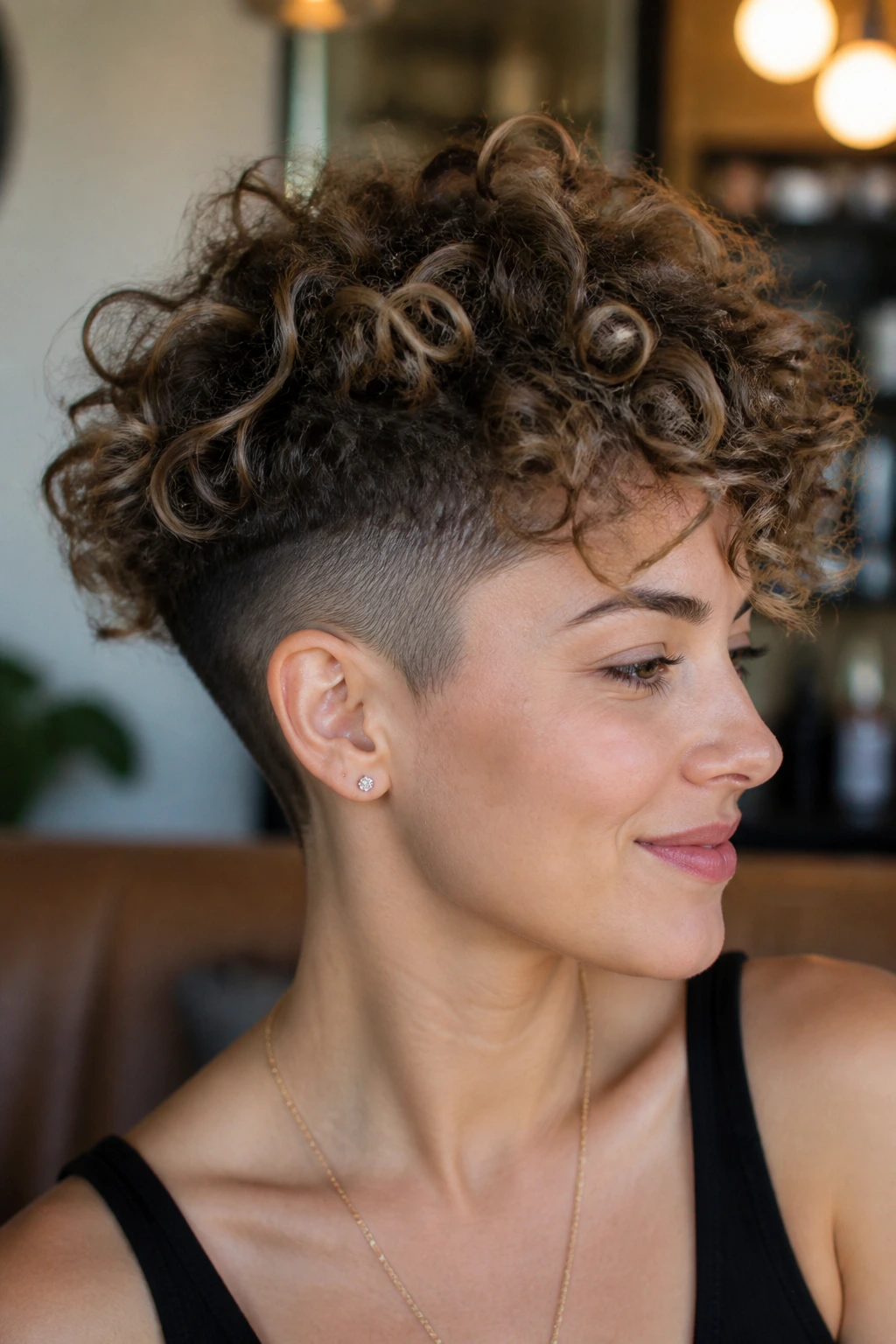
Curly hair and undercuts get along better than people think. The curl pattern usually creates its own width, and a hidden nape shave can take away the heavy underside that causes the whole shape to mushroom at the bottom. The result is not less curl. It’s better curl.
A curly crown relief cut keeps the volume where it belongs—around the crown and through the lengths—while clearing out the densest hair beneath. That helps curls stack instead of dragging. It also cuts down on the “triangle” effect that shows up when the base is too full.
How to think about it
The undercut should support the curl, not fight it. A blunt, high shave can make curly hair look patchy if the top isn’t dense enough. A lower panel, tucked under the crown, usually gives a nicer balance.
If your curls shrink a lot when dry, ask your stylist to cut with shrinkage in mind. That little conversation saves a lot of regret.
8. Braided Reveal Undercut
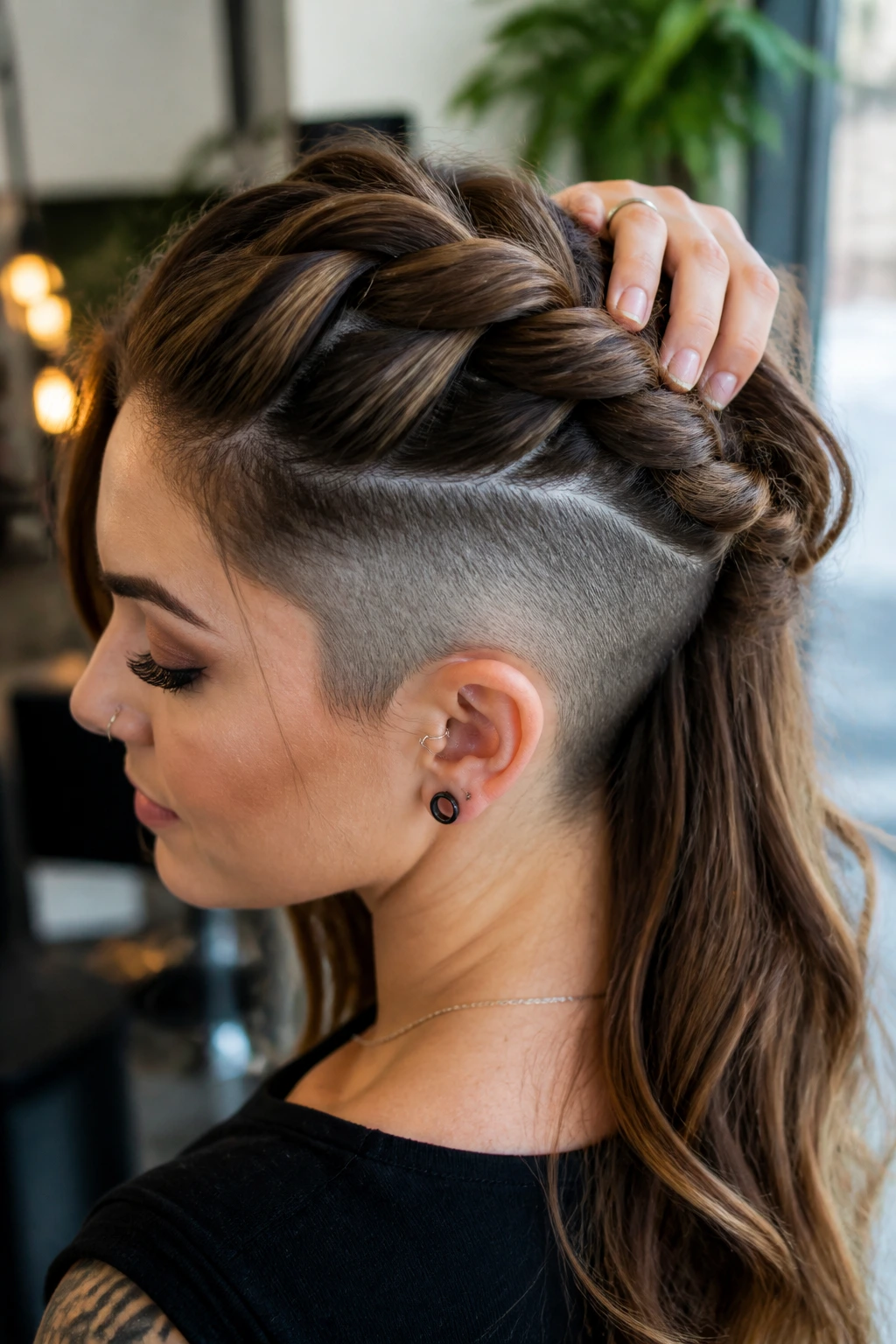
Braids and undercuts are a strong pair because one hides the other until the braid gets lifted, pinned, or twisted. A braided reveal undercut is usually cut low enough to stay out of sight under loose hair, but it becomes visible when you gather the lengths into a braid, especially a French braid or fishtail.
This is a good option if you love styling but don’t want the undercut to dominate your day-to-day look. The braid becomes the reveal moment. Small payoff, nice effect.
A few stylists will add a narrow design line where the braid parts away from the scalp. Keep that detail minimal if you want the style to stay wearable. A single line is often enough. Three lines can start to look busy unless the rest of your look is very simple.
9. Half-Up Ponytail Undercut
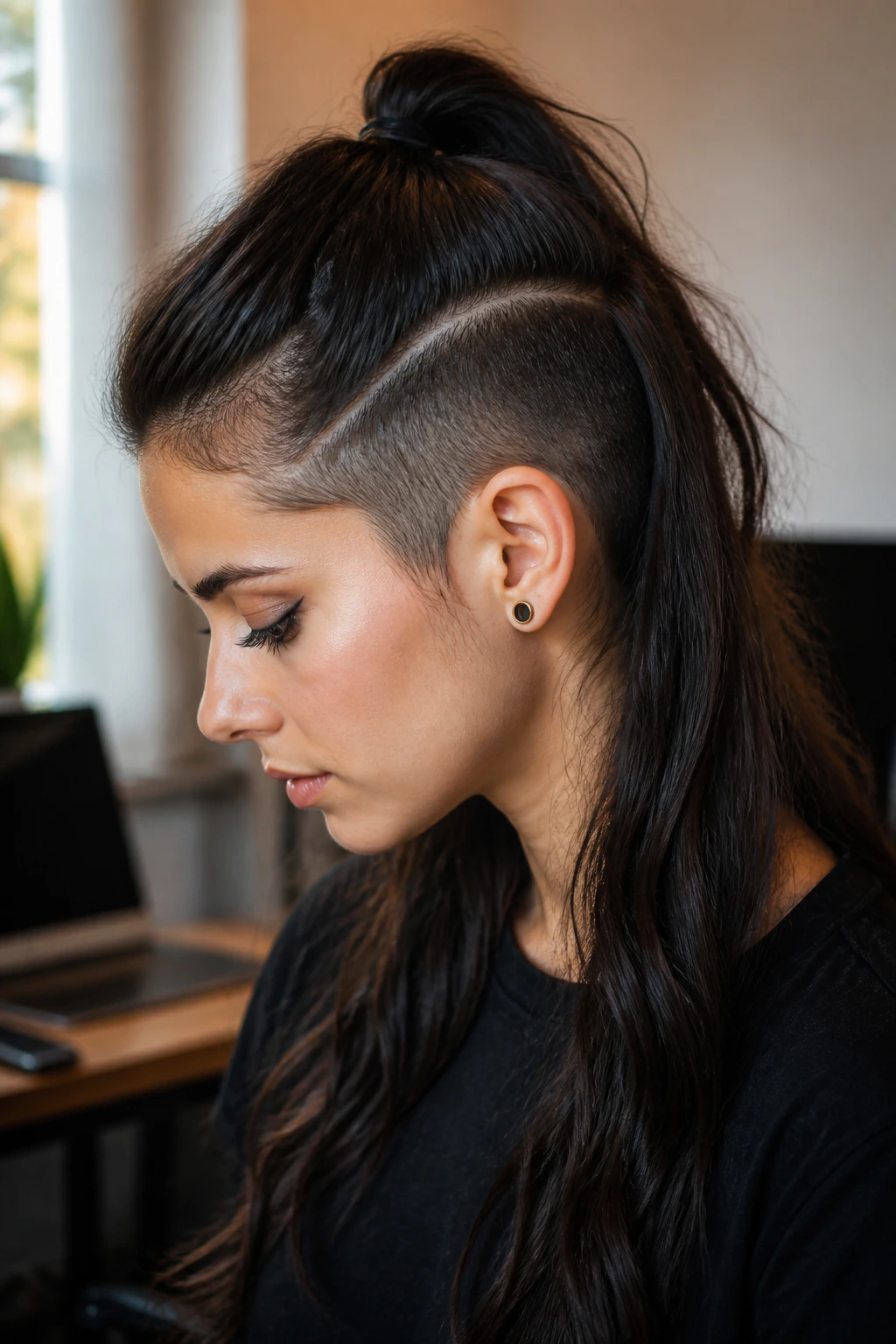
This one is built for half-up hair. When the top section is tied back, the undercut shows under the lifted lengths and makes the back of the head look cleaner, lighter, and a little more intentional. When the hair is fully down, it stays hidden.
That’s the charm: the style changes with your routine. You can wear it loose at work, then twist the top half into a clip or mini ponytail and suddenly the shape appears. It’s a fun cut for people who live in half-up styles because it turns a practical habit into part of the look.
Keep the shave tucked low if you want the reveal to feel controlled rather than loud. The smaller the panel, the easier it is to grow out if you change your mind later.
10. Low Ponytail Cleanline
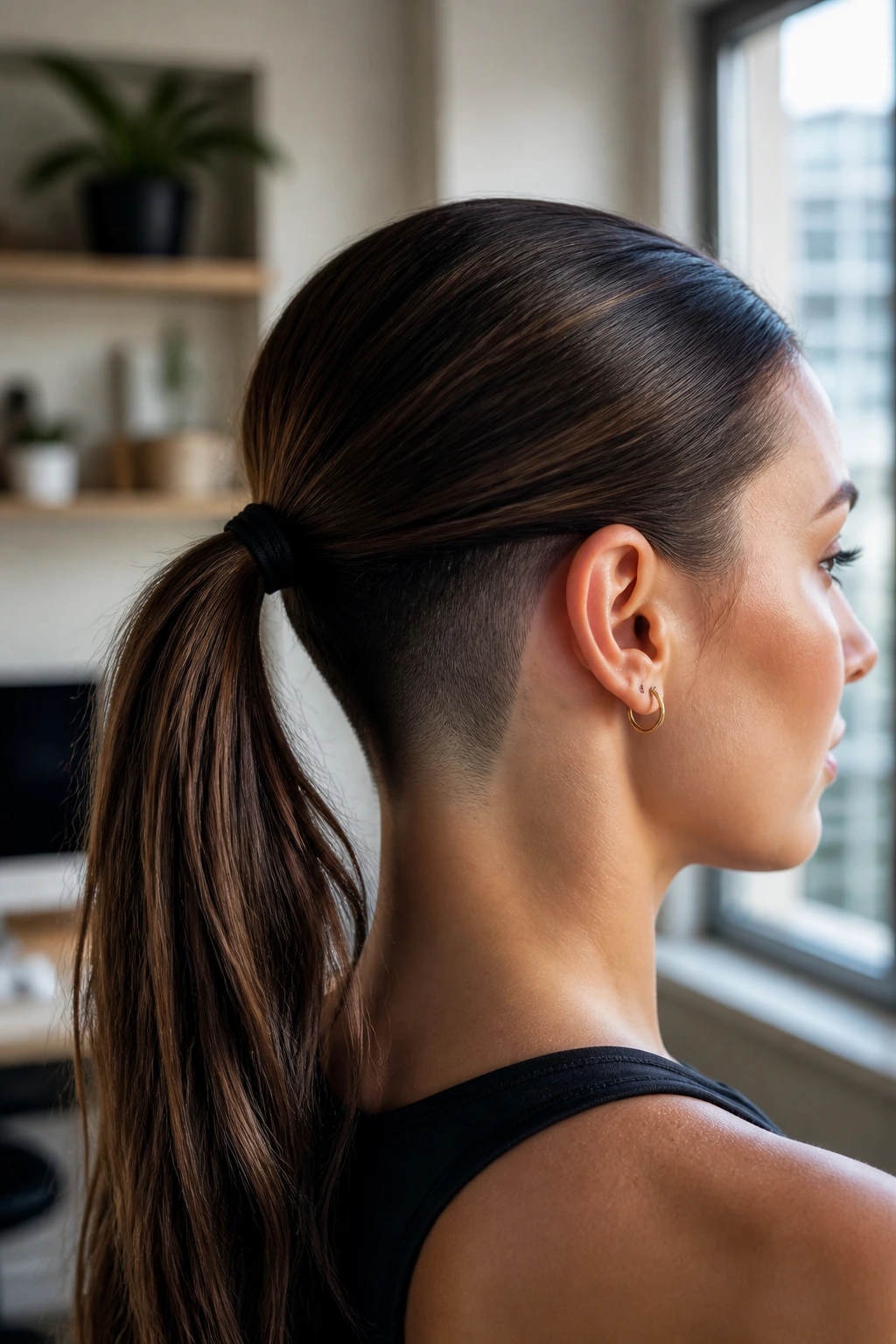
A low ponytail cleanline is not trying to be hidden. It’s trying to make the ponytail sit better. The undercut is placed right where the hair gathers at the nape, so the base feels flatter and cleaner instead of puffing out like a thick bundle.
This is one of the smartest choices for people who wear their hair tied back every day. The shaved section does the boring job of removing weight, and the long hair does the pretty job of staying long. No drama. Just less pulling.
Ask for this if your ponytail feels heavy
- A low, centered panel at the nape.
- A slight taper at the edges for a softer grow-out.
- Enough width to clear the thickest part of your hairline, not so much that it shows through loose hair.
It’s practical, but it still looks intentional when the ponytail swings.
11. Faux Hawk Undercut
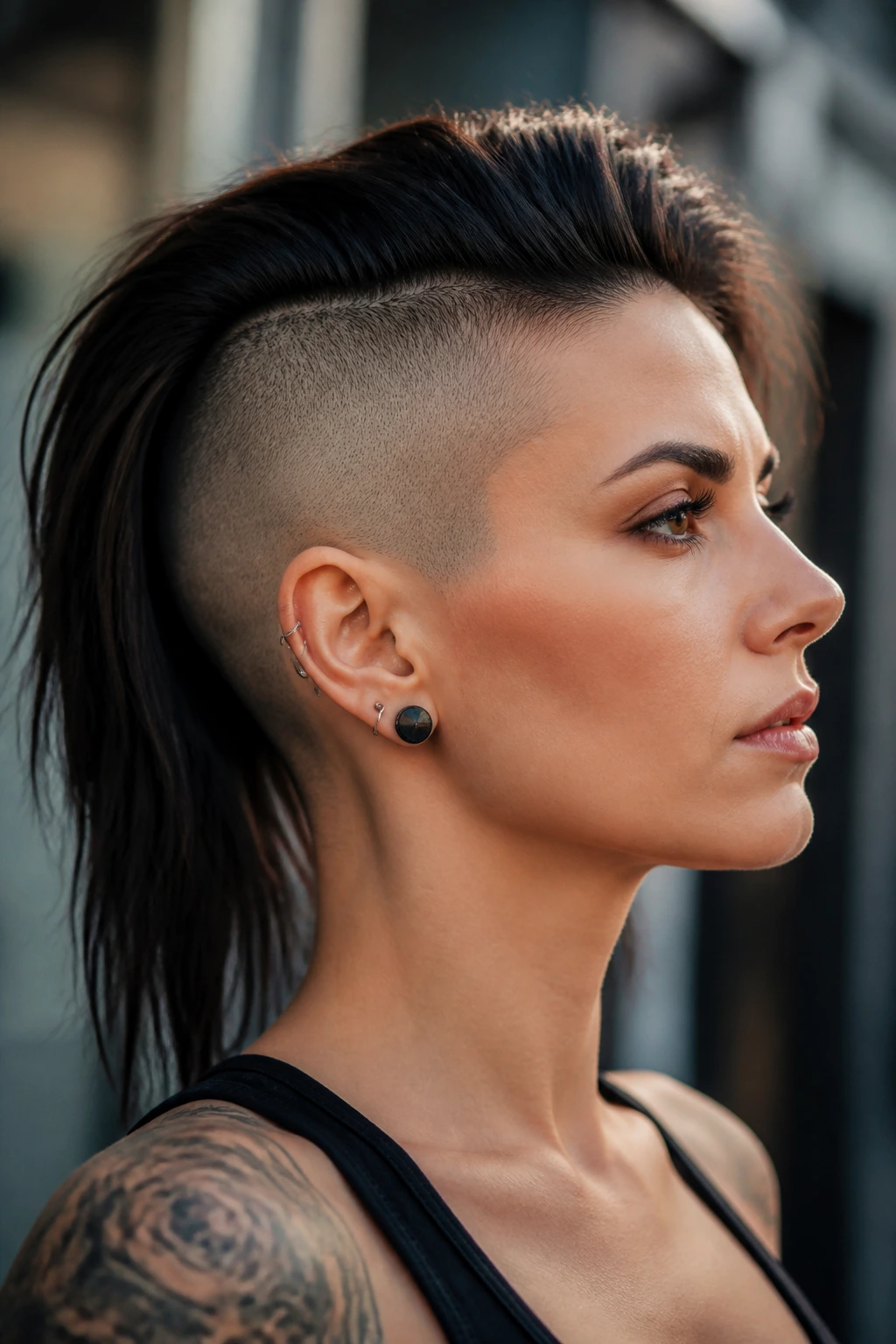
If you want long hair with a little edge, the faux hawk undercut is hard to beat. The sides are shaved or trimmed very short, while the center strip stays long enough to be styled loose, swept back, or pushed upward with product. It gives you that lifted silhouette without cutting the length off the top.
This look is best if you’re comfortable styling the top section. It’s not fussy, but it does ask for a bit of shape. A little mousse at the roots and a round brush through the crown can change the whole profile.
What I like here is the contrast. Straight, sleek long hair sitting over shaved sides has a clean, almost graphic feel. Worn messy, it leans rock-and-roll. Same cut. Different mood.
12. Geometric Linework Cut
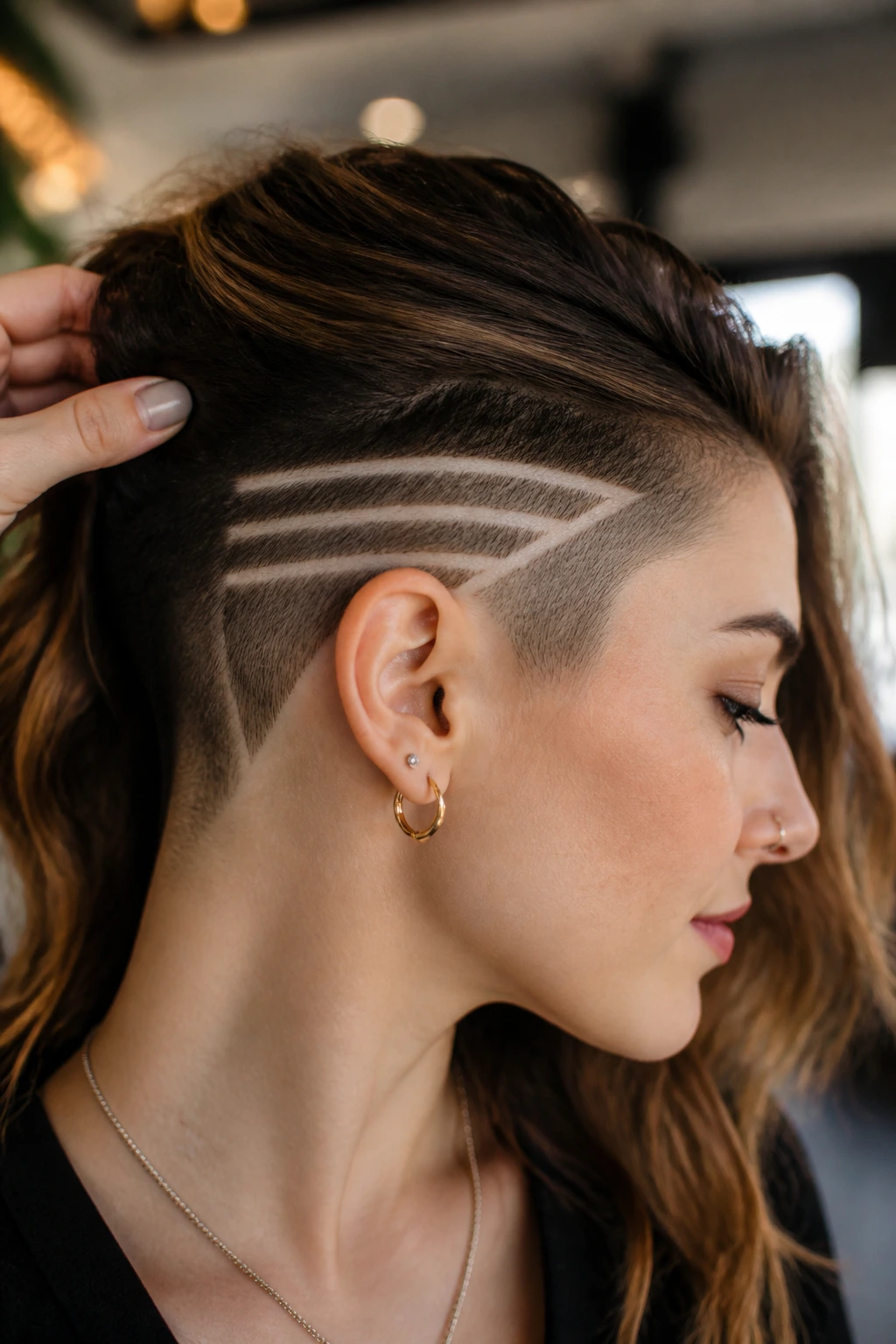
A geometric linework undercut is where the shave turns into actual design. Think parallel lines, a sharp corner, a diagonal slash, or a small block shape that sits under the long hair and only appears when you pull it up. The long hair acts like a frame.
The key is restraint. Too much linework can start looking crowded under long hair, especially if the top is already layered. One strong shape usually beats three tiny ones. A crisp diagonal behind the ear or a clean bar at the nape often gives more impact than a busy pattern.
This style does best with regular touch-ups. When the lines blur, the design loses its snap fast. If you love precision, though, it’s one of the most satisfying undercut styles for women with long hair because the reveal feels engineered rather than casual.
13. Chevron Nape Design
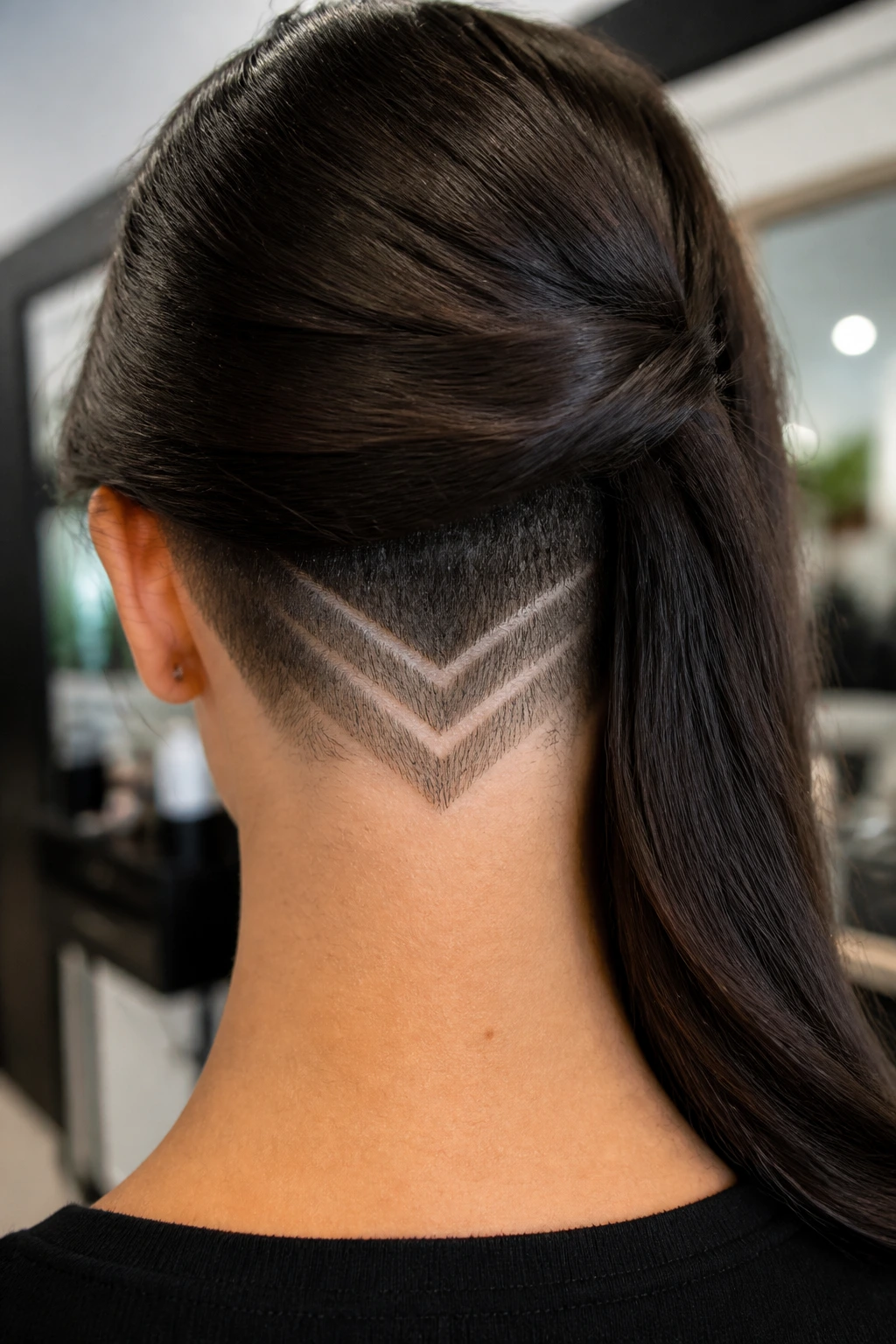
A chevron nape design uses angled lines that meet in a point, usually at the center back of the neck. It’s a cousin to the V-shape, but the emphasis is more graphic than soft. The point can be subtle or pronounced, depending on how much of the nape you want to expose.
The reason this one works is simple: the angle echoes the natural fall of long hair. Instead of fighting the length, it gives the hair a shape to sit over. That makes the reveal feel cleaner in low buns and ponytails.
If you’re choosing between a plain V and a chevron, ask yourself how visible you want the base to be when the hair is down. The chevron is more likely to peek out. A plain V tends to stay quieter.
14. Asymmetrical Undercut Sweep
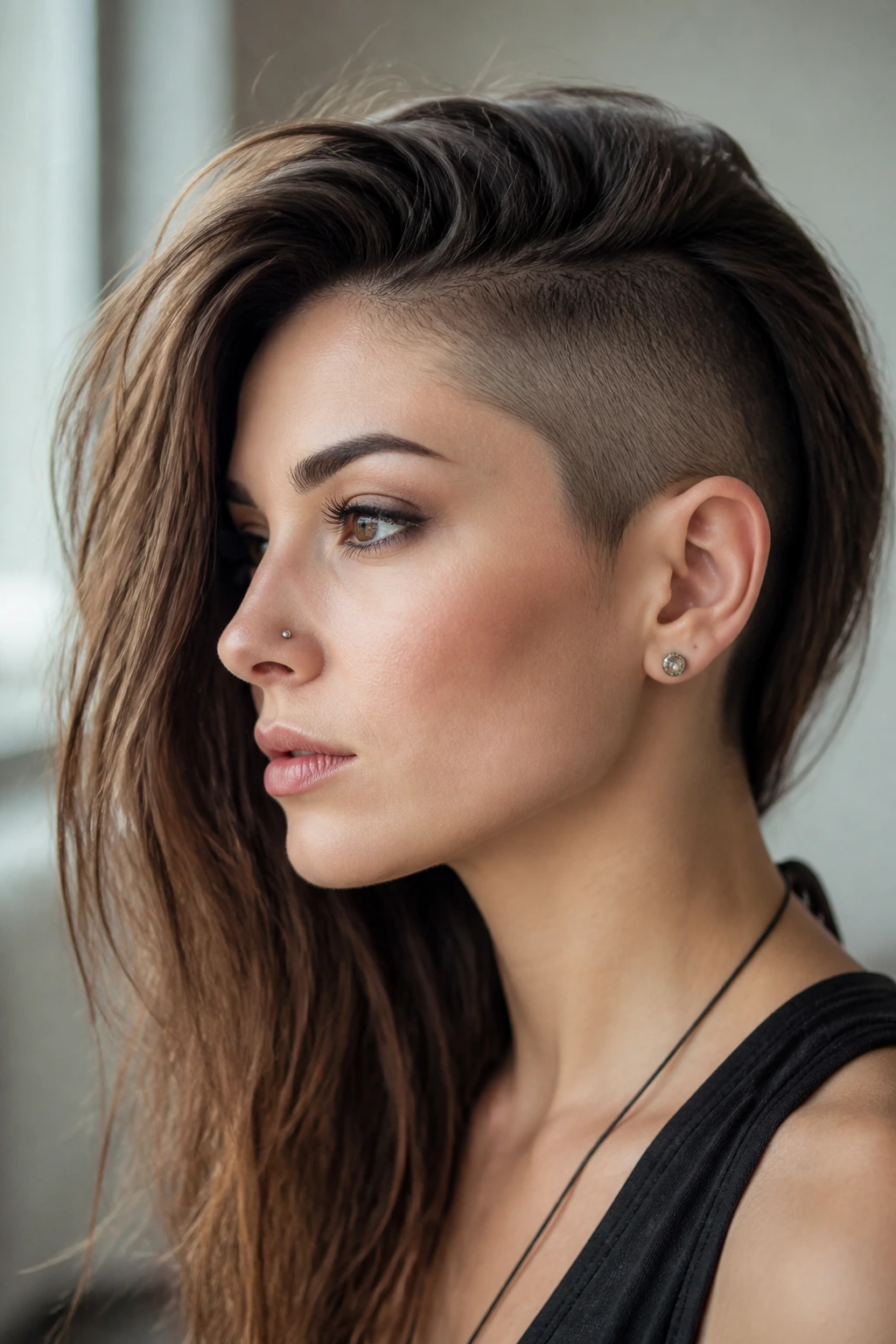
Asymmetry can save an undercut from looking predictable. One side is shaved higher or wider than the other, so the long hair falls with a slant that feels deliberate. It’s a subtle way to make a familiar cut look sharper.
This is a good choice if your face shape benefits from a side angle or if your part naturally lives off-center. The higher side can frame the jawline, while the lower side stays easier to hide. That unevenness is the point.
A lot of people worry asymmetry will make the haircut look “off.” It won’t, if the lengths are balanced above it. The long hair gives the eye a place to settle, and the undercut just changes the outline.
15. Long-Layers Bulk Reducer
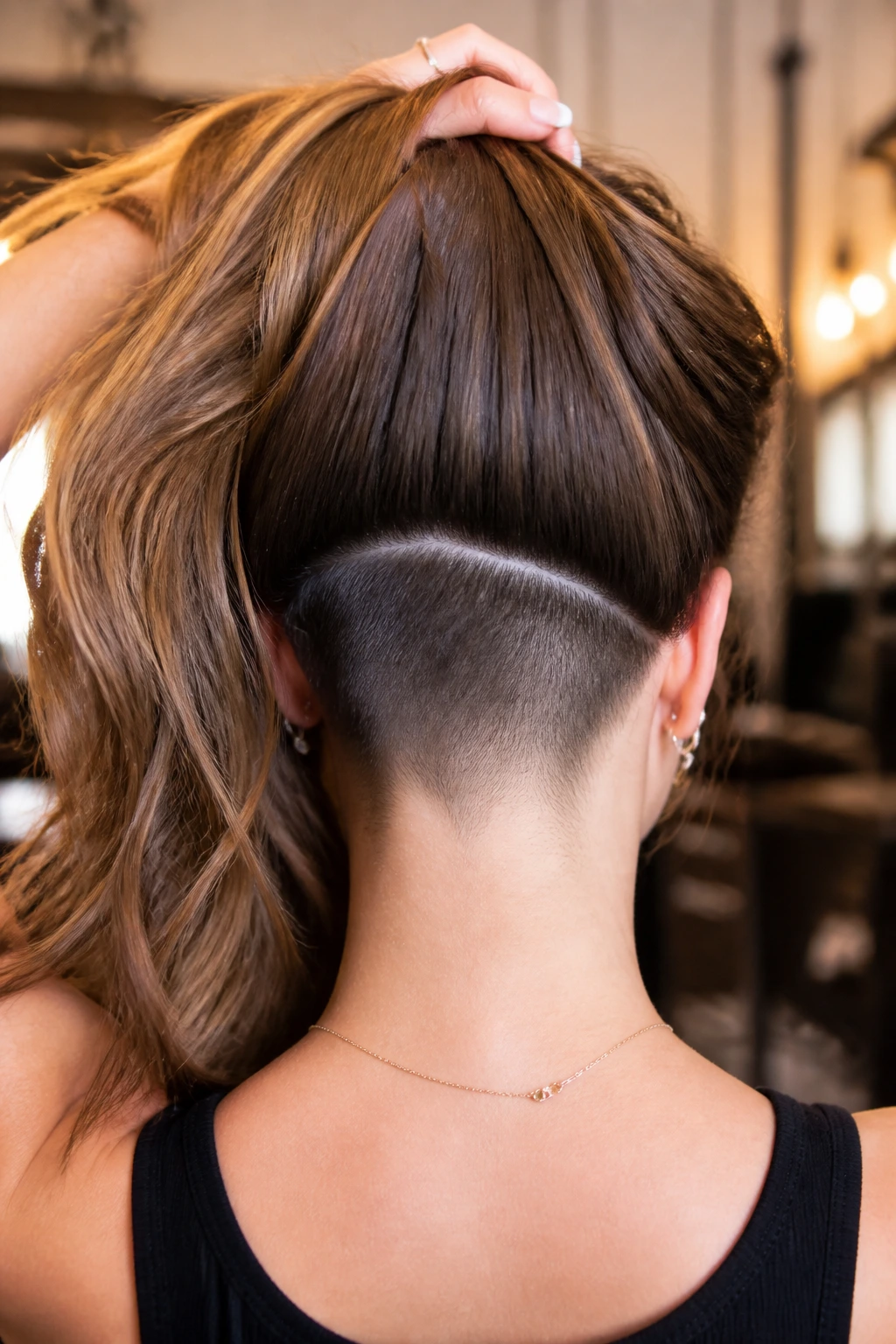
This is the undercut for anyone whose hair looks gorgeous until it hits the nape and starts acting like a blanket. Long layers on top, hidden bulk removal underneath. That’s the whole game. You keep the movement of the layers without carrying all the weight at the bottom.
It’s especially useful for very dense hair because the underneath can swell out and make the whole shape go boxy. A low, hidden shave lets the top layers swing more freely. You’ll notice it most in ponytails, blowouts, and half-up knots.
Why it’s smarter than over-layering
Over-layering can thin the visible lengths too much. A hidden undercut keeps the outside shape intact while removing the weight where nobody sees it. That’s the cleaner fix.
If your stylist reaches for thinning shears every time you sit down, ask about this instead. It often solves the same problem with a neater result.
16. Soft Fade Under Wavy Hair
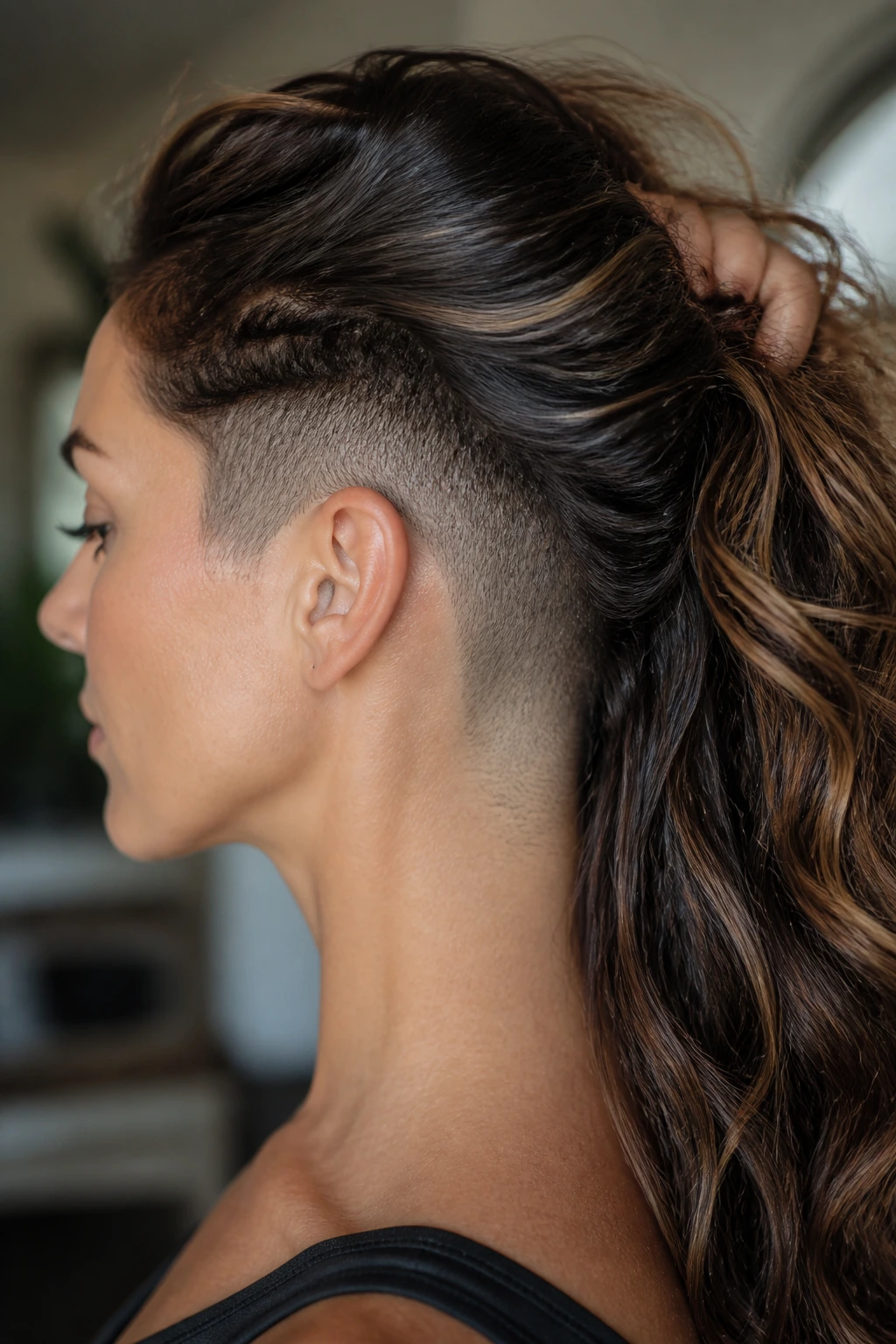
A soft fade under wavy hair is all about blending, not contrast. Instead of a hard line where shaved hair meets length, the transition is softened so the underside melts into the longer sections above it. That matters a lot if you want the cut to feel low-key.
The fade also helps when your waves lie differently from one day to the next. A hard edge can look obvious when the hair separates. A soft fade still looks finished, even if the texture gets messy by midday.
This is the version I’d suggest to someone who likes undercuts but doesn’t want the maintenance of a graphic line. It grows out more gracefully, and it’s easier to hide under loose hair, which is useful if you need the look to work in more than one setting.
17. Buzzed Nape With Fringe
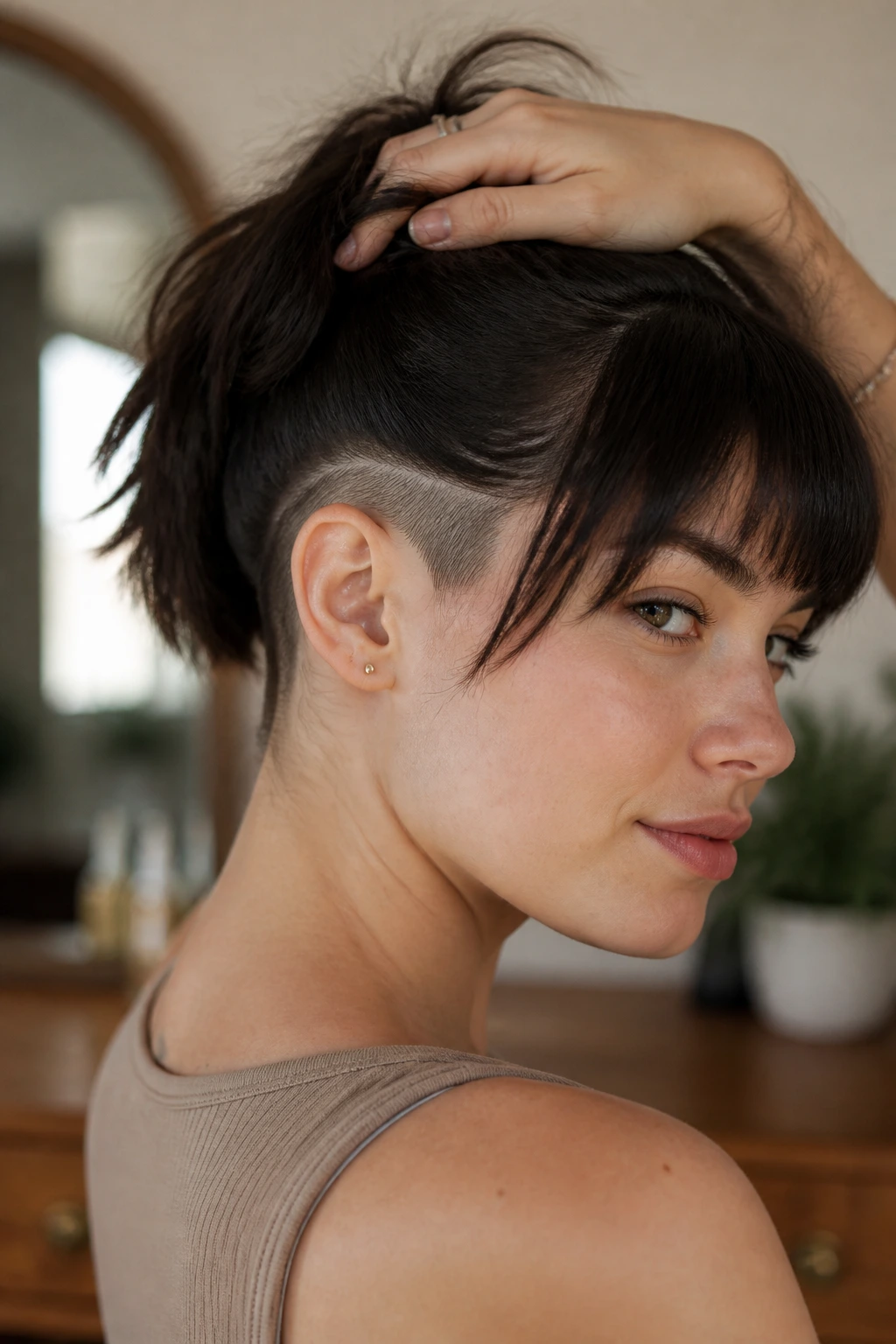
Pairing a buzzed nape with fringe is a nice way to balance softness and edge. The bangs keep the front of the look feminine, face-framing, or whatever word you want to use for “the front still feels like me,” while the back takes the hit and gets the shave.
The contrast works because the eye sees bangs first. The nape becomes a surprise rather than the whole story. If you already wear full bangs or a heavy curtain fringe, this cut can feel surprisingly natural.
A short fringe also helps tie the style together. Wispy bangs with a buzzed nape can look accidental. A stronger fringe line—blunt or curtain—usually handles the contrast better.
18. Color-Contrast Panel
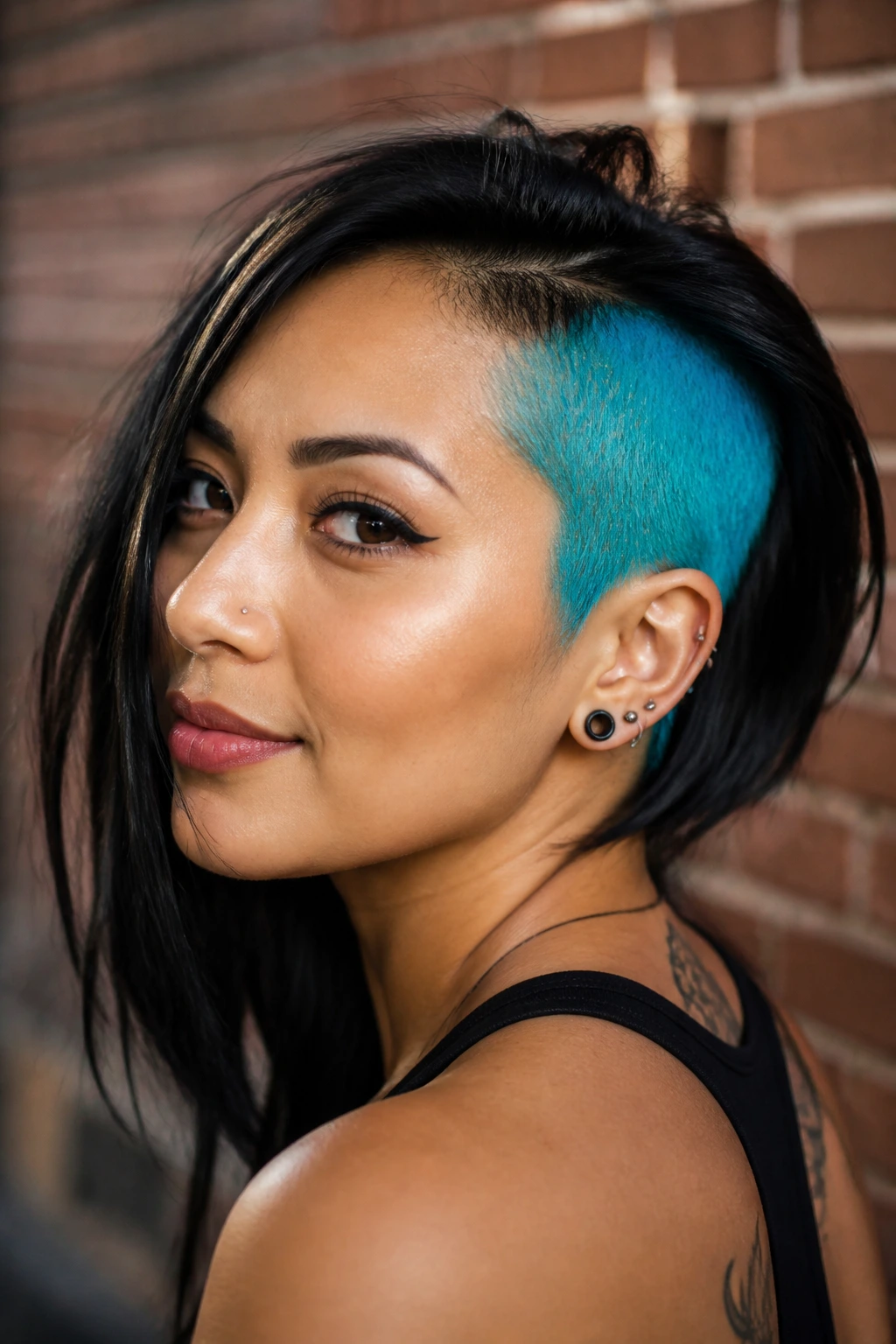
Color changes the entire mood of an undercut. A color-contrast panel turns the shaved area into a visual accent, even when the hair is only partly visible. Dark hair with a lighter panel, or bright color against a shaved base, gives the cut a second job besides removing bulk.
This is not the place for subtle toner if you want the effect to read. The point is to make the undercut visible when the hair shifts, especially in braids, buns, or high ponytails. A hidden panel with strong color is one of the easiest ways to keep the look playful without shaving more hair off.
The practical note: keep the scalp area healthy if you’re coloring it often. Shaved skin can get irritated faster than longer hair, and bright color routines can dry it out if you skip conditioner or scalp care.
19. High Bun Underlayer
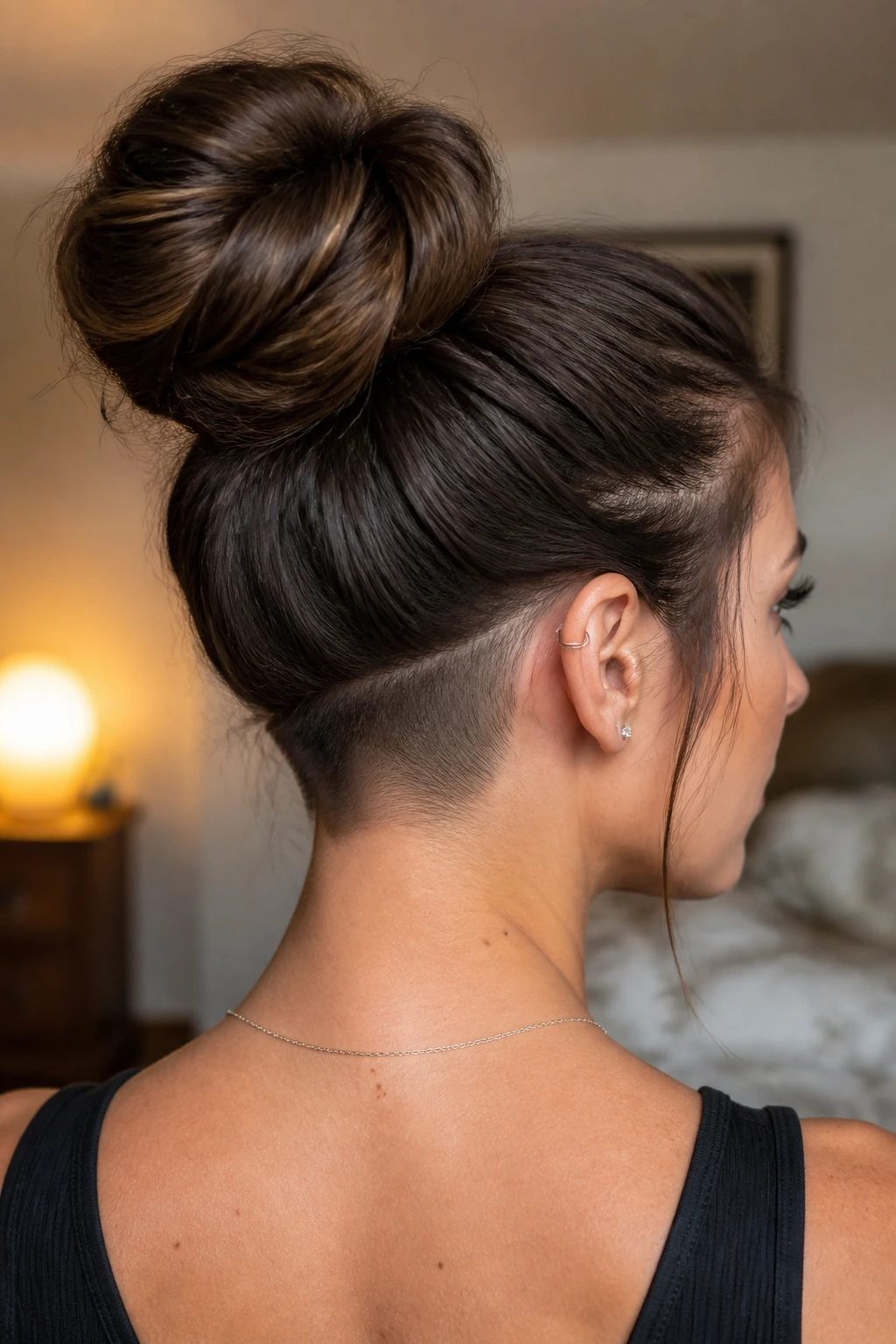
A high bun underlayer is built for people who wear top knots and messy buns more than anything else. The undercut sits low and wide enough to clear the bulky hair that collects under a bun, so the knot sits tighter and flatter against the head.
That changes the whole feel of the style. A bun stops looking like a heavy lump and starts looking like it has shape. It also means fewer hairpins working overtime just to hold the weight.
If your buns feel unstable, this is one of the best fixes. The length stays long, but the pressure point disappears. And if the bun comes down later, the undercut is usually hidden again unless you lift the hair.
20. Crown-Braided Undercut
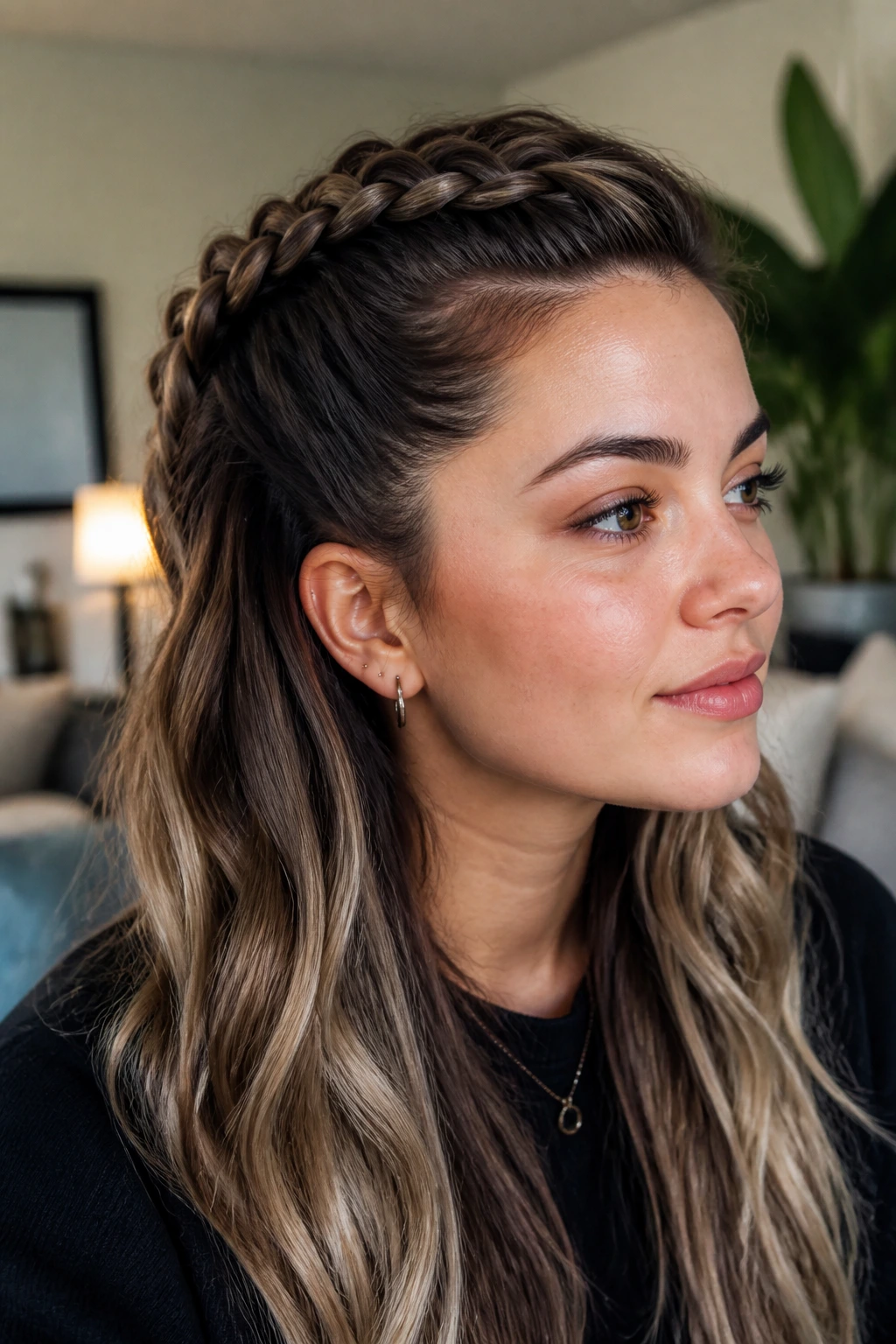
Braids that start near the crown can hide a lot, but they can also reveal a shaved panel in a clean, elegant way. A crown-braided undercut is designed so the braid arcs over the top while the shaved base stays concealed beneath the weave.
This is a lovely option for thick hair because braids alone can feel heavy. The undercut reduces the mass underneath, which lets the braid lie flatter and look neater. It also keeps the neckline cooler when the hair is pulled up.
The cut works best when the shave is low and centered. If it gets too wide, the braid can lose the soft, full look that makes it worth wearing in the first place.
21. Ear-Cutout Undercut
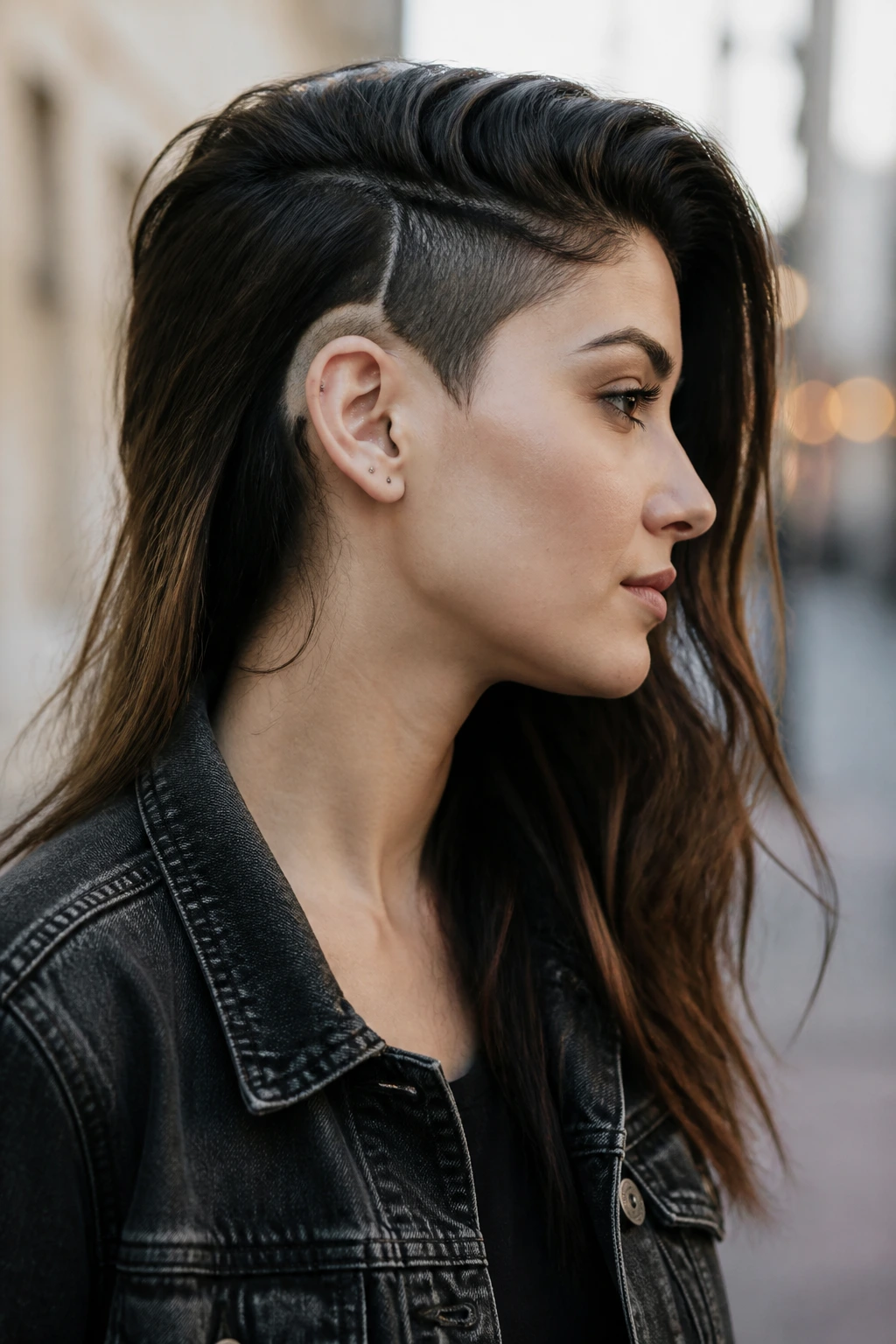
An ear-cutout undercut focuses on the space right around the ear, clearing enough hair to create a small opening when you tuck the lengths behind it. That sounds tiny. It isn’t. A little opening changes the whole side profile.
This cut is useful if you wear earrings, glasses, or anything that sits around the ear. It helps the hair stop crowding that area. It also gives the side a lighter, lifted feel without taking a lot off the back.
Keep the cutout small if you want it to vanish when the hair is down. If you want it to stay visible in loose hair, let it travel a little farther toward the temple. The same idea, different mood.
22. Rocker Side Sweep
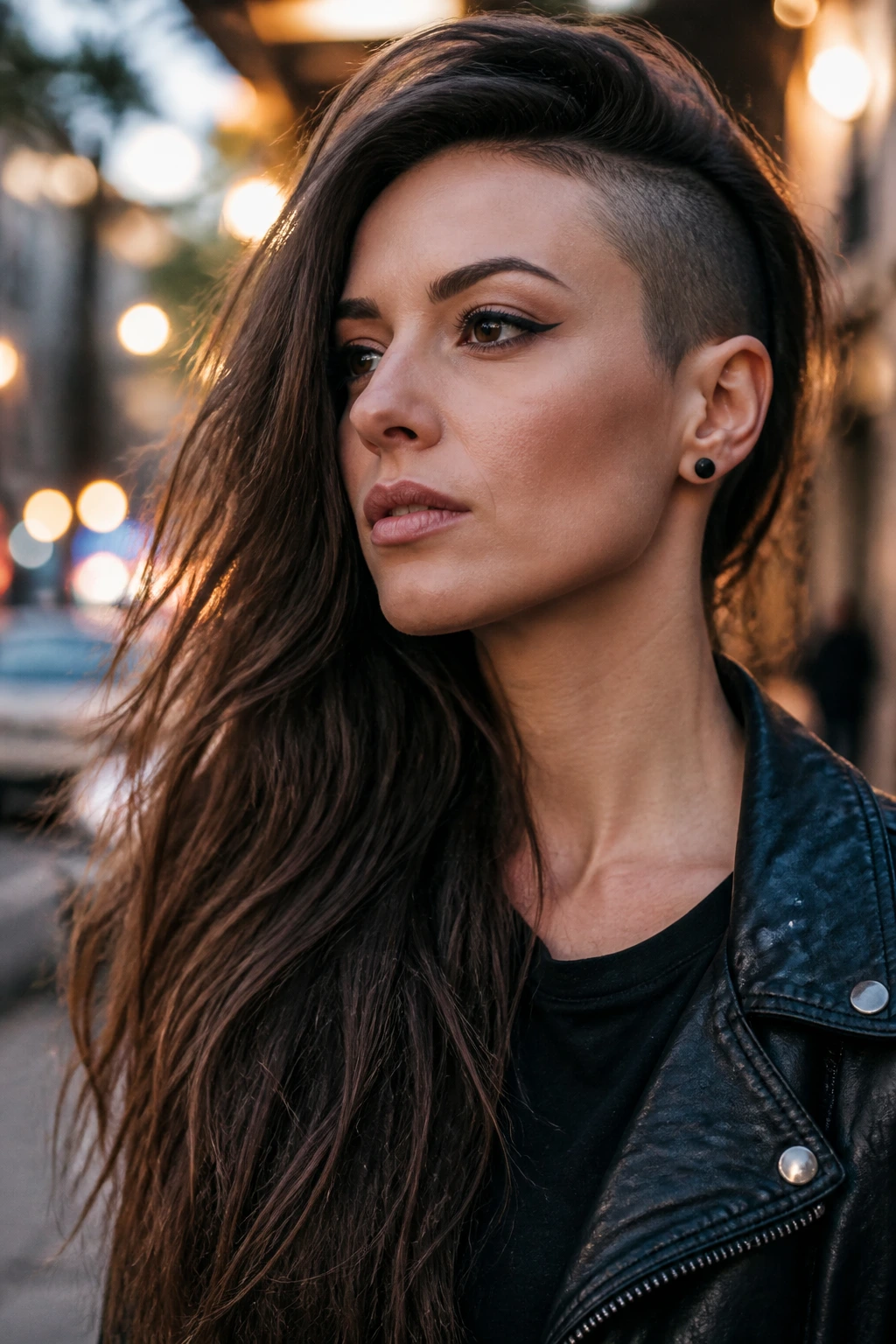
The rocker side sweep is what happens when a deep side part meets a visible side shave and nobody bothers pretending the contrast isn’t the point. Long hair sweeps dramatically across one side, while the other carries the short section underneath. It’s bold, but it still gives you length to work with.
This look thrives on movement. Straight hair makes the contrast crisp. Loose waves soften it. Either way, the side sweep gives the undercut a stage, which is useful if you want the shaved part to be seen more often than hidden.
If you’re new to side undercuts, this is the version to save for a stylist who knows how to balance the shape around your face. Placement matters a lot here. A few millimeters change the whole line.
23. Grow-Out Friendly Tapered Shave
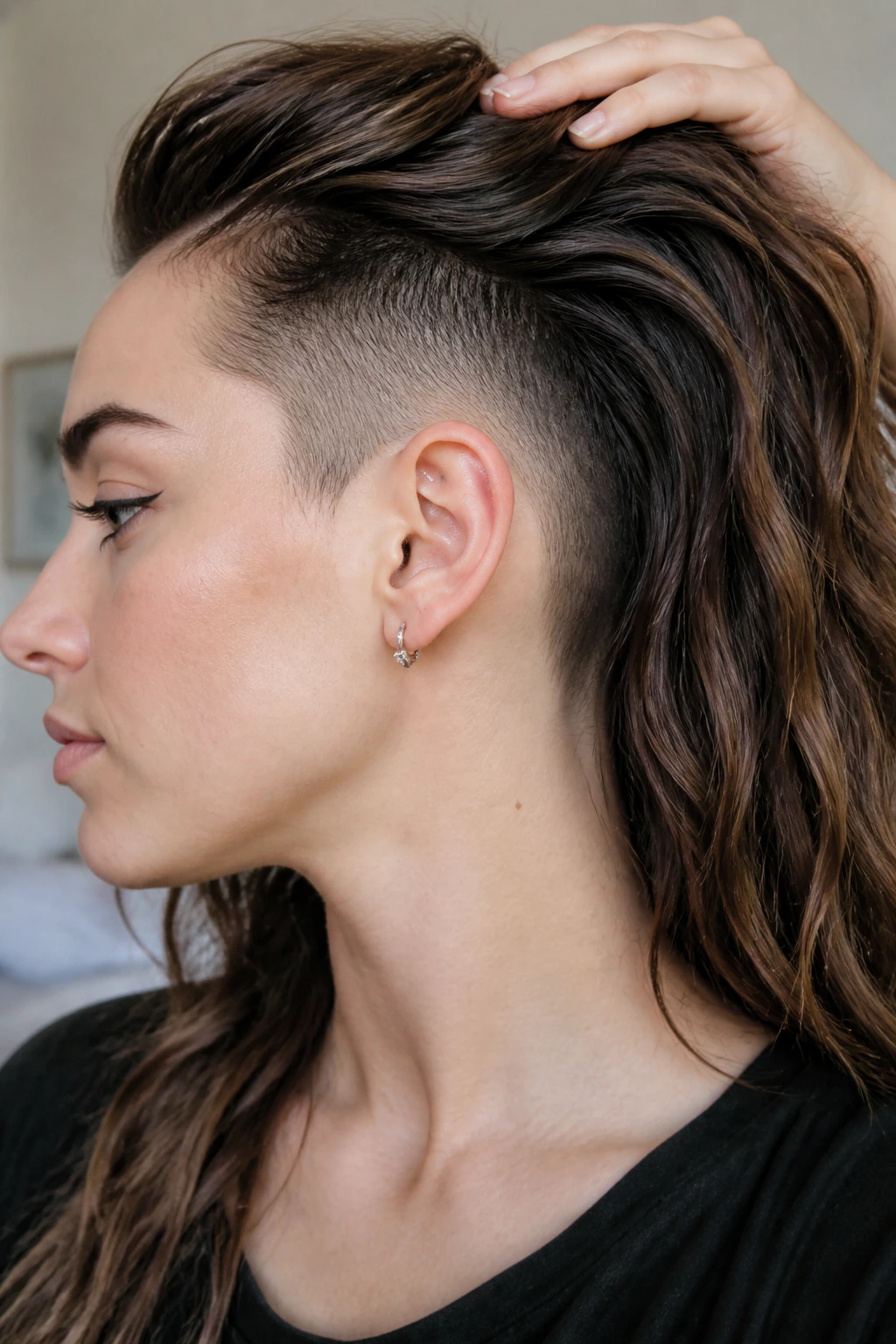
A tapered shave is the polite version of an undercut, and I say that with affection. The shortest point is low, but the edges soften into longer hair instead of stopping in a hard wall. That makes the grow-out much less annoying.
This is the one to choose if you know you’ll want to switch back and forth between long hair and shorter sections over time. The shape stays neat as it grows, and you won’t get stuck with a blunt shelf under your layers. That shelf is the part people regret.
Ask for a gradual transition, not a sudden one. A tapered shave is easier to live with, easier to cover, and easier to grow into other styles later.
24. Full Statement Canvas
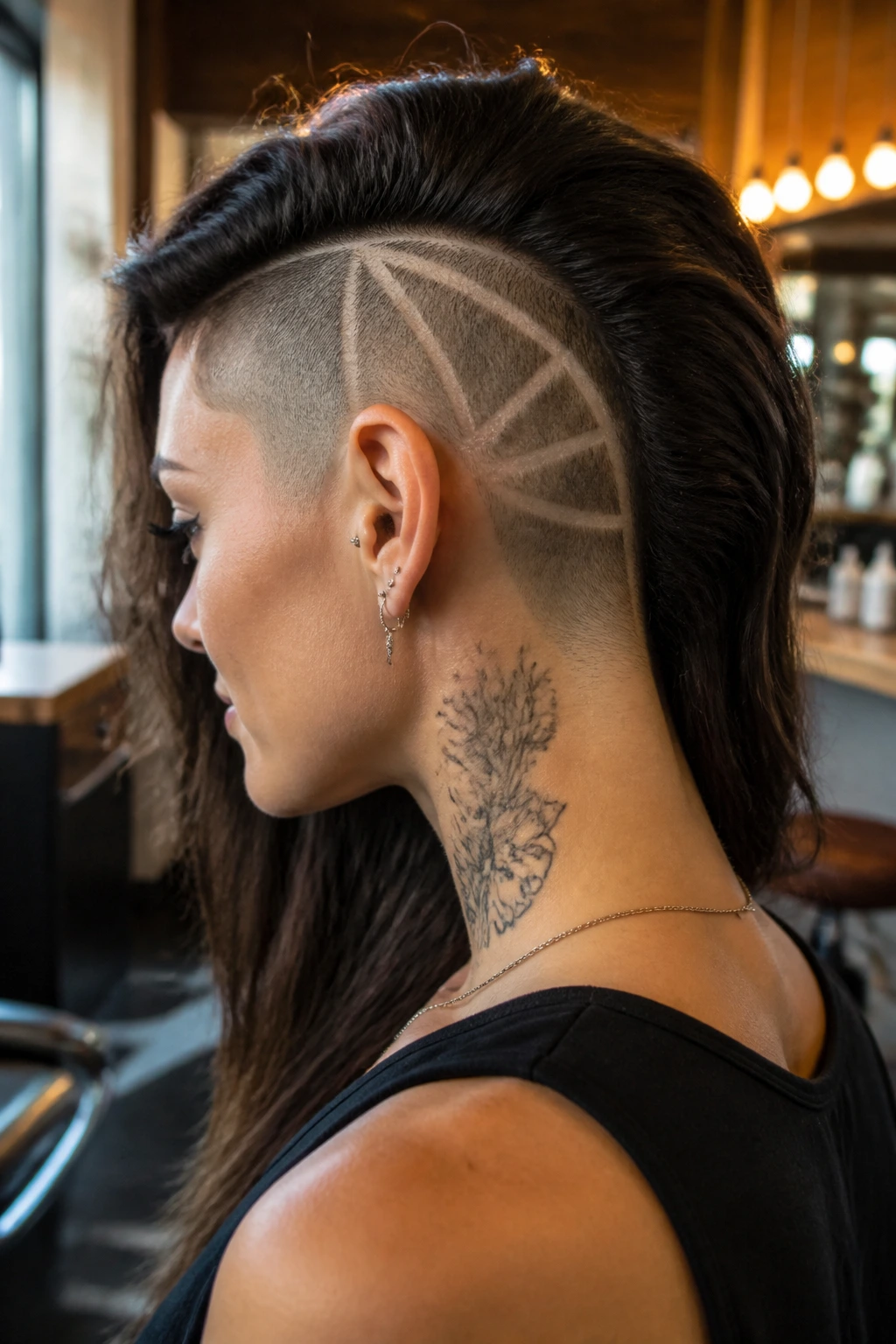
A full statement canvas is for the person who wants the undercut to be seen, not merely tolerated. The shaved area is larger, often stretching across the nape and into the sides, so there’s room for patterns, color, or a strong geometric line. The long hair becomes the contrast instead of the main event.
This is where undercuts stop being a secret and start being part of the haircut’s identity. It’s not the best place to be timid. If you commit to a wider section, commit to the maintenance too, because grown-out lines can get fuzzy fast.
Still, when this is done well, it’s one of the cleanest ways to give long hair a second personality. You keep the length. You just stop letting all of it do the same job.
Why Long Hair and an Undercut Stop Fighting Each Other
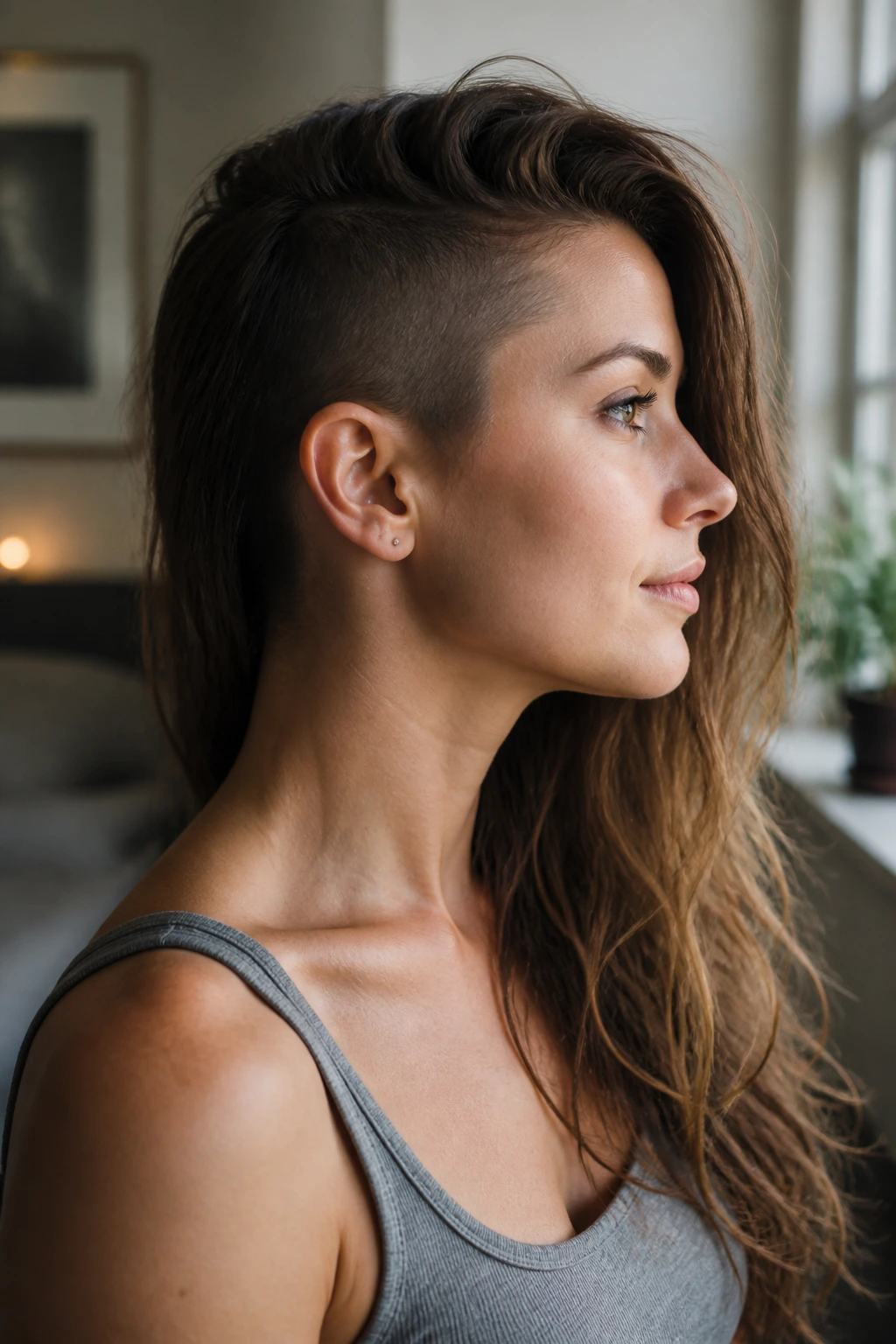
The best reason to choose an undercut with long hair is not rebellion. It’s control. Long hair can be beautiful and still feel heavy, hot, or awkward in the wrong places, especially if the bulk sits low at the neck or around the ears. Shaving or trimming a hidden section changes the mechanics of the haircut without asking you to abandon the part you like.
That matters more on thick hair than on fine hair, but both can benefit. Thick hair gets relief from the weight at the base. Fine hair can get a stronger shape when the lengths don’t balloon out at the neckline. Curly hair gets room to spring instead of collapsing into a triangle. Straight hair gets a cleaner line in ponytails and buns. One cut, different problems solved.
Placement is the whole story. A low nape panel removes drag. A side shave shifts the visual balance. A temple cut opens space around the face. Raise the undercut too high and you lose flexibility. Keep it too low and you may not feel the difference. The sweet spot depends on how you wear your hair most days, not on the photo that looked coolest for five seconds on a screen.
I’d argue that this is why undercuts work so well on long hair: they’re not asking for a haircut reset. They’re asking for a better underside. That’s a much smaller ask, and often a smarter one.
Tools That Make the Cut Sit Right
-
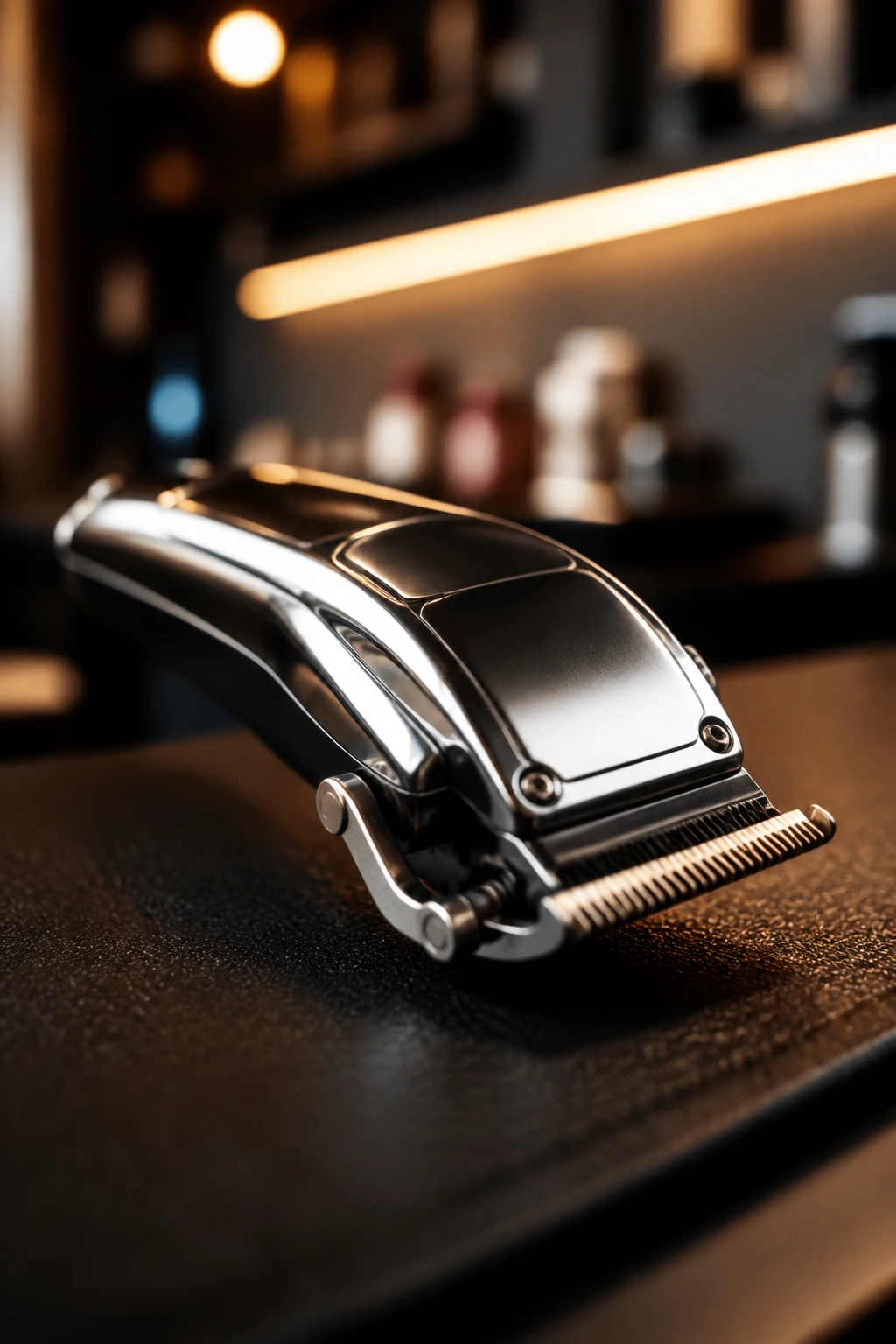
Quality clippers or a barber trimmer: A clean blade matters more than a fancy design; dull clippers leave a rough edge and can irritate the neckline.
-
Sectioning clips: These keep the long top layers out of the way so the shave line stays even instead of wandering under loose strands.
-
Fine-tooth comb: Helpful for drawing a crisp part or checking whether the section is balanced on both sides.
-
Hand mirror: Essential if the cut wraps around the nape or behind the ears. You cannot judge the back well with one mirror alone.
-
Cape or dark towel: Hair clippings stick to everything. A cape saves your shirt and makes cleanup faster.
-
Light styling cream or mousse: Use a small amount on the long top so the undercut doesn’t make the rest of the hair look flat or stringy.
-
Heat protectant: If you blow-dry the top smooth, protect the lengths. Shaving underneath doesn’t cancel heat damage above it.
-
Scalp brush or soft cloth: Useful for keeping the shaved area clean between trims, especially if you use product near the nape.
How to Show the Shape Without Hiding It
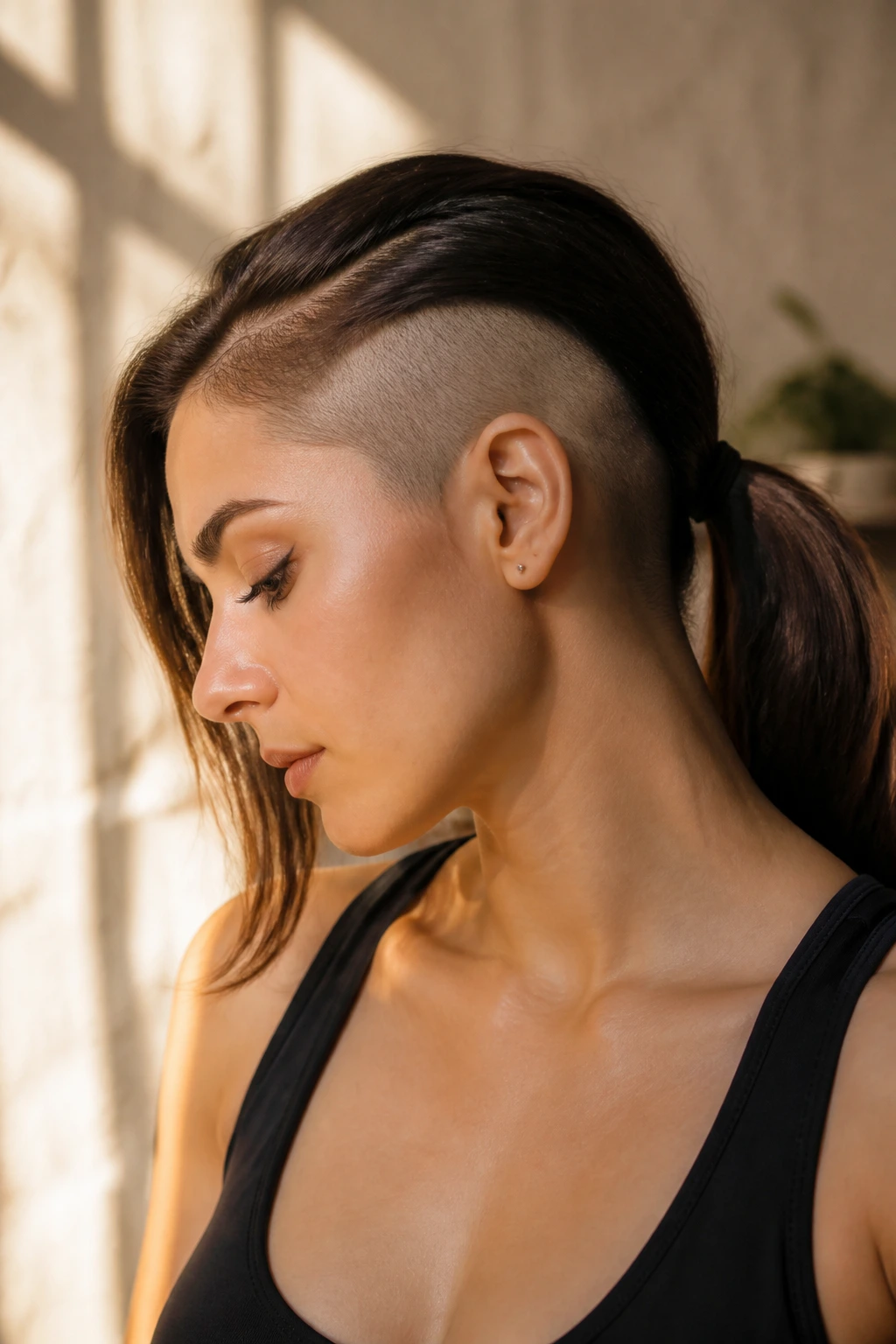
Loose hair: Let the lengths fall naturally when you want the cut to stay quiet. A center part hides more of the sides; a side part shows more of a temple or panel shave. Simple, and that’s the point.
Ponytails: Low ponytails show nape work best, while high ponytails show side panels and temple cuts. Wrap a small strand around the elastic if you want the finish to look polished instead of gym-basic.
Braids and half-up styles: These are the reveal styles. A braid pulls the top hair tight enough to show the undercut’s line, and a half-up knot lifts the crown so hidden panels suddenly appear.
Buns: The cleaner the bun, the sharper the undercut looks. A slicked-back bun highlights a geometric line; a loose bun softens a fade or hidden panel.
Accessories: Clips, cuffs, and scarves can draw attention toward the shaved area or distract from it depending on what you want that day. A metal clip at the temple makes a side shave feel deliberate. A soft scarf can hide everything except the shape you want to show.
Ways to Push the Look Further
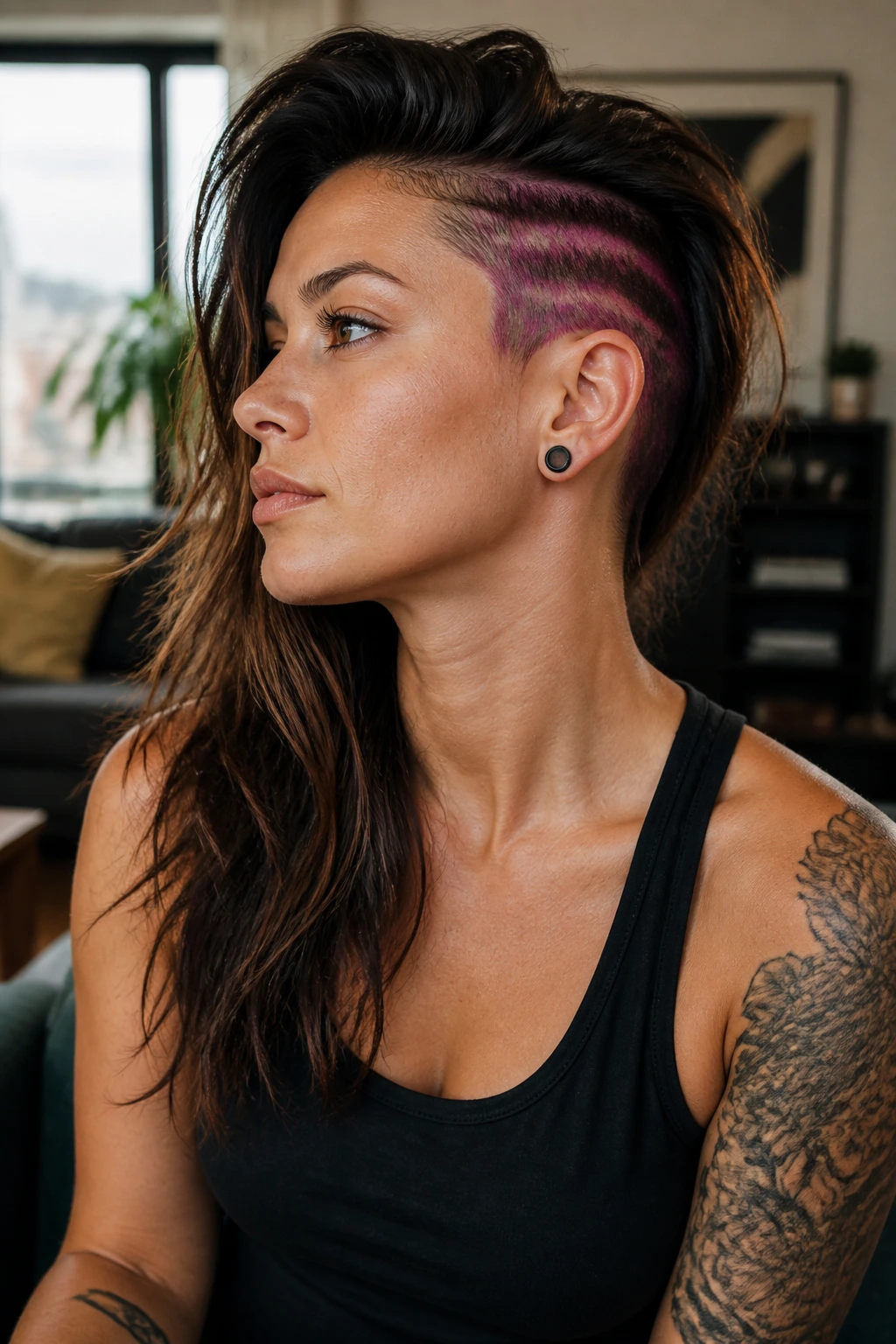
Texture: If the cut feels too plain, add texture to the long top with a curling iron, flat iron wave, or sea-salt spray. The contrast between soft movement and a shaved base makes the whole cut read more clearly.
Color: A single streak, a hidden panel of bleach, or a dark-to-light fade can turn the undercut into a second layer of style. Color is especially useful on designs that sit low and don’t show much when the hair is down.
Parting: A deep side part can reveal one temple or side shave without changing the haircut itself. A center part hides the edges better and keeps the focus on the back.
Finishing product: Use lightweight serum on the lengths and almost nothing on the shaved section unless your scalp is dry. Heavy oils can make the buzzed area look greasy fast.
Make-it-yours: If you like soft, keep the line low and blurred. If you like sharp, bring the line higher and let the edges stay crisp. If you want a middle ground, ask for a taper instead of a hard clipper stop.
Touch-Ups, Grow-Out, and Scalp Care
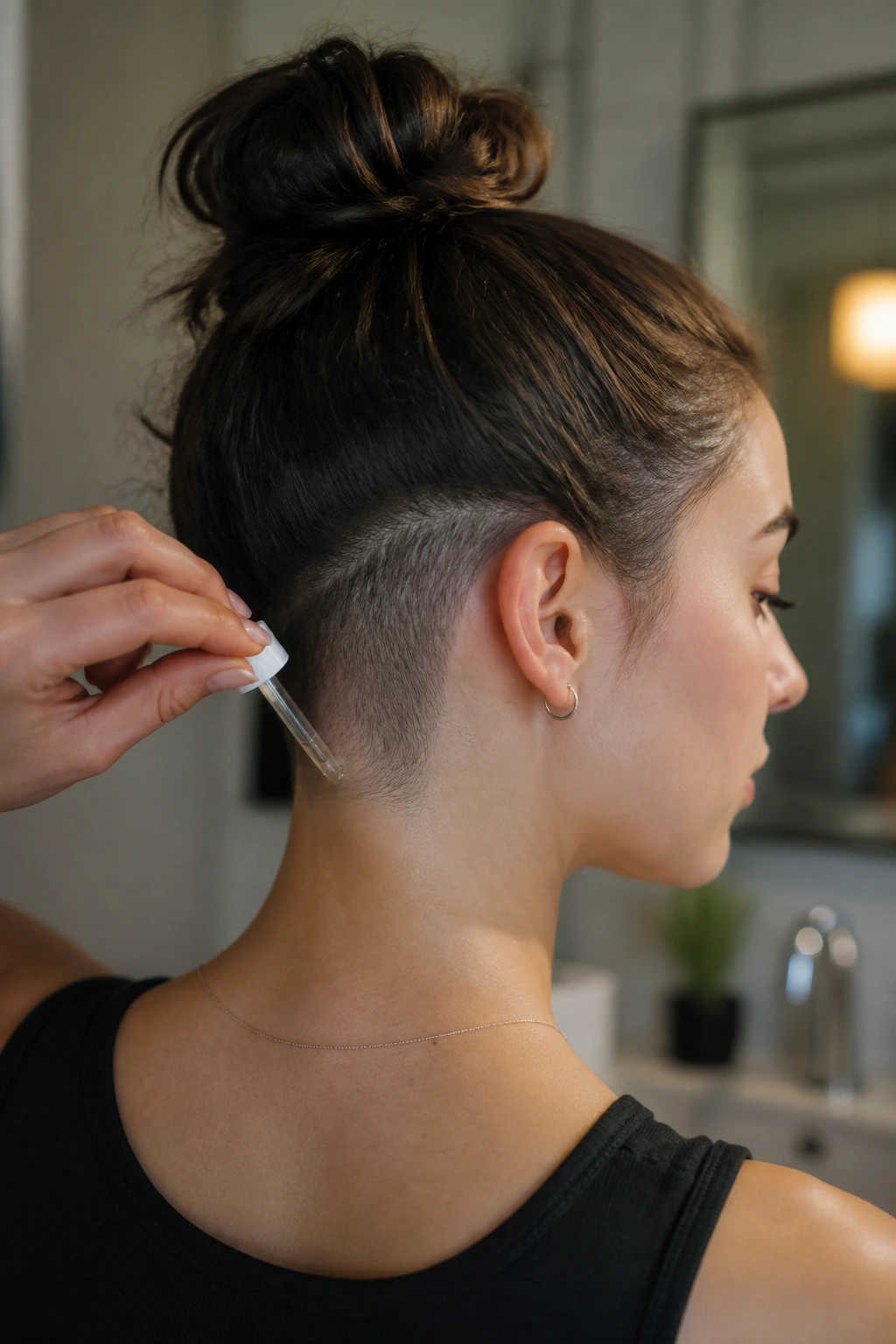
Undercuts are not set-it-and-forget-it haircuts. The growth pattern shows first at the edges, then in the shape, then in the part where you used to have a clean line. For most short panels, a touch-up every 3 to 5 weeks keeps the shape neat. Wider designs or precision linework usually need attention sooner, sometimes every 2 to 4 weeks if you want the edges to stay sharp.
The good news is that hidden nape panels and soft fades grow out more politely than hard graphic cuts. A low strip can often stretch to 6 weeks before it starts feeling shaggy. Side panels and shaved temples tend to show faster because the contrast is visible near the face.
Scalp care matters more than people expect. Freshly shaved skin can get itchy, dry, or bumpy if you pile product on it or skip washing the area after workouts. A gentle shampoo, a clean towel, and a light, unscented scalp lotion are usually enough. If you shave at home, disinfect the clipper guards and avoid pressing too hard. Razor burn on the neckline is miserable, and it shows.
If you plan to grow it out, ask for a taper at the edge during the last few trims. That one choice saves the grow-out from turning into a blunt shelf under the long hair.
Variations and Adaptations to Try
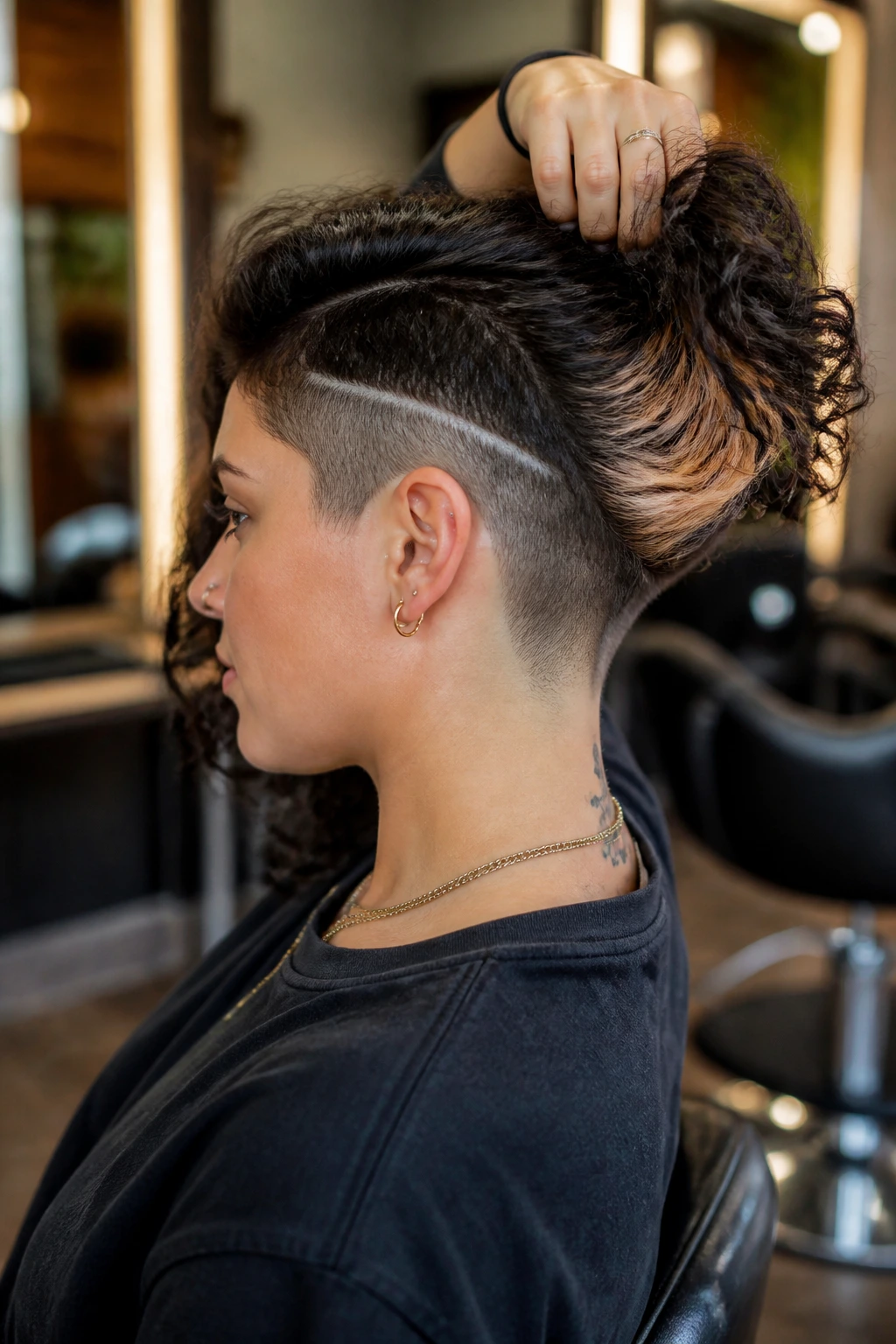
Office-Friendly Whisper: Keep the shave low at the nape and avoid hard linework. This version hides under loose hair and only shows in a ponytail or bun, which makes it the easiest choice if you need the cut to stay discreet.
Curly Crown Relief: Ask for a hidden panel beneath the densest part of your curls. The goal is to remove weight without flattening the curl pattern, so the hair lifts instead of stacking into a pyramid.
Thick-Hair Weight Loss: Push the undercut a little wider at the base if your hair feels heavy in every updo. This is the version that makes buns sit better and gives long hair a lighter swing.
Color-Block Accent: Pair a shaved panel with a single bold color or a lighter underlayer. It reads especially well when the hair is pinned up, because the color turns the undercut into part of the styling rather than a secret.
Soft Grow-Out Cut: Choose a taper and avoid very high sides. The shape grows back more gracefully, which helps if you know you’ll want to change your mind later or switch to a different style without waiting forever.
Rocker Half-Reveal: Combine a side panel with a deep part and loose waves. You get a flash of shave near the face, but the long hair still gives you plenty of movement.
The Mistakes That Make an Undercut Regretful
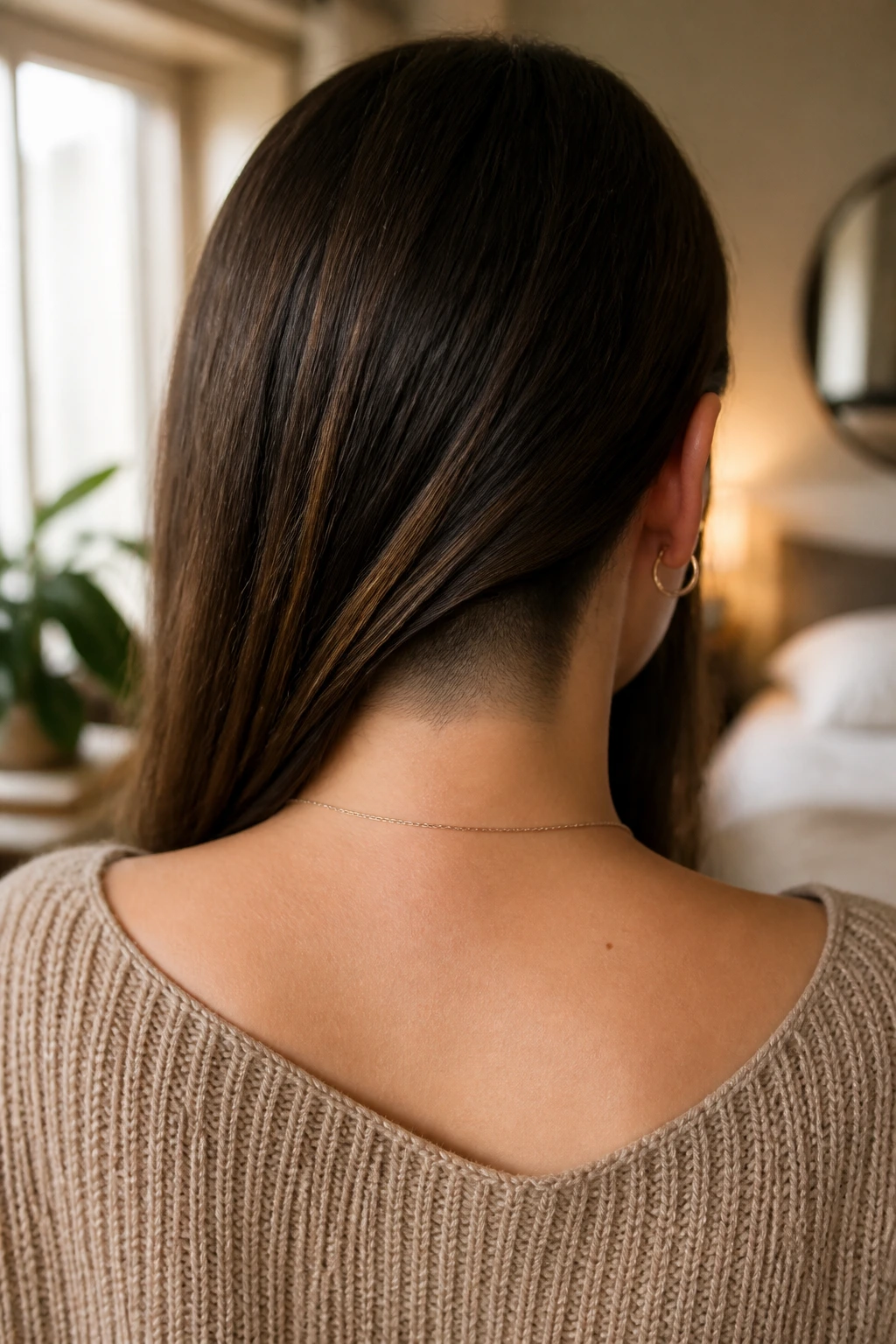
The first mistake is shaving too high too fast. It looks exciting in the chair and awkward a week later when the line starts peeking out under every ponytail. Start lower than you think you need. You can always go higher. You cannot glue length back on.
The second is ignoring your cowlicks and growth pattern at the neckline. If hair grows upward in a swirl, a blunt edge can stick out or split in strange ways. A taper or curved line usually behaves better.
Third: thinking all undercuts hide the same way. A nape panel is not a temple shave. A side cut is not a low strip. Where your hair naturally parts, tucks, and gathers decides whether the cut stays secret or shows all day.
Fourth: skipping maintenance on the shaved skin. Dry, itchy, irritated napes make people blame the haircut when the real issue is care. Keep the area clean, and don’t slather heavy oil on it.
Fifth: bringing only one flattering photo to the salon. Back views matter. Side views matter more than you’d think. A cut can look gorgeous from the front and completely wrong when you tie your hair up.
Questions People Ask Before Shaving the First Strip
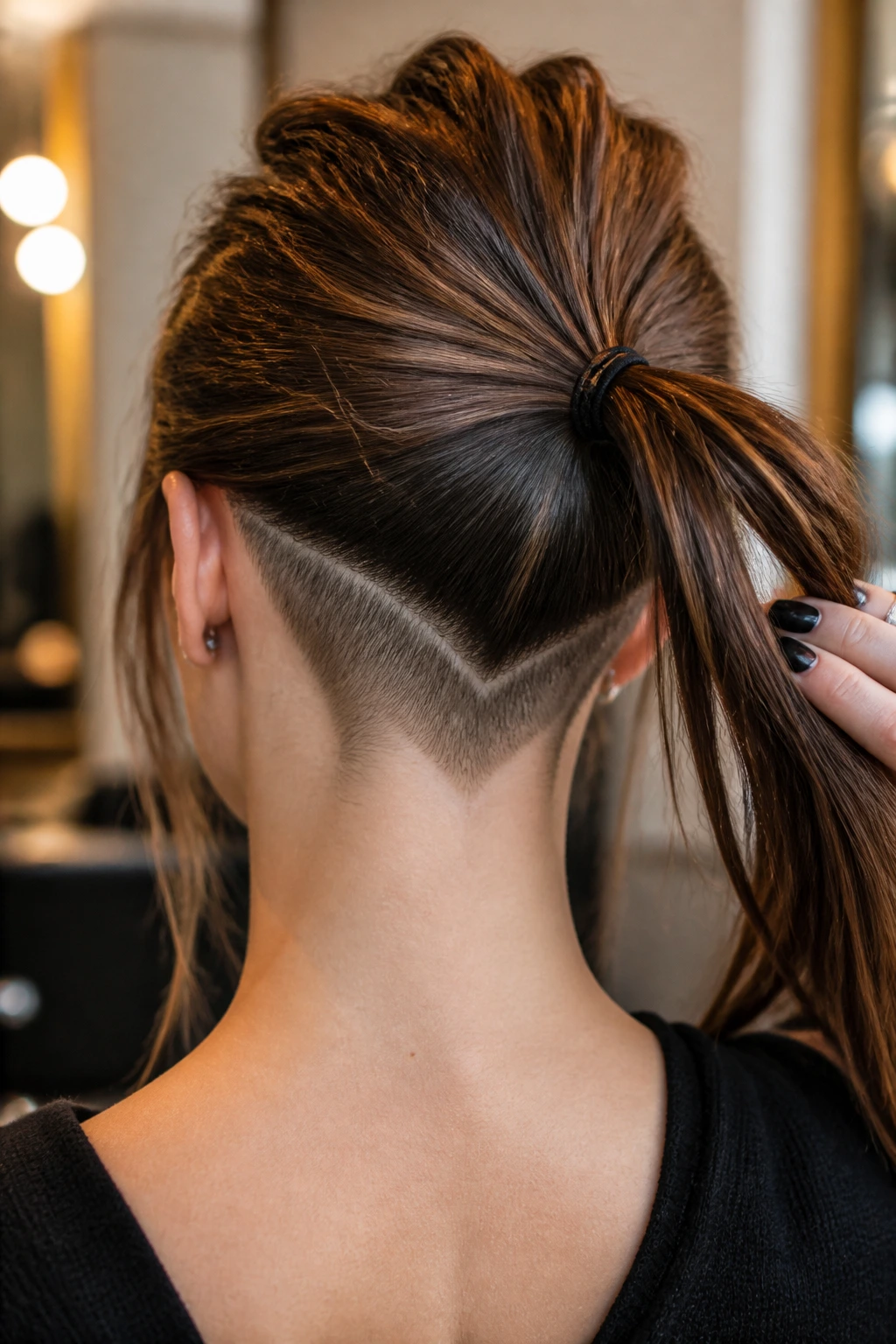
Will an undercut make my long hair look thinner?
Only if the shave is too high or too wide for your density. A low nape panel usually removes bulk without making the lengths look sparse. On fine hair, keep the section small and tight to the head.
How do I hide it at work or at school?
Choose a low placement that sits under the rest of your hair when worn down. Avoid temple cuts if you need full coverage, because those show faster than a nape panel.
What if my hair is curly?
Curly hair often benefits more than straight hair because the undercut removes the dense underlayer that causes puff. Just make sure the stylist cuts with shrinkage in mind, or the panel may show more than expected.
How often will I need to trim it?
Most people need a cleanup every 3 to 5 weeks if they want the line crisp. Hidden panels can stretch longer, while designs and side shaves usually need more regular attention.
Can I do an undercut myself at home?
Technically, yes. Practically, the back of the head is tricky, and a bad line is easy to spot. If it’s your first time, let a stylist place the cut, then maintain it later if you’re comfortable.
Does it grow out badly?
It can, if the edge is blunt and high. A taper or soft fade grows out more gracefully and avoids that awkward shelf under the longer hair.
Will it hurt to shave that area?
Not if the blades are clean and the skin is handled gently. Razor burn usually comes from dull tools, too much pressure, or shaving too close against irritated skin.
Can I still wear braids and buns?
Yes, and that’s half the reason people get these cuts. Braids, top knots, and ponytails tend to sit flatter and feel lighter because the underside isn’t carrying all the bulk.
The Cut That Keeps the Length
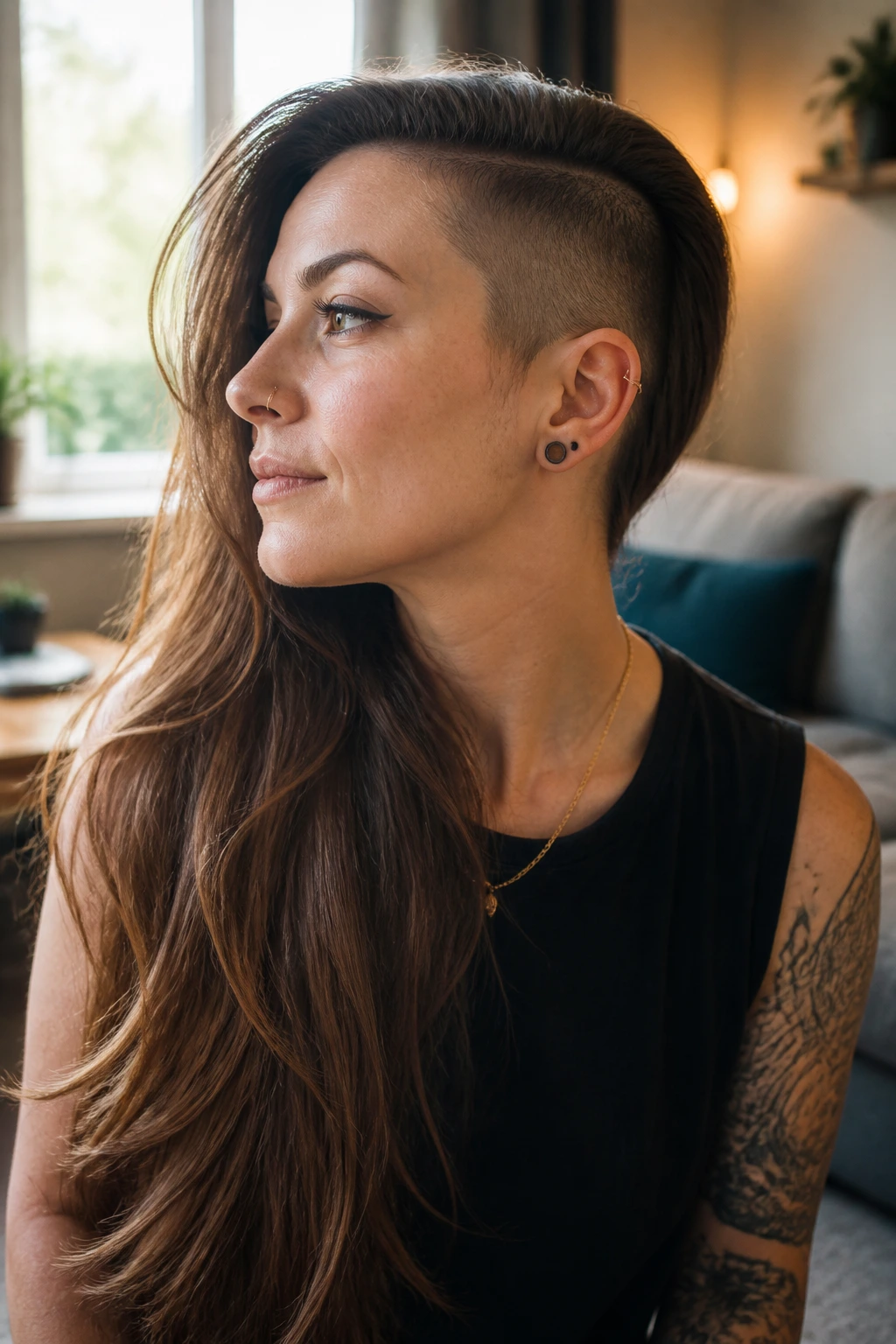
An undercut on long hair works because it changes the part nobody sees first. The silhouette stays long. The weight, the heat, and the weird puff at the base can shift out of the way. That’s a useful trick, and it’s one that can stay subtle or become the whole point of the haircut.
The smartest version is the one that fits how you actually wear your hair. If you live in low ponytails, start at the nape. If you tuck hair behind one ear all day, try a temple panel. If you like shape and movement, a soft fade or tapered grow-out is kinder than a blunt shave. Hair grows. Mistakes grow out too. The trick is choosing a placement that feels good on day one and still makes sense a month later.
A well-placed undercut should make you touch your hair less and enjoy it more. That’s the real test. When the ponytail feels lighter, the bun sits flatter, and the length still looks like yours, the cut has done its job.
