



Warm brunette layered haircuts have a way of making hair look expensive without shouting for attention. Chestnut at the crown, caramel through the mids, a little cocoa softness at the ends — those tones catch light in a much gentler, richer way than flat brown ever does. And when the cut has the right layers, the whole thing moves. Not in a stiff salon-photo way. In a real, head-turning, “did she just step out of a blowout?” way.
The part most people miss is that the color and the cut are doing separate jobs. A blunt brunette can be pretty, sure, but it can also sit there like a heavy curtain. Layers break that up. They bend around the face, lighten the outline of thick hair, and let warm ribbons show up where the hair actually moves — along the cheekbones, at the collarbone, through the ends that flip when you turn your head.
That’s why this particular family of brunette layered haircuts keeps coming back. Chestnut, mocha, toffee, cinnamon, amber, hazelnut, bronze — those shades don’t need icy contrast to look dimensional. They need placement. They need a shape that lets the warmth breathe.
Why These Warm Brunette Layers Keep Getting Saved
Movement without losing length: The right layers take weight out of the mid-lengths, so the hair swings instead of hanging in one solid block.
Warmth that reads soft, not brassy: Chestnut, caramel, and toffee tones catch light in thin ribbons, which keeps the color from looking harsh under indoor lighting.
Better grow-out: A soft root shadow or a lowlight through the interior lets the style live longer between salon visits without obvious lines at the part.
Easy to tailor: The same haircut can look polished, shaggy, or blown-out depending on where the shortest layer starts and whether you add bangs.
Works across textures: Straight, wavy, and curly hair all benefit from layers — they just need different placement so the shape doesn’t collapse or puff up.
Face-framing does the heavy lifting: A few well-placed front pieces can lift the cheekbones, soften the jaw, and make the whole cut feel more intentional.
1. Chestnut Face-Framing Layers
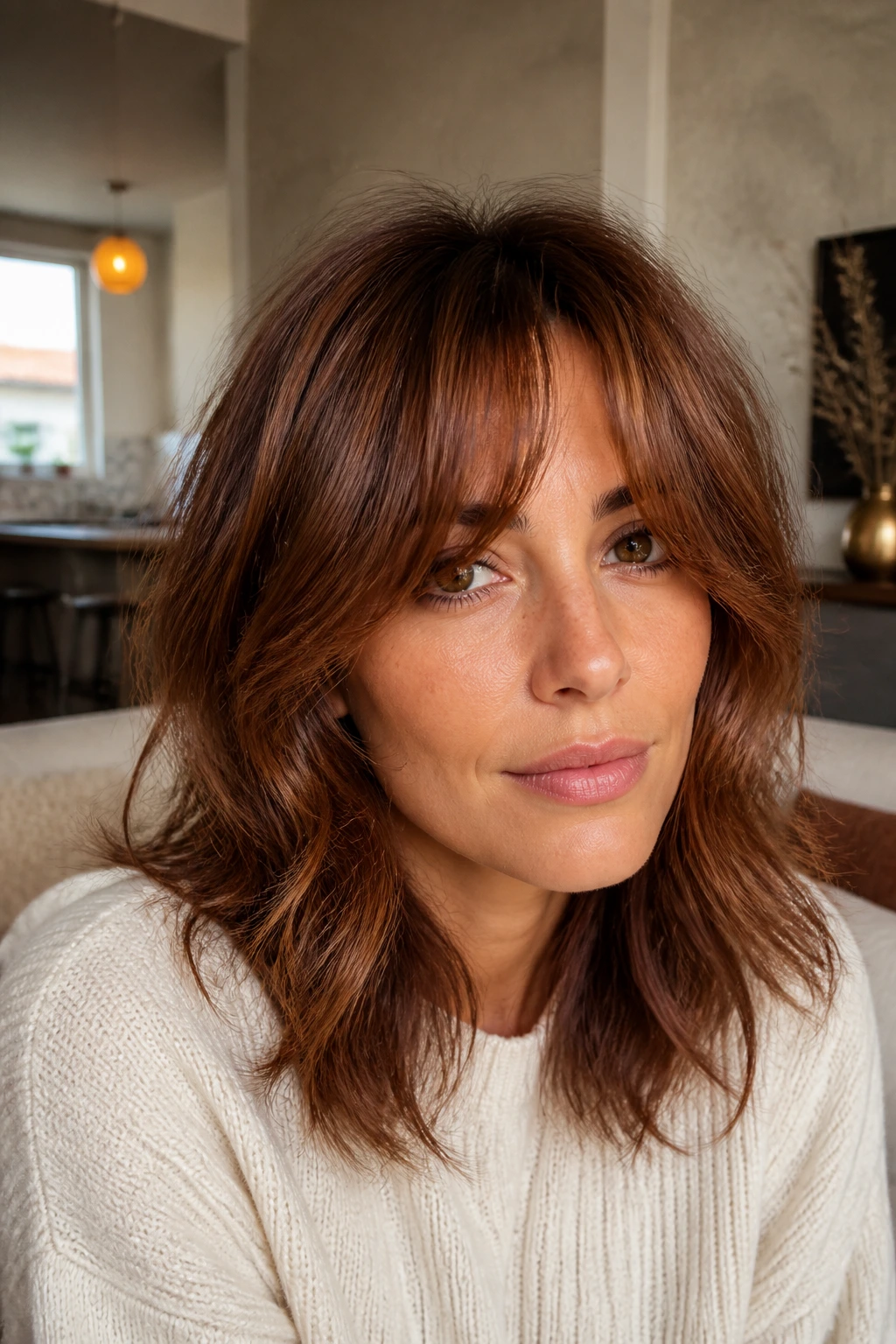
A chestnut base with face-framing layers is the safest kind of dramatic. The cut gives you motion right where people look first, and the color keeps it feeling lush instead of streaky. On medium-length or long hair, those front pieces can skim the cheekbone or the jaw, and that small shift changes the whole face shape.
Why It Works
The magic here is placement. If the shortest front layer starts around the cheekbone, it makes straight hair curve inward and helps wavy hair fall with a little more bend. Chestnut brown is warm enough to glow, but still deep enough to keep the cut grounded.
Quick Cues Before You Book
- Ask for the first face-framing piece to start around the cheekbone if your hair is straight.
- Push it a little lower if your waves spring up hard.
- Keep the back length long enough to show the chestnut gloss through the ends.
- A soft round-brush finish makes the front pieces sit like they were carved in.
Pro tip: If your hair is naturally dark brown, ask for a chestnut glaze one shade warmer than your base. Too light, and the front turns coppery in a way that can fight the cut.
2. Caramel Butterfly Cut
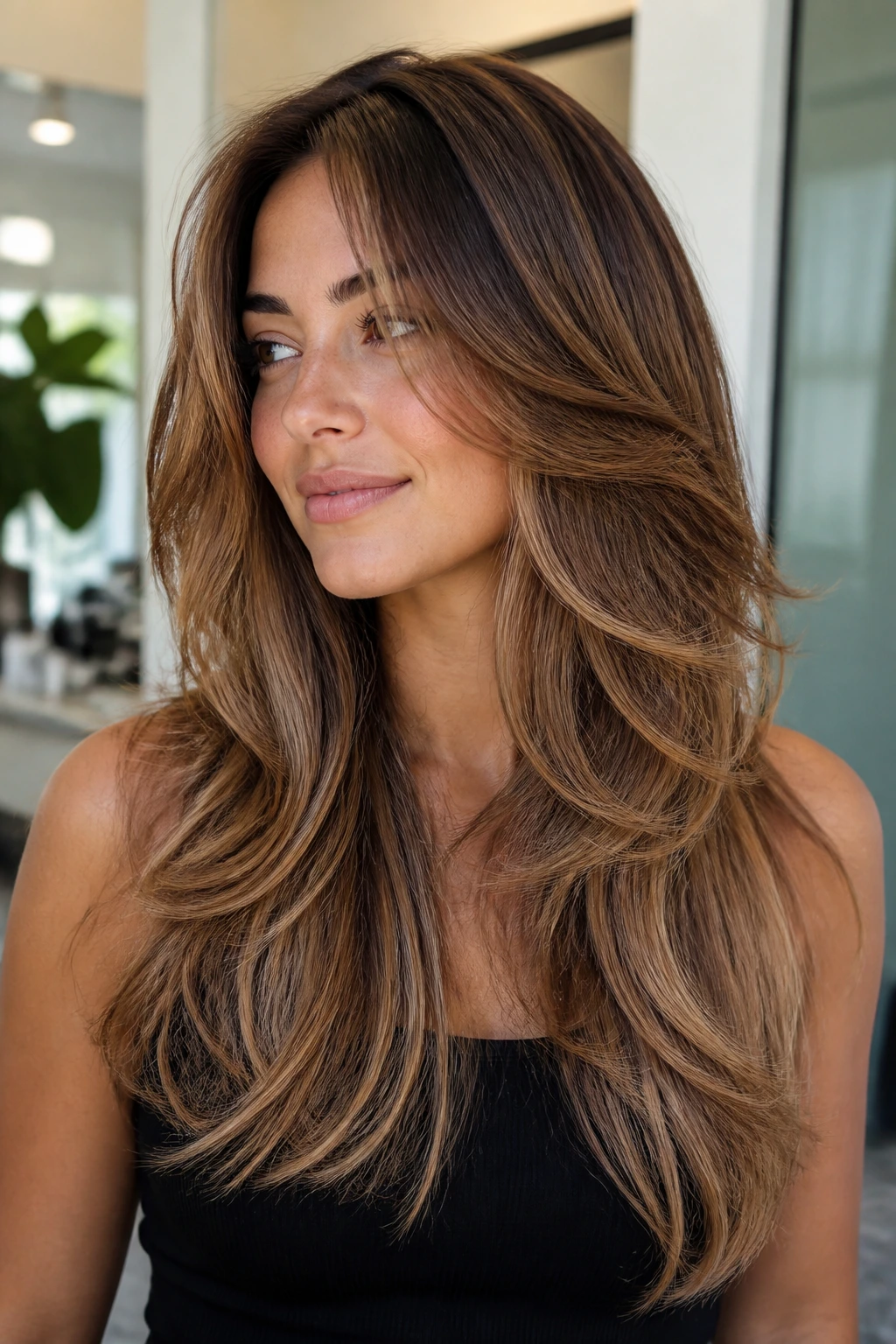
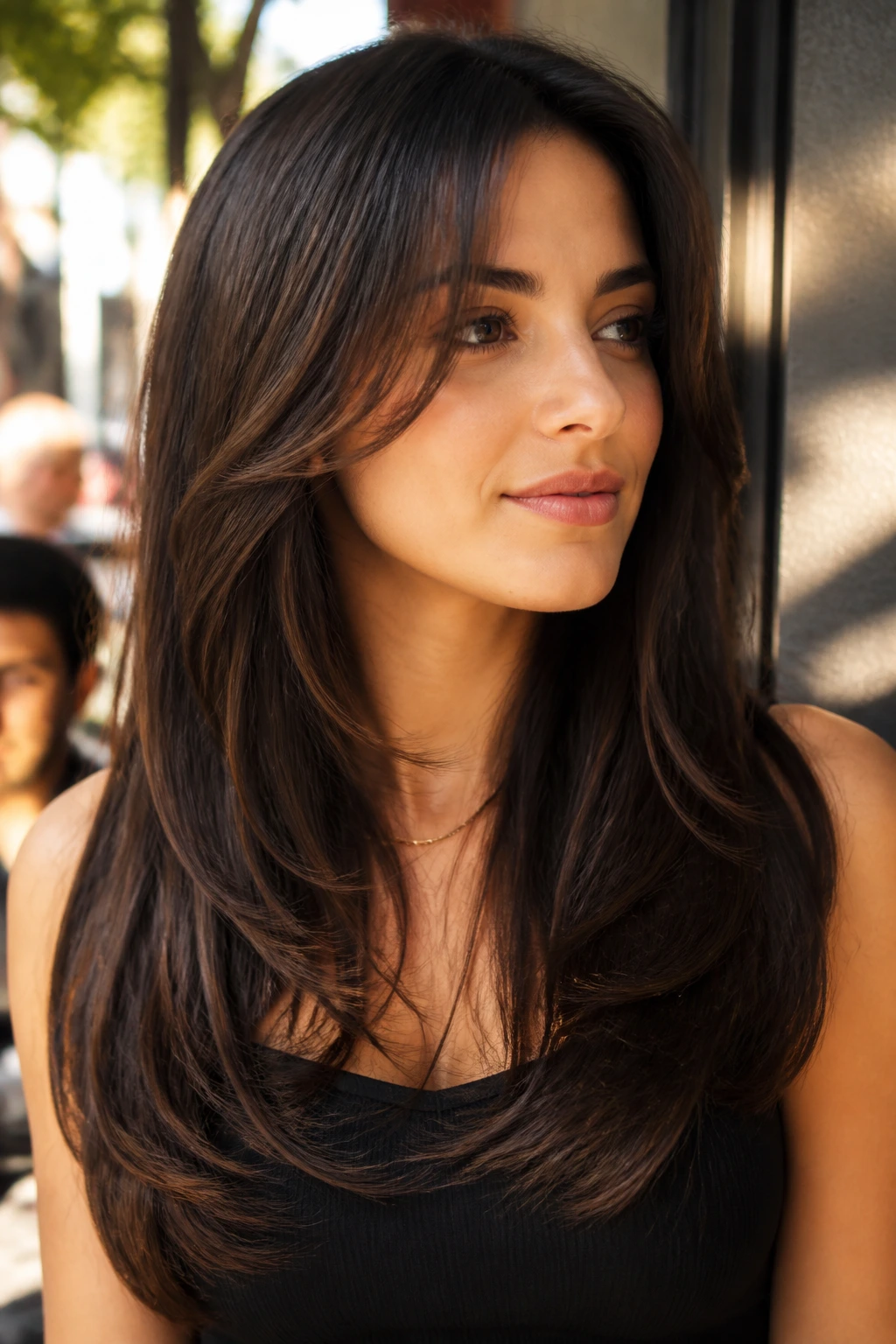
The butterfly cut is the answer for someone who wants movement without giving up the drama of long hair. It’s all about that split personality: shorter layers at the top for lift, longer layers underneath for fullness. Add caramel balayage through the mid-lengths and you get a haircut that looks lighter the second you flip the ends under.
The reason it works so well on brunettes is simple. The upper layers catch the brightest pieces of caramel, while the lower length stays deep and rich. That contrast makes the haircut feel airy without making the whole head look lightened.
I like this one best on hair that’s at least shoulder length, because the shape needs enough room to fall. On hair that barely touches the collarbone, it can lose the fluttery effect. Past that point, though, it’s one of the easiest ways to keep length and still get movement that shows up in a ponytail, a half-up, or a loose blowout.
3. Mocha Collarbone Lob
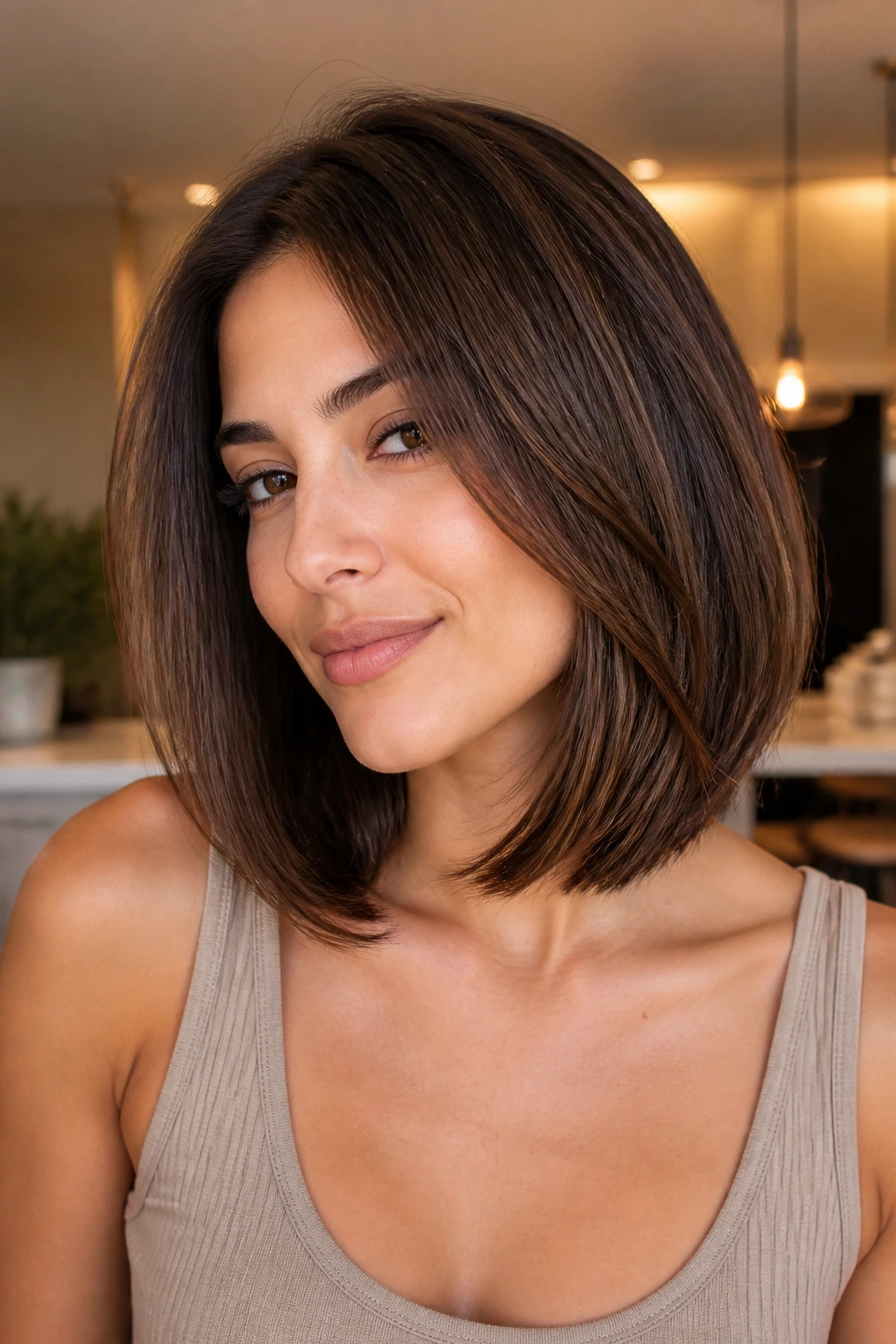
Can a lob still feel soft? Absolutely — if you keep the layers subtle and the mocha tone rich enough to hold depth at the ends. A collarbone cut gives you that easy swing when you turn your head, and the slightly shorter length keeps the hair from hiding the layer pattern.
How to Wear It
The best version is one that grazes the collarbone and bends just enough at the bottom to avoid looking boxy. Ask for internal layers rather than chunky ones. That keeps the shape polished, which matters if your hair is straight or only a little wavy.
Mocha brown is the right shade when you want warmth without orange. It sits beautifully under a gloss, especially if the ends are a hair lighter than the roots. The whole thing looks neat, but not stiff. That’s the sweet spot.
4. Cinnamon Shag with Curtain Bangs
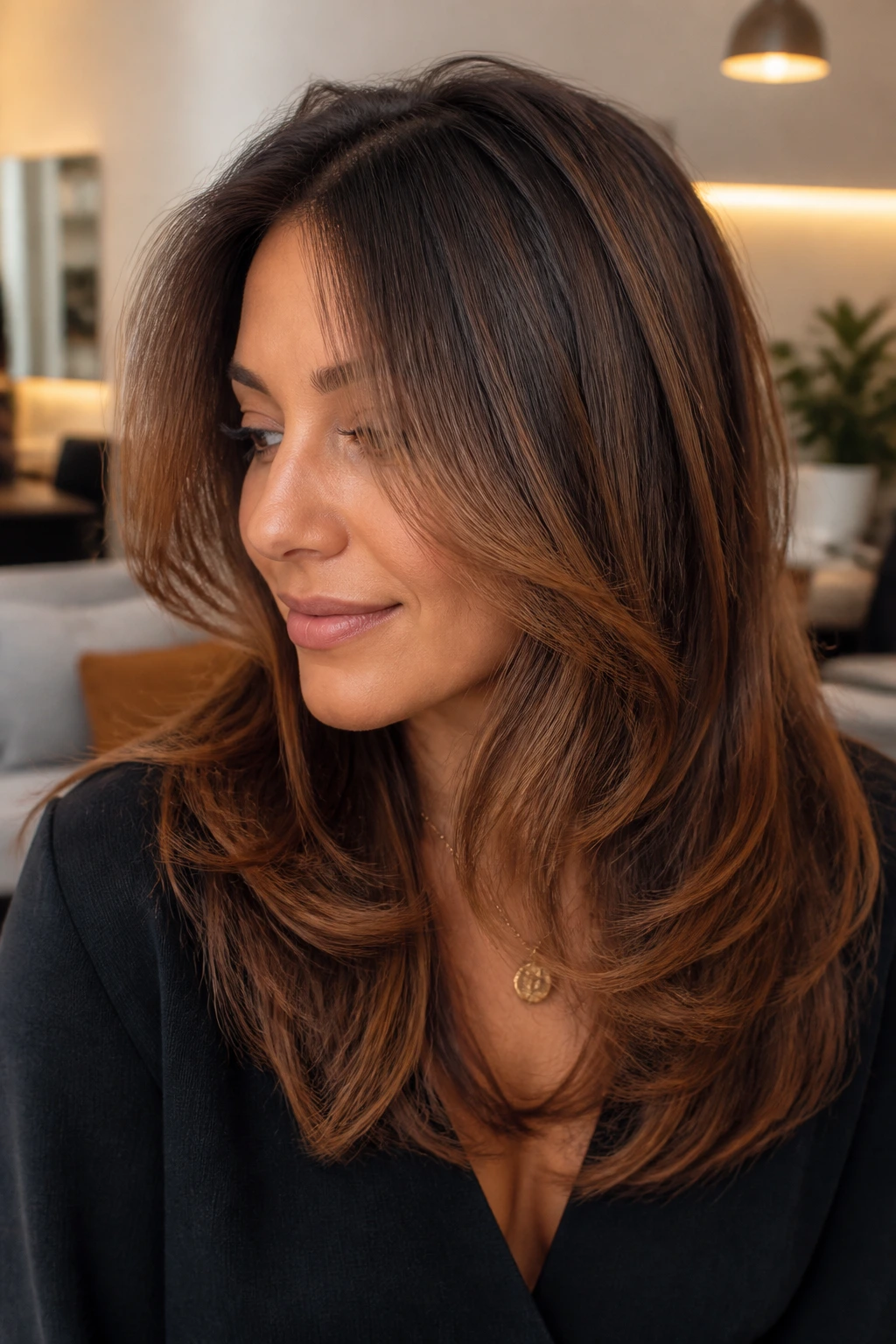
If your hair goes limp at the crown, a cinnamon shag wakes it up fast. The shag layers create a little lift at the top, the curtain bangs open the face, and the cinnamon tone adds enough warmth to keep the cut from looking too indie or too cool.
This is one of those cuts that benefits from a bit of chaos. Not mess for the sake of mess — just enough lived-in texture that the layers separate and show off the color. The best version is rough-dried with a diffuser or finger-blown with a tiny bit of cream. You want movement, not helmet hair.
The curtain bangs matter more than people think. They bridge the gap between the short crown layers and the longer face pieces, so the whole haircut looks connected. On a brunette base, cinnamon lowlights can be a smart move if you want warmth without going all-in on brighter ribbons.
5. Espresso Long U-Layers
A long U-shape with espresso depth is the haircut for people who love polished brown hair and don’t want anything too broken up. The U-line keeps the perimeter full, while the layers step in gently from the sides so the hair still moves when it’s down.
What I like about this cut is how clean it looks from the back. The length falls in a soft curve, not a sharp point, which keeps thick hair from looking too heavy at the bottom. Espresso brown brings in that dark, glossy base that makes the shape feel refined.
It’s also one of the most forgiving cuts if you don’t style every day. A center part and a quick bend at the ends are enough. If you want more interest, place a few caramel ribbons around the face only; the rest can stay deep and rich.
6. Toffee Textured Midi Cut
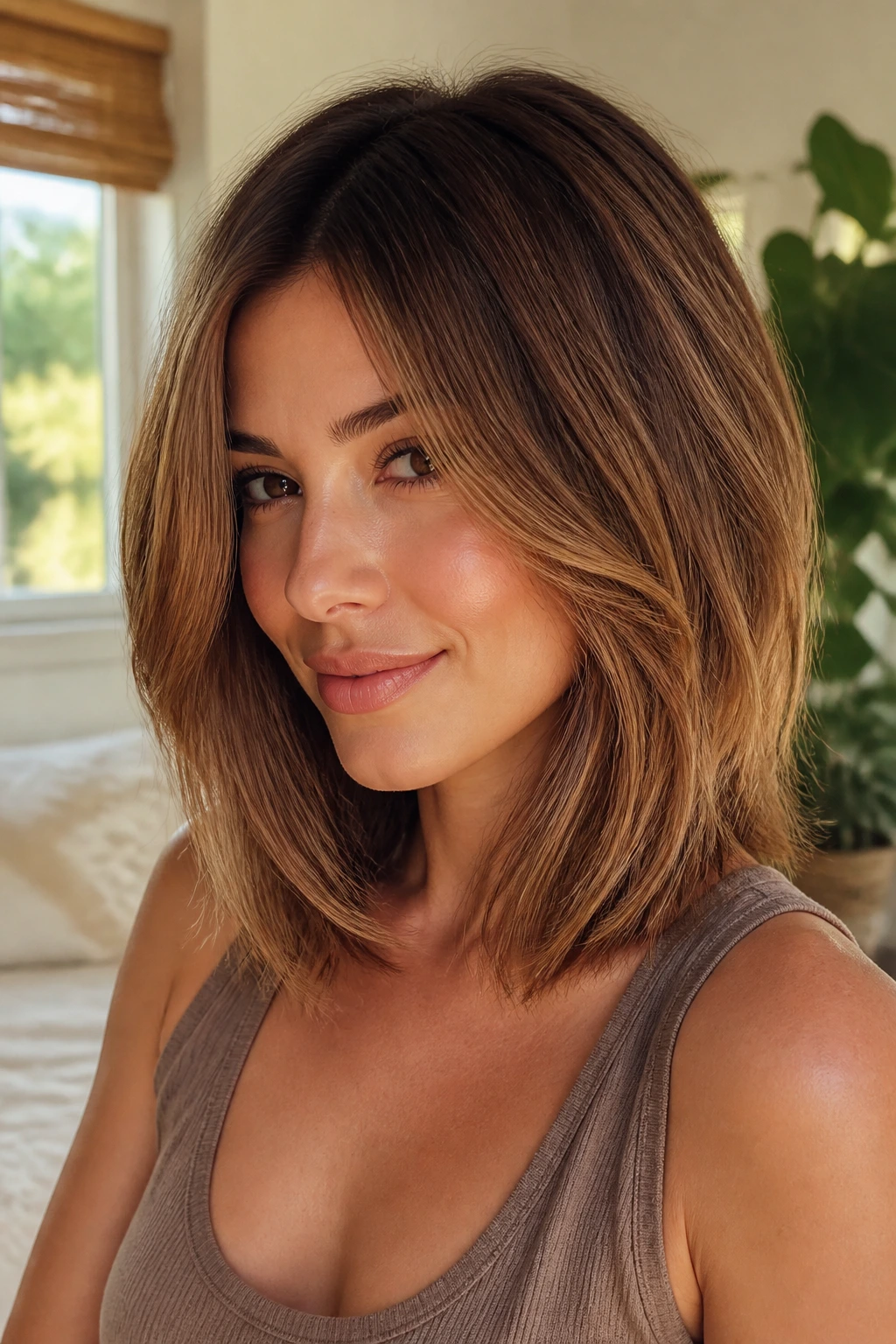
A toffee midi cut lands in that nice middle ground between long and short. It’s long enough to pull back, but not so long that the ends feel dragged down by their own weight. The texture keeps it from looking blunt, and the toffee balayage softens the edges.
Unlike a blunt shoulder-length cut, this one benefits from slightly piecey ends. That gives the hair room to move when you air-dry it or wrap it around a 1.25-inch iron. The toffee tone works especially well if your base is medium brown, because the contrast stays warm and believable.
This is also the cut I’d hand to someone who wants a lower-maintenance version of layered brunette hair. It grows out in a clean way. You’re not fighting a hard line every six weeks.
7. Walnut Feathered Layers
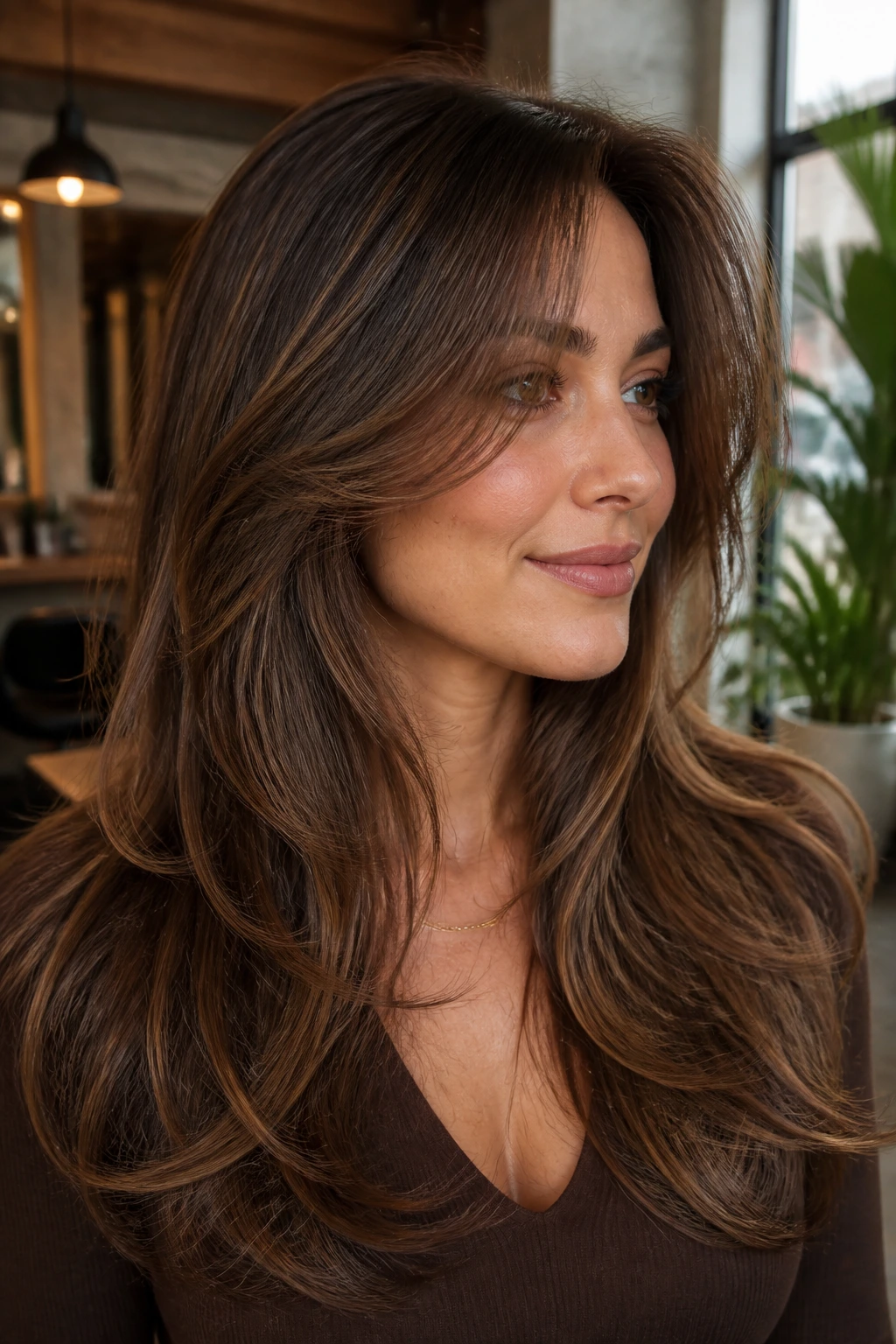
Feathered layers can look dated if they’re too perfect, but walnut brown gives them a modern edge. The color deepens the edges of each layer, which makes the feathering visible without turning it into a retro throwback. That matters. A lot.
Best For Fine to Medium Hair
Walnut feathering is a good move if your hair needs lift but not too much slicing. Fine hair gets movement without losing all its shape, and medium hair gets a little bounce around the cheekbones and collarbone. The front tends to read soft and airy instead of harsh.
If you wear a side part, this cut can be especially flattering. The layers fall away from the face in a way that opens up the brow and cheekbone area. A light round-brush blowout makes the whole thing look very finished, even when the cut itself is relaxed.
8. Bronze Bixie
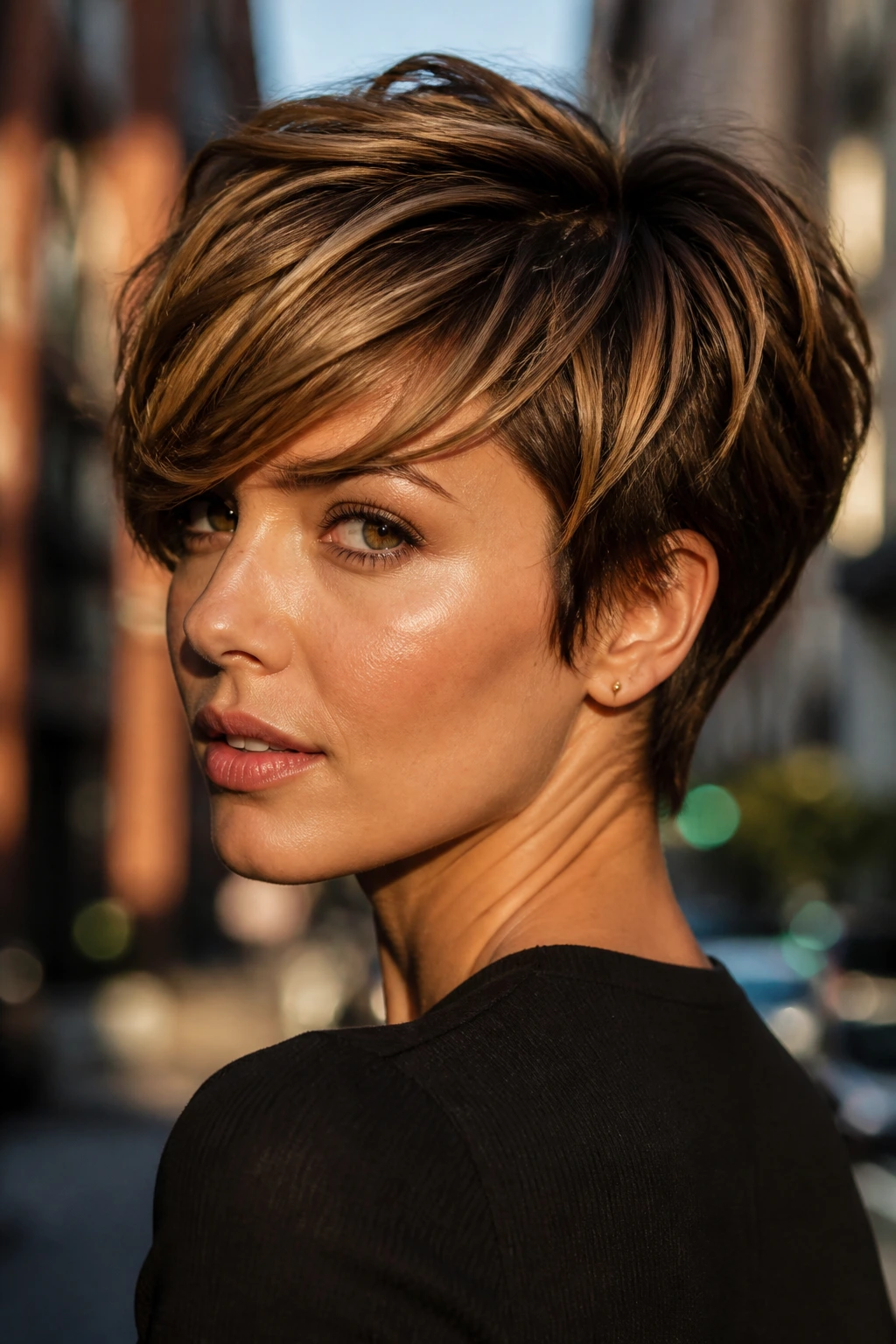
Short hair can still have warmth, and the bronze bixie proves it. This hybrid between a bob and a pixie works because the layers are short enough to give lift but long enough to keep the shape feminine and flexible. Bronze highlights around the temples and fringe keep the cut from looking flat.
I’d call this the boldest style in the group. Not because it’s extreme, but because it makes the texture impossible to hide. Every piece matters. A little wax or paste at the ends can give you that separated look, while a soft bronze glaze keeps the color from turning flat under overhead light.
It’s especially good if you like hair that dries fast and doesn’t demand a whole routine. The cut does most of the work. The warm tone just makes the shape look richer.
9. Hazelnut Wolf Cut
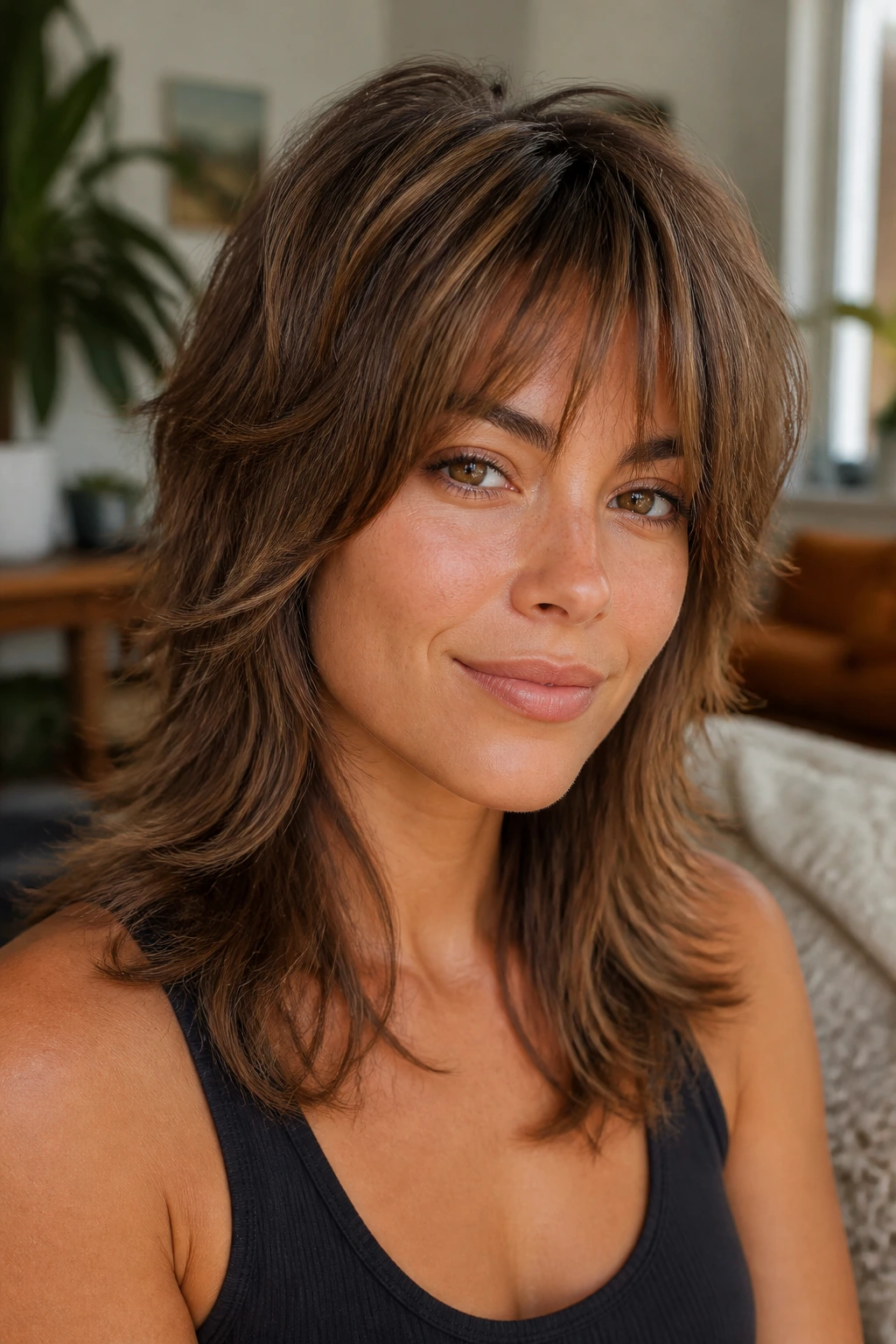
The wolf cut gets a better reputation when you soften it with hazelnut brown. That tone makes the shaggy layers feel deeper and more wearable, less punk and more plush. Keep the perimeter soft, and the crown lifted, and you’ll get that airy shape without turning the whole thing into a mess.
This version shines on wavy or thick hair. The layers remove bulk where it counts, and the hazelnut ribbons keep the texture visible as the hair moves. I’d avoid over-lightening the ends here. The point is dimension, not contrast for its own sake.
If you like a little edge in your haircut, this one delivers it without going fully wild. It’s a better choice than a classic shag when you want the brown to still look expensive.
10. Cocoa C-Cut with Soft Ends
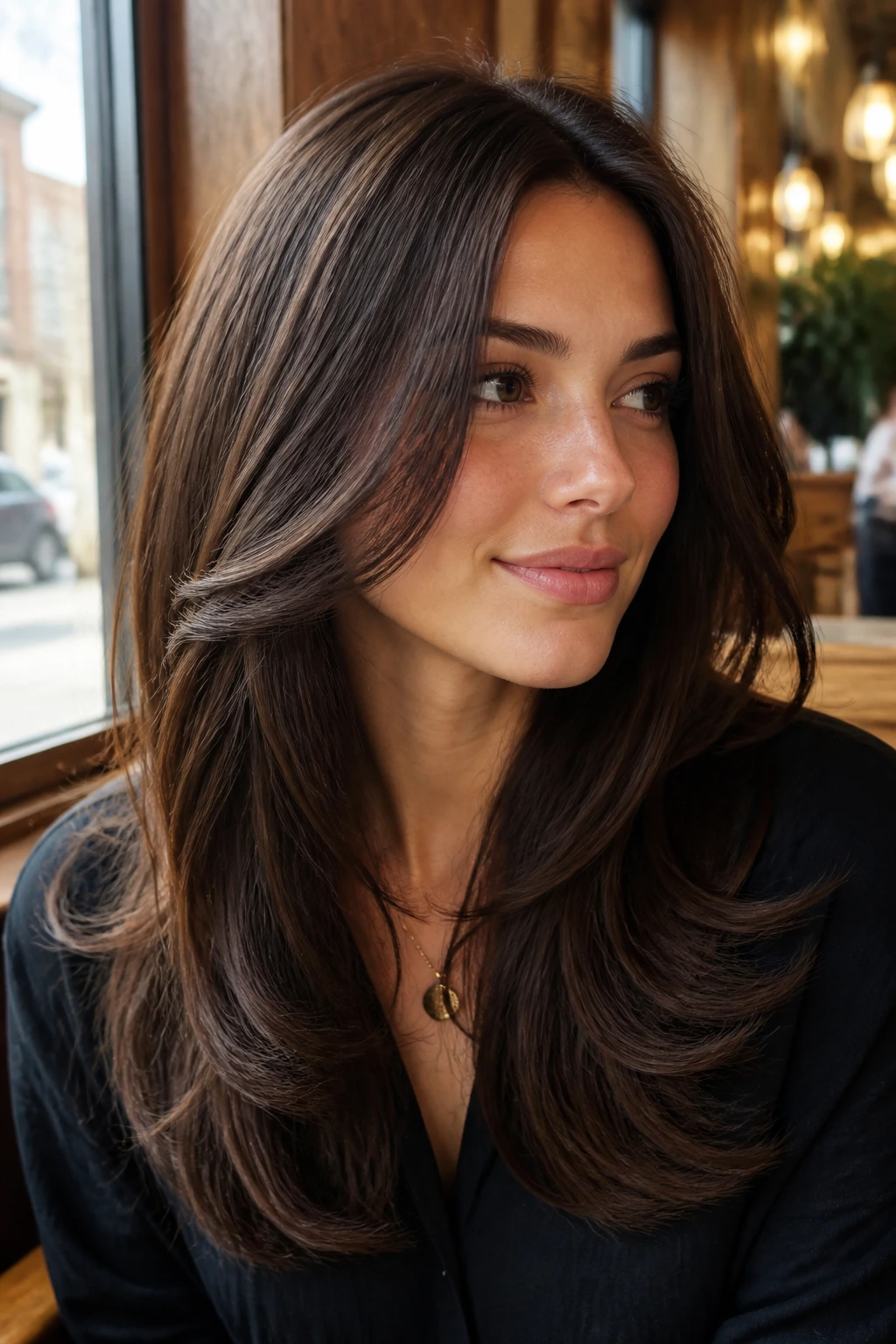
A C-cut curves around the face and shoulders in a way that feels almost tailored. The ends bend inward just enough to create shape, and the cocoa brown base keeps everything grounded and plush. Soft ends matter here. Too blunt, and the whole thing loses its easy movement.
What Makes It Different
Unlike a standard long layer cut, the C-shape creates a visible frame around the head. It works especially well if your hair naturally flips out at the ends, because the curve gives that movement a direction. You don’t fight the hair. You guide it.
Cocoa brown is a smart choice for this shape because it holds richness even when the hair is blown out smooth. If you want a little extra glow, a caramel glaze on the outer layer only will make the curve show up more clearly.
11. Amber Layered Bob
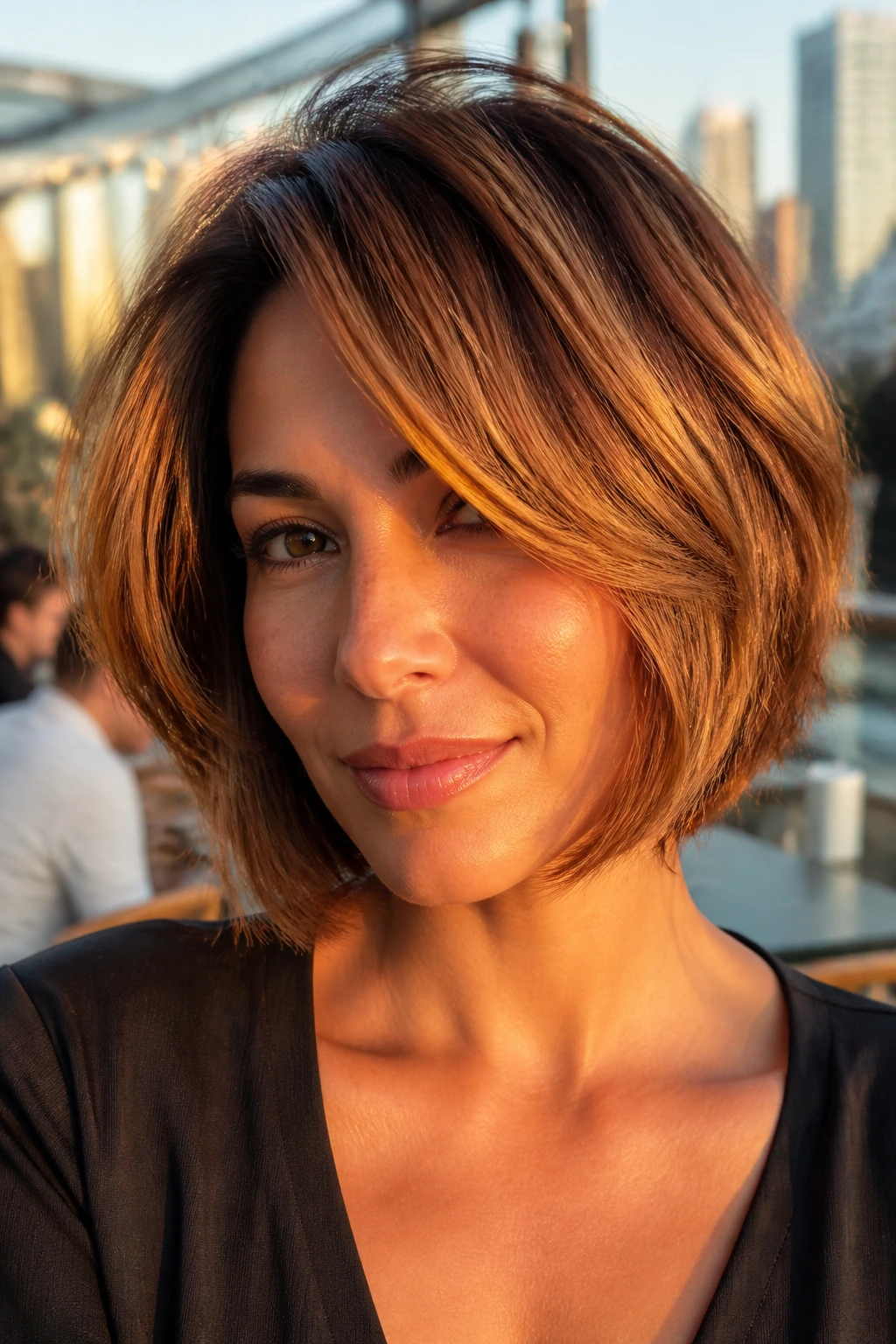
An amber bob has a kind of quiet confidence that blunt bobs often miss. The layers are short enough to create lift, but not so choppy that the bob loses its clean line. Amber highlights bring warmth to the front pieces and keep the shape from looking severe.
This cut is especially kind to round and heart-shaped faces. The layers can hit just below the cheekbone, which helps elongate the face a touch. On straight hair, it looks sleek. On wavy hair, it looks like you meant to have that bend and not just a random flip.
A bob in amber tones is also easy to refresh. The warmth around the face can be glossed again and again without changing the cut. That’s a nice thing to have.
12. Mahogany Straight Layers with Bend
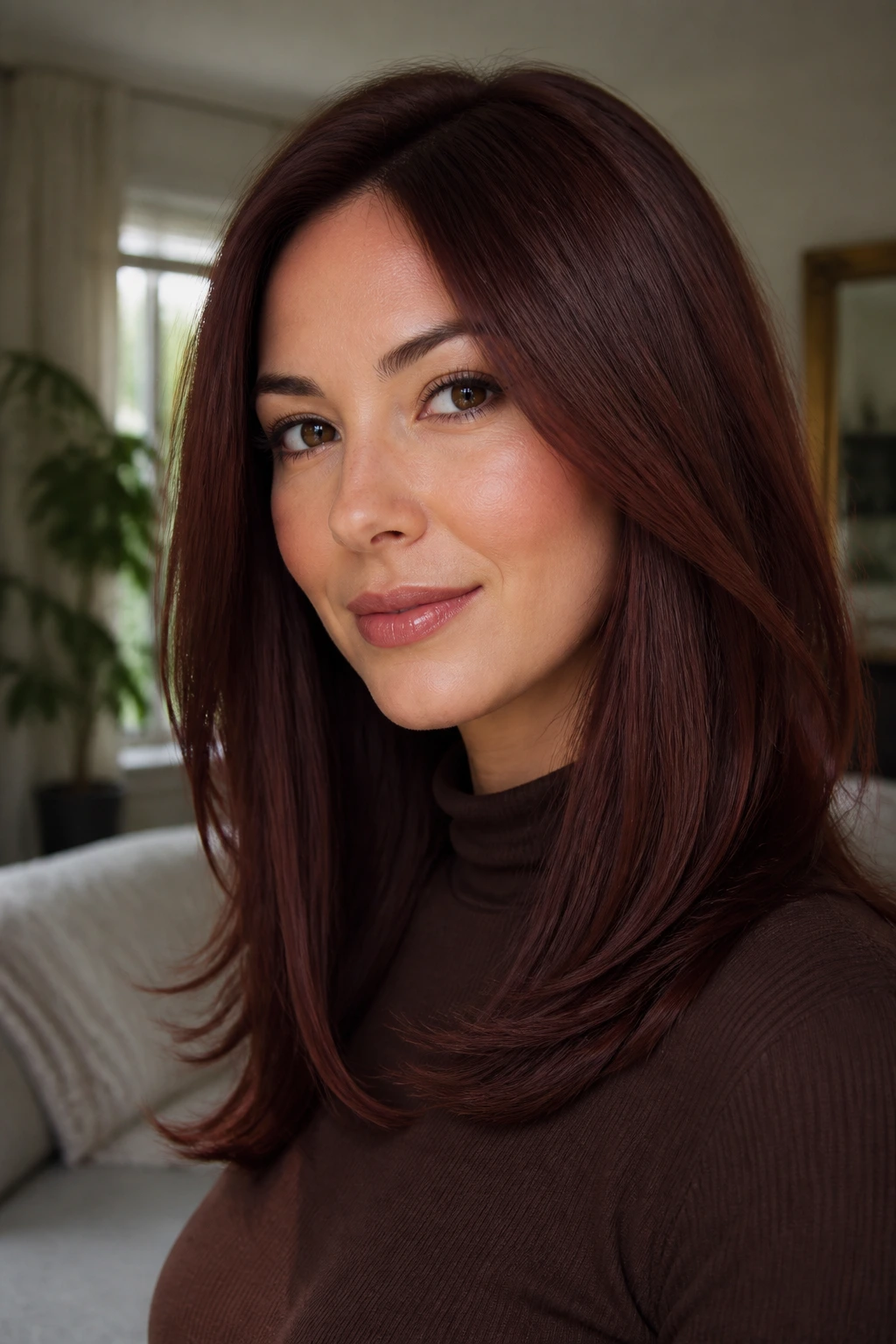
If you like straight hair but don’t want it to feel flat, mahogany layers with a soft bend are the move. The cut stays mostly sleek, with the lightest layering through the mid-lengths so the hair doesn’t sit like one solid curtain. Mahogany adds that rich red-brown warmth that shows especially well in low light.
Comparison Note
Unlike heavily textured cuts, this one is restrained. It’s not trying to look tousled. It’s trying to look smooth, glossy, and just a little bit alive around the edges. That makes it a good fit if your style leans polished.
A half-inch bend at the ends is enough to show the layers. You do not need big curls here. In fact, big curls can hide the beauty of the cut. Keep it soft and controlled.
13. Honeyed Curved Layers
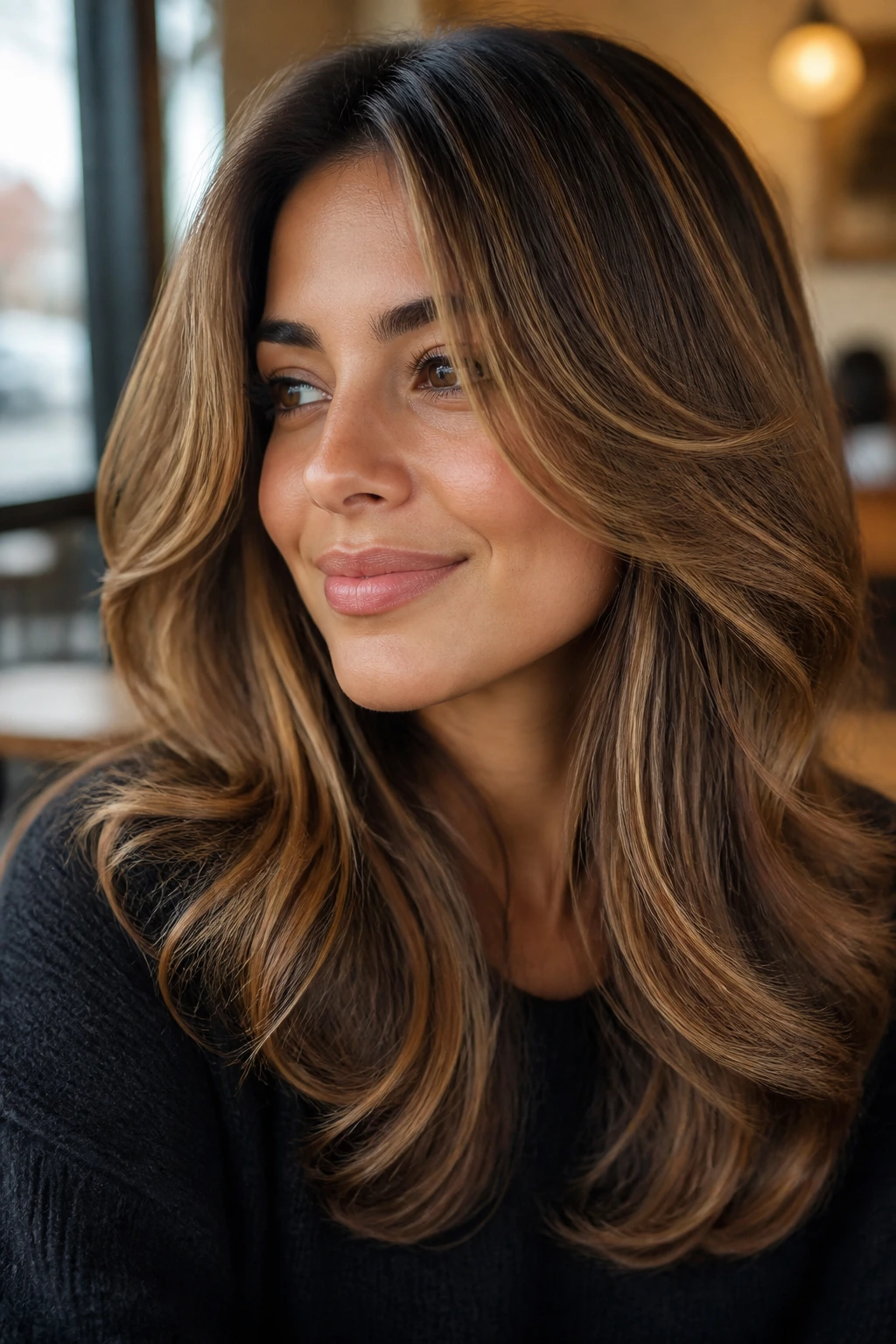
Honeyed layers are for someone who likes warmth with a little lightness near the face. The curved shape helps the hair fall away from the cheeks, while honey-brown balayage brightens the outer surface. It’s a sweet spot between natural and styled.
Why It Flatters
The curve keeps the layers from looking choppy. Instead of seeing a stack of cuts, you see a flow from one section to the next. That makes the color read smoother too, especially if the honey pieces are placed around the front and the top layer only.
This one tends to work well on medium to long hair with a slight wave. If your hair is very straight, a quick bend from a flat iron helps the shape show. If your hair is naturally wavy, the cut will do more of the work on its own.
14. Chestnut Razor Cut with Fringe
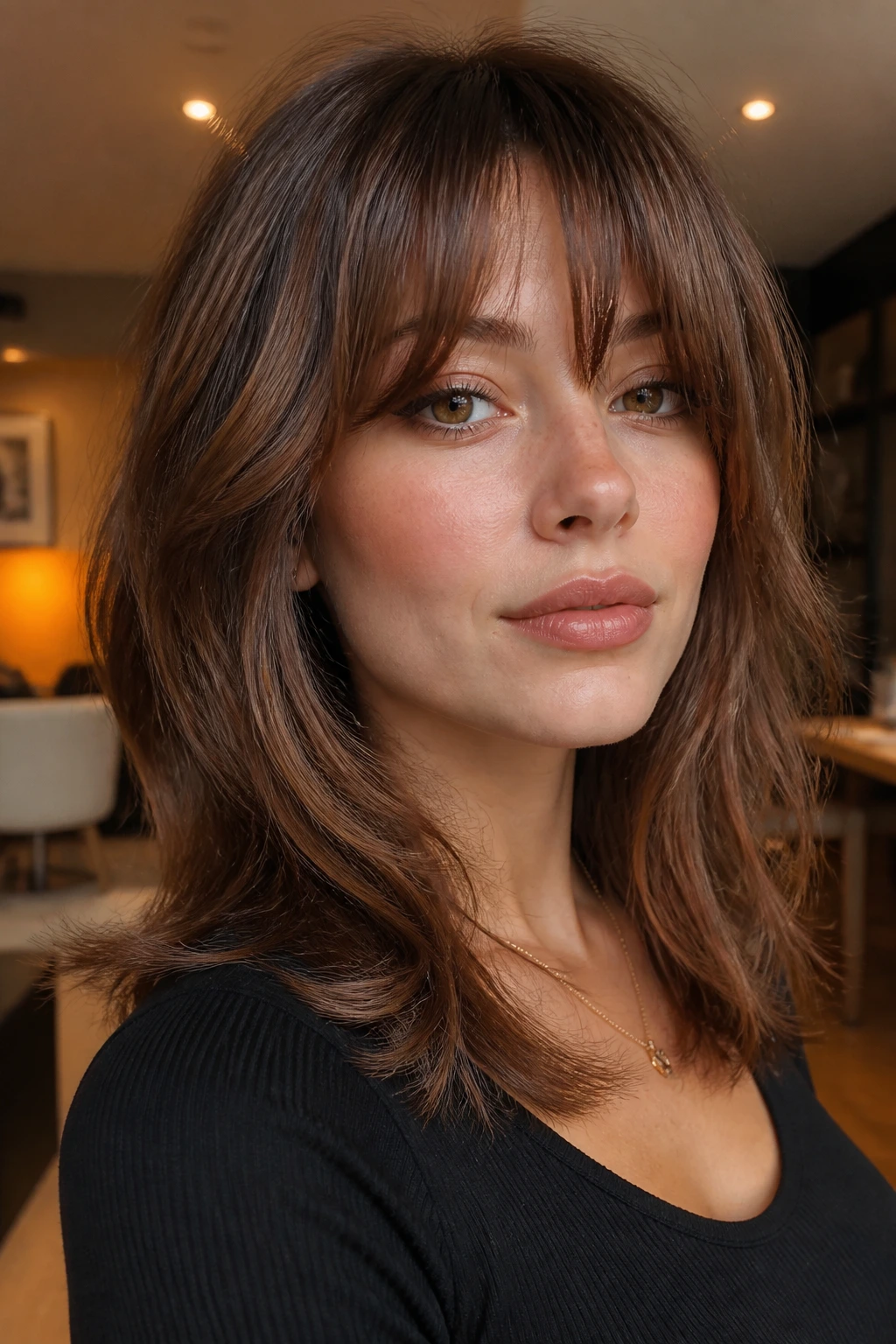
A razor cut has a softer edge than a scissor-cut style, which is why chestnut works so well here. The movement stays airy, the fringe sits with a little swing, and the whole look feels loose in a good way. On dense hair, a razor can remove enough bulk to make the fringe sit properly.
This is not the cut for someone who wants crisp, formal lines. It’s better when you like a touch of irregularity. The fringe should graze the brow or sit just below it, and the chestnut tone keeps the texture from reading too harsh or too punk.
If your hair has a natural bend, this cut can be a pleasure. It catches the warm color in all those uneven little turns. That’s where it looks best.
15. Sable Layers for Wavy Hair
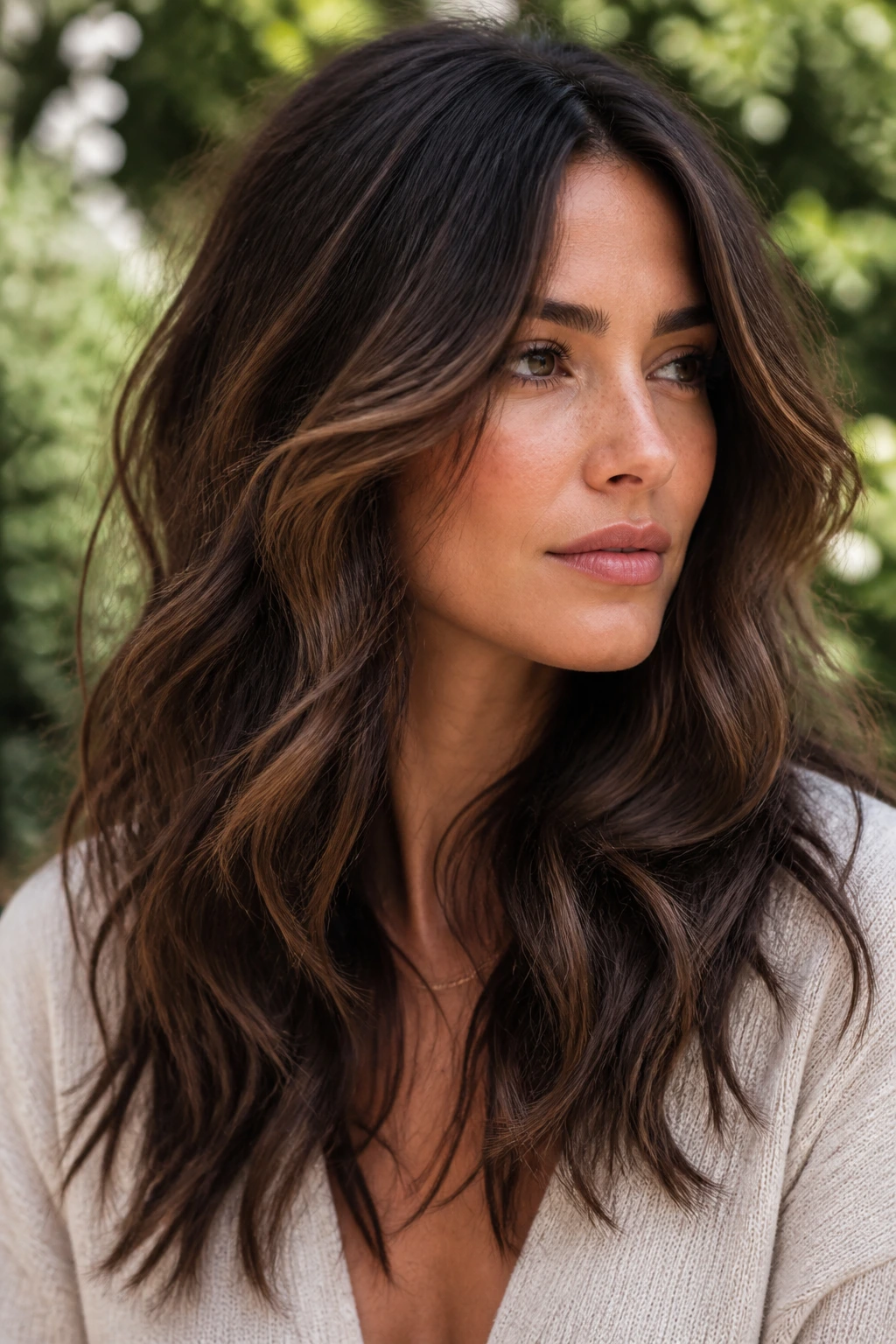
Wavy hair and sable brown have a very good relationship. The shade is deep enough to show off the shape of the wave, and the layers can stay almost invisible until the hair moves. That’s the whole point. You want the wave to lead, not fight the cut.
The trick here is to keep the layers long and graduated. Short layers can make wavy hair puff up in places you did not ask for. Sable keeps the overall mood rich and grounded, which helps the wave look smooth instead of frizzy.
This is one of the lower-maintenance styles in the group, and I’d recommend it to anyone who prefers air-drying. A little curl cream, a little scrunching, and the layers usually fall into place on their own.
16. Maple Long Layers with Money Piece
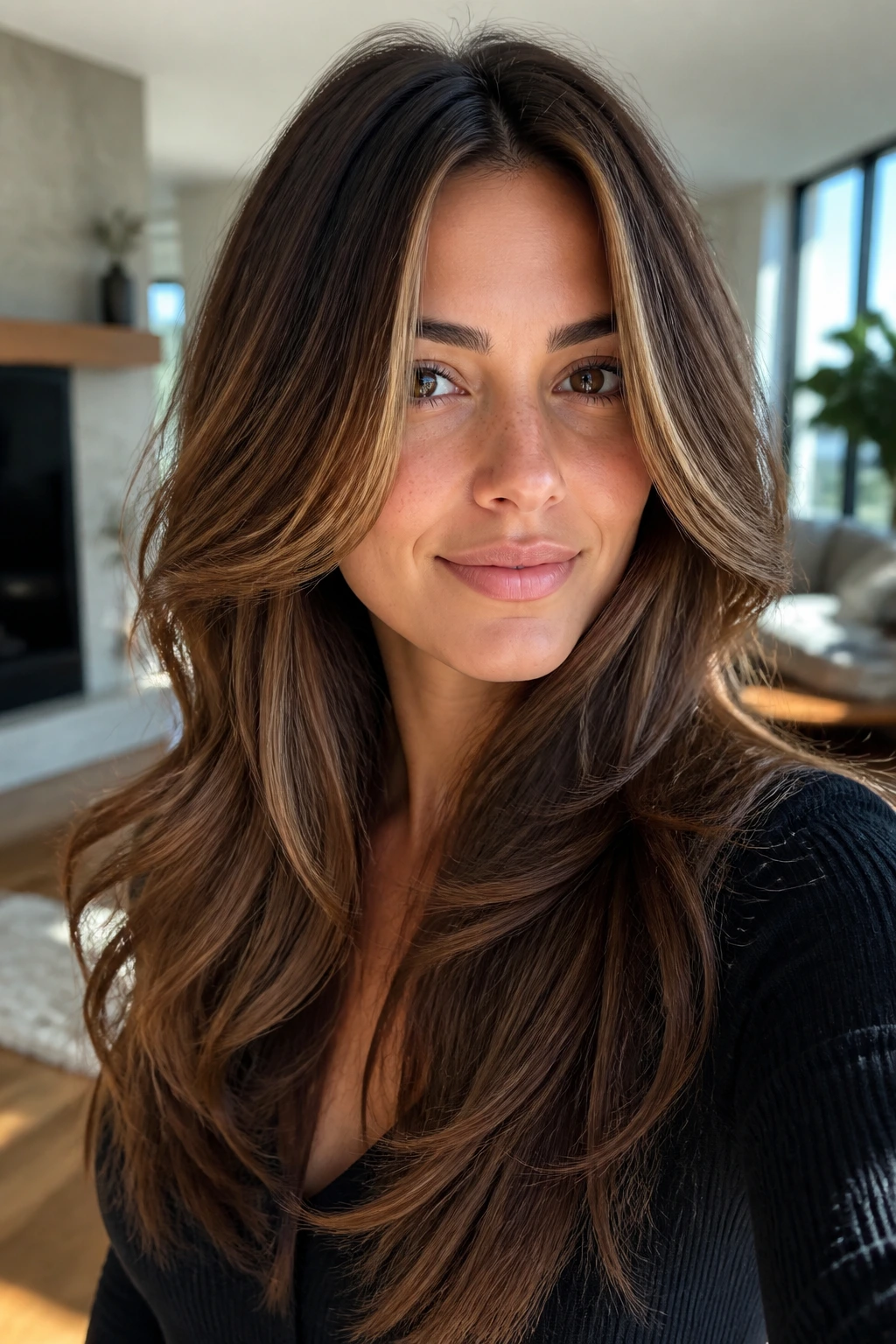
Maple is a lovely choice if you want brunette hair that feels brighter around the face without crossing into full blonde territory. A subtle money piece at the front can lift the eyes, while the long layers keep the rest of the hair full and swingy. It’s a smart balance.
The key is keeping the money piece soft and warm. If it gets too pale, it starts to fight the maple base instead of working with it. A level or two lighter than your natural brunette is usually enough. More than that, and the cut can lose its richness.
This haircut tends to look best when the front pieces are blown away from the face. You want to see the color placement and the layer movement at the same time. Straight down hair hides too much of the good work.
17. Espresso Butterfly Cut with Volume
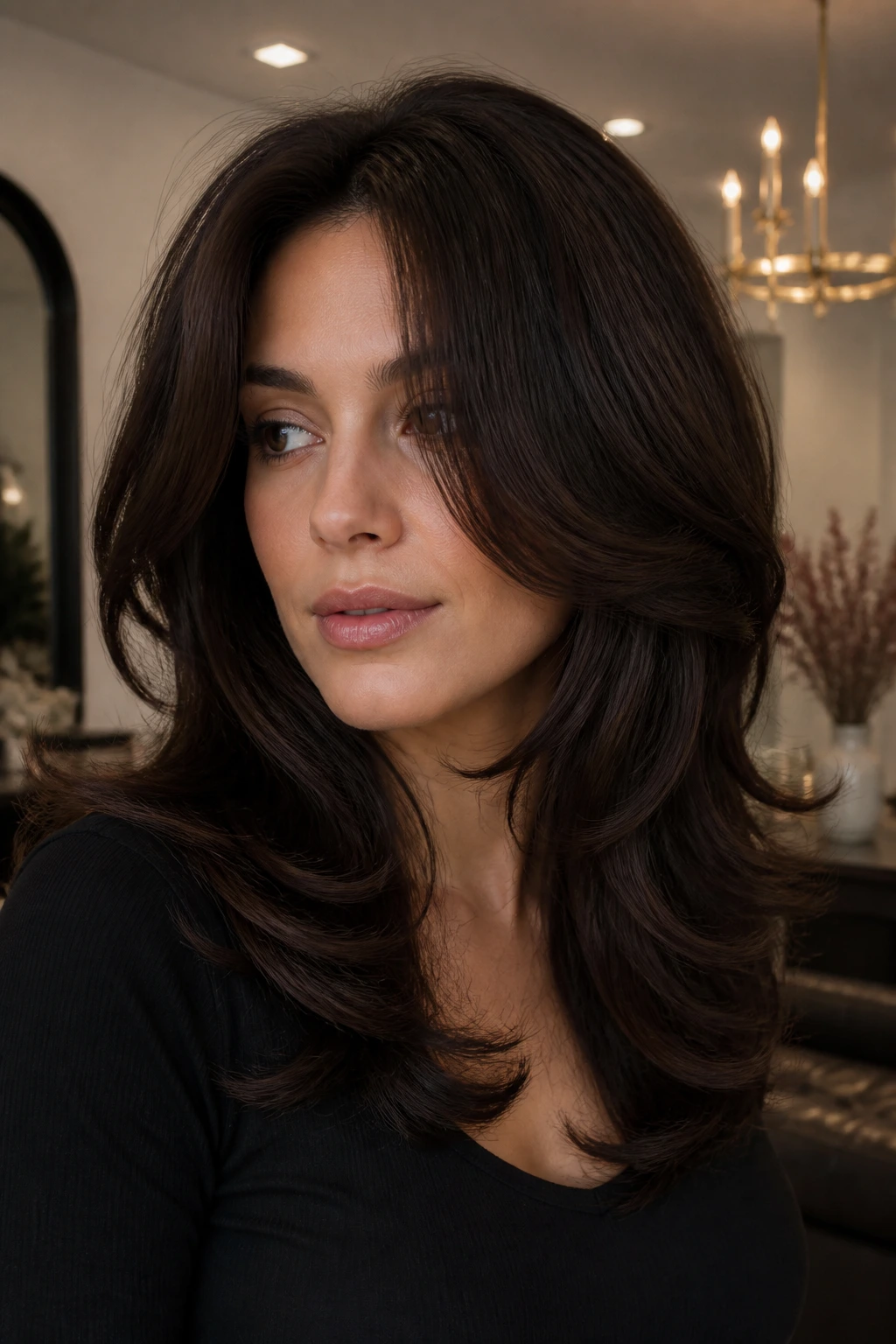
The butterfly cut gets a more dramatic mood when the base is espresso. The dark color makes the lifted crown and the fluttering face layers stand out, so the whole haircut feels bigger without actually needing a huge amount of hair. That’s why this one is so satisfying on long brunettes.
What makes it special is the contrast between the top and the lower length. The upper layers can be round-brushed into a blowout shape, while the bottom keeps its density. The result is movement near the top and weight at the bottom — a combination that looks expensive on purpose.
I’d choose this one if you love a salon finish and don’t mind styling. It looks ordinary when air-dried rough, but when it’s brushed out, the shape gets all that floaty movement people save on their phones.
18. Burnished Lob with Internal Layers
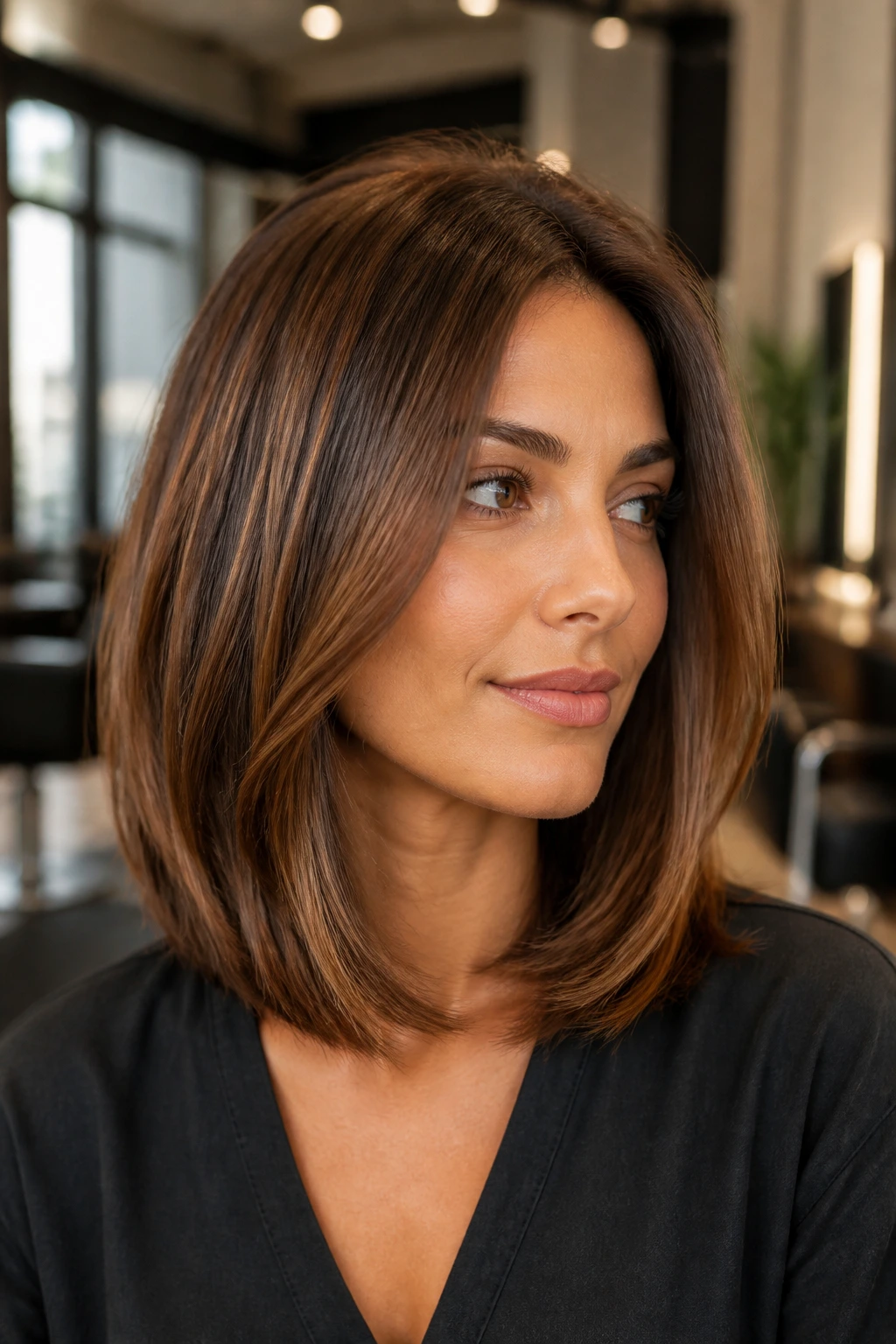
A burnished lob is quieter than a caramel-heavy style, and that’s part of the appeal. The layers sit inside the shape, so the outside line stays clean. The color is warm, but muted — more burnished metal than bright ribbon.
This is the haircut for someone who wants a bob-length style without the bluntness that often comes with it. The internal layers remove bulk and let the hair fall in a smoother sheet. On medium-thick hair, that makes a real difference around the jaw and neck.
The finish matters here. A soft bend at the ends is enough. You do not need obvious curls or piecey texture. Let the color and the clean outline do the work.
19. Tawny Shag for Fine Hair
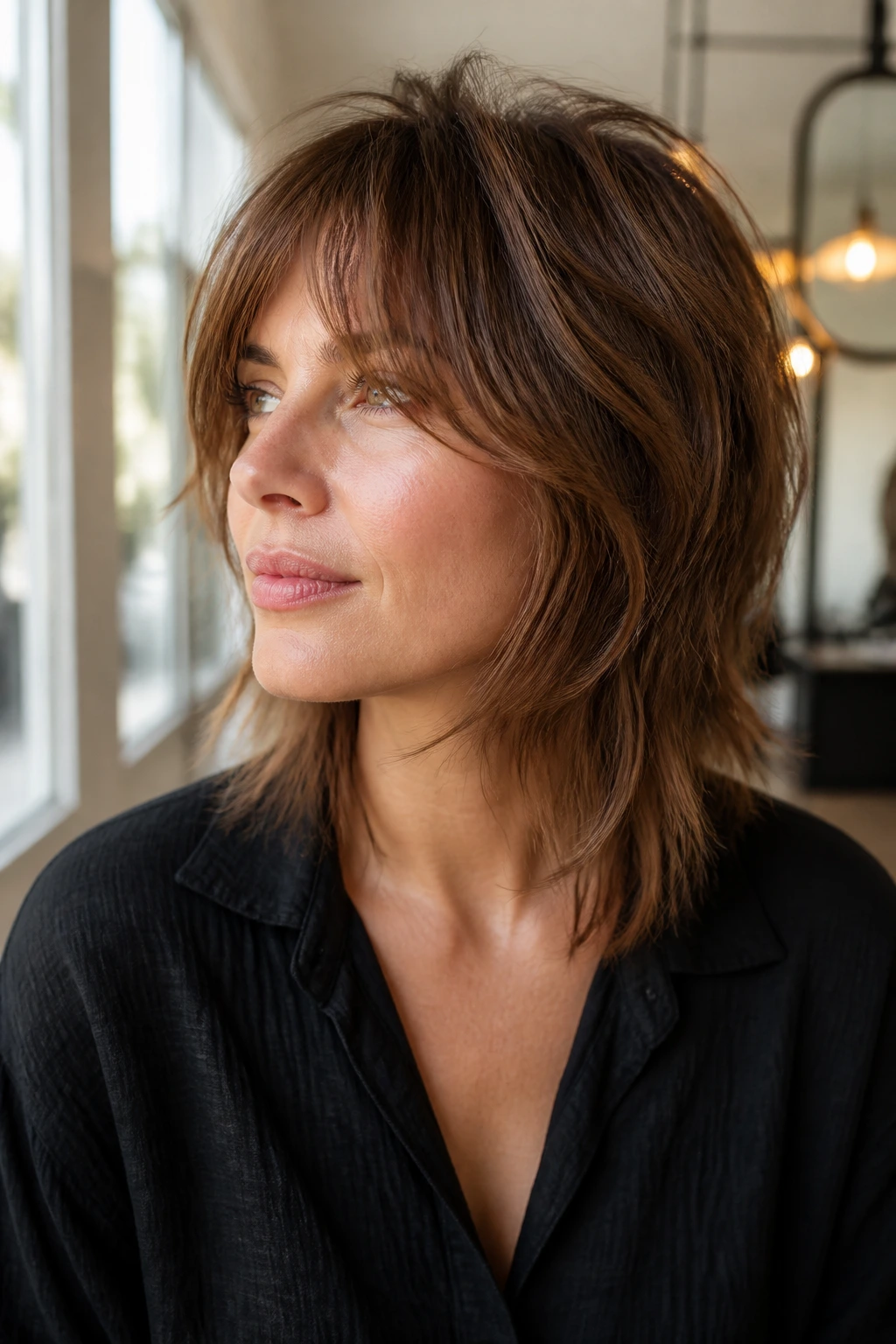
Fine hair can look flat at the roots and wispy at the ends if the layers are wrong. A tawny shag fixes that by keeping the texture light and the layers cleverly spaced. The tawny tone adds warmth and a little depth, so the cut feels fuller from every angle.
What to Watch For
The mistake with fine hair is taking too much weight out of the ends. That leaves the haircut see-through. A good tawny shag uses soft, broken layers around the crown and face, then keeps enough length through the perimeter to hold the shape.
A bit of root spray or mousse helps, but not much. Fine hair gets tired fast if you load it up with product. Keep the styling light and the layers will do more of the visual work.
20. Bronde Layered Curtain Cut
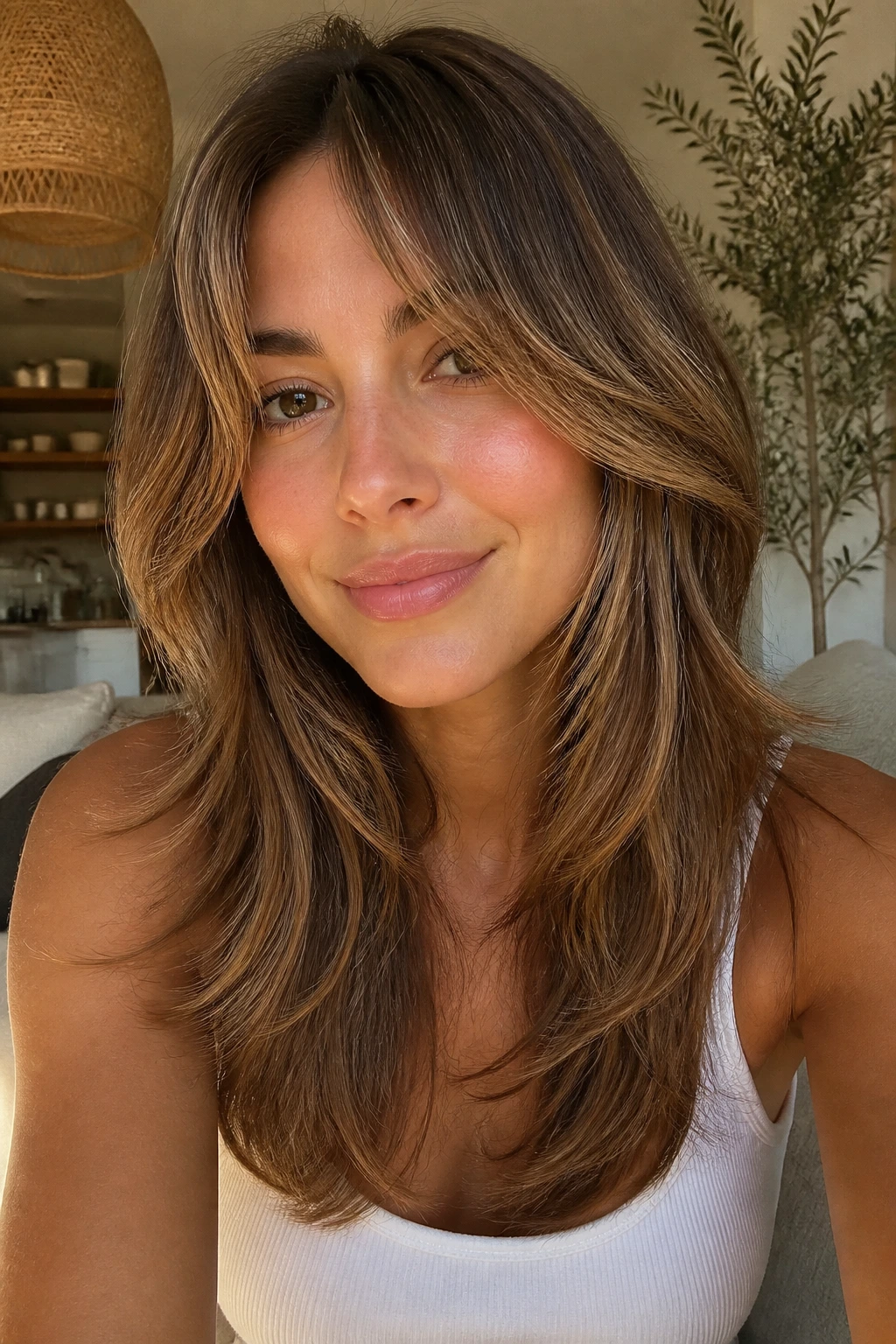
Bronde can sound like a color compromise, but on a layered curtain cut it reads as deliberate warmth. The brunette base stays visible, the lighter ribbons sit around the face, and the curtain bangs break the color field in a flattering way. It’s a cut that looks sun-kissed without becoming summer cliché.
How It Differs
Unlike a full balayage, bronde keeps more of the natural brown at the root and through the interior. That gives the layers a deeper shadow, which makes the front pieces stand out even more. If you like brightness but hate a high-maintenance root line, this is a smart lane.
The curtain bangs are the anchor. They keep the shorter pieces connected to the longer layers so the style doesn’t feel disconnected or stripey. On a round brush, this cut comes alive fast.
21. Almond Soft Wolf Cut
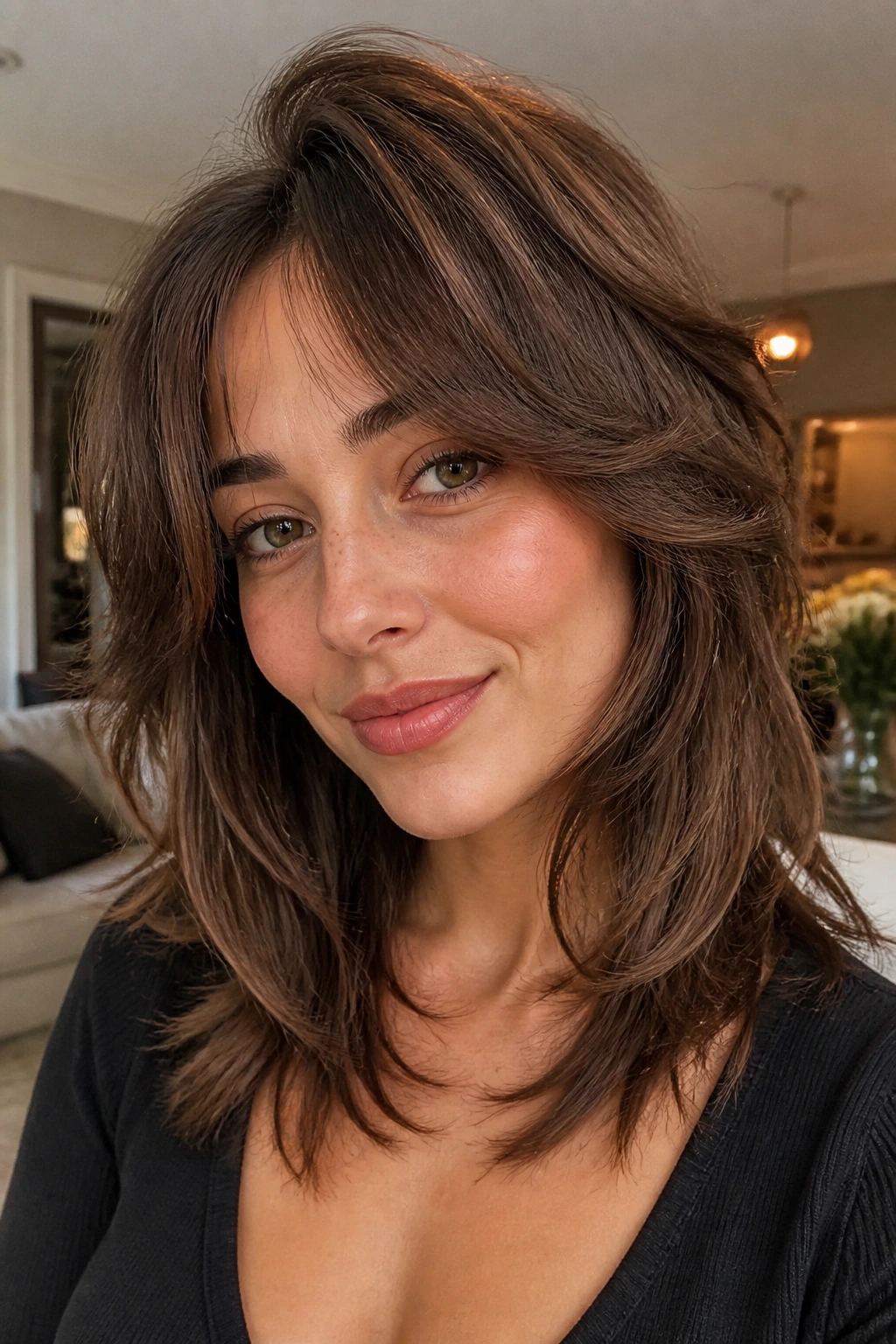
A softer wolf cut makes sense if you like the energy of a shag but not the roughness of a full wolf. Almond brown helps with that. The tone is warm, smooth, and just deep enough to keep the choppiness looking controlled.
This cut is all about moderation. The crown gets volume, the ends stay piecey, and the front keeps enough softness to frame the face. On medium-density hair, it can look very full without becoming bulky.
If you’re nervous about wolf cuts because they can read too edgy, this version is the bridge. It keeps the attitude and loses some of the bite.
22. Auburn-Tipped Airy Layers
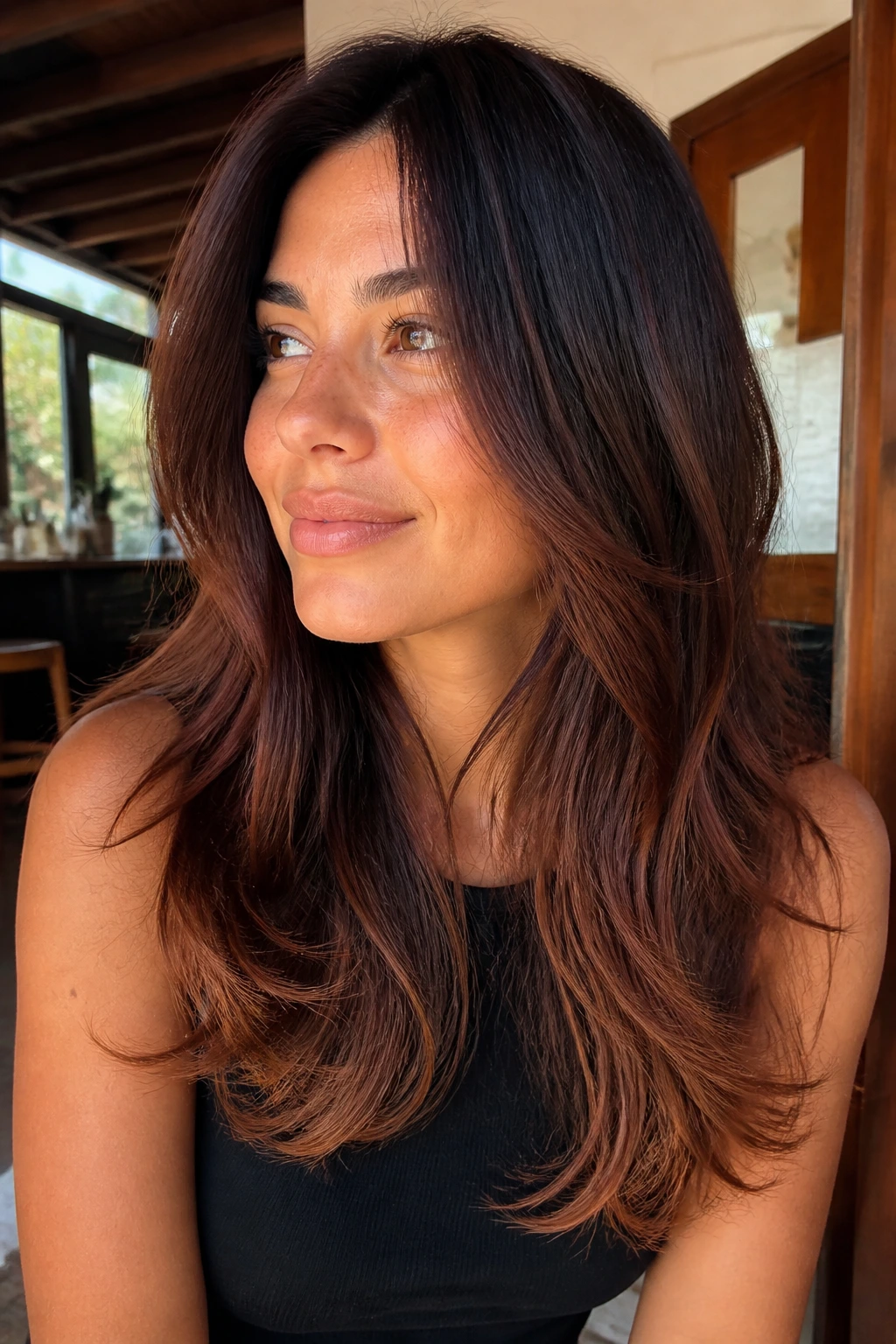
Auburn tips on brunette layers can look subtle or striking depending on how much light you add. I prefer the subtle version. A few warm auburn ends give the haircut a little flicker at the bottom, especially when the layers move.
The airy part of the cut matters because auburn can go loud if the layers are too blunt. Light, feathered ends keep the color soft. You get warmth without turning the whole head into a red-brown block.
This is a strong choice if you want brunette hair that feels seasonal without looking tied to any one mood. It adds heat. Literally.
23. Smoky Chocolate Midi Cut
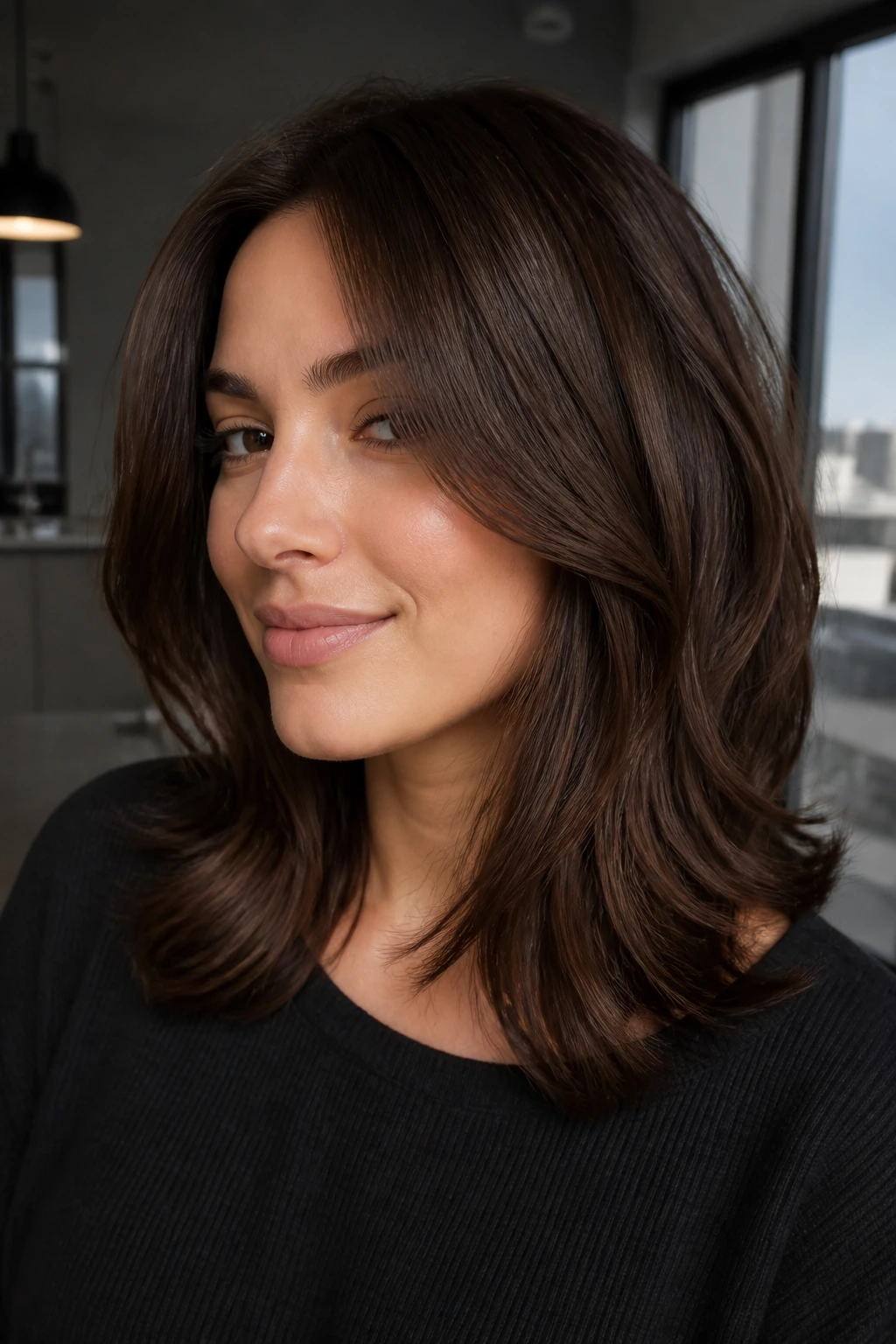
Smoky chocolate is the brunette for someone who likes depth first and warmth second. It’s still rich, but the warmth is softened so the shade reads smooth rather than coppery. On a midi cut, that muted tone gives the layers a slightly velvety look.
What I like here is the restraint. The layers don’t have to scream. A little movement around the ends and a soft contour through the face is enough. The smoky brown keeps everything elegant in a very unfussy way.
If your wardrobe leans neutral, this cut slides right in. If you like bolder clothes, the hair won’t fight the outfit. It just sits there looking expensive.
24. Caramelized V-Cut for Thick Hair
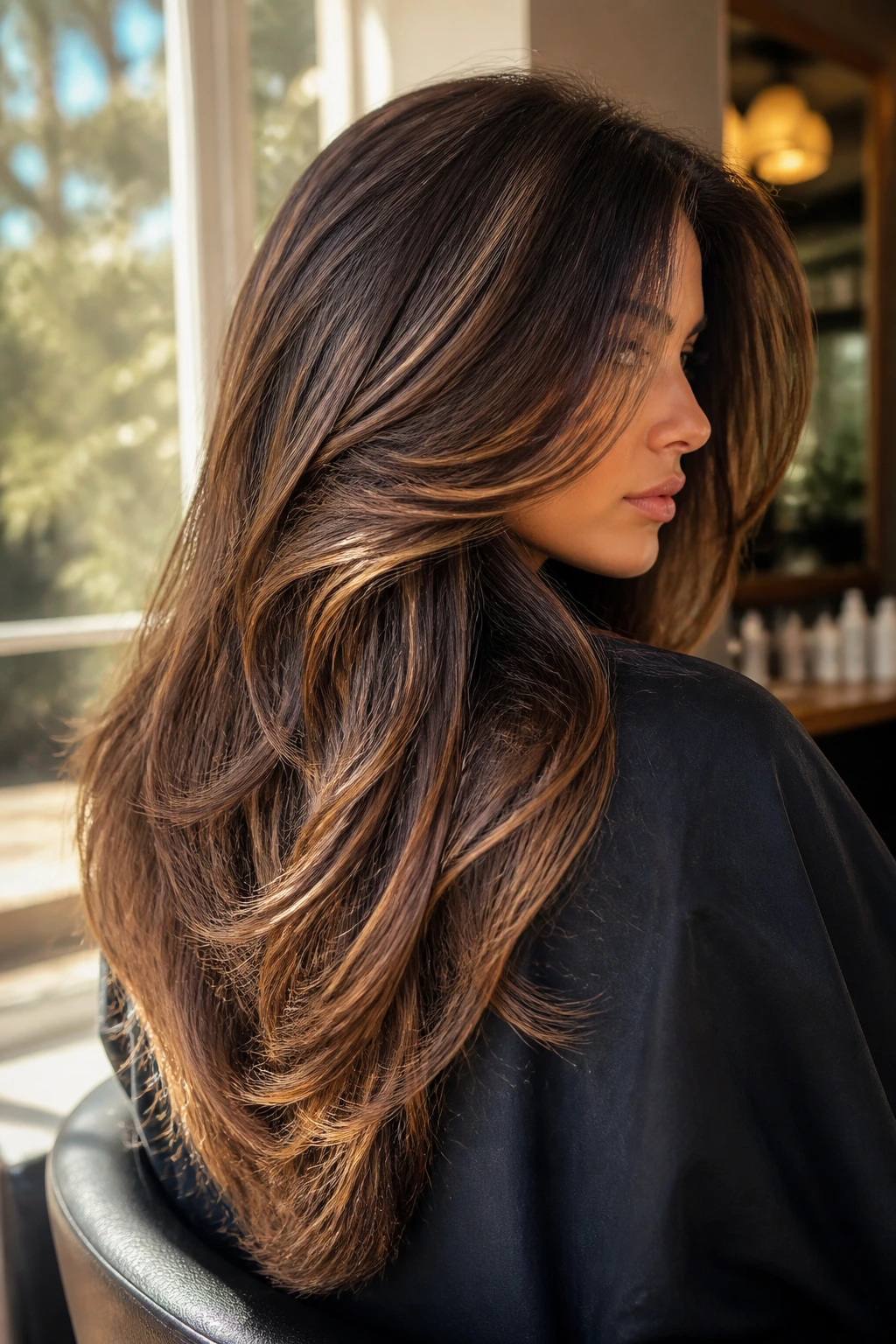
Thick hair often needs a smarter shape, not more shape. A V-cut removes weight in the back and lets the hair fall into a point that feels intentional, while caramelized ribbons through the mids and ends keep the whole thing from looking heavy. It’s practical, and that matters.
Where It Shines
This cut is at its best when the hair is dense enough to support the point without collapsing. The V-shape opens the length, and the caramel color keeps the layers visible all the way down. If you’ve ever felt like your hair eats layer definition, this is one way around that.
Ask for soft internal layers rather than aggressive chopping. Thick hair can turn puffy fast if the interior is over-thinned. The best version looks controlled even when it’s big.
25. Rich Brunette S-Curve Layers
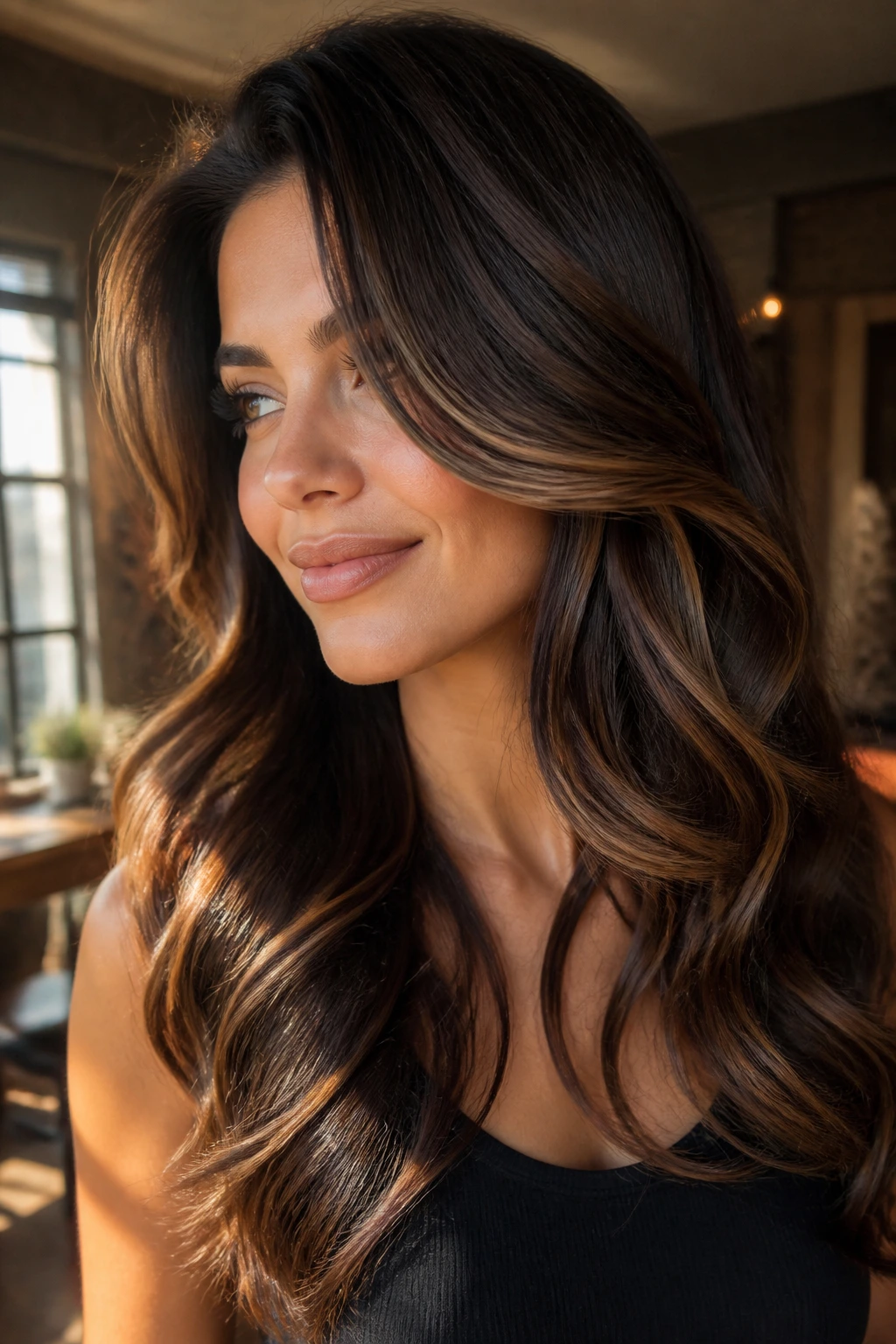
S-curve layers are one of those cuts that looks simple until you see it moving. The shape snakes gently through the hair, which gives the brunette color room to catch light at different points along the length. That makes the whole style feel fluid instead of stiff.
The rich brunette base is important here because the layers need depth under the shine. Add soft caramel or maple glaze through the mids, and the curves become more visible. It’s a lovely choice if you wear your hair with a blowout or loose waves and want the ends to flick in a graceful way.
This is the most polished style in the list for people who still want softness. Nothing about it feels hard. That’s the appeal.
Why Warm Brunette Layers Read Richer in Every Kind of Light
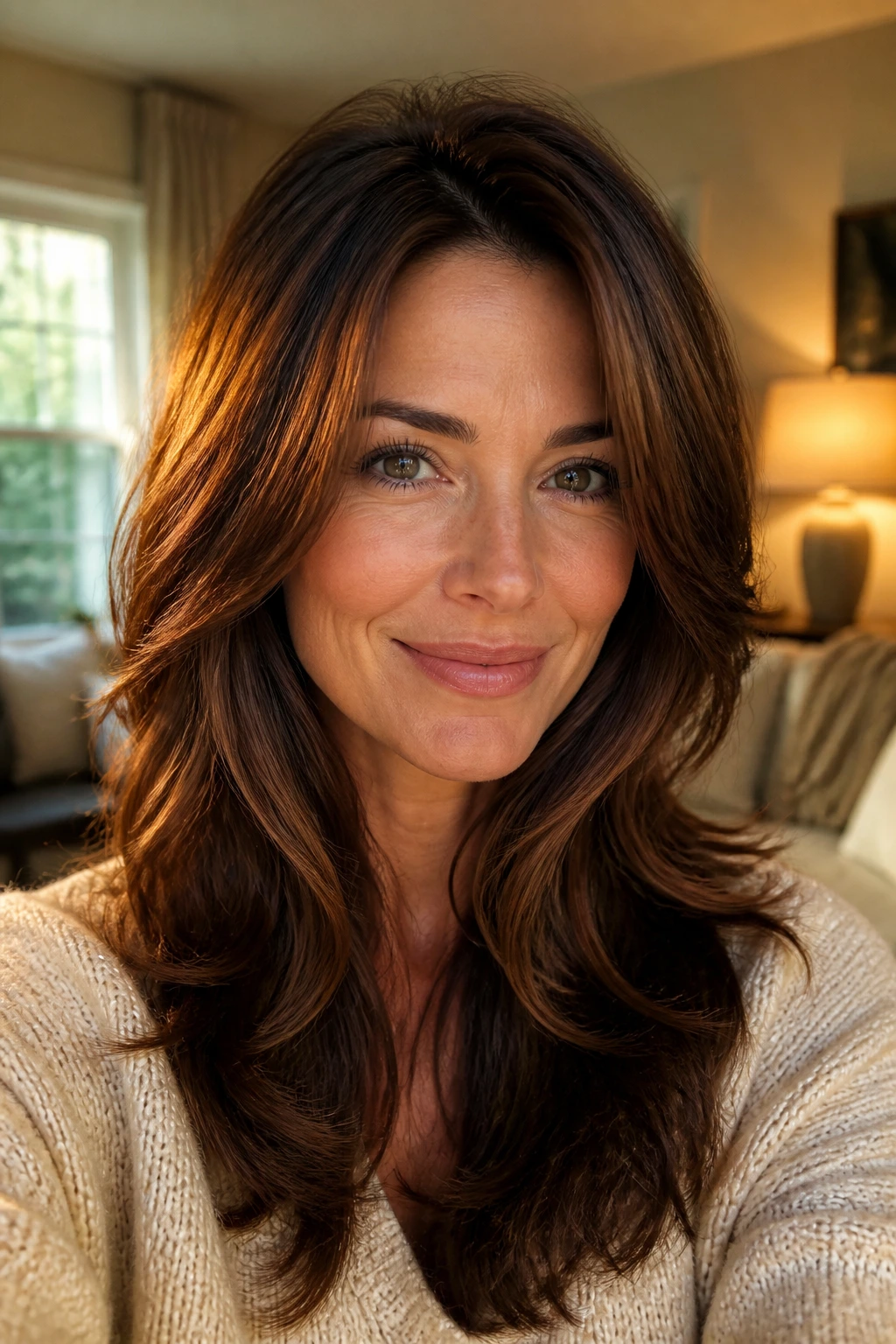
Warm brunette tones behave a little differently from ash or cool brown shades. Chestnut, caramel, mocha, and hazelnut all reflect light in a softer way, so the hair looks glossy instead of stark. Under a lamp, the color can look deep and even. Outside, the same strands pick up tiny flashes of gold, amber, and cinnamon without looking dyed to death.
Layers make that effect easier to see. A one-length cut gives you one surface, which means one big plane of color. Layers break that plane into smaller pieces. Each piece catches light at a slightly different angle, and that tiny shift is what creates depth.
The best brunette color work respects the cut. If the front pieces are meant to swing, they need a bit more warmth. If the interior layers are meant to disappear into the body of the hair, a deeper lowlight helps. I like warm brunettes most when they’re not trying to look blonde-in-disguise. They should look like brunette hair that has been cared for, glossed, and cut with a plan.
Essential Tools for Styling Brunette Layers
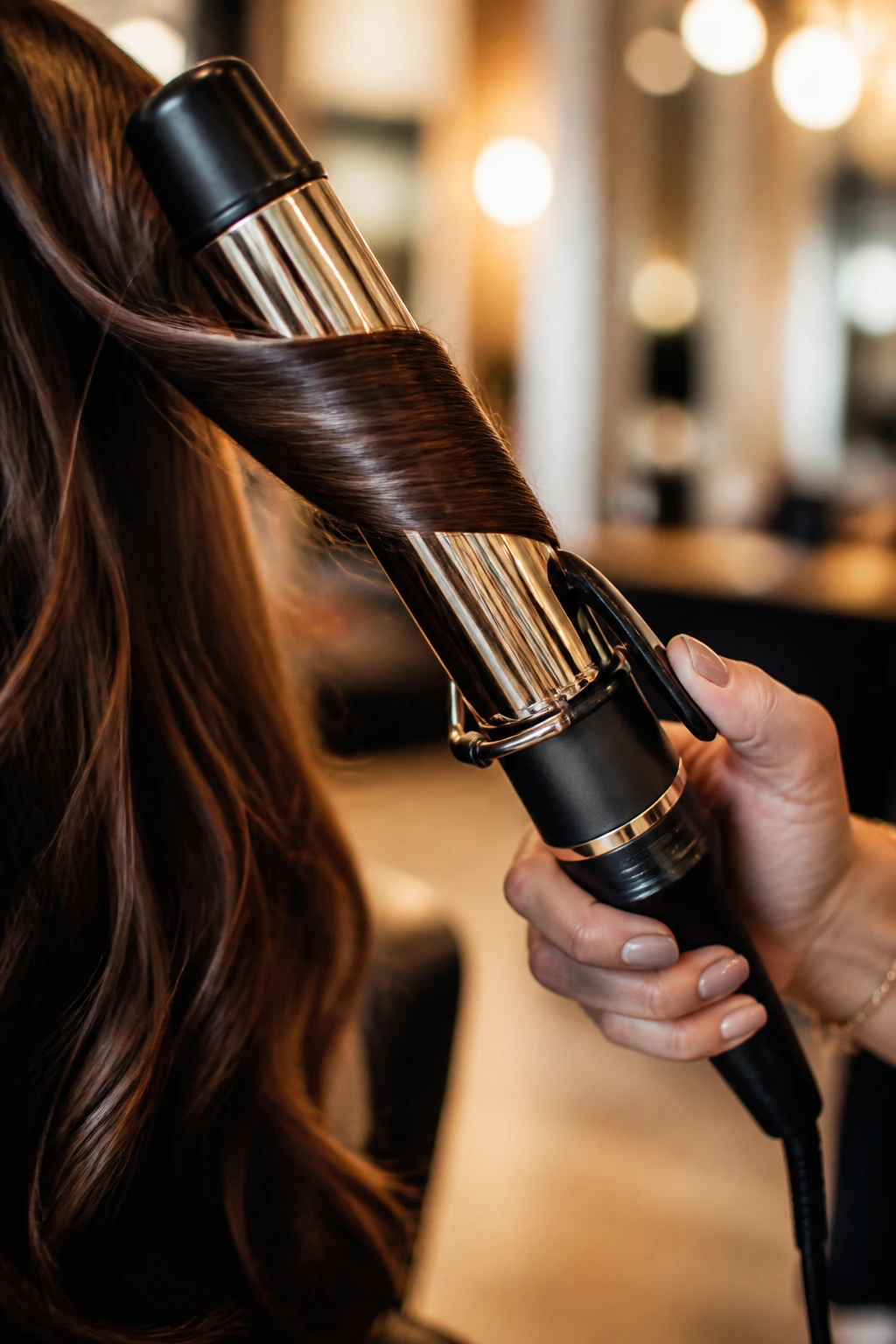
- 1.25-inch curling iron or wand: The sweet spot for soft bends and loose waves that show the layer pattern.
- Medium round brush: Best for face-framing pieces, curtain bangs, and collarbone bends.
- Sectioning clips: They keep blow-drying sane, especially on layered hair that likes to fall out of place.
- Heat protectant spray: Use it before every hot-tool pass; warm brunette shine disappears fast when the hair gets scorched.
- Blow-dry cream or mousse: Cream smooths; mousse lifts. Pick one based on whether your layers need softness or root height.
- Texturizing spray: Good for shaggy cuts, wolf cuts, and any style that needs the ends to separate a little.
- Shine serum or light hair oil: A drop or two on the last 2 inches of hair gives brunettes that glossy finish without weighing down the crown.
- Wide-tooth comb: Better than a brush for wet layering, especially on wavy or curly hair.
- Color-safe shampoo and conditioner: Warm brunette tones fade into dull brown fast if the wash routine is too harsh.
- Diffuser attachment: Useful if your layers are wavy or curly and you want the shape to dry with some lift instead of puff.
What to Tell Your Stylist Before the Cape Goes On
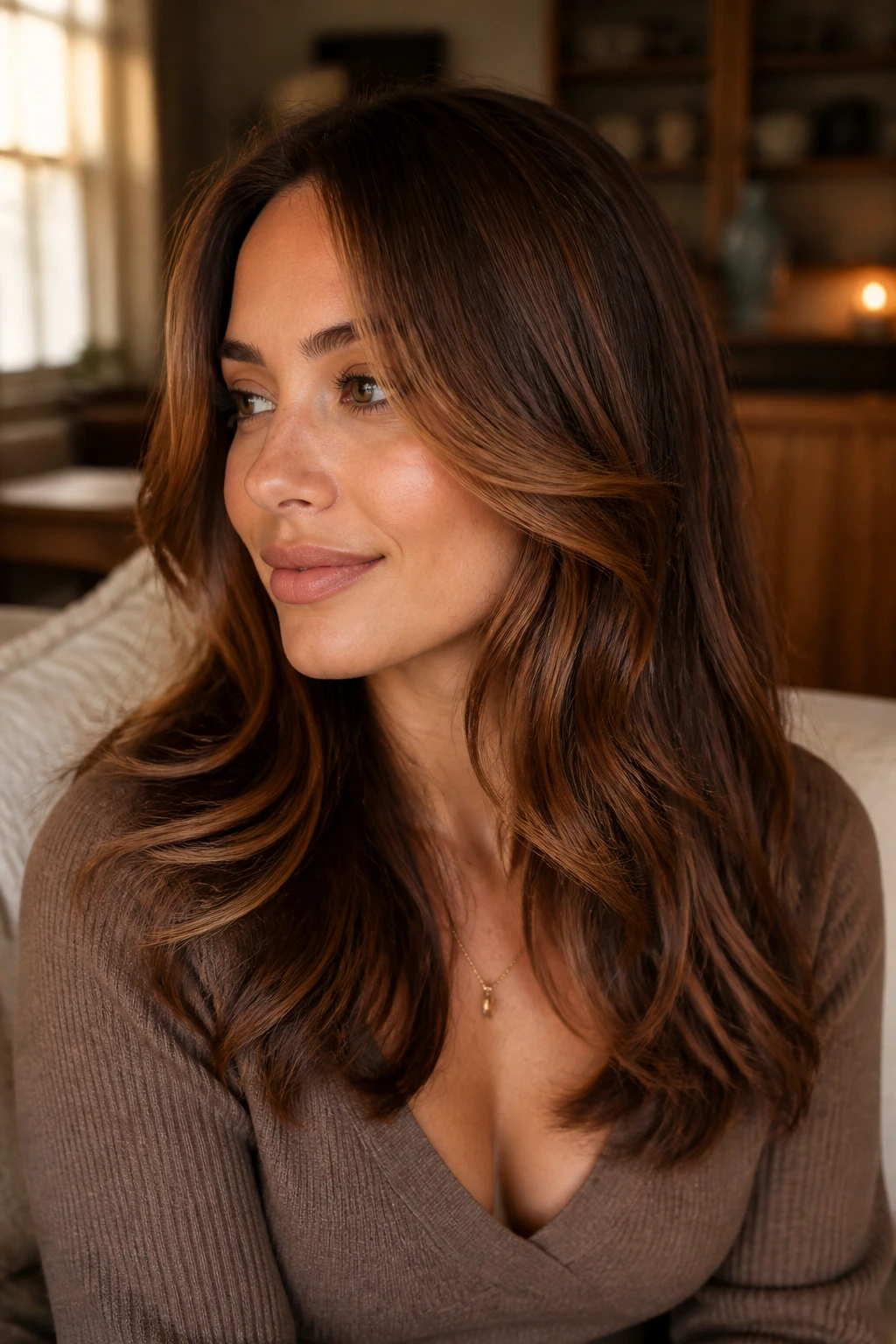
Bring photos, yes. But bring the right photos. The haircut in a feed photo is only half the story; the hair density, wave pattern, and color placement matter just as much. A long butterfly cut on thick hair will not behave like the same cut on fine hair, and that is where people get disappointed.
Say where you want the shortest layer to start. That one sentence changes everything. Cheekbone, jawline, lip level, collarbone — those are not vague style words. They’re actual map points on your face, and they tell the stylist how much lift or softness you want around the front.
Color matters just as much. If you want warm brunette, ask for chestnut, caramel, mocha, toffee, or hazelnut placement, not generic “brown highlights.” Warm brunette lives or dies by tone balance. A root shadow with lighter face-framing pieces can look gorgeous; a random stripey highlight job can look loud in the wrong way.
How to Style These Cuts So the Layers Actually Show
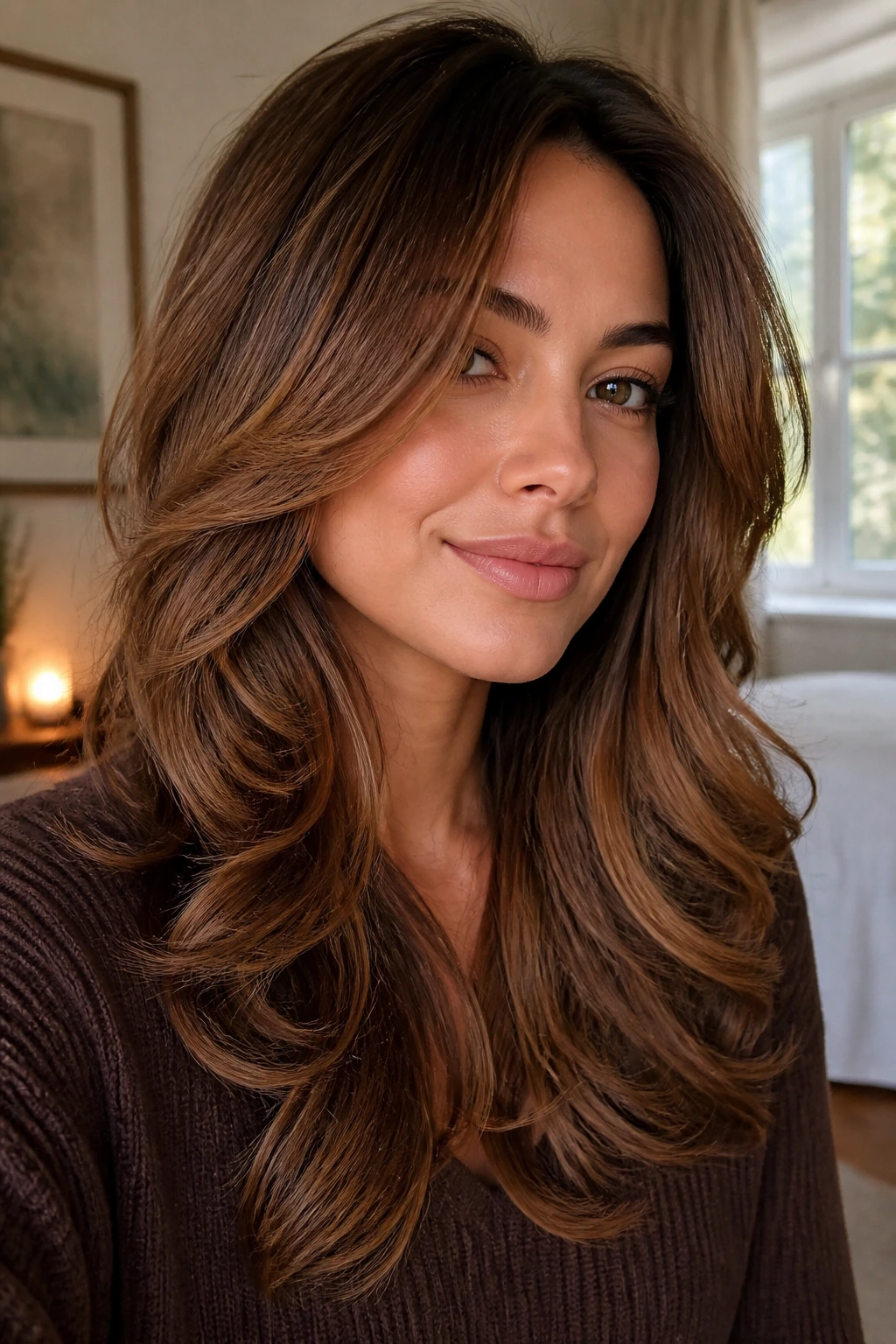
Blowout Shape: Start with a rough dry, then use a round brush or hot brush to bend the front pieces away from the face. Keep the nozzle pointed downward so the cuticle lays flat and the brunette color looks shinier.
Air-Dry Texture: On wavy and curly cuts, scrunch in a light cream or foam while the hair is damp, then clip the crown for 10 minutes so the roots don’t collapse. Don’t rake through it once it starts drying. That’s how you turn a good layer pattern into fluff.
Parting Tricks: Shift your part by half an inch and the whole haircut changes shape. A center part gives symmetry. A side part lifts the front layers and can make caramel or chestnut ribbons stand out at the cheekbone.
Finish: Use one small pump of serum or oil on the ends only. If the roots get shiny, the style can go limp fast. Warm brunette layers look best when the crown stays airy and the mids and ends carry the gloss.
Extra Shine and Movement Boosters
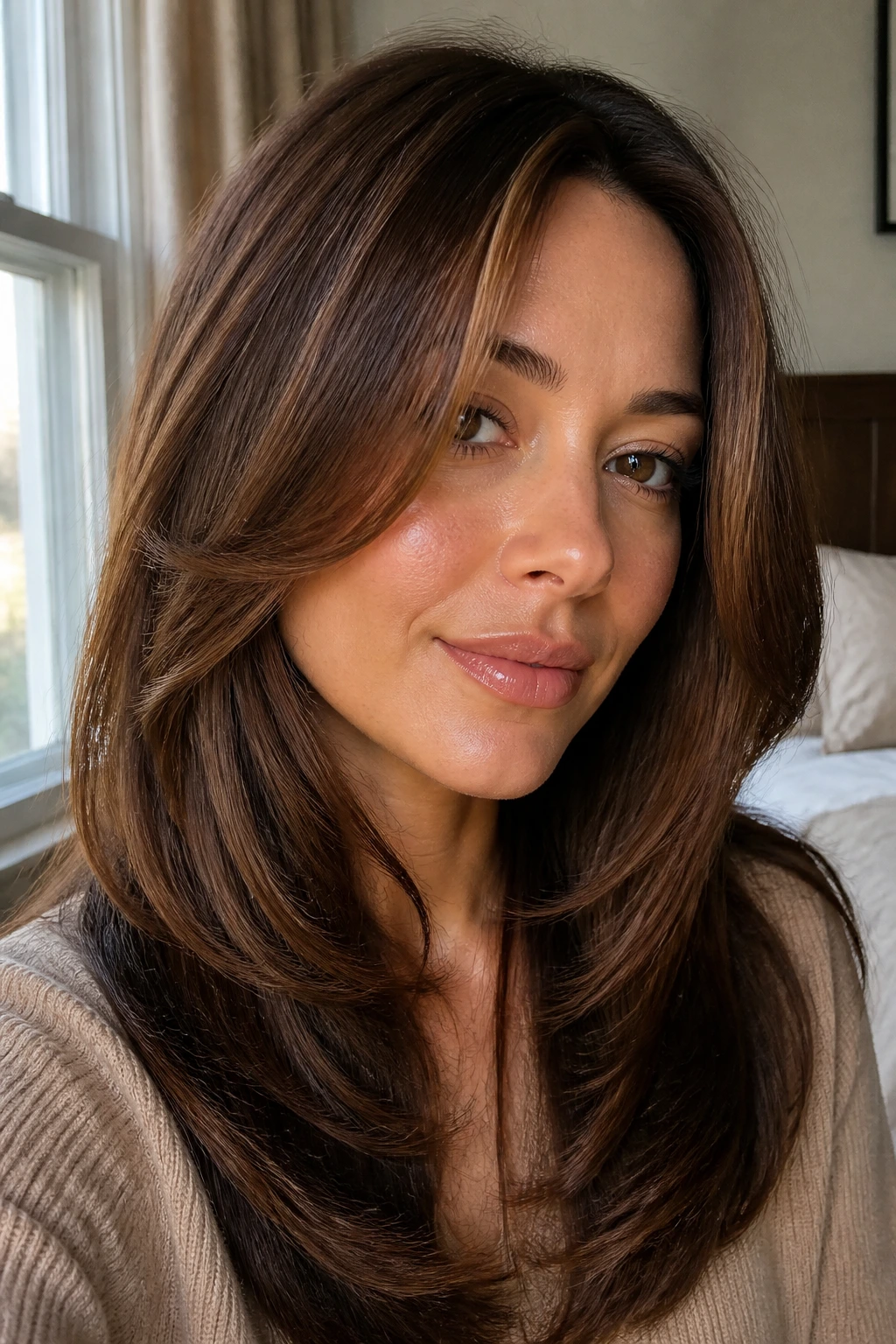
Gloss Boost: A clear or warm-brown gloss every few weeks can make chestnut, mocha, and caramel tones look freshly done without changing the cut. It’s one of the easiest ways to keep brunette color from looking dusty.
Volume Trick: If the top layers go flat, set the crown with a large roller while you finish makeup or breakfast. Five to ten minutes can help the front pieces sit higher and make the whole shape look more deliberate.
Color Pop: A few lighter pieces around the face — not all over — can wake up layered brunettes that feel too dark. Keep the contrast soft. Two levels lighter is often enough.
Make-It-Yours: If you want the haircut to feel more polished, smooth the ends inward. If you want it relaxed, separate the layers with texturizing spray and a quick finger shake. Same cut. Different attitude.
Common Mistakes That Flatten Brunette Layers
- Starting the shortest layer too high: The hair can puff at the crown and lose length fast. Ask where the first layer begins before the scissors touch the front.
- Going too light with the color: When brunette highlights drift into pale blonde, the warmth can turn stripey instead of rich. Keep the lightness soft and glossed.
- Thinning thick hair too aggressively: The ends start looking see-through, especially on long layers. Internal weight removal is usually better than heavy thinning shears.
- Using too much oil near the roots: Fine or medium hair goes flat fast. Keep the shine product on the mids and ends only.
- Ignoring your natural texture: A cut that looks beautiful blown straight may sit oddly when air-dried. The stylist should know how your hair behaves on a lazy day, not just on a perfect one.
- Skipping trims for too long: Layers can turn stringy at the ends. Once the perimeter frays, the whole style looks less rich, no matter how good the color is.
Variations and Alternatives to Try
The Soft Grow-Out: Keep the same layered shape, but ask for a deeper root shadow and fewer bright front pieces. This is the version for someone who hates a hard maintenance line and wants the cut to live gracefully between visits.
The Curly Brunette Version: Push the shortest layer lower and cut with the curl pattern in mind, not against it. Warm chocolate or chestnut highlights can be painted where the curls separate naturally, which keeps the dimension from looking striped.
The Polished Office Version: Stay closer to a lob or long U-shape, then use mocha or smoky chocolate tones instead of brighter caramel. The result is clean, smooth, and easier to wear with straight styling.
The High-Texture Version: Ask for more separation at the crown and around the ends, then add cinnamon or hazelnut ribbons through the top layer. This one reads casual and a little undone, which is exactly the point.
The Thick-Hair Control Version: Keep the perimeter strong and remove weight from the interior only. Caramelized V-shapes, soft U-layers, and longer face-framing pieces help thick hair move without turning fuzzy.
Care Between Trims and Color Refreshes
The cut usually needs a trim every 8 to 12 weeks, depending on how short the face-framing pieces are. A shag, bixie, or fringe-heavy style tends to need a closer schedule. Long layers can stretch a bit farther, but once the ends get wispy, the color starts to look dull too.
Warm brunette color usually holds best when you wash with a color-safe shampoo and keep the water lukewarm, not hot. Hot water strips gloss faster than most people expect. If you rely on a lot of dry shampoo or texturizing spray, use a clarifying wash about every 2 to 4 weeks so the hair doesn’t go dull and coated.
Glossing or toning every 6 to 10 weeks keeps caramel, chestnut, and mocha from fading into a flat brown haze. If the front pieces were lightened, they may need a little more attention than the rest of the head. That’s normal. The face-framing sections always work harder than the back.
Questions People Ask Before They Book
Will warm brunette layers work on fine hair?
Yes, if the layers are kept long and light. Fine hair usually looks better with soft internal movement than with lots of short chops, because too much layering can make the ends see-through.
Do these cuts work on curly hair?
They can, but the layer placement has to respect shrinkage. Curly hair often needs layers that sit lower than straight hair would, so the shape doesn’t jump up too much once it dries.
Is balayage better than highlights for warm brunettes?
Balayage usually gives a softer grow-out and a more melted look. Traditional highlights can still work, but they need enough warmth and lowlight depth to avoid that stripey brown-and-blonde effect.
How do I keep caramel from looking orange?
Ask for caramel that sits closer to gold-beige than copper, and keep a gloss in the routine. Orange usually shows up when the tone is too light, too warm, or both.
Can I air-dry these styles?
Yes, especially shag, wolf, midi, and wavy layered cuts. Long blowout shapes like butterfly cuts or S-curves usually look better with some brush work, even if it’s only around the front.
What if my hair is very thick?
Go for a stronger shape like a V-cut, long U-layers, or a controlled shag. Thick hair needs enough weight removed to move, but not so much that it turns puffy at the crown.
Do warm brunettes need purple shampoo?
Usually no. Purple shampoo is more useful for blonde brass. Brunettes with warm tones often do better with color-safe shampoo and an occasional gloss to keep the brown rich instead of muddy.
What should I ask for if I only want a subtle change?
Ask for long layers, a soft face frame, and a gloss one shade warmer than your natural brunette. That gives movement and shine without making the haircut feel like a total reset.
The Warm Brunette Sweet Spot
The nicest thing about these cuts is that they don’t ask for a total identity change. They just make the hair move better, fall better, and catch light in a way that feels considered. A good chestnut layer or a caramel butterfly cut can change the mood of the whole face without turning the color loud.
If you’ve been staring at flat brown hair and wondering why it looks heavy even when it’s healthy, the answer is usually shape plus tone. Warm brunette layers fix both. They give the ends a reason to move and the color a reason to glow.
Pick the version that suits your texture, keep the tone warm and glossy, and ask your stylist where the first layer should start. That one detail tends to decide whether the haircut feels ordinary or quietly excellent.
