



Thick curls have a funny way of exposing bad haircutting. Leave them one length, and the bottom turns into a heavy shelf while the crown sulks flat. Over-layer them in the wrong places, and you get frizz with no shape to show for it. A good shag haircut for thick curly hair sits in the narrow middle: enough layering to break the bulk, enough length left behind to keep the curl pattern alive, and enough movement that the haircut still looks deliberate on day three, not accidental.
That’s the part people miss. A curly shag is not just “shorter on top, longer underneath.” On dense curls, the best versions are built around weight removal, curl clumping, and where the hair naturally wants to spring up once it dries. A stylist who understands that difference can make thick curls feel lighter without turning them wispy or hollow. And yes, the details matter — where the layers begin, whether the fringe is cut blunt or point-cut, how much length stays at the nape, and whether the cut is shaped wet, dry, or somewhere in between.
There’s a reason shag haircuts keep coming back for thick curly hair: the shape does what the hair already wants to do, then cleans it up just enough to look intentional. When the layers are right, you get lift at the crown, bend through the sides, and ends that don’t puff into a triangle the second humidity shows up. That’s the sweet spot, and it’s worth chasing with a little care.
Why These Curly Shags Earn Their Space
-
They remove bulk without flattening the curl pattern: The right layers take weight out of the middle and lower lengths, so the curls can stack instead of collapsing into a heavy block.
-
They keep the silhouette from going triangular: Thick curly hair loves to spread wide at the bottom when it’s cut blunt; a shag softens that edge and lets the shape taper more naturally.
-
They give you options at the front: Curtain bangs, bottleneck bangs, and face-framing pieces can change the whole haircut without chopping off a huge amount of length.
-
They grow out with less drama: Layers blur before they fall apart, which matters if you’d rather go longer between trims.
-
They work with air-drying and diffusion: You can wear a curly shag with a soft, lived-in finish or a more polished cast, and the cut still reads well.
-
They make dense hair feel lighter on the neck and shoulders: That matters more than people think. A heavy nape can make even a good cut feel like a helmet by noon.
1. The Rounded Shoulder Shag
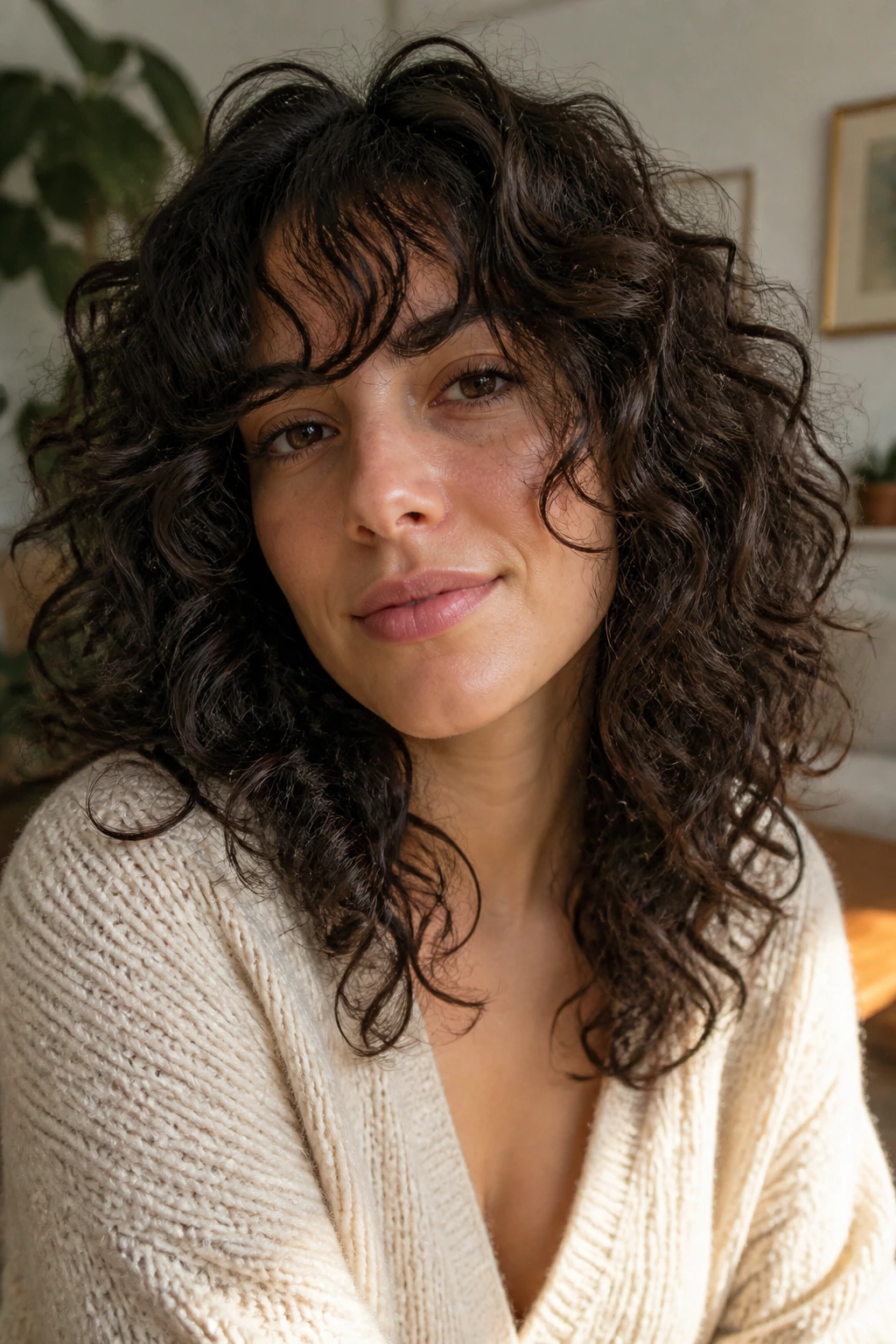
A rounded shoulder shag is the safest place to start if you want movement without losing the feeling of “real hair.” The length sits around the shoulders, the layers are built in a soft curve, and the ends still hold enough weight that the haircut doesn’t fly apart on humid days. On thick curls, that rounded outline keeps the shape from jutting out at the sides.
Why it works on dense curls
The shoulder line gives the curls a place to land, which is useful if your hair springs up 2 to 4 inches after drying. Ask for internal layers that begin around the cheekbone or upper lip, not right under the crown, or the top can get too short too fast. The result is movement that stays calm at the edge.
A good way to wear it: let the front pieces fall a little longer than you think they should. Thick curls shrink with a grudge.
2. The Curtain-Bang Cascade
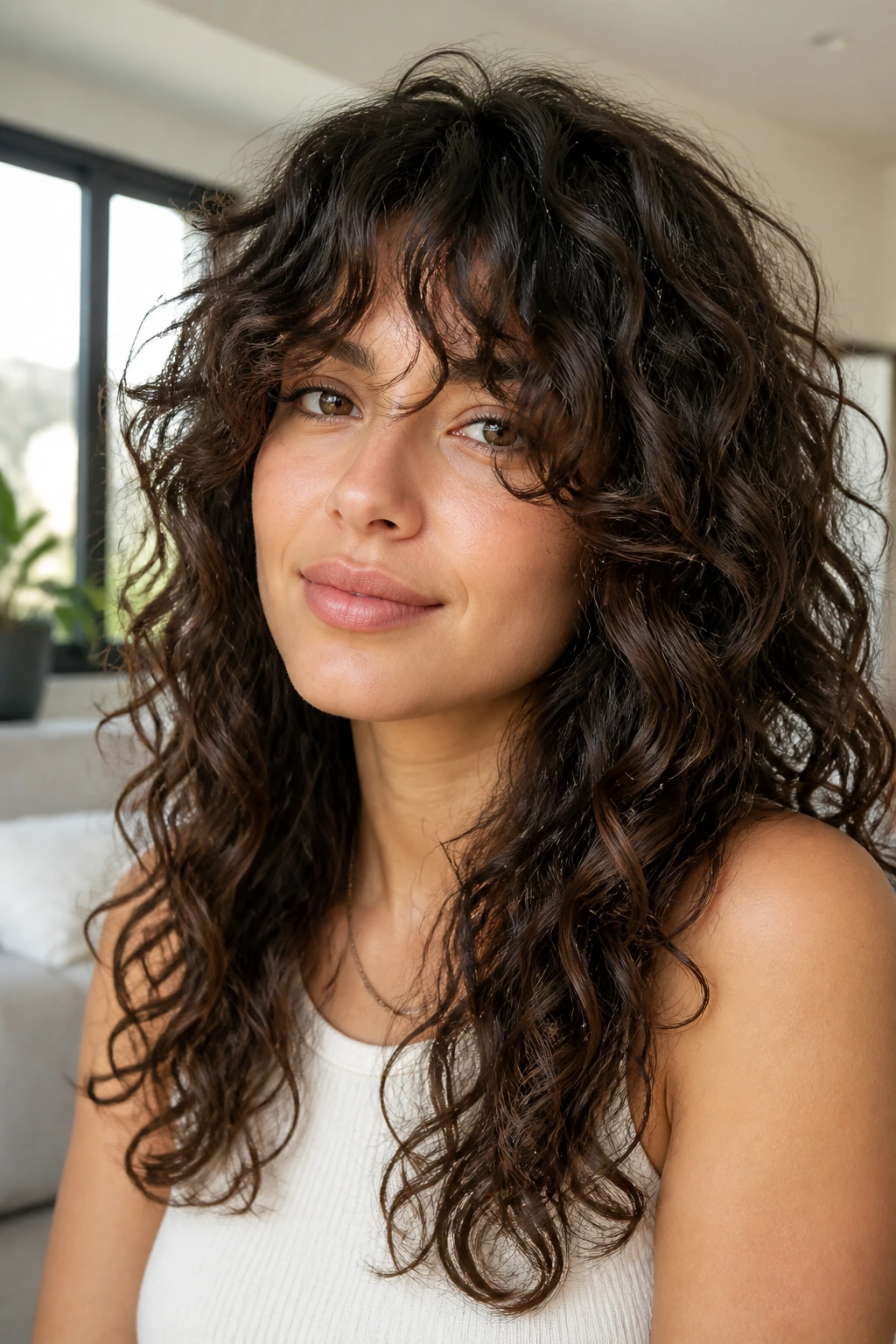
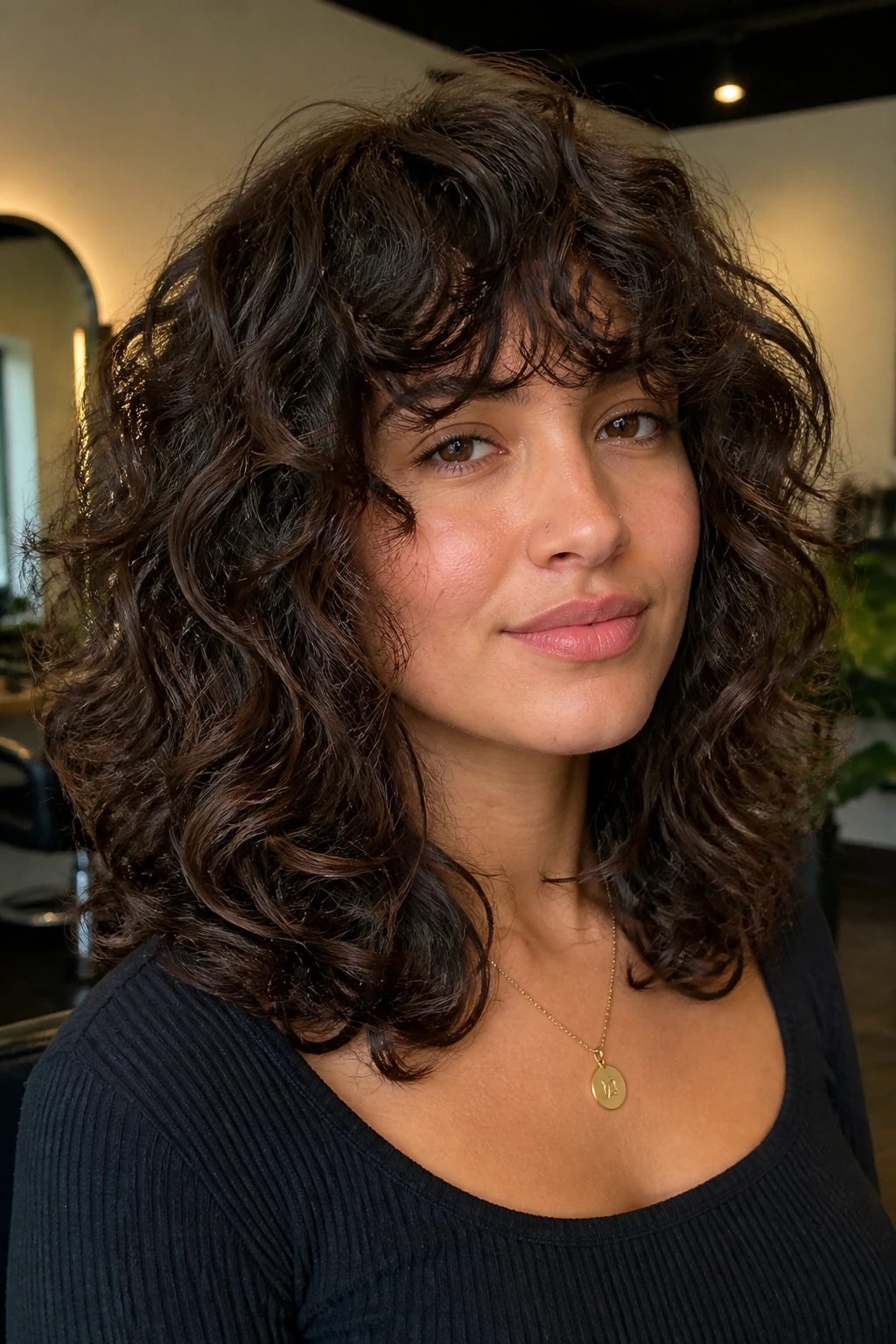
Curtain bangs change everything on a curly shag. They open the face, break up forehead width, and keep the haircut from feeling like a block of layers with no front story. When the bangs are left long enough to split around the cheekbones, the shape looks soft instead of chopped.
The trick is length. Ask for the shortest point to hit around the bridge of the nose or just below it when dry, because curls bounce up fast. If your hair is dense, the bangs should be cut with enough space to separate into two or three soft pieces, not one thick curtain that sits like a visor. A little asymmetry helps here. It looks less staged.
3. The Soft Wolf Shag
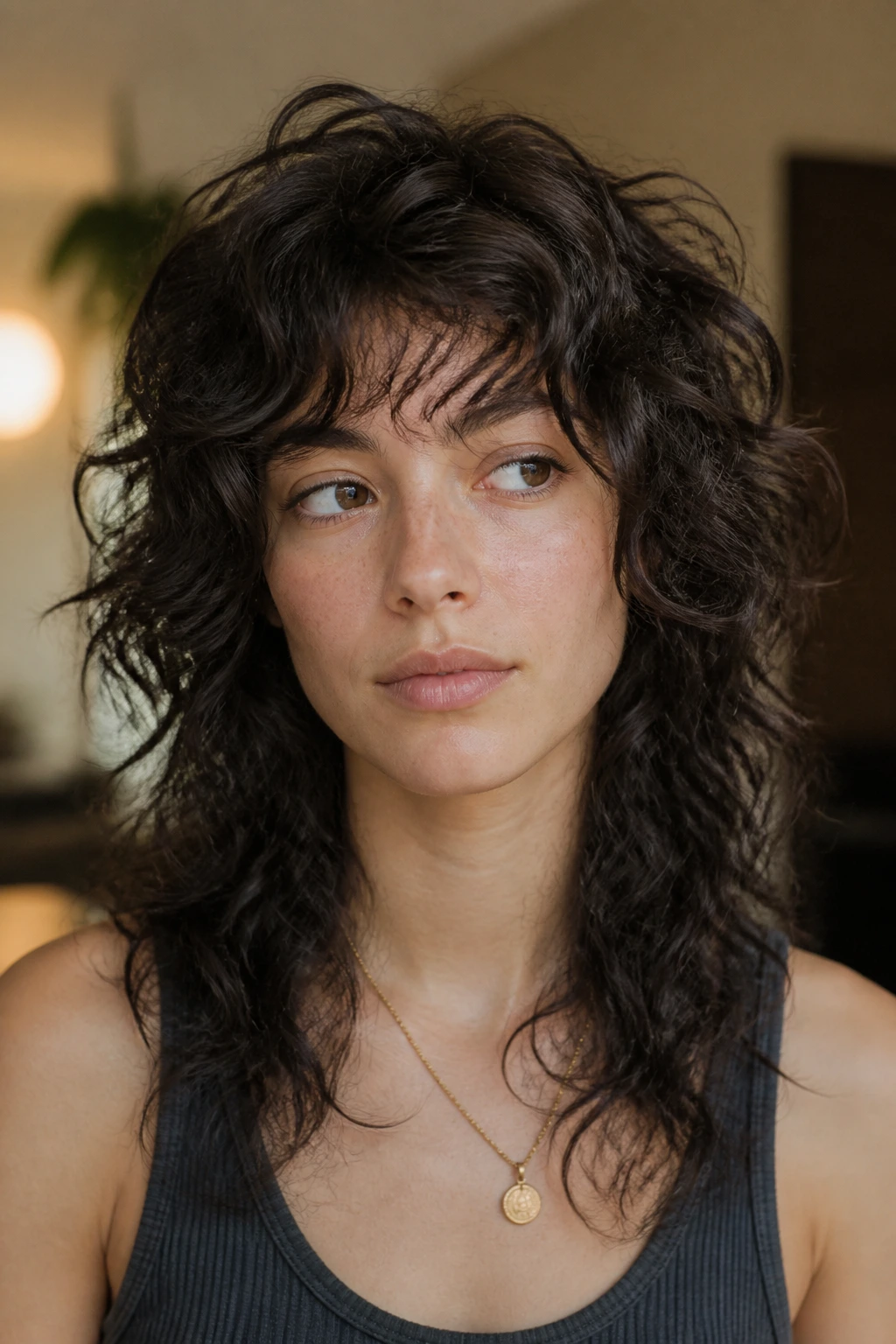
This is the edgier cousin in the group, but it doesn’t have to look hard or punky. A soft wolf shag keeps the shorter crown and stronger layer contrast of a wolf cut, then rounds off the ends so the shape still feels wearable on thick curls. It’s a good choice if you like visible texture and don’t mind a haircut with some attitude.
What makes it different
The top is shorter, the middle layers are more aggressive, and the back keeps enough length to avoid that shaved-on-top, fluffy-at-the-bottom imbalance. On dense curls, that means less bulk around the ears and more lift where the head needs it. The hair should still move when you shake it out, not sit in little stacked shelves.
If you’re nervous, ask for “wolf cut energy, but softer around the perimeter.” That phrase actually helps.
4. The Collarbone Razor Shag
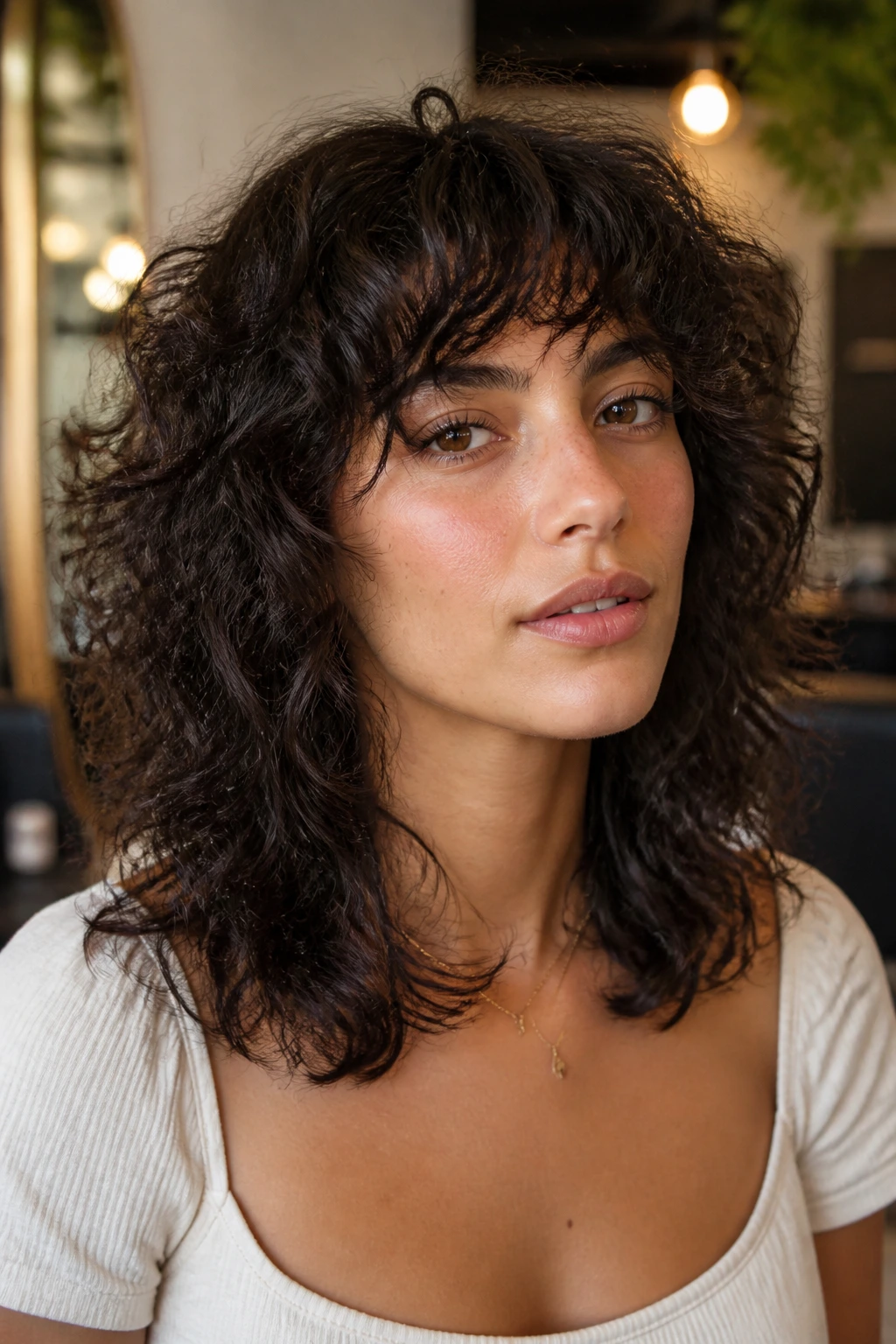
A collarbone shag with razor-finished ends can be gorgeous on the right curl pattern. The length stays long enough to pull back, but the razor work opens up the ends so the layers don’t feel blunt or heavy. This one loves thick hair that clumps well and doesn’t frizz at the first sign of friction.
But there’s a catch. If your curls are already porous or prone to halo frizz, too much razor work can make the ends look thirsty. I’d keep the interior layers point-cut and use the razor only on the softest parts of the face frame. The goal is loose movement, not shredded ends that puff out by lunch.
5. The Bottleneck Bang Shag
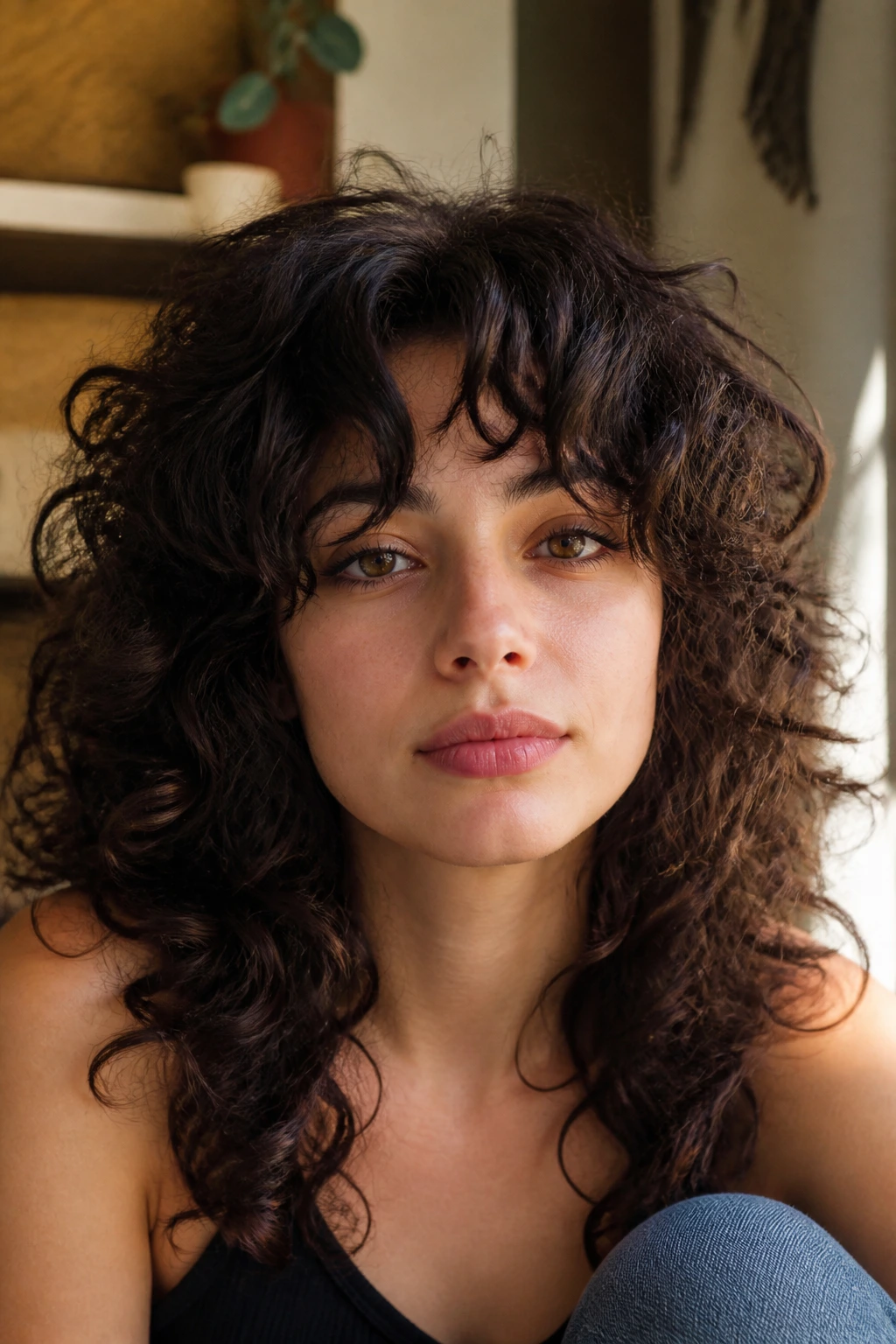
Bottleneck bangs are one of the smartest fringe choices for thick curly hair. They stay a little narrower at the center, then open as they travel toward the cheekbones, which keeps the front from looking heavy. On a shag, that shape works because it gives you a clean transition from fringe to face frame.
The better versions of this cut don’t try to make the bangs too perfect. A curl or two can sit slightly out of line and the whole thing still looks good. If your forehead is on the smaller side, keep the center fringe longer. If your curls are tight, ask for extra length in the bang area so you’re not surprised by the shrinkage.
6. The Chin-Length Curly Bob Shag

Short curly cuts can go very wrong when they’re too square. A chin-length bob shag avoids that by keeping enough layers to bend the outline, which is a gift if your hair is thick and wants to stand out from your head. The finish feels playful, not puffy.
This one works best when the stylist respects the jawline. You want the curl mass to tuck inward or fall close to the neck, not balloon out like a triangle helmet. A chin-length shag bob can be fabulous on strong curls because the shape shows off the pattern right away, but it does ask for regular trims. Short curls lose their structure faster than long ones.
7. The Micro-Fringe Moment

A micro fringe on thick curly hair is not subtle. That’s the point. It gives the shag a sharp front edge while the rest of the haircut stays soft and layered, which creates a nice tension between playful and precise. If your face can handle a short bang and you enjoy a bit of drama, this is a memorable shape.
How to keep it from turning awkward
The fringe needs to be cut longer than it looks in the chair. Curly micro bangs spring up hard, and the difference between “cool” and “oops” can be half an inch. Keep the side pieces long so the bang area has something to blend into.
Best styling move: define the fringe on its own with a small amount of curl cream, then leave the rest of the hair more open. That contrast makes the front read on purpose.
8. The Soft Mullet Shag
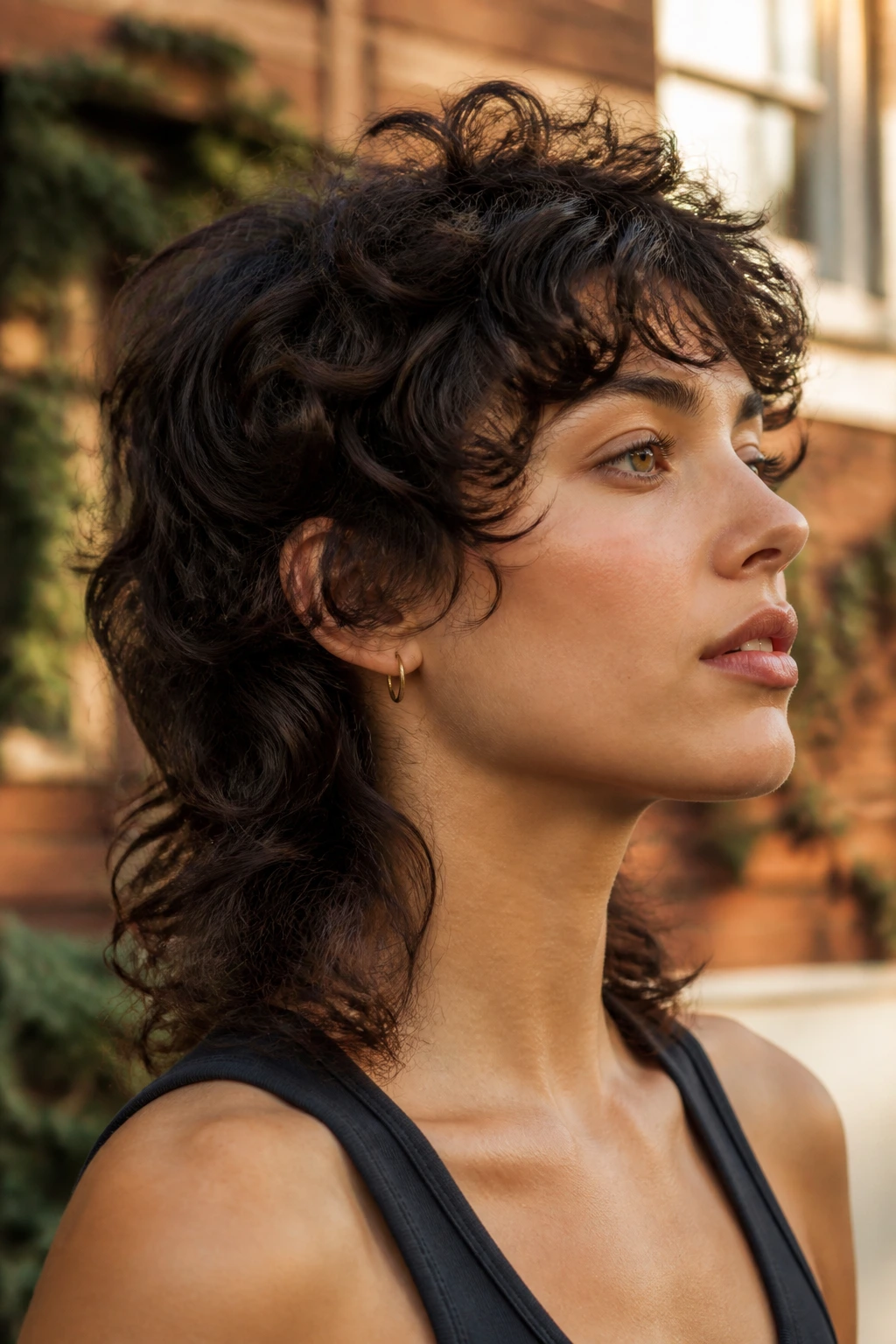
A soft mullet shag keeps the back longer and the crown lighter, but it avoids the hard lines that make some mullets feel costume-y. On thick curly hair, this shape is useful because it pulls the bulk away from the sides while leaving enough length in the back to keep the curl pattern luxurious, not sparse.
It’s a good fit if your hair gets hot and heavy at the nape. The shorter top can create lift, while the longer back still gives you that drape people tend to want from curly hair. If you hate the idea of a dramatic change, this is one of the more forgiving ways to test a shag. It grows out cleanly, too. That matters.
9. The Curl-By-Curl Dry Cut
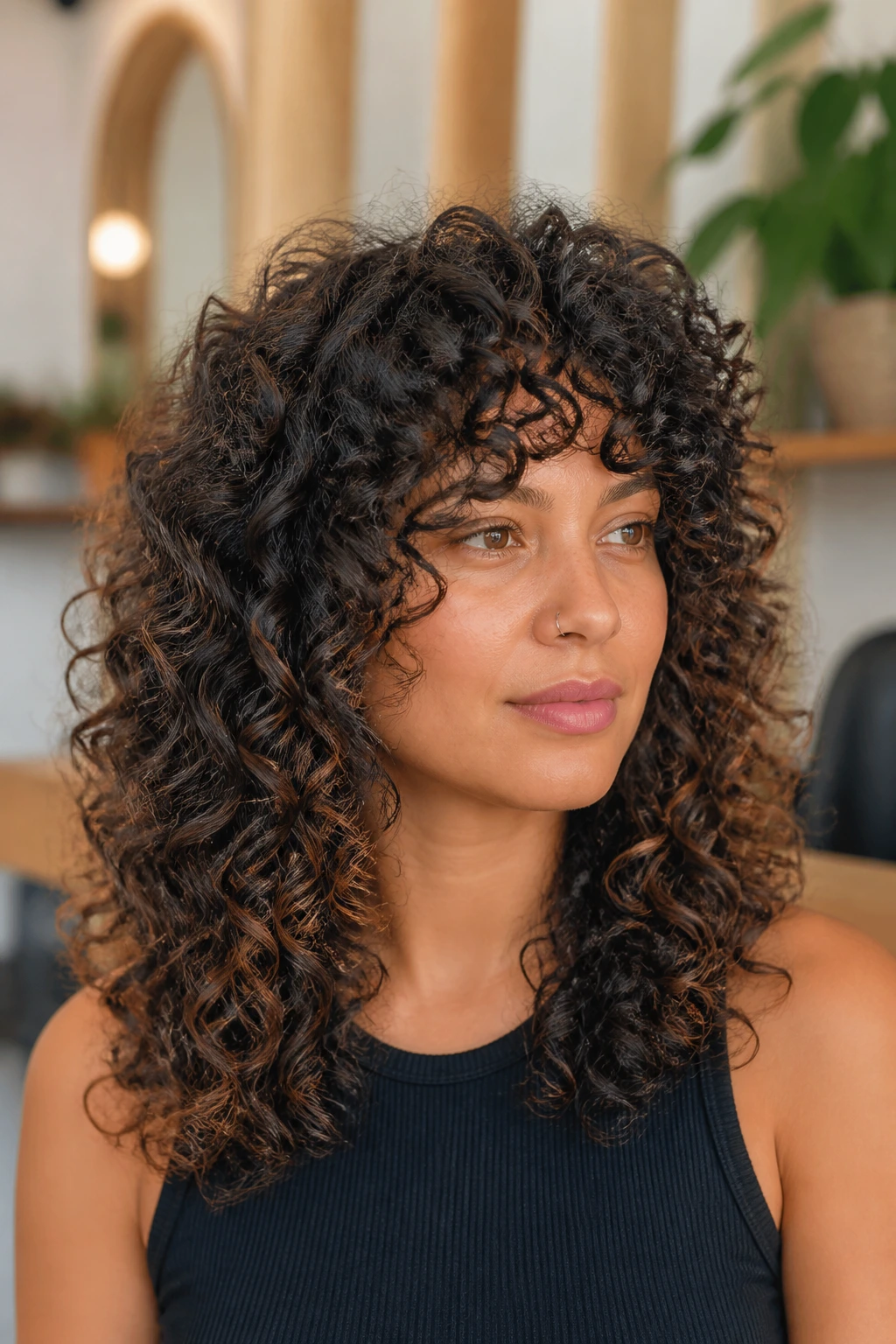
If your curls vary from one zone to another, a dry cut can save you from a bad surprise. A curl-by-curl shag lets the stylist see exactly where each coil bends, how far it shrinks, and which pieces overtake their neighbors once they dry. On thick hair, that precision can be the difference between “layered” and “lopsided.”
Why this method matters
Dry cutting is especially helpful when the crown is looser than the sides or when the back is tighter than the front. Those differences are hard to read when the hair is wet and stretched. In a dry cut, the shape gets built around the hair you actually live with, not the hair that hangs in the sink.
If your curl pattern changes head to temple, this is the one to ask about first. It’s not flashy. It’s just honest.
10. The Crown-Lift Volume Shag
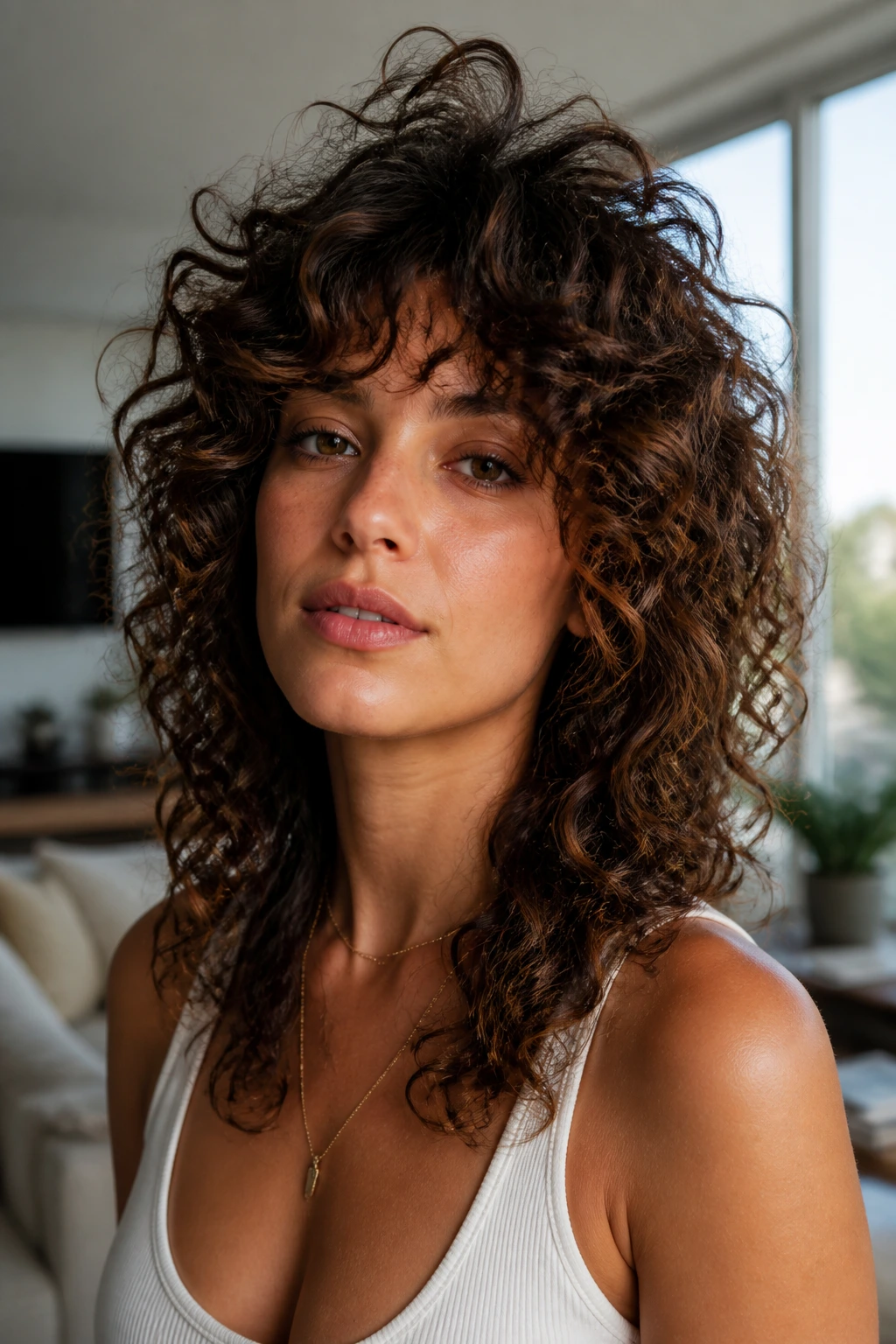
Some thick curly hair doesn’t need more layers everywhere. It needs more life at the top. A crown-lift shag concentrates shaping around the upper head so the roots don’t collapse while the lower lengths keep enough bulk to hold the silhouette together. The result is a cut with height, not just width.
This is a smart choice if your curls are dense but sit flat near the part. Ask for shorter interior layers at the crown and softer graduation through the mids, not aggressive thinning through the ends. That keeps the shape from becoming airy in the wrong places. A tiny root clip while diffusing can help, too, but the cut should do most of the work.
11. The Tapered Nape Shag
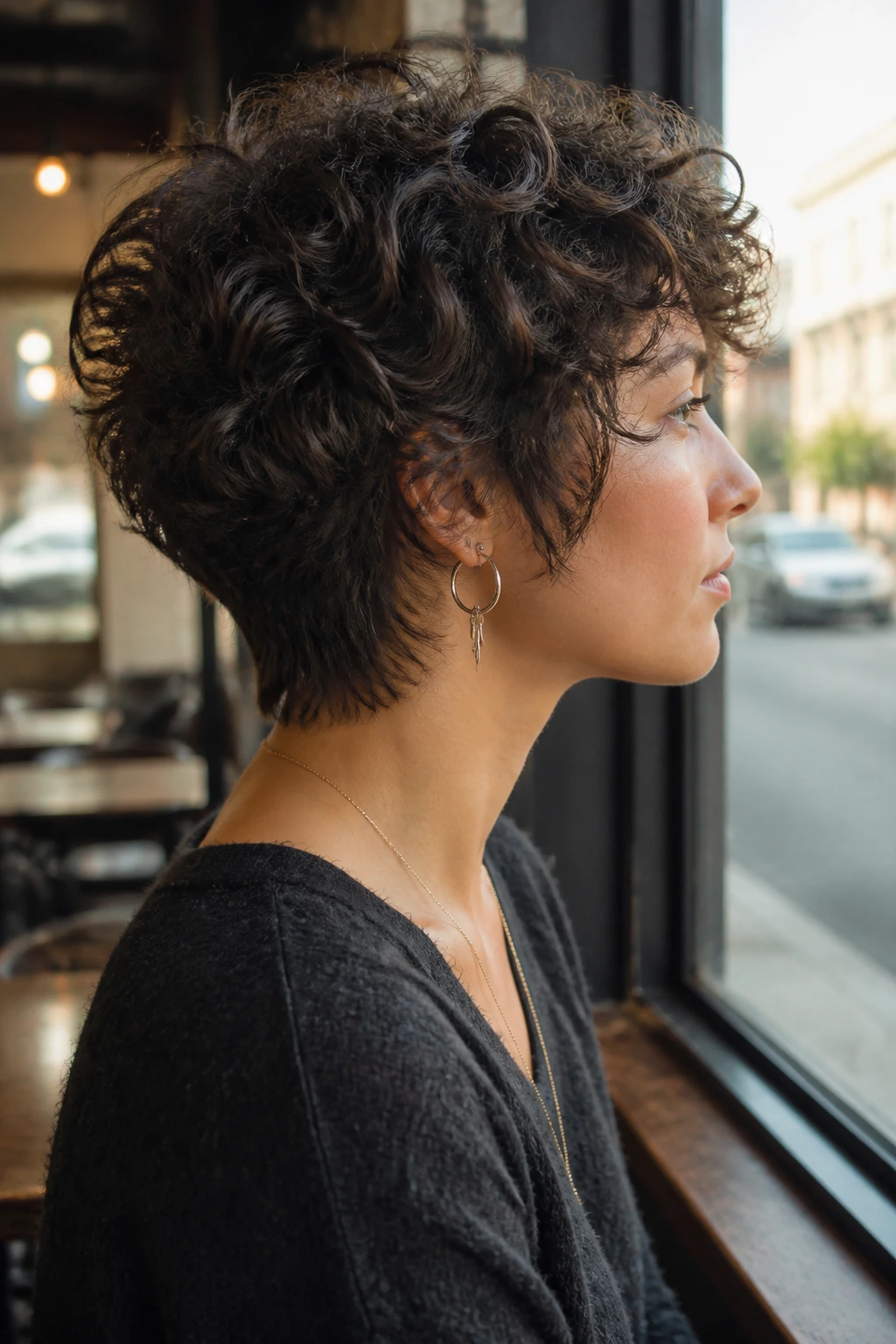
The nape gets ignored until it starts feeling like a wool scarf. A tapered nape shag keeps the neckline tighter and cleaner, which makes the whole haircut feel lighter when you’re wearing it down or tied loosely back. It’s especially helpful for thick curls that collect bulk around the collar.
The best part is how it changes the back view. Instead of one thick curtain hanging straight from the occipital bone, the layers slip inward and create a softer neckline. If you wear jackets, turtlenecks, or scarves often, this cut saves you from that constant “too much hair on my neck” feeling. Small detail. Big difference.
12. The Boho Long Shag
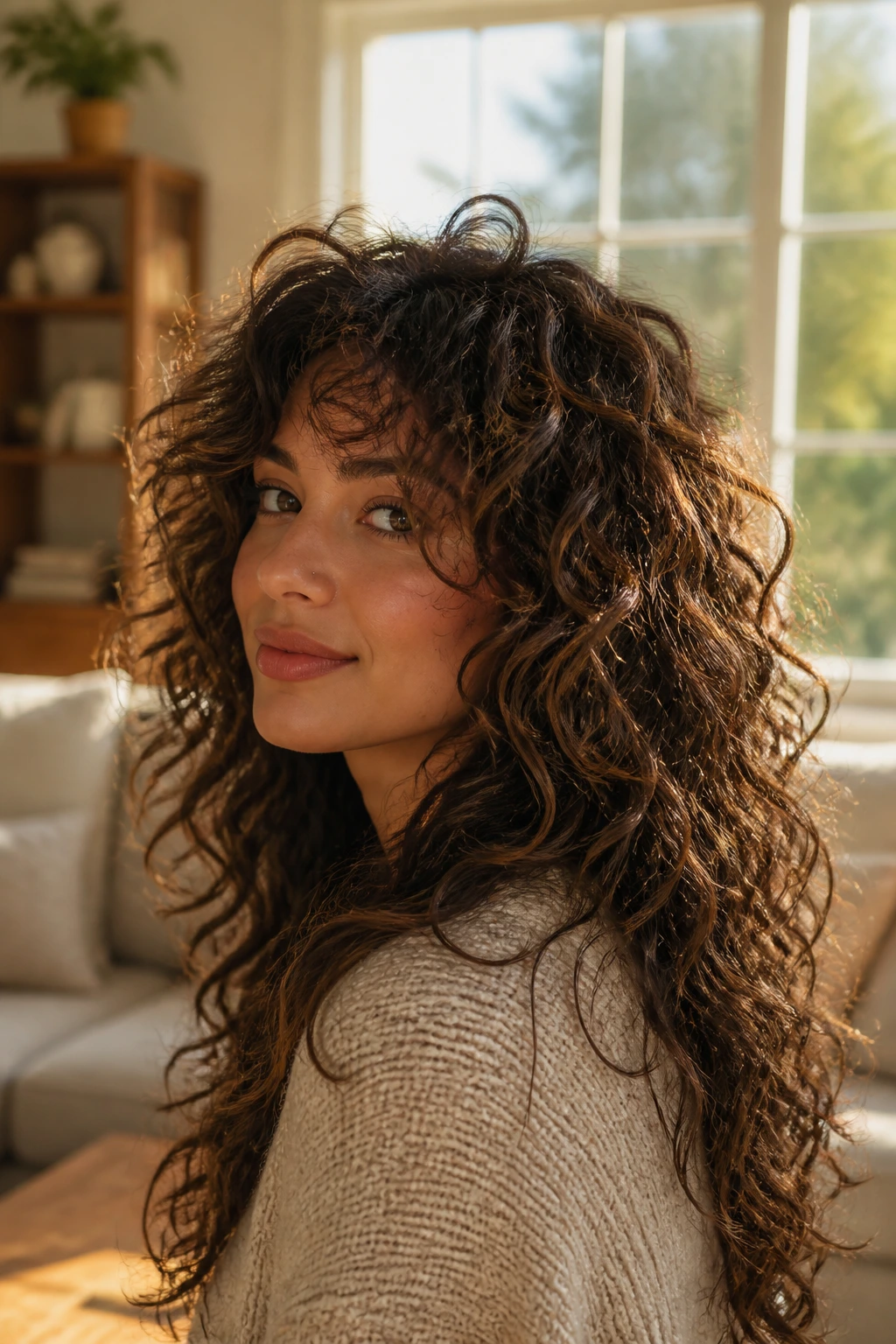
If you love length and refuse to give it up, a boho long shag is the compromise worth considering. It keeps the hair long enough to graze the mid-back or lower ribs, then sneaks in layers that move through the interior instead of hacking off the perimeter. Thick curls need that hidden structure or the bottom turns into a heavy drape.
This cut is lovely when the front is opened up just enough to frame the face, but the length remains the star. It’s also easier to style than people think. Long layered curls often need less product than shorter ones because the weight helps them settle. That said, the wrong layering can still make long hair look stringy, so keep the layers generous, not slashed.
13. The Side-Part Sweep Shag
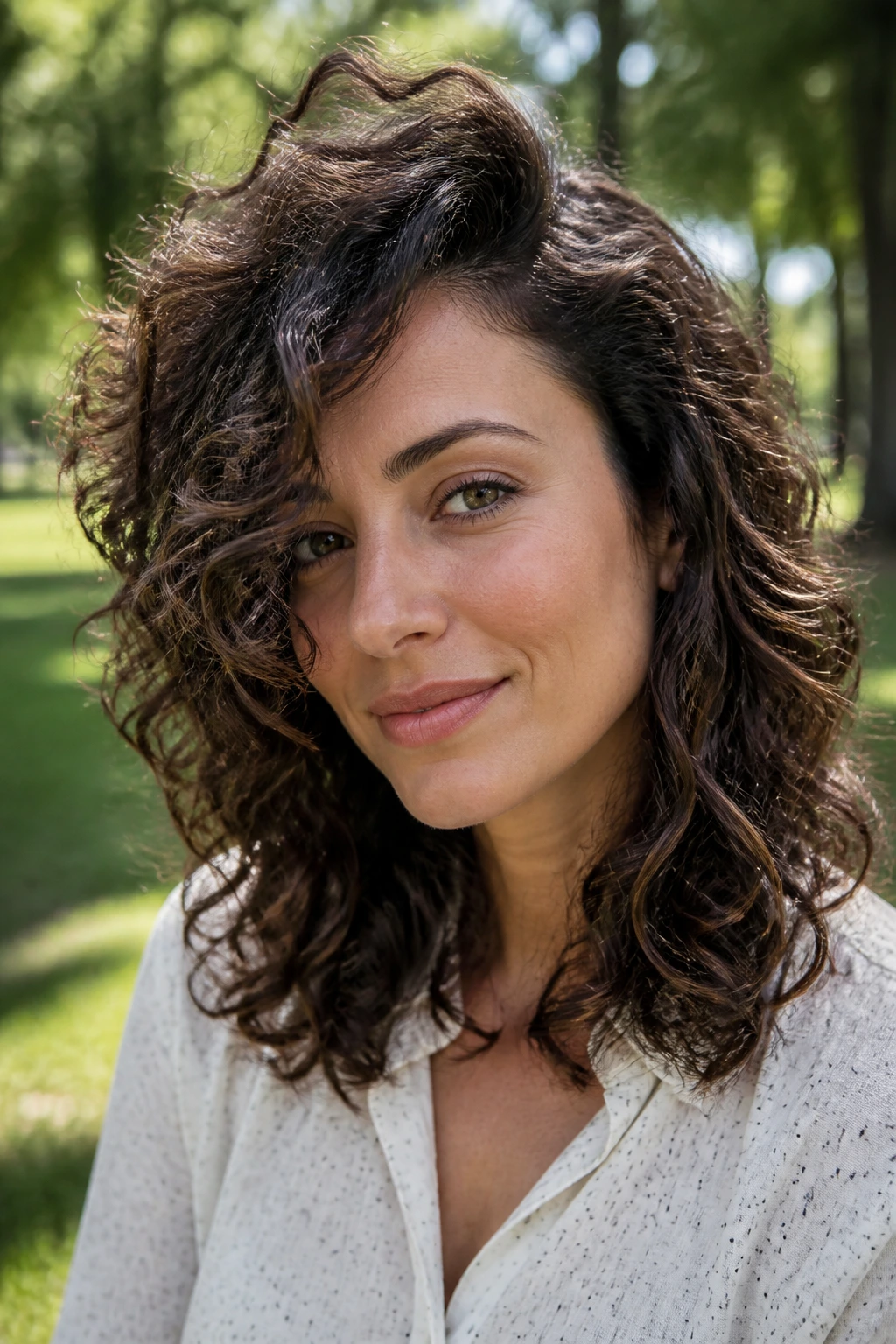
A side part can rescue a shag that feels too centered or too symmetrical. With thick curly hair, shifting the part throws instant lift into one side and changes how the layers fall around the face. A side-part shag looks a little fuller at the crown and a little softer at the cheek.
The style works especially well if one side of your hair is flatter than the other. Most people have a side that cooperates and a side that refuses; this cut helps you use that to your advantage. Ask for the face frame to be slightly longer on the side that needs balance. The curl pattern does the rest.
14. The Center-Part Frame Shag
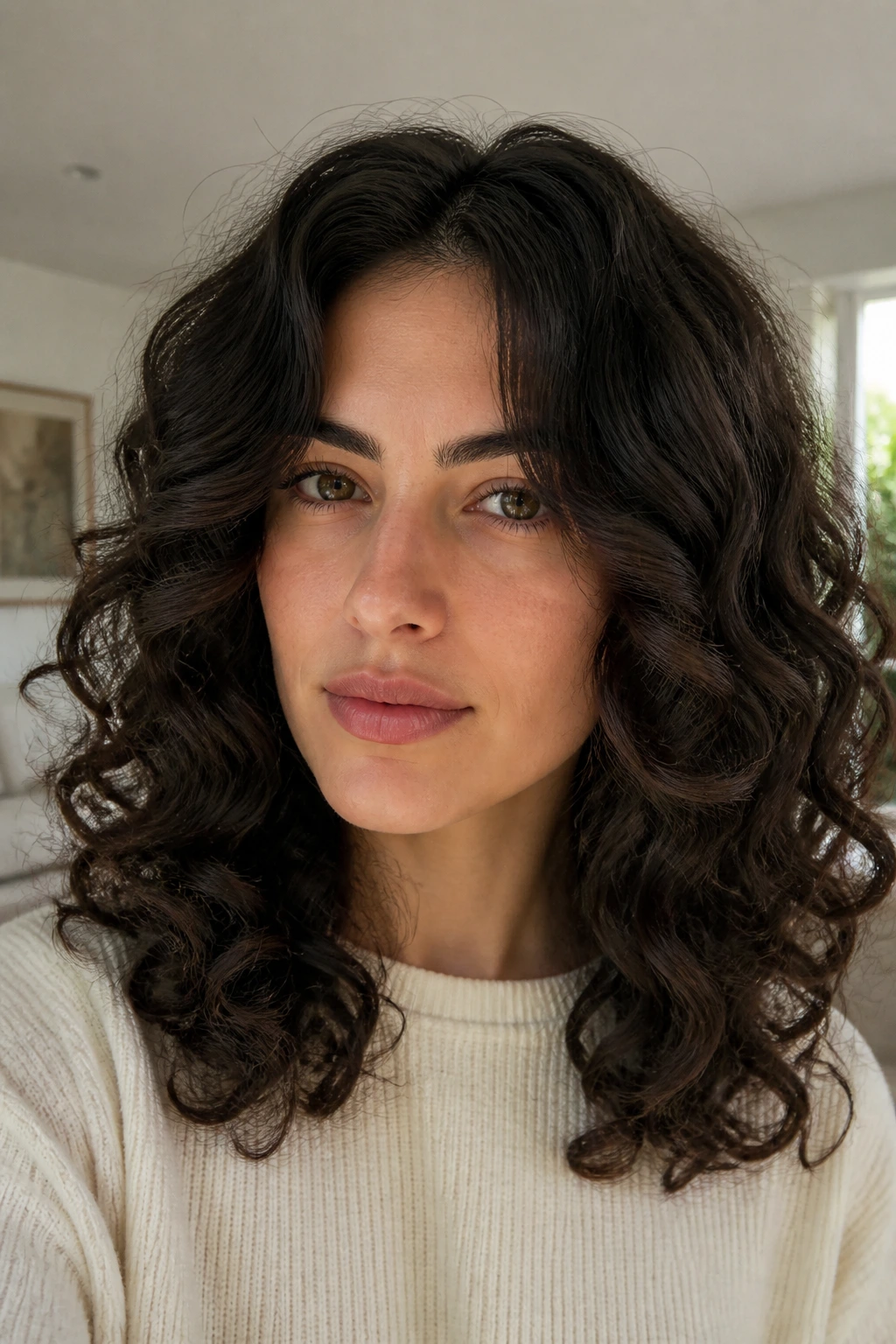
A center-parted shag is cleaner and more modern in feel, but it only works if the front layers are cut with enough softness. Thick curly hair can look severe with a straight middle part and no face frame, so the cut needs gentle bends around the jaw and cheekbones to avoid that effect. Once it’s right, though, the symmetry is gorgeous.
This version is best when you want the haircut to feel calm, not shaggy in the messy sense. The layers should open the face without dragging attention to the part itself. If you’re wearing strong brows, bold earrings, or glasses, this shape gives those features room. The part is the spine. The curls are the frame.
15. The Heavy Bang, Light Body Shag

There’s something satisfying about a shag that commits to fringe. A heavy-bang version gives the front a solid presence while the body layers stay softer and lighter, which is a smart move for very dense curly hair. The bangs anchor the face, and the rest of the cut doesn’t have to compete.
Best for
- people who like a full fringe but don’t want the whole haircut chopped short
- thick curls that shrink dramatically at the front
- faces that benefit from a little weight across the forehead
Keep the body layers longer than you think, or the bang will do all the work and the haircut can feel top-heavy. When done well, this shape has real personality.
16. The Invisible-Layer Shag
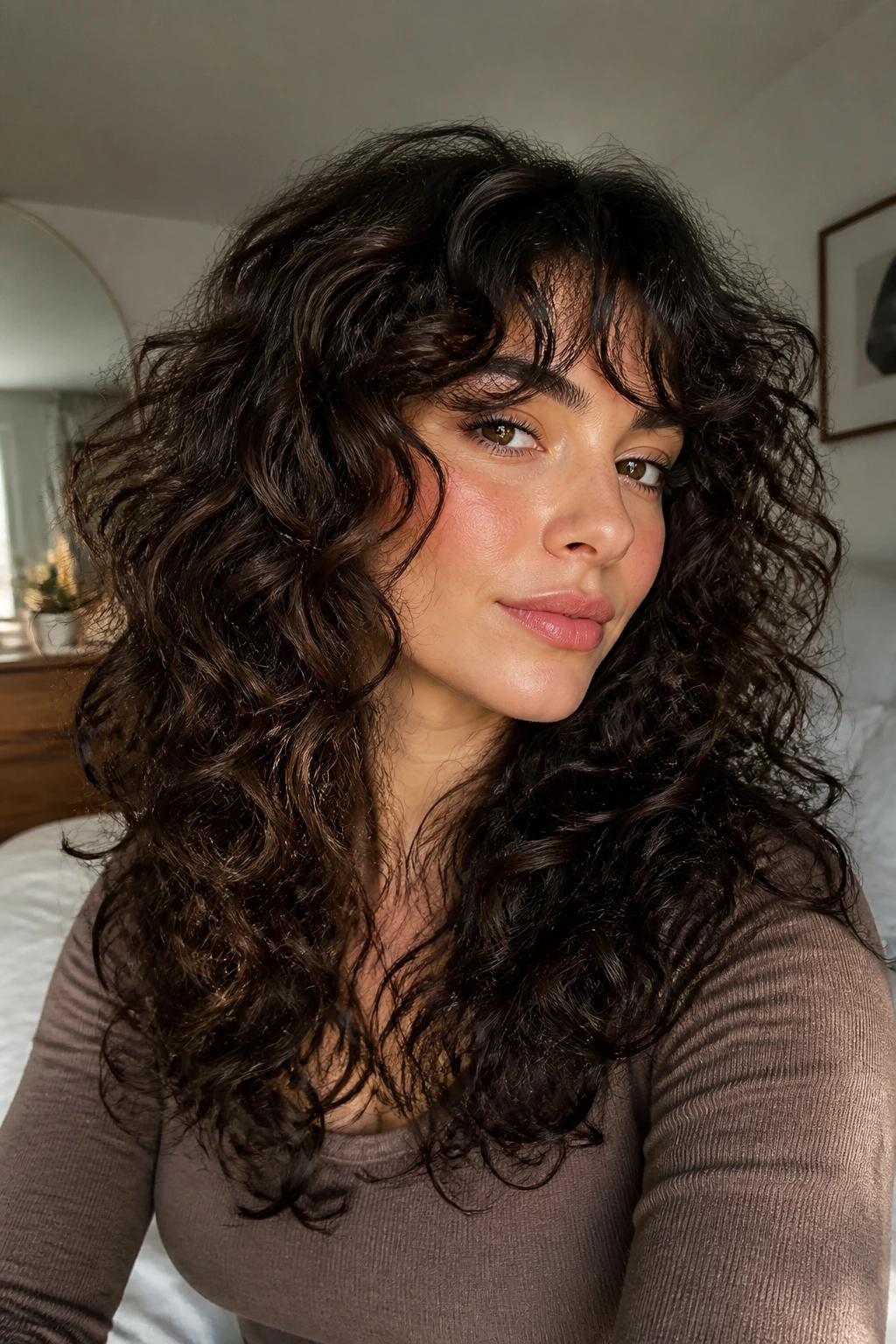
Not every shag needs to announce itself. Invisible layers sit inside the haircut, hidden enough that the perimeter still reads full and polished. On thick curly hair, that’s useful when you want movement without obvious choppiness. You get air between the curls, but not gaps.
This is one of my favorite versions for people who fear looking too shaggy. The layers are there. You just don’t see them until the curls swing. It’s also forgiving if your hair is a mix of textures, because the outer line stays stable while the inside carries the movement. Ask for soft internal debulking, not aggressive texturizing. Those are not the same thing, and the second one can go sideways fast.
17. The Air-Dry Definition Shag
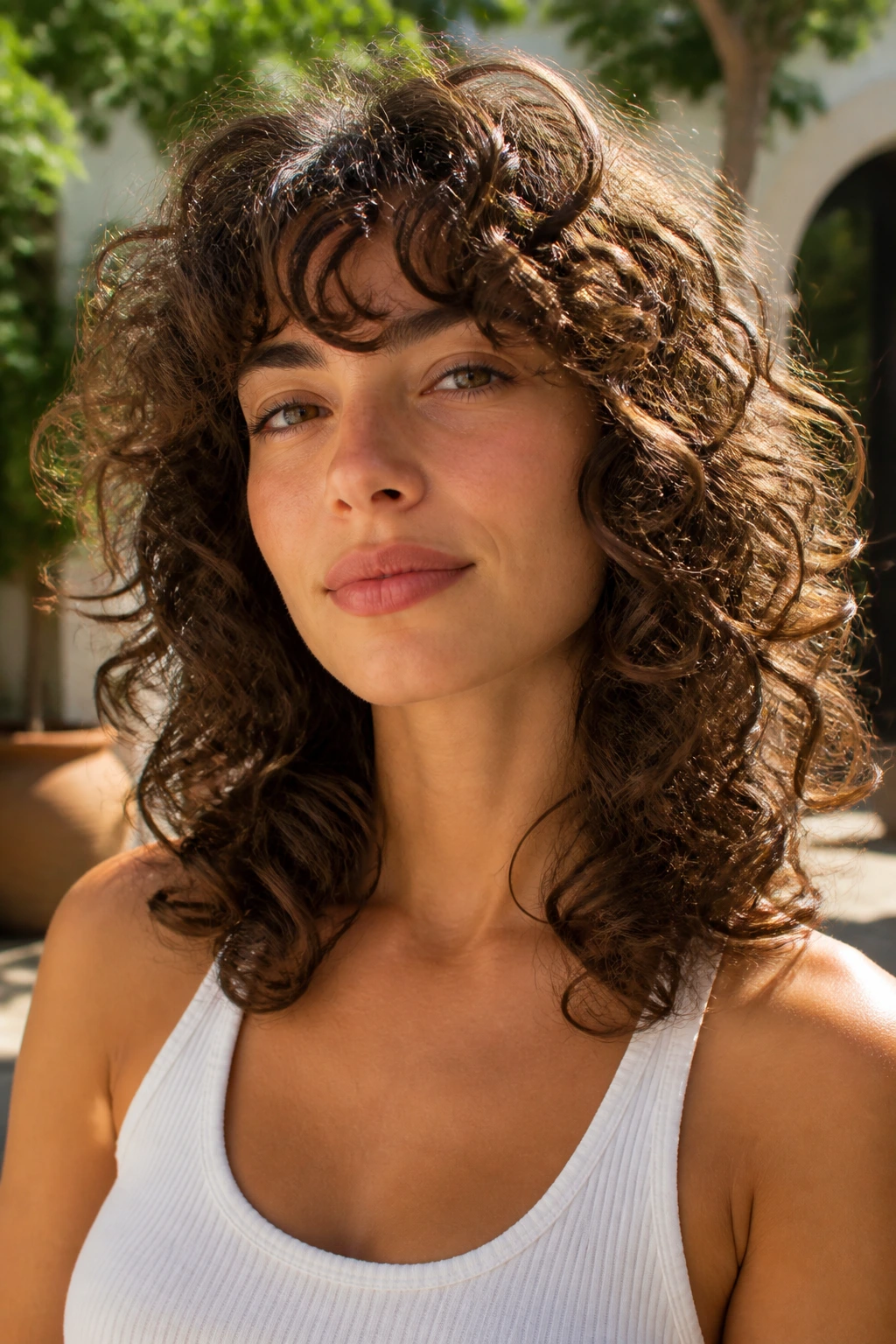
If you rarely reach for a diffuser, the cut should do the work for you. An air-dry definition shag is shaped so the curls clump well on their own, with layers that encourage separation without turning into frizz. That means the shortest pieces are placed where they can lift the silhouette, not where they’ll explode outward.
This type of shag is ideal for mornings when you want the hair to dry and settle without a long styling session. The shape should still look intentional even when the curl cast is softer. I’d ask the stylist to avoid over-thinning the ends, because air-dried curls need enough weight to keep their outline. Otherwise they fray.
18. The Seventies Volume Shag
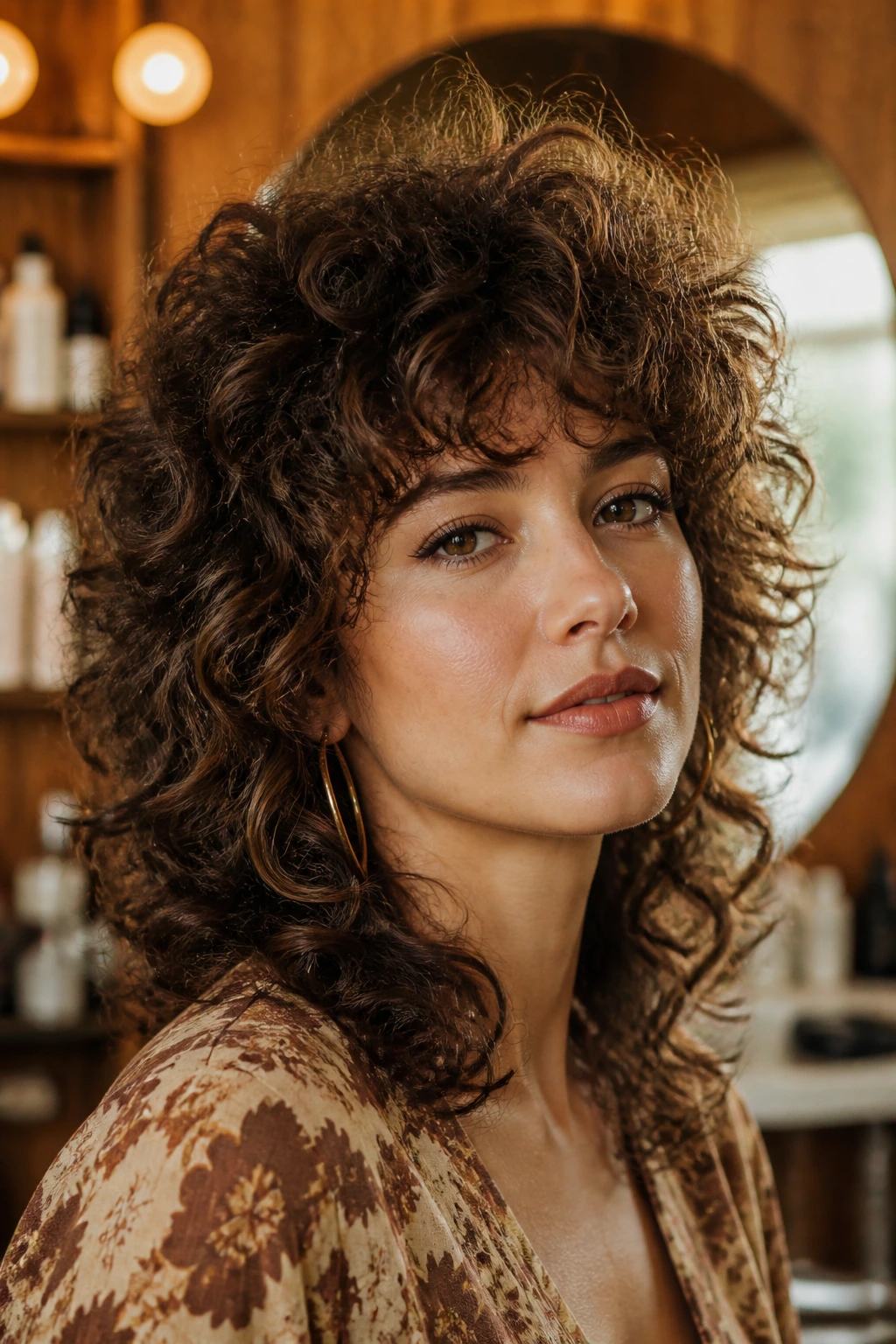
Big crown, flippy ends, and a little swagger. That’s the seventies volume shag, and thick curly hair eats this shape up when the layers are handled well. It’s fuller at the top than many modern curly cuts, which gives it that classic roundness people either love instantly or know right away is not for them.
The key is control. You want volume, but you do not want a mushroom. The layers should build lift around the crown and cheekbones, then soften toward the ends so the outline still reads as a shag, not a bell. This is a fun cut if you like dramatic earrings, strong color, or a face-framing bang that looks like it came from a record sleeve.
19. The Cropped Curl Cloud
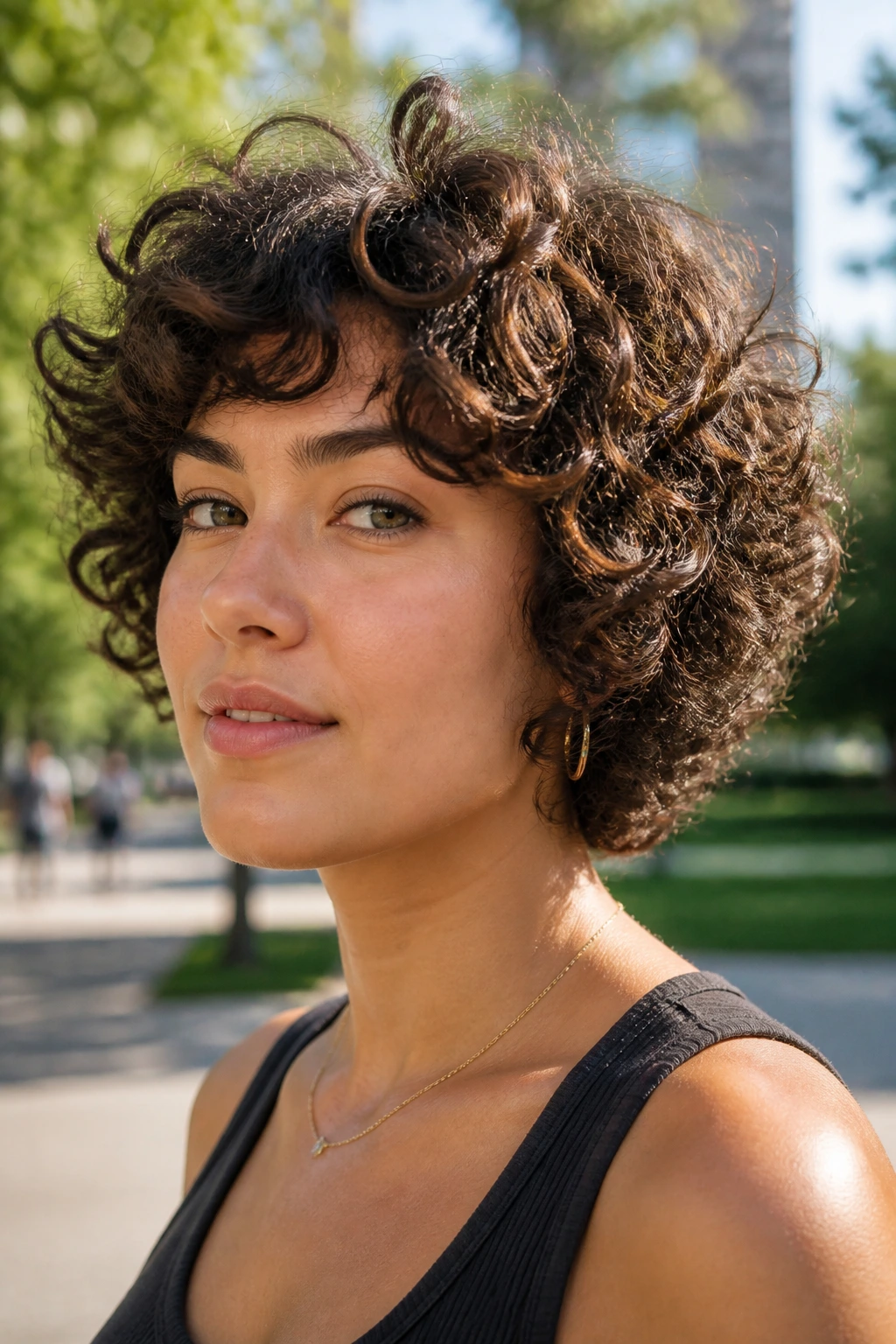
A cropped curly shag is short, fluffy, and a little mischievous. It sits above the shoulders, sometimes well above, and lets the curls form a cloud around the head instead of a long curtain. Dense hair benefits from this because the weight is reduced dramatically while the shape stays round.
The trick is not to over-layer the top. Too much cutting can make the cut stick out in odd little spikes. A good cropped shag keeps enough interior length that the curls can still coil and stack. If your hair is very thick and you like low-fuss styling, this is a strong contender. It dries faster, takes less product, and still gives you shape. Not bad.
20. The Butterfly-Shag Hybrid
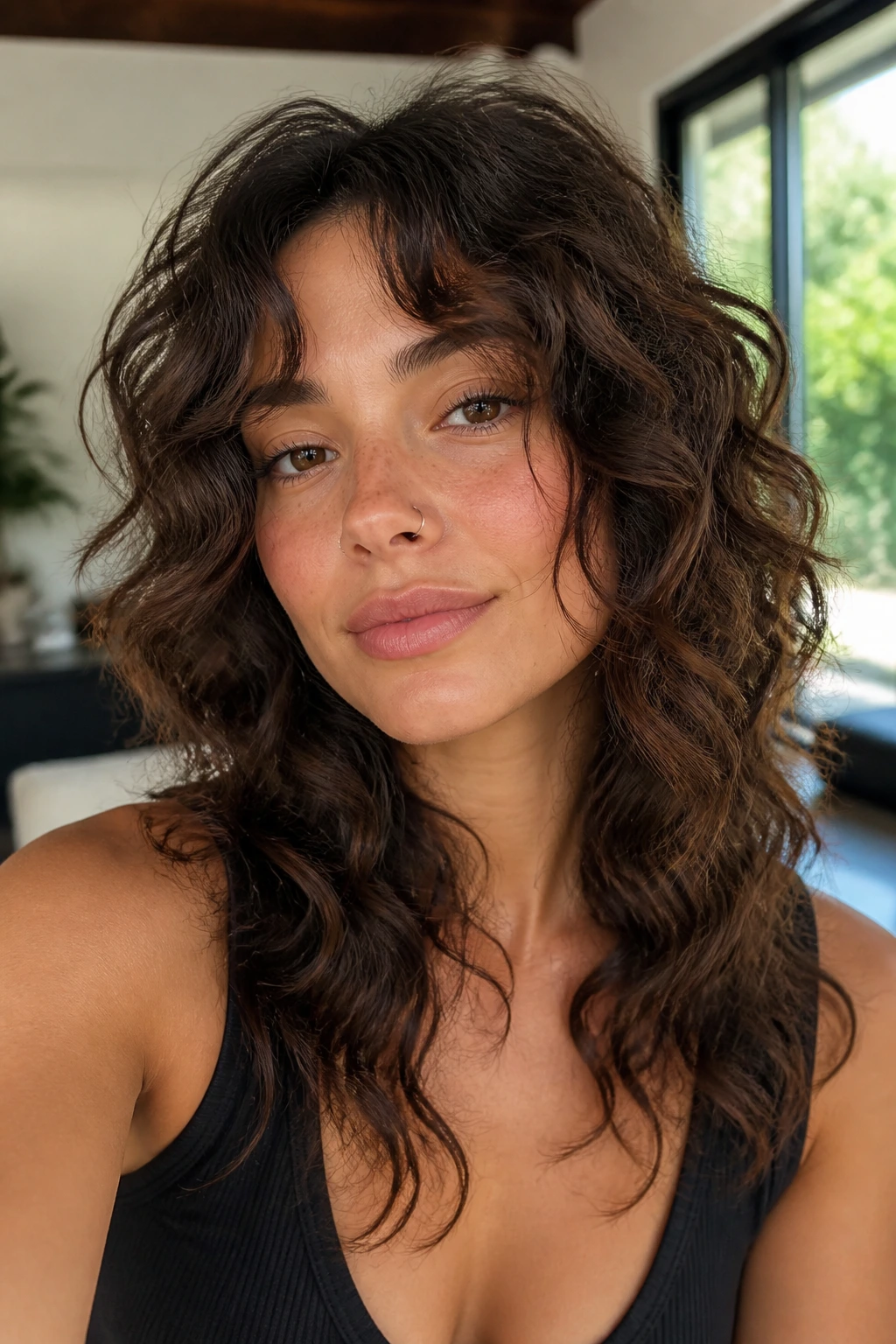
This one borrows from the butterfly cut, but it keeps the shag’s looser, more casual texture. The front pieces stay longer and frame the face, while shorter layers underneath create movement through the midsection. On thick curly hair, that combination makes the haircut feel airy without sacrificing length.
It’s a smart choice if you want to keep your longest curls but still make the top half feel lighter. The face frame can be dramatic or soft, depending on how much cheekbone you want to show. I’d ask for layers that start below the chin if your hair is very dense; otherwise the front can get too busy. The hybrid part matters because it keeps the style from looking like a random mix of trends.
21. The Halo Shag
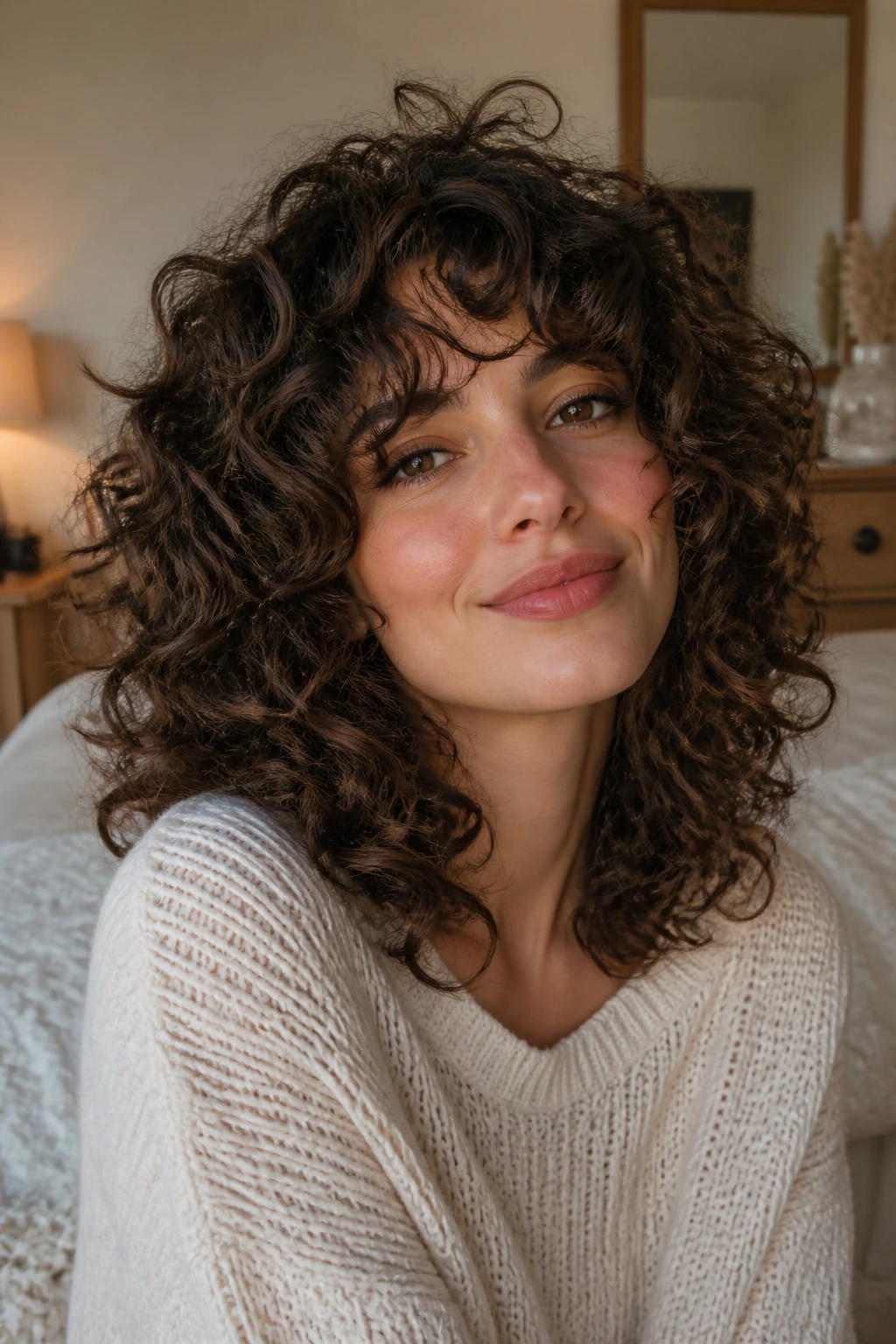
A halo shag spreads the layering evenly around the head, so the hair forms a rounded frame instead of a flat top and giant bottom. This works especially well when your curls are dense in every direction, not just at the ends. It’s the kind of cut that makes the hair feel lighter from the inside out.
Why I like it for very thick hair
Because the layers are distributed all around, the haircut keeps its balance when you tuck one side behind the ear, wear a scarf, or let it fall naturally. That matters more than it sounds. A lot of layered cuts only look good in one position. This one is more forgiving.
If you’ve ever stood in front of a mirror and thought, “my hair is too much everywhere,” this shape is worth a close look.
22. The Scissor-Only Shag
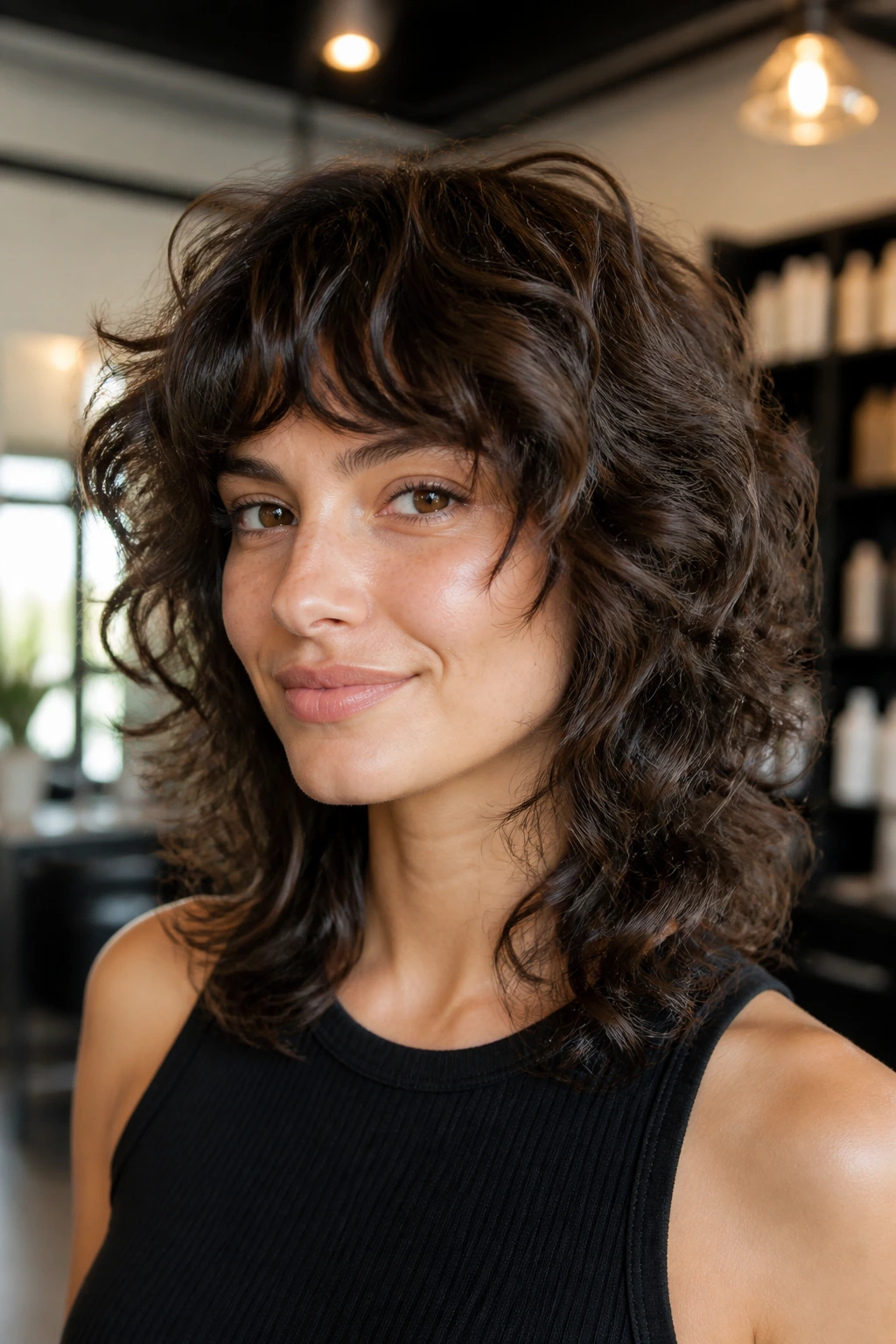
Razor cuts can be lovely on some curl patterns, but they are not a default answer. A scissor-only shag keeps the ends cleaner and can be kinder to thick curls that fray easily. The result usually looks a little more polished and a little less airy, which is a fair trade if your hair already has a lot of texture.
This cut is especially smart for porous ends or curls that go fuzzy the second a blade passes through them. A strong stylist can still get movement with point-cutting and slide-cutting done carefully, without shaving the ends thin. If your hair reacts badly to razors, tell the stylist before the comb even comes out. Save everyone the trouble.
23. The Day-Two Refresh Shag
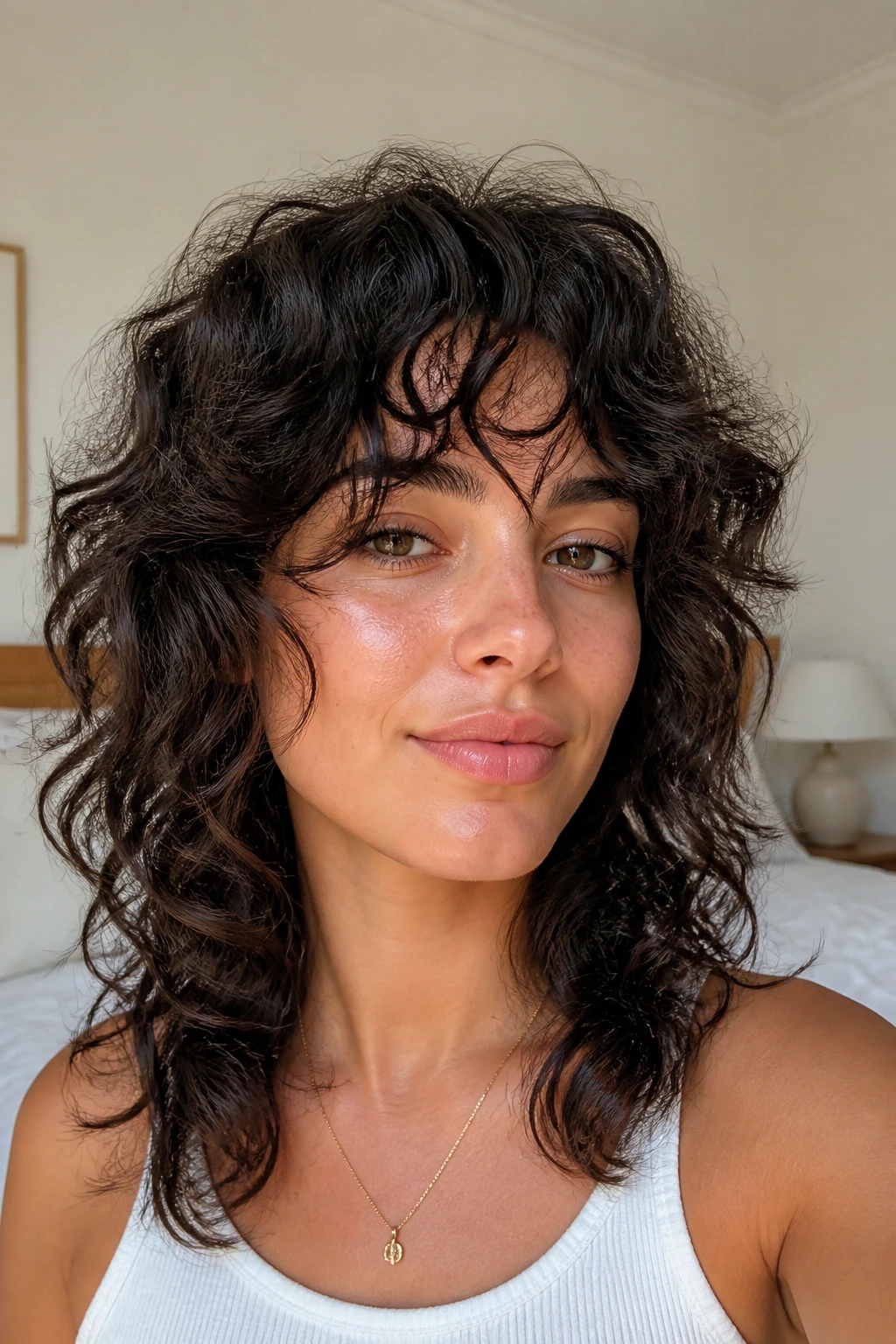
Some cuts look best only when freshly styled. A day-two refresh shag is built to survive. The layers are shaped so the curls can be revived with a spray bottle, a bit of leave-in, and a small amount of product, then settle back into something that still looks planned. That’s useful for thick hair, which can go big overnight.
The main feature here is resilience. The cut should keep its outline even when the front pieces separate a little or the crown loses some lift. If you’re the kind of person who likes to stretch a wash day without wearing a sad bun, this is a practical shape. It rewards you for not over-touching it. That alone is worth something.
24. The Sculpted Spiral Shag
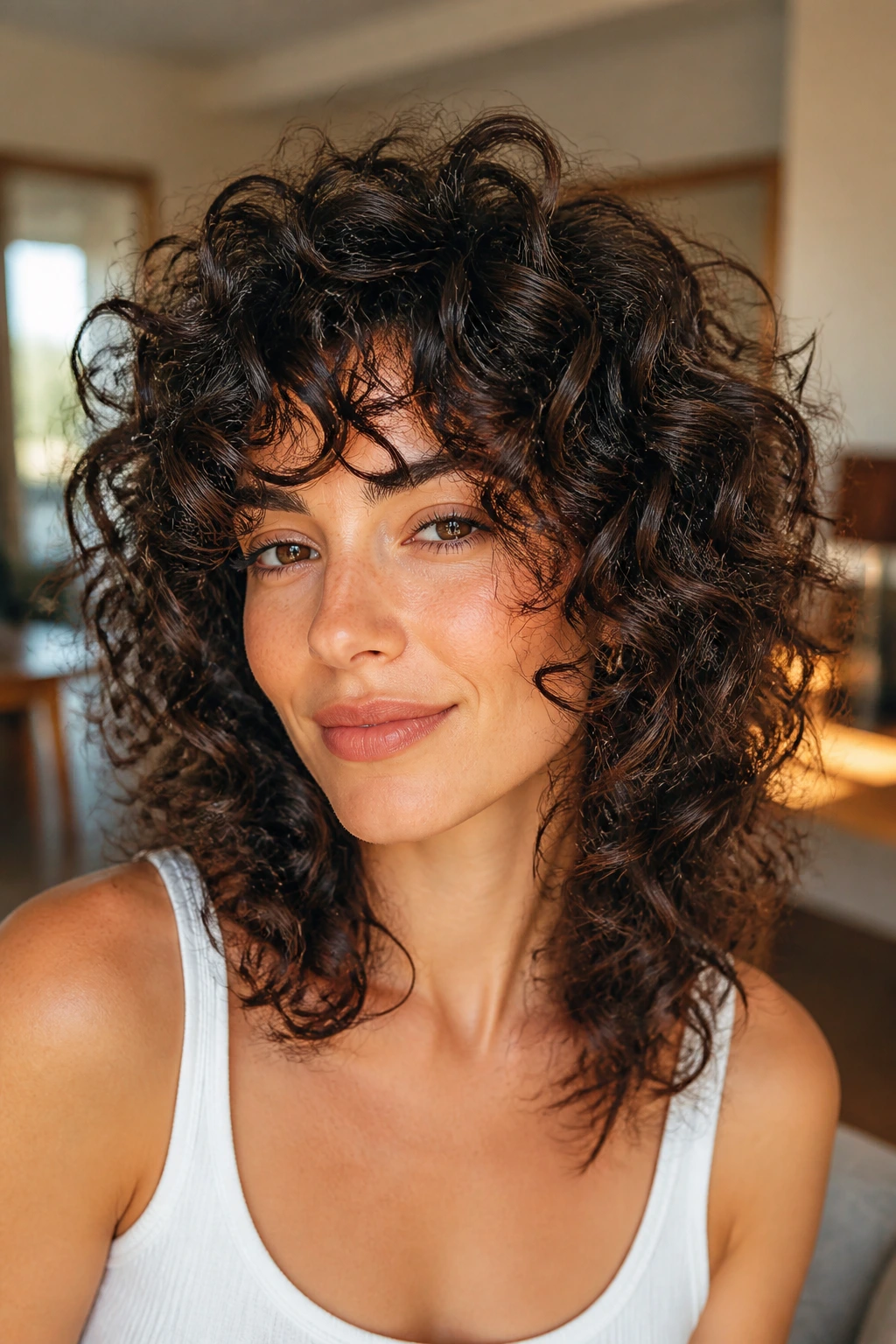
A sculpted spiral shag is for people who want the curl pattern to be the headline. Instead of chasing a wildly undone finish, this cut encourages bigger, cleaner curl clumps with layers that support the spiral instead of breaking it apart. Thick curly hair can look nearly architectural when this is done well.
How it reads
The shape should be controlled at the crown, fuller through the middle, and softly broken around the face so the spirals have room to move. Finger-coiling a few face pieces while styling can sharpen the effect, but the haircut itself needs to leave space for those coils to sit naturally. This is a nice option if you like a more finished look and don’t want the haircut to depend on chaos.
It’s tidy, but not stiff. That balance matters.
25. The Triangle-Breaking Shag

This is the one for the person who keeps saying, “my hair always turns into a triangle.” You know the shape: flat at the top, wide at the bottom, impossible to fix with products alone. A triangle-breaking shag uses layers and interior movement to redistribute that bulk so the silhouette narrows at the ends and lifts at the crown.
The cut has to respect your density. If too much is removed, the shape gets stringy; if too little is removed, the triangle wins again. I like this version when the stylist focuses on the side panels and nape while leaving enough weight in the lower lengths to keep the curls clumped. The goal is not frizz. The goal is a better outline.
26. The Type 4 Curly Shag
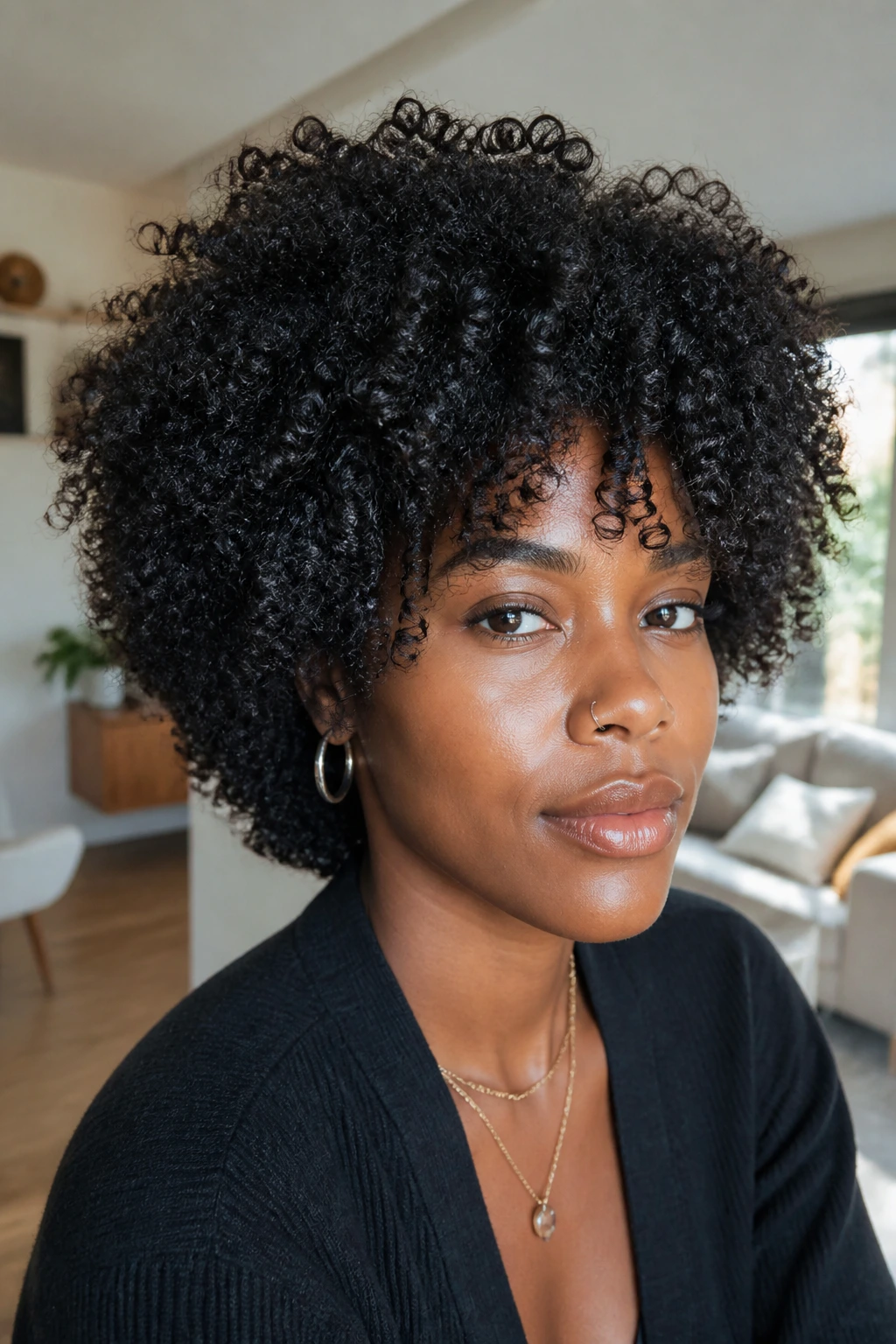
Type 4 curls need a different conversation. A shag on coils has to honor shrinkage, density, and the way curls stack in tight patterns. A dry cut is usually the better call, and the layers should be shaped in a way that reduces bulk without carving holes through the silhouette. If you’ve got coils, you already know that a little bad layering can turn into a big visual problem.
This version can be gorgeous when the crown is lifted and the side shape stays rounded. It doesn’t need to look feathered to work. Sometimes the best move is a fuller, more sculpted outline with carefully placed layers that let the coil pattern breathe. If a stylist talks about your hair like it needs “lightening” everywhere, keep looking. That approach tends to ignore how coily hair actually behaves.
27. The Long Grow-Out Shag

A lot of curly cuts look brilliant for two weeks and then slide into awkwardness. A long grow-out shag is designed to avoid that. The layers are kept soft enough that, as the hair grows, the shape becomes a little looser rather than visibly distorted. Thick curls do well with this because the density hides minor changes in the outline.
If you hate frequent trims, this is a strong answer. Ask for face-framing pieces that can fall past the cheekbones and a perimeter that still looks intentional after a couple of inches of growth. The cut should age gracefully, not punish you for being busy. That’s the whole point.
28. The Feathered-End Shag
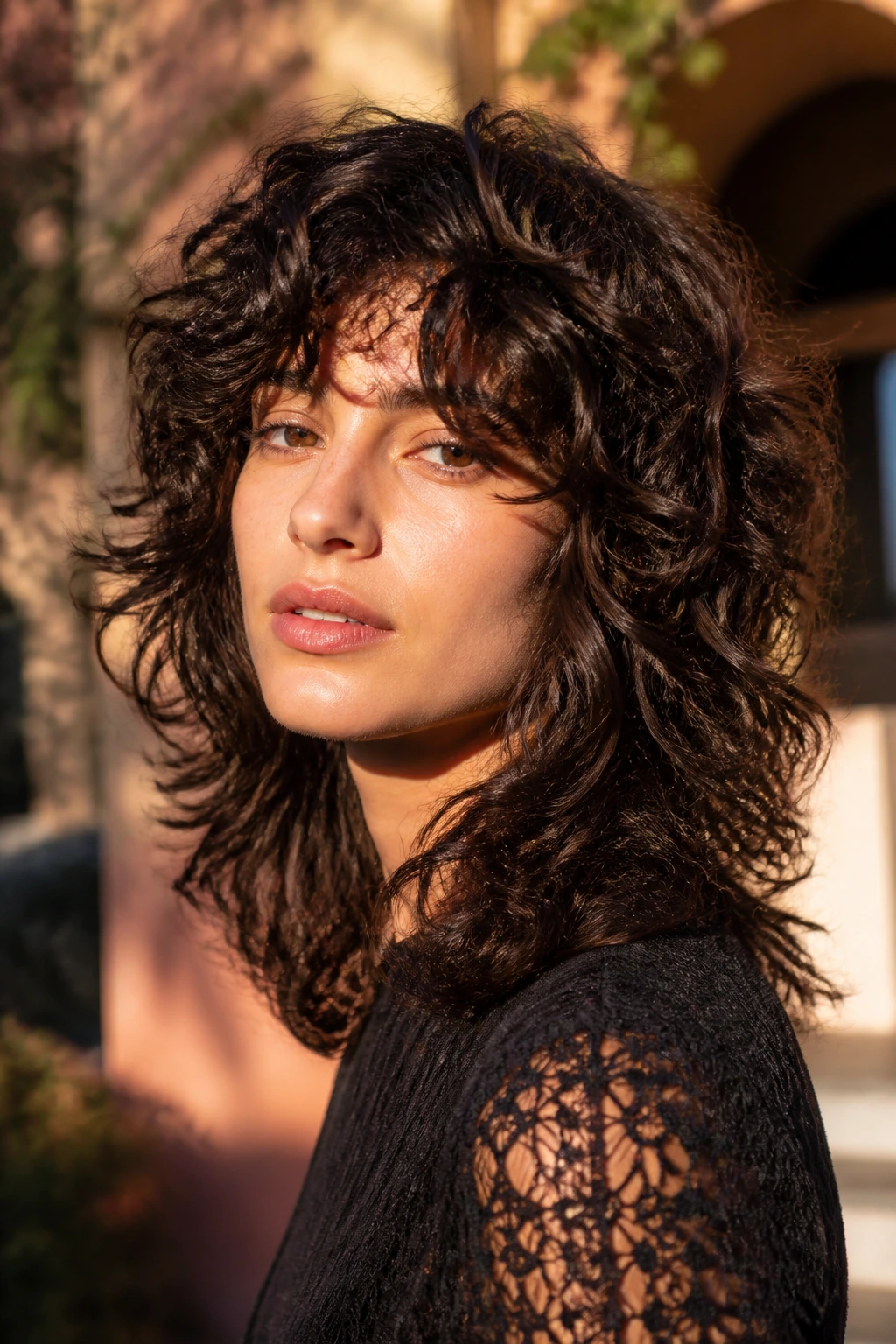
Feathered ends give thick curly hair a lighter finish without stripping away the body. On a shag, that means the interior still carries the shape while the perimeter feels softer and less blocky. The effect is subtle when the hair is wet, then much clearer once the curls dry and spread.
This cut suits people who want movement but don’t want sharp contrasts between the layers. It can be a good final stop if you’ve tried more dramatic shags and found them too choppy. Ask for the ends to be feathered just enough to break the line, not thinned into wisps. That line matters. Curly hair with feathered ends can look airy and rich at the same time when the hands doing the cutting know where to stop.
Why a Curly Shag Holds Its Shape Instead of Fighting It
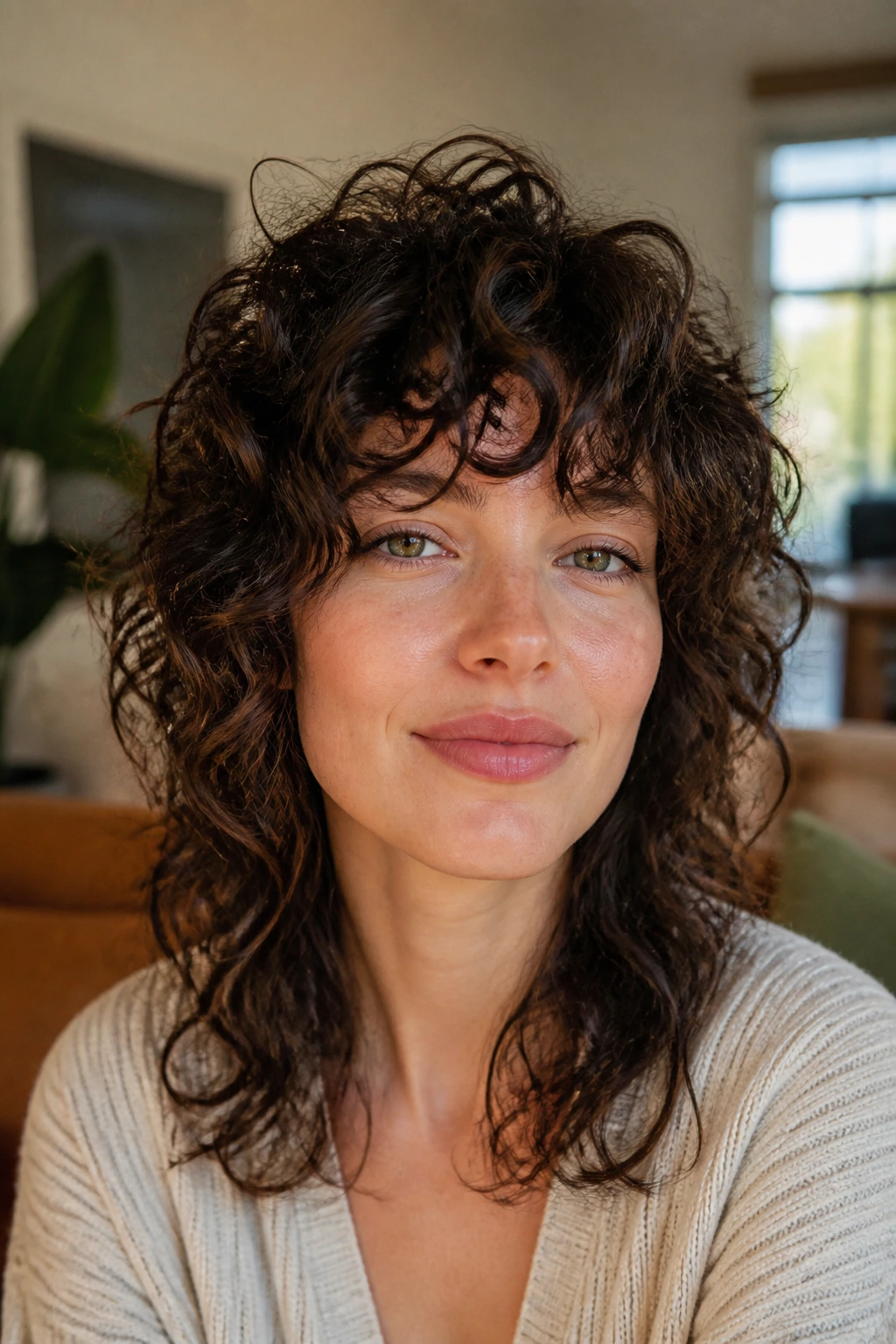
A shag works on thick curly hair because it changes where the weight lives. Instead of piling it all at the bottom edge, the cut redistributes it through the interior, which gives the curl pattern space to spring up and settle in layers. That’s why the shape can look fuller without feeling bulky.
The other thing people underestimate is shrinkage. Curls do not just dry. They re-draw the haircut. A curl that hangs near the nose when wet may land around the brow once it dries, and a layer that looks safe in the salon chair can disappear into the crown if the stylist does not read your pattern correctly. Dry cutting helps, but even a wet cut can work if the stylist leaves enough length in the right places.
Thick hair also behaves better when the layers are distributed with intent. A huge chunk of weight removed from one zone can make another zone puff up to compensate. That’s why the best curly shags tend to feel balanced, not hacked up. They keep the head shape visible. They also make day-two hair less annoying, which is a small domestic miracle.
How to Choose the Right Version for Your Curl Pattern
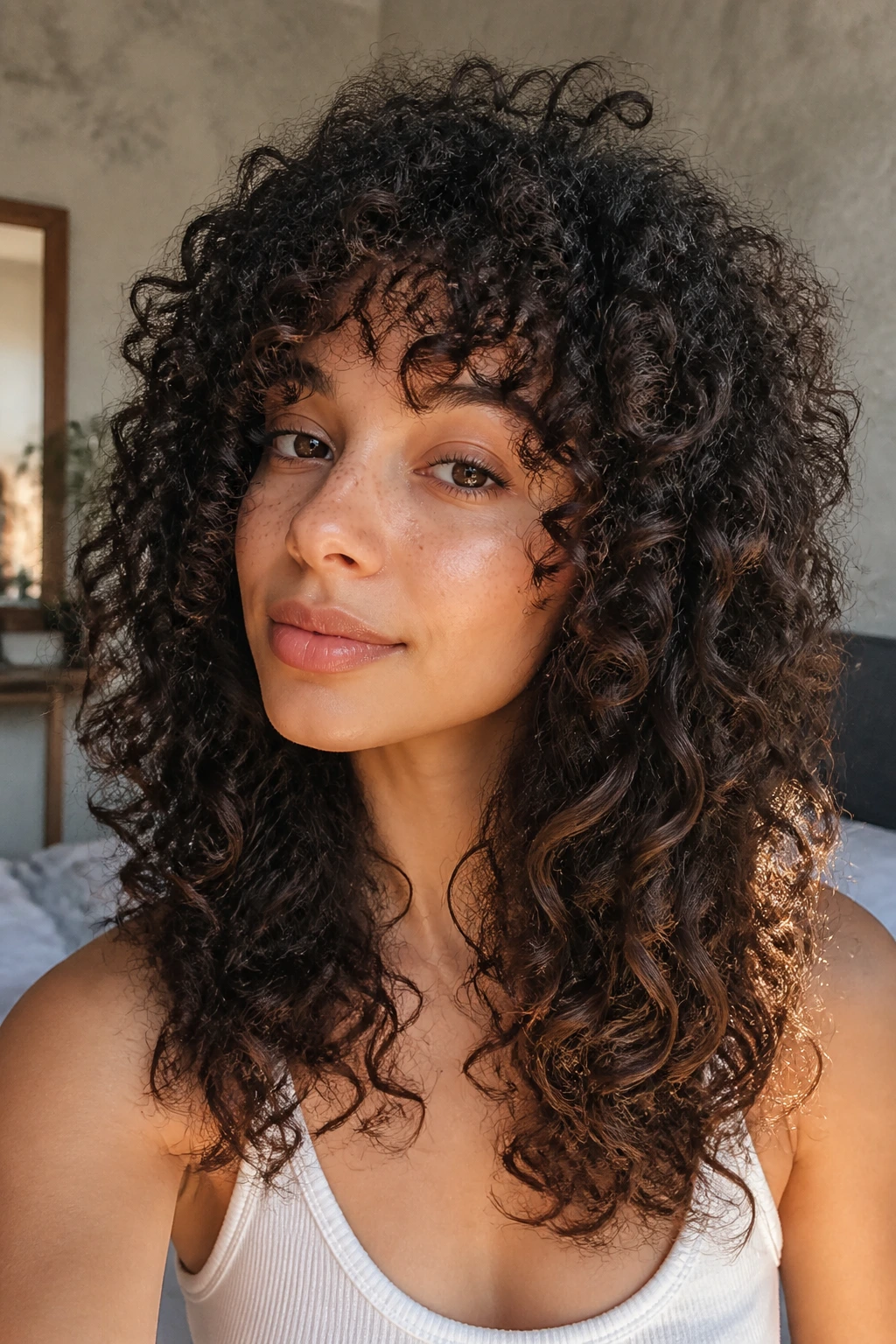
Different curl patterns need different balances of length, fringe, and internal layering. A 2C-to-3A head of curls can handle more feathering through the mids because the curls tend to separate with less drama. Tighter 3C and 4A textures usually need more respect for length at the perimeter, because the shrinkage can eat a haircut alive if you go too short too quickly.
Bring photos, but bring the right kind. A photo of someone with thinner hair and softer waves is not a good reference for thick curls that spring hard. You want pictures that show the same density, the same amount of shrinkage, and ideally a similar forehead and jaw shape. Hairdressers do not get enough honest photos, and then everyone acts surprised when the cut doesn’t behave the same way.
Tell the stylist what your hair does on day one, day two, and day three. That little detail matters more than saying “I want volume.” Everyone wants volume. What you need is the kind that stays put after sleep, a scarf, and three rounds of humidity.
The Tools That Matter for a Curly Shag
-
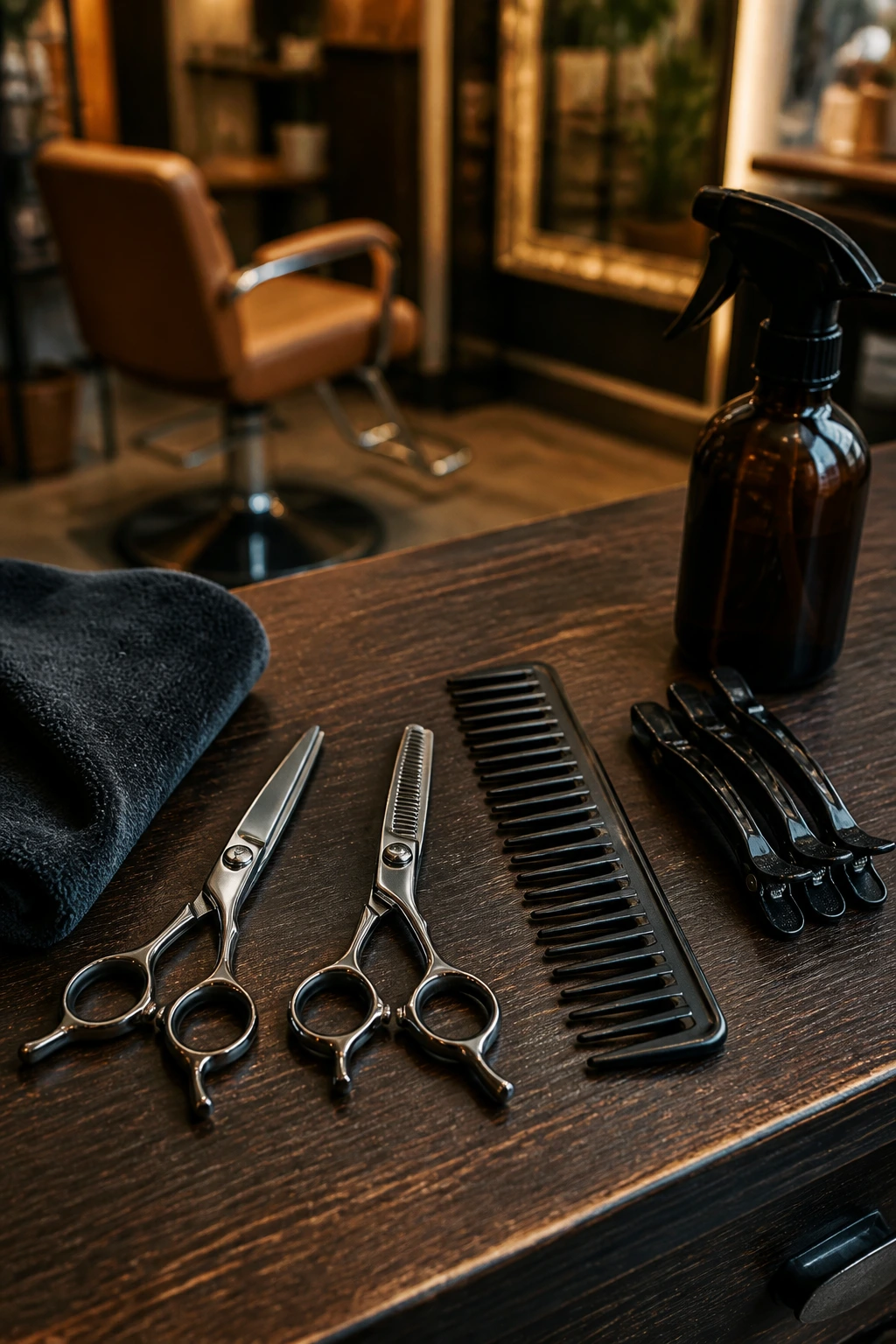
Sharp salon shears: Dull blades mash the curl and make the ends fray, so the cut looks rough before you ever leave the chair.
-
Texturizing shears, used sparingly: Helpful for removing bulk in dense zones, but too much use can carve holes in curly hair.
-
Wide-tooth comb: Good for distributing conditioner without ripping apart curl clumps.
-
Sectioning clips: These keep the top, sides, and back separate while the hair is being cut or styled.
-
Spray bottle: Useful for re-wetting sections during styling or refreshing a day-two shape.
-
Microfiber towel or cotton T-shirt: Better than a rough bath towel, which can rough up the cuticle and puff the ends.
-
Diffuser attachment: Not required, but it gives a shag more lift at the roots and less stretch in the curl pattern.
-
Leave-in conditioner and curl gel: A simple combo that helps the layers stay defined instead of blooming into frizz.
-
Hand mirror: Worth bringing to the salon so you can check the back before you leave.
How to Style a Curly Shag on Wash Day
-
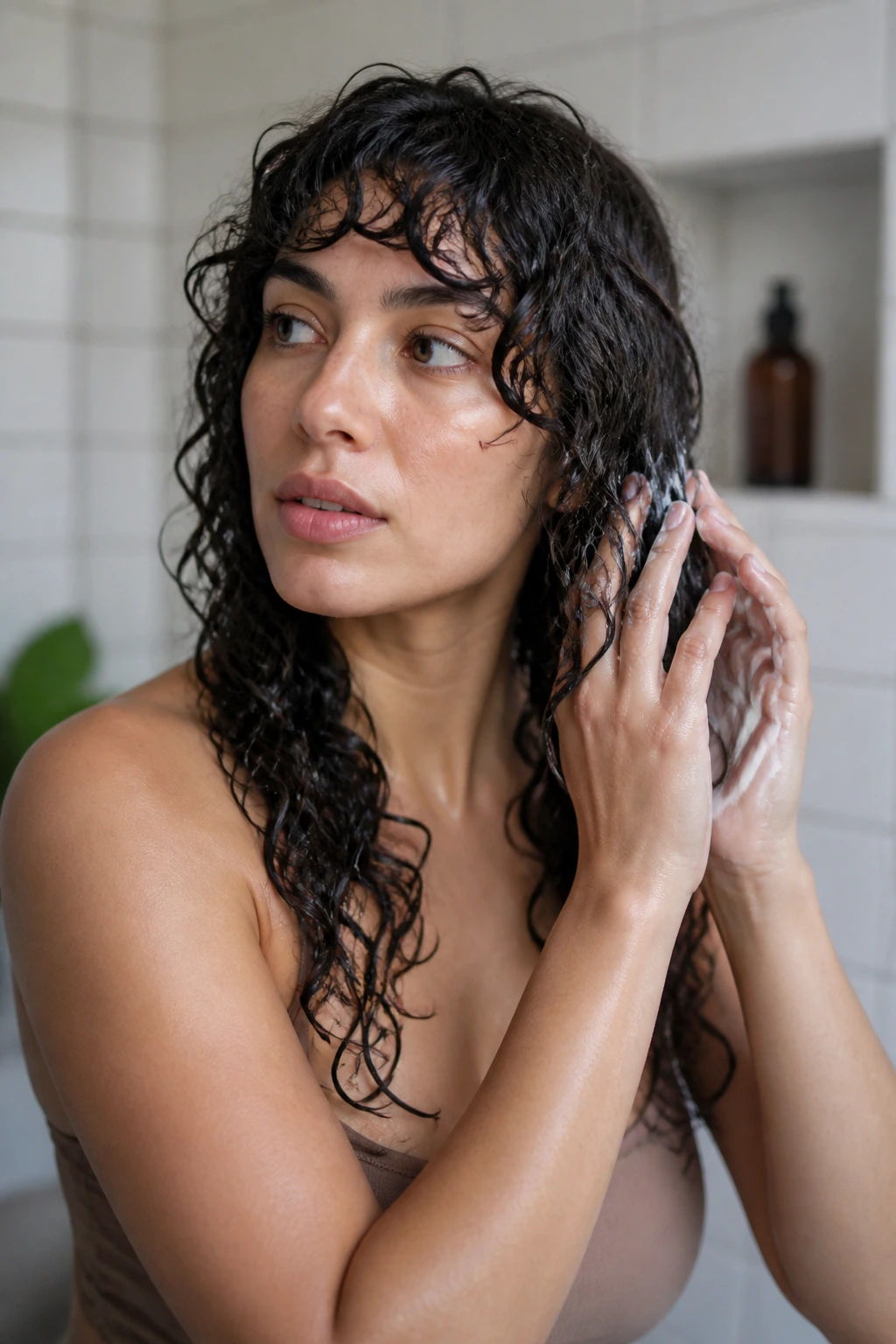
Start with soaking-wet hair. After rinsing out conditioner, keep the hair very wet before applying leave-in or curl cream. Thick curls take product more evenly that way, and the layers clump instead of getting sticky at the surface.
-
Rake product through the mids, then smooth the front. Use your fingers to spread product from the ears down, then use praying-hands smoothing over the face-framing pieces so they lie together cleanly.
-
Add gel to the outer layers. A light gel or mousse on the ends and top layers helps the shag hold its shape. Focus on the pieces that tend to frizz first — often the crown, the bang area, and the top of the sides.
-
Scrunch and lift at the roots. Cup sections upward toward the scalp, then gently squeeze. If you want more height, clip the roots at the crown while the hair is damp.
-
Diffuse on low heat or air-dry with patience. Keep the diffuser moving, and don’t blast one spot for too long. The goal is about 80 to 90 percent dry before you start touching it more.
-
Break the cast only when dry. If the gel forms a crisp cast, scrunch it out with dry hands or a drop of serum once the hair feels completely dry. Doing this too early ruins definition and encourages frizz.
How to Wear the Shape Every Day
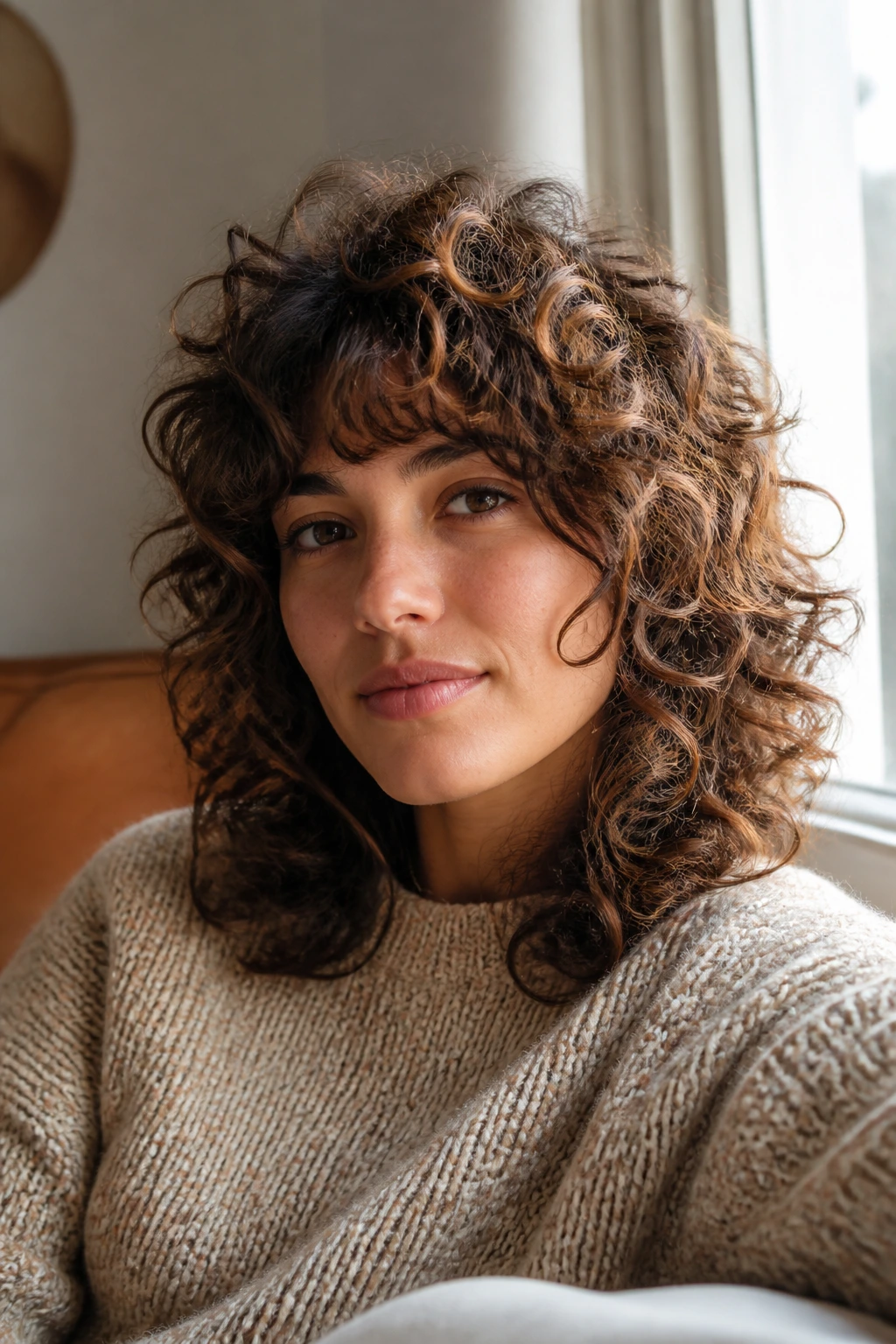
Presentation: The front pieces should skim the cheeks or jaw, not stick straight out from the face. On a good shag, the eye goes to the layers first and the bulk second.
Accessories: Small clips, silk scarves, and statement earrings all work well because the haircut leaves space around the face. Heavy headbands can flatten the crown, so I’d use them sparingly.
Scale: On longer shags, the movement should sit through the mid-lengths. On shorter versions, the shape should feel round and lifted rather than wide and square.
Finish: Pick your finish on purpose. A more matte, airy texture reads casual; a defined cast with a little shine looks cleaner and sharper. Both can work on thick curls.
Small Styling Upgrades That Change the Finish
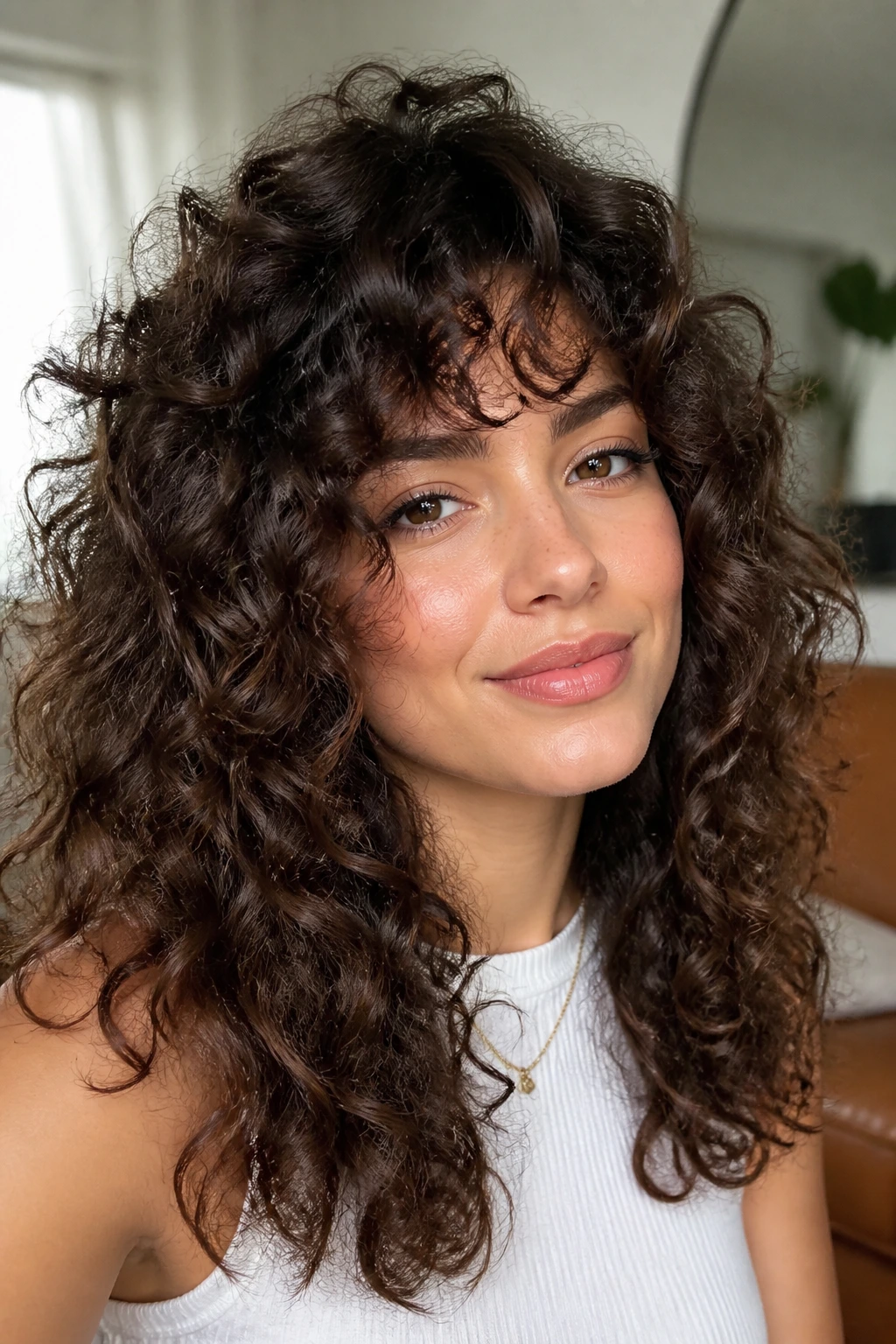
Root Lift: A few duckbill clips or a quick root clipping session while the hair dries can keep the crown from collapsing. That’s especially useful on dense hair, where the top can get pulled flat by its own weight.
Definition: Finger-coil the face pieces and the fringe only. You do not need to coil the whole head unless you enjoy spending half your morning on it.
Finish: A pea-sized amount of lightweight oil or serum on the ends can calm fuzz, but use too much and the layers lose their bounce. One drop too many is often the difference.
Make-It-Yours: If you want softer edges, wear the shag with a deeper side part. If you want more punch, push the part closer to center and let the crown rise a little more.
How to Keep the Cut Fresh Between Salon Visits

A curly shag lives or dies by maintenance, but “maintenance” does not mean fuss. It means knowing how long you can stretch the shape before the layers start hanging in odd places. For most thick curly hair, the haircut still reads well for 8 to 12 weeks, though bangs may need a trim sooner if they sit above the brow. If you like a crisp fringe, plan for a bang dusting every 4 to 6 weeks. If you like softer, longer pieces, you can wait longer.
Night care matters more than people admit. A silk pillowcase or bonnet reduces friction, which keeps the ends from fuzzing up and the layers from splitting apart. If your hair is long enough, a loose pineapple at the crown with a satin scrunchie can preserve the top volume without squashing the curl pattern. Tight elastics are the enemy here. They leave dents and can create weird bends in the shortest layers.
Refreshing the cut is simple. Mist the outer layers with water, add a touch of leave-in to the dry spots, and scrunch the shape back into place. If the crown has gone flat, lift the roots with your fingers while the hair is still damp, then let it finish drying before you touch it again. Thick curls usually need less actual washing than they need reactivation.
Mistakes That Turn a Curly Shag Into a Helmet
-
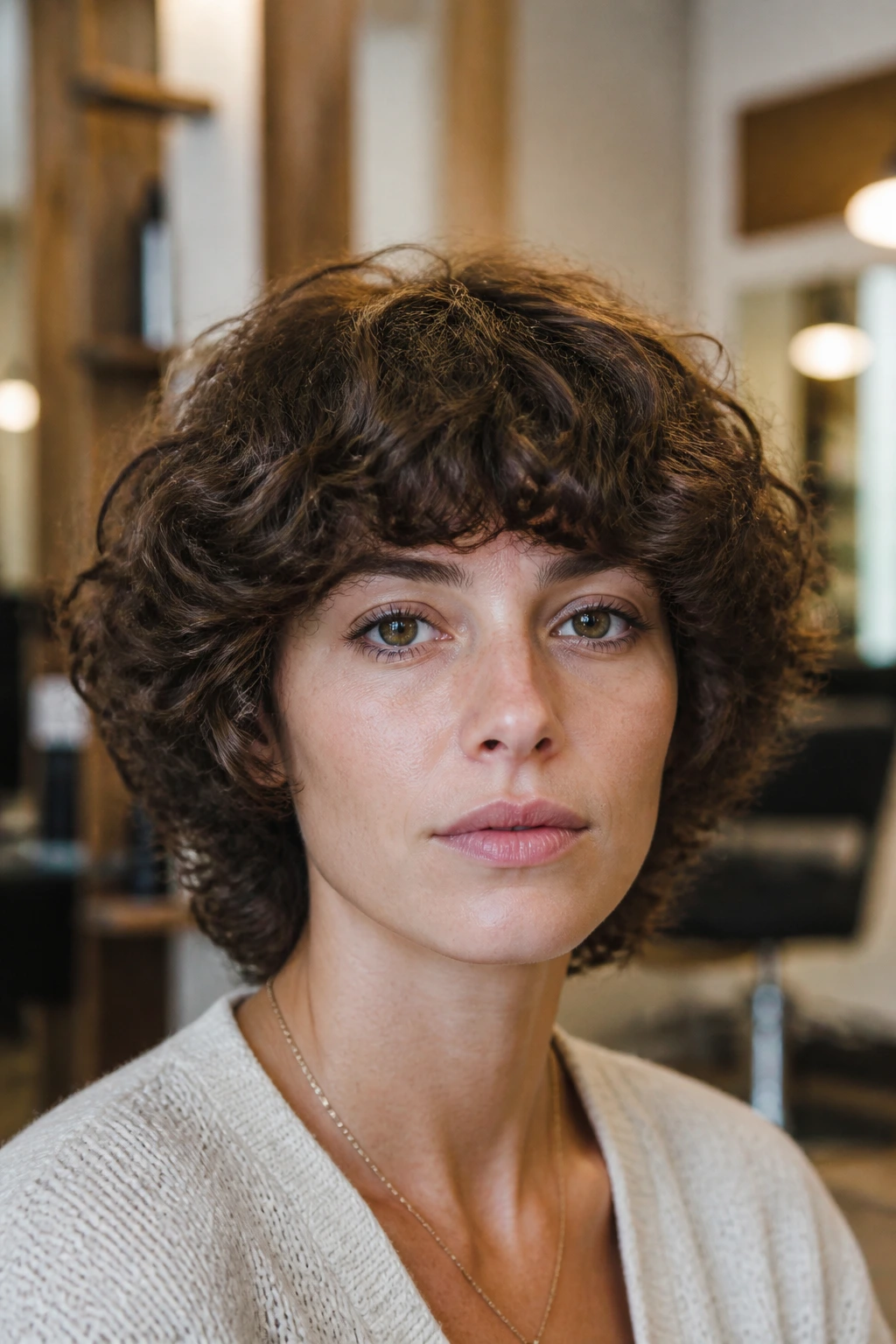
Cutting the top too short: If the crown layers are hacked up too high, the hair can puff outward and lose the balanced stack that makes a shag look good. The fix is simple: leave more length at the top than you think you need.
-
Thinning the ends aggressively: Overuse of texturizing shears can make thick curls look see-through at the bottom and fuzzy at the edges. Ask for controlled debulking inside the shape, not a shredded perimeter.
-
Ignoring shrinkage: A curl that looks chin-length when wet can land at the cheekbone once dry. If the stylist doesn’t account for that, the haircut can jump shorter than you wanted.
-
Cutting bangs to the final dry length: Bad idea. Curly fringe should usually be left longer in the chair, then adjusted once the pattern settles.
-
Chasing a photo that doesn’t match your hair density: A shag on fine curls and a shag on dense curls are not the same haircut. The line may look similar, but the behavior is completely different.
Other Curly Cuts to Compare Before You Book
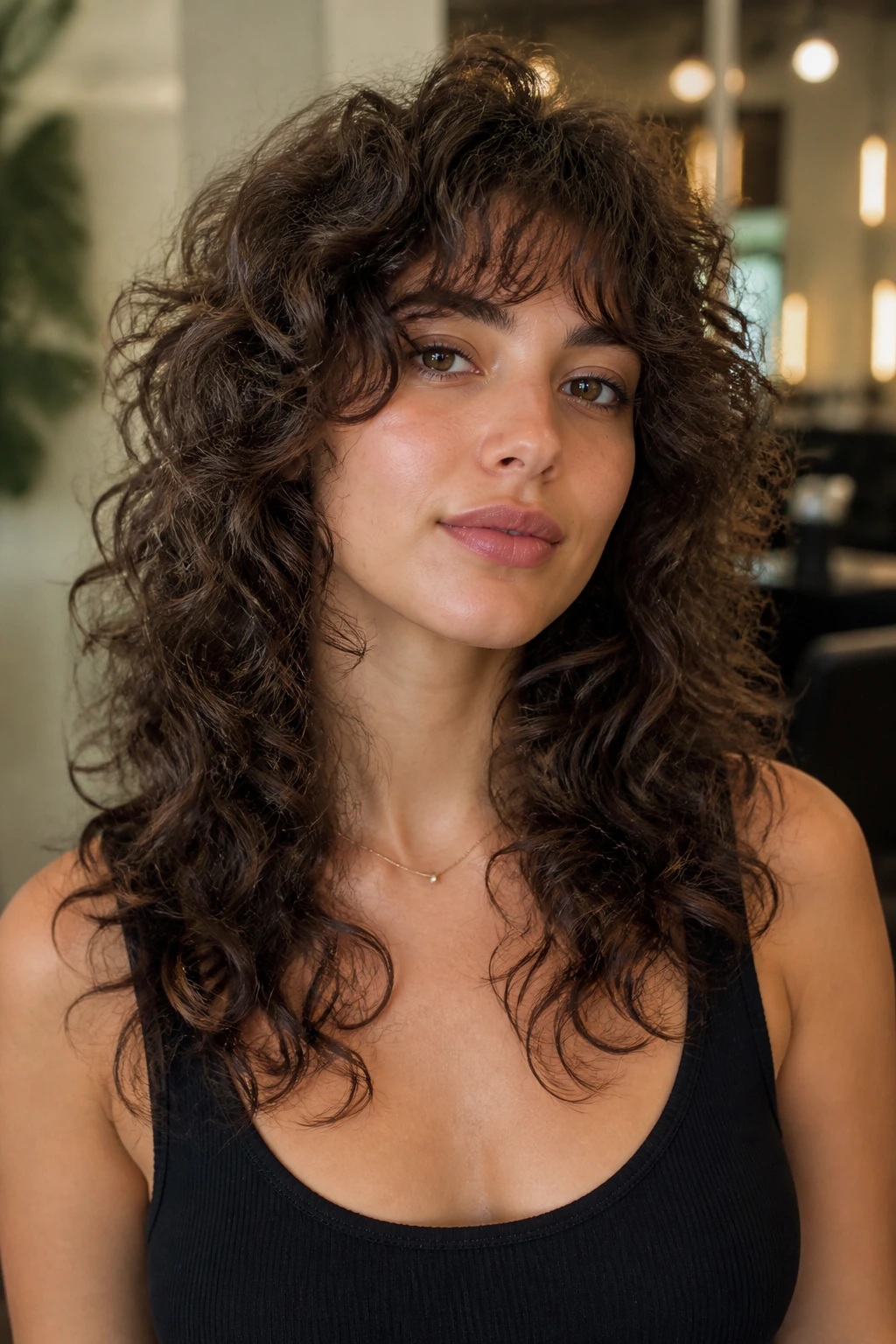
If a shag feels close but not quite right, the curly wolf cut is the obvious cousin. It pushes the layers higher and the attitude louder. A butterfly cut is softer and keeps more length through the front, which can be useful if you want face-framing pieces without the choppier shag texture. A layered curly lob sits a little calmer and gives you a cleaner perimeter if you dislike anything too undone.
For tighter coils, a rounded shape with curated layers can sometimes work better than a full shag. It keeps the silhouette strong and avoids the over-thinned look. And if you want maximum ease, a curly bob with face layers may be enough. Not every head of curls needs the same amount of movement. Some need structure more than drama.
Questions People Ask Before They Cut

Will a shag haircut work if my curls are different lengths in different zones?
Yes, and that’s one of the best reasons to choose it. A dry cut or curl-by-curl shaping helps the stylist balance the crown, sides, and nape so the final outline looks intentional instead of patchy.
Is a shag bad for very thick hair?
Not if the layers are placed well. Thick hair often benefits more from internal shape than from blunt weight, but it needs controlled layering, not random thinning.
Can I still wear my curls stretched or brushed out?
Usually, yes. A shag keeps more movement than a blunt cut, so it can still look decent when brushed into a looser shape. Just know that very stretched styling will hide some of the layer detail.
What if I hate bangs but want the shag shape?
Ask for a bang-free version with longer face-framing pieces that start around the jaw or collarbone. You’ll still get movement without committing to fringe.
How often should I trim a curly shag?
Most people do well with shape-up trims every 8 to 12 weeks. If you have a short fringe or a cropped shag, you may need attention sooner because the front changes fast.
Can a shag reduce frizz?
It can reduce the look of frizz by removing bulk and improving curl clumping, but it won’t erase texture. The cut helps the shape; your styling routine still matters.
Should I ask for a razor cut or scissors?
Scissors are safer for many dense curls, especially if your hair frizzes easily. A razor can create lovely movement, but only if your hair texture and stylist both cooperate.
What if my hair puffs up at the sides?
Ask for more weight to stay at the perimeter and for the shortest layers to begin lower, around the cheekbone or jaw. Side puff is often a sign that the top was cut too aggressively.
The Cut That Keeps Its Shape
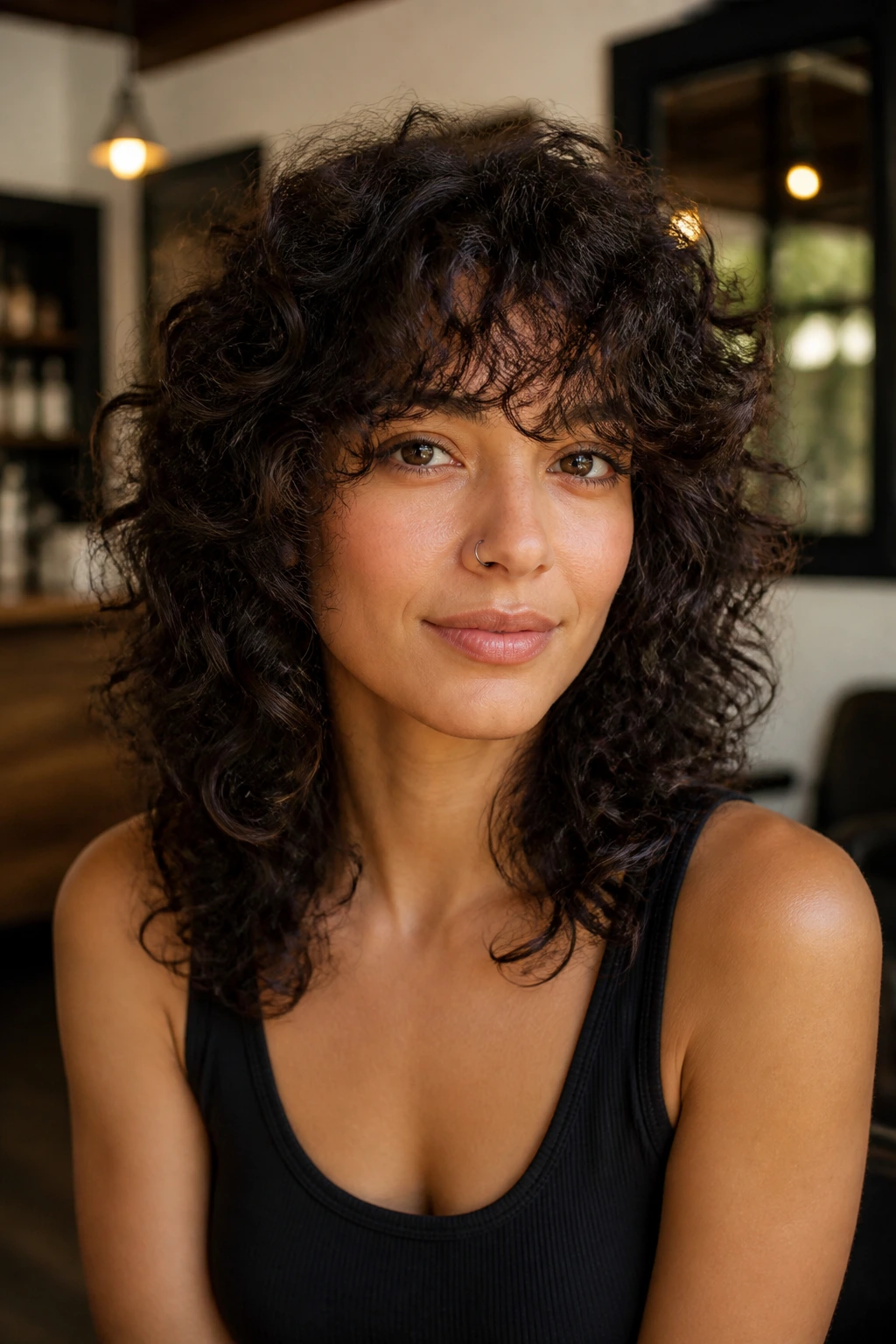
A good shag on thick curly hair feels less like a trend and more like a useful shape that happens to look cool. That’s why it keeps showing up in salons and on heads that need movement more than they need perfection. It solves the two problems thick curls create most often: too much bulk in the wrong place, and not enough shape where the eye first lands.
The best part is that there isn’t only one version of it. You can wear it rounded, soft, edgy, long, cropped, or built around bangs, and the haircut still makes sense as long as the layers respect your curl pattern. Bring strong reference photos, talk honestly about shrinkage, and don’t let anyone thin the life out of your ends.
If your curls have been sitting in the same heavy outline for too long, a well-cut shag is one of the rare changes that looks good fast and usually gets better after a few days.
