



A bun can look expensive without looking stiff. That balance — smooth at the base, a little give at the edges — is what separates a polished style from a knot that feels pinned into place with no life left in it.
The best bun hairstyles for a soft polished look do something sly. They keep the hair controlled, but they leave just enough bend, curve, and movement to keep the style from turning severe. A clean center part, a tucked end, a wrapped section of hair, a few wisps around the face — those tiny choices change everything.
I keep coming back to buns because they solve a very specific problem: you want your hair to look intentional, not overworked. A good bun can handle a blazer, a silk blouse, a wedding guest dress, or a plain white T-shirt and still look right. The trick is choosing the shape that flatters your length, texture, and face without making the finish feel heavy.
Why These Buns Feel Soft Instead of Severe
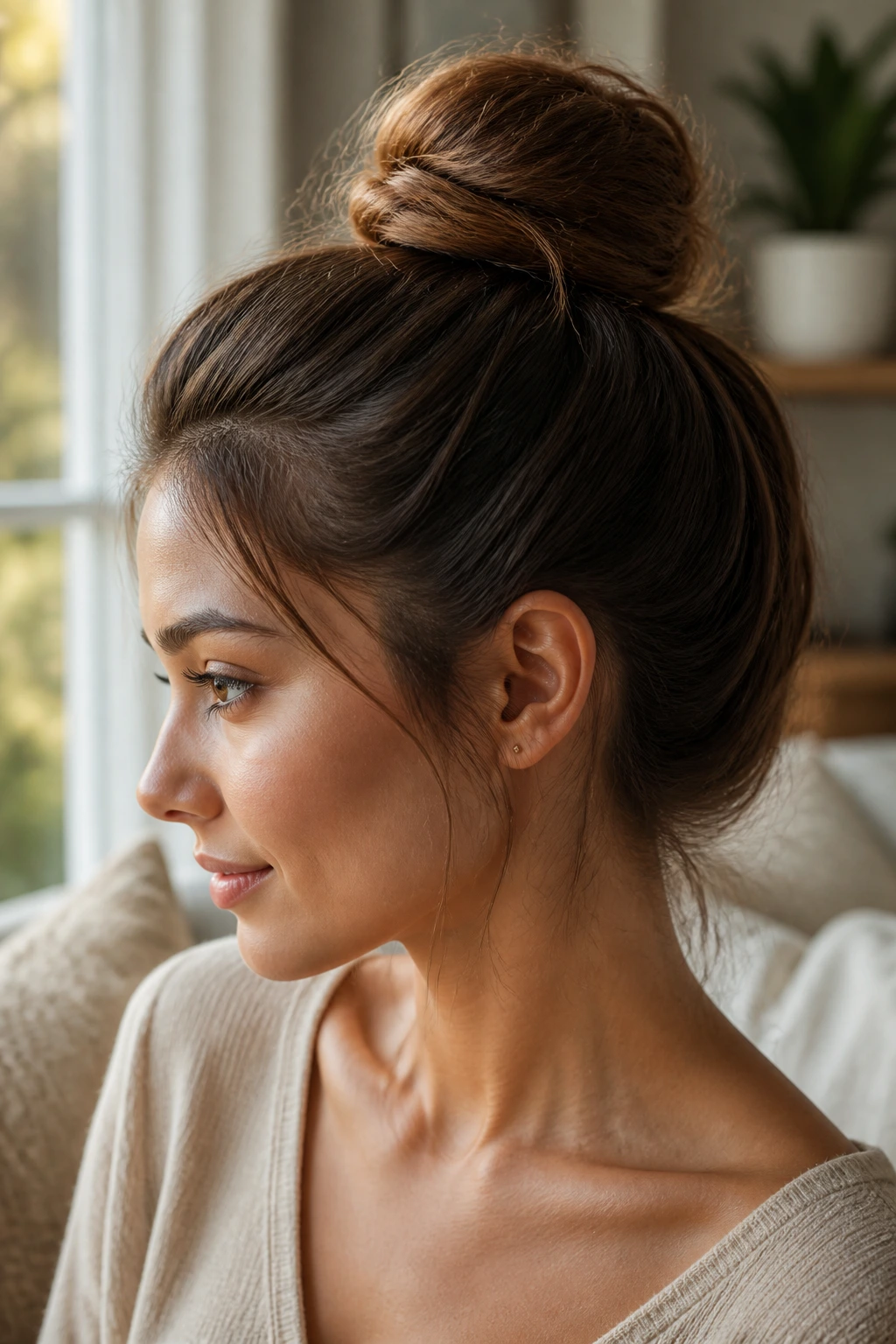
-
Controlled, not plastered: The hair at the crown stays smooth, but it isn’t glued flat to the scalp, which keeps the whole style from looking sharp-edged.
-
Movement at the edges: A few tucked bends, soft loops, or face-framing pieces keep the bun from reading too formal or too tight.
-
Low placement does a lot of work: Buns sitting at the nape or just above it usually look gentler than a high knot sitting dead center at the back of the head.
-
Texture helps more than people think: Hair with a little grip — from second-day wear, mousse, or a light spray — stays put better than hair that’s freshly washed and slippery.
-
The finish can be polished without being shiny: A soft satin sheen is different from a glossy helmet. That difference matters.
-
These styles travel well: Most of them survive a commute, a long dinner, or a full day under fluorescent lights without falling apart into frizz soup.
1. The Sleek Low Chignon That Sits Flat at the Nape
A low chignon is the first bun I reach for when I want hair to look calm, not busy. It sits right at the nape, where the head naturally narrows, so the shape feels elegant without shouting for attention. The best version has a smooth top, a wrapped base, and one clean loop or coil that hides the elastic completely.
Why It Works:
The low placement keeps the silhouette soft, and the wrapped finish gives the style a neat edge. You get that refined, put-together look without needing much height or volume, which is exactly why this bun works so well under high necklines, small earrings, or a structured jacket. It also plays nicely with medium and long hair because the length disappears into the coil instead of puffing outward.
For the cleanest result, brush the hair back with a light hand and use a pea-sized amount of styling cream through the top half. Too much product makes the hair look greasy; too little and the bun starts to split apart halfway through dinner.
How to Wear It:
Keep the front smooth and the bun compact. If you want a softer line, pull two tiny pieces at the temples after the bun is pinned, then tuck the ends back in once the shape looks right.
2. The Wrapped Ballet Bun With a Hidden Elastic
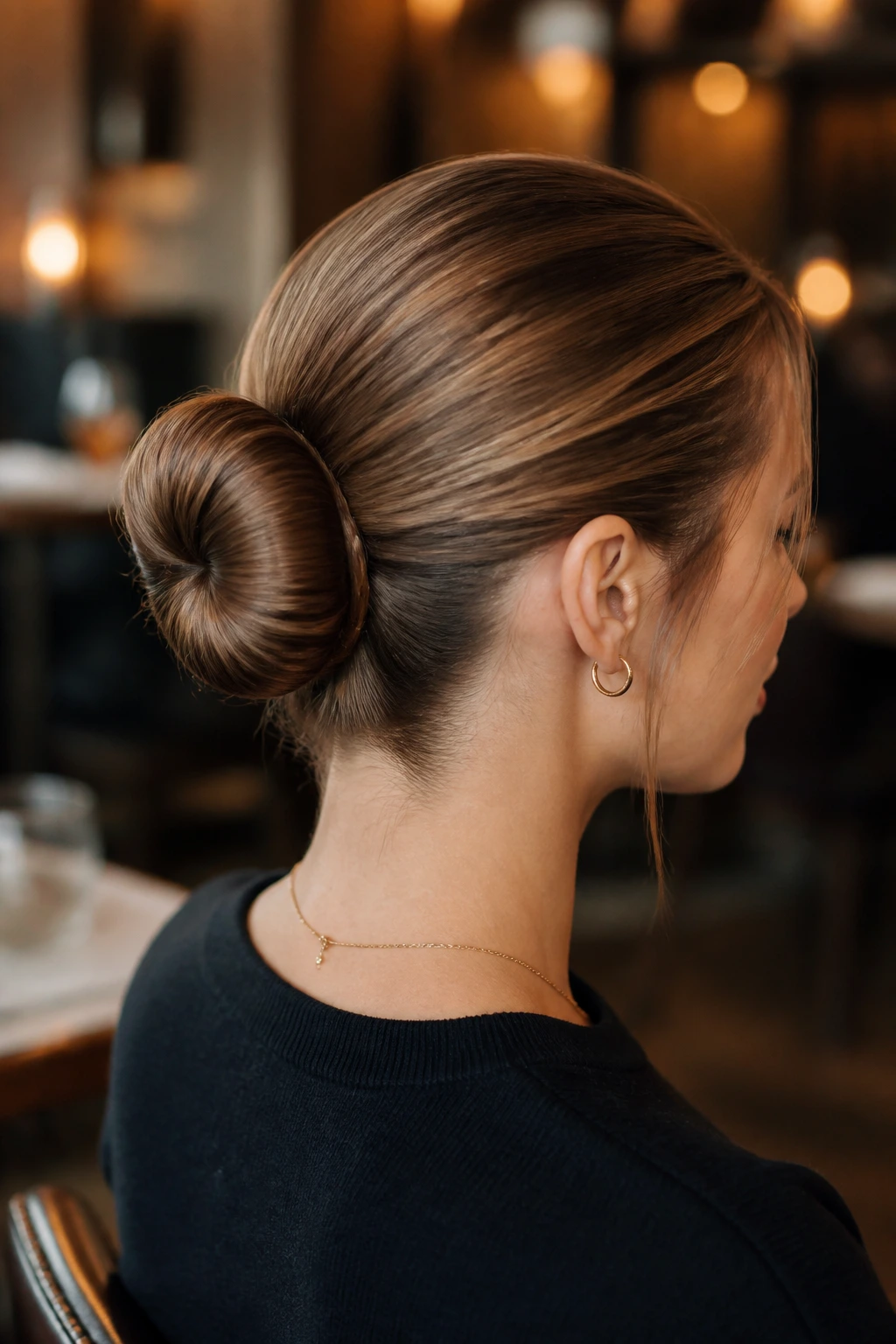
This is the bun that looks like it was done by someone who owns good black heels and a very decent brush. It’s centered low or mid-low, round in shape, and wrapped so neatly that you barely see where the hair starts and ends. The finish is polished, but the roundness keeps it from feeling harsh.
Why It Works:
The wrapped structure creates a clean circle, and circles are naturally gentler than angular knots. That matters. A hard, pointed bun can feel severe fast; a round bun reads softer even when the hair is sleek. This one is especially good if your hair has enough length to coil around itself twice, because the extra wrap gives the bun density without making it bulky.
Best On:
- Hair that’s shoulder length or longer
- Medium to thick hair that needs a strong anchor
- Straight or lightly wavy textures that hold a neat coil
Small Detail That Helps:
Cross two bobby pins over the hidden elastic instead of stuffing pins in randomly. The bun sits flatter, and it tends to stay in place longer.
3. The Soft Center-Part Bun With Face-Framing Pieces
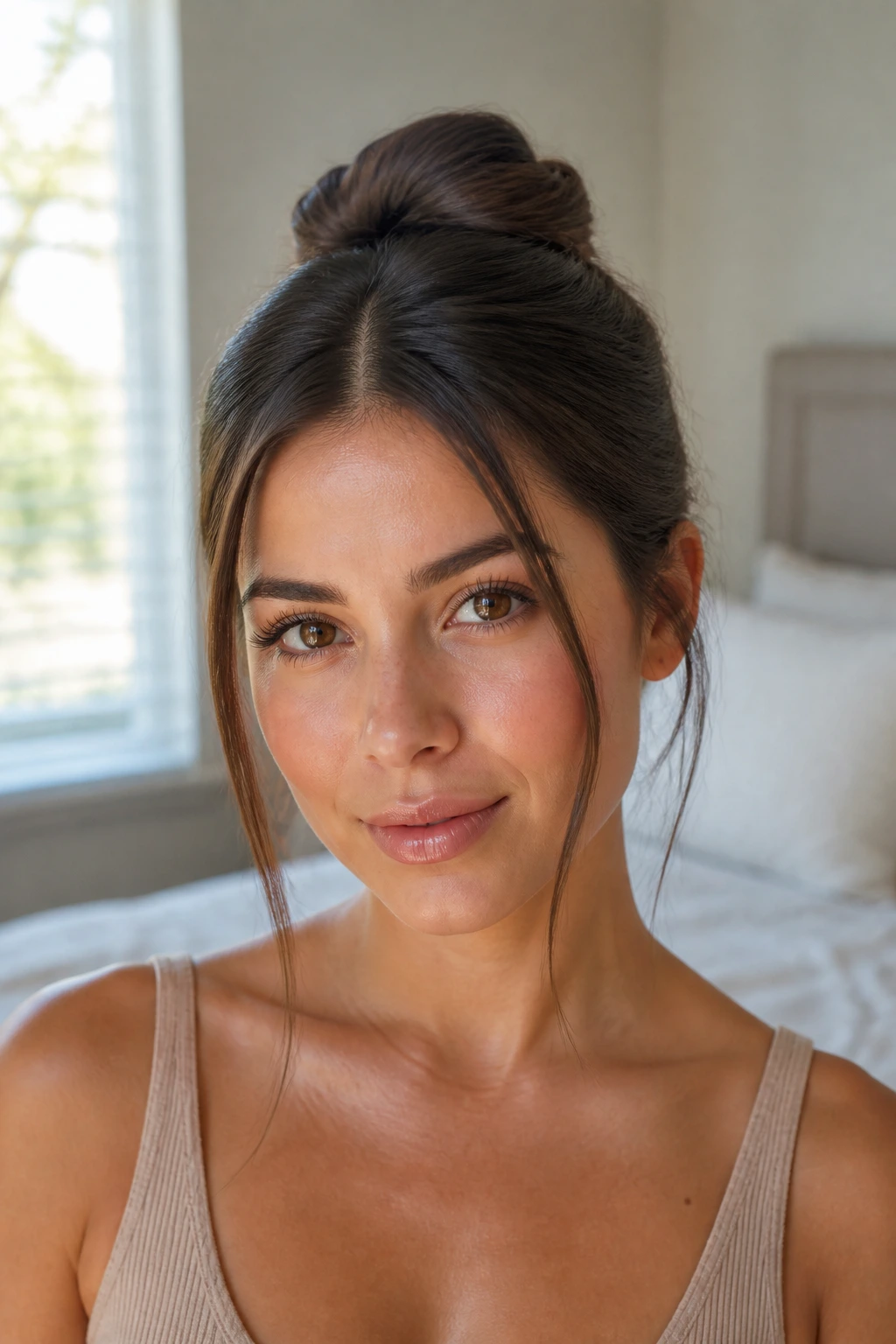
A center part changes the whole mood of a bun. Without it, the style can lean strict. With it, the hair opens up at the front and creates a cleaner frame for the face before the bun takes over at the back. Leave two slim pieces loose near the cheekbones, and the look softens immediately.
Why the Center Part Matters
The part gives the style symmetry, which is why this bun looks so calm. The face-framing pieces break the line just enough to keep the hair from feeling sealed to the head. If the strands are too thick, though, the style starts to look accidental. Keep them narrow, almost ribbon-thin, and curl the ends slightly with a flat iron if you want them to bend inward instead of hanging straight.
This version is especially useful when you want a bun that works with makeup. A strong brow, a red lip, or a little eyeliner all sit nicely against the clean center line.
Best Timing
Use it when you need the style to look deliberate for several hours. The center part keeps its shape better than a deep side sweep, especially if you pin the bun after the hair has cooled from a blow-dry.
4. The French Twist Bun That Tucks Into Itself
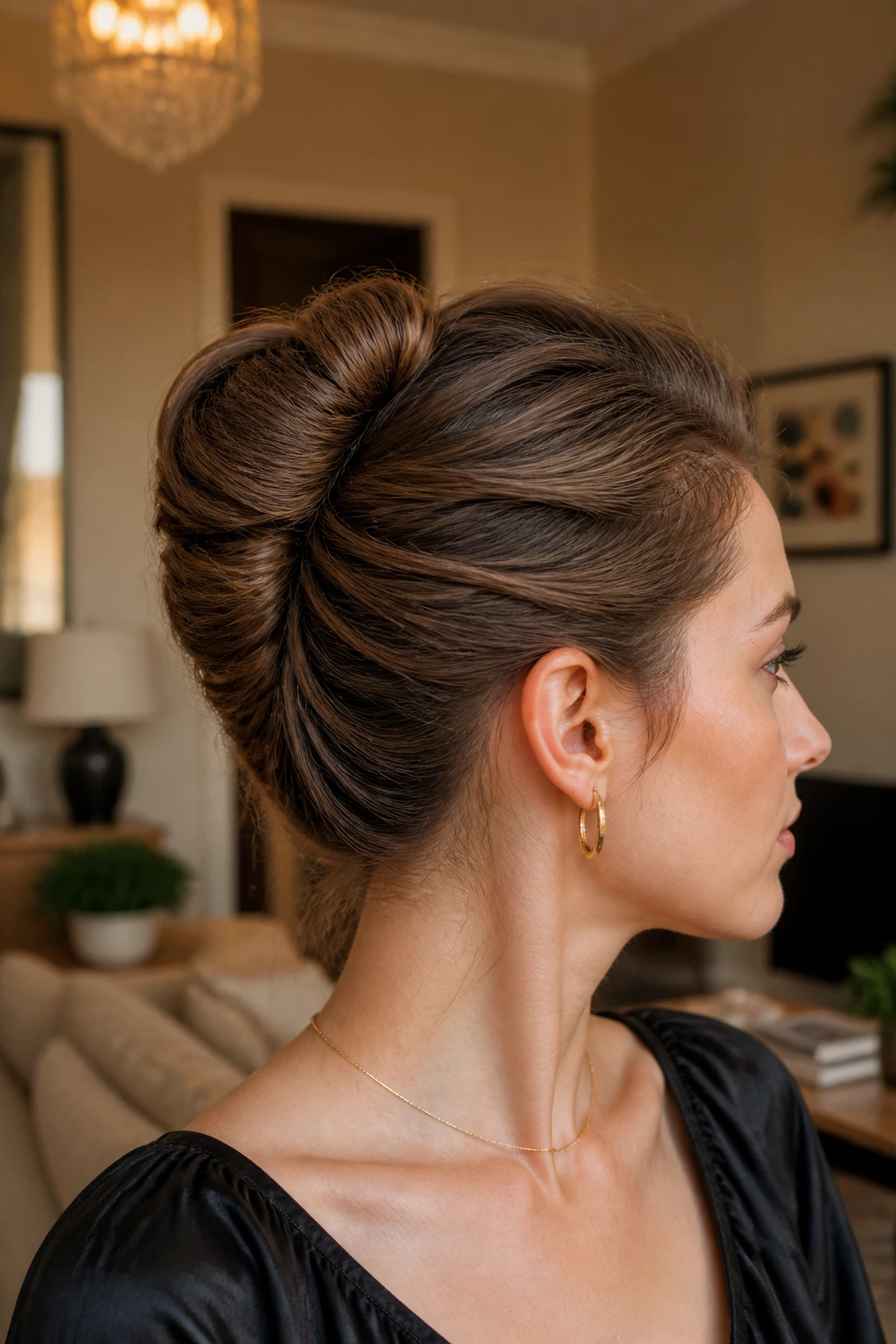
A French twist bun has a built-in sense of polish because the hair folds upward instead of splaying out. It sounds fussy. It isn’t, once your hands learn the motion. The twist creates a long vertical line that feels graceful and a little old-school in the best way.
You can keep it smooth or leave the top with a whisper of lift. I prefer the second version. A flat crown can look severe; a tiny bit of softness at the roots gives the twist some life.
What Makes It Different
- The hair is folded upward, not wound around and around
- It sits close to the head, which keeps the profile neat
- It looks especially good with statement earrings or open necklines
The trick is to anchor the twist with pins hidden along the center seam. If you pin only at the top, the style sags; if you pin too low, the twist loses its shape. Middle pinning. That’s the sweet spot.
5. The Braided Low Bun With a Soft Rope Finish
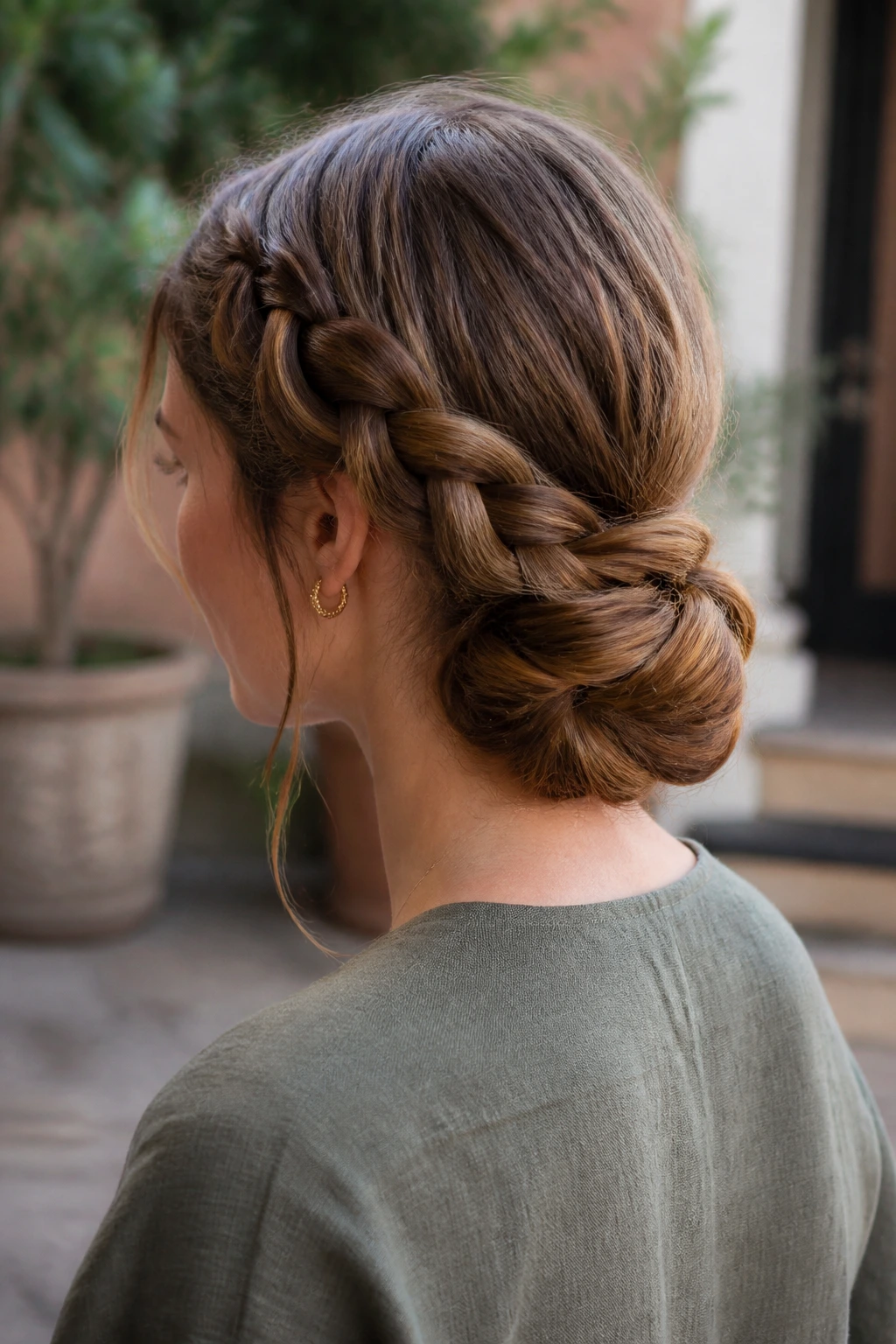
Braids bring texture without making the bun look messy. A single braid fed into a low bun gives you the control of a polished style and the softness of visible pattern. The braid catches the light differently from the smooth sections, which keeps the bun from reading flat.
Start with a loose three-strand braid on the tail, then wrap it into a bun at the nape. You can make the braid tight for more definition or gently pull the edges apart for a fuller look. I usually go with the second option. The slightly widened braid has a calmer, less rigid finish.
This is one of the best bun hairstyles for hair that slips easily, because the braid gives the pins something to grip. Fine hair, especially, benefits from that little bit of built-in texture.
6. The Twisted Crown Bun That Keeps the Top Soft
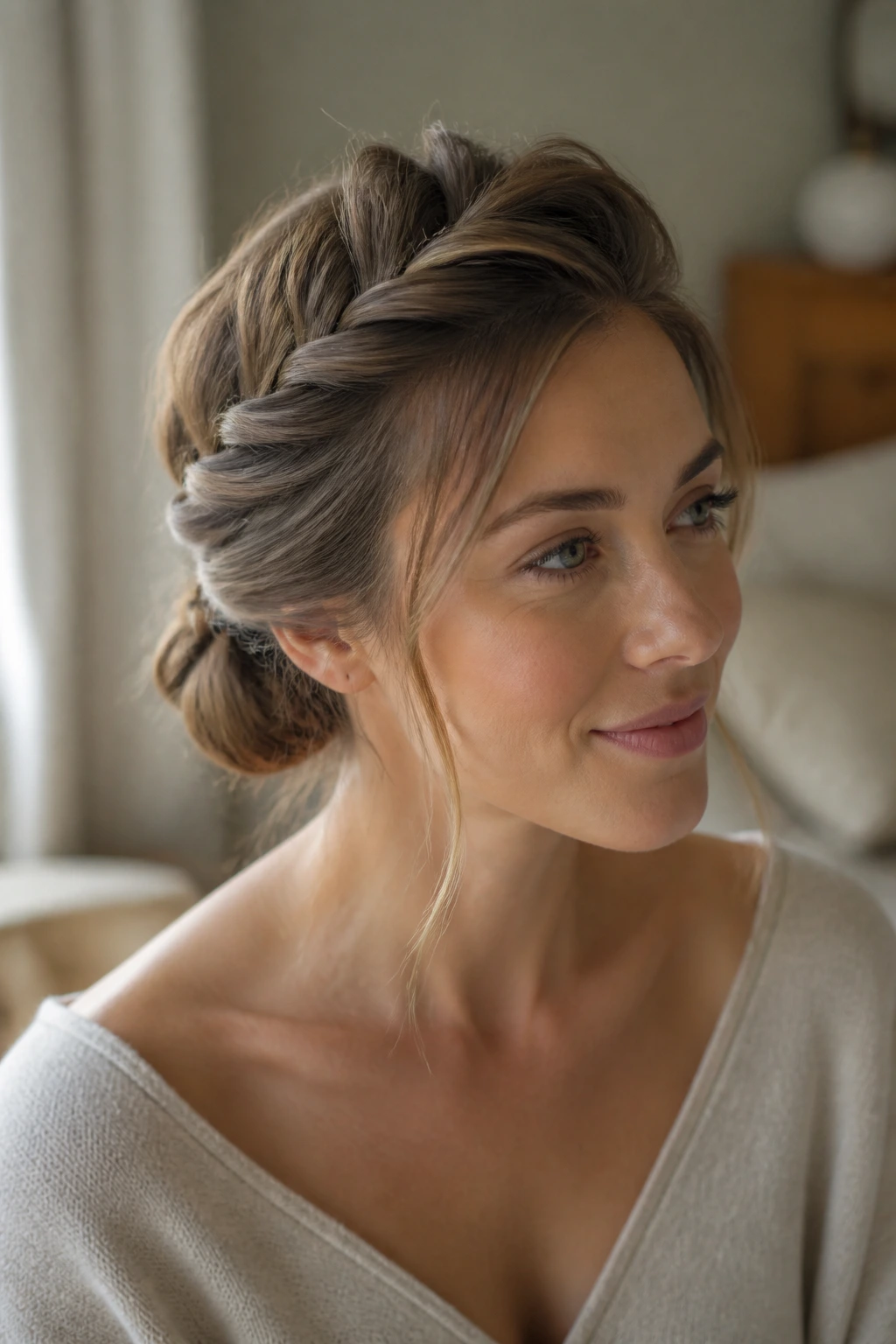
The twisted crown bun borrows the prettiest part of a crown braid — that soft wrap around the head — and sends it into a low bun instead of letting it trail all the way around. It’s a good way to get shape around the front without making the overall style feel too formal.
What I like here is the balance. The top stays tidy, but the twists create small lines and shadows that keep the style from looking like one solid block of hair. That matters when you want polish with a little dimension.
If your hair is layered, this bun can be a little slippery near the crown. Mist the roots with a light texturizing spray before twisting. Not a soaking spray. Just enough grip to keep the sections from sliding out of your fingers.
7. The Side-Swept Bun With a Gentle Lift
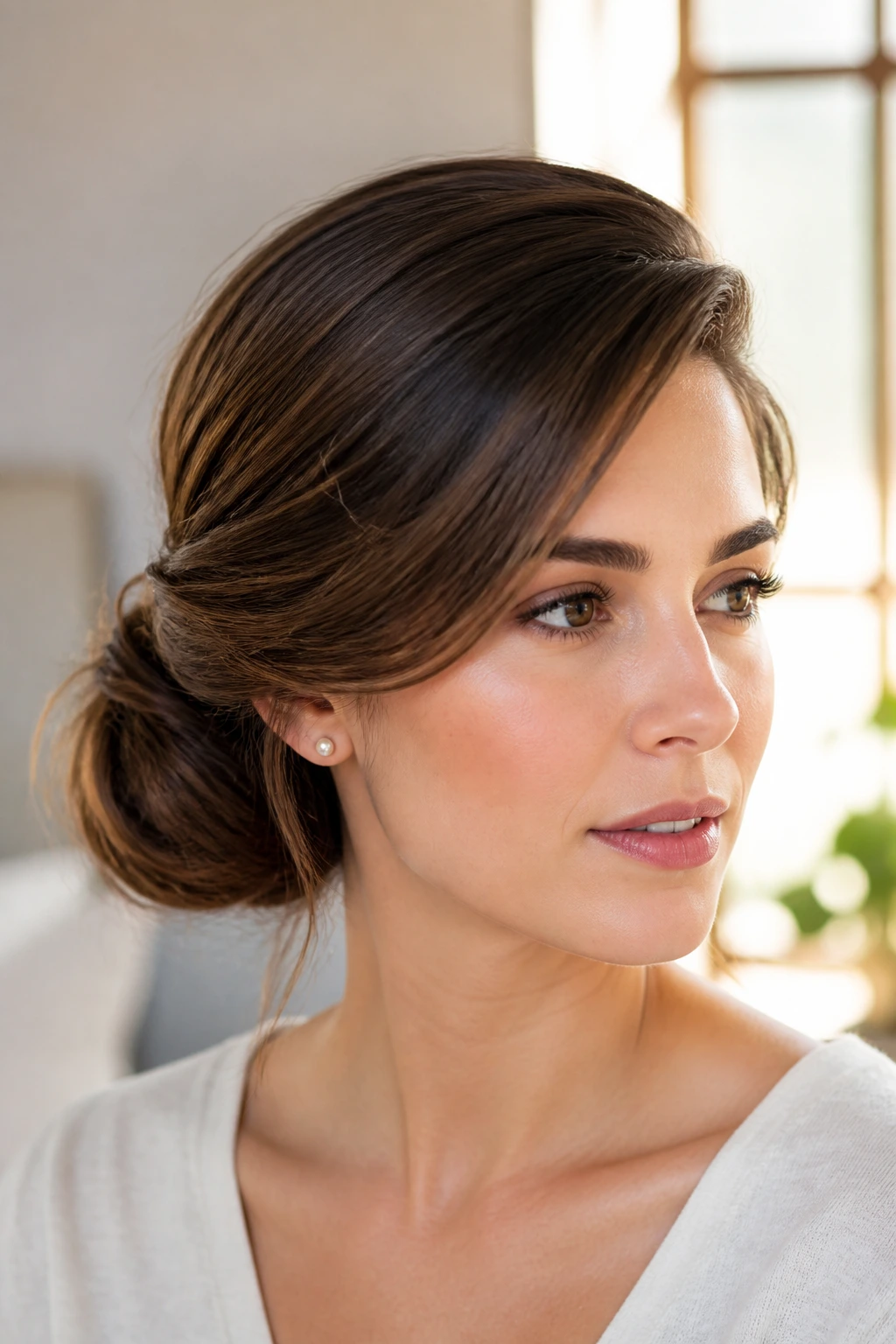
A side bun can look either soft or fussy, and the difference usually comes down to where the volume sits. The best version starts with a deep or medium side part, then gathers the hair slightly off-center at the nape. One side of the face gets a little more opening, and the bun itself feels less formal.
The first time I tried this style on thick hair, I noticed it looked better after I loosened the front by a quarter inch. That tiny release changed the whole shape. Too tight and the part takes over. Slightly relaxed, and the bun reads as elegant instead of pinned down.
This one pairs well with one shoulder exposed, since the off-center placement echoes the clothing line. Small detail. Big effect.
8. The Knotted Low Bun That Looks Intentional From Every Angle
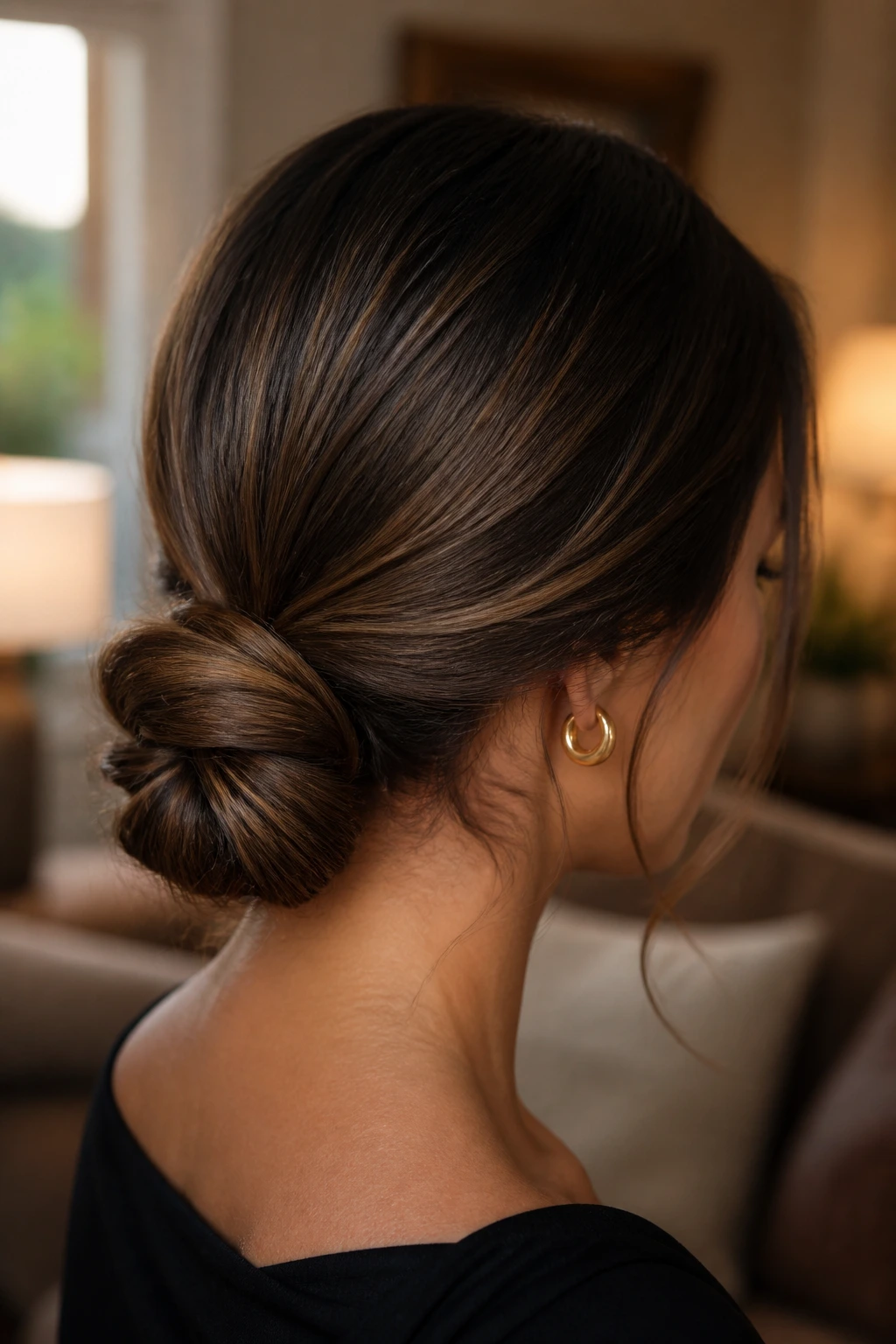
A knot bun has a built-in sense of shape because the hair crosses over itself before it gets pinned. That crossing point makes the style feel structured, even when the finish stays soft. It’s a smart choice if you want a bun that doesn’t need much embellishment.
Quick Facts:
- Best with medium to long hair
- Works with second-day texture
- Holds well with 4 to 8 bobby pins, depending on thickness
- Looks cleaner if the ends are tucked under instead of left loose
The knot should sit low enough that the weight of the hair helps hold it in place. If it’s too high, the style starts to look lopsided. If it’s too low, it can disappear into the neckline. There’s a narrow sweet spot here, and it’s worth finding.
9. The Sock Bun That Gains Softness From Its Shape
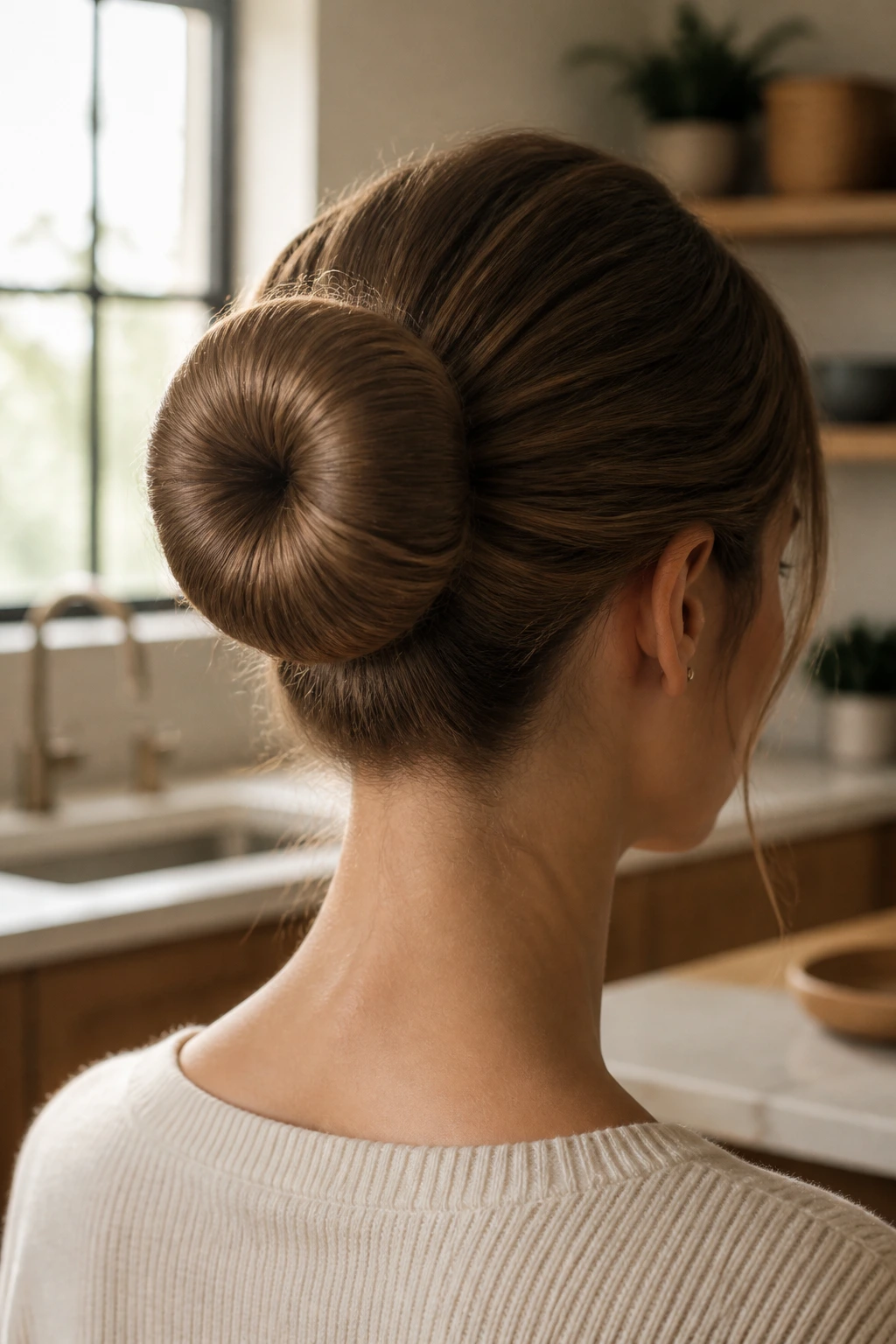
Why does a sock bun still work? Because shape matters more than the old internet jokes about it. A round bun has a neat outline that looks polished from a distance, and if you keep the hair smooth without stretching it tight, the whole style stays soft.
How to Keep It from Looking Too Big
Use just enough padding to support the bun, not enough to make it look like a donut sitting on the back of your head. A small, low-volume form gives the hair a fuller shape without making the style cartoonish. Wrap the hair evenly, then pin the last ends underneath so the bun doesn’t look fuzzy at the edges.
This is one of the better choices for fine hair that needs help holding a round shape. The padding gives the illusion of density, and density reads polished fast.
10. The Tucked-In Gibson Bun That Feels Vintage but Easy
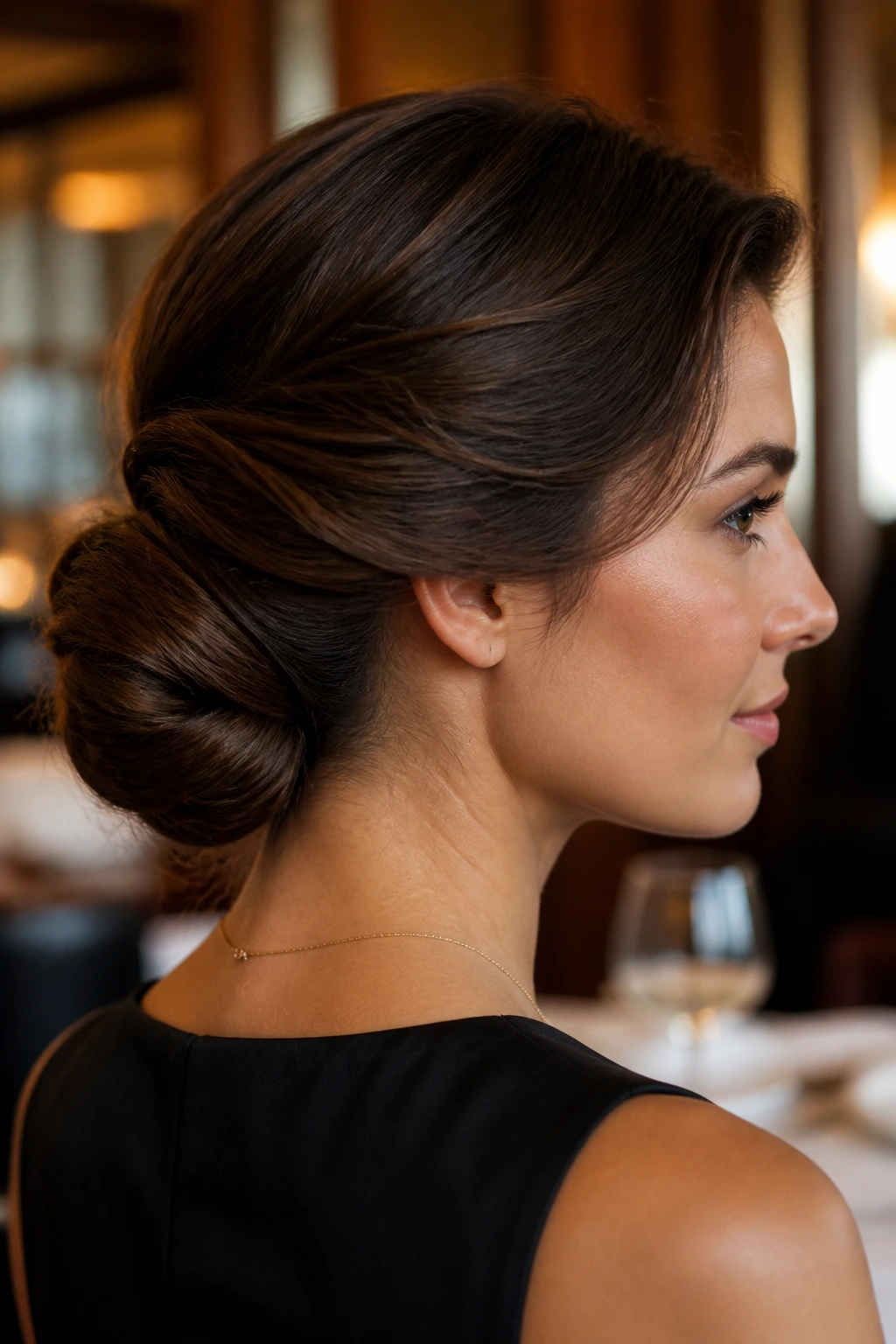
The Gibson bun has that old-fashioned softness people forget about until they see it in motion. Hair is gathered low, folded inward, and tucked into itself so the shape sits like a rolled cushion at the nape. It’s graceful. Also a little underrated.
The finish looks especially good when the front is brushed smooth but not sealed flat. Let the top have a tiny bit of lift; the style needs that breathing room. If you flatten everything, the tuck can look too stern.
I’d pick this bun for a dinner, a recital, or any event where you want the hair to stay in place but still feel gentle around the face.
11. The Rope-Twist Bun With a Loose, Lacy Surface
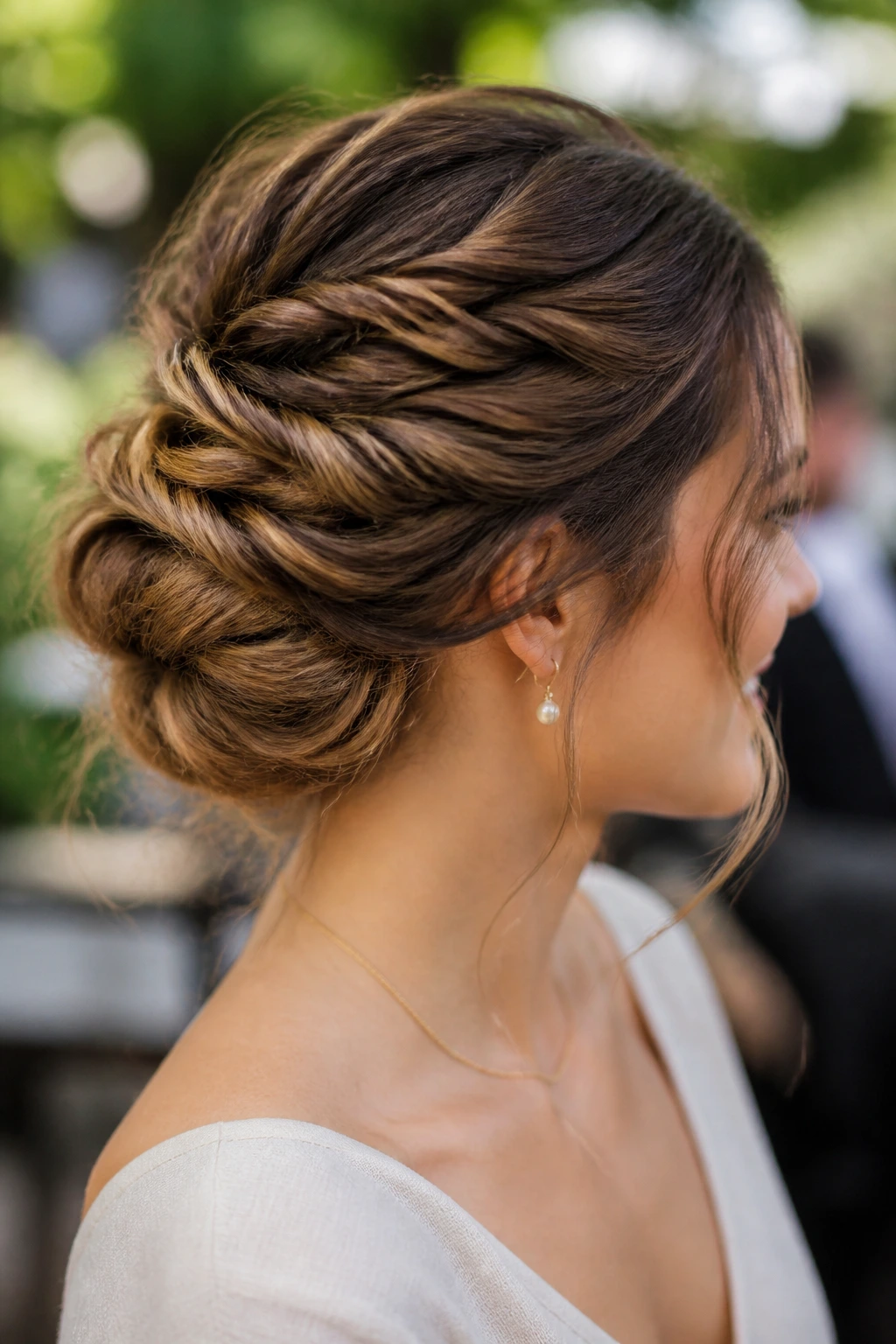
Rope twists give a bun more texture than a straight wrap, and texture is what keeps polished hair from feeling too hard. Twist two sections tightly enough that they hold, then let the outer edges relax a little once they’re pinned. The result looks woven, almost stitched.
A rope-twist bun is also forgiving if your hair has layers. Those shorter pieces blend into the twist instead of sticking out at odd angles. That’s a nice change from a sleek bun, which can expose every uneven cut.
If you want it softer still, pull a few millimeters out of the twist after pinning. Not chunks. Just enough to round the surface.
12. The Looped Ponytail Bun That Stays Low and Easy
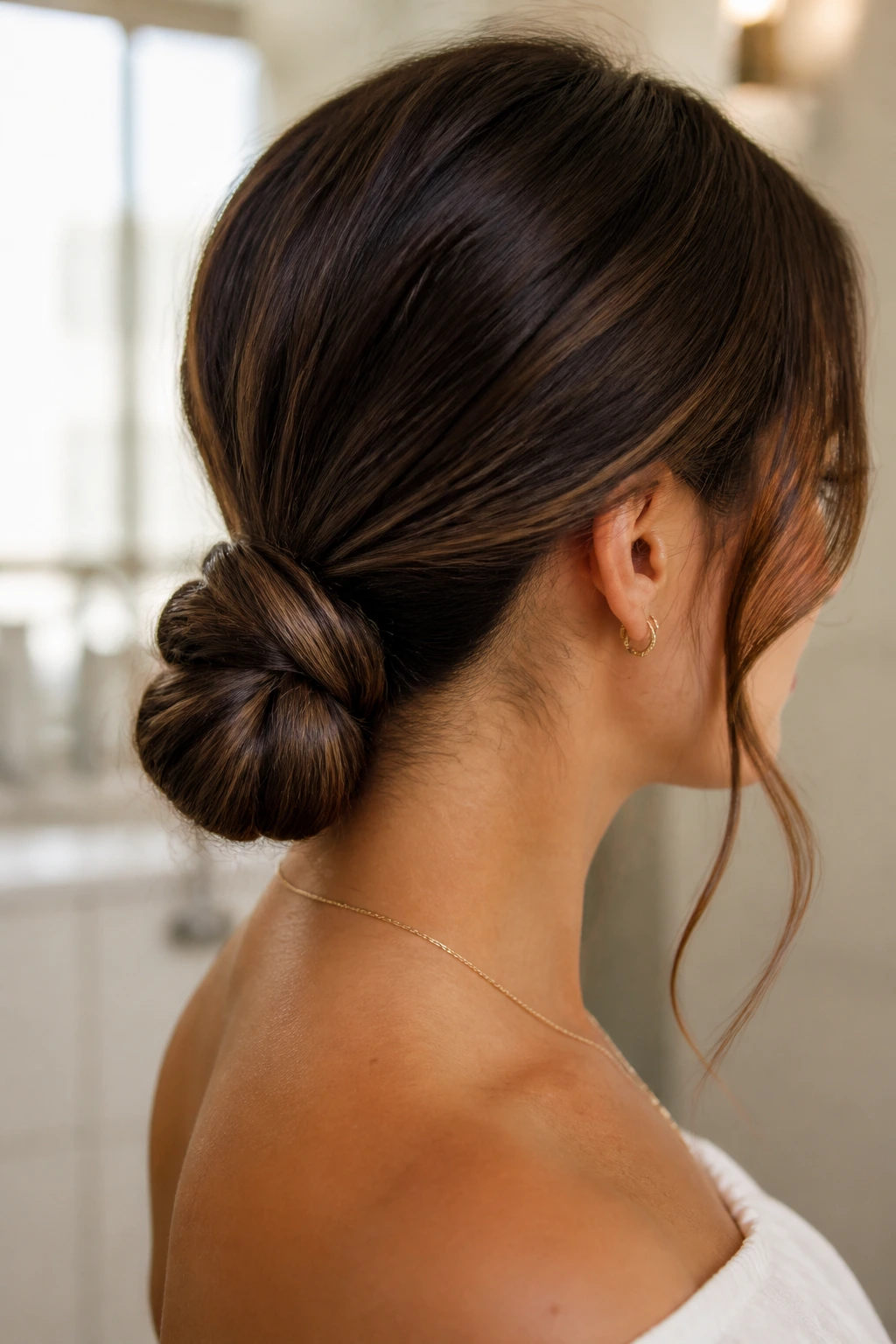
This is the bun for someone who likes a ponytail’s simplicity but wants more finish. Gather the hair into a low ponytail, loop the length through the elastic once, and leave the tail partly tucked so it forms a relaxed bun shape. The result sits somewhere between an updo and a knot.
Unlike a fully wrapped chignon, this style keeps a little movement at the ends. That movement is what saves it from feeling too locked in. It works especially well on medium-length hair, where the loop doesn’t need to be massive to look complete.
Who It Suits Best:
- Busy mornings
- Hair that reaches the collarbone or longer
- Anyone who wants a polished bun without a lot of pinning
13. The Half-Up Chignon That Leaves Some Length Showing
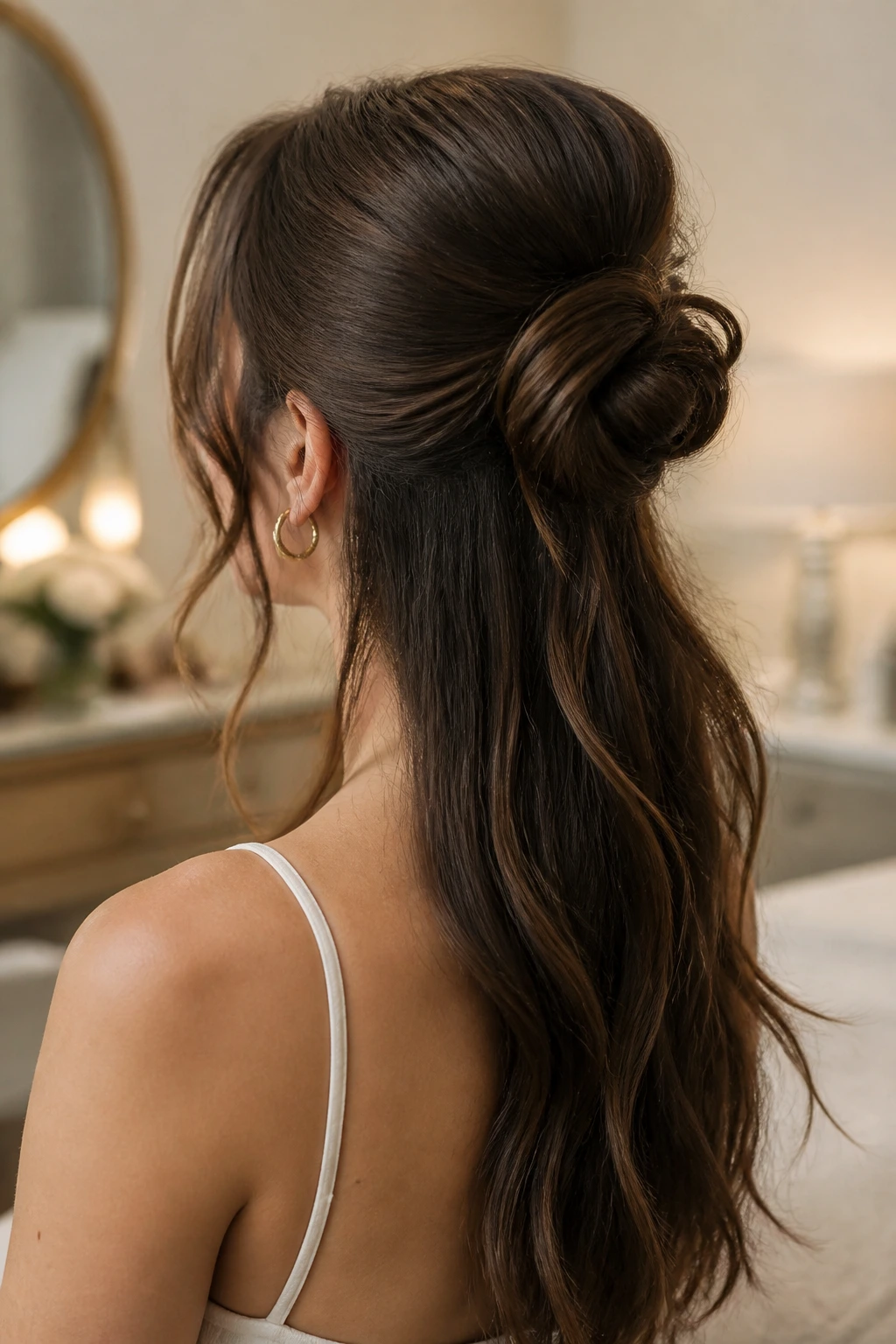
A half-up chignon keeps the crown and sides controlled while letting the lower half of the hair stay free. That split can be more flattering than a full bun, especially if your hair is very long or very thick and a full knot starts to feel heavy.
The bun itself should be small and smooth, almost like a compact flower at the back of the head. The looseness lives below it, not in the bun. That’s the piece people sometimes miss. If the top knot gets too loose, the whole thing reads casual in a hurry.
This style works well when you want a little softness around the neck and shoulders. It also gives you more movement when you turn your head, which makes the look feel less fixed.
14. The Low Bun With Face-Framing Pieces That Bend, Not Hang
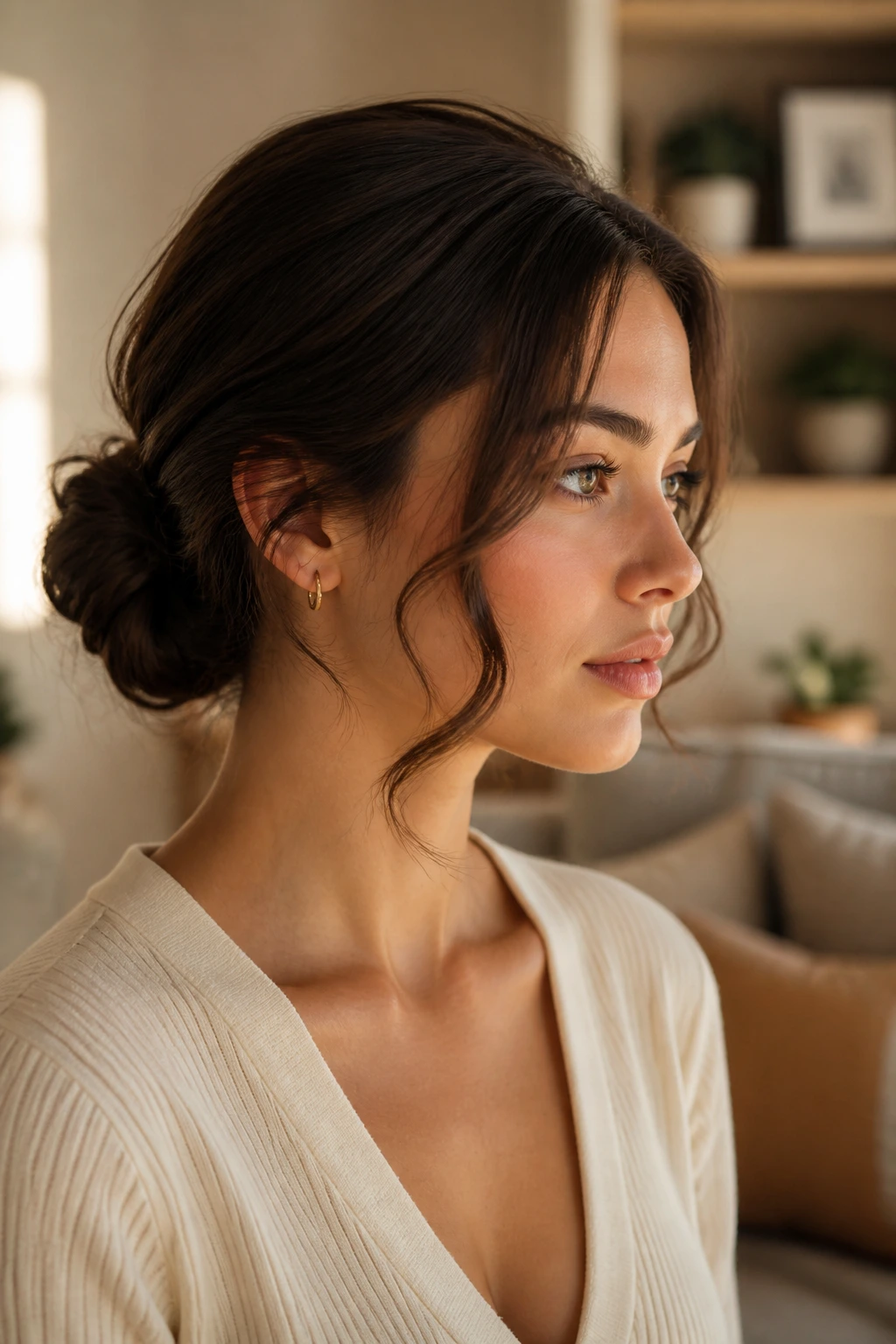
Some buns need a few face-framing pieces. This is one of them. Without those side strands, the style can feel too finished, too sealed, almost severe. With them, the bun reads friendly and polished at the same time.
The key is placement. The loose pieces should start around the cheekbone, not the jawline. If they’re too short, they poke out. Too long, and they drag the style down. I like to bend the ends softly with a flat iron so they follow the shape of the face instead of hanging straight like strings.
This bun is a favorite for people who want a softer frame around the eyes and cheekbones without sacrificing the clean back shape.
15. The Controlled Textured Bun That Keeps a Little Grip
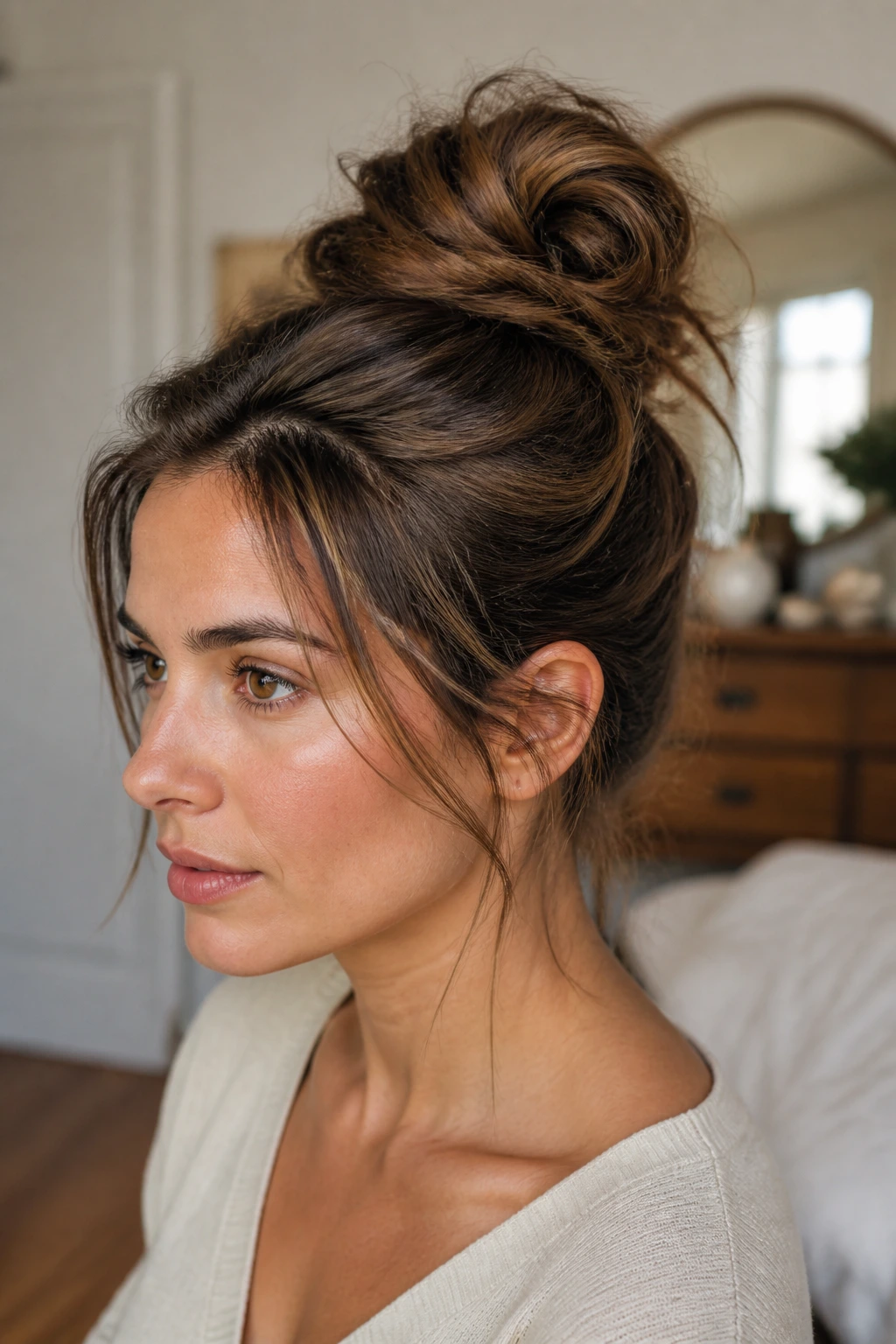
A textured bun sounds messy if you do it wrong. Here, it isn’t messy. It’s controlled. The surface has a touch of roughness so the pins hold, but the outline stays compact and neat.
What to Use
- A matte texturizing spray on dry hair
- 6 to 10 bobby pins for medium hair
- A small elastic with strong grip
- A light finishing spray, not a heavy lacquer
The point is to create enough friction that the bun doesn’t slide, then smooth the outside lightly with your hands. Think “soft fabric,” not “rough draft.” That mental image helps more than people think.
This is one of the best options for hair that refuses to stay flat on its own. It has structure without losing movement.
16. The Sleek Side-Part Ballerina Bun With a Low Shine
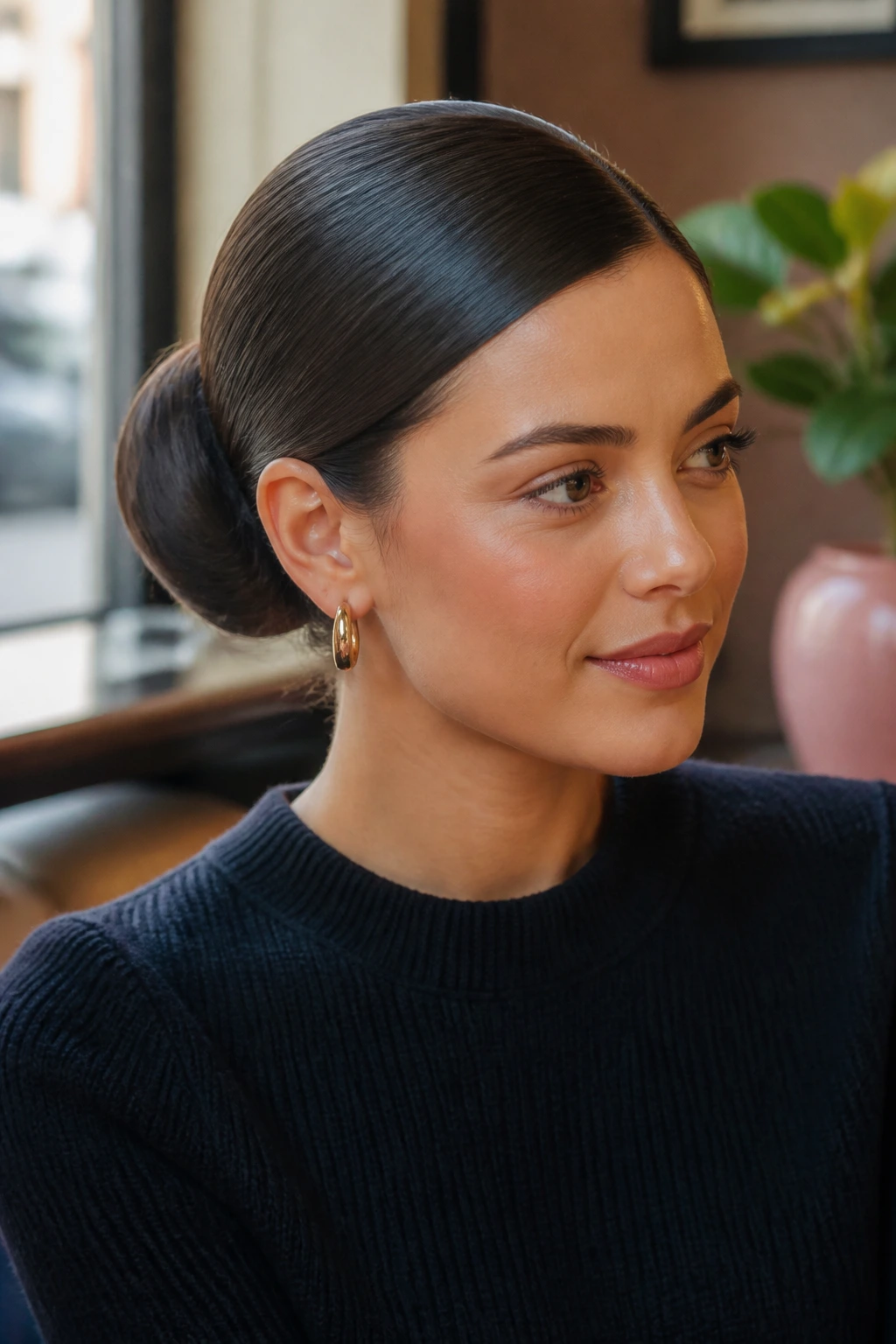
A side part changes the ballerina bun from strict to graceful. The bun itself can stay round and clean, but the off-center part keeps the front from looking too uniform. That slight asymmetry is what gives the style its softness.
Would I wear this with a crisp suit? Yes. With a slip dress? Also yes. With a plain knit top and gold hoops? Probably my favorite version. The bun is polished enough for dressier outfits, but the side part keeps it from looking locked in place.
Use a little shine cream only on the top half of the head. Put it through the mids and ends, not the roots. Too much near the scalp and the hair starts to look heavy instead of smooth.
17. The Braided Crown Bun That Rounds the Head Beautifully
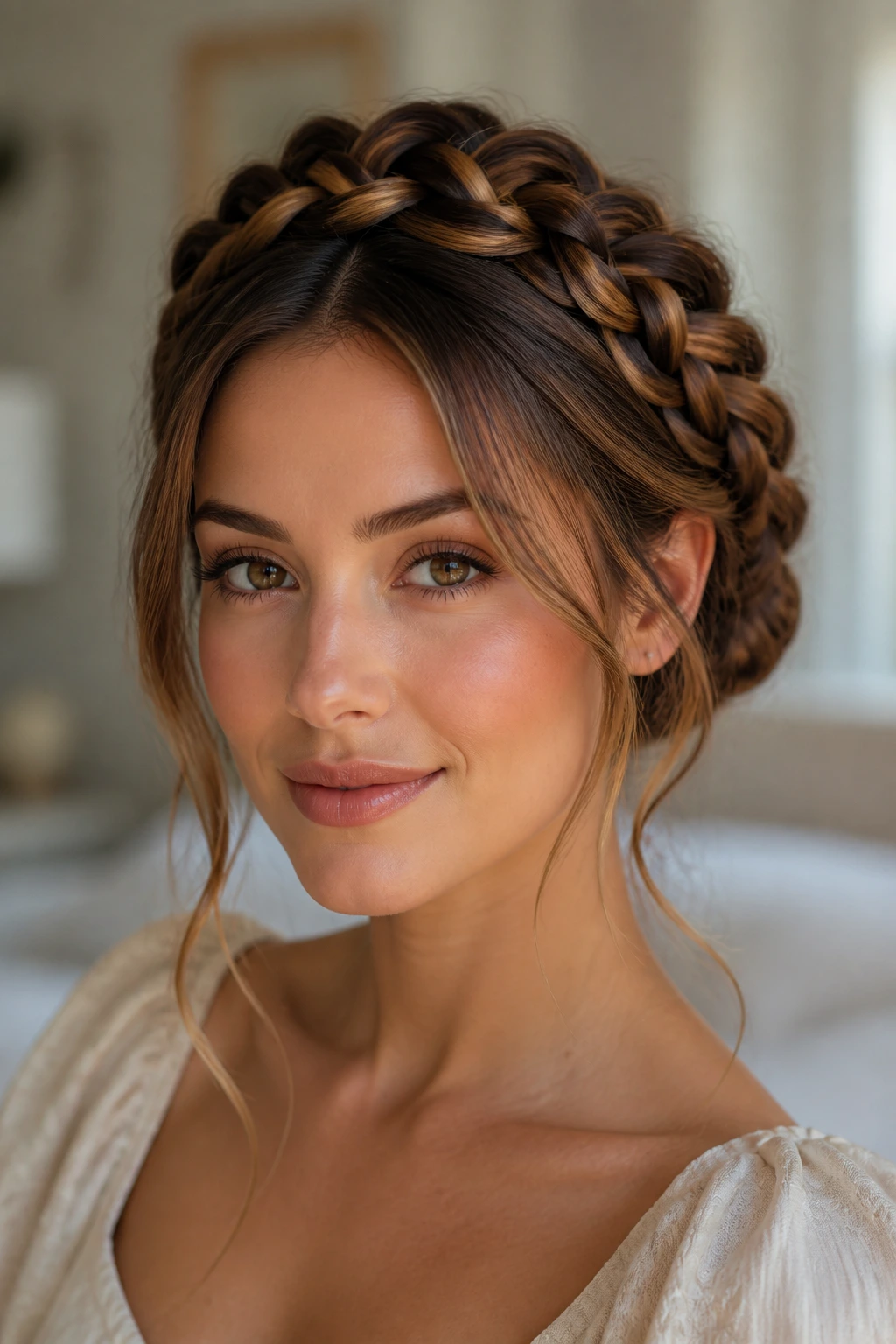
A braided crown bun wraps interest around the head before the hair drops into the bun. That means the eye sees shape from the front and the back, which makes the whole style feel more finished than a plain knot.
The Part People Get Right
They usually braid the top too tightly. Don’t. A braid with a little give around the crown looks softer and sits closer to the hairline. A braid pulled too tight creates a hard ridge, and that ridge fights the “soft polished” part of the brief.
This style is especially nice if you have layers or slight wave, because the braid can disguise uneven lengths before the bun starts. It’s one of those styles that looks more complicated than it is once your fingers learn the pattern.
18. The Double-Twist Bun That Feels Structured but Light
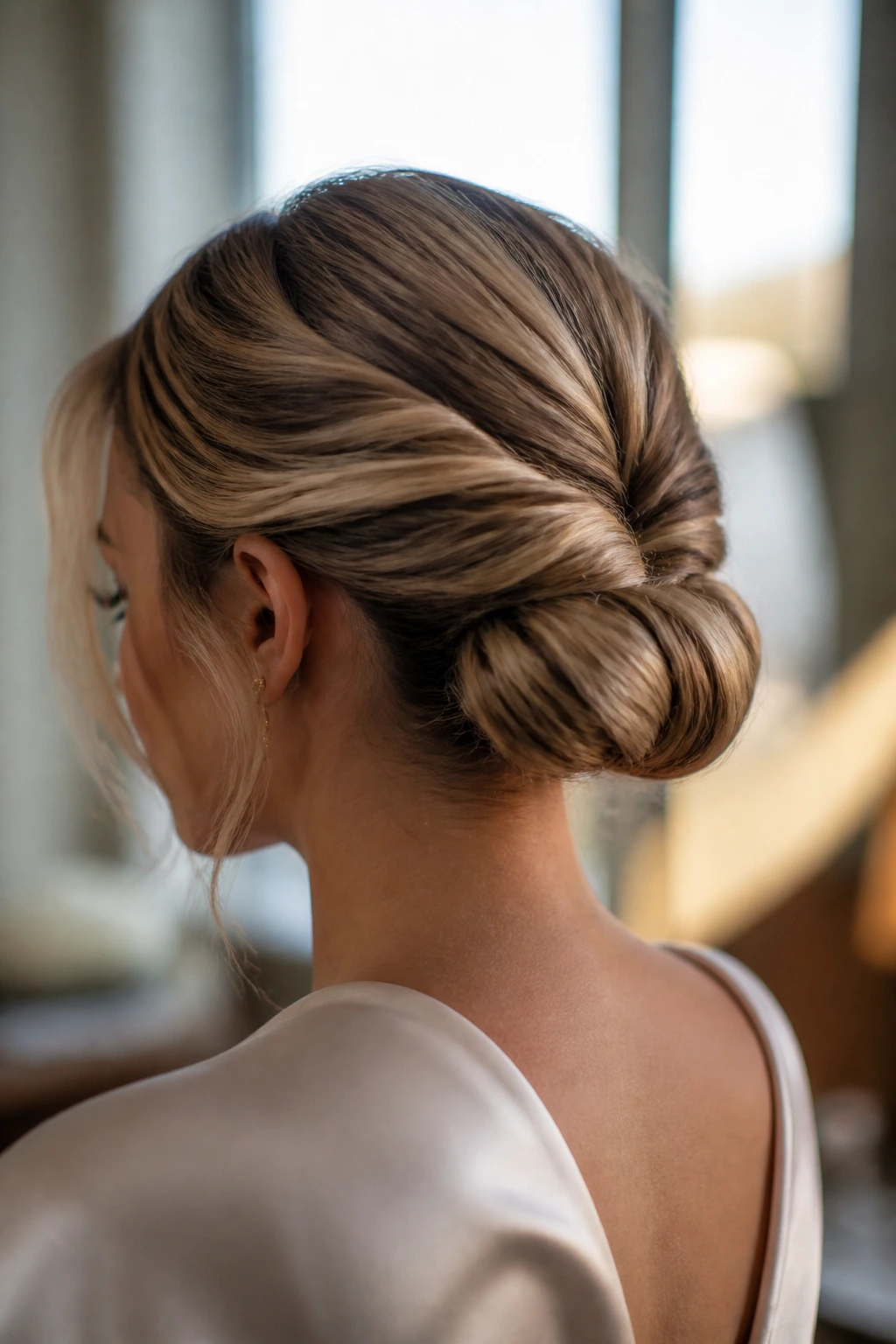
A double-twist bun starts with two sections that twist toward each other before they join in the back. It gives the style a built-in seam, which sounds small until you see it from the side. Then it matters a lot.
The difference is the shape. A single twist can flatten. Two twists create a fuller curve and a more stable base. That means you can keep the bun lower and softer without losing structure.
This one is useful on medium-thick hair that needs direction. If you’re tired of buns that collapse by late afternoon, the double twist gives the pinning points some backbone.
19. The Rolled Nape Bun That Hugs the Neckline
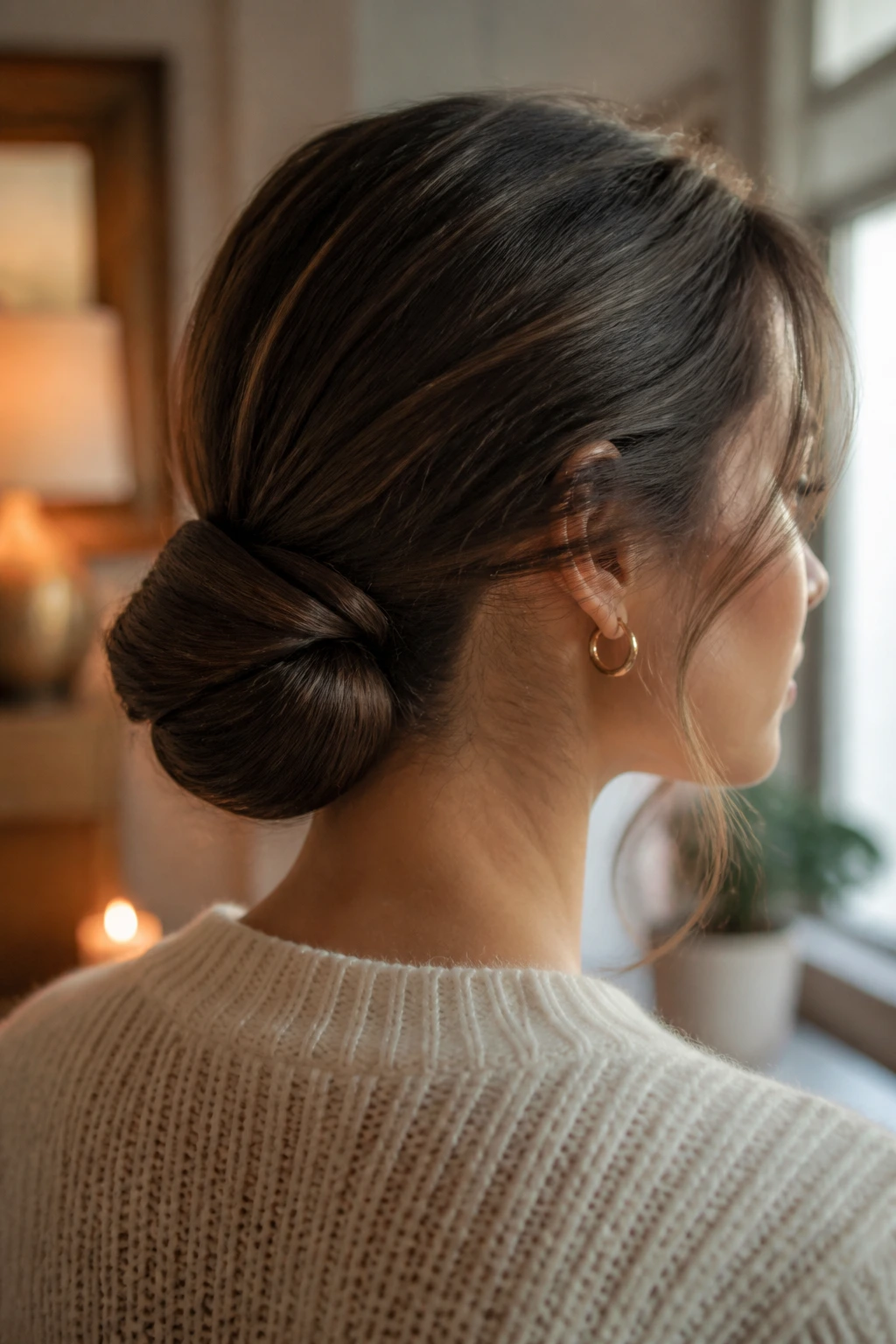
A rolled nape bun is one of the quietest bun hairstyles on this list, and that’s why I like it. It stays low, close to the head, and almost nestles into the neckline. The shape is smooth but never severe because the roll gives the hair a little cushion.
It’s the kind of bun that looks especially good with a soft sweater, a crew neckline, or a dress with a clean back. Nothing fights it. It just sits there looking composed.
If you have short layers around the face, leave them out on purpose. The roll at the back is neat enough that a few softer front pieces can balance it out nicely.
20. The Folded Ponytail Bun That Takes Three Minutes and Looks Thoughtful
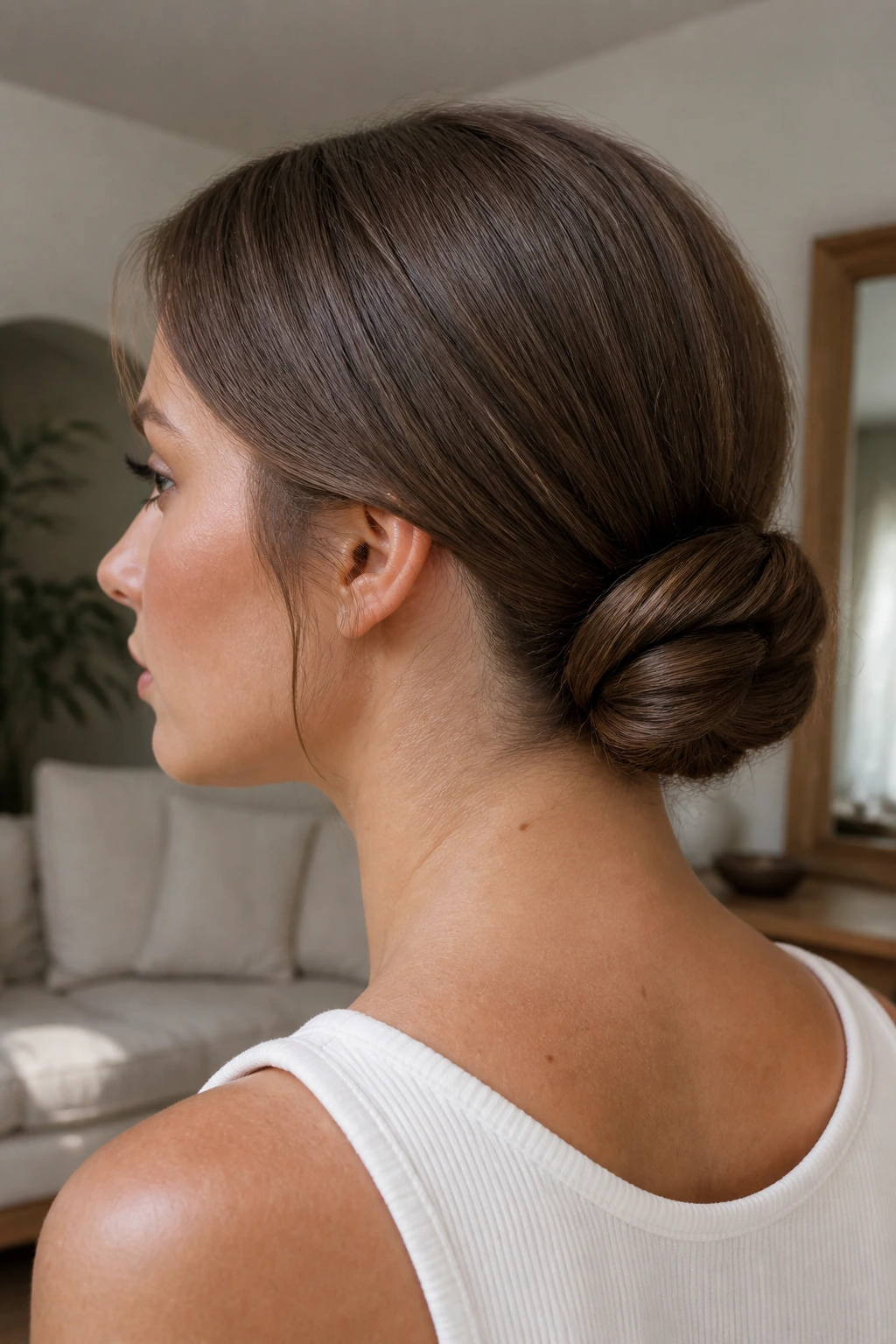
This is the bun I recommend when someone says they have no time and still want the hair to look planned. Make a low ponytail, fold the length upward into itself, and pin the fold across the base. It’s quick, but it doesn’t look like you gave up.
The trick is to keep the fold a little rounded rather than smashed flat. That gives the bun some body and stops it from looking like a rushed twist. A few hidden pins underneath do more work than an extra elastic ever will.
On very long hair, this style can become wide. If that happens, fold the tail in two sections instead of one giant sweep. Cleaner shape. Better balance.
21. The Infinity Twist Bun That Holds Its Line
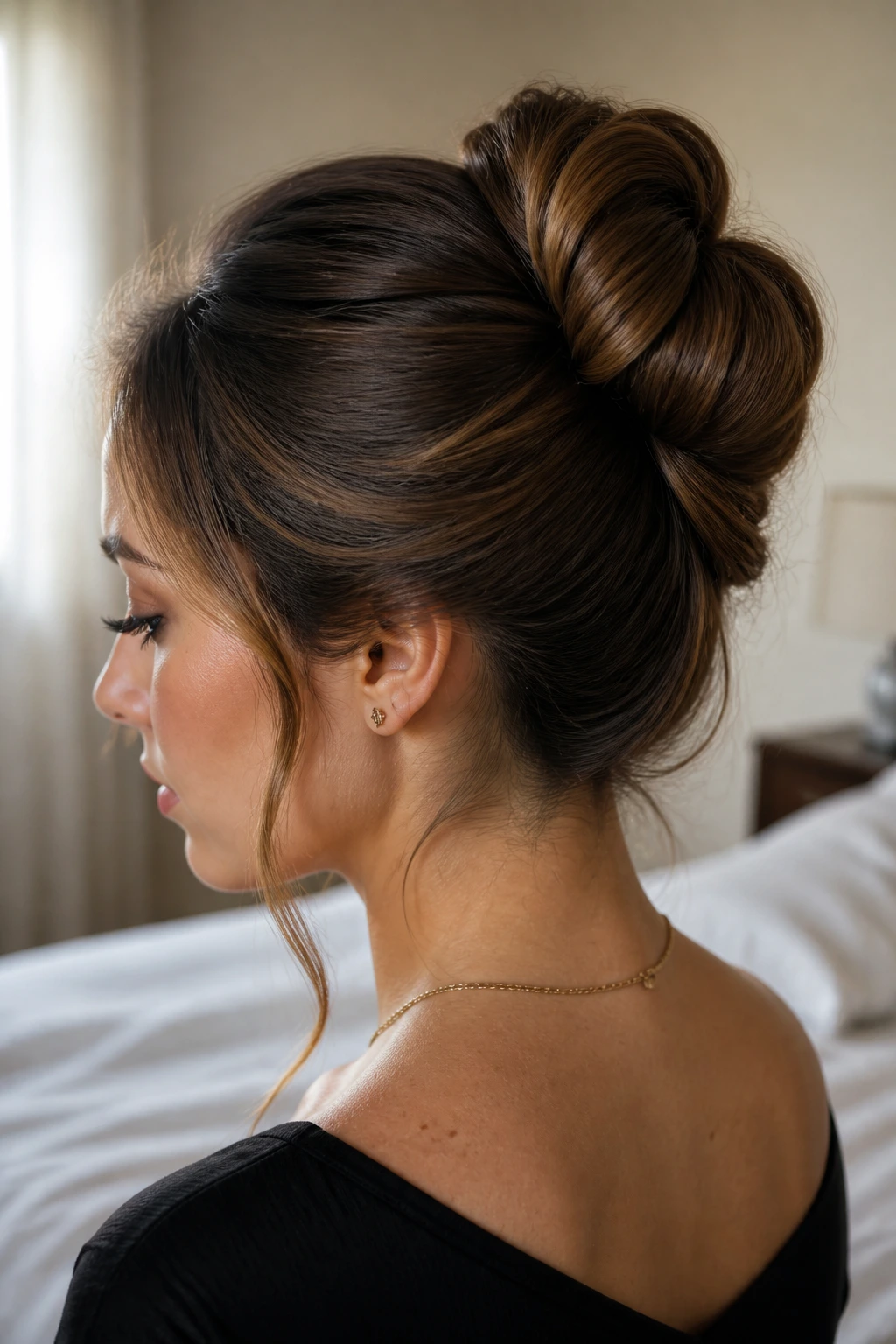
Why does the infinity twist look so polished? Because the crossing motion creates a built-in loop that feels deliberate from the start. The hair doesn’t just gather; it traces a shape.
The best version stays close to the head and avoids puffing out at the sides. If the sections are too loose, the twist loses that clean figure-eight line. If they’re too tight, the style goes stiff. Somewhere between the two is the sweet spot.
This bun works beautifully on hair that has a little natural bend. Straight hair can do it, too, but it usually needs a touch of product for grip.
22. The Low Knot Bun With a Slightly Undone Finish
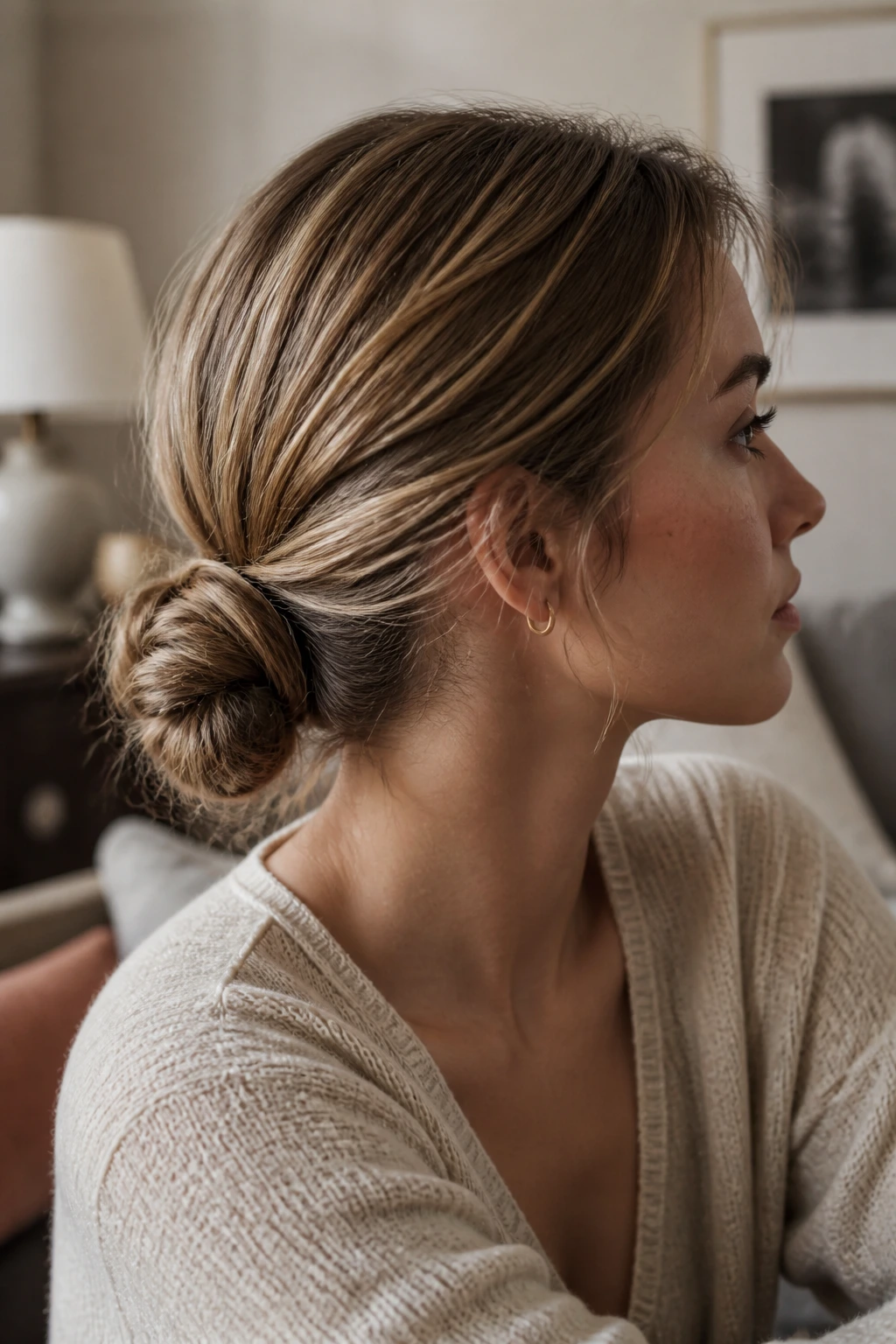
A low knot bun sounds casual, but it can read polished fast if you anchor it correctly. Tie the hair into a low knot, then tuck the ends under and pin them so the shape holds. The knot stays visible enough to feel interesting, but not so loose that it falls apart.
I like this one for days when the hair needs to look neat but not formal. The slight knot shape creates a point of interest at the nape, which is more flattering than a plain elastic in a lot of cases.
Little Things That Help
- Use a narrow elastic so the base stays small
- Pin from underneath first
- Keep the knot centered unless you want the style to feel more relaxed
23. The Twisted Side Chignon That Softens the Whole Profile
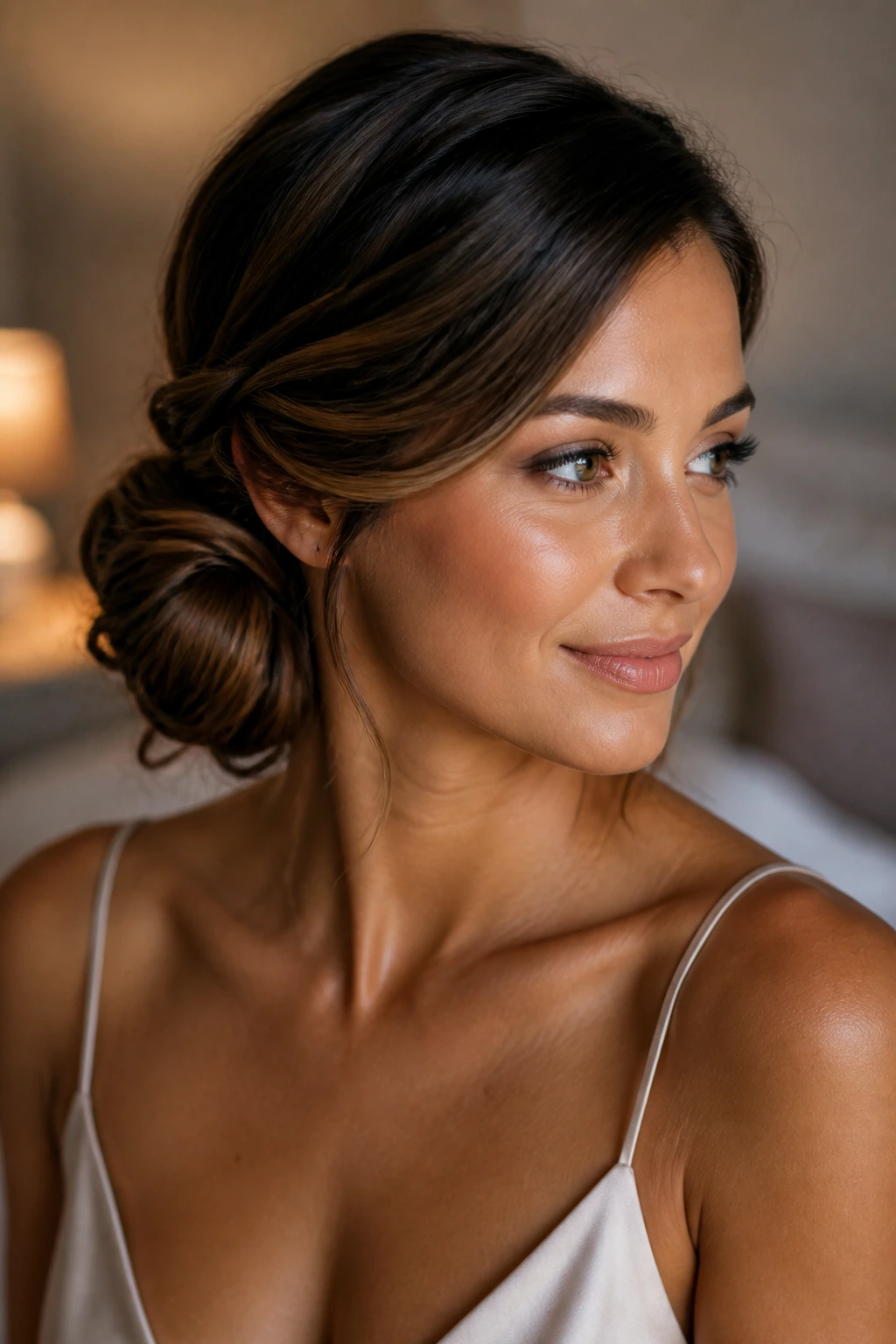
A twisted side chignon has one of the easiest entry points into polished styling because it doesn’t require perfect symmetry. The hair sweeps to one side, twists back toward the nape, and settles into a low knot that sits just off-center.
That off-center placement is doing a lot. It softens the profile, opens one side of the face, and keeps the look from feeling too controlled. If you wear side parts often, this is one of the most natural-looking buns on the list.
The twist should feel firm, but not twisted to the point of rope tension. You want the hair to arc, not squeeze.
24. The Scarf-Wrapped Bun That Adds Softness Without More Hair
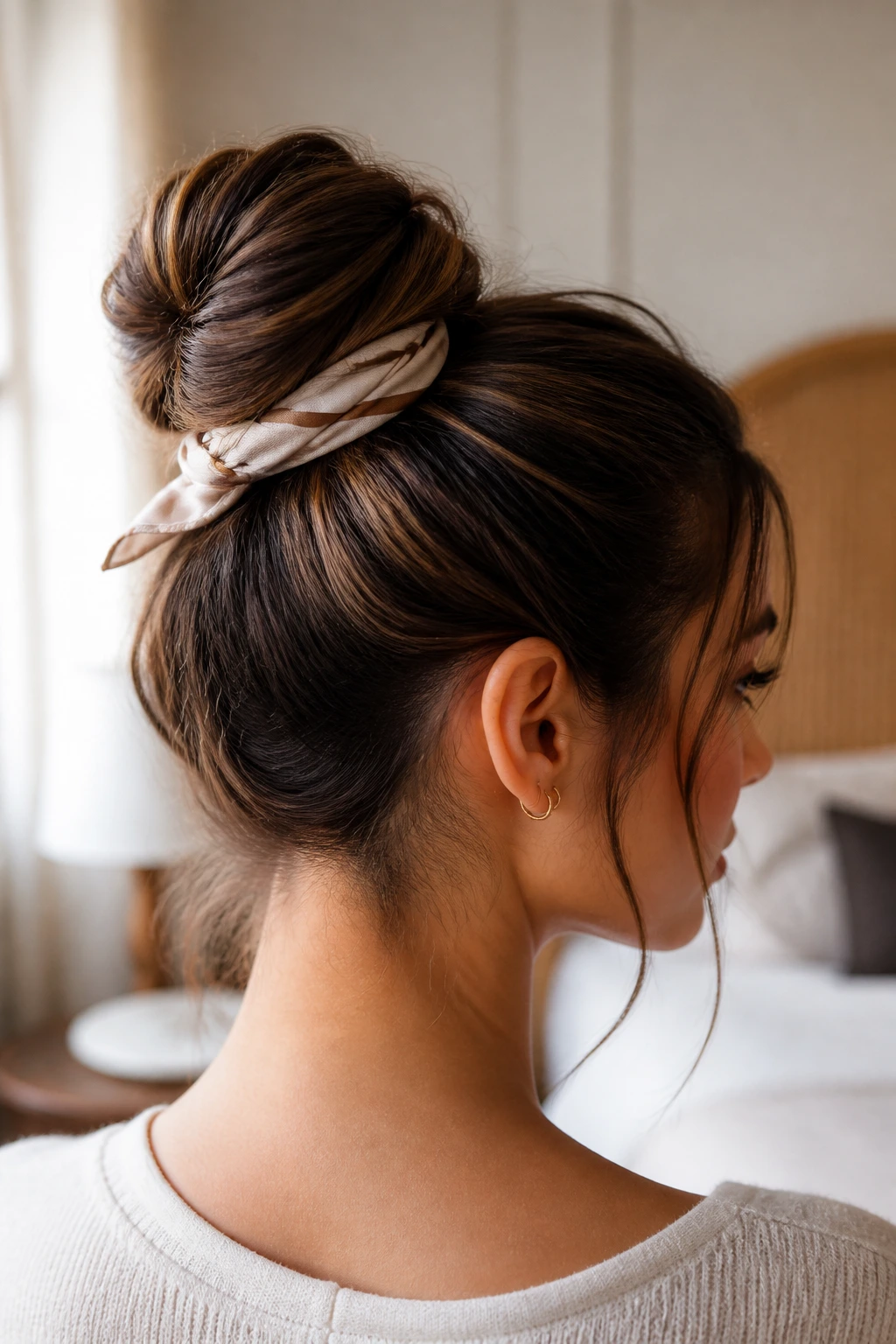
A scarf changes the bun without asking the hair to do more work. Wrap a thin silk or satin scarf around the base, leave the bun itself simple, and the whole style instantly feels softer. The fabric breaks up the shape in the nicest way.
This works especially well when your hair is fine or short for a full bun. The scarf adds presence. It also covers the base, which can hide small pinning issues if the bun isn’t perfectly full.
Keep the scarf narrow and let the tails drape slightly rather than tying a giant bow. A big bow can overpower the bun. A narrow wrap feels cleaner.
25. The Minimalist Clean Bun That Proves Less Can Be Enough
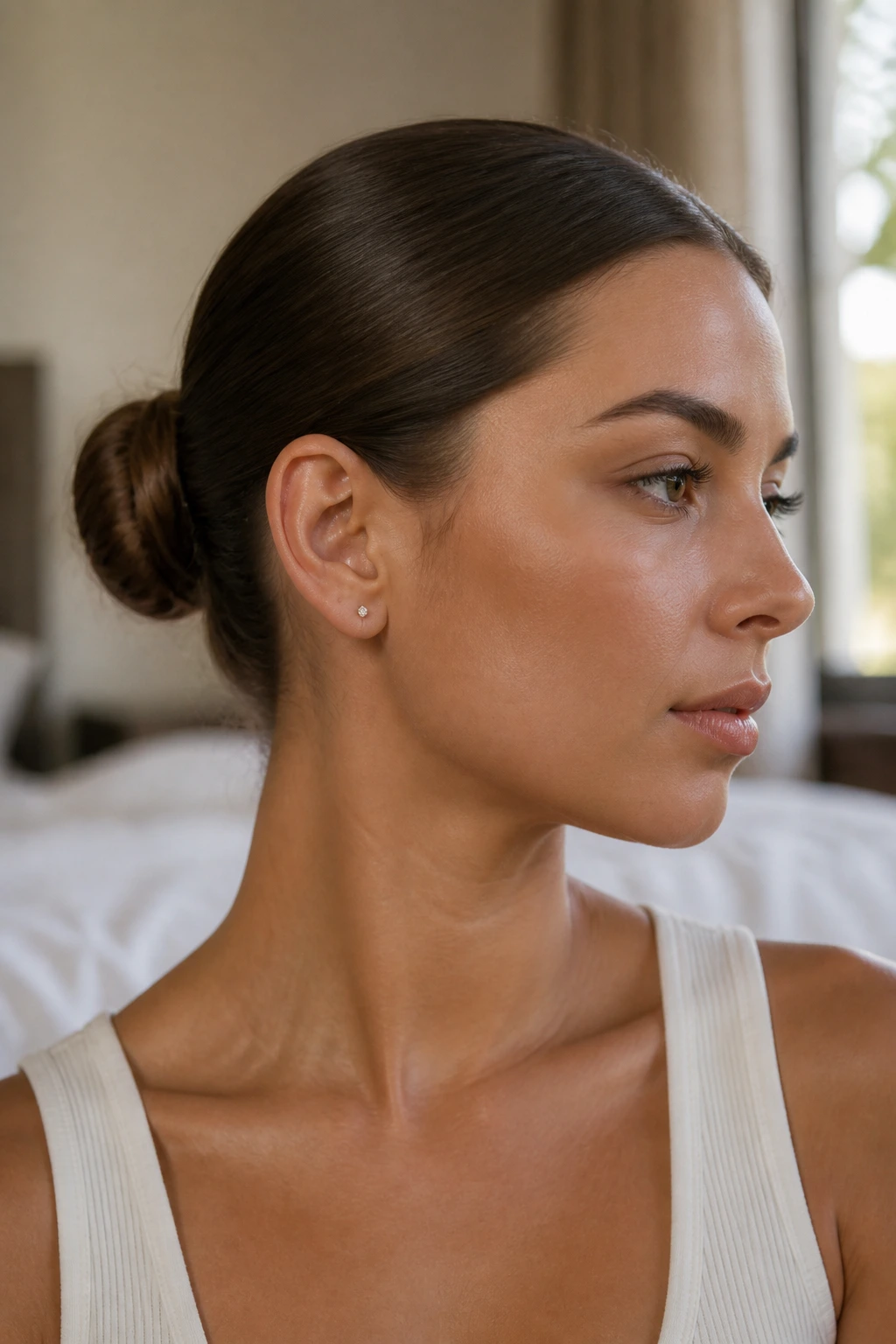
Can a plain bun still feel special? Yes, if the lines are clean and the finish is calm. The minimalist clean bun skips the extra loops, braids, or twists and relies on shape alone: smooth top, neat base, compact coil.
It’s the haircut of buns, if that makes sense. No ornament. No distraction. Just a careful shape and a quiet shine. The style reads soft because it doesn’t try too hard.
For this one, the last pass with the brush matters. Brush upward and back in small sections, not one giant swipe. The finish comes out smoother, and the crown keeps a little natural movement instead of going dead-flat.
What Makes a Bun Look Soft Instead of Overly Tight
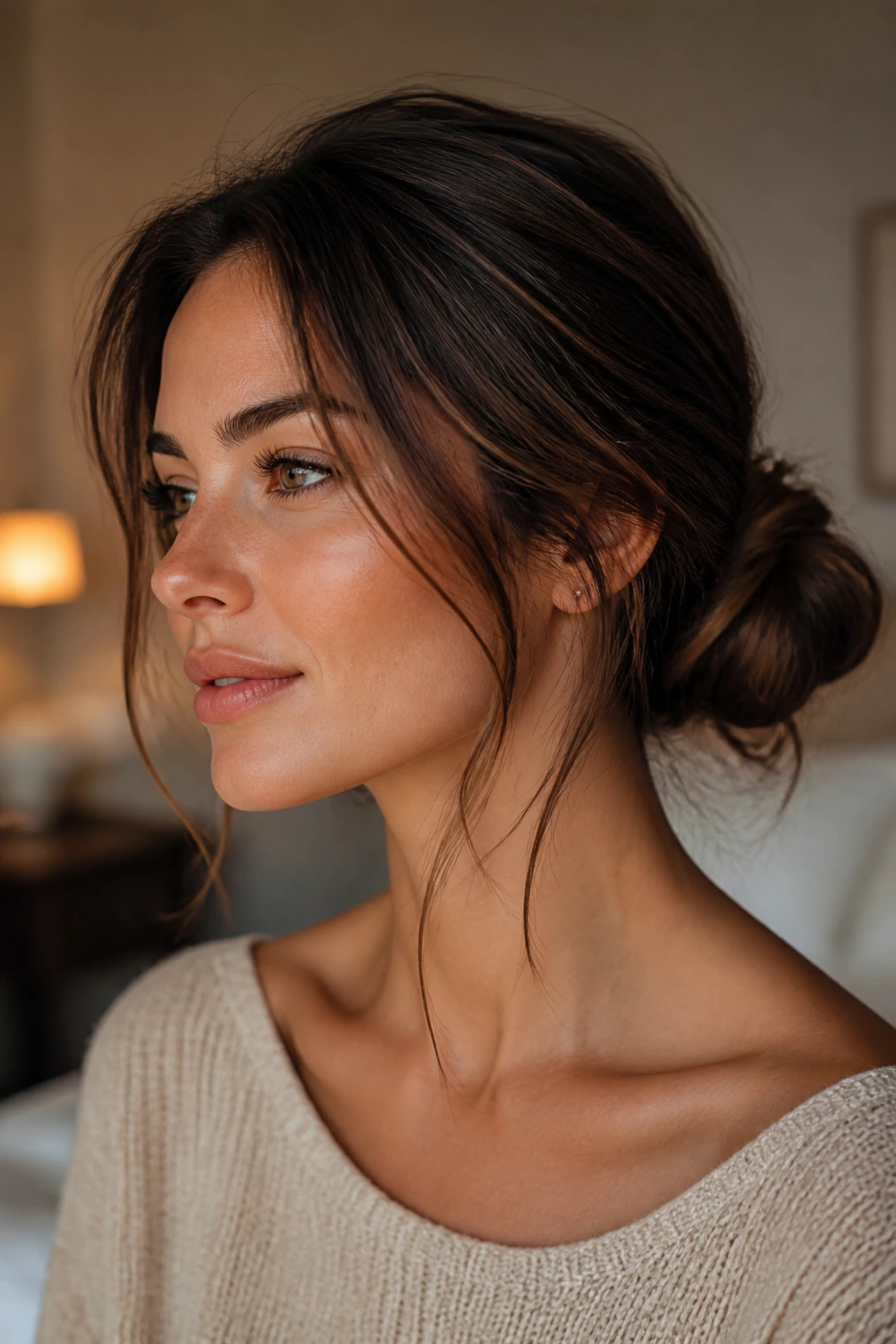
A polished bun can go wrong in two directions. Too loose, and it looks unfinished. Too tight, and it feels like your scalp has been recruited into the styling process against its will. The styles above land in the middle because they let the hair breathe a little.
The shape matters first. Low buns, tucked buns, and wrapped buns usually look softer than high, hard-centered knots. The surface matters too. A smooth bun with a tiny bit of texture always feels more wearable than a shellacked one that catches the light like plastic.
And then there’s the front. Most people obsess over the bun itself and forget the hairline. That’s where the softness lives. A clean part, a slight lift at the roots, a few narrow face-framing pieces, a bent end near the cheek — those small details do more to soften a style than ten extra pins ever will.
Essential Tools for These Bun Hairstyles
-
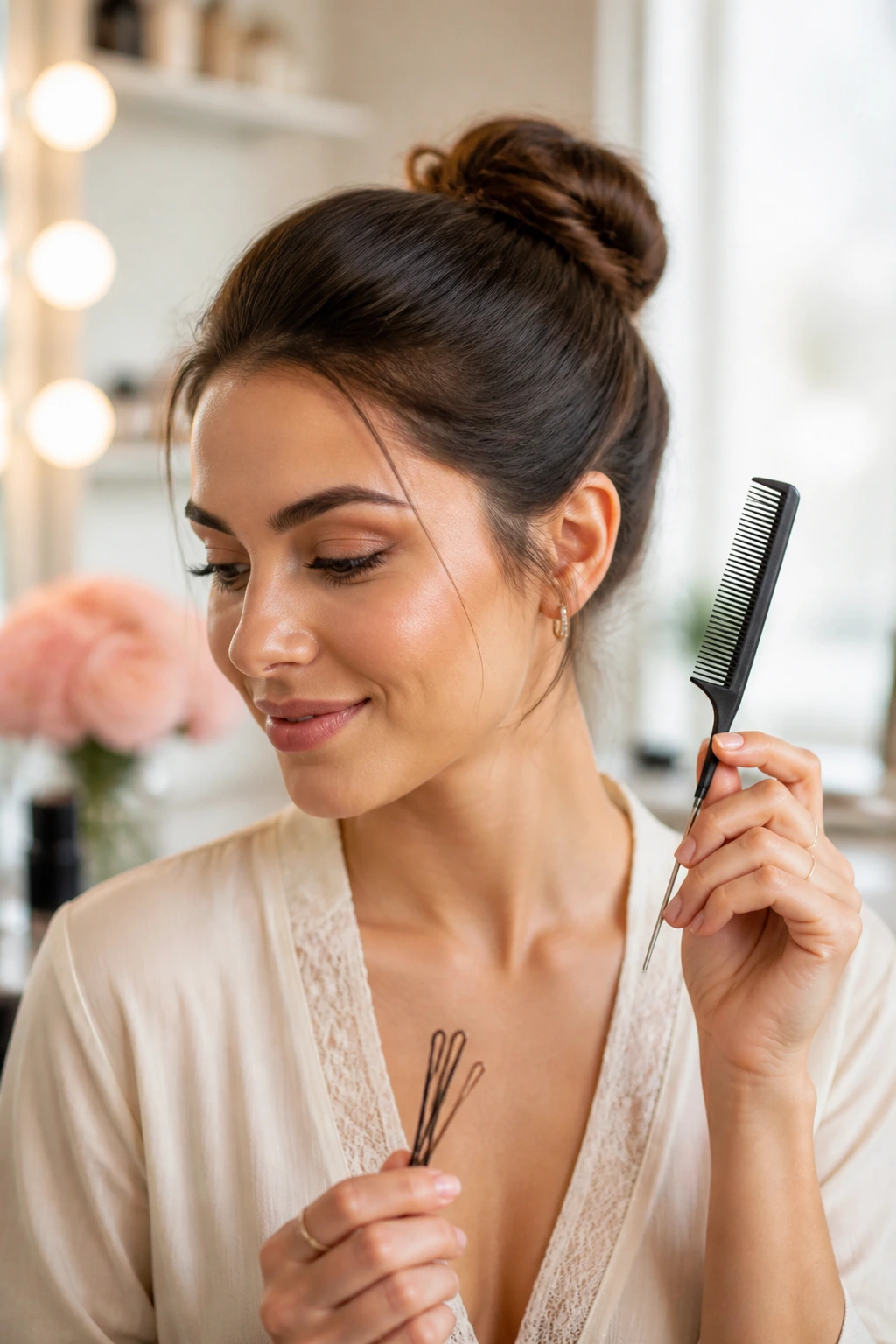
Tail comb: Gives you a clean part and helps smooth the top without bulldozing the hair.
-
Boar-bristle brush or smoothing brush: Best for brushing hair back neatly while keeping the outer layer flat and controlled.
-
Fine-tooth comb: Useful for sleek buns, deep parts, and cleaning up small flyaways near the hairline.
-
Strong but flexible hair elastics: The thin, snag-free kind works better than thick elastics that make the base bulky.
-
Bobby pins in two shades if needed: Use pins that match your hair color as closely as you can so they disappear.
-
U-pins or hair pins: Helpful for looser chignons, Gibson buns, and rolled nape styles where you want hold without a visible pile of pins.
-
Light styling cream or smoothing serum: A small amount tames frizz and gives the hair a softer sheen.
-
Texturizing spray or dry shampoo: Gives fine or slippery hair enough grip to stay put.
-
Sectioning clips: Keep the front pieces out of the way while you build the bun.
-
Small mirror or hand mirror: Lets you check the back of the head before you leave the bathroom and discover something lopsided at the worst possible time.
Smart Product and Hair-Prep Tips
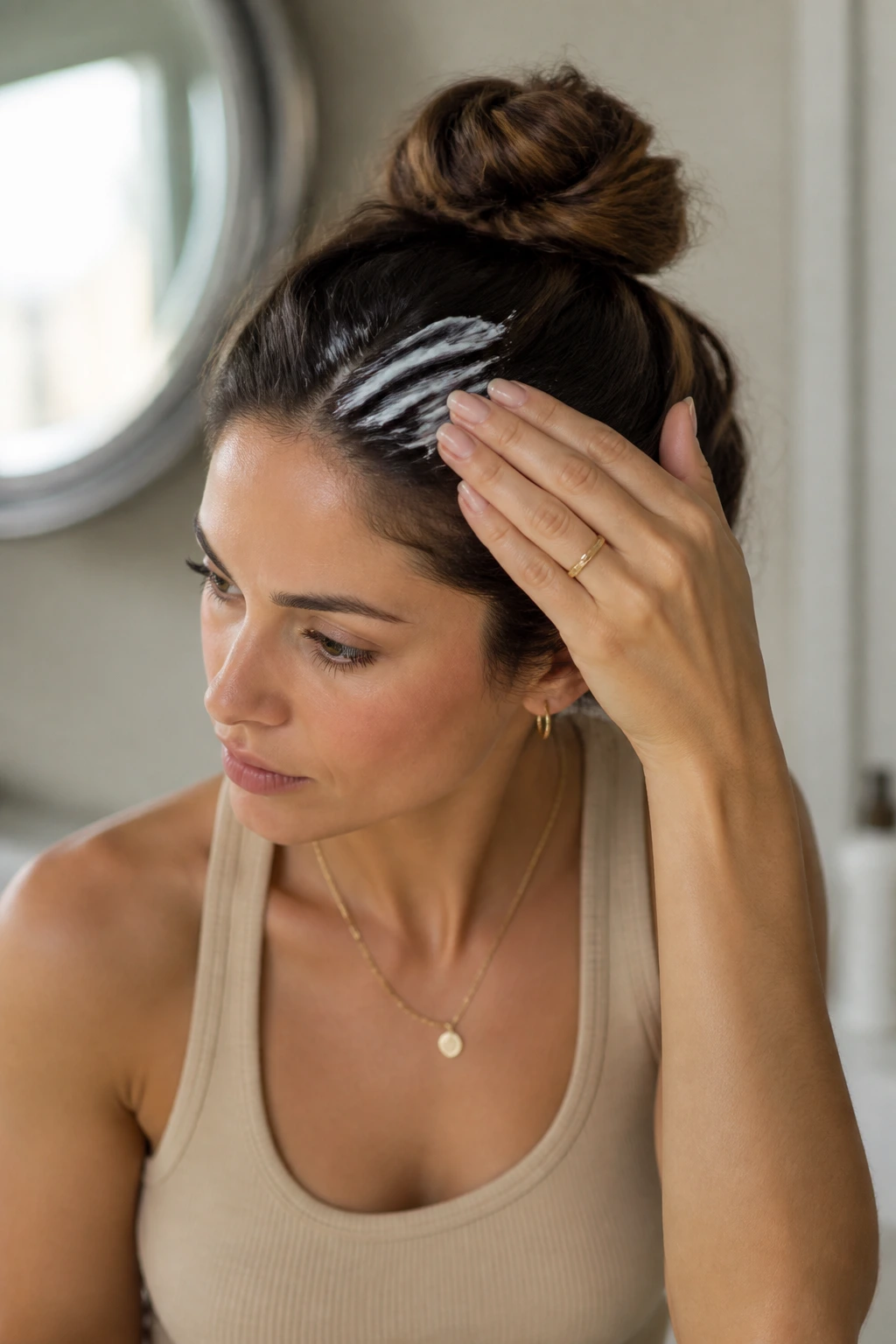
Second-day hair is often better than fresh hair for bun hairstyles. Freshly washed strands can be too slick, which means the bun slips and the pins don’t bite well. If you have to work with clean hair, add a light mist of texturizing spray at the roots and through the mids before you start.
Use less product than you think you need. A bun does not need a glossy coating from root to tip. A pea-sized amount of smoothing cream through the top layer is usually enough to keep frizz down while still letting the hair move. If the hair starts looking greasy before you even finish pinning, you’ve already used too much.
Fine hair needs grip, not weight. Thick hair needs control, not stiffness. That difference changes what you reach for: dry shampoo and texture spray for one, smoothing cream and strong pins for the other. Curly hair often looks best when you keep some of its natural shape visible instead of forcing every strand into submission. That’s especially true for soft polished buns, where a little texture can make the style feel richer.
How to Wear These Buns So They Read Soft, Not Severe
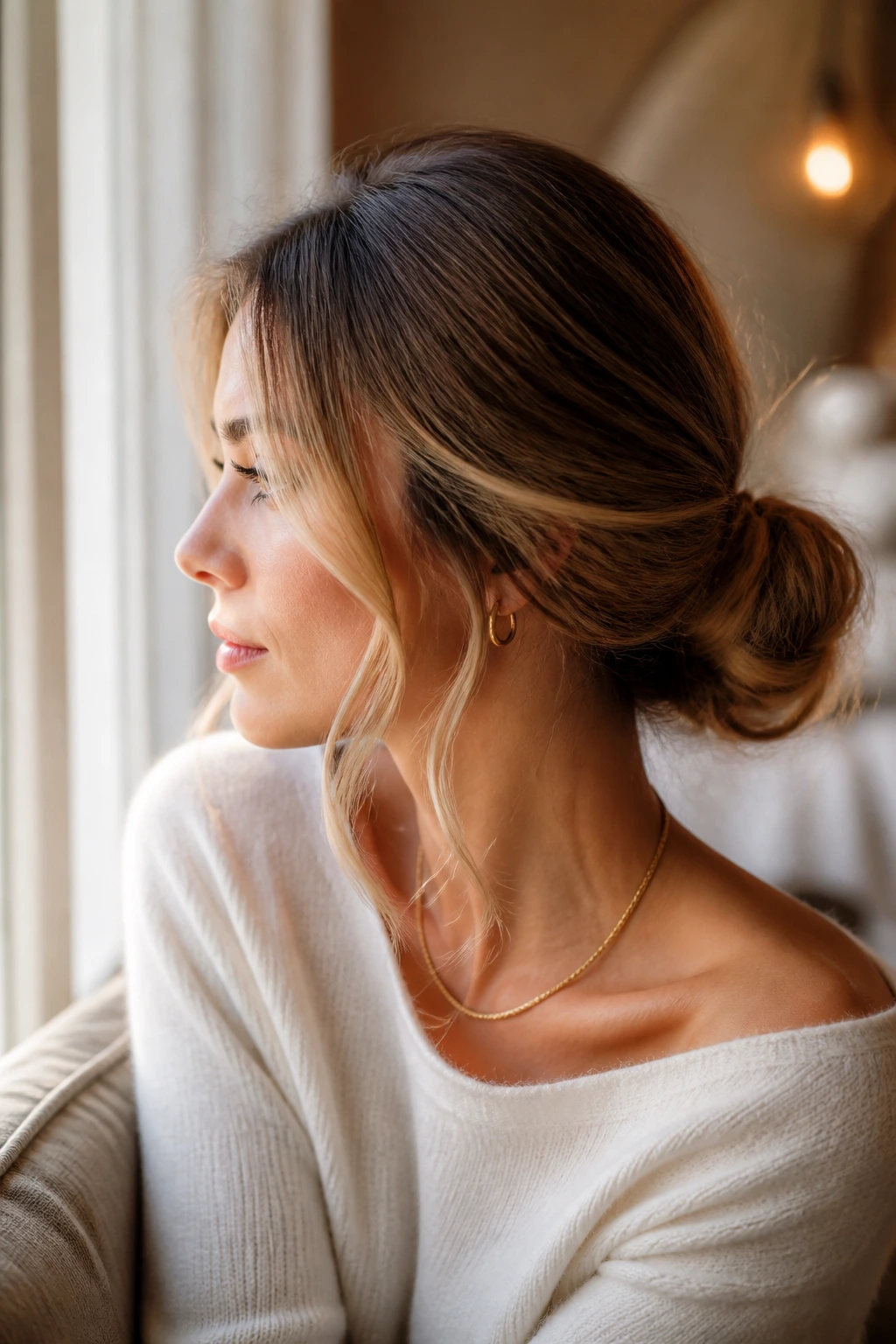
Presentation: Keep the front neat but not frozen. The bun should be the star, but the crown and hairline need a little softness so the style doesn’t look overdrawn. A smooth top with one or two narrow face-framing pieces usually does the job better than a perfectly sealed surface.
Outfit Pairings: These buns work with clean necklines, collared shirts, knit tops, and dresses that show the collarbone. A soft chignon with a blouse collar can look sharper than the same bun with a square neckline, so the clothes change the mood more than people expect.
Jewelry Match: Small hoops, drops, or one bold earring work better than a crowded cluster near the face. The bun already gives the face a frame; don’t fight it with too much at the ears.
Occasion Fit: The sleeker buns are easiest for weddings, dinners, and formal work settings. The twisted, braided, and face-framing versions are better when you want polish with a little less seriousness. There’s no rule that says a bun has to look severe to count as neat.
Additional Styling Tips and Finishers
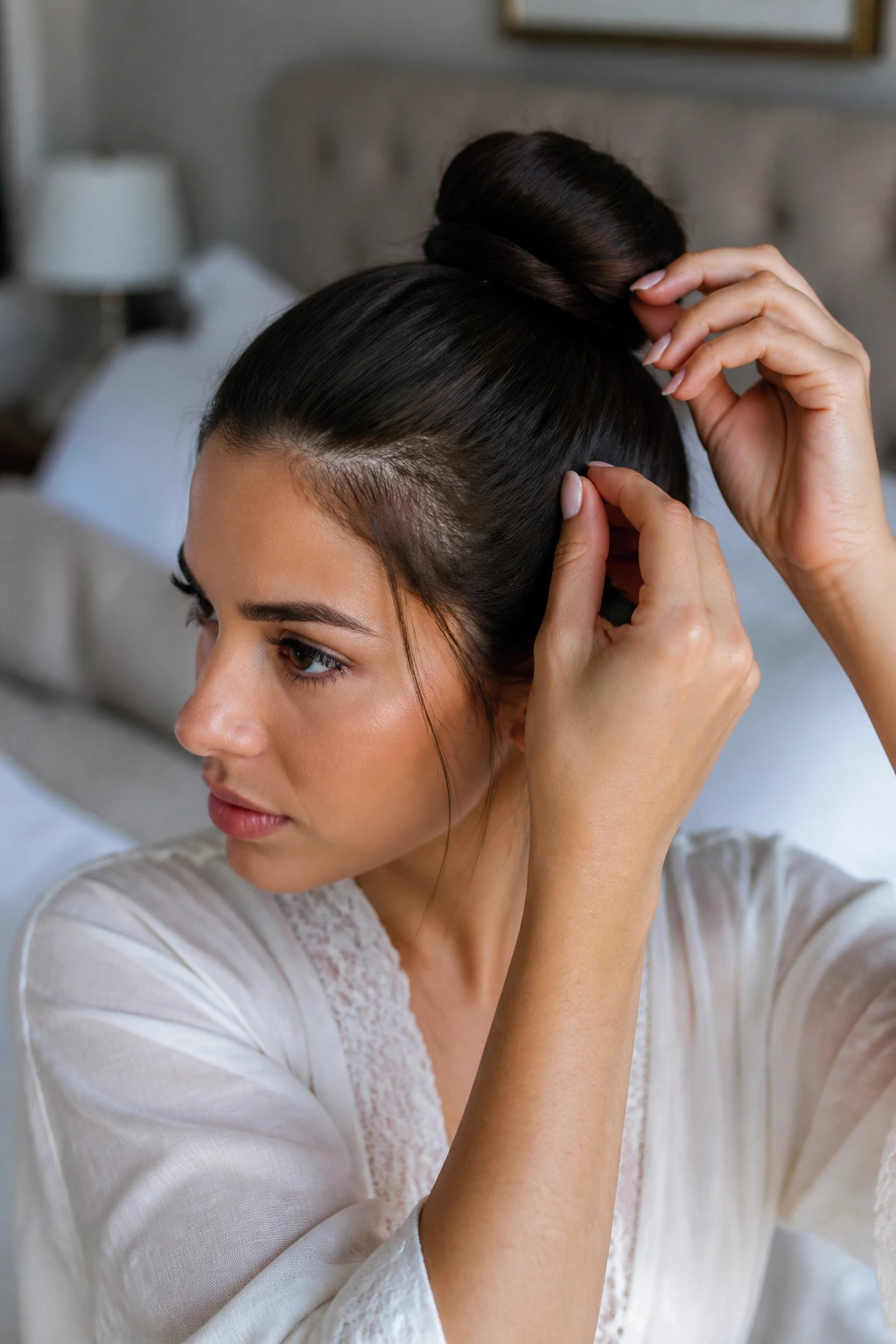
Smoother Finish: If the crown looks fuzzy after pinning, take a clean toothbrush or a tiny edge brush, spray it lightly with hairspray, and sweep only the flyaways. Do not soak the brush. You want control, not crust.
Volume Boost: Lift a small section at the crown before pinning the bun if your head shape needs a little height. Just a quarter-inch of root lift can keep the style from looking too flat in profile.
Softness Around the Face: Pull the side pieces loose after the bun is secure, then shape them with your fingers instead of your brush. Fingers give you a rounder bend; brushes tend to drag the hair straighter.
Accessory Upgrade: A slim barrette, pearl pin, or narrow ribbon changes the tone fast. Use one accessory only. Two starts looking busy, and busy is the enemy of soft polish.
Make-It-Yours: For curly hair, let the texture show at the bun itself and keep the front smoother. For fine hair, build a slightly smaller bun and focus on a cleaner crown. For thick hair, split the tail into two sections before wrapping so the bun doesn’t turn into a heavy lump.
Common Mistakes That Flatten the Shape
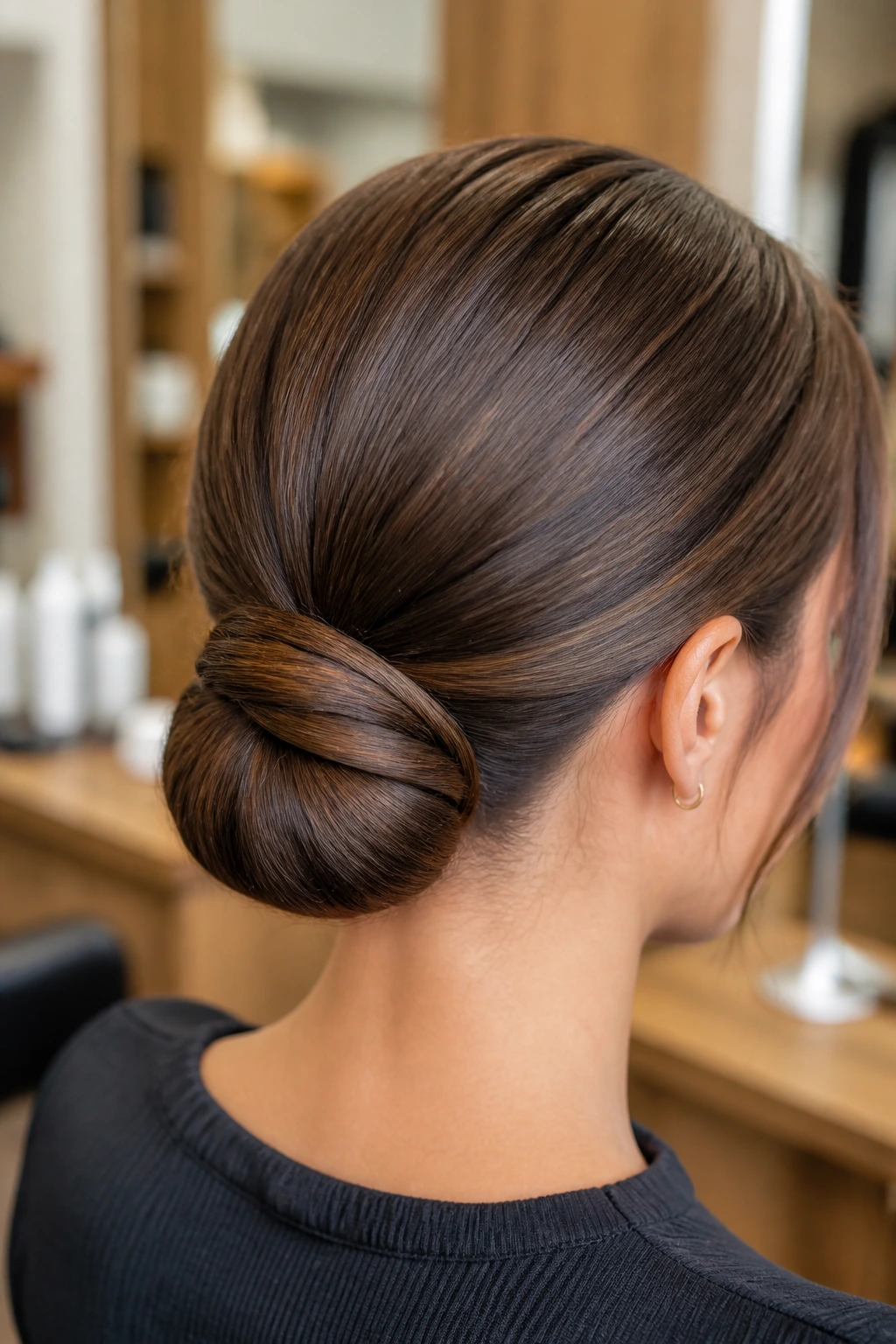
Pulling the hair too tight at the start: The scalp gets dragged, the crown goes flat, and the whole look feels stern. Loosen the hair by a fraction before you pin the bun, especially around the temples and crown.
Using too much shine product: The hair starts to separate, the bun gets slippery, and the finish looks oily instead of polished. Use a small amount on the outer layer only, then stop there.
Building the bun too high for the style: A high knot can be chic, but it rarely feels soft in the same way a low chignon does. If the goal is softness, move the bun closer to the nape.
Leaving no texture for the pins to grab: Freshly washed, ultra-smooth hair slides. Add dry shampoo or texturizing spray first, or your pins will keep wandering out by the second hour.
Making the face-framing pieces too thick: Thick chunks around the face can overpower the bun and make the style look unfinished. Keep those pieces narrow and deliberate.
Pinning only the outside: If pins sit on the surface and not through the base of the bun, the shape loosens fast. Slide at least some pins inward so they catch the hidden foundation.
Variations and Alternatives to Try
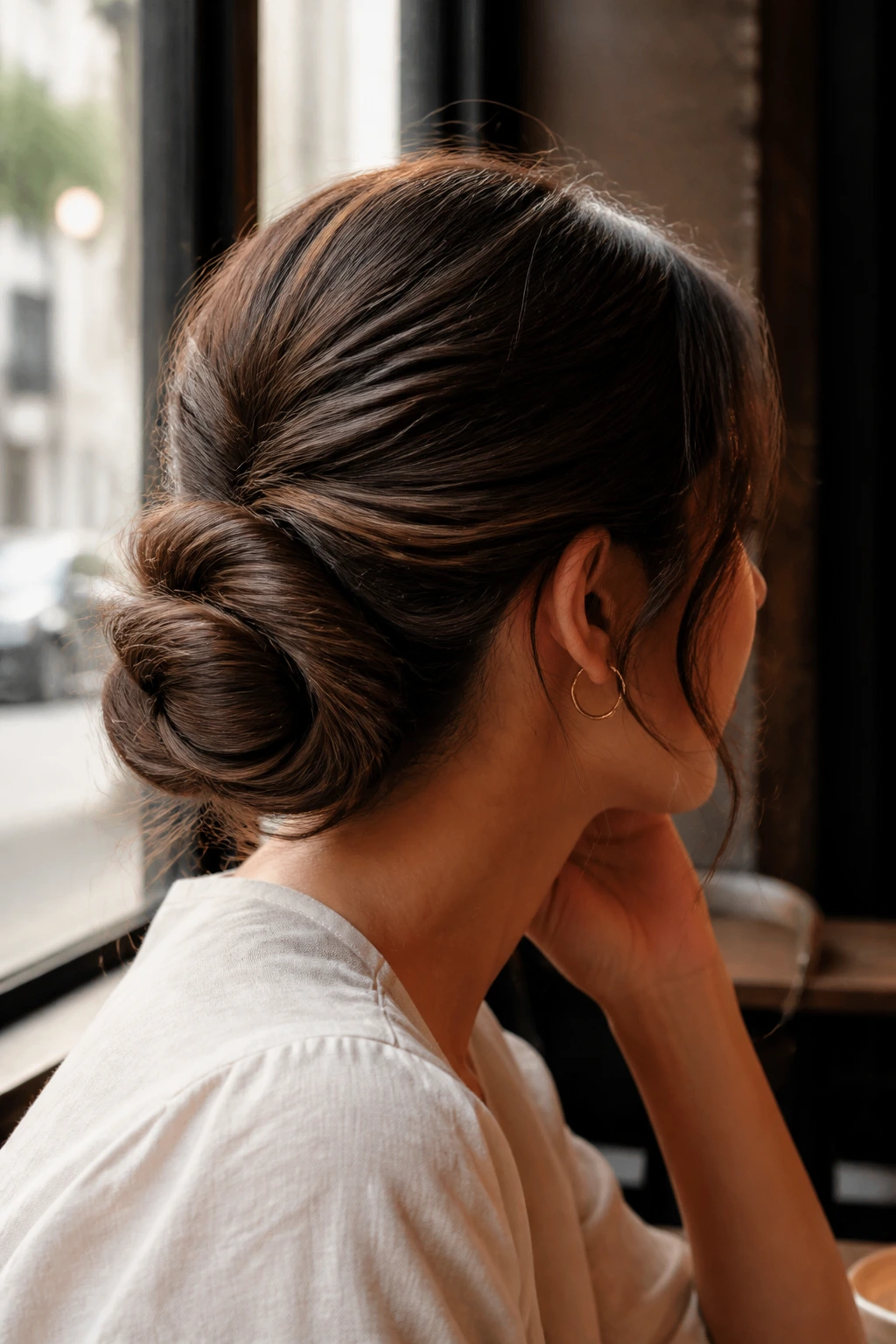
The Wedding Guest Chignon: Add a side part, smooth the crown, and pin in a small pearl clip near the bun. It feels dressy without looking ornate.
The Office-Ready Low Twist: Skip any loose face pieces and keep the bun compact, then finish with a light mist of flexible spray. It’s neat enough for long meetings and still soft around the nape.
The Curly-Hair Wrap Bun: Let the natural texture show in the bun itself and smooth only the front and sides. This keeps the style polished while avoiding the stiff, stretched look that can happen when curls are forced too flat.
The Fine-Hair Padded Bun: Use a tiny bun form or folded sock padding to create a rounder shape. Keep the surface smoothed over the form so the support stays hidden.
The Soft Side-Sweep Version: Shift the bun a little off-center and leave one temple piece longer than the other. The asymmetry adds movement without turning the style messy.
Make the Most of These Styles on Busy Days

These buns hold best when the hair has a little texture and the pins are placed with intention. If you’re styling under time pressure, start with the shape that matches your hair type instead of forcing the wrong one. Fine hair usually wants a compact knot or a padded bun. Thick hair does better with twists, braids, or folded sections that divide the weight.
A quick refresh matters more than a full redo. If the front has puffed up after a long day, smooth only the top and sides with a touch of product. If the bun has sagged, add two pins at the base before touching anything else. People often keep reworking the surface when the real problem is at the anchor point.
Keeping Bun Hairstyles Neat Through the Day
-
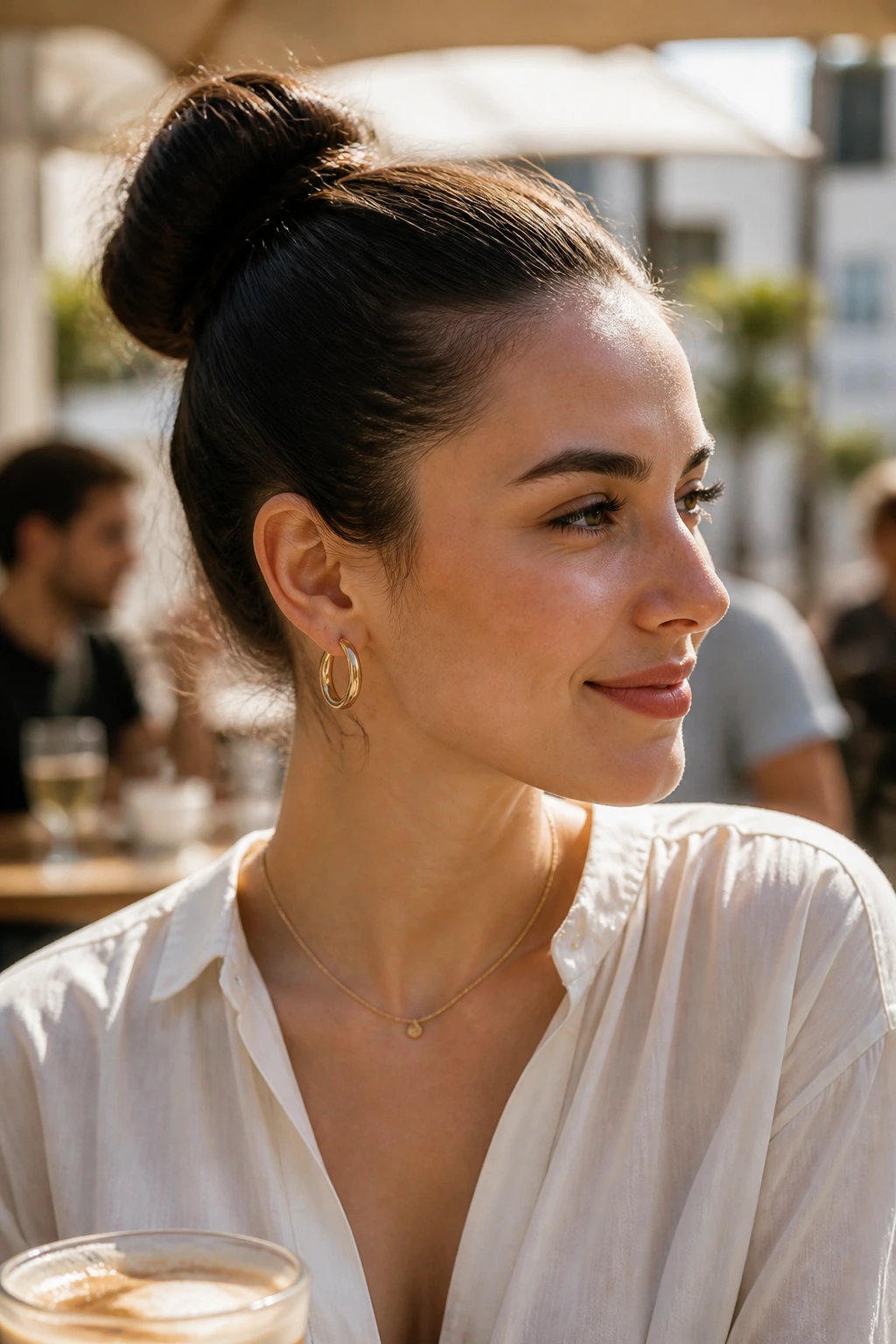
Use the right elastic first: A thin, strong elastic creates a cleaner base than a bulky one, and the bun sits flatter.
-
Cross your bobby pins: Pins locked in an X hold better than pins dropped in straight, especially on slippery hair.
-
Anchor the bun at the base, not just the surface: That’s what keeps the style from sagging after a few hours.
-
Keep a travel-size spray and two spare pins handy: A tiny touch-up is usually enough to rescue the style before a meeting, dinner, or photo.
-
Don’t keep pulling at the bun: Each adjustment loosens the base a little more. If it’s not working, fix the anchor instead of fluffing the top forever.
Frequently Asked Questions
Which hair length works best for these bun hairstyles?
Shoulder-length hair can do several of these styles, especially the knot buns, tucked buns, and folded ponytail versions. Longer hair gives you more wrapping options, but medium hair often looks cleaner because the bun doesn’t get too bulky.
How do I keep a bun from slipping if my hair is fine?
Start with dry shampoo or texturizing spray at the roots and mids, then use a small elastic and cross your pins over the base. Fine hair needs grip more than volume, so don’t overload it with serum or heavy cream.
Can I do a soft polished bun on curly hair?
Yes, and it often looks better when you leave some curl texture visible in the bun itself. Smooth the crown and edges, but let the bun keep a little pattern so it doesn’t look stretched out or puffy in the wrong places.
Should I use fresh hair or second-day hair?
Second-day hair usually wins because it has more grip and less slip. If your hair is freshly washed, add a light texture spray or dry shampoo before you start, or the bun may not hold.
How many bobby pins do I really need?
For fine hair, 4 to 6 may be enough. Thick or long hair can need 8 to 12, especially for braided or twisted styles. Use as many as it takes to secure the base, not just the surface.
What if my bun looks too tight after I finish?
Pull a few millimeters of hair loose at the crown and around the face, then gently widen the outer edge of the bun with your fingers. Do not yank at the whole style or the pins will start to shift.
Can I wear bangs with these buns?
Absolutely. Curtain bangs, wispy fringe, and even fuller bangs can sit well with soft polished buns. The main thing is balance: if the bun is sleek, the fringe can be a little airy; if the bun is textured, the bangs can stay cleaner.
What’s the easiest bun here for beginners?
The folded ponytail bun and the low knot bun are the least fussy. Both rely on a simple base and a few well-placed pins, so they’re easier to get right than a full French twist or braided crown.
A Softer Way to Wear a Bun
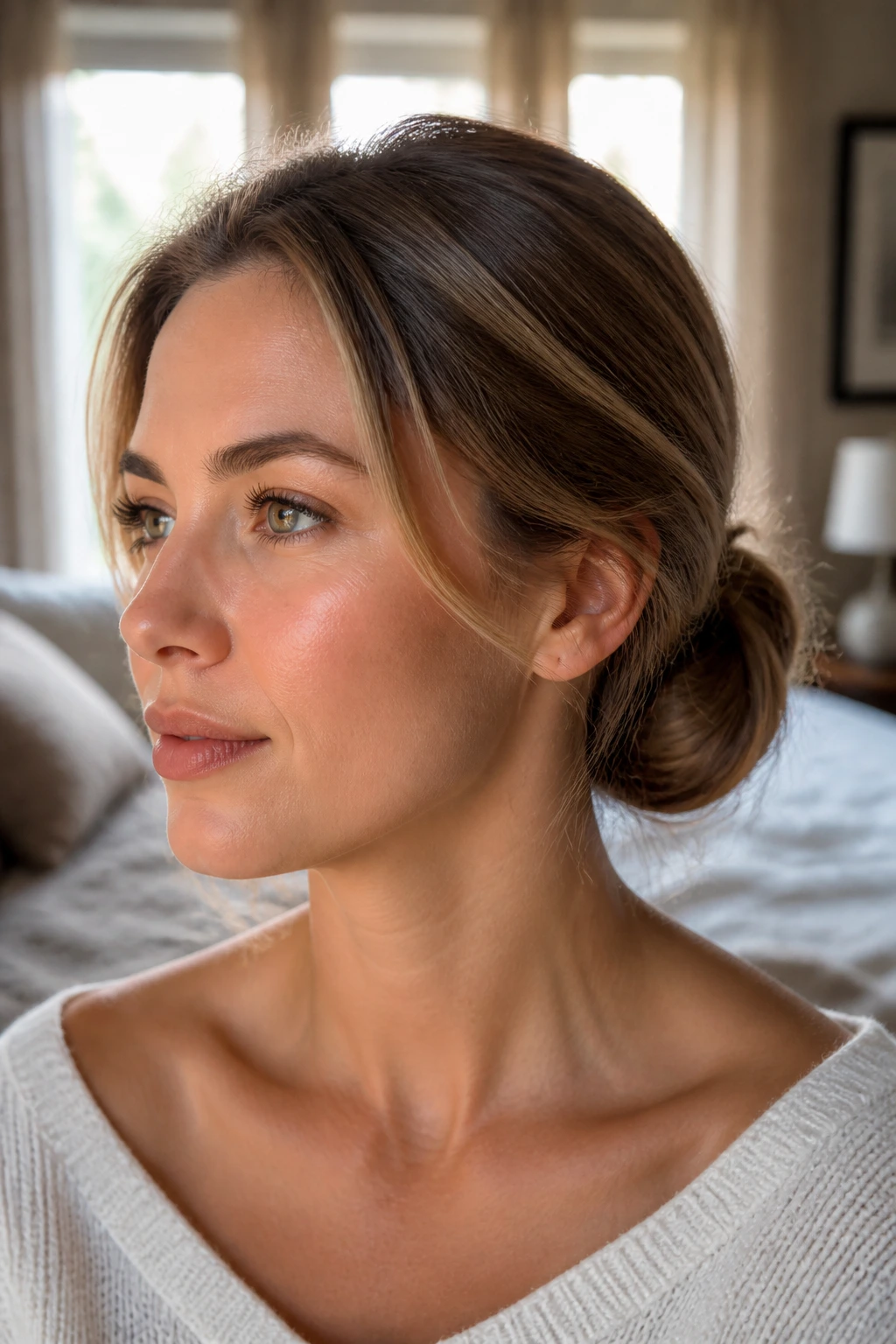
A bun does not need to look strict to look good. That’s the main lesson tucked into all these bun hairstyles: shape, placement, and a little restraint do more than a pile of extra pins ever could. A low chignon, a twisted nape bun, a braided wrap, even a plain folded ponytail — each one can read polished if the front stays calm and the back keeps a gentle line.
The styles that last are usually the ones that respect the hair instead of fighting it. Work with the texture you’ve got, keep the anchor secure, and stop one step before the finish turns stiff. That’s where the soft part lives, and it’s also where the style starts to feel expensive in the quietest way.
