



Layered haircuts earn their keep when hair starts to move instead of hang. A clean one-length cut can look crisp on the salon chair and still fall flat the minute you step into normal life. Layers change that. They shift weight, open up the shape, and give the ends something to do besides sit there.
The catch is that not every layered haircut behaves the same. A few short pieces around the crown can make fine hair feel wispy. Too much internal thinning on thick hair can leave a puff at the ends. Curl by curl, strand by strand, the haircut has to match the hair you actually live with, not the hair in a glossy photo.
That’s why the best layered haircuts are the ones that do a specific job: soften a heavy line, keep long hair from looking tired, add lift at the crown, or let balayage show off a little movement. The 25 cuts below cover all of that range, from soft and barely-there to more textured shapes that still fall neatly once they grow out. The goal is the same in every case. Body. Swing. A shape that still looks like it belongs on your head after a long day.
Why These Layered Haircuts Earn Their Keep
-
Soft movement: The right layers keep the ends from sitting in one stiff line, so the hair bends when you turn your head instead of collapsing into a curtain.
-
Body where you need it: Layers can lift the crown, open up the cheekbones, or lighten a dense perimeter without making the whole cut look thin.
-
Better grow-out: Softer layer placement usually grows out cleaner than a blunt, chopped stack, which matters if you don’t want to live at the salon.
-
Works with texture, not against it: Fine, thick, straight, wavy, and curly hair all need different layer patterns, and the good versions respect that.
-
Color looks richer: Balayage and highlights show movement more clearly when the haircut has bends, curves, and a little variation in length.
1. Long Cascading Layers with Curtain Bangs
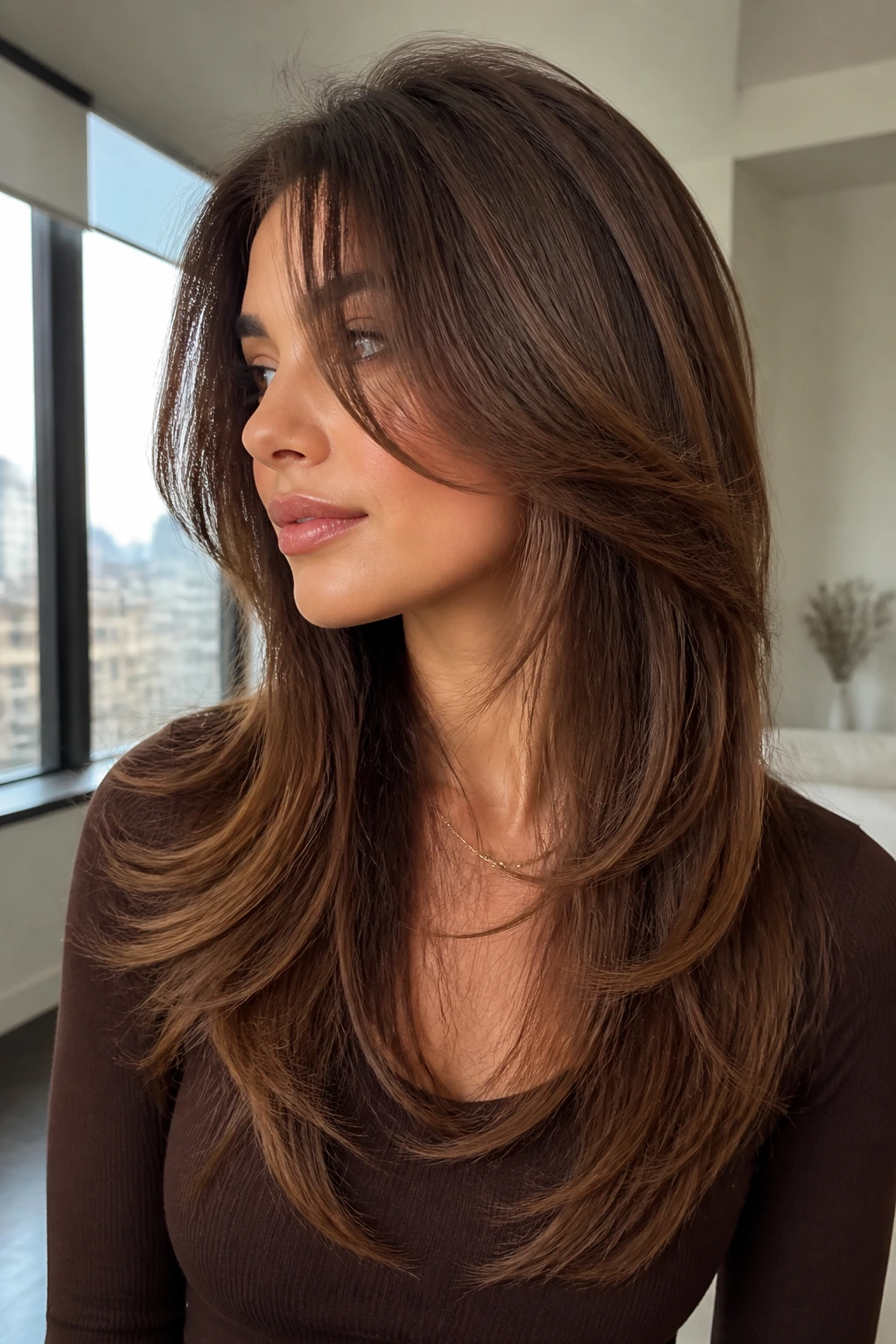
If you want movement without giving up length, this is the safest place to start. Long cascading layers keep the outline full, while curtain bangs break up the front so the haircut doesn’t feel heavy around the face. The result is soft, not fussy. You get that sweepy, airy look when the hair falls over the shoulders and the front pieces bend back on themselves.
The key is where the shortest layer begins. On long hair, I like it below the chin and often closer to the collarbone, because anything higher can make the ends look ragged if the hair is fine. Curtain bangs should open from the cheekbone, not start as a blunt little shelf in the center of the forehead.
What to ask for: length kept at the back, soft face framing, and layers that move but don’t break the hemline.
A round brush helps, but this cut is forgiving. Air-dried waves still look intentional if the layer placement is right.
2. Butterfly Cut with Feathered Ends
Why does the butterfly cut keep showing up in salons? Because it solves a very specific problem: how to get volume around the face without cutting off all your length. The shorter top layers sit high enough to create lift and swing, while the lower length stays long and smooth. It reads dramatic when the hair is blown out, but the structure underneath is surprisingly practical.
The trick is feathering the ends so the lower section doesn’t look like a separate curtain hanging beneath the top. When the layers are too blunt, the cut starts to feel split in half. When they’re softly tapered, the whole shape moves together.
This cut suits medium to long hair best, especially if the hair is dense and tends to sink at the roots. On finer hair, the stylist should keep the shorter layer a little longer so you don’t end up with see-through ends.
It’s a haircut that likes a brush. Not a lot. Just enough to bend the front pieces away from the cheeks and let the top layer float.
3. Collarbone Lob with Invisible Layers
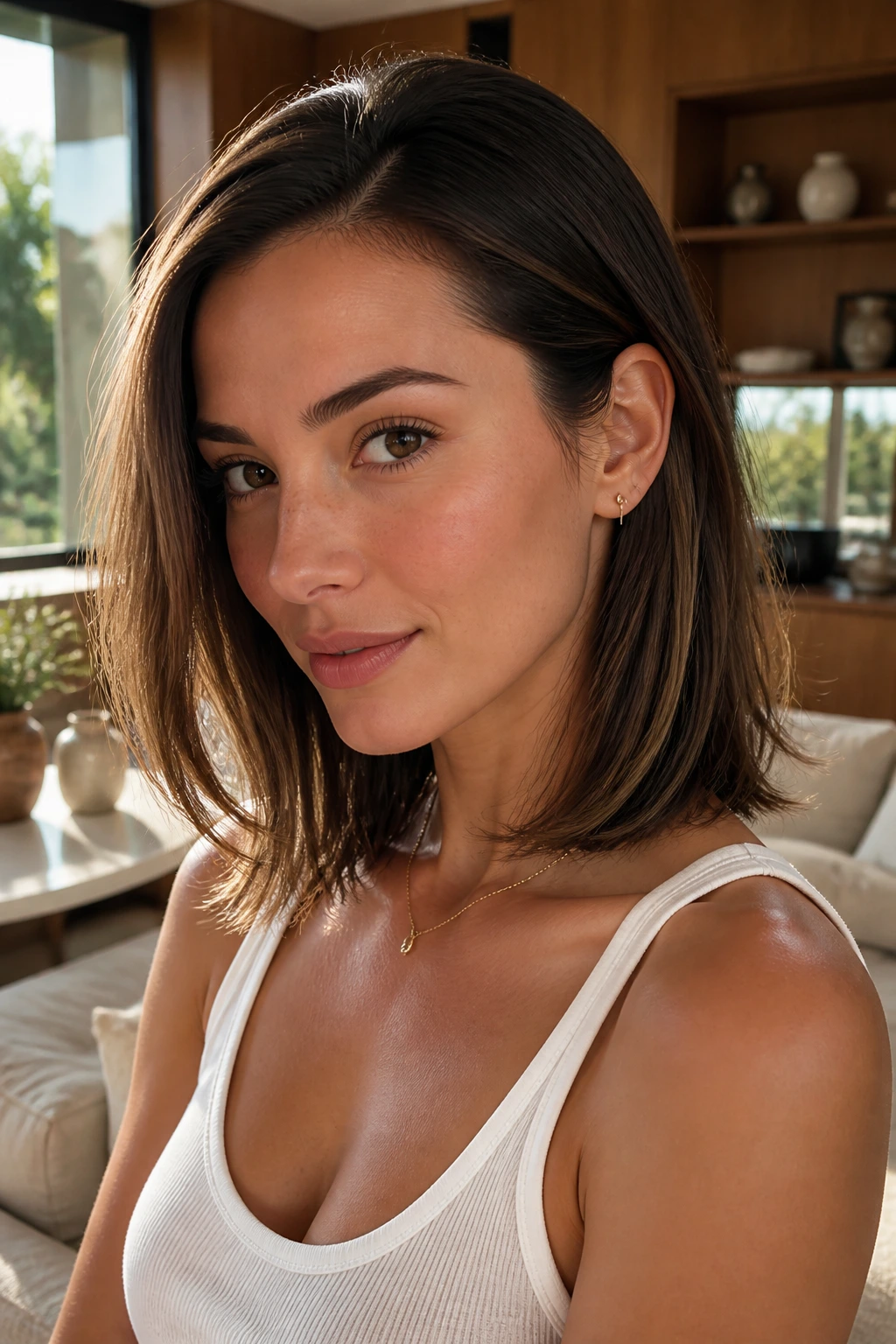
A collarbone lob with invisible layers is for someone who wants the ease of a blunt cut but hates how flat it can look by noon. The layers are tucked inside the shape, so you don’t get obvious steps. You get motion. The edge still looks clean when the hair is tucked behind the ear or pulled into a low clip.
This works especially well for straight and slightly wavy hair. The cut keeps enough weight at the perimeter to feel full, while the hidden layers stop it from turning into a helmet. On thick hair, those inner layers take the bulk out of the middle so the ends don’t flare.
A good stylist will keep the layer shift subtle and check the fall in dry hair, because that’s where the truth shows up. Wet hair hides a lot. Dry hair tells on every bad decision.
If you wear a center part, this is one of the easiest layered haircuts to live with. It grows out quietly. No drama. No weird shelf.
4. Soft Shag with Airy Fringe
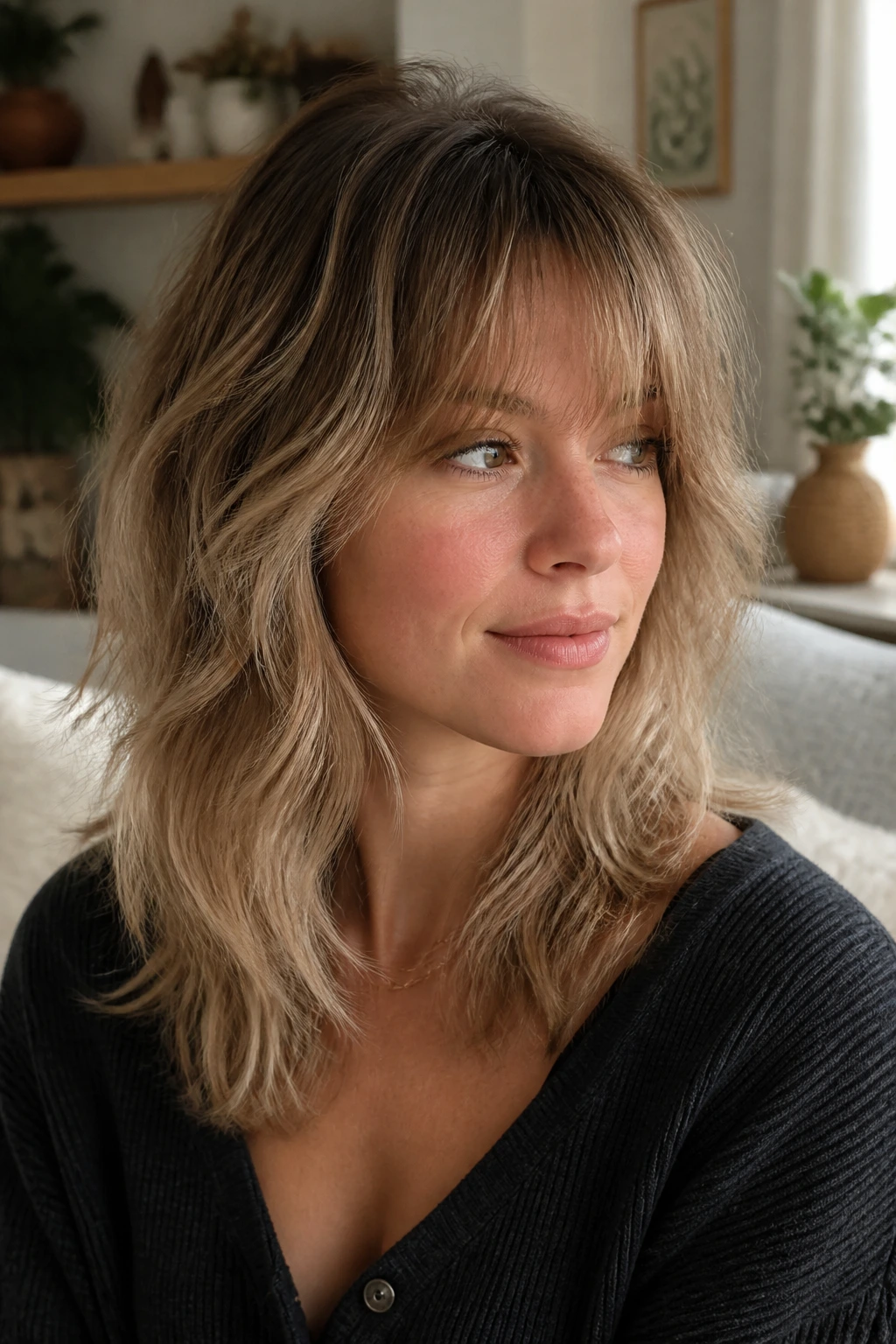
The soft shag is what happens when texture is handled with a lighter hand. Instead of a choppy, high-contrast shape, you get layers through the crown, a little movement at the sides, and a fringe that opens up the face without stealing the whole show. It has attitude, but not the kind that screams at people from across the room.
This cut works best when the hair already has some bend. Wavy hair makes the shag look easy. Straight hair can wear it too, though it usually needs a round brush or a quick wave iron bend to keep the layers from lying too flat. The fringe should skim the eyebrows or split just below them, then separate a little at the cheekbones.
What gives it that soft finish
- Longer top layers: enough to lift the crown, not so short that the head looks puffy.
- Tapered fringe pieces: they soften the front instead of boxing it in.
- Broken-up ends: they stop the shape from reading as heavy or blocky.
The soft shag is one of the few cuts that can make air-dried hair look finished without a full blowout.
5. Rounded Layers for Curly Hair
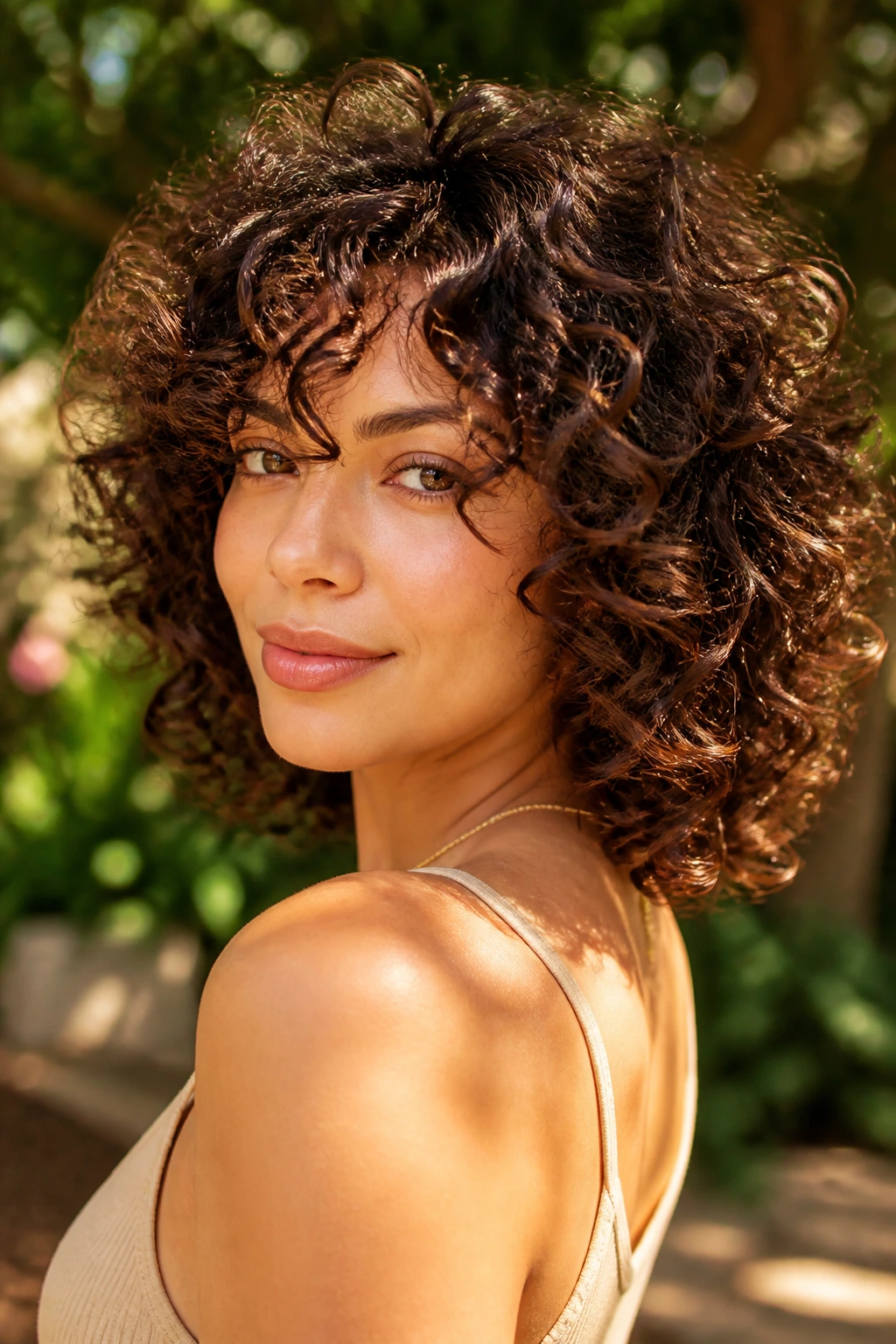
Curly hair needs layers that respect the curl pattern, not fight it. A rounded layered cut follows the natural spring of the hair so the silhouette feels balanced from the side and full without turning into a triangle. The shortest pieces usually sit around the cheekbone or upper jaw, depending on curl tightness and density.
This is one of those cuts where dry cutting makes sense. Curly hair shrinks, and if the stylist cuts it too wet without thinking through the shrinkage, the shape can jump up far higher than expected. I like rounded layers because they preserve the curve of the curls while removing bulk where the hair stacks up too heavily.
A razor can be a bad idea here if the curls are fragile or frizzy. Clean shears and careful shaping tend to work better. You want spring, not frizz.
The finished look is soft and full, with the curls stacking into each other instead of building into a triangle or sitting in separate little shelves.
6. U-Shaped Layers for Long Lengths
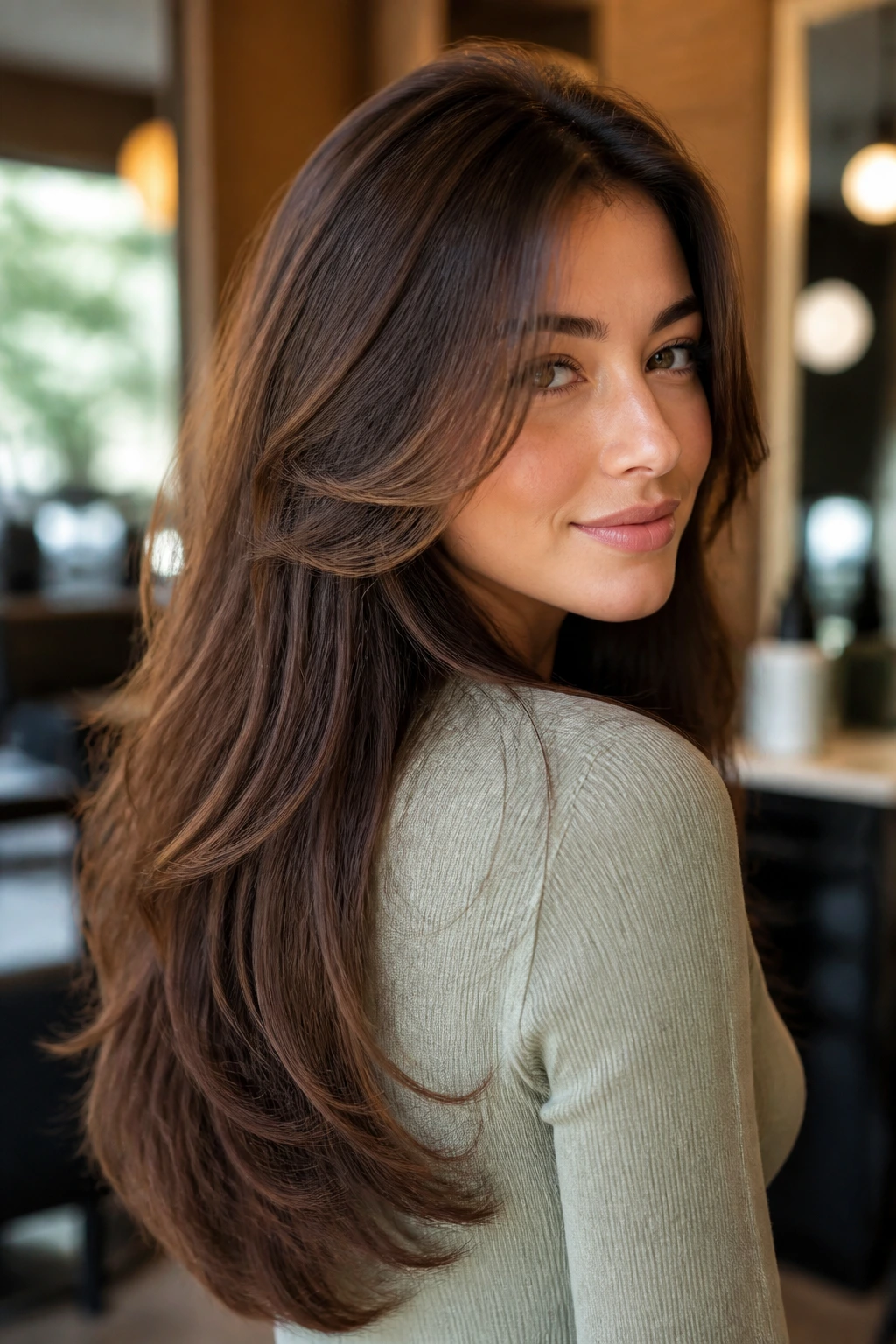
A U-shaped layered cut keeps the back fuller than a straight line while still giving the hair some bend through the lengths. The outline dips softly in the center, which lets the ends feel less blocky than a blunt cut. It’s a quiet move, but it changes the whole mood of long hair.
Why it works on heavy hair
The long perimeter holds onto density, while the upper layers stop the top half from feeling like one solid sheet. That matters if your hair gets bulky around the shoulders or feels like it hangs in one piece. The U shape gives the hair room to move without removing so much weight that the ends look threadbare.
It’s also one of the better choices if you like wearing your hair in a ponytail or braid a lot. The length stays generous, and the soft curve means the grow-out doesn’t scream for attention.
Ask for a low, gentle U shape with long layers that start below the chin. If the shortest layer starts too high, the cut loses its long, sweeping feel.
7. Piecey Layers for Fine Hair
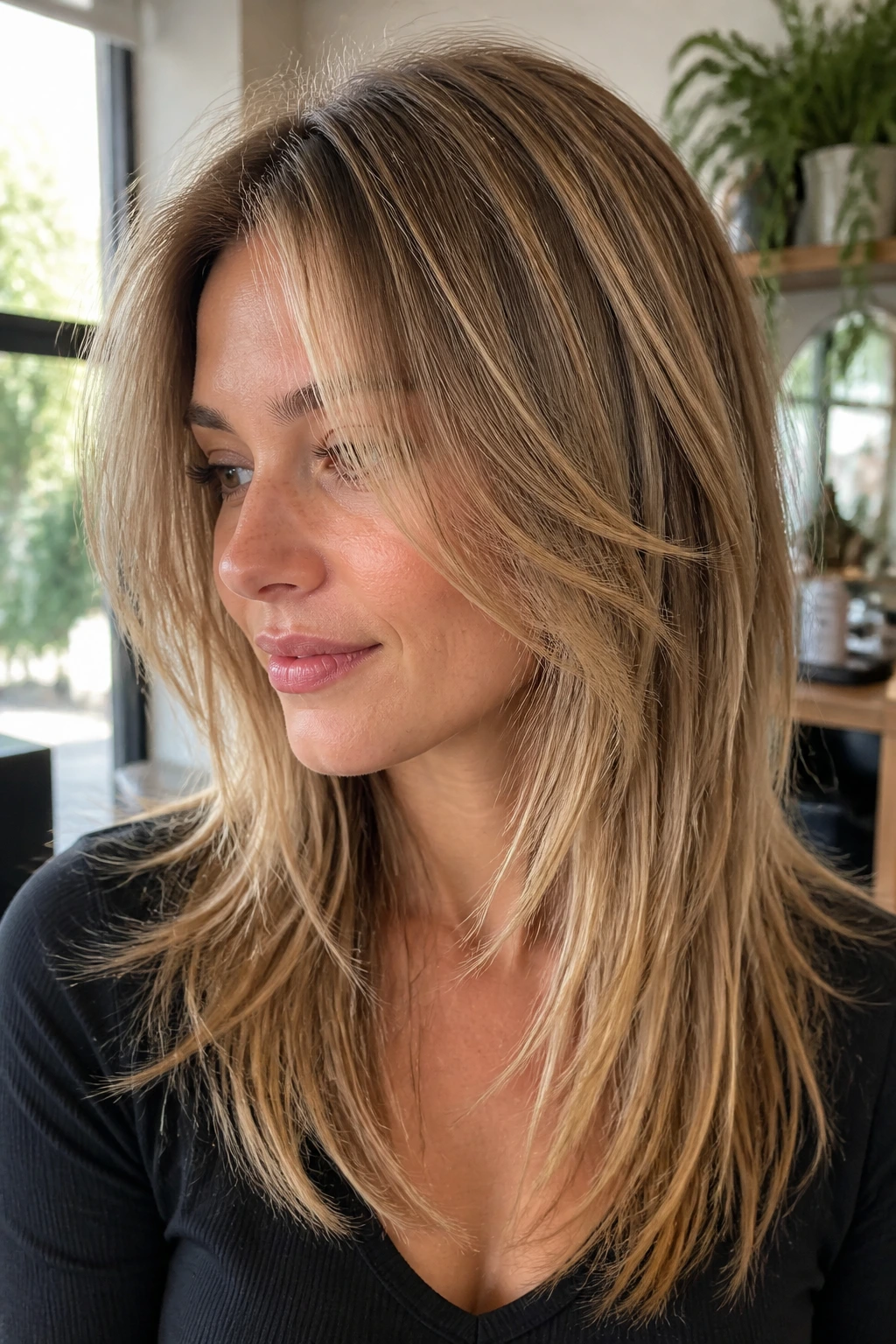
Fine hair can look flat fast, but that doesn’t mean it needs a lot of short layers. In fact, too many short pieces can make the ends look airy in a bad way. Piecey layers work better when they’re long, slightly separated, and placed where they create lift without exposing the scalp.
The point is separation, not shredding. A stylist might use point cutting or a little slide cutting to break up the line so the hair falls in small moving sections instead of one heavy sheet. Around the face, the layers should start low enough to avoid a thin front edge.
Best details to watch for
- Longer top pieces: keep the crown from collapsing.
- Soft ends: prevent the cut from looking wispy.
- Light styling product: mousse or root spray adds enough grip for movement.
This cut usually benefits from a round brush at the roots and a light texturizing spray at the ends. Heavy creams can make fine hair lose the whole point of the shape. Keep it airy.
8. Choppy Midlength Layers for Thick Hair
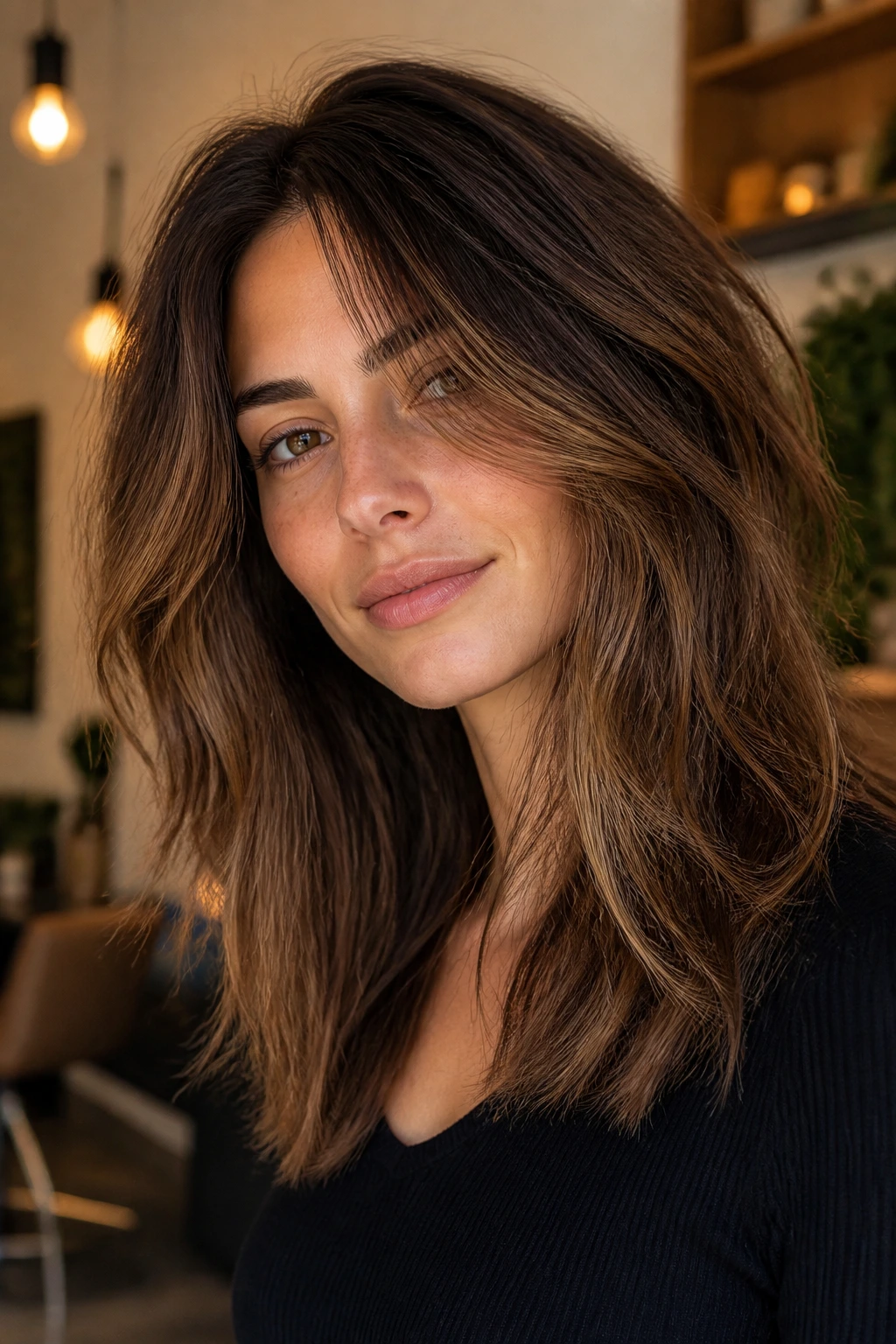
Thick hair often needs the opposite of what fine hair needs: more deliberate weight removal. Choppy midlength layers take bulk out of the middle of the haircut so the hair can bend instead of sitting like a heavy block around the shoulders. The trick is to make the choppiness soft enough that the shape still feels polished.
This works especially well if your hair swells at the sides or creates that triangular silhouette by the end of the day. Midlength layers can break that up without forcing the perimeter to become stringy. The bottom edge stays strong, which matters. Thick hair looks better when it has a solid base.
I prefer this cut when the hair is worn with a wave or a bend, because the layers show up better that way. Straight, air-dried thick hair can still wear it, but it may need a little smoothing cream at the ends to keep the texture from getting too puffy.
A good version of this cut should remove weight, not body. Those are not the same thing.
9. Face-Framing Layers with a Center Part
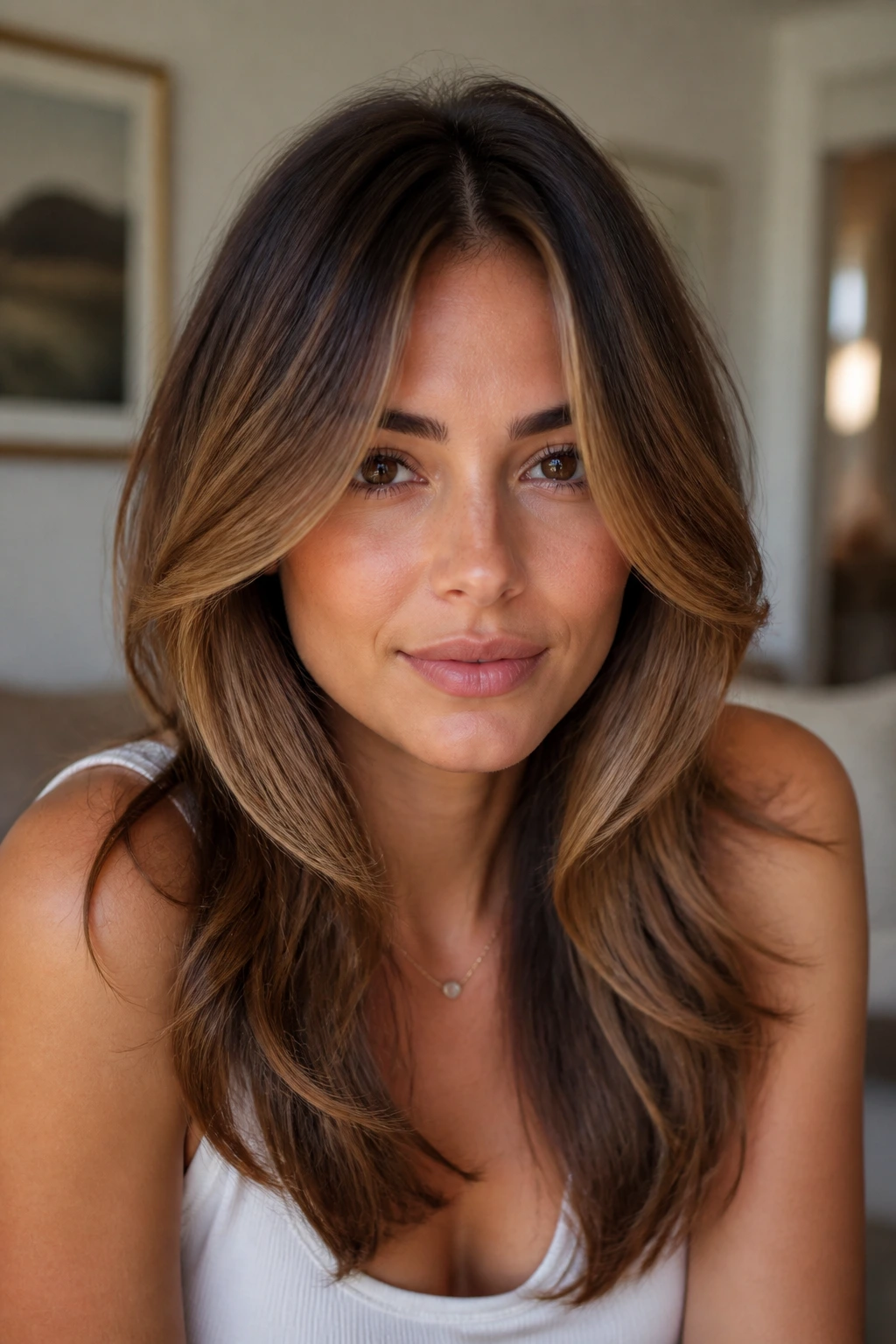
Face-framing layers with a center part are the haircut equivalent of opening the curtains. The longest front pieces start around the cheekbones or jawline and sweep back into the rest of the hair, which gives the face a cleaner edge without turning the whole cut into bangs. The center part keeps the shape balanced and modern.
This is a smart choice if you want movement near the front but don’t want to lose much length. It also plays nicely with balayage, because the lighter pieces have a clean path to follow around the face. When the layers bend outward, the color shows in little ribbons instead of one flat stripe.
If your cheekbones are the part of your face you want to highlight, this cut does the job without making a big scene about it. It also works when the hair is pulled half-up, which is useful in real life.
A small note: the shortest face-framing pieces should be chosen for your natural fall, not copied from a photo with a completely different texture. That’s where a lot of bad haircuts start.
10. The Modern Rachel Cut
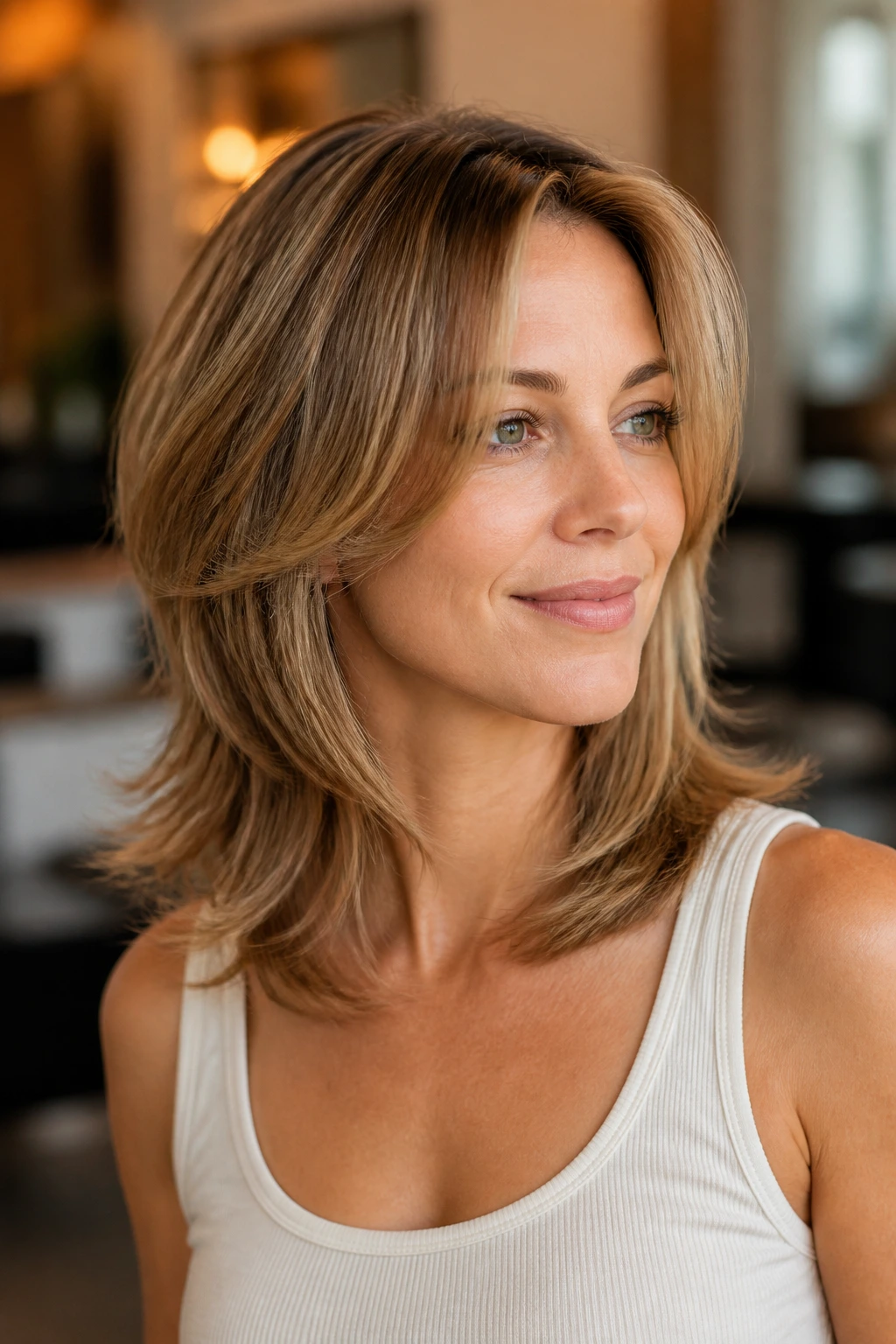
The modern Rachel cut keeps the bouncy, shoulder-length energy of the original, but softens the edges so it doesn’t feel locked in a decade. The layers are shorter around the front and crown, longer through the back, and shaped to swing when the hair is blown out. It still has that unmistakable swing. It just doesn’t look like you borrowed it from a rerun.
This cut is strong on medium-density hair that wants body without a ton of styling time. The front pieces should skim the face in a way that looks deliberate even when they’re not perfectly brushed. Too many short layers in the crown will make the top balloon; too few and you lose the signature bounce.
It’s one of those haircuts that benefits from a large round brush and a little patience. Not a marathon. Just enough to bend the ends under and encourage the layers to stack neatly.
If you like a polished blowout but do not want blunt hair that sits there like a board, this is a good compromise.
11. Feathered Layers Around the Cheekbones
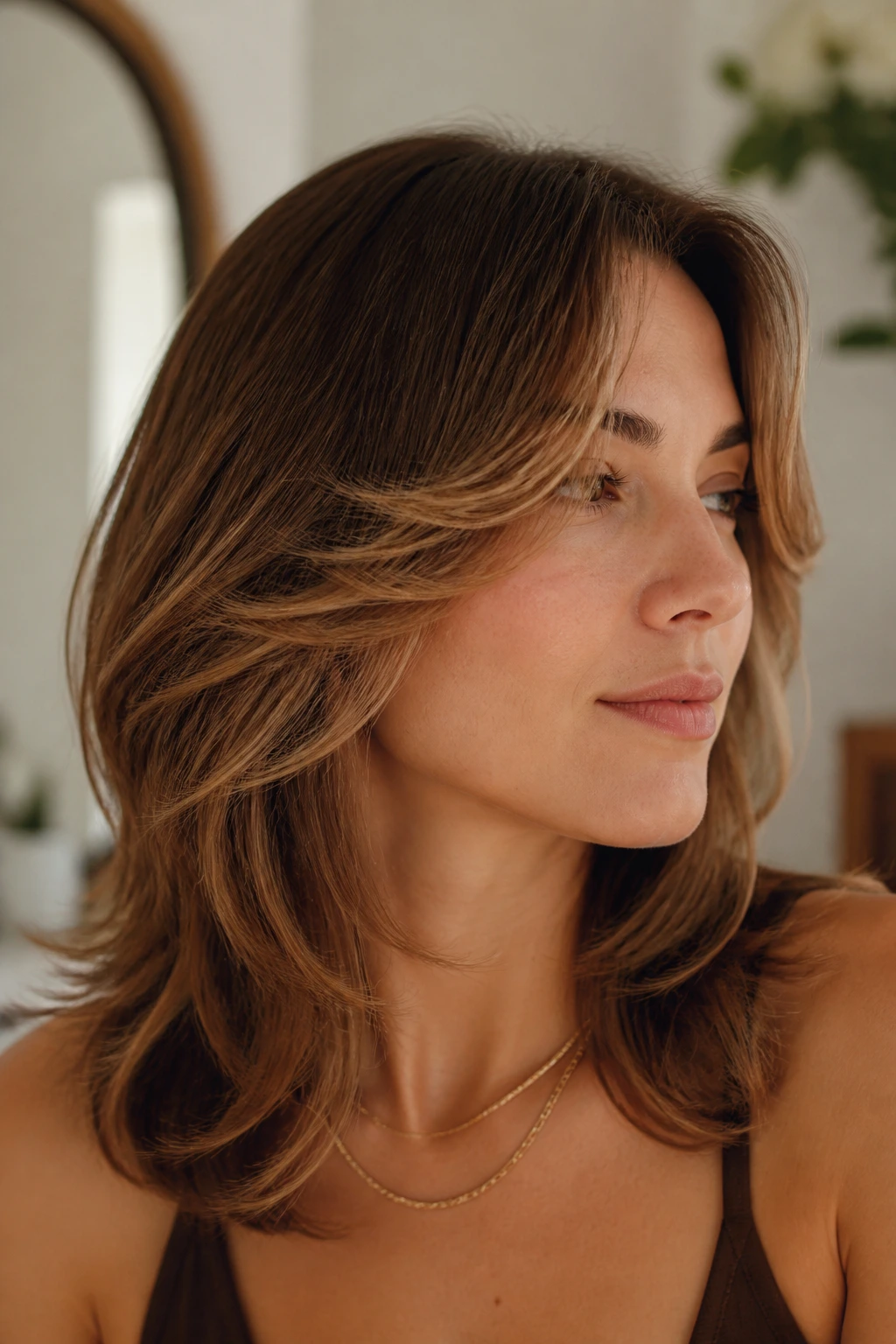
Feathering gets dismissed as a throwback, which is a shame, because when it’s cut with restraint it gives one of the best softening effects in layered haircuts. The layers start around the cheekbones and taper away from the face, so the front opens without forming a hard line. It’s especially nice when the hair is medium to long and the goal is movement more than volume.
The feathering should look brushed, not shredded. That’s the difference between soft and dated. A little bend away from the face keeps the shape airy, and a side part can make the whole thing feel even looser.
This is a smart cut if the face feels crowded by hair that falls straight down the sides. The feathered front pieces guide the eye upward and outward. Subtle. Useful. No drama.
On thick hair, feathering can relieve the weight near the front without thinning the perimeter to pieces. On fine hair, it should stay long enough to avoid a see-through edge.
12. Layered Bob with a Soft Bevel
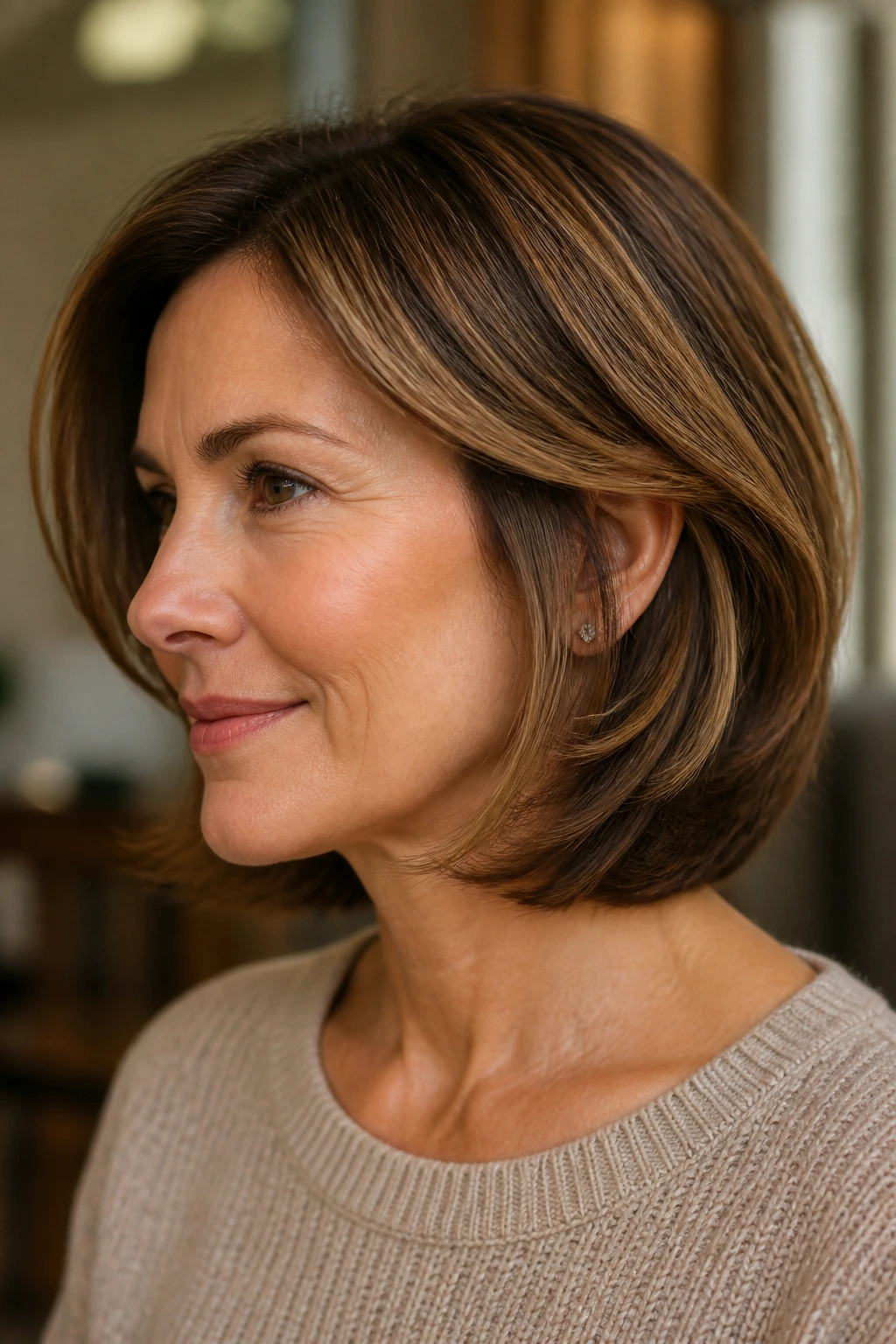
A layered bob with a soft bevel is one of the best ways to make shorter hair move without sacrificing the clean line that makes a bob feel like a bob. The interior layers create bounce, while the ends turn slightly in or out depending on how the stylist wants the shape to sit. That little bend at the bottom matters more than people think.
Straight hair likes this cut because the bevel gives it direction. Wavy hair likes it because the layers prevent the bob from puffing out at the sides. If the bob is cut too blunt and too thick, it can sit like a block. The soft bevel changes the whole silhouette.
The parts that make it work
- Internal layers: remove bulk without tearing up the outline.
- A strong perimeter: keeps the bob looking intentional.
- Soft graduation at the ends: adds movement when you tuck one side behind the ear.
This is a clean, grown-up shape that still bends and sways. Shorter hair does not have to be stiff.
13. Wavy Layers with a Deep Side Part
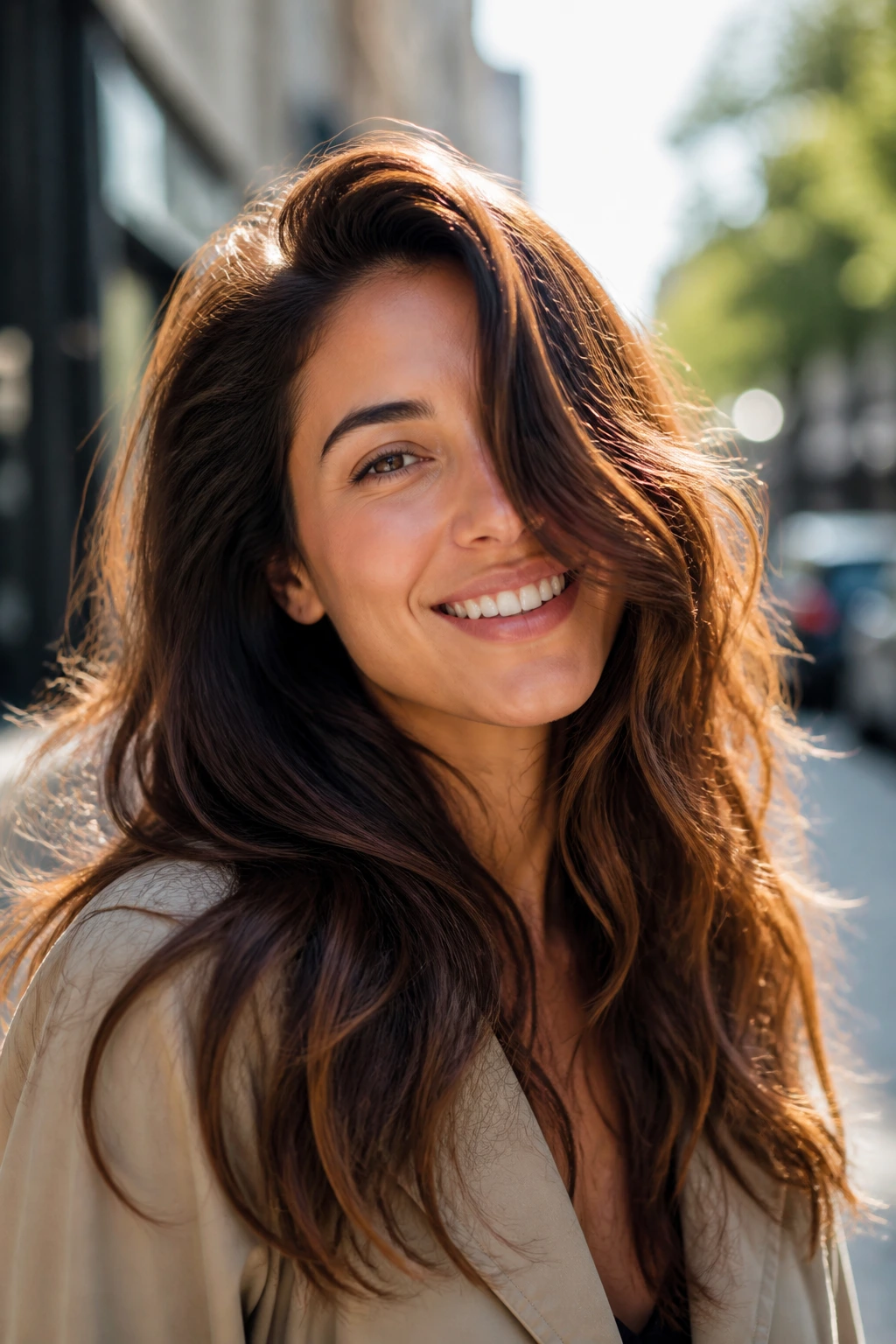
A deep side part can do half the styling for you, which is why it pairs so well with layered haircuts. The part gives the roots a natural lift on one side, and the layers fall into a long sweep that feels softer than a dead-center split. Wavy hair especially likes this shape because it encourages the bends to fall in different directions instead of stacking into one flat wave.
The layers should stay long enough to keep the wave pattern intact. If the pieces are too short, the front can spring up in a way that feels unruly rather than loose. A side part also gives the cut a little asymmetry, which is handy when your hair lacks volume at the crown.
I like this shape for anyone whose hair looks fine at the root but has plenty of body in the lengths. It uses that natural contradiction instead of trying to fight it.
It’s a small styling change that makes the haircut feel larger than it is.
14. Wolf Cut, Softened
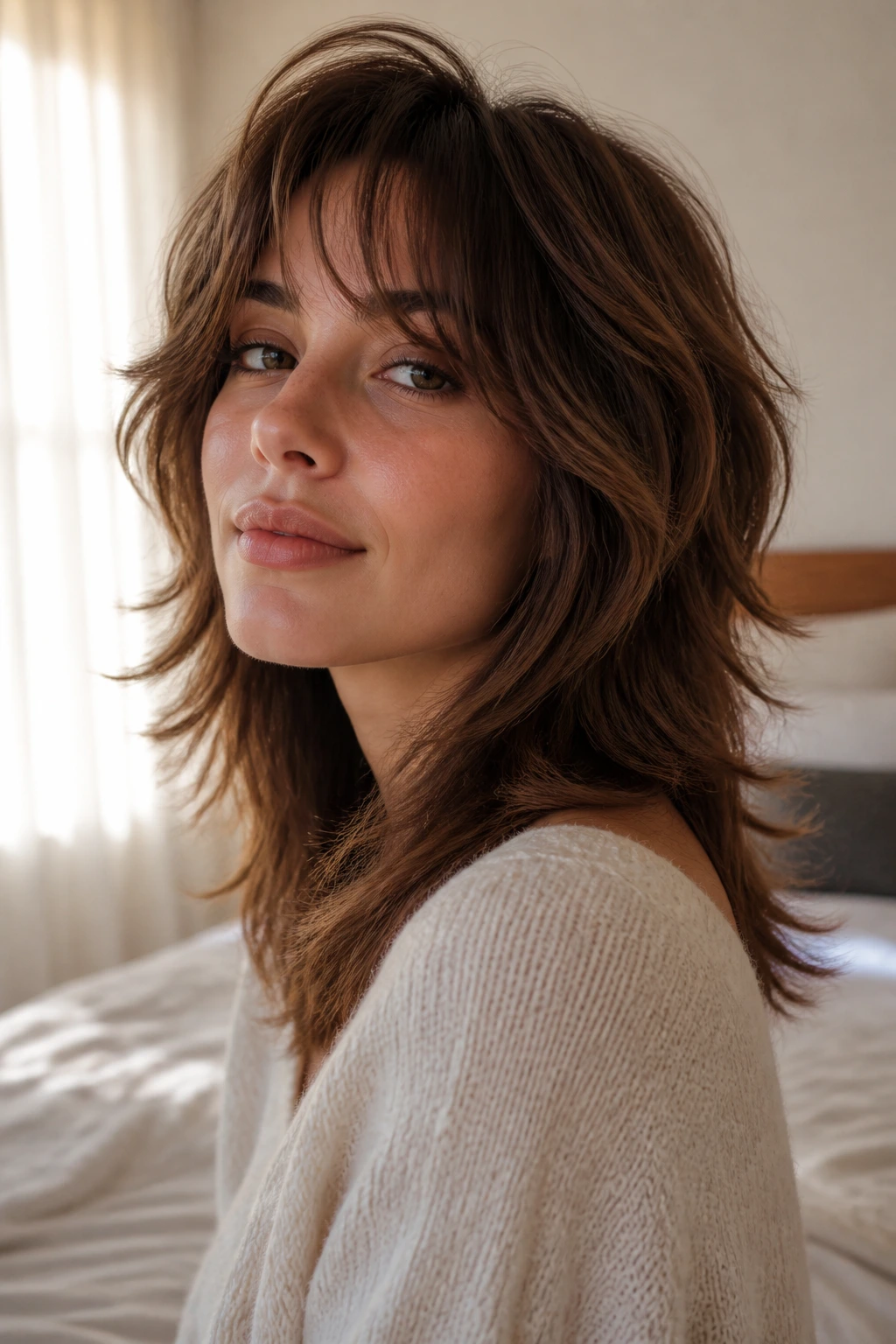
The wolf cut can turn severe fast, which is why the softened version is the one I trust most. It keeps the lifted crown and shaggy movement, but the perimeter stays longer and cleaner so the haircut doesn’t collapse into a mullet look unless you want it to. There’s edge here. Just not the aggressive kind.
The layers should be broken up enough to create texture, then balanced with longer lengths around the lower half of the head. That balance is what makes it wearable. Too much disconnect and the cut starts to look like two haircuts fighting each other. A softened wolf cut avoids that by keeping the transition smoother.
How to keep it wearable
- Ask for longer layers at the back so the shape doesn’t jump too high.
- Keep the fringe soft and movable, not razor-sharp.
- Style with a diffuser, rough-dry, or a quick bend from a wand if the hair is straight.
This version suits people who want texture but still want the haircut to behave when they tie it back.
15. Invisible Layers for Low-Maintenance Grow-Out
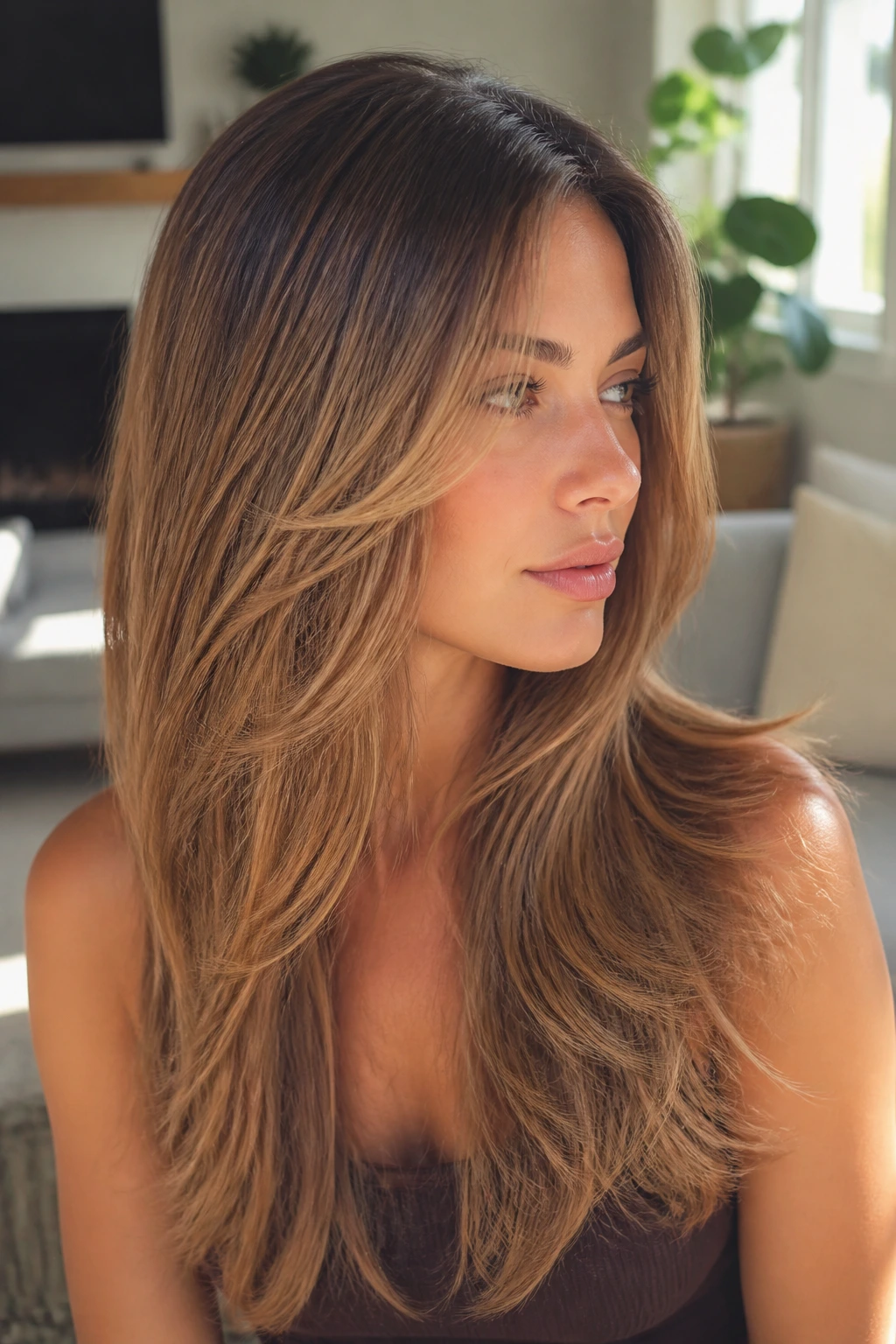
Invisible layers are for people who want movement but do not want to see every step of the haircut as it grows. The layers are hidden inside the shape, so the outside line stays clean while the interior gets the movement. It’s a clever cut. Quiet, too.
This works especially well on long hair that gets heavy around the middle. The stylist removes weight without making the ends look uneven. On thick hair, that means less bulk. On fine hair, it means enough motion to avoid the flat sheet effect without exposing too much of the scalp.
The grow-out is one of the main reasons I like this cut. A few weeks later, it still looks like a deliberate shape instead of an accidental fringe of old layers. If you don’t want to live at the salon, that matters.
Ask for long internal layers, soft face framing, and a perimeter that stays full. The keywords here are hidden and soft.
16. Long Layers with Blunt Ends
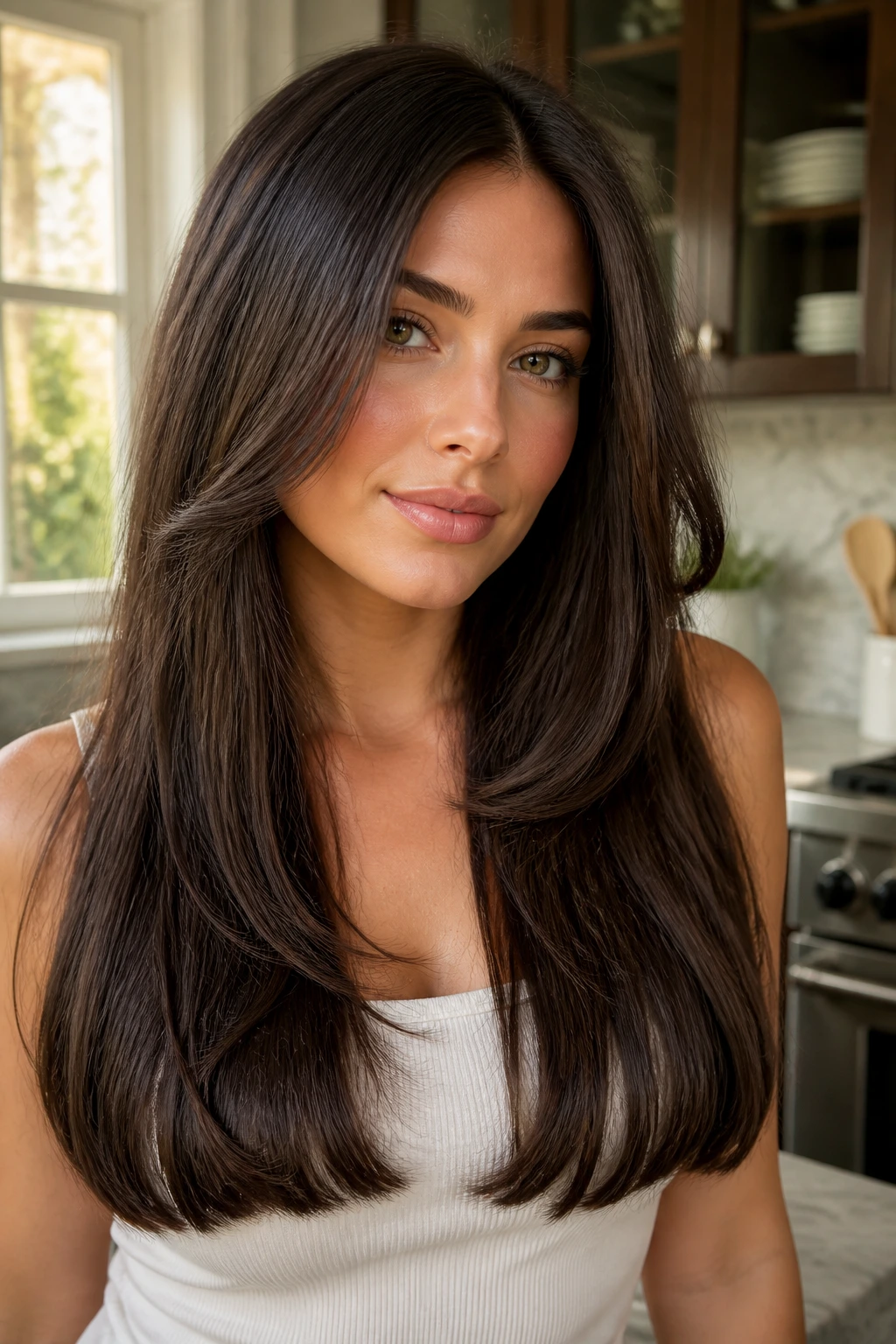
Long layers with blunt ends give you both movement and weight, which is a better combination than it sounds. The upper sections are shaped so the hair swings, but the bottom line stays blunt and strong. That keeps the haircut from looking sparse. It also makes fine hair appear thicker than a heavily layered cut would.
This is one of the smartest cuts for straight hair that tends to fall limp. The blunt ends hold the visual density, while the long layers stop the shape from feeling stiff. On thick hair, it can be a way to keep fullness at the perimeter without having the whole cut balloon outward.
A lot of people ask for layers when what they actually need is a little movement and a solid edge. This is that haircut.
It’s also forgiving on grow-out, which is a nice bonus. The blunt hemline keeps the shape readable even when the layers soften.
17. Layered Cut with Bottleneck Bangs
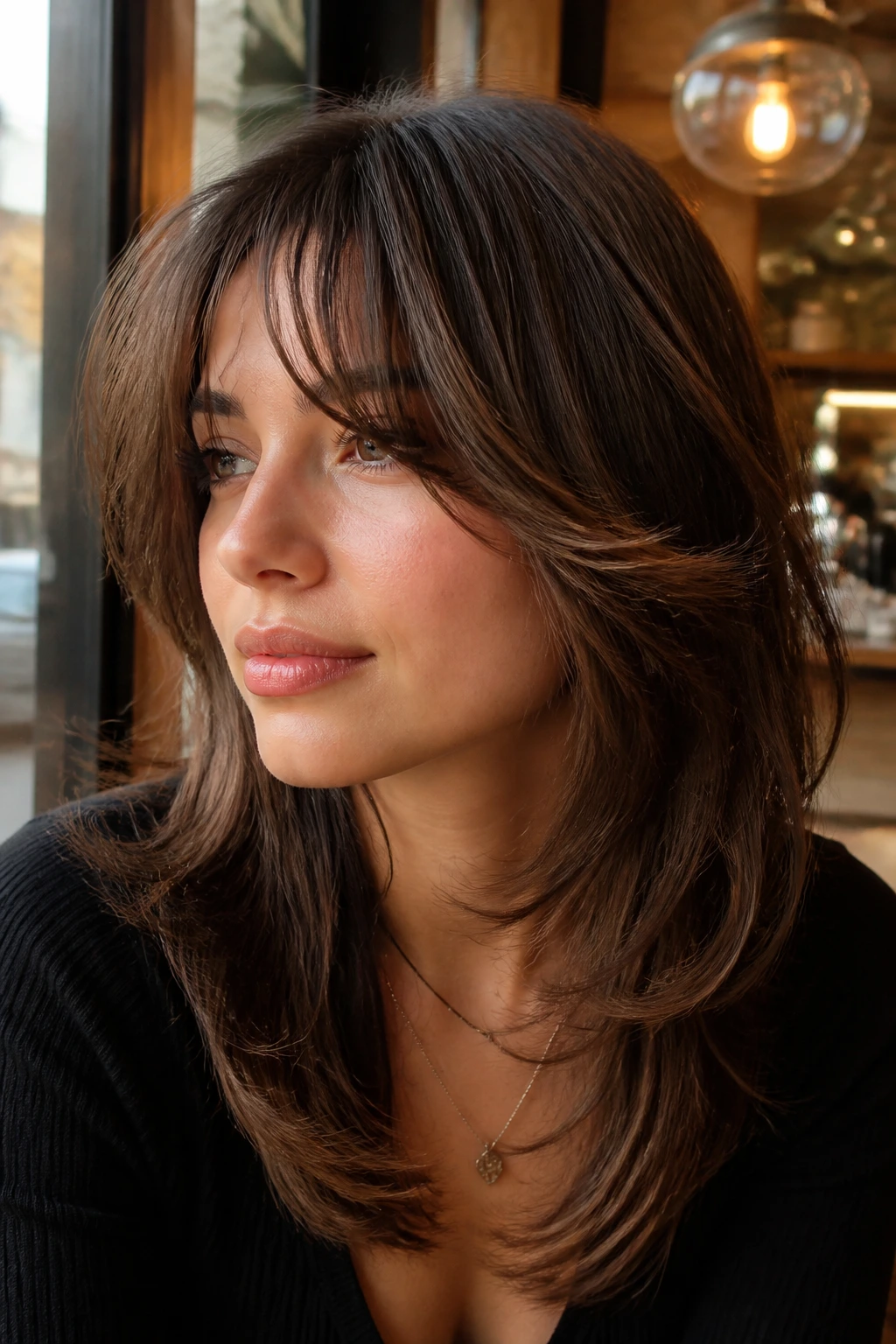
Bottleneck bangs are a neat way to get fringe without a hard, full bang line. They’re shorter in the center, then open wider as they move toward the cheeks, which makes them a natural partner for layered haircuts. The front gets lift and softness at the same time.
The shape works because it breaks up the forehead without boxing in the face. If the rest of your hair is layered, the bangs should feel like they belong to the same haircut, not a separate project. That means the side pieces need to blend into the first face-framing layer rather than sitting on top of it.
I like this pairing for medium to long hair that needs some visual movement near the face. It’s a nice compromise if full bangs sound appealing but the upkeep sounds annoying.
The bangs should not sit too thick at the center. That’s the quickest way to lose the soft effect.
18. Swoopy Crown Layers for Flat Roots
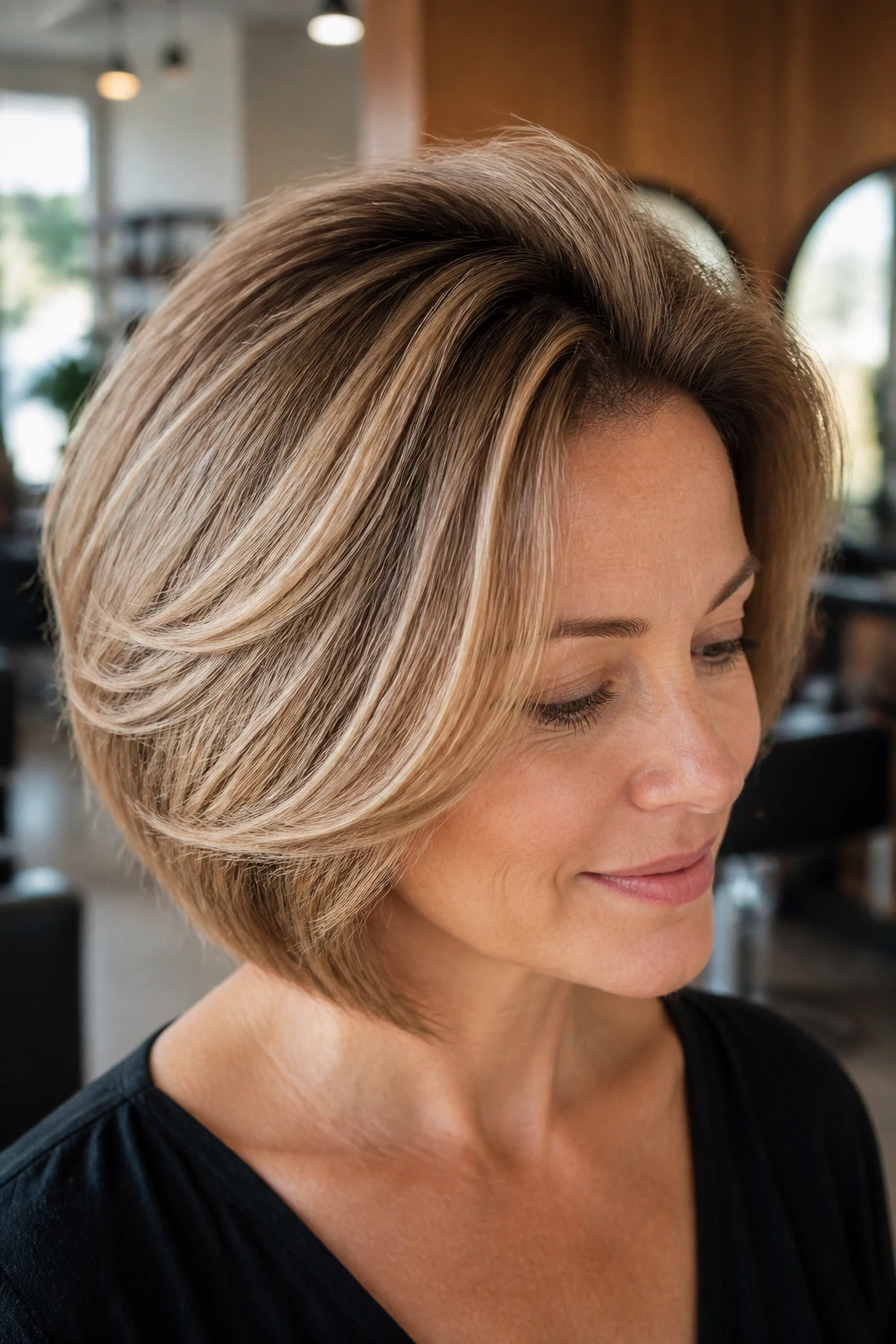
Flat roots need a different kind of layer placement. Swoopy crown layers are cut to encourage lift where the head naturally starts to round, so the top looks fuller before the ends even come into play. It’s a subtle architecture trick, and it works.
What matters most
- Layer placement at the crown: too low and you get no lift; too high and the top puffs out.
- Overdirection: pulling sections away from their natural fall creates the swoop.
- Blow-drying direction: lifting the root forward and then back helps the layers arc instead of sticking flat.
This cut is especially useful on straight or fine hair that collapses the minute air-dried texture disappears. It also works nicely on blowouts because the crown shape gives the whole haircut a little more presence. You’re not teasing the roots. You’re building lift into the cut itself.
That is the part people miss. The product helps, sure. The haircut is doing the heavy lifting.
19. Curly Shoulder-Length Layers
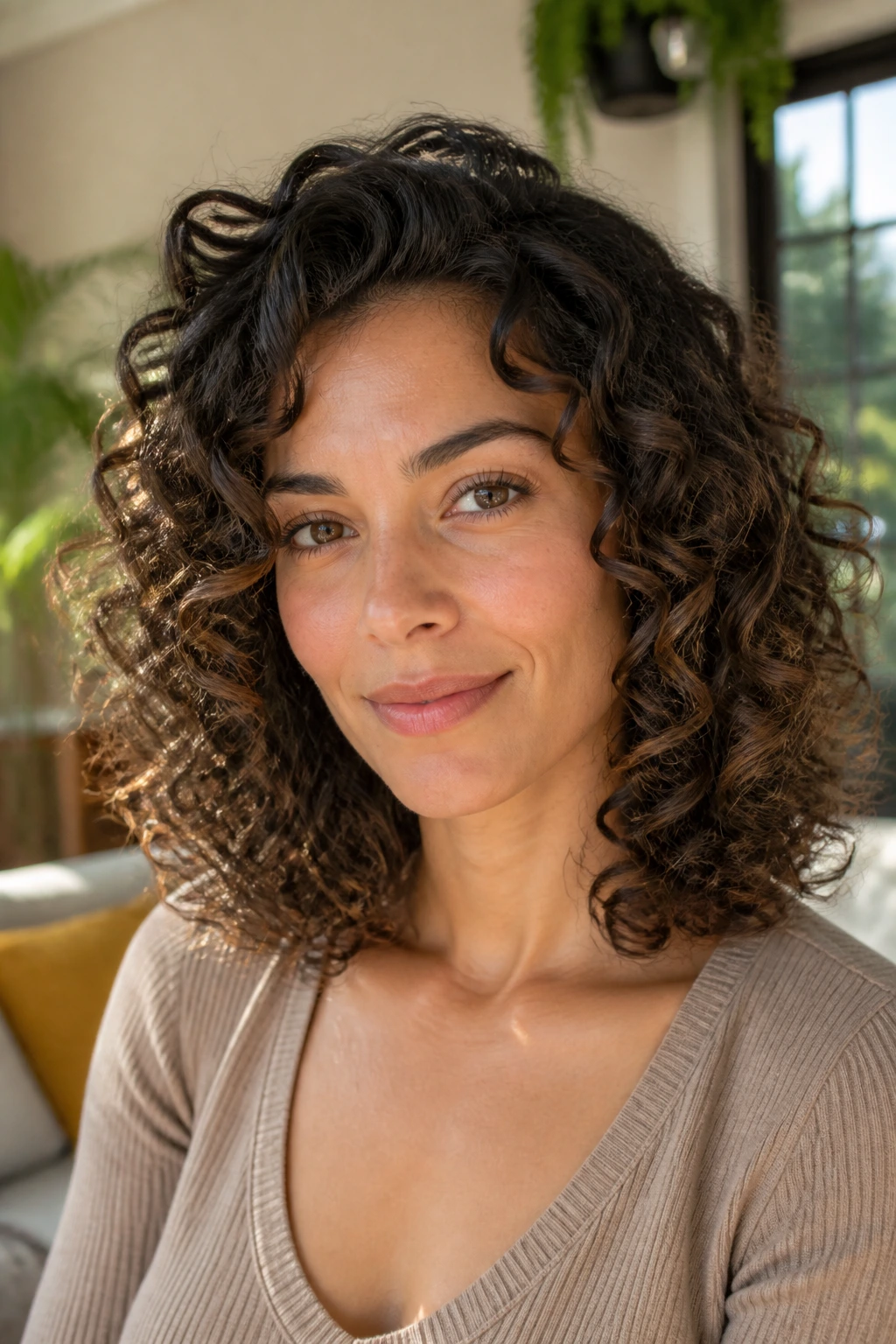
Shoulder-length curls can either spring beautifully or puff out into a triangle. The difference is usually the layer pattern. Curly shoulder-length layers keep the shape rounded while removing bulk where the curls stack at the sides. That gives the curl room to fall instead of building outward from the shoulders.
This cut works best when the stylist cuts to the curl pattern, not against it. The shoulder length matters because it lets the curls move enough to show shape, but it’s short enough to keep the weight from dragging everything down. The layers should be long enough to preserve curl clusters and short enough to prevent the ends from looking like one big ring of hair.
A diffuser can make the difference between a cut that reads airy and one that looks fuzzy. Use a curl cream with some hold, then stop touching it while it dries. Seriously. Curls hate overhandling.
This shape is one of the most practical layered haircuts for people who want volume without a huge styling job.
20. Mini Shag for Chin-Length Hair
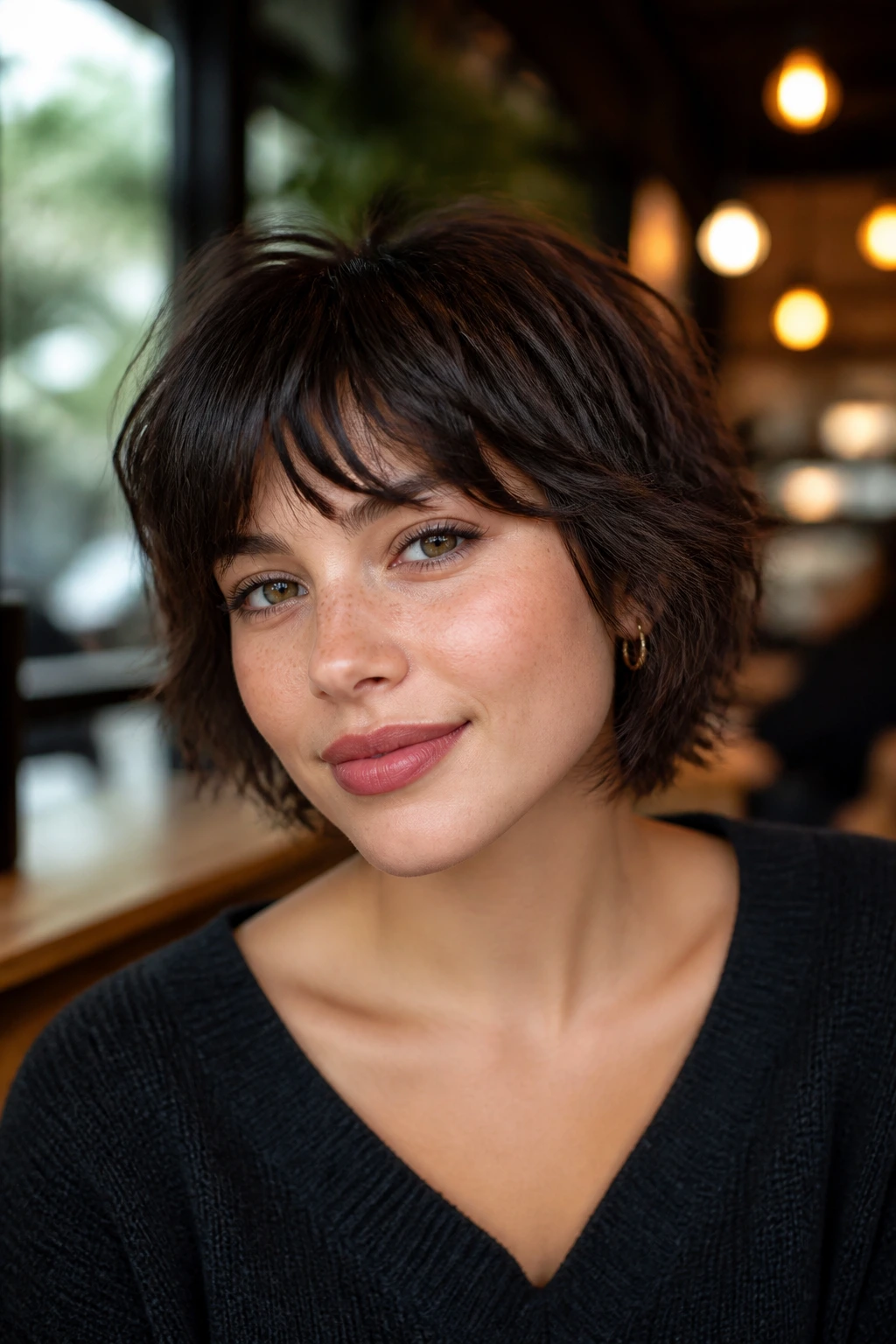
A mini shag at chin length gives short hair texture without turning it into a strict, round helmet. The layers are tight enough to create movement around the jawline, but not so short that the head looks overstacked. It’s playful, yes, but still controlled.
This cut is good if you want your hair to have some edge while keeping the neck open and the shape light. The fringe can sit soft and broken, and the sides can be chipped just enough to keep the cut from looking blunt. On straight hair, the mini shag usually needs a quick bend with a small iron or a round brush. On wavy hair, it behaves with less effort.
The jawline gets a lot of attention with this cut. That’s the point. If you want the face to look a little sharper and the hair to feel less heavy, it does that job fast.
It’s not a shy haircut. It still behaves.
21. Airy Layers for Straight Hair
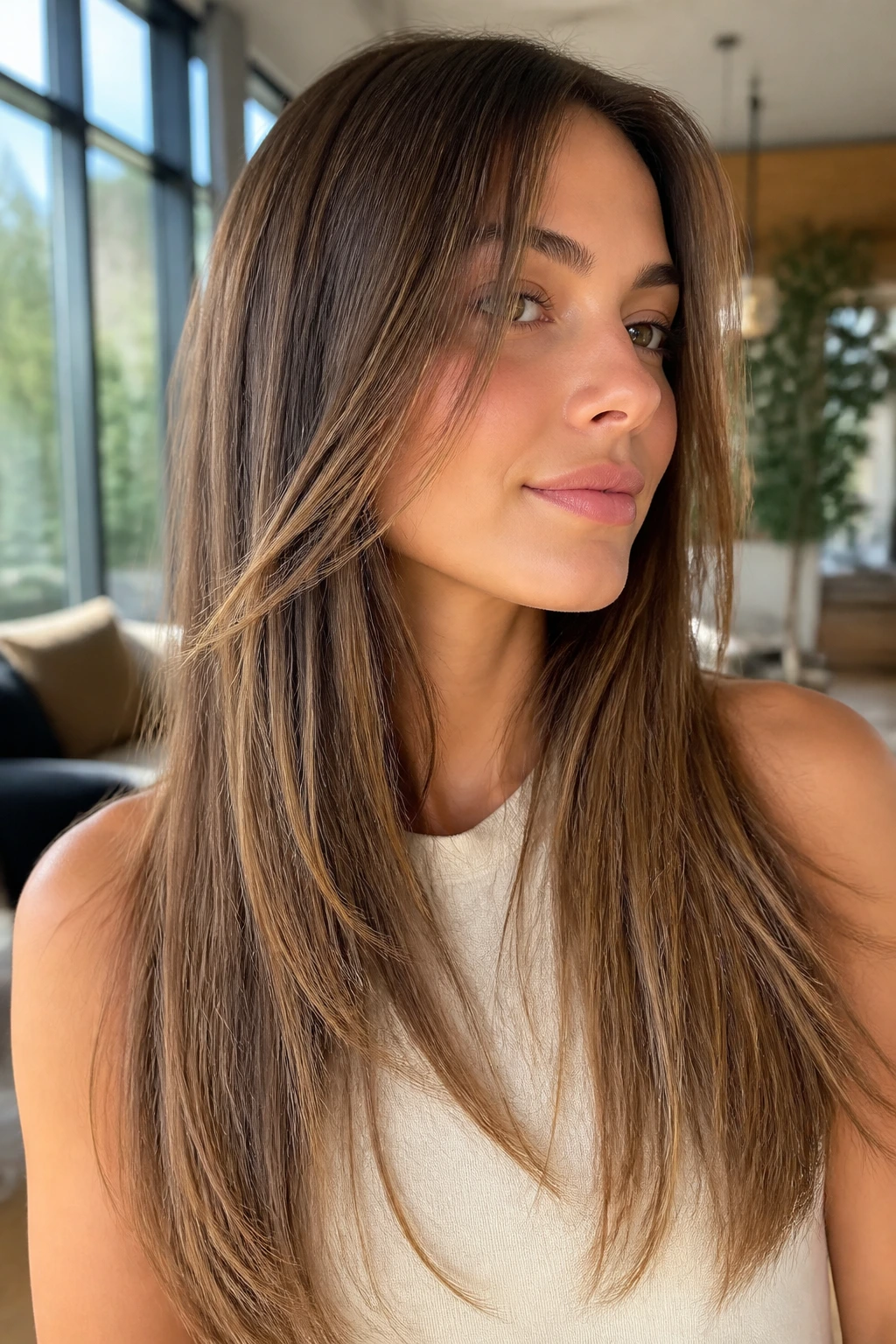
Straight hair often looks sleek in a way that hides the cut, which is why airy layers matter. Long, lightly textured layers create movement without leaving obvious steps. The hair can still look smooth and polished, but it won’t hang like a single panel of fabric.
The best versions of this cut rely on point cutting or soft slide cutting at the ends, not blunt slicing all over the head. That keeps the movement delicate. If the layers are too aggressive, straight hair can go from sleek to stringy in a hurry. That’s the danger zone.
This is a smart cut for people who wear their hair straight most of the time but still want some bend when they tuck it behind the ear or twist it into a clip. A tiny amount of wave from a flat iron or large barrel iron will show the layers nicely.
One well-placed face frame changes the whole read of straight hair.
22. Angled Layers That Lift at the Back
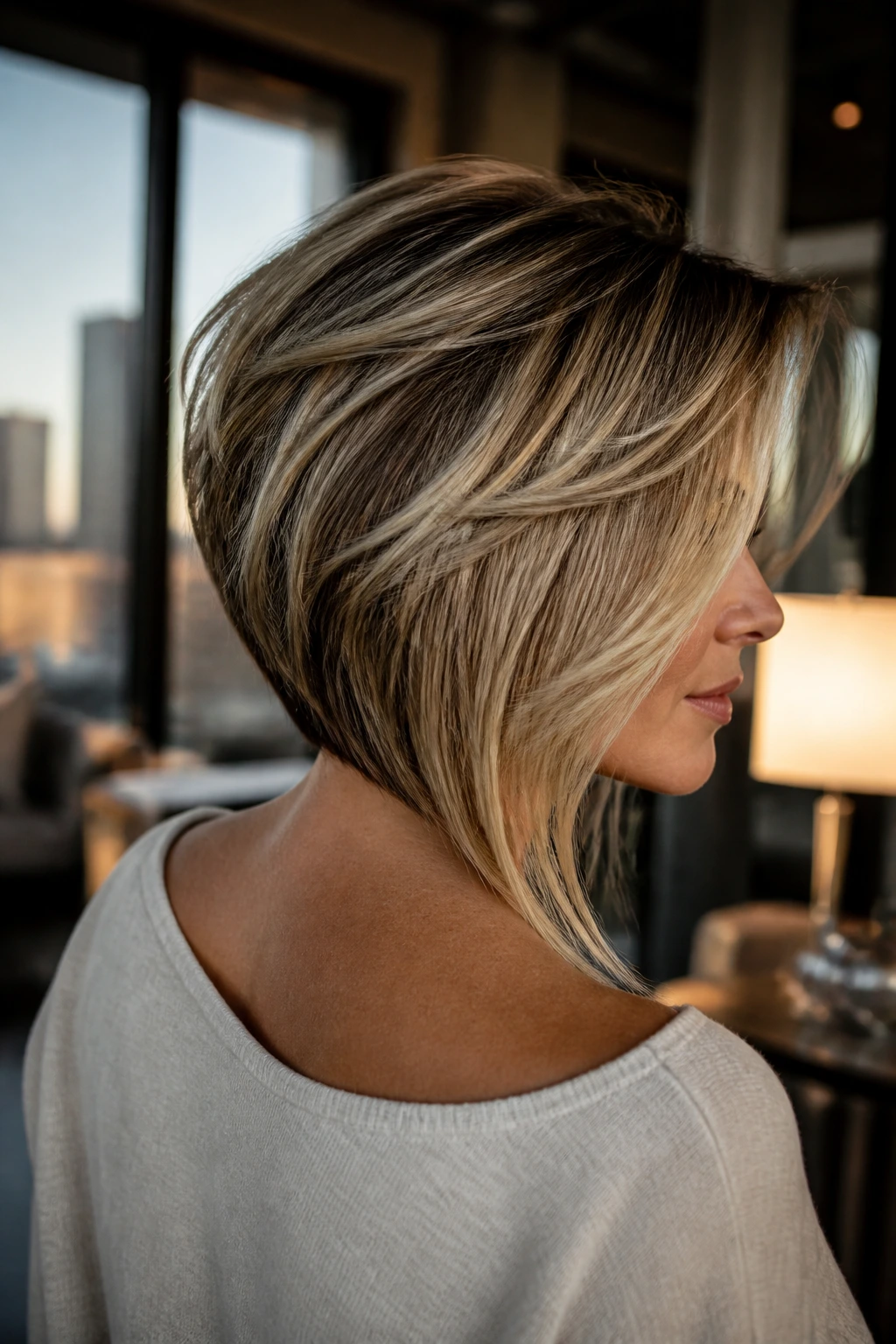
An angled layered haircut moves shorter in the back and longer toward the front, which gives the shape a built-in sense of direction. It opens the neck a little, gives the crown some lift, and keeps the front pieces long enough to soften the face. The angle is subtle in the best versions. You feel it more than you see it.
This shape is useful if your hair tends to sit heavy at the nape or if you want a haircut that looks a touch more dynamic from the side. It can be tailored to bob length or kept longer at the shoulders. The trick is not to let the angle become too sharp, or the haircut starts reading as a wedge instead of a soft layered shape.
A little bevel at the ends helps the angle flow. So does a side part. So does clean blow-drying around the crown.
It’s a practical choice when you want lift without giving up softness.
23. Mixed-Length Layers with Balayage
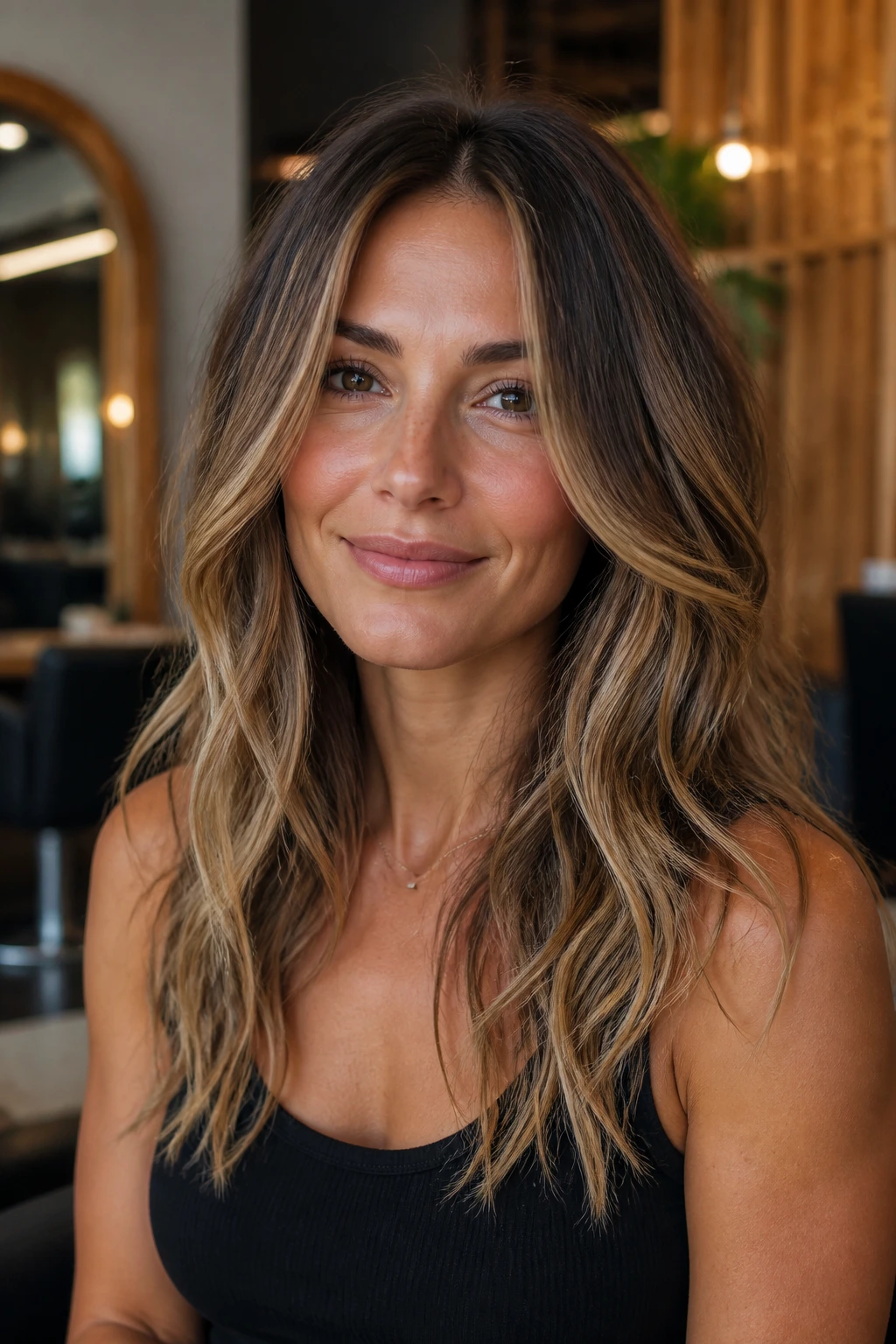
Layers and balayage are natural partners, because the haircut gives the color something to move through. Mixed-length layers create a bit of depth through the midsections, while the lighter pieces show up on bends, flips, and face-framing sections. You get more from both the cut and the color when they’re planned together.
The cut needs enough variation to let the balayage ribbons show, but not so much that the color looks chopped into pieces. If the layers are too short and too numerous, the light and dark sections can start to feel busy. If they’re too long and flat, the balayage loses the movement it was meant to highlight.
This is one of my favorite pairings for medium to long hair that needs life around the front and a little more body through the ends. It also plays well with soft waves, which is where the color really wakes up.
If you’re doing highlights or balayage, talk to the stylist about where the shortest face frame begins. That one decision changes how the light lands.
24. Internal Layers for Heavy Hair
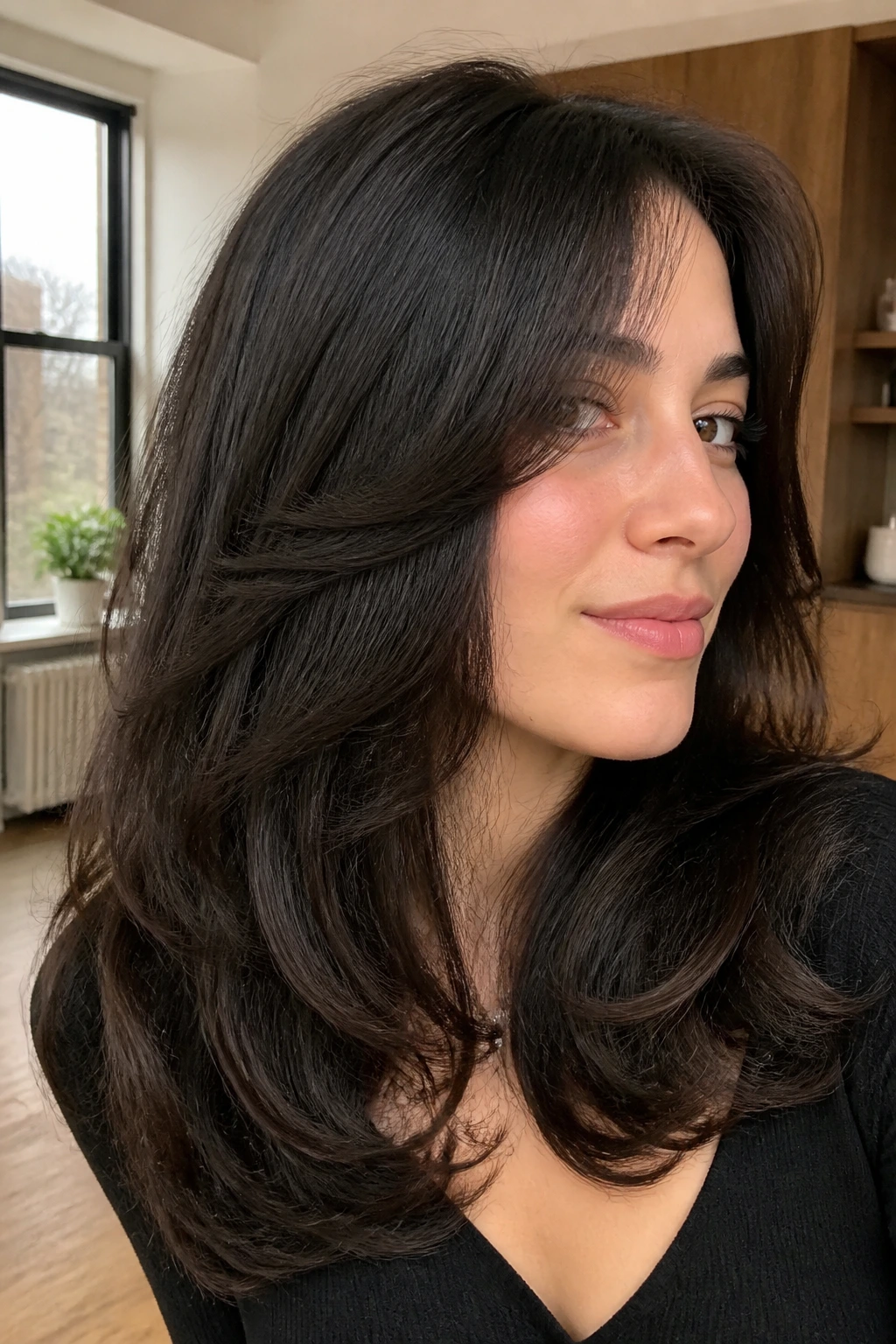
Heavy hair often doesn’t need obvious layers. It needs relief from the inside. Internal layers remove weight from the middle of the shape while leaving the surface line cleaner, which keeps the haircut from looking frayed. It’s a smart fix for hair that feels dense but still needs a solid outline.
This approach is useful when the ends are bulky, the crown collapses, or the hair takes forever to dry because there’s so much of it. A stylist can cut into the interior with careful sectioning so the outside still looks smooth. The shape falls better, moves easier, and usually feels lighter on the shoulders.
When this cut makes sense
- Your hair puffs at the sides but you want to keep length.
- You like the idea of layers, but not a visibly stepped shape.
- You want less drying time without sacrificing fullness.
It is one of the least showy layered haircuts, which is part of why it works so well.
25. Feather-Forward Layers with Tapered Ends
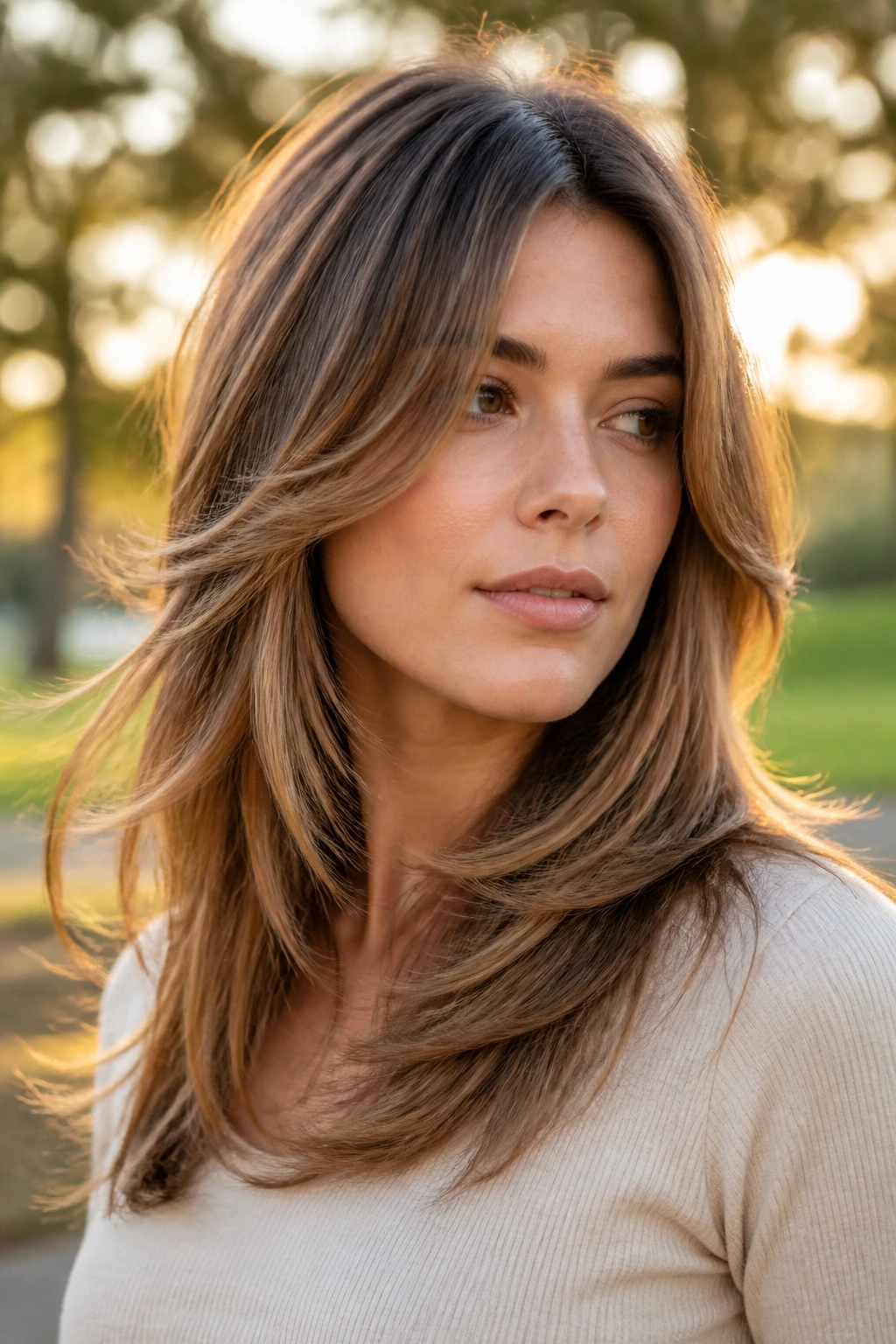
Feather-forward layers soften the front first, then carry that same taper through the rest of the haircut. The ends are lightly narrowed so the shape feels brushed and airy rather than blunt or boxy. It’s a good finish for people who want softness more than drama.
The layers should move forward around the face, then fold back into the rest of the hair without creating a hard line. That forward motion is what keeps the haircut looking alive. If the cut is too heavily thinned, though, the effect can go limp fast. The best version keeps enough weight at the bottom to hold its shape.
This is a clean choice for medium to long hair, especially if you like your hair to swing when you turn your head. It also pairs nicely with soft color work because the tapered ends catch the eye without feeling busy.
It’s a graceful finish. Not precious. Just easy on the eye.
How Layering Creates Movement Instead of Chopped Ends
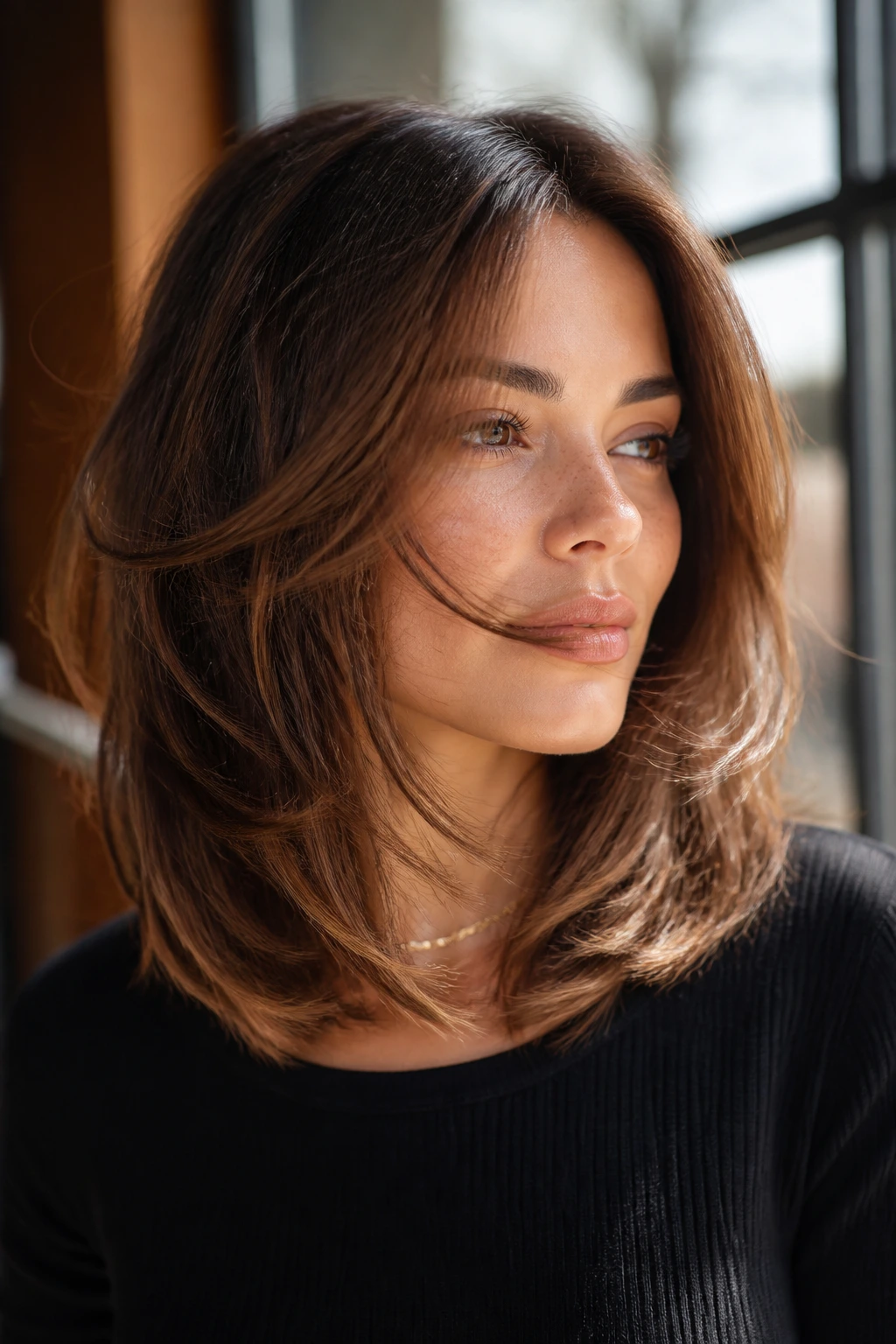
A layered haircut works because it changes how weight sits in the hair. Remove too little, and the shape stays heavy. Remove too much in the wrong place, and the ends start looking thin or broken. That’s the whole game. The haircut has to move with the head, not fight it.
The best layer patterns are built around where the hair naturally wants to fall. A long layer through the front can soften the face without stealing density from the back. Internal layers can open up thick hair without changing the silhouette. Short crown layers can lift flat roots, but only if the stylist leaves enough length around them so the top doesn’t puff.
Point cutting, slide cutting, and overdirection all matter here, but you do not need to memorize the jargon. What matters is the effect: softer edges, better swing, and a shape that doesn’t collapse by lunchtime. When the layer placement is right, the ends bend instead of sitting in one blunt line.
That’s why some layered haircuts look expensive and some look like a rushed cleanup. Same general idea. Very different execution.
Choosing the Right Layered Haircut for Your Hair Type
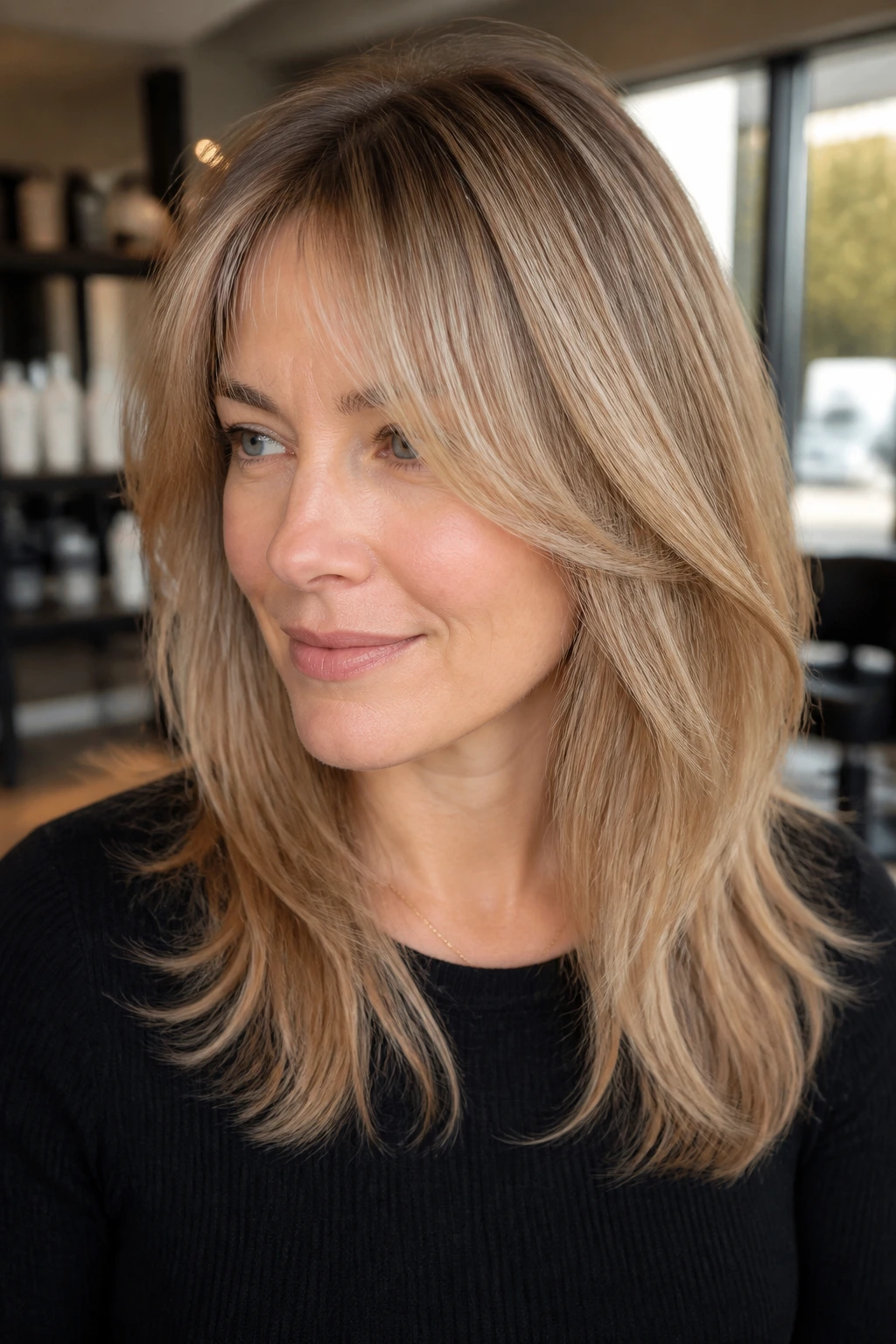
Fine hair needs restraint. Long layers, invisible layers, and blunt ends with soft face framing usually work better than a lot of short pieces. Too many short layers can expose the scalp and make the haircut look airy in the wrong way.
Thick hair often needs weight removed from the interior or the lower half of the shape. Think internal layers, rounded curls, U shapes, and choppy midlength pieces that keep the perimeter under control. The point is to stop the bulk from building in one place.
Wavy hair can go almost anywhere, but it likes cuts that encourage movement without demanding perfection. Soft shags, side parts, and feathered fronts usually sit well. Curly hair needs the most caution, because shrinkage changes everything. Rounded layers, shoulder-length curls, and dry cutting usually make more sense than an aggressive wet haircut.
Straight hair benefits from a little planning. It shows every cut line. That means the layer pattern has to be softer, more deliberate, and sometimes a little longer than you first think.
What to Tell Your Stylist Before the First Snip
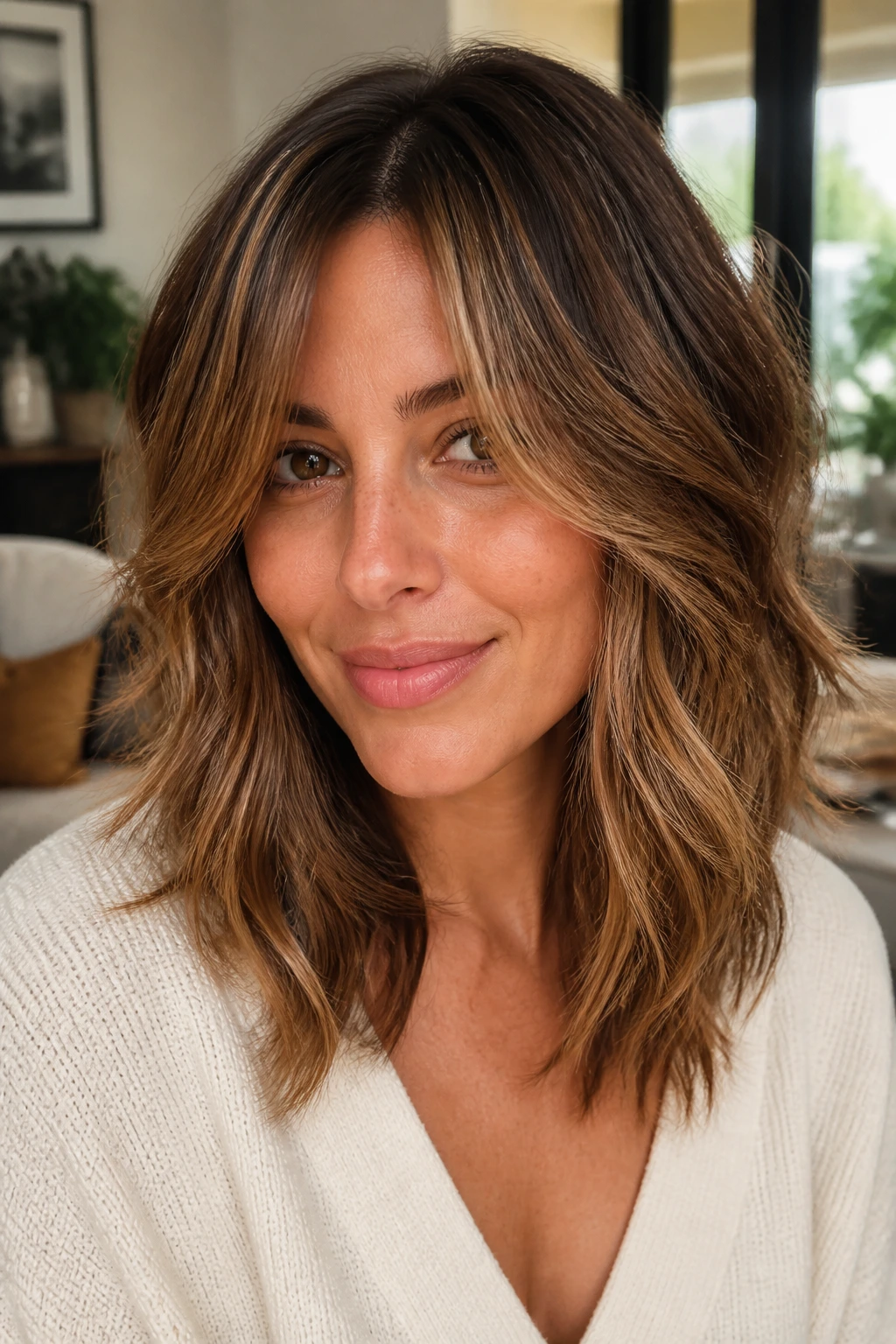
Bring photos, yes, but bring your real habits too. Tell the stylist whether you air-dry, blow-dry, diffuse, or live with your hair pinned back half the week. A haircut for a smooth round-brush finish is not the same thing as a haircut for a fast towel-dry and go.
Be specific about where you want the shortest layer to start. Cheekbone, jawline, collarbone, shoulder. Those are not tiny details. They decide whether the haircut feels soft or overcut. If you have fine hair, say that you want movement without losing density. If your hair is thick, say you want weight removed without the ends going wispy.
A few things are worth mentioning every time:
- Cowlicks at the hairline or crown
- Whether you part your hair in the center or on the side
- How often you’re willing to trim
- Whether you want the haircut to grow out softly or stay crisp
That conversation saves a lot of regret later. Haircuts are cheaper to discuss than to fix.
Tools and Products That Make Layers Move
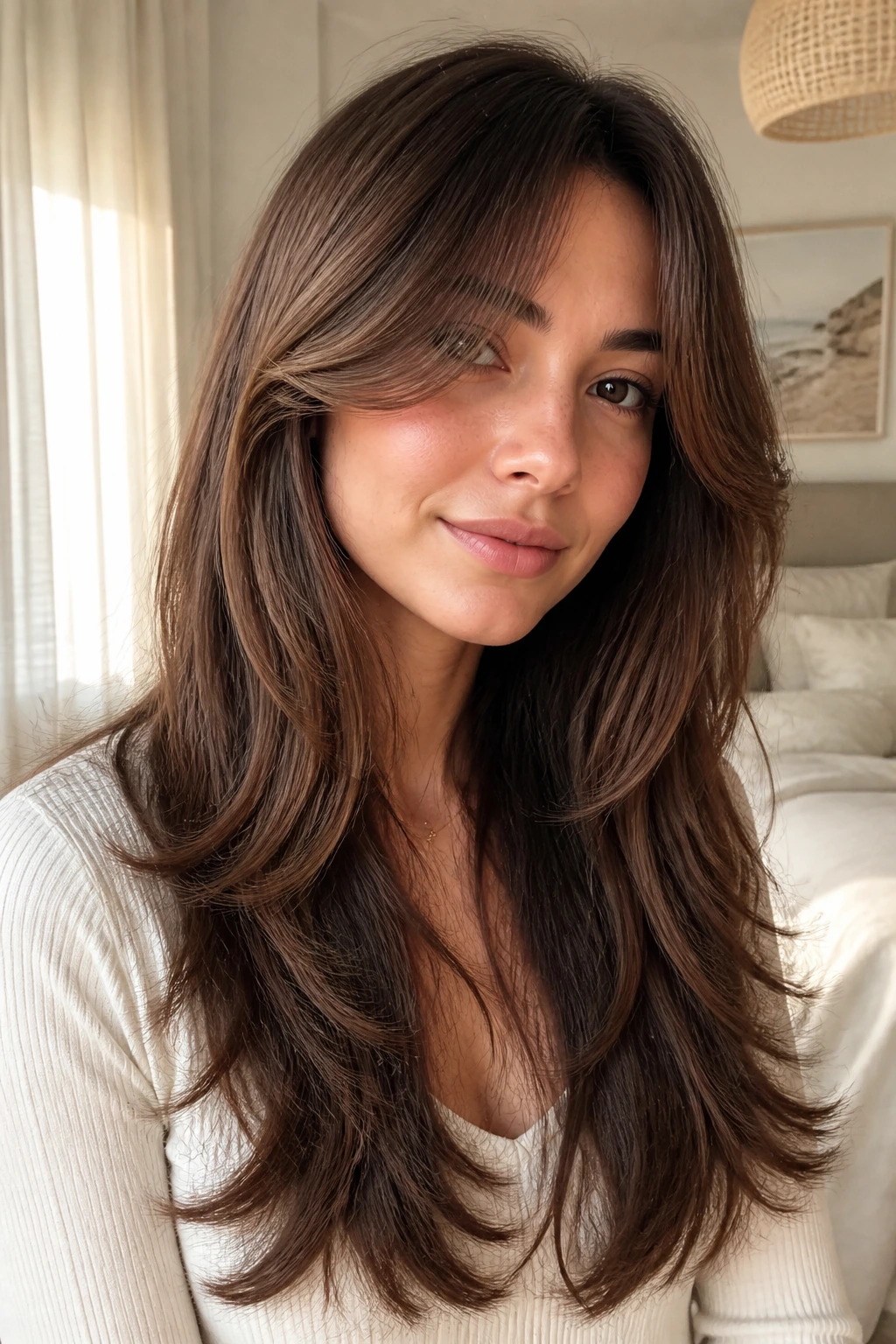
- Blow dryer with a nozzle: Directs the air down the hair shaft so layers smooth out instead of frizzing up.
- Round brush, 1 to 1.5 inches: Best for bending curtain bangs, face-framing layers, and the front of a layered lob.
- Wide-tooth comb: Useful for curl-friendly layered cuts where brushing would wreck the shape.
- Heat protectant: Non-negotiable if you use a round brush, flat iron, or curling iron on the layers.
- Light mousse or root-lift spray: Gives fine hair enough grip to hold the shape of the cut.
- Texturizing spray: Helps piecey layers show separation without looking crunchy.
- Diffuser attachment: A must for curly or wavy layers that need lift without frizz.
- Velcro rollers or clips: Handy for setting the front pieces of a blowout while they cool.
Common Mistakes That Leave Layers Flat or Frizzy
The first mistake is asking for layers without saying what you want them to do. “More layers” is not enough. More lift? Less bulk? Softer face framing? Those are different cuts. If you skip that part, you usually get whatever the stylist thinks the photo means.
The second mistake is letting the shortest layer sit too high on fine hair. That can make the crown look see-through and the ends look scruffy. On the other hand, thick hair often suffers when the stylist leaves too much weight in the middle, because the whole shape puffs outward. Same word, different disaster.
Bad styling can wreck a decent cut too. Heavy creams flatten fine layered hair. Over-rough drying can turn soft layers frizzy. And with curls, brushing them dry before the shape sets is a fast way to ruin the whole point.
A good layered haircut should still make sense when you do less, not only when you do more. If it needs a perfect blowout every time, the cut probably needs adjusting.
Variations and Personal Tweaks to Try
Air-Dry Layers: Keep the layers longer and softer, then ask for face framing that still looks good when the hair dries on its own. This is a smart move for wavy hair and anyone who does not want a styling routine that eats the morning.
Blowout Layers: Build the shortest layers around the cheekbones and crown so a round brush can flip them into place. This version gives the most visible swing and body, especially on long or medium hair.
Curl-First Layers: Cut around the curl pattern instead of against it, with rounded shaping and minimal thinning. The goal is spring and balance, not a perfectly uniform outline.
Color-Showing Layers: Pair long face-framing pieces with balayage or highlights so the movement reads clearly. Lighter pieces show best where the hair bends, not just where it lies flat.
Low-Maintenance Grow-Out Layers: Choose invisible layers, long curtain pieces, and a heavier perimeter. The haircut loses shape slowly, which is useful if you want the soft look without constant reshaping.
Keeping Layers in Shape Between Cuts
Short layered shapes like shags and bobs usually need a trim every 6 to 8 weeks if you want the outline to stay crisp. Longer layered hair can often stretch to 8 to 12 weeks, sometimes a bit longer if the layers are soft and hidden. The more visible the shape, the sooner it starts to show wear.
At home, the front pieces are usually the first part to go limp. A quick mist of water, a round-brush touch-up, or a few velcro rollers while you finish makeup can bring them back without washing the whole head. For curly hair, refreshing the curl cream on the outer layers often matters more than re-wetting everything.
Sleep habits matter more than most people admit. A loose silk or satin pillowcase helps keep the face-framing pieces from getting crushed, and a low, loose braid can stop long layers from tangling into a nest overnight. If the ends start looking dry, the haircut will read less soft no matter how good it was on day one.
Layered haircuts are a little easier to live with when the trim schedule stays realistic. Too long between cuts, and the shape starts to sag.
Frequently Asked Questions
Which layered haircut is best for fine hair?
Long layers with blunt ends, invisible layers, or a collarbone lob usually work best. They keep the shape full while still adding movement, which is the whole problem you’re trying to solve with fine hair.
Do layers make thick hair look thinner?
Only if the layers are cut too aggressively. Thick hair usually looks better with internal layers, U shapes, or longer mixed lengths, because those remove bulk without making the ends look see-through.
Can curly hair wear layers without getting frizzy?
Yes, but the cut has to follow the curl pattern. Rounded layers and dry cutting usually give cleaner results than a heavy wet cut, especially when the curls shrink a lot.
How often should layered haircuts be trimmed?
Shorter shapes like bobs and shags often need attention every 6 to 8 weeks. Longer, softer layers can usually go 8 to 12 weeks before the shape starts to slide.
Are curtain bangs hard to keep up with?
They need more brushing and a bit of styling at the front, but they’re less demanding than a full straight fringe. They also grow out into face-framing layers, which makes them easier to live with.
What if I air-dry most of the time?
Ask for layers that look good in your natural bend, not only in a blowout. Soft shags, long invisible layers, and face-framing cuts usually handle air-drying better than very structured blowout shapes.
Can I get layers if I wear my hair in a ponytail a lot?
Absolutely. Just keep the shortest layers below the points that escape the ponytail, or ask for longer face framing that still works when the hair is tied back. Otherwise you’ll spend all day pulling pieces out of your face.
What if my layers look choppy instead of soft?
That usually means the shortest pieces were cut too high, or the transition from one layer to the next is too abrupt. A stylist can soften it with blending and, sometimes, by lengthening the shortest face frame on the next appointment.
The Cut That Still Moves on Day Three
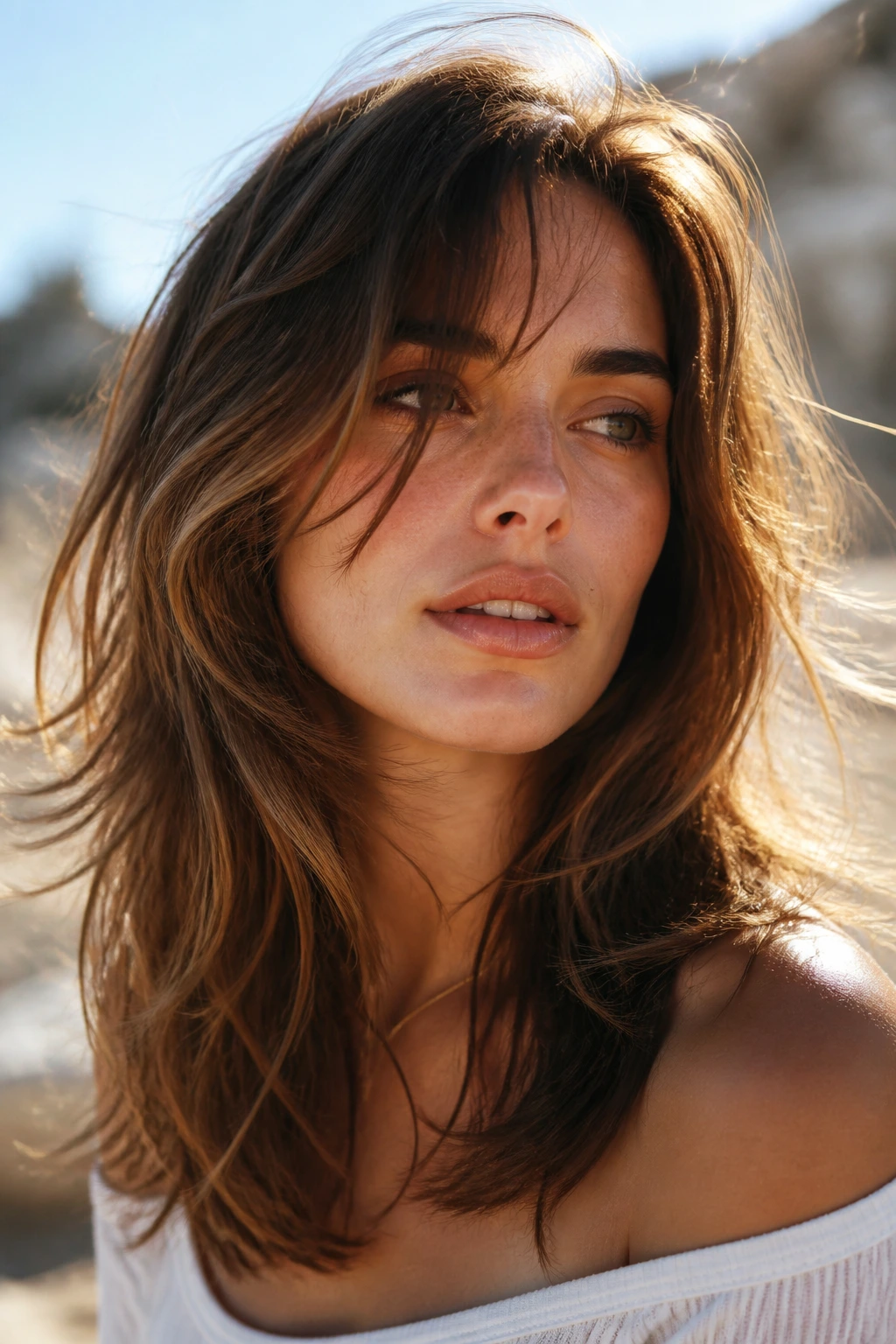
The best layered haircut is not the one that looks wild in a salon mirror. It’s the one that still has shape after a windy walk, a workday, and one too many times tucked behind the ear. Soft movement and body come from layer placement, not from random texture. That’s the part worth protecting.
If you’re sitting between styles, start with the version that matches your hair’s natural behavior instead of trying to bully it into something else. Bring one or two photos, point to the layer that matters most, and say where you want the shortest pieces to begin. That one conversation will tell you far more than a vague request for “more layers” ever will.
