



A buzz cut on a woman can look sharp, soft, icy, punk, polished, or almost velvet-like, and the change usually comes from a few millimeters rather than a whole new haircut. That’s the part people miss when they only look at the length. A #0.5 on one head feels severe. A #2 with a gentle taper and a clean neckline can look deliberate, expensive, and oddly elegant, even with nothing else changed.
The cut is tiny. The decisions are not.
That’s why buzz cut styles for women stay interesting long after the shock value wears off. The hairline, the crown swirl, the fade, the guard number, the color, the line work—each one nudges the whole mood in a different direction. Some versions lean minimalist. Some bring in a bit of edge. Some are plain mean in the best way. And some are the kind of close crop that makes earrings, brows, and a strong collar line do most of the heavy lifting.
What makes this list useful is the range. There are ultra-close crops, soft grow-out-friendly versions, graphic cuts, color-driven looks, and a few that work especially well when you want shaved sides or undercut energy without going all the way to a bare scalp. The fun part is that none of them are actually “just a buzz cut.” They’re all a shape decision.
Why These 45 Cuts Earn Their Place
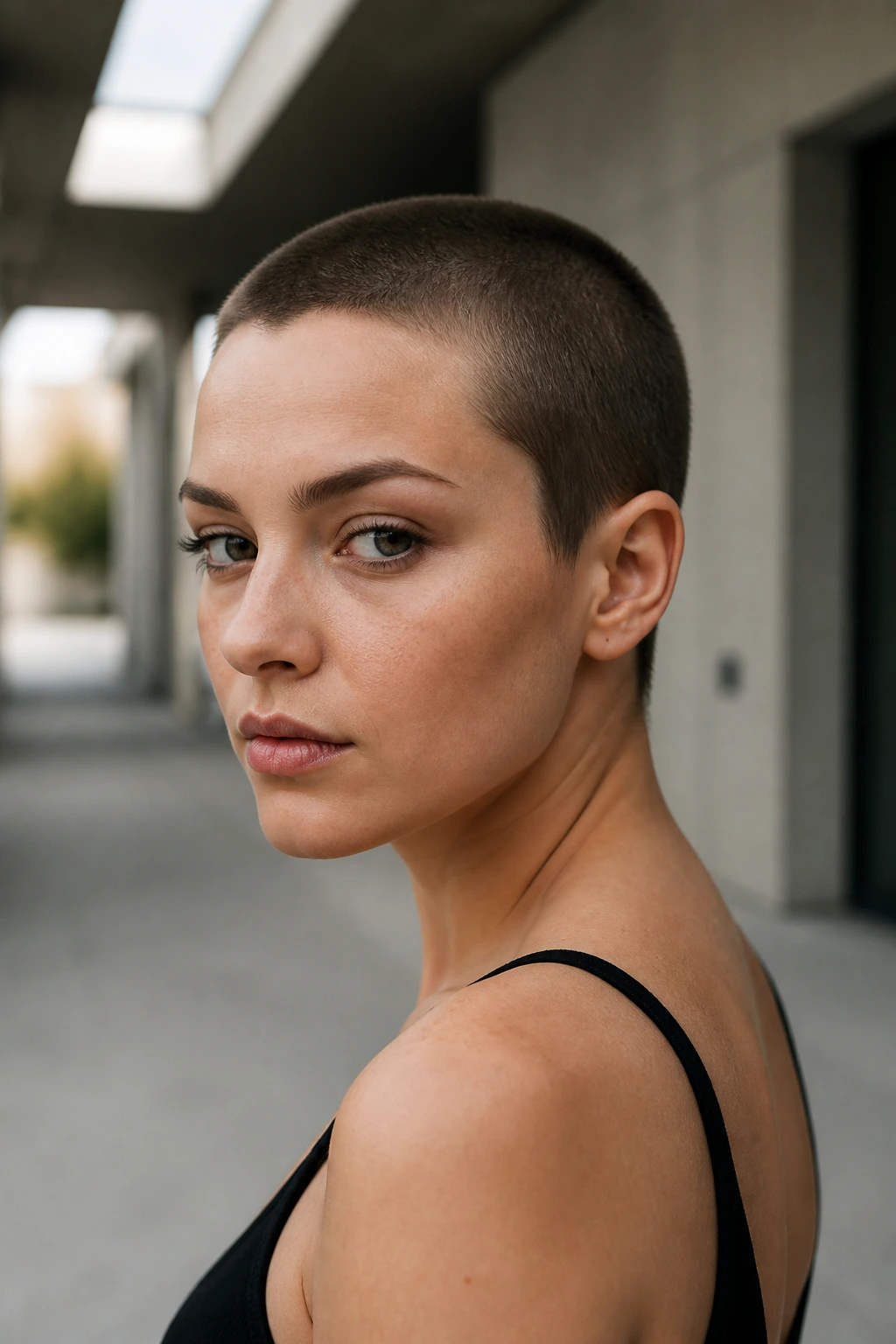
-
Tiny length changes matter: A move from a #0.5 to a #2 can change how much scalp shows, how the crown sits, and how soft the cut feels in daylight.
-
Line work changes the mood fast: A taper, hard part, or clean temple edge can make the same buzz read polished instead of plain.
-
Color does a lot of the work: Platinum, copper, silver, or a dark shadow root can turn a close crop into the main event without extra styling.
-
Texture is part of the design: Straight, wavy, curly, and coily hair all leave a different surface at short length, which means the same guard number never looks the same twice.
-
The grow-out matters as much as the cut: Some of these styles stay crisp for weeks; others look best when they’ve got a little stubble and softness at the edges.
-
This isn’t one-size-fits-all: The best buzz cut for your face shape, brow line, and hair density is often the one that keeps one or two details on your side.
How a Few Millimeters Change the Whole Mood
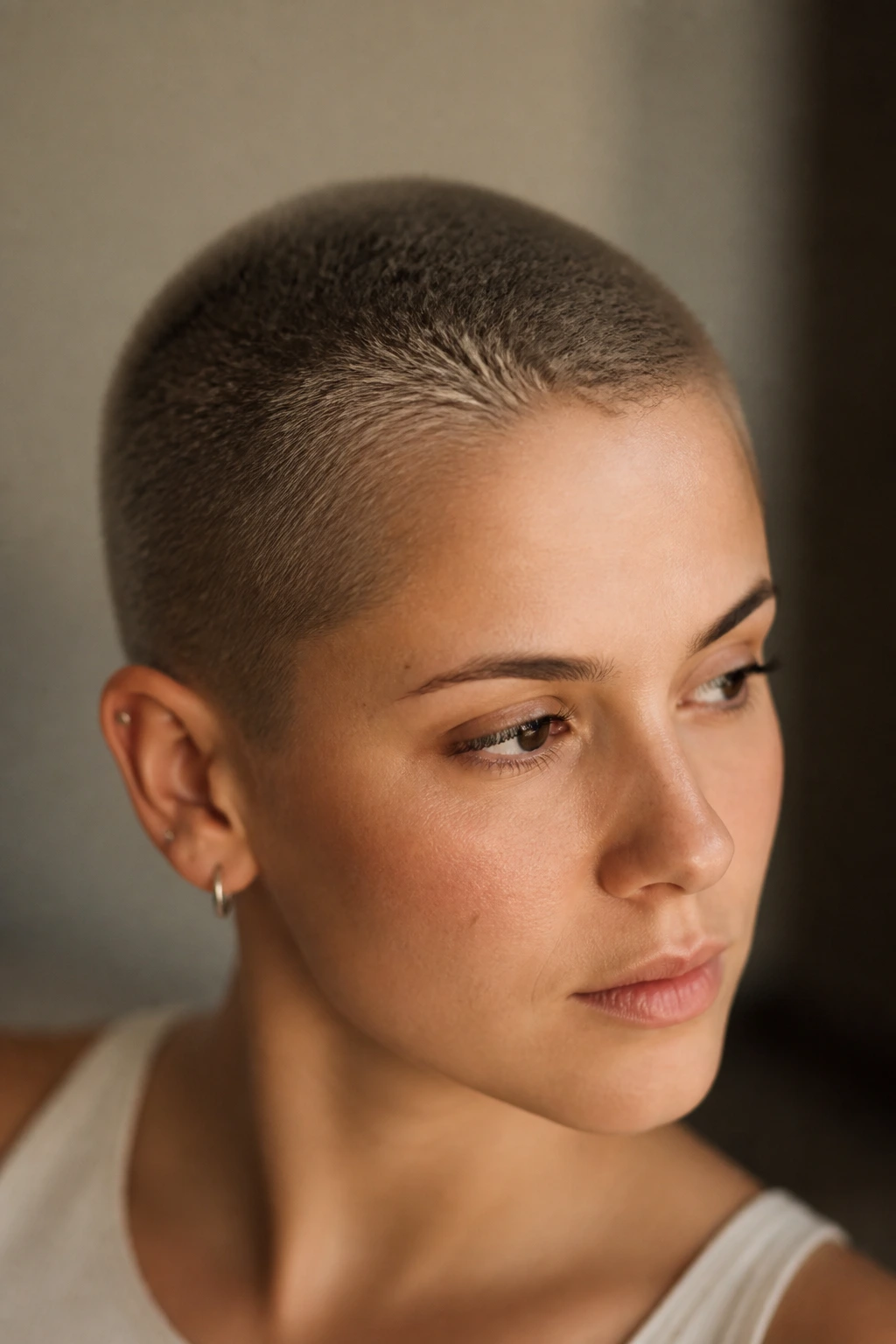
A buzz cut is one of the few haircuts where the outline matters more than the total length. Your hairline, crown swirl, temple shape, and even the slope at the back of your head stay visible, which is exactly why the small decisions feel so big.
Guard Numbers in Plain English
Most clipper brands use guard numbers that roughly map like this: #0 to #0.5 is near-shaved, #1 sits around 3 mm, #2 lands closer to 6 mm, and #3 to #4 move into soft-crop territory. The exact numbers shift by brand, so the number is a guide, not gospel.
A #1 gives you a blunt, tight finish. A #2 usually softens the scalp show just enough to make the cut feel less severe. By the time you reach a #3 or #4, the buzz starts flirting with crew-cut territory, which can be a good thing if you want shape without too much exposure.
Fade, Taper, or One Length?
A one-length buzz looks clean and direct. A taper softens the hairline around the ears and nape, which helps the cut grow out more gracefully. A fade pushes the sides much shorter than the top, and that contrast does most of the visual work. If you want the haircut to read bold from across the room, the fade usually delivers faster than extra length ever will.
Texture Changes the Finish
Straight hair shows every line. Wavy hair makes the surface look softer. Curly and coily hair often need a touch more length than people expect, because going too short can expose patchiness or uneven density that looked invisible at longer lengths. If your hair has a crown swirl or a strong cowlick, work with it. Fighting it at buzz length is a waste of time.
The easiest way to think about it: length controls softness, fade controls edge, and texture controls the surface. Once you see those three levers, the rest gets easier.
1. Clean Uniform Close Crop
A clean uniform close crop is the purest version of a buzz cut. No fade. No side drama. Just the same short length all over, which makes the shape of the head and the line of the brows do the talking.
I like this one when someone wants the least fuss and the clearest outline. Ask for a #1 or #1.5 all over if you want a little softness, or go shorter if you’re comfortable with more scalp showing. The trick is in the edge work: a tidy neckline and a gentle temple clean-up keep it from looking unfinished.
2. Soft #2 Buzz With Crown Cushion
This is the version that saves a lot of people from going too short too fast. A #2 across most of the head leaves enough length to blur the scalp a little, and a touch more cushion at the crown keeps the top from flattening out under bright light.
It’s especially good if you have a visible swirl at the back or a crown that refuses to lie politely. The cut still feels close, but not harsh. And that matters more than people think.
3. Skin-Fade Buzz With Bare Temples
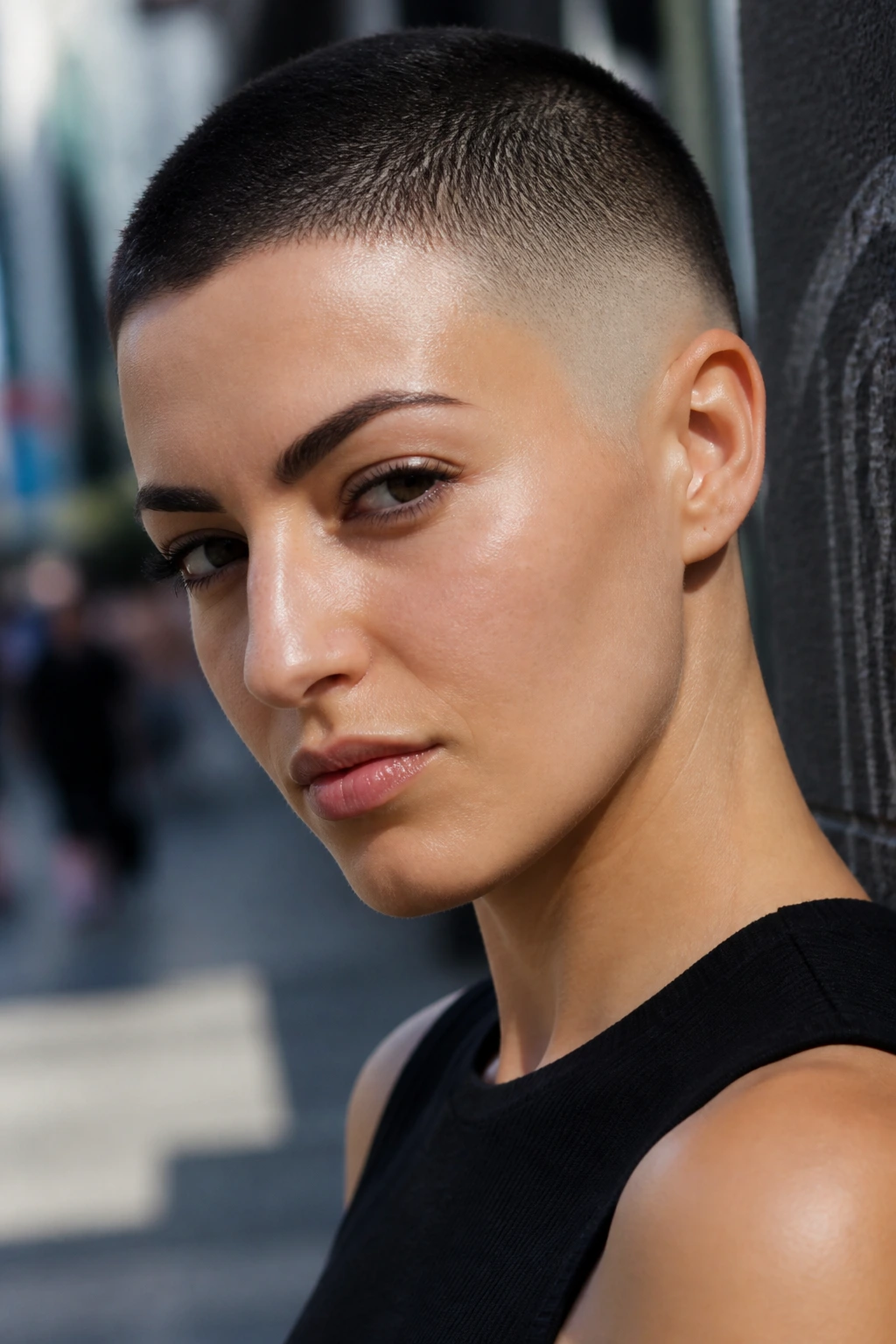
A skin-fade buzz pulls the sides down to nearly nothing and leaves the top just long enough to read as intentional. The contrast is the point. It makes the cheekbones look cleaner and gives the whole cut a harder outline.
This style works when you want the haircut to have some attitude without needing extra styling. Ask your stylist to keep the transition smooth, not choppy, because a rushed fade can look patchy fast. A sharp temple line is the difference between strong and sloppy.
4. Tapered Nape Buzz
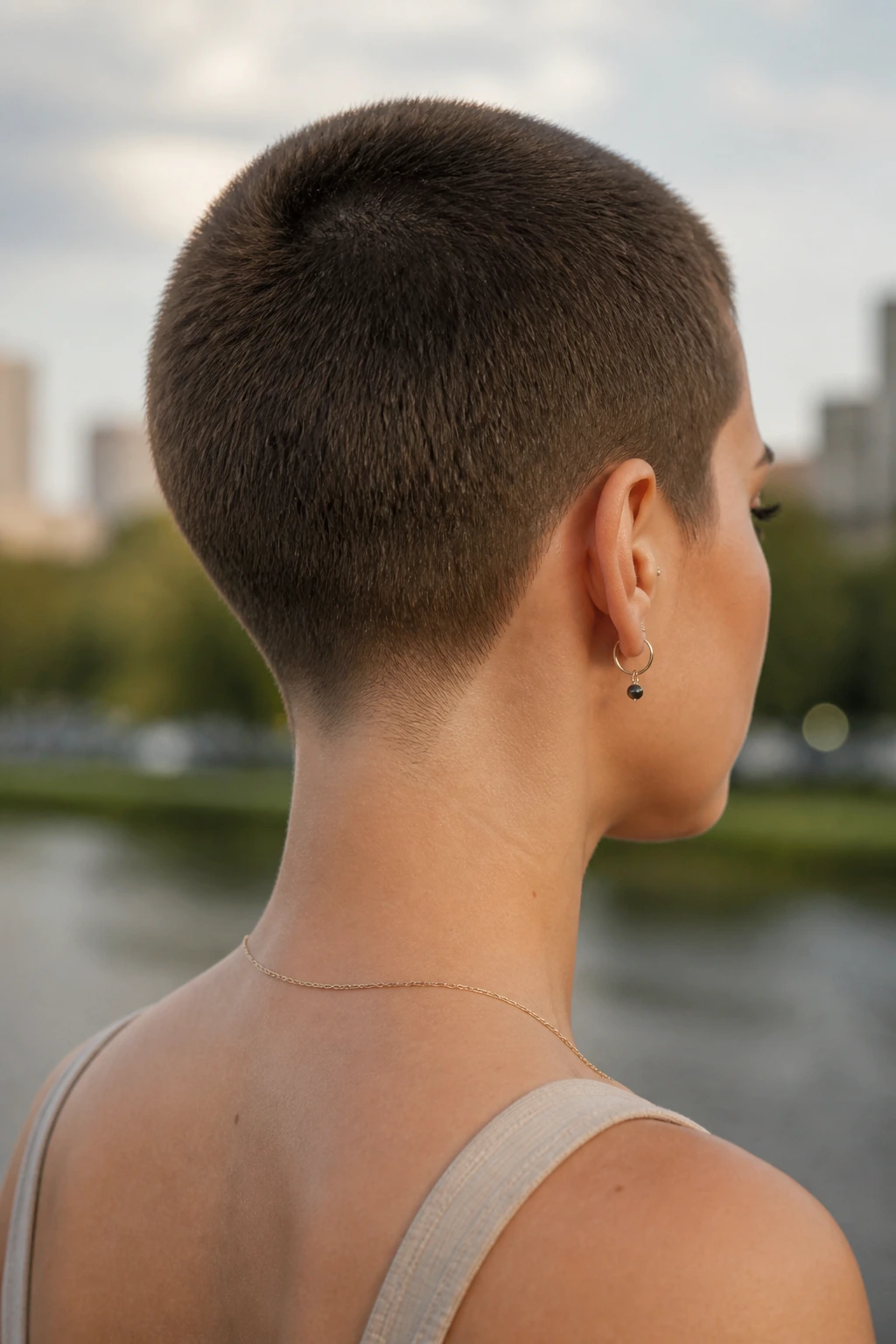
The tapered nape buzz is for anyone who hates the fuzzy shelf that can show up at the back of a blunt crop. Keeping the neckline soft and graduated buys you a few extra days of neatness.
It’s subtle, which is why I like it. You get the clean buzz feel around the top and sides, but the grow-out doesn’t scream for help after one wash. If you plan to wear this cut through workdays, workouts, and repeat errands, a taper in the back is money well spent.
5. Platinum Buzz With Clean Roots
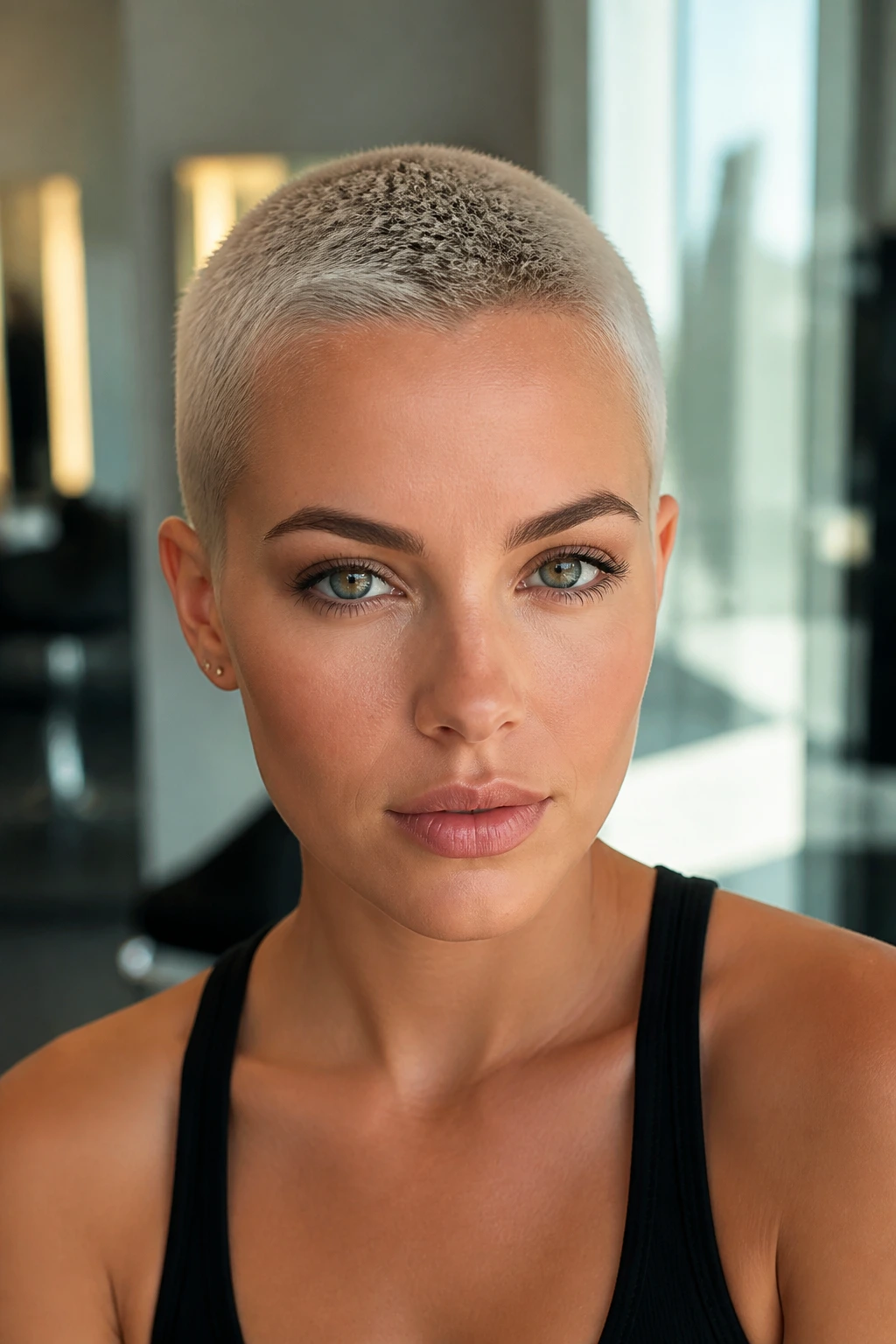
Platinum on a buzz cut hits differently because there’s no length to hide behind. The color is the haircut. It can look icy and expensive, but only if the lift is even and the toner is chosen with some care.
Why It Stands Out
A pale platinum buzz makes the face pop hard, especially around the brows and eyes. The short length also means the root line shows sooner, so keeping a tiny bit of shadow at the roots can make the whole thing easier to live with.
- Ask for a clean lift: Bleach to a pale yellow before toning, not halfway and hoping for the best.
- Choose a cool toner: Pearl, beige-platinum, or silver-violet keeps brass under control.
- Plan for upkeep: A quick tone every couple of weeks keeps the finish from drifting yellow.
6. Copper Penny Buzz
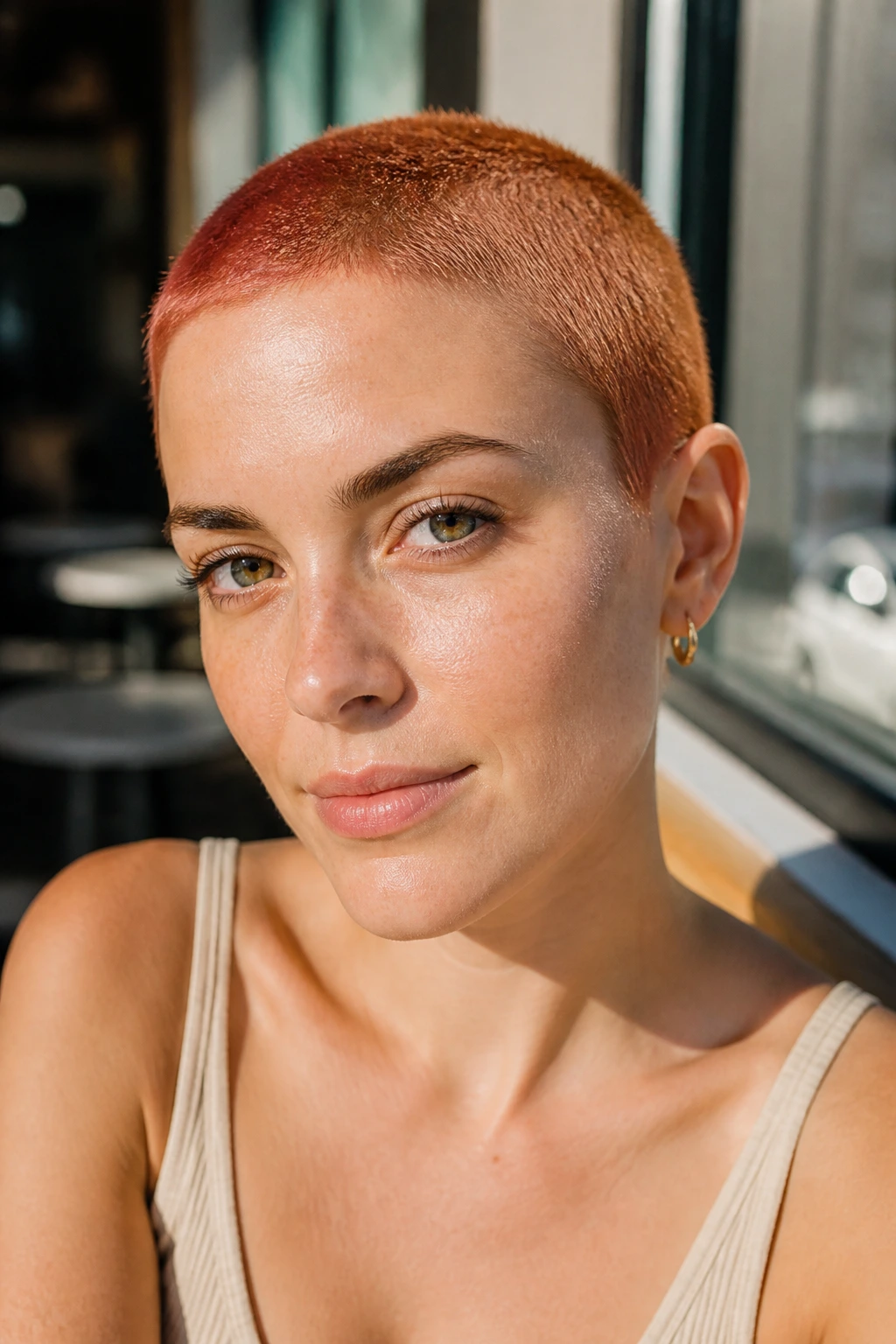
Copper turns a close crop into something warmer and friendlier without making it soft. The short length keeps the color from feeling bulky, so the tone gets to do its job without extra competition.
This one looks especially good when the shade sits somewhere between penny, apricot, and muted orange. It can flatter freckles, warm skin, and dark brows, but the real win is contrast: the copper catches light in a way that plain brown never will. If you want a buzz cut that feels alive, not flat, copper is a strong move.
7. Jet-Black Gloss Buzz
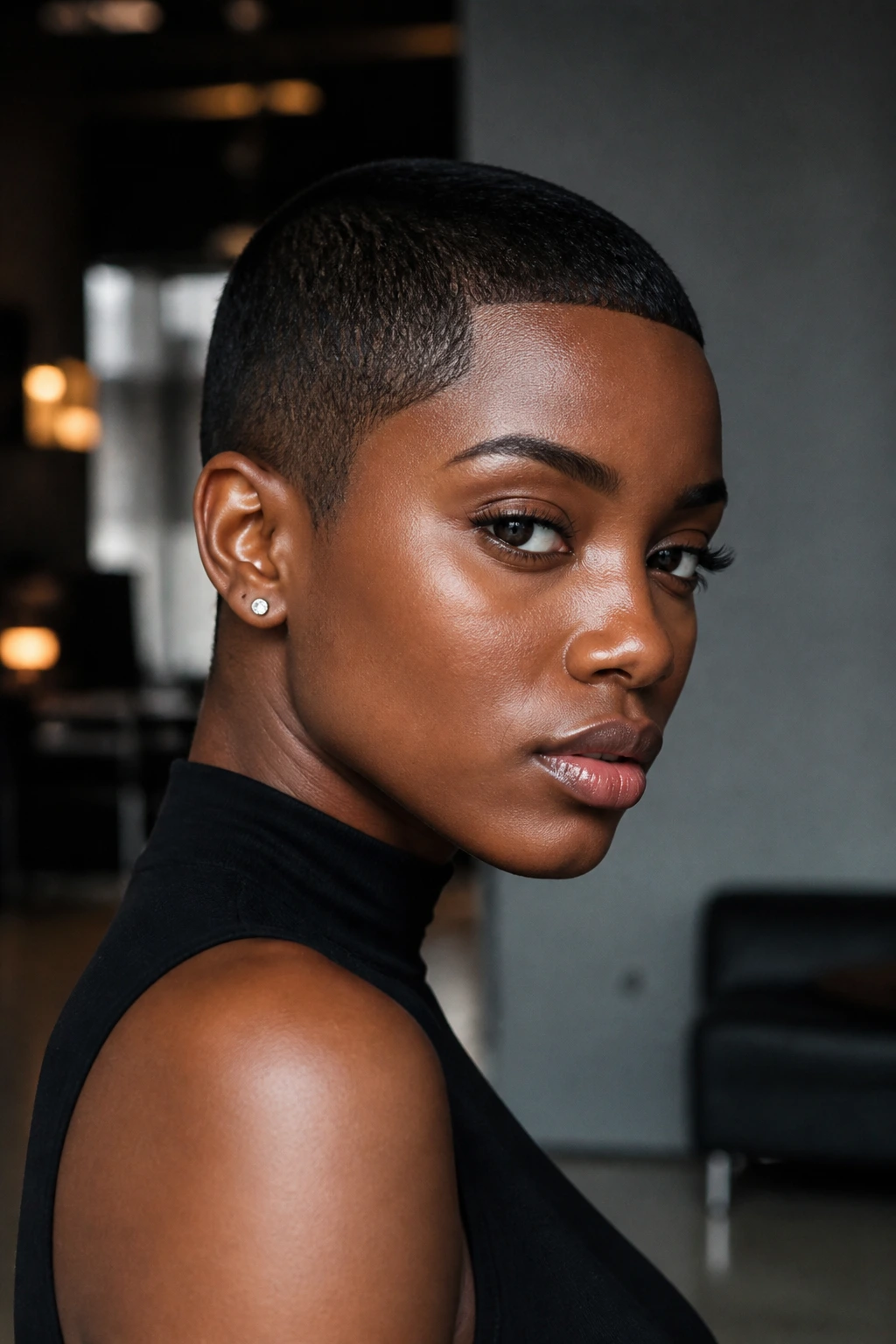
Jet black on a buzz cut is blunt in the best way. There’s no hiding the outline, which means the gloss and edge work have to carry the look. When they do, the result is clean, hard, and strangely elegant.
I like this version with a defined brow, a simple hoop earring, or a strong neckline on the shirt. It does not need a lot of extra decoration. In fact, too much styling usually muddies it.
8. Silver-Gray Buzz
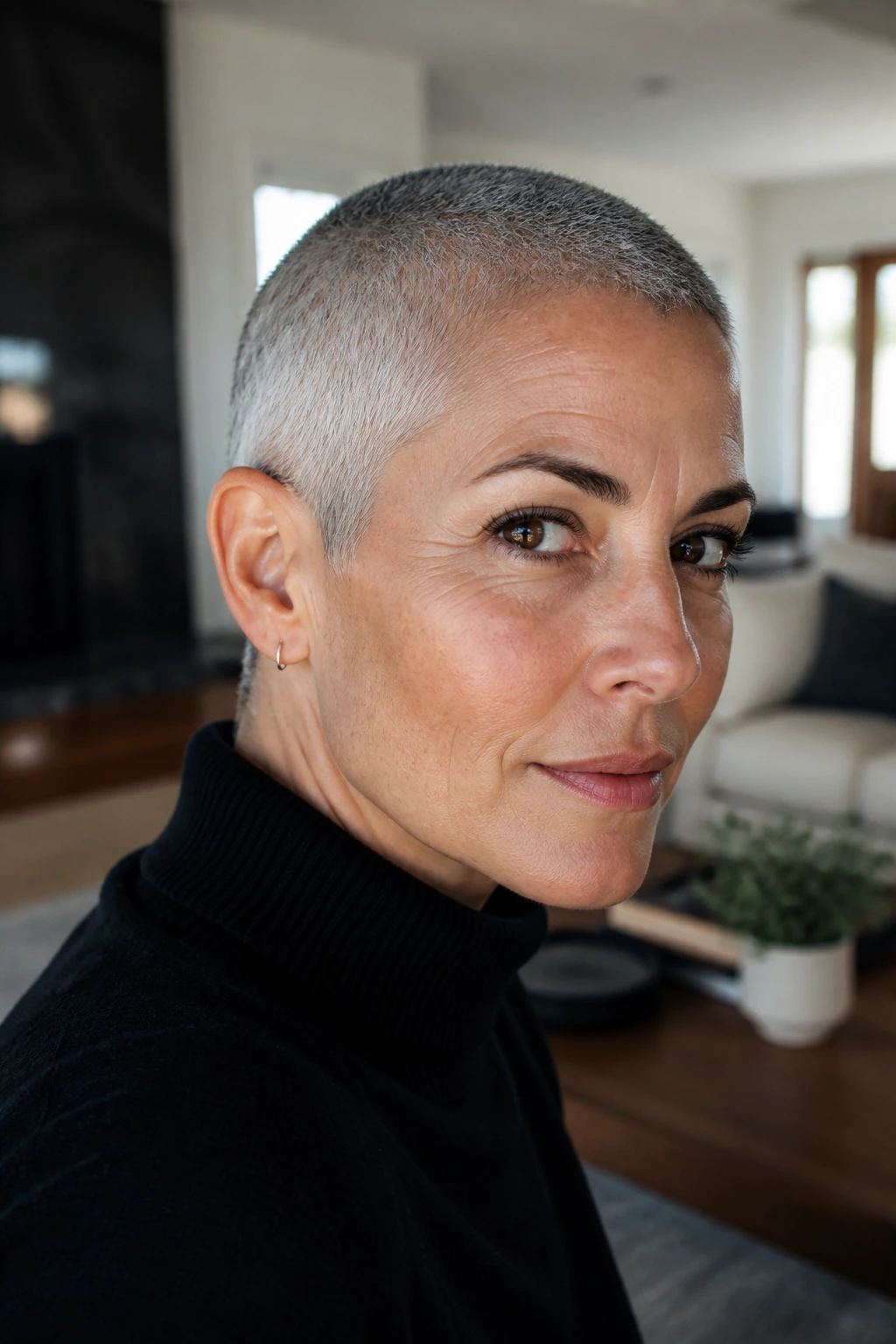
A silver-gray buzz can be natural or dyed, and either way, it reads crisp. The short length keeps gray from looking dull, which is the mistake a lot of people make when they try to cover it too aggressively.
If your natural gray comes in salt-and-pepper, lean into it and keep the edges tidy. If you’re coloring it silver, tone it with care so it doesn’t go flat and muddy. A cool metallic finish looks best when the hairline is clean and the scalp is healthy.
9. Shadow-Root Blonde Buzz
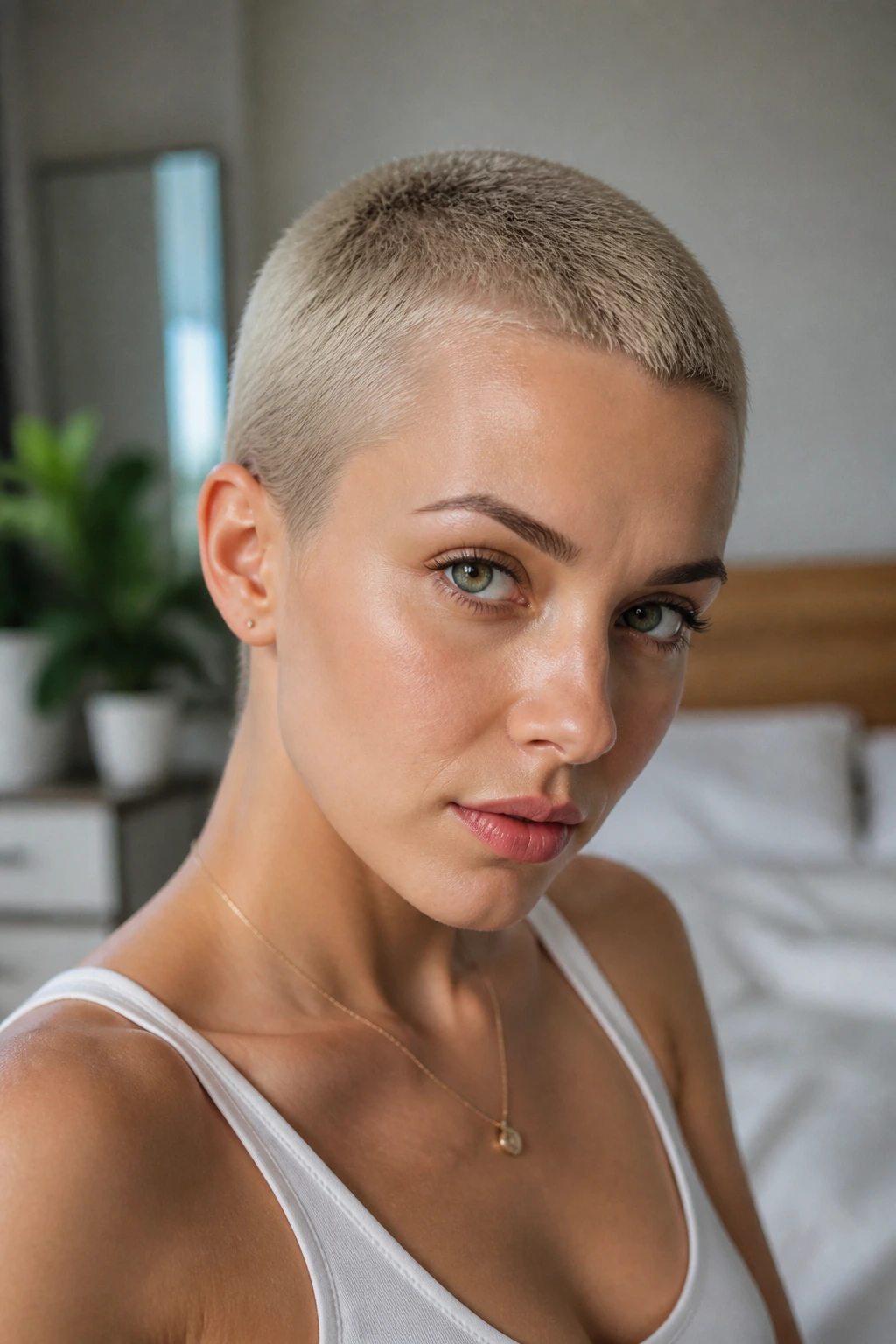
A shadow-root blonde buzz is for people who want light hair without signing up for constant touch-ups. The dark root gives the cut some depth, and the blond ends keep the whole thing bright.
This style looks especially good when the root is deliberate rather than accidental. Let the darker band stay soft and even, and use a neutral blonde on top instead of something that leans too yellow. The effect is polished, and the maintenance is more forgiving than platinum.
10. Curly Texture Buzz
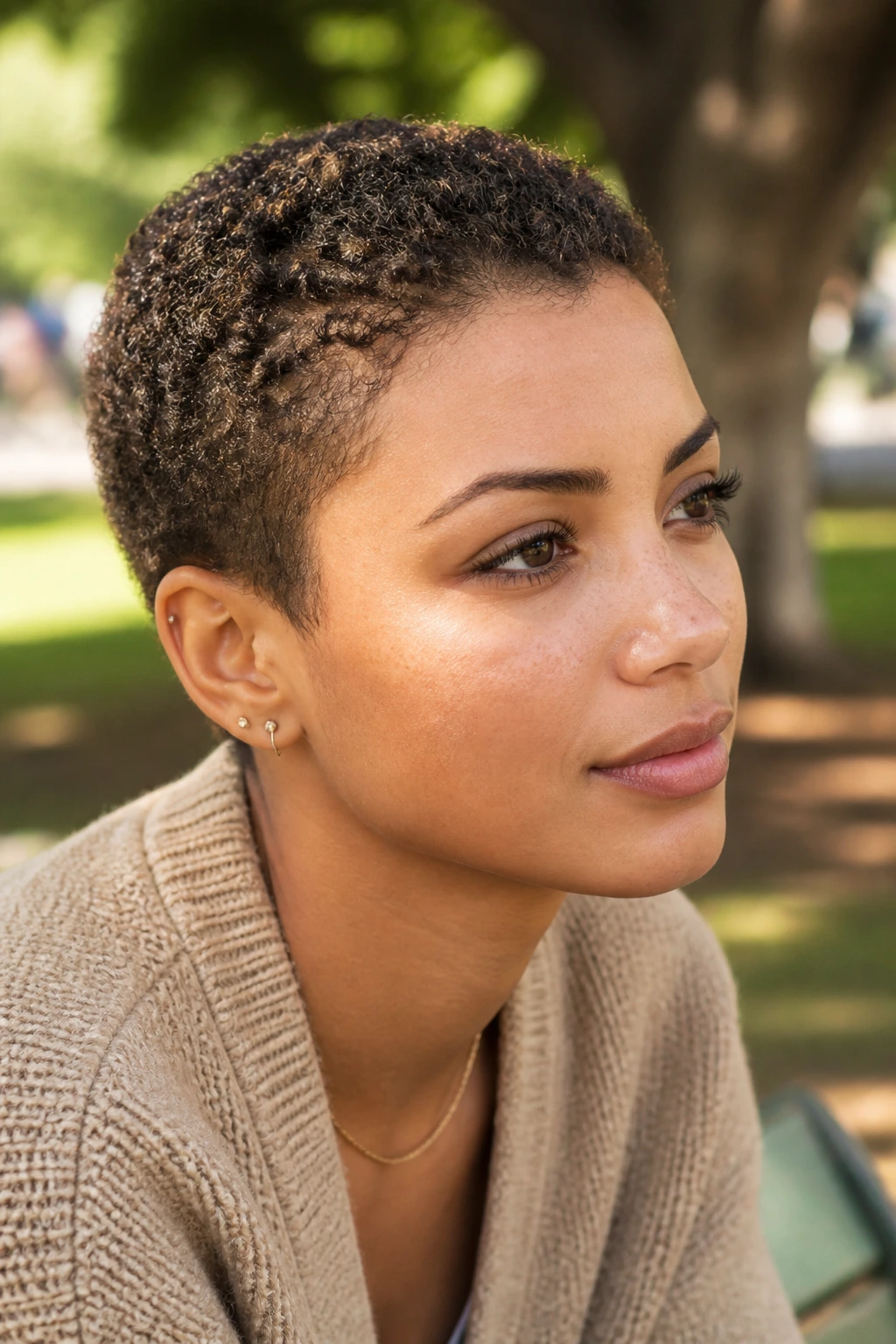
Curly hair at buzz length has a grain to it that straight hair never gets. It feels soft, but visually it has more movement, which is why a #2 or #3 often works better than a skin-close clip for curls.
What Makes It Work
The goal is to let the curl pattern show without shaving it so low that the texture turns patchy. A tiny bit of length keeps the shape fuller and helps the crown sit better.
- Keep a little length on top: Curls usually read better when there’s enough hair for the pattern to show.
- Cut dry if possible: Dry curls show their true shape; wet curls can lie and make the cut shorter than it is.
- Moisture matters: A light leave-in or scalp-friendly cream keeps the surface from looking dry and fuzzy.
11. Coily Ultra-Close Buzz
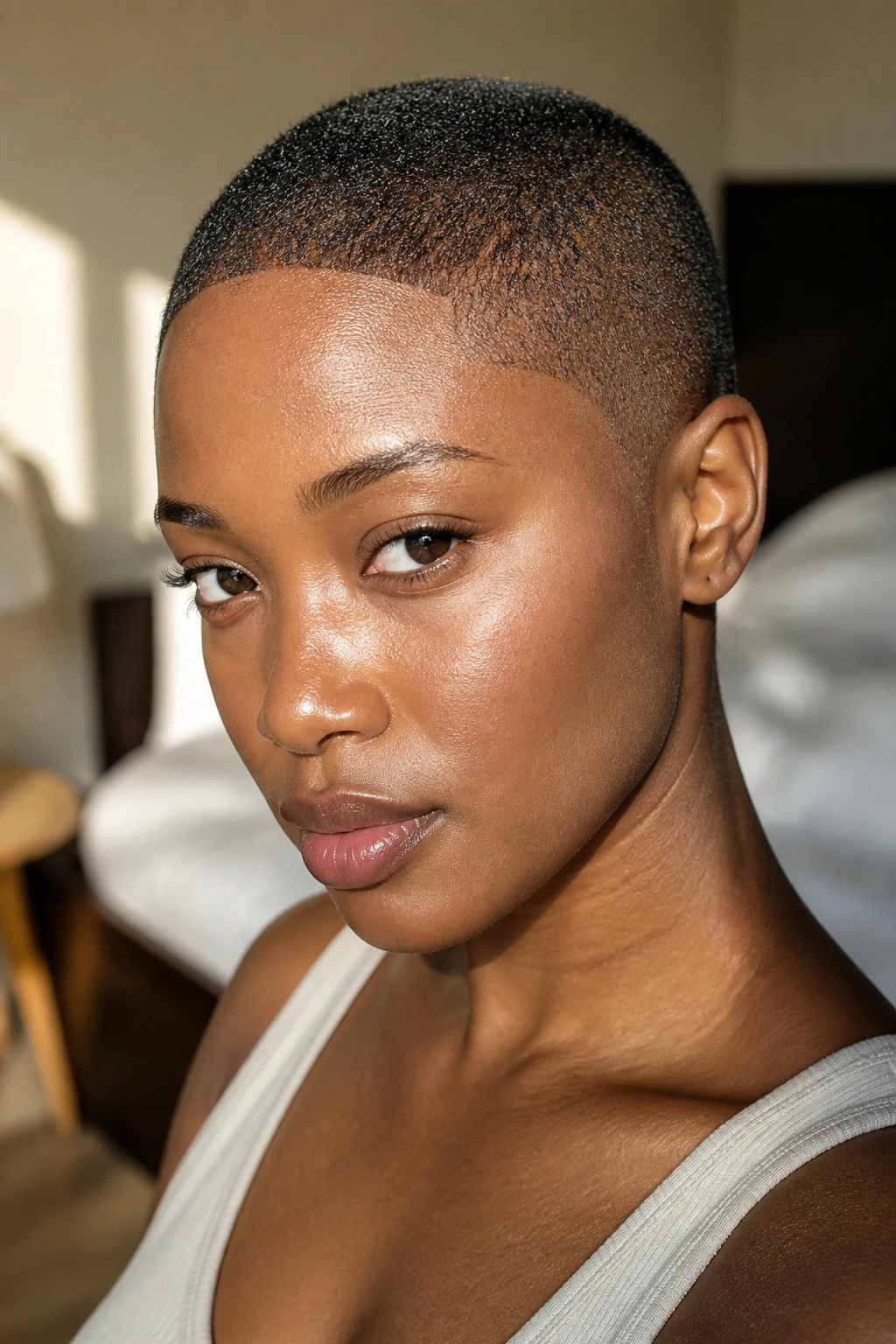
A coily buzz cut can look stunning when it’s short enough to feel intentional but not so short that the scalp feels overexposed. I’d usually stay a touch longer than people expect—something in the #1 to #2 range—unless the goal is near-shaved.
The finish matters here. A clean line-up around the hairline and a well-moisturized scalp keep the cut from reading as raw. Coily hair has its own texture language, and the best buzz cuts respect that instead of sanding it away.
12. Wavy Crown Buzz
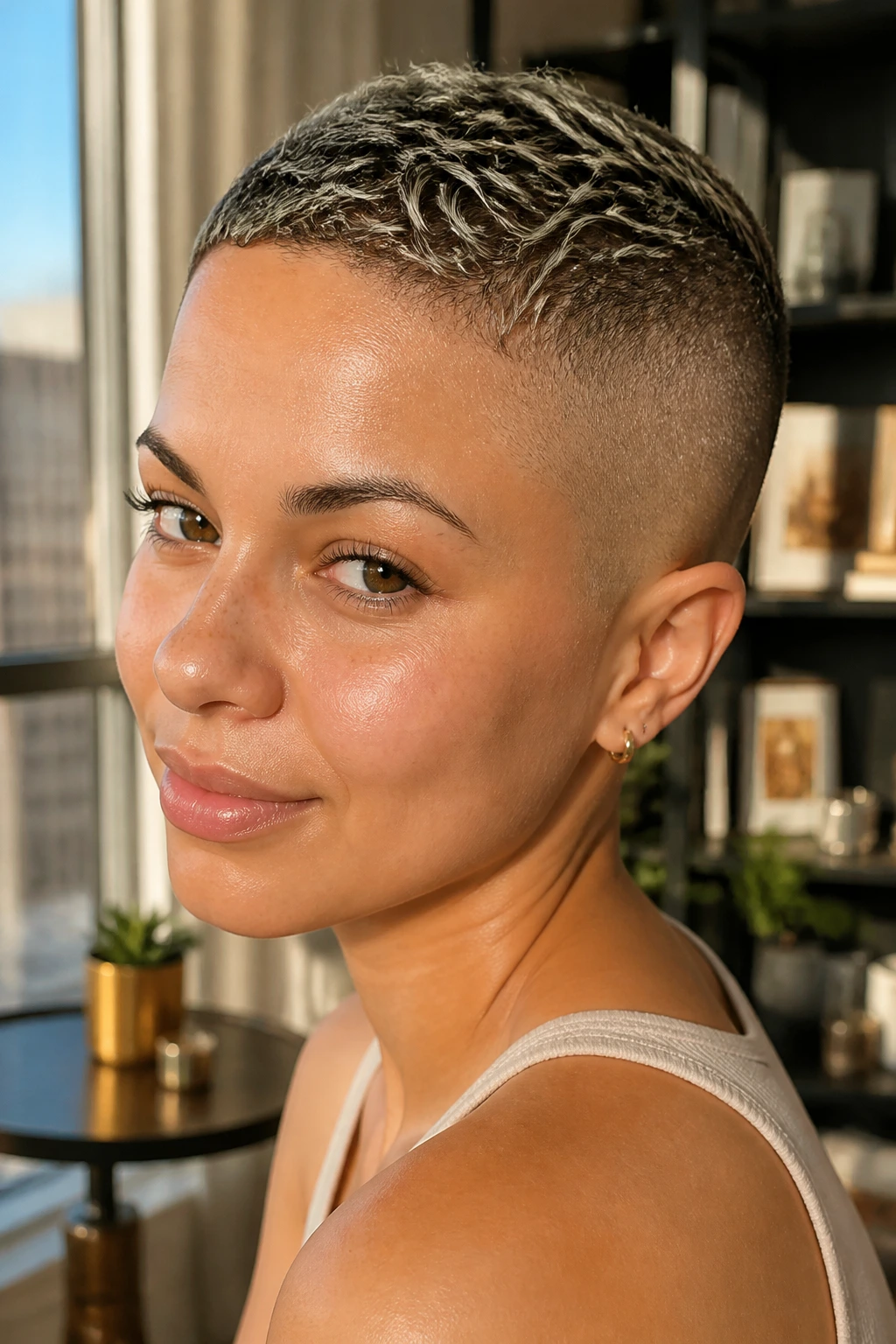
A wavy crown buzz leaves enough length on top to let the wave pattern breathe while the sides stay tighter. It’s one of the best choices if your hair naturally bends instead of lying flat.
What I like here is the balance. You get that short, open feeling around the ears and neck, but the crown still has a little movement. It keeps the cut from looking like a single block.
13. Hard-Part Buzz
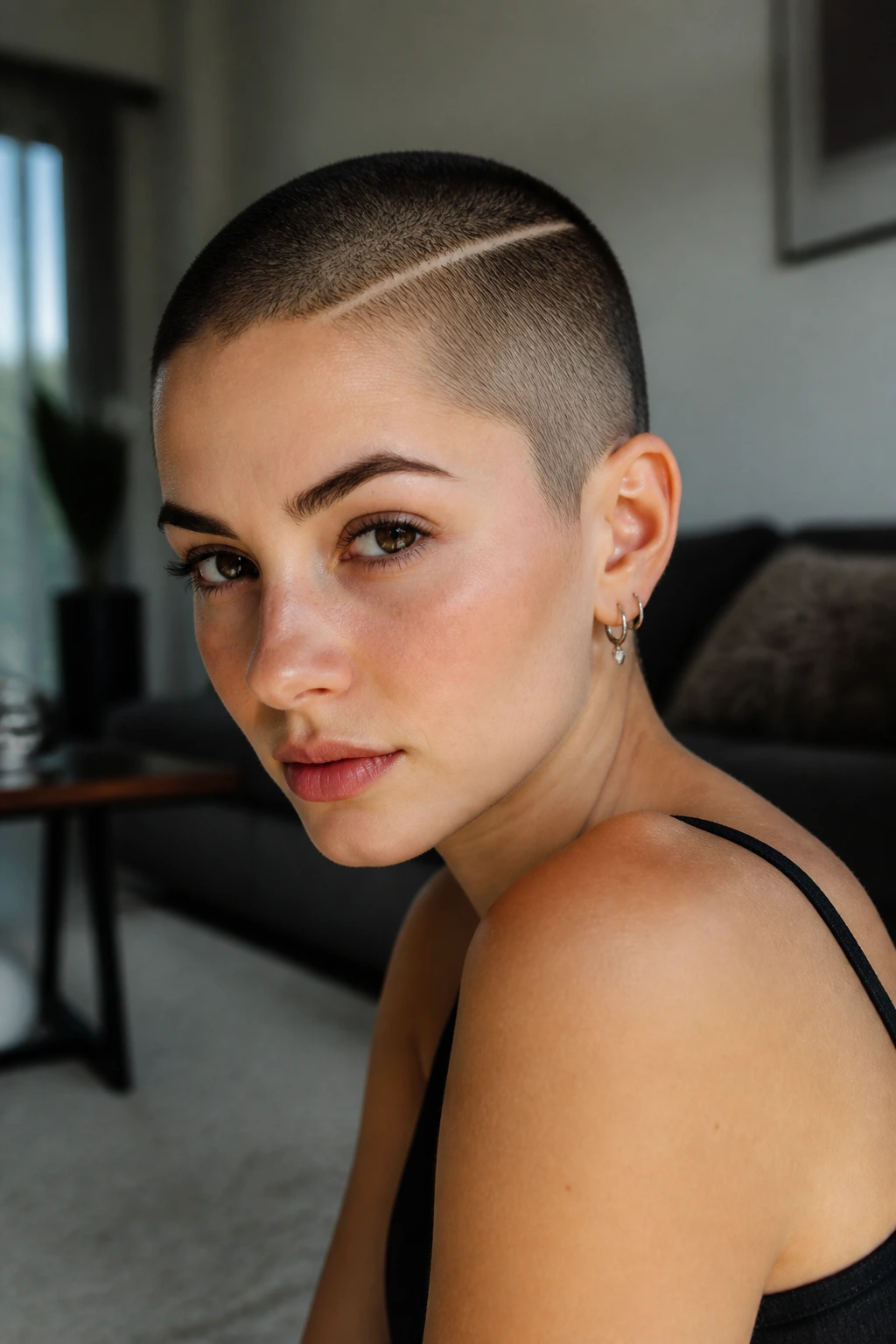
A hard-part buzz uses a clipped or shaved part line to give structure to a very short cut. It’s a small detail, but on short hair, small details do almost all the work.
This is a smart pick if you want the haircut to feel tailored. The part line has to be precise, though. If it wanders or gets too wide, the whole thing starts looking accidental. Keep the line narrow and crisp, and let the rest stay clean.
14. Side-Line Art Buzz
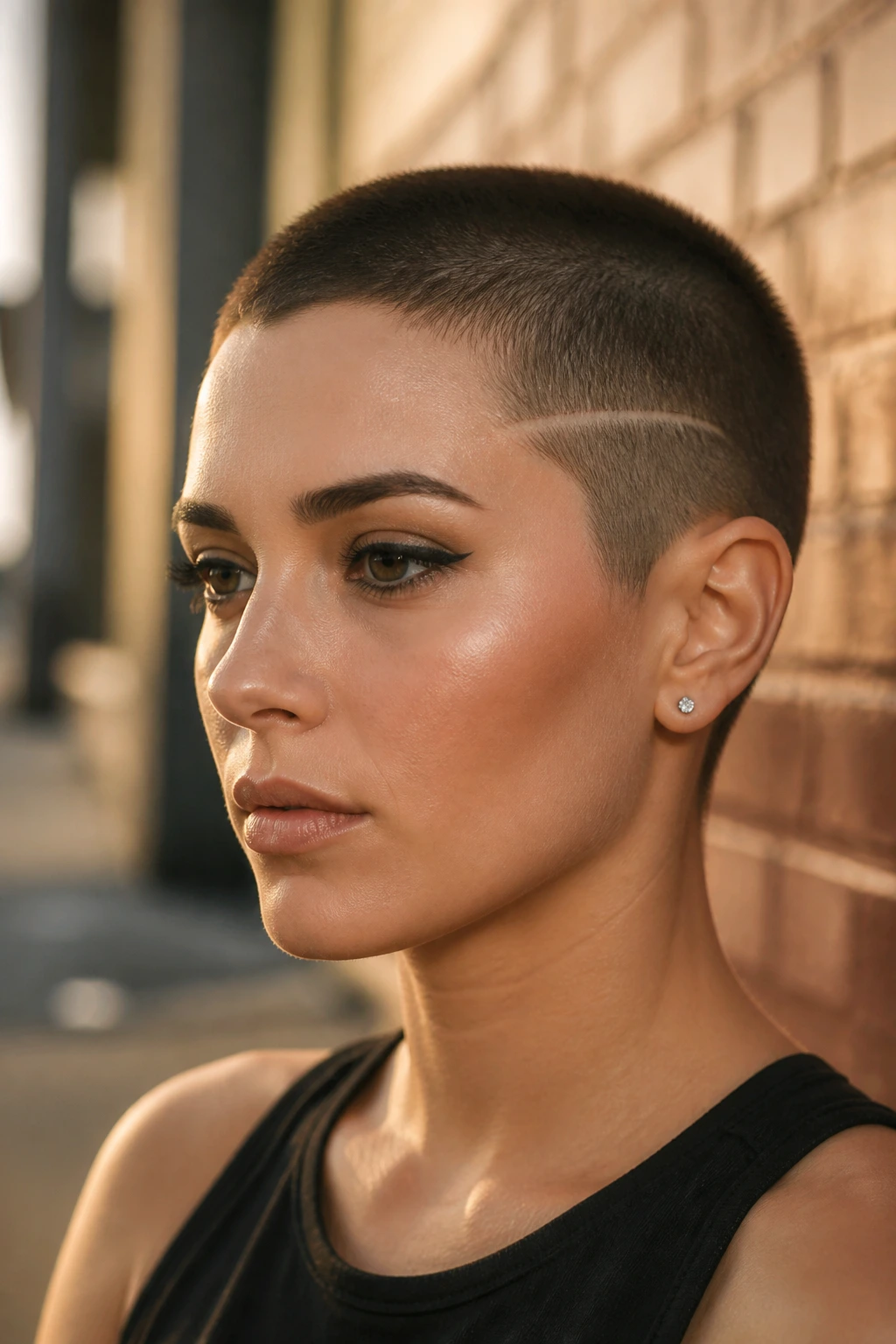
One thin shaved line near the temple can do more for a buzz cut than a whole paragraph of styling advice. It adds just enough edge to make the haircut feel personal without turning it into a design competition.
I prefer a single line or one clean pair of parallel lines over anything too busy. Short hair gets crowded fast. Leave room for the shape itself to breathe.
15. Lightning Bolt Temple Buzz
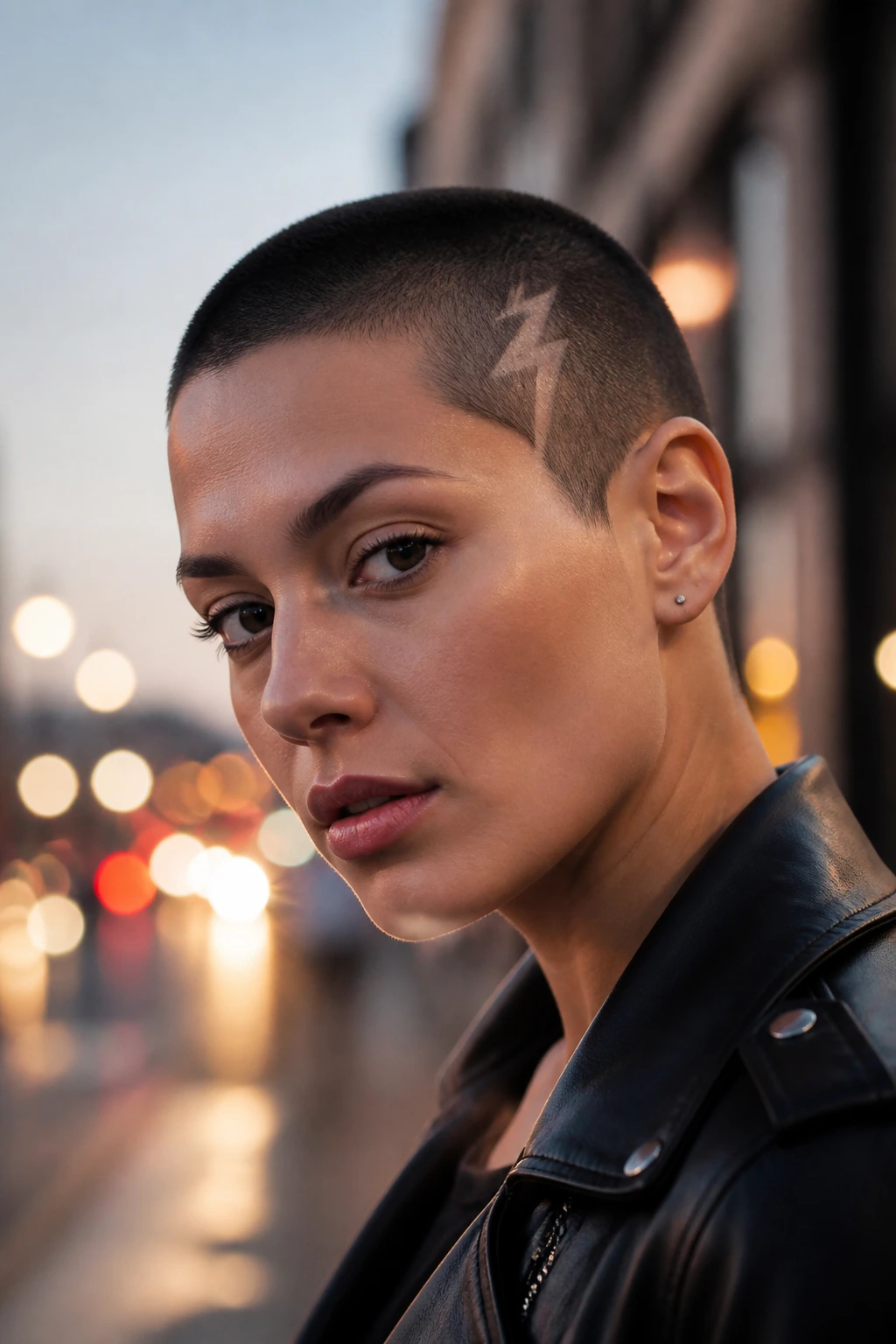
A lightning bolt at the temple is loud, but on a buzz cut it stays wearable because the canvas is so small. The graphic element becomes the focal point, which means the rest of the haircut can stay simple and honest.
This works best when the bolt is narrow and cleanly shaved. Thick, jagged versions can start to look cartoonish if the rest of the head isn’t equally sharp. Keep the top even, keep the neckline tidy, and let the bolt be the only shout.
16. Asymmetric Buzz
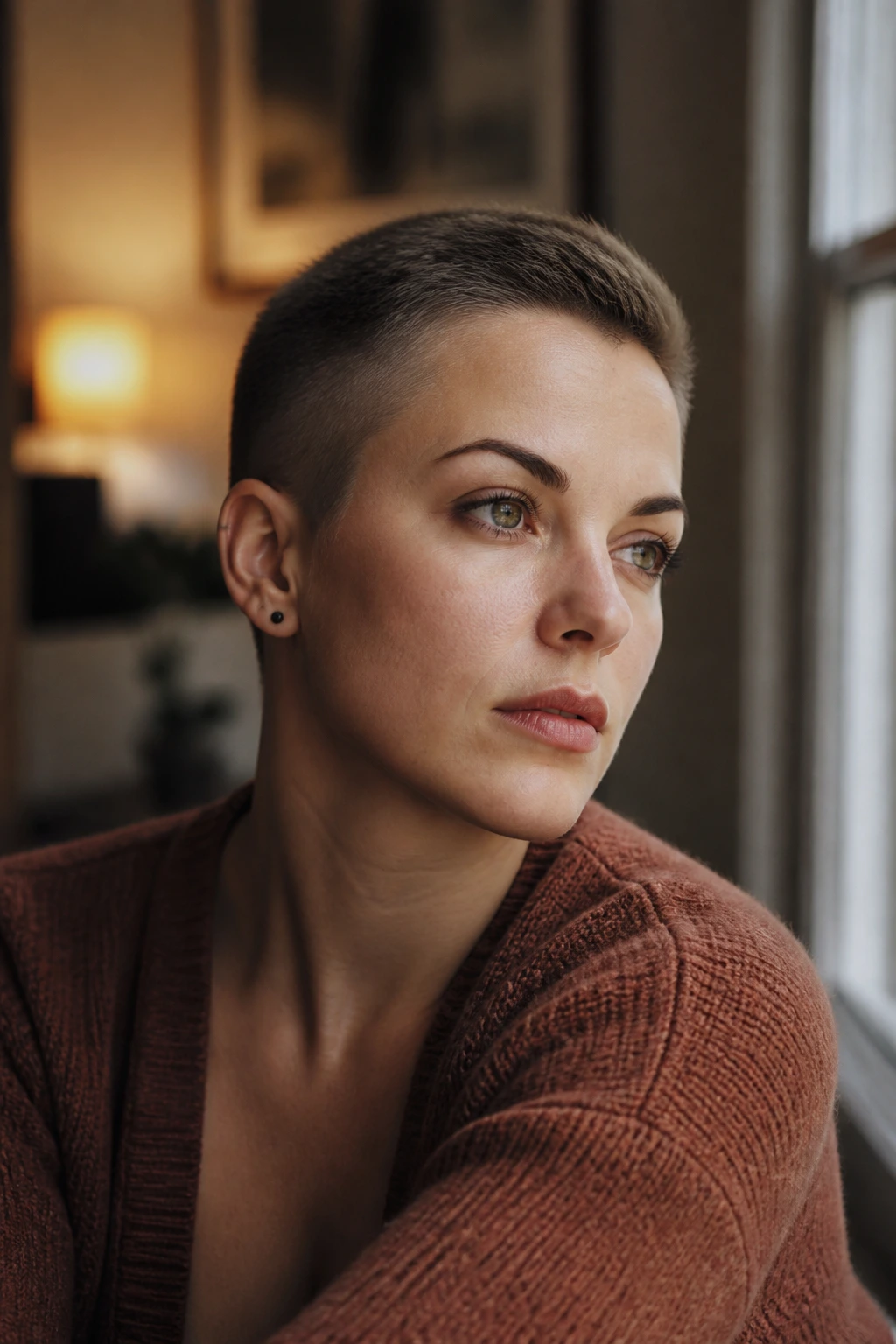
An asymmetric buzz is one side longer than the other, and that tiny imbalance can make the whole cut feel more modern. It’s a nice option if you want something that doesn’t read as standard-issue.
The asymmetry doesn’t need to be dramatic. Even one guard number difference is enough to shift the silhouette. On rounder faces, it can add length; on longer faces, it can break up the vertical line. Small move. Big effect.
17. Micro-Fringe Buzz
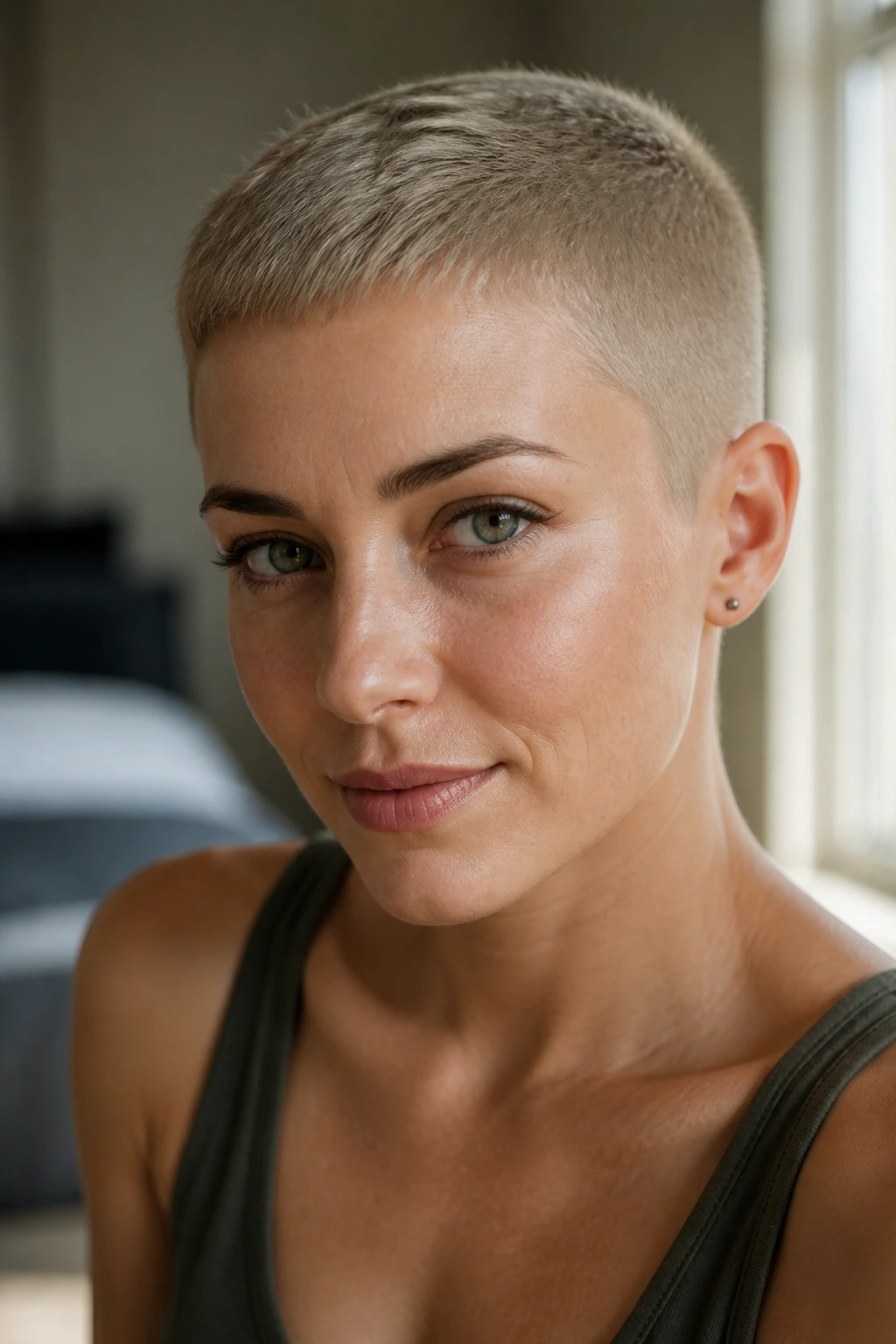
A micro-fringe buzz leaves the front a little longer so it brushes forward instead of sitting flat. It softens the forehead and gives the cut a faint bang-like shape without leaving enough length to style.
This one is useful if you want a buzz cut that feels less exposed around the face. It’s also kind to people with strong hairlines or a widow’s peak, because the front can blur those corners instead of announcing them.
18. Longer Top, Short Sides Buzz
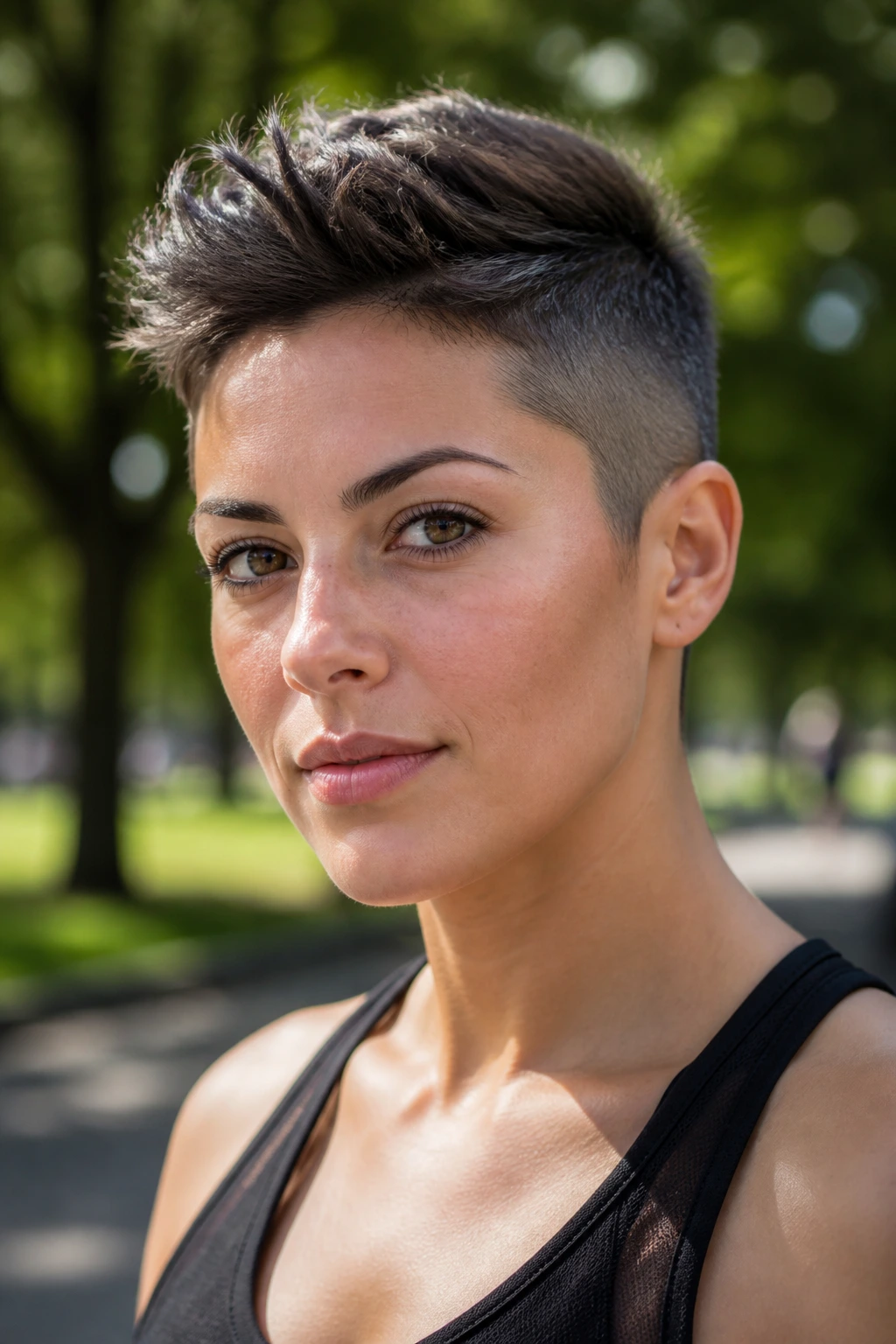
This version sits right on the border between buzz cut and mini crop. The top stays a notch longer, the sides get tightened down, and the difference creates a sportier shape without going full mohawk.
It’s a good choice if you want the cut to move a little in the wind instead of lying like velvet. On straight hair, the contrast is obvious. On curly or coily hair, the top length matters even more because the texture lifts the shape naturally.
19. Mini Faux Hawk Buzz
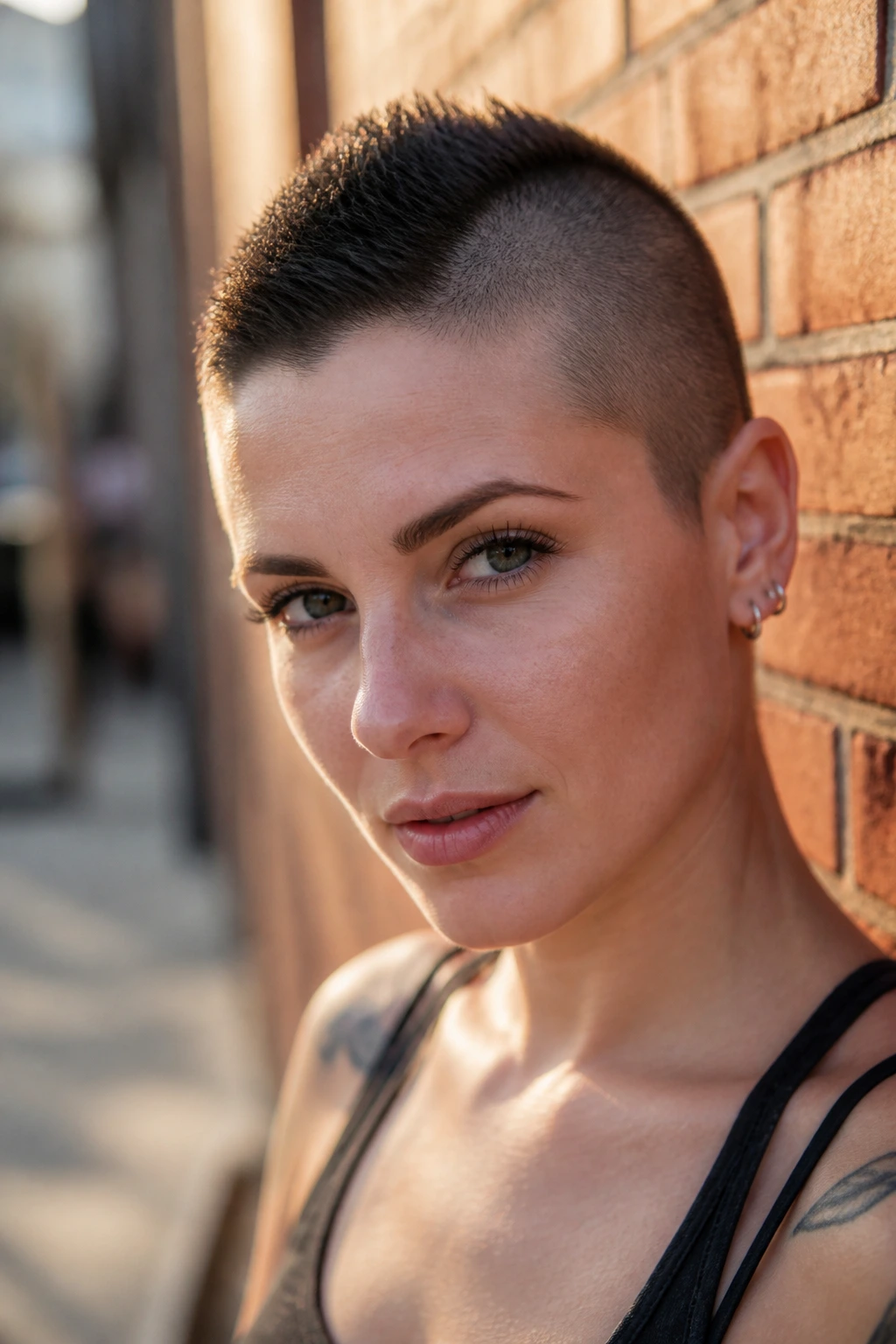
A mini faux hawk buzz keeps a slim center strip slightly longer than the sides, which gives you a bit of lift without the commitment of a dramatic hawk. It’s sharp, but not fussy.
The best versions are the ones that keep the ridge narrow and let the sides fall clean. If the center strip gets too wide, the cut loses its point and starts looking busy. Add matte paste only if the top is long enough to need it; otherwise the haircut should carry itself.
20. Rounded Hairline Buzz
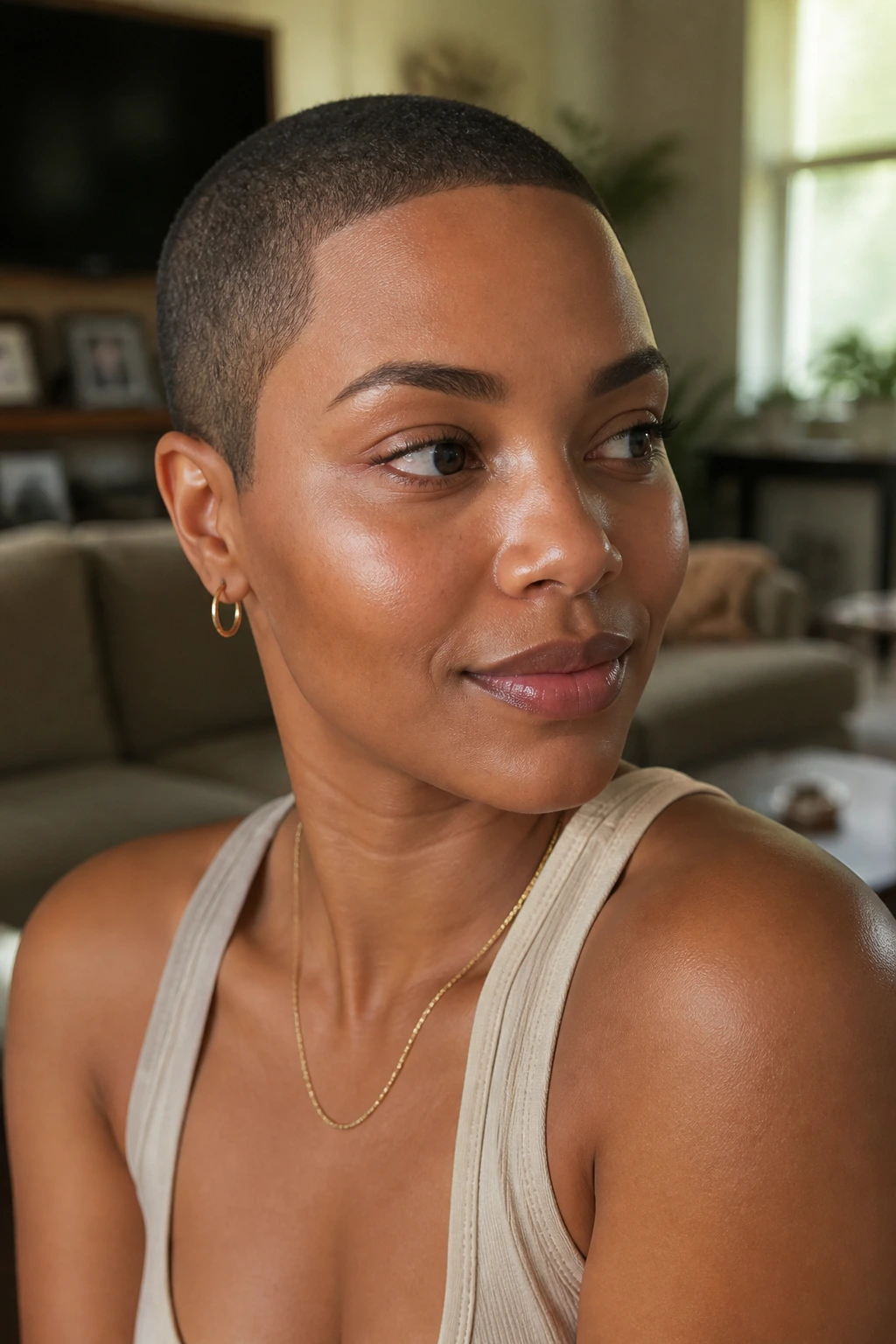
A rounded hairline buzz softens the corners at the front and keeps the outline from feeling boxy. It’s one of my favorite choices for anyone who wants the cut to look deliberate without looking strict.
The difference is subtle, but it changes the whole face frame. Sharp corners can read harder than people expect, especially on short hair. Rounded edges feel friendlier and usually age better as the cut grows out.
21. Boxy Graphic Buzz
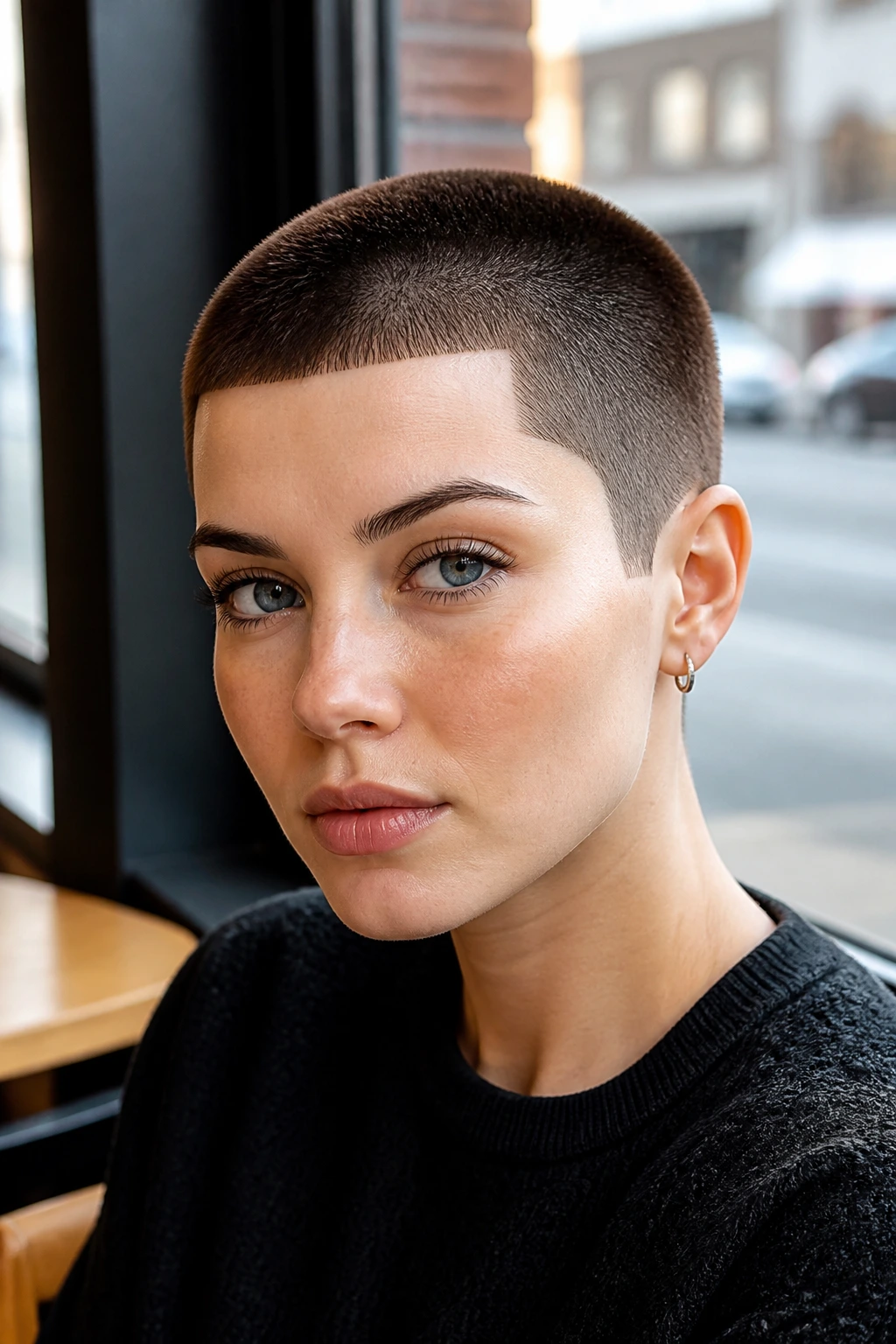
The boxy graphic buzz is the opposite of rounded. The edges are squared off, the shape is clean, and the whole look feels architectural.
This style shines when the hairline is strong and the jawline can handle the extra geometry. It’s not the most forgiving choice, but that’s the point. When the outline is crisp, everything else looks more intentional too.
22. V-Nape Buzz
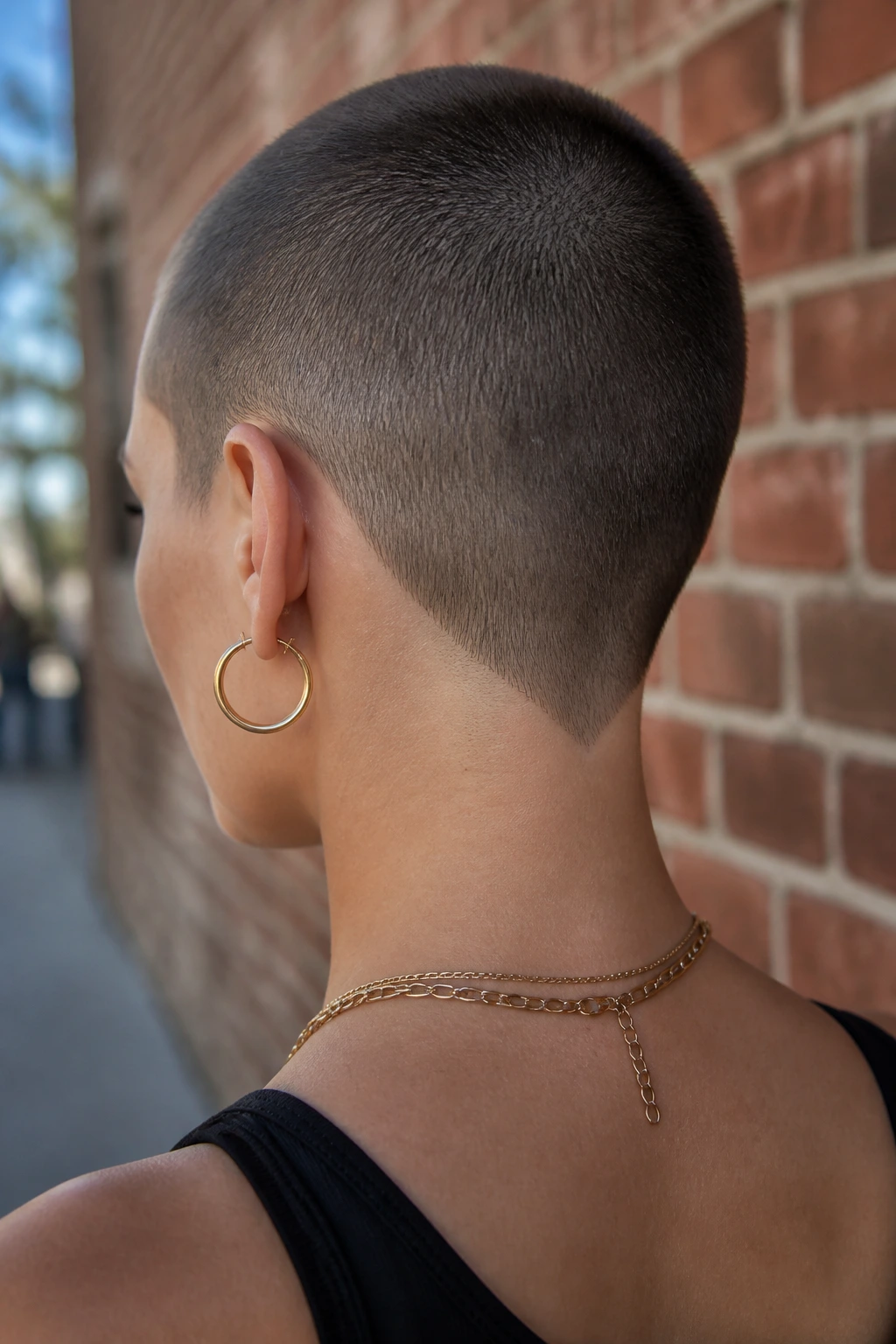
A V-nape buzz gives the back of the head a pointed finish instead of a flat or rounded one. It’s a small detail that adds a little surprise when you turn around.
This shape works best when the rest of the cut stays relatively simple. The V should be neat, not exaggerated. Too sharp and it starts feeling costume-y; just enough and it looks tailored.
23. Low Taper Buzz
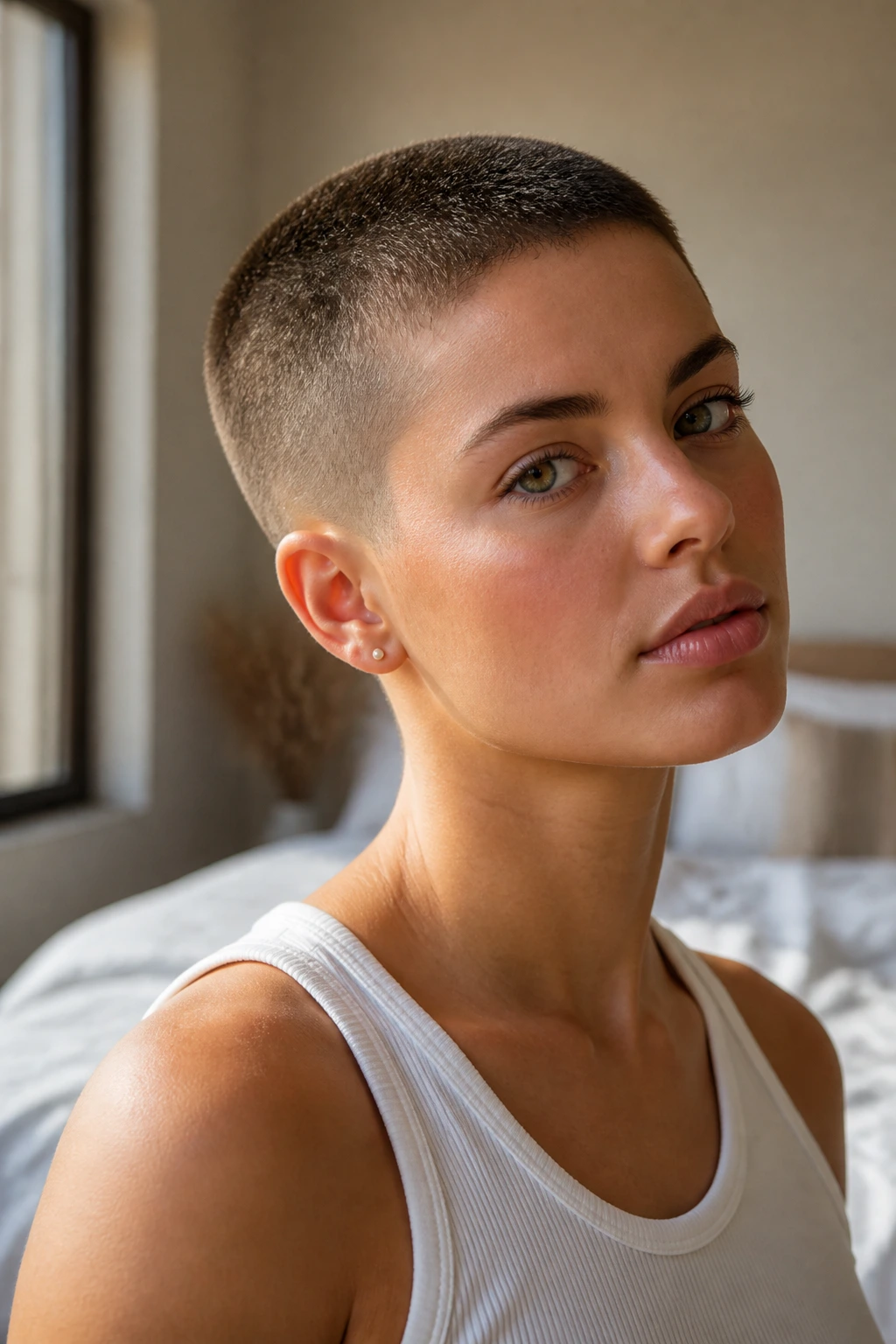
A low taper buzz is quietly good. The sides and neckline blend gently, which keeps the haircut neat without drawing attention to itself.
I reach for this when someone wants to grow the cut out later or doesn’t want to schedule constant cleanup. It softens the edges around the ears and nape, which makes the whole thing easier to wear in everyday clothes, not just in a styling photo.
24. High-and-Tight Buzz
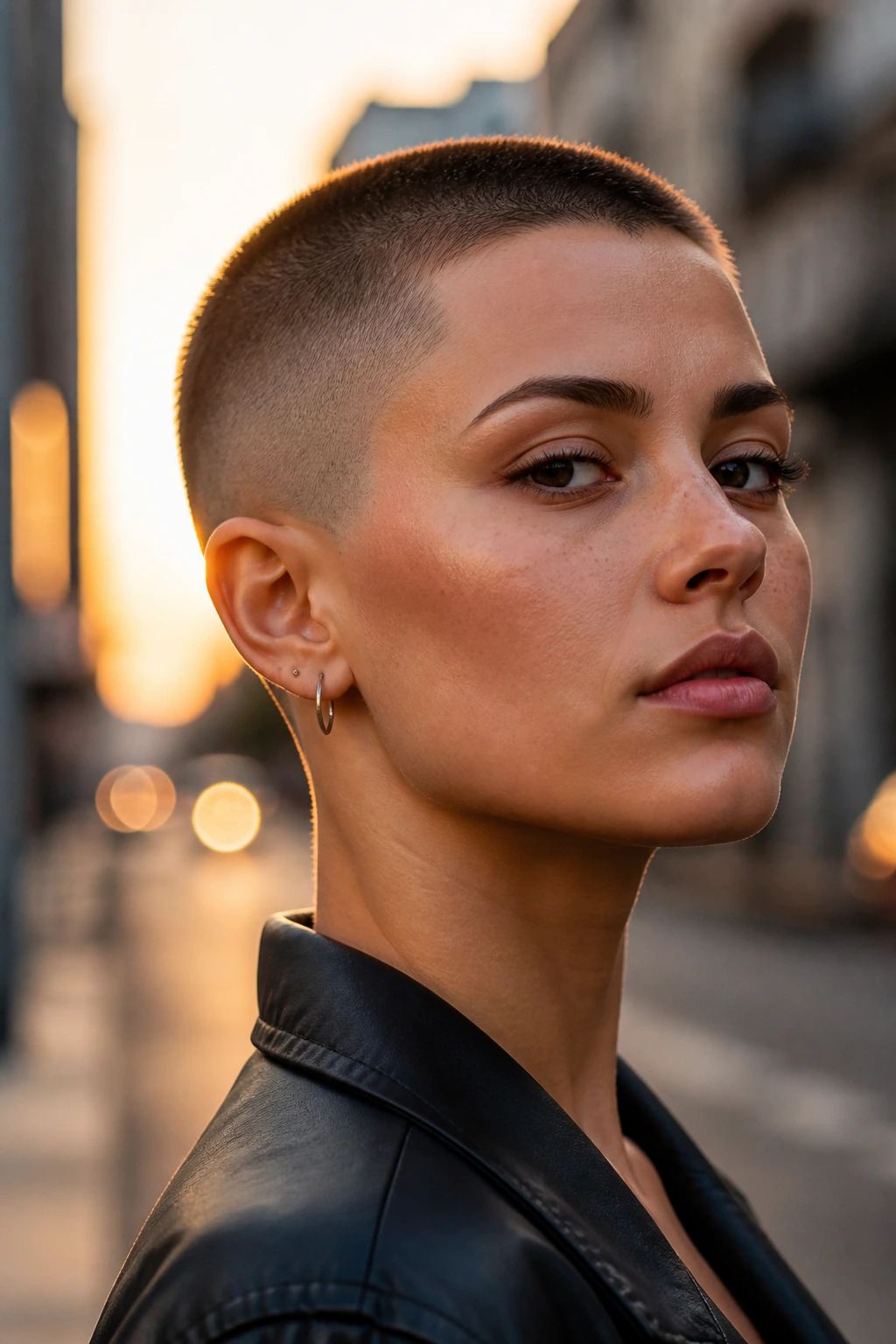
The high-and-tight takes the sides very short and leaves just enough on top to keep the cut from collapsing into a shave. It has a clean, compact shape and a lot of presence.
If you like severe lines, this one delivers. If you prefer softness, skip it. There’s not much middle ground here, and honestly, that’s part of the appeal.
25. Disconnected Buzz
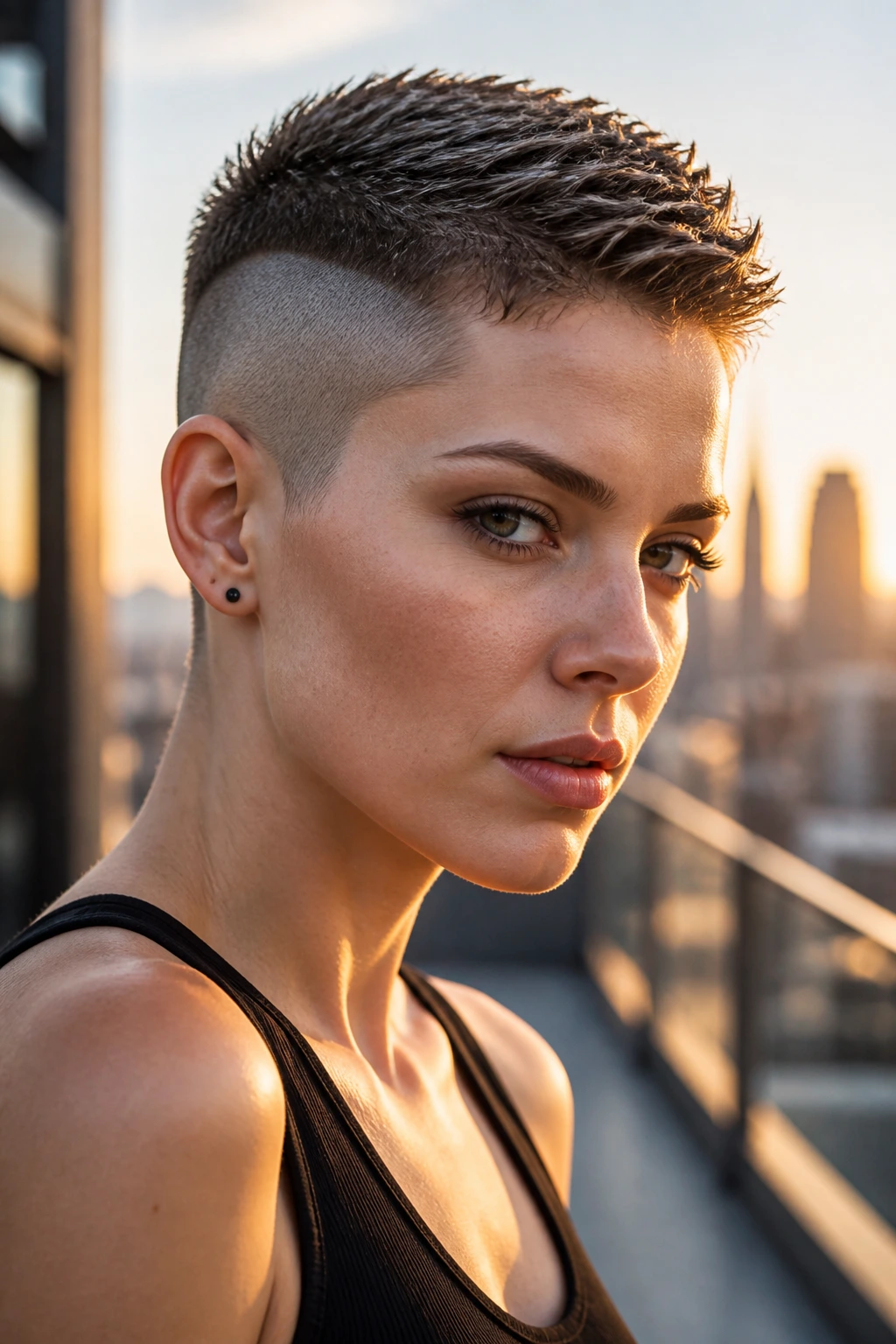
A disconnected buzz leaves a clear jump between the top and the sides instead of blending them. That abrupt shift can make the haircut feel more graphic than a fade ever will.
The cut needs confidence and clean execution. If the difference between sections is too vague, the style loses its point. Keep the top section neat, keep the sides short, and let the separation do the talking.
26. Pastel Pink Buzz
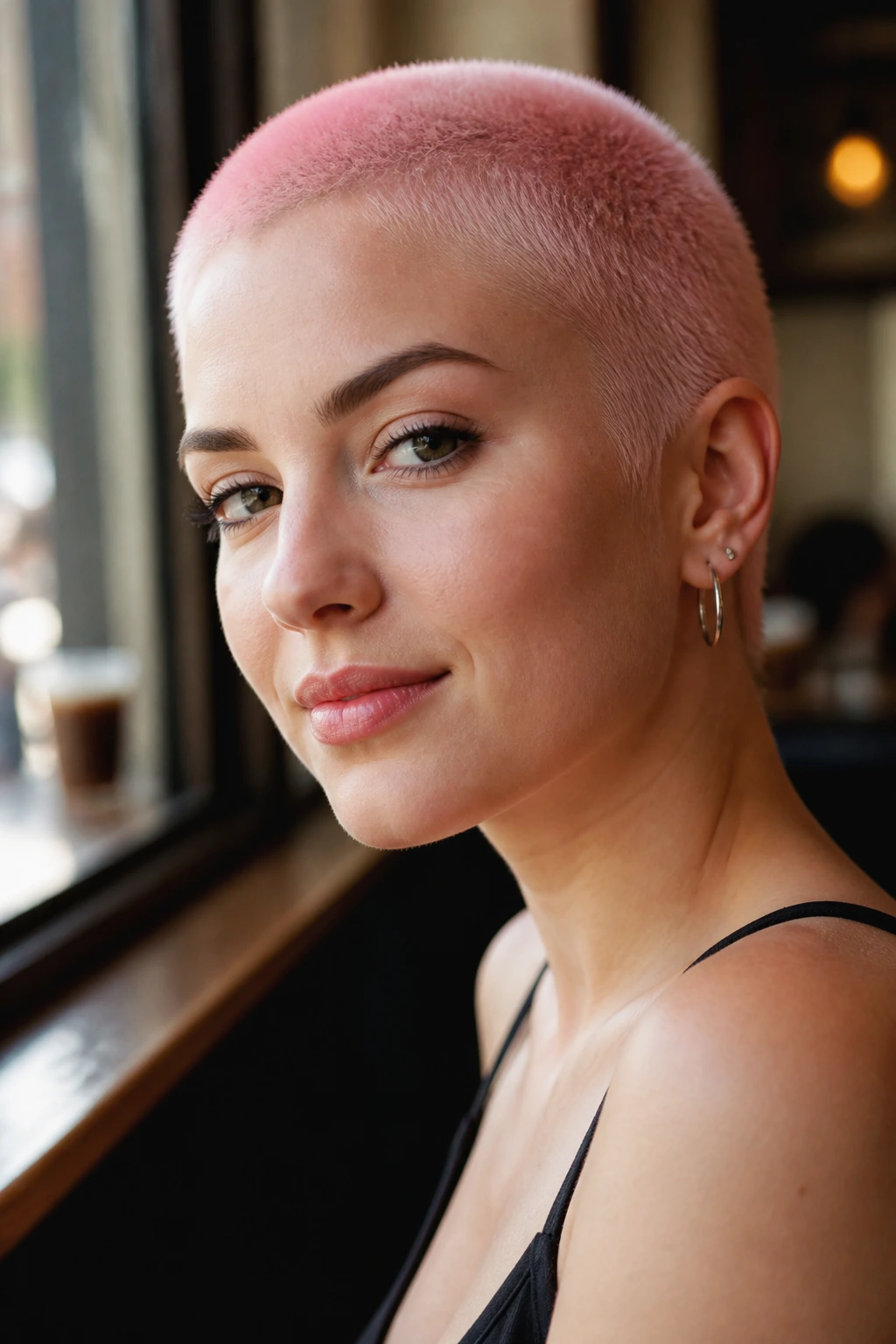
Pastel pink on a buzz cut has a sweetness that longer hair usually buries. The short length keeps it from becoming sugary or overworked, so the color reads modern instead of juvenile.
This version needs a pale base first, which means the hair has to be lifted evenly before the pink goes on. If you like soft color but hate long dye appointments, short hair is a gift. It takes pigment fast, and it grows out with less drama.
27. Cobalt Blue Buzz
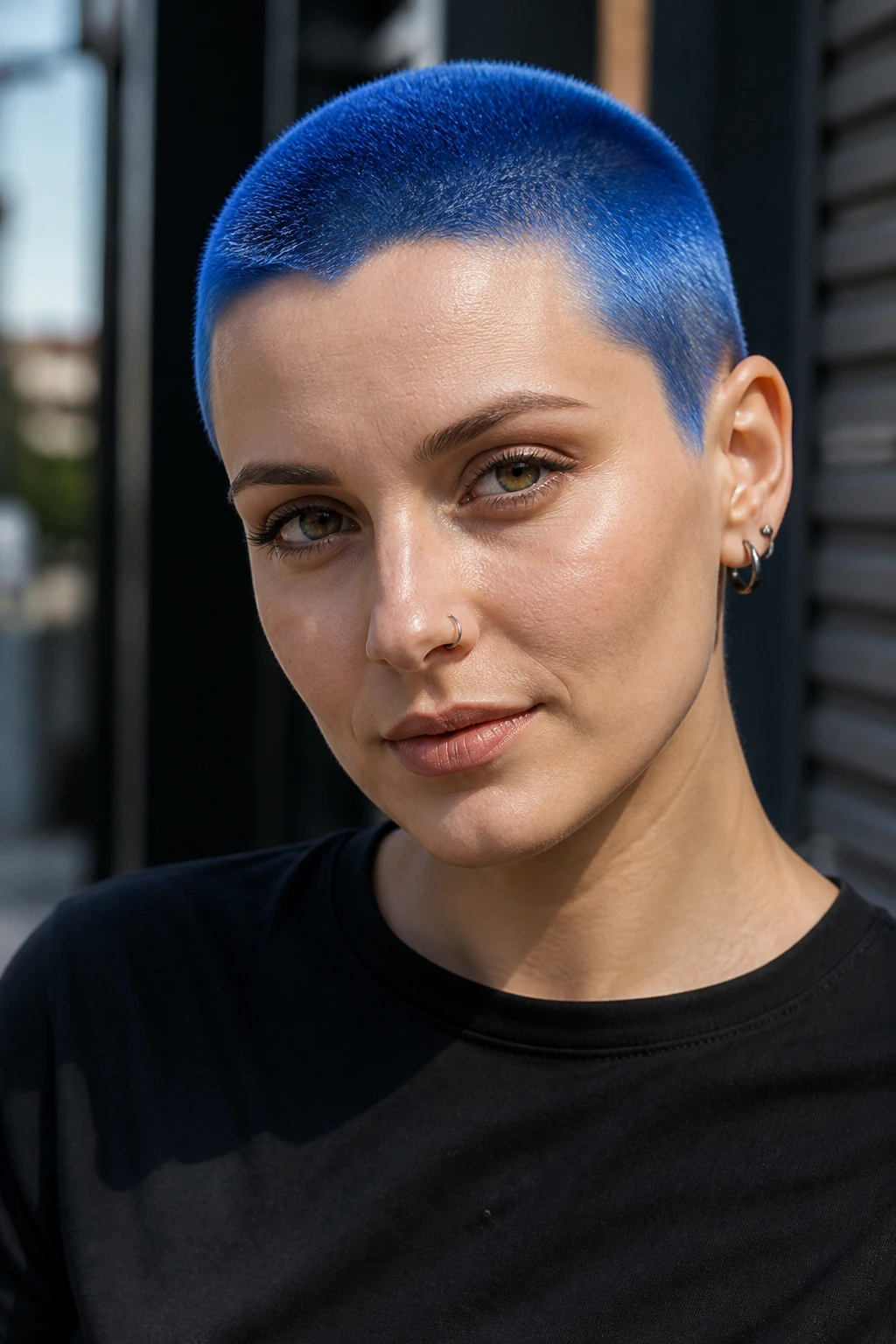
Cobalt blue is one of those colors that looks more expensive on a short cut than it does on a long one. The buzz keeps the shade from getting lost in layers, so the blue stays saturated and clean.
I like this when the rest of the look stays simple—plain black clothes, silver jewelry, maybe a gloss lip. The haircut does the loud work. You don’t need much else.
28. Rose-Gold Buzz
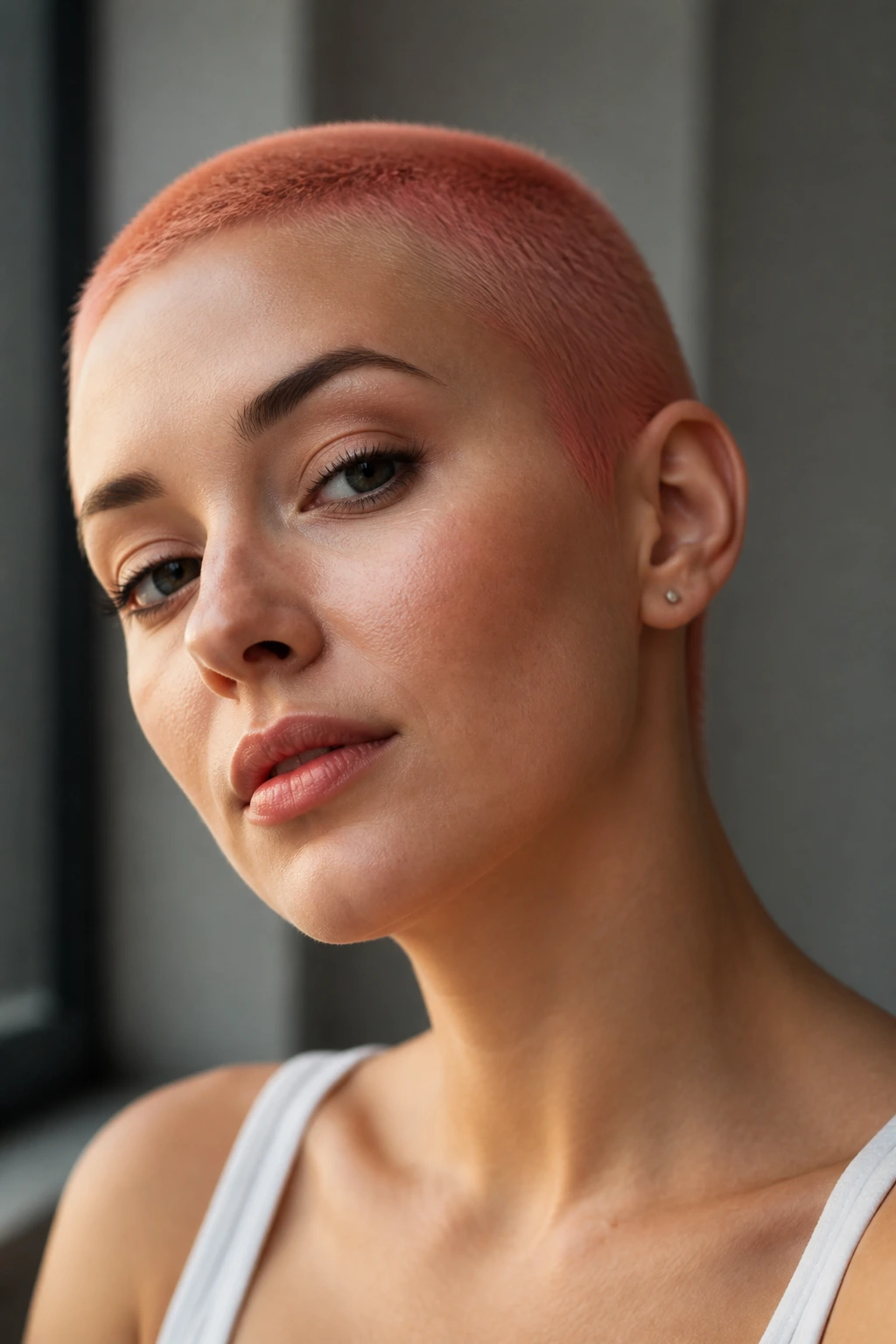
Rose-gold on a buzz cut lands somewhere between warm blonde and soft copper, with just enough metallic sheen to feel polished. It flatters skin in a way that plain pale blonde sometimes doesn’t.
The trick is keeping the shade warm but not orange. A soft pink-beige toner can do that nicely. Because the cut is short, the color reads more like a surface finish than a full transformation, which is a good thing here.
29. Two-Tone Split Buzz
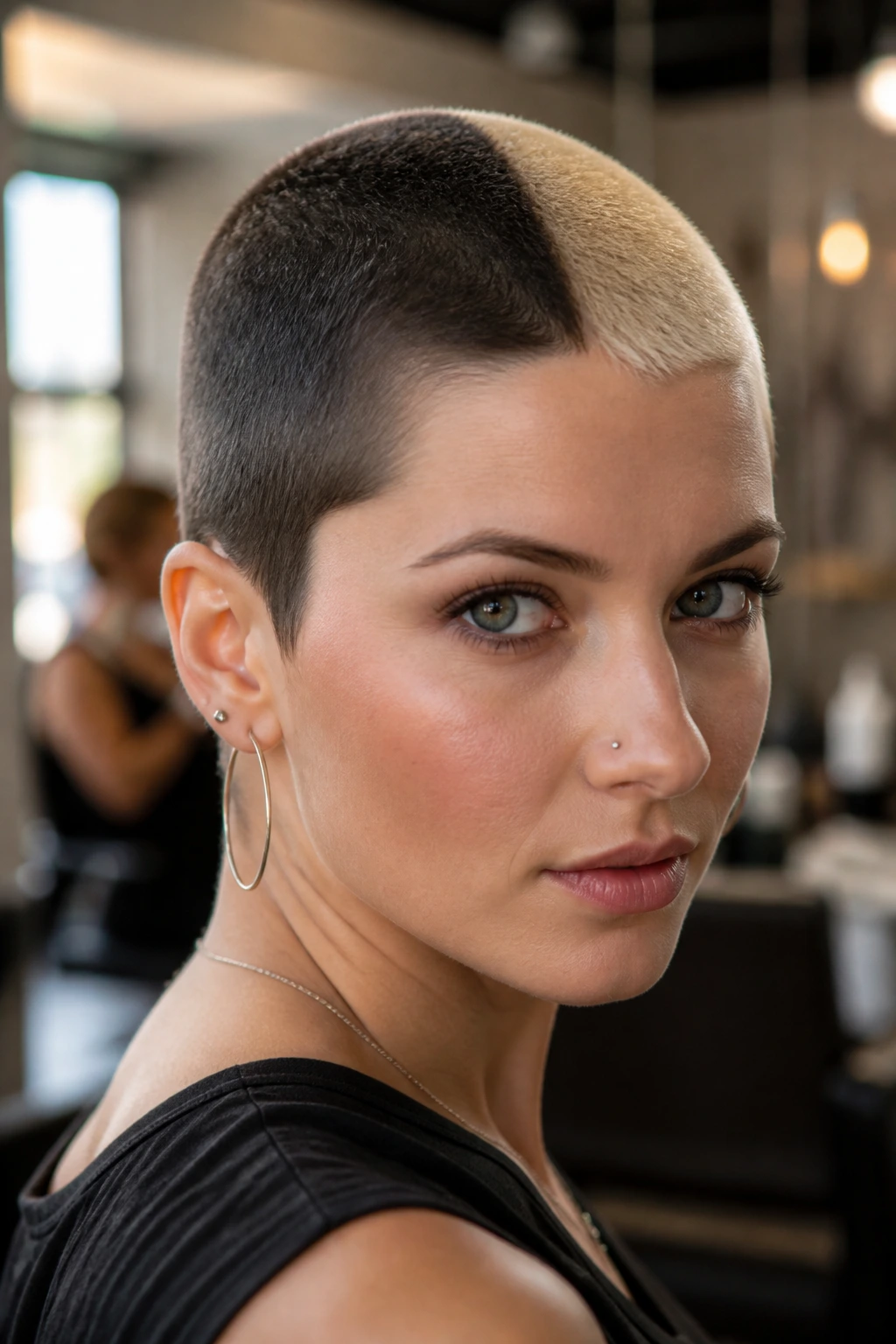
A two-tone split buzz divides the head into two visible color zones, either side-to-side or top-versus-sides. It’s bold, but not random when the line is placed with care.
This is a style for someone who wants the haircut to feel like design, not just grooming. Keep the dividing line clean and the contrast intentional—dark and light, not muddy and almost-same. The sharper the split, the stronger the result.
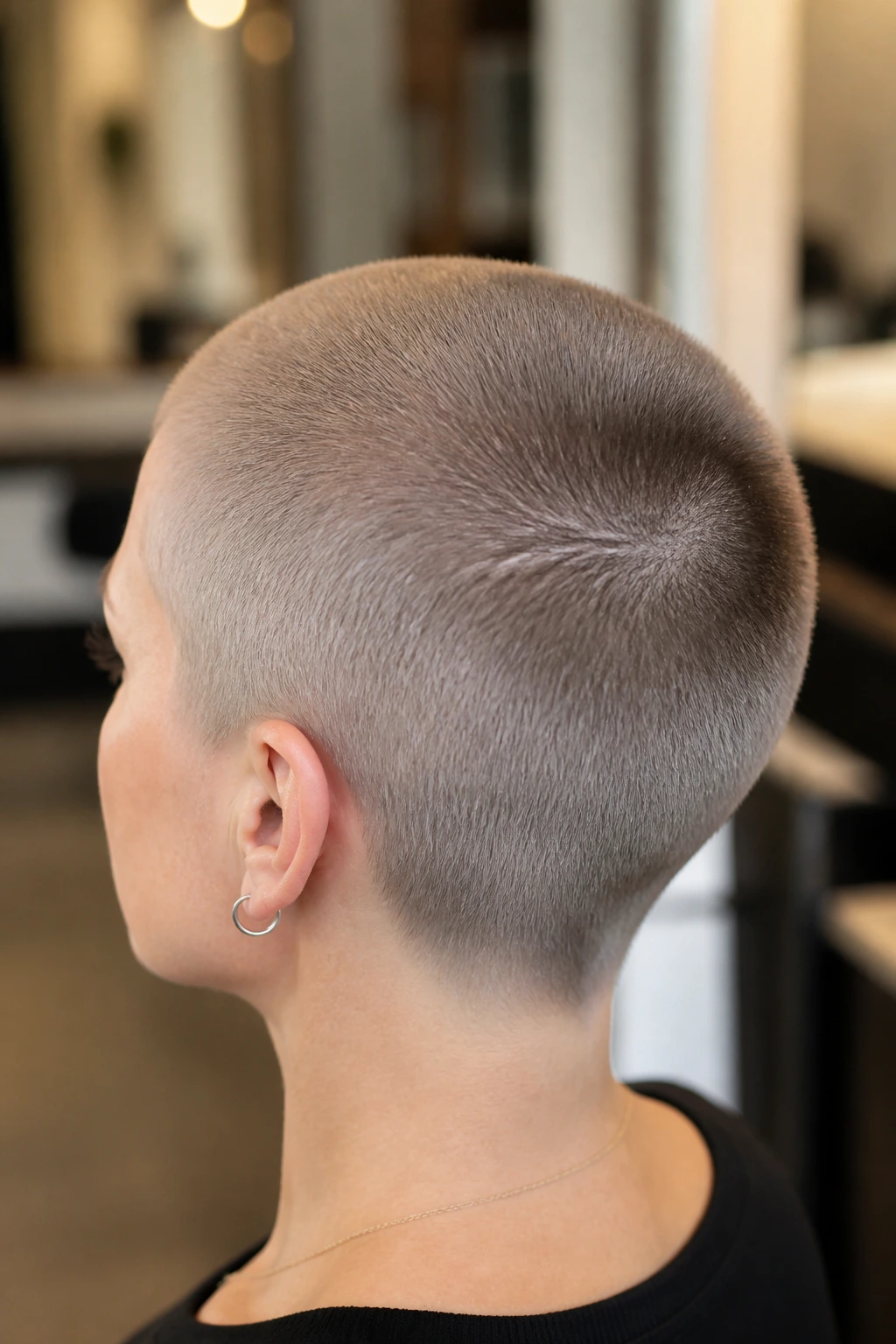
30. Crown Swirl Buzz
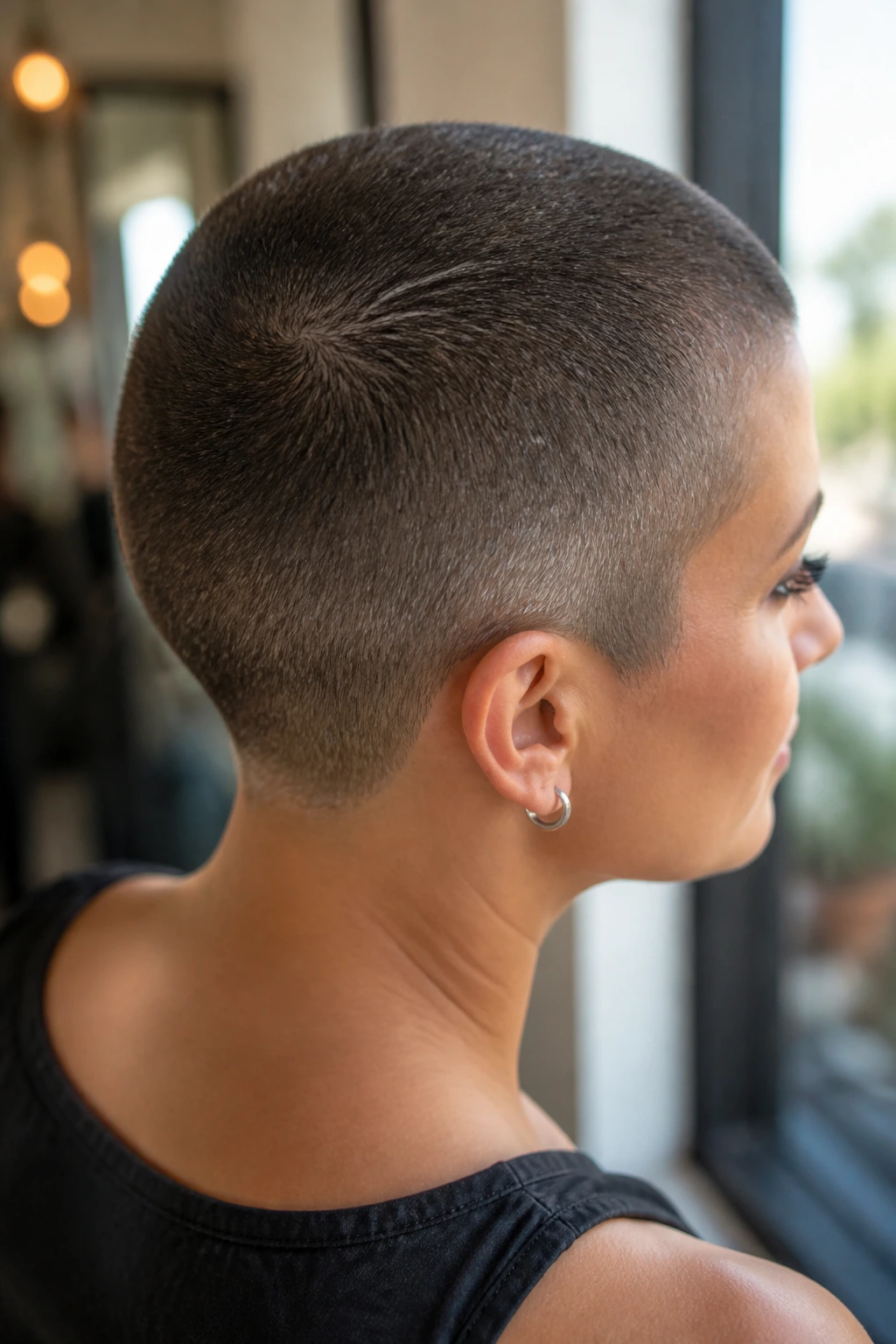
The crown swirl buzz works with the natural spin at the back of the head instead of pretending it isn’t there. That makes the whole cut sit better, especially in daylight when every bump shows.
If your crown wants to stand up or split in a weird direction, this is the cut that stops fighting back. A stylist can adjust the guard slightly around the swirl so the area blends instead of popping out. Simple fix. Big payoff.
31. Shaved Side Panel Buzz
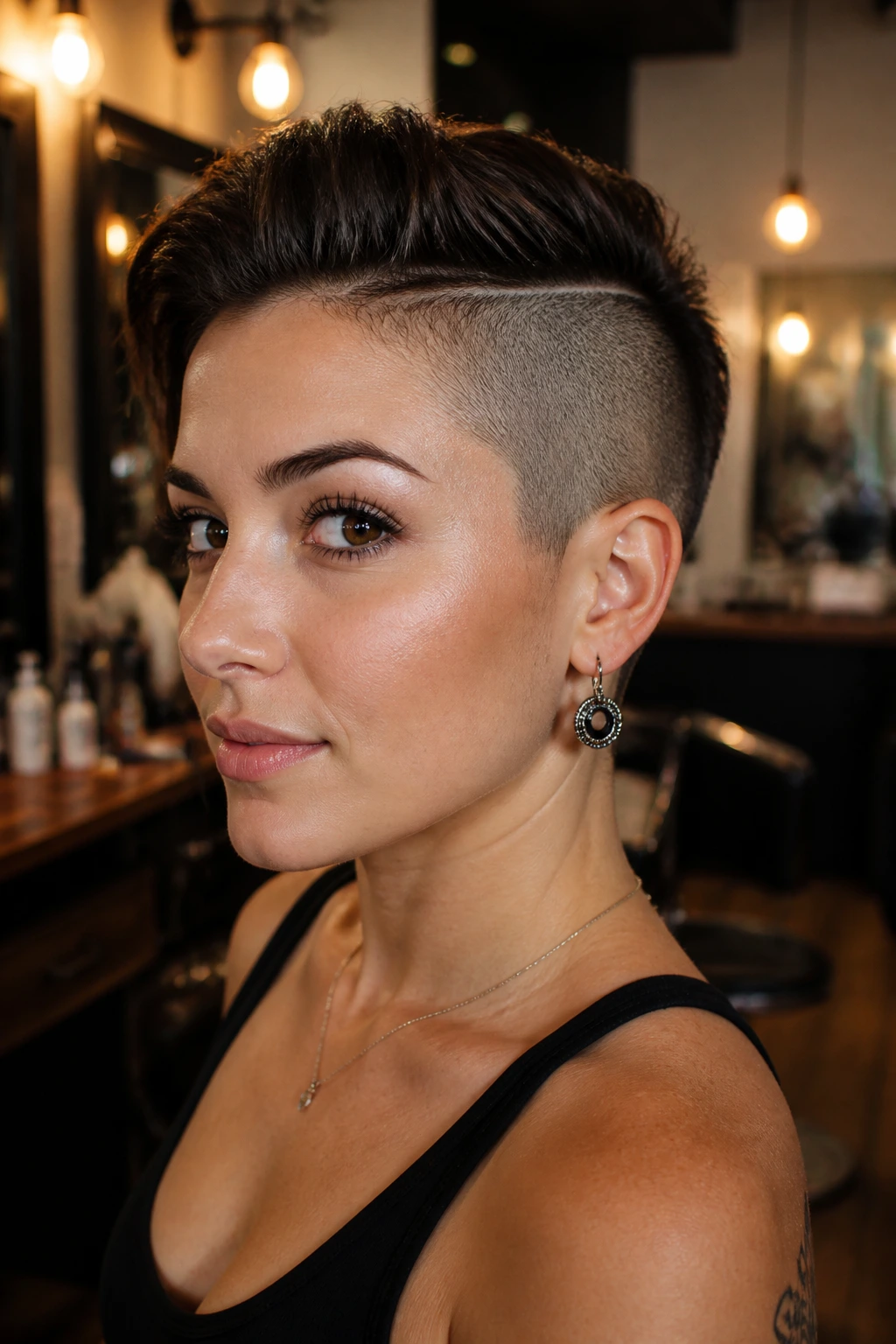
A shaved side panel turns one side of the head into a nearly bare canvas while leaving the rest slightly longer. It gives the haircut a clear point of view.
This works well if you want contrast without coloring the hair. It’s also easier to maintain than a full geometric design because the panel stays crisp with a quick clipper pass. Keep the transition clean or the panel looks like a mistake.
32. Bold Sideburn Buzz
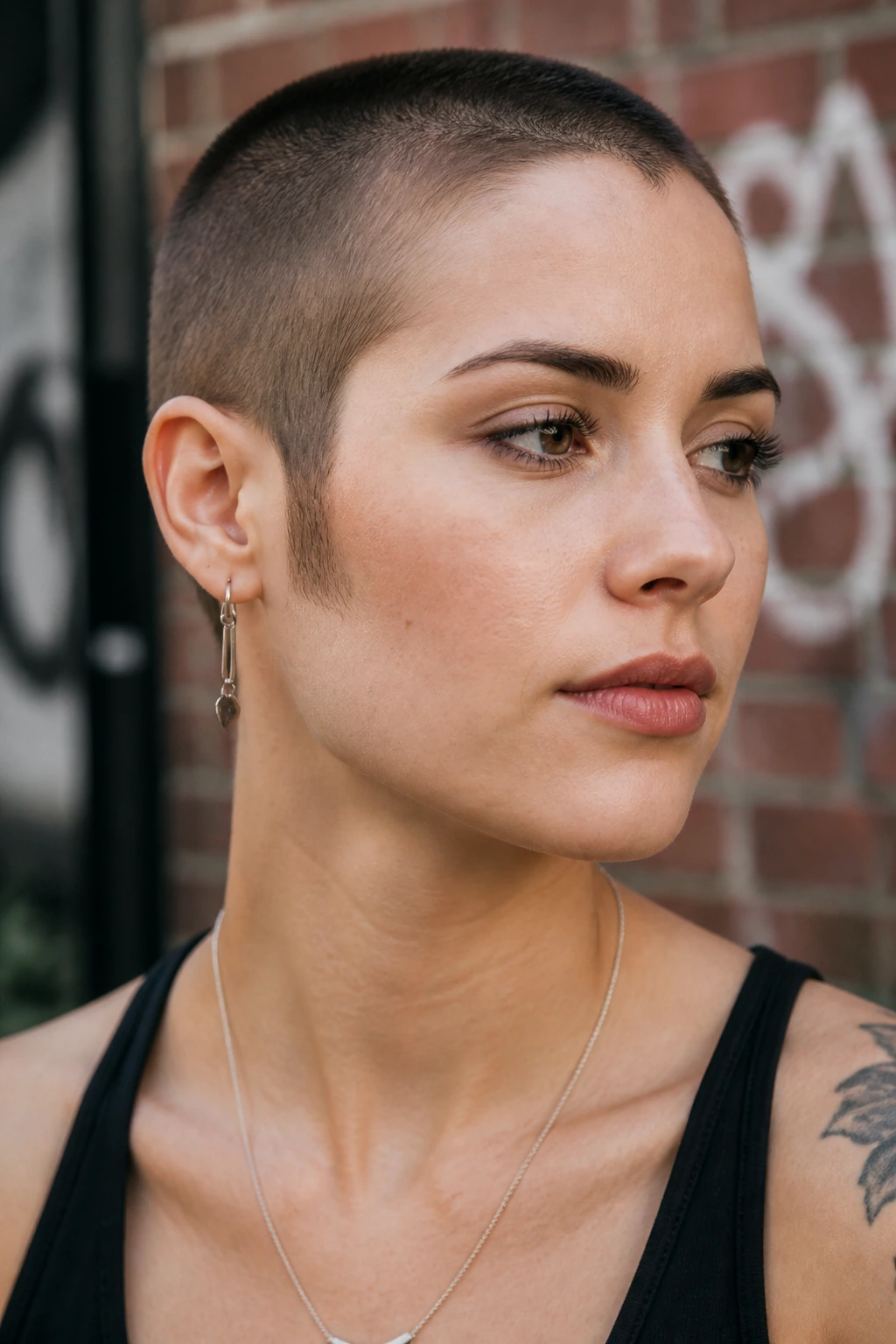
A bold sideburn buzz leaves a little extra structure around the sideburn area, which can make the whole cut feel more anchored. It’s a small perimeter trick, but it changes how the face reads.
This is especially useful if you wear glasses or large earrings, because the area around the ears can start to disappear on a very short crop. Leave enough detail there to frame the face, not so much that it looks unfinished.
33. Bang-Forward Buzz
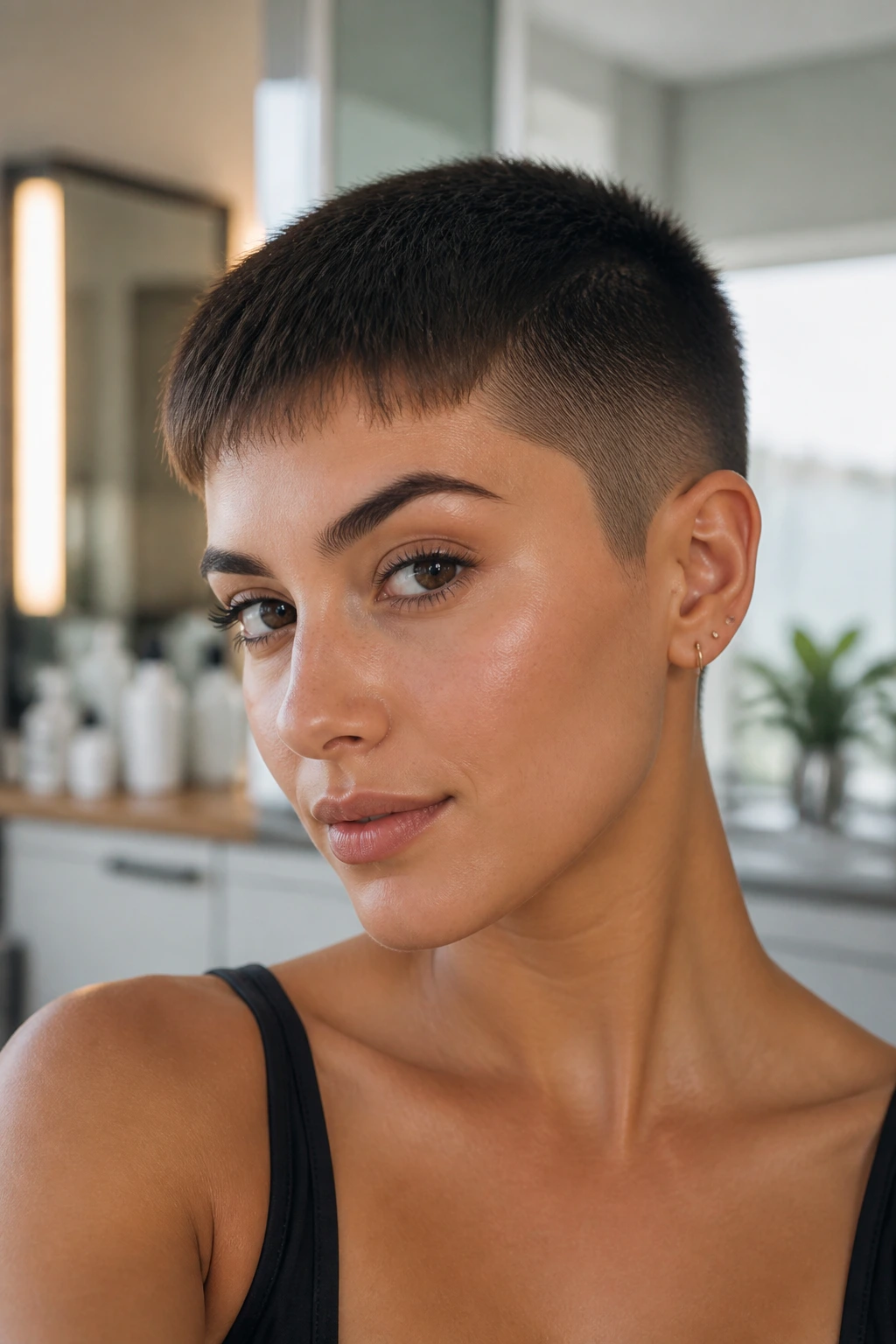
The bang-forward buzz keeps the front slightly longer so it can brush forward, almost like a cropped fringe. It softens the forehead and gives the haircut some forward motion.
I like this version on people who want the buzz cut feeling without showing the entire hairline at once. It can be a smart compromise if you’re easing into shorter hair, and it still reads bold. Just keep the front tidy; a shaggy fringe at this length gets messy fast.
34. Wet-Look Styled Buzz
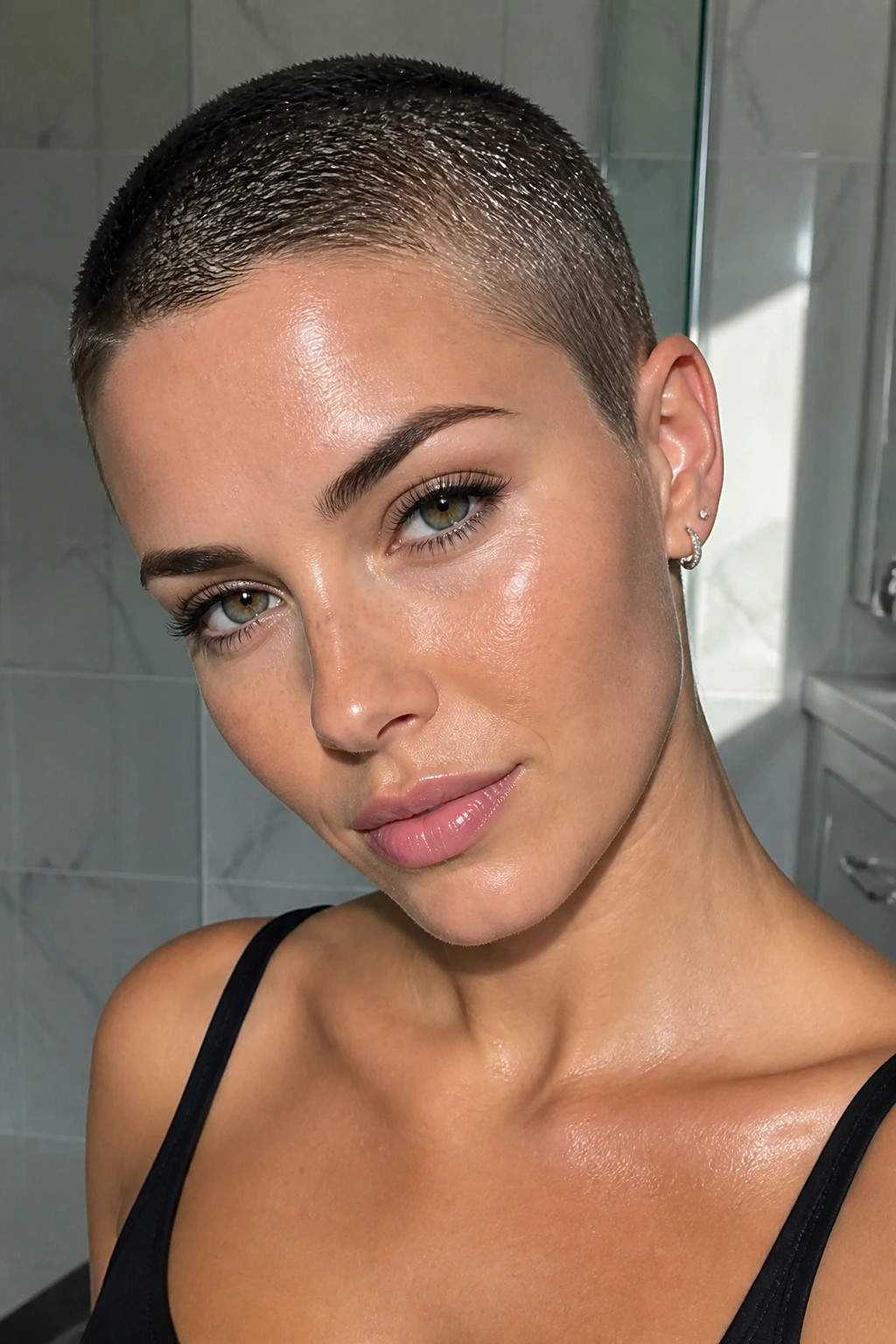
A wet-look buzz is only for slightly longer buzz lengths, but when it works, it looks sleek and a little bit expensive. The hair gets coated lightly with gloss cream or a tiny amount of styling product so the surface catches light in one smooth sheet.
This style is less about cut shape and more about finish. Use a small amount of product, though. Too much and the hair turns greasy instead of glossy, which is a terrible trade.
35. Grow-Out Stubble Buzz
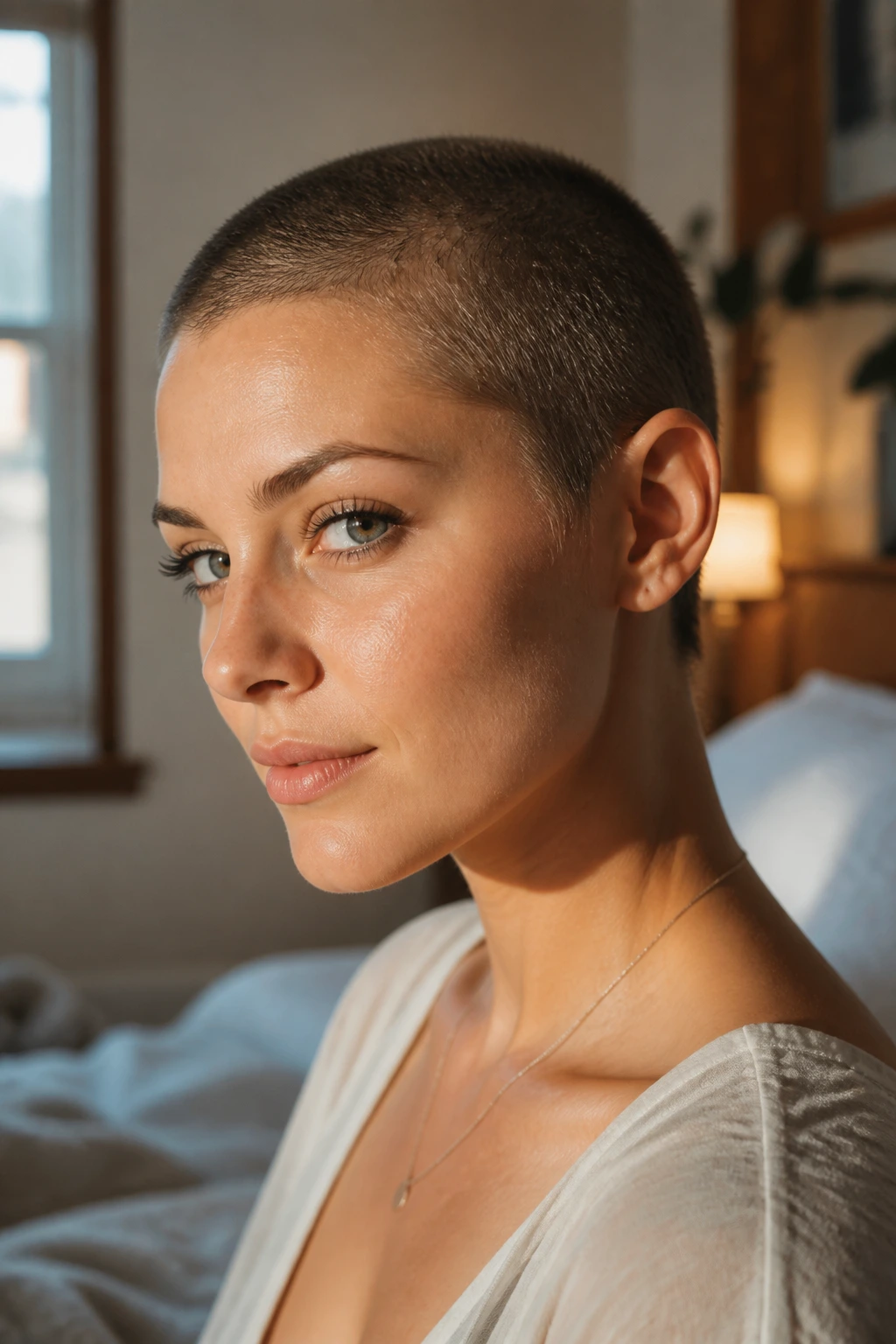
The grow-out stubble buzz is the haircut at that in-between stage when the lines have softened but the shape still holds. Some people panic at this stage. I usually think it looks best.
It has a lived-in quality that a fresh cut sometimes lacks. If you plan to wear your buzz cut through grow-out, schedule it with the stubble stage in mind instead of treating it like a failure to fix. A little edge wear can look intentional.
36. Ear-Framing Buzz
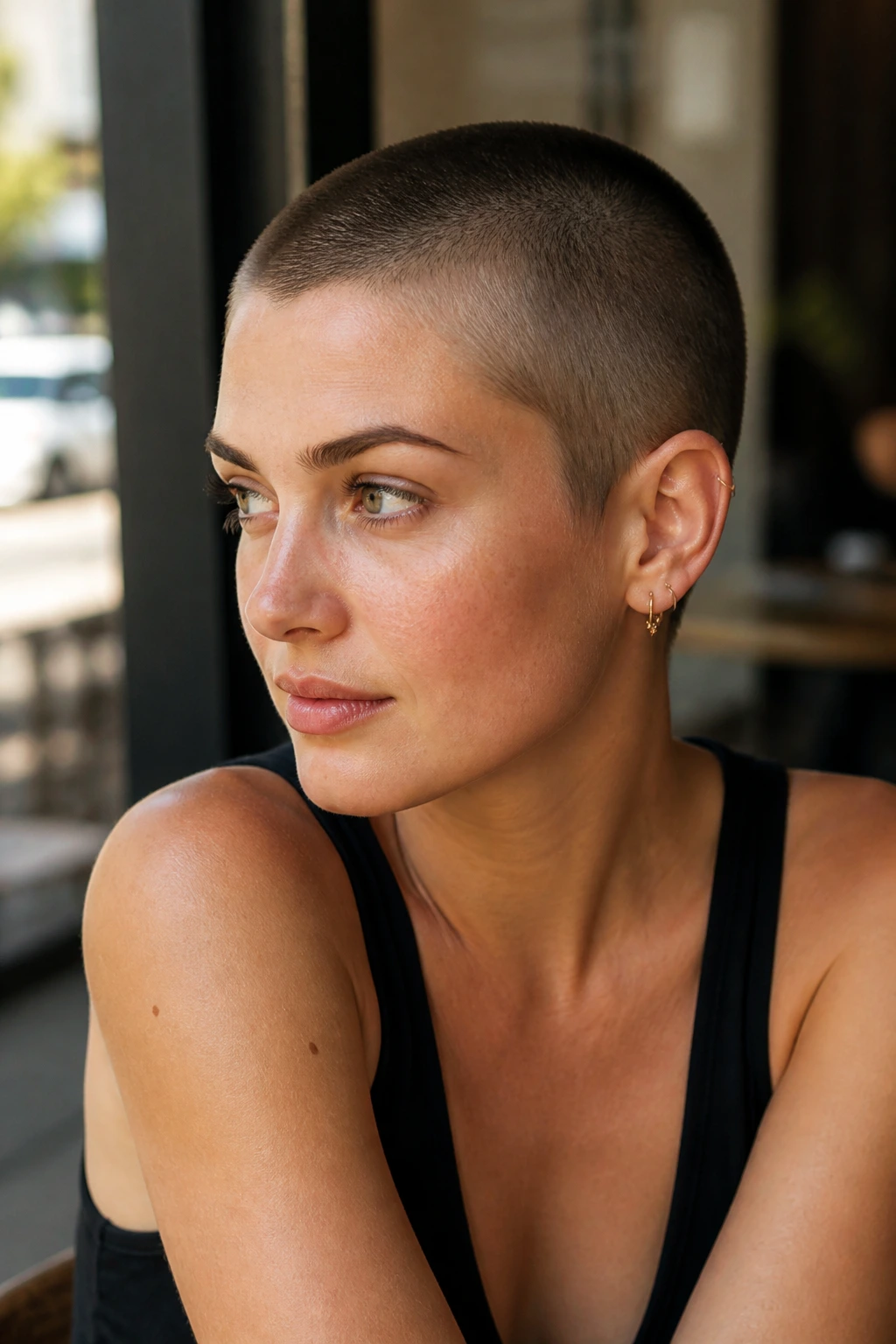
An ear-framing buzz keeps the area around the ears crisp and exposed, which makes jewelry matter more. That’s not a side note. It’s part of the style.
The cut is useful if you like studs, hoops, or anything that sits close to the ear because the open space gives those pieces room to breathe. Keep the temple area neat and the ear curve clean. That detail can change the whole face.
37. Head-Shape Balancing Buzz
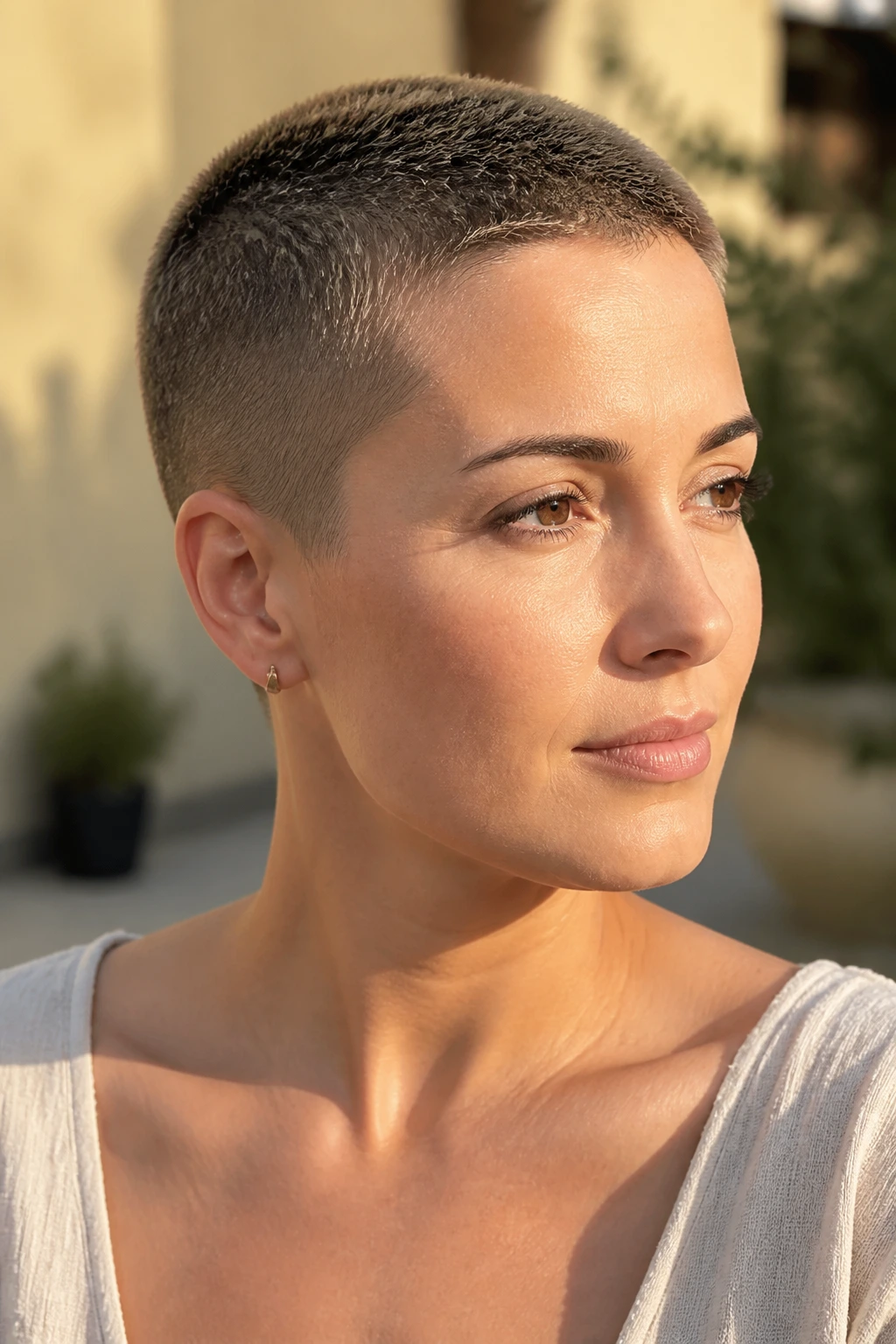
A head-shape balancing buzz is less about a named trend and more about using length strategically. If the back of your head is flatter, leave a touch more at the crown. If the temples are strong, soften them a little. If one side grows differently, don’t pretend it doesn’t.
This is the style I wish more people asked for. The best buzz cuts are not the same on every skull. They’re adjusted.
38. Frosted Crown Buzz
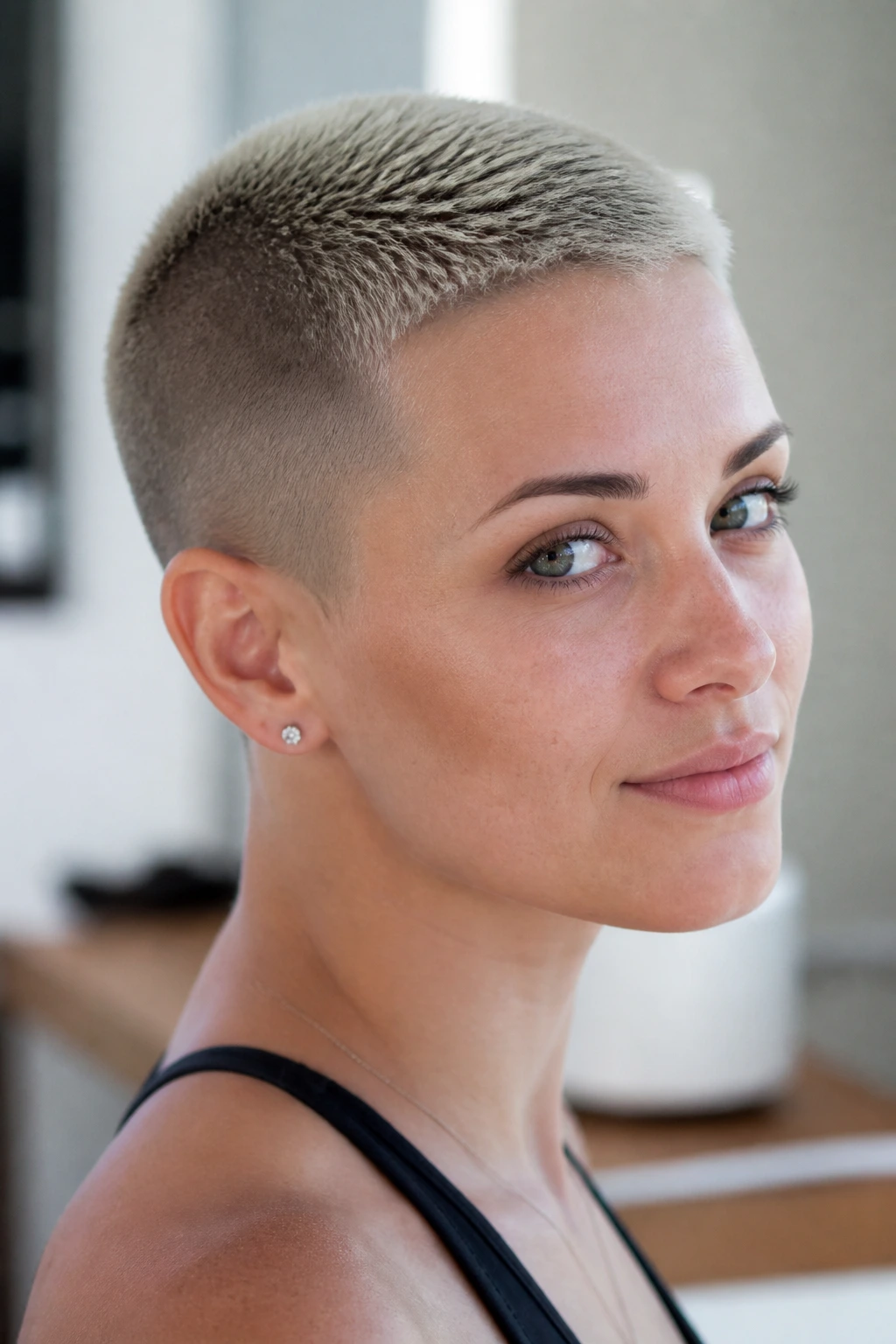
A frosted crown buzz lightens the top section just enough to make it stand out from the sides. It can look like a subtle highlight job or a soft sun-kissed crown, depending on the tone.
The key is restraint. You want the top to feel bright, not striped. A soft hand with lightener and toner keeps the effect clean, and it works especially well when the sides are left deeper in color.
39. Mint Wash Buzz
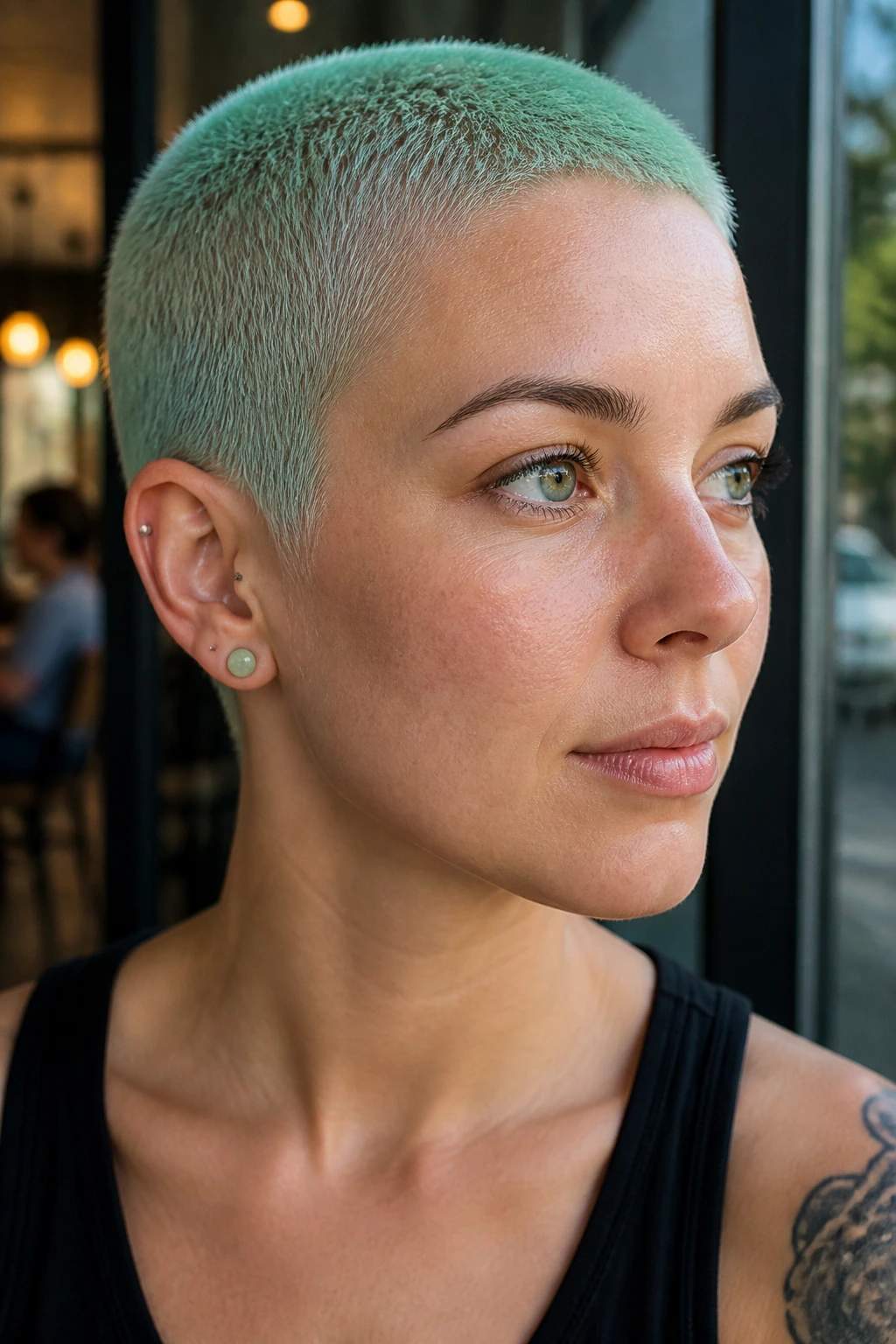
A mint wash buzz is playful without being cartoonish, provided the shade stays soft and cool. Think pale green, not neon marker. On short hair, even a gentle tint changes the whole read.
This is one of the easiest ways to make a buzz cut feel personal. It doesn’t need much styling, and it fades out in a way that can actually be interesting if you like low-commitment color. On a buzz, weirdly, that’s part of the charm.
40. Salt-and-Pepper Buzz

A salt-and-pepper buzz is one of the strongest arguments against hiding gray. Short length makes the mix of dark strands and silver hairs look crisp instead of messy.
If you’ve been coloring for years, this cut can be a reset. The key is a healthy scalp and a sharp edge. Leave the natural pattern alone and let the contrast do the work.
41. Soft Rounded Buzz
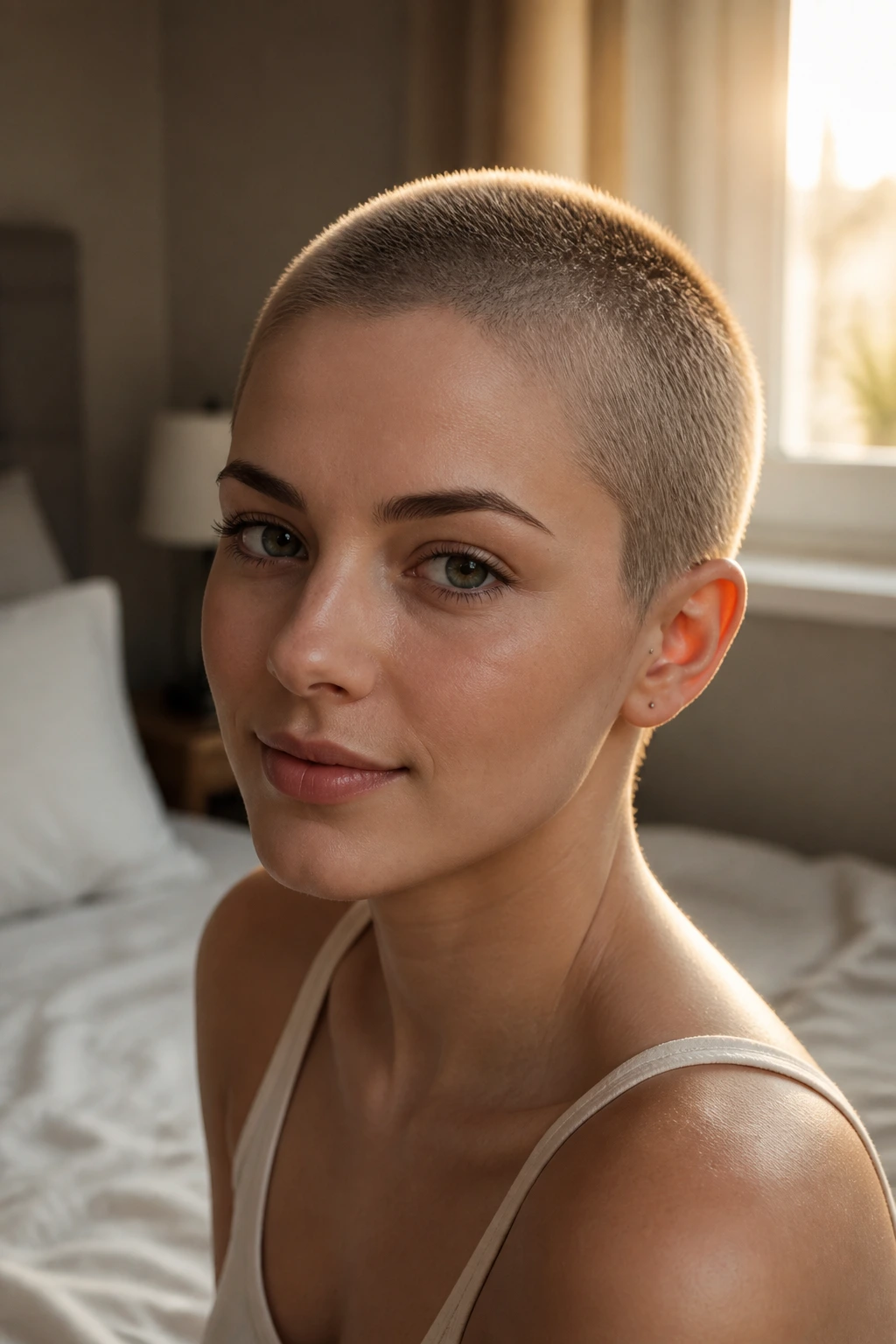
A soft rounded buzz keeps the perimeter gentle all the way around. No square corners. No harsh edges. Just a close crop with a smoother outline.
This style is good when you want the cut to feel less severe but still very short. It’s especially nice on softer face shapes, where a boxy outline can feel too hard. The rounded finish keeps the look calm.
42. Crew-Cut Buzz Hybrid
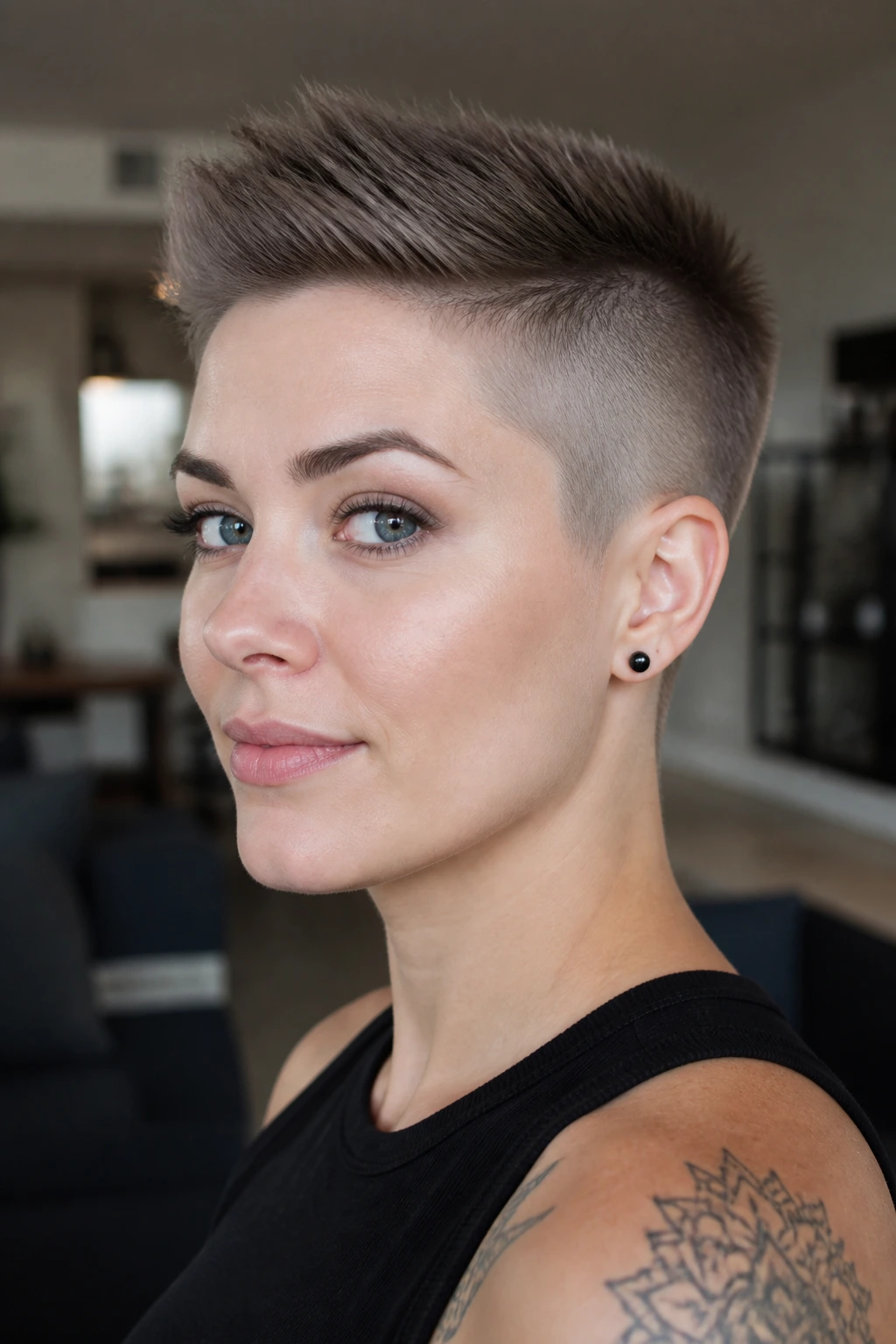
The crew-cut buzz hybrid sits between a true buzz and a short crop. The front and crown stay a bit longer, which gives you some lift and a touch of combability, while the sides stay tight.
It’s a smart bridge style if you’re not ready for a full buzz but want to leave the pixie zone behind. The grow-out is forgiving, and the haircut still reads clean with almost no styling effort.
43. Punk Stripe Buzz
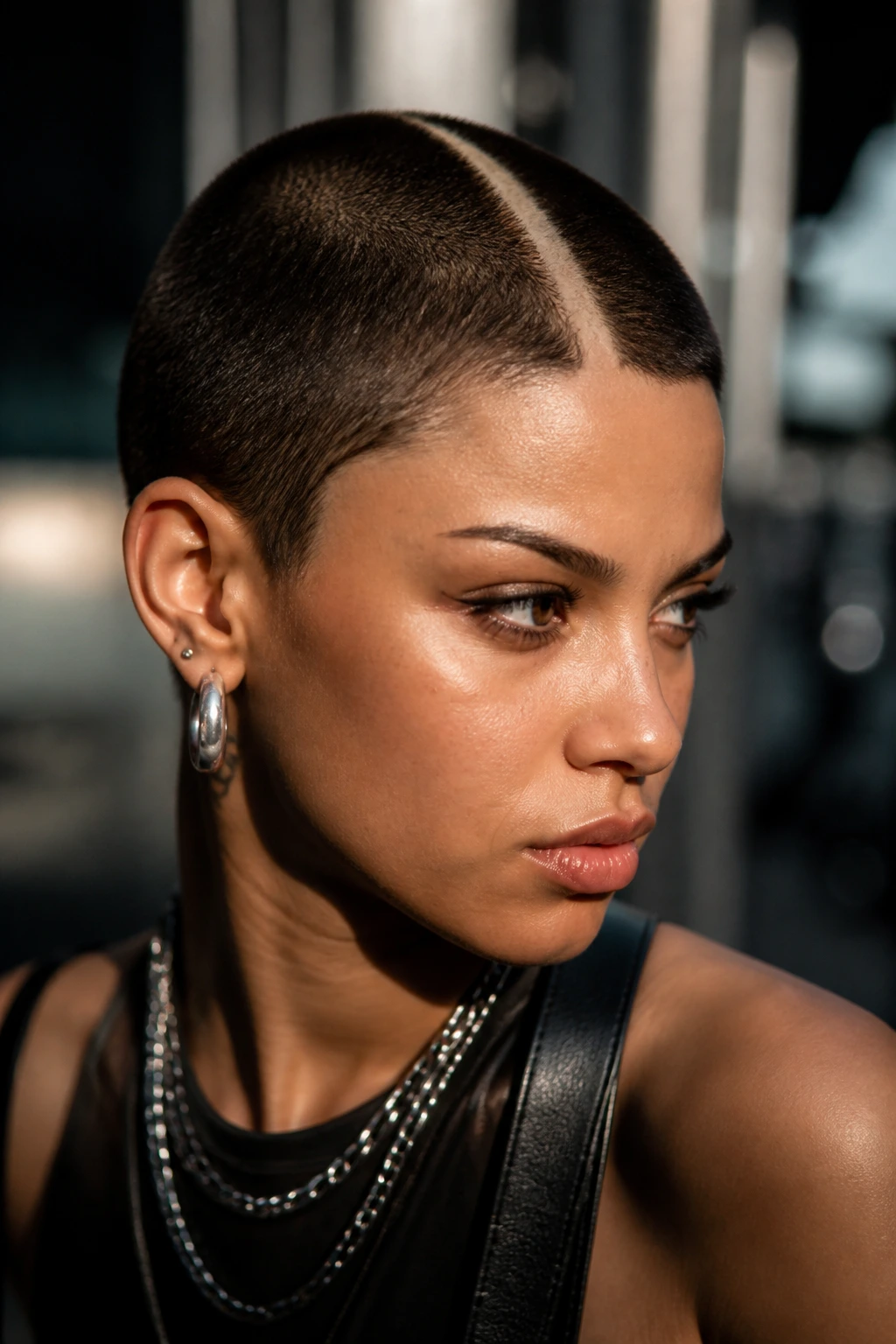
The punk stripe buzz keeps a narrow strip of length or color running through the center of the head. It’s blunt, graphic, and a little rude in a good way.
You can make the stripe physical, with a longer ridge, or visual, with a bold dye contrast. Either way, the rest of the cut should stay plain. If everything is shouting, nothing lands.
44. Halo-Soft Buzz
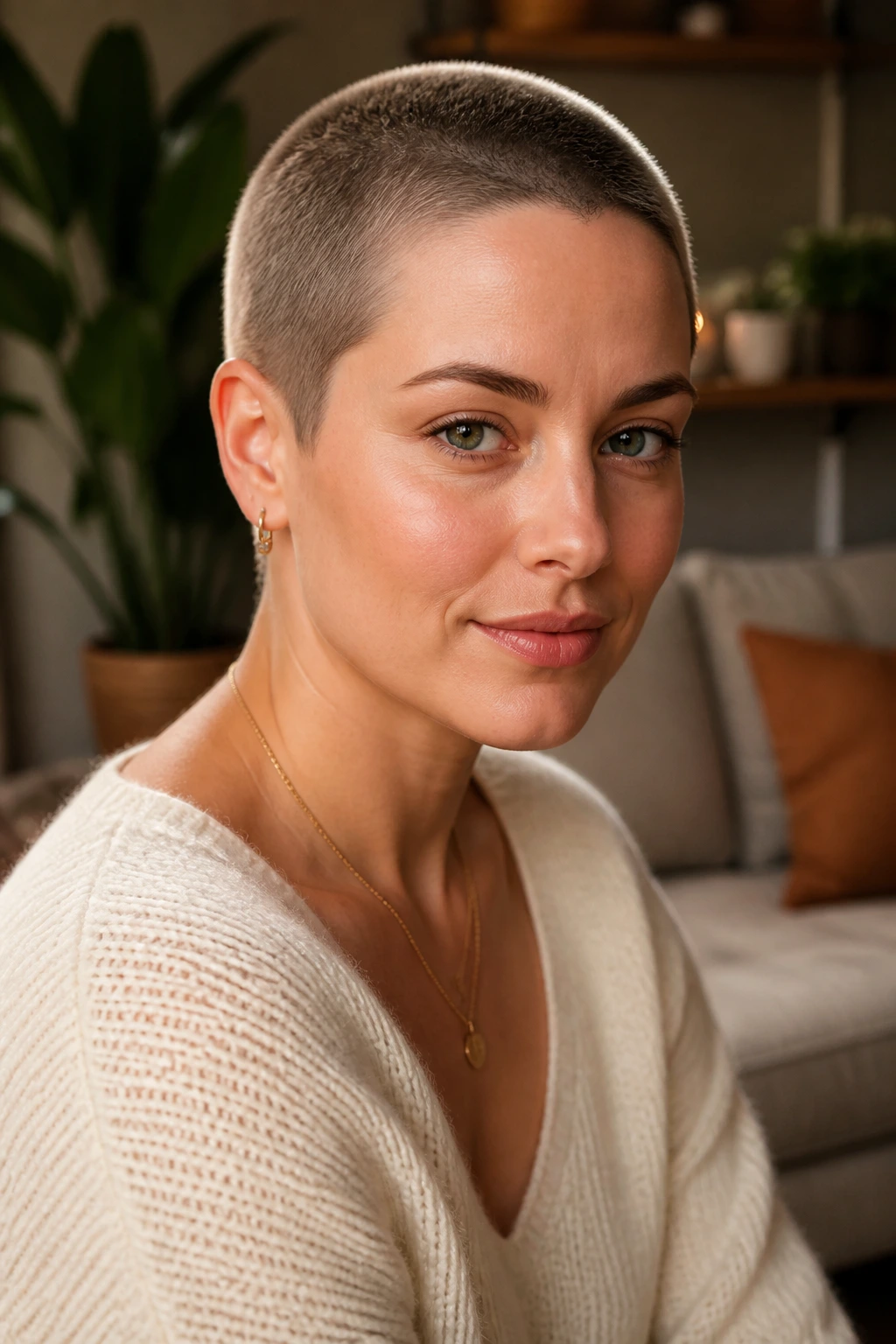
A halo-soft buzz keeps the entire outline gentle, almost like a faint halo of length sitting close to the head. It’s a good option if you want a close crop that doesn’t feel hard around the edges.
This one suits people who love short hair but dislike the military look. A soft neckline, rounded temple corners, and even length through the top keep the shape calm. The style is quiet, but not dull.
45. Full #0 Buzz
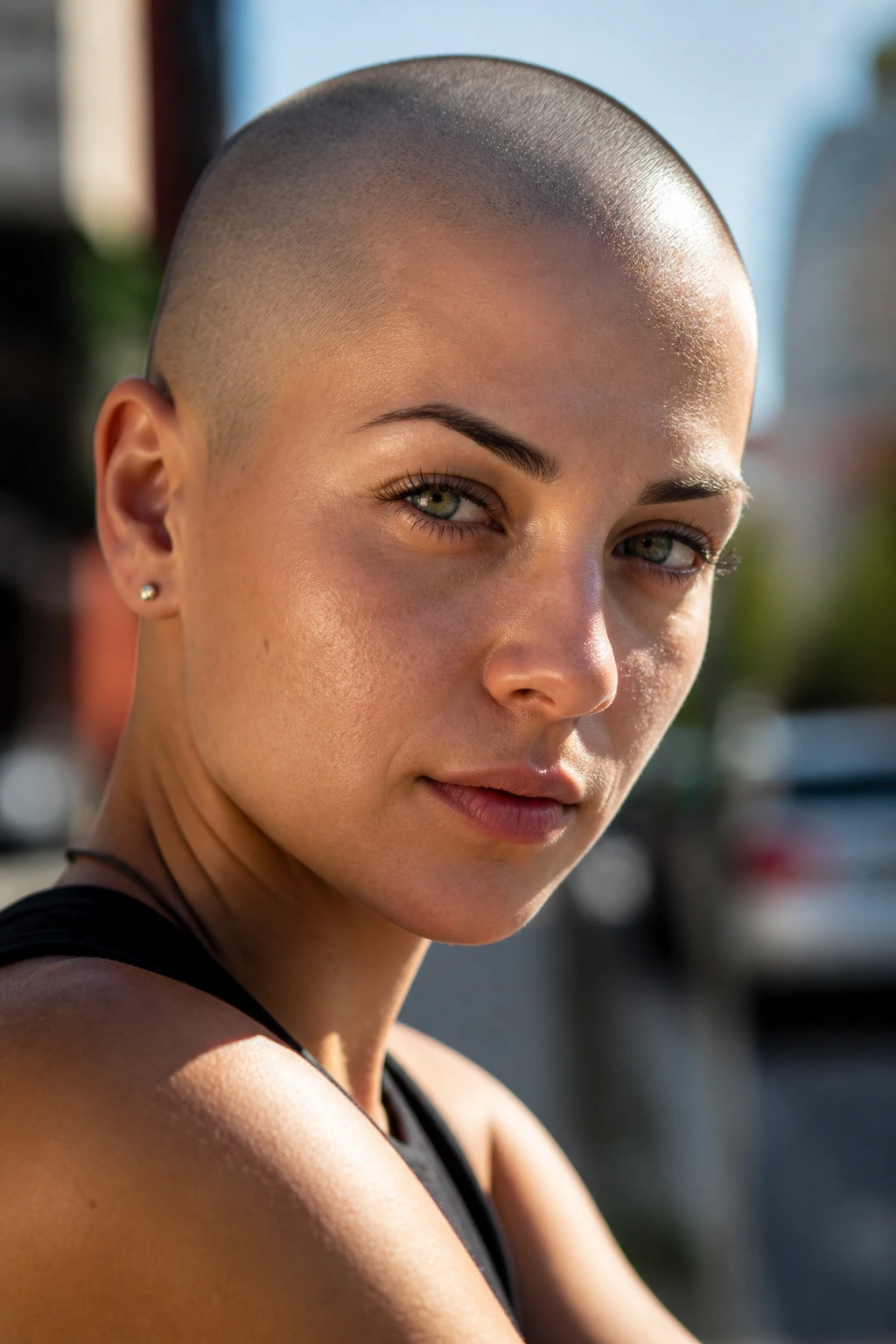
The full #0 buzz is the closest crop of the bunch, and it makes no attempt to hide anything. The scalp shows. The head shape shows. The face takes center stage.
That is the point. If you want the boldest possible version of a buzz cut, this is it. Keep the scalp moisturized, protect it from sun, and plan for frequent touch-ups if you want the line to stay sharp. There’s nowhere for growth to hide at this length.
Brows, Earrings, and Necklines That Frame the Cut
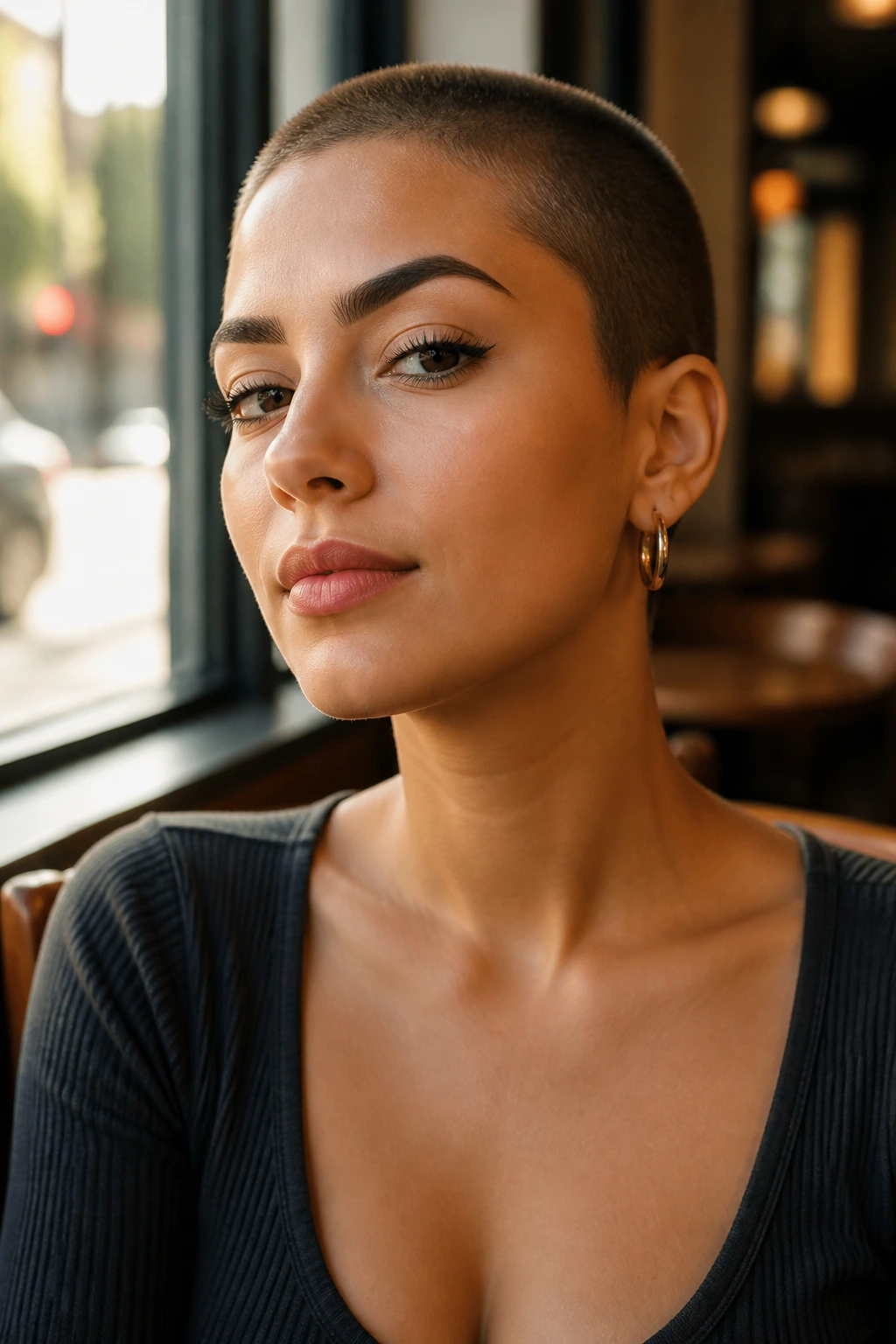
A buzz cut changes what people notice first. The haircut stops competing with the rest of your face, which means brows, earrings, and necklines start carrying more weight than they used to. That’s not a problem. It’s a gift.
Brows: A clean brow shape can anchor a close crop fast. You do not need heavy makeup, but a defined brow gives the face a center point when the hair is this short.
Earrings: Hoops, studs, cuffs, and long drops all read differently against a buzz. Big hoops make the cut feel bolder; small studs keep it lean; a single ear cuff can add just enough edge without turning the whole look busy.
Necklines: Crew necks, mock necks, and clean collars work well because they echo the shape of the cut. A cluttered neckline can fight the haircut. A simple one lets the head shape stand on its own.
Glasses: Strong frames can make a buzz cut feel architectural rather than bare. If your frames are delicate, the crop reads softer. If they’re thick, the whole look gets more graphic.
And no, you do not need makeup to “balance” a buzz cut. You need proportion. That’s a different thing.
Common Mistakes That Make a Buzz Cut Look Unfinished
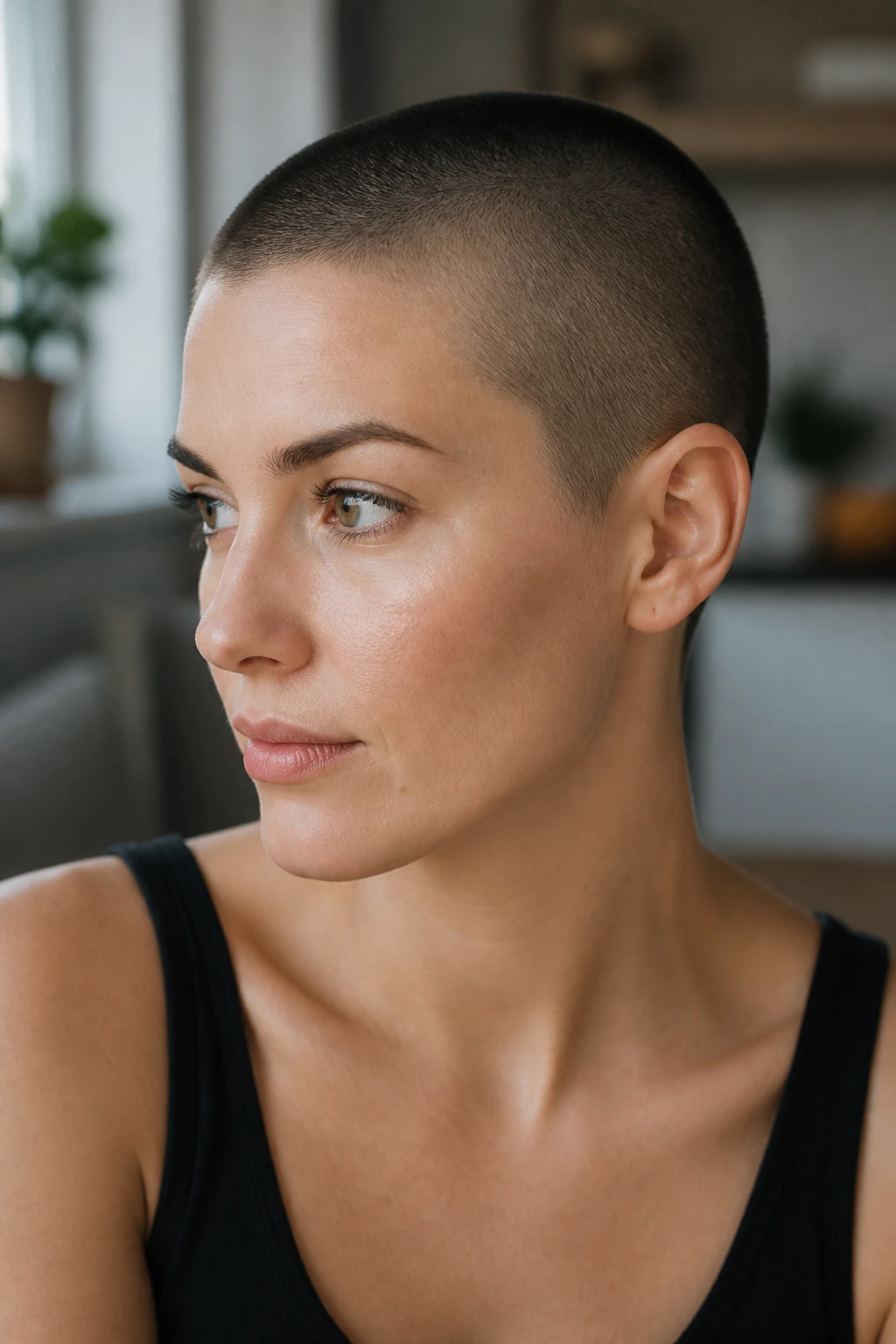
The biggest mistake is going too short too fast. A #0 on a first try can feel exciting in the chair and brutal the next morning in sunlight. Starting at a #2 or #3 gives you room to judge the shape before you commit to scalp-close.
Another one: ignoring the crown swirl. That spot tells on everyone. If it sticks up, splits, or changes direction, the cut needs to be adjusted there, not just shaved harder and hoped for.
A third mistake is treating the hairline like a military drill. Not every face wants a hard square edge. A soft or rounded outline usually grows out better and looks less severe once the hair starts to come back.
Color mistakes are common too. Bleaching a buzz that’s already dry or irritated is a bad idea. Short hair doesn’t hide damage. If the scalp feels tender, give it a break.
Finally, people forget that buzz cuts need maintenance. They are not no-maintenance. They’re low-maintenance, which is not the same thing at all.
Variations and Alternatives to Try
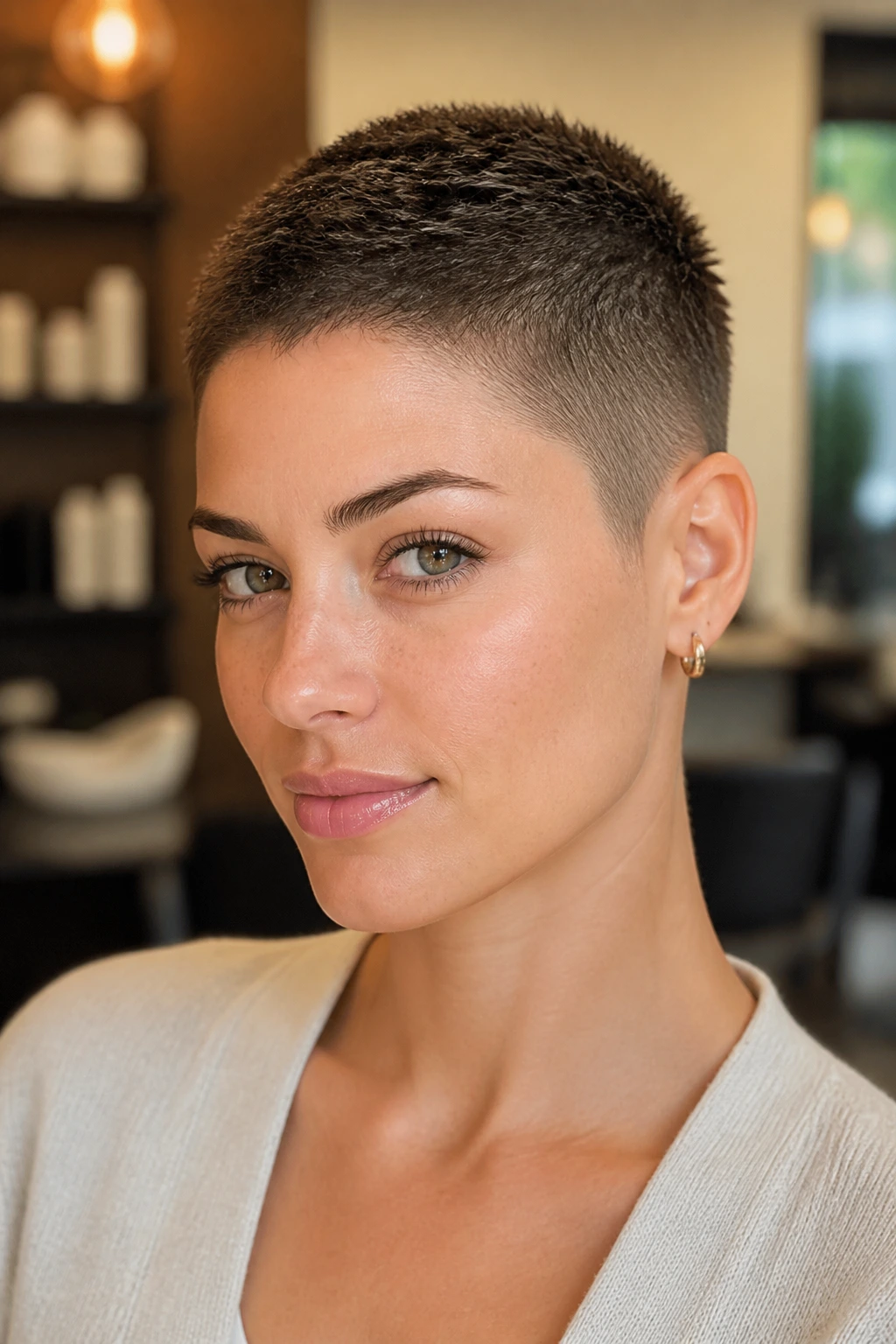
Tapered Pixie Buzz: Keep the top at a #3 or slightly longer, then taper the sides and nape. It gives you a softer transition if a full buzz feels too bare.
Buzzed Undercut Grow-Out: Leave a longer top section and clip the sides down. This is a good bridge if you want the undercut look without the commitment of one length all over.
Textured Short Crop: For curly or coily hair, keep enough length to show the pattern and shape it with a tidy neckline. It lands between a buzz and a crop, which can be the sweet spot.
Crew-Cut Transition: If you want the shortest possible feel without scalp exposure, this is the safe lane. It’s also easier to grow into a pixie or short bob later.
Soft Undercut Halo: Keep the perimeter gentle and the top slightly longer so the whole shape feels like a close halo rather than a hard cut. Good if you want edge without harsh lines.
Tools That Make Home Maintenance Easier
-
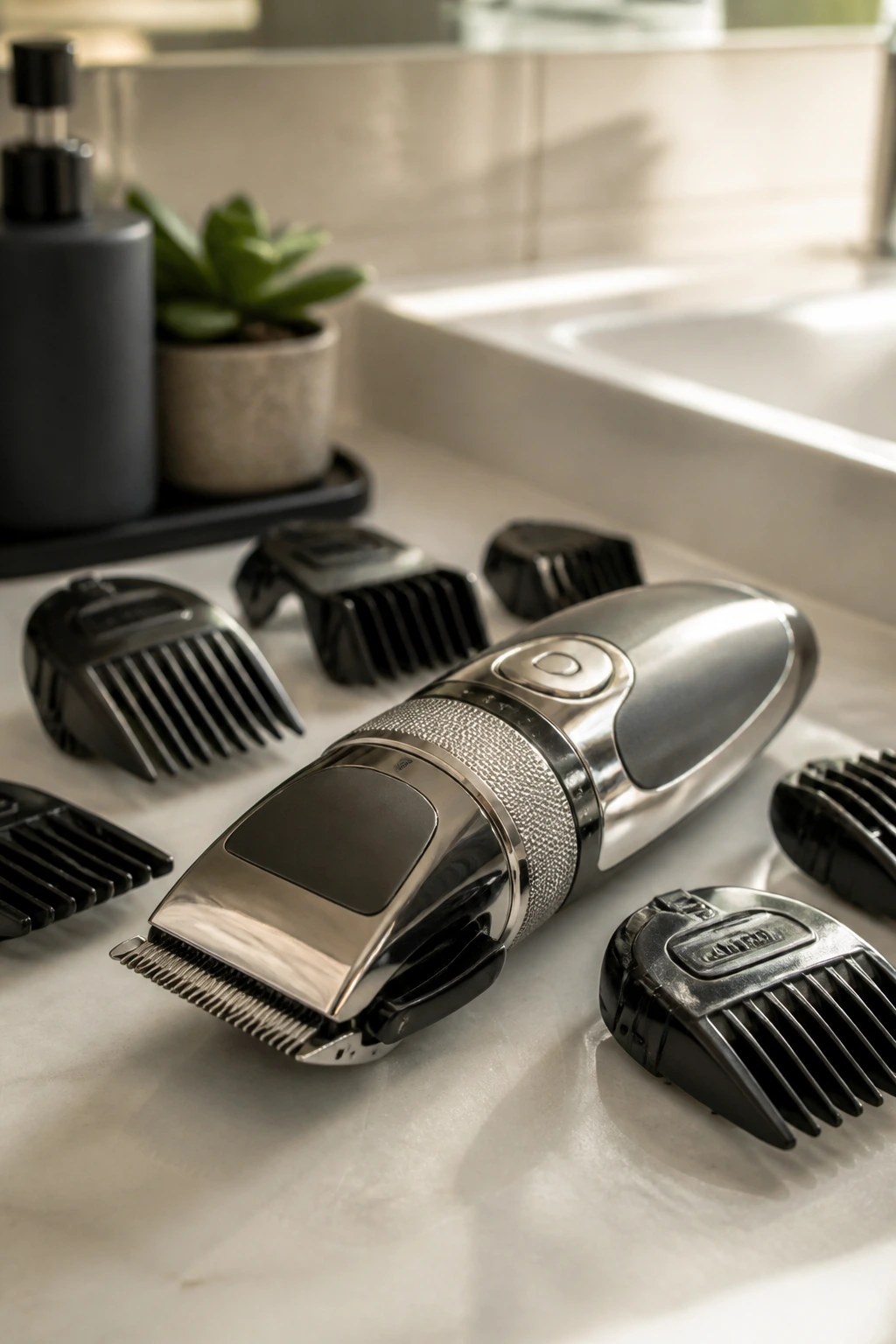
Quality clippers with guard sizes — The guard is the haircut’s steering wheel; cheap clippers can tug and leave uneven passes.
-
Detail trimmer — Use this for temples, neckline cleanup, and around the ears where the main clipper can feel clumsy.
-
Hand mirror or two-mirror setup — The back of the head is where mistakes hide.
-
Clipper brush and blade oil — Clean blades cut cleaner and run cooler, which matters if you trim often.
-
Scalp-friendly shampoo — Short hair doesn’t need heavy product, but it does need a clean scalp.
-
Lightweight moisturizer or scalp oil — Helpful if the skin gets dry, especially after bleaching or frequent washing.
-
Sunscreen for the scalp — Non-negotiable when the hair is this short and the top is exposed.
-
Barber cape or dark towel — Makes cleanup less miserable; clipped hair gets everywhere.
Keeping a Buzz Cut Sharp Between Trims
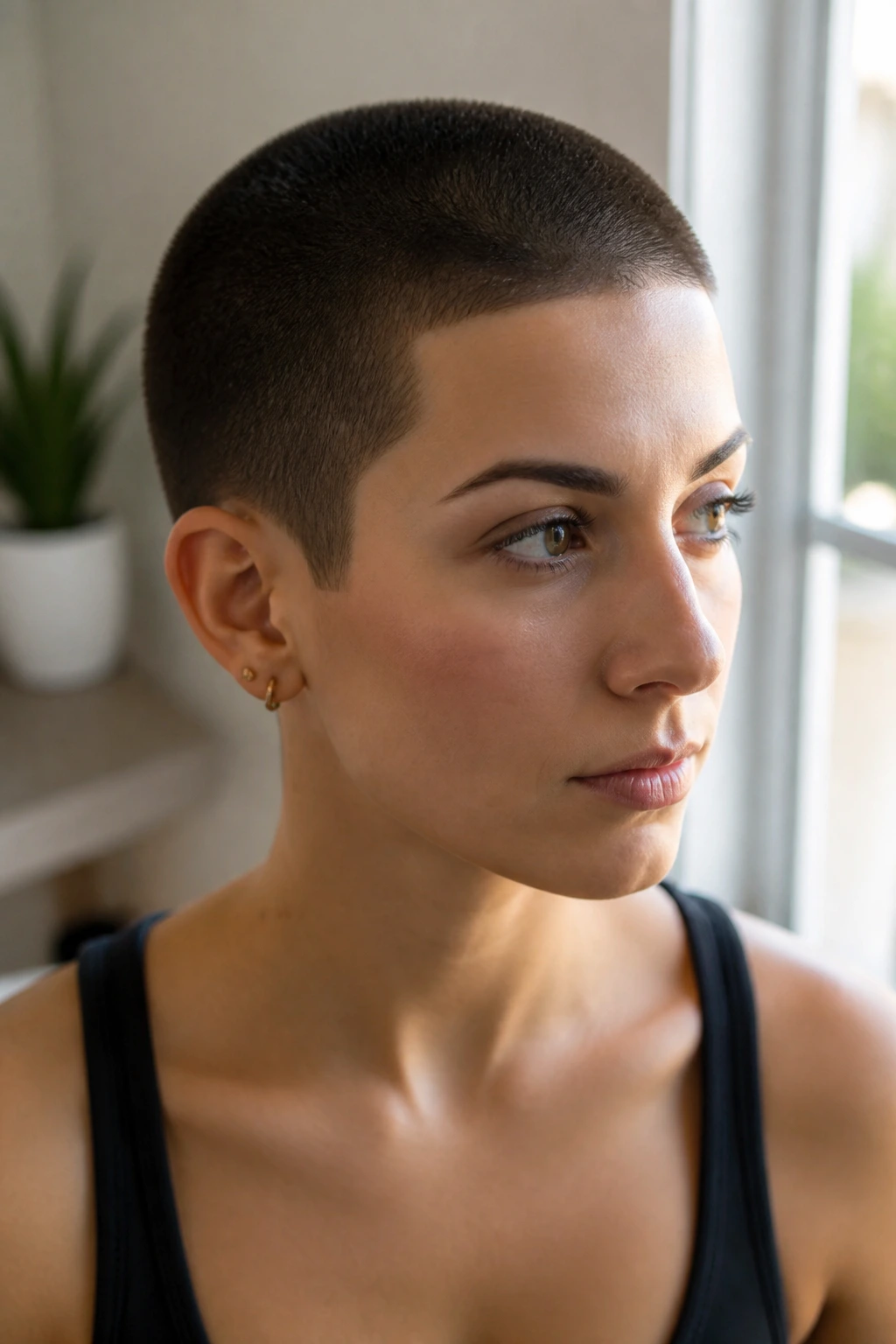
A close buzz cut usually needs cleanup every 1 to 3 weeks, depending on how short you wear it. A #0 or #1 shows growth quickly. A #2 or #3 buys more time. If you’re bleaching or coloring the cut, the hair itself may grow out fast enough, but the color can stay readable a little longer because the length is so short.
Wash the scalp based on how oily it gets, not on a rigid rule. Some people need shampoo three or four times a week; others do fine with fewer washes and a rinse on the off days. What matters is keeping the scalp clean without stripping it dry.
If you clip at home, disinfect the guards and oil the blades after each session. Dull blades pull. Clean blades glide. That sounds fussy until you’ve had a bad trim and realized you can feel every snag for the rest of the day.
Sun protection matters more with a buzz cut than with longer hair. A hat is the easiest fix, and SPF 30 or higher on exposed scalp is worth the effort when the head will be in direct light for a while. Short hair is low-fuss, not invisible.
Frequently Asked Questions
What guard length is best for a first buzz cut?
A #2 or #3 is the safest first step for most people because it shows the shape without exposing every detail of the scalp. If you love the result, you can always go shorter next time.
Will a buzz cut suit a round face?
Yes, but the shape matters. A little extra length on top, a taper at the sides, or a micro-fringe can keep the face from looking too wide. A blunt skin-close crop can work too, but it usually needs stronger edge work.
Can curly or coily hair be buzzed short without looking patchy?
Absolutely, but going too short can expose uneven density or crown patterns. A #2 or #3 often gives curls and coils enough room to read as texture instead of gaps.
How often do I need to trim it?
For very short cuts, every 1 to 2 weeks keeps the shape crisp. For softer buzzes, 2 to 4 weeks is more realistic. The shorter the cut, the sooner the outline starts to blur.
Does hair grow back thicker after a buzz cut?
No. It only feels that way because the blunt ends come in at the same length and look stubbier at first. The follicle does not change shape because you shaved it.
Can I do a buzz cut at home?
Yes, if you have decent clippers, a mirror setup, and patience. Start longer than you think you need, move in straight passes, and check the back before you go shorter. Rushing the first pass is how people end up patchy.
What if my head shape is uneven?
Then cut for that shape instead of chasing a fake symmetry. A slightly longer crown, a soft taper, or a rounded hairline can hide bumps and flat spots better than a brutally even shave.
Is bleaching a buzz cut easier than bleaching long hair?
Easier to control, yes. Easier on the scalp, not always. Short hair takes color fast, which means you need to watch timing closely and avoid overlapping bleach on already-lightened skin or hair.
What’s the easiest buzz cut to grow out?
A tapered or softly rounded buzz usually grows out best. The edges stay neater for longer, and the transition into a crop or pixie is less awkward than with a hard square shape.
Short Hair, Big Shape
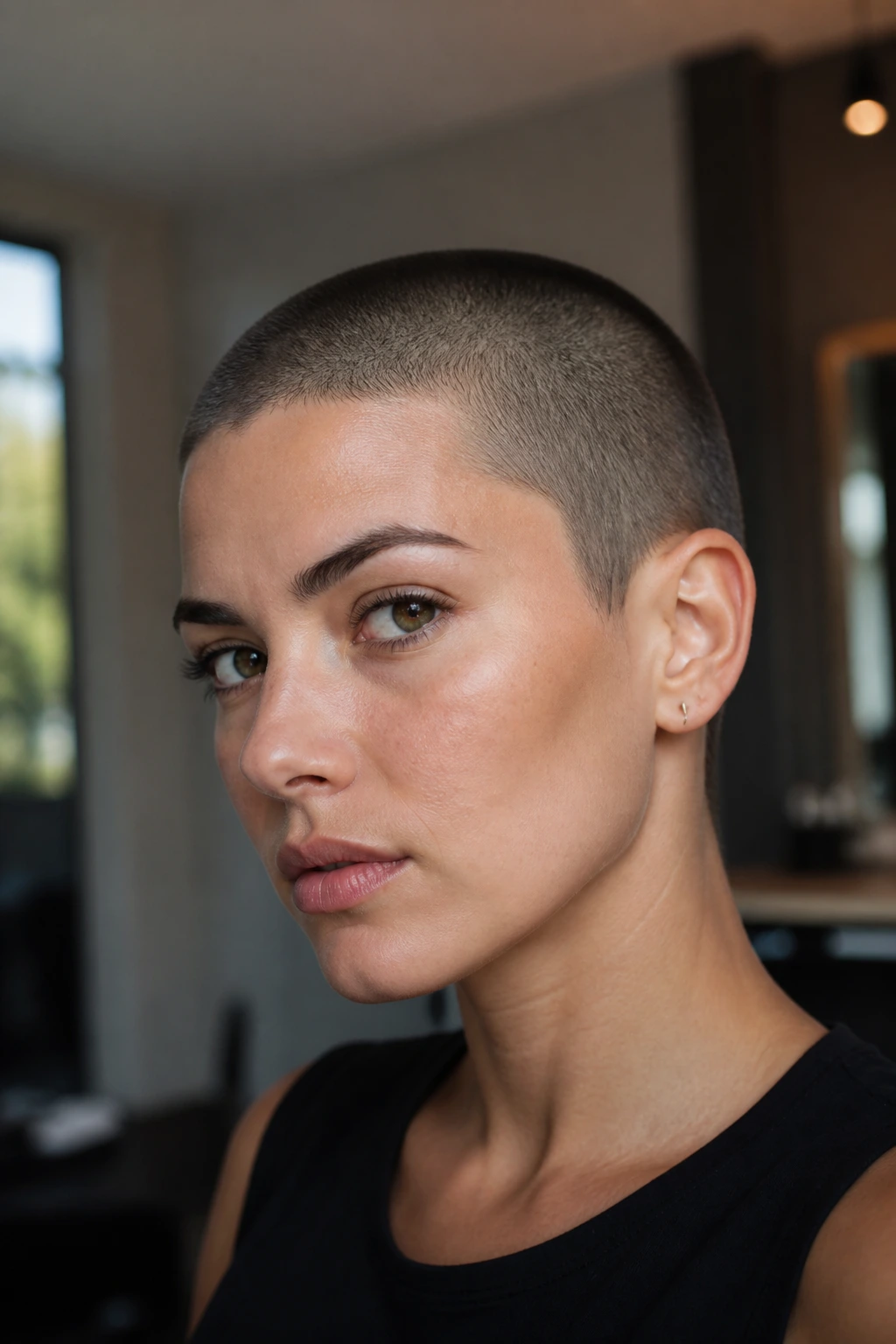
The best buzz cut styles for women don’t hide behind length. They put the shape out front and let color, line work, and texture do the talking. That’s why a one-millimeter change can matter more than a whole inch ever would.
If you’re deciding between styles, start with the part that bothers you least in the mirror: the hairline, the crown, the sides, or the color. Fix that first. The right buzz cut usually comes from solving one small problem well, not from piling on every feature at once.
And if you’re nervous, start one notch longer than your instinct says. Hair grows fast enough. The cleanest close crop is the one that still feels like you when you catch your reflection in daylight.
