



A shaved side can look like a dare. A few millimeters of exposed scalp can change the whole mood of a haircut, and that’s exactly why edgy undercut styles for women keep hanging around long after the first wave of buzzed-tempers-and-fearless-pixies passed through salons. The cut isn’t only about shock value. It’s about removing bulk where hair fights you, exposing a clean line where a shape needs definition, and giving long hair or curls a little more attitude without forcing you into a full short cut.
What makes an undercut so useful is the range. One version disappears under loose hair until you pin it up. Another turns a bob into a sharp, geometric shape from the side. Another takes thick curls and lets them sit instead of ballooning out around the ears. The difference between “too much” and “just enough” is often a guard length, a placement choice, or whether the shave sits at the nape, temple, or side panel.
If you’ve ever looked at a haircut and thought, I want the edge, but not the haircut that announces itself before I do, that’s the lane here. The best undercut is the one that fits your hairline, your routine, and how much of the cut you want to show when your hair is down. And yes, the details matter. A half-inch too high at the side can change the whole balance.
Why This Collection Feels Different
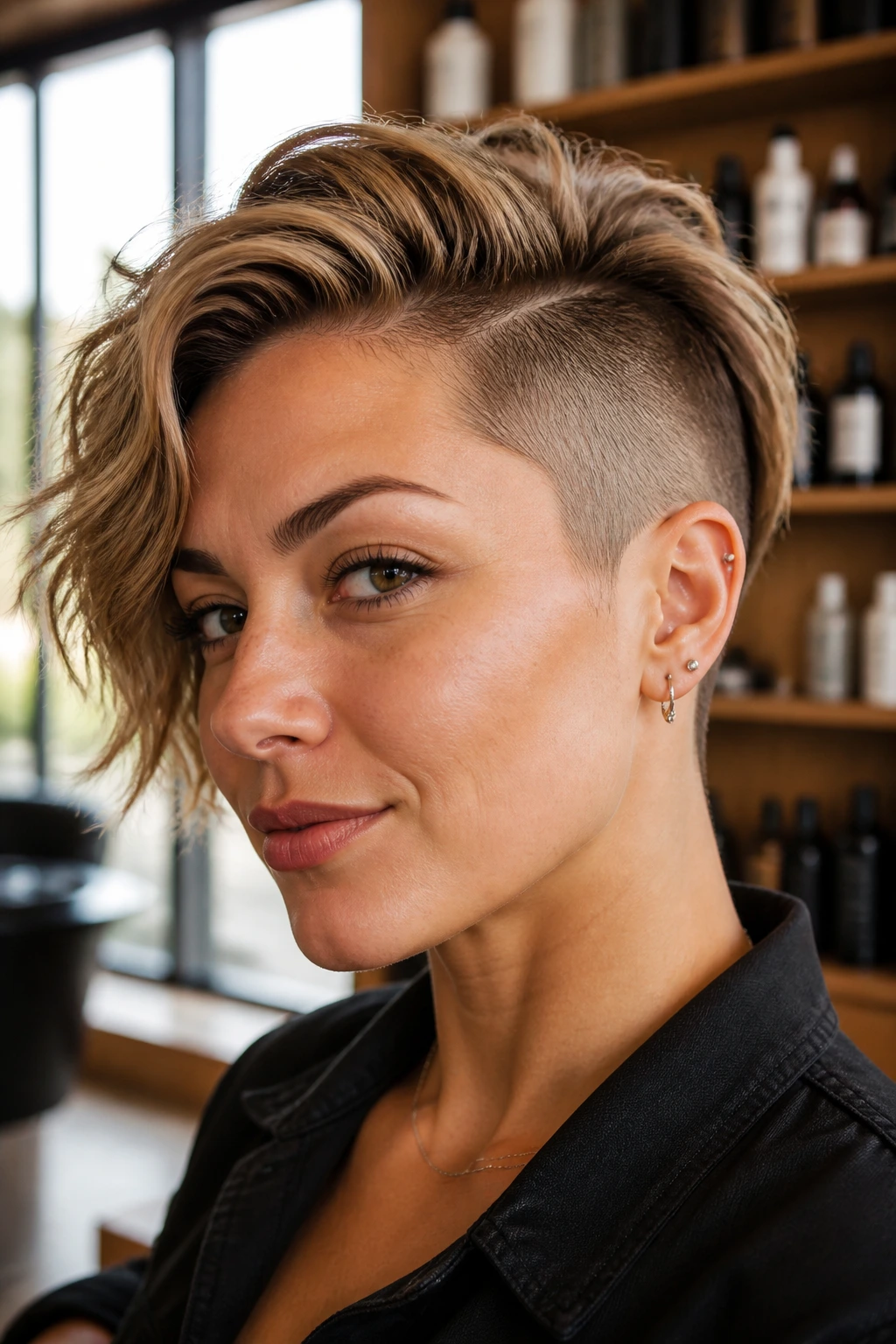
- Hidden and obvious options: Some of these cuts vanish under loose hair, while others show the shave from the first profile view in a mirror.
- Built for real hair texture: Thick, fine, straight, curly, and coily hair all behave differently once the weight comes off, so the styles here don’t pretend one shape fits everyone.
- Salon language included: A lot of people like the look but freeze in the chair. These styles give you the words, lengths, and placement ideas that actually help.
- Grow-out matters: A sharp undercut can look incredible for six weeks and awkward for the next six if you don’t plan for the fade-out. That gets covered here too.
- Edge without overcommitment: Some of these are loud. Some are barely visible. That range is the whole point.
1. Soft-Faded Nape Undercut
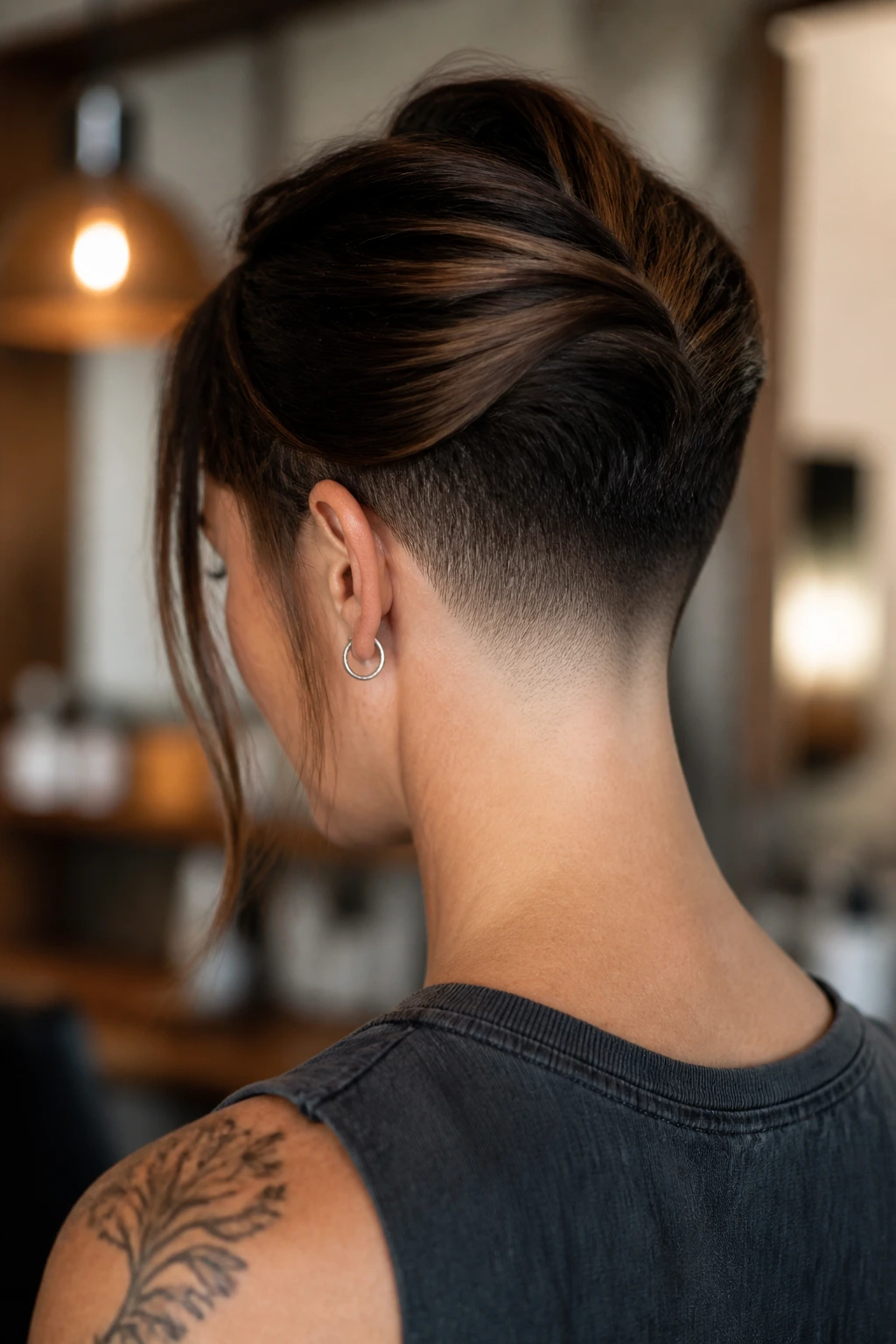
A soft-faded nape undercut is the one I recommend to people who want the edge first and the drama second. The shave sits low, just beneath the occipital bone, and it disappears once the top layers fall back into place. From behind, though, it changes everything. The neckline looks cleaner. The hair lifts a little easier. Heavy lob layers stop sitting like a wet blanket.
Why it works
The fade keeps the transition from shaved to long from looking abrupt, which matters if your hair is straight and shows every line. Ask for a #2 to #4 guard at the lowest point, blended up with scissors or a longer clipper guard near the top. That little softness makes the grow-out less annoying too. You can wear it sleek, curled, or air-dried, and the nape still reads tidy.
- Best for medium to thick hair
- Works especially well with bobs and lob lengths
- Needs a cleanup every 3 to 5 weeks
Pro tip: Keep the top layers at least 4 inches long so the undercut stays hidden when you want it to be.
2. Hidden Nape Shave for Long Hair
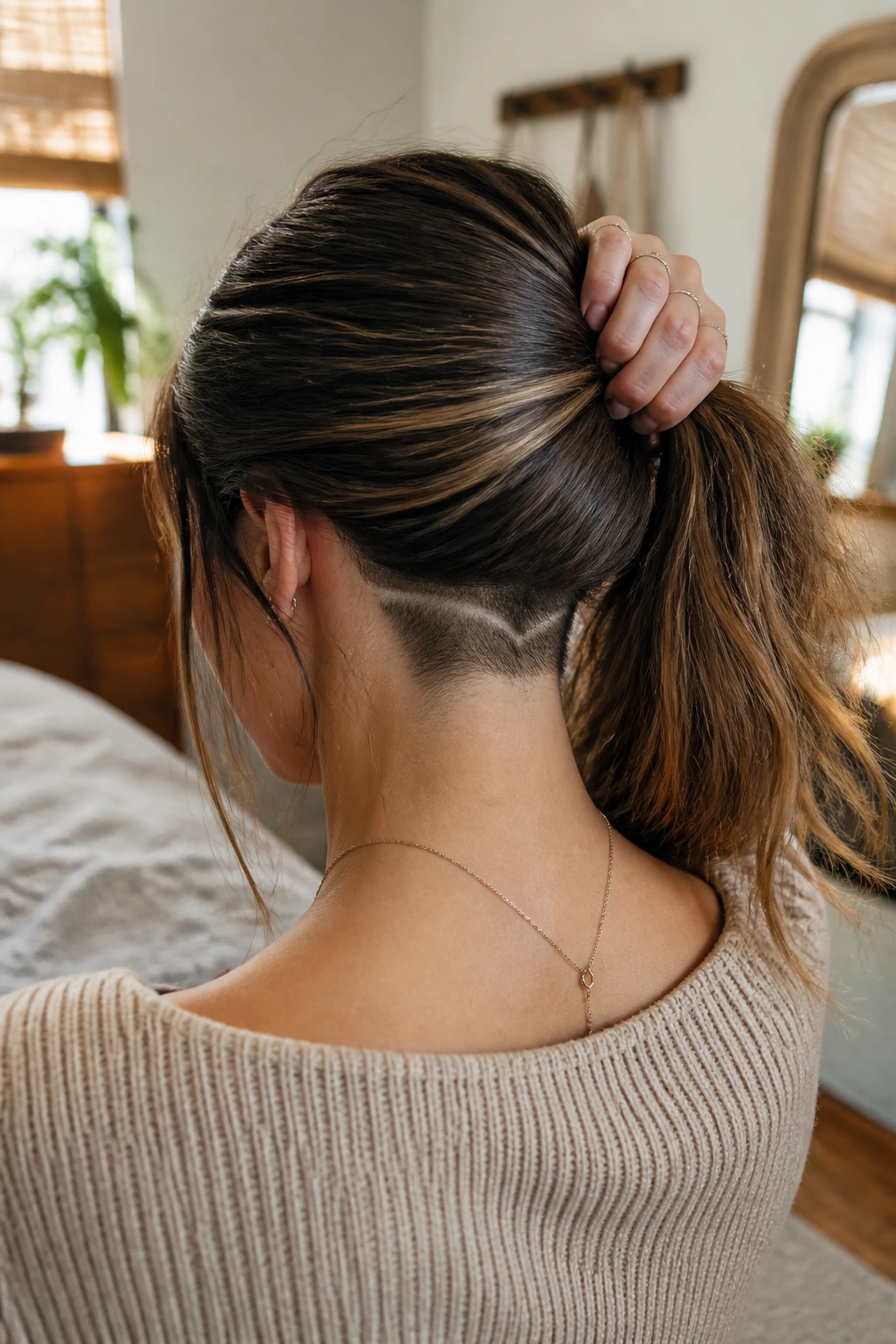
If you want an undercut that only shows up when you tie your hair up, this is the one. A hidden nape shave sits under the long lengths like a secret, and that’s part of the appeal. Loose hair falls over it without drama. A ponytail lifts the curtain.
What makes it worth doing
Long hair can get heavy fast, especially if the nape area puffs out or tangles under sweat and scarves. Removing a strip at the base of the head makes buns sit flatter and keeps the hair from feeling stuck to your neck. I’d keep the shaved zone around 1 to 2 inches high at most, unless you want a bigger reveal when hair goes up. The line should sit low enough that it doesn’t creep into your visible layers.
A hidden nape shave is a good move if you live in claw clips, low buns, or braids. It’s also a nice bridge for someone who likes the idea of an undercut but isn’t ready for a side shave that shows every day.
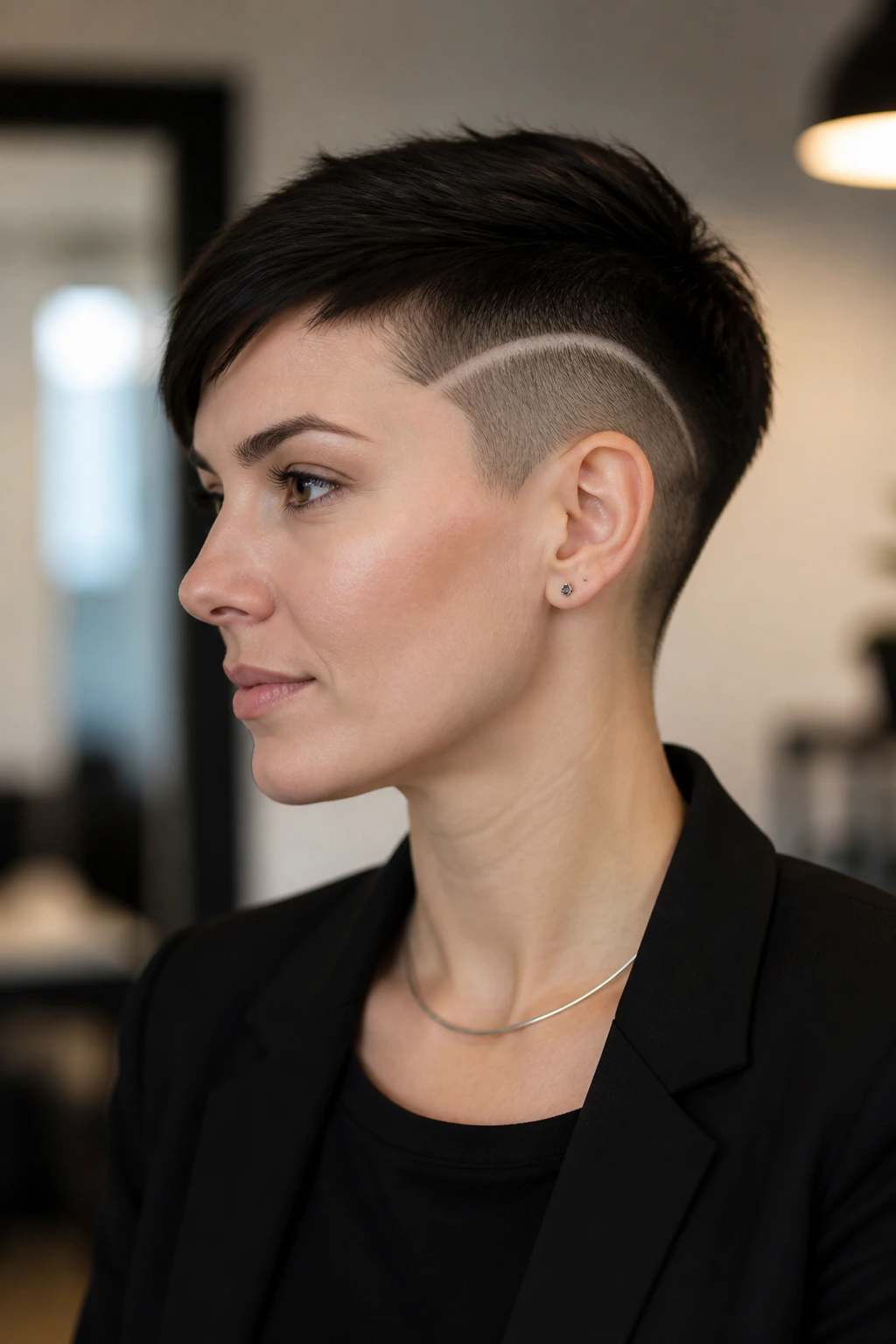
3. Temple-Side Pixie Undercut
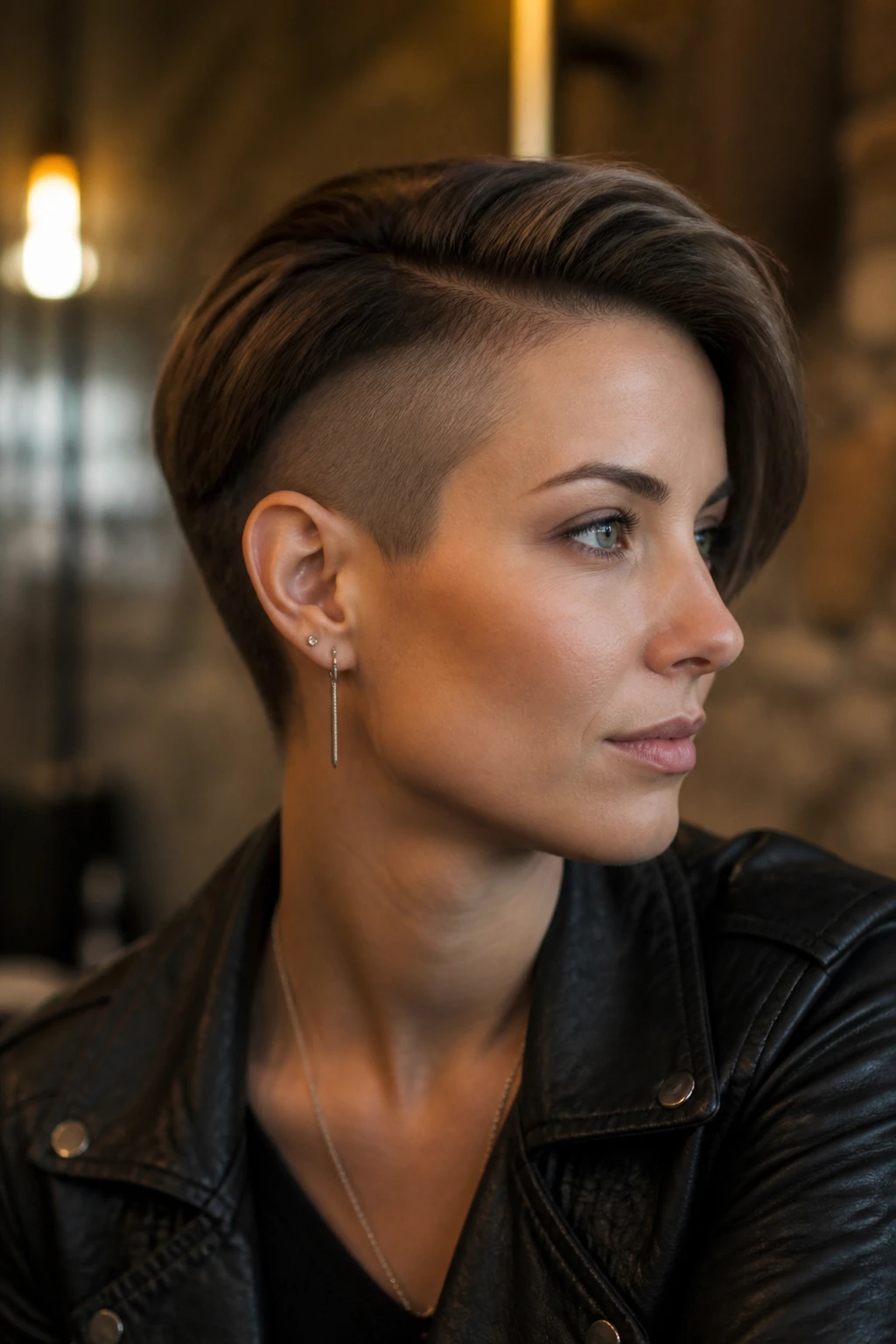
Why does one shaved temple change a pixie so much? Because the eye goes straight to the contrast. The short side frames the cheekbone, while the longer side gives you room to sweep, spike, or tuck behind the ear. It’s the kind of cut that looks deliberate even when the styling takes five minutes.
How to wear it
Keep the shaved temple tight with a #1 or #2 guard if you want the edge to read clearly. Leave the top at 2.5 to 4 inches, depending on how much movement you want through the crown. A pea-sized bit of matte paste is enough to push the longer side across the forehead or lift it slightly at the roots.
This cut works beautifully with glasses because the open temple keeps the frame from feeling crowded. It also suits strong brows and angular jawlines, though a softer fringe can balance sharper features if you want that. The best part? You can grow it into a fuller pixie without the whole shape falling apart.
How to use it
- Sweep the long side over the shaved temple for a sleek finish.
- Push the top forward for a choppy, gamine look.
- Tuck the longer side back when you want the cheekbone line to show.
4. Disconnected Bob with a Clean Side Shave
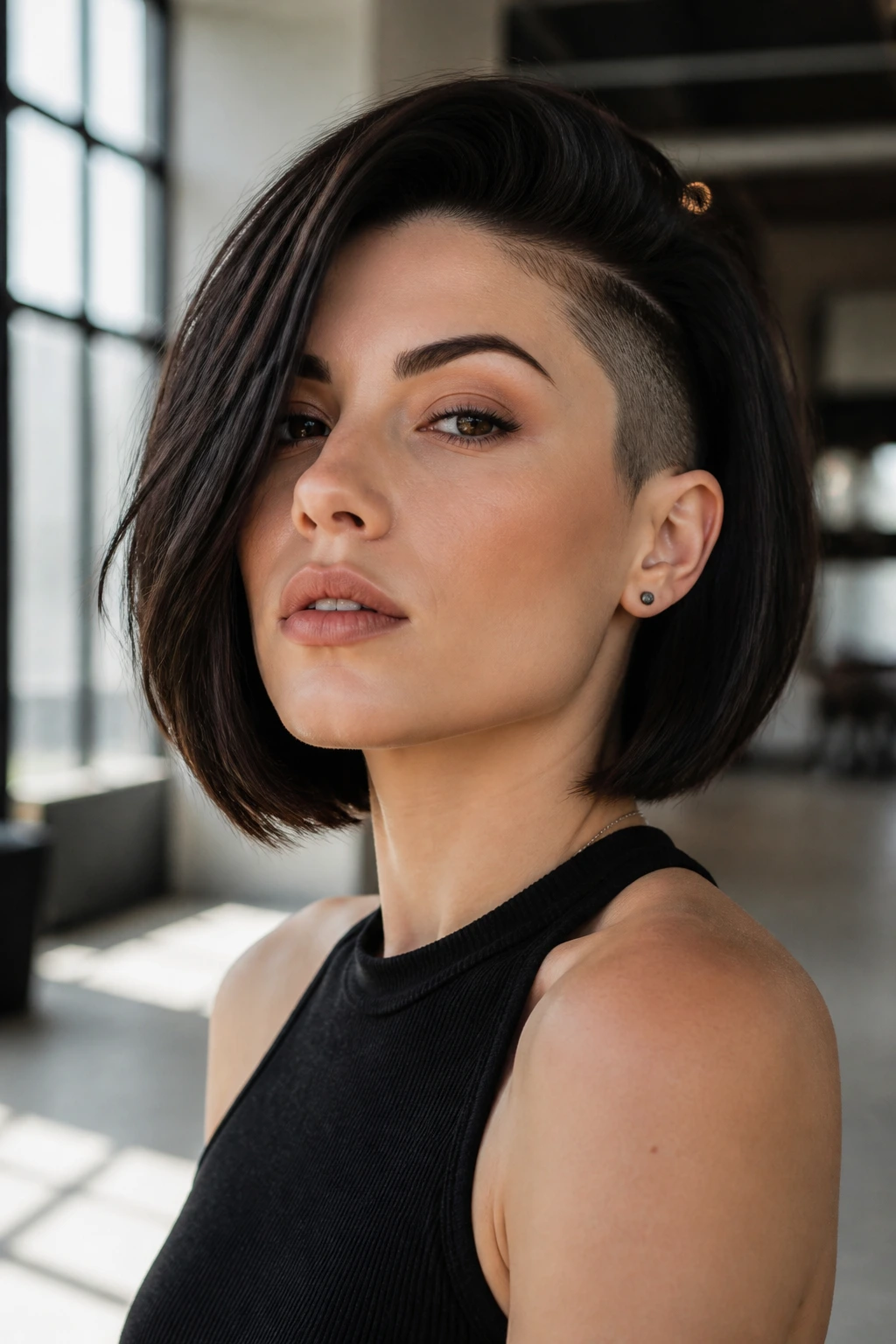
A disconnected bob with one shaved side has a very specific personality: it’s polished from the front, sharp from the side, and a little rude in the best possible way when you turn your head. The bob itself stays blunt and clean, but the undercut removes the bulk on one side so the shape doesn’t feel boxy.
The trick is contrast. Keep the visible side grazing the jawline, then shave the hidden side or lower side panel close with a #2 guard. If your hair is dense, the difference between the two sides will be dramatic in a good way. If your hair is fine, the cut still works, but the line should stay precise so the undercut doesn’t look like an accident.
This one is best for straight or lightly wavy hair because the edges show clearly. Air-dried waves can blur the line if the bob is too shaggy. A blow dryer and a flat brush give it the crisp finish it wants.
5. Curly Crop with a Soft Underlayer
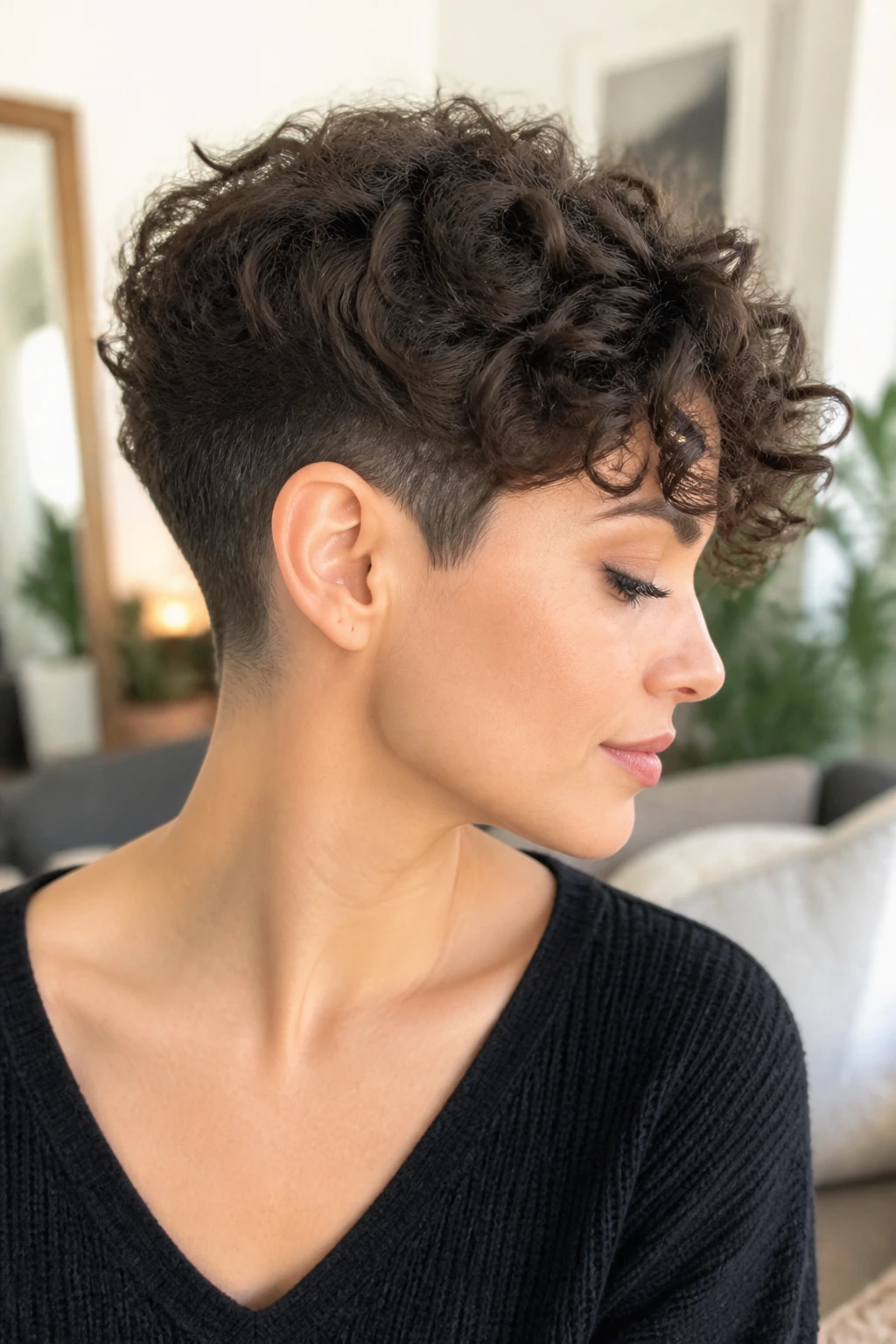
Curly hair and undercuts get along better than people think, but only when the cut respects the curl pattern. A curly crop with a soft underlayer takes weight out from underneath so the curls don’t balloon into a triangle. That’s the whole game. The top keeps its shape. The underside stops fighting back.
The undercut doesn’t need to be dramatic to matter. Even a low removal zone at the nape and around the sides can make the curl stack sit higher and cleaner. Ask for enough length left above the shave that your curls can spring back without exposing too much scalp unless you want that look. A good stylist will cut the top dry or nearly dry so the curl pattern isn’t guessed at while wet.
Why this version behaves better
Thick curls often trap heat and puff out around the neck. Once that weight is gone, the crop dries faster, sits lighter, and looks more intentional. Use a curl cream or gel on soaking-wet hair, then scrunch and diffuse until the cast forms.
The best part is the shape. It doesn’t read like a compromise. It reads like a cut that finally got out of the curls’ way.
6. Asymmetrical Lob with One Shaved Side
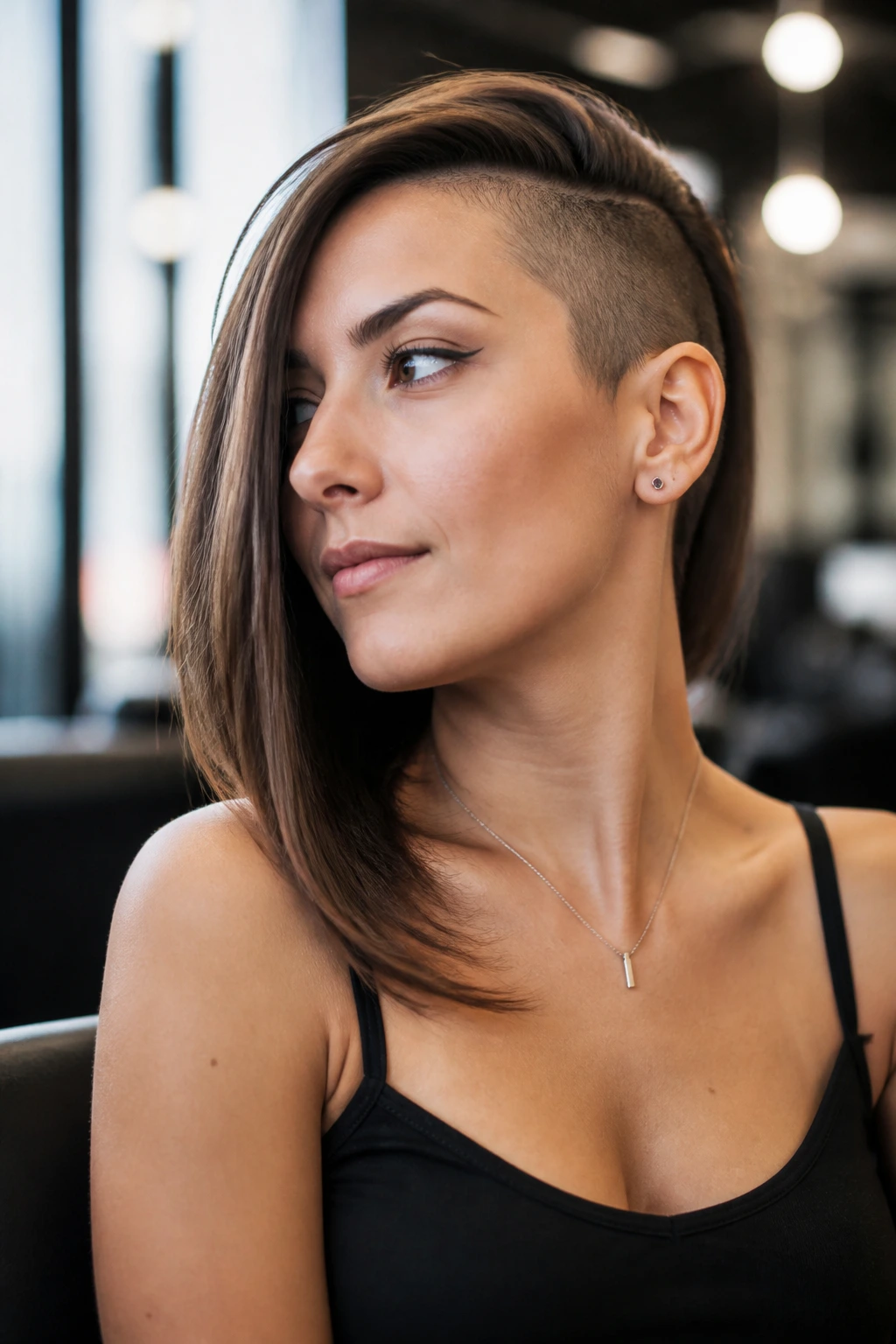
An asymmetrical lob gives you that long-short tension without forcing a full short cut. One side brushes the collarbone. The other side sits a little shorter, often just below the jaw, with one side panel shaved tight underneath. That hidden shave keeps the heavier side from collapsing.
The appeal here is simple: it changes the silhouette from every angle. When you tuck the longer side behind the ear, the shaved side suddenly becomes the feature. When you wear it forward, the cut looks sleek and grown-up with a bite underneath.
This works especially well if your hair is thick and you hate the way one-length lobs can stack up near the shoulders. Keep the visible length blunt enough that the asymmetry reads on purpose, not lopsided. A little smoothing cream through the ends and a deep side part will sharpen the whole thing.
7. Mohawk-Inspired Center Strip
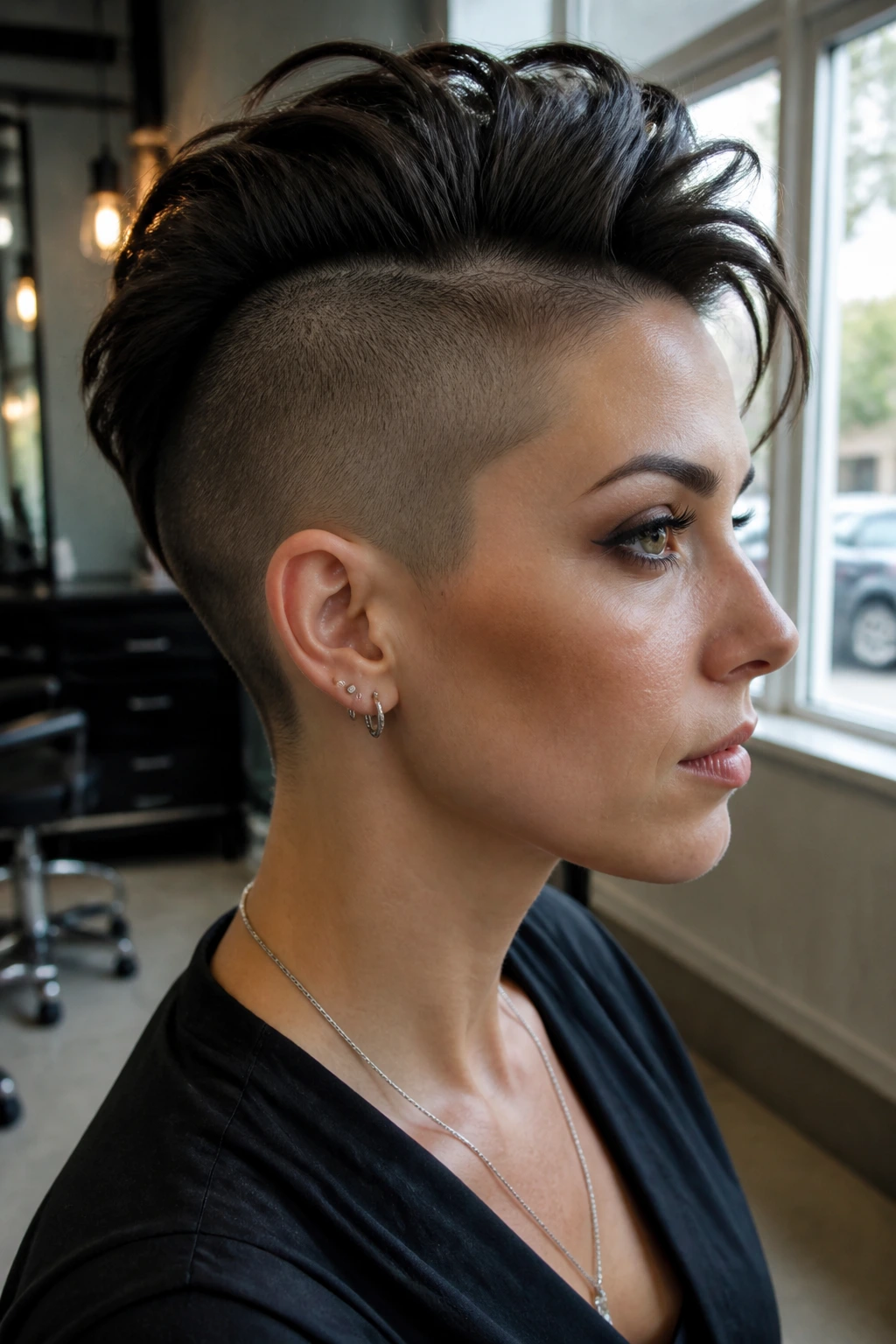
A mohawk-inspired undercut is not for blending into the background. The center strip stays long, while the sides get clipped close, sometimes all the way down to a #0.5 or #1 guard. The result is dramatic, but it doesn’t have to feel costume-y if the top is styled with some restraint.
What makes it different
This cut looks best when the center section has enough length to move—usually 4 to 7 inches on top. Shorter than that and you start getting a stiff crest instead of a wearable style. Longer than that and you can braid it, slick it back, or wear it spiky depending on your mood.
If your hair is very thick, this shape can feel like relief. The sides lose weight fast, and the top becomes easier to control. Use a blow dryer at the roots if you want lift, then finish with a strong-hold paste or gel. Don’t pile on product. That’s how the strip slumps.
A center-strip undercut is one of those looks that photographs in profile better than people expect. In motion, it has a lot of personality. Still. Not everyone needs that much personality at 8 a.m.
8. Braided Topknot with Buzzed Sides
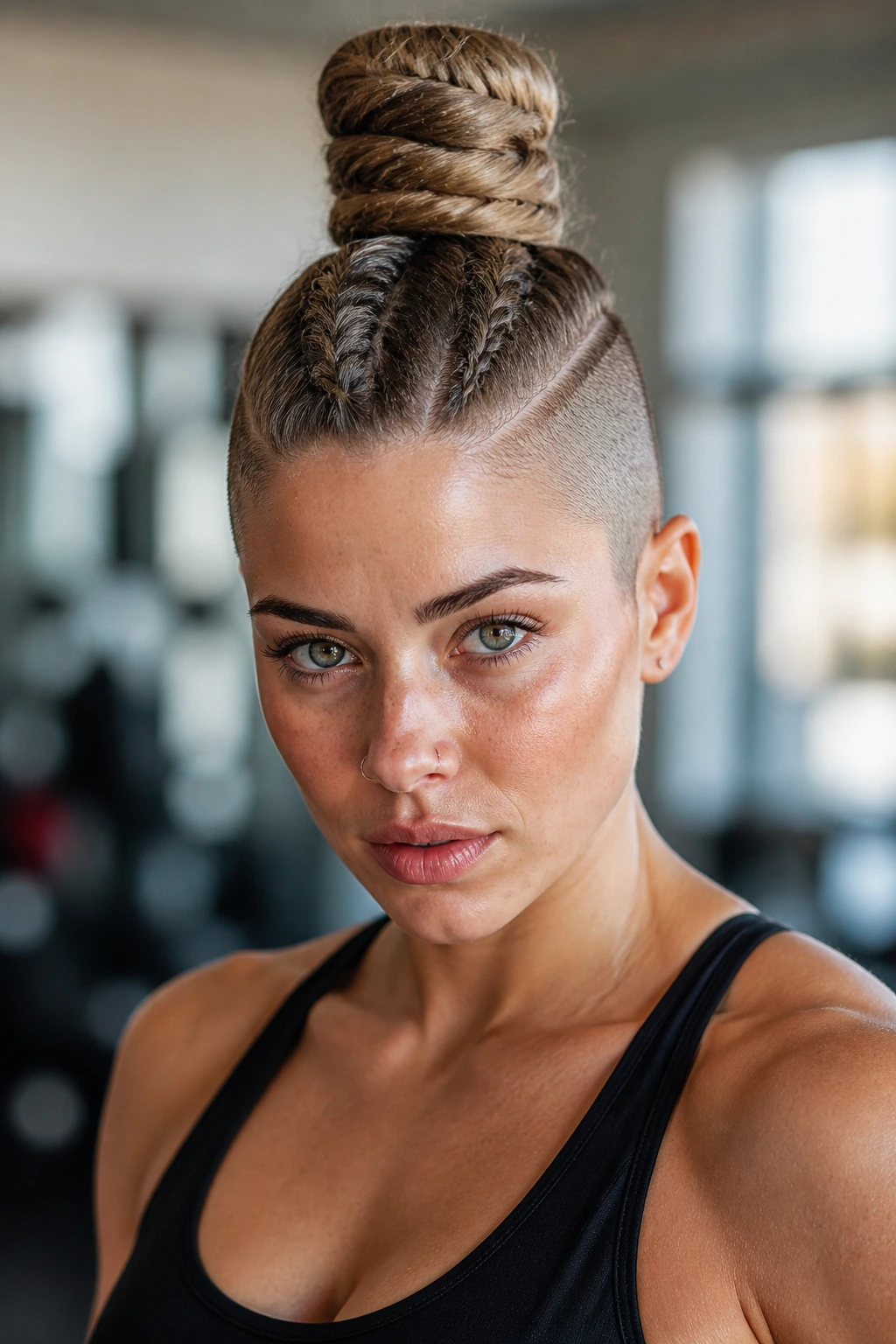
A buzzed side under a braided topknot is one of the easiest ways to wear an undercut without styling the whole head every day. The sides stay short and neat, while the top pulls into one braid, two braids, or a wrapped knot that sits high and clean. The shave gives the updo a stronger outline.
This is a smart choice if you like protective-looking styles, gym-friendly hair, or anything that stays off the neck. A buzzed side can also make very dense hair feel lighter right away. Keep the shaved panel low enough that the braid still covers the transition when you want it to, because a harsh line peeking out can look unfinished unless that’s the point.
A little edge control at the hairline helps the front look tidy. For the top, damp hair with a touch of leave-in and gel will braid more smoothly. The style lasts longer if you sleep on a satin scarf or bonnet. No mystery there. Hair behaves better when it’s not rubbing against cotton all night.
9. Peekaboo Undercut on Long Layers
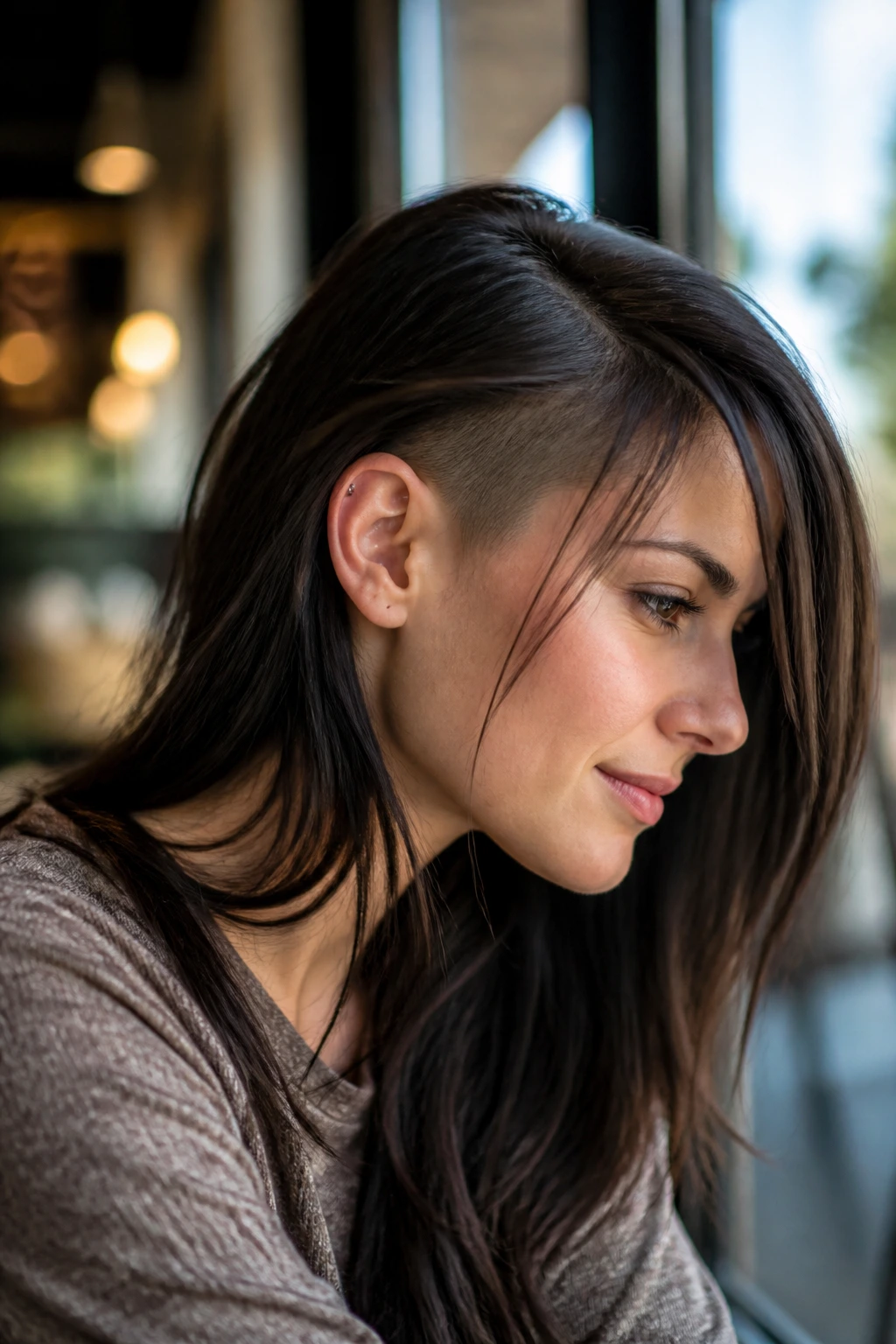
A peekaboo undercut is the quiet one in the room. Long layers fall over it, and the shave only flashes when the wind shifts or the hair gets tucked up. That makes it perfect for anyone who wants the visual surprise without advertising the cut all the time.
The most important thing is placement. Keep the shave tucked under the top layer, usually at the nape or a low side panel, and don’t let it climb too high. If it sits too near the crown, you lose the “peekaboo” and move into obvious territory. A guard around #2 is enough for most versions, though finer hair can handle closer if you want more contrast.
This style is a nice bridge cut. It lets you test an undercut without giving up the feeling of having long hair. Wear it straight for a subtle flash, or put the top into a half-up twist and let the shaved section do the revealing.
10. Razor-Sharp Bowl Cut Revival
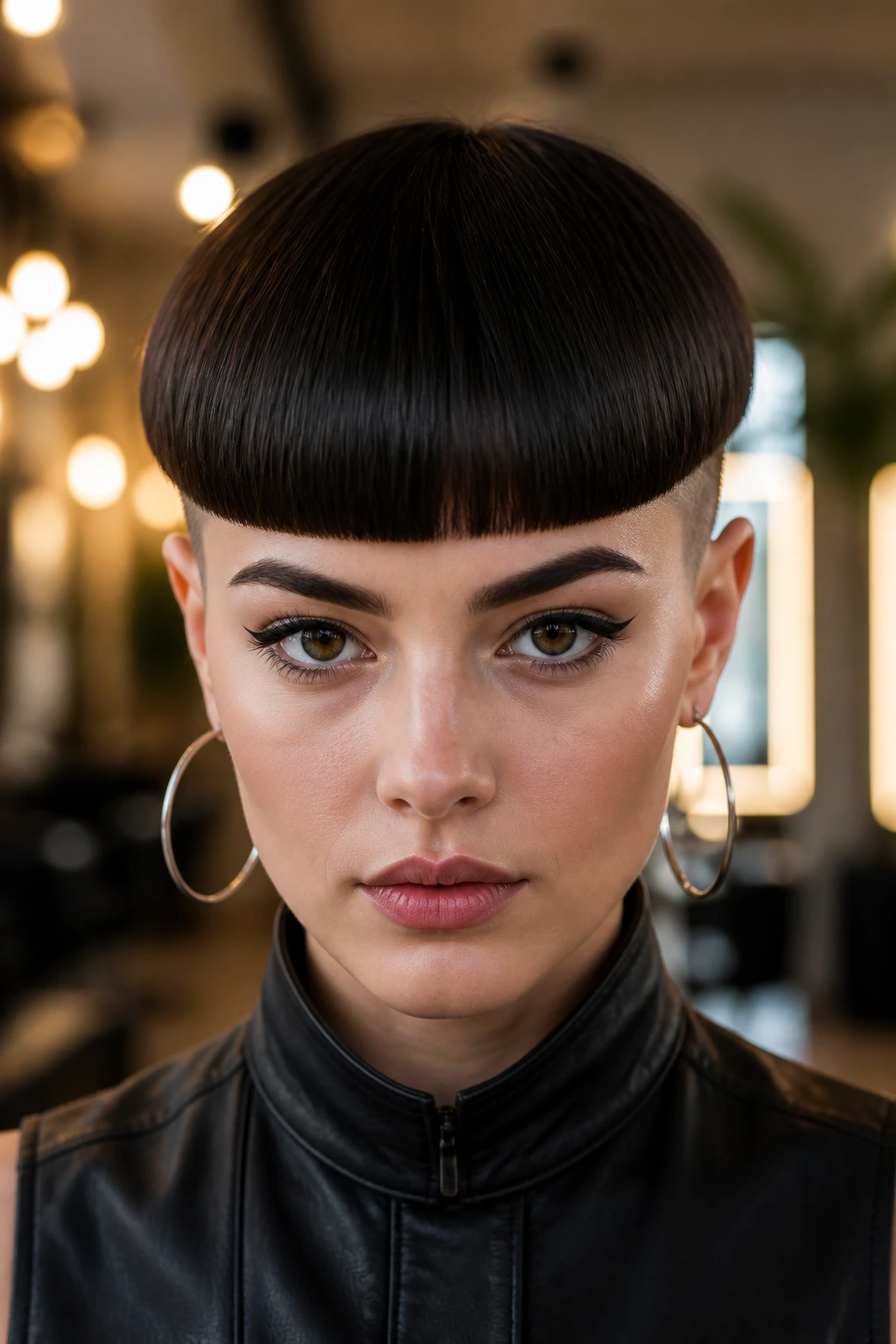
A modern bowl cut with an undercut is nothing like the helmet shape people remember from childhood photos. The undercut takes the bulk out from underneath, which lets the top sit with a crisp curve instead of puffing out around the ears. That shift makes the whole cut look architectural rather than heavy.
You want the line to be deliberate here. The perimeter should stay blunt, especially around the fringe and cheek area, while the hidden underlayer gets clipped shorter to remove weight. If the top is too soft, the shape loses its point. If the undercut sits too high, the bowl starts floating awkwardly.
This cut thrives on clean styling. A flat iron can sharpen the curve, but even a round brush and a bit of smoothing cream will get you there. It’s a strong look. No pretending otherwise. But if you like a haircut that makes a simple black sweater look put together, this is one of the easiest ways to get that effect.
11. Feathered Shag with a Temple Slice
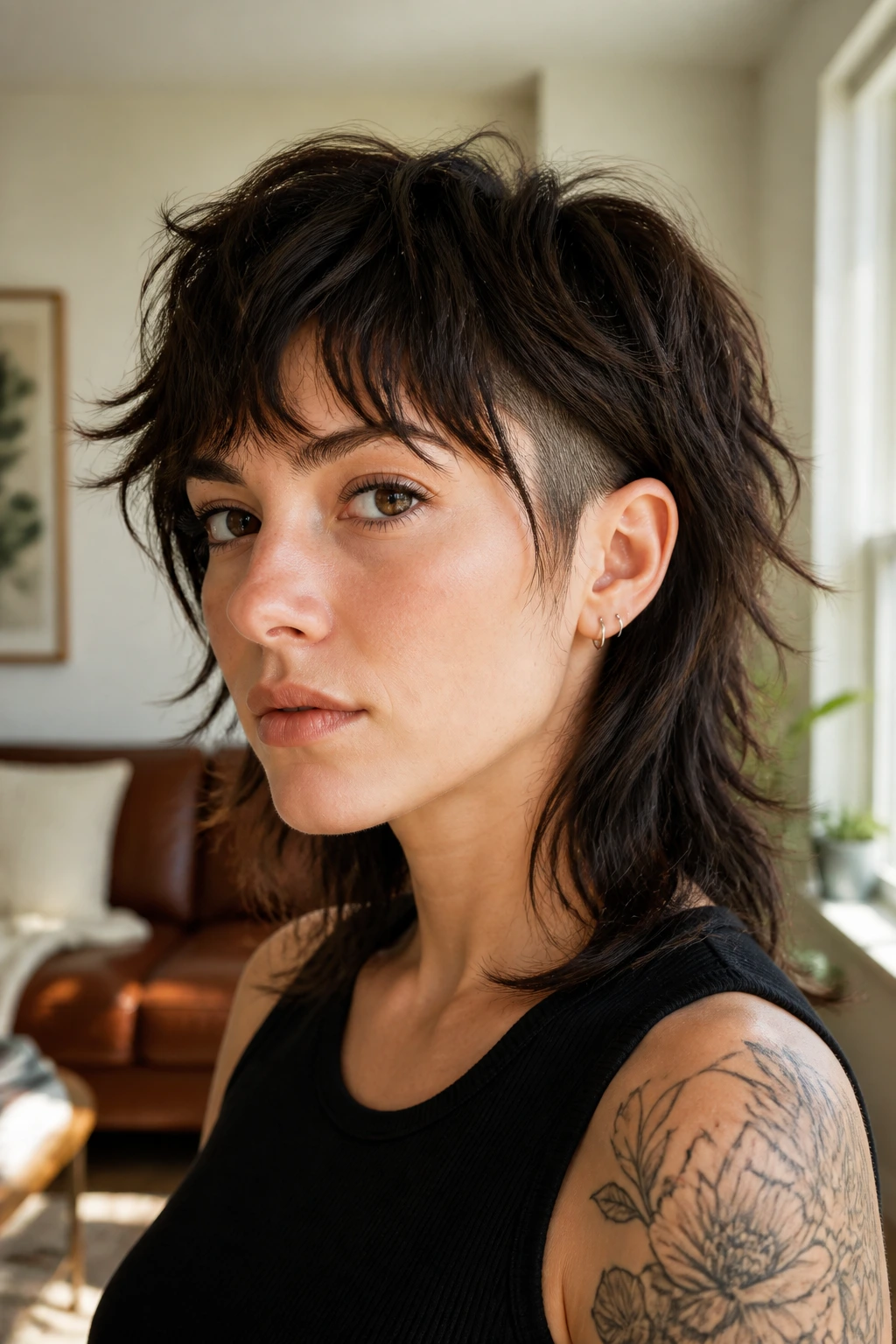
A shag already likes movement, so a temple undercut is the kind of detail that makes the whole cut breathe. The feathered layers do the soft work around the face, and the shaved temple keeps the side from building too much bulk. It’s a good mix of loose and sharp.
The temple slice doesn’t need to be wide. Sometimes an inch or two is enough to break up the density and keep the top layers from sitting too flat near the face. This is one of those styles that gets better the second day, when the texture spray has dried into the layers and the cut stops looking freshly blown out.
Use a diffuser if your hair waves or curls. If it’s straight, rough-dry at the roots and bend a few pieces with a curling iron, then leave the ends a little uneven. A shag should never look over-brushed. That would kill the point.
12. Platinum Buzzed Side Sweep
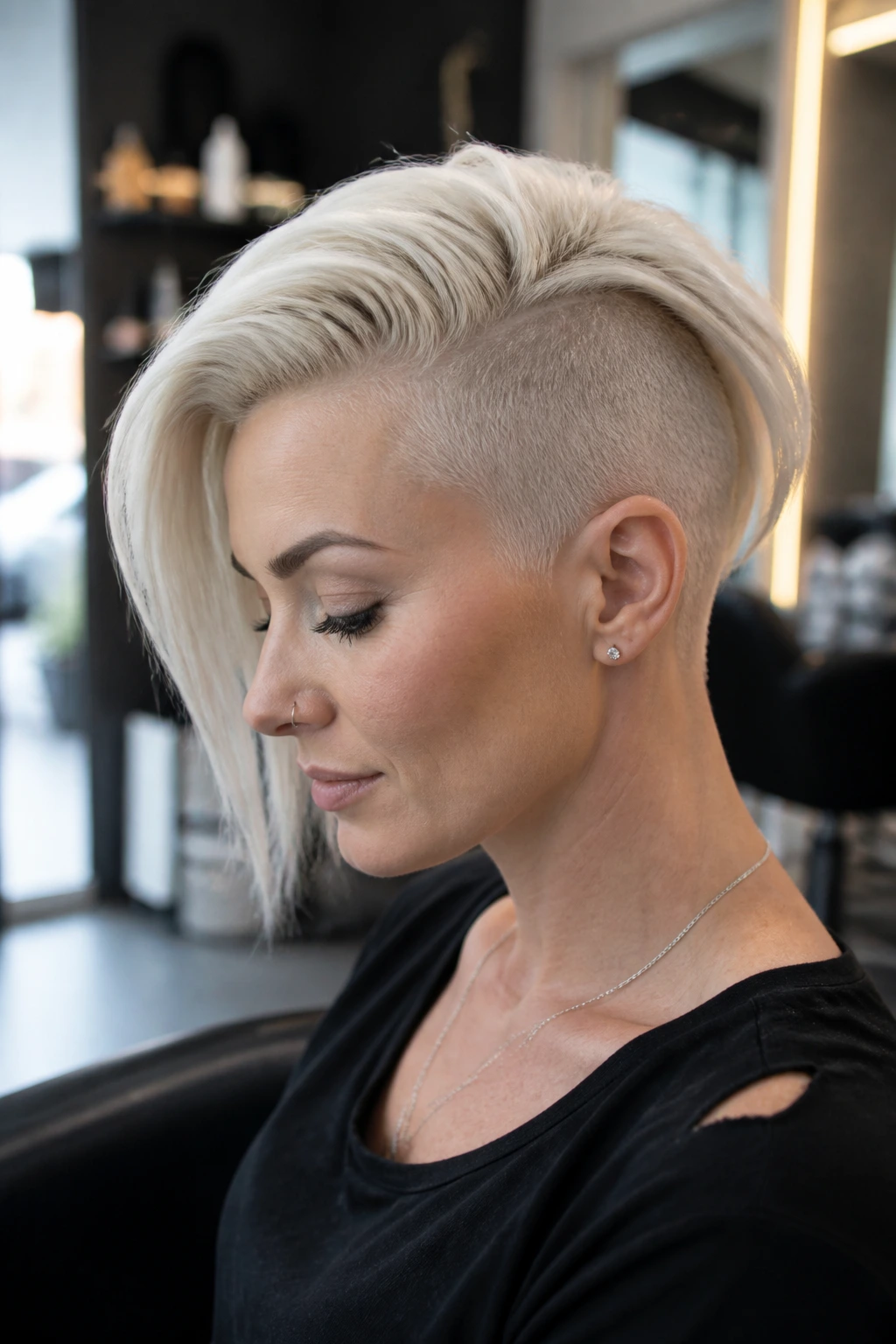
A platinum top with a buzzed side is blunt in the cleanest way. The light color throws the shave into sharper focus, so the cut doesn’t need extra design work to feel bold. That contrast is the feature. The color and the clipper work together instead of competing.
If you go this route, keep the buzzed side short enough to read against the pale tone of the rest of the hair, and expect the color to demand attention to tone and scalp condition. Bleached hair wants moisture, but the buzzed area also needs a scalp that isn’t irritated from constant over-oiling. I’d keep conditioner on the longer top and use a lighter scalp product on the shave.
This style looks best with a clean side sweep or deep part. A matte paste can keep the long top from collapsing, while a shine spray on the ends gives the platinum some shape. The whole cut has a crisp, expensive bareness to it. That’s the draw.
13. Textured French Crop with a Low Fade
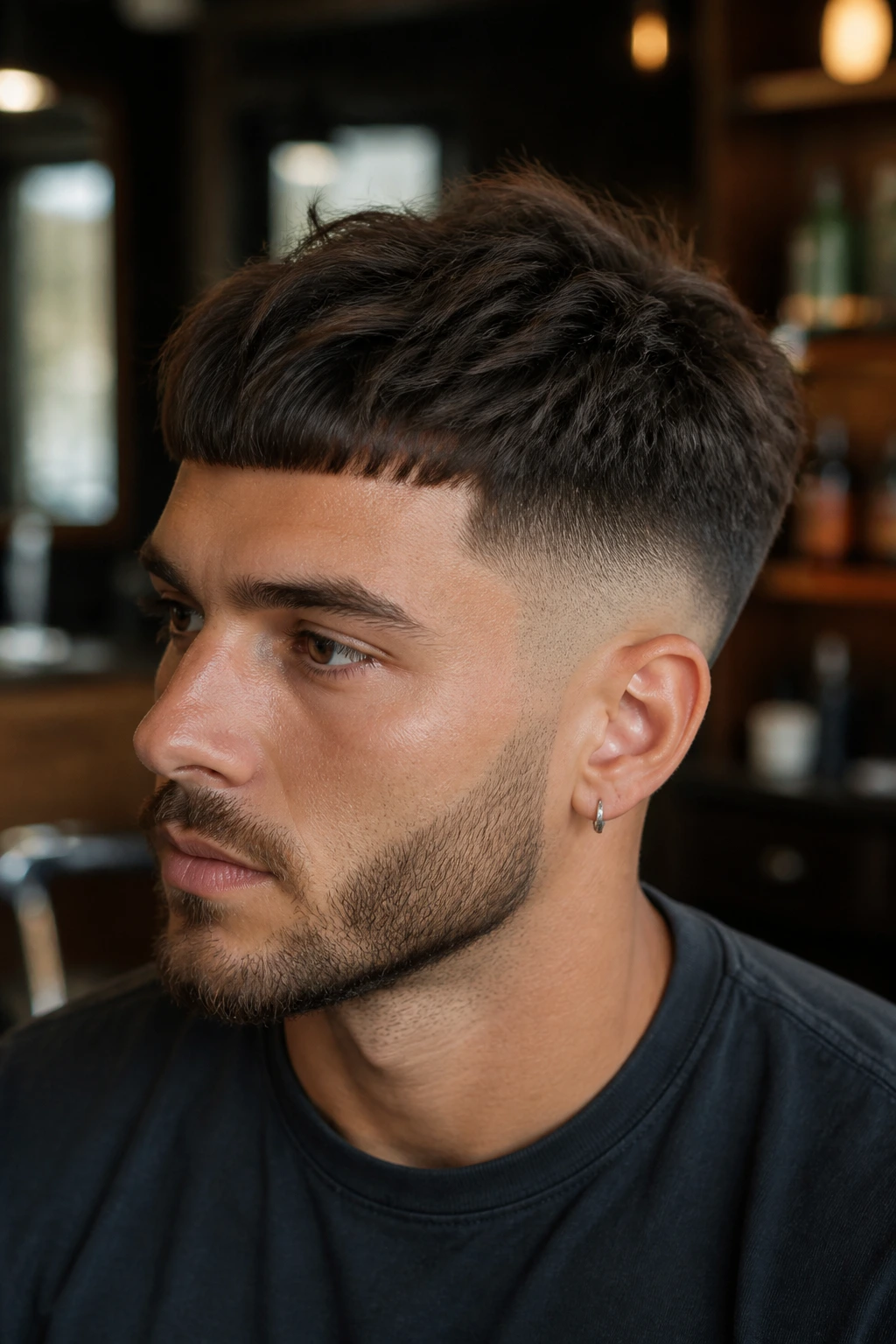
What makes a French crop edgy instead of safe is the fade underneath. The fringe stays short and blunt or slightly choppy, and the sides taper low so the top looks dense by comparison. It’s a shorter cut, but it still has attitude because the shape stays tight around the head.
The top usually works best at 1.5 to 3 inches, depending on whether your hair is straight or wavy. Too much length and it stops being a crop; too little and you lose the texture. Ask for a low fade rather than a high one if you want the cut to feel wearable instead of severe. The low fade keeps the outline soft around the ears.
This is a good pick for anyone who wants a short style that doesn’t need heat every morning. A little matte clay worked through damp hair is usually enough. Finger-drying works better than a brush here. A brush can make it too neat, and neat is not what this cut is after.
14. Faux Hawk with Tapered Sides
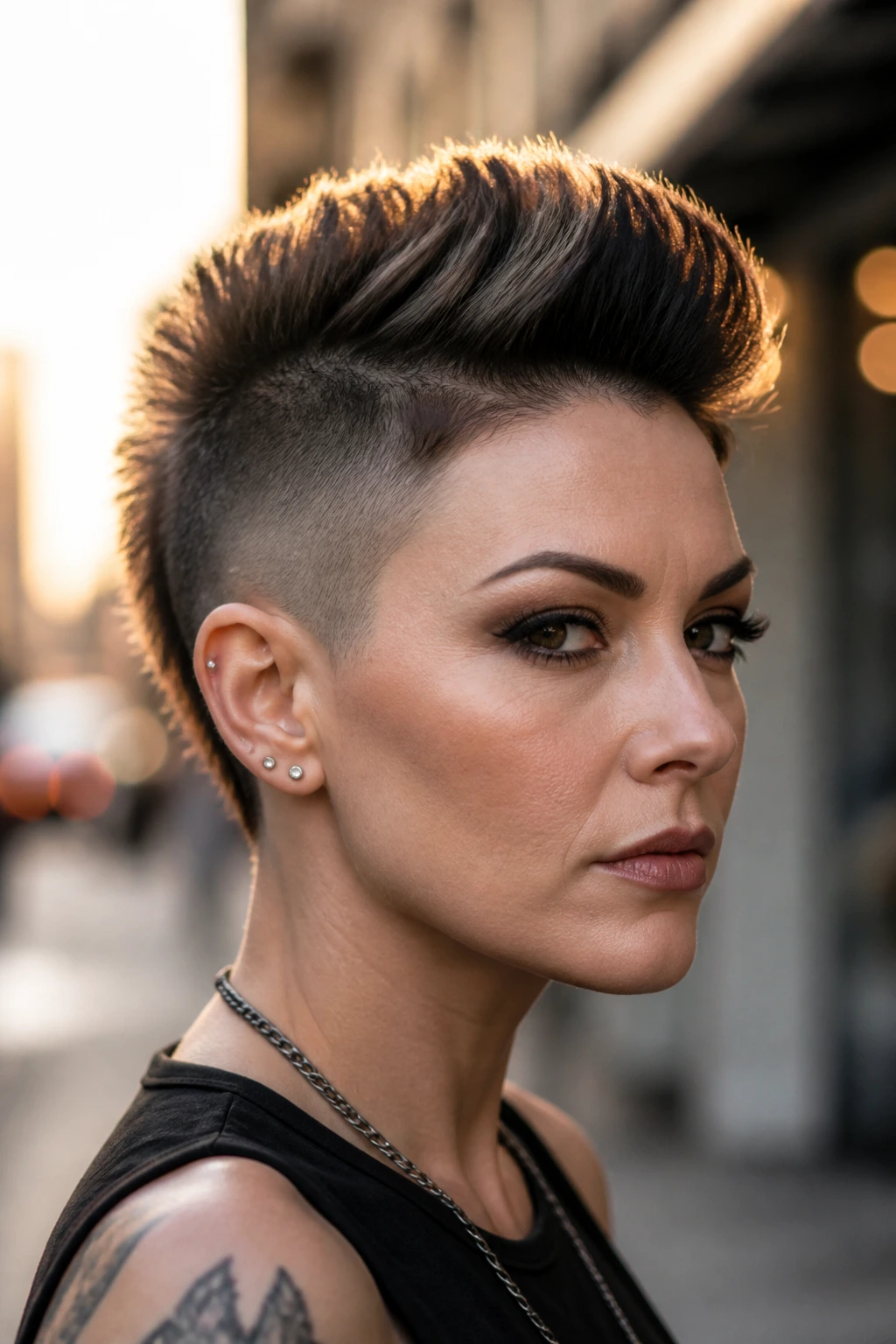
A faux hawk gives you the center lift of a mohawk without shaving the sides down to the skin. That makes it easier to wear in more settings, which matters if you want the edge without the full reset. The sides can taper short, while the center ridge stays longer and easier to shape.
The best faux hawks for women usually keep the top around 3 to 6 inches, with the front slightly longer if you want to push the shape forward. The tapered sides are what keep the style from feeling too blocky. When the top is textured with a bit of grit, the whole cut looks intentional instead of like a failed spike.
If your hair is thick, this shape gives you a place to remove weight without sacrificing length everywhere. If your hair is finer, keep the top slightly shorter and use a root-lifting spray. The undercut isn’t the point here. The line of height is.
15. Pompadour Undercut with Height
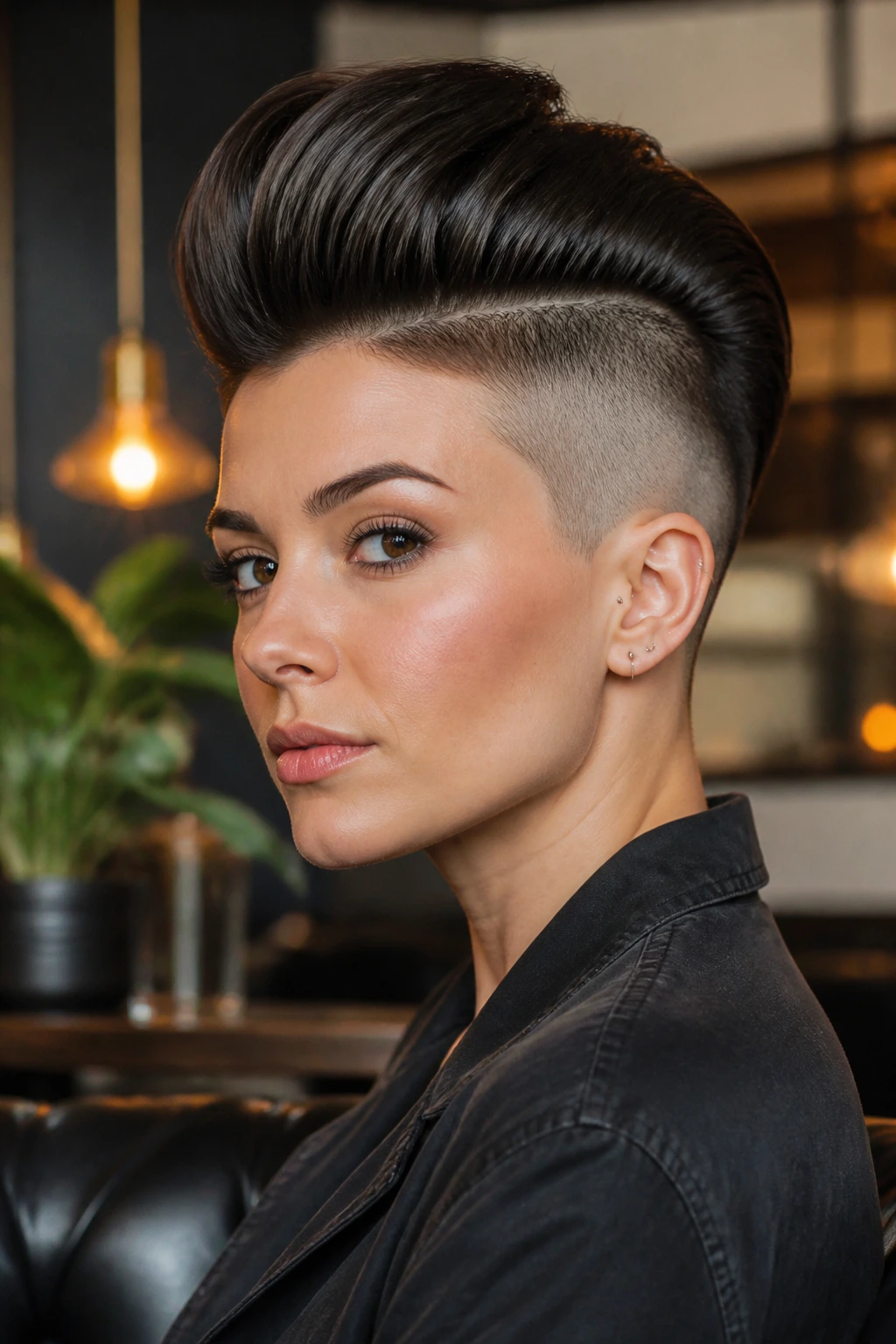
A pompadour undercut is all about the lift at the front and the clean sides underneath. It can look vintage, punk, or polished depending on the finish, but the backbone is the same: volume at the hairline and reduced bulk below. That combination makes the top look taller than it really is.
The styling matters. Blow-dry the front up and back using a round brush or your fingers, then lock it in with a strong but not sticky product. If the sides are shaved too high, the pompadour starts looking disconnected in a way that can feel harsh. Keep the undercut low enough that the shape reads as one cut, not two separate ones.
This style suits people who don’t mind a little time with a dryer. The payoff is a strong silhouette that stays visible even when the rest of the outfit is plain. That part is fun. A black tee and a sharp pompadour can carry more attitude than a closet full of loud clothes.
16. Side-Part Bob with a Tight Underlayer
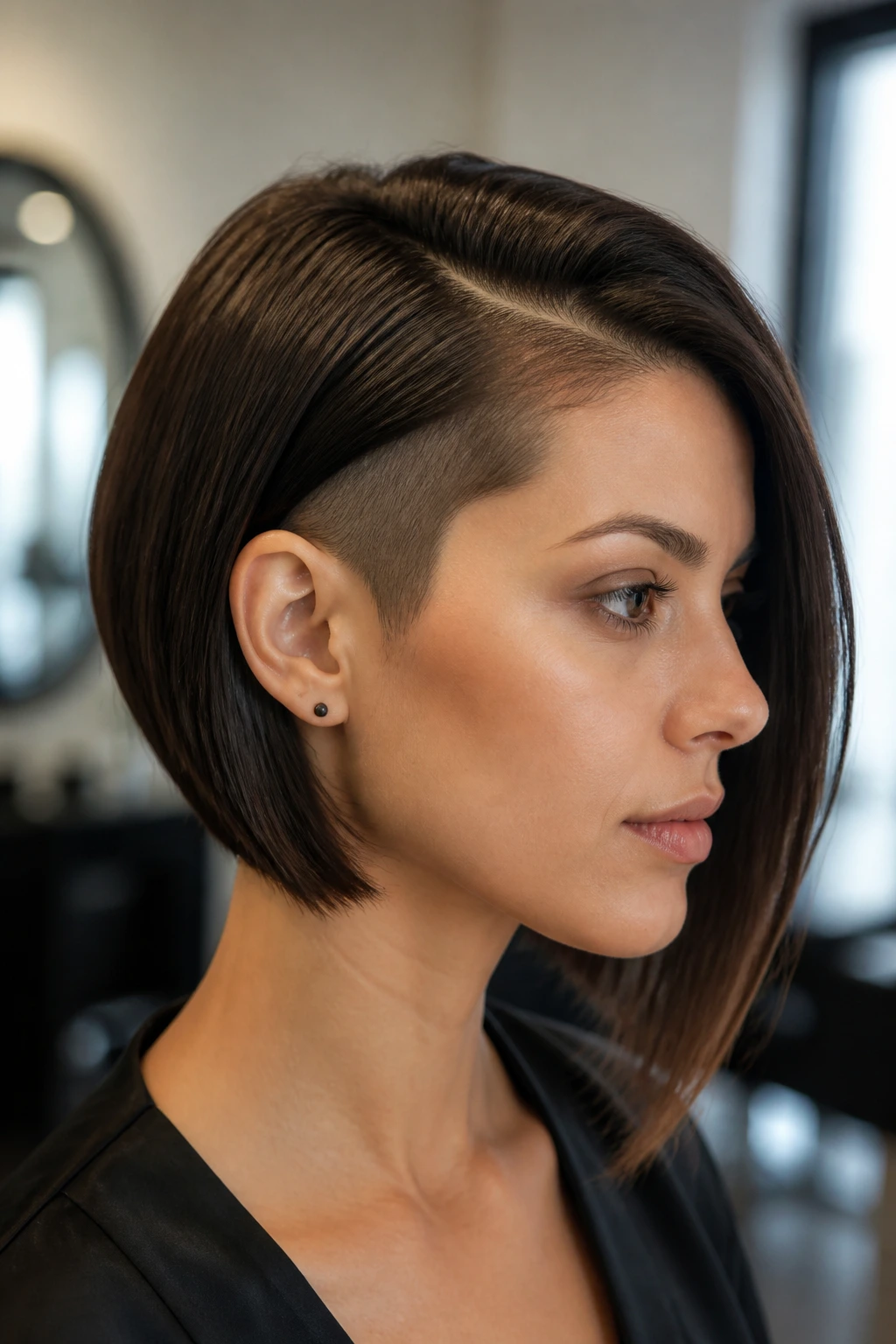
A side-part bob with a tight underlayer is the quietest way to make a bob look sharper. From the front, it still reads as a bob. From the side, the tucked-away undercut changes the way the ends fall and keeps the outline from swelling at the jaw. It’s a clean fix for dense hair.
The side part gives the cut direction. Without it, the bob can sit too evenly and lose the asymmetry that makes the undercut interesting. A deep part also exposes a little more of the hidden shape, which is nice if you want movement without shaving a full panel.
This version is especially good if you like sleek styling. A paddle brush, a quick bend at the ends, and a small amount of serum is enough. If your hair is naturally puffy, this cut can save you a fight with the mirror every morning. That alone makes it worth considering.
17. Curly Tuck-Back Undercut
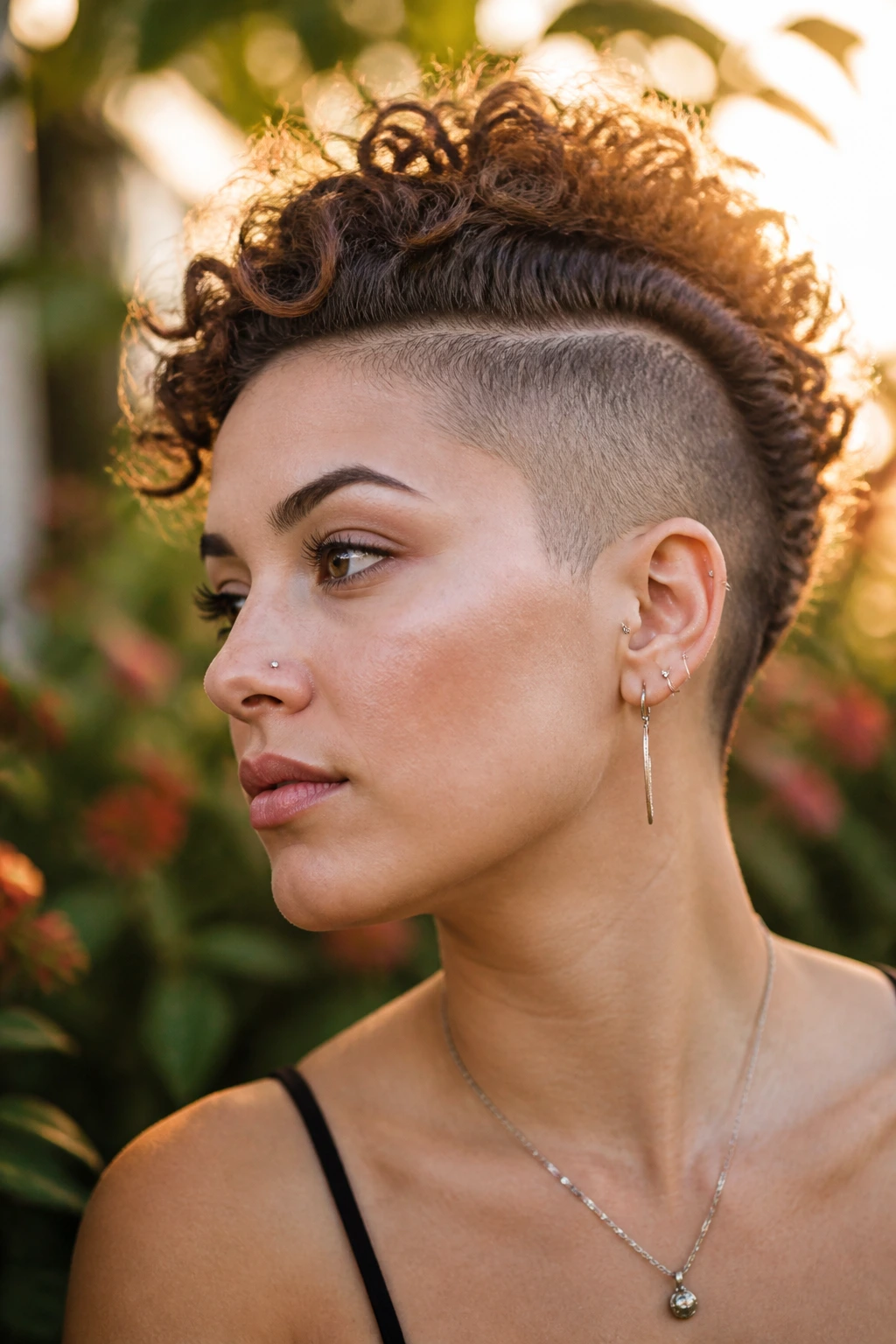
Can curls look polished with an undercut? Yes, if the shave removes the bulk where the curls are trying to flare out. A tuck-back undercut keeps the sides and nape shorter so the curls on top can stack back and away from the face instead of spreading sideways.
The look works best when the curls are cut dry or nearly dry. Wet curls lie. They stretch, then spring back and surprise everybody later. A stylist who understands curl shrinkage can leave enough length on top for the tuck-back shape to hold once it dries. Usually that means keeping the upper curls longer than you think you need.
Use gel or cream on soaking-wet curls, then style the top back with your fingers. Diffuse just until the cast sets. The shaved area does the visual work; the curl top carries the movement. It’s a strong balance, and it keeps the cut from turning into a bulky halo at the neck.
18. Graphic Design-Shaved Undercut
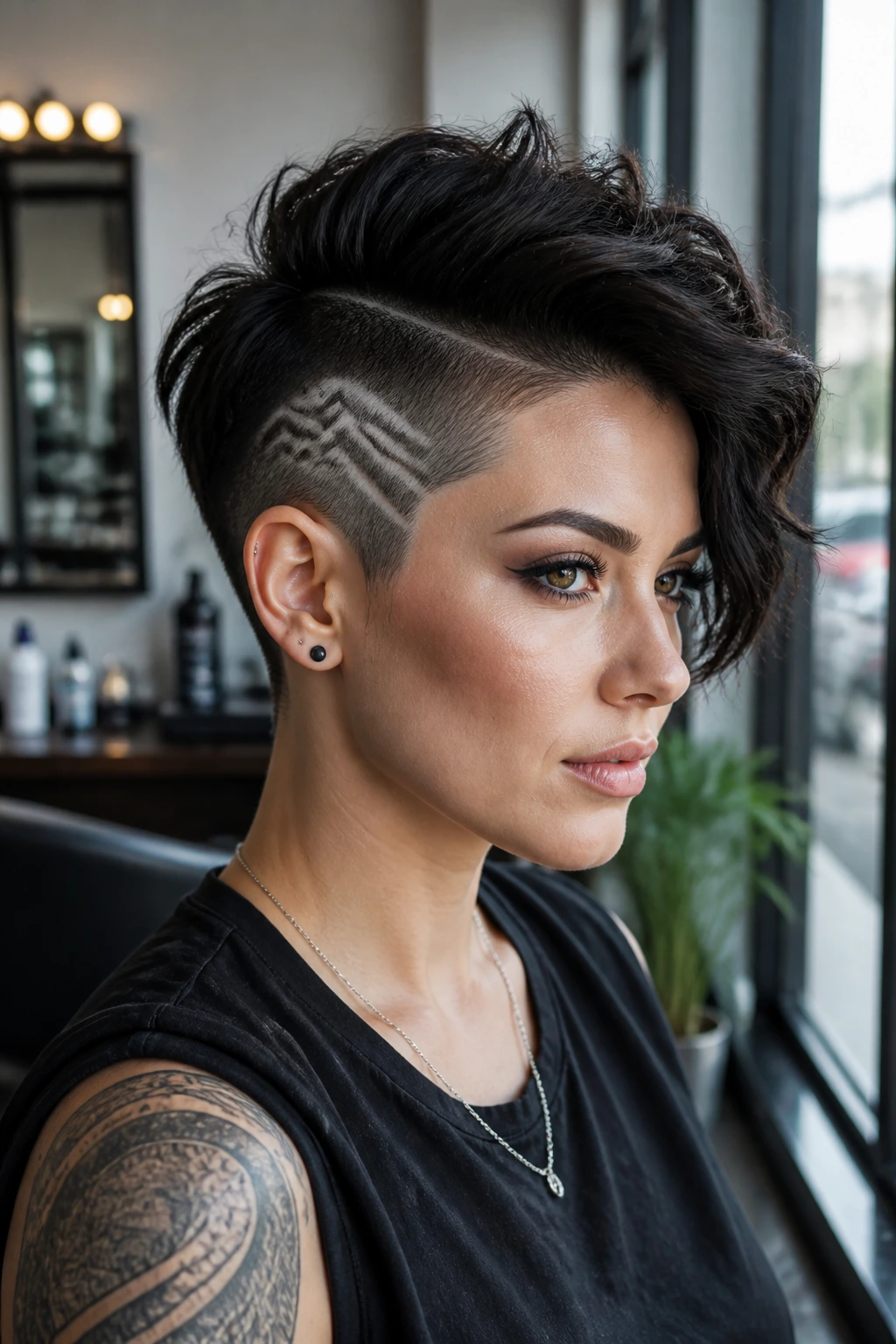
A graphic shaved undercut is where the clipper gets to have a little fun. Lines, curves, zigzags, fan shapes—pick one and keep the rest of the cut clean so the design can breathe. Too many shapes on one head and the whole thing starts reading like a sample board.
The base needs to be short and neat, usually around a #1 guard or tighter, so the design shows clearly. Sharp contrast helps, which means the lines should be redrawn before the grow-out gets fuzzy. If you let it go too long, the design disappears fast. This is the least forgiving style on the list.
It’s best if you actually like upkeep. The design is the point, not a bonus. If you’re the kind of person who trims the neckline every few weeks and doesn’t mind a fresh shape, this one delivers a lot of personality with not much top styling.
19. Curtain Bangs with a Hidden Shave
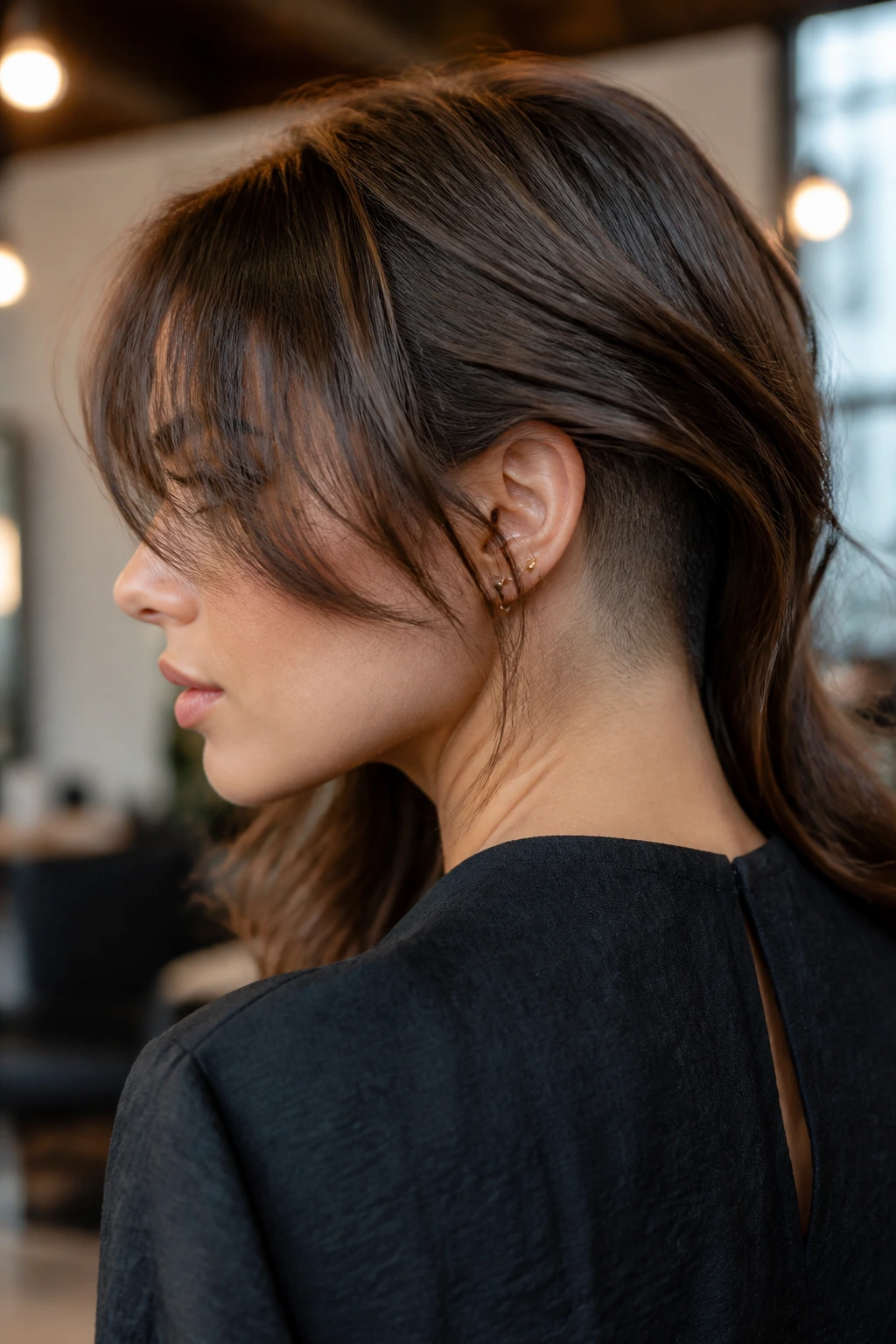
Curtain bangs soften almost any undercut, which is why this combination works better than people expect. The bangs split at the center, frame the face, and hide the edge of the cut enough that the shaved panel underneath feels more like a secret than a statement. That contrast is the appeal.
A hidden shave underneath curtain bangs usually sits low at the nape or behind one side panel. The bangs keep the front from feeling severe, while the undercut takes away the weight that makes longer layers drag. If you have thick hair, this can be a huge relief around the sides of the head.
Keep the bangs long enough to tuck and flip, not so short that they fight the rest of the cut. A round brush and a blow dryer will usually give you that soft bend at the cheekbones. The hidden shave takes care of the rest. It’s the kind of style that looks like you have more hair than you do, which is a strange and useful trick.
20. Shag Mullet with a Nape Cutout
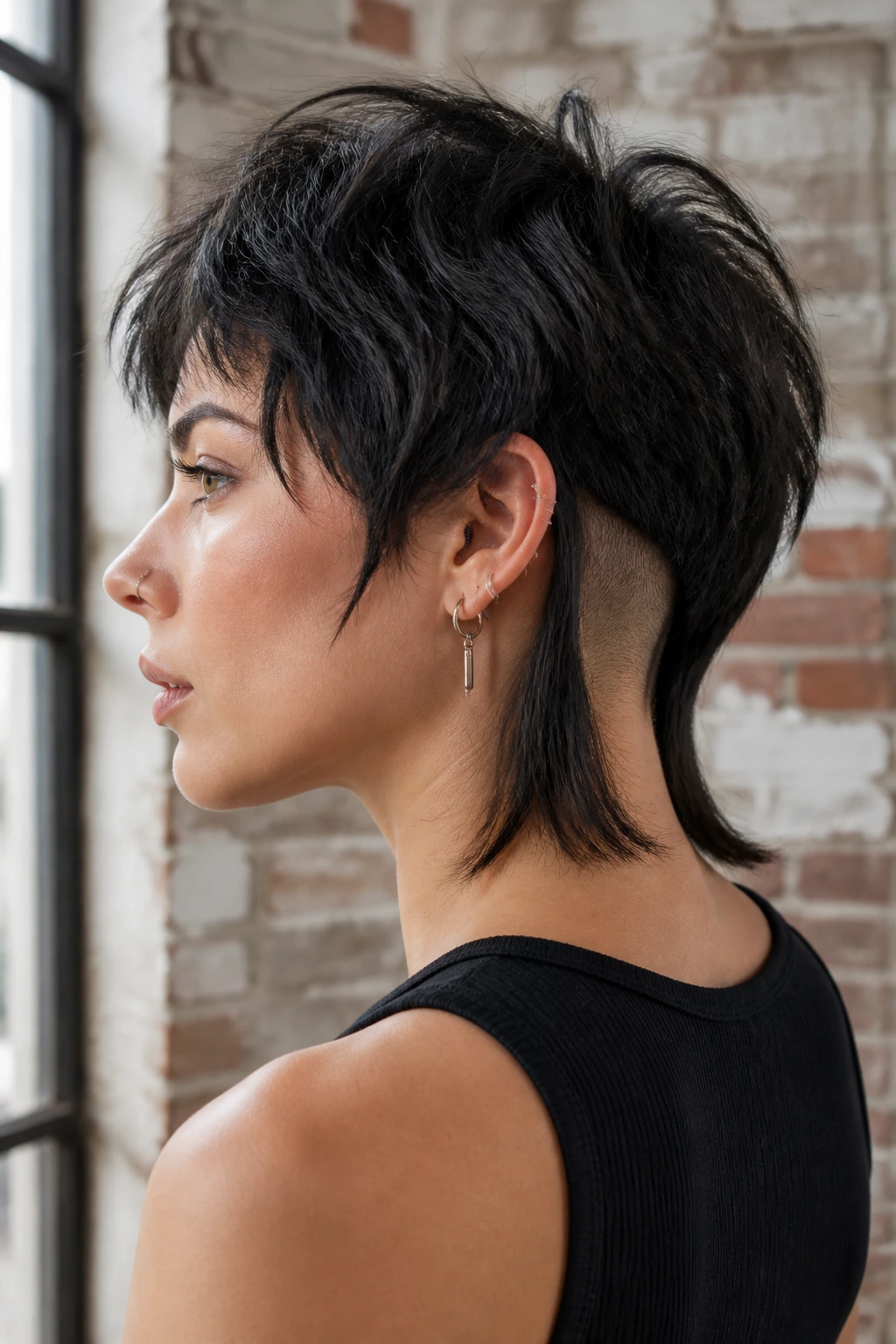
A shag mullet with a nape cutout has a very specific energy: loose on top, lean underneath, and sharp where the hair meets the neck. The cutout removes the dense patch that can make a mullet look clunky instead of cool. Once that bulk is gone, the layers move.
This style needs texture. If the top is too smooth, the whole thing loses its edge. Let the layers be imperfect. Let them swing. The undercut is there to stop the silhouette from getting too wide at the back, especially if your hair naturally sits heavy at the nape.
A salt spray or texturizing foam gives the shape enough grit to stand up. This is one of those styles that improves with a little mess. Not dirty. Just lived-in. There’s a difference, and you can feel it when you run your fingers through the ends.
21. Micro Bangs with Clean Sides
Micro bangs bring the attention straight to the eyes and forehead, and clean shaved sides keep the shape from feeling overloaded. The contrast is stark, which is exactly why this pairing works. The fringe is tiny. The sides are tight. Nothing is fighting for space.
This cut looks especially sharp on straight to wavy hair, where the bangs can sit flat enough to show their line. The undercut can be visible at the temple or hidden lower down, depending on how much edge you want. If the sides are too soft, the whole thing turns cutesy. If the shave is neat and the fringe is crisp, it feels editorial.
Styling the bangs takes almost no time, but the cut has to be precise. Even half an inch matters. That’s the part people underestimate. Micro bangs are unforgiving, and they do not care what your morning mood is.
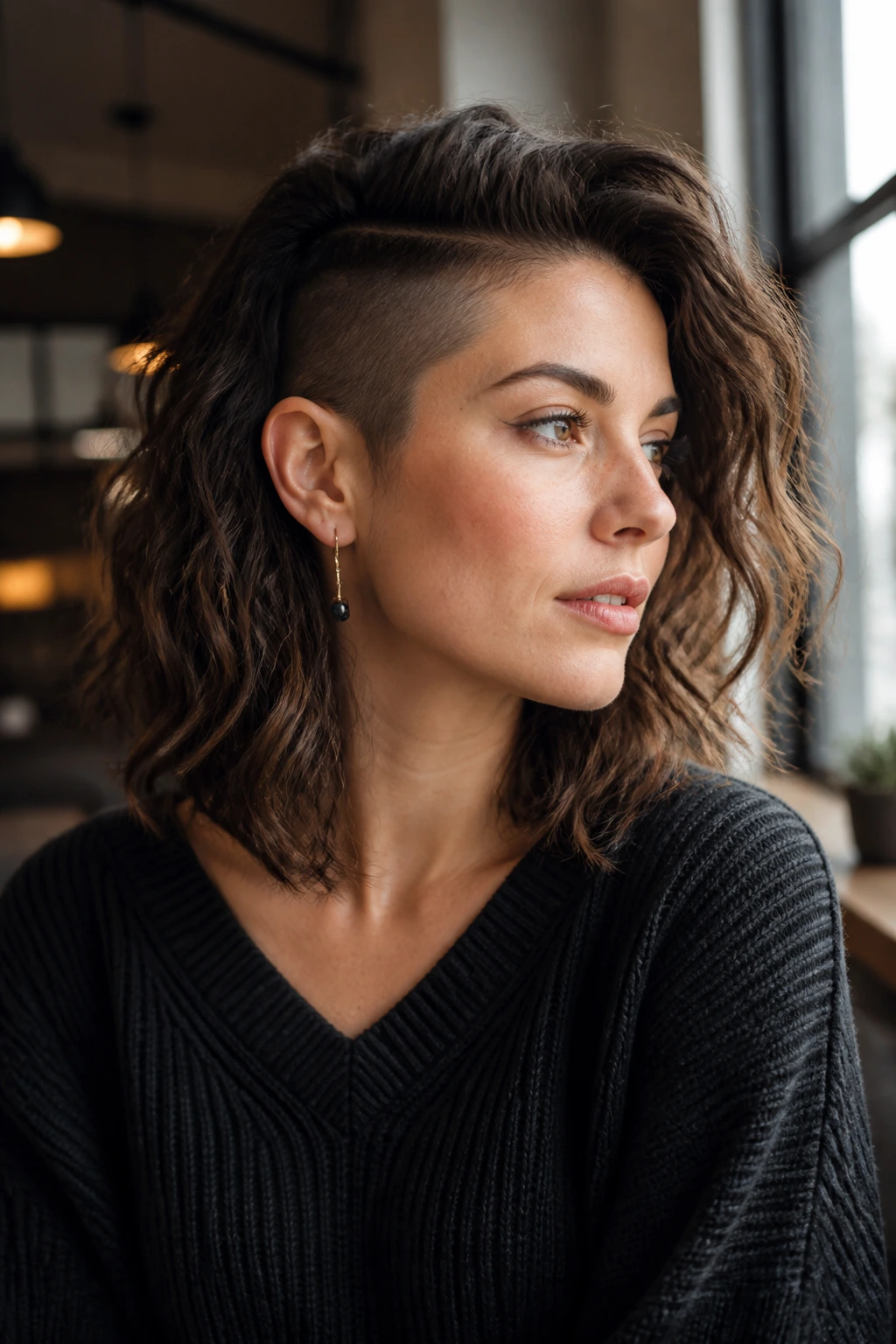
22. Wavy Shoulder-Length Undercut
Shoulder-length hair can get thick and triangular fast, especially when waves puff out at the sides. A hidden undercut solves that by taking weight out underneath while letting the outer layers still move and flip around the shoulders. It’s one of the most practical undercut styles on this list.
The visible shape stays soft, so you don’t lose the long-hair feeling. But the base no longer sits like a shelf at the neck. Ask for the undercut to stay low enough that the outer layers still cover it when the hair is down. A #2 or #3 guard is usually enough if you want control rather than a full shave-down effect.
Wavy hair loves this cut because it can keep its texture without getting too wide. Add a curl cream or wave lotion to damp hair, scrunch, and let it air-dry or diffuse. The undercut quietly does the heavy lifting under there.
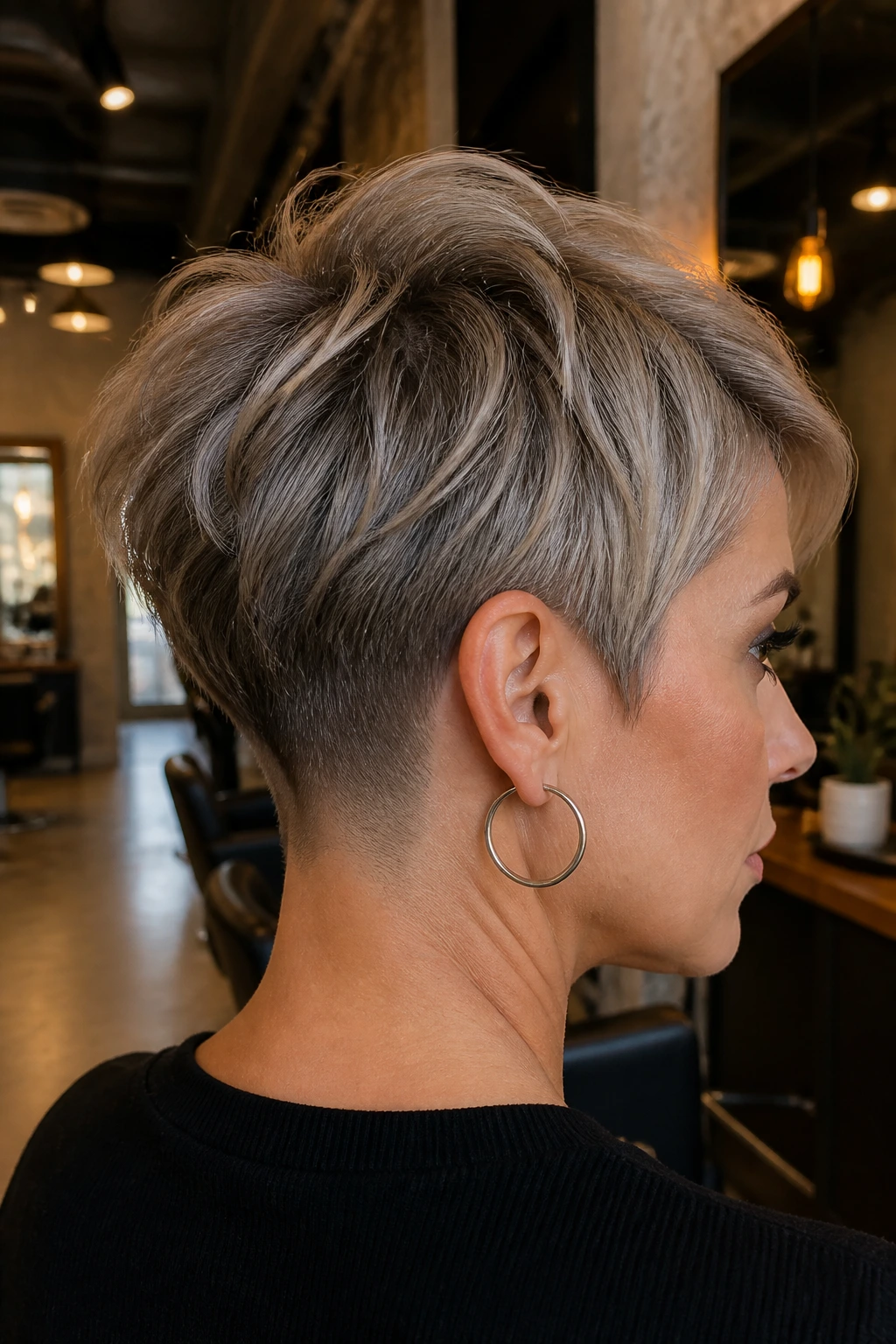
23. Layered Pixie with a Nape Fade
A layered pixie with a nape fade is one of those cuts that looks light on the head and sharp around the neckline. The fade at the back removes the shelf that pixies can sometimes build when the hair grows out. That makes the whole shape sit closer to the skull.
The layers on top give you room to style forward, side-sweep, or spike the crown with a dab of paste. Keep the nape tight with regular trims, because the fade is what keeps this from becoming a fuzzy helmet. If you have a cowlick at the back of the head, tell your stylist before they clip. That little spiral can change the way the fade should be cut.
This style is quick in the morning. A little wax between the fingers, a bit of lift at the roots, and you’re done. The detail is in the back, which is exactly where a pixie can go sloppy if nobody is paying attention.
24. Half-Up Ponytail Undercut
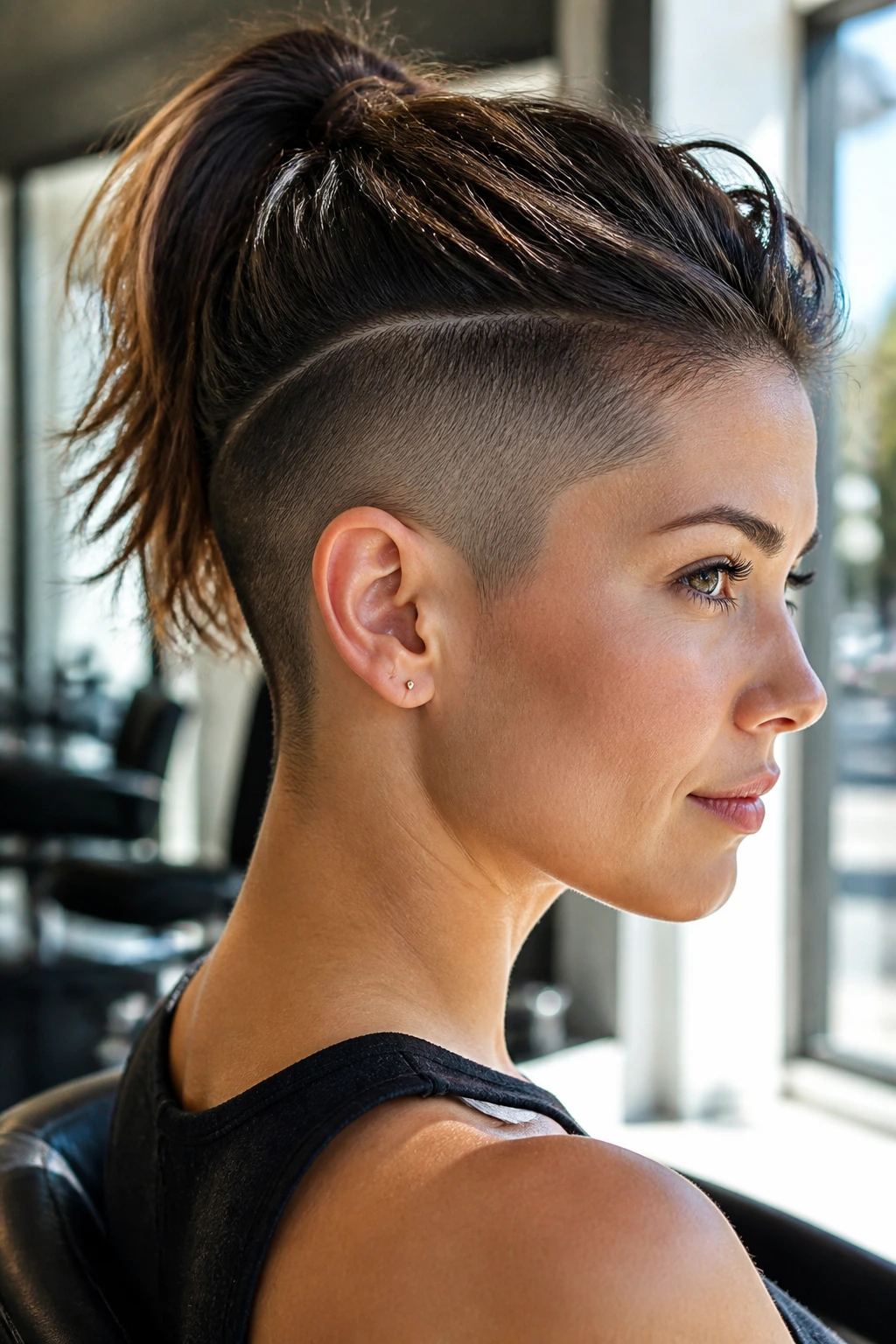
A half-up ponytail with an undercut is more of a styling move than a separate cut, but it earns its place because the combo shows the shape off so well. The top section gets pulled up and back, while the shave underneath becomes visible from the side and rear. It’s a simple way to make a long cut feel sharper.
This works best if the undercut is low enough to hide when the hair is fully down, but high enough to show when the top is gathered. If the shaved zone is too wide, the half-up style can start feeling exposed in a way that isn’t elegant. Keep the line clean around the nape or side panel so the ponytail has something neat to sit over.
Use texture spray at the roots before tying it back. That keeps the top from slipping. A half-up style with a hidden shave has a casual edge that doesn’t need much else.
25. Color-Blocked High-Contrast Undercut
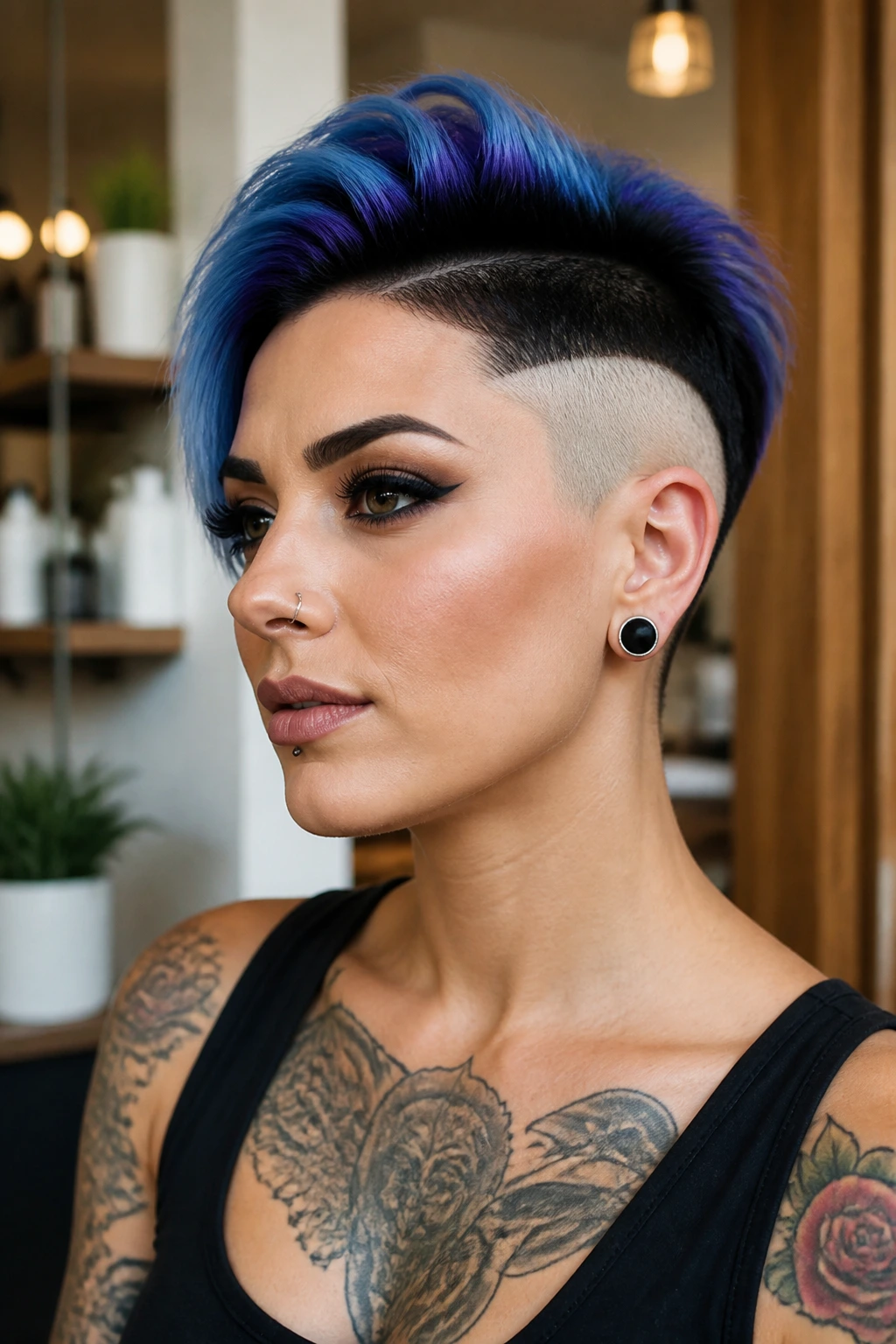
A color-blocked undercut turns the shape into a graphic object. Dark base, pale shaved zone, vivid top, hidden panel in a second shade—pick a contrast and commit to it. The point is to make the cut read in layers instead of blending into one mass of hair.
This style works best when the haircut itself is already clean. A sloppy shave plus loud color just makes a mess. A tidy undercut gives the color a sharp edge to sit against. If you’re bleaching a panel, keep the scalp healthy and the hair treated carefully, because lightened hair around a buzzed area still needs moisture and tone control.
The payoff is huge on photos, but more than that, it gives the haircut a second personality. In one light, it’s subtle. In another, it shouts. That kind of duality is why people keep coming back to undercuts with color.
26. Buzzed Sides with Long Top Length
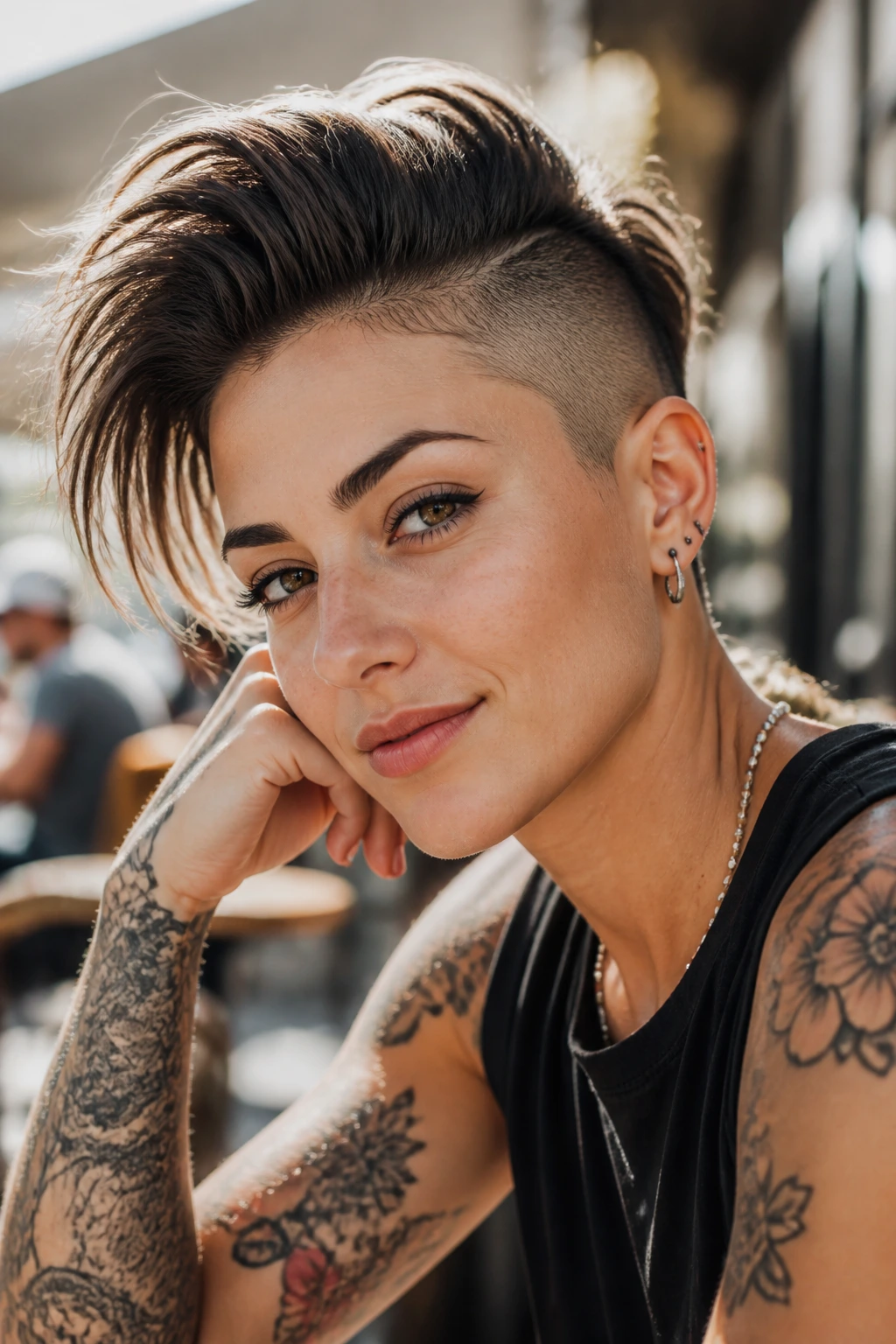
Buzzed sides and a long top are the no-nonsense version of an undercut. The contrast is obvious, the styling choices are wide open, and the shape can move between slick, curly, braided, or pushed upward without losing its point. That flexibility is the main reason it lasts in salons.
Keep the sides short enough to make the top stand out. The exact guard length depends on how bold you want the result, but anything from a #0.5 to #2 will read clearly. The top can stay long—sometimes 6 inches or more—if you want to sweep it over, braid it, or pin it up.
This is a solid choice if you like changing your hair mood without changing your cut every few months. The top can be polished one day and messy the next. The sides stay the same. That balance makes the style feel grounded, not fussy.
27. Tapered Afro Undercut
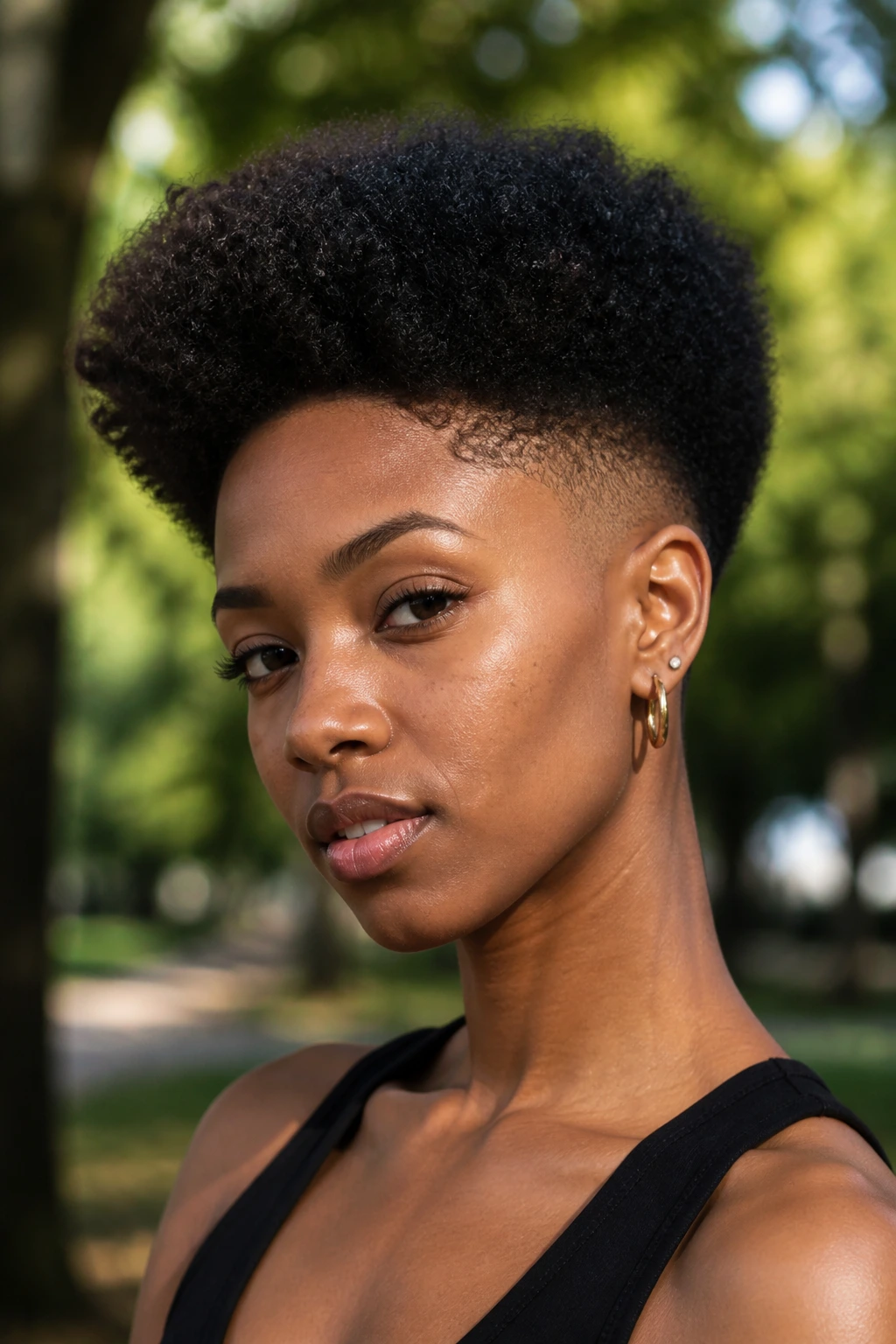
A tapered afro undercut keeps the shape full where it belongs and lean where it helps most. The top and sides are carefully shaped so the afro keeps its roundness, while the lower sides and nape are trimmed closer to reduce bulk and sharpen the outline. It’s a cleaner silhouette, not a smaller one.
This cut depends on moisture and a good shape-up. Leave-in conditioner, curl cream, and a little oil on the scalp go a long way. The undercut should be blended with the taper rather than hacked out, because a harsh line can disrupt the natural curve of the afro. A good cut respects the coils. Period.
It’s a strong choice if you want definition without losing fullness. The silhouette feels deliberate from every angle, and the cleanup around the ears and neck makes day-to-day styling easier. Less puff, more shape. That’s the deal.
28. Chin-Length Wedge with Underlayer Shave
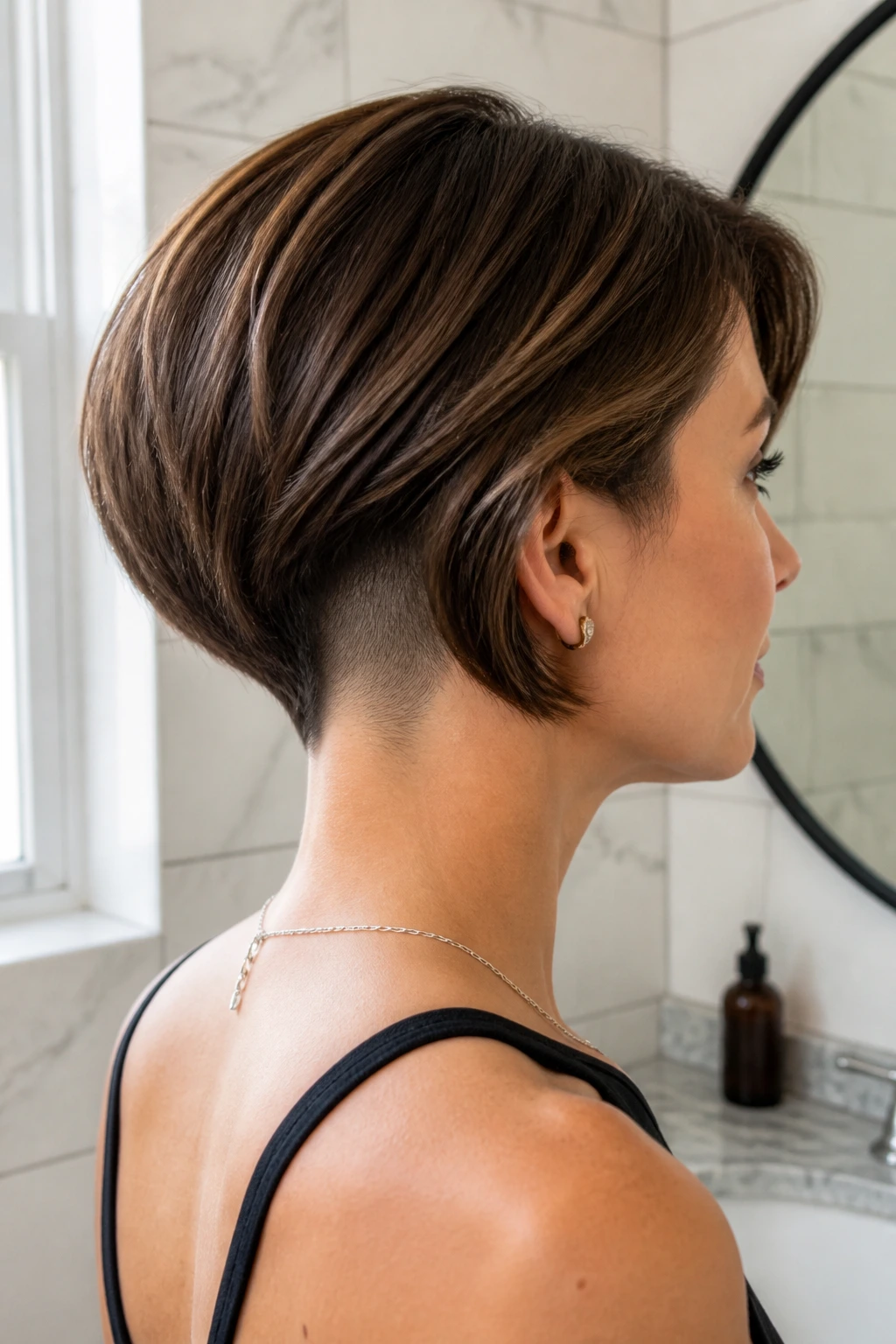
A chin-length wedge with a hidden shave is for anyone who wants structure with a little surprise. The wedge shape gives you that angled, stacked line at the back, while the underlayer shave removes extra bulk so the cut sits close instead of puffing out. It’s neat without being boring.
This works especially well on fine to medium hair that needs a little lift at the crown. The shaved layer underneath helps the angled top fall into place more cleanly. If the wedge is cut too heavily, it can get bulky at the nape fast. That’s exactly what the undercut solves.
A round brush and a quick blow-dry at the roots will make the silhouette pop. The outline around the jawline matters here, so keep the front pieces precise. A wedge cut can look very sharp when the back is clean. It can also look like a grown-out school photo if nobody watches the shape.
29. Gothic Black Undercut with Razor Fringe
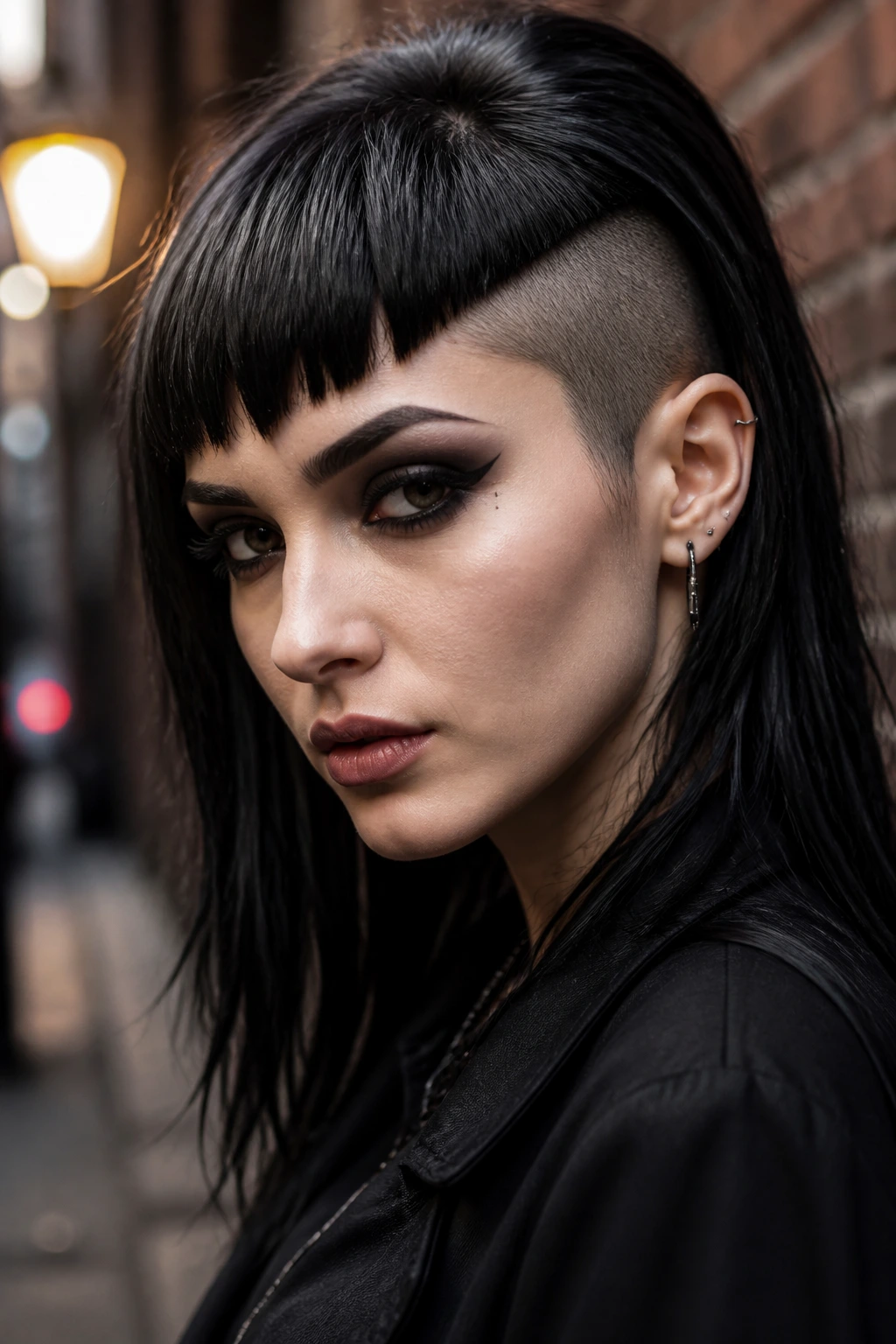
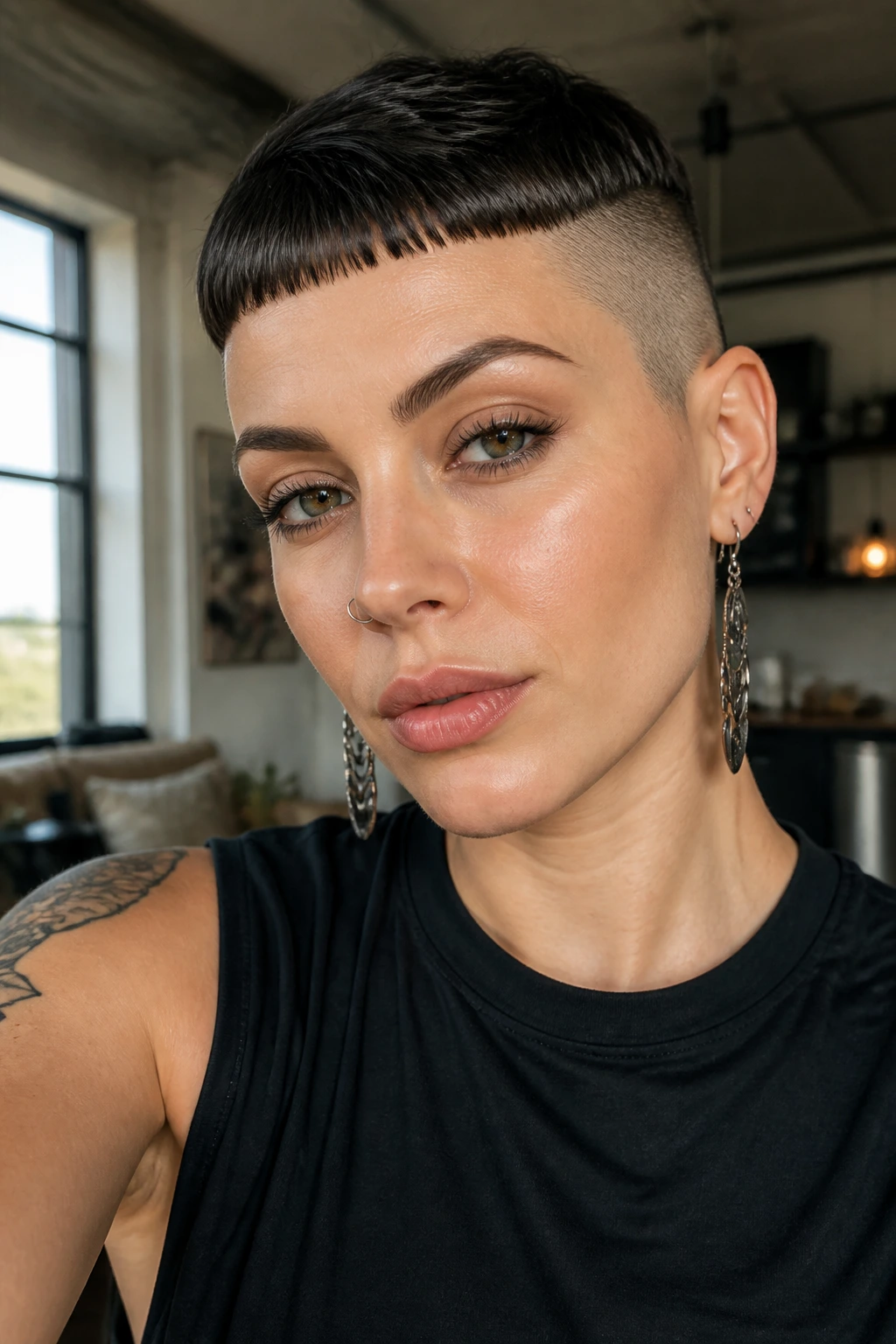
A gothic black undercut leans into the drama instead of trying to soften it. The dark color makes the shave read even deeper, and a razor fringe across the forehead sharpens the whole line. This is one of the most expressive undercut styles for women because it doesn’t ask permission.
The fringe should be blunt enough to hold its own against the shaved side or nape area. If it’s too wispy, the look loses its weight. A bit of shine serum on the ends keeps the black color from looking dry, but don’t overload the roots or the cut goes limp fast.
This style pairs well with heavy eyeliner, leather jackets, silver hoops, and plain clothes that let the hair do the talking. It’s not subtle. That is the point. Some cuts whisper. This one says the room can adjust.
30. Soft-Grow-Out Undercut
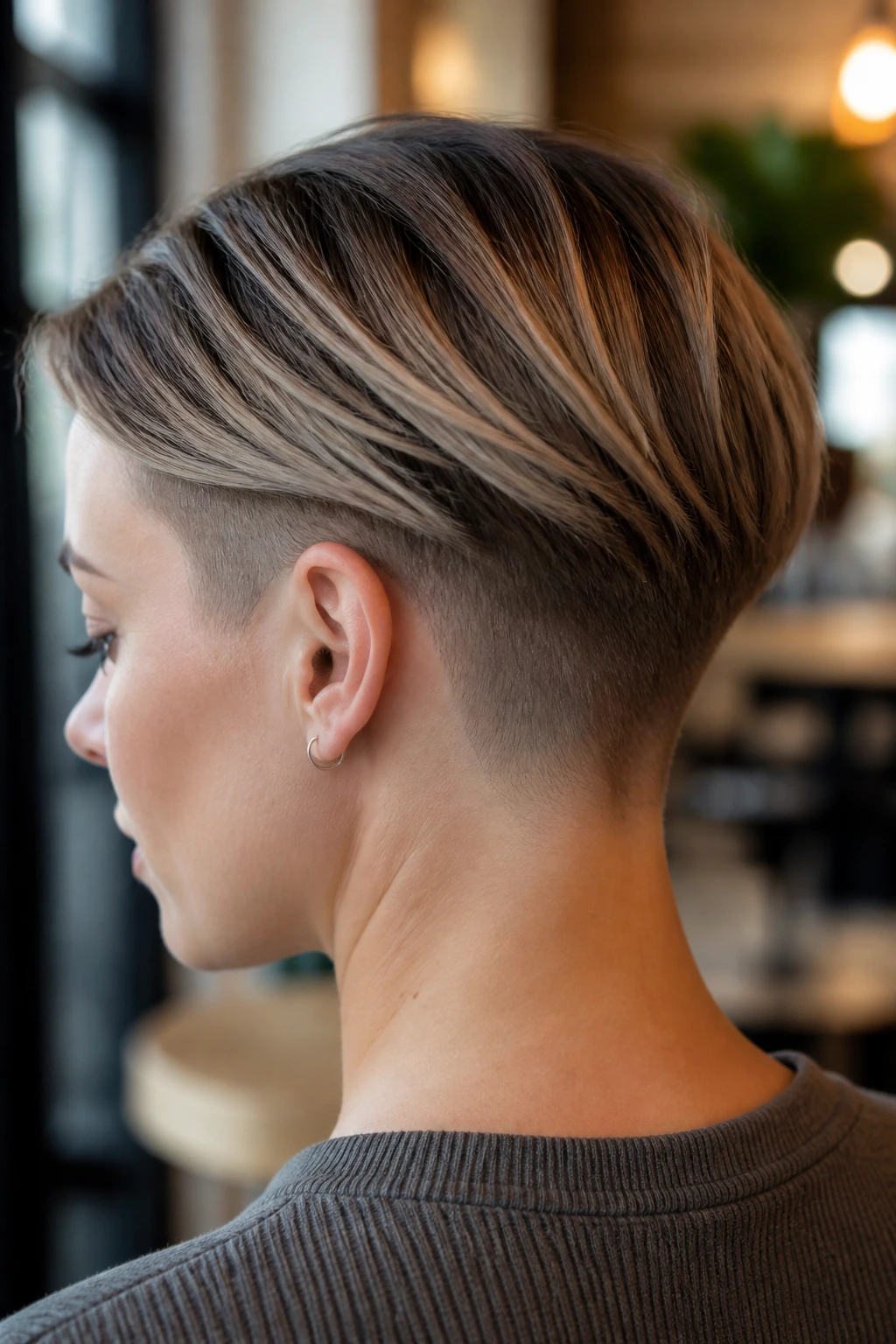
A soft-grow-out undercut is what you choose when you like the shaved look but don’t want to be trapped in a strict trim cycle. The idea is to keep the shave low, clean, and blended enough that the growing hair becomes part of the shape rather than a problem to hide. It’s the practical version of an edgy cut.
Ask for a slightly longer starting length, maybe a #2 or #3 guard, with soft edges around the transition. That gives you a little wiggle room as the hair grows out by roughly half an inch a month. If the line is too harsh at the start, the grow-out phase gets awkward fast. If the line is too high, the shape loses its purpose before you’re ready.
This version is smart for anyone testing the waters. You get the edge, the lighter feel, and the cleaner neckline, but you also keep an exit route. That matters more than people admit.
Choosing the Right Undercut for Your Hair Density and Face Shape
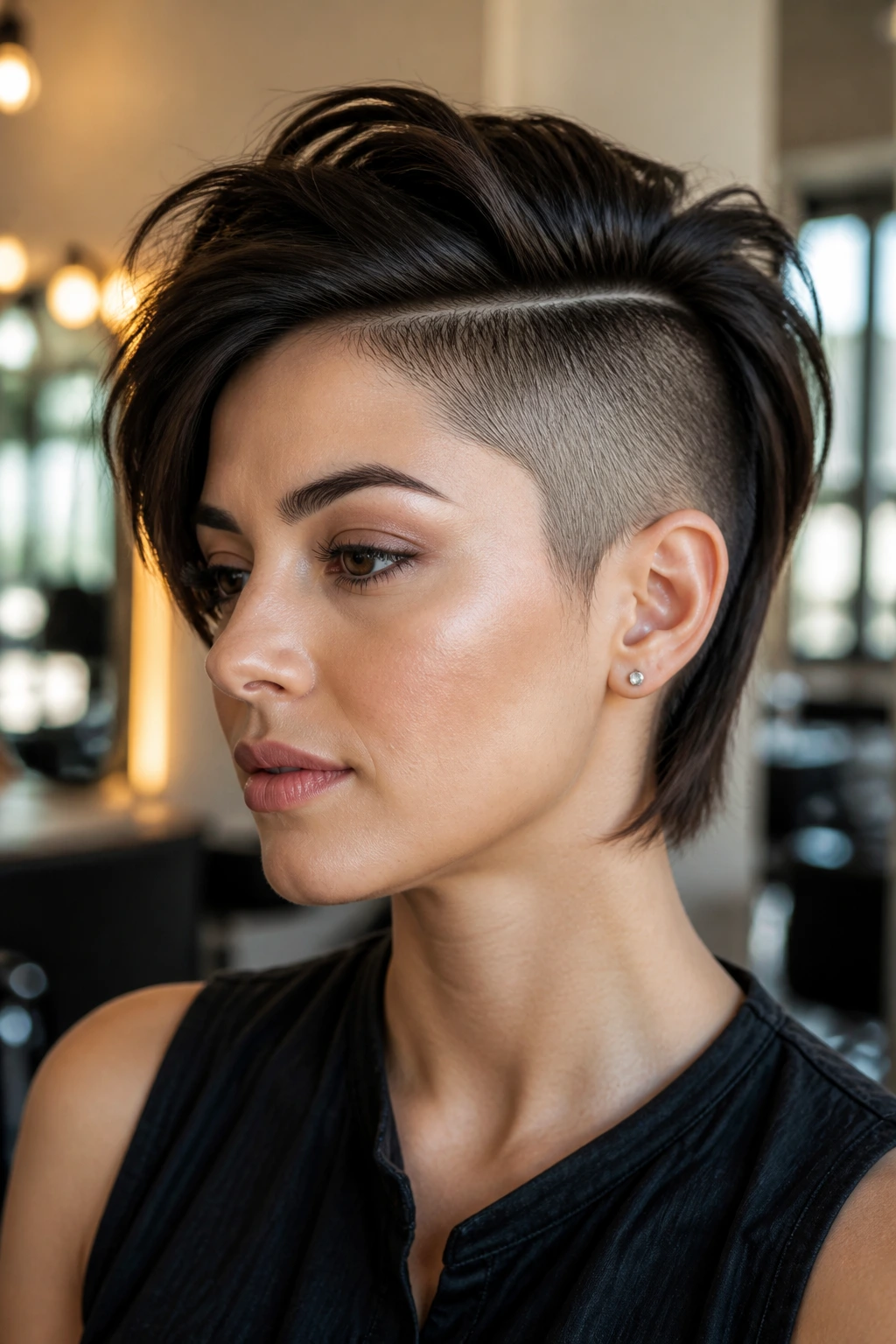
A good undercut starts with the hair you actually have, not the haircut you wish you had. Thick hair can handle a wider shave or a higher removal zone because the top still has enough body to balance it. Fine hair usually needs a lower, tighter undercut so the remaining hair doesn’t look too sparse when pulled back or tucked behind the ear.
Face shape matters, but not in the rigid way salon folklore likes to pretend. A side shave can sharpen a round face. A soft nape undercut can keep a strong jaw from looking too boxy. Curtain bangs and a hidden shave can soften a longer face without killing the edge. That’s the real trick: the undercut should change the line of the haircut, not erase your face.
Fine hair
Keep the shave low and the top length modest. If you remove too much underneath, the visible hair can collapse and show scalp where you didn’t want it.
Thick hair
You can go bolder. Wider panels, clearer disconnection, and more contrast usually work because there’s still enough top length to carry the look.
Curly and coily hair
Use the undercut to reduce bulk, not to create a void. Dry cutting or curl-by-curl shaping helps the silhouette stay honest.
What to Tell Your Stylist Before the Clippers Come Out
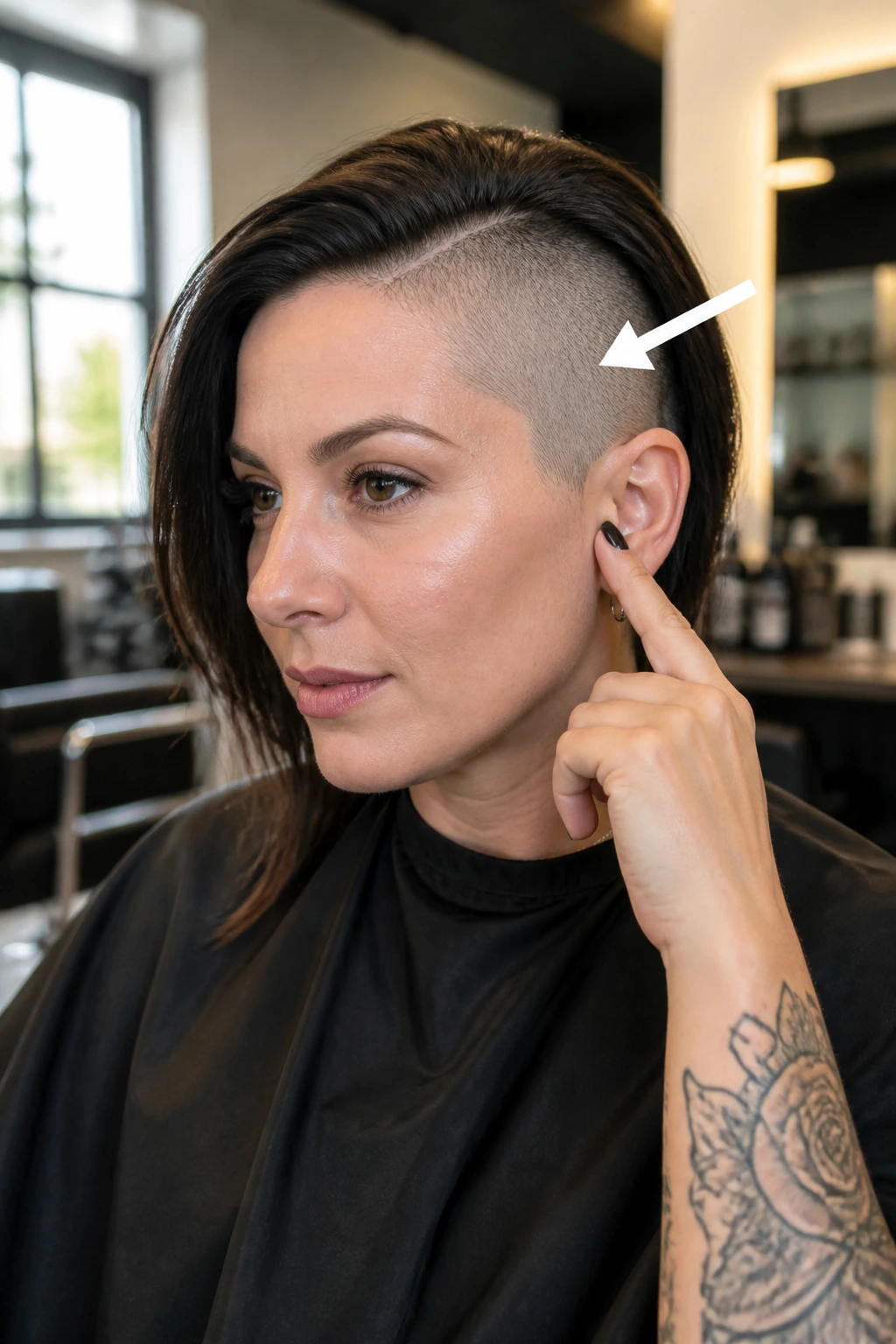
The easiest way to get the cut you want is to stop using vague words. “Edgy” is a mood, not a measurement. Say where you want the shave—nape, temple, side panel, or full underlayer. Say how visible you want it when your hair is down. Say whether you want it to disappear when you wear a ponytail.
Bring a photo, then point to the exact part that matters. A lot of people bring a picture and assume the whole shape is the instruction. It isn’t. The same pixie can hide a shaved side or expose it completely depending on the length at the top. If you’re nervous, ask for a lower starting point with room to go shorter. You can always remove more. You cannot put it back once the guard has passed over the hair.
If you like numbers, use them. A #1 guard is short and obvious. A #2 or #3 is softer and easier to grow out. If you want a fade, mention whether you mean a tight skin fade or a low taper. Those are not the same thing, and the difference shows up the second you turn your head.
Styling Moves That Keep the Shape Sharp
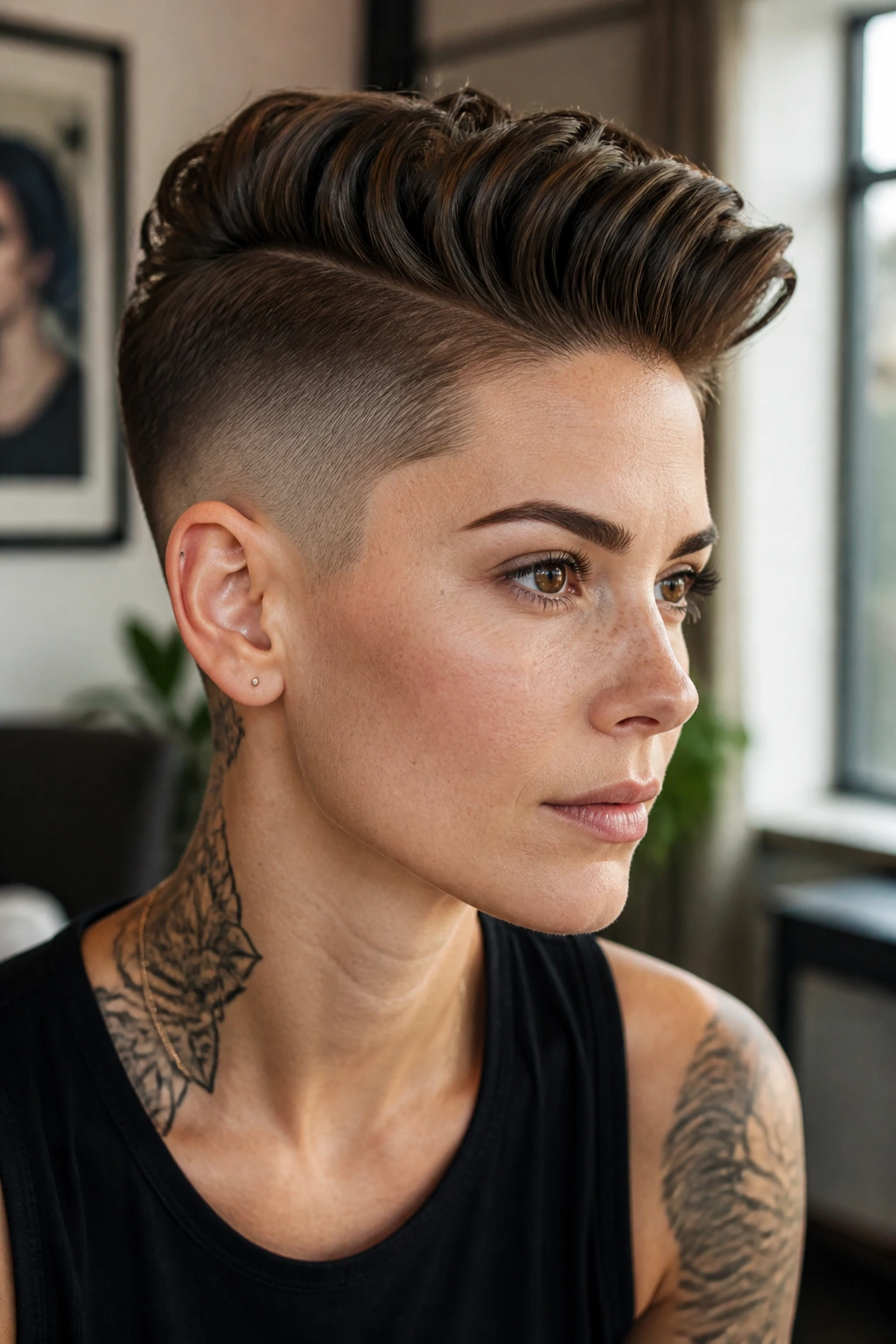
- Pick the product for the top, not the shave: A matte paste, curl cream, or lightweight mousse belongs on the longer section; the shaved zone needs almost nothing except a clean scalp and maybe a touch of soothing lotion if it gets dry.
- Dry the roots first: Whether the top is straight or curly, give the base lift or direction first. Flat roots make even a good undercut look sleepy.
- Use the neckline as a line, not an afterthought: A clean nape or temple line makes the whole cut look intentional, even on lazy days.
- Don’t drown the hair in oil: Heavy oil on the top can make the contrast disappear and turn the shape limp by noon.
- Save the wide-tooth comb for curls and the brush for sleek cuts: Mixing them up is how you flatten the style or frizz the finish.
Essential Tools for These Cuts
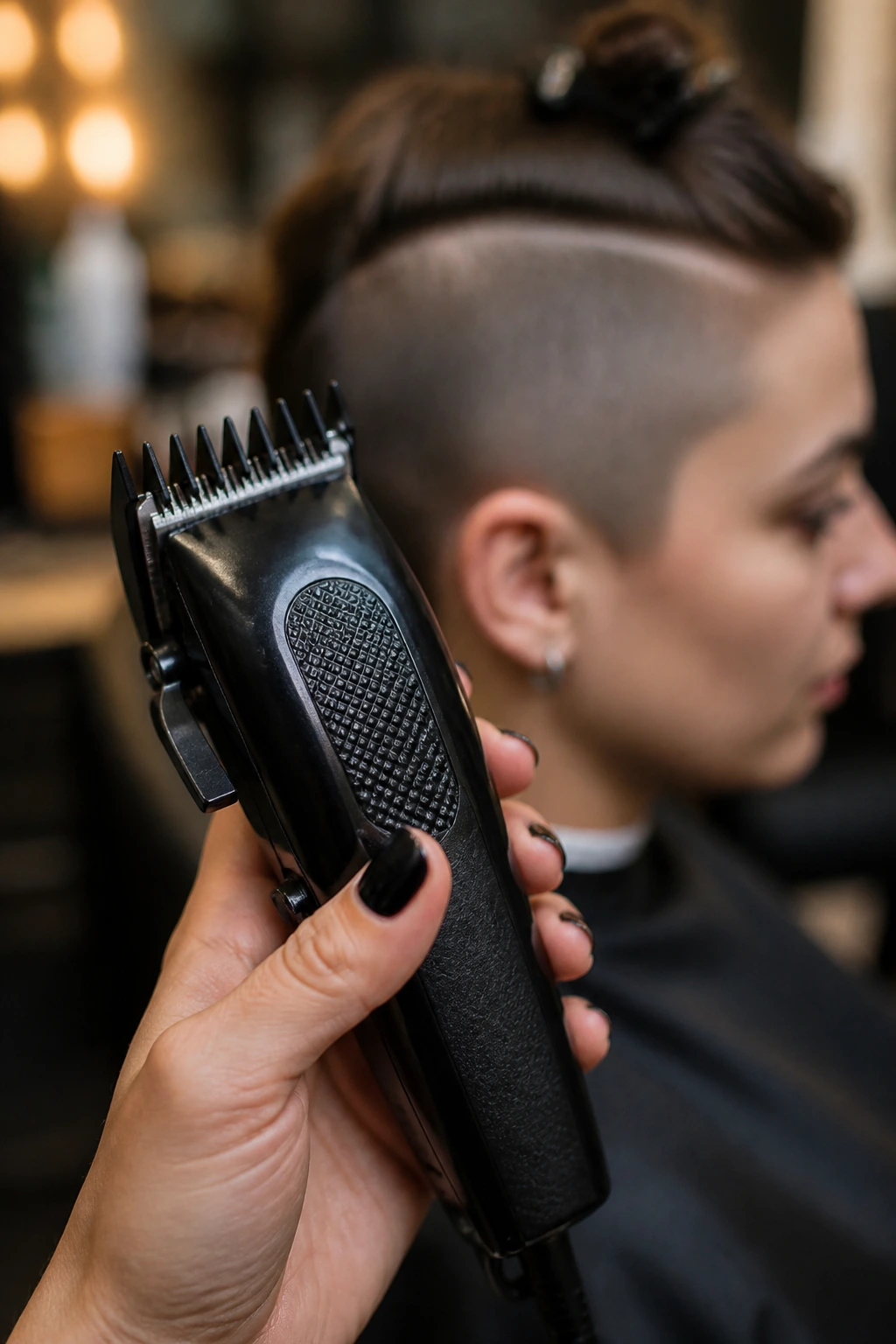
- Clipper with guard sizes: If you’re maintaining the shave at home, the guard number is the difference between tidy and accidental.
- Detail trimmer: Useful for cleaning the edges around the nape and temples between salon visits.
- Sectioning clips: These help separate the top from the shaved area so you don’t nick the wrong panel.
- Tail comb: Handy for drawing clean parts and keeping the line straight while you style.
- Blow dryer with a nozzle: A focused stream of air helps push the top where it needs to go.
- Diffuser: Worth having if your undercut sits under curls or waves.
- Matte paste, gel, or curl cream: Pick based on texture; one product should not do all the work.
- Hand mirror: A wall mirror alone lies by omission. The back of your head needs a second look.
Keeping the Shape Sharp Between Appointments
Undercuts grow out fast because there’s no length to disguise the change. A trim that looked crisp two weeks ago can start reading fuzzy by week four, especially at the nape where hair rubs against collars and scarves all day. If the shave is high contrast, plan on 3 to 4 weeks between cleanups. Low nape undercuts can stretch to 5 or 6 weeks if the line is soft.
For home upkeep, don’t chase perfection with a full clipper session unless you know what you’re doing. Clean the neckline and temple edges only if you have a steady hand and the right guard. If not, let the salon handle it. That’s not weakness. That’s judgment.
Scalp care matters more than people think once the hair is exposed. If the shaved area gets dry, itchy, or flaky, use a light scalp lotion or a tiny amount of soothing oil after washing. If the cut exposes skin to sun, protect it. A shaved side can burn faster than the long hair next to it, and no one needs that lesson twice.
Common Mistakes That Make Undercuts Harder to Wear
- Shaving too high too soon: The haircut turns from hidden edge to obvious commitment in one clipper pass. Start lower if you’re unsure, especially on long hair.
- Ignoring the natural growth pattern at the nape: Cowlicks and whorls can make a straight shave kick out or stick up. A stylist should work with the growth, not against it.
- Letting the top get too heavy: If the upper section isn’t shaped to match the undercut, you end up with a blunt shelf instead of movement. Ask for layering or disconnection on purpose.
- Using too much styling product: Heavy cream or oil can flatten the top and make the haircut look tired by lunch.
- DIYing a complex fade without practice: A shaky hand at the temple shows immediately. If the style depends on a clean transition, get it done professionally first and maintain it later.
Variations and Adaptations to Try
Office-Ready Edge: Keep the undercut low at the nape or hidden under longer layers. You still get the lift and lighter feel, but it disappears with your hair down and reads more polished in a meeting.
Curly-First Version: Ask for the top to be cut dry and the shave to stay low enough that the curl pattern can still expand naturally. This is the version that stops curls from fighting the sides of the head.
Graphic Statement Cut: Add a single line, curve, or small geometric design to a short side panel. Keep the rest of the haircut simple so the detail doesn’t look crowded.
Grow-Out-Friendly Shape: Start with a lower guard and a softer blend. If you think you might want to grow the undercut back later, this is the version that won’t make the grow-out miserable.
Color-Blocked Twist: Add a bright panel, platinum section, or dark-root contrast to a shaved area. Use this only if you’re willing to maintain the color, because faded tone makes a clean cut look messy fast.
Frequently Asked Questions
Can I get an undercut if my hair is thin?
Yes, but the placement matters. Keep the shave lower and avoid removing too much from the visible top section, or the hair can look too sparse when you wear it down.
How often do undercuts need trimming?
Most need a cleanup every 3 to 5 weeks, depending on how short the shave is and how visible you want it to stay. High-contrast designs need more frequent maintenance than soft nape shaves.
Will an undercut grow out in a weird way?
It can, if the original shape was too high or too abrupt. A low shave with a soft blend grows out much better because the line gets blurred by the surrounding hair instead of sitting like a shelf.
Can I hide an undercut for work?
Often, yes. Hidden nape shaves, low side panels, and peekaboo undercuts disappear under loose hair. A temple shave or full side buzz is harder to hide, especially if you wear your hair tucked back.
Does shaving hair damage it?
Shaving the hair itself doesn’t damage the strand above the scalp. The bigger issue is scalp irritation from dull clippers, over-trimming, or dryness. Good tools and gentle maintenance matter more than the shave itself.
What if I want to start short but not go too far?
Ask for a low undercut with a #2 or #3 guard and tell the stylist you want room to go shorter later. That keeps the first version wearable without locking you into a dramatic look.
Can I do an undercut at home?
You can maintain a basic nape cleanup at home if you’re careful, but the first cut is better done by a professional. Clean lines around the temple and side panel are harder than they look, and one slip changes the whole cut.
Does curly hair need a different undercut placement than straight hair?
Usually, yes. Curly hair often needs the undercut slightly lower so shrinkage doesn’t expose more scalp than planned. A curl-aware stylist will cut the top and the shaved area with that shrinkage in mind.
The Cut That Carries Attitude
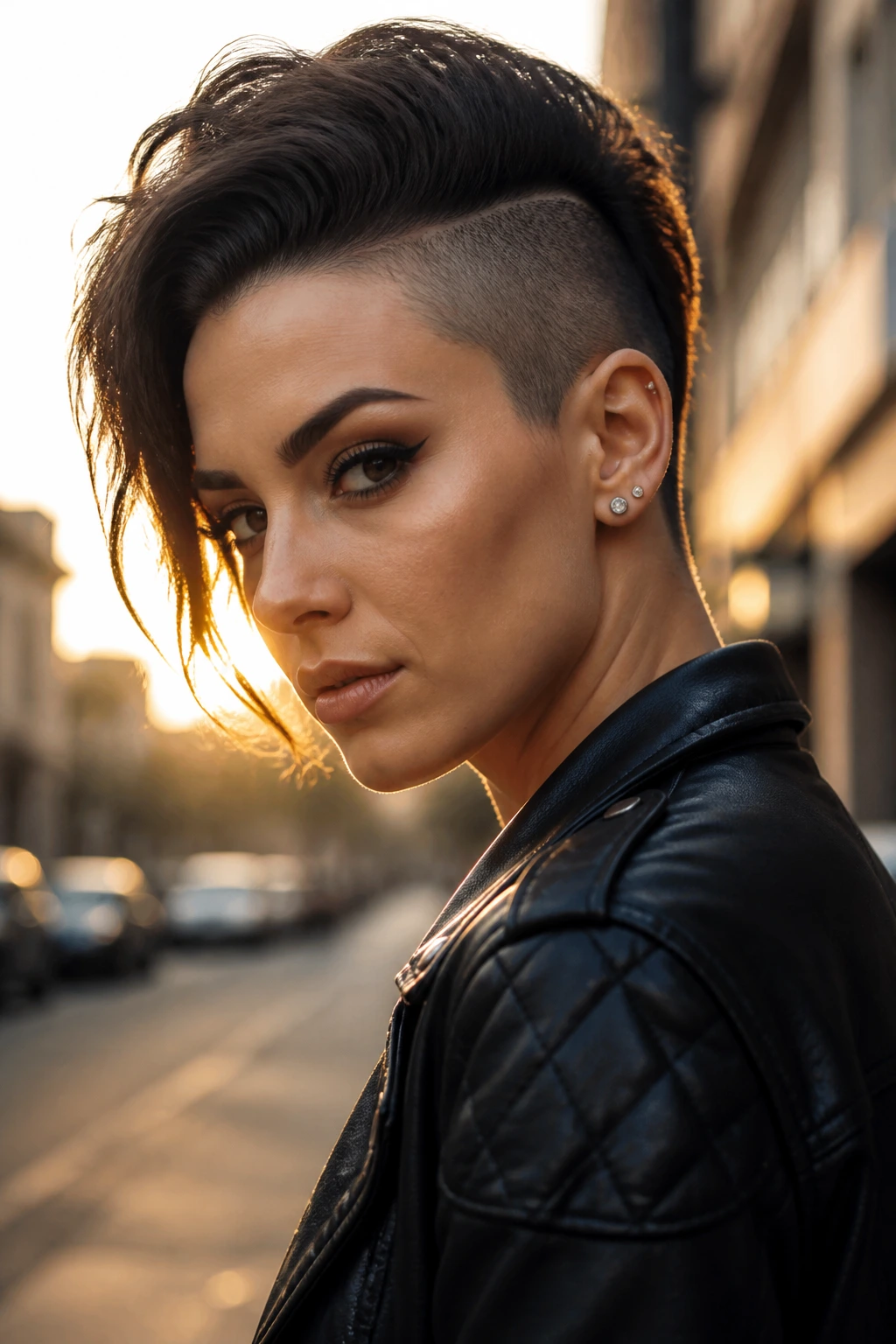
The best part of a good undercut is that it doesn’t force you into one identity. It can hide under long layers, show off in a half-up knot, clean up thick curls, or turn a blunt bob into something sharper the second you tuck one side behind your ear. That flexibility is why these cuts last. They do a job, and they also look good doing it.
If you’re thinking about one, start with the version that matches your upkeep tolerance, not the loudest photo on your camera roll. A clean nape shave that grows out well will beat a dramatic panel you start resenting after two weeks. And if you do want the loud one? Fine. Just make sure the line is honest, the top has enough length to carry it, and the shape belongs to your hair instead of fighting it.
