



Medium-length hair can be a sneaky troublemaker. It’s long enough to hang heavy at the ends, short enough to lose swing if the cut is blunt in the wrong place, and just long enough for a bad layering job to show up every time you turn your head. The right layered hairstyles for medium length hair fix that balance. They lift the shape, move the weight around, and give you hair that bends instead of sitting there like it’s waiting for a meeting.
What I like about medium-length layers is how little drama they need. A few well-placed shorter pieces around the face can change the whole mood of a cut. A soft internal layer can make thick hair stop swallowing your jawline. A choppy finish can make straight hair look lived-in instead of flat. But the wrong layer pattern can do the opposite fast. You get odd flip-outs, a shelf at the bottom, or that triangle shape nobody asked for.
Medium hair is a good length for experimenting, too. It’s long enough to show movement and short enough that a layered shape doesn’t take forever to style. You can wear it polished, messy, curved under, flipped out, waved, or tucked behind one ear and still let the cut do some work for you. That’s the whole point, really.
Why These Layered Looks Keep Medium Hair from Going Limp
- They remove weight without stealing length: Medium cuts need balance, not a haircut that turns the ends into a thin stringy tail.
- They work with basic tools: A blow dryer, a 1-inch or 1.25-inch curling iron, and a round brush can carry most of these looks.
- They flatter different face shapes: Where the shortest layer sits changes the whole effect around the cheeks, jaw, and chin.
- They make styling faster: Once the layers are cut right, you’re shaping the hair instead of forcing it into position.
- They suit many textures: Straight, wavy, and curly hair all benefit, but the layer placement needs to match the texture.
- They grow out more gracefully than harsh one-length cuts: A blended layer can keep looking intentional even after a few weeks.
1. Face-Framing Layers with a Center Part
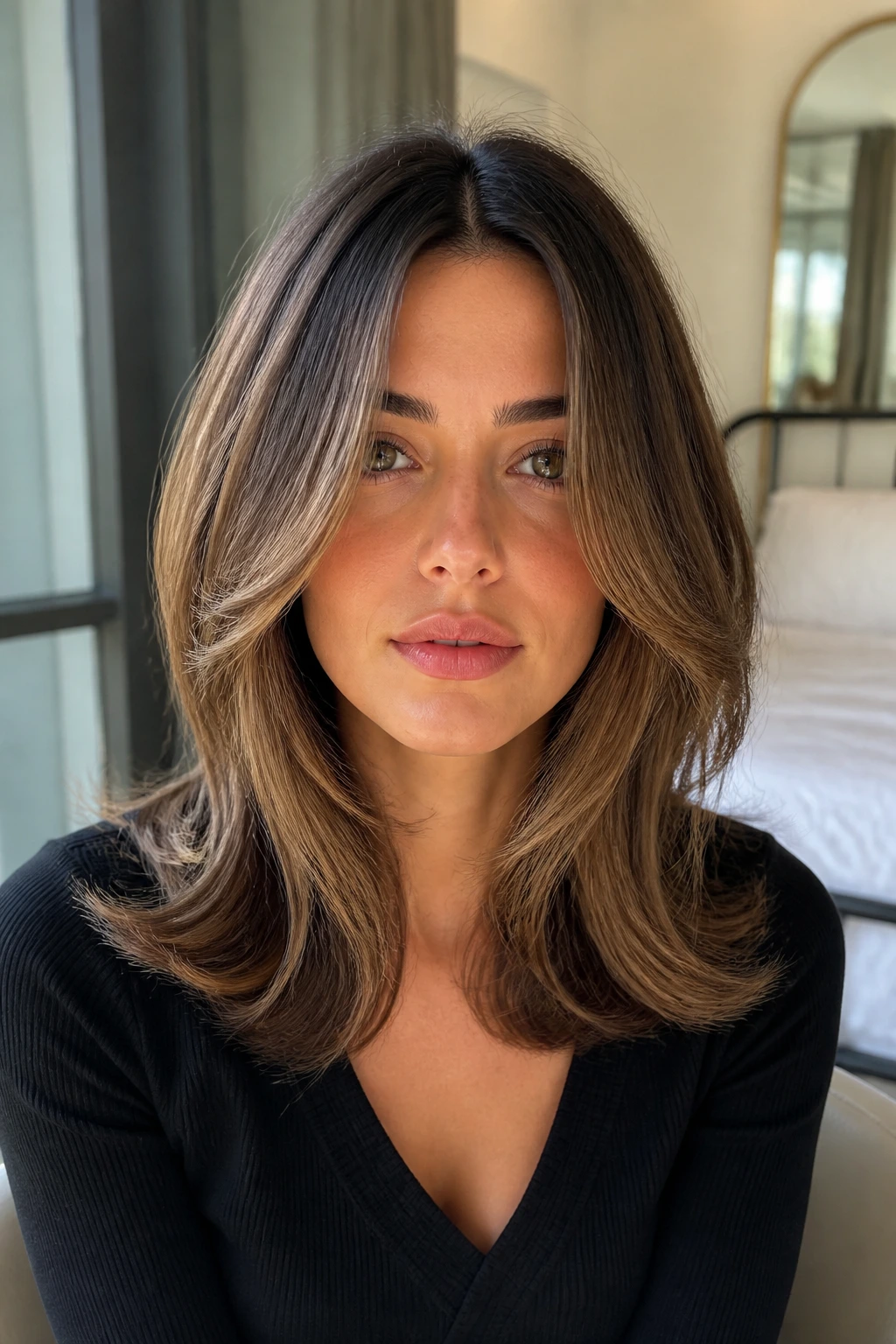
These are the cleanest, easiest medium-length layers to wear if you want shape without a lot of fuss. The shortest pieces usually start around the cheekbones or just below them, then soften toward the jaw. With a center part, the cut falls in a very balanced way, and that makes the whole style feel calm rather than fussy.
What makes this one work is the control. You get movement around the face, but the ends still keep enough weight to look full. On straight hair, the front pieces swing inward when you blow-dry with a round brush. On wavy hair, they create that soft curtain around the cheeks that never looks stiff. It’s one of those cuts that does not need a ton of product. A light mousse at the roots and a dab of smoothing cream on the ends is often enough.
2. Butterfly Layers That Open at the Collarbone
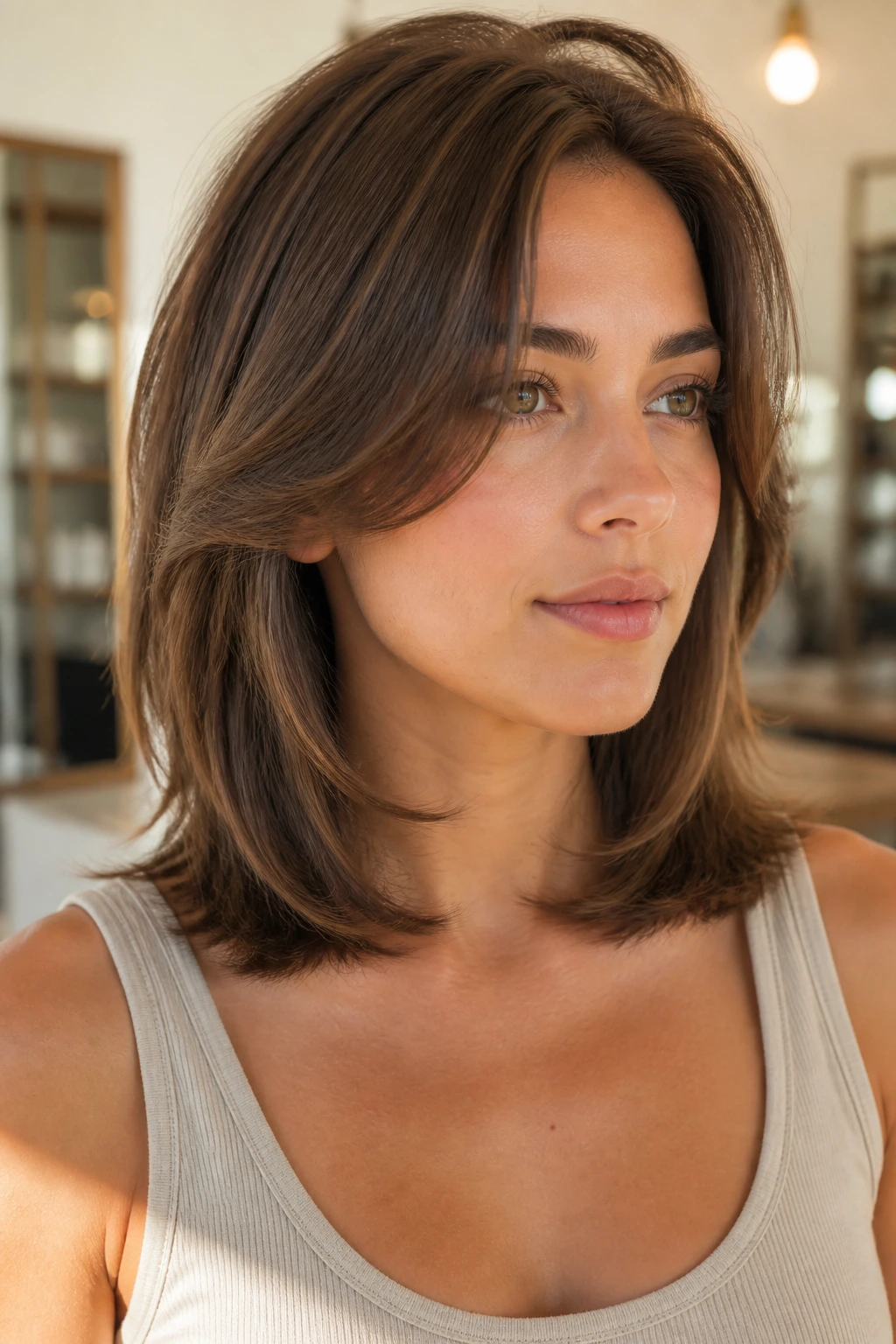
Butterfly layers are the style I reach for when someone wants volume at the top and length at the bottom. The shorter pieces sit up high and frame the face, while the longer pieces keep the overall shape grounded. On medium hair, that means you get lift without losing the clean outline that makes the cut feel grown-up instead of shaggy.
The sweet spot is the collarbone. When the shortest front layers land there or just above it, they open the style in a way that looks deliberate. Blow them back with a big round brush, or wrap them away from the face with a 1.5-inch iron. The important bit is keeping the ends soft. If you curl everything too tight, the whole thing starts to look overstyled. A bit of bend is enough.
3. Textured Lob with Choppy Ends
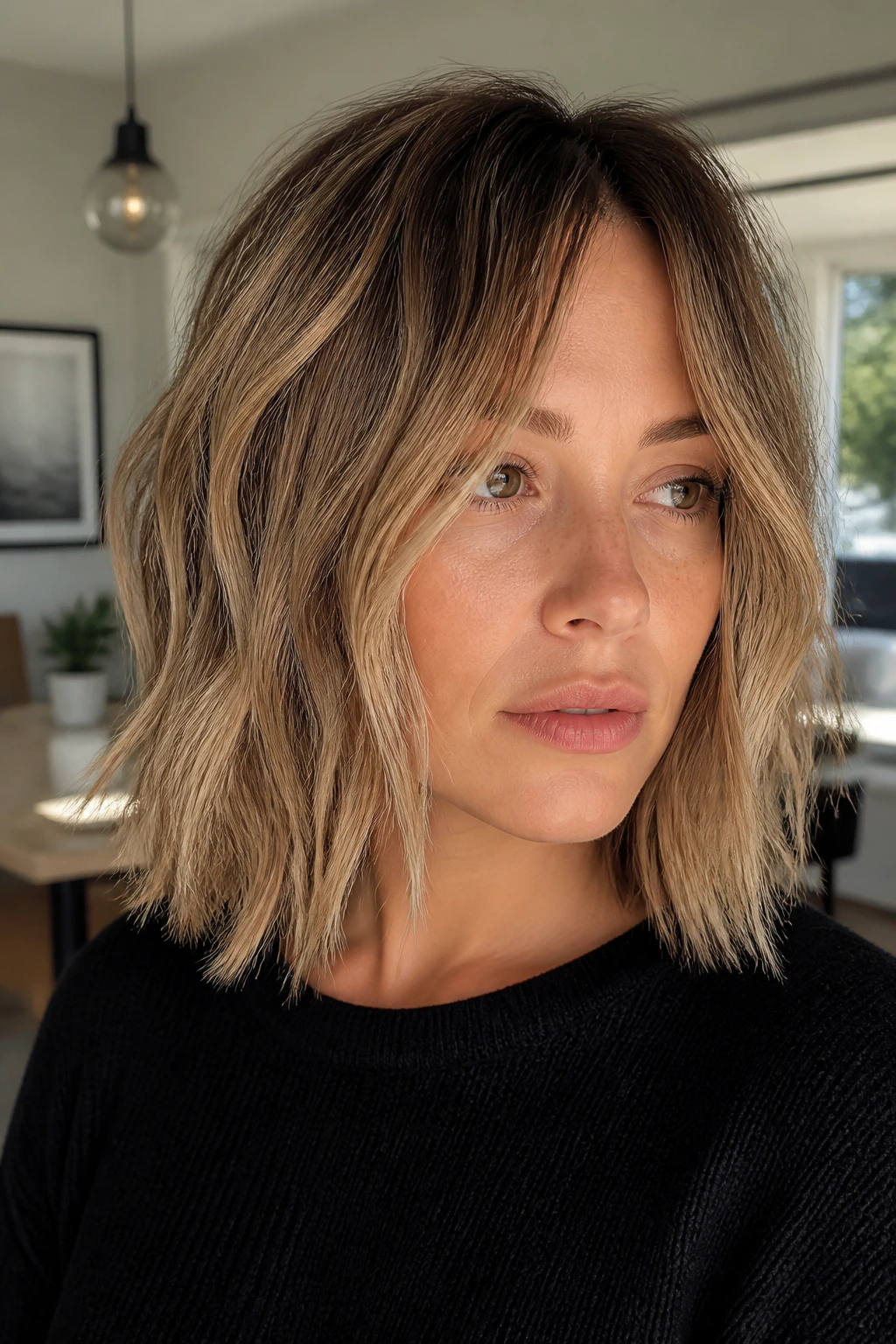
A textured lob is blunt enough to feel modern, but the choppy ends stop it from getting heavy. That’s the difference between a medium haircut that sits flat and one that has some life in it. The layers are subtle here; think broken-up ends and interior movement rather than obvious stair steps.
This is the cut for people who like their hair to look a little undone. Air-dry it with salt spray and you get a rougher finish. Blow it out and it looks cleaner but still not precious. If your hair is fine, ask for softness rather than too much razoring, or the ends can look wispy faster than you want. On thicker hair, this shape knocks out some bulk without taking away the lob’s straight-line confidence.
4. Curtain Bangs with Feathered Layers
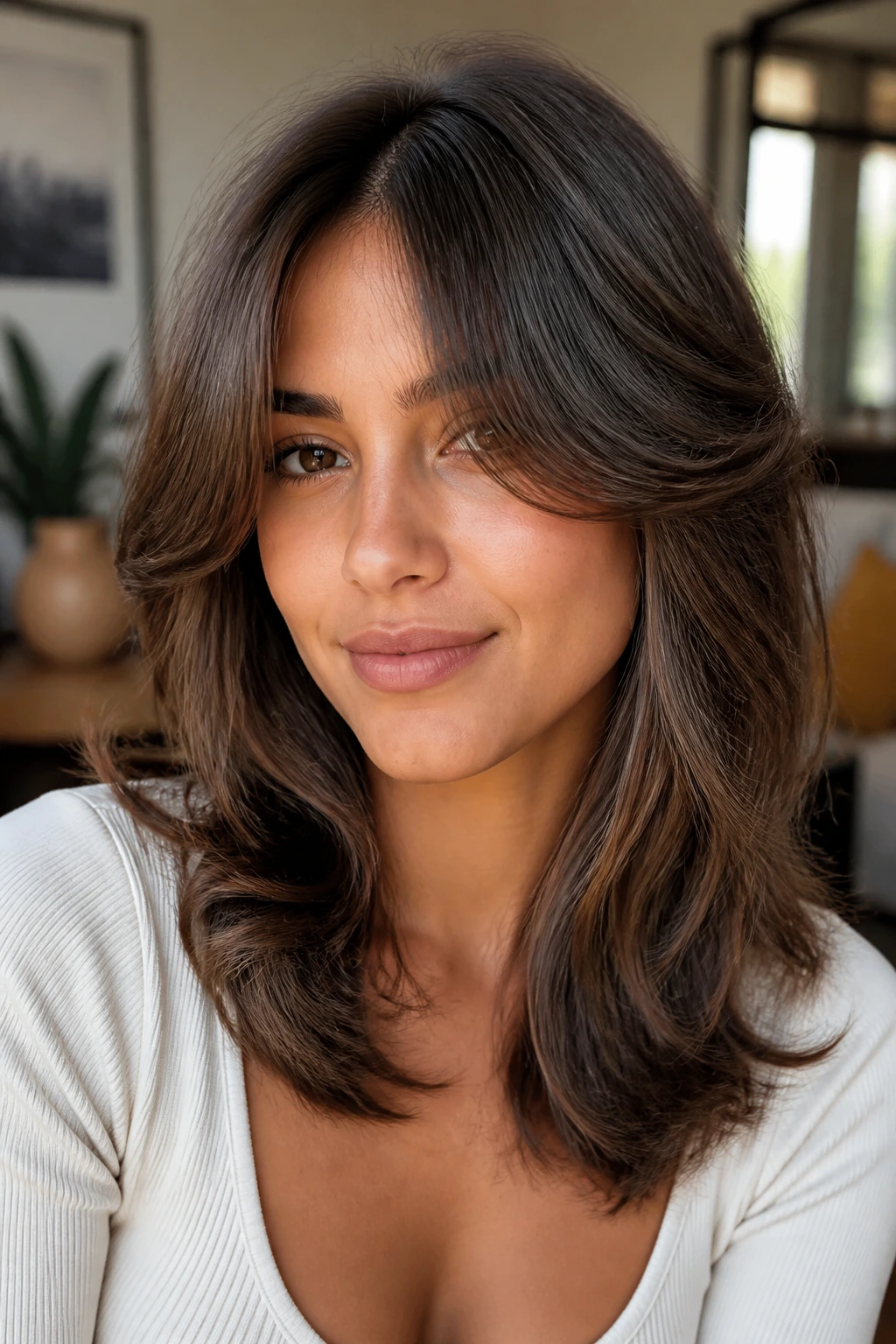
Curtain bangs are still the easiest way to make medium-length layers feel more styled without turning the haircut into a project. The bang section splits in the middle, then sweeps out toward the cheekbones, which gives the whole cut a soft open shape. The feathered layers underneath keep the line from feeling heavy.
A good curtain fringe should land where you can tuck it, twist it, or brush it away without fighting it all day. That’s why this look works so well on medium hair: the layers below the bangs stop the rest of the cut from looking blocky. A medium round brush and a little heat on the front pieces are enough. If you have a cowlick at the front hairline, ask for the bangs to be left a touch longer. Short curtain bangs can be annoying in a way no one needs.
5. Rounded Blowout Layers
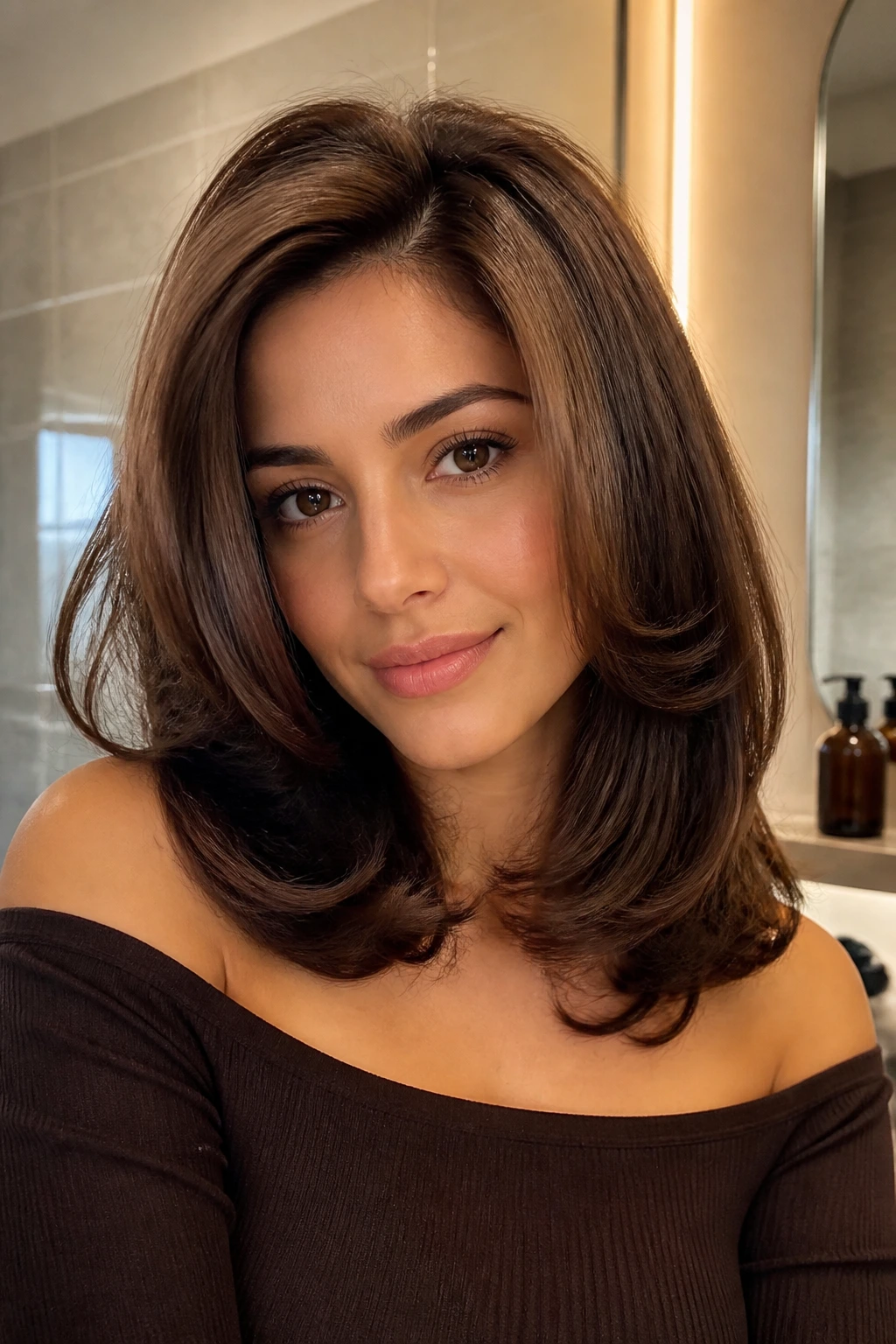
If you like hair that curves inward at the ends and lifts at the crown, rounded blowout layers are a smart pick. The shape is gentle, almost old-school, but it doesn’t feel dated when the layers are blended right. The haircut itself does a lot of the work, which is why it’s such a good fit for medium length hair.
The roundness matters. Layers are cut so the top sections bounce away from the face while the ends tuck in slightly. That shape makes the hair look denser through the mid-lengths and lighter around the front. Use a medium round brush and direct the front pieces away from the face first, then curve the ends under for a soft finish. It looks especially good on hair that tends to flip out at the bottom, because the cut works with that movement instead of against it.
6. Tousled Shag for Medium Hair
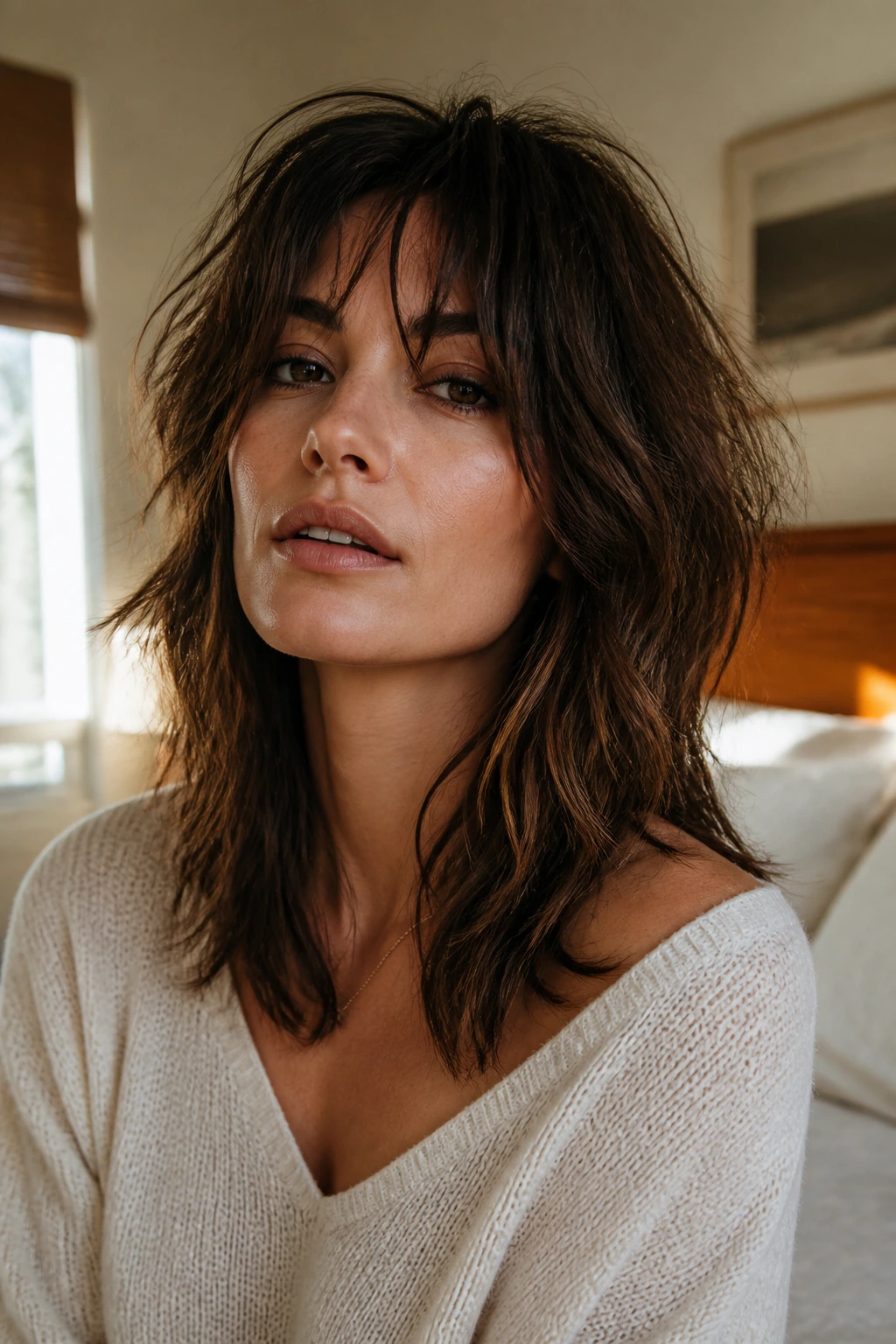
A shag at medium length has a little attitude, and I mean that in the best way. The crown is lighter, the ends are broken up, and the whole cut has that slightly windblown shape that looks better the less you overthink it. If your hair tends to fall flat by lunchtime, this is a useful answer.
The trick is keeping the layers varied enough to create movement but not so short that the cut turns fuzzy. Ask for the top layers to be soft and the perimeter to stay strong. Then rough-dry with your fingers and a diffuser if you’ve got any wave at all. A shag works best when it can be a bit imperfect. Clean lines are not the point here.
7. U-Shaped Layers for Extra Swing
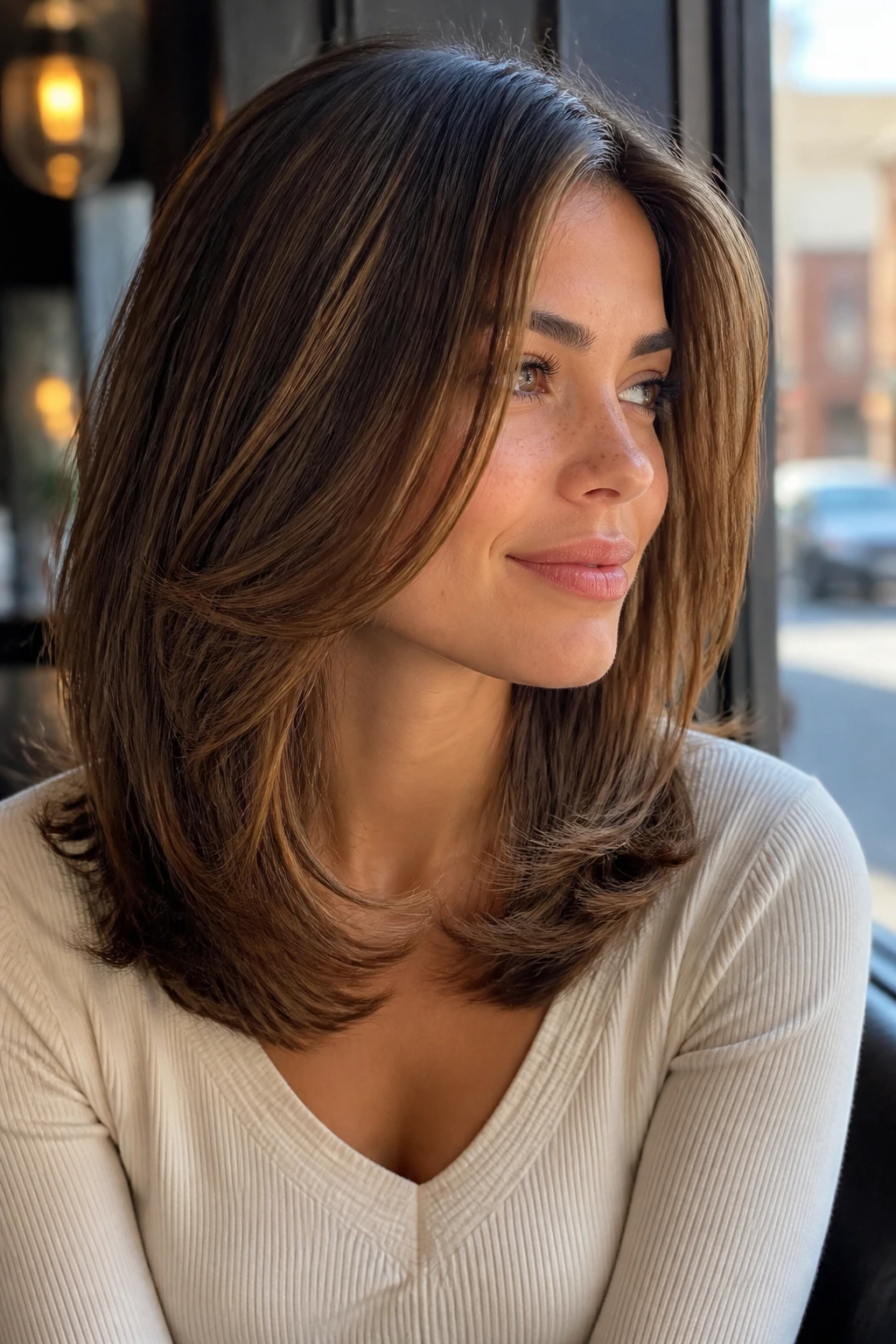
A U-shaped cut sounds simple, because it is. The back keeps a gentle curve rather than a blunt shelf, and the layers inside that shape create the swing. On medium hair, this is one of the best ways to keep the ends from looking square and heavy.
What I like here is how quietly flattering it is. The curve at the back keeps the hair from feeling boxy, and the face-framing layers give it softness without making the whole cut thin. It’s a good option if you wear your hair down most days and want it to move when you turn your head. A blowout brush or even a quick pass with a large curling iron at the ends is enough. The cut itself does most of the shaping.
8. Collarbone Flip Layers
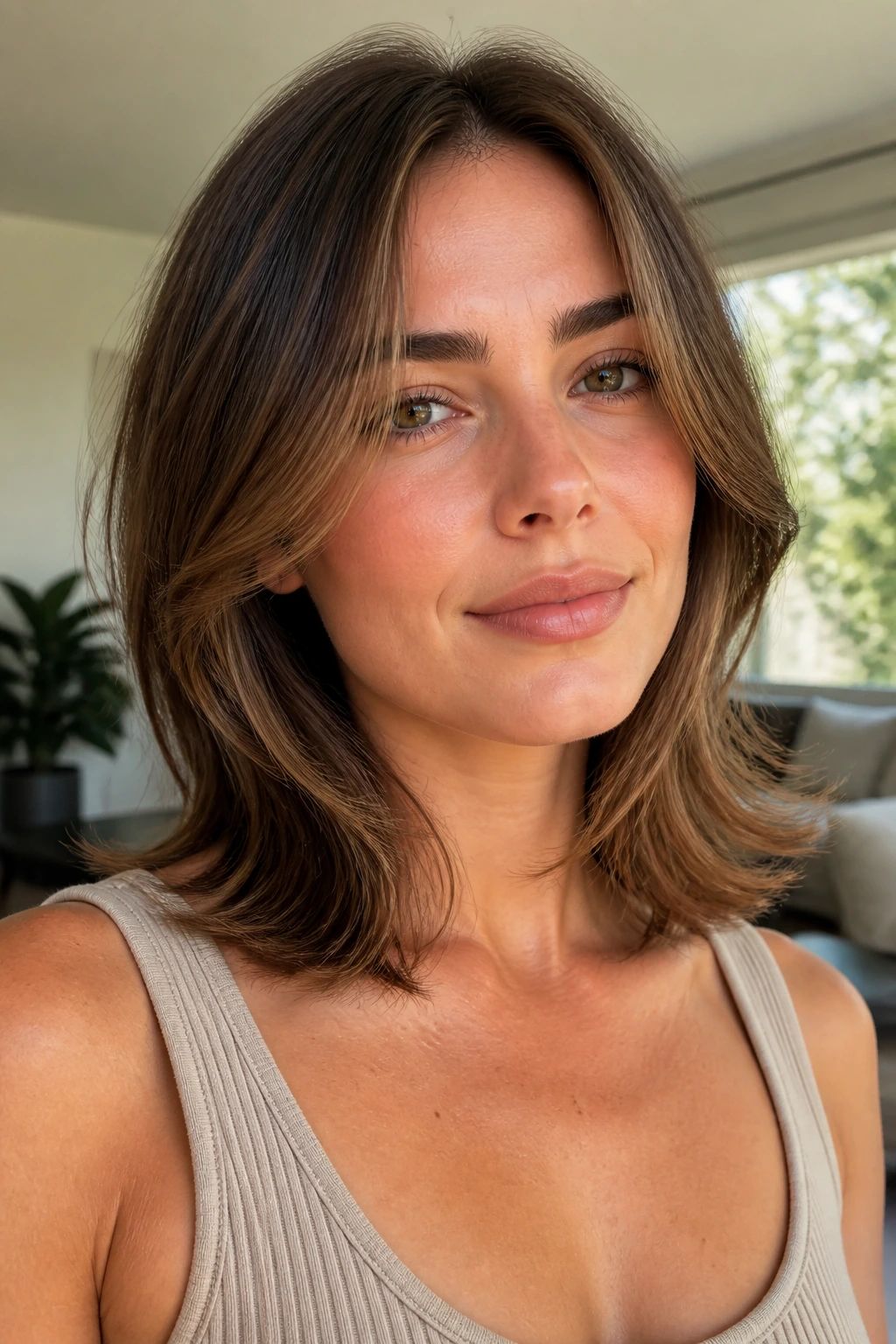
Collarbone-length layers with a slight flip at the ends have a very specific charm. They sit right where hair brushes the collarbone, which creates motion every time you move. The layers are often longer and more blended, so the style feels airy instead of chopped up.
This is one of those looks that can go polished or casual fast. Blow-dry the front away from the face and flip the ends outward with a brush or iron, and the whole cut feels a little playful. Keep the layer points below the cheekbones if you want to preserve fullness at the sides. Shorter than that and the flip can get too busy around the face.
9. Razor-Cut Mid-Length Layers
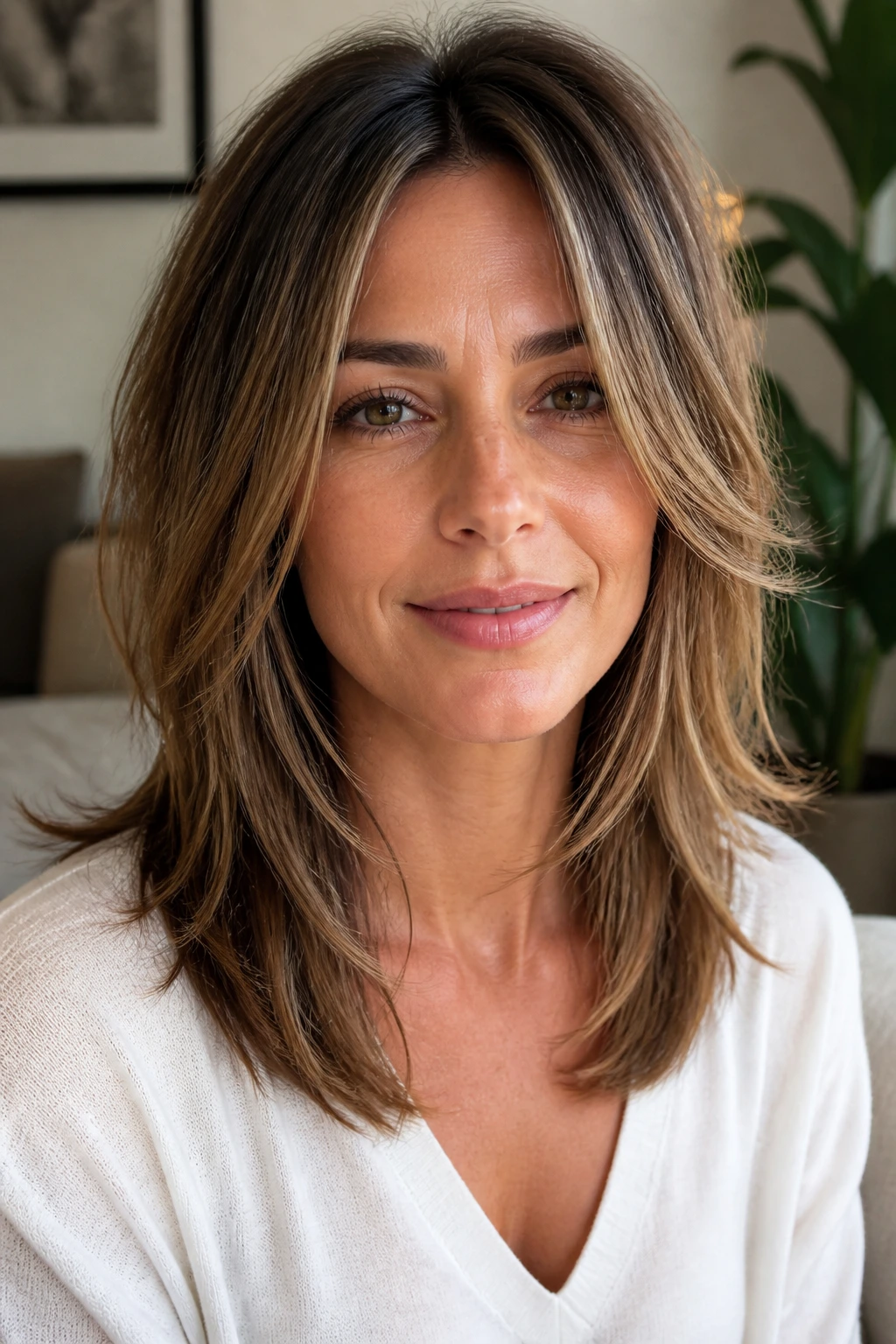
Razor-cut layers have a softer edge than scissor-cut ones, and that matters on medium hair. The ends feather out a bit, which can make straight hair move more and thick hair feel less dense. It’s a cut with texture built in, not one you need to fake with loads of product.
The catch is that razor work is not for every head of hair. If your hair is very fine or fragile, too much slicing can leave the ends looking see-through. But on healthier straight or wavy hair, the finish can be excellent. Ask for light internal shaping and keep the perimeter long enough to hold its line. A matte texture spray or a tiny bit of styling cream keeps the feathered pieces from sticking out in odd directions.
10. Wolf Cut Lite for Medium Hair
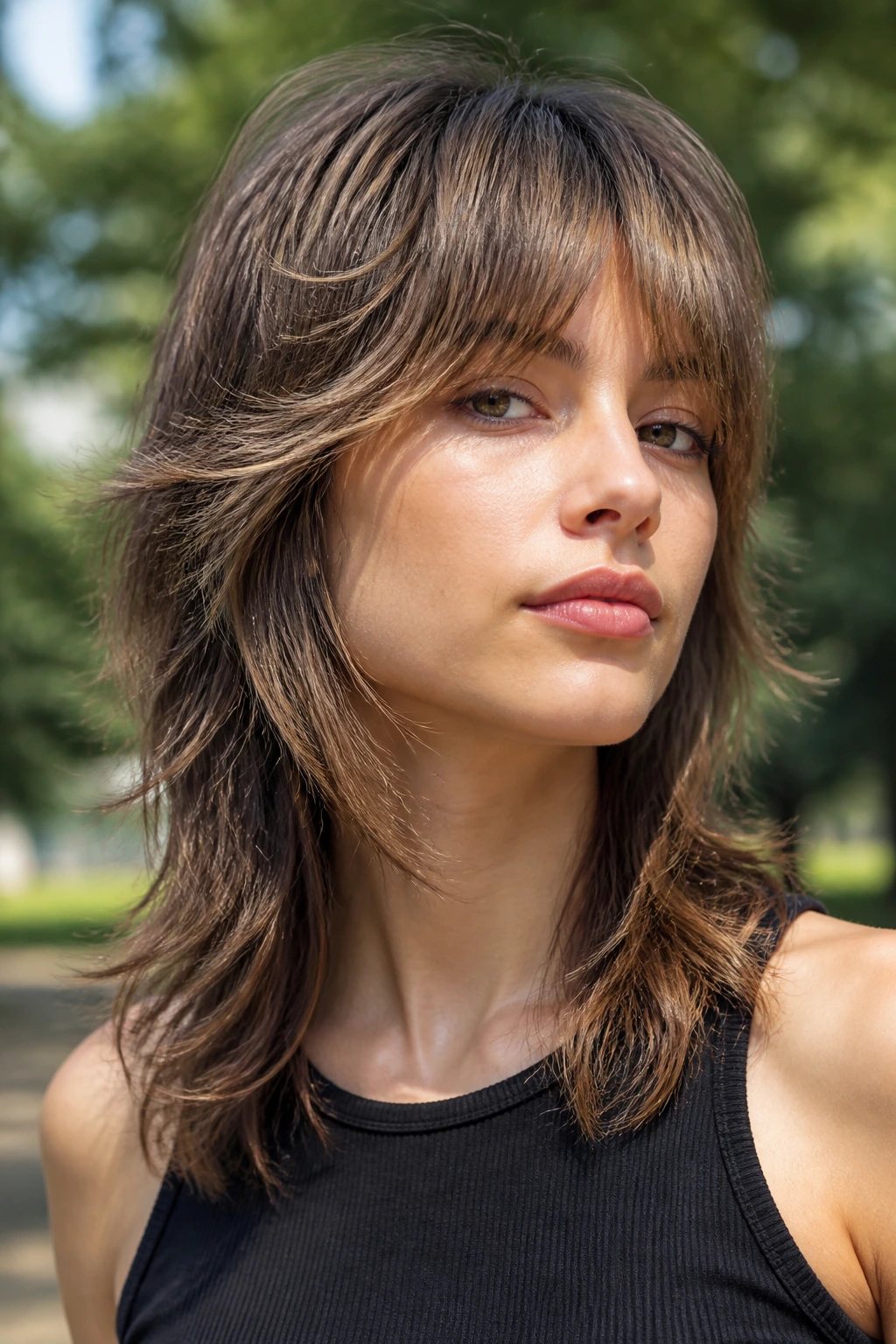
The full wolf cut can be a lot. The lighter version is smarter for medium length hair because it keeps the edgy shape without making the crown look too disconnected from the ends. You still get lift, a bit of bite, and some real movement, but the cut reads more wearable than wild.
This version works especially well if your hair already has natural bend. The shorter crown layers bring volume up top, and the longer lower layers keep the shape from puffing out. It looks best with a rough finish, not a glossy one. Scrunch in a little mousse, diffuse until the roots are dry, and stop there. If you keep touching it, you’ll lose the whole point.
11. Deep Side-Part Layers
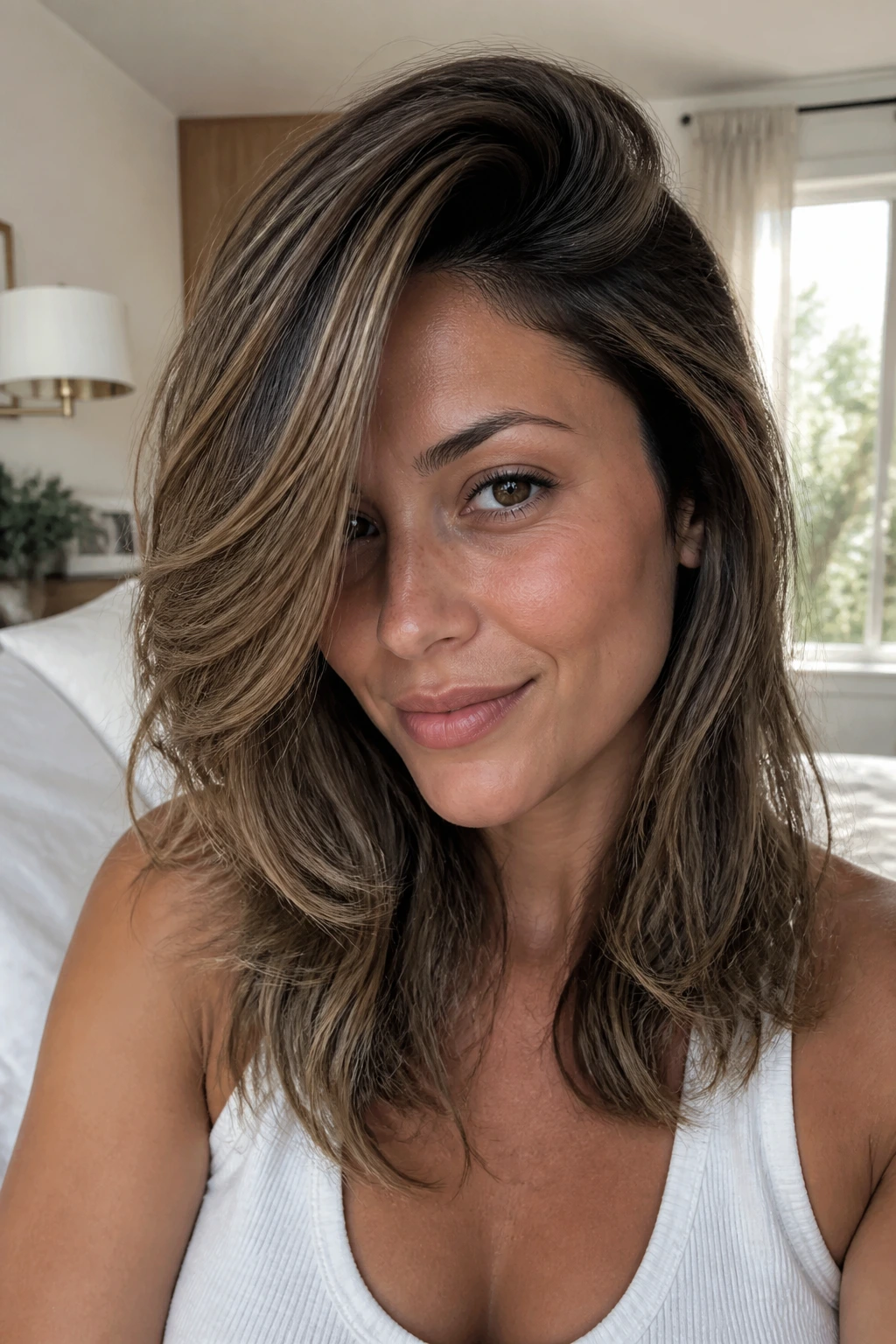
A deep side part changes layered hair more than people expect. Suddenly the front pieces sweep across the face, the crown gets lift, and the layers on the heavier side show off their shape. Medium-length hair takes to this especially well because the weight is still there to support the curve.
The look can be dramatic or soft depending on how much you bend the front section. Blow-dry the roots opposite the part for a minute to train volume in, then smooth the top layer over. I like this style for anyone who wants shape without a visible fringe. It’s also a solid fix for a cut that feels too symmetrical. Sometimes all a layered medium cut needs is a different part and a little root lift.
12. Blunt Ends with Internal Layers
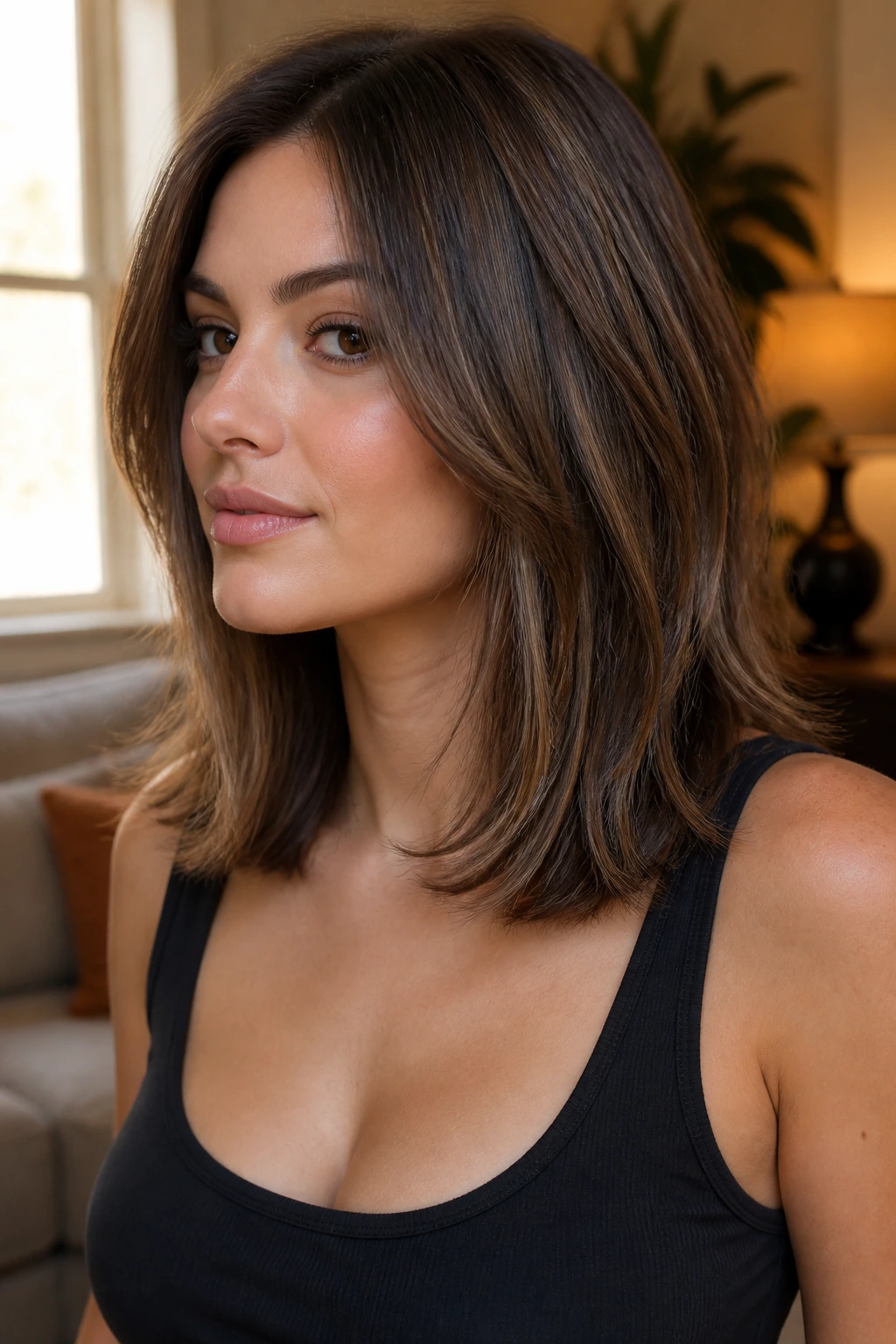
This is one of my favorite compromises. The outside line stays blunt, so the haircut keeps a clean edge, but internal layers remove bulk and add movement you can feel more than see. On medium hair, that means the shape still looks strong from the outside while moving better than a full one-length cut.
It’s especially useful for people who like hair that looks tidy but not stiff. The ends have weight, the body has air, and the whole style behaves well in a ponytail or a tuck-behind-the-ear moment. Keep the internal layers long if your hair is fine. Too many short pieces under a blunt perimeter can create a weird halo effect that looks accidental.
13. Wispy Layered Bob
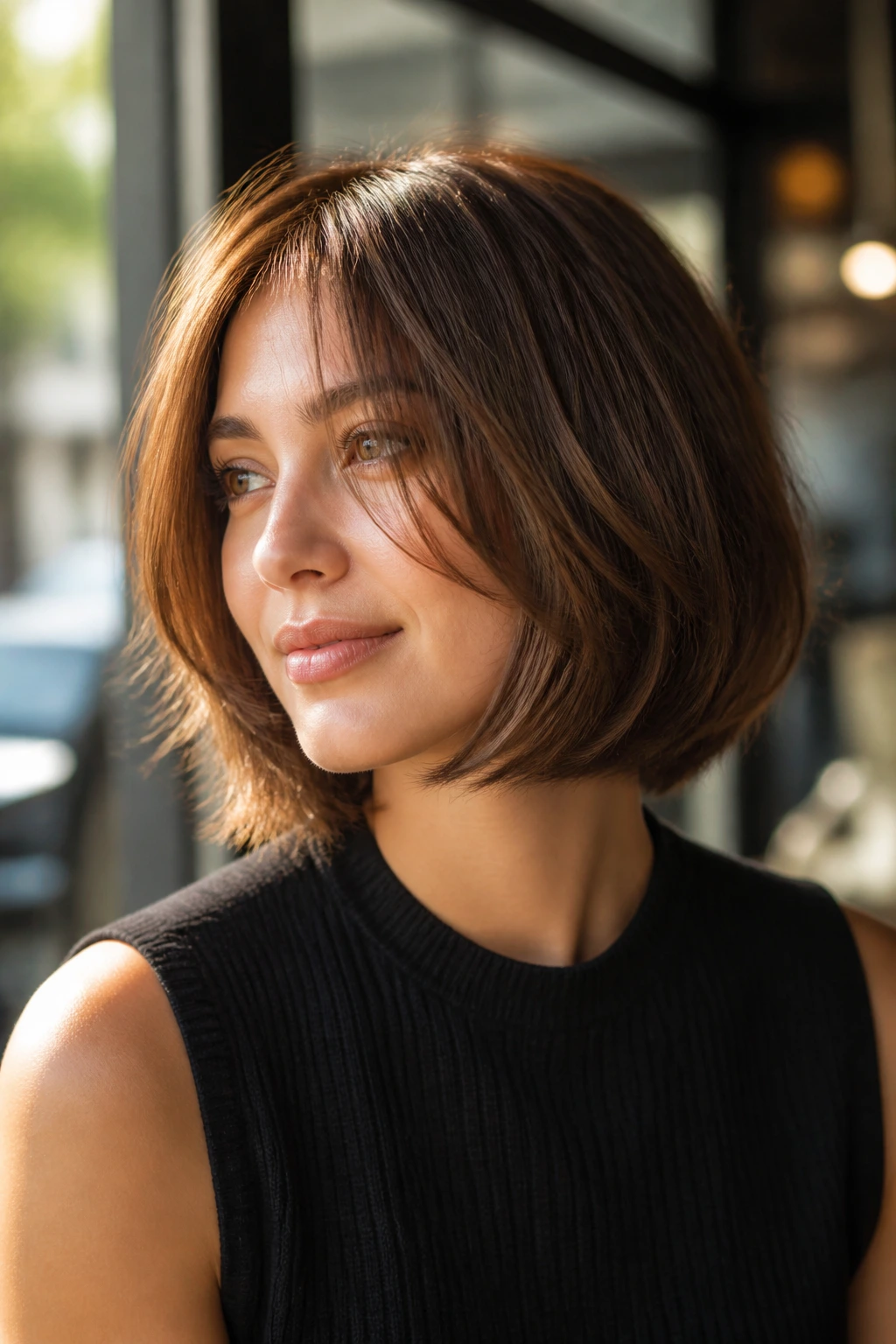
A wispy layered bob is for someone who wants medium hair that feels lighter around the edges. The layers are soft, narrow, and slightly broken up, which gives the cut an easy, floating look. It sits somewhere between a bob and a shoulder-length crop, and that in-between space is where it shines.
The danger here is over-thinning. A wispy bob should feel airy, not shredded. Ask for light texture near the face and gentle graduation through the ends. A little bend with a flat iron, turned away from the cheek, gives the whole shape a clean curve. It’s a nice choice if you want movement but do not want a shaggy finish.
14. Piecey Layers with Dimensional Color
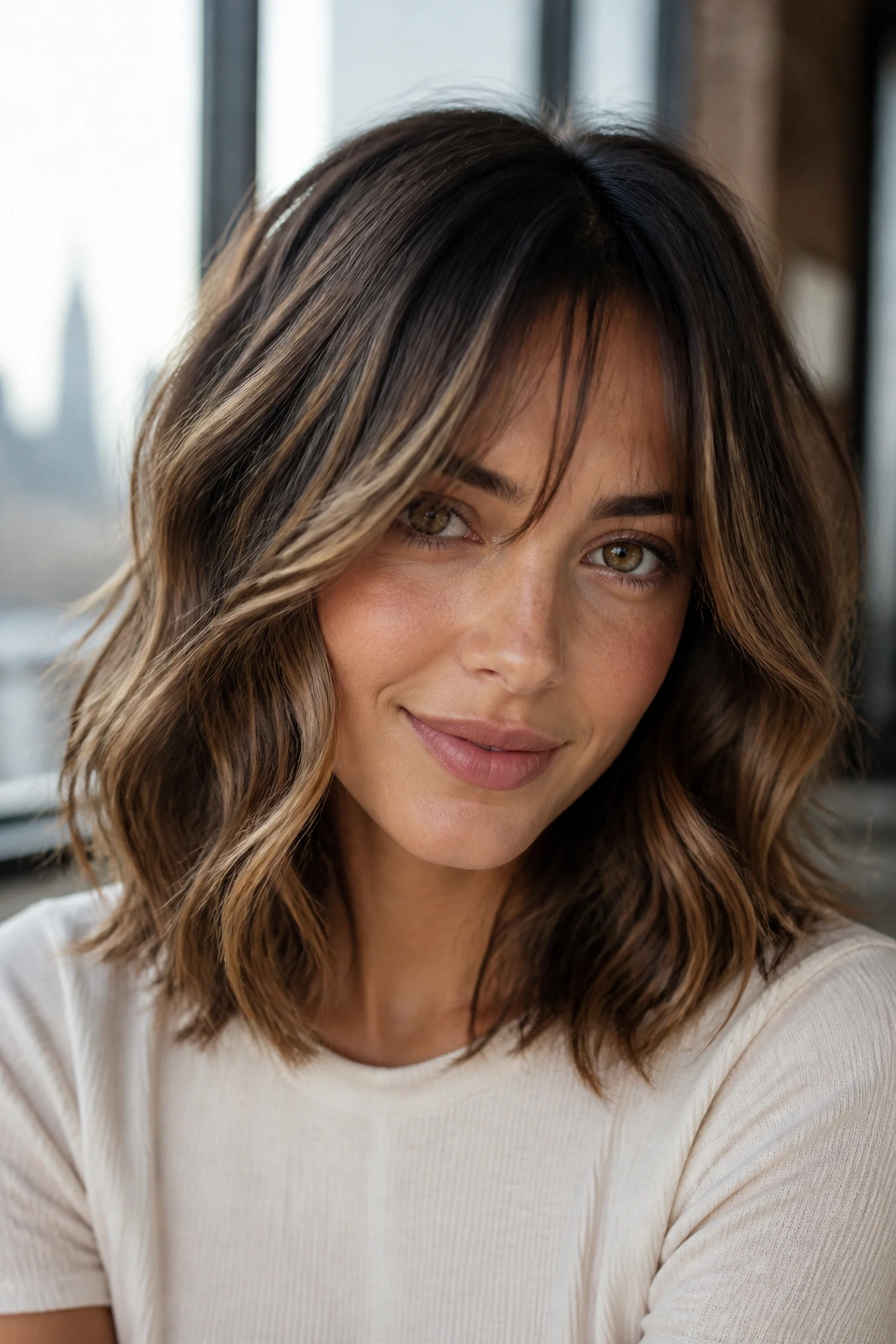
Piecey layers and dimensional color go together in a way that makes sense the second you see it. The layers break up the silhouette, and the color—highlights, lowlights, or balayage—shows where the hair is moving. Medium-length hair is a good canvas for this because the layers have room to show off without disappearing into too much length.
If you want the hairstyle to look textured without actually piling on tons of styling product, this is a smart route. The cut and the color do the visual heavy lifting. Keep the layer edges soft, then add a light wave with a curling wand and finger-comb it apart. The result is piecey, yes, but not crispy. Nobody needs crunchy ends pretending to be “effortless.”
15. Brushed-Out Glam Layers
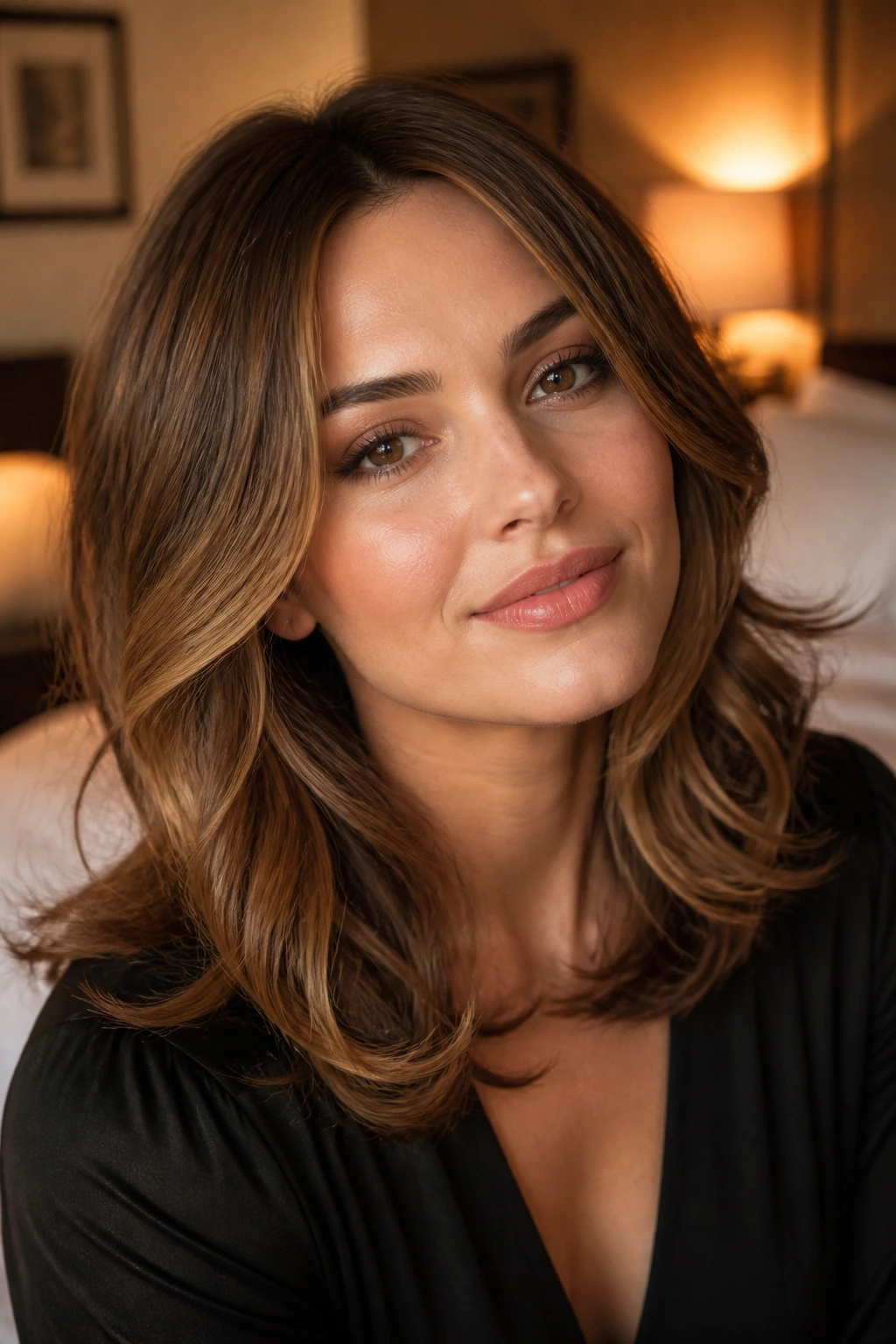
Brushed-out glam layers have a softer finish than their first pass suggests. You curl the hair, let it cool, then brush it through so the wave opens up into a smooth bend. On medium hair, this creates that old-Hollywood feeling without the heavy wave pattern that can swallow the length.
The layering should support the shape, not fight the curl. Ask for medium-long layers around the front and keep the back slightly heavier so the style doesn’t puff up. This look is at its best when the ends are still visible and the face frame falls in a clean sweep. A shine spray on the mid-lengths helps, but keep it off the roots or the whole style can collapse by the second hour.
16. Soft S-Wave Layers
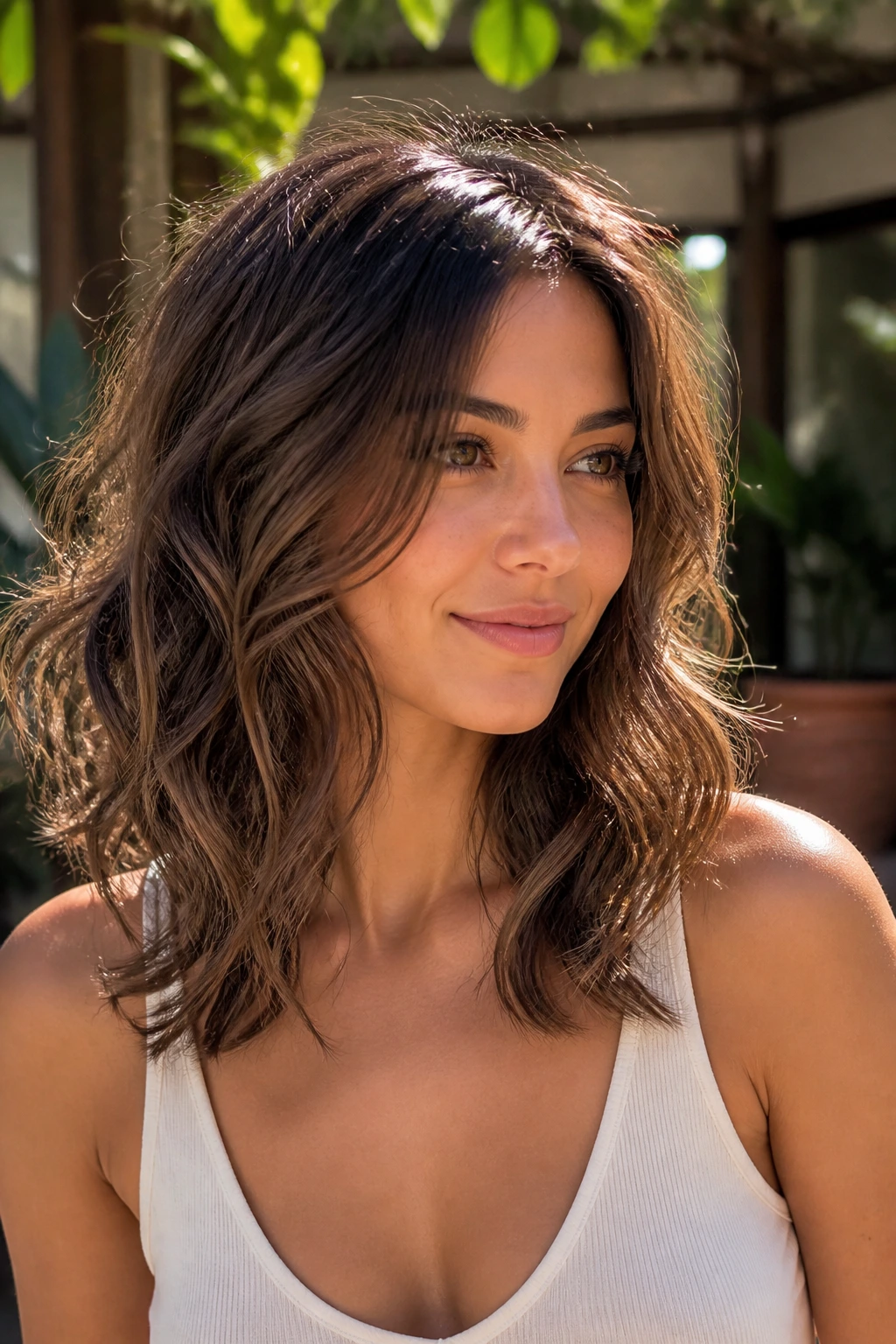
S-waves are one of the nicest ways to show off layered medium hair because they bend and reverse direction instead of curling into a tight loop. That gives the hair a lived-in shape with more visual motion than a basic wave. The layers help the wave read as loose and deliberate instead of heavy.
A 1-inch iron or a flat iron can create the pattern, but the key is not curling all the way through each section. Leave the ends a bit straighter, brush the wave out with your fingers, and let the layers separate naturally. It’s a good style for hair that needs polish without looking stiff. If your hair holds curl too hard, use larger sections and less heat. That keeps the wave from turning into a helmet.
17. Airy Layers for Fine Hair

Fine hair needs a different approach. Heavy layers can leave it looking thin at the bottom, so airy layering is about lift at the crown and careful softness through the ends. On medium length hair, that means the cut can look fuller without losing movement.
The shortest layers should be conservative. I would rather see fewer layers placed well than a lot of short pieces doing too much. A root-lifting spray at the scalp and a light blow-dry with a round brush can create enough body on their own. Skip thick oils near the ends; they can flatten fine hair almost instantly. If your hair is fine and medium length, restraint is not boring. It’s smart.
18. Heavy Layers for Thick Hair
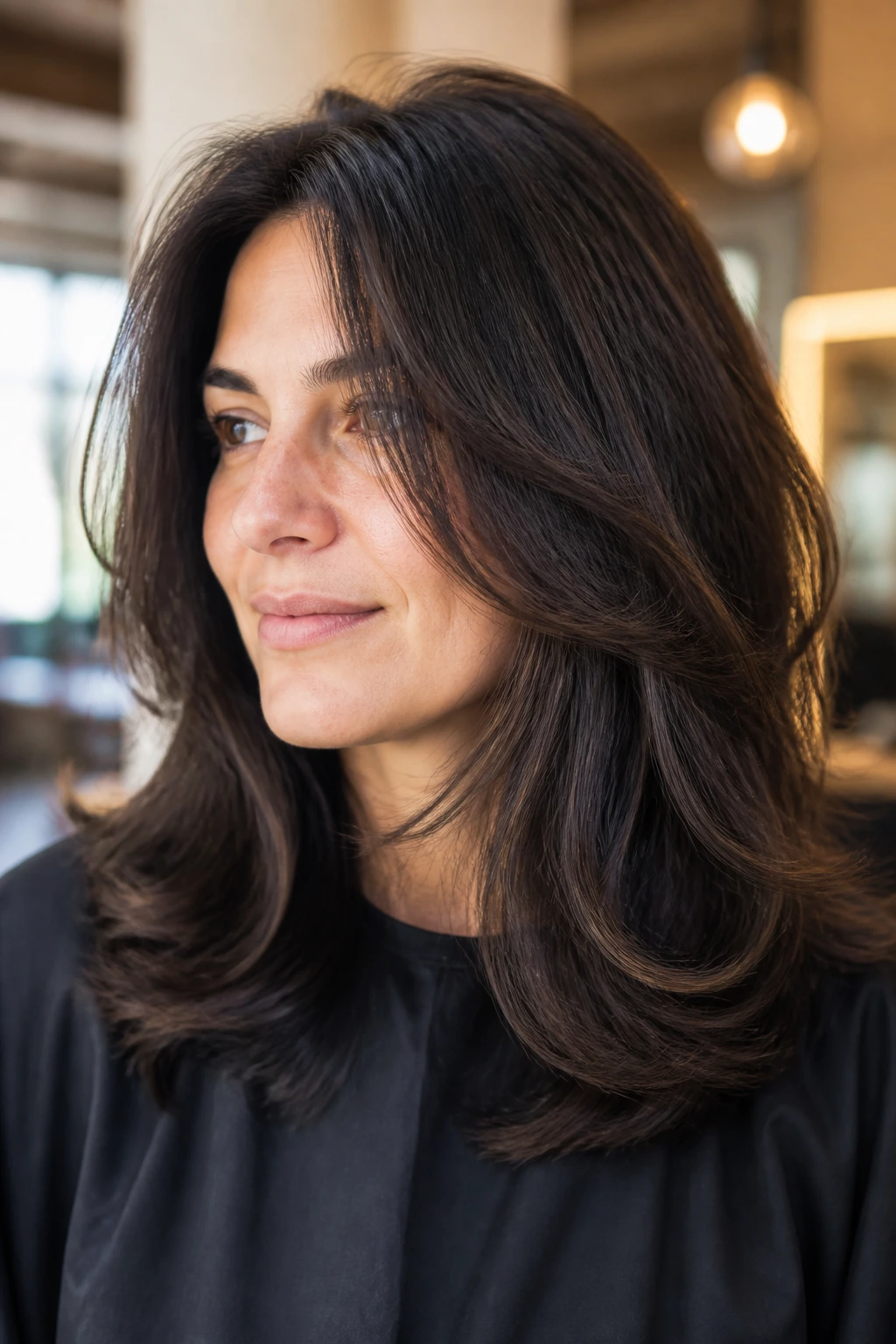
Thick hair often needs more structure, not more trimming for the sake of it. Heavy layers remove bulk where the hair needs to breathe, especially around the mid-lengths and under the crown. The result is shape with stillness, if that makes sense—hair that can move without exploding outward.
This cut is useful if your hair swells when it dries or sits in a triangle when it’s left alone. The layers should be long enough to keep the ends full. Short, aggressive layering on thick medium hair can create a puffy outline that’s hard to control. A smoothing cream and a paddle brush dry-down can help keep the cut sleek. But the real fix is the layer placement. That part matters more than product.
19. Micro Face Frame Layers
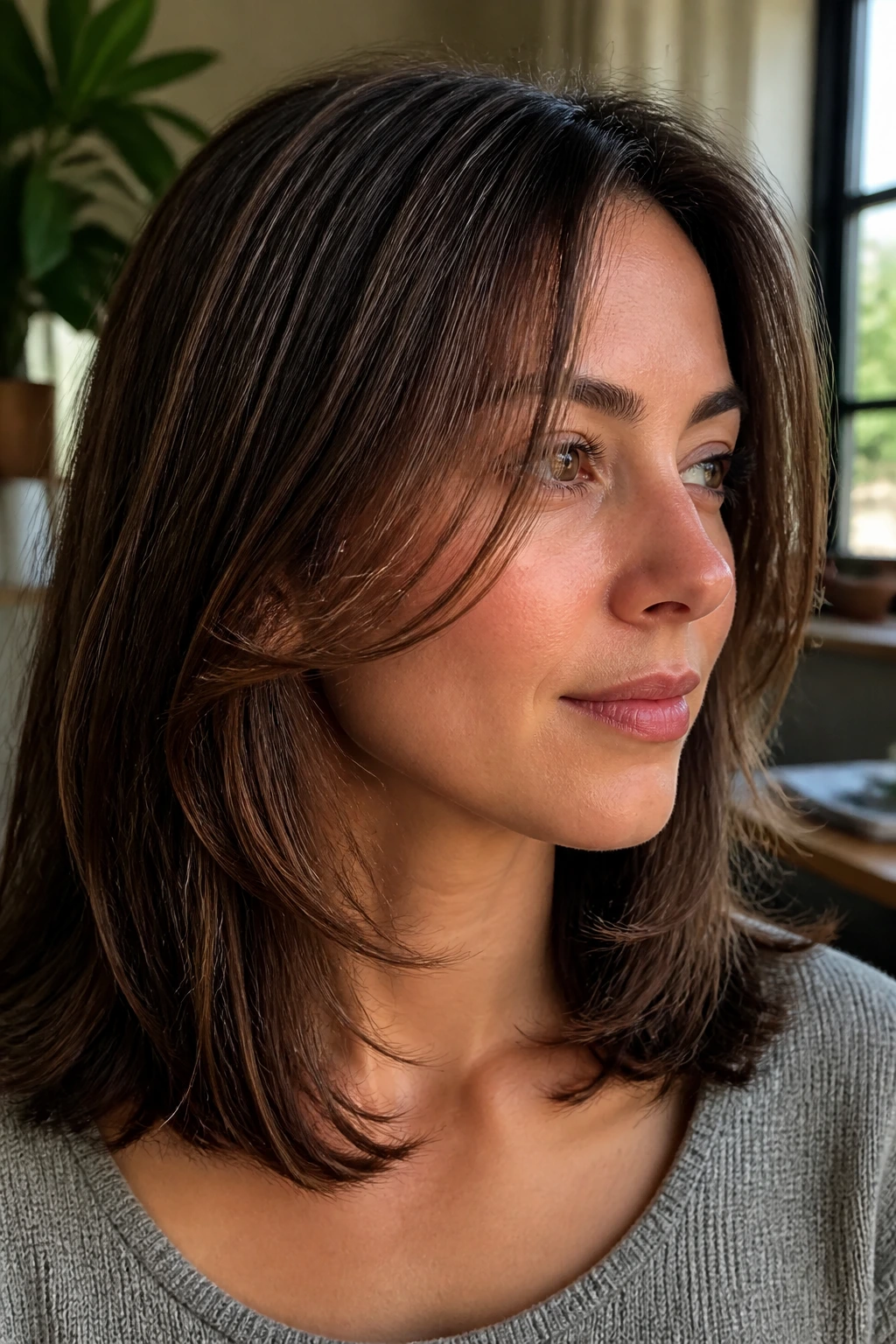
Micro face-framing layers are subtle, and that’s why they’re good. Instead of dramatic front pieces, you get tiny shifts around the cheeks and jaw that soften the cut without announcing themselves. Medium hair benefits from this when you want change but not a full haircut identity shift.
This style is easy to live with because it grows out quietly. The front pieces stay light around the face, but the overall length and weight stay intact. It’s a nice choice if you tuck your hair behind your ears a lot or wear glasses, because the cut still opens up the face without getting in the way. A small round brush is enough for styling. You do not need to wrestle with this one.
20. Beach Waves with Invisible Layers
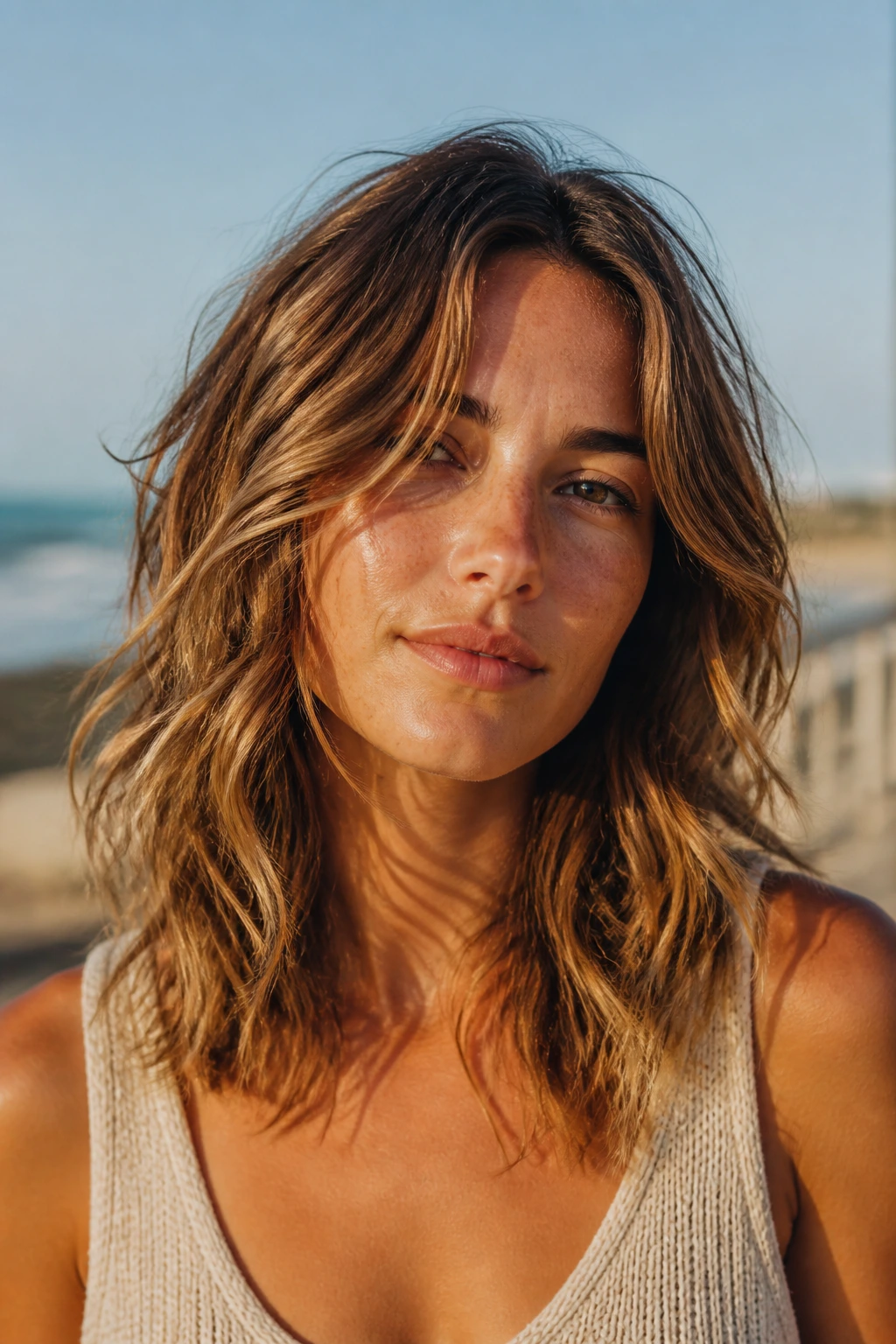
Invisible layers are cut so they support the wave pattern instead of showing up as obvious steps. That makes them a good match for beach waves, where you want the surface to look soft and irregular but not messy. Medium hair carries this shape well because the length gives the wave room to fall.
The trick is that the layers should be long and blended enough to disappear once the hair bends. If your hair is naturally wavy, this can be one of the most flattering cuts you can wear. Scrunch in a little mousse, air-dry halfway, and finish with a diffuser or a few twists with a wand. The style should look touchable, not sticky. If it feels crunchy, too much product got involved.
21. Bottleneck Bangs with Medium Layers
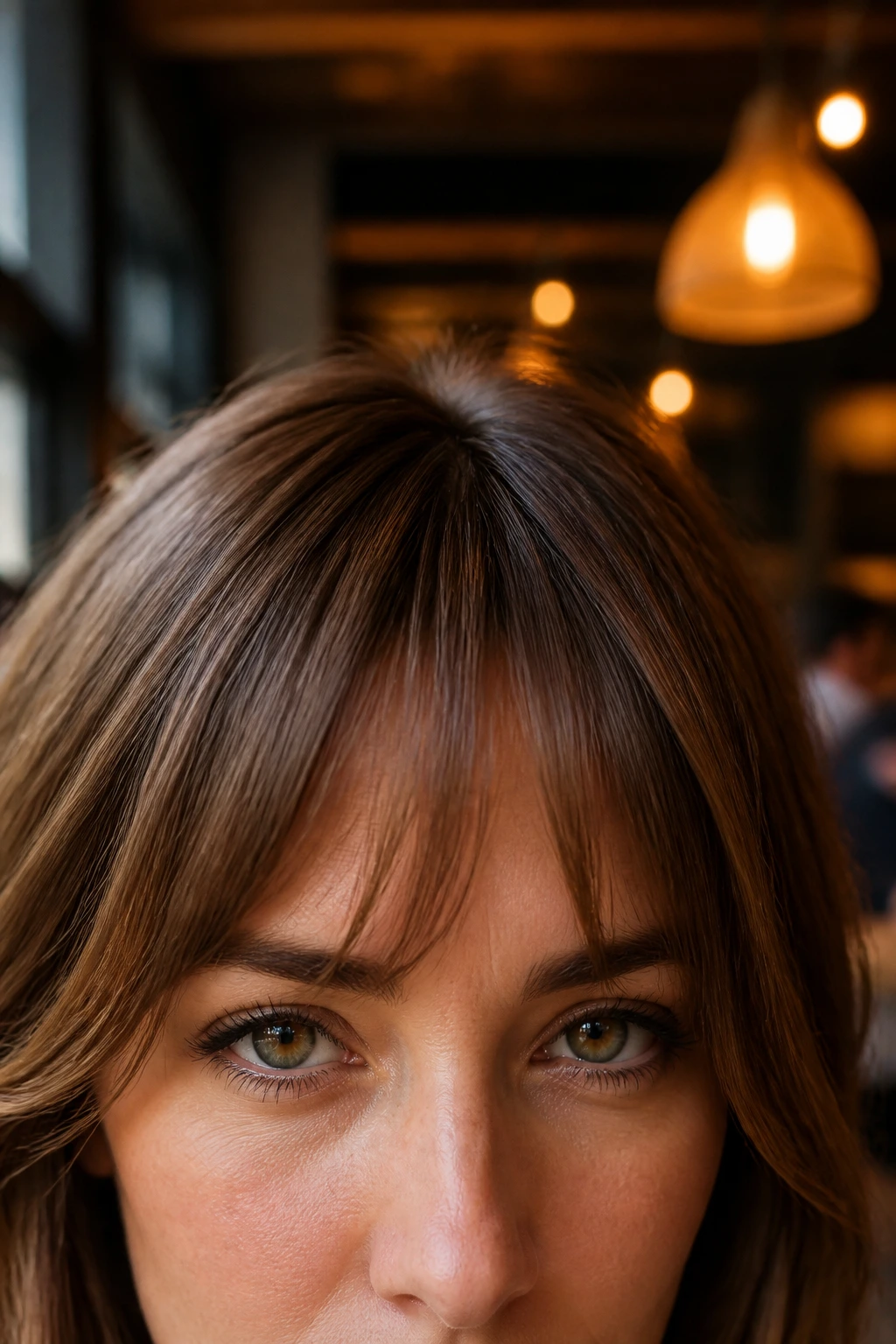
Bottleneck bangs have become a favorite for a reason: they’re softer than blunt fringe and more defined than a curtain bang. The center is a little shorter, the sides taper longer, and that shape blends beautifully into medium-length layers. The haircut looks framed, but not boxed in.
The important part is the connection between bang and layer. If the front pieces are cut too abruptly, the whole style can feel disconnected. Ask for the bangs to merge into the shortest face-framing layers so the transition stays smooth. This cut works especially well if you want something expressive around the eyes but still want to pull your hair back now and then. The fringe should still behave when you’re in a hurry.
22. 90s Flipped-Out Layers
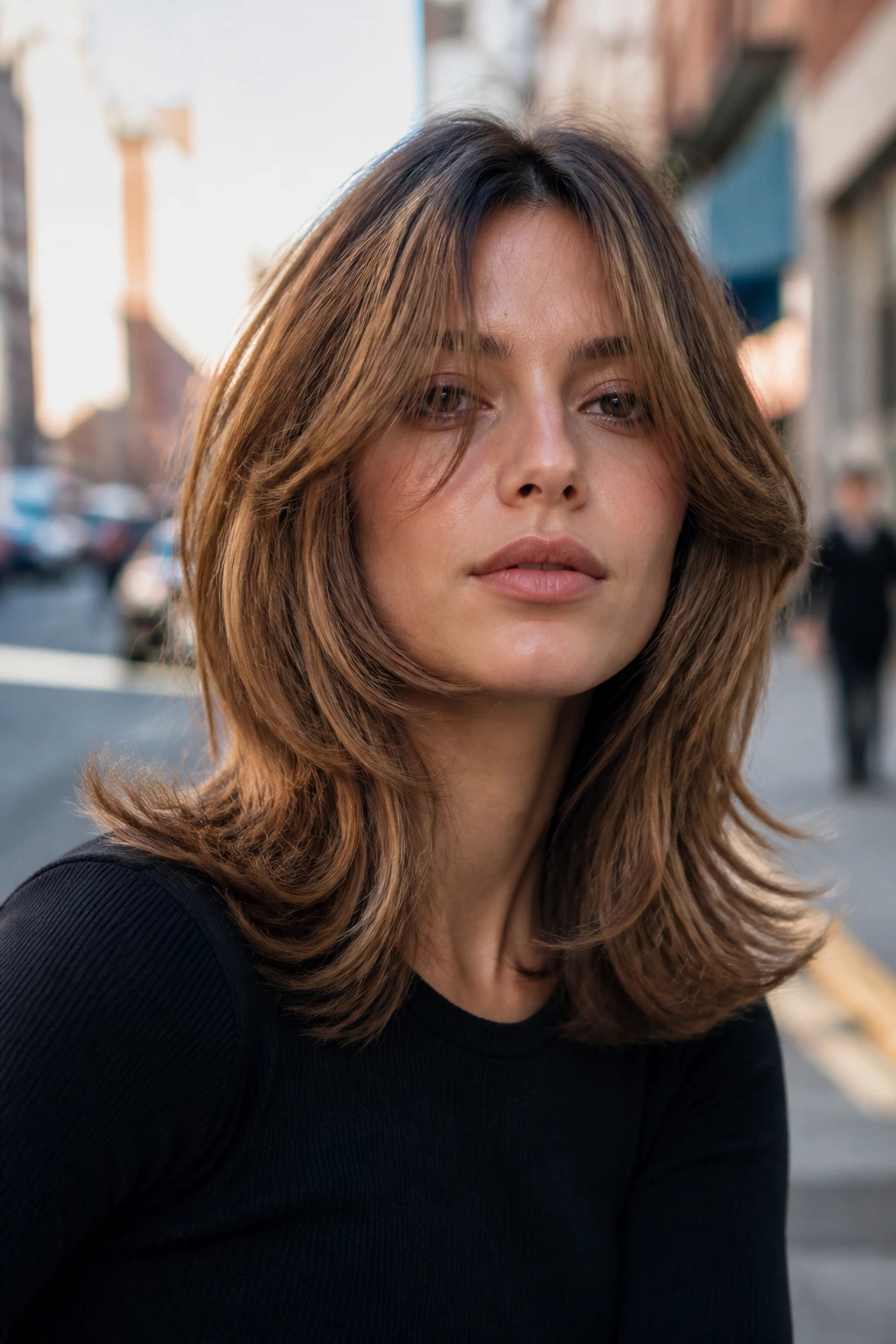
These layers are pure fun when done right. The medium-length ends flick outward, the front pieces have a bit of bounce, and the overall shape feels nostalgic in the best possible way. This isn’t about stiff nostalgia either. It’s about movement and a sharp, clean outline.
A round brush or a flat iron can create the flip, but the layer structure needs to support it. Keep the shortest pieces around the cheekbones and leave enough weight at the bottom so the flips don’t look too thin. A tiny amount of volumizing spray at the roots helps the top stay lifted. Then the ends can do their thing. If you want medium hair to look lively from across the room, this one delivers that mood fast.
23. Soft Layered Cut with Side Bangs
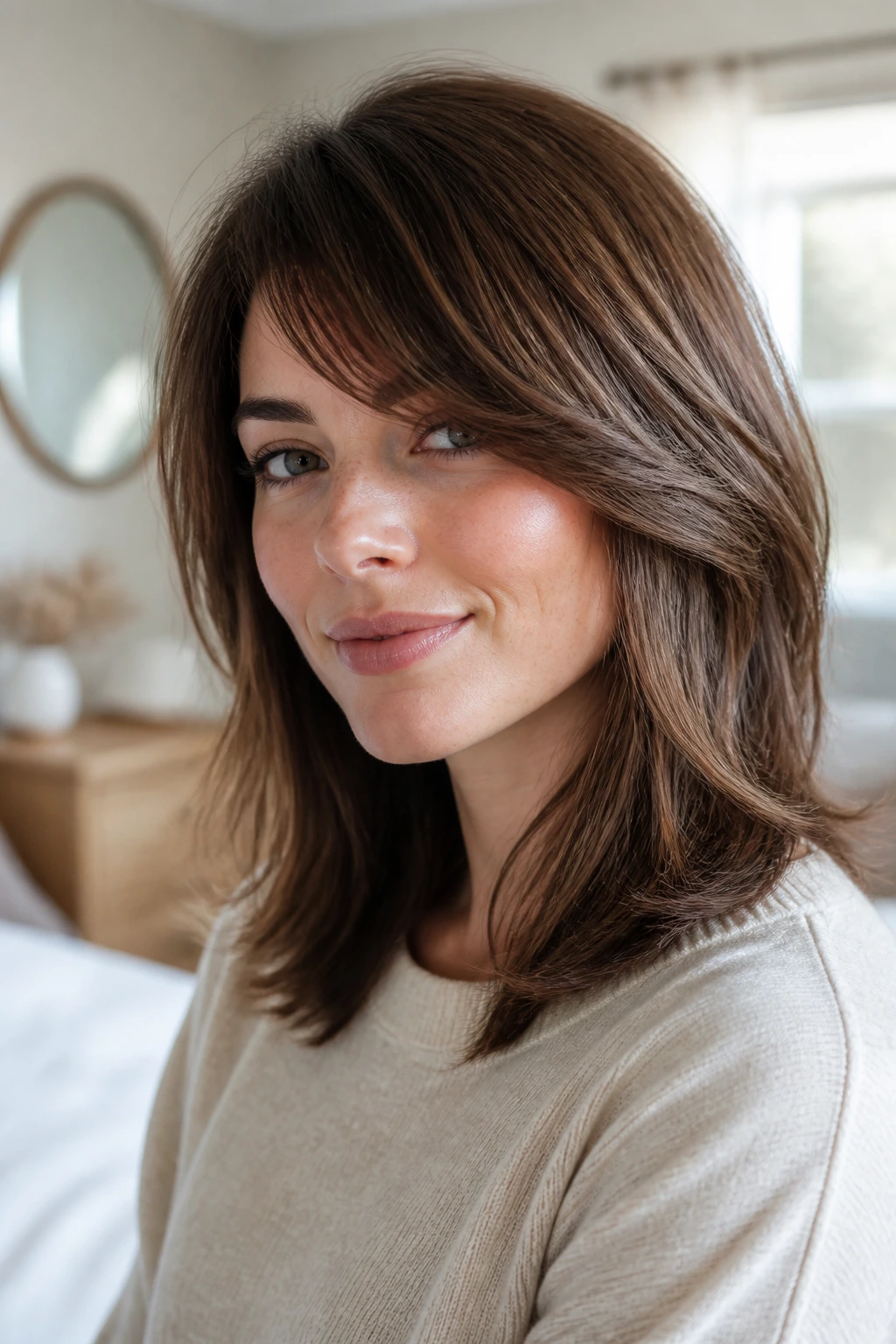
Side bangs change the whole energy of medium layered hair. They soften the forehead area, pull attention to the eyes, and make the rest of the cut feel gentle without being plain. The layers underneath should be light and blended so the fringe has somewhere to fall.
This is a good option when you want movement around the face but prefer a side-swept shape over a center split. The side bang can be brushed over, tucked back, or curled slightly with the front section. Keep it longer if your hair has a cowlick or if you do not want to style your fringe every morning. Short side bangs can be charming for about three minutes. After that, they can get bossy.
24. Curly Medium Layers
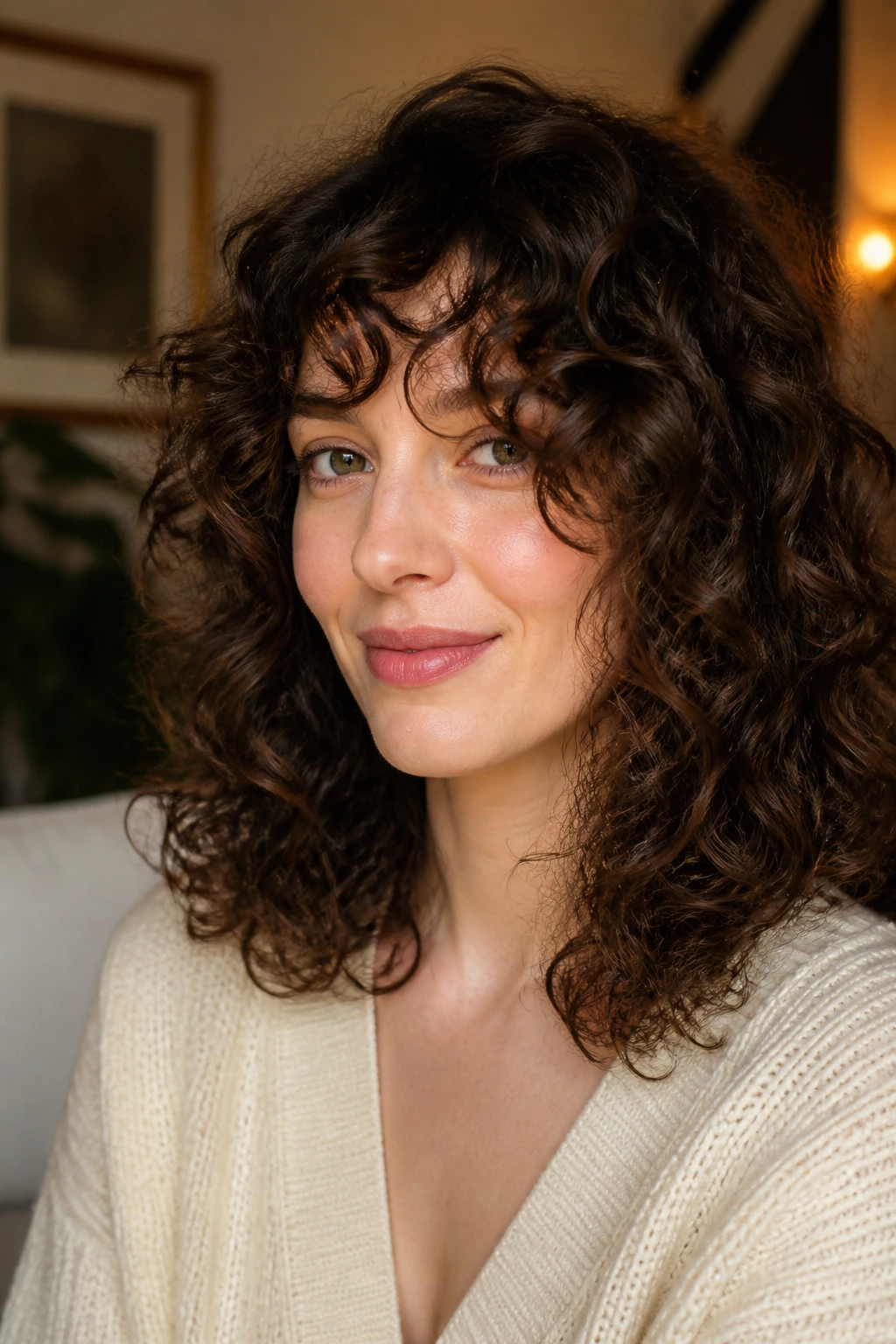
Curly hair at medium length needs layers that respect the curl pattern, not just the haircut diagram. The layers should help each curl stack without making the ends thin or the top too round. A good curly layered cut can turn medium hair from bulky into springy in the best sense.
The shape depends on density and curl size, so this is one case where a dry cut or curl-by-curl shaping can be worth asking about. The goal is even volume, not a perfect circle. A curl cream and gel combination can hold the definition without making the hair stiff. Let the layers air-dry or diffuse gently. Pulling curls while they’re wet is how you lose the shape you paid for.
25. Layered Lob with Tucked Ends
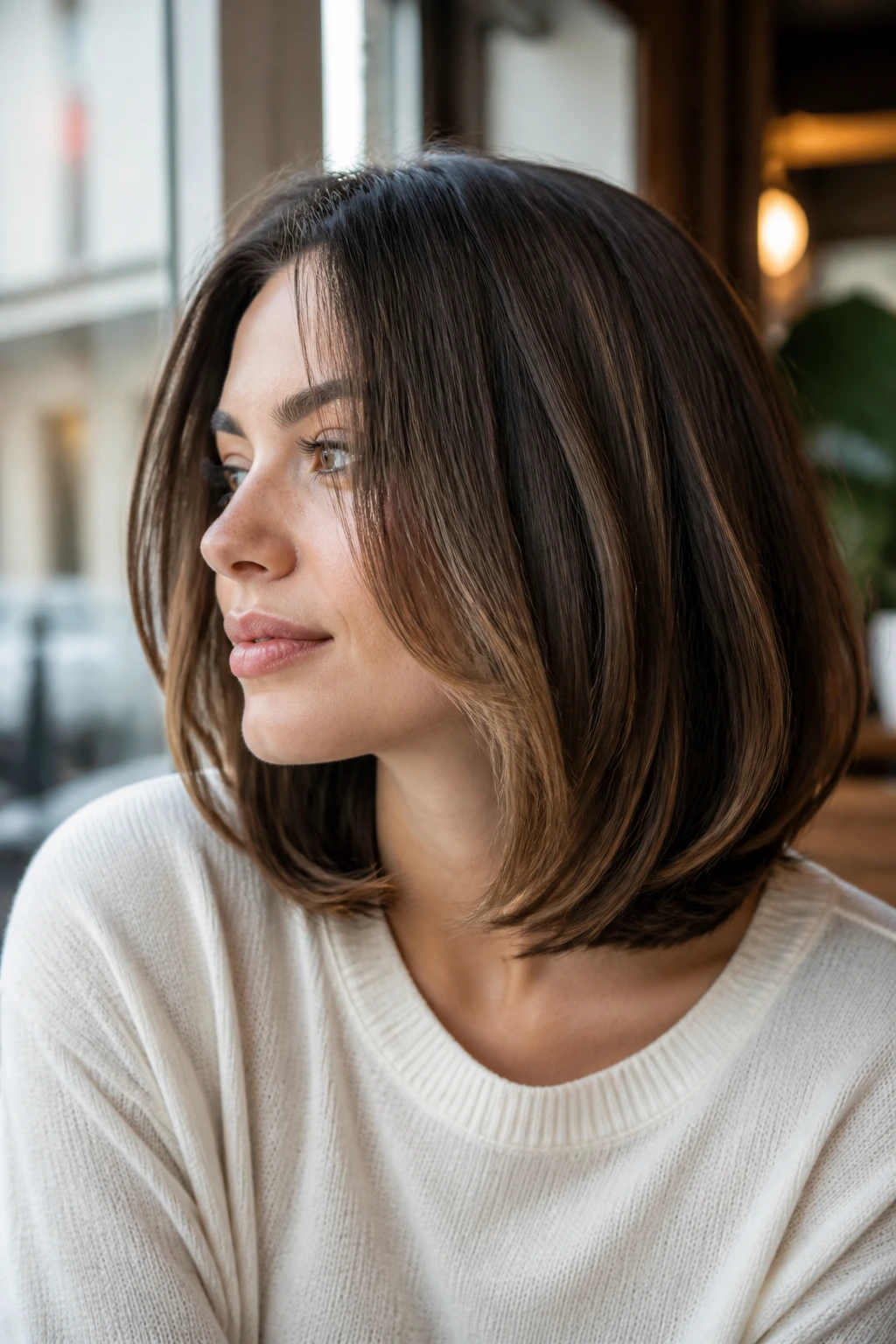
A layered lob with tucked ends has a clean, slightly modern feel. The ends curve inward toward the neck or jaw, and the layers above them create just enough movement to keep the shape from feeling static. It’s the kind of style that looks neat without looking severe.
The tucked-end finish is easy to fake with a blow-dryer and round brush, or even a flat iron if you prefer a quicker pass. What matters is that the layers stay blended so the bottom line still feels strong. This is a particularly good choice if you wear button-down shirts, sweaters, or anything with a collar that can fight with hair around the neckline. The tucked shape keeps things tidy without looking helmet-like.
26. Edgy Choppy Layers
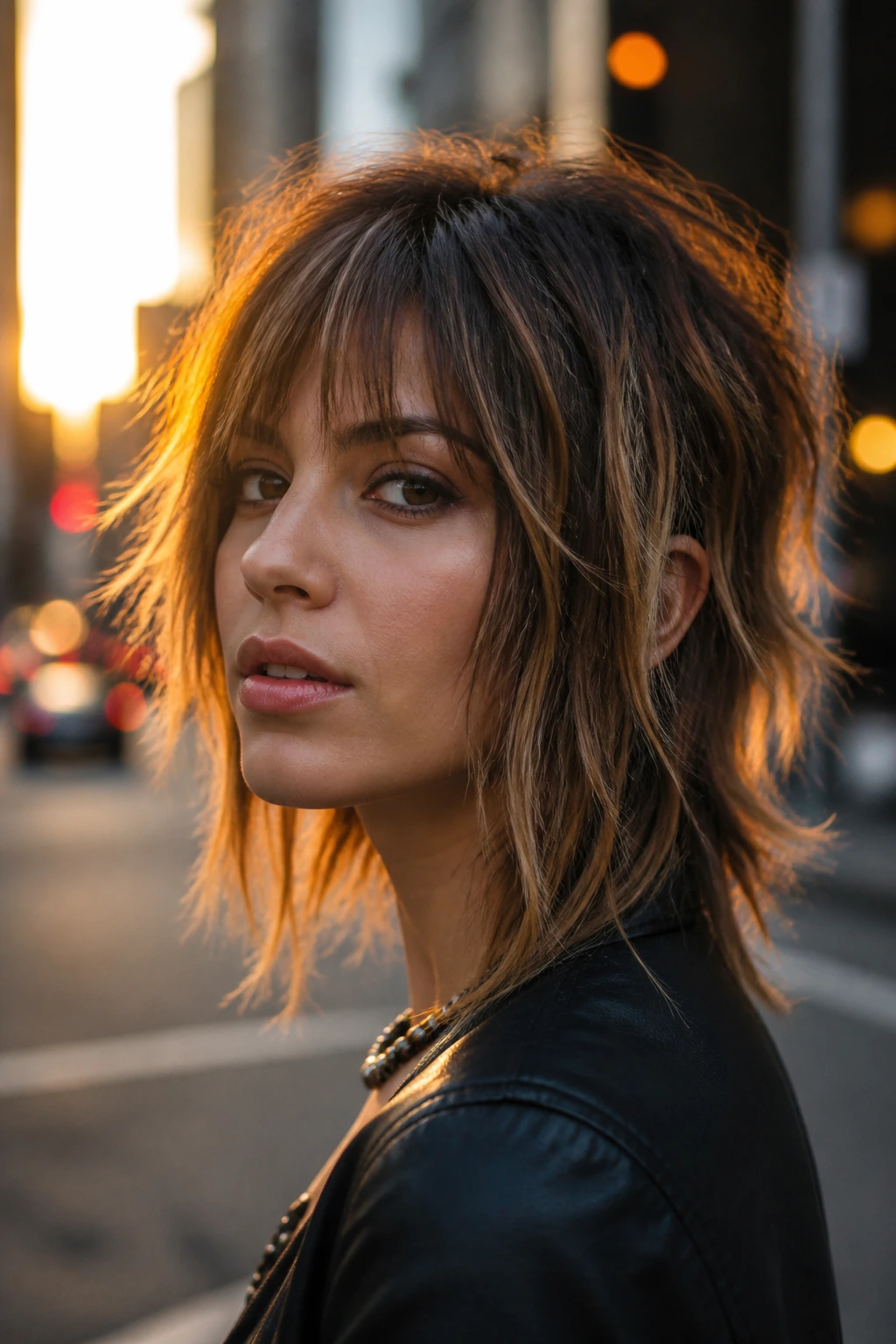
Choppy layers bring a sharper edge to medium hair, and they’re not subtle about it. The ends are broken up, the texture is more visible, and the haircut has a little bite. If your current medium cut feels too polite, this is the one that changes the mood fastest.
The style works best when the layers are uneven in a controlled way rather than randomly hacked. You want separation, not damage. A texturizing spray or a small amount of pomade on the ends can help define the shape. Keep the rest of the hair loose and slightly messy. That contrast is what makes the cut read edgy instead of simply unfinished.
27. Polished Layered Cut for Straight Hair
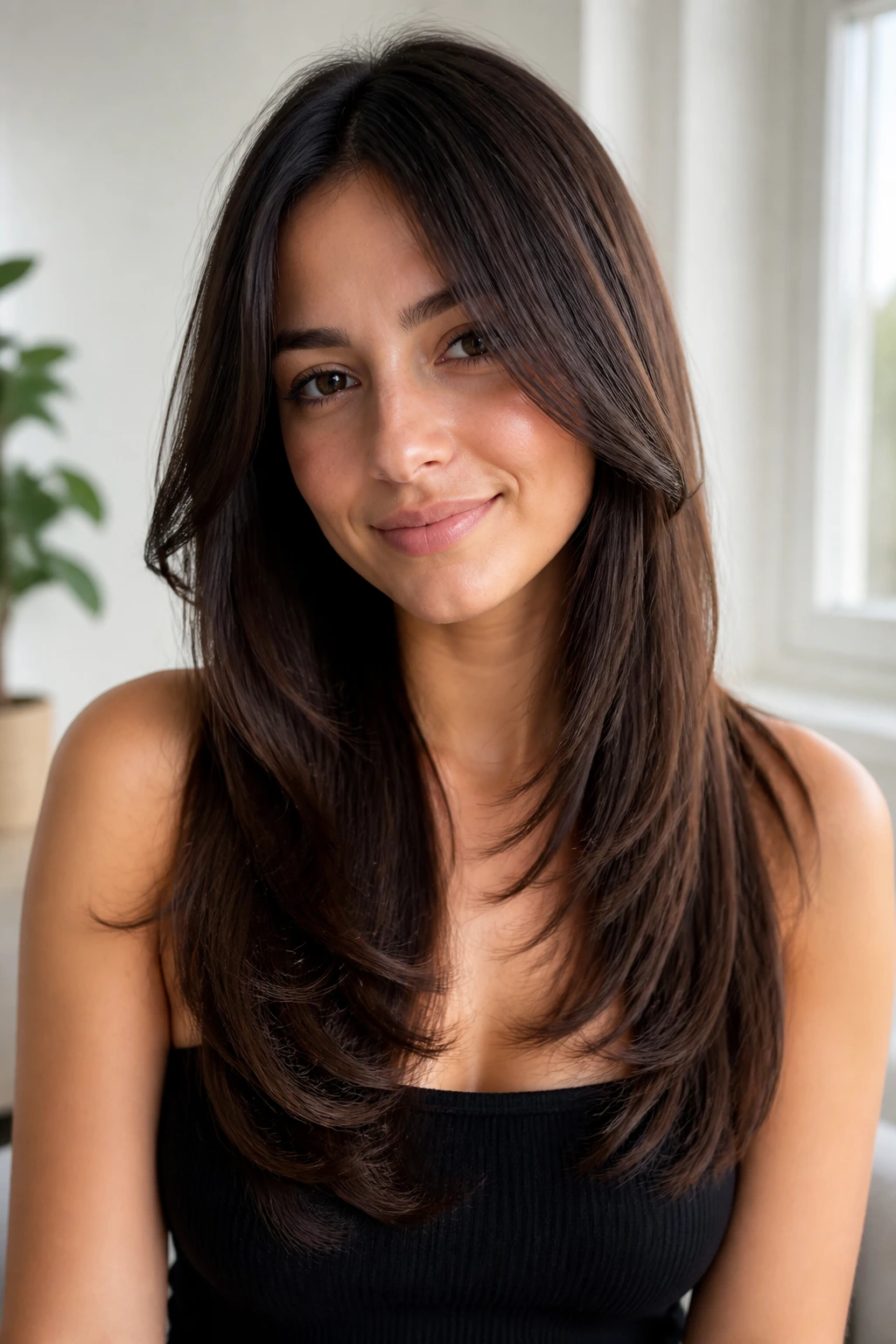
Straight hair can make layered cuts look stark if the line work is too harsh, so a polished version keeps the layers long and clean. The result is movement with shine, not spiky texture. Medium-length straight hair often looks its best when the layers are subtle enough to catch light but not so short that they break the silhouette.
A good blowout matters here. Use a nozzle on the dryer, smooth the strands downward with a paddle brush, then give the ends the smallest bend inward. That tiny curve makes the haircut feel intentional. If your straight hair tends to separate, a lightweight serum on the mid-lengths can keep it sleek. Heavy cream will usually flatten it. Straight hair rarely needs a lot of help. It needs the right kind.
28. Low-Maintenance Grow-Out Layers
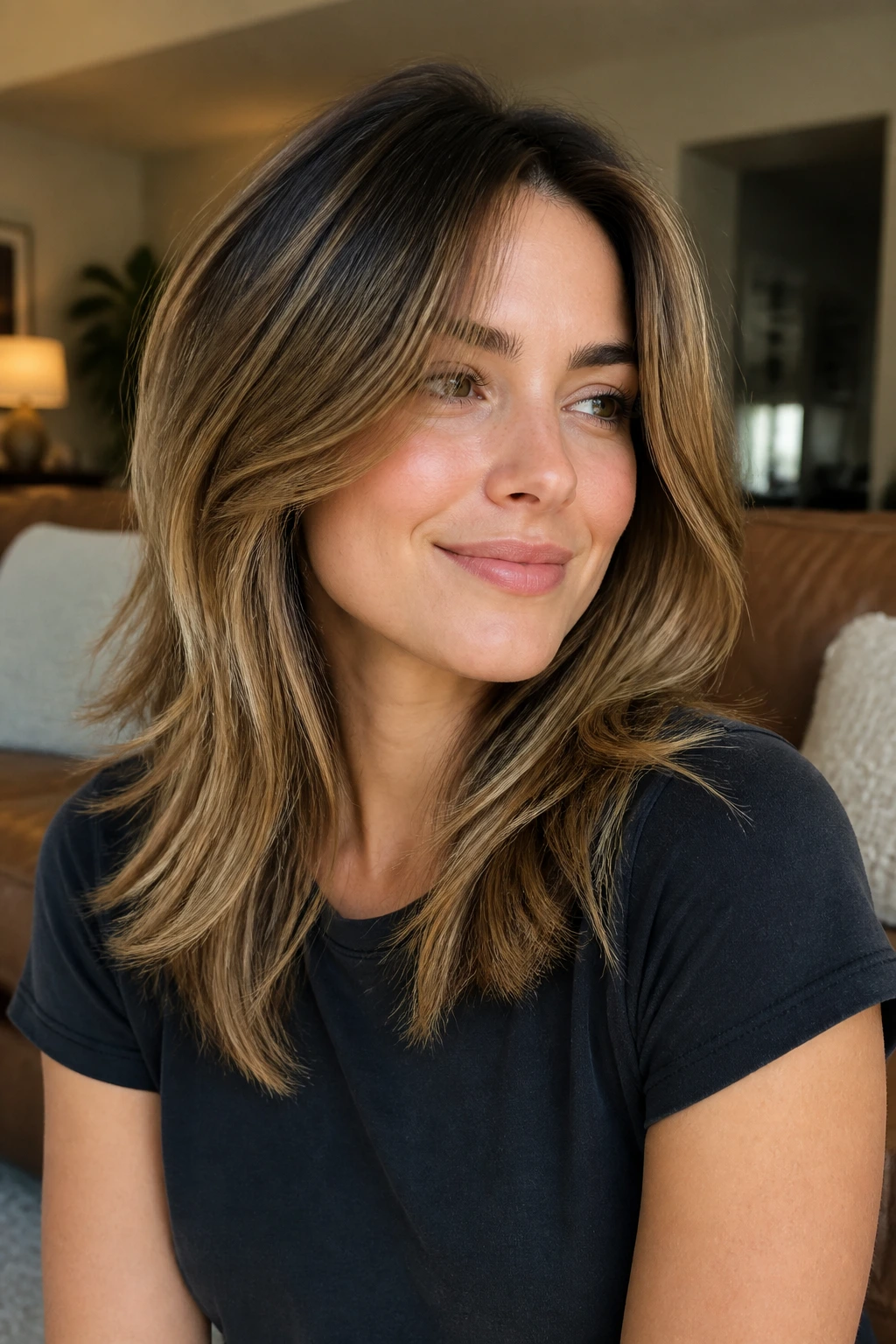
Some layered hairstyles are built to be touched up constantly. This one isn’t. The layers are long, blended, and placed so the shape still holds when the haircut starts to stretch out. For medium length hair, that’s a practical gift.
If you hate the look of a harsh grow-out line, ask for soft face-framing pieces and gradual layers through the interior. The haircut will still move, but the edges won’t scream for a trim every few weeks. Air-drying can work here, which is half the reason people keep coming back to this shape. It looks good with effort, and it behaves even when you give it less than effort. That’s the real selling point.
Why Medium Length Layers Work So Well in Real Life
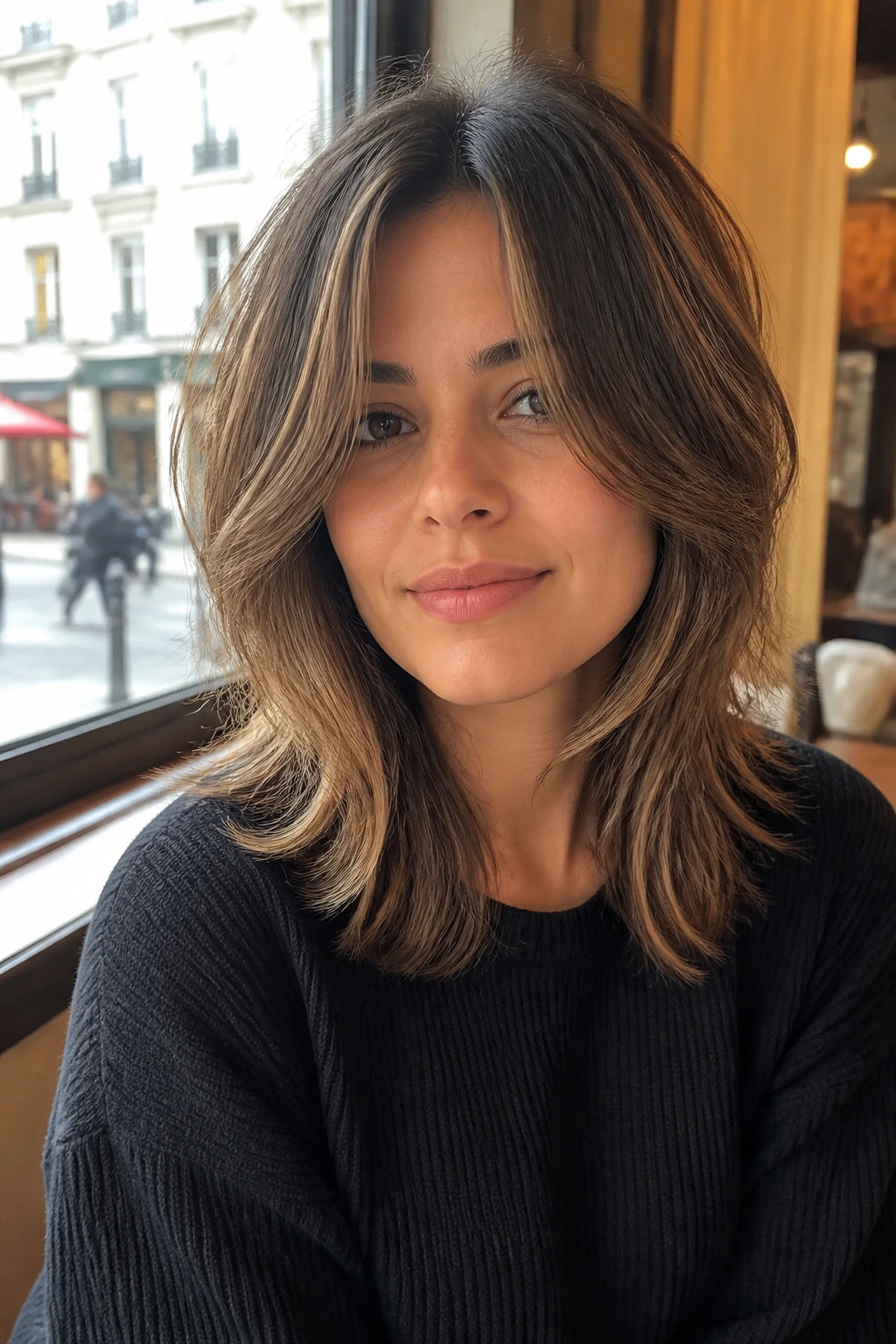
Medium hair sits in a useful middle ground. It has enough length to show off layers, but not so much that the shape disappears under its own weight. That gives a stylist room to play with face framing, internal layering, graduation, and texture without losing the outline that makes the haircut feel finished.
What I notice most with medium-length layered cuts is how they shift depending on the weight distribution. A little extra lift at the crown can change the whole silhouette. So can a long front layer that skims the cheekbone instead of the chin. Those small decisions matter more than the trend label attached to the cut, and that’s why good layered hairstyles for medium length hair keep outlasting the flashier ones.
Essential Styling Tools for Layered Medium Hair
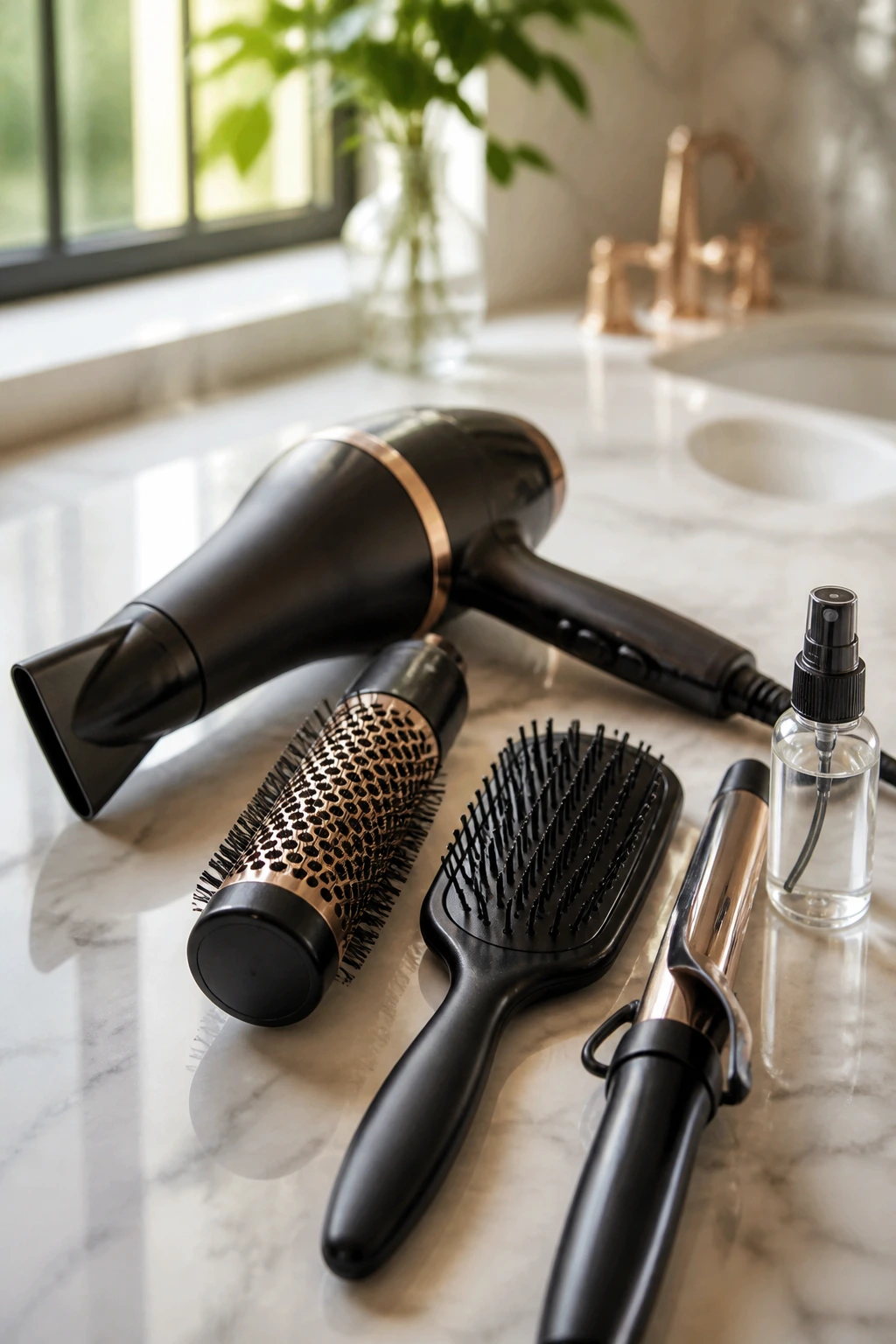
- Blow dryer with a nozzle: The nozzle concentrates airflow so the layers dry smoother and don’t puff in random directions.
- Round brush, 1.25 to 1.5 inches: This size gives medium hair enough bend without creating tiny curls that collapse fast.
- Paddle brush: Best for sleek blowouts, especially on straight or thick hair with long layers.
- Curling iron or wand, 1 inch to 1.25 inches: Useful for adding bend and separation to layered ends.
- Heat protectant spray: Use it every time you use heat. Medium hair can fry at the ends faster than people expect.
- Texturizing spray or light mousse: Good for shaggy, piecey, or tousled versions of the cut.
- Wide-tooth comb: Handy for wavy or curly layers so you don’t pull the shape apart while detangling.
- Clips for sectioning: Not glamorous, but they make a big difference when you’re styling face-framing pieces.
- Light serum or smoothing cream: A small amount helps keep the ends polished without flattening the layers.
Choosing the Right Layer Pattern for Your Hair Type
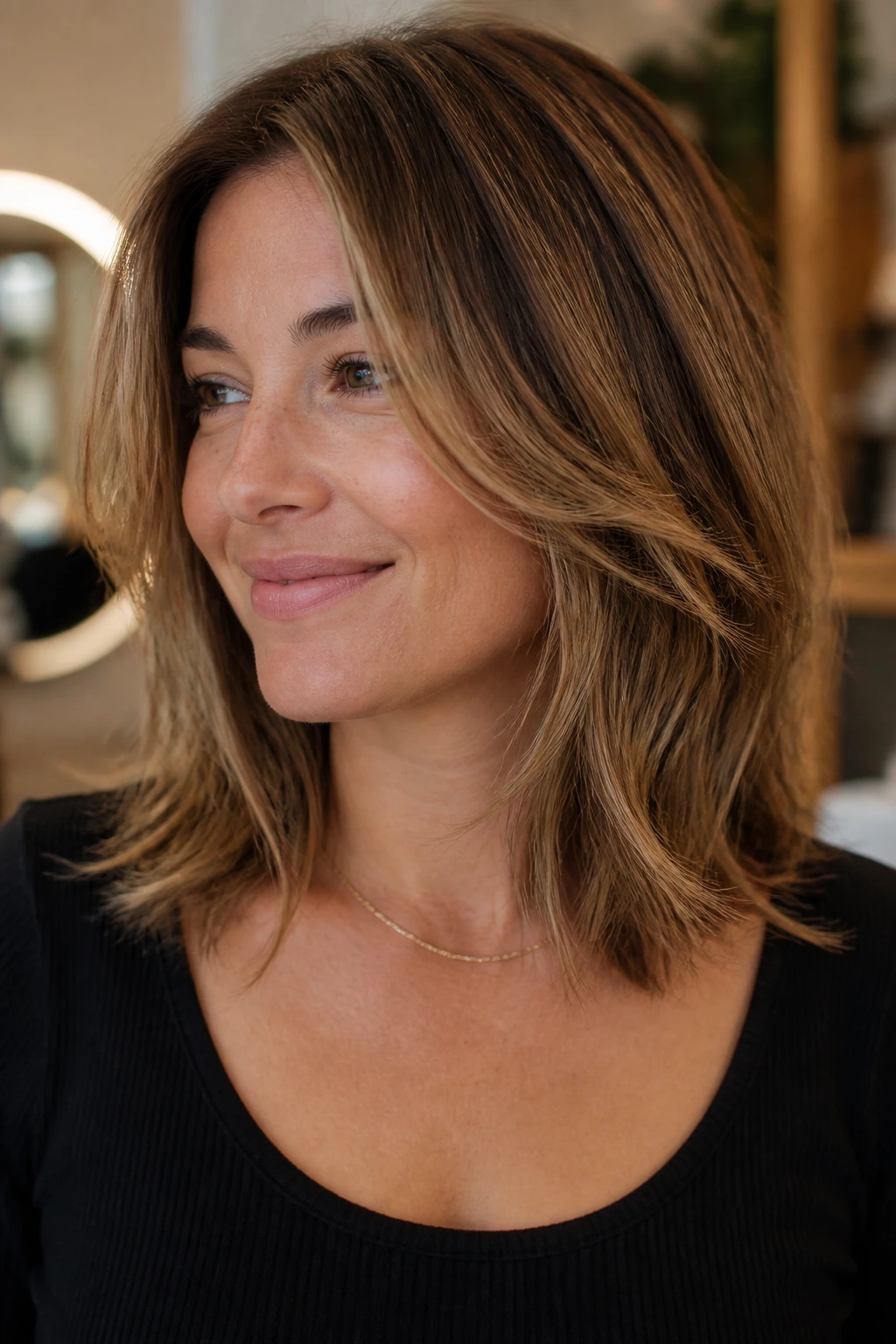
The best-looking layered cut is the one that matches your hair’s actual behavior, not the one that photographs best on a mood board. Fine hair usually needs longer, softer layers so the ends stay full. Thick hair often needs more internal shaping so the bulk doesn’t build up around the sides and back. Straight hair can handle cleaner lines and visible movement; wavy hair usually benefits from longer blending; curly hair needs the shape cut around the curl pattern itself.
Face shape matters, but not in a rigid way. If you want more softness near the jaw, let the shortest layer land a little lower. If you want lift around the eyes, bring the front pieces higher. If you wear your hair back a lot, keep the face frame longer so the style still works when pulled away. That kind of planning beats chasing a trendy cut that doesn’t fit your day-to-day life.
And yes, the part line matters too. A center part will show off symmetry. A deep side part adds lift. A slightly off-center part can make a cut look less formal without changing the haircut at all. Tiny adjustment. Big effect.
How to Style Layers So They Keep Their Shape
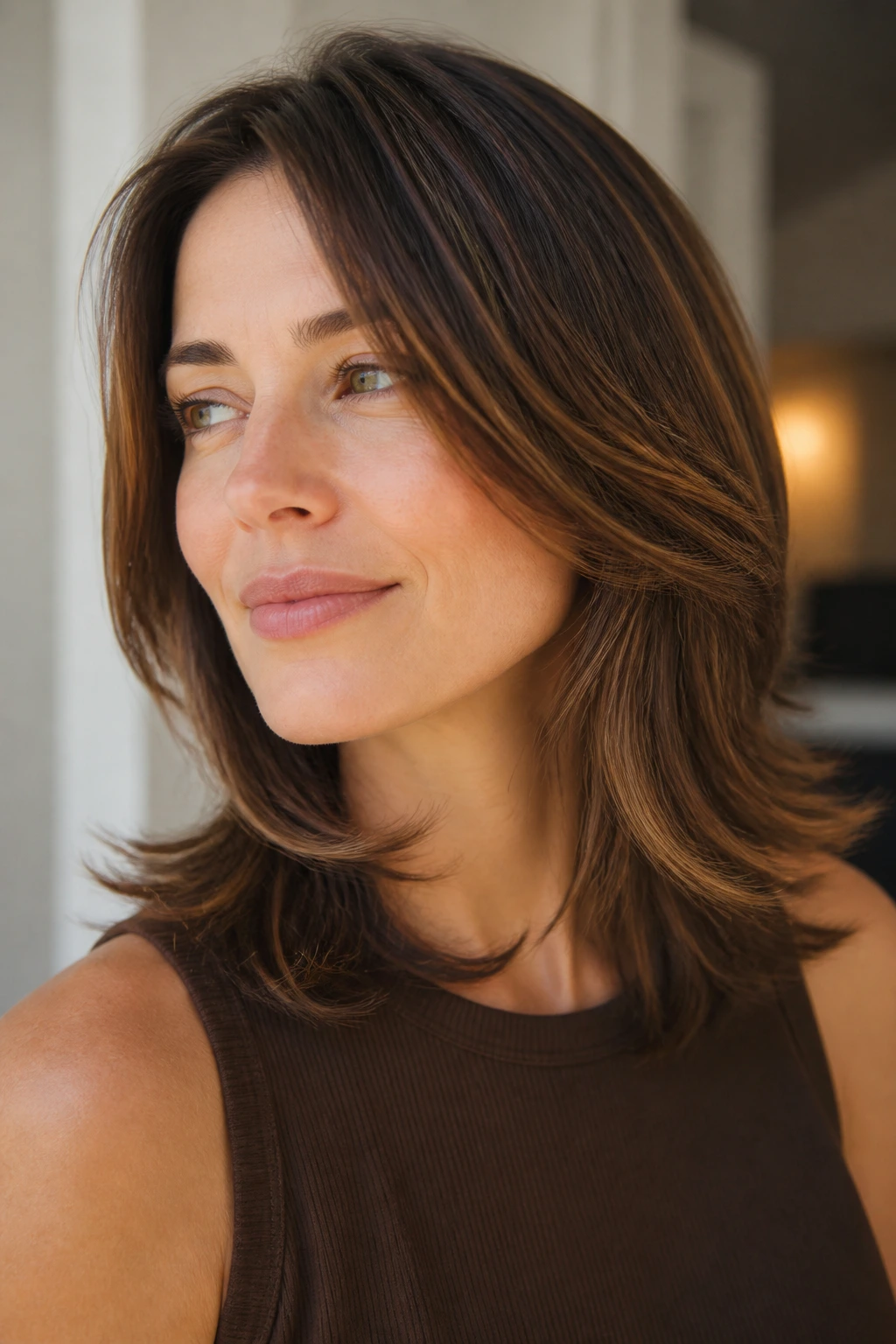
The biggest mistake with layered medium hair is thinking the haircut will do everything on its own. It does a lot, but the first five minutes after washing matter. Start with the roots. If you want lift, dry the scalp first while lifting the hair away from the head with your fingers or a brush. If you want smoothness, aim the dryer downward and keep the nozzle pointed with the cuticle.
After that, decide what the ends are supposed to do. Bend inward for polished shapes. Flip out for a playful finish. Leave them slightly straighter for shaggy and beachy styles. Do not curl every section the same way unless you want a very uniform result. That uniformity is what makes layered hair look stiff.
A little cool air at the end helps set the shape. So does not touching the hair while it’s warming up. Annoying advice, I know. Still true.
How to Keep Layers Fresh Between Salon Visits
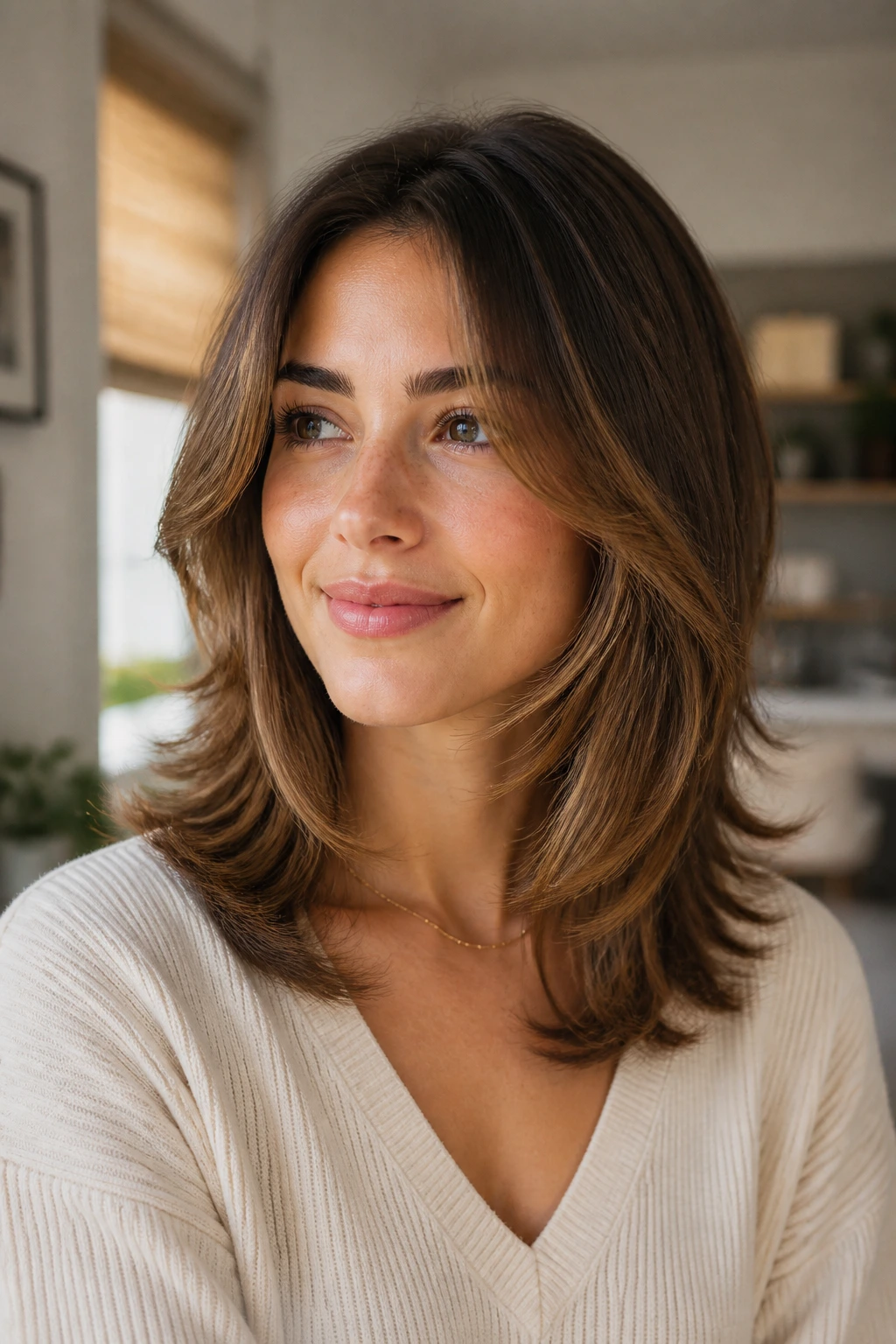
Medium layers usually hold up longer than very short cuts, but they still need a little care if you want the shape to stay clean. Dry shampoo at the roots can keep the crown from collapsing, especially on styles with face-framing pieces. A light mist of water on the front sections, followed by a quick brush-and-blow-dry refresh, can bring the shape back without redoing the whole head.
Trim timing depends on how blunt or textured the cut is. A very blended layered style can go longer between cuts because the grow-out is softer. A shag, razor cut, or choppy finish will start to lose its edge sooner. If the ends begin to feel stringy or the front pieces stop connecting to the rest of the haircut, that’s the sign to clean it up. Don’t wait until the shape is gone. That just makes the next cut harder.
Night care helps too. A loose clip, a silk pillowcase, or a soft scrunchie for a low tie can keep the front pieces from kinking in strange spots. Small thing. Huge difference in the morning.
Common Mistakes That Make Layered Hair Look Off
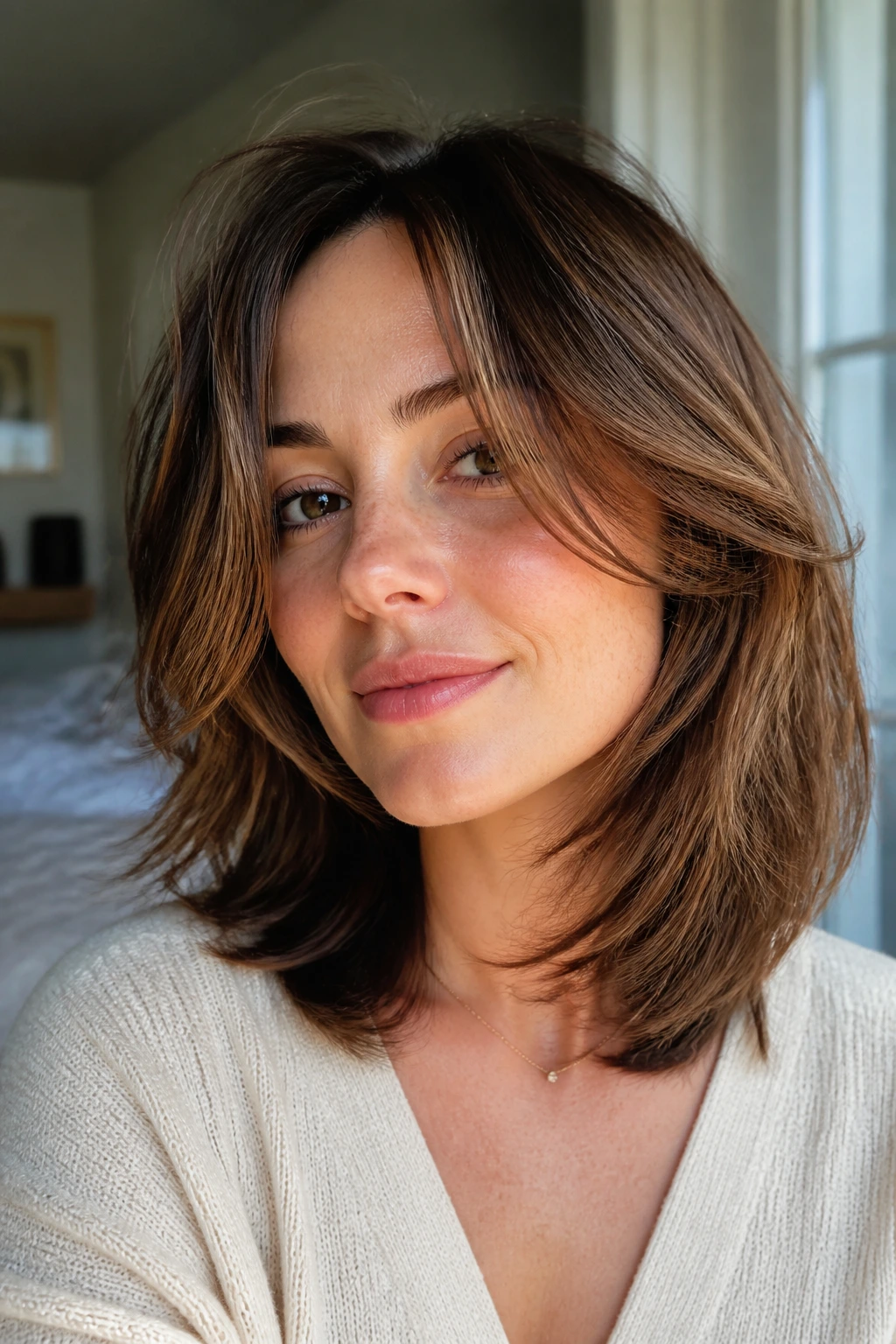
The first problem is too many short layers. That’s how medium hair ends up fluffy at the top and thin at the bottom. The fix is a more gradual layer pattern, especially if your hair is fine or straight.
The second is ignoring density. Thick hair and fine hair cannot wear the same layer recipe. Thick hair usually needs stronger shaping through the interior; fine hair needs restraint so the outline stays full. If a cut looks wrong right after styling, the problem may not be the blow-dry. It may be the structure underneath.
Another one: curling every piece the same direction. The result can look dated or overly neat. Alternate directions or leave the ends straighter so the layers can break up naturally. And please, don’t overload medium layered hair with heavy oils. The ends will go limp fast, especially on fine textures.
One more. Skipping the face frame during trims. The back can look fine while the front starts hanging in a weird, tired way. If the front pieces are the part of the cut you notice first, keep them maintained first. Obvious, but easy to miss.
Easy Variations to Ask For Next Time
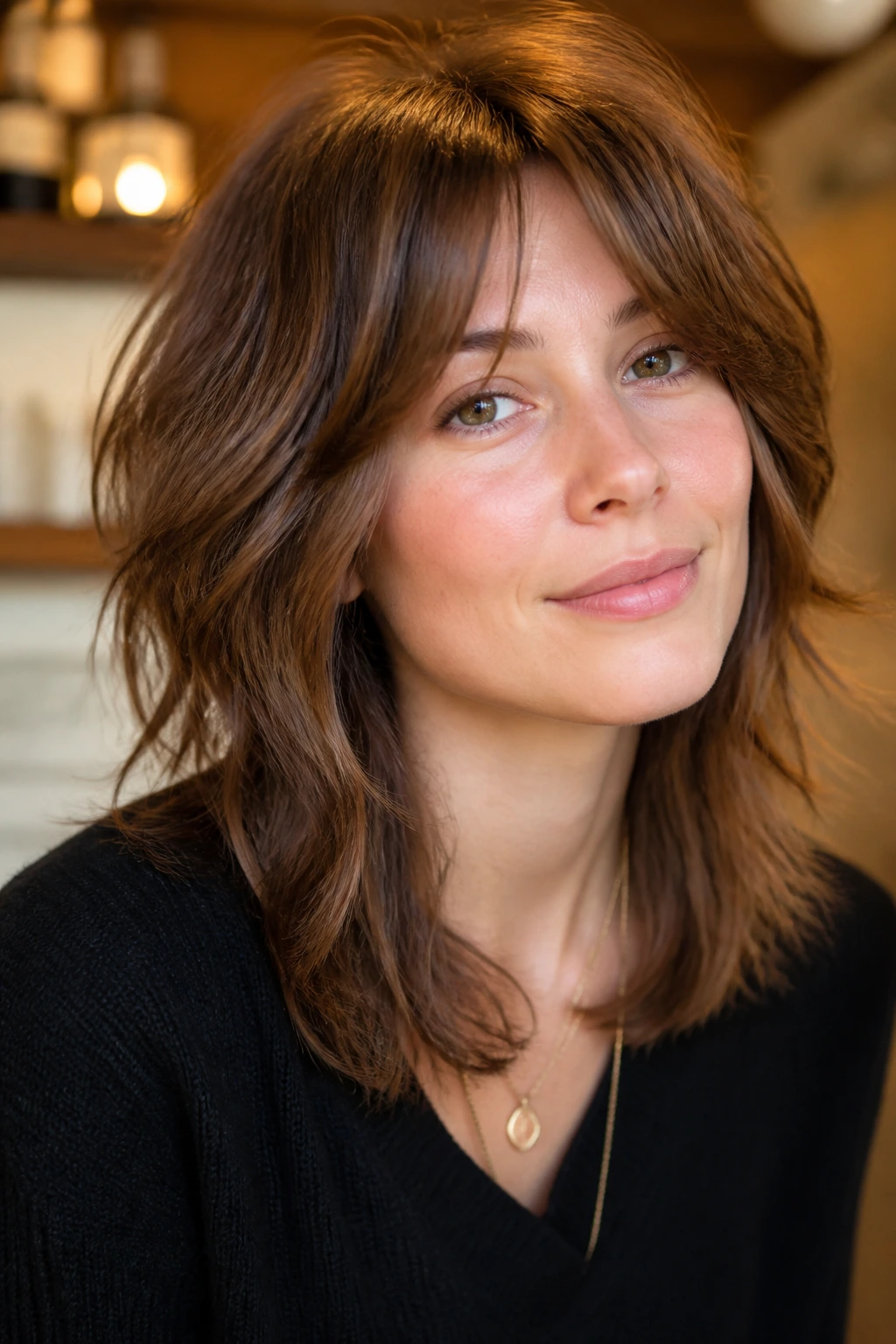
- The Softer Shag: Ask for shorter crown layers and longer blended ends if you want more texture without a hard edge.
- The Polished Lob: Keep the perimeter stronger and the interior layers subtle if you want the haircut to read smooth and clean.
- The Face-Frame Upgrade: Add cheekbone-level front pieces to freshen an existing medium cut without changing the whole shape.
- The Curly Definition Cut: For curls, request dry shaping or curl-by-curl layering so the form follows the natural bend.
- The Grow-Out Friendly Version: Keep all layers long and gradual if you want the shape to last longer between trims.
Maintenance, Trims, and Everyday Wear
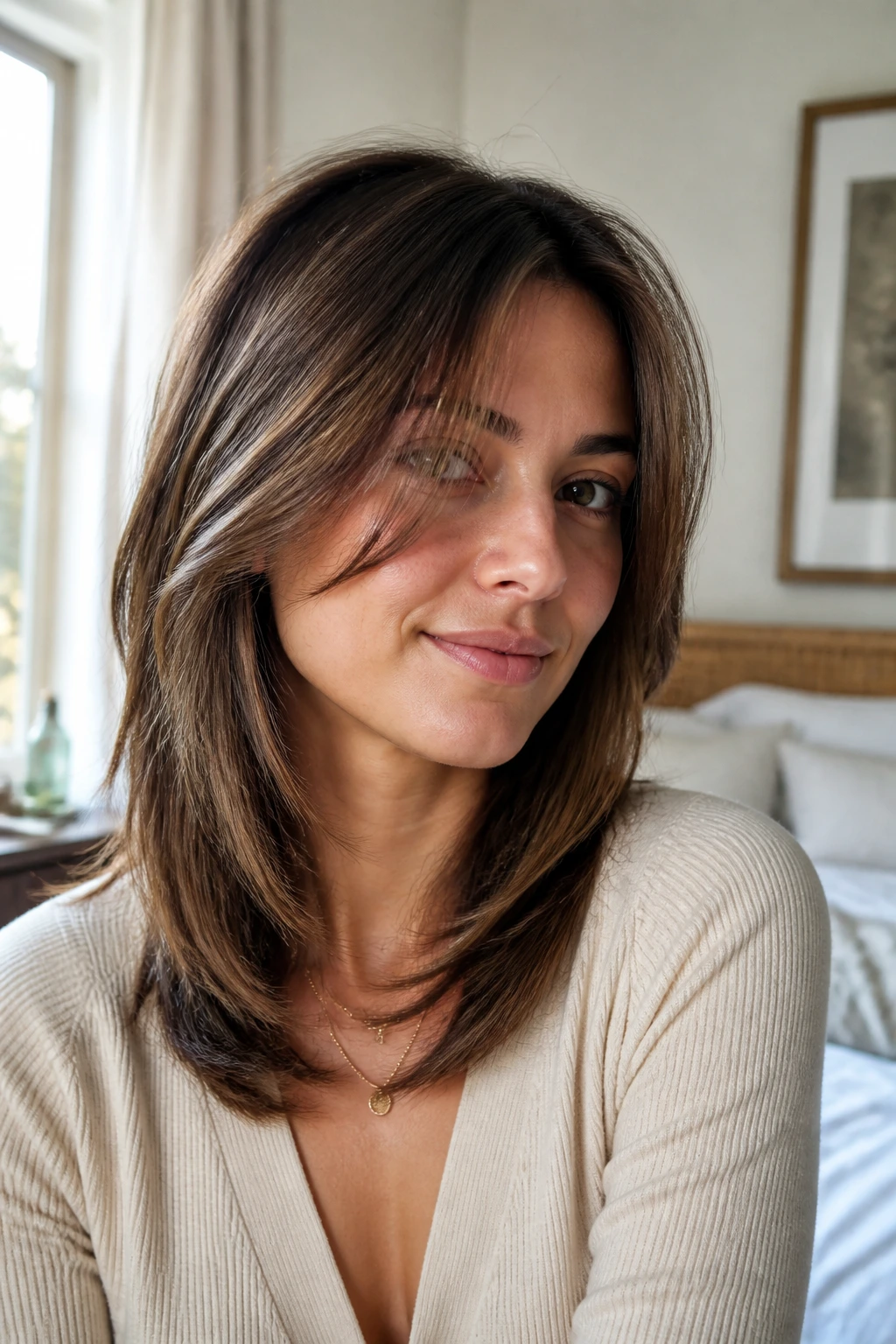
Medium-length layered hair behaves best when the cut gets small corrections before it gets messy. A trim every 6 to 10 weeks is a useful range for sharper shapes like shaggy, choppy, or razor-cut styles. Softer layered looks can stretch a bit longer if the ends still hold their line. If your face-framing pieces start falling into your eyes or your blowout no longer flips the way it used to, the shape is telling you something.
Daily wear is easier when you keep one or two styling habits consistent. Use heat protectant. Use the same part most days if you like the way it frames your face. Keep a lightweight finishing spray around instead of loading on heavy cream. Small routines preserve the cut better than dramatic styling ever will.
Frequently Asked Questions
Which layered hairstyle works best for fine medium hair?
Long, soft layers are usually the safest bet. They add movement without carving too much weight out of the ends, which helps the hair look fuller rather than wispy.
What’s the best layered style for thick medium hair?
A medium cut with internal layers or heavier shaping through the mid-lengths tends to work well. It removes bulk without making the outline frizzy or puffy.
Do layers make medium hair look shorter?
They can, if the shortest pieces are cut too high. Keeping the face frame and internal layers longer preserves the overall length while still giving movement.
Can I wear layers if my hair is naturally straight?
Yes, and straight hair often shows the shape very clearly. Just make sure the layers are blended enough that the ends don’t separate into awkward spikes.
How do I style medium layers quickly on busy mornings?
Dry the roots first, bend the front pieces away from the face with a round brush, and add a little movement to the ends. You do not need to curl the whole head for the cut to look finished.
Are layered cuts hard to grow out?
They’re only hard to grow out if the layers are cut too short or too disconnected. Longer blended layers grow out much more gracefully and keep the haircut from feeling lumpy.
What if my layers flip out in a weird way?
That usually means the layer length and the blow-dry direction are fighting each other. A quick pass with a round brush or flat iron can smooth it, but if the flip keeps happening, the cut may need softer blending.
The Shape That Keeps Showing Up
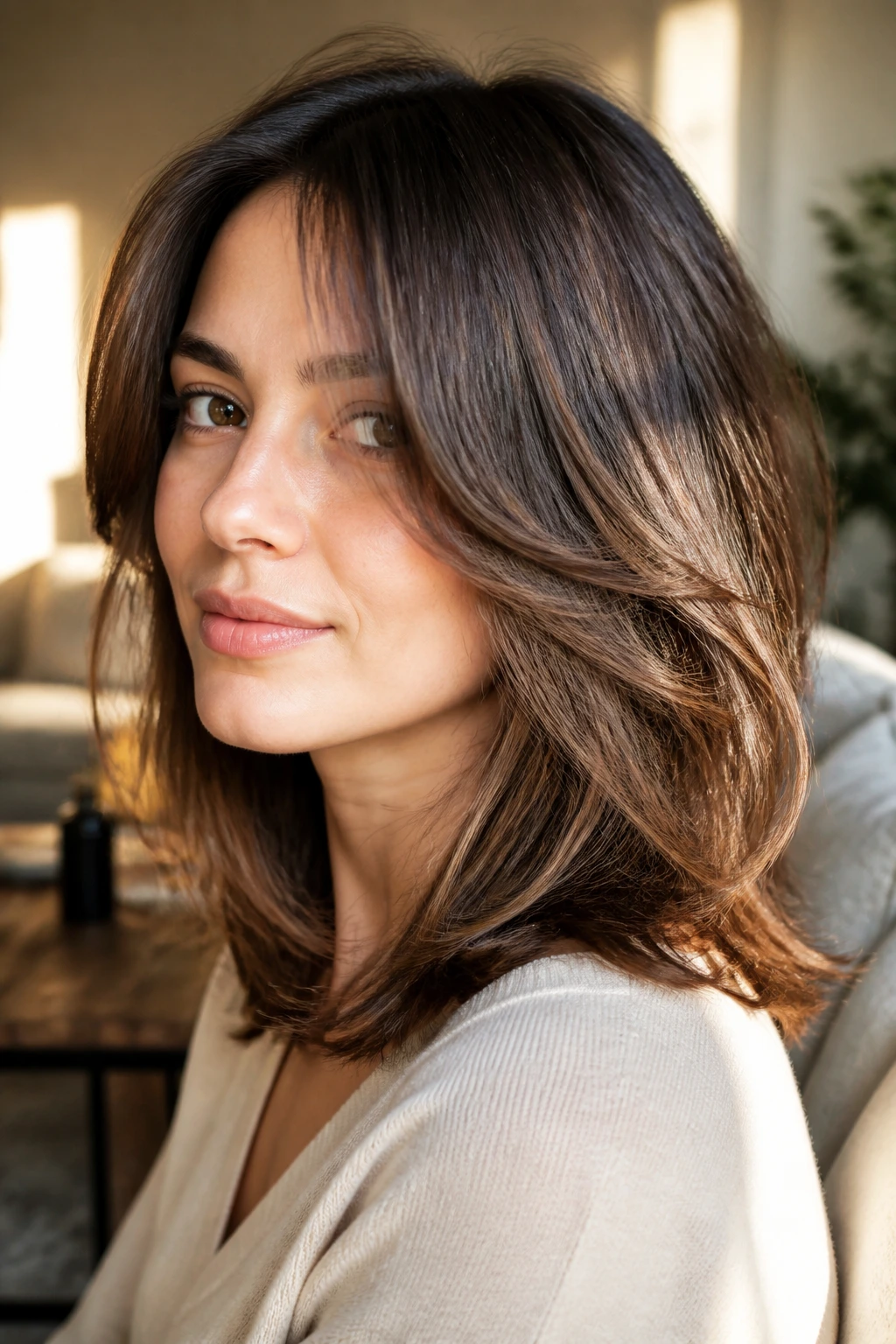
The reason layered hairstyles for medium length hair keep winning is simple: they make the length do something. Not in a loud way. In a useful way. The hair moves, the face opens up, the ends stop dragging the whole cut down, and styling gets a little easier because the shape is already doing half the work.
Medium-length layers are best when they look like they belong there. Clean if you want polish. Choppy if you want texture. Soft if you want something easy to live with. Pick the version that matches how you actually wear your hair, and the cut will keep paying rent every morning.
