



Thick waves can turn on you fast. One day they look lush and lived-in; the next, they puff into a triangle with a blunt bottom and a crown that seems to have its own opinions. That’s why long wolf cuts for wavy thick hair keep showing up in salons. They don’t fight the hair. They give it a shape that can hold all that bend and all that density without turning into a helmet.
The trick is in the balance. A good long wolf cut keeps enough length on the perimeter to anchor the wave, then lifts the crown, breaks up the bulk, and softens the front so the whole cut moves instead of sitting there like a heavy curtain. On thick hair, that matters more than people think. If the layers are too short, the top balloons. If they’re too timid, the ends drag the whole look down. The sweet spot is somewhere in the middle, and it’s surprisingly specific.
That’s where these 38 versions come in. Some lean soft and face-framing. Some are a little ragged in the best way. A few are built for people who want the cut to do most of the work on wash day, while others are for anyone who wants more edge, more lift, or more room for a fringe that actually behaves. Different faces. Different routines. Same satisfying idea: let the wave show up, but give it a cleaner outline.
Why These 38 Versions Work for Thick Waves
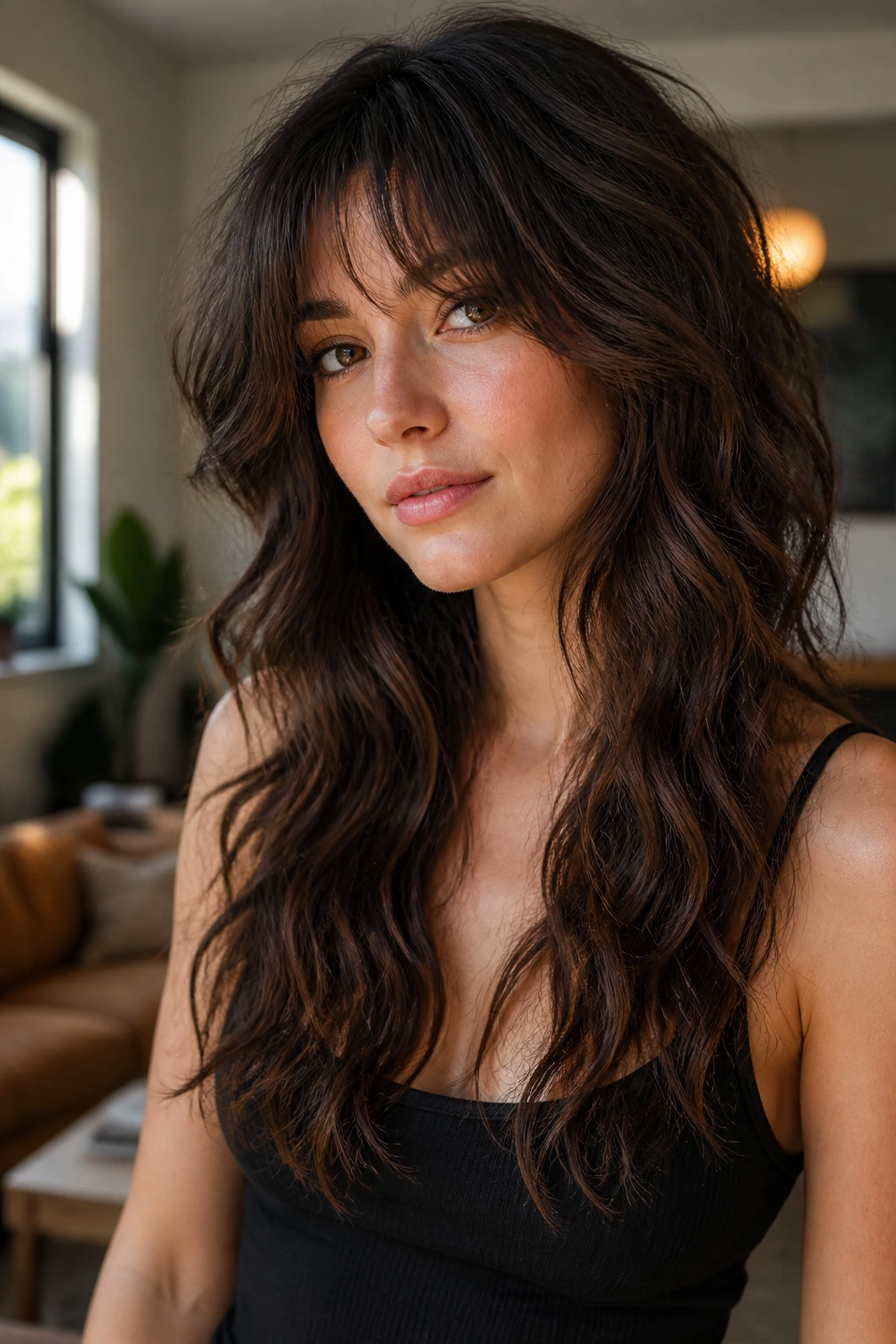
-
They keep the perimeter long enough to stay grounded: Thick wavy hair can look boxy when the hem is too blunt, and these cuts leave enough length at the bottom to keep the shape from puffing outward.
-
They put the lift where it matters: Shorter layers around the crown and upper sides make the top feel lighter without shredding the ends into wisps that disappear in the wave pattern.
-
They give you room to choose your fringe: Some people want curtain bangs, some want no bangs at all, and a few want a tiny micro-fringe. The wolf cut can handle all of it.
-
They make air-drying less random: A good layered structure helps thick waves fall in a pattern instead of collapsing into one bulky shape, which is half the battle on busy mornings.
-
They grow out without looking sloppy right away: Long wolf cuts are forgiving. The layers soften as they grow, so you do not get that harsh, obvious line that a blunt cut can give you.
-
They can go soft or sharp: The same haircut can read boho, rocker, polished, or messy depending on how high the layers start and how much texture your stylist builds in.
1. Curtain Bang Cascade
This is the safest doorway into the look, and I mean that as a compliment. The length stays generous, the layers start softly around the cheekbones, and the curtain bangs split in the middle so they melt into the rest of the hair instead of sitting on top of it. On thick waves, that matters. The front opens up the face, but the back still has enough weight to keep the whole thing from springing out.
If you want a version that feels current without looking like it tried too hard, this is the one I’d point to first. Ask for the shortest front pieces to hit around the cheekbone or just above it, then let the bangs taper into longer side layers. The finish is best with a quick bend from a medium round brush or a 1.25-inch curling iron, just enough to make the front flick away from the face.
Stylist note: keep the bottom length past the collarbone so the wave has something to hang on to.
2. Bottleneck Fringe Sweep
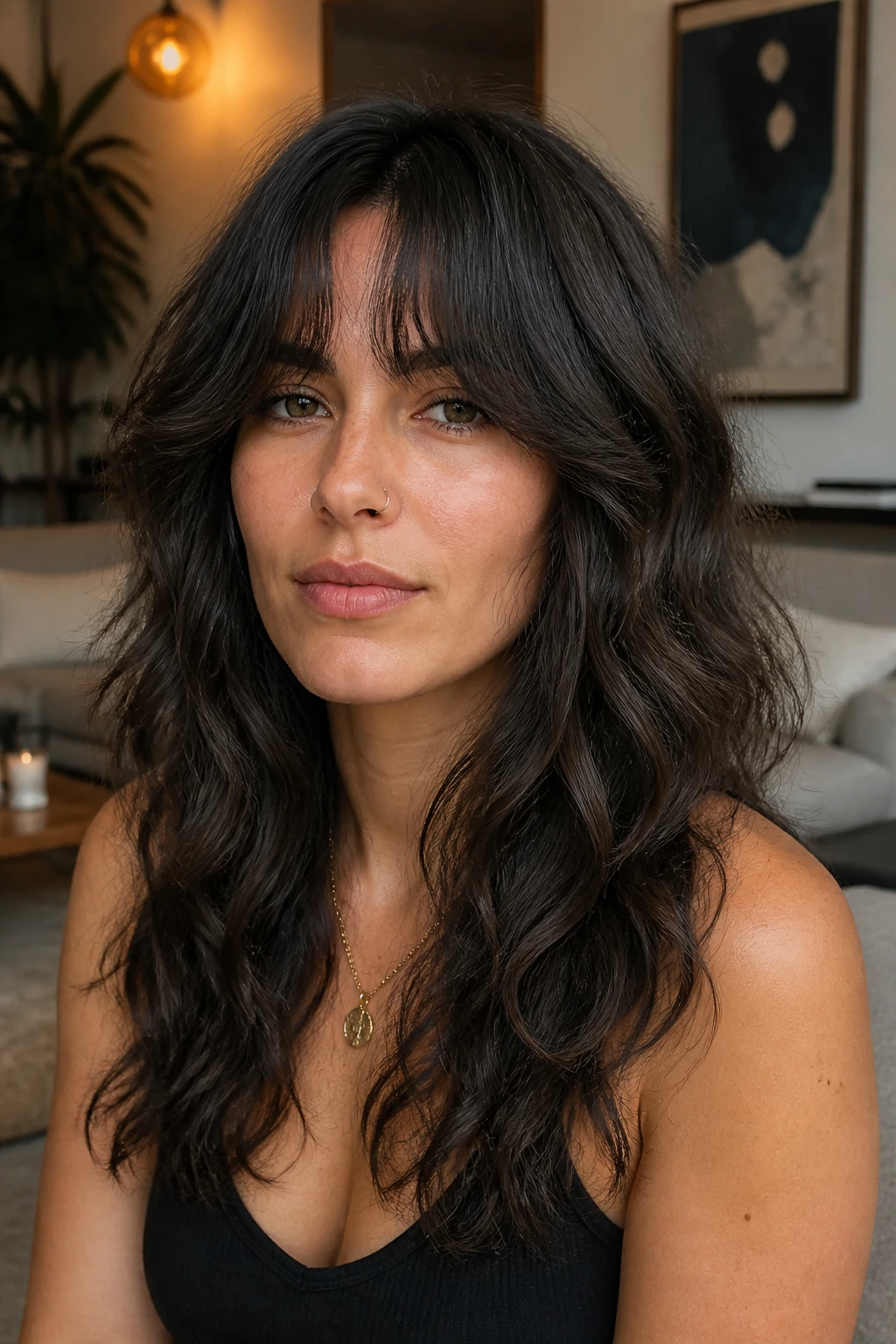
Bottleneck bangs do something useful on thick wavy hair: they break up the forehead area without flooding the face with hair. The center sits a little shorter, then the sides lengthen as they angle toward the cheekbones. That shape gives you a cleaner opening than full curtain bangs, and it tends to move better when the wave clumps on humid days.
I like this version for anyone whose waves get bulky near the temples. The narrower center keeps the front from feeling heavy, but the longer side pieces still soften the jaw. It’s one of those cuts that looks deliberate even when you’ve air-dried it and walked out the door a little damp. If your hair has a strong S-wave, the fringe will usually separate on its own after a few finger-combs.
Best for: people who want bangs but hate a curtain that swallows their face.
3. Cheekbone-Shatter Layers
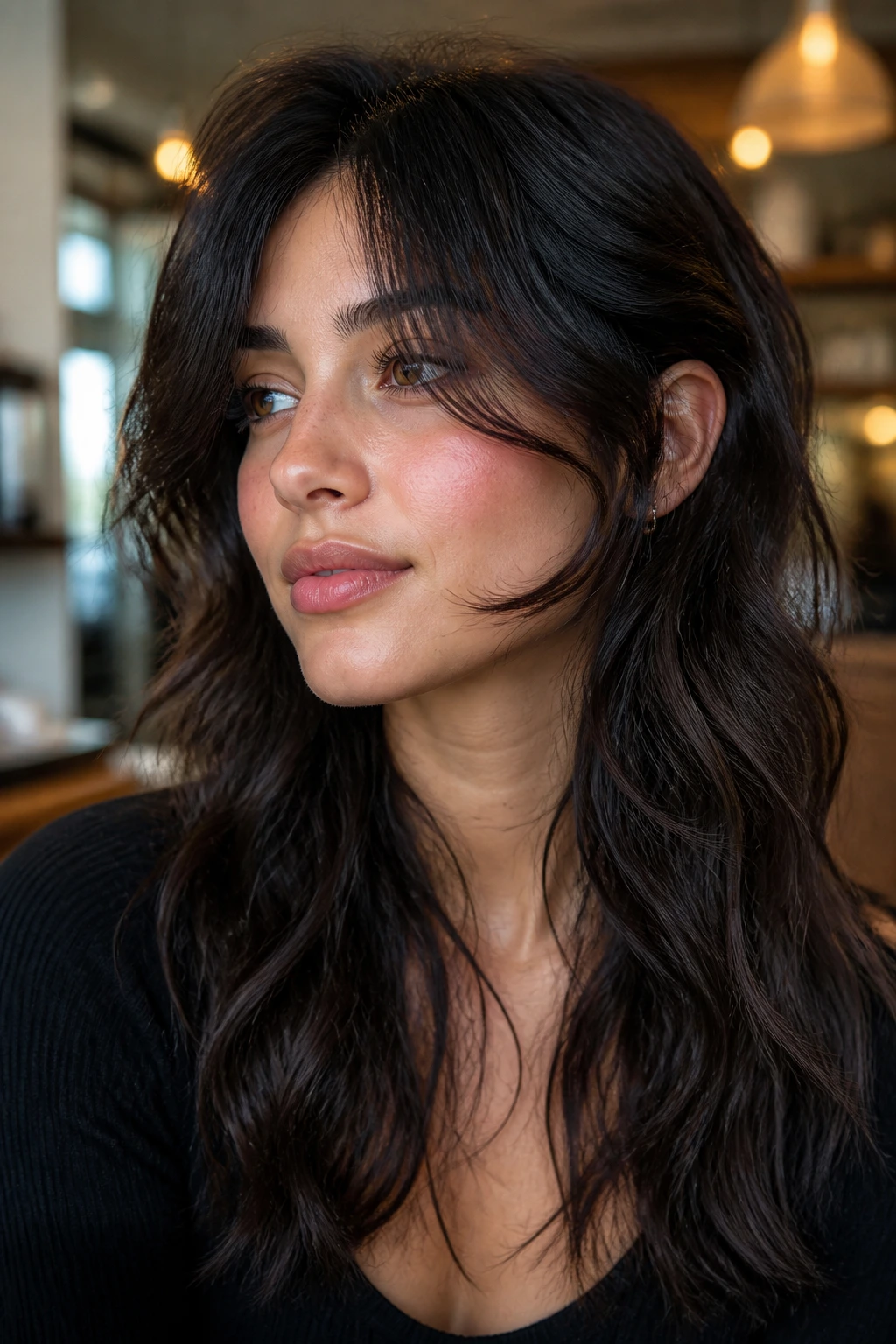
This one is all about the front third of the haircut. The layers begin around the cheekbone and fracture downward in a way that pulls attention upward, then out toward the eyes and temples. Thick waves love this because the face-framing pieces stop the cut from feeling bottom-heavy. Without that break, dense hair can hang like one long block. With it, the whole thing looks lighter.
Ask your stylist to keep the top layers soft, not choppy for the sake of being choppy. The goal is movement, not chunks. A little point cutting around the front can give the ends a softer finish, especially if your wave pattern is coarse. This style reads especially well when you tuck one side behind the ear and let the other side fall forward. Simple. Slightly dramatic.
4. Invisible-Weight Wolf
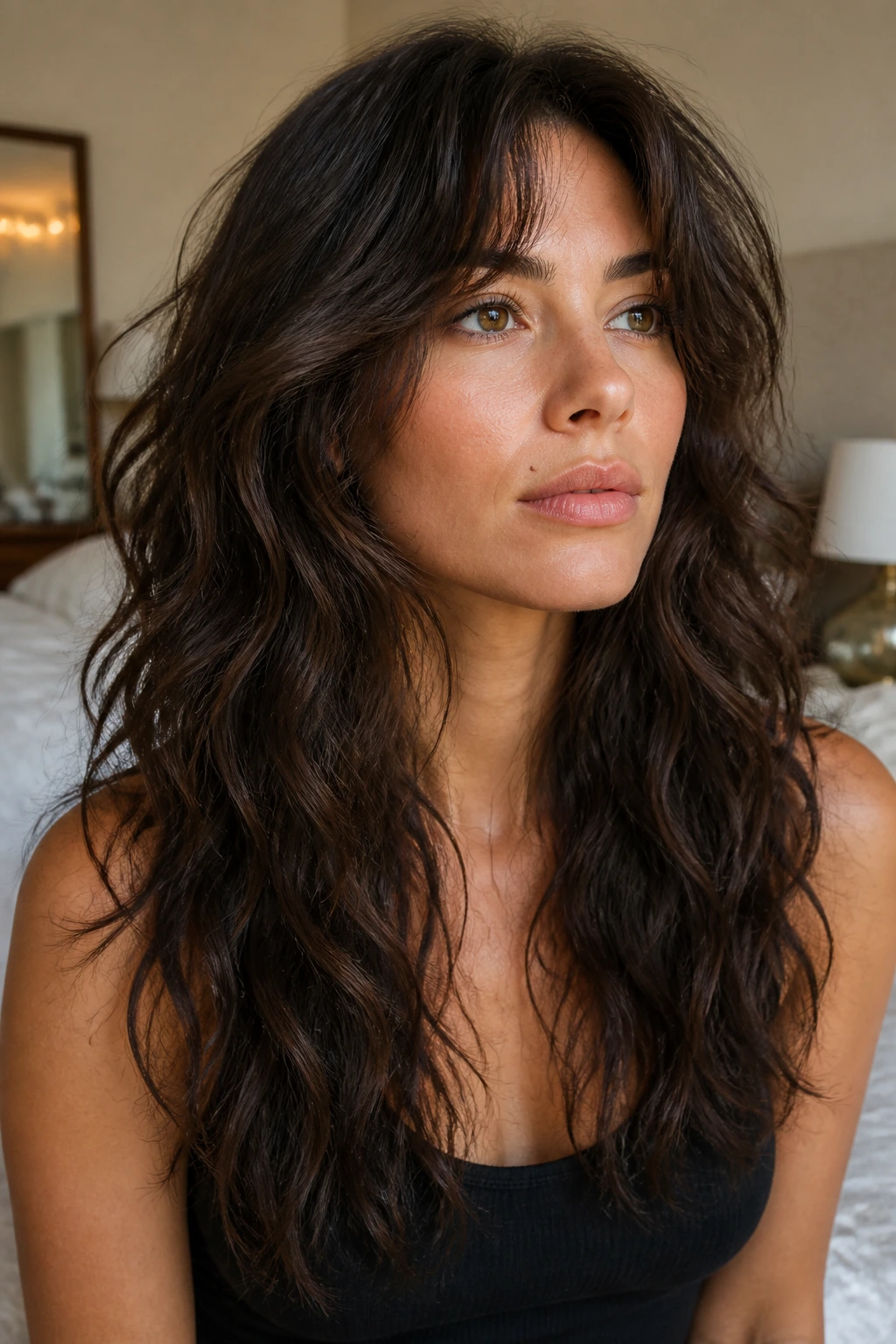
Not everyone wants a haircut that announces itself from across the room. This version is for the person who wants the shape to work quietly. The layers are there, but they’re buried inside the haircut so the exterior still looks long and full. On thick wavy hair, that can be a smart move if you love density but hate bulk.
The inner shaping takes weight out from underneath while the top keeps enough length to lie flatter. That means less puff at the crown and fewer ends that kick outward like little shelves. It’s the kind of cut that air-dries into a believable shape without needing ten different products. If your hair is very thick and you want to keep it looking polished for work or school, this is one of the most useful long wolf cuts in the stack.
5. Crown-Lifted Long Wolf
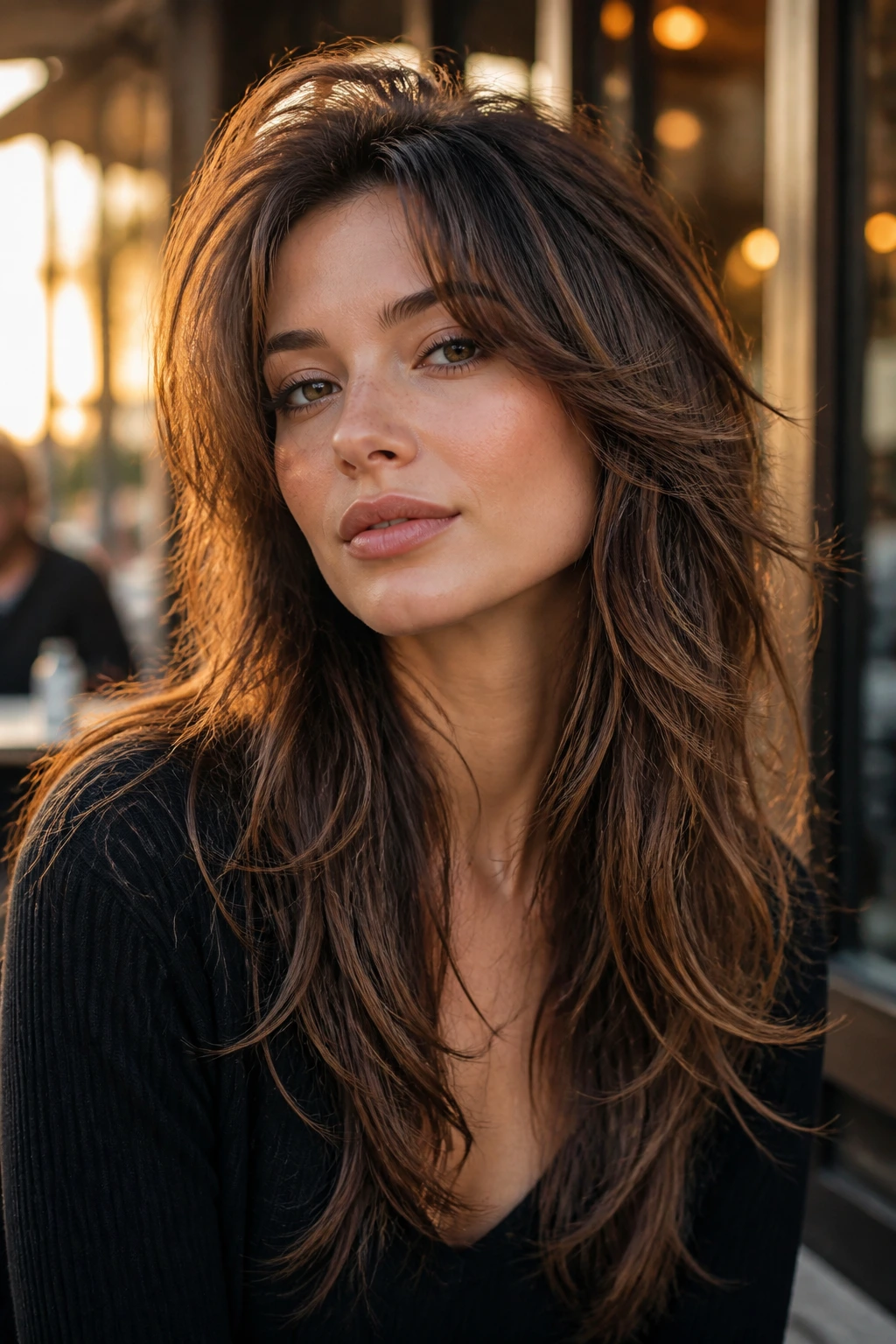
This one is for the people who want height at the top and softness everywhere else. The shortest layers live close to the crown, which gives the upper section more bounce and makes thick hair feel less like a solid mass. The rest stays long, so the haircut still has swing and weight.
The danger with crown-lifted cuts is going too high and ending up with a mushroom. Nobody needs that. Keep the lift concentrated near the top and let the sides stay long enough to taper down cleanly. A root spray at the crown and a quick blast with the dryer upside down can help the shape settle correctly. If you like the feeling of volume but not the look of overdone volume, this is a good compromise.
6. Soft Mullet Tail

The word “mullet” scares people off too fast. A soft version, though, can be gorgeous on thick waves. The back is left a little longer and a little shaggier than the front, which creates a tail-like drift through the neckline instead of a heavy block. The front stays face-friendly, so the cut never tips into costume territory.
This shape works because thick hair can carry a stronger silhouette without looking flimsy. Waves help blur the transition between the shorter top and the longer back, so the cut feels organic. If you wear your hair half-up a lot, the tail gives you movement when the rest is pinned back. It’s a good one for people who want a bit of edge but still need the haircut to play nicely at brunch, work, and everywhere else life happens.
7. Feathered Edge Wolf
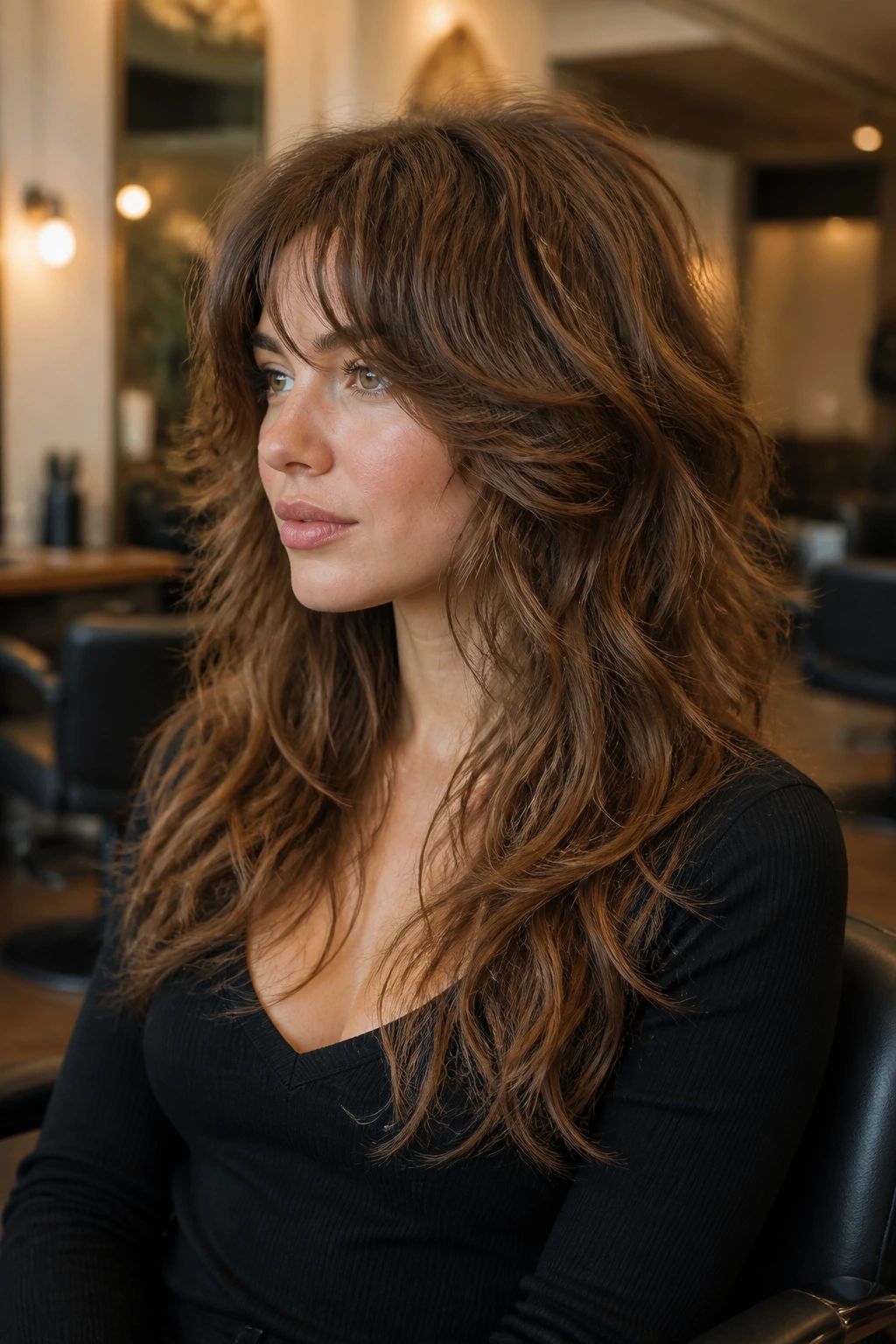
Feathered ends are underrated. On thick wavy hair, they keep the bottom from landing in one dense shelf and make the whole cut feel a little more lifted. The last few inches are shaped with softness in mind, so the perimeter doesn’t look chopped or boxy.
I’d choose this version if your hair tends to swell at the ends after a few hours. The feathering softens that swell instead of fighting it. It also makes the hair easier to tuck, braid, or pin back without that blunt, obvious edge peeking out. A light styling cream on damp ends is usually enough. You don’t need much. In fact, too much product can flatten the feathering and make the ends stick together in clumps.
8. Razor-Textured Wave Wolf
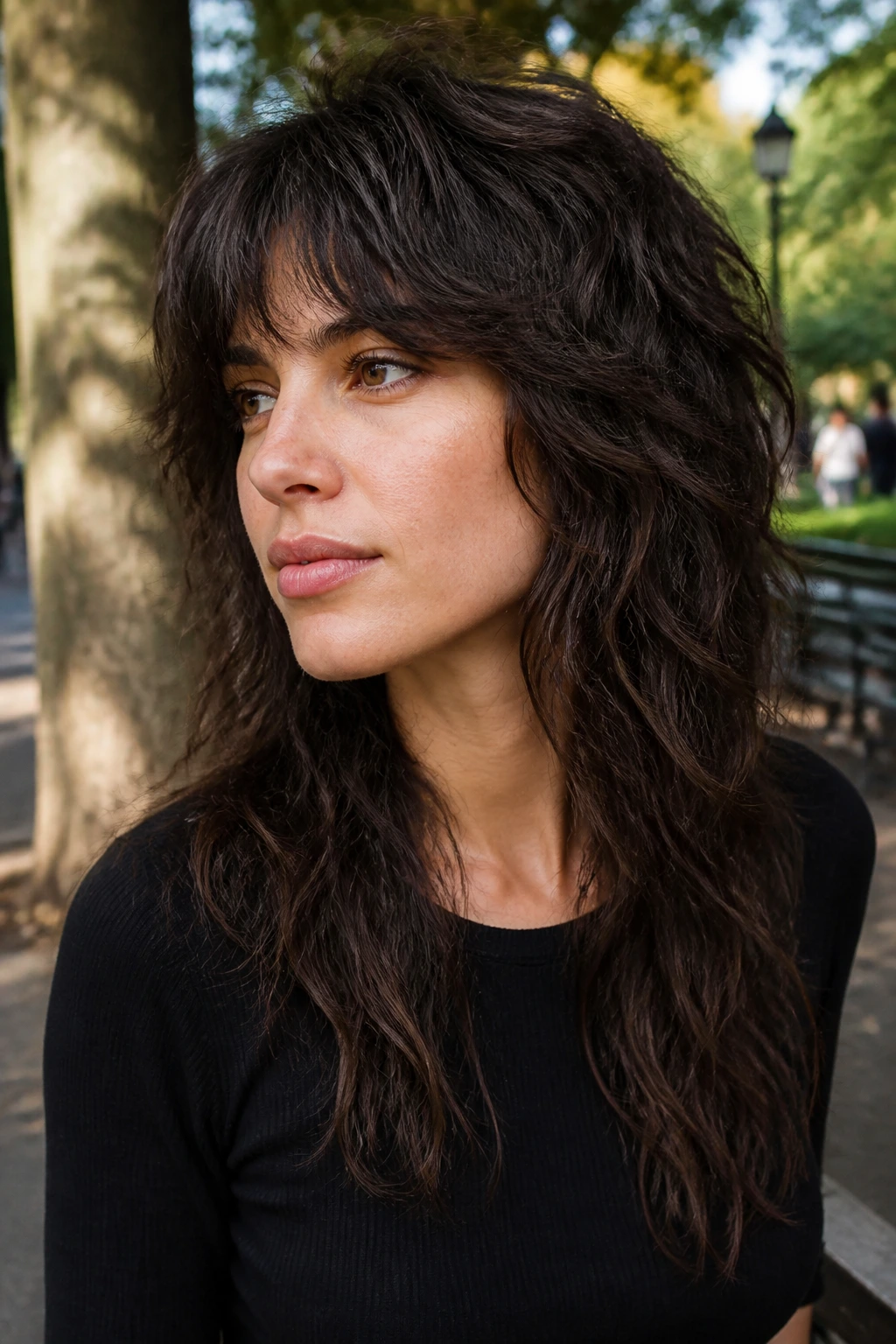
A razor cut can be lovely here, but only in the right hands. Thick wavy hair can take razor texture well because the wave already has bend built in. The razor softens the edge and gives the layers a slightly broken finish that moves more freely than a clean scissor line.
The catch is that this technique should be used with restraint. If a stylist gets too aggressive, the ends can fray and start looking hollow. Ask for razor texturizing mainly around the interior and the face-framing pieces, not across the very bottom. This version looks especially good when air-dried with a bit of wave cream and then disturbed with your fingers so the layers separate. It’s casual, but not lazy. There’s a difference.
9. Deep Side-Part Drift

A deep side part changes the whole personality of the cut. On thick waves, it pushes volume to one side, creates a little lift at the root, and gives the long layers a diagonal line to fall along. The result feels more dramatic than a center part, which can be nice if your hair tends to fall flat at the front.
This one is especially good if your waves collapse in the same place every time you part them down the middle. A side part interrupts that habit. It also gives the face-framing layers somewhere useful to go, which matters when the hair is dense enough to act like a curtain. If you wear earrings, this cut shows them off better than most. Tiny detail. Big payoff.
10. U-Shape Length Keeper
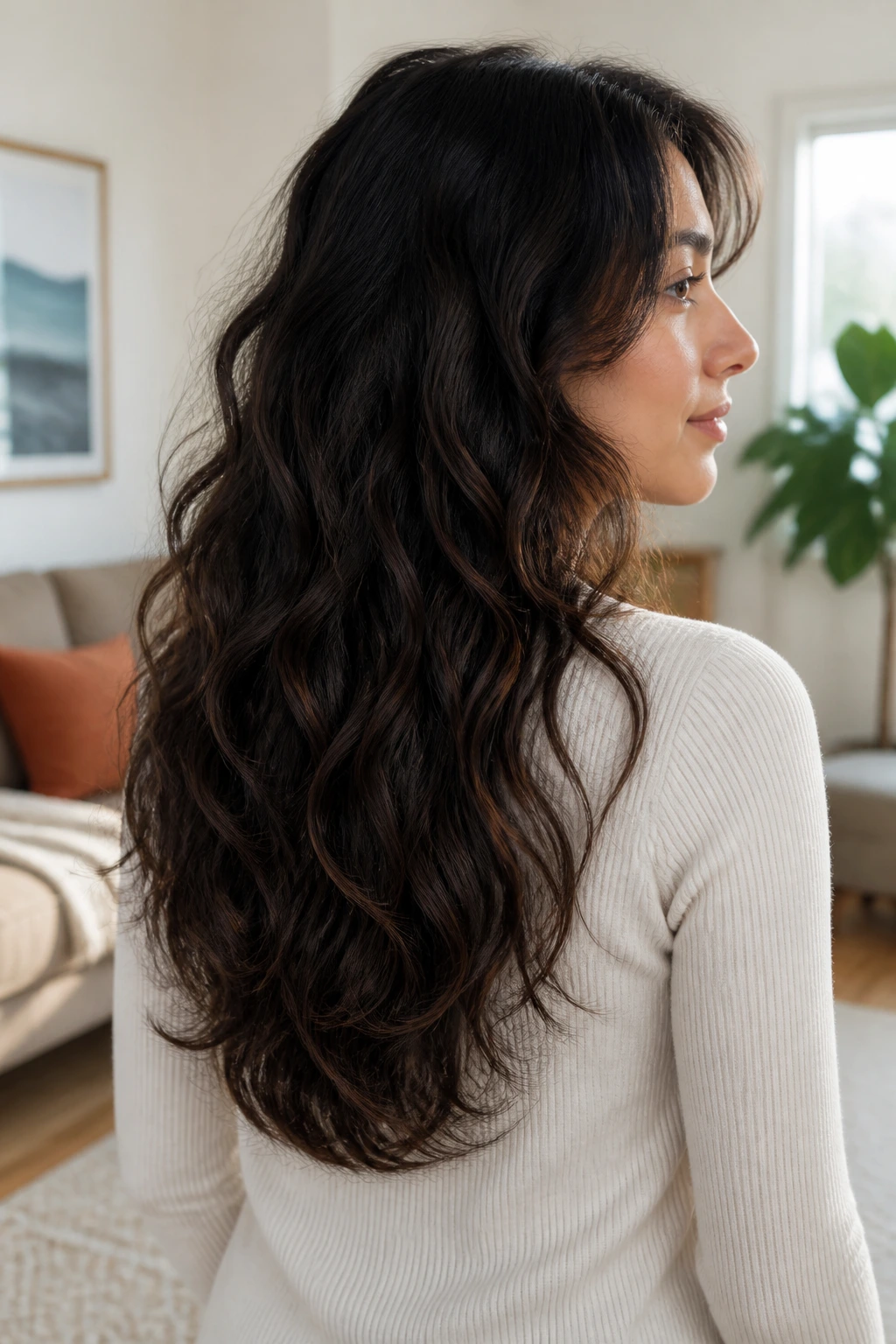
This is the sensible one in the group, and I say that lovingly. A U-shaped perimeter keeps the hair long through the back while still giving the ends a gentle curve instead of a blunt line. That curve helps thick wavy hair drape instead of flaring outward at the bottom.
The U-shape also makes the cut feel more expensive-looking in the old-fashioned sense of “well-kept,” even when you’ve done very little styling. The layers can be obvious up top while the length stays smooth underneath. If you’re attached to your length and mostly want movement, this is a clean answer. It does not scream wolf cut from across the room, but once the layers start moving, the shape is there.
11. V-Back Movement Cut
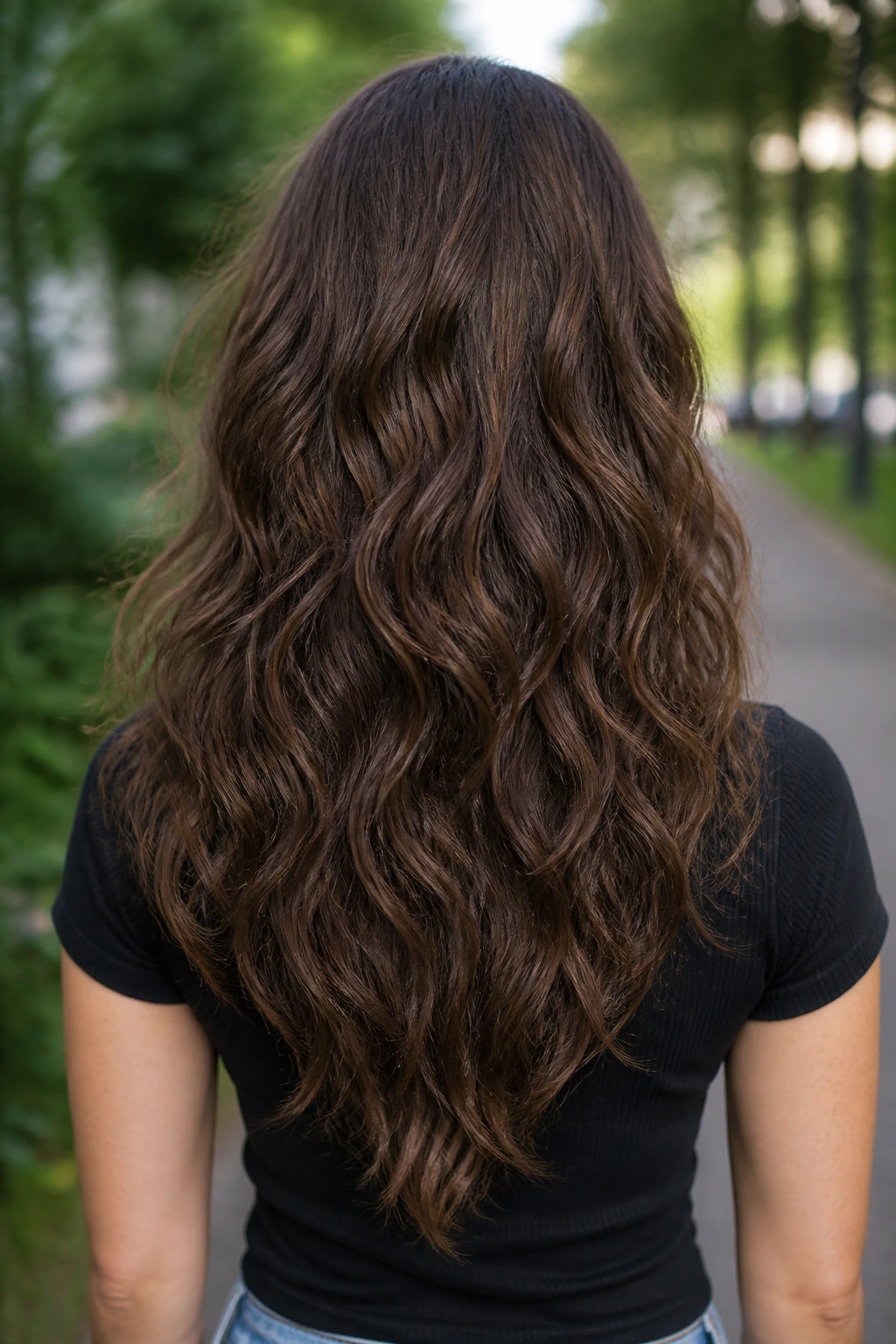
The V-back version gives you a more pointed silhouette through the center of the back, with the sides falling a little shorter as they curve forward. On thick hair, that shape can help prevent the back from feeling like a solid wall. Waves ripple more obviously when the line is not perfectly straight.
This is one of the better choices for people who wear their hair loose most of the time and want the back to feel alive. It elongates the silhouette, which can be flattering on taller frames or longer necks. The trick is to keep the point soft, not severe. A sharp V on thick wavy hair can look costume-y fast. A gentle V, though, gives the haircut some motion without making the ends look thin.
12. Mermaid-Length Wolf
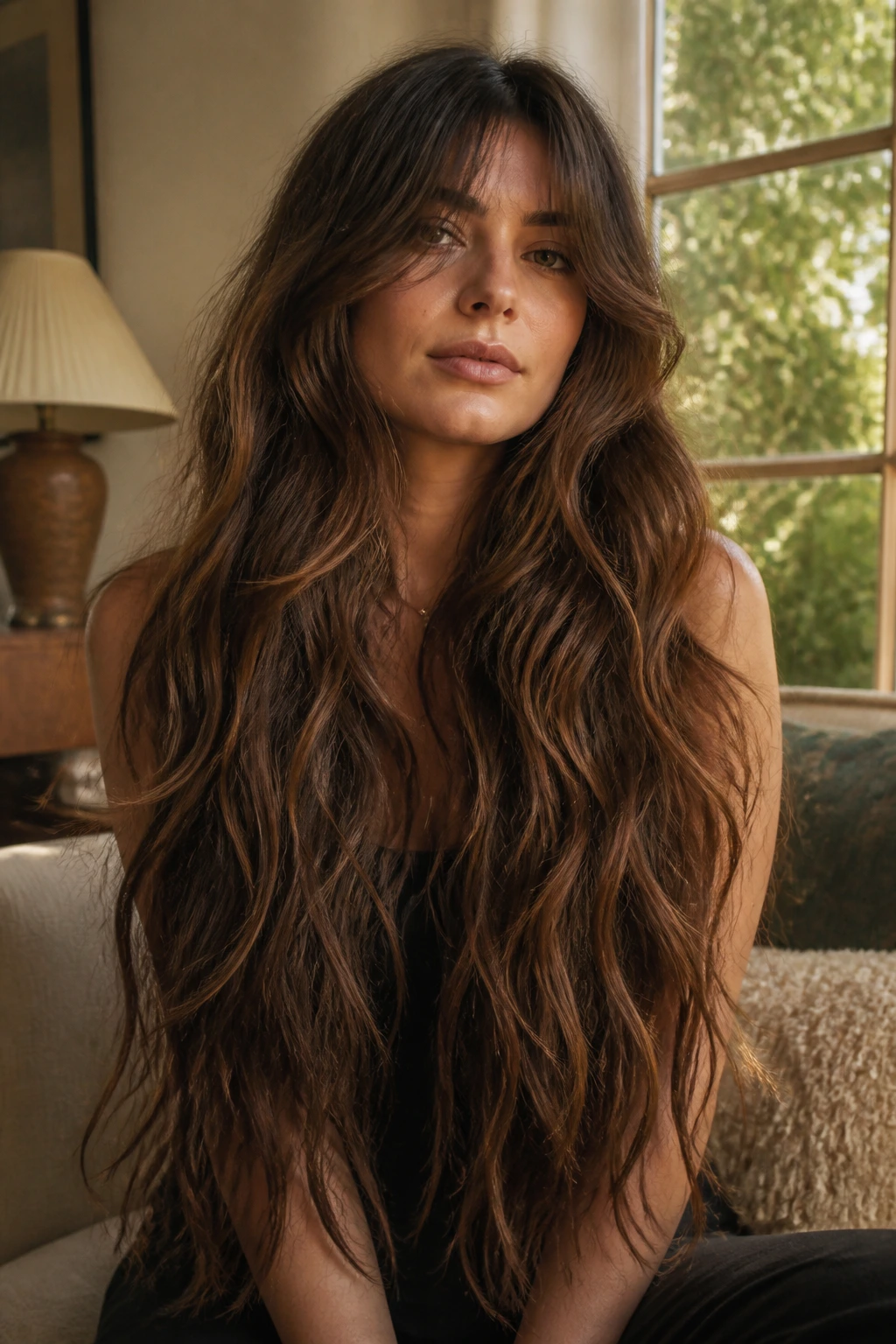
If you love length and still want layers, this is the version to look at. The hair stays very long, but the layering starts high enough to give the shape some lift through the crown and face. The bottom remains thick and soft, which is important. Mermaid-length hair with no internal shaping can turn into a heavy curtain with no movement at all.
This version works best when the stylist respects the density and trims the ends with a light hand. You want to keep the weight in the bottom third so the length still feels luxurious, but not so much that it drags the rest down. Loose waves look especially pretty here because the layers create visible ribbons without shortening the overall line. If you’re sentimental about your length, this one lets you keep it and still get some shape.
13. Collarbone Crop With Long Ends
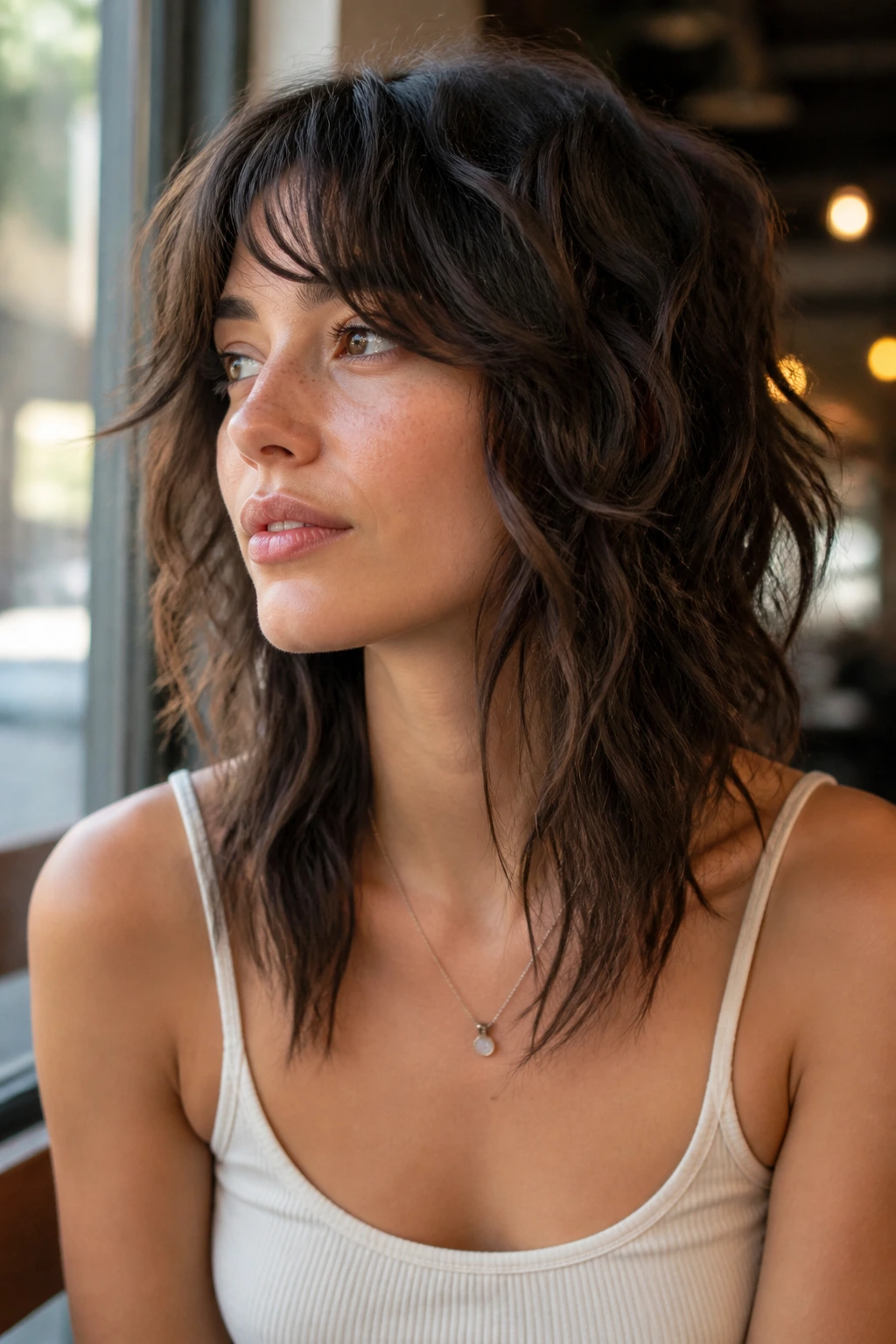
This sits in the sweet spot between “I want a change” and “I am not ready to lose my hair.” The main body hits around the collarbone, then the layers extend longer through the front and back so the cut still feels like a long wolf rather than a standard mid-length shag. Thick wavy hair tends to love this length because it’s long enough to keep weight, short enough to let the movement show.
I like this version for anyone who wants a fresh silhouette without the maintenance of very long hair. It air-dries faster, the layers show more clearly, and the face-framing pieces have enough spring to sit properly. It’s a practical cut, but not boring. That’s the appeal.
14. Face-Frame Money Piece Wolf
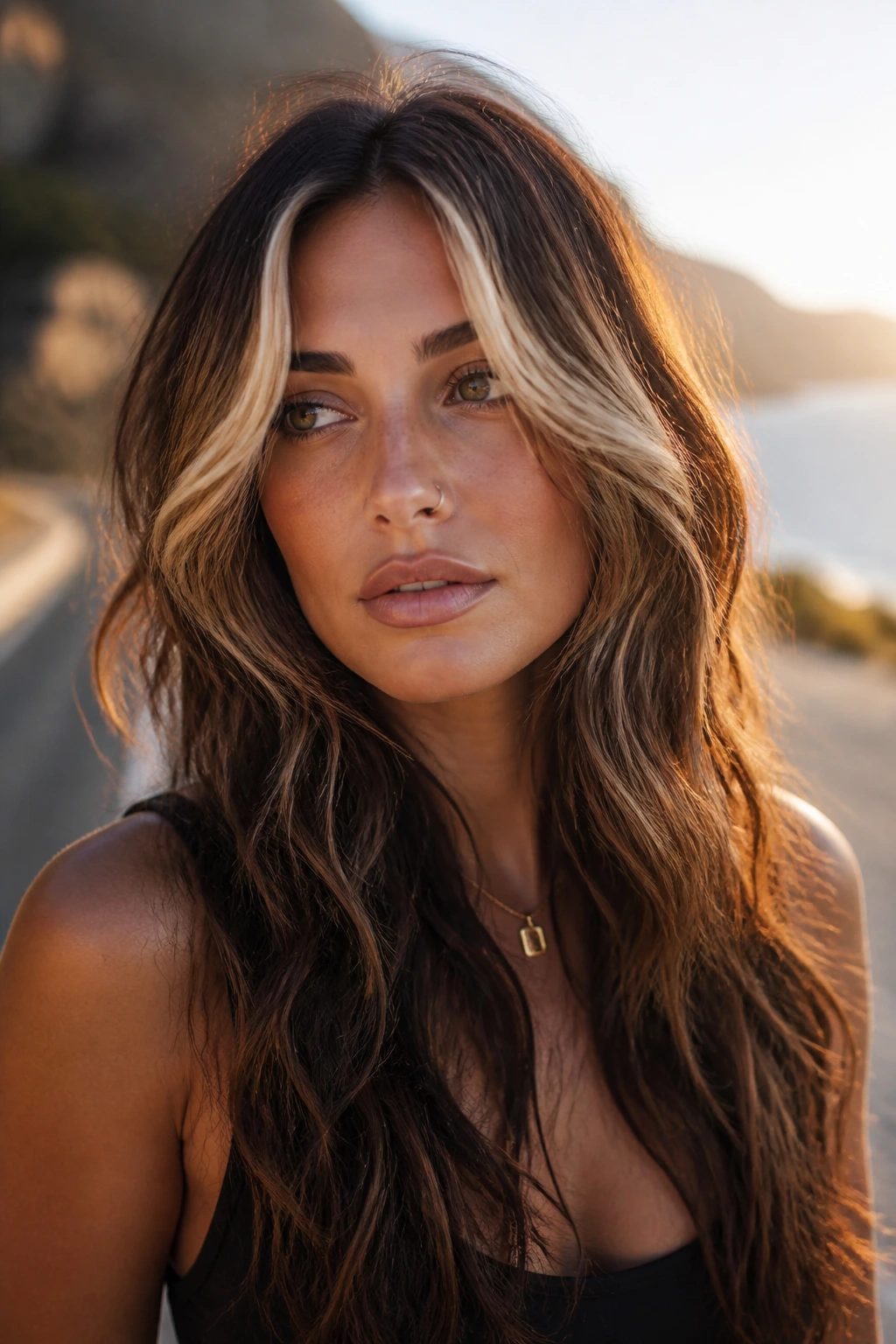
This version puts the spotlight on the front. The face-framing pieces are kept a touch lighter and brighter-looking, so the haircut opens around the eyes and cheekbones. On thick wavy hair, that matters because density near the front can sometimes make the face look swallowed. Here, the front is lifted out of that problem.
The rest of the cut can stay fairly long and full. The drama lives in the front two inches, maybe three, depending on your face and wave pattern. If you like to tuck your hair behind one ear or wear it half-up with a few loose pieces around the face, this is a strong pick. It reads polished even when the rest of the hair is doing its wavy, slightly untamed thing.
15. Air-Dry Wave Wolf
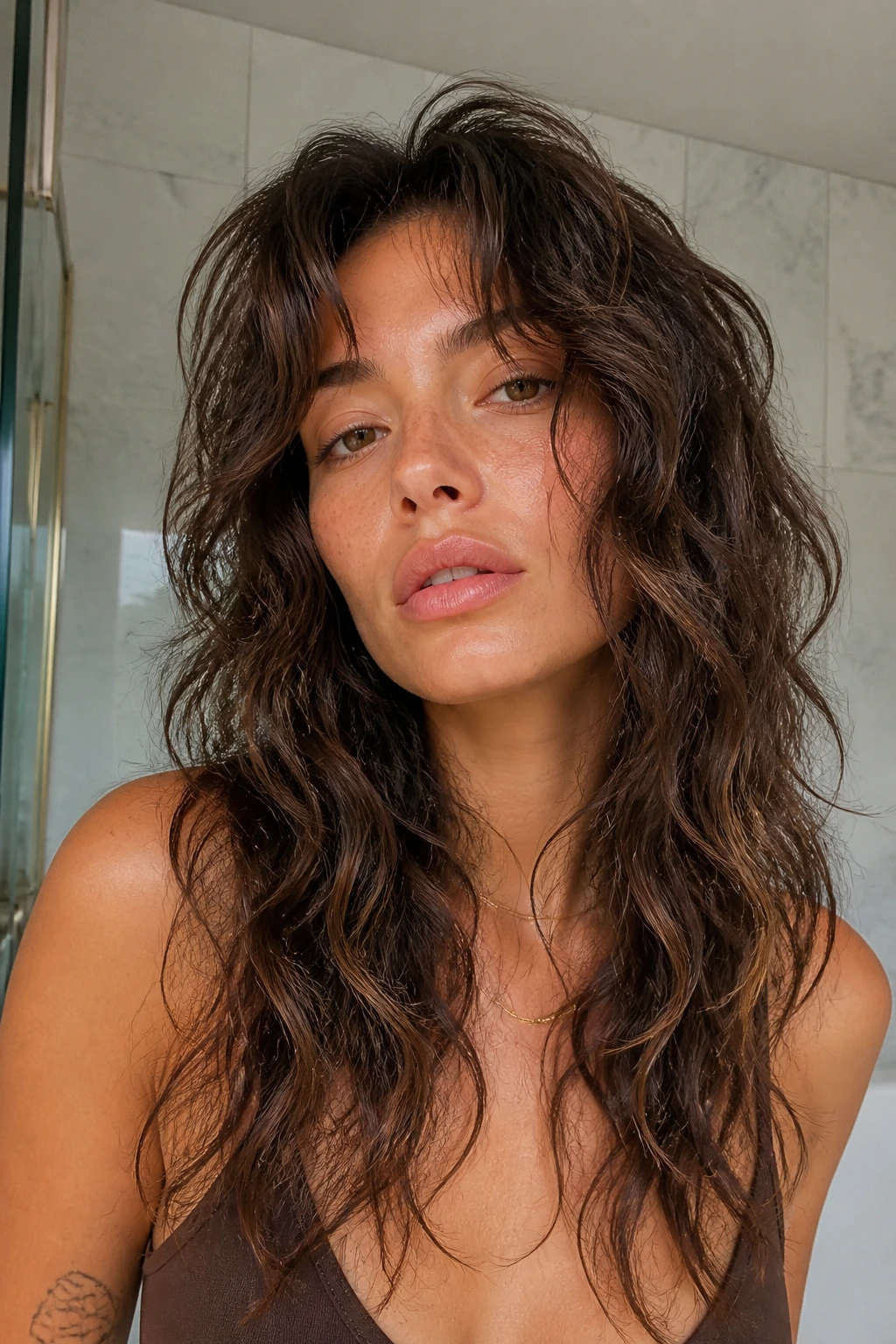
This is the low-maintenance one, but it still needs a smart cut. The layers are placed so the hair can dry into its own bend instead of needing a blowout to make sense. Thick waves can look especially good this way because the shape builds itself as the hair dries, assuming the perimeter is not too blunt and the crown is not over-thinned.
If you’re an air-dry person, tell your stylist that up front. They should cut with your natural pattern in mind, not a straight blow-dried finish. A little curl cream on wet mids and ends, then a scrunch with a microfiber towel, is often enough. Some days the waves will clump more than others. That’s fine. This cut is built to handle variation.
16. Diffused Volume Wolf
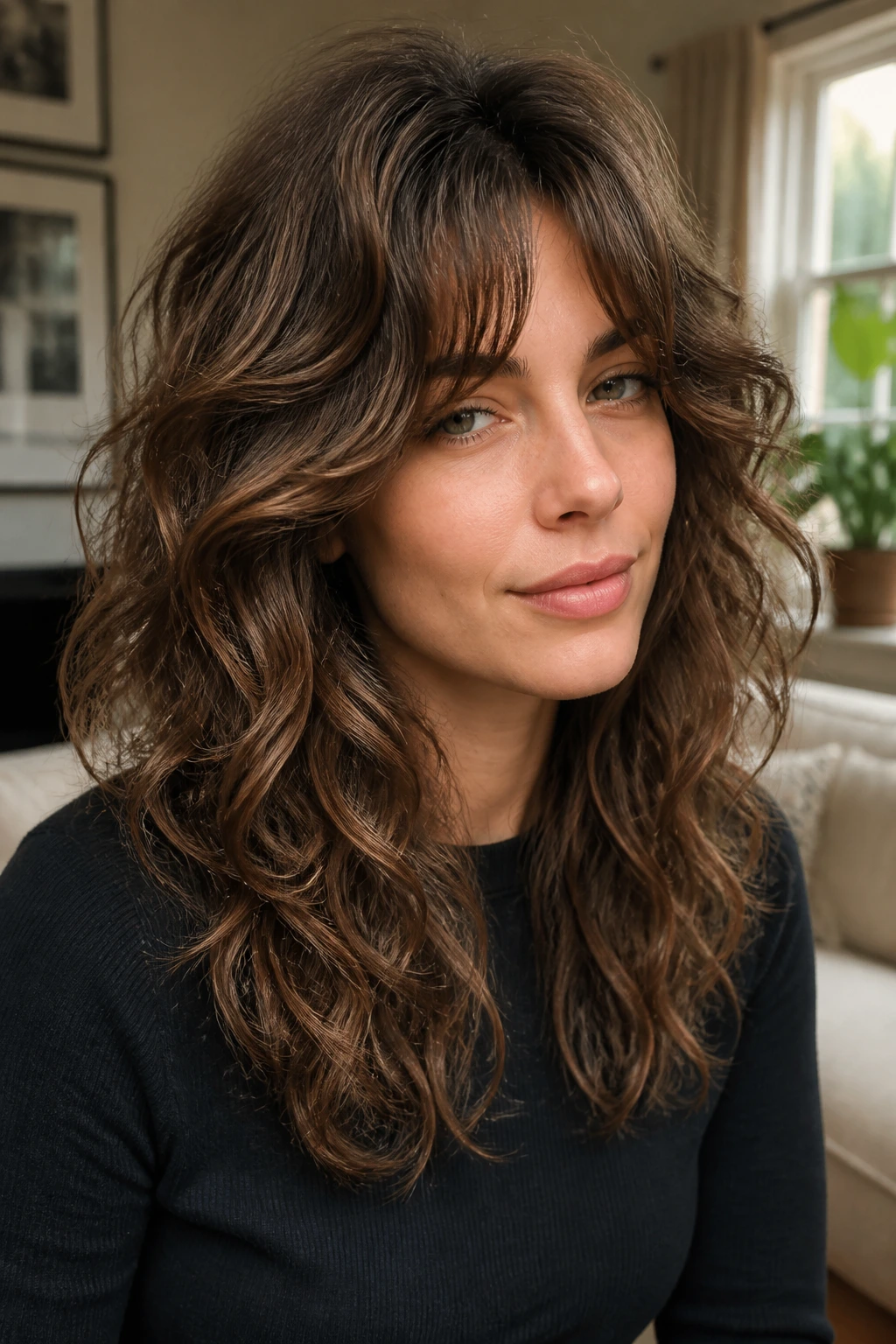
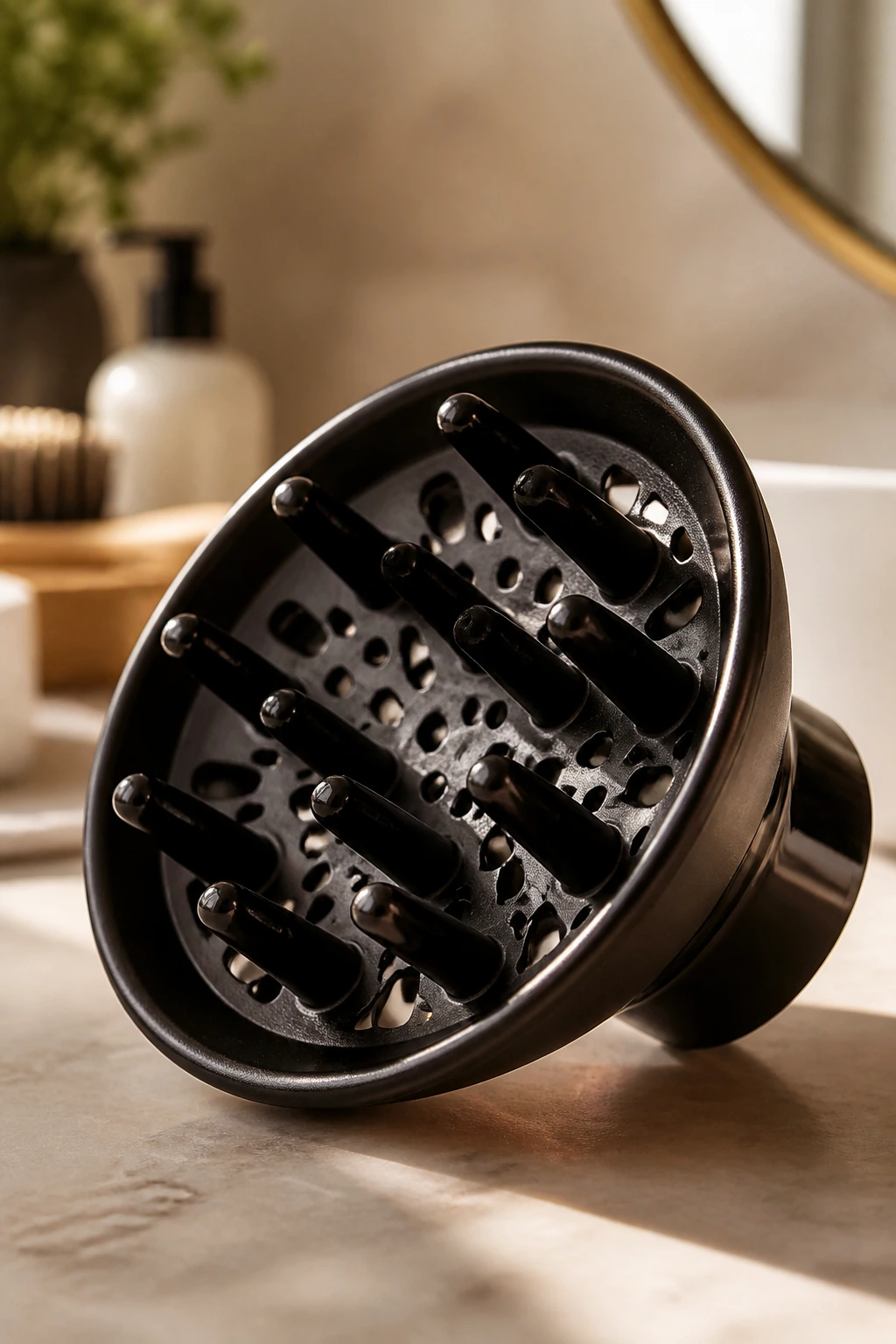
A diffuser is this cut’s best friend when you want lift without frizz. The layers are shaped to encourage movement, and the diffuser helps set that movement at the root and through the mid-lengths. Thick waves usually respond well to low heat and low speed, especially if the product load is light.
This version is ideal for hair that goes flat at the crown but stays bulky through the bottom. The diffuser lets you build volume where the hair usually collapses, which keeps the silhouette lively. I’d use a mousse or foam on damp roots, then diffuse in sections until the hair is about 80 percent dry. Stop before it gets crisp. You want bend, not helmet hair.
17. Blowout Bend Wolf
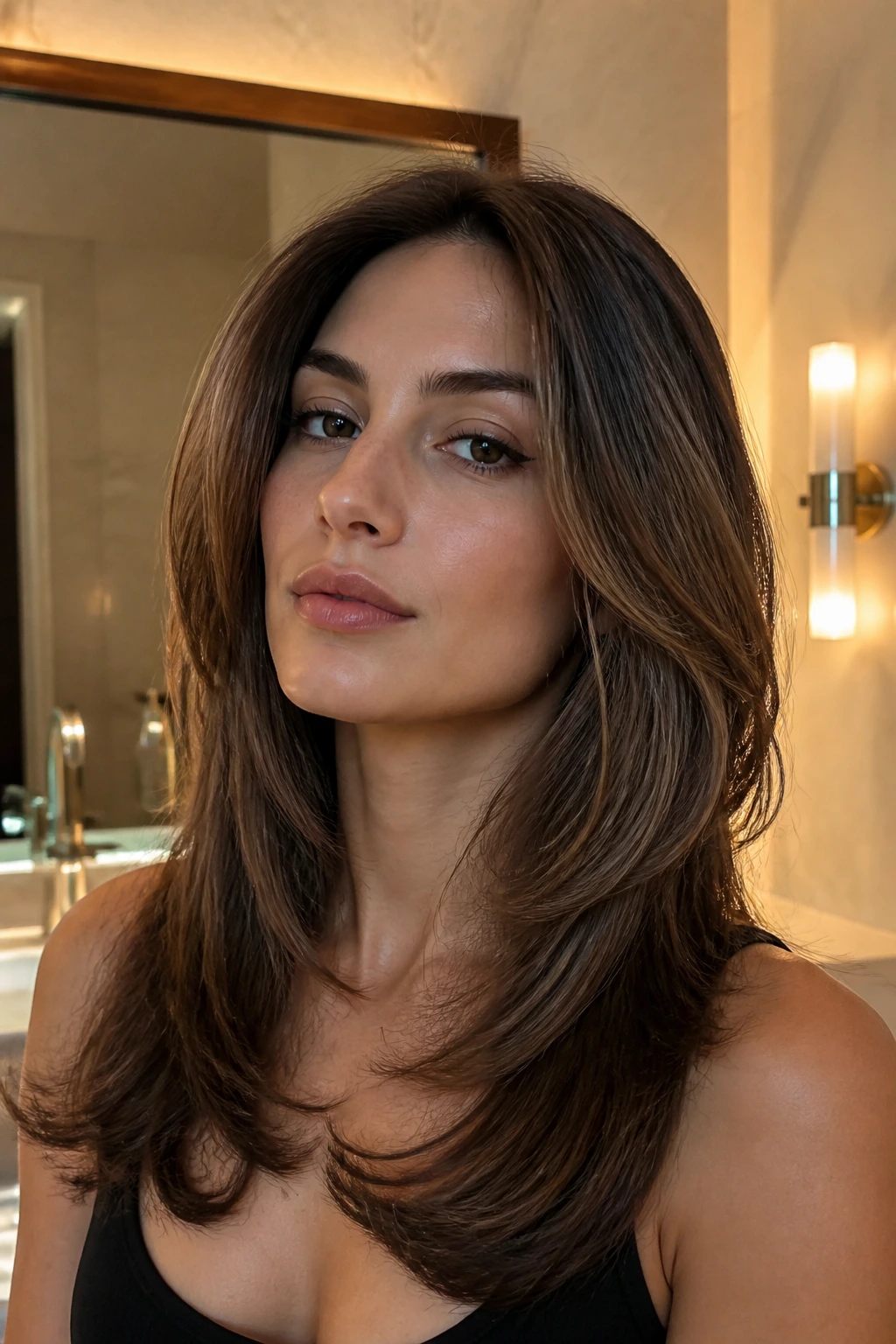
Some people want the wolf shape but not the messy finish. Fair. This version smooths the top and bends the ends under or away from the face with a round brush and a dryer nozzle. The layers still show, but they look cleaner and more polished, which can be useful if your hair gets frizzy in humidity or if you just prefer a neater outline.
Thick wavy hair often looks especially good with this treatment because the cut keeps enough texture to stop the blowout from feeling flat. The shape moves. It does not sit there like a page from a catalog. Keep the heat moderate and let the hair cool in the shape of the brush before touching it. That small pause makes a bigger difference than people expect.
18. Beach-Wave Wolf
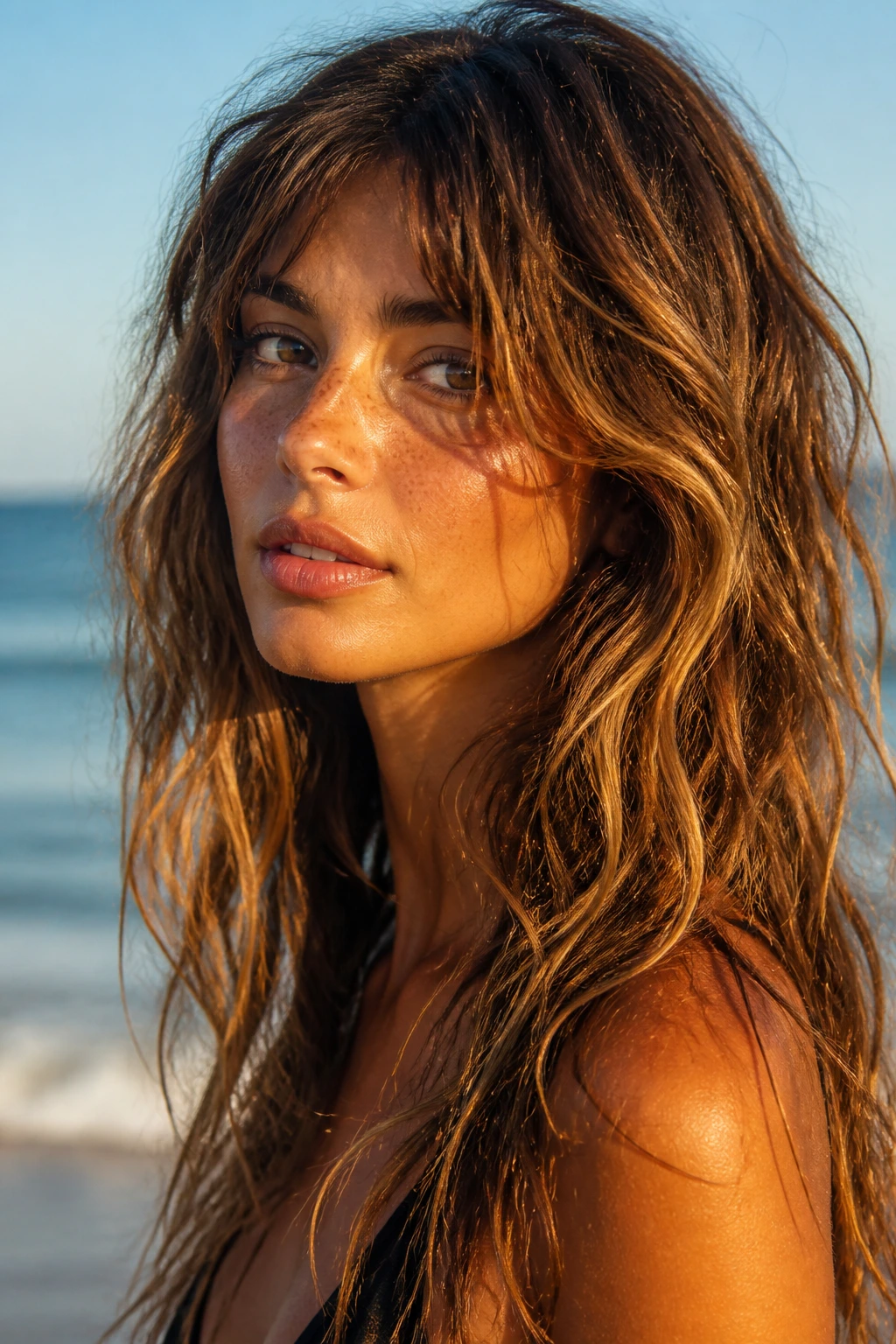
This version is all about piecey texture and relaxed movement. The layers are visible, but not severe. The front pieces fall softly, the back keeps some bulk, and the waves are encouraged to separate into loose ribbons instead of one unified curl. On thick hair, that separation helps the whole cut feel lighter.
I’d use this if you like the look of hair that’s been touched, tossed, and lived in a little. A salt spray or lightweight texture spray can help, though I wouldn’t drown thick hair in it. Too much and you get rough, sticky ends. Too little and the waves clump. A few spritzes, scrunch, let it dry, then break it up with your fingers. Simple enough. The finish should look easy, not crunchy.
19. Round-Face Elongating Wolf
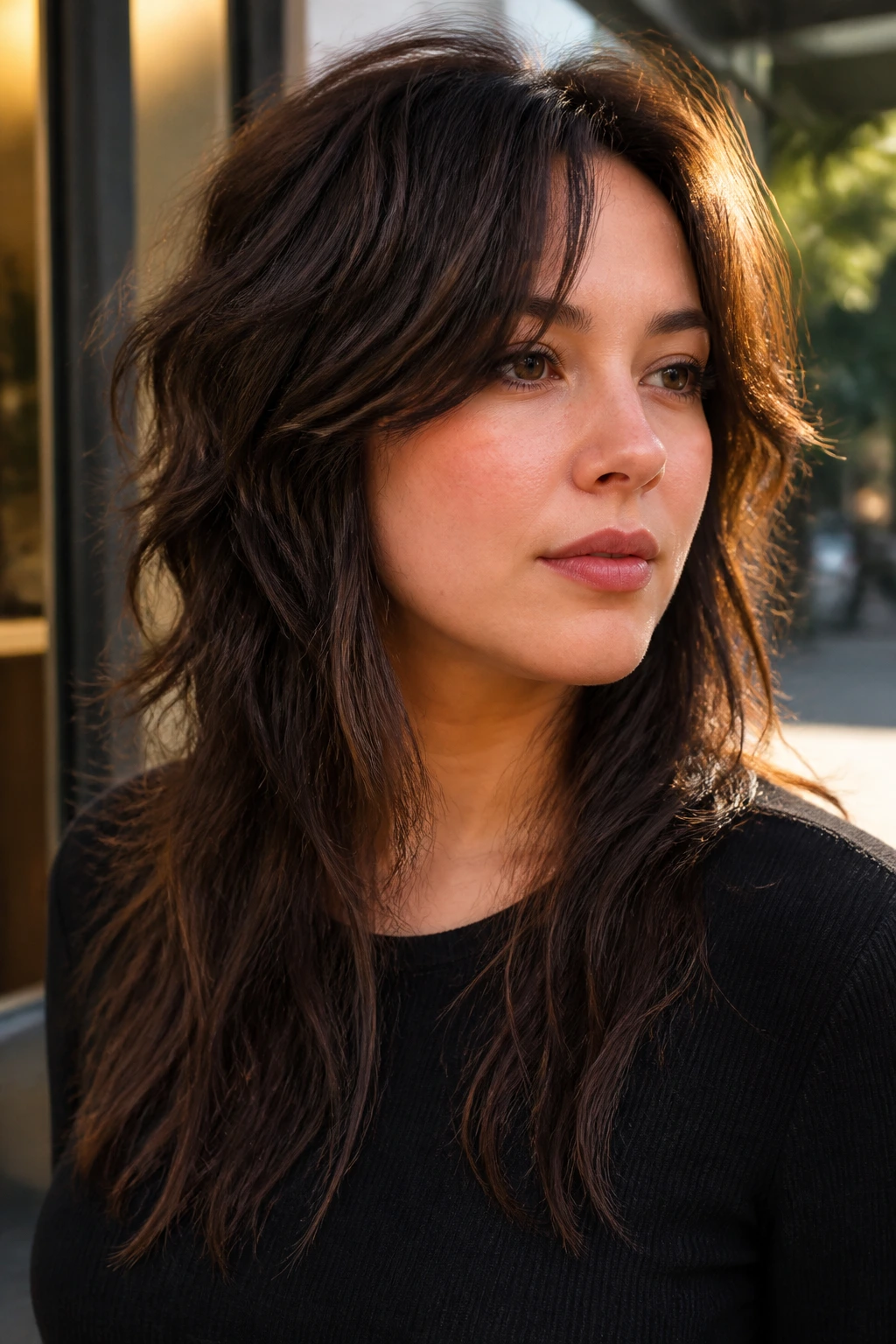
This one is less about trend and more about line. The front layers are kept longer, usually falling below the chin, so they draw the eye downward and create a longer silhouette. For round faces, thick wavy hair can sometimes add width where you don’t want it. This cut nudges the shape vertically instead.
The crown can still have lift, but the sides should not puff out too aggressively at cheek level. That’s the whole trick. Ask for the shortest face-framing point to land lower than the widest part of the face, then let the rest cascade. It’s not a harsh correction. It’s a gentle one. And gentle usually looks better than people think.
20. Jaw-Softening Wolf

If your jawline feels strong and you want the haircut to ease into it rather than stop on it, this is the move. The front layers angle in a way that blurs the jaw, while the back keeps its length and movement. Thick waves are good at this because they naturally blur edges a little. The cut just has to cooperate.
I like this look on square and angular faces, but it can work anywhere if the face-framing is placed well. The key is to avoid a blunt front piece that lands right at the jaw. That can make the line feel boxy. Better to let the pieces fall a touch below or above the jaw, depending on where your hair naturally bends. It sounds picky because it is. Haircuts live in the details.
21. Heart-Shape Balancing Wolf
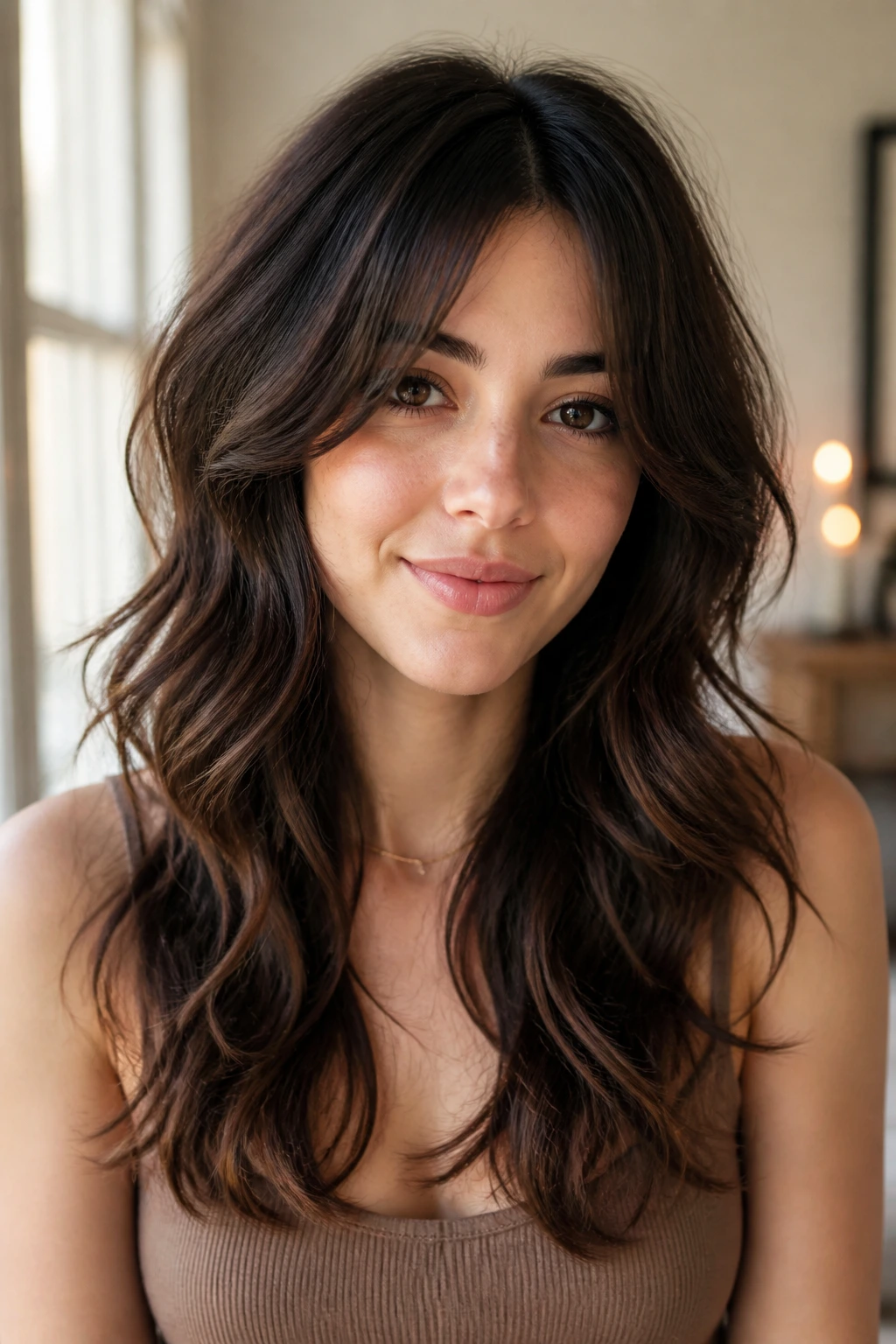
Heart-shaped faces often need a little softness around the forehead and a little fullness near the jaw. This version does both. The top is not over-volumized, the fringe area stays gentle, and the lower layers are allowed to swing a bit more. Thick wavy hair helps here because it can fill out the lower half without looking sparse.
A center part with soft curtain pieces works well, but a side part can too, especially if you want to downplay a wider forehead. Keep the shortest layers around the cheekbones or just below, not too high. That keeps the face from feeling top-heavy. It’s a calm, flattering shape. No drama required, which is refreshing.
22. No-Bang Long Wolf
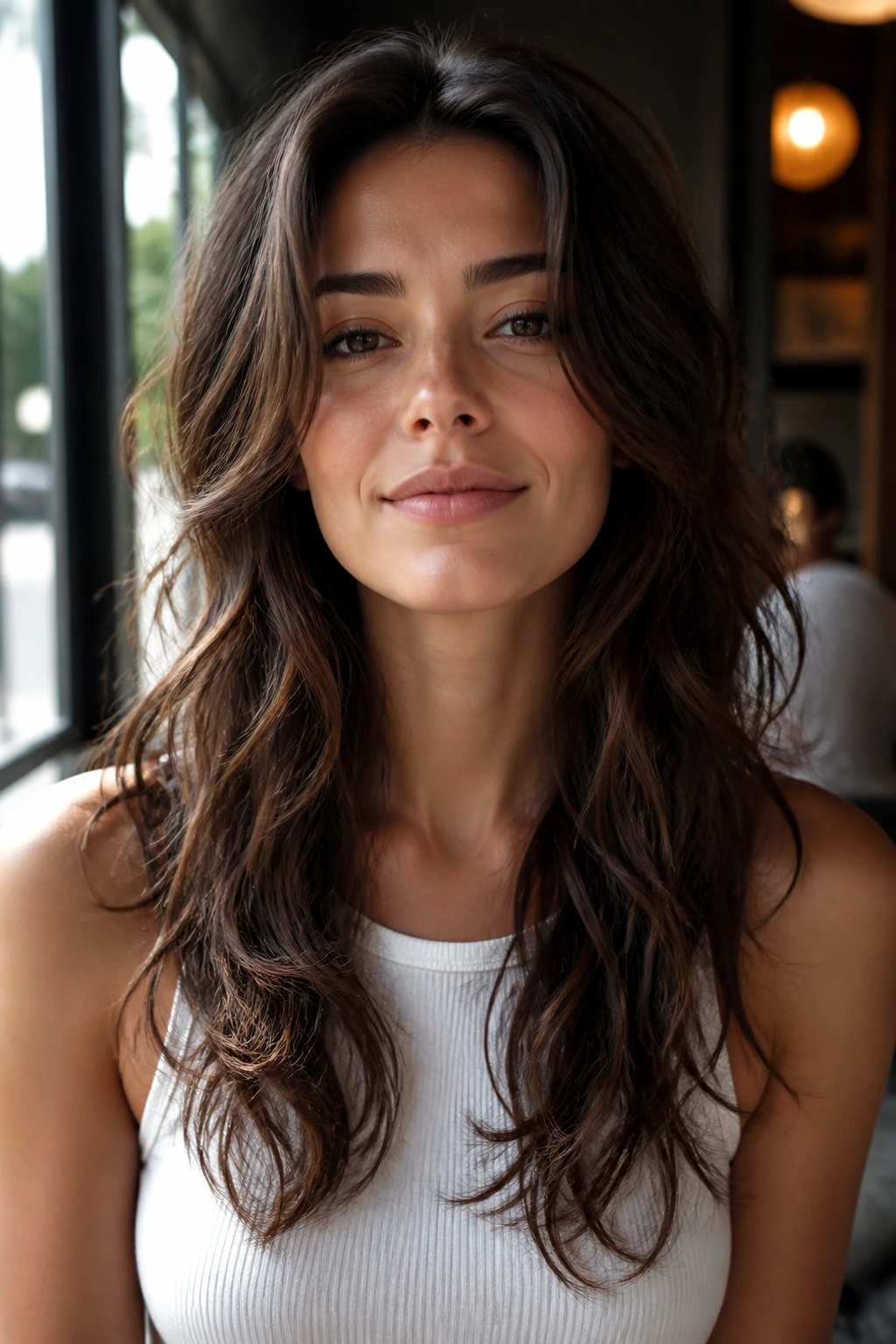
Not everybody wants something falling on the forehead. If that’s you, the no-bang version is the cleanest answer. The haircut relies on long face-framing pieces and internal layers to create interest, so the forehead stays open and the styling gets easier. Thick wavy hair with no bangs can actually look fuller and more expensive-looking because the front is not competing with a fringe.
This is a good choice if you like to switch your part, wear glasses, or pin the front back often. It’s also easier to grow out. The face-framing can start around the chin and taper from there, which gives you a clear shape without committing to bangs that need constant trimming. Understated, yes. Flat, no.
23. Micro-Fringe Wolf

A micro-fringe is a bold little thing, and on thick wavy hair it can be striking. The short fringe creates contrast against the length, which makes the rest of the layers feel even longer and more dramatic. It’s a nice choice if you like a cut that says something fast.
That said, this is not a no-maintenance option. Wavy hair shrinks, and a micro fringe can jump shorter than you expect once it dries. Ask for more length than you think you need, then test the shape after it settles. If you like a slightly editorial finish and do not mind regular trims, this can be a fun way to sharpen a long wolf cut. If you hate fuss, skip it. This is one of those details that knows who it is for.
24. Grown-Out Bang Wolf
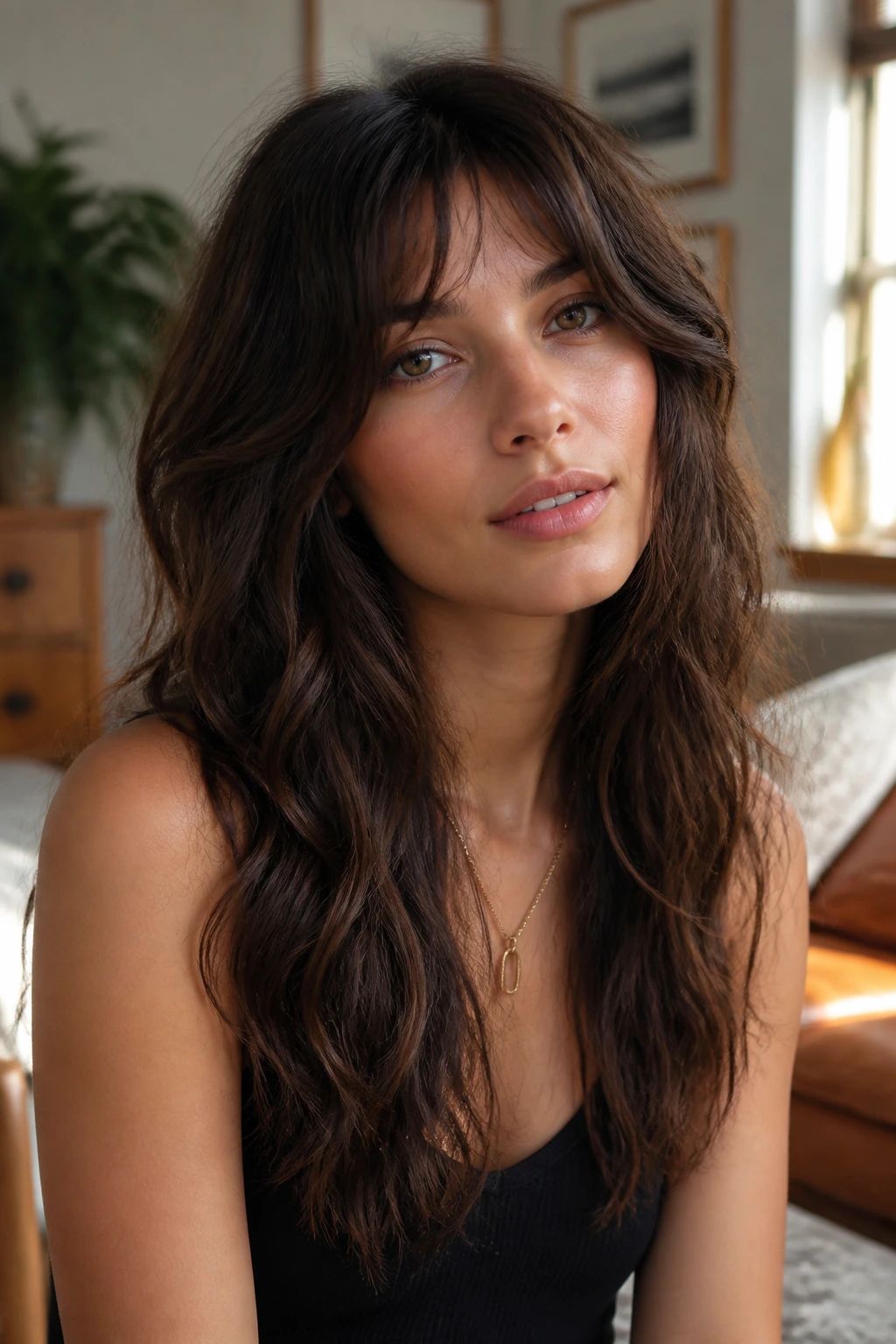
Sometimes the best fringe is the one that looks like it’s been growing out for three weeks. That’s what this shape captures. The bangs are long enough to split, sweep, and blend into the layers, so they never look like a separate helmet sitting on the forehead. On thick waves, that soft transition is gold.
This version is nice if you want bangs but don’t want the upkeep of a crisp line every couple of weeks. The length through the front means you can wear them center-parted one day, pushed aside the next. A quick bend with a flat iron or round brush helps the fringe sit where you want it. It’s flexible. That’s the whole point.
25. Wispy Fringe Wolf
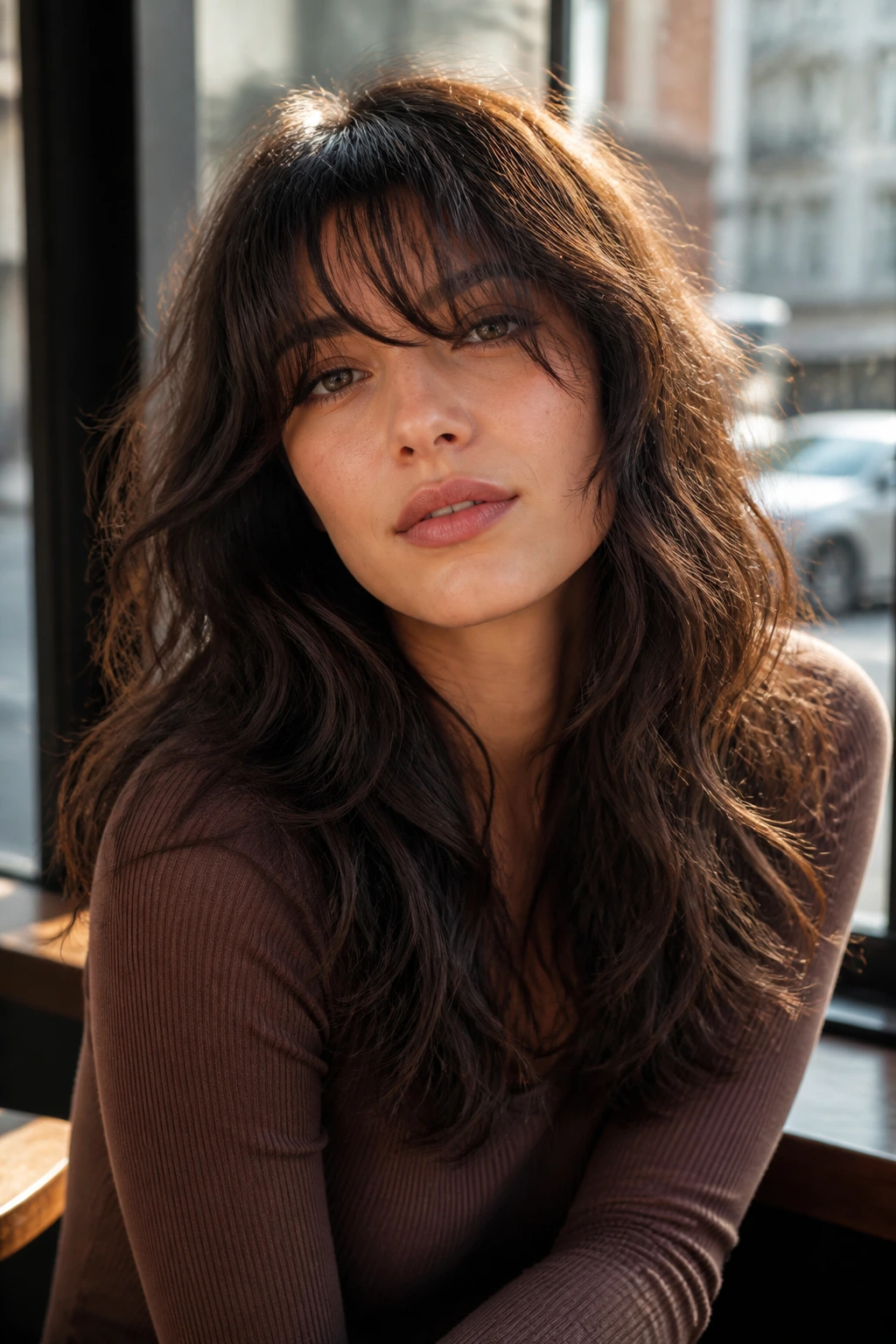
Wispy bangs are useful when thick hair starts to dominate the face. The fringe is thinned enough to feel light, but not so thinned that it disappears. The effect is soft and airy, which pairs well with a long, layered wolf shape. The rest of the haircut can stay rich and full while the front stays breathable.
The key is keeping the wisps intentionally shaped, not accidentally sparse. Thick wavy hair has enough density to make wispy bangs look thoughtful rather than flimsy, as long as the stylist controls the width and length. I like this version for someone who wants softness around the eyes but doesn’t want a heavy curtain. It’s a small detail. It changes the whole face.
26. Heavy Fringe Wolf
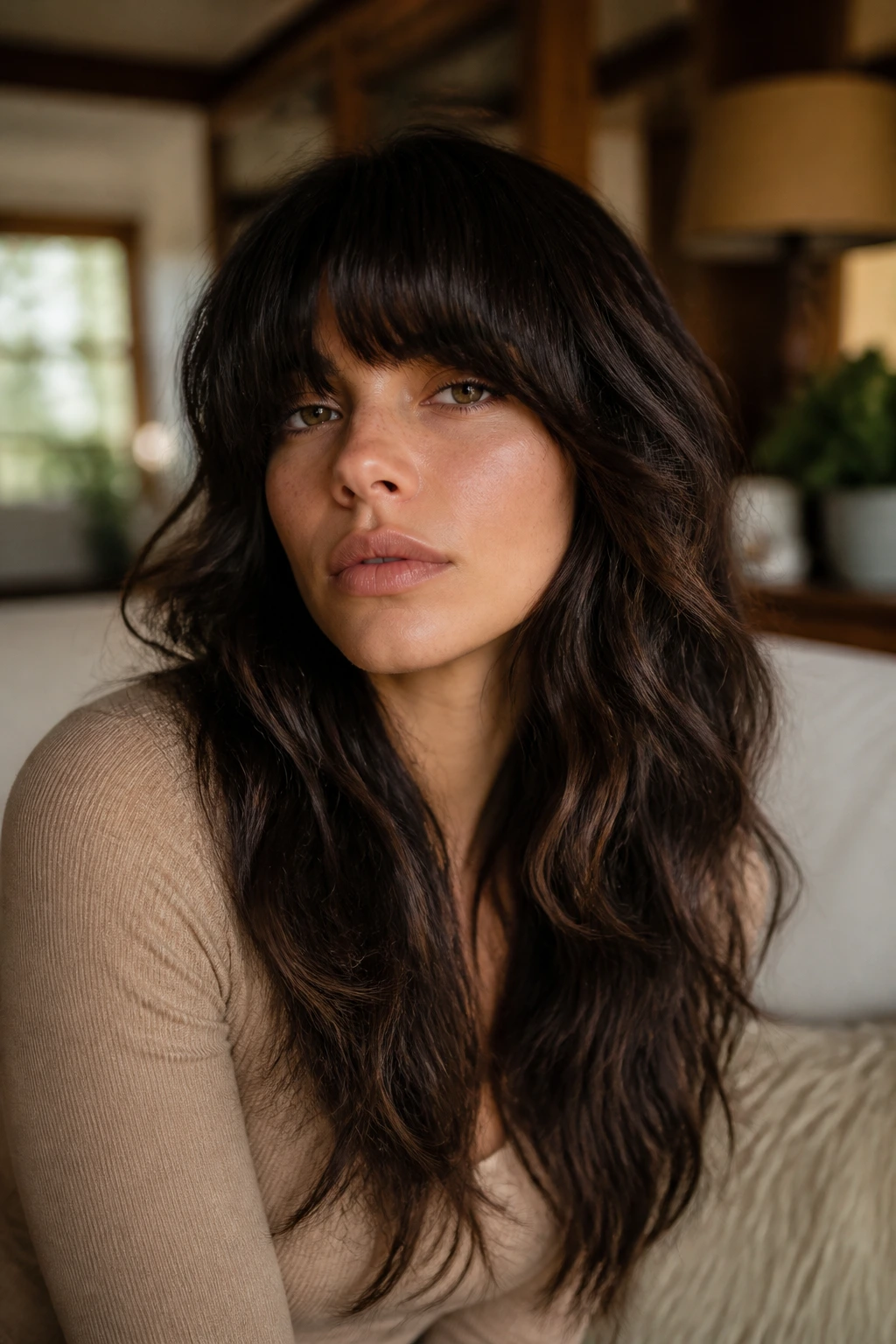
A heavier fringe can work beautifully on dense waves if it’s cut with enough thought. The bangs sit fuller across the forehead, which balances very thick lengths and gives the haircut a strong, graphic top line. The rest of the layers should stay softer so the fringe doesn’t overpower the whole cut.
This is the version for people who like a little drama up front. It can hide a high forehead, soften long faces, and make the eye area look more focused. The downside is upkeep; heavy bangs need shaping more often than you might want to admit. Still, if you’re willing to maintain them, the payoff is real. The cut looks intentional from across the room.
27. Half-Up Friendly Wolf

Some haircuts fall apart the second you pin them up. This one is built with half-up styling in mind. The layers are placed so the top section still has shape when pulled back, and the front pieces can fall loose around the face without looking accidental. Thick wavy hair benefits from this because the cut keeps the bulk under control even when part of it is tied away.
If you wear clips, claws, or little half-up knots a lot, tell your stylist. They can shape the crown and the face frame to make that easier. The best part is the movement that stays visible in the loose pieces. It gives you shape on active days without forcing you to wear the whole length down. Practical. Slightly pretty. Very liveable.
28. Internal-Debulk Wolf
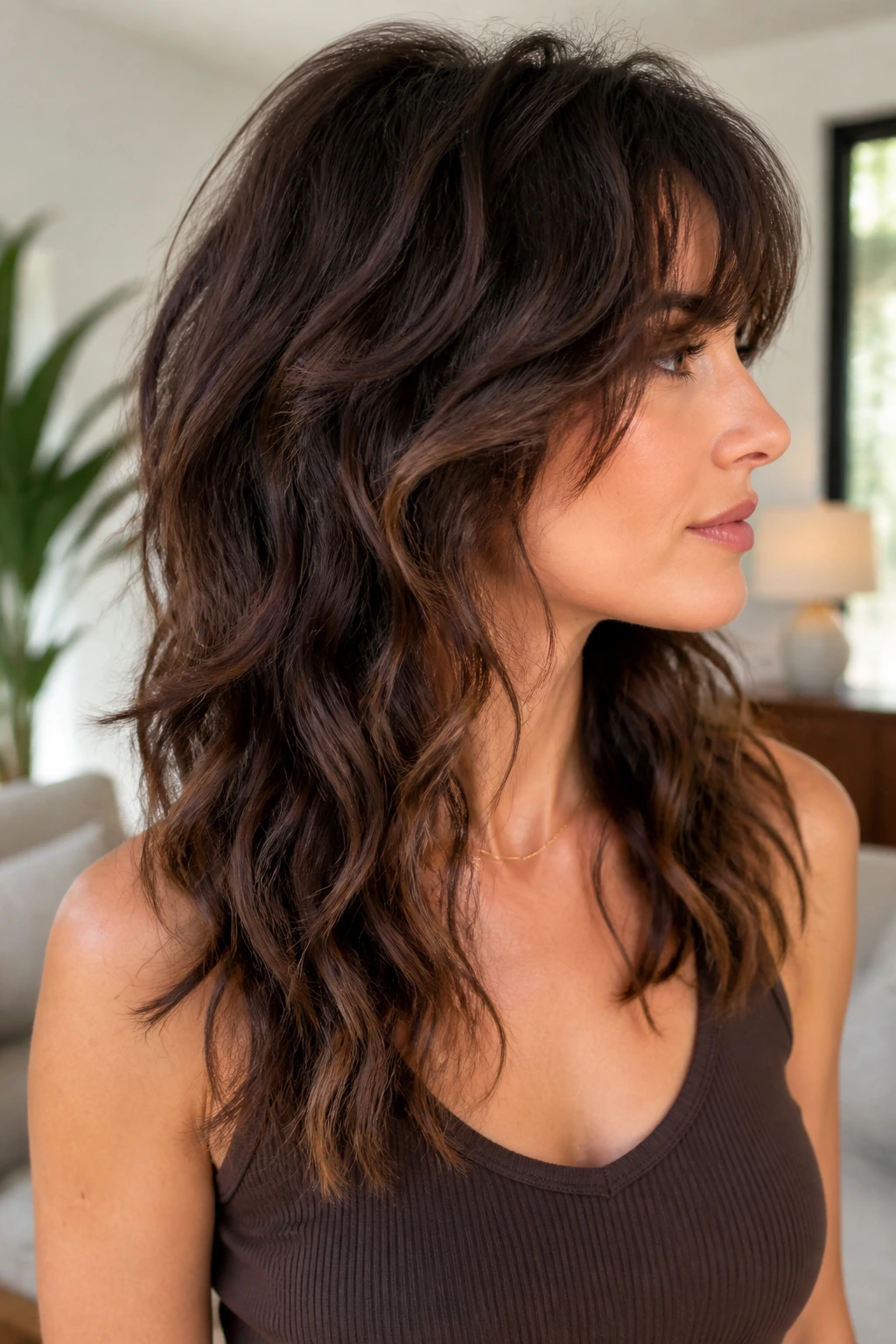
This is the version for truly dense hair. The visible silhouette may not look wildly different from other long wolf cuts, but inside, there’s serious weight removal. That means less puff at the sides, less triangle at the bottom, and a haircut that sits closer to the head without losing its wave pattern.
The important thing here is restraint. Internal debulking should reduce bulk under the surface, not leave you with frizzy ends or hollow spots. If a stylist knows thick wavy hair, they’ll keep the outer line clean while making the interior lighter. This cut can feel like a relief if your hair takes forever to dry or gets heavy by midday. That’s the payoff: less mass, same length.
29. Chunky-Layer Wolf

Chunky layers give you a more visible, piecey finish. Instead of soft, blended steps, the shape has clear sections that break up the wave pattern and make each bend stand out. On thick hair, that can look fantastic because the texture has enough density to support the separation.
This version is better if you like a haircut with attitude. It’s less polished than the invisible-layer version and more obvious in profile. A bit of texture spray or mousse can make the layers pop, especially on day two hair. If your wave pattern is strong and you want people to notice the cut itself, this is a very good choice. If you prefer subtlety, keep walking.
30. Soft Shag Hybrid

This sits between a shag and a wolf cut, which is to say it’s a little gentler and a little more romantic. The layers are present, but the edges are softened so the haircut does not feel too choppy. Thick wavy hair usually takes well to this blend because the wave pattern smooths over the transitions.
It’s a good option for anyone who likes the general shape of a wolf cut but gets nervous when the word “mullet” shows up. The hybrid keeps the top light and the ends alive without going too far on the contrast. I’d use this shape if you want movement first and attitude second. It’s the version I’d call the most forgiving.
31. Mullet-Forward Wolf

This is the bolder cousin. The difference between the front and back is more obvious, which gives the haircut a stronger edge and a little more personality. Thick wavy hair can support that contrast better than fine hair because the wave gives the back some body instead of letting it go stringy.
It works best when the crown stays lifted and the neck area stays soft, not shaved down or overly disconnected. The whole point is motion, not shock value. If you wear leather jackets, boots, heavy eyeliner, or just enjoy a haircut with a little attitude, this is the one to look at. It’s not quiet. That’s the appeal.
32. Polished Wolf
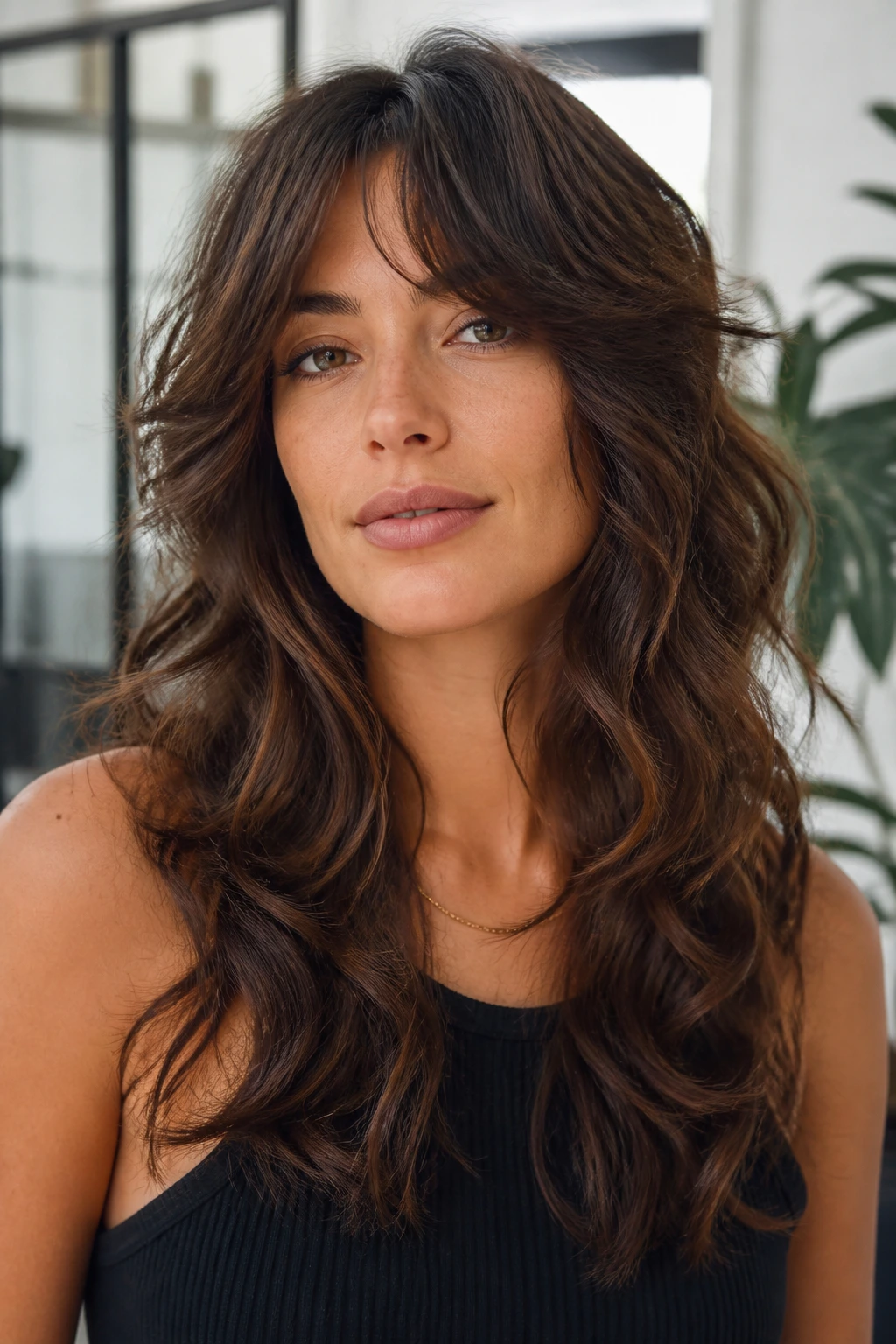
This version takes the same long layered structure and cleans it up. The edges are softer, the styling is smoother, and the overall shape reads more refined than ragged. On thick wavy hair, that can be a huge advantage if you love the wolf cut silhouette but need it to look neat enough for a stricter dress code.
Blow-drying the front pieces with a brush and finishing the ends with a gentle bend helps keep the shape controlled. You still get the movement, but it lands in a more intentional way. The best part is that it does not erase the wave pattern; it just organizes it. Some wolf cuts want to be wild. This one wants to behave.
33. Airy Wolf
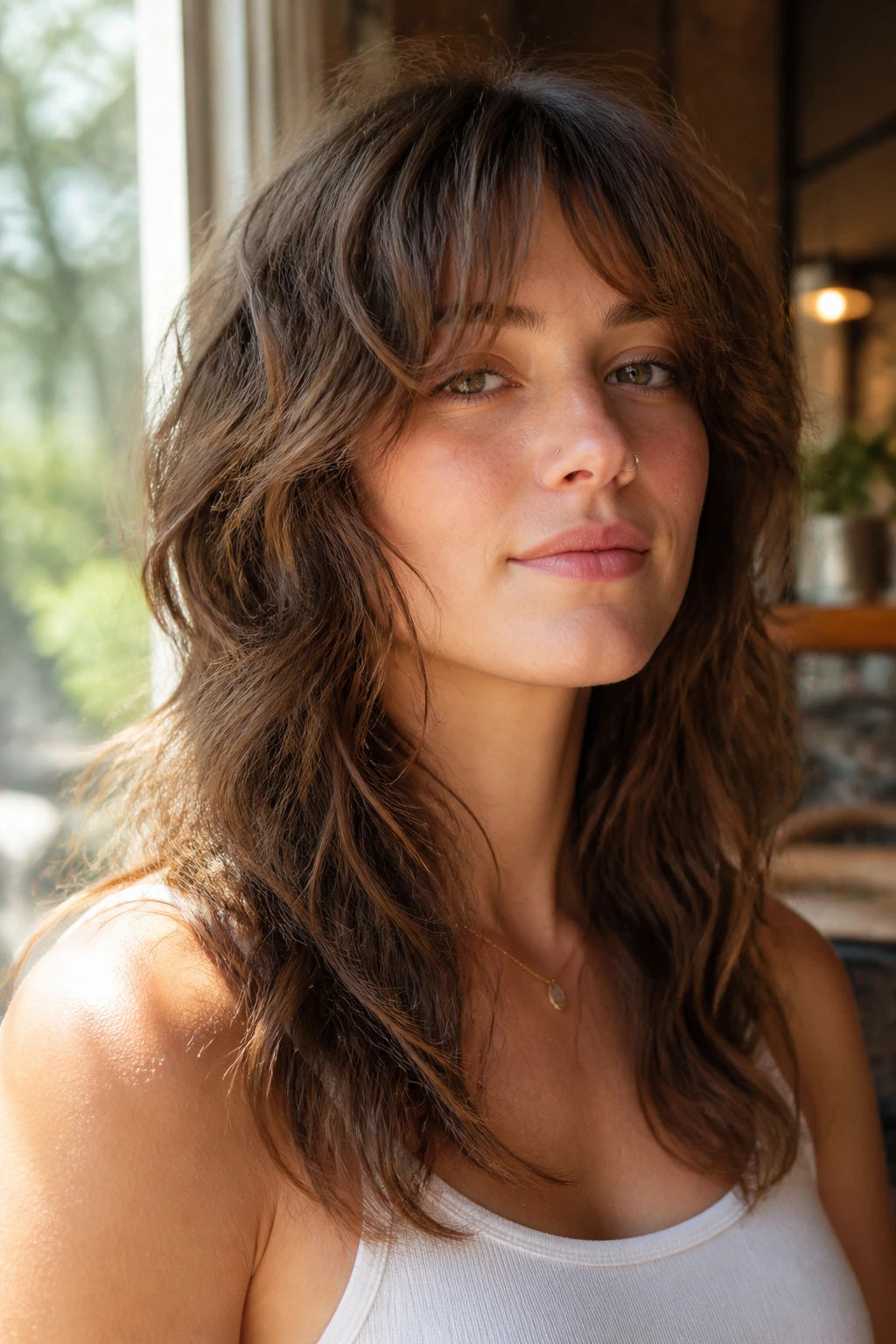
Airy is the word for hair that can move without looking thin. This version removes enough weight to stop thick waves from feeling bulky, but not so much that the cut loses substance. The layers float a little more, the top has lift, and the whole shape feels lighter on the head.
I’d choose this if your thick hair gives you headaches or feels heavy by midday. A haircut like this can change the way your hair sits on your shoulders. It also tends to dry faster, which is a small luxury that becomes a big one after a few weeks. Airy does not mean sparse. It means the cut has room to breathe.
34. Boho Wolf
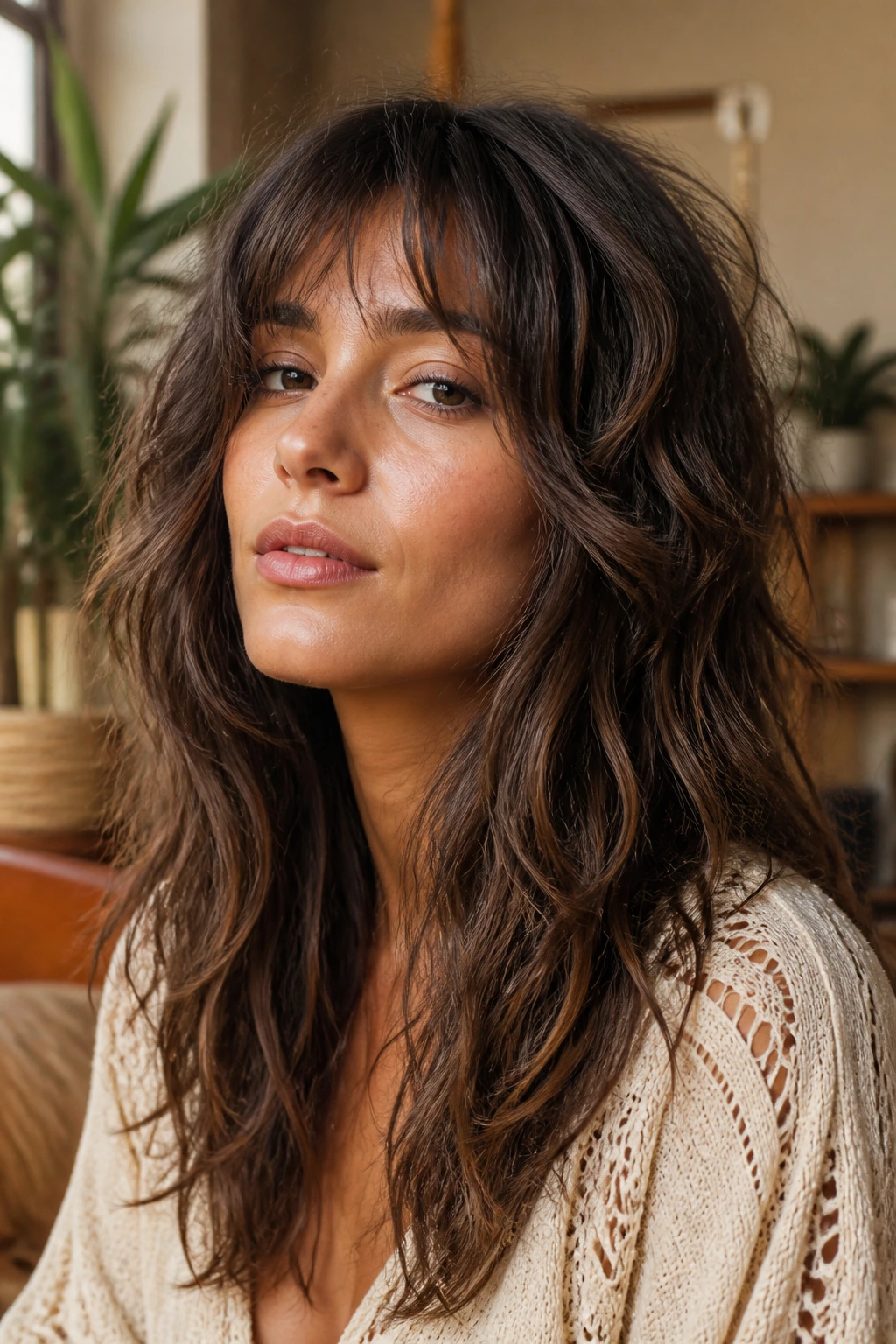
The boho version leans soft, loose, and slightly undone. The layers are blended enough to feel natural, but still clear enough to show off the wave. Thick hair makes this easy because there’s enough mass for the shape to stay full while the ends flutter a little.
This is a good match for anyone who likes claw clips, soft braids, textured waves, and a bit of face-framing movement around the eyes. It’s not trying to be crisp. It’s trying to look like hair that has a life outside the mirror. A dab of cream on the mids and ends, then a few scrunches, usually does the job. No need to overwork it.
35. Sleek-Root Wolf
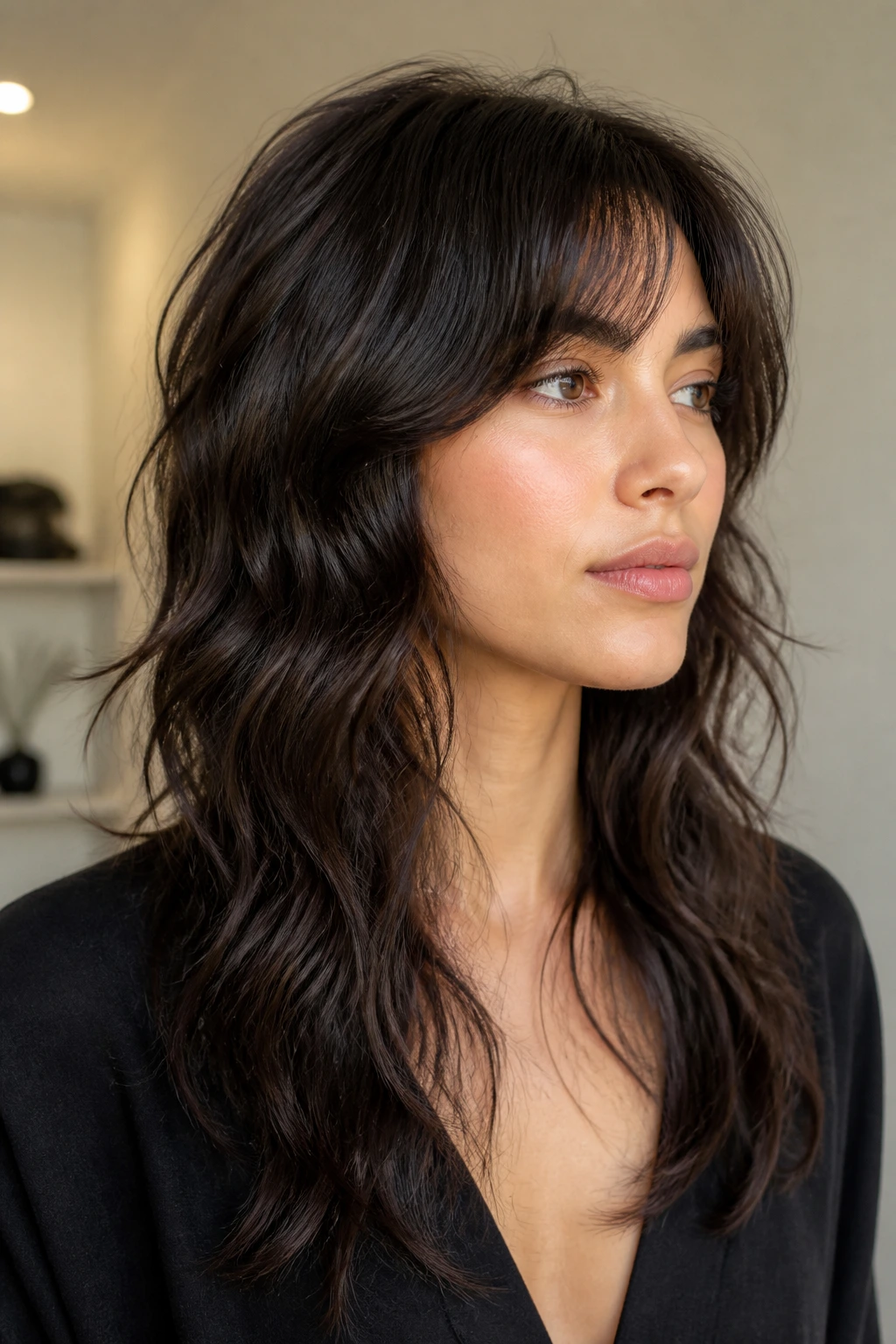
Here, the roots stay smooth and controlled while the lengths keep their wave. That contrast can be very flattering on thick hair because it stops the top from puffing while still letting the lower layers move. It also looks cleaner when you want a more finished result without flattening the whole head.
A concentrator nozzle and a paddle brush at the roots can make this easier. After that, let the lengths form their own texture, or bend the ends with a curling iron if you want a little more polish. This cut is good for people who don’t want every strand shouting at once. The top whispers. The ends do the talking.
36. Triangle-Fix Wolf Cut
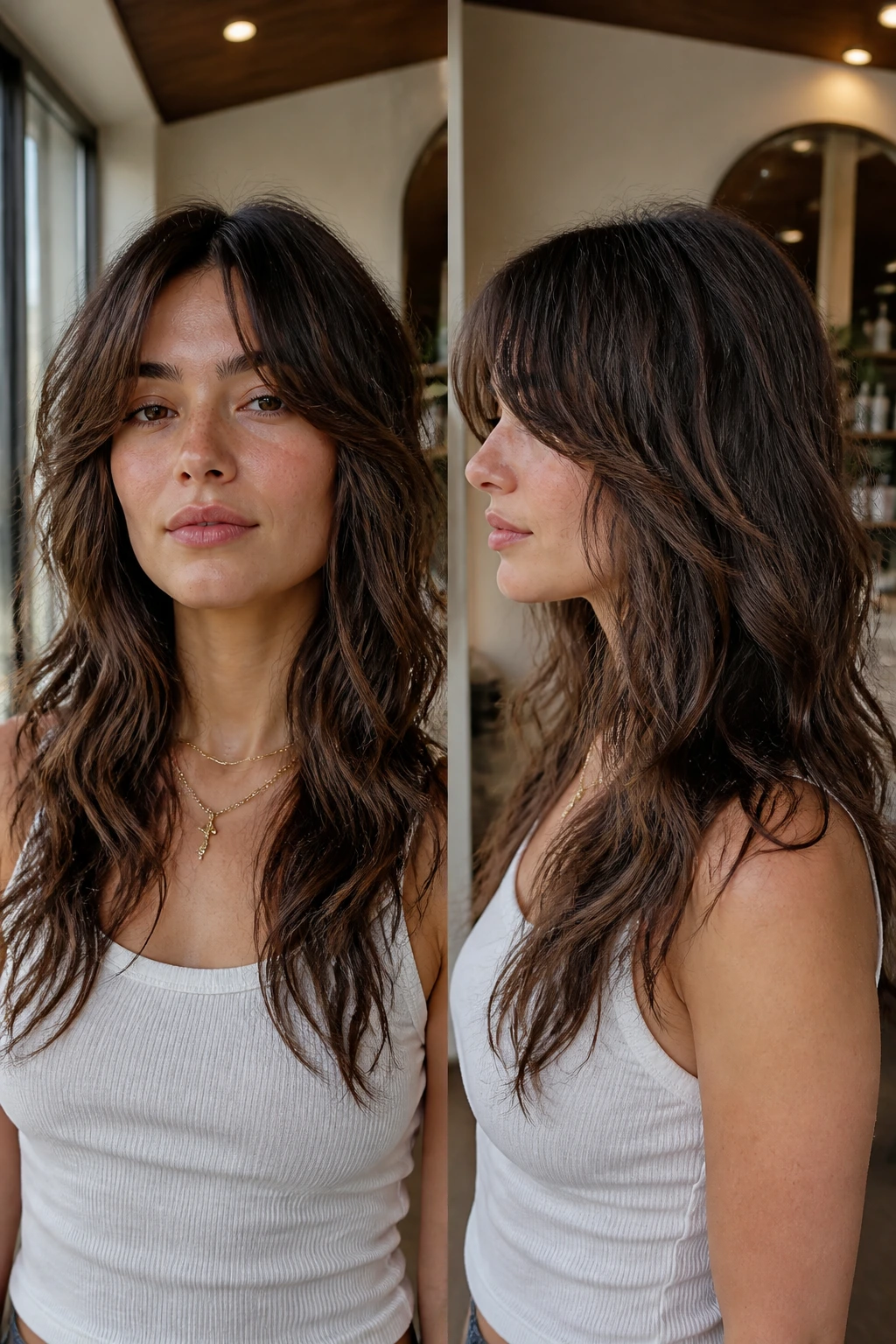
If your thick waves naturally build into a triangle, this is the one that addresses that problem head-on. The layers are structured to remove width through the bottom third and create a softer taper from crown to ends. The result is a shape that feels less like a pyramid and more like an actual haircut.
I’d be blunt with your stylist here. Tell them you do not want a heavy shelf at the bottom or a puffy side profile. Ask for internal weight removal and thoughtful face framing, not random thinning. This is one of the most useful long wolf cuts on the list because it solves a very specific complaint. And that complaint is common.
37. Grow-Out Friendly Wolf
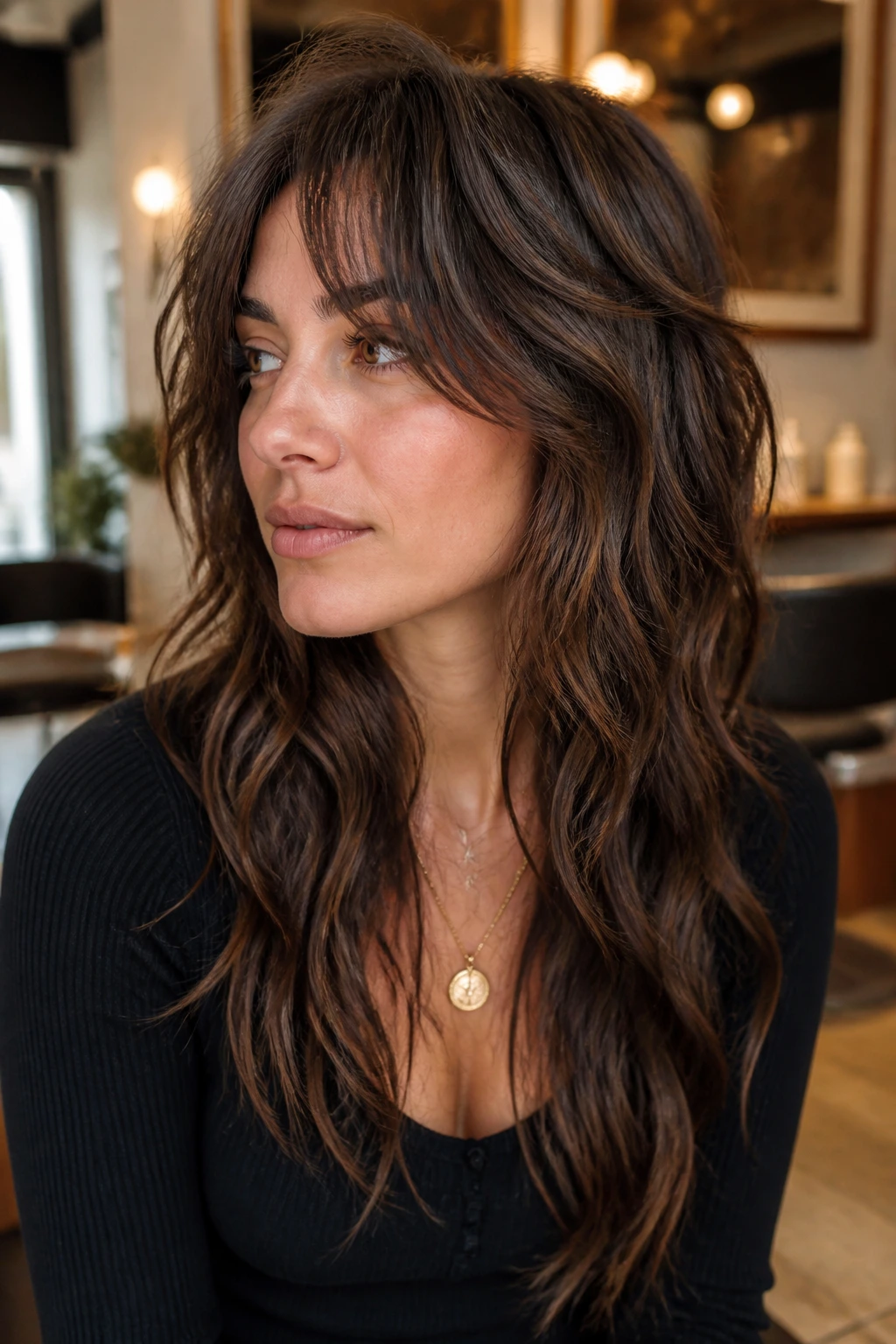
Some cuts are nice on day one and annoying by week six. This is not that. A grow-out friendly wolf keeps the shortest layers conservative enough that they blend as they lengthen, which matters if you can’t or don’t want to trim constantly. Thick wavy hair helps hide the transition because the wave pattern naturally blurs the lines.
If you hate the awkward middle stage, ask for layers that can expand gracefully instead of a dramatic chop. The silhouette should still feel soft even after a month or two. This version is the quiet workhorse of the group. It looks decent without constant attention, and honestly, that counts for a lot.
38. Face-Frame Cascade
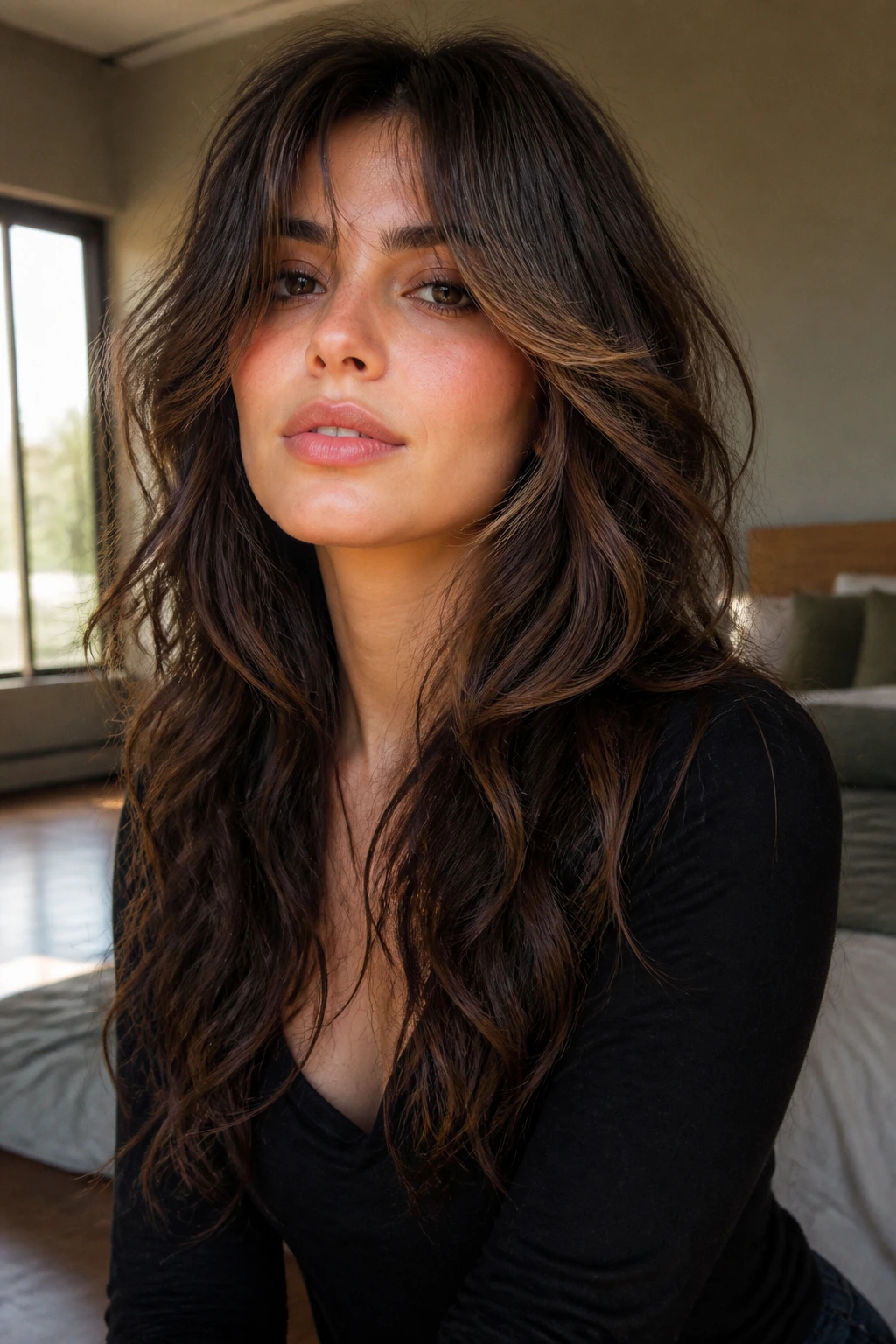
This one lets the front carry the mood. The layers cascade from the face outward, with enough length in the back to keep the whole cut grounded. Thick wavy hair gives the cascade a soft, tumbling effect that looks fuller than a simple face frame and less severe than a heavily chopped shag.
I like this version when the front of the haircut needs to do the heavy lifting. It opens the face, shows off cheekbones, and keeps the rest of the length useful. If you want one cut that feels flattering from the front, side, and three-quarter view, this is a strong final pick. It’s the kind of shape that makes even a rushed scrunch-and-go look like you paid attention.
Why Thick Waves Make This Shape Behave Better
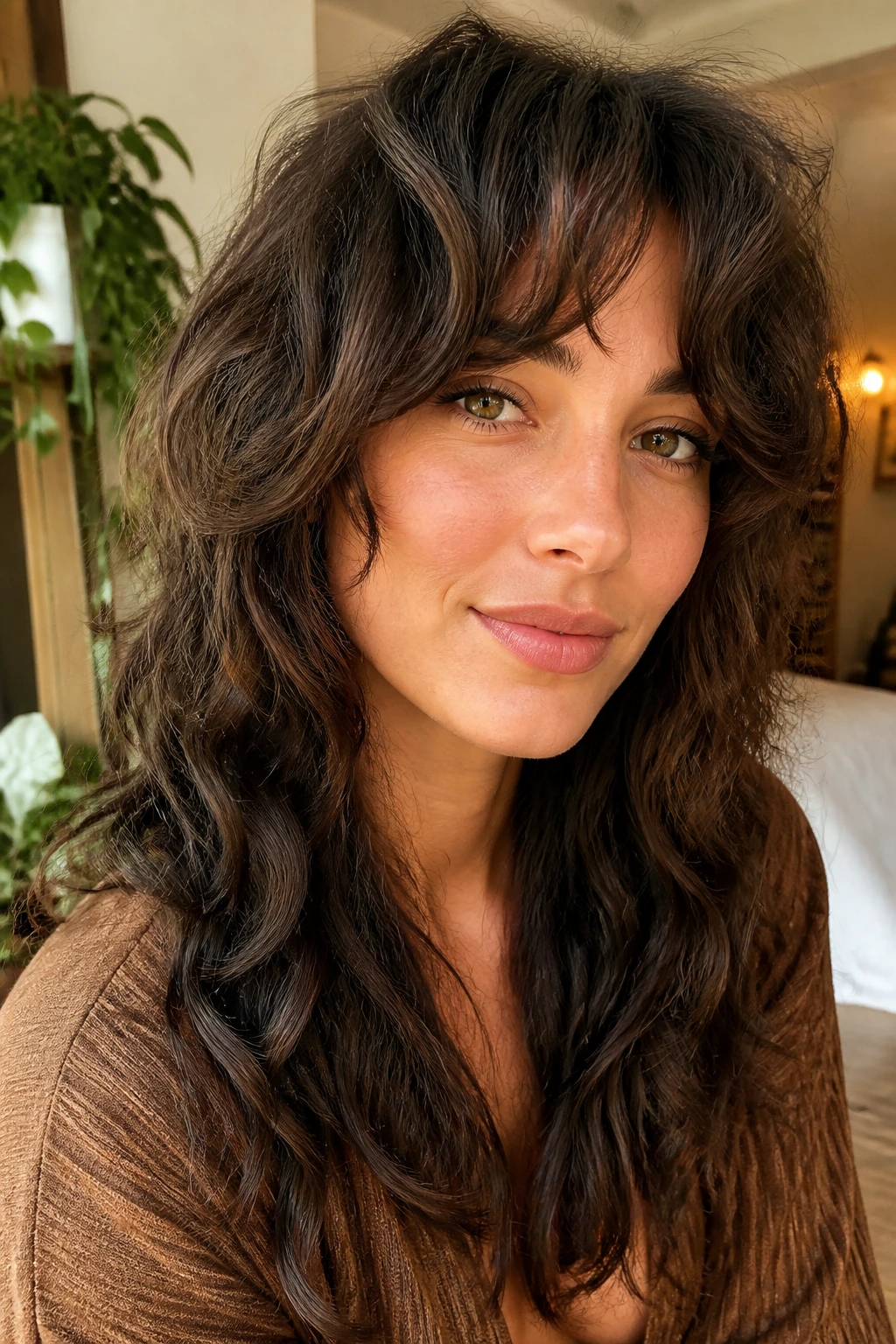
Long wolf cuts and wavy thick hair are natural partners because the texture already has enough body to show off the layers. Straight hair often needs more styling to make the shape read. Thick waves do a lot of that work for you. They catch on the shorter pieces, separate the layers, and give the haircut a kind of built-in motion that blunt hair usually has to fake.
The weight matters too. Thick hair can hold a long perimeter without collapsing, which gives the cut a base. The crown and upper sides can be lifted without making the entire head look sparse. That balance is the whole game. Remove too much and the haircut goes airy in the wrong places. Leave too much and you’re back to one giant block.
Dry cutting helps here, especially when the wave pattern is loose to medium. Wet hair stretches. Thick waves spring back. If your stylist cuts only on wet hair and never checks the dry shape, they can easily take off more than intended. That’s why a good long wolf cut usually gets confirmed in the mirror after it dries. The hair has the final word.
What to Tell Your Stylist Before the First Snip
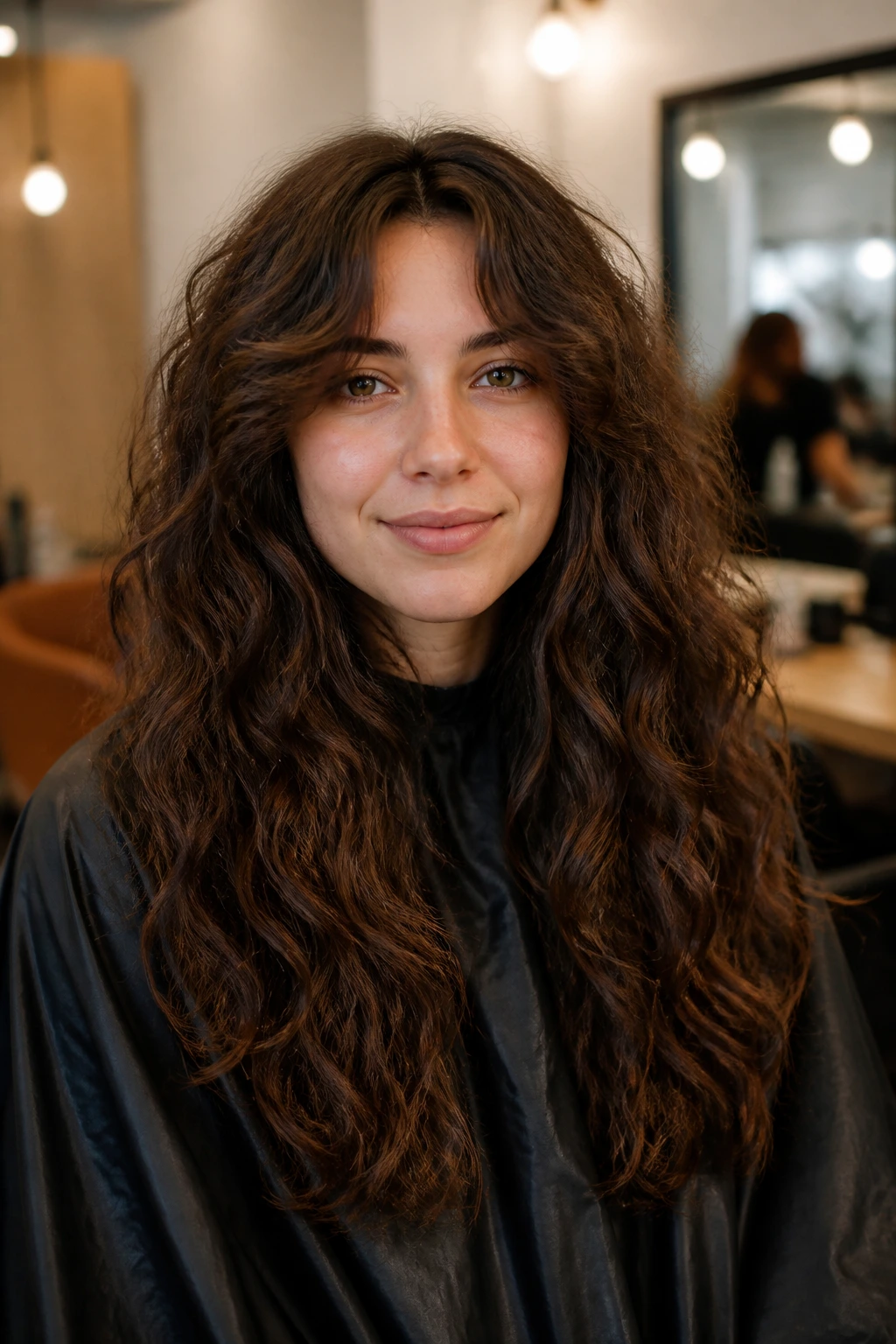
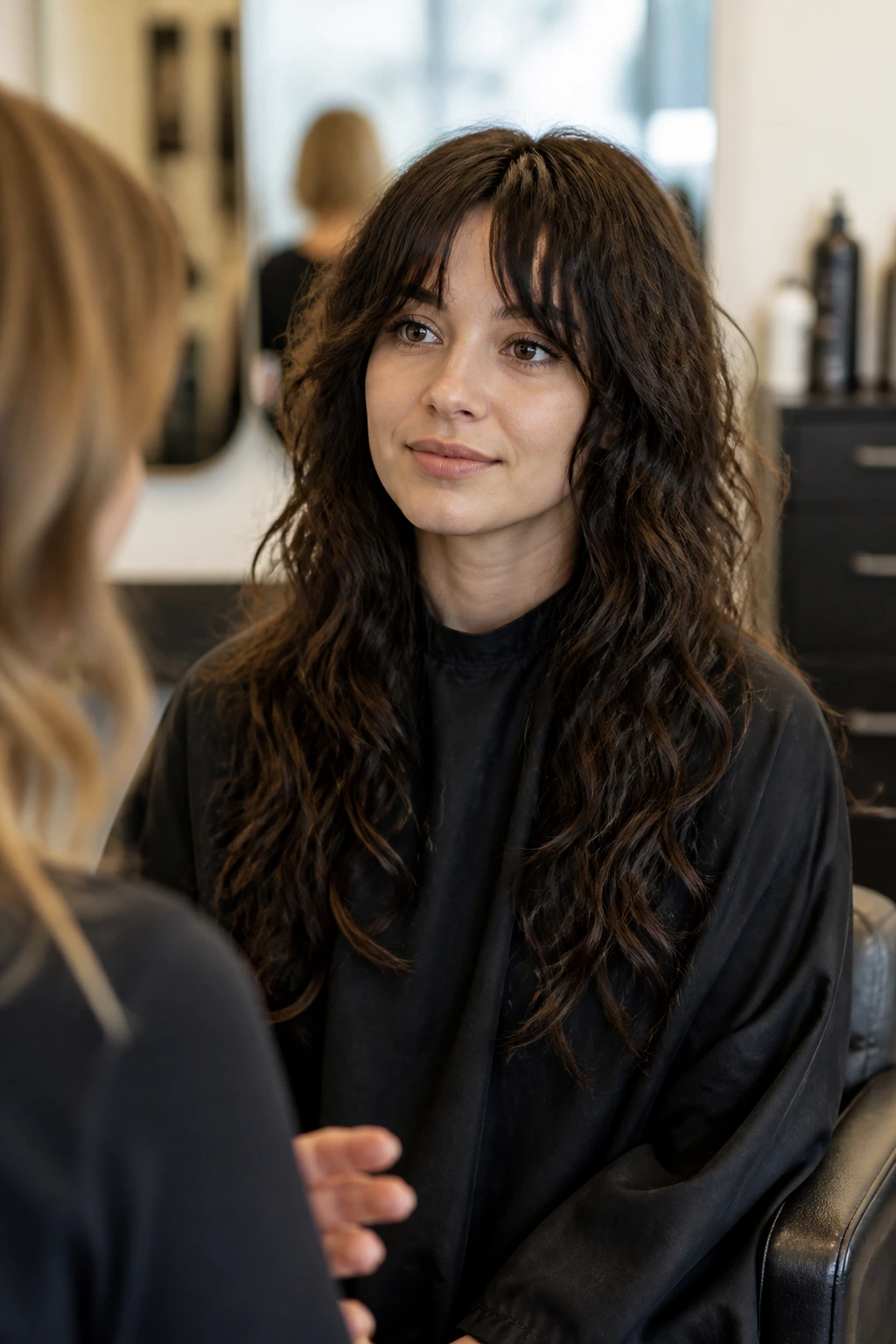
Bring photos. Three is enough. One should show the front, one the side, and one the kind of finish you want on a normal day, not the kind you need a curling iron army to create. Thick wavy hair needs examples because “wolf cut” can mean soft layers to one stylist and a dramatic mullet to another.
Say what you want to keep. That part matters. If you love your length, say the shortest pieces can live around the cheekbone or jaw, not the ears. If you hate a mushroom shape, say you want weight removed internally and around the crown, but not stripped from the bottom edge. If bangs make you nervous, say so. A face frame can do a lot without a fringe.
Here’s the kind of language that helps:
- Keep the perimeter long enough to feel full.
- Remove bulk from the inside, not just the ends.
- Start the shortest layers around the cheekbone or collarbone.
- Cut with my wave pattern in mind, not against it.
- Check the dry shape before taking off more length.
One more thing. Mention how you wear your hair most days. If it lives in clips, half-up styles, or a diffuser, the haircut should suit that reality. Not the fantasy version.
The Tools That Make Styling Easier
-
Wide-tooth comb: Detangles wet waves without ripping apart the pattern or making thick hair frizz at the root.
-
Microfiber towel or soft T-shirt: Absorbs water without roughing up the cuticle, which matters when the ends are layered and prone to puffing.
-
Leave-in conditioner: A light layer on mids and ends keeps the shape smooth without weighing down the crown.
-
Mousse or foam: Good for root lift and wave memory, especially if your hair tends to fall flat by afternoon.
-
Diffuser attachment: Helps thick wavy hair dry with more body and less frizz; use low heat and low speed.
-
1.25-inch curling iron or wand: Optional, but useful for bending the face frame or reviving day-two waves.
-
Heat protectant: Worth using any time you add heat, even if the heat is modest. Ends with layers need extra kindness.
-
Texturizing spray: Helpful for piecey separation on the lengths; use sparingly so you do not create grit.
-
Hair clips: Makes sectioning the crown and front layers easier during blow-drying or root clipping.
-
Finishing oil or serum: One or two drops on the very ends can calm flyaways, but keep it off the roots.
Styling Long Wolf Cuts Without Flattening the Wave
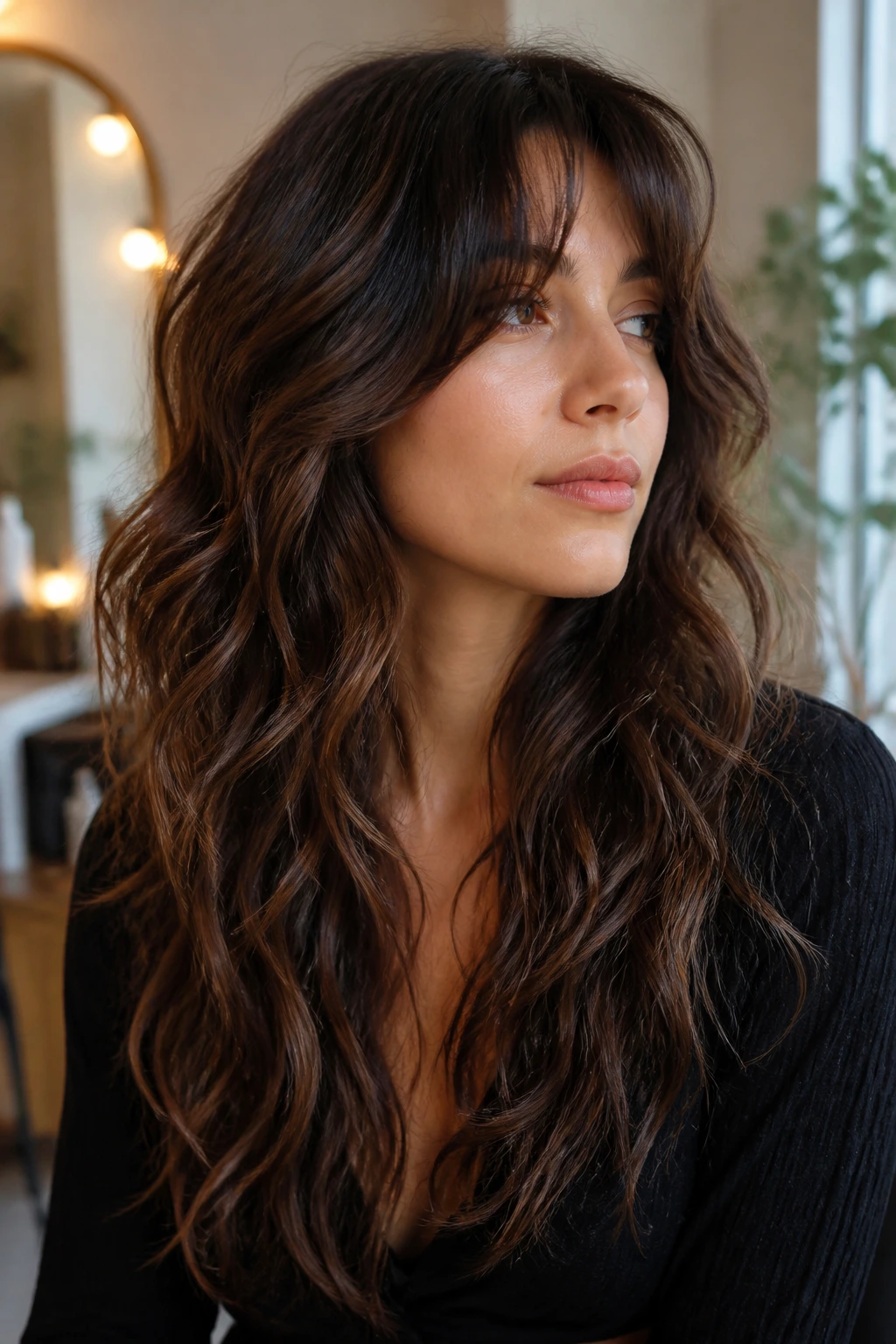
The worst thing you can do to thick wavy hair is smother it. Heavy creams at the roots, rough towel-drying, and brushing it dry into submission all push the cut toward puff or collapse. The shape wants a light hand and a bit of patience.
Air-Dry When You Want Softness
Use a small amount of leave-in and a mousse or foam, then scrunch water out with a microfiber towel. Let the hair hang or clip the crown briefly while it dries so the top doesn’t sink. If you touch it too much, the wave separates in the wrong way and the layers stop reading clearly.
Diffuse When You Want Lift
Cup the lengths in the diffuser and hover at the roots first. Then move into the mids and ends. Don’t blast the hair with high heat. Thick waves need time, not force. If you want more crown height, flip the head briefly, dry the roots, then return upright and finish the front pieces.
Blow-Dry When You Want Clean Lines
Use a nozzle, a round brush, and a low-to-medium heat setting. Direct the face-framing layers away from the face, then let the back keep its natural bend. This gives you shape without turning the cut into a straight blowout. A polished finish on a wolf cut should still show texture. If it looks too smooth, you’ve gone too far.
Small Tweaks That Change the Whole Shape
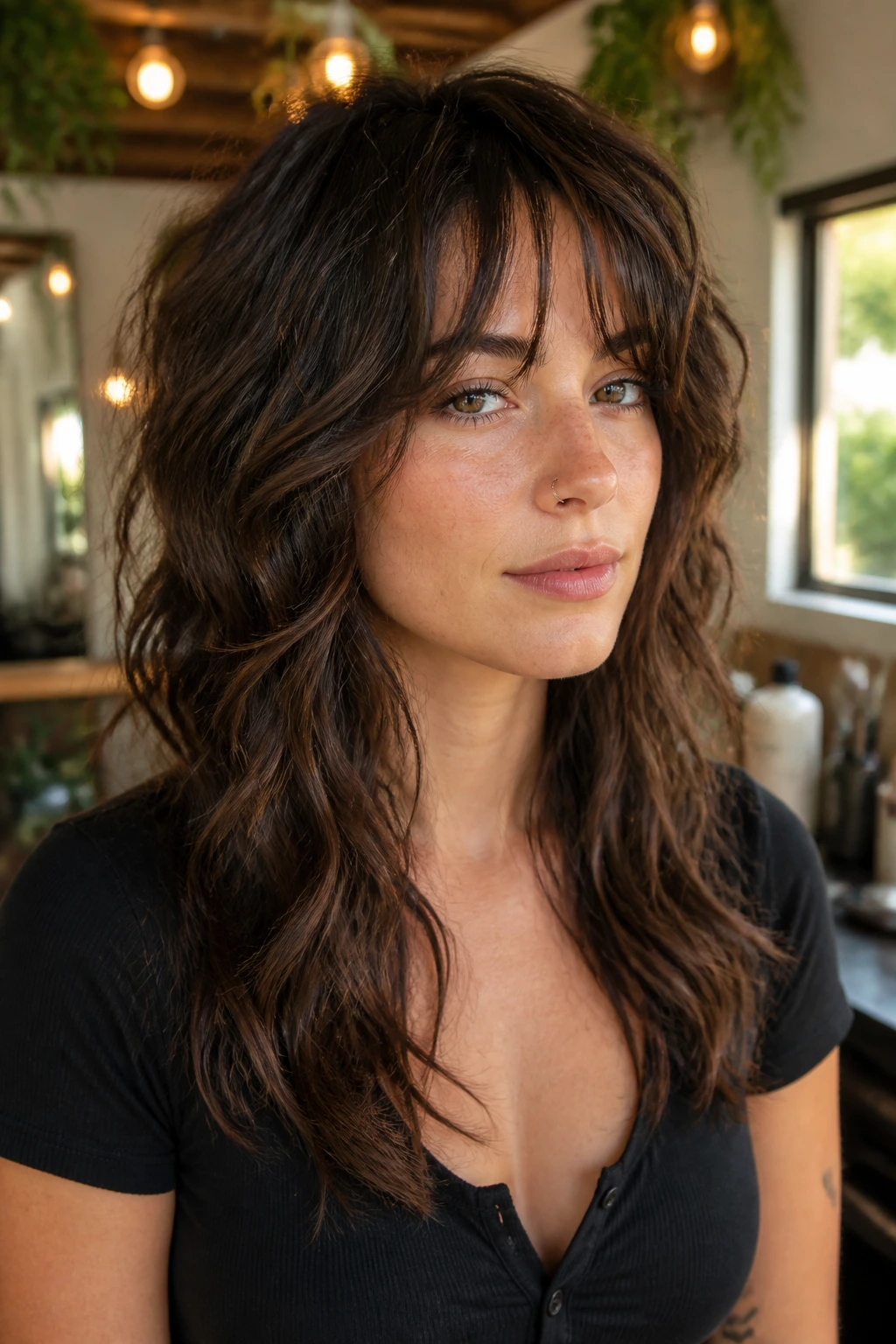
Root Lift: Clip the crown while the hair cools, or use mousse at the roots before diffusing. That tiny move keeps thick waves from collapsing into the scalp by hour three.
Fringe Control: If bangs separate too much, dry them with a small round brush first and then let the rest of the hair do its thing. Fringe has a temper. Treat it separately.
Humidity Shield: A pea-sized amount of anti-frizz serum on the lower mids helps on sticky days. Keep it away from the top, or you’ll lose the airy effect.
Day-Two Refresh: Mist the lengths lightly with water, add a touch of curl cream, and twist sections around your fingers. You don’t need a full wash every time the hair loses energy.
Make-It-Yours: If you love softness, keep the layers blended and the fringe wispy. If you want edge, ask for more contrast between the crown and the back. The same haircut can go either way.
Common Mistakes That Make Thick Wavy Hair Misbehave

-
Taking too much weight off the bottom: The symptom is a fluffy triangle with see-through ends. The fix is to keep some density at the perimeter so the hair can hang with a clean line.
-
Cutting the crown too short: This makes the top swell and can leave the whole cut looking like it’s sitting on your head. Ask for lift, not a little helmet made of layers.
-
Ignoring shrinkage around bangs: Wavy hair bounces up more than straight hair, and fringe can end up much shorter than planned. Leave extra length at the first cut and reassess once it dries.
-
Using heavy product everywhere: Thick hair can handle product, but only in the right places. If you load the roots, the top flattens and the layers lose their shape.
-
Brushing dry waves into a puff: A brush can be useful when styling, but too much dry brushing breaks the wave pattern and creates a cloud. Use fingers or a wide-tooth comb for touch-ups.
-
Waiting too long between trims: The cut starts to lose the layered effect when the ends grow into each other. A trim rhythm keeps the shape readable.
Keep the Shape Looking Good Between Trims
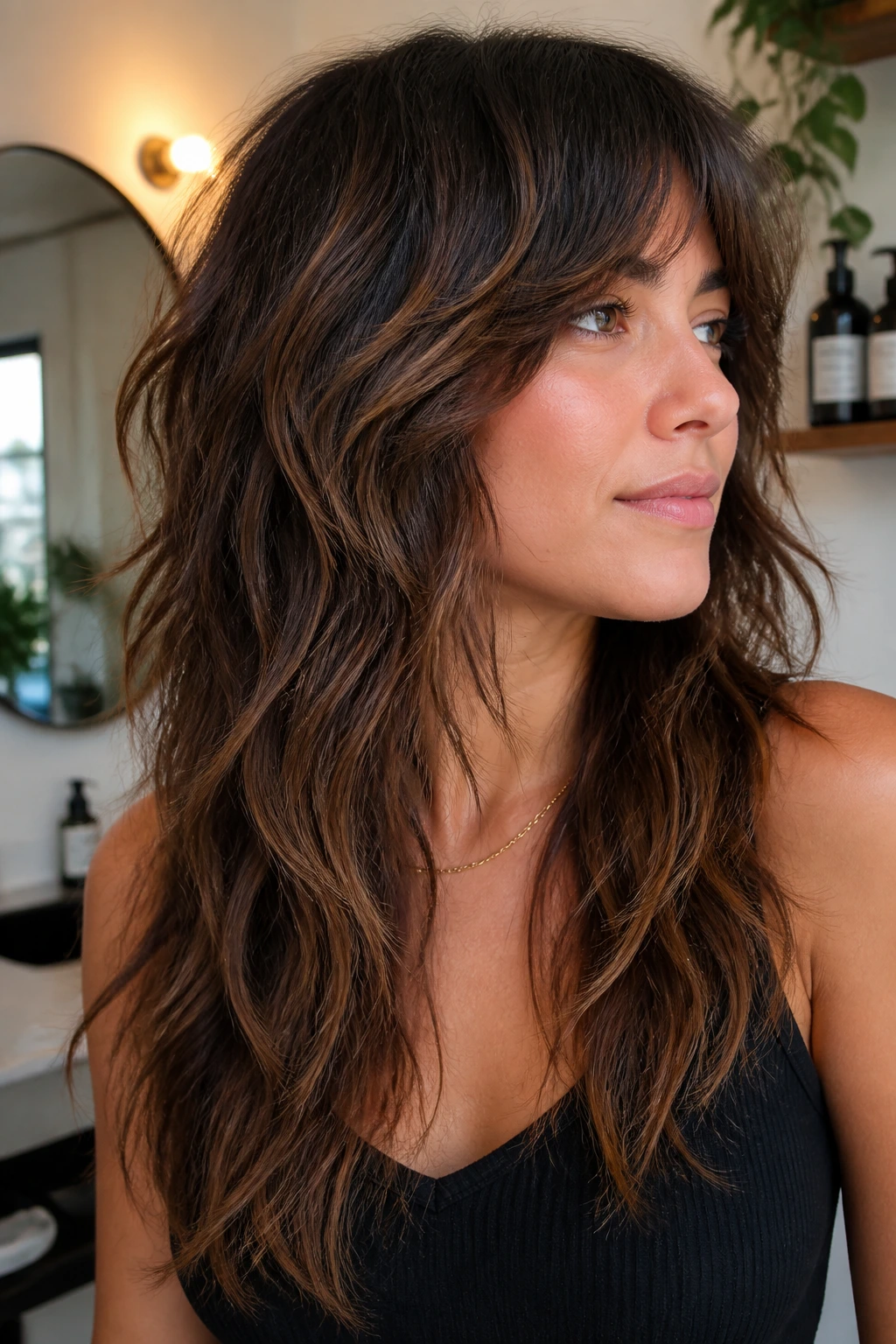
Thick wavy hair does best with regular shaping. For most people, a trim every 8 to 12 weeks keeps the layers clear and stops the ends from becoming one heavy mass again. If you wear bangs, the fringe may need a quicker cleanup, sometimes around 4 to 6 weeks, depending on how fast it grows and how much shrinkage you get.
Wash day matters too. A long wolf cut usually looks best when the hair is clean enough to move, but not stripped dry. If your scalp gets oily fast, a light clarifying shampoo once in a while can stop buildup from dragging the top down. Just don’t overdo it. Thick wavy hair can get frizzy if you remove every bit of moisture.
If you’re growing the cut out, ask for soft maintenance trims instead of a full reshaping. That keeps the silhouette from going square while the layers lengthen. The goal is not perfection between appointments. It’s a shape that still looks like it belongs to your hair, not something you have to wrestle into place every morning.
Variations and Adaptations to Try

The Softer Shag Edit: Keep the layers blended and the fringe lighter. This version works when you want wolf-cut movement but fewer obvious steps. It’s a nice middle ground for people who like texture but dislike choppiness.
The Edgier Mullet Flip: Push the back longer and make the contrast between crown and neckline more noticeable. This reads bolder and works best when you’re comfortable with a haircut that shows up in profile. Thick waves carry the shape better than fine hair.
The No-Fringe Version: Leave the forehead open and let the front layers start lower. This is the easiest option for people who switch parts often or wear glasses. It also trims down the upkeep.
The Extra-Density Cleanup: Ask for internal debulking plus a clean outer line. This is ideal if your hair feels heavy, takes forever to dry, or turns into a puff by midday. The structure stays long, but the mass drops.
The Blow-Dry First Version: Shape the cut to look polished with a brush and dryer, not only air-dried texture. If your routine leans neat, this makes the haircut fit your life instead of forcing a messy finish you won’t keep up with.
Questions People Ask Before Sitting in the Chair
Will a long wolf cut make thick wavy hair look bigger?
It can, if the layers are too high or the crown is overcut. Done well, it removes bulk where you don’t want it and creates movement where the wave can show, which usually makes the hair look lighter rather than bigger.
Can I get this cut without bangs?
Yes. A no-bang version still has the layered wolf shape through the crown, sides, and back. Long face-framing pieces can do the job of bangs without sitting on the forehead.
How short should the shortest layers be?
For thick wavy hair, the shortest pieces often work best around the cheekbone, jaw, or collarbone, depending on your face and how much contrast you want. Shorter than that can be fine, but it gets more dramatic fast.
Should the cut be done wet or dry?
A lot of stylists use both. Wet cutting helps establish the overall shape, while dry refinement shows how the wave pattern actually falls. Thick wavy hair benefits from that second check because it shrinks and expands in ways that are not obvious when soaking wet.
What if my waves are loose, not super curly?
That’s fine. Long wolf cuts can still work, but the layering should be a touch softer so the shape doesn’t rely on a super strong curl pattern to read well. Loose waves often look best with gentle movement and not too much thinning.
How do I fix a triangle shape if I already have one?
You usually need internal weight removal, soft face framing, and a better balance between crown lift and bottom density. Don’t just thin the ends and hope for the best. That tends to make the triangle worse, not better.
How often should I style it with heat?
As little as you can get away with. Thick waves usually look best when heat is used to refine a few sections, not remake the whole head. A diffuser or air-dry routine can do most of the work on many wash days.
Can this work with coarse hair?
Yes, and sometimes it works better than on softer textures because coarse hair has enough structure to hold the layers. The key is not over-thinning it, since coarse strands can go frizzy if they’re stripped too aggressively.
The Cut That Still Has Room to Move
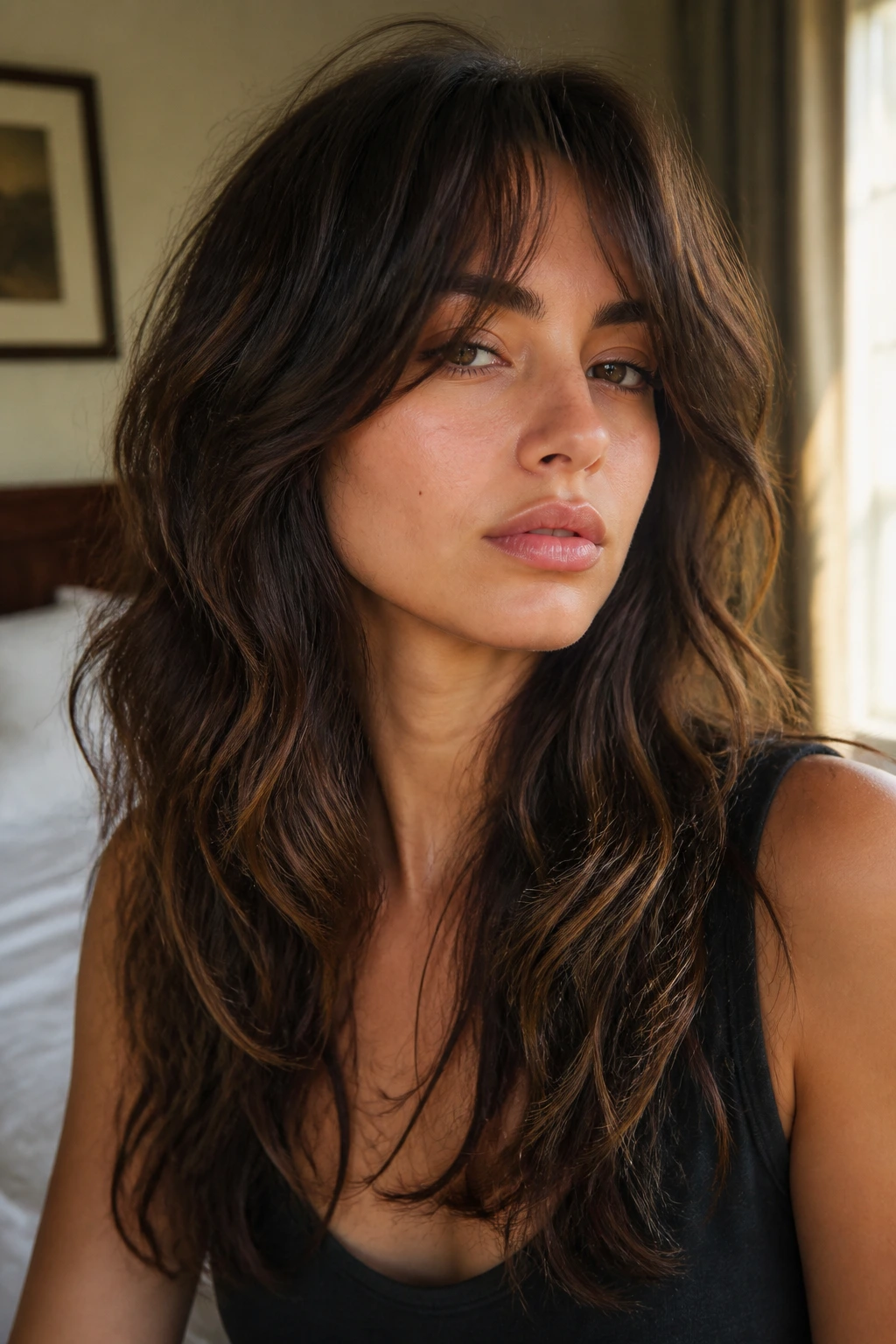
A long wolf cut on thick wavy hair works because it respects what the hair already wants to do. It doesn’t flatten the wave, and it doesn’t pretend density is a problem to be erased. It just gives the hair a smarter outline, then lets the bend and body show up where they look best.
That’s why the strongest versions here feel different from one another even though they share the same family tree. One leans soft. One gets sharper around the fringe. One keeps the perimeter heavy. Another strips out the weight from the inside and leaves the outside smooth. Once you understand that balance, the haircut stops being mysterious.
Pick the version that matches your daily routine, not the one that looks good only when someone else styles it for two hours. If your waves are thick and full of opinions, this is the kind of cut that gives them a shape without arguing back.
