



Short hair looks sharper when the ends are feathered. The cut stops reading as one block and starts reading as movement — a little lift at the crown, a soft flick around the cheekbones, a nape that doesn’t cling to the neck. Feathered hairstyles for women with short hair have that rare trick of making a cropped cut feel lighter without making it look thin.
That matters more than it sounds. A blunt bob can turn boxy fast, and a pixie with too much bulk can sit like a cap. Feathering fixes the silhouette, but only if the layers are placed with some restraint. Too much thinning, and the shape frays. Not enough, and the cut never really changes.
The styles below live in that sweet spot: airy, piecey, and practical enough to wear without a salon blowout every morning. Some lean soft and polished; others are shaggy, choppy, and a little rebellious. The common thread is movement. Good movement. The kind that shows up when you turn your head, not just when the light hits it.
Why Feathering Keeps Short Hair From Looking Heavy
- Crown lift: Feathering removes weight where short cuts often collapse, so the top keeps a little height even after a long day.
- Face softening: Wispy layers at the temple and cheekbone take the edge off blunt lines without hiding your face.
- Texture-friendly: If your hair flips, waves, or frizzes at the ends, feathering makes that motion look intentional instead of random.
- Less helmet effect: Internal layering keeps thick hair from puffing straight out at ear level, which is where short cuts often go wrong.
- Easier restyling: Feathered edges respond well to a quick round-brush pass, a flat-iron bend, or a dab of lightweight cream.
1. Feathered Pixie With Side-Swept Crown
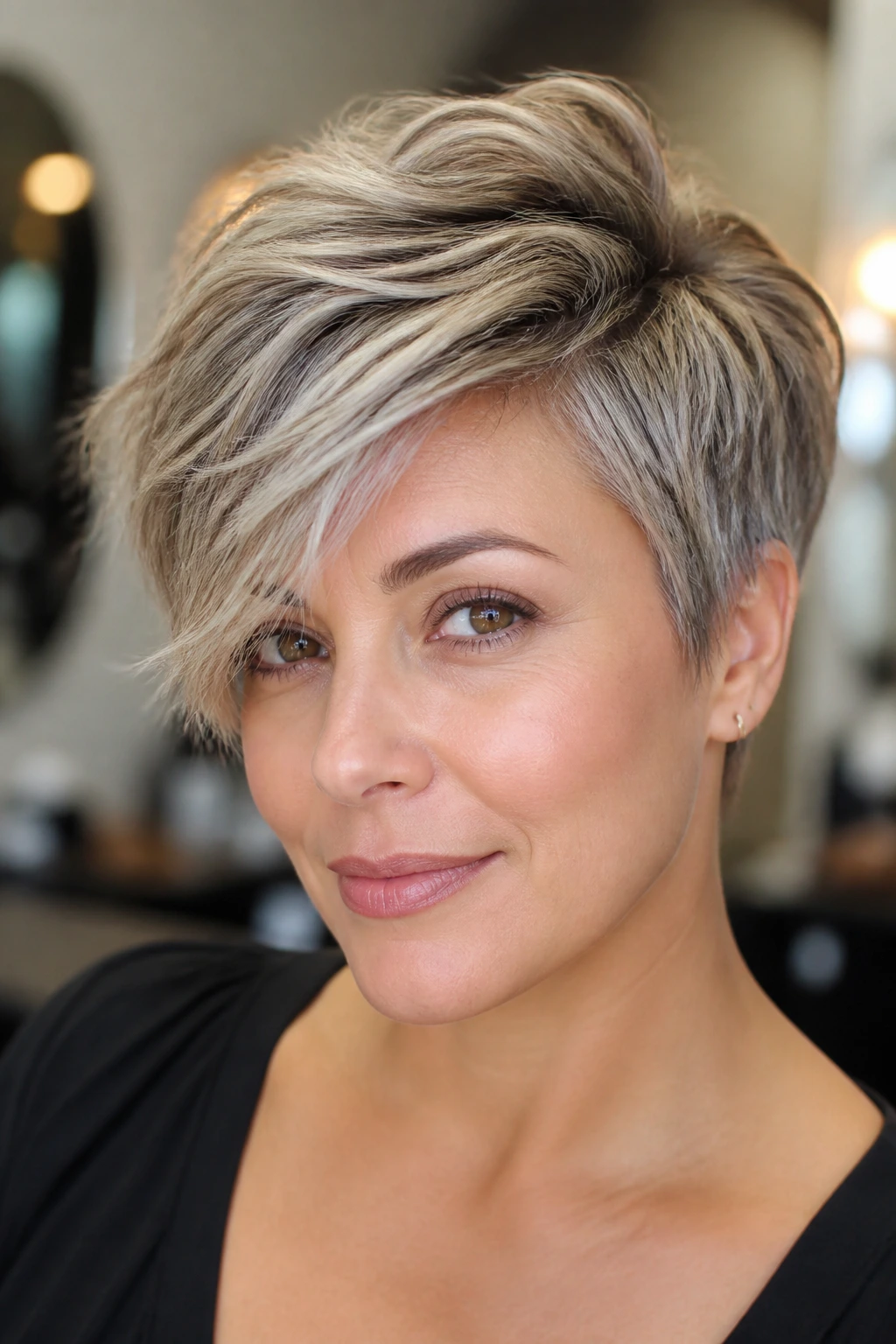
This is the feathered pixie I reach for when a short cut needs softness, not more shape. The crown is left long enough to sweep across the forehead, while the sides stay close enough to keep the outline neat. It gives you that airy, slightly lifted look without turning the whole head into a puff of layers.
Why it works
The side-swept top keeps the eye moving diagonally, which makes the face look less square and the cut less severe. Ask for point-cut ends on the top and a clean but not shaved perimeter around the ears. A pea-sized amount of styling cream is enough; too much product turns the feathering into strings.
Best for
- Straight to wavy hair
- Fine hair that needs crown volume
- Faces that look best with a little softness at the brow
Tip: Blow-dry the front in the opposite direction of your part for 10 seconds, then sweep it back. That tiny reset gives the crown a lift that lasts longer than you’d expect.
2. Chin-Grazing Feathered Bob
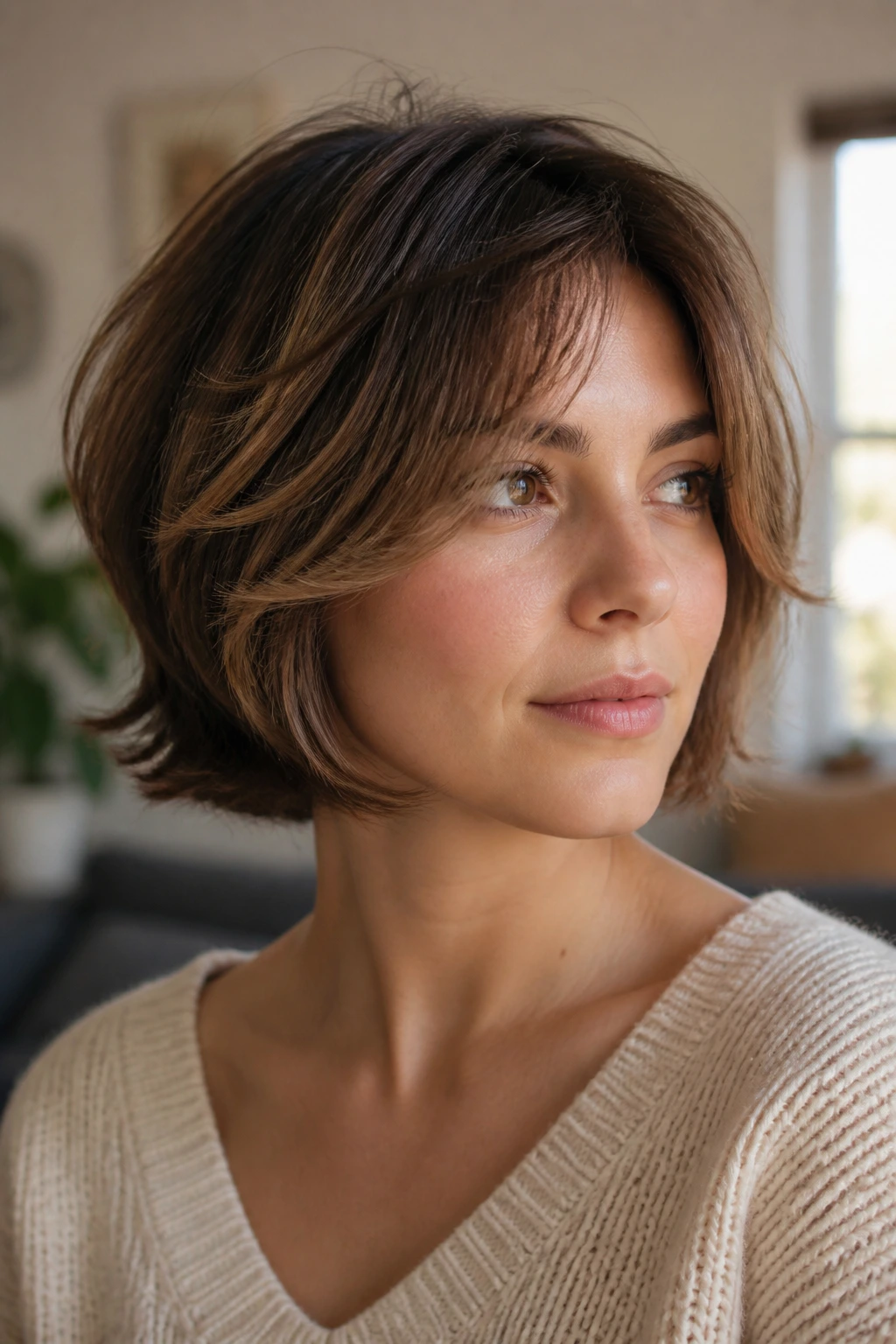
A chin-length feathered bob is the cut that makes people think you spent more time on your hair than you did. The ends flick inward and outward at the same time, which sounds impossible until you see it in a mirror. That mixed movement keeps the bob from sitting flat against the jaw.
The sweet spot is usually a blunt-ish base with feathered interior layers. Too many layers and the bob loses its line. Too few and it turns into a helmet. I like this version on hair that has a natural bend, because the ends catch just enough air to stay alive without daily heat styling.
What makes it different
Unlike a one-length bob, this shape gives the jawline a little space. It’s also one of the easiest short cuts to tuck behind one ear when you want the style to look looser. A 1-inch round brush or a flat iron bent only at the last inch of the hair is enough.
Quick tip: Keep the ends soft. If the bottom edge is overly crisp, the feathering above it gets lost.
3. Stacked Feathered Bob
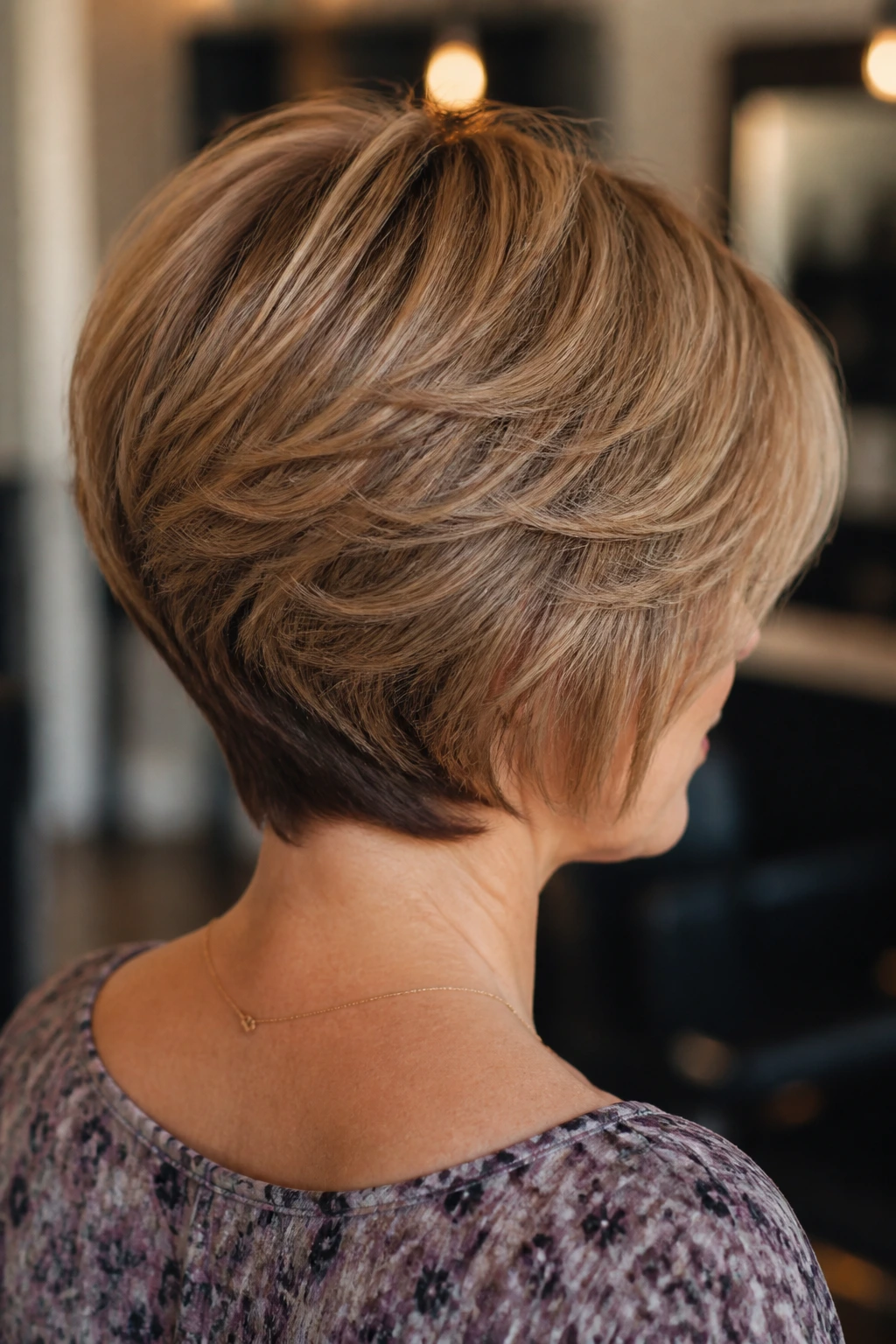
The stacked feathered bob is all about the back of the head. Shorter layers at the nape build a clean shape, while the top layers stay longer and lighter so the crown doesn’t collapse. It’s a strong choice if your hair tends to balloon at the sides and go flat on top.
This cut looks best when the stacking is subtle, not dramatic. You want the back to curve under, not mushroom out. Ask your stylist to keep the top layers feathered with point-cutting so the movement stays soft. The result is tidy from the back and airy from the front.
How to style it
- Dry the nape first with a small nozzle attachment.
- Use a round brush at the crown to pull the top slightly forward, then back.
- Finish with a light mist of flexible hairspray, not a stiff shell.
Watch for this: If the back looks bulky in profile, the layers were stacked too high. The fix is usually a cleaner taper at the nape, not more thinning everywhere else.
4. Tousled Feathered Crop
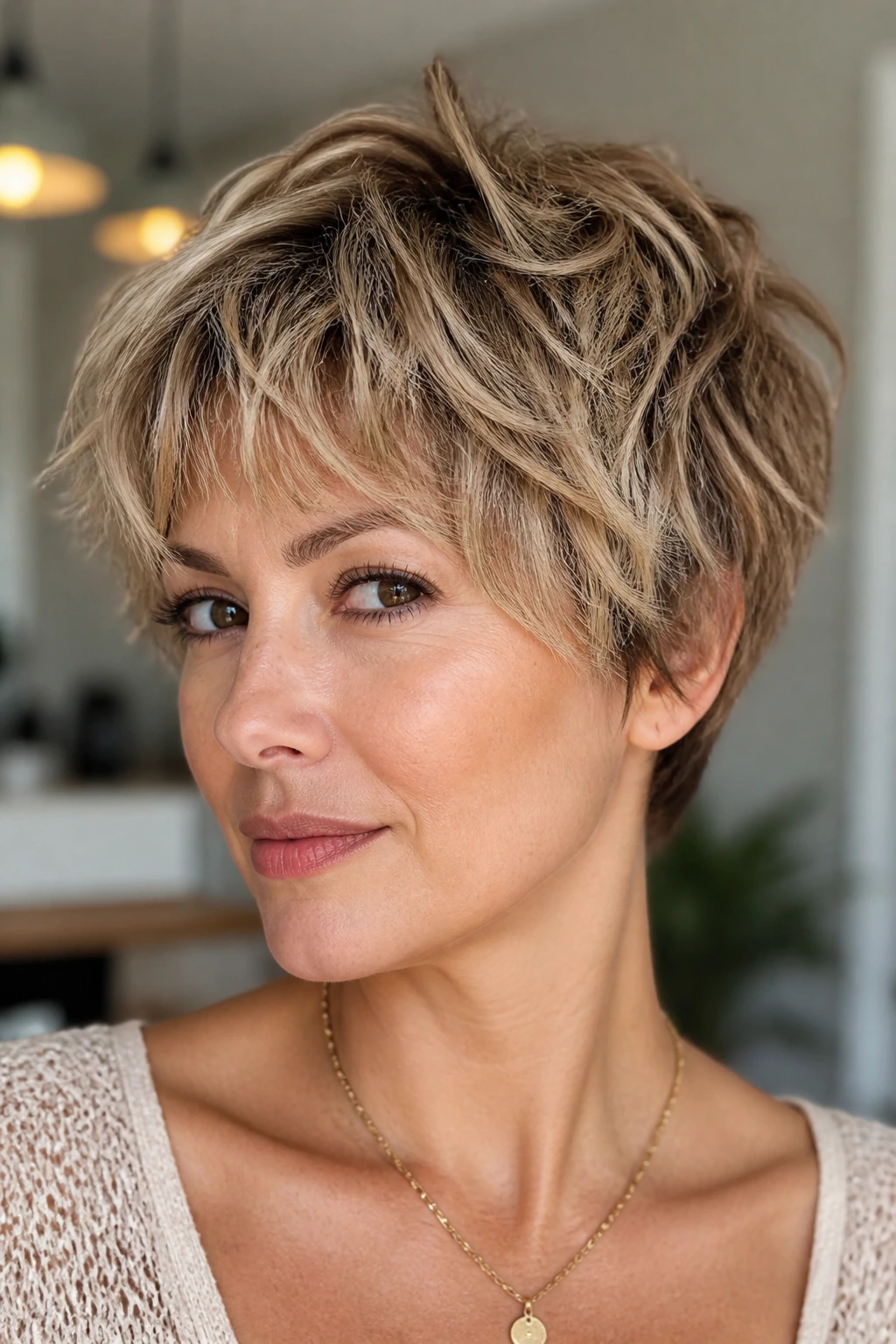
This one has a rougher edge, and that’s the point. A tousled feathered crop works when you want short hair that looks touched, not overworked. The ends are sliced lightly, the top is broken up with short layers, and the whole cut is meant to move a little messily.
It’s especially good on hair that refuses to stay sleek. Instead of fighting bends and flips, this style uses them. A matte paste or texture spray gives the piecey finish without making the hair feel sticky. If you have fine hair, keep the product away from the roots and work it only through the top half of the lengths.
Best vibe
Think of it as the cut equivalent of a well-worn leather jacket. Not polished. Better.
Useful note
If you have thick hair, ask for internal debulking, not aggressive thinning at the surface. Surface thinning can leave the ends looking ragged in daylight.
5. Bixie With Soft Feathered Ends
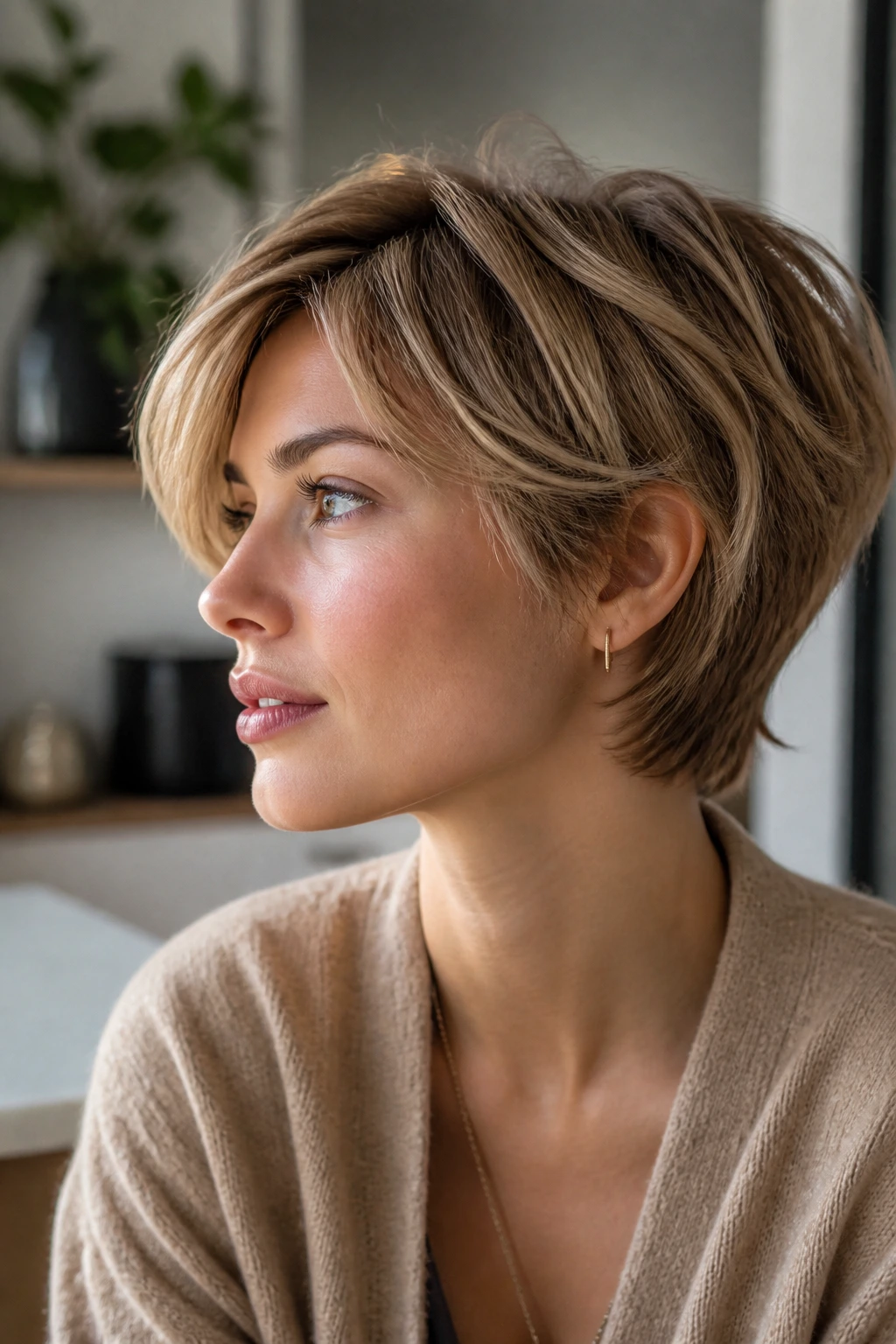
A bixie sits between a bob and a pixie, and feathering is what keeps it from feeling indecisive. The length at the top gives you enough styling room to sweep, part, or fluff the front, while the softer ends keep the shape from feeling hard. It’s one of the most forgiving short cuts if you’re growing out a pixie.
The feathered ends matter here because they prevent the transition from top to nape from looking abrupt. A little graduation at the back and wispy sides around the ears keep the cut balanced. I like this version when someone wants short hair but doesn’t want to lose every bit of softness around the face.
How to wear it
A tiny round brush through the crown is enough for polish. Air-dry the rest if your hair bends naturally. If you want more definition, pinch the top layers with a drop of cream after drying.
Pro move: Ask for the top to stay long enough that you can still tuck it behind one ear. That tiny bit of flexibility makes the whole cut easier to live with.
6. Feathered French Bob
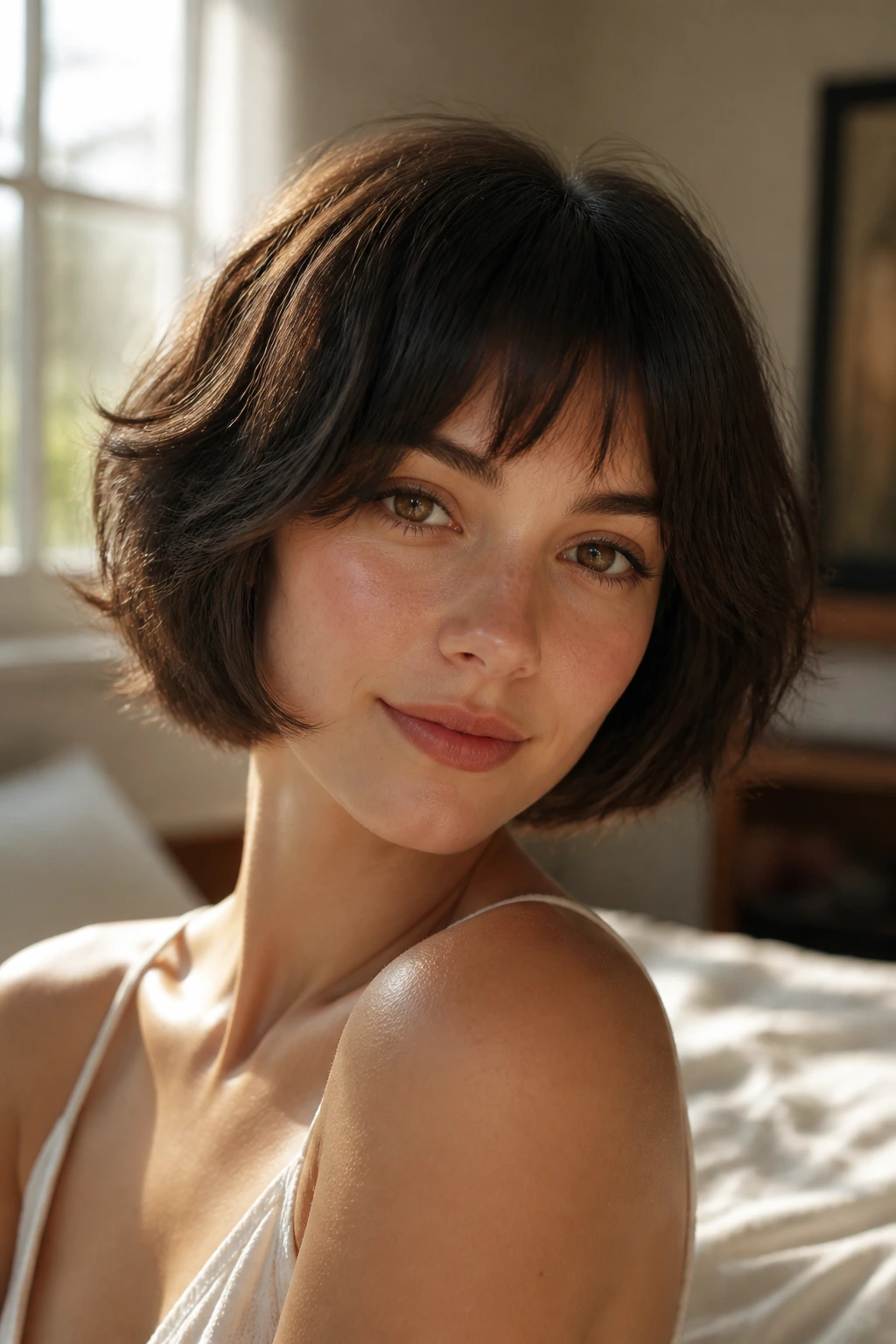
The French bob gets a lighter mood when the ends are feathered instead of blunt. You still keep that jaw-skimming line, but the inside of the cut is softened so it doesn’t read severe. Add a short fringe or a soft, broken bang, and the whole thing turns more romantic than graphic.
This version works especially well with natural wave. The slight irregularity in the texture makes the feathering visible without effort. If your hair is poker straight, use a flat iron to bend only the ends inward or outward by a few degrees. Nothing fussy. Just enough to keep the line from looking rigid.
What to ask for
- A jaw-length perimeter
- Soft internal layers, not choppy chunks
- A fringe that can sit flat or split naturally
Opinionated note: I’d skip heavy shine serums here. Feathered French bobs look better with a touch of texture than with glassy, over-smoothed ends.
7. Shaggy Feathered Bob
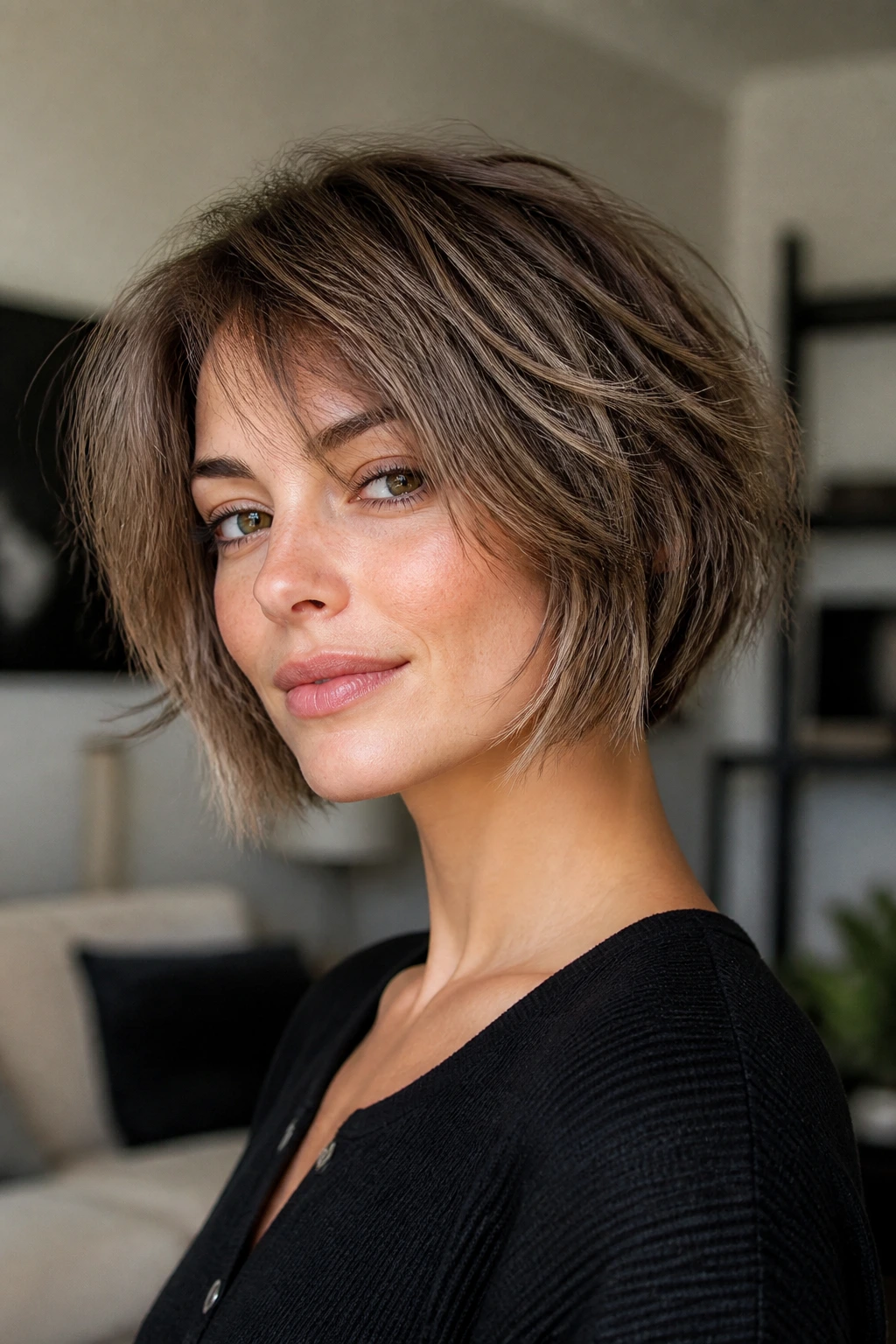
This is the feathered bob for people who want the hair to look a little lived-in. The layers are longer and less matched than a classic bob, so the shape breaks up around the cheekbones and neck. It’s messier, yes, but it’s the kind of mess that reads deliberate.
A shaggy feathered bob likes movement at the mid-lengths. If the top is too flat, the cut can fall into the face and look heavy. A diffuser helps if your hair bends or waves; otherwise, rough-drying with your fingers and a little mousse gets the job done. The trick is not to comb all the texture out after you create it.
Better for
- Medium-density hair
- Hair that dries with a bend
- Anyone who wants a shorter shag without going full mullet
Tiny tip: Finish by pushing the front layers away from the face with your palms. That split-second of direction keeps the feathering visible.
8. Feathered Pixie With Long Top Layers
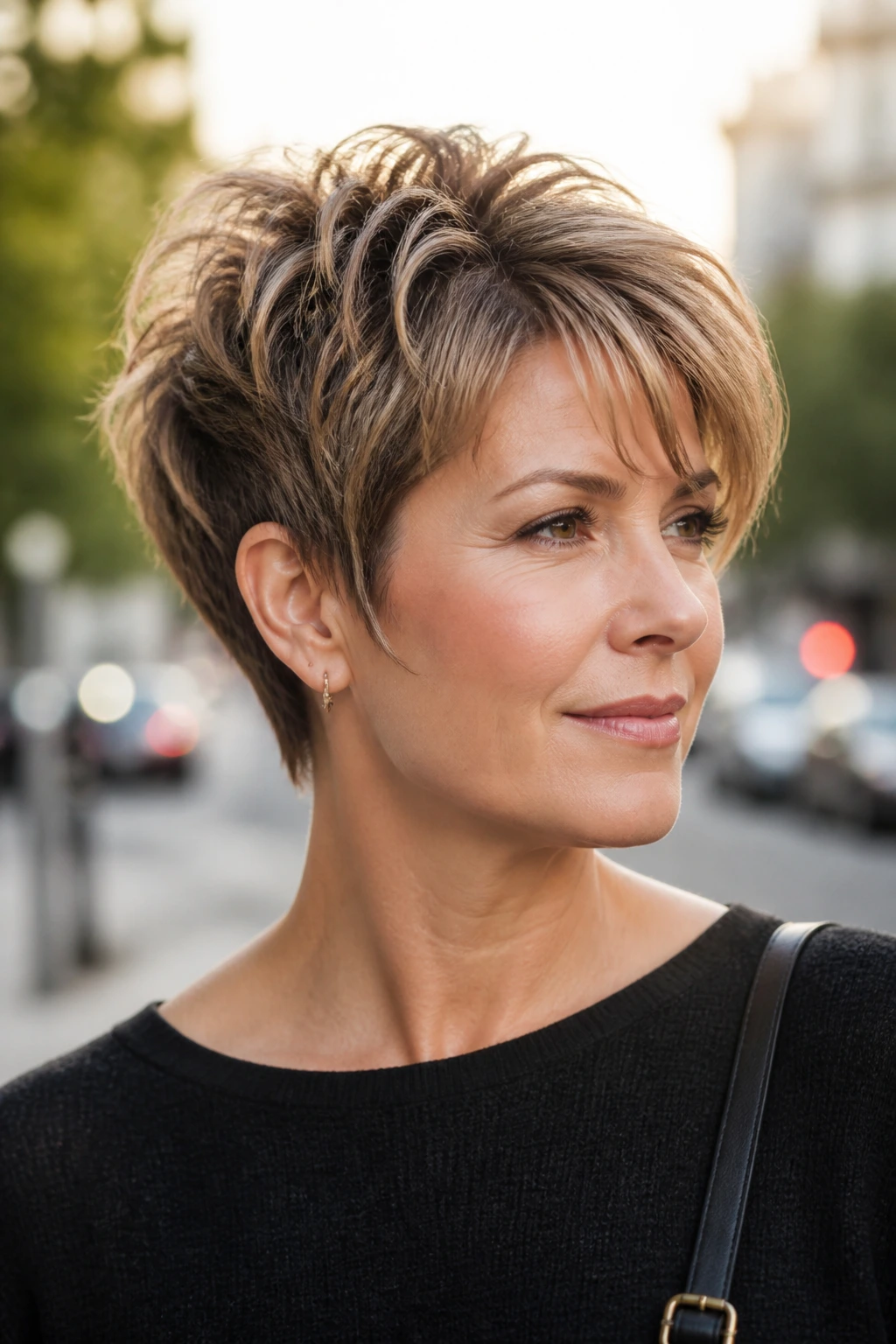
A long-top feathered pixie gives you styling range that a classic cropped pixie doesn’t. The sides stay tapered, but the top has enough length to push up, sweep sideways, or bend forward in a loose fringe. It’s the sort of cut that changes personality depending on where you part it.
The feathering on top keeps the cut from looking blocky. I like this style when someone wants short hair but still wants a bit of drama at the crown. It also works nicely if you wear glasses, because the longer top balances frames without crowding the face.
How to style it
Use a small round brush if you want lift, or a flat brush and a blow dryer if you want the top to lie softer. A dab of matte paste on the ends gives separation without shine.
Tip: If your hair is very fine, ask for the top to be left just long enough to pinch between two fingers. That extra half inch matters more than people think.
9. Feathered Bob With Curtain Bangs
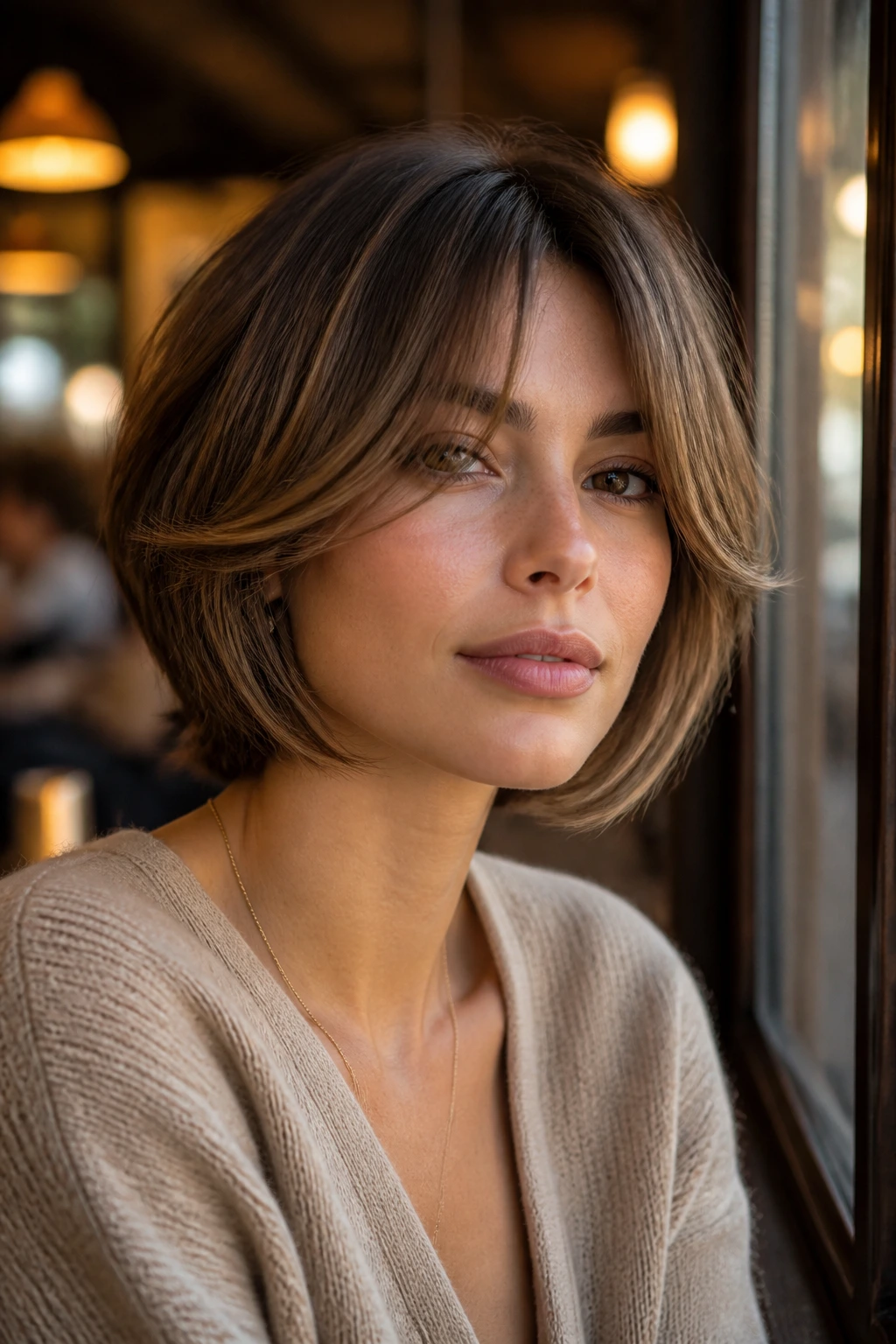
Curtain bangs and feathered short hair are a good match because both rely on movement at the front. The bangs open from the center, then blend into the layers around the cheekbones. That keeps the eyes open and the jawline soft at the same time.
This cut shines when the bangs are not over-blown. You want them to split and fall, not stand in two perfect wings. A round brush the size of a small orange is usually enough for the front. Let the rest of the bob stay a little loose, because the contrast between polished fringe and airy ends is what gives the cut its shape.
Best detail
The pieces closest to the face should be a touch longer than the center of the bob. That tiny length difference keeps the silhouette from feeling boxy.
Good to know: If your hair grows fast at the fringe, this cut needs trims a little more often than a standard bob.
10. Wavy Feathered Crop
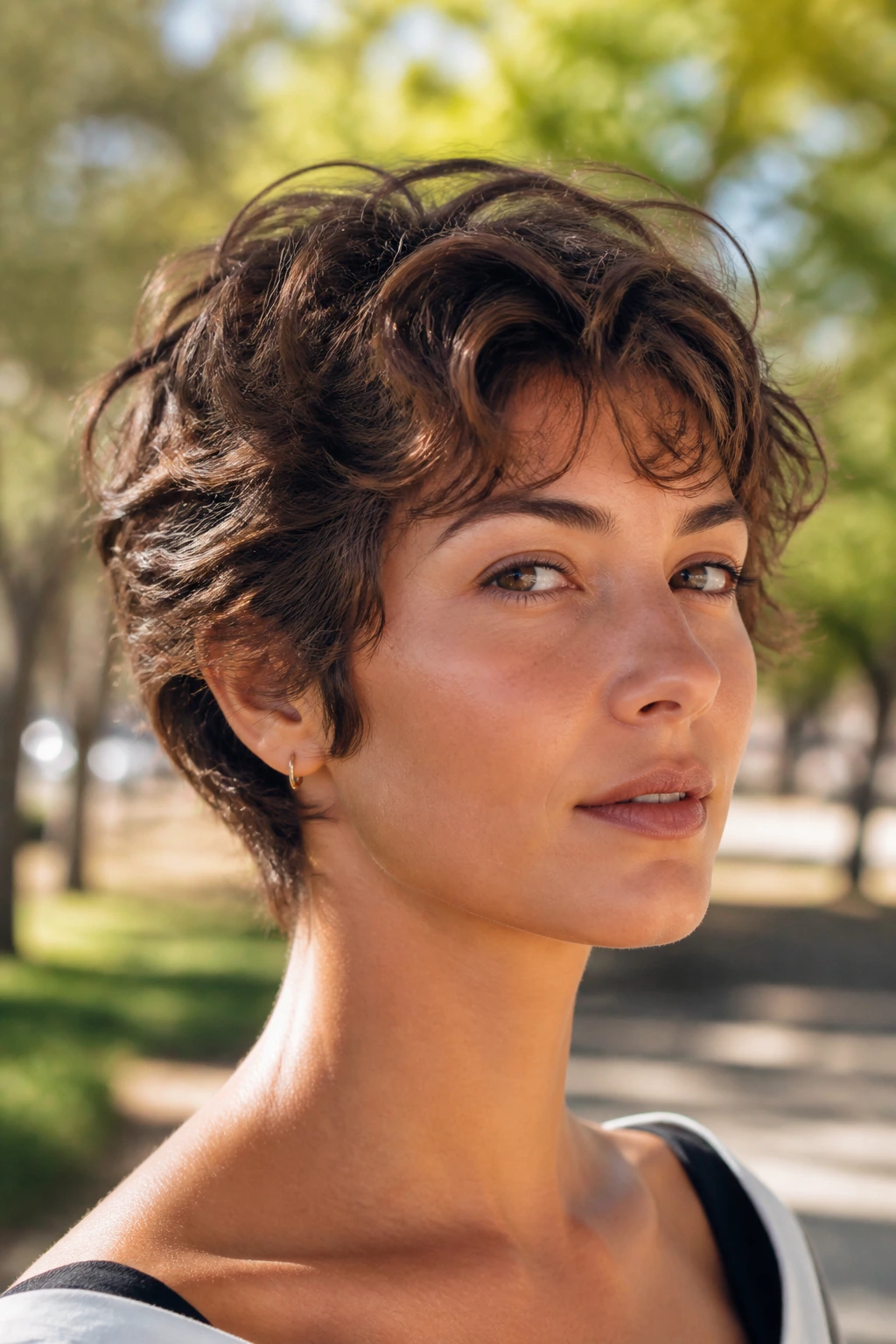
A wavy feathered crop is what happens when short hair is allowed to keep some of its natural bend. Instead of forcing every strand into place, the layers are cut so the waves can sit on top of each other without building too much bulk. It looks light, not fluffy.
This style is one of the easiest to air-dry. Scrunch in a curl cream or light mousse while the hair is damp, then let it dry with as little touching as possible. If you use a diffuser, keep the airflow low and stop when the roots are about 80 percent dry. Over-drying is what makes the ends look rough.
Quick facts
- Best on loose waves and soft curls
- Works well around the cheekbones
- Needs less heat than most short cuts
Tip: Don’t chase every bend with a brush. Feathered wave looks better when a few pieces stay imperfect.
11. Feathered Undercut Pixie
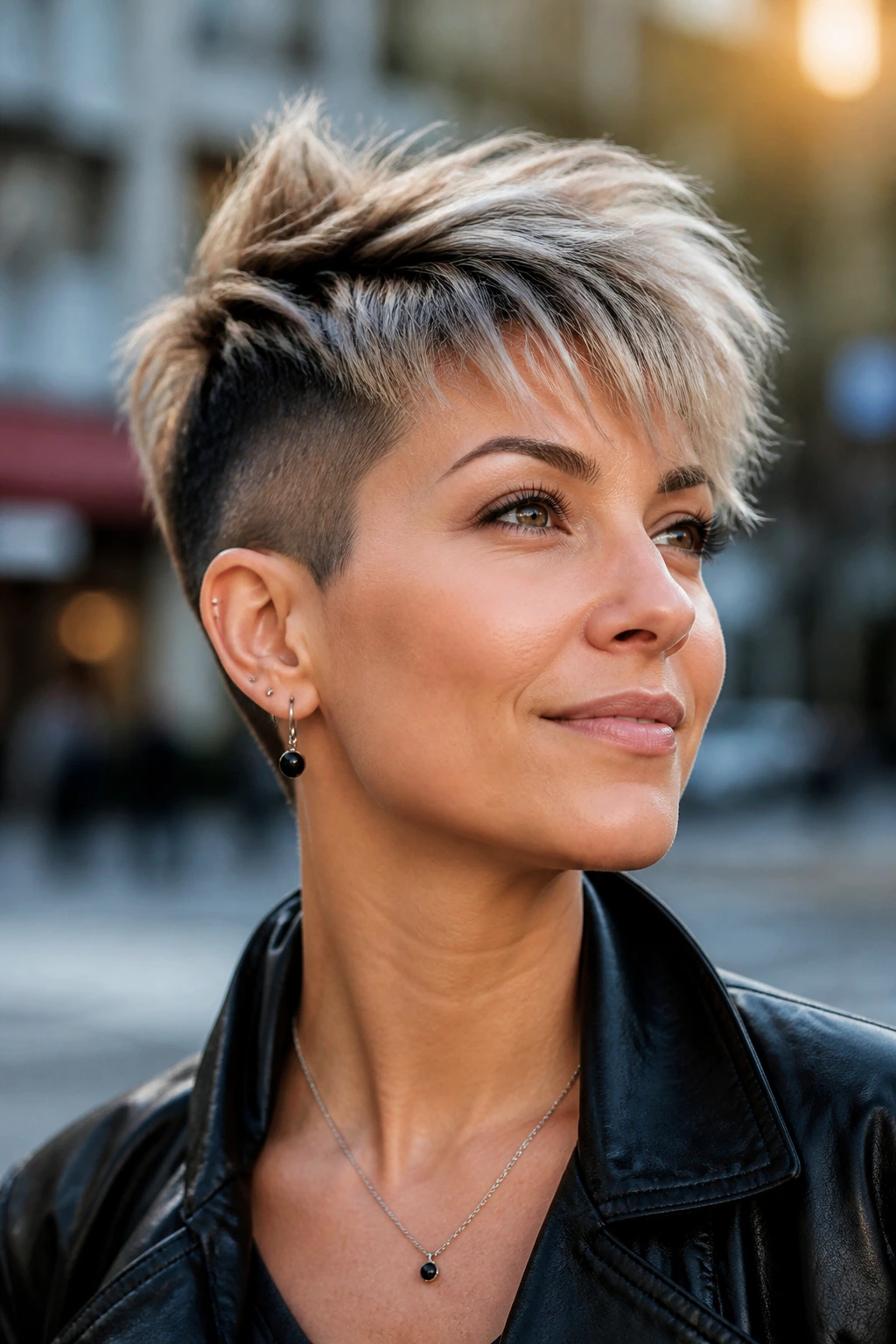
The undercut pixie is the boldest cut in this group, and the feathering is what keeps it from looking too harsh. The sides and nape are clipped closer, while the top stays longer and wispy enough to move over the shorter sections. That contrast is the whole point.
It’s a smart cut if your hair is thick and tends to puff at the sides. Removing bulk underneath makes the top easier to control. Ask for feathering at the crown and a soft edge at the top of the undercut so the transition doesn’t look like two different haircuts stitched together.
What it gives you
A clean neckline. More height on top. Less daily effort than you’d expect from something this sharp.
Style note: A little pomade at the front is enough. Heavy wax turns the airy top into a sticky helmet, and nobody wants that.
12. Razor-Soft Feathered Bob
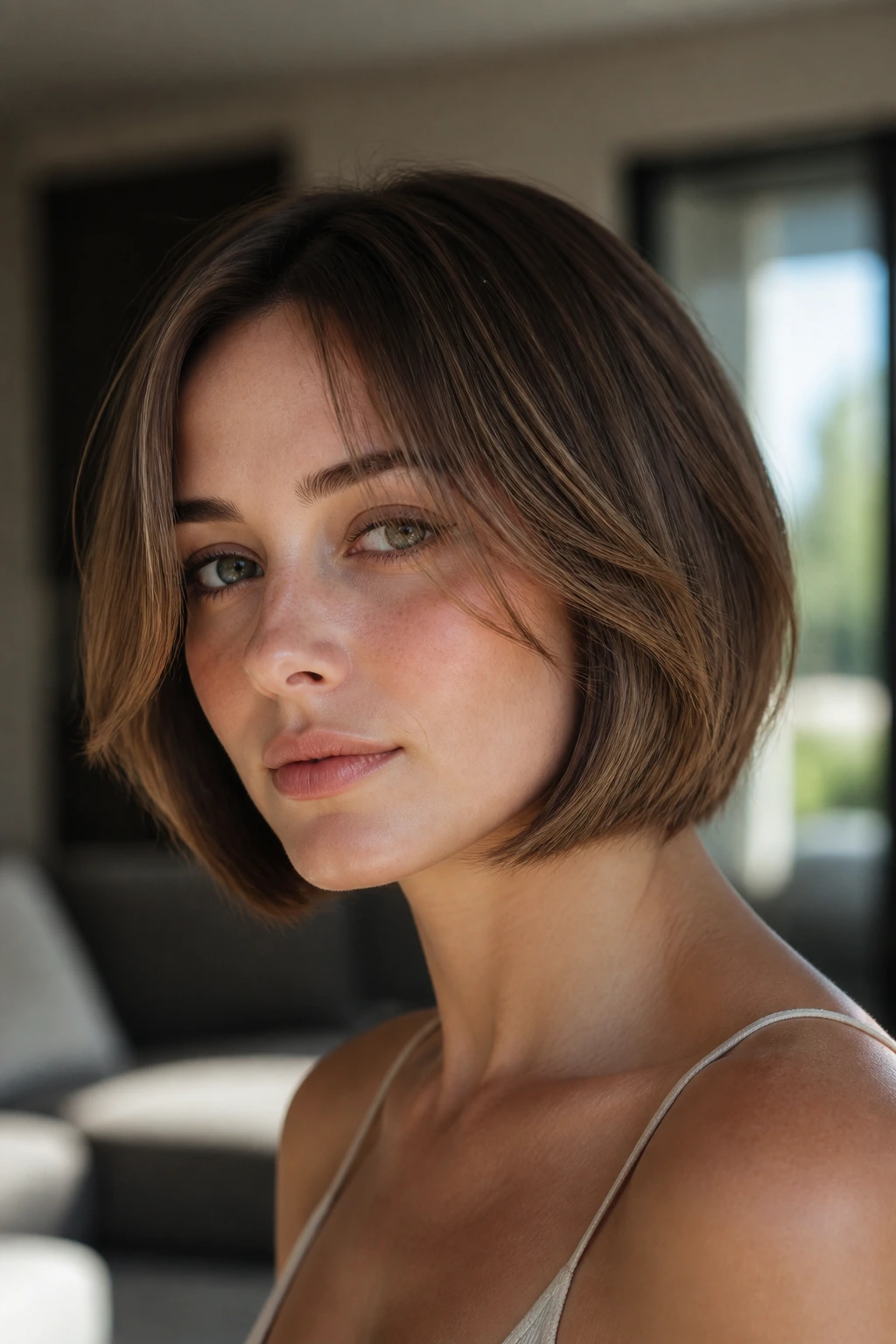
A razor-soft feathered bob has a gentler finish than a blunt bob, but it still keeps enough edge to feel modern. The razor work lightens the ends, which makes the hair swing instead of hanging. On straight hair, that swing is especially visible.
I like this cut when the goal is movement without obvious layering. The hair still looks full, but the line is softer at the perimeter. If your stylist uses a razor, the trick is control — small passes, not a wild chop. Razor cutting can be beautiful on short hair, but it can also shred the ends if it’s done too fast.
Best for
- Straight hair that needs softness
- Fine hair that gets weighed down by blunt ends
- People who want shape without a stacked back
Tip: Use a heat protectant before any blow-dry or bend. Razor-soft ends show damage faster than heavier blunt ends do.
13. Angled Feathered A-Line Bob
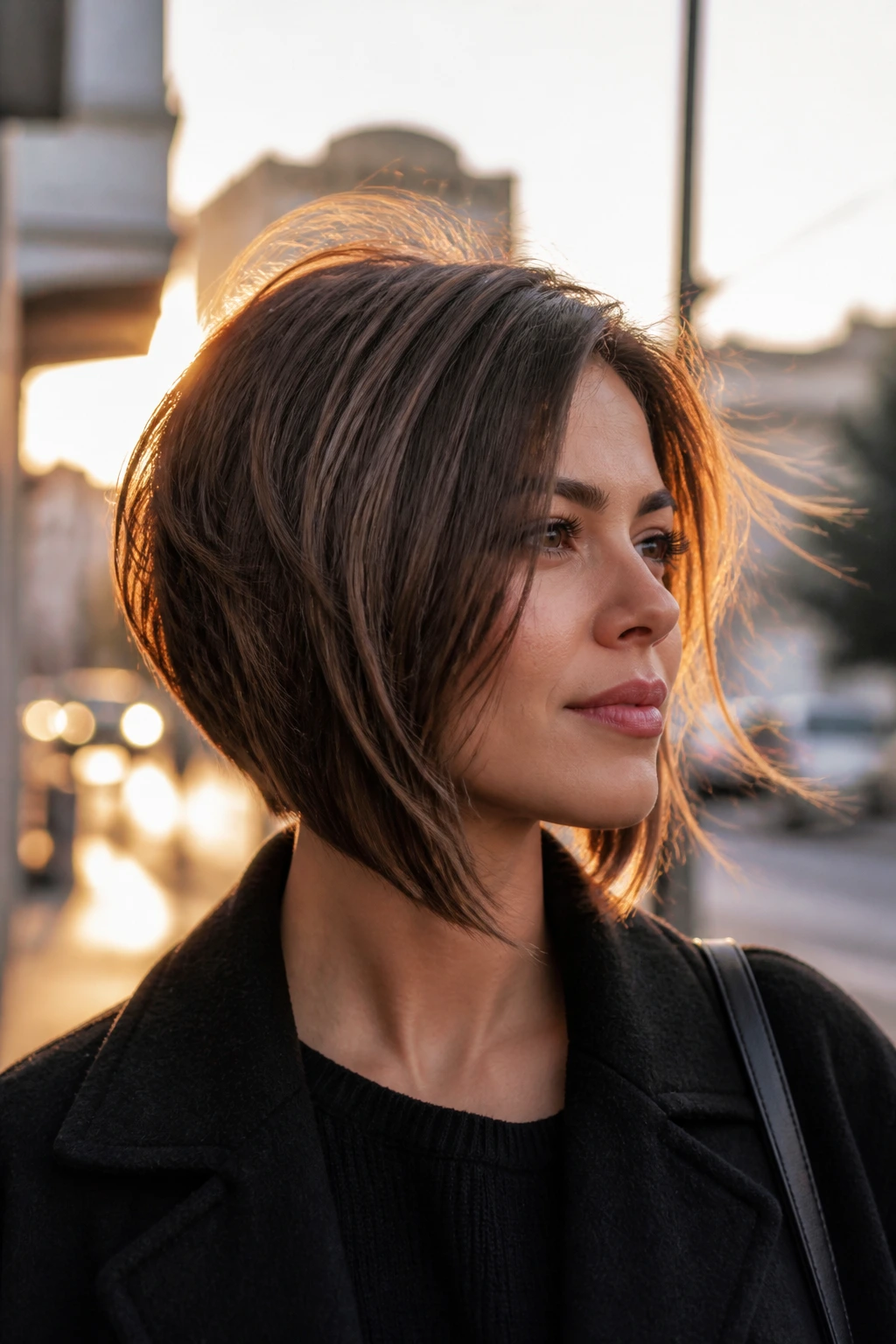
The angled A-line bob brings the drama in profile. The front stays longer, the back is shorter, and the feathering keeps the whole shape from looking too geometric. It’s a nice middle ground between structure and softness.
This cut is especially flattering if your jawline is sharp and you want the front to skim past it. The longer pieces in front can be tucked under or flipped outward depending on the mood. I prefer this version when the angle is visible but not extreme — you want movement, not a ruler.
A useful detail
Keep the back feathered enough that it doesn’t balloon under the occipital bone. That spot is where short angled cuts often go wrong.
Quick tip: Blow-dry the front sections forward, then curve them back with a brush. That creates a natural bend instead of a stiff angle.
14. Micro-Bang Feathered Crop
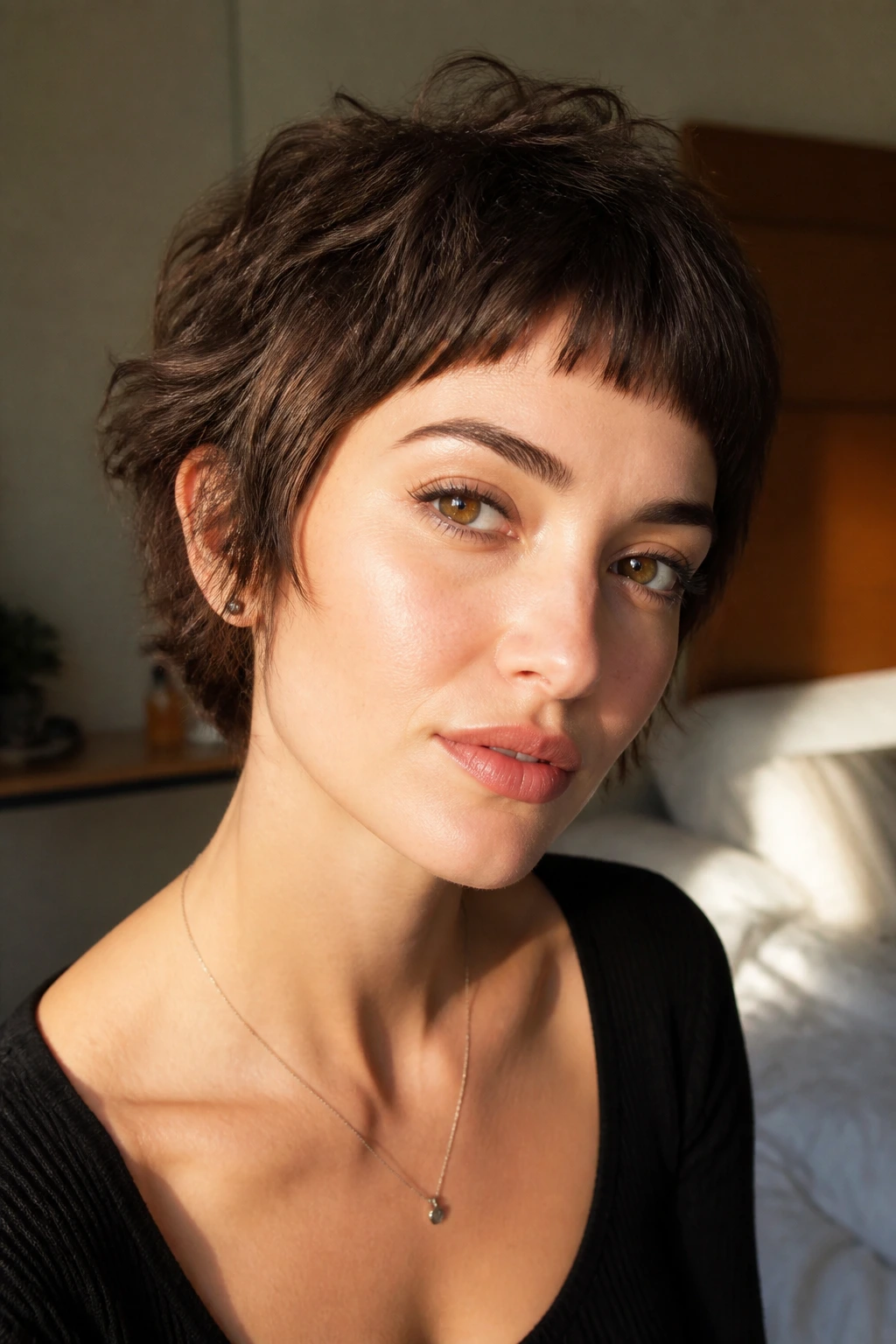
Micro bangs change the whole attitude of a feathered crop. The fringe sits high on the forehead, which makes the eyes look sharper and the cheekbones more open. The rest of the hair stays soft and broken up so the short fringe doesn’t feel too severe.
This is not a shy cut. It’s for someone who wants the haircut to make the statement. The feathering around the ears and crown keeps the look from getting too graphic, which is important. Without that softness, micro bangs on short hair can read costume-y fast.
Why it stands out
The contrast between tiny bangs and airy sides does a lot of work. It pulls the eye upward and gives the face a clean frame.
Tip: Keep the fringe piecey, not packed together. A little dry texture spray is better than a heavy gel.
15. Rounded Feathered Bob
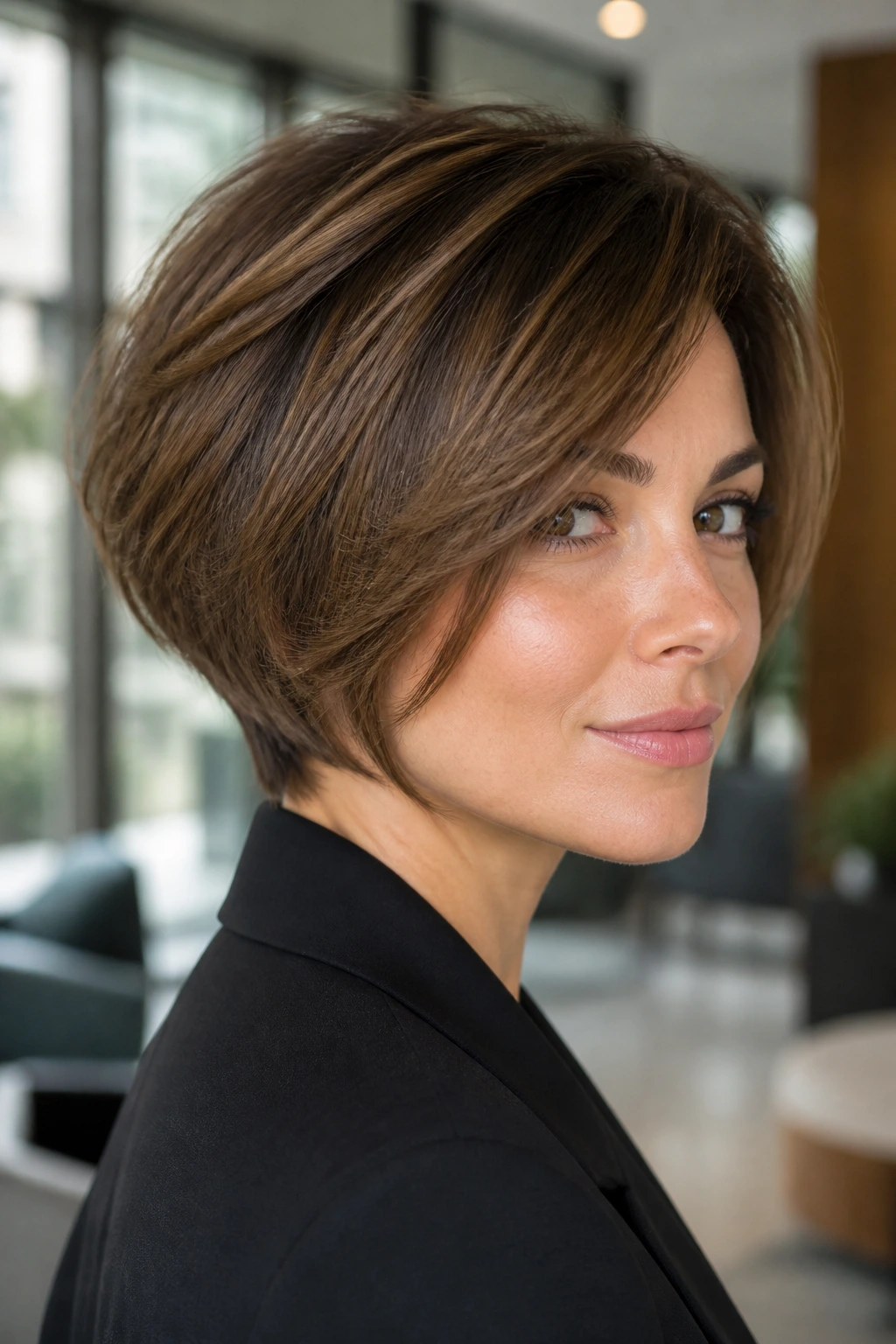
A rounded feathered bob curves around the head in a soft halo shape. The silhouette is fuller through the crown and tapered only enough at the ends to keep the shape from feeling heavy. It’s a nice option if you like polished short hair without a hard edge.
This cut is especially good on thick hair that needs direction. Feathering inside the shape removes weight while the round outline keeps the style elegant. A medium round brush and a blow dryer with a nozzle will do most of the work. You’re not trying to create curls here. Just bend.
Better if
- You like a fuller silhouette
- Your hair has a lot of natural body
- You don’t want a razor-chopped finish
Tiny opinion: This is one of the best office-friendly feathered cuts on the list because it stays neat even when it’s not freshly styled.
16. Feathered Wedge Cut
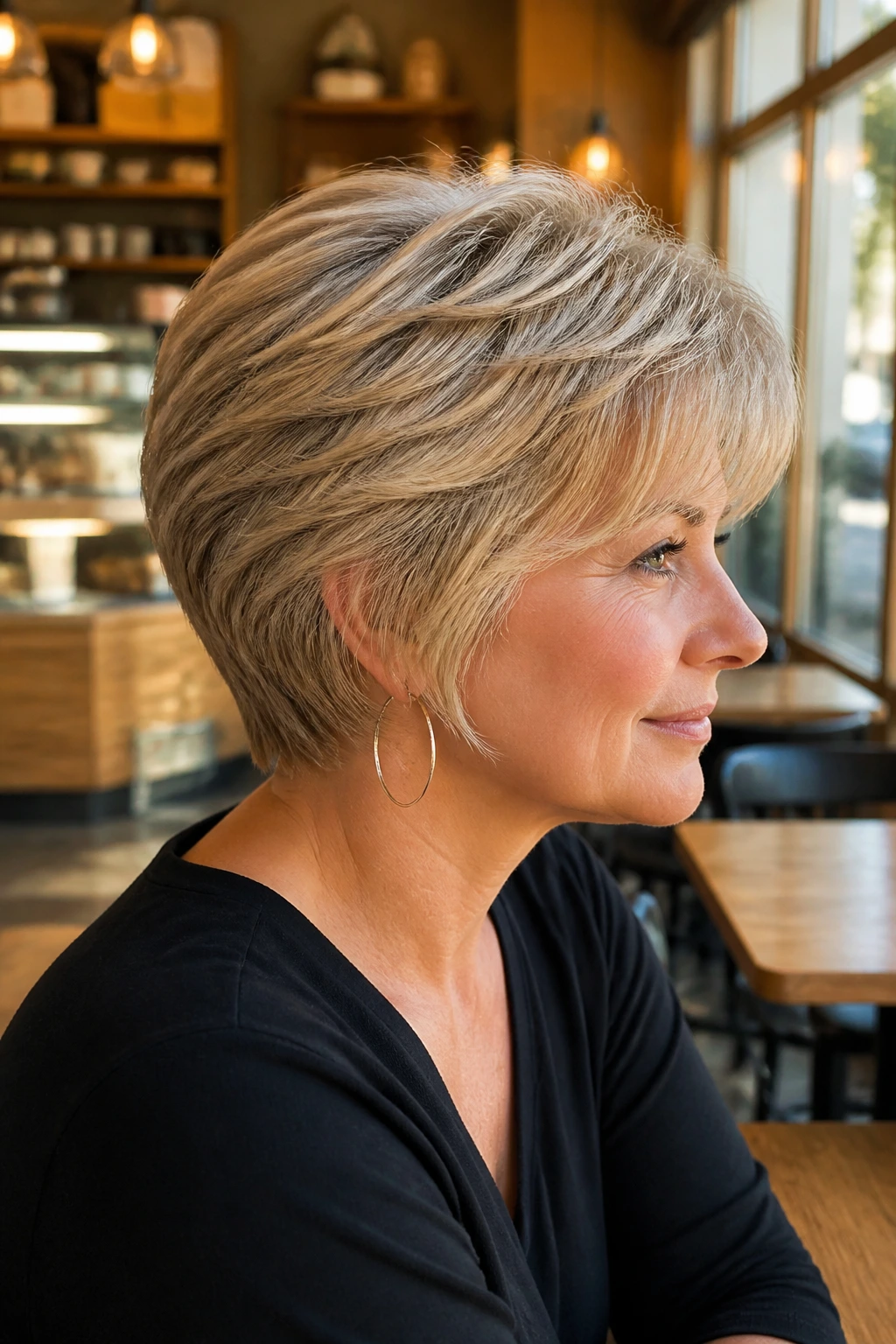
The wedge cut is back in the conversation when it’s feathered properly. Shorter layers in the back stack into a clean slope, while the top and sides stay soft enough to avoid that dated, overly stiff feel. The modern version is lighter around the face and less severe at the nape.
It works well if you want shape that holds without a lot of styling time. The wedge naturally supports the crown, and the feathering keeps it from looking bulky. On straight hair, a quick blow-dry with a vent brush is often enough. On wavy hair, you may need to smooth only the top layer and let the rest do its thing.
Good to know
Ask for the outline to taper gradually, not in a hard staircase. That makes the cut feel current instead of retro in a costume way.
Pro tip: A soft side part keeps the wedge from looking too symmetrical.
17. Asymmetrical Feathered Pixie
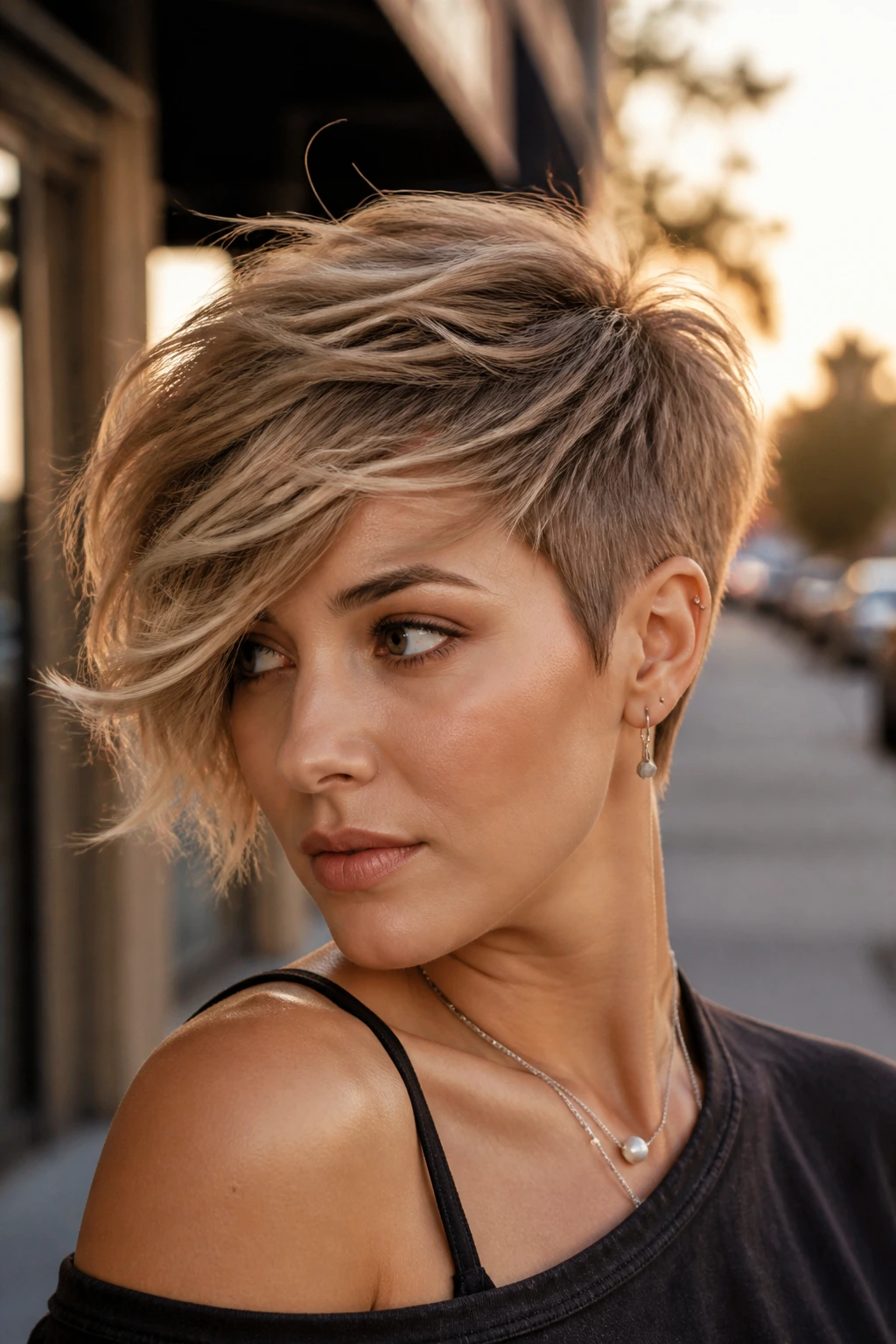
An asymmetrical feathered pixie gives you movement and attitude in one small cut. One side is left a touch longer, often around the cheekbone or jawline, while the other stays tighter and cleaner. The feathering keeps the longer side from feeling heavy.
This style is useful when you want short hair but still want a line that breaks up the face. It can make a strong brow or a wide forehead feel balanced, and it looks especially good when the longer side is tucked behind the ear. I like the asymmetry to be subtle, not theatrical. A half-inch difference can do the job.
What it changes
The eye doesn’t settle in one place. It keeps moving, which gives the cut energy.
Tip: Keep the longer side feathered at the ends, not blunt. A blunt edge on one side can make the whole style look lopsided instead of intentional.
18. Curly Feathered Bob
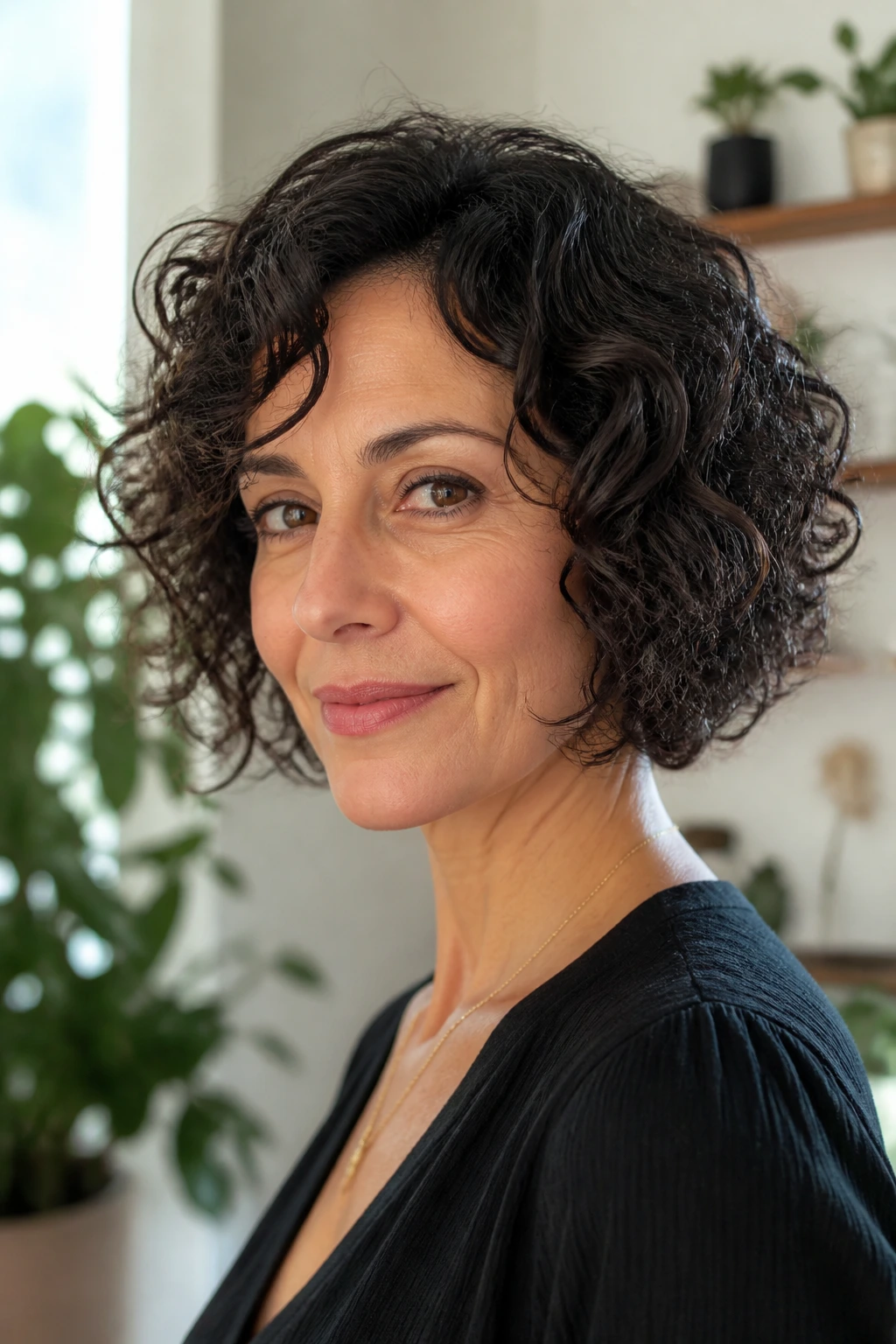
Curly hair and feathering need a softer touch, but the combination can be beautiful. The layers should support curl clumps, not break them apart. That means longer interior layers, a rounded shape, and feathering that removes bulk without slicing every curl into pieces.
This cut is about preserving bounce. If the layers are too short, curly hair puffs out and the silhouette gets wide fast. Ask for the shape to be cut while the hair is dry if your stylist works that way, because curls lie differently when they’re wet. A diffuser and a little leave-in conditioner are usually enough at home.
Best for
- Loose curls to medium coils
- People who want shape without triangle head
- Anyone tired of blunt ends on curls
Watch this: Too much thinning can wreck curl definition. Feathering should guide the curl, not dismantle it.
19. Feathered Mushroom Cut
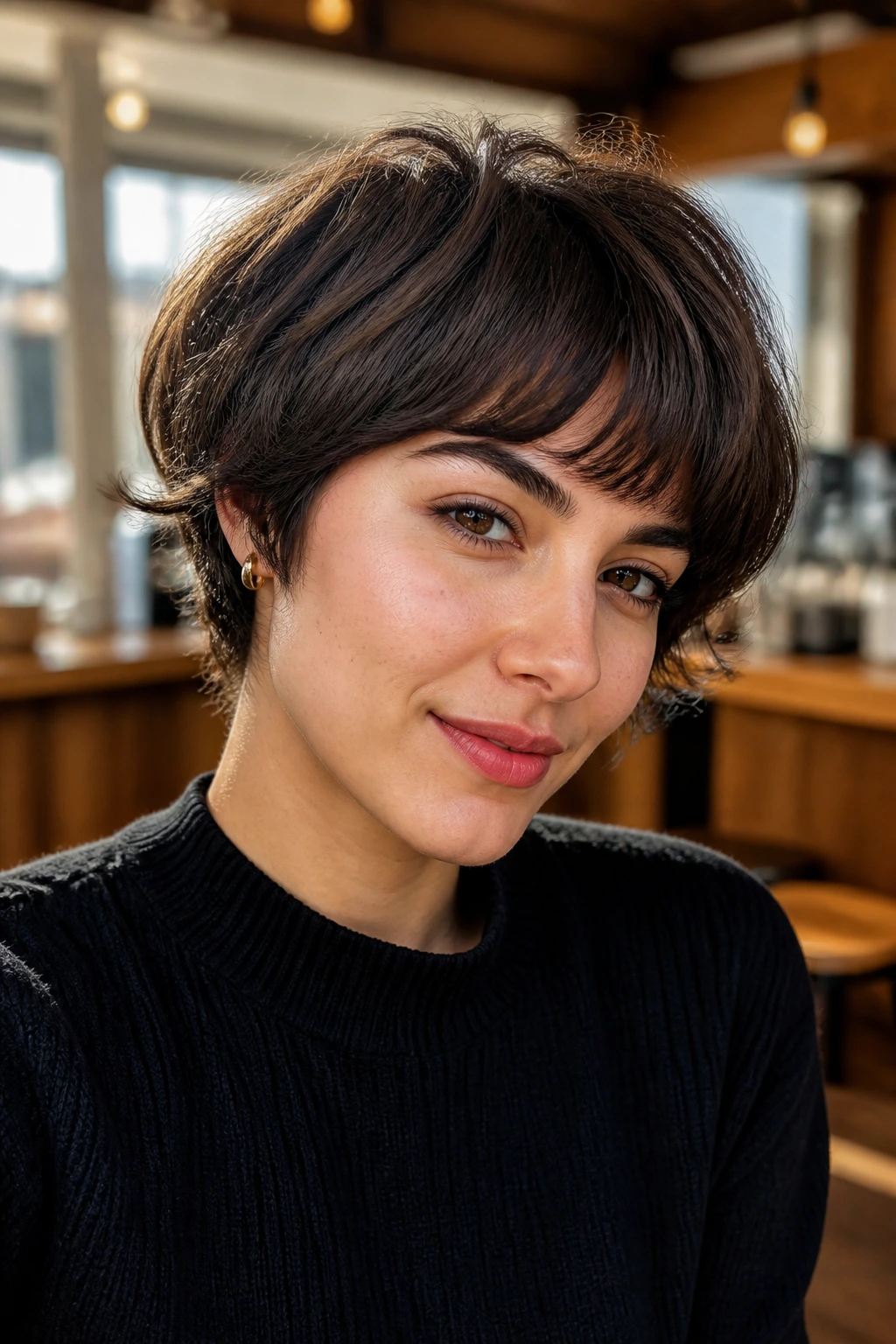
The mushroom cut gets a modern reset when it’s feathered. The rounded shape stays, but the layers are softened so the outline feels lighter and less helmet-like. On the right face shape, this can look chic in a way that surprises people who only remember the old-school version.
The key is keeping the top airy and the edges broken. You do not want a hard bowl line. You want a soft curve that sits around the head with a bit of movement at the fringe. It’s a strong look, no question, but the feathering makes it wearable instead of rigid.
Where it shines
- Straight hair
- Dense hair that needs a shape
- Short cuts that need more personality
Tiny note: The less crisp the perimeter, the better this cut behaves.
20. Ear-Length Feathered Shag
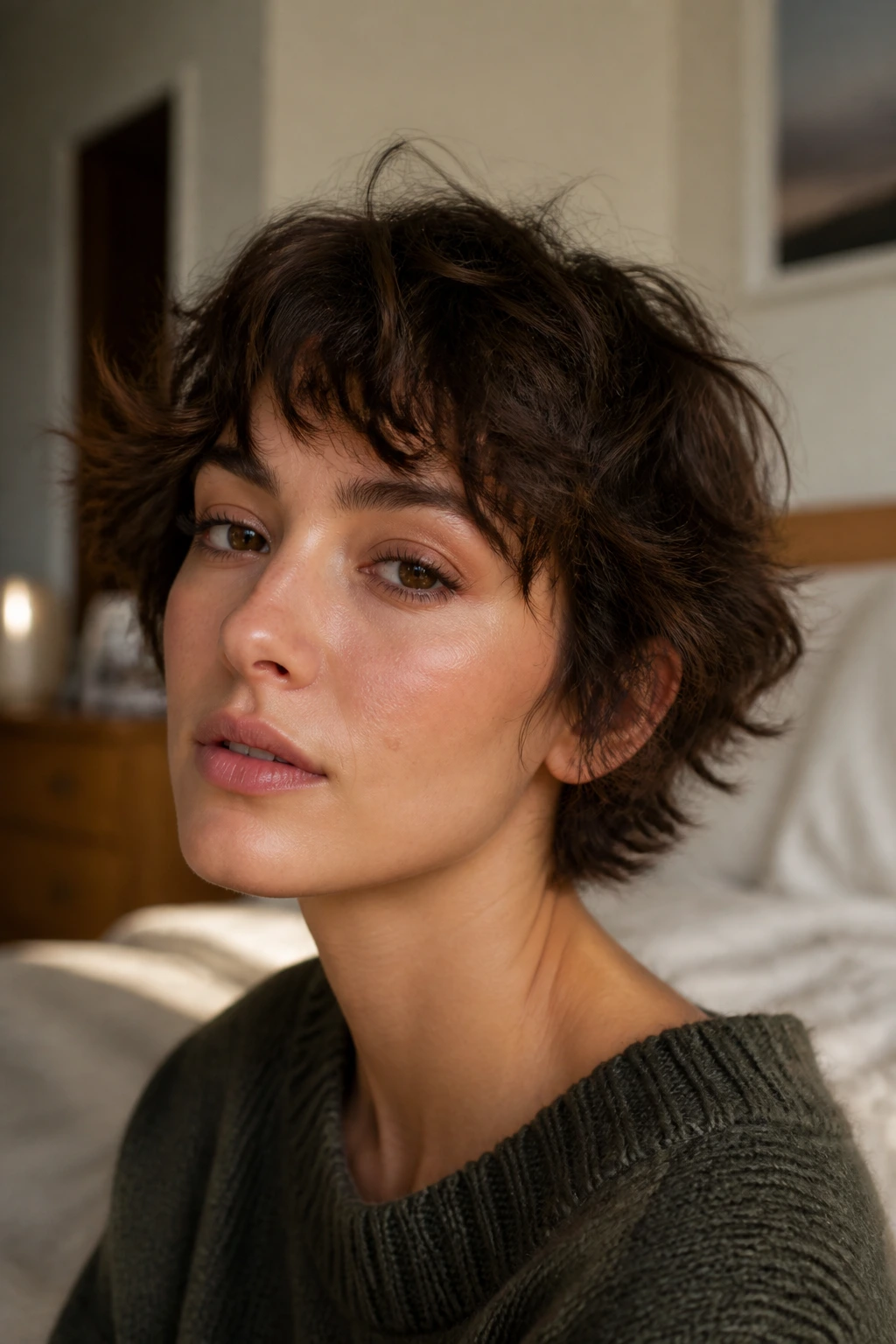
An ear-length feathered shag is short, choppy, and a little wild in the best way. The layers are short enough to lift around the crown and sides, but not so short that the hair loses its shape. It’s one of the better choices if you want a short cut that feels casual and lived in.
This style likes texture spray, not heavy cream. The pieces should separate a little when you run your fingers through them. If the hair looks too neat, the shag effect disappears. If it looks too dry, the ends can frizz. That middle ground is where the cut lives.
Best for
People who hate flat hair. People who don’t want a polished bob. People who like a little edge.
Tip: Rough-dry the roots first, then stop touching the hair until it’s mostly dry. The cut does more of the work than the styling does.
21. Jaw-Length Feathered Bob
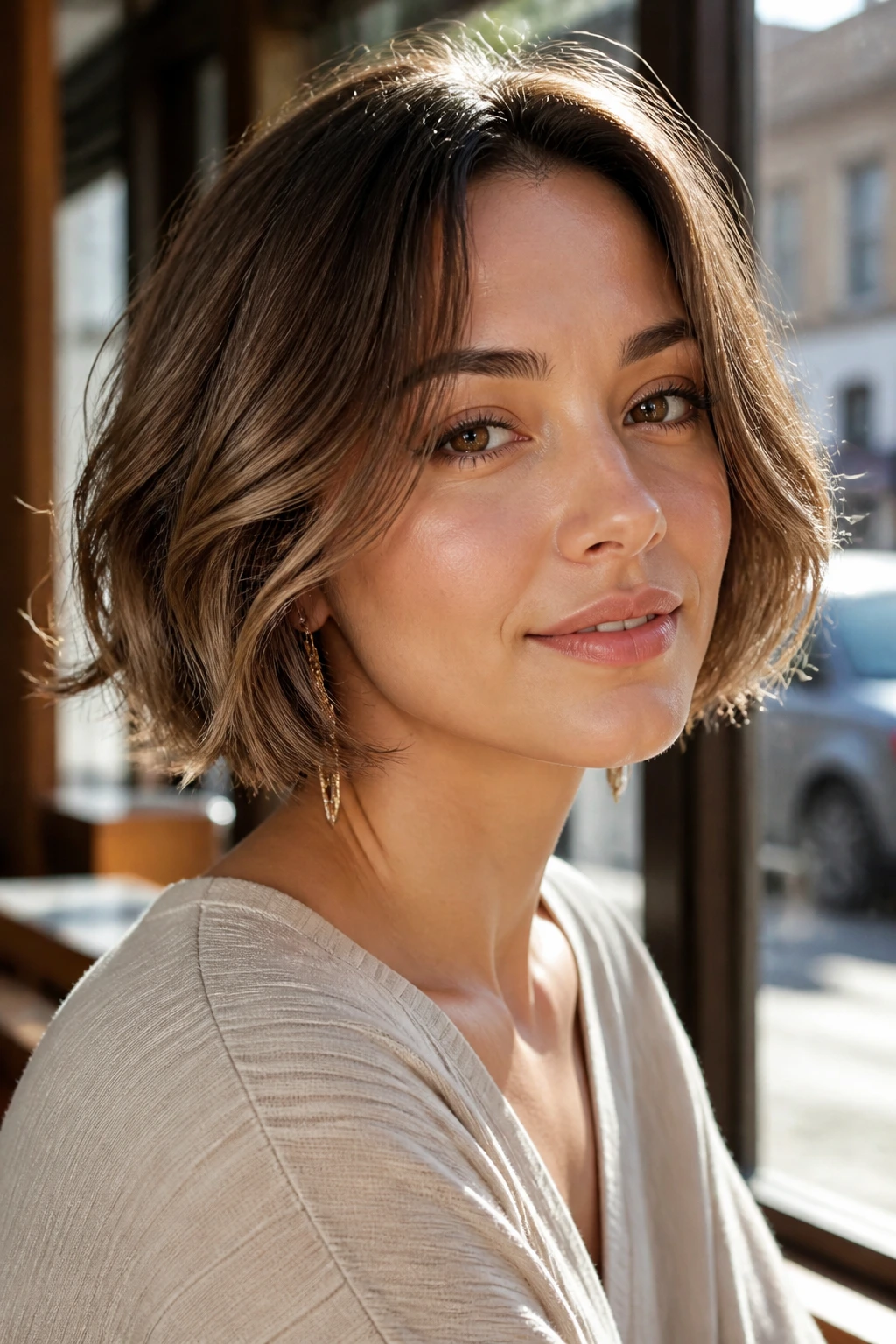
A jaw-length feathered bob is a clean, flattering length for short hair because it sits right where the face changes shape. The feathered ends stop the line from feeling blunt, which makes the jaw look softer without hiding it. It’s a smart length if you want short hair that still pulls into a clip or tucks neatly behind the ear.
This cut can lean polished or loose depending on how you finish it. A smooth blow-dry gives you a sleek profile. A rougher dry with a little wave gives you movement. I’d call it one of the most versatile short feathered styles because the shape is simple enough to shift with product and parting.
Quick clue
If your hair has a habit of flipping out at the ends, this length can either help or annoy you. Feathering usually helps.
Tip: A side part softens the jaw-length line and keeps the cut from feeling too boxy.
22. Messy Feathered Pixie With Sideburns
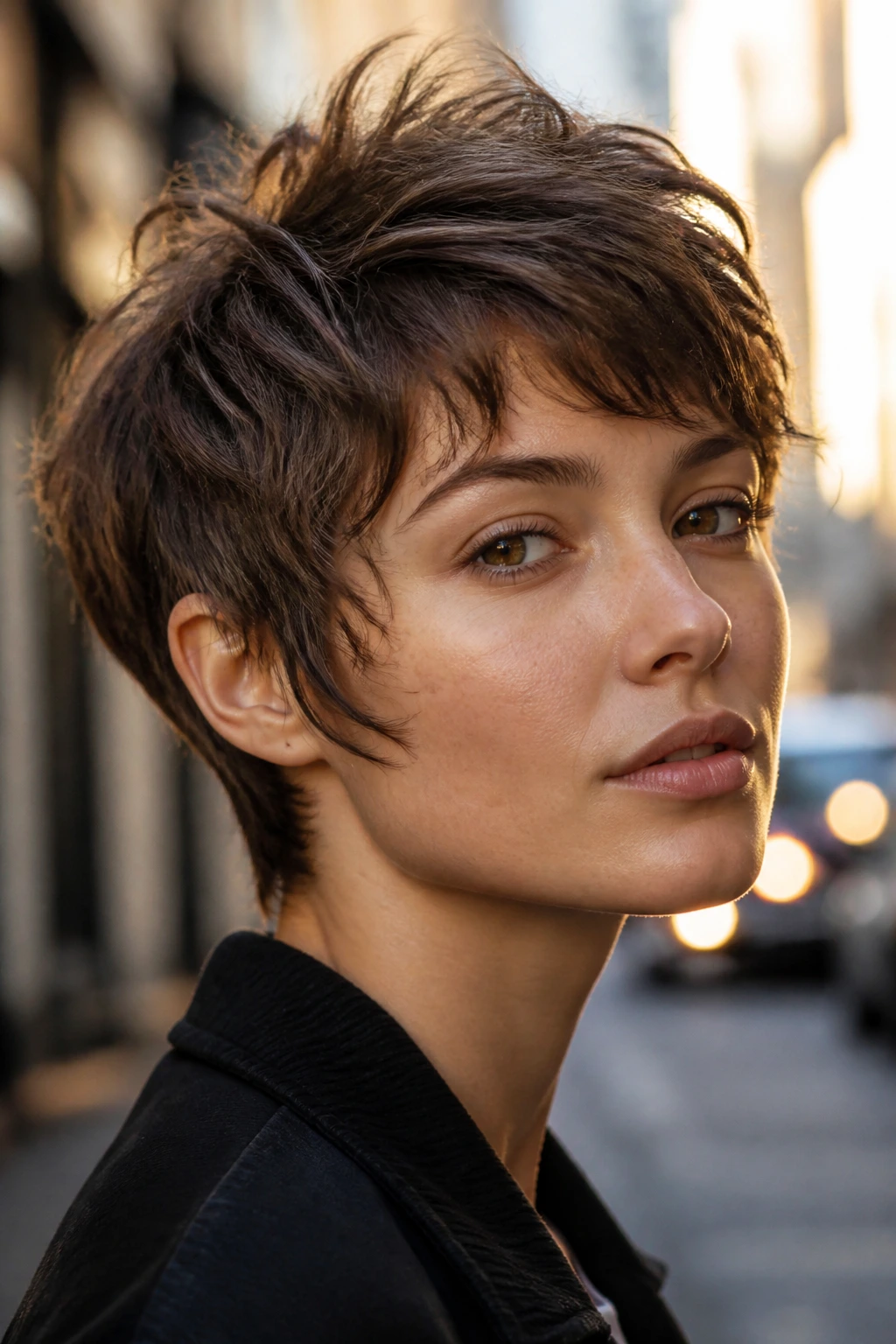
A messy feathered pixie with sideburns has a little attitude, and the sideburn pieces are what keep it from looking too clipped. Those longer bits around the temple and ear soften the transition from top to sides. The result is short, but not severe.
This cut is excellent if you want texture with a bit of personality. The top stays broken up and light, while the sideburns add a frame around the face. It also plays well with earrings, which sounds cosmetic and obvious, but it matters. Short hair shows every small detail near the ears.
How it reads
A little undone. Not sloppy. Just relaxed enough that the feathers look lived in rather than salon-perfect.
Tip: Don’t smear pomade through the sideburns. A tiny amount on the tips is enough to separate them.
23. Feathered Flip Bob
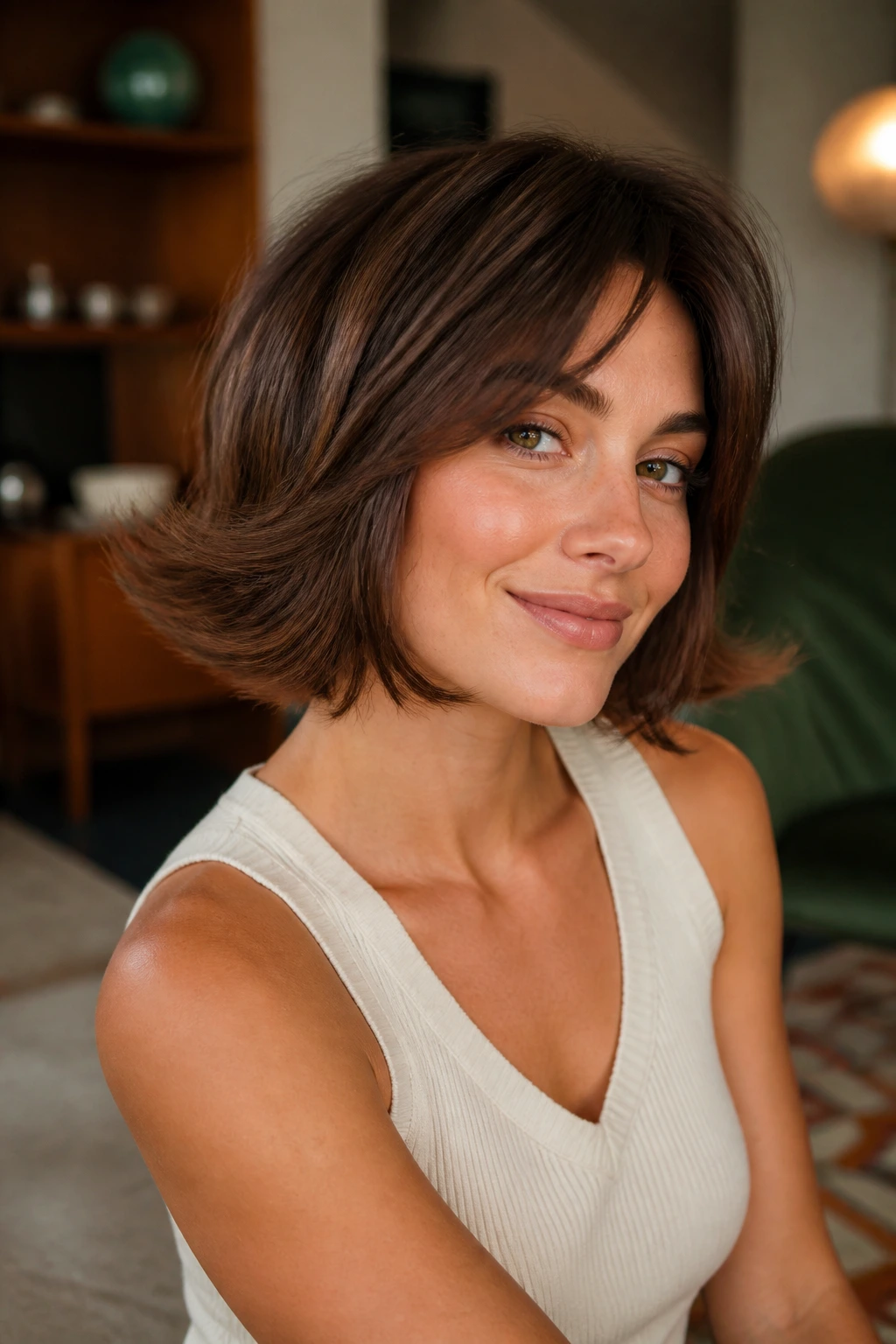
The feathered flip bob is for people who like movement at the ends. Instead of curling under, the hair kicks outward a little, which gives the cut a lively, retro feel without turning it into a costume. The feathering keeps the body of the bob soft so the flipped ends don’t look too stiff.
I like this style on hair that holds a bend naturally. A round brush or a flat iron can create the flip, but the cut has to support it. If the layers are too blunt, the ends fight the shape and stick out in a blunt way. With proper feathering, the flip looks airy and controlled.
Best use
When you want the hair to look styled, even on a simple day.
Tiny tip: Flip only the bottom inch of the hair. If you curl too high, the shape loses its clean line.
24. Feathered Crop With Long Side Fringe
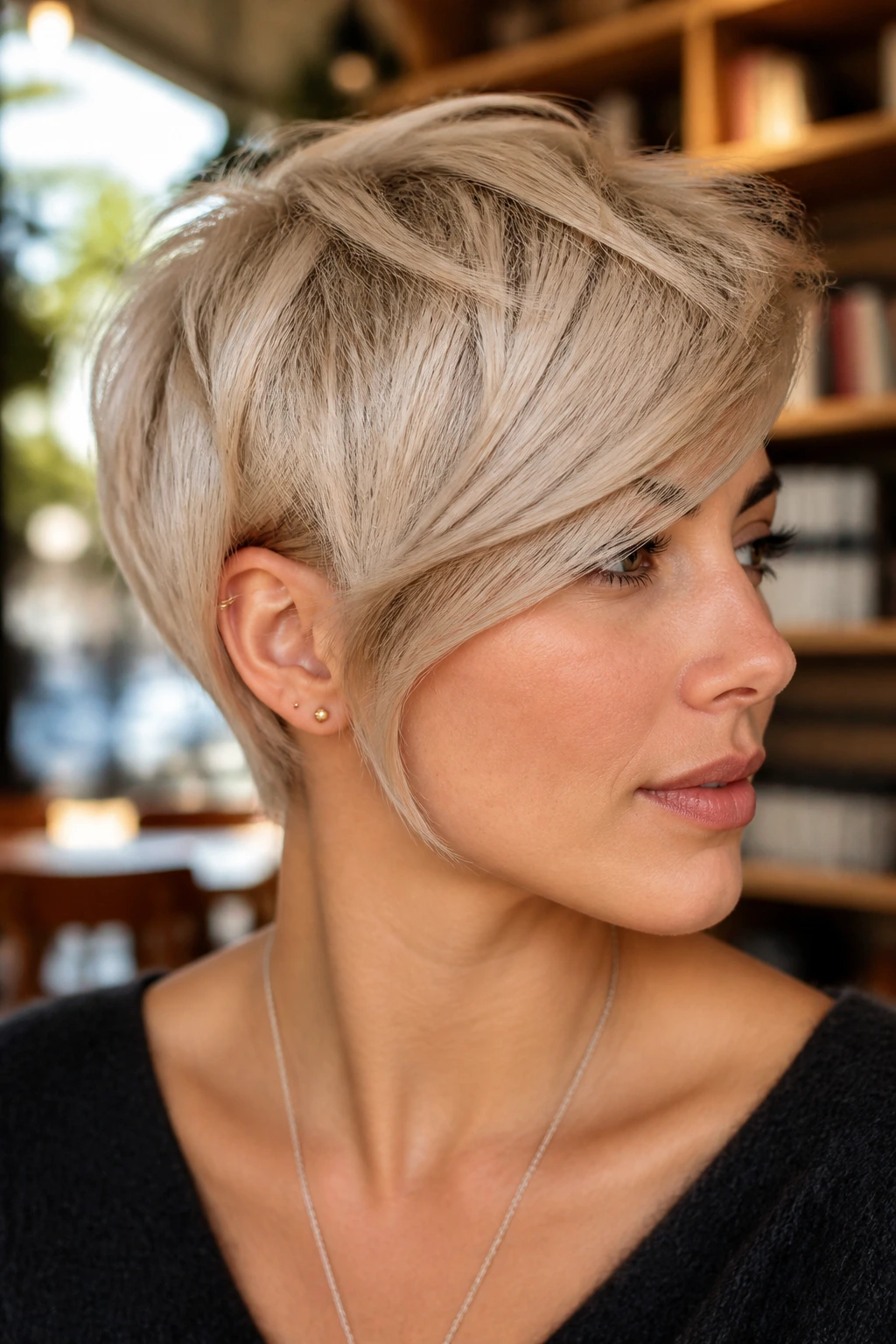
A long side fringe gives a feathered crop a little more drama without sacrificing ease. The fringe can sweep over the eyebrow or sit just above it, depending on how much length you keep. The rest of the crop stays softly layered so the front doesn’t overpower the cut.
This is one of my favorite options for softening a forehead or balancing glasses. The fringe creates the focus, while the feathered sides keep the crop from feeling boxed in. You can wear it polished with a round brush or a bit piecey with dry texture spray.
What to ask for
A fringe long enough to move. Not a hard micro bang. A side front that can split if you change your mind later.
Tip: If your hair cowlicks at the front, this is still doable. The trick is to cut the fringe slightly longer and let it settle for a few days.
25. Feathered Bob With Tucked-Behind-Ear Finish
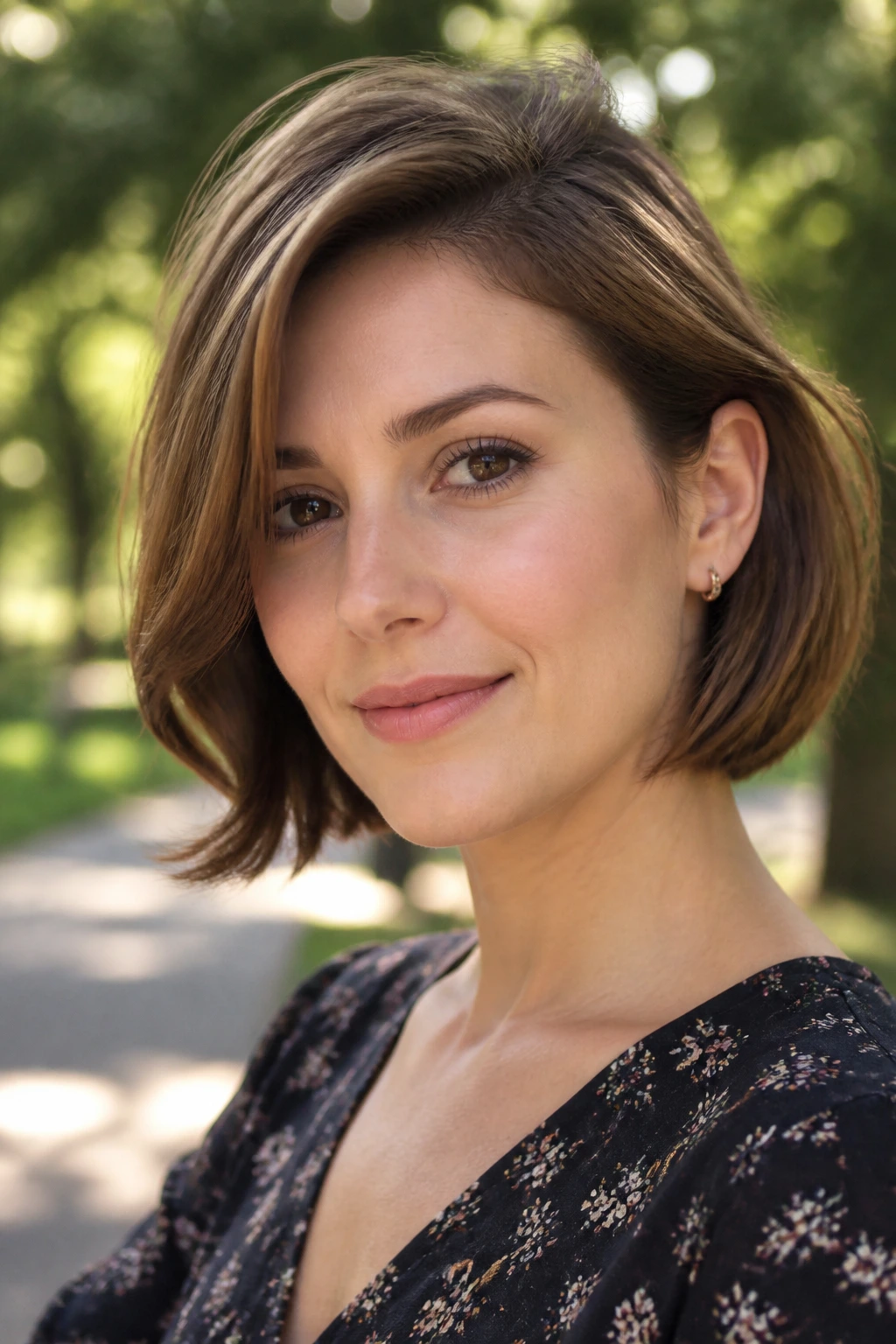
Some cuts are designed for movement in the wind. This one is designed for tucking. A feathered bob with a tucked-behind-ear finish uses soft layers around the face so the side that goes behind the ear still looks balanced, not flattened. That’s a small detail, but it changes how the whole cut feels.
The front pieces should be long enough to tuck without springing back too hard. The opposite side can stay fuller to keep the silhouette from looking like it’s missing something. It’s a nice style if you wear one earring more than the other or if you like hair that clears the face on one side.
Why it’s handy
You get two looks from one cut: loose and polished. There’s no special trick here. Just smart length.
Tip: Use a light shine cream only on the tucked side so it stays smooth without getting oily.
26. Deep Side-Part Feathered Pixie
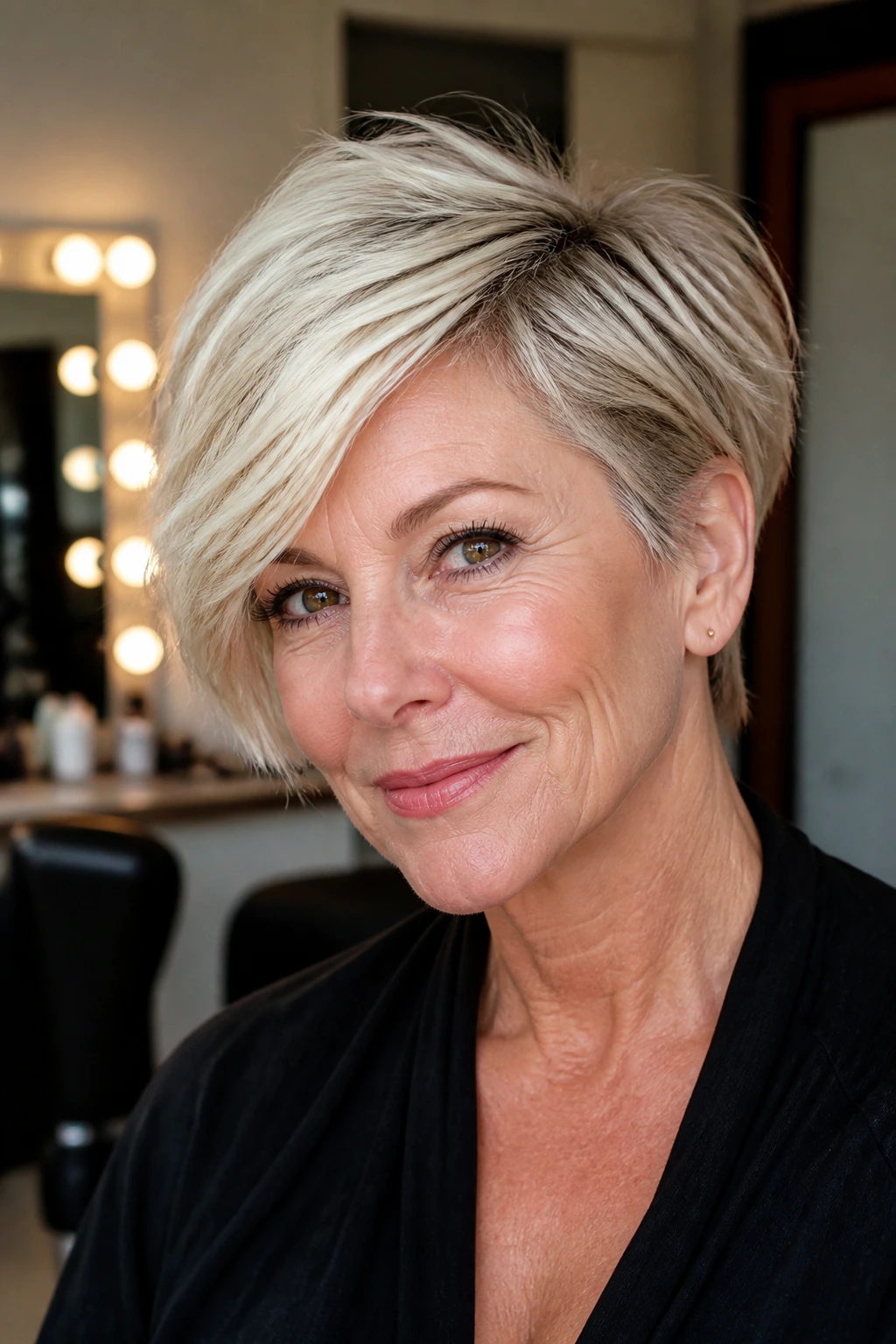
A deep side part can change a feathered pixie almost instantly. It throws more weight to one side, lifts the opposite side, and gives the crown a little natural height. If a regular pixie feels too flat or too symmetrical, this is the easiest fix.
The feathering matters because it keeps the heavy side from looking bulky. I like this cut when the hair is short enough to stay neat, but long enough on top to sweep into place. A small blow-dry brush or even your fingers and a dryer can create the part, though a quick pass with a round brush at the root makes the lift hold longer.
Best for
- Fine hair that needs asymmetry
- Rounder faces that want length through the top
- Days when you want a sharper silhouette
Tiny note: Don’t force the part into a line. Let it land where the hair naturally wants to split, then guide it.
27. Piecey Feathered Bob
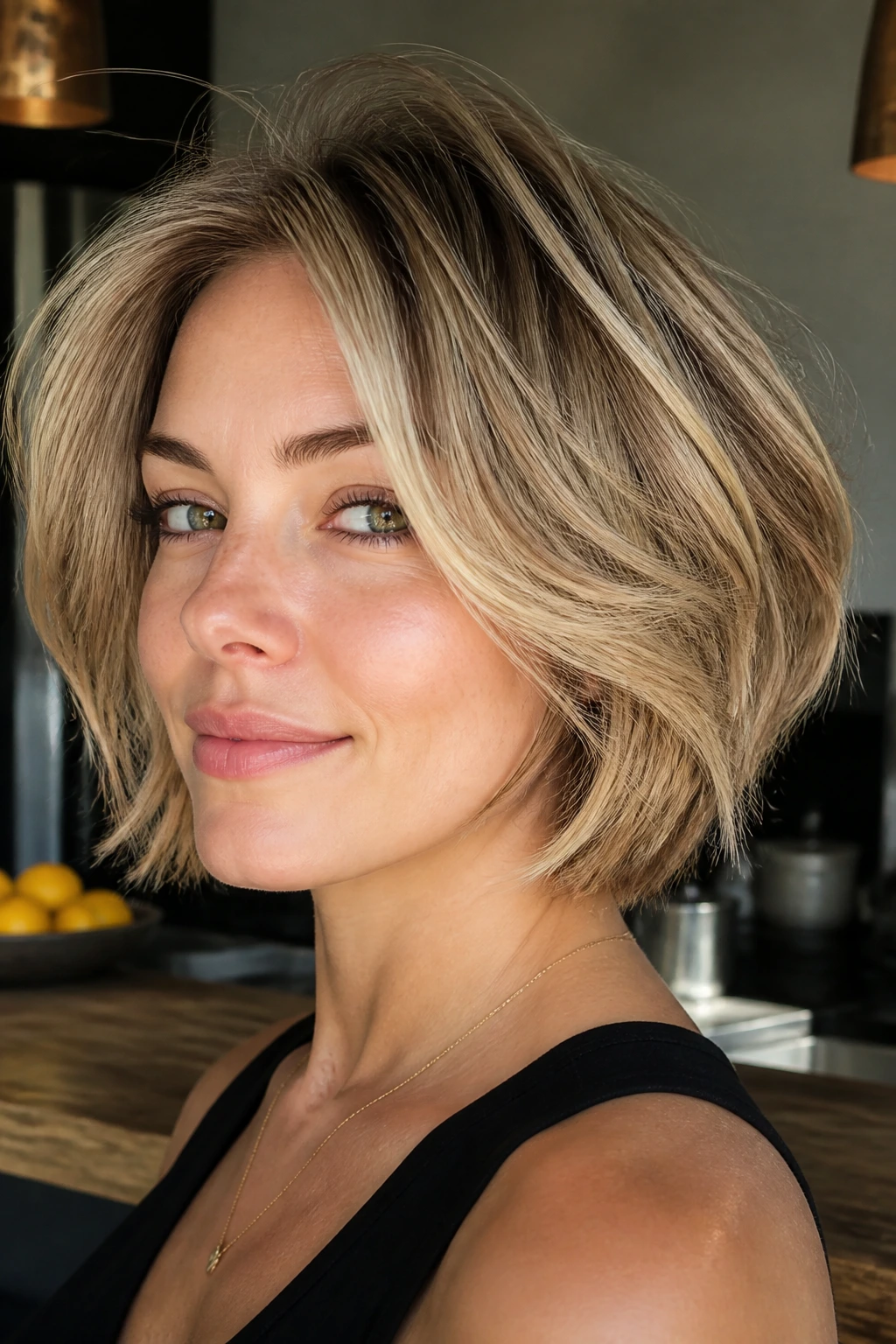
A piecey feathered bob keeps the shape loose and separated rather than smooth and uniform. The layers are cut to show individual sections, which gives the style that light, editorial feel without requiring much work. It’s the opposite of a stiff, one-length bob.
This is a good choice if you like texture products and don’t mind seeing a few intentional ends. The key is balance: enough piece separation to feel modern, enough structure to stop the bob from looking frayed. I’d call it a strong option for straight or slightly wavy hair, especially if you want short hair that doesn’t collapse by lunch.
How it behaves
The cut sits best when the top layers are lifted a little and the ends are broken up with a small amount of cream or spray wax.
Tip: Work product into the mid-lengths first, then use whatever is left on your hands for the ends. That keeps the style airy.
28. Soft Nape-Tapered Feathered Crop
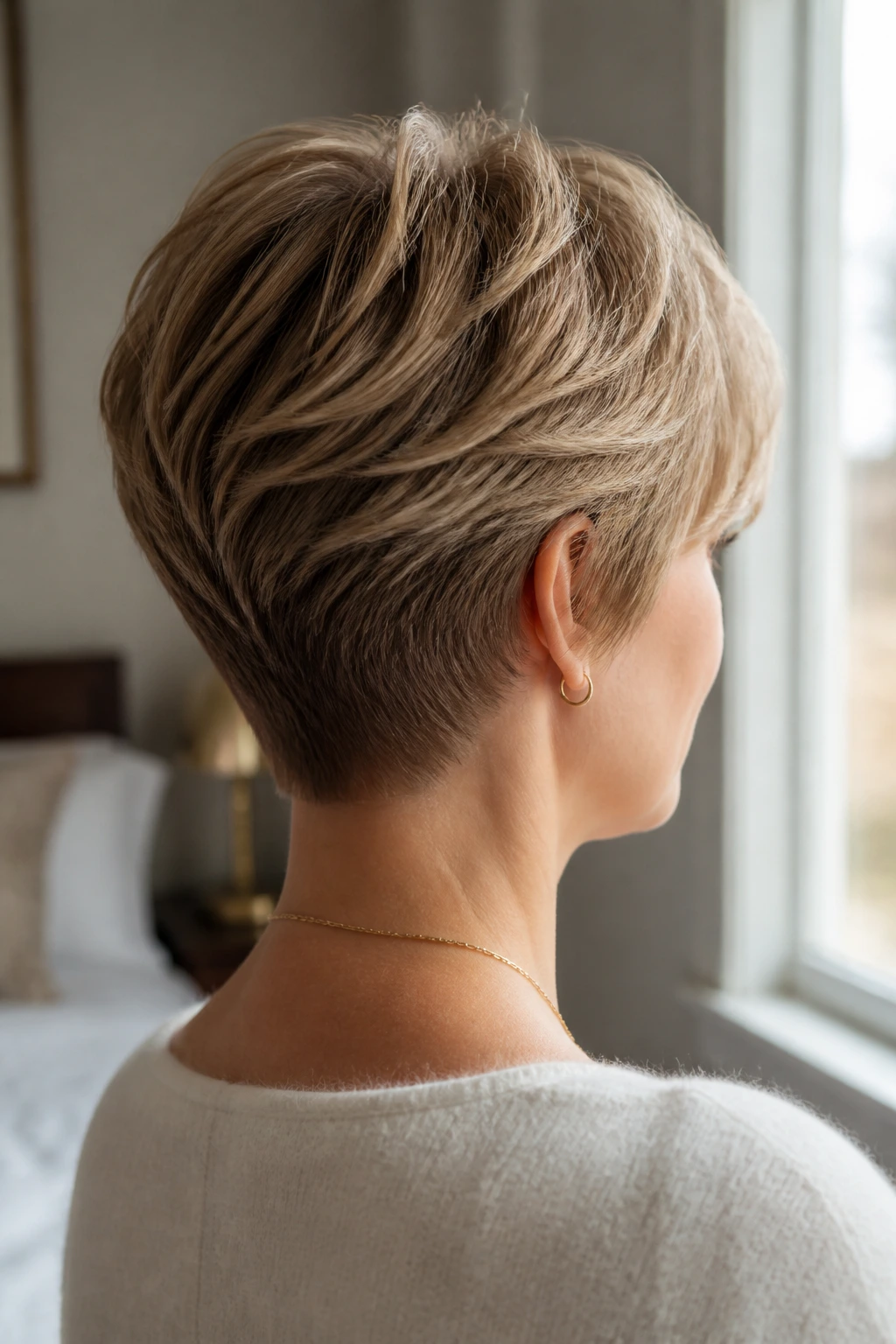
A soft nape-tapered feathered crop is neat at the neck and airy everywhere else. The back is cleaned up closely enough to show the neckline, but the top and sides stay feathered so the cut never feels severe. It’s tidy without being hard.
This cut is one of the easiest to wear if you like short hair that grows out gracefully. The nape taper gives it shape for weeks, while the feathered top keeps volume where you want it. If your hair tends to stick out at the back, this is the fix I’d try first. A clean taper there solves more problems than another round of heavy thinning.
Best part
It looks intentional from every angle. That’s harder to get than people think.
Tip: Ask for the taper to follow the natural curve of your neck. That small adjustment helps the crop sit flat where it should and float where it can.
What Feathering Really Does to the Shape of Short Hair
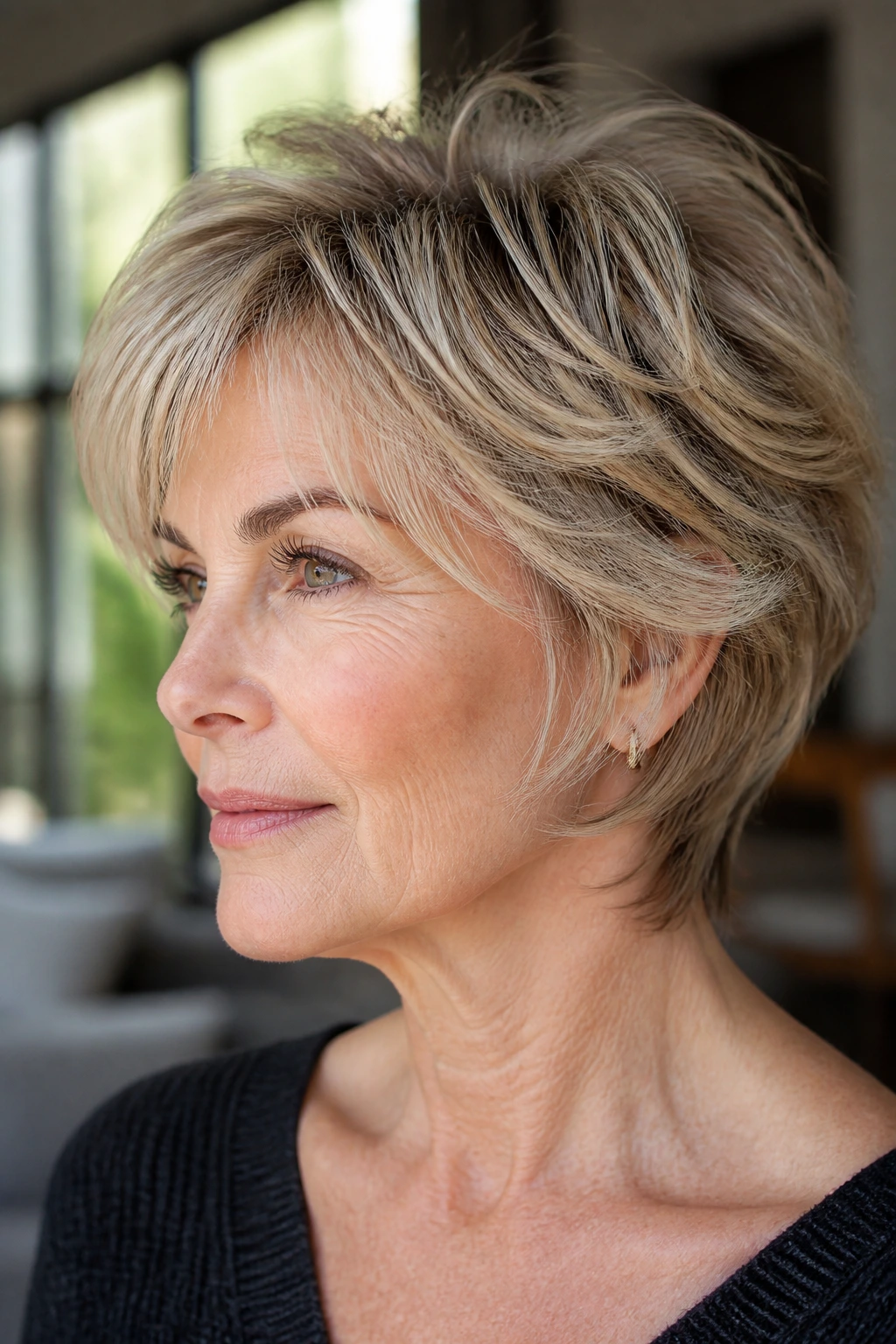
Feathering is not the same thing as chopping in layers and hoping for the best. On short hair, it changes the silhouette. The ends get lighter, the top gets more air, and the sides stop sitting like a solid wall. That’s why feathered cuts can look soft without losing structure.
The difference is in the way the hair is removed. Good feathering usually involves point-cutting, slide-cutting, or very controlled texturizing, depending on the hair type and the final shape. A stylist working on fine hair may keep the interior layers longer and do less thinning. On thick hair, the goal is usually to remove weight where the head rounds out the most — often around the parietal ridge and through the back corners.
Short feathered hair also reacts differently to motion than blunt hair does. A chin-length blunt bob stays where it’s put. A feathered version bends at the edges, so even a simple turn of the head changes the line. That’s why these cuts stay interesting longer between salon visits. They don’t depend on one perfect styling pass.
And yes, the right feathering can fix a haircut that feels boxy. Not every bad short cut needs to be grown out. Sometimes it just needs the weight moved from the wrong place to the right one.
How to Ask for a Feathered Short Haircut That Fits Your Hair
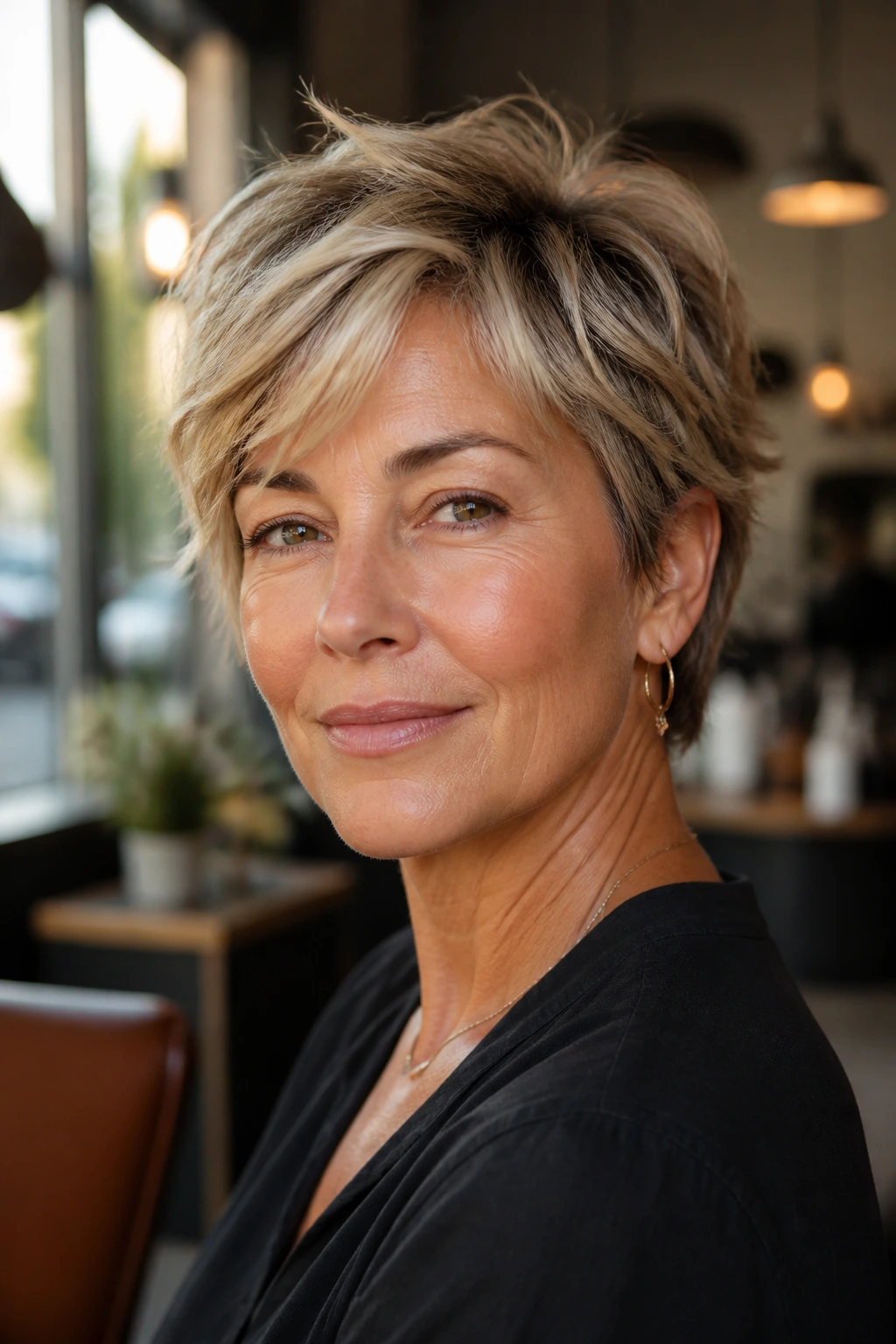
The best feathered cut starts with a plain conversation, not a dramatic photo dump. Bring 2 or 3 images that show the front, side, and back if you can. Then say what you want the hair to do: sit closer at the neck, feel lighter at the sides, lift at the crown, or soften around the jaw. That’s better than saying “make it feathered,” because different stylists hear that word in different ways.
Hair density changes the request. Fine hair usually needs feathering that preserves weight at the perimeter so the ends don’t look wispy. Thick hair usually needs internal removal so the shape doesn’t puff out at ear level. Curly hair needs longer layers and careful shaping so the curls keep their clumps. Straight hair can take sharper feathering because the movement will show more clearly.
If you want a specific salon note, ask whether they plan to use shears, a razor, or point-cutting. Those choices affect the finish. Razor work can make the ends airy, but it can also fray them if the hair is already delicate. Shears are safer on fragile ends. Point-cutting gives the softest, most controlled feathering of the bunch.
One more thing. Tell your stylist how much styling you actually do in a week. A feathered pixie that needs a round brush every morning is not the same haircut as one that can be rough-dried and left alone. That difference is the one that matters after the salon mirror fades.
Essential Tools for Feathered Short Hair
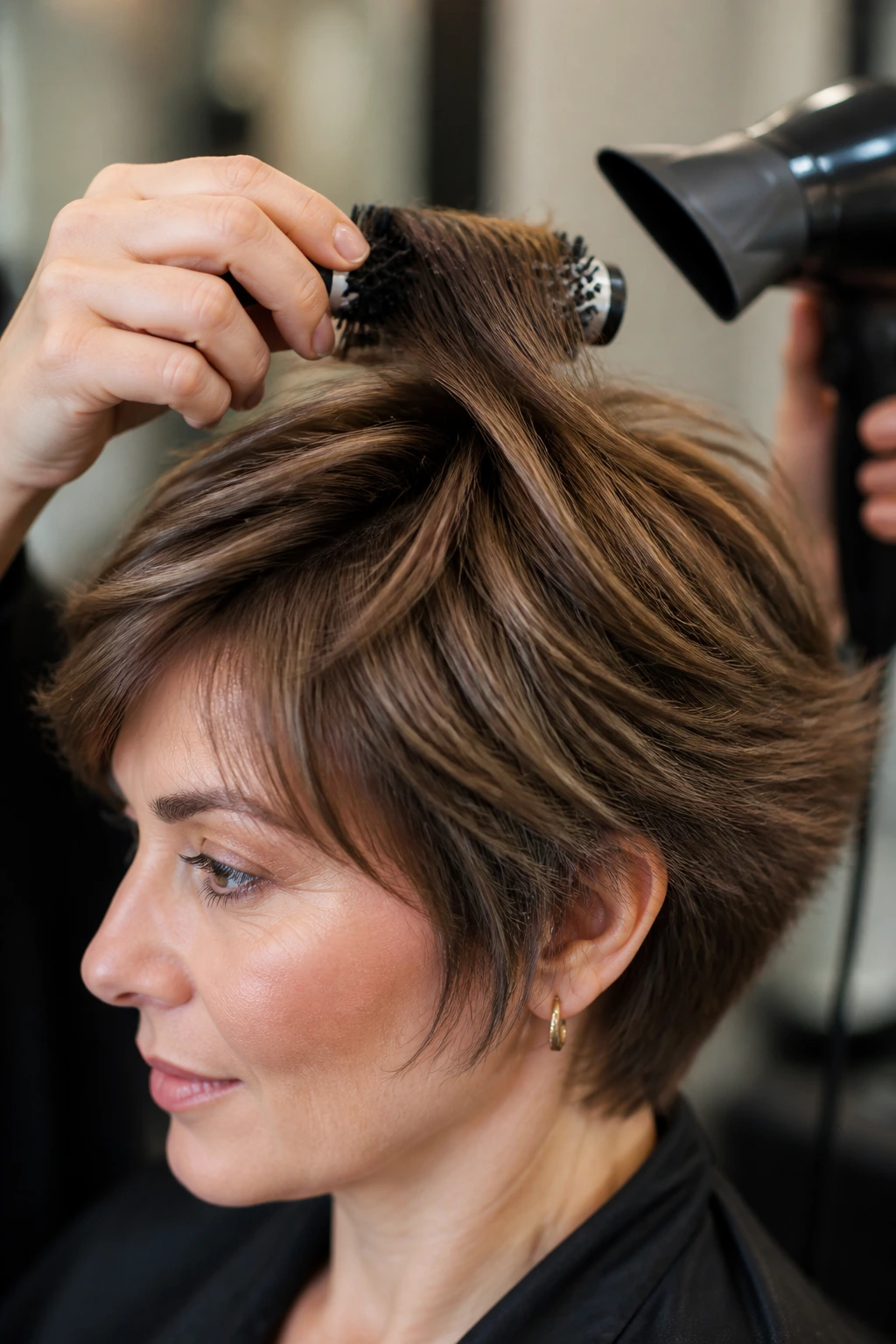
- Hair dryer with a nozzle: Gives the crown and nape direction instead of blasting the layers every which way.
- Small round brush: Best for lifting the top and curving the ends on bobs and pixies.
- Paddle brush or vent brush: Faster for rough-drying shorter styles that only need a little control.
- 1-inch curling iron or flat iron: Useful for bending the ends or adding a quick piecey flick.
- Sectioning clips: Help you keep the top separate while you work on the back and sides.
- Heat protectant spray: Worth using any time you touch the hair with a hot tool, even briefly.
- Lightweight mousse: Good for crown lift and soft hold without the crunch.
- Texture spray or dry shampoo: Useful on day two when the feathering starts to fall flat.
- Flexible hairspray: Holds the shape without turning short hair stiff.
- Light cream or pomade: Best used sparingly on the ends or fringe, never smeared through the whole head.
How to Style Feathered Short Hair for Real Life
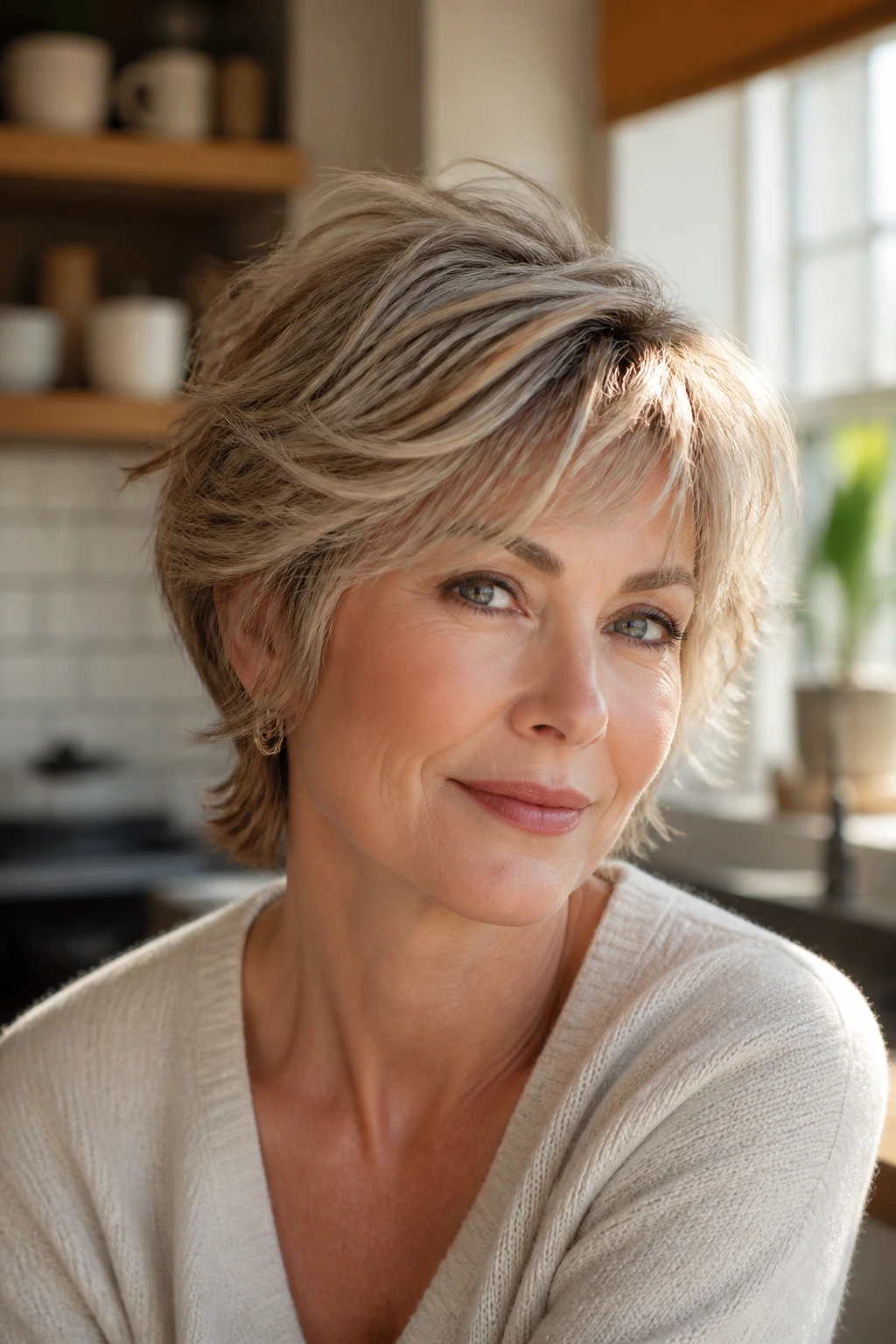
Presentation: Keep the feathering visible where the eye lands first — around the crown, temple, and jawline. If the top is too flat, or the ends are too coated with product, the whole cut loses the lightness that makes it work.
Accompaniments: Short hair shows off collars, earrings, and glasses in a way longer hair never quite does. A feathered bob looks cleaner with a sharp neckline, while a feathered pixie loves hoops, a crew neck, or a blazer that leaves the face open.
Portions: Fine hair usually needs a smaller amount of mousse or cream than you think — about a nickel-size amount for the whole head. Thicker hair can take a little more, but use it in sections so the feathering stays separated instead of greasy.
Beverage Pairing: A feathered short cut is one of those styles that works from coffee run to dinner table without changing the haircut at all. On rushed mornings, rough-dry it. For an evening out, add a bend at the front and tuck one side back. Same cut, different read.
Extra Styling Moves That Add Lift and Movement
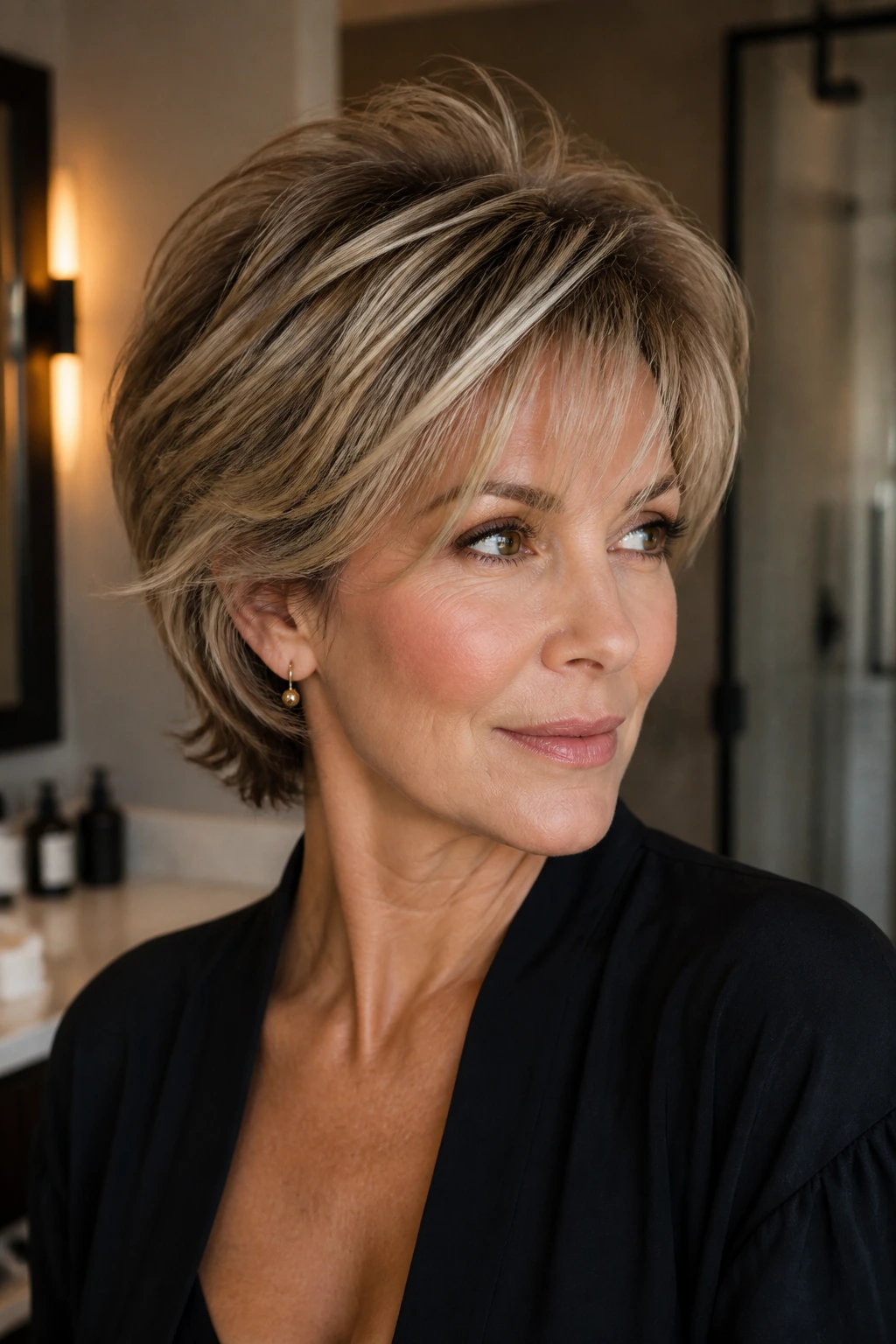
A feathered cut looks best when you respect the shape it already has. That means you’re not trying to fight the hair into a shell. You’re giving it a little direction and then stepping back. One smart move is to blow-dry the roots in the opposite direction of the part for a few seconds before setting them back. Another is to bend only the first inch or two of the ends with a flat iron. Small changes, big payoff.
Texture Boost: Spray dry texture product at the roots first, then pinch the front layers with your fingers while the hair cools. That gives short feathered styles the piecey separation that keeps them from collapsing by lunchtime.
Customization: If you want a softer read, tuck one side behind the ear and leave the other loose. If you want more edge, add a small micro fringe or a sharper side part. The cut can hold either mood.
Serving Suggestions: Use shine serum only on the very ends if the hair looks dry. A matte finish on the crown and a soft sheen at the tips keeps the feathering visible instead of oily.
Make-It-Yours: Fine hair usually needs lift, not weight. Thick hair usually needs internal removal and a little more structure. Curly hair needs room for the curls to spring, which means longer layers and less aggressive thinning.
Common Mistakes That Flatten Feathered Short Hair
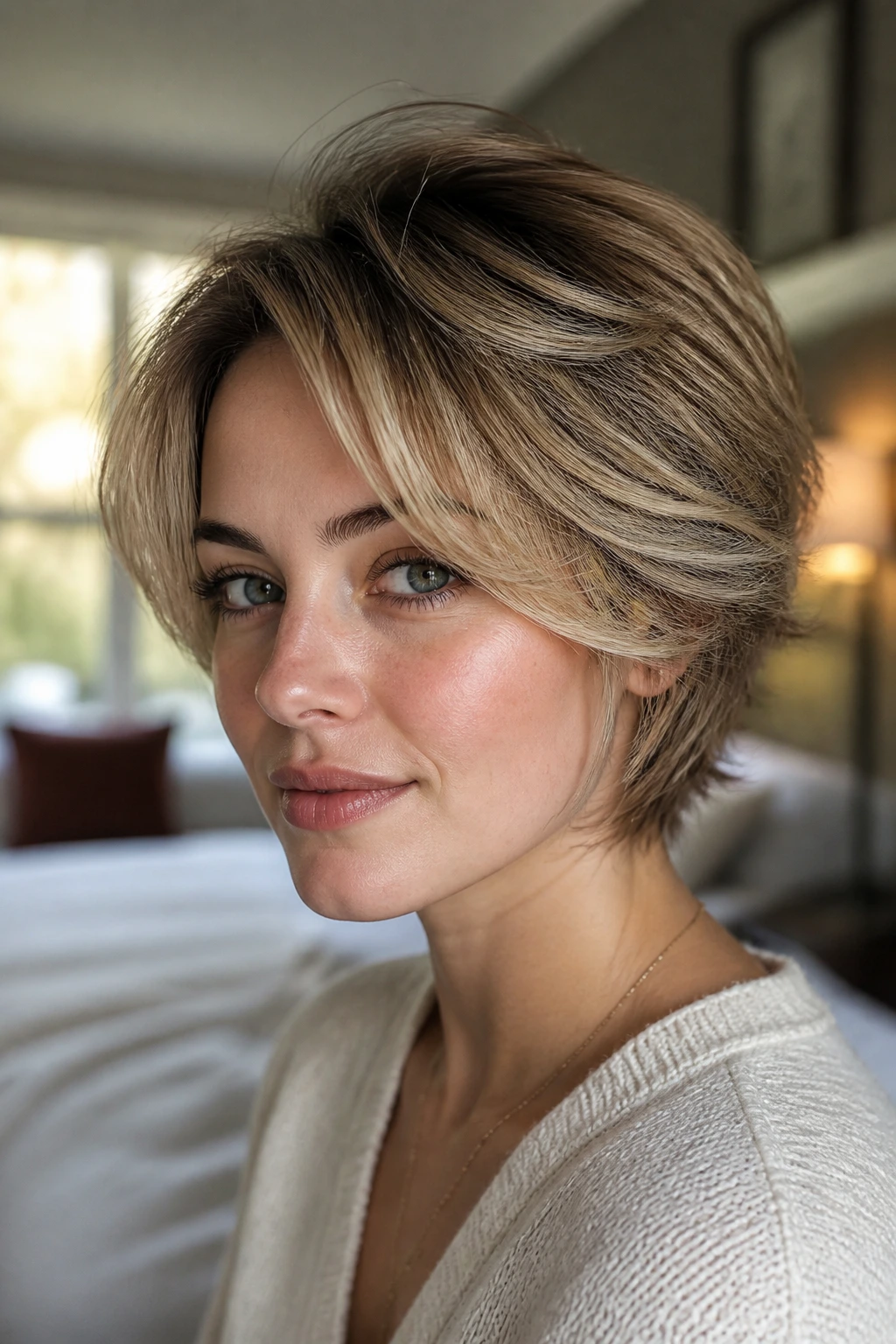
The biggest mistake is asking for feathering everywhere. That sounds helpful, but it usually isn’t. If every section is thinned, the haircut loses its shape and the ends start looking stringy. The fix is to keep some weight at the perimeter and soften only the spots that actually need it.
Another common miss is loading on heavy creams or oils. Feathered short hair needs movement, and too much product clings the layers together. You’ll know this happened when the crown drops within an hour and the ends start sticking in clumps. Use lighter products and keep them off the roots.
Skipping the nape is another one. Short hair lives or dies by the back of the head. If the neckline is too bulky, the whole cut looks unfinished from the side, even if the front is perfect. A clean taper solves more than extra styling ever will.
And then there’s the trim schedule. Feathered short hair grows out into a boxy shape faster than longer cuts do. If the haircut starts flipping in places you didn’t ask for, it’s usually not a styling problem. It’s just time for a trim.
Feathered Variations Worth Trying
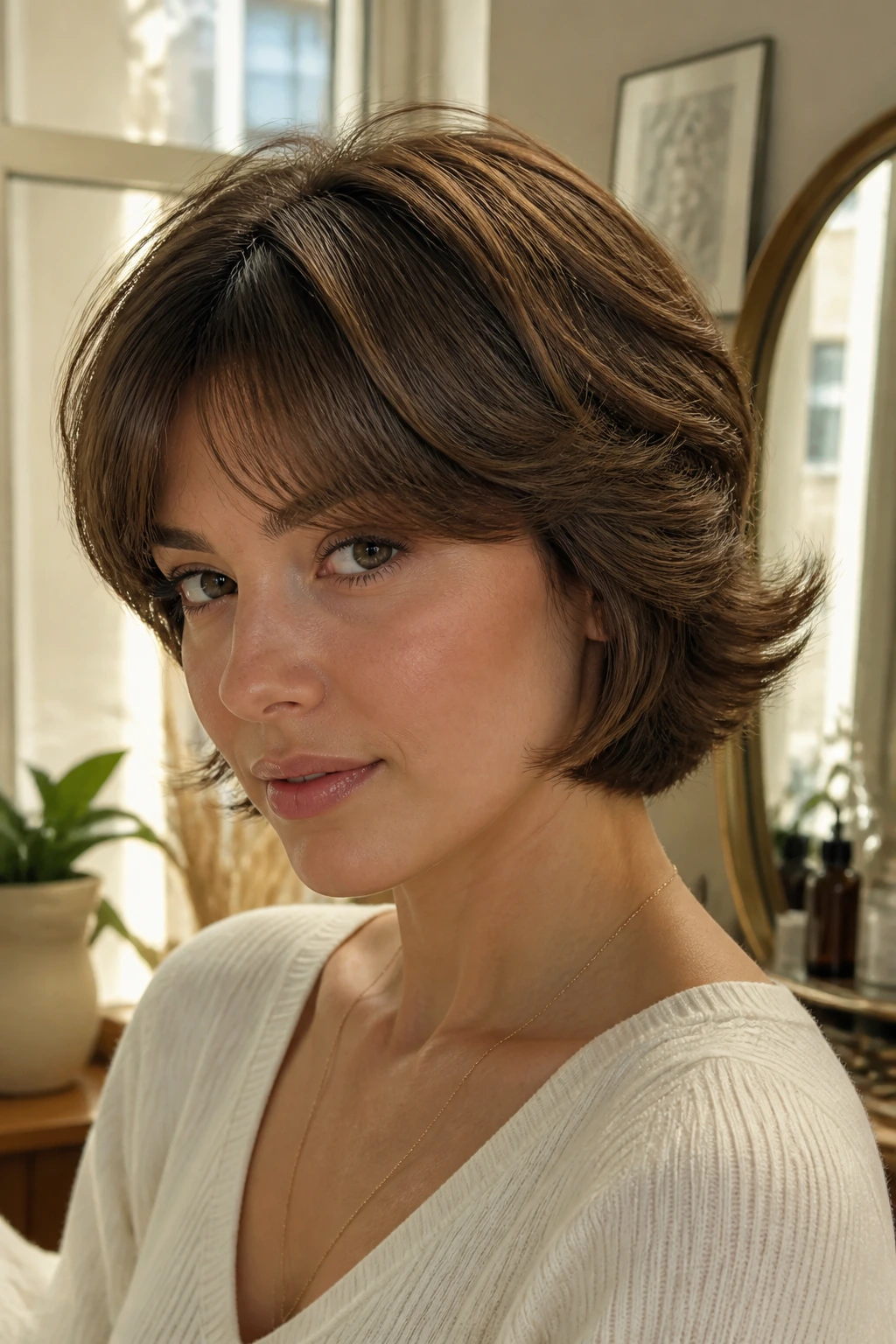
Soft Retro Feather: This version leans toward a rounded crown and a gentle flip at the ends. It works well if you like a polished finish and don’t mind a round brush in your routine.
Air-Dry Feather: Better for wavy or slightly curly hair, this variation keeps the layers long enough to dry naturally with shape. A little mousse and a diffuser do the work; no need to chase every strand with heat.
Razor-Edge Feather: This one is sharper and more piecey, with ends that move quickly and feel light in the hand. It’s strongest on straight hair that can show the cut line clearly.
Curly-Friendly Feather: The layers stay longer and more controlled so curls keep their clumps. If your hair springs up fast, this is the safer choice.
Low-Maintenance Feather: Keep the nape tidy and the top only lightly layered. It grows out cleanly and doesn’t demand much more than a brush, a bit of spray, and a trim every few weeks.
Questions People Ask Before They Try Feathered Short Hair
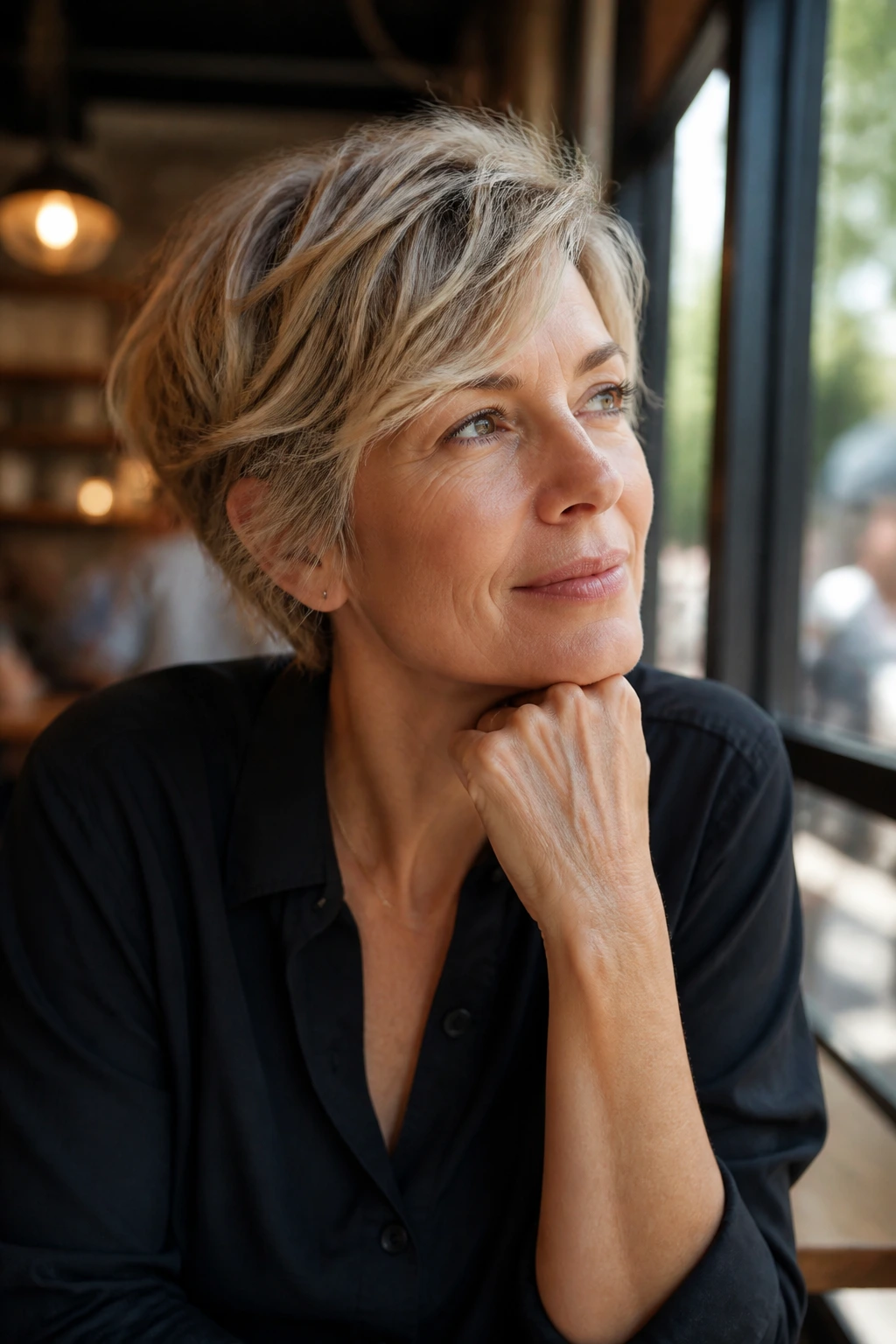
Will feathered short hair work on fine hair?
Yes, but the feathering has to be controlled. Fine hair needs some perimeter weight so the ends don’t look wispy, and the lift should come from the crown and front layers rather than from thinning everything out.
Does feathering make thick hair easier to manage?
Usually, yes. Thick short hair often feels bulky at the sides and heavy in the back, and feathering removes just enough weight to keep the outline from puffing out. The key is internal shaping, not over-thinning the surface.
Can I get feathered short hair if my hair is curly?
You can, but the cut has to respect the curl pattern. Ask for longer layers and soft feathering so the curls keep their clumps. If the layers are too short, the shape can widen fast.
What’s the difference between feathered and layered short hair?
Layers describe how the hair is stacked. Feathering describes the finish — softer, lighter, and more tapered at the ends. A cut can be layered without feeling feathered, and a feathered cut usually uses layers with a softer hand.
How often should I trim a feathered pixie or bob?
Pixies usually need shape-ups every 4 to 6 weeks. Feathered bobs can stretch a little longer, often around 6 to 8 weeks, depending on how fast your hair grows and how crisp you want the outline to stay.
Will feathered hair make my face look slimmer?
It can, if the layers are placed well. Side-swept top pieces, face-framing feathering, and a little height at the crown tend to lengthen the face visually. A wide, fluffy side shape does the opposite.
What if the feathering looks too wispy after the cut?
That usually means too much weight was removed from the ends. A stylist can often fix it by reshaping the perimeter and leaving more density through the bottom. Don’t keep adding product to solve a cutting problem.
Is this style hard to style every day?
Not if the cut matches your hair type. The shorter and lighter the style, the less product and time it usually needs. The issue is usually a bad cut, not the idea of feathering itself.
Keeping the Feathering Light Between Salon Visits
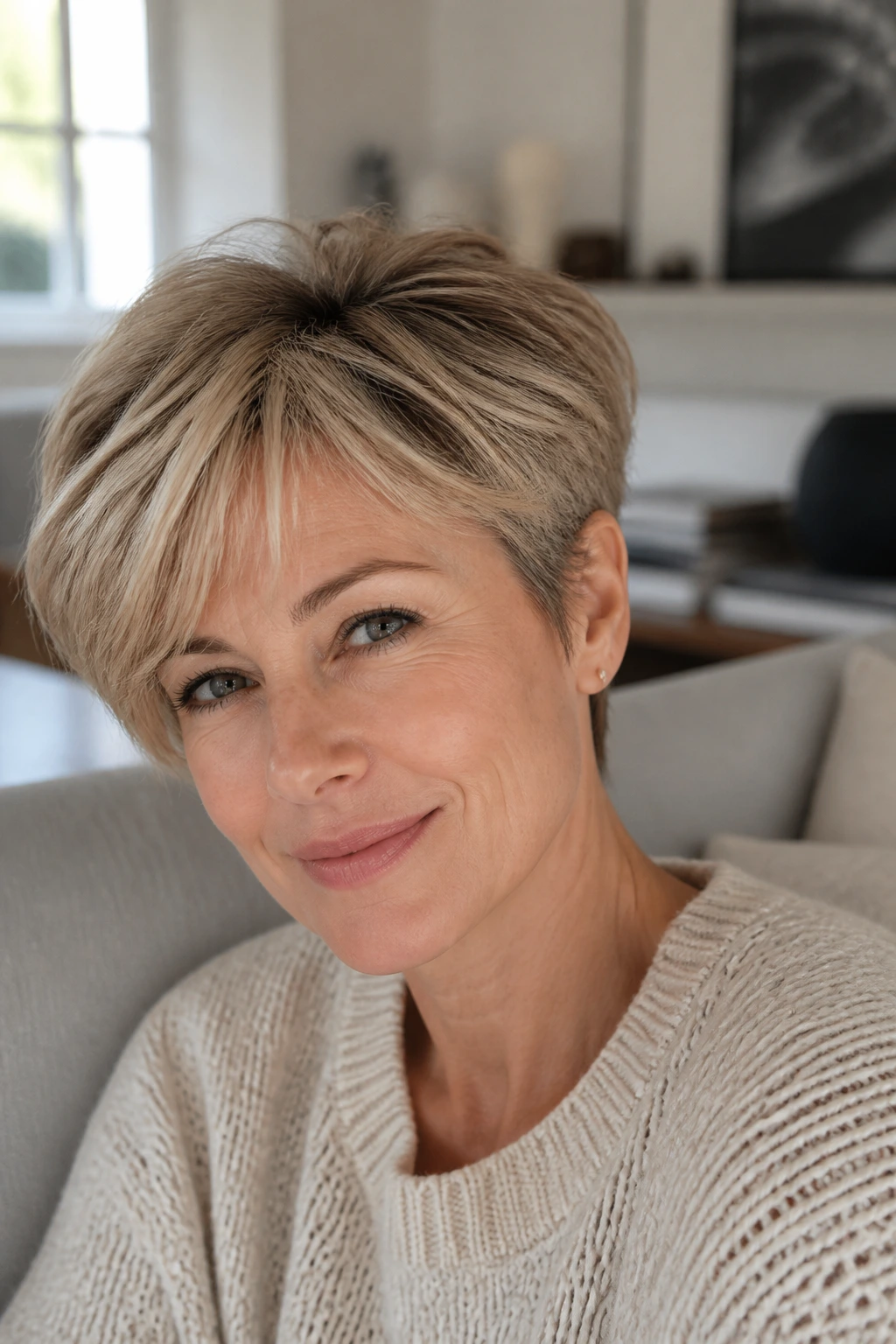
Feathered short hair looks best when it stays clean around the edges and soft through the top. That means trims matter. Pixies and cropped styles usually need reshaping every 4 to 6 weeks, while feathered bobs can sometimes hold for 6 to 8 weeks before the outline starts getting boxy. If the nape starts sticking out or the front stops sitting where it should, the haircut is already talking back.
Wash frequency depends on product and texture. Fine hair often needs more frequent washing because texture spray and dry shampoo can weigh the crown down fast. Thicker or wavier hair may do better with a slightly looser wash schedule, especially if you air-dry it and let the natural bend help. At night, a silk pillowcase or satin bonnet helps keep the feathered ends from snagging and flattening.
The easiest refresh is usually a mist of water at the roots, a little blow-dry at the crown, and a fingertip-sized touch of texture product only where the shape needs to wake up. No need to start over every morning. Short feathered cuts age better when they’re touched lightly, not beaten into submission.
The Shape That Keeps Moving
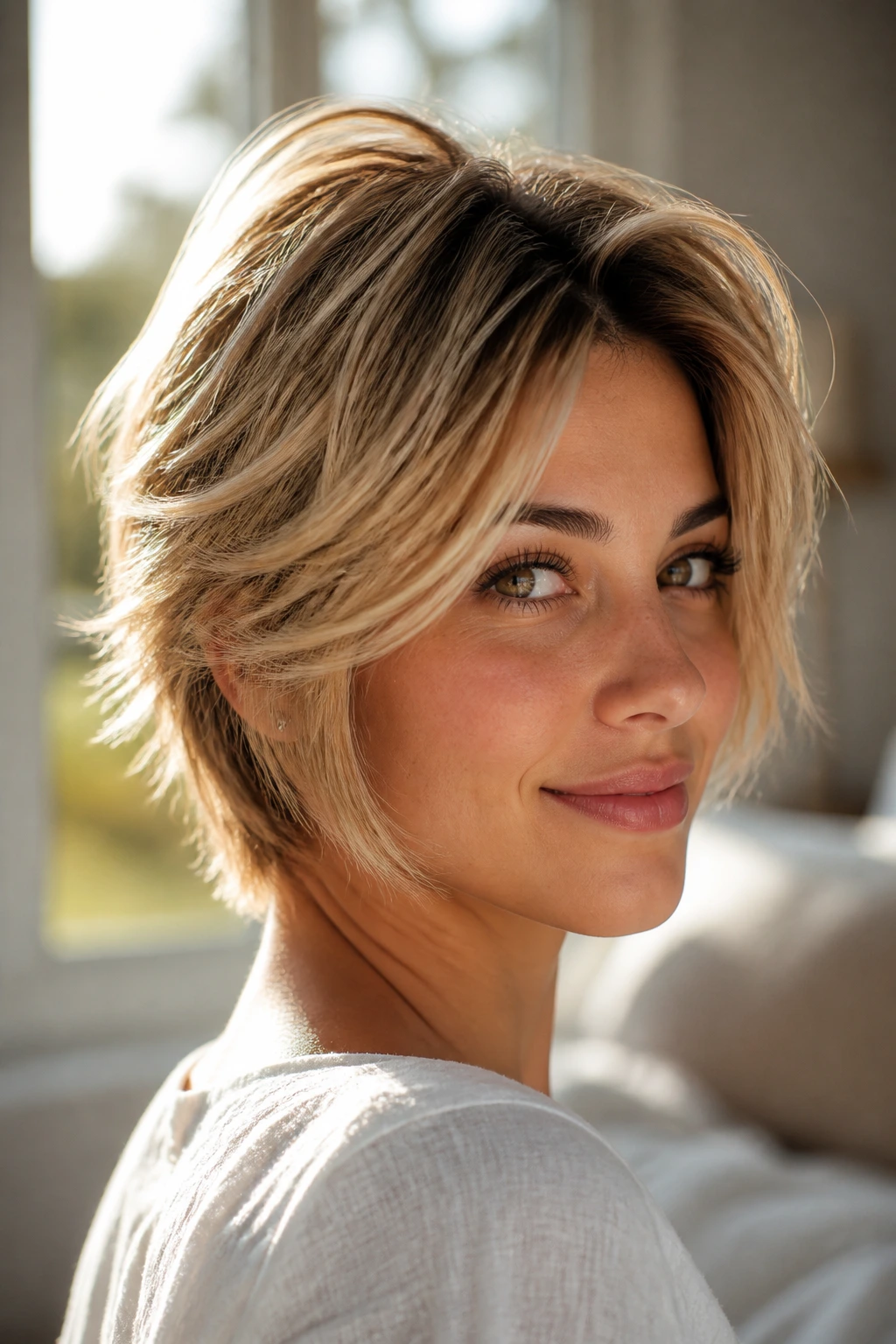
Feathered short hair works because it changes the silhouette without making the haircut fussy. That’s the part people remember after the mirror closes: the crown with a little lift, the ends with a little swing, the way the shape stays soft even when the hair is short enough to feel decisive.
If your current cut feels heavy, boxy, or too flat at the sides, feathering can change the whole mood without adding length. Pick the version that matches your texture, your styling patience, and the amount of movement you actually like seeing in the mirror.
Next time you sit in the chair, ask for the weight to come out of the places that make the cut feel stiff, and keep the motion where your eyes land first. That one request changes everything.
