



Layered bobs for thick hair can save a haircut from becoming a helmet.
That sounds blunt, but thick hair rewards blunt honesty. Cut it all the same length and the shape often swells outward at the sides, sticks out at the nape, and turns into a box by the end of the day. Put the layers in the right places, though, and the whole thing changes: the outline gets cleaner, the ends move, and the weight stops sitting in one ugly ledge around the jaw.
I’ve always liked bobs that do something useful, not just photogenic. Thick hair needs structure more than decoration. It wants a perimeter that still looks deliberate after a windy walk, a car ride, or one of those mornings when you blow it dry with half the patience you had yesterday. The best cuts below understand that. They reduce bulk where thick hair collects it, keep enough weight for a good shape, and leave room for texture instead of boxing it in.
Why These Layered Bobs Work So Well on Thick Hair
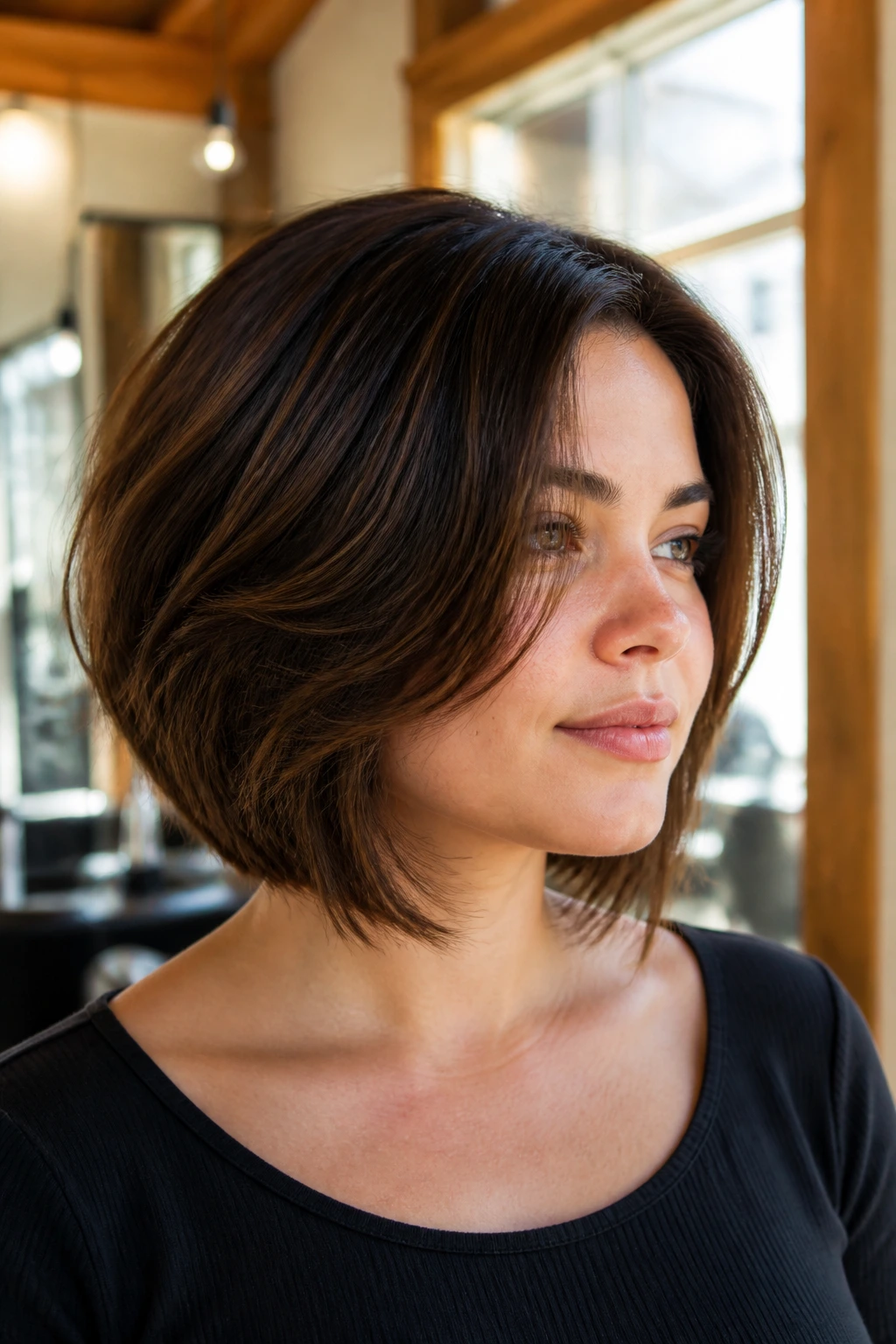
Bulk Control: Thick hair is usually too heavy through the mid-lengths before it is too thin at the ends. The right layering removes that middle puff without making the hem look wispy.
Better Movement: A bob that’s cut with interior layers bends instead of sitting like a slab. You feel it when you turn your head — the ends swing a little instead of swinging all together.
Less Triangle Trouble: The classic thick-hair problem is volume at the cheeks and jaw with no real shape at the bottom. Graduated backs, face-framing layers, and point-cut ends break that up fast.
Shorter Styling Time: A good layered bob does not need a long fight with a brush. On thick hair, the right cut can turn a 15-minute blow-dry into 7 or 8 minutes, because the hair falls into place instead of resisting every move.
More Ways to Wear It: Some versions love a sleek bend, some look better air-dried, and a few are happiest with a little rough texture. That flexibility matters when your hair has opinions of its own.
1. Chin-Length French Bob with Feathered Ends

The French bob at chin length is sharp in the best way. It lands right where thick hair usually wants to flare, so the layers have to be placed with care, but when they are, the whole cut looks crisp and easy instead of bulky and square.
I like this version with feathered ends rather than a hard, blunt edge. The tiny bit of soft cutting at the perimeter keeps the line from feeling heavy, and it helps the hair curve under instead of kicking out at the sides. If your hair has a little natural bend, this bob catches it beautifully. If it does not, a 1-inch round brush and a few minutes at the ends will do the trick.
Best for people who want a short bob that still feels polished. It flatters strong cheekbones, softens a round jaw, and looks especially good when tucked behind one ear.
2. Jaw-Length Stacked Bob with Clean Graduation
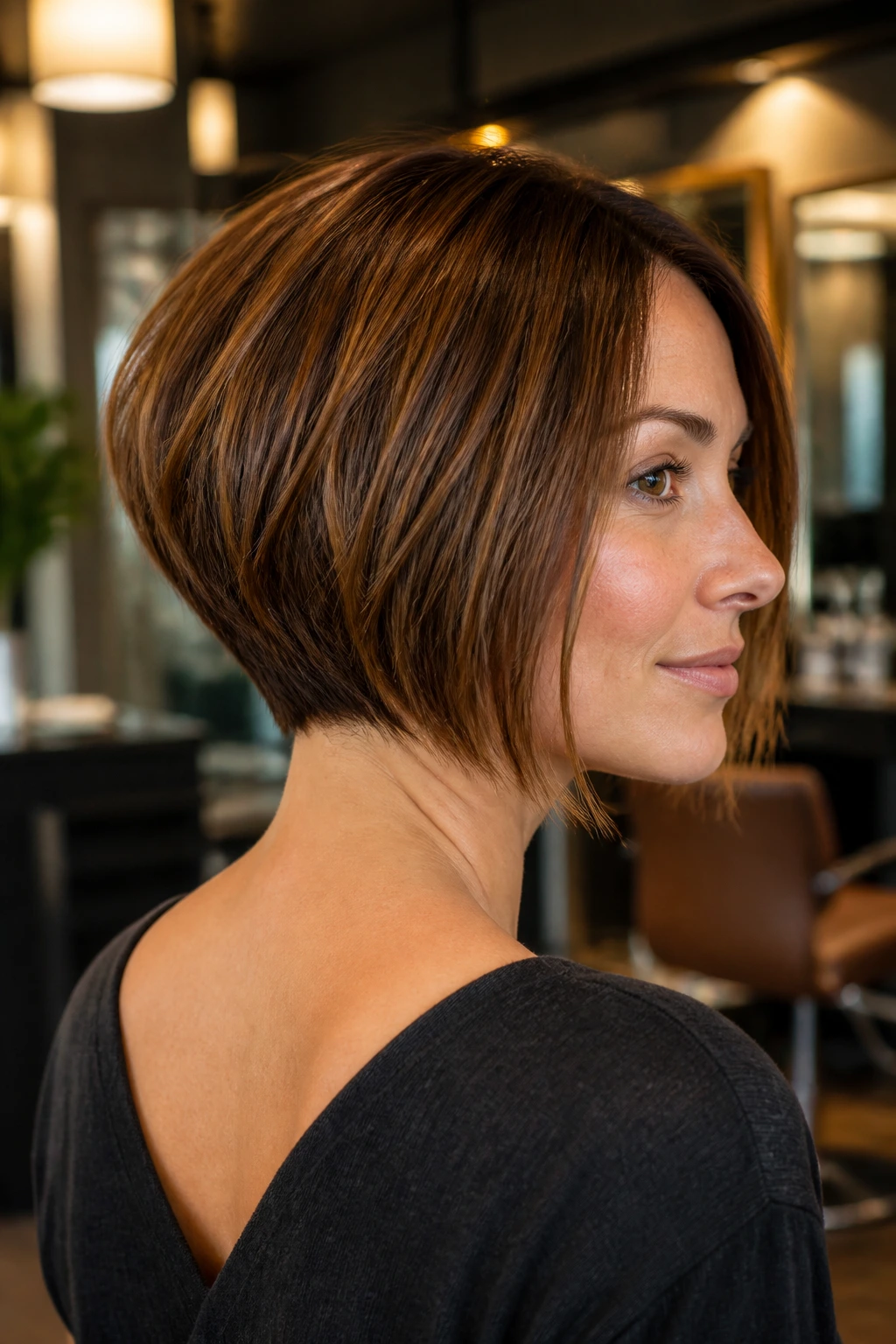
Why does a stacked bob work so well on dense hair? Because it uses the hair’s own weight against itself. The shorter back lifts the nape, and the gradual graduation stops the bottom from collapsing into a blunt shelf.
This is one of my favorite choices for thick hair that grows outward at the back. The stack creates shape without forcing the top layers to do too much. You want the back to hug the head and then fall into longer front pieces that skim the jaw, not jump out from it.
Ask for a strong nape line, but not a severe undercut. Too much removal down low can leave the crown looking puffed up from the side. A clean stack with controlled layering gives you the lift without the mushroom effect.
3. Collarbone Lob with Internal Layers

The collarbone lob is the sensible sibling in the family, but sensible does not mean dull. On thick hair, keeping the length around the collarbone gives you enough weight to avoid that fluffy, over-airy look while internal layers take out the bulk where it matters.
This is the cut I recommend when you want movement and don’t want to babysit your hair every morning. The outside line stays relatively calm, which keeps the style looking intentional. Inside, the layers stop the mids from ballooning under a sweater collar or flipping weirdly at the shoulders.
Best for:
- Thick hair that is wavy, coarse, or both
- People growing out a shorter bob
- Anyone who wants to wear the hair up on lazy days
If your hair is very dense, ask for the layers to be concentrated through the middle third, not chopped all over the place. That keeps the ends substantial.
4. A-Line Bob with Front Weight
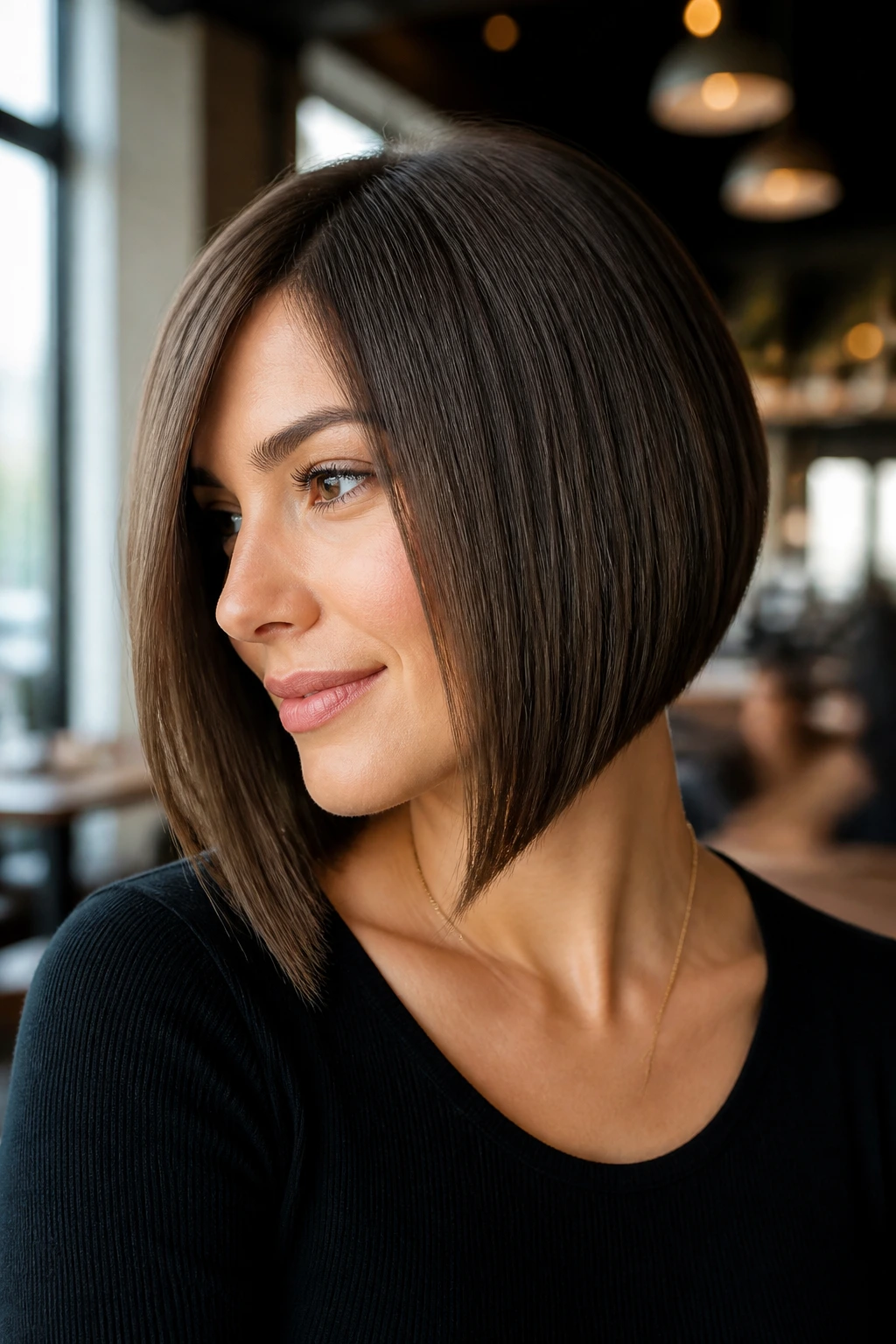
The A-line bob is a clean answer to a common thick-hair problem: too much width at the sides. By keeping the front longer than the back, the eye gets pulled forward, and the shape reads sleeker immediately.
I prefer this cut when the client likes an almost architectural line. It has a little attitude. The back can sit at the nape or slightly above it, while the front lands at the chin or just below. That angled shape helps thick hair lie flatter through the cheeks, which is where a blunt bob can get shouty.
A good A-line needs precision. If the angle is too steep, the front pieces feel disconnected. If it is too mild, the cut loses the point and starts acting like an ordinary bob with no real shape.
5. Curved Bob with Side Sweep
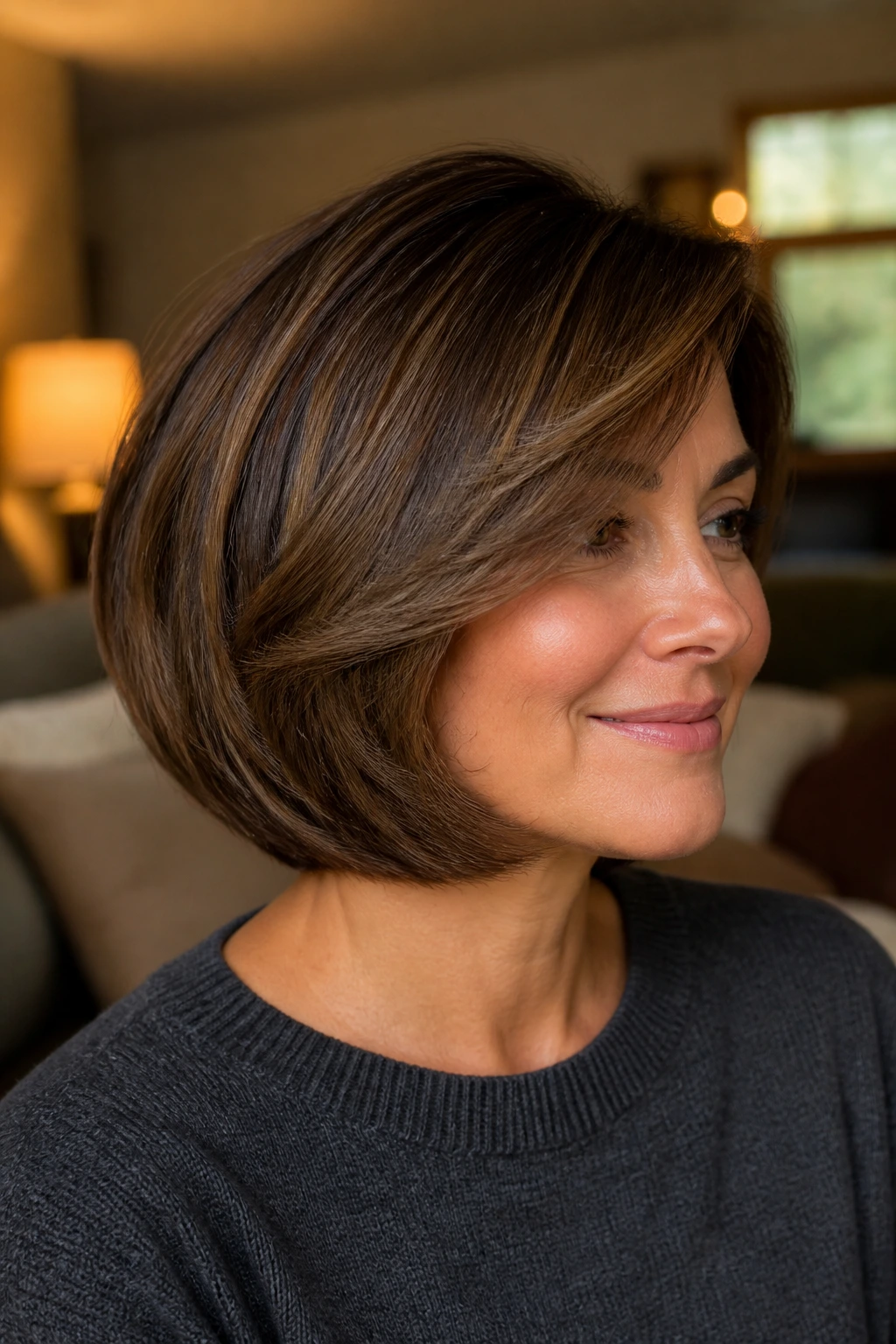
A curved bob is what happens when the perimeter is rounded on purpose. Instead of a flat horizontal line, the cut arcs gently around the head, which is a smart move for thick hair because it takes away the “cut square with a ruler” look.
The side sweep gives this version some softness at the forehead. That matters more than people think. Thick hair can feel heavy around the face, and a deep side part or a swept fringe breaks that up without needing a long curtain bang.
This one suits hair that takes heat styling reasonably well. A medium round brush and a blow-dryer nozzle make the curve obvious, but the shape still works if you air-dry and add a little bend with a flat iron on the front pieces.
6. Razor-Textured Shag Bob

A razor-textured shag bob is not for someone who wants calm hair. It’s for someone who likes movement, separation, and a bit of edge. The razor softens the ends, and on thick hair that can be a gift — as long as the stylist knows where to stop.
The trick is not to shred the whole head. That is how thick hair turns fuzzy and puffy. The better version keeps some weight in the perimeter and uses airy layers through the crown and mid-lengths to stop the haircut from sitting like a brick.
What makes it different
- The ends look broken up, not blunt
- The crown lifts without needing a full blowout
- It hides grow-out better than a precise geometric bob
This cut is happiest on natural wave. Straight thick hair can wear it too, but the style looks its best when there is a little bend already living in the hair.
7. Curtain Bang Bob

Curtain bangs on thick hair can either look gorgeous or take over the whole face. The difference is in where the weight gets removed. If the fringe is thinned correctly and blended into a layered bob, the result is soft, balanced, and a little bit French without trying too hard.
I like this combination because curtain bangs take the visual weight off the center of the face. Thick hair often has a lot of presence around the forehead and jaw at the same time. This cut opens the middle, keeps the sides light, and lets the bob feel less like a block.
The fringe should start a little shorter in the center and slide longer toward the cheekbones. If the bangs are cut too thick, they sit like a curtain rod. If they’re too wispy, they disappear into the rest of the cut. The sweet spot is somewhere in the middle. Not feather dust. Not a mop.
8. Bixie Bob
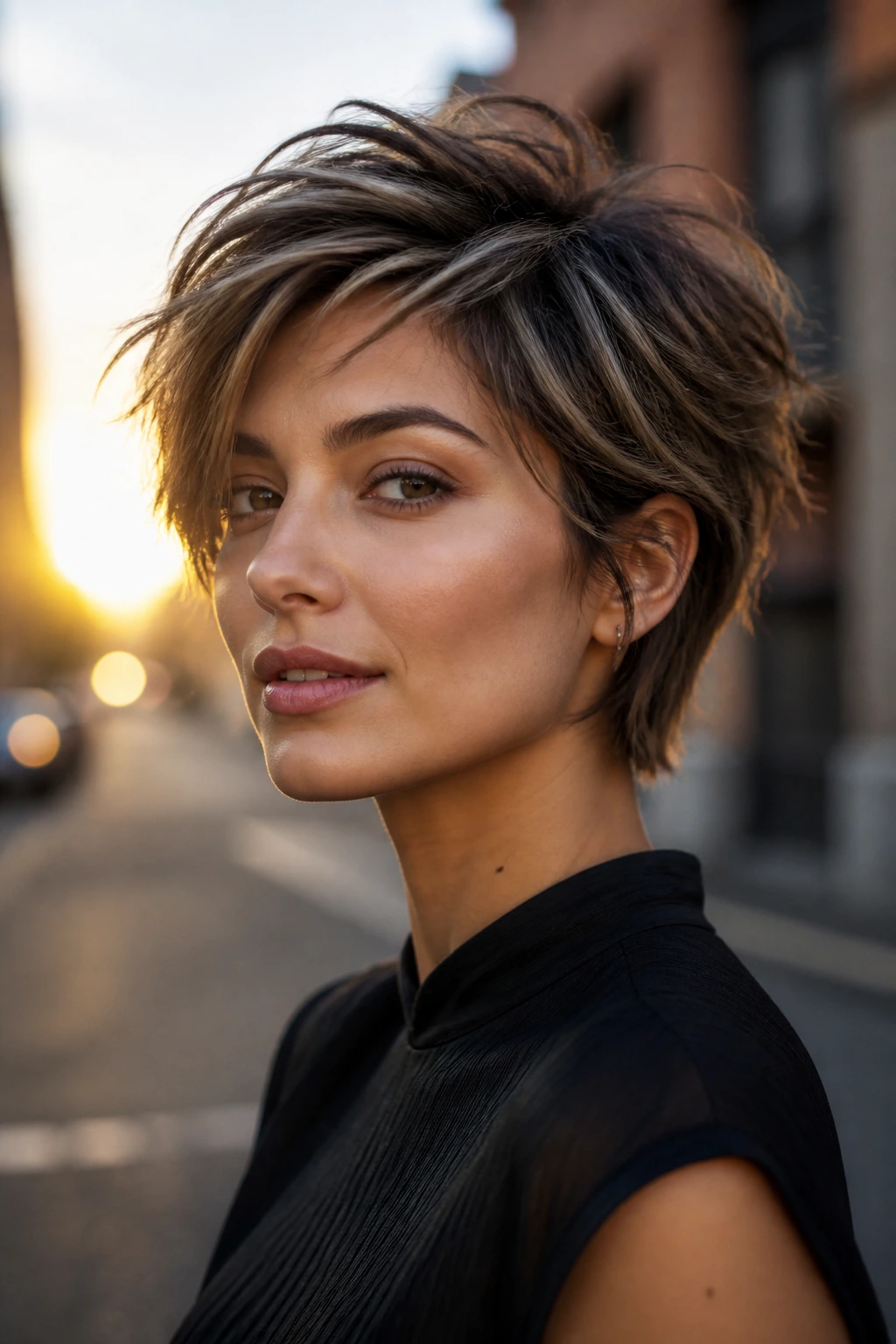
A bixie bob sits in that fun middle ground between a bob and a pixie. On thick hair, that makes it a little dangerous and a little brilliant. There’s enough hair left on top to keep the style from looking too shaved down, but enough removal in the back and sides to keep the bulk under control.
This is a strong choice if you want short hair but hate the feeling of a dense helmet around the ears. The layers create lift, the nape stays neat, and the top can be styled messy or smooth depending on your mood.
The catch is maintenance. A bixie bob grows out fast, and thick hair can lose the shape quicker than finer hair because the sides start pushing outward. If you like structure, plan on trim appointments staying close together.
9. Rounded Classic Bob

A rounded classic bob is the kind of haircut people assume is simple until they see how much work it took to make it sit that cleanly. On thick hair, the rounded outline keeps the bulk from sticking out at the corners, which is where a lot of bob cuts go sideways.
The shape curves inward slightly at the jaw and chin, so the eye sees one soft oval line instead of a box. I find this works best when the interior layers are subtle. Too many choppy cuts fight the rounded silhouette and make the whole thing look patchy.
There’s a nice old-school elegance to this one, but don’t confuse that with stiff. A good rounded bob still moves. You should be able to shake your head once and see the ends settle back into place.
10. Wavy Blunt Bob with Underlayers
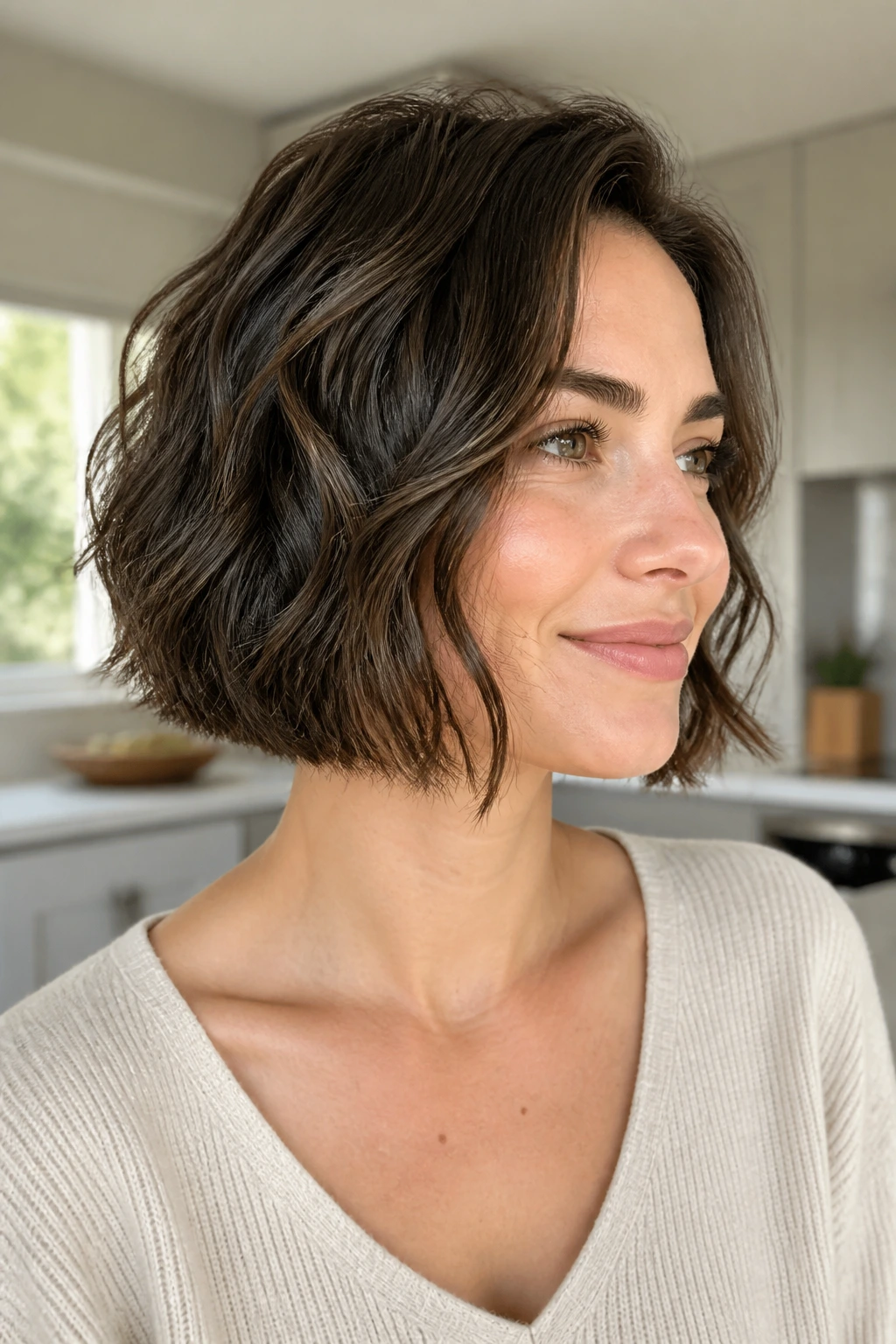
This one is a favorite of mine because it solves a real problem: thick hair often needs the visual strength of a blunt perimeter, but it also needs hidden relief underneath. The outer line stays strong, while the underlayers take out enough bulk to stop the bob from flaring out.
The result is a bob that looks fuller than a razor-cut style but lighter than a traditional one-length cut. If your hair is wavy, the shape gets even better on second-day hair, when the bend settles in and the edges no longer look freshly blown out.
The underlayers should never be so short that they peek through the bottom. That’s where the style starts looking chopped up. Keep the removal tucked inside the haircut, where it helps the shape without announcing itself.
11. Inverted Bob with Clean Nape
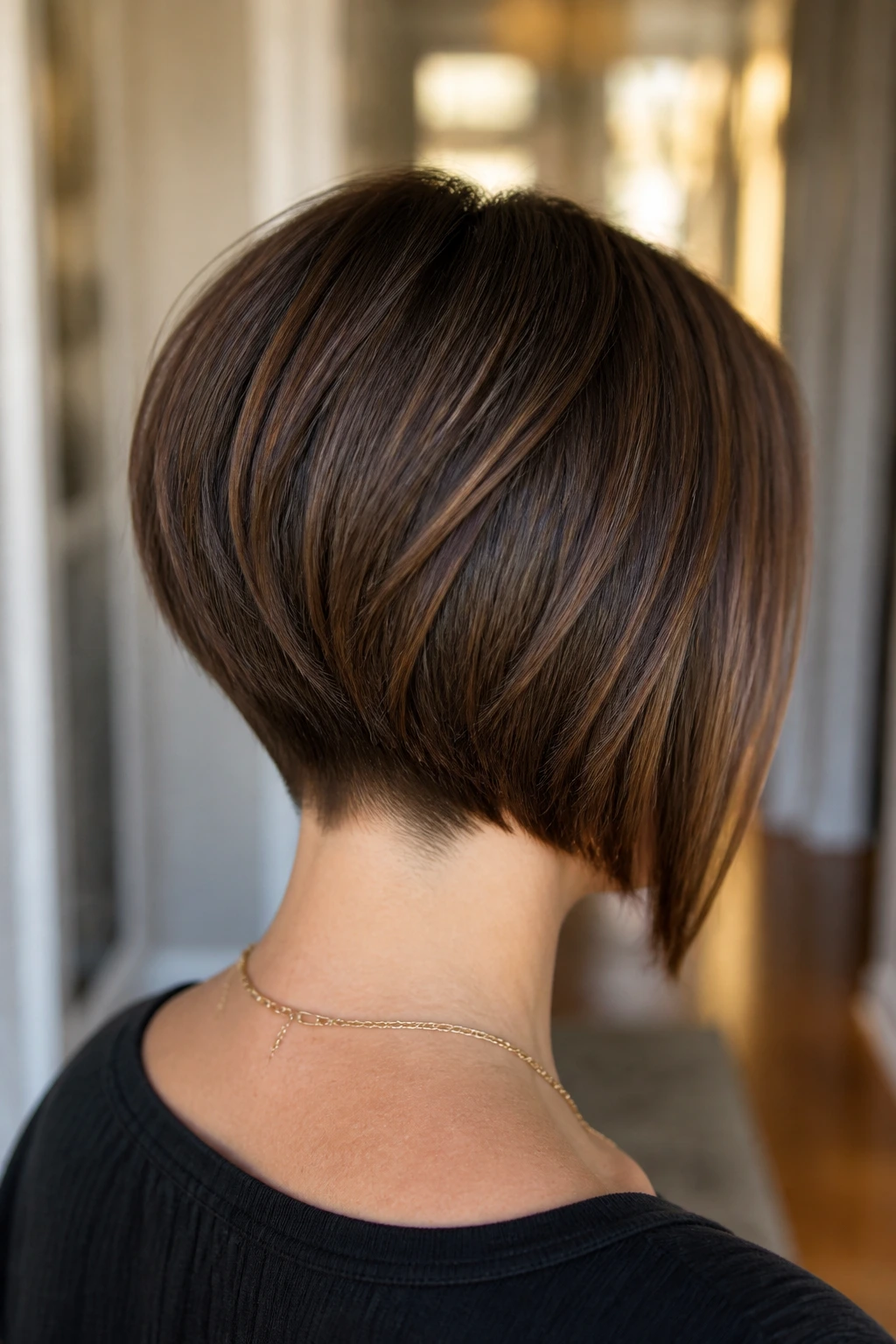
An inverted bob is all about contrast. The back sits shorter and tighter, while the front keeps its length. On thick hair, that contrast matters because it takes pressure off the neck and stops the back from hanging heavy.
This cut has more drama than a standard stacked bob. The line falls forward more obviously, so the face gets framed by the longer front pieces. I like it on people who want a bob that looks intentional from every angle, not just the front mirror selfie.
One caution: if the graduation is too soft, the shape turns vague. If it’s too high, the crown can puff. The best version sits right in that middle zone where the back feels lifted and the front still has enough weight to move.
12. Tapered Bob
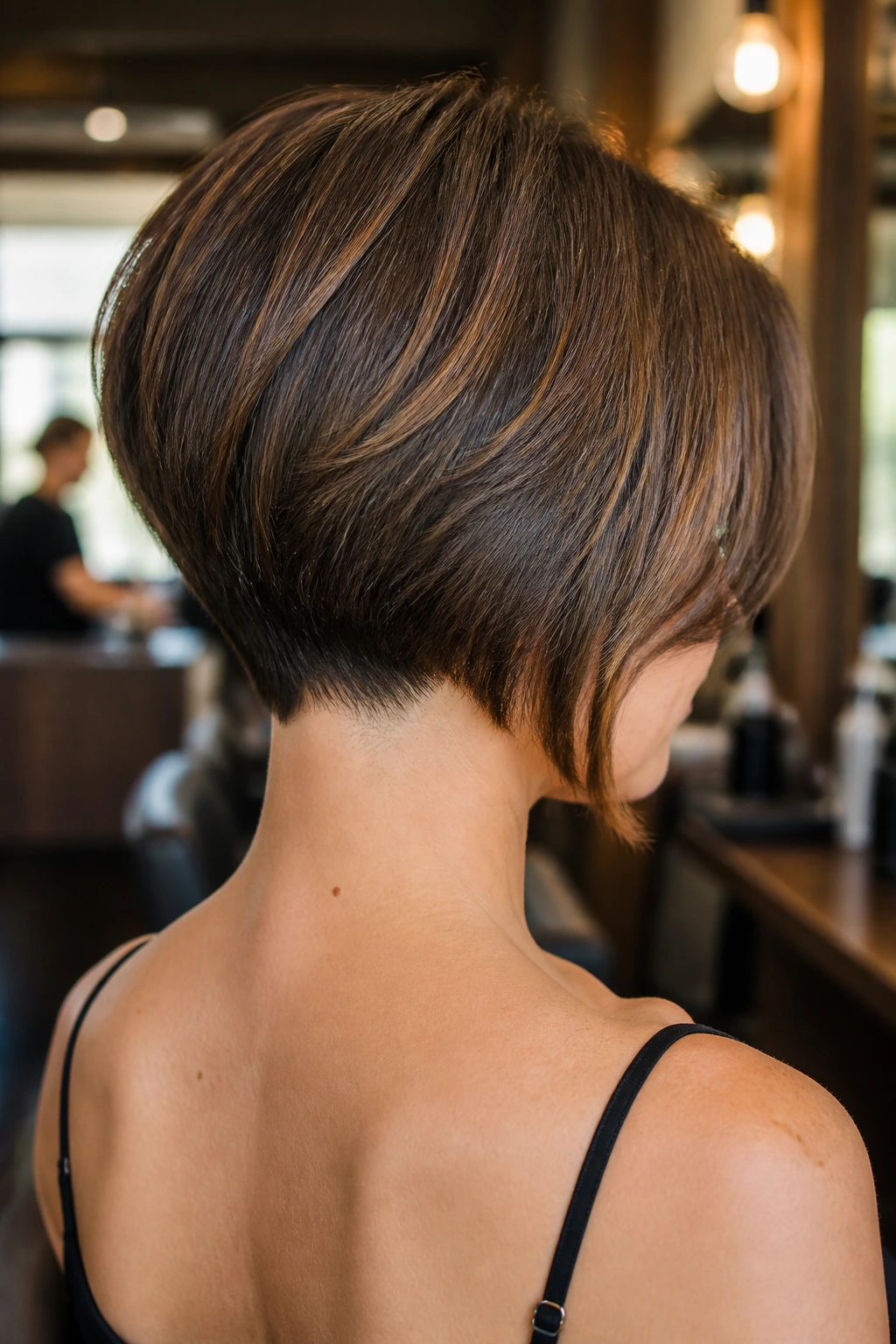
A tapered bob hugs the nape. That’s the point. Thick hair tends to kick out at the back when it reaches bob length, and tapering the outline helps it nestle into the neck instead of standing away from it.
This style is clean, easy to tuck behind the ears, and especially good if you wear jackets, scarves, or high collars a lot. The cut keeps the silhouette neat even when the rest of your outfit is adding bulk near the shoulders.
Ask for these details:
- A snug nape line with soft graduation
- Interior removal through the back, not the perimeter
- Front pieces left long enough to balance the neck
It’s a good cut for straight or slightly wavy thick hair. If your hair is very curly, the taper needs more room so the bottom doesn’t shrink up too much.
13. Bottleneck Bang Bob
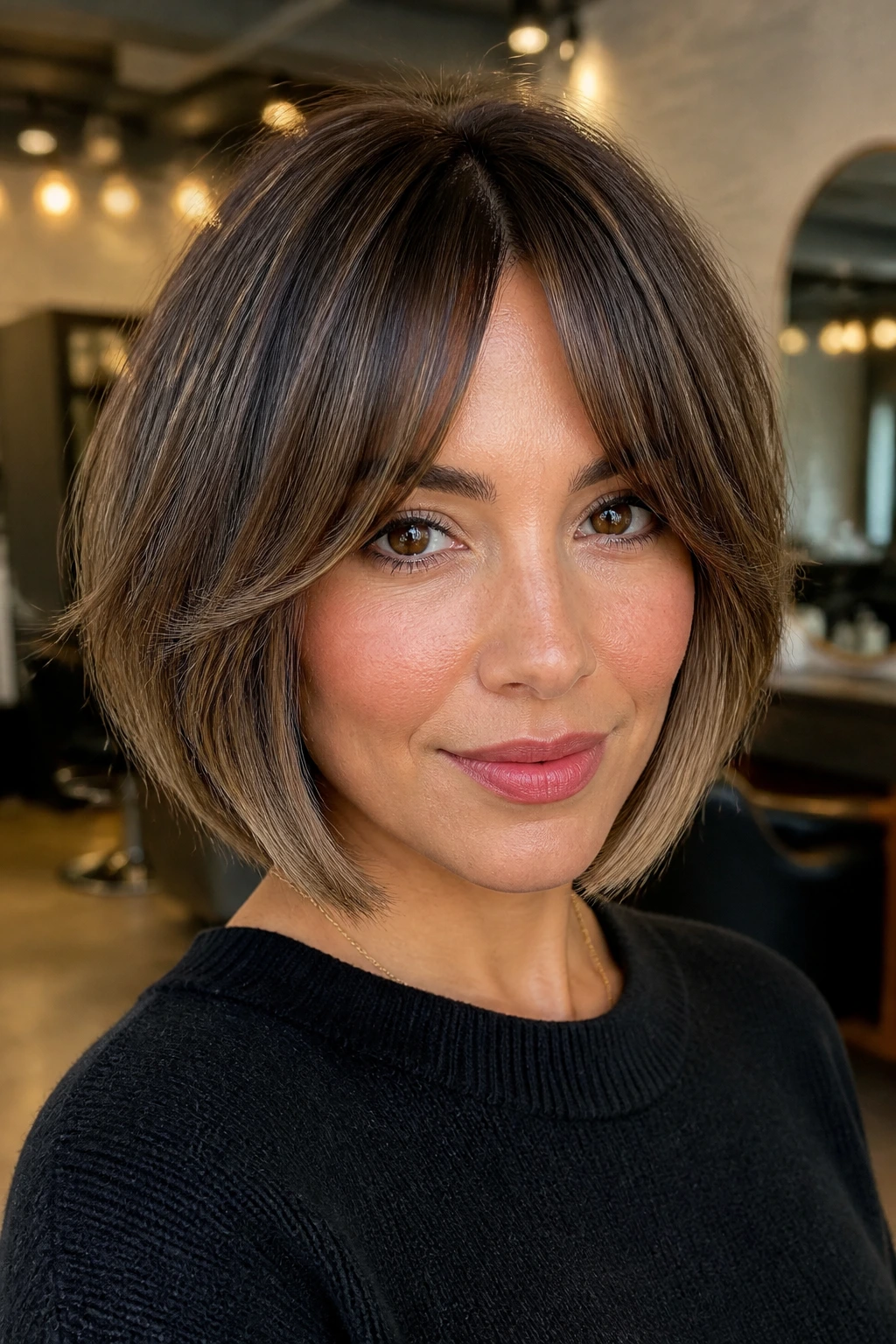
Bottleneck bangs are one of those fringe shapes that make sense the second you see them on thick hair. The center is narrower and softer, then the bangs open out around the eyes and cheekbones. That shape keeps the front from becoming a solid curtain.
Pair them with a layered bob and you get a haircut that feels polished but not severe. The bangs draw attention upward, while the layers keep the sides from looking too wide. It’s a smart choice if you want a little softness around a strong brow or a longer face.
This cut needs a stylist who understands how to blend fringe into the top layers. If the bangs are cut in isolation, they sit on the face like a separate piece. Once they’re connected, the whole haircut reads as one shape.
14. Airy Point-Cut Bob
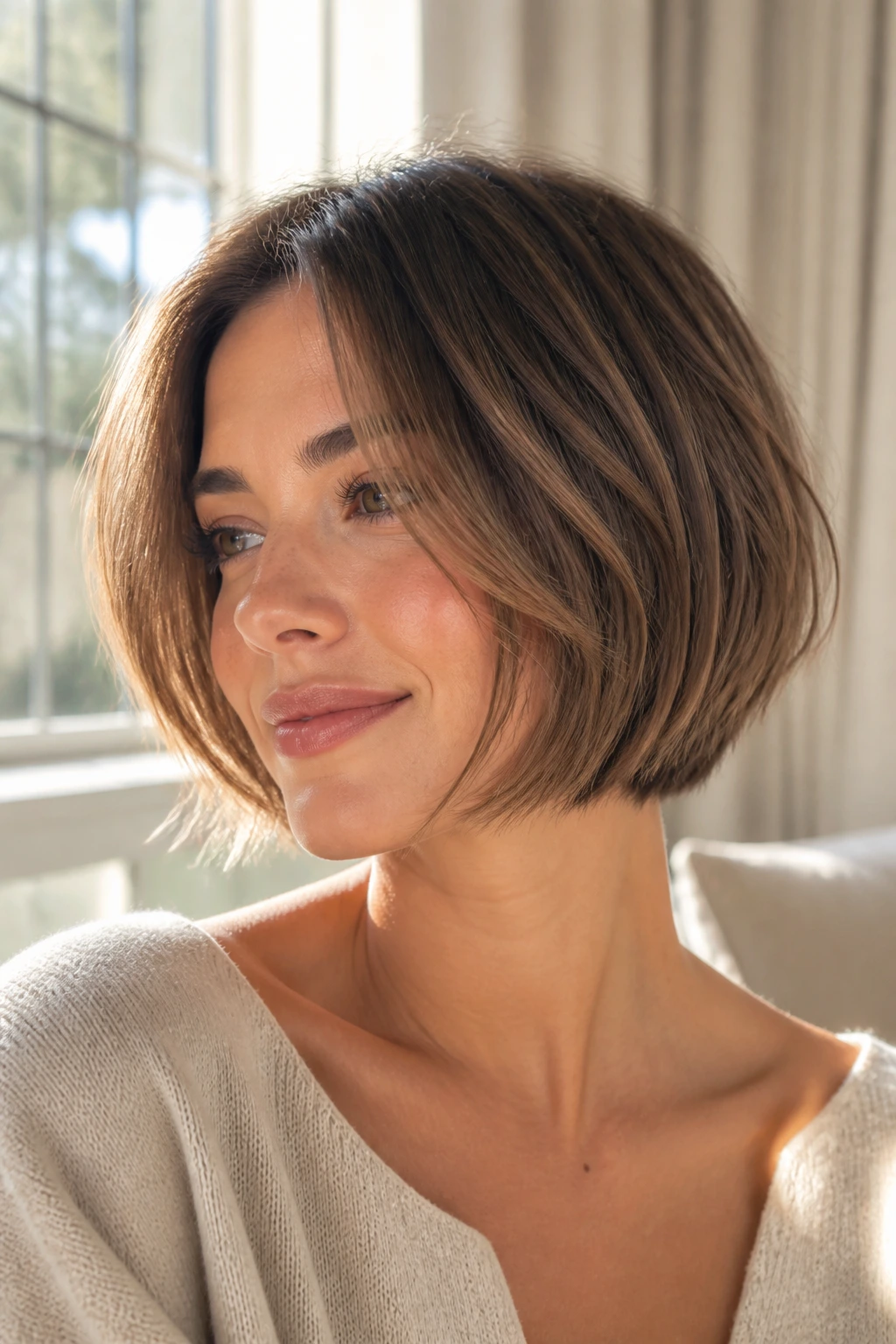
Point-cutting is one of the best tools for thick hair when the goal is movement without obvious choppiness. Instead of slicing a blunt line straight across, the stylist uses the tips of the scissors to nick into the ends and soften the edge.
An airy point-cut bob still has a shape, but the ends don’t feel heavy or stamped. That matters if your hair has a lot of body but not much bend. The cut helps the hair move instead of laying in one solid sheet.
This is a good in-between option for anyone who wants texture but hates the shaggy look. It’s softer than a razor cut, cleaner than a shag, and easier to grow out than both.
15. Deep Side-Part Bob

A deep side part can change a thick bob faster than a full haircut can. It shifts the weight, builds volume on one side, and gives the illusion of more shape at the crown without adding layers everywhere.
I like this on bob lengths that sit between the jaw and the collarbone. The deep part gives the haircut a little swing, and thick hair benefits from that asymmetry. It breaks the sameness that can happen when dense hair is cut evenly on both sides.
If your hair tends to collapse flat at the roots, this style gives you a built-in lift. A little root spray at the part line and a quick blow-dry with the opposite hand can make the whole thing look intentional rather than accidental.
16. Piecey Razor Bob
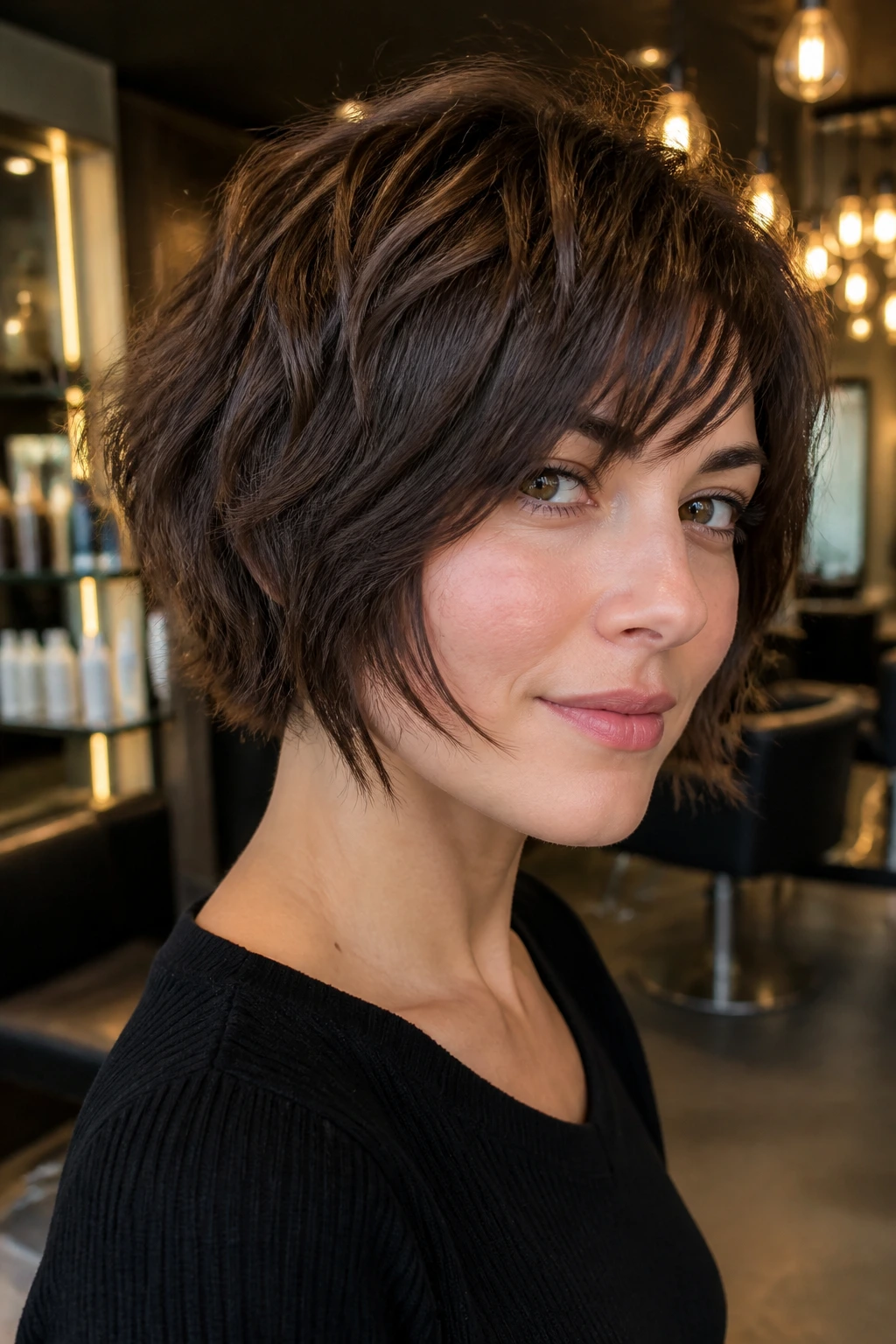
A piecey razor bob is not subtle. It’s meant to look separated, not smooth. That can be a very good thing for thick hair, because the piecey finish stops the ends from acting like one giant mass.
The key here is restraint. The razor should create texture, not shred the haircut into dust. You want visible pieces around the front and through the crown, with enough heft left in the lower line to keep the shape from disappearing.
This cut works especially well with styling paste or a dry texture spray. A little goes a long way. Too much product and the layers clump together; too little and the haircut loses the separated look that makes it interesting in the first place.
17. Blowout Bob
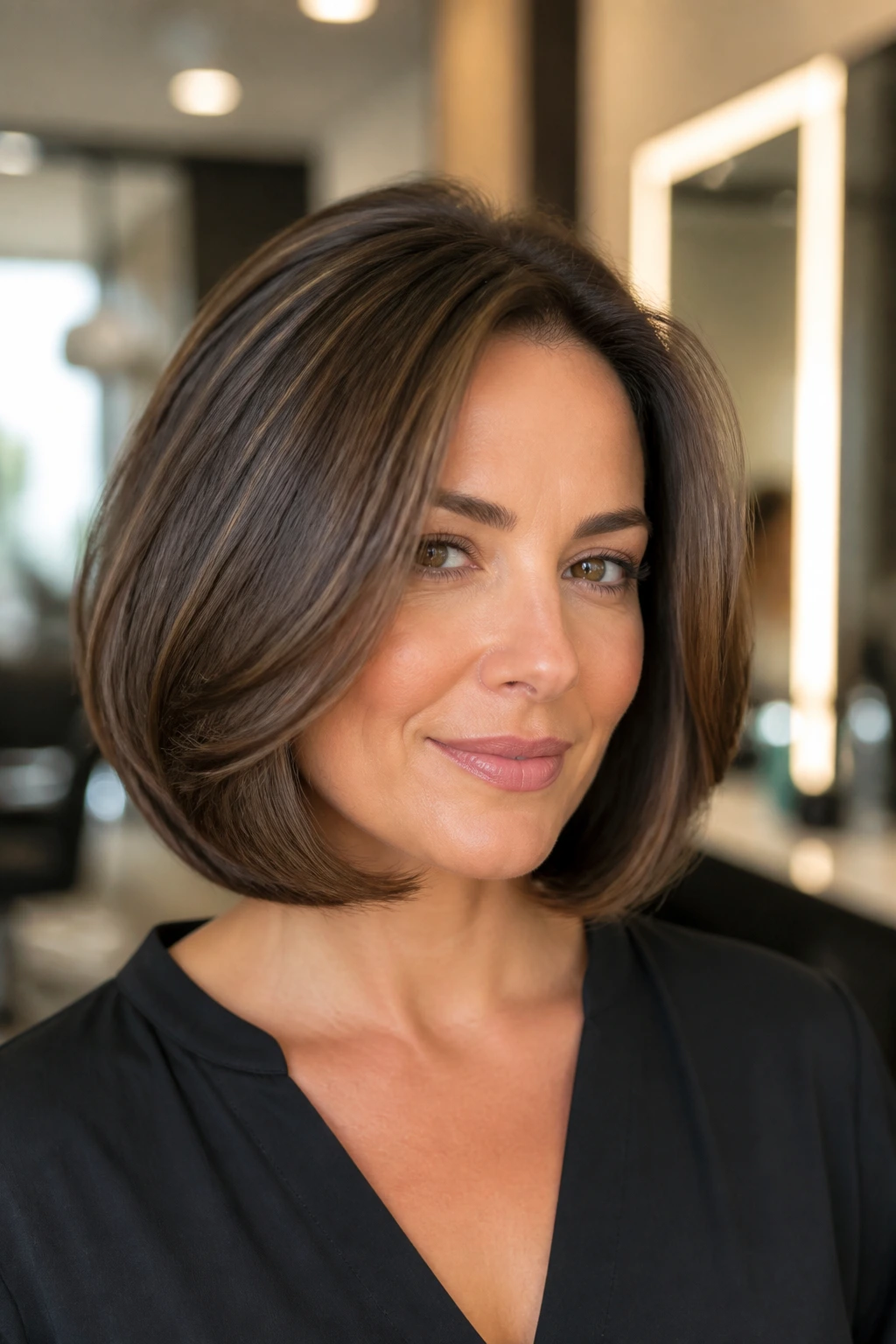
A blowout bob is for someone who likes a little polish. Thick hair can hold a round-brush finish beautifully because the weight gives the curve staying power. The layers support the shape instead of fighting it.
This version looks best when the ends bend under slightly and the top has smooth root lift. It’s less about texture and more about control. I’d choose it for a workday haircut, a dinner out, or any time you want the hair to look deliberate without looking stiff.
The front pieces should be slightly longer than the back so the curve has room to move. If the layers are too short, the brush finish can get fluffy. If they’re too long, the shape goes limp. The middle ground is where the good stuff lives.
18. U-Shaped Bob

A U-shaped bob sounds subtle, and that is exactly why it works. The center remains a touch longer than the sides, which creates a soft dip that flatters thick hair by avoiding one hard horizontal line.
The shape is useful if your hair builds width at the jaw. The gentle curve keeps the outline from looking harsh, and the longer center keeps some weight where dense hair needs it most. It’s an easy shape to wear straight, wavy, or tucked behind the ears.
Why it helps
- The center length keeps the hem from bouncing upward
- The side lengths relieve bulk around the jaw
- The curve reads softer than a blunt cut
This is a good bob for people who want calm rather than edgy. No drama. Just good proportions.
19. Soft Volume Bob

Some thick hair needs to be reduced. Some needs to be invited up. A soft volume bob does the second job. The layers are placed to lift the crown a bit and let the hair fall with a rounded shape instead of hugging the head too tightly.
This can be a very flattering cut if your hair gets flat on top and heavy below. The crown keeps a little height, the sides stay controlled, and the ends don’t feel over-thinned. It’s one of the few bob styles where “volume” is a positive because the volume is organized.
The trick is to keep the layers soft through the top and more disciplined through the perimeter. If the top layers are too short, the style starts looking puffy. If they’re too long, the lift disappears.
20. Hidden Undercut Bob
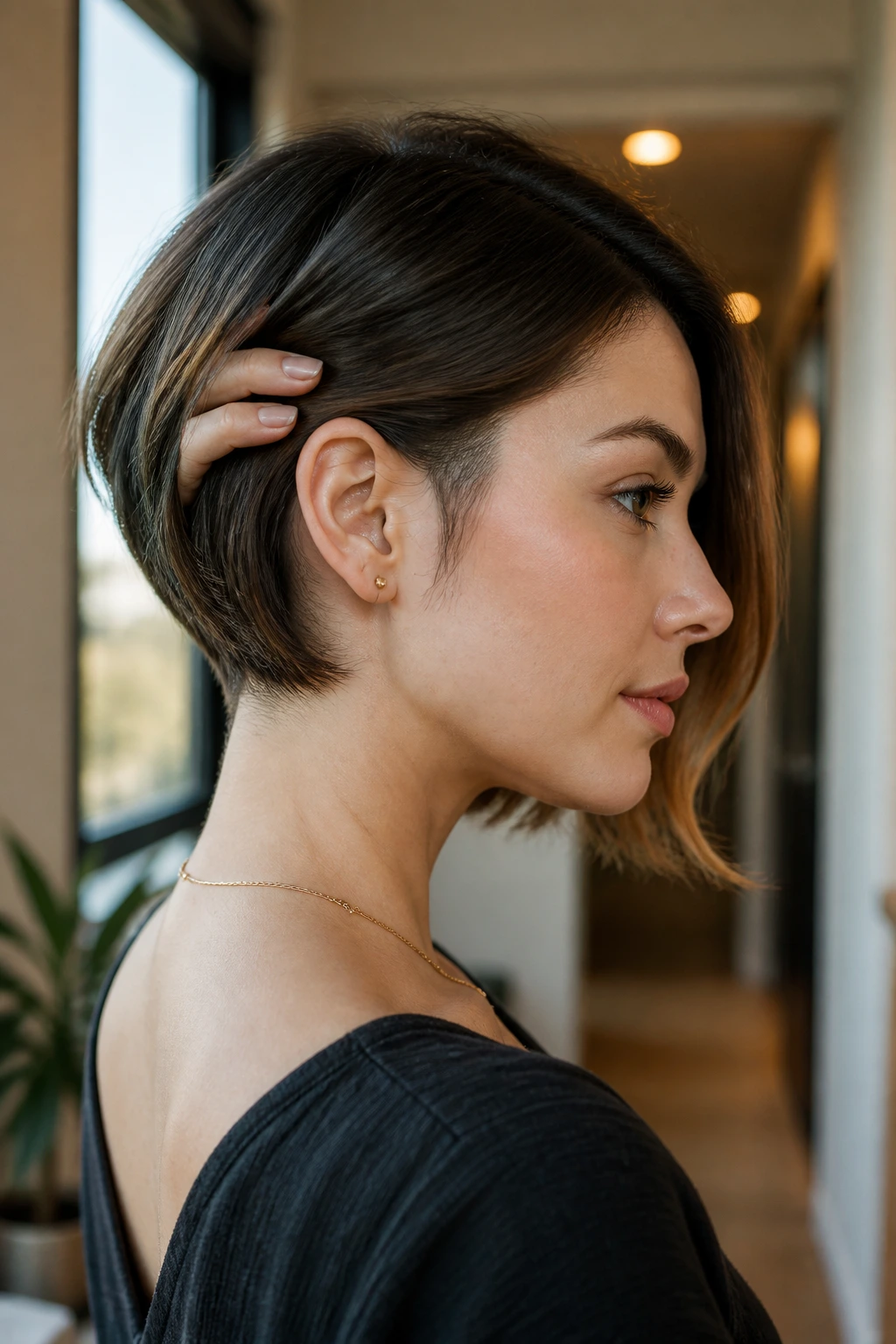
A hidden undercut is one of the most practical tools for thick hair, and I wish more people asked for it. It removes bulk underneath the top layers, usually near the nape or behind the ears, so the haircut can sit flatter without looking obviously shaved.
That’s a useful move if your hair is so dense that even a good layered bob still feels heavy by noon. The undercut lightens the load where no one can see it, which is exactly the point. You get a cleaner outline and easier drying time.
It’s not a cut for someone who wants endless grow-out options. But if you already know your hair is high-maintenance, this is the kind of hidden decision that pays off every single morning.
21. Curly Layered Bob
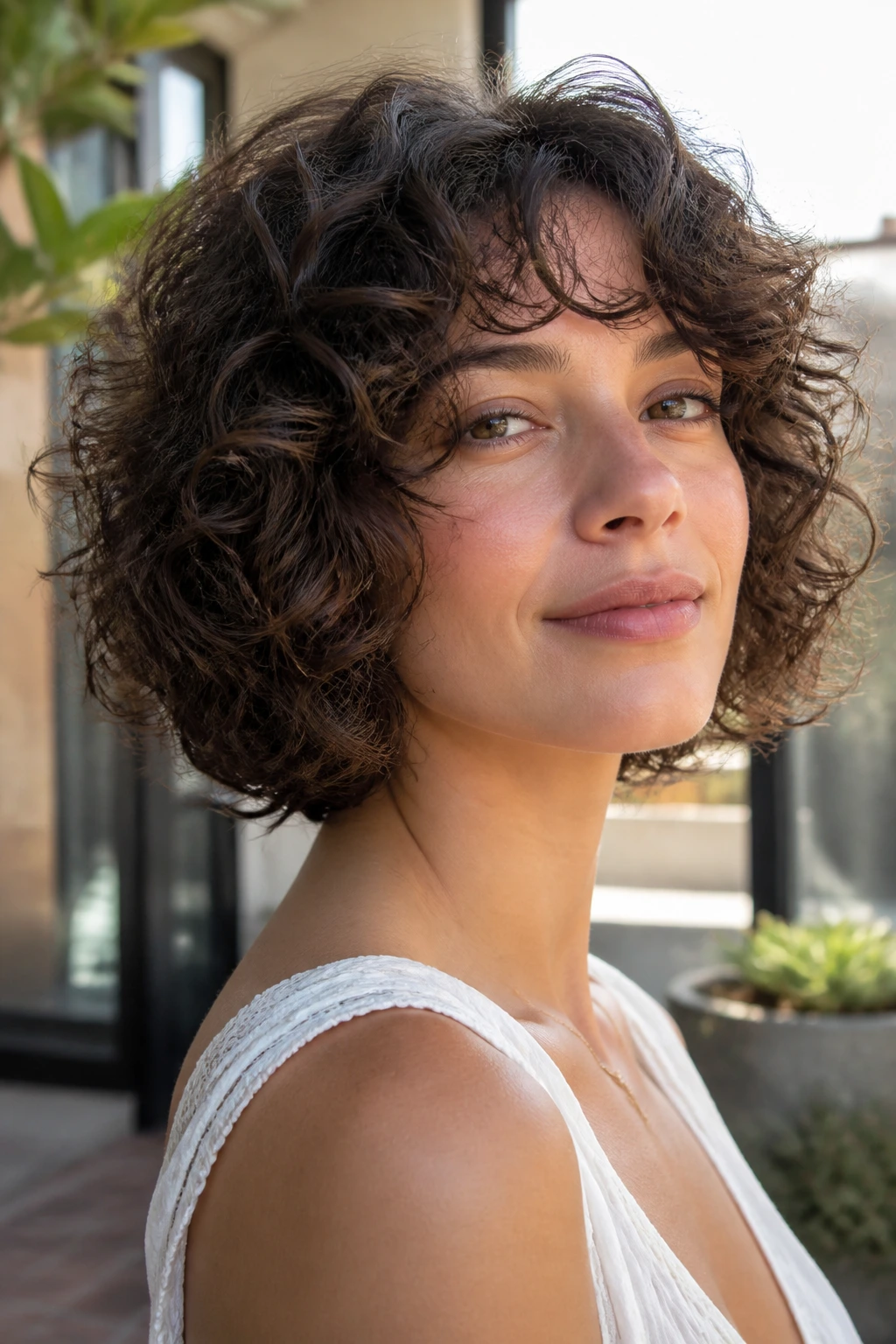
Curly thick hair needs layers that respect the curl pattern, not fight it. A curly bob lives or dies by how the interior layers are placed. Too much removal near the top and the curls balloon. Too little and the bottom turns into a dense triangle.
The best version usually gets cut with the curls dry or partly dry, so the stylist can see where the real weight sits. That gives the haircut a chance to shrink correctly instead of guessing. The result is a bob with shape, spring, and enough room for each curl to show up.
If your curls are tight, keep the perimeter longer than you think you need. Shrinkage is sneaky. It always seems harmless in the chair and a little shorter by the first wash.
22. Micro-Layered Chin Bob
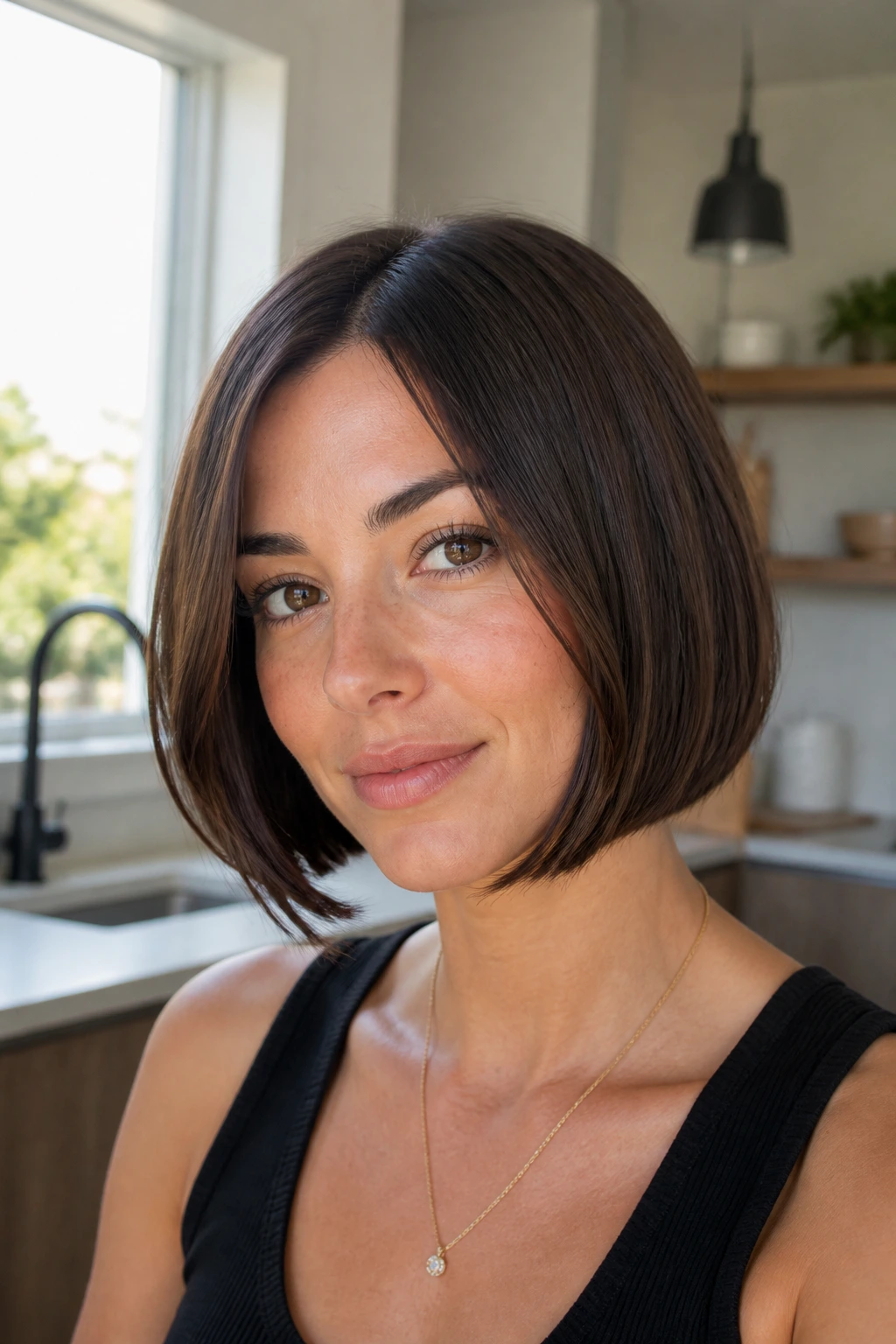
A micro-layered chin bob is for someone who wants the sharpness of a short bob without the bulk that thick hair can create at that length. The layers are tiny and strategic, not obvious or choppy. They’re there to stop the sides from turning into a box.
This cut is especially good when thick hair is straight or only slightly wavy. It creates a neat line around the face and keeps the ends from doing that heavy outward flip that can happen at chin length. Done well, it looks sleek from the front and tidy from the side.
The style needs careful maintenance. Short, dense hair grows fast in shape, even if it doesn’t grow fast in length. A four- to six-week cleanup makes a difference here.
23. Shoulder-Skimming Layered Bob

The shoulder-skimming bob is the safe place many thick-haired people end up, and for good reason. It gives you the bob feel without forcing the hair to sit at the exact point where it likes to puff out the most.
Layers are what keep this length from becoming boring. A little removal through the mid-lengths stops the shoulder contact from creating a flip or a shelf. The ends can graze the collarbone, brush the shoulders, or sit just above them depending on your hair texture.
This is a nice choice if you tuck your hair behind your ears, wear it half up, or need enough length for a quick clip. It’s a workhorse cut. Not flashy, but it earns its place.
24. Long Bob with a Defined Weight Line
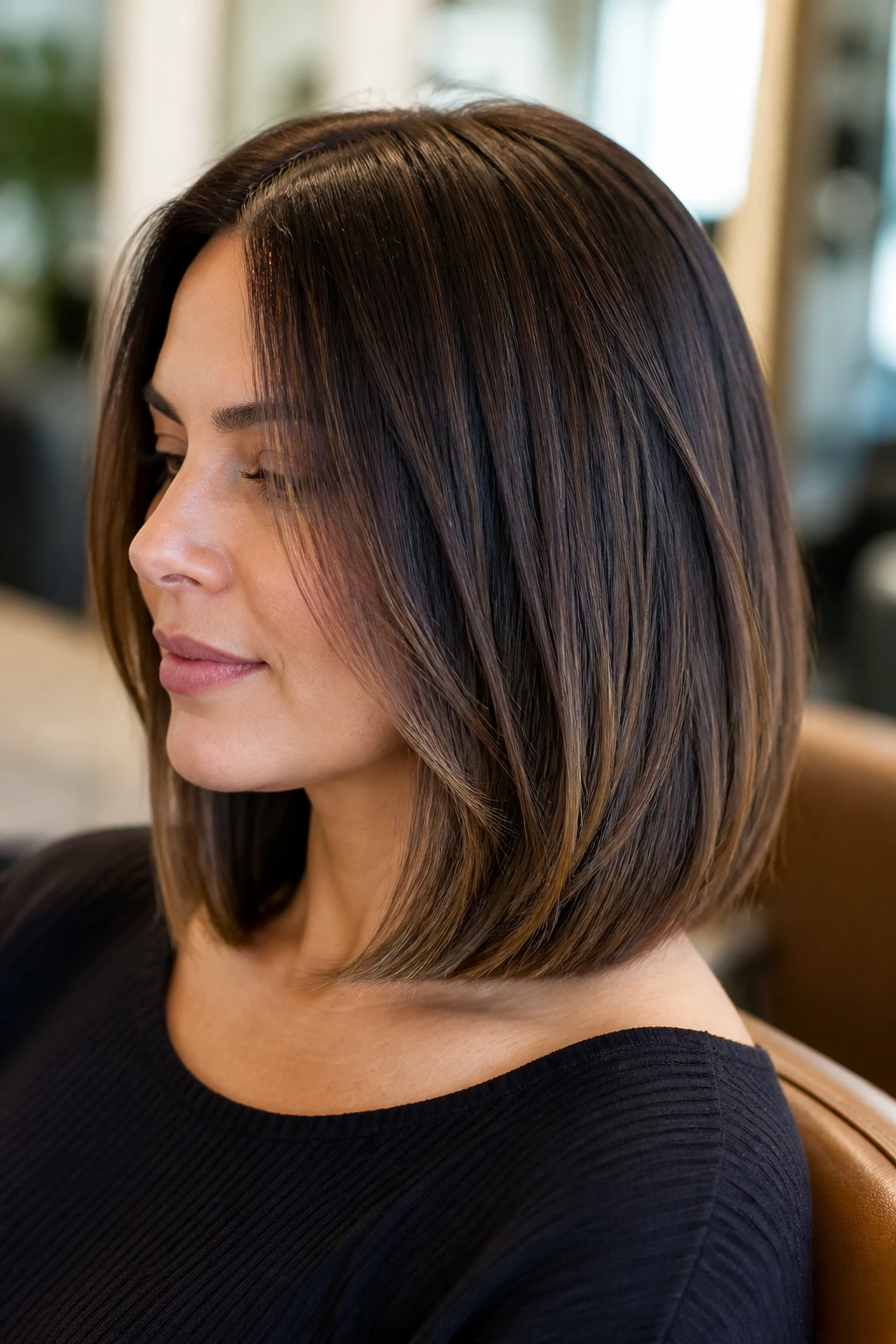
A long bob with a defined weight line is one of the better options for thick hair that still wants polish. The key is the line: it sits with enough structure to keep the hair looking clean, while internal layers prevent the whole thing from becoming a heavy curtain.
This is the style I recommend when someone wants to move toward shorter hair but isn’t ready to lose the feeling of length around the shoulders. You still get the bob silhouette, but you also keep enough hair for an easy ponytail or twist.
The weight line matters. If the stylist removes too much at the bottom, the shape loses its calm. If too little comes out underneath, the length can overwhelm the face. The cut should feel balanced, not busy.
25. Cropped Bob with Swoopy Fringe
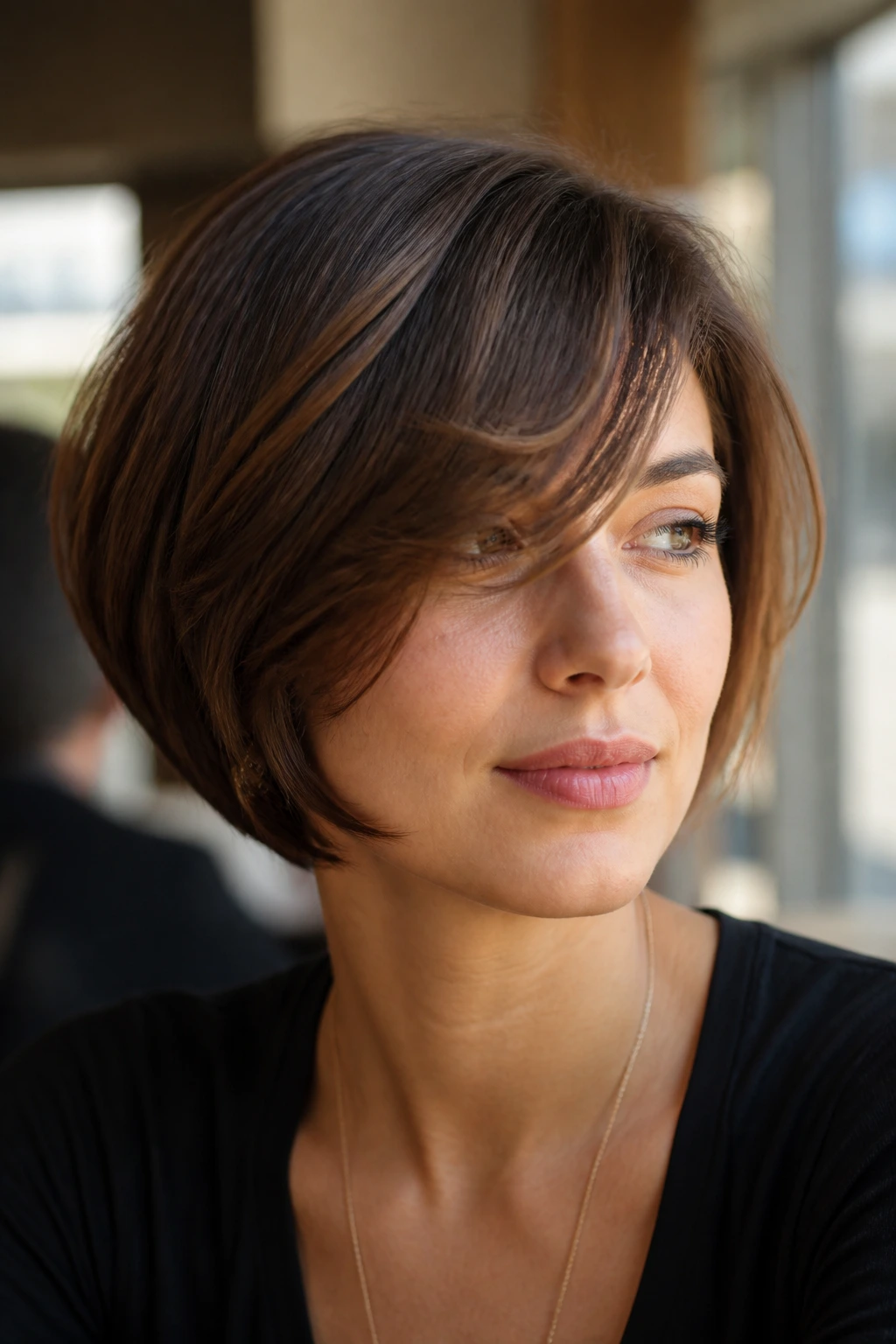
A cropped bob with swoopy fringe has a little swing in the front, which is helpful when thick hair needs softness near the eyes. The fringe draws the eye upward, and the cropped back keeps the shape from looking too round or too dense.
This cut works well if you like a bob that feels energetic. The fringe should move, not sit in a fixed block. Ask for the front to be cut so the longer pieces can sweep across the forehead rather than sit straight down.
It can be a great choice for fuller cheeks or a high forehead. The swoop changes the balance of the face without needing extra length. That kind of adjustment is small on paper and obvious in the mirror.
26. Soft Wolf Bob

The wolf bob sits between a shag and a bob, and on thick hair that can be a very good place to live. It has broken-up layers, some lift at the crown, and an easier grow-out path than a sharper geometric cut.
I like this version for people who want movement first and perfection never. Thick hair can look too serious when it’s cut into a rigid bob. The soft wolf shape loosens that up while keeping enough outline to still read as a bob.
It’s a cut that likes texture spray, scrunching, and a little mess. If you want sleek glass hair every day, skip it. If you want a cut that looks better when it’s not over-managed, pay attention.
27. Minimal-Layer Everyday Bob
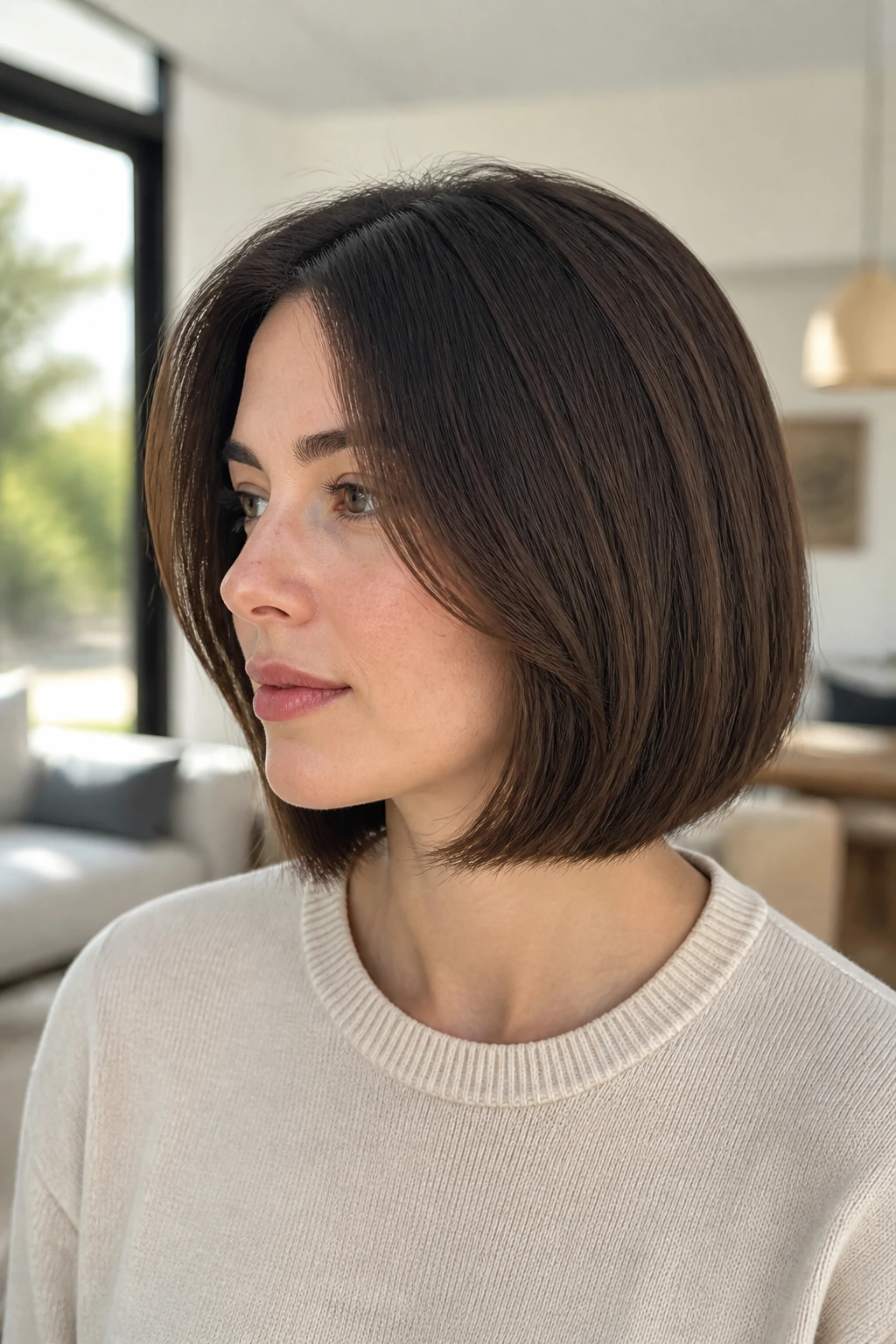
Not every thick-haired bob needs to come in swinging with razor edges, undercuts, or major graduation. A minimal-layer everyday bob keeps the outline familiar and uses just enough internal shaping to stop the haircut from ballooning out.
This is the version for people who hate fuss. It looks good with a quick blow-dry, and it can still be tucked, clipped, or smoothed back without falling apart. The key is a perimeter that stays strong, plus subtle layers that only do the job of removing excess bulk.
It’s probably the easiest cut to live with if you are not looking for drama. Quiet, but not boring. That’s a useful distinction.
How Layered Bobs for Thick Hair Behave Best in Real Life

Thick hair behaves best when the cut and the styling routine agree with each other. If the haircut is stacked and lifted, you cannot expect it to look right with zero effort and a giant blob of cream. If the cut is soft and airy, over-smoothing it into a helmet defeats the point.
I prefer styling products that support the shape instead of freezing it. A light mousse, a root-lifting spray, and a small amount of cream on the ends usually do more than a heavy oil ever will. Thick hair can swallow product, but that does not mean it should.
The other thing people miss is the dry-down. Thick hair often looks bulkier when it is 80 percent dry than when it is fully dry. That middle stage can trick you into over-blowing the ends or adding too much product. Walk away from the mirror for a minute before you panic. The shape often settles on its own.
What to Tell Your Stylist Before the First Snip
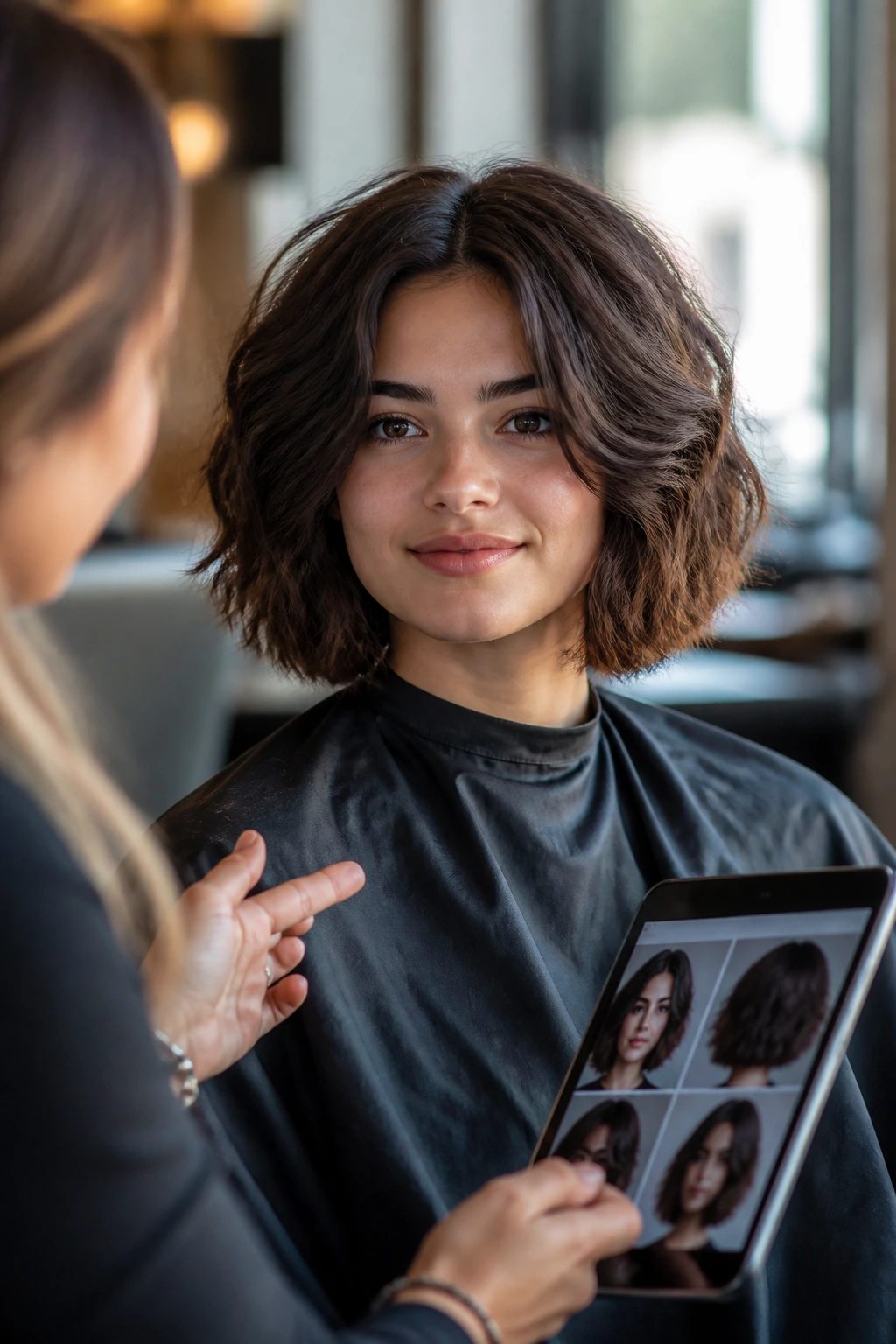
Bring pictures, but bring the right pictures. One from the front is useful. One from the side matters more. And one from the back is the one that tells the truth, because bob haircuts live or die by the nape.
Say how you wear your hair on a normal day, not your best day. If you air-dry five days a week, say that. If you blow-dry for nine minutes and stop, say that too. Thick hair behaves differently when it is rough-dried versus brushed smooth, and your stylist needs that information before reaching for the shears.
Ask where the weight line will sit. Ask whether the layers are internal or visible. Ask if thinning shears are being used, and where. Those are not fussy questions. They are the difference between a bob that sits on your head and a bob that moves with it.
Essential Tools for Styling and Maintaining the Shape
- Blow-dryer with a nozzle: The nozzle keeps the air focused so thick hair doesn’t balloon in every direction.
- Round brush, medium or large: Medium for shorter bobs, large for lobs and shoulder-skimming cuts.
- Vent brush: Good for rough-drying and rough shaping the roots fast.
- Flat iron with adjustable heat: Useful for smoothing the front pieces or bending the ends under, especially on coarse hair.
- Wide-tooth comb: Better than a fine comb for detangling dense hair without pulling out the pattern.
- Lightweight mousse or root lift spray: Gives the top some support without coating the ends.
- Texture spray: Handy for the piecey or shaggy versions.
- Heat protectant: Non-negotiable if you use hot tools more than once a week.
- Hair clips: Great for sectioning thick hair so the underneath actually dries.
Product Picks That Keep Thick Hair Light Instead of Heavy
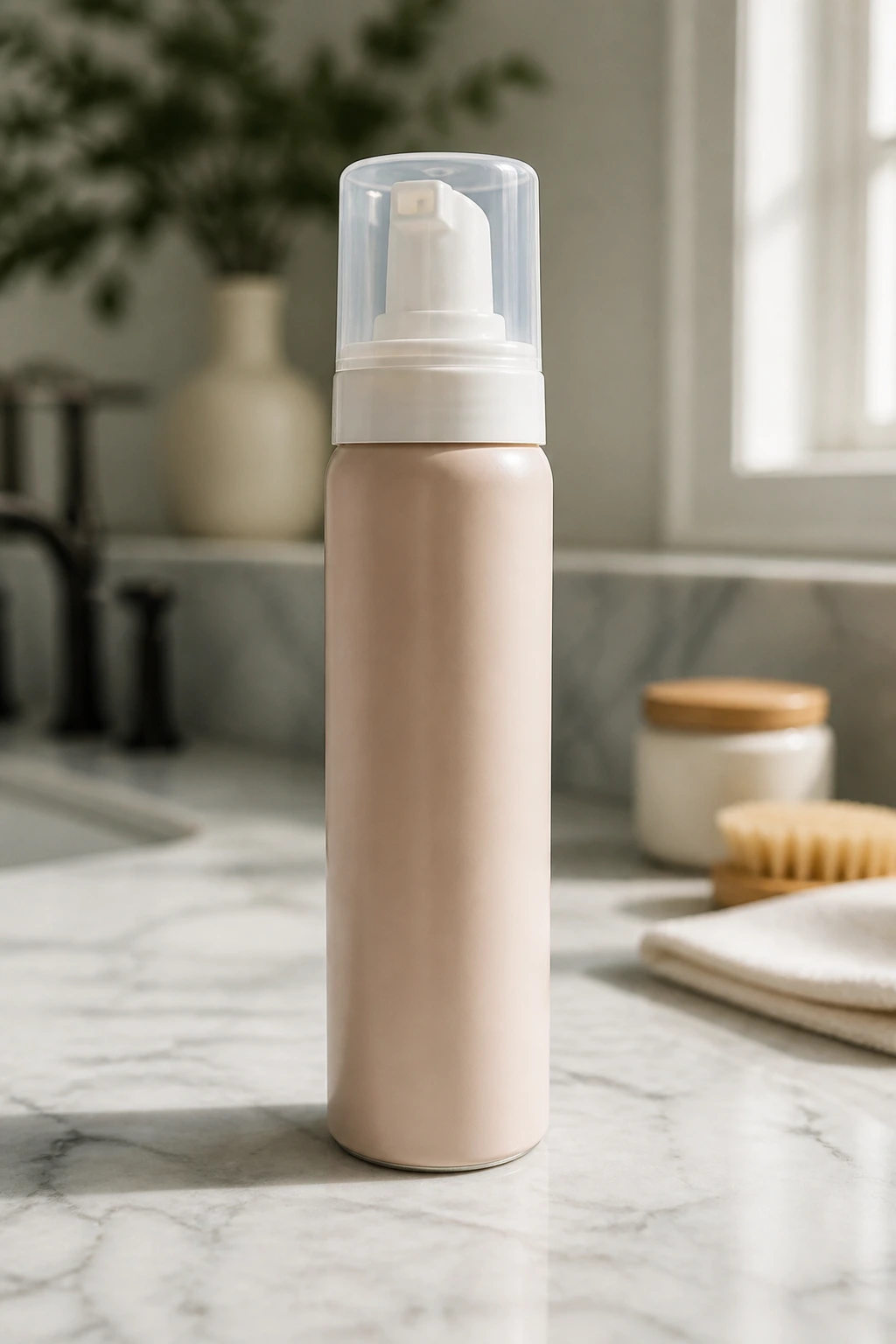
A lot of bad bob styling starts with the wrong product. Thick hair is forgiving, which is exactly why people overload it. The result is flat roots and greasy ends by midafternoon.
Light mousse: This is the friend of rounded bobs, blowout bobs, and stacked cuts. It gives enough grip for the layers to stay separated without making them sticky.
Root spray or lift mist: Best for volume at the crown and around the part. Use it near the scalp, not through the length.
Creamy leave-in conditioner: Good for coarse or dry ends, but use a small amount. A pea-size blob can be enough if the hair is short.
Dry texture spray: Works better than heavy wax for piecey or shaggy bobs. It creates separation without turning the haircut into one solid clump.
Light finishing oil: One drop on the palms, then only on the very ends. Thick hair can handle more than fine hair, but bob lengths get greasy fast if the oil goes too high.
How to Style a Layered Bob Without Flattening the Shape

Air-Dried Finish
Air-drying works best on layered bobs with a little natural wave. Scrunch in a lightweight cream or mousse, twist the front pieces once or twice, and leave the hair alone. Touching it every five minutes just makes thick hair frizzier.
Blowout Finish
Use a round brush and dry the hair in sections, pulling the ends slightly under. Focus on the crown first, because thick hair keeps heat in the mids longer than you expect. If you skip the roots, the style can look clean at the bottom and flat on top.
Sleek Finish
A flat iron can sharpen the line on a stacked or inverted bob, but use moderate heat and slow passes. Thick hair holds shape well, so you do not need to press it into submission. Just smooth the rougher bits and let the haircut stay itself.
Second-Day Fix
Dry shampoo at the roots, a quick mist of water at the front, and a few bends with a brush or iron usually revive the shape. Don’t soak the whole bob again unless you have time to dry it fully. That’s how the sides puff up.
Common Mistakes That Make Thick-Hair Bobs Go Boxy
The biggest mistake is cutting too much weight from the ends and not enough from the interior. The symptom is obvious: see-through ends with a fat middle. The fix is to keep the perimeter substantial and remove bulk deeper inside the haircut.
Another problem is starting the shortest layers too high. That can make the crown lift and the sides widen, especially on very dense hair. A lower graduation usually behaves better, because the shape gets support from the neck and doesn’t swell from the top.
Heavy cream is another trap. Thick hair can swallow product, so people use too much, then wonder why the bob sits flat and greasy. If your cut is airy, use airy products. If your cut is sleek, keep the product on the ends and off the roots.
One more: over-thinning with shears. It sounds efficient in the chair and looks fine for an hour. Then the ends separate oddly and the haircut loses its line. On thick hair, control matters more than aggressive thinning.
Variations and Adaptations to Try
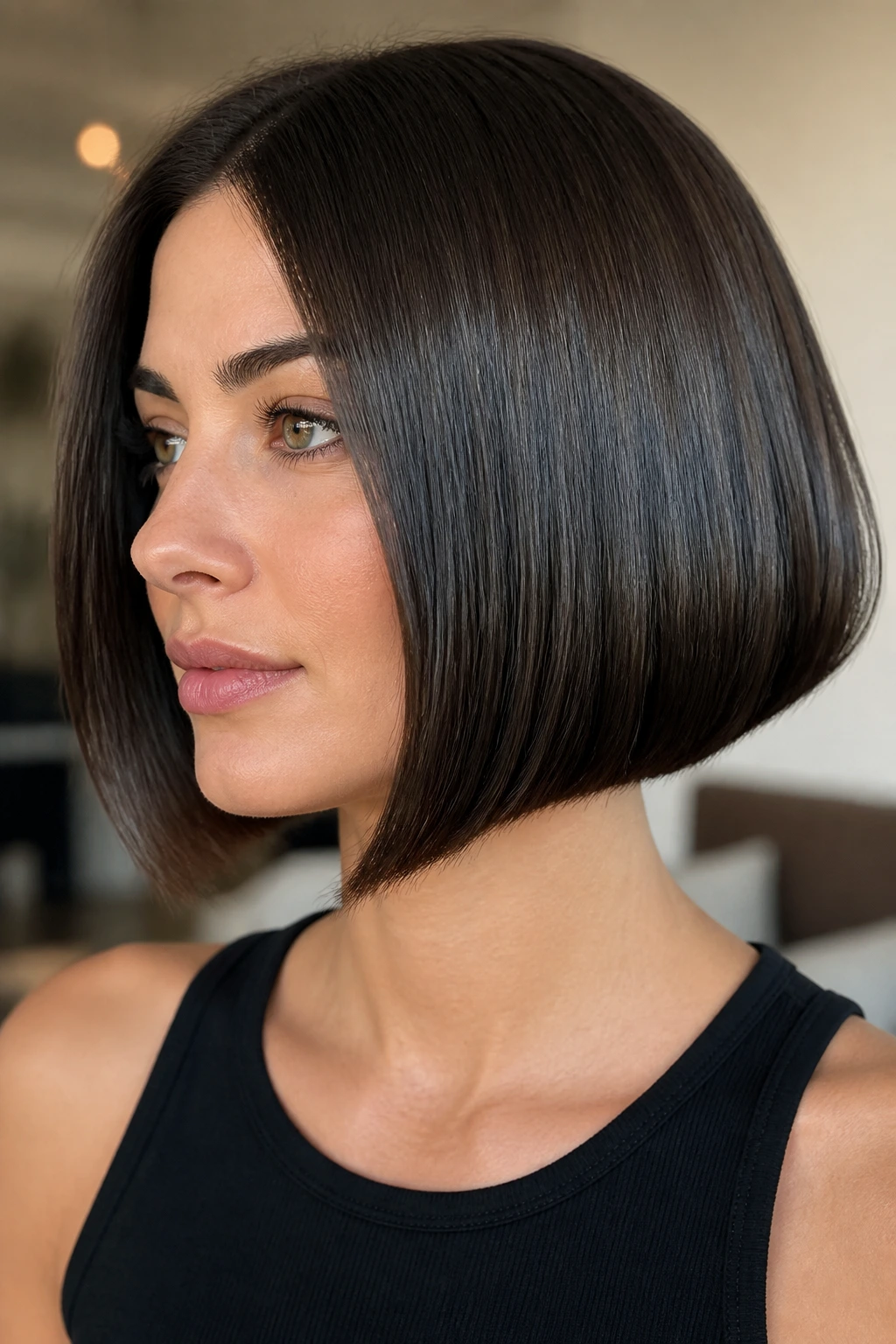
The Glass Bob: Keep the cut simple and use a smoothing cream plus a flat iron for a clean, reflective finish. This works well on straight thick hair that wants to look sharp, not piecey.
The Air-Dry Wave Bob: Leave the layers softer and longer, then scrunch in mousse and let the texture do the work. Good for hair with natural bend and for anyone who hates daily blow-drying.
The Curly Halo Bob: Ask for layers that respect curl shrinkage and avoid cutting the perimeter too short. Best on coils and springy curls that need room to move.
The Hidden-Undercut Bob: Keep the outer shape intact while removing bulk underneath. Smart for very dense hair that still feels heavy after a normal layered cut.
The Collarbone Grow-Out Bob: If you’re between lengths, keep the front grazing the collarbone and let the back stay a bit shorter. It looks purposeful while growing out, which is rare and useful.
Keeping the Shape Between Salon Visits
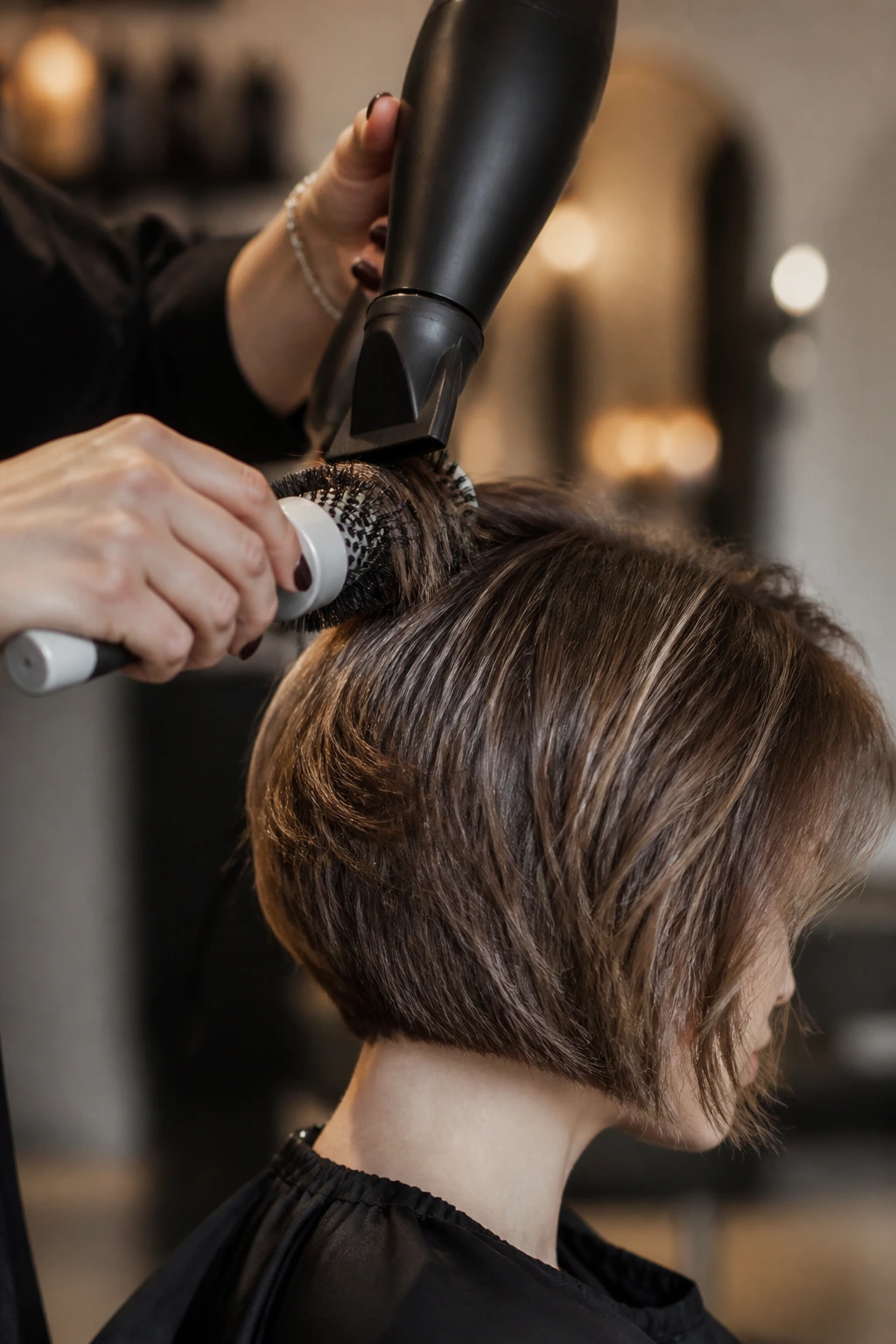
Thick hair does not usually fail all at once. It creeps. The nape gets fuzzy, the sides start to kick out, and the front pieces lose their line first. That is your cue, not a full disaster.
Most stacked and short layered bobs want a trim every 5 to 7 weeks if you want the shape to stay neat. Longer lobs can stretch to 8 to 10 weeks. Curly versions often need shape checks more than actual length cuts, because the silhouette changes as the hair grows.
At home, the best maintenance move is small and boring: dry the roots enough that they do not swell, put product only where it belongs, and do not keep adding heat to the same piece of hair every morning. Thick hair survives a lot, but repeated over-styling at the ends makes it look tired fast.
Frequently Asked Questions About Layered Bobs for Thick Hair

Will layers make thick hair look thinner?
They can make it look lighter, which is not the same thing. Good layers remove bulk from inside the haircut while leaving enough perimeter to keep the bob full and healthy-looking.
Is a blunt bob or a layered bob better for thick hair?
A blunt bob can work if the shape sits at the right length and the hair is not too wide at the sides. Still, layered bobs usually win for thick hair because they control the mid-lengths instead of just sitting there as one heavy line.
How short can thick hair go in a bob before it puffs out?
That depends on the texture, but chin length is often the first length where thick hair starts to flare. If your hair is very full, a jaw-length stack or a collarbone lob usually behaves better than a super-short crop.
Do I need thinning shears?
Not always. Some stylists use them sparingly for interior weight removal, but overuse can make the ends look stringy. Point-cutting, graduation, and careful layering often do the job more cleanly.
Can I air-dry a layered bob?
Yes, especially if the haircut is built for wave or curl. If your hair is straight and dense, though, a little blow-drying at the roots helps stop the sides from swelling out while it dries.
What’s the best layered bob for very coarse hair?
A collarbone lob with internal layers or a rounded bob with a strong perimeter usually works well. Coarse hair holds shape, so you can keep enough weight to avoid puffiness while still removing the bulk underneath.
How often should I trim it?
Short layered bobs need more frequent cleanups, often every 5 to 7 weeks. Longer versions can go longer, but once the nape loses its line, the whole haircut starts feeling bigger than it should.
What if my bob turns boxy after a few weeks?
That usually means the weight is sitting in the wrong place. A stylist can soften the interior or adjust the graduation, and at home you can usually improve it with root lift plus a bend at the ends instead of trying to flatten everything.
A Bob That Knows How to Move
The nicest layered bobs for thick hair do not fight the density. They arrange it. That’s the whole trick. You want enough structure that the haircut still has a shape at 8 p.m., but enough softness that it doesn’t look like it was cut from a single block of hair.
If thick hair has made you wary of bobs, start with the versions that keep some weight at the perimeter and hide the real shaping inside the cut. Bring photos with side views, ask where the bulk is being removed, and pay attention to how much styling time you’re actually willing to spend. A good bob should work with your routine, not punish you for having one.
Pick the shape that matches your life, then let the layers do the heavy lifting.
