



Mocha hair color is the brunette answer when you want depth, shine, and softness in the same head of hair. The good versions look like coffee poured through cream: dark at the root, lighter where the light hits the mids, and never so streaky that you can count the foils from across the room. That soft dimensional color is what keeps mocha from sliding into plain brown.
I like mocha best when it stays brown first and trend second. Once the caramel gets too loud or the ash gets too smoky, the whole thing stops reading rich and starts reading edited. The sweet spot lives in the middle — level 4 through 6, with maybe a softer level 7 around the face if the haircut can carry it.
The 25 ideas below move from espresso-dark melts to creamy bronde, from subtle glosses to more visible ribbons. Some are almost invisible in low light; some flash like a fresh roast when the sun hits them. All of them keep the brunette base intact, which is the part that makes mocha worth wearing in the first place.
Why You’ll Love This Collection
-
Soft, not stripey: These mocha ideas rely on melts, lowlights, and ribbons instead of harsh blocks of color, so the dimension looks built in rather than painted on.
-
Works with real brunette bases: Most of these shades sit in the level 4 to 7 range, which means they’re made for brown hair that wants movement without a full lightening session.
-
Easy to warm up or cool down: The same mocha idea can lean cinnamon, chestnut, mushroom, or beige depending on your undertone and maintenance budget.
-
Grows out cleanly: Root shadows and balayage placement blur the line between new growth and colored hair, so the grow-out doesn’t look fussy.
-
Flat hair gets rescued fast: If your hair looks one-note in daylight, mocha adds depth where the eye actually notices it — around the face, through the mids, and at the ends.
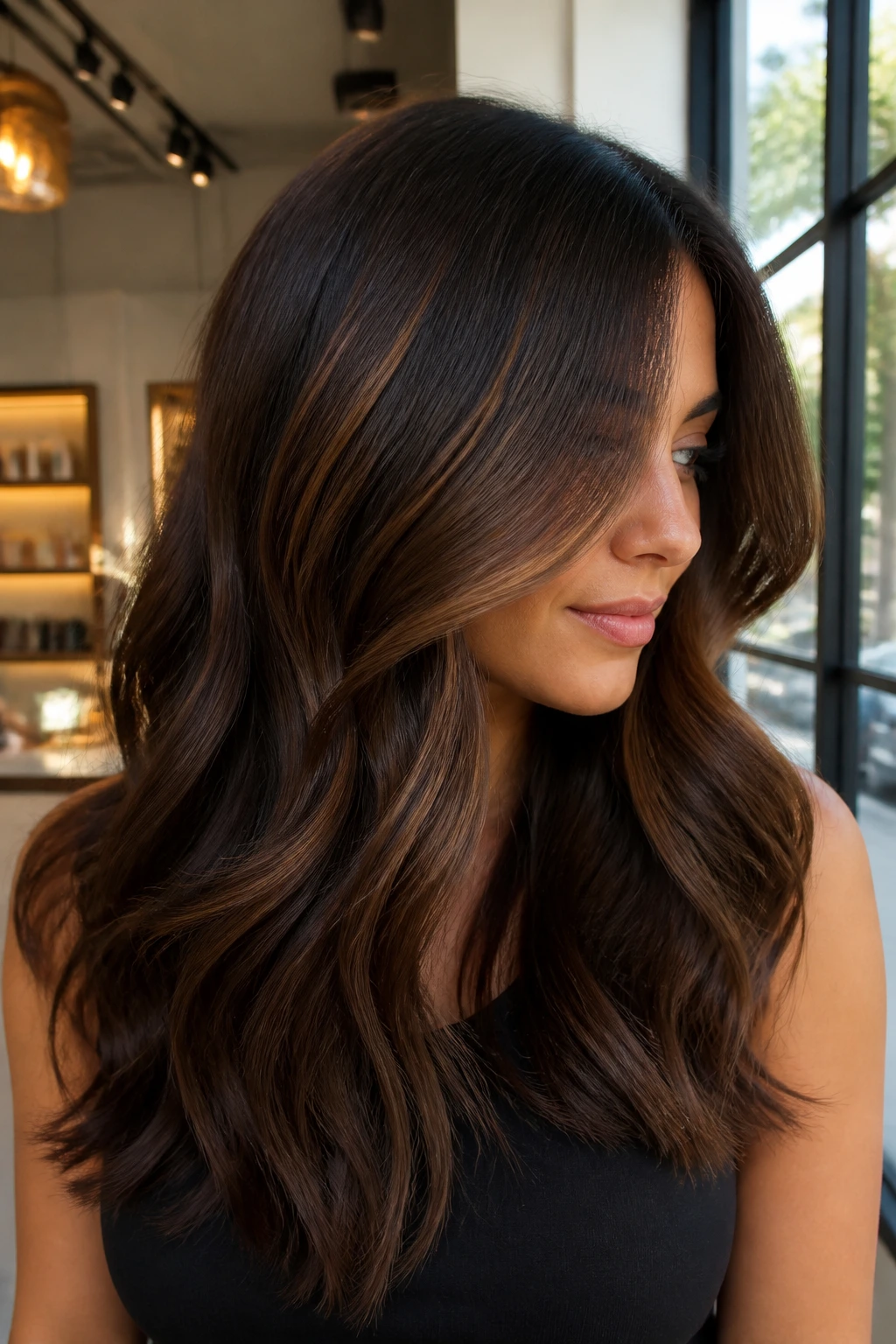
1. Espresso Mocha Melt
Espresso mocha melt is the shade I reach for when someone wants brown hair that looks denser, shinier, and a little more serious in daylight. The root stays deep — think level 4 espresso — then the mids soften into a neutral mocha brown so the whole head doesn’t read like one painted sheet. On waves, it breaks into tiny flashes of coffee and cocoa.
Best for
- Medium to dark brunettes who want low upkeep.
- Thick hair that needs shadow to look less bulky.
- Straight styles that need a little light play at the ends.
Ask for a root shadow one level deeper than your mids, a demi gloss through the lengths, and very fine babylights only where the hair bends around the face. If the contrast gets sharp, the whole thing stops reading mocha and starts reading stripey. That’s not the goal.
2. Mushroom Mocha Balayage
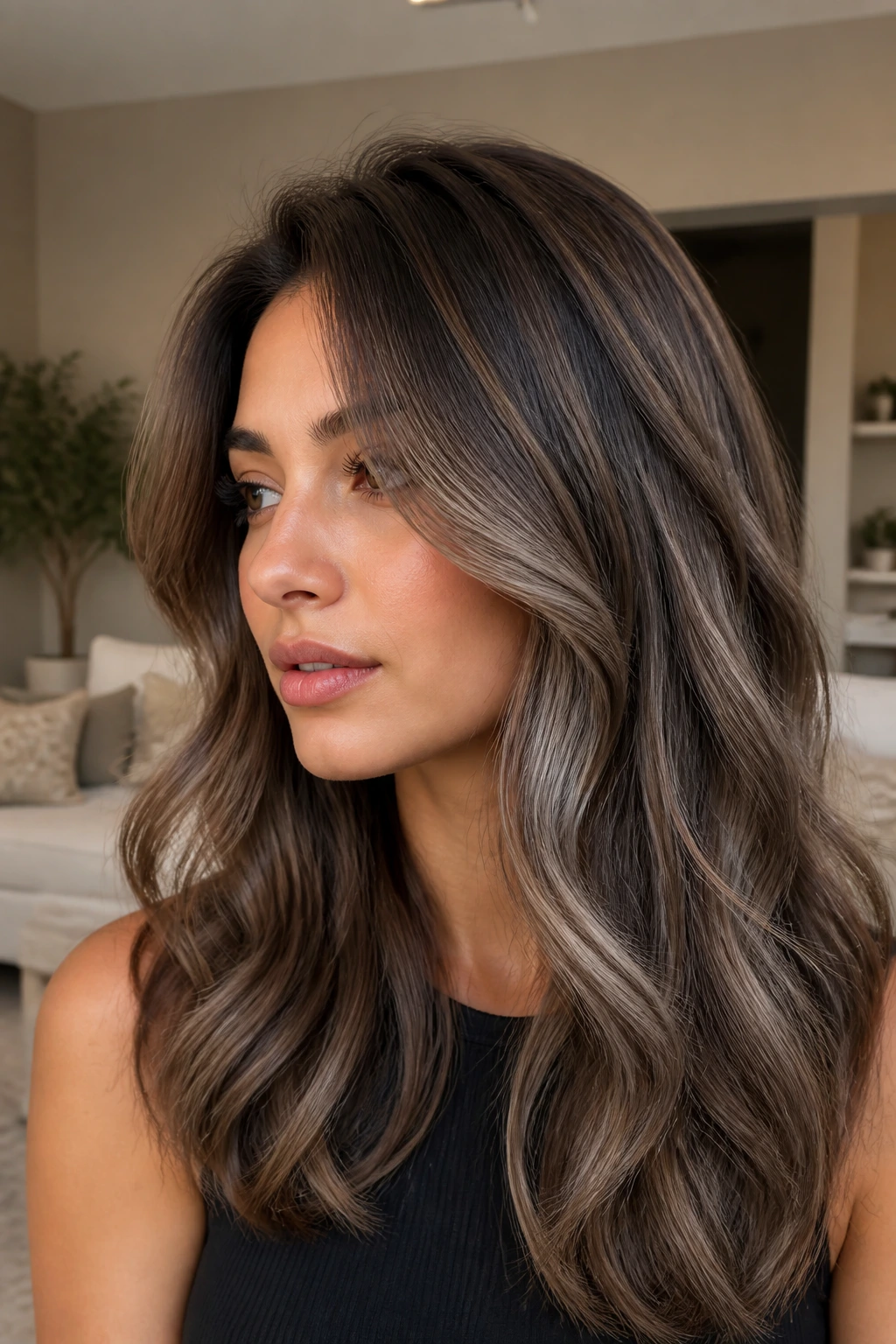
Can mocha feel cool without going flat? Yes — and mushroom mocha balayage is the proof. The brown carries a soft beige-smoke cast instead of a red or gold glow, which keeps it clean on olive and cool undertones. It’s the shade that makes brunette hair look edited without looking loud.
What I like here is the restraint. The light pieces shouldn’t be blonde; they should look like the same brown stepped one notch lighter, then toned down with a beige gloss. If your hair pulls orange fast, this is one of the smartest mocha directions because the cool finish keeps brass from taking over.
3. Cocoa Ribbon Highlights
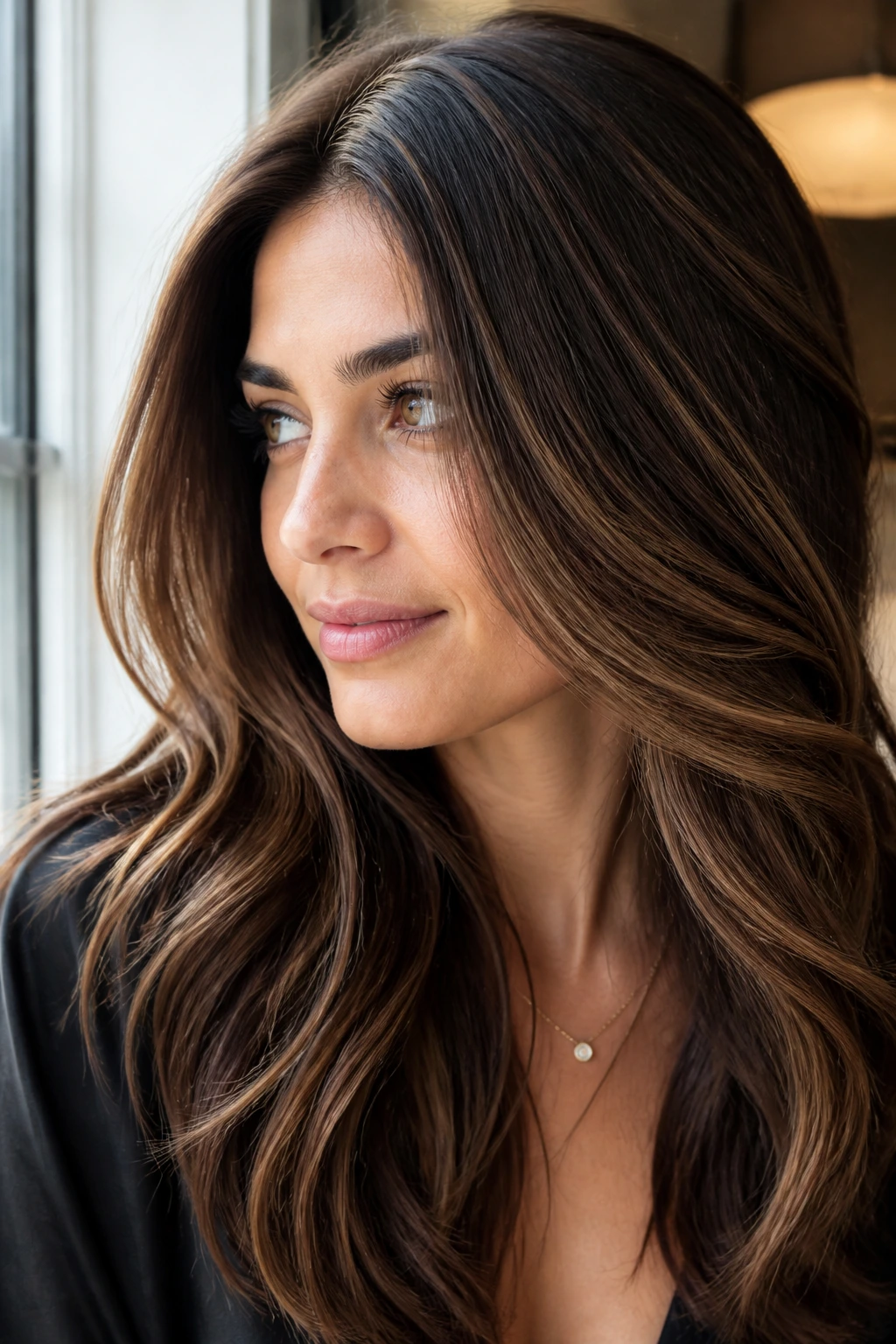
Cocoa ribbon highlights are for people who want movement but hate obvious streaks. The idea is simple: fine ribbons of lighter cocoa threaded through a deeper brown base, usually starting under the top layer so the color peeks instead of shouting. On curls, the ribbons catch each bend. On straight hair, they show up as a subtle sweep.
Why it works
The contrast stays gentle, which matters more than people think. If the highlights are too light, the mocha effect disappears and you end up in generic caramel territory. Keep the lift to one or two levels above the base, then finish with a gloss so the ribbons and base feel like they belong to the same family.
4. Cinnamon Mocha Gloss
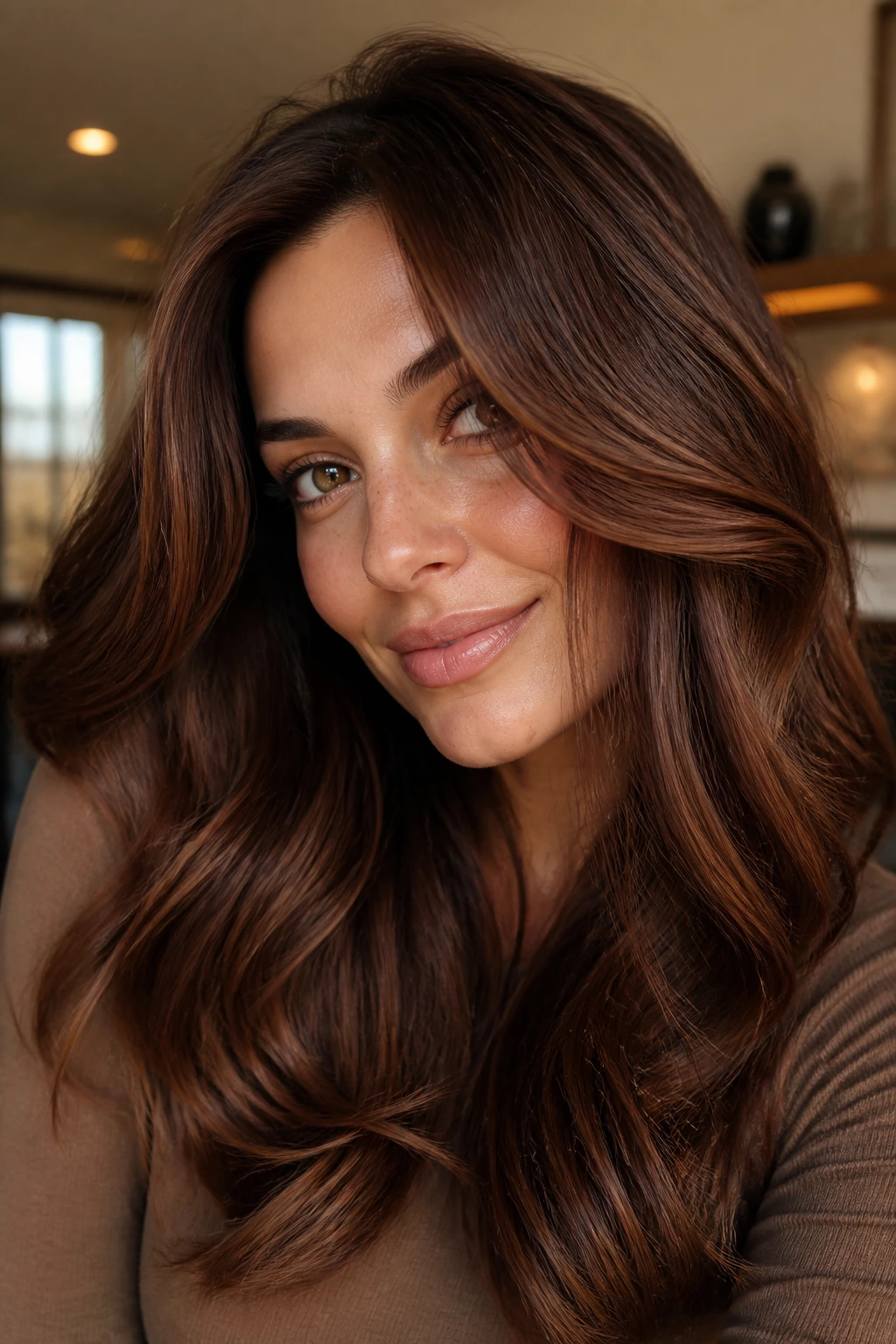
Cinnamon mocha gloss is the warm brunette I recommend when someone says their brown hair looks tired. The cinnamon note adds a faint red-brown lift, but not enough to turn the hair copper. It just wakes the color up. Under indoor light, it reads cozy. In sun, it gets a little spicy.
This version is especially good if your natural brown tends to go dull after a few washes. A gloss every four to six weeks keeps the warmth fresh, and it’s one of the easiest mocha ideas to maintain because you’re refreshing tone, not rebuilding the whole head of hair. I like it most on layered hair, where the sheen can move.
5. Beige Mocha Bronde
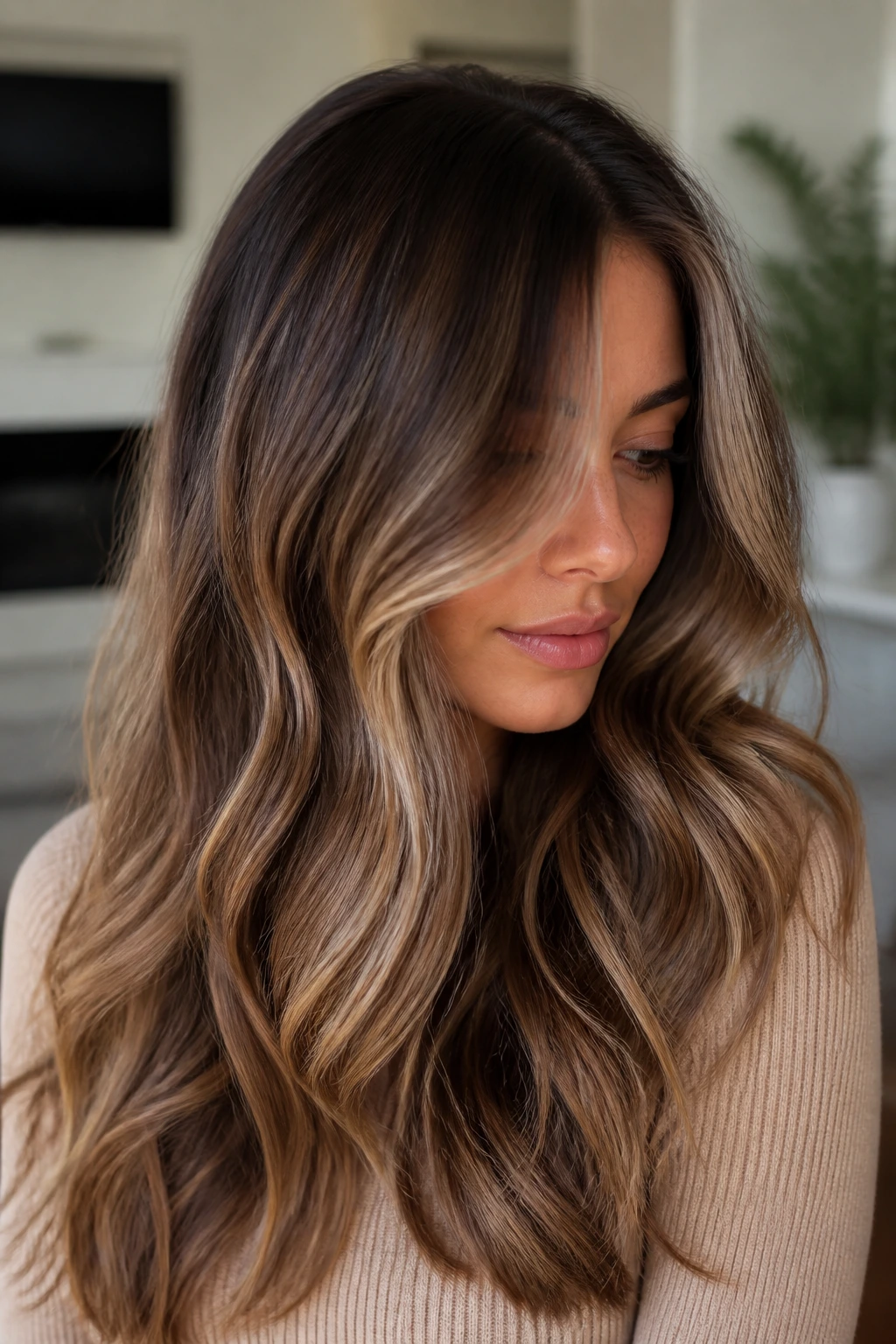
Beige mocha bronde sits in that narrow zone between brunette and blonde, and that’s exactly why it works. The base stays brown, but the ribbons around the mids and ends are softened with beige so the result feels airy instead of heavy. It’s the mocha option for someone easing out of high-contrast highlights.
The key is not to let the blonde pieces get too bright. Once they jump too far from the base, the look becomes bronde first and mocha second. Keep the face frame soft, tone out any yellow, and let the brown underneath do the real work.
6. Iced Mocha Face Frame
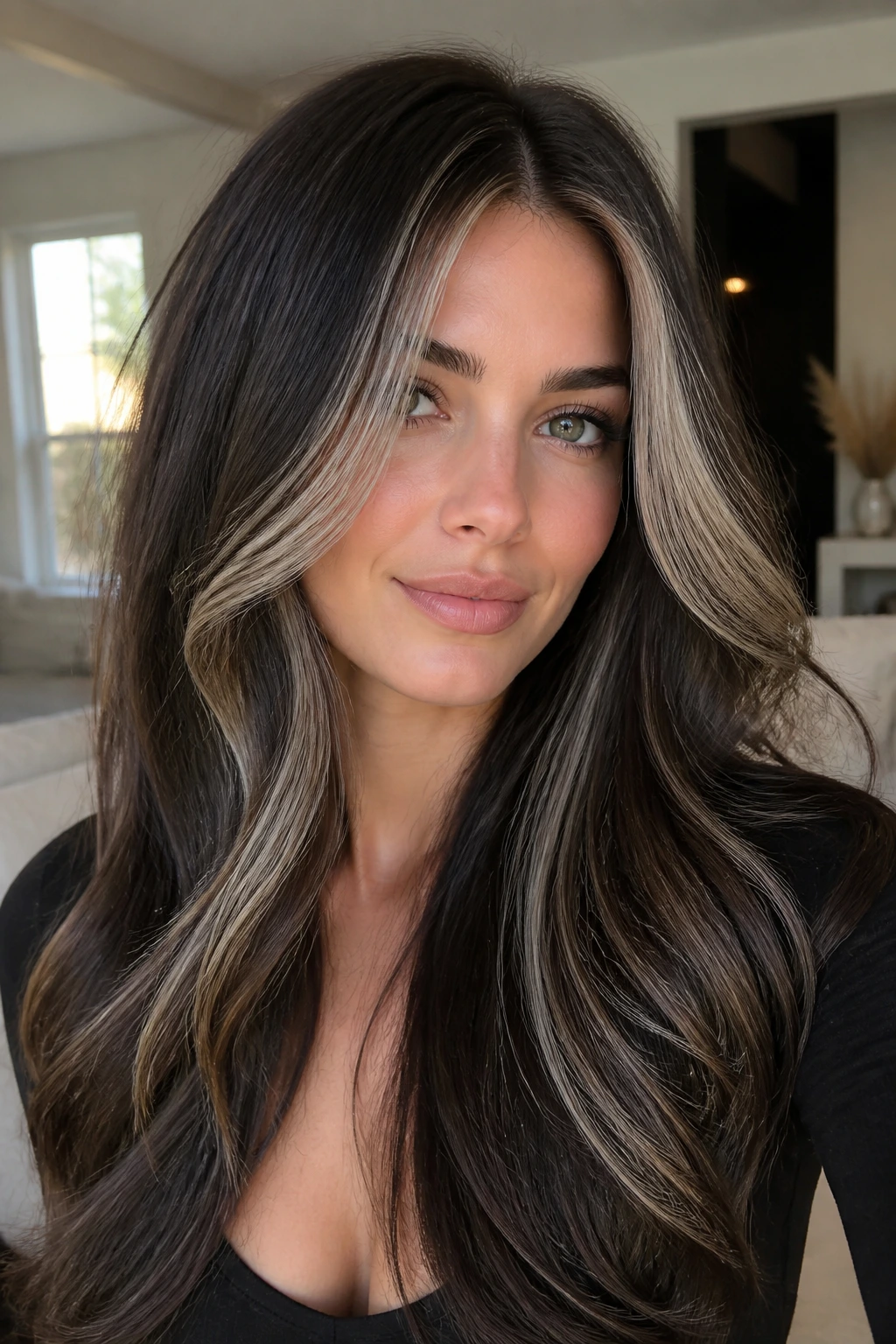
An iced mocha face frame is a smart choice when you want brightness without giving up brunette depth. The front pieces are kept cool and light enough to sharpen the face, while the rest of the hair stays in a richer mocha range. It’s a little dramatic, but not in a hard-edged way.
This one looks especially good on cuts with curtain bangs or long layers because the front pieces actually have somewhere to fall. If you wear your hair pulled back a lot, the face frame does more work than a full-head highlight session ever would. And if you’re nervous about color commitment, this is a gentle place to start.
7. Walnut Mocha Balayage
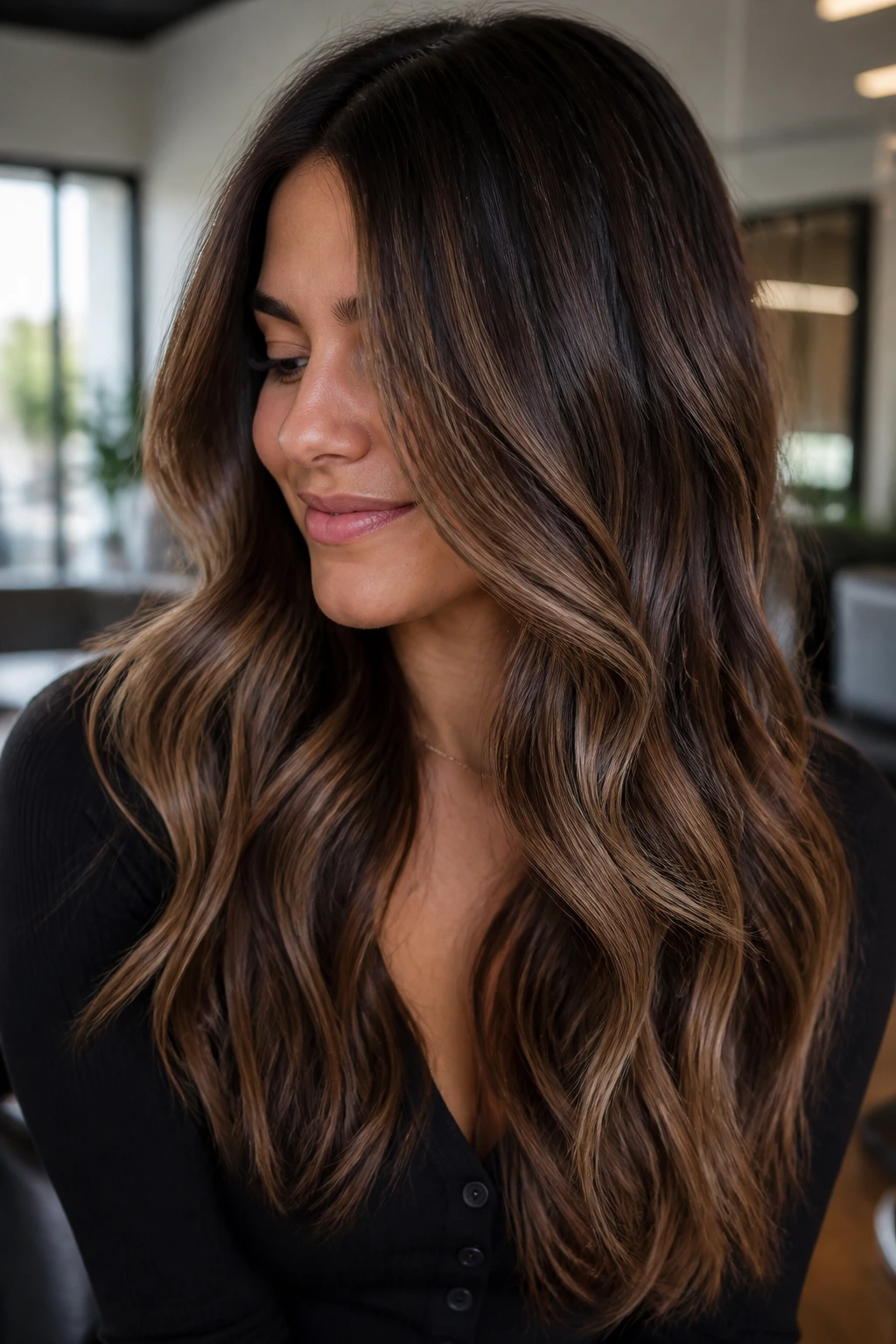
Walnut mocha balayage has that earthy, expensive-looking brown tone that never feels fussy. Walnut adds a neutral nutty cast, so the shade isn’t too warm, too cool, or too red. It just sits in the middle and looks balanced from every angle.
Salon note
- Ask for walnut ribbons through the mids and ends.
- Keep the root deeper and cooler than the lighter pieces.
- Finish with a neutral gloss so the brown stays clean.
This is one of my favorites for people who want a soft brunette that still shows movement in photos. It’s the sort of shade that gets better with a little texture — a bend from a flat iron, a round-brush blowout, or even air-dried waves.
8. Caramel Mocha Dimension
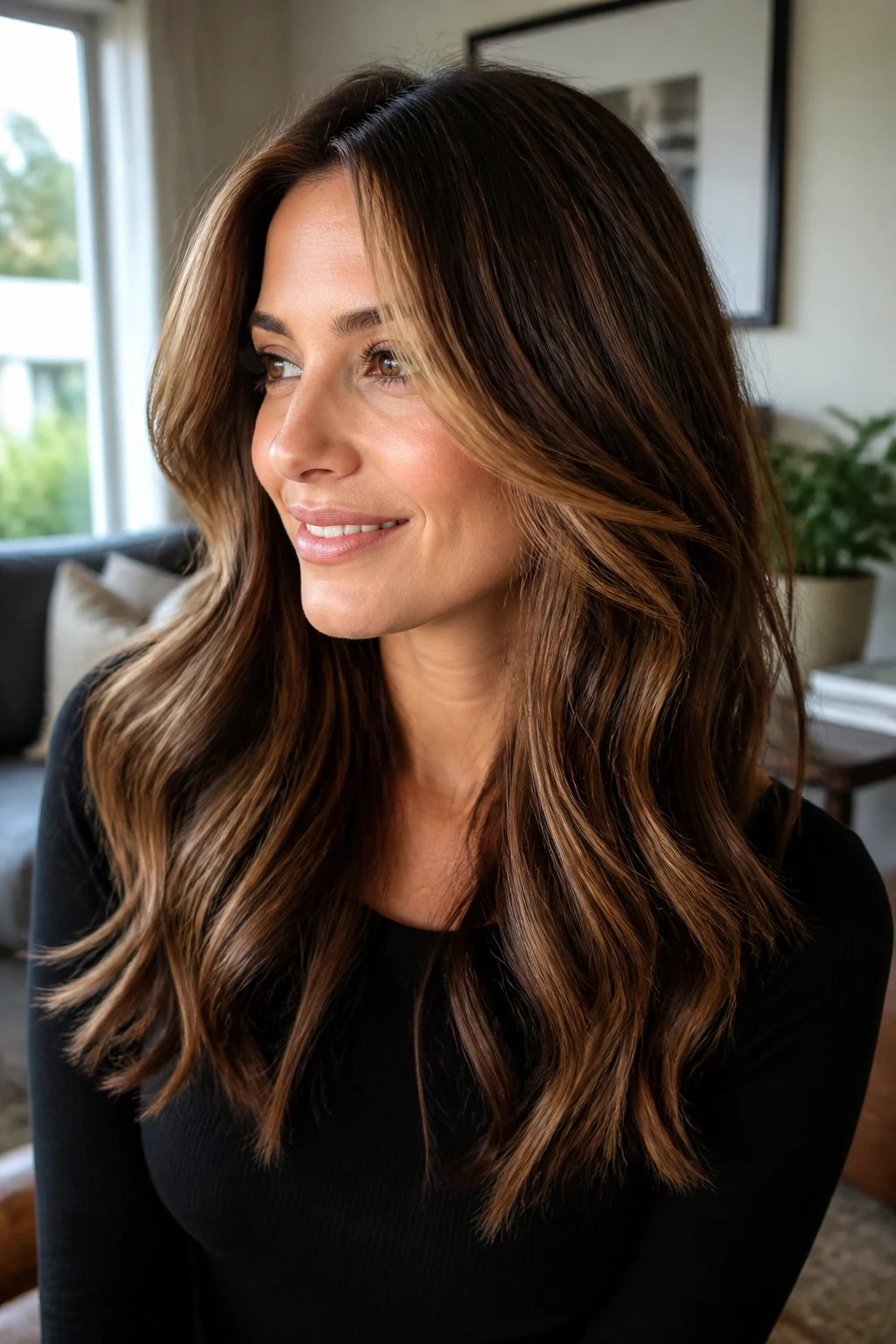
If caramel is your comfort zone, this is the mocha idea that keeps you from getting bored. Caramel mocha dimension uses warm ribbons, but the base stays brown enough that the result still reads grounded. The trick is to keep the caramel from taking over the whole head. Too much, and the mocha disappears.
I like this on medium brown hair that already has some natural warmth. The highlights settle best when they’re placed around the face, through the top layer, and lightly at the ends. You want the color to move when the hair swings — not to sit there like a stripe map.
9. Dark Roast Shadow Lights
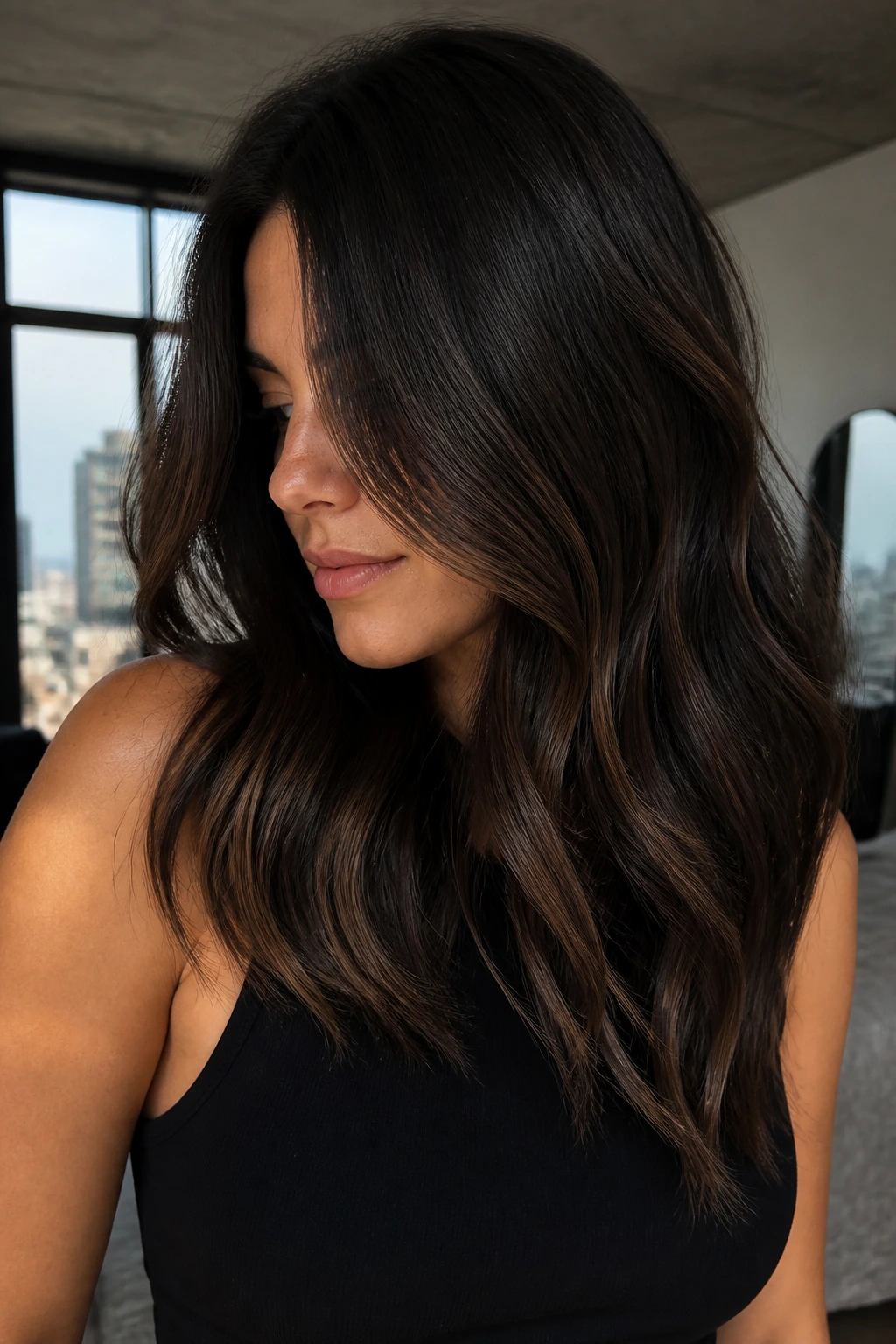
Dark roast shadow lights are for people who want the quiet version of dimensional brunette color. The base stays almost inky, and the lighter pieces are tucked underneath or placed in narrow panels so they only show when the hair moves. It’s moody, glossy, and a little mysterious without trying too hard.
This is a strong pick for fine hair because shadow can make the strands look fuller. On straight styles, the color looks sleek and deliberate. On waves, the hidden light pieces flash in and out, which is exactly the effect you want when you’re trying to keep mocha from going flat.
10. Milk Chocolate Money Piece
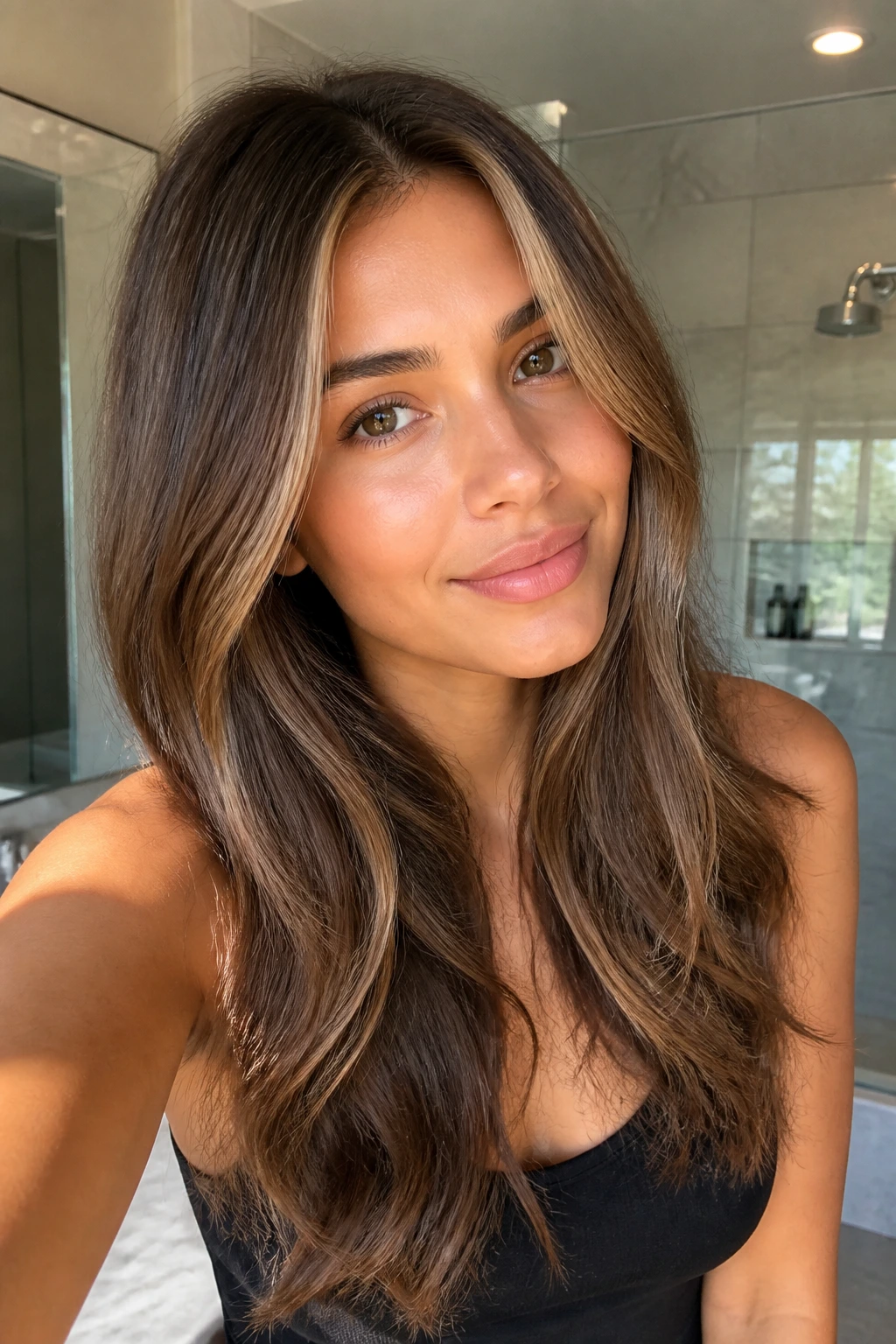
Milk chocolate money piece color does one job well: it brightens the face without turning the whole head blond. The front streaks are creamy and soft, but the rest of the hair stays in a deeper mocha range so the contrast feels controlled. If you’ve ever wanted a little pop around the face without a full highlight session, this is it.
Keep the money piece narrow. That matters. A thick front section can look dated fast, while a thinner ribbon around the temples and hairline feels modern and easier to grow out. It also looks better when the rest of the hair is glossy and slightly darker.
11. Chestnut Mocha Melt
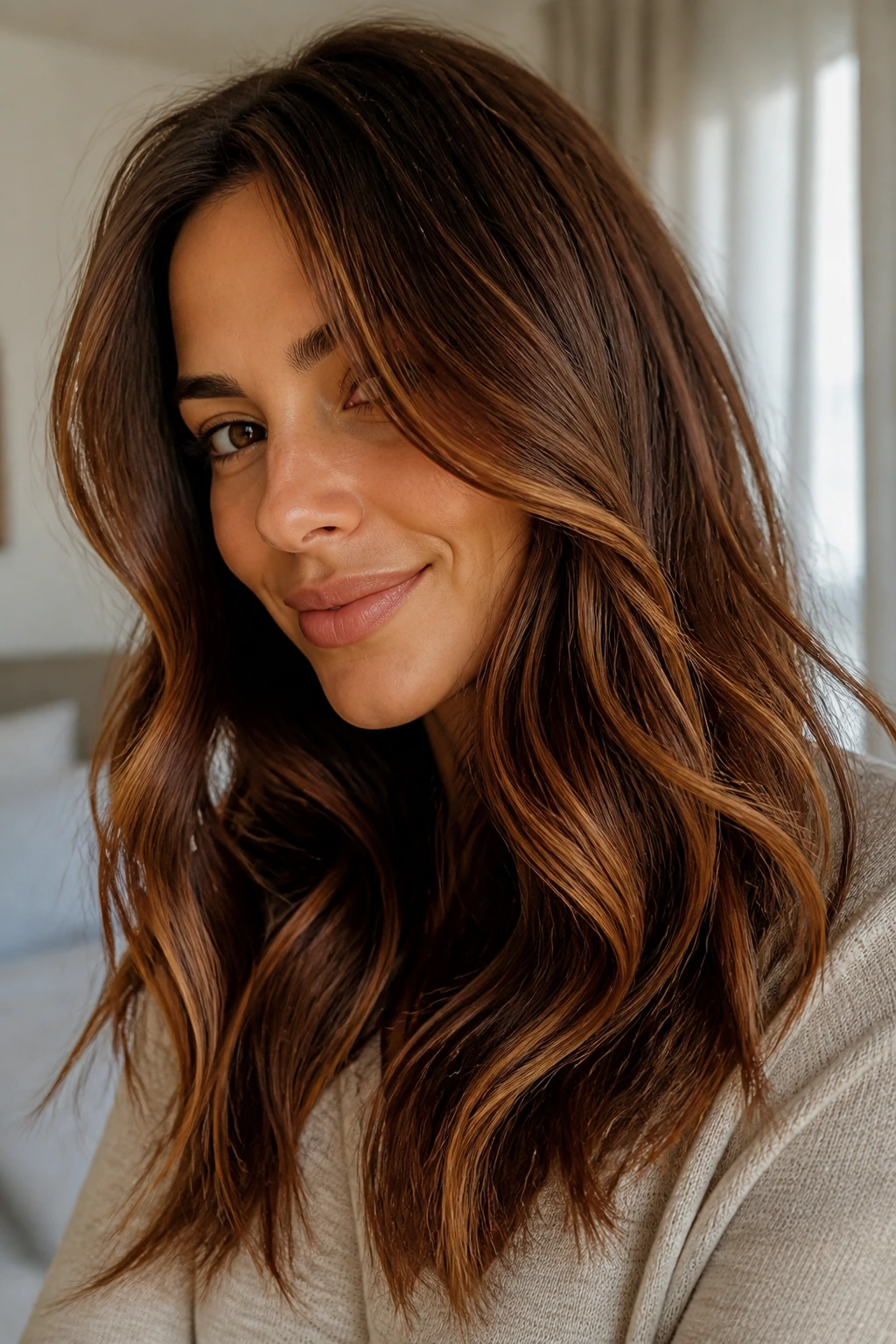
Chestnut mocha melt is the warm brunette shade that makes brown hair look alive again. Chestnut brings a red-brown undertone that can be subtle or more obvious depending on the gloss, and that warmth keeps the mocha from reading dull. It’s especially good on hair that needs a little light to catch without going copper.
The melt works because the transition is slow. The root stays close to the natural base, then the mids shift into chestnut-brown, and the ends soften just enough to show depth. This one looks best when the cut has movement. A blunt one-length shape can hide the whole point.
12. Smoky Mocha Lowlights
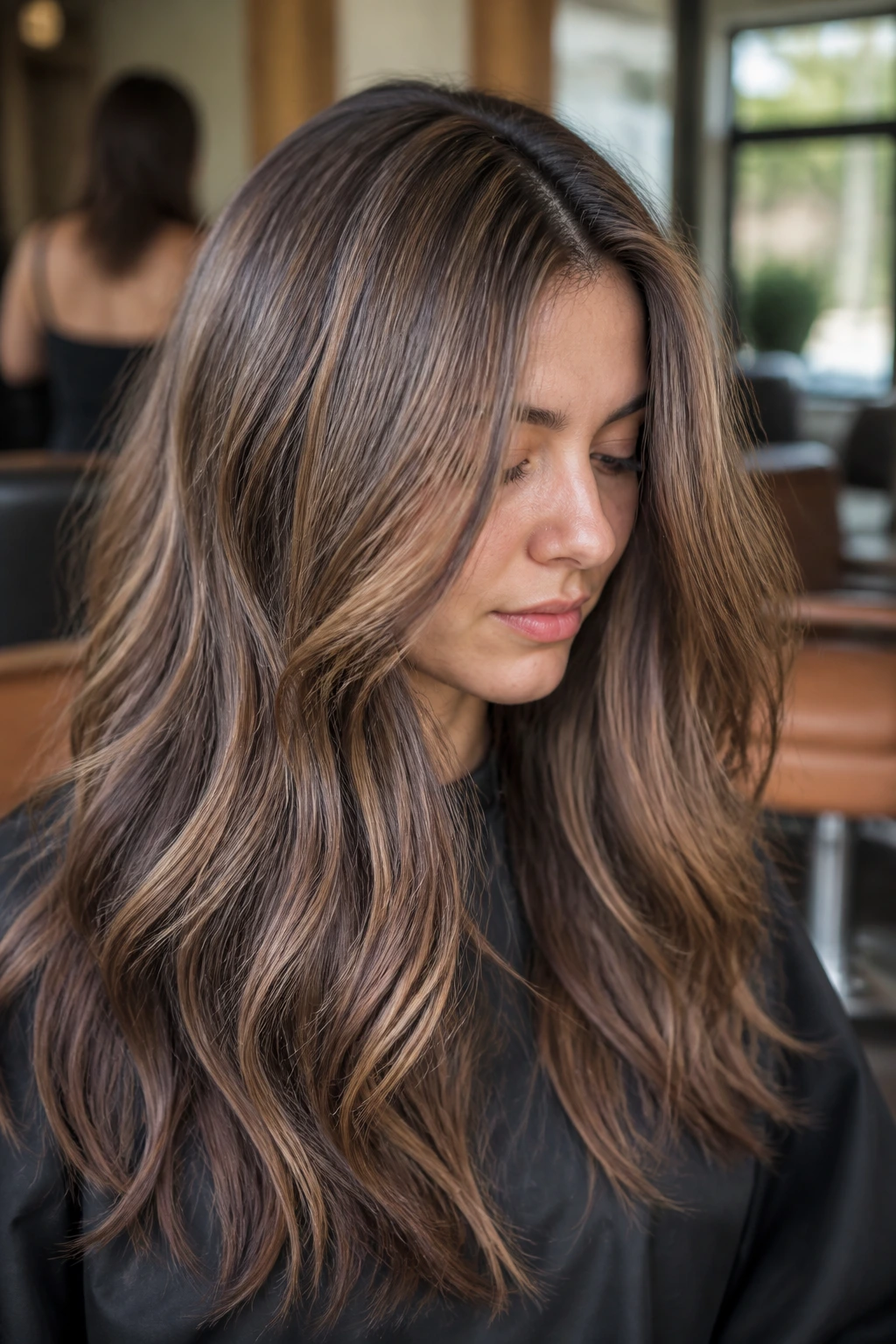
Smoky mocha lowlights are the fix when hair has too much light and not enough body. Instead of adding more highlights, you drop in deeper mocha pieces to give blonde or light brown hair some shadow again. The result is softer, richer, and much less skunky than people fear when they hear the word lowlight.
Best use
- Blondes trying to return to brunette territory.
- Light brunettes that look washed out.
- Hair that needs depth after too many bright ribbons.
I like this move because it restores contrast without a full color overhaul. The lowlights should sit under the top layer and around the interior, not just on the surface, so the hair gets that thicker-looking depth when it moves.
13. Mocha Root Shadow
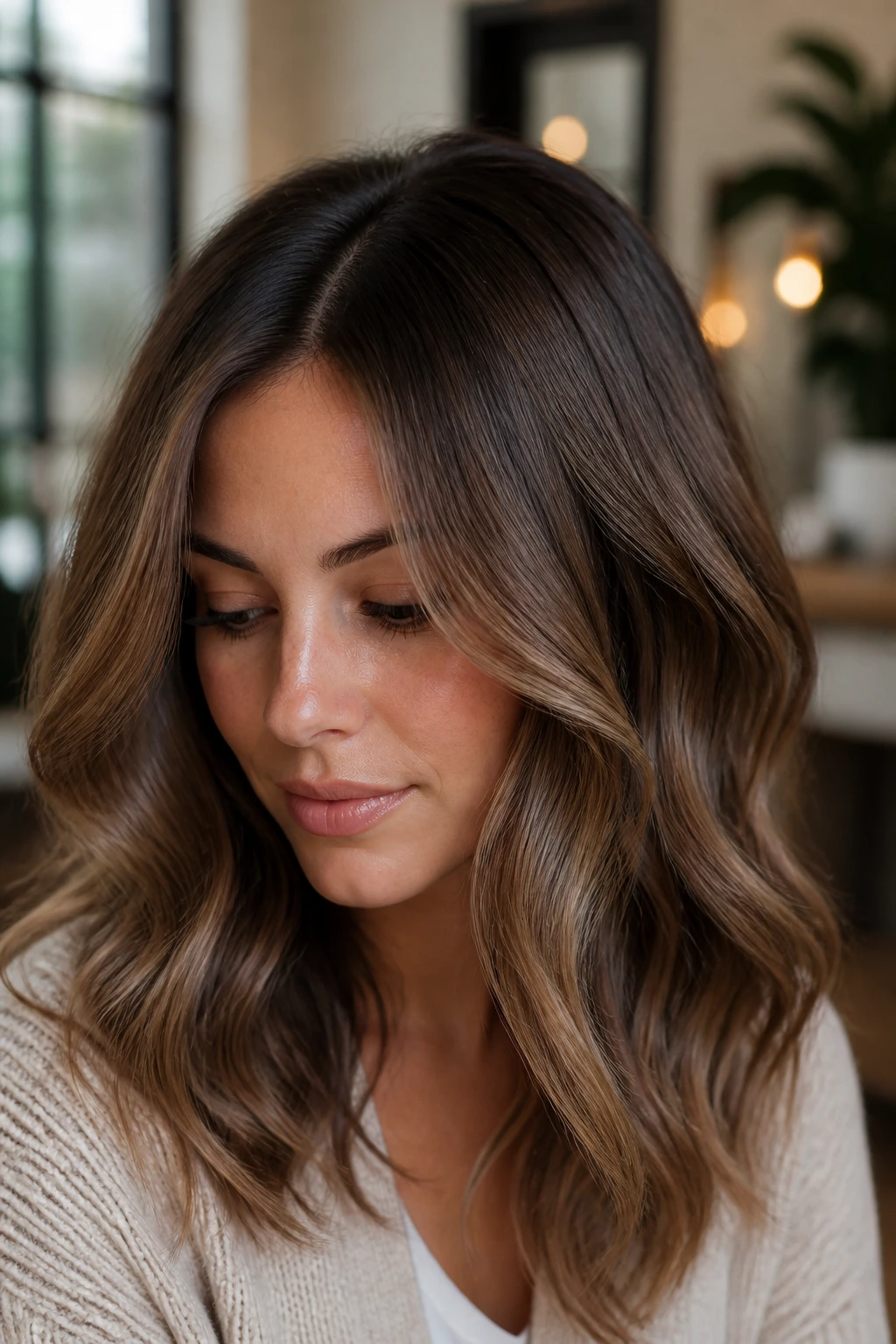
Mocha root shadow is the grown-out brunette that looks intentional from day one. The root is kept one or two levels deeper than the mids, then the color diffuses downward so the regrowth line never gets sharp. It’s one of the best choices for anyone who wants mocha hair color ideas that don’t demand constant touch-ups.
This shade works because it respects how hair actually grows. New growth is not a problem here; it’s part of the design. If you’re someone who hates a hard root line every six weeks, this is the version that lets you breathe a little.
14. Soft Mocha Contour Balayage
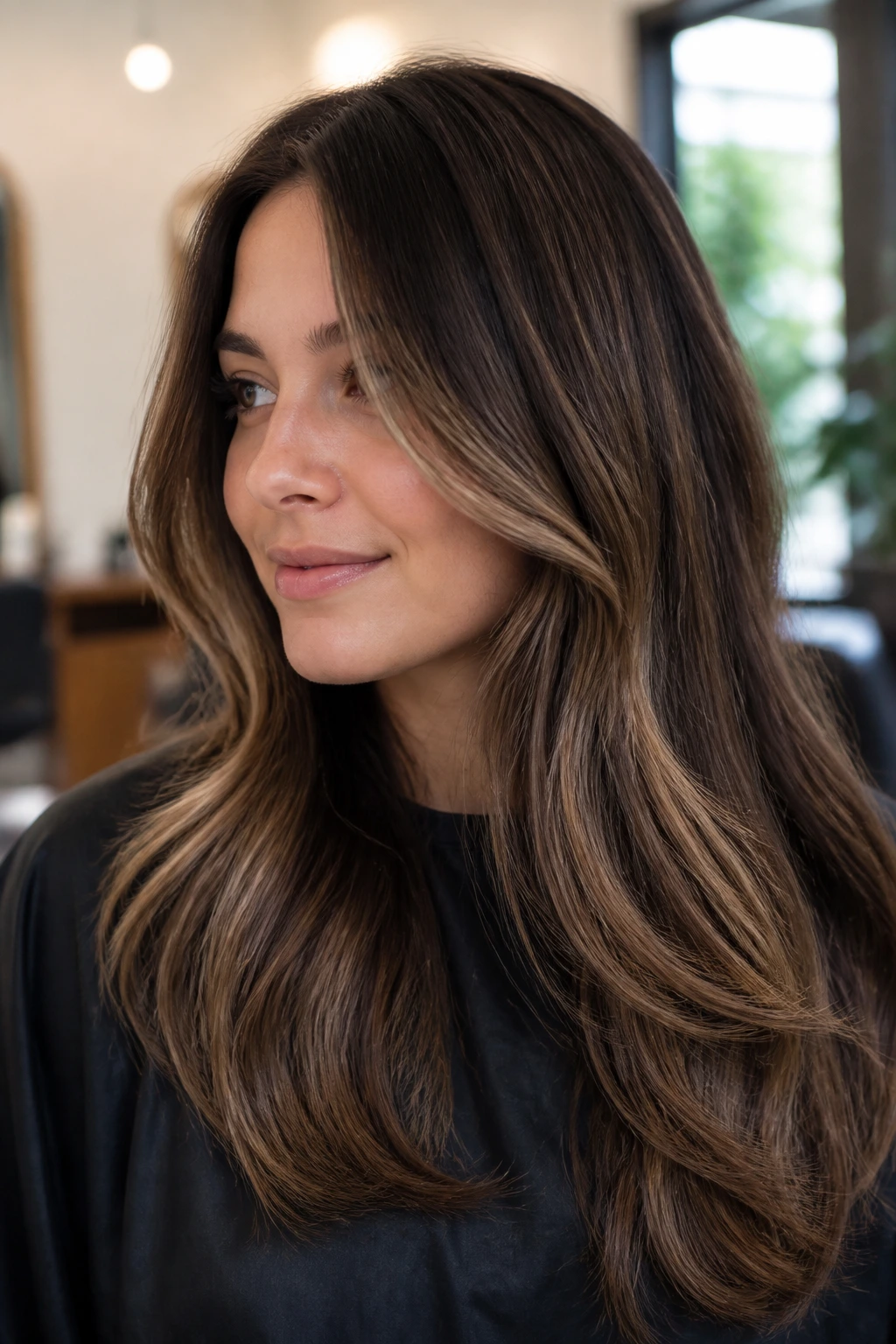
Soft mocha contour balayage is all about placement, not just color. The lighter mocha ribbons are painted where the hair naturally frames the face — temples, cheekbone area, and the first few inches around the front — so the shade adds shape the way contour does in makeup. That’s the whole point.
I like this for long layers and medium-density hair because the placement gives structure without flooding the whole head with brightness. It’s softer than a money piece and less obvious than a full balayage, which makes it a nice middle ground when you want dimension but not drama.
15. Hazelnut Mocha Curls
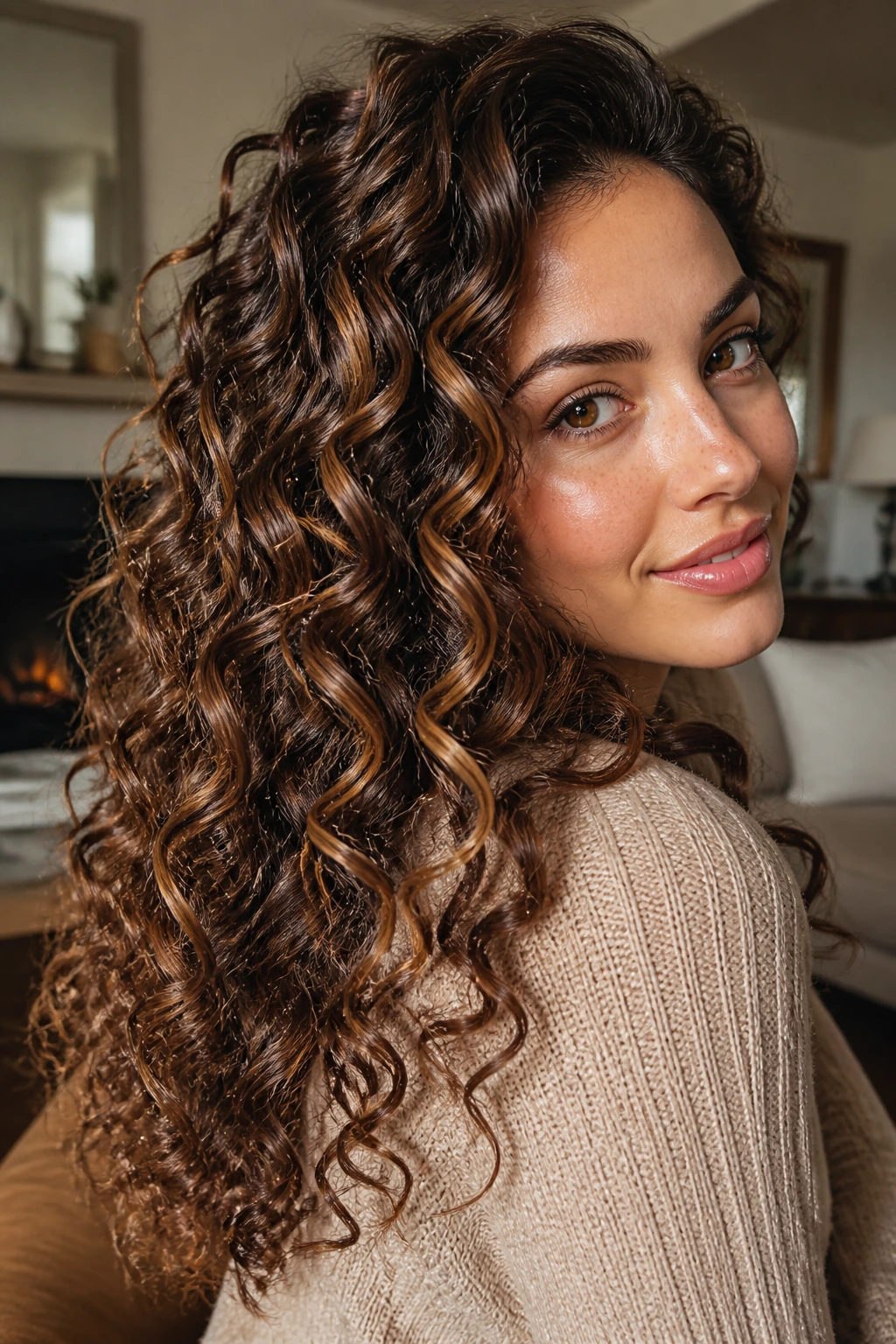
Hazelnut mocha curls have a warm, glossy quality that looks especially good when the hair bends. Hazelnut gives the mocha a little golden-nut warmth, but the darker brown base keeps it from drifting into blond territory. On curls and coils, the dimension shows naturally because every bend catches light in a different spot.
What to ask for
- Fine painted pieces through the outer curl pattern.
- Deeper lowlights under the crown.
- A gloss that keeps the finish warm, not orange.
This is not the shade I’d choose for someone who wants ultra-cool brunette. It’s for people who want the hair to feel alive and soft, with enough warmth to keep it from looking dusty.
16. Truffle Mocha Bob
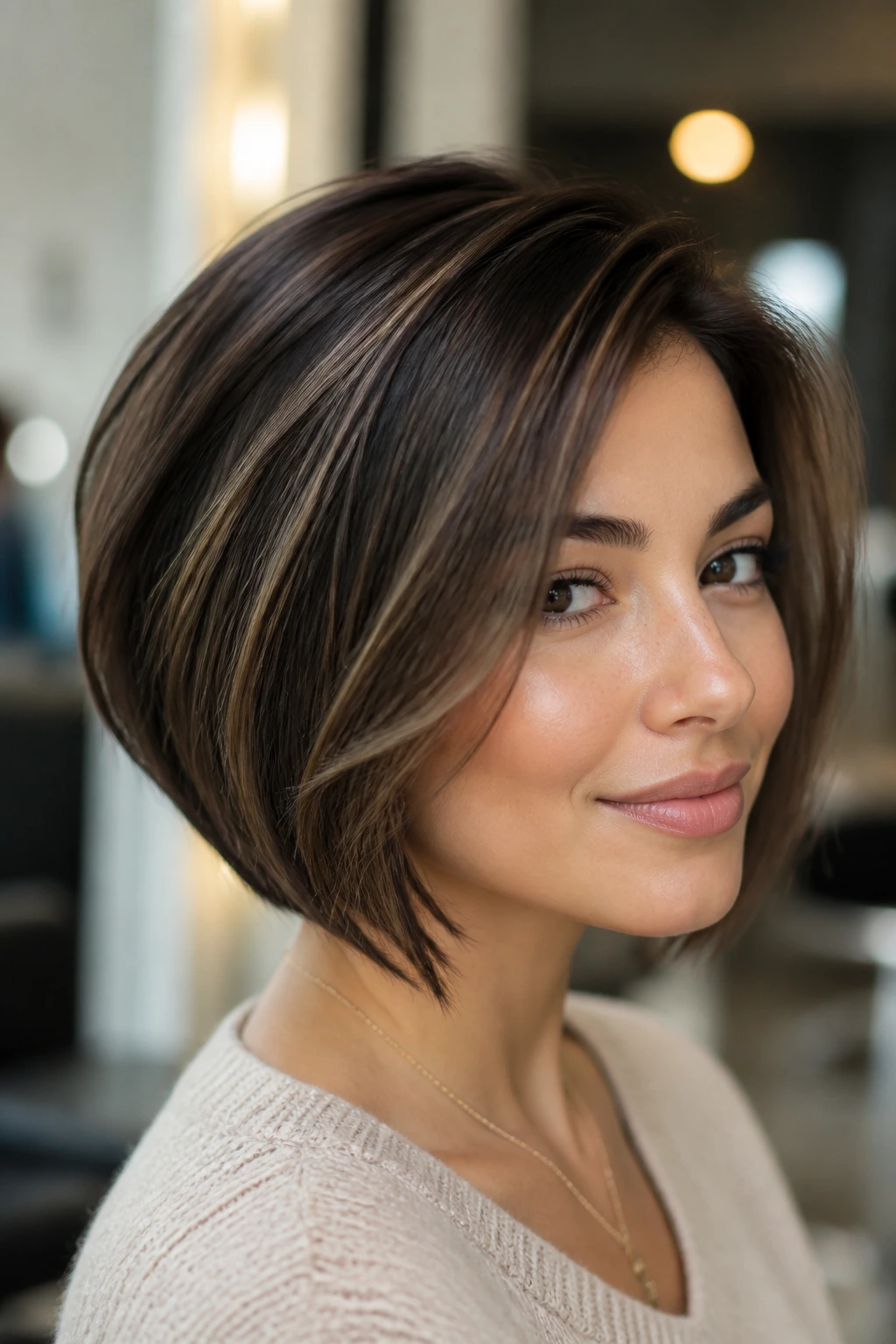
A truffle mocha bob is proof that short hair does not need big color tricks to feel dimensional. The base stays deep and glossy, while a few subtle lighter panels through the top and front keep the bob from looking like one solid block. Truffle is darker than milk chocolate, but smoother than espresso.
Short cuts need restraint here. Too many highlights and the bob starts looking busy. A truffle mocha bob is at its best when the finish is clean, the ends are blunt or slightly beveled, and the color just whispers when you move.
17. Toffee Mocha Ends
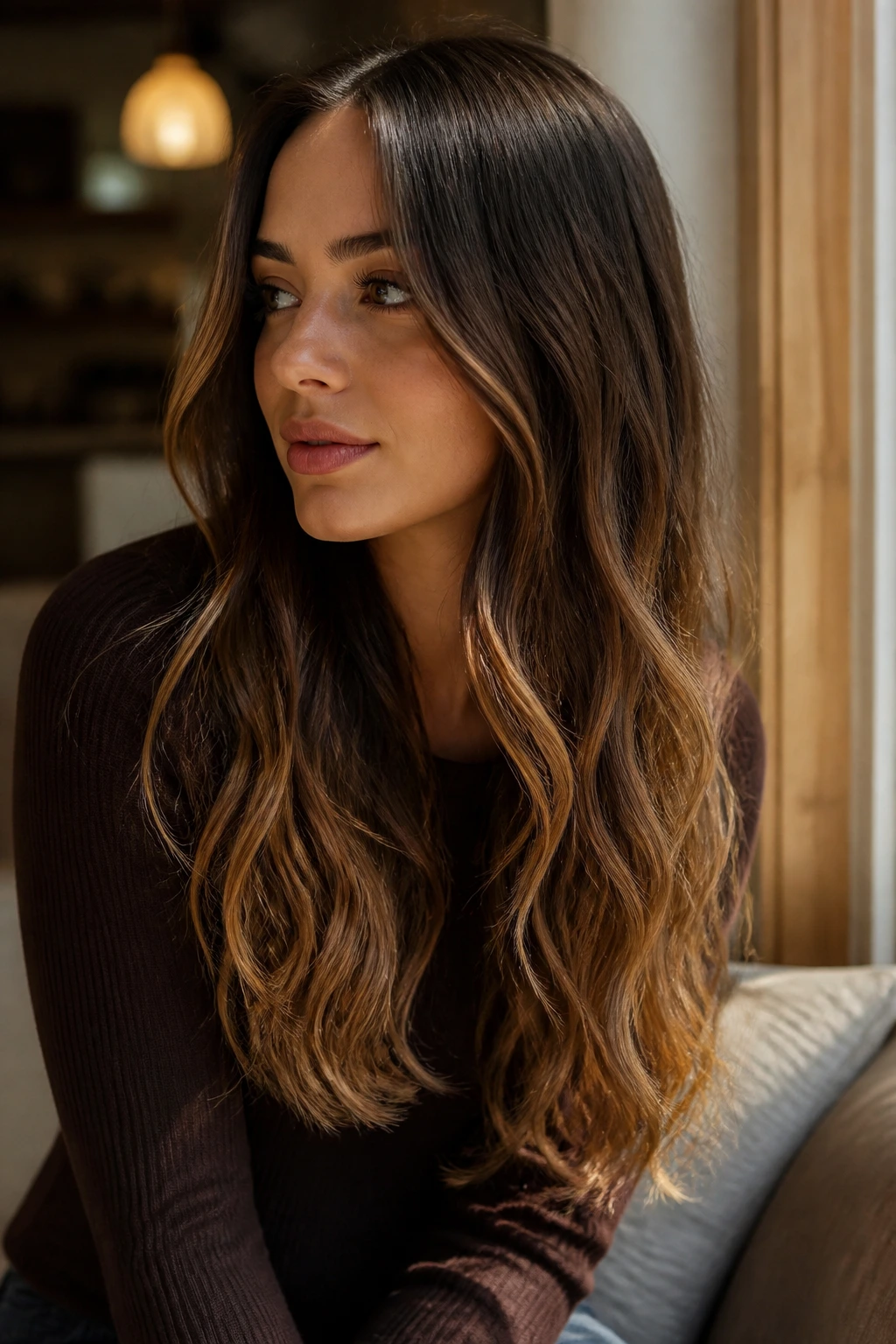
Toffee mocha ends are for people who want the lightness pushed lower, not higher. The base stays mocha and the ends soften into a toffee-brown finish, which gives long hair a dipped effect without making the roots bright. It’s a nice option when you want movement around the bottom half of the hair.
This works well on layered cuts, especially when the ends curl or bend. If the hair is dead straight and one length, the toffee can look like a harsh band. Keep the transition gradual and you get a soft, sun-warmed finish instead.
18. Cool Smoke Mocha
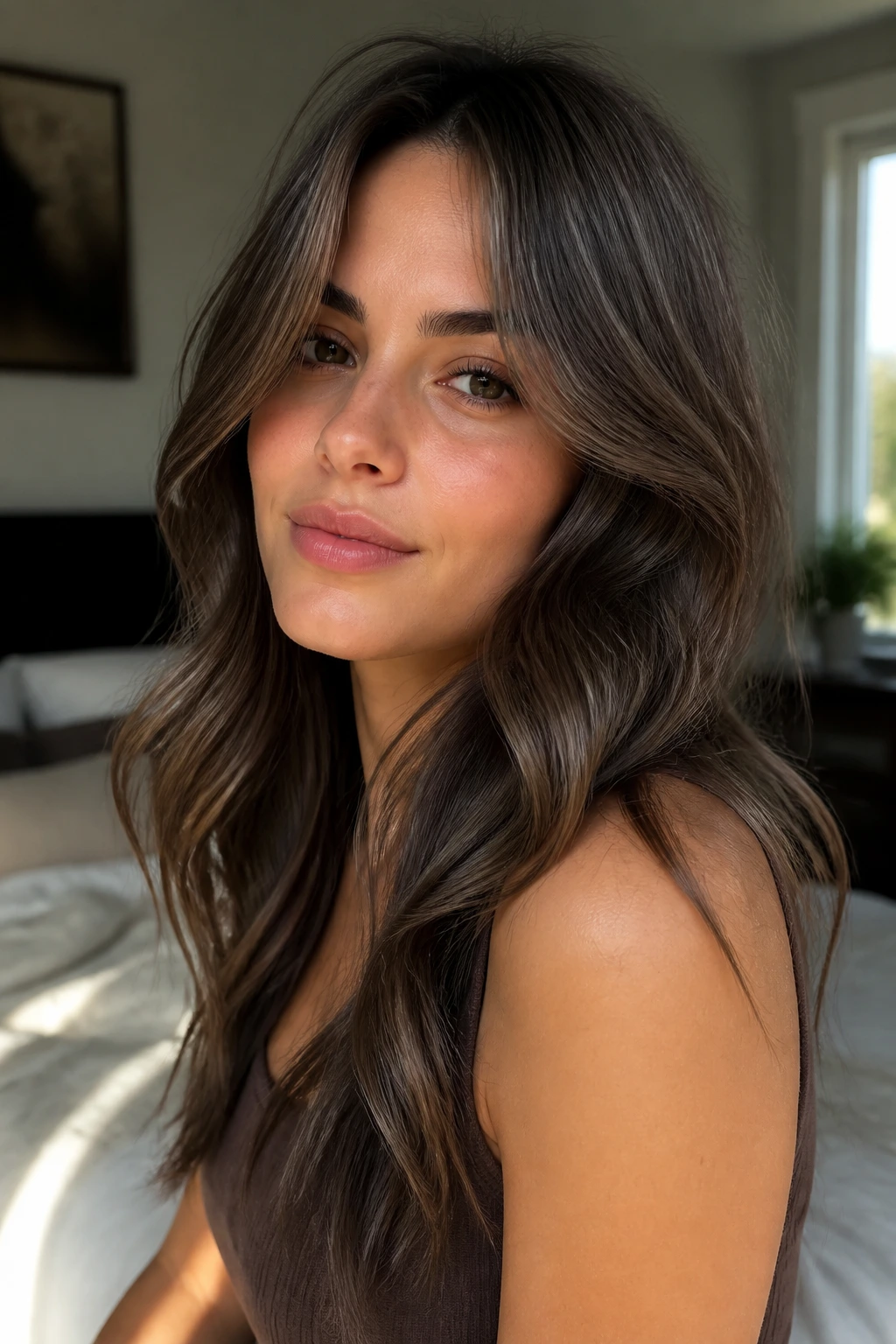
Cool smoke mocha is a cooler version of brunette dimension, with ash and smoke sitting just under the surface. It’s the one I suggest when someone says, “I want brown, but I do not want warmth.” The result should feel sleek, slightly muted, and polished in a very low-key way.
The risk here is going too far into gray. That’s when the hair starts looking dull instead of cool. A well-done smoke mocha still has shine; it just swaps gold for beige and red for soft brown shadow.
19. Golden Mocha Melt
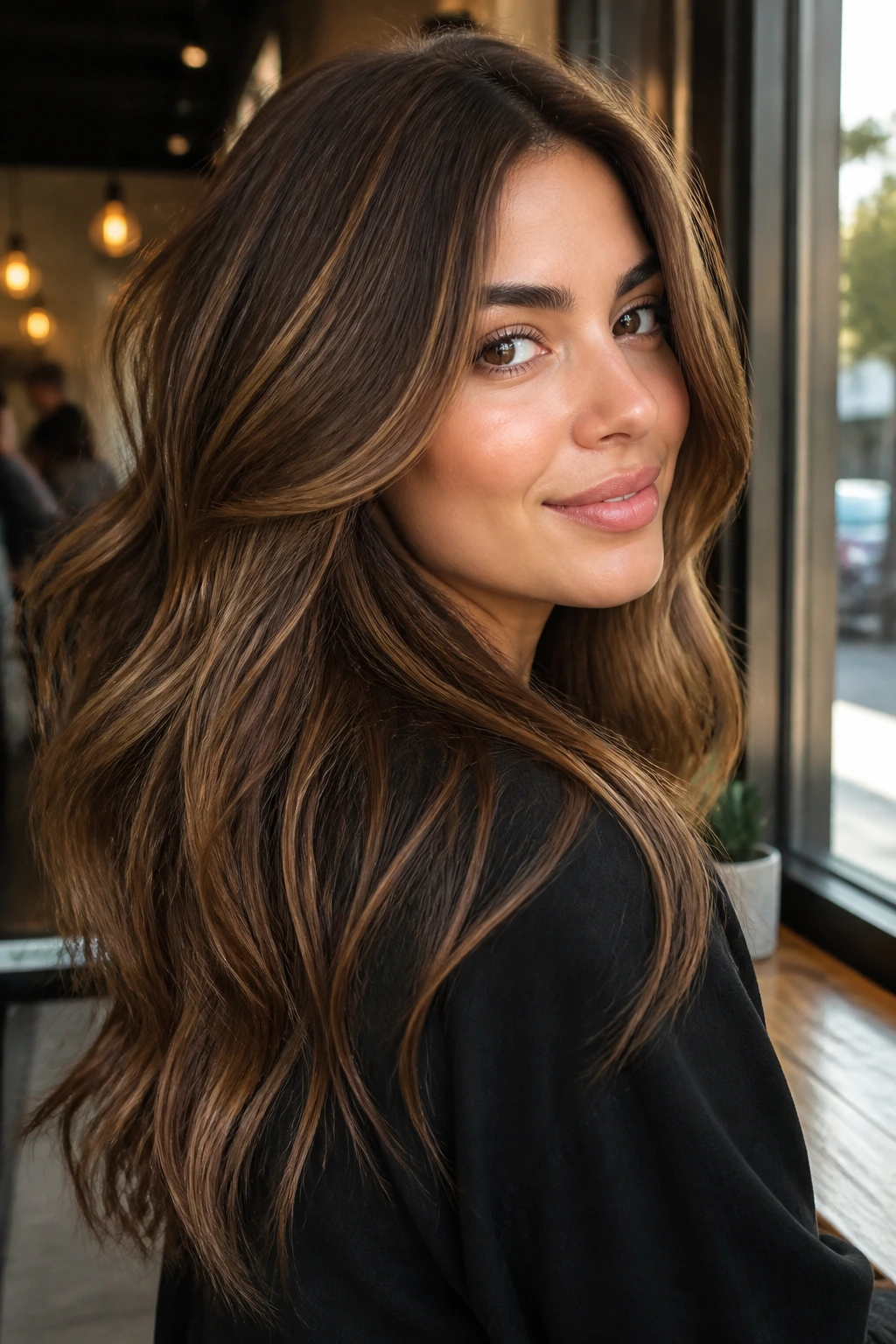
Golden mocha melt is warm brunette color done with a lighter hand. The gold sits inside the mocha, not on top of it, so the hair glows instead of flashing yellow. It’s one of the prettiest choices for wavy hair because the movement catches the warm pieces without making them look stripey.
If you’re someone who likes sunlit brown hair but hates overt caramel, this is your lane. Keep the gold pieces diffused and the root shadow natural, and the whole thing reads like a soft, expensive brunette rather than a highlighted blonde trying to behave.
20. Dimensional Mocha Pixie
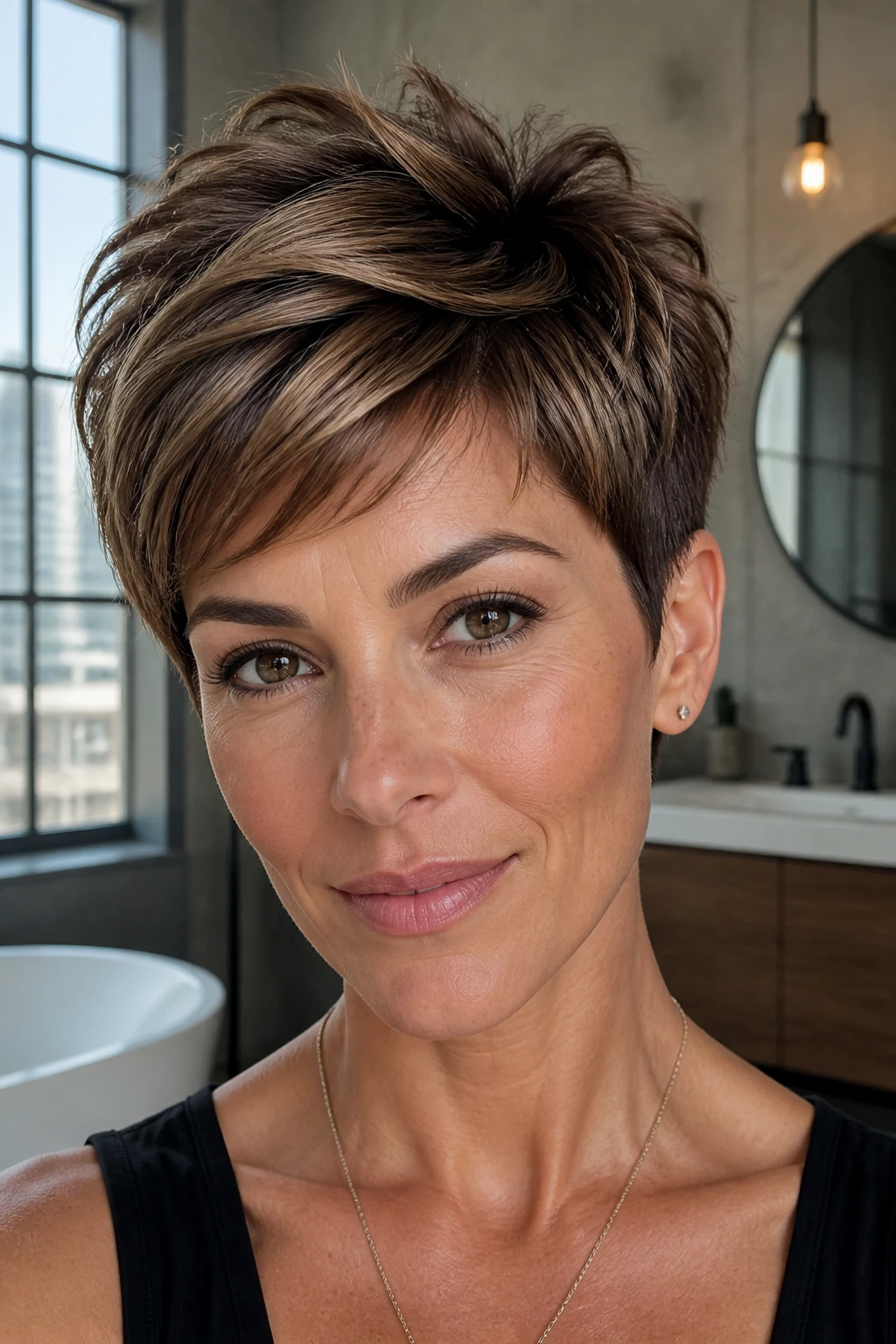
A dimensional mocha pixie needs tiny placement, not big ribbons. The short length means every line matters, so the dimension comes from micro-lights, lowlights, and a glossy finish rather than obvious contrast. The color should make the cut look carved and intentional.
Why it works on short hair
A pixie can flatten out fast if the tone is too single-note. Adding a shade or two of contrast through the top and crown gives the haircut shape, especially when you style it with a little lift at the roots. Keep the pieces small, though. Short hair punishes overdone color faster than long hair does.
21. Mushroom Cocoa Lob
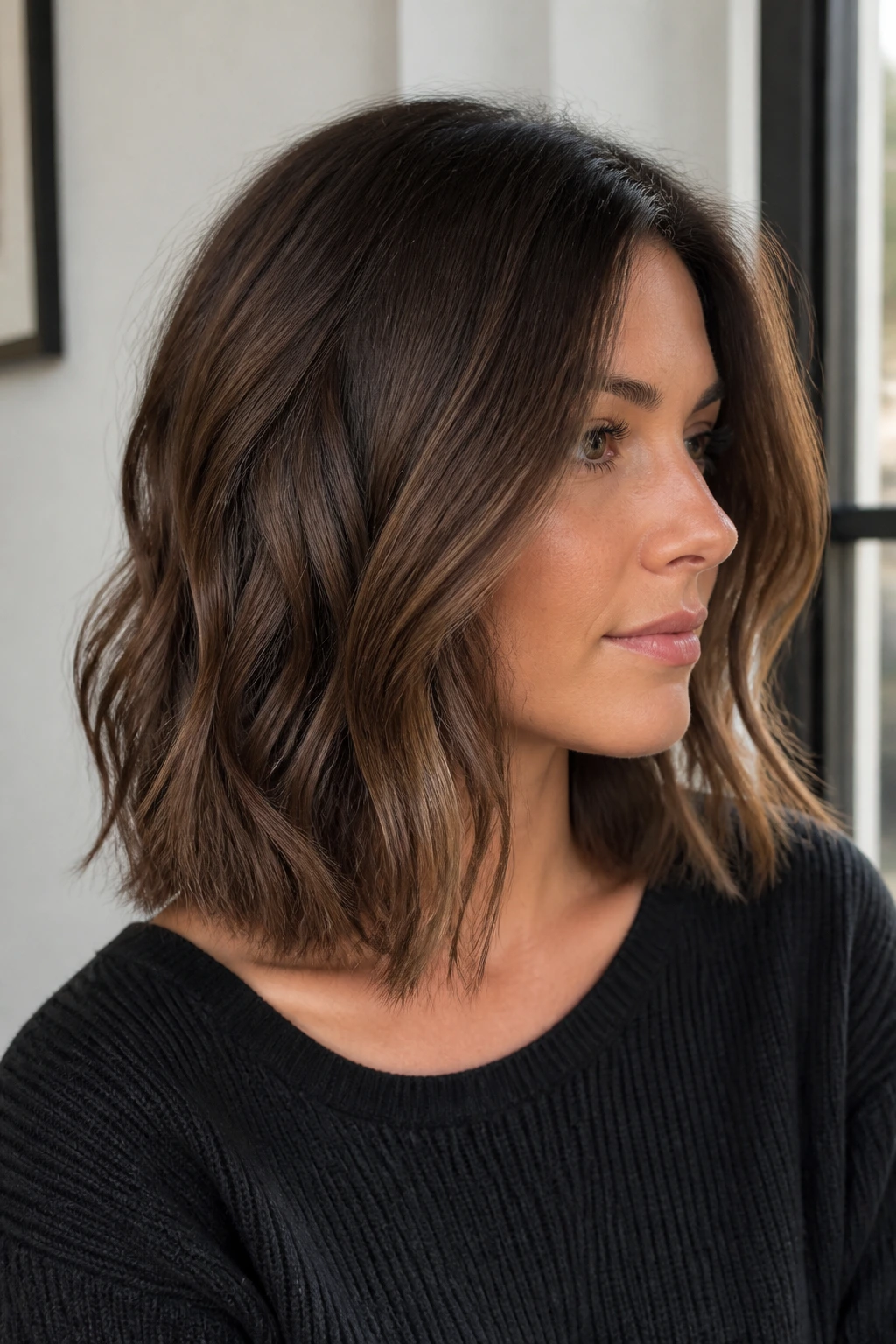
Mushroom cocoa lob is the cool brunette middle ground for people who want something modern without going dramatic. The lob length gives the color room to move, and the mushroom-cocoa blend keeps the brown soft, earthy, and slightly smoky. It’s one of the easiest mocha hair color ideas to wear with a side part or a middle part.
I like this one because it behaves well. It doesn’t beg for heavy styling, and it doesn’t need a dramatic contrast to look finished. A clean cut, a neutral gloss, and a few fine ribbons are enough.
22. Bronze Mocha Waves
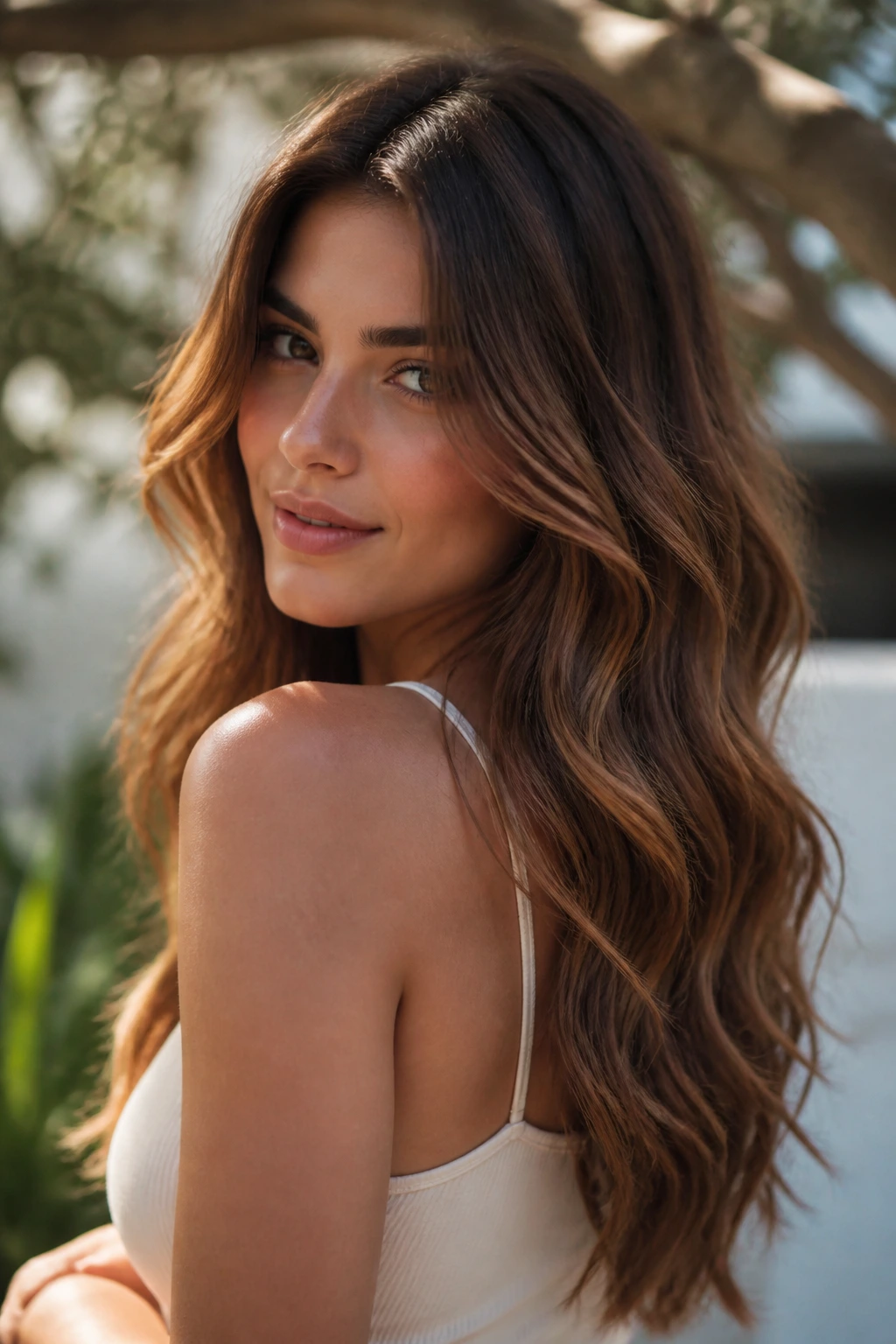
Bronze mocha waves bring warmth back into the brunette family without making the hair look orange. Bronze gives the mocha a sunlit shimmer, which works well when the hair is styled in loose waves or brushed-out curls. The effect is soft, not glittery.
This shade can go wrong if the bronze is too strong and the hair starts looking brassy. Keep the bronze low and diffuse it through the mids and ends, where the waves can break it up. On warm skin tones, it’s especially flattering. On cooler skin, a neutral gloss can calm it down.
23. Mocha Cherry Undertone
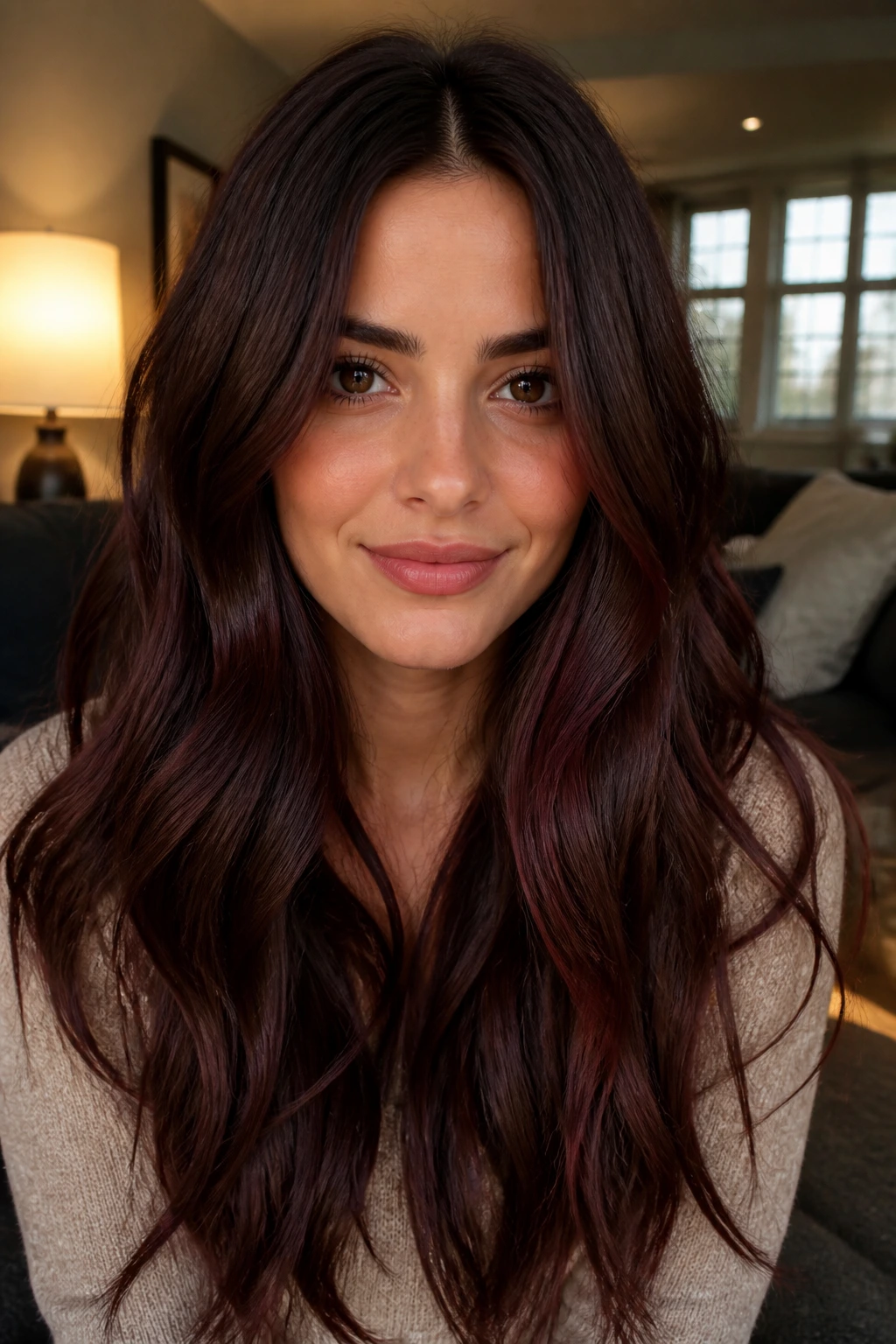
Mocha cherry undertone is for anyone who wants brunette color with a little dark berry depth underneath. The cherry note lives in the red-violet family, so it gives the mocha a richer, moodier cast without becoming obvious burgundy. Indoors, it can look like a deep brown. In daylight, the red undertone wakes up.
A good fit if
- You want brown with personality.
- Your hair tends to look flat in winter light.
- You like warm red-brown shades but want something darker.
This is one of the more interesting mocha ideas because it changes with lighting so much. The key is subtlety — too much cherry and the hair leaves mocha territory. Keep it as an undertone, not a headline.
24. Vanilla Bean Mocha Highlights
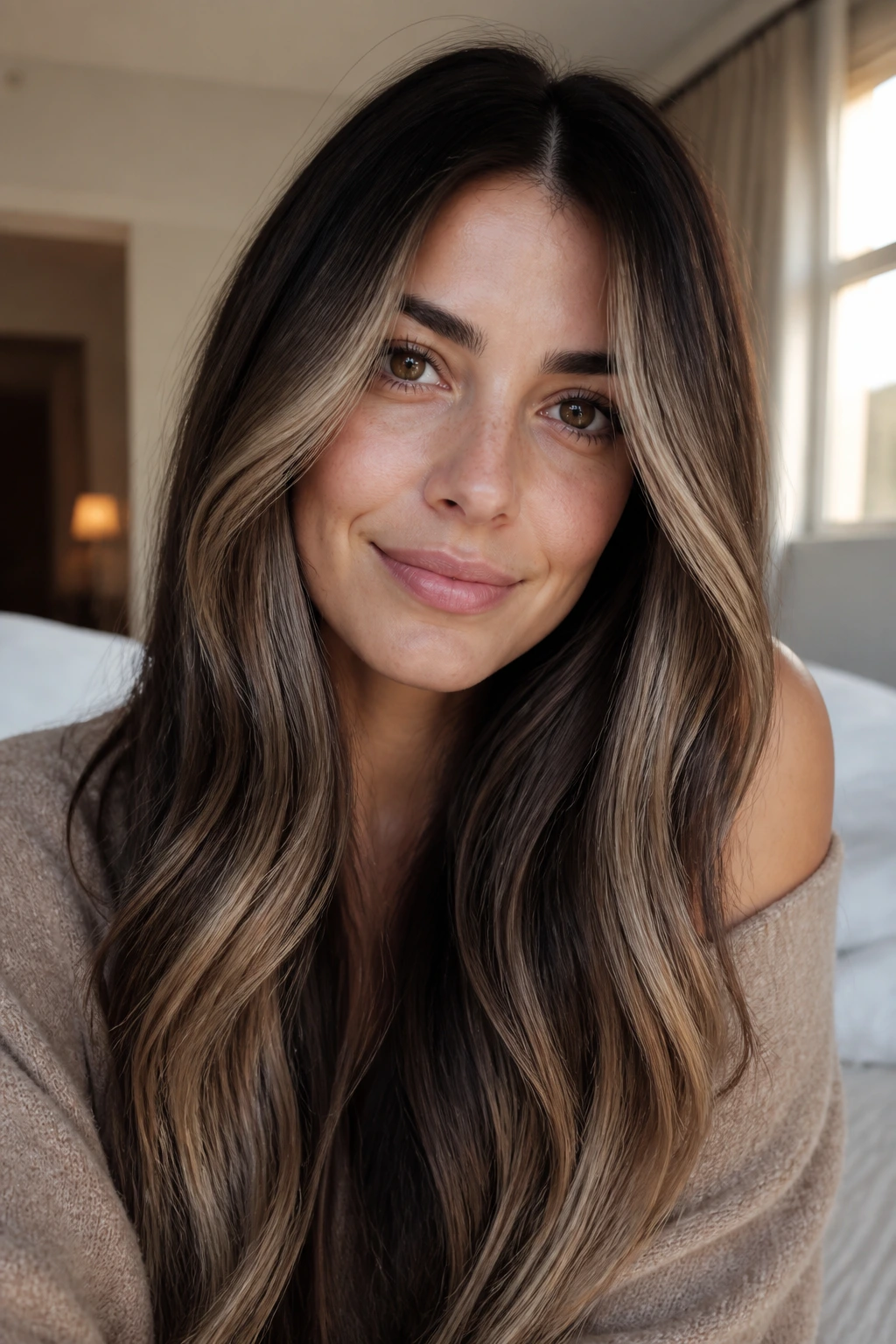
Vanilla bean mocha highlights are creamier and softer than a regular blonde highlight, which is why they work so well on brunette bases. The lighter pieces should look like a softened vanilla-bean tint rather than bright blonde, so the mocha stays in charge. It’s a gentle way to brighten the hair without breaking the brunette mood.
This version is especially good if you want your hair to look lighter around the face and ends but still read brown at a glance. It’s a subtle color story, not a high-contrast one. That’s the appeal. The hair looks touched by light, not carved up by it.
25. Satin Mocha All-Over Gloss
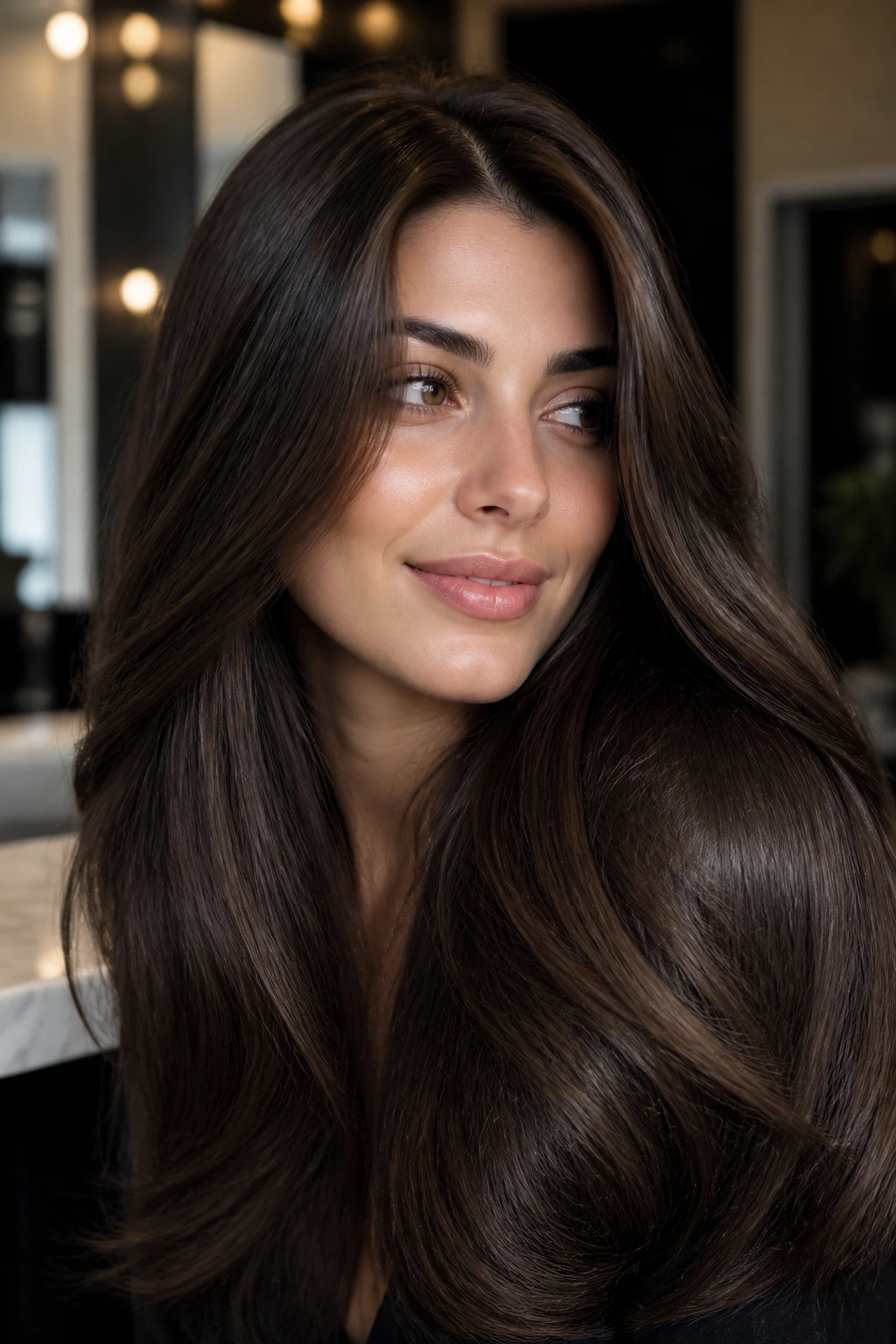
Satin mocha all-over gloss is the quiet one in the group, and I mean that in a good way. No big lift, no foil map, no loud contrast — just a deep brunette shade refreshed with a glossy mocha glaze that makes the hair look smoother and darker in the best possible way. If your hair is already healthy and you mainly want richness, this is a smart direction.
This is also the most forgiving choice for damaged or porous hair, because a gloss can improve tone without pushing the strands through a heavy lightening process. The finish should look like satin under light: smooth, reflective, and a little soft at the edges.
Why Mocha Hair Color Looks Soft Instead of Flat
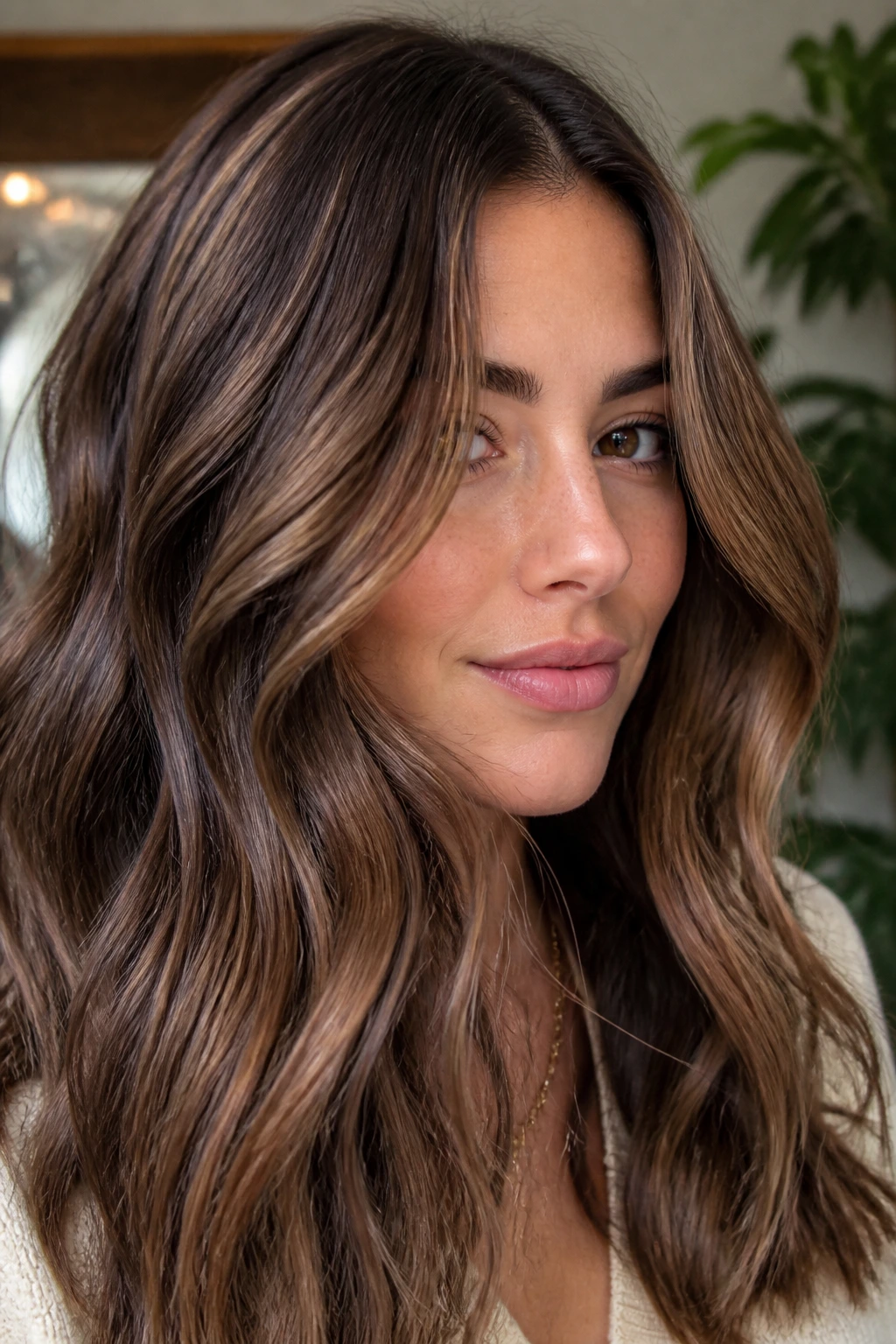
Mocha works because it borrows from both sides of the brown family. A little warmth keeps it from looking dusty. A little cool shadow keeps it from turning orange. When those tones sit together at different depths, the eye reads movement even if the contrast stays low.
That balance matters more than people think. A one-tone brown can look heavy on the wrong haircut, especially in daylight or under bright overhead lighting. Mocha solves that by layering espresso, cocoa, walnut, mushroom, chestnut, or caramel in small, controlled amounts — enough to create depth, not enough to make the head look striped. I almost always prefer a root shadow here. It gives the color a place to start.
The cut changes everything, too. Waves, bends, layers, curtain bangs, and even a blunt bob with beveled ends give mocha somewhere to live. Straight, one-length hair can still wear it, but it needs cleaner placement and a glossier finish or the dimension disappears.
The Tools and Products That Keep Mocha Hair Glossy
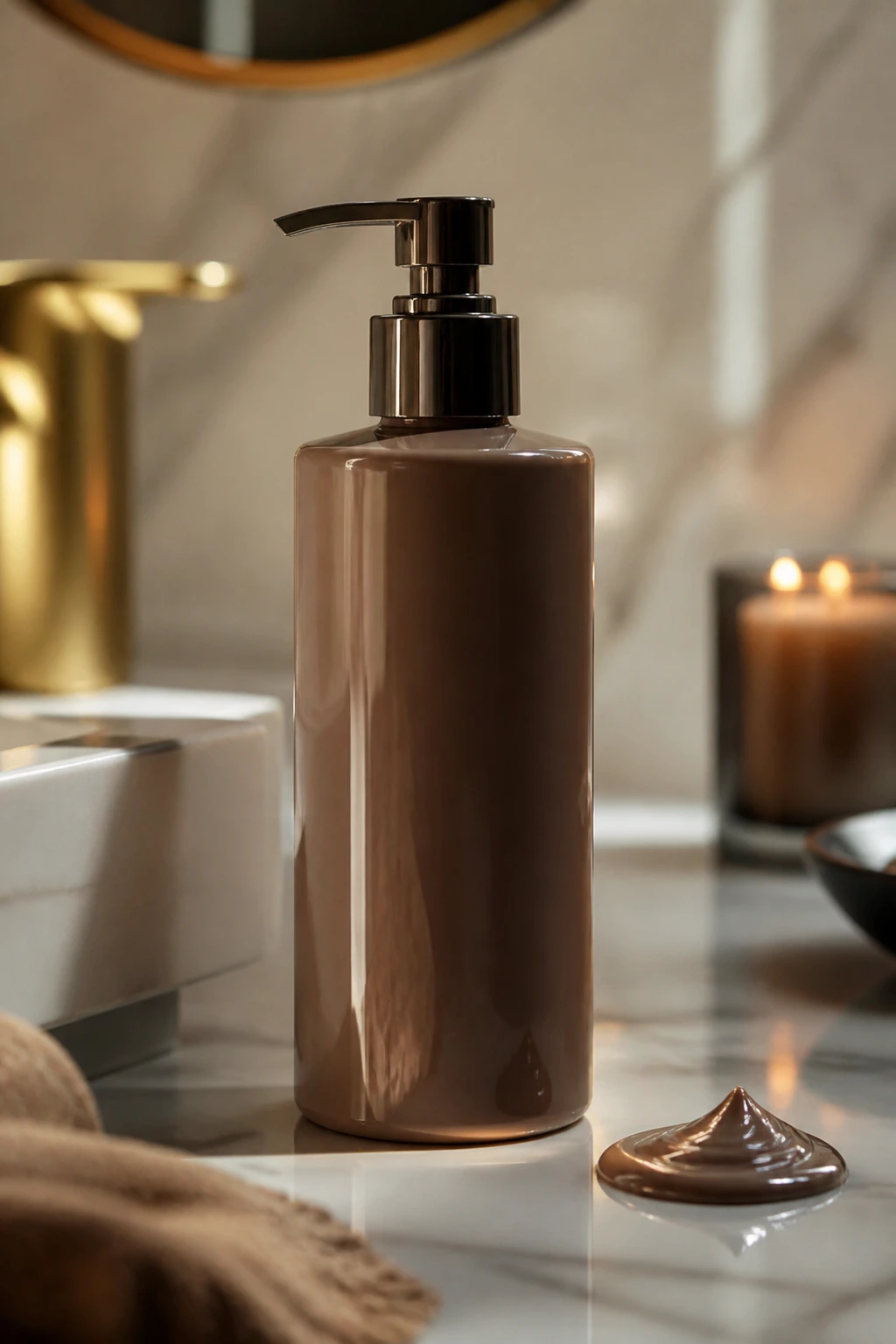
A mocha brunette look lives or dies by tone maintenance. If the color is built with subtle contrast and then washed out with harsh shampoo, you lose the point fast.
- Color-safe shampoo: Use a sulfate-free formula so the brown pigment does not rinse out in two weeks.
- Moisturizing conditioner: Keeps the mids and ends from looking rough, especially if you’ve lightened any ribbons.
- Weekly hair mask: A five- to ten-minute mask helps porous highlights stay smooth instead of frizzy.
- Heat protectant: Spray it before every blow-dry, iron, or wand pass; brown hair loses shine fast when it’s overheated.
- Light gloss or glaze: A demi-permanent gloss every few weeks keeps mocha tones rich and reflective.
- Wide-tooth comb: Better for detangling after conditioner, especially if your hair is wavy or curly.
- Microfiber towel or soft T-shirt: Cuts down on frizz while the hair dries, which matters a lot for mocha colors that rely on shine.
- Toning mask or blue shampoo: Helpful if your brown pulls orange; use it sparingly so the hair doesn’t go muddy.
- Clips and sectioning comb: Useful if you’re doing a gloss, root touch-up, or styling at home.
One thing I’d skip? Heavy purple shampoo on brunette hair unless you have blonde pieces that truly need it. Brown hair usually needs warmth control, not a violet bath.
How to Choose the Right Mocha Tone for Your Base Color
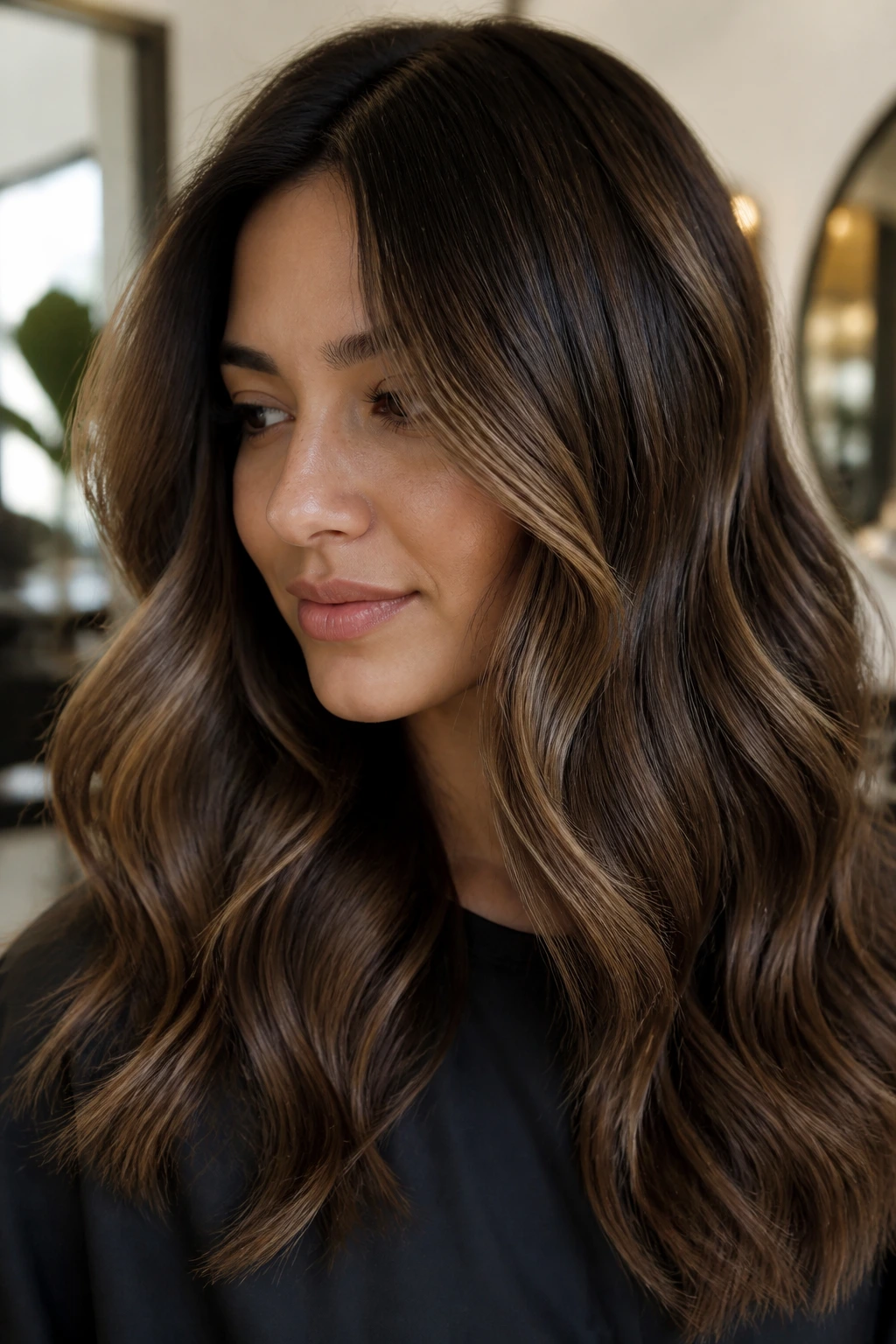
The best mocha shade starts with your natural level, not the inspiration photo. That part gets ignored all the time, and it’s why people leave the salon with a beautiful color that looks off on week one.
If your hair is level 3 to 4, deep espresso mocha, smoky mocha, or dark roast shadow lights will usually look the most natural. Going too light on a very dark base can make the color sit on top instead of blending in. If your hair is level 5 to 6, cocoa ribbon highlights, walnut mocha, chestnut mocha, and beige mocha bronde tend to sit in the sweet spot.
If your hair is level 7 or lighter, you have room for vanilla bean highlights, toffee ends, caramel mocha dimension, or mushroom cocoa lob tones. That’s the zone where the lightest mocha ideas can still feel brown instead of blonde. The bigger the lightening jump, the more toner work you’ll need later.
Undertone matters, too. Warm skin and warm natural hair often play nicely with cinnamon, bronze, or golden mocha. Cooler undertones usually look cleaner with mushroom, smoke, walnut, or iced face-framing pieces. And if your hair is porous, be careful with strong ash — porous strands can grab cool pigment too hard and look flat or slightly green.
What to Ask Your Colorist for at the Salon
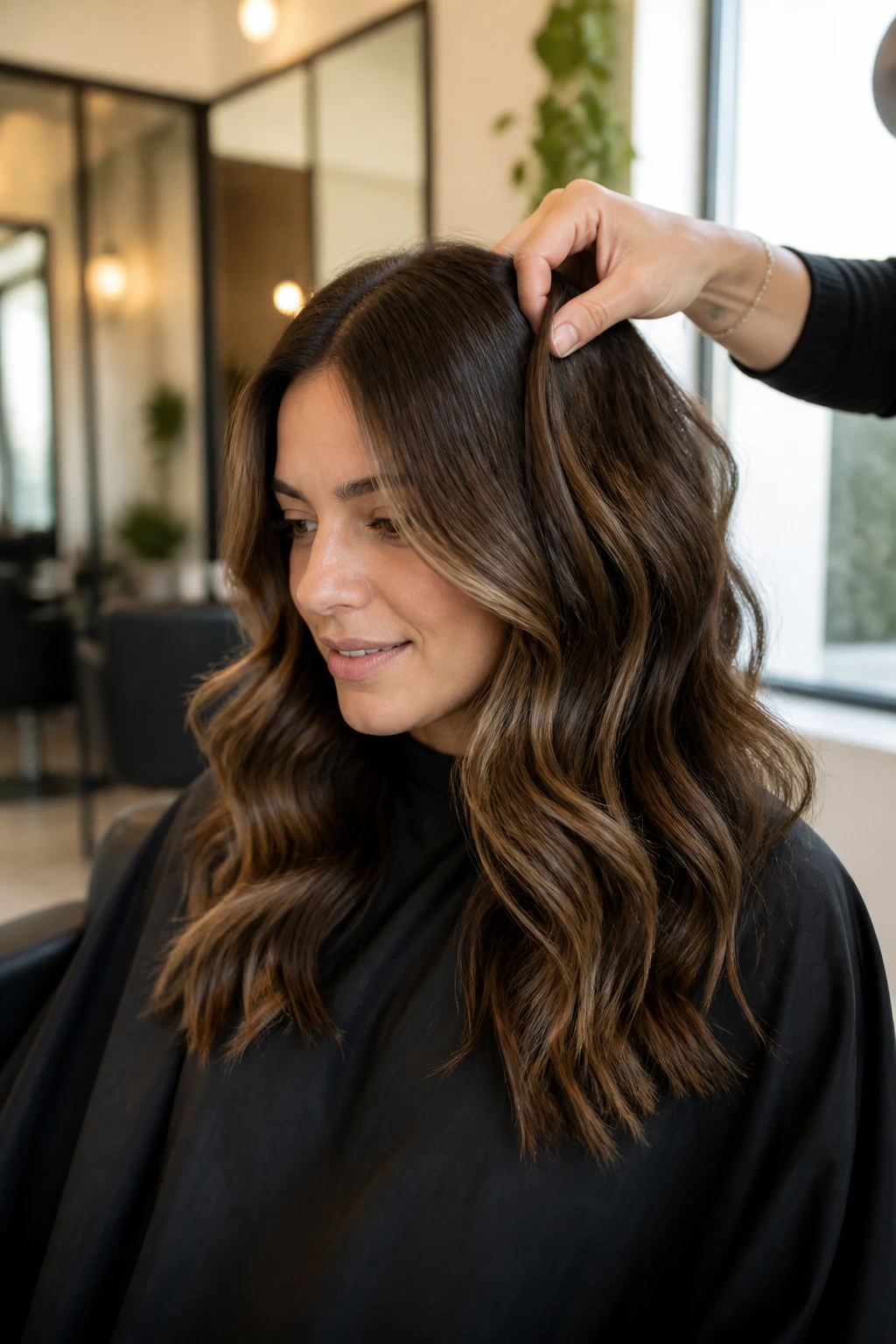
Bring photos, yes, but bring words too. Photos show mood. Words tell the colorist what level of contrast you actually want.
Start with the basics: Do you want warm mocha, cool mocha, or neutral mocha? That one question changes everything. Then talk about placement. Say whether you want a full-head balayage, face-framing pieces only, a root shadow, or lowlights under the crown. If you leave that part vague, you may get more brightness than you expected.
I also like to name the maintenance schedule right away. If you can only come in every 10 to 12 weeks, say so. That tells the colorist to keep the ribbons softer and the root more forgiving. If you like regular gloss appointments, the formula can be a little more precise and polished.
And one blunt request helps: no chunky stripes. Say it out loud if you need to. Mocha hair color looks best when the pieces are fine enough to blend, but visible enough to move.
How to Style Mocha Hair So the Dimension Shows
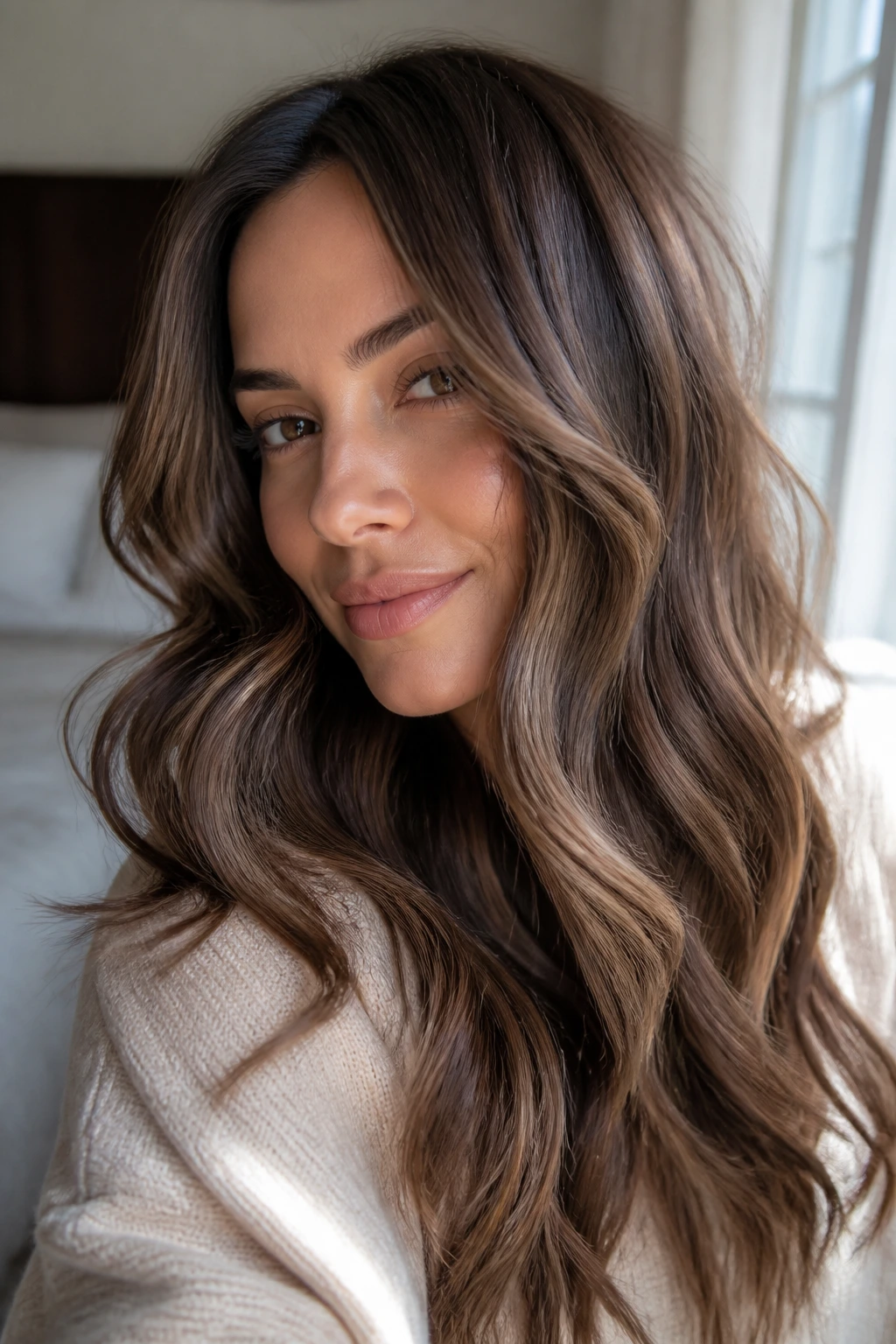
Presentation: Loose waves, a brushed-out blowout, or a clean bevel at the ends will show mocha dimension better than a tight, uniform curl pattern. If the hair is pin-straight and flat, the lighter ribbons can disappear into the base.
Accompaniments: Curtain bangs, long layers, and face-framing pieces are the best friends this color has. They give the highlights and lowlights somewhere to land. A neutral makeup palette — brown liner, soft blush, cream or camel clothing — also helps the color read warmer and richer.
Portions: If you want a soft result, ask for partial balayage or a gloss with just a few face-frame foils. If you want more contrast, widen the lighter ribbons through the mids and ends, not just the top layer. The most common mistake is putting all the brightness where the sun hits first. That can make the color look obvious in the wrong way.
Beverage Pairing: The coffee-shop part of mocha is fun, sure — a latte or black coffee fits the mood — but the real pairing is styling. A 1.25-inch iron, a round brush, or a blow-dry brush is what lets the shade actually show up.
Small Tweaks That Make Mocha Look Richer
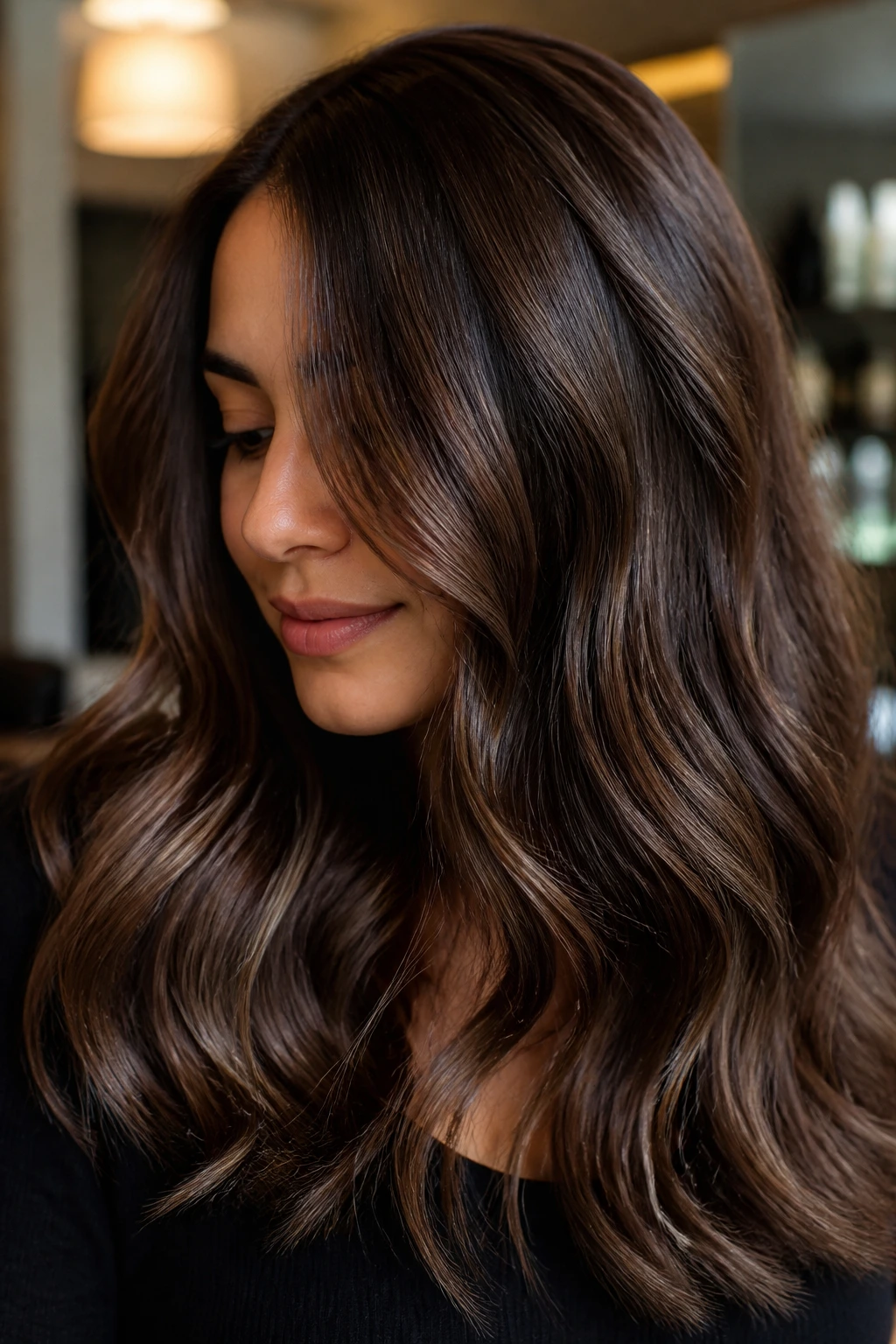
Gloss Boost: A clear or tinted gloss every four to six weeks keeps mocha from drying out into a dusty brown. It’s one of the cheapest-looking ways to make hair look better, and I mean that as a compliment.
Depth Control: If the color looks too bright, add lowlights instead of more highlights. Darker pieces under the crown and behind the ears make the whole head feel denser. That trick is worth more than another round of lightening.
Texture Trick: Soft bends or brushed-out curls pull the dimension forward. If you wear the hair bone-straight every day, keep the placement very fine or the contrast can look harsher than intended.
Make-It-Yours: Warm-friendly people can lean cinnamon, caramel, or bronze. Cooler undertones usually look better with mushroom, smoke, or walnut. If you want low maintenance, stay close to your base and keep the lift subtle. If you want more pop, choose one accent zone — usually the face frame — instead of brightening the whole head.
Common Mistakes That Flatten Mocha Hair Color
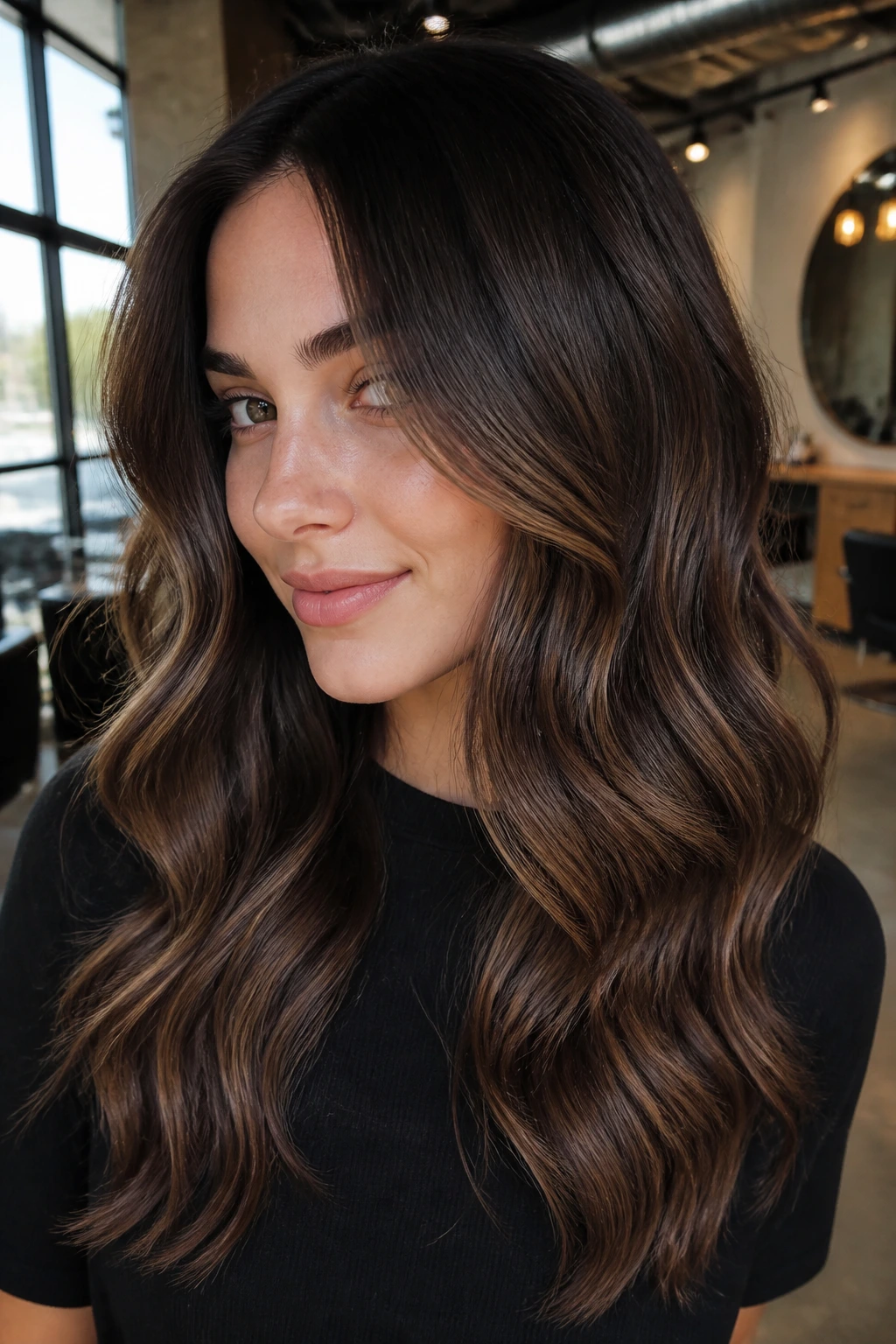
The first mistake is going too light. Mocha stops feeling like mocha when the highlight pieces jump too far from the base, and then the color turns into standard caramel or bronde. The fix is simple: keep the lightest pieces within two to three levels of your natural brown and use lowlights to preserve depth.
The second mistake is choosing ash on porous hair without testing the tone first. That can leave the ends looking muddy, grayish, or even slightly green. If your hair drinks up pigment fast, ask for a neutral-beige gloss instead of a strong ash toner.
A third problem is chunkiness. Big, obvious ribbons can look stripey the second the light changes. Fine babylights, soft balayage, and narrow face-framing pieces are the safer route if you want softness.
The last one is ignoring your haircut. One-length hair can wear mocha, but it needs cleaner placement and more gloss. Layers, bends, and movement make the whole thing make sense.
Variations and Alternatives Worth Trying
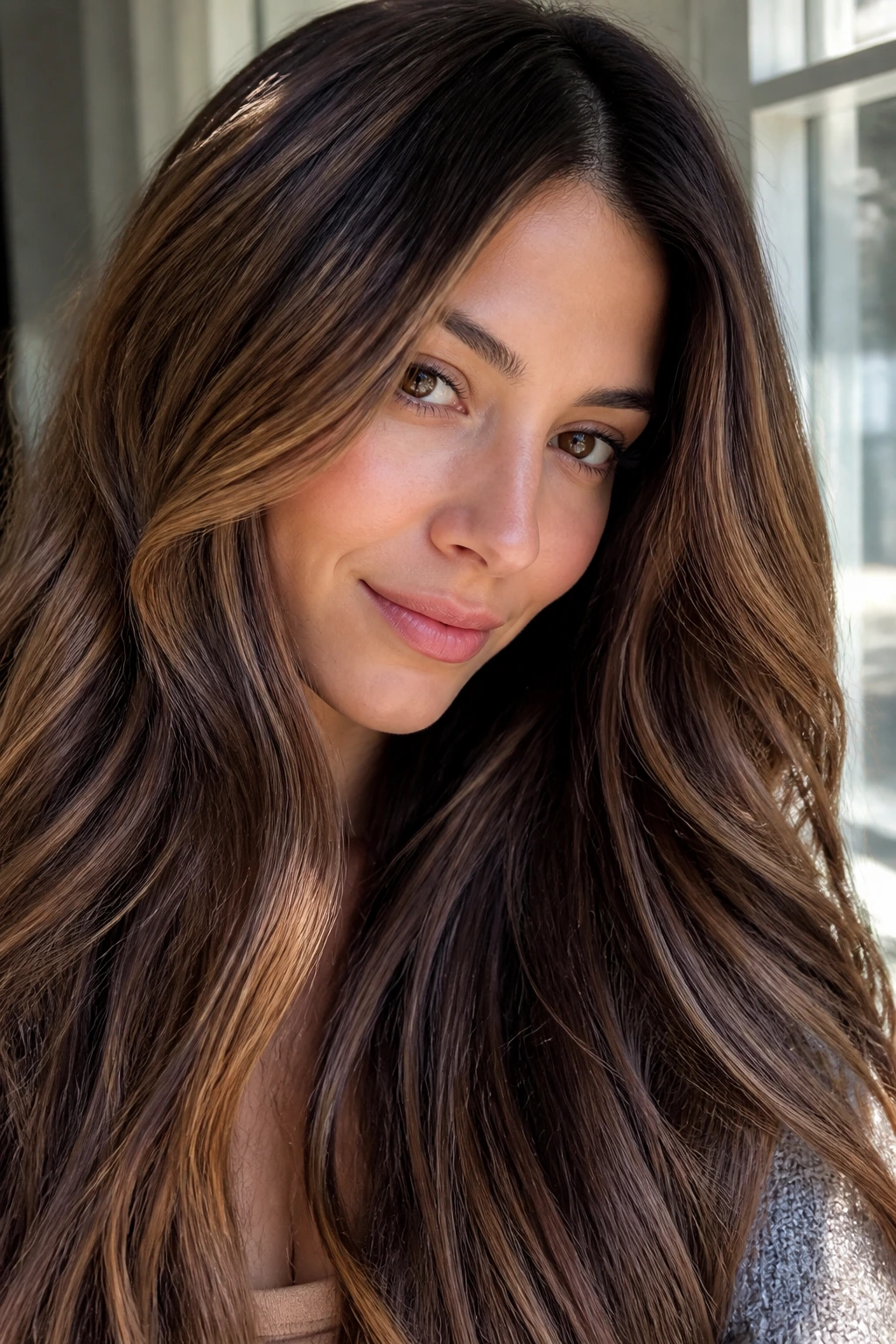
Barely-There Mocha Gloss: This is for someone who wants richness, shine, and a deeper brunette tone with no visible lightening. It’s the easiest version to maintain and one of the nicest ways to revive tired ends.
Caramel Ribbon Mocha: A warmer take with a few brighter ribbons through the mids and face frame. Choose this if your natural brown already has warmth and you want the color to feel sunnier.
Smokehouse Mocha: Cooler, ashier, and a little moodier. It works best when the goal is a muted brunette that reads clean rather than golden.
Bronze Mocha Waves: This version leans warm and reflective, especially on layered hair or hair that’s styled with a bend. It’s a good pick if you like light catching in a soft, sunlit way.
Gray-Blending Mocha: The root stays closer to your natural brunette, while the lengths get a mocha gloss that softens gray without turning the hair one flat color. It’s one of the neatest ways to blend without obvious lines.
How to Keep the Shade Fresh Between Visits
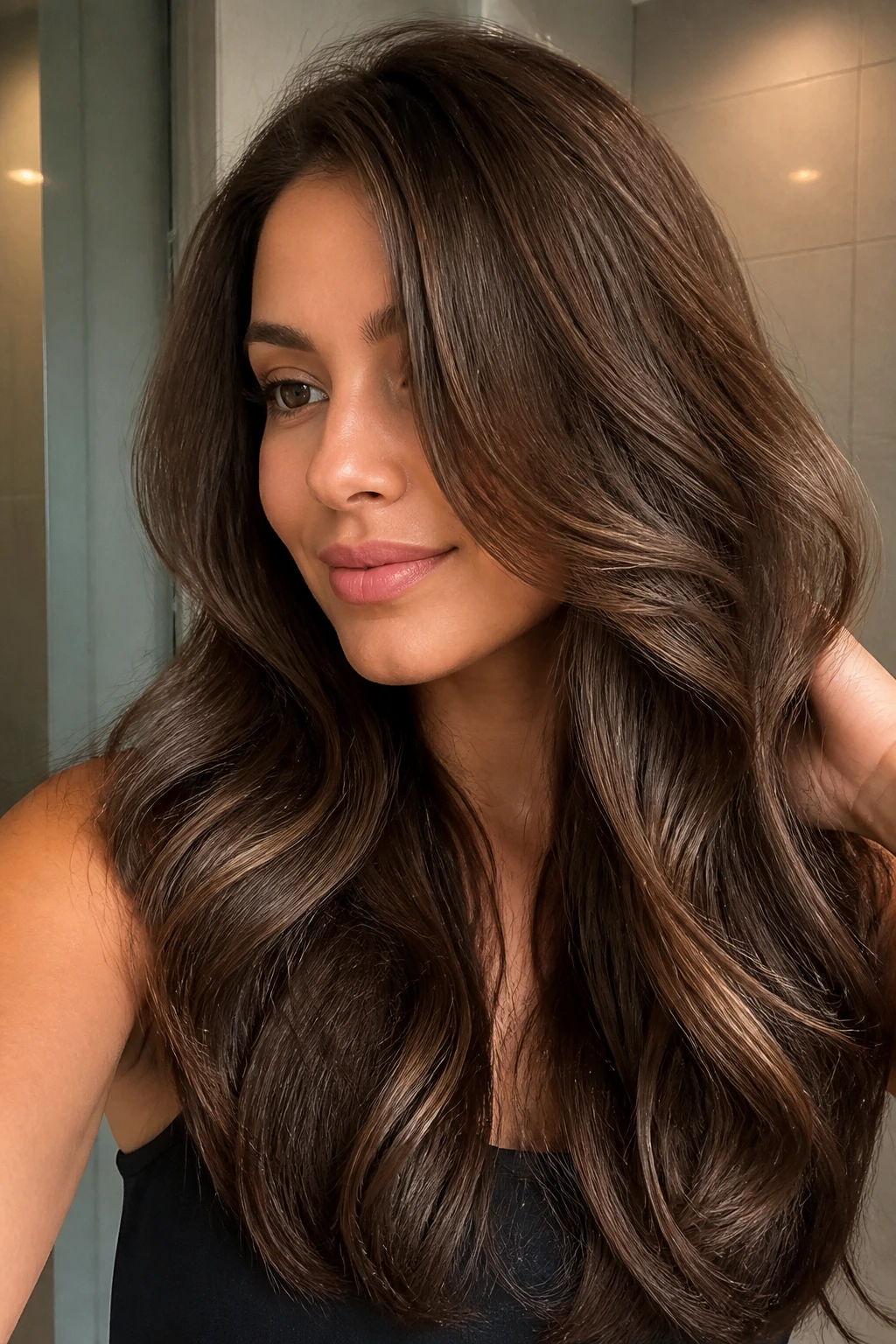
Mocha tones hold up best when you don’t bully them. Wash with a color-safe shampoo two or three times a week instead of scrubbing daily, and use lukewarm water rather than hot. Hot water opens the cuticle too much, which makes the gloss slip out faster.
A weekly mask helps the mids and ends stay smooth, especially if you’ve added any balayage or face-framing pieces. If your brown pulls orange, a blue shampoo once every one to two weeks can help, but don’t overdo it. Too much toning flattens shine. Brown hair usually wants correction, not constant correction.
Plan on a gloss refresh every four to six weeks if you want the tone to stay crisp. Partial balayage or lowlight maintenance usually lands around eight to twelve weeks, depending on how fast your hair grows and how visible the roots are. If you cover grays, your root schedule may be closer to six to eight weeks. And yes, heat protectant every single time still matters — mocha looks expensive when it shines, not when it’s scorched.
Sun, chlorine, and hard water can all rough up the tone. If you swim a lot, wet the hair first and use conditioner before putting it up under a cap. Simple. Annoying. Worth it.
Questions People Ask Before Choosing Mocha Hair Color
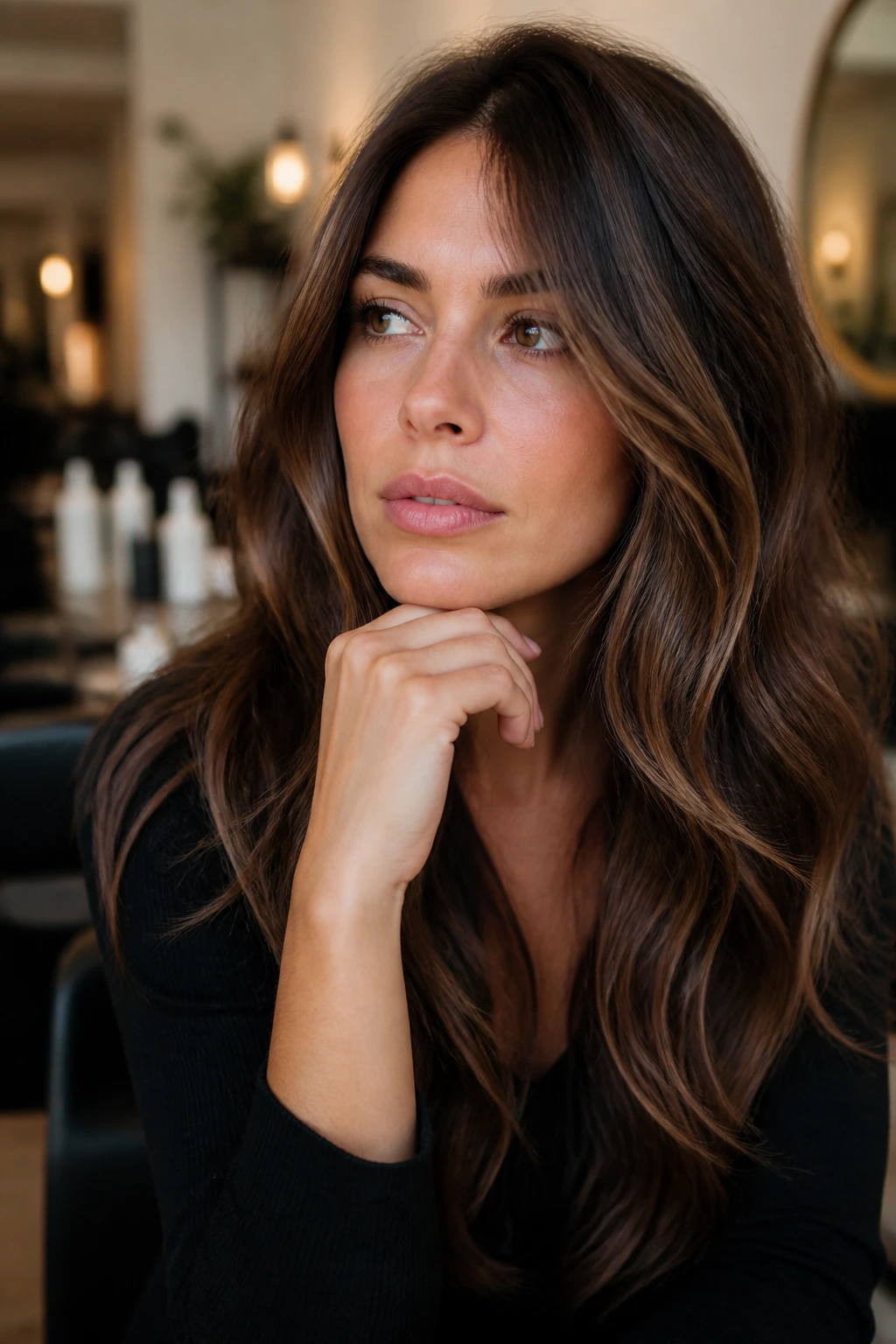
Will mocha hair color work on very dark hair?
Yes, but the result will usually be more about shadow and gloss than visible lift. On very dark hair, espresso mocha, dark roast shadow lights, and a deep root melt tend to look best because they add movement without forcing the hair too far from its natural base.
Is mocha hair color warm or cool?
Both, and that’s the point. The best mocha shades balance a little warmth with a little smoke, which keeps the brunette from looking orange or flat. If you prefer warmth, ask for cinnamon, caramel, or bronze. If you like cool tones, mushroom, walnut, and smoke are better bets.
Do you need bleach for mocha highlights?
Not always. If your base is already medium brown or lighter, a demi-permanent gloss, lowlights, or a subtle balayage may be enough. Darker hair usually needs some lightening for the ribbons to show, but the lift can stay modest.
How often does mocha color need to be refreshed?
Glosses usually need a refresh every four to six weeks. Balayage or lowlights can often last eight to twelve weeks before they need attention, especially if the root shadow is soft and the placement is fine.
What if my hair turns orange after coloring?
That usually means the lift exposed too much warm pigment, which brunettes do easily. Ask for a neutral or cool beige gloss, and use blue shampoo sparingly at home. Too much toning can make the hair look dull, so don’t overcorrect.
Can curly hair wear mocha balayage without looking stripey?
Absolutely, and curls often show the dimension better than straight hair. The trick is to keep the painted pieces fine enough that the curl pattern breaks them up. Chunky highlights are the enemy here.
How do I ask for mocha at the salon without sounding vague?
Bring two or three photos, then name the part you want to copy: the root depth, the warmth level, or the amount of contrast. Saying “mocha but soft” is a start. Saying “level 5 brown with a neutral root shadow and fine face-framing ribbons” gets you much closer.
The Brown Shade That Still Has Movement
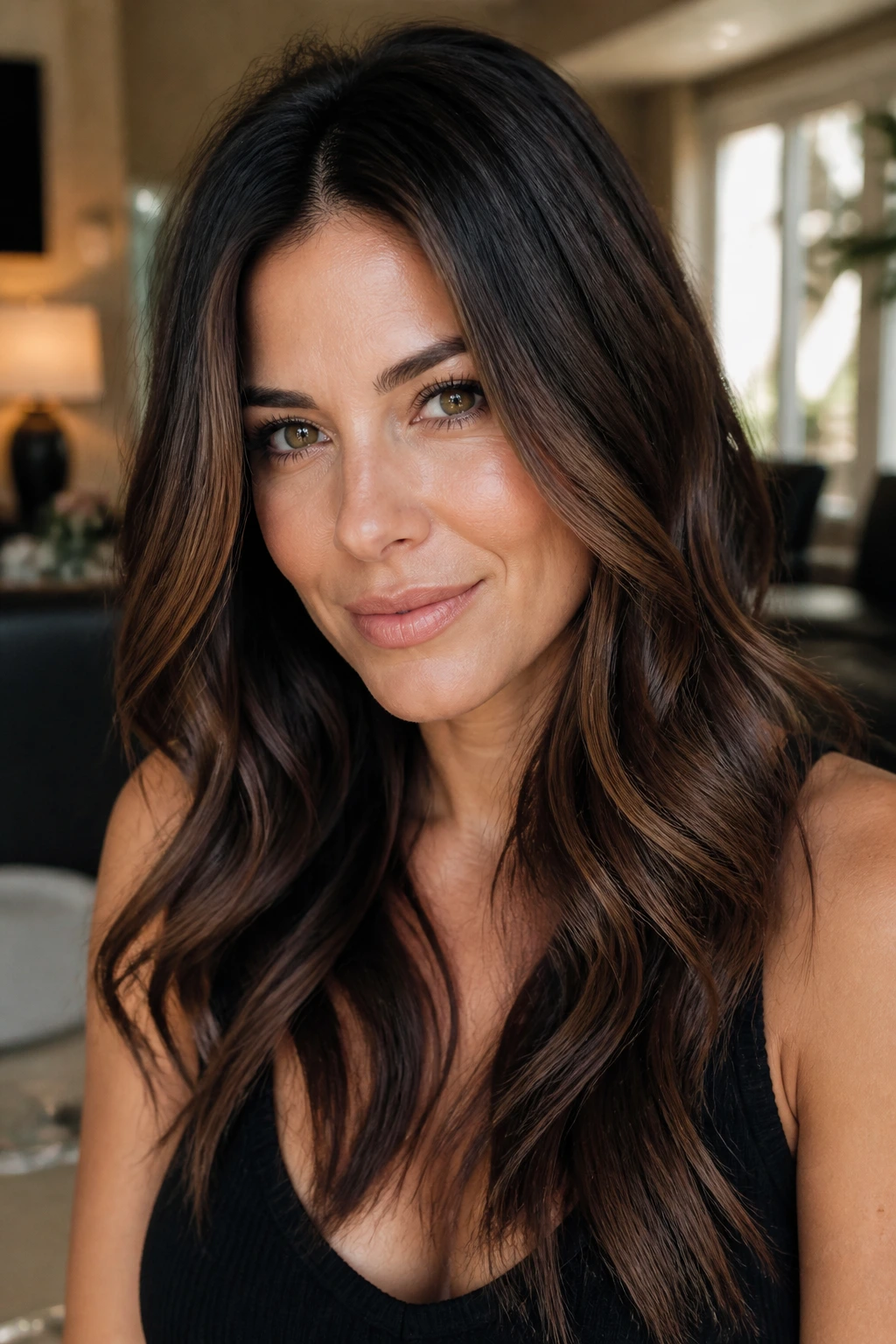
Mocha keeps working because it doesn’t try to turn brunette hair into something else. It just gives the brown more places to live — a darker root, a softer midtone, a few ribbons that catch the light when you move. That’s enough. Sometimes more than enough.
If your hair has been feeling heavy, one-note, or a little too flat under bright light, mocha is the kind of color that fixes the problem without making a scene. Pick the version that matches your maintenance habits, your base color, and how much contrast you actually want. Then let the cut do half the work.
