



A good shag haircut does something most cuts don’t: it looks more finished after you leave it alone. The shape breaks up in a way that feels intentional, so a rough dry, a quick finger-comb, and maybe a mist of texture spray can get you further than a full blowout ever could. That’s the real appeal of shag haircuts when you want low maintenance hair that still has personality.
The best versions don’t fight the head shape. They work with it. Layers sit where hair naturally bends, fringe softens the front instead of forming a hard shelf, and the ends stay light enough to move without needing a round brush and a half-hour of patience. If you’ve ever had a haircut that looked great only on the day you left the salon, you already know why that matters.
What people call “low maintenance” is usually just “well designed.” A shag can be a mess in the wrong hands. Or it can be the one cut that makes day-two hair look better than day-one hair. The difference lives in the layer placement, the way the fringe is cut, and how much bulk gets removed at the crown. That’s where the good stuff starts.
Why You’ll Love This Collection
-
Air-Dry Friendly: Most of these shag haircuts keep their shape after a rough dry, so you’re not chained to a blow dryer every morning.
-
Texture-Led: Waves, bends, curls, and even stubborn straight hair all get a little more movement from the right layer pattern.
-
Grow-Out Grace: The better shags don’t look awkward after six weeks; they just soften a bit and keep going.
-
Face-Frame Control: You can lean into curtain bangs, side fringe, or no bangs at all, which makes the cut easy to tailor.
-
Density Balance: Thick hair loses some weight, fine hair gets lift, and both can land in a place that feels lighter without looking sparse.
-
Style-Skip Friendly: A lot of these work with dry shampoo, a little mousse, and your hands. That’s it. No ceremony.
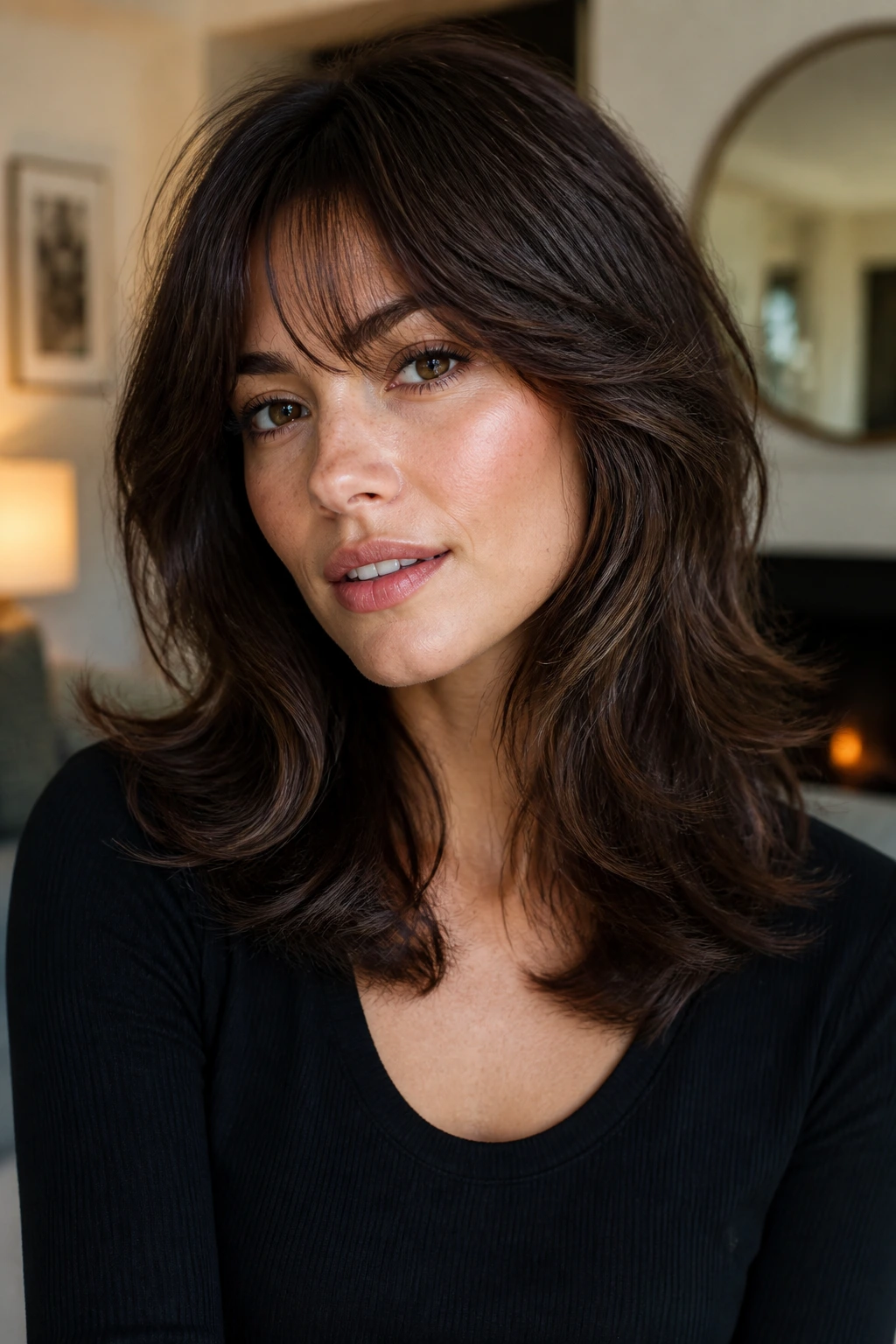
1. Curtain Fringe Shag That Falls Into Place
Curtain fringe is the softest way into the shag family. The center opens at the nose, the sides skim the cheekbones, and the rest of the cut keeps sliding back into shape even after you sleep on it. It has that easy, lived-in look people want from shag haircuts without making the front feel chopped up.
Why It Stays Easy
- The fringe splits on its own after a quick rough dry.
- Collarbone-length layers still pull back if you need them to.
- A little bend reads as style, not neglect.
Ask for the shortest face frame to land just under the brows and the longest piece to graze the collarbone. That spacing matters more than people think. Too much contrast makes the front fussy. Too little, and you lose the swing that gives the cut its looseness. Best move: dry the fringe first, then let the rest air-dry while you get dressed.
2. Chin-Length Razor Shag With Broken Ends
Short hair can be low maintenance, but only when the outline has some air in it. A chin-length razor shag does that well. The edges are light enough to move, the layers keep the shape from turning into a neat little helmet, and the whole thing dries fast because there isn’t much length to wrestle with.
I like this on strong straight hair and on waves that puff a little at the ends. I do not love it on fragile hair that has already been thinned out by bleach or years of over-texturizing. Use a razor sparingly if the ends are delicate. A sharp point-cut often gives you the same broken line with less damage.
3. Collarbone Shag for Soft Waves
If your hair bends into loose S-shapes, this length does a lot without asking for much back. Collarbone hair sits in that sweet spot where you can air-dry, tuck one side behind the ear, or pull it into a low clip without killing the shape. The layers add motion, but the length still carries enough weight to keep the top from floating away.
Ask Your Stylist For
- long internal layers that start below the cheekbones
- a light face frame, not a heavy bang shelf
- soft point-cut ends so the bottom edge doesn’t look blunt
This is one of the easiest shag haircuts for people who want something they can wear straight out of the shower with a dab of cream. It’s relaxed. Not sloppy.
4. Curly Shag With Rounded Layers
Curly hair and shag structure get along because both like a little freedom. A rounded curly shag lets the curl pattern stack naturally instead of fighting a blunt perimeter. When the shape is cut dry, each curl lands where it wants to land, which means less puffiness and fewer weird shelves.
The key is leaving enough length in the interior so the curls don’t spring up into a triangle. Shorter layers can help the crown, but if they creep too high, the top starts to look airy in the wrong way. Ask for the curl pattern to be cut in its natural state. That part saves more styling time than any product ever will.
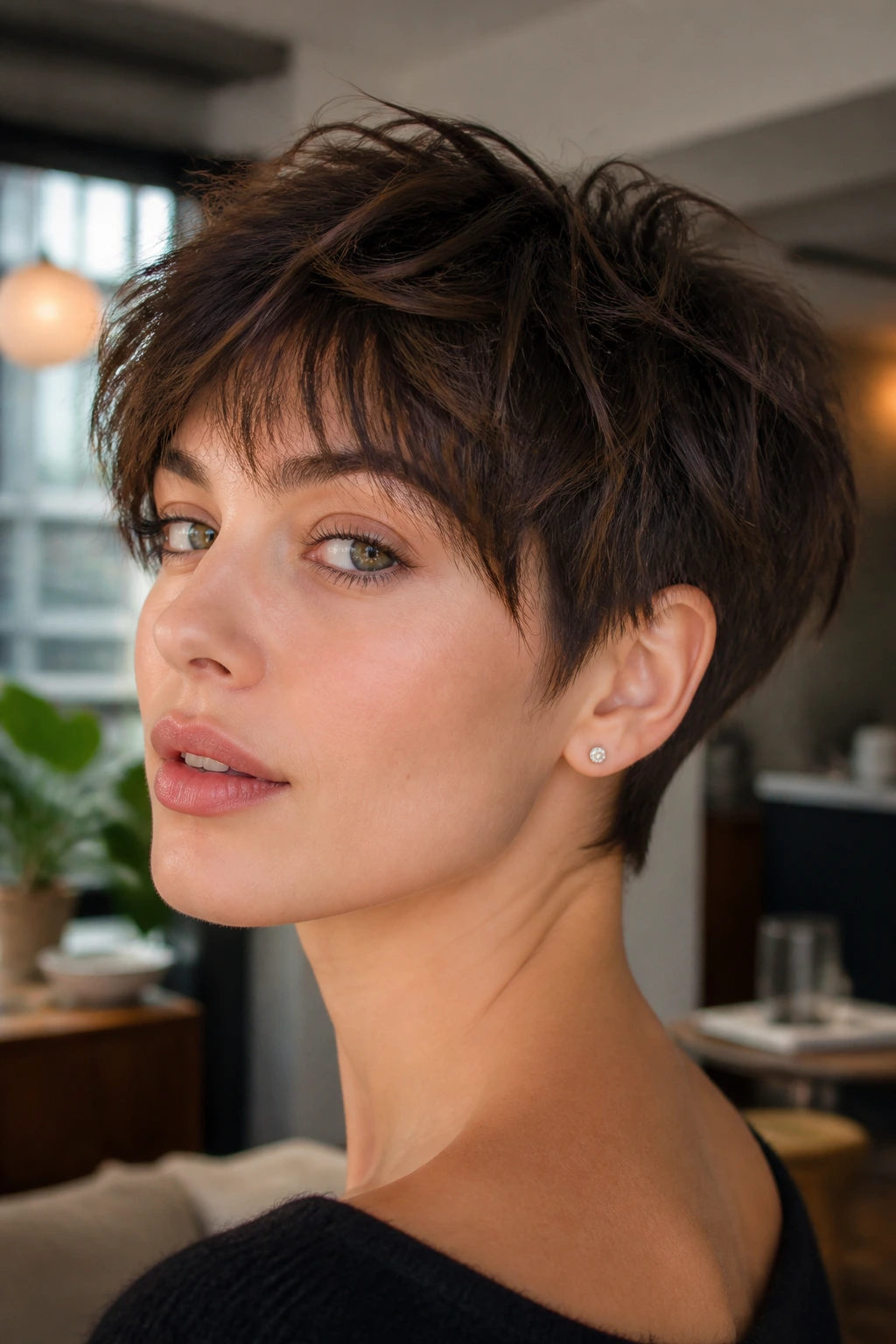
5. Pixie Shag With a Tapered Nape
This is the shortest version in the group, and it works because it gives you texture without demanding a full styling routine. The nape is tapered cleanly, the top has piecey movement, and the sides stay soft enough to avoid the hard line that makes a pixie feel strict. You can rough it up with your fingers and move on.
It’s a smart choice if you like short hair but hate spending ten minutes making it behave. A little styling paste at the crown is enough. No brush marathon. No elaborate sections. Small warning: if your hair grows fast around the ears or nape, you’ll want trims more often than with the longer cuts here.
6. Long Air-Dry Shag
Long hair gets heavy in a hurry, and that’s exactly why this version works. The layers remove enough weight that the hair can bend instead of hanging in one straight curtain. You still keep the length, which is handy if you like braids, buns, or tossing it over one shoulder, but the shag structure stops it from looking flat.
This cut is for people who want the easiest possible morning. Scrunch a little leave-in into damp hair, twist a few front pieces, and leave it alone. If your hair is very straight, a soft bend from a braid overnight helps. If it’s wavy, don’t mess with it too much. The less you touch, the better it tends to behave.
7. Bottleneck Bangs Shag
Bottleneck bangs do a lot of the work that blunt bangs refuse to do. They start narrow between the brows, then open near the cheekbones, which gives the forehead some room and the eyes some shape. On a shag, that fringe connects to the rest of the layers without looking like a separate haircut parked on top.
Why people love it: it grows out softly. That matters. A blunt bang turns into a trim schedule fast. Bottleneck bangs can slide a little longer between appointments and still look deliberate. They also dry faster than a full fringe, which is the kind of practical detail that makes a cut stay in real life and not just in a salon mirror.
8. Layered Lob Shag
A lob with shag layers gives you the neatness of a bob’s length and the movement of a shag. The perimeter sits around the collarbone, which keeps styling simple, while the interior layers keep the hair from hanging like one block. It’s one of the safest shag haircuts if you want texture without a sharp edge.
A few face-framing pieces can be enough. You don’t need to hollow the whole head out. In fact, I’d avoid that on fine hair. Keep the ends soft, then let the body of the cut do the work. It’ll air-dry faster than a blunt lob and still tuck neatly behind the ears when you want it out of the way.
9. Thick-Hair Feathered Shag
Thick hair needs relief, not a pile of short layers at the crown that puff up like a mushroom. A feathered shag removes weight through the mid-lengths and lets the ends flick instead of dragging. The trick is to thin the inside, not the surface. If the outer shape gets too shredded, thick hair turns into a halo you have to fight every morning.
What Makes It Work
- Internal layering reduces bulk without wrecking the outline.
- Feathered ends move better than blunt ones.
- A little cream through the mids keeps the cut from spreading.
This is the shag for people who say their hair is “too much.” Usually, the cut just hasn’t been designed to handle it.
10. Fine-Hair Micro-Layer Shag
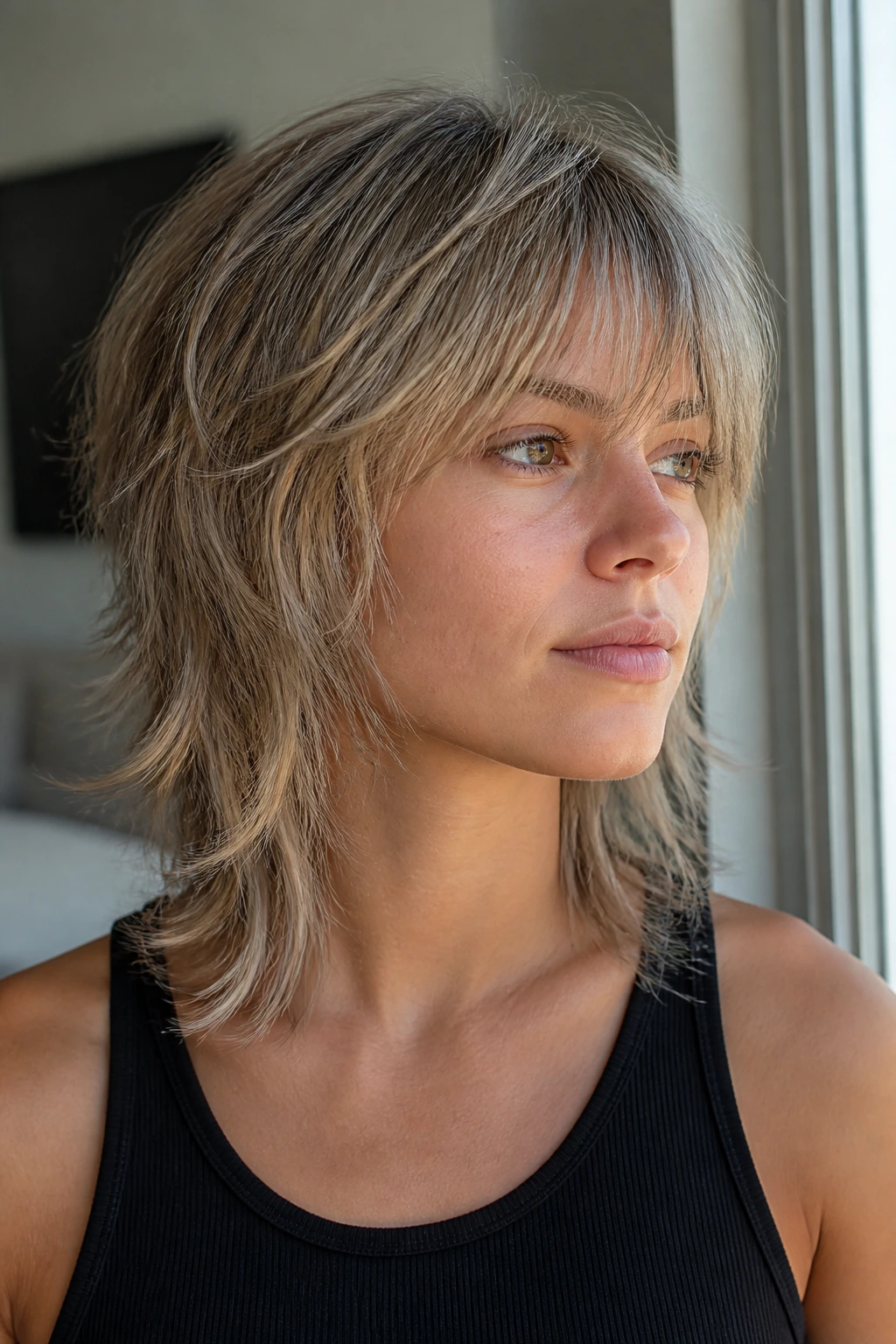
Fine hair needs restraint. That’s the whole story. Micro-layers create lift without taking so much weight that the ends go wispy and see-through. The shape should feel airy, not sparse, and the shortest pieces should stay below the most fragile part of the crown so the top doesn’t stick up in a sad little point.
A mousse at the roots helps this cut more than heavy oil ever will. The product should support the bend, not glue the hair down. If you want the shag to look fuller on day two, flip the part, mist the roots, and let the ends stay a little broken. That’s where the movement lives.
11. French-Girl Shag

This one leans into softness rather than obvious texture. The layers are cheekbone-friendly, the fringe is airy, and the ends look like they were cut to move over a sweater collar and not sit in a perfect line. It’s a shag haircut that reads effortless without needing a lot of heat or product.
The beauty of this shape is how lightly it behaves around the face. You can rough dry it, let a few pieces fall across the forehead, and it still feels finished. If your hair bends naturally, even better. If it doesn’t, a quick twist around the fingers while damp gives it enough bend to look intentional.
12. Wolf-Light Shag

A full wolf cut can be a lot. Too much top, too much tail, too much attitude for people who just want easy hair. The wolf-light version keeps the edge but softens the disconnect. The back stays a little longer, the front still has movement, and the whole shape sits in that middle ground between cool and practical.
I’d choose this if you like a shag with a sharper silhouette but don’t want the upkeep that comes with a more extreme version. It works especially well on hair that already has some texture. Straight hair can wear it too, but you’ll need a little product to keep the top from lying flat.
13. Side-Swept Bang Shag
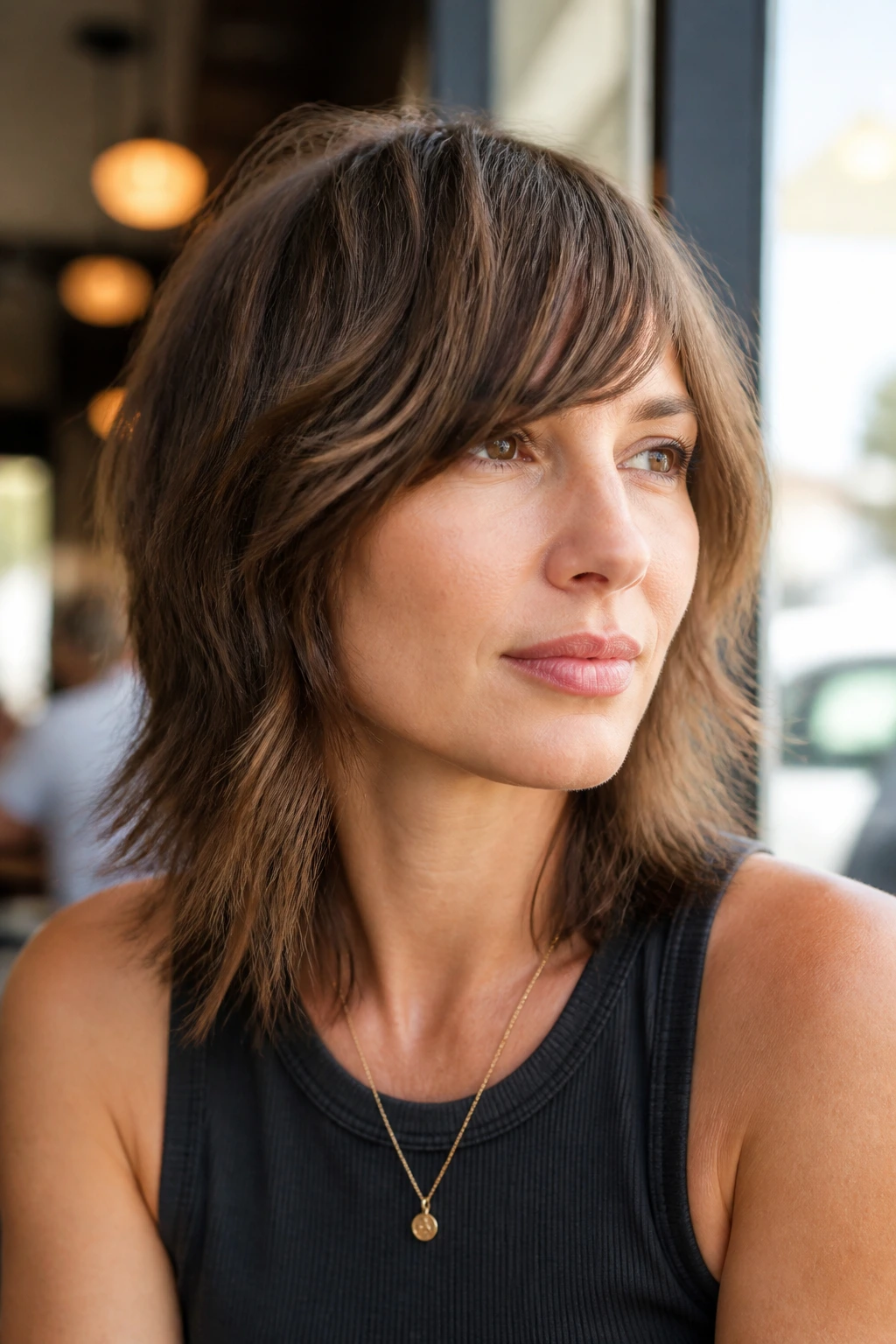
Side-swept bangs are the low-drama cousin of a full fringe. They’re easier to pin back, easier to grow out, and less likely to split into a weird shape after one humid morning. On a shag, they soften the front without making the whole cut feel bang-heavy.
What To Watch For
- Keep the shortest point long enough to brush across the brow.
- Let the sweep connect into the face frame so it doesn’t hang like a separate piece.
- Use a light round brush only on the front section if needed.
This cut is useful if you want something that plays nice with glasses, hats, and lazy ponytails. It doesn’t demand attention every day. Good.
14. No-Bang Shag With Face-Framing Layers
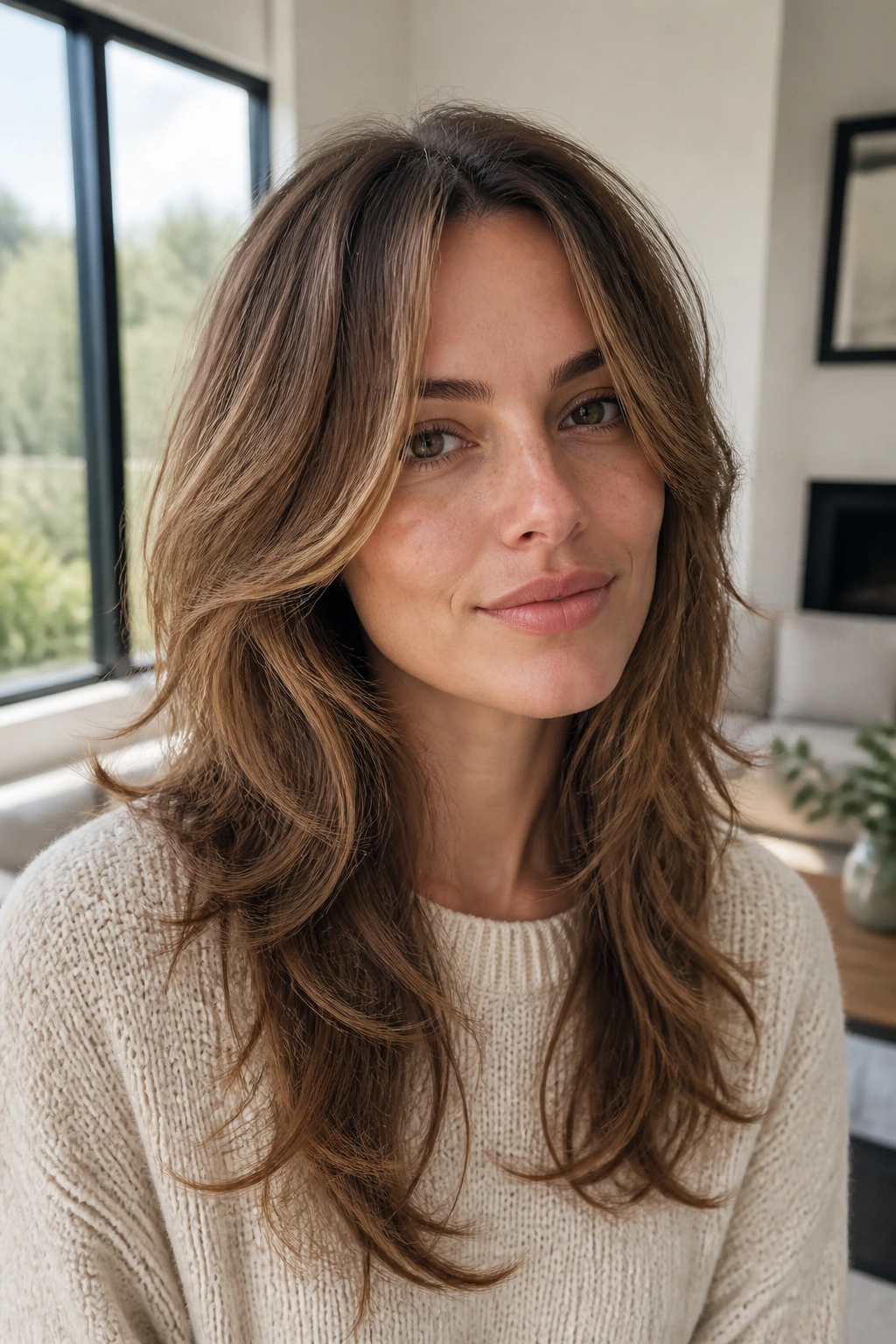
Not everyone wants fringe, and that’s fine. A no-bang shag keeps the movement in the sides and crown, which makes it especially good for cowlicks, foreheads that hate bangs, and anyone who wants to tuck the front back without a fight. The face frame does the visual work instead of a fringe strip.
The best versions start the shortest layers around the cheekbones and keep the perimeter soft. That keeps the cut from looking flat around the jaw. If you wear glasses, this shape is a win. The frame sits around the frames, which sounds obvious, but it changes how the haircut reads on your face.
15. Choppy Razor Bob Shag
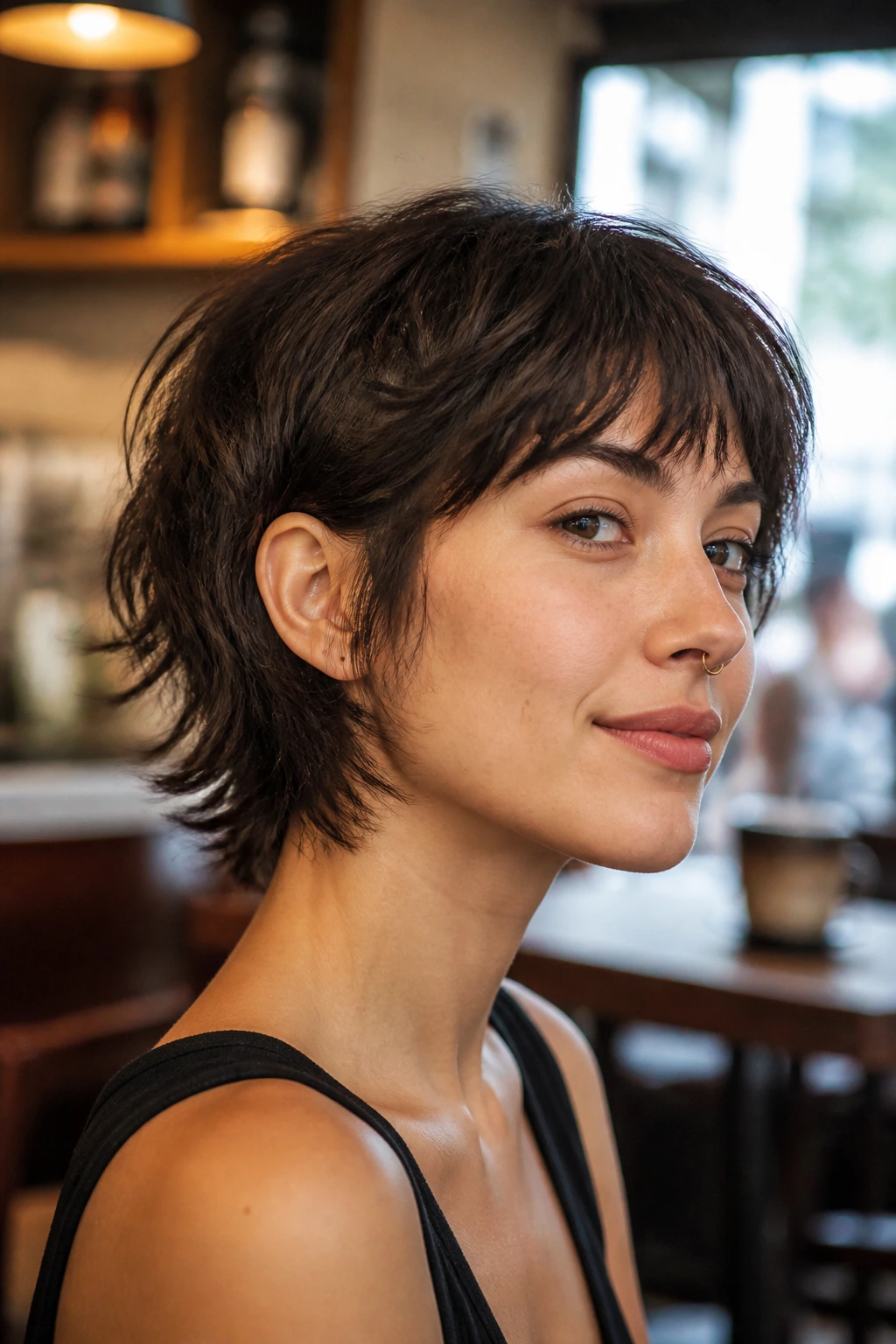
This is the bob for people who get bored with a neat line. The jaw-length shape keeps it practical, while the choppy ends and light layers keep it from feeling like a classroom haircut from years ago. It dries fast, moves well, and tucks behind the ears without losing its shape.
The razor work should stay controlled. Too much, and the ends go frayed. Too little, and you’re back to a solid bob with a bit of attitude. I’d call this a good choice for straight to slightly wavy hair that needs some edge but not a full volume overhaul.
16. Coily Shag for Springy Texture
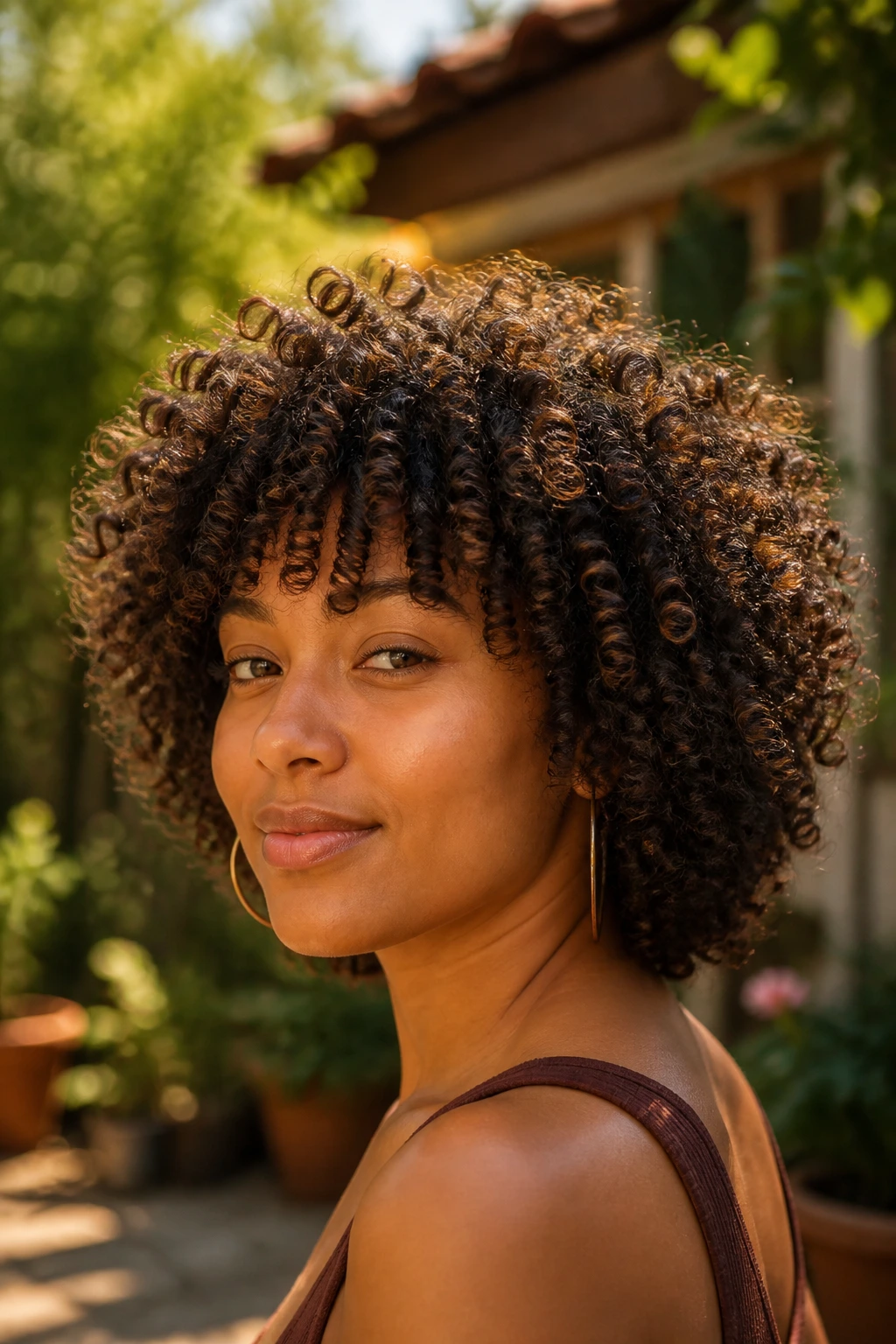
Coily hair doesn’t need to be “tamed.” It needs shape. A coily shag works when the cut respects shrinkage and lets the curls stack into a rounded silhouette. That usually means cutting dry, or at least nearly dry, so the final shape isn’t a surprise once the coils bounce up.
The biggest mistake is taking too much off the top. Then the hair gains width in the wrong place and the crown starts to look overbuilt. Leave enough length for the coils to settle, and use a cream that keeps the definition soft rather than crunchy. The best result is neat, not stiff.
17. Grown-Out Bob Shag

This is the cut for people between appointments who want the grow-out to look like a choice. A grown-out bob shag keeps a familiar perimeter, then adds just enough layer movement to prevent that awkward triangle phase. It’s especially useful if you’re transitioning from a blunt bob and don’t want to jump straight into a very chopped-up shape.
There’s a nice honesty to this one. It looks like hair that has lived a little. But it still has structure. Ask for the layers to start low and stay soft around the cheeks. That keeps the shape friendly as it lengthens.
18. Office-Friendly Polished Shag

A shag can be polished. It just needs cleaner edges and a calmer fringe. This version softens the texture without stripping the movement, so you can wear it with a button-down or a blazer and not feel like you raided a music video wardrobe.
The styling routine is short: rough dry, smooth the front with a brush if you want, then leave the rest a little undone. That balance is the point. If you make the whole head too sleek, the shag loses its reason for existing. If you rough it up too much, it stops reading as polished. Somewhere between those two is the sweet spot.
19. Dry-Shampoo Shag for Second-Day Hair
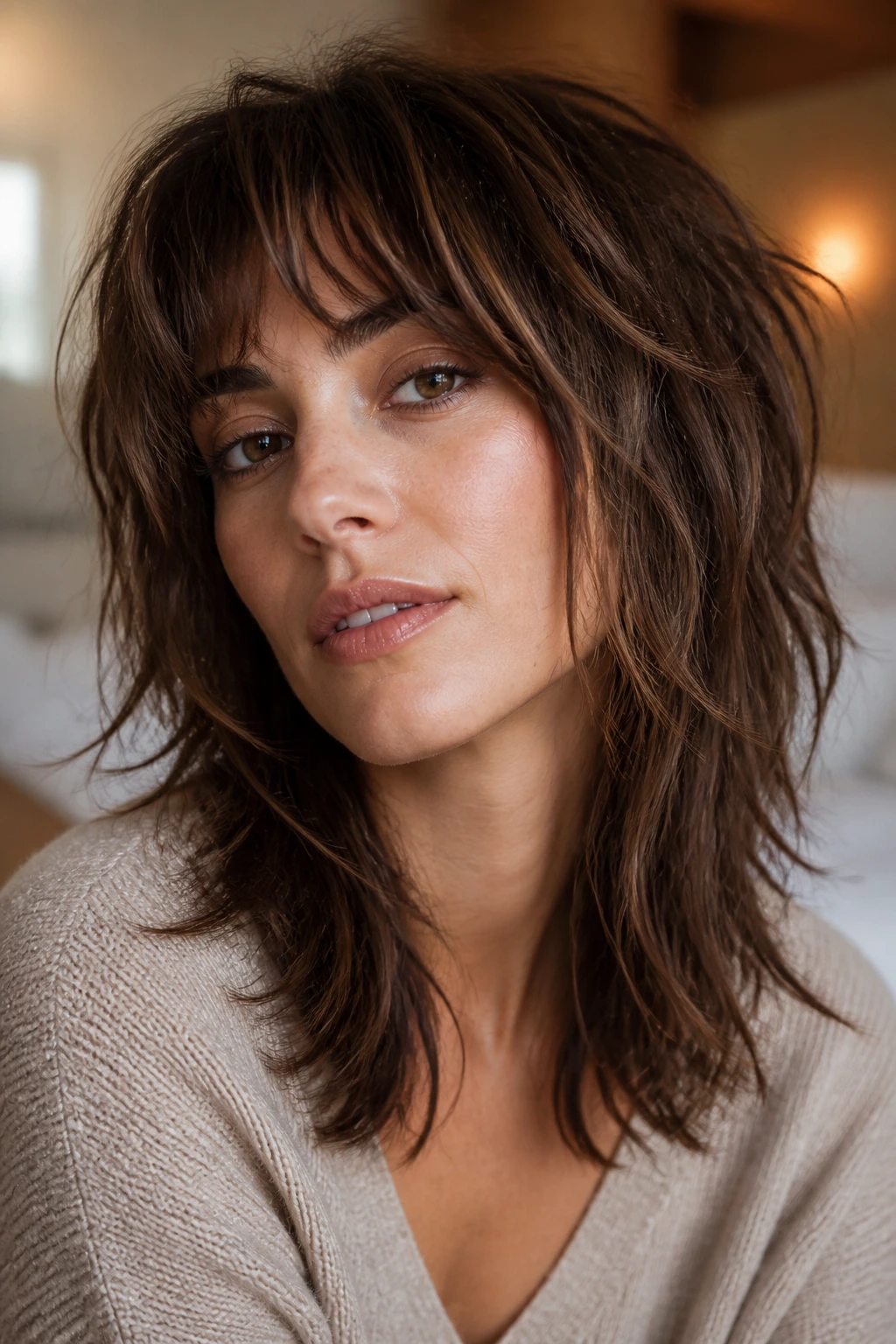
Some cuts improve after a night’s sleep. This is one of them. A dry-shampoo shag uses the piecey, separated texture that comes from day-two hair and turns it into part of the shape. The root gets a little lift, the ends stay broken up, and the whole thing looks better with less effort than a freshly washed blowout.
The trick is to spray the dry shampoo at the roots, wait a minute, then massage it in before touching the ends. Don’t coat the length. That can make the hair feel dusty. Best move: flip the part and hit the flatter side only. That gives you lift without overworking the whole head.
20. 70s Feather Shag

Feathering is back because it solves a real problem: it removes heaviness while keeping the cut soft around the face. A 70s feather shag builds movement from the crown down, then lets the ends flick away from the neck and shoulders. It feels airy, not severe.
This version likes a little bend at the front and a bit of lift at the roots. A round brush helps if you want that classic sweep, but the cut still works with fingers and a diffuser. The whole thing reads best when it’s not too perfect. Slightly broken-up ends are part of the charm.
21. Tucked-Behind-Ear Shag

If you constantly tuck your hair behind your ears, make the cut cooperate. This shag keeps enough length at the front to do the tuck cleanly, then lets the rest fall into loose layers that don’t puff out the second you move. It’s a small thing, but it changes daily wear.
I like this for people who wear earrings or glasses and want the haircut to get out of the way when needed. Ask for the front pieces to hit just below the chin so they stay long enough to tuck without flipping awkwardly. The style should feel casual, not fussy. If the front keeps falling into your face in a bad way, the length is off.
22. Soft Mullet Shag

This is the gentler cousin of the wolf cut. The back has a touch more length, the front stays lighter, and the disconnect between the two is soft enough that it doesn’t look theatrical. That makes it easier to wear every day, which is the whole reason to choose it over a louder version.
It suits people who want personality in the silhouette without a ton of styling. You can rough dry it, scrunch the back, and move on. If you want the shape to stay low maintenance, keep the crown layers controlled and the tail soft. The cut should hint at rebellion, not scream it.
23. S-Curve Shag for Straight Hair
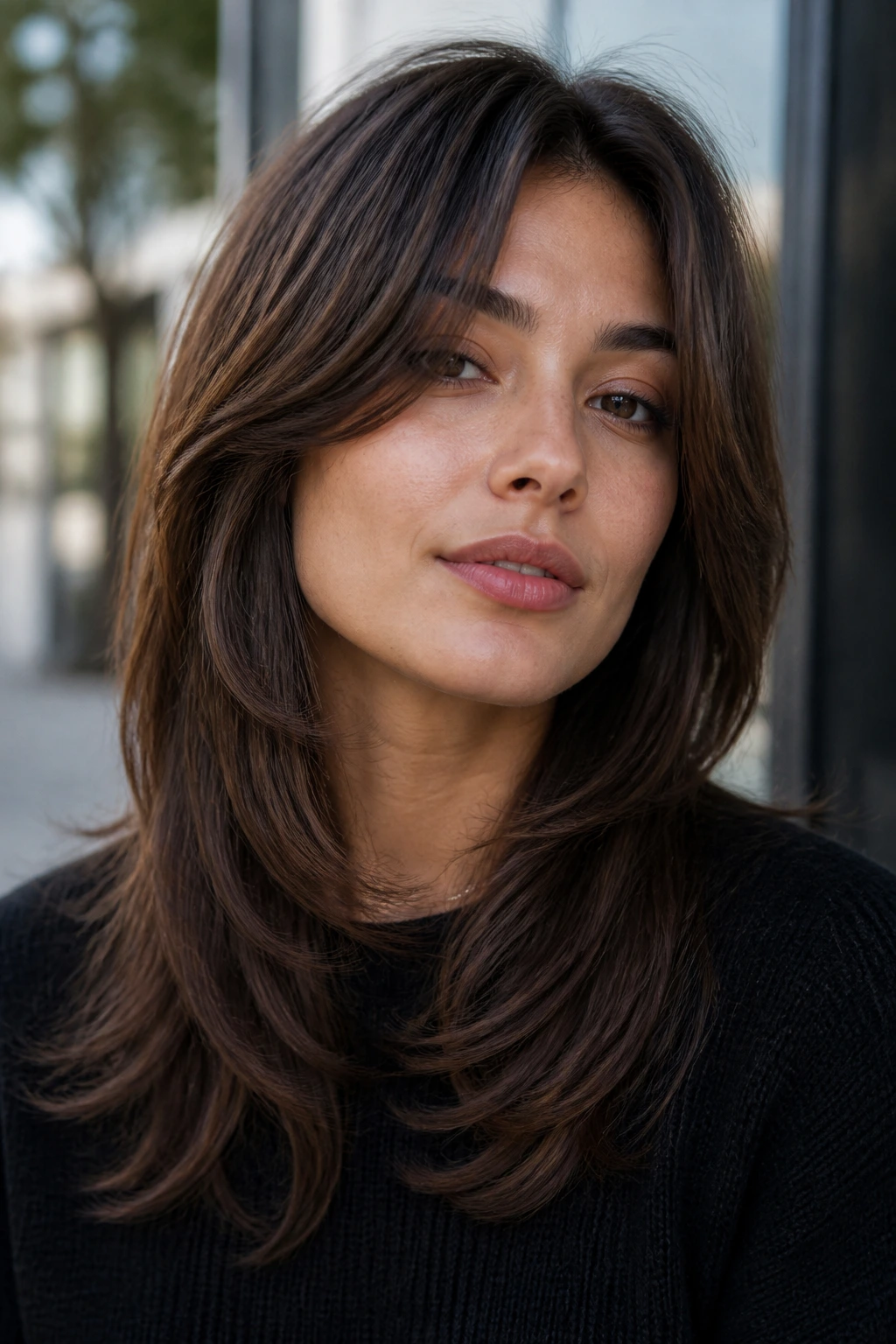
Straight hair can wear a shag, but the layers need to create movement where nature didn’t. An S-curve shag does that by placing the layers so the hair bends around the face instead of dropping in one long line. The result is a shape that looks lived-in, even when the styling is minimal.
A little mousse on damp hair goes farther here than a heavy cream. Then twist the front sections as they dry, or tuck them behind the ears while they’re still warm. The goal is a soft bend, not a full curl. That tiny bit of shape is what keeps straight hair from flattening out the second you step outside.
24. Beach-Wave Shag
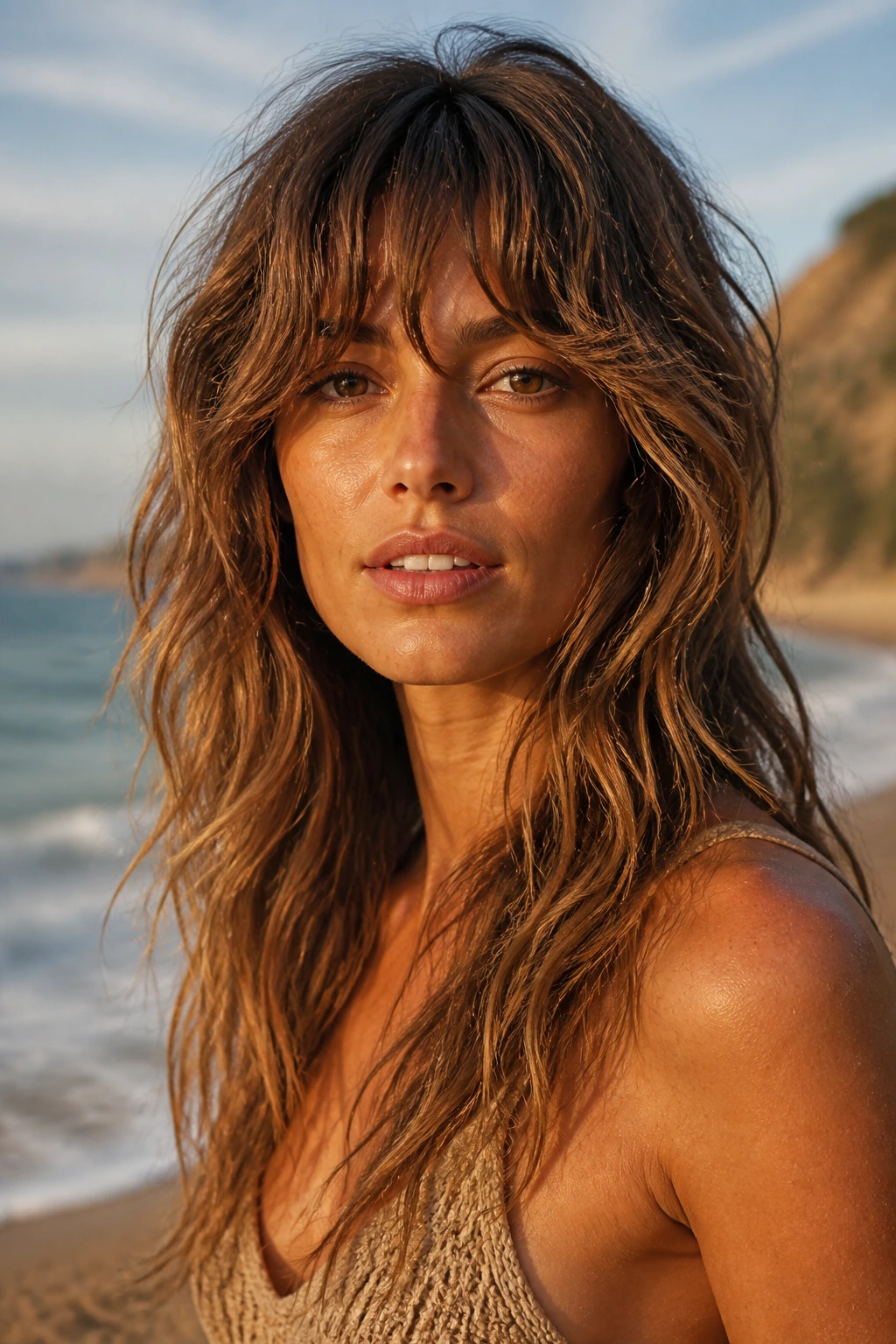
Loose waves and shag layers are an easy match. The cut gives the wave somewhere to move, and the wave keeps the cut from looking too chopped. If your hair already bends on its own, this version often needs almost nothing beyond a salt spray and a bit of scrunching.
The danger is overdoing the product. Too much salt spray and the hair turns crisp. A light mist from mid-length to ends is enough. Let it air-dry, then break up the pieces with your hands once it’s dry. That’s usually all it needs. Sometimes hair wants less help than we think.
25. Razor Pixie-Bob Shag
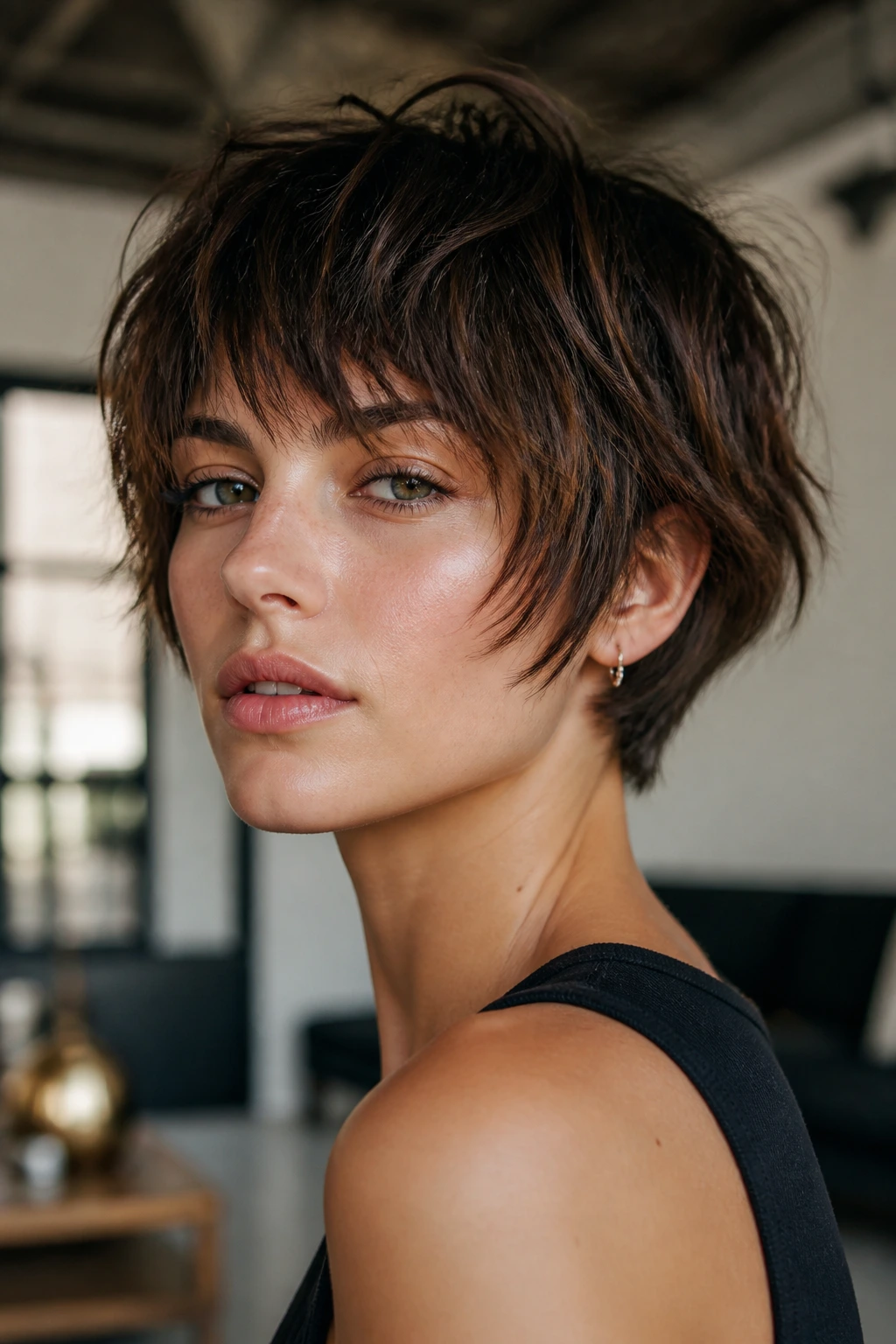
A pixie-bob shag sits in that short sweet spot where the hair is still easy to wash, but not so short that you need a trim every blink. The razor texture keeps the ends soft and the top movable, which gives you a little more shape than a plain bob.
This one is especially good if you want short hair with some edge but no hard line at the nape. You can style it with fingers, paste, or a tiny drop of cream at the ends. The shape will hold up well to a busy day, but like most short shags, it does want regular cleanups around the neck and ears.
26. Face-Frame Heavy Shag
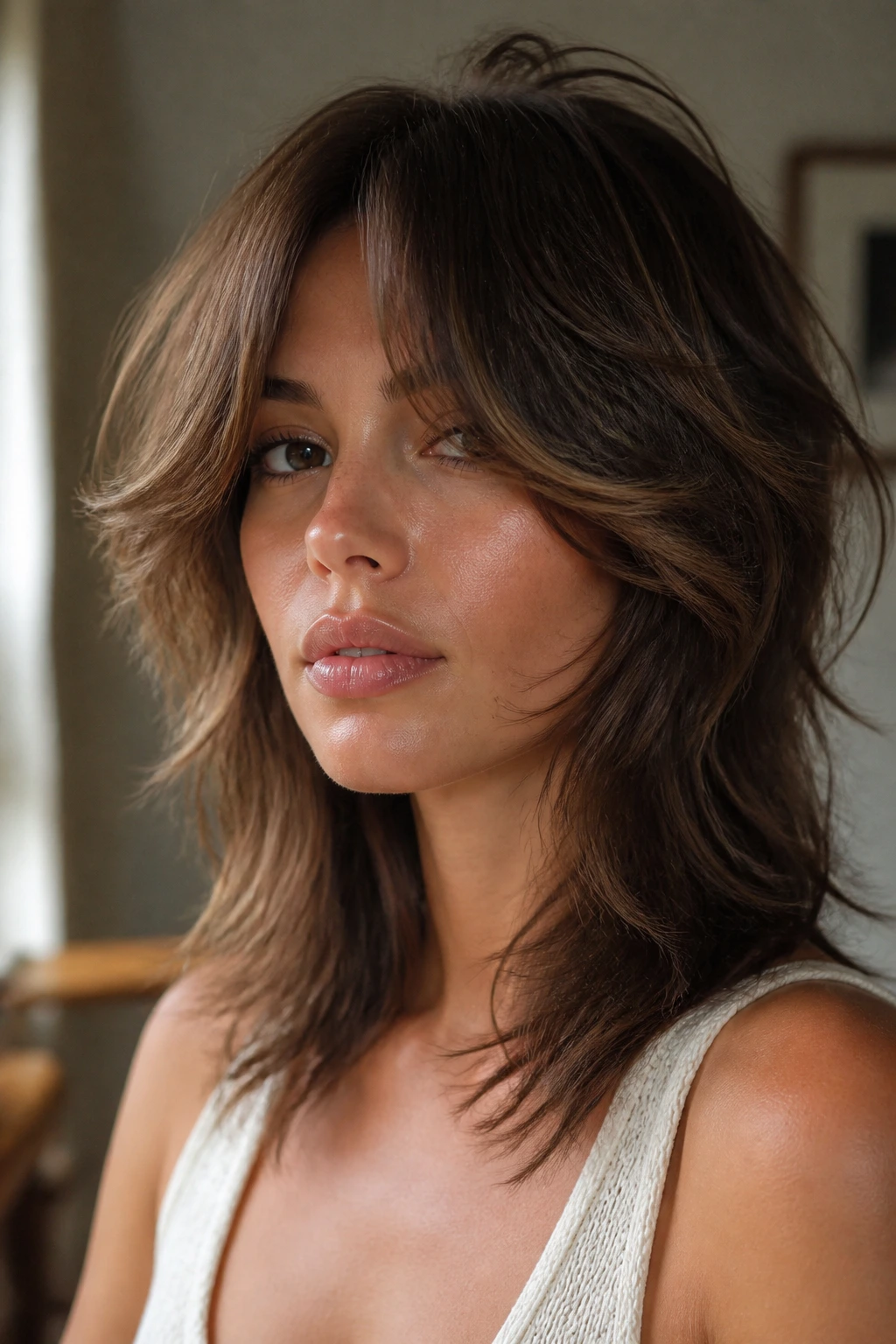
Some shags keep the drama around the face and stay quieter everywhere else. That’s what makes this version easy. The front pieces start the conversation, while the back remains soft and manageable. If you want your haircut to do something visible without a lot of daily work, this is a strong move.
The best face-framing layers hit around the cheekbones, then feather into the rest of the cut so the front doesn’t look pasted on. This shape flatters a lot of face shapes because it draws the eye forward without requiring a perfect styling session. Even on a lazy day, the haircut shows up.
27. Long Layers, Minimal Fringe Shag

This is the least obvious shag in the bunch, which is exactly why some people love it. The layers are long enough to keep the length intact, but the interior still has enough movement to stop the hair from hanging flat. If you want a shag haircut and don’t want to announce it, this is the path.
It works well for people who need their hair to go up in a clip, down over the shoulders, or into a low braid most days. The fringe stays minimal, so the maintenance stays low. You get the texture benefits without the commitment of a strong bang line or a dramatic front frame.
28. Dense Wavy Shag
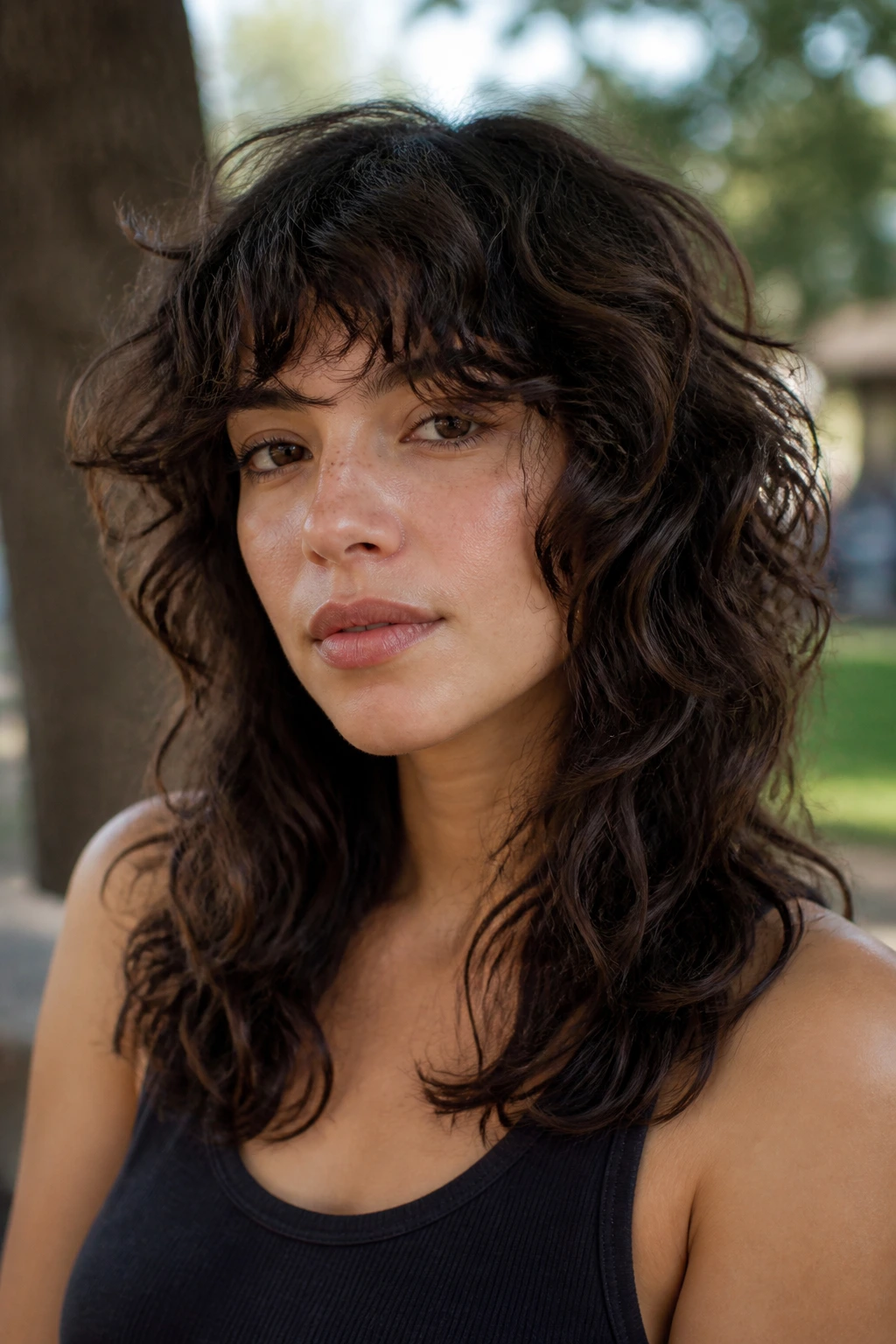
Dense wavy hair can get puffy fast if the shape is wrong. A dense wavy shag controls the width by removing bulk in the right places and leaving the perimeter strong enough to hold its line. That keeps the hair from widening out like a triangle halfway through the day.
Ask for weight removal inside the cut, not a lot of surface shredding. That’s the move. The hair should still look full, just better behaved. A small amount of curl cream or mousse usually helps the waves settle into their own pattern without turning into a helmet of product.
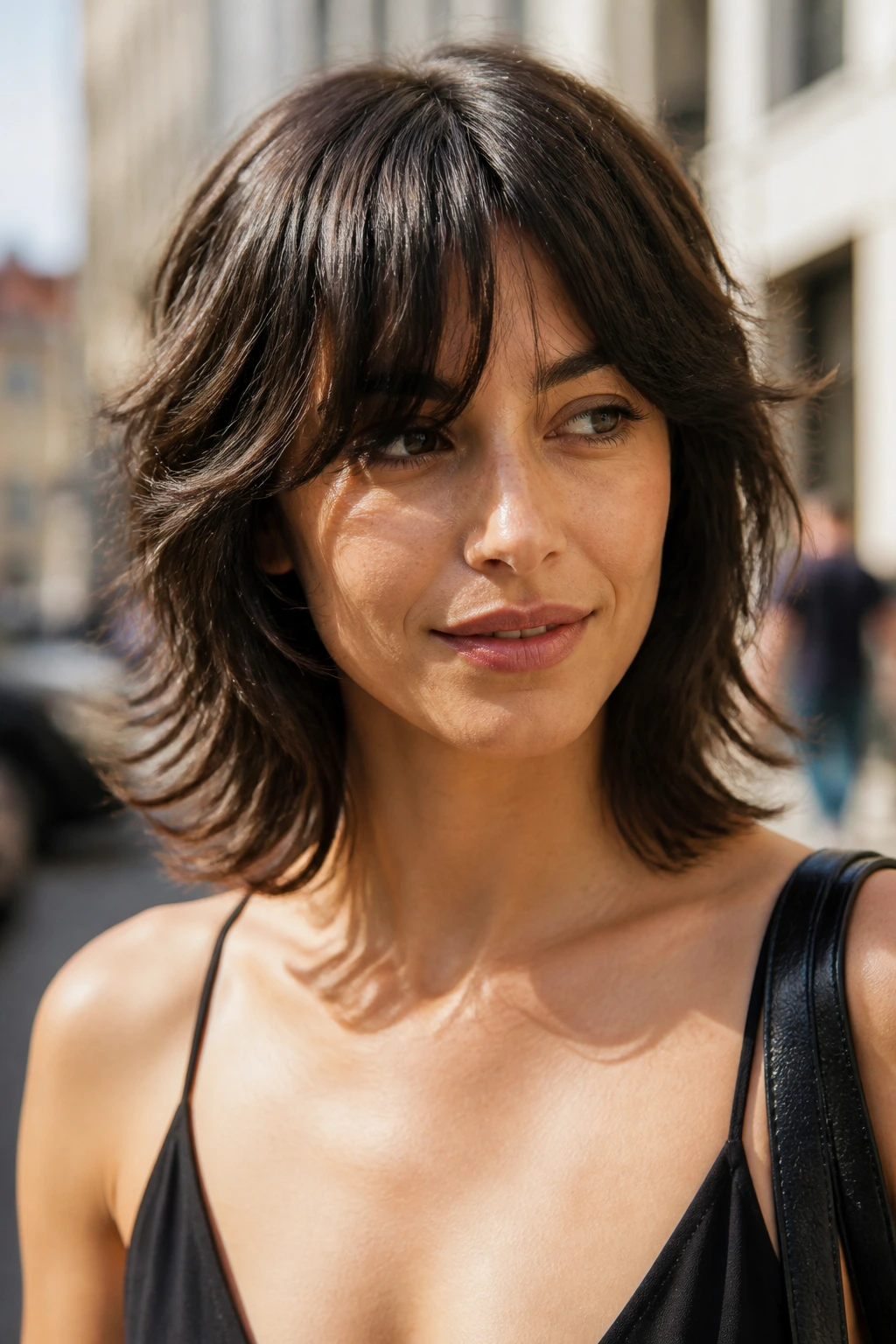
29. Shoulder-Length Choppy Shag

Shoulder length is a useful place for a shag because it gives you enough length for a ponytail but not so much that the haircut gets heavy. The choppy layers keep the outline from feeling static, and the ends stay light enough to move when you turn your head.
This is one of those reliable cuts that doesn’t ask for a personality test. It works on straight hair that needs lift, on waves that want shape, and on thicker hair that needs some release. Keep the longest layer just past the shoulders and the interior soft. That makes the grow-out a lot more forgiving.
30. Low-Volume Crown Shag
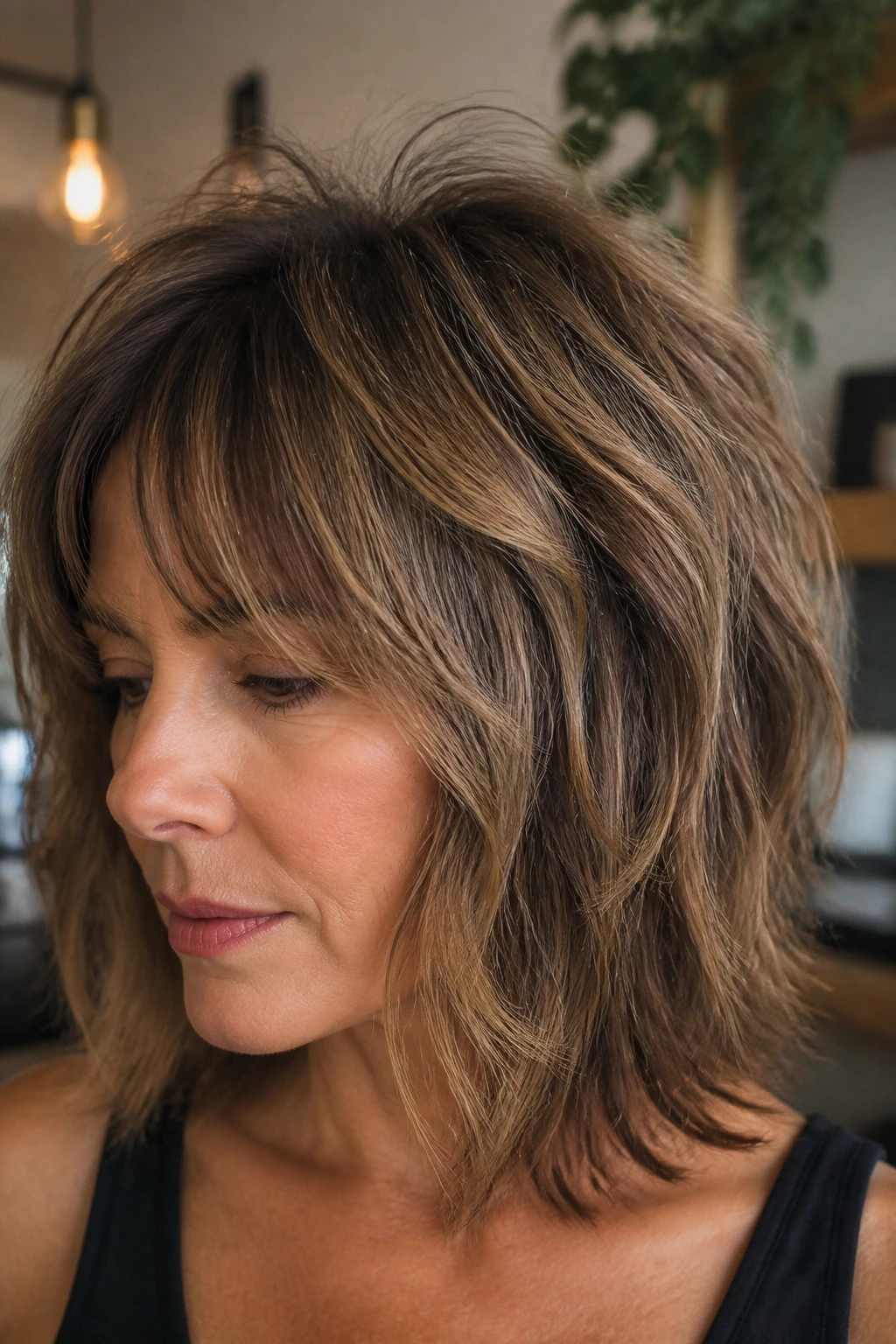
Flat roots can make any haircut feel tired. A low-volume crown shag solves that by placing lift where the head tends to collapse. The layers at the top are controlled, not chopped to bits, so the crown gets shape without exploding into a frizz cloud.
This cut is for people whose hair lies heavy at the top and won’t stay up no matter how much spray they use. A root-lifting mousse and a quick blow-dry at the crown can be enough. The rest of the hair can stay softer and calmer. That contrast is what makes the cut look intentional.
31. Soft Layered Blowout Shag
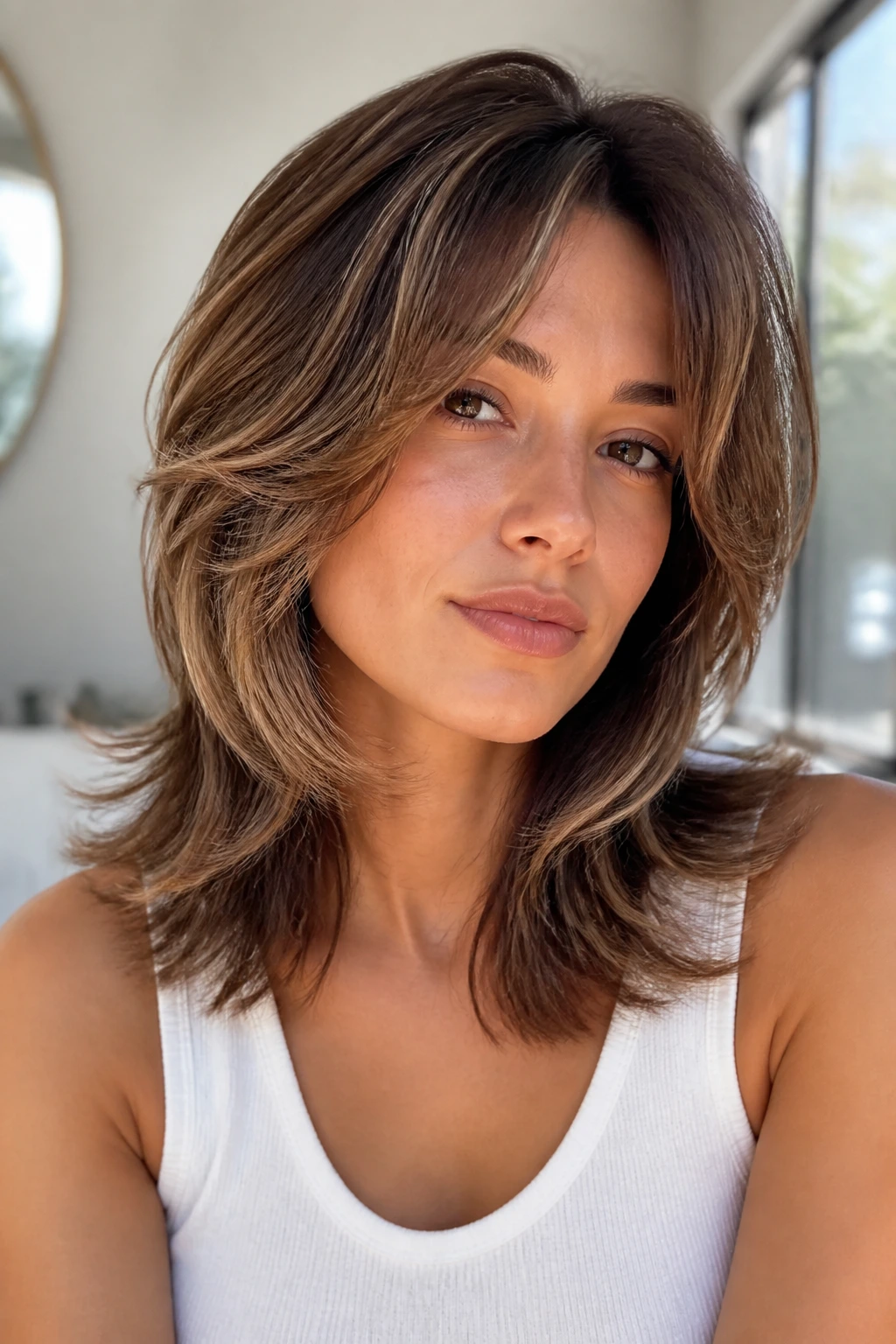
Not every low-maintenance shag has to be rough and tousled. This version looks best with a quick brush-dry, but it doesn’t need the whole salon treatment to hold its shape. The layers are soft, the ends stay movable, and the front frame gives the cut some polish.
I’d pick this if you like hair that looks neat without needing a rigid blowout every morning. A medium brush on the front sections, a little lift at the roots, and a smooth finish on the ends is enough. It’s a calm shag. Which is underrated.
32. Curly Mullet Shag

This one has a bit of attitude, but the curls keep it from feeling harsh. The front is lighter, the back hangs a touch longer, and the curl pattern fills in the transition so the shape looks softer than a straight-haired mullet ever could. That makes it more wearable than people expect.
The maintenance is mostly about keeping the curls hydrated and the outline balanced. Cut it dry if you can. Wet curls hide too much. Once the shape is right, the cut does a lot on its own. That’s the kind of haircut people stop fussing over after the first week.
33. Grow-Out Friendly Shag With a Soft Perimeter
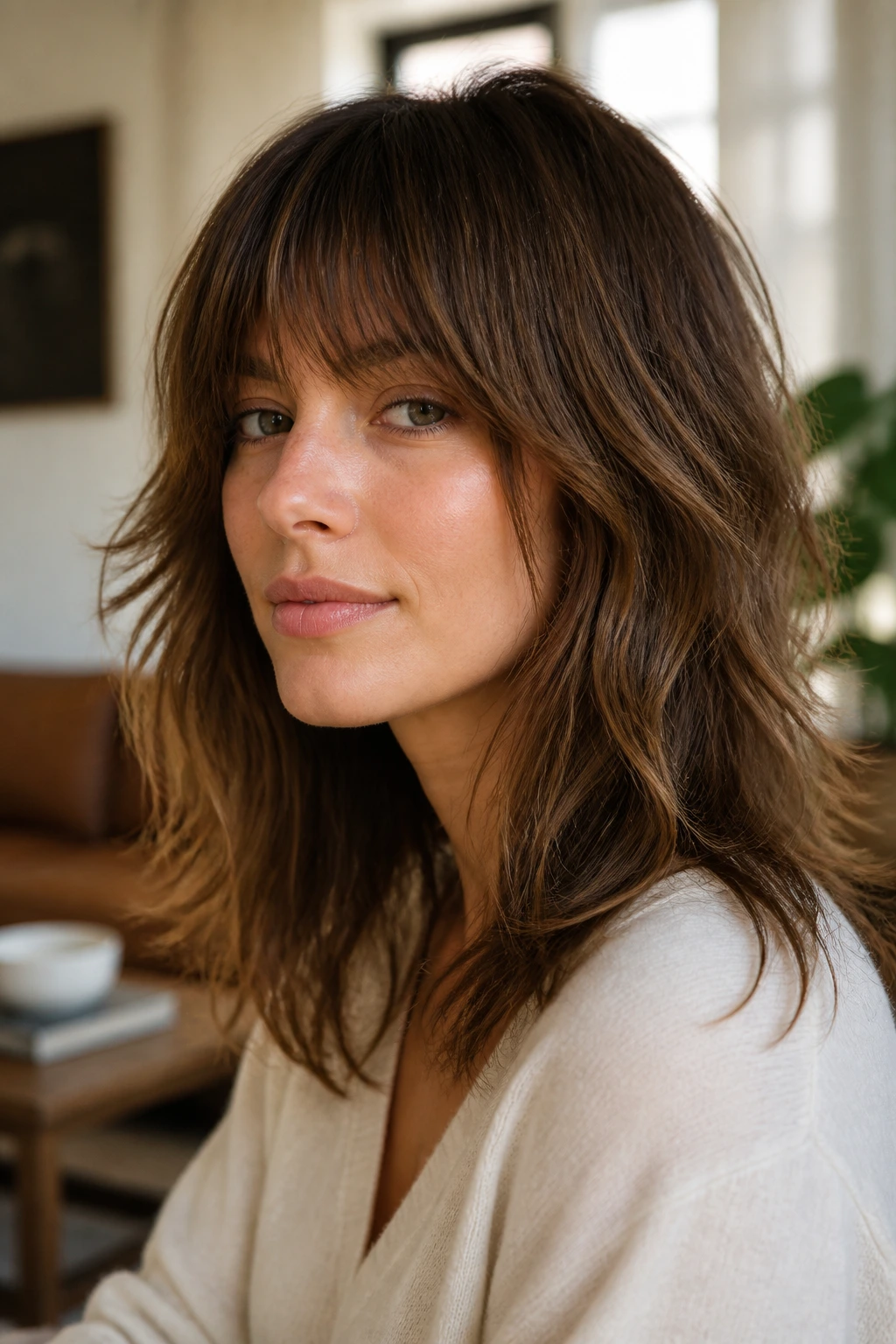
This is the version I’d hand to anyone who wants a shag but hates salon deadlines. The perimeter stays soft, the layers don’t climb too high, and the fringe is kept long enough to drift rather than demand a trim every month. It keeps looking like itself even when it gets a little shaggy. Which, honestly, is part of the point.
If you want the shape to last, ask your stylist to leave room around the face and keep the ends textured, not shredded. Then schedule trims based on the fringe, not the whole cut. That one move makes this style feel easier for longer.
Why the Shag Keeps Working When Styling Time Is Thin

The shag has a built-in advantage: it’s designed around movement, not precision. A blunt cut asks every hair to sit in the same line. A good shag haircut lets the crown lift, the mid-lengths breathe, and the ends break apart just enough to look soft. That means a rough dry doesn’t ruin it. It usually helps.
The low-maintenance part comes from where the weight is removed. If the layers are placed well, the hair doesn’t collapse at the roots or balloon at the bottom. It settles. That’s the whole trick, and it’s why so many shag haircuts stay wearable on day two, day three, and the kind of morning when you’ve only got five minutes and a coffee cup in your hand.
The bad versions fail for the same reason: too much short layering too high up, or too much thinning through the ends. Then the cut loses its backbone. The good ones keep enough structure to grow out cleanly, which is what separates a shag that looks effortless from one that just looks unfinished.
Essential Tools and Products for Easy Shag Haircuts
-
Wide-tooth comb: Gentle enough for wavy and curly shag haircuts, and much less likely to pull the shape apart.
-
Microfiber towel or cotton T-shirt: Cuts down on frizz when you scrunch hair dry; rough terry cloth can puff up the top layer fast.
-
Spray bottle: Handy for reactivating product on day two without fully rewashing.
-
Light mousse: Gives the crown lift and holds bend without making the hair sticky or crunchy.
-
Texturizing spray: Useful for piecey ends and lived-in separation, especially on straighter hair.
-
Dry shampoo: Saves flat roots and buys you an extra day or two between washes.
-
Diffuser attachment: Worth owning if you have waves or curls and want shape without blasting them apart.
-
Small round brush: Optional, but useful for curtain bangs, bottleneck fringe, and front pieces that need a quick bend.
-
Heat protectant: If you use a dryer or hot tool, skip this and you’ll probably regret it.
-
Satin pillowcase: Not glamorous, but it keeps the shape from getting crushed overnight.
What to Ask Your Stylist So the Shape Grows Out Cleanly
Bring photos, but bring the right photos. A shag on thick wavy hair will not behave like a shag on fine straight hair, and a good stylist will want to know which part of the photo matters to you: the fringe, the crown, the length, or the texture. Say that out loud. It saves a lot of confusion.
Use plain words. Ask for internal layers if you want movement without a shredded surface. Ask for face-framing pieces if the front matters most. Say keep the perimeter soft if you want the grow-out to stay friendly. If you love a fringe, decide whether you want curtain bangs, bottleneck bangs, or no bangs at all; those are different animals.
A few salon words are worth knowing:
- Point-cutting: snipping into the ends for a broken edge
- Razor cutting: a softer, more feathered edge, best on healthy hair
- Weight line: the place where the hair hangs the heaviest
- Interior layers: hidden layers that create lift without visible choppiness
The big ask is simple: tell the stylist how much time you actually want to spend on your hair. Ten minutes, not “whatever.” That answer shapes the cut more than any trend photo does.
How to Wear and Style These Cuts From Day One

Presentation: Let the haircut show off its own movement. A shag looks best when the front has a little bend and the ends aren’t forced into one perfect line. If your hair parts naturally off-center, use that. Fighting the part usually makes the cut feel more work-heavy than it needs to be.
Finish: For straight or wavy hair, rough dry the roots, twist the front sections, and leave the mids a little undone. For curls, scrunch in product and stop touching it once the curl pattern starts forming. The urge to keep fixing it is the enemy here. Leave some shape alone.
Pairings: This cut sits well with earrings, glasses, collars, and hats because the face-framing pieces keep the outline soft. It can look casual with a T-shirt or more polished with a clean neckline and a simple necklace. Weirdly enough, a shag often looks best when the rest of the outfit is plain. Let the hair be the texture.
Routine: If you want the cut to stay easy, don’t fight the second-day version. A little dry shampoo at the roots, a mist of water at the fringe, and a finger-comb is usually enough. That is not lazy. That is working with the haircut.
Small Tweaks That Make the Shape Look Better
Root Lift: Clip the crown at the roots while hair is still damp, then remove the clips once the hair is nearly dry. It gives the top a little push without needing a ton of spray.
Piecey Ends: Warm a pea-sized amount of cream or paste between your palms and tap it through the last two inches only. The ends stay separated instead of turning into one soft blur.
Frizz Control: If humidity gets your hair, use less product, not more. Heavy creams can swell. A light leave-in plus a touch of serum on the mids is usually the cleaner fix.
Quick Refresh: Mist the front with water, twist the pieces around your fingers, and hit them with a dryer for 20 to 30 seconds. That revives a fringe faster than redoing the whole head.
Heat-Free Bend: Twist two front sections before bed, secure them loosely, and shake them out in the morning. It’s old-school, but it works.
Common Mistakes That Make a Low-Maintenance Shag Harder

-
Too many short layers at the crown: The top puffs out, the shape loses balance, and the hair can look fuzzy instead of lifted. Keep the shortest layers controlled, especially on fine hair.
-
Over-thinning thick hair: The ends go wispy and the haircut feels stringy. Bulk should come out from inside the cut, not from wrecking the outline.
-
Blunt bangs with no grow-out plan: They need constant trimming and can turn the whole style into a maintenance job. Curtain or bottleneck fringe is usually easier to live with.
-
Heavy creams on fine hair: The cut collapses and the layers disappear. Fine hair usually wants mousse, not thick leave-in.
-
Razor work on damaged ends: Splits and rough edges show faster on fragile hair. If the hair is already dry or bleached, ask for a gentler finish.
-
Trying to force a shag into one perfect shape every day: That defeats the point. A shag should have some movement, some mess, and a little freedom.
Variations and Adaptations to Try

Fine-Hair Lift Shag: Keep the layers long enough to preserve density, then concentrate the lift at the roots. This version looks fuller when the crown is softly supported and the ends stay clean.
Thick-Hair Air-Release Shag: Remove bulk inside the cut and leave the outer edge strong. It’s the best fix for hair that grows wide before it grows long.
Curly Wash-and-Go Shag: Let the stylist cut the hair dry around the curl pattern, then use a leave-in and curl cream at home. The goal is shape with very little touching.
Straight-Hair S-Curve Shag: Build bend with a light mousse and a rough dry, then twist a few front pieces while they’re damp. Straight hair needs a little help, but not much.
Color-Frame Shag: Add face-framing highlights or a lighter money piece to show off the layers. The haircut reads faster when the light catches the front.
Between-Cut Care, Wash-Day, and Grow-Out Timing

A shag is forgiving, but it still likes a little upkeep. Fringe-heavy versions usually need a trim every 3 to 5 weeks if you want the front to keep sitting where you like it. Longer, bang-free shags can often go 8 to 12 weeks before the shape starts to lose its best lines. Curly cuts can stretch a bit longer because the curl pattern hides grow-out, though the shape still benefits from regular check-ins.
Wash-day rhythm matters more than most people think. If your hair is fine or straight, washing every 2 to 3 days usually keeps the crown from going limp and oily. Wavy or curly hair often looks better with a longer gap, especially if you refresh it with water, leave-in, and a touch of mousse between washes. Daily shampoo is usually the fastest way to flatten the movement you paid for.
Overnight care is small but useful. A satin pillowcase keeps the fringe from getting smashed, and a loose clip at the crown can save the front from awkward bends. If you wake up with one side collapsed, dampen only that section and give it 30 to 45 seconds of heat. No need to restart the whole head.
If you want to grow out a shag, don’t ask for a blunt clean-up every time. Ask for the perimeter to stay soft and the layers to be trimmed just enough to keep the shape connected. That keeps the cut from turning into a heavy in-between phase. It’s the difference between “growing out” and “just growing.”
Frequently Asked Questions
Which shag haircut is easiest if I’ve never worn layers before?
The collarbone shag or the layered lob shag is usually the safest entry point. Both keep enough length to feel familiar while still giving you the movement that makes a shag work.
Does a shag work on very straight hair?
Yes, but it needs a little more shaping around the face and crown. A light mousse, a few twists while damp, and a soft fringe or face frame help the cut avoid falling flat.
Is a shag good for fine hair?
It can be, as long as the layers are not chopped too high or thinned too much. Fine hair usually looks better with long internal layers and controlled root lift rather than a lot of razor work.
What should I ask for if I want something low maintenance but not too edgy?
Ask for a soft perimeter, long face-framing layers, and minimal fringe. That gives you the shag shape without the sharper wolf-cut feel.
How often should I trim a shag?
Shorter shags and fringe-heavy cuts often need attention every 3 to 5 weeks. Longer versions can usually go longer, but the fringe is what tends to tell on you first.
Can I wear a shag with glasses?
Absolutely. A no-bang shag, side-swept fringe, or curtain fringe usually plays well with glasses because the front stays soft and doesn’t crowd the frames.
What if my shag looks too fluffy?
You probably have too many short layers near the crown or too much product on the mids. Try less volume at the top, keep the ends a little separated, and use a lighter formula.
Can curly or coily hair get a shag without losing shape?
Yes, but the cut should respect shrinkage and be shaped around the natural curl pattern. Cutting dry or nearly dry is usually the cleaner way to keep the final silhouette honest.
The Cut That Keeps Moving for You
The best low maintenance shag haircut is the one that matches the way your hair already wants to behave. That sounds simple, but it’s where people usually go wrong. They pick the mood of the cut and ignore the texture of the hair. The good versions do the opposite.
If you want easy hair, choose the shape that lets your strands bend, tuck, lift, or fall without a fight. Curtain fringe if you want softness. A collarbone shag if you want flexibility. A feathered or curly version if density is the thing that keeps getting in your way. The right one should feel like less work the minute you leave the chair.
And that’s the whole point. A shag should make the morning smaller, not more complicated. Pick the version that fits your texture, give it the smallest possible amount of help, and let the cut do what it was built to do.
