



Winter hair color has a funny way of exposing every half-baked decision. The same blonde that looked airy in bright daylight can turn flat under office fluorescents. A brunette that seemed rich in late summer can read muddy once the sky goes gray, the coats come out, and every strand has to hold its own against black sweaters and dry indoor heat.
That’s why winter hair color ideas work best when they have something going on: depth, smoke, gloss, a clean root, or a little edge in the undertone. The shade has to do more than sit there and “look pretty.” It needs to catch dim light, flatter skin that’s gone a little less sun-kissed, and survive the reality of scarves rubbing against the nape of your neck.
A good winter shade doesn’t have to be dark. It just has to be deliberate. Some of the best options are barely a shade away from your natural color; others lean into red, violet, ash, or blue-black for a bit more mood. The trick is choosing a tone that reads rich instead of flat, and knowing how much upkeep you’re signing up for before the toner fades and the brass starts talking back.
Why These Shades Feel Right When the Light Turns Flat
-
They keep dimension visible in low light: Smoky brunettes, rooted blondes, and ribboned highlights still show movement when sunlight is scarce and indoor lighting is unforgiving.
-
They work with winter clothes instead of fighting them: Camel coats, charcoal knits, and black turtlenecks can wash out pale, one-note color; deeper tones and softer contrast hold their own.
-
They give brass less room to bully the finish: Cool, neutral, and muted shades do a better job of hiding the orange-yellow shift that shows up after a few washes.
-
They can be tailored to maintenance tolerance: A shadow root or gloss buys you time, while a high-contrast blonde or copper asks for more frequent salon visits.
-
They look intentional fast: Even a simple glaze on brunette hair can make the cut look sharper, the ends look healthier, and the whole style feel more finished.
-
They range from subtle to dramatic: You can stay close to your natural base or go all the way to black cherry, blue-black, or icy beige without leaving winter’s lane.
1. Deep Espresso Brown
Deep espresso brown is the color I reach for when someone wants hair that looks expensive without shouting about it. It sits in that sweet spot between soft black and neutral brunette, which means it reads dense, glossy, and a little bit severe in the best way. In winter light, that depth matters.
Why It Works
A level 3 or 4 espresso shade holds better visual weight than a lighter brown, especially if your hair tends to look see-through around the ends. Ask for a neutral or slightly cool brown gloss so the color doesn’t drift red under indoor bulbs. If your strands are porous, a single-step glaze can make the finish look smoother than a full permanent color job.
Quick notes
- Best on medium to deep brown bases
- Needs shine, not brightness
- Works with blunt cuts and long layers
- Easy to maintain if you like rich color without constant touch-ups
A little shine serum at the mid-lengths goes a long way here. Skip anything greasy near the roots; this shade only looks luxe when it stays clean at the scalp and reflective on the surface.
2. Black Cherry
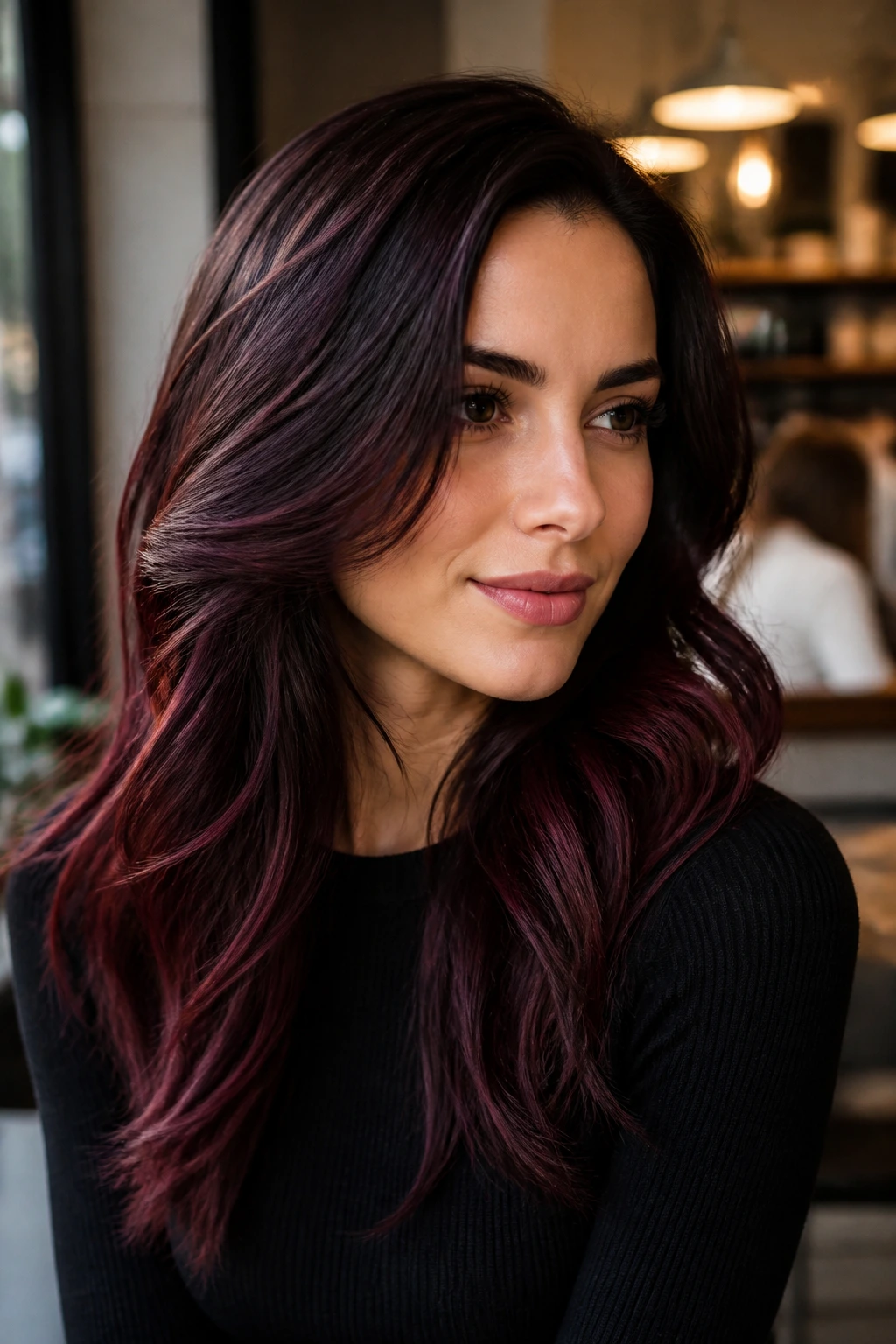
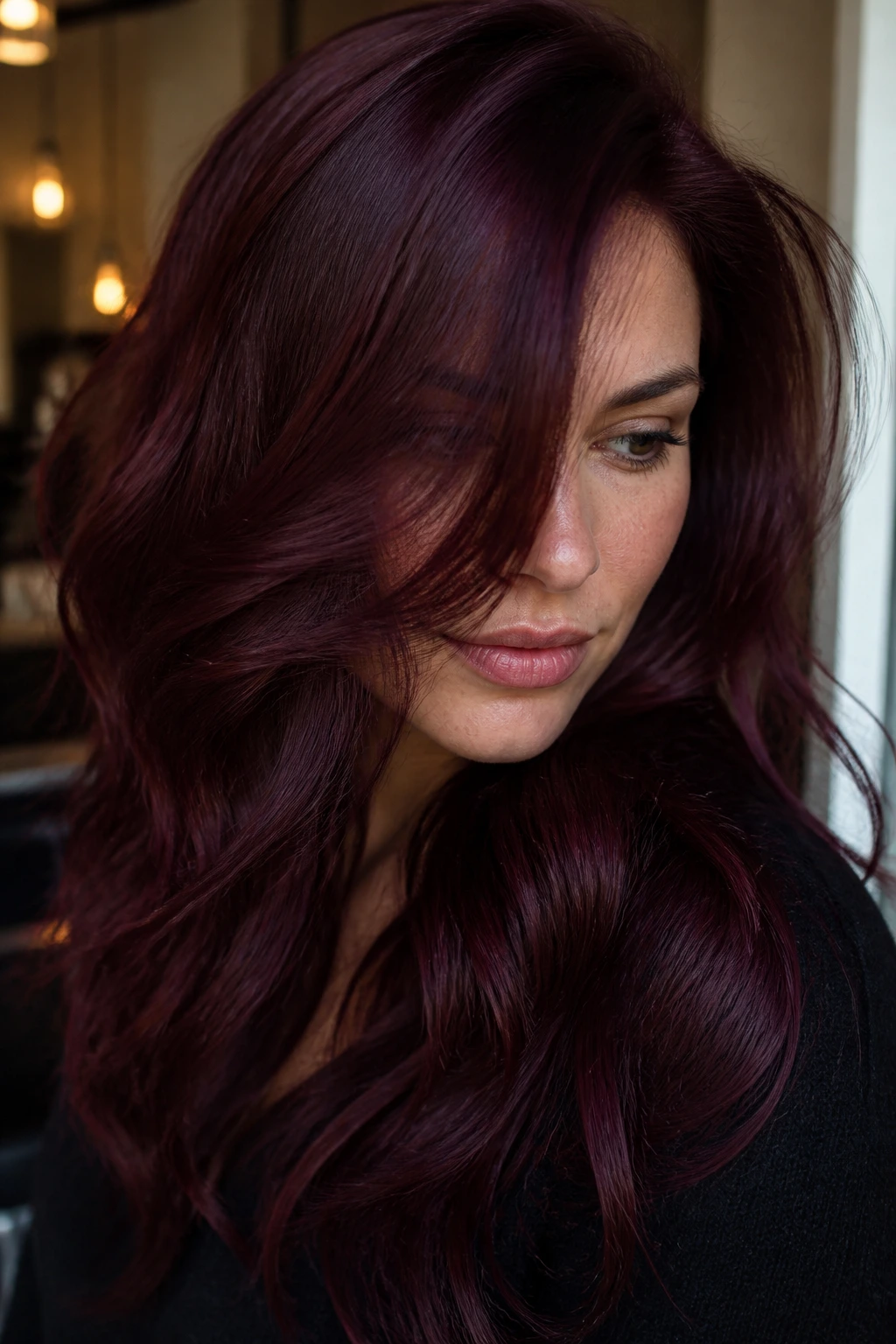
Black cherry is for the person who wants winter hair color ideas with a little attitude and no apology. From a distance it can look like a near-black brunette, but in daylight it shows that deep red-plum undertone that makes the whole head feel more alive.
Why It Works for Winter Hair Color
The darker base keeps it wearable, while the cherry reflect stops it from looking flat. This shade is especially good if your skin gets paler in colder months, because the red-violet note brings warmth back to the face without turning orange. Ask for a level 3 base with cherry or burgundy reflect, then keep the red dimension from fading with a color-safe shampoo.
How to Ask for It
- Tell your colorist you want a dark brunette with visible red-plum undertones
- Keep the roots close to your natural level for softer grow-out
- Use cooler water when rinsing so the red doesn’t disappear fast
- Re-gloss every 4 to 6 weeks if you want the cherry note to stay obvious
This one looks especially good in loose waves, because the bends catch the burgundy and break up the darkness. Straight and sleek works too. Just keep the ends polished, or the color can drift into “mysterious but tired” territory.
3. Mushroom Brunette
Mushroom brunette is the answer to anybody tired of warm brown turning pumpkiny by accident. It leans taupe, smoky beige, and soft gray-brown all at once, which sounds fussy on paper and looks surprisingly natural in hair. I like it most on people who want cool-toned brunette without going full ash.
The thing that makes mushroom brown work is restraint. You’re not trying to make the hair pale; you’re trying to mute the warmth just enough that the color feels expensive and modern. Ask for a neutral-to-cool base with fine beige and ash ribbons rather than big stripes. On dark blondes and light brunettes, this shade can feel like a clever upgrade instead of a dramatic change.
Best for: medium bases, cool or neutral undertones, layered cuts.
Salon ask: a soft root shadow with taupe-brown lowlights and a glossy finish.
Watch for: if your hair is porous, too much ash can grab green-gray. That’s a toner issue, not a fate issue.
One good gloss after the initial color can keep it looking plush instead of dusty. That part matters more than people think.
4. Cinnamon Copper
Cinnamon copper is warm, but not cartoon warm. It’s the color of red hair after a very good filter has been removed: copper at the front, brown at the back, and a little spice running through the middle. If winter leaves your face looking washed out, this shade puts some color back where you can actually see it.
The best version of cinnamon copper has a chestnut base with copper reflect, not a bright orange halo. That keeps it grounded. On long hair, the warmth moves through the ends and looks almost burnished. On a bob, it reads sharper and more deliberate.
A few practical details make or break it:
- Use a color-depositing mask made for copper or red tones once a week
- Avoid daily washing if you want the shade to stay rich
- Ask for a demi-permanent glaze if you’re nervous about commitment
This is one of those colors that benefits from a blunt cut. The shape makes the shade look crisp, and crisp is what stops copper from drifting into soft, vague territory.
5. Smoky Bronze Balayage
Smoky bronze balayage is what happens when brunette hair gets dimension without losing its backbone. The base stays dark enough to feel winter-appropriate, while bronze ribbons give you that warm metallic shift when light hits the surface. It’s less obvious than blonde balayage, and that’s exactly the point.
What I like here is the contrast control. Bronze can turn loud fast, so the trick is keeping the pieces soft, with hand-painted placement around the mid-lengths and ends rather than a stripey highlight pattern. On wavy hair, the shade breaks up beautifully. On straight hair, it still reads clear because bronze has enough warmth to show movement.
A few reasons this one keeps showing up in good salons:
- It flatters most brown bases without a full bleach-out
- The grow-out is kinder than high-contrast highlights
- The warmth looks richer in winter than in hot sunlight
- It pairs well with shoulder-length cuts and long layers
If you want the color to stay clean, ask for a neutral brown gloss at the root area and bronze only where the hair naturally catches light. Less noise. Better result.
6. Icy Beige Blonde
Icy beige blonde is not platinum’s louder cousin. It’s softer, quieter, and more believable on real hair. The beige in it keeps the tone from looking stark, while the icy note brings that cold-weather edge people want when they’re done with buttery summer blonde.
This shade works best if your hair is already light or has been lifted to a pale yellow first. Beige toner then does the heavy lifting. If the lift is too warm, the result can go banana instead of beige, and that’s a hard problem to style around. I’d rather see a slightly deeper beige blonde than a pale but brassy one any day.
How to wear it
- Keep the roots shadowed by about 1/2 inch for softer grow-out
- Use purple shampoo sparingly; once a week is usually enough
- Add a clear gloss when the tone starts looking dry or chalky
- Wear it with sleek styling if you want the cold finish to read clearly
Icy beige blonde is one of those shades that looks best when the cut is tidy. Layers that are too wispy can make it seem frayed. Clean ends help it stay elegant instead of brittle.
7. Cashmere Blonde
Cashmere blonde has the same soft, touchable feel its name suggests. It’s creamy, cool-neutral, and just warm enough to keep the skin from looking drained. If icy blonde feels too severe and honey blonde feels too summer-y, cashmere sits in the middle and makes a lot of sense.
The color usually starts with a deeper root and moves into beige, cream, and pale sand through the lengths. That little bit of root shadow does a lot of work. It keeps the shade from flattening out and makes regrowth less rude. I like this on shoulder-length lobs because the cut keeps the color from disappearing into a long curtain of pale hair.
Salon ask: beige-blonde dimension with a soft root melt, not a solid all-over blonde.
Good for: people who want lighter hair without the maintenance headache of white blonde.
Maintenance note: if the ends start going chalky, a clear or beige gloss is better than more purple shampoo.
Cashmere blonde also loves a bit of wave. The bend gives the color places to catch, which is the whole game with softer blondes.
8. Mulled Wine Red
Mulled wine red is darker than it sounds, which is why it works so well once the weather cools. Think deep burgundy, plum, and black cherry stirred together. It looks moody in dim rooms and glows in daylight without crossing into bright red territory.
This shade tends to flatter cooler skin, but it can work on warmer undertones too if the violet side is kept in check. Ask for a red-violet brown base with a glossy finish. If your hair is light, the color can come out more vivid than you expect, so a test strand is smart. Bright red is a choice. Mulled wine red is a decision.
A practical way to keep it rich
- Wash less often, ideally 2 to 3 times a week
- Use color-safe shampoo with no harsh clarifying agents
- Rinse with cooler water
- Refresh with a red-depositing conditioner when the reflect starts fading
This is one of the few colors that looks better with soft texture than with pin-straight hair. A loose bend gives it that glass-of-red-wine depth the name promises.
9. Velvet Black
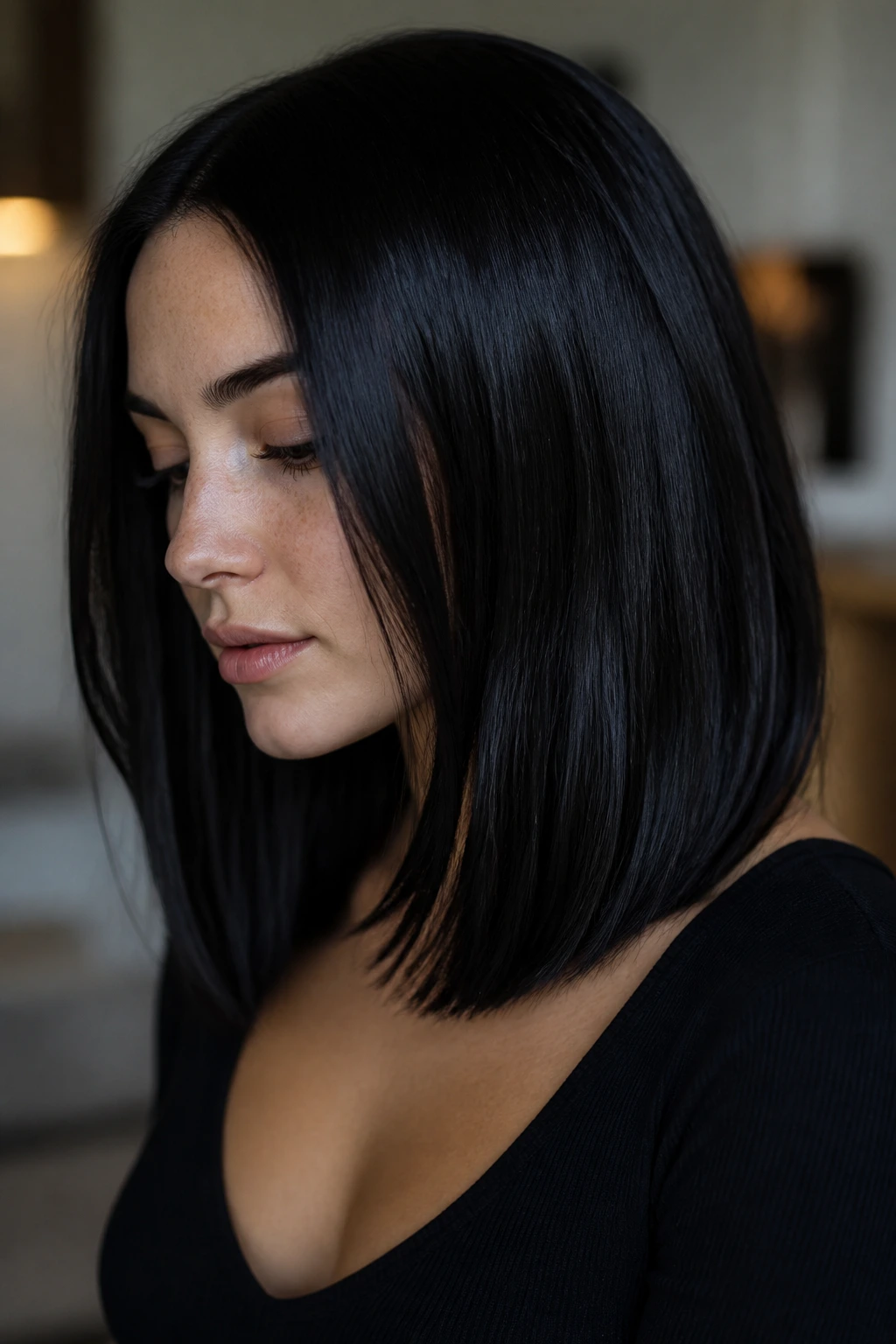
Velvet black is not flat black. Flat black can look like marker ink. Velvet black has a blue or cool sheen that shows up as soon as the light moves across it. The result is darker, sleeker, and a lot less harsh around the face.
I love this shade on shorter cuts and long hair with blunt ends, because the clean shape helps the color read intentional. Ask for a soft blue-black or neutral-black gloss rather than a coal-black that can swallow the features. If your eyebrows are very light, go easy. Black hair with pale brows needs some balancing elsewhere on the face, or it can look disconnected.
Why it works in winter: it gives dark knits and pale skin some contrast without needing highlights to do the work.
Best styling move: a smooth blowout or flat iron pass that leaves the surface reflective.
What to avoid: dry ends. Velvet black shows rough texture fast.
A shine spray used sparingly on the mid-lengths and ends can make this color look expensive. Too much, and it turns oily in a hurry.
10. Toasted Almond Balayage
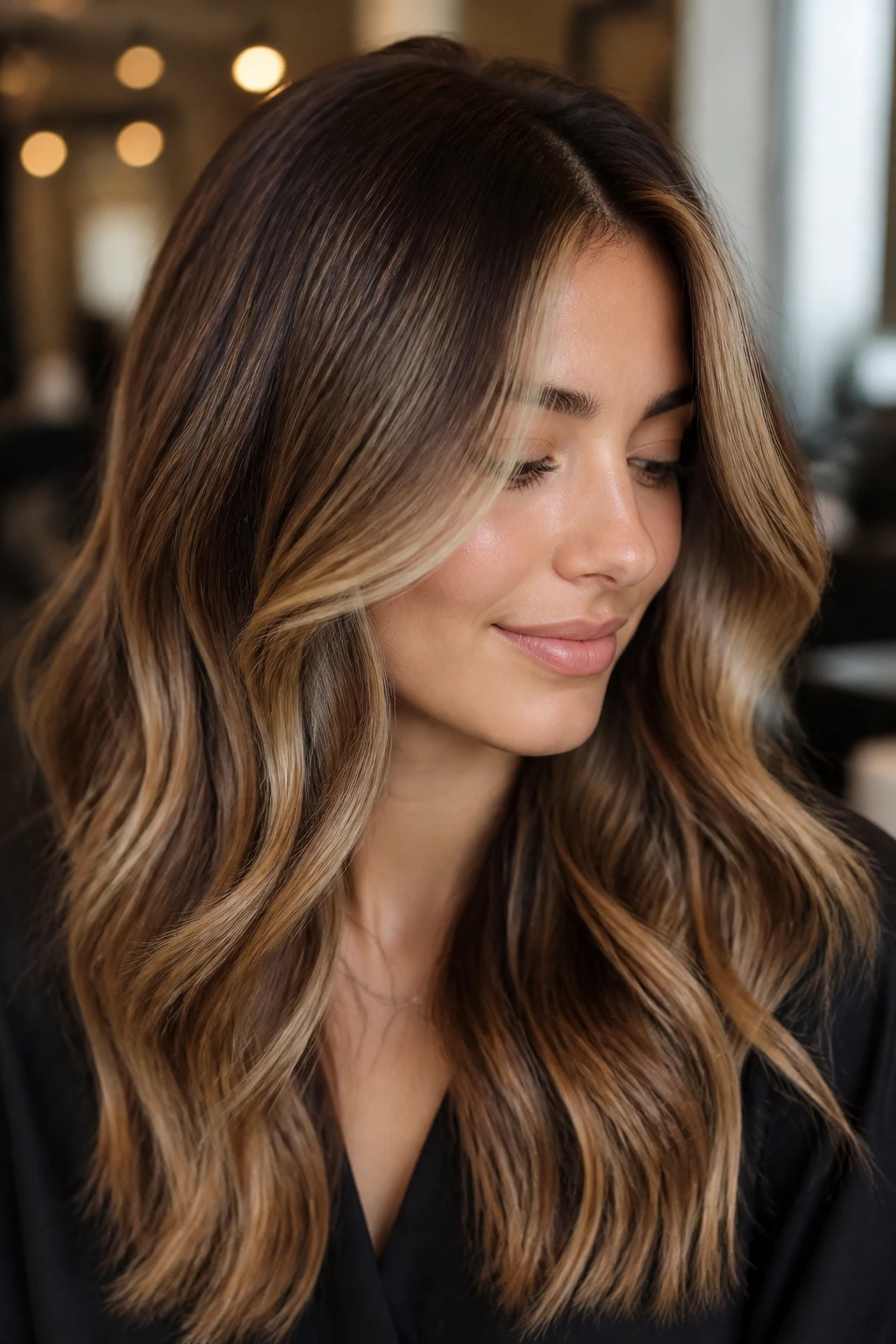
Toasted almond balayage sits in that easy, wearable brunette-blonde zone that never seems to go out of service. The base stays light brown or dark blonde, and the highlights come through as toasted almond, beige-gold, and a whisper of cream rather than chunky blonde strips.
This is one of the smartest winter hair color ideas if you want dimension without a dramatic switch. It keeps enough warmth to avoid looking dull under gray skies, but the highlights are muted enough to feel seasonally right. Ask for hand-painted pieces concentrated around the face and the top layers, with softer ends so the grow-out doesn’t turn obvious in three weeks.
A few things make it work:
- Keep the highlight contrast gentle, not stripey
- Tone toward beige instead of pale gold
- Add a shadow root if your natural base is darker than the lifted pieces
- Style with loose waves if you want the ribbons to show up
This shade is especially good on medium-length cuts. It gives the illusion of more movement than there really is, which is handy when winter hair starts acting like it forgot how to cooperate.
11. Mocha Melt
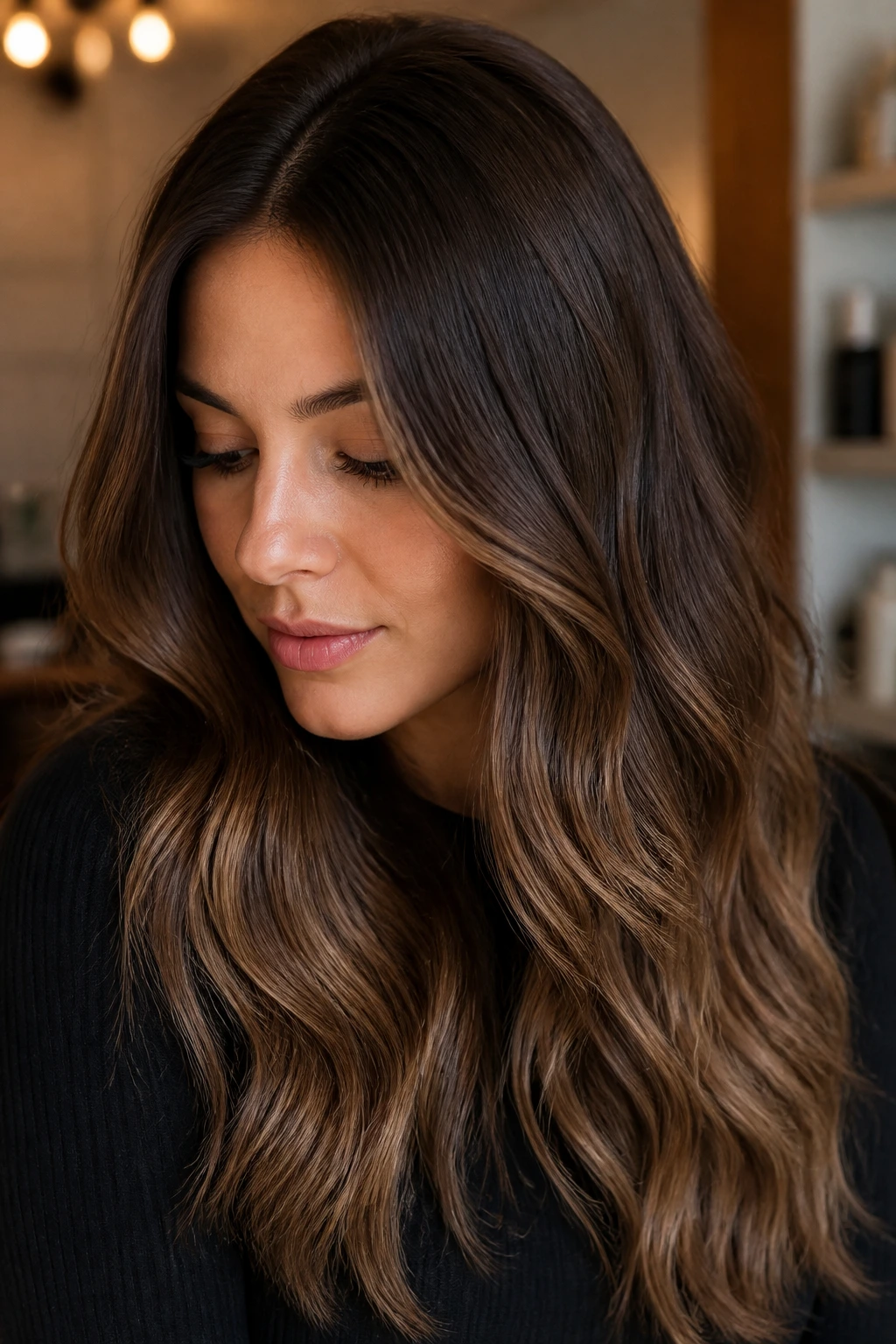
Mocha melt is the brunette color for people who are done arguing with their grow-out. It starts deep at the root, then gradually lightens through mocha, cocoa, and milk-chocolate ends. There’s no hard line, which is the whole appeal.
Because the transition is so soft, this color can look polished for weeks. It hides the dark root phase instead of making you stare at it. Ask for a melt, not streaks — the difference matters. A good mocha melt should look like the color moved down the hair, not like it was painted on in pieces.
What makes it feel winter-ready
- The darker root keeps the scalp area grounded
- The mid-tones add warmth without drifting orange
- The softer ends keep long hair from looking one-note
- It works with straight, wavy, and curly textures
I like this on people who don’t want high-contrast winter hair but still want something more interesting than a single brown tone. It’s calm. It’s smart. It also grows out with far less drama than a bright highlight job.
12. Chestnut Ribbon Highlights
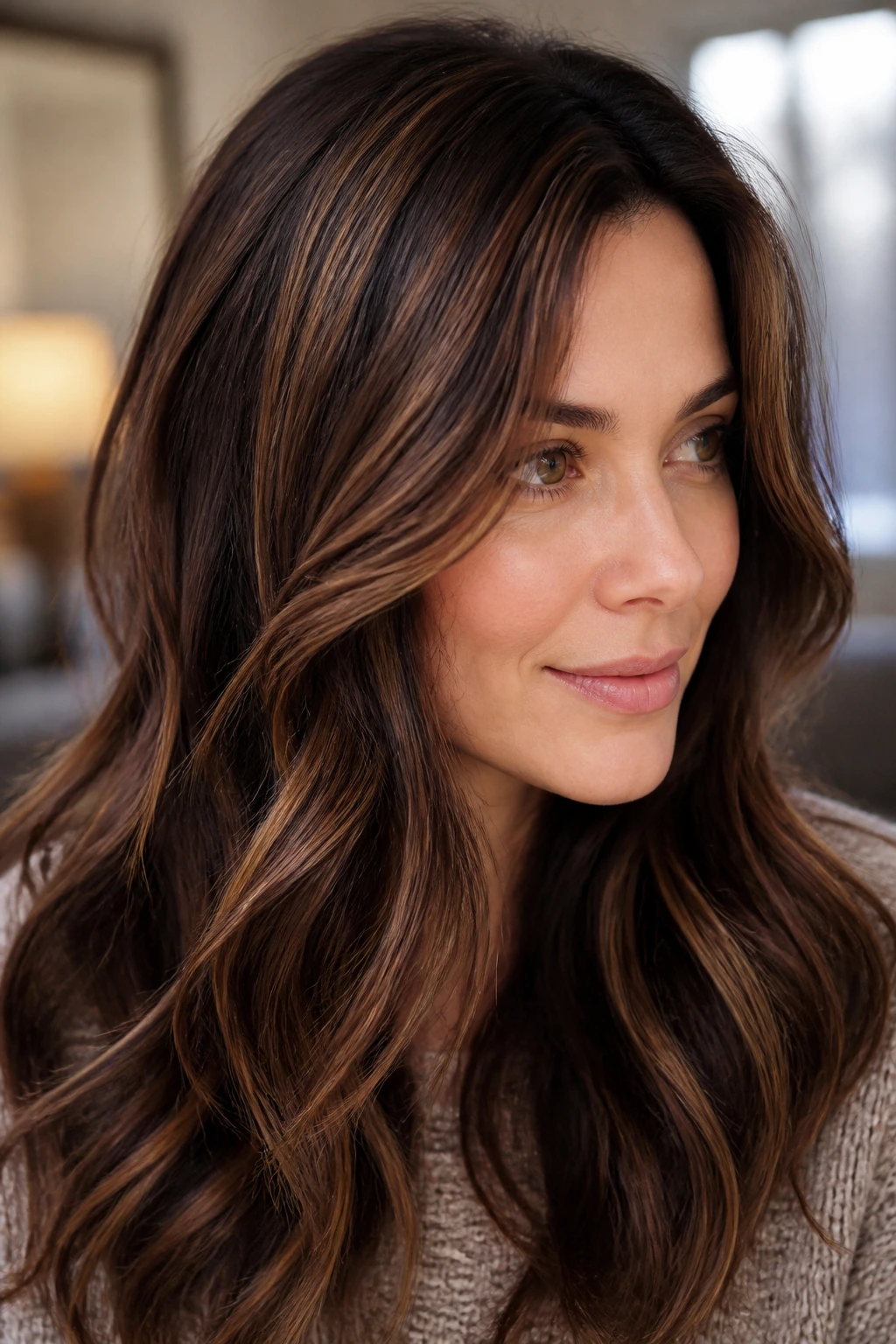
Chestnut ribbon highlights are what I recommend when someone wants movement but flinches at the idea of lightening the whole head. The highlights are thin, warm, and scattered through a brunette base so they look like ribbons instead of stripes. Chestnut is the right word here because the warmth stays grounded and earthy.
The color works because the ribbons sit close enough to the base that they don’t scream for attention. In winter, that restraint pays off. The hair still catches light, but it doesn’t look like it’s trying to be summer blonde in a wool coat. Ask for fine foils or hand-painted pieces around the crown, side layers, and face frame.
Best on: medium and long cuts, especially hair with a bit of wave.
Ask your colorist for: chestnut, caramel-brown, and neutral brown lowlights so the dimension doesn’t go flat.
Tip: if your base is very dark, keep the highlights one or two levels lighter, not five. The ribbons should whisper.
This is the kind of color that makes a blowout look more expensive than it is. The movement is the point.
13. Rosewood Brunette
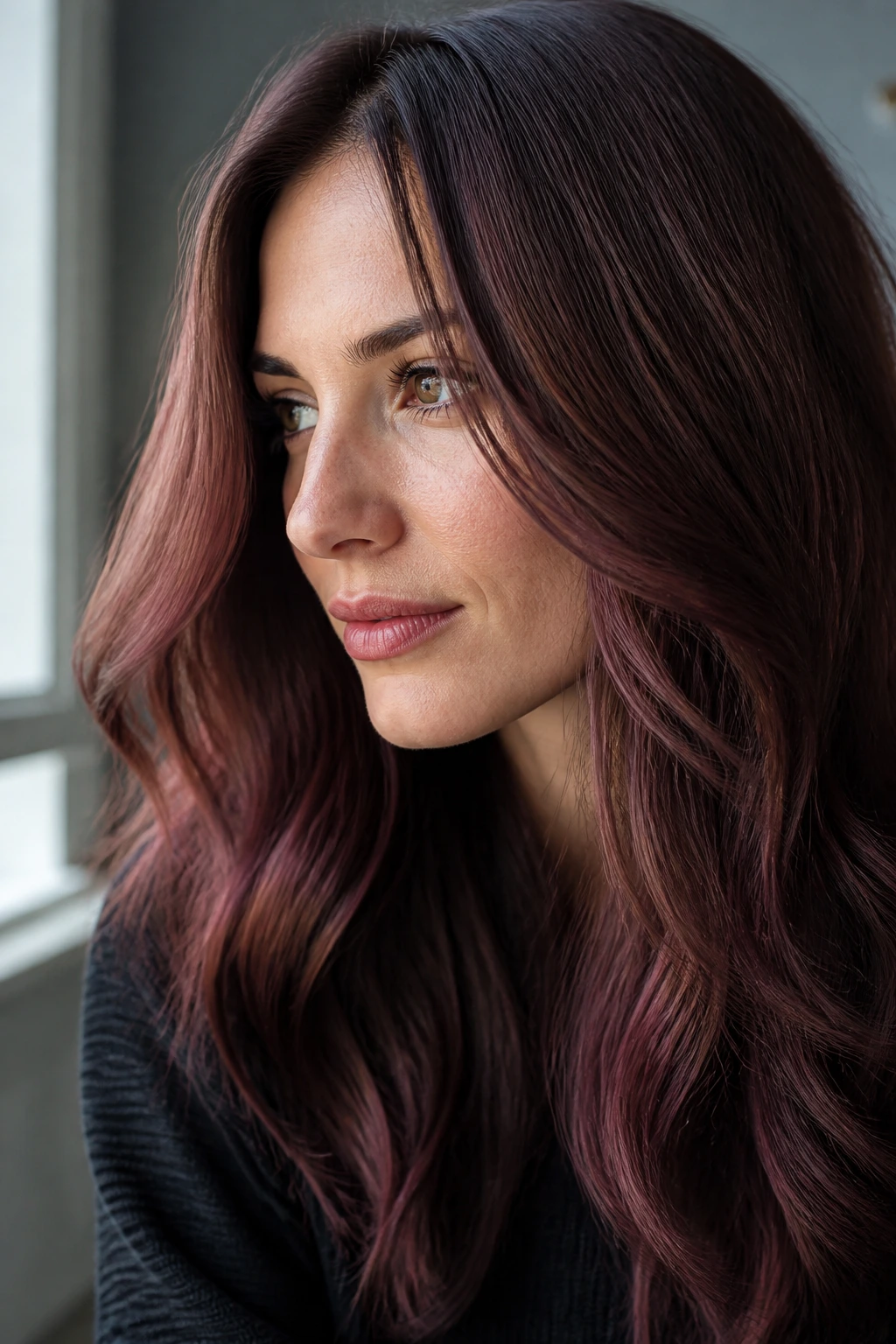
Rosewood brunette is one of those shades that sounds unusual and then looks strangely right. It’s brown first, rose second, with a muted pink-red cast that shows up more in light than in shadow. Not bright. Not trendy in the flimsy sense. Just a little softer and more romantic than plain brown.
Why it works in winter: colder skin tones often look better with a hint of warmth that isn’t orange. Rosewood does that neatly. Ask for a brunette gloss with rose or mauve reflect, especially if you want something subtle enough for the office but different enough to notice when you catch your reflection near a window.
A good rosewood brunette should:
- Stay brown at the base
- Show a soft rose sheen, not magenta streaks
- Read best on medium-depth brunettes
- Benefit from a neutral or slightly warm makeup palette
This shade has a lovely habit of making brown eyes look a little deeper. Maybe it’s the rose note. Maybe it’s just that the color has enough life to stop the whole look from going stale.
14. Platinum Sand Blonde
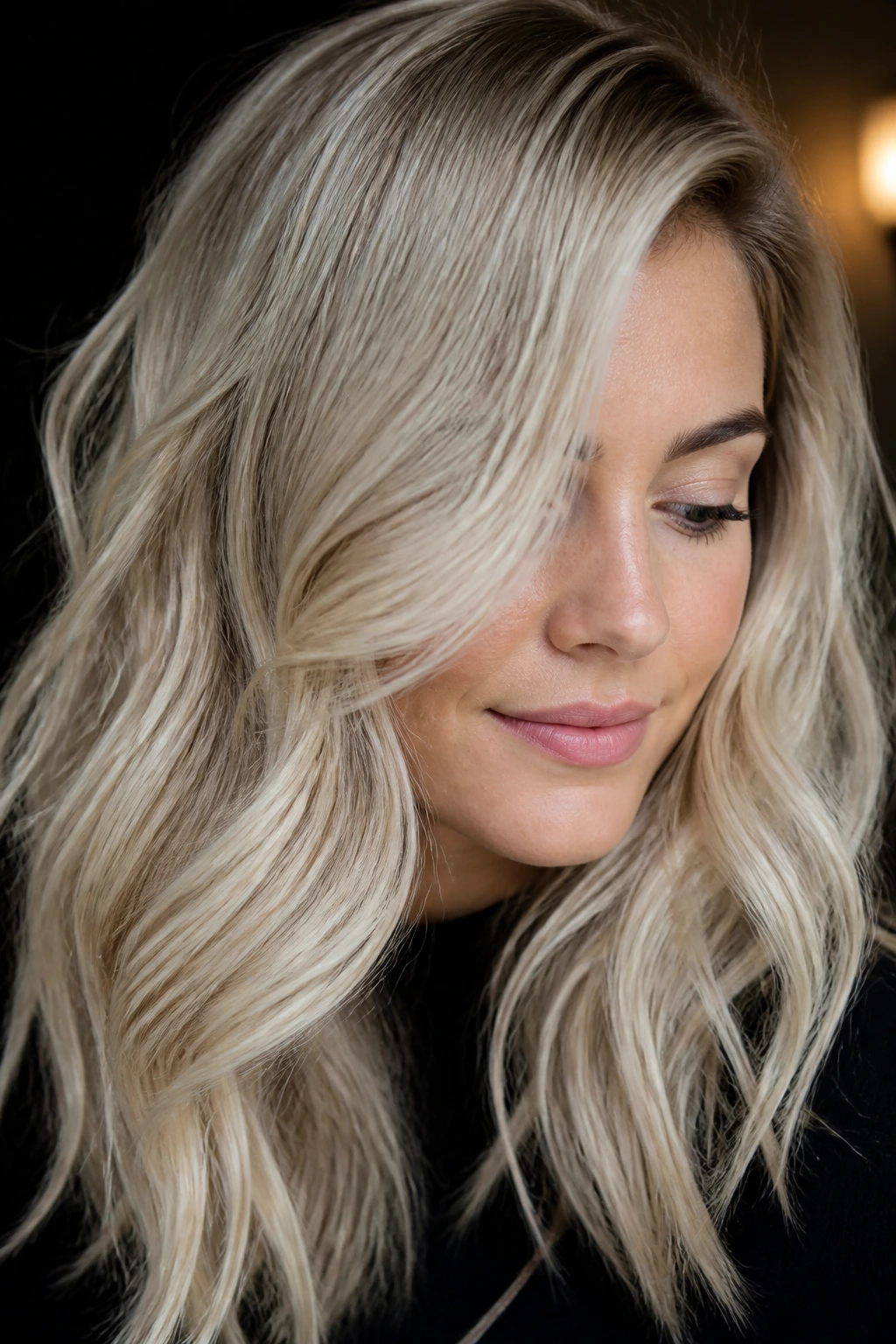
Platinum sand blonde is what happens when platinum stops being icy and starts making sense. The sand tone warms the finish just enough to soften the edges, while the platinum keeps it bright and high-impact. On the right base, it looks clean rather than frosty.
The key is balance. Too much ash and the blonde can look dull. Too much gold and you lose the crisp winter effect. Ask for a pale blonde that sits in the sand-beige lane, then refine the tone with a gloss instead of chasing it with repeated lightening. Repeated bleach is how ends get angry.
Good fit checklist
- Light base or pre-lightened hair
- Strong conditioner and heat protection
- A colorist who understands tone control
- Willingness to touch up root regrowth every 4 to 6 weeks
This is not a lazy color. It asks for care. But if you like blonde hair that feels polished instead of beachy, it has a very clean payoff.
15. Graphite Gray Blend
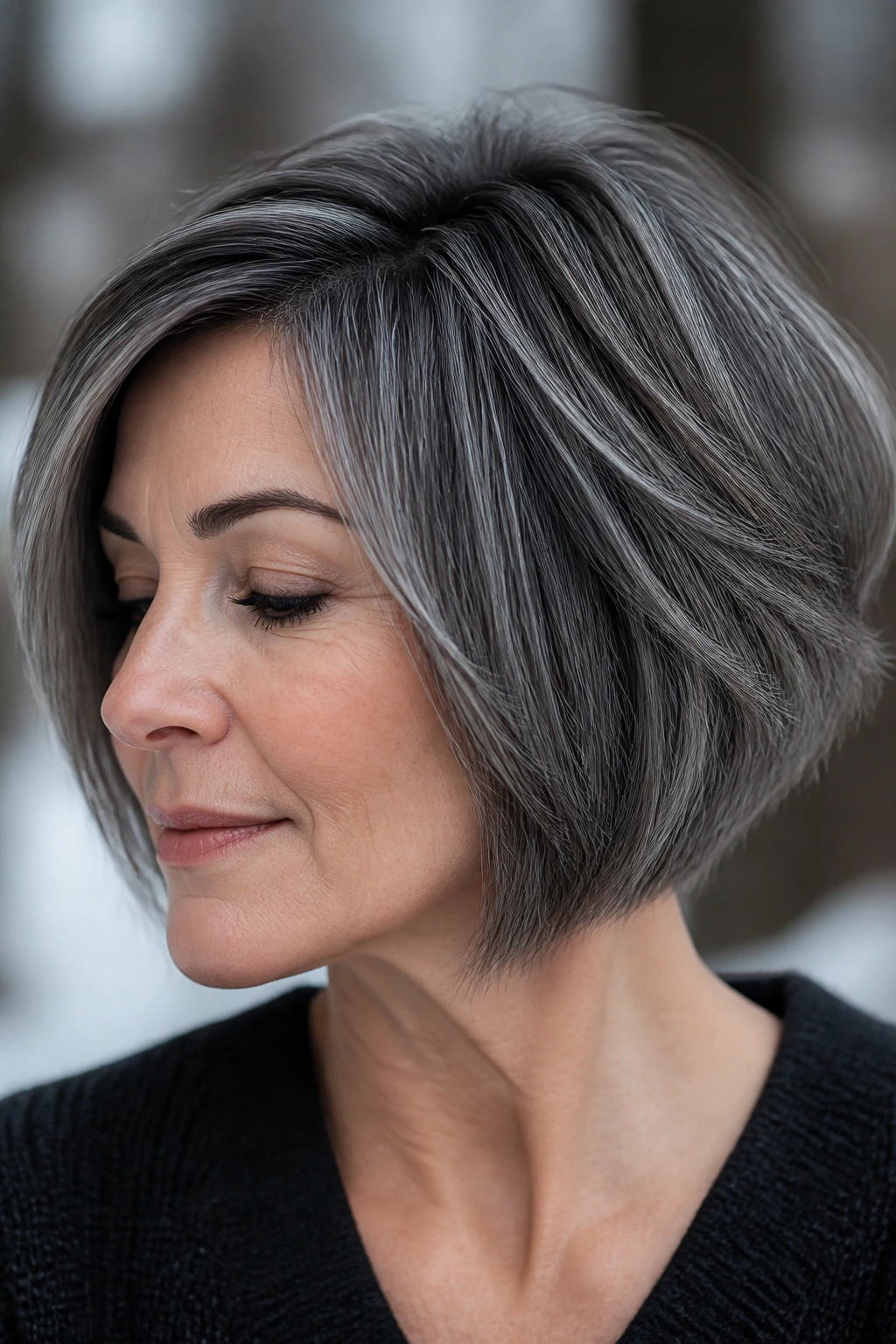
Graphite gray blend is for people who want to lean into silver without making the result look like costume hair. It mixes charcoal, smoky silver, and soft gray tones over a darker base, so the overall effect feels grounded instead of shiny and metallic in an obvious way.
I think this shade works best when it’s treated like a texture color, not a novelty. It’s good on layered cuts, short bobs, and any style where movement matters. Full silver can be striking, but graphite has more room for depth. It also plays better with winter wardrobes because it doesn’t vanish next to gray sweaters the way a soft blonde sometimes does.
How to ask for it
- Request a smoky gray toner over a pre-lightened or salt-and-pepper base
- Keep some darker root for dimension
- Avoid a flat, all-over silver cap effect
- Add a clear gloss if the finish starts looking dry
If you’re growing out natural gray, this can be a smart bridge. If you want something edgy and intentional, it reads that way too.
16. Auburn Smudge
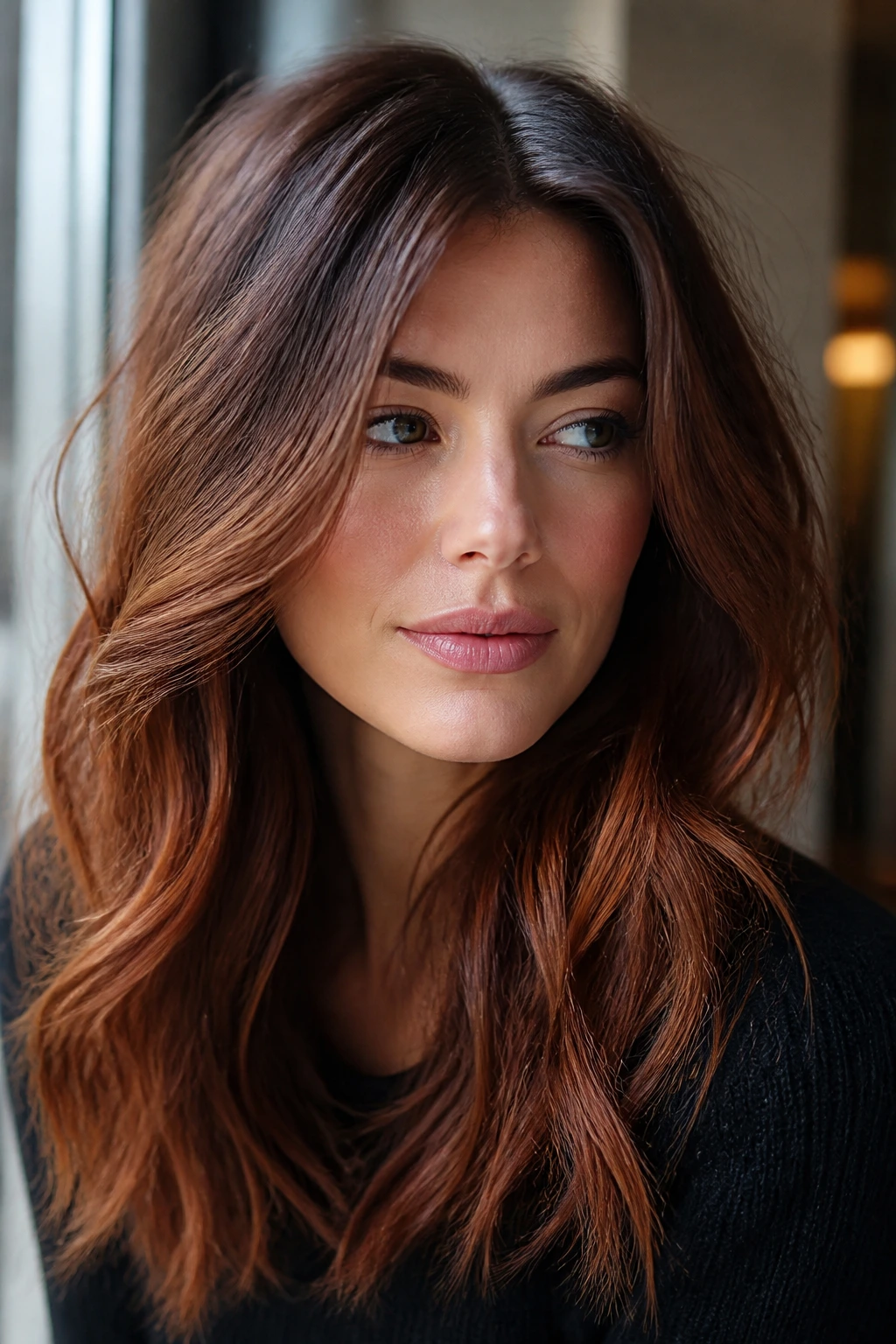
Auburn smudge is a softer take on red hair, and that softness is what makes it winter-friendly. The root stays brownish, the mids pick up auburn warmth, and the ends carry the color without shouting. It looks like firelight on hair, not a traffic cone.
This is a lovely choice if you want warmth but not orange. Ask for auburn with a smudged root and a gloss that keeps the red in the brown-red family. On wavy hair, the shade can look more dimensional than a brighter copper because the red shifts as the hair bends.
A few things keep it from veering too loud:
- Keep the root area deeper
- Use a red-safe conditioner once a week
- Avoid harsh clarifiers
- Pair it with a haircut that has movement, not one blunt block
Auburn smudge feels especially right in colder months because it brings heat back to the face without taking over the whole look. If you’ve been stuck in brown hair that feels like it gave up, this is a good reset.
17. Cocoa Gloss
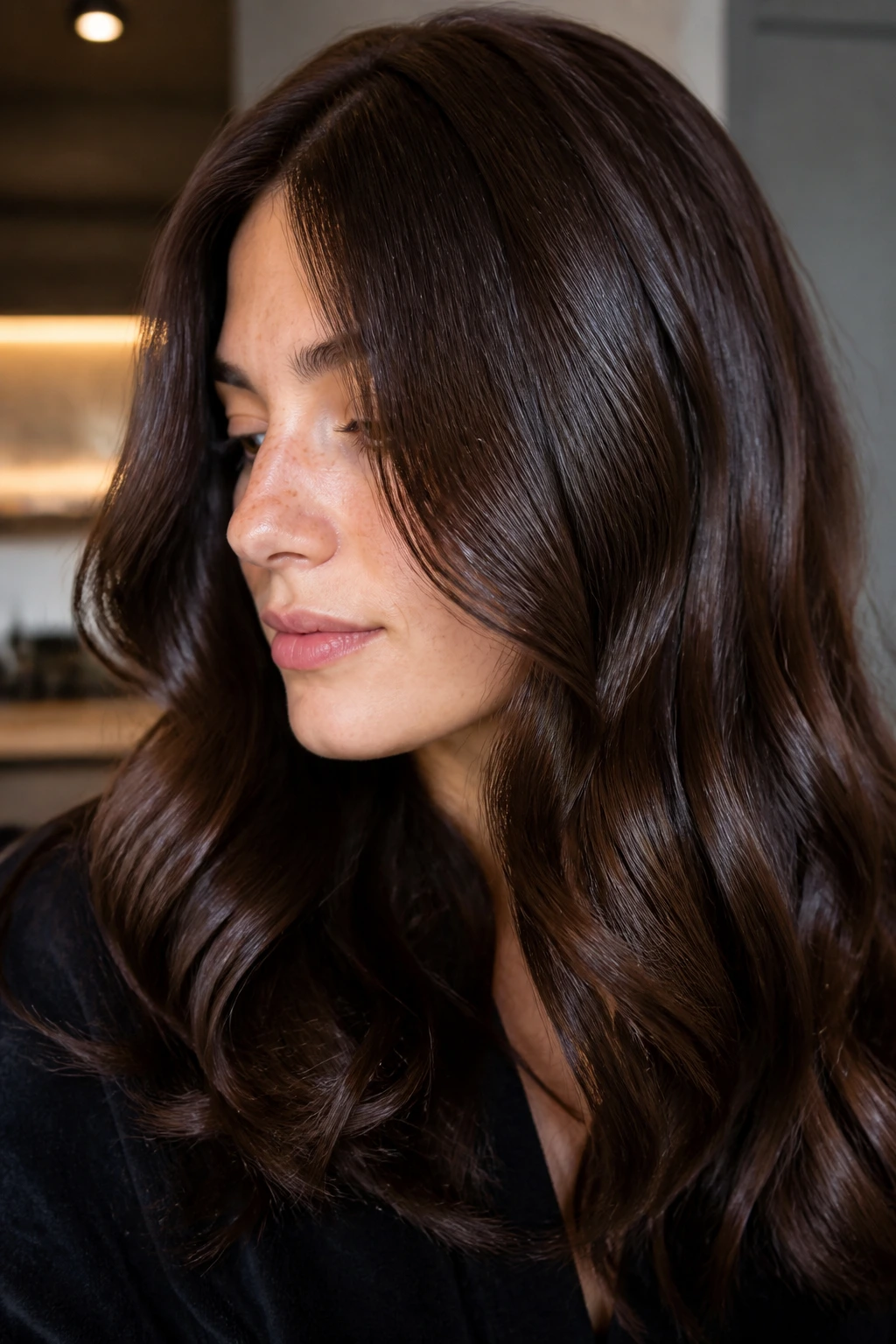
Cocoa gloss is the simplest color idea on this list, and sometimes simple wins. It’s a rich brown refresh with a high-shine finish, meant to deepen your natural brunette rather than change it into something else. If your color has gone dull, flat, or a little red at the ends, cocoa gloss fixes the problem fast.
Why I like it
A gloss can do a lot without the commitment of permanent color. It smooths the cuticle, adds reflect, and shifts the tone toward neutral chocolate instead of muddy brown. That’s why this works so well in winter, when dry air makes hair look rough around the edges.
Best for
- Natural brunettes
- Faded balayage that needs a reset
- People who want shine more than contrast
A cocoa gloss is also a strong choice if your hair has been through a few bleaching rounds and needs a break. You get a visible payoff without asking the hair to do too much. And yes, that matters.
18. Cranberry Cola
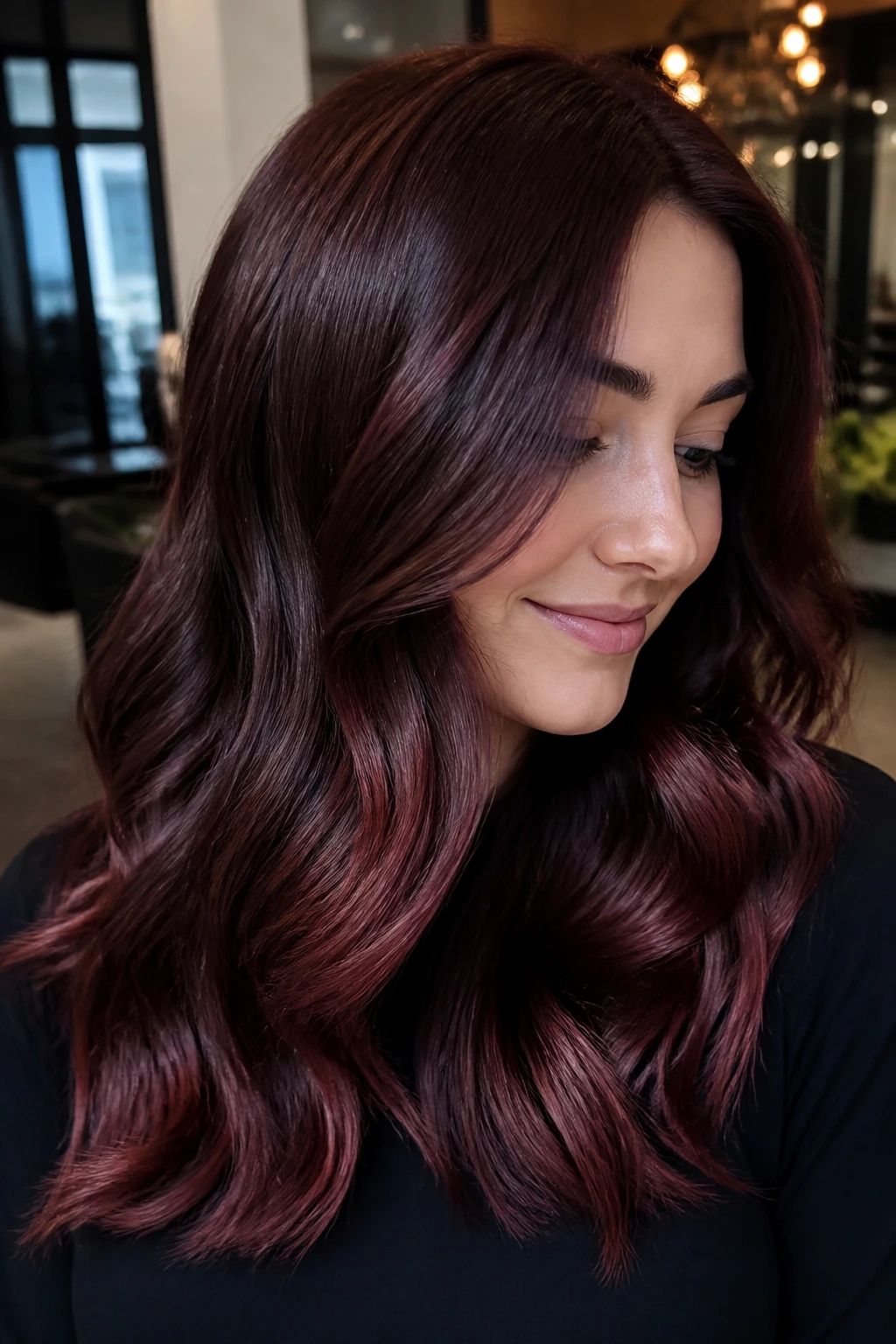
Cranberry cola is deep, dark, and a little bit moody. It looks like cola brown at the root, then throws a cranberry-red shimmer through the mids and ends when the light hits it. It’s the kind of color that looks subtle at first glance and much richer once you move.
I’d call this a smart compromise between red and brunette. Pure red can be high-maintenance; plain brown can feel sleepy. Cranberry cola gives you enough pigment to feel seasonal without making every wash a tiny emergency. Ask for a dark brown base with cranberry reflect, not bright red panels.
Best on: medium and deep bases.
Salon note: this shade reads better with glossing than with heavy lifting. You want reflect, not neon.
Maintenance: use cooler water and a color-safe, sulfate-free shampoo if possible.
This color looks especially good with loose curls, because the cranberry flashes in and out as the curls turn. It’s discreet, but not boring. That’s a hard balance to beat.
19. Pearl Ash Brown
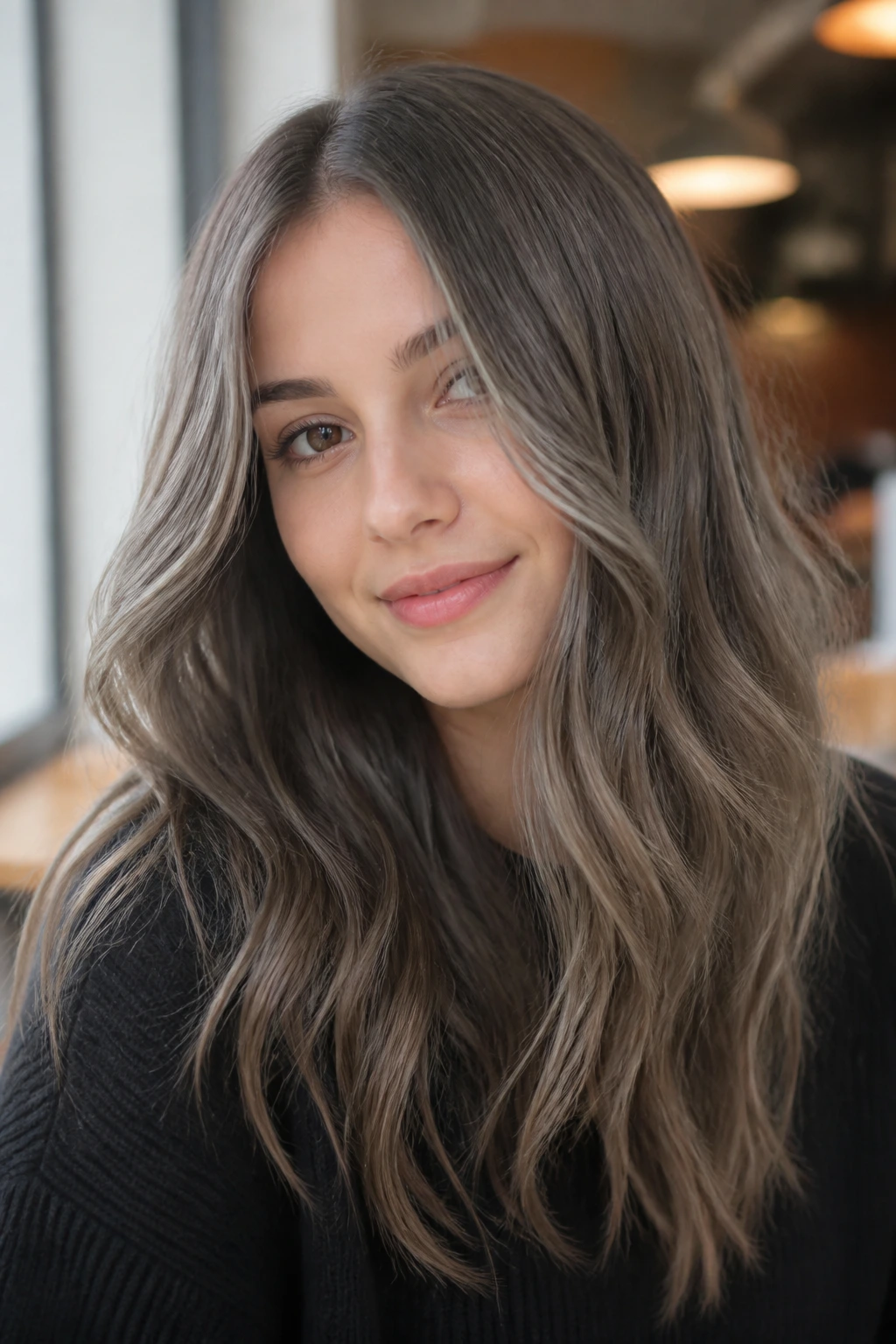
Pearl ash brown has a soft, luminous quality that keeps it from feeling too flat or too gray. The ash tone cools the brown, while the pearl note keeps it from turning dusty. It’s a nice option if you like cool shades but hate the chalky look that some ash colors can develop.
The result is elegant in a quiet way. On fair or neutral skin, it can make the complexion look clearer. On warmer skin, it may need a touch of beige mixed in so it doesn’t wash the face out. Ask for a neutral-ash gloss rather than a strong silver toner, especially if your hair has porous ends.
Use this approach if:
- You want brunette with a cool edge
- Brassy warmth keeps coming back after coloring
- You prefer low-contrast, soft-finish color
Pearl ash brown is not the shade for people who want red warmth or bold contrast. It’s for people who like smooth, muted, controlled color and don’t mind a little toner upkeep.
20. Smoked Taupe
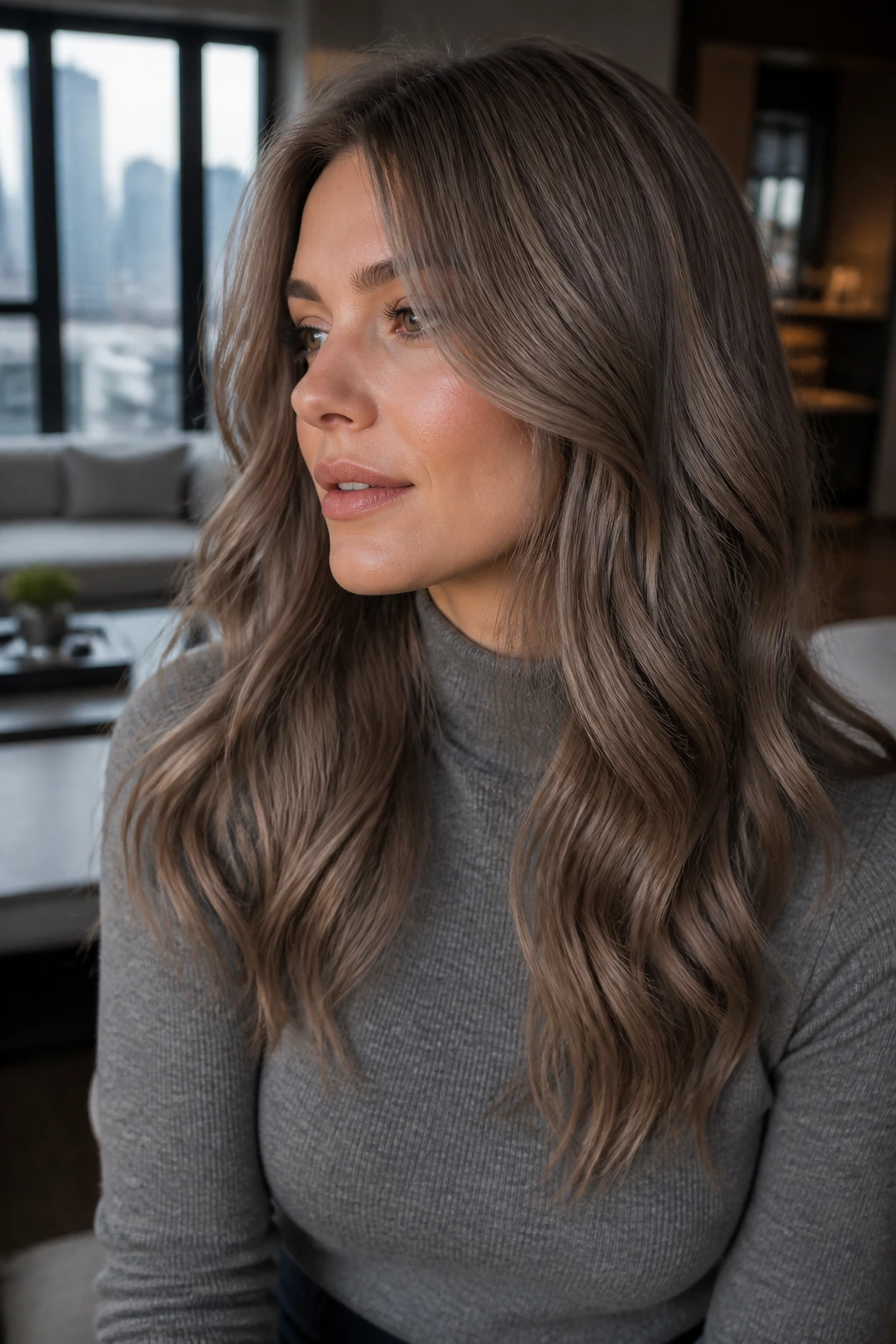
Smoked taupe sits between brunette and blonde, but not in a sun-kissed way. It has a cool beige-gray base that looks especially good on short cuts, airy layers, and hair that needs some shape to keep the color from disappearing into the background.
The best version has a dark root, soft taupe mids, and a low-saturation finish. That low saturation matters. If the color is too warm, it becomes brown. If it’s too gray, it can look flat. Smoked taupe lives in the middle, where winter light can actually show it off.
Comparison note: unlike traditional brunette, smoked taupe depends on tone more than depth. The finish has to stay clean.
Ask for: a dimly toned gloss with beige-gray reflect and a soft shadow root.
Best with: cuts that move — lobs, shaggy layers, and softly textured bobs.
This shade has a little cool-weather restraint to it. It never feels loud. It also tends to make skin look less ruddy, which is a nice side effect if winter redness is part of your life.
21. Honey Bronde
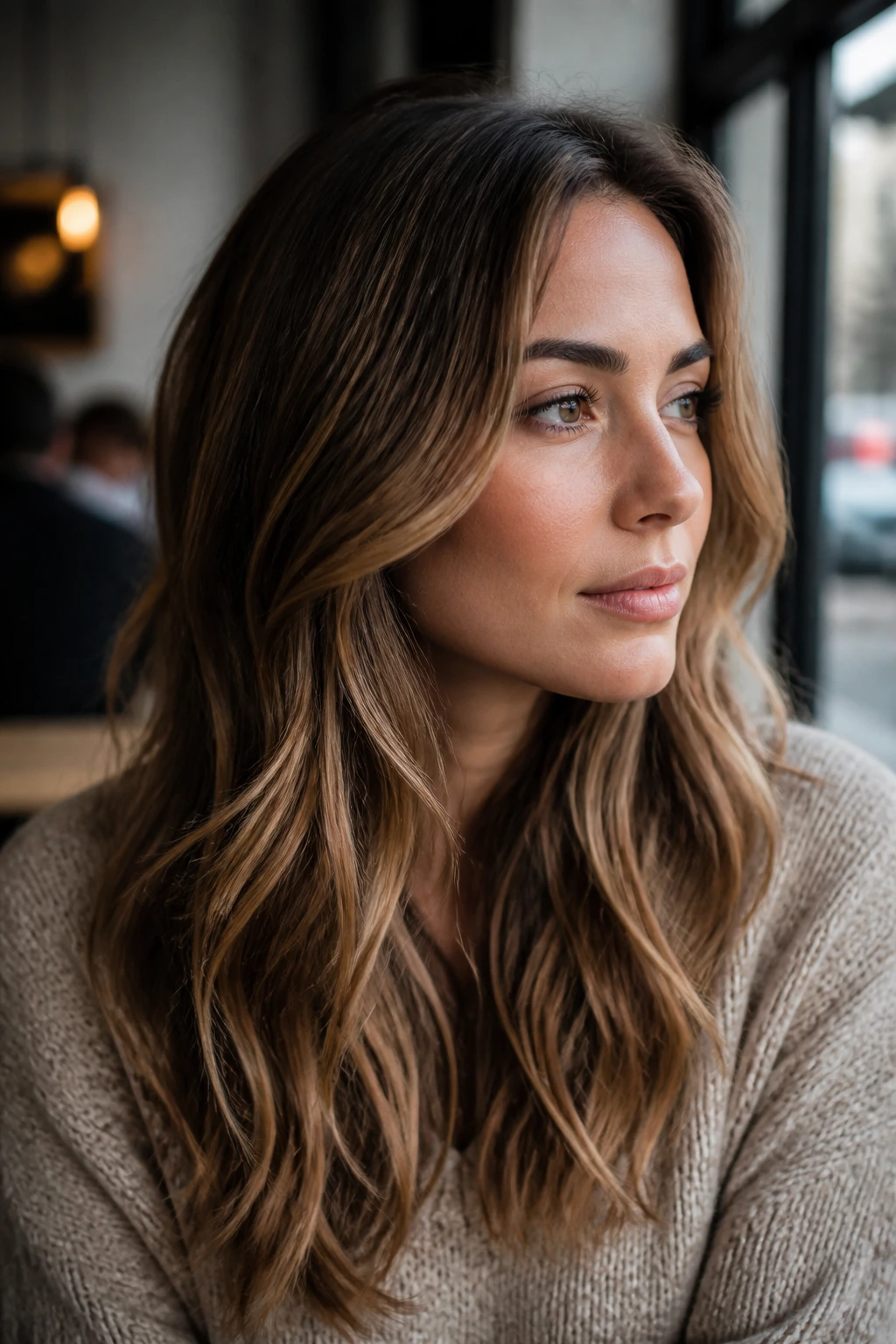
Honey bronde sounds warmer than it actually needs to be. In a winter setting, the best version is rooted, softened, and more beige than gold. You want brunette at the base, honey through the mid-lengths, and enough shadow to keep the whole thing from looking summery.
If you already live somewhere in the brunette-to-blonde middle ground, this is an easy seasonal shift. Ask for face-framing brightness, then let the rest melt back into a neutral base. That keeps the honey from taking over. Too much warmth in winter can feel loud. A controlled amount looks thoughtful.
Where it works best
- Medium skin tones
- Shoulder-length cuts
- Hair with some wave or bend
I like this option for people who don’t want to fully commit to a colder palette. It gives warmth without the brass. If you’ve spent months correcting orange tones, though, skip the heavy honey and keep the beige side stronger.
22. Plum Velvet
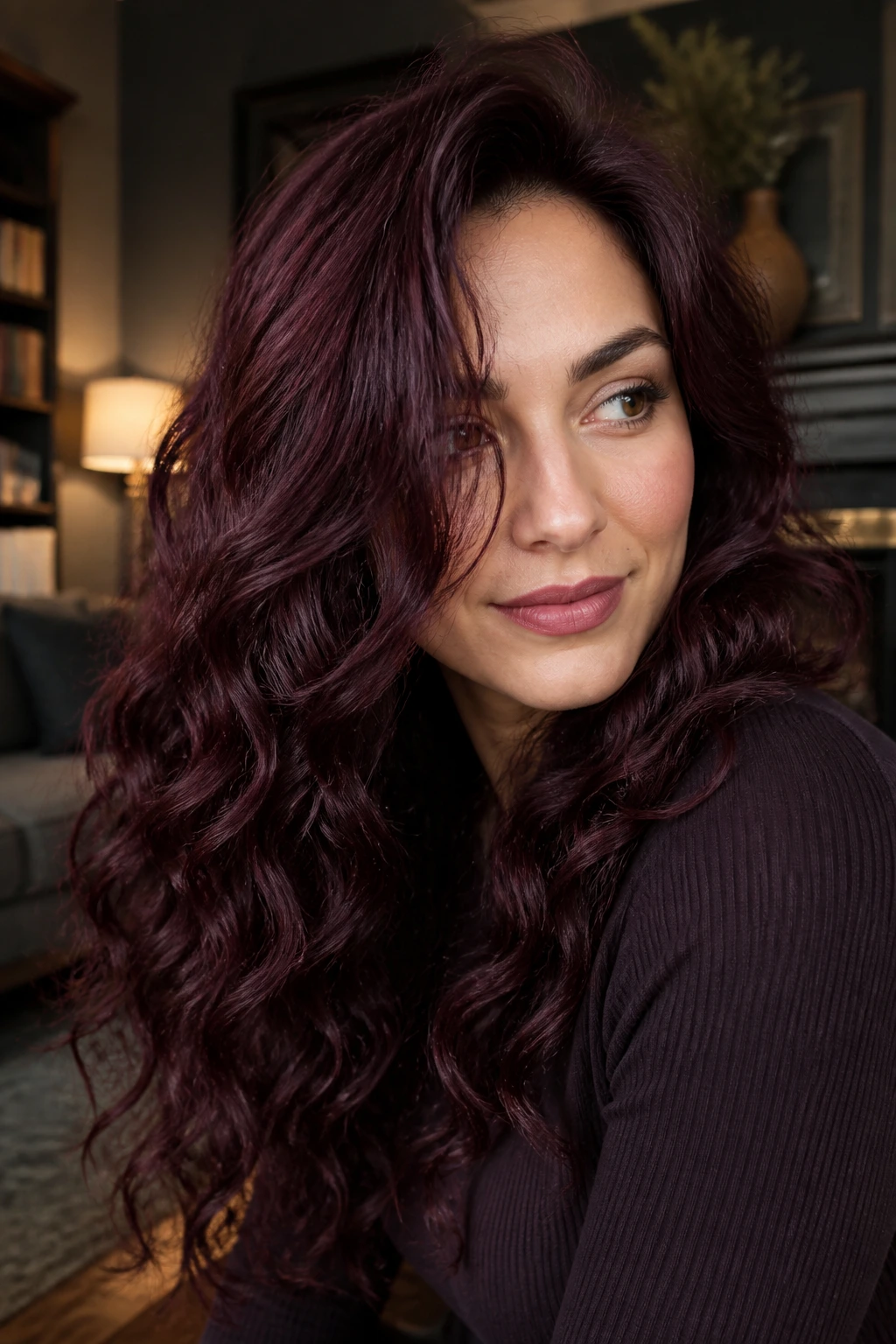
Plum velvet is the darker, quieter sister of purple hair. It leans brown-plum at the base, then opens into a soft violet-red reflect that shows up in motion. It’s dramatic enough to feel like a change, but grounded enough that you won’t regret it after one mirror check.
The velvet part of the name matters. A good plum should have depth and sheen, not flat purple pigment. Ask for a deep plum gloss over a brown base or a muted violet-brown overlay if your hair is already dark. On curls and waves, the plum note catches beautifully in the bends. On straight hair, it gives sleek darkness with a secret.
Tip: keep the color rich by reducing heat styling for a week after coloring.
Best for: cool to neutral undertones, dark brunettes, and anyone who wants mood without neon.
This is one of my favorites for winter because it feels moody in a grown-up way. Not costume-y. Not precious. Just strong.
23. Copper Penny
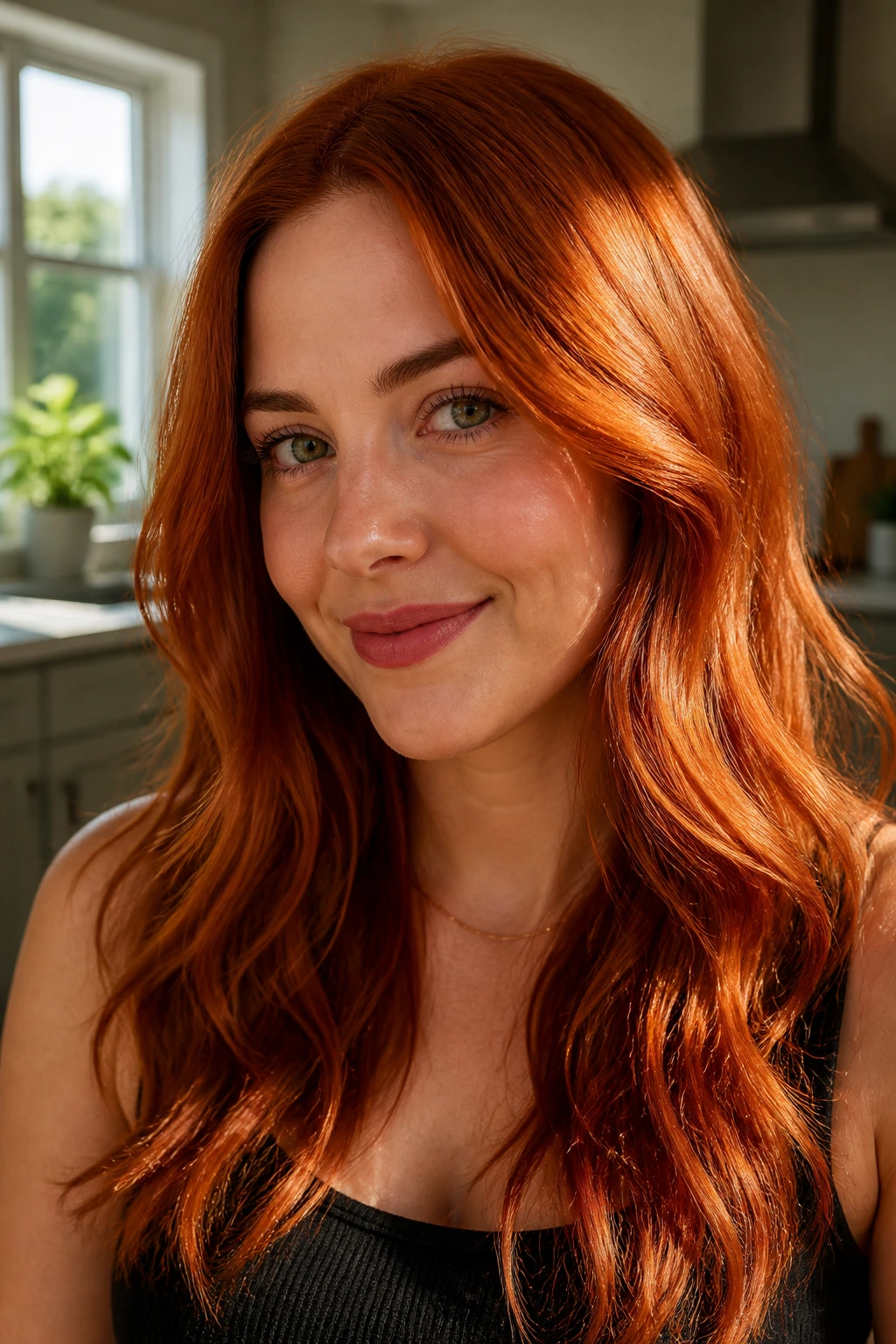
Copper penny is brighter than cinnamon copper and sharper than auburn. It has that polished orange-red gleam that can look stunning on the right base and a little too loud on the wrong one. That honesty is part of why it’s such a committed choice.
If you want this color, go in with your eyes open. It needs upkeep, because copper fades fast and drifts dull if you ignore it. Ask for a vibrant copper with a neutral or slightly warm base, then plan on copper-depositing conditioner and regular glossing. This is not a wash-it-and-forget-it situation.
Good fit
- Light to medium bases
- Warm and neutral skin undertones
- People who don’t mind maintenance
- Cuts with movement, so the color can shift in the light
Copper penny looks especially sharp around the face when the roots are kept a touch darker. That slight shadow makes the brightness feel intentional rather than loud.
24. Truffle Brown
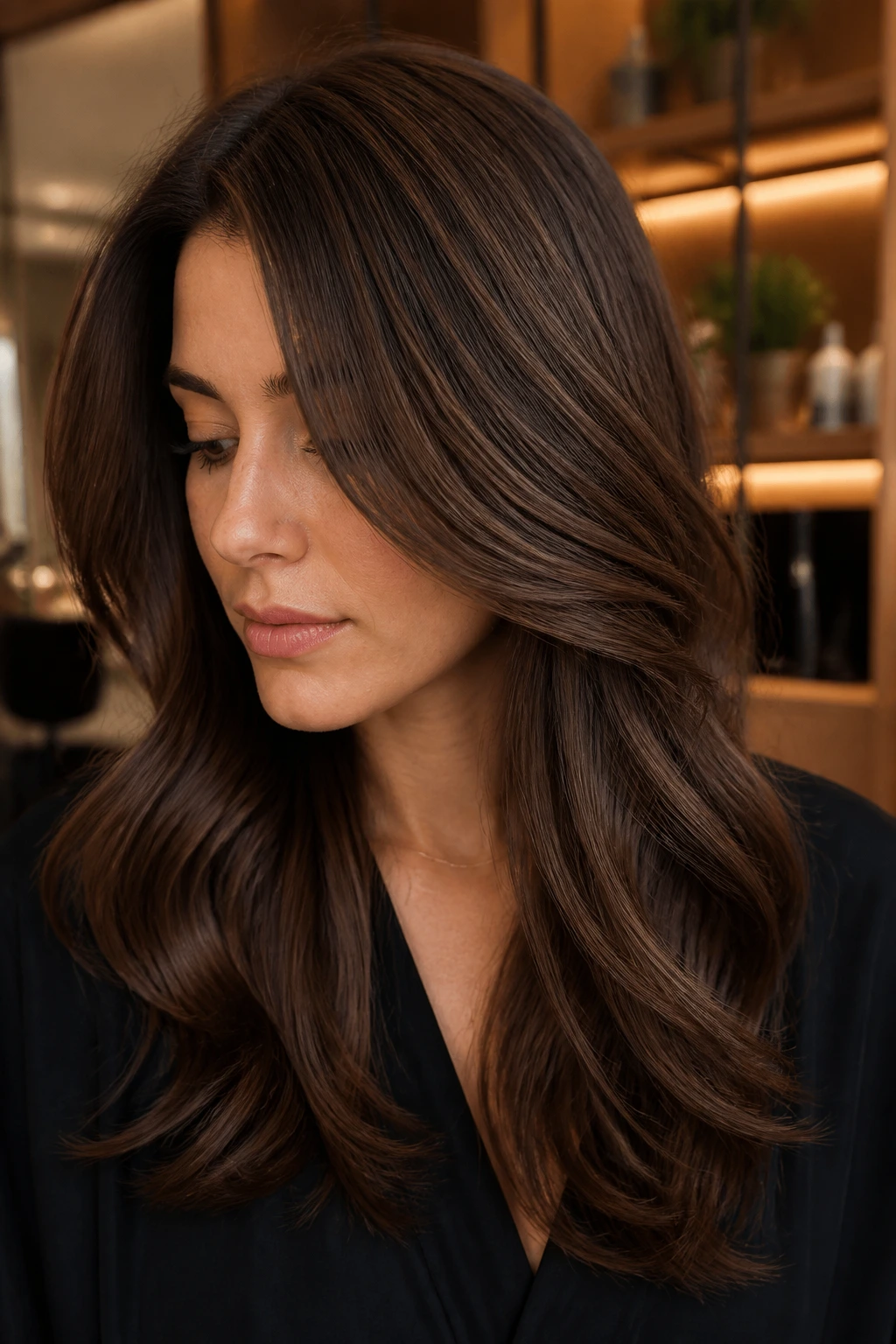
Truffle brown is a deep neutral-brown that leans cool enough to stay clean but warm enough to avoid the flat, dead look that dark hair sometimes gets in winter. It’s the color version of good wool: dense, smooth, and quietly polished.
What I like about truffle brown is that it supports the haircut instead of trying to steal the show. On layers, it shows movement. On a blunt bob, it looks crisp. On long hair, it gives the ends more visual weight. If your natural color is medium brown and you want a richer finish without a huge change, this is one of the best bets.
How to ask for it: a neutral chocolate-brown glaze with no strong red cast.
Best paired with: clean lines in the cut and a little shine at the ends.
Avoid: over-ash toner that can make the shade look dry.
This shade is quietly useful. It doesn’t beg for attention, and that’s why it works.
25. Champagne Veil Blonde
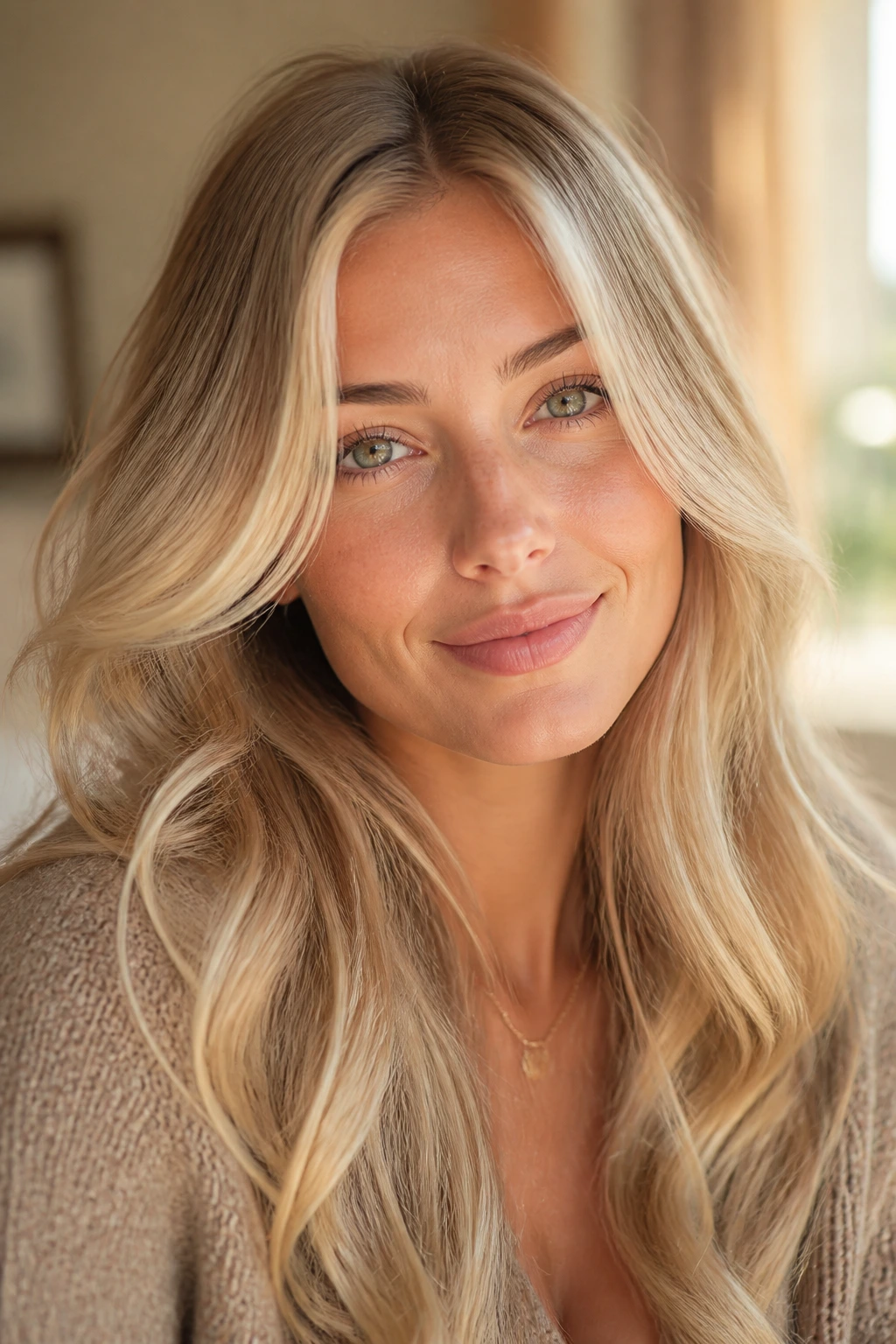
Champagne veil blonde keeps the brightness of blonde hair but softens the finish with beige and pale gold so it doesn’t feel brittle or stark. The “veil” part is key — the blonde should feel diffused, not bleached into place. It’s a gentler take on winter blonde that still has enough lightness to wake up the face.
I like this on people who want brightness around the face more than a full-head lightening job. The veil effect can come from partial highlights, babylights, or a soft money piece over a neutral base. Ask for champagne instead of butter if you want the color to stay clean in colder months.
Why it works
- It keeps the face bright without going chalky
- It softens pale winter skin
- It looks best with soft waves or a blowout
If platinum feels too sharp and beige feels too dull, champagne veil blonde is the middle lane. A good one has just enough warmth to avoid looking frosty.
26. Midnight Blue Black
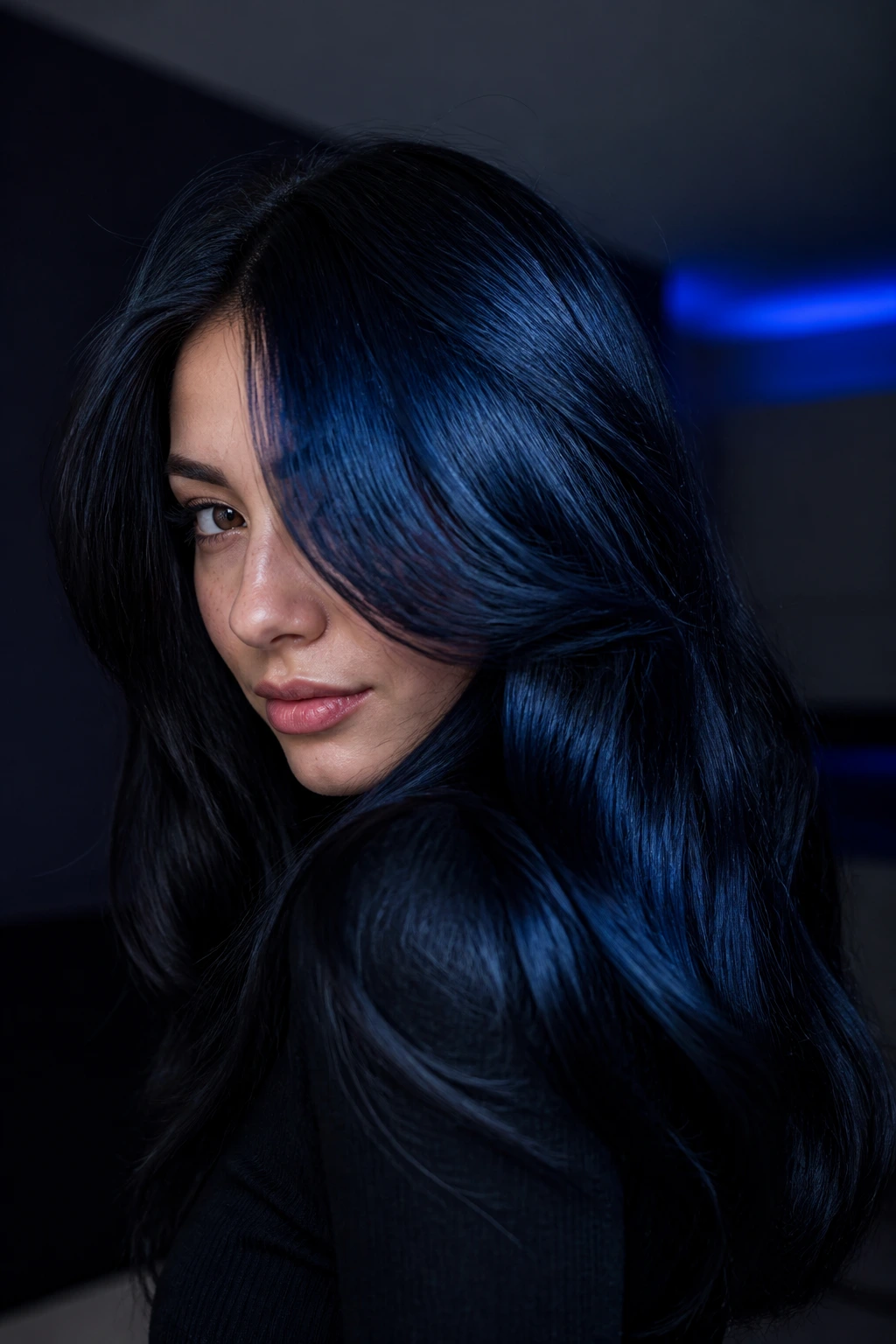
Midnight blue black is for people who want dark hair with a hard edge and a reflective finish. In low light, it reads like black. In brighter light, the blue sheen cuts through and gives the whole look a cleaner, glossier feel than plain black.
This shade makes sense if you like dark clothes, sharp liners, and hair that looks deliberate from root to end. Ask for a blue-black gloss or demi-permanent color on a deep base. On damaged hair, be cautious — dark cool shades show uneven texture quickly, especially around the ends.
Best with: blunt bangs, sleek ponytails, and straight styling.
Maintenance note: keep the shine up with a color-safe conditioner and don’t overdo clarifying shampoo.
Who should skip it: anyone who wants softness. This color has edge, not softness.
I’m partial to it on short hair, where the blue sheen can show up cleanly. On long hair, it needs movement to keep from reading as one big dark sheet.
27. Walnut with Face-Framing Lights
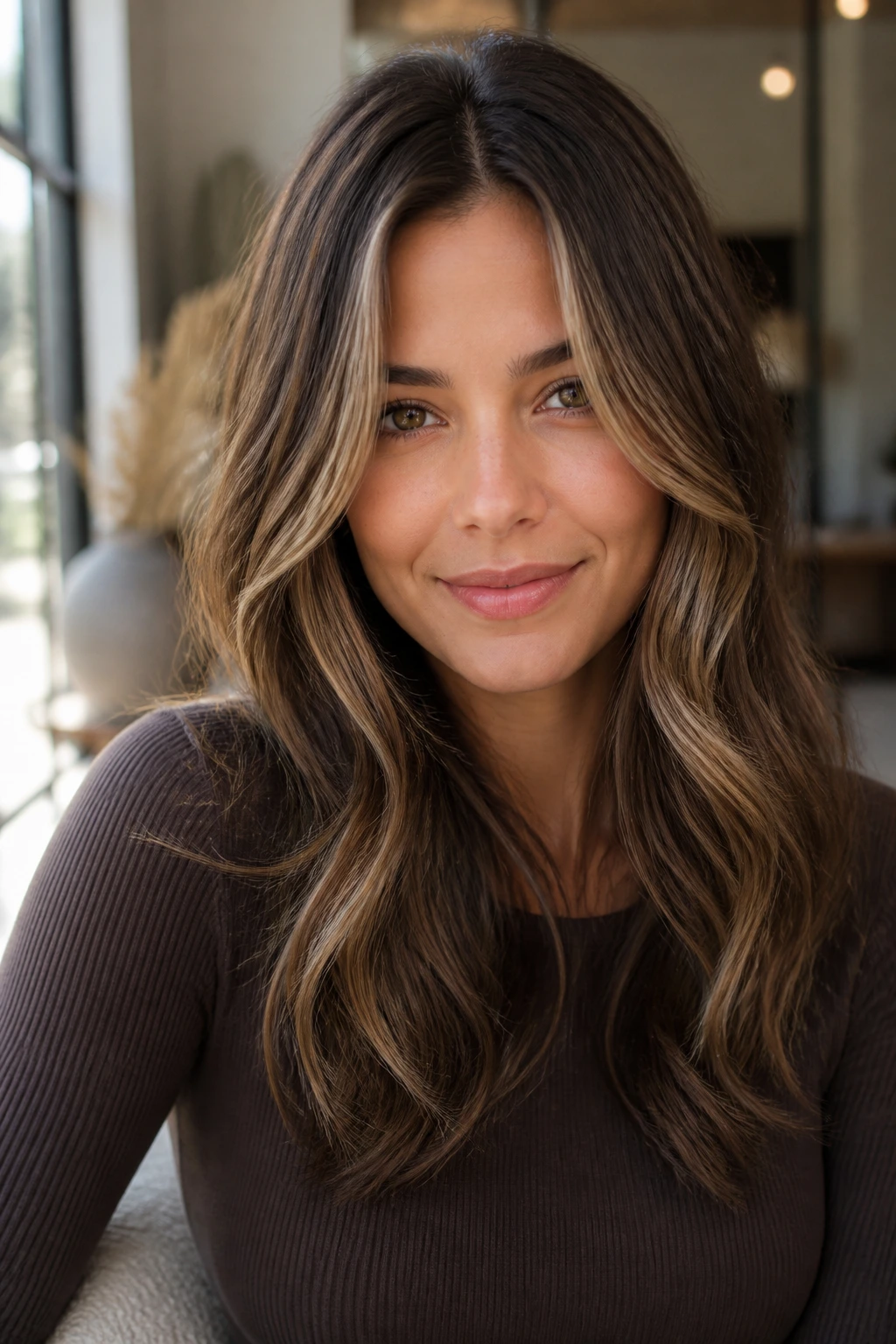
Walnut with face-framing lights is the safest, smartest winter color move on the list. The base stays walnut brown — medium-deep, neutral, and easy to live with — while the front pieces lift a few shades lighter so the face gets some light without turning the whole head into a highlight project.
That little bit of brightness around the face matters more than people think. It makes the cut look newer, softens the root area, and gives you something to work with when the rest of the hair is tucked under scarves or coats. Ask for soft ribbons, not thick panels. The front pieces should look like they belong there, not like they were dropped on top.
Best use case
- You want winter brightness without full bleaching
- You like brunettes but need a little lift
- You want the color to grow out neatly
Easy upgrade
A neutral walnut gloss on the mids and ends keeps the contrast smooth, especially if your highlights are on the lighter side.
This is the kind of color that makes sense for people who want pretty hair without making hair their full-time hobby. Which, frankly, is most people.
Why Winter Hair Color Needs More Depth Than Summer Blonde
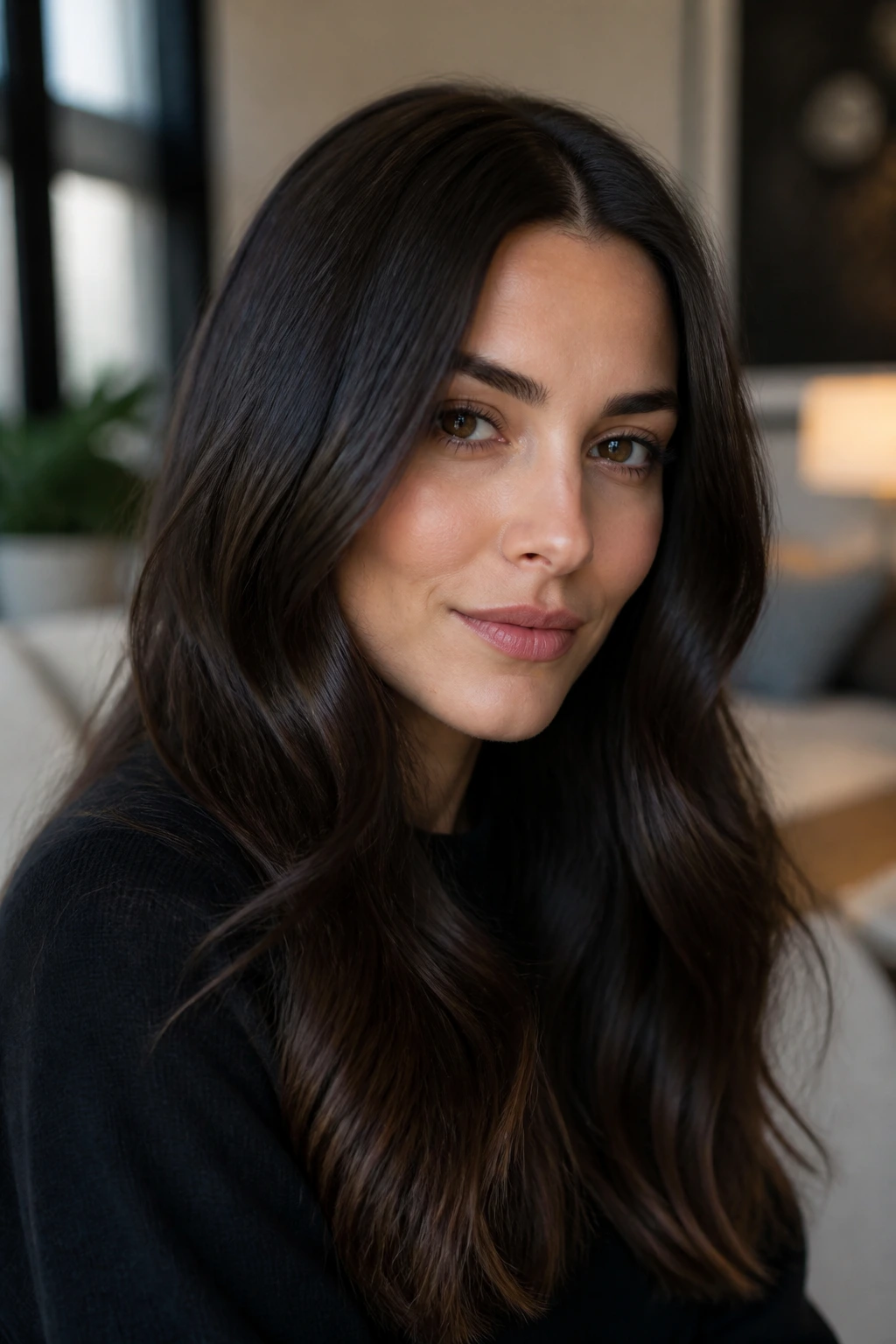
Winter light is flatter, and flat light is rude to hair color. It shows every brassy edge, every over-lightened section, and every end that has been through too many hot tools. That’s why so many winter hair color ideas lean a little richer, a little smokier, or a little more rooted than the bright shades people wear in warmer weather.
Depth doesn’t mean dark, though. It can mean a cooler gloss on brown hair, a beige tone instead of a gold one, or a shadow root that keeps highlights from feeling disconnected from the scalp. The best shades handle indoor light, outside light, and the weird in-between moments when you catch yourself in a mirror near the coat rack. That’s the real test.
I also think winter gives permission for cleaner contrast. A lowlight that looked too strong in summer can look perfect next to a black sweater. A copper that seemed loud in August can feel polished when the rest of the palette has gone muted. The season changes the frame around the hair, and the frame matters.
Essential Tools for Color That Behaves
-
Color-safe shampoo: Keeps fresh tone from washing out too fast, especially on red, copper, and blonde shades.
-
Sulfate-free conditioner: Helps the cuticle stay smoother, which matters when winter air is dry and static-prone.
-
Purple or blue shampoo: Purple helps blonde stay beige instead of yellow; blue is better for brunette brass that leans orange.
-
Tint brush and bowl: Handy for root touch-ups, gloss applications, or applying a color-depositing mask evenly.
-
Wide-tooth comb: Better than a brush for distributing conditioner or gloss through wet hair without yanking.
-
Heat protectant spray: Non-negotiable if you use a flat iron or blow dryer. Keep it in the 300–375°F zone when possible.
-
Microfiber towel or old cotton T-shirt: Cuts down friction, which matters more once the hair is color-treated and a little drier.
-
Clips for sectioning: Makes highlights, glossing, and root smudging far less messy.
-
Bond-building treatment: Useful after lightening or frequent heat styling; it helps the hair feel less fragile.
-
Clear or tinted gloss: A good gloss can revive brunettes, blondes, and reds without another full color service.
How to Choose the Shade That Won’t Fight Your Skin or Your Schedule
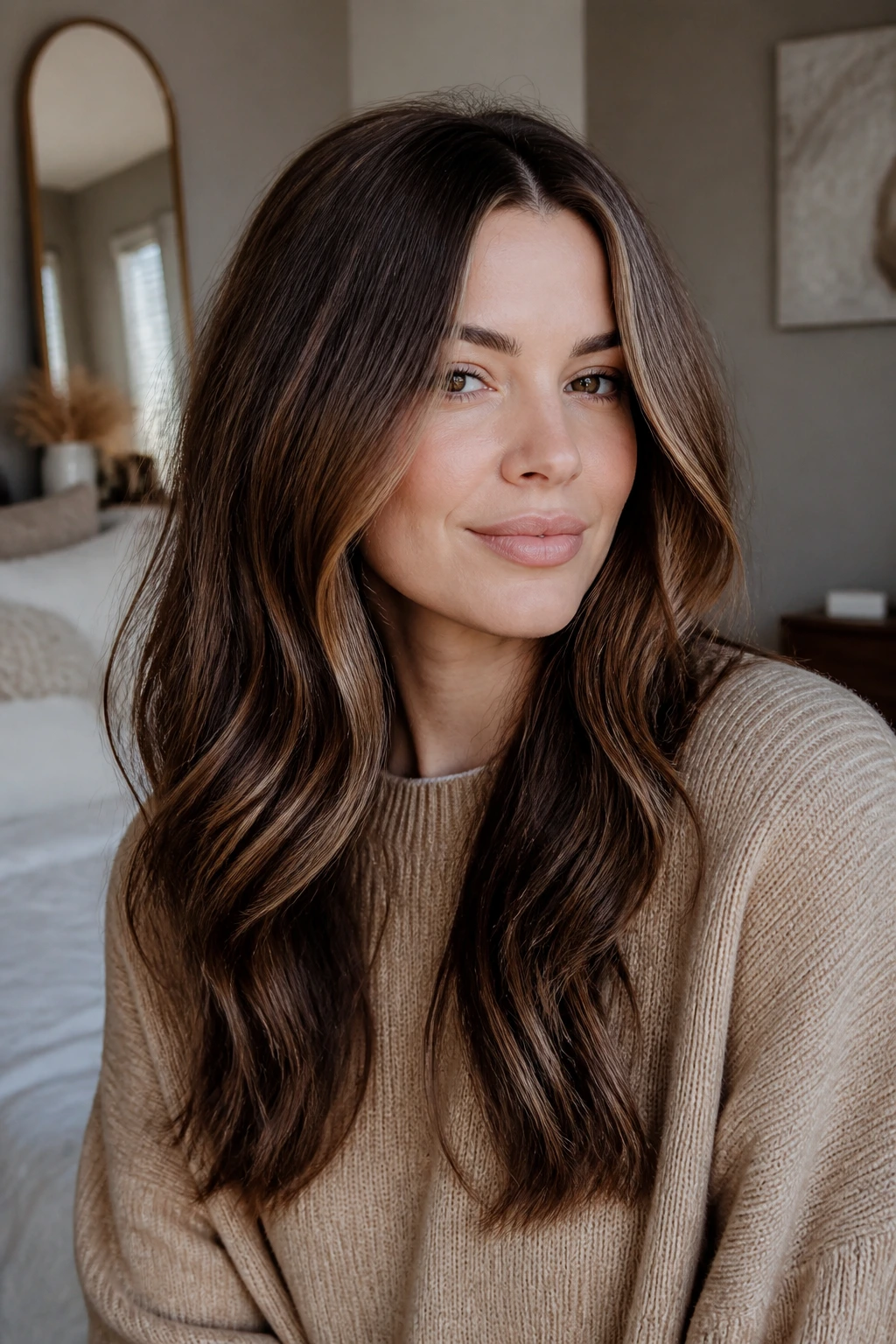
The smartest winter color choice starts with your base level, not your favorite photo. If your hair is a level 4 brunette, jumping to icy blonde in one round is a fast way to get dryness and a high-maintenance calendar. If your hair is already light, on the other hand, a smoke-toned blonde or beige gloss may be all you need to make the whole thing feel seasonal.
Skin tone matters too, but not in a rigid, one-rule-fits-all way. Cool skin often looks good with mushroom brunette, pearl ash brown, black cherry, and blue-black. Warm or olive skin can handle cinnamon copper, auburn smudge, bronze balayage, and honey bronde better when the tone is kept controlled. Neutral skin gets the easiest ride of all; it can usually carry both sides if the shade isn’t too extreme.
Maintenance is the part people like to ignore. Don’t. Copper and red tones fade fast. Platinum and icy blondes ask for toner, purple shampoo, and patience. Dark brunettes with gloss tend to be the easiest to live with, which is why they show up every winter: they age gracefully between appointments.
If you are unsure, ask for a demi-permanent gloss or partial placement first. That gives you a softer landing. Hair grows. Toner fades. A smarter first move saves a lot of drama later.
How to Wear These Shades So They Read Clean in Real Life
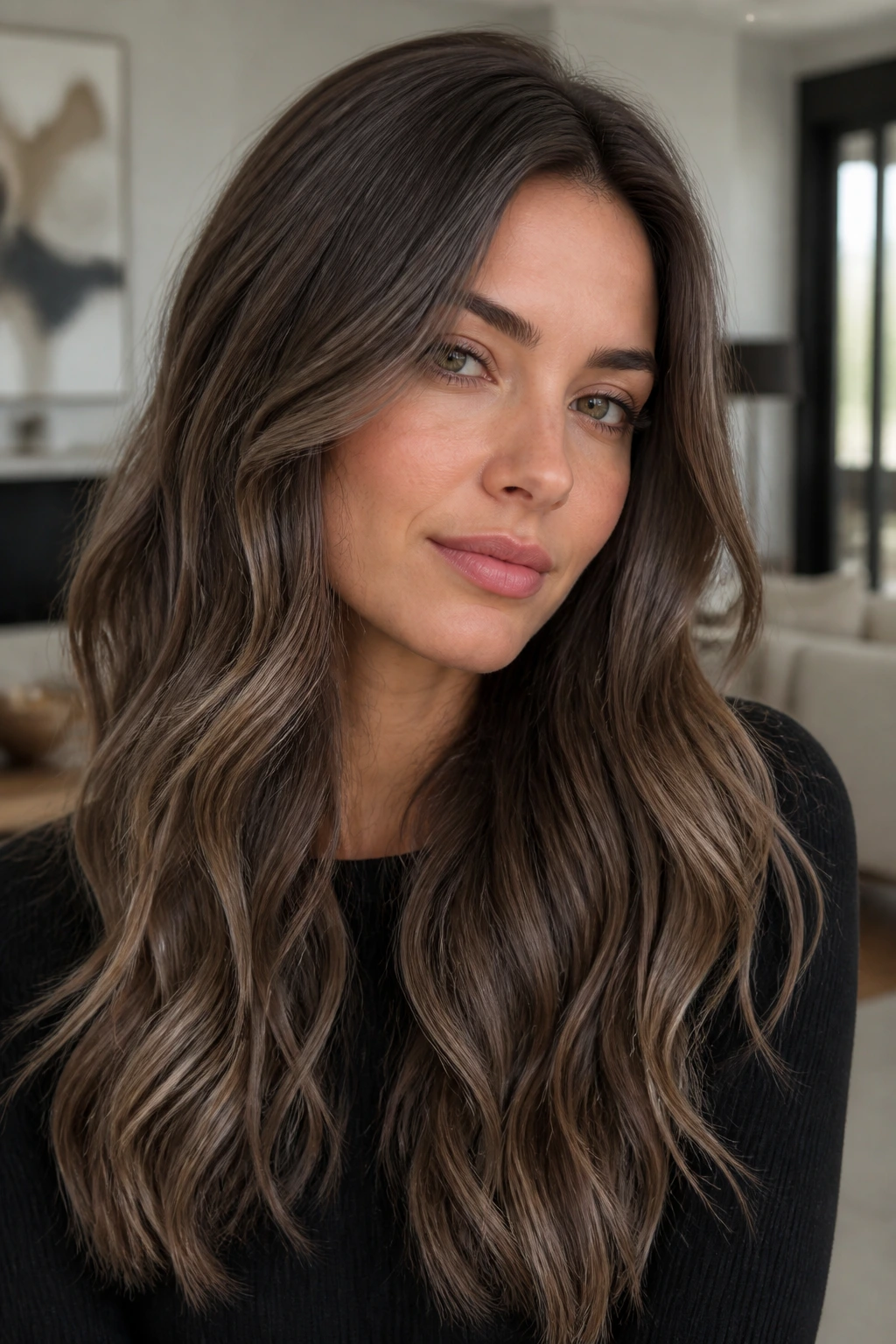
Presentation: Keep the finish aligned with the color. Sleek blowouts make black, espresso, graphite, and blue-black look sharper, while soft waves help balayage, ribbon highlights, and plum tones show their dimension. If the hair is frizzy, even the nicest shade can look fuzzy at the edges.
Pair It With: Think about the haircut before the color. Blunt bobs love velvet black, truffle brown, and platinum sand blonde. Long layers take well to mocha melt, smoky bronze balayage, and walnut with face-framing lights. Curtain bangs can soften darker shades that might otherwise feel severe.
Color Balance: Makeup and wardrobe matter more in winter than people admit. A deep red lip can make black cherry or cranberry cola feel intentional. Camel, cream, charcoal, and jewel tones usually flatter rich browns and smoky blondes better than washed-out pastels.
Maintenance Load: Match the shade to your patience level. If you want low fuss, go for espresso, cocoa gloss, truffle brown, or walnut. If you like the process and don’t mind touch-ups, platinum sand, copper penny, and icy beige blonde will give you more visible payoff.
Additional Tips and Tone Boosters
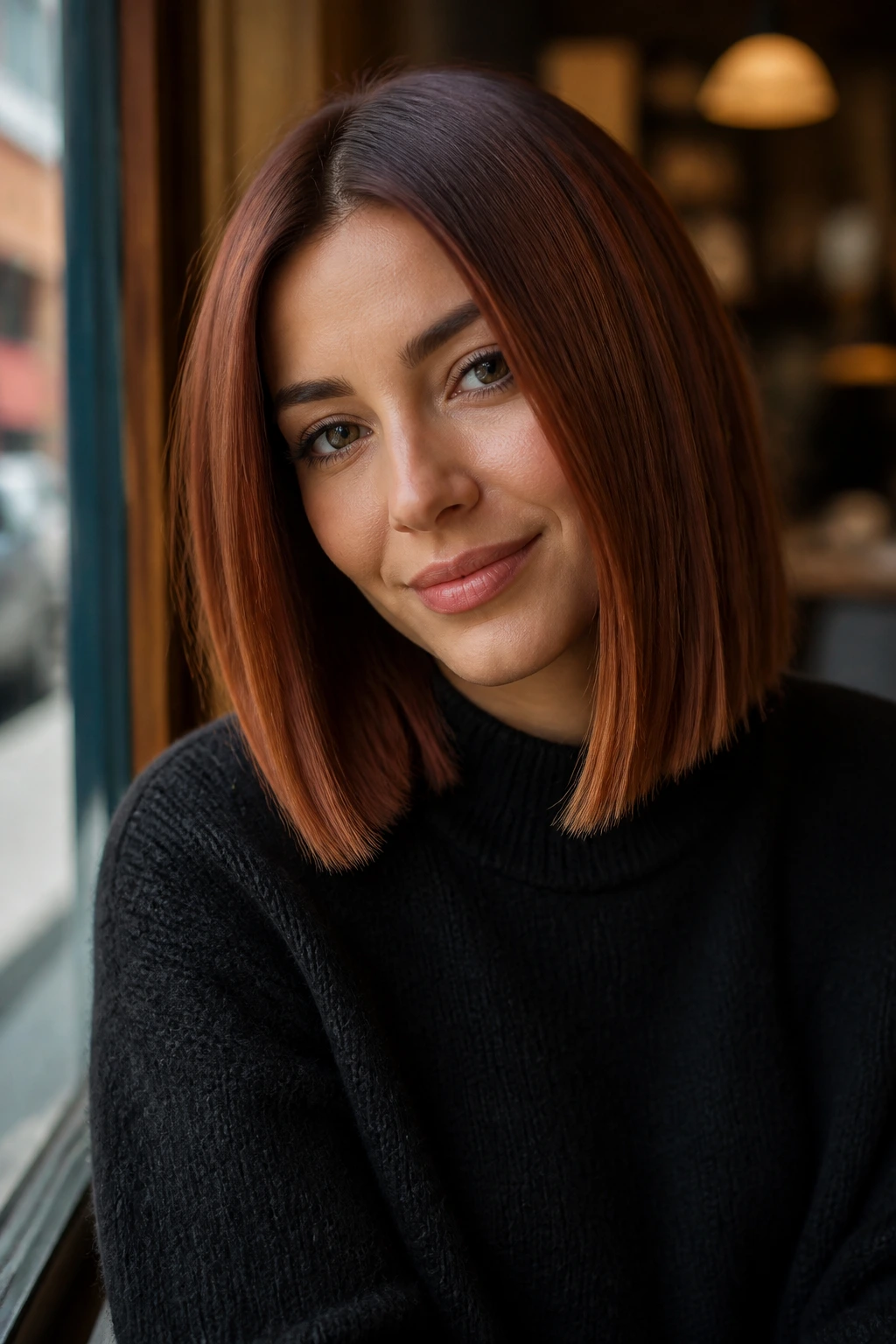
Gloss Layer: A clear or tinted gloss every 4 to 6 weeks can keep brunettes reflective and blondes from looking chalky. It’s the fastest way to make winter hair look freshly done without re-lightening anything.
Tone Control: If warmth keeps sneaking back into brown hair, ask for neutral or cool lowlights rather than piling on ash shampoo. Too much ash on porous hair can turn the ends muddy. Neutral often solves the problem more cleanly.
Face-Framing Lift: Brighten just the front pieces if you want a visible change with less damage. That one move can make a haircut feel new, especially on lobs and layered cuts.
Make-It-Yours: Warm skin can soften smoky brunettes with a touch of beige. Cool skin can warm up icy blondes with a sandier gloss. Reds can be muted with brown, or pushed brighter with copper, depending on how much attention you want the color to carry.
Heat Reality Check: Lightened hair should not be fried at 410°F because the iron you own has that setting. Keep it lower, use protectant every time, and let the hair cool before brushing it out. That boring little habit matters.
Common Mistakes That Make Winter Color Look Off
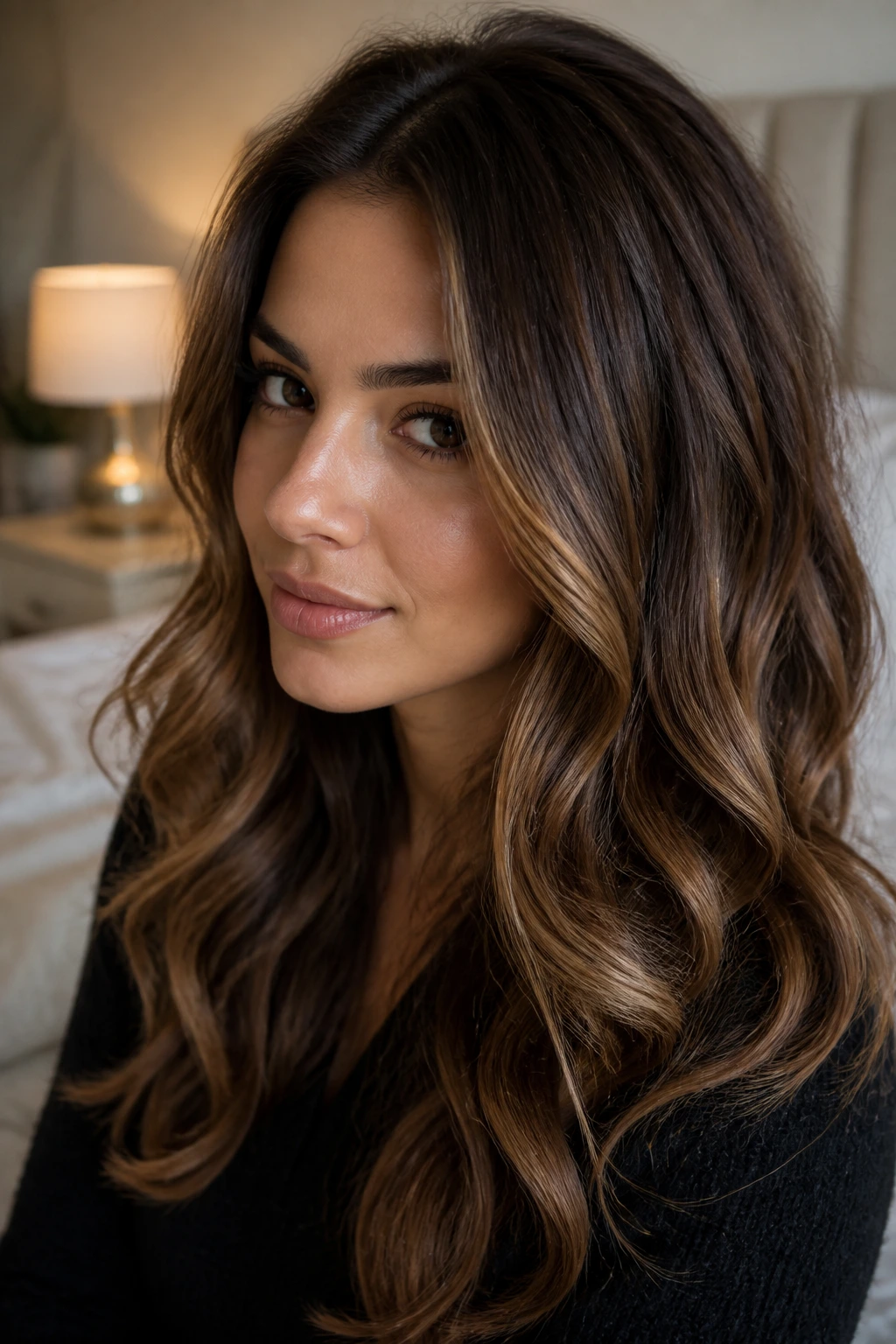
The most common error is going too ash too fast. On paper, ash sounds like the answer to brass. In the chair, it can pull gray-green on porous hair or leave blondes looking dusty. A better fix is often a neutral gloss first, then a cooler toner only if the hair still needs it.
Another mistake is chasing brightness without respecting the base. A copper that’s too light can look loud; a blonde that’s lifted too high can lose shape and snap at the ends. Winter hair color works best when the tone has somewhere to land. There needs to be a base under the sparkle.
Skipping maintenance is its own problem. Reds fade. Blonding services shift warm. Dark gloss loses shine. If you want a color to stay intentional for more than a week, build in the care: sulfate-free shampoo, cooler rinses, and the occasional gloss refresh.
People also forget that the haircut changes the color. A blunt bob will show a different story than long curls. If the shape is heavy, the color can look heavy too. If the cut is wispy and the color is dense, the ends can disappear. The two have to talk to each other.
And finally, don’t let a single reference photo run the show. Ask for the level, the tone, the placement, and the maintenance plan. A photo gives the vibe. The technical details keep the result from turning into guesswork.
Variations and Different Directions to Try
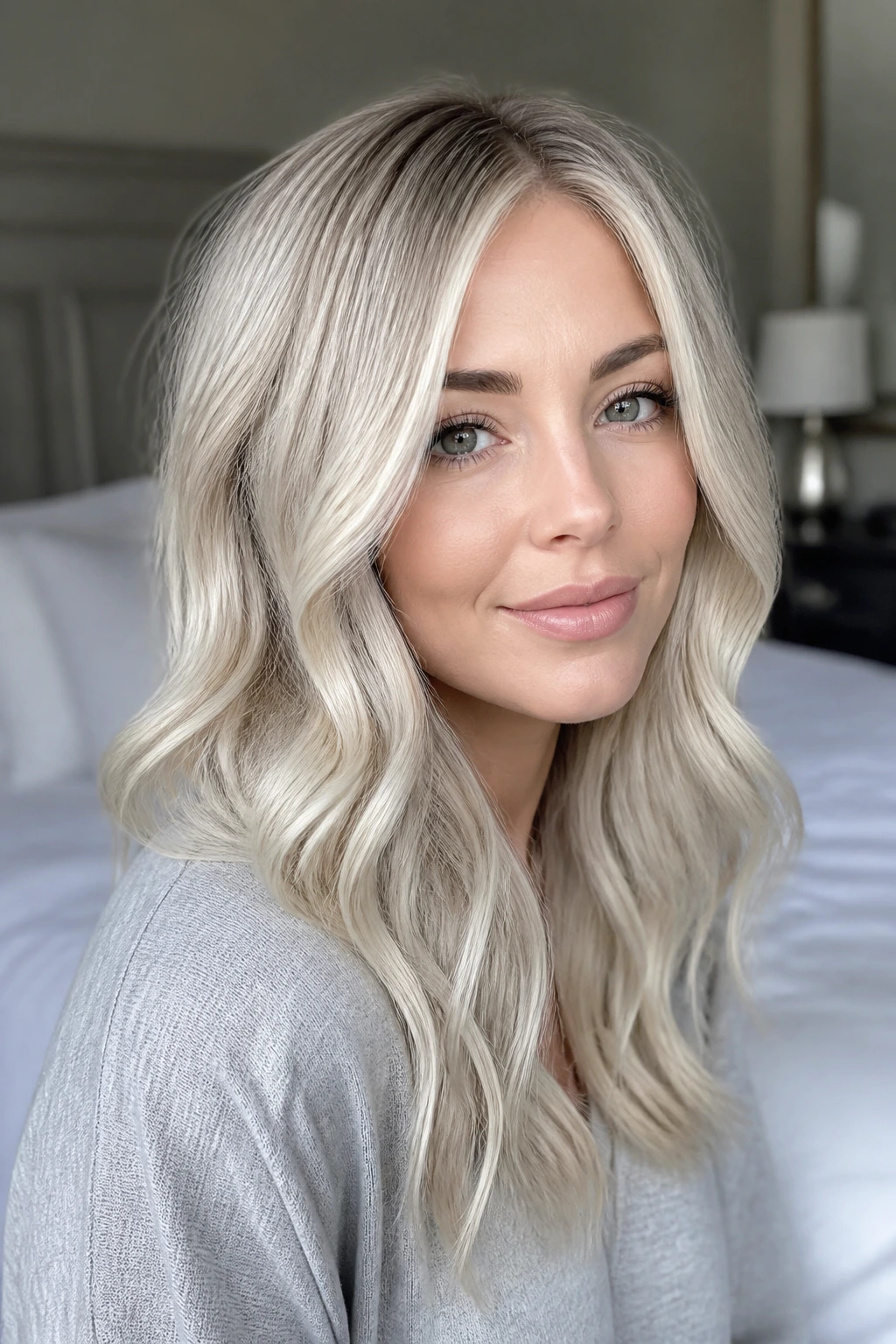
Low-Maintenance Shadow Root: Keep the root a shade or two deeper than the mids so grow-out stays soft. This works especially well with blonde, bronze, and walnut-based looks, because it lets you stretch appointments without the color getting harsh.
High-Contrast Money Piece: Brighten only the front pieces and leave the rest deeper. This is a smart option if you want winter brightness but don’t want the entire head lightened. It adds lift where people actually see it first.
Cool-Down Gloss: Add a smoky or neutral gloss to any brunette or blonde shade. This can take bronze into smoky bronze, honey into beige honey, and chestnut into a cleaner brown, which is useful when warmth starts drifting too far.
Warm Ember Shift: Pull the color toward cinnamon, auburn, copper, or rosewood. This suits people who want their hair to hold its own against gray coats and low light without going fully red.
Soft Gray Blend: If your grays are coming in and you want to blend instead of cover, work with graphite, smoked taupe, or pearl ash brown. The grow-out is less stark, and the overall finish stays believable.
Bold Dark Wash: Go for velvet black, midnight blue black, or black cherry if you want the most contrast with the least visual softness. These shades are strong, clean, and easiest to make look intentional when the styling is sleek.
How to Keep Winter Hair Color Looking Fresh Between Appointments
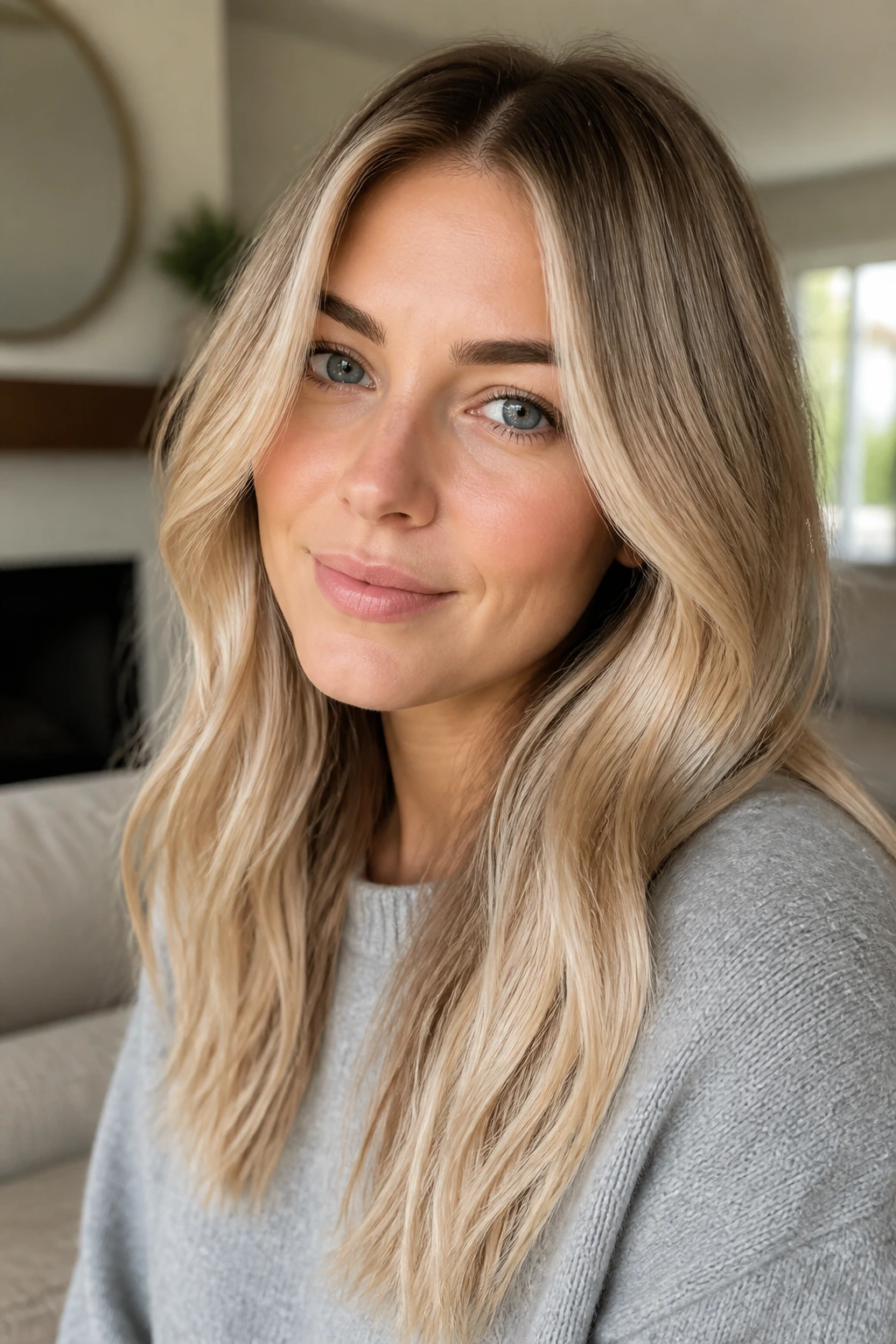
Brunettes usually need the least intervention, but they still benefit from a gloss every 6 to 8 weeks if the tone starts drifting red or flat. Blondes, especially icy beige and platinum sand, often need toner or a beige refresh every 4 to 6 weeks. Reds and coppers fade fastest; plan on a color-depositing conditioner or mask once a week and salon refreshes closer to the 3- to 5-week mark if you want the tone to stay loud.
Wash frequency matters more than most people think. If the color is red, copper, plum, or black cherry, aim for 2 to 3 washes a week when possible. For blondes, keep purple shampoo to once a week unless your colorist tells you otherwise; too much can make the hair look dull or violet-gray. Brunettes with gloss can usually handle a gentler schedule, but they still lose shine if they get scrubbed daily.
Heat styling is another silent culprit. Use protectant every time, and let curls or waves cool before touching them. That cooling time helps the shape set, and it reduces how much you have to go back over the same section. Less heat means less fade. Simple. Annoying. Effective.
Frequently Asked Questions About Winter Hair Color Ideas
Which winter hair color is lowest maintenance?
Deep espresso brown, truffle brown, cocoa gloss, and walnut with face-framing lights are all good bets. They grow out softly, hide a little warmth, and don’t demand constant toner appointments.
Do I need to go darker in winter?
No, but you usually want more depth or more control over tone. Beige blondes, smoky brunettes, and rooted highlights can all feel winter-appropriate without making you darker overall.
Can I get these shades on dark hair without bleach?
Many of the brunette, black cherry, plum, espresso, and blue-black options can work without bleaching. Lighter blondes, champagne veils, and platinum tones usually need lift first.
What’s the fastest way to stop brass from showing up?
Use the right shampoo for the problem — purple for yellow blonde, blue for orange brunette — and don’t overdo it. A good gloss is often cleaner than trying to scrub brass out with more shampoo.
How often should I tone winter blonde?
Most blondes benefit from a toner or gloss every 4 to 6 weeks, depending on porosity and how often you wash. If the ends start looking chalky, the tone may be too cool or the hair may be over-cleansed.
Will red shades fade too fast for everyday wear?
They do fade faster than brunettes, but a dark red-brown like mulled wine, cranberry cola, or auburn smudge can last well if you wash less often and use color-safe care. Bright copper needs the most upkeep.
What if my hair is already damaged?
Choose a gloss-based brunette, a shadow-rooted balayage, or a deeper shade with minimal lift. Heavy lightening on fragile hair is a rough trade. Color can wait; breakage is harder to undo.
Should I match my eyebrows to winter hair color?
Not exactly. You want the brows to support the new shade, not copy it. If the hair goes much darker or much cooler, a small brow adjustment can keep the face from looking disconnected.
A Shade That Holds Its Own
The winter shades that work best are the ones with a point of view. They have depth, smoke, gloss, or a clear tonal idea behind them, so they don’t disappear the second the sky turns gray. That’s true whether you’re leaning into espresso brown, mushroom brunette, plum velvet, or a controlled blonde that knows when to stop.
The smartest move is usually the one that respects your starting point. A good colorist can push warmth, coolness, brightness, or contrast — but only if the hair has room to do it. Pick the shade that fits your maintenance habits as much as your face. That part saves people from a lot of regret.
And if you’re stuck between two options, choose the one with better grow-out and better shine. Winter will test both.
