



A short afro can do more on Black hair than plenty of longer styles ever manage. The shape is clean, the texture is front and center, and the shrinkage is part of the design instead of something to fight. Short afro hairstyles for Black women work best when they respect that reality: a little taper at the nape, a sharp part, a moisturized coil, a soft pick-out. Not a lot of fuss. Just enough structure to make the curl pattern look deliberate.
That’s the part I never get tired of. On coily hair, a few inches can read as elegant, playful, sharp, or soft depending on how you cut the silhouette and what you do at the hairline. A tiny change in angle can take a style from “I threw something on” to “yes, this was thought through.” A centered part, a narrow frohawk ridge, a close fade, or a set of finger coils changes the whole mood.
The best short looks also age well over the course of a week. Some are strongest on day one, when the coils are tight and defined. Others get better after the first night because the shape settles, the parts soften, and the volume lifts just enough to look lived in. That’s the sweet spot with short natural hair: it should move with you, not sit there like a helmet.
Why These Short Afro Looks Keep Working
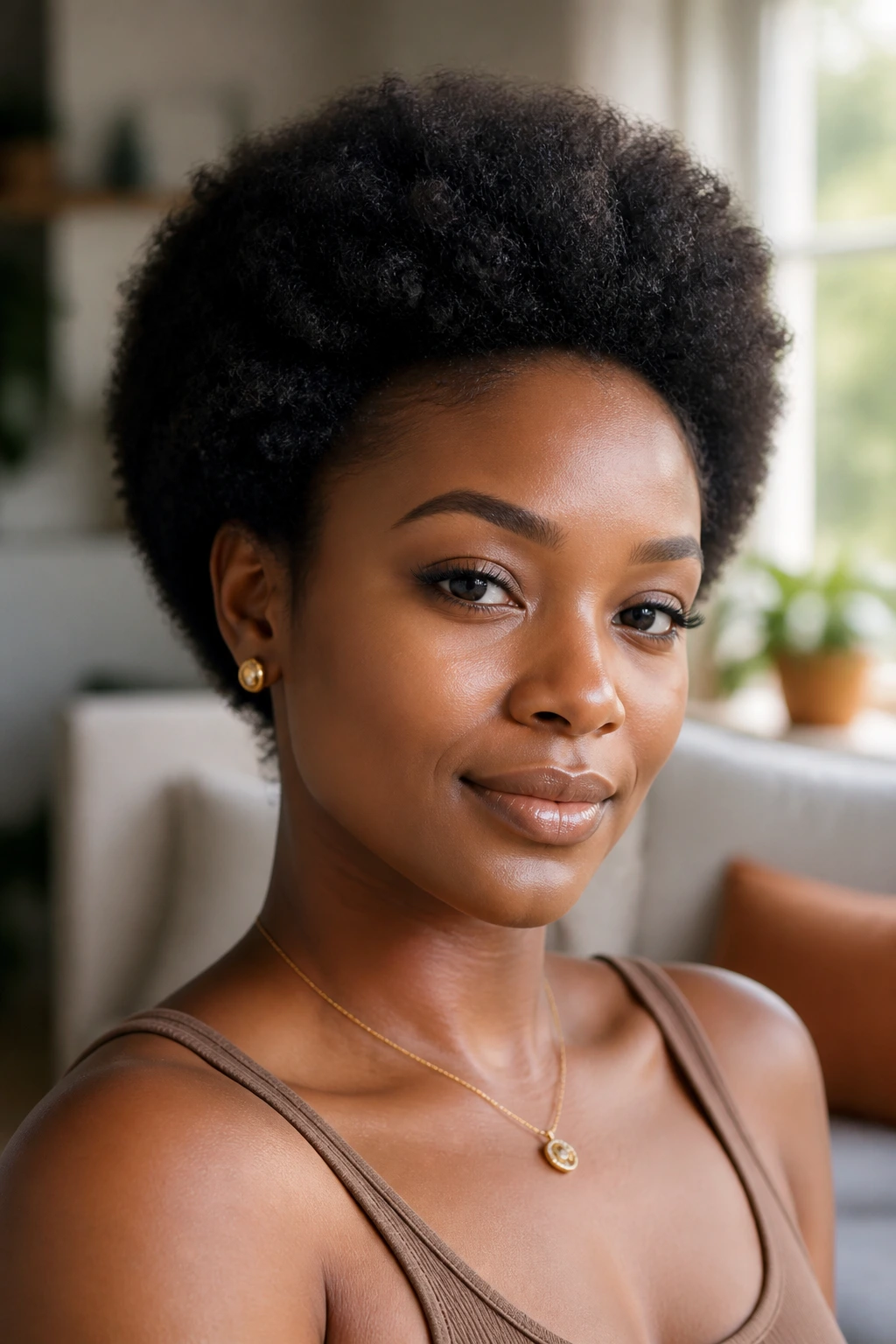
Shape does the heavy lifting: On short natural hair, a clean silhouette matters more than length. A tapered nape, a rounded crown, or a side part can make the style look intentional before you even touch the products.
Shrinkage becomes part of the style: When the hair is cut and styled with shrinkage in mind, the coils keep their bounce instead of collapsing into an awkward triangle. That’s the difference between “short” and “small.”
Morning routines stay sane: Most of these looks can be refreshed with water, leave-in, and a pick or brush in 2 to 10 minutes. That matters when you do not want a full wash day every other morning.
Texture gets to be the feature: Finger coils, twist-outs, sponge curls, and picked-out afros all put the curl pattern up front. You are not hiding the texture. You’re framing it.
The style can shift with your mood: A short afro can look crisp with hoops and a blazer, then soft and fluffy with a scarf or a deep side part. Same head of hair. Different read.
1. The Classic TWA with a Soft Side Part
A tiny TWA with a soft side part has a quiet kind of confidence that longer styles sometimes miss. The part breaks up the roundness just enough to give the shape direction, and that little bit of asymmetry keeps the cut from reading like it is still “growing out.” It isn’t.
Use a lightweight leave-in on damp hair, smooth a pea-sized amount of cream through the top, and trace the part with the tip of a rat-tail comb while the hair is still pliable. If the coils shrink up hard after drying, that’s fine; the part will still do its job. I like this look because it stays honest. You can see the texture, the scalp, the shape. Nothing is hiding.
A pair of medium hoops and a clean brow line is enough. You do not need to pile on more.
2. Defined Finger Coils All Over
Finger coils are the short-hair version of drawing every curl with a pen. They give the hair a tidy, springy look that holds up especially well when your strands are tightly coiled and dense. On short hair, they also dry faster, which is a blessing if you hate waiting around with wet roots.
What Makes Them So Useful
- Section the hair into small squares, about ½ inch or a little less, so each coil has room to form.
- Work on damp, not dripping, hair; too much water makes the product slide around.
- Use a light gel or curl custard, then twist each coil around your finger until it wraps on itself.
- Let the hair dry all the way before separating anything. Half-dry coils frizz fast.
I reach for this style when I want definition more than volume. It looks especially crisp on 4a and 4b textures, but tighter coils can wear it too. The trick is patience during the setting stage. Rush that part and the whole style puffs out before lunch.
3. A Tapered Cut with a Close Nape
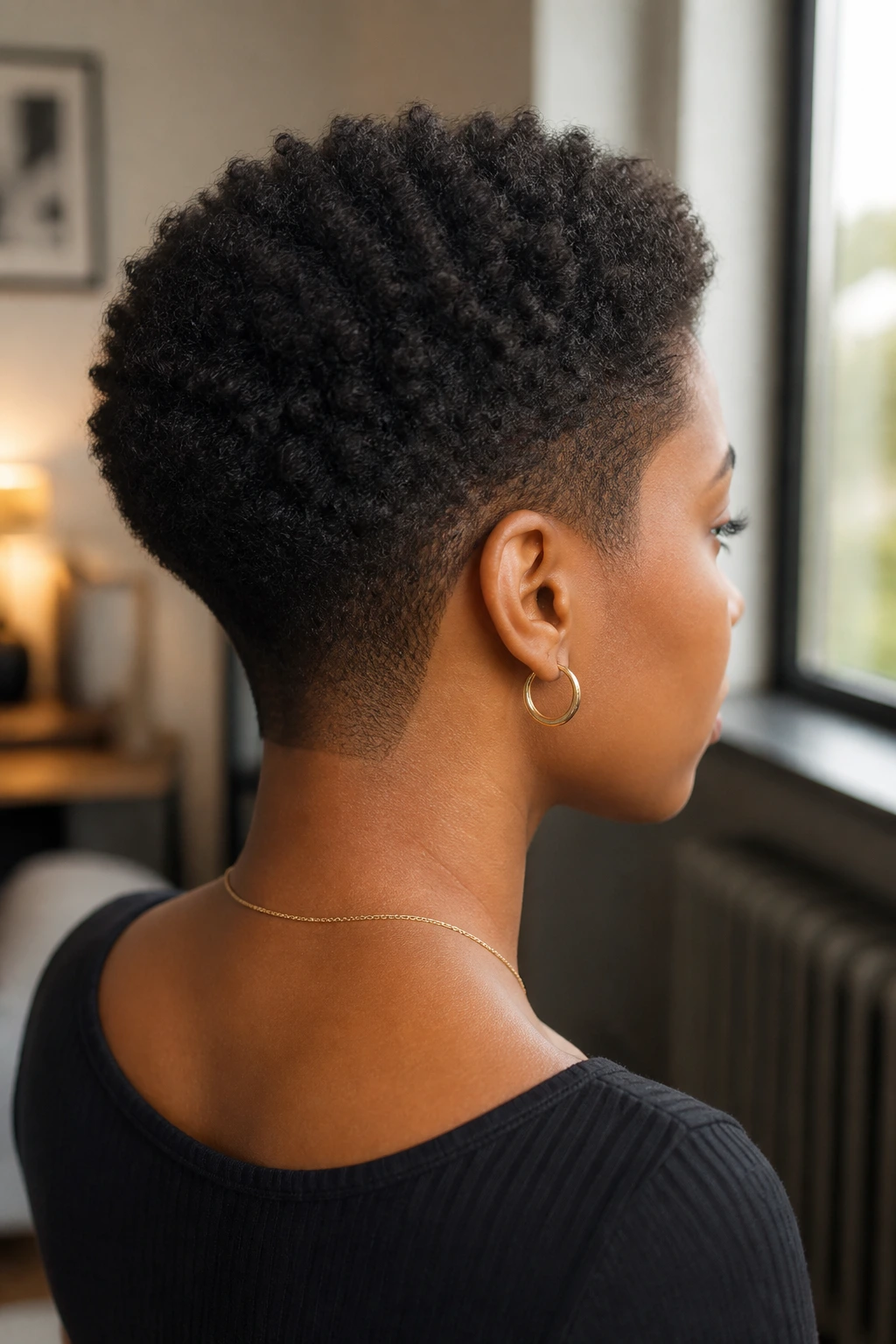
A tapered cut solves one of the oldest problems in short natural hair: the back starts looking bulky while the crown still wants to rise. By keeping the nape and sides tight, the shape stays clean from every angle. The top keeps the personality.
This style is for the woman who wants the hair to do something without demanding an hour in the mirror. The taper keeps the edges sharp, and the crown can be worn soft, sponge-defined, or brushed into a small halo. If your hair is dense, this is one of the smartest cuts you can ask for. It removes weight where the silhouette tends to flare out.
Ask your stylist for a gradual taper, not a harsh chop. A too-steep fade can make the top look disconnected. A good taper moves like a slope, not a cliff.
4. Mini Frohawk with Fluffy Sides
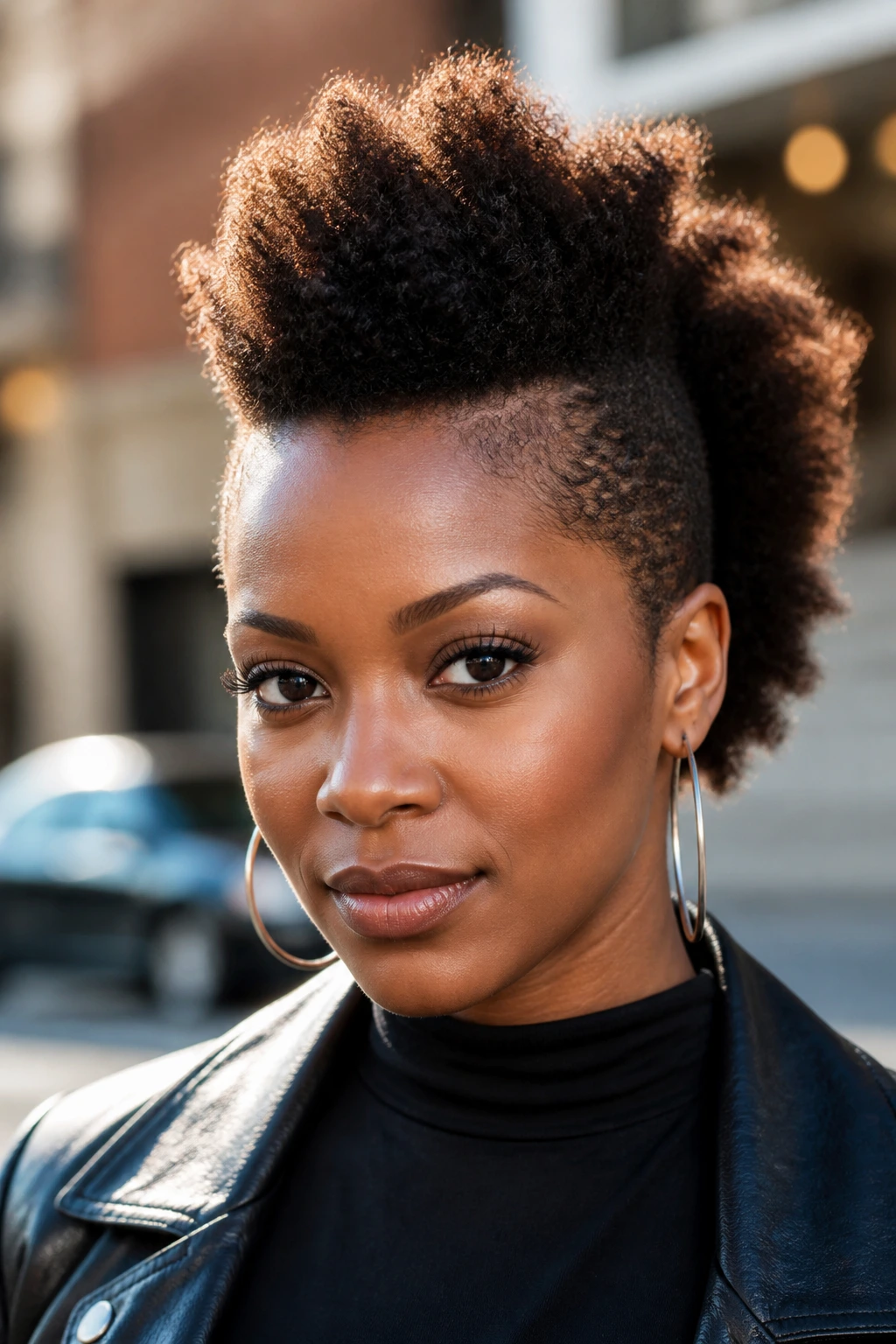
A mini frohawk gives you attitude without needing long hair to build the ridge. The sides are pushed close or smoothed down, while the center strip stays high and textured. That contrast does all the work.
Picture this on a day when you want the hair to feel a little louder than usual. You fluff the middle with a pick, smooth the sides with a little gel or edge control, and leave the crown high enough to create a line from forehead to neck. It has a little rock-and-roll energy, but it still reads neat if the sides are controlled.
This is one of those styles where the shape matters more than product. If the ridge is centered and the sides are even, the whole look lands. If the ridge drifts off to one side, it turns into accidental chaos.
5. Flat Twists at the Hairline with an Open Crown
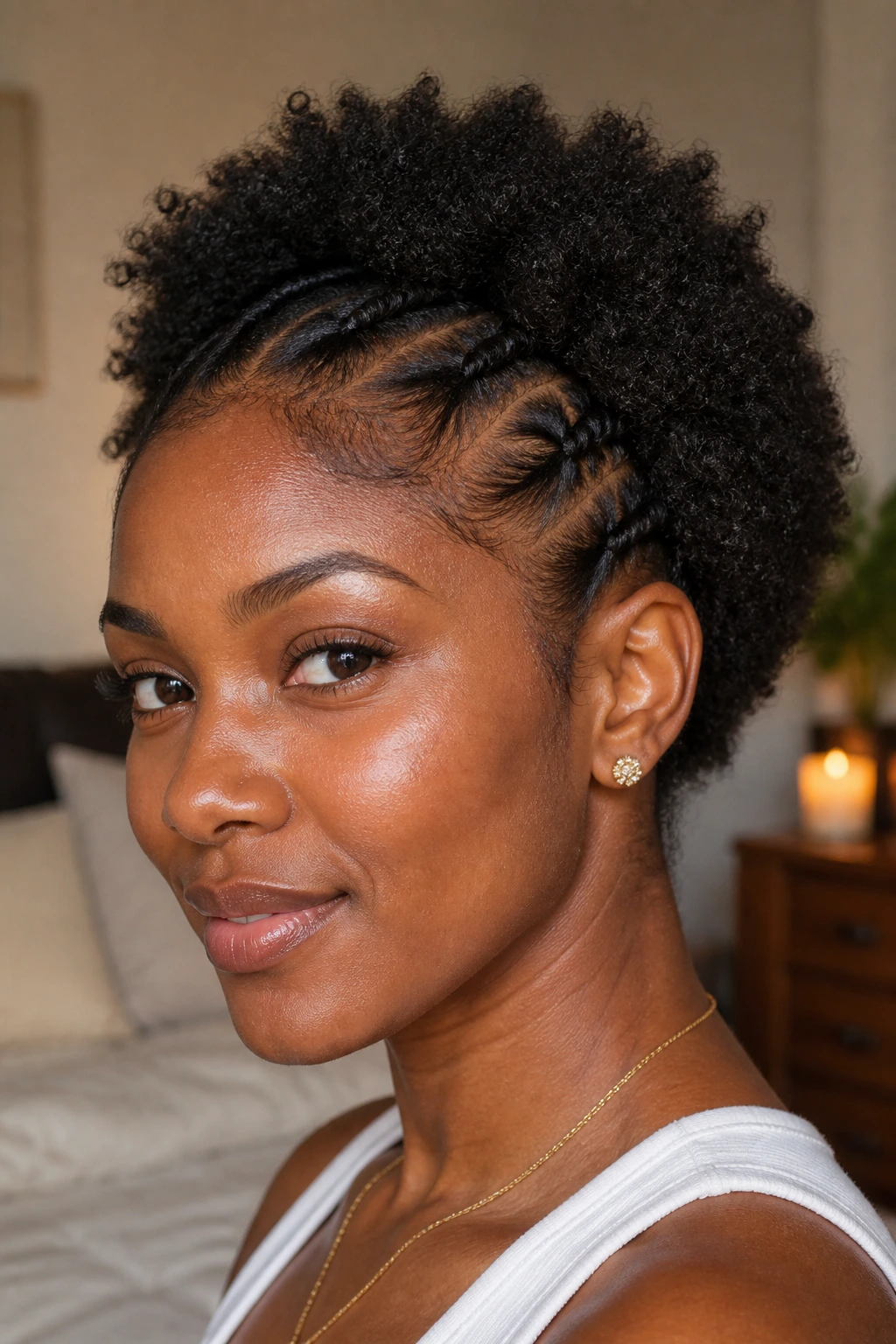
Flat twists around the front give you structure right where people look first. The crown stays open, soft, and textured, which keeps the style from feeling overworked. It’s a good compromise when you want a little braid-like detail without spending your whole evening sectioning hair.
Why It Works
The front twists act like a frame, and the loose back gives your coils room to breathe. On short hair, that contrast is the magic. A few twists at the perimeter can make even a simple wash-and-go read deliberate.
If your hairline is delicate, keep the twists loose and start with damp hair that has enough slip. Pulling too hard near the temples will show up fast. A small amount of mousse before twisting helps the front lie flat without turning crunchy.
6. Picked-Out Rounded Afro
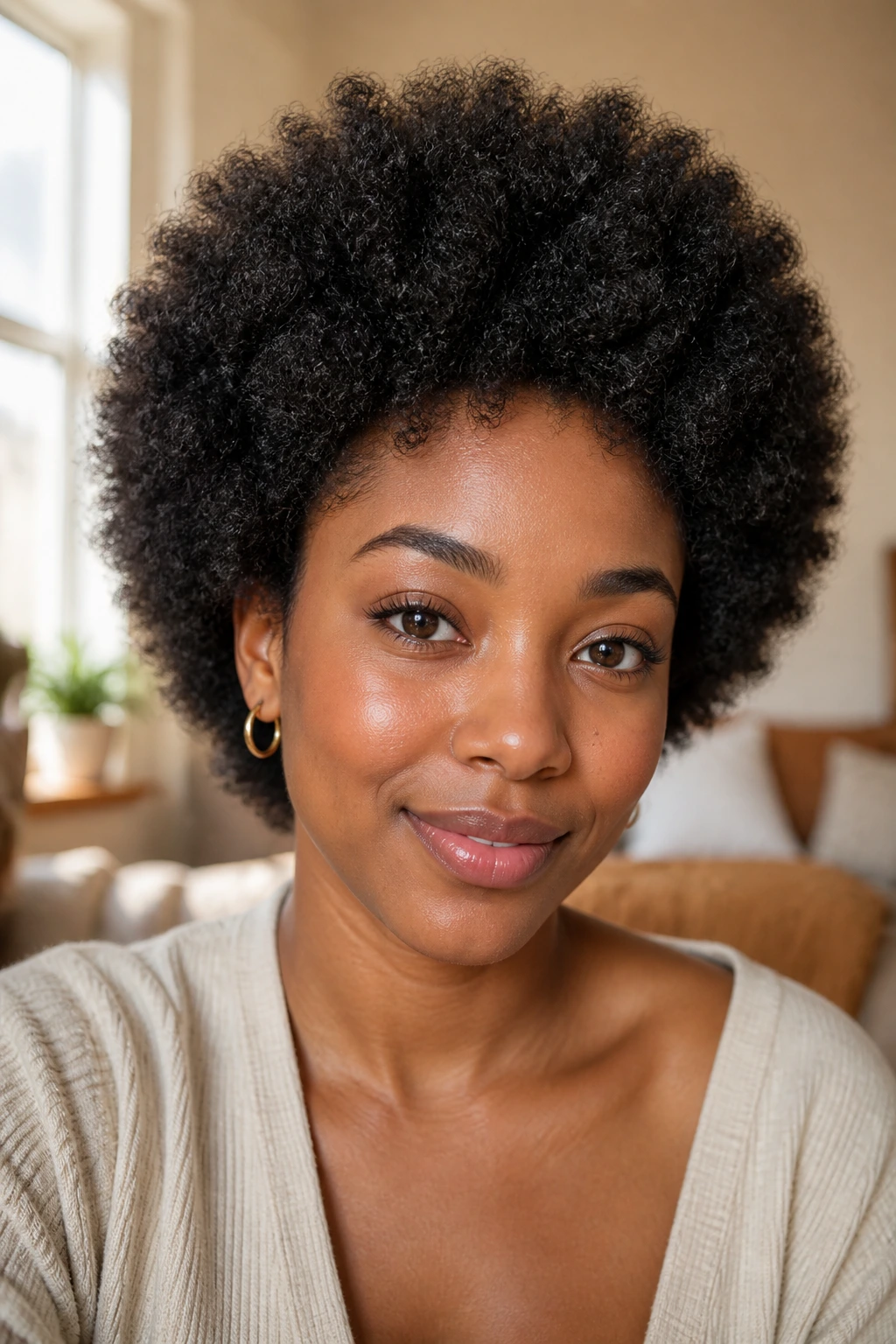
A picked-out rounded afro is the style I think most people underestimate. It sounds simple, and it is — until you see how much shape a good pick-out gives the hair. The goal is a soft, even halo with no flat spots hiding in the crown.
Start with a moisturized base. Not soaked. Not greasy. Then use an afro pick at the roots and lift in small sections, angling the pick upward instead of dragging it out. That keeps the curl pattern from getting stretched into fuzz. The shape should read as round, not wild.
This style is especially good when you want volume without twisting or braiding your hair the night before. It works on clean hair and second-day hair, which is saying something.
7. A Short Twist-Out Bob
A twist-out on short hair has a different feel than the longer version. The ends sit closer to the face, the layers stack more tightly, and the whole style gets a neat little bob-like outline even if the hair is not cut into a bob. That tight shape is part of the appeal.
If you set the hair in two-strand twists the night before, use small sections and keep the parting tidy. The next day, unravel slowly with a little oil on your fingers. The result should be defined at the roots and loose at the ends, not separated into frizzy pieces.
I like this style when I want texture but still want the hair to move. It has more softness than finger coils and more structure than a full pick-out.
8. The Side-Swept Short Afro
A side-swept afro works because the eye follows the sweep. That’s it. Simple idea, strong result. Instead of building volume straight up and out, you guide the front over just enough that one side feels fuller than the other.
This shape flatters short hair that tends to puff evenly all around. By shifting the front and crown to one side, you create a visible line across the forehead and cheek. It’s a neat trick, and it works especially well if your hair has medium density and a little natural stretch.
You can set it with a side part, a little styling foam, and a brush at the roots. Keep the finish soft. If the front gets too slick, the style loses its warmth.
9. Shaved Side Design with Natural Volume Up Top
A shaved side design is not for people who want to hide. It puts the haircut on display, and that’s the fun of it. One side stays close, maybe with a clean line or curved design, while the top remains soft and full.
The contrast between tight and fluffy is what makes this style interesting. You do not need long hair to make the top stand up visually; you need a strong difference in length. A curved part or geometric line near the temple gives the cut extra personality without needing color or accessories.
If you choose this route, keep the shaved section neat. Regrowth shows faster than people expect, and the design loses its crisp edge if it goes too long between cleanups.
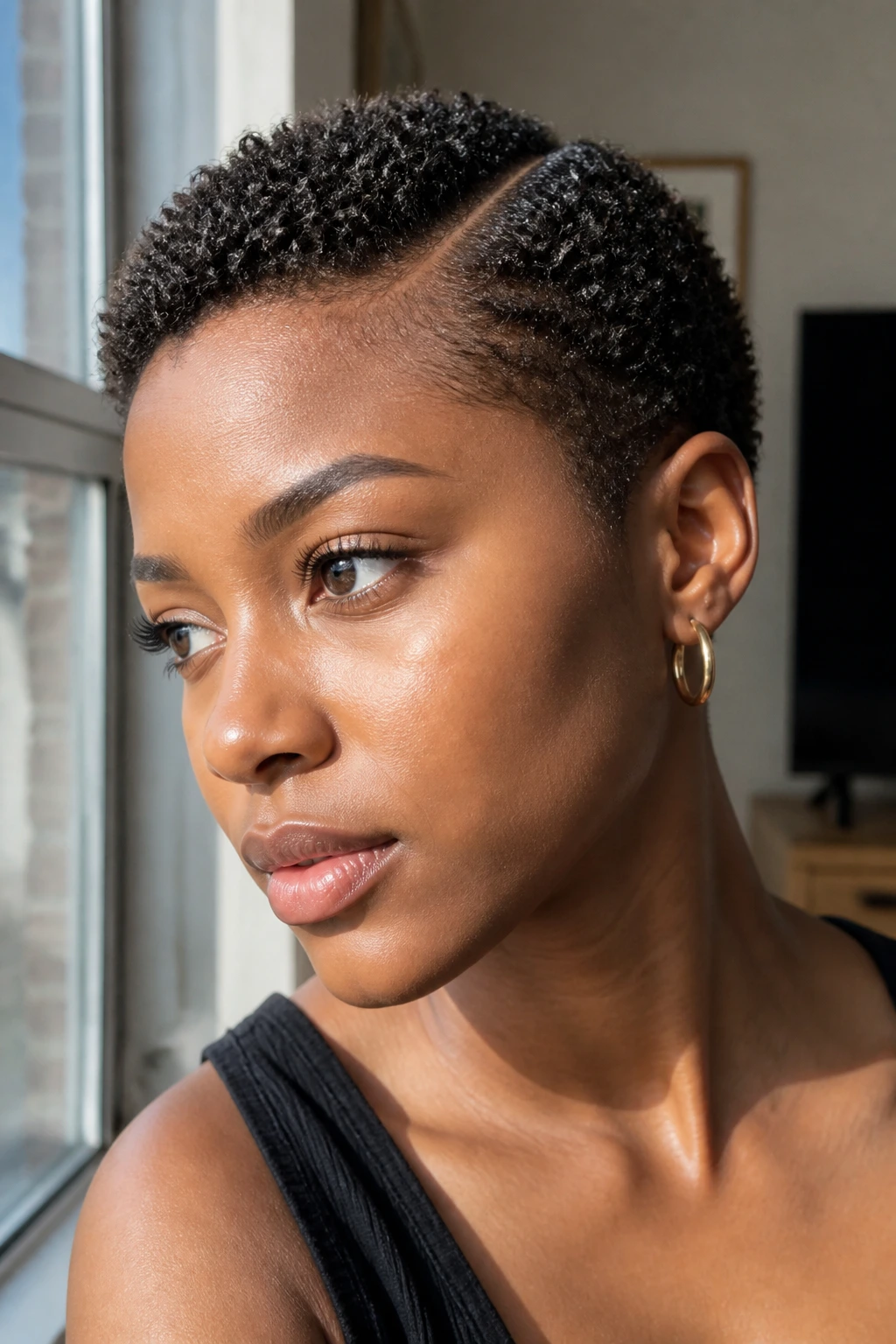
10. Coily Pixie Cut
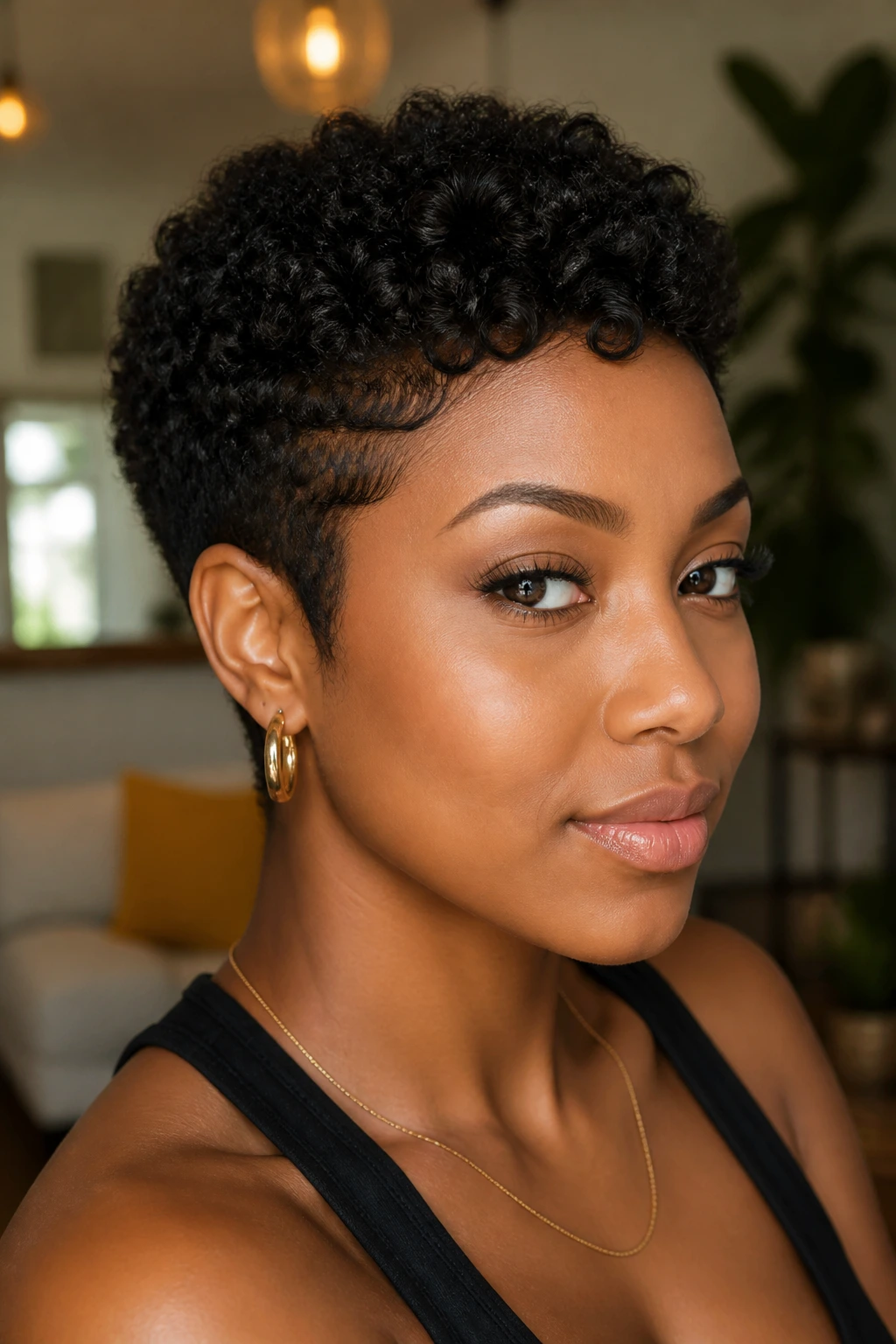
A coily pixie cut is one of the sharpest short natural looks out there, partly because it borrows from the structure of a pixie but keeps the texture intact. The hair sits close around the ears and nape, while the top carries the coil pattern. It feels tailored, not severe.
Best For a Clean, Open Face
This style shines when you want your forehead, brows, and cheekbones to have room. It gives the face more space than a rounded afro, which is useful if you like bold earrings or a strong lip color. There’s no extra bulk to compete with your features.
Ask for texture left on top rather than a blunt crop everywhere. If the top is cut too short and even, the style can flatten out fast. A little layering gives the coils room to spring instead of sitting in one dense block.
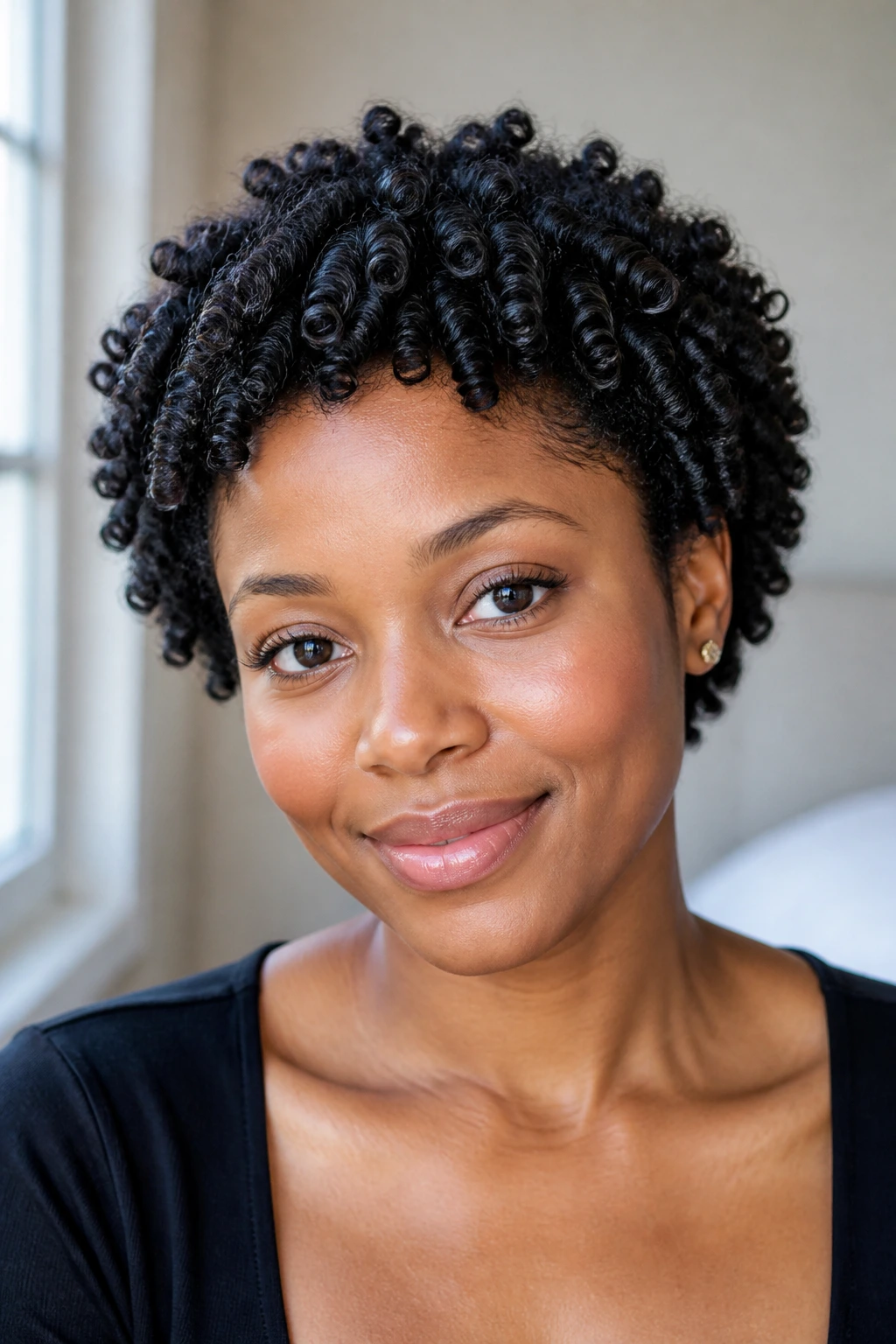
11. Bantu Knot-Out Texture on Short Hair
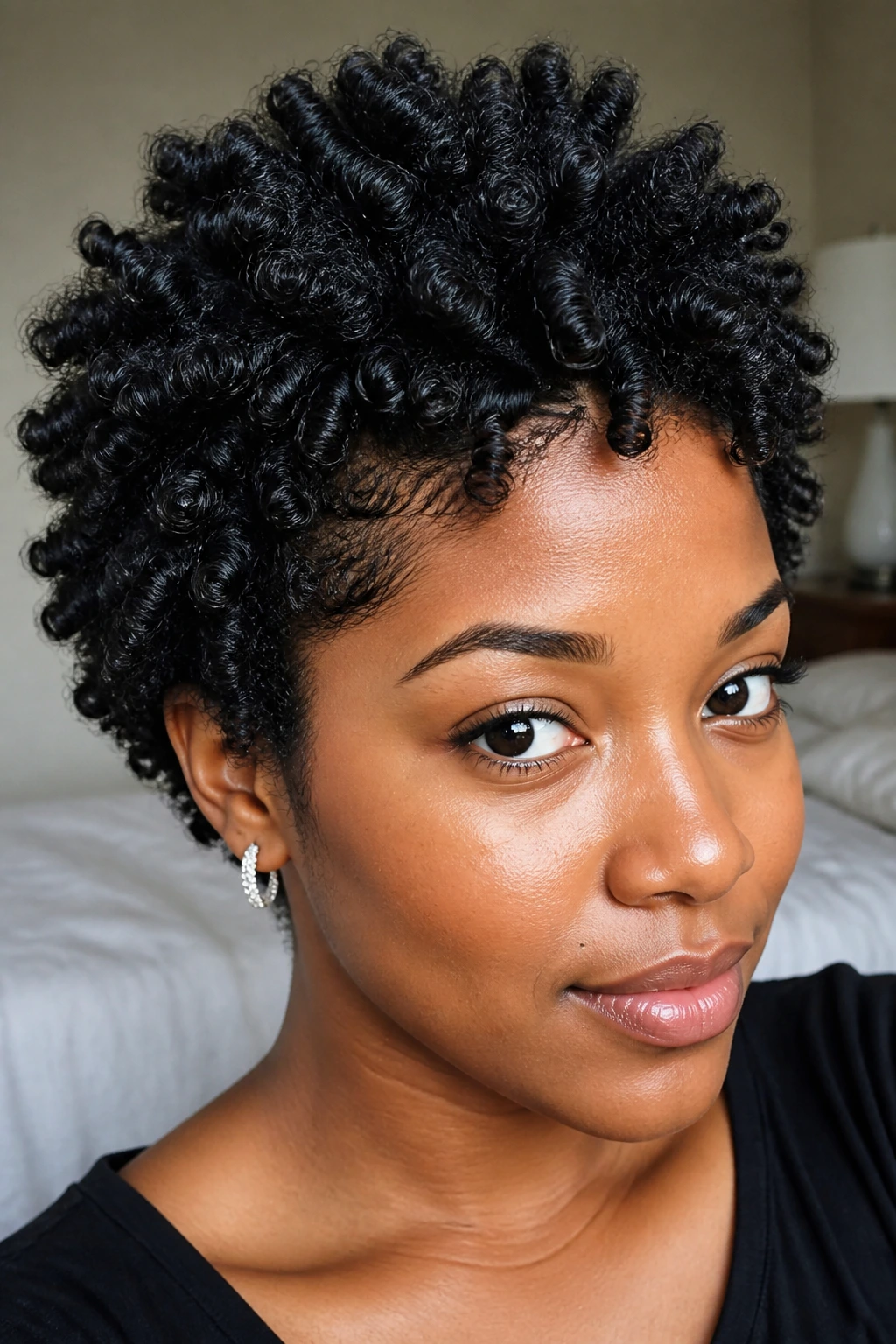
Bantu knots on short hair create a pattern that looks almost sculptural once you take them down. The curls are tighter than a twist-out and more defined than a wash-and-go, which gives the hair a lively, springy finish. On shorter lengths, the style dries faster and holds the pattern better.
- Set the knots on damp hair with a small amount of cream and a light gel.
- Keep the sections neat; sloppy parts show after the takedown.
- Let every knot dry fully before unraveling, or the curl pattern will sag.
- Separate with oiled fingers, not rough hands.
This style is a little more work on the front end, but it pays you back with shape. If you want a short afro that looks intentionally styled for a few days, this is one to keep in the rotation.
12. A Curved Part with Slicked Sides
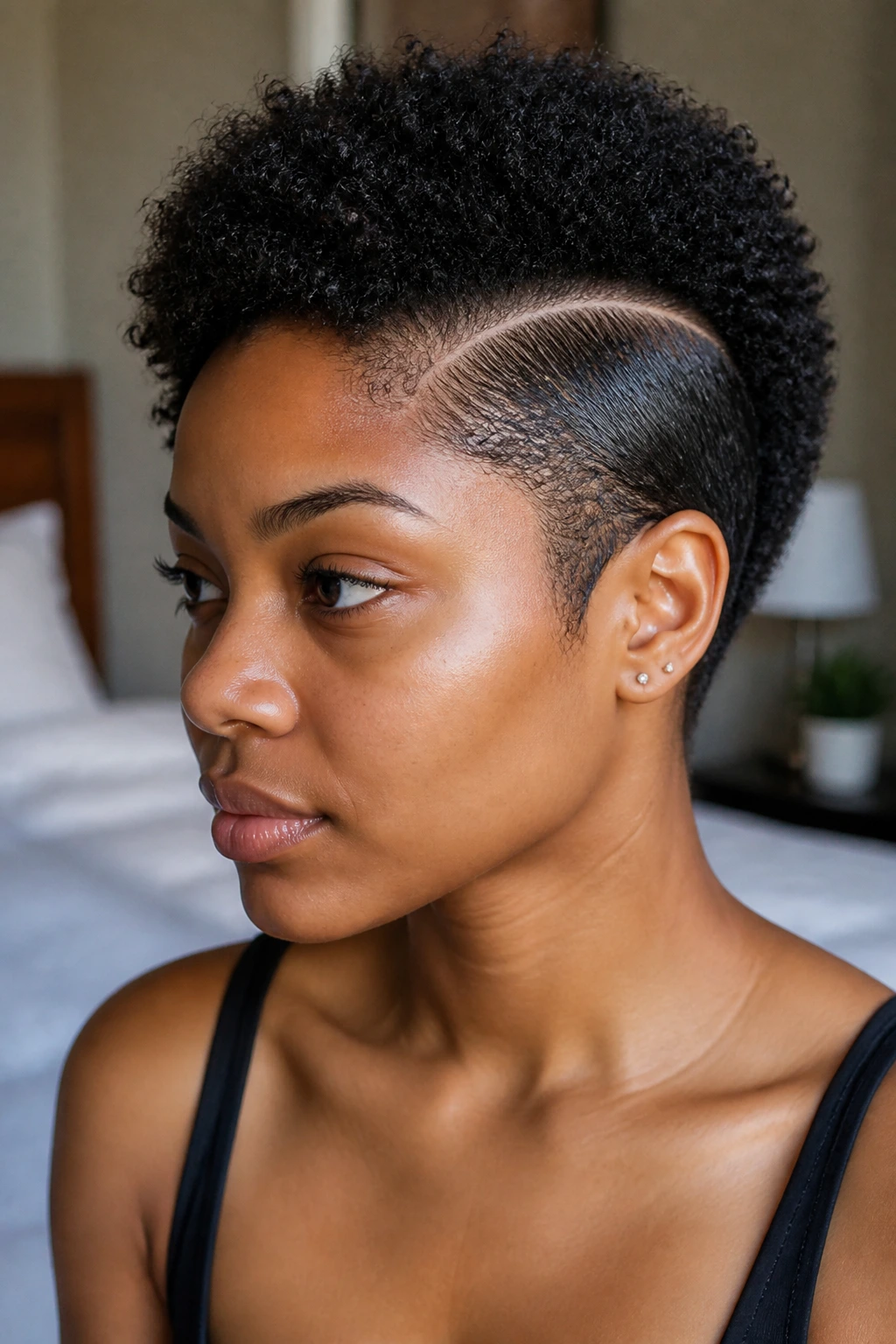
Why do curved parts look so good on short natural hair? Because they soften the geometry. A straight line can be clean, sure, but a curved part adds movement before the hair even starts to lift.
This style works especially well when the sides are brushed down with a little gel and the crown is left fluffy. The curve can arc from the temple toward the crown, which pulls the eye across the face instead of stopping it. That makes the whole style feel more fluid.
If your scalp gets irritated easily, avoid pressing the part too hard with a comb. A soft line is enough. You want the shape to be readable, not scraped into the hair.
13. Beaded Ends on a Short Afro
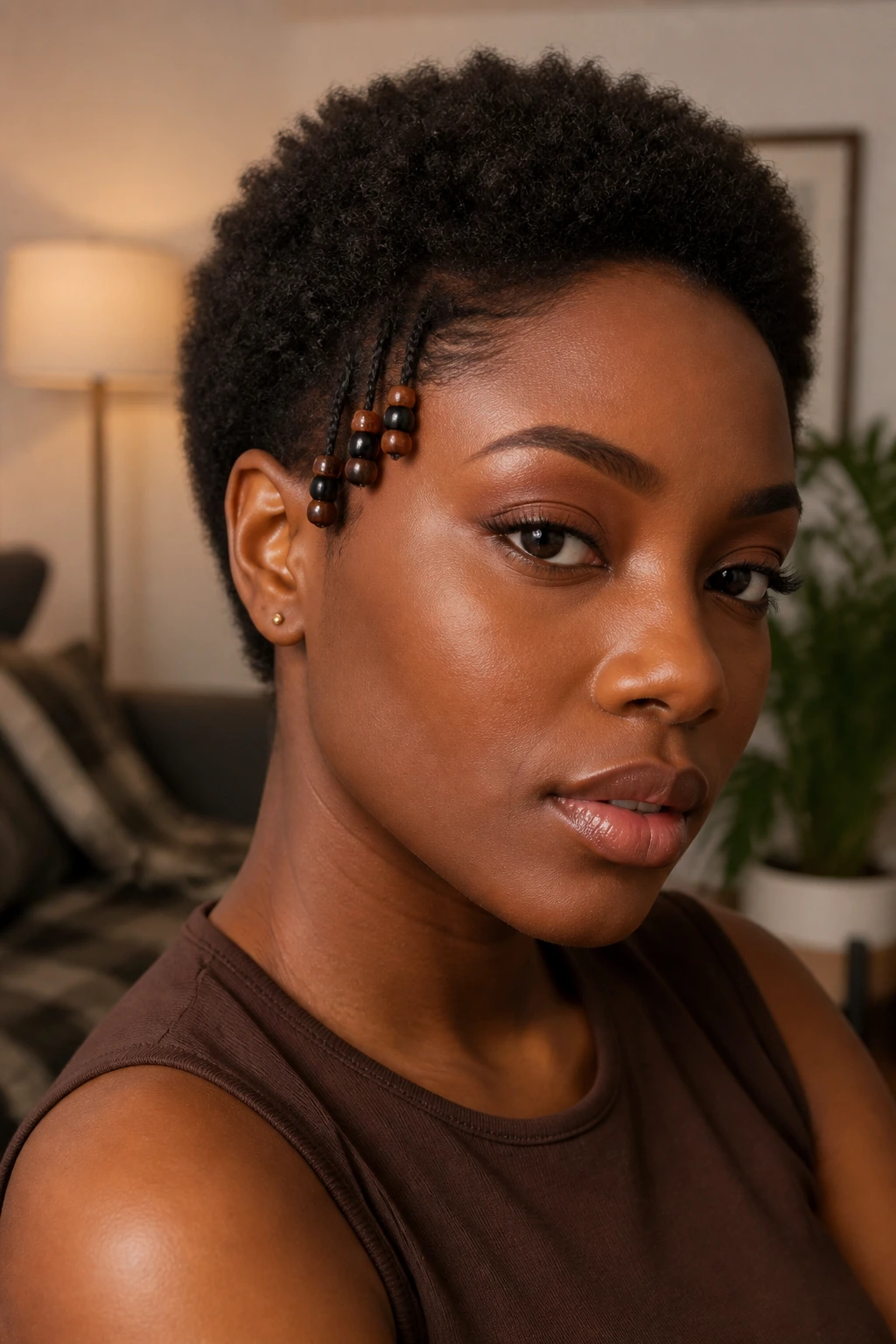
Beads on short natural hair can look playful without turning childish, if you keep the number small and place them with intention. A few beads at the front or on one side add a little sound and movement when you turn your head. Not much else needed.
This works best when the hair is in tiny braids, twists, or coily sections that are long enough to hold the beads without slipping. The point is accent, not overload. One row of beads near the temple often does more than ten scattered all over the head.
Keep the rest of the style simple. If the hair is already highly defined or heavily colored, a few beads are enough. Too many and the look gets noisy.
14. The Wash-and-Go Coil Crop
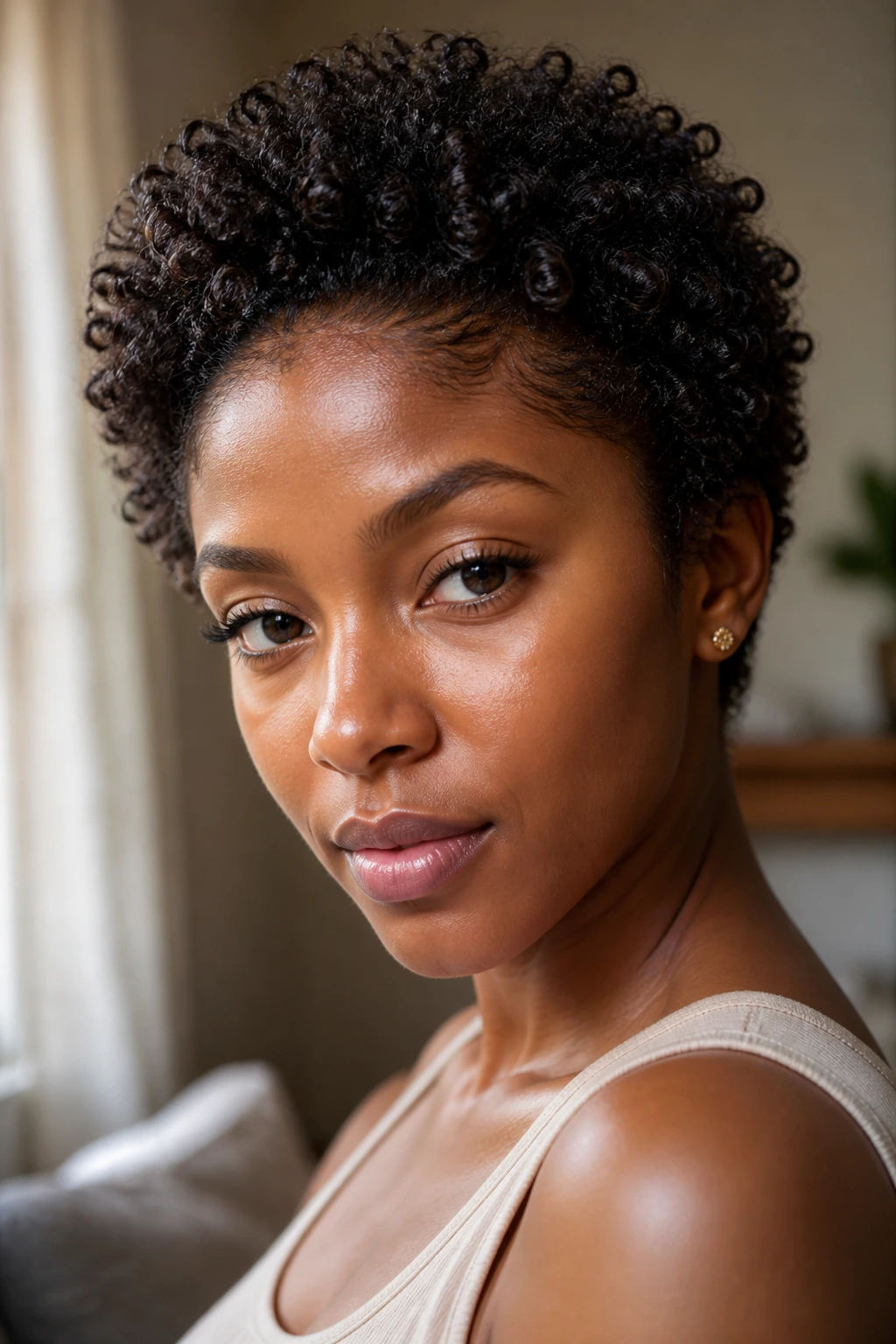
A good wash-and-go on short hair is one of the best reminders that natural texture does not need to be overmanaged. The coil crop starts with clean, hydrated hair and a light hold product, then dries into a soft cluster of curls that sit close to the head.
How to Make It Hold Up
Apply leave-in first, then a gel or foam with enough hold to keep the curls separated. Scrunch with your fingertips in small sections so the product reaches the roots. Let it dry untouched if you can; the more you poke it while wet, the more frizz you buy for later.
This style is at its best when the hair is cut to a shape, not a random length. The silhouette matters. A rounded cut gives the wash-and-go a clean edge, while a boxier cut can make the sides spread out more than you wanted.
15. An Asymmetrical Afro with Longer Front Pieces
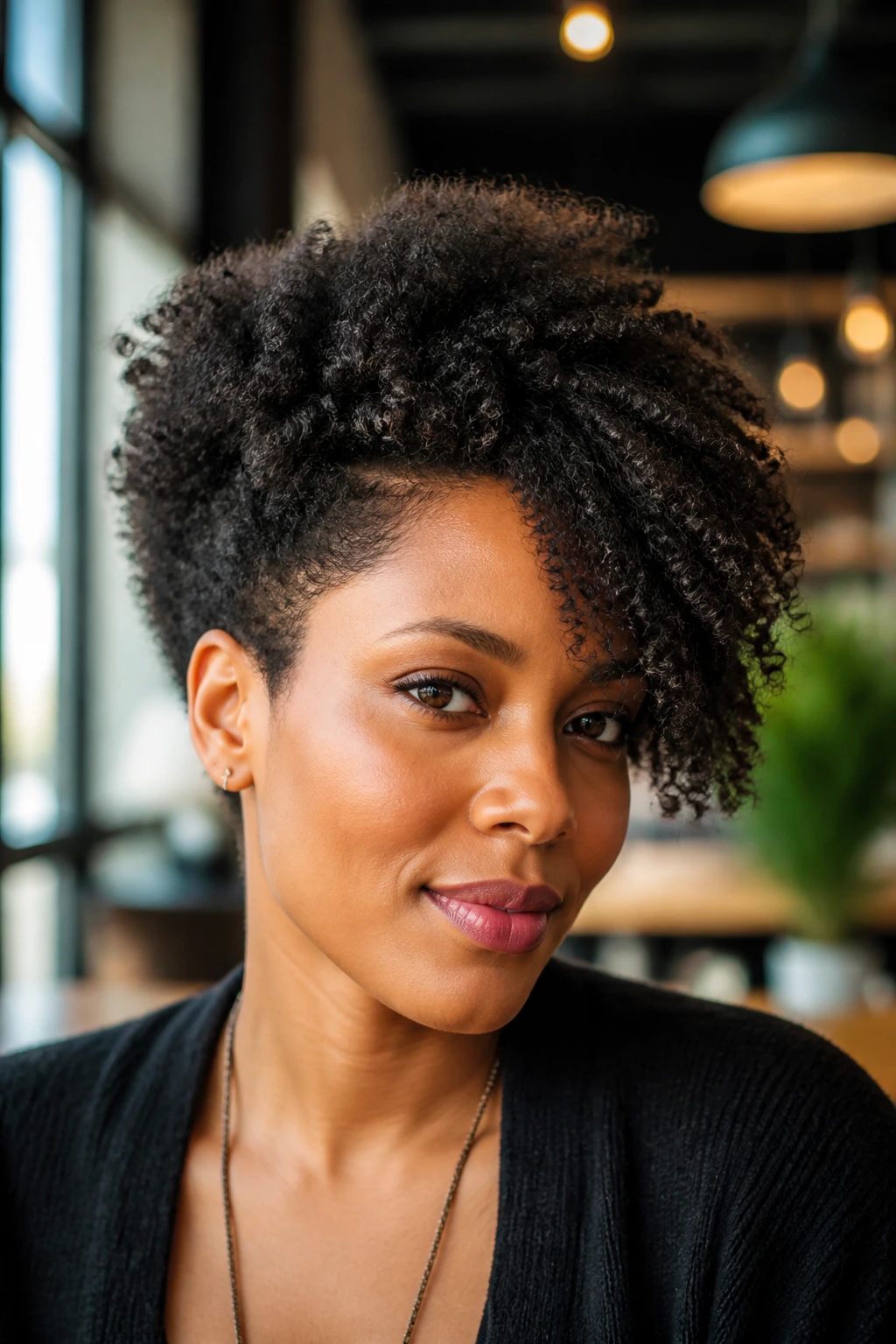
An asymmetrical afro gives you a little drama without asking for a full color change or a shaved side. One front section stays a touch longer, or one side is cut fuller than the other, and that imbalance gives the style movement. It’s subtle, but not invisible.
This look is especially good if you like your hair to frame one cheek more than the other. It can narrow a wider face, soften a strong jawline, or simply make a short cut feel less symmetrical and more personal. That difference is the whole point.
Keep the asymmetry intentional. If the cut is uneven by accident, people can tell. If it’s designed, they just notice the shape.
16. Flat-Twist Crown with Open Texture
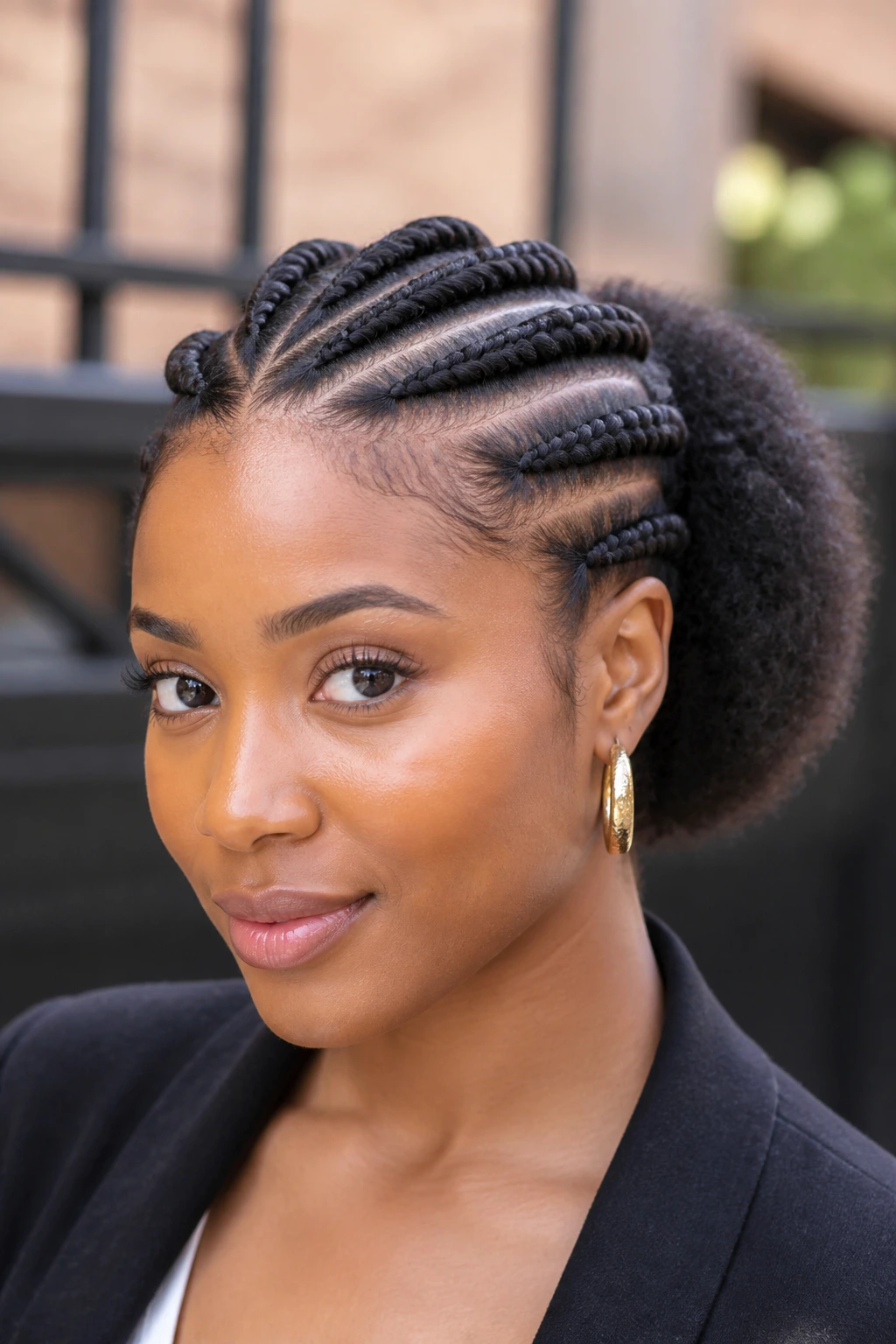
A flat-twist crown gives the top of the head a braided frame and leaves the middle or back free for texture. It’s a tidy style with a little depth, which makes it feel more complete than a simple twist on the side.
The crown twists work best when the sections are even and the product is light. Heavy cream will make the twists swell and blur. A small amount of mousse or leave-in is enough to keep them clean. The open texture below should still look soft, not stiff.
I like this for short hair that sits in that in-between zone where you want structure but do not want a full protective style. It buys you a few days of neatness without locking the whole head down.
17. A Short Puff with Tapered Sides
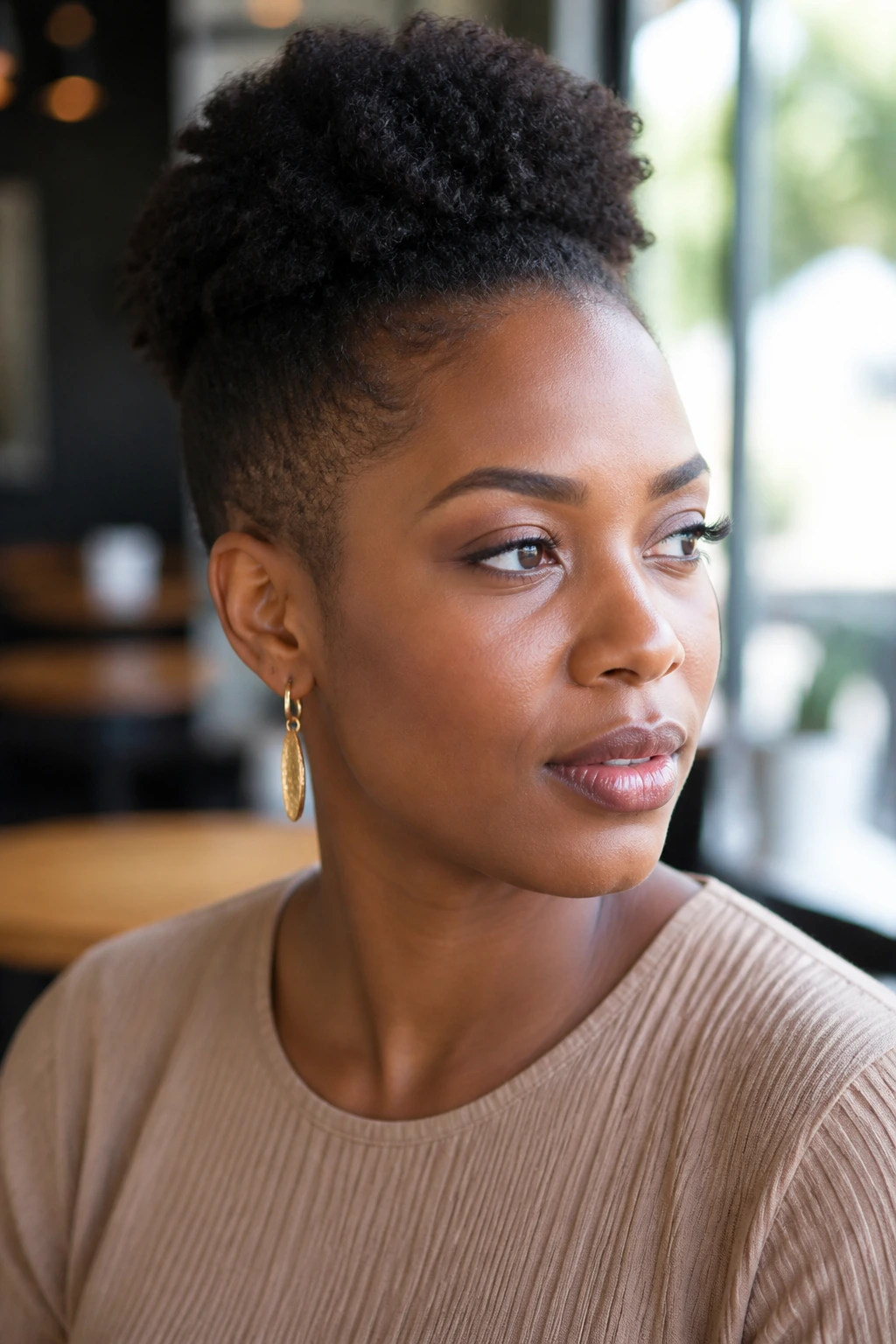
A short puff with tapered sides is one of those styles that looks effortless from a distance and thoughtful up close. The sides stay neat, sometimes even close-cropped, while the top is gathered or shaped into a small puff. The contrast gives the hair a lifted profile.
This is a smart option when you want volume near the crown but not around the temples and neck. It keeps the face open and lets the top carry the style. A satin scrunchie or snag-free band is better than a tight elastic; you want shape, not a dent.
If your hair is very dense, do not force the puff into a tiny space. Give the top room to spread a little. A squeezed puff looks tired fast.
18. Sponge-Defined Curl Crop
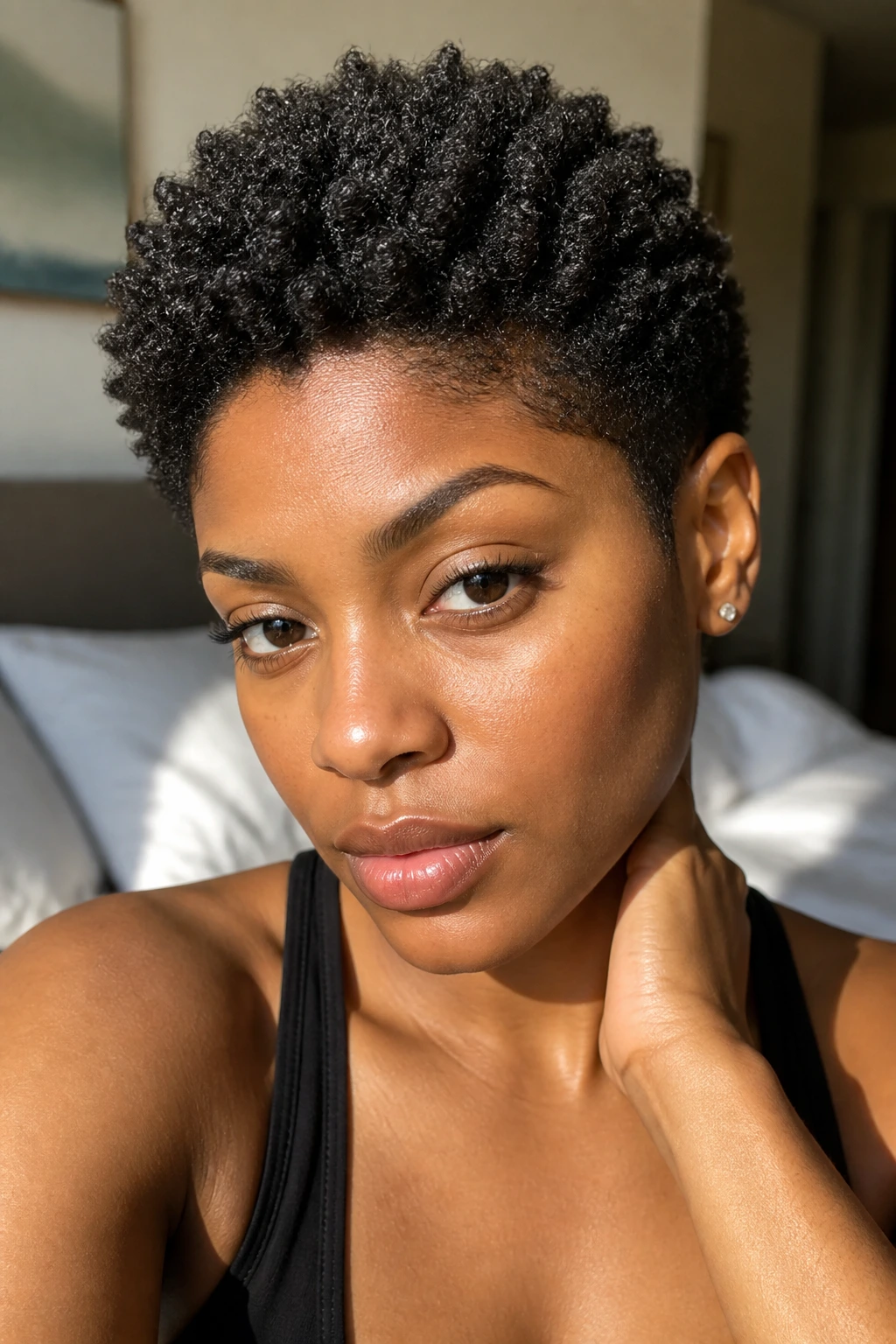
A curl sponge can turn a short crop into a tight, patterned look in minutes. The surface of the sponge helps separate and coil the hair in a way that reads more uniform than finger styling alone. It’s fast, cheap, and useful when the hair is short enough to catch the texture.
Why It Feels Different
The sponge gives the hair a repeatable pattern, which is handy when your curls sit in different directions after sleeping. A few circles in one direction, then a pause, and the hair starts to clump into tiny coils. If you overdo it, though, the texture can look scraped, so stop once the pattern is visible.
Use it on slightly damp hair with a little product. Dry hair can snag. And if you want more length at the top, work the sponge lightly so the coils do not shrink too hard.
19. A Colored Short Afro with Warm Highlights
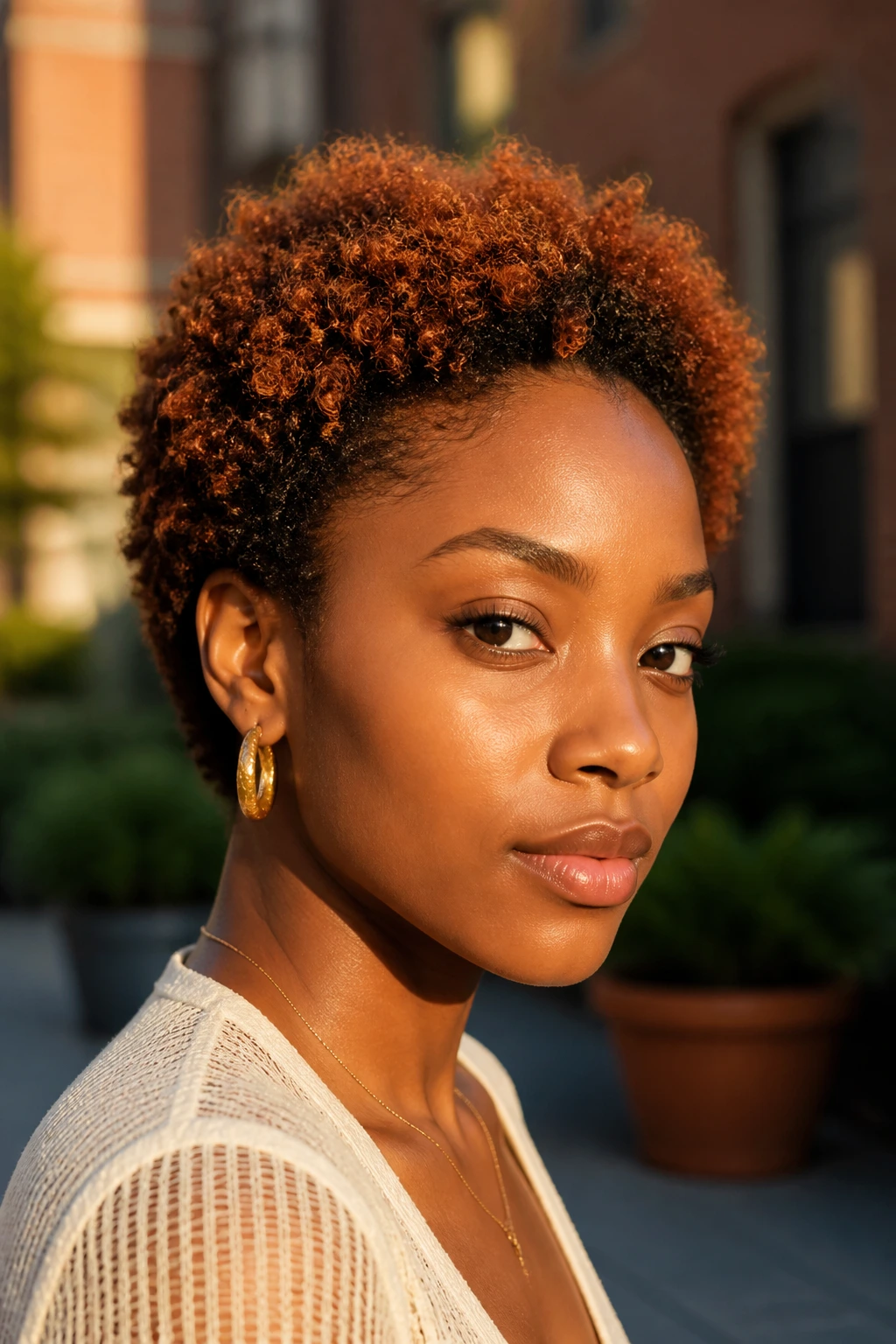
Color can change a short afro faster than a cut can. A little copper, honey brown, auburn, or even a deep burgundy can make the curl pattern show up in sharper relief. The short length keeps the color looking focused instead of spread across too much hair.
I prefer warm highlights on short natural cuts because they sit well against the coil pattern and do not flatten the shape. You get contrast where the curls bend, which makes the whole style easier to read. If the hair is already dry or fragile, skip harsh lightening and lean toward deposit-only color or temporary color wax.
Keep the cut healthy if you plan to color it. Short hair shows damage quickly. There is nowhere to hide it.
20. Short Afro with Gold Cuffs or Clips
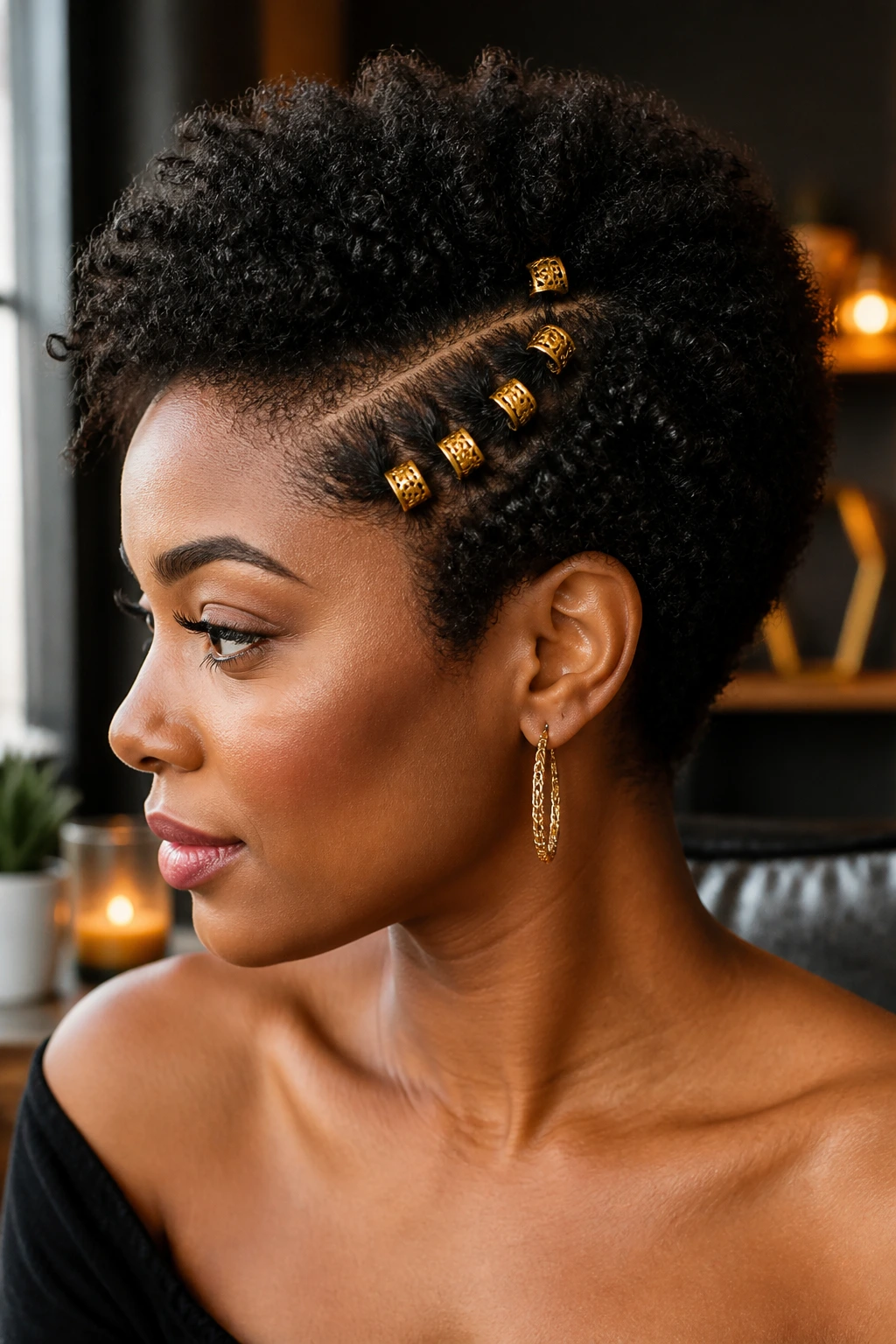
A few gold cuffs or small clips can change a short afro from plain to finished in seconds. The hair stays the same; the mood changes. That is the value of accessories on short styles.
Place the cuffs on one side, near a part, or in a small twisted section at the front. One or two is enough. If you stack too many, the hair starts looking crowded, and the cut loses its clean line. The little bit of metal should punctuate the style, not take over.
This is one of the easiest ways to dress up a short afro for an event without touching the haircut itself. Earrings plus a clip? That’s a strong combo. Keep the rest simple.
21. The Soft, Shaggy Short Afro
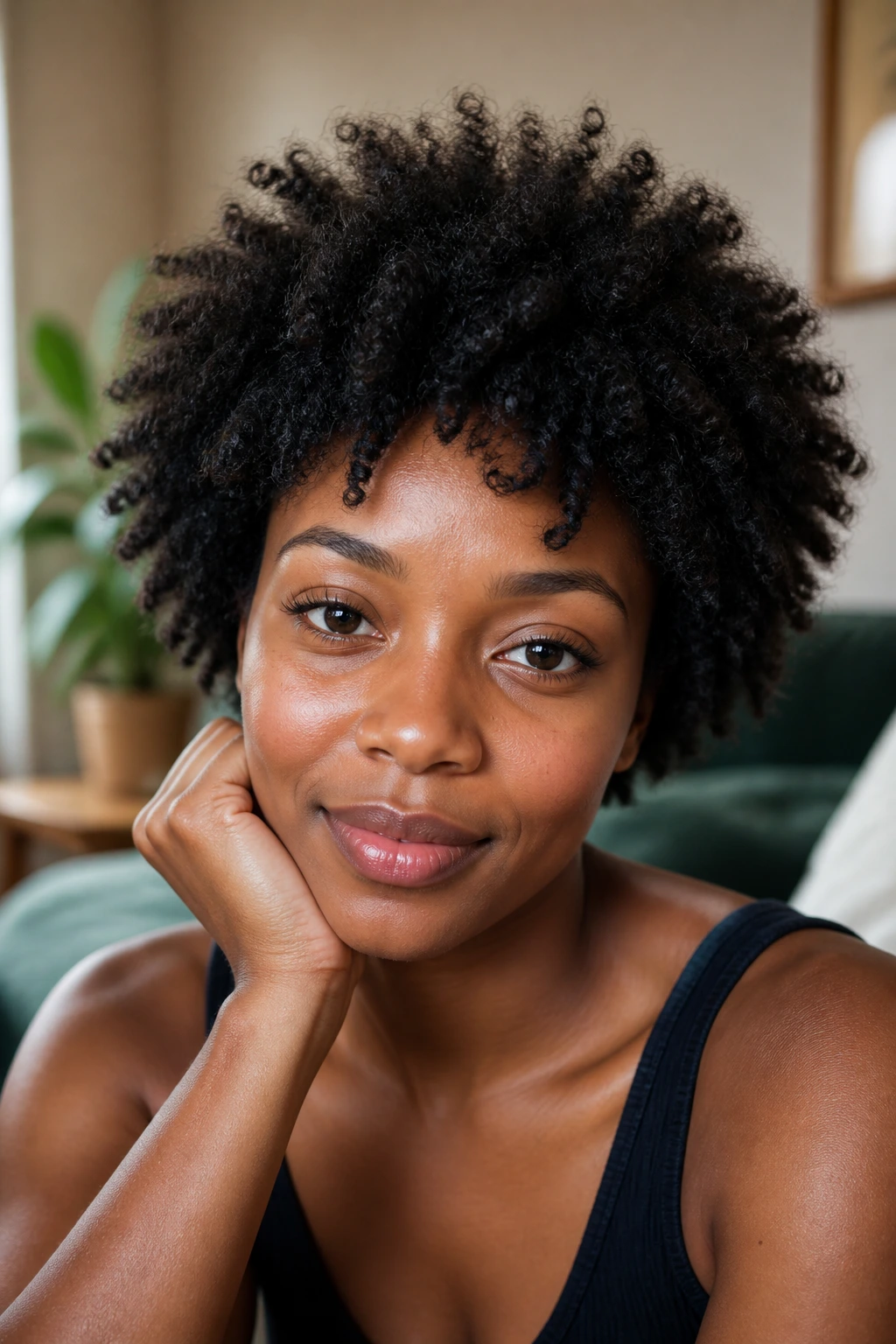
A shaggy short afro has more movement than a round, sculpted one. The layers are loose, the edges are softer, and the shape has that slightly undone feel that looks good with minimal styling. It’s not messy. It just refuses to be too precise.
This cut works well if your curls grow in different directions and you’d rather use that to your advantage than force them into a tight silhouette. A bit of pick at the roots, a little finger separating, and the style opens up. The outline is still there, but it does not feel rigid.
If you like low-effort styling, this is a strong pick. The haircut carries much of the shape, so your morning job gets easier.
22. A Side-Stacked Twist-Out
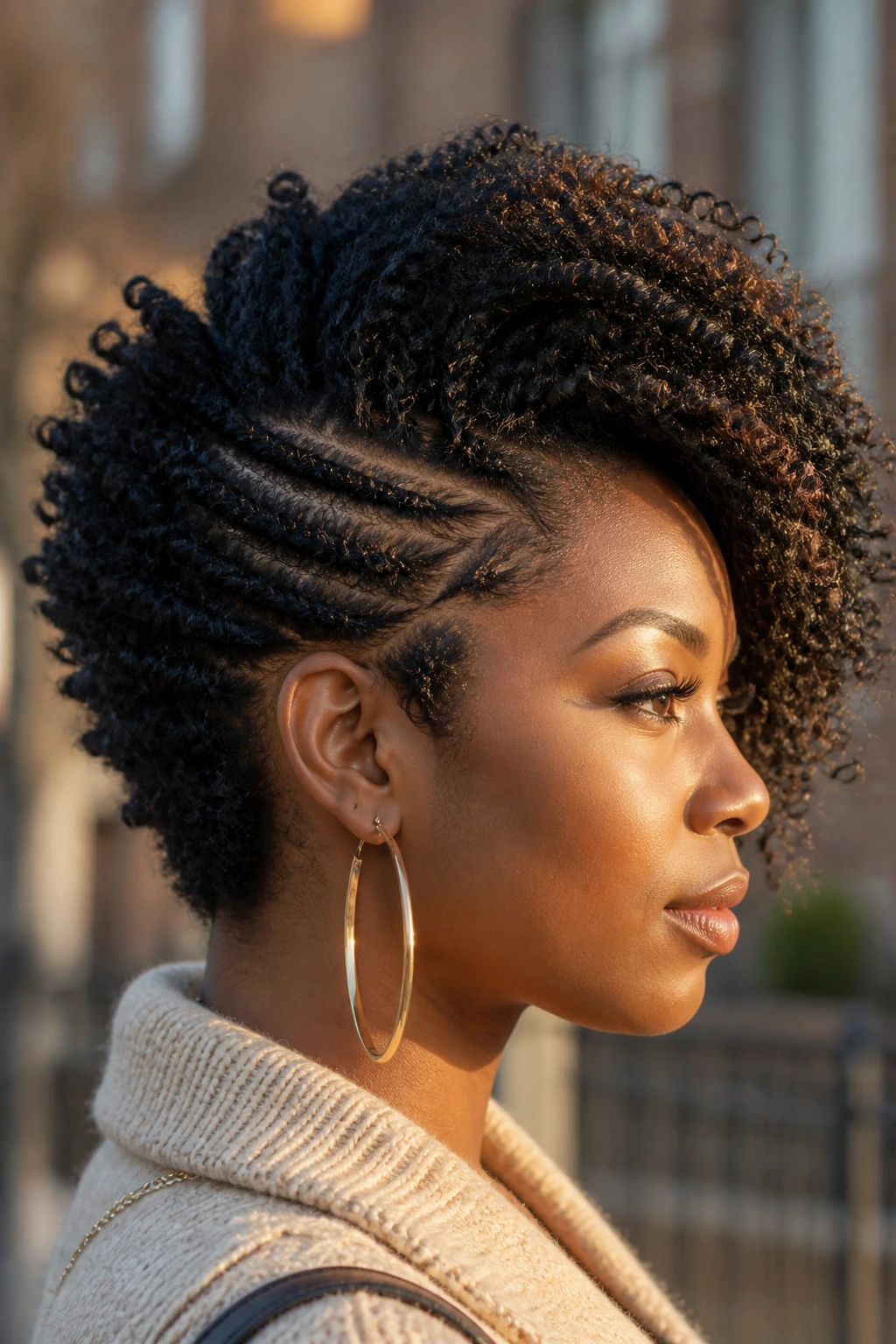
A side-stacked twist-out shifts the volume toward one side and leaves the other a little more tucked in. It creates a layered look without needing actual layers cut into the hair. On short hair, that stacked effect feels neat and a bit editorial.
The twist pattern gives the hair enough structure to hold the shape, while the side placement keeps it from reading too rounded. Use medium-sized twists, not tiny ones, if you want a fuller result. Tiny twists can make the style too busy on short length.
This look is a good bridge between a wash-and-go and a full set. It has more pattern than a fluff-out and more body than a coil crop.
23. The Mini Halo Braid and Afro Blend
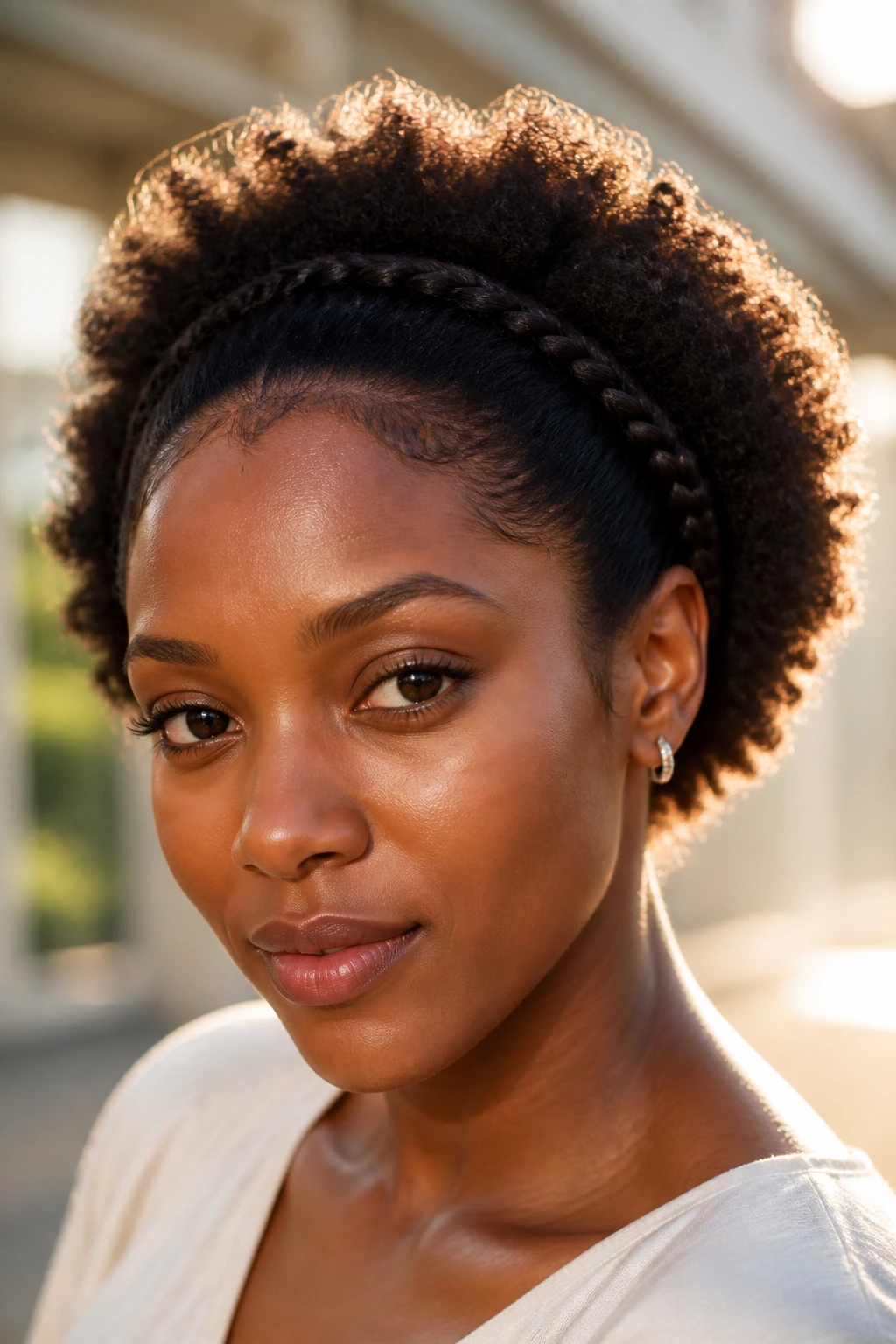
A halo braid around the hairline with the rest left textured gives you a crown-like frame without asking for long braids. The braid is short, snug, and practical, while the afro texture stays open at the center or back. The mix is the point.
How to Wear It
Keep the braid clean and close to the head. If it starts to puff, the contrast disappears. The loose section can be picked, sponge-defined, or worn softly separated, depending on how formal or relaxed you want the style to feel.
This is a nice choice when you want the face framed but do not want a fully braided look. It gives the hair a little ceremony.
24. Wet-Look Short Afro Curls
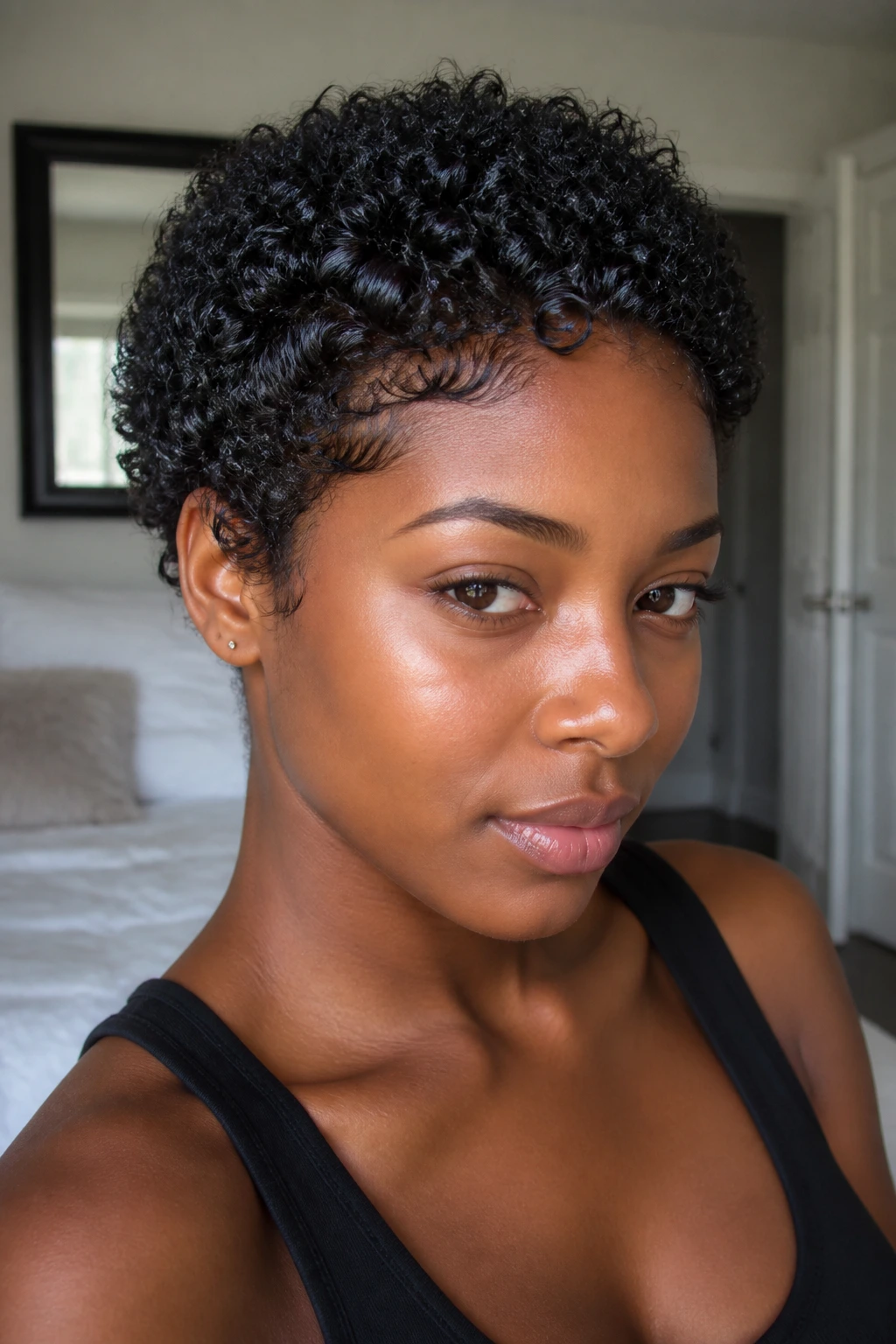
A wet-look short afro is about gloss and separation. The curls stay clumped, the sheen stays visible, and the whole style reads sleek instead of fluffy. It’s one of the few short natural looks that feels polished without needing heat.
Work the product through soaking-wet hair, then scrunch gently and leave the curls alone while they dry. A diffuser on low heat can help if you’re in a hurry, but air-drying usually gives a softer finish. Once dry, the hair should look defined, not crunchy.
This style can go too far fast. Too much gel and you get flakes or a hard shell. Aim for shiny and soft, not stiff.
25. The Fully Fluffed Rounded Afro
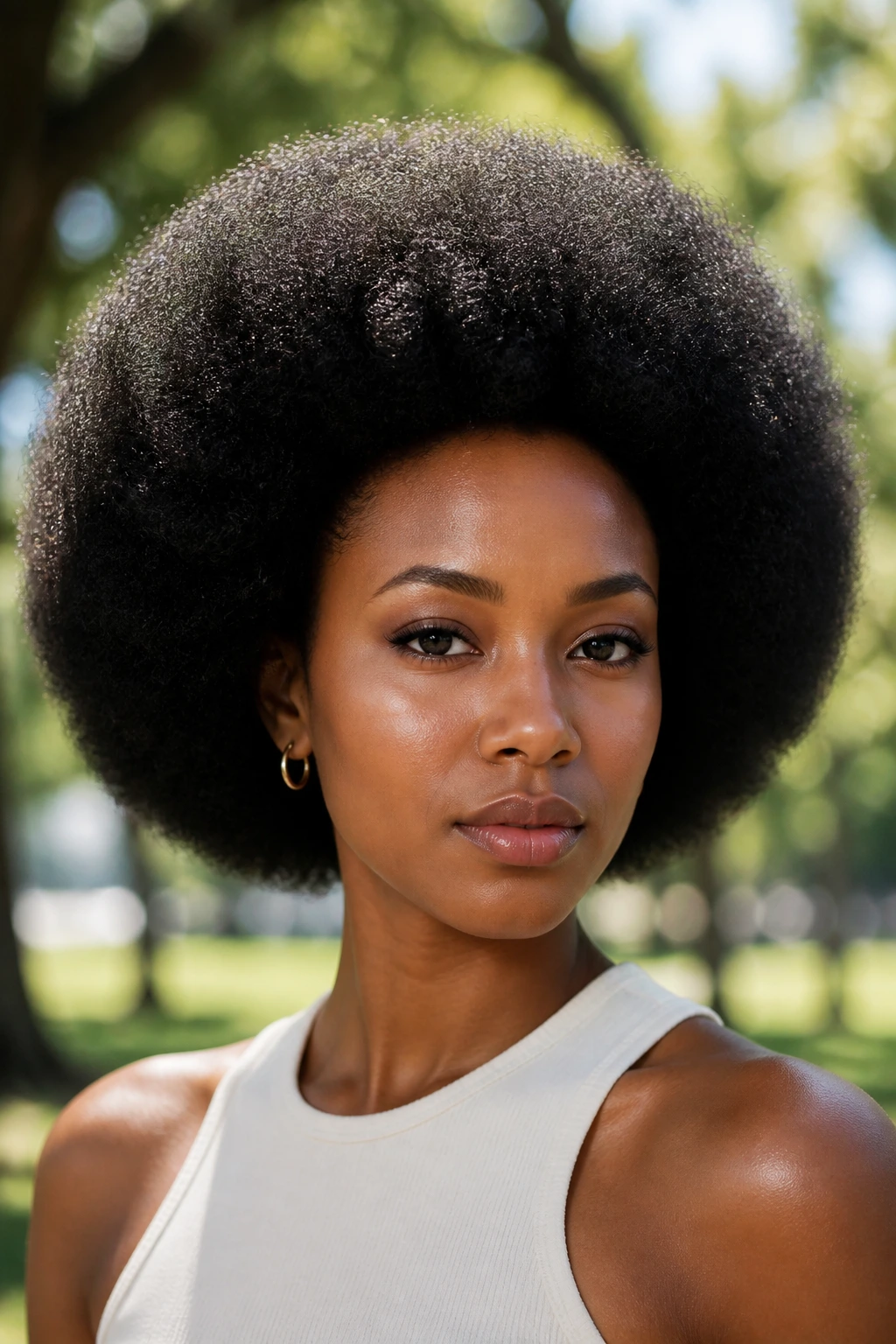
A fully fluffed rounded afro is the style people imagine first, and for good reason. It shows off texture, shape, and density all at once. When it is cut and maintained well, the style looks balanced from the front, side, and back — which is harder to do than it sounds.
The secret is in the lift. Start with moisturized hair, then pick the roots in small sections, working around the head evenly so one side does not race ahead of the other. Stop before the hair turns into a cloud with no shape. You want a rounded outline, not a vague halo.
This is the style I think feels most like freedom when it’s done right. It doesn’t need extra pieces or tricks. Just the right cut, the right moisture, and the nerve to wear the volume.
Why Short Afro Shapes Hold Their Own So Well
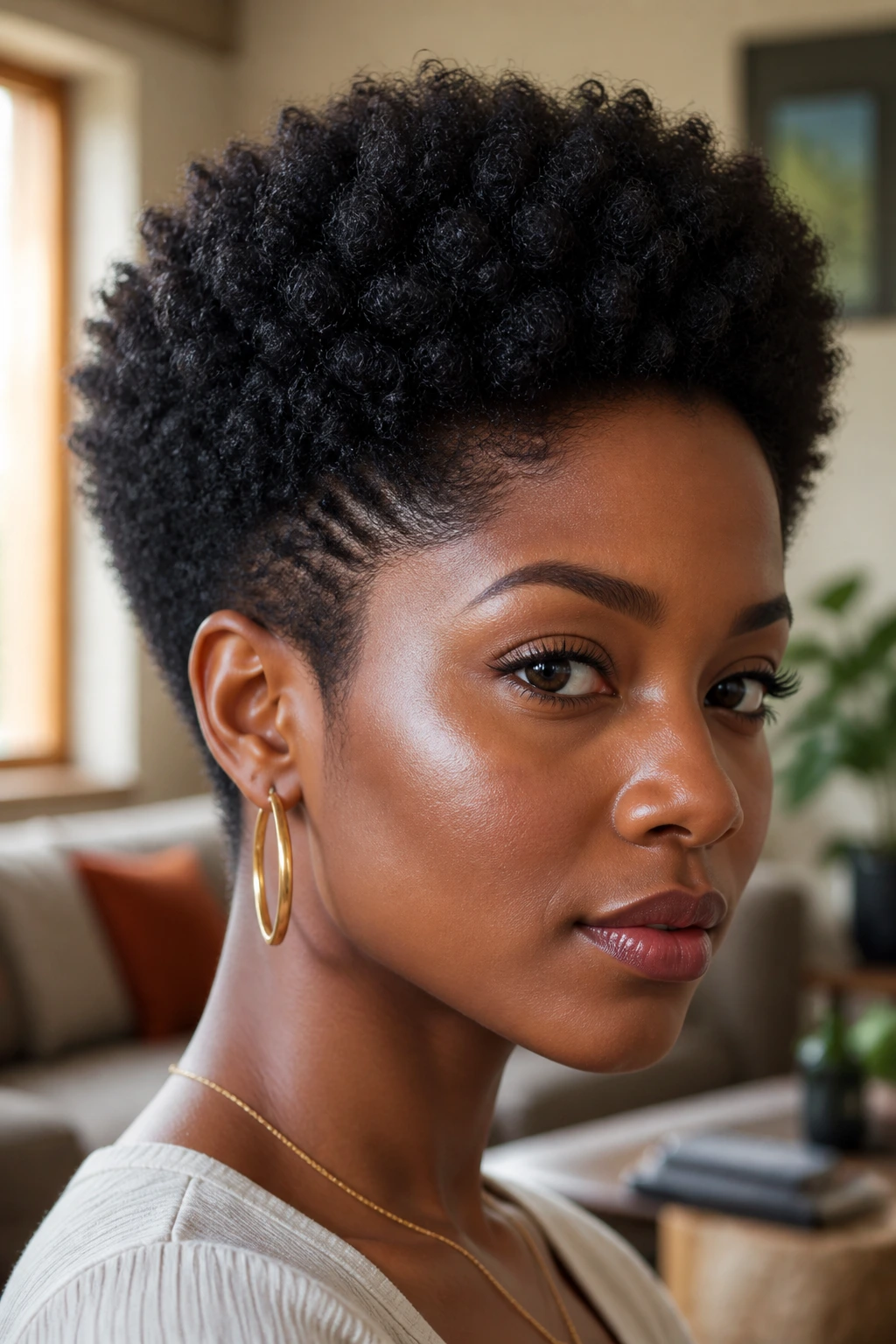
Short natural hair is easier to shape because the curl pattern has less distance to travel before it meets the outline. That sounds technical, but you can see it in the mirror. A tapered nape creates a clean break. A rounded crown keeps the profile soft. A side part or twist frame gives the eye somewhere to land.
Shrinkage helps here, too, even when it feels inconvenient on wash day. Coily hair shortens as it dries, which means a good cut has to account for the final shape, not the wet shape. If you cut it too blunt or leave the sides too wide, the dry version can balloon into a triangle. If you taper with intention, the hair sits where it should.
Moisture also matters more on shorter lengths than people think. Dry coils puff unevenly and make the outline fuzzy. Hydrated coils clump, which makes the style read cleaner. A little leave-in and a light hold product go farther than a heavy butter ever will.
Essential Tools for These Looks
- Rat-tail comb: Best for parts, clean sections, and curved lines near the hairline.
- Afro pick: Lifts the roots without crushing the curl pattern. Use it at the crown, not only at the edges.
- Spray bottle with water: Helps reactivate leave-in and make short styles easier to reshape.
- Leave-in conditioner: Gives slip and keeps short coils from feeling dry before styling.
- Light gel or curl custard: Useful for finger coils, slicked sides, and styles that need definition.
- Styling foam or mousse: Great for twist-outs, flat twists, and wash-and-go sets that need softer hold.
- Edge brush: Handy for smoothing the hairline without flattening the whole style.
- Bobby pins and small clips: Good for pinning asymmetry, twist crowns, or accessory placement.
- Satin bonnet or scarf: Keeps the shape from getting rubbed into a fuzz ball overnight.
- Hand mirror: Non-negotiable if you care about the back and sides. Short hair shows unevenness fast.
Smart Product Shopping for Short Natural Hair
The best products for short afro styles are usually lighter than people expect. Heavy creams can sit on the hair instead of helping it, especially if your coils are short and dense. A water-based leave-in, a foam or gel with flexible hold, and a small amount of oil on the ends is often enough. Too much product on short hair is not a strength move. It usually just weighs down the shape.
If your hair likes definition, look for products that give slip and hold without a lot of waxy buildup. If your hair gets dry by midday, a leave-in with ingredients like aloe, glycerin, or panthenol can help the hair stay softer. If humidity makes your curls swell, keep the finish lighter and skip the heavy butter right before a gel layer. That combo can turn sticky.
And pay attention to hold level. Some short styles need soft hold, like a fluffy picked-out afro. Others need medium or firm hold, like finger coils or slicked side parts. The label matters less than the result you want. If the style has to keep a clean line for several days, choose stronger hold. If you want movement, choose something with less grip.
How to Wear These Styles Without Fighting Them
Presentation: Keep the face-framing area clean and let the shape show from the front first. Short hair looks most polished when the hairline, part, and crown all agree with each other.
Accessories: Hoops, cuffs, narrow scarves, pearl pins, or a single clip can change the whole vibe. Pick one or two, not all five. The haircut should still be the star.
Length Balance: If the top is fuller, keep the sides tidy. If the sides carry the shape, leave the crown soft. That contrast helps the eye understand the style in one glance.
Occasion Pairing: A tapered pixie or slick side part feels sharp with structured clothes. A fluffy pick-out or rounded afro feels looser with knits, denim, and softer lines. Same hair. Different energy.
Finish: Choose your sheen carefully. A small amount of shine serum or oil sheen on the crown is enough for a neat finish. If the style is meant to look airy, leave it matte and touchable.
Styling Extras That Make a Short Afro Feel Finished
Shape Boost: Pick at the roots only after the hair has dried or mostly dried. Lifting damp roots can stretch the shape out in the wrong places.
Definition: Twist the front few sections around your finger or a comb tooth to make the hairline look cleaner. That tiny bit of order changes the whole look.
Color Move: Warm highlights, temporary color wax, or a few lighter pieces around the crown can make the coil pattern stand out without changing the cut. Keep the shade close to your base if you want the style to stay subtle.
Accessory Play: One scarf knot, one barrette, one row of cuffs. Short hair does not need a lot of hardware to feel intentional.
Time-Saver: Set the style on wash day using foam or gel, then let it dry fully overnight under a satin scarf or bonnet. The next morning, you only need to reshape the top and go.
How to Keep the Shape Fresh Between Wash Days
Short afro styles last longer when the nighttime routine is boring and consistent. Satin or silk is non-negotiable. A bonnet, scarf, or pillowcase keeps the curls from getting roughed up, and that matters even more on hair that is already short enough to lose shape quickly. If you sleep with one side smashed into the pillow, that side will show it.
A light refresh in the morning usually does the trick. Mist the hair with water or a water-and-leave-in mix, then reshape with fingers or an afro pick. For coils and twist-outs, use a tiny dab of gel or cream on the frizzy ends and twist the section back into place. For slicked styles, a touch of edge control or mousse can revive the perimeter without starting over.
Tapered cuts and shaved sides need more upkeep than people expect. Plan on cleaning up the line every 1 to 3 weeks if you want the shape to stay crisp. Full short afros usually benefit from a trim every 6 to 10 weeks, depending on how fast your hair grows and how structured the cut is. If product builds up, clarify the scalp every 2 to 4 weeks so the roots do not get dull and heavy.
Common Mistakes That Flatten a Short Afro
- Using too much butter at the roots: The hair starts shiny, then collapses by midday. Keep heavier products on the ends, and use lighter stylers near the scalp.
- Skipping the cut shape: A good style cannot rescue a boxy or lopsided haircut. If the silhouette feels off, ask for tapering or reshaping instead of layering on more gel.
- Styling before the hair is clean enough: Old product and buildup make short styles look foggy. Wash or clarify when the roots feel coated, not when they already look dirty.
- Drying too little before separating coils or twists: Half-dry styles unravel fast and frizz at the edges. Wait until the hair is fully dry, even if it means sleeping in the set.
- Ignoring the back and sides: The front can look fine while the rear is puffing into a different shape entirely. Use a mirror and check the profile before you leave the house.
- Brushing in the wrong direction: Aggressive brushing can stretch the curl pattern out of shape. Work with the grain of the cut, not against it.
Variations and Adaptations to Try
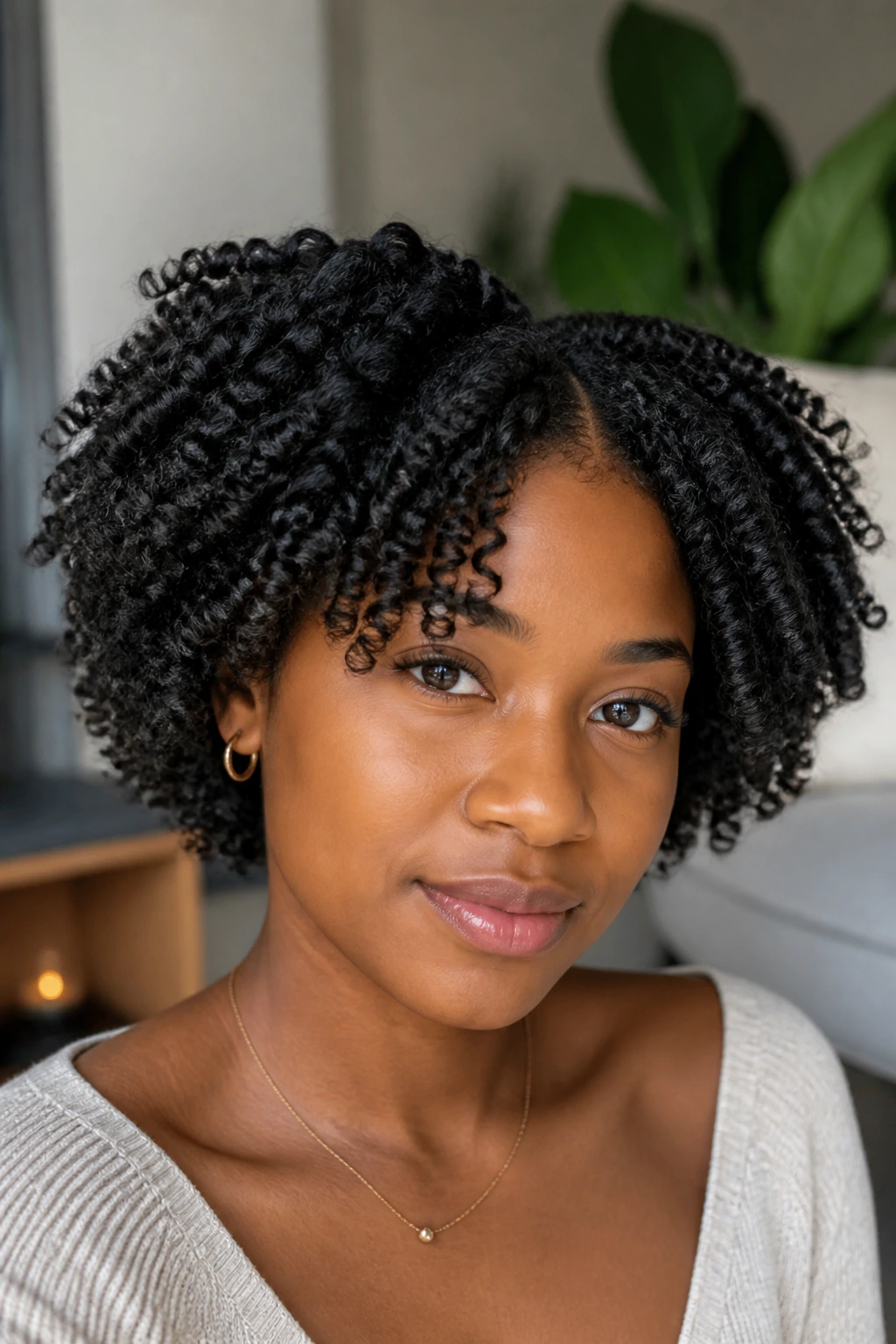
Fine-Coil Lift: If your hair is low-density, keep the top slightly longer and use lighter foam instead of heavy cream. The goal is height, not weight.
Dense-Hair Halo: For thicker hair, ask for more taper at the nape and a rounded crown. That keeps the sides from spreading too wide and turning the style into a box.
Sensitive-Scalp Style: Keep parts loose, avoid tight twisting at the hairline, and skip styles that need strong tension. Flat twists can still work if they’re gentle.
Color-Softened Crop: Add copper, auburn, or honey tones to short coils if you want more visible texture. Short length takes color well because the shade sits close to the face.
Protective Twist Set: Wear the hair in two-strand twists or flat twists for a few days, then take them down into a defined twist-out. It gives you two looks from one styling session.
Accessory-Heavy Weekend Look: Add cuffs, clips, a scarf, or small beads when you want the style to feel dressed up. Keep the base simple so the accessories don’t fight the haircut.
Frequently Asked Questions About Short Afro Hairstyles
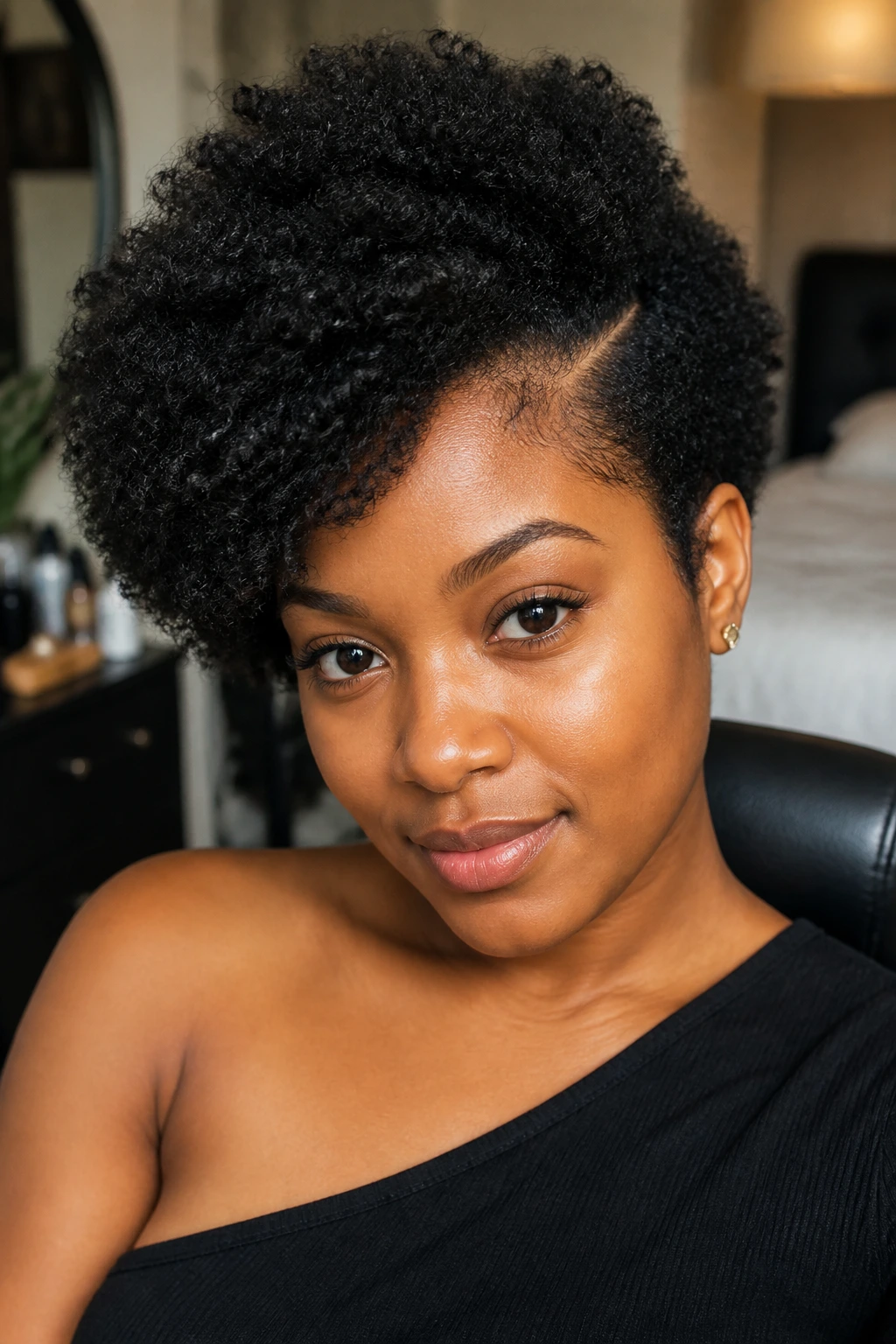
Which short afro style lasts the longest?
Tapered cuts and finger coils usually hold shape the best, especially if you sleep with a satin bonnet and refresh lightly in the morning. A fluffy picked-out afro looks great too, but it tends to need more daily shaping.
Can these styles work on 4C hair?
Yes, and 4C hair often gives the most dramatic shape once it is moisturized and cut well. Finger coils may need smaller sections, while pick-outs and twist-outs can create a fuller outline with less effort.
How do I keep a short afro from looking flat at the crown?
Lift the roots with an afro pick after the hair is dry or nearly dry, and avoid loading the crown with heavy cream. A good cut helps here too; if the top is too short in one flat layer, no amount of product will fix the silhouette.
Do I need heat to get a defined short afro?
No. A water-based leave-in, a gel or foam, and a good set pattern can give you plenty of definition without a blow dryer. Heat can speed drying, but it is not required for the style to work.
What products should I avoid if I want volume?
Heavy butters, thick oils, and waxy edge products near the roots can flatten the hair. If volume is the goal, keep the top light and use products that hold shape without coating every strand.
How often should I trim a tapered short afro?
Most tapered cuts need a shape-up every 1 to 3 weeks and a fuller trim every 6 to 10 weeks. If the nape starts bulking up or the outline loses its curve, that’s your sign.
What if my finger coils frizz the same day?
The hair was probably separated before it was dry, or the product did not have enough hold. Next time, section smaller, let the coils dry fully, and avoid touching them once they set.
Can I wear a short afro to formal events?
Absolutely. A clean tapered cut, a side part, a curved part, or a defined twist-out can look sharp with earrings, a bold lip, and a neat neckline. Short hair does not need length to read dressed up.
The Shape That Stays
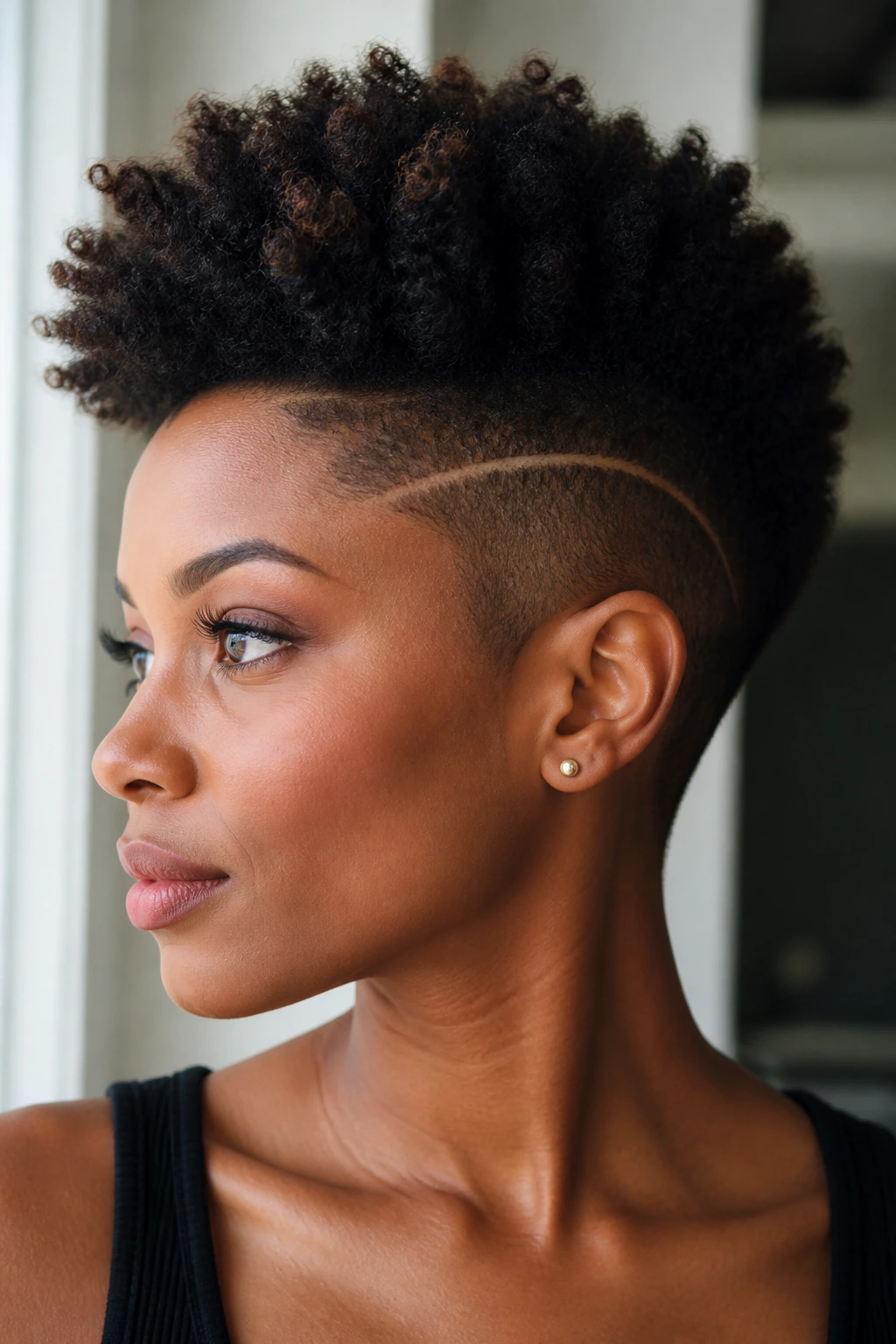
Short afro hairstyles for Black women work because they honor what coily hair already does well: lift, texture, and movement. The best looks do not try to flatten that into something else. They frame it, taper it, part it, or pin it just enough to create a shape you can wear all week without feeling like the hair is fighting back.
If you choose one style from this list, start with the one that matches your routine, not the one that looks most dramatic in a photo. A cut you can maintain beats a style you admire once and then avoid. The real win is when the mirror at the end of the week still looks like you meant it.
