



Loc styles for men change the whole shape of a face. Pull them up, and the jawline sharpens. Let them hang loose, and the silhouette softens into something heavier, calmer, more relaxed. That’s why a good loc style is never just about “doing something different” with hair. It’s about weight, balance, neckline, and the little choices that make your locs look deliberate instead of accidental.
The funny part is that the same set of locs can read two different ways depending on how they’re worn. A clean low taper and a tight bun can look sharp enough for a work meeting. Leave the same locs draped over the shoulders, and the whole look turns looser, warmer, more lived-in. Length matters. So does parting. So does whether the roots are neat or a little wild at the edges.
A lot of men get stuck thinking there are only three options: hang them down, tie them back, or cut them off. That’s lazy advice. There are barbered looks, freeform looks, updo looks, faded looks, braided looks, and styles that lean polished without looking stiff. Some need a retwist every few weeks. Some look better with a little frizz. Some hold their shape through sweat, hats, and long days without begging for attention.
Why These 38 Loc Styles for Men Stand Out
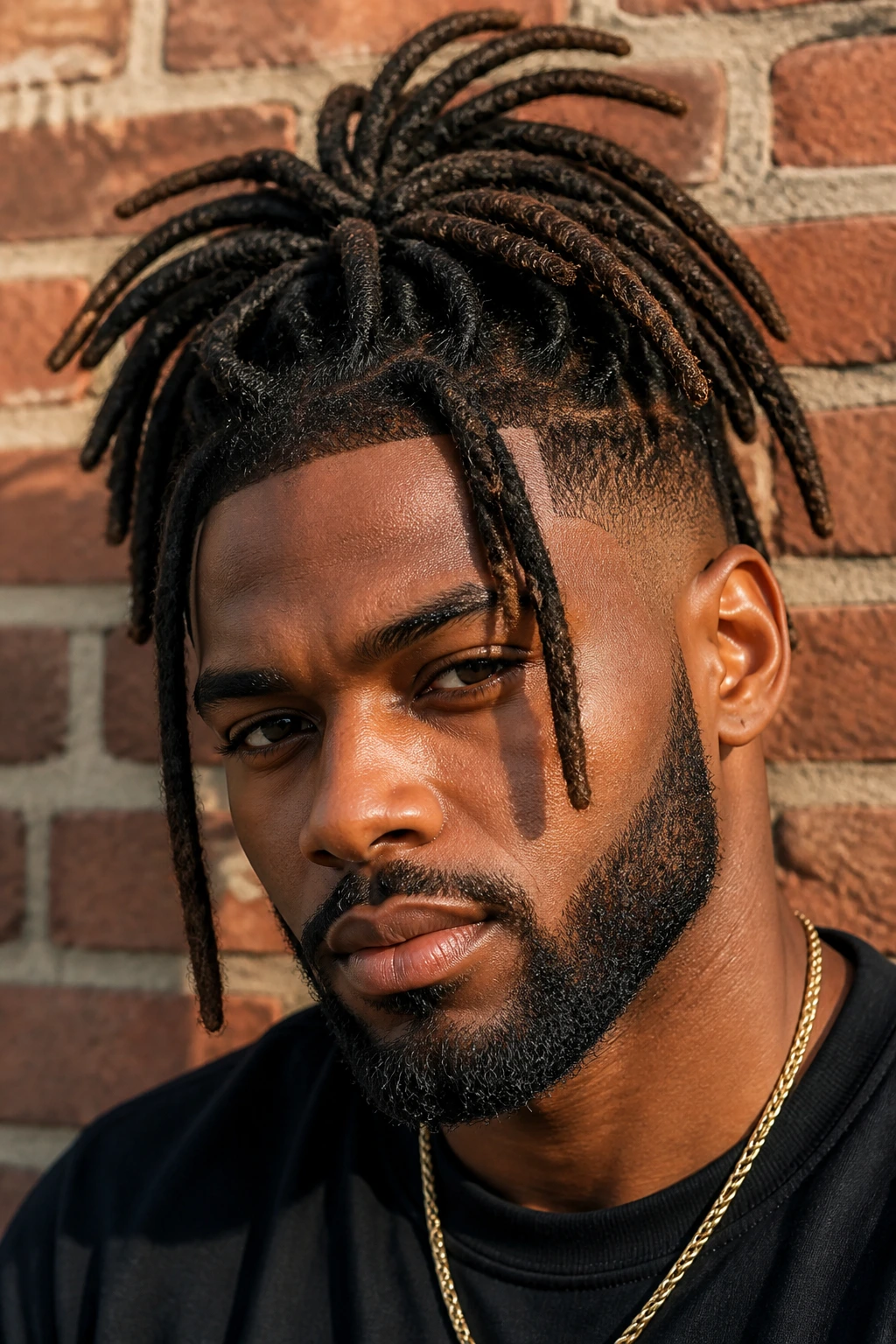
- Shape does the heavy lifting: A high-top loc style adds height fast, while shoulder-length locs spread the hair out and make the face look longer and slimmer.
- There’s a style for every upkeep level: Some of these looks need a clean retwist and a fade touch-up, while others get better when you leave the roots a little less controlled.
- They work at different stages of growth: Short starter locs, mature locs, and long locs each show up here, so you can match the style to where your hair actually is.
- You can change the mood without changing the locs: A bun, a side part, cuffs, or a fade can shift the same head of locs from casual to formal in minutes.
- The best styles respect your routine: If you train hard, sweat a lot, or wear a helmet, some loc looks will save you time and frustration every week.
1. Shoulder-Length Free-Hanging Locs
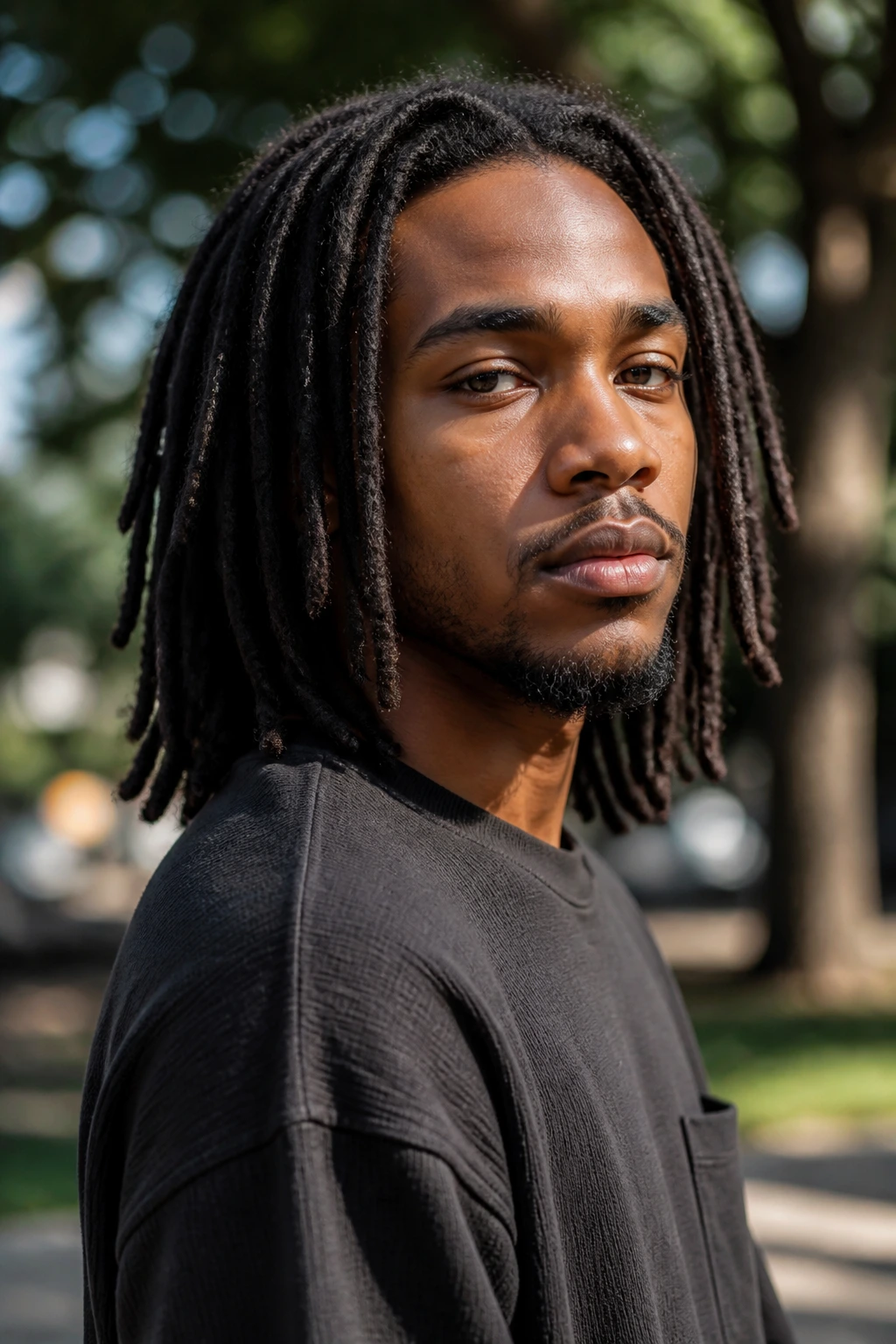
Shoulder-length free-hanging locs have that easy, unfussy shape that looks better the less you try to force it. When the ends brush the collar and the roots stay clean, the whole style gets a relaxed swing that moves as you walk. It’s the kind of look that tells the truth about your hair instead of trying to hide it.
Why It Works
This style works because the length is enough to show texture, but not so much that it starts swallowing your neck and shoulders. The hair naturally frames the face, and the shape is strongest when the locs are even in size from root to tip. If one or two are much thicker than the rest, the silhouette gets lopsided fast.
- Best with locs that sit right at the collarbone.
- Looks strongest with a crisp edge-up around the temples.
- Needs only light palm rolling and a little oil at the scalp.
Best move: Let the locs hang for a day, then tie them back the next. The change in shape keeps the style from feeling static.
2. Clean High-Top Locs
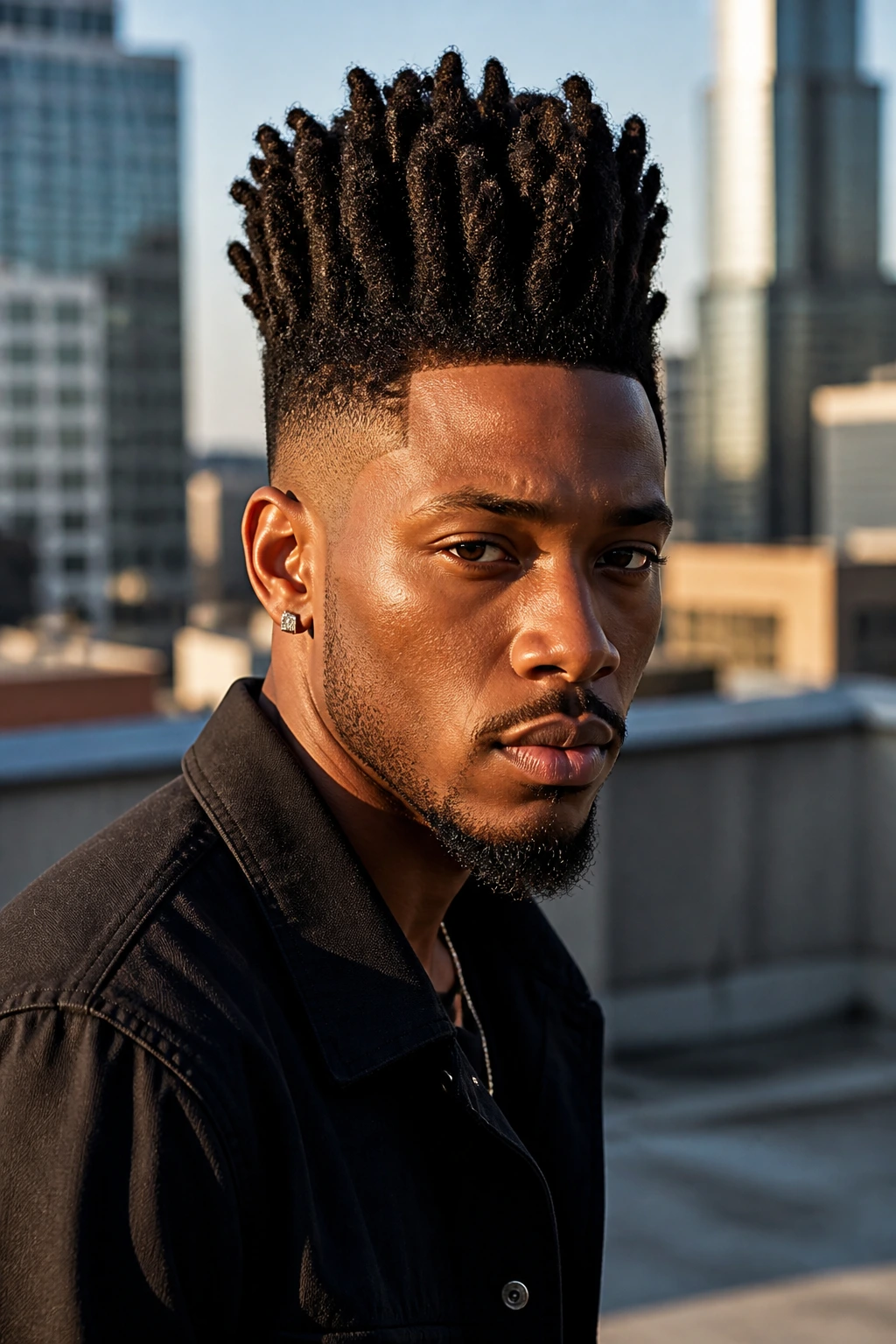
High-top locs change the whole face by adding height at the crown. That’s the point. The sides stay tight, the top carries the weight, and the result looks sharper than longer locs that are left to fall everywhere. It’s a clean shape, and clean shapes age well.
The best version keeps the top full and the perimeter neat. If the fade or undercut grows out too far, the style turns boxy in a hurry. Ask for a shape-up every 2 to 3 weeks if you like the lines crisp, because the contrast between the tight sides and the tall top is doing most of the work.
The look suits rounder faces especially well. It gives the eye a place to go upward, which makes the whole profile feel longer.
3. Low Taper Fade with Hanging Locs
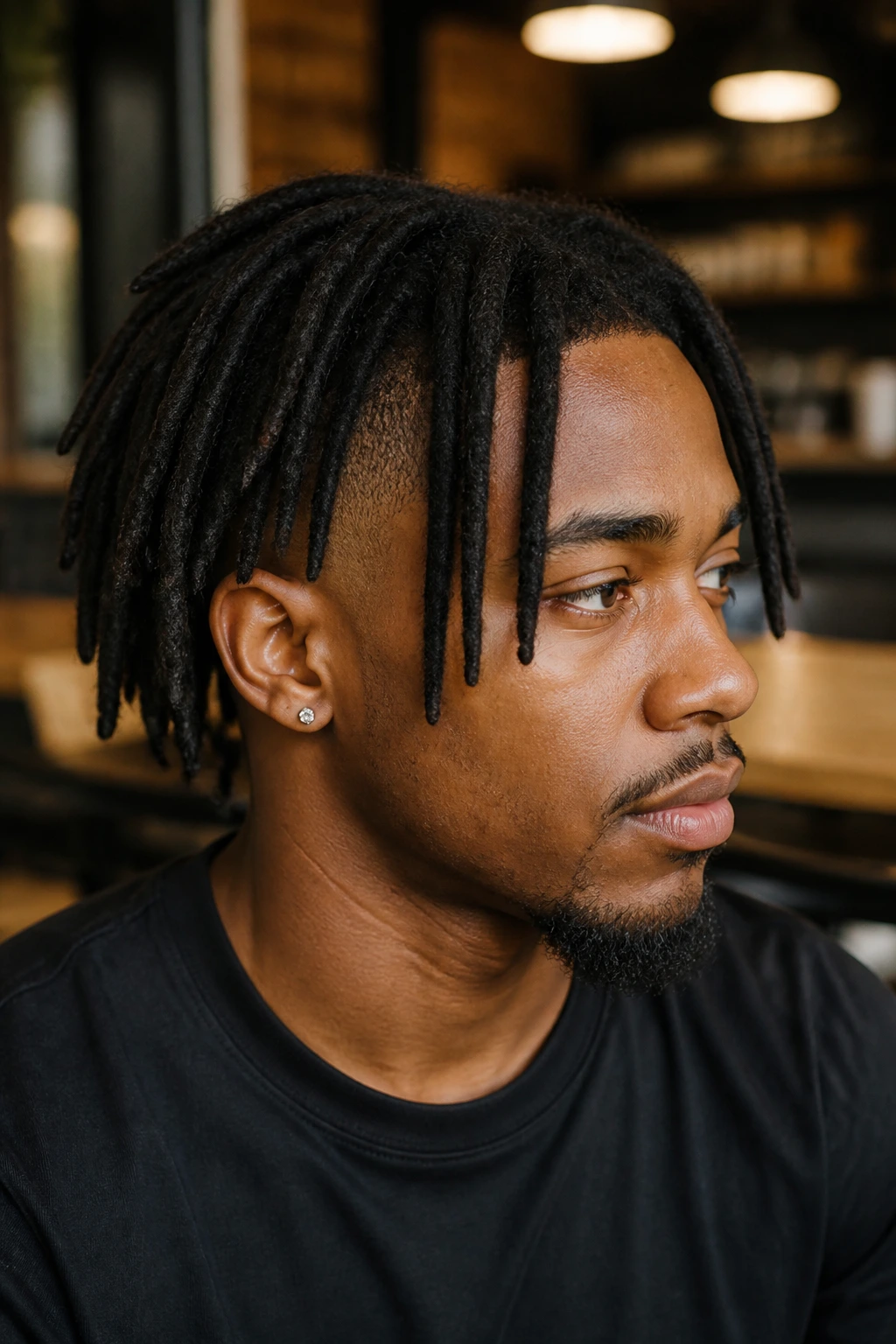
What makes a low taper fade with hanging locs work is restraint. The fade is there, but it stays low enough that the locs still feel like the main event. You get clean sideburns, a neat neckline, and enough softness around the ears that the style doesn’t look overcut.
This is one of the easiest loc styles for men to live with if you need something that moves between settings. A blazer, a hoodie, a gym bag — it all fits. The taper keeps the edges tidy without shaving away too much bulk, which is useful if your locs are medium or long and you don’t want the cut to start shouting louder than the hair itself.
Keep the taper sharp and the locs moisturized lightly. Too much product near the roots will flatten the top and kill the shape.
4. Side-Parted Locs
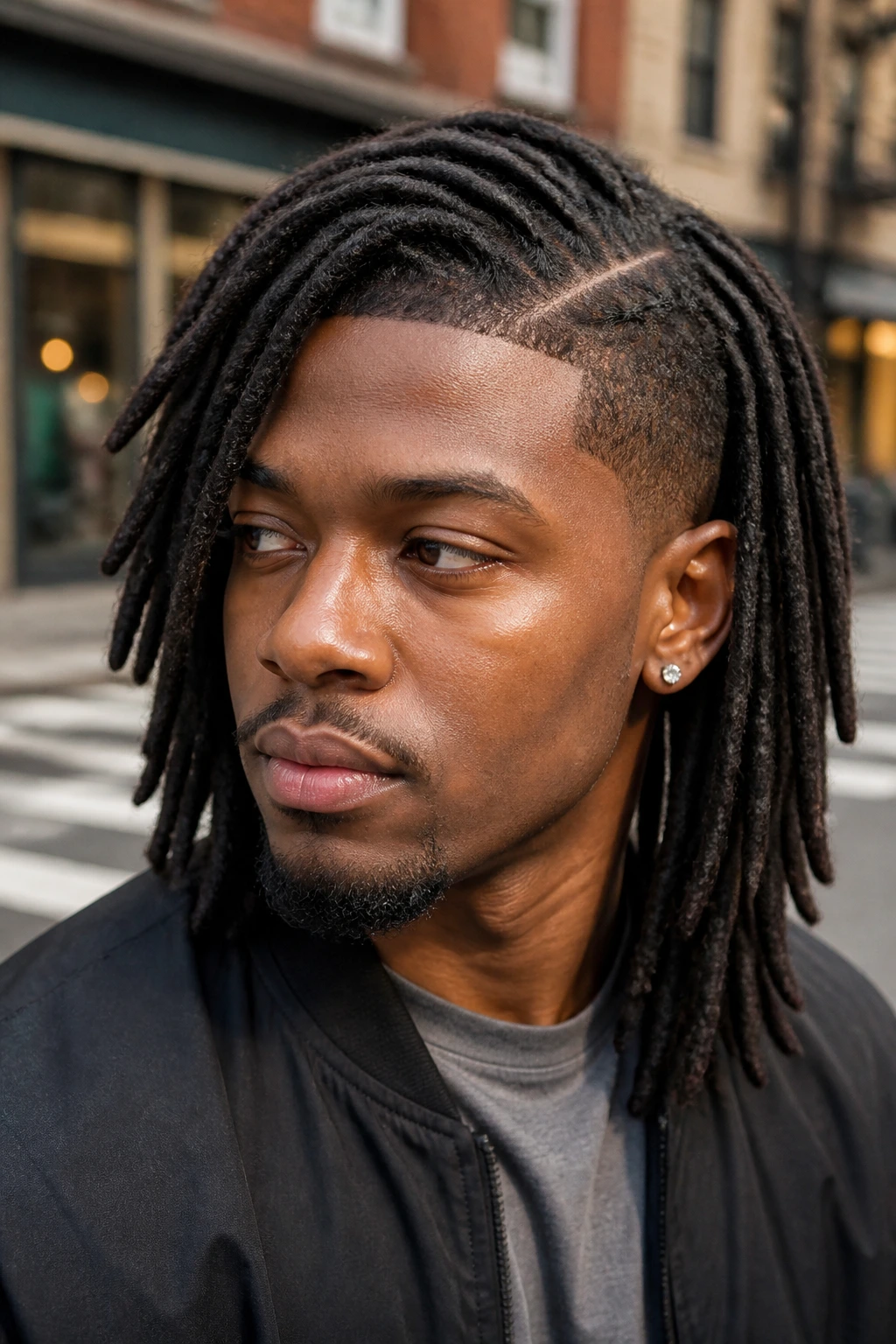
Side-parted locs give you an instant dose of order. The part breaks up the mass, so the face feels less boxed in and the whole look lands a little more polished. A hard part looks sharper; a soft side part feels more natural. Both work.
The trick is to part while the hair is damp, not dripping. Wet locs slide around, and that makes the part fuzzy by the time they dry. Use the tail of a comb, keep the line clean, and let the locs settle on their own rather than pushing them flat with too much product.
What Makes It Look Right
- Works best on medium-length locs that can fall across the forehead without covering it completely.
- Flatters broader foreheads because the part breaks up the width.
- Stays neat longer when the scalp is not overloaded with heavy cream.
One clean line matters more than five products. That’s the whole style in a sentence.
5. Half-Up Top Knot Locs
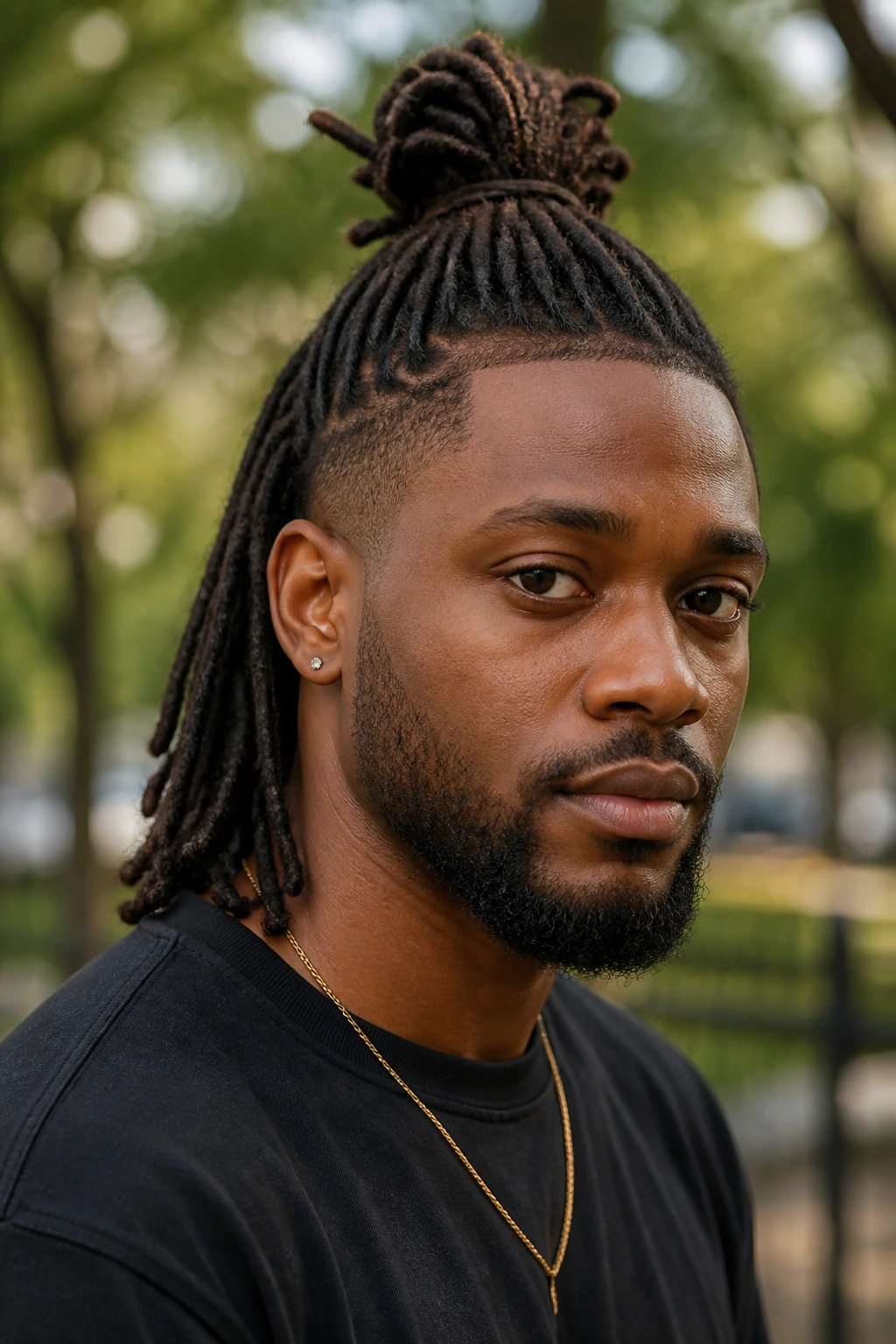
Half-up top knot locs are for the days when you want the length visible but not in your face. You pull the top section into a knot, let the rest fall, and the whole thing feels more controlled without losing texture. It’s a good answer for thick locs that get warm around the neck.
The knot should sit high enough to clear your collar but low enough that it doesn’t look like it’s trying to escape. Use a snag-free tie. Metal clips and rough elastics are the enemy here, because they catch on the outer layer of the locs and leave little fuzzy dents that never quite smooth out.
This style is especially useful if your locs are still in that “not short, not fully long” stage. It buys you comfort without making the length disappear.
6. Full Loc Bun
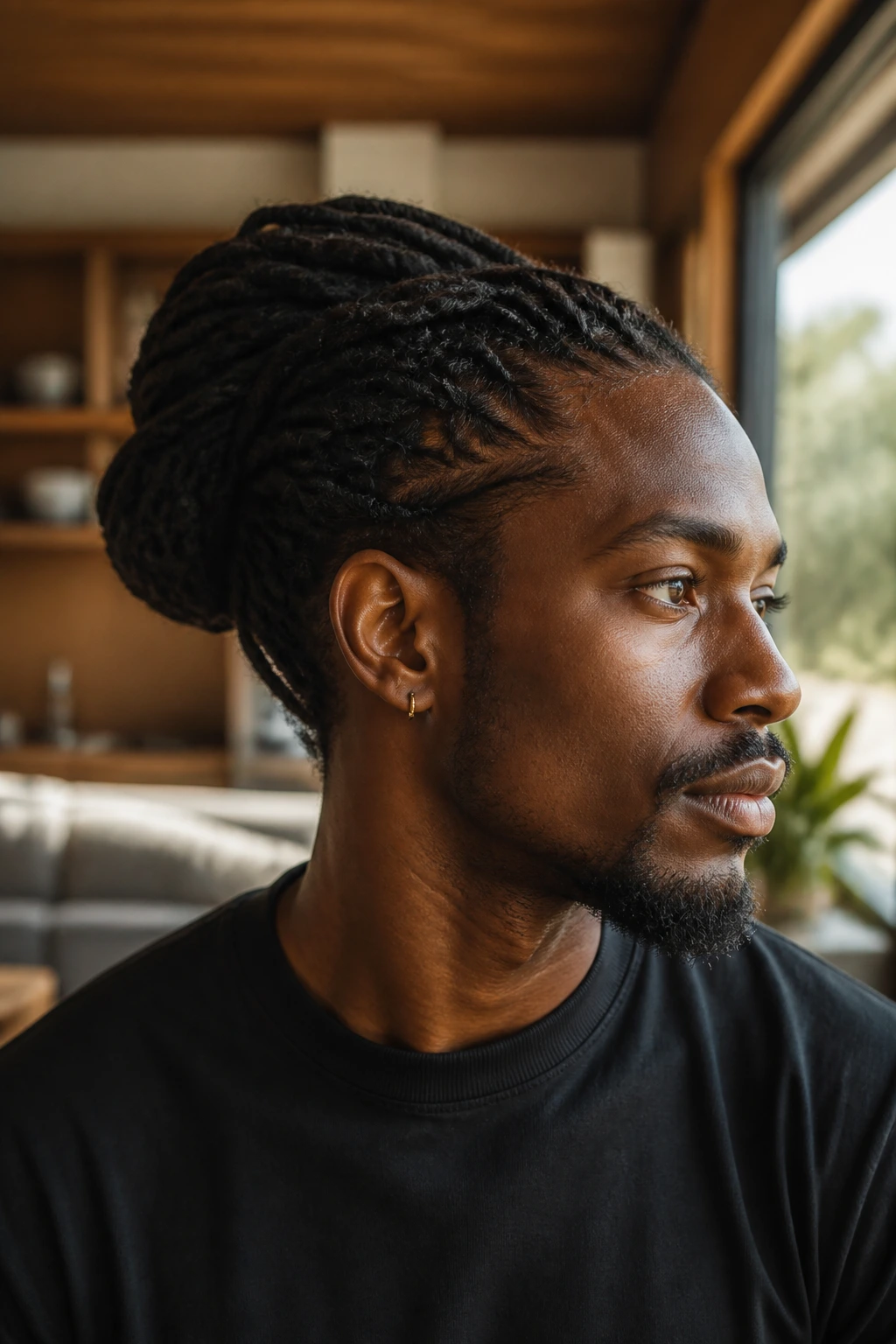
A full loc bun is the blunt instrument of loc styling. Everything goes up, everything stays together, and the shape gets cleaner the tighter your locs are kept at the root. Put well, it can look formal. Put carelessly, it can look like a bundle shoved through a loop and forgotten.
The bun works best when the locs are gathered low or at mid-crown and wrapped without crushing the front hairline. Leave a little space around the edges so the style doesn’t pull too hard on the temples. If your locs are heavy, secure them with a wide elastic or a fabric tie rather than a thin band that digs in.
It’s the easiest style to wear on long days, especially when you’re moving around a lot and don’t want strands brushing your face every five minutes.
7. Barrel Twist Locs
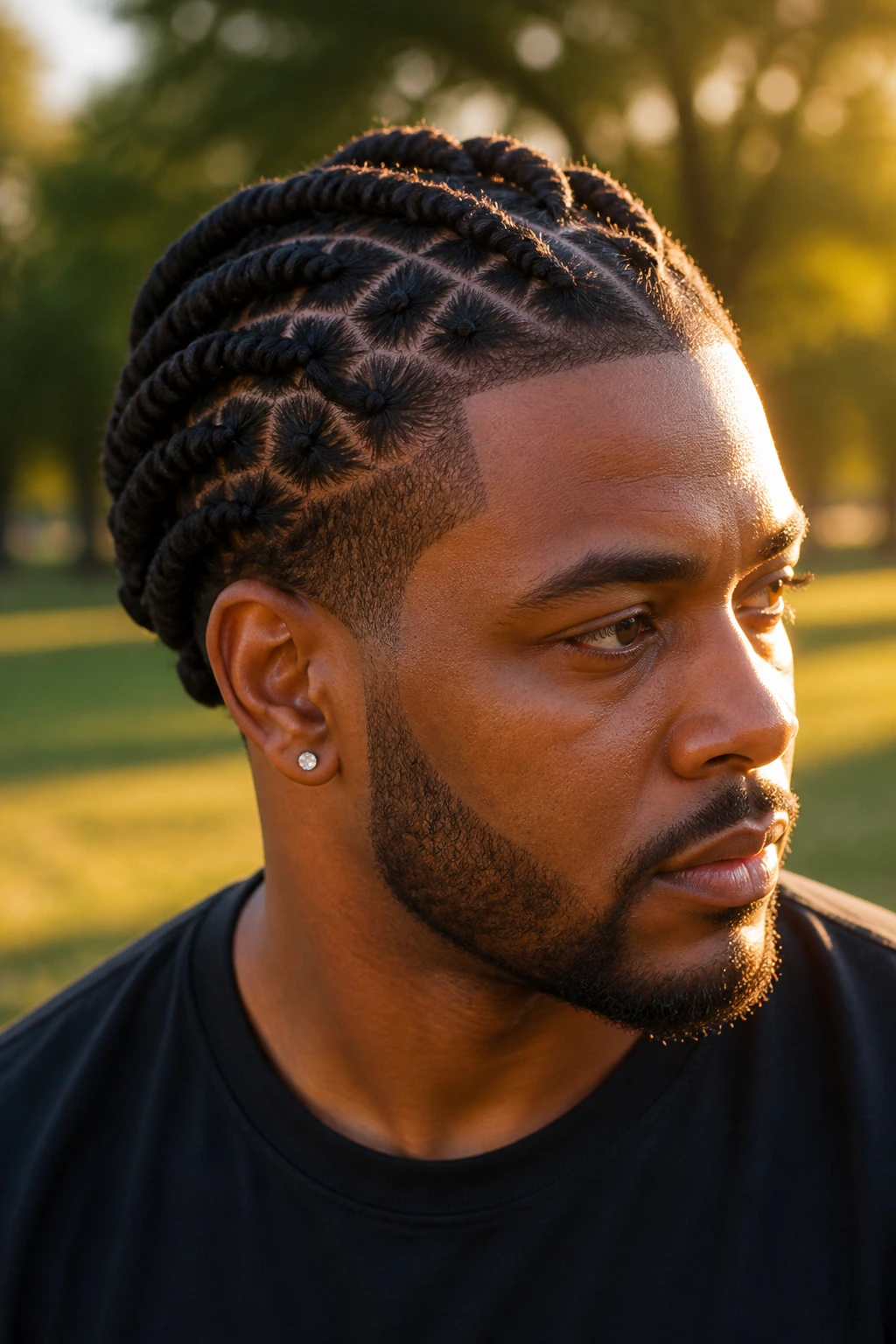
Barrel twist locs bring order to thicker locs in a way that plain hanging hair never will. The sections curve around one another, which creates that rounded, tubular pattern barbers love to set near the crown or along the sides. When they’re tight and even, the style looks deliberate from across the room.
Why It Works
Barrel twists hold shape because they distribute the weight across grouped locs instead of leaving each one on its own. That means less flopping, less snagging, and a cleaner profile around the head. They’re a smart choice if you want a styled look for a few days without a full updo.
- Best for medium to thick locs.
- Easier to keep neat when the locs are mature and not too soft at the roots.
- Don’t yank the sections tight; tension shows up fast at the scalp.
Best move: Ask for clean parting and medium tension. Tight enough to hold, loose enough to keep your scalp happy.
8. Two-Strand Twist Locs
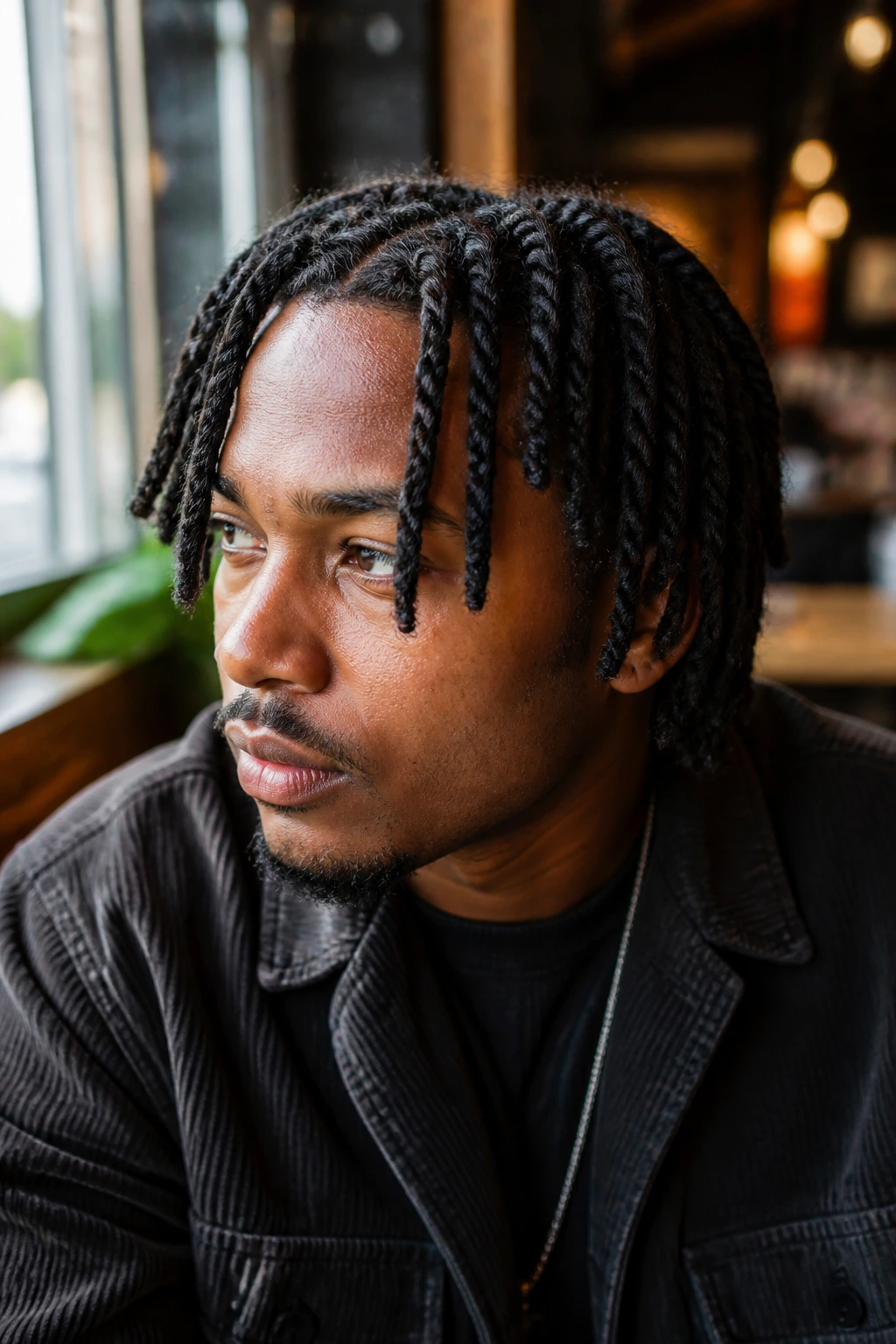
Two-strand twist locs have a ropey, defined texture that feels a little more relaxed than braids but more styled than loose hanging locs. The twist pattern adds visual rhythm, which makes the hair look fuller even when the overall length is moderate. It’s one of those styles that looks better in motion than in photos.
The twist shape is useful when you want to stretch locs a bit and keep them from puffing out too wide. It also helps during in-between stages, when you want the hair controlled but not locked into a tight updo. A light hold mousse or setting foam can help, but don’t load the roots with sticky product.
If your locs are freshly retwisted, this style gives them a clean, intentional finish without making them look overworked.
9. Braided Loc Rows
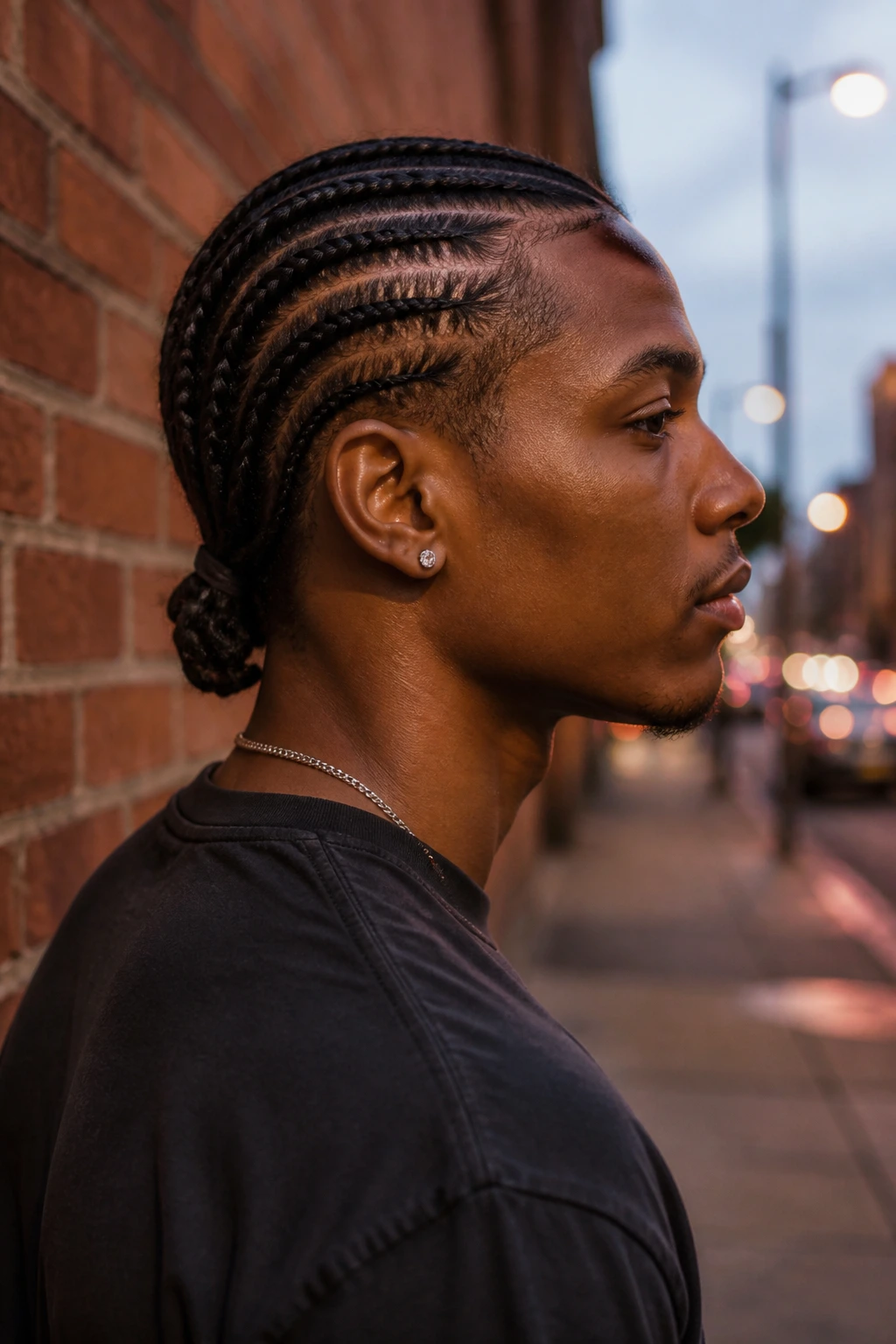
Why braid locs at all when you can just twist them? Because braids hold differently. Braided loc rows give the hair a flatter, tighter profile that lasts longer than a simple twist and keeps the shoulders clear. The style is especially useful if you’re working under a hat, helmet, or hood and need the hair to stay put.
The pattern can run straight back, angle diagonally, or fan into a few chunky rows depending on how much hair you have. Straight-back rows look the cleanest. Diagonal rows soften the shape and keep the style from feeling too severe. Either way, don’t braid so tightly at the scalp that the front hairline starts aching by midday.
How to Wear It
- Choose this when you want a style that stays neat through sweat and movement.
- Works well with medium or long locs.
- Keep the ends secure with small bands so the braid doesn’t unravel early.
10. Loc Mohawk
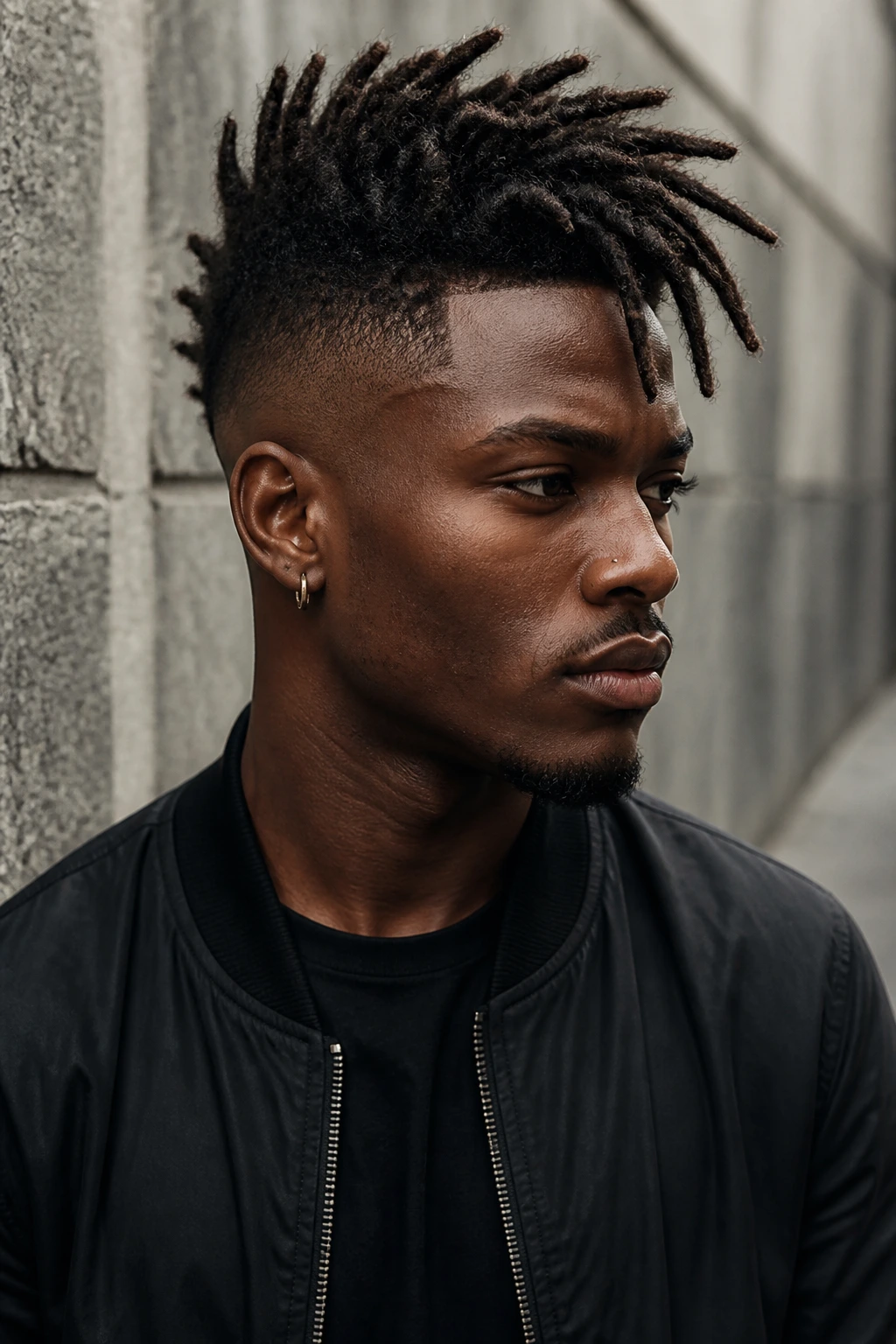
A loc mohawk does not whisper. It announces itself. The sides are cut tight or faded down, and the locs rise through the center like a strip of texture that wants the eye to follow it. If you like contrast, this one gives it to you fast.
The shape works best when the center strip is long enough to move but not so heavy that it collapses sideways. Some men wear it hanging, some braided, some pulled into small knots along the middle. The cut on the sides matters just as much as the locs. If the fade grows out too much, the whole style loses the sharp edge that makes it interesting.
It’s a good choice when you want the locs to feel directional. Straight back, center high, no confusion.
11. Faux Hawk Locs
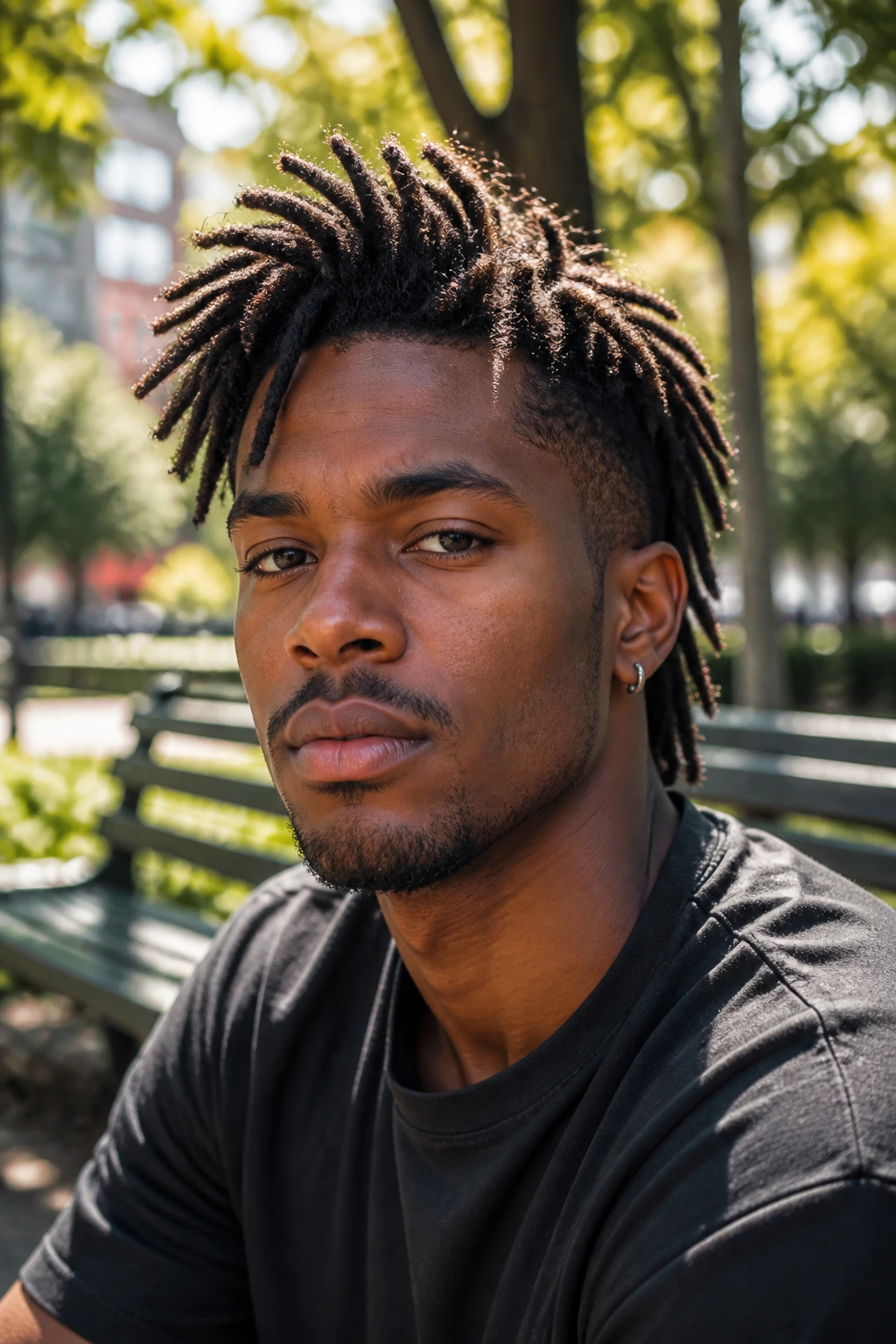
Faux hawk locs do the same visual job as a mohawk, but without the commitment of shaved sides. The hair is pushed toward the center and lifted, leaving the edges softer and more flexible. That means you can wear it up for a sharp look, then let it fall later without waiting for the cut to grow out.
This style suits men who like movement more than rigidity. It gives height at the crown, keeps the sides from getting too wide, and can be done with clips, a few pins, or a simple tie. The trick is not to overdo the product. Too much gel makes the locs hard and shiny in a way that reads more stiff than styled.
Use it when you want the mohawk shape but still need a gentler haircut underneath.
12. Crown Ponytail Locs
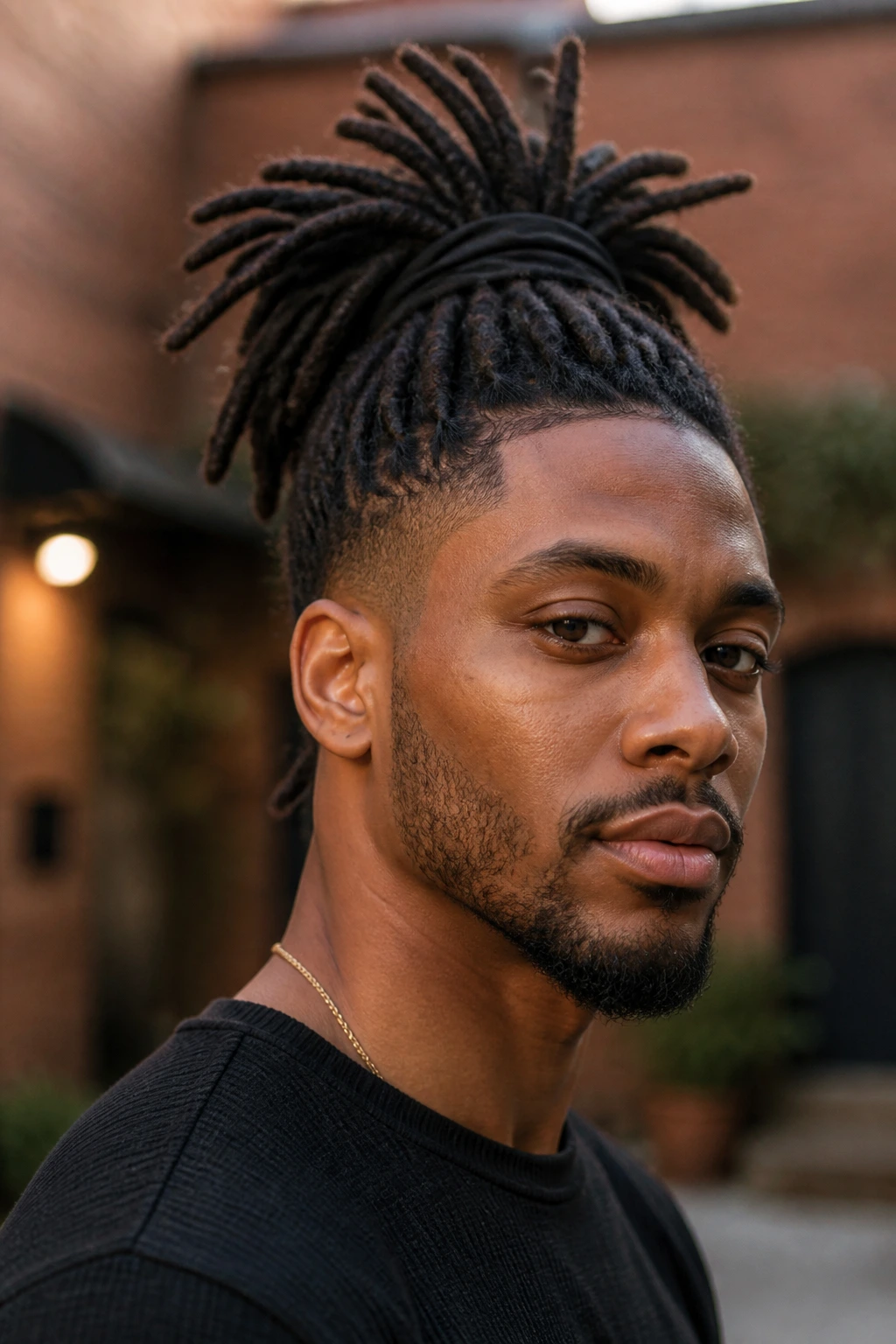
Crown ponytail locs pull the hair upward at the highest point of the head, which changes the whole attitude of the style. The neck opens up. The jaw reads stronger. The locs hang with more bounce than they do in a low tie, and the style looks cleaner than a random knot sitting wherever the band landed.
The crown placement matters. Too far back and the ponytail sags. Too far forward and it starts looking awkward. The sweet spot is high enough to lift the face, but not so high that it feels like the hair is reaching for the ceiling. A wrapped band or a strong fabric tie works better than a thin elastic, especially if the locs are long and heavy.
This is one of the better styles for men who want a polished athletic look without cutting anything off.
13. Low Ponytail Locs
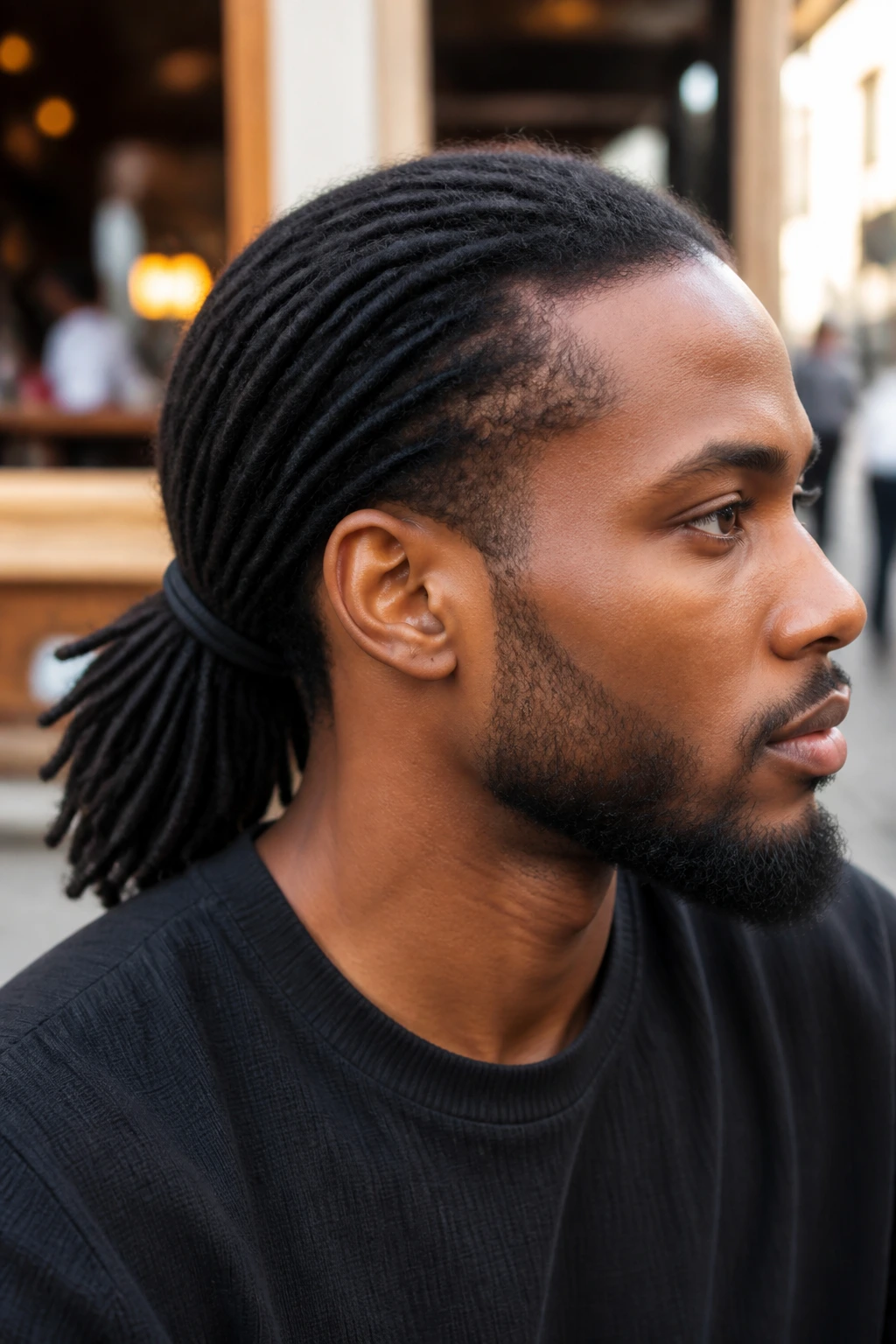
Low ponytail locs are plain, and that’s exactly why they work. They sit at the nape, stay out of the way, and keep the silhouette long and neat. There’s no drama in them. Just control.
Why It Works
The low position keeps tension off the crown and temples, which makes this a more forgiving tie-back style than a high knot. It also sits well under coats, collars, and some hats. If your locs are thick, a low ponytail is often the least annoying option for all-day wear.
- Best for medium to long locs.
- Use a soft band that won’t leave a crease.
- Keep the parting simple; this style looks better when it isn’t overcomplicated.
Best move: Let a few locs fall loose around the ears if you want the style to feel less severe.
14. Crisscross Loc Wraps
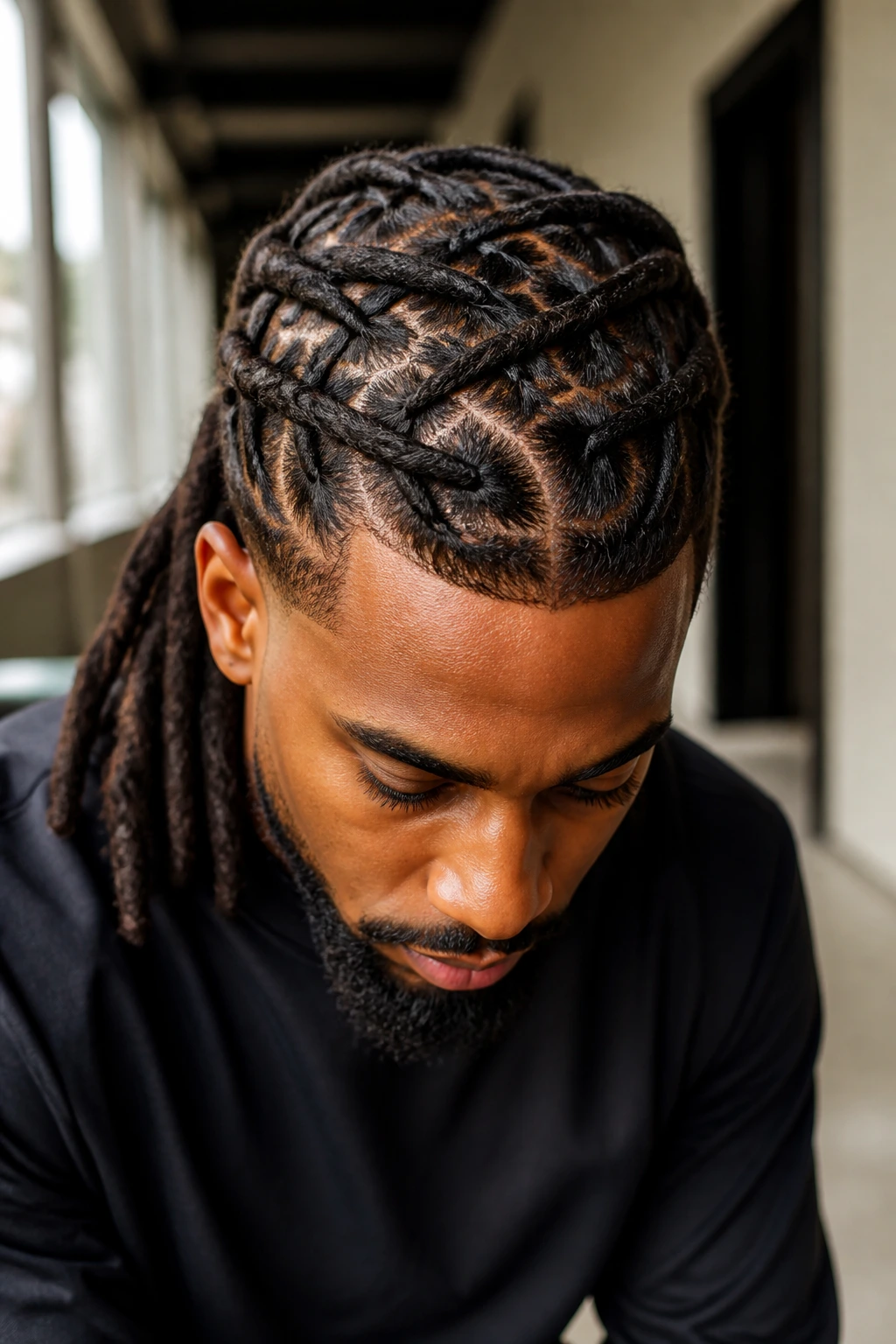
Crisscross loc wraps are for days when the hair needs to look styled on purpose. Sections cross over each other, creating a pattern that feels a bit more detailed than a basic bun or ponytail. The result can look formal, artistic, or both, depending on how tight the wrap sits.
The look works best on medium to long locs with enough length to fold and secure without forcing the ends into ugly bends. A few pins placed in hidden spots usually hold better than one giant tie. If the locs are heavy, anchor the wrap near the middle of the head so the weight is balanced instead of dragging backward.
This is not the fastest style in the room. But when it’s done cleanly, it has real presence.
15. Side-Swept Curtain Locs
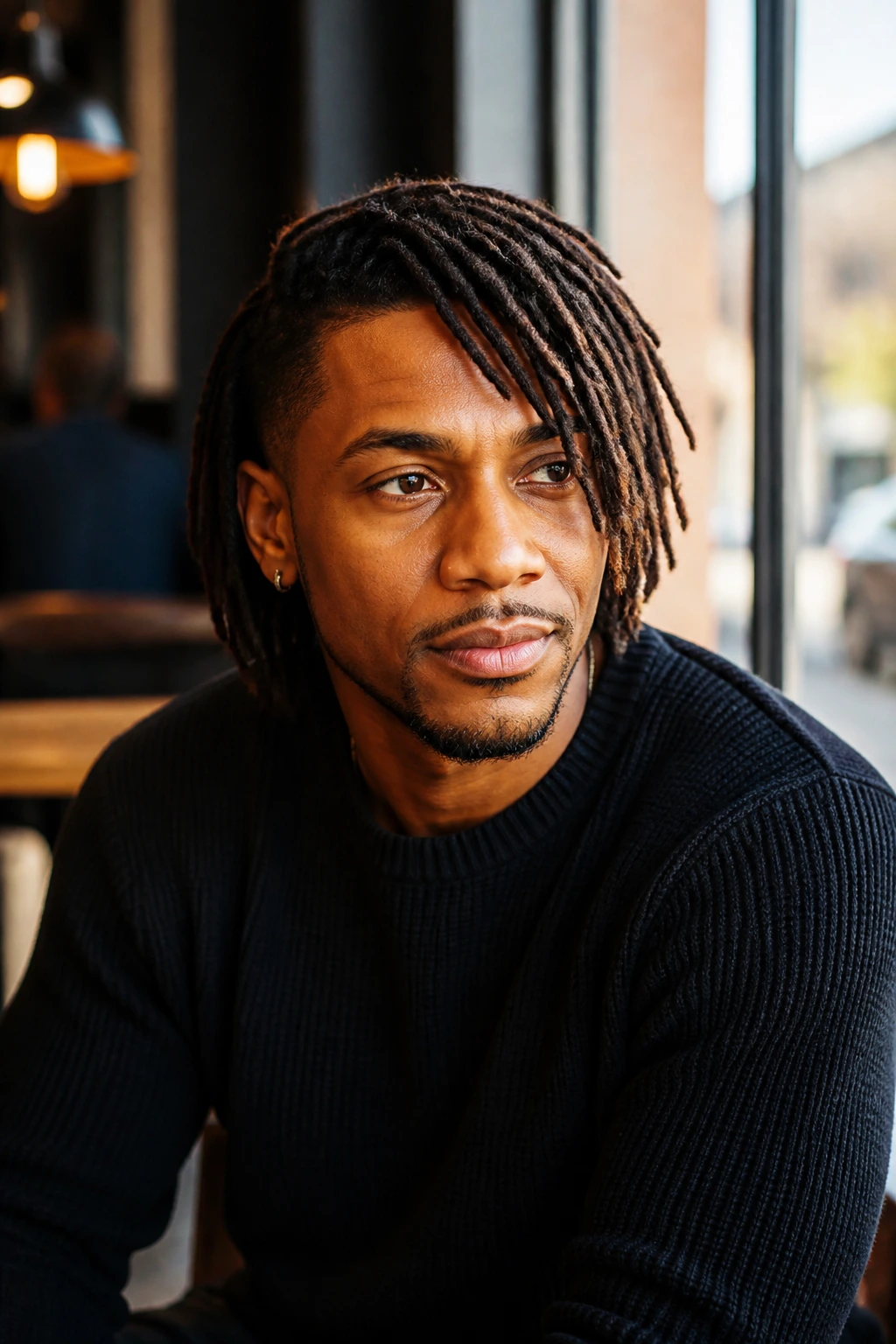
Side-swept curtain locs fall diagonally across the forehead and toward one side of the face, and that simple shift changes the whole expression. The look softens sharp lines, hides a high forehead if you want that, and gives the locs a little movement without requiring a full updo.
The part is what makes it. A side-sweep that starts too far back can feel accidental; one that starts too close to the center can look too fussy. A little volume at the root helps here. If the locs are pressed flat, the curtain effect disappears and you’re left with a side part that doesn’t do much.
This style works nicely when you want a quieter look than a bun or mohawk but still want the hair to have direction.
16. Short Starter Locs
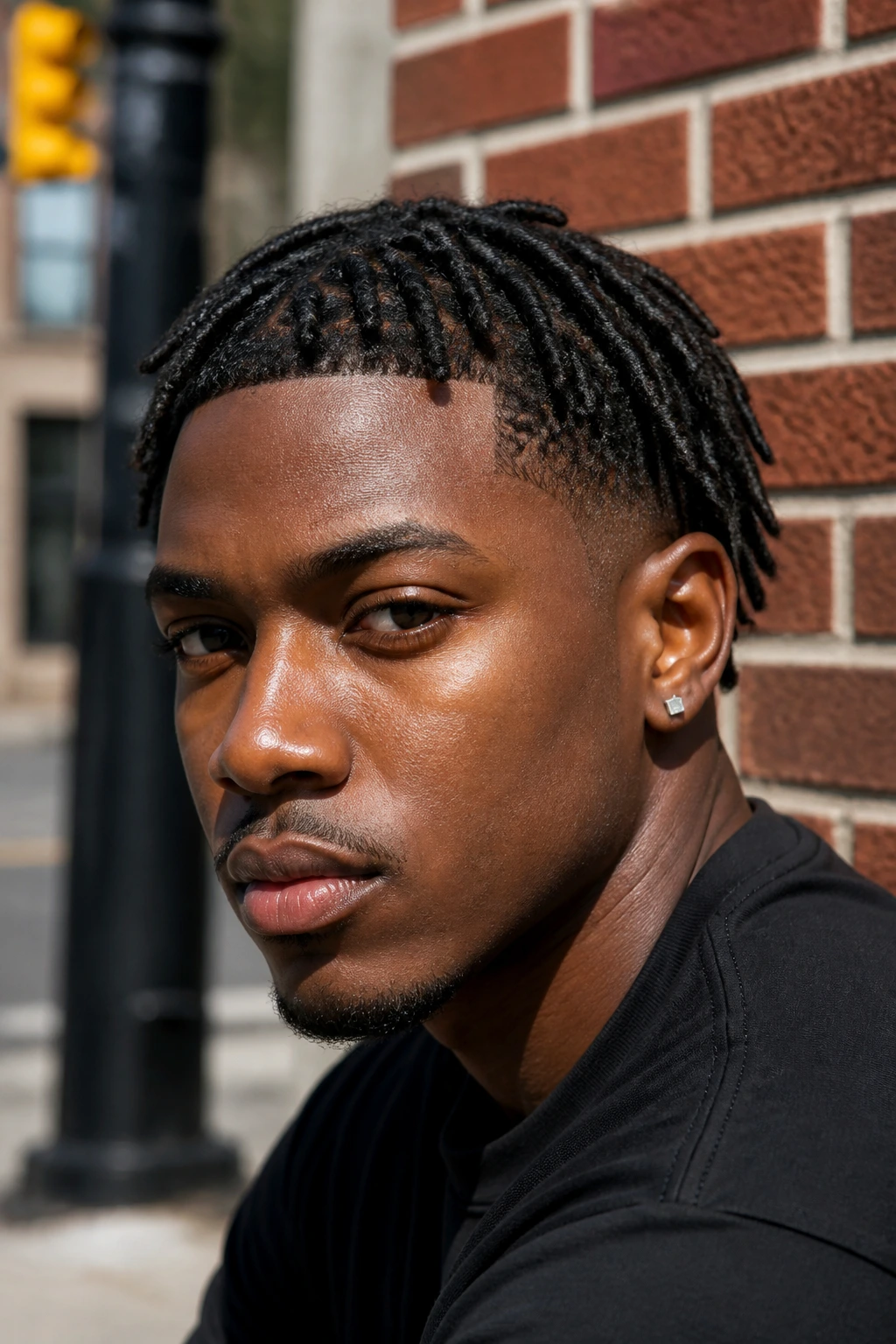
Short starter locs are all about patience and shape. The length may not give you much to work with yet, but the parting, size, and clean edges already tell the story. That’s why men with short locs should care more about the outline than about trying to force a style that belongs to longer hair.
The cleanest move is usually a sharp line-up with uniform sections. Tiny twists, coils, or interlocked starters all look better when the parts stay even. If the roots are too loose or the sizes are all over the place, the style can look unfinished rather than intentionally short.
It’s a good stage to keep things simple. Clean roots. Moist scalp. No heavy wax. Let the locs grow into the style before you ask them to perform tricks.
17. Mid-Length Hanging Locs
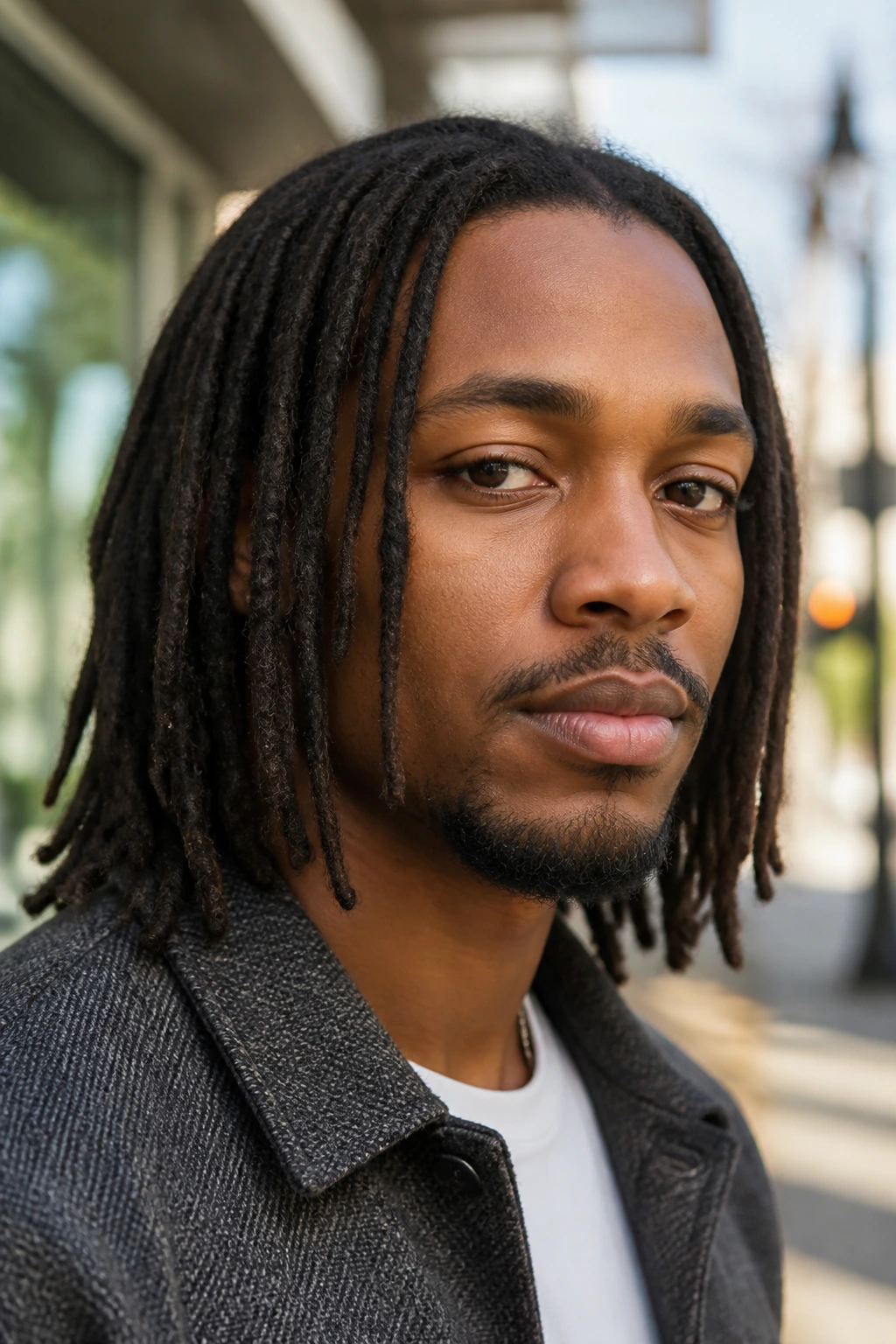
Mid-length hanging locs are the awkward in-between stage that can either look fantastic or look like a phase you haven’t figured out yet. The difference is shape. When the locs fall to the jaw, chin, or upper collar, the silhouette starts to matter much more than it did when they were shorter.
What Makes Them Work
Mid-length locs need a little discipline at the roots and a little freedom at the ends. If they’re too tight, the hair looks stiff. If they’re too loose, the shape gets puffy and wide. A light retwist or fresh palm roll usually gives this stage enough order to feel deliberate.
- Tuck them behind the ears for a cleaner face frame.
- Let them drop forward when you want a softer line.
- Keep the ends even so the length reads as intentional, not random.
Best move: Don’t rush this stage. It’s where a lot of good styles are born.
18. Freeform Locs
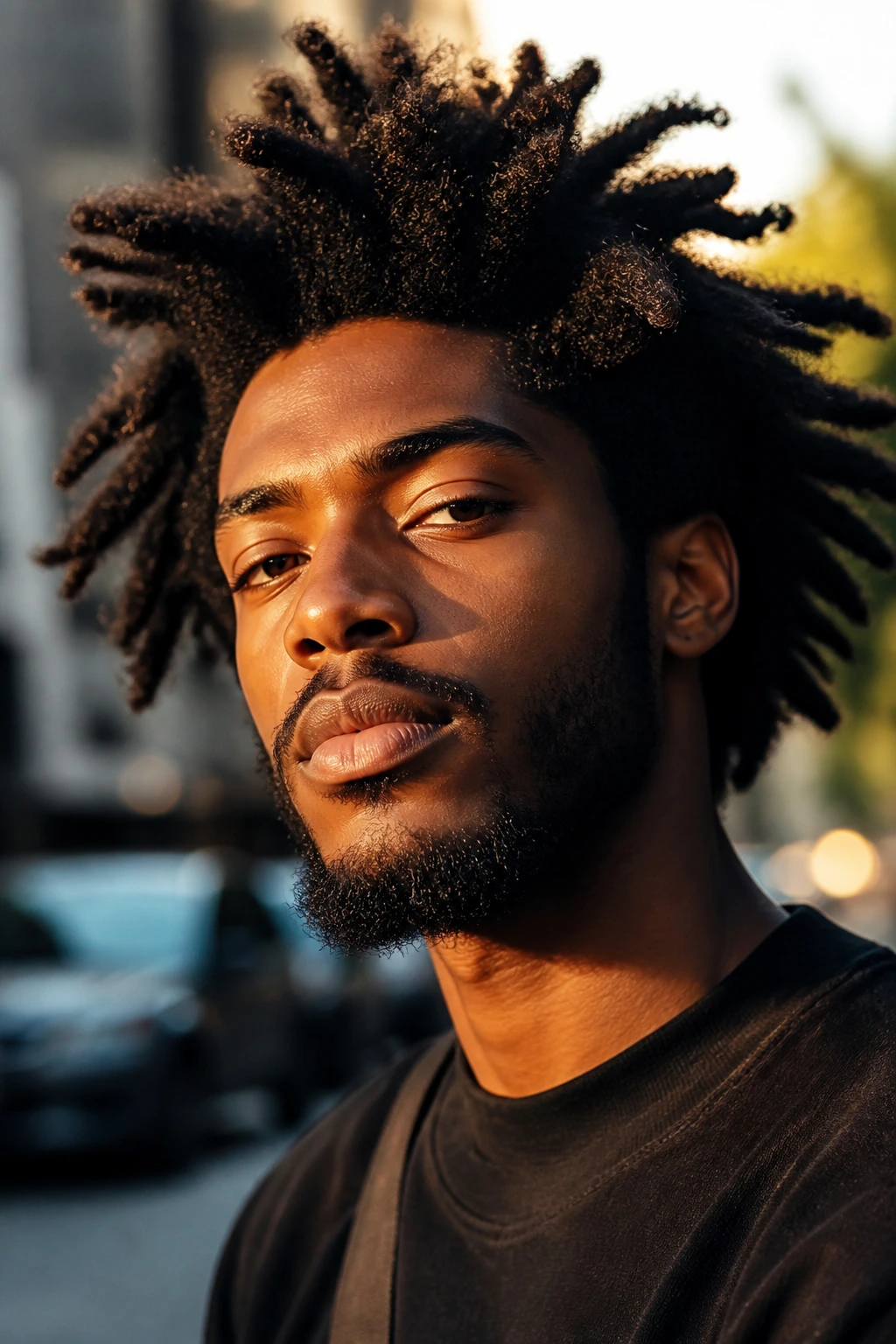
Freeform locs are the opposite of over-managing. The sections form with less manipulation, so each loc develops its own texture and thickness. That irregularity is the whole point. They look lived-in, a little wild, and often more personal than tightly groomed styles.
The tradeoff is obvious: you give up some control. But you get movement, shape changes, and a style that doesn’t look like it came from a ruler. If you choose freeform locs, accept that the silhouette will be uneven in places. That unevenness is not a flaw. It’s the identity of the style.
This look suits men who don’t want to babysit their hair every week. It also wears well with beards, because the relaxed loc shape balances the stronger jawline nicely.
19. Wicks
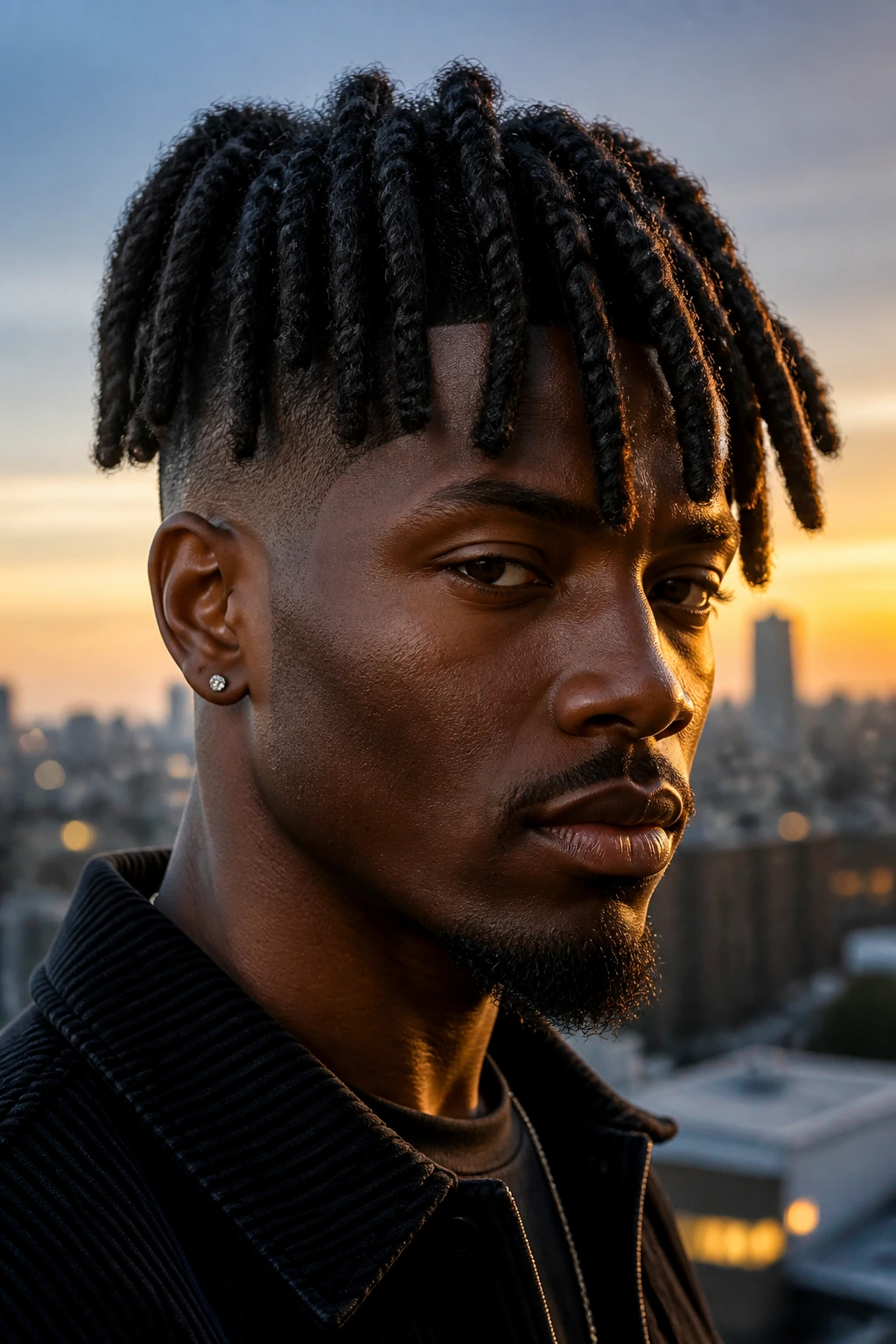
Wicks are bold by nature. The locs are thick, column-like, and usually separated into chunky sections that stand out immediately. The style has real weight to it, both visually and physically, so the cut around the sides and neckline should stay clean or the whole thing can look too heavy.
Why It Works
Wicks create a strong vertical pattern, which makes the head look taller and the hair feel sculptural. That thickness makes them easy to spot from across the room, which is part of the appeal. They are not subtle, and they do not try to be.
- Best when the roots are strong and healthy.
- Needs careful sectioning so the columns stay even.
- Works better with regular scalp care because the size can hide buildup.
Best move: Keep the perimeter sharp. When wicks get a clean edge-up, they look powerful instead of bulky.
20. Microlocs
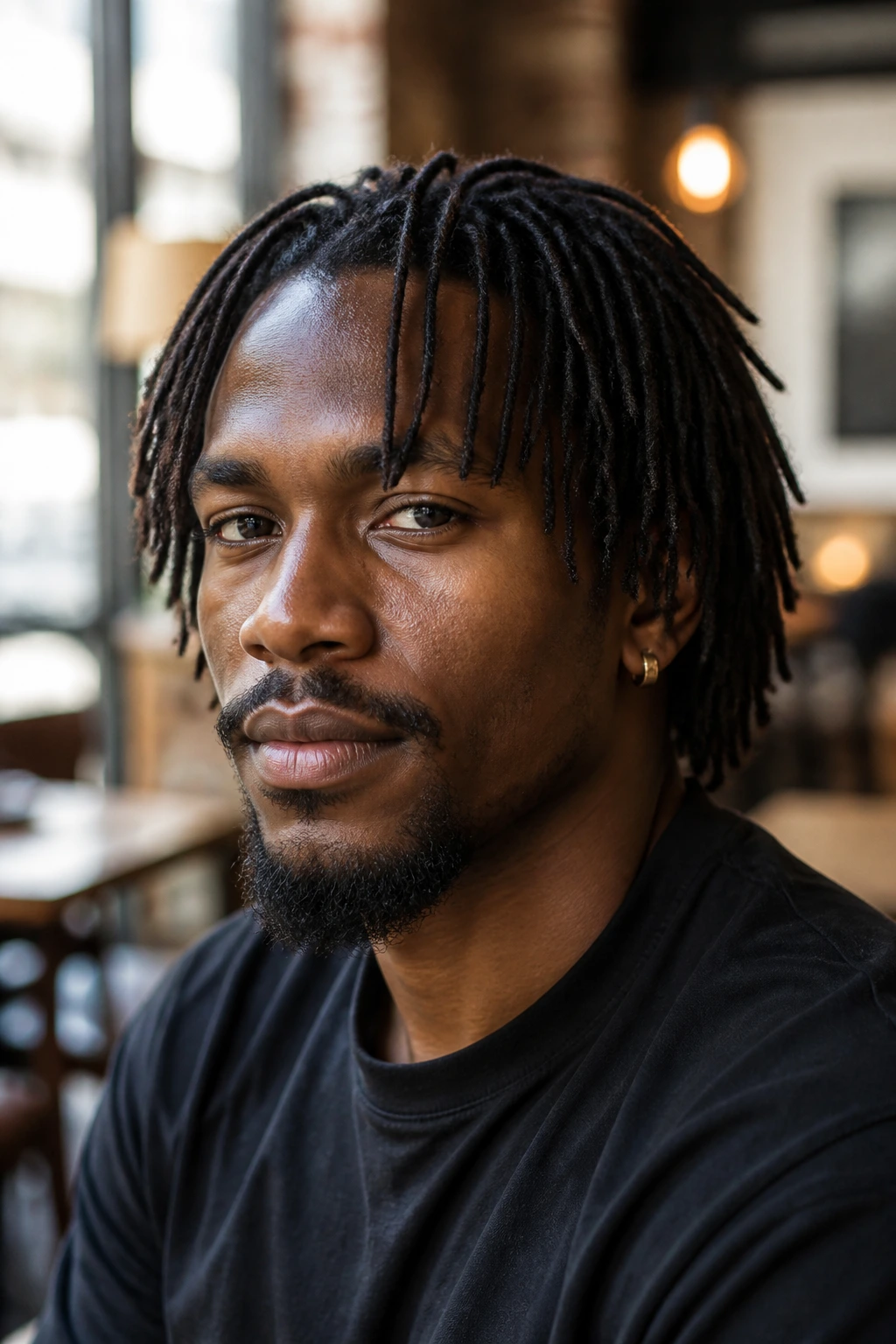
Microlocs are for men who want a lot of styling options in a small package. Because the locs are thinner, they move more freely, stack more neatly, and can be worn up, down, or braided with less bulk than larger locs. The flip side is maintenance — more sections mean more time.
They are a smart pick if you like neatness and don’t mind paying for it with extra upkeep. Thin locs often look cleanest when the parts are maintained well and the scalp stays free of buildup. Heavy products show up fast on microlocs, so light sprays and light oils win here every time.
If you want loc styles for men that can shift from formal to casual without looking oversized, microlocs are one of the most flexible options on the board.
21. Interlocked Locs
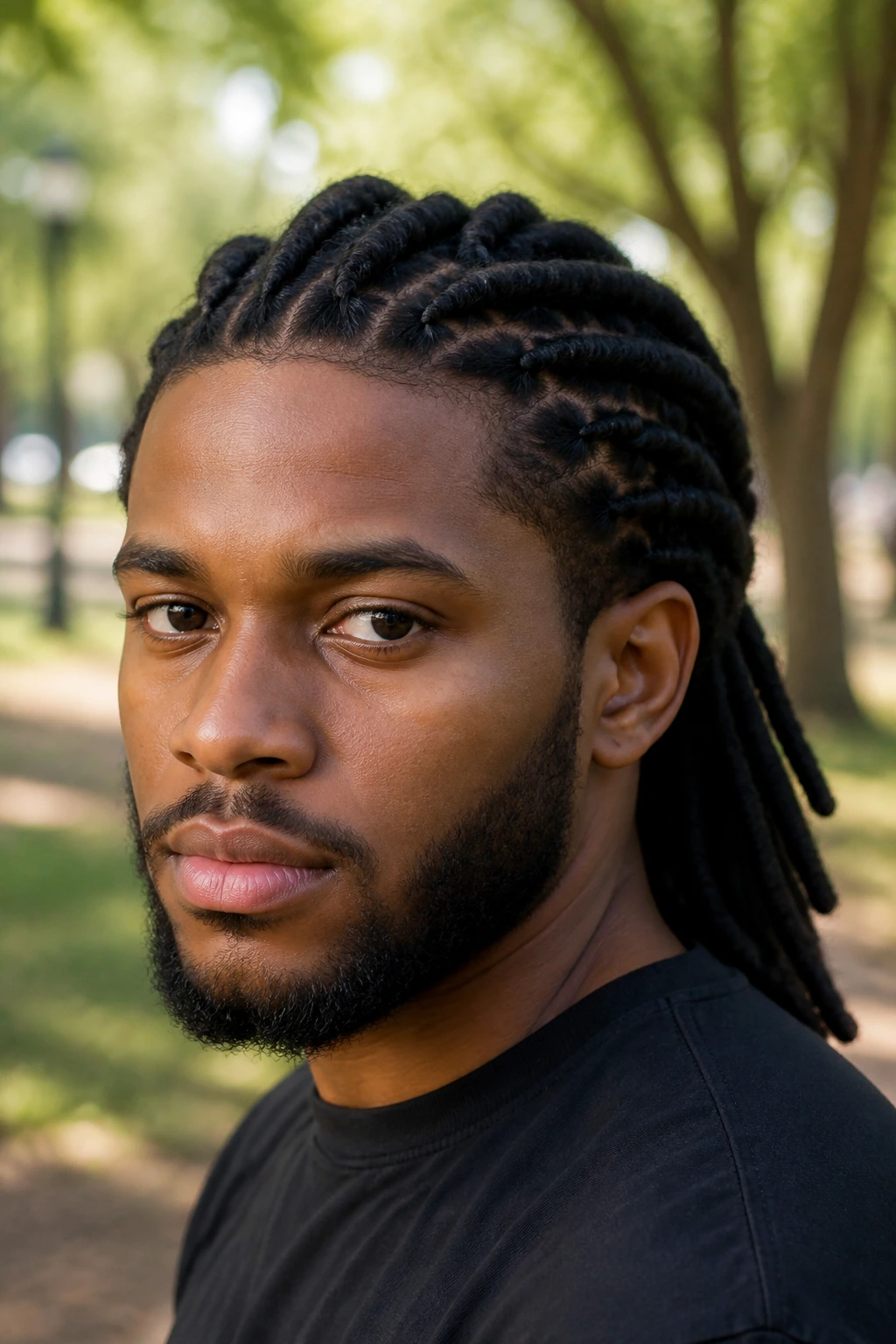
Interlocked locs have a tight, anchored root that stays neat longer than a lot of other styles. The pattern at the scalp is part of the appeal, because it gives the hair a clean, grid-like finish that looks controlled even when the locs themselves are long and loose.
Do they take longer to set up? Yes. That’s the cost. But once the roots are in place, the style can hold its shape through more wear and fewer touch-ups. That makes it useful for men who hate the look of frizzy roots and want a style that keeps its lines longer between maintenance sessions.
How to Wear It
Use this style when you want the scalp to look tidy from day one. It pairs well with a neat beard and a sharp line-up because the whole head reads structured. The look is less relaxed than freeform and less heavy than wicks, which gives it a nice middle ground.
22. Twisted Crown Updo
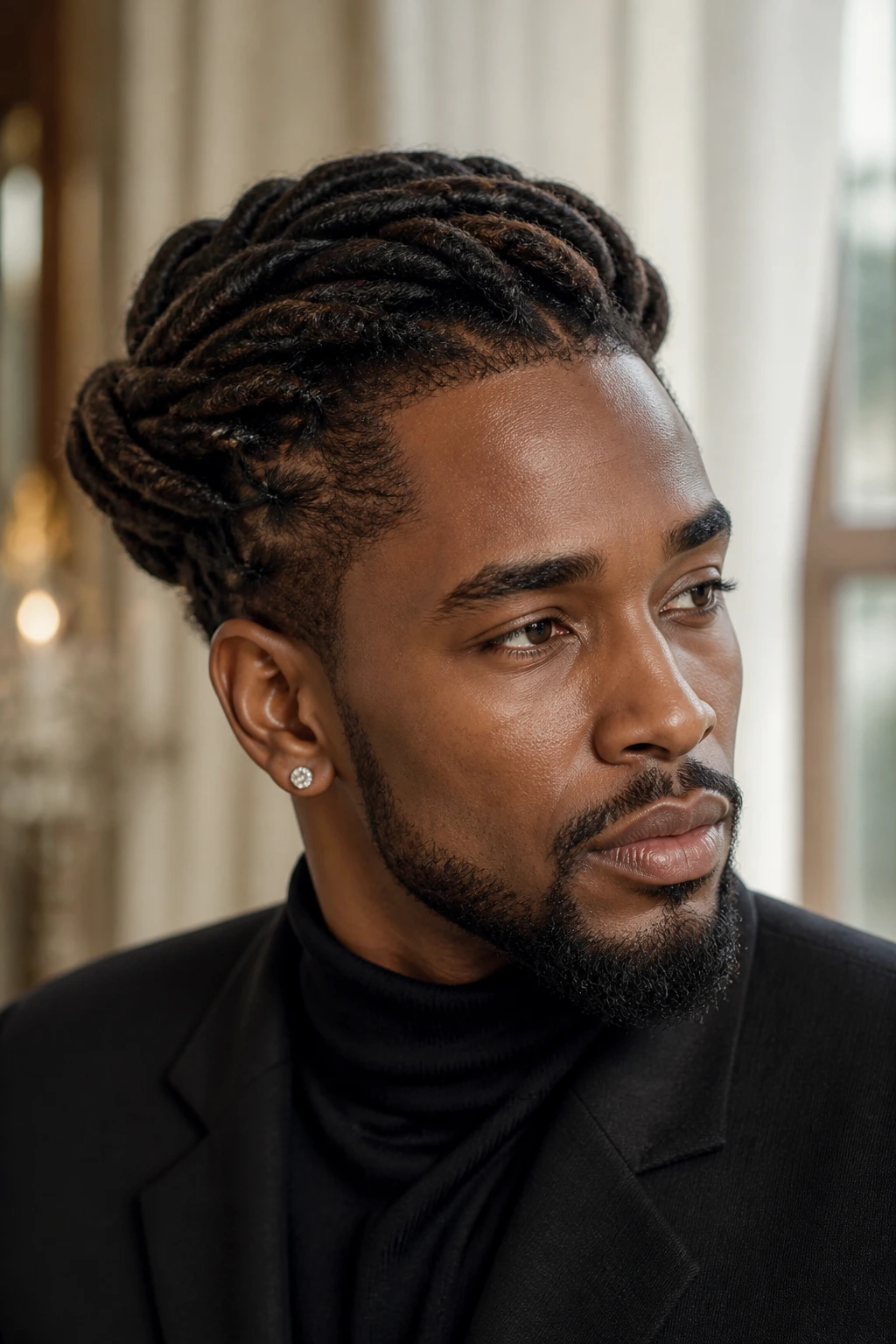
Twisted crown updos move the locs around the head in a circular path, almost like a wrapped halo or a coiled band. It’s a formal look, but not a stiff one. The texture of the locs keeps it from feeling too polished, which is a good thing. Hair that neat can sometimes look fake. This one doesn’t.
The style works best when the sections are even and the crown sits flat enough to hold without wobbling. Pins or discreet ties should disappear into the shape. If you can see every fastening point, the updo loses its magic. Keep the front edges tidy and the wrap smooth, and the rest can have a little texture.
It’s the kind of look that shows up well in photos, but it also holds up in real life, which matters more.
23. Headwrap Locs
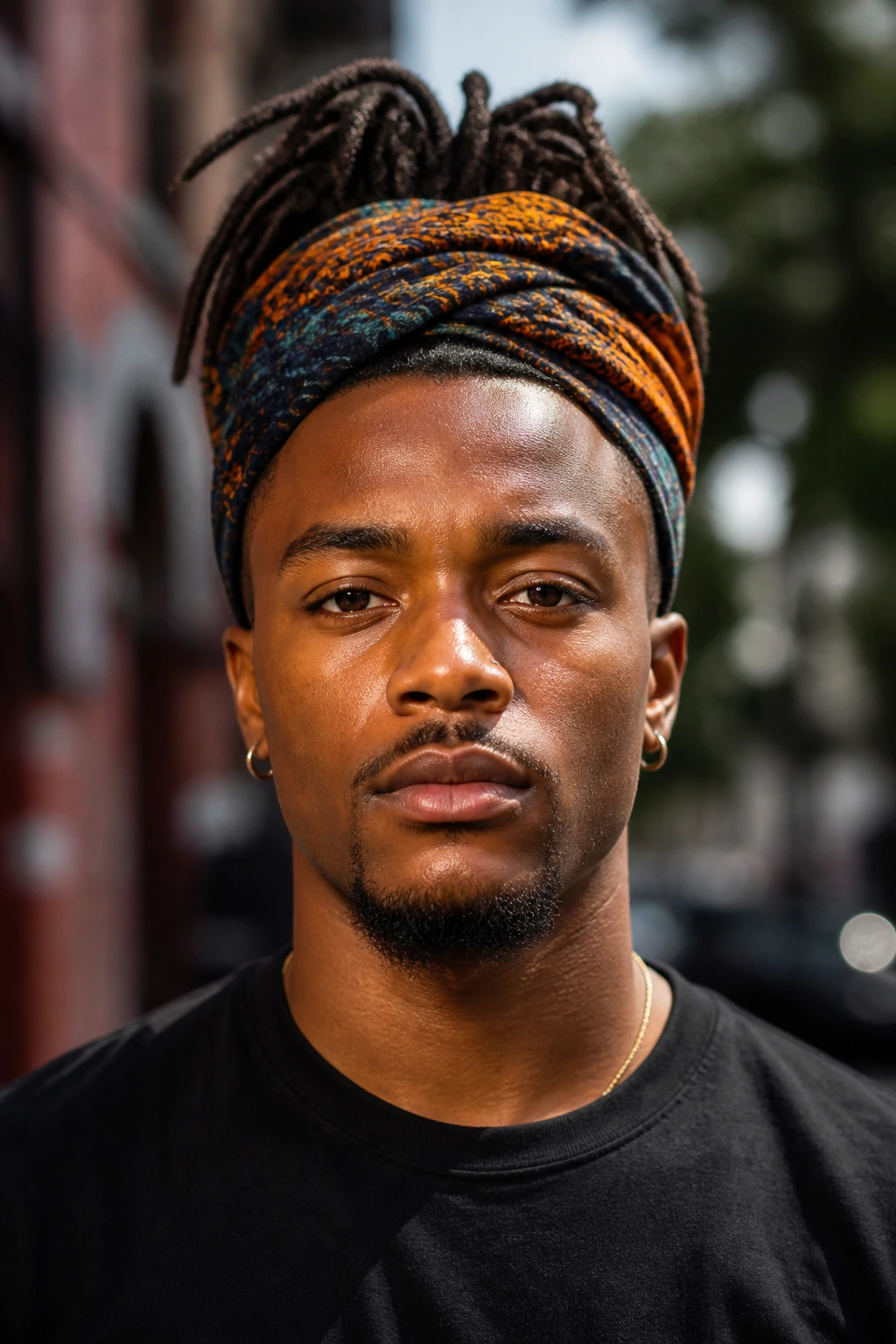
Headwrap locs are practical and clean, and I wish more men used them without worrying about whether the look is too styled. A scarf or wrap changes the whole frame instantly. It can calm down a fresh retwist, protect the hair on a hot day, or cover locs that need a break from the weather.
The wrap works best when it’s tied with enough pressure to stay in place but not enough to leave a deep line across the forehead. Cotton can breathe, but silk or satin feels kinder against the hairline. If the locs are bulky, keep the wrap a little higher so it does not squeeze the crown flat.
This is one of the easiest ways to switch a loc style from casual to intentional without touching the locs themselves.
24. Beaded-End Locs
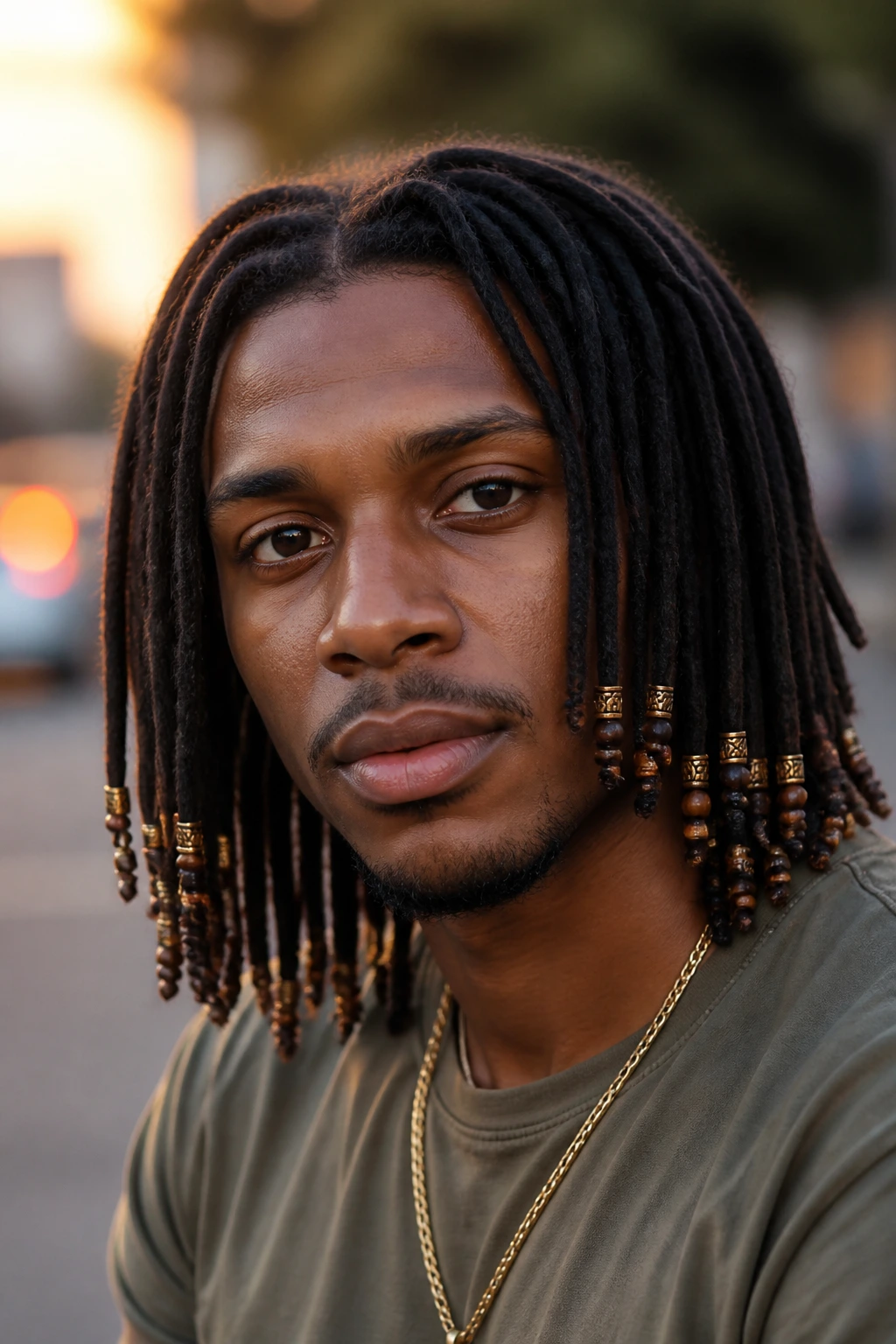
Beaded-end locs give the hair a bit of sound, weight, and movement at the bottom. That tiny detail changes the whole look more than people expect. A few beads near the ends can make longer locs feel dressed without making the whole head feel busy.
The key is restraint. Too many beads, or beads too high up the shaft, can pull on the locs and make the style look cluttered. The best version keeps the accents near the tips and uses them like punctuation, not decoration thrown everywhere. Wood, matte black, and metal all behave differently. Choose based on the clothes you wear most.
This is a strong option if you want a loc style with personality but do not want to change the cut or color.
25. Cuffed Locs
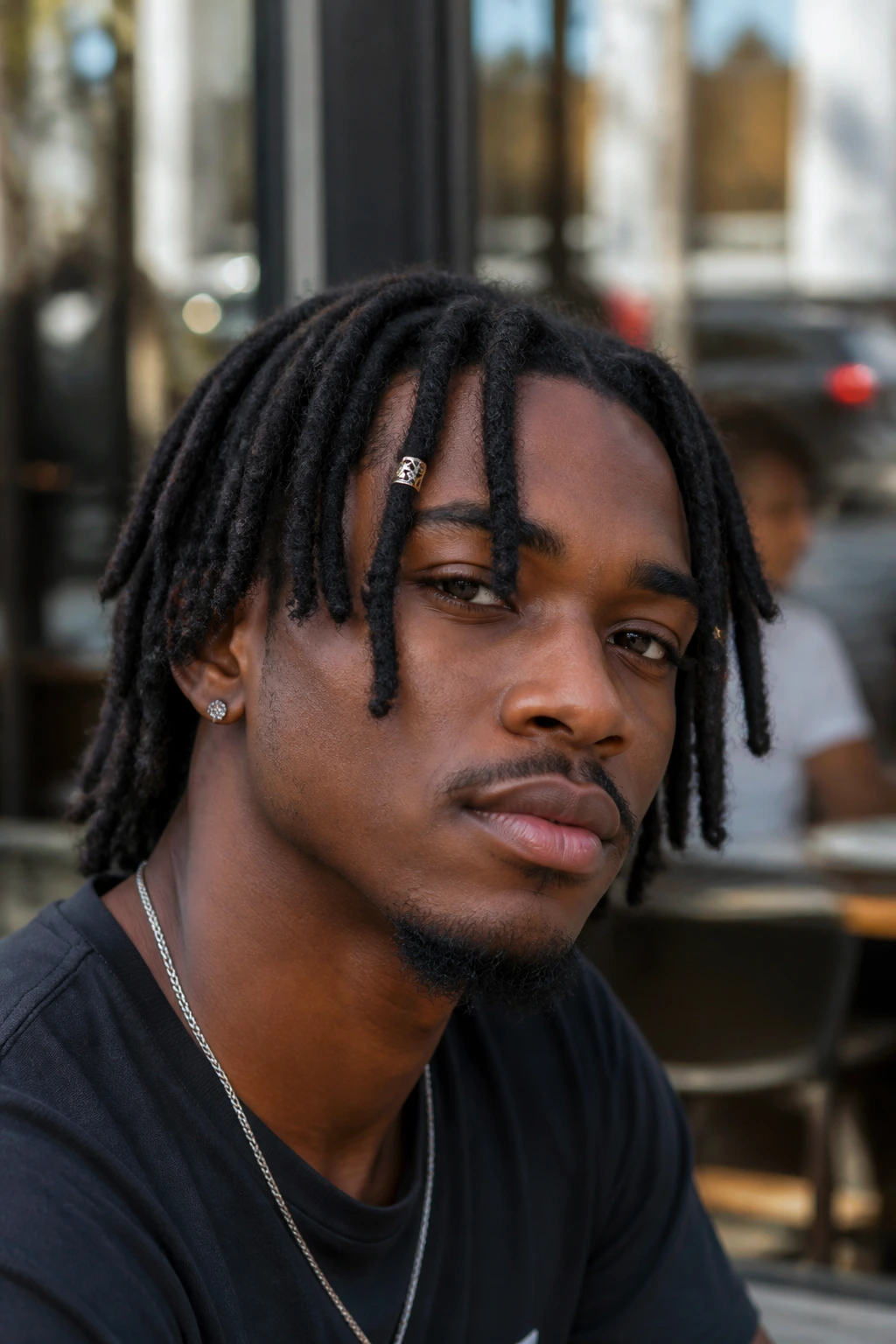
Cuffed locs are the opposite of subtle, but in a good way. The cuffs catch the eye in small flashes, which works especially well when the locs swing or get tied back. A few cuffs can make a plain style feel finished, while too many can tip it into costume territory. The trick is not to overdo the shine.
Why It Works
The cuffs add structure without changing the shape of the locs themselves. That makes them useful if you like your current cut but want a small visual upgrade. They also play well with fade styles, because the clean sides give the accessories room to stand out.
- Keep the cuffs spaced out, not stacked too close together.
- Use them on mature locs that can handle the extra weight.
- Avoid putting heavy cuffs near weak roots.
Best move: One or two cuffs near the front can do more than a whole row hidden in the back.
26. Dyed-Tip Locs
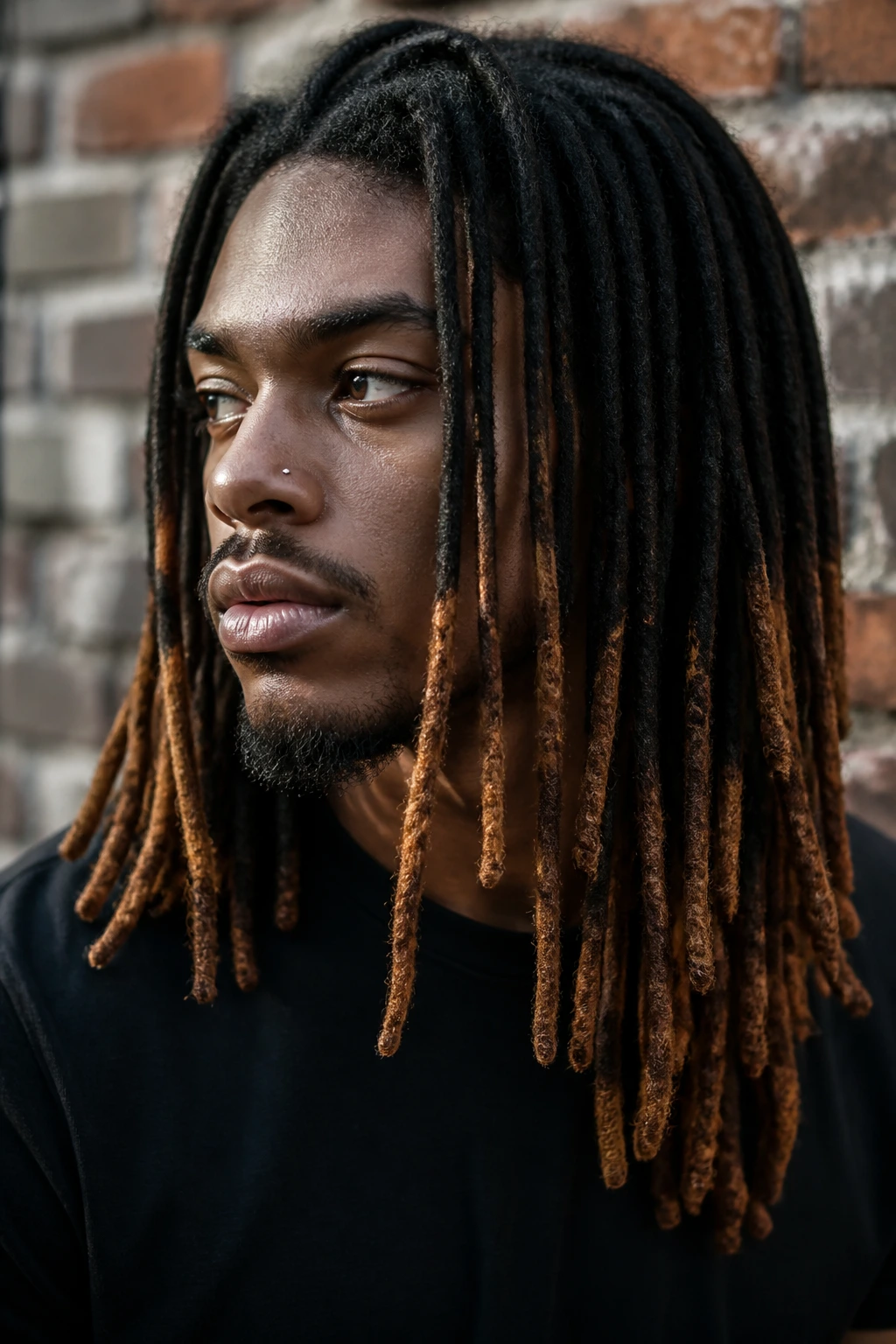
Dyed-tip locs keep the color at the ends, which is smart if you want contrast without bleaching the roots. The look gives the hair a little edge, and because the color stays at the tips, the scalp area remains visually clean. That matters more than people think. Messy roots plus loud color can look unfinished fast.
This style works especially well on longer locs where the ends have enough room to show off the shade. Copper, blond, red, and even muted ash tones can all work depending on your skin tone and wardrobe. Keep in mind that dyed tips need more moisture than natural ends, because colored hair dries out faster and frays sooner.
If you want color but do not want the maintenance of all-over dye, this is the safer lane.
27. Two-Tone Locs

Two-tone locs push the color idea farther by giving the hair a deliberate split or gradient. One shade can live at the roots and another at the ends, or the whole head can fade from dark to light. The look is louder than tip dye, but it can also be cleaner when the blend is handled well.
What to Watch For
The best two-tone styles avoid harsh line breaks unless that contrast is the point. A soft fade between tones looks richer and grows out more gracefully. If you choose a stronger split, make sure the haircut around it stays neat, because the color will pull attention to every uneven edge.
- Works best on mature locs with enough length for a real gradient.
- Needs color-safe shampoo and light moisturizing.
- Avoid washing too hot; heat roughs up dyed ends fast.
Best move: Keep the root area darker if you want the style to age calmly between touch-ups.
28. Undercut Locs
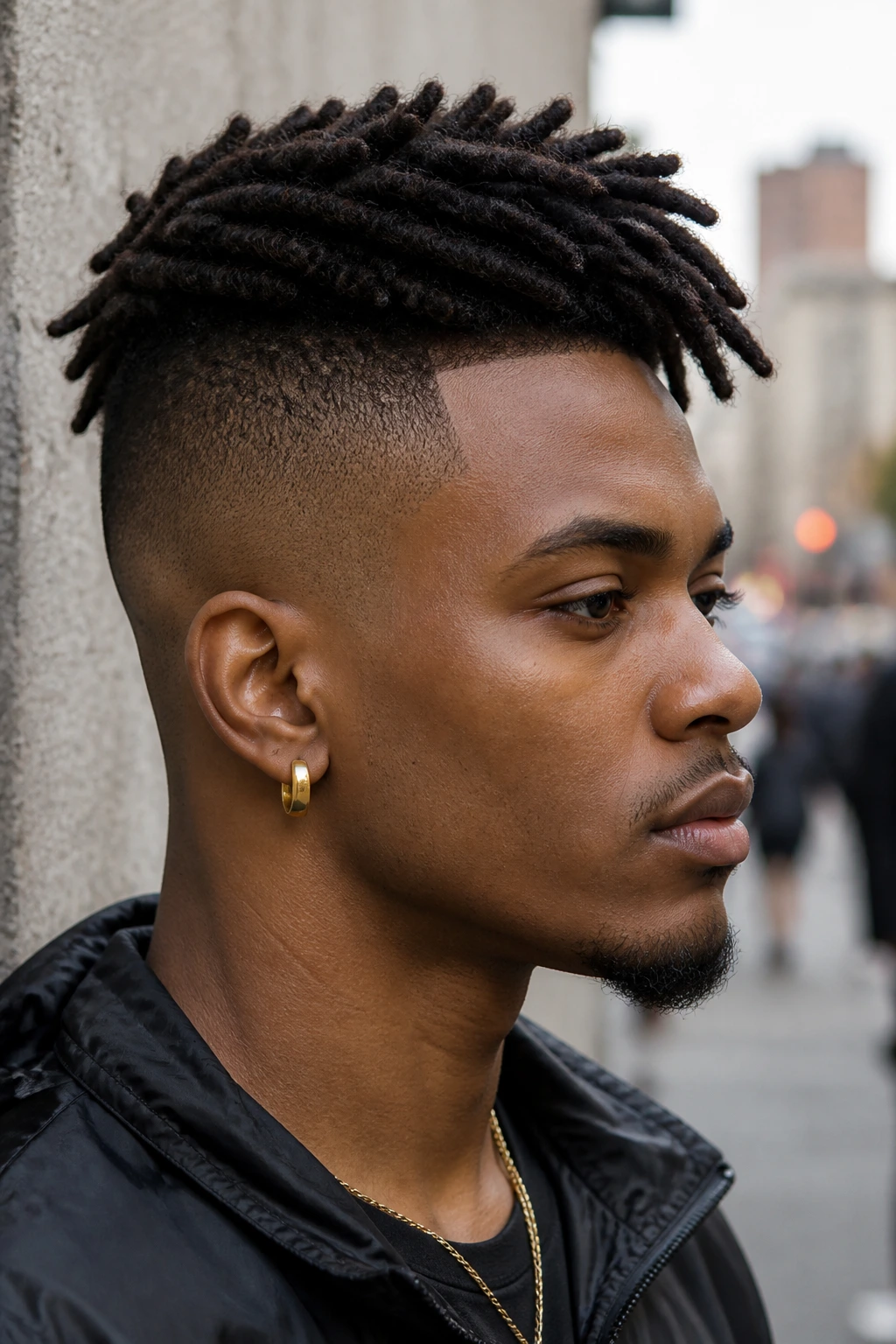
Undercut locs are all about contrast. The top stays full, while the sides and back are cut shorter underneath, which makes the locs feel bigger and more dramatic. The shape is bold, but it’s also practical because the undercut reduces bulk where hair tends to puff out the most.
The look lands best when the top is dense enough to justify the contrast. Thin locs on an undercut can look a little lost. Thick locs, on the other hand, get a nice lift and can be worn loose, tied back, or pushed over one side. The undercut also makes summer heat more manageable. No mystery there. Less hair around the neck helps.
If you want a style that changes the head shape fast, this one does it with a single haircut.
29. Temple Fade Locs
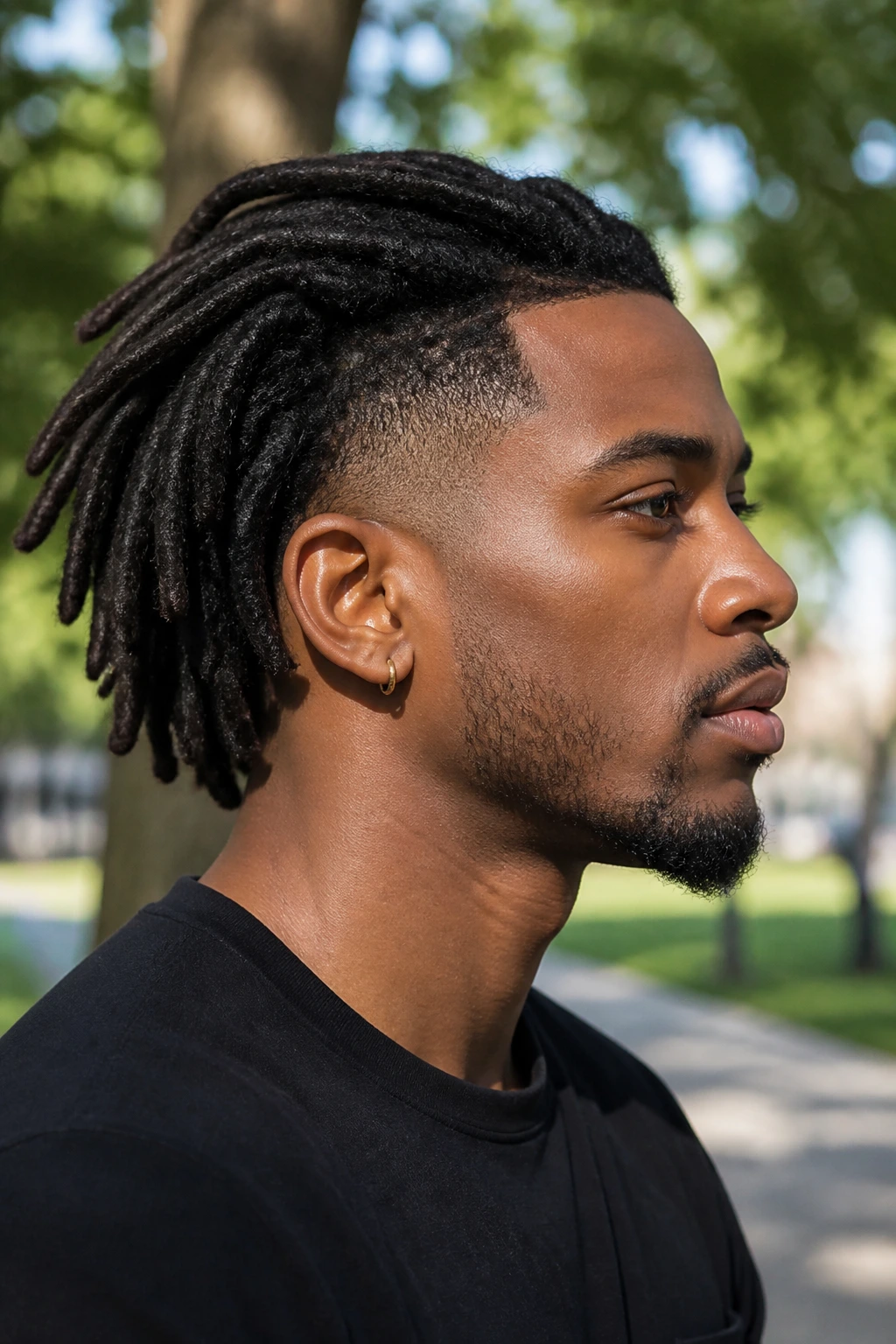
Temple fade locs keep the edges around the temples sharp while leaving the locs themselves to do the heavy work. That small clean zone changes the whole frame of the face. It cuts down on visual bulk, adds shape near the eyes, and keeps the style from looking shaggy at the sides.
The fade should stay low and clean, not climb so high that it competes with the locs. A good temple fade behaves like a border, not a second haircut. This works well for men who want their locs to feel neat without going all the way to a high-top or undercut.
It’s an easy style to live with if you like a barbered look but still want the hair to stay loose and natural through the middle.
30. Burst Fade Locs
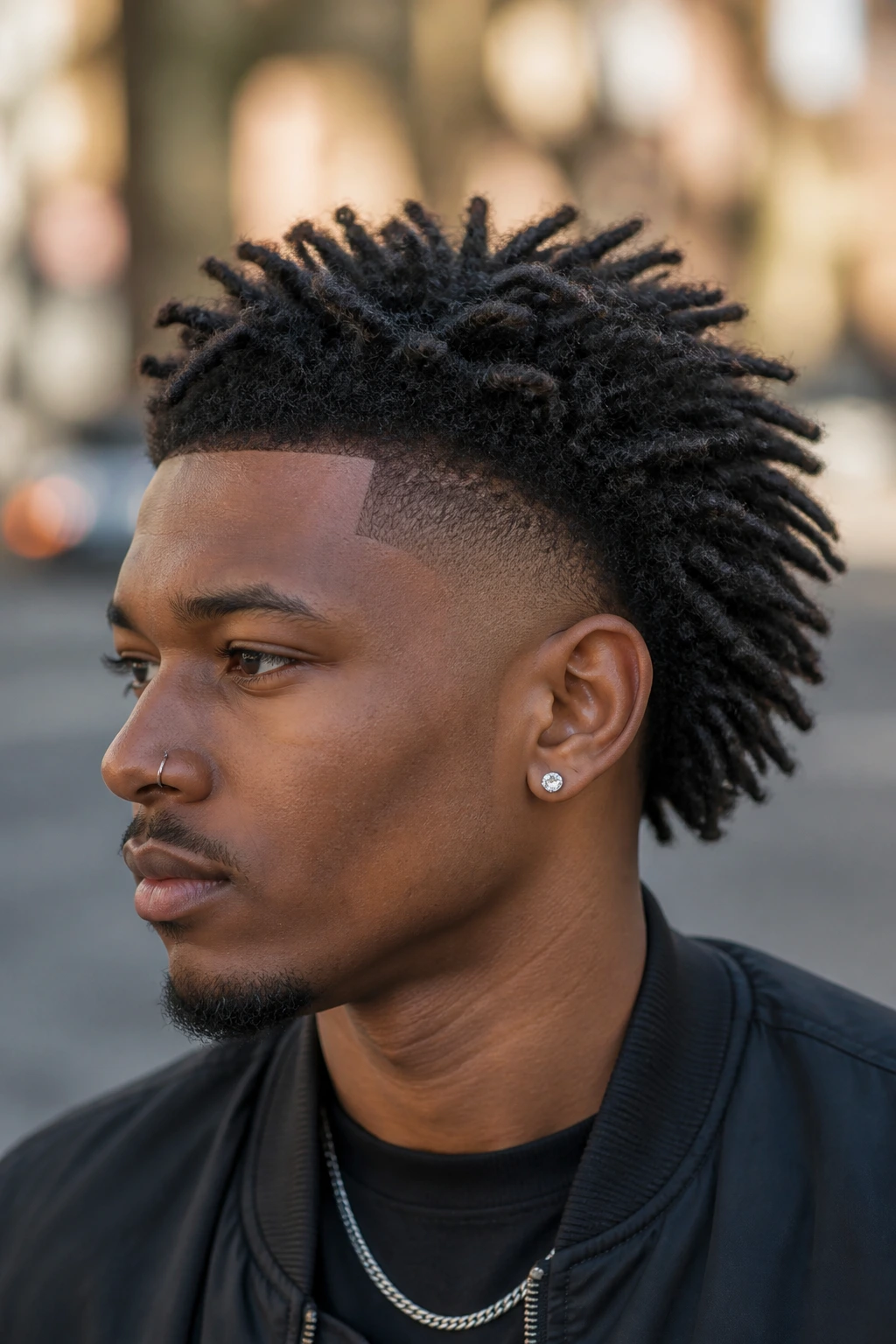
Burst fade locs curve around the ears and flare out in a rounded fade pattern, which gives the style a little more movement than a straight taper. The fade shape follows the head instead of cutting across it in a hard line, and that can make the whole style feel softer while still looking sharp.
This is a good pick for men with thicker locs around the crown or sides, because the burst shape keeps the edges lighter without stripping away too much hair. It also pairs well with ponytails and mohawks, since the fade keeps the sides neat while the top stays flexible.
If a regular fade feels too plain, this one adds a little shape without going overboard.
31. Full Man Bun Locs
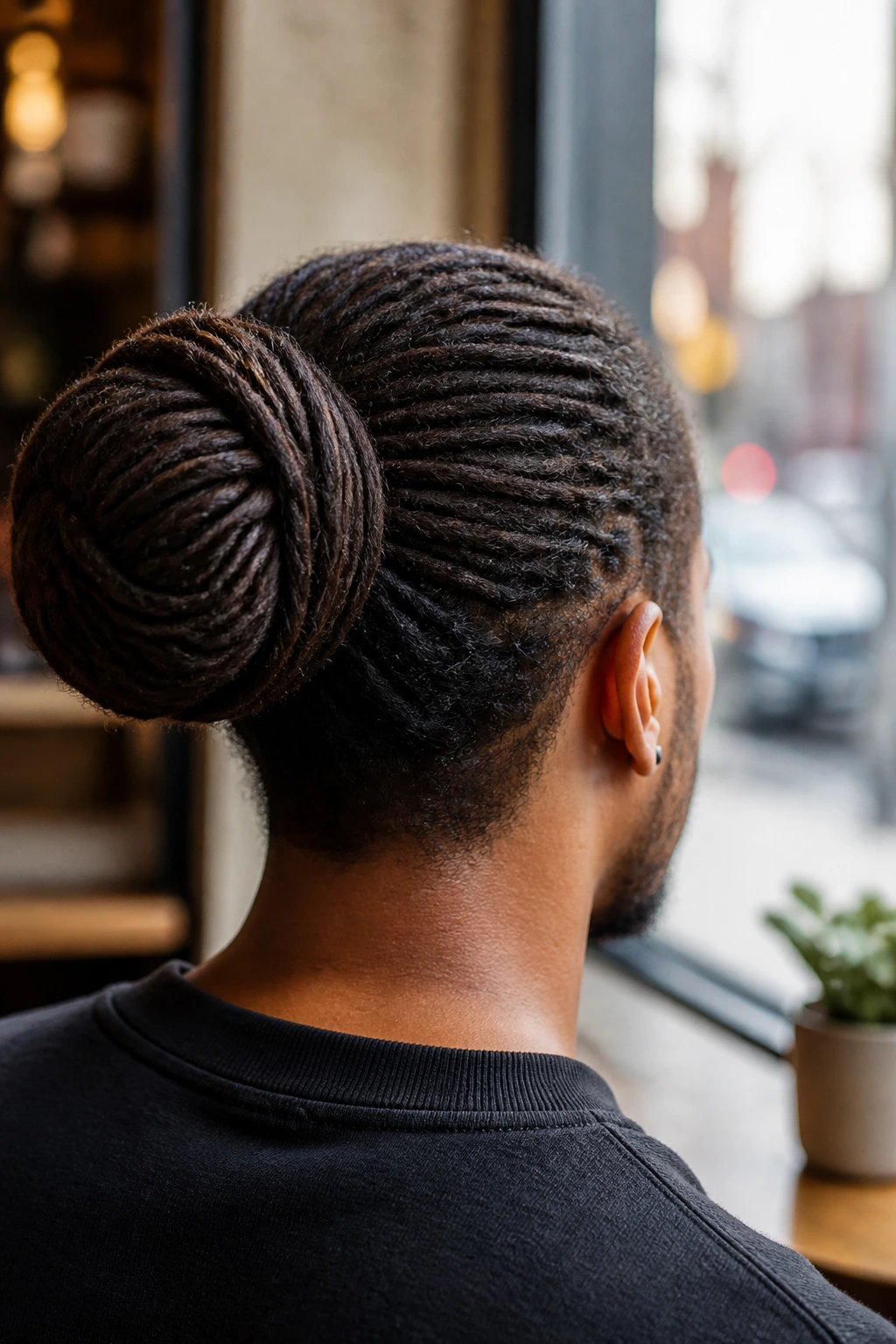
Full man bun locs gather every loc into one knot, usually at the back of the head or slightly above the nape. It is the cleanest way to remove the hair from your face without losing the impression of length. The style looks simple, but that simplicity is why it works.
Why It Works
The bun compresses the volume into one point, which makes the neck and shoulders look more open. That can be useful with collars, jackets, and anything that already creates visual bulk around the upper body. A neat bun also shows off the line of the jaw better than loose hair does.
- Best for long or heavy locs.
- Use a wide tie so the bun does not pinch the roots.
- Keep the sides smooth instead of letting stray locs stick out.
Best move: If the bun sits high and tight, it reads more polished. If it sits low and loose, it reads more relaxed. Pick the mood on purpose.
32. Viking Knot Locs
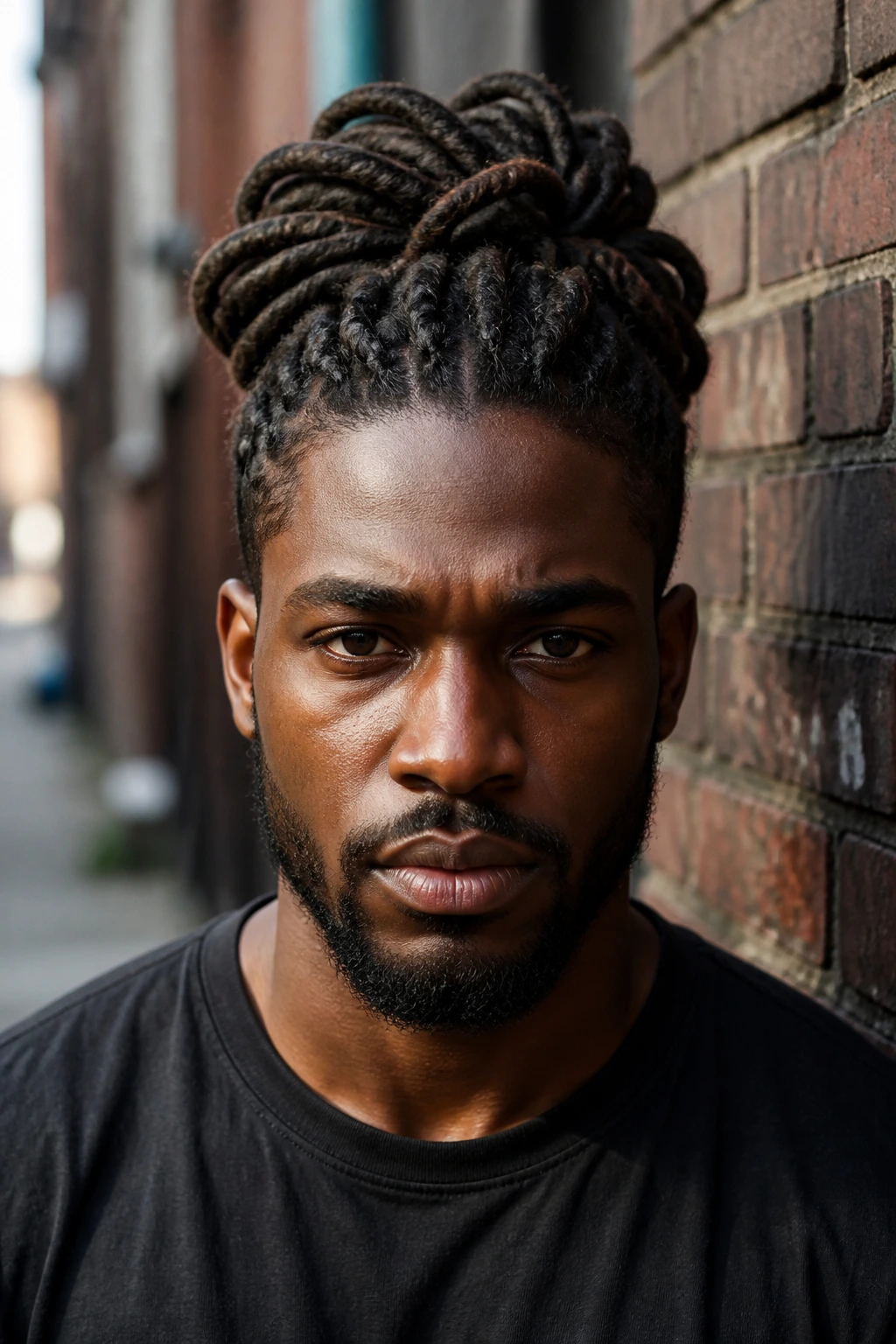
Viking knot locs push the hair up and back into a more rugged shape, usually with some height at the crown and a little looseness around the rest. The style feels older and more dramatic than a standard bun, which is why it has such a strong presence even before you add a beard or undercut.
The thing to watch is balance. Too much volume on top and the head starts looking top-heavy. Too little and the knot loses its point. The best version has enough lift to feel strong but not so much that it looks like the hair is escaping in every direction.
This style works best when you want your locs to look intentional and a little fierce, not tidy and office-safe.
33. Shoulder-Drape Locs
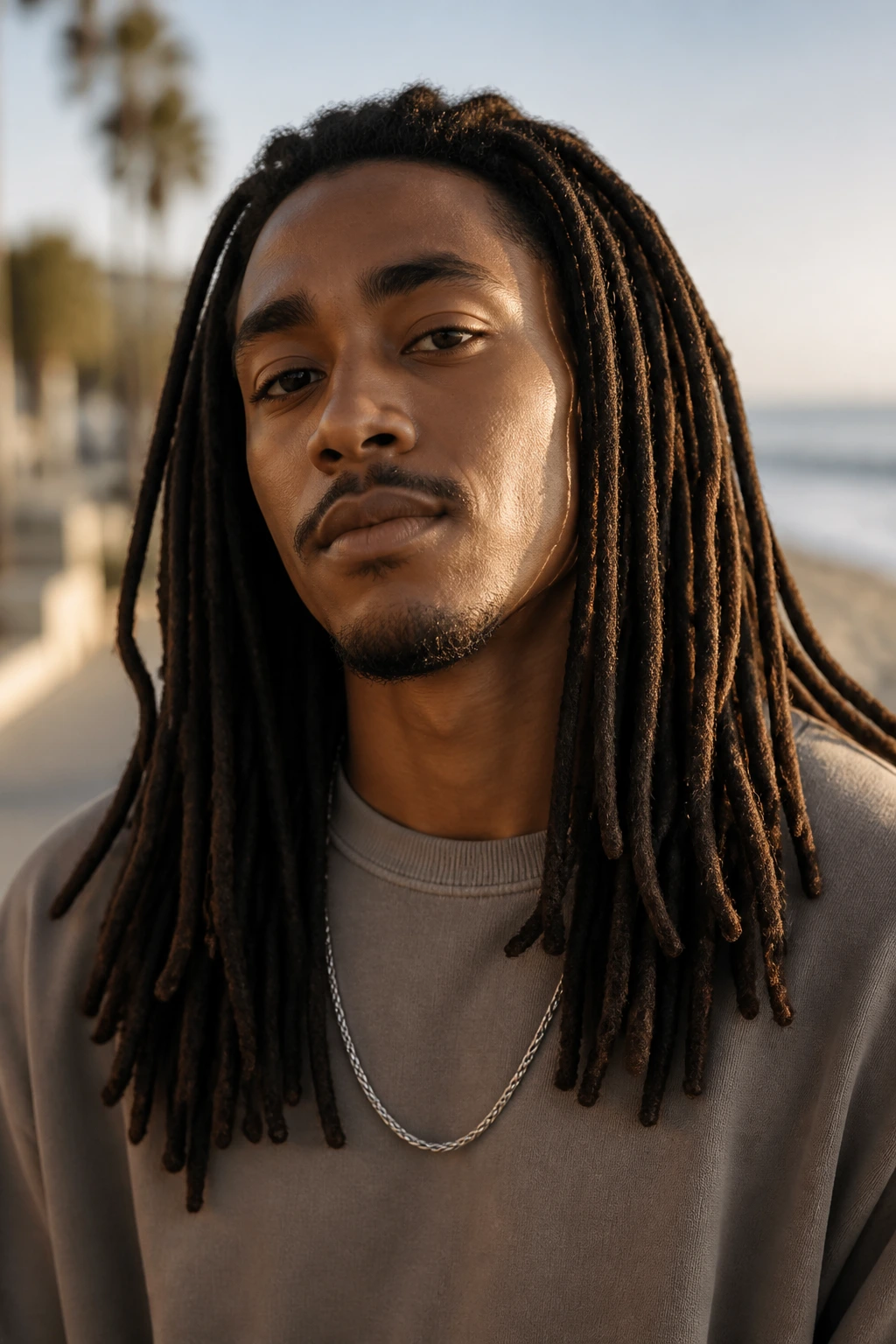
Shoulder-drape locs are long enough to fall over the shoulders instead of sitting behind them, and that changes the body language of the whole look. It softens the line of the neck, frames the chest, and creates a more open, relaxed silhouette. Paired with a beard, it can look balanced in a way shorter styles cannot.
The style depends on length more than anything else. If the locs are too short, they keep sliding back. If they’re too heavy, they can pull forward and crowd the collarbone. The sweet spot is long enough to rest naturally without constant adjustment.
This is one of the better choices for men who want the hair to stay visible without constant styling. It does the work for you.
34. Barrel Roll Crown Locs
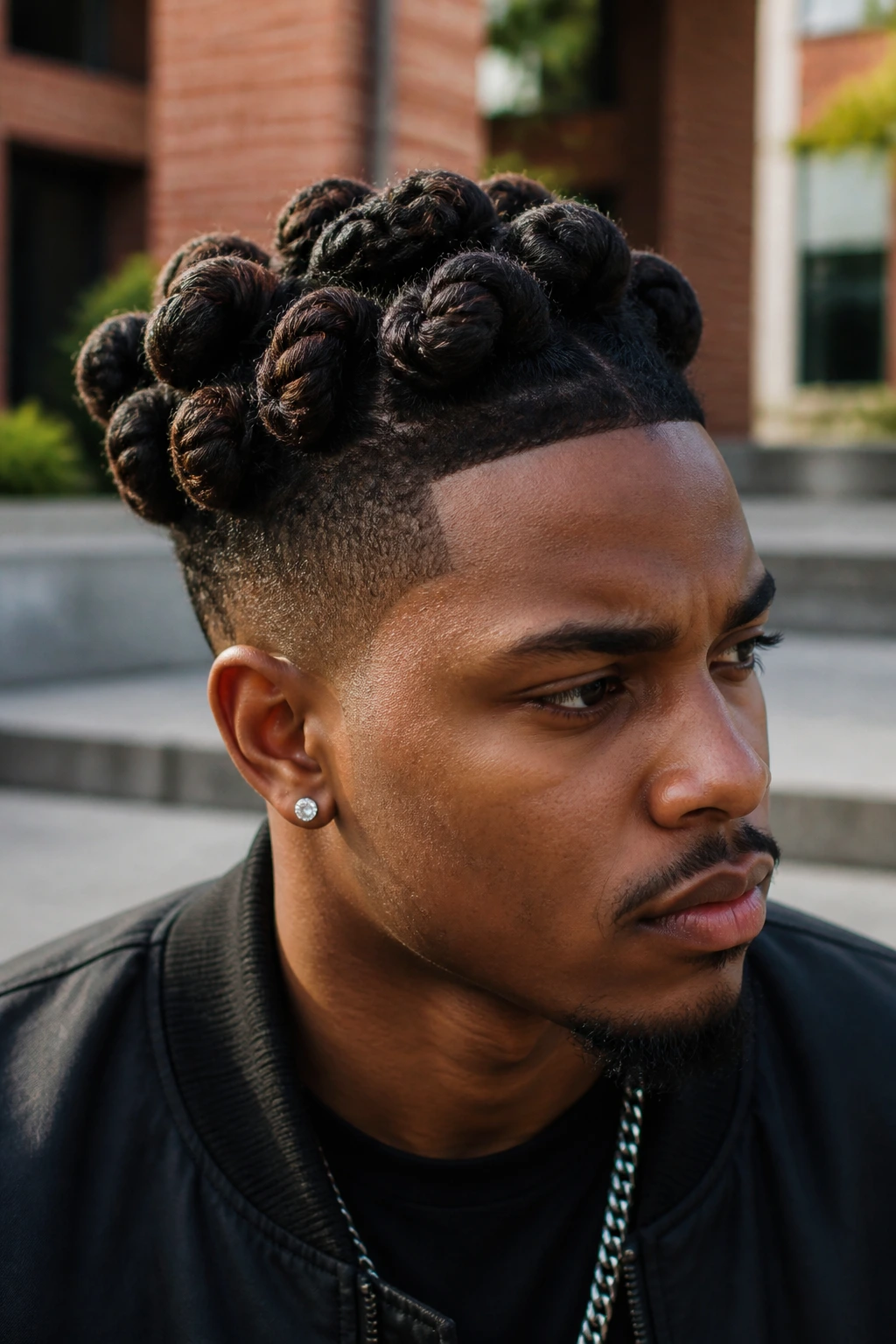
Barrel roll crown locs wrap the hair around the head in rounded sections that feel both old-school and sharp. The pattern gives the crown a raised, circular look, which is useful when you want something more detailed than a bun but less severe than a mohawk.
The style takes patience because the sections need to stay even. If one barrel is larger than the rest, the crown can skew to one side. The payoff is a look that holds its shape and keeps the hair off the face without sacrificing texture.
It suits men who like a structured style with a little visual rhythm. There’s a reason barbers like it. The shape is easy to read, even from a distance.
35. Retro Pomp Locs
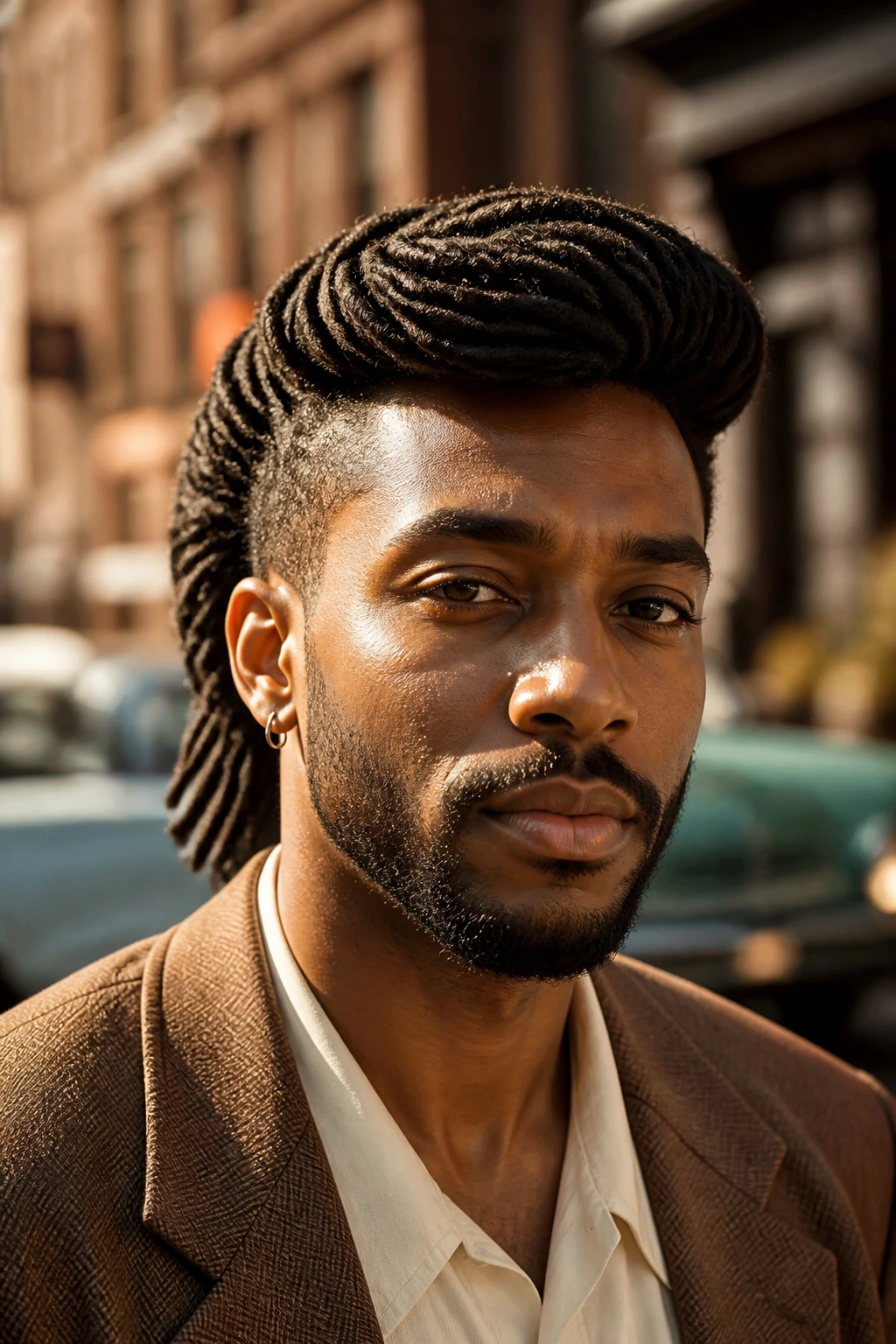
Retro pomp locs lift the front of the hair into a shaped wave or roll while the rest stays controlled behind it. The style borrows a classic outline and gives it loc texture, which creates a cool mix of old and new without feeling forced.
The front needs enough length to hold the lift, and the roots need a little support so the pomp does not collapse. A light foam or setting lotion can help, but too much product ruins the shape and makes the front stiff. Keep the sides neat and the top soft. That contrast is what gives the style its edge.
If you like looks with a little attitude and a little polish, this one has both.
36. Loc Bob With Line-Up
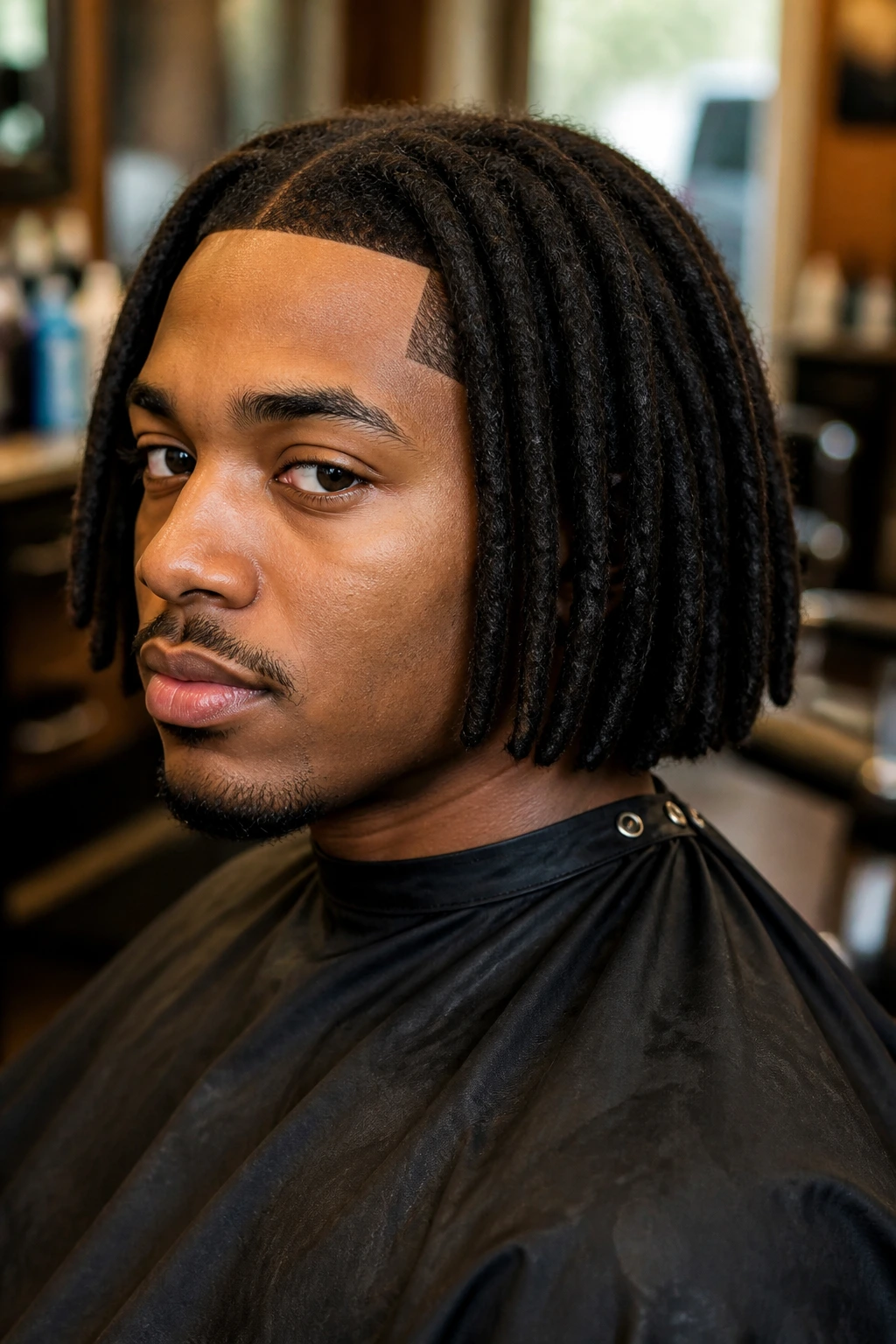
A loc bob with a line-up is one of those styles that surprises men the first time they see it done well. The locs are cut or shaped to jaw length, sometimes a little below, and the line-up around the forehead and temples gives the style a sharp frame. It is clean, deliberate, and much more masculine in practice than people assume.
How to Wear It
This works best when the locs fall evenly and the edges are crisp. If the bob is too uneven, it starts looking accidental. A line-up keeps the silhouette intentional and makes the lower length feel like a choice instead of a transition stage.
- Best for medium-density locs.
- Needs trimming or shaping as the ends settle.
- Looks strong with a beard that has a defined bottom edge.
Best move: Keep the ends healthy. A loc bob lives or dies on neat tips.
37. Slick Side-Part Locs
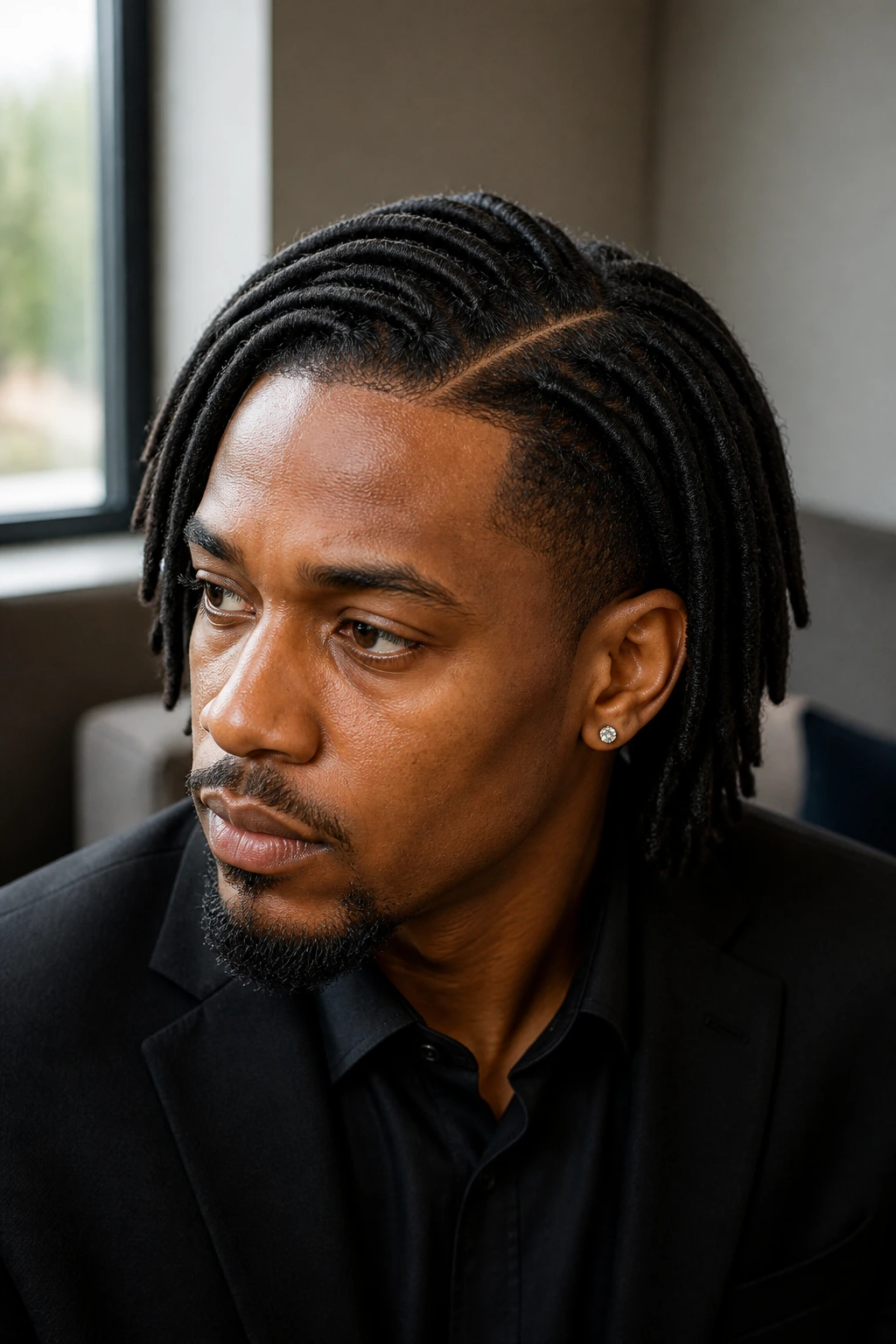
Slick side-part locs feel more dressed than most loc styles for men, and that’s because they tame the texture just enough to create clean direction. The side part keeps the hair from swelling outward, and the finish looks ready for a formal setting without flattening the locs into something unnatural.
Why It Works
The style is strongest when the hold is soft, not crunchy. Heavy gels make locs stick in weird clumps. A lightweight mousse or foam gives you control without turning the hair into cardboard. The side part should be visible, but not carved so deep that it dominates the head shape.
- Best for medium to long locs with enough length to sweep cleanly.
- Works especially well for events, interviews, and dressier nights out.
- Keep the hairline sharp so the side part has a clean frame.
Best move: Tuck one side behind the ear and let the other fall forward. That asymmetry keeps it from looking too rigid.
38. Loose Weekend Locs
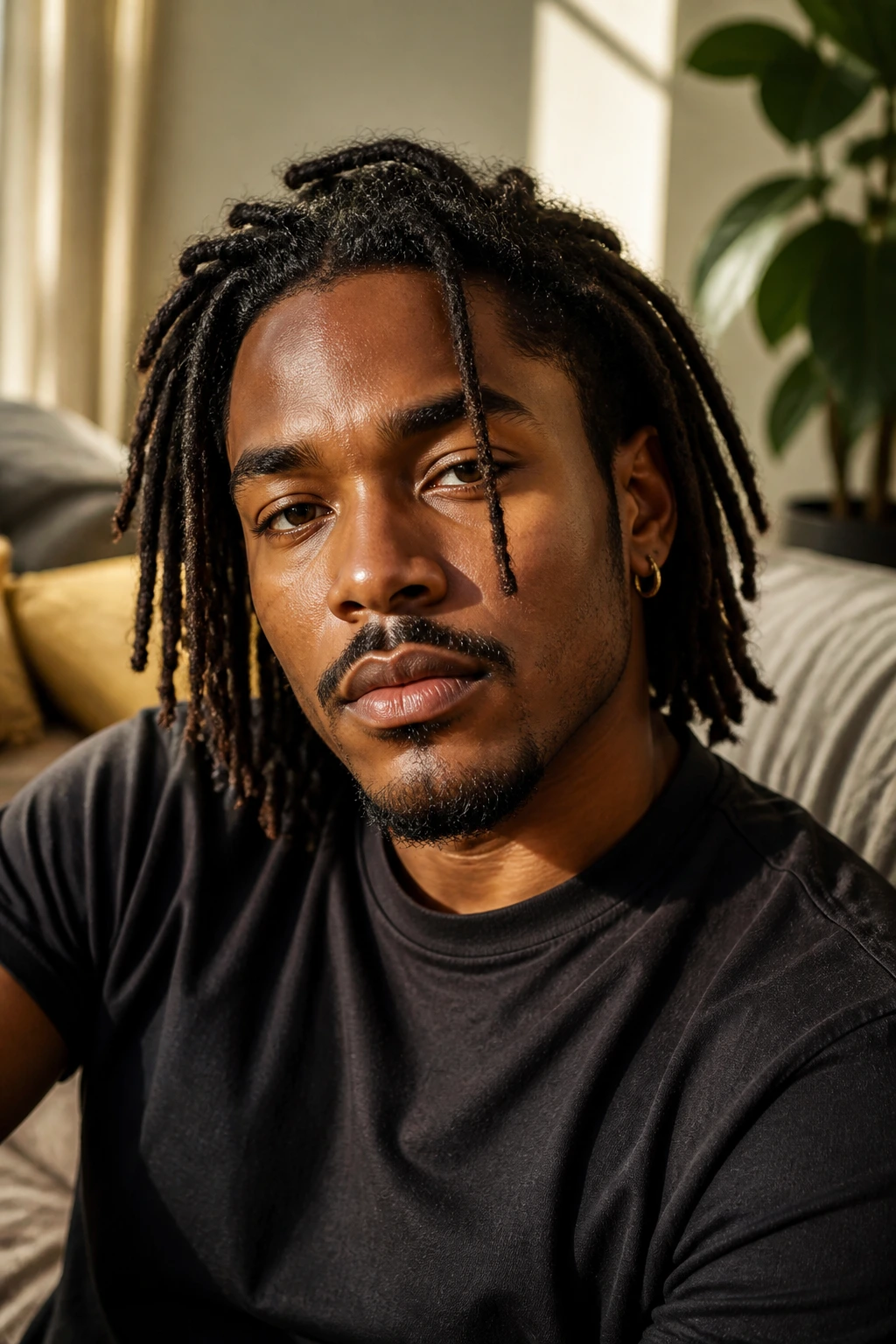
Loose weekend locs are the style you get when you leave the locs mostly alone and let a few pieces fall where they want. It sounds simple because it is. But simple does not mean sloppy. The shape still needs a little care around the line-up, the scalp, and the ends.
What makes this look work is the sense that the hair has room to breathe. A loc tucked behind one ear, a few strands hanging forward, maybe a part that is not perfectly centered — those small imperfections give the style life. If you push it too hard with product or pins, it loses the point.
This is the style I’d choose when the day doesn’t call for ceremony. It’s relaxed, practical, and easy to wear with almost anything.
Why Shape and Length Change the Whole Read
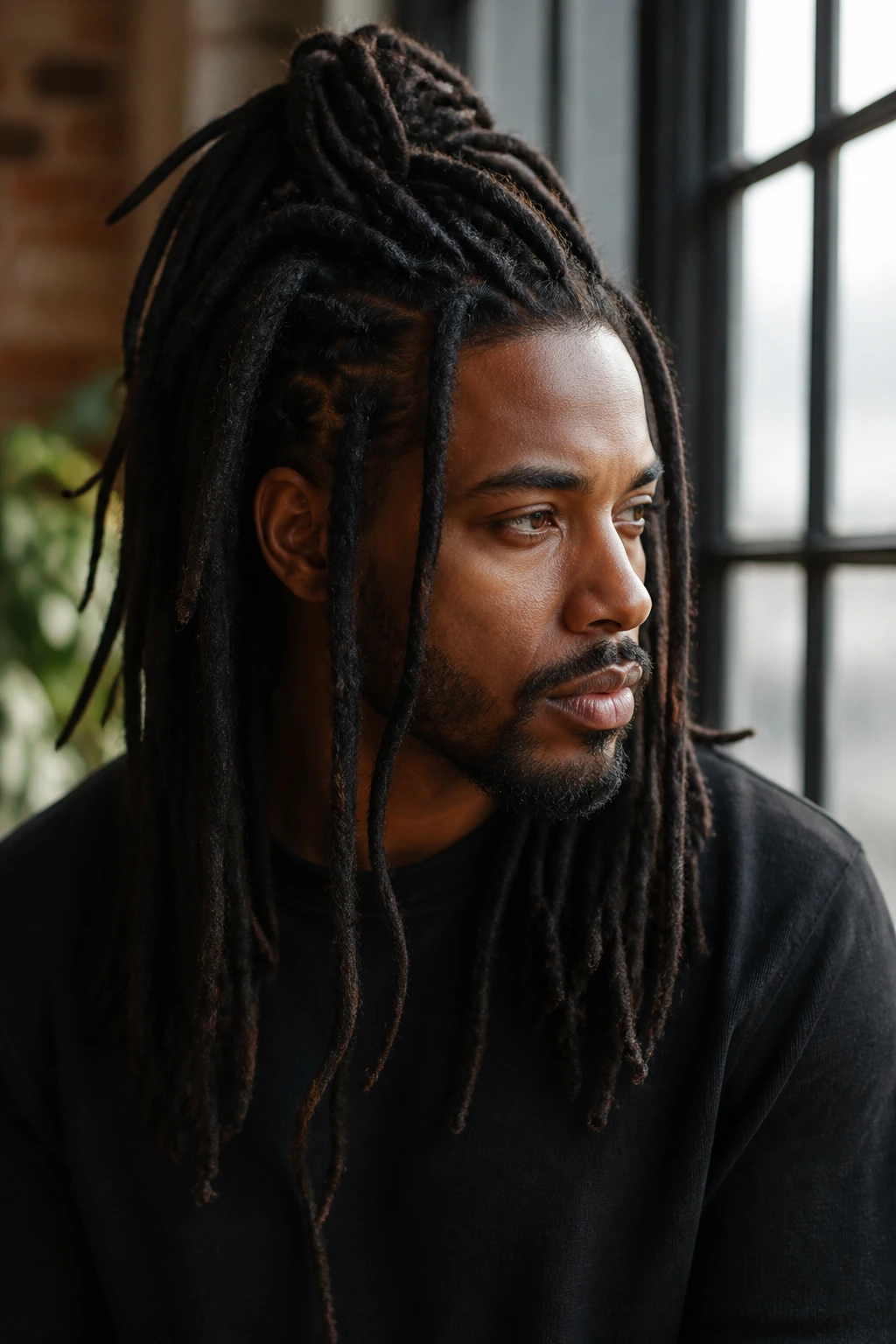
A loc style is never just the locs. It’s the space around them. The neckline, the temple area, the forehead, the shoulders — all of it changes how the hair reads, even when the locs themselves do not change at all. That’s why a low taper can make medium locs look cleaner, while a high-top can make the same hair feel bigger and bolder.
Length matters in a more annoying way than people expect. Short locs sit close to the head and usually need better parting to look finished. Medium locs start to move, which is nice, but they also begin to puff if the roots get fuzzy. Long locs add weight, which helps some styles and ruins others. A bun loves weight. A mohawk fights it. That’s the kind of detail most quick haircut lists skip, and it’s the whole game.
Face shape matters too, though not in some mystical way. If your face is round, height and clean sides can help. If your face is long, too much height can make it look even longer. If your jaw is strong, shoulder-drape locs or side-parted locs can balance that out nicely. None of this is a law. It’s just the way the eye moves.
How to Pick Loc Styles for Men That Fit Your Hair and Routine
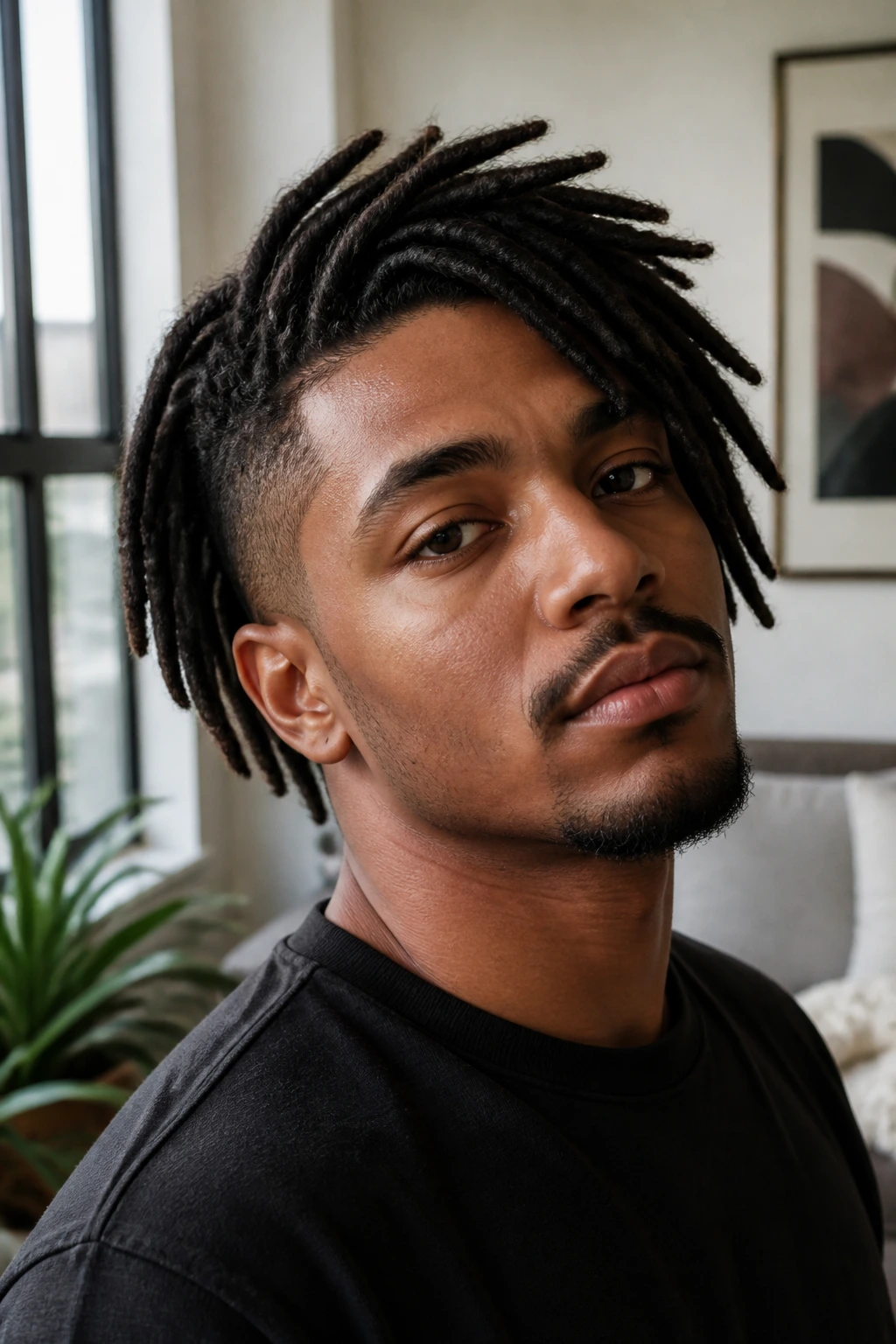
Start with the simplest question: how much time do you actually want to spend on your hair each week? If the answer is close to nothing, styles like free-hanging locs, low ponytails, or loose weekend locs will keep you sane. If you like visiting the barber often and keeping the outline crisp, high-top locs, temple fades, or undercuts will give you more shape to play with.
Hair density changes the choice too. Thick locs can handle heavier styles like buns, barrel twists, and wicks. Thinner locs or microlocs are better in styles that rely on detail rather than mass, because too much pulling can make the roots feel strained. And if your locs are still young, don’t rush them into tight knots every other day. Young locs need room.
A Quick Way to Sort the Options
- Low effort: free-hanging, low ponytail, loose weekend, shoulder-drape.
- Mid effort: side-parted, half-up top knot, temple fade, slick side-part.
- High effort: barrel rolls, crown updos, braided rows, dyed or cuffed styles.
Essential Tools for Better Styling
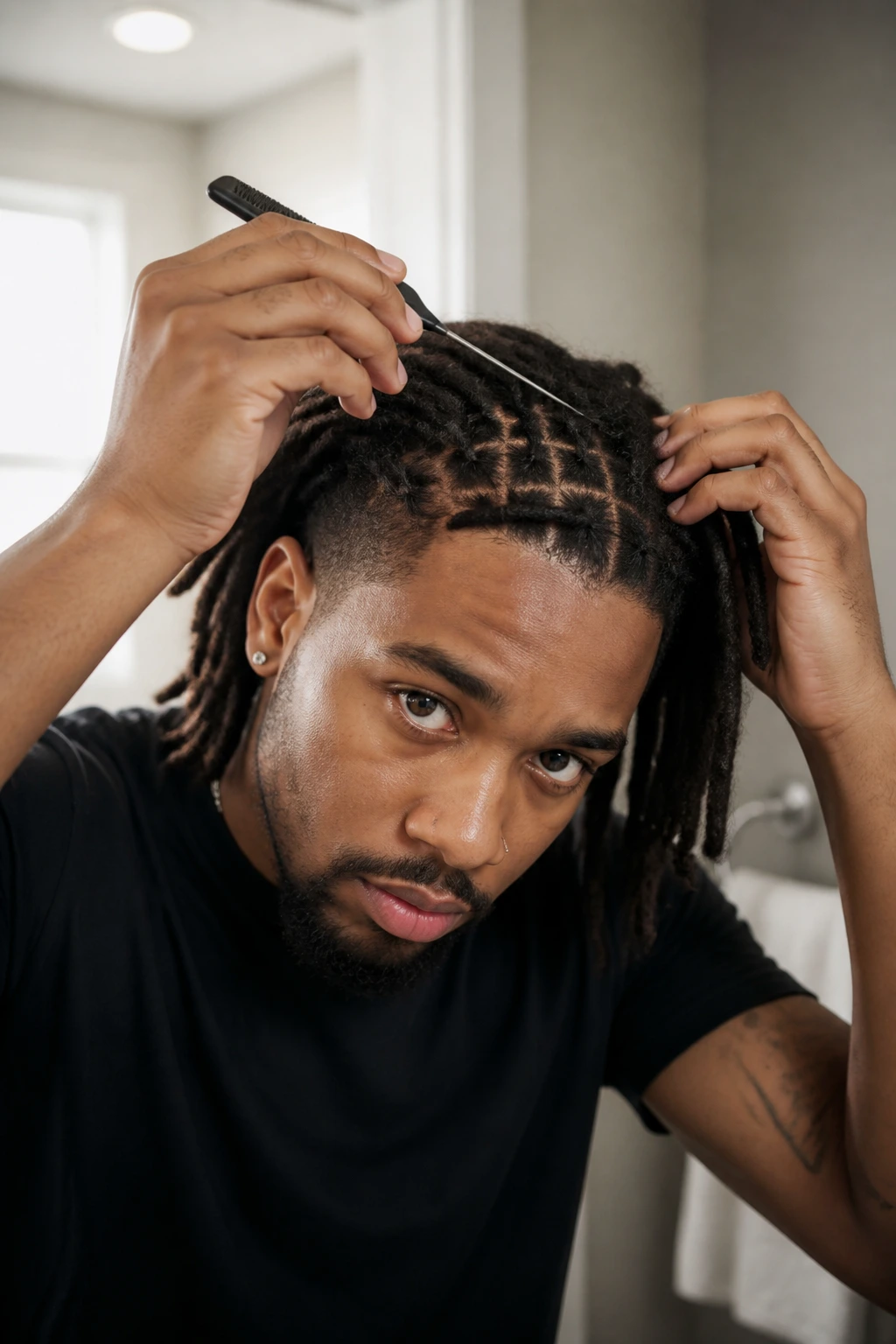
You do not need a crowded bathroom shelf to keep loc styles for men looking clean. You do need the right basics, and the difference between “styled” and “messy” often comes down to small tools that save the hair from stress.
- Rat-tail comb: Clean parting and sectioning, especially for side parts, braids, and crown styles.
- Spray bottle: A light mist keeps the hair pliable without soaking the roots.
- Satin bonnet or durag: Night protection matters more than most people admit.
- Soft ties or snag-free bands: These hold buns and ponytails without chewing up the locs.
- Duckbill clips: Useful while barrel twisting, wrapping, or setting sections in place.
- Edge brush: Keeps the hairline neat without roughing up the edges.
- Lightweight oil applicator bottle: Helps you aim the oil at the scalp instead of dumping it everywhere.
- Crochet hook or latch hook: Handy for tightening loose fuzz or fixing a root that has started to unravel.
- Hooded dryer or diffuser: Optional, but helpful when you need a set to dry without frizz.
Smart Product Choices That Keep Locs Light
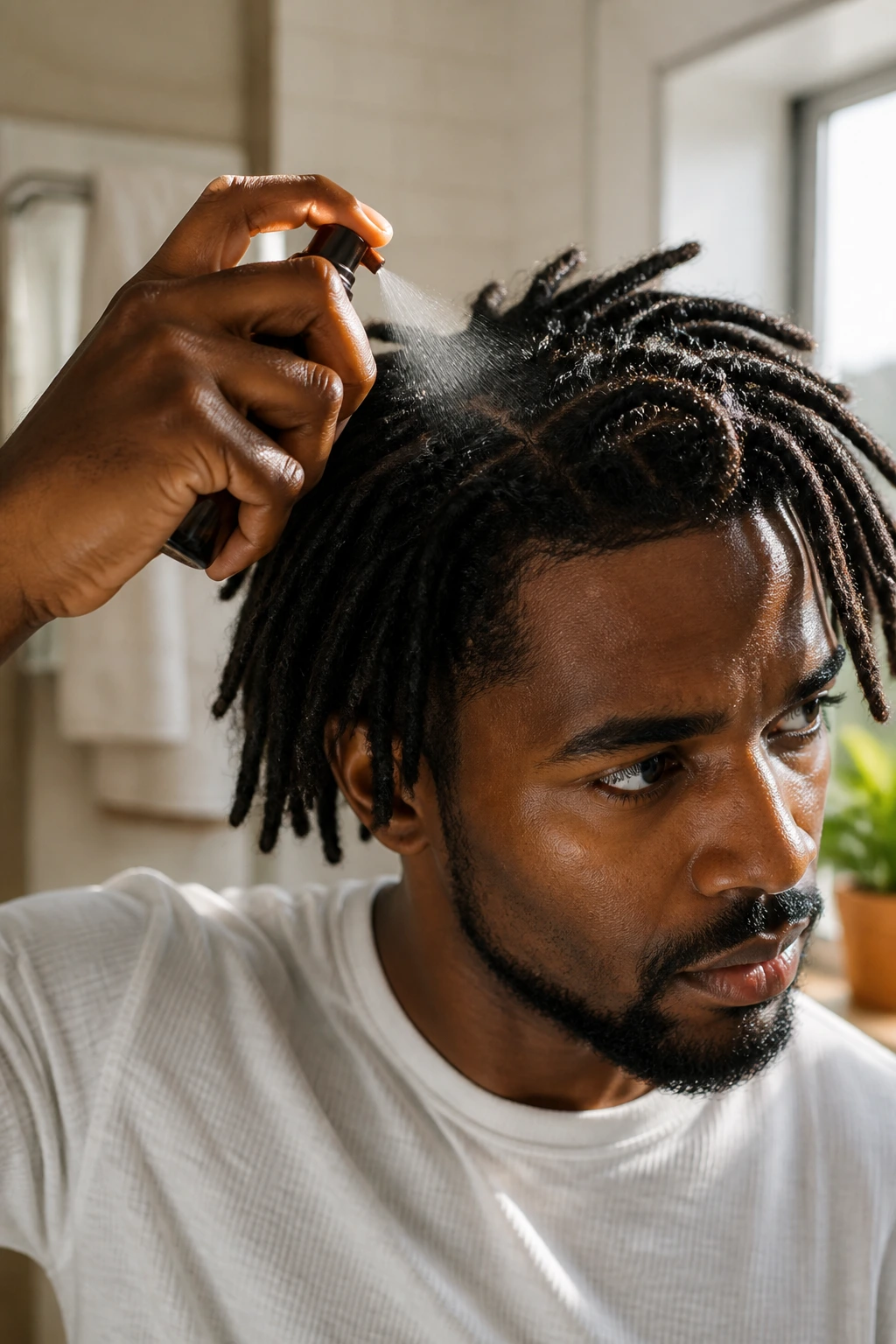
A lot of men ruin a good loc style by loading the scalp with heavy grease and calling it “moisture.” It’s not. It’s build-up. And build-up makes locs dull, itchy, and harder to restyle cleanly. The better approach is lighter and much less glamorous: a spray for moisture, a small amount of oil for the scalp, and shampoo that rinses out clean.
What to Reach For
Lightweight moisture: Water-based sprays with a little leave-in are better than thick creams for daily upkeep. They soak in faster and don’t leave the locs sticky.
Scalp support: Jojoba, grapeseed, or tea tree blends can work well in small amounts. Use a few drops, not a pour. The scalp should feel relieved, not slick.
Hold without crust: Foam or light setting lotion works better than waxy gel for styles like two-strand twists, barrel twists, and side parts. It keeps the look flexible.
What to Skip
Heavy waxes: They cling to locs and make wash day miserable.
Thick pomades: Good for almost nothing here unless your barber is using a tiny amount on a neat edge.
Over-scented products: They often mask residue instead of fixing it.
How to Wear Loc Styles for Men to Work, the Gym, and Formal Events

The same locs can survive all three settings if you plan the shape with a little common sense. For work, clean edges and controlled volume usually win. A low taper, side part, slick side-part style, or low ponytail keeps the hair tidy without making it look overdone. If the setting leans conservative, avoid styles that need constant touch-ups or have a lot of loose movement around the face.
At the gym, comfort beats polish. High ponytails, crown ties, buns, and headwraps keep sweat off the neck and out of the eyes. After training, let the scalp dry before you cover it again. That small habit saves you from the sour, trapped-moisture smell that shows up when hair stays damp too long.
Formal events are where barrel twists, crown updos, crisscross wraps, and slick side-part locs earn their place. They create shape without forcing the locs into something unnatural. If you’re wearing a suit or a clean button-down, the hair should look finished, not frozen in place.
Extra Tips for Cleaner Parts, Better Hold, and Sharper Edges
Parting: Part while the hair is slightly damp and the scalp is clean. Dry parts often get fuzzy while you work, and that fuzz shows more on dark hair than people realize.
Tension: If the roots hurt after styling, the style is too tight. Pain is not a finishing touch. It’s a warning.
Edges: Keep edge control light and sparing. A thin line around the hairline can clean up the frame. A thick shell of product can flake by lunchtime.
Hold: For styles that need staying power, set them and leave them alone for a few hours. Constant touching loosens the work faster than humidity does.
Balance: When one side of the head feels heavier, shift the locs or the bun slightly until the weight sits evenly. That tiny adjustment often fixes a whole style.
Common Mistakes That Make Loc Styles Look Tired
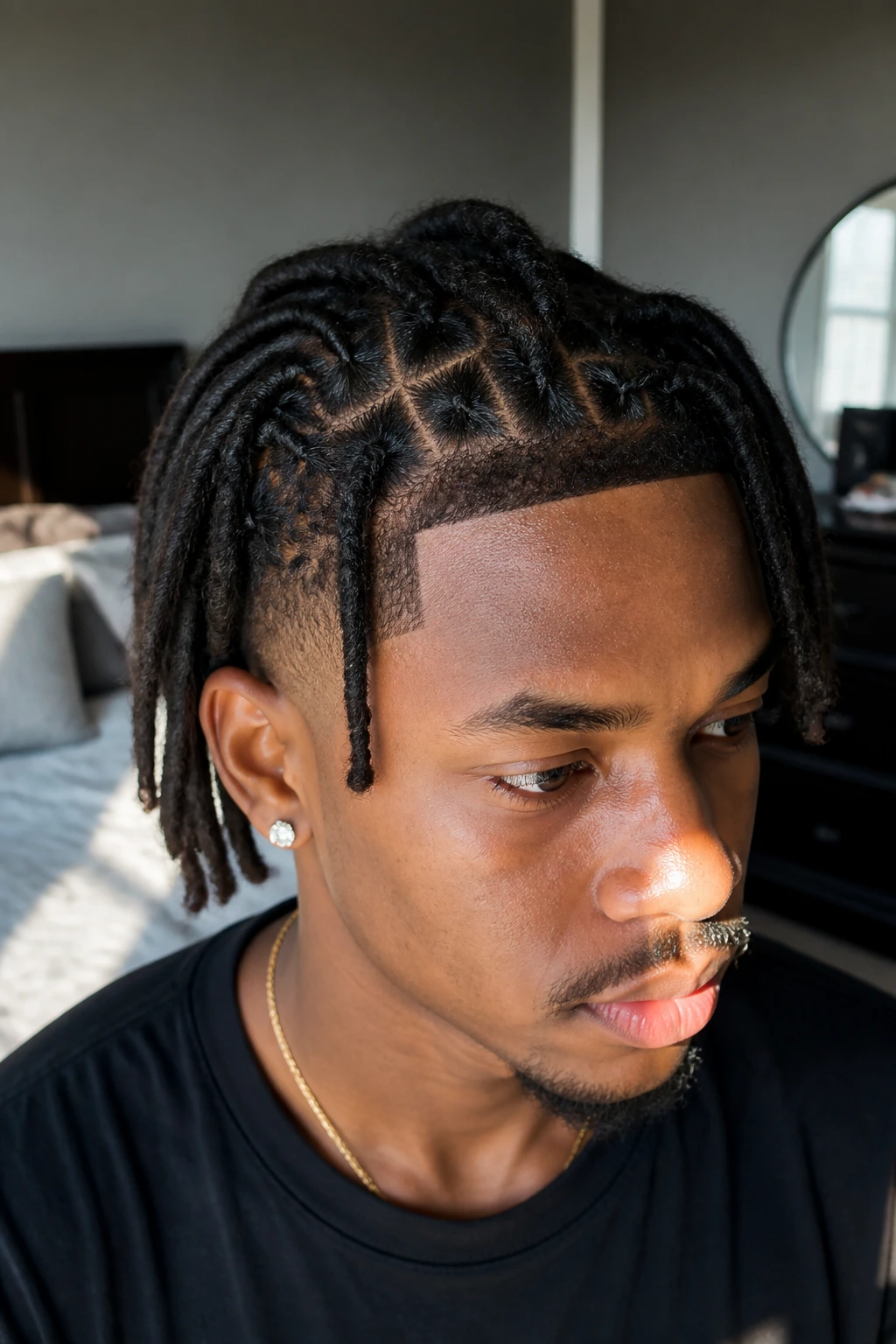
The most common mistake is pulling styles too tight at the roots. You see it right away in the face and forehead: tension, redness, and a style that looks rigid instead of clean. The fix is simple, though not always popular. Loosen the grip, use wider bands, and stop treating the scalp like a handle.
Another one is loading locs with heavy product. The hair starts looking dusty, then dull, then stiff. If the locs feel coated after a week, that’s not moisture — that’s residue. Switch to a lighter spray and wash it out properly.
People also choose the wrong style for the length they actually have. A knot on locs that are too short will unravel. Loose shoulder-drape styles on very short locs will just fall flat. Match the style to the stage.
And then there’s ignoring the cut around the locs. A sharp style with a ragged neckline looks unfinished no matter how nice the locs are. The perimeter matters. A lot.
Variations and Adaptations to Try
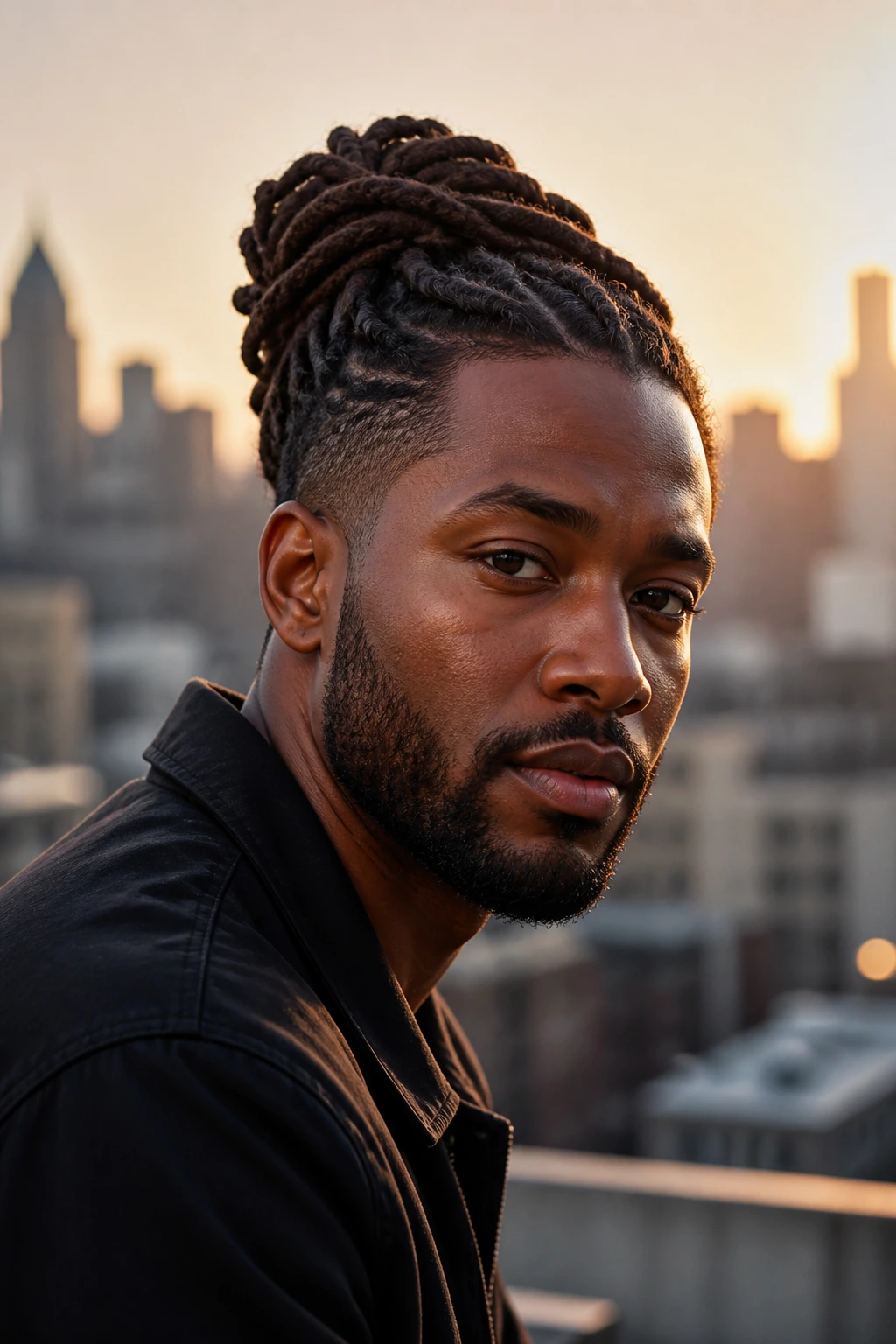
Low-Maintenance Rotation: Keep one clean base style — a low taper, side part, or loose hang — and change only the tie-back. That keeps your routine simple while still changing the shape every few days.
Formal-Ready Set: Build a version of your locs with a crown updo, slick side part, or twisted wrap. These styles hold their own with a jacket, collar, or tie without needing extra decoration.
Gym-Safe Tieback: Use a low ponytail, crown ponytail, or headwrap when sweat is the problem. The style should hold through movement and dry fast afterward.
Color Accent Version: Add cuffs, beads, or dyed tips to one of the simpler cuts. That gives you detail without locking you into full-color maintenance.
Softened Face Frame: If your face looks too square or too long in a blunt style, shift to a side part, curtain sweep, or shoulder-drape setup. The change is small, but the effect is obvious.
Night Care, Wash Days, and Between-Retwist Maintenance

A loc style only looks fresh if the routine behind it stays steady. At night, a satin bonnet or durag does more than protect the hair from friction. It keeps the roots from frizzing up in sleep and helps longer locs avoid the rough, fuzzy finish that shows up after a few bad pillow nights. If the locs are long, a loose pineapple or low tie under the wrap helps keep them from tangling.
Wash days need a little discipline. For many men, washing every 1 to 3 weeks is the range that keeps the scalp clean without constantly stripping the style. Sweat-heavy routines may need more frequent washes. If your scalp gets itchy or the locs start smelling stale, that’s your sign, not an optional moment.
Retwist timing depends on the style. A crisp fade or side-part look may need attention every 4 to 6 weeks if you want the shape to stay sharp. Freeform and looser looks can go longer. The point is not to chase perfection every few days. The point is to keep the style healthy enough that it still looks intentional when you wake up.
Frequently Asked Questions
How do I know which loc style fits my face shape?
Look at where your face needs balance. If it feels round, styles with height like high-top locs or faux hawks help lengthen it. If it already feels long, side-parted locs, low ponytails, or shoulder-drape styles can soften that vertical line.
Can short locs still look stylish?
Absolutely. Short starter locs look best when the parts are clean and the outline is sharp. You do not need length to have shape; you need a haircut that respects the stage your hair is in.
Which loc styles are easiest to maintain?
Free-hanging locs, low ponytails, and loose weekend locs usually ask for the least daily work. They still need scalp care and regular washing, but they do not need constant re-pinning or re-shaping.
Are buns and ponytails bad for locs?
Not when they’re done with soft ties and loose enough tension. The problem starts when the roots are pulled too hard, too often, or with rough elastics that snag the hair. Give the scalp a break between tie-back days.
What if my locs frizz up after styling?
A little frizz is normal, especially on newer or more textured locs. If the frizz is at the roots, the style may have been set too tightly or without enough drying time. If it’s on the shaft, you probably need less product and better nighttime protection.
Can I wear locs in a formal setting without looking too casual?
Yes. Slick side-part locs, twisted crown updos, barrel rolls, and neat low buns all read well with a suit or dress shirt. The key is a clean perimeter and a style that sits on purpose, not one that looks like you stopped halfway through getting ready.
Do microlocs take more work than thicker locs?
They can, because there are more sections to keep clean and controlled. In return, they give you more styling options and a lighter feel. If you like detail and do not mind time in the chair, they’re worth the effort.
What’s the difference between freeform locs and styled locs?
Freeform locs are allowed to form with less manipulation, so the shape stays irregular and natural. Styled locs get more parting, more sectioning, and more routine shaping. Neither is wrong. They just send different signals.
The Style That Fits Your Life
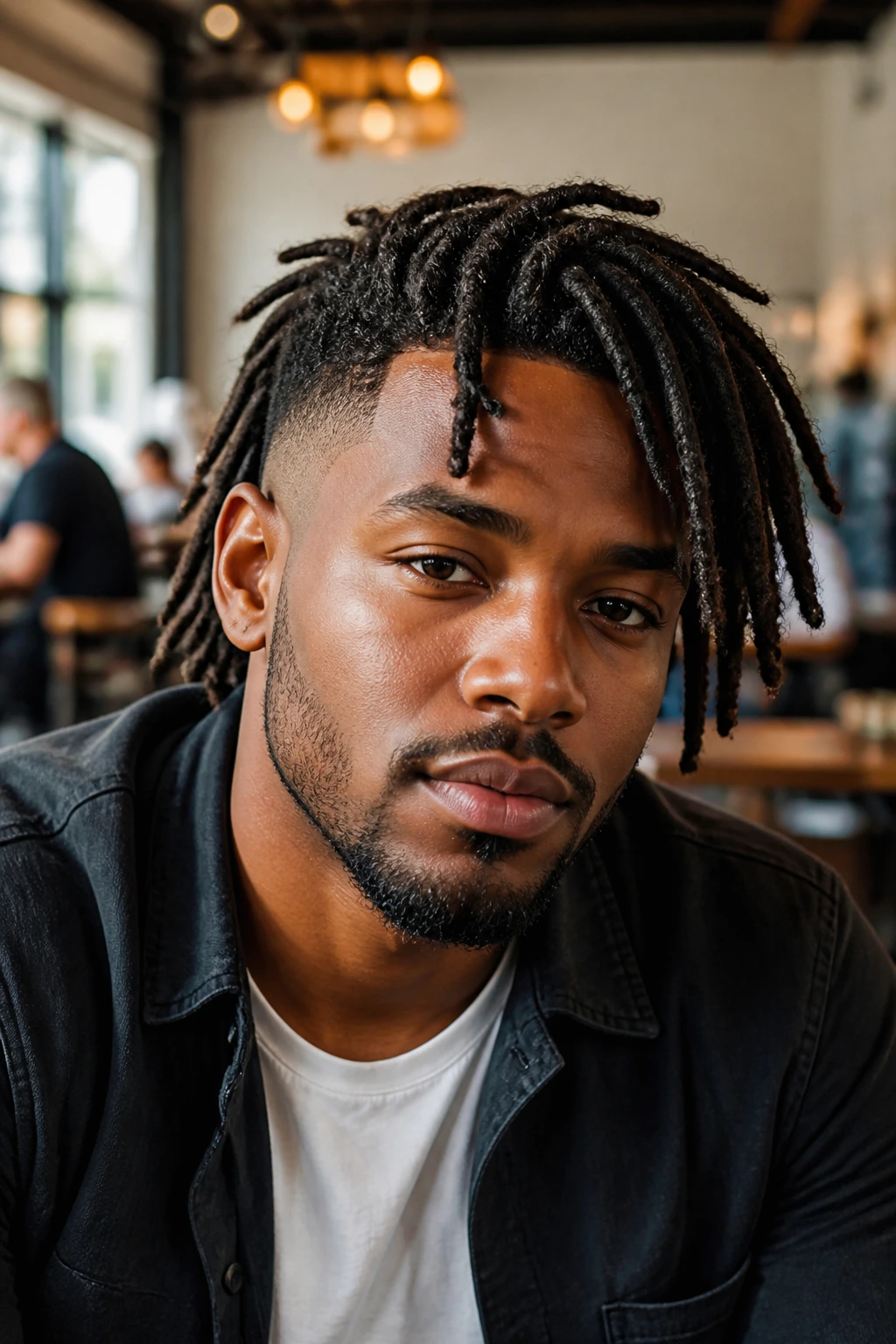
The best loc style is not the flashiest one on the page. It’s the one that matches your hair density, your job, your patience, and the way you actually move through the day. A clean taper can do more for a head of locs than a complicated wrap ever will. A loose hang can look better than a tight knot when the length is right. And a little bit of maintenance, done on a schedule, keeps almost every style looking sharper than overworking it ever could.
What I like about loc styles for men is how much room there is to be specific. You can be neat without being stiff. You can be bold without shaving the whole head down. You can keep the hair long, cut the sides, add color, add cuffs, add height, or leave it plain and let the shape do the talking. That range is the point.
Pick the version that fits your week, not just your mirror. Then keep the parts clean, the scalp calm, and the edges honest.
