



A bridal hairstyle with a vintage vibe does one thing modern loose waves often fail to do: it gives the face a shape. Not a trendy shape. A real one. The kind that makes a veil sit in the right place, keeps a comb from sliding, and still looks deliberate after four hugs, a ceremony breeze, and one too many hours under warm lights.
That’s the charm of retro wedding hair. It isn’t only about curls or a deep side part or a pearl pin caught in the light. It’s about line, control, and a little drama at the crown. Finger waves press close and glossy against the head. Victory rolls lift the front without turning the whole style into a tower. A low Gibson tuck leaves room for earrings and a clean neckline. Each one changes the way the dress reads.
And yes, that matters. A vintage bridal look can make a simple gown feel tailored and expensive; it can also rescue a dress that needs a stronger frame around the face. The trick is choosing the right shape for your hair texture, your veil, and the sort of movement you want once the dancing starts. Some of these styles are soft and airy. Others are stricter, with more pins hidden than anyone will ever see. All of them have a point.
Why These Bridal Looks Feel Worth the Trouble
-
Real hold, not wishful thinking: These styles rely on structure — pins, set curls, and shaped sections — so they last longer than hair that’s only been waved and sprayed from a distance.
-
Vintage without costume energy: The silhouettes borrow from screen-siren, flapper, and midcentury hair, but the finish stays bridal instead of theatrical.
-
Works with more than one hair length: There are options here for cropped hair, shoulder-length hair, and long lengths that need tucking, rolling, or pinning.
-
Veils and combs actually have somewhere to live: A strong side part, a low roll, or a tucked bun gives accessories a base instead of asking them to cling to slippery curls.
-
The shape shows in photos: A visible wave pattern, a lifted crown, or a clean tuck reads clearly in pictures, especially when the lighting flattens softer styles.
-
Easy to personalize: Pearls, ribbon, combs, net veils, and fresh flowers all work here because the underlying silhouette is doing the heavy lifting.
1. Soft Marcel Waves
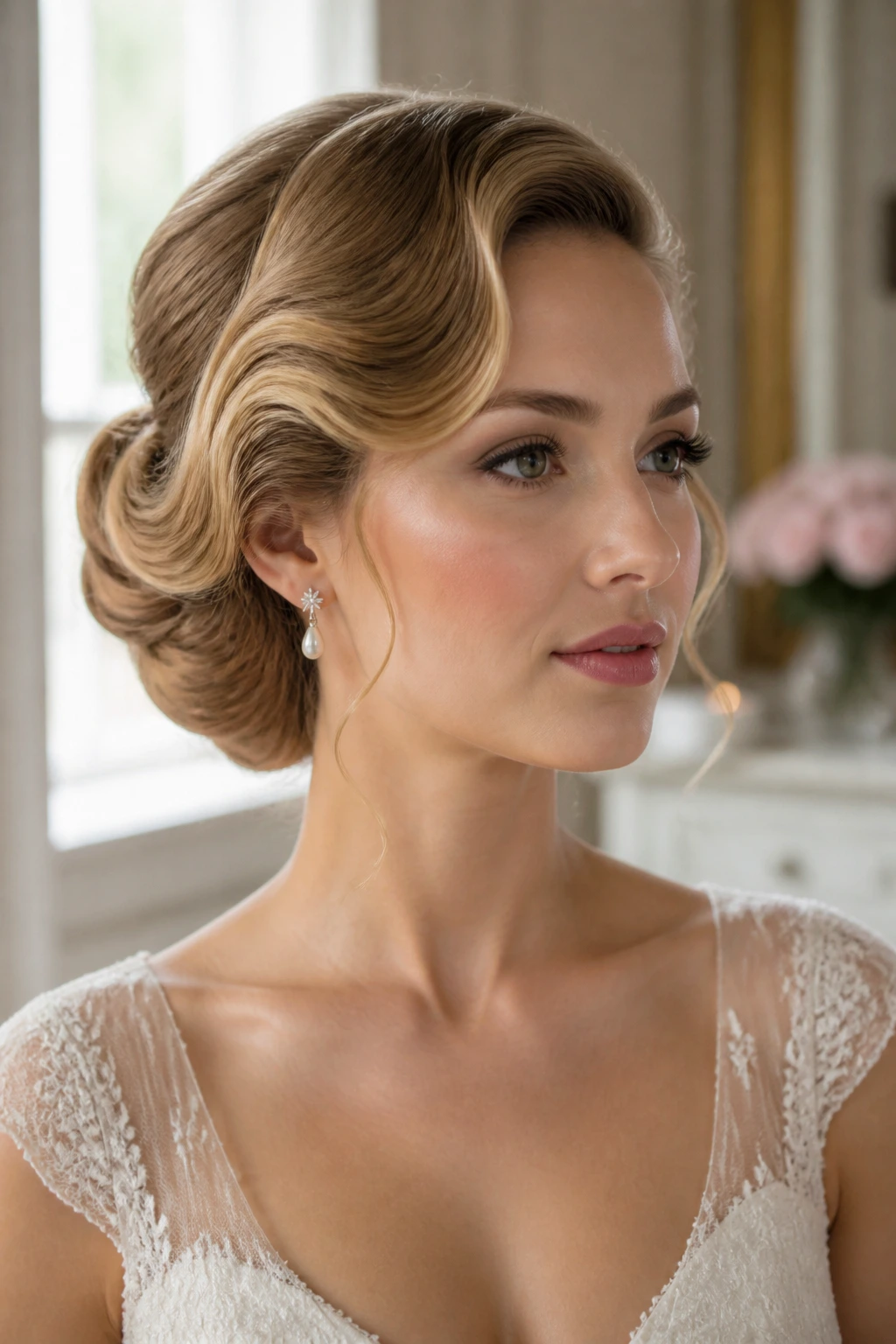
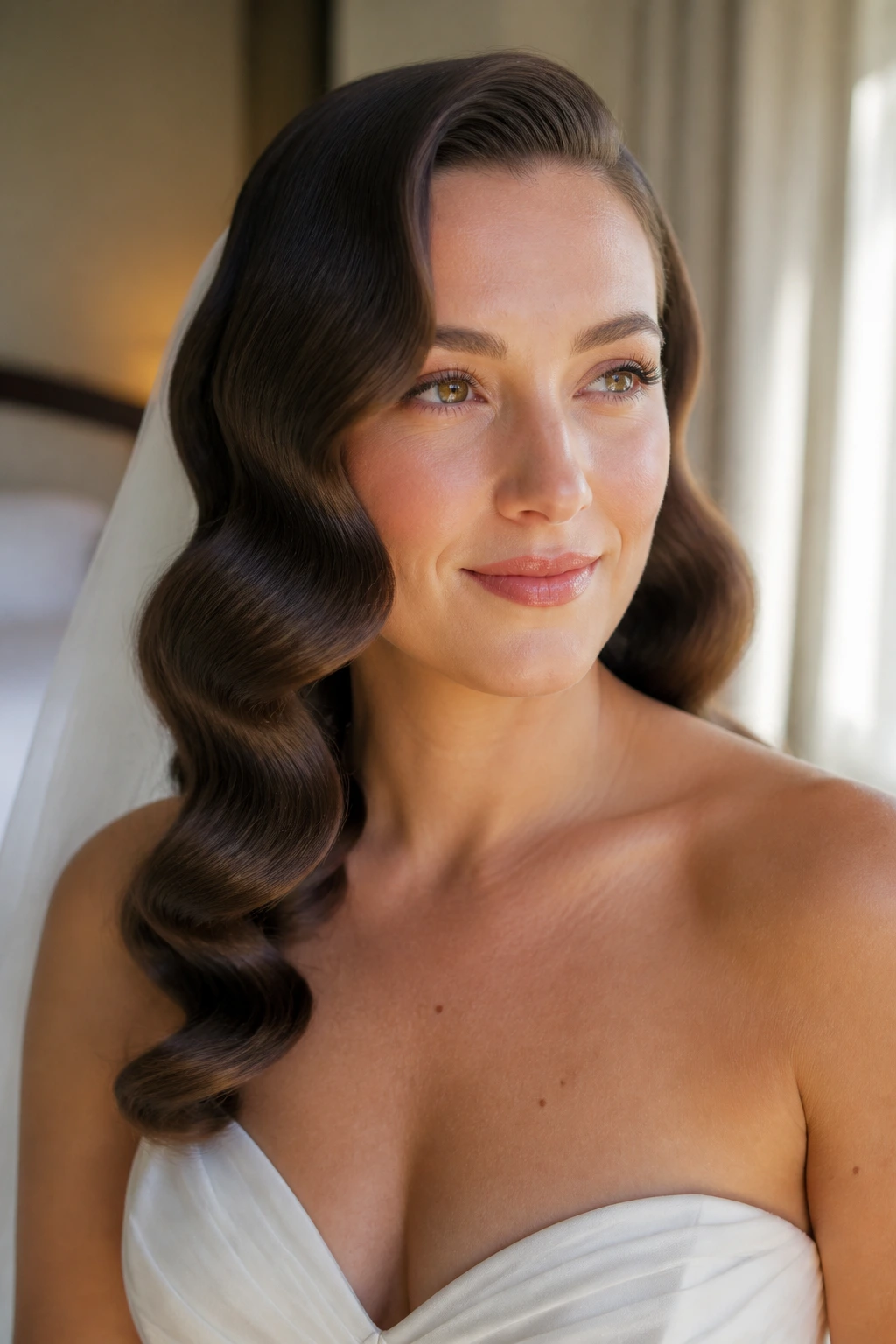
Soft Marcel waves are the kind of bridal hair that makes a dress look more considered before you’ve even added jewelry. The pattern is smooth and rhythmic, with S-shaped bends that sit close to the head instead of ballooning out in every direction. If you want old-Hollywood gloss without a hard, frozen finish, this is the look I’d reach for first.
The appeal is in the control. A deep side part, a clean surface, and a careful brush-out give the hair that mirror-sheen line you see in art deco portraits. It’s especially good with a bias-cut gown, a long sleeve, or anything with a neckline that needs the face to stay open and elegant.
Why It Reads So Vintage
Marcel waves are all about repetition. The eye follows one wave into the next, which makes the style feel refined even when it’s soft around the edges. A little shine serum on the top layer helps, but don’t drown the hair in oil. You want a glossy finish, not a greasy one.
Best For
- Medium to long hair
- Deep side parts
- Strapless or simple-neckline dresses
- Pearl combs or a narrow crystal clip
A strong hold spray at the end matters here more than people think. Without it, the wave line loses its definition halfway through the reception, and the style starts to look like yesterday’s blowout.
2. Polished Finger Waves
Finger waves are tiny, sculpted, and a little bit bossy. That’s what makes them so good on a bride who wants vintage hair that feels precise rather than fluffy. The wave sits close to the scalp, usually around the front and sides, and that controlled curve gives the whole face a framed, almost cameo-like look.
If your hair is short, this one is a gift. If your hair is longer, you can still use finger waves at the front and let the back fall into a low bun or tucked roll. The style becomes less about length and more about line.
What Makes It Bridal Instead of Costumey
- A soft side part, not a hard theatrical one
- Gloss, but not shellac
- Waves that stop before they crowd the forehead
- A veil comb or barrette placed just behind the wave line
Finger waves are unforgiving in the best way. They show off good sectioning and a steady hand. They also photograph beautifully because the curves stay visible even when the rest of the outfit is busy.
3. Side-Part Old Hollywood Waves
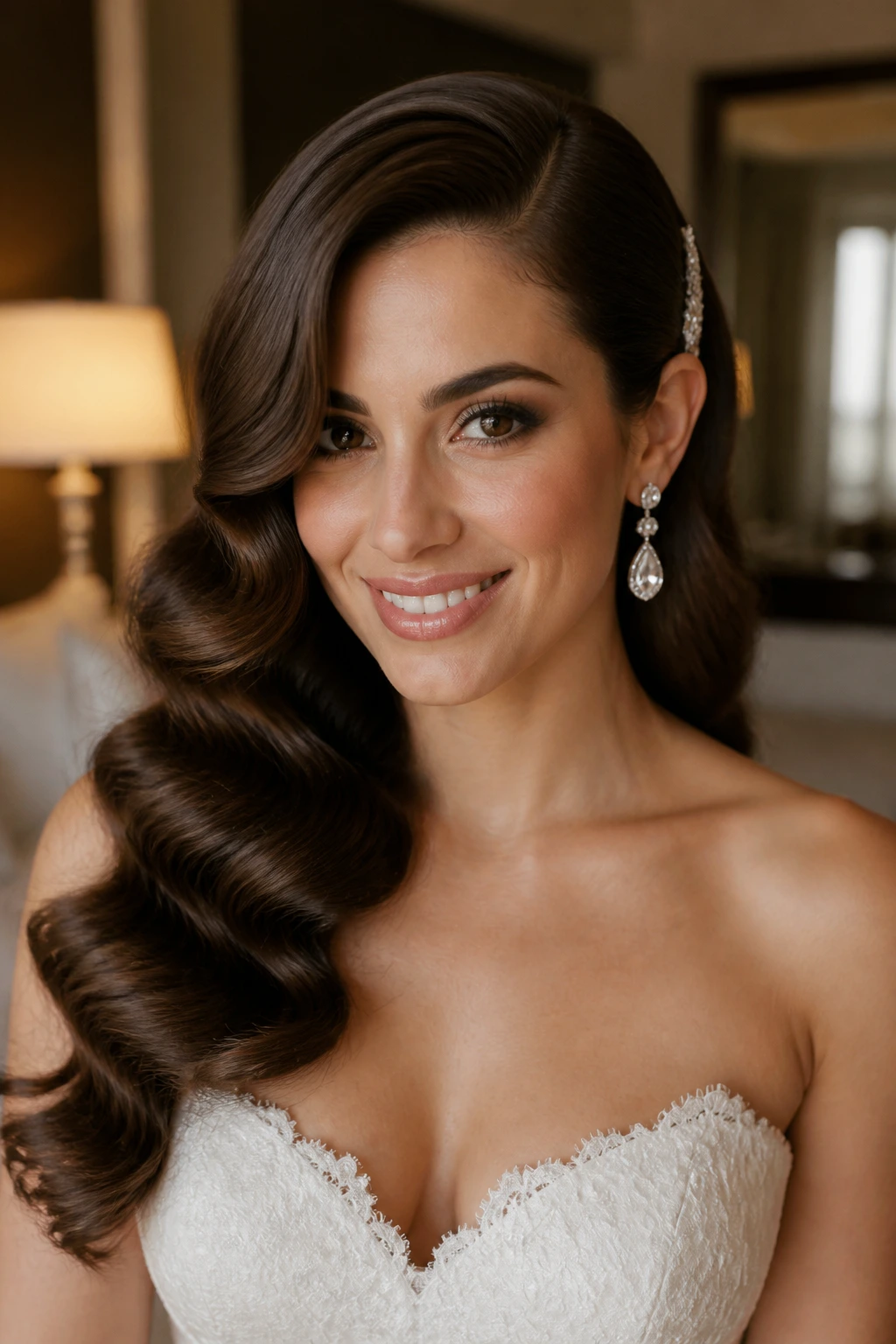
This is the one that tends to get copied badly. The real version is quieter than the imitation. One deep side part. Large, brushed-out waves. One shoulder carrying most of the movement. That’s it, and honestly, that’s enough.
The reason it keeps showing up on brides is simple: it flatters the face without asking the dress to do all the talking. The side sweep gives lift at the crown, then the wave line falls in a controlled cascade over one side. It feels lush, but not sloppy. If the hair is too curled and not brushed enough, the style starts looking like prom. Too brushed, and it loses the wave pattern entirely.
A long crystal earring or a single comb at the heavier side can make this look feel finished. Keep the finish smooth at the top and let the wave pattern do the work from mid-length down.
4. Faux Bob with Tucked Ends
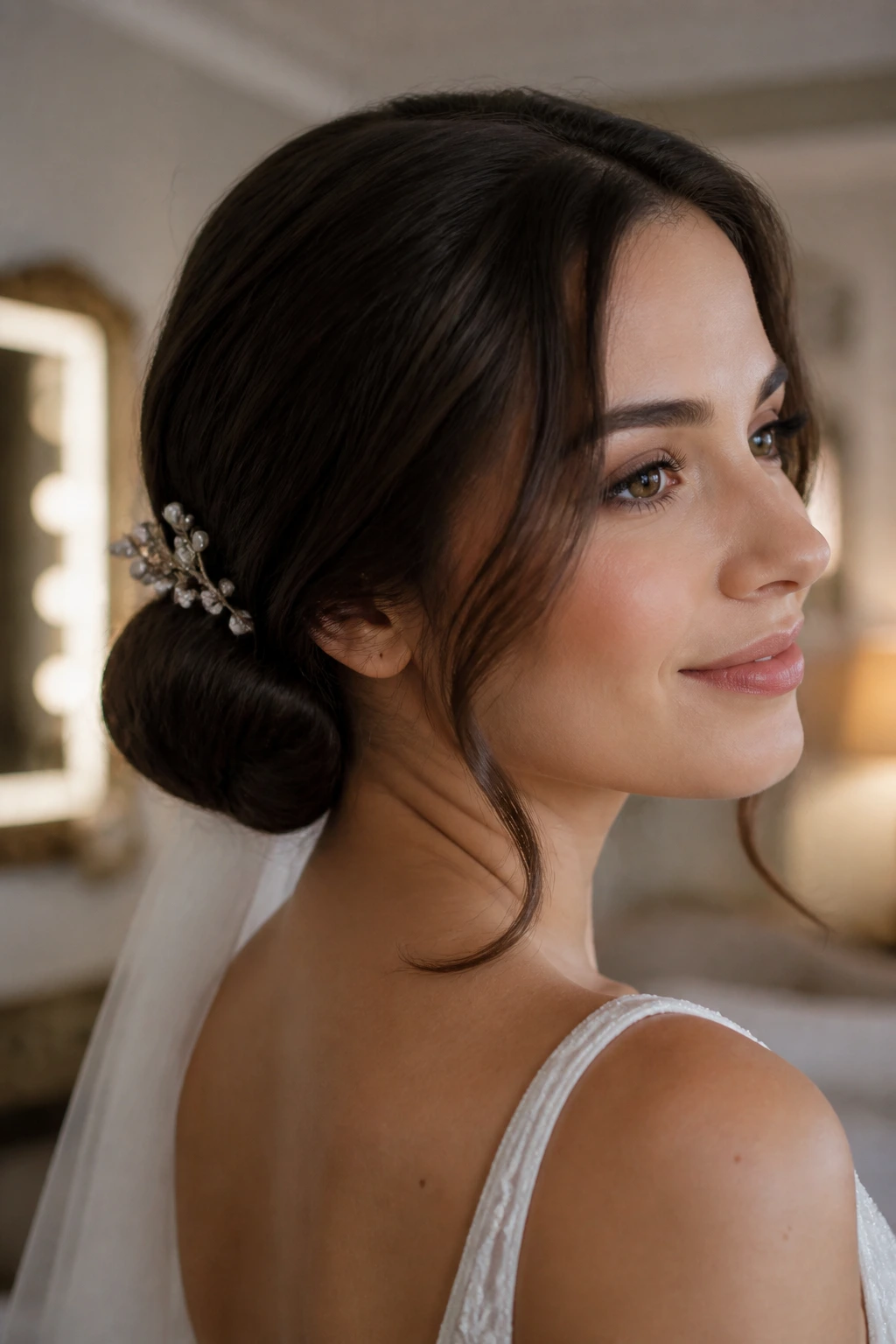
A faux bob has a little bit of mischief in it. Long hair gets pinned under itself so it looks like a neat bob grazing the jaw or chin, and that illusion is half the fun. It’s especially strong when the bride wants a vintage profile without cutting a single inch off her hair.
The tuck needs to sit cleanly at the nape. If the pins are loose, the whole thing starts collapsing into a vague roll, and the magic disappears. But when it’s done well, the shape feels chic from the side and graceful from the back, which is exactly what you want if the ceremony aisle is going to show every angle.
Best With
- Collarbone to long hair
- A beaded headband or narrow comb
- Short veils and birdcage veils
- Dresses with open backs or higher necklines
This style is also kinder than it looks. You can build it on a mild wave or a smoother blowout, so it doesn’t demand perfectly curled hair from root to tip.
5. Victory Rolls and Soft Curls
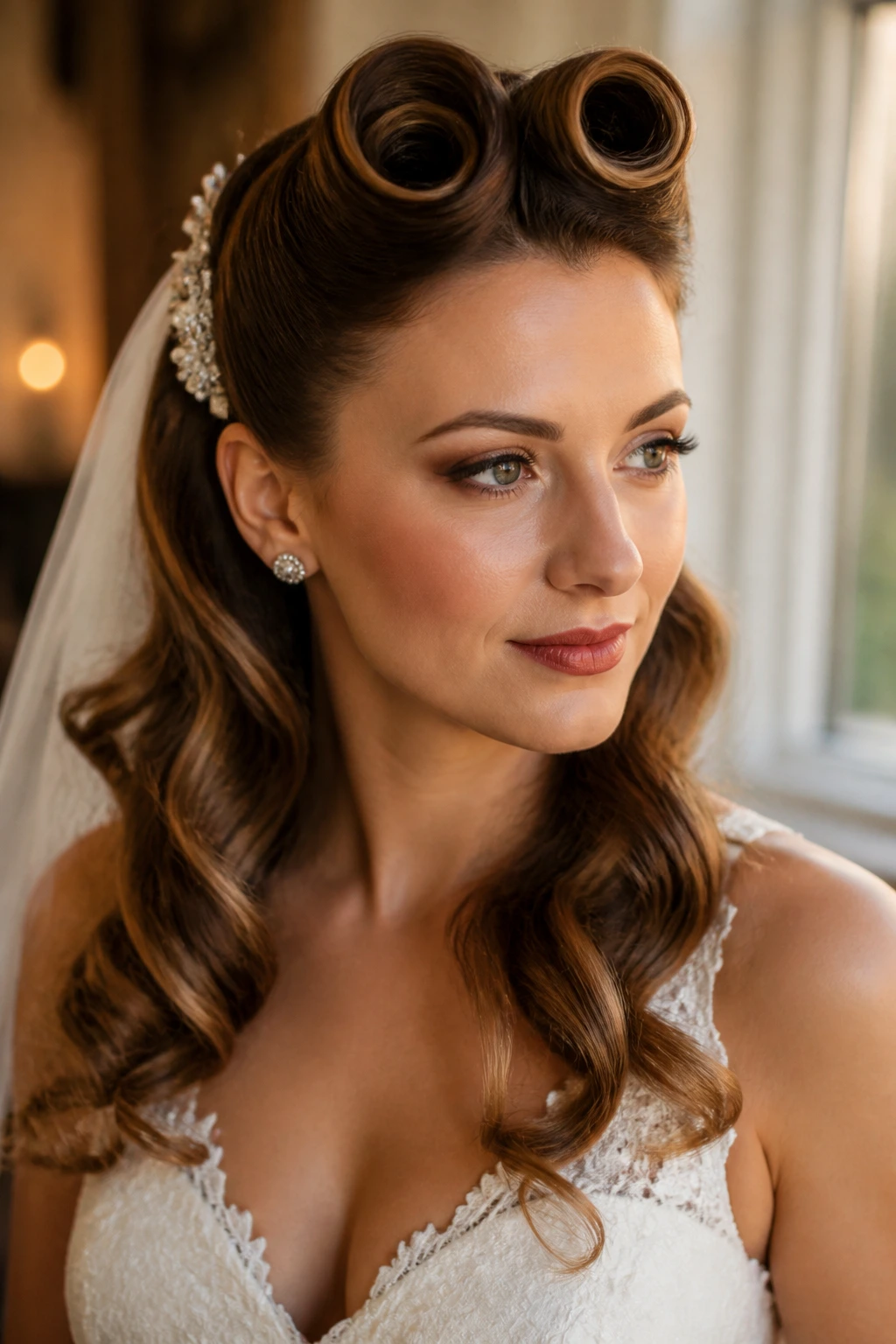
Victory rolls can lean playful fast, which is why I prefer them softened for brides. The front rolls give you that unmistakable retro shape, while the lengths below stay looser and more romantic. That contrast keeps the style from feeling like a reenactment.
Why It Works
The rolls create height and personality around the face, which is useful if the gown is simple and needs a little visual lift near the head. The curls underneath soften the whole thing, so the result feels warm instead of rigid. You get the good part of the era reference without the stiff finish that scares people off.
A Few Things That Help
- Slightly matte texture at the roots for grip
- A fine-tooth comb for clean roll sections
- Pins hidden inside the roll, not only at the base
- A decorative comb or tiny pearl pins near one side
If your hair is thick, this style can carry a little more volume. Fine hair needs tighter rolls and more hidden support, but it’s worth the effort because the shape is so memorable.
6. Low Gibson Tuck
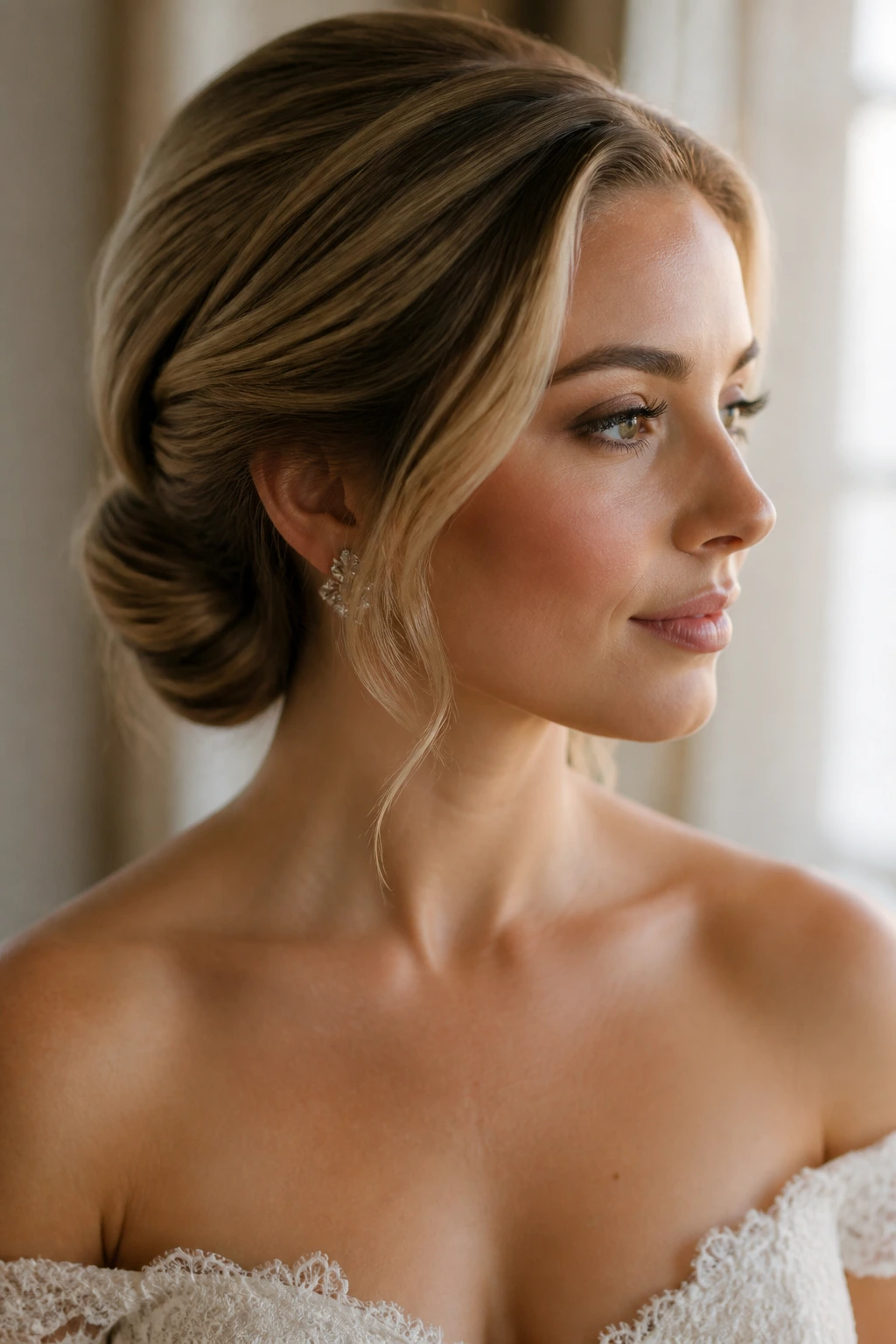
Want something graceful that won’t fight the dress? The Gibson tuck is one of those styles that looks calm even when the rest of the wedding day is a mess. Hair is gathered and tucked under itself at the nape, leaving a soft roll or fold that feels neat from every angle.
It’s a lovely choice for brides who want their hair off the shoulders without going into hard bun territory. The shape leaves room for earrings, a collar, or a lace neckline that deserves to be seen. A ribbon threaded through the tuck can make it feel a little more romantic, while a jewel comb keeps it crisp.
This style also behaves well in humidity. There’s less loose movement to collapse, and the tucked base gives bobby pins something to grab. That matters more than people admit.
7. Rolled Chignon with a Deep Side Part
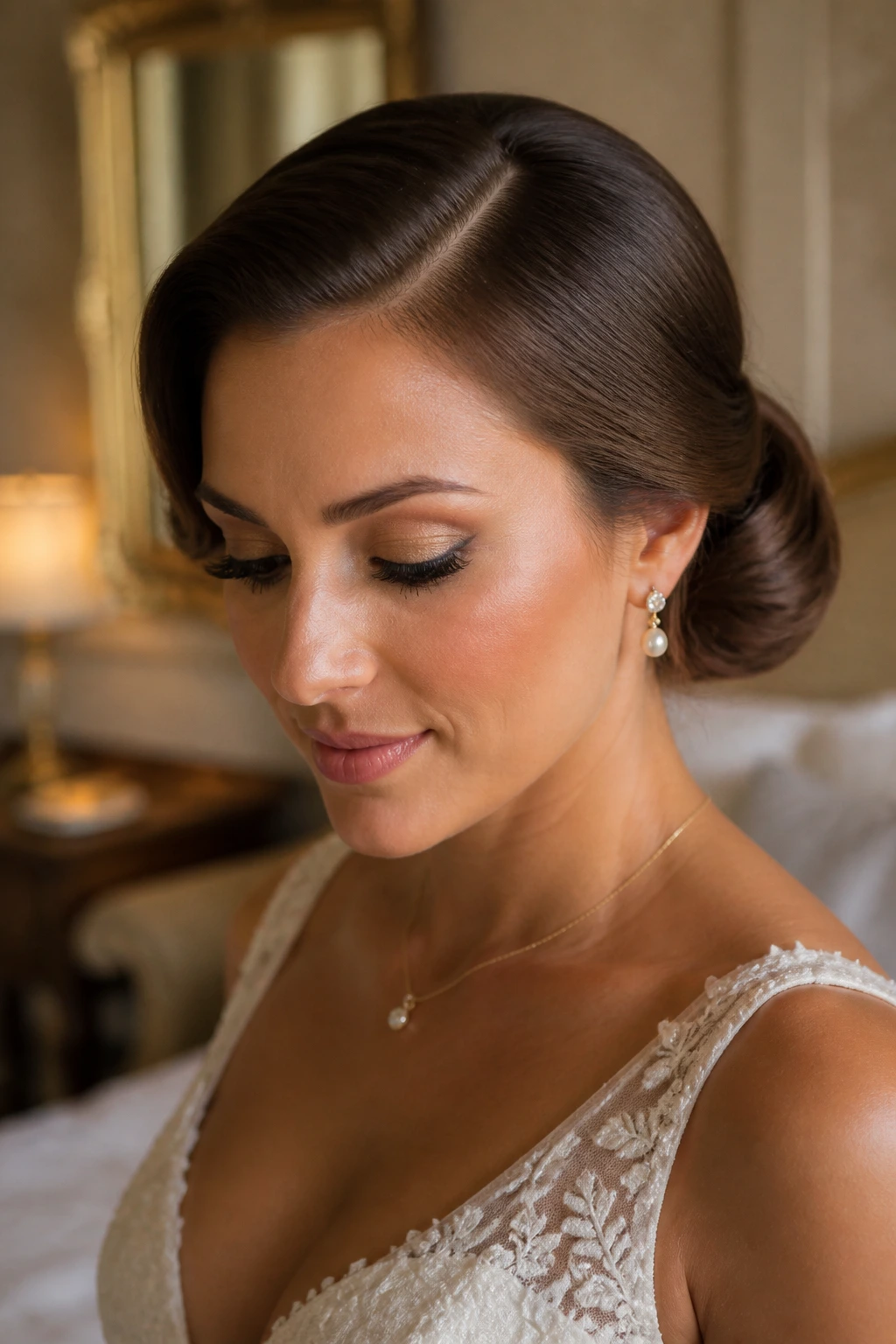
A deep side part changes everything here. Without it, the chignon can feel plain. With it, the style gains tension and direction, which is exactly what gives vintage bridal hair its old-screen composure.
The rolled chignon is one of those shapes that looks more intricate than it is. The hair is smoothed across one side, rolled into a low knot or coil, and pinned so the edges stay clean. The result is sleek, formal, and a little dramatic in the right way.
You can make it softer with a few tucked pieces near the ear, or keep it sharper if the dress already has lace and detail. Either way, this is one of the easiest ways to get a polished retro silhouette without adding height you don’t need.
8. Pin-Curl Cascade
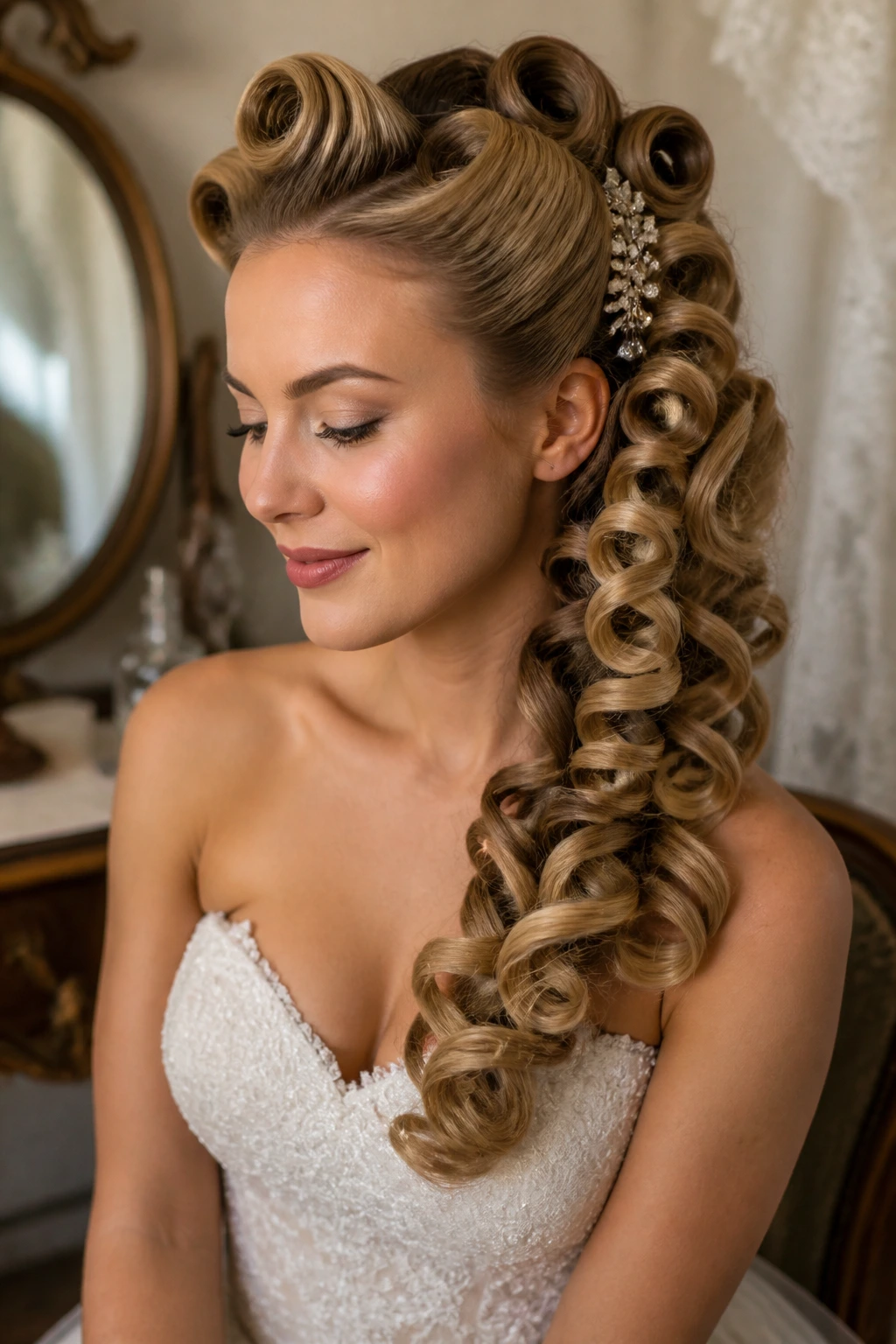
Pin curls are a love letter to patience. They take longer than loose waves, but the payoff is that dense, shiny texture that feels straight out of a dressing room mirror. A pin-curl cascade lets the curls stack and fall in a controlled pattern instead of scattering everywhere.
This is a smart choice for brides with shorter lengths or layered hair because the curls can be pinned where they need to live. You don’t need a ton of length; you need sections that can be shaped and supported. That makes the style flexible in a way people don’t expect.
What Makes It Special
The curls hold a lot of personality even before they’re brushed out. Once they’re loosened a little, they create a tactile surface that looks rich in photos. Add a comb, and the whole style turns from pretty to deliberate.
9. Half-Up Bouffant with Curled Ends
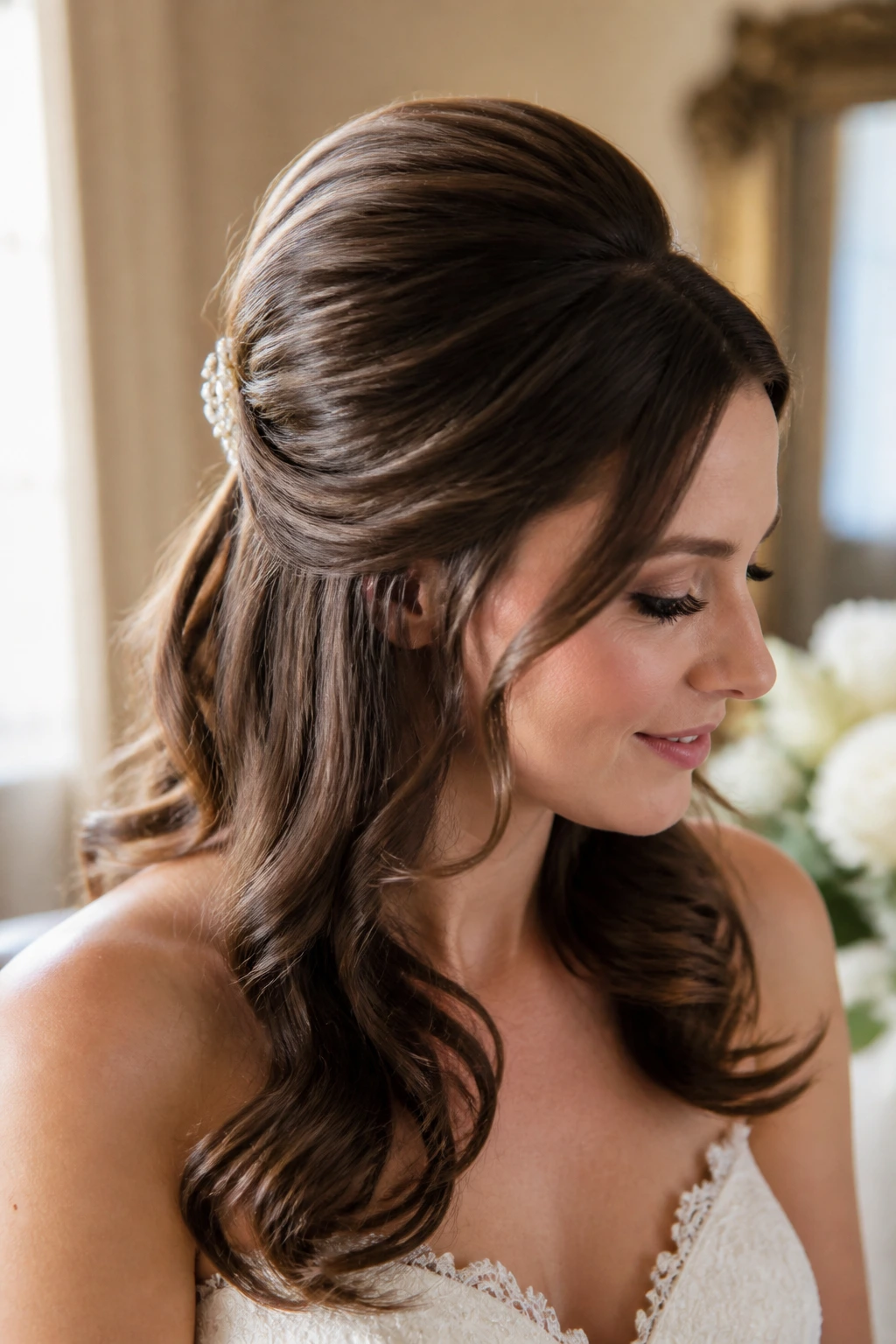
There’s a reason this shape keeps coming back. The bouffant at the crown gives you lift, while the half-up section keeps the hair from disappearing behind the dress. Curl the ends, and you get movement without losing the vintage backbone.
If your face needs a little height, this is one of the friendliest options. The crown can be teased just enough to create a soft bump, not a giant tower. After that, the lower half can fall in brushed curls that move when you walk. That movement matters. Hair that sits dead still can make a bridal look feel heavy.
A small barrette or cluster of pins at the back does more than decorate. It anchors the whole shape. Skip that, and the style starts to sag after the ceremony.
10. Sculpted French Twist
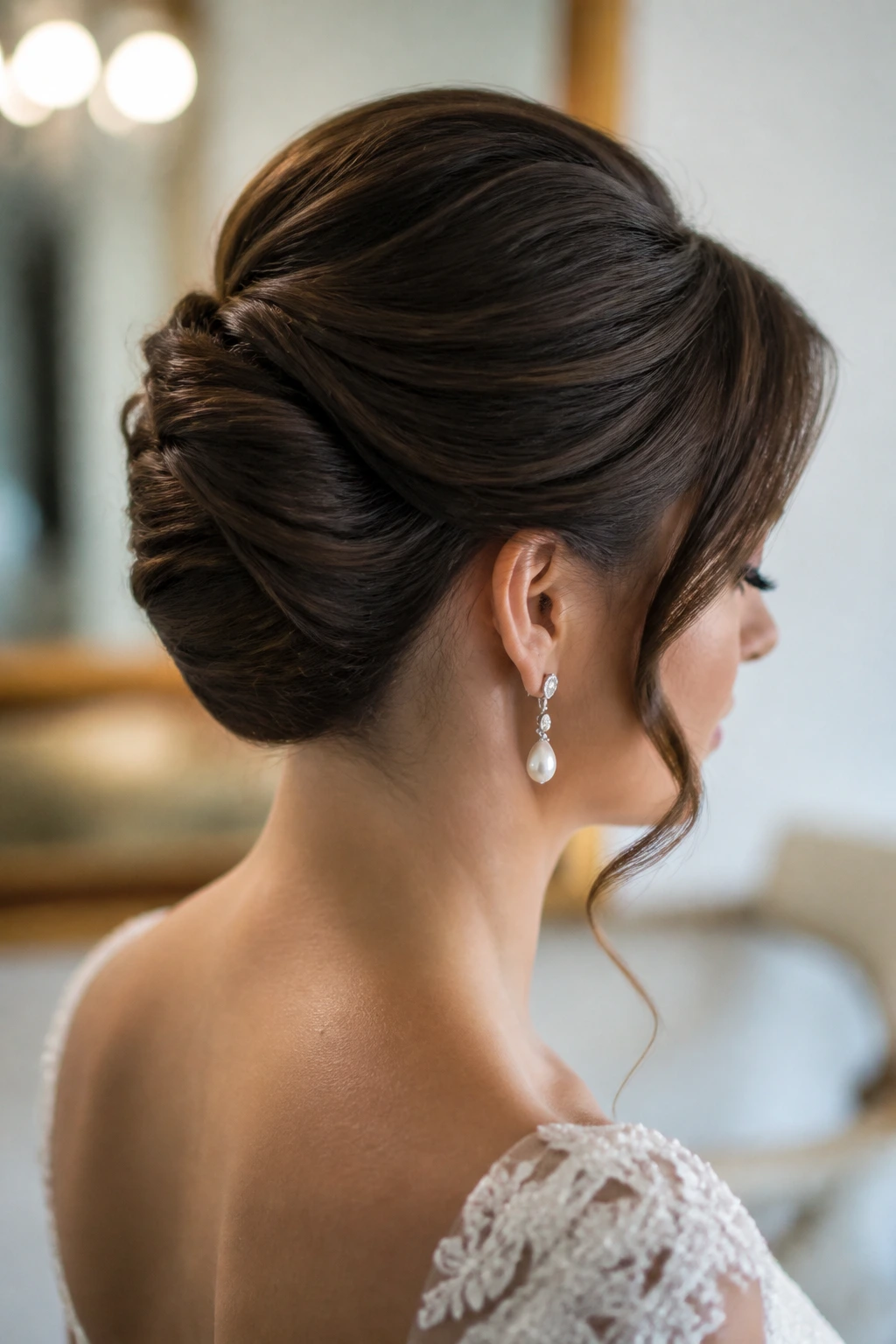
A French twist can look severe if it’s done too tightly. For a bridal version with a vintage vibe, the trick is to soften the edges without losing the twist’s elegant spine. The shell of hair rises at the back and folds inward, which gives the neck and shoulders an open line.
This is one of the cleanest options for a bride who wants jewelry to show. Long earrings, a delicate veil, or a statement collar all have room to breathe here. The twist itself becomes the structure, and the rest of the look can stay quiet.
Best When
- The dress has strong shoulders or a dramatic back
- You want the face and neckline to stay open
- You need a style that stays put through dinner and dancing
A French twist also plays well with hair accessories placed off to one side, especially if the front has a little wave or lift.
11. Pinned-Back Barrel Curls
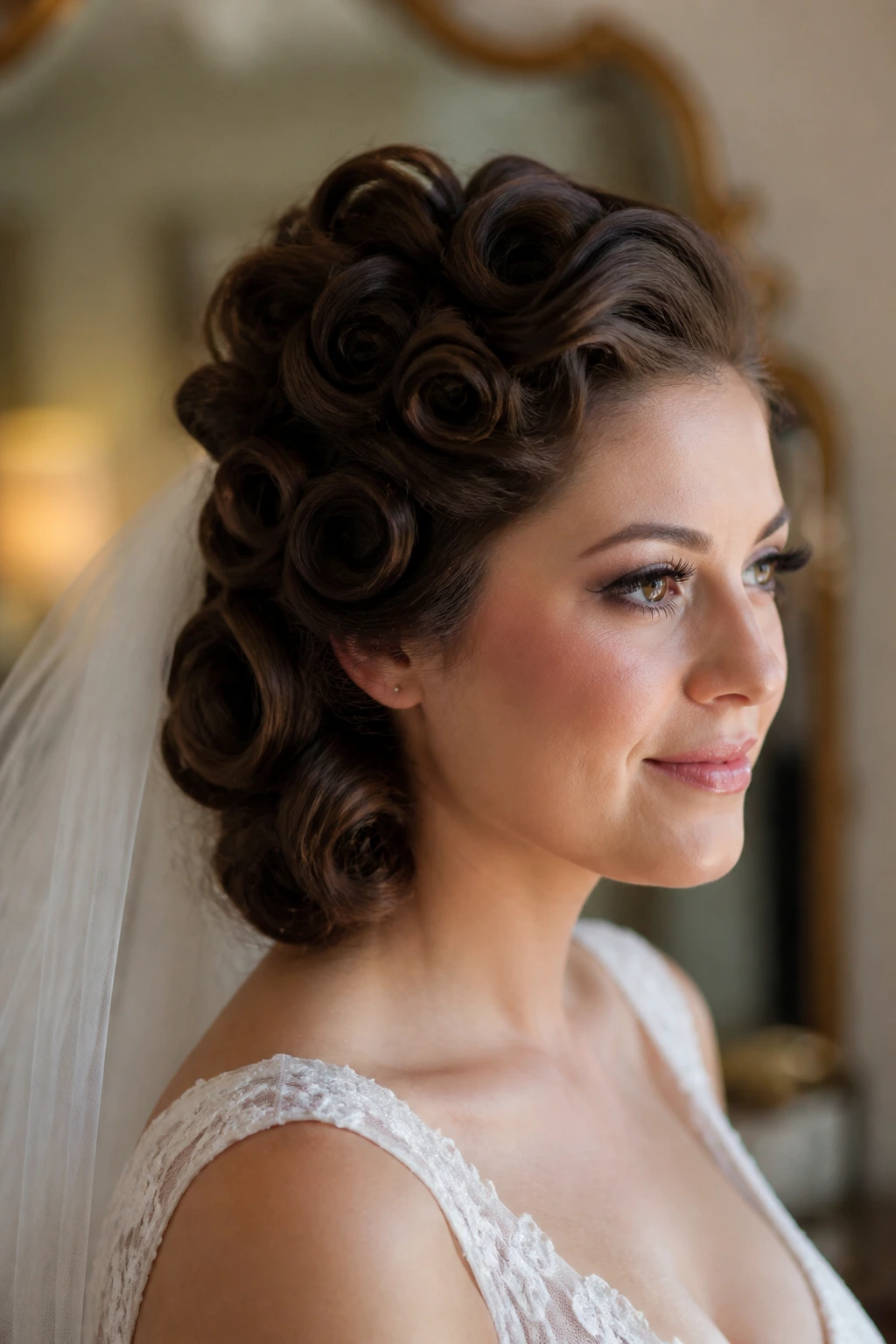
Barrel curls are what you reach for when you want softness but still want the shape to hold. Each curl is formed into a thicker loop and pinned back so the ends stay tucked in and the outline stays tidy. It’s less formal than a full updo and more controlled than loose Hollywood waves.
The real strength of this look is that it gives movement without chaos. The curves can frame the face, trail toward the shoulder, or sit along the back in neat sections. Brides with medium-length hair often land here because it looks finished without needing a lot of extension work.
A side clip, a comb, or even a narrow veil can sit on top of this shape without flattening it. That’s the advantage of a style built from sections rather than one giant curl pattern.
12. Pearl-Sheathed Low Bun
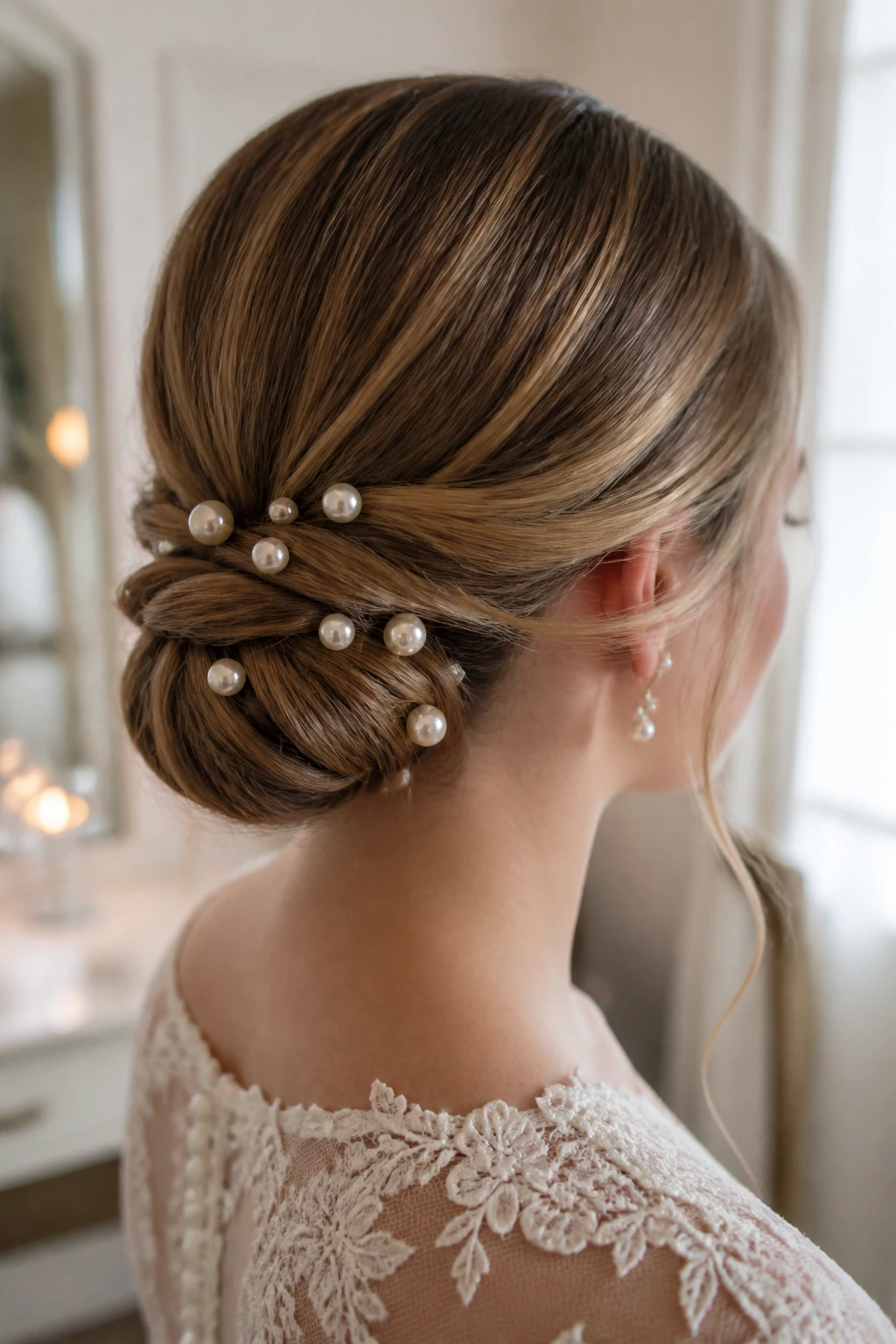
A low bun can be plain. It can also be lovely if you give it the right surface. Pearl pins, scattered near the base or tucked into the twist, turn a simple bun into something that feels bridal rather than office-ready.
The bun itself should sit low and clean, but not so tight that it looks severe. A tiny bit of softness around the hairline keeps the style from feeling armored. If there’s a side part or a small wave near the front, even better. That little bit of movement keeps the bun from reading as flat.
Practical Detail
Pearl-heavy styles work best when the bun is secure first and decorative second. If the ornament is doing the job of holding the hair together, it’s not the right ornament.
13. Halo Braid with Loose Framing Pieces
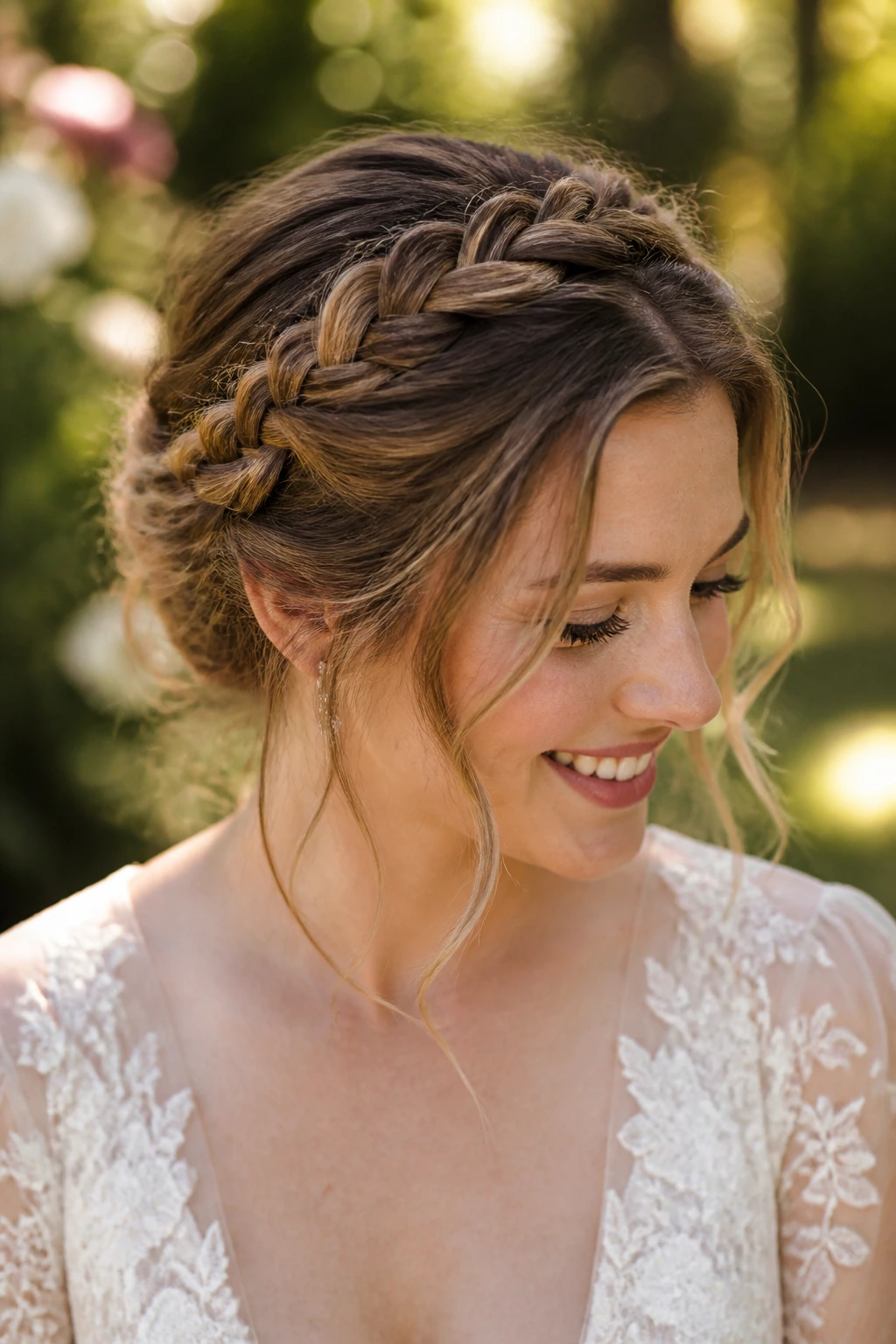
A halo braid gives strong vintage-folk energy, but on a bride it needs a softer hand. The braid should sit close enough to the head to read as a crown, while a few face-framing pieces keep the whole thing from feeling too tidy. Those loose pieces matter. They stop the look from going stiff.
This style works especially well with lace dresses, garden venues, and brides who like a slightly romantic, less structured silhouette. It’s also one of the easier ways to build a vintage mood into textured or wavy hair without forcing a curl pattern that doesn’t belong there.
You can weave ribbon into the braid if the dress is very simple, or leave it bare if the gown already has a lot to say. Either way, the crown line draws the eye upward in a way that feels gentle and flattering.
14. Teased Crown and Sweep
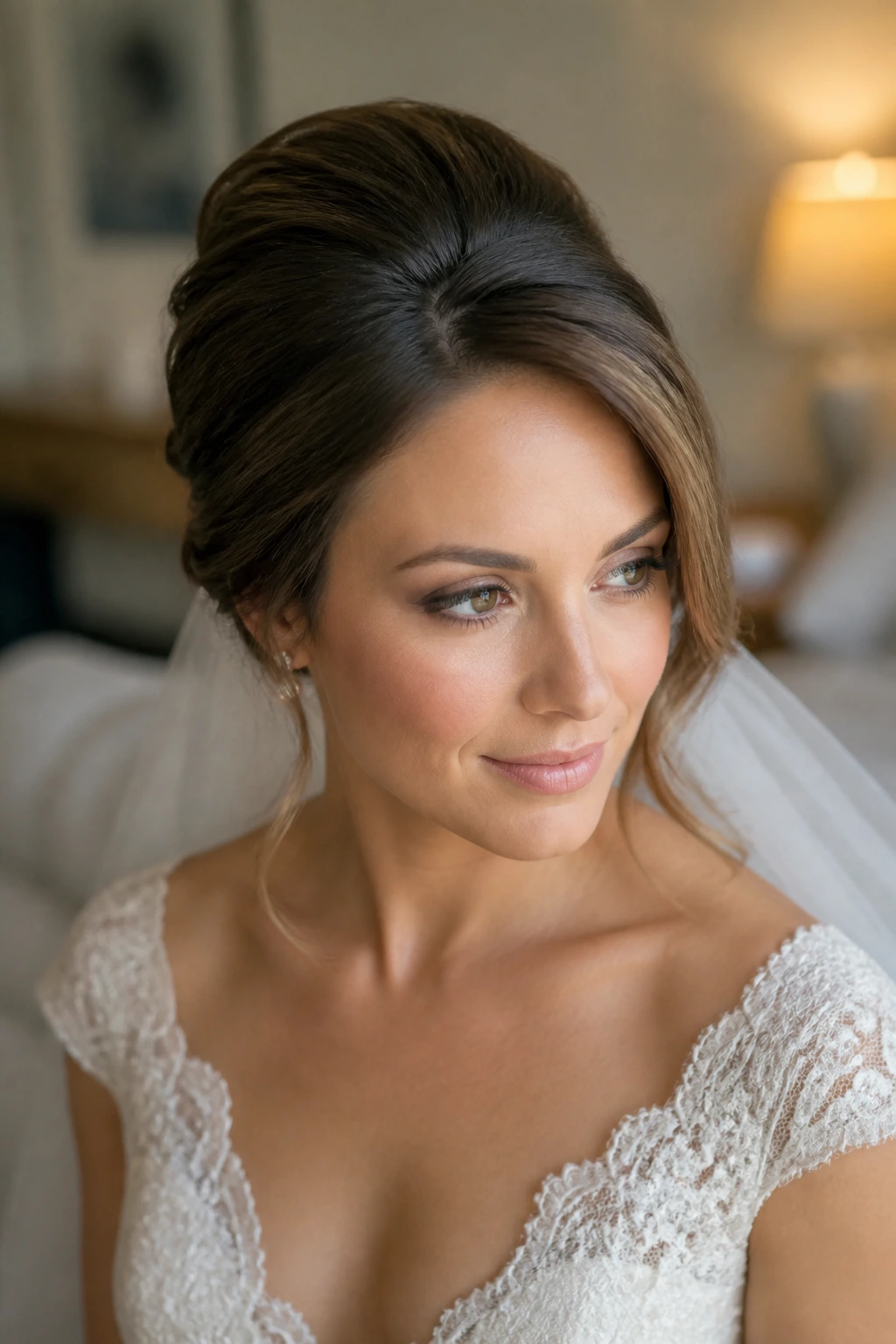
A teased crown is one of those old-fashioned tricks that still earns its keep. It adds lift exactly where bridal hair tends to fall flat: at the top, where the veil comb sits and where the profile line needs a little shape. Sweep the lengths to one side or into a low tuck, and you get vintage height without a full beehive.
The beauty of this look is that it can be soft or sharp. A little tease with a smooth top gives you a polite version. More lift and a tighter sweep make it bolder. I prefer the first version for most brides because it keeps the silhouette light, but the second one has a real presence if the dress is simple.
A strong brush-out and careful pin placement make all the difference. Too much backcombing, and the texture gets frizzy. Too little, and the crown sinks before the photos are done.
15. Curled Bob with a Side Barrette
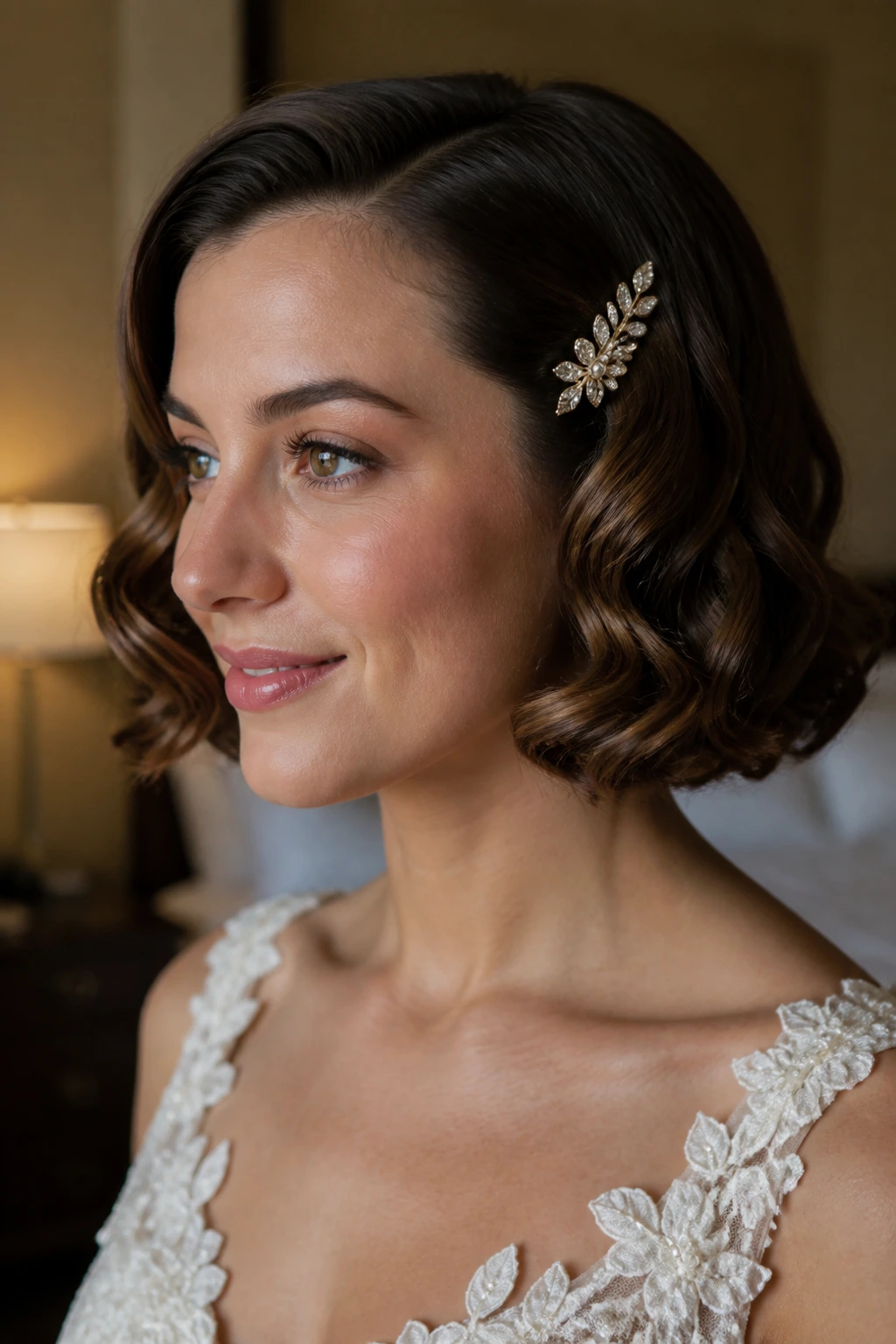
A bob can be vintage all by itself if you treat the shape properly. Loose curls or soft bends keep it from looking too blunt, and a side barrette gives it that little accent that says the style was chosen, not rushed.
This is a smart option for brides with chin-length or collarbone hair who want something light and manageable. The barrette can sit just above the temple, or it can mark the line of the side part. Either way, it shifts the bob from everyday to occasion hair in one move.
Where It Shines
- Shorter veils
- Cocktail-length dresses
- Statement earrings
- Hair that already has a clean cut line
Keep the ends polished. A bob loses its elegance fast when the lower line gets fuzzy.
16. Soft Pageboy Flip
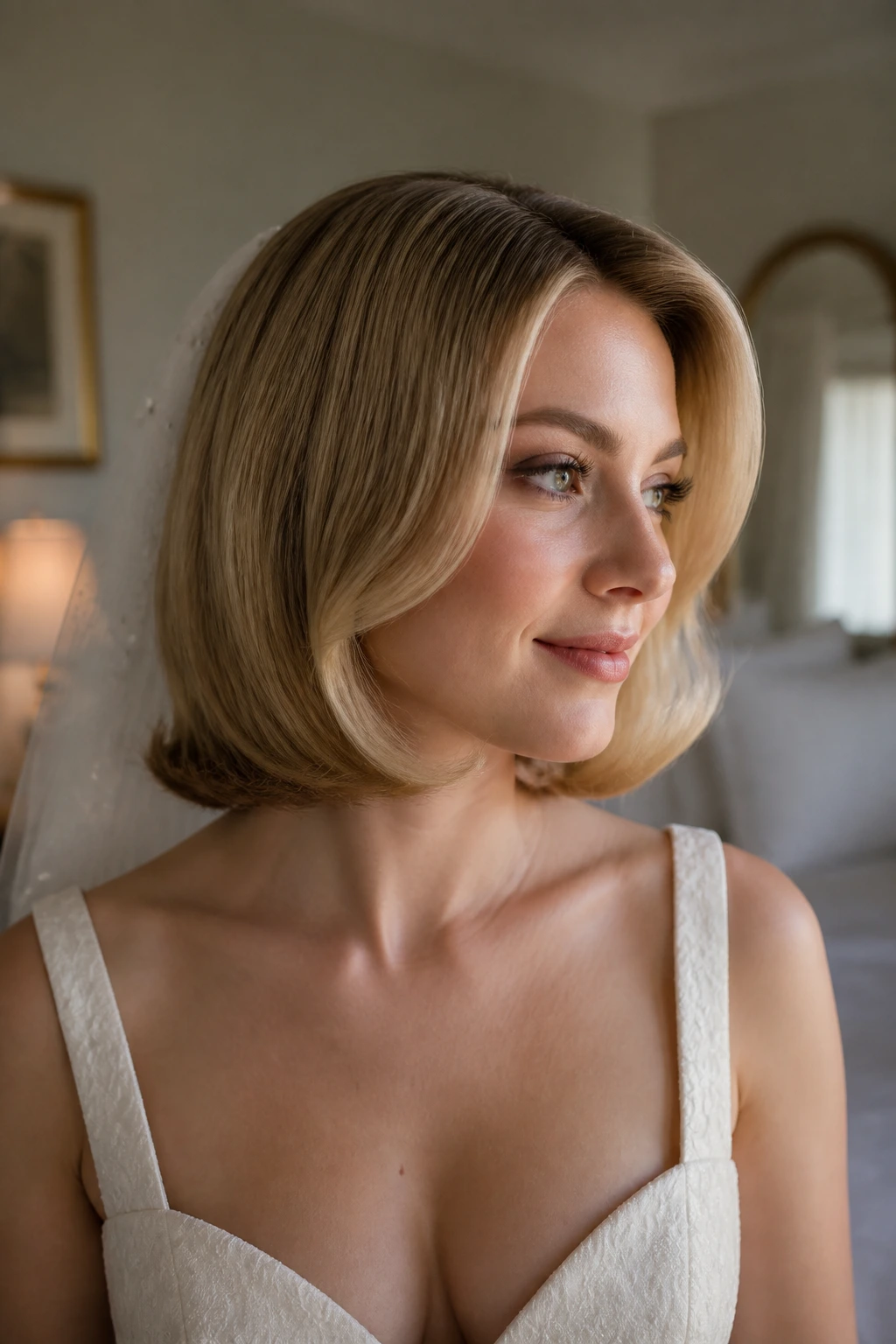
The pageboy flip has a certain sweetness to it. Ends are turned under or flicked outward in a controlled curve, which gives the whole style a gentle retro edge. It’s especially appealing on shoulder-length hair, where the shape can show clearly without a lot of support.
What I like about this one is how unpretentious it feels. You don’t need a huge amount of volume, only a clean line and a little bit of polish at the ends. The silhouette sits neatly under a veil or beside a slim headband, and it doesn’t fight with high necklines.
Why It Works
The pageboy flip gives a bride movement near the shoulders, which is useful if the gown is simple and the bodice needs a little visual lift. It also tends to hold up better than over-curled hair because the shape is built into the cut and finish, not only the curl.
17. Milkmaid Crown with Ribbon
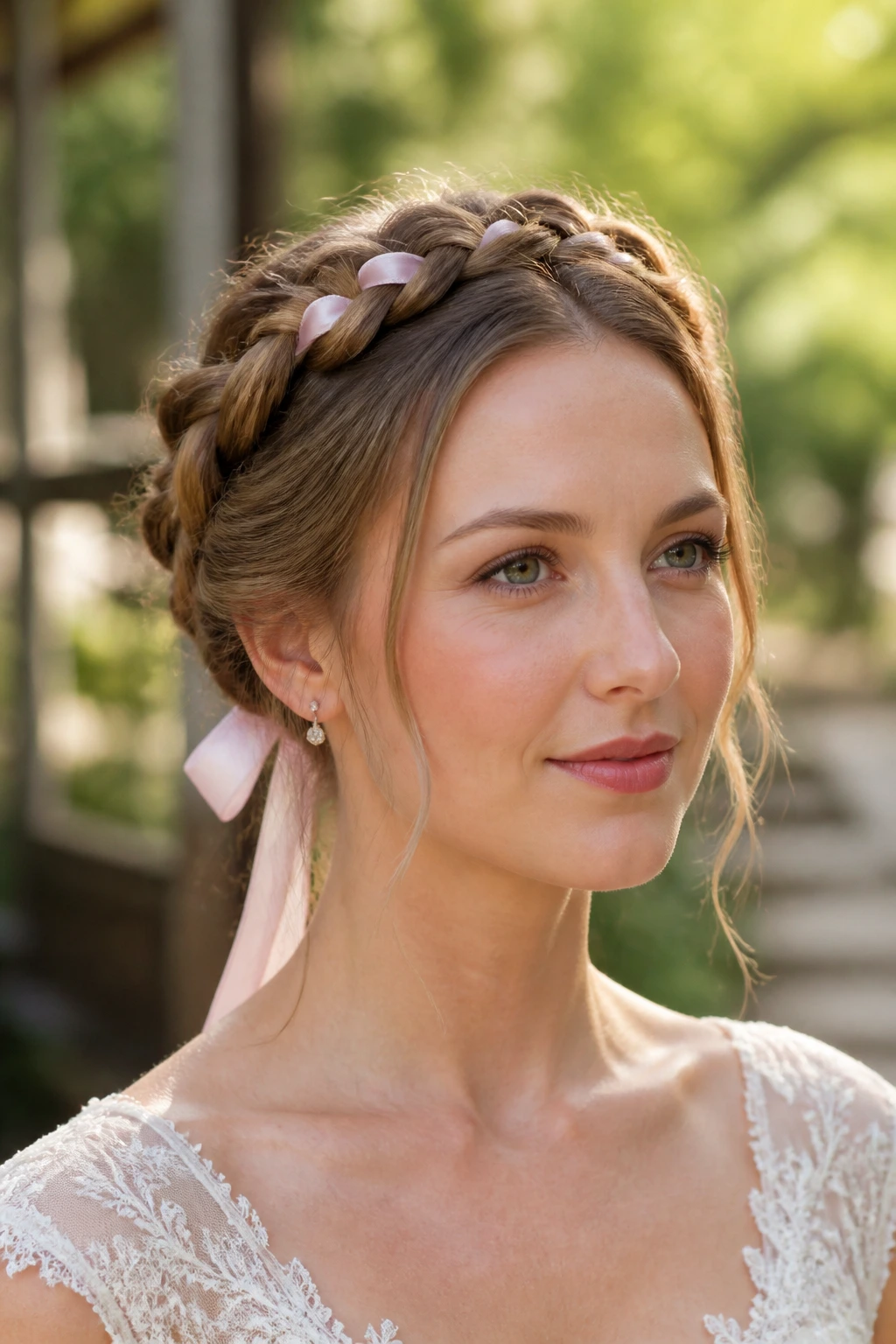
The milkmaid crown has a softer, sweeter mood than some of the sharper vintage styles, but it still belongs in the family. A braided crown wraps around the head and leaves the face open, while ribbon threaded through the braid gives it a more bridal finish.
This is the look for a bride who wants old-fashioned charm without a severe line at the hairline. It works especially well if the dress has delicate sleeves, a square neckline, or a rustic texture that would feel out of place with a hard sculpted updo.
A narrow satin ribbon keeps things polished. A wider ribbon can feel costume-like unless the dress is very simple. Keep the braid close to the head and let a few small pieces soften the temples.
18. Rolled Bangs and Low Knot
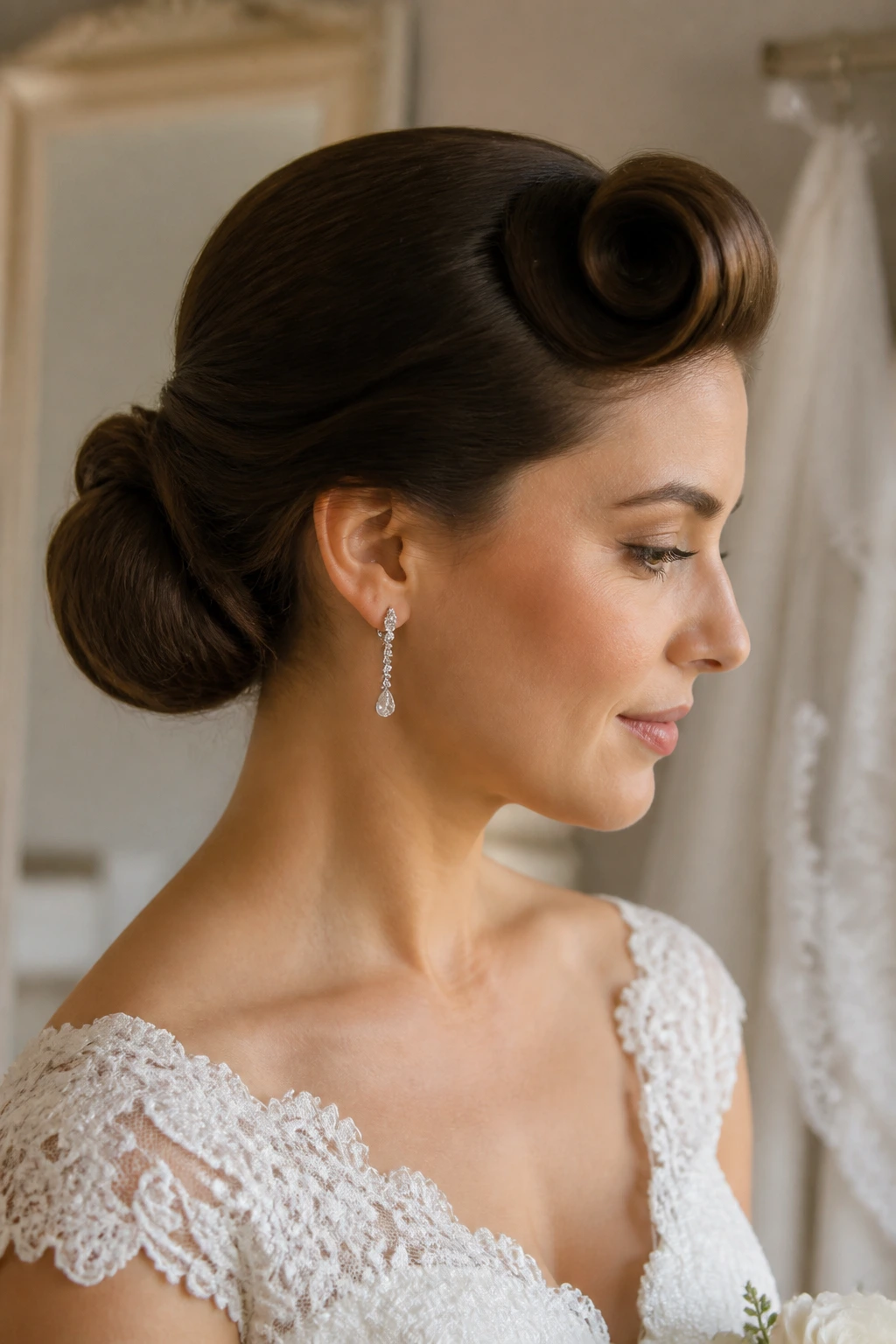
Rolled bangs can steal the whole show, and that’s not a bad thing. They create a clear vintage cue right at the front, which means the rest of the hair can stay quieter and still read as intentional. Pair them with a low knot, and the shape becomes balanced instead of busy.
This style is a favorite when the bride wants her face to stay open but doesn’t want bare hair around the forehead. The rolled front gives height and personality, while the knot keeps the nape neat. It’s also a strong match for birdcage veils because the front detail and the veil texture don’t compete.
Quick Shape Notes
- Keep the roll compact if your face is petite
- Leave the knot smooth, not fluffy
- Use pins that match the hair color, not shiny clips
- Place accessories slightly off-center for a softer line
19. Side-Swept Pompadour
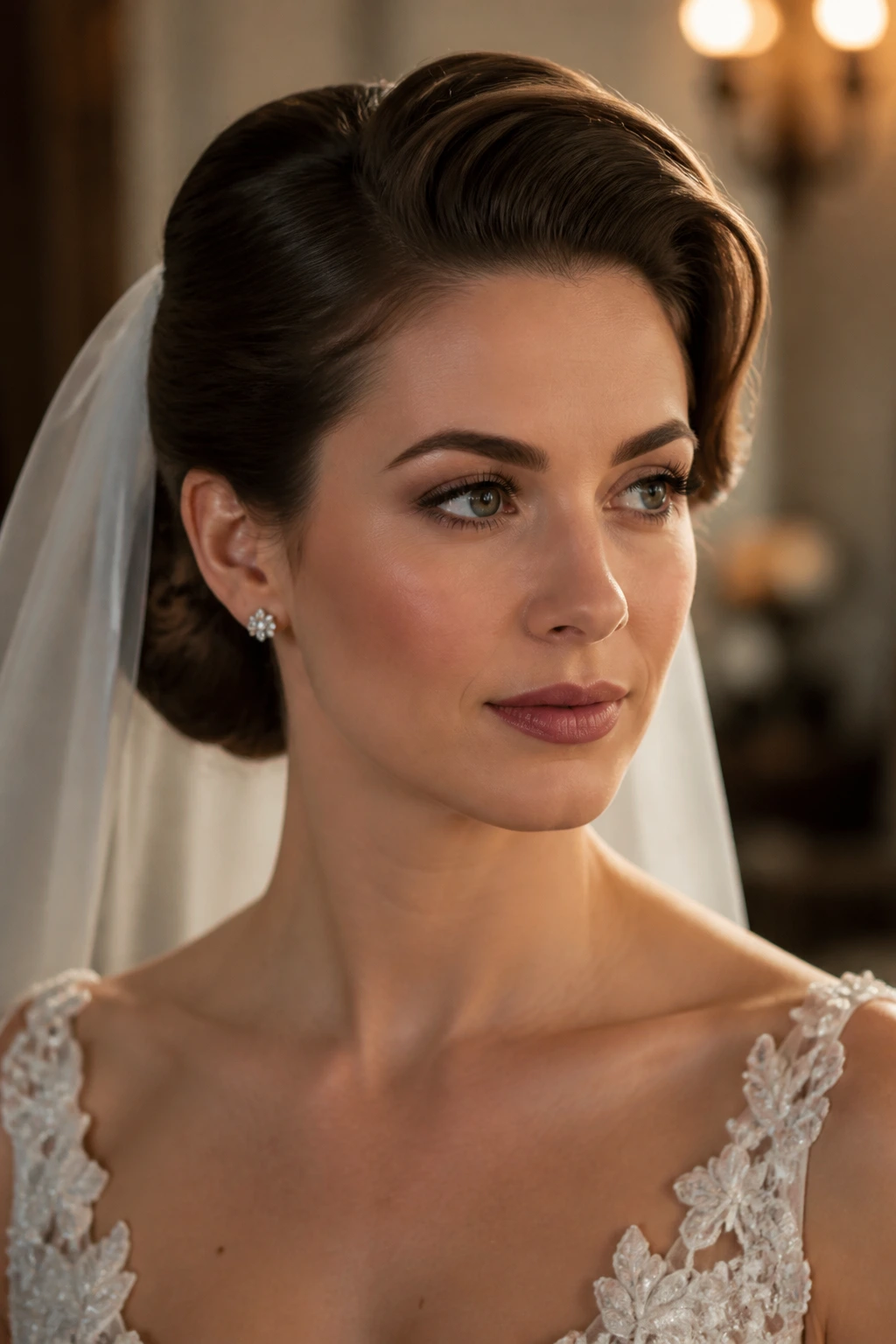
A pompadour sounds like it wants to be loud. For a bride, it doesn’t need to be. A side-swept version creates lift at the front and then guides the hair away from the forehead in a smooth arc, which gives the style a very specific kind of confidence.
This look suits brides who like a bit of drama near the crown. It can be a nice bridge between hard vintage references and something more modern. If the dress is sleek, the pompadour gives the head shape. If the dress is embellished, the hair can stay cleaner and still carry personality.
A little pomade or smoothing cream helps keep the front controlled. Too much product, though, and you lose the airy lift that makes the style feel bridal rather than helmet-like.
20. Vintage Ponytail with a Wrapped Base
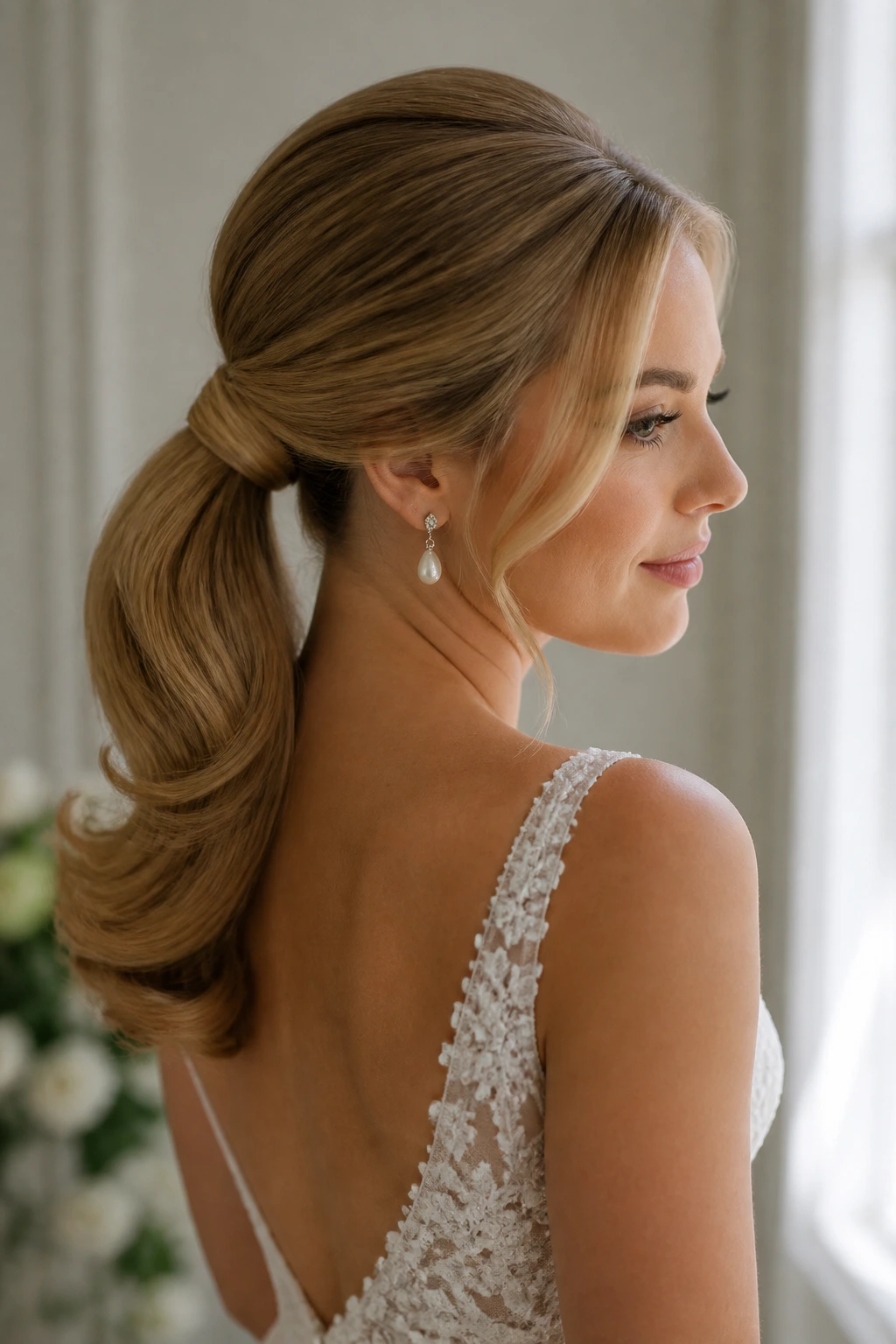
A ponytail doesn’t have to look casual. Wrap the base with a section of hair, smooth the crown, and curl the ends in a soft, controlled way, and it starts behaving like vintage evening hair instead of a gym-ready tieback.
This is one of the more wearable ideas on the list because it gives you security without sacrificing the line. The pony can sit low and polished or a little higher with a softer sweep at the crown. Either way, it keeps the neck open and works beautifully with dresses that have detail near the shoulders.
The key is not to let the elastic show. A wrapped base and a well-brushed surface are what make this feel deliberate. If the crown is too bumpy, the whole thing loses its elegance.
21. Smooth Low Roll with Side-Swept Fringe
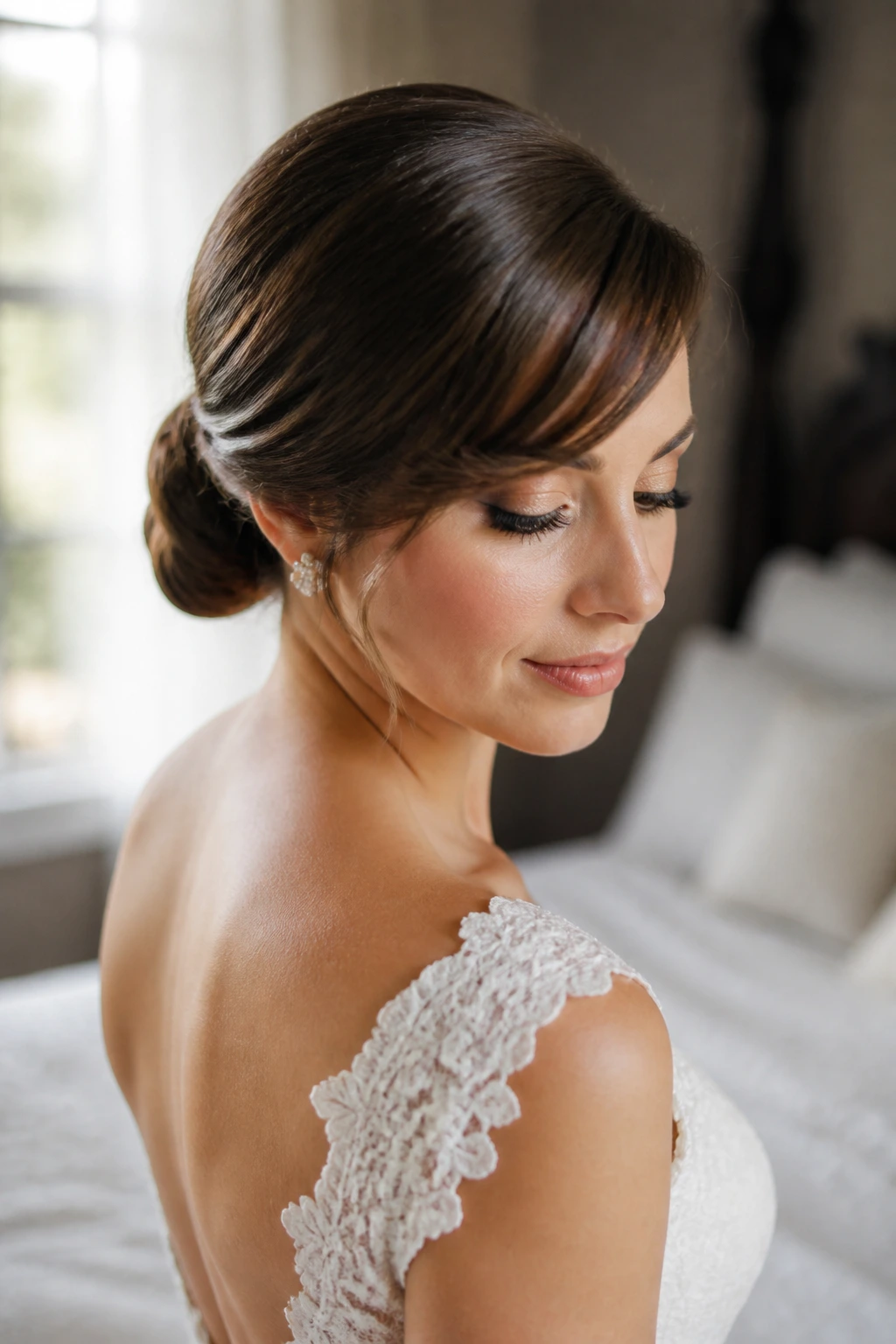
The low roll is one of those shapes that looks more expensive than it is. Hair is swept back, rolled near the nape, and pinned into a clean horizontal line. Add a side-swept fringe, and the style softens instantly.
It’s especially good if you want the back of the dress to show. A high bun can cover too much. A low roll keeps the silhouette long and graceful, and the fringe prevents it from feeling too formal. That balance matters. A bridal style should look composed, not stern.
A decorative comb can sit where the roll begins, but keep it low. If you place the accessory too high, you lose the clean vintage line and turn the style into something busier than it needs to be.
22. Classic Beehive
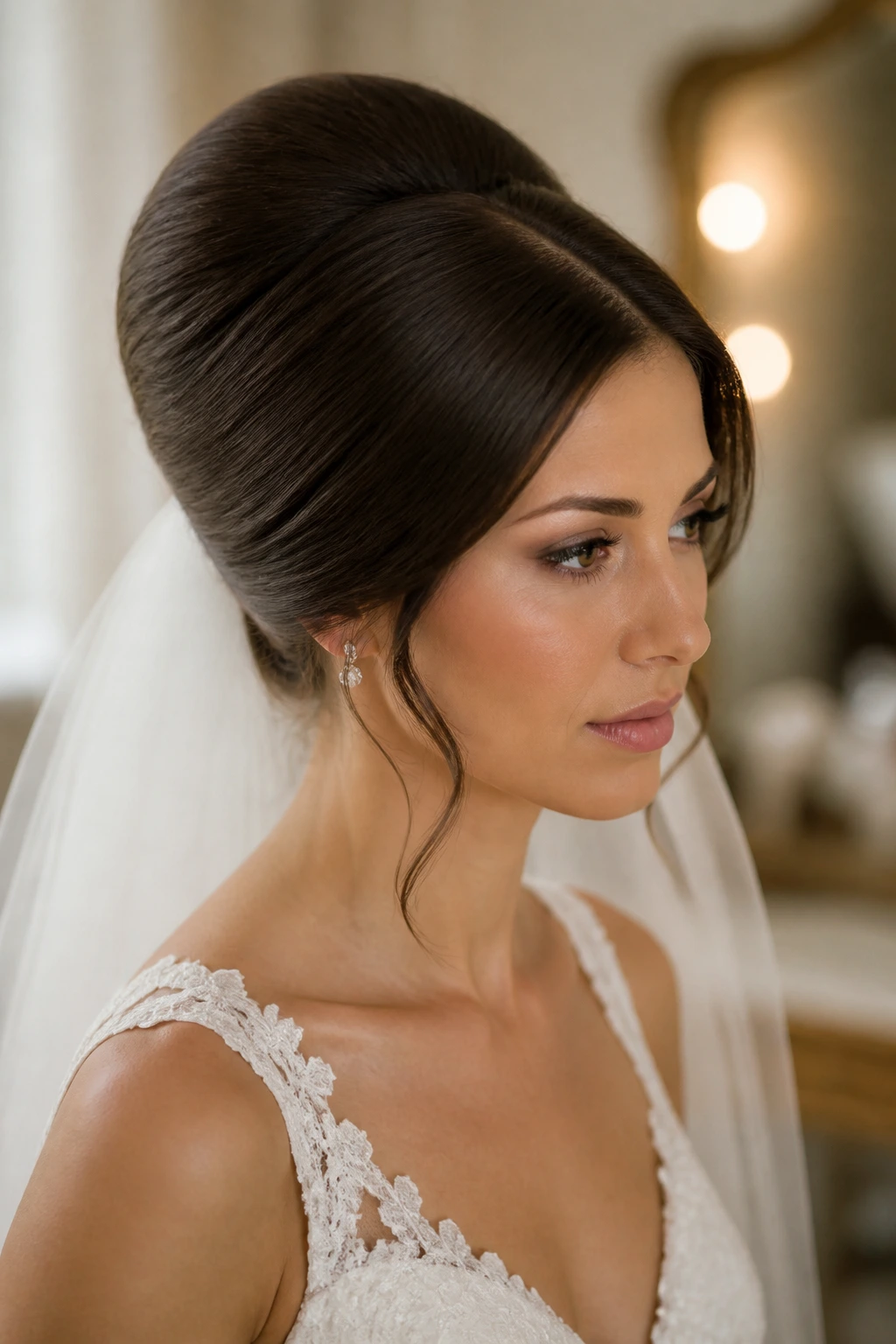
A beehive is not subtle. That’s the point. For the right bride, a controlled beehive brings instant midcentury shape and a very clear profile line, especially when the crown needs height and the dress needs a little attitude.
The trick is restraint. A bridal beehive doesn’t need to climb into the sky. A moderate lift, neatly smoothed sides, and a clean base can create the same vintage signal without making the hair feel heavy. If the hair is too teased, the look starts fighting the dress. If it’s too flat, it stops being a beehive at all.
This style works best with polished ends, a side part or fringe, and a strong pin foundation. It’s one of the few looks here that can hold its own against a very structured gown.
23. Curved S-Wave Updo
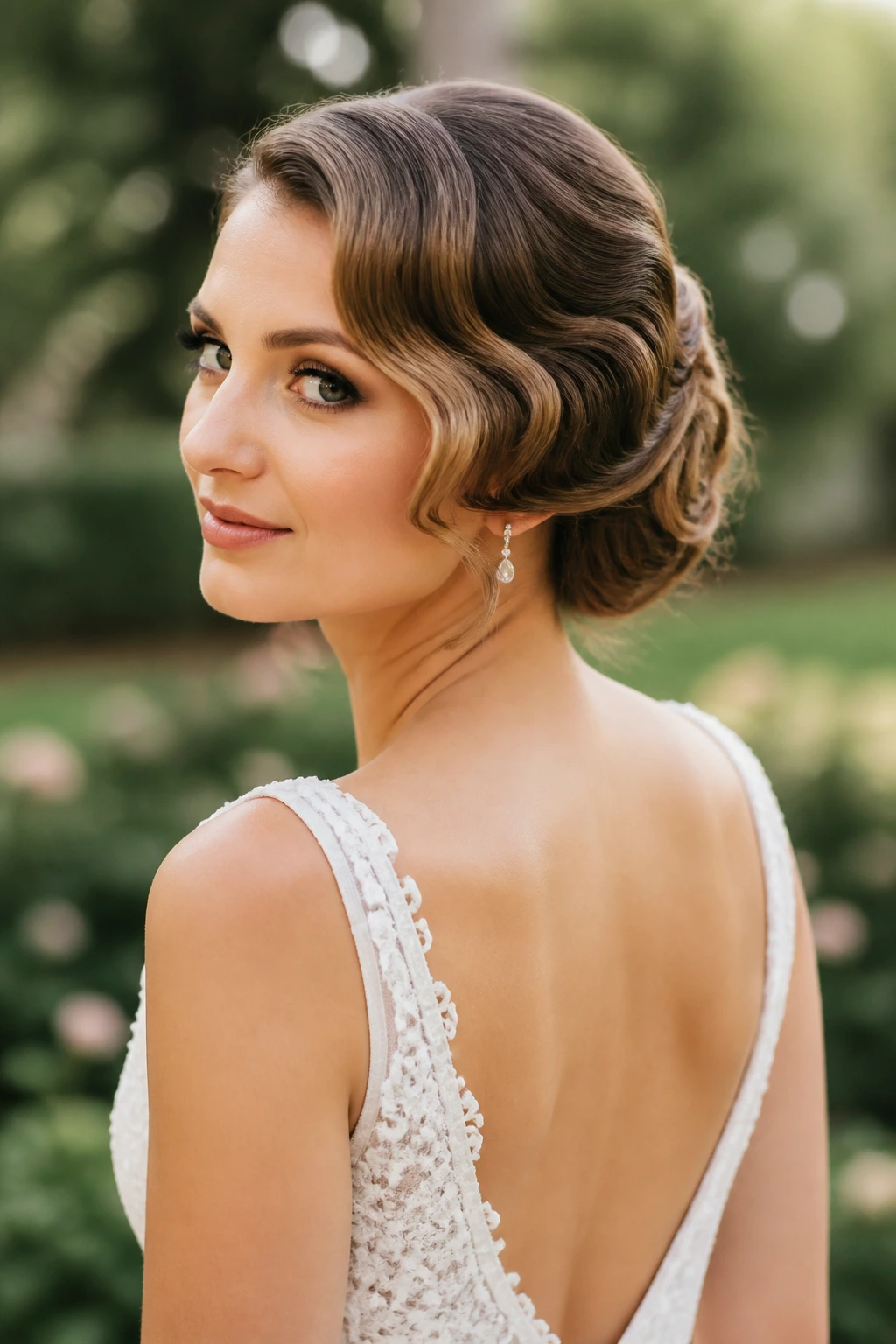
An S-wave updo takes the language of finger waves and moves it upward into something a little more formal. The front and sides are shaped into soft curves, then the lengths are pinned into a low or mid-level updo that keeps the vintage lines visible.
This one is ideal for brides who love the wave pattern but want the back off the neck. It gives you the face-framing softness of finger waves and the practical stability of an updo, which is a nice compromise when the dress has an open back or when the weather asks for less loose hair.
What Makes It Different
The curve at the front isn’t decorative fluff. It becomes the lead-in for the bun or twist, so the eye moves naturally from forehead to crown to nape. That’s why the style looks so finished in profile.
24. Tucked Under Shoulder-Length Curls
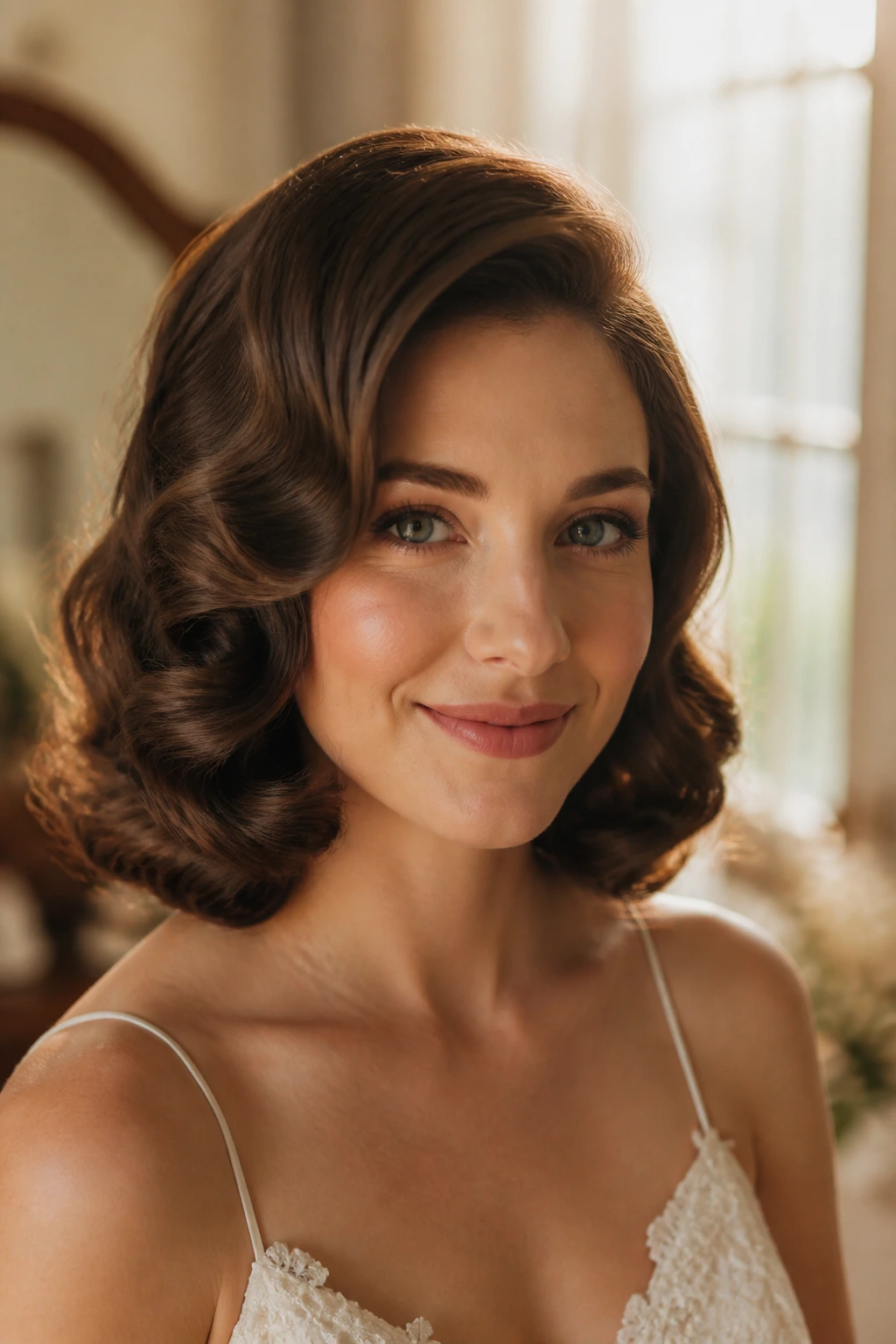
Shoulder-length hair sits in a sweet spot for vintage styling. It’s long enough to curl and pin, but short enough to feel light. Tucking the ends under gives it shape, while the curls on top keep the movement soft.
This style is useful when you want the shoulders visible but don’t want the hair to float around the face all day. It can look almost like a polished set from a classic film still, especially if the ends are rolled inward and the top layer is brushed into clean ridges.
The best part? It doesn’t demand a ton of length or extensions. If your hair falls right around the collarbone, this can look intentionally styled instead of forced.
25. Twisted Crown with Net Veil
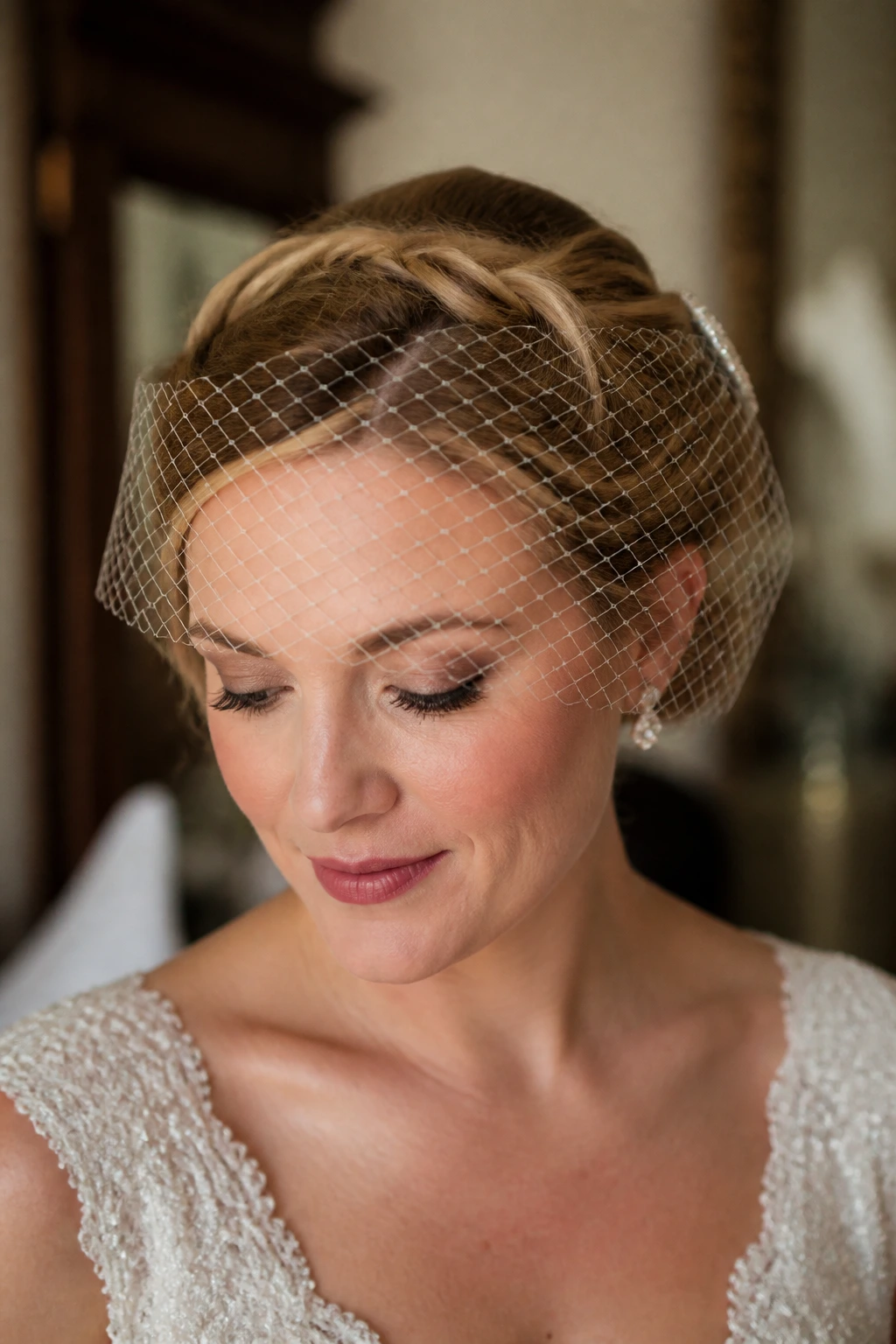
A twisted crown with a net veil has strong vintage bridal energy without leaning too hard on any one era. The hair is twisted back from the temples or hairline, creating a crown-like frame, and the net veil adds texture that feels right at home with the structure.
This is a beautiful option for brides who want something a little theatrical but still refined. The net veil softens the overall look and gives the face a delicate edge. It also works well with smooth hair, which means you don’t have to commit to heavy curls if that isn’t your thing.
Best Pairings
- Simple sheaths or column dresses
- Small earrings instead of big chandeliers
- Low makeup that lets the veil texture stand out
- Short to medium-length hair, though long hair works too
26. Pinned Ringlets with Satin Bow
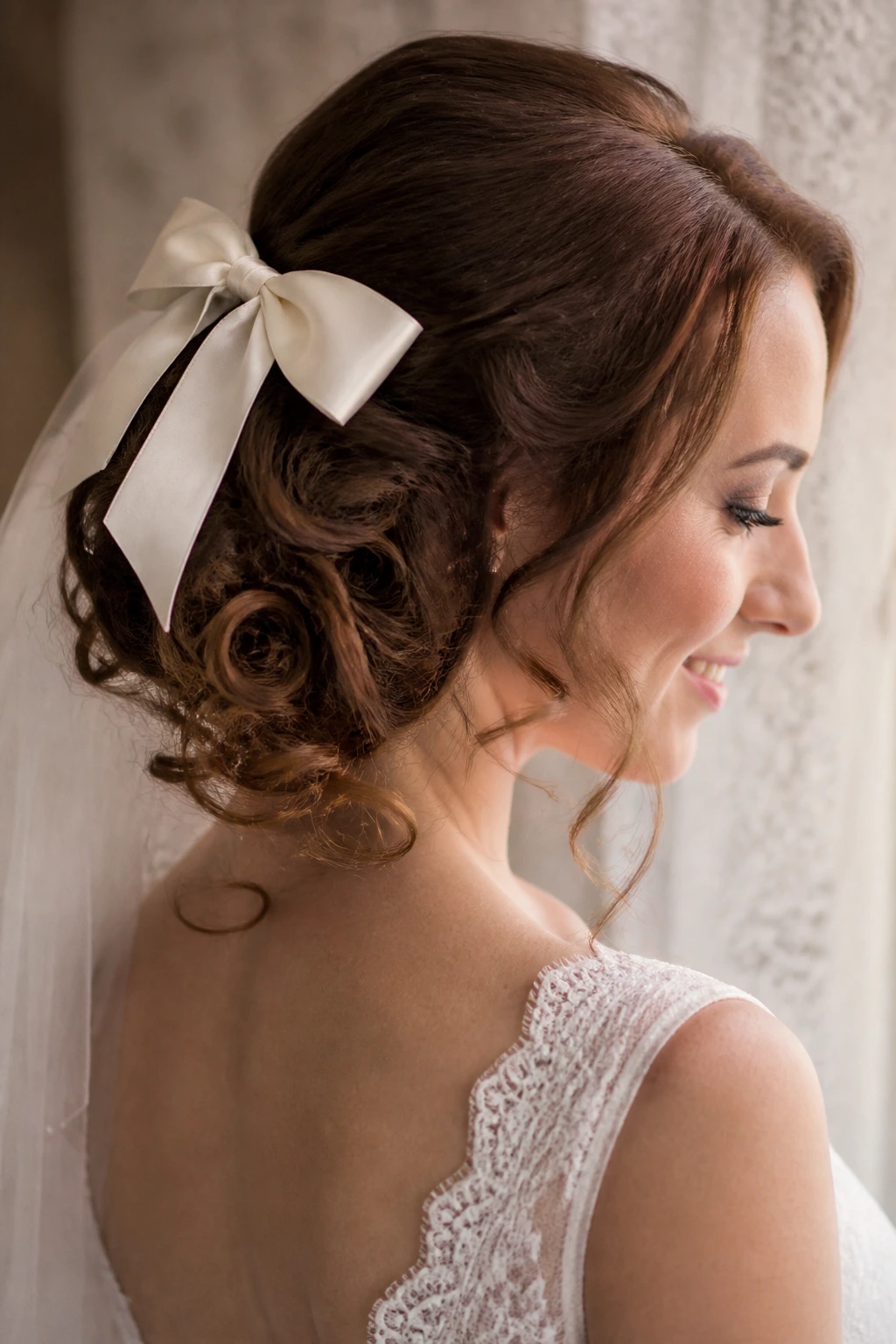
Pinned ringlets give you movement, and the satin bow gives you a focal point. That’s a good marriage. The ringlets can sit at the back or down one side, gathered loosely so they still feel airy, while the bow anchors the whole style and makes it look ceremonial.
I like this one for brides who want a softer vintage mood. It doesn’t come off as formal as a French twist or a beehive, and it has a touch of sweetness that works well with lace, tulle, and smaller veils. If the bow is too wide or shiny, though, the whole thing can drift into pageant territory. Keep it narrow and let the ringlets stay the star.
The bow also helps the style read from the back, which matters more than people think when half the wedding photos are taken during the kiss and the walk back down the aisle.
27. Structured Low Bun with Finger-Wave Front
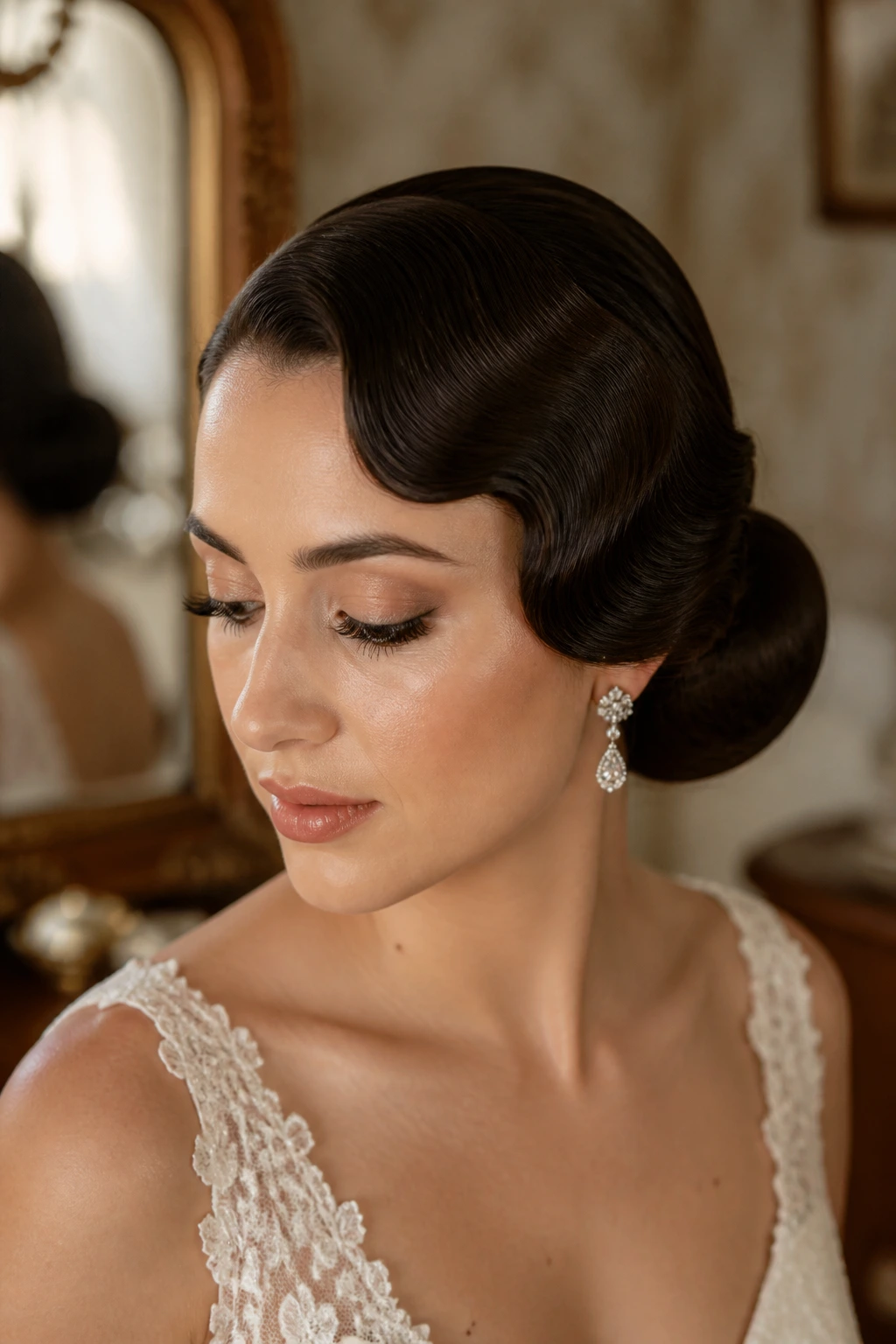
This is the one I’d save for a bride who wants the clearest vintage signal with the least fuss. The front is set in finger waves or a molded side sweep, while the back stays in a clean low bun. The contrast is what makes it work: sculpted in front, orderly in back, no wasted motion.
It’s elegant, yes, but not fragile. The bun gives the style a firm base, and the front waves frame the face in a way that feels tailored. Add a comb, a cluster of pearls, or a slim veil, and you’ve got a look that still makes sense when the lipstick has worn off and the dance floor is busy.
If there’s one style on this list that can survive a long day and still look composed in the last set of photos, this is a strong candidate.
What Makes a Bridal Style Feel Vintage Instead of Just Curled
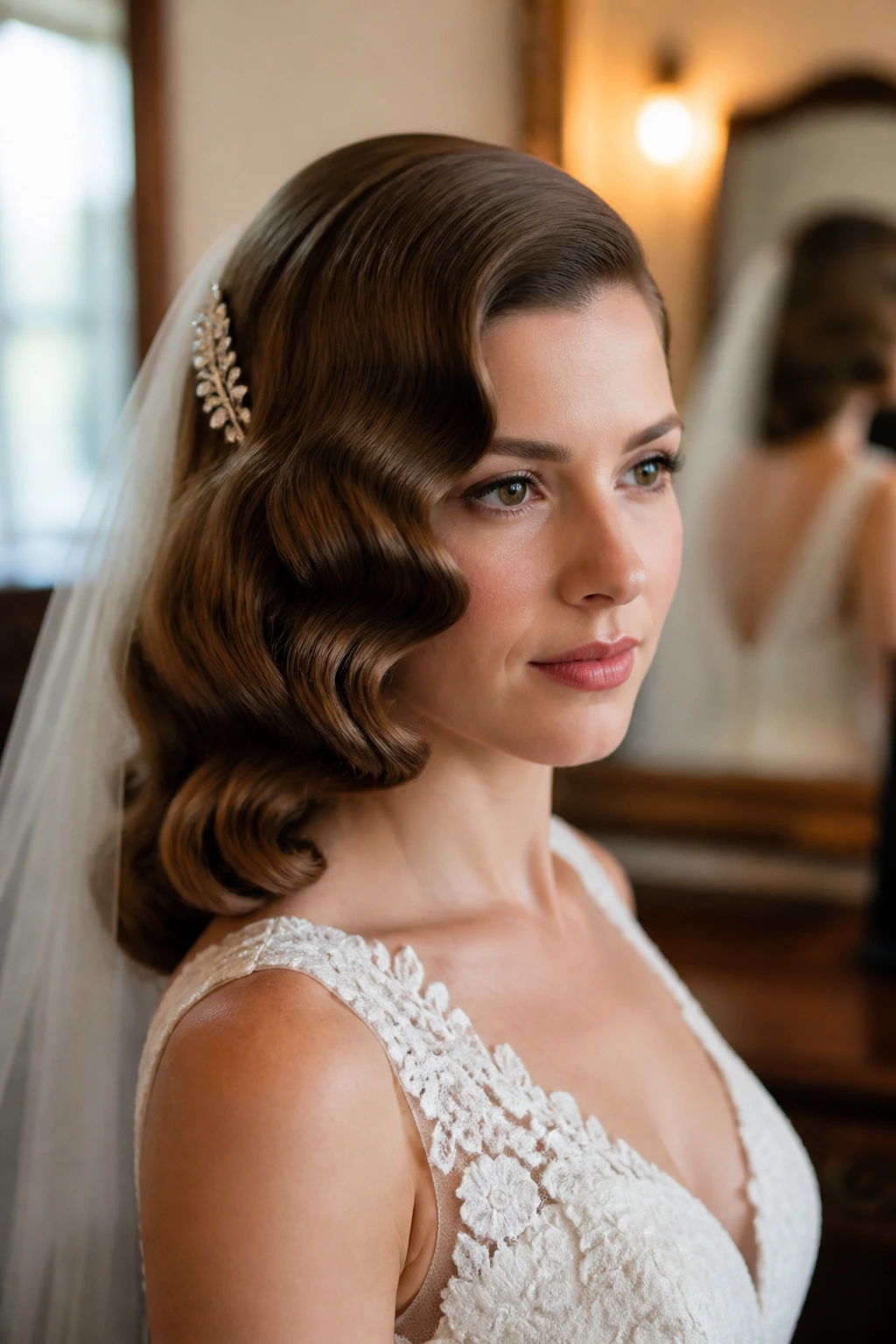
Vintage bridal hair is less about one exact era than it is about shape. The silhouette is doing the heavy lifting. A deep side part, a smooth crown, a visible wave line, or a tucked nape tells the eye where to look, and that direction is what makes the style feel rooted in another time.
Shine matters too. Not greasy shine. Controlled shine. The hair should look brushed, set, and touched with intent, not blasted with heat and left to fend for itself. Loose beach waves can be lovely, but they usually read as casual first. Vintage hair has more structure in the roots and more purpose in the ends.
Accessories are the last piece, and they’re worth choosing carefully. A birdcage veil changes the mood of a finger-wave style. A pearl comb can make a low bun look formal enough for a church aisle. A ribbon or net veil can tilt a look toward sweet or dramatic. The shape comes first, though. Without that, the accessory is carrying a job it can’t do alone.
The Tools That Make These Looks Behave
-
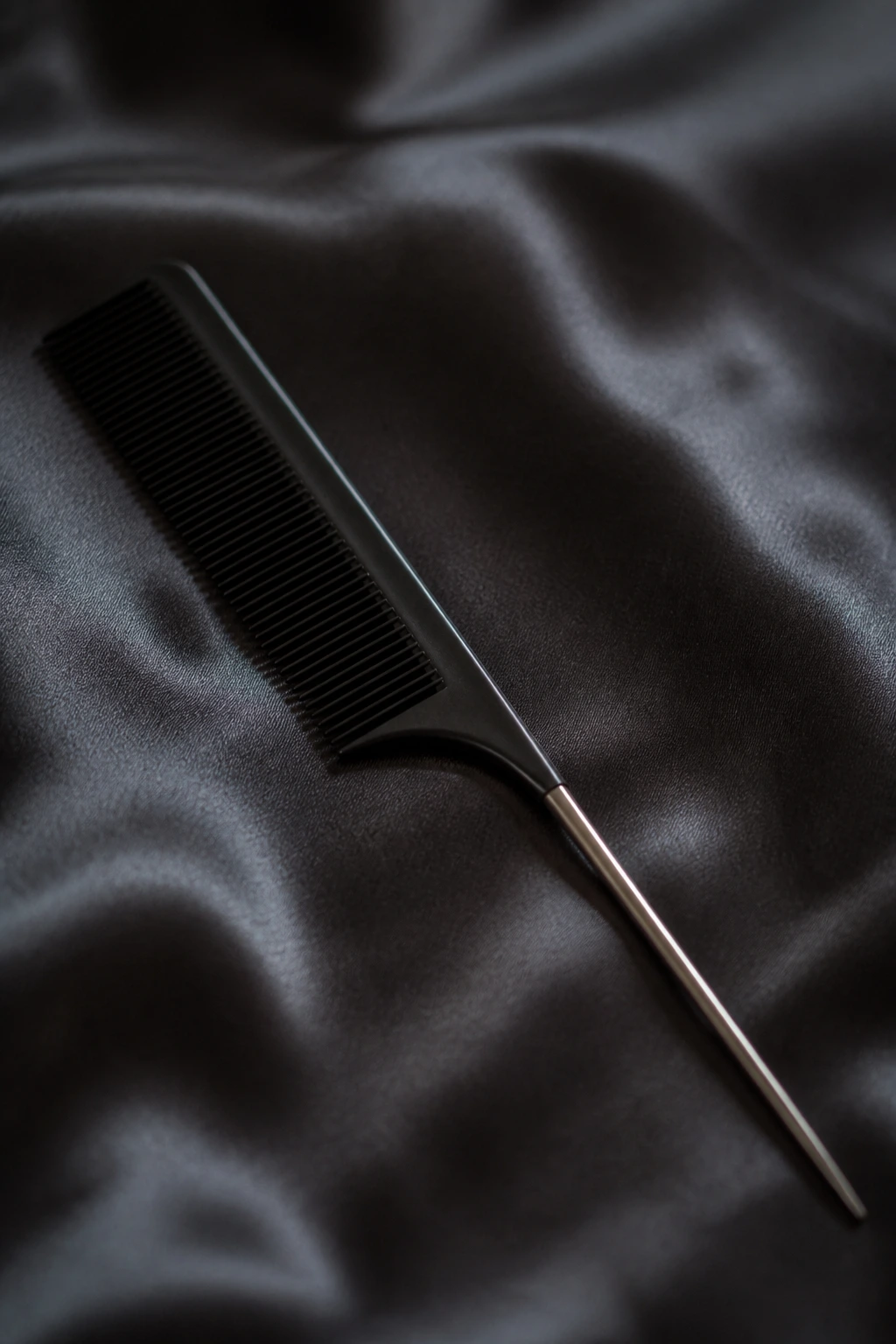
Rat-tail comb: Useful for clean parts, neat sections, and wave placement; this is the tool that keeps the style from looking messy at the roots.
-
Boar-bristle brush: Best for smoothing the surface after curls or teasing, especially when you want the finish to look polished rather than fluffy.
-
1-inch curling iron: A flexible size for brushed-out waves, pin curls, and most vintage bridal styles that need shape without a super-tight curl.
-
3/4-inch curling iron or marcel iron: Helpful for tighter wave patterns, finger-wave prep, and shorter hair that needs a more controlled bend.
-
Pin curl clips: These hold setting curls flat while they cool, which is half the battle with vintage hair.
-
Duckbill clips: Great for sectioning while you roll, wave, or pin the front.
-
Bobby pins and U-pins: You’ll need both; bobby pins for anchoring, U-pins for holding soft rolls and buns without crushing them.
-
Teasing comb: Useful for crown lift and bouffant shapes, but don’t overdo it unless you want the top to look fuzzy.
-
Strong-hold hairspray: Pick one that dries fast and keeps the surface in place without turning the hair into a helmet.
-
Setting lotion or mousse: Gives the hair memory before heat styling or wet-setting.
-
Heat protectant: Non-negotiable if you’re curling the hair several times during a trial.
-
Hair net or veil cap: Handy for pinning and protecting set curls while they cool or while you’re moving between styling steps.
Smart Prep and Hair Shopping Tips
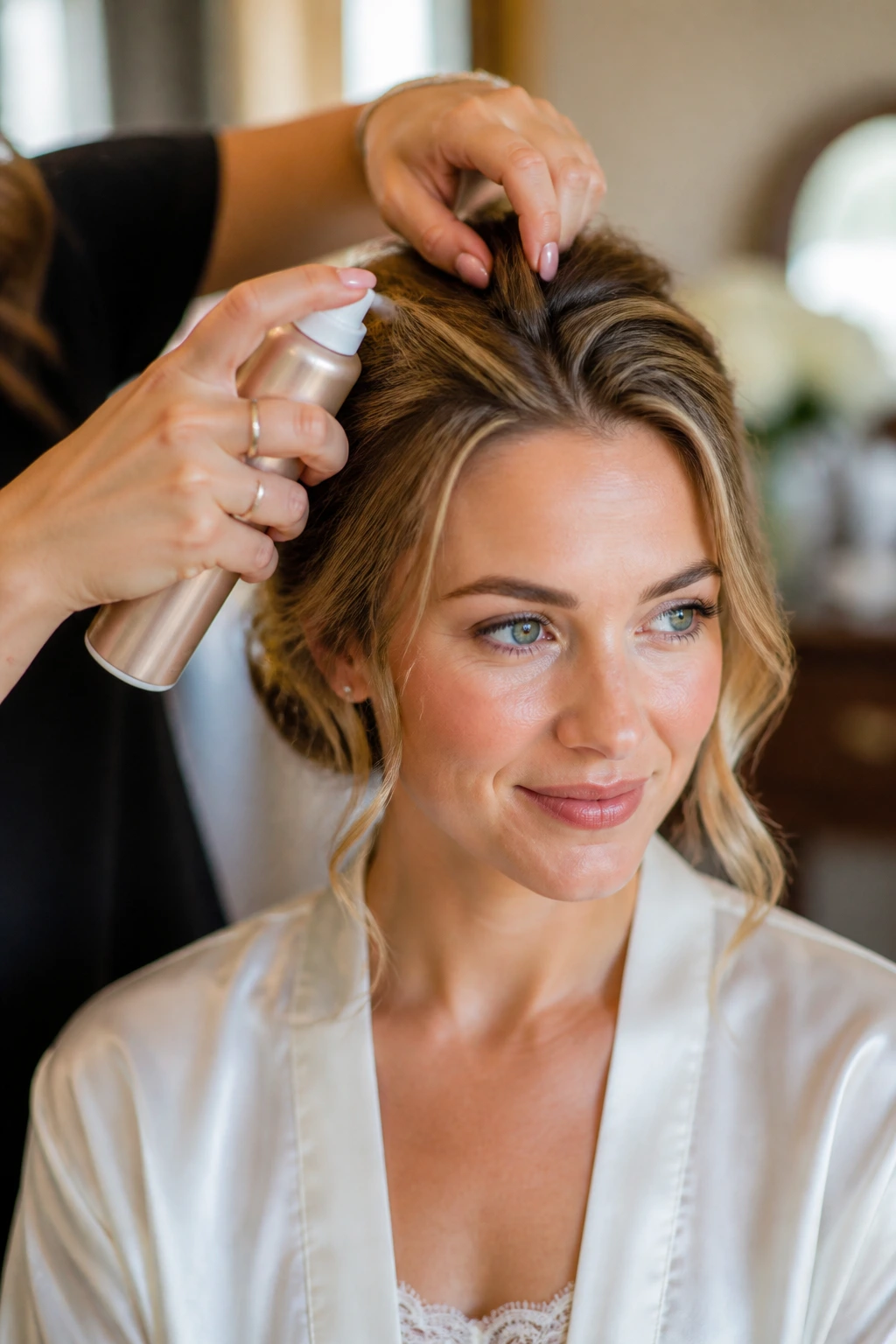
Start with the hair’s natural grip, not just its color or length. Freshly washed hair can be too slippery for finger waves, rolls, and tucked styles. Day-old hair, or hair with a bit of mousse and dry shampoo through the root area, usually gives pins something to hold on to. That small detail saves a lot of frustration.
A trial run is worth more than a mood board. Bring the veil, earrings, comb, and any hairpins you plan to use. If the accessory is heavy, the style needs more anchor points than you think. If the dress has a high neckline, the hair may need to sit lower so the whole look doesn’t crowd the face.
Texture matters, too. Fine hair often needs setting clips, teasing, or a hidden padding piece to create the vintage outline. Thick or coarse hair usually needs smoothing cream and more deliberate sectioning so the style doesn’t bulge in the wrong places. Curly hair can look gorgeous in retro shapes, but it usually needs a different prep path — more stretch, more shaping, and fewer assumptions.
If you’re buying anything new, spend the money on the tools and the pins before the decorative extras. A lovely comb is useless if the style falls apart before dinner. A plain set of strong pins is a better investment than a pretty clip that can’t support its own weight.
How to Pair the Style With the Rest of the Bridal Look
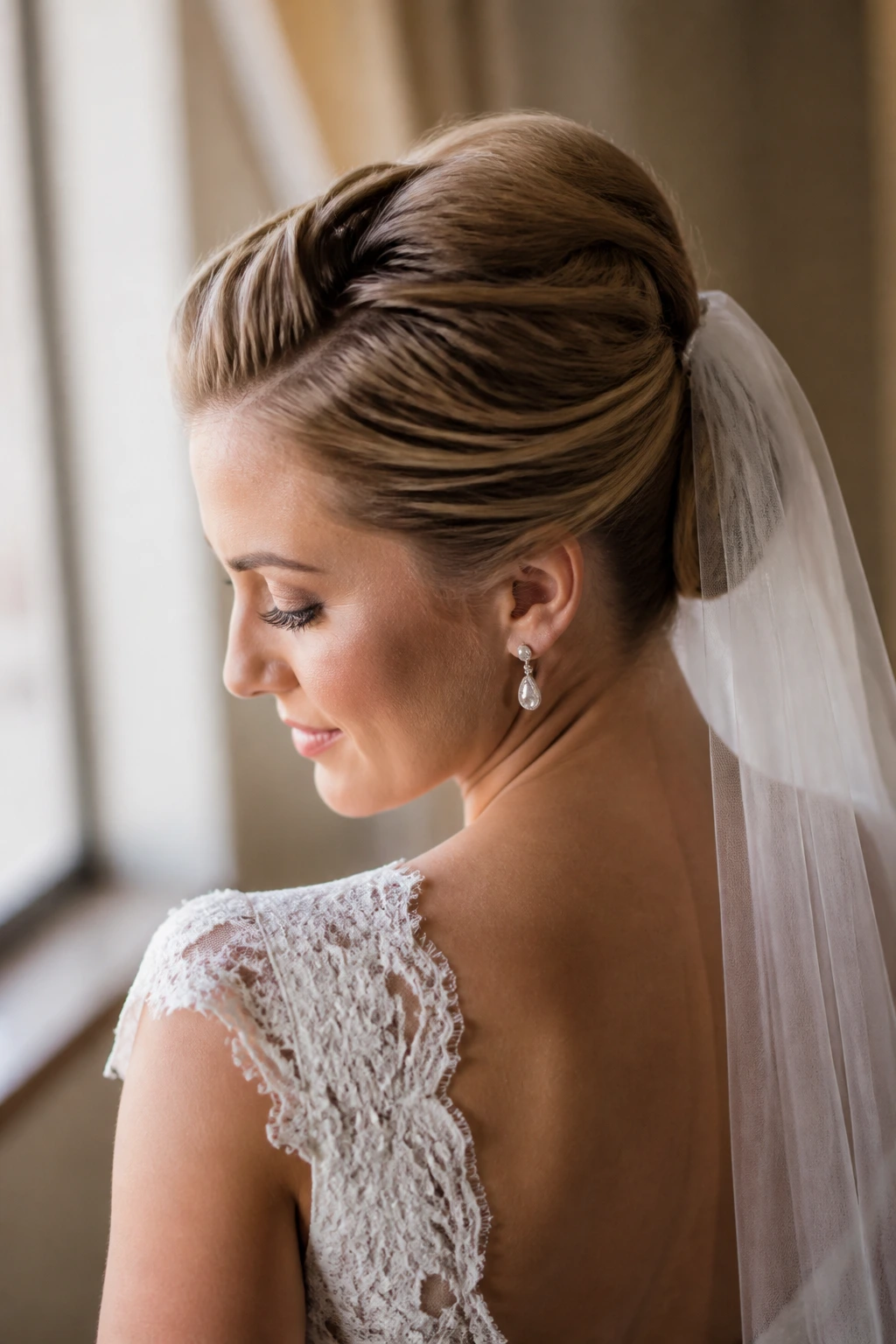
Presentation: Keep the hair shape in conversation with the dress. A smooth French twist or low roll works well when the gown already has lace, beading, or a strong neckline, while a softer wave or half-up style can balance a simpler dress that needs more motion around the face.
Accessories: Match the accessory to the hair’s level of structure. A birdcage veil loves finger waves and sculpted fronts. A pearl comb behaves better in a low bun or Gibson tuck. If the hair already has rolls or height, skip the bulky headpiece and let a small pin do the job.
Dress Necklines: High necks and illusion lace usually look better with hair that stays off the shoulders. Strapless and sweetheart necklines can carry more side sweep, barrel curl, or loose wave. Open backs pair beautifully with low buns, twists, and tucked styles because they leave the fabric line visible.
Veil Placement: The veil should sit on a solid section of hair, not in a weak patch of brushed-out curls. If the style is very smooth at the crown, add a hidden anchor braid or a small padded base for the comb. That little support stops the veil from sliding while you’re hugging everyone in the room.
Additional Tips and Vintage Polish
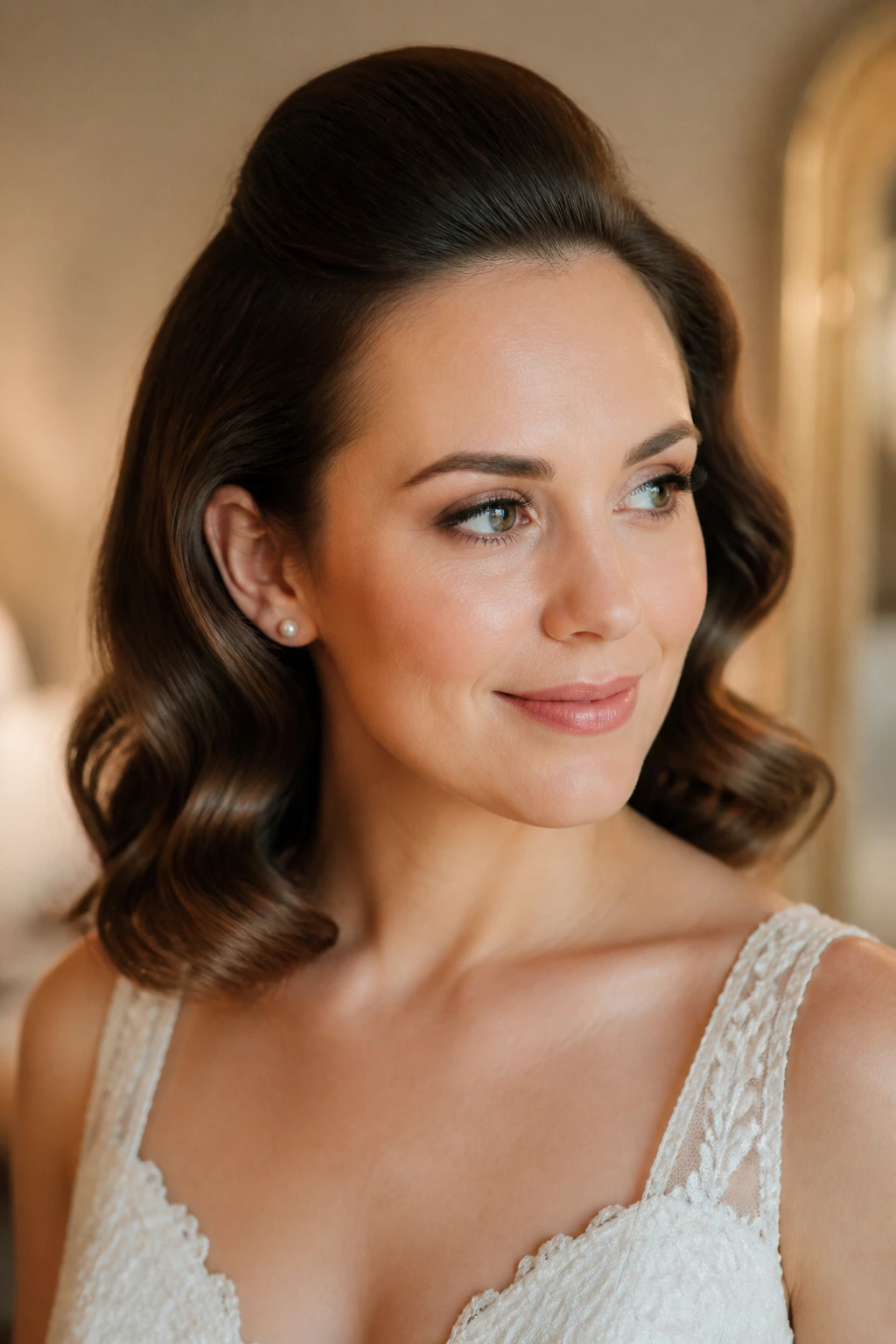
Shine Control: A light mist of shine spray on the mid-lengths and ends is enough. The roots should stay clean and controlled; too much gloss there makes the style look heavy under flash.
Volume Control: Use teasing only where the silhouette needs it — usually the crown or front sweep. Vintage hair looks more convincing when the volume is placed with purpose, not scattered everywhere.
Accessory Balance: If the hair is already strong in shape, choose one decorative piece and stop there. A big comb, a net veil, and extra pins all at once start competing for attention.
Make-It-Yours: If you want softer vintage energy, loosen the front and leave a few face-framing pieces free. If you want a sharper retro look, smooth the part, clean up the hairline, and keep the accessories lean and graphic.
A tiny bit of dry shampoo at the root can help a clean style hold better than fresh-washed hair alone. That feels counterintuitive until you’ve done it once and watched the pins stay put.
Common Mistakes Brides Make With Retro Hair
-
Skipping the trial and hoping the day will sort itself out. It won’t. Vintage styles depend on exact placement, so the part, the pin map, and the accessory position need a rehearsal.
-
Starting with hair that’s too soft and slippery. Clean hair can refuse to hold pin curls or rolls. Add grip with mousse, texture spray, or day-old hair before you start shaping.
-
Overloading the style with decoration. If the hair already has waves, rolls, or height, too many pins or flowers can make it look crowded. Pick one focal point and let the shape breathe.
-
Brushing out the waves too much. Over-brushing turns defined waves into vague fluff. Use a soft brush or fingers, and stop as soon as the shape looks smooth.
-
Putting the veil comb in the wrong spot. Too far forward, and it kills the line around the face. Too far back, and the veil can slip. The comb needs a stable base, not a random patch of hair.
-
Forgetting the weather. Humidity swells curls and loosens teasing. In damp air, styles need stronger pins, more setting product, and a shape that can survive a little expansion.
Variations and Adaptations to Try
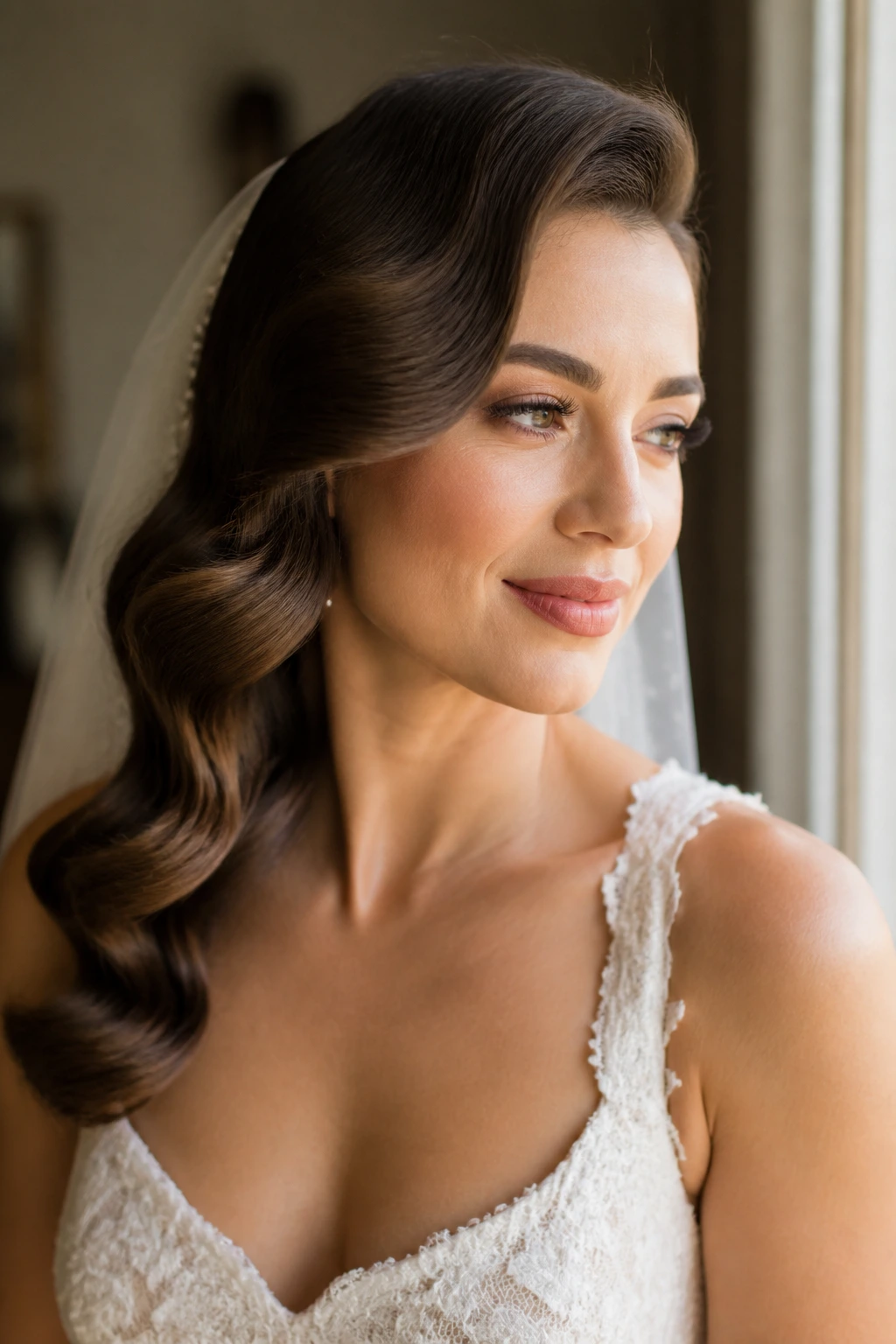
Soft Screen-Siren: Keep the wave pattern, but loosen the finish and soften the side part. This works when you want the vintage cue without looking like you walked out of a themed shoot.
Matte Midcentury: Trade the glossy surface for a softer, satin finish and build more shape at the crown. It’s a good fit for brides who love the silhouette of retro hair but don’t want high shine in every photo.
Curly-Hair Vintage Frame: Let natural curls form the texture, then shape the front with pinning, smoothing, or a rolled section. This respects the hair you have instead of flattening it into a style that doesn’t belong.
Short-Hair Retro Frame: Focus on waves, finger curls, a side barrette, or a tiny rolled front. Short hair can look incredibly deliberate when the lines are clean and the ornament is placed with care.
Weather-Ready Bridal Set: Use stronger pins, more setting spray, and a lower, tighter silhouette if the venue is humid or windy. This is the practical version, and it’s the one I’d choose when the forecast looks suspicious.
How to Keep the Style Standing Up All Day
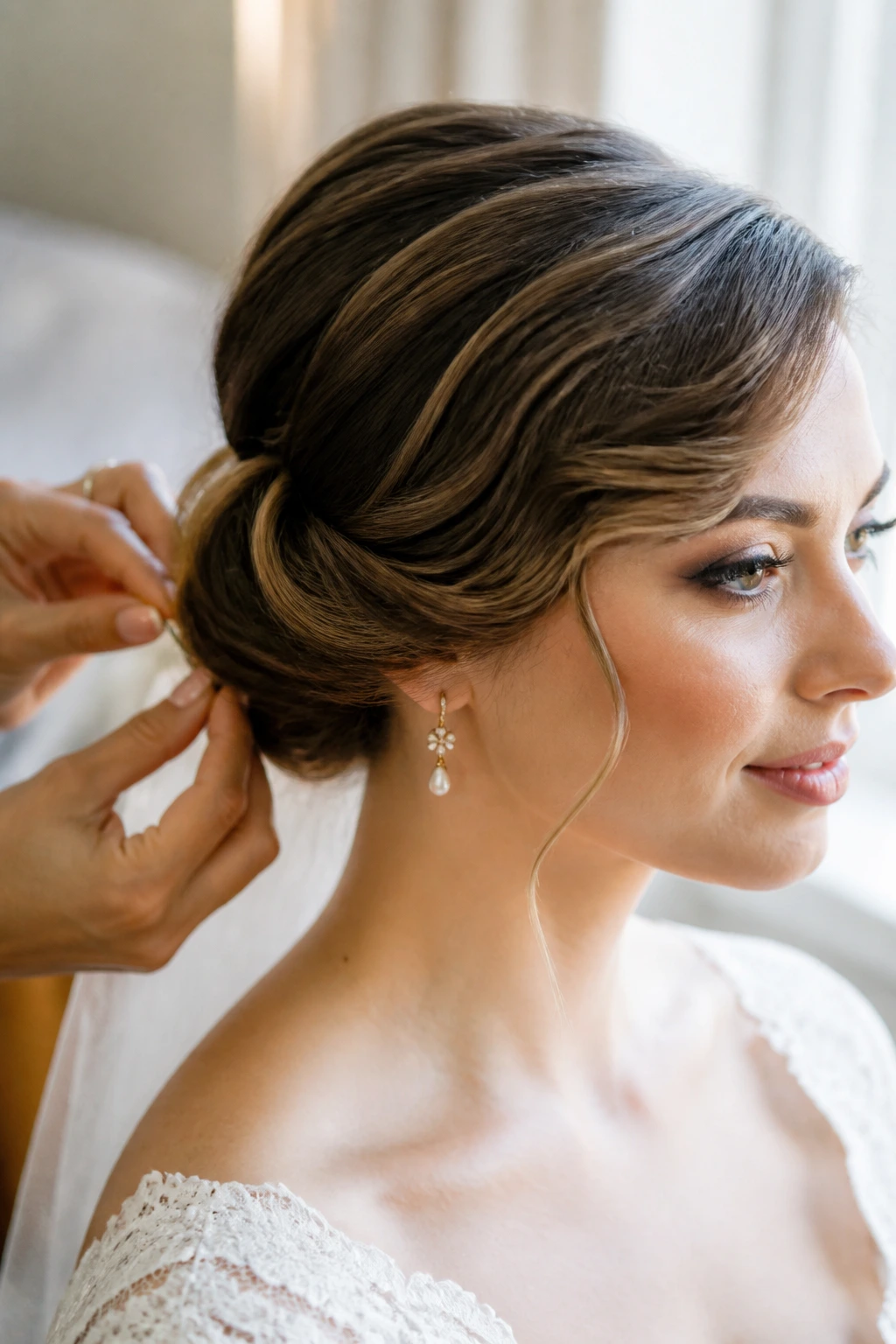
A vintage bridal hairstyle usually needs its first real test about an hour after it’s done. That’s when the hair has cooled, the pins have settled, and any weak spots start to show. Before you leave for the ceremony, check the front hairline, the veil anchor, and the nape. If something feels soft, add a pin then, not during the reception.
Keep a small touch-up kit close. A handful of bobby pins in your hair color, one travel-size hairspray, a tiny comb, and a blotting paper or two are enough for most styles. If the hairline gets fuzzy from dancing or warmth, smooth it with your fingers first. A brush can be too aggressive and flatten the shape.
For updos and tucked styles, the danger zone is usually the second half of the day, when people start hugging and the dress strap shifts and the veil comes off. That’s when the crown can sink a little. A stylist’s pin hidden under the top layer can keep the shape where it belongs for another few hours.
If you’re saving the style for an after-party or next-day brunch, don’t fully brush it out before bed unless you want to start over. Loosen the pins, wrap the hair in a silk scarf, and leave the wave pattern intact. It’s a practical move, not a glamorous one, but it saves the shape.
Frequently Asked Questions
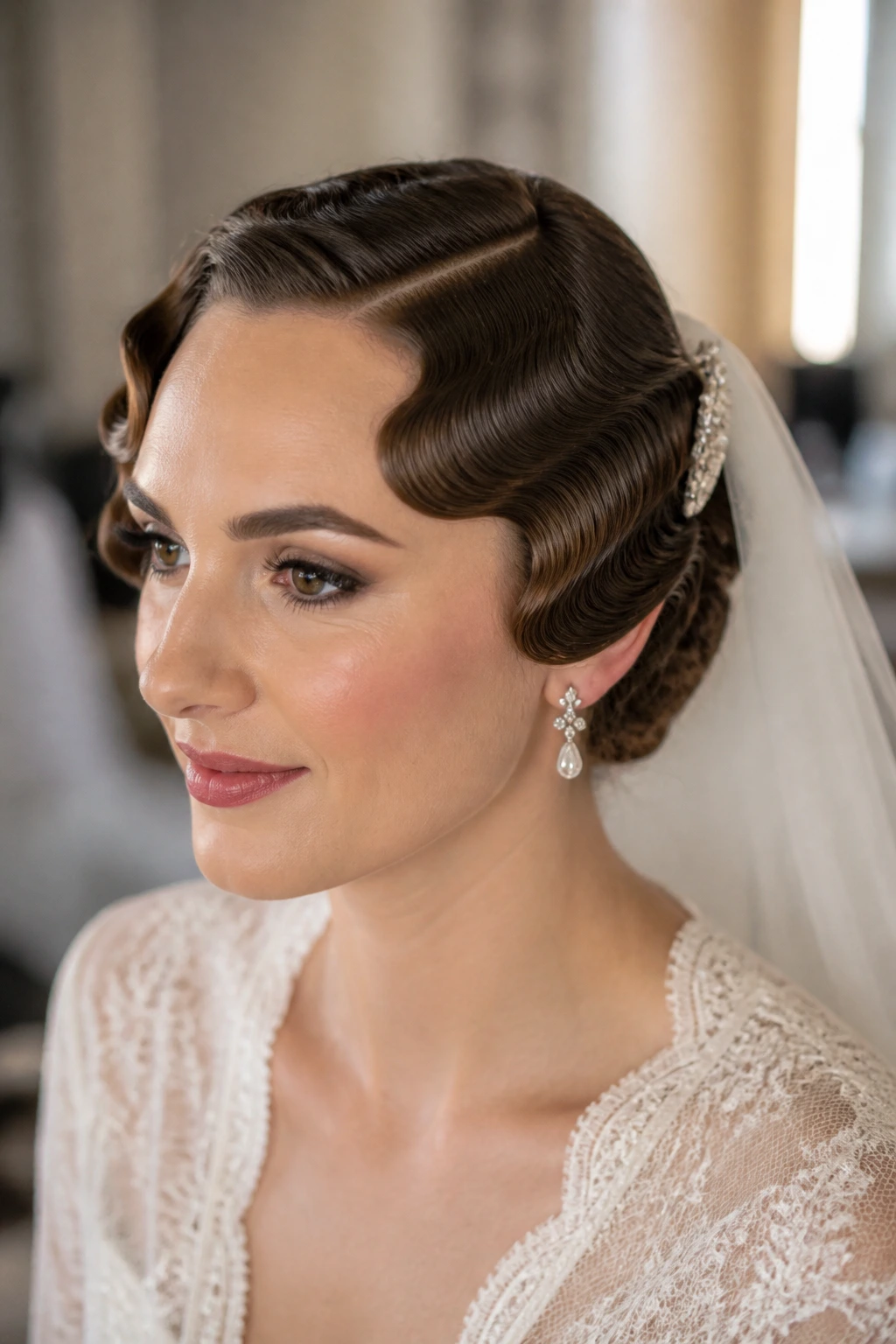
Which vintage bridal hairstyle lasts the longest?
Low buns, Gibson tucks, French twists, and structured roll-based styles usually last the best because the weight is anchored low and the pins have more to hold. Soft open waves can be lovely, but they need more touch-ups if the room gets warm or the event runs long.
Can short hair still look vintage for a wedding?
Absolutely. Finger waves, pin curls, side barrettes, and a polished bob can all read vintage right away. Short hair often looks cleaner in these styles because the shape is easier to control and the silhouette stays crisp.
Do I need hot rollers for a vintage bridal look?
No, but they help if your hair is slippery or if you want a uniform set. A curling iron can do the same job when you work in smaller sections and let each curl cool fully before brushing or pinning.
How do I keep a veil from flattening finger waves?
Place the veil comb on a stable section of hair just behind the wave line, and add hidden pins around the comb so the weight spreads out. If the veil is heavy, ask for a second anchor point so the wave pattern doesn’t collapse under the pressure.
What if my hair is naturally curly or very textured?
Then build the style around the texture instead of forcing it flat. Vintage hair can look gorgeous on curly hair when the front is shaped with smooth sections and the rest is pinned, tucked, or rolled in a way that respects the curl pattern.
How far in advance should I do a trial run?
Do it far enough ahead that there’s time to adjust the cut, color, or accessory choice if needed. A trial is not just for the style itself; it’s where you find out whether the veil comb, the earrings, and the neckline are all talking to each other or fighting.
What’s the easiest vintage style for a bride who doesn’t want constant touch-ups?
A low Gibson tuck, a rolled chignon, or a structured bun with a side part usually asks for the least fuss. These styles hold their shape because the hair is secured low and close to the head, which gives you fewer loose pieces to babysit.
Can I wear a birdcage veil with long hair?
Yes, and it often looks especially good with finger waves, a side sweep, or a tucked low style. The key is keeping the front polished enough that the veil can sit neatly without hiding the shape underneath.
Is it better to choose a style that matches the dress era exactly?
Not necessarily. A dress can be modern while the hair carries the vintage cue, or the other way around. What matters is that the silhouette feels deliberate; a good hairstyle doesn’t need to imitate one decade line for line to look right.
A Bridal Shape That Still Works at Midnight
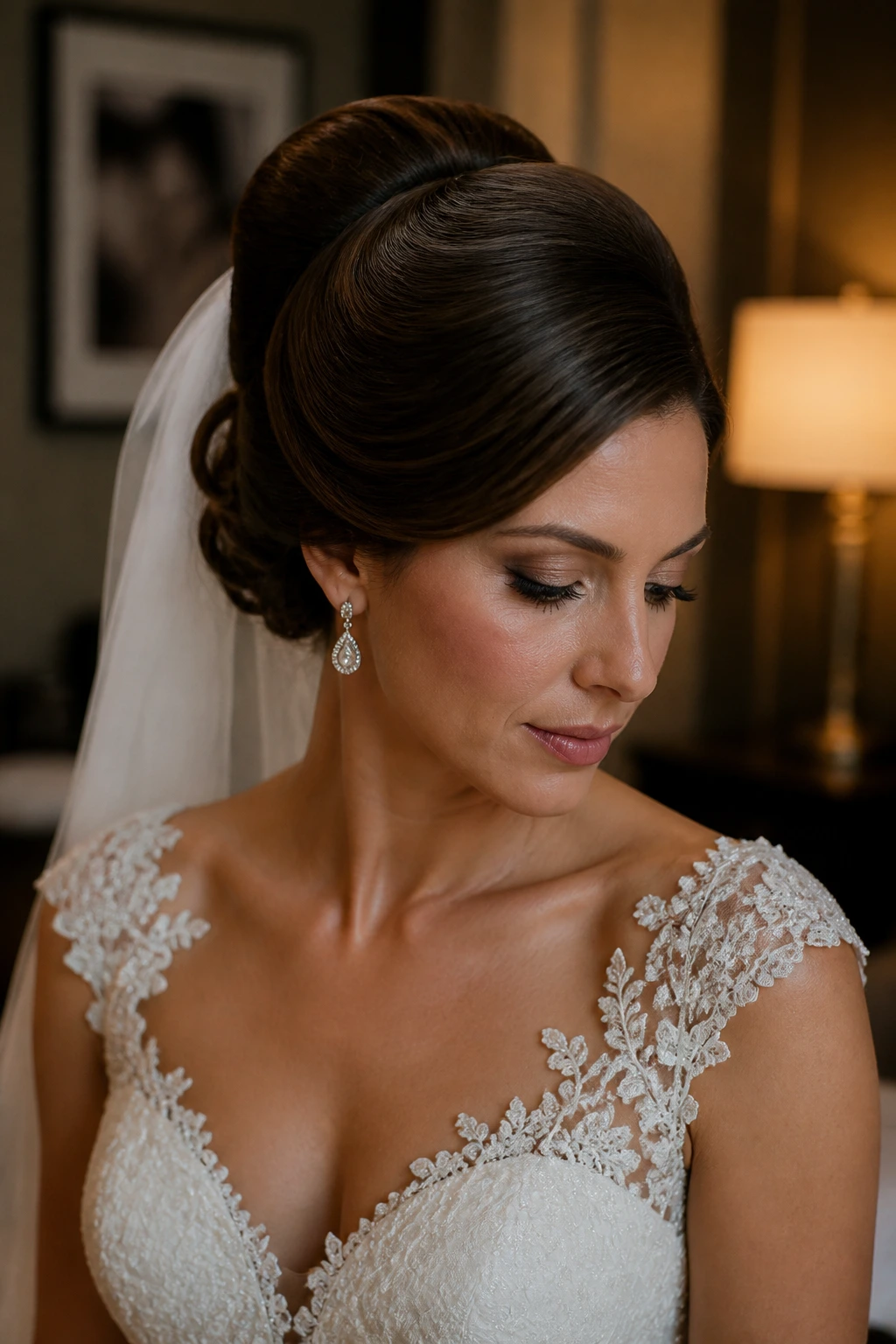
The best vintage bridal hair doesn’t ask for too much drama from the wrong place. It gives you shape at the crown, control at the part, and a finish that knows where to stop. That’s why these looks keep surviving beyond fashion cycles. They’re not one-note curls. They’re architectural little things.
And that architecture matters after the ceremony, too. The style should still make sense when the veil comes off, the earrings catch on your dress, and the room gets warm. If it can hold its line through that, you’ve picked well. If it can’t, no amount of sparkle on top will rescue it.
Choose the shape that suits your hair, your neckline, and the way you want to move. The good ones look composed before the vows and a little more interesting by the last dance.
