



A loose shag does something a blunt cut rarely manages: it keeps moving even after the blow-dry has lost its pep. The layers bend, the fringe softens, and the whole shape looks like it belongs to a real head of hair instead of a salon poster. That matters more than people admit. Hair changes. It gets finer in some places, wirier in others, and a little less obedient around the crown and temples. A cut that can flex with that shift is worth its weight in gold, and loose shag haircuts for older women are built for exactly that kind of flexibility.
What I like about this family of cuts is that it does not try to fight hair into a single mood. It lets gray sparkle. It lets wave stay wavey. It lets a cowlick be a cowlick, only better behaved. And when the layers are placed with restraint — not hacked in from every direction like somebody got carried away with texturizing shears — the result is softer at the face, lighter at the ends, and far less fussy than a stiff, one-length style.
The best versions here share a quiet trick: they keep enough length to avoid that over-chopped, overstyled look, but they lift the crown and open the face just enough to feel fresh. Some sit at the collarbone. Some skim the jaw. Some are long enough to tuck behind an ear and still swing when you turn your head. The differences matter. So do the details.
Why Loose Shag Haircuts for Older Women Work So Well
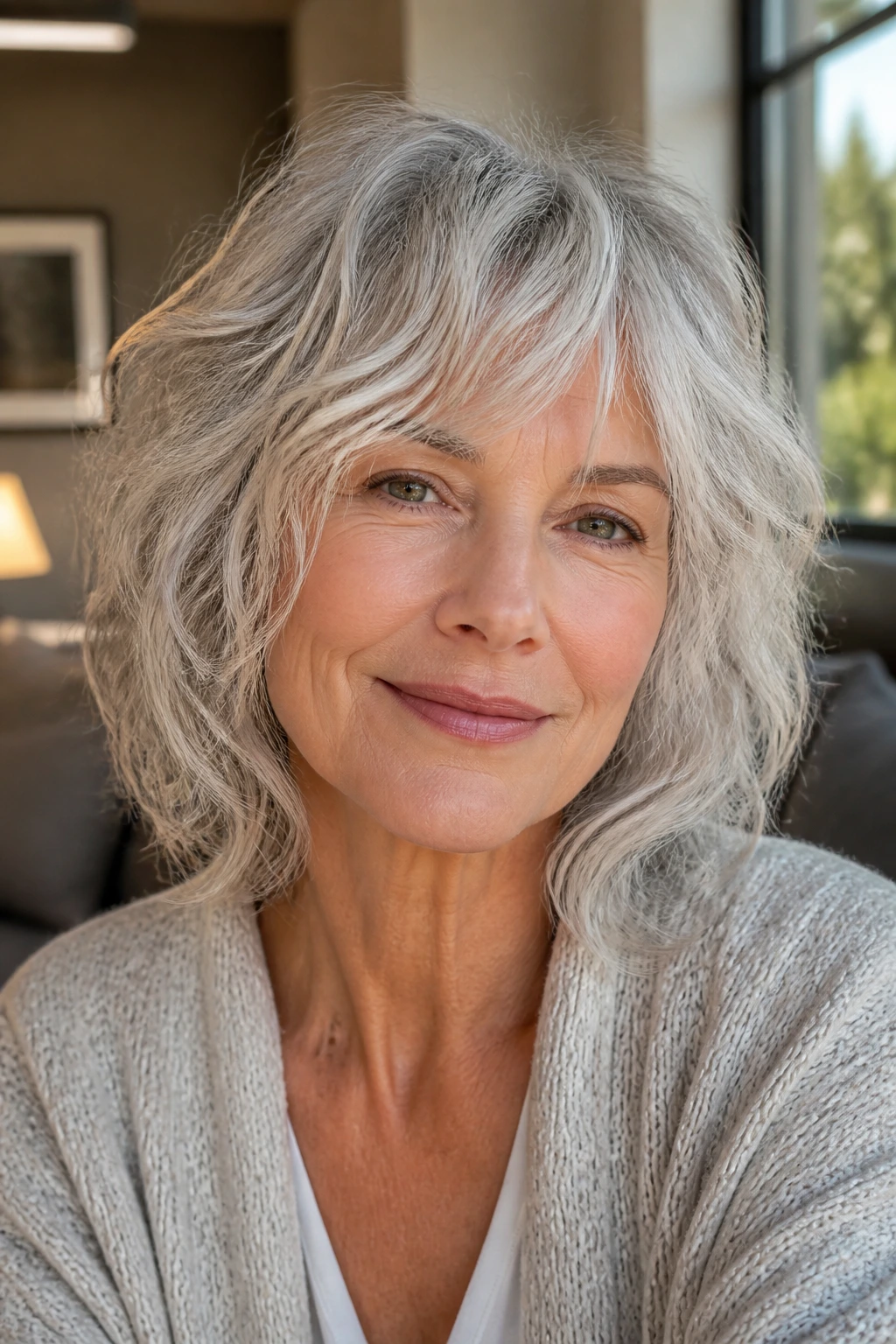
-
They soften the face without hiding it. The best loose shag starts its layers where they frame the cheekbone or jaw, so the cut opens the face instead of swallowing it.
-
They make changing texture look intentional. When hair gets a little drier or more porous, a shag’s movement can disguise the shift better than a blunt edge that shows every rough spot.
-
They grow out with less drama. A clean perimeter plus soft internal layers means you do not get that heavy shelf effect three weeks later.
-
They play well with gray hair. Silver strands reflect light differently across short and long layers, which gives the cut depth instead of flatness.
-
They can be styled two ways. Air-dried and loose, they look relaxed. Round-brushed and bent, they look polished. Same haircut. Different mood.
-
They leave room for glasses, earrings, and necklines. That sounds small until you see how much a fringe or side layer changes the whole balance.
What Makes a Loose Shag Feel Soft Instead of Choppy
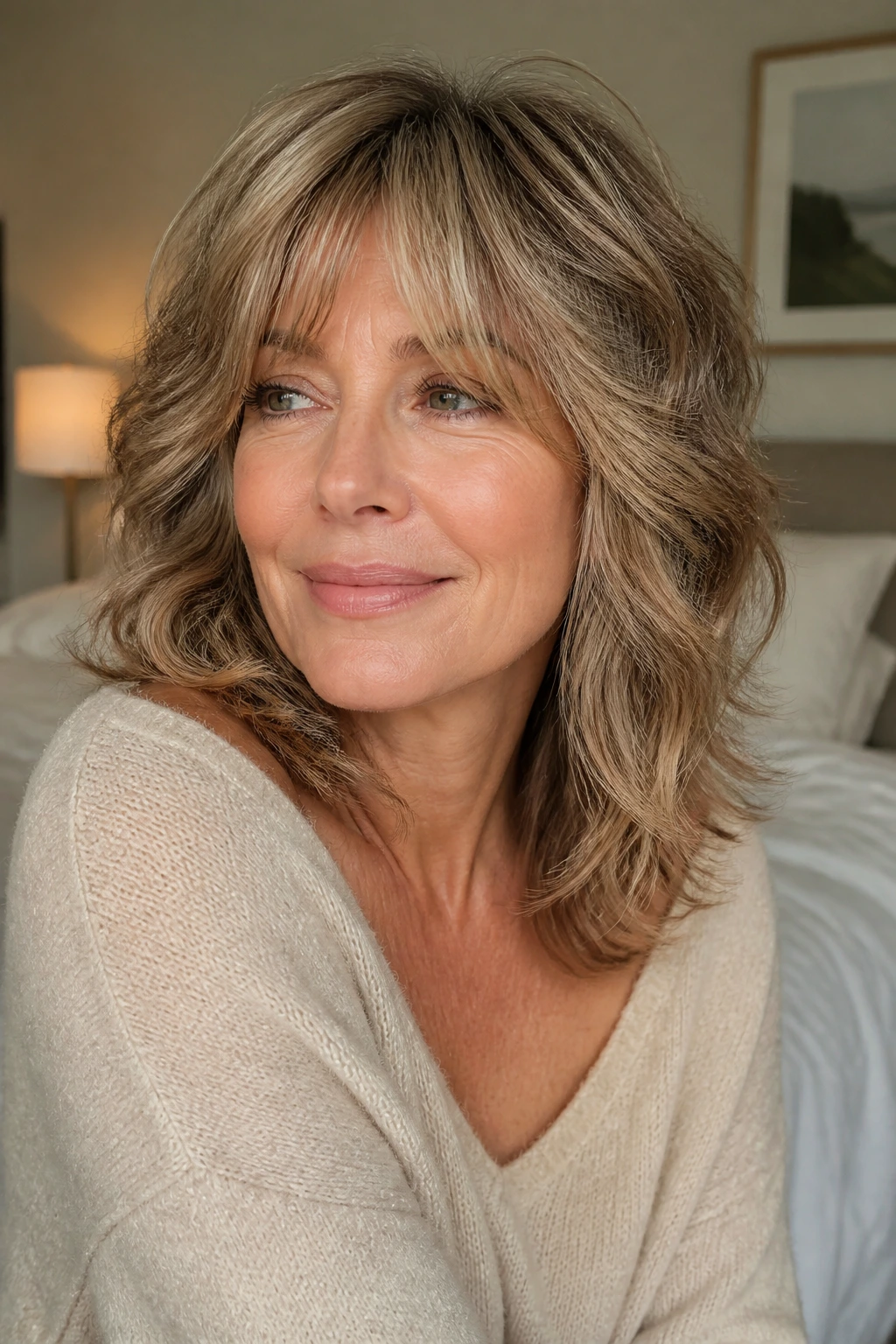
A shag can go wrong fast. Too much razoring, too many short pieces around the crown, too little weight at the perimeter — and suddenly the haircut looks nervous. The loose version is different. It keeps the layers visible, but not jagged. It keeps the ends airy, but not shredded.
The trick is placement. The shortest pieces should usually sit at the cheekbone, lip line, or just below the eye, not chopped up at random. The bottom edge should still read as a shape. If the outline disappears, the cut can start to look thin rather than fluid. That distinction matters most on mature hair, where density may already be changing.
I also like a loose shag better when the texture work happens inside the haircut, not all over the surface. Internal layering removes bulk. Surface over-texturizing often removes polish. And polish is not the enemy here. A little sheen at the ends can make the whole cut look healthier.
How to Ask for Loose Shag Haircuts for Older Women at the Salon
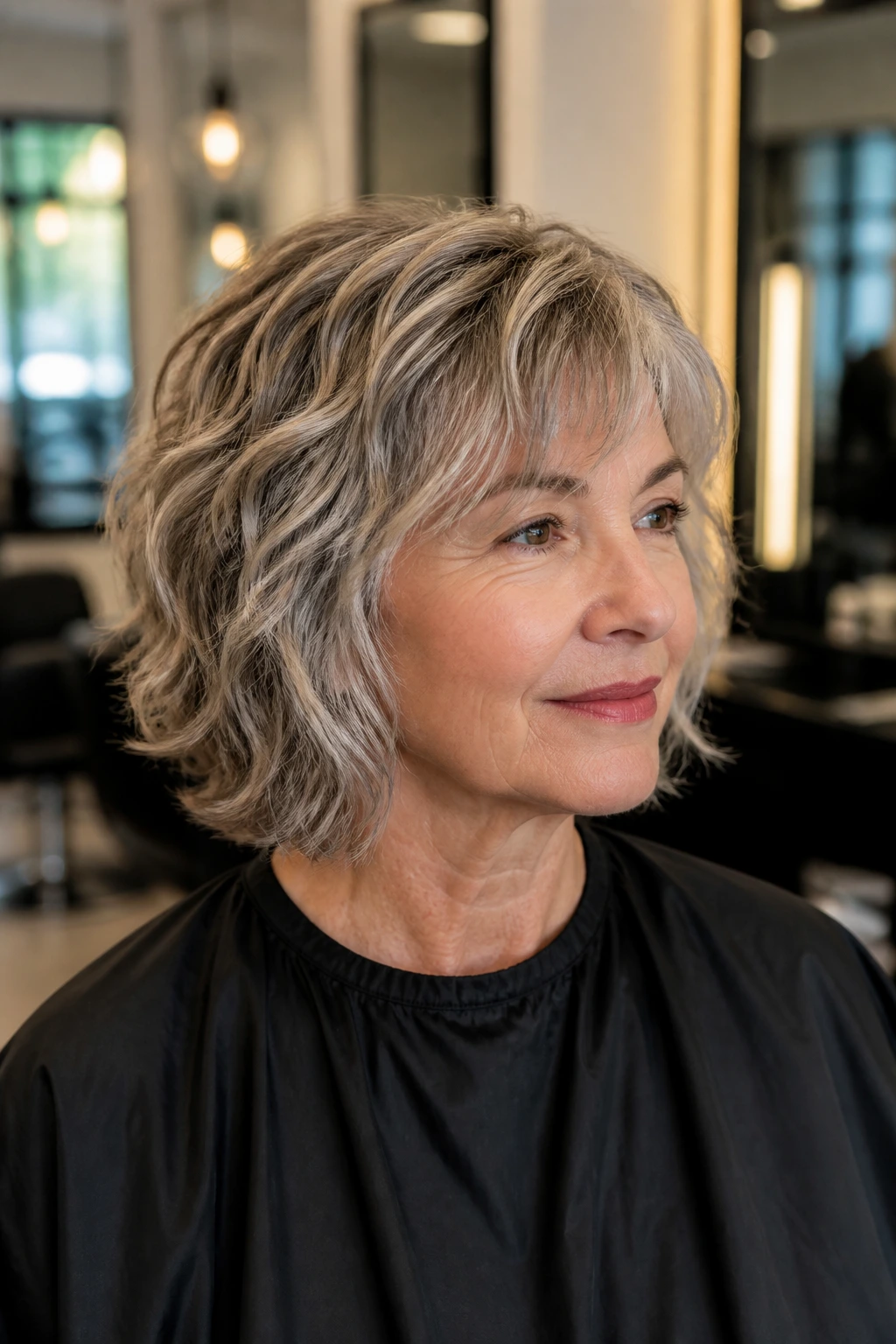
Bring photos, yes, but bring the right ones. One front view and one side view tell a stylist much more than three face-framed closeups shot under perfect lighting. If you want a loose shag, ask for movement that starts below the shortest fringe area and a perimeter that keeps enough weight to avoid wispy ends.
Say the words out loud if you need to: “I want softness, not a lot of choppy pieces.” That single sentence saves time. If your hair is fine, ask for light internal layering rather than heavy debulking. If it is thick, ask where the weight should come out so the cut does not mushroom at the bottom. If you wear glasses, mention that before the fringe is decided. Glasses change the whole forehead zone.
And do not skip the part about what you do not want. “No razor-thin ends.” “No bang that sits in my lashes.” “No layer that flips out at my neck.” A good stylist hears those limits and cuts more cleanly for you.
1. Collarbone Loose Shag with Curtain Fringe
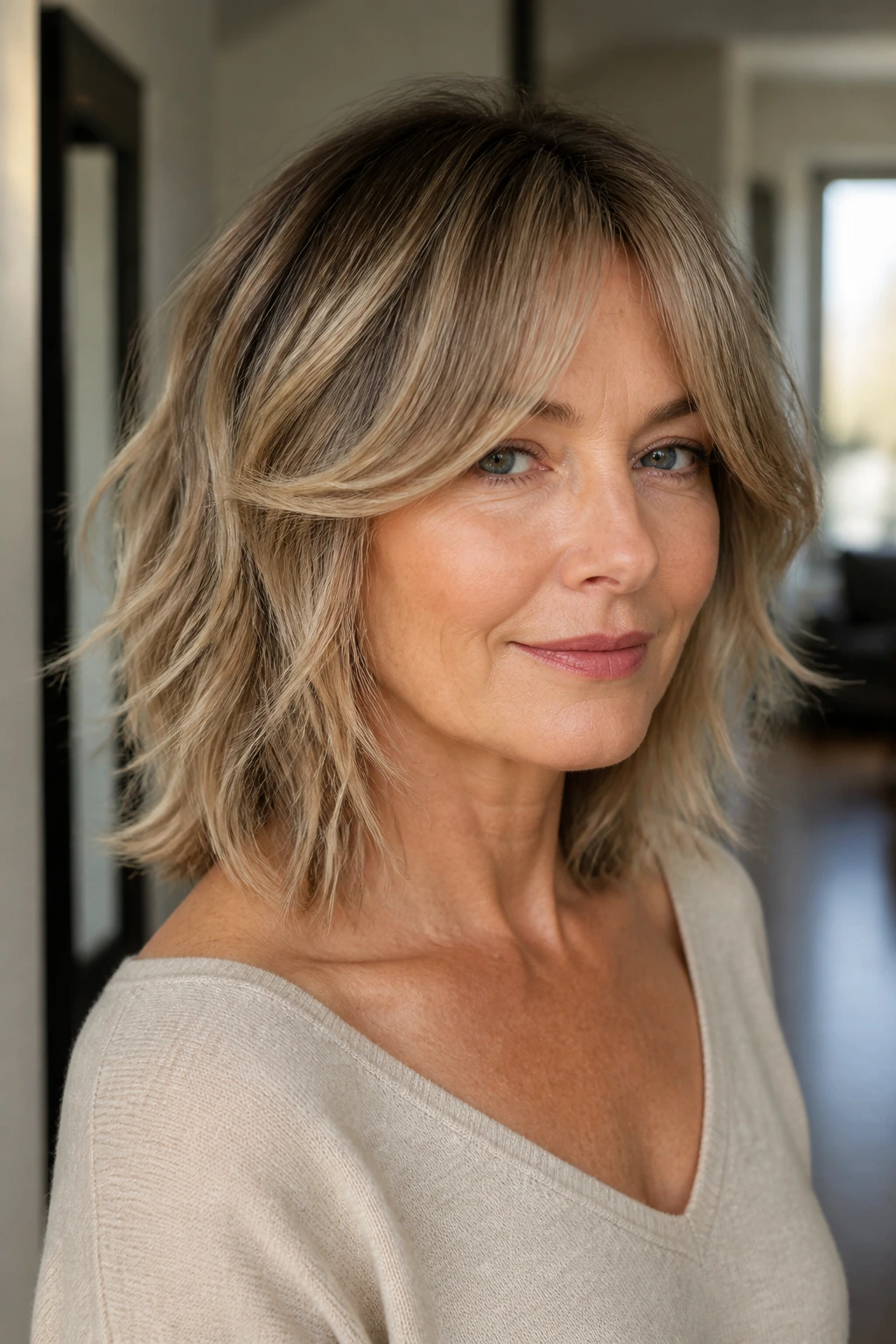
This is the cut I recommend to women who want a shag without looking like they made a dramatic announcement about their hair. The collarbone length keeps enough weight to feel polished, while the curtain fringe breaks up the forehead in a gentle way. It moves when you turn your head. It also behaves when you do not style it perfectly, which is the real test.
What makes it flattering is the balance. The longest pieces hit around the collarbone, so the cut still feels substantial. The face frame starts higher, usually around the cheekbone, which keeps the shape open. I like this one on straight to softly wavy hair because it gives shape without demanding a lot of work.
If your hair tends to go flat at the crown, ask for a little lift up top and a clean, bluntish edge at the bottom. That prevents the cut from looking stringy. A loose shag should move; it should not look like it has been taken apart and forgotten.
2. Shoulder-Grazing Feathered Shag
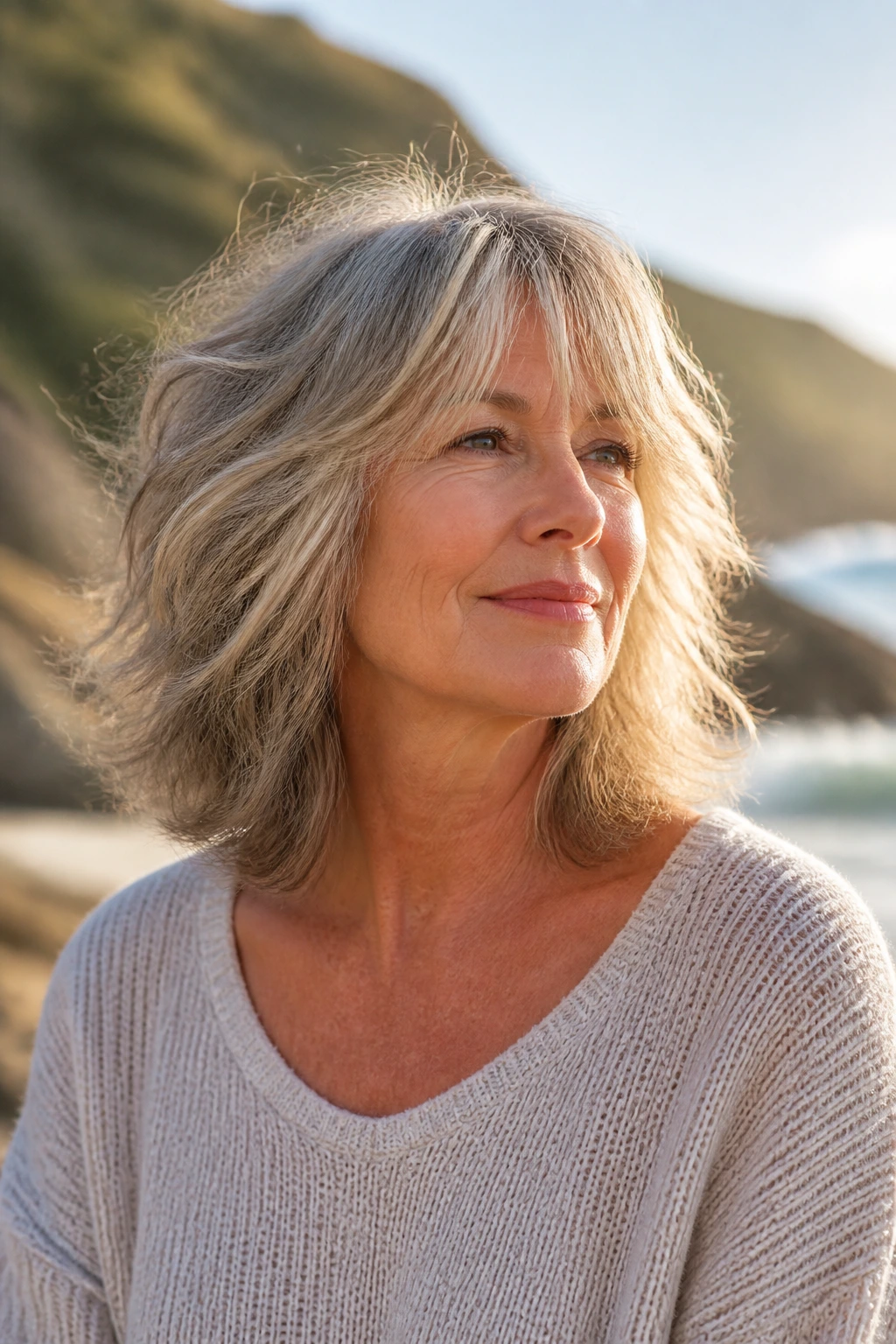
Shoulder length is where a shag starts earning its keep. Too short, and it can feel abrupt. Too long, and the layers can hide in the length. Right at the shoulders, feathered ends can swing, bend, and catch a brush without looking overdone. It is a very forgiving length for older women who want softness around the neck but still want hair they can clip up.
This version works especially well if your hair has a little natural wave. The layers should be feathered enough to reduce weight, but the perimeter should not be thinned into bits. I prefer this cut when the goal is movement first, drama second. It looks good tucked behind the ear. It looks good half-dried. It looks good on a slightly windy day, which is more than most haircuts can say.
Ask your stylist to keep the top shorter than the ends, but not so short that the shape puffs out. That detail makes the difference between feathered and frizzy.
3. Silver-Thread Shag with Airy Crown
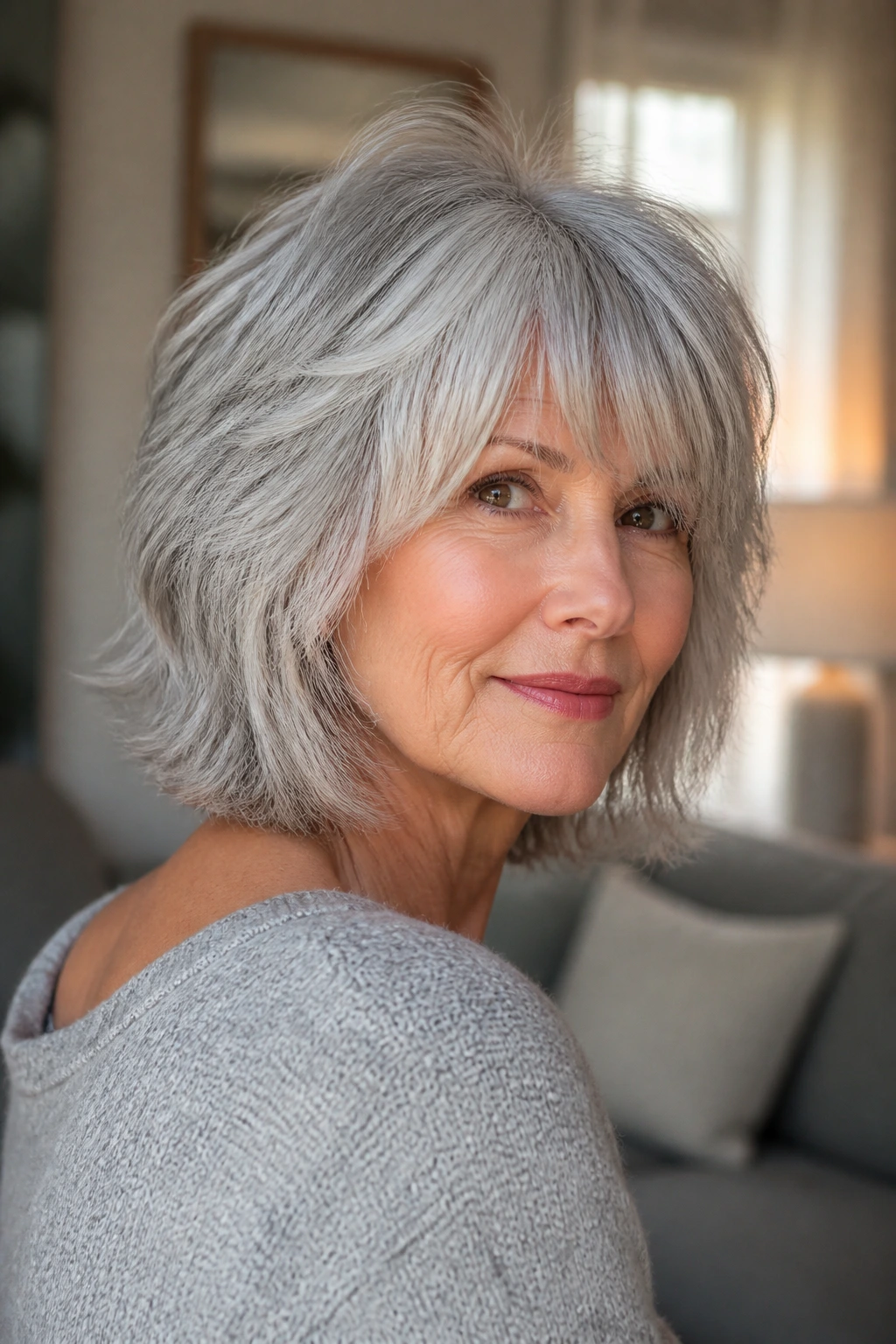
Gray hair loves a good shag when the layers are handled with restraint. Silver strands catch light differently across the head, so a loose shag can create the look of dimension even without color. That gives this cut a lift that can be hard to get from a one-length bob.
The airy crown matters here. A little height at the top keeps the style from settling into a flat cap shape, which is the enemy of many silver cuts. I like this look on women whose hair is going lighter in patches or is fully gray with a few deeper strands left in the mix. The result feels deliberate, not accidental.
Keep the ends smooth enough to show the sheen in the hair. If the cut is too jagged, silver can start looking fuzzy instead of luminous. A drop of serum on the bottom inch of hair is often enough. Not a glaze. Just a whisper.
4. Chin-Length Shag with Side Sweep
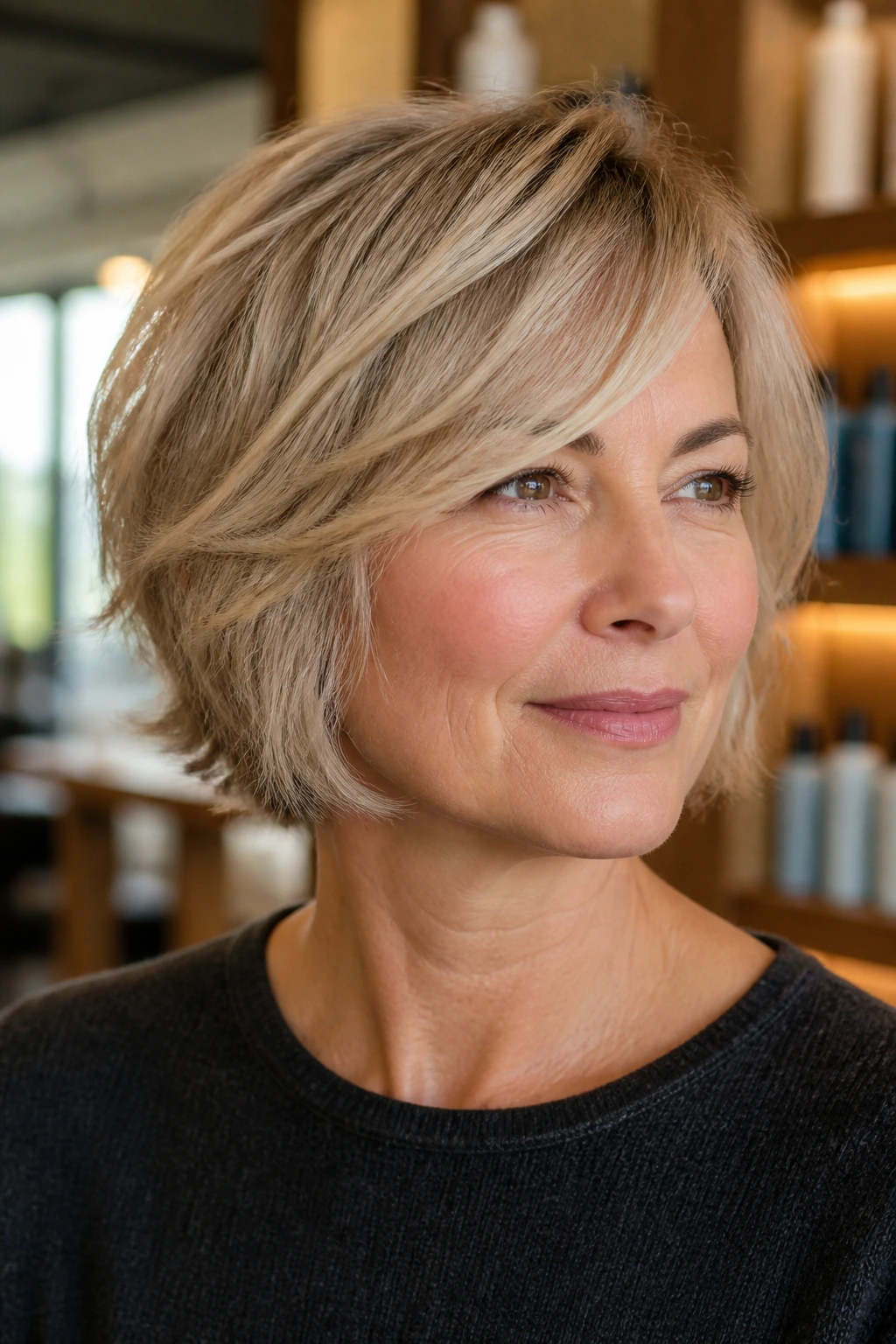
Why does chin length work so well? Because it gives the jawline a frame without crowding the neck. Add a side sweep, and the whole cut gains a softer diagonal line that can be flattering on round, square, or heart-shaped faces. It is also a kind choice if you wear glasses. The fringe stays off the lenses and still gives shape near the eyes.
I like this version for women who want a shorter cut but not a severe one. The layers should begin around the cheek and fall into the chin rather than ending bluntly there. That keeps the line from looking blocky. If your hair has a natural bend, this cut makes a small bend look intentional, which is half the battle.
A side sweep also gives you flexibility. You can tuck one side back for errands and let it fall when you want the face frame to do more work. Small thing. Big payoff.
5. Long Loose Shag with Cheekbone Layers
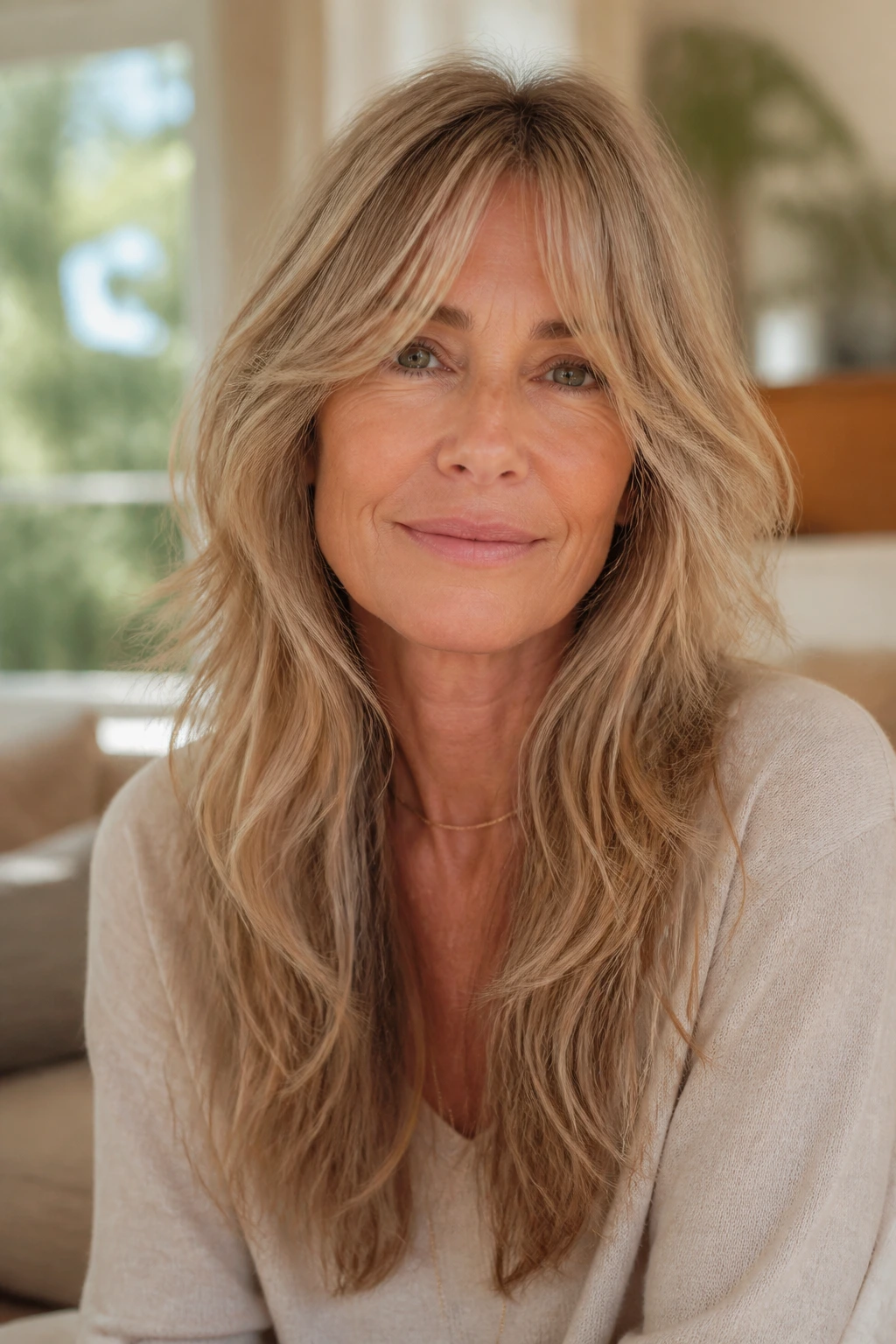
Long hair can absolutely wear a shag, but the layers need to be placed with a steadier hand. Too many short pieces, and the length starts fighting the cut. The better version keeps the longest layers intact and uses cheekbone-level framing to create movement near the face.
This is the shag for someone who does not want to give up length but does want hair that moves again. It looks especially good if the ends have started to feel heavy or a little thin. The cheekbone layers draw the eye upward without stealing the show from the rest of the length. Good balance. No fuss.
I would avoid over-thinning this one. The whole point is to keep the ends looking healthy while the mid-lengths do the moving. If the finish feels too wispy, the cut loses the rich swing that makes it work.
6. Wavy Shag with Broken-Up Fringe
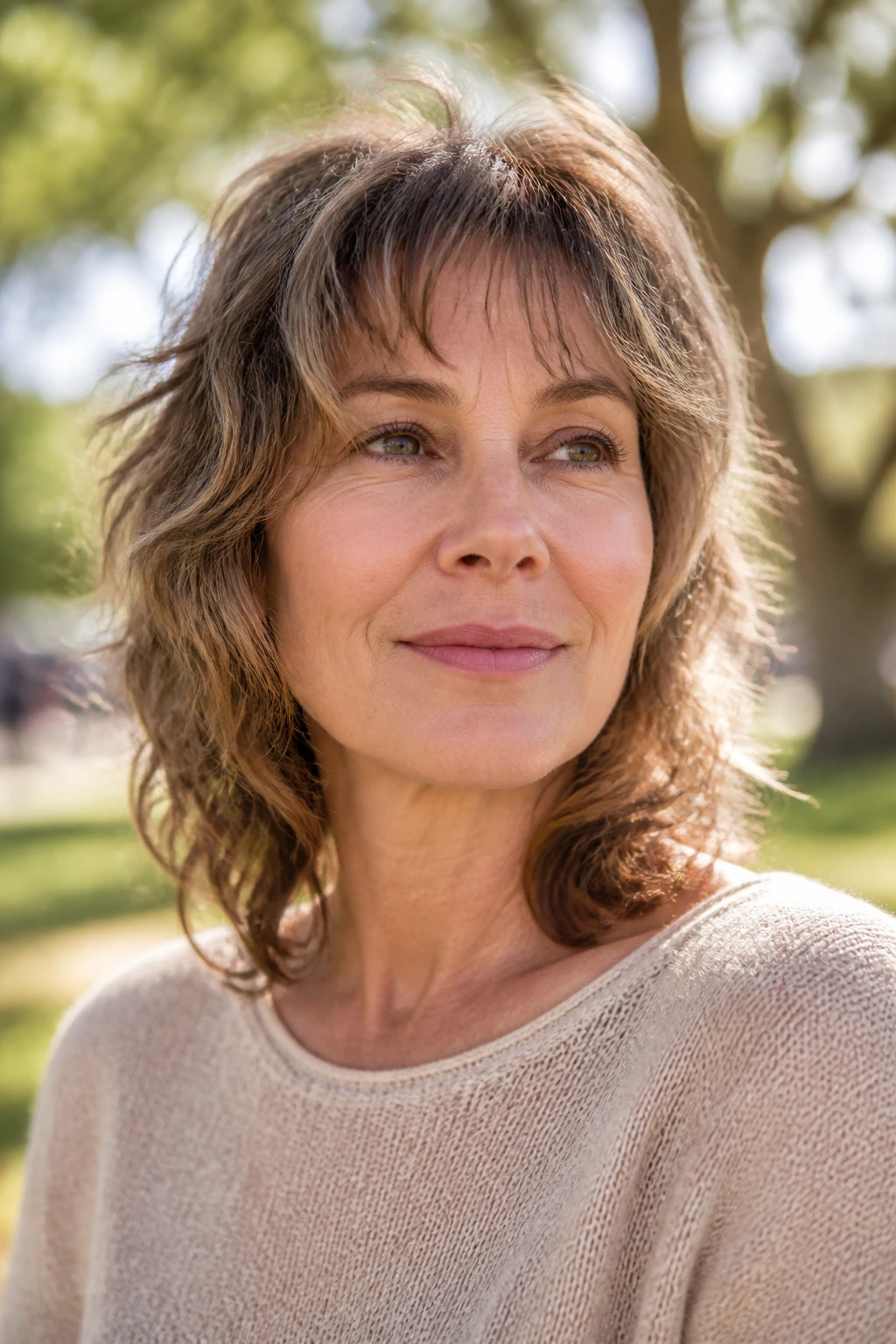
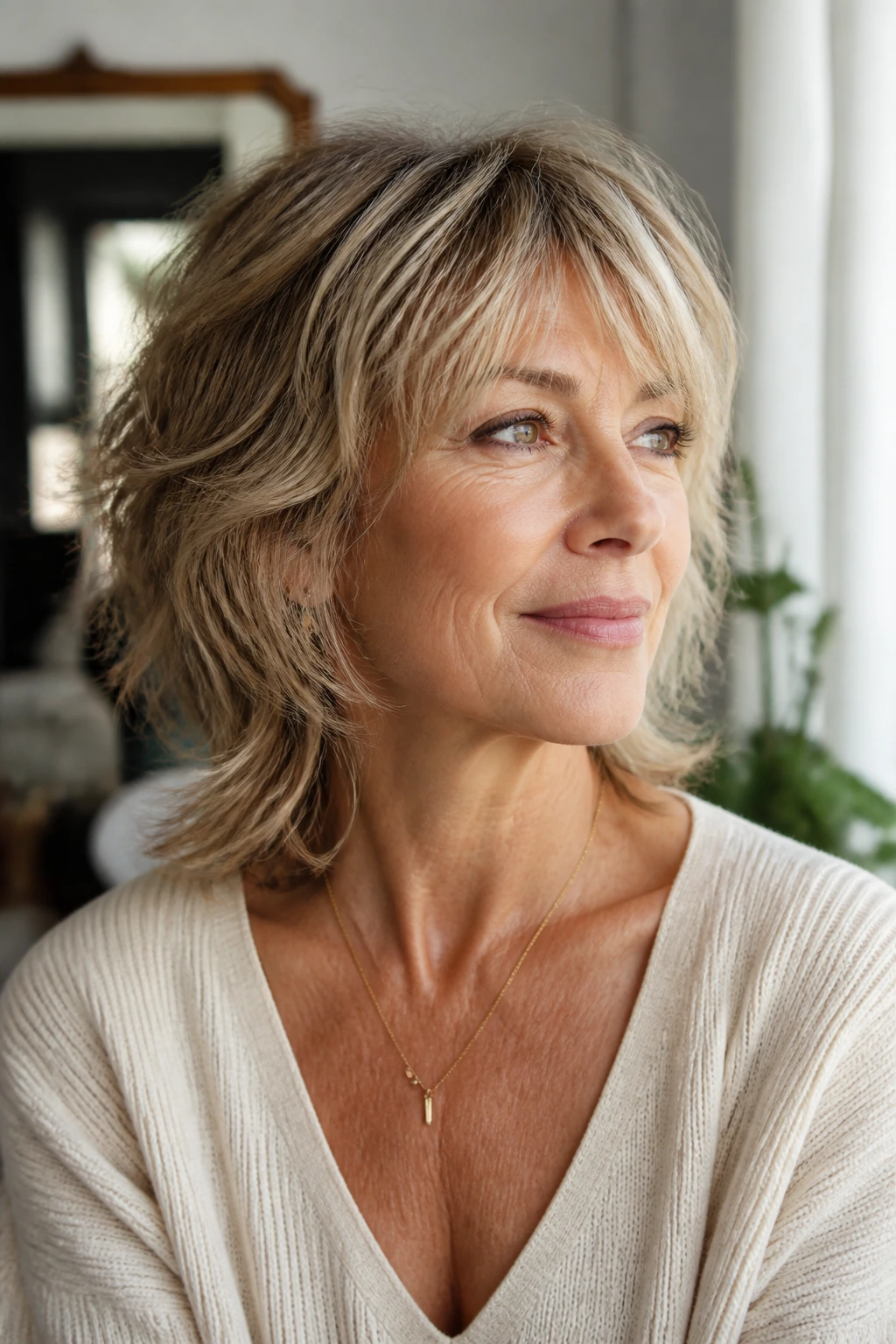
Waves and shag haircuts have a long, slightly chaotic friendship. The loose version of that pairing is better than the aggressively textured one. Broken-up fringe means the front does not come down in one thick block; it falls in little pieces, letting the forehead breathe and the wave pattern show through.
This cut thrives on hair that wants to bend on its own. You do not need perfect sections. You need a haircut that respects the wave instead of sanding it down. Air-drying works well here, though a diffuser can give the fringe a little more shape if the front tends to collapse.
A small caution: if your wave is more S-shaped than loose and fluffy, ask for the fringe to stay a little longer at the temples. Otherwise it can spring up higher than you expected. That is one of those tiny things that changes everything.
7. Rounded Shag for Thick Hair
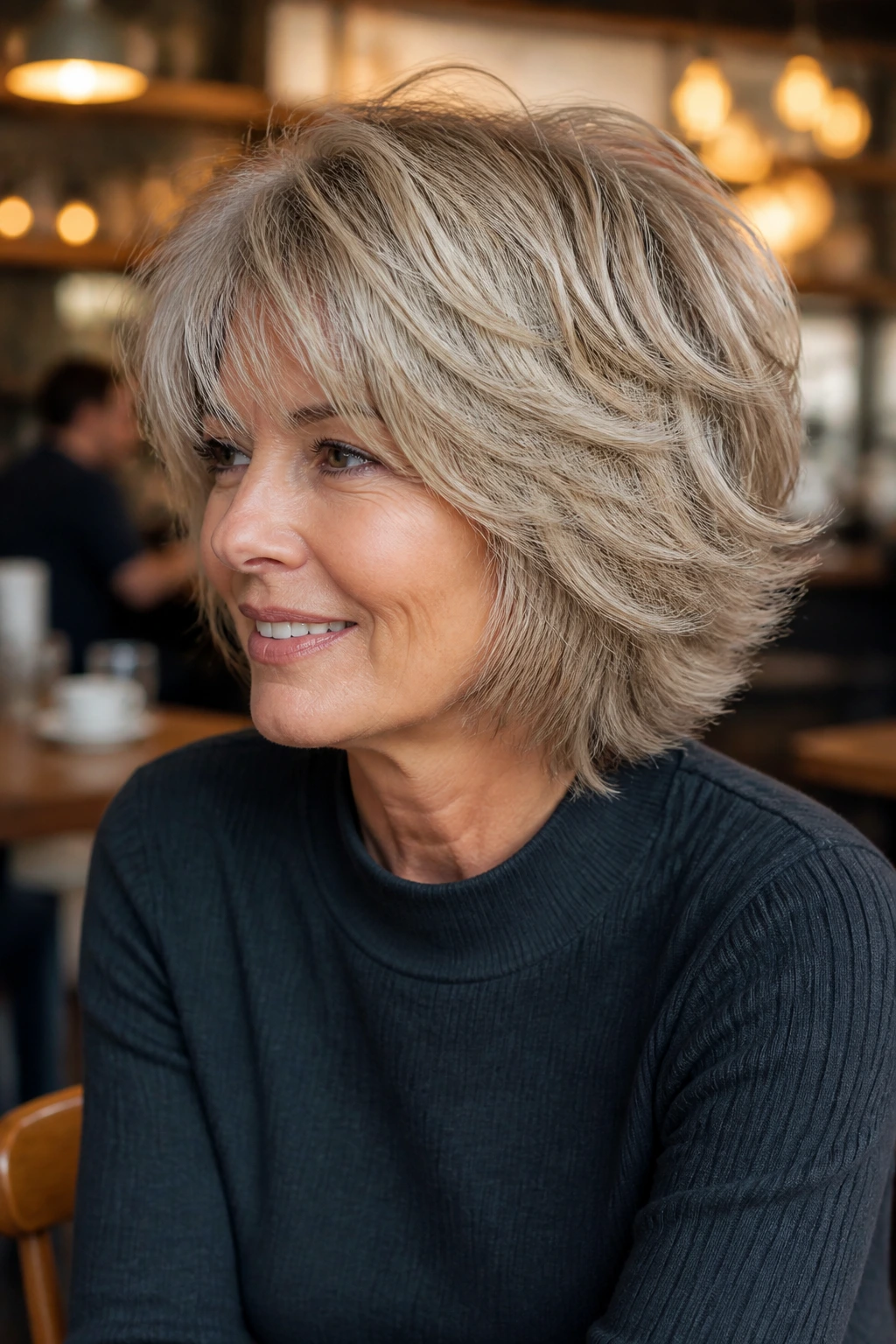
Thick hair can wear a shag beautifully, but not if the layers are chopped from every angle. A rounded shag uses shape instead of aggression. The top stays soft, the sides taper gradually, and the bulk gets removed where it would otherwise sit like a helmet.
The magic here is in the silhouette. Rounded does not mean puffy. It means the haircut follows the head a little more closely while still keeping movement at the ends. On dense hair, that shape can be far more flattering than a super-choppy look that turns into a triangle by lunchtime.
If your hair is thick and slightly coarse, ask for internal weight removal rather than aggressive thinning shears on the surface. Surface thinning can leave the ends frayed. Internal shaping lets the cut breathe without losing the clean edge underneath.
8. Fine-Hair Shag with a Blunt Perimeter
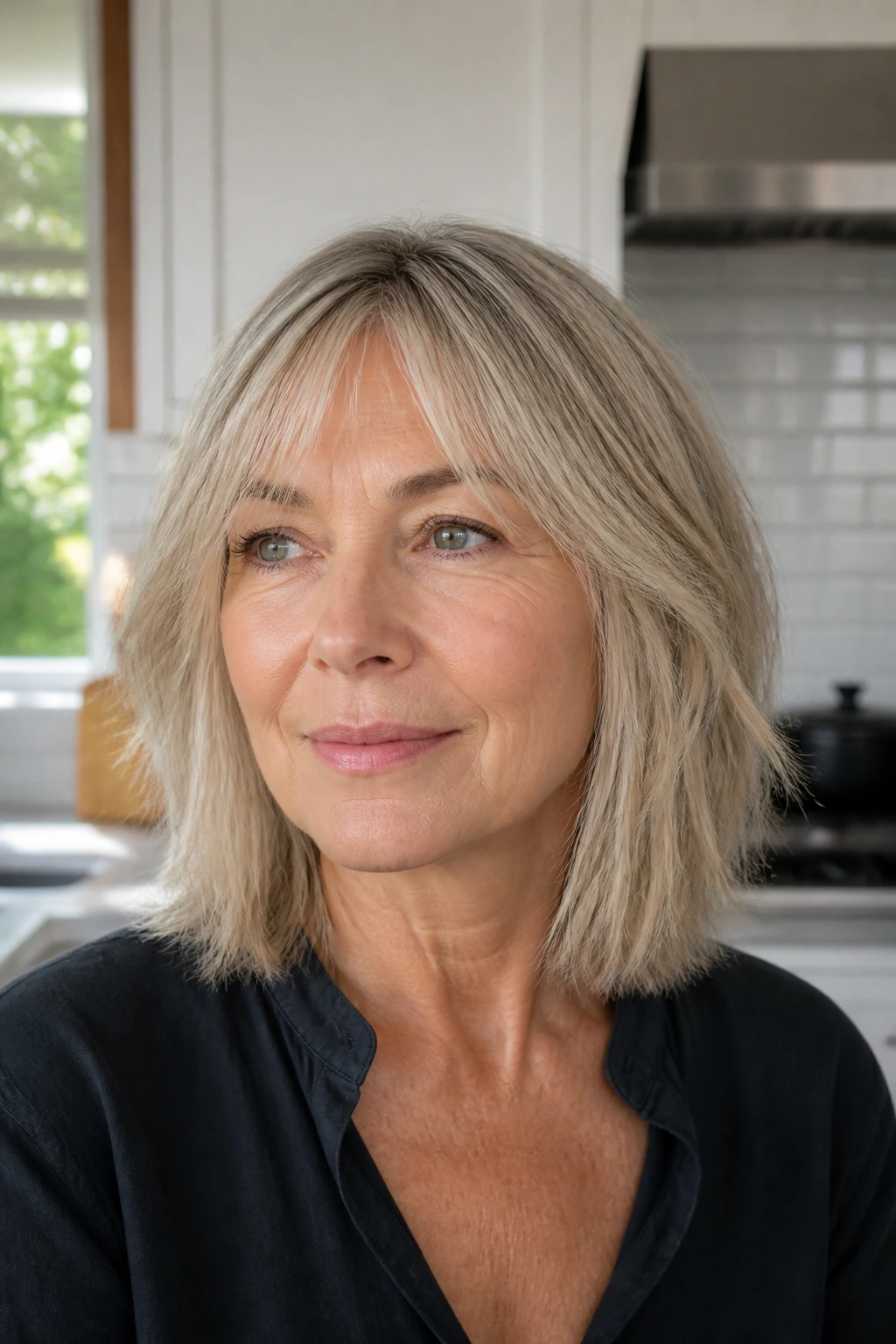
Fine hair needs a careful hand. Not less style. Careful hands. A loose shag can work here if the perimeter stays blunt enough to support the length. That solid bottom line keeps the hair looking denser, while just a few internal layers create movement around the face and crown.
This is the version that avoids the “see-through ends” problem. You want lift, yes, but you do not want to give away the little bit of density you have at the bottom. A blunt perimeter acts like a frame. The shag lives inside that frame.
I usually like this haircut with a side part or a soft curtain fringe, because both add dimension without forcing the ends to do too much. If your hair is very fine, skip heavy razoring. It can make the cut look delicate in the wrong way.
9. Soft Razor Shag with Lifted Crown
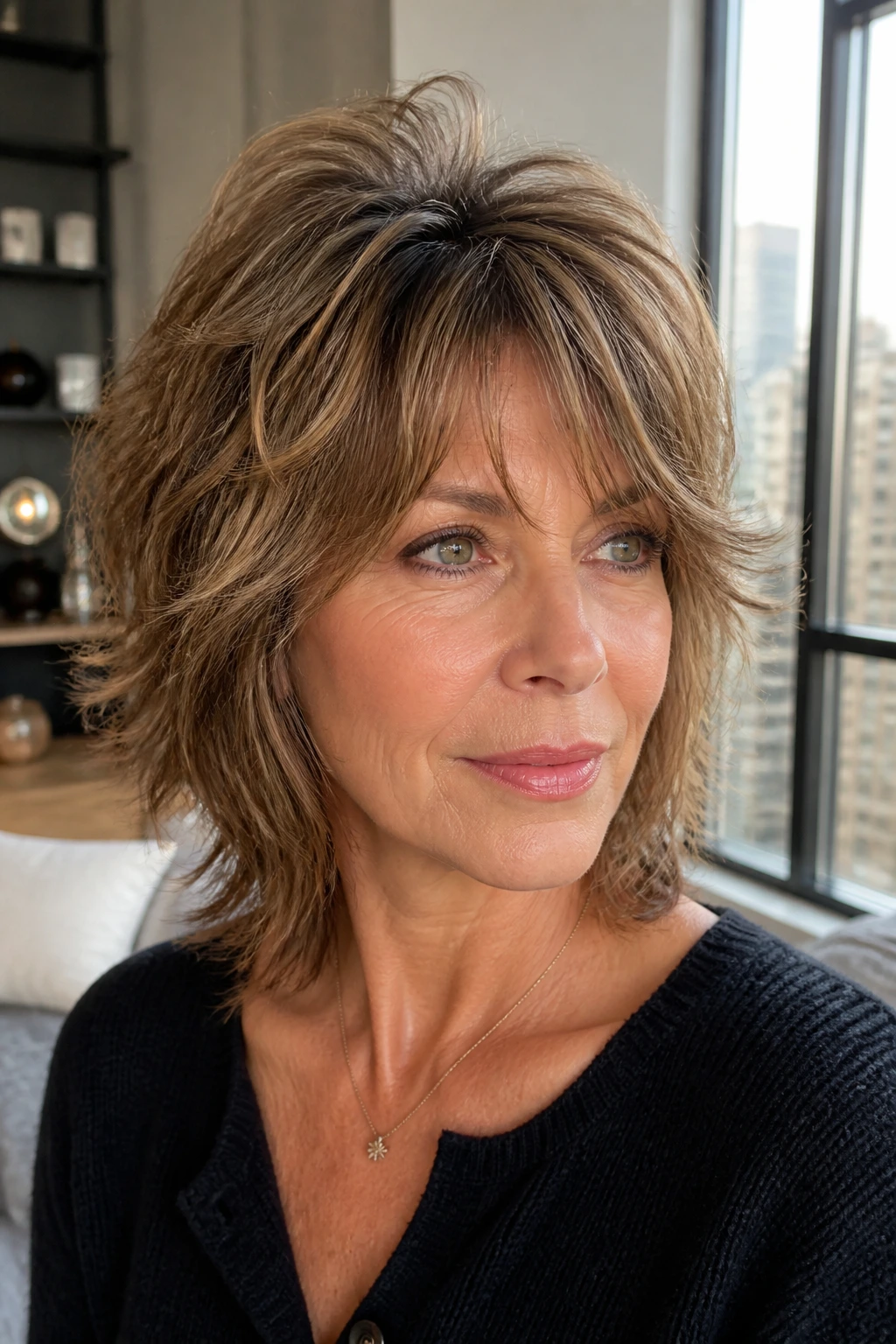
This one has a little more edge, but it can still stay loose if the razor work is light. The raised crown gives the hair a bit of air at the top, which helps when the roots tend to fall flat or the head shape wants a little extra height. The rest of the cut stays gentle and wearable.
A soft razor shag is best when the hair is healthy enough to take that kind of texturing. If the ends are already rough, a razor can push them too far. In that case, point cutting with shears may be the better call. I would rather have a clean, soft shape than a trendy-looking cut that frays at the first wash.
The lifted crown keeps the silhouette from collapsing. That is the entire point. Without it, the shag can sit too close to the head and lose all its life.
10. Pixie Shag with Long Top
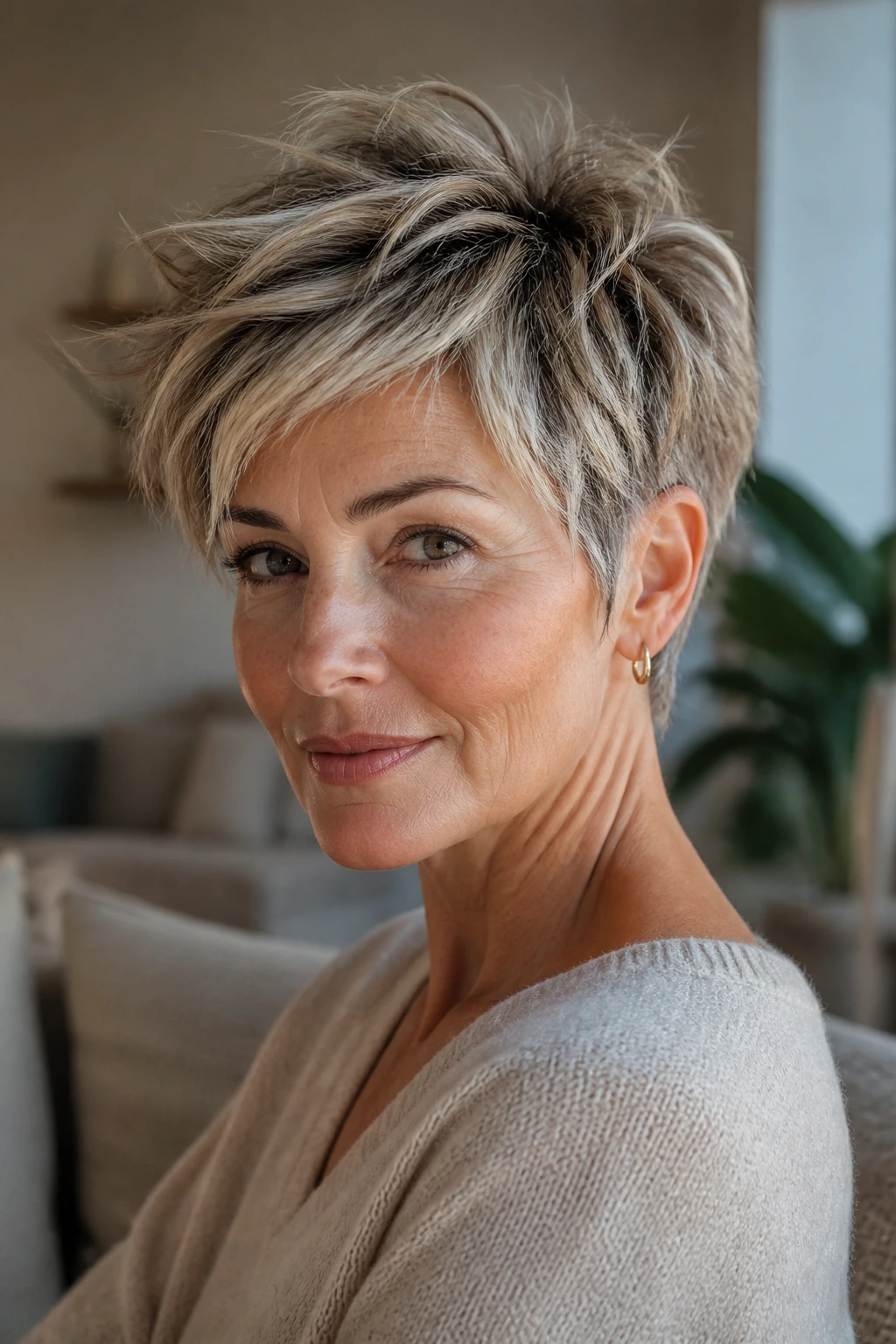
Short hair does not have to mean hard lines. A pixie shag keeps the sides neat, the nape tidy, and the top a little longer so the texture can fall forward or sweep back. It is sharp without feeling severe, which is why so many women with strong features wear it well.
I like this cut when someone wants to show the neck and ears but still keep softness around the face. The long top gives you room to style with your fingers, a little paste, or a quick brush-through. It can look playful in daylight and polished at night. That range is useful.
The main thing to watch is the balance between the top and the sides. If the top gets too short, the shag part disappears. If the sides get too bulky, the cut turns blocky. The sweet spot is what keeps it loose.
11. Lob Shag with Face-Framing Bend
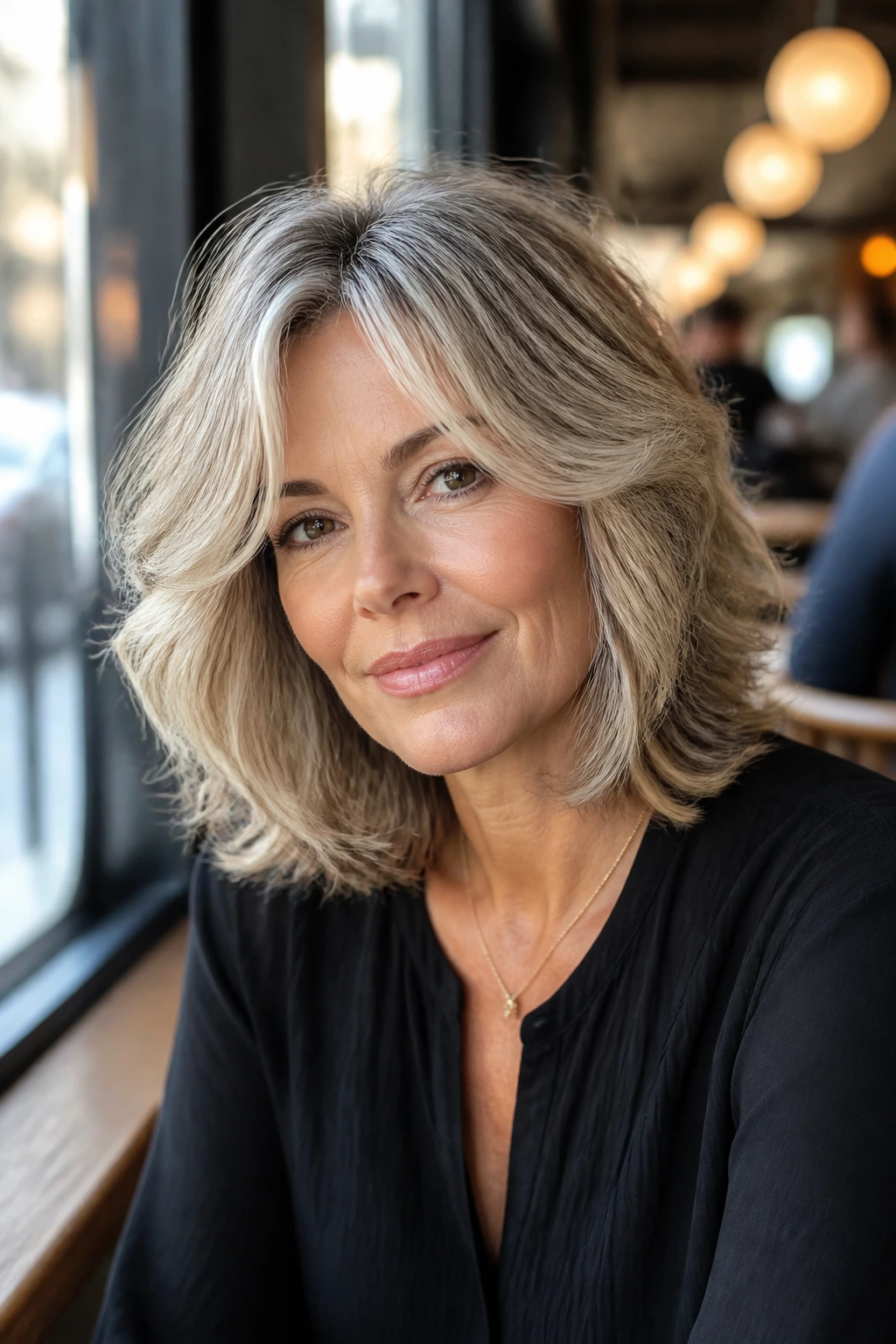
The lob is already a useful haircut, but add shag layers and it becomes more forgiving around the face. The bend near the cheekbone stops the length from hanging straight down like a curtain. Instead, it angles in a way that lifts the features a little.
This is a good compromise cut for women who are not ready to go short and do not want long hair that just sits there. It works on straight hair with a round brush and on wavy hair with almost no effort at all. That is rare.
I like this cut because it gives you options. You can wear it blown smooth, tucked behind one ear, or slightly undone. A looser shag always looks better when the movement is visible from the front and the side.
12. Curly Loose Shag with Dry-Cut Layers
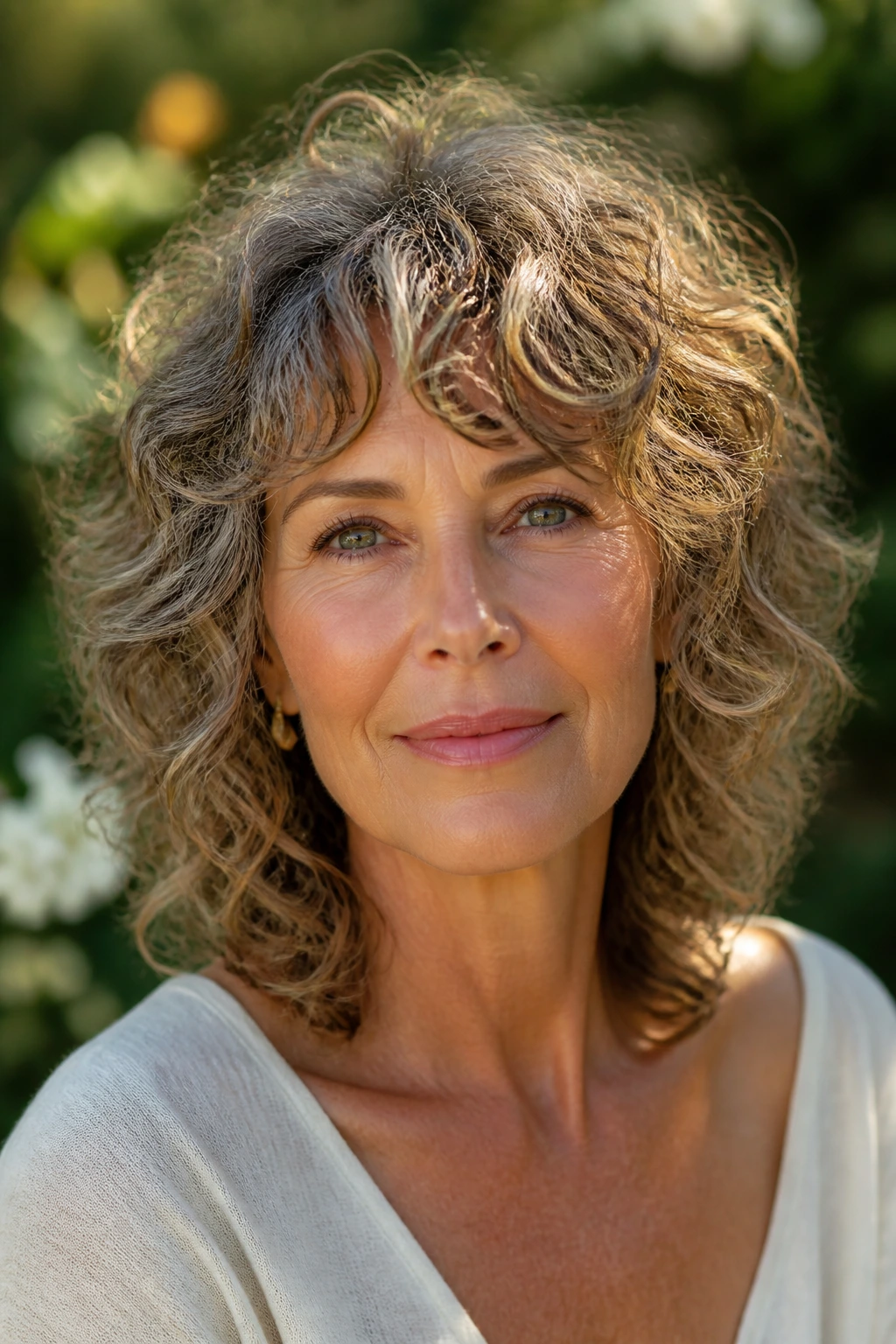
Curls need honesty. Cutting them wet can be fine in some hands, but a dry-cut loose shag is often the cleaner move because it shows the curl pattern exactly as it lives. That matters when you do not want surprise shrinkage around the eyes or neck.
This version lets curls stack without becoming a pyramid. The layers should be shaped to release bulk at the right spots while leaving enough weight for the curl to spring properly. If the cut is too short on top, the curl can go wide. Too long, and the shape sinks. Dry cutting helps find the middle.
Ask for a stylist who understands curl behavior, not just curl vocabulary. Those are not the same thing. One is about talking. The other is about looking at how the hair actually falls.
13. Neck-Skimming Shag with Feathered Nape
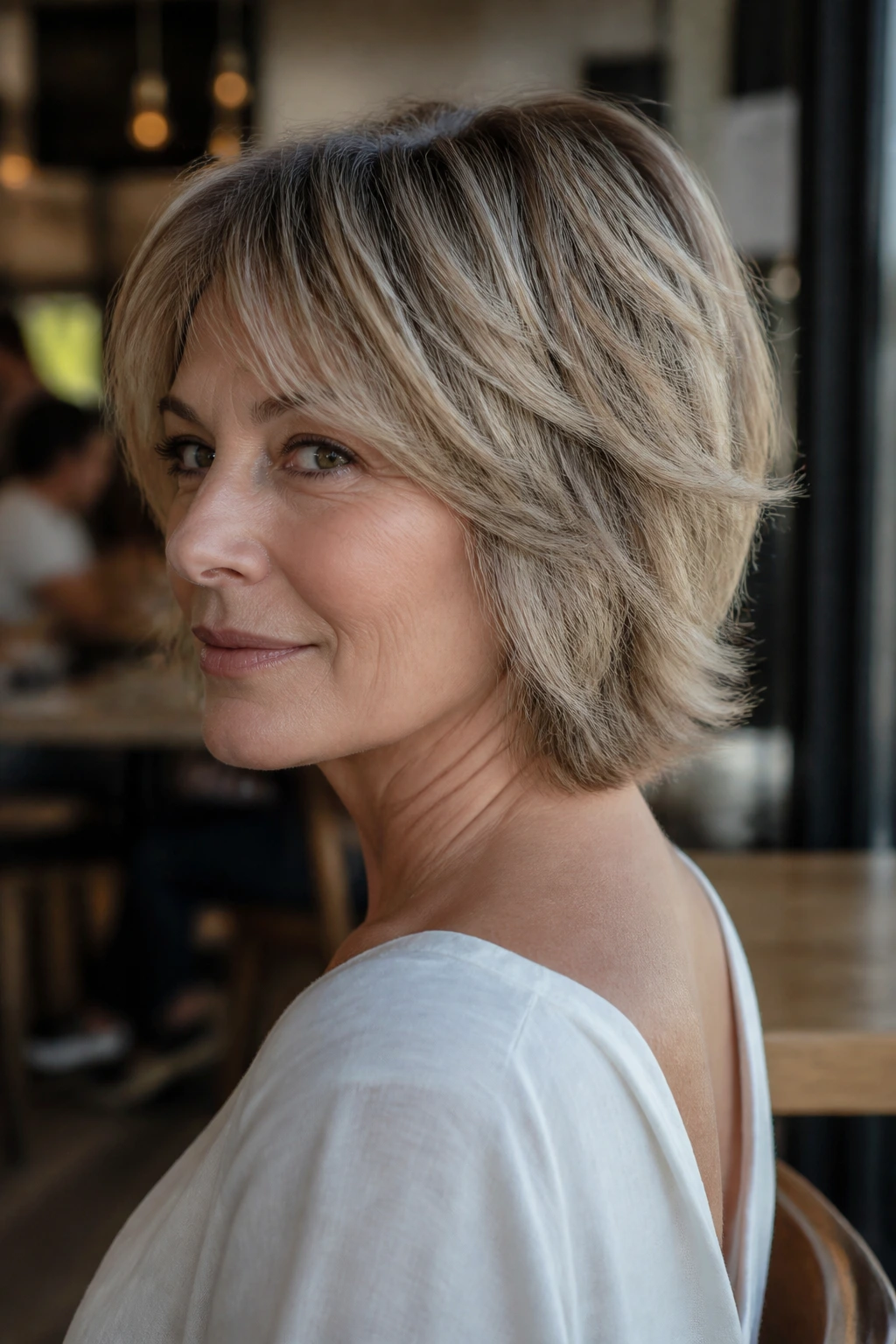
A neck-skimming shag can feel incredibly fresh because it clears the collar line without going too short. The feathered nape keeps the back soft, so the cut does not have that stiff little helmet at the base of the skull. That is a tiny detail, and it changes the whole mood.
This is especially nice if you like earrings or open necklines. The haircut leaves room for both. It also grows out in a graceful way, because the nape length and the layers can stretch a bit before the shape falls apart.
I prefer this on hair that has a slight bend or a loose wave. Straight hair can wear it too, but it often needs a round brush or a quick bend with a flat iron at the ends to keep the feathering from lying flat.
14. Mid-Length Shag with Tucked-Under Ends
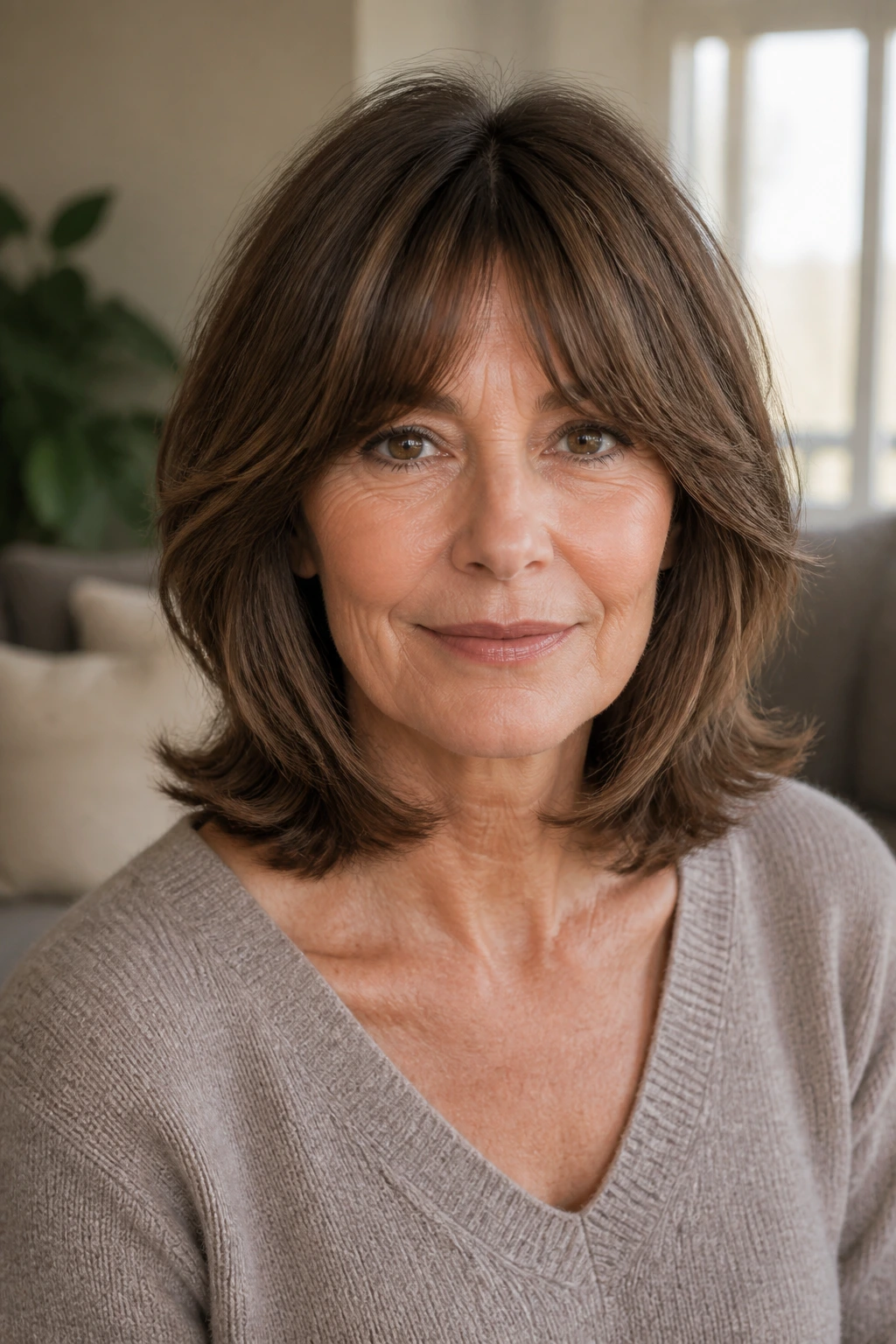
Mid-length is where a shag starts feeling quietly elegant. The ends can be tucked under with a brush, which gives the haircut a softer outline, but the layers still keep it from looking stiff. It is the kind of cut that can swing casual or polished depending on how much time you spend on it.
What I like most here is the calmness of the silhouette. The hair touches the shoulders or sits just above them, so the shape feels complete without dragging everything downward. A side sweep or curtain fringe adds just enough framing to keep the face open.
If your hair tends to flip out at the ends, ask for the perimeter to be shaped with the natural bend in mind. Fighting the hair usually backfires. Working with the bend tends to look better by lunch.
15. Salt-and-Pepper Shag with Polished Texture
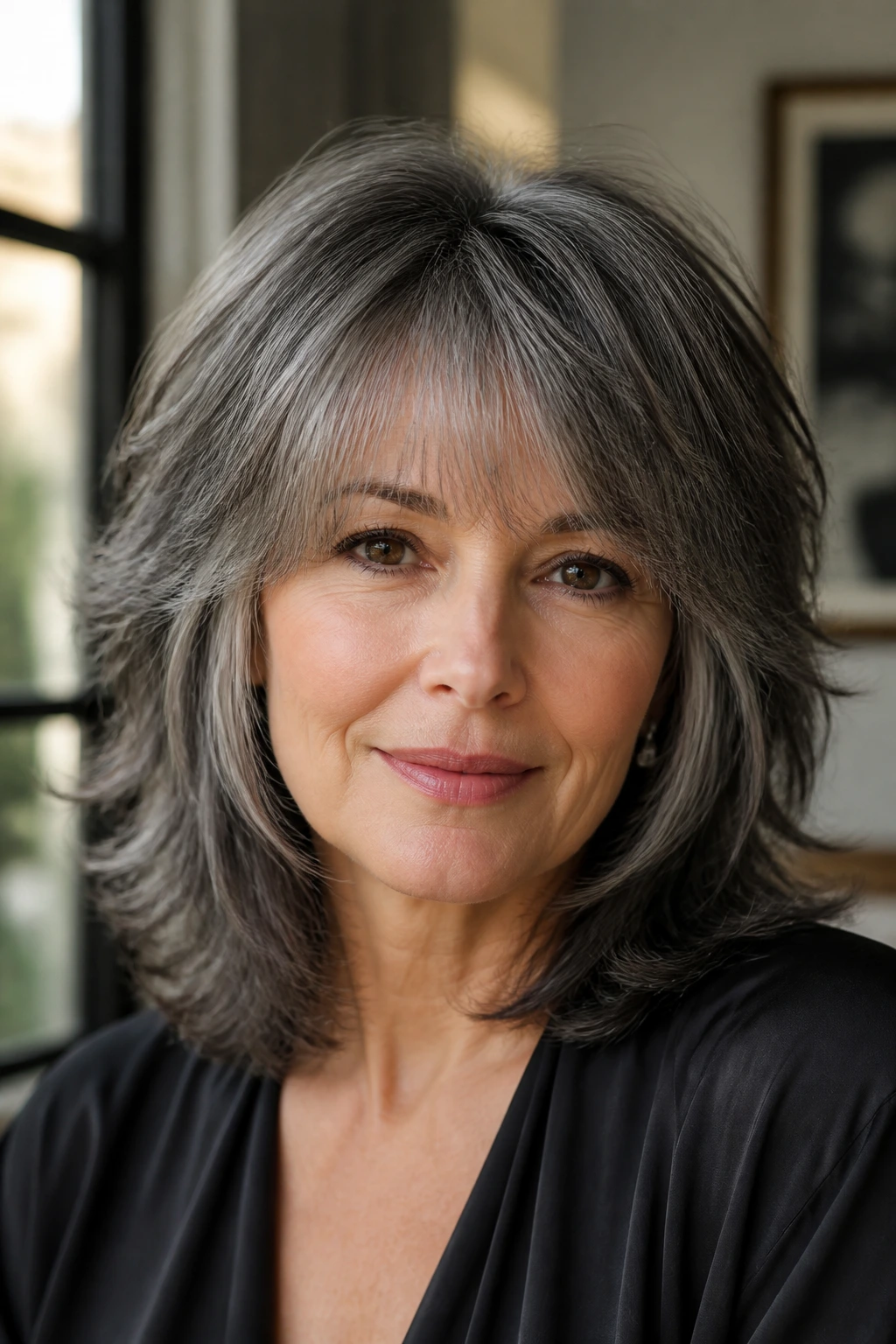
Salt-and-pepper hair has a built-in depth that a shag can either flatter or flatten. The polished version keeps the cut soft and controlled so the color pattern stays visible. Too much rough texture, and the beautiful mix of tones can blur into fuzz.
I love this look when the gray is coming in at the temples, crown, and through the length in different amounts. The layers catch the contrast and make it look deliberate. If you have ever wanted your hair color to look richer without adding more color, this is one of the best shapes for it.
A light shine cream or serum on the ends helps. Not much. Just enough to make the light move across the silver and darker strands. Gray hair often looks best when the surface is smooth, not greasy.
16. Highlighted Shag with Dimensional Ribbons
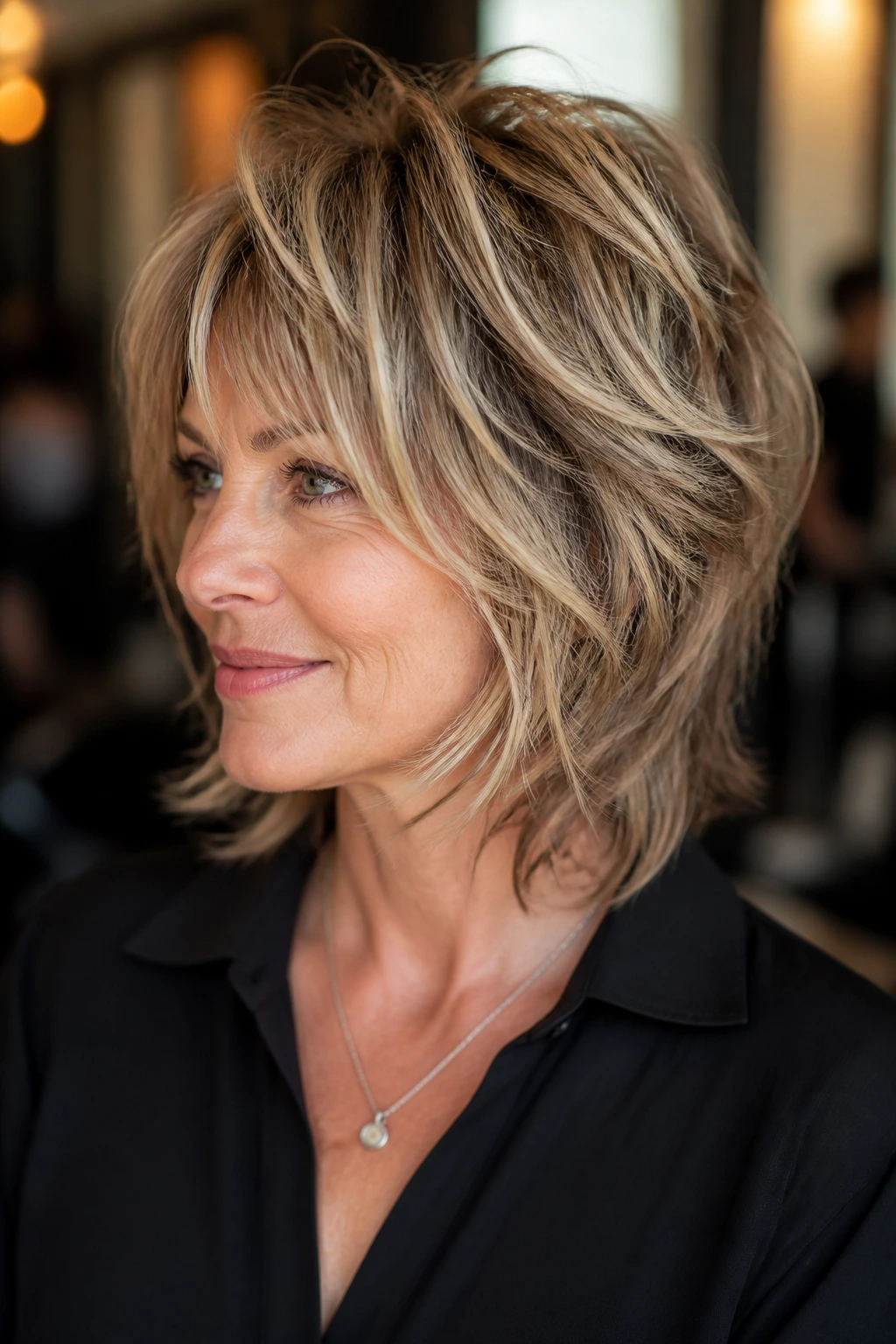
Highlights and shag layers can work together beautifully when the color is placed to follow the cut, not fight it. Dimensional ribbons around the face and crown make the layers easier to read. The result is movement you can see from across the room, which is useful if your hair tends to fall visually flat.
This cut is especially effective when the highlights are not all the same width. Some thin, some a little stronger. That unevenness gives the shag a lived-in look instead of a striped one. Around mature hair, I think that softness reads better than obvious contrast.
Ask for the brighter pieces near the cheekbone and the lighter lift at the top, not just everywhere. A shag with color placement that respects the haircut looks far more expensive than one where the color was done in a hurry.
17. Soft Mullet Shag for Bold Movement
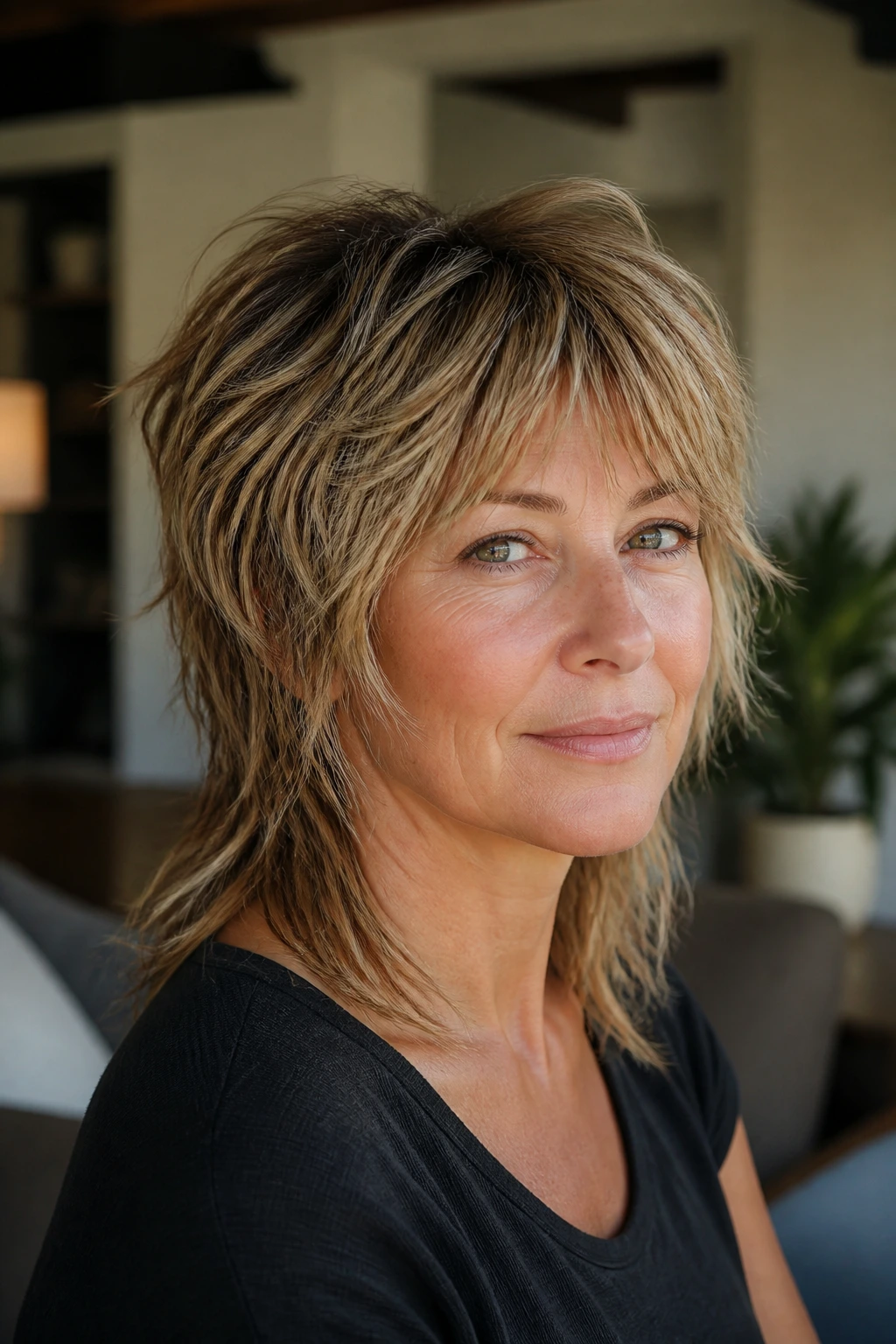
A soft mullet shag is for women who want more attitude but not a hard edge. The front and sides stay wearable, the back stays a touch longer, and the layers create a swing that feels freer than a standard shag. It can be surprisingly flattering because it keeps the neck light and the face frame gentle.
The word “mullet” can scare people off. Fair. But the soft version is less about shock and more about shape. It lets the back move without committing to a severe cut. If your style leans artistic, modern, or just a little rebellious, this one earns a look.
The key is softness at the transition points. No hard disconnects. No dramatic step. The layers should melt, not jump.
18. Round-Brush Blowout Shag
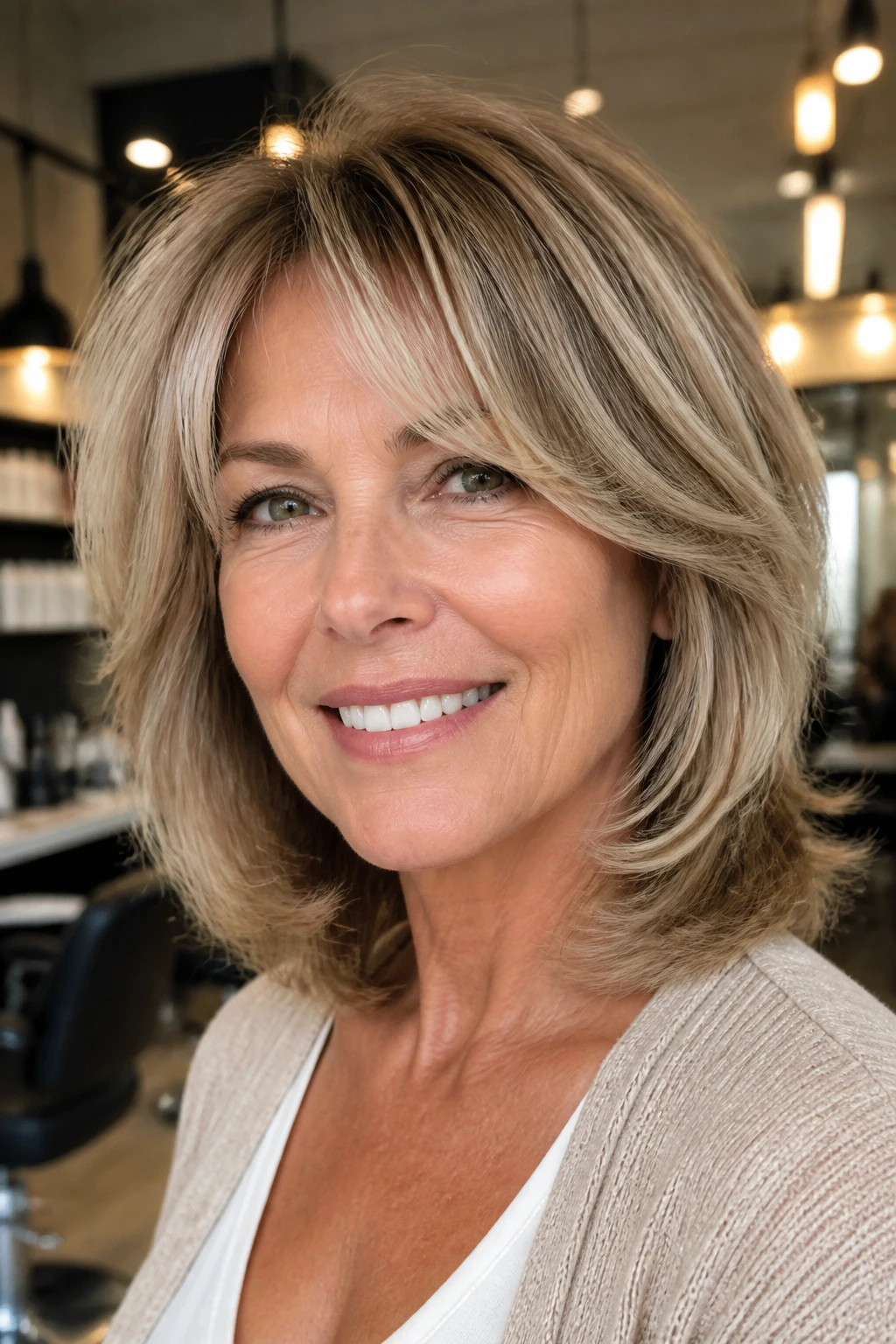
Some shags are made to look best with a little round-brush work. This is one of them. The layers fall better when the roots are lifted and the ends are bent under just enough to keep the silhouette clean. You get body without stiffness, which is a good trade.
This version is a favorite if you like your hair to look put together without looking sprayed into place. The blowout gives the face frame a little swing, and the crown gets a lift that helps the whole head look lighter. On finer hair, that volume can be a lifesaver.
If you are styling at home, dry the roots first, then work from mid-length to ends with a round brush. That keeps the hair from flattening before the shape sets. Small sequence. Big difference.
19. Air-Dry Shag for Natural Wave
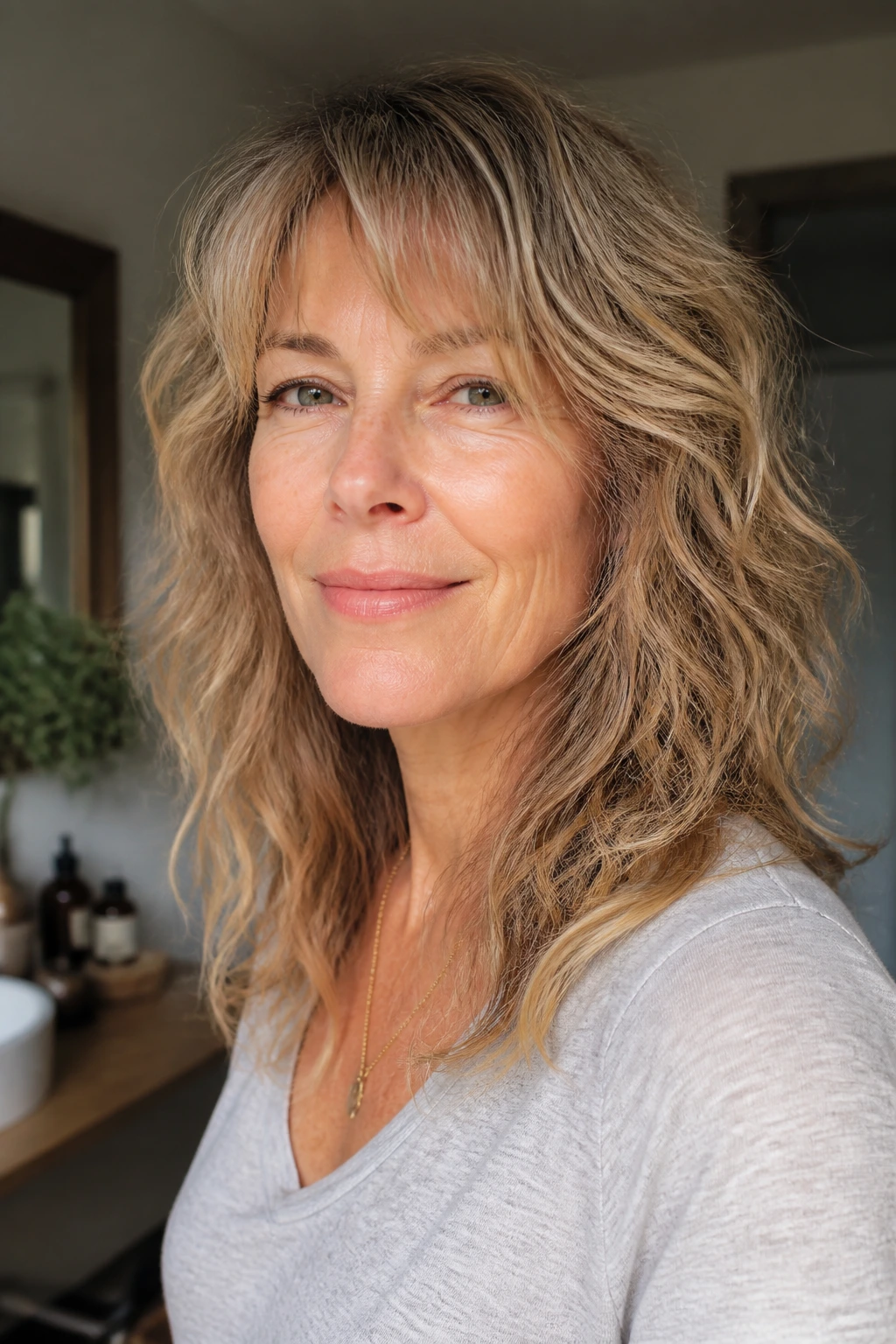
Not every shag needs heat. In fact, one of the best things about loose shag haircuts for older women is how well the right version can air-dry. The layers should be cut to fall with your natural wave pattern, not against it. If they are, the hair starts helping you instead of demanding a whole morning.
This is the cut for people who hate fuss. Put in a light leave-in, scrunch a little, and let the hair settle. The ends should not kick out in a weird way, and the crown should not collapse. If either happens, the layering is off.
I like this version best when the hair has a soft bend rather than a strong curl. Strong curls usually need more shaping. Soft wave can look finished with almost no effort, which is a rare and useful thing.
20. Low-Maintenance Long-Layer Shag
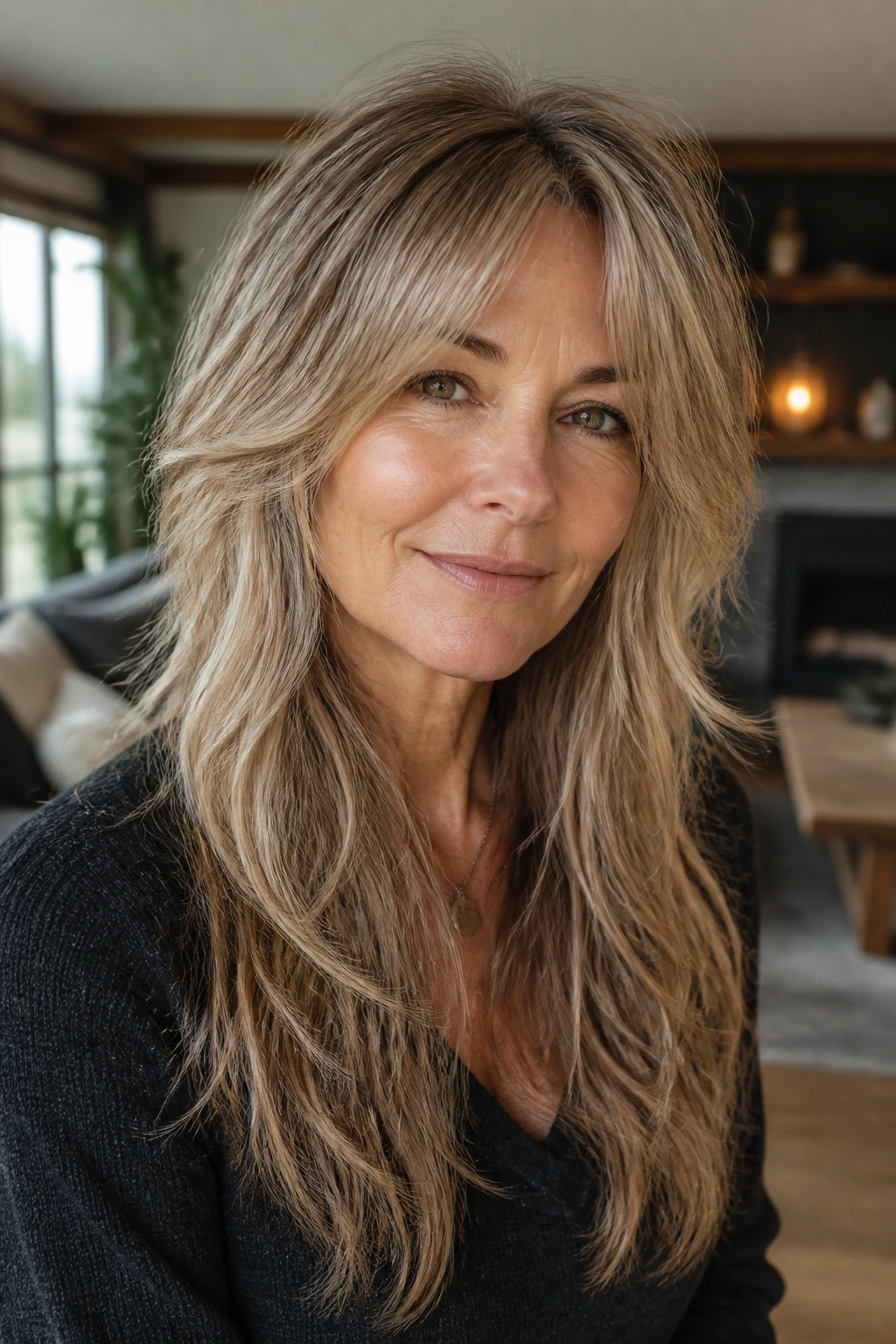
If you want a shag that holds its shape a long time, long layers are your friend. The cut stays loose, but the layers are stretched out enough that the grow-out phase looks deliberate. That means fewer “I need a haircut this minute” moments.
This version is especially useful for women who do not want frequent salon visits but still want movement around the face. The layers can start at the cheekbone and taper into the length, while the bottom stays steady. That helps the haircut keep its structure even when it has grown a bit.
The danger with long-layer shags is undercutting them. If the layers are too timid, you get long hair with a vague shape. If they are too aggressive, you lose the easy maintenance advantage. A good stylist knows where to stop. That pause matters.
21. Asymmetrical Shag with an Off-Center Part
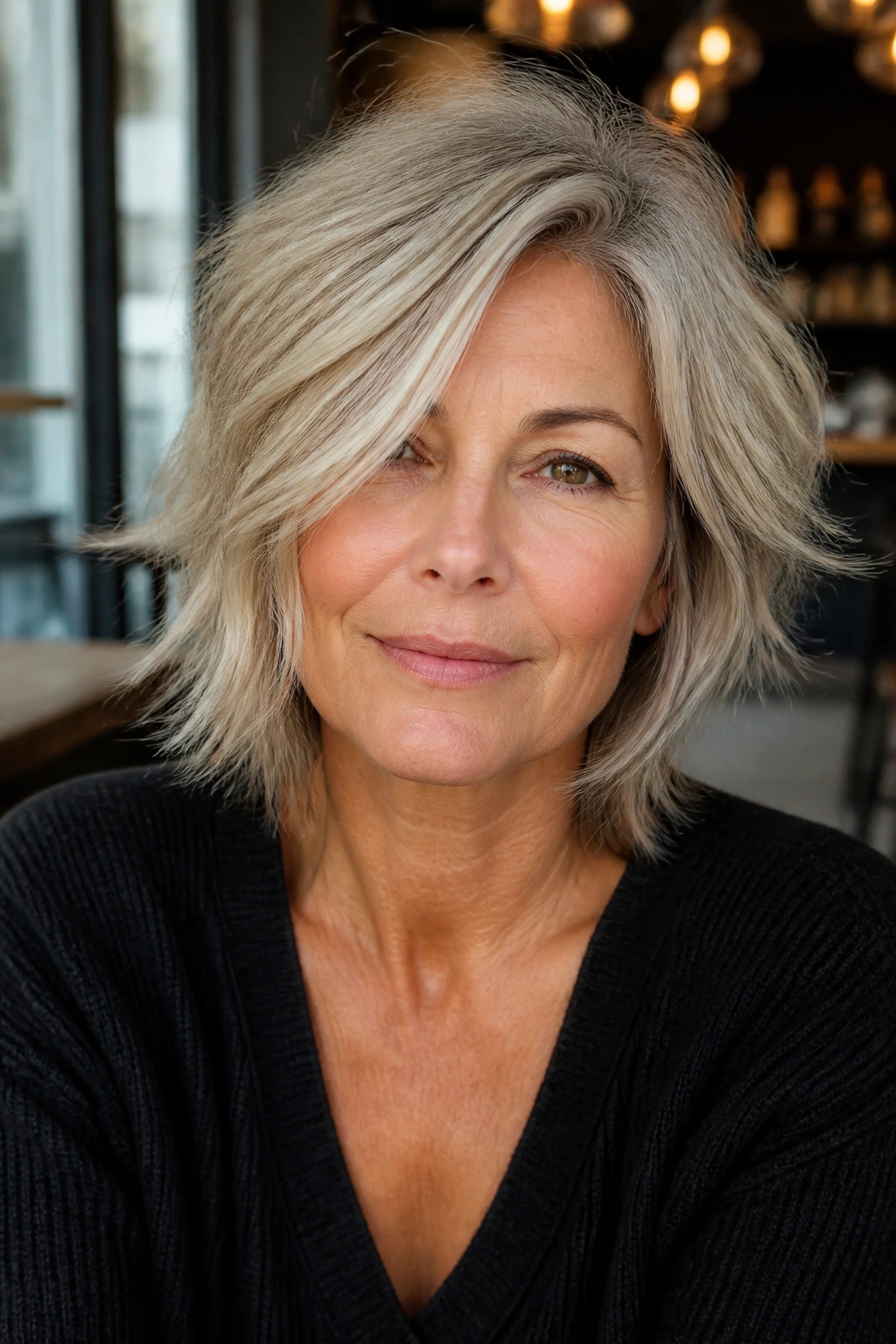
A slight asymmetry can wake up the whole face. An off-center part with layered movement on one side creates a line that feels fresh without shouting. It is useful for softening a stronger jaw or balancing features that you do not want to center.
I like this cut because it looks intentional even when it is a little undone. The part alone changes the mood. The layers should follow that line rather than fight it, especially around the front. That gives the haircut direction.
If your hair is straight and tends to fall flat in the middle, this is a smart way to break the habit. A small shift in the part can create more lift than a lot of product ever will.
22. Fringe-Forward Shag with Brow-Grazing Bangs
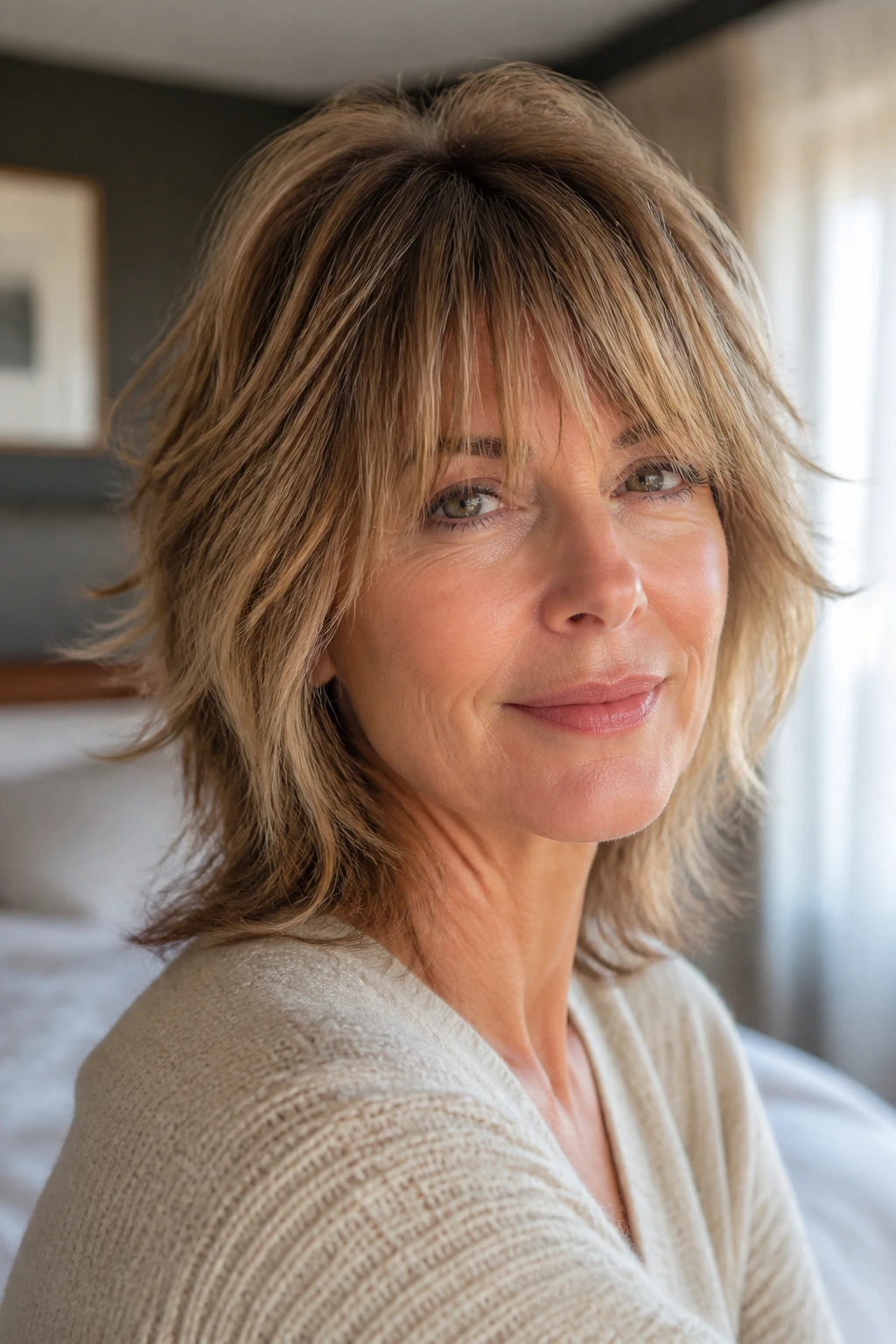
Bangs can be tricky on mature hair, but brow-grazing fringe works when it stays soft. The goal is not a heavy wall across the forehead. It is a feathered curtain that brushes the brows and opens up around the temples. That little gap keeps the cut light.
This version draws attention to the eyes, which is usually where people want the focus anyway. It also gives the face a clear frame when the rest of the hair is looser and more relaxed. The key is maintenance. Fringe grows fast, and a shag with bangs loses shape quickly if the front is ignored.
If you are nervous about bangs, ask for them longer than you think you want. That gives you room to adjust. Too short is a headache. Too long can be tucked away.
23. Piecey Shag for Dense Hair
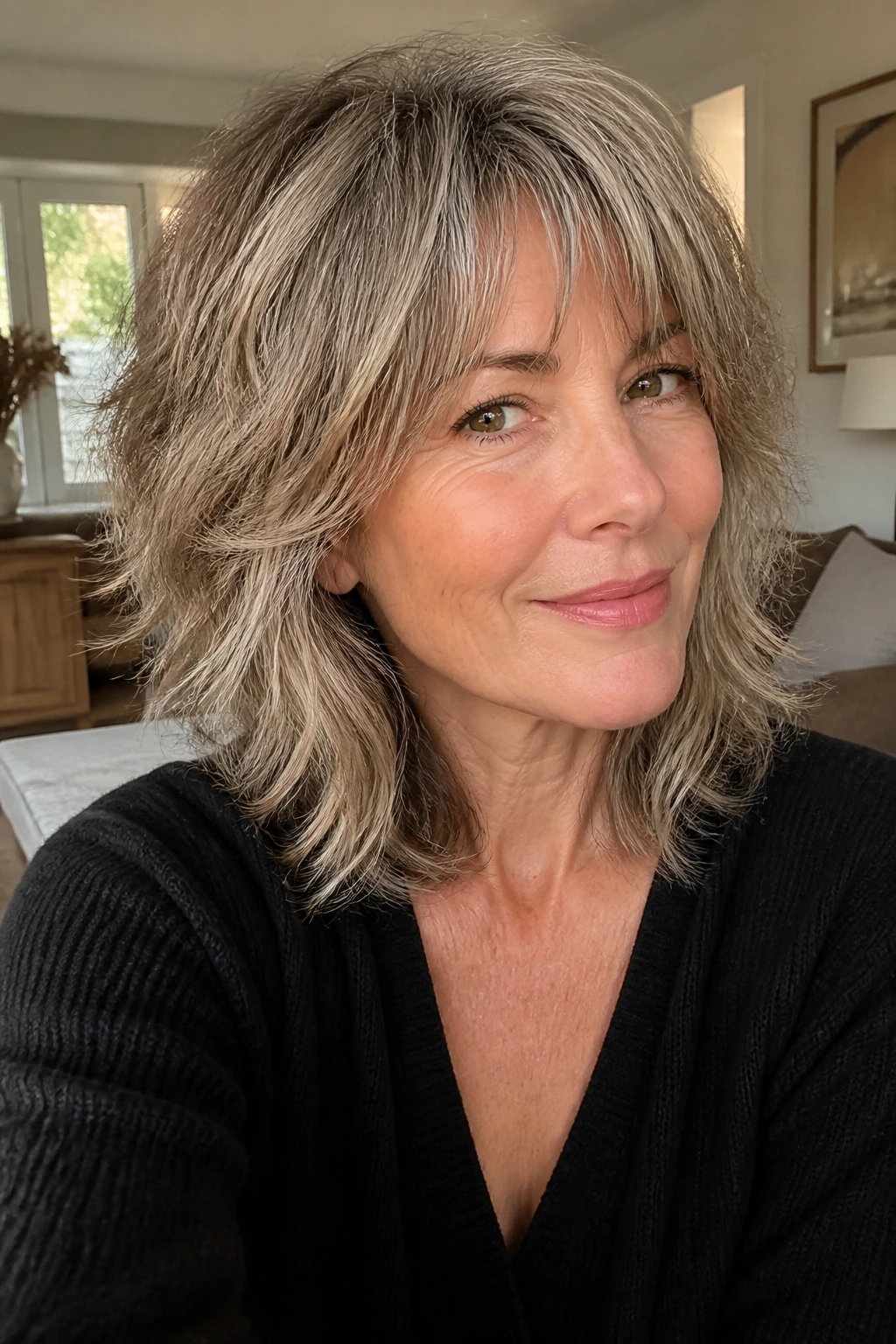
Dense hair can look blunt, bulky, or downright heavy if it is cut without enough texture. A piecey shag breaks that mass into visible sections so the hair feels lighter and easier to move. The word piecey gets overused, but here it earns its keep.
The trick is not to shred the whole head. That just creates frizz. Instead, remove weight where the density is strongest — usually through the mid-lengths and underlayers — and leave the outline cleaner. The haircut starts to separate naturally instead of forcing it.
This version benefits from a little styling paste or cream at the ends, but only after the hair is dry. Put product into damp dense hair too early and it can clump in the wrong places. That happens fast.
24. Layered Bob-Shag
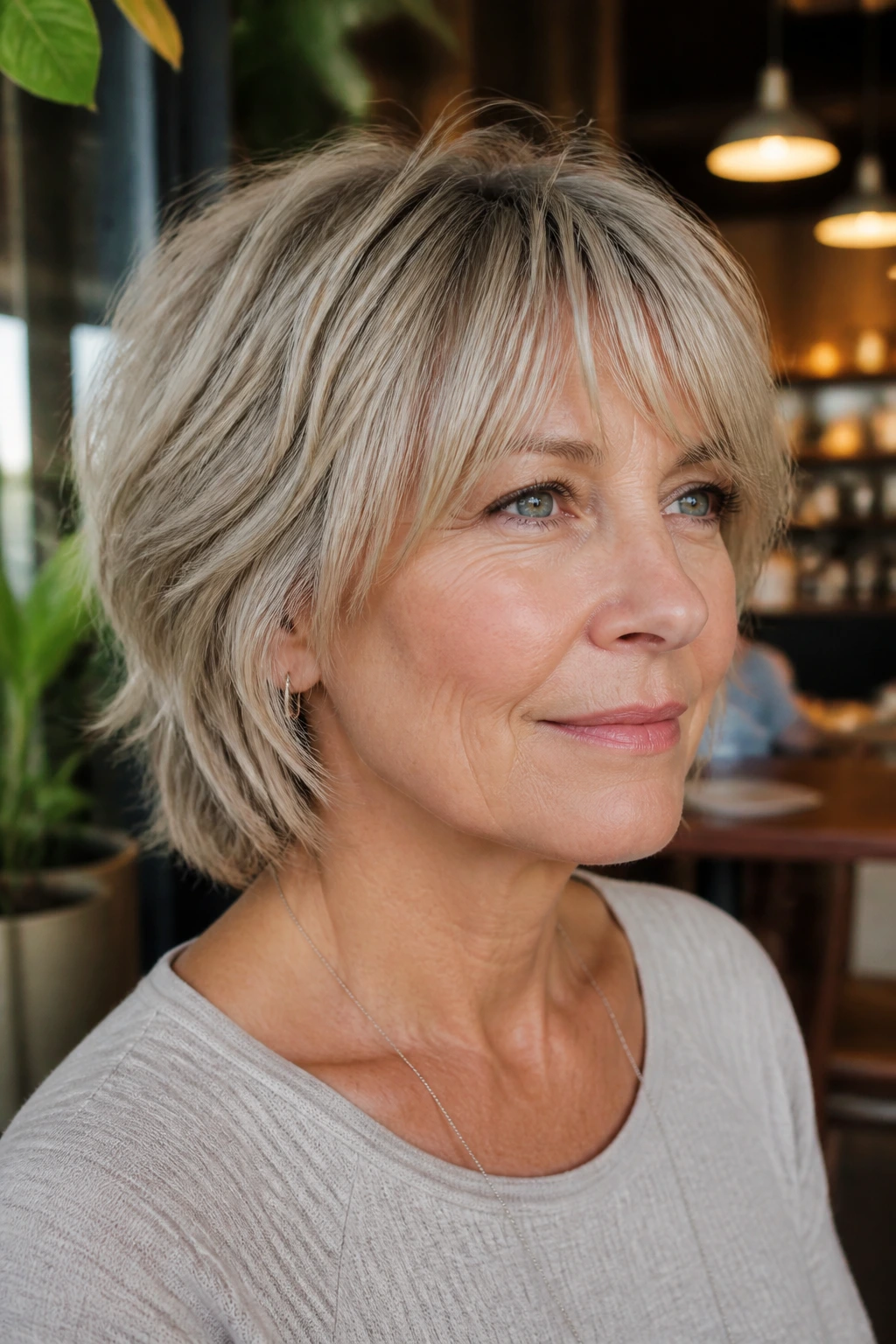
A layered bob-shag sits in the middle of two worlds. It has the tidy outline of a bob, but the texture of a shag keeps it from feeling stiff. That makes it a strong choice for women who want short hair without going full edgy.
I like this one because it has manners. It can be neat for work, then a little messier by dinner and still look on purpose. The layers should be enough to create movement at the crown and around the face, but not so many that the bob shape disappears.
If your hair is straight and likes to turn in at the ends, this cut can be especially useful. The bob line gives you structure, and the shag layers stop it from looking severe.
25. Face-Lifting Shag with Cheekbone Emphasis
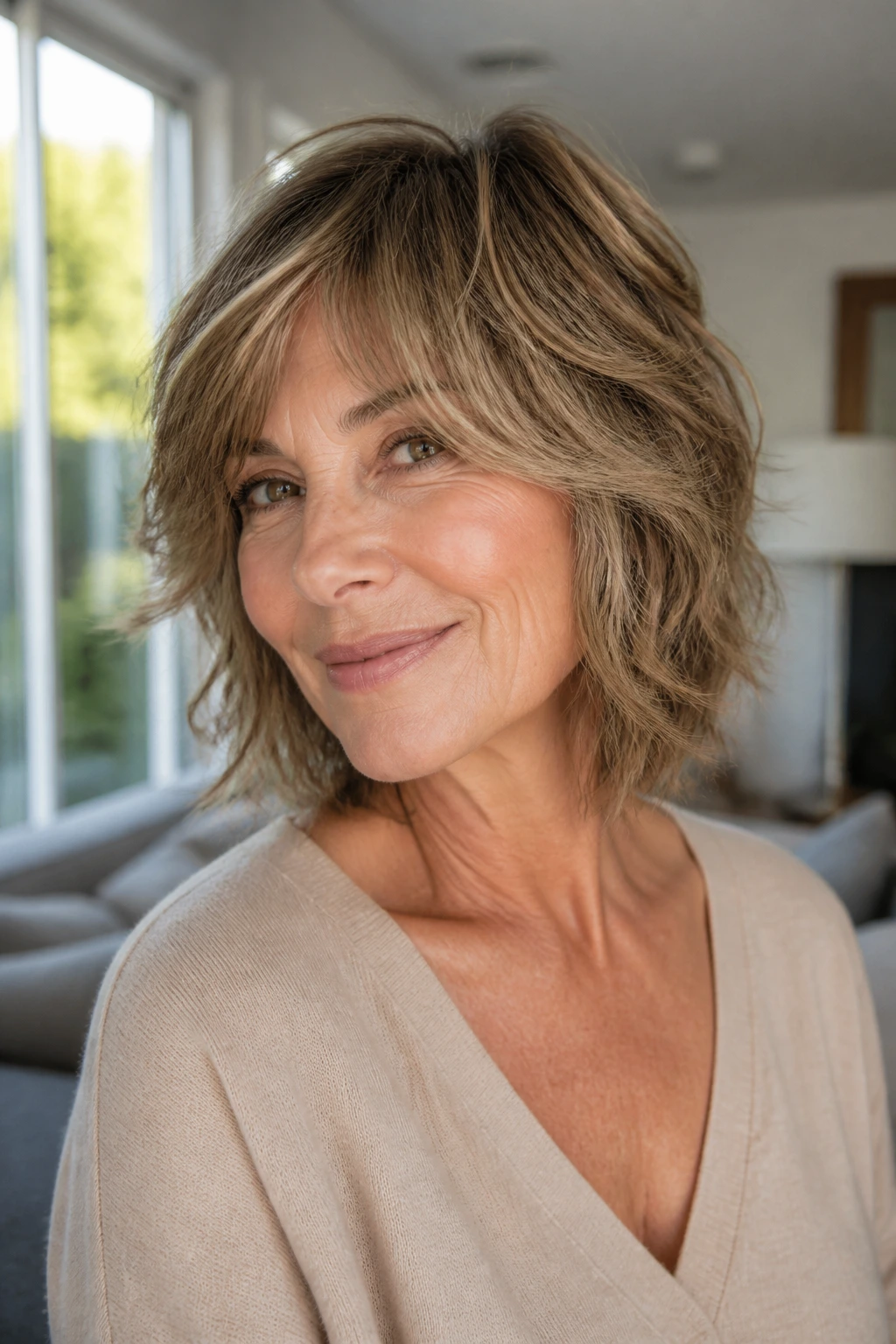
Some cuts quietly pull the eye upward. This is one of them. The shorter layers land near the cheekbone, which puts movement right where the face benefits from it most. It is a smart choice if you want softness around the jaw but still want to keep the style open and lifted.
The emphasis should stay on the cheekbone, not all the way up at the temple. Too much height can make the haircut feel dated or overworked. A clean face frame with a little bend is usually enough. Less shouting. Better result.
This is one of my favorite options for women who want the haircut to do some of the visual work for them. You feel the lift without needing a lot of styling tricks.
26. Side-Part Shag with Sweep and Lift
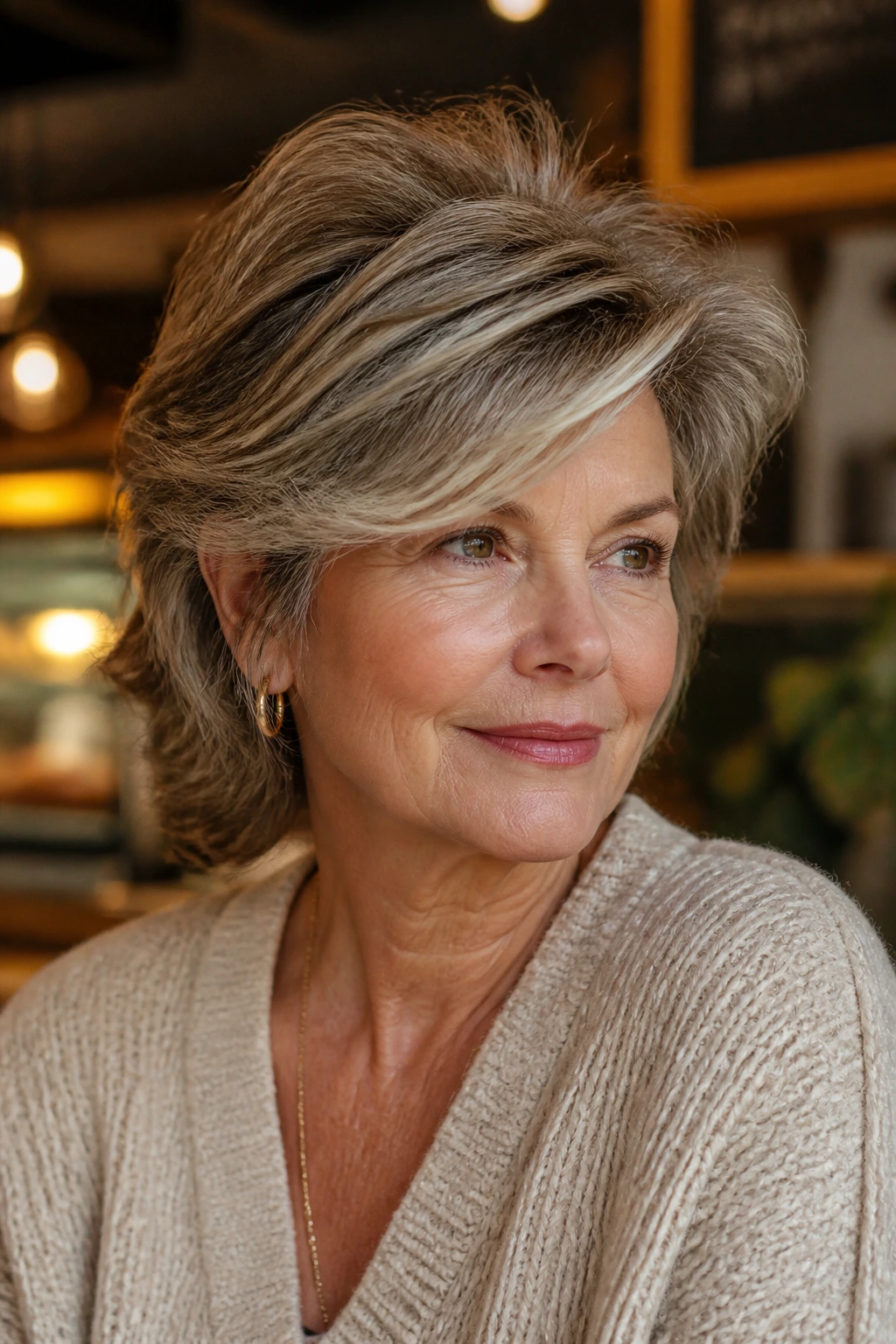
A side part can rescue a limp haircut in about five seconds. Put that part into a loose shag and you get lift at the crown, sweep around the forehead, and a little asymmetry that keeps the shape from sitting dead center. It is a small move with a big effect.
This style works well when the natural hairline has changed or when one side wants to lie flatter than the other. The sweep gives you a way to work with that instead of pretending it is not there. I prefer it on mid-length and shoulder-length shags, where the movement has room to show.
The side part is also good if you want to soften a strong center part that makes the face feel boxy. Hair has opinions. Sometimes all you need is a different one.
27. Glossy Gray Shag with Smooth Ends
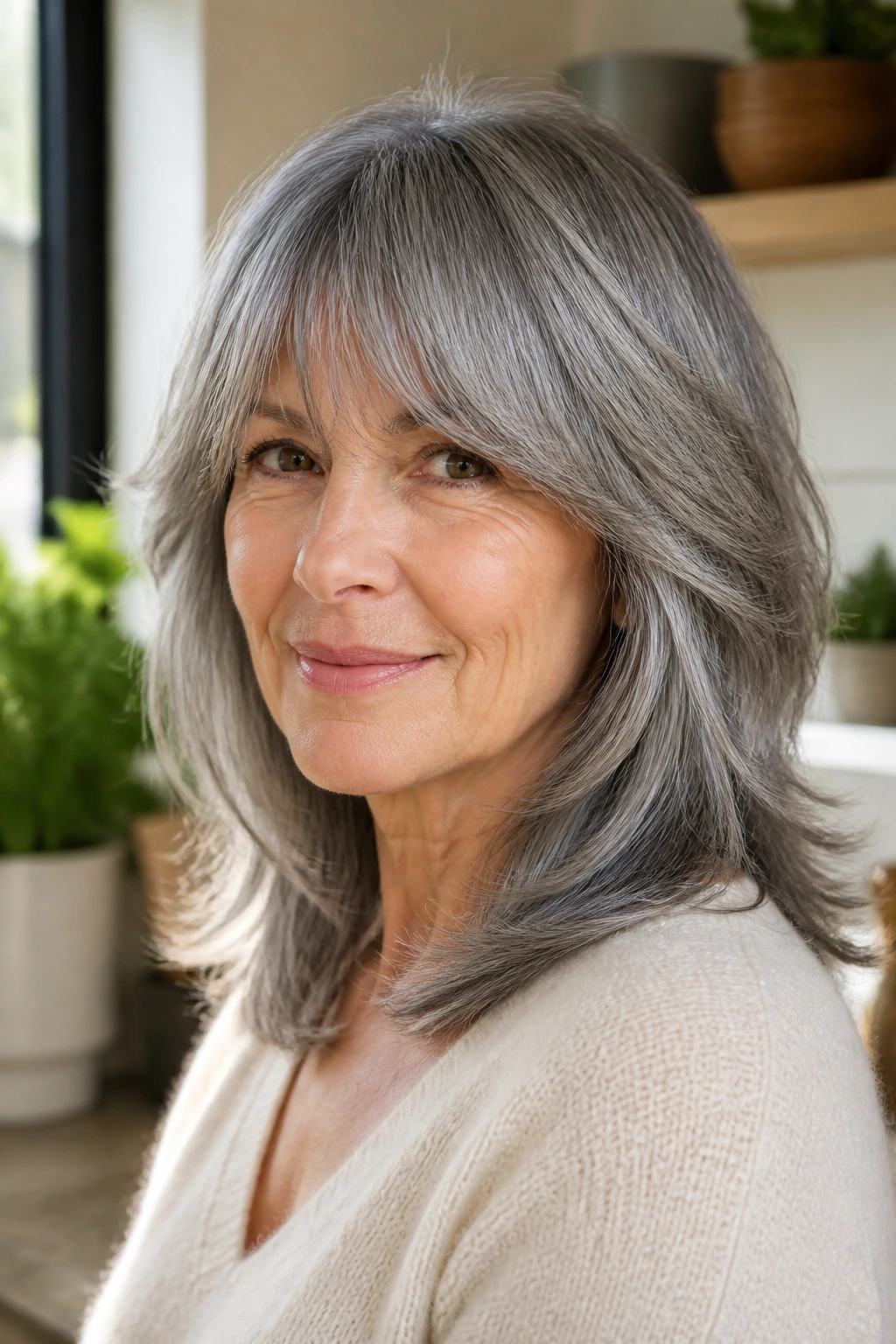
This is the polished cousin of the whole group. The layers are still loose, but the ends stay smooth and the surface has enough shine to show off silver, salt-and-pepper, or full gray color. It is a reminder that a shag does not have to look messy to feel current.
I like this cut on women who want movement but also like a neat finish. The hair can tuck behind the ear, frame the face, and still look clean at the bottom. The smooth ends keep the style from getting fuzzy, which gray hair can do if it is over-texturized.
A light smoothing product on the bottom half is usually enough. The shape does the rest. That is the nice thing about a well-cut shag — the haircut carries the style, not the product aisle.
How to Style a Loose Shag So It Still Looks Intentional at 4 p.m.
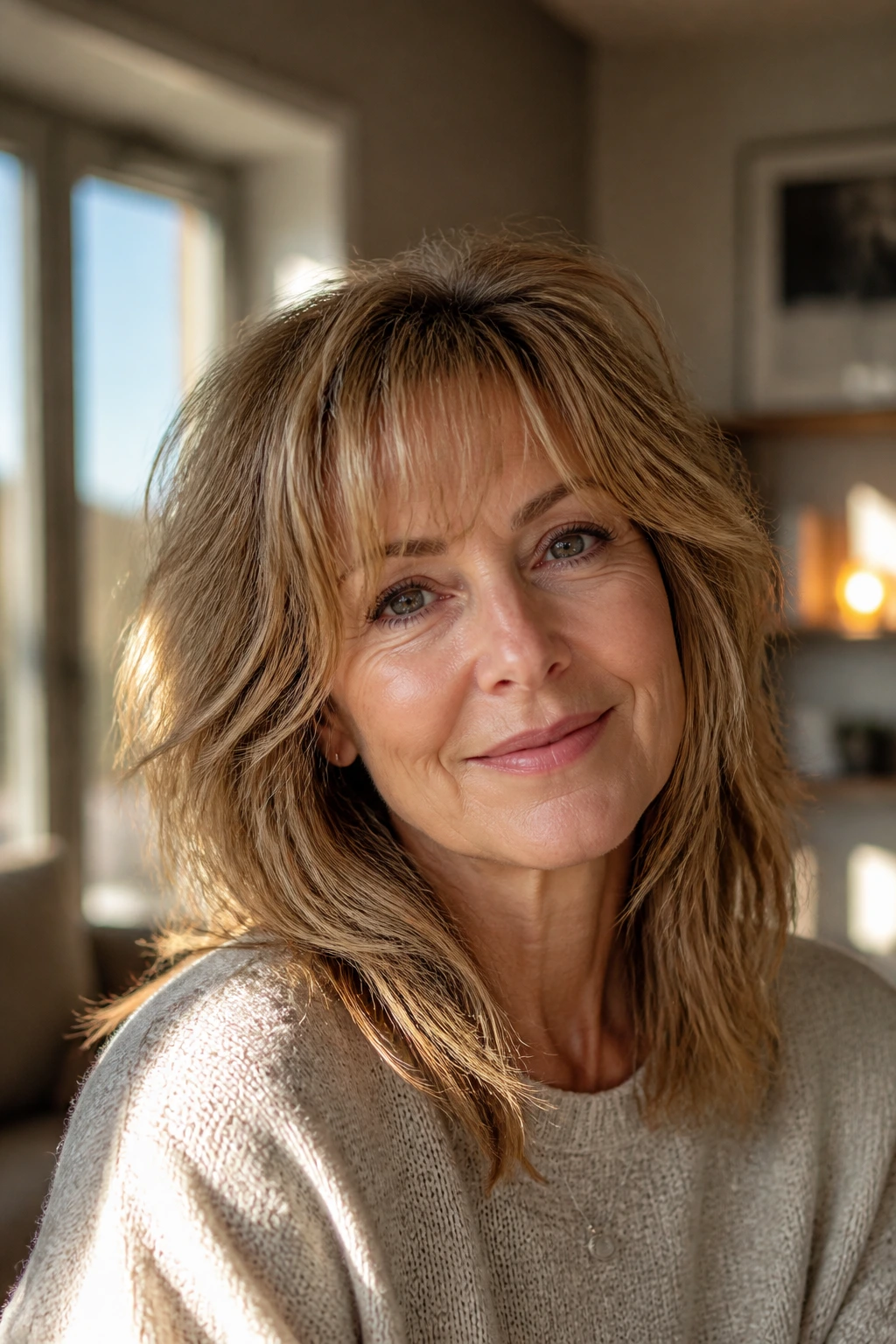
The best loose shag will not stay lovely on autopilot forever. Hair collapses, frizz rises, and the fringe starts negotiating with gravity. That is normal. The fix is not more product. It is better placement.
Start with a lightweight mousse or root spray at the crown on damp hair. Not at the ends. The top needs the help more than the length does. Then rough-dry the roots first so they do not set flat against the scalp. Once the head is mostly dry, bend the mid-lengths with a round brush, a curling iron, or even your fingers if your wave pattern cooperates.
My favorite rule: keep product off the last inch unless the hair is truly dry and the ends need shine. That little stretch of hair is where shag cuts get heavy fast.
A final touch of texturizing spray can help the layers separate, but use it sparingly. If you hear the hair crunch, you have gone too far. The goal is movement with a little separation, not a straw hat.
Essential Tools and Products That Earn Their Drawer Space
-
Blow dryer with a nozzle attachment — The nozzle lets you direct airflow at the roots instead of blasting the whole cut into frizz.
-
Medium round brush, about 1.5 to 2 inches — Best for bending the ends and lifting the crown without making the style too curled.
-
Diffuser — Useful for waves and curls when you want the layers to keep their shape while drying.
-
Lightweight mousse or root foam — Gives the crown a little support without making fine hair stiff.
-
Texturizing spray — Helps loose pieces separate at the ends; use a light hand or the cut gets chalky.
-
Heat protectant spray — Necessary if you use a round brush, curling iron, or flat iron on the ends.
-
Wide-tooth comb — Better than a brush for damp curls or fragile hair that tangles easily.
-
Salon clips — Handy for sectioning the fringe and crown while drying; they make styling less chaotic.
-
Shine serum or light cream — A tiny amount on gray or coarse ends keeps the layers from looking dry.
Keeping the Shape Between Haircuts
A loose shag looks its best when it is trimmed before the fringe starts blocking the eyes and before the perimeter gets too heavy. For shorter versions, that often means every 6 to 8 weeks. Shoulder-length and longer shags can usually stretch to 8 to 12 weeks if the layers were cut well in the first place. Fringe needs more frequent attention if you wear it at brow length. It does not wait politely.
Wash schedule matters too. Very fine hair may need more frequent washing because the roots go limp fast. Thick or curly hair usually does better with less frequent washing and more careful refreshing. A little water mist, a pea-sized amount of mousse, and finger-tousling can revive the shape better than a full redo.
At night, avoid crushing the front with a tight clip or a rough cotton pillowcase if your fringe has a strong bend. A looser sleep setup helps the layers stay separated instead of waking up in one flat sheet. Hair is annoying that way. Also predictable.
Common Mistakes That Flatten a Loose Shag
-
Too much thinning at the ends. The cut can look airy in the chair and stringy a week later. Ask for weight removal inside the haircut, not just at the bottom.
-
Short fringe without a plan. A too-short bang can pull attention to the wrong place and demand constant trimming. Leave room to adjust.
-
Heavy creams on fine hair. The layers disappear under weight and the crown collapses. Use mousse or a light spray instead.
-
Ignoring the part. A center part is not wrong, but it can make some shag shapes fall flat. Try a slight offset if the top needs lift.
-
Trying to force straight hair into curly behavior. If your hair only makes a soft bend, style for a bend. Chasing a curl that is not there leads to fuzz.
-
Letting the perimeter get too soft. When the bottom edge loses shape, the whole cut starts looking unfinished. Clean it up before it turns ragged.
Variations and Alternatives Worth Showing Your Stylist

The Curtain-Soft Version: Keep the fringe long and split it in the middle, then layer the rest of the cut around the cheekbones. This is the easiest entry point if you want shag movement without committing to bangs.
The Curl-First Version: Let the curl pattern lead the shape and ask for dry cutting or curl-by-curl shaping. It works best when the stylist respects shrinkage instead of guessing at it.
The Silver-Glow Version: Pair a loose shag with a gloss or toner that keeps gray strands bright and reflective. The cut gets the motion; the color gets the shine.
The Shag-Bob Hybrid: If you like structure, keep the outline bob-like and put the texture inside the cut. It gives you movement without the longer, more layered silhouette.
The Long-Flow Version: Keep the length past the shoulders and let the layers sit mostly around the face and crown. This is the least dramatic option, and sometimes that is the one people wear best.
Questions Women Ask Before They Cut It
Will a loose shag work if my hair is fine?
Yes, if the perimeter stays strong and the layers stay light. The cut should create movement near the face and crown without stripping the ends thin.
Can I wear one if my hair is curly?
Absolutely. Curl-friendly shags often look better than blunt cuts because the layers release bulk and keep the curl shape from turning into a triangle.
Does this haircut need a lot of styling?
Not necessarily. A good loose shag can air-dry well, but it usually looks best with a little root support or a quick bend at the ends.
What if I do not want bangs?
Ask for face-framing layers that start around the cheekbone or jaw instead. You can still get the shag shape without fringe across the forehead.
How often should I trim it?
Shorter shags usually need attention every 6 to 8 weeks. Longer versions can often wait 8 to 12 weeks, depending on how fast your fringe grows.
Will a shag make my hair look thinner?
It can, if the layers are cut too aggressively. Keep some weight at the bottom and avoid over-thinning the ends.
Can I wear this with glasses?
Yes, and some versions are especially good with glasses. Side sweeps and longer curtain pieces tend to sit better than heavy straight bangs.
What should I say if I want softness, not a choppy look?
Say that directly. Ask for a loose shag, soft texture, and a clean perimeter, and mention that you do not want shredded ends.
Soft Edges, Real Movement
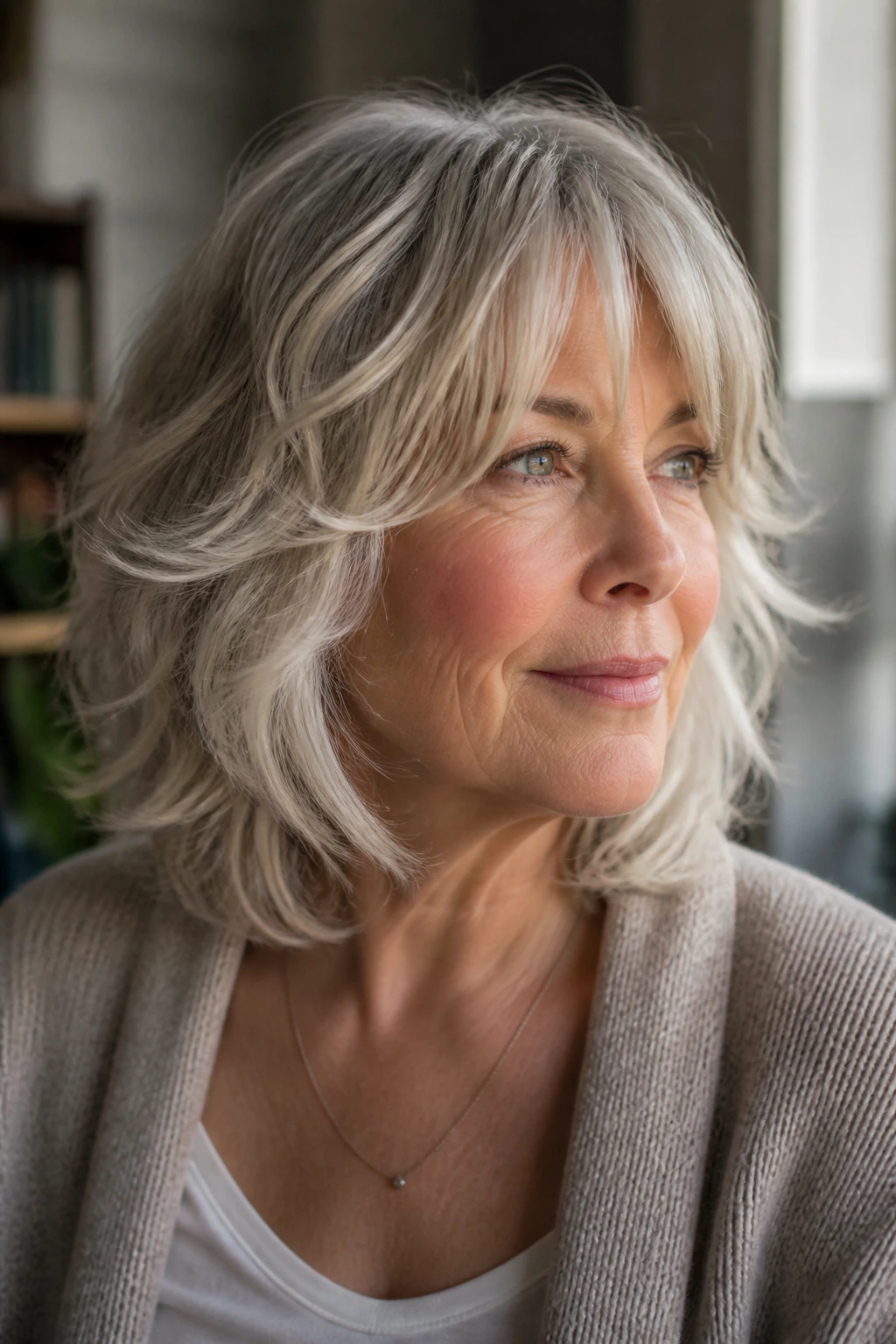
A good loose shag does not scream for attention. It shifts when you move, takes a little water and a little product without turning fussy, and keeps your face from disappearing behind one heavy wall of hair. That is the whole point. Soft layers, a useful fringe or side sweep, and enough shape to make the cut keep working after the salon blow-dry fades.
If you are bringing one of these looks to a stylist, bring a photo, a length limit, and one hard no. That usually gets you farther than a vague request ever will. Hair behaves better when the plan is clear.
And if the cut is done well, you will feel it the first time you run your fingers through it. The ends move. The crown lifts. The mirror stops looking like a compromise.
