



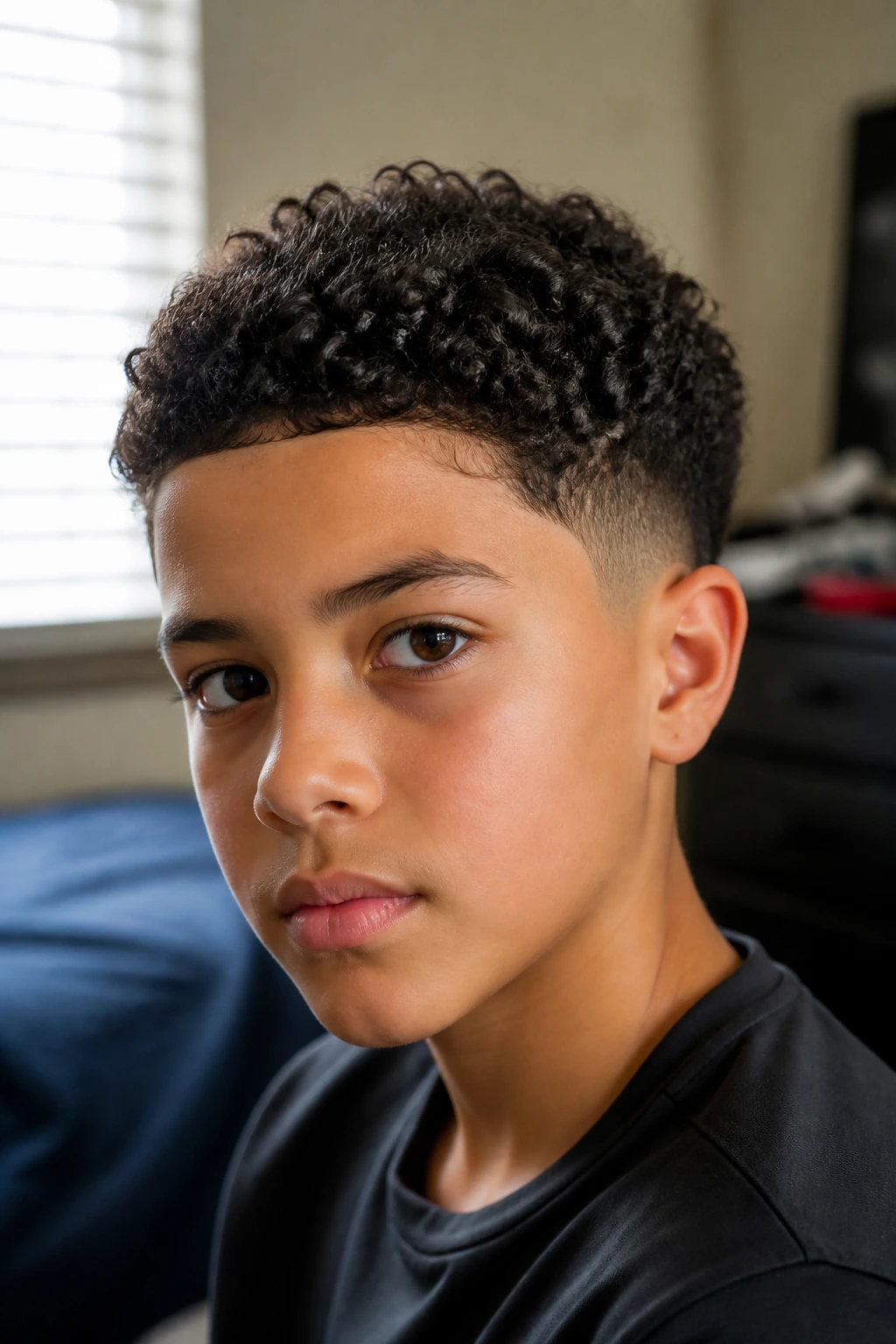
The best boys haircuts for short curly hair don’t try to flatten the curl pattern. They trim around it, leave enough weight where the curls need it, and clean up the edges so the shape survives the first wash.
That sounds simple. It isn’t.
Short curls have a funny habit of looking tidy in the barber chair and a little wild an hour later. The shrinkage changes everything. A top that seems almost too long can settle into the right height once it dries, while a fade taken too high can make the head look top-heavy and the curls look like they’re floating. The good cuts respect that math.
And that’s really the whole game here: shape, balance, and a little restraint. If you’ve ever watched a fresh cut turn into a puffed-up triangle by dinner, you already know why this matters. A good curly haircut should still look intentional after a school day, a nap in the car seat, and one rough towel dry.
Why These Cuts Work on Short Curly Hair
-
They leave room for shrinkage: Short curls often bounce up more than parents expect, so these cuts keep enough length on top to avoid that awkward too-short, too-wide look.
-
They clean the edges without choking the curls: A low taper or soft fade keeps the neckline, temples, and sideburns neat while the curls stay the main event.
-
They work with daily life: Most of these styles need a spray bottle, a little leave-in conditioner, and a fast finger shape—nothing fussy before school.
-
They fit different curl patterns: Loose waves, springy ringlets, and tight coils all need slightly different balance, and this collection includes cuts for all three.
-
They age well between appointments: The better short curly cuts don’t fall apart after a week; they soften, which is a good sign, not a bad one.
-
They can be clean or bold: Some boys want a school-safe taper. Others want a sharper fade or a more defined top. You can go either direction without fighting the hair.
1. Low Taper Curly Crop
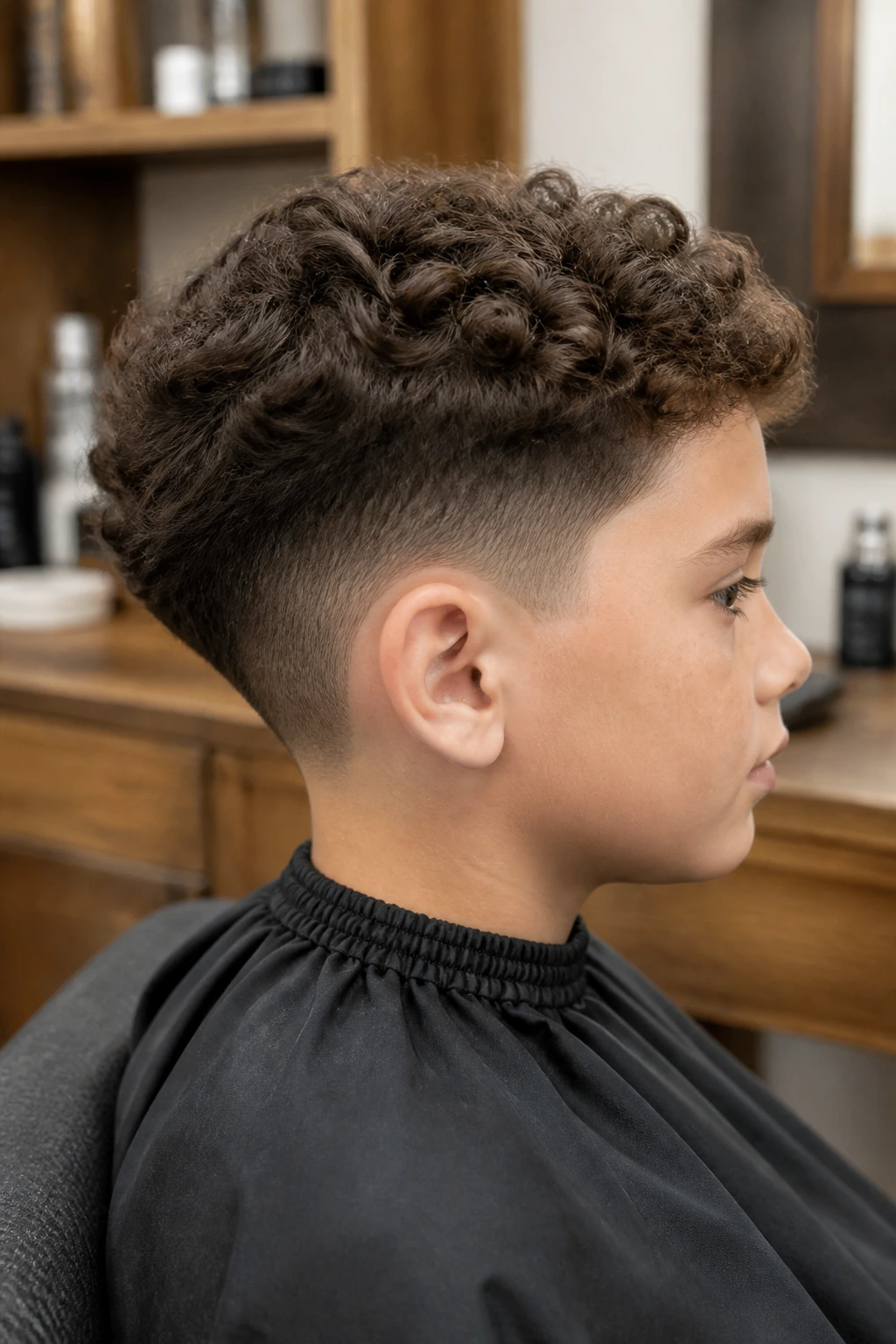
A low taper curly crop is one of those cuts that just makes sense the second you see it. The sides stay neat around the ears and nape, but the top keeps enough curl to look alive instead of clipped into submission. It’s a strong pick for short curly hair because it lets the texture stay visible without turning into a puffball by noon.
Ask for 1 to 2 inches on top and a low taper around the sideburns, ears, and neckline. I like this cut best when the barber follows the curl pattern while the hair is dry or only lightly damp. Wet curls lie. Dry curls tell the truth.
Why it works
The low taper keeps the edges tidy, which matters when curls want to spread outward. The top can be scissor-cut to keep a little uneven texture on purpose, and that texture helps the hair look fuller. If the curls are tight, a softer crop prevents the head from looking too boxy.
Quick styling note
A nickel-sized dab of curl cream is enough for most kids. Rub it between your palms, scrunch it through damp hair, and stop there. If you can still see product on the surface, you used too much.
Best for: school days, active kids, and parents who want a cut that doesn’t need a fight every morning.
2. Mid Fade with Sponge-Defined Curls
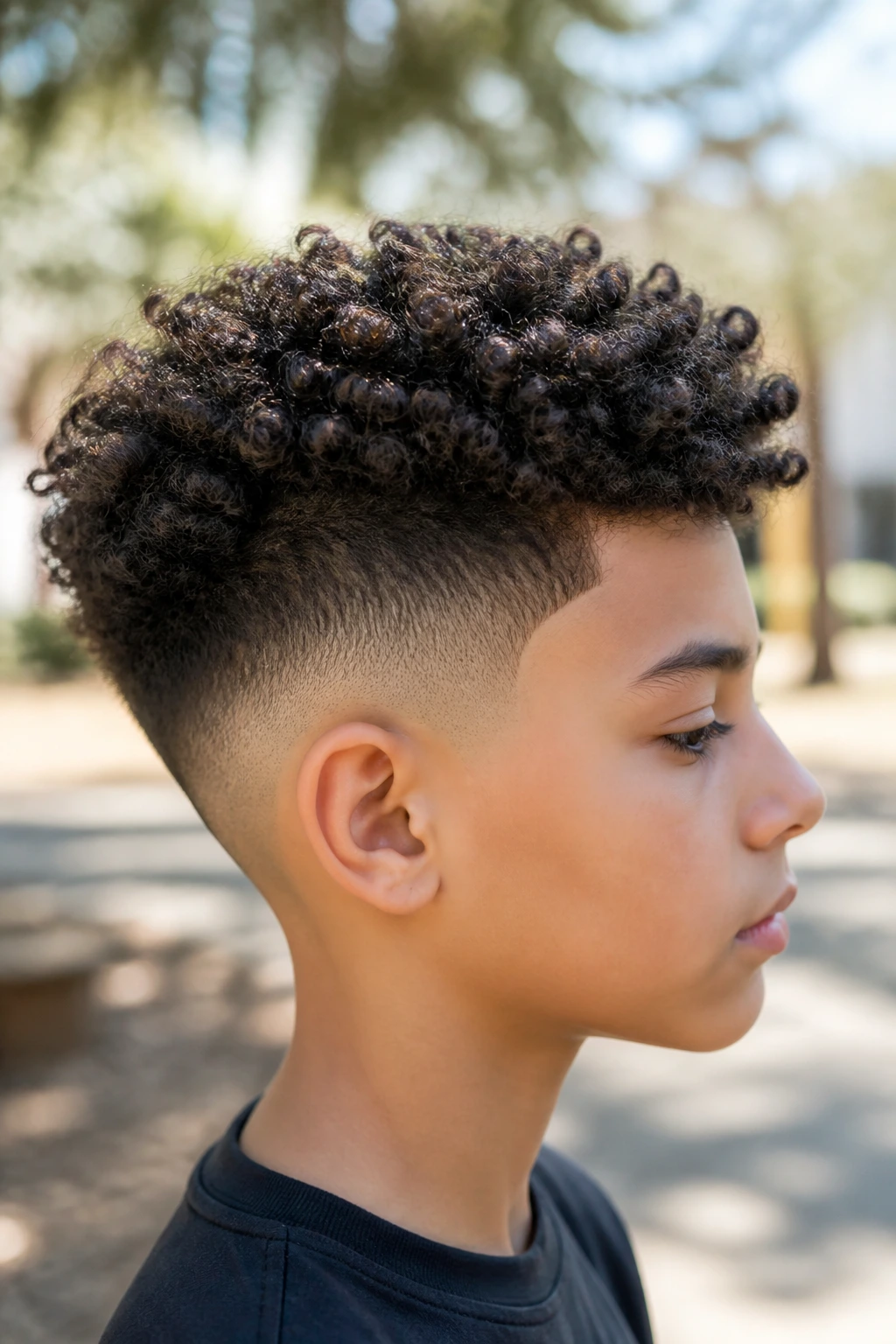
This one has more shape and a little more attitude. A mid fade creates a stronger contrast on the sides, while the curls on top stay textured and defined. If your child has tighter coils that clump well, this cut gives the curls a neat, rounded top without making the whole style feel too soft.
The key detail is the mid fade starting around the temples or slightly above, not up near the crown. Keep the top around 1.5 to 2.5 inches, depending on how much curl bounce you want. If the barber cuts the top too short, the sponge won’t have much to grab.
Why it works
A curl sponge works best on damp hair with a little leave-in or light curl lotion. Five to ten seconds of twisting is enough for short hair. Any longer and you start pulling the curls apart and building frizz instead of shape. That’s the trap with this look—people keep spinning the sponge because the first pass looks dull, then the curls puff out.
What to watch for
Use the sponge on hair that’s damp, not soaking. If water is dripping down the forehead, the curl product just slides around. Pat the hair with a microfiber towel first.
3. Textured French Crop
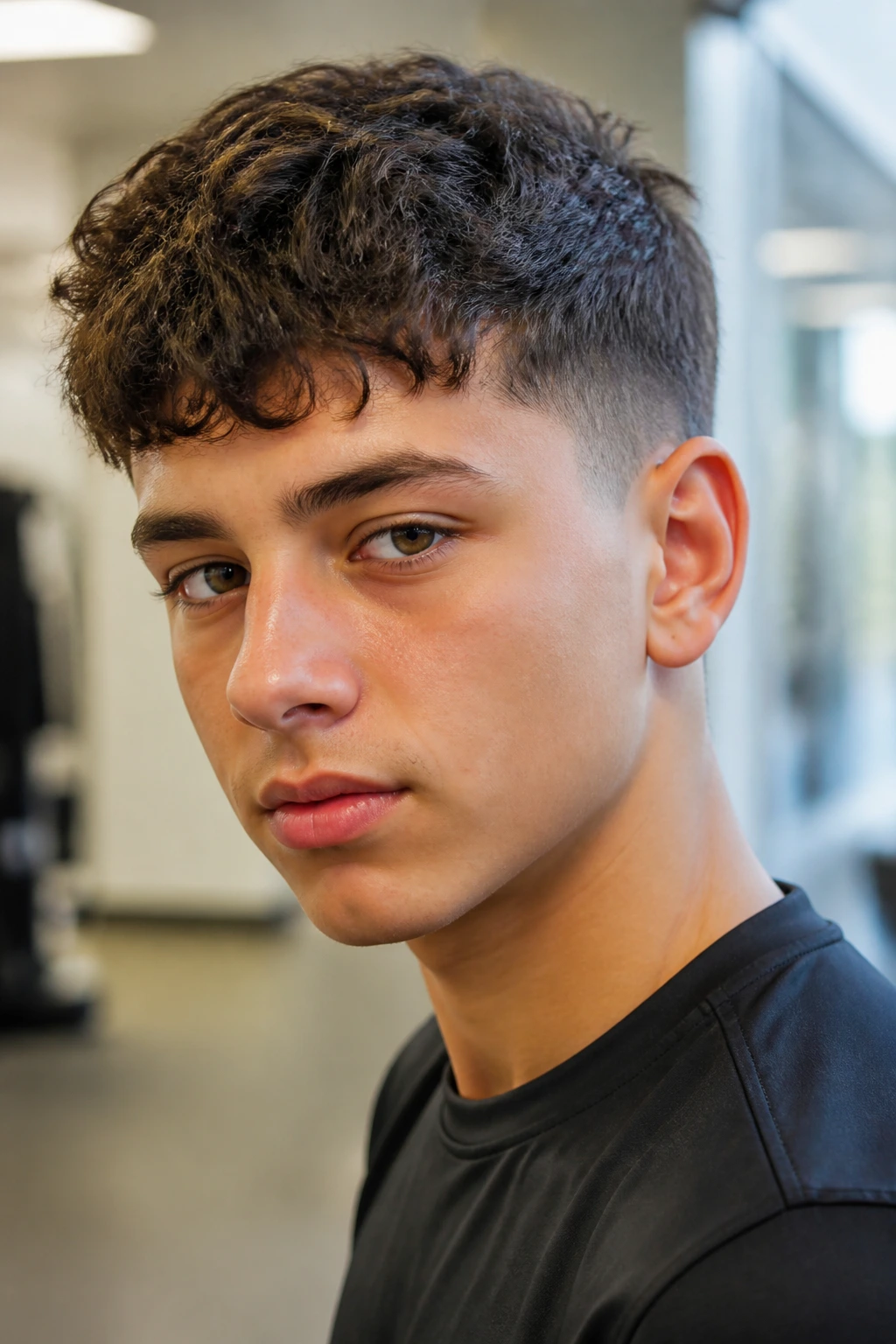
Need a cut that stays put even after recess, gym class, and a hoodie pulled over the head twice? The textured French crop is a sharp answer. The fringe sits forward, the sides stay short, and the top is cut with enough choppiness that the curls look deliberate instead of accidental.
A good version keeps the fringe at about the middle of the forehead or slightly shorter. The barber should leave enough texture in the top so the front can fall forward without lying flat like a helmet. If the child has a cowlick at the front, this cut can hide it better than most.
Why it works
The French crop turns short curls into a shape you can control. Instead of fighting the curl direction, it uses the forward bend as the style. That makes mornings easier, especially for kids who hate spending time on hair.
Small detail that matters
Don’t ask for a blunt, heavy fringe unless the hair is very dense. A slightly broken edge looks softer and grows out more cleanly. The blunt version can get boxy fast.
4. Temple Fade Curly Top
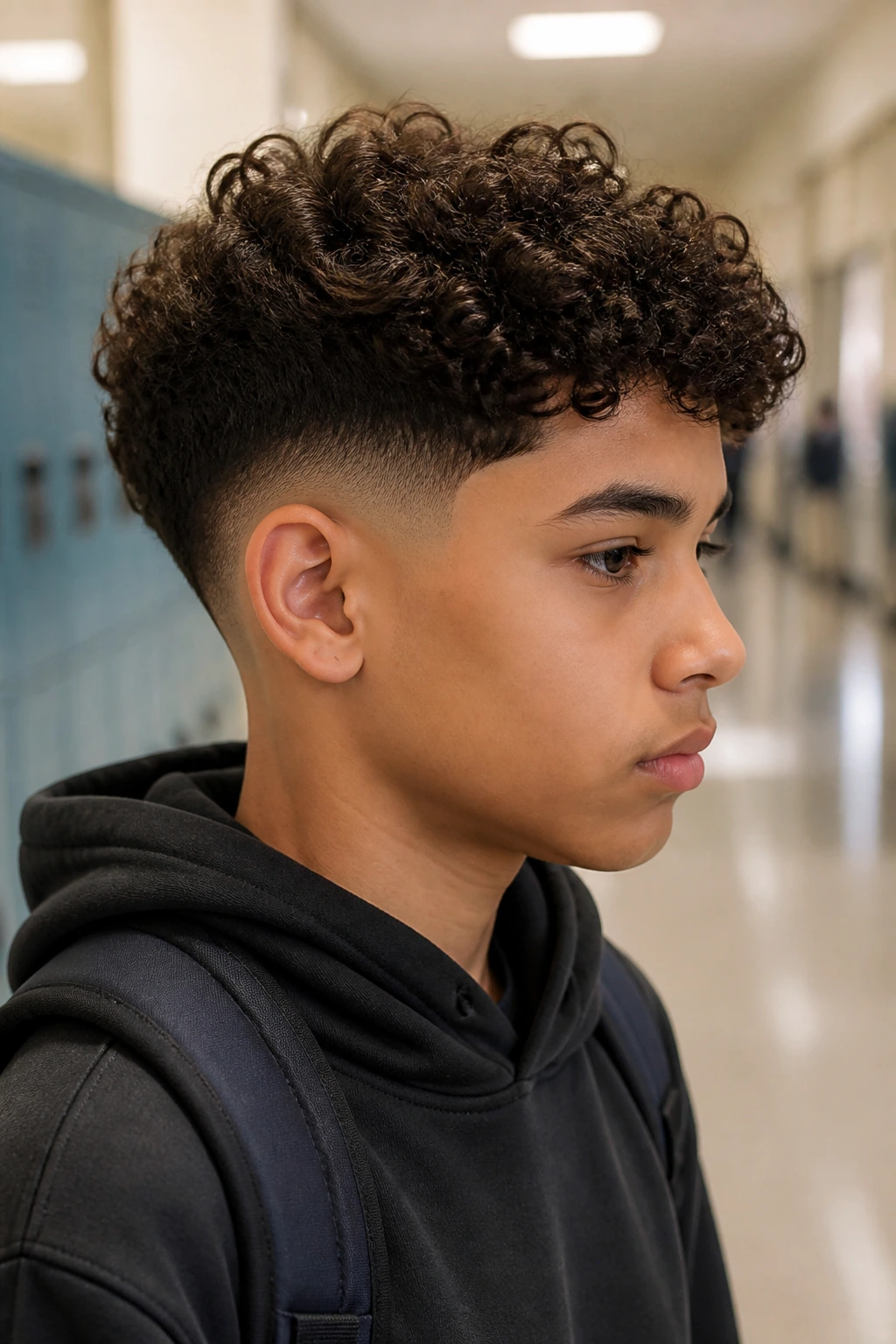
Temple fades are one of my favorite compromises. They sharpen the hairline near the temples and sideburns, but they don’t strip away all the side volume the way a high fade can. On short curly hair, that balance matters. Too much removal on the sides and the top starts shouting. A temple fade keeps things calm.
Leave the top at 2 to 3 inches if the curls are loose, or a touch less if they’re tight and springy. Tell the barber you want the fade to stay low and soft around the temples, not climb up the sides of the head.
Why it works
The temple area is where curly hair often looks fuzzy first. Cleaning that zone makes the haircut look fresh even when the top is a little messy. It’s a good style for boys whose curls have a nice shape on top but tend to bulk up near the ears.
Barber note
Ask for a soft line-up only if the hairline is naturally even. Pushing a hard line too far back can make the cut look harsh, and on short curls, harsh edges stand out fast.
5. Curly Crew Cut
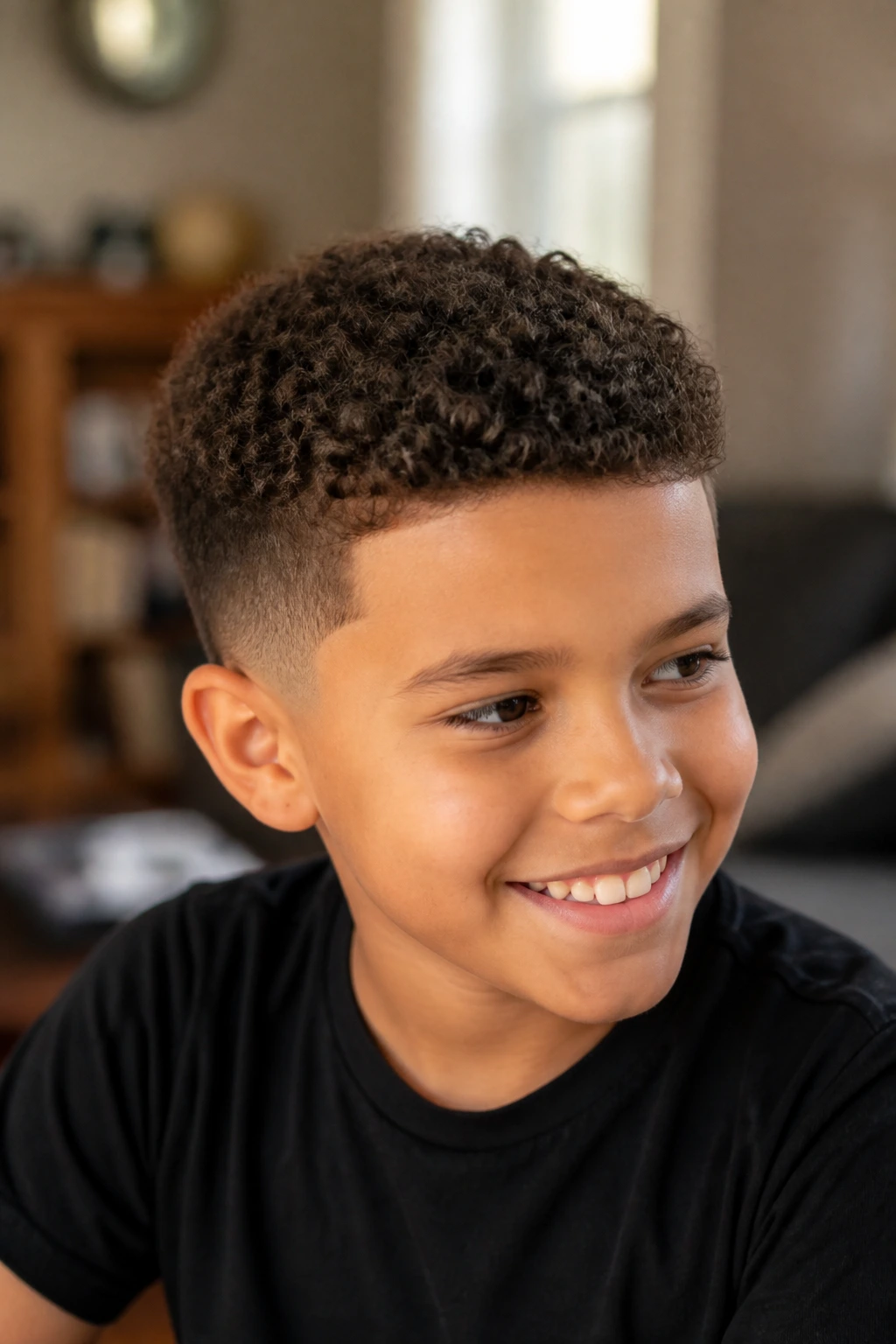
The curly crew cut is the low-drama choice, and I mean that as a compliment. It’s short enough to be easy, but not so short that the curls disappear. The shape stays neat, the top has texture, and the whole thing looks intentional with almost no styling.
For this cut, keep the top around 3/4 inch to 1¼ inches and the sides at a #1 or #2 guard, depending on how clean you want it. If the curls are dense, a slightly longer top keeps the head from looking shaved flat.
Why it works
A crew cut works because it gives curls a uniform length. That uniformity calms the bulk. It also grows out better than a buzz cut because the texture still gives the head some shape instead of one solid block.
Good for kids who hate product
If your child refuses creams, gels, and anything sticky, this is probably the easiest style on the list. A quick rinse, towel blot, and finger shake is often enough.
6. Short Curly Quiff
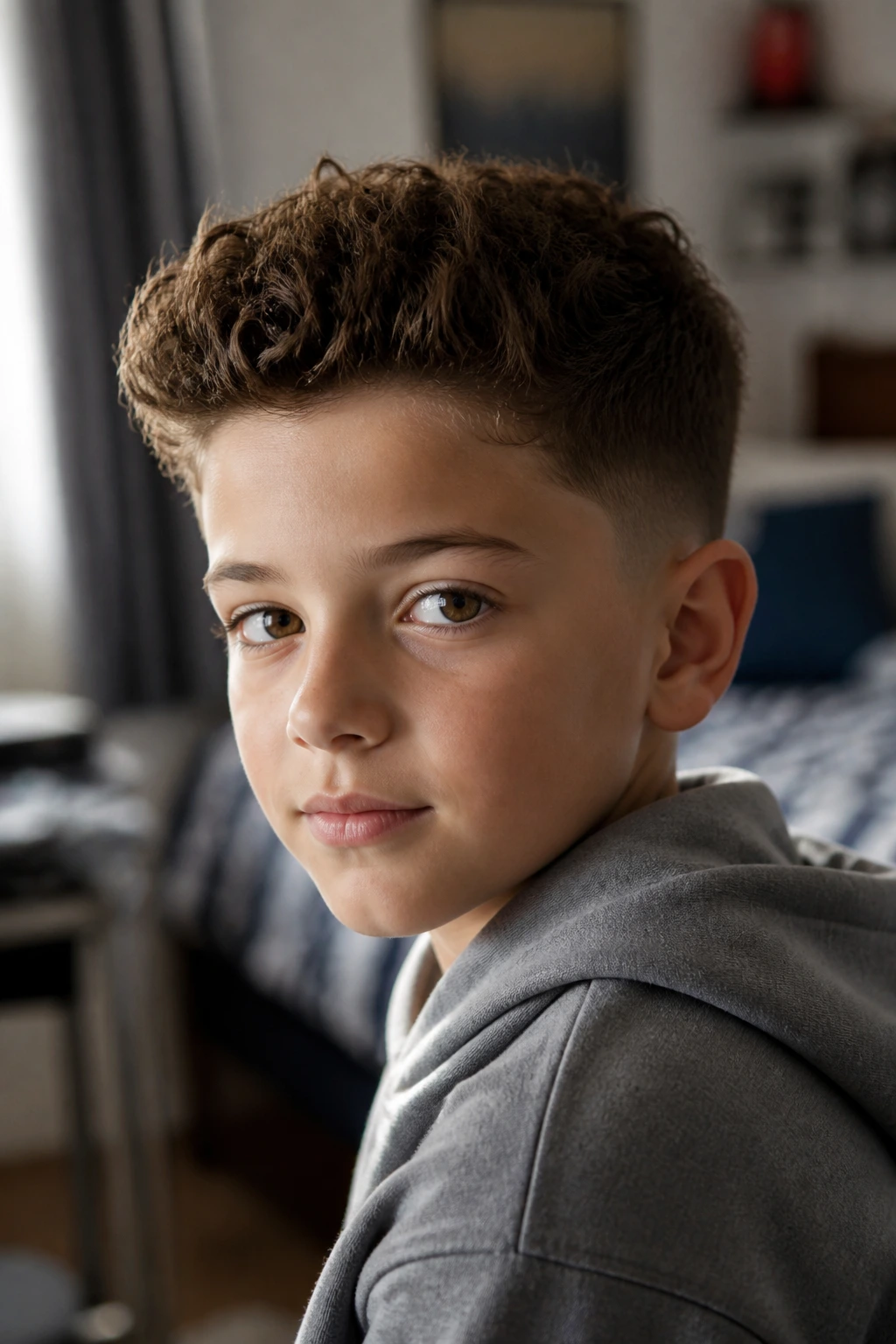
A short curly quiff has a little lift in front, which makes it feel more styled than a crop but less formal than a pomp. The front section is left long enough to push upward and back a bit, while the rest of the top stays shorter and textured. It’s a strong choice for boys who like a bit of height without a lot of maintenance.
Keep the front at 2.5 to 3 inches and the crown slightly shorter. That difference helps the front rise instead of collapsing. The sides should stay tapered, not disconnected, unless you want a bolder look.
Why it works
The quiff uses curl memory in a smart way. Instead of forcing the hair to lie down, you nudge it upward with a bit of mousse or light cream and let the curls hold their own shape. It looks best when the front is not too polished.
Styling tip
Use a diffuser for 2 to 4 minutes if the hair is very damp. Or skip heat entirely and finger-lift the front while it air-dries. Both work. Heavy pomade does not.
7. Buzz Cut with Soft Curl Texture
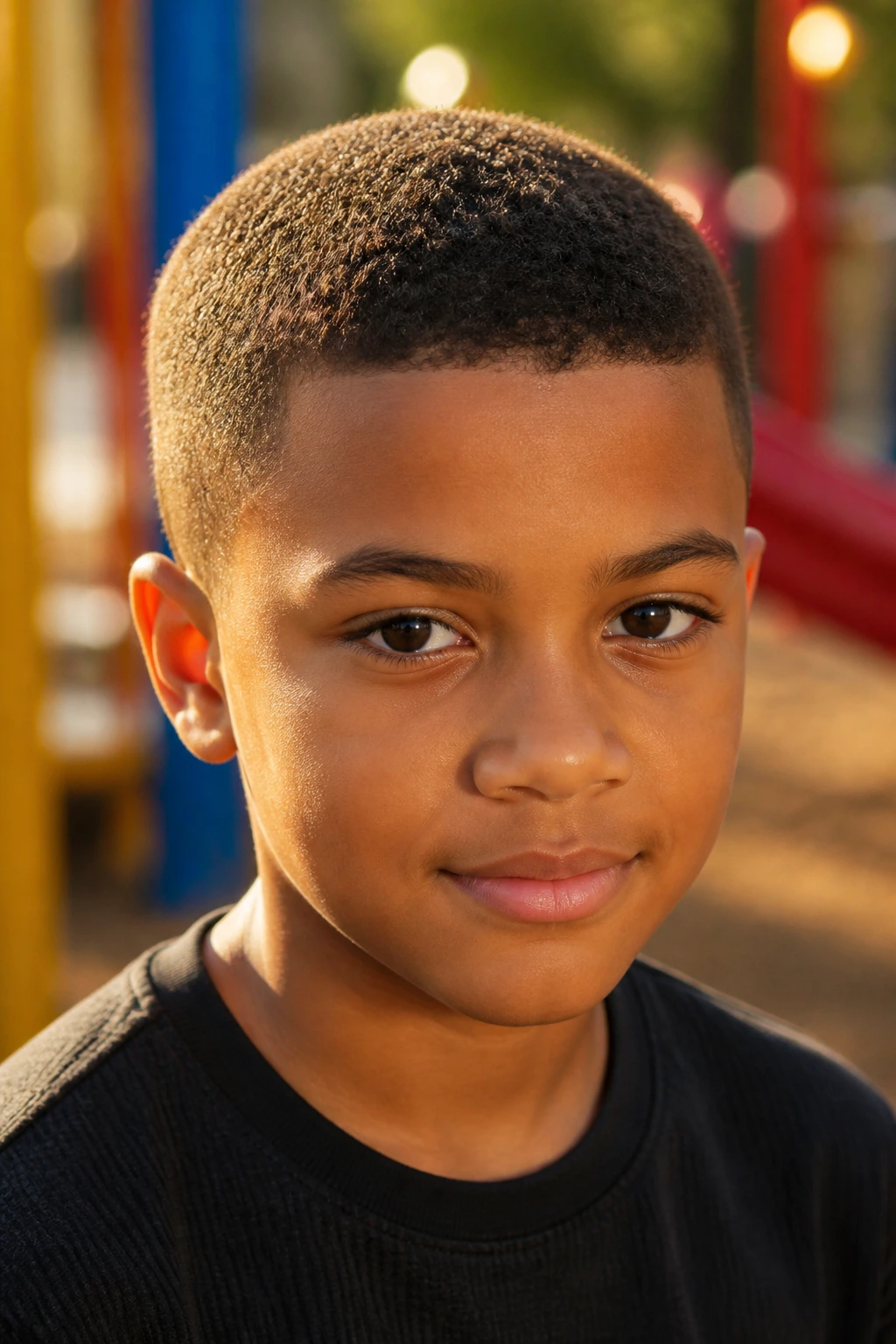
A buzz cut with soft curl texture is for the kid who wants hair out of the way and still wants a little character on top. It’s the shortest option here, but on curly hair it doesn’t always look flat. The texture still peeks through, especially if the hair is dense.
Ask for a #2 or #3 guard all over, or a touch shorter on the sides if you want a cleaner outline. The nice part is that this cut removes the daily styling problem almost completely.
Why it works
Uniform length keeps the curl pattern from ballooning at different points. The result is tidy, fast, and easy to maintain. It’s also one of the few cuts where a cowlick matters less because there’s not enough length for it to misbehave.
When it’s the right call
This cut is best during sports-heavy weeks, travel, or for kids who scratch at product and won’t sit still long enough to style anything. It won’t give you much shape drama, but it earns its keep by being simple.
8. Curly Caesar Cut
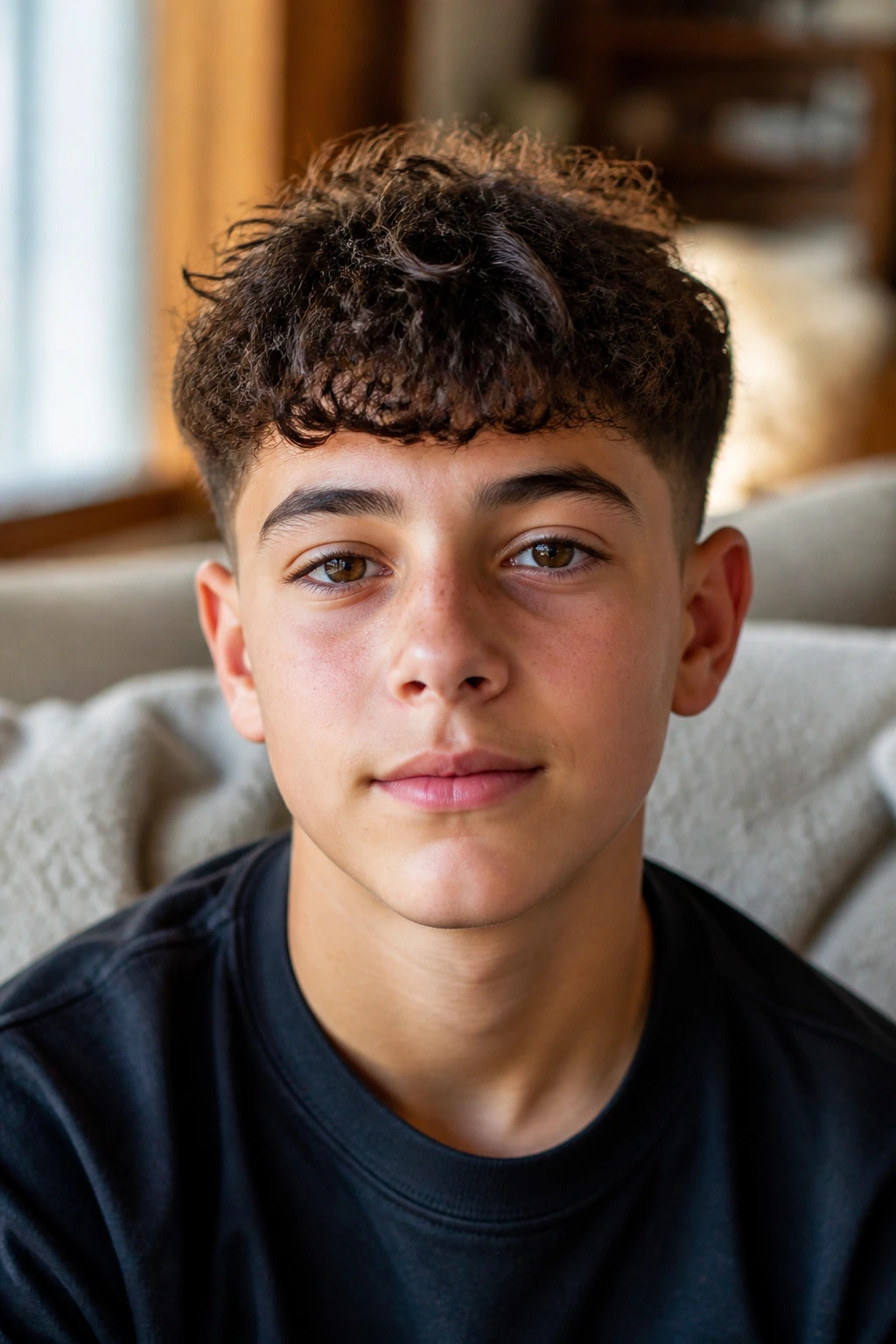
The curly Caesar cut brings the front fringe forward in a short, straight-across line, but the curls keep it from looking severe. That little bit of texture softens the whole cut. On boys with a higher forehead or a front cowlick, the Caesar can be a smart, clean fix.
Keep the fringe short and slightly choppy, not heavy. The top usually sits around 1 to 1.5 inches, with the sides faded or tapered low. If the curls are loose, the fringe can sit a little flatter; tighter curls need a touch more length.
Why it works
A Caesar cut hides uneven growth patterns well. It also frames the face without asking for a long styling session. The straight fringe line gives structure, and the curl texture keeps it from looking too severe.
A small warning
If the barber cuts the fringe too blunt and the curls are loose, the front can look like a shelf. A bit of point cutting makes the edge softer and easier to live with.
9. Mini Afro Taper
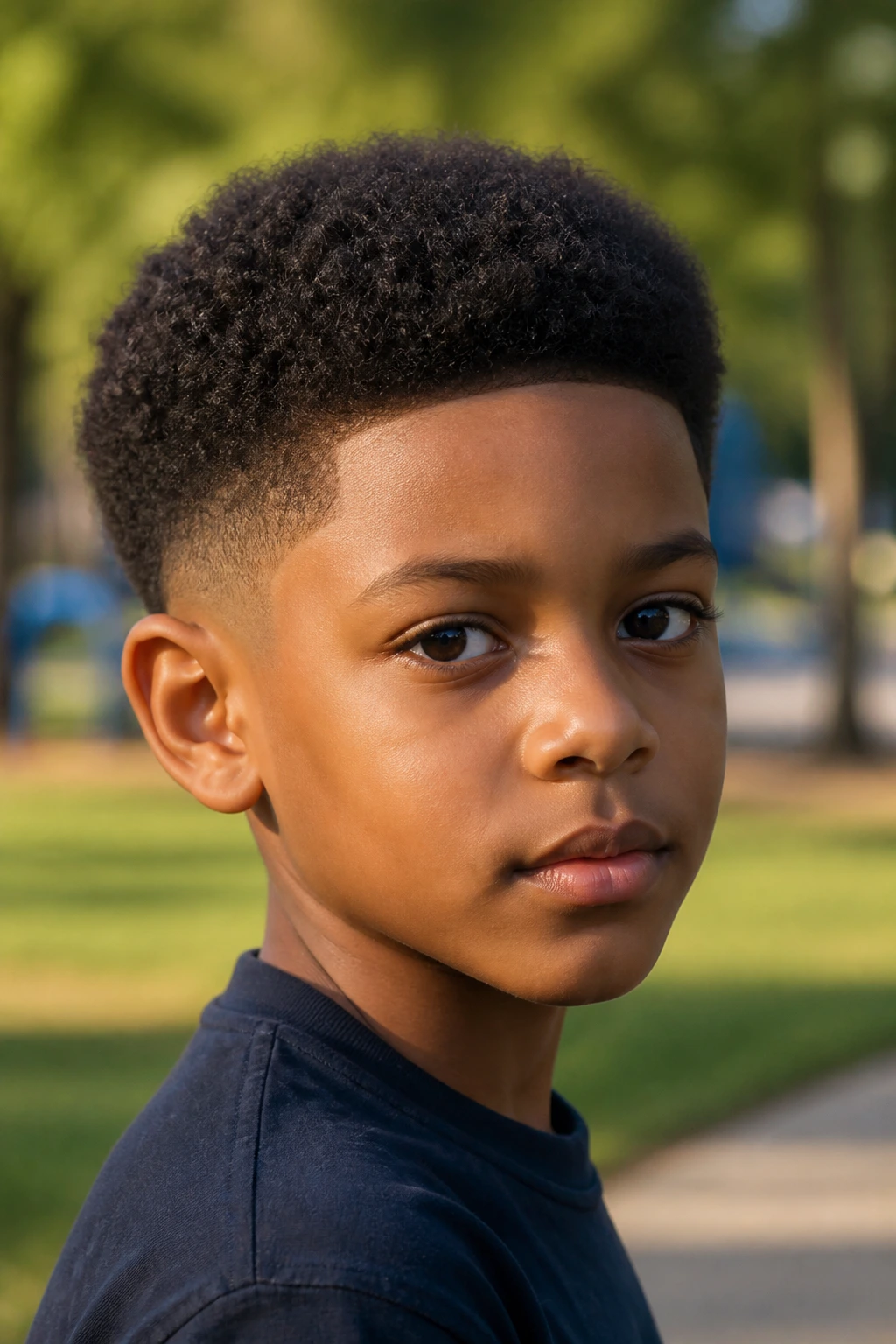
A mini afro taper is one of the cleanest ways to wear short coily hair without flattening it. The top keeps a rounded, natural shape, and the taper clears out the edges at the neckline and temples. It looks balanced, which matters more than people think.
Ask for the top to stay about 1.5 to 2.5 inches, depending on curl density, and tell the barber you want the perimeter shaped into a soft round rather than a sharp box. A gentle taper on the sides keeps the silhouette controlled.
Why it works
This cut respects natural growth. Instead of shaving the sides so tight that the top looks like a cap, it keeps the whole head in proportion. The rounded shape works especially well when the curls are springy and dense enough to hold volume.
Best detail for maintenance
The neckline will need cleanup every couple of weeks if you want the shape to stay crisp. A mini afro can look amazing with only a little maintenance, but the outline has to stay clean.
10. Drop Fade with Curly Top
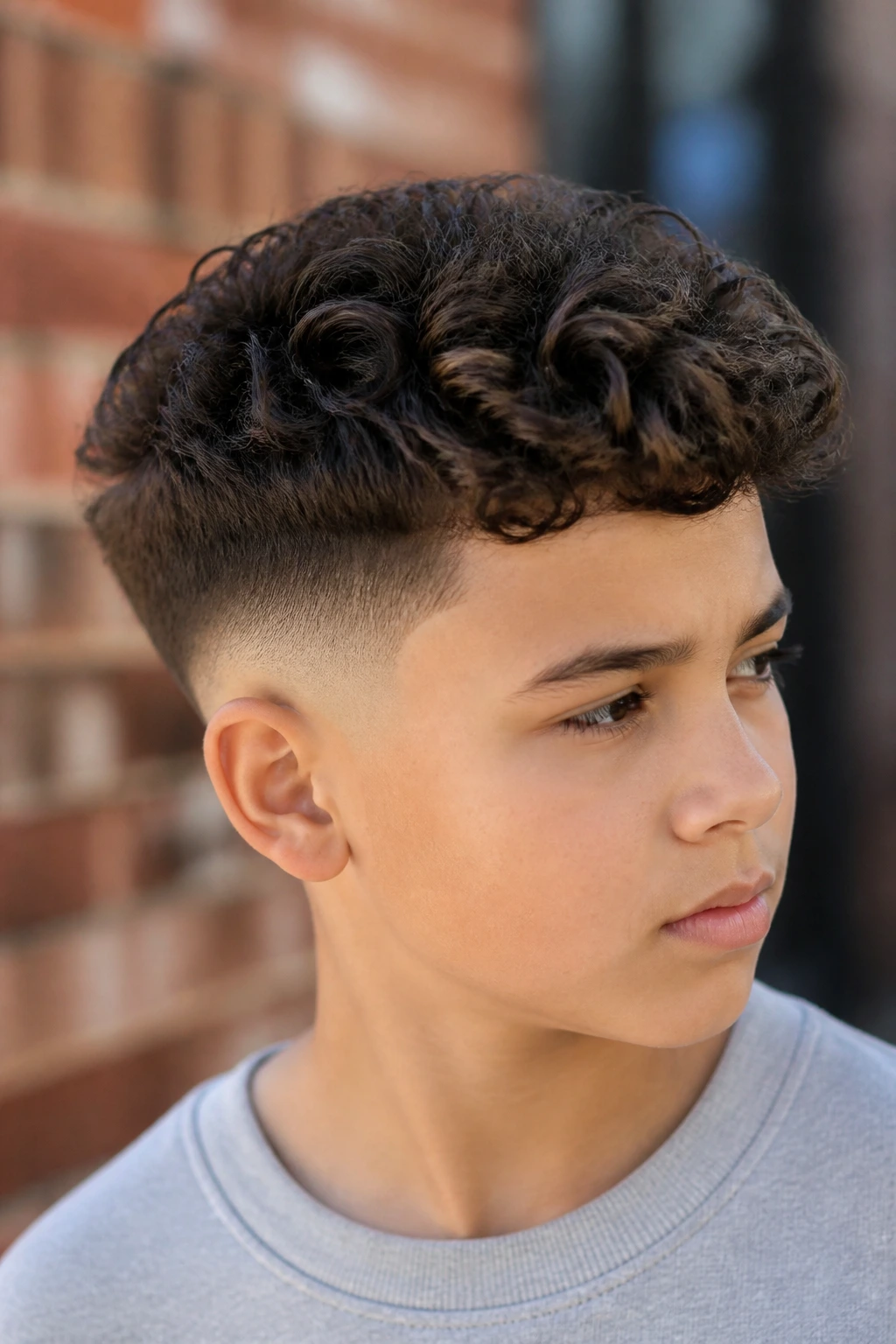
A drop fade starts higher at the temples and drops lower behind the ear, which gives the haircut a curved, tailored look. On short curly hair, that shape can be really useful because it follows the head instead of chopping it into a block. The top stays the focus.
Leave the top at 2 to 3 inches and keep the fade smooth. If the curls are thick, the drop gives the back and sides a little breathing room without cutting everything down to the skin.
Why it works
The drop fade creates a nice visual line that makes the curls on top stand out. It also gives the head a bit more shape from the side view, which is often where curly cuts either look sharp or fall apart.
Good for active kids
This is a strong choice if the child wants something neat but not plain. It looks clean in photos and still holds up when the hair gets a little mussed.
11. Curly Fringe
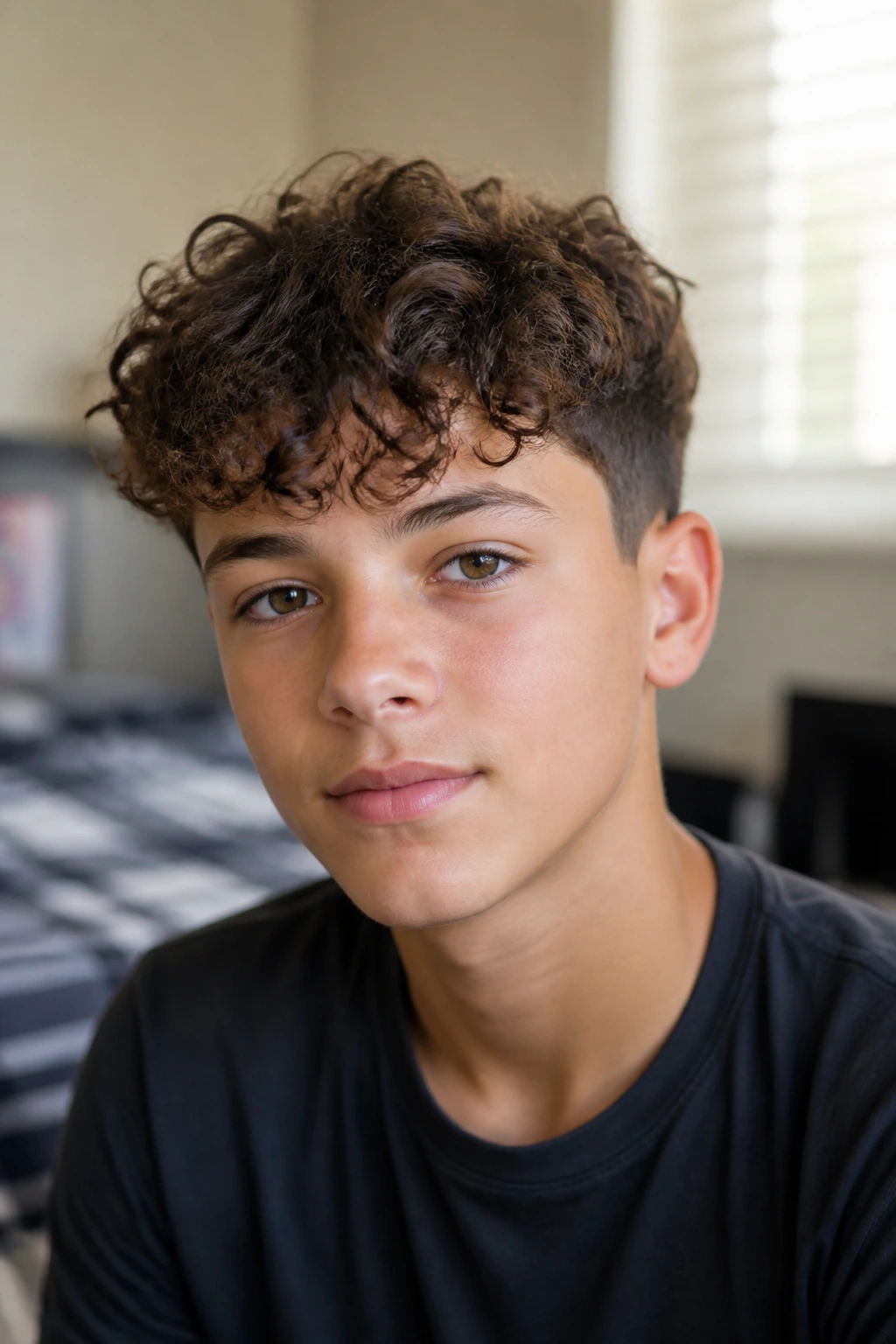
A curly fringe brings the front curls forward and lets them fall naturally across the forehead. It’s softer than a Caesar and less structured than a crop. That makes it a good option for boys who want their curls to look relaxed but not messy.
Keep the fringe long enough to bend forward—usually 2 to 3 inches—and trim the sides short enough to keep the shape from spreading. The front should be textured, not thick and heavy.
Why it works
The fringe draws attention to the eyes and breaks up a long forehead. It also lets short curls do what they already want to do: curve forward and sit in little loops. The haircut feels easy because it’s not forcing the hair into a shape it doesn’t want.
Styling note
A mist bottle and a quick finger rake are usually enough. Push the front forward, separate the curls a little, and stop messing with it. The more you comb it, the flatter it gets.
12. Burst Fade Mohawk
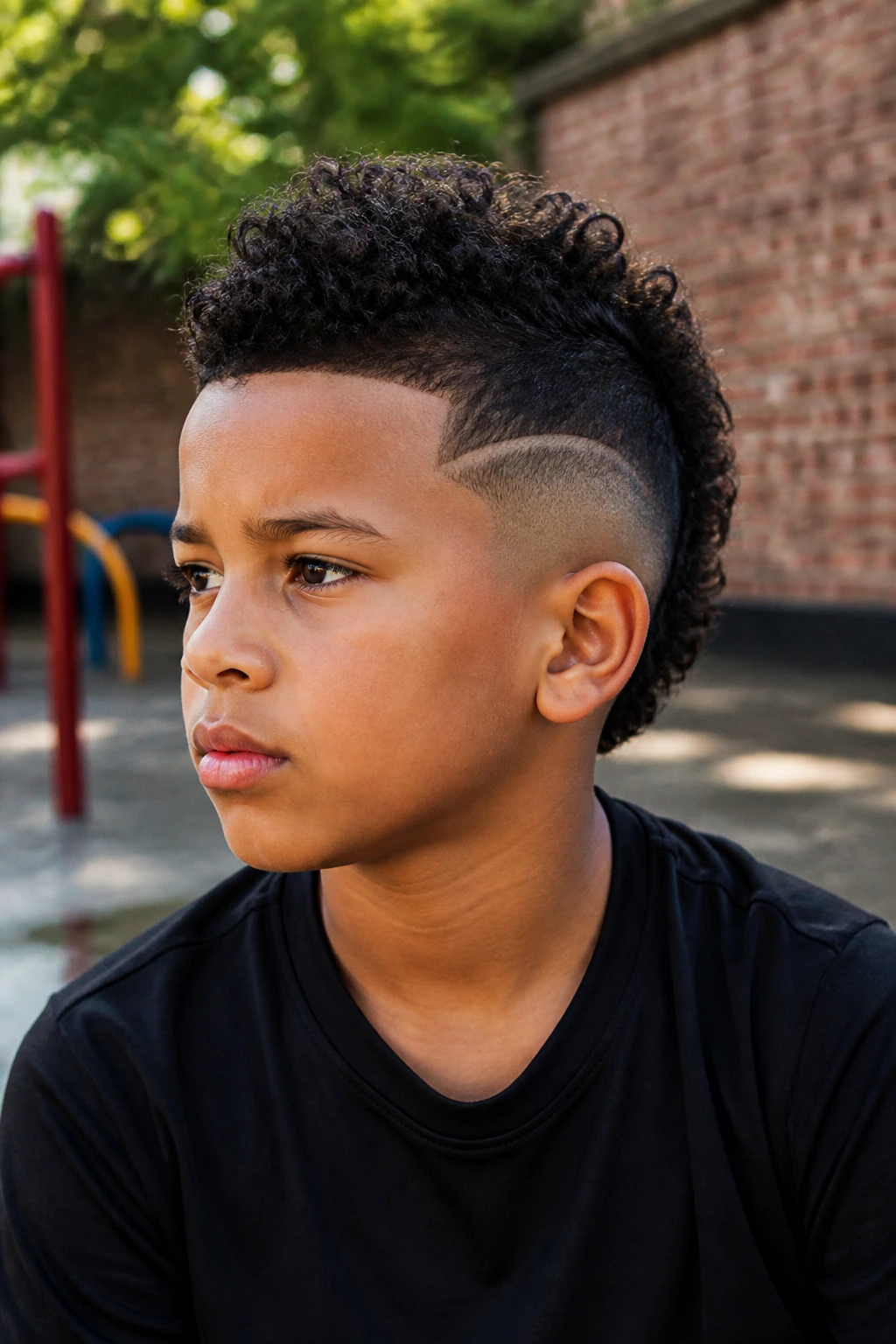
The burst fade mohawk has more edge, but it can still be school-friendly if the strip of curls stays modest. The fade curves around the ear, while the center section stays longer and more dramatic. It’s a fun option for boys with thicker curls who want something that doesn’t look like everybody else’s cut.
Keep the center strip at 2 to 3.5 inches and let the sides taper into the burst. If the strip gets too tall, the haircut starts to look costume-like. A low, rounded mohawk shape usually looks better on kids.
Why it works
Curly hair makes a mohawk look fuller without needing a ton of extra product. The burst fade gives the style a clean frame, and the center ridge keeps the attention where it belongs.
When to avoid it
If the child doesn’t like regular maintenance, skip this one. The edges and the ridge need touch-ups if you want it to keep its shape. Letting it grow out too long can make the style look lopsided fast.
13. Curly Ivy League
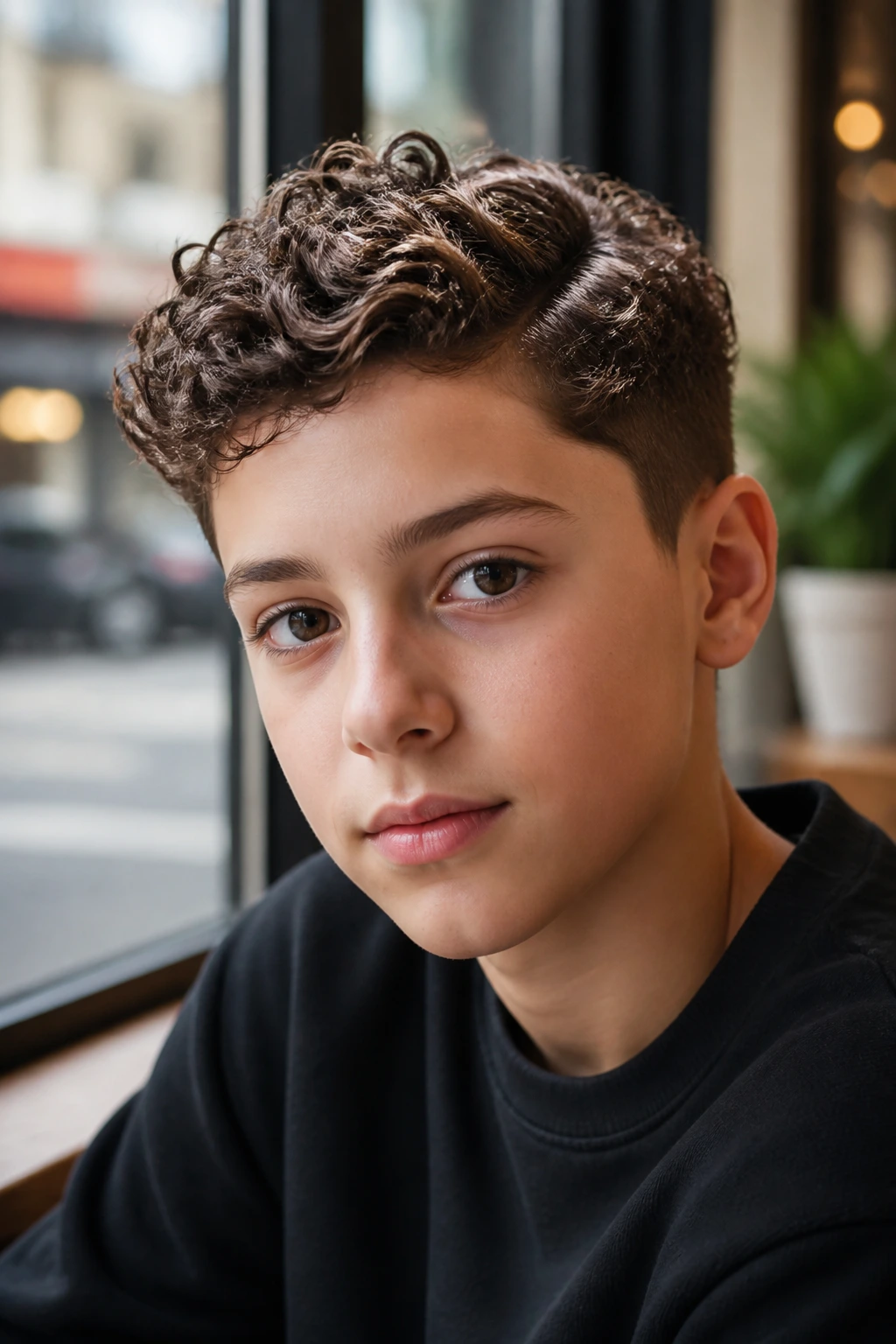
The curly Ivy League is the polished answer for boys who need a neater haircut but still have enough texture to make a side part interesting. It’s a classic shape with a curly twist: longer on top, tapered on the sides, and styled with a gentle side sweep rather than a hard comb-over.
Keep the top around 1.5 to 2.5 inches and let the barber create a soft part at the natural separation point. Don’t force the part where the hair doesn’t want to go. That’s how you get fighting at the crown.
Why it works
The Ivy League gives curls structure without flattening them. It’s tidy enough for family photos, school events, and anyone who likes a cleaner silhouette. The curls add texture so it doesn’t feel stiff.
Best use case
If you want something that sits between a side part and a crop, this is a very good middle ground. It grows out gracefully too, which is a nice bonus when appointment timing slips.
14. Rounded Scissor Cut
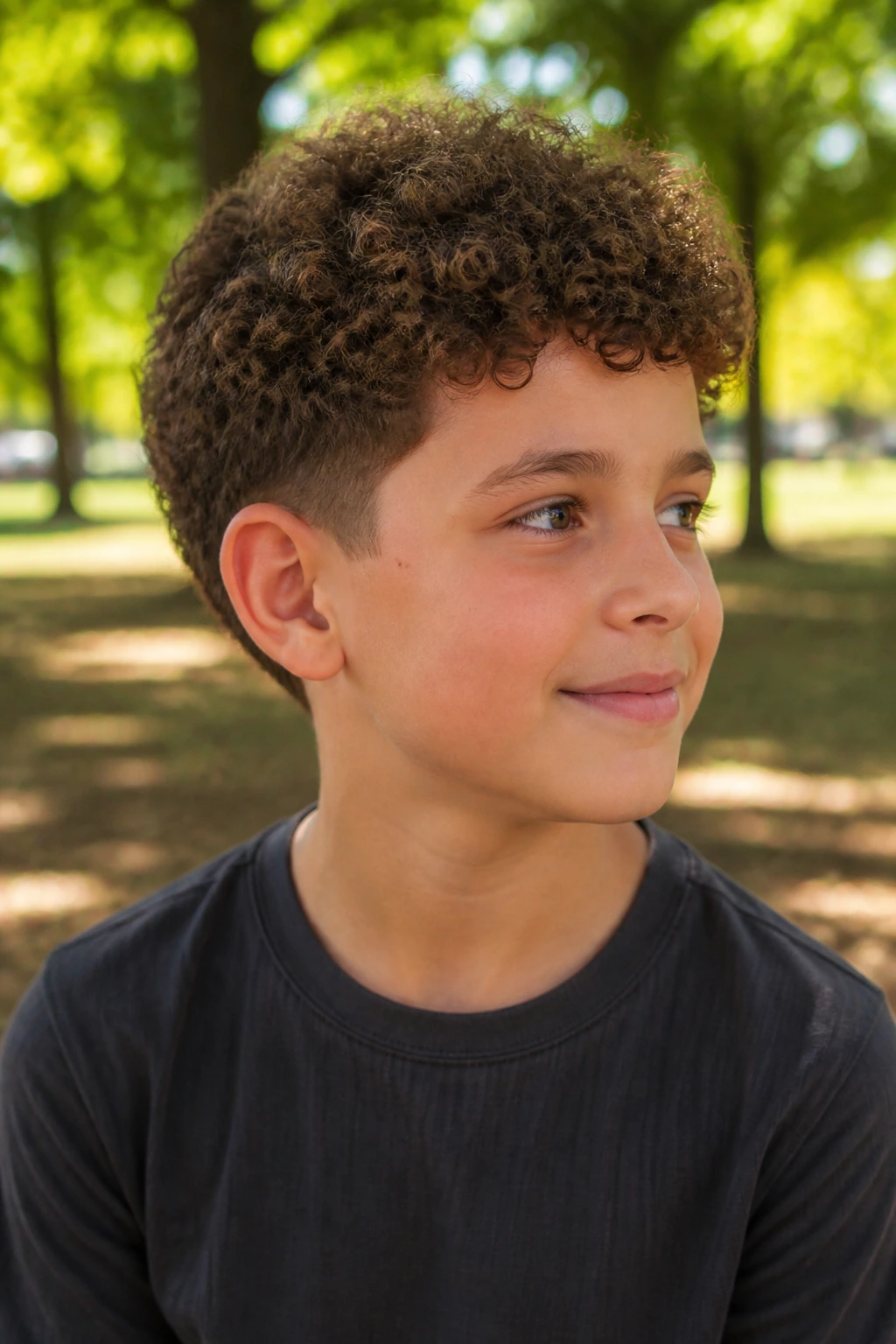
A rounded scissor cut is old-school in the best way. No harsh fade. No obvious disconnect. Just a clean, shaped outline that follows the head and lets the curls sit naturally. On short curly hair, that softness can be a relief.
Ask the barber for a scissor cut on top and sides, with light tapering around the ears and neckline. The goal is a rounded silhouette, not a squared-off helmet. That distinction matters more than parents expect.
Why it works
Scissors let the barber remove bulk in a more controlled way. That’s useful when curls have different densities across the head. The finished cut looks like the hair belongs to the kid, not like it was forced into a clipper pattern.
Who this fits
This cut is good for boys with sensitive scalps, parents who dislike very short fades, and kids whose curls look best when they’re left a little soft around the edges.
15. Short Curly Shag
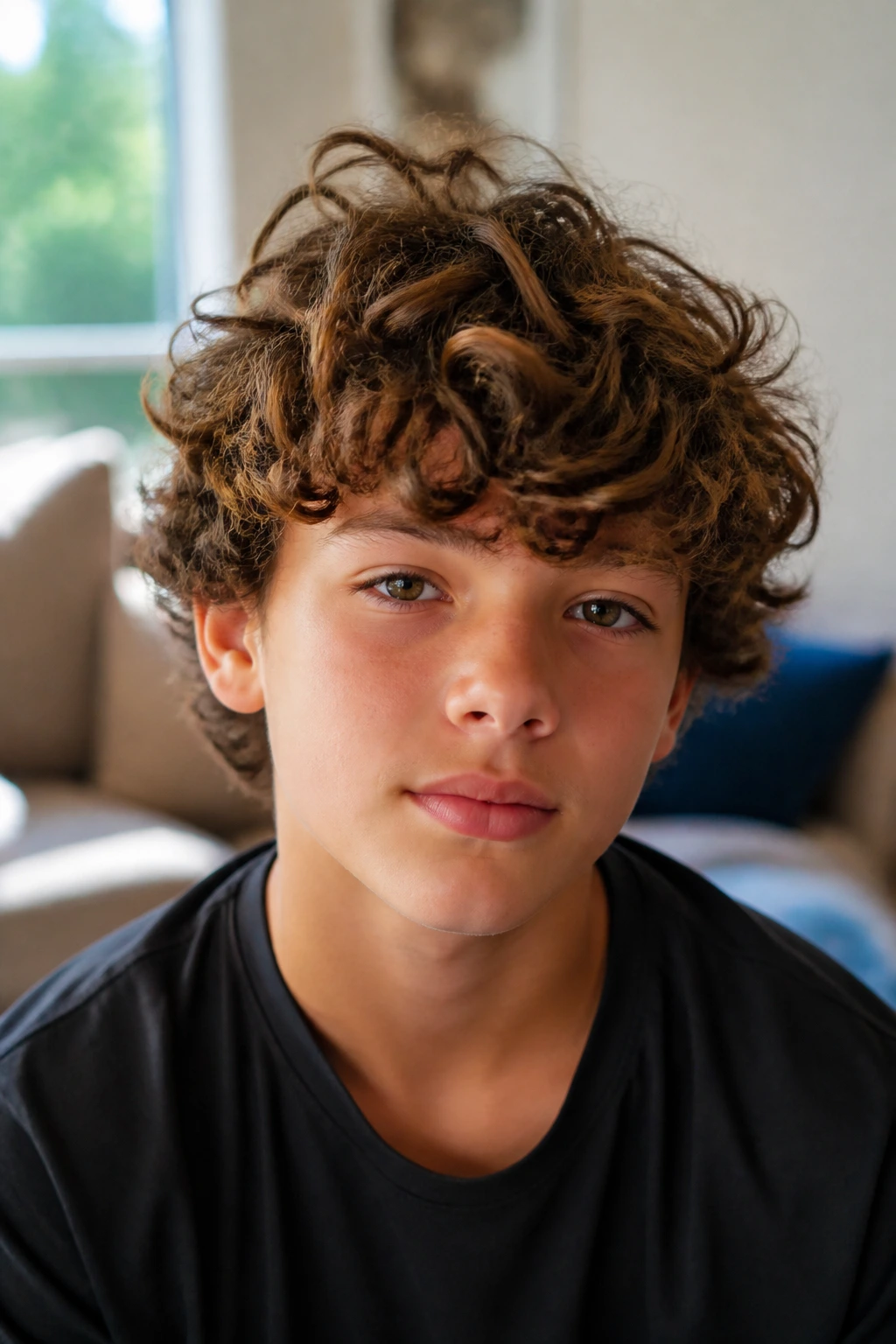
The short curly shag is a little unruly, but in a good way. It uses layers to give the curls movement across the crown and fringe, which keeps the style from looking flat or chopped. If the hair has loose curls or wavy bends, this cut can be one of the nicest-looking options.
Leave some length at the front and crown, then add shorter support layers around the sides. The point is to remove bulk without making the head look round and heavy.
Why it works
The shag makes the curls work as a group instead of as separate pieces. That gives the style a more lived-in shape. It’s especially helpful when the hair has a few different curl patterns mixed together, which happens a lot.
Styling note
A light mousse or curl cream keeps the shape soft. Don’t overload it. The shag looks better when the curls can move a little.
16. Curly Undercut
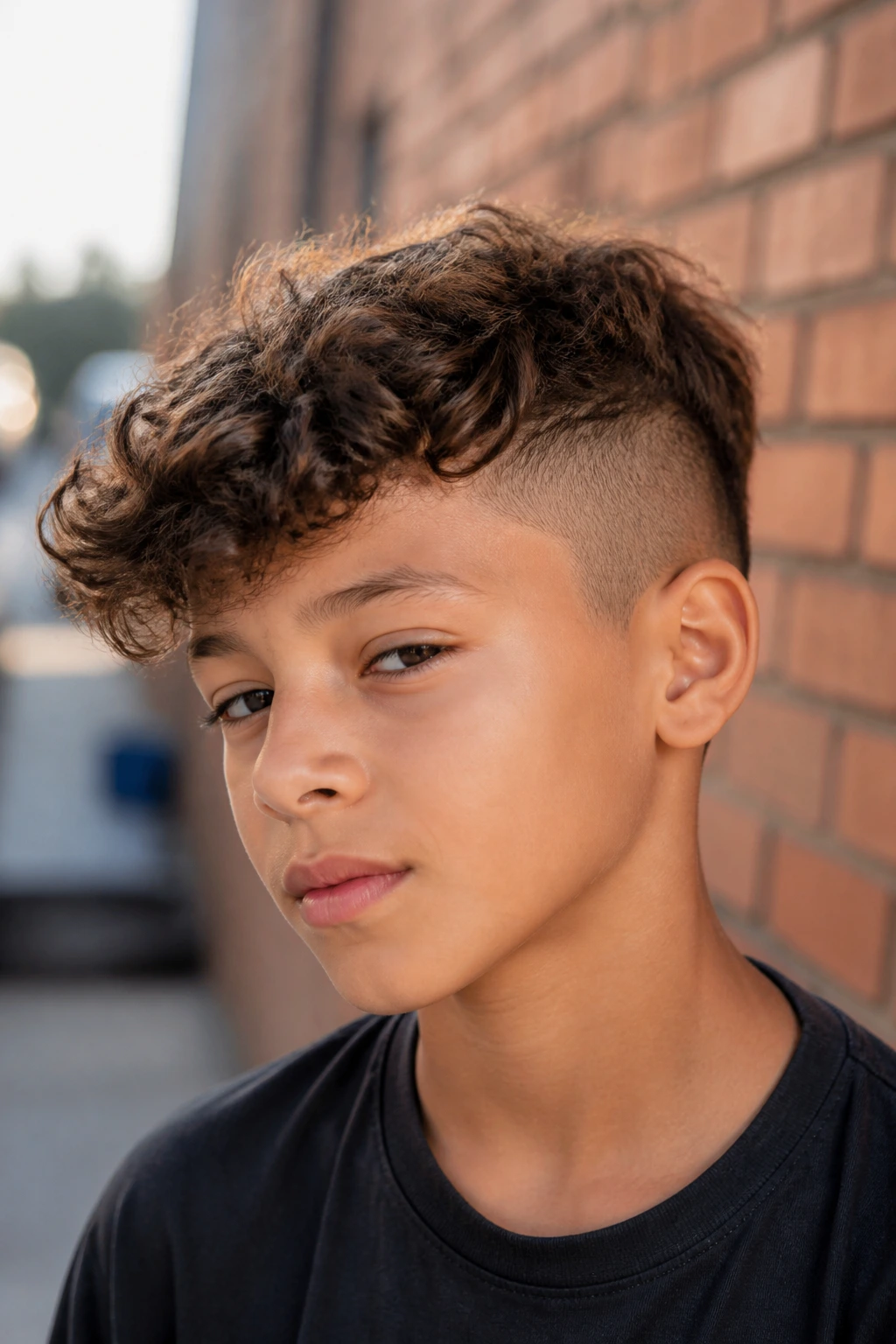
The curly undercut is the bold contrast cut in the group. The sides get taken much shorter, while the top stays noticeably longer. That disconnect creates a strong shape, which can look great on short curls if the top has enough length to show texture.
The top usually needs 2 to 4 inches here, depending on curl density. Anything less and the undercut loses its point. If the child likes a dramatic look, this one delivers without needing a lot of daily fuss.
Why it works
The undercut makes the curls look fuller because all the attention stays on the top. It also gives a cleaner outline around the ears and neckline. The downside is obvious: it grows out quickly and needs more upkeep than a taper.
Good for older boys
This cut tends to suit kids who actually want a more styled look and are willing to sit still for it. If the hair is very fine, the contrast can look too stark. Dense curls handle it better.
17. Flat Top with Tapered Sides
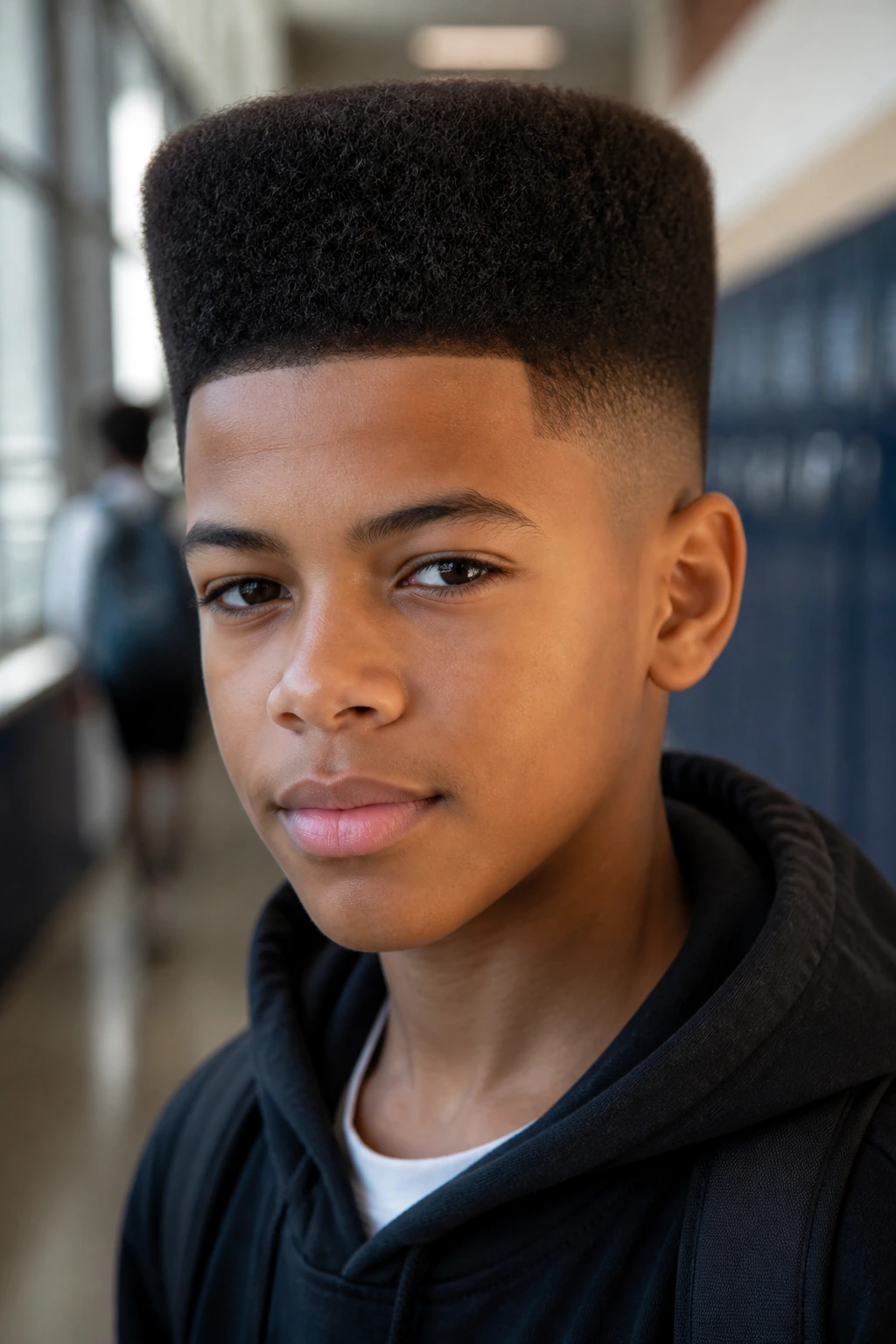
A flat top with tapered sides sounds old-school because it is, and it still works when the hair is dense enough to hold shape. On short curly hair, the trick is to keep the top flat but not stiff. The sides taper down enough to show the outline, while the top gets shaped into a clean plane.
This cut needs more structure than most of the others. The barber should trim the top carefully and check it from the front and side, not just from above. That’s how you keep the shape even.
Why it works
Dense curls can create a strong top line without much product. The flat top turns that density into a feature. If the hair is too loose or too fine, though, the style won’t sit right. It will wobble.
A practical note
This is one of those cuts that looks best with regular reshaping. It doesn’t have to be every week, but if you wait too long, the plane loses its crisp edge.
18. Side-Swept Curly Crop
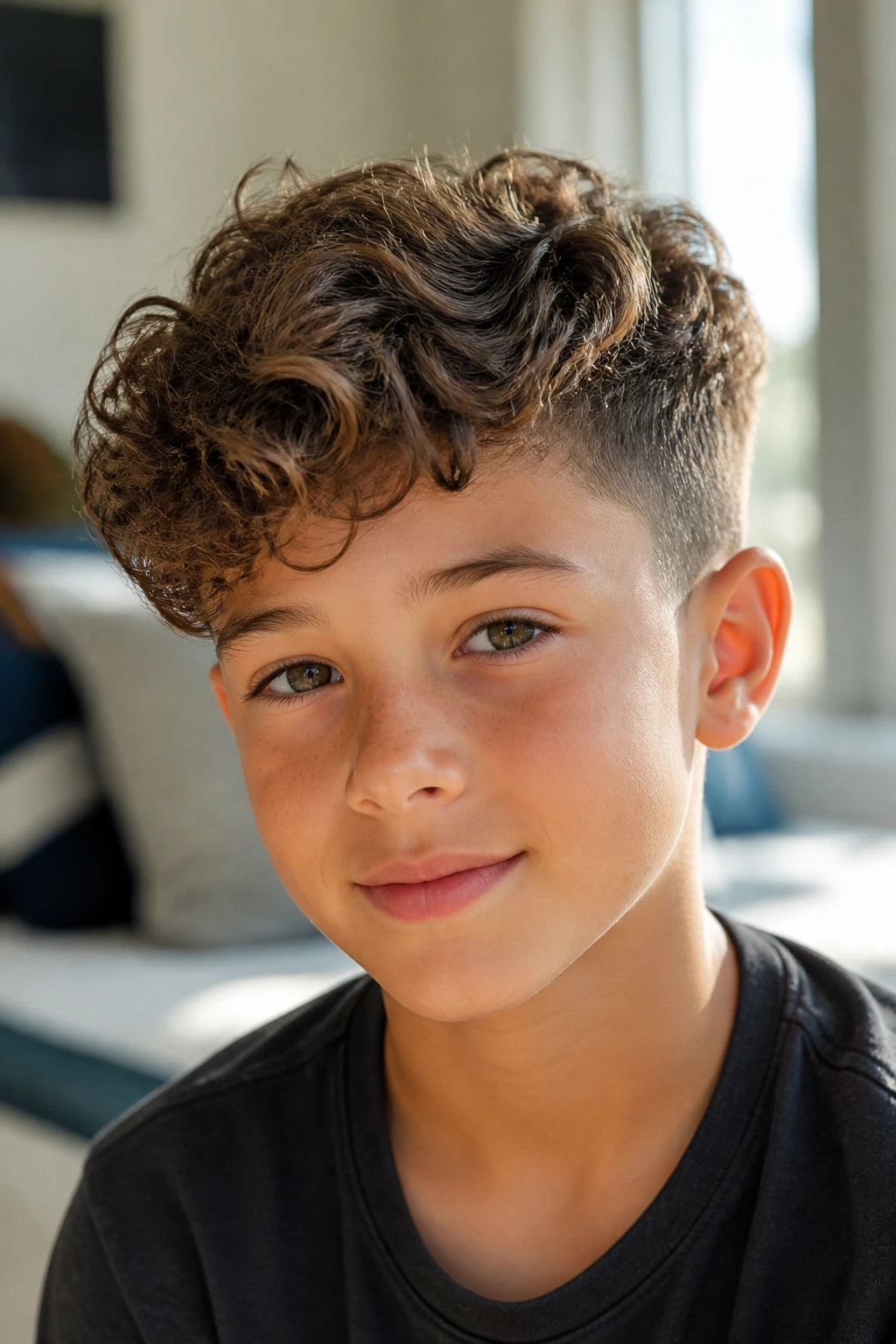
The side-swept curly crop gives you the neatness of a crop with a little more softness. Instead of pushing the fringe straight forward, the top is directed slightly to one side. That makes it useful for kids with a natural side bend or a stubborn cowlick that doesn’t want to go flat.
Keep the top around 2 inches, with the front long enough to sweep. The sides should stay short and blended so the top remains the focal point.
Why it works
A side sweep helps curls settle where they want to go. That means less fighting in the mirror and fewer mornings where one side sticks straight up for no reason. The shape feels tidy without looking strict.
Styling tip
Use fingers, not a comb. A comb often separates curls too much and creates a puffy top layer. Fingers give you a softer sweep.
19. High Top Fade for Tight Curls
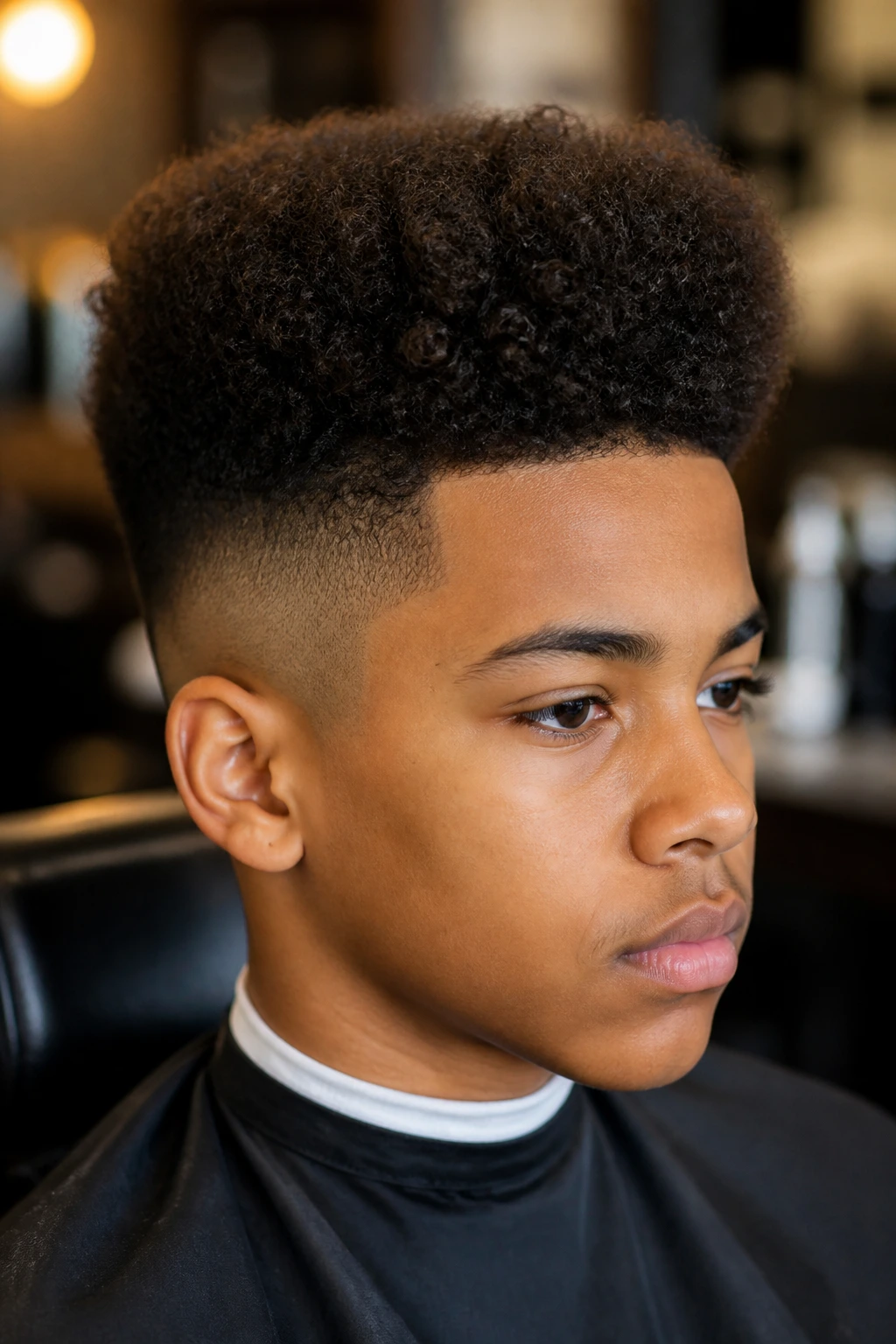
A high top fade brings height back into the conversation. If the curls are tight and dense, this cut can look fantastic because the shape stands on its own. The sides are faded close, and the top is shaped upward with careful trimming so the silhouette stays clean.
The top needs enough length to build height—usually 2 to 3.5 inches, depending on curl type. If it’s too short, the style becomes more like a box fade and loses its vertical line.
Why it works
High top fades are about outline. Tight curls can hold a strong shape, and the fade around the sides gives them room to stand out. The result is sharp, but it needs maintenance. There’s no pretending otherwise.
Best for thick hair
This one is a strong match for dense coils. The structure helps control volume, and the finish looks tidy even when the curls are a little dry.
20. Skin Fade with Loose Curls
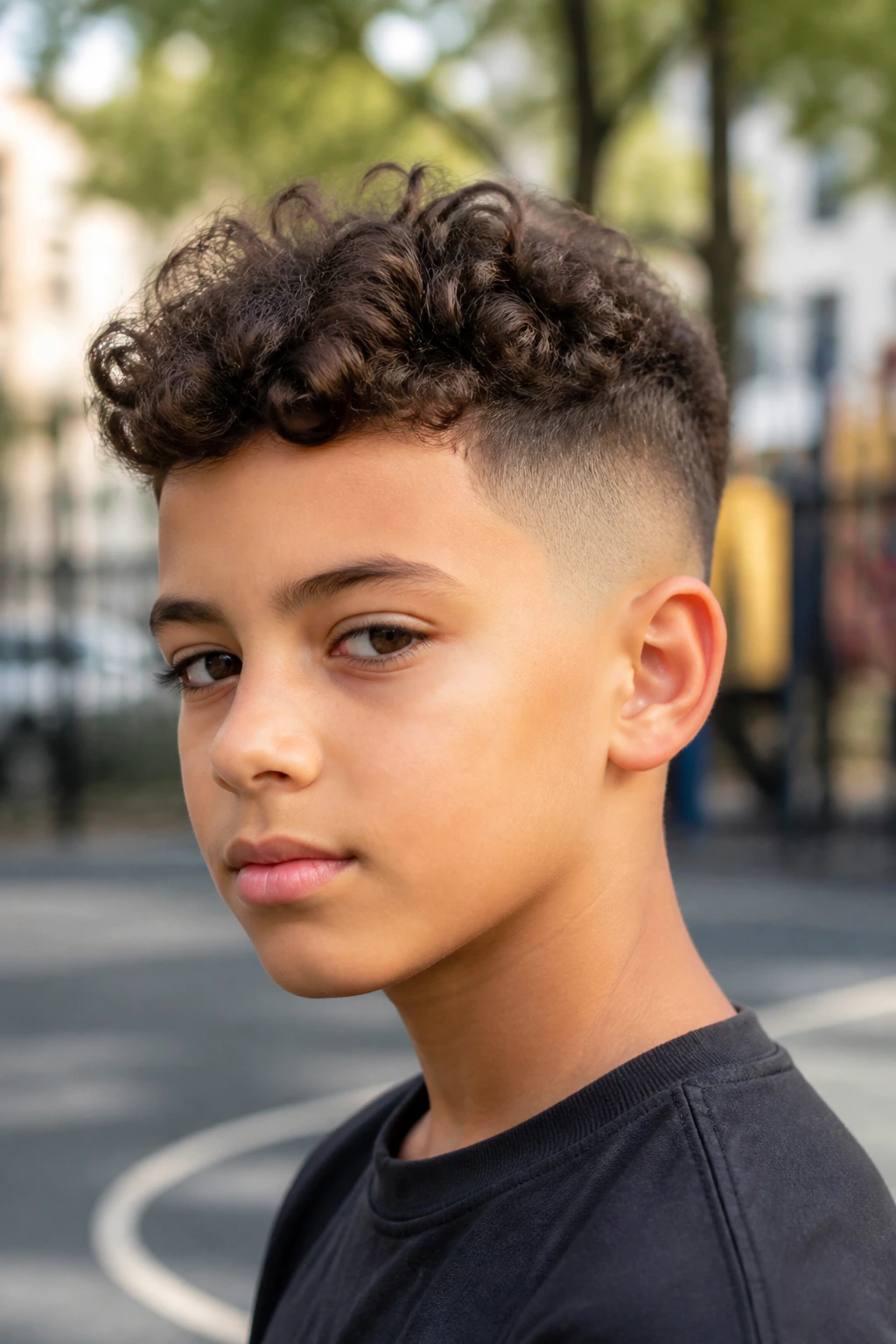
A skin fade with loose curls gives you a crisp base and a soft top. The fade goes all the way down to the skin at the bottom, which makes the curls on top look fuller by contrast. Loose curls especially benefit from this because they keep some movement and don’t get boxed in.
Keep the top at 2 to 3 inches and ask for a smooth blend into the skin. If the fade is too high, the head can start looking wide. A lower skin fade usually feels more balanced for kids.
Why it works
The clean fade draws the eye upward. That lets the curls do the visual work without needing extra length. It’s a nice option when you want the haircut to look sharp on day one and still decent a week later.
Watch the scalp
Skin fades can show dry patches, so a little moisturizer on the scalp may help if the skin gets flaky. Nothing fancy. Just enough to keep the area from looking irritated.
21. Soft Curly Mullet
A soft curly mullet sounds bolder than it needs to be. The modern version keeps the shape gentle: short on the sides, textured on top, and a little extra length at the back. On curly hair, that back section can curl up nicely instead of hanging awkwardly.
The key is balance. Keep the back only slightly longer than the top. If the tail gets too long, the cut turns costume-like. A soft mullet should look playful, not theatrical.
Why it works
Curly hair naturally gives the mullet a lived-in texture. The cut feels cool because the curls break up the shape, softening what could otherwise look too hard. It’s a fun option for kids who want personality.
Maintenance note
The neckline matters here. If the back grows out too far, the whole shape loses its point. Clean necklines keep the cut looking intentional.
22. Line-Up with Natural Coils
A line-up with natural coils is all about clean edges and a natural top. The barber sharpens the forehead line, temples, and sometimes the sideburns, while leaving the curls on top in their own shape. This is a strong style when the hairline is a little uneven or the family wants the haircut to look fresh without losing texture.
The top can stay short and rounded, usually around 1.5 to 2.5 inches depending on curl tightness. The line-up should enhance the hairline, not shove it back.
Why it works
A crisp line makes the haircut look finished, especially on coily hair where the edge can blur quickly. But the best version keeps the natural shape in place. Too much edge work and the hairline starts looking forced.
Barber caution
Ask for a natural line-up if the child’s hairline is delicate or still changing. A heavy lineup can look sharp for a day and awkward after that.
23. Curly Mini Pompadour
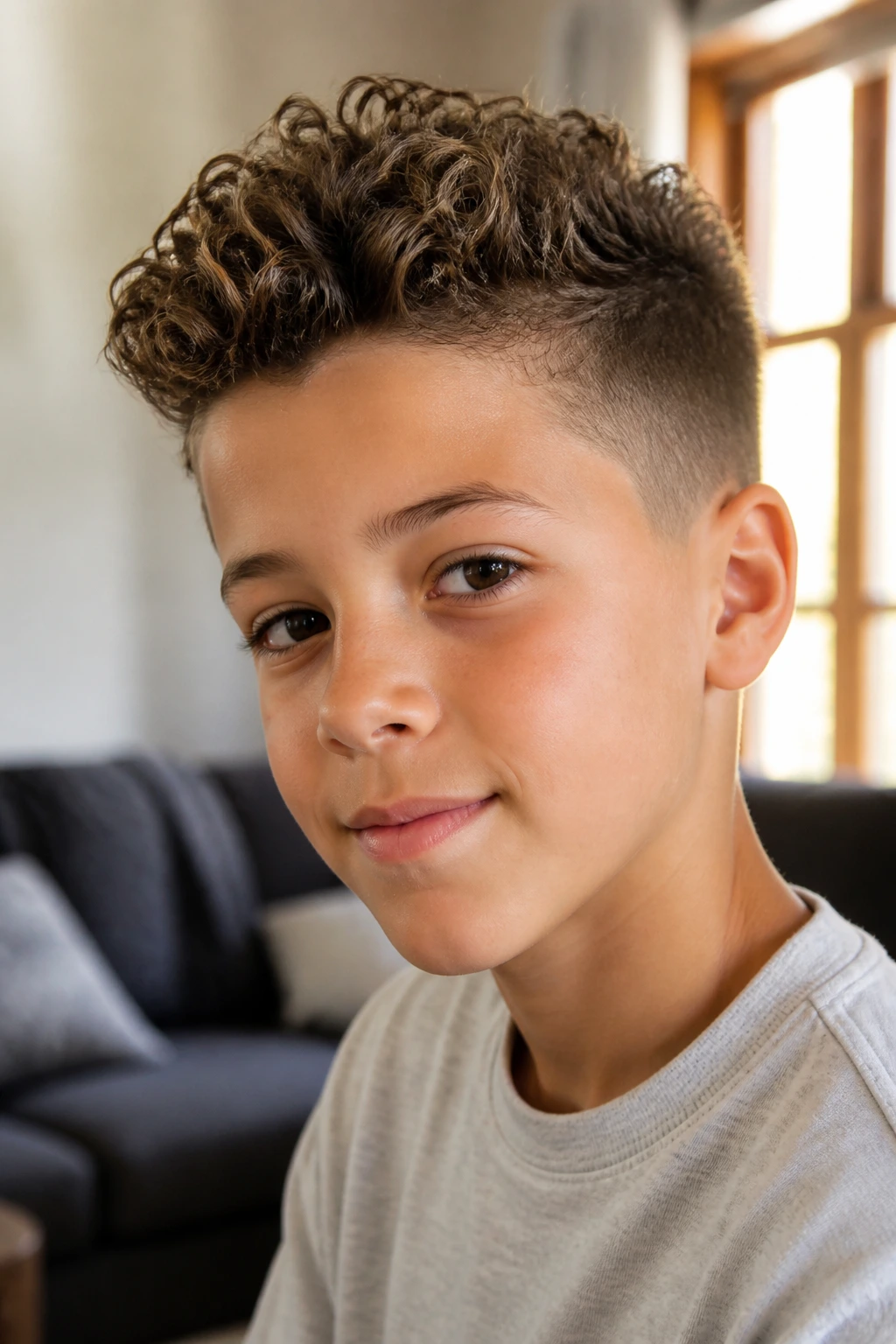
A curly mini pompadour is a neat little lift for boys who like a more styled front. It’s not the full, tall vintage pompadour. It’s a smaller, more wearable version that raises the front curls just enough to show some shape.
Leave the front slightly longer than the crown, then use a light mousse or foam to encourage lift. The sides should stay tapered so the front doesn’t lose its point.
Why it works
The front lift gives the face a bit of length, which helps if the features are round or full. Because the curls are short, the style stays soft rather than stiff. That softness is what saves it.
Styling note
A blow dryer with a diffuser on low heat can help the front hold shape. Just don’t over-dry it. Short curls go from defined to frizzy faster than people expect.
24. Tapered Frohawk
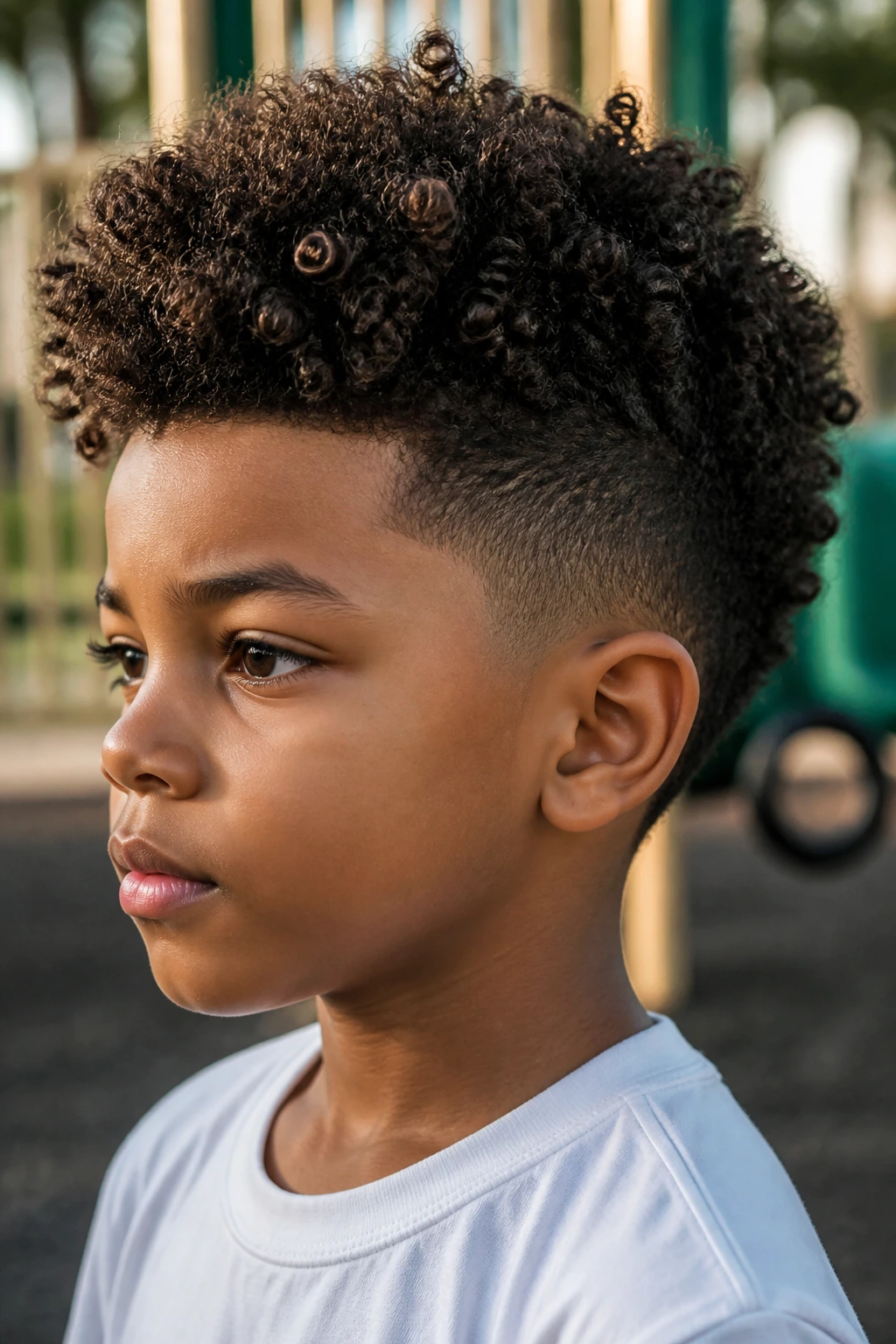
The tapered frohawk takes the central volume of a mohawk and softens the edges with tapering. On short curly hair, that creates a strong line down the middle without making the whole haircut too hard or spiky. It’s energetic, but still wearable.
Keep the center strip fuller and let the sides taper close around the ears and neckline. The top should not be so narrow that it looks pinched. A little width makes the style look better on kids.
Why it works
This cut uses the natural spring of curls to build a central ridge. The taper keeps the profile clean. It’s a good match for thick, springy hair that wants to stand up anyway.
A good rule
If the curls are tight, you do not need much length to get the frohawk shape. If they’re looser, you may need a little more height on top to make the ridge visible.
25. Brush Cut with Texture
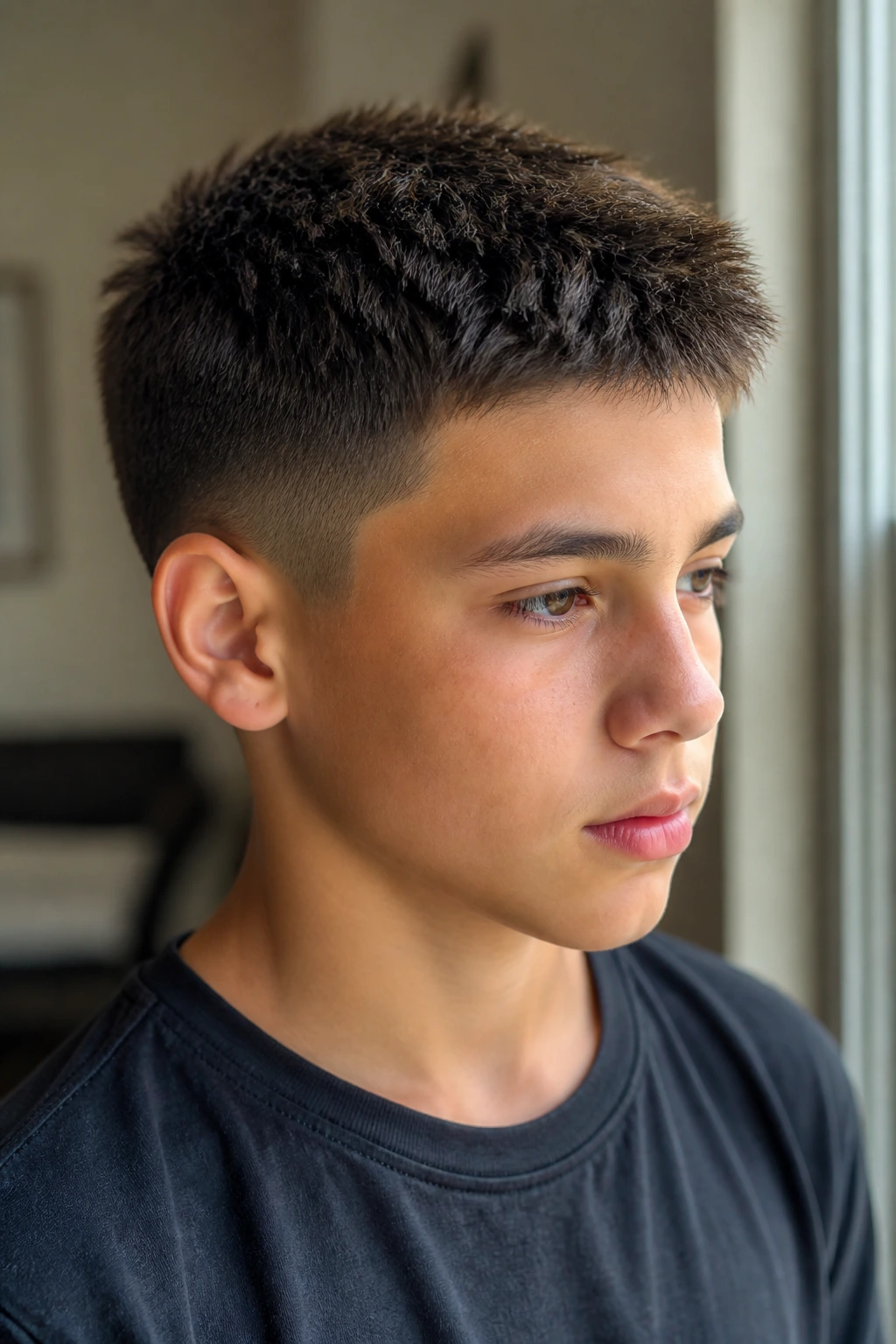
A brush cut is short, easy, and more interesting than a buzz because the top still keeps some texture. It’s cut close enough that styling barely matters, but not so close that the curls vanish. The result is tidy with a little grip.
Ask for a uniform short length on top, usually around 1 inch, with tapered or faded sides if you want more contrast. The top can be brushed forward or slightly upward depending on the child’s hair growth pattern.
Why it works
The brush cut controls volume without taking away every sign of curl. That makes it a smart choice for thick hair that sticks out after every wash. It’s not fancy. It just works.
Best use case
This is the haircut for kids who want the shortest possible style while still keeping some texture on the crown. It’s also a safe choice if you’re not sure how the curls will behave yet.
26. Side Part Taper
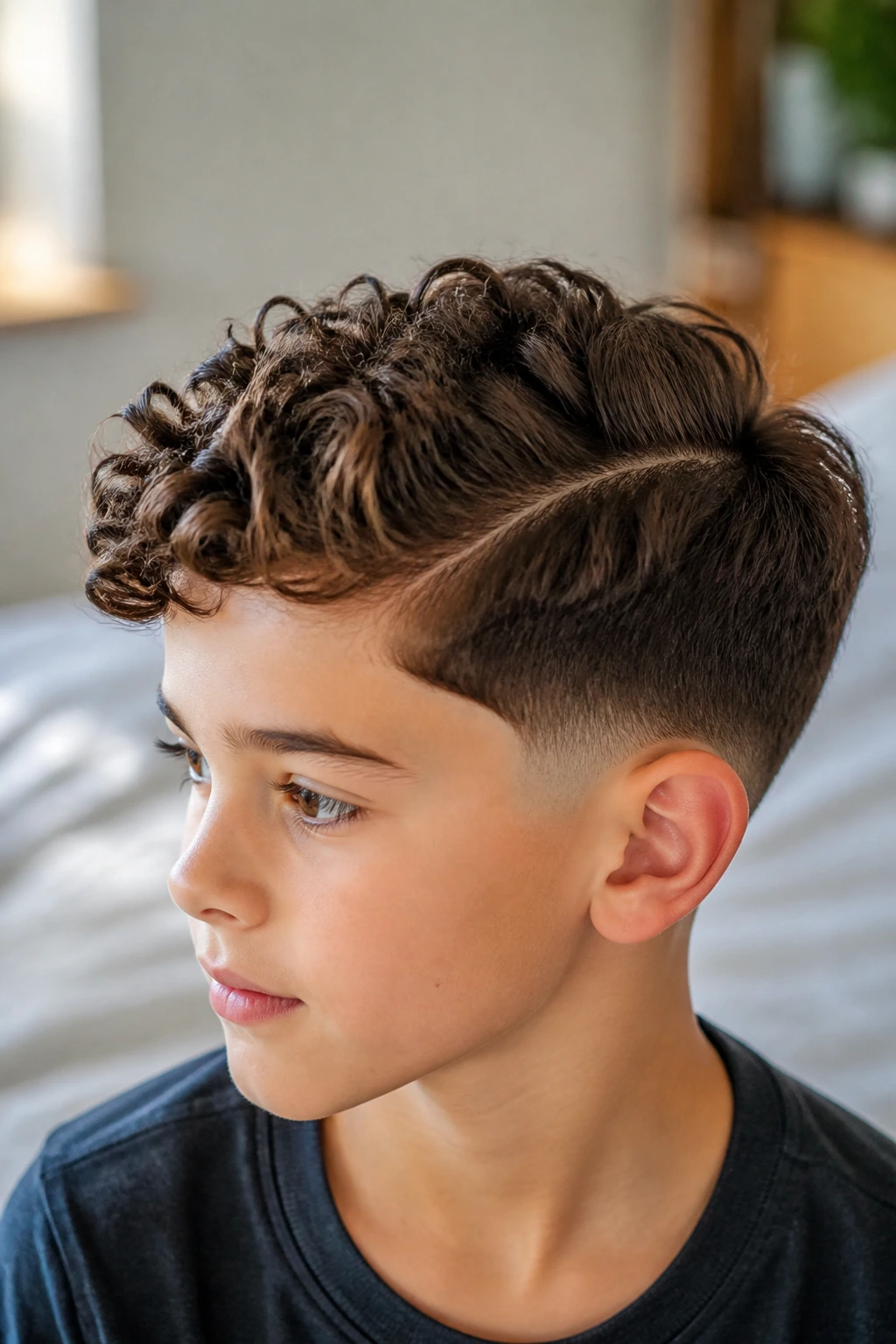
A side part taper is a classic cut with curly hair, and it looks better than people expect when the curls are short enough to stay controlled. The part doesn’t need to be razor-sharp. In fact, a soft natural part often looks better on curls because the hair already has its own direction.
Keep the top at 1.5 to 2.5 inches and taper the sides cleanly. The top should fall to one side with a little height near the front.
Why it works
The taper keeps the outline neat, while the side part gives the haircut a dressed-up feel. It’s a nice middle ground for families who want something polished but not stiff.
Practical note
This style works best if the barber finds the natural part instead of forcing one. Forced parts can fight the curl pattern and collapse after drying.
27. Dense Ringlet Crop
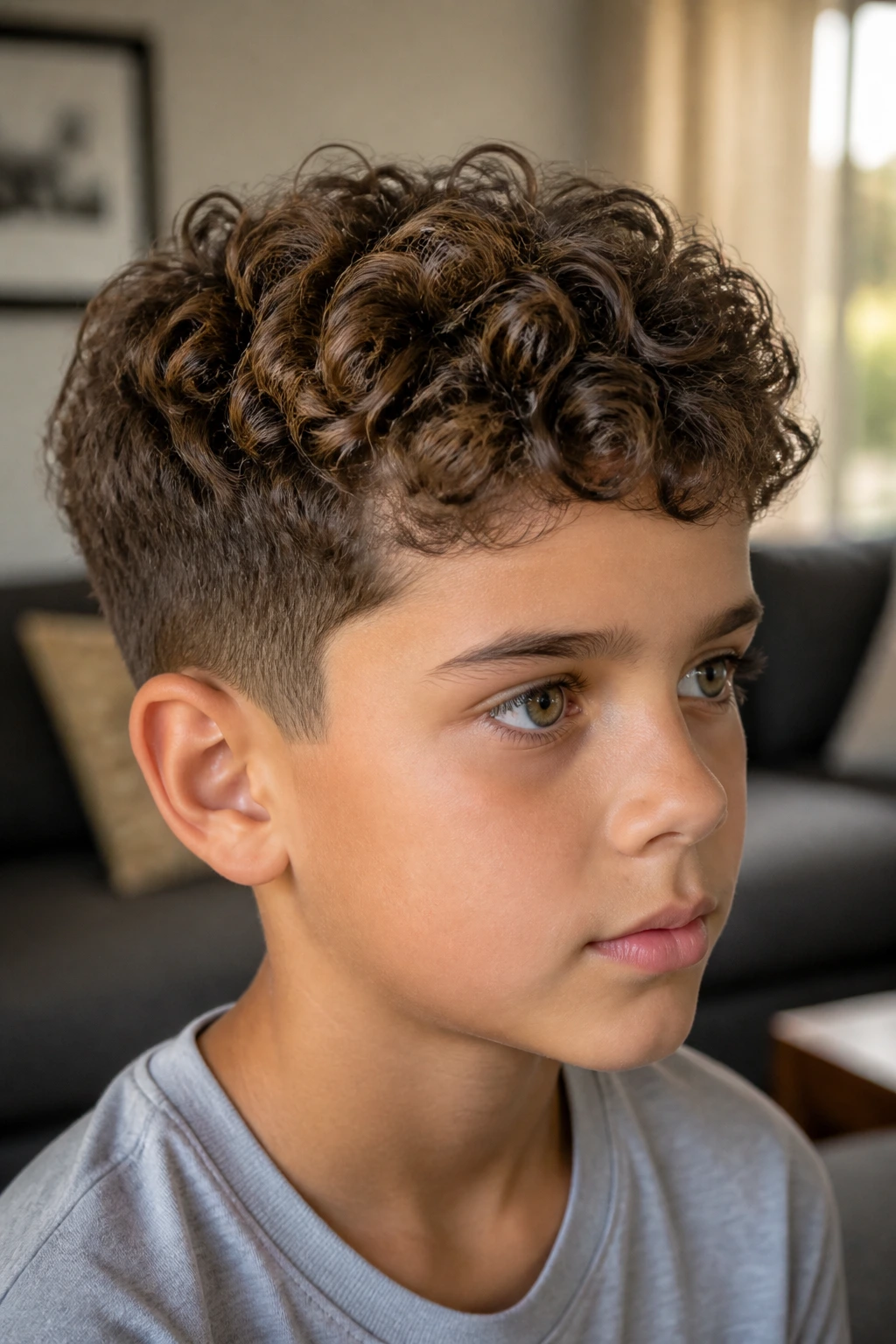
The dense ringlet crop is made for looser curls that form small, clear ringlets. The cut keeps enough length for the ringlets to show, but trims the sides and back so the shape doesn’t spread outward. It’s one of the nicest-looking cuts when the curls are springy and neat on their own.
Ask for the top to stay around 1.5 to 2 inches and for the barber to shape the outline softly. The goal is to show the ringlets, not crush them.
Why it works
Ringlets already have a visual pattern, so the haircut only needs to frame them. Shorter sides and a clean neckline do the framing. Too much thinning, though, and the ringlets lose their bounce.
One good tip
If the curls clump well after washing, leave them alone. Breaking them up too much with fingers or a comb can make the top look frizzy instead of defined.
28. Clean Short Afro
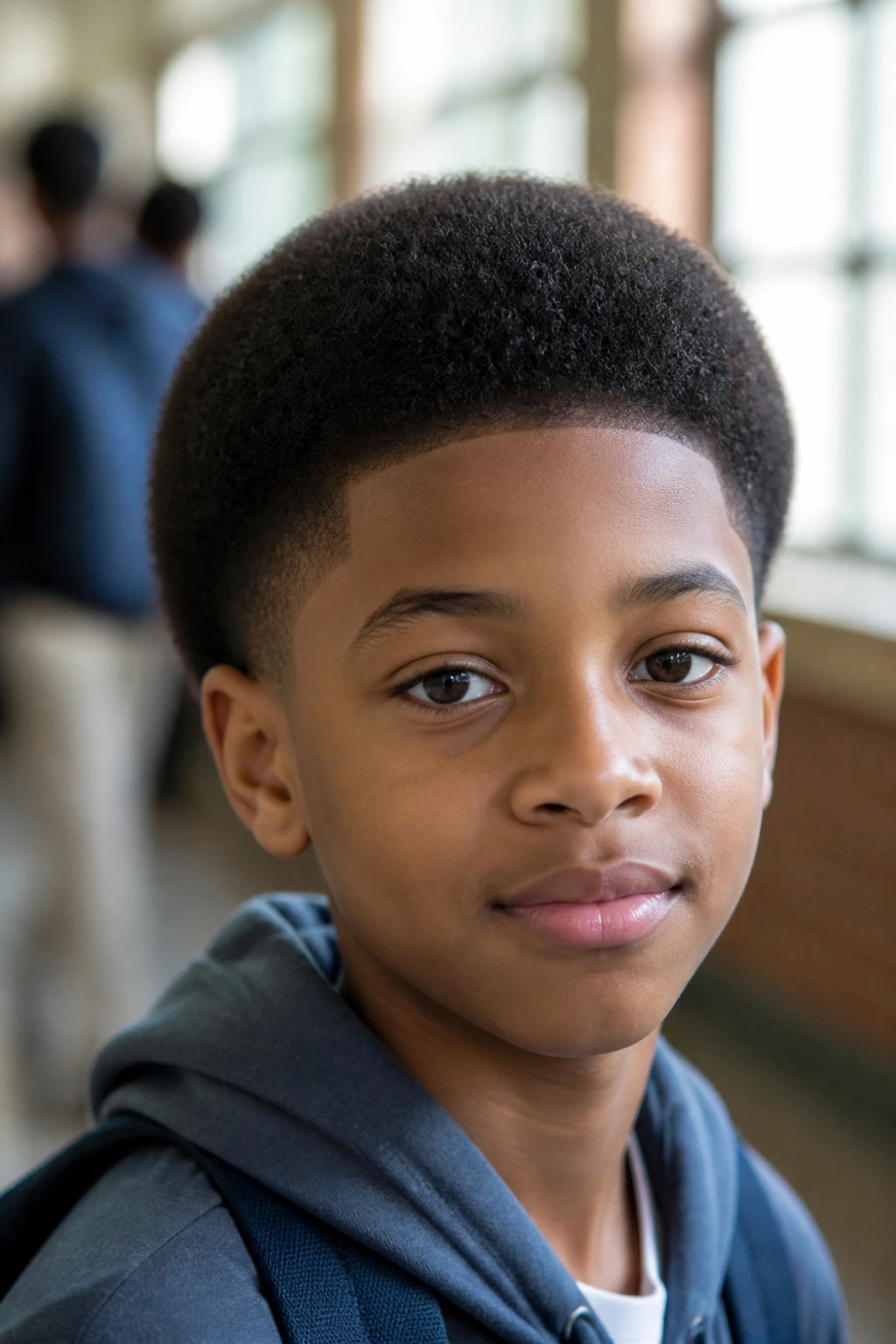
A clean short afro is one of the most reliable short curly haircuts there is. It keeps the natural shape, gives the curls room to sit evenly, and uses a taper to keep the edges crisp. It’s simple, but simple is not the same as plain.
Tell the barber you want a rounded shape with a low taper and enough top length to keep the afro outline visible. Depending on curl density, that might mean 1.5 inches or a bit more on top.
Why it works
The short afro honors the texture instead of trimming it into something else. That’s why it holds up so well. Even when it grows out, the silhouette still makes sense.
Best for families who like natural texture
If you want a haircut that does not rely on a lot of product or styling tricks, this is a strong final answer. It looks clean, it grows out well, and it lets the curls do what they do best.
Why Short Curly Hair Needs Shape, Not Just Less Hair
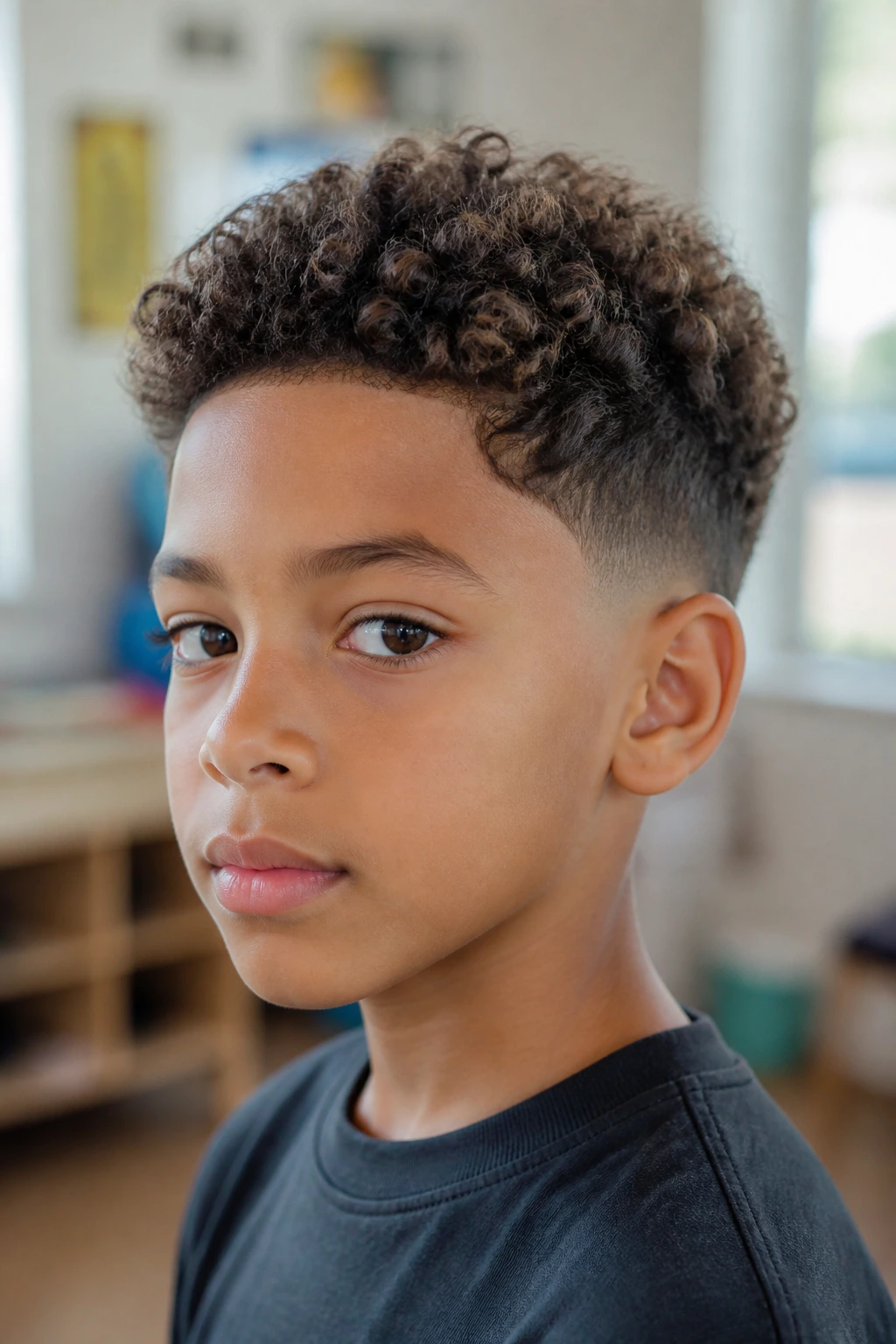
A lot of bad curly cuts come from one habit: people ask for “shorter” when they really need “better shaped.” Those are not the same request. With short curly hair, removing length without changing the outline usually creates the puffiest result of all.
The better approach is to control the perimeter. Clean the neckline. Trim the temples. Decide whether the top should be rounded, forward, lifted, or swept. Once you choose the silhouette, the curls stop looking random. They start looking like part of a haircut.
Shrinkage deserves its own rule too. Curly hair can shrink hard once it dries, and the tighter the curl, the more that difference matters. A barber who cuts only by wet length can accidentally take off too much. That’s why dry checking, or at least checking the curl pattern while the hair is only lightly damp, matters so much.
One more thing. Short curls often look best when the top has a little weight left in it. Thinning them too much can make the curls frizz apart. Keep some density. That’s what gives the shape its body.
The Small Moves That Make a Big Difference
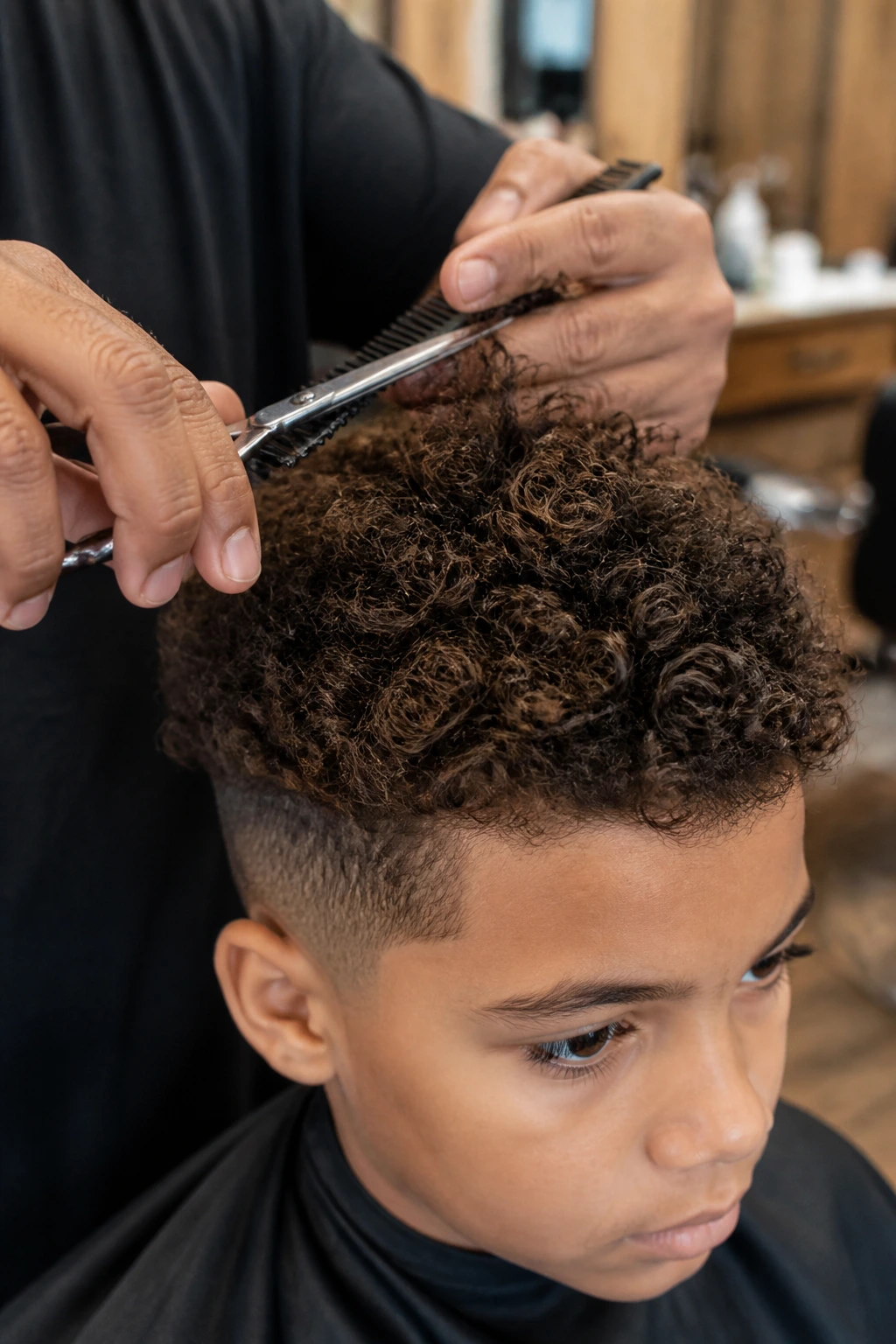
Dry-cut detail: If the hair is especially springy, ask the barber to check the top when it’s dry or nearly dry. That one step can save you from taking off an inch more than you meant to.
Edge control: A clean neckline and soft temple cleanup do more for the haircut than most people realize. Dirty edges make even a good curly cut look tired early.
Product restraint: Use the lightest product that does the job. A small amount of curl cream, leave-in, or foam beats heavy wax every time. Heavy product clumps short curls and makes them greasy by lunch.
Photo trick: Bring a side photo and a front photo of the style you want. One picture rarely shows the taper, and the taper is half the haircut.
Frequency matters: For short curly cuts, the shape usually looks best with a touch-up every 3 to 5 weeks. Wait longer and the outline starts to spread.
Essential Tools for These Haircuts
-
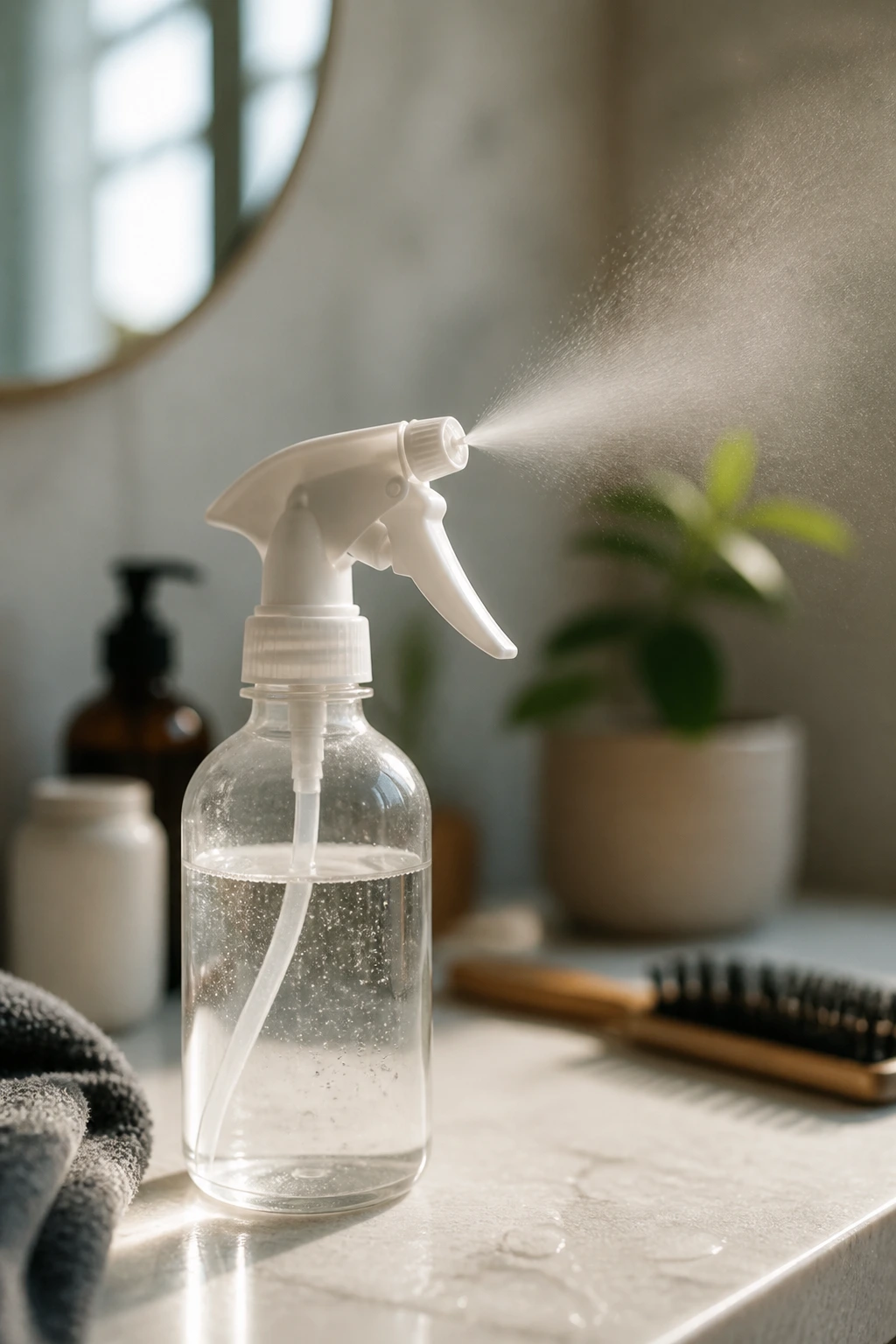
Spray bottle: Dampens curls fast before styling or refreshing. A fine mist is better than soaking the hair.
-
Leave-in conditioner: Adds slip and keeps short curls from turning dry and fuzzy.
-
Curl cream or light foam: Gives shape without stiffness. Use a small amount.
-
Wide-tooth comb: Good for gentle detangling, though fingers often do the best job on short curls.
-
Microfiber towel or cotton T-shirt: Blots moisture without roughing up the curl cuticle.
-
Clippers with guards: Essential for at-home neck cleanups or taper maintenance, if you know what you’re doing.
-
Small trimmer: Useful for sideburns and neckline touch-ups between barber visits.
-
Diffuser attachment: Optional, but helpful if the child’s curls need a little lift and control after washing.
What to Tell the Barber Before the Clippers Start
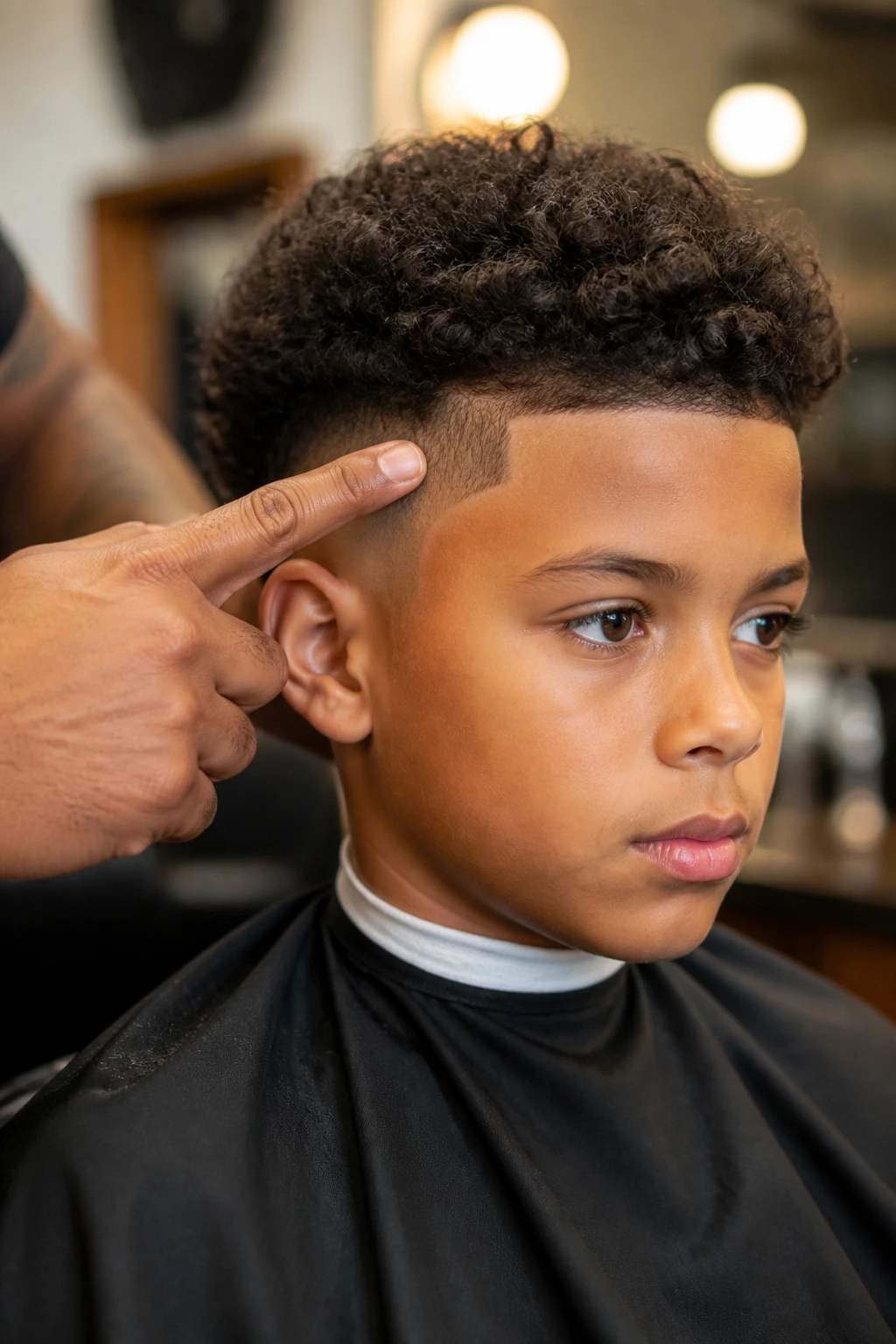
Say the lengths out loud. That sounds obvious, but it’s where a lot of haircut confusion begins. “Short on the sides” means one thing to you and something else entirely to the barber. “Top left at two inches, low taper on the sides” is clearer, and clear is the whole point.
Bring the reference photo, then point to the parts that matter. Say whether you want the hairline lined up, the temples soft, the back square or rounded, and the top cut to follow the curl pattern. If you skip those details, the barber has to guess where you care most.
Give the barber the real problem
If the issue is the hair puffing out near the ears, say that. If the crown sticks up, say that. If the front falls into the eyes after a week, say that too. The right cut solves the annoying part first.
Ask how they cut curly hair
Not every barber handles curls the same way. Some cut mostly dry, some cut damp, some shape as they go. A good one will talk about shrinkage without you having to explain it.
How to Style Short Curly Hair on Busy Mornings
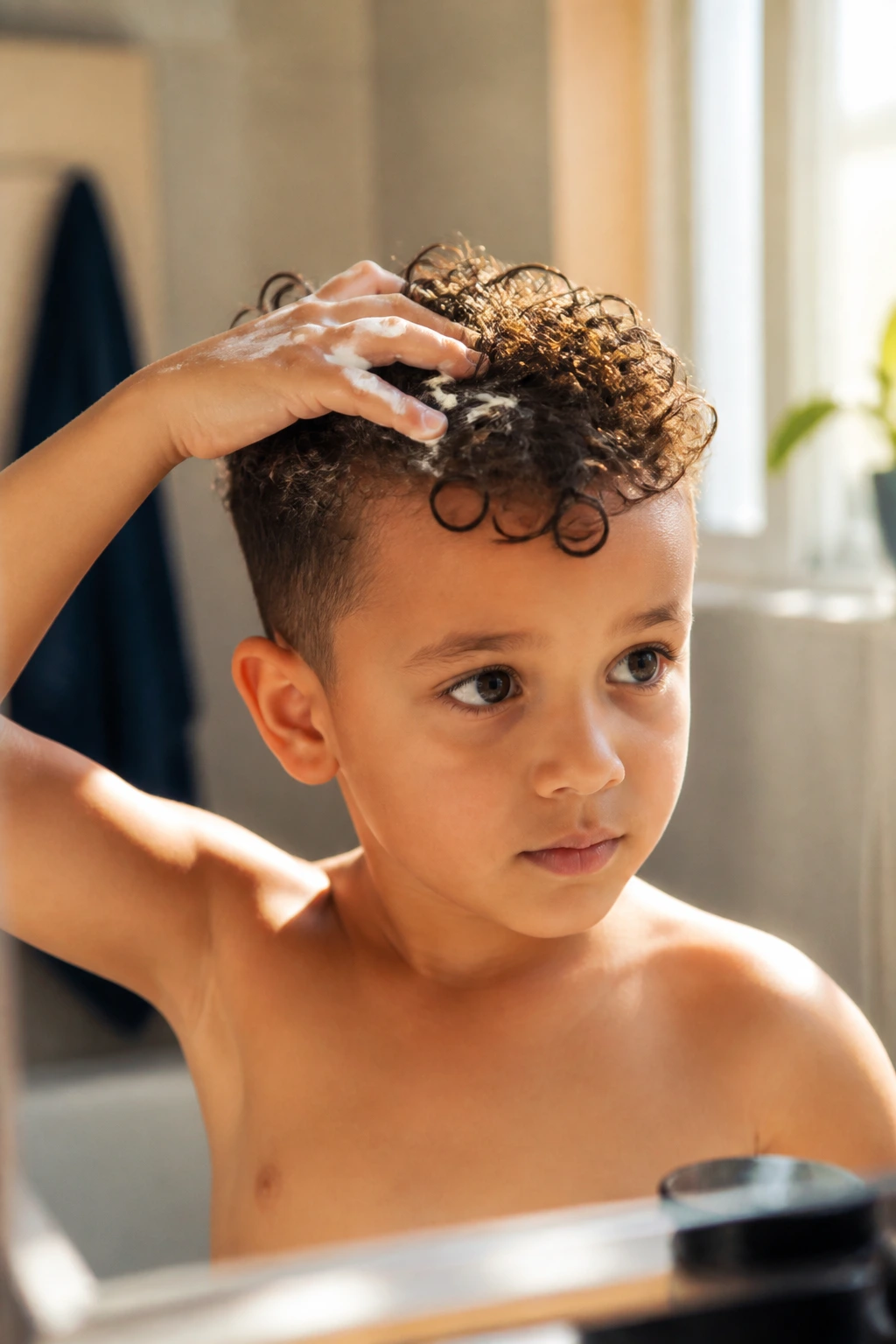
A good morning routine for short curls should take less time than getting socks on. Start with damp hair, not soaking wet hair. That tiny distinction changes the whole result. Water should help the curls settle, not drip them into strings.
Use a nickel-sized amount of leave-in or curl cream, rub it between your palms, and press it through the top. Then scrunch or finger-shape the curls into the direction the cut wants to go. If the haircut is good, you should not need to fight it.
For school mornings, I like a three-step routine: mist, smooth, stop. Mist the hair lightly. Smooth the product through the top. Stop touching it. The more hands go into short curls, the frizzier they get.
If the child has a stubborn front section, a quick 30-second blow-dry with a diffuser can set the shape faster. Keep the heat low. High heat dries short curls into fuzz, and then you’re fixing the damage instead of styling.
Common Mistakes That Make Short Curls Look Puffy or Uneven
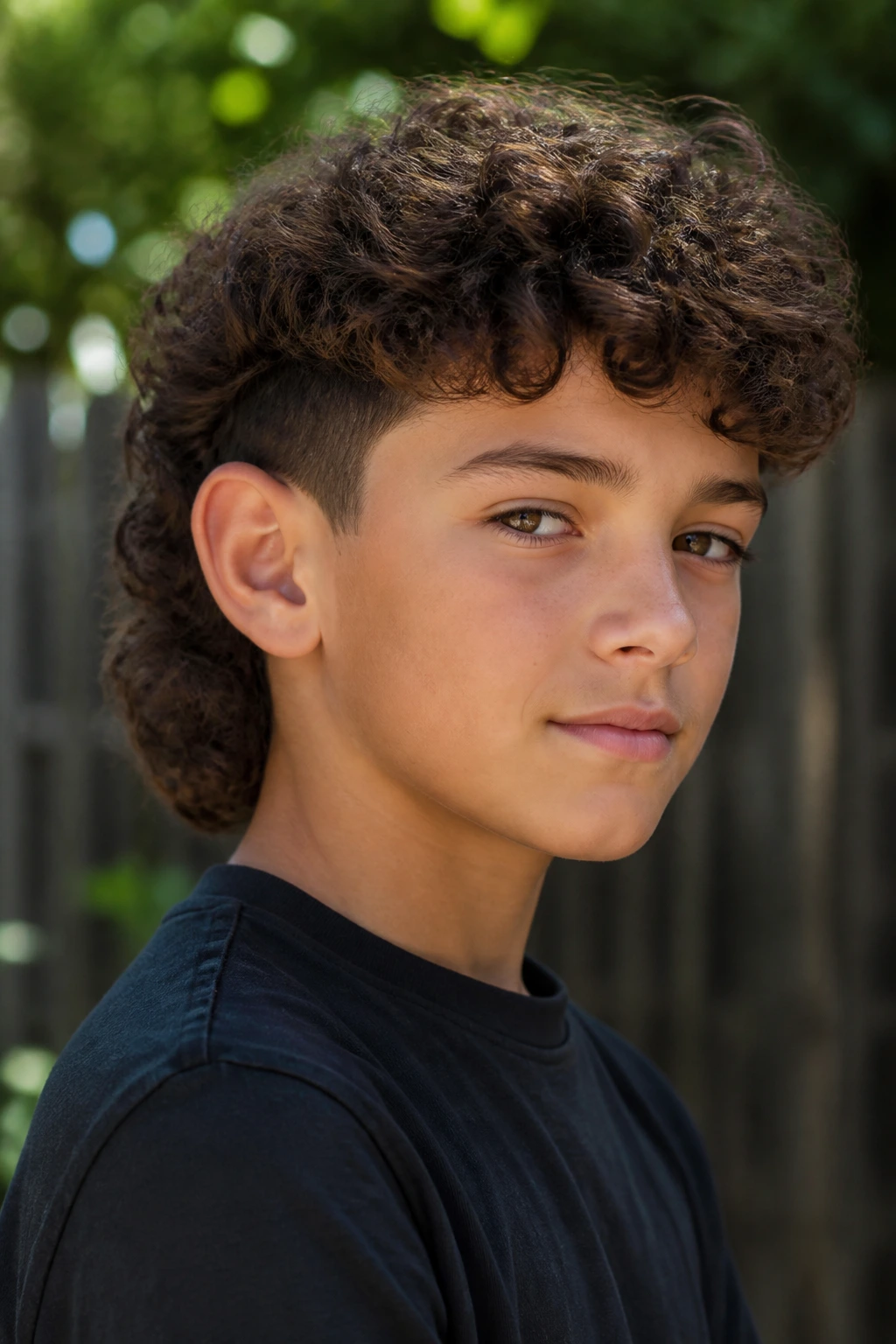
-
Cutting too much off the top: The hair seems short while wet, then shrinks into a puff after drying. Leave enough length for the curl pattern to show.
-
Taking the fade too high: A fade that climbs too far can leave the top looking like it’s sitting on a shelf. Keep the fade where the head shape can support it.
-
Using heavy product: Thick pomades and waxes clump short curls together and make them greasy. Light cream, foam, or leave-in is usually the better call.
-
Ignoring the neckline and temples: Even a decent top looks messy if the edges are fuzzy. Clean up those zones regularly.
-
Forcing a straight shape on curly hair: A hard blunt line can look fine for a day, then fight the curl direction the moment the hair dries. Softer shaping usually wears better.
-
Cutting only by wet length: Wet curls lie flatter than they really are. If the barber never checks the curl while dry, the final length can surprise everyone.
Variations and Adaptations to Try
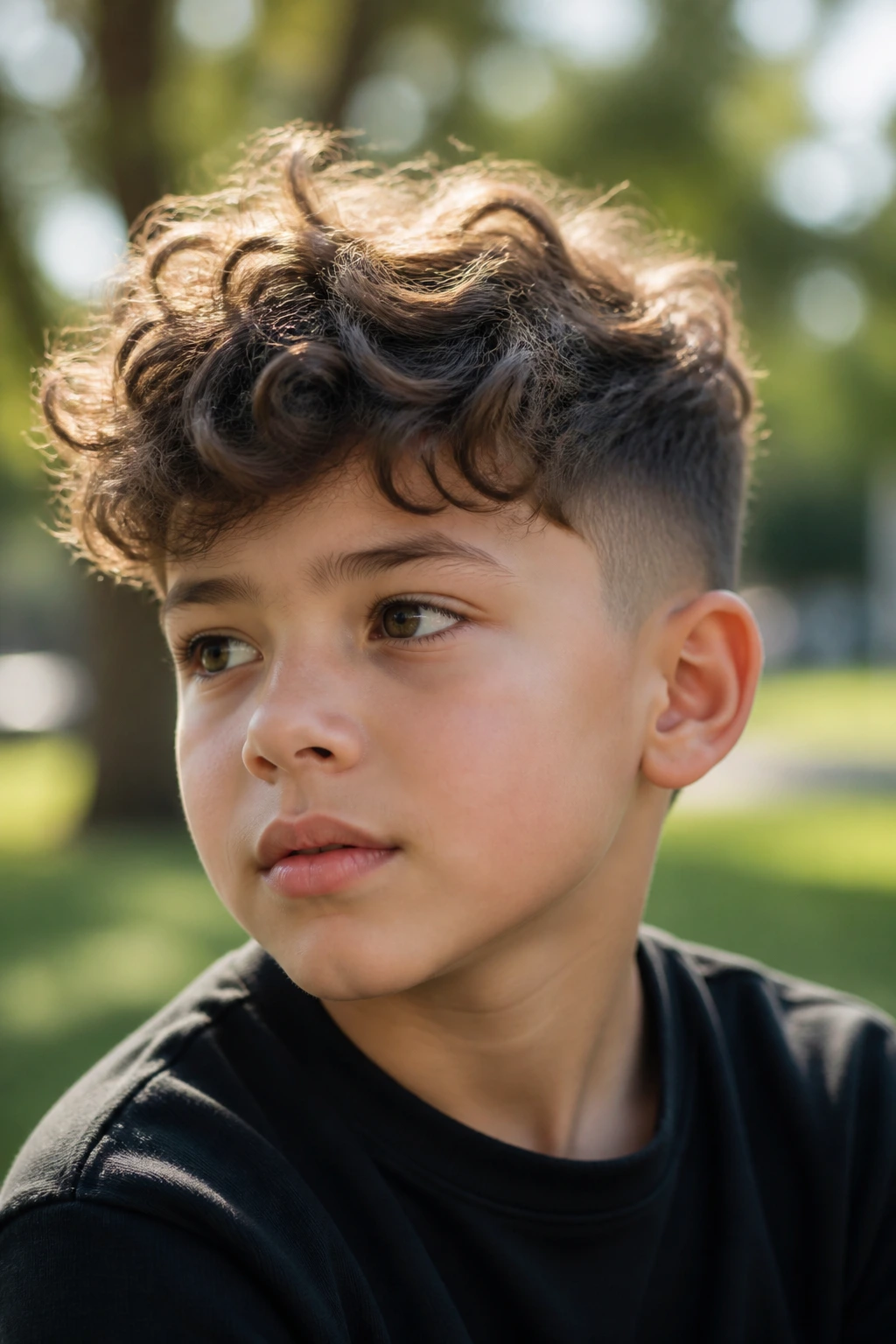
Loose Wave Version: Leave the top a touch longer and keep the fade softer. Loose waves need movement more than they need sharp edges, or the style can look overcut.
Tight Coil Version: Use more shape on the outline and less length on the top. Tight coils hold height naturally, so the haircut can stay neat without getting too long.
School-Rule Version: Pick a low taper, crew cut, or curly crop with no hard line-up. These stay tidy without crossing dress-code lines.
Bold-Edge Version: Go with a burst fade, undercut, or frohawk if the child wants something with personality. Just keep the shape controlled enough to grow out cleanly.
Low-Maintenance Version: Choose a buzz cut, brush cut, or short afro taper. These are the easiest to wash and reset.
Photo-Day Version: Use a curly quiff, Ivy League, or side part taper when you want a cleaner finish. They sit a little more polished without flattening the curls.
How to Keep the Cut Looking Sharp Between Appointments
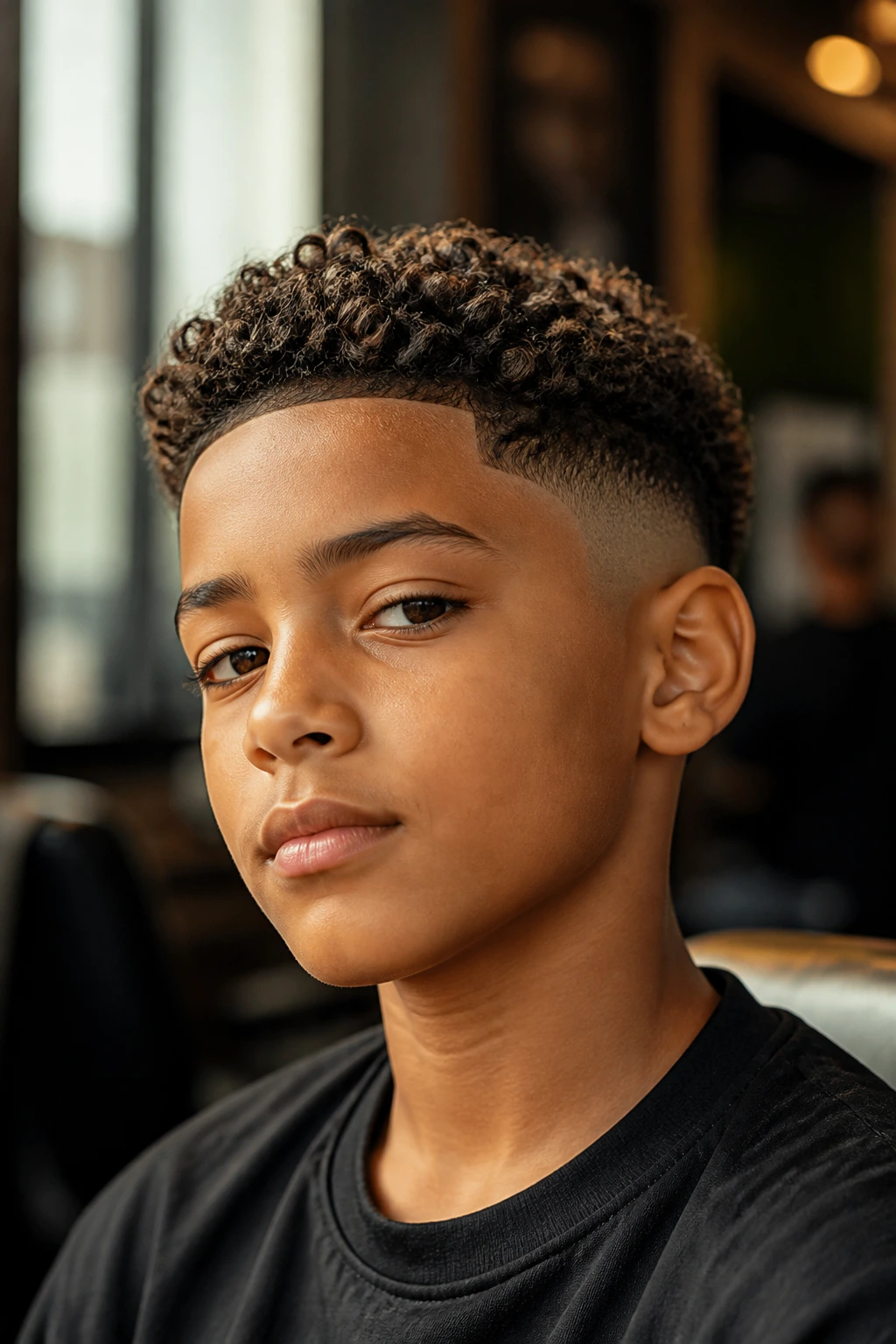
Short curly cuts usually look best when they’re touched up every 3 to 5 weeks. If the child wears a very clean fade or line-up, that window can shrink to 2 to 3 weeks. Let it go too long and the edges lose the shape that made the haircut work in the first place.
Wash days matter too. Most curly kids do better with 1 to 3 washes a week, depending on sweat, product, and scalp oil. Too much shampoo dries the hair out and makes the curls rough. A gentle cleanser or co-wash can help when the hair starts feeling stripped.
For in-between mornings, a light mist of water is often enough to wake the curls back up. Add a tiny bit of leave-in if the hair feels dry, then scrunch once and stop. If you keep reworking the same section over and over, it stops looking fresh and starts looking handled.
The neckline and sideburns are worth watching. A quick tidy with a trimmer can keep the whole cut looking newer than it is. Just be careful. If you’re unsure, leave the line cleanup to the barber. Home trimming can drift fast.
Frequently Asked Questions
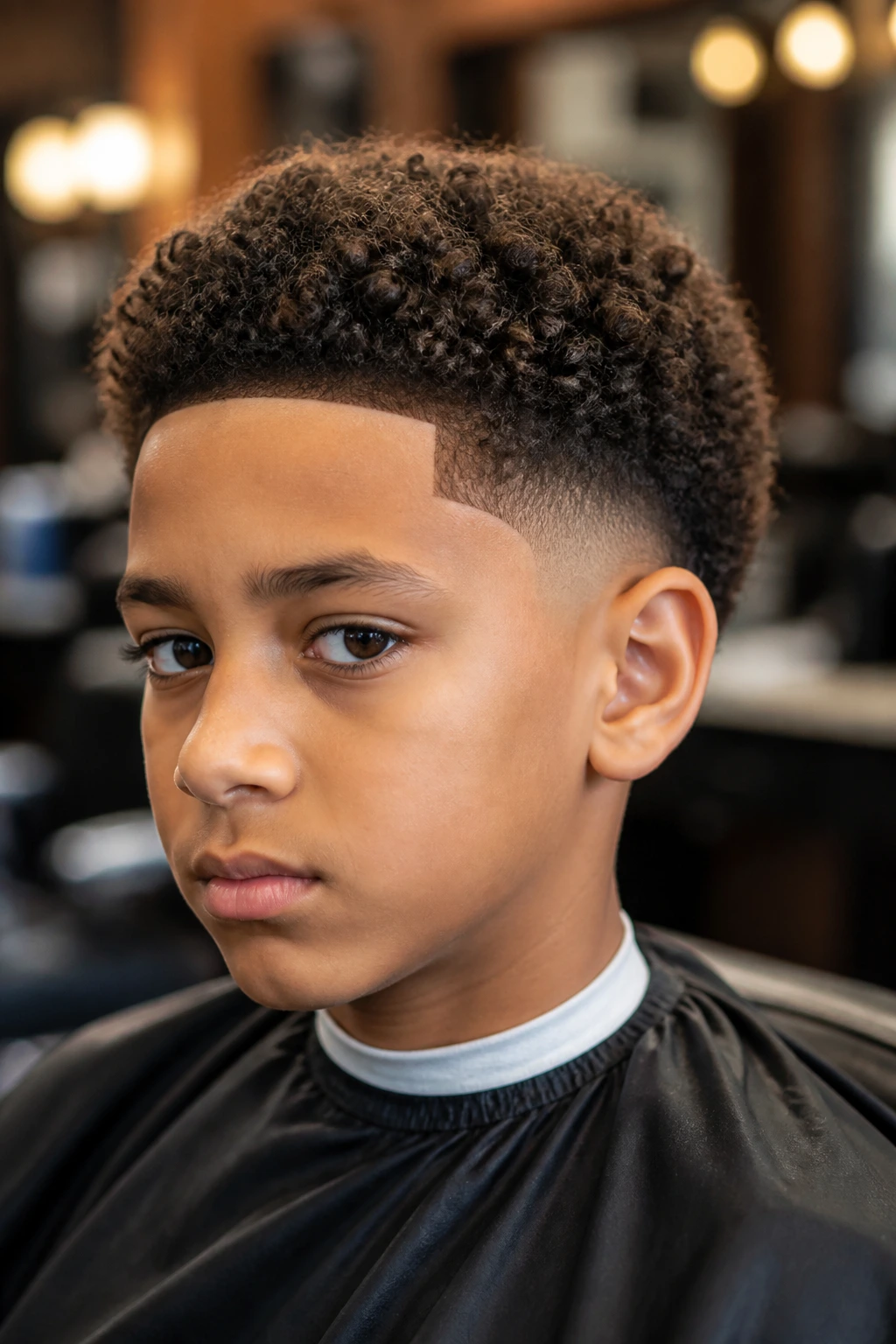
What haircut is easiest for boys with short curly hair?
The curly crew cut, brush cut, and low taper curly crop are usually the easiest. They keep the top short enough to control but leave enough texture that the hair doesn’t look shaved flat.
Should curly hair be cut wet or dry?
Both can work, but dry or lightly damp cutting is often safer for curls because shrinkage is easier to judge. Wet curls can hide how much length they’ll lose once they dry.
What should I ask for at the barber if I don’t know the name of the haircut?
Say how long you want the top in inches, how short you want the sides in guard numbers, and whether you want the edges lined up or soft. That gives the barber enough to work with even if you don’t know the style name.
How often should short curly hair be trimmed?
Most short curly cuts need a touch-up every 3 to 5 weeks. Sharp fades or line-ups may need cleanup sooner if you want them to stay crisp.
How do I stop curly hair from puffing up on the sides?
Keep some weight on top, use a low taper or fade that doesn’t climb too high, and avoid heavy product. Puff happens when the sides are bulky and the top is too short to balance them.
Can these cuts work for very tight curls?
Yes, and some of them work especially well. Mini afro tapers, high tops, line-ups, and crop cuts usually handle tight curls better than styles that rely on flat movement.
What if my child’s hairline is uneven?
A soft taper or natural line-up is safer than a hard, pushed-back edge. Clean the temples and neckline first, then decide how much line work the hairline can actually handle.
Is a fade better than a taper for curly hair?
A fade gives more contrast, while a taper keeps the cut softer and usually grows out more gently. For younger boys or school-friendly cuts, a taper is often the easier choice.
Why does the haircut look good in the chair but weird the next day?
Because curls shrink and settle after washing, sleeping, or drying. The fix is usually more top length, a softer fade, or a barber who checks the hair in a more natural state before finishing.
The Cut Should Fit the Curl, Not Fight It
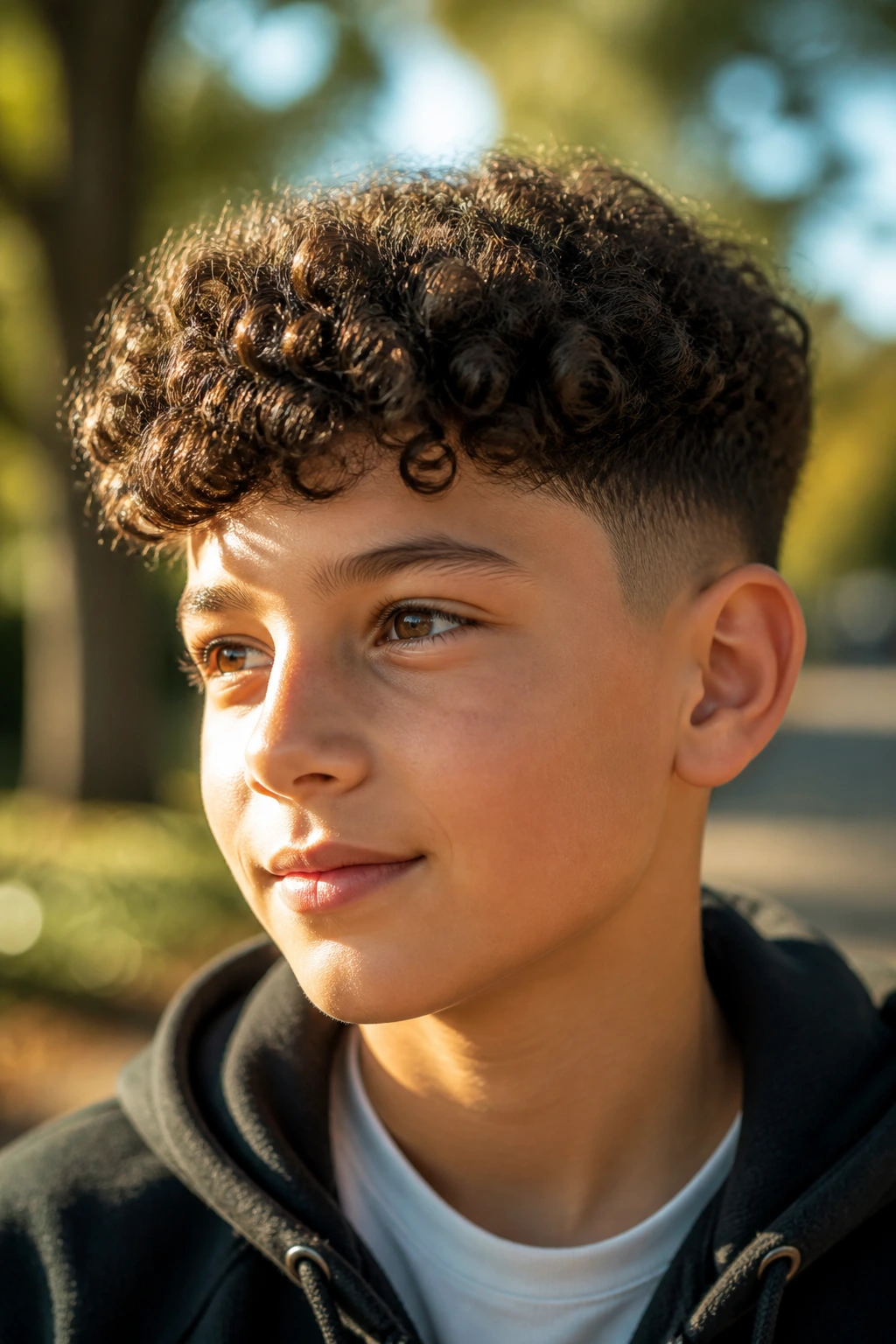
Short curly hair looks best when the haircut gives the curls a job to do. Some cuts need height. Some need a clean taper. Some need a fringe that falls forward and behaves itself. But the good ones all have the same trait: they respect how curly hair actually moves.
That’s the part people forget when they ask for “short.” Short is only the beginning. The real trick is deciding what shape the curls should hold once they dry, once they spring up, and once they’ve had a normal day in the real world.
Pick the silhouette first, then the length. Do that, and short curls stop looking accidental. They start looking sharp, which is what you wanted all along.
