



A mohawk can change the whole read of a face in minutes. On women, that edge is the appeal: shaved sides or slicked temples, a lifted center strip, and enough texture up top to swing the look from sharp to soft without losing its backbone. The best mohawk styles for women are less about rebellion for its own sake and more about shape — where the height sits, how tight the sides are, and whether the top is spiked, braided, curled, or wound into something sculptural.
What makes the cut so useful is that it doesn’t belong to one hair type. Tight coils can become a frohawk with a little stretch and a lot of shape. Straight hair can be teased into a clean ridge that holds its line for hours if you prep it properly. Braids, locs, and twists turn the whole idea into something protective, which matters if you like the look but do not want to restyle every morning.
And yes, a mohawk can be loud. It can also be sleek, neat, and surprisingly refined. The trick is picking the version that works with your hair’s natural movement instead of fighting it.
Why These Mohawk Styles for Women Stand Out
-
Texture does the heavy lifting: Some of these looks rely on curls, some on braids, and some on a clean fade, so there’s a version that fits tight coils, loose waves, and straight hair without forcing the same finish.
-
The shape changes the face fast: A center ridge pulls the eye upward, while shorter or shaved sides clean up the jawline and make cheekbones pop more than a blunt cut ever could.
-
You can go hard or soft: A spiked hawk reads punk; a braided hawk reads structured; a frohawk with fluffy curls reads softer but still has attitude.
-
Not every version needs clippers: Faux hawks, pinned hawks, and braid-based versions give the silhouette without a full shave, which is useful if you want the look without a long commitment.
-
They age well between salon visits: A tapered hawk or braided hawk can still look intentional when the sides start to grow out a little. That matters more than people admit.
-
Color and accessories fit naturally: Silver tips, ribbon, braid cuffs, and shaved line work all sit comfortably inside the shape instead of looking tacked on.
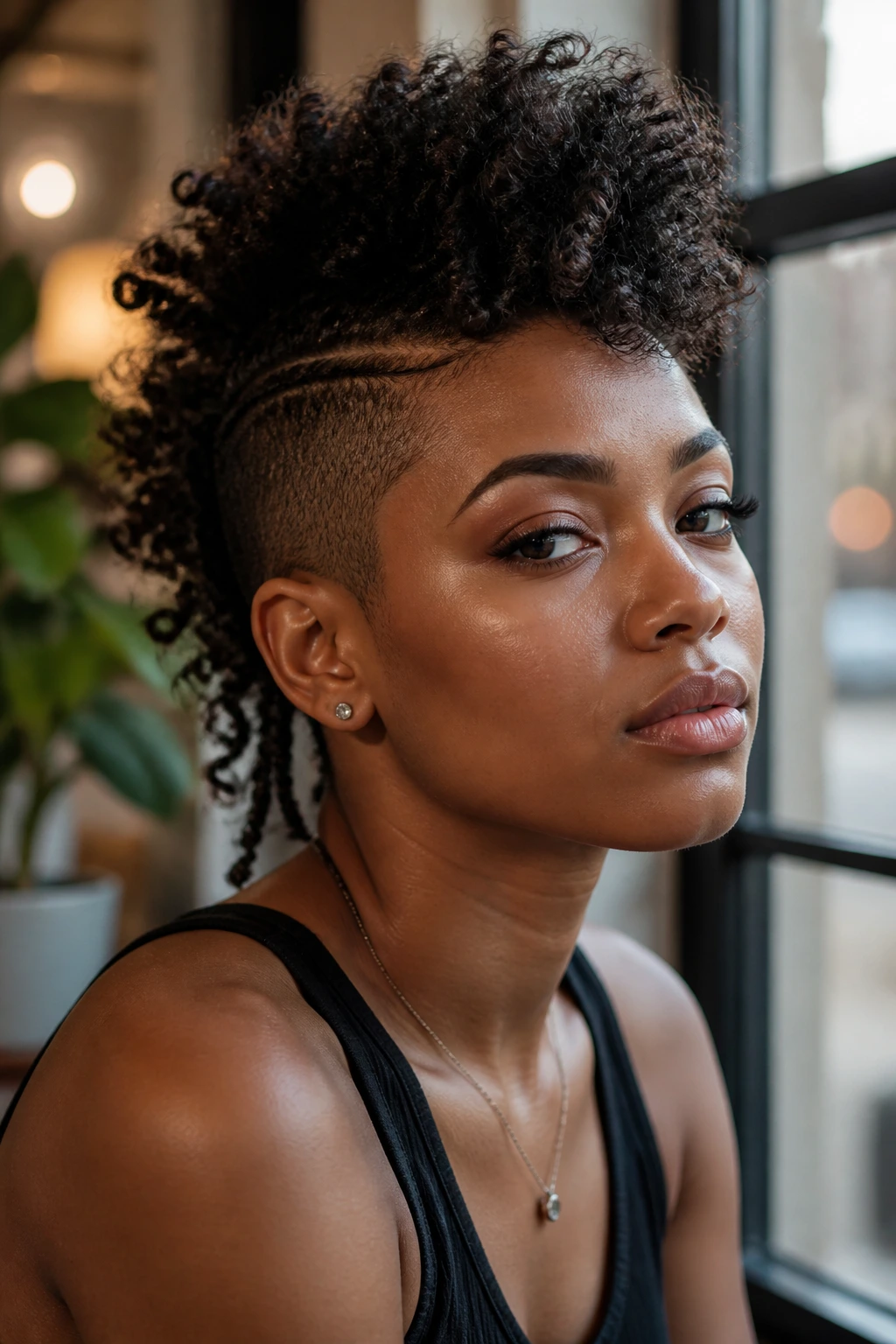
1. Razor-Faded Curly Mohawk
A good fade can make curls look twice as dense. This version keeps the sides clipped tight — usually with a 0.5 or 1 guard — while the center strip stays long enough for curls to spring up instead of collapsing into the scalp. If your curl pattern is 3B to 4C, leaving 4 to 6 inches on top gives you enough room to shape the silhouette without turning it into a puff.
Ask for a soft transition at the temple rather than a harsh shelf. That little slope is what keeps the cut from looking boxy. A curl cream at the roots, then a light mousse through the lengths, helps the top stay lifted without turning crunchy.
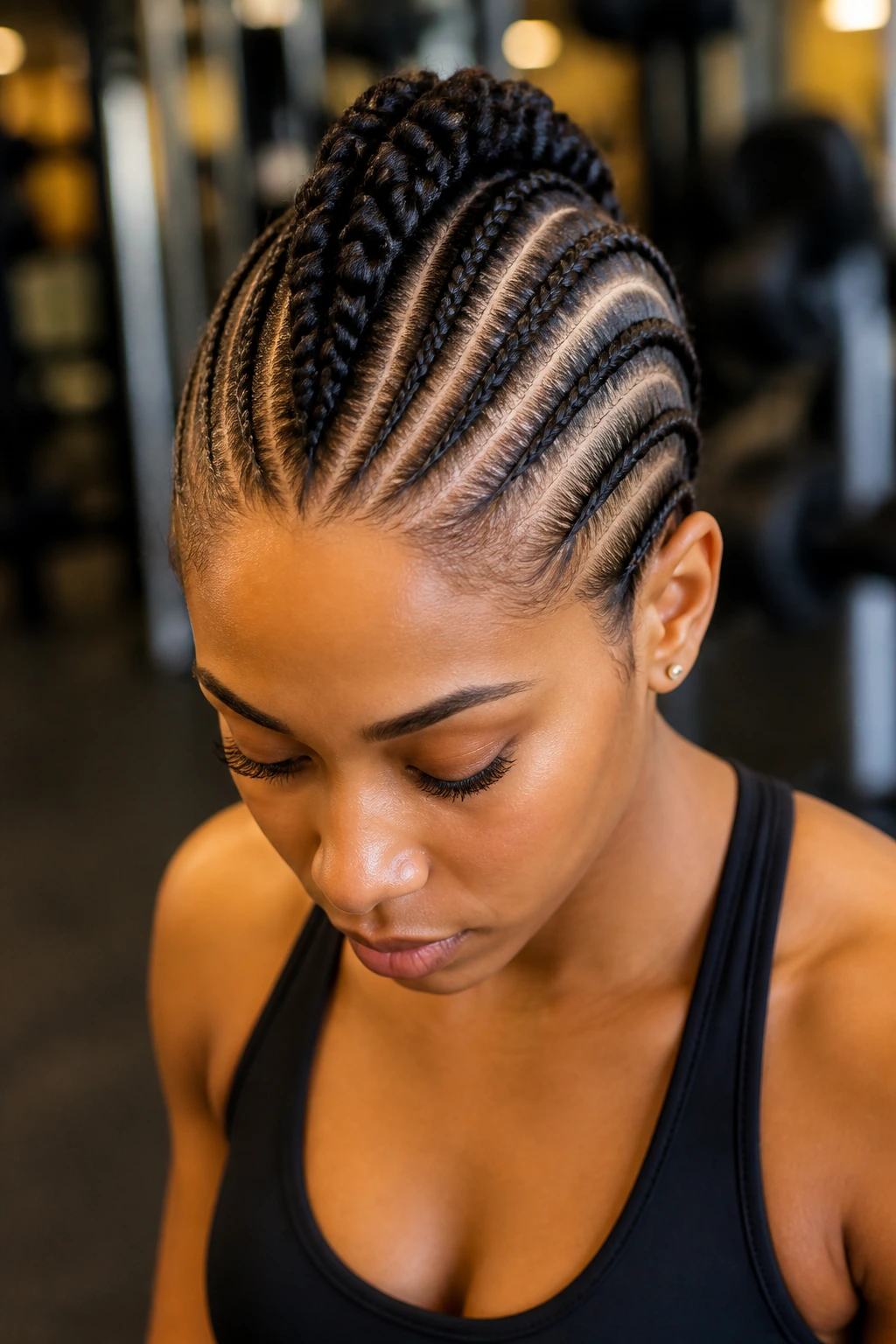
2. Braided Cornrow Mohawk
What happens when cornrows run straight into the center of the head? You get a hawk that stays tidy for days. This one usually starts with 6 to 8 cornrows on each side, all angled toward the middle, so the braid line itself becomes the mohawk. It is clean, athletic, and far less fussy than a style that depends on daily heat.
The center can stay loose, braided, or twisted, depending on how much volume you want. I like a slightly thicker middle ridge here — not a tiny strip — because the braids already create a strong line. Finish with braid spray on the scalp and a little edge control only where the hairline needs smoothing.
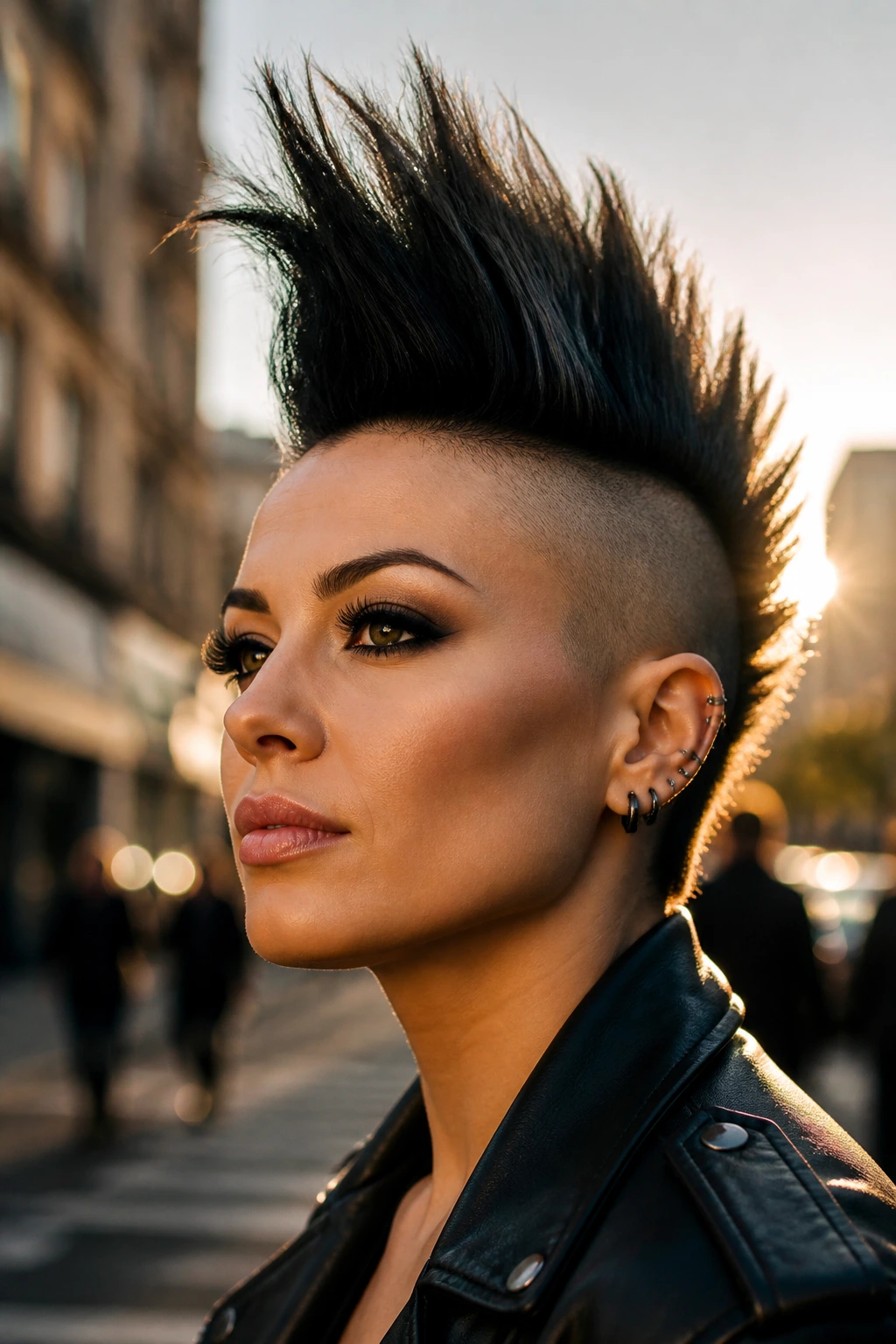
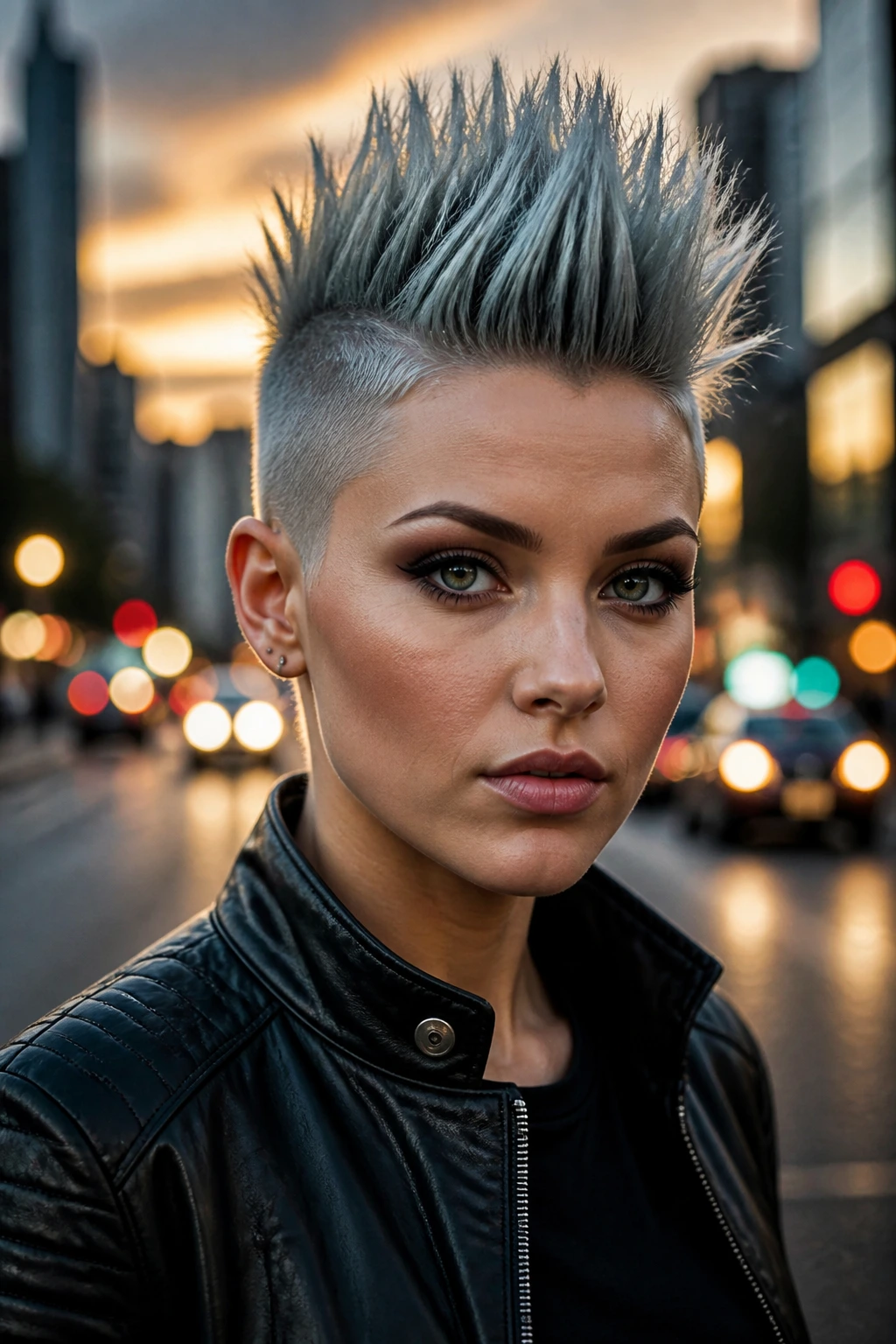
3. Silver Spiked Tapered Mohawk
Short hair does not have to play small. A silver spiked hawk with a tapered side cut looks sharp because it keeps the sides close and lets the top stand up in 1.5 to 3-inch pieces. That shorter length is what makes the spikes believable instead of floppy.
This style likes a matte paste or strong wax more than a shiny gel. Work the product into almost-dry hair, pinch sections upward with your fingertips, and stop before every strand looks identical. A little unevenness helps. If the color is silver or soft gray, the texture shows even more because the light catches the edges of each spike.
4. Soft Faux Hawk with Teased Crown
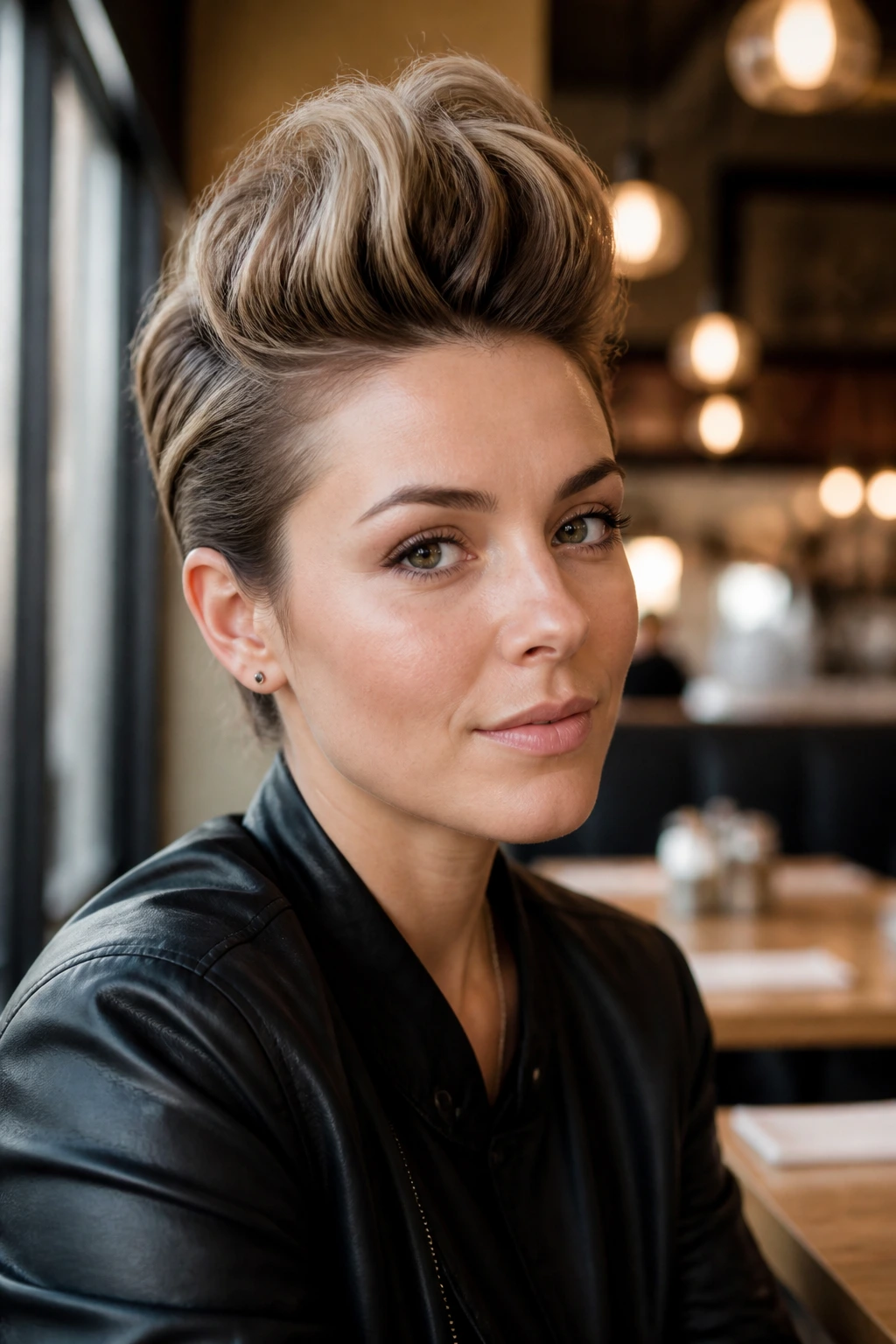
No clippers required. That’s the whole charm here. The sides are smoothed down behind the ears or pinned close to the head, while the crown gets teased at the roots and lifted into a narrow ridge. On straight or fine hair, that teasing at the crown is the difference between “half-up style” and actual mohawk energy.
Use a volumizing spray at the roots, backcomb the top in small sections, and pin the shape from underneath so the bobby pins disappear. The finish can stay soft, which makes this a smart choice for work, dinners, or any place where a shaved side would feel too loud.
5. Frohawk on Natural Curls
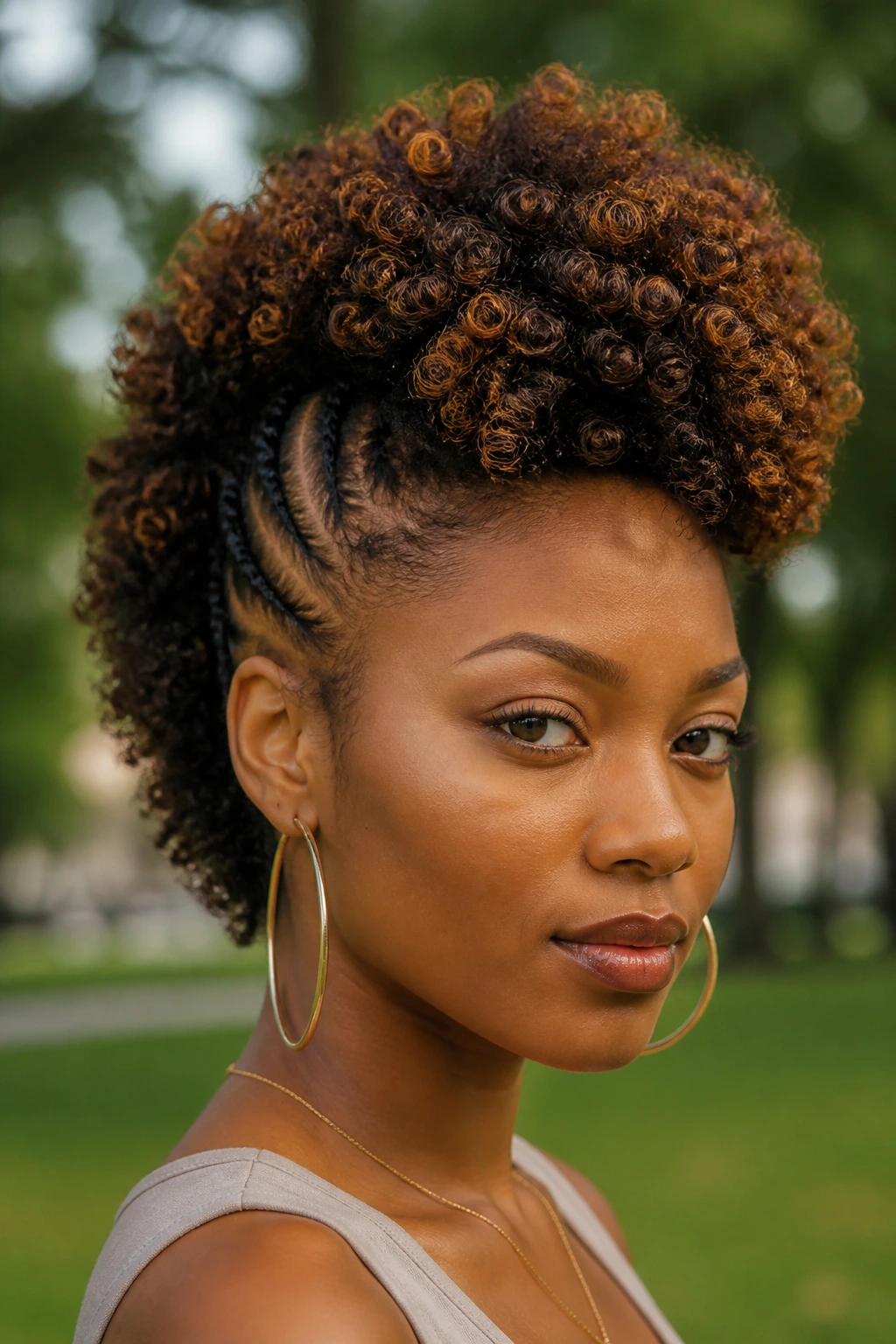
This is the style that proves a mohawk does not need heat to have shape. On natural curls, the sides are usually braided flat, twisted back, or pinned close, while the center stays free and full. The result is a frohawk — rounded, textured, and much bigger than a slim faux hawk.
The key is stretch. If the hair is pulled too tightly at the sides, the top ends up looking smaller than it should. A leave-in conditioner, curl cream, and a diffuser on low heat can help the crown lift without blasting the curls into frizz. Leave a little frizz, honestly. A frohawk looks better when it has some air in it.
6. Bantu Knot Mohawk
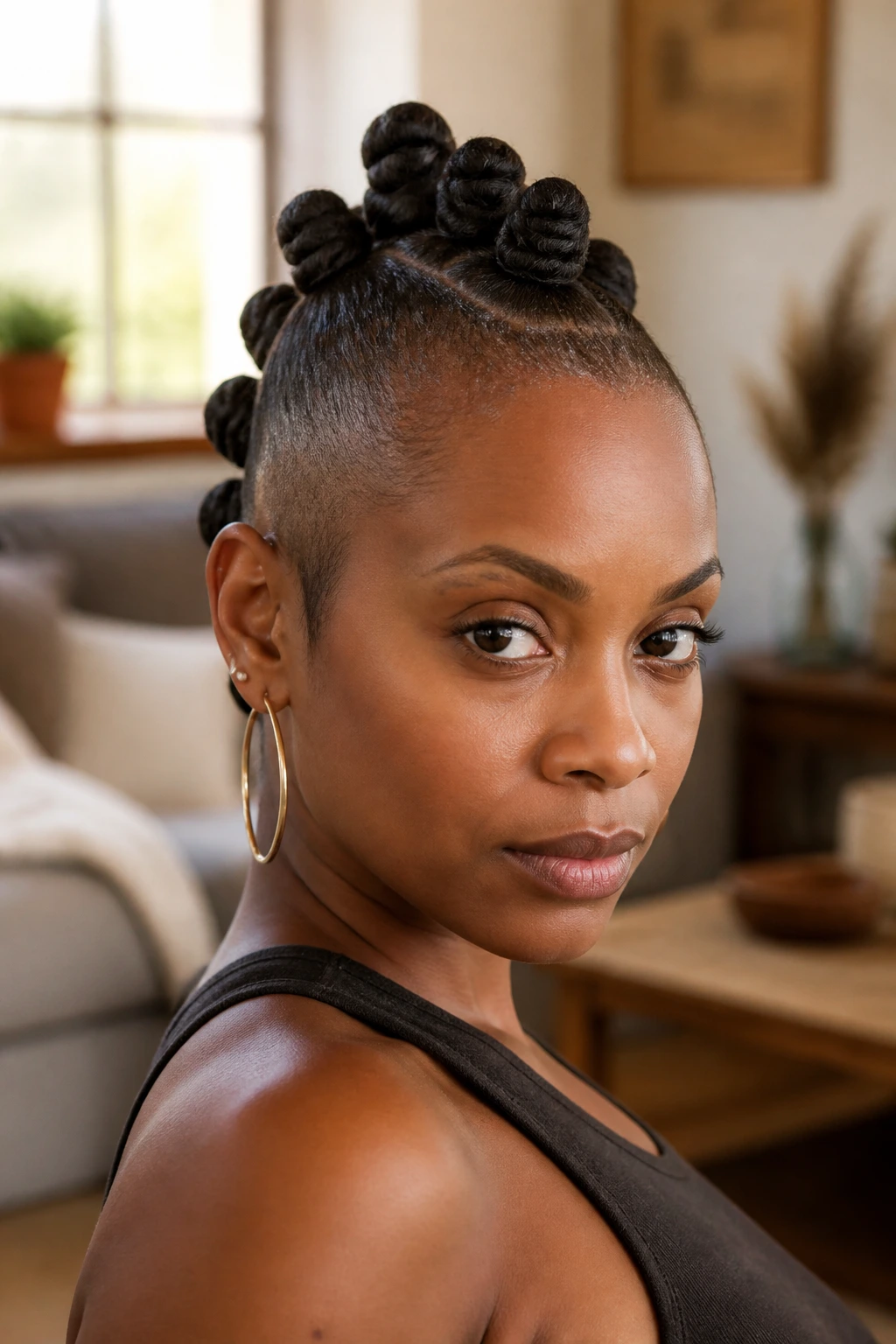
There’s something wonderfully sculptural about a row of Bantu knots running down the center of the head. A hawk built this way usually uses 5 to 9 knots, depending on length, with the sides kept flat or braided close. Each knot should be neat and compact, about the size of a walnut or a little smaller, so the line reads cleanly.
This is a smart protective style if you want something that can sit for a few days. It also gives you a second look when you take the knots down — the resulting curl pattern can be just as good as the style itself. Use a little gel at the part lines and a rat-tail comb to keep the sections sharp.
7. Side-Swept Curly Mohawk
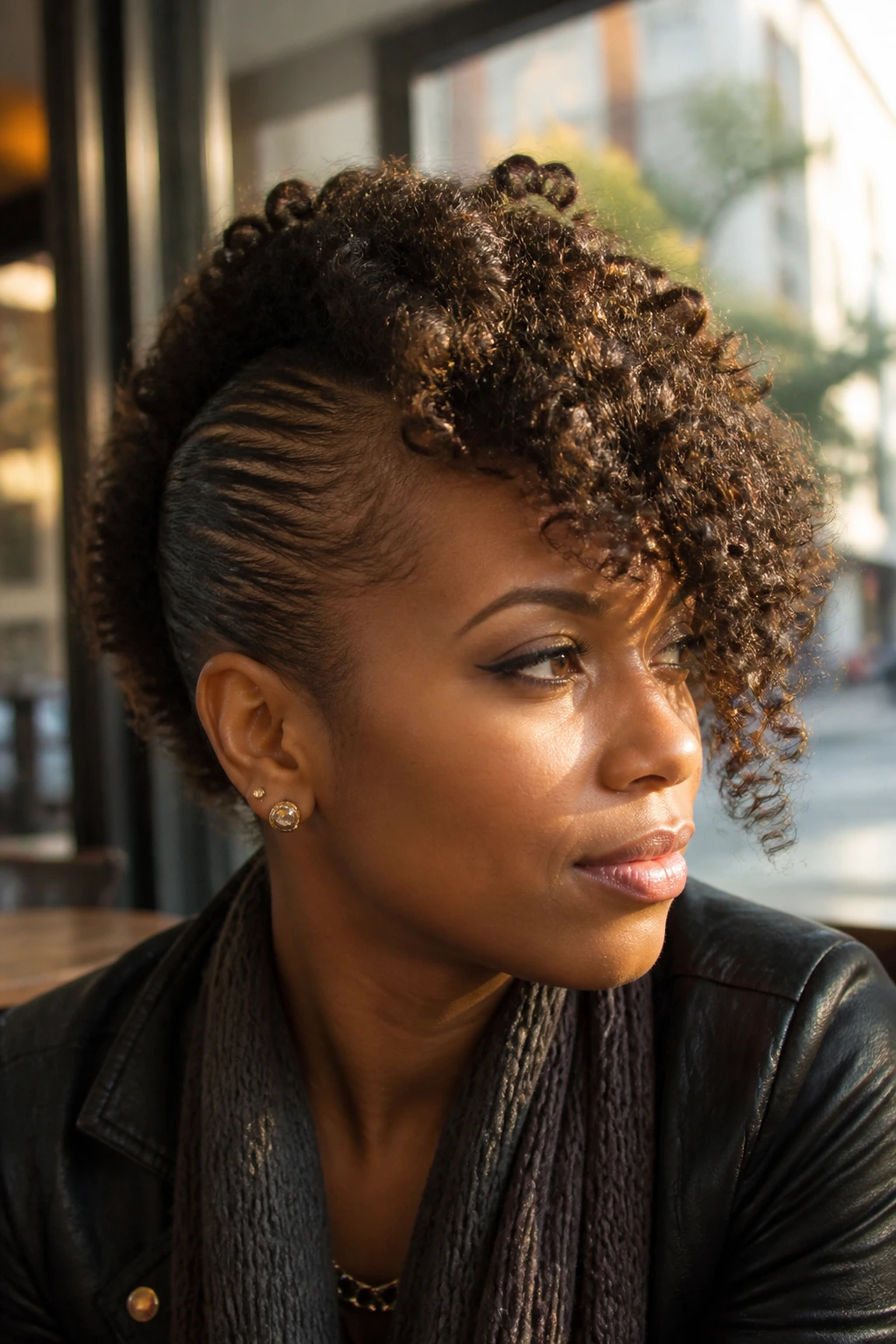
A hawk does not need to sit dead center. Sometimes the most interesting version is slightly off balance, with the curls swept to one side and the opposite side kept tighter or pinned down. That diagonal line gives the face motion, especially if the curls are medium length and have enough weight to drape a little.
This works well when one side of the hair has more density than the other, because the sweep turns that difference into part of the design. A diffuser helps, but so does letting the hair dry with clips holding the root direction in place. The whole point is movement, not perfection.
8. Undercut Mohawk with Long Fringe
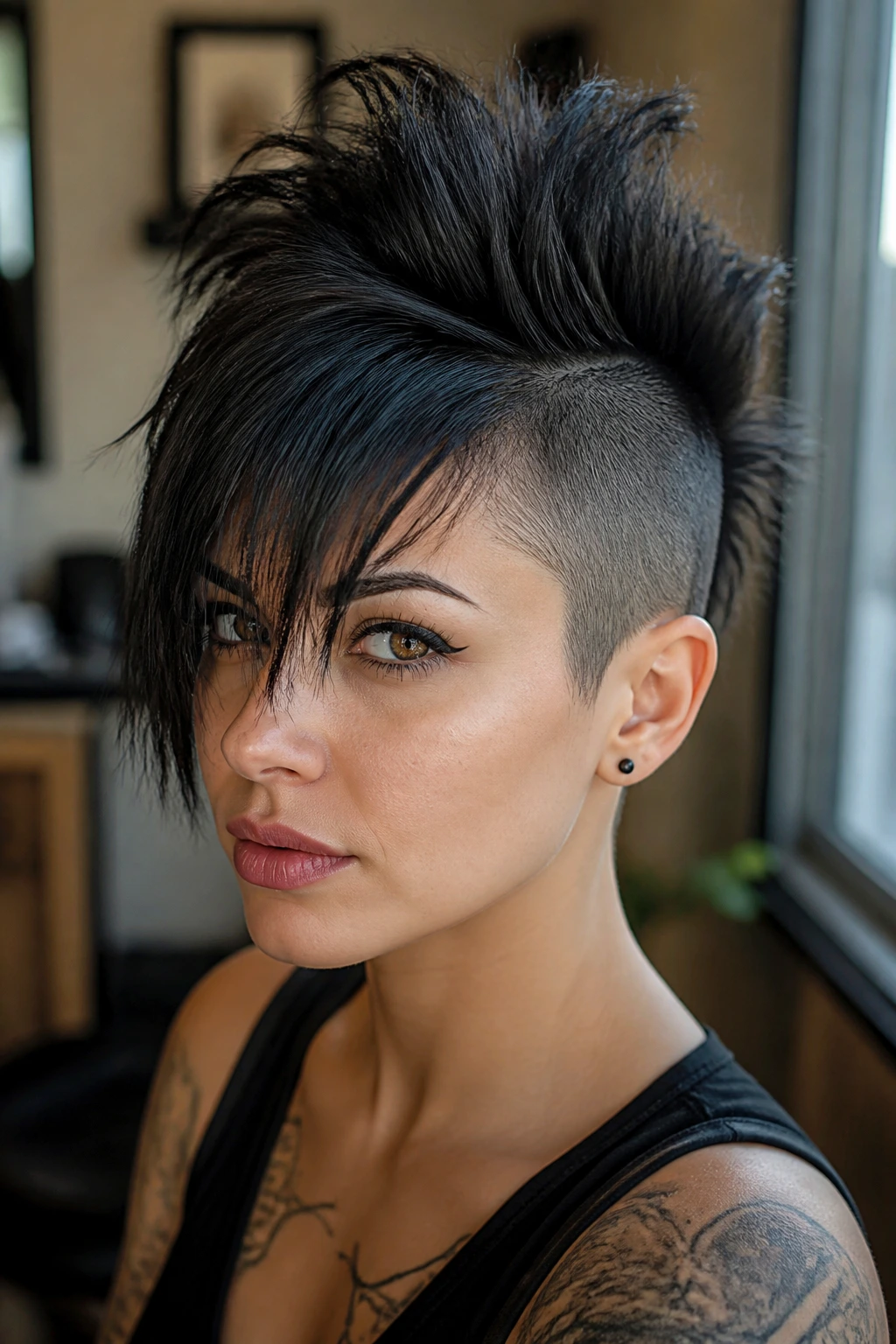
This one leans hard into contrast. The sides are undercut or shaved close, but the front keeps a long fringe that can fall forward, flip up, or be brushed into the hawk itself. That front piece gives the cut a face-framing edge, which can soften the severity of the shaved sides.
It looks especially good if you like changing your mood with your hair. One day the fringe can sit across the forehead; the next, it can be pushed back into a taller ridge with a bit of gel and a blow-dryer. If the fringe is too thick, it tends to hide the shape. Keep the front long enough to be useful, not so heavy that it swallows the cut.
9. Tapered Loc Mohawk
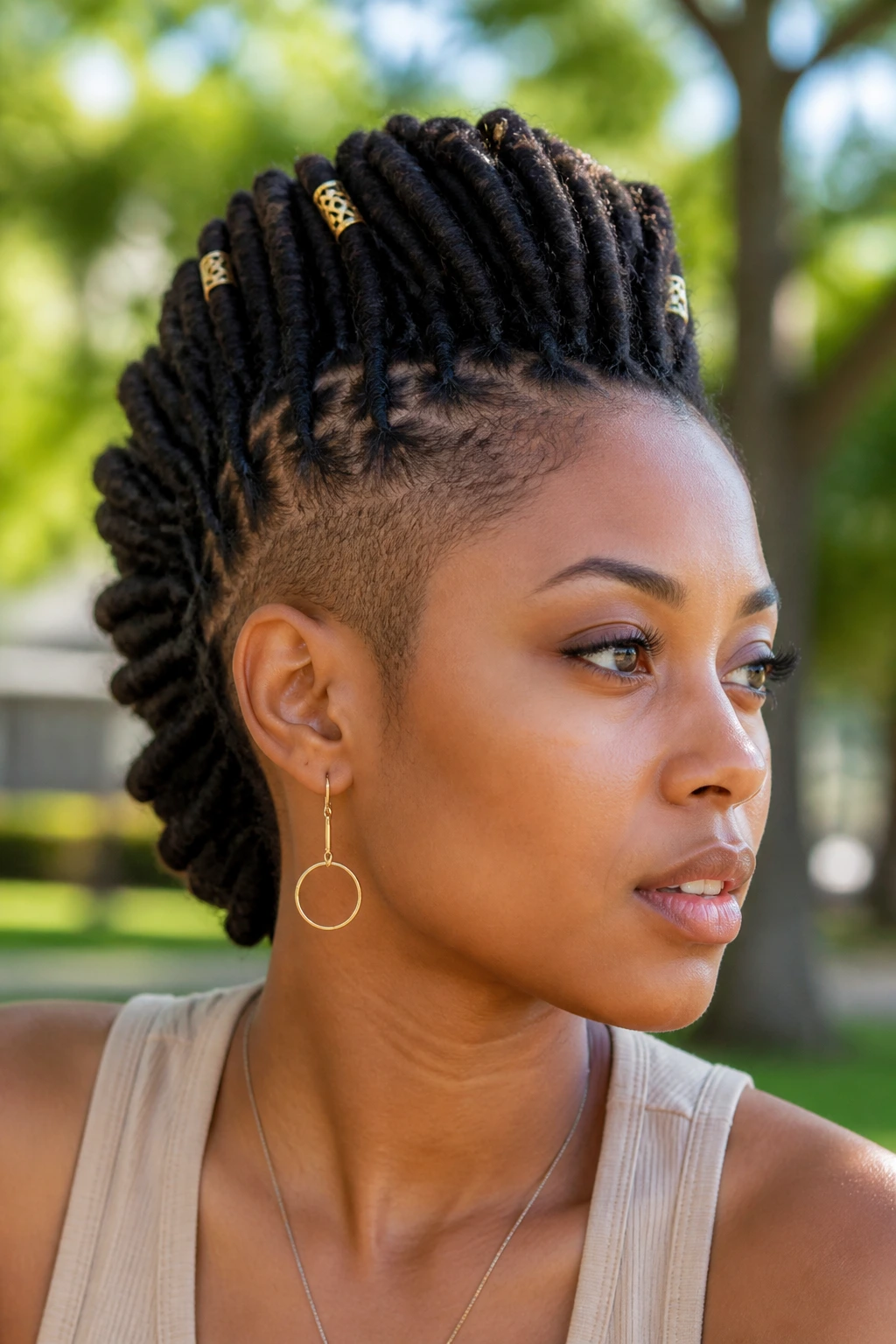
Locs gathered into a center ridge have their own kind of drama. The shape stays neat because the locs create natural structure, and a tapered side cut keeps the profile clean instead of bulky. A middle section of locs, pinned or tied toward the crown, creates the mohawk line without needing a full install.
This style is especially good when the locs are medium length, because they have enough weight to stay in place but not so much bulk that the top falls flat. Metal cuffs, thread wraps, or a few beads can sharpen the look without making it feel overloaded. The sides need regular cleanup, though. Once the taper grows out too much, the shape loses its crisp edge.
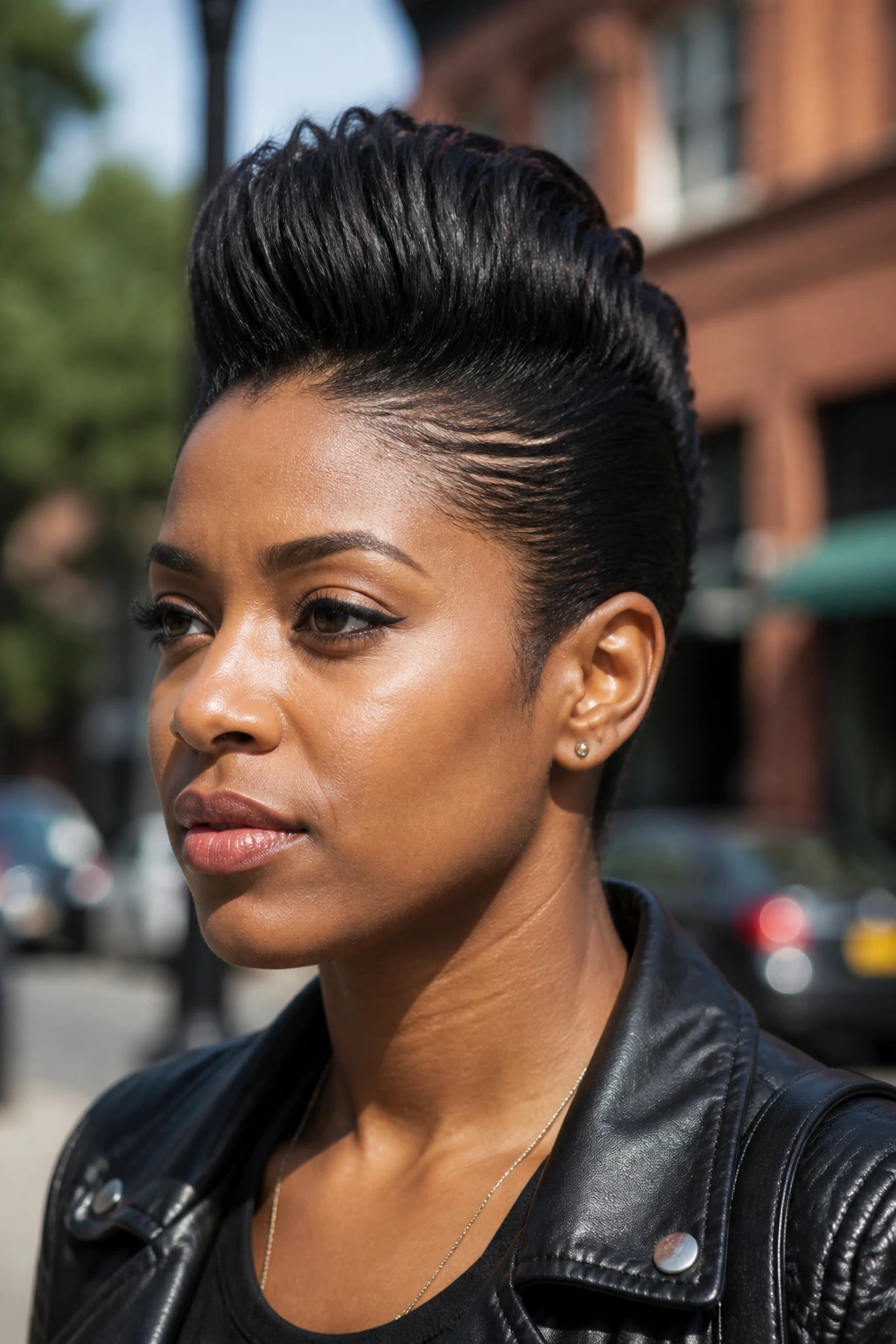
10. Sculpted Slick-Back Mohawk
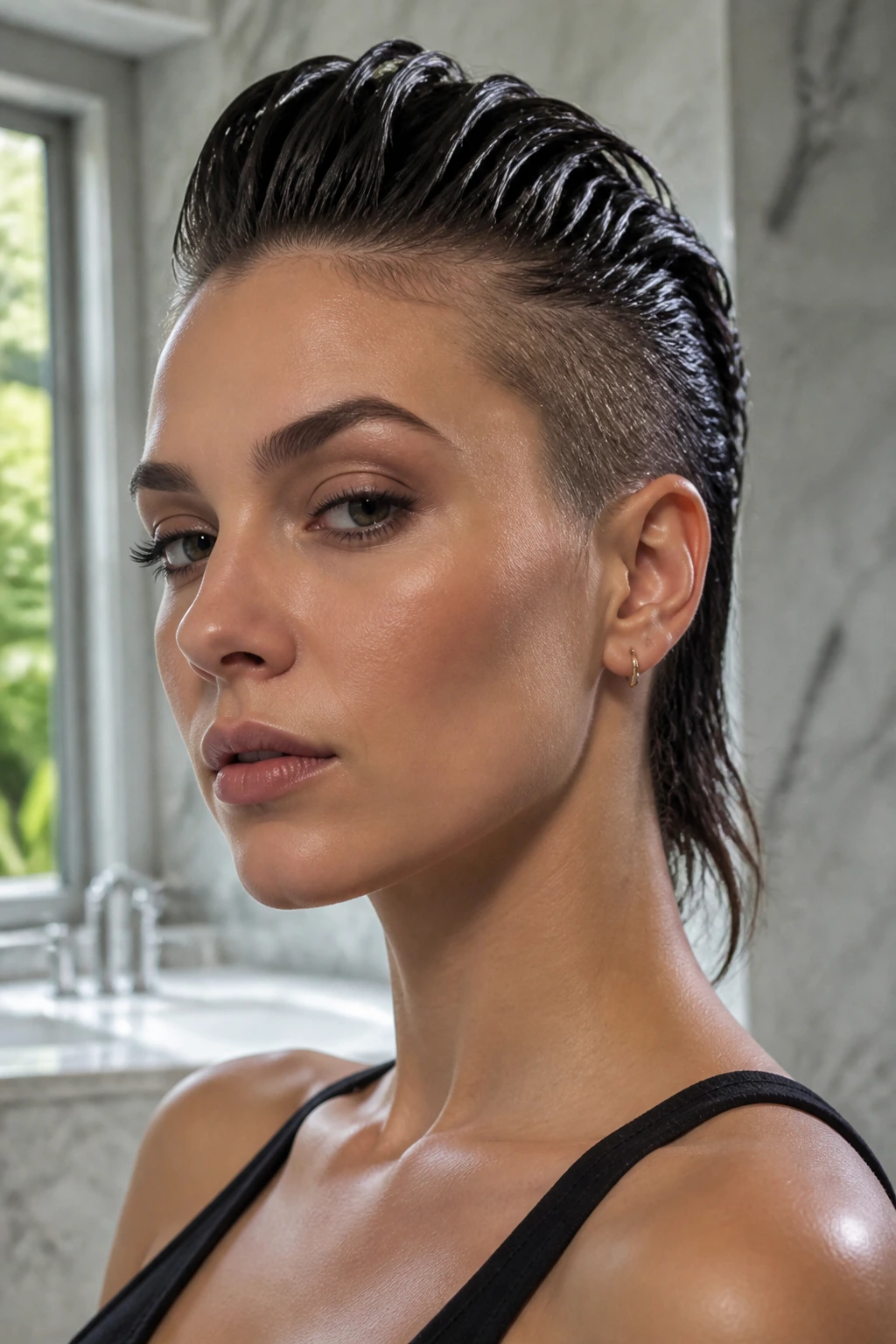
Wet-look hair can be lovely. It can also go greasy in a hurry if you use too much product. The difference is control. A sculpted slick-back hawk uses gel or strong-hold cream on damp hair, then a fine-tooth comb to pull everything tight before the top is lifted into a narrow ridge.
This version is especially good on short to medium hair because the shape holds better when there isn’t too much length fighting you. Blow-dry the crown on low heat while the hair is already directed upward, or the top will sag once it dries. Keep the ends neat, not stiff. A little sheen is chic; a helmet is not.
11. Box Braid Mohawk
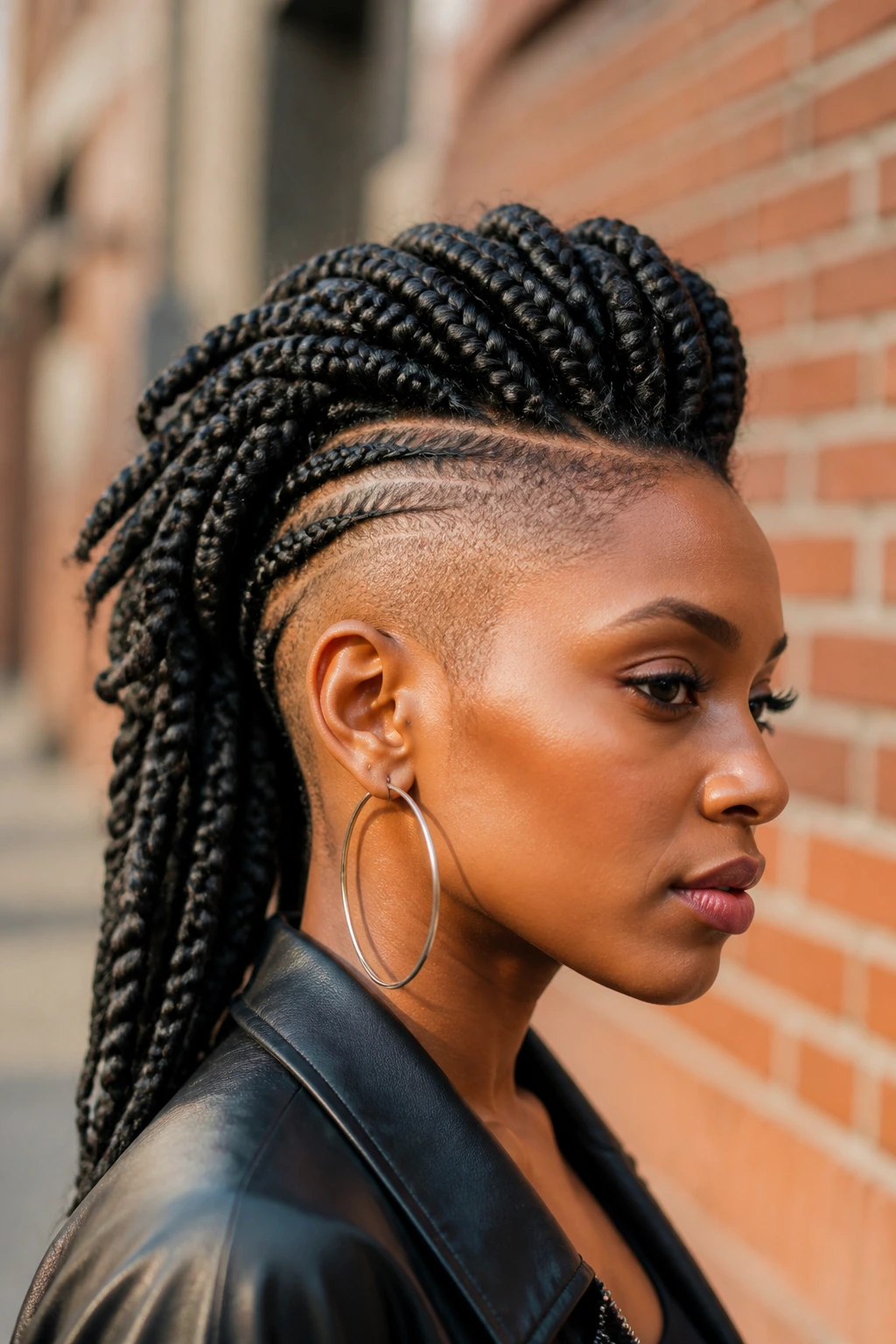
Box braids give the hawk a lot of body, which is why this style feels so full right away. You can braid the sides straight back, leave a clean center strip, and gather the braids into a mohawk ridge, or you can shave the sides and let the braids take all the visual weight up top. Either way, the shape is strong from across the room.
If you are adding braid hair for length, keep the added pieces even. Uneven braid weight makes the ridge slouch to one side, and that gets old fast. This style is one of the easiest to accessorize with cuffs, gold thread, or a few wrapped sections near the crown.
12. Twisted Halo Mohawk
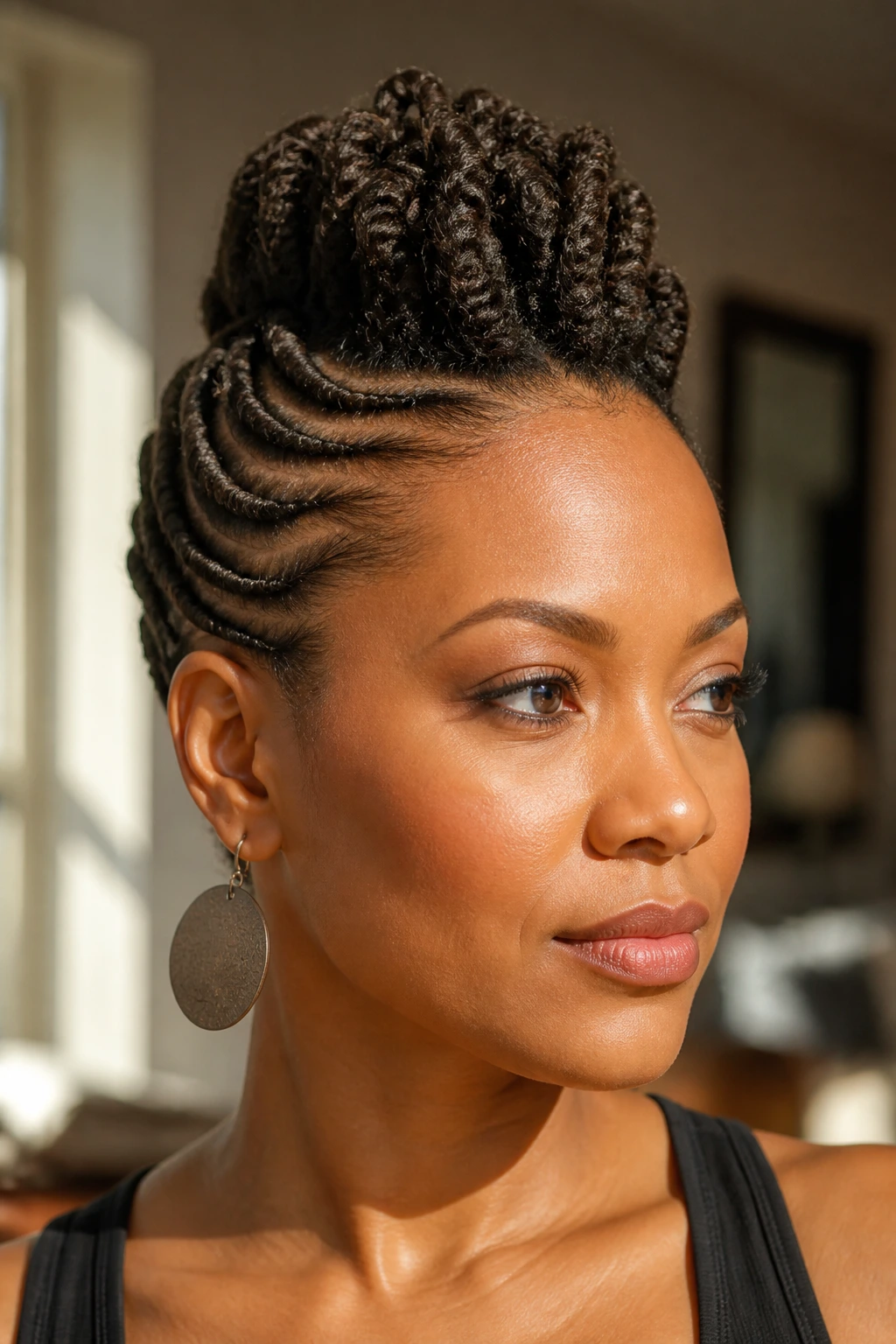
This is a softer take on the hawk shape, and it looks better than people expect. Two-strand twists or flat twists curve from the temples toward the center, forming a halo-like frame around a lifted middle strip. The result is part hawk, part crown, and it works beautifully on hair with some natural texture.
The twists should be snug enough to hold, but not so tight that the scalp looks strained. Eight to twelve twists is usually enough for medium-length hair, though thick hair may need more. I like this version for days when you want structure without making the hair look hard. It has shape, but it still moves.
13. Mullet-Mohawk Hybrid
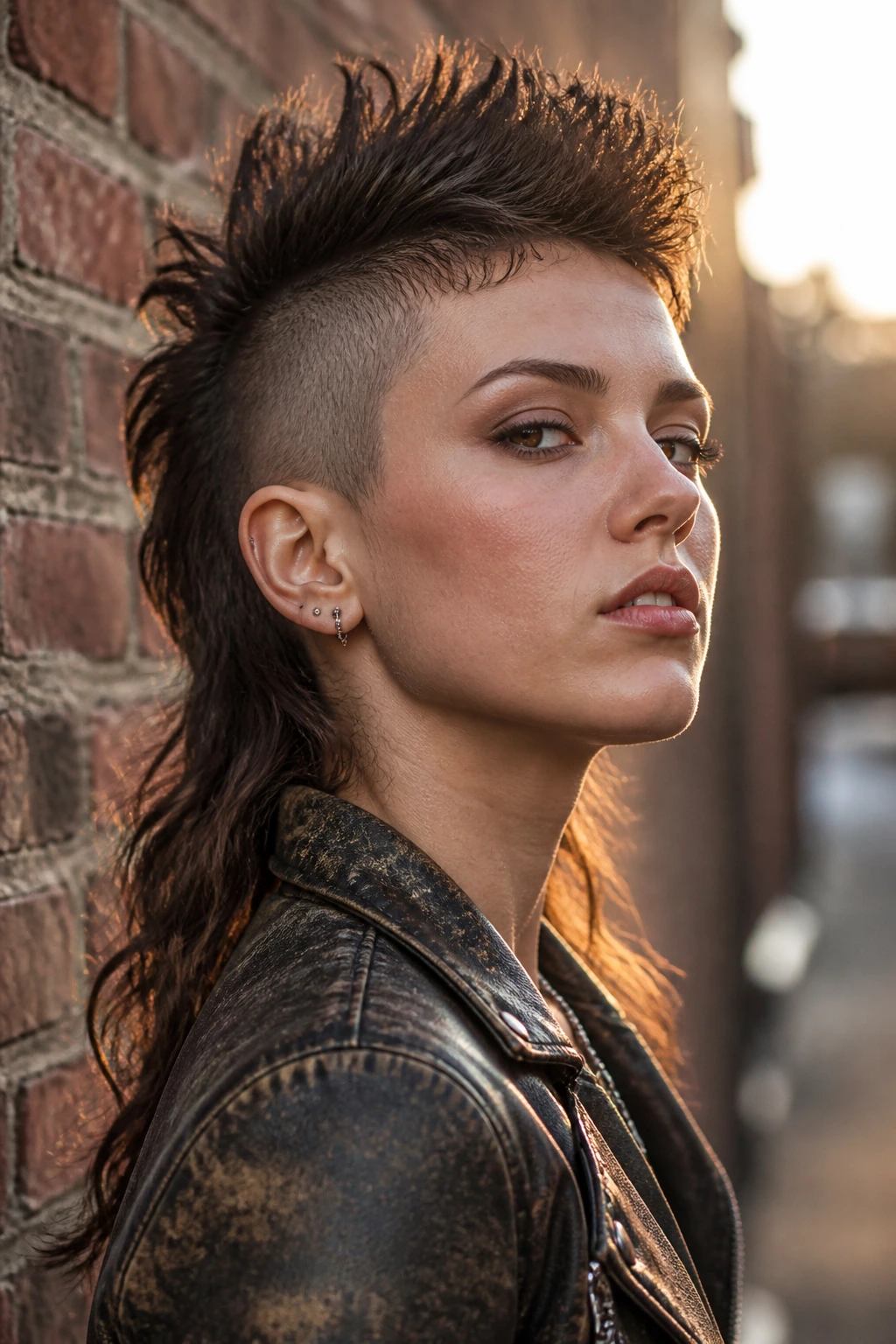
This one is for people who do not mind a little attitude. The top rises into a hawk, the sides stay short, and the back keeps more length than a classic mohawk would. It creates a profile that feels rebellious without being stuck in one decade or another.
The trick is balance. If the back gets too long and the top too narrow, the cut stops reading as intentional and starts looking grown out. Keep the neckline clean and the top layered enough to lift. If you like a little roughness in your hair, this hybrid has it built in.
14. Bubble Pony Mohawk
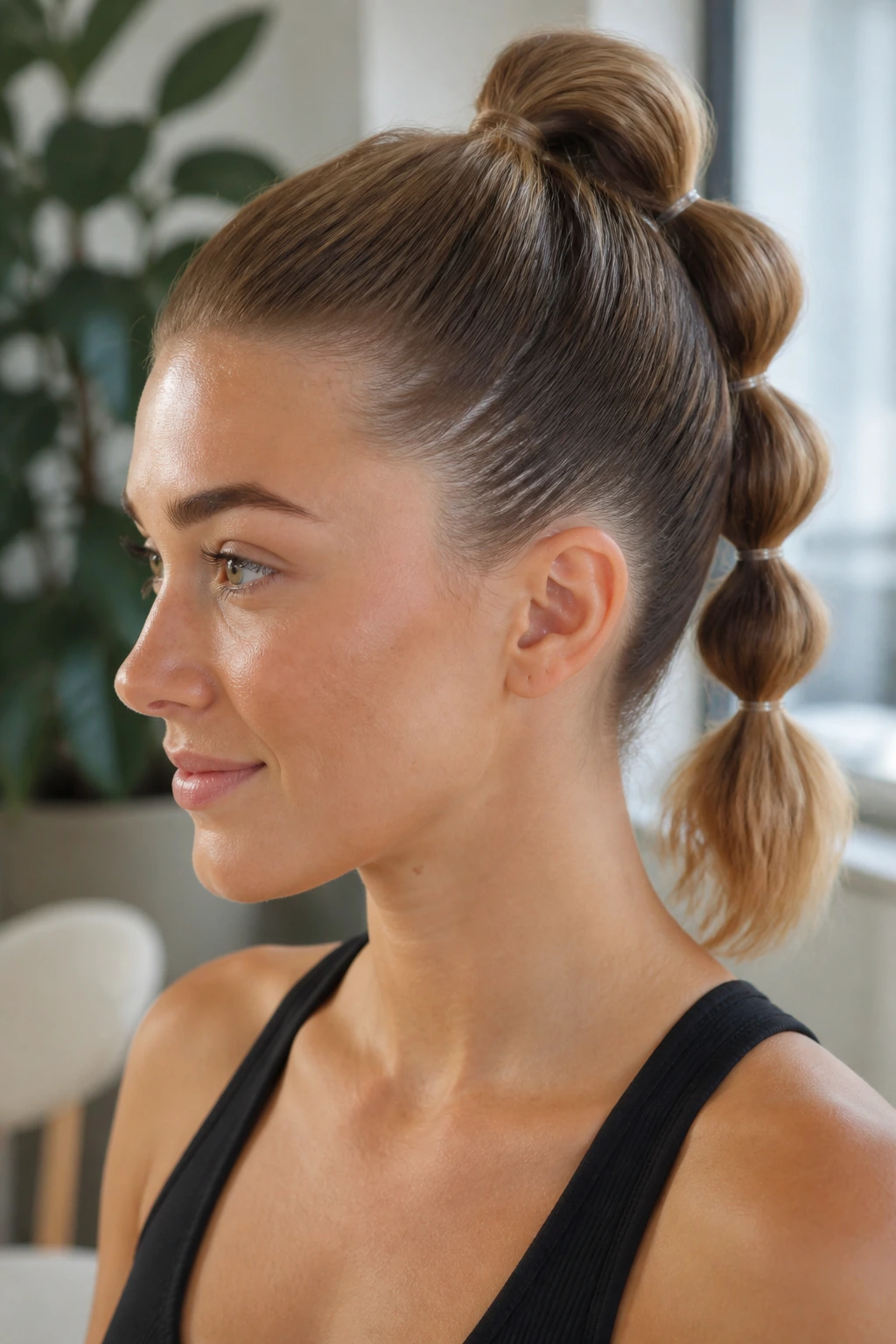
A bubble pony hawk is the kind of style that looks playful and polished at the same time. The top section is pulled into a central ponytail, then segmented every 2 to 3 inches with clear elastics to create rounded “bubbles.” On long or thick hair, the shape shows up fast and does not need much else.
Smooth the sides first. That part matters more than the bubbles themselves. If the sides are loose, the whole thing looks unfinished. A little shine spray on the surface and a light tug on each segment makes the bubbles fuller without destroying the clean line.
15. Goddess Braids Mohawk
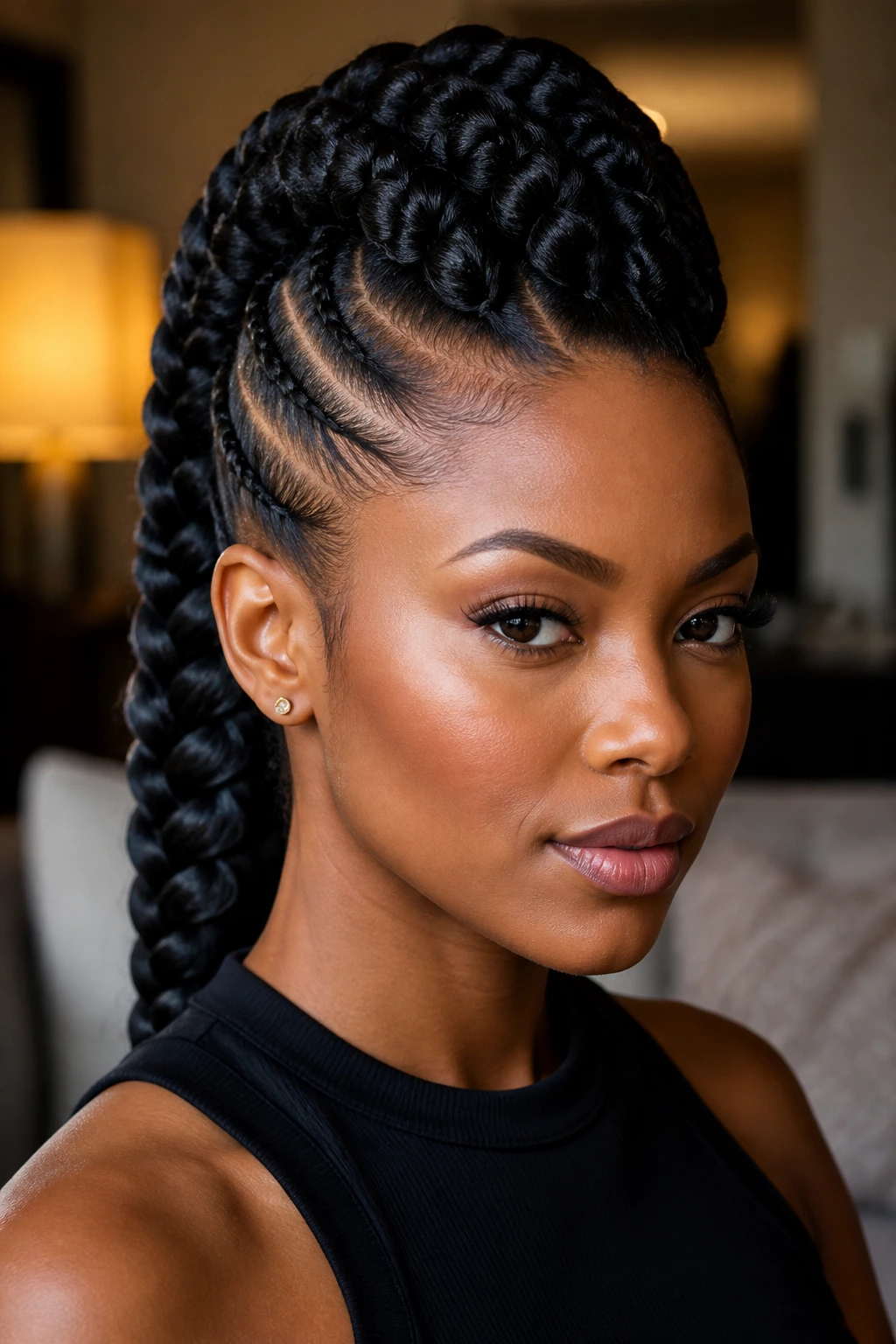
Goddess braids bring a softer, thicker braid pattern to the hawk shape. Instead of tiny rows, you get larger, more visible braids that run back into the center and give the style a smooth, almost regal outline. The size of the braids is the point here — too thin, and the style loses its presence.
This version is a good middle ground if you want something protective that still has softness. Add braid cuffs, a small pearl pin, or a few wrapped threads near the temple. Those small details are enough. The braids themselves already do most of the talking.
16. Pixie Hawk
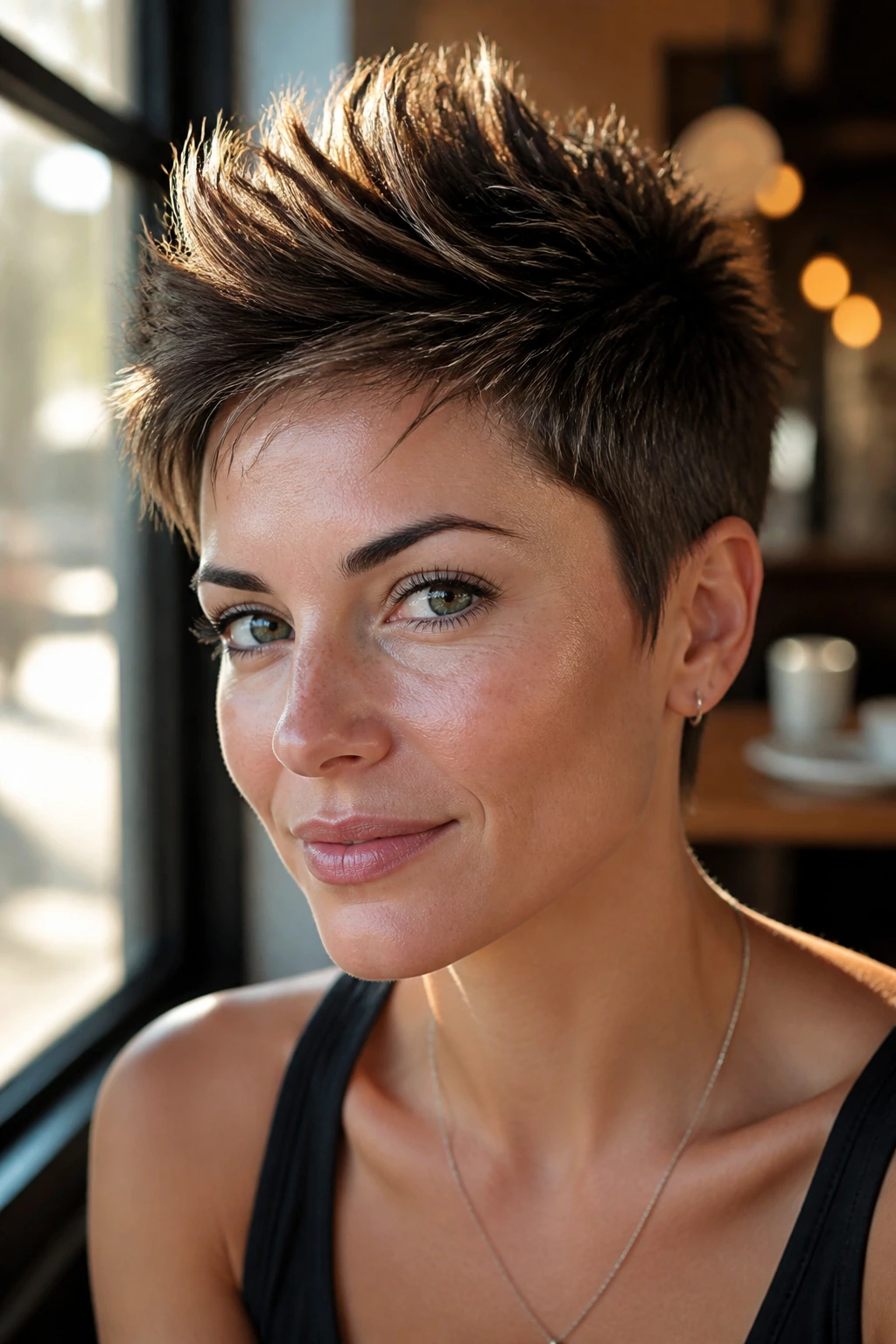
Short hair can still stand up and say something. A pixie hawk uses a cropped cut with enough length at the crown — often 1 to 2.5 inches — to spike or sweep upward. The sides stay tight, and the top gets all the movement.
This is one of the easiest looks to wear if you don’t want an hour-long styling session. A dime-sized amount of pomade, rubbed between the palms, is usually enough. Push the hair up and slightly forward, not straight back. Straight back can make a pixie hawk look flat and a little dated.
17. Wet-Look Mohawk
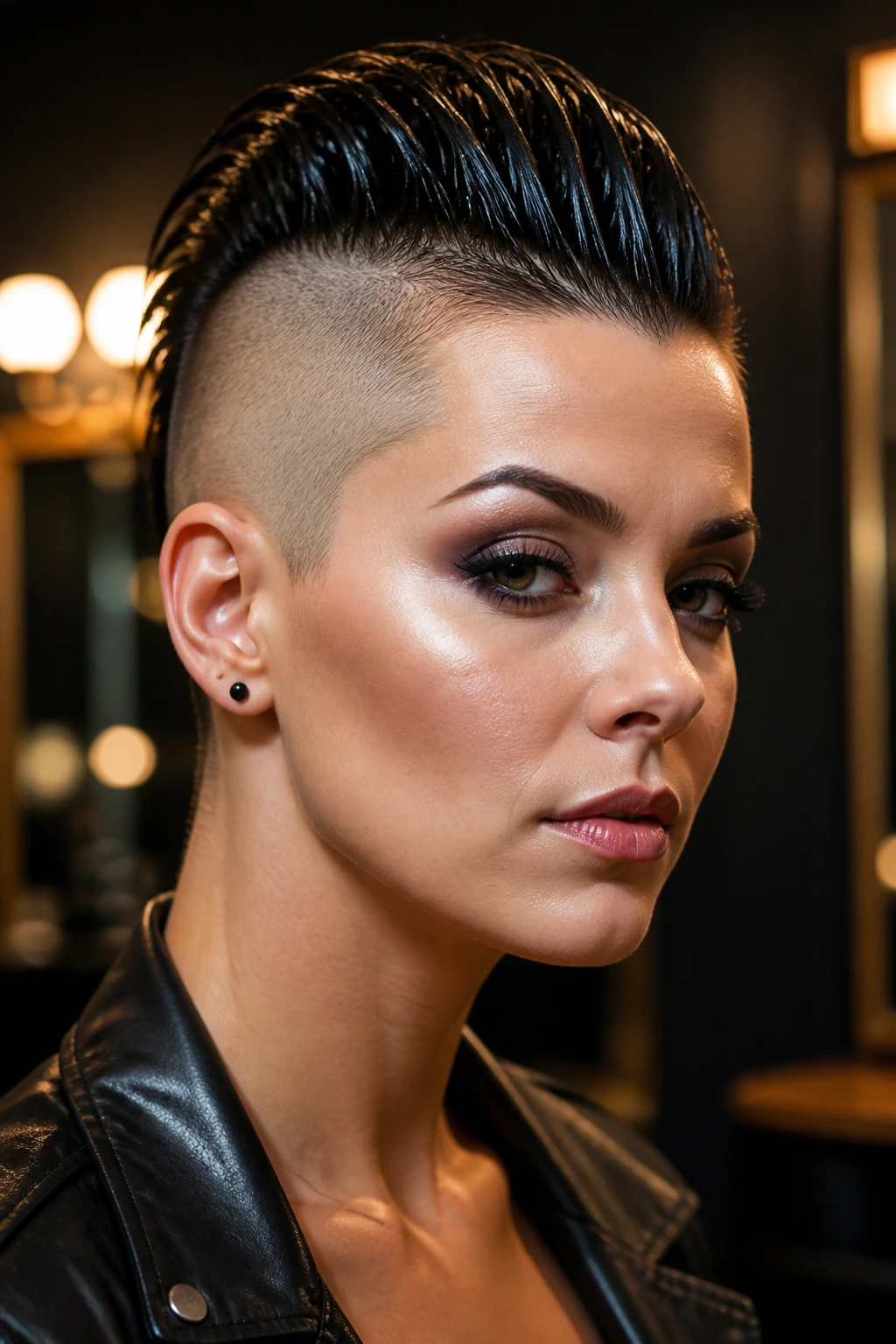
Gloss changes everything. A wet-look hawk relies on shine to make the ridge feel deliberate, with the sides combed close and the top slicked into a smooth, reflective strip. It works on medium or longer hair and looks especially good when the texture is controlled from root to end.
Use gel on damp hair, then a small amount of serum on the surface once the shape is set. That second step is where the shine shows up. If the hair is soaked in product, the style can drip and separate. Less is safer. You want sleek, not slippery.
18. Curly Topknot Mohawk
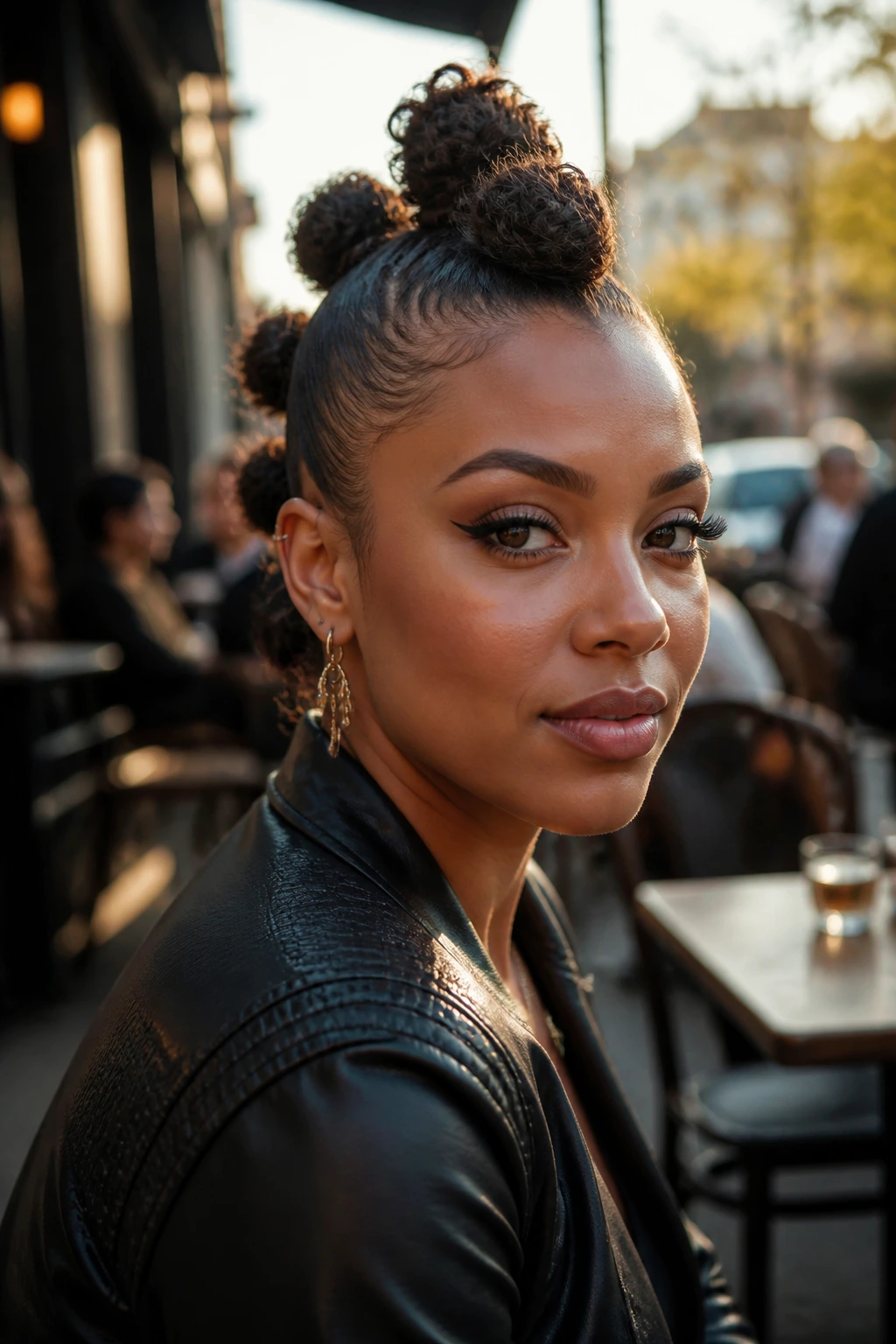
Mini topknots down the center give the hawk a playful, almost architectural shape. Usually there are 3 to 5 knots, spaced evenly from front to back, with the sides smoothed down so the line stays clean. Each knot can be left a little loose for texture, which keeps the whole thing from looking too severe.
This is a good second-day style for curls that have lost a little bounce. The knots hide the fact that the roots are not pristine, and that is a small gift. Use mini elastics that do not snag, and keep the knots high enough that the silhouette reads as a hawk rather than a row of buns.
19. Feathered Layered Mohawk
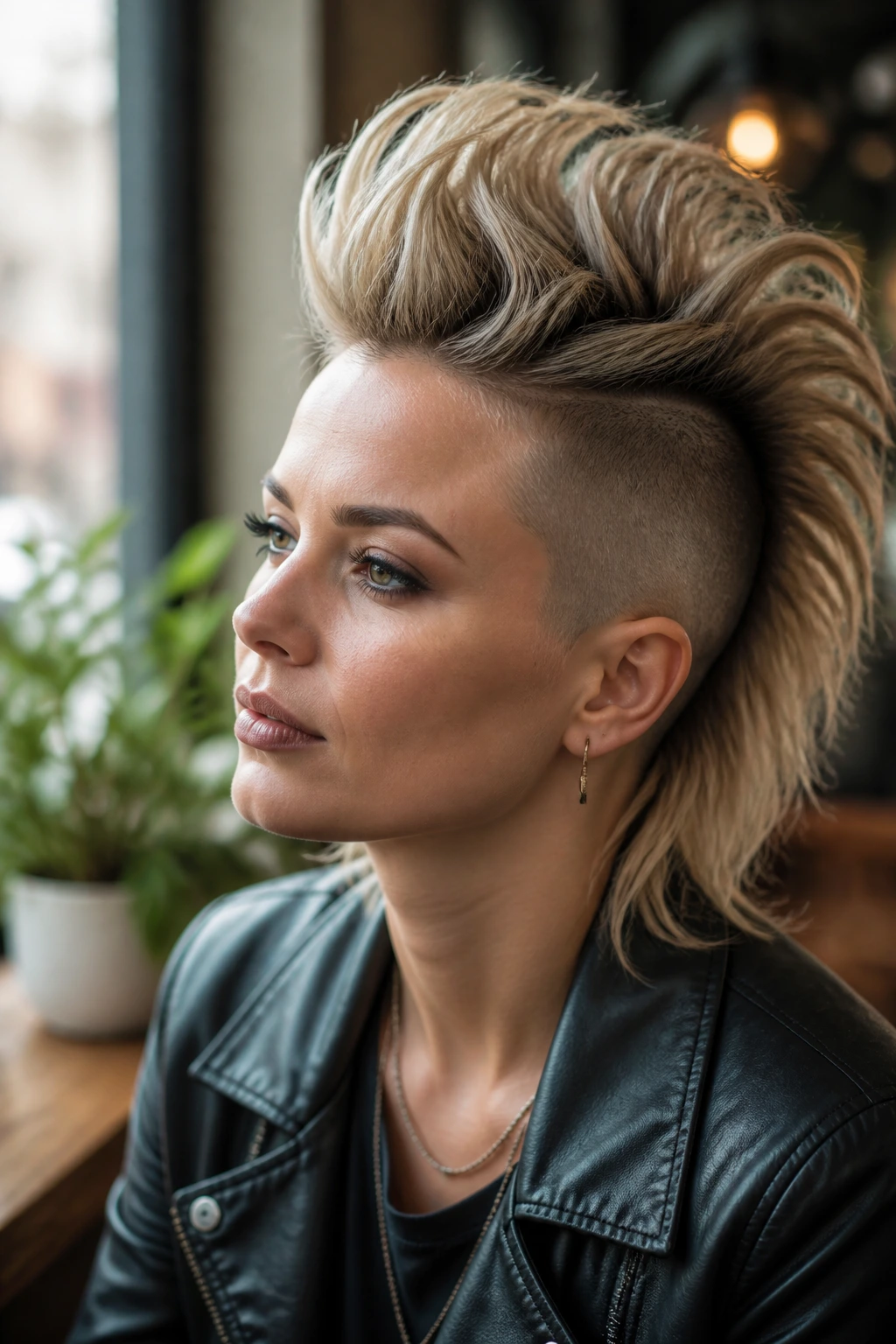
A feathered hawk is gentler than a shaved or spiked version, and that’s exactly why it works. The haircut uses layers to create movement, with the top feathered back or slightly upward so the edges don’t feel heavy. It’s a nice option for fine hair, because layers make the top appear fuller without needing a ton of product.
A round brush and a low-heat blow-dryer help here, especially if you direct the hair away from the face while drying the roots. Finish with a little texturizing spray. Not too much. Fine hair gets stringy fast when people load it up with product.
20. Crochet Braid Frohawk
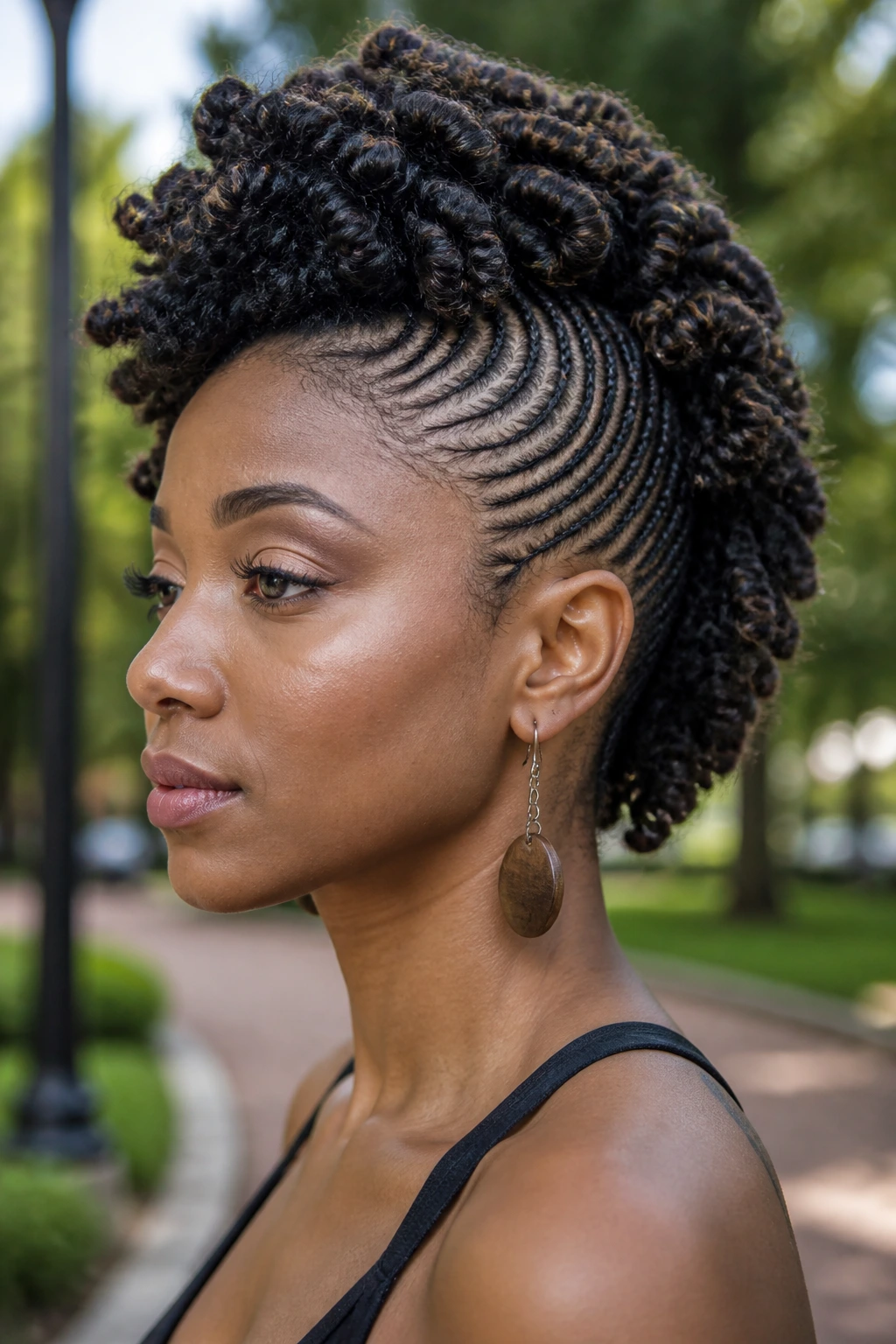
Crochet hair can make a frohawk feel full and dense without asking the natural hair to do all the work. The sides are usually braided close, while the center strip gets crochet pieces attached for volume. It’s a smart protective option when you want the shape of a hawk but need the hair itself to stay out of daily manipulation.
Control the density. Too much crochet hair in the center makes the style look heavy and flat at the root, which defeats the point. If you keep the middle fuller at the crown and a little lighter toward the nape, the shape lifts better. I’d rather see a slightly tapered frohawk than a swollen one.
21. Short Natural Tapered Hawk
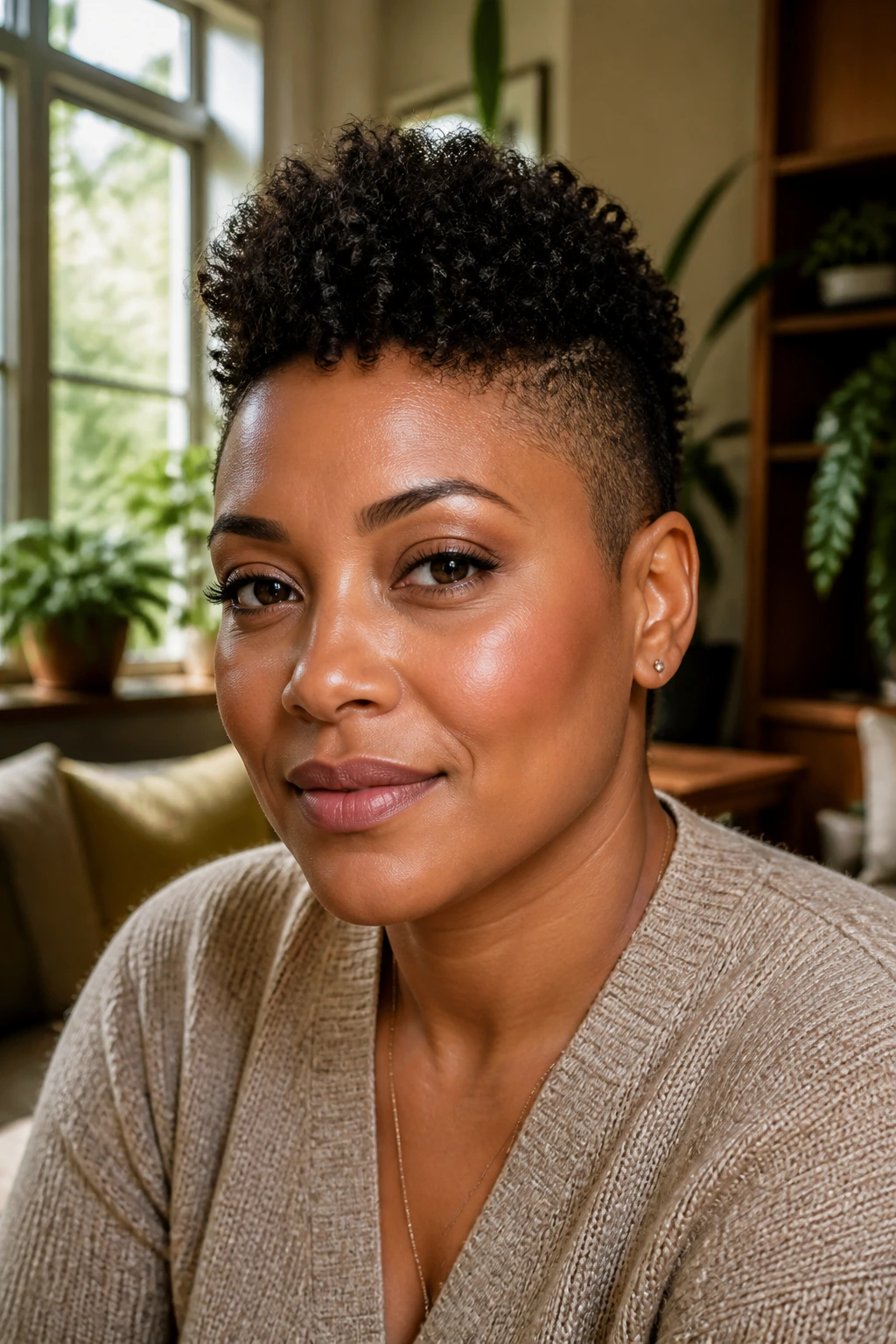
This is the quiet one in the group, and that is not a bad thing. A short natural hawk uses a taper on the sides and keeps just enough length on top — often 2 to 4 inches — for a sponge, pick, or finger shaping. It reads clean, current, and low-fuss.
The beauty here is in the outline. The shape stays close to the head, which makes it easy to wear every day without it feeling dressed up. A bit of leave-in conditioner, a small amount of cream, and a gentle pick at the crown are usually all it takes. If you like a hawk but not a lot of drama, this one earns its keep.
22. Platinum Spiked Mohawk
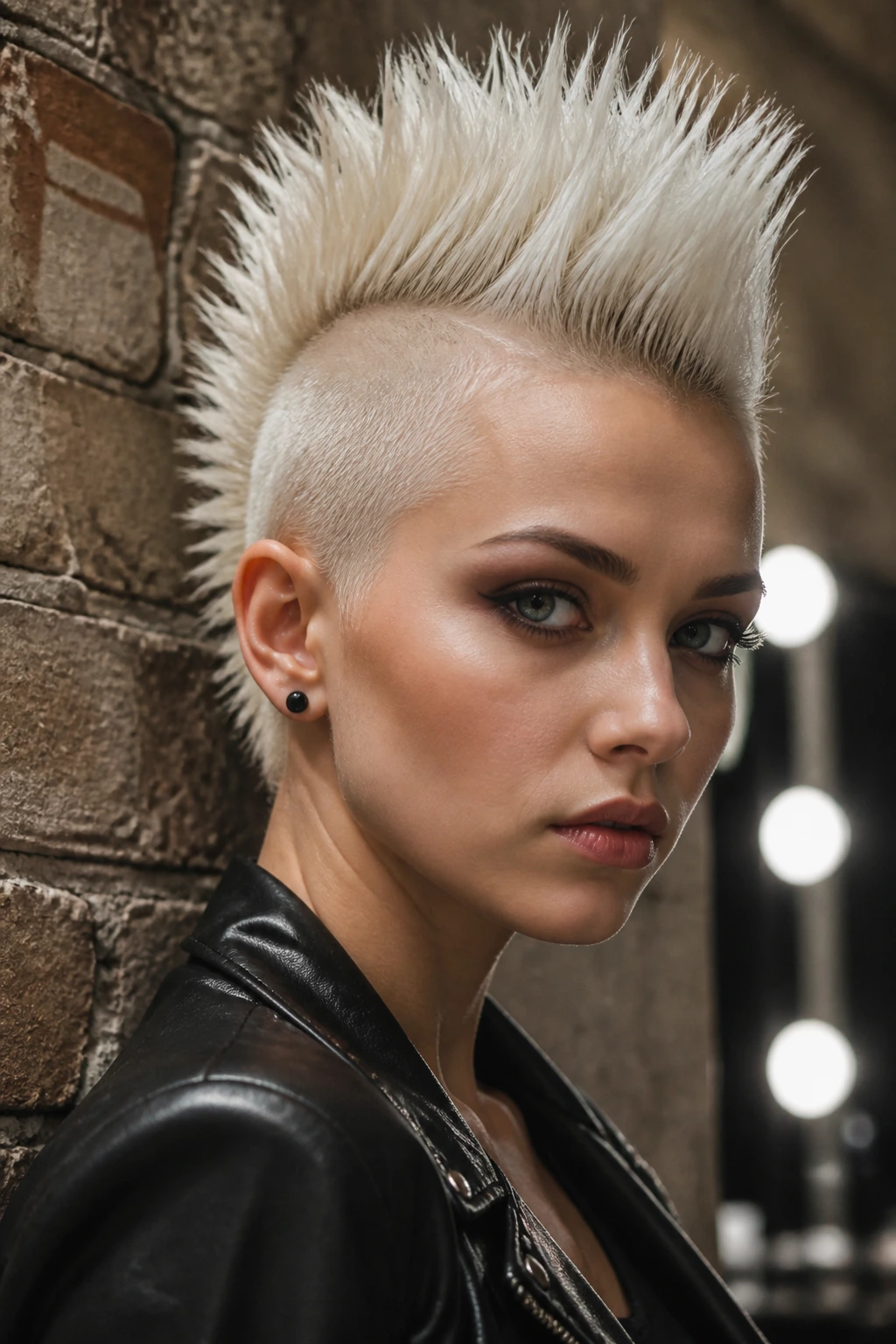
Platinum hair turns a hawk into a visual event. The light color makes every spike, ridge, and angle more obvious, so the cut has to be clean before the color goes on. This works best when the top is already short enough to stand upright, usually around 2 to 3 inches, because long platinum hair can start to look wispy fast.
Bleached hair needs care, no way around it. Keep a bond-building treatment or deep conditioner in the rotation, and do not stack high heat on top of that color unless you enjoy brittle ends. The shine of platinum is part of the point, but the texture matters more than the brightness.
23. Half-Up Mohawk on Long Hair
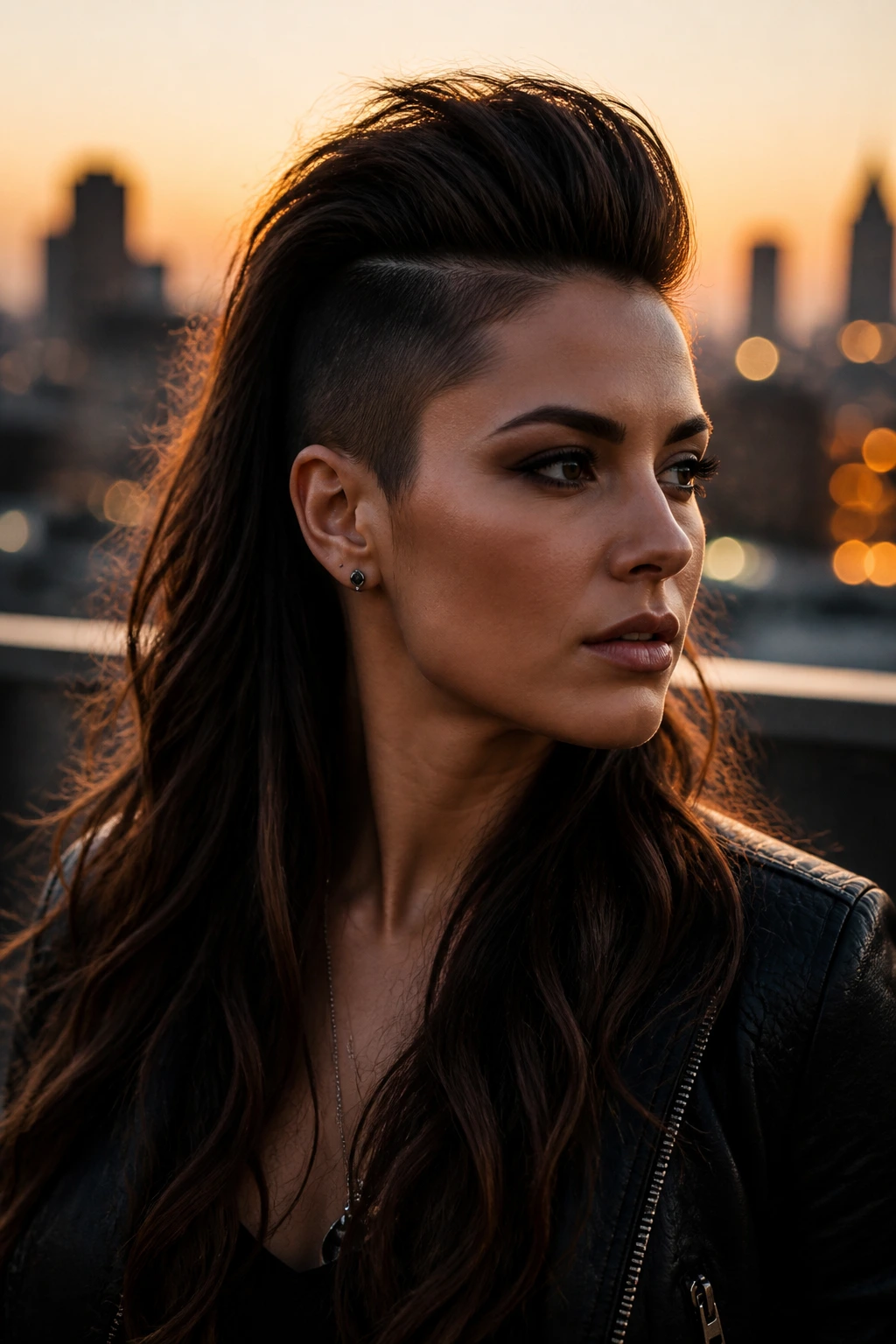
Long hair does not have to disappear to make a hawk shape. A half-up mohawk pulls the top and center sections into a lifted ridge while the rest of the length stays loose down the back. That contrast — tight on top, free underneath — gives you the silhouette without losing the drama of long hair.
This works especially well with layered lengths. A few pieces can be pinned into a twist or small pony at the crown, then loosened slightly so the shape has width. If the sides are too slick, the look can feel severe, so leave a little softness near the temples. Long hair likes a softer line anyway.
24. Hair-Tattoo Mohawk
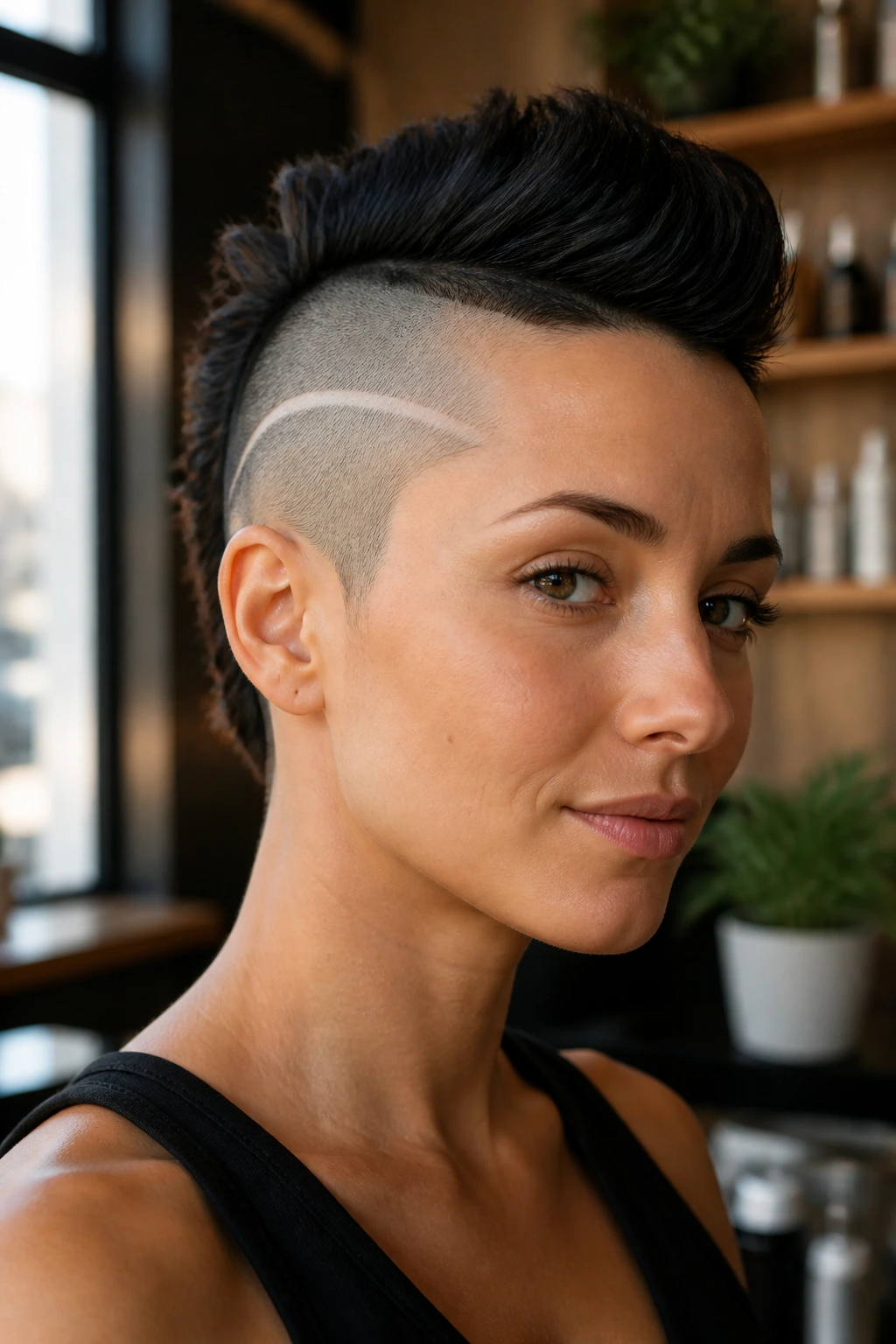
Shaved designs on the sides change the whole haircut. A single clean line, a curved notch, or a small geometric pattern can make the hawk feel sharper without adding more height or color. That detail sits best when the rest of the cut is simple. Too many designs fight each other.
The maintenance is the part people underestimate. Hair tattoos grow blurry quickly, so a touch-up every 1 to 2 weeks keeps the pattern readable. If you want the design to last longer, choose one strong line instead of a cluster of tiny marks. Small details age badly when they get crowded.
25. Faux Hawk Updo for Formal Events
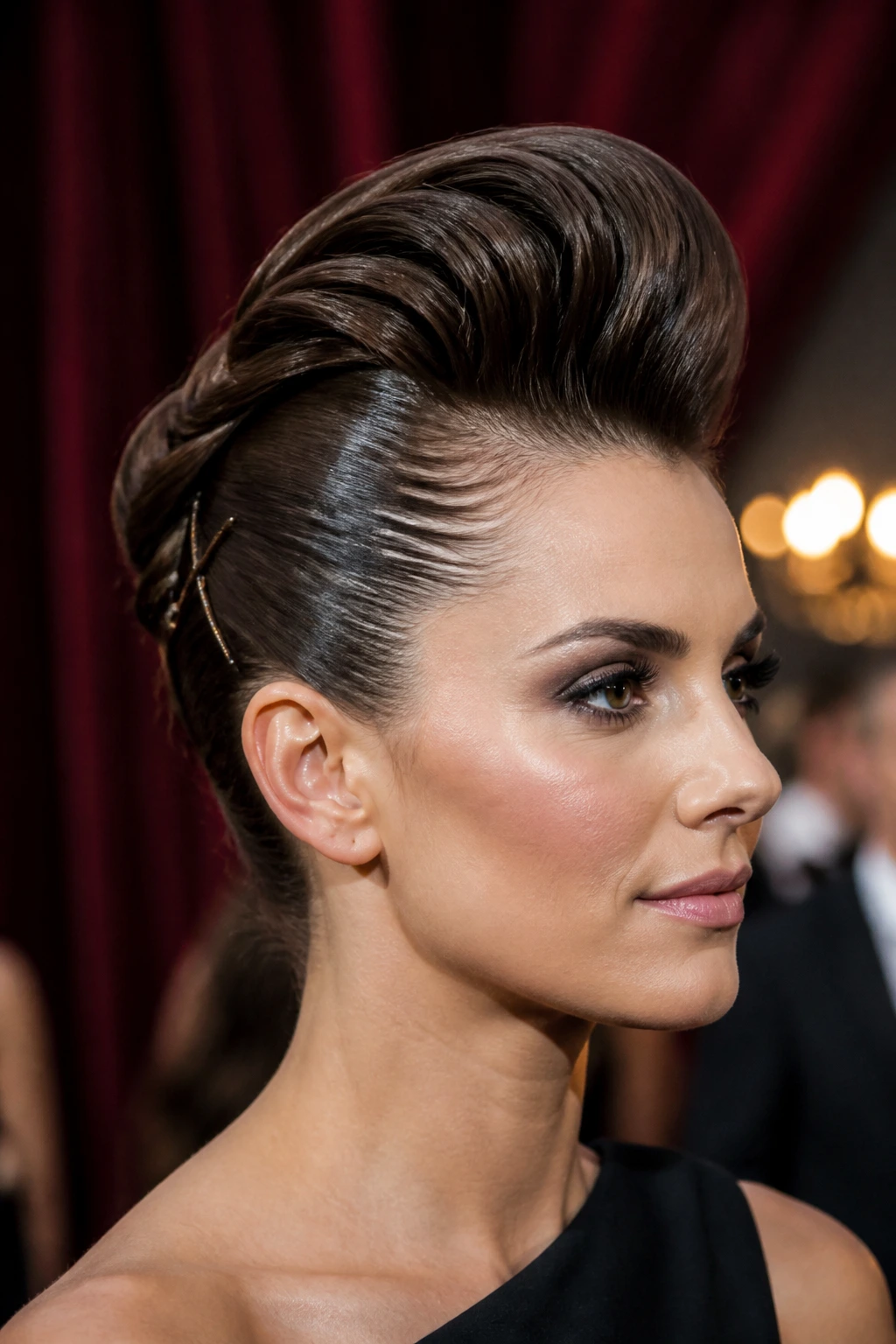
This is the version that walks into a wedding or gala and does not look out of place. The sides are pinned smooth, and the center is rolled, twisted, or tucked upward into an updo that still keeps the hawk shape. It can be glossy, airy, or somewhere in between, depending on the dress and the mood.
Use bobby pins in an X-shape when you need the center to stay high. One pin alone tends to slide once the evening starts. A shine spray on the surface and a few hidden pins at the crown keep the line tidy without making the style look stiff. It’s formal hair with some backbone.
26. Double Braid Mohawk
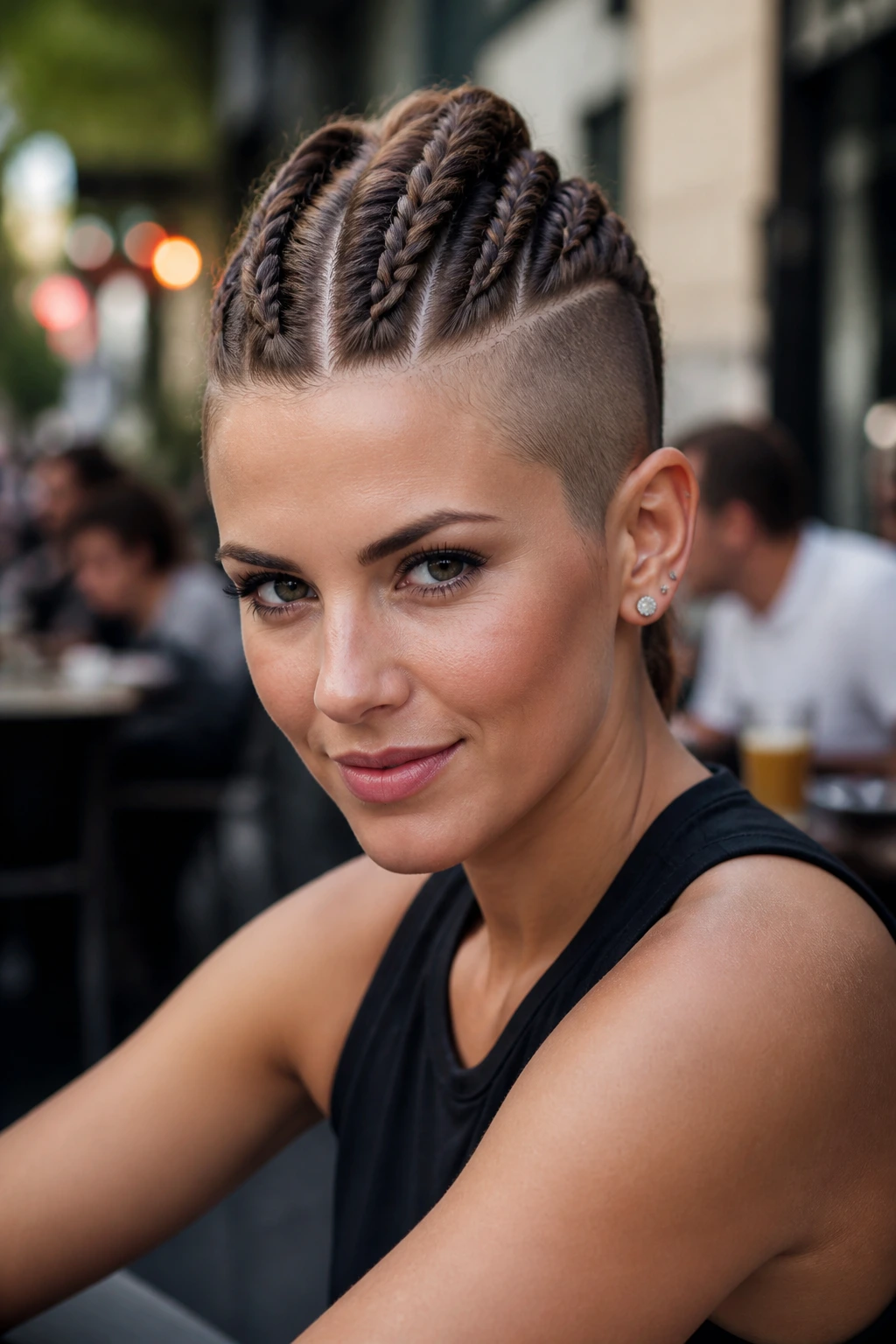
Two braids can carry a lot of structure. In this style, they either frame a central strip or feed into it from both sides, creating a strong line that feels sporty and neat. If your hair is medium to long, the braids can be thick enough to make the center ridge look larger than it actually is.
A center part helps keep the symmetry honest. If one braid sits higher than the other, the whole style starts leaning. I like this version for active days because it holds up better than loose curls or teased volume. It is not fussy, and it does not pretend to be.
27. High-Volume Curly Frohawk
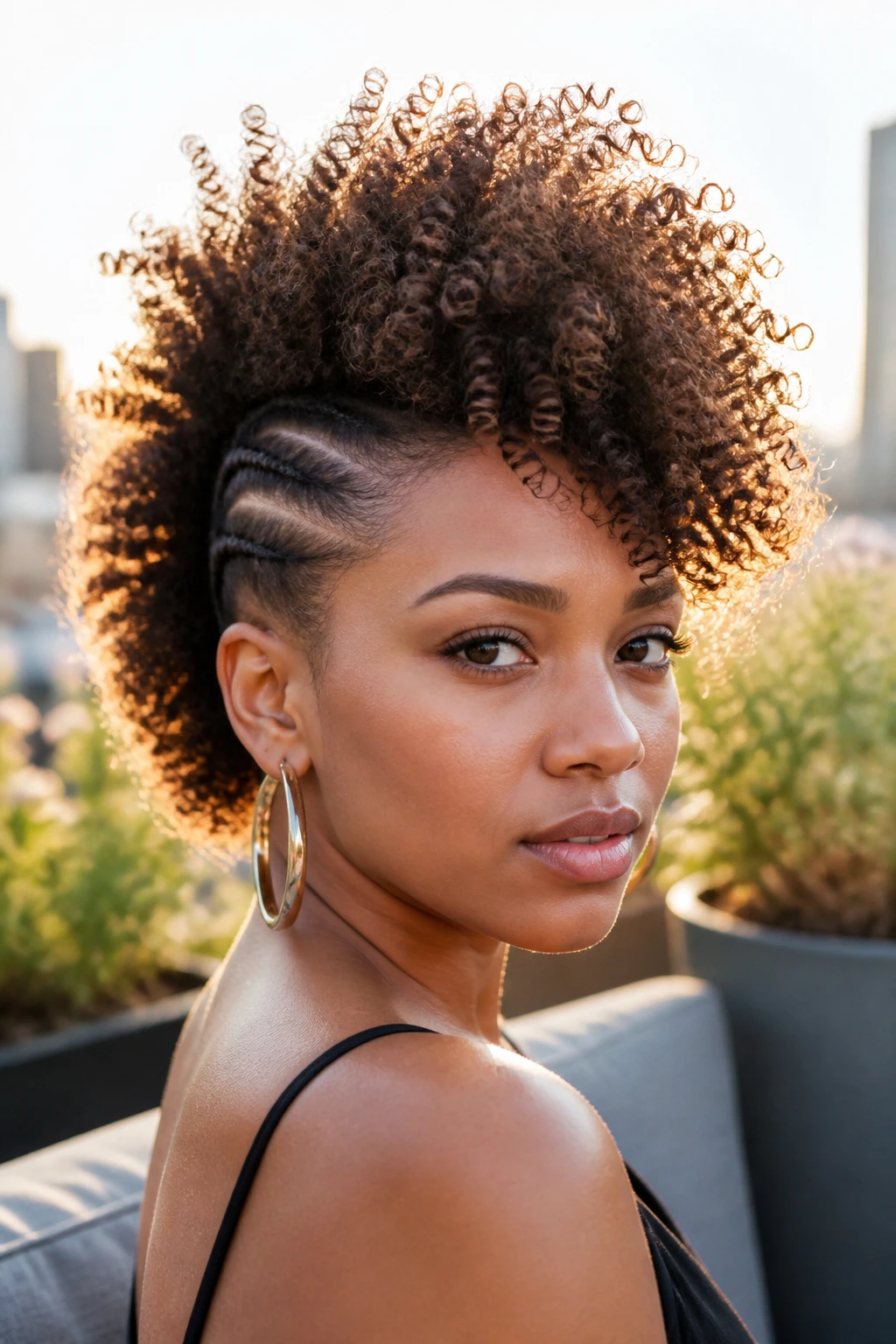
This is the bigger sister of the natural frohawk. The shape is wider, fuller, and often taller, with the sides pulled back enough to let the curl mass on top spread out instead of stacking tightly. If you have dense curls or coils, this is the style that lets the texture breathe.
Stretching the roots a little can help the volume sit where you want it. Banding, diffusing, or a quick low-heat stretch can make the center more upright without straightening it. Do not over-pick the ends. The volume should live at the crown and upper middle, not turn into a cloud from root to tip.
28. Asymmetrical Mohawk Bob
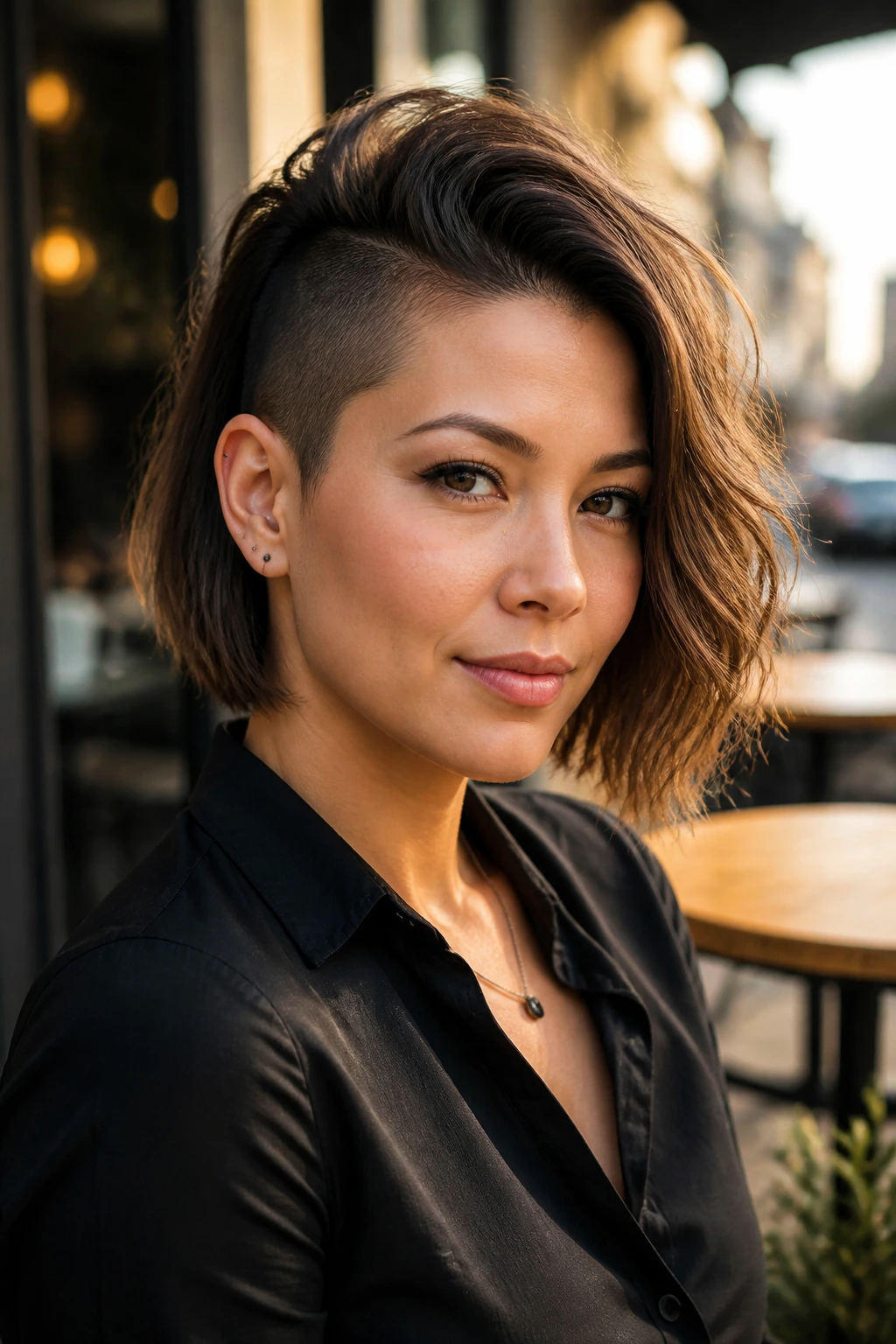
A bob and a hawk do not usually show up in the same sentence, but they should. This cut keeps a bob-like length around part of the head while using an off-center ridge or a lifted top section to create mohawk energy. It is a strong option if you want edge but still like some weight around the jaw.
The asymmetry is what makes it interesting. One side can sit more tucked, while the other keeps a little swing or volume. That imbalance is deliberate, not accidental. If the bob line is too perfect, the hawk effect disappears. Leave one edge slightly stronger so the cut has something to argue with.
29. Rope-Twist Mohawk
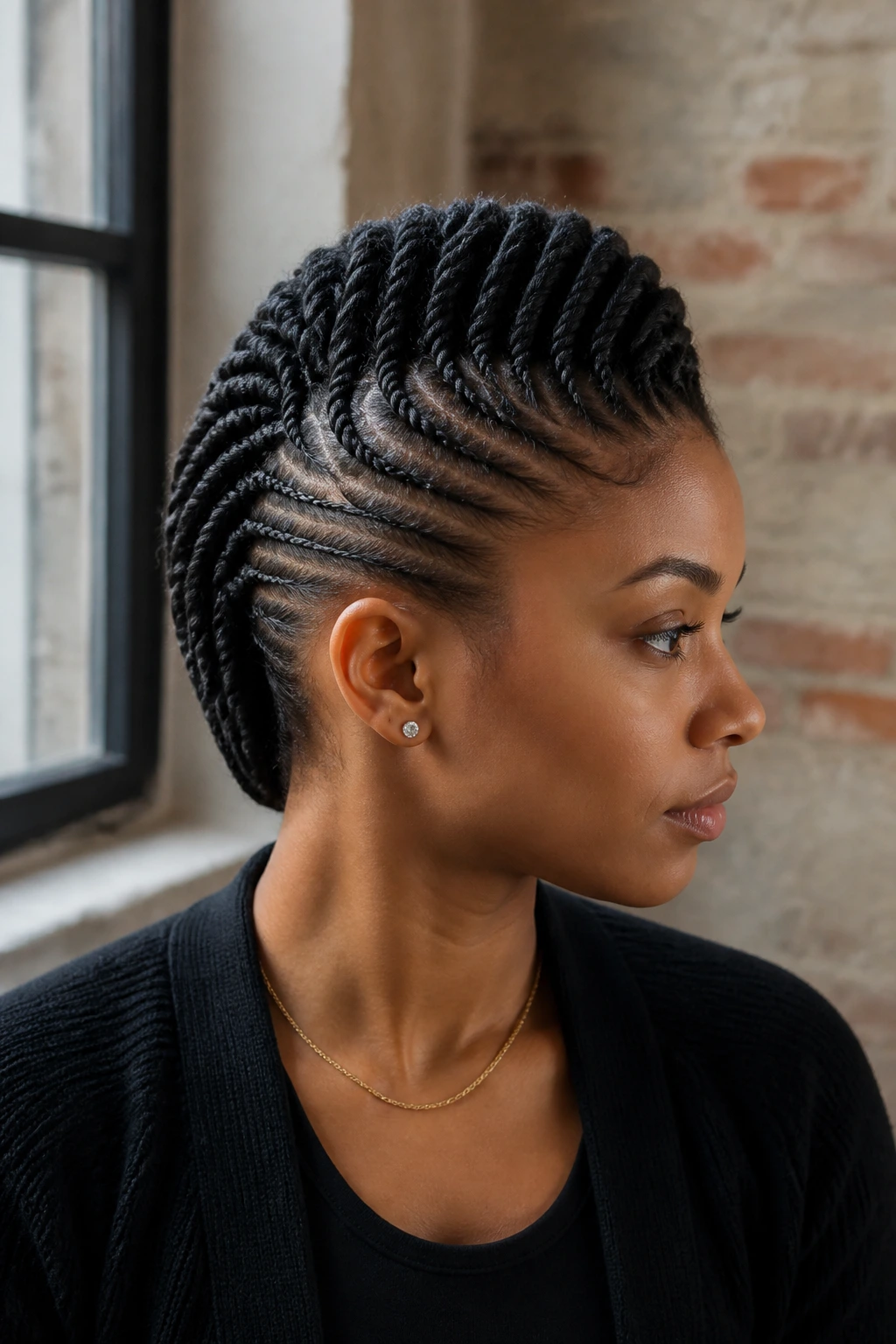
Rope twists give the hawk a neat, rope-like texture that sits somewhere between braids and flat twists. A central ridge of twists can run from forehead to nape, with the sides smoothed or braided back. Because rope twists are slightly raised, they create the idea of height without needing a ton of hair.
Keep each twist roughly pencil thickness if you want the pattern to stay clean. Bigger twists read softer and are fine too, but they can lose the hawk line if they get too chunky. A little braid spray and a rat-tail comb go a long way here. Clean parts matter more than product.
30. Ribbon-Woven Glam Hawk
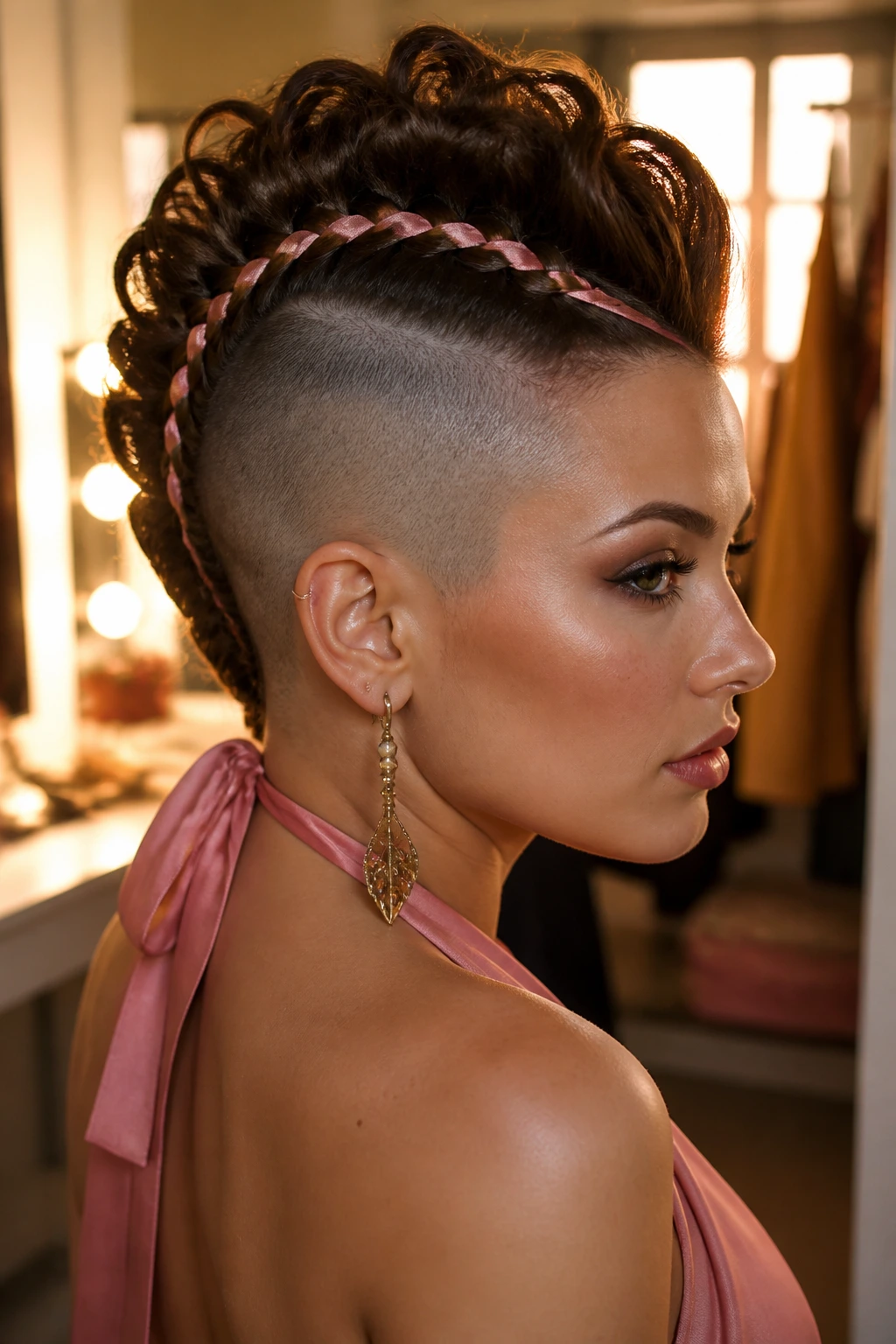
A ribbon-woven hawk turns the style into something a little more playful and a little more formal at the same time. Thin satin ribbon or a narrow scarf gets woven through braids, twists, or a lifted center ridge, adding color without changing the cut itself. It is a smart move when you want the shape to feel special for an event.
Keep the ribbon narrow. Thick fabric can swamp the hair and make the style sag. A single color works well, but a ribbon that echoes your outfit or nails makes the whole look feel considered. This is one of those details that seems small until you step back and see the whole thing.
Why the Center Strip Changes the Whole Silhouette
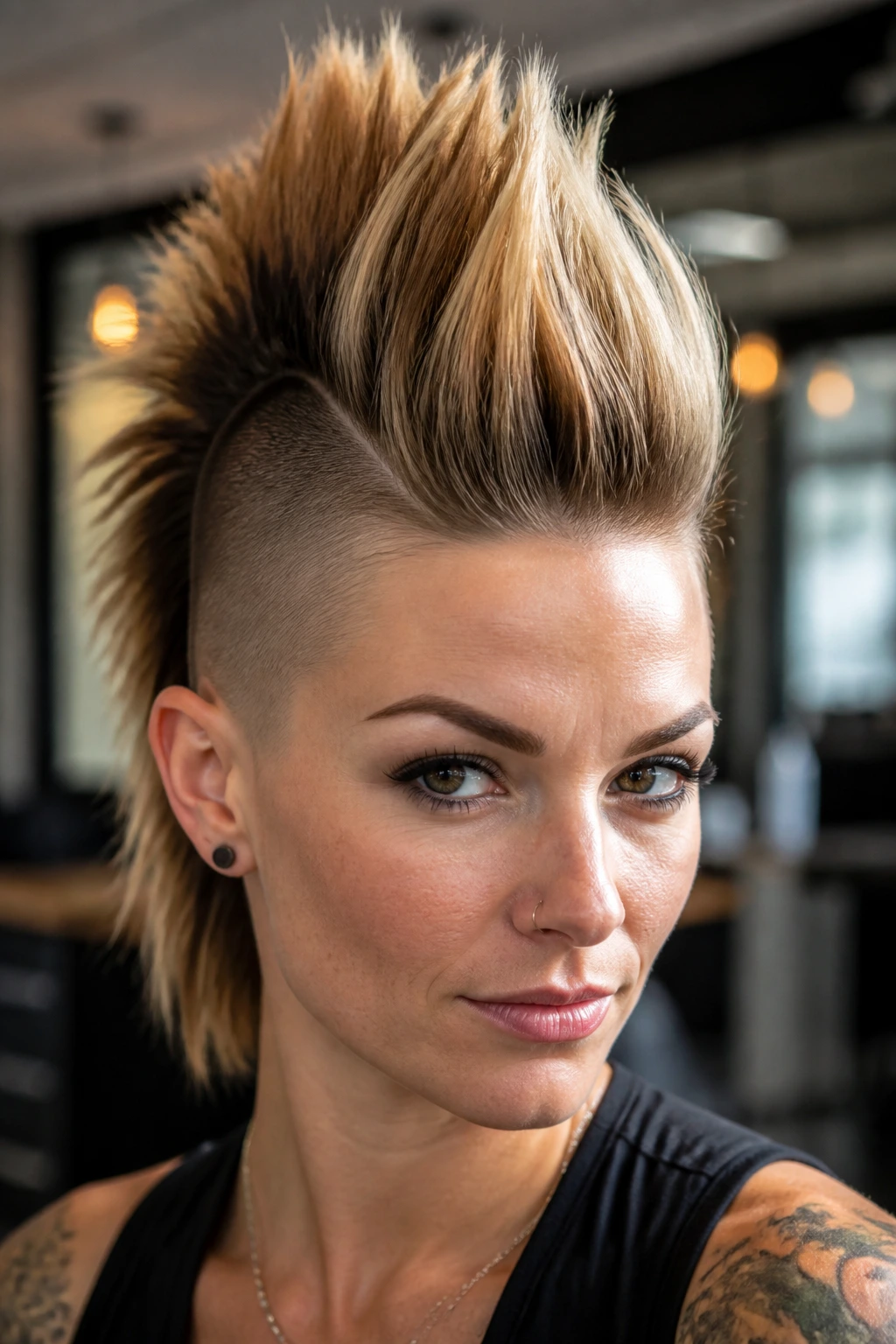
The hawk shape works because it edits the head in a very direct way. Shaved or tightly tapered sides make the top look longer. A lifted center ridge narrows the face visually and draws the eye up, which is why even a short hawk can feel bold without needing a lot of length. That vertical line does a lot of work.
Texture changes the message, though. A curly frohawk feels airy and natural. A braided hawk feels controlled and tidy. A slicked hawk reads sharper because the light has nowhere to hide, so every curve in the ridge becomes part of the design. Same silhouette. Very different attitude.
The other reason this cut keeps showing up is practical. Growing out a hawk can be easier than growing out a blunt undercut, especially if the sides are tapered rather than buzzed skin-close. You can keep the outline while the hair changes, and that matters when you do not want to be trapped by one stage of a cut for months on end.
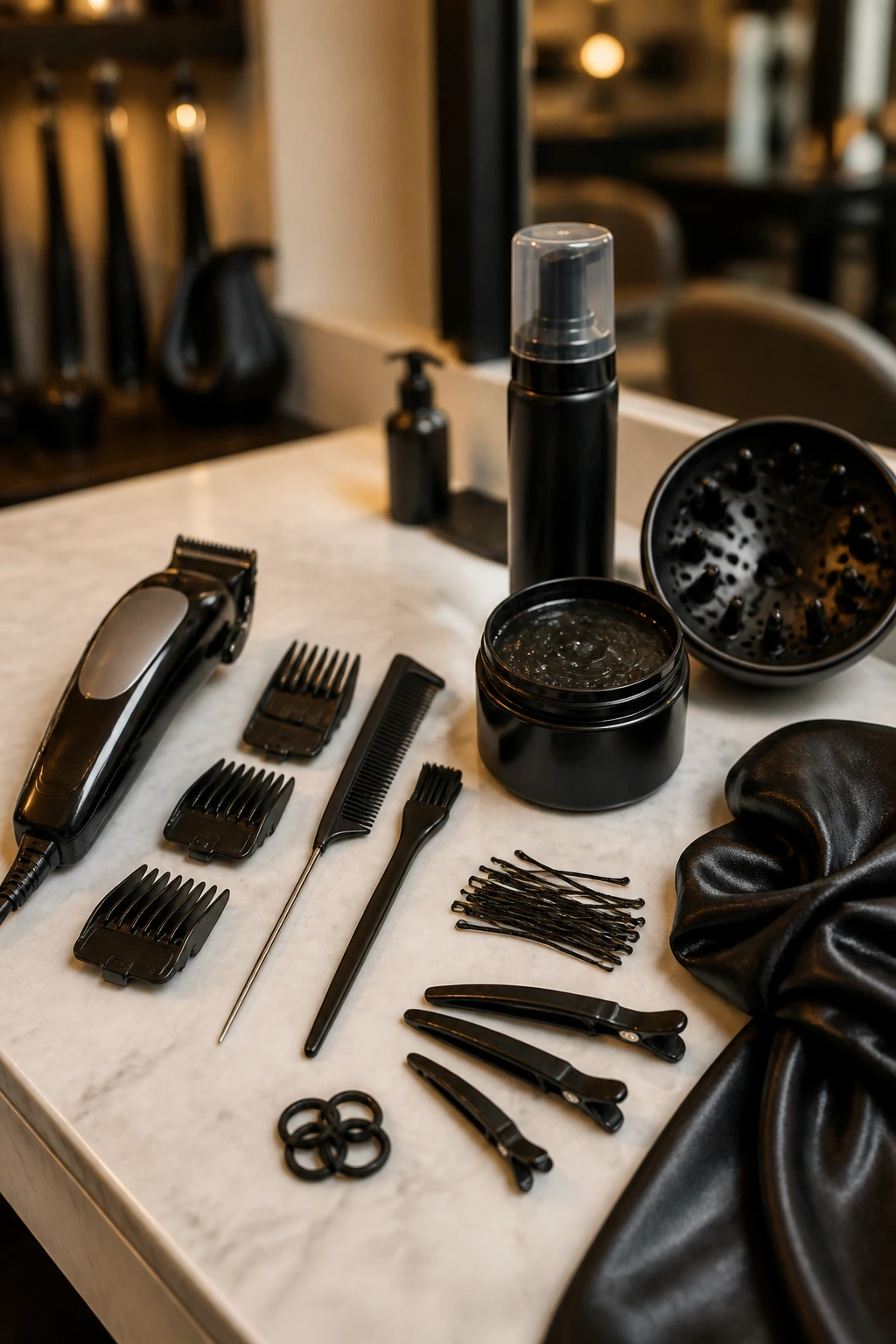
Essential Tools for These Looks
-
Clippers with guards 0.5, 1, 2, and 3: These give you control over how sharp the sides look, from skin-close fade to soft taper.
-
Rat-tail comb: Essential for parts, sectioning, and coaxing the top into a cleaner ridge.
-
Edge brush or small toothbrush: Useful for smoothing hairline edges without dragging product everywhere.
-
Bobby pins in two sizes: The smaller ones hide better; the larger ones hold stronger sections or heavier braids.
-
Duckbill clips: Handy for holding teased sections, pinning twists, or shaping the crown while it cools.
-
Strong-hold gel or styling cream: Choose one that matches your finish, because thick wax on fine hair gets heavy fast.
-
Mousse or foam wrap lotion: Especially good for curls, frohawks, and braid sets that need movement without crunch.
-
Diffuser attachment: A regular nozzle can flatten curls. A diffuser keeps the texture lifted.
-
Satin scarf or bonnet: Not flashy, but it saves the style overnight.
-
Small elastics: Needed for bubble ponies, topknots, rope twists, and any style with segmented sections.
How to Pick the Right Mohawk Style for Women
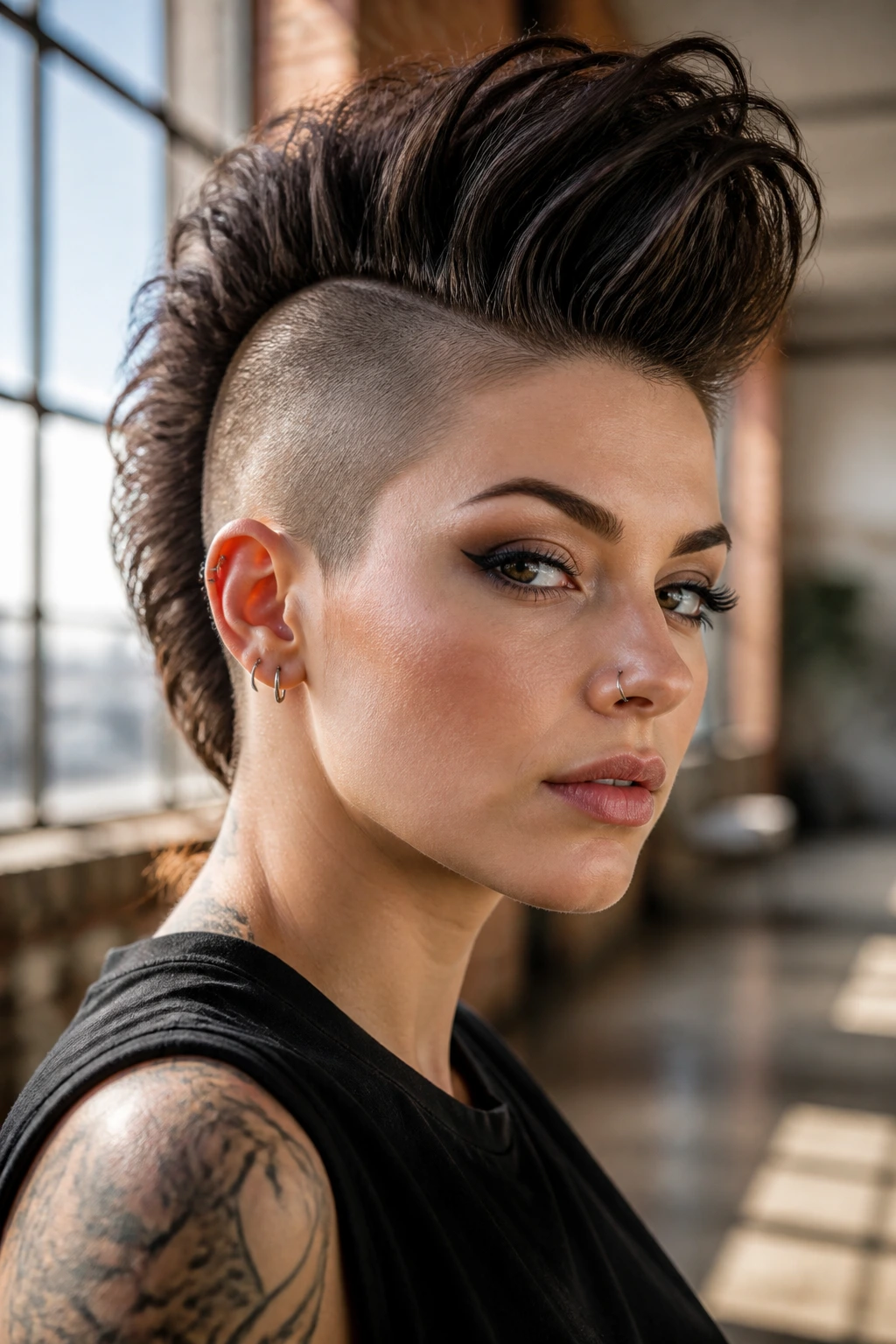
Straight Hair
Straight hair tends to fall unless it gets help from root lift or a strong shape underneath. Faux hawks, slicked hawks, and pixie hawks usually hold best because you can direct the hair upward and lock it in place with product. If the hair is fine, keep the top shorter than you think you need; too much length turns the ridge into a droop.
Wavy Hair
Wavy texture gives you the easiest middle ground. You can go soft with a teased crown or sharper with an undercut, and the waves keep the ridge from looking flat. A little sea-salt spray or lightweight mousse can rough up the cuticle just enough to make the hair stand instead of sliding.
Curly and Coily Hair
Curly and coily hair already wants volume, which is a gift here. Frohawks, tapered hawks, curly topknots, and braided side styles all work because they let the texture support the silhouette instead of fighting it. The main thing to watch is shrinkage. Leave more length than you think you need, or the style can sit much shorter once it dries.
Braids, Locs, and Protective Styles
Braids and locs turn the hawk into a long-wearing shape. Box braid hawks, goddess braid hawks, loc’d ridges, and crochet frohawks hold their line well and can sit for days with only minor touch-ups. Weight is the thing to watch. If the center section gets too heavy, the style will sag at the crown before the rest of it does.
Smart Product Choices That Keep the Shape Sharp
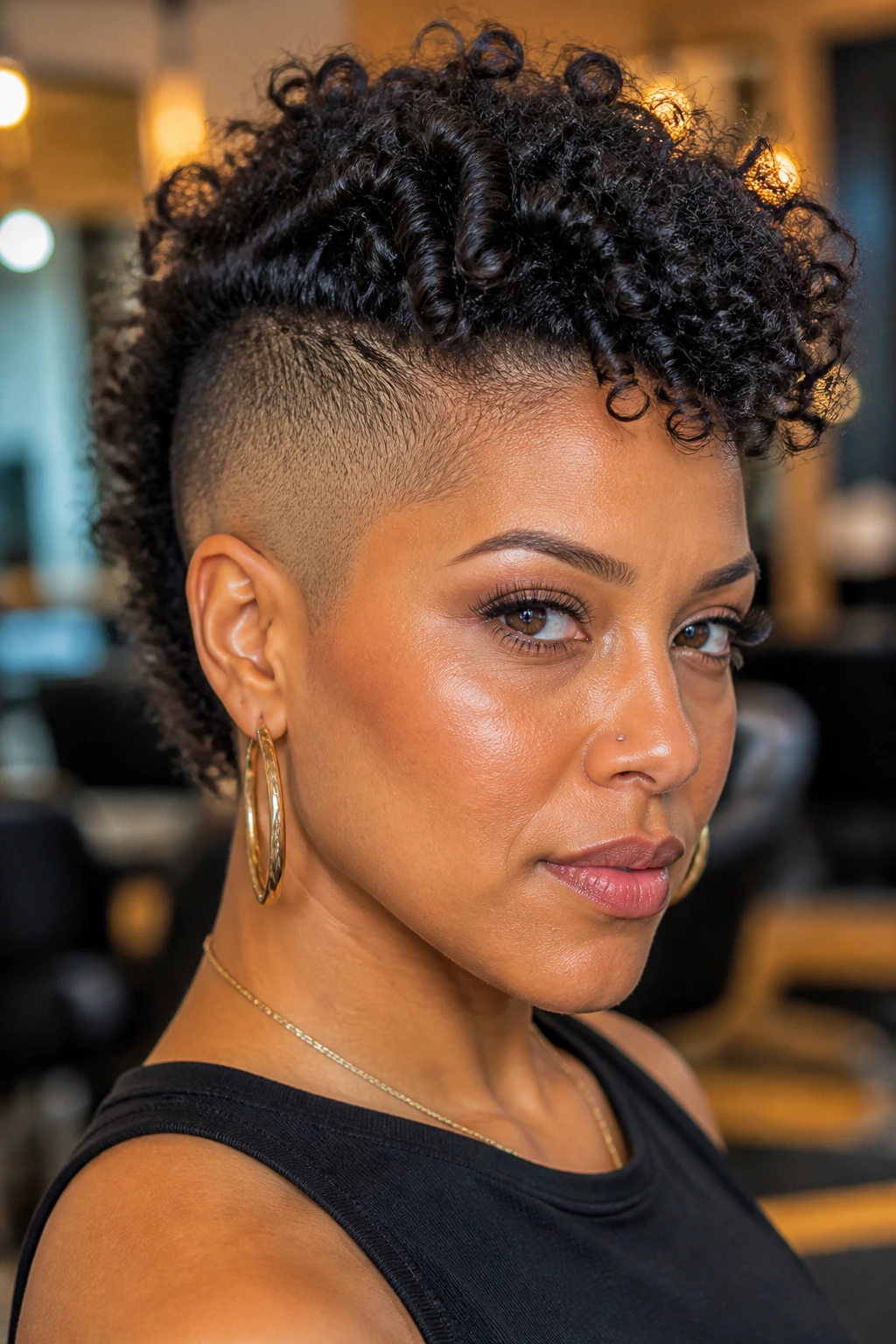
Most hawk styles do not need a mountain of product. They need the right kind of product in the right place. On curls, a lightweight mousse or foam wrap lotion usually beats a heavy cream because it gives lift without flattening the roots. On straight hair, a firm gel or styling paste at the sides can help the ridge stay where you place it.
Edge control is useful, but it can also get messy fast. A little goes a long way, especially around the temples and nape. Too much tends to build up and flake, and flakes show more clearly on a style where the sides are tightly exposed. Buy smaller jars if you are testing products. A giant tub that dries out after two uses is just money sitting on a shelf.
For braids and locs, braid spray and a light oil on the scalp are usually enough. Heavy pomades can make the roots look greasy without helping the actual shape. If you want shine, put it on the finished style, not the scalp. That one choice keeps the whole look cleaner.
Practical Ways to Make the Shape Hold All Day
Balance the width: A mohawk looks stronger when the center strip matches the head, not when it balloons out sideways. If the top gets too wide, pinch it in with clips while it dries.
Lift the roots first: The base matters more than the ends. Push the roots up with a comb or fingers before you even think about shaping the tips.
Set the sides before the top: Smooth the sides tight, then work the center. If you reverse that order, you usually crush the height while fixing the edges.
Let product dry before judging the shape: Wet hair lies. It always does. Give it 10 to 20 minutes after styling before you decide whether the ridge needs more lift or less product.
Use a second mirror: The profile tells on you. A mohawk can look perfect from the front and oddly flat from the side.
Common Mistakes That Flatten the Whole Look
The first mistake is going too broad at the crown. A wide top section can swallow the mohawk line, especially on fine hair, and then the style reads like a loose updo instead of a hawk. Keep the ridge narrower and lift it vertically, not outward.
Another problem is product overload. Heavy gel, wax, and edge control all at once can weigh the hair down and leave white buildup around the hairline. If the style feels sticky before it dries, you already used too much. Start small, then add only where the shape actually needs help.
People also forget about grow-out. A shaved side looks crisp for a while, then the first inch of regrowth softens the entire outline. If you want the cut to stay sharp, plan your cleanup schedule before the sides start puffing up. The same goes for braid tension — too tight at the front and you will feel it before the style looks right.
Last, a lot of folks try to force one hawk template onto every head shape. That rarely works. A rounder face may need a taller ridge. A longer face may look better with a wider, softer top. The cut is not the same on every head, and that is part of the fun.
Variations and Alternatives Worth Trying
The No-Shave Faux Hawk: Keep the sides slicked back or pinned flat and let the center do the talking. This is the easiest way to get the silhouette without committing to clippers.
The Office-Sleek Hawk: Lower the height, reduce the shine, and keep the shape close to the head. It still reads as a hawk, but it behaves better in softer settings.
The Festival Color Hawk: Temporary color spray, clip-in streaks, or ribbon woven through braids can change the mood without changing the cut. Good when you want impact for one event.
The Protective-Style Hawk: Braids, twists, crochet hair, or locs gathered into a center ridge. This one is for anyone who wants the shape and the low daily maintenance.
The Red-Carpet Hawk: Think polished updo, hidden pins, and a narrow ridge with a smooth finish. It’s the hawk version of formal hair.
Night Care and Grow-Out Maintenance
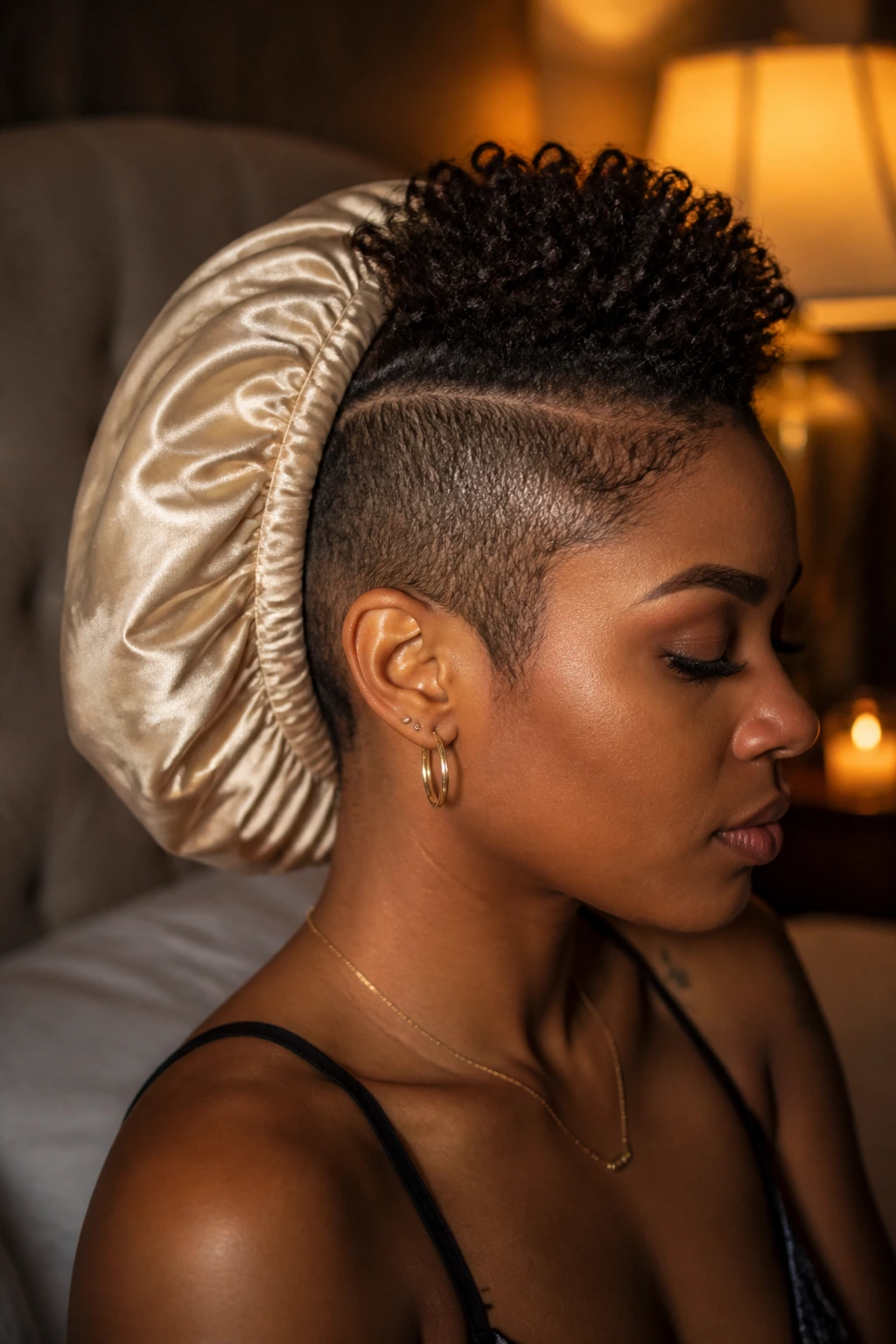
The easiest way to keep a hawk looking fresh is to protect the shape while you sleep. A satin scarf or bonnet cuts friction, which keeps slicked sides from puffing up and keeps curls from fraying at the edges. If the style has a lot of pins, wrap it loosely so the pins do not dig into the scalp.
For daily refreshes, focus on the spots that fail first. That is usually the hairline, the crown, and the nape. A light mist of water or foam on curls, a quick press of edge control on the temples, and a finger-adjusted lift at the top often do more than a full restyle. Every few days, shake out the ridge and check the side shape in a mirror.
Shaved or closely tapered sides need a cleanup every 1 to 3 weeks, depending on how fast your hair grows and how tight you want the outline. Braided or twisted versions last longer — often 1 to 3 weeks, sometimes a little more if the scalp stays comfortable and the roots stay neat. If the base starts itching, tugging, or puffing out at the parts, it is time to redo it.
Frequently Asked Questions About Mohawk Styles for Women
Do you have to shave the sides for a mohawk?
No. Faux hawks, braided hawks, pinned hawks, and tapered cuts all create the same silhouette without a full shave. If you want the shape but not the maintenance of buzzed sides, those versions are a smarter place to start.
What hair length do you need for a mohawk?
Short hair can work if the crown has enough length to stand up, and long hair can work if it’s pinned or gathered into a ridge. The real question is not length alone — it’s whether the top section can keep its shape once it’s lifted and secured.
Can curly or coily hair hold a mohawk without heat?
Yes, and honestly, curls often make the style easier. Frohawks, tapered hawks, and twist-based versions use the natural texture for height, so you can skip heat entirely if the shape is set well.
How often do the sides need to be touched up?
If the sides are shaved, most people clean them up every 1 to 3 weeks depending on how exact they want the line. Tapered sides can go a little longer because they grow out softer and do not show the regrowth as sharply.
What is the difference between a frohawk and a faux hawk?
A frohawk usually uses natural curls or coils, with the sides braided or pinned and the center left full. A faux hawk is the broader category that copies the silhouette without requiring a shave, so it can work on almost any texture.
What if my hair falls flat by midday?
The problem is usually too much length at the top or not enough root support. Try setting the base with clips, drying the roots before releasing them, and using less product on the ends. The ends need shape, but the roots need the real work.
Can a mohawk look polished enough for formal wear?
Absolutely. A slicked hawk, formal faux hawk updo, or ribbon-woven braid hawk can look finished and deliberate without losing the edge. The difference is in the smoothing, the pin placement, and how clean the sides are.
How do I stop flakes and buildup around the hairline?
Use less edge control than you think you need and avoid layering heavy gel on top of it. If a product starts drying white before you’re done styling, switch to a lighter formula or wipe the hairline gently with a damp cloth before it sets.
The Shape That Keeps Its Bite
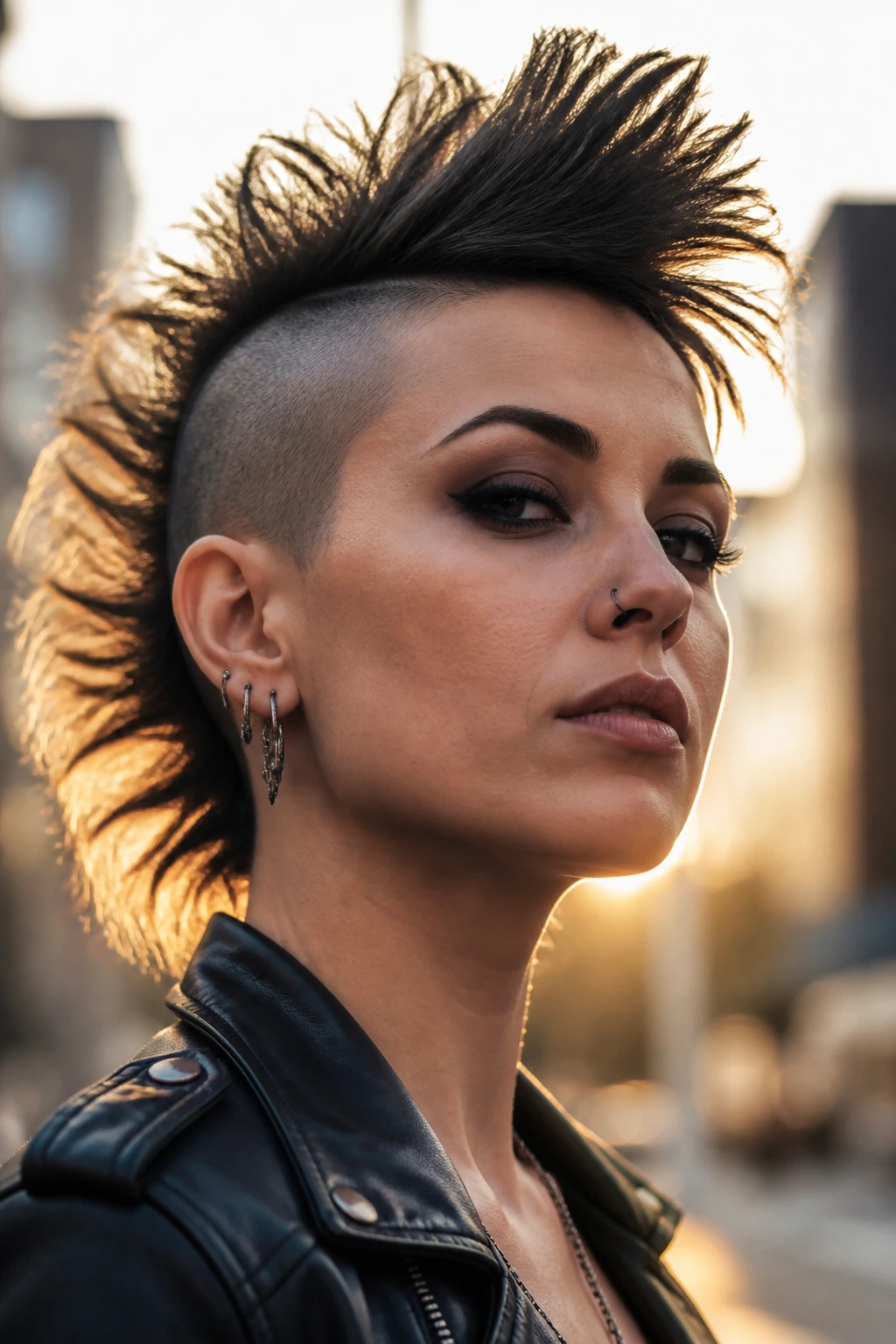
A mohawk works because it says something fast. It lifts the eye, clears the sides, and gives texture a job to do instead of letting it sit there. That can mean shaved and sharp, or braided and soft, or curly and full. The silhouette stays the same even when the mood changes.
What I like most about these mohawk styles for women is the range. You can keep it low and tapered for everyday wear, go full frohawk for volume, or build a formal version that still has a little bite. That flexibility is why the cut never really disappears.
Pick the version that matches your hair’s natural behavior, and the rest gets easier.
