



Straight hair tells the truth. A blunt line lands exactly where it’s cut, a fringe shows every tiny mistake, and a crown that sits a little flat can make the whole shape feel tired by lunch. That honesty is a gift when the haircut is good. It is also a rude little menace when the cut is off by half an inch.
Short straight haircuts for older women work best when they respect that honesty instead of fighting it. Straight hair usually needs cleaner edges, a better balance of weight, and less fuss at the ends. Add a few changes that come with age — finer density at the temples, a cowlick that has gotten bossier, glasses that sit right where fringe wants to live — and the haircut starts to matter in a very practical way.
The good short cut doesn’t hide the hair. It gives it a shape that holds its own all day. Sharp when you want sharp. Soft when you want soft. And no, that does not mean one boring bob repeated twenty-eight times in slightly different lengths.
Why These Short Shapes Earn Their Keep
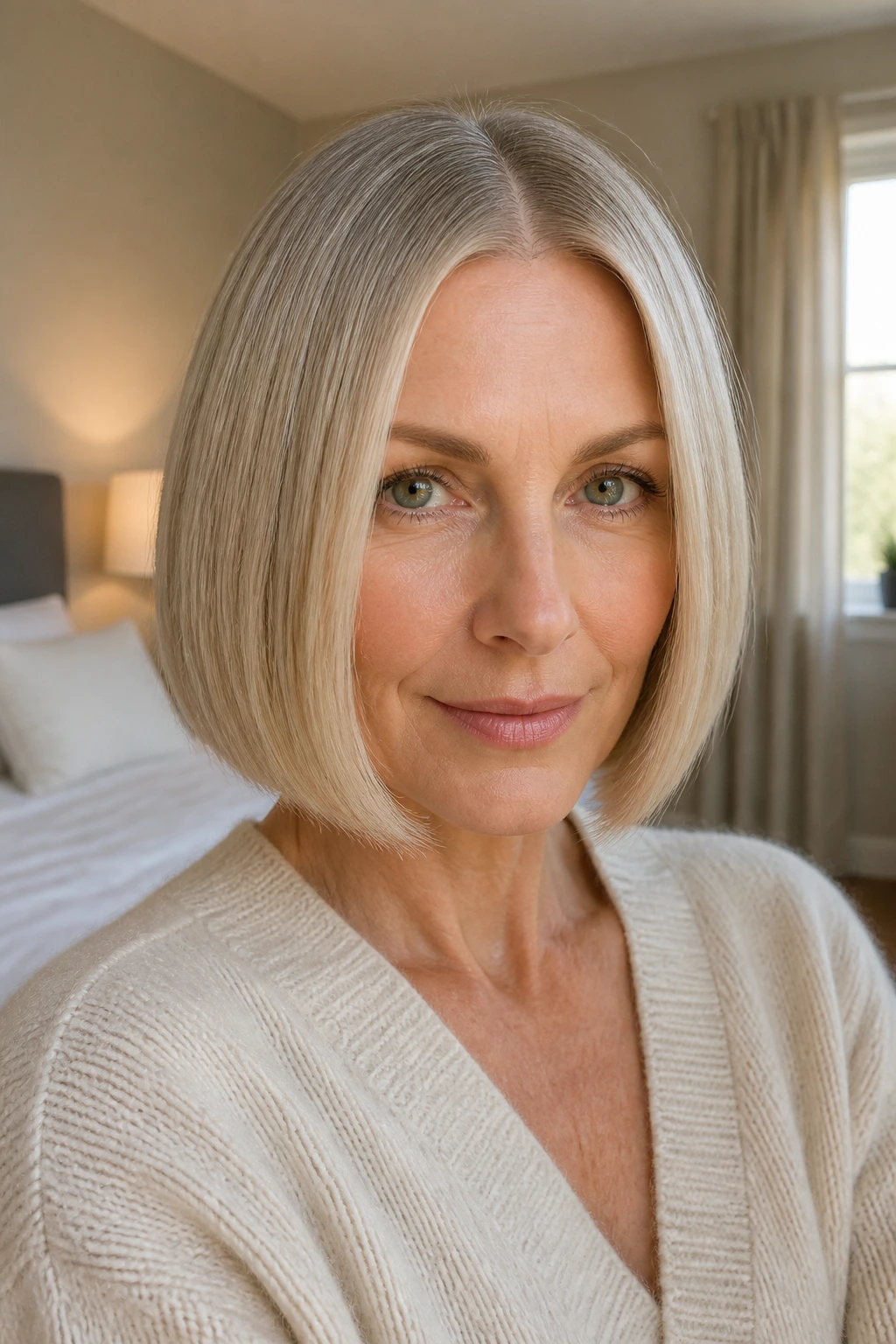
- Straight hair shows the line first: Clean cuts read crisply on straight strands, so a blunt edge, a neat nape, or a precise side part looks deliberate instead of accidental.
- Short length stops the ends from dragging: Once the hair clears the collarbone, it stops collapsing into that thin, stringy point straight hair can get at longer lengths.
- The crown gets a reset: Several of these cuts build height or remove weight at the top, which helps if your hair lies flat the minute humidity, hats, or a long day get involved.
- Glasses stop fighting the haircut: A side fringe, micro fringe, or ear-tucked shape can make frames look connected to the style instead of competing with it.
- Gray and silver hair look especially good in a clean shape: Coarser silver strands can look sharper when the perimeter is kept neat and the ends are trimmed before they start to fray.
- Styling stays sane: Most of these cuts need a blow-dry, a brush, and a small amount of product — not a countertop full of gadgets.
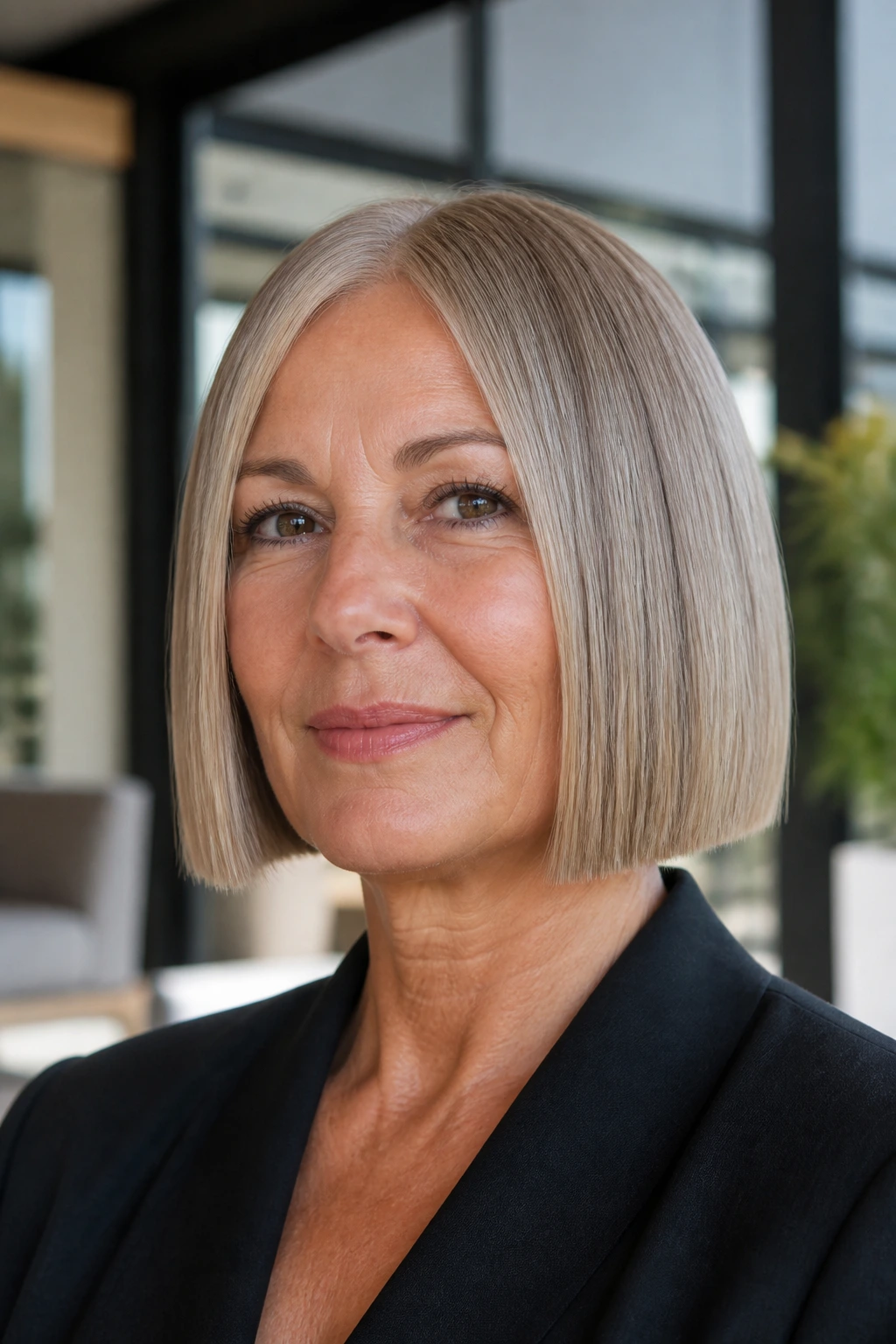
1. Blunt Chin-Length Bob with a Clean Center Part
A blunt chin-length bob is the haircut that reminds people straight hair can look expensive without trying to be dramatic. The line sits right at the jaw or just below it, which keeps the shape crisp and stops the hair from flaring out in the wrong place. On older women, that kind of clean edge often feels fresher than extra layering ever will.
Why It Works
Straight hair loves a blunt perimeter because there’s no curl to blur the outline. If your hair is fine, this cut can also make the ends look denser, which matters more than most people admit. A center part keeps the balance even, but it does ask for a little symmetry at the hairline, so this one suits hair that cooperates.
- Ask for the ends to land at the chin or ½ inch below.
- Keep the layers minimal; too many will steal the weight that makes the bob look full.
- A flat brush and a quick inward bend at the ends is usually enough.
- Best if you want a cut that still looks tidy on day two.
Tiny tip: tuck one side behind the ear when you want the jawline to show a little more.
2. Soft Pixie with Side-Swept Fringe
This is the cut for someone who wants short hair without looking severe. The top stays soft, the sides are trimmed close enough to keep shape, and the fringe sweeps across the forehead instead of sitting there like a bar across the face. That small change makes a big difference.
The side-swept fringe is doing a lot of work here. It softens lines around the forehead, plays nicely with glasses, and lets straighter hair move without needing waves to fake texture. If the front area has started to thin, the fringe can be angled to fill that space instead of exposing it.
A side-swept pixie also behaves well in real life. It doesn’t demand a lot of styling time, and when it grows out, it usually turns into a neat little crop instead of a mess.
Best for: fine to medium straight hair, especially if the crown goes flat.
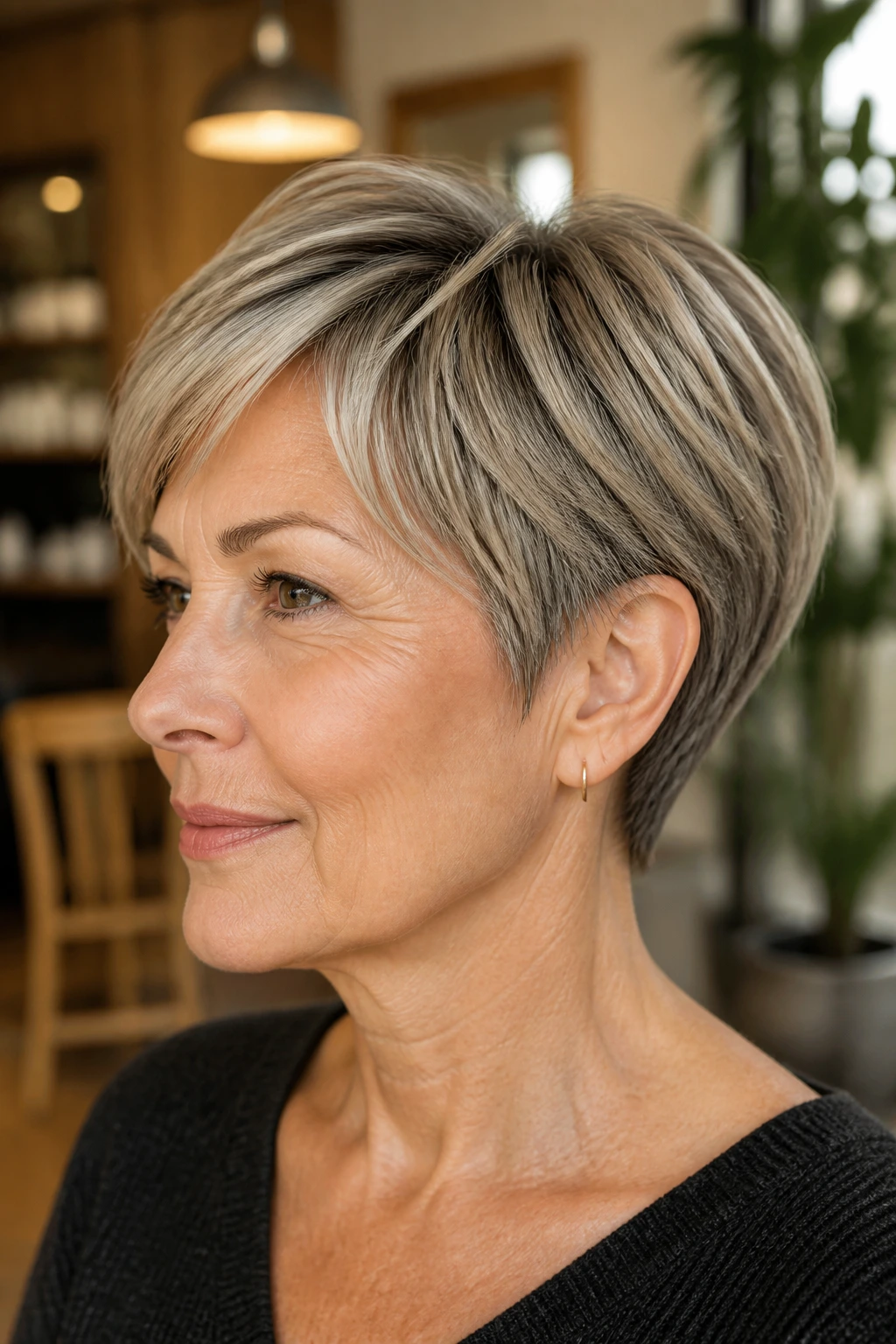
3. Tapered Crop with Crown Lift
Why do some short cuts make straight hair look livelier while others just look cut short? Because the crown matters more than the length chart in the salon book. A tapered crop with lift at the top gives the head a little height, which keeps the style from sinking into the scalp by noon.
How to Ask for It
Keep the sides close and tapered, then leave enough length through the crown to stand up when dried with a round brush. The silhouette should narrow toward the neck and widen slightly at the top — not in a spiky way, just enough to keep the shape from going helmet-flat. If your hair is very fine, ask for light internal removal instead of aggressive layering.
What Makes It Work
- The shorter sides keep the outline tidy around the ears.
- The extra crown length prevents that flat, helmet-like look straight hair can get.
- It’s a good option if you like a little height but do not want a full pixie.
A dab of mousse at the roots and a quick lift with the dryer is usually all it takes. Not a lot. Just enough.
4. French Bob with Micro Fringe
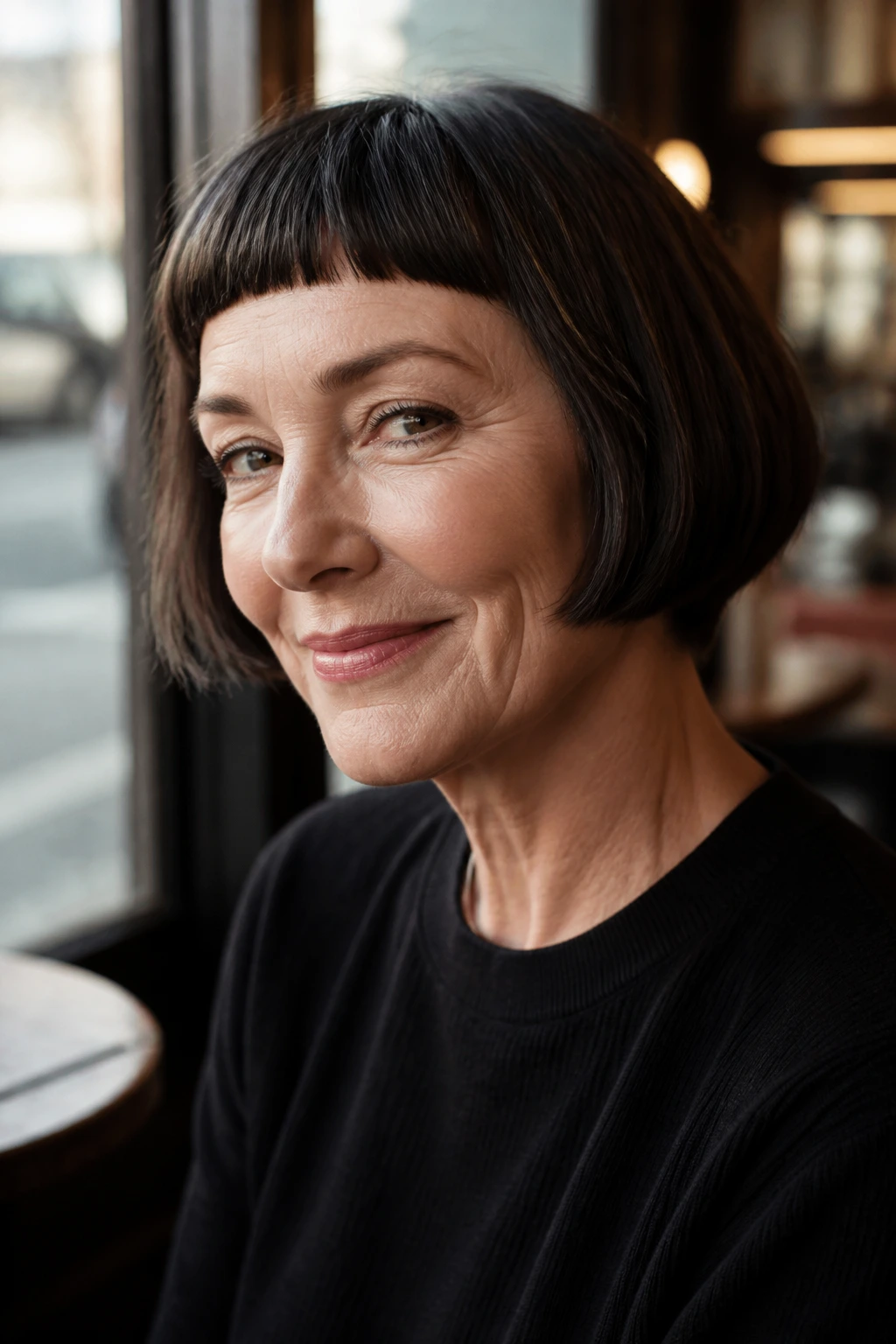
A French bob has attitude, but the good kind — the kind that looks better with a scarf thrown around your neck and a lipstick you don’t have to think about. The micro fringe sits above the brows and makes the haircut feel graphic, almost painted on. On straight hair, that precision is part of the appeal.
The catch is that a micro fringe needs confidence and a decent stylist. It works best when the fringe is cut lightly, not chopped into a stiff block. If the forehead is short or the brows already do a lot of heavy lifting, keep the fringe a touch longer so it doesn’t crowd the face.
I like this cut best on women who want a stronger outline. It’s compact, elegant, and a little cheeky. If you wear glasses, the fringe should clear the frame line by enough space that the two shapes don’t crash into each other.
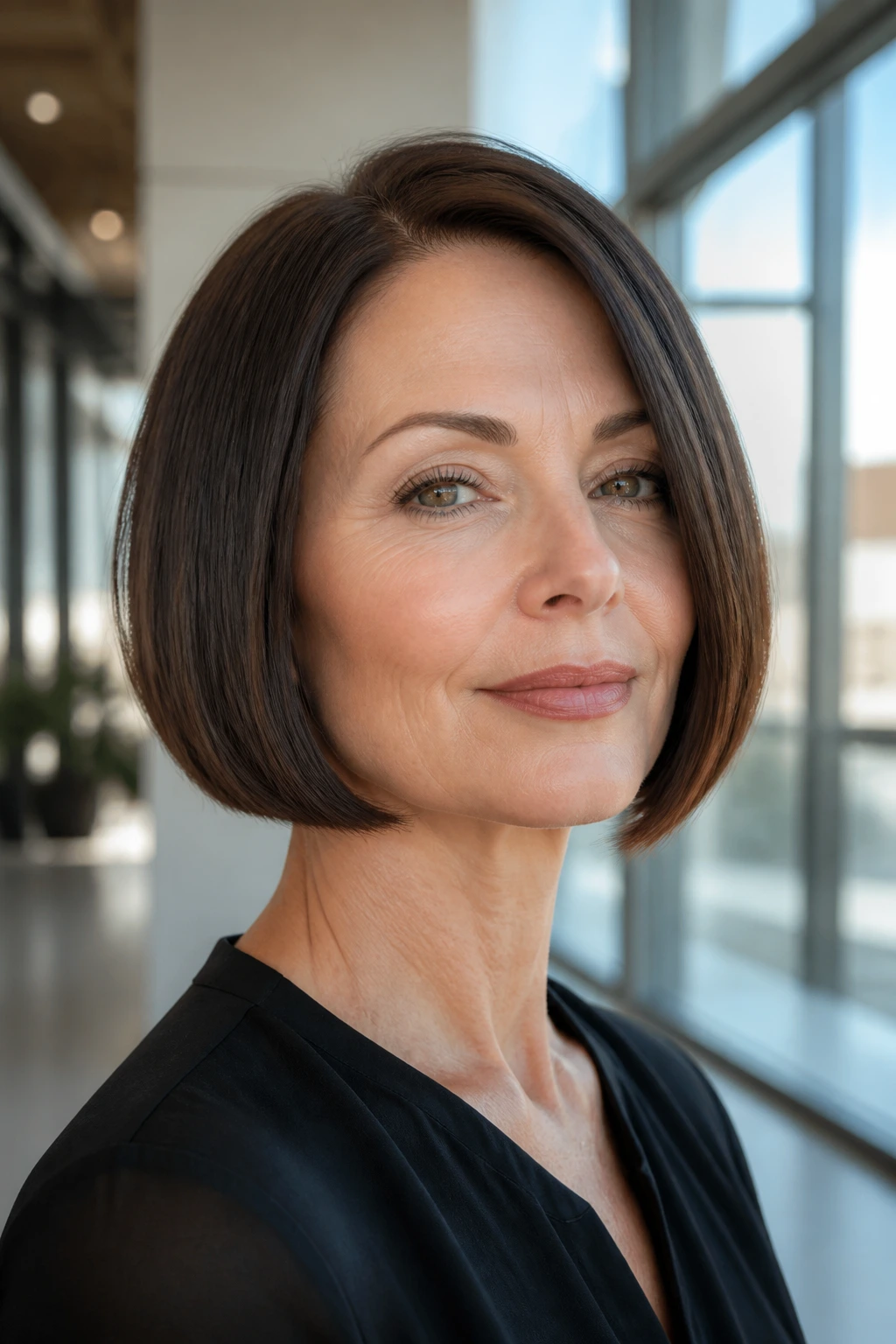
5. Sleek Jawline Bob
A sleek jawline bob is the sharpest thing in the room without actually shouting. The hair sits right at the jaw, and because straight hair doesn’t blur the edge, the line lands with a clean, almost architectural feel. It can sharpen a softer face, and it can also frame a strong jaw without making it look heavier.
The key here is not over-layering. A sleek bob needs weight through the perimeter so the ends lie flat and polished. If the ends are thinned too much, the shape starts to fray, and straight hair is unforgiving about that.
Wear it with a side part if you want a touch more softness. Wear it centered if you want the structure to show. Either way, this cut looks especially good when the ends are dry and tucked inward by a quarter inch, not curled under like a prom bob.
6. Layered Pixie-Bob
This cut sits between a pixie and a bob, which is useful if you want the neck open but aren’t ready to go fully cropped. The top is kept a little longer, the sides are shaped to hug the head, and the back is trimmed to remove bulk without turning fluffy. Straight hair makes that transition look neat instead of messy.
What Makes It Different
Unlike a classic bob, a pixie-bob doesn’t rely on one solid line. It uses shape instead of weight, which helps if your hair has started to feel too heavy at the ends but still needs coverage around the temples or ears. The layers should be soft, not choppy.
Good For
- Women who want easy drying time
- Hair that falls flat in a one-length cut
- Anyone growing out a short pixie and wanting a nicer in-between stage
The nicest version of this cut keeps the crown a touch fuller so it doesn’t look over-trimmed. That little bit of lift makes all the difference.
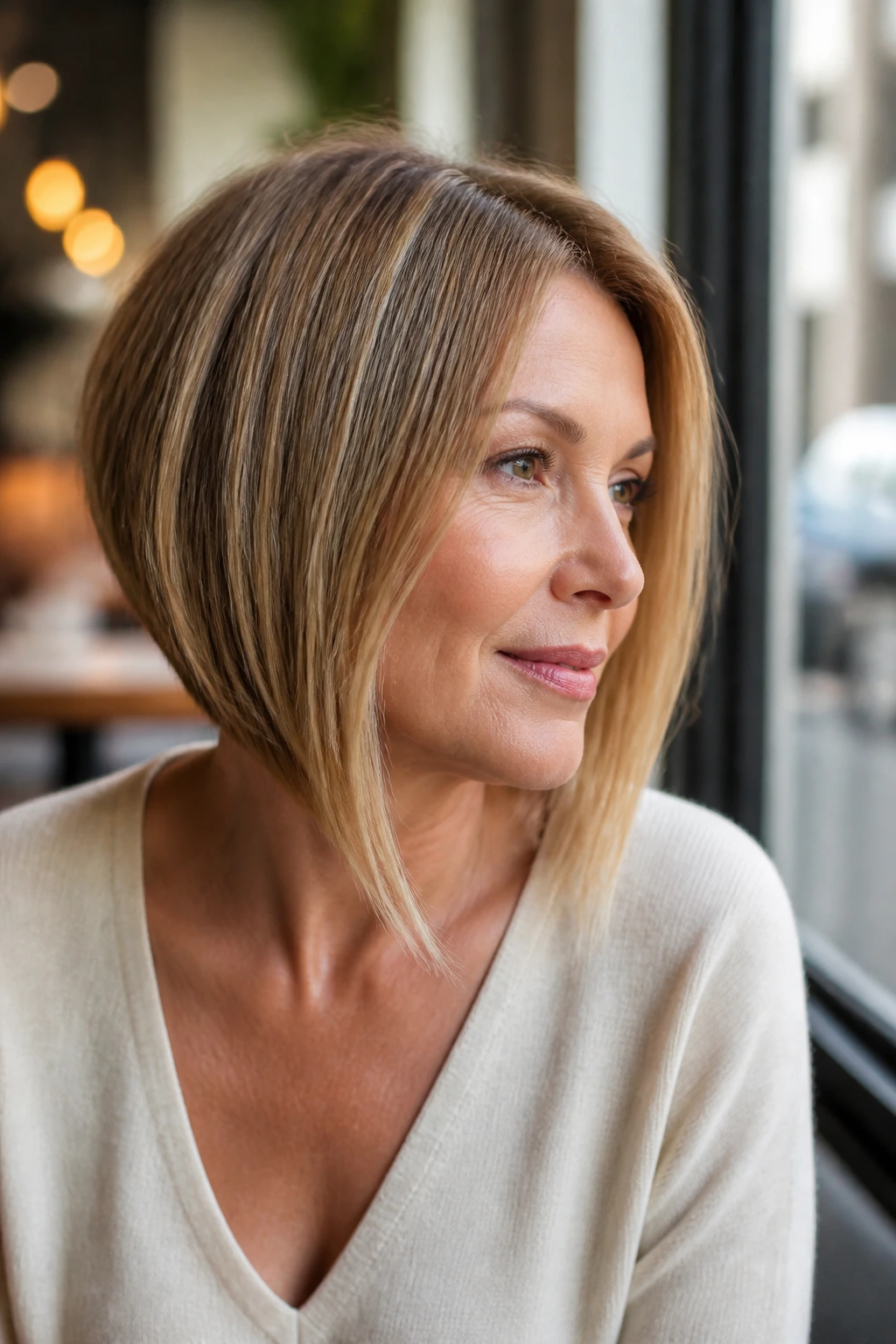
7. Angled Bob with Longer Front Pieces
Here’s the trick with an angled bob: the front lengths do the visual work. They draw the eye down and forward, which can make the face look a bit longer and the neck a bit leaner. Straight hair makes the angle easy to see, so if you like a haircut with clear geometry, this one earns its place.
The back should stay shorter and the front should glide toward the collarbone or jaw, depending on how bold you want it. Too much angle and the cut starts to look dated. Just enough and it feels polished.
This is one of my favorite short straight haircuts for older women who want movement without layers everywhere. It has shape, but it does not have fuss.
8. Box Bob with Razor-Clean Ends
A box bob is blunt in the good sense. The sides fall in a clean wall, and the ends are cut with enough precision that the shape feels solid from every angle. On dense straight hair, that crisp edge can look stunningly modern. On fine hair, it can make the perimeter look thicker than it really is.
The important part is the finish. A box bob should look square through the body, but not puffed out at the ends. If the stylist razors too much, straight hair can get wispy in a way that defeats the whole point. A sharp scissor finish usually behaves better.
This cut works well for women who like clothes with clean lines — collared shirts, structured jackets, a good pair of earrings. It likes order. It likes precision. It does not love fluff.
9. Feathered Crop with Ear Tuck
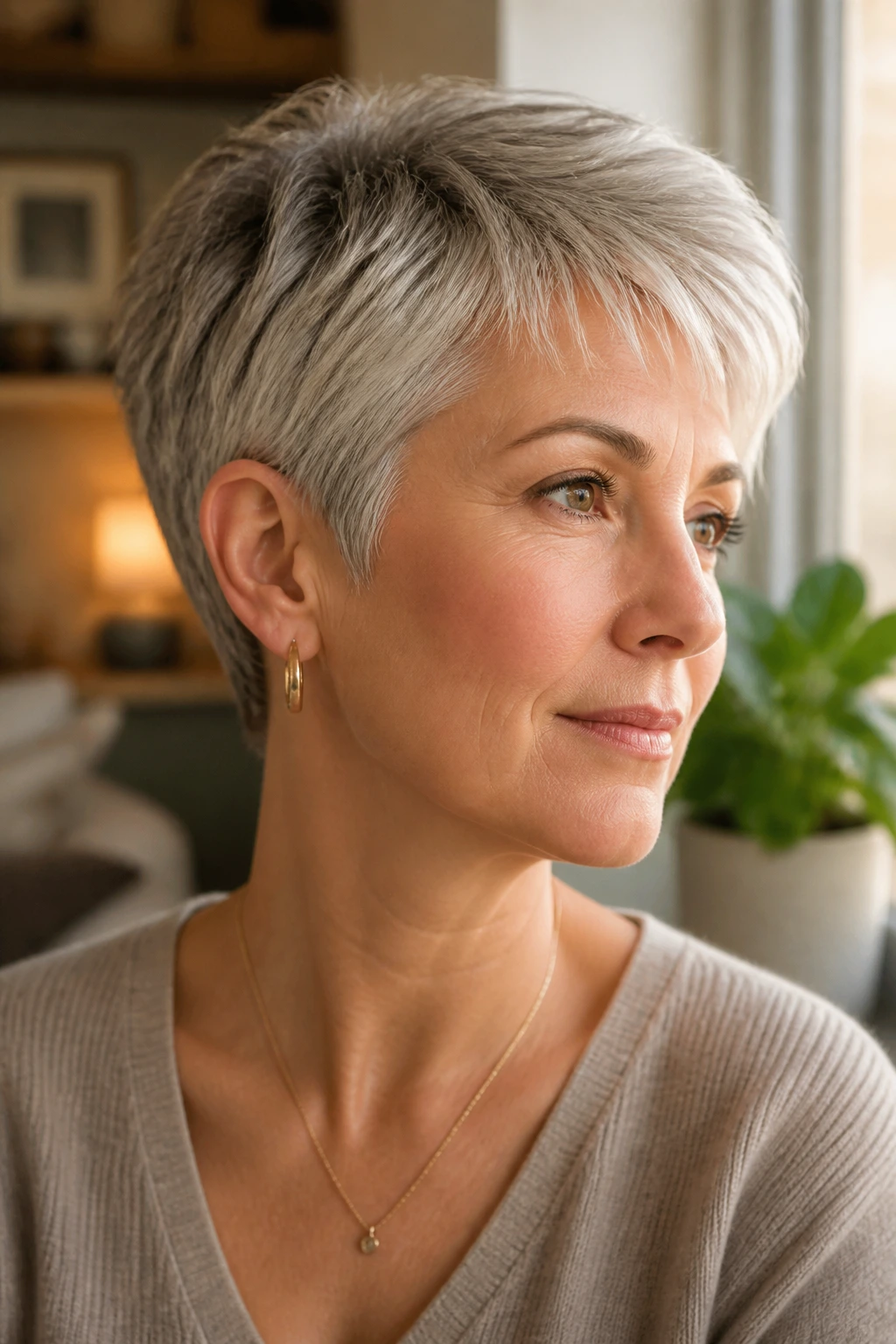
If you want something shorter but softer around the face, a feathered crop with an ear tuck is a smart move. The hair around the temples is kept light, then the ends are feathered just enough to break up the line without turning the whole cut wispy. Straight hair shows that feathering clearly, which is useful if you want a bit of air around the ears.
Why It Works
The ear tuck keeps the sides from feeling bulky, and the feathering softens the transition between the temple and cheek. That helps if your face feels wider around the middle or if you wear small earrings you actually want people to notice. It also takes pressure off the hairline, which can be a relief when the front area feels sparse.
- Best with a side part or soft off-center part.
- Works nicely with fine-to-medium hair.
- Keeps the nape neat without going severe.
A pea-sized amount of smoothing cream is enough. Too much product and the feathering disappears.
10. Rounded Bob with a Soft Perimeter
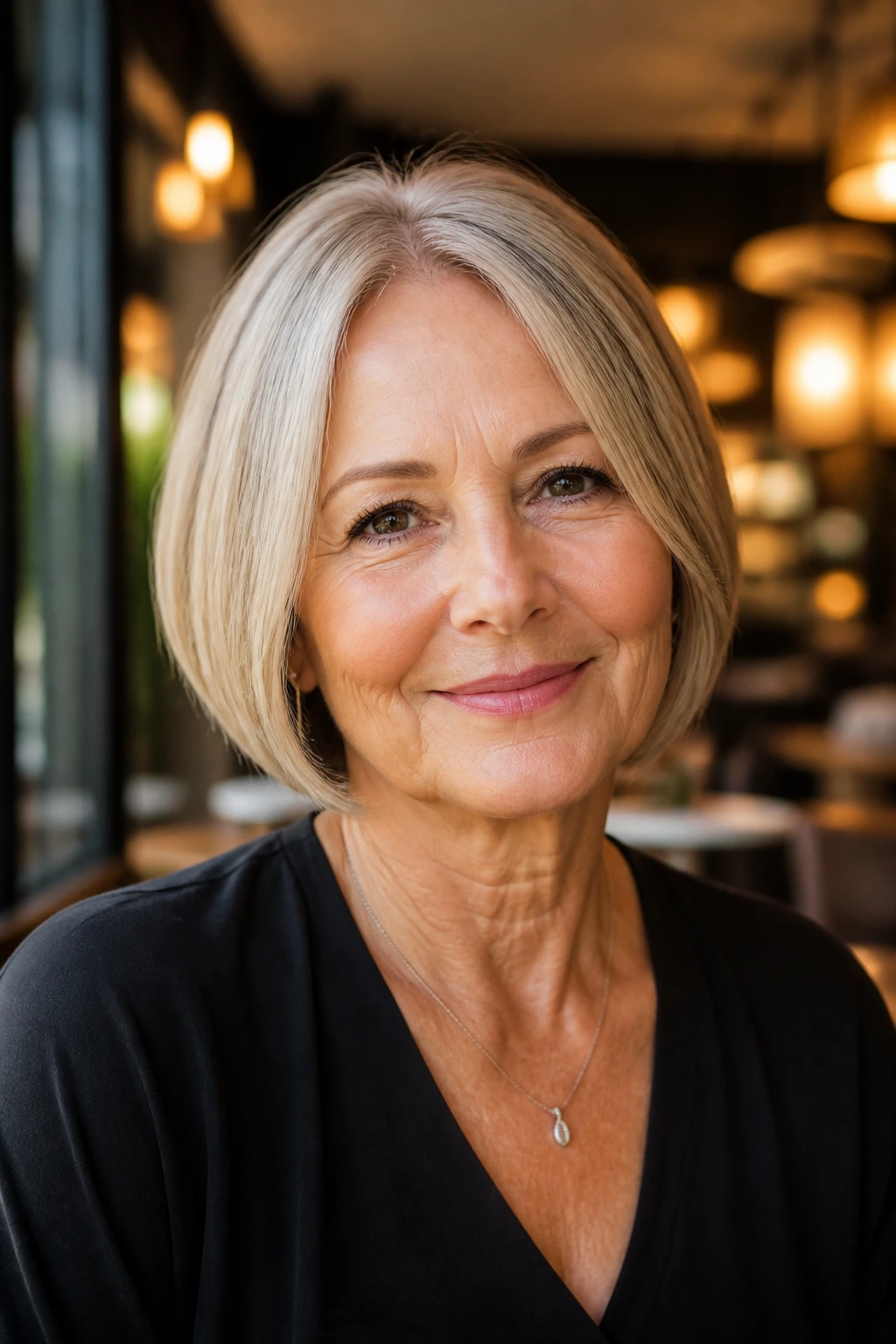
A rounded bob sounds old-fashioned until you see it done well. Then it looks like the haircut knew exactly what it was doing all along. The edges curve gently toward the jaw, which softens a square face and keeps straight hair from hanging like a board.
The point is not volume for volume’s sake. The point is a perimeter that follows the shape of the head in a gentler arc, so the haircut feels smoother at the cheeks and nape. If your jaw is strong or your face is angular, this can take the edge off without making the hair puffy.
I like this cut for women who want a bob that doesn’t feel severe at the front. It’s neat, but it has a little warmth in it.
11. Curtain-Fringe Bob
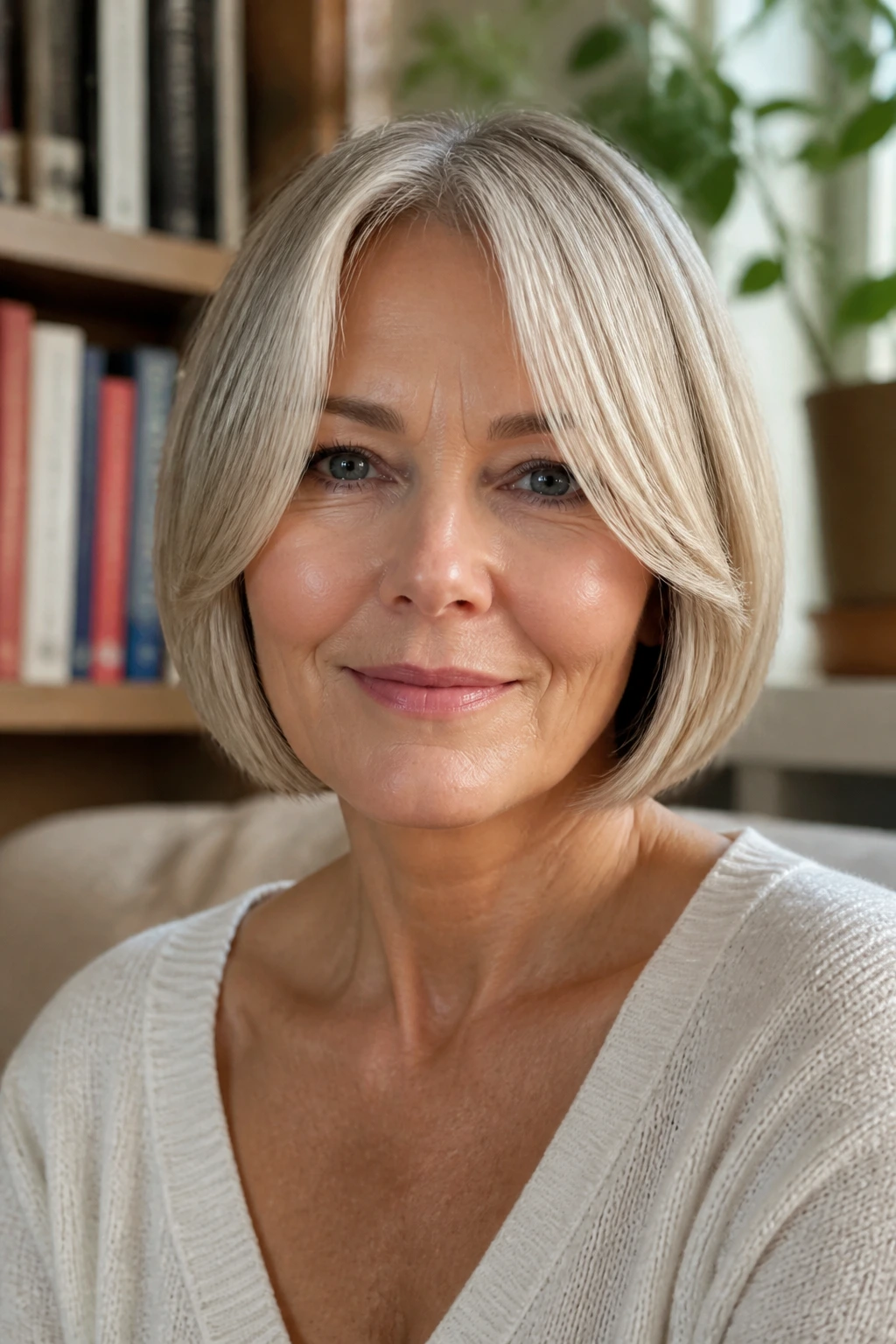
Curtain bangs are popular because they behave like a compromise, and compromise is underrated in haircuts. A curtain-fringe bob opens at the center and drapes toward the cheekbones, which gives straight hair some movement without breaking the clean bob line underneath. The result looks soft, but not floppy.
The fringe should be cut long enough to sweep away from the eyes, not sit right on the lashes. That matters. If the bangs are too short, they can look choppy as the hair grows. If they’re too long, the whole point of the framing disappears.
This style works especially well if your forehead feels wider than your chin or if you like to wear your hair behind one ear. The face-framing pieces do their job without stealing the show.
12. One-Length Bob with a Deep Side Part
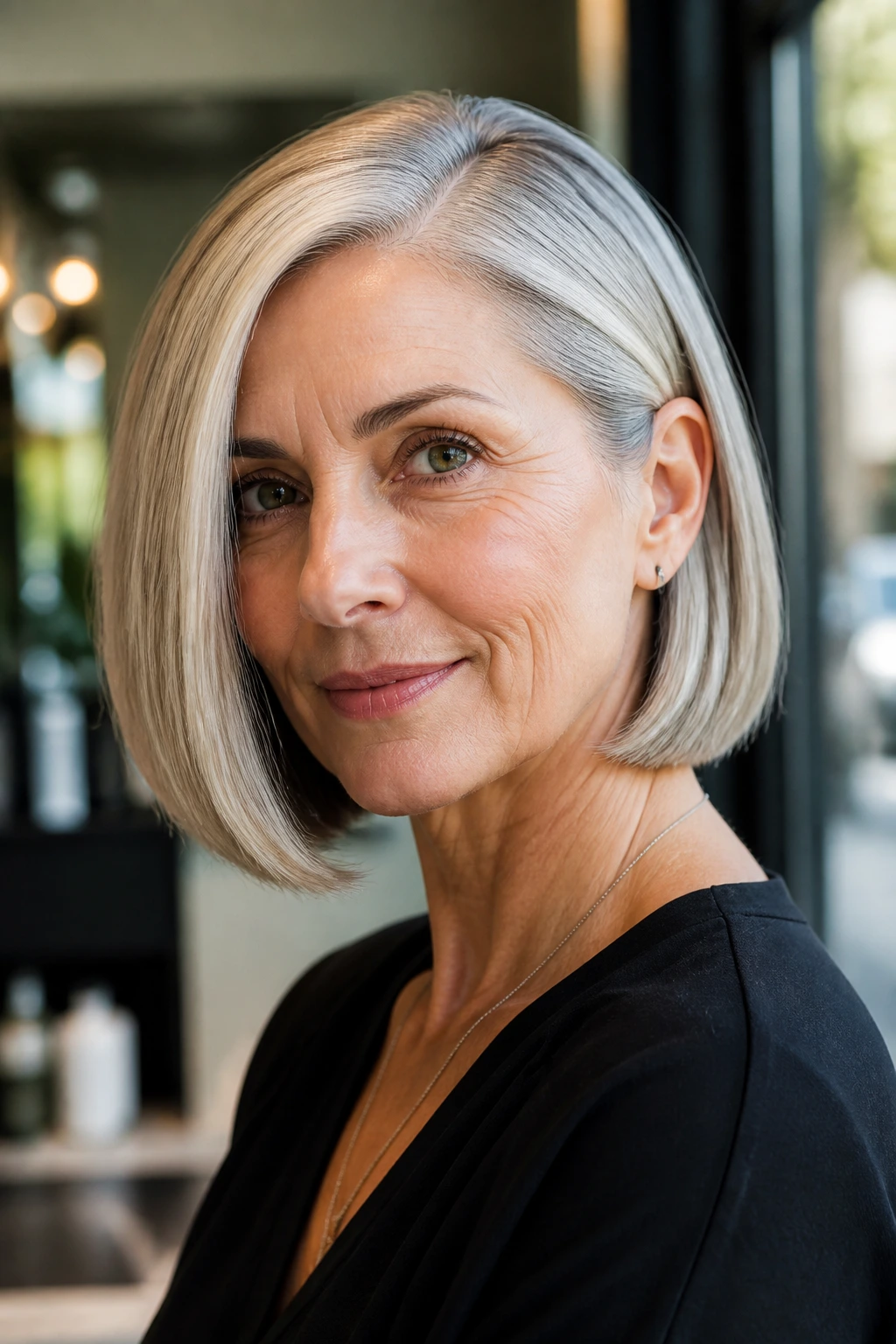
Sometimes the easiest cut is the smartest one. A one-length bob with a deep side part gives straight hair a strong edge, then shifts the balance just enough to keep it from looking flat or too symmetrical. It’s a good answer for women whose hair grows in a stubborn pattern or who want the crown to show some lift without layers.
The deep side part creates a heavy side and a lighter side, which adds built-in movement. That means you can get a little shape without asking the haircut to do gymnastics. If the front falls into your eyes, push the part back a half inch rather than cutting the fringe shorter. That keeps the silhouette intact.
This one is especially nice if you like a clean neckline and you don’t want to restyle the whole head every morning.
13. Neck-Grazing Bob with a Tucked Nape
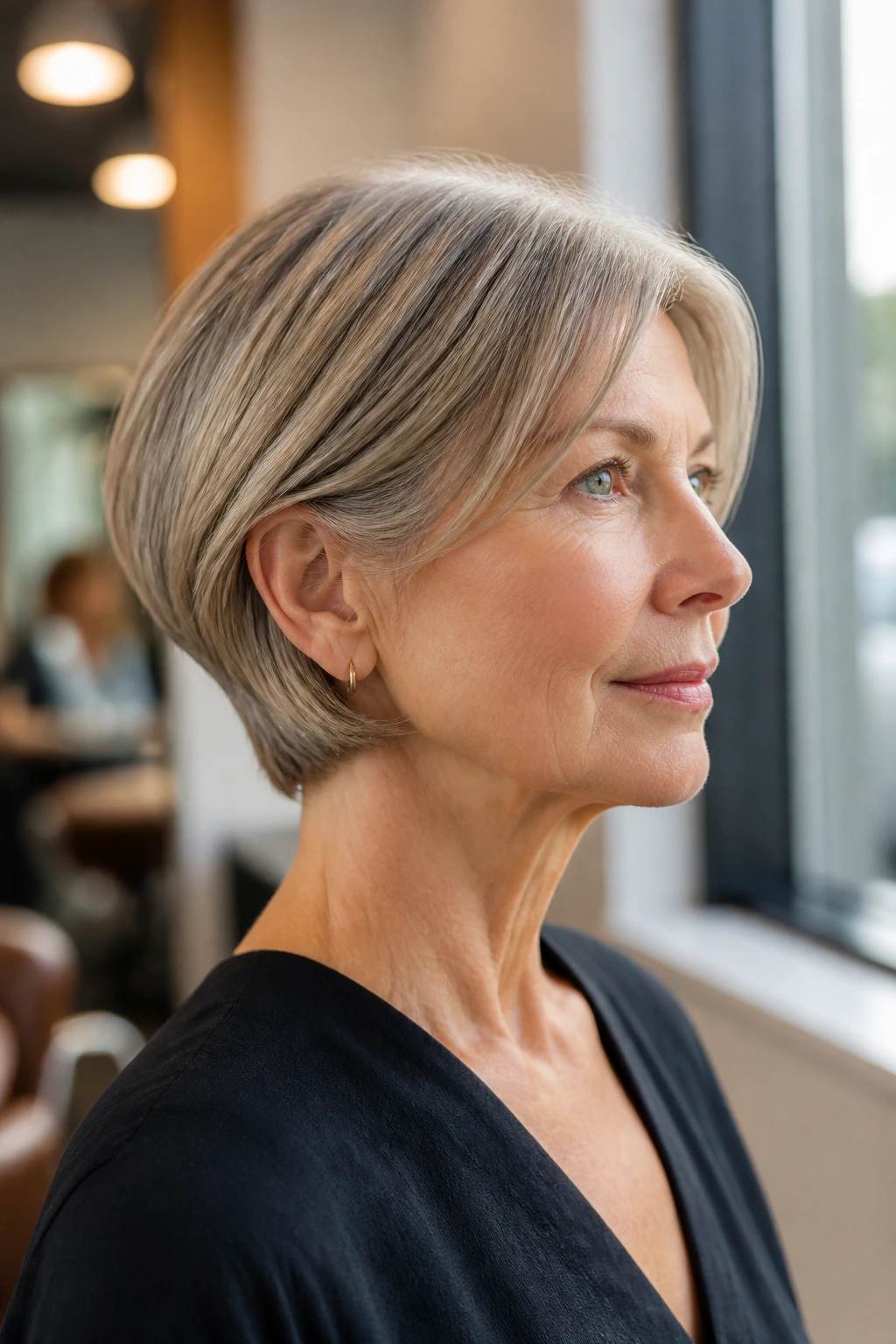
A neck-grazing bob is one of those cuts that looks far more polished than the effort it takes. The front sits around the base of the neck, and the nape is trimmed so the hair hugs rather than kicks out. On straight hair, that tucked back line stays visible, which is half the appeal.
The length is short enough to feel fresh, but not so short that you lose the bob shape. That matters for women who want to keep some softness around the face without dealing with shoulder-length hair that flips and frays. If you’ve ever had a bob that started looking shaggy after five weeks, this version usually behaves better.
It pairs neatly with collars, sweaters, and scarves because the neckline stays clean. No wrestling. No puffing.
14. Short Inverted Bob with a High Nape
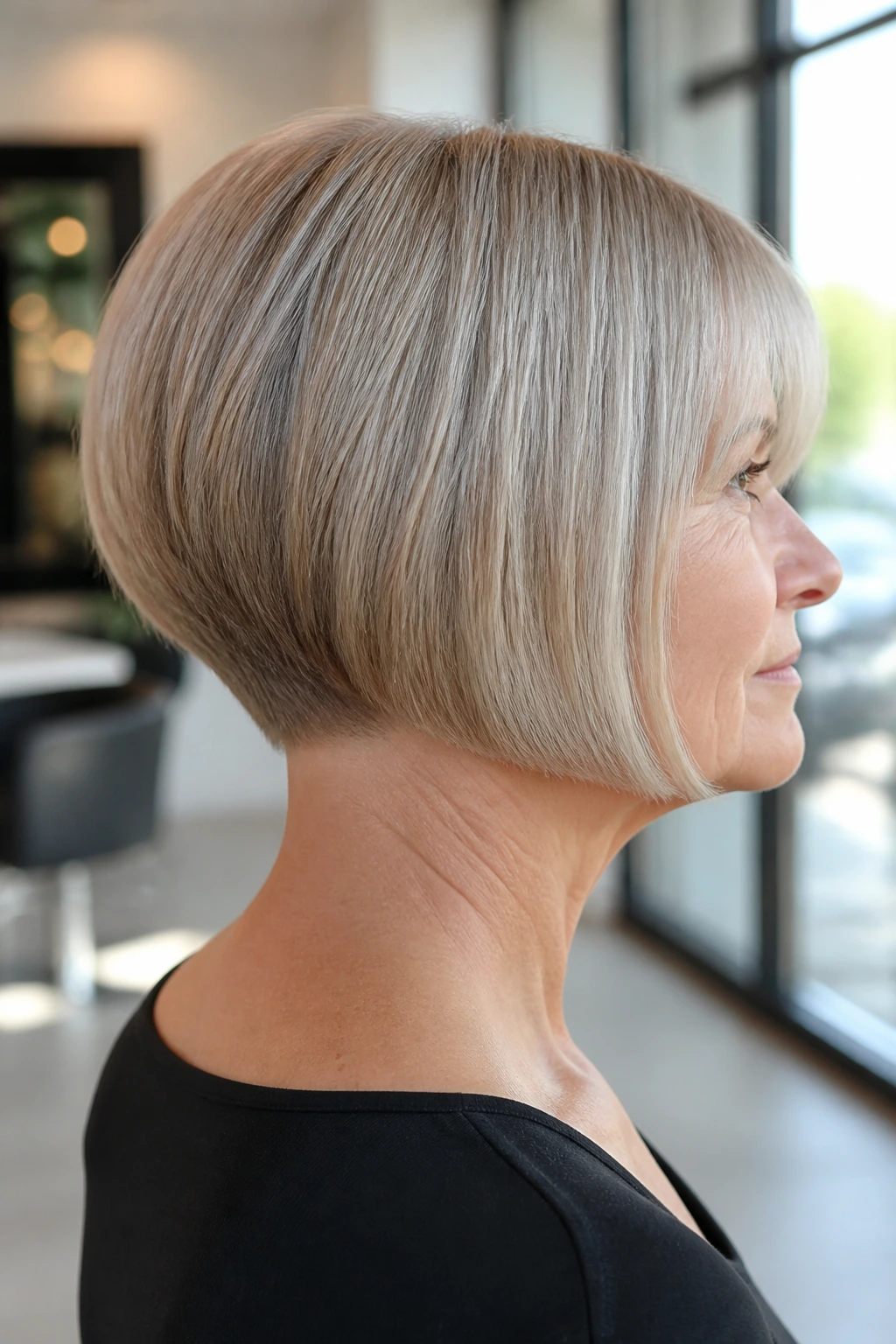
A short inverted bob is built for women who want the back to sit tighter and the front to lead the shape forward. The stacked nape creates a little lift, while the longer front angles down toward the jaw. Straight hair shows that contrast cleanly, which makes the cut feel structured and modern.
The high nape is the whole story here. It removes bulk where hair tends to gather, especially if the back of the head feels heavy or if you hate that shelf-like look some bobs get when they grow out. Keep the stacking subtle, though. Too much and the style starts looking overworked.
If you like a haircut that holds its shape after a windblown afternoon, this one is worth a serious look.
15. Piecey Crop with Long Top Layers
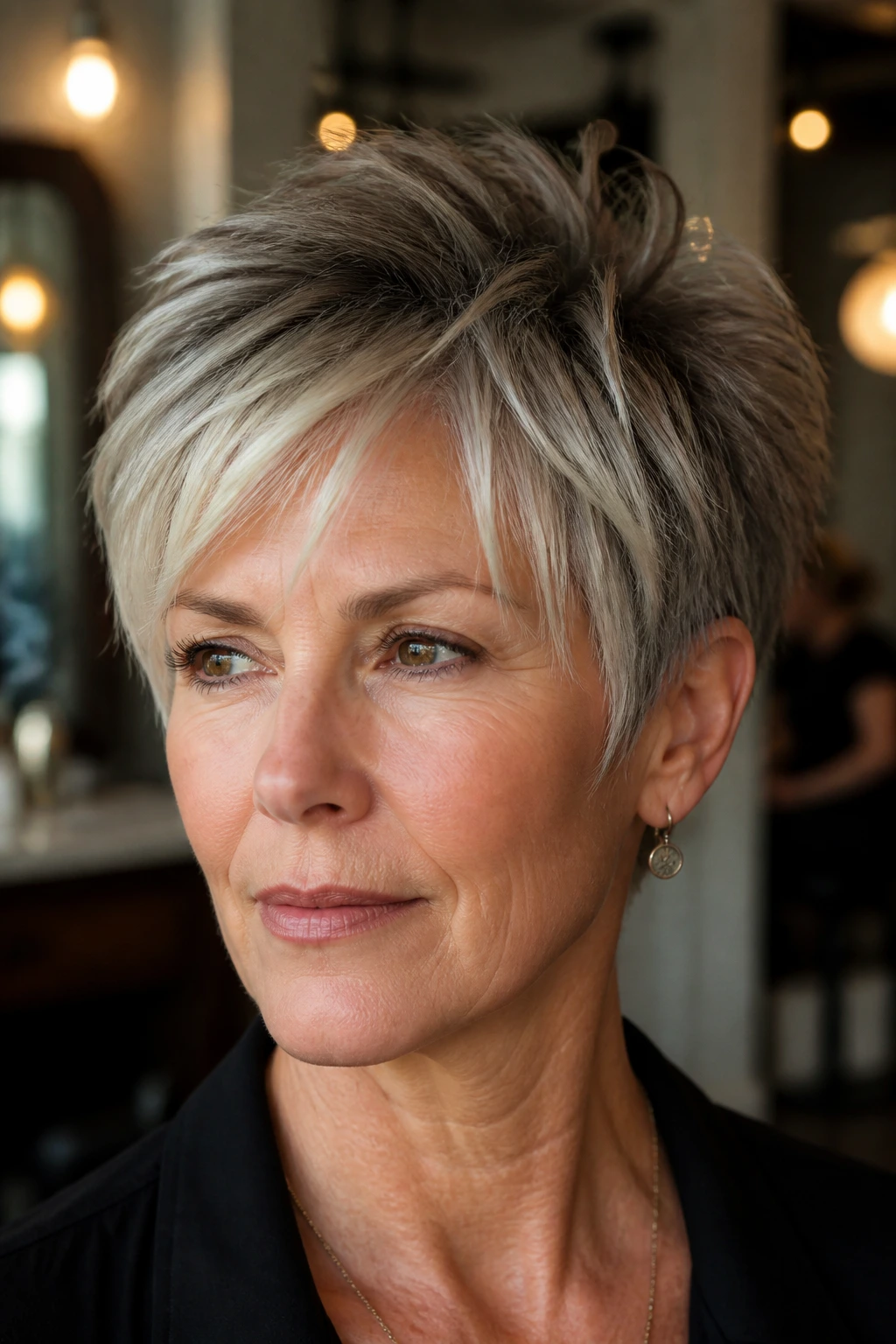
Why does one short cut look airy while another looks chopped to bits? Usually it’s the top layers. A piecey crop keeps the sides neat, then leaves the top long enough to separate into soft pieces instead of one flat cap. On straight hair, the pieces show clearly, which gives the style movement without needing curls.
The cut works best when the top layers are cut with restraint. You want separation, not spikes. A little paste or cream can push sections forward or to the side, but the haircut itself should still hold a clean outline around the ears and neck.
This is a good pick if you like short hair but still want to play with direction. One day it can lean forward. Another day it can sweep away from the face.
16. Short Lob with Blunt Ends
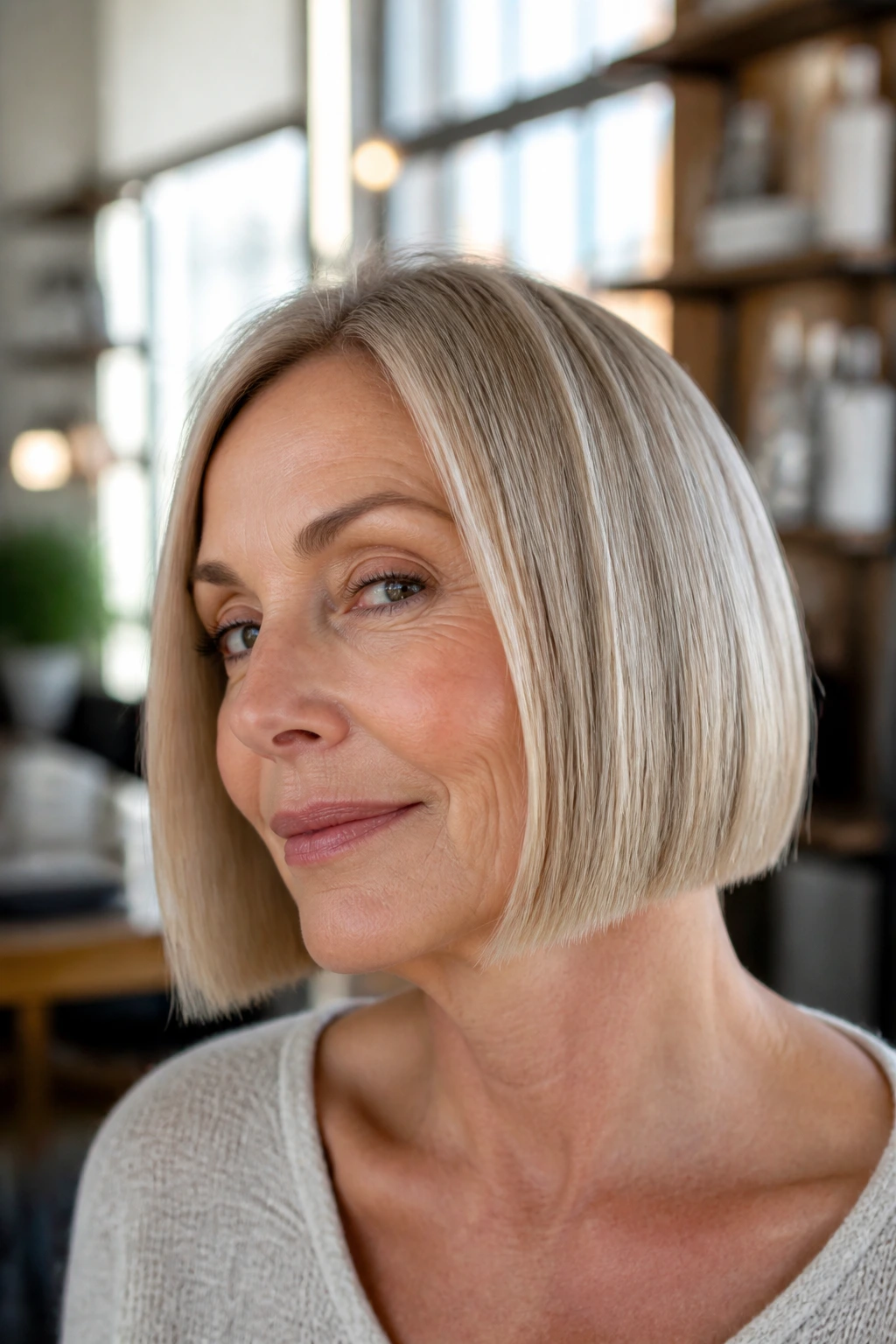
A short lob is the polite cousin of the bob, and sometimes that’s exactly what you want. It sits between chin and shoulder, usually just enough length to tuck behind the ear or clip back without feeling heavy. The blunt ends give straight hair a stronger finish than a layered lob ever will.
The reason this cut flatters older women so often is simple: it gives the neck a little open space without committing to a true short crop. If you’re easing into shorter hair, this is a less dramatic step. It also works well if your hair is fine and you need the ends to look full.
I’d skip too many face-framing layers here. The blunt line is the point. Once you start carving it up, the whole shape loses its clarity.
17. Asymmetric Bob with One Longer Side
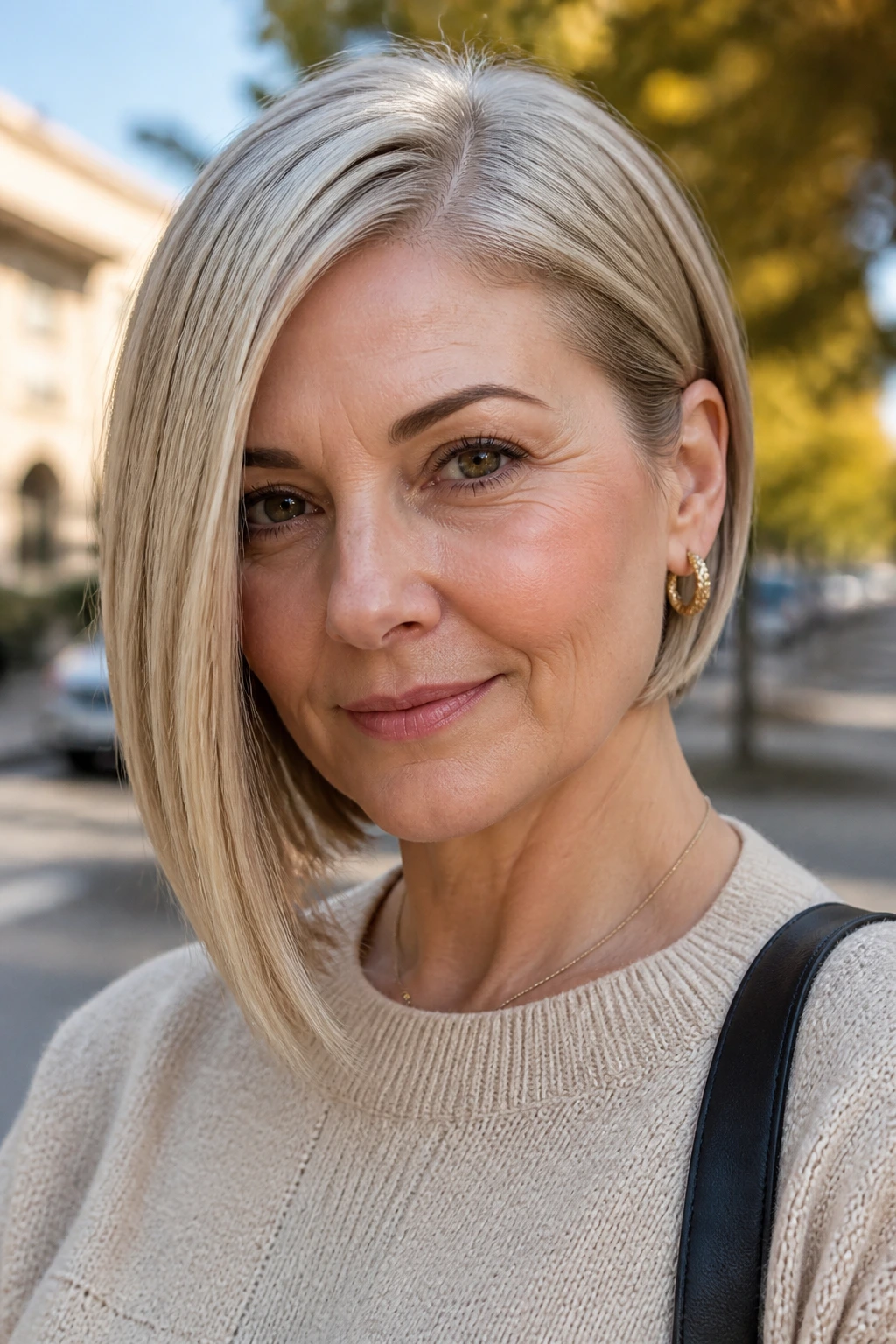
A small imbalance can be flattering. An asymmetric bob uses one side a bit longer than the other, which shifts attention and keeps the haircut from feeling stiff. On straight hair, the difference in length is easy to see, so even a subtle angle can change the whole mood of the cut.
This style works best when the shorter side still clears the jaw and the longer side stays controlled, not theatrical. Too much difference turns the haircut into a statement piece that needs more styling than most people want. Just enough difference gives the face a line to follow.
It’s a good pick if you wear one side tucked often or if you like an off-center part that breaks up a round face. Clean, but not boring. That’s the sweet spot.
18. Sleek Undercut Pixie
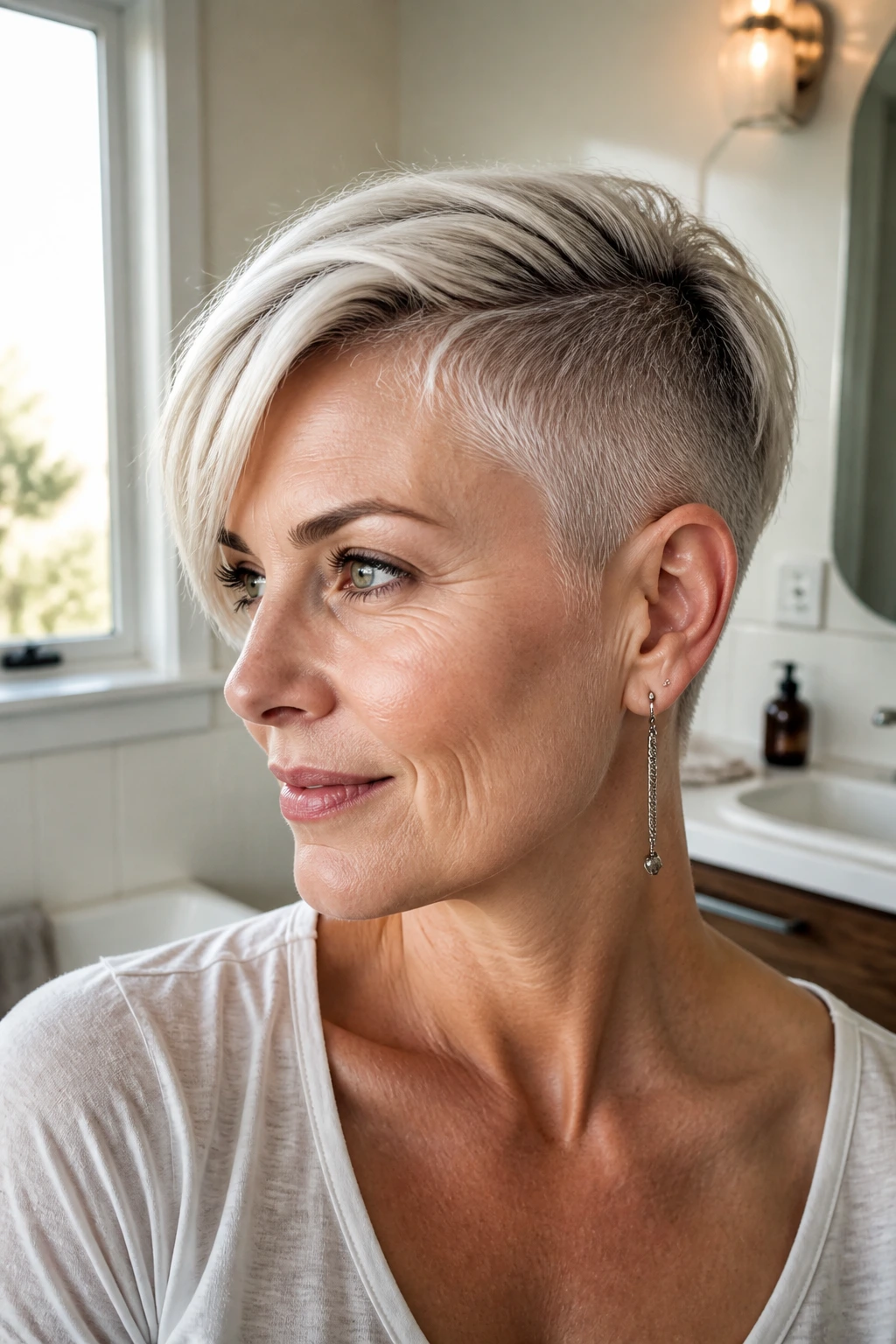
An undercut pixie sounds bold because it is bold, though the good version is surprisingly practical. The underneath layers are trimmed tight, which removes bulk, while the top stays long enough to comb smooth or sweep to one side. Straight hair handles the contrast well because the shape is obvious without needing texture to sell it.
This cut is especially useful for thick hair that swells around the ears or at the nape. The undercut takes that weight down fast. It also cuts drying time, which is a small luxury that becomes a real habit once you have it.
The only caution is maintenance. An undercut grows out fast at the sides, so this one likes regular trims. Skip the long gaps between appointments and it stays sharp.
19. Soft Pageboy with a Curved Line
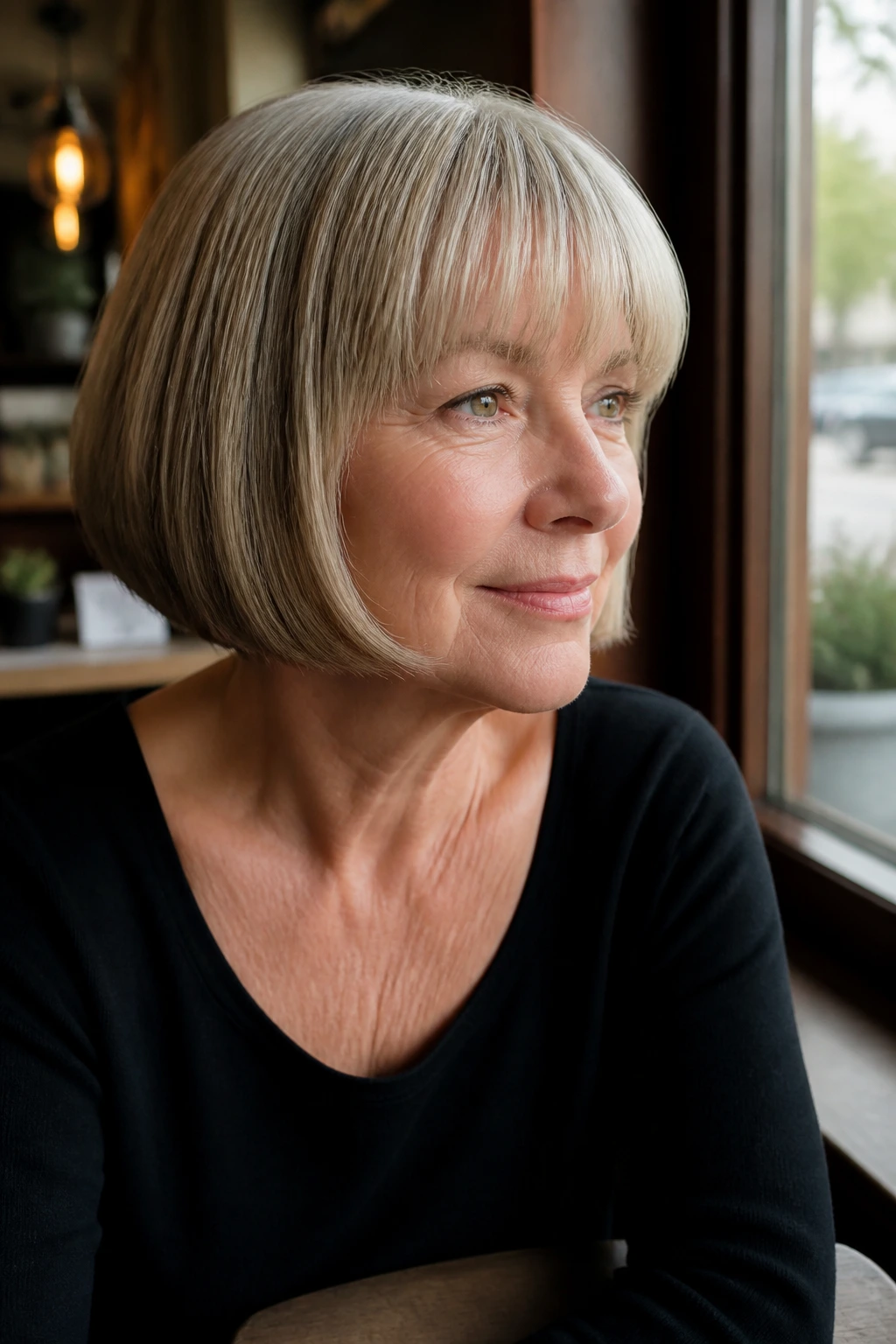
A pageboy can feel nostalgic, but the softened version has a neat little charm to it. The hair curves under at the ends, often with a fuller fringe or a smooth arc around the cheekbones. Straight hair is perfect for this because the curve holds without having to be forced into place.
The magic is in the continuity of the line. There should be no obvious jump from fringe to side to nape. Everything flows in one tidy motion. That makes the cut especially good for women who want a face-framing shape that still feels tidy around the ears.
If your jawline is strong and you want something a touch gentler, this shape does that job well. It’s a little vintage, but not costume-y. There’s a difference.
20. Graduated Bob with a Clean Nape
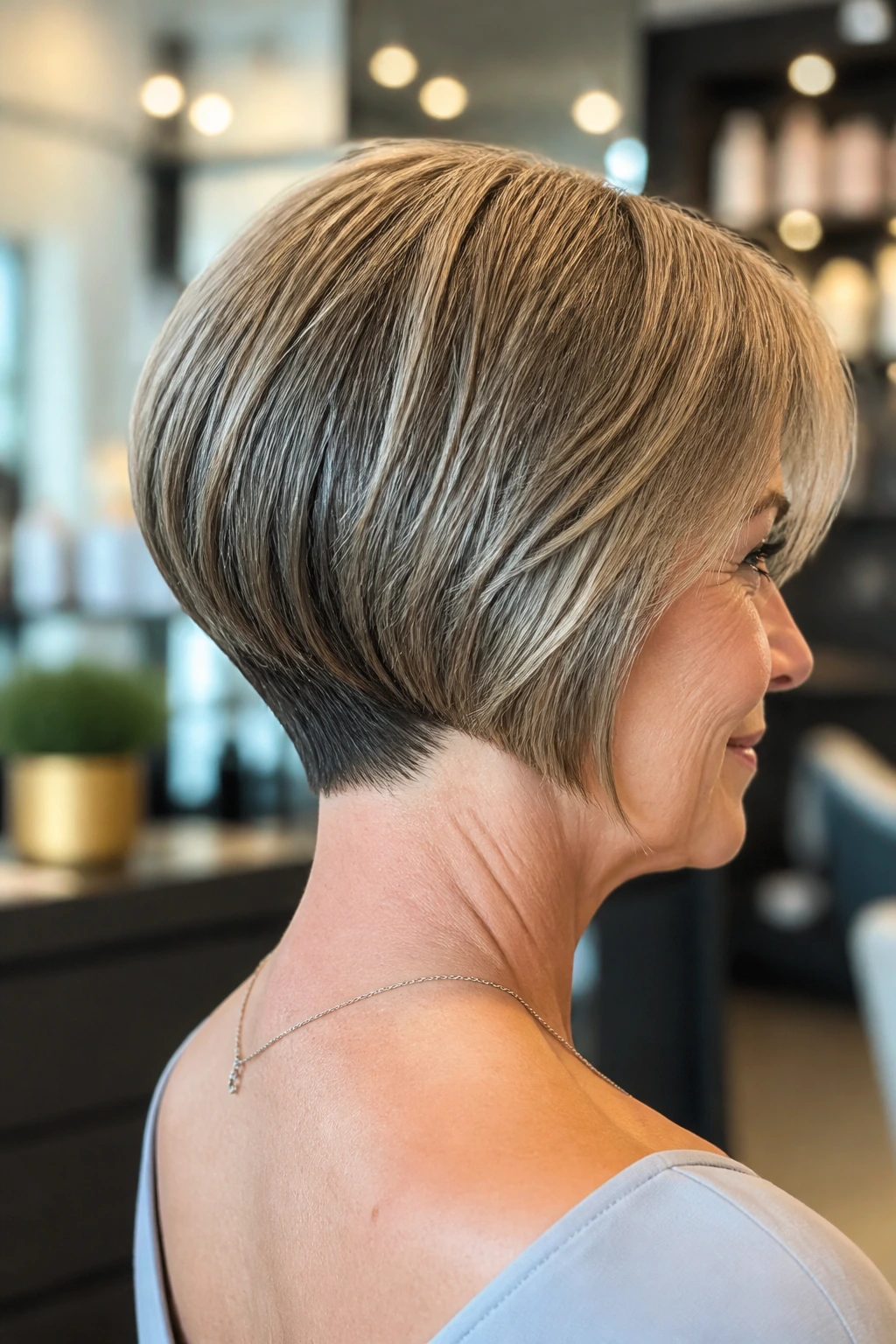
A graduated bob gives the back more structure and the front a controlled sweep, which is a useful combination when straight hair tends to hang heavy. The nape is cut clean and close, then the weight builds gradually as the hair moves toward the front. The result looks neat without feeling boxy.
What to Watch For
Too much graduation and the back starts to puff. Too little and the cut turns into a plain bob with no shape at the neckline. You want a measured transition, not a stacked wedge from a decade you’d rather not revisit.
Best For
- Hair that gets dense at the nape
- Women who want a tidy neckline
- Anyone who likes a bob that keeps its form in humid weather
It’s one of those cuts that looks even better after a quick blow-dry with the nozzle pointed downward. That alone tells you a lot about the shape.
21. Razor-Cut Crop with Wispy Ends
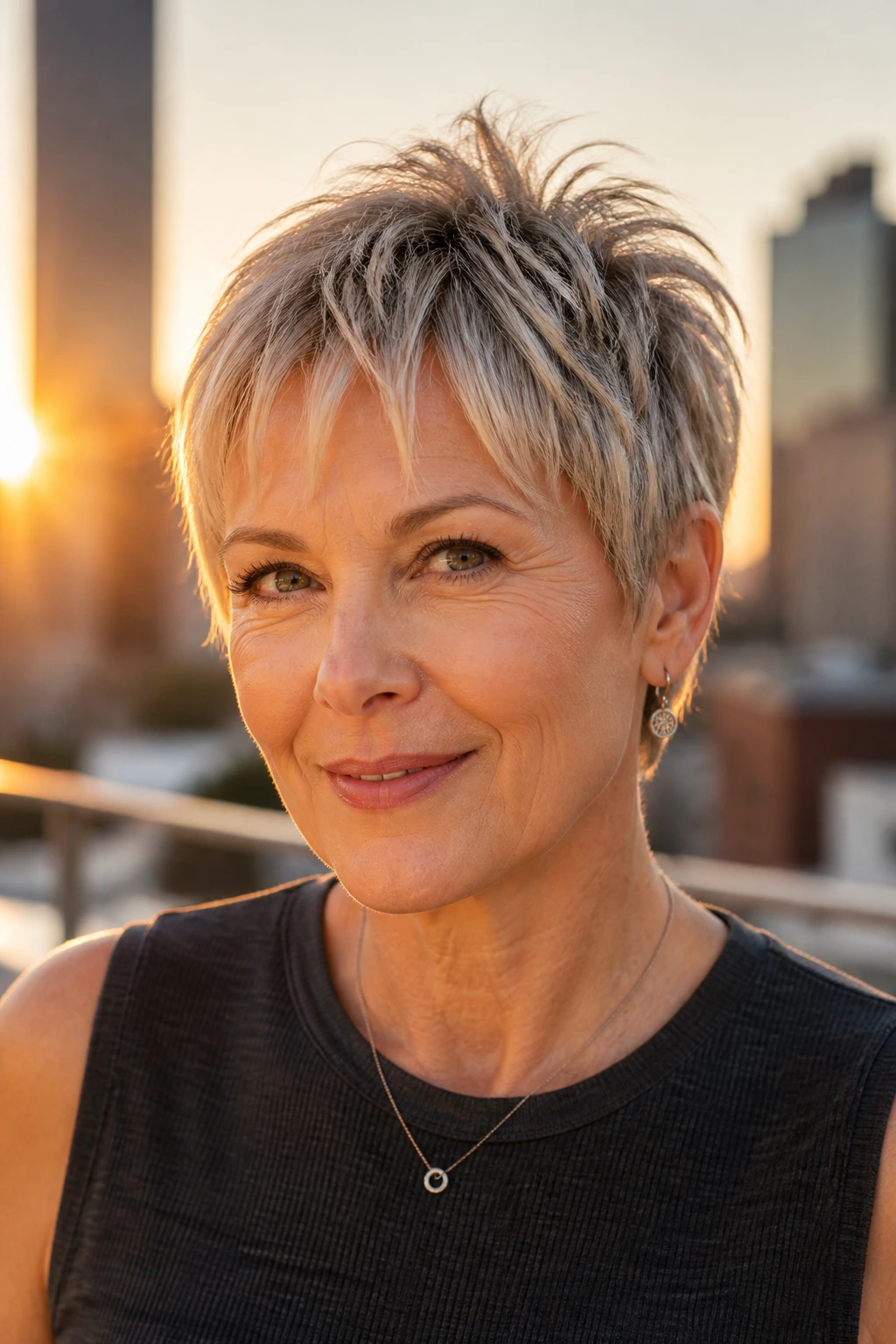
A razor-cut crop can be lovely on straight hair, but only when it’s done with a light hand. The idea is to thin the ends just enough to create a softer edge, not to shred the whole haircut into pieces. Wispy ends give a little movement, which can help if the hair feels too blocky in a blunt crop.
The danger is obvious. Too much razor work and the ends start looking frayed, which is a terrible trade on fine or aging hair. Keep the perimeter visible. The wisps should live at the fringe and top layers, not eat the outline.
This style suits women who want softness around the face and do not mind a slightly less formal finish. It feels relaxed, but still intentional.
22. Choppy Bob with Minimal Layers
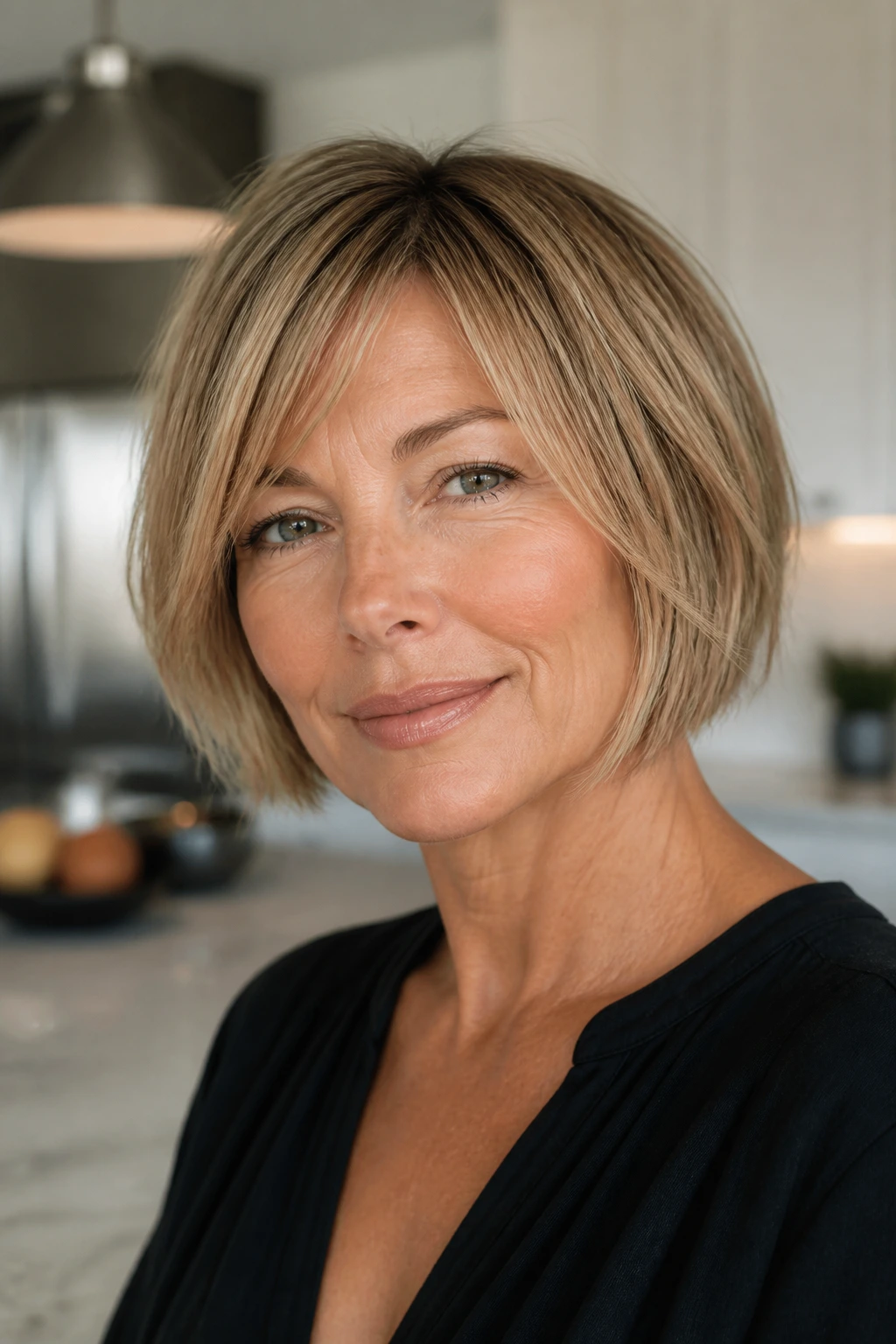
A choppy bob can be a nice middle ground if a blunt bob feels too rigid and a shag feels like too much work. The layers are kept minimal, just enough to break up a heavy line and keep the hair from sitting like one solid sheet. Straight hair shows the texture cleanly, so the cut reads modern without needing curls or beach spray.
The trick is restraint. The choppiness should live mostly around the edges and maybe a few internal pieces, not scattered all through the head. If the layers are too numerous, the ends start to look thin and the shape loses its weight.
This one works well for women with medium-density hair who want a haircut that feels a little looser around the face. It’s neat, but not stiff. That matters.
23. Side-Parted Close Crop
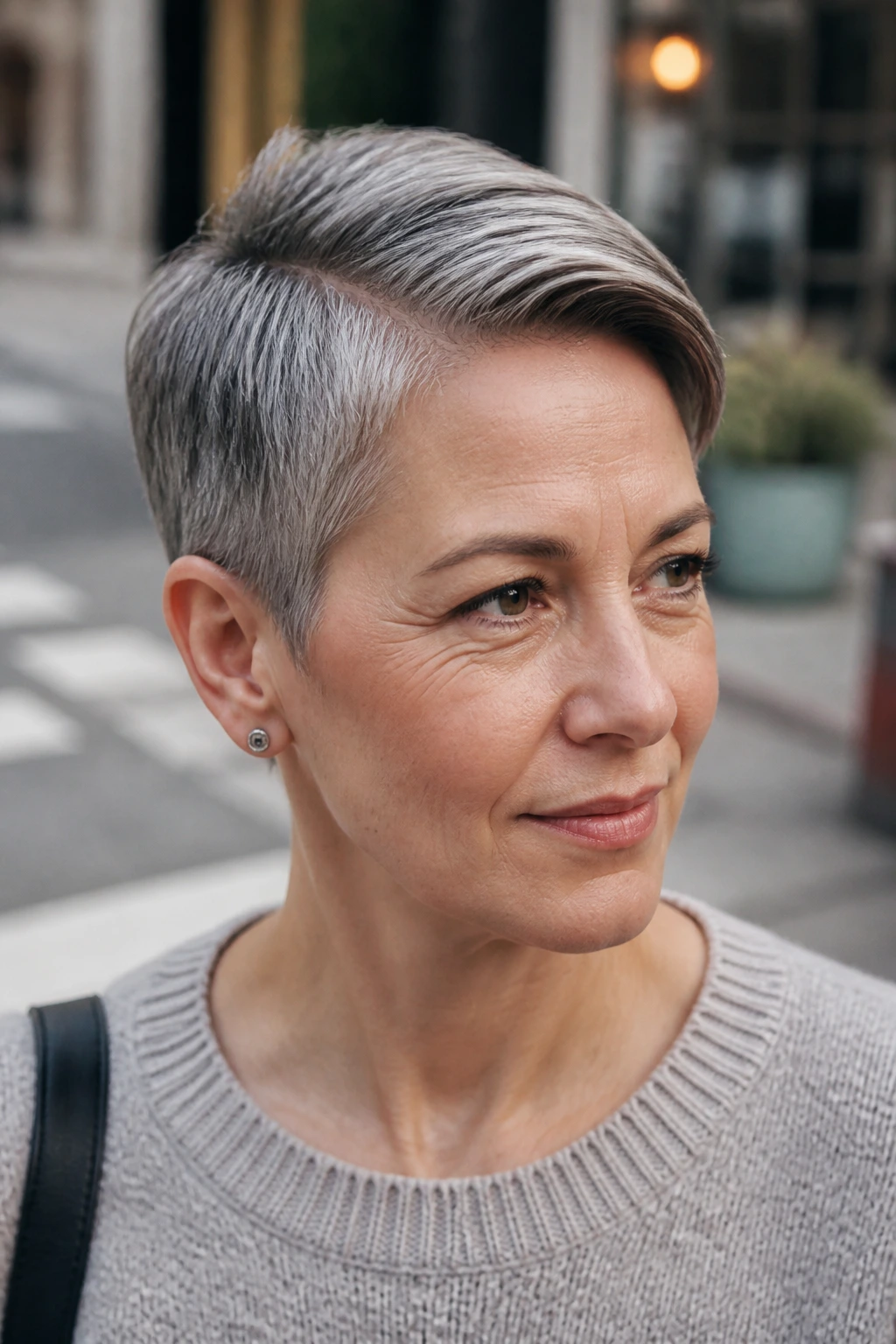
A close crop with a side part is one of the neatest short straight haircuts for older women because it respects the head shape instead of trying to invent one. The hair stays close at the sides and nape, while the side part lifts one front section enough to keep the style from looking severe.
The part is doing more than dividing hair. It gives the cut a direction. Straight hair responds well to that because it follows the line without needing much persuasion. If one temple sits lower than the other, a side part can hide that little asymmetry in a way a center part won’t.
This cut is practical for women who want minimum styling and maximum tidiness. You wash it, comb it, and go. No performance required.
24. Modern Bowl-Inspired Crop
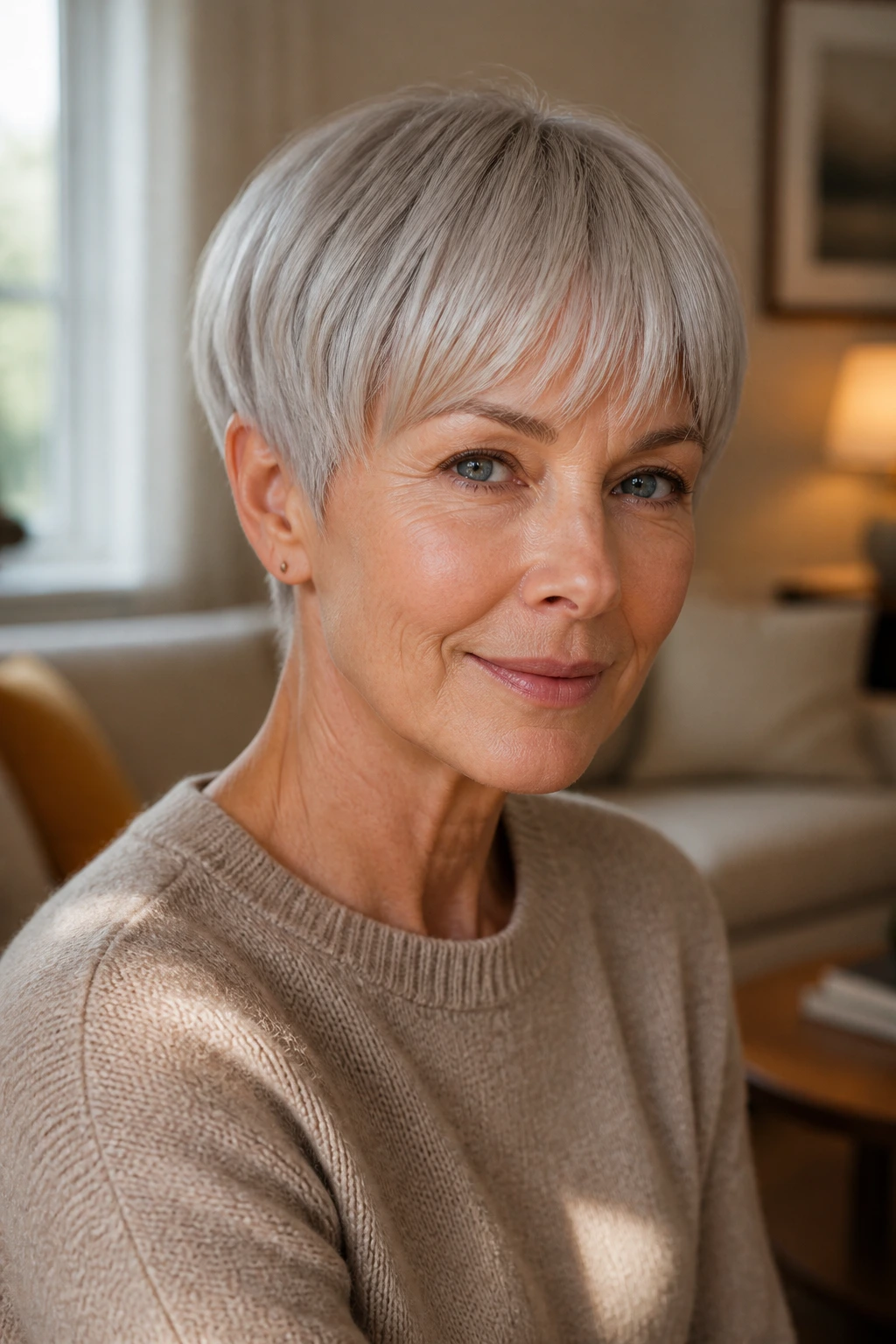
A bowl-inspired crop sounds braver than it is. The modern version uses a softer perimeter, a little movement around the edges, and a shape that sits close to the head without feeling costume-like. Straight hair makes the geometry readable, which is exactly why this cut can look so good on the right person.
The key is avoiding a hard shelf line. The ends should curve gently around the face and ears, and the fringe can be softened so it doesn’t feel helmet-straight. If you want a shape with some fashion edge, this is a strong option.
Not everyone will want this one. Fair enough. But on the right face, with the right glasses or earrings, it can look sharp in a way that older short haircuts often don’t get credit for.
25. Wispy Layer Bob with Light Movement
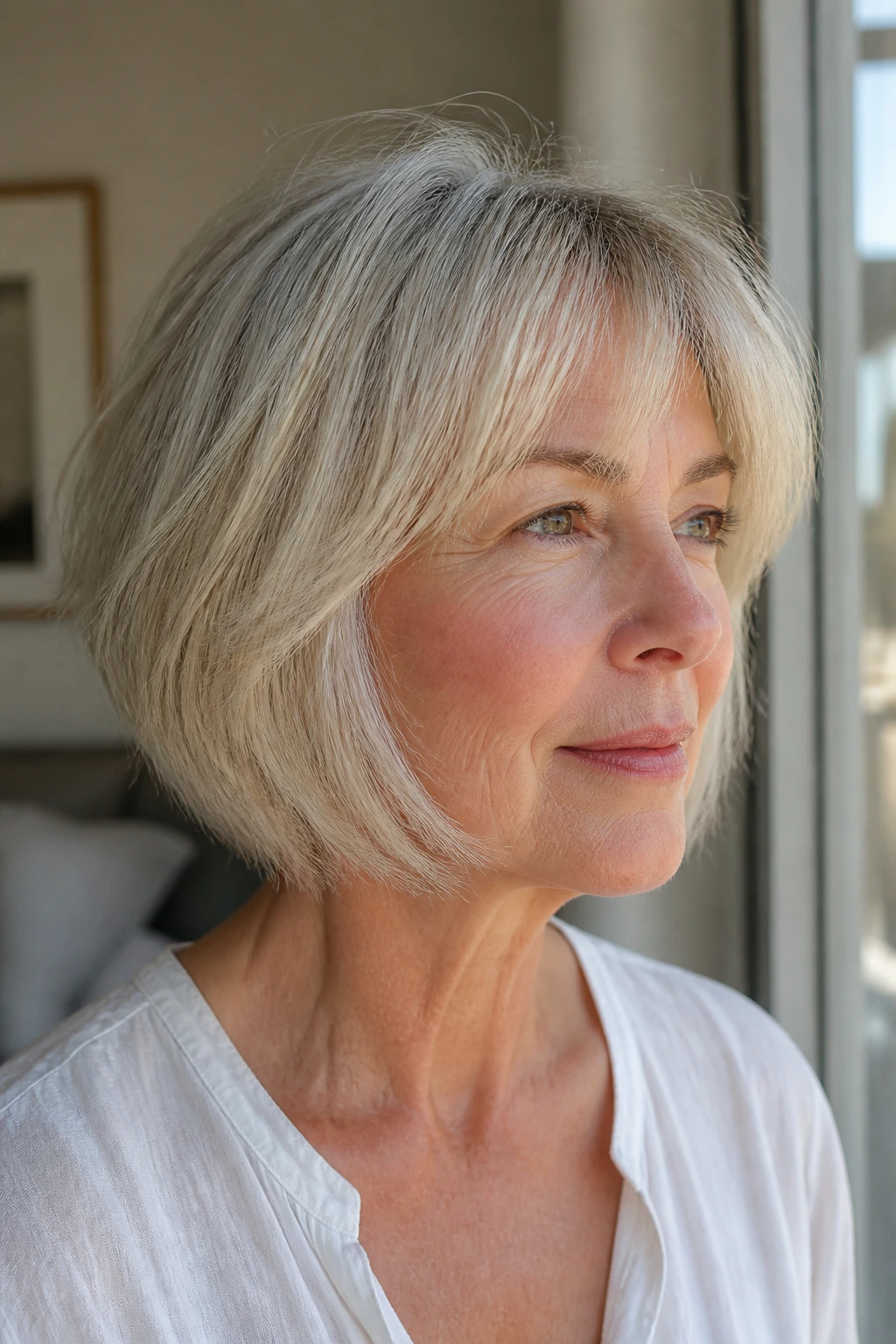
A wispy layer bob is for someone who wants softness without losing the bob’s shape. The layers are feather-light, placed just enough to stop the outline from feeling heavy, especially around the cheeks and crown. Straight hair keeps the wisps visible, so the effect is subtle instead of messy.
Why It Stands Out
This cut can take some pressure off fine hair because it avoids the weighty wall effect of a one-length bob. It also suits women whose face looks better with a little movement near the cheekbones. Keep the wisps controlled, though. If the layers go too high, the bob starts to unravel.
How to Wear It
- Use a little volumizing spray at the roots.
- Dry the top forward, then brush it into place.
- Finish with a touch of cream on the ends, not the whole head.
It is a quiet haircut, and that is the appeal. Not every style has to announce itself.
26. Tucked-Back Crop with a Longer Fringe
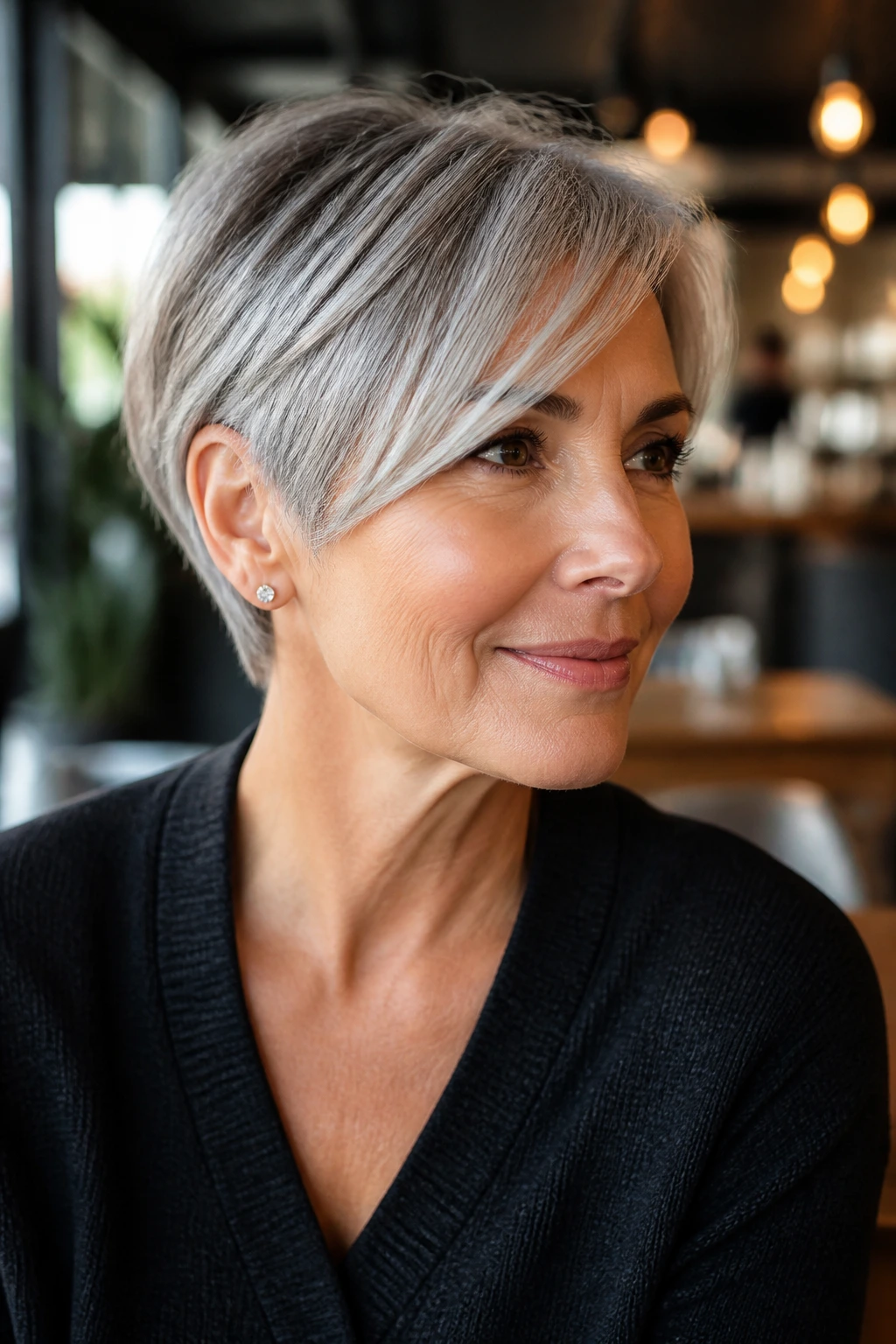
This is one of those cuts that looks easy because it is, but only if the proportions are right. The sides and back are short enough to tuck neatly behind the ears or close to the head, while the fringe stays longer and can be swept sideways or split softly at the center. Straight hair makes that contrast clean and readable.
The longer fringe is useful if you want face framing without committing to full bangs. It gives you room to change the mood of the cut from week to week. Tucked back, it feels tidy. Forward, it feels softer.
That flexibility matters for anyone who likes a short cut but gets bored if everything looks the same every morning. This one changes with a comb and five seconds of attention.
27. Grown-Out Pixie with Soft Edges
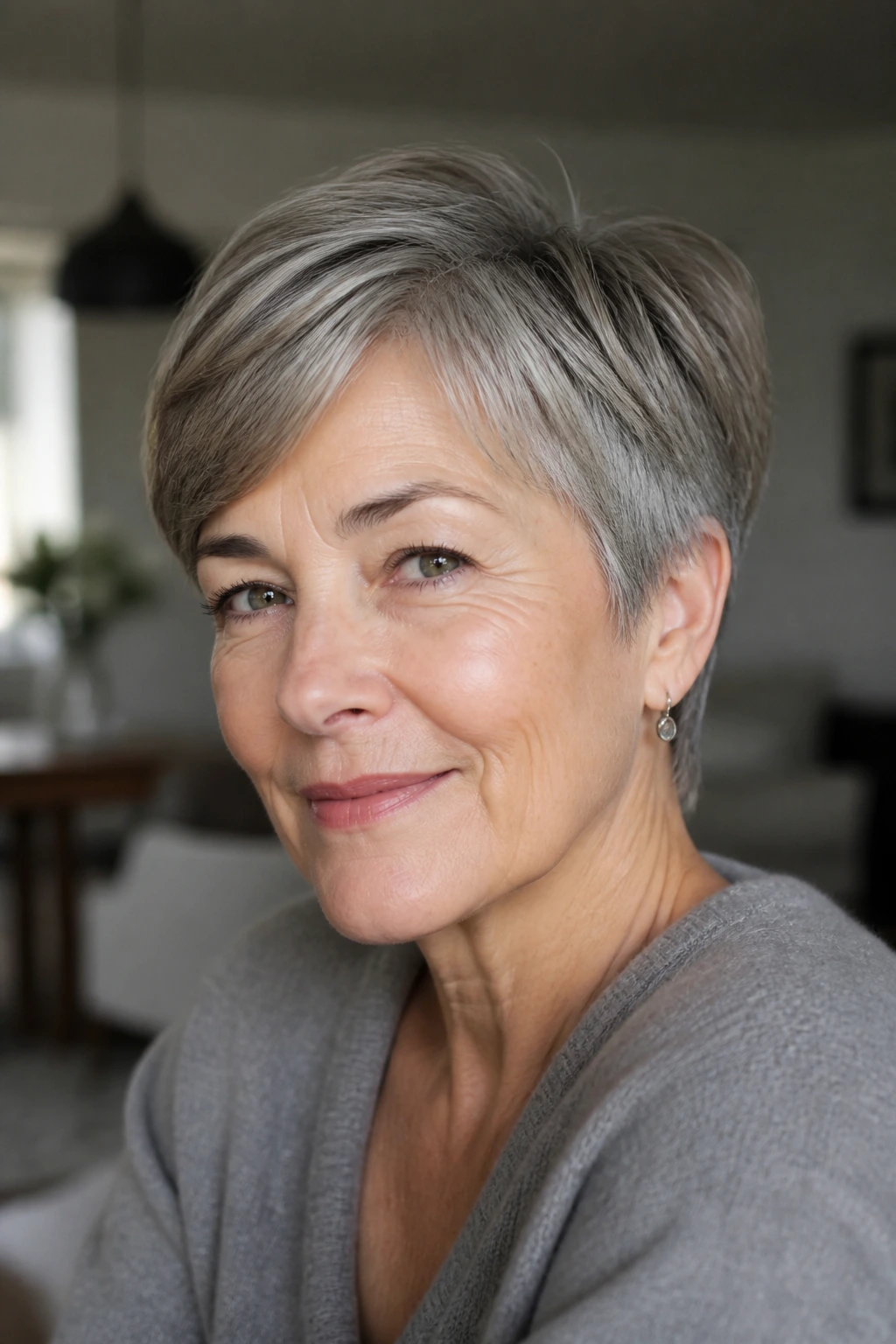
A grown-out pixie can look awkward if the edges aren’t controlled, but a soft-edged version feels intentional. The top keeps enough length to brush over or lightly lift, while the sides and nape stay shaped so the cut doesn’t swell out into a mushroom. Straight hair is good at showing whether that balance is right.
This is a useful cut if you’re moving away from a very short pixie but are not ready for a full bob yet. It bridges the gap without making the grow-out stage feel like a punishment. The ends should be softened, not feathered into nothing.
I like this one for women who want to keep things low-key. It’s tidy, forgiving, and not precious about perfection.
28. Sculpted Jaw-Length Crop with Face-Framing Ends
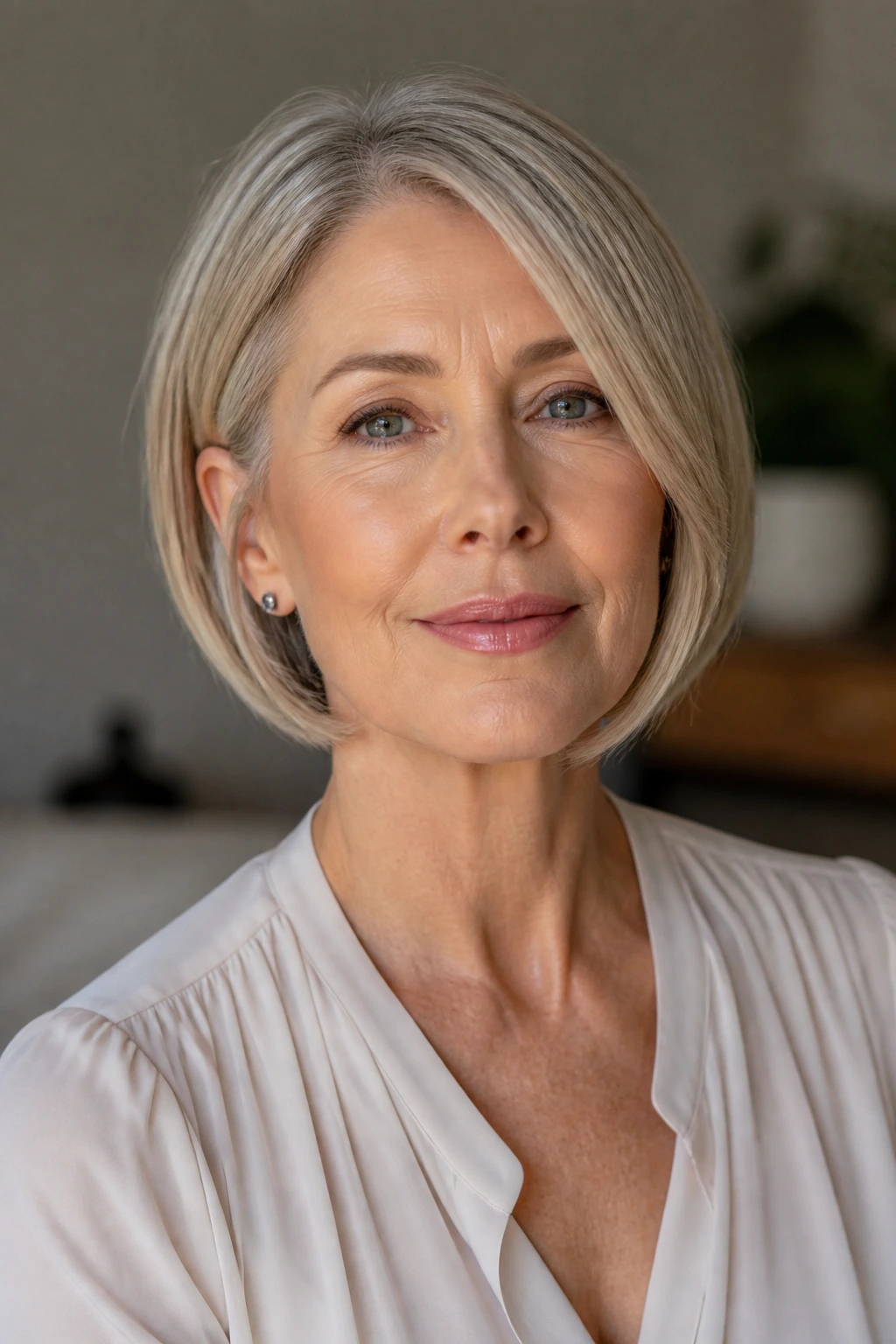
A sculpted jaw-length crop finishes the list because it pulls the cleanest pieces of all the styles together. The length sits at the jaw, the line stays controlled, and the face-framing ends are shaped just enough to soften the front without stealing the outline. Straight hair keeps every inch of that shape visible.
This cut is a good choice if you want a haircut that feels current but not trendy in a way that’ll annoy you six weeks later. It can sharpen the jaw, open the neck, and still leave enough length to tuck behind one ear or sweep away from the face. The best version is cut with discipline. No shredded ends. No accidental over-layering.
If you want one short shape that looks tidy in a blouse collar, under a scarf, and with glasses, this is an easy contender.
Why Short Straight Haircuts for Older Women Work So Well on Straight Hair
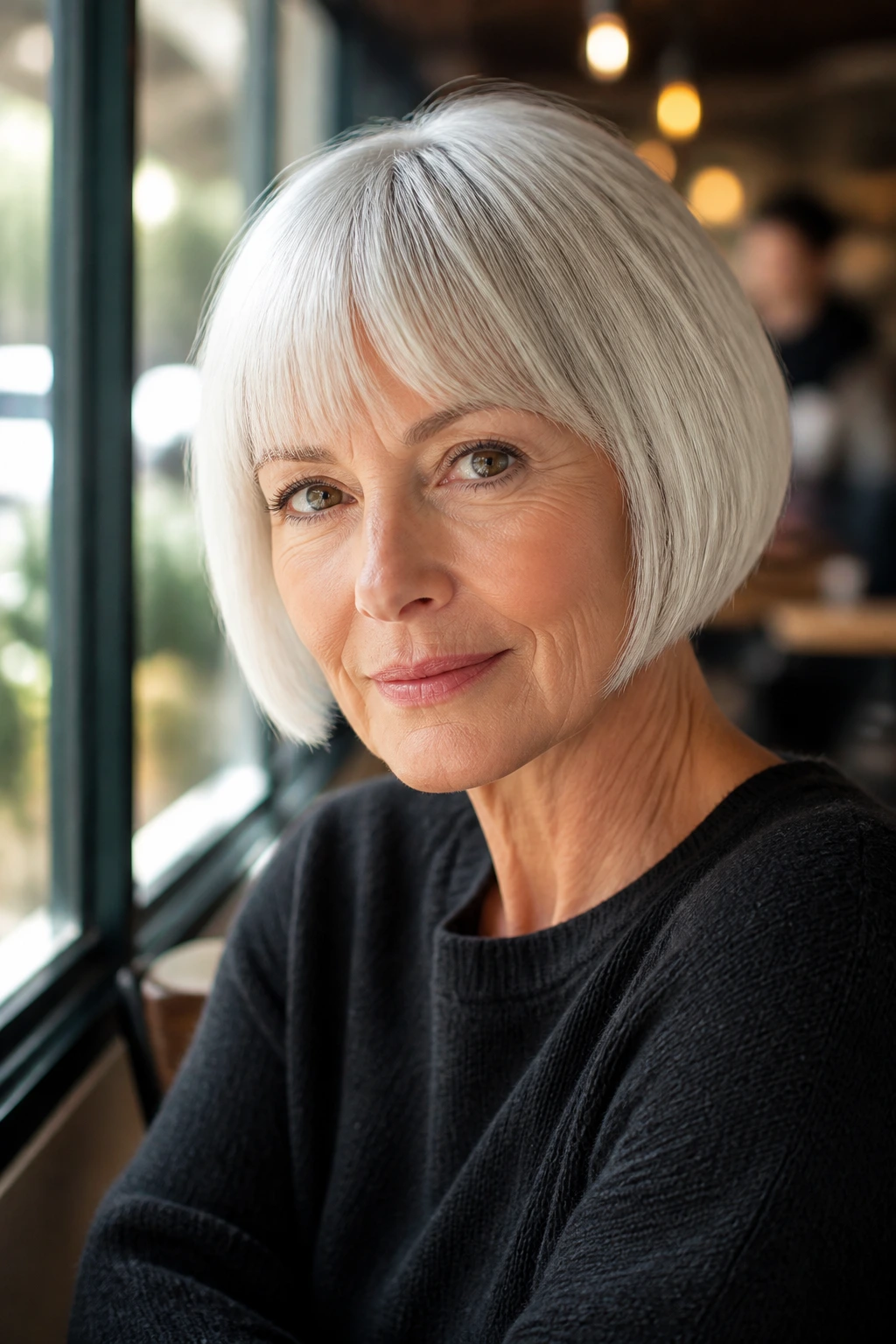
Straight hair rewards precision. That sounds obvious until you watch a cut grow out by three weeks and see exactly where the shape has been built well — and where it has not. A clean bob or crop can keep its outline because the hair doesn’t need curl or wave to support the design. The haircut itself does the heavy lifting.
There’s another reason these short straight haircuts for older women make sense: they solve problems straight hair tends to have at length. Ends thin out. The crown falls flat. The neckline starts to feel hot, heavy, or both. A shorter cut removes some of that weight and lets the hair sit in a more honest shape. If the hair is gray, silver, or salt-and-pepper, the clean perimeter often looks even better because the texture tends to be a little stronger and drier.
Short hair also gives the face more room. That’s not a euphemism. It means earrings show up, collars stop fighting the hair, and glasses can become part of the whole look instead of an obstacle. The right short shape doesn’t make the hair louder. It makes it cleaner.
Essential Tools for Keeping the Shape Sharp
- Blow dryer with a concentrator nozzle — directs air where you want it, which matters when straight hair tries to dry flat in all the wrong places.
- Paddle brush — best for bobs and lob-length cuts because it keeps the line smooth without flipping the ends too much.
- Small round brush — useful for lifting the crown, shaping a fringe, or bending the ends under just a touch.
- Fine-tooth tail comb — makes a clean part and helps section the hair evenly before drying.
- Light smoothing cream or lotion — tames flyaways without making the hair greasy by noon.
- Volumizing mousse or root spray — helpful if your crown needs a little push and your hair tends to sit close to the scalp.
- Flat iron, ½ to 1 inch plates — optional, but handy for polishing the ends on a blunt bob or softening a stubborn bend near the front.
- Salon appointment photos, front and side view — not glamorous, but these save a lot of bad wording at the chair.
How to Choose the Right Short Cut for Your Face, Hair Density, and Neck
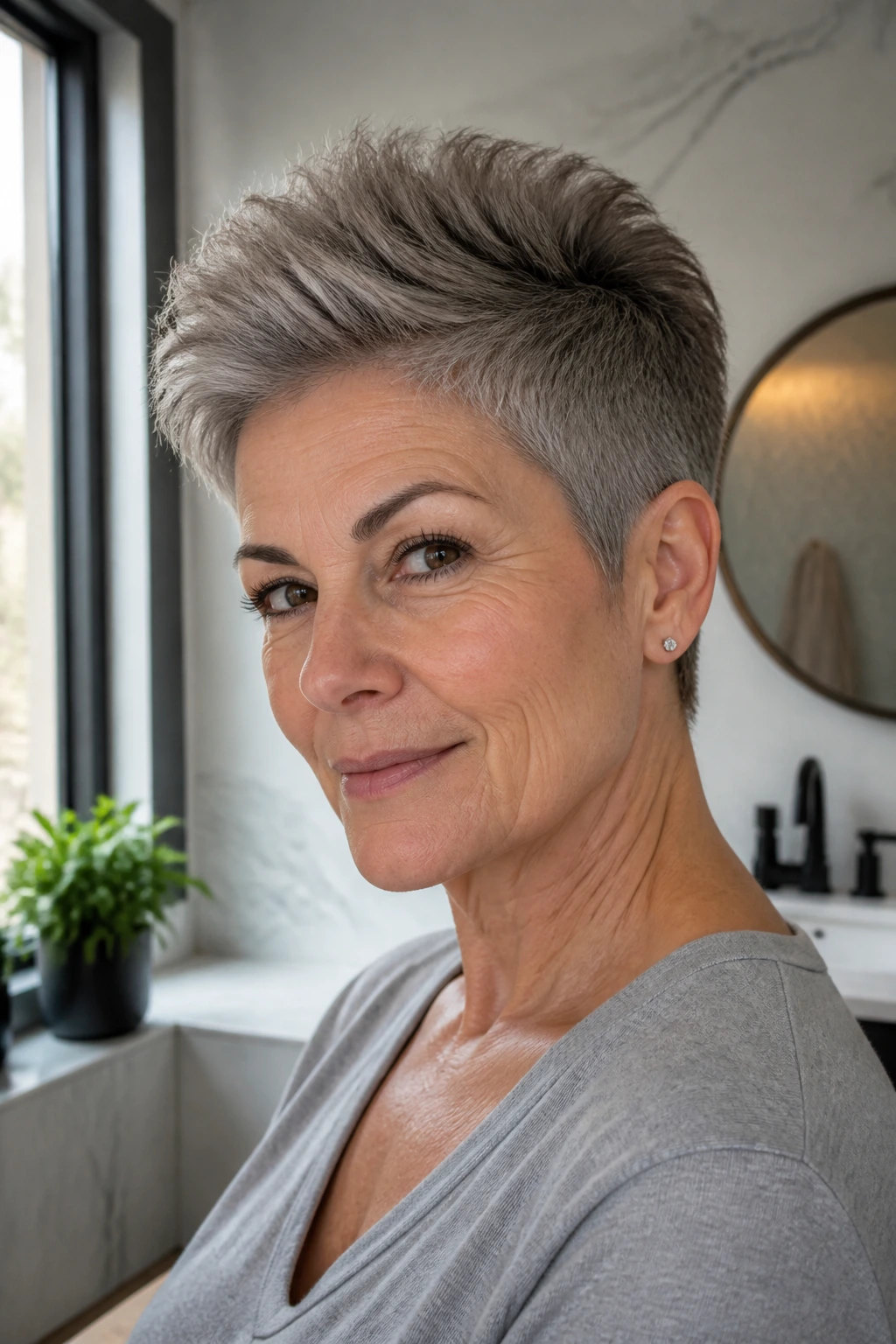
Face shape matters, but not in the rigid way people like to pretend. A square jaw can look sharper with a rounded bob or curtain fringe. A longer face may like a fuller bob with a center part or a short fringe that breaks up vertical length. If the face is round, an angled bob or one side-parted crop can add a little line without turning the cut severe.
Hair density should be part of the conversation immediately. Fine straight hair usually does better with blunt edges, soft crown lift, and fewer high layers. Thick straight hair often needs weight removal at the nape or under the crown, or it starts to balloon at the wrong spots. If your hair is somewhere in the middle, the safest move is a perimeter that stays visible and a few carefully placed layers near the top.
The neck changes the look more than people expect. A short neck usually benefits from a cleaner nape and a cut that doesn’t pile up at the back. A longer neck can carry a blunt bob or a graduated shape without looking crowded. If you wear collars a lot — button-downs, turtlenecks, structured jackets — choose a length that clears the fabric instead of sitting right on top of it.
Glasses deserve a mention too. A micro fringe can look fantastic with thin frames and feel crowded with heavy ones. A side-swept fringe or open part usually gives more room around the temples. If your frames are bold, let the haircut breathe a little. The two should work together, not wrestle in the mirror.
How to Wear Short Straight Haircuts with Glasses, Earrings, and Collars
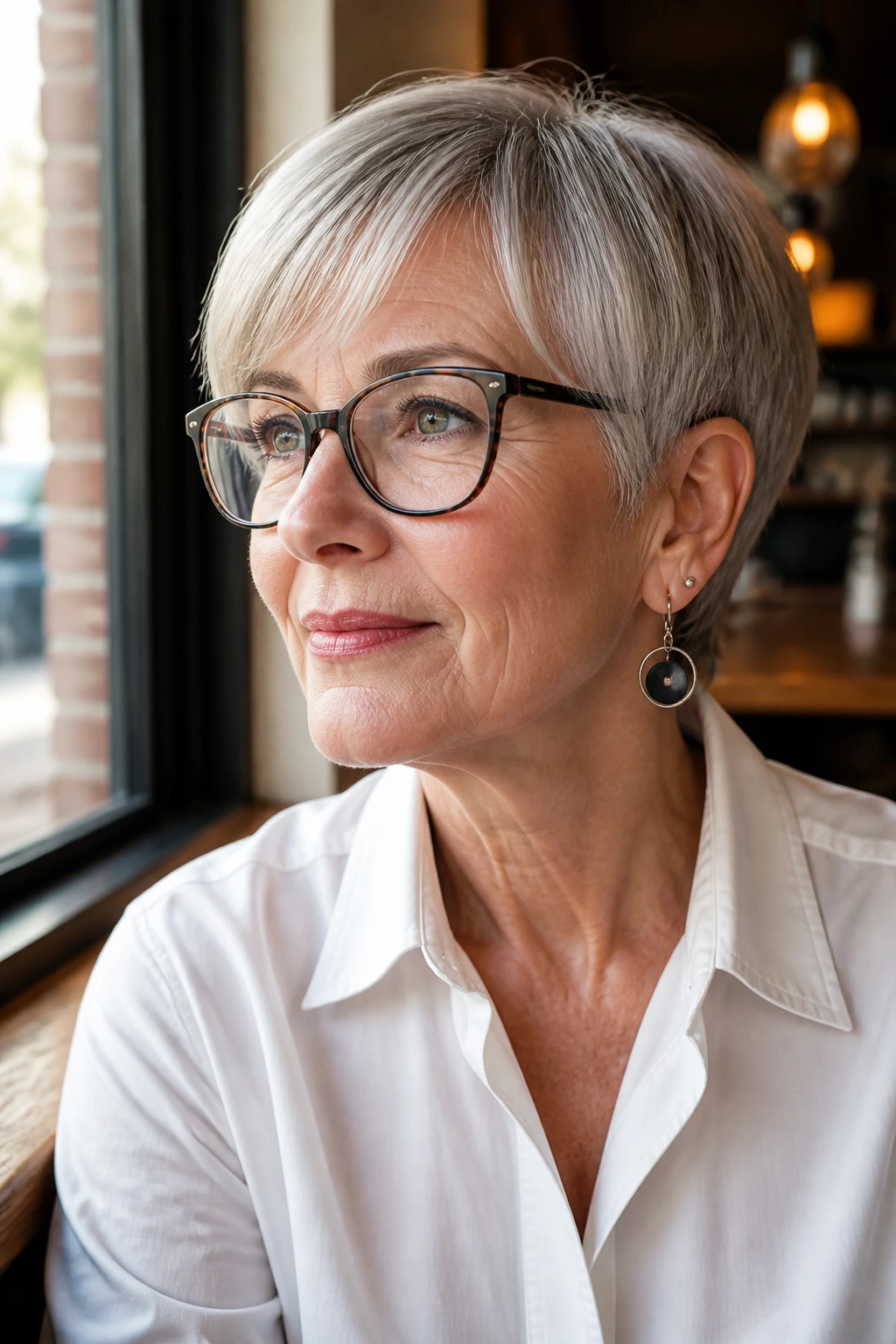
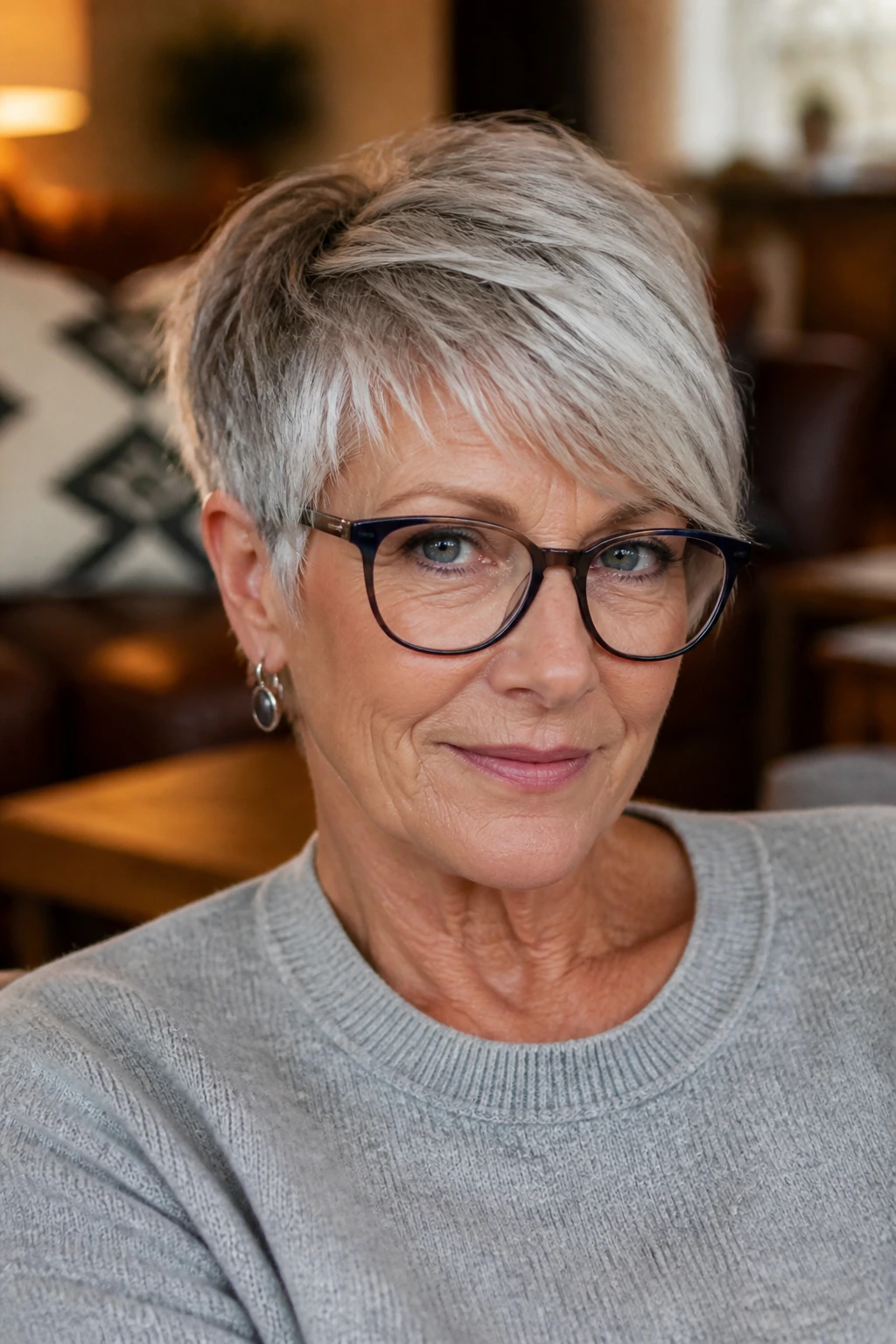
Glasses: Keep the fringe soft or angled if your frames are large or thick. A cut that stops just above the frames can look crisp, but it needs careful trimming so the hair doesn’t sit in the lens line by week three.
Earrings: Short crops and ear-tucked bobs are excellent if you like studs, small hoops, or anything sculptural. The hair pulls back from the ears, which gives the jewelry room to show. This is one of the few times a short haircut really earns its keep in the accessories department.
Collars: Neck-grazing bobs and cropped cuts are tidy around shirts, knitwear, and scarves. Longer front pieces can slip inside a collar without bulking up the neckline. If you wear high necklines often, avoid a cut that flips out right at the collar seam. That little kick out at the ends gets old fast.
Daily finish: Straight hair usually looks best when the ends are smooth and the crown has a touch of lift. The style does not need to be glossy to the point of looking wet. It just needs the shape to read clearly from the front and the back.
How to Keep Short Straight Haircuts for Older Women Sharp Between Trims
The trim schedule matters more than product. A short pixie with a close nape can lose its line in four to five weeks. A neat bob usually stretches to six or eight weeks before the ends start to fray or the back begins to kick out. If the haircut depends on a fringe, that fringe may need a tiny clean-up sooner than the rest.
At home, the easiest maintenance move is a proper dry. Don’t leave the crown damp and hope it settles nicely. It won’t. Use the nozzle, aim the airflow in the direction you want the hair to lie, and finish the last minute with cooler air to lock the shape. If the ends start to bend out, a quick pass with a flat iron or a round brush blow-dry can reset them without re-washing.
Product should stay light. Straight hair shows buildup fast, especially around the temples and fringe. A pea-sized amount of cream or a light mist of spray is usually enough. More than that and the cut starts to lose the very crispness that makes it work.
Common Mistakes That Make a Short Cut Fall Flat
Cutting too many layers into fine straight hair. The symptom is obvious: the ends look see-through and the shape feels flimsy by week two. The fix is a stronger perimeter with only light internal shaping.
Ignoring the crown. If the top is left too flat, the whole cut collapses into the head. A little lift at the roots, or a bit more length through the crown, prevents that pancake effect.
Choosing fringe that fights the glasses. A heavy bang that sits on the frame line gets annoying fast. Ask for fringe that clears the frames or skims the brow with room to spare.
Letting the nape grow too long. Short cuts start to lose their clean edge from the back first. If the nape flips, poofs, or brushes the collar awkwardly, it’s time to trim. Waiting “just a little longer” usually makes the shape harder to fix.
Overusing smoothing products. Straight hair does not need a thick layer of oil or cream. Too much turns the ends stringy and makes the cut look dirty instead of polished.
Variations and Adaptations to Try
The Fine-Hair Lift: Keep the perimeter blunt and ask for minimal layering, then style with root spray at the crown. This version makes straight hair look denser without turning it stiff.
The Thick-Hair Tidy-Up: Add internal weight removal under the top layers and at the nape. It keeps bulky hair from puffing out around the ears and helps the shape sit closer to the head.
The Glasses-Friendly Frame: Choose a side-swept fringe, a soft center part, or a longer front piece that clears the frames. This is the easiest path if your glasses are a permanent part of your face, which they usually are.
The Gray-Hair Shine Cut: Go with a clean bob, soft crop, or rounded shape and keep the ends trimmed regularly. Gray hair often shows crisp lines beautifully, but only if the perimeter stays tidy.
The Low-Styling Shortcut: Pick a neck-grazing bob or close crop that dries into shape with minimal brushing. Good for anyone who wants the haircut to do most of the work after a quick towel-dry.
Frequently Asked Questions About Short Straight Haircuts for Older Women
Which short haircut makes straight hair look fuller?
A blunt bob, box bob, or one-length crop usually gives the strongest illusion of thickness because the perimeter stays solid. If your hair is fine, avoid too many layers near the bottom edge.
Do bangs work with short straight hair?
Yes, but the type of fringe matters. Side-swept bangs and curtain fringes are easier to live with than a hard, short fringe, especially if you wear glasses or have a changing hairline.
What’s the easiest short cut to style every morning?
A neck-grazing bob, close crop, or soft pixie usually asks for the least work. The shape should be built well enough that a quick blow-dry and a bit of smoothing cream are enough.
How often should I trim a short bob or crop?
Pixies and cropped cuts usually need a trim every 4 to 6 weeks. Bobs can often go 6 to 8 weeks, though a fringe may need attention sooner if it hits the eyes.
Can I still wear my hair short if it’s thin at the crown?
Yes, and in many cases short hair is the better choice. A cut with a little crown lift, a deeper side part, or a blunt perimeter can make thin areas look less obvious than long hair does.
What if my straight hair flips out at the ends?
That usually means the cut has grown past its clean point or the ends were too thinned. A small trim and a round-brush blow-dry aimed inward usually fix the problem faster than piling on product.
Is a pixie or bob better for older women with straight hair?
Neither is universally better. A bob gives more line and softness around the face, while a pixie gives more openness at the neck and ears. The one that works best is the one that fits how much styling you actually want to do.
How do I keep a short cut from looking too severe?
Soften the front with a side part, fringe, or a small angle around the cheekbones. A haircut can be clean without being hard-edged, and straight hair is good at showing that difference.
A Shape That Still Feels Like You
The best short straight haircuts for older women do not try to disguise straight hair’s habits. They work with them. Clean lines, careful weight, and a little thought at the crown usually matter more than chasing texture that was never there in the first place.
Bring a photo, yes. But also bring a sentence or two about what bothers you most — flat crown, heavy nape, fringe in the eyes, glasses crowding the forehead. That is where the right haircut starts. Not with a trend. With a shape that lets your hair do its job and still looks like you when you walk out of the salon.
