



Thick straight hair can look luxe from across the room and stubborn up close. The wrong cut makes it sit in a heavy sheet. The right one gives you a clean edge, some swing at the ends, and enough structure that the whole shape holds even after a long day tucked behind your ears, rubbed by a coat collar, or flattened by a headrest.
The best long straight haircuts for thick hair do one thing most people miss: they manage weight instead of just removing length. That sounds small, but it changes everything. If your hair is dense, the wrong layers can puff out at the sides like a boxy pyramid. Too much thinning can leave the bottom fuzzy. Too little shaping can make the whole look drag downward and feel oddly helmet-like. There’s a sweet spot, and it usually involves the perimeter, the crown, and the face frame working together instead of fighting each other.
I’ve always thought thick straight hair looks best when the cut respects the hair’s own bulk instead of trying to bully it into something flimsy. Clean lines. Controlled movement. No random shorter pieces fighting the rest of the length. The styles below lean into that idea from every angle — blunt, rounded, layered, face-framing, low-maintenance, and polished enough to survive real life without a full salon blowout every morning.
Why This Collection Feels Different on Dense, Straight Hair
-
Weight is treated as a tool, not a problem: These cuts don’t just chop off the bottom; they move weight to keep the silhouette from ballooning at the ends.
-
The outline stays clean: Straight textures show every line, so these shapes are chosen for the way they read at a glance — from the front, the side, and the back.
-
Styling gets easier, not harder: A good long cut on thick hair should need fewer flat-iron passes, not more. That’s the point.
-
Grow-out matters here: Thick hair can turn shaggy fast when the layers are wrong. These options are built to look deliberate a few weeks after the trim, not only on day one.
-
You get choices without chaos: Some cuts keep almost all the weight. Others open the face or lift the crown. The common thread is control, which thick straight hair needs more than people admit.
Why Thick Hair Needs Shape Before It Needs Layers
Dense straight hair has a weird habit of looking both full and unfinished at the same time. It’s full in the body of it, sure. But if the cut is off by even half an inch in the wrong place, the ends can spread out, the sides can swell, and the whole thing reads wider than you wanted.
That’s why I like to think about this hair type in terms of geometry. A blunt hemline gives you a strong line. A U-shape softens the back. A V-shape pulls the eye downward and narrows the outline. Layers change where the weight sits, which changes how the hair falls when it dries. Straight hair is honest like that. It doesn’t hide the mistake.
The other thing people miss is how thick hair behaves once it gets past the shoulders. The longer it gets, the more the inside of the haircut matters. A cut that looks sleek when it’s freshly blown out can turn into a triangle at the next wash if the interior was never planned. That’s why a good stylist doesn’t just ask, “Do you want layers?” They ask where your bulk lives, how you wear your part, and whether you want the ends to sit like a shelf or fold softly in.
One more thing. Thick hair is not automatically coarse hair, and it’s not automatically healthy hair either. You can have dense, silky strands that lie flat. You can have coarse strands that swell. The best haircut pays attention to both the amount of hair and the feel of the strand itself. That’s the difference between a cut that simply exists and a cut that actually works when you leave the salon.
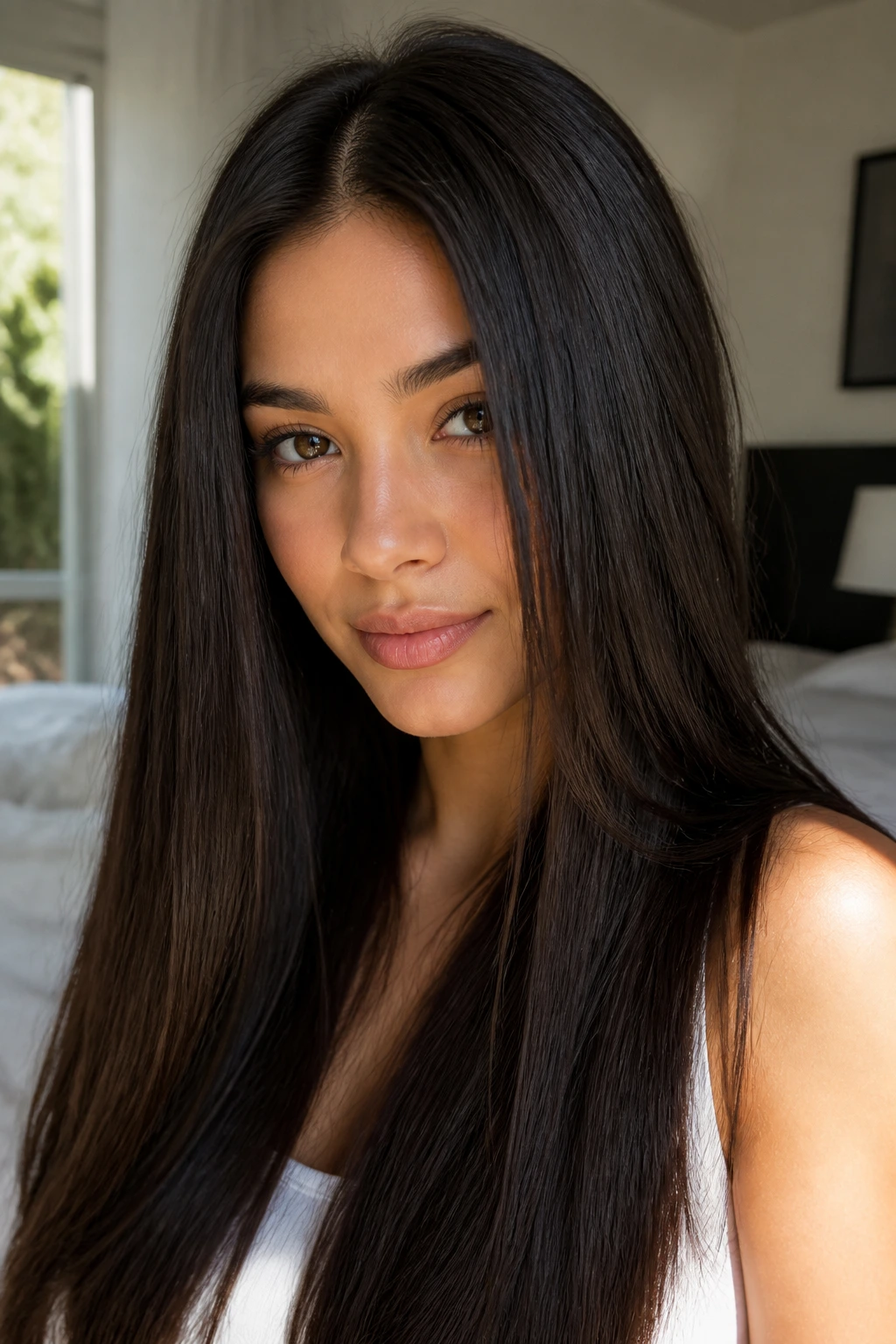
1. Waist-Length Blunt Cut
A waist-length blunt cut is the most unapologetic option in the whole set. It keeps the hemline sharp and level, which makes thick straight hair look polished instead of fluffy. When the ends line up cleanly, the hair has that heavy, glossy curtain effect that only dense hair can really pull off.
This works best when your hair has enough natural shine to show off the edge. Ask your stylist to keep the perimeter full and even, with no choppy short pieces sneaking in at the bottom. If you air-dry, this cut will show its true shape fastest. If you blow-dry smooth, the finish is almost severe in a good way.
A cut like this loves a center part, but it can also take a deep side part if you want a little drama. The length keeps it from feeling too strict. The line does the talking.
2. Mid-Back One-Length Cut
This is the quieter version of the waist-length blunt cut, and I think that makes it easier to wear day to day. The length lands around mid-back, where thick hair still feels long but doesn’t drag quite as hard at the roots. The silhouette stays heavy enough to look sleek, but not so long that you feel like you’re wrestling it into a ponytail every morning.
Best for thick hair that holds a lot of bulk at the ends: a one-length shape keeps the bottom tidy and stops the ends from splitting into separate little wings. Ask for a clean perimeter: no internal layers, no sudden point at the back, just a smooth line. Works especially well with a flat brush blow-dry: the tension helps the edge sit straight instead of puffing out.
If you want a low-fuss long cut, this is one of the safest choices.
3. Classic U-Shape
The U-shape is what I reach for when someone wants length but doesn’t want the back to feel blocky. The curve is subtle — not a dramatic arc, just a soft dip that keeps the sides from looking too blunt against the back. On thick straight hair, that little curve makes a huge difference.
Why It Balances Thickness So Well
The U-shape keeps the visual weight centered instead of spreading it out like a brick. That matters when your hair is dense, because a dead-straight hem can sometimes make the outline feel wider than it really is. The rounded back also looks better when you tuck the hair behind one ear or wear it in a low clip. It falls back into shape without much effort.
I like this cut for people who want movement at the bottom without obvious layers. It’s a calm cut. No hard edges. No fuss. Just a shape that sits nicely on the back and still feels long.
4. Soft V-Shape
A soft V-shape gives thick hair a little direction. Instead of dropping straight across, the back comes to a gentle point, which draws the eye down and makes the length feel lighter. If your hair tends to spread wide at the ends, the V helps narrow the outline without making the haircut look choppy.
This is one of those cuts that looks especially good when the hair is smooth but not over-styled. A slight bend at the ends is enough. The point at the back should be soft, not sharp — if it turns into a dramatic wedge, the shape can start feeling dated fast.
Ask your stylist to keep the front pieces long enough that they blend into the point rather than sitting on top of it. That’s the detail that keeps the cut from looking like two different haircuts stitched together.
5. Long Layers Below the Bust
When thick hair is dragging at the shoulders, long layers are usually the first move I’d suggest. The trick is where they start. If they begin too high, the whole thing can swell. If they begin below the bust, the layers create movement without taking away the bulk that gives thick hair its clean fall.
What Makes This Cut Worth Asking For
The layers should release weight, not expose too much of the interior. That’s why this version works better than the classic high-layered look people used to ask for. The length stays dramatic, the ends still look full, and the style responds to a round brush or a big-barrel brush without flipping out at the sides.
I like this on hair that feels heavy when it’s dry but flat when it’s wet. The cut gives the strand room to move once it dries. You’ll see the difference the moment you turn your head.
6. Invisible Layers
Invisible layers are the quiet haircutting trick that people notice without always knowing why. The surface still looks long and smooth, but the inside has been nudged so the hair doesn’t hang like a single block. On thick straight hair, that hidden shaping keeps the bottom from feeling bulky.
The best version is subtle. You should not see stair-steps. You should see fall. The hair lies in a softer sheet, and the line of the perimeter still reads clean. That’s why I like invisible layers more than obvious ones for anyone who wants length first and movement second.
If your hair has a natural tendency to flatten at the crown and puff at the ends, this cut can be a sweet spot. It lightens the middle without making the ends look thin. That balance is harder to get than people think.
7. Chin-Starting Face-Framing Layers
This haircut is for anyone who wants their length to stay long but refuses to let the front feel heavy. Layers that start around the chin open the face without chopping the whole cut apart. On thick straight hair, the trick is restraint. Too many short pieces around the cheeks and you get wings. Just enough, and the face frame looks clean.
The best version glides down toward the collarbone and then blends into the length. That keeps the haircut from feeling top-heavy. I also like this cut when someone wears glasses, because the front pieces can fall beside the frames instead of fighting them.
If you’re nervous about layers, this is a very sensible place to start. The change is visible. The risk is low.
8. Collarbone Face Frame
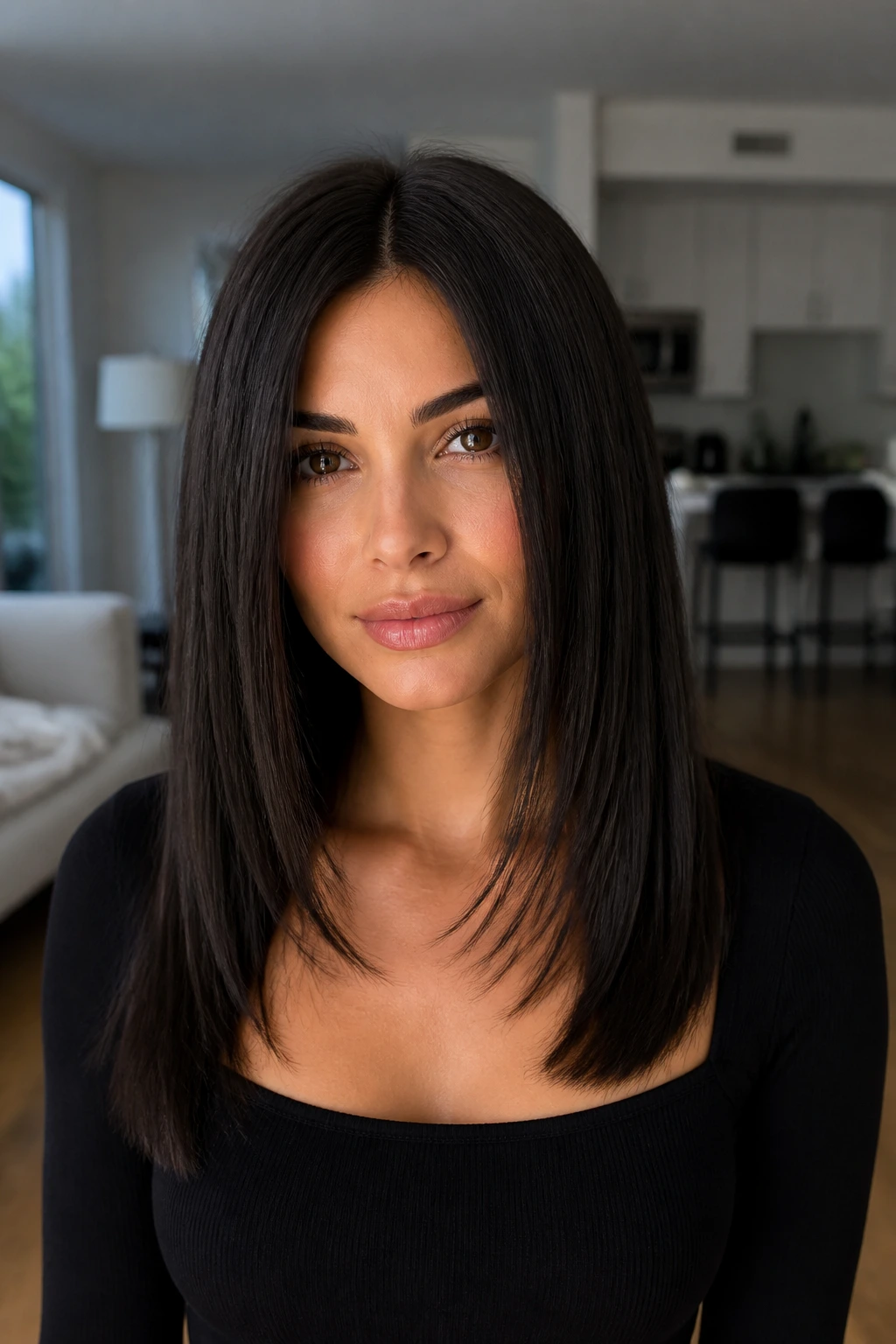
This one is a little more modern and a little more polished than the chin-starting version. The front pieces begin around the collarbone, which gives thick hair a long diagonal line through the front. It’s a good choice if your hair is dense enough that shorter layers would puff out around the jaw.
The collarbone frame keeps the cut soft near the face while leaving the back full. That means the overall shape still feels grounded. It also plays nicely with a center part, especially if you like the front pieces to bend inward with a blow-dry brush.
I’d ask for this if you want a haircut that changes the way your face reads without changing the length much at all. It’s subtle. In straight hair, that usually means it looks expensive.
9. Curtain Bangs with Long Length
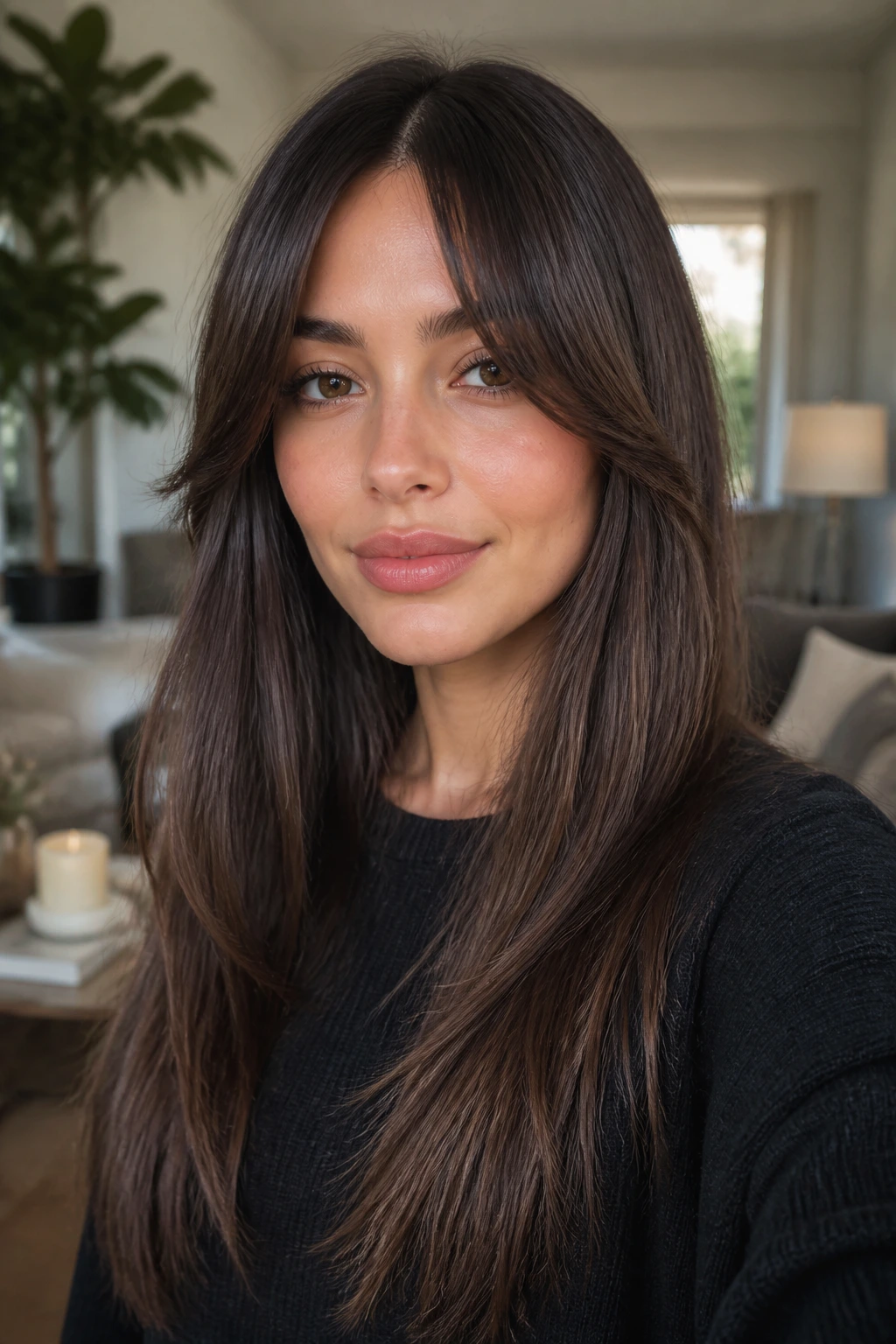
Curtain bangs can be brilliant on thick straight hair, but only when they’re cut with enough length to stay blended. Short curtain bangs on dense hair can spring up and sit like a shelf. Longer ones — grazing the cheekbone or lip line — fall into place and soften the front without stealing all the attention.
The Part That Makes Them Work
The center split matters. So does the weight distribution. You want the bangs to open in the middle and skim outward, not sit as one blunt curtain that swallows the forehead. Thick hair gives the bangs enough body to look full, which is nice, but the length keeps them from turning boxy.
This is a good cut if you wear your hair straight most of the time and like to tuck the front pieces back on days you want them out of your face. The bangs still frame the haircut even when they’re swept aside.
10. Bottleneck Bangs with Sleek Ends
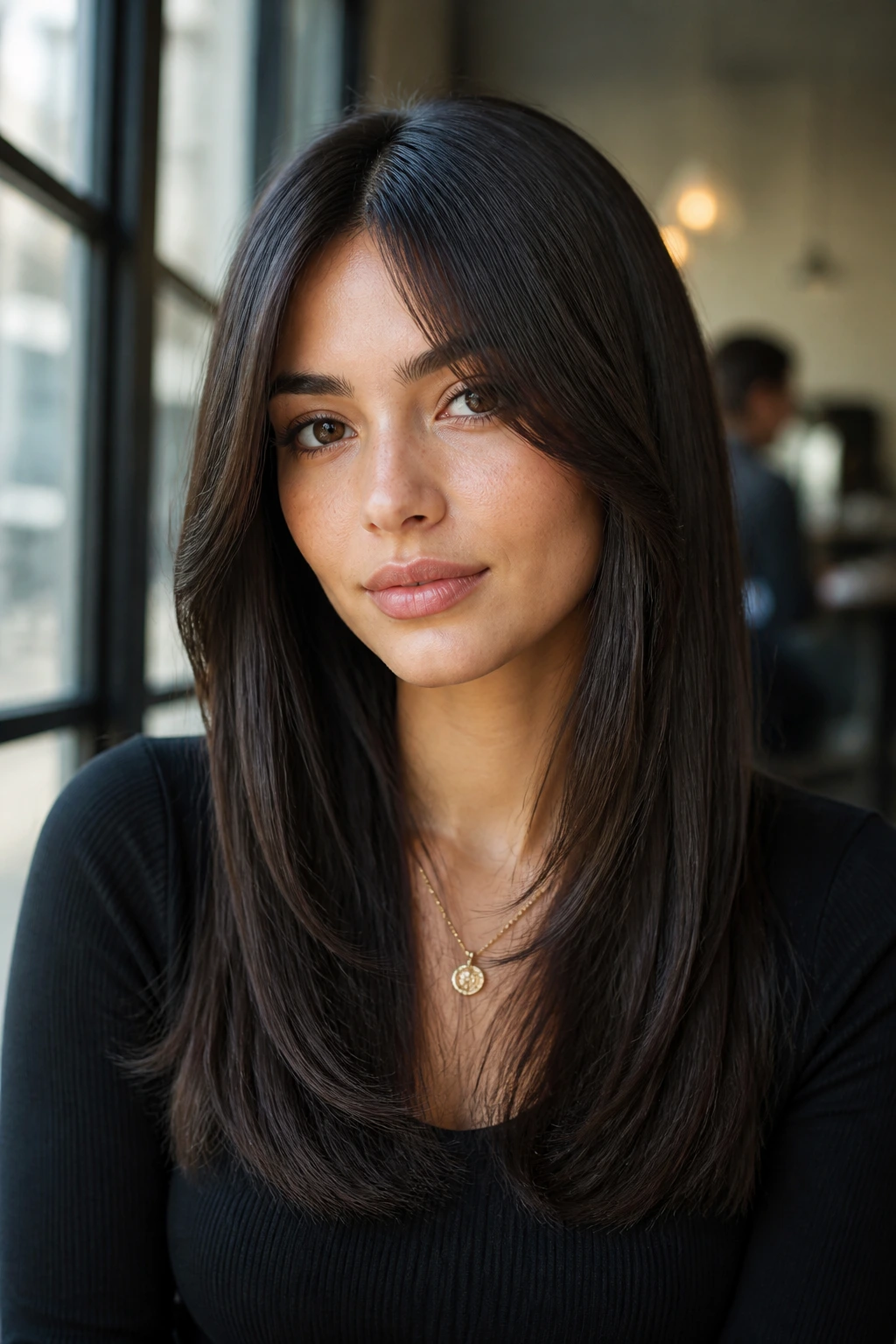
Bottleneck bangs sit somewhere between curtain bangs and a short fringe. They’re narrower in the middle and longer at the sides, which makes them a smart choice for thick hair that needs a little face softness without a heavy fringe wall.
Unlike blunt bangs, bottleneck bangs don’t pile density across the forehead. That’s the whole point. They ease into the cheekbones and then disappear into long, straight lengths, which keeps the haircut airy at the front. I like this especially on people who want a face-framing effect but don’t want to style bangs for ten minutes every morning.
The ends should stay clean and smooth. If the stylist over-textures the fringe, it can look wispy in a bad way. You want control here, not fray.
11. Side-Swept Bangs with Long Straight Hair
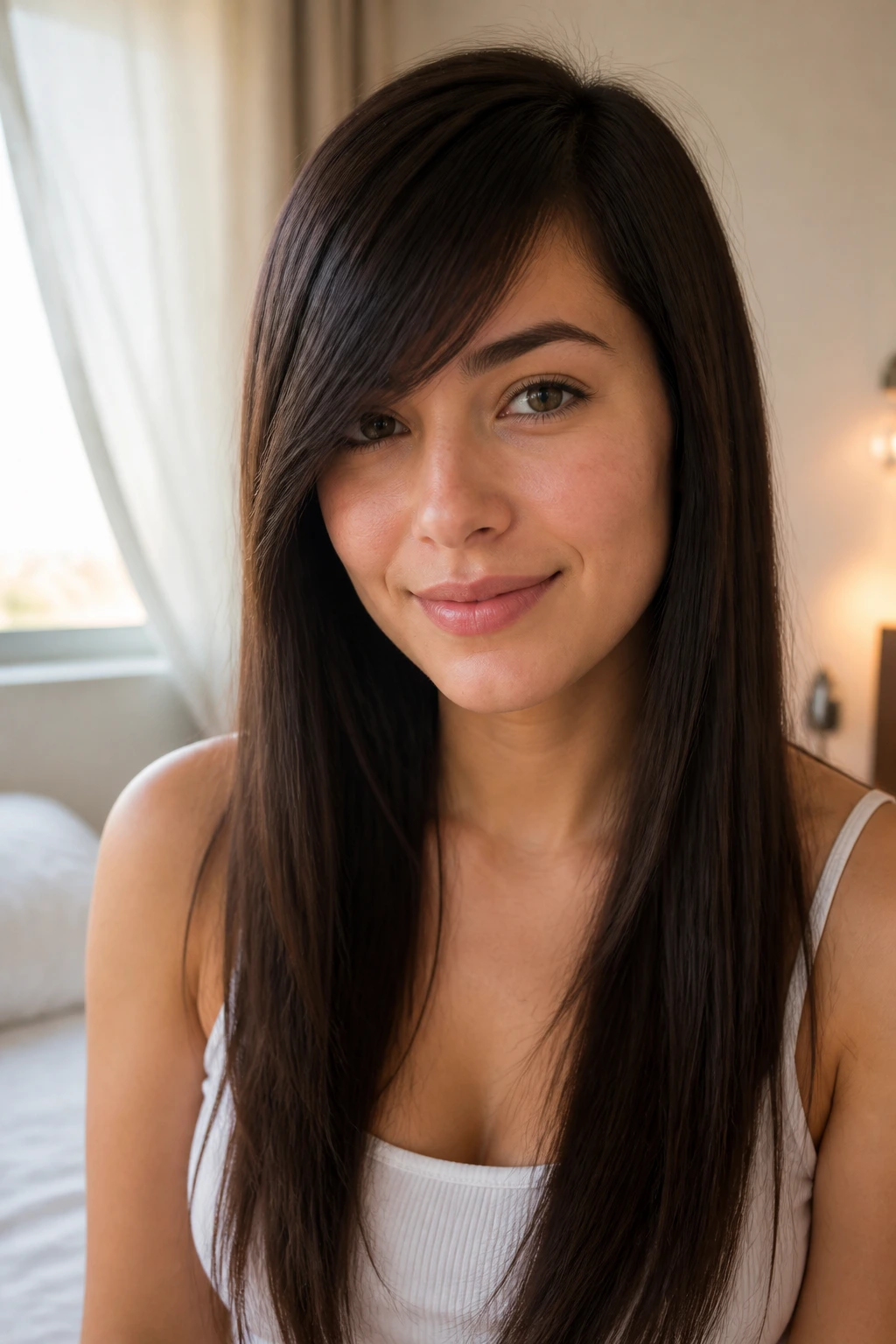
Side-swept bangs are one of the easiest ways to soften thick straight hair without disturbing the length too much. They create a diagonal line across the forehead, which helps break up the density at the front of the haircut. That diagonal line is doing more work than people realize.
This cut shines when the rest of the hair is kept fairly smooth and the bang section is lightened just enough to move. Too much thinning here and the bangs can separate into pieces. Too little and they flop into the eyes. The sweet spot is a clean sweep that stays in place with a quick pass of the dryer.
If your face feels hidden under your hair, this cut opens things up without committing to a full fringe. A small change. Big payoff.
12. Deep Side Part with Heavy Front Fall
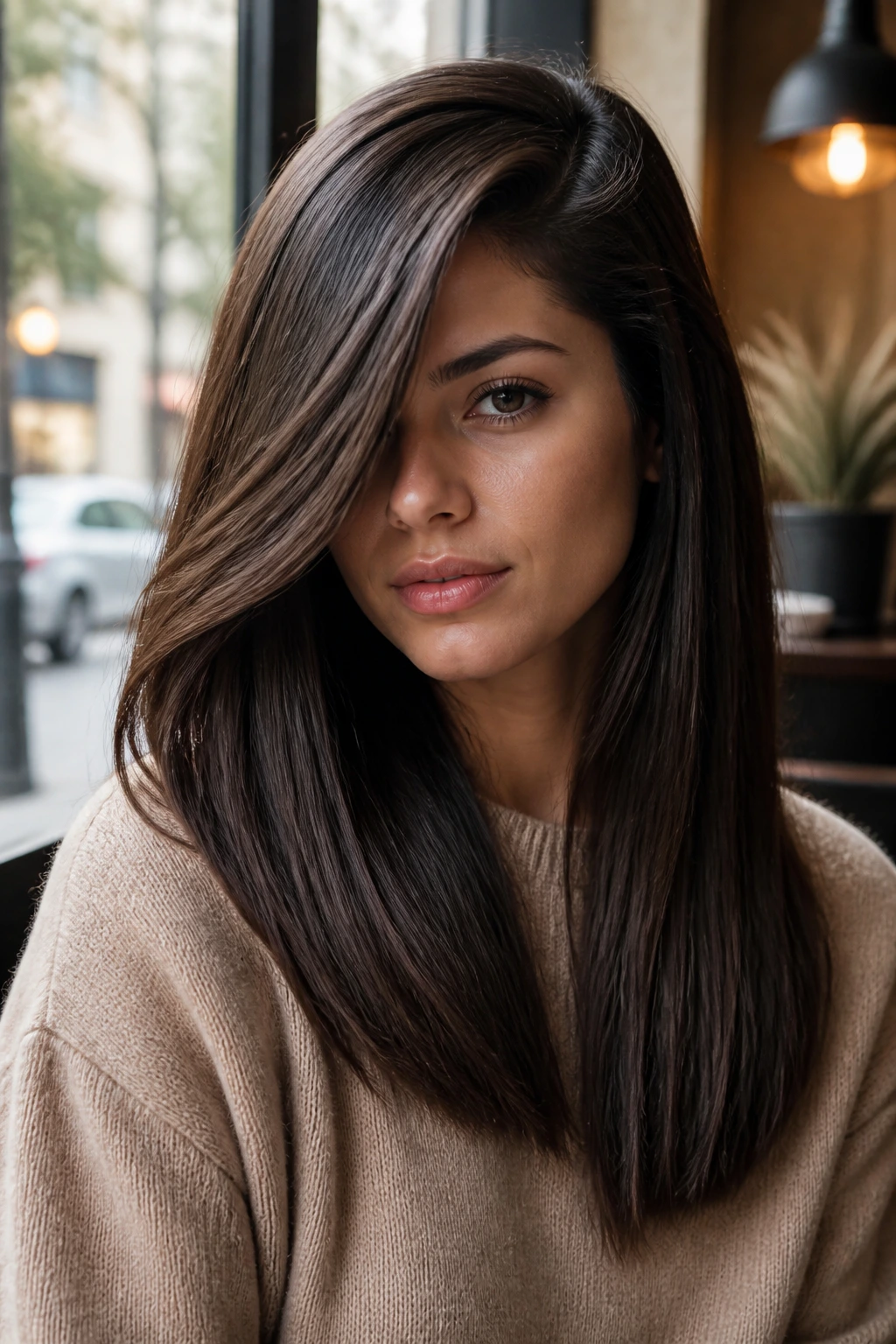
Sometimes the haircut doesn’t need a dramatic cut line. Sometimes it needs a smarter part. A deep side part lets thick straight hair fall in a heavier sweep across one side, which can instantly change the silhouette and make the whole look feel more deliberate.
I like this on hair that refuses to stay flat at the crown. The side part gives the roots a little lift and shifts the mass of the hair away from the middle. It also works nicely with a long blunt cut or a soft U-shape, because the part adds movement without forcing the cut to do all the work.
If you want to try this without changing your haircut, start here. It’s the cheapest styling trick in the list.
13. Rounded Hemline Cut
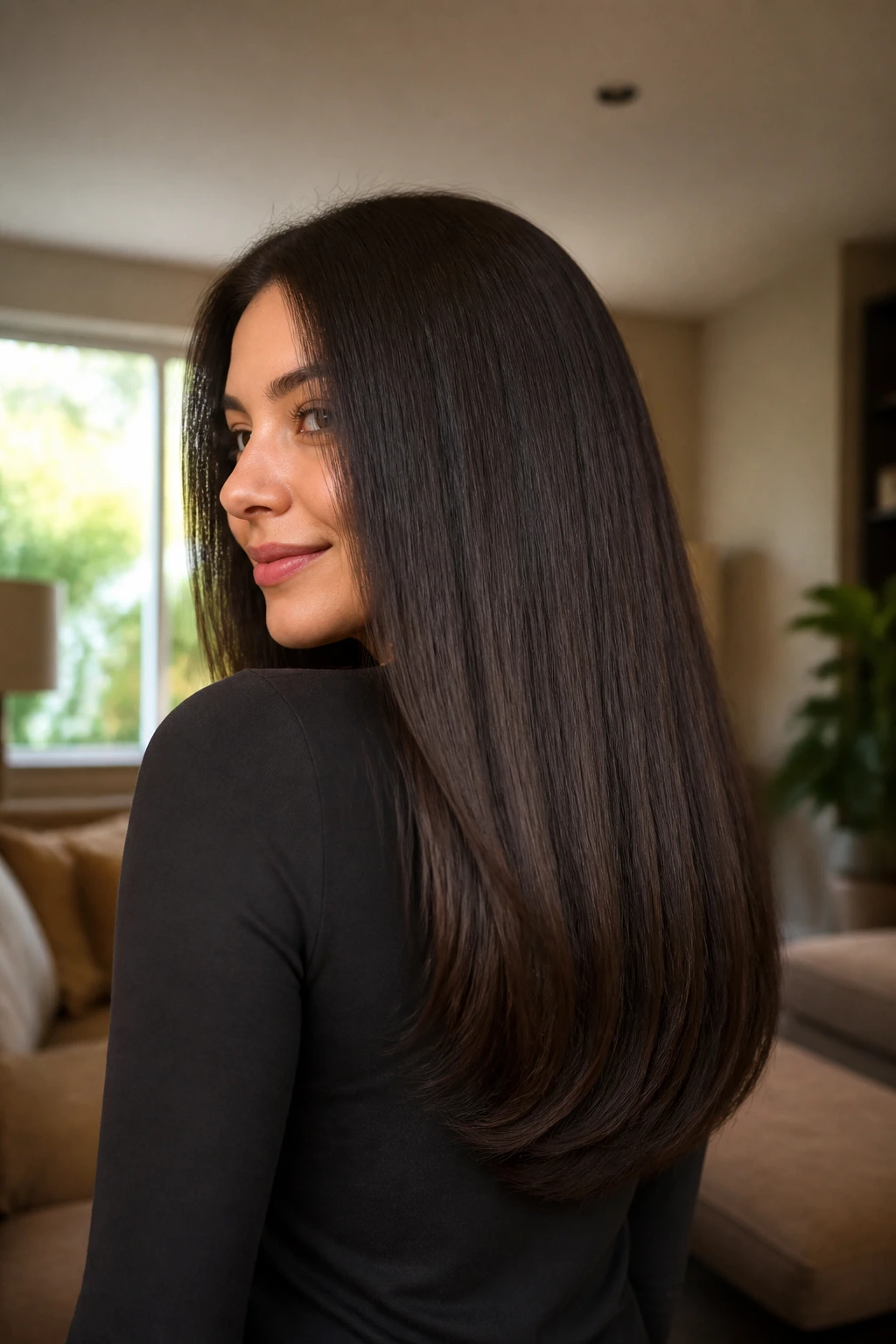
A rounded hemline is one of those shapes that looks simple but takes real judgment to get right. The back is softened into a curve so the ends don’t jut out in a hard horizontal line. On thick hair, that curve can be the difference between “full” and “boxy.”
This cut is a good fit if your hair naturally flips slightly at the ends or if you wear it tucked into coats and scarves a lot. The rounded edge tends to come back into shape instead of sticking out in corners. It also makes the hair look denser in a controlled way, which is useful if the bottom of your hair tends to fray.
It’s not flashy. That’s exactly why it works.
14. Feathered End Cut
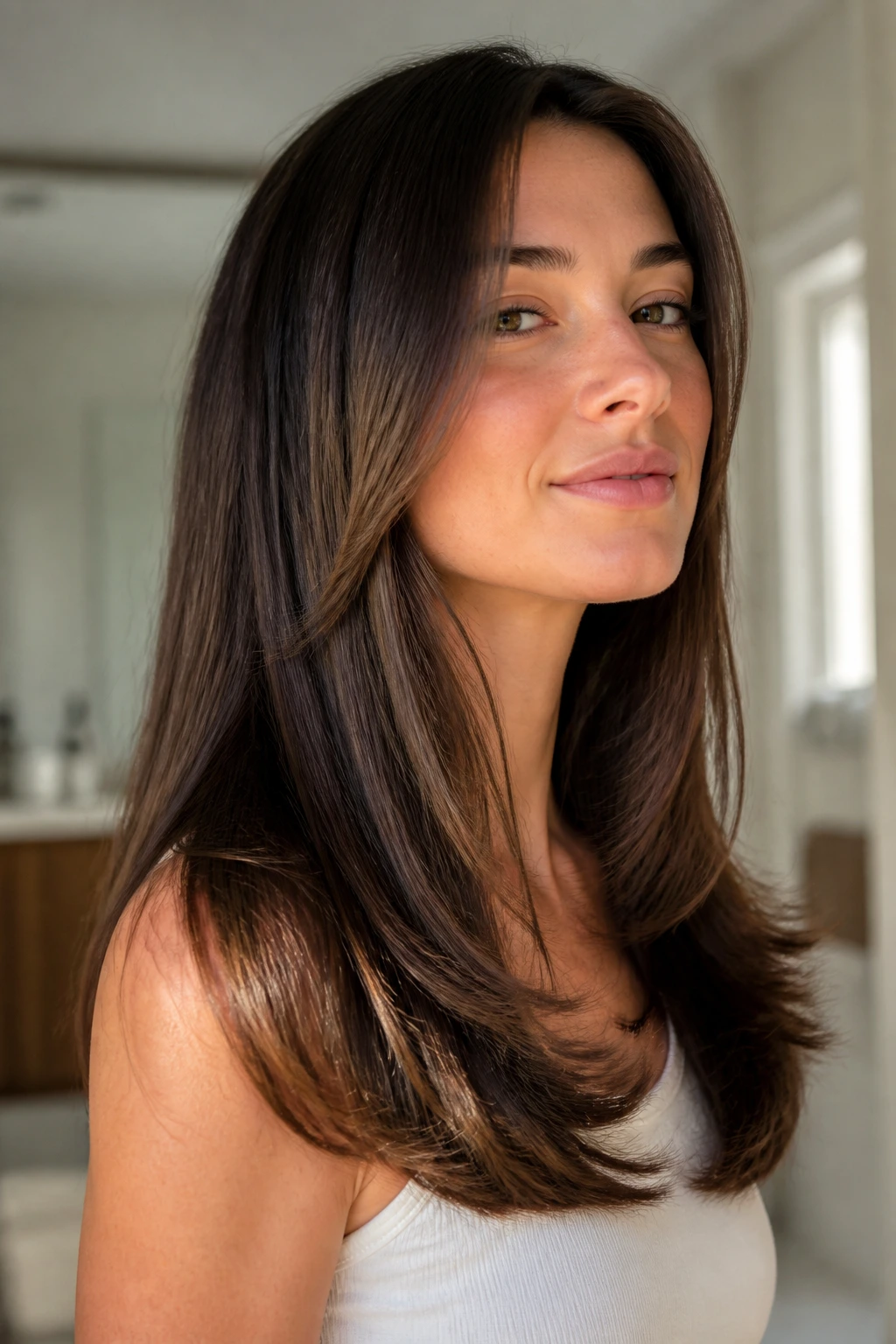
Feathered ends can be lovely on thick straight hair when the feathering is kept near the bottom two to three inches, not spread all through the haircut. The idea is to soften the edge so it doesn’t look like a hard shelf, while still keeping enough weight for the hair to fall neatly.
What to Watch For
Over-feathering is the danger. If the stylist goes too far with texture, thick hair can look airy in a bad way — frizzy at the ends, soft in the middle, and harder to flat-iron. Done sparingly, though, feathering adds a little separation and stops the haircut from reading too blunt.
I like this most on hair that’s dense but naturally fine in strand feel. It gives you motion without stripping the haircut of its body.
15. Butterfly Cut for Long Hair
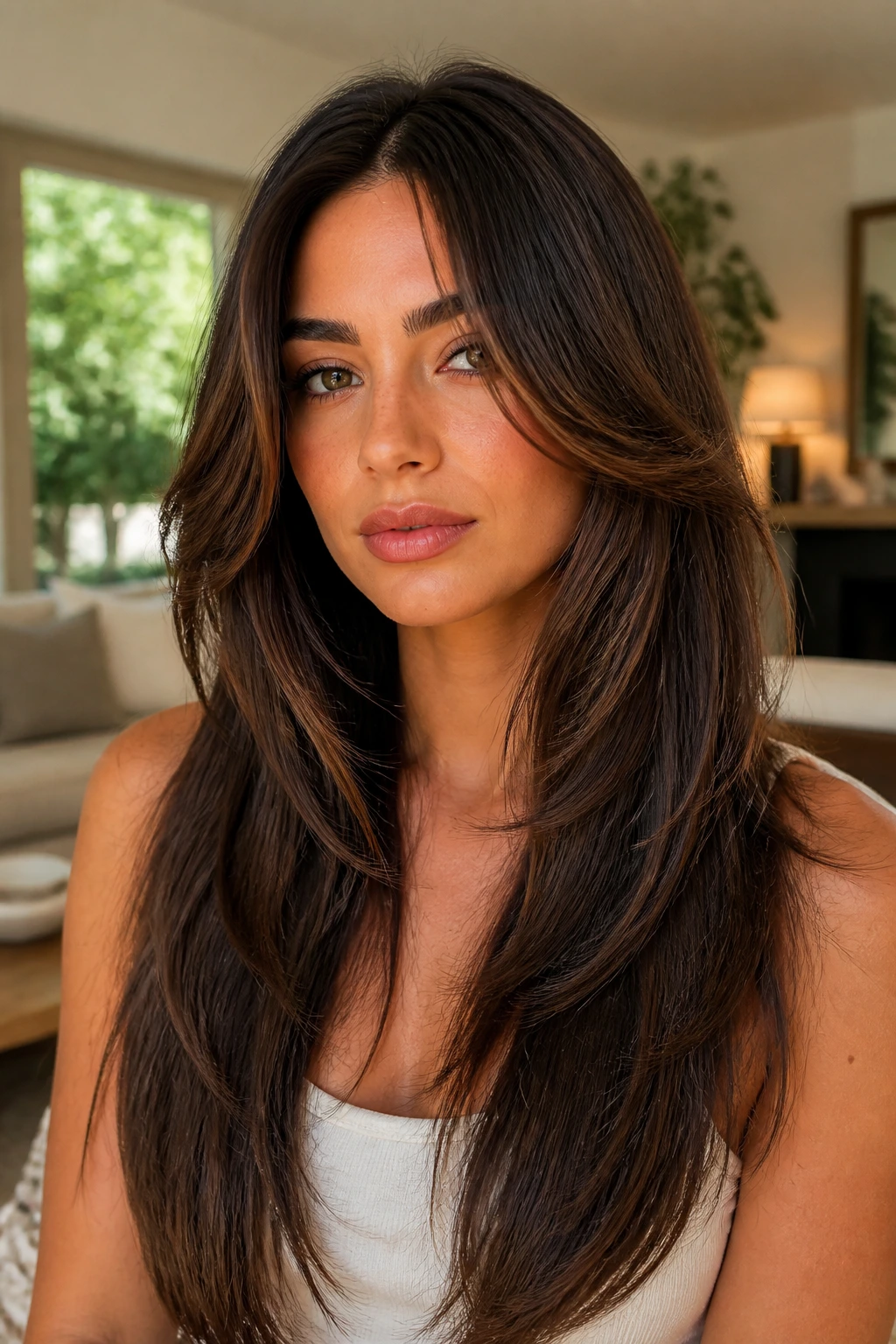
The butterfly cut gets a lot of attention because it gives thick hair that layered, blowout-friendly shape without forcing you into short hair. The shorter face-framing sections sit high enough to create lift, while the long back length stays intact. If you like movement, this cut has it.
Why It Flatters Thick Length
The top layers help the hair float instead of dragging straight down. That can be a relief when your hair feels heavy by noon. The longer layers underneath keep the length from vanishing, so you still get that long, full silhouette when the hair is worn straight.
This cut works best with a round brush or a big blowout brush. If you let it air-dry completely flat, you’ll miss the shape. It’s not a lazy cut. It rewards a little effort.
16. Long Shag Lite
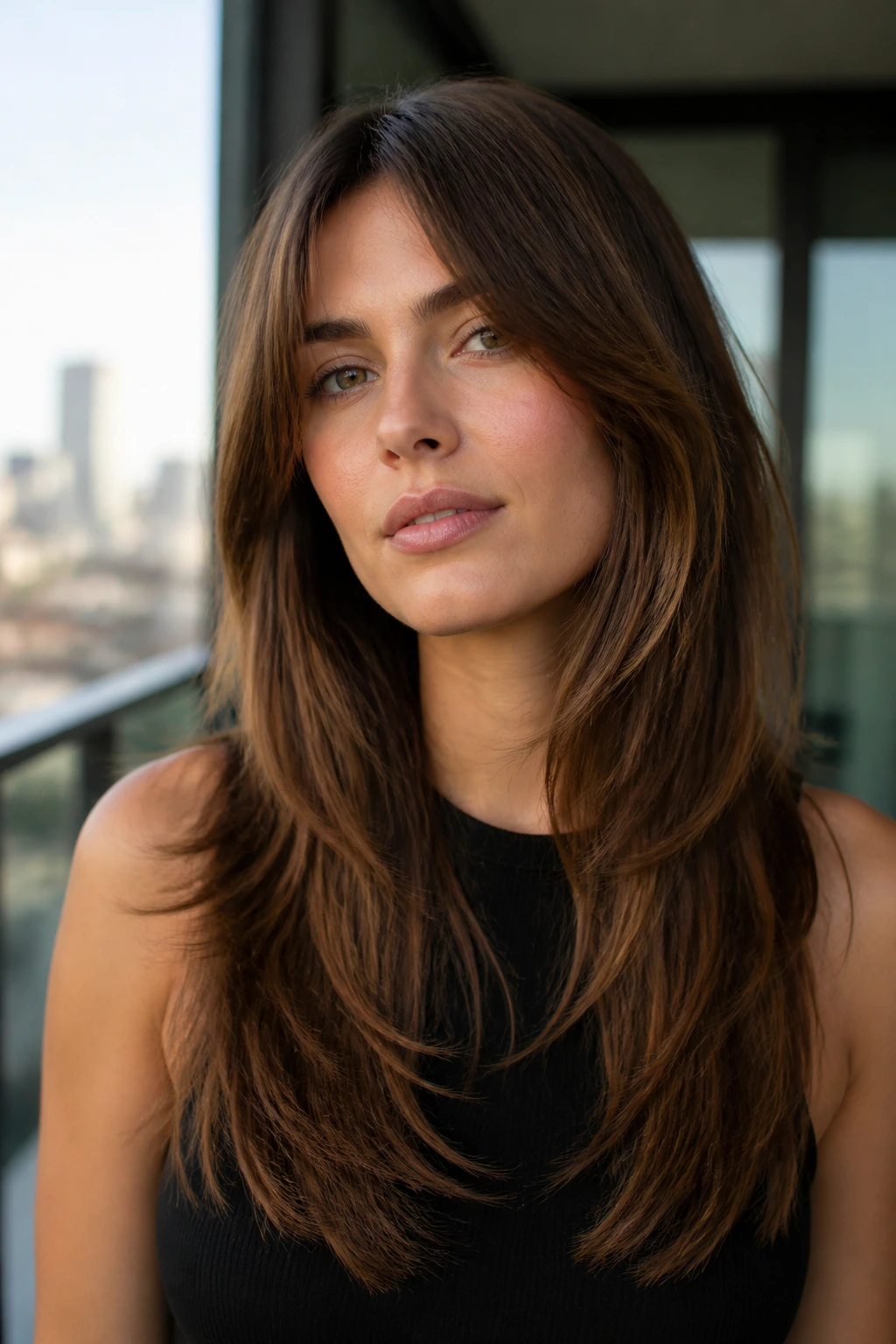
A full shag on thick straight hair can get messy fast. A shag lite version keeps the attitude but tones down the chaos. You still get layered movement, but the layers are longer and smoother, so the haircut doesn’t explode outward the minute humidity shows up.
This is a good choice if your hair is thick enough to hold shape but you want less weight around the crown. The layers should be soft and extended, not chopped into too many short pieces. I’d call this a better fit for straight thick hair than the classic shag because it keeps the ends looking intentional.
If you want some edge without looking like you lost a fight with a razor, this is the one.
17. Internal Debulking Cut
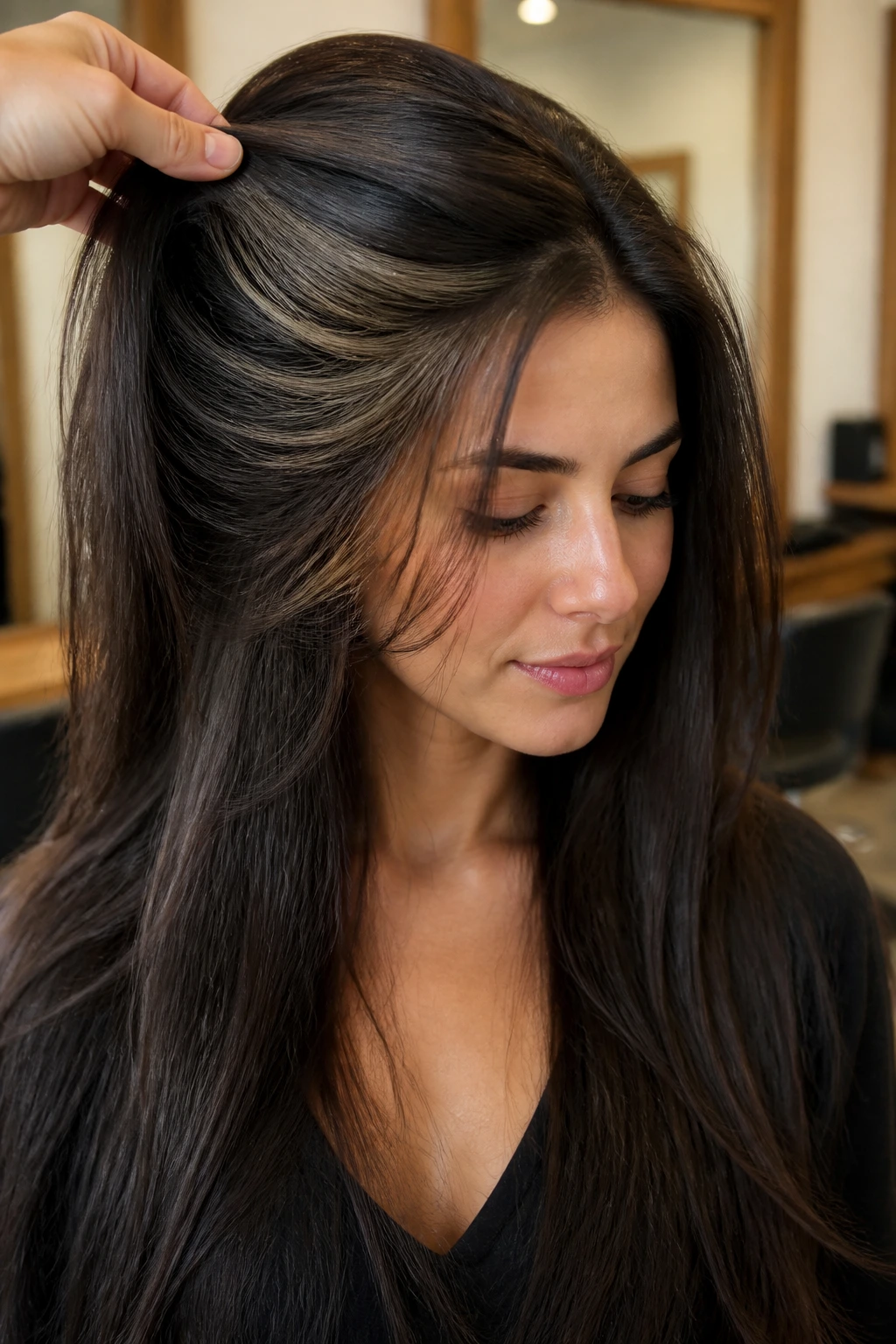
This is the haircut people often ask for without using the right words. The outside can still look long and clean, but the inside has been thinned in targeted places so the hair doesn’t feel like a solid mass. On thick straight hair, that can be a lifesaver.
The key is precision. You want weight removed where the hair stacks up, not just everywhere. A good stylist will know how to take bulk out around the mid-lengths and crown without leaving the ends straggly. If the cut feels lighter but still looks full from the outside, they did it right.
This is not the cut for anyone who wants a crisp visible shape change. It’s the cut for someone who wants their hair to move without shouting about it.
18. Crown-Heavy Weight Removal
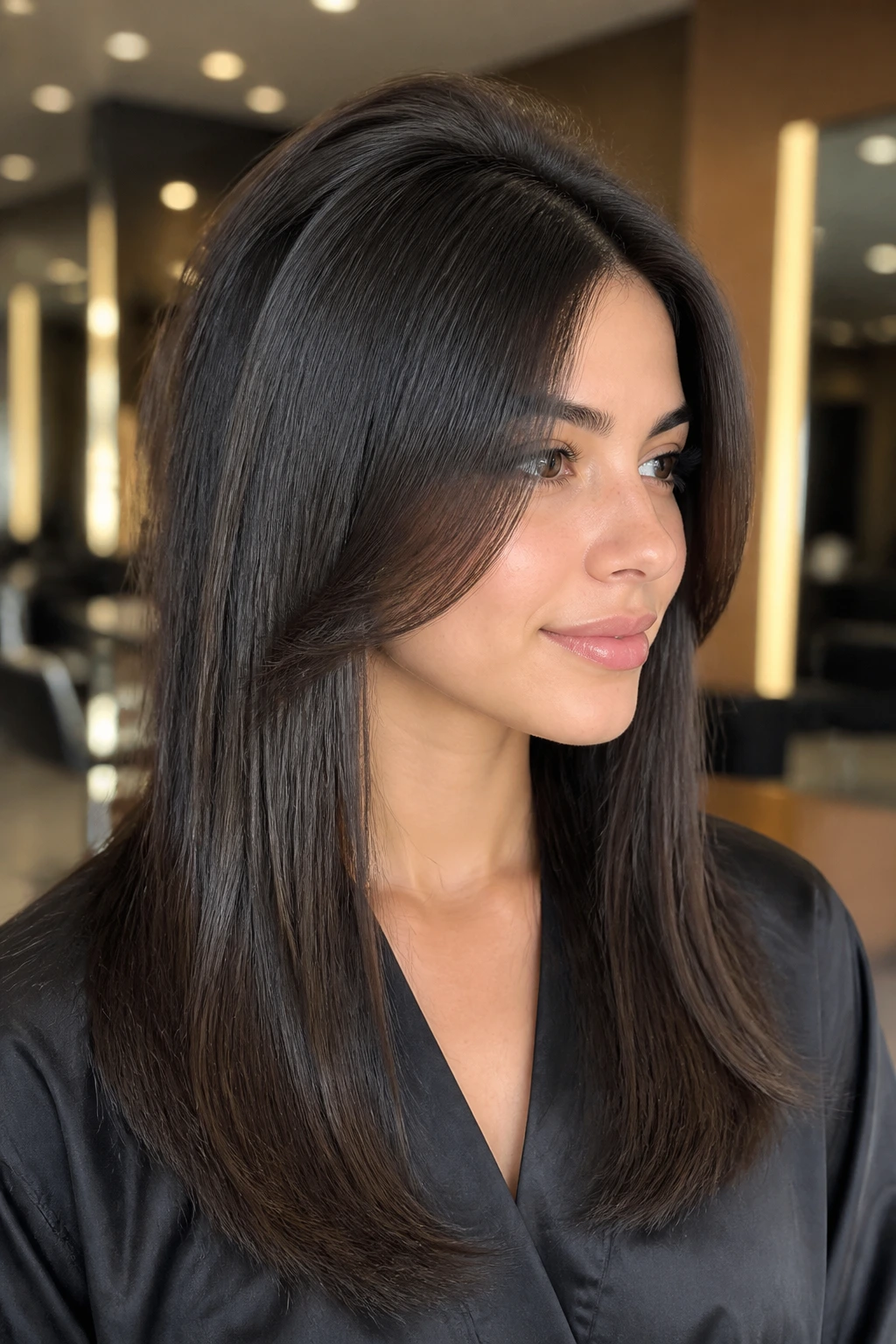
If your hair looks flat on top and huge on the bottom, this is the fix. Crown-heavy weight removal takes some of the density out near the top layers so the roots can lift a bit more and the ends don’t drag all the attention. It’s subtle in a mirror and obvious in motion.
How It Changes the Shape
Thick straight hair often collapses at the crown because the weight pulls everything downward. By lightening that zone carefully, the hair gains a little bend and stops behaving like a single sheet. The result is less helmet, more shape. That sounds dramatic, but if you’ve lived with dense hair, you know exactly what I mean.
I like this cut for people who never get volume near the scalp, even with a good blow-dry. It creates room up top without taking length from the rest.
19. Money Piece Layers
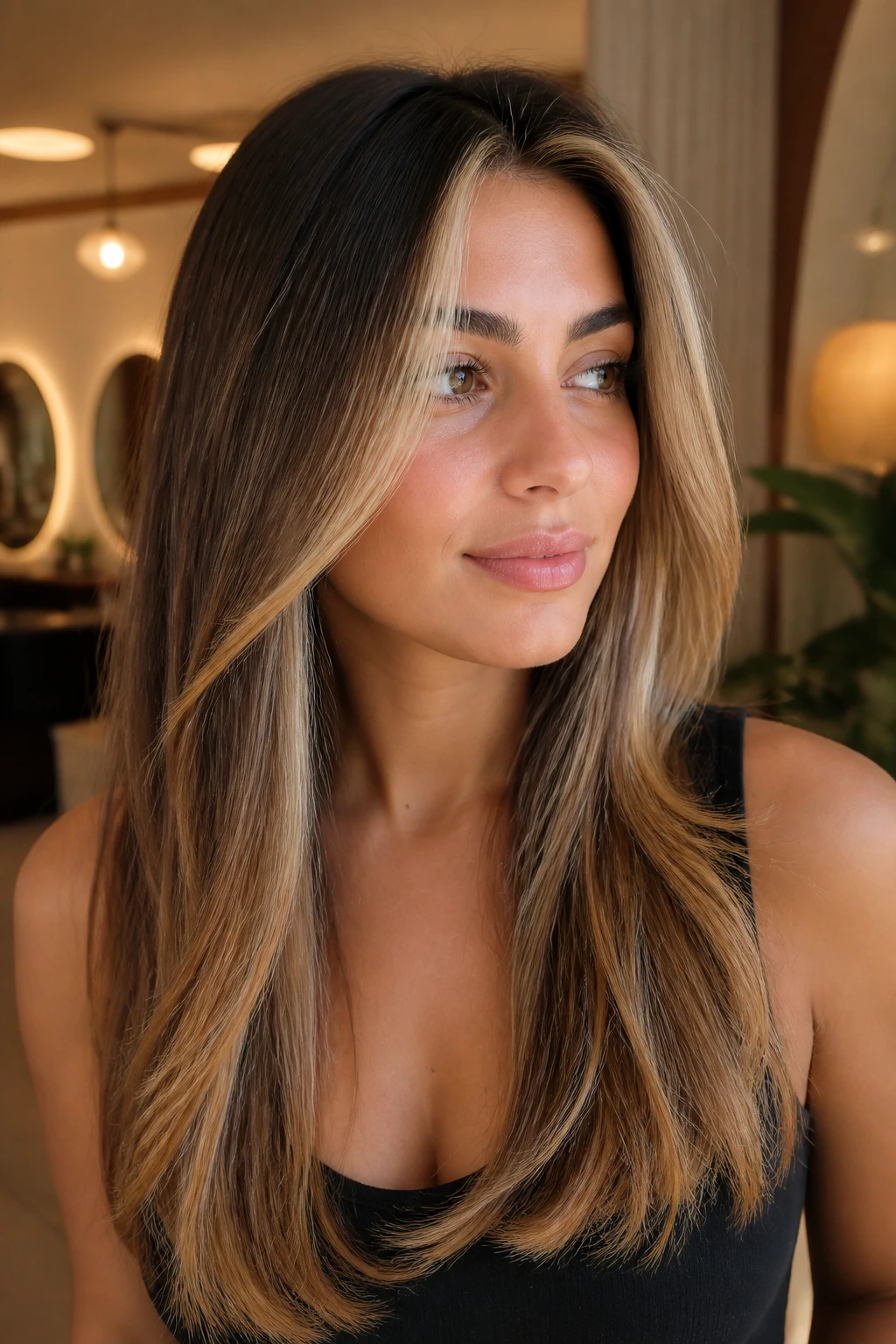
The money piece is not just a color idea; in haircut terms, it means keeping the front sections brighter, softer, and more obvious than the rest of the cut. On thick straight hair, that usually means long face-framing layers that pull attention toward the cheekbones and jawline.
This works because straight hair can make the front feel heavy even when the length is beautiful. A lighter front section changes the whole mood of the haircut. It’s especially nice if you tend to wear your hair down and want the face frame to do more of the work than a fringe would.
I’d keep the rest of the cut fairly simple. Let the front be the moment. Let the back stay calm.
20. Razored Perimeter
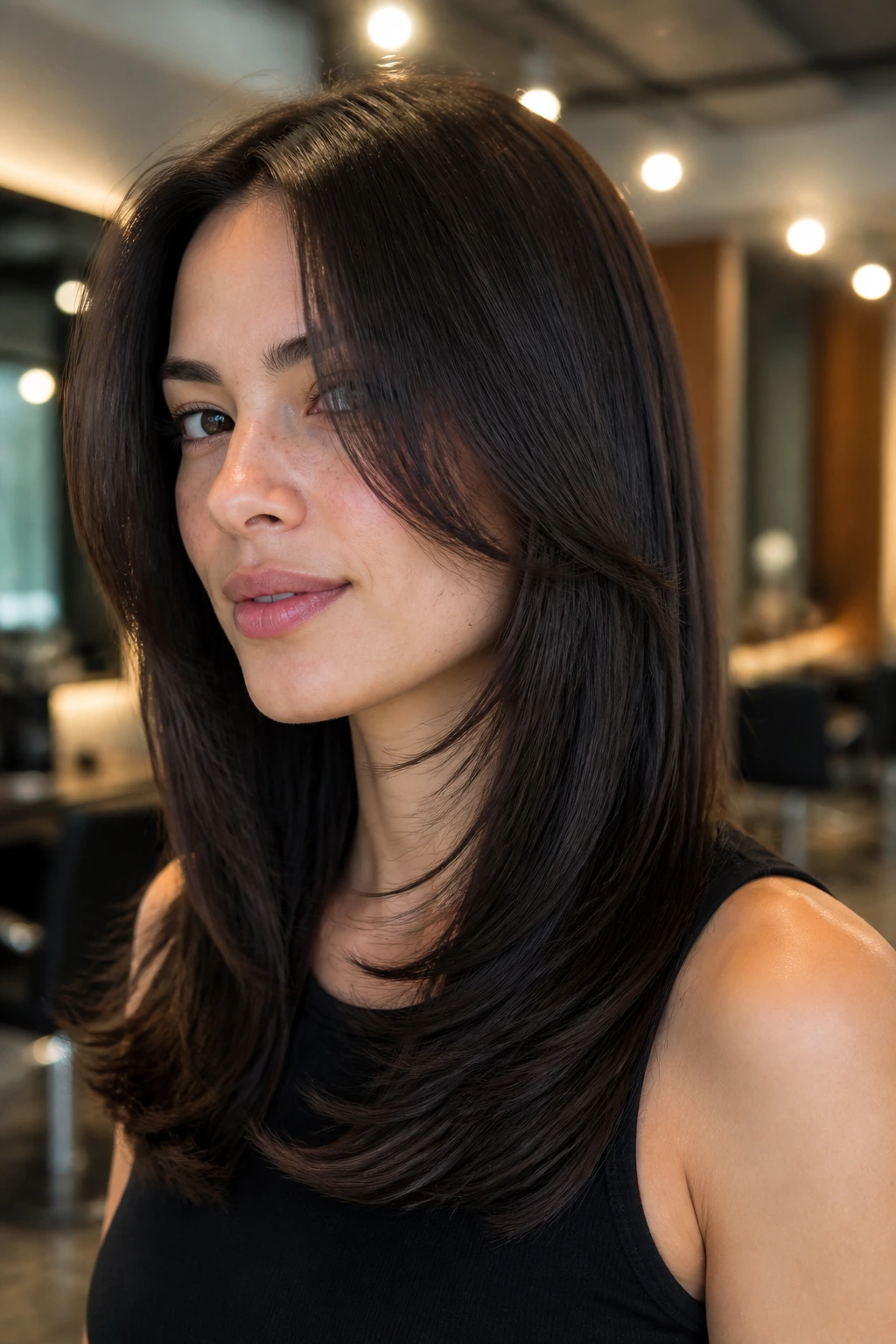
A razored perimeter can be excellent on thick straight hair if the stylist knows when to stop. The goal is to soften the edge just enough that the hemline doesn’t look stiff. The wrong razor job can leave the ends fuzzy, so this is a precision cut, not a rough one.
The reason it works is simple: thick hair can look too solid at the bottom. A slight razor-softened edge breaks up that harsh line and helps the hair fall with a little more movement. I like this best on hair that’s naturally smooth and not prone to puffing.
If your ends already frizz easily, I’d be careful here. A blunt edge may serve you better.
21. A-Line Long Cut
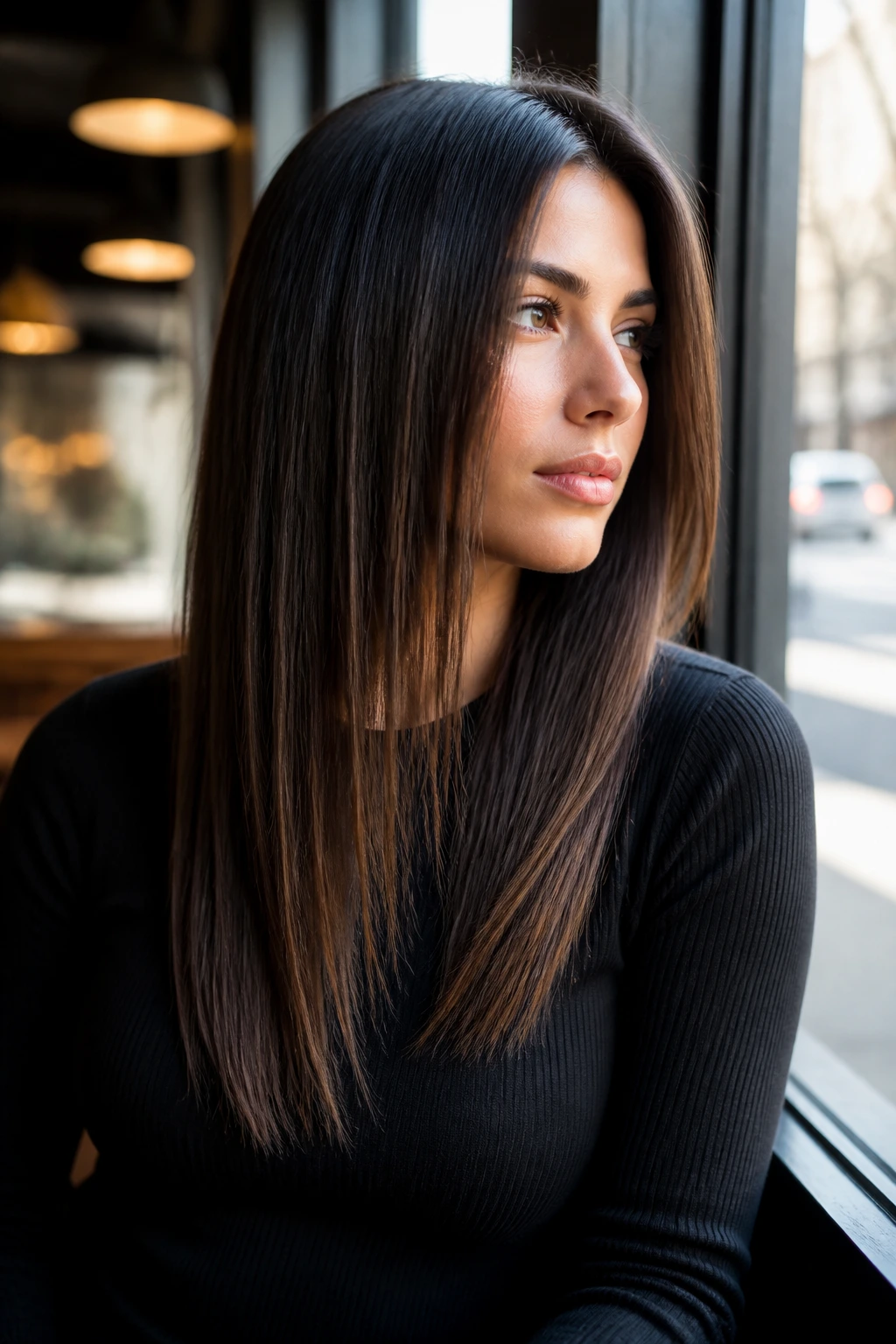
The A-line long cut is a quiet shape shifter. The front sits a little longer than the back, which creates a forward angle that makes thick hair look longer and narrower through the face. It’s a neat trick, and it works because the eye follows the line.
This cut is especially useful if your hair tends to bunch at the back and feel heavy at the neck. The slight angle lifts that weight visually. It also works nicely with a tucked-behind-the-ear style, because the front pieces keep the haircut from disappearing into your clothes.
I’d keep the angle subtle on straight hair. If the front gets too long compared with the back, the shape can feel dated fast.
22. Tapered Nape and Long Fronts
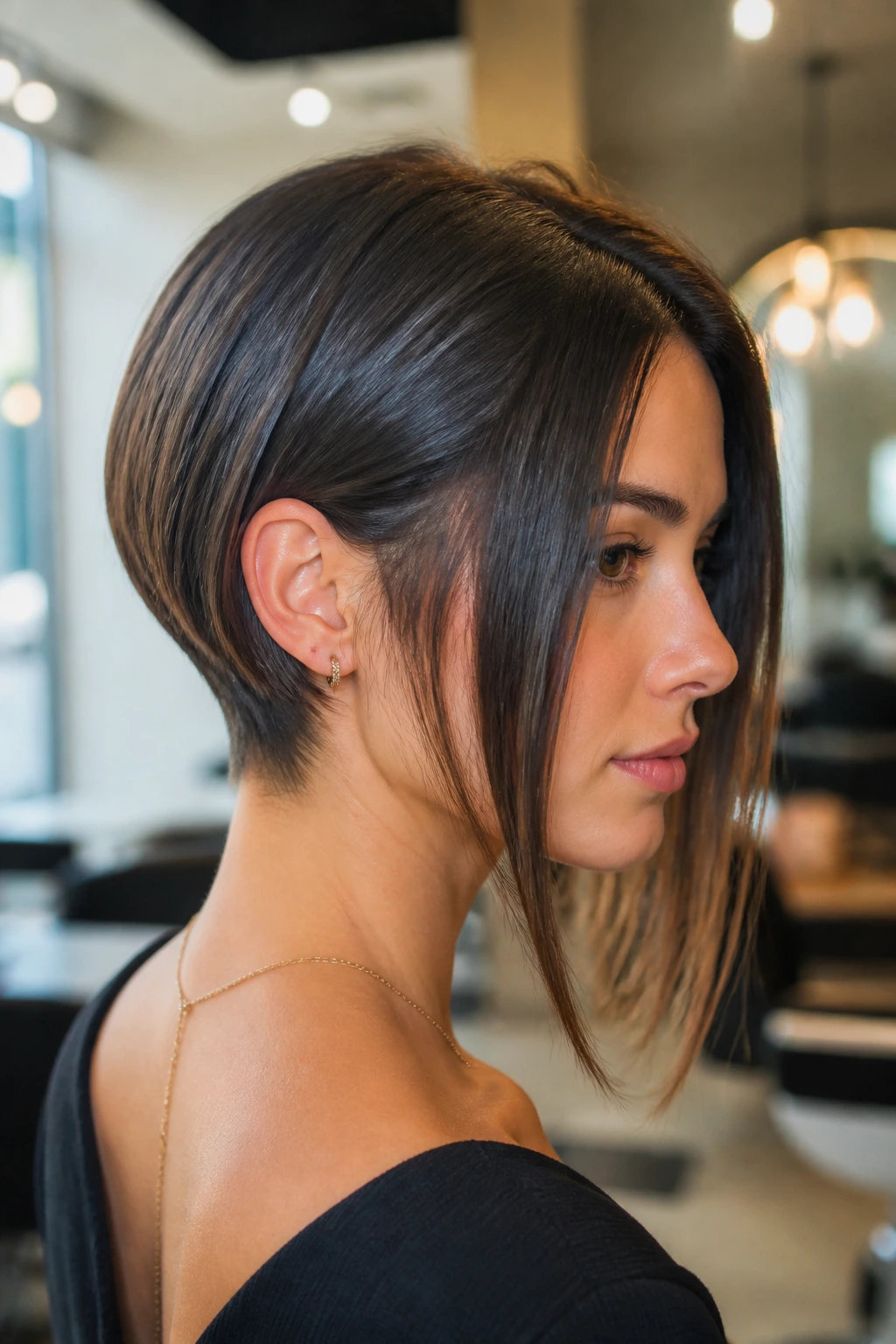
This is a clever cut for thick hair that gets bulky at the neck. The nape is tapered a touch so it lies flatter against the back, while the front keeps its length and drama. You get relief where the bulk bothers you most, and you don’t have to sacrifice overall length.
It’s a particularly good option if you wear collared shirts, sweaters, or high-neck tops a lot. Thick hair at the nape can puff and snag there. A softer taper solves that without making the haircut look short.
This one needs a careful hand. The taper should be enough to reduce the bulk, not enough to show a short layer from across the room.
23. Long Straight Cut with Micro Layers
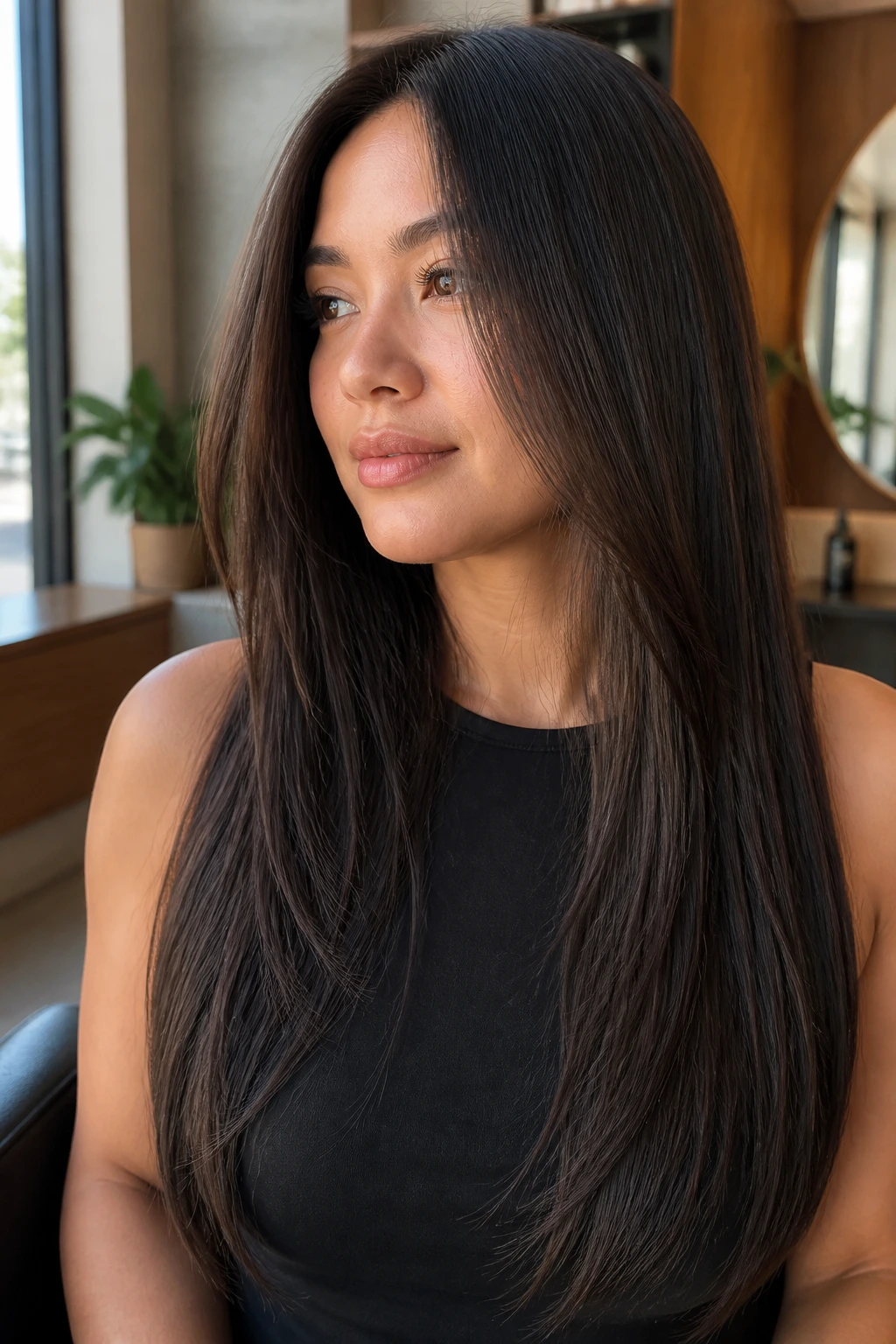
Micro layers are tiny. That’s the point. They create a little movement in thick straight hair without making the cut look obviously layered. Think of them as a barely-there adjustment that helps the ends behave better.
Where They Help Most
They’re useful when the hair is dense enough to feel heavy but you hate the look of big, obvious layers. Micro layers can live mostly in the interior and around the lower half of the head, where they reduce the blocky feel while keeping the outer line clean.
I like this for people who want a salon cut that doesn’t scream “I got a haircut.” It grows out softly, and the shape stays intact longer than a more dramatic layered cut. That makes it a smart choice if you only want trims every couple of months.
24. Layers Starting at the Rib Cage
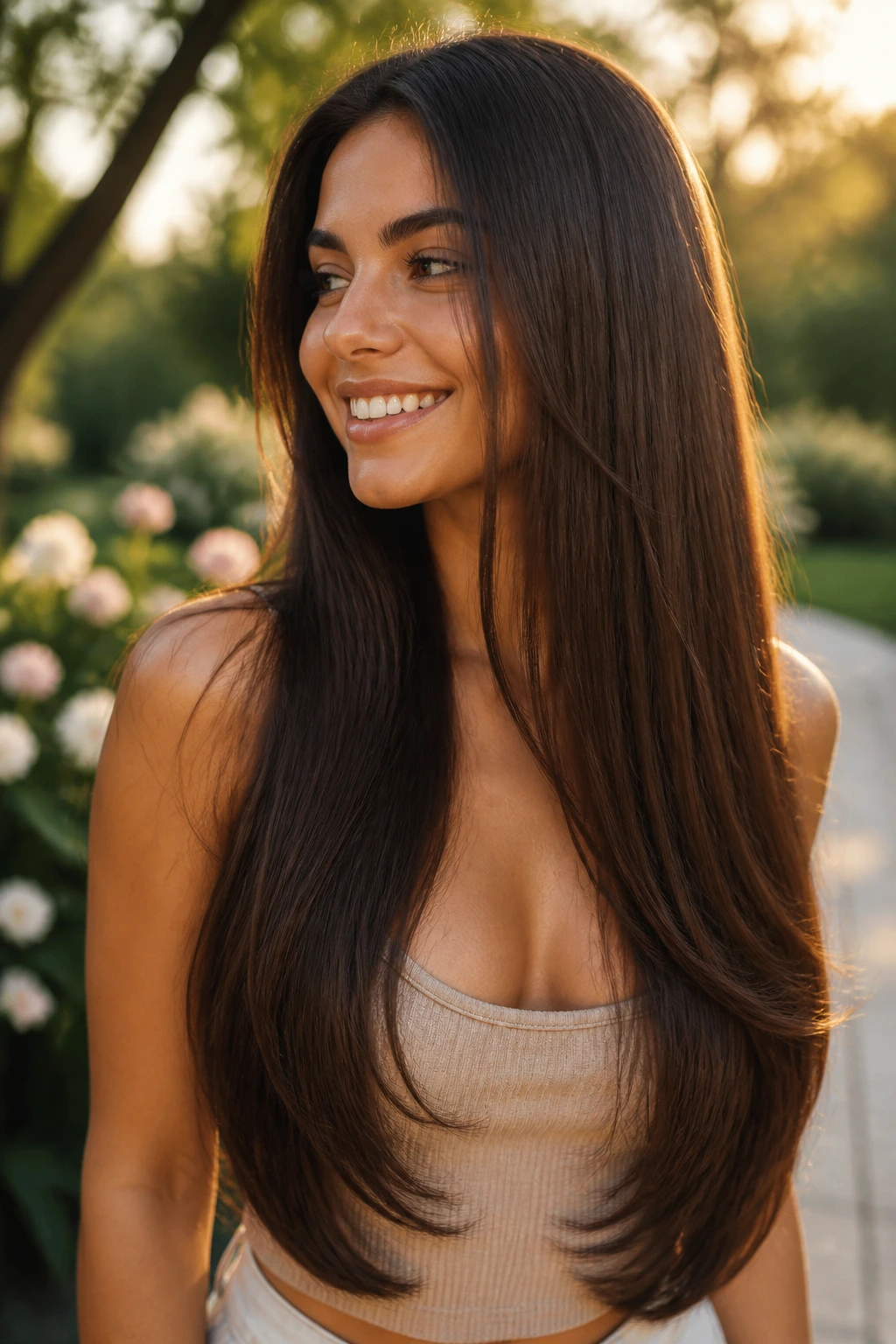
This is where long layers start to feel truly long. Beginning them around the rib cage keeps the upper half of thick hair heavy enough to lie flat, while the lower half gets enough movement to avoid that stiff, solid curtain effect. If your hair is past your chest, this shape can be gorgeous.
The lower start point matters because it keeps the top from puffing. A lot of thick-hair layering goes wrong because the shortest layer appears too high, which can make the crown and side sections flare. Rib-cage layers stay out of the way until the hair has enough length to handle them.
If you want a haircut that moves when you walk but doesn’t turn feather-light, this is a strong bet.
25. Soft S-Curve Layers
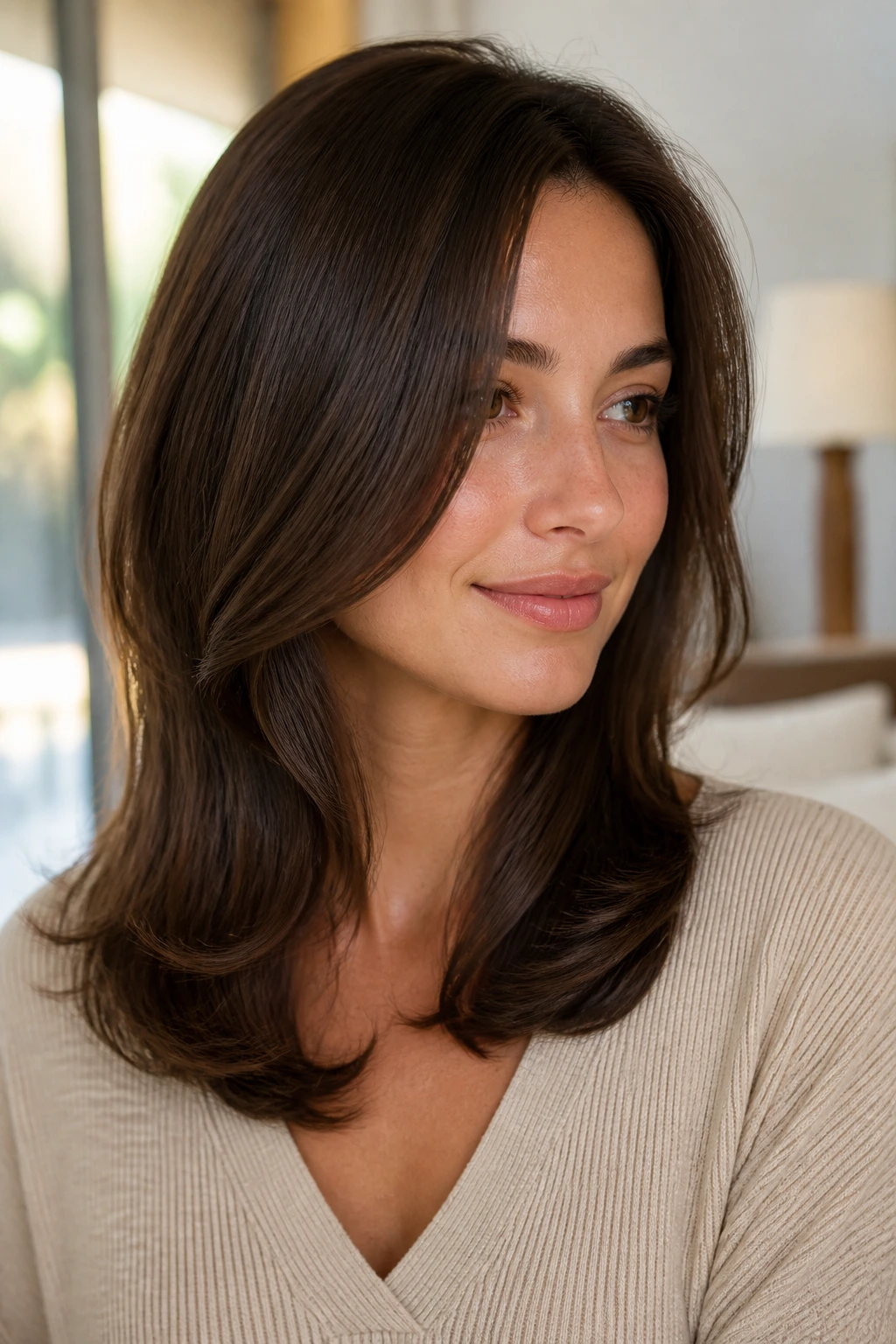
Soft S-curve layers create a bend that isn’t obvious at first glance but becomes visible when the hair is tucked, flipped, or blown out. The shape helps thick straight hair fall with a little contour instead of dropping in one straight wall. It looks especially good when the ends curve inward slightly.
Why the Curve Matters
Straight hair can look blunt to the point of stiffness. The S-curve softens that without stealing the length. It gives the hair a touch of motion in the mid-lengths, which makes the lower half feel less heavy and the overall silhouette less square.
This is one of my favorite cuts for someone who wants movement but hates choppy layers. It’s more graceful than shaggy, and it doesn’t make styling feel like a project.
26. Glass-Hair Blunt Cut
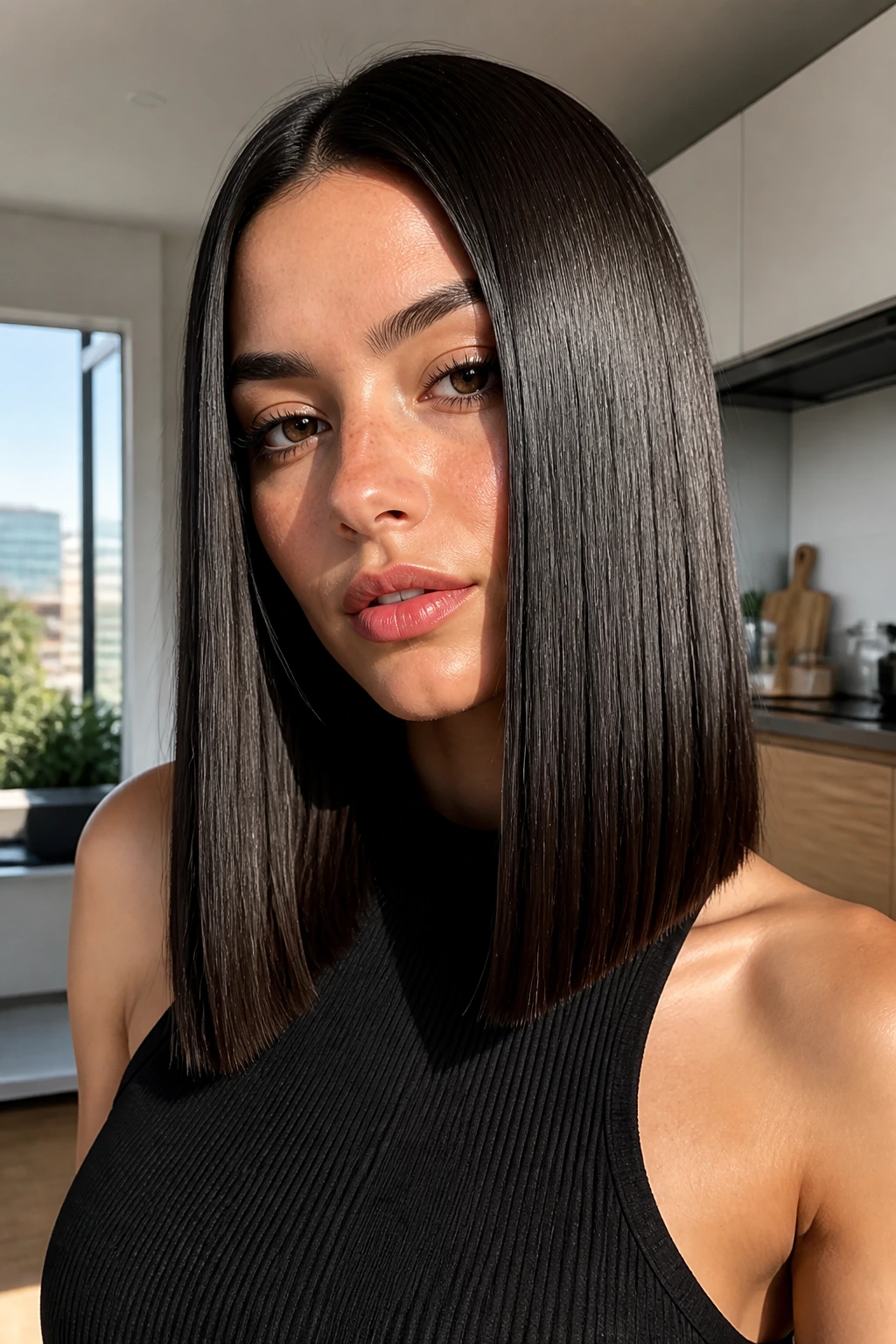
If you like your hair sleek and reflective, this is the sharpest option in the lineup. The glass-hair blunt cut keeps the perimeter full and level, with enough density left in the ends to catch light and show off the straight line. Thick hair wears this beautifully because the fullness supports the shape.
This cut depends on clean ends. Split ends will show fast, and uneven texture can break the glassy effect. I’d keep it trimmed regularly and use a heat protectant before any flat-iron pass. The payoff is a haircut that looks polished even when the styling is minimal.
It’s not soft. That’s what makes it special.
27. Long Cut with Hidden Inner Lifts
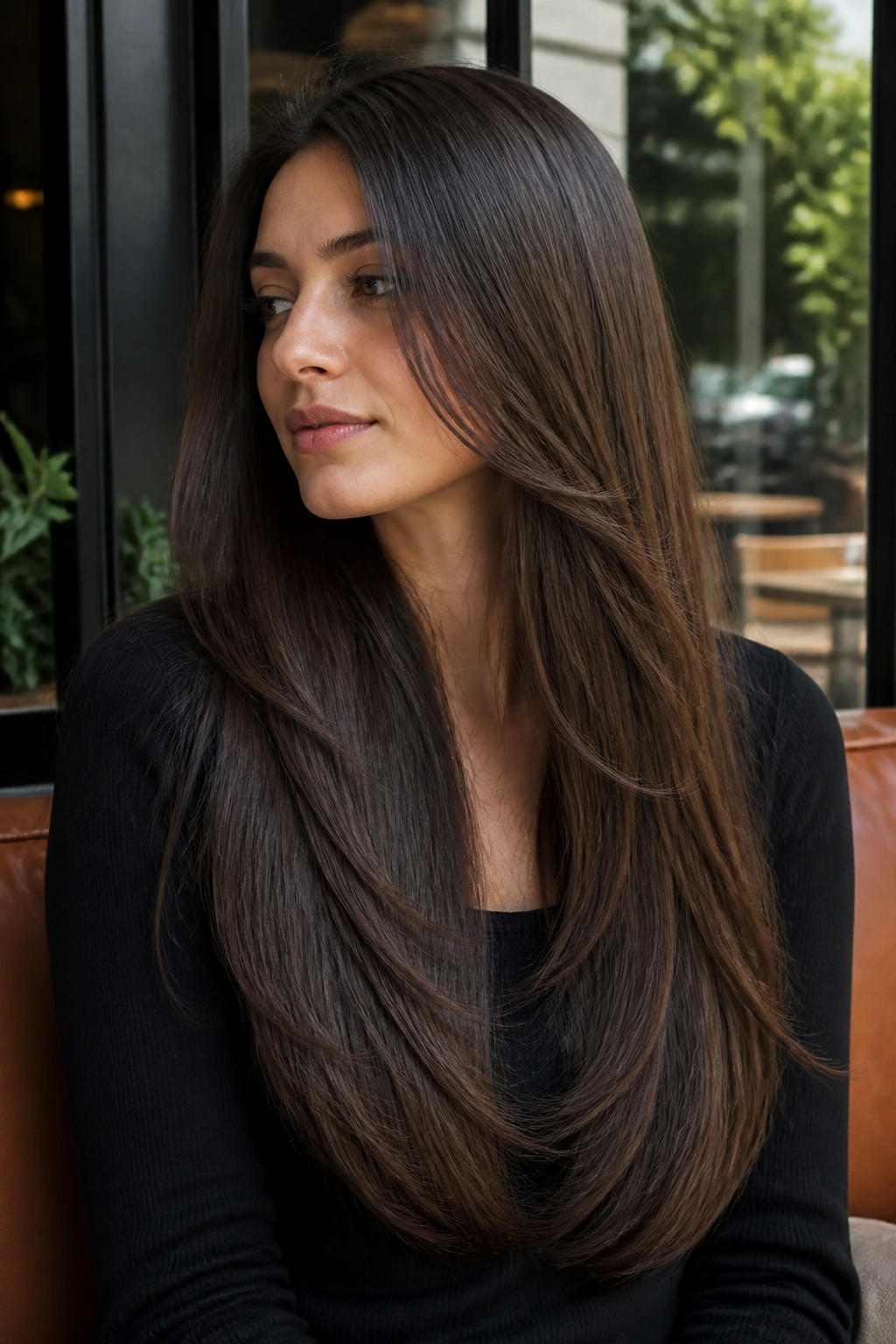
Hidden inner lifts are about creating a little buoyancy under the outer layer. Thick straight hair often needs that because the top can lie flat while the bottom feels too heavy. By lifting the interior, the hair gains some shape without advertising the work.
The cut still reads long and smooth from the outside. That’s the charm. You get a little more movement in a ponytail, a little more bounce when the hair is down, and less of that dense, unmoving block that can happen with one-length cuts.
This is a smart choice if you want the haircut to look effortless in motion, not just in a still photo.
28. Subtle Center Tail
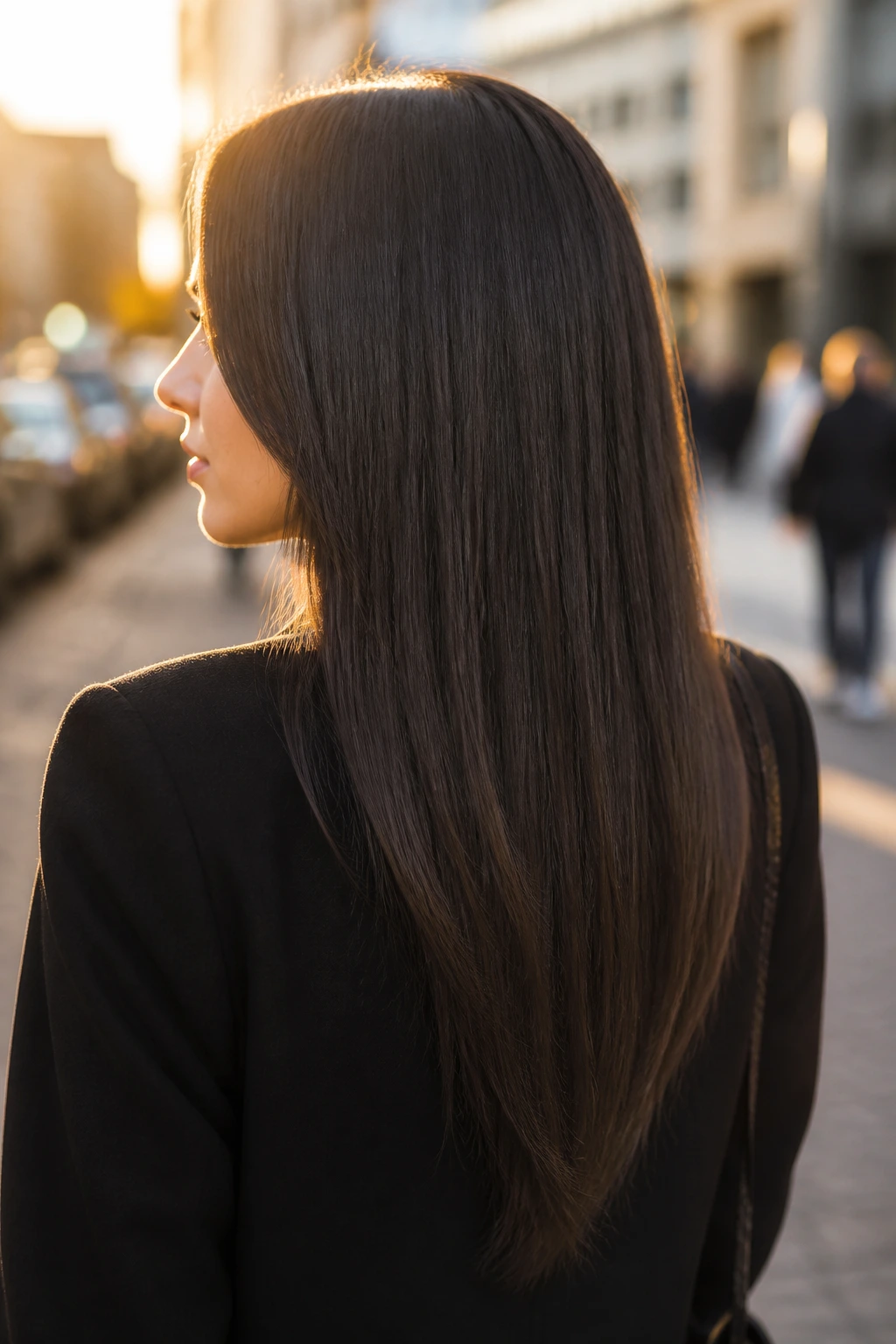
A subtle center tail cut is a softened version of the V-shape, with the point at the back kept gentle and the sides easing down toward it. It narrows thick hair visually without making the point look too sharp. That matters, because a dramatic tail on straight hair can feel dated fast.
The front should blend into the back in a long sweep. If the center tail is too pronounced, the haircut can start reading like two triangles joined together. Keep the angle mild and the line smooth.
I like this when someone wants length plus a little shape, especially if the hair feels broad across the back when worn loose. It solves that without requiring a lot of daily styling.
29. Tucked-In Ends
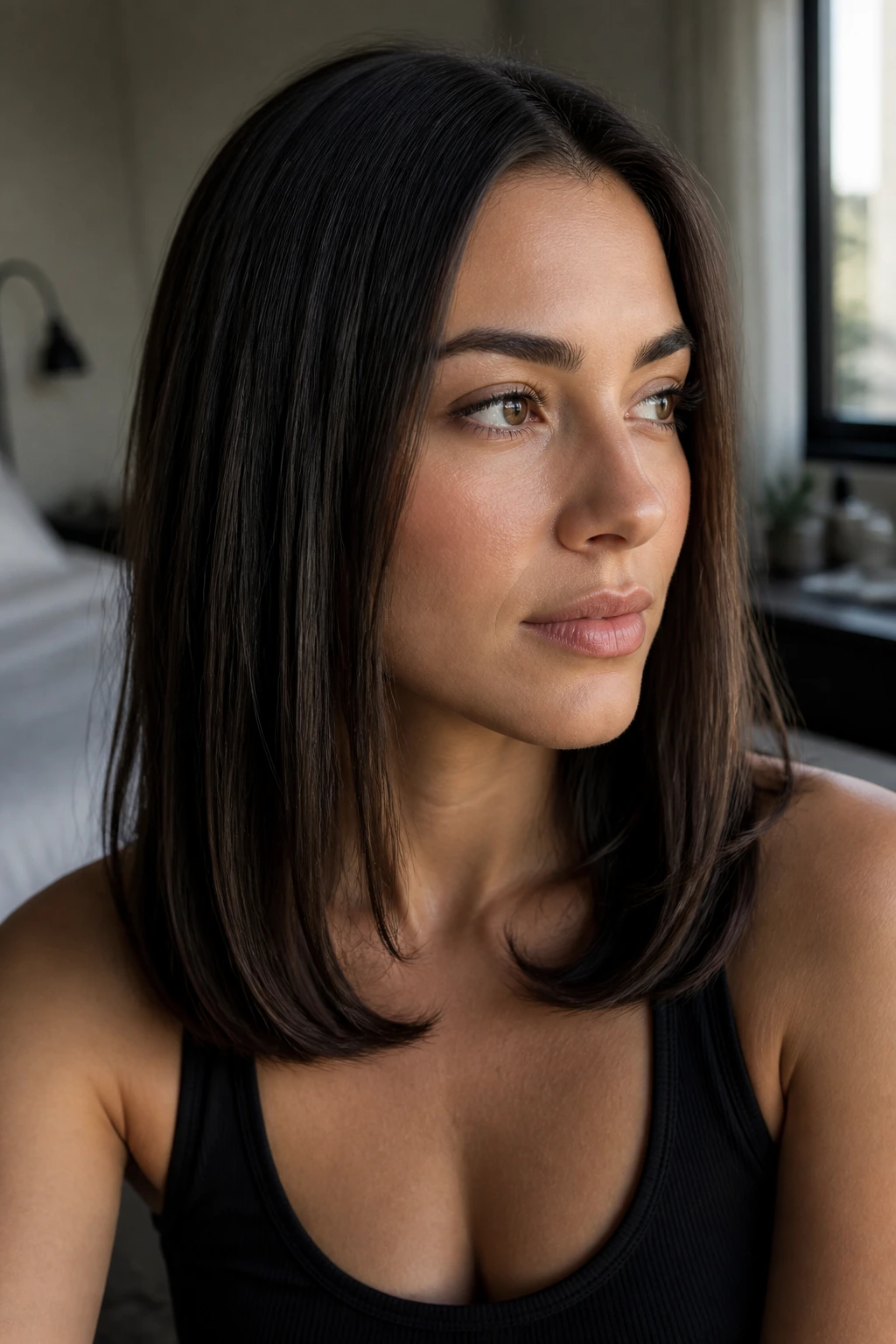
Tucked-in ends are exactly what they sound like: the bottom of the haircut is shaped so it curls inward slightly, almost as if it wants to tuck under on its own. Thick straight hair can take this shape well if the cut is made with enough precision and the ends are not too thin.
This is a nice option for anyone who wears blowouts or smooth, polished finishes. The tucked look makes the hair appear neat even on second-day wear. It also keeps the outline from flaring out at shoulder length, which is a common annoyance with dense hair.
If your ends always kick out, this shape can tame them without making the cut look severe.
30. Long Straight Cut for Round Faces
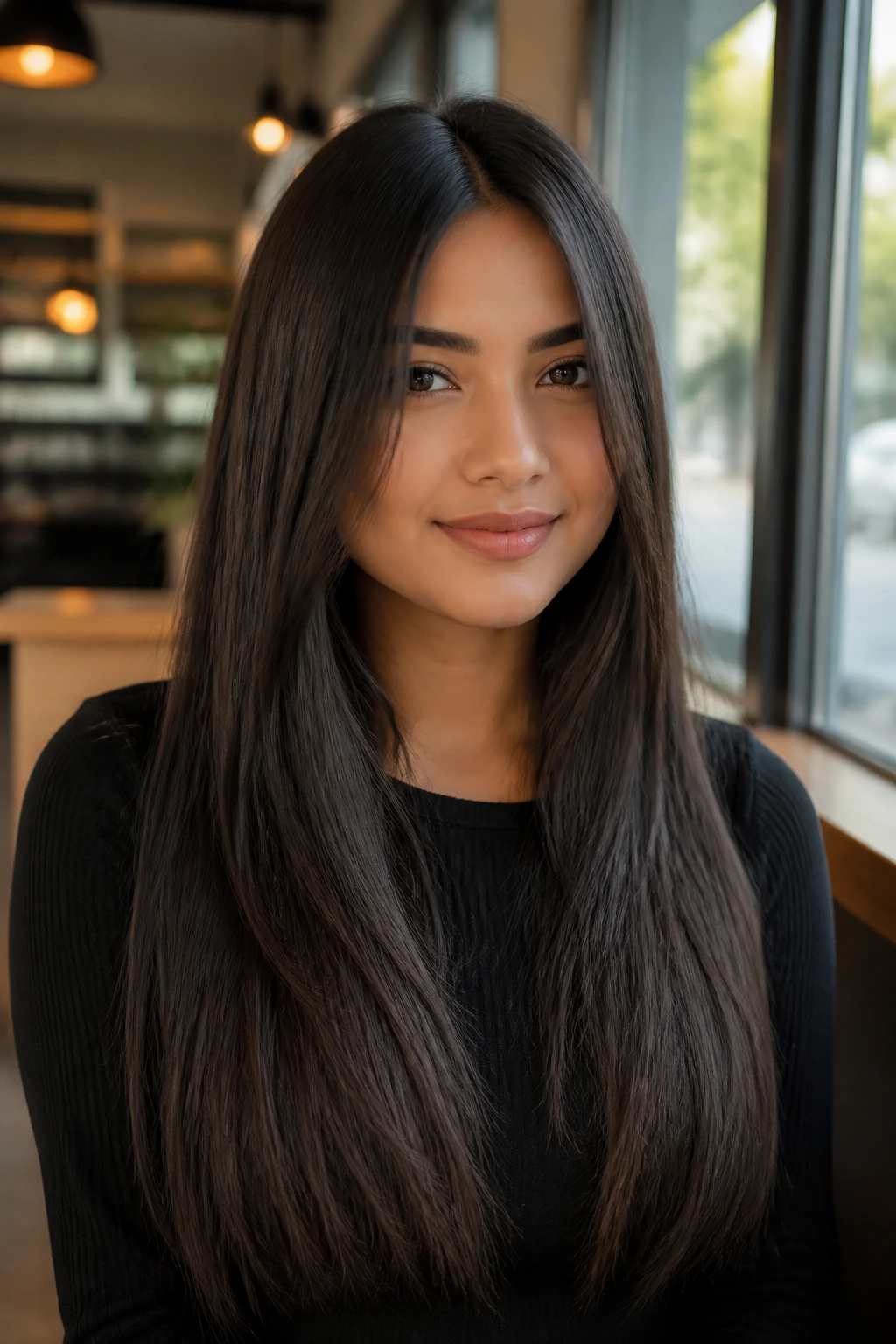
For round faces, I like long straight haircuts that create vertical lines and keep bulk away from the cheeks. That usually means a center part, long face-framing pieces, and a hemline that sits below the jaw. The long line helps lengthen the face without making the haircut feel narrow everywhere else.
The worst thing you can do here is stop the layers at the cheekbone and then let the rest fall heavy. That adds width right where you don’t want it. Better to keep the framing longer and let the shape fall past the face before it opens up.
A slight U-shape or soft V at the back usually works well too. The idea is to guide the eye downward.
31. Long Straight Cut for Square Faces
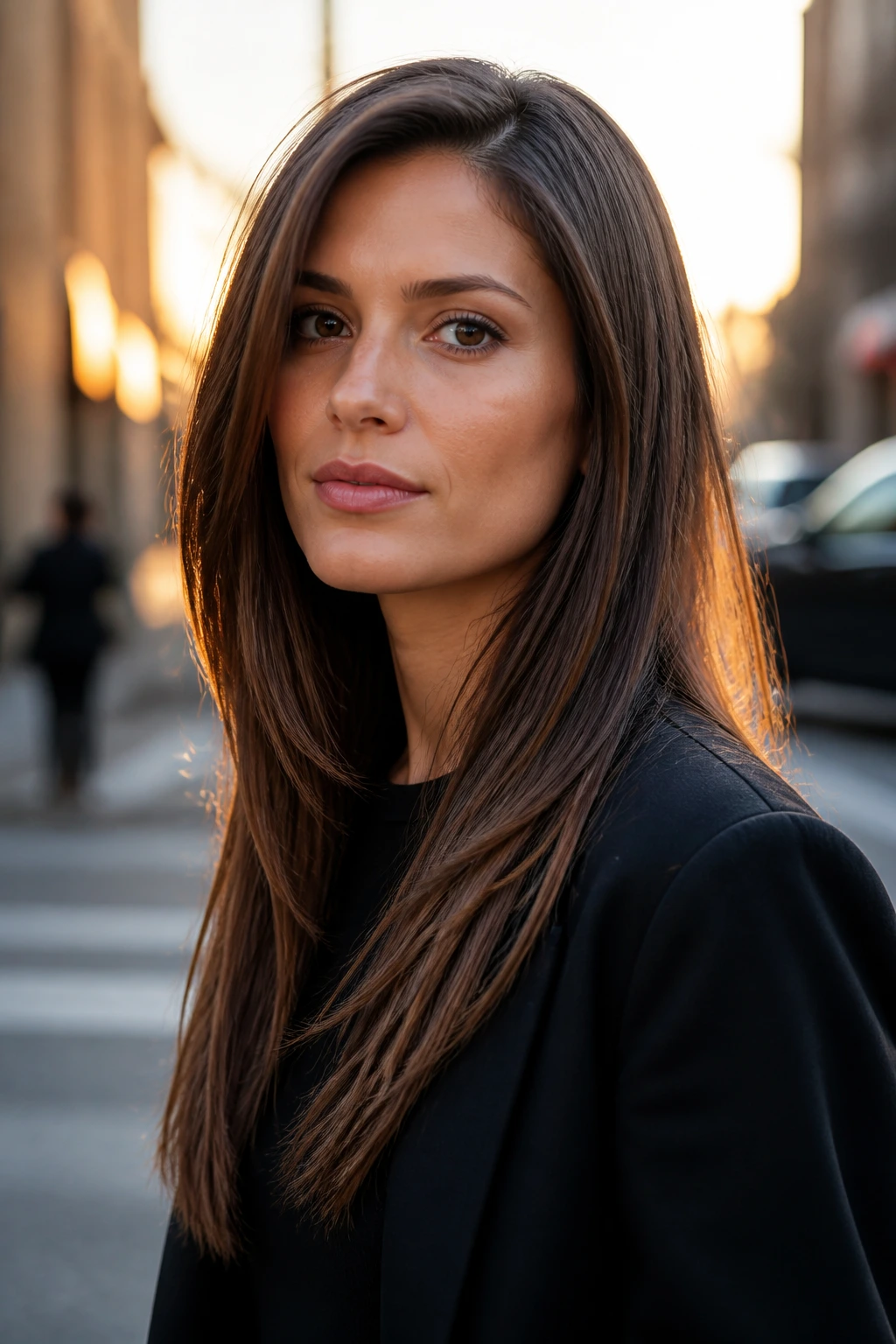
Square faces benefit from a haircut that softens the edges without hiding the jaw completely. Long straight hair with soft, low-starting layers can do that beautifully. The goal is movement around the lower half of the face, not a blunt frame that echoes the jawline.
I’d avoid a cut that ends exactly at the jaw and cuts straight across. On thick hair, that can make the face feel boxier. Instead, keep the front pieces longer and allow them to fall past the jaw before tapering into the rest of the length.
A side part can help here too. It breaks up the symmetry and keeps the haircut from feeling too hard-edged.
32. Long Straight Cut for Heart Faces
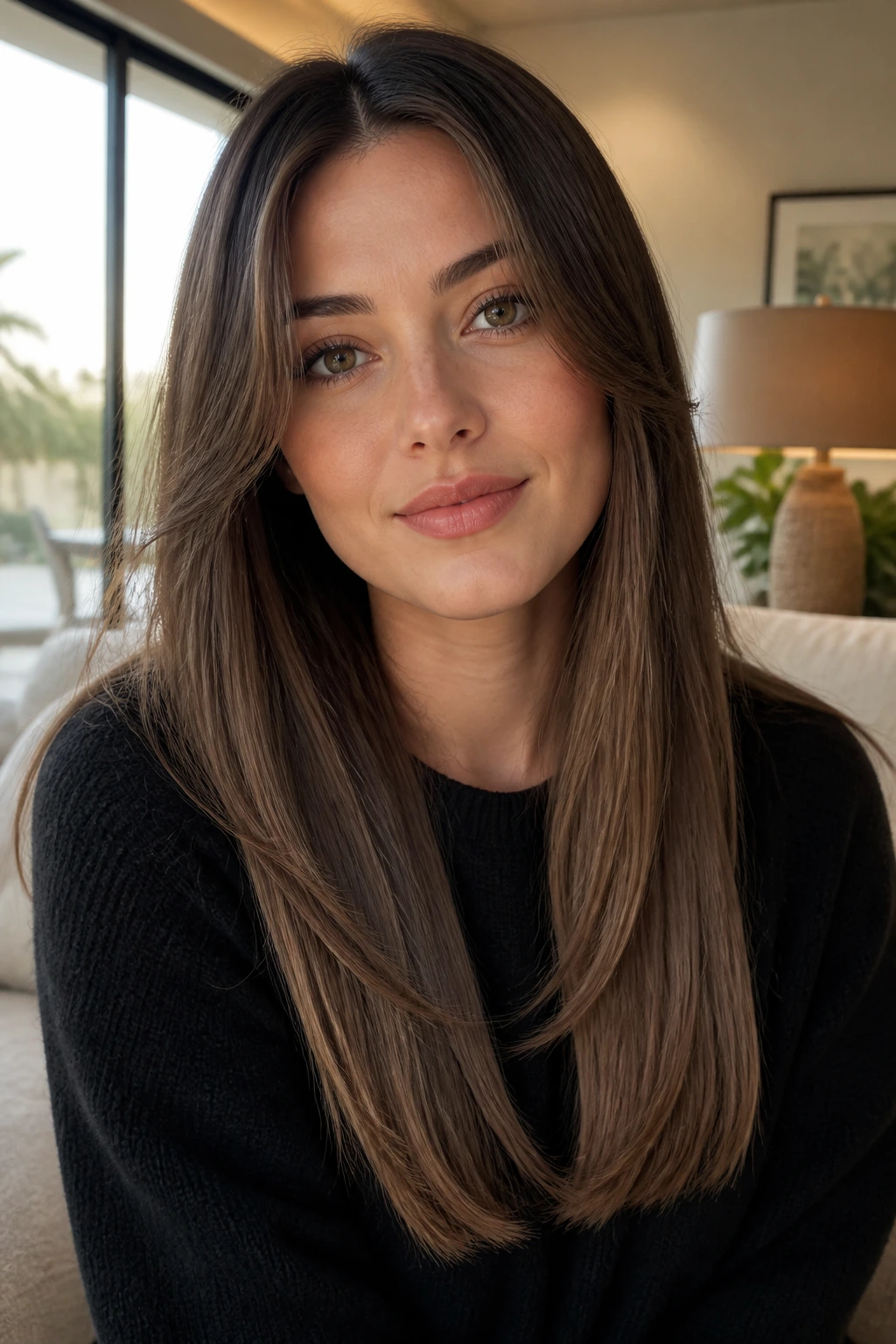
Heart-shaped faces often need a bit more balance in the lower half, and thick straight hair can provide that nicely if the cut is planned right. I like soft layers that begin around the chin or collarbone, because they add width below the face without crowding the forehead.
Where This Cut Pays Off
If the front is too short, it can make the upper face feel even wider. If the front is too heavy, the chin can disappear. A long straight cut with a gradual face frame sits in the middle of those extremes and gives the whole haircut a calmer line.
This is a good place for curtain bangs too, as long as they’re long enough to blend. Short, dense fringe on thick hair can overwhelm the face in a hurry.
33. Long Straight Cut for Oval Faces
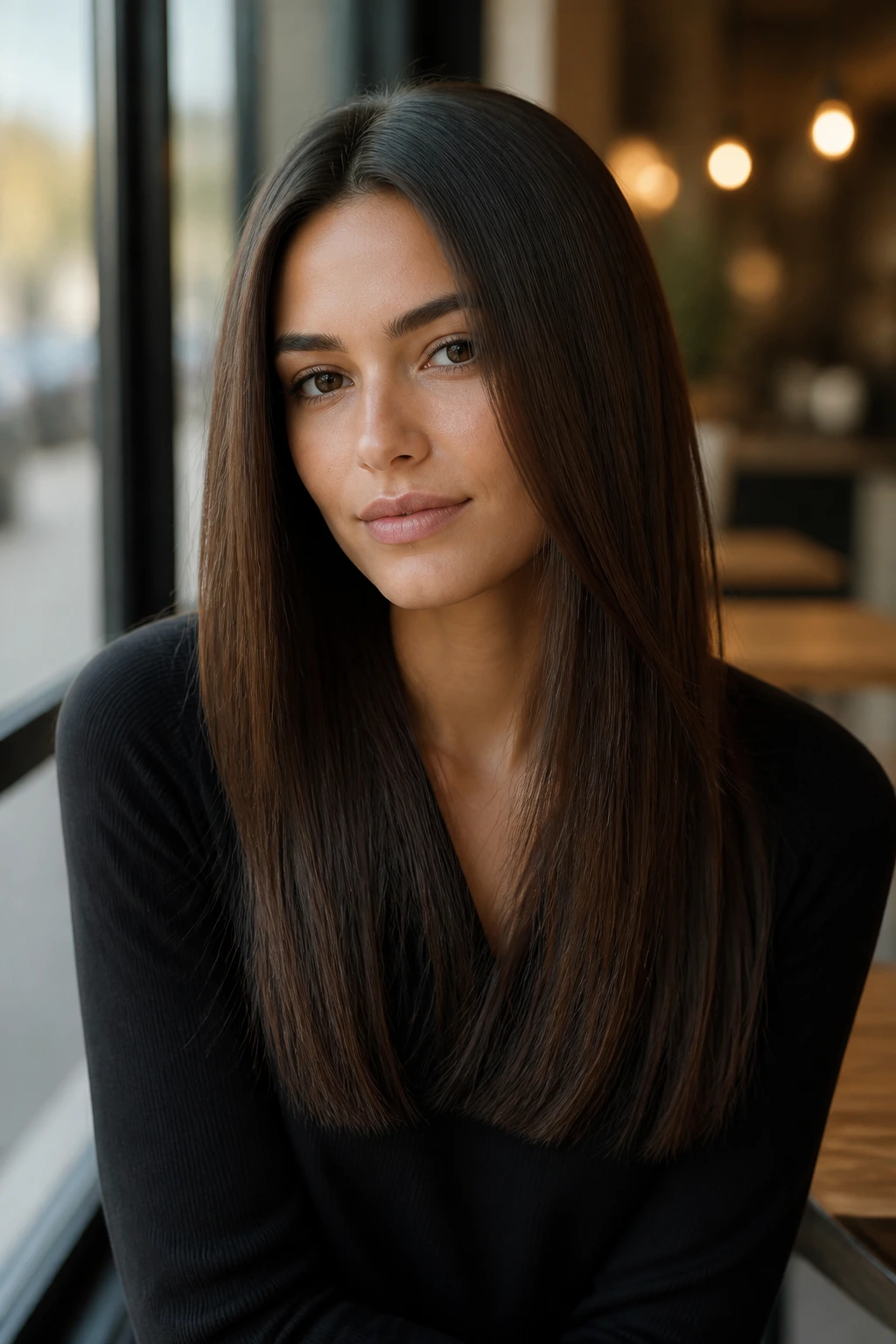
Oval faces are the easiest to work with, which is both helpful and a little unfair. Almost any of the shapes here will work, so the decision comes down to mood and styling habits. If you like clean, sleek hair, a blunt hemline looks balanced. If you want softness, a U-shape or long layers will do the trick.
The reason oval faces have so much range is that the proportions can handle a strong line or a soft one without the haircut taking over. That means you can choose based on how your hair behaves, not just on face shape.
I’d still keep thick straight hair’s weight in mind. Even on an oval face, too many short layers can widen the silhouette faster than you expect.
34. Thick Coarse Hair with a Blunt Weight Line
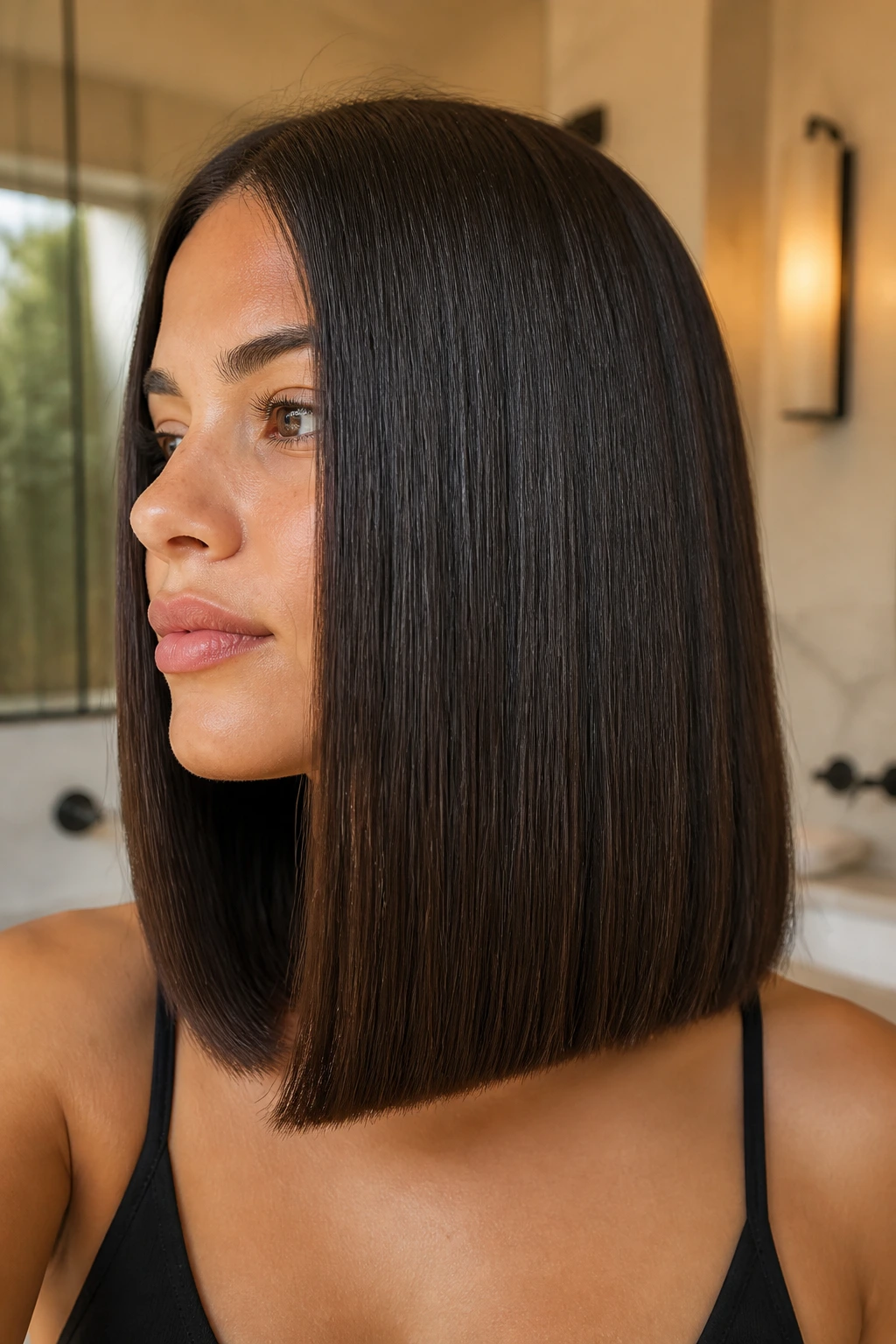
Coarse thick hair often needs more structure than people think. A blunt weight line keeps the ends together and gives the hair a solid shape, which helps prevent the puffiness that coarse strands can get when they’re cut too light. The result is dense, but controlled.
This is the kind of cut that looks best when the ends are in good condition. Coarse hair shows damage fast at the perimeter, so trims matter. If you keep the edge tidy, the whole haircut reads strong and expensive rather than frayed.
I’d choose this over heavy layering if the hair already has a lot of texture and natural body. Sometimes the smartest move is to let the hair be thick and simply give it a better line.
35. Thick Fine-Strand Hair with Internal Layers
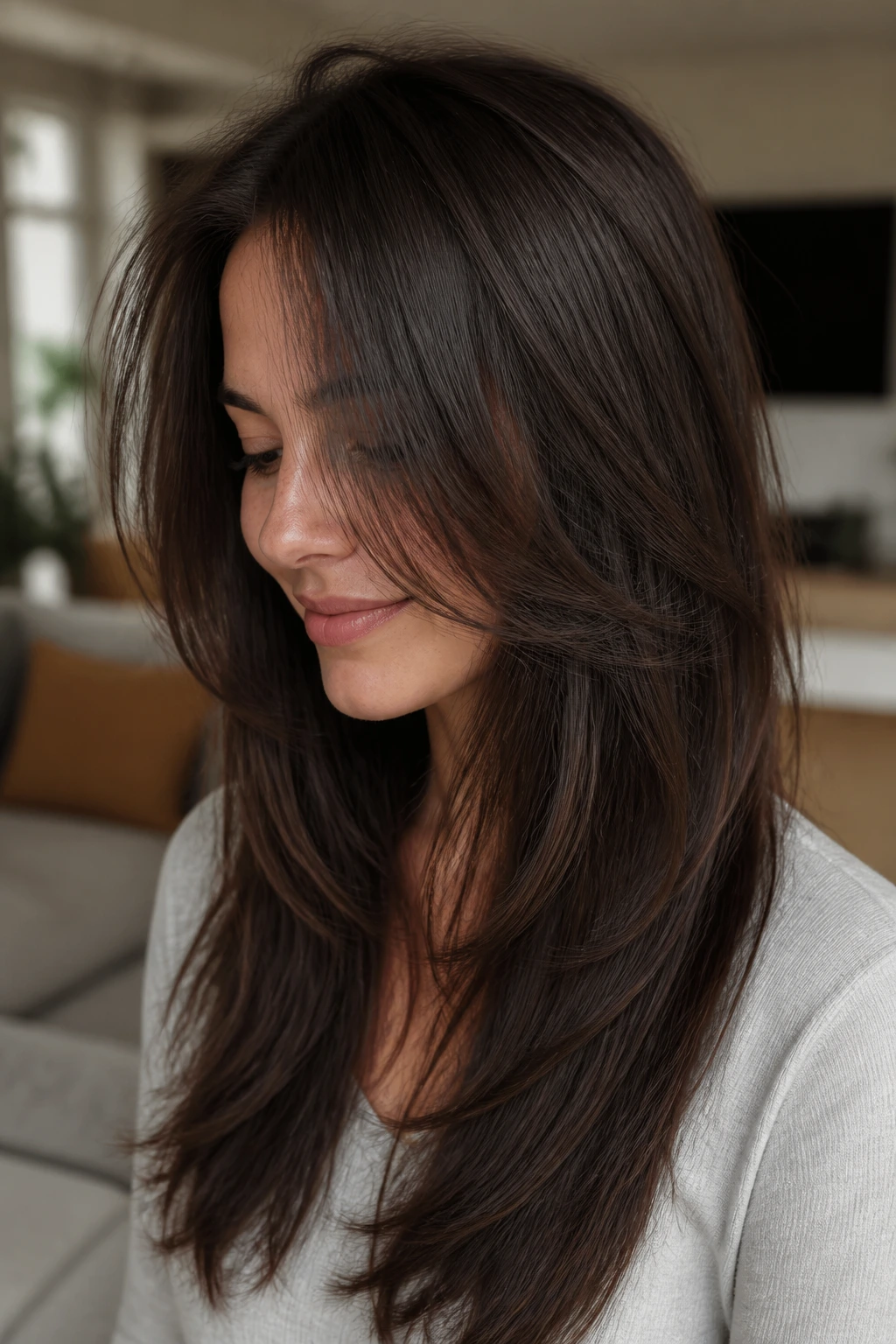
This one sounds contradictory, but it makes sense in real life. You can have thick hair by density and still have fine individual strands. That hair can look huge but feel limp at the roots. Internal layers help it move without turning the ends stringy.
Why It’s Different from Coarse Hair
Fine strands don’t need the same blunt heaviness coarse hair likes. They benefit from a little lift inside the haircut so the hair doesn’t collapse on itself. The exterior can stay long and smooth while the inside gets enough shaping to keep the style from going flat by lunchtime.
This is where a good stylist matters. Over-thinning is the enemy. You want support, not air.
36. Low-Maintenance Long Cut
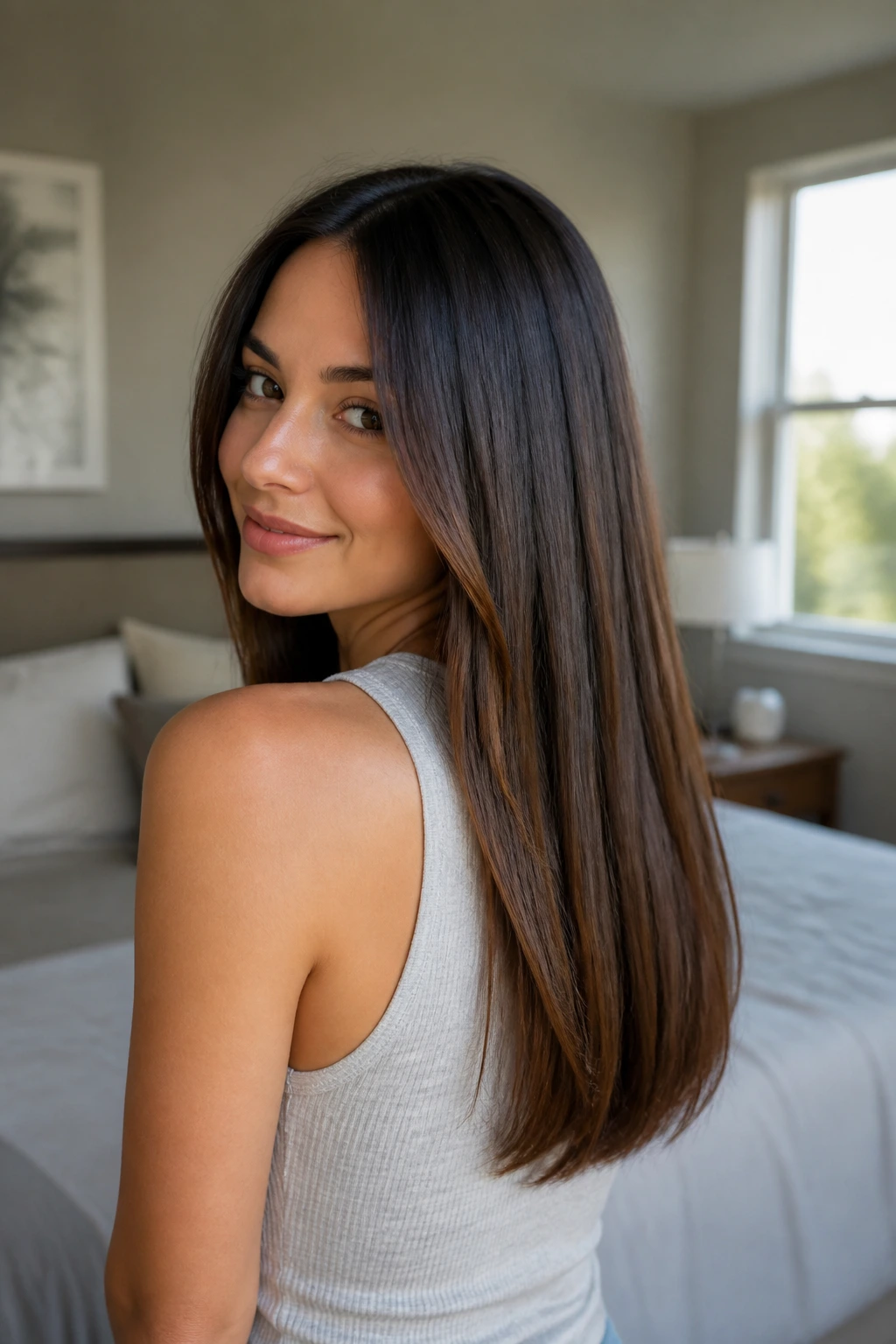
A low-maintenance long cut is one of the smartest options if you don’t want to think about your hair every day. The shape stays simple: clean hemline, maybe a little U-shape, maybe a soft face frame, but nothing that needs perfect blow-drying to make sense. Thick straight hair usually grows into this kind of haircut gracefully.
The real value here is how it behaves on ordinary days. Air-dried? Still decent. Blown out? Even better. Pinned up? The front pieces don’t collapse into chaos. Not every haircut needs a personality. Some just need to keep working.
If you’re tired of cuts that require too many products and too much round-brush commitment, this is the practical lane.
37. Blowout-Friendly Long Cut
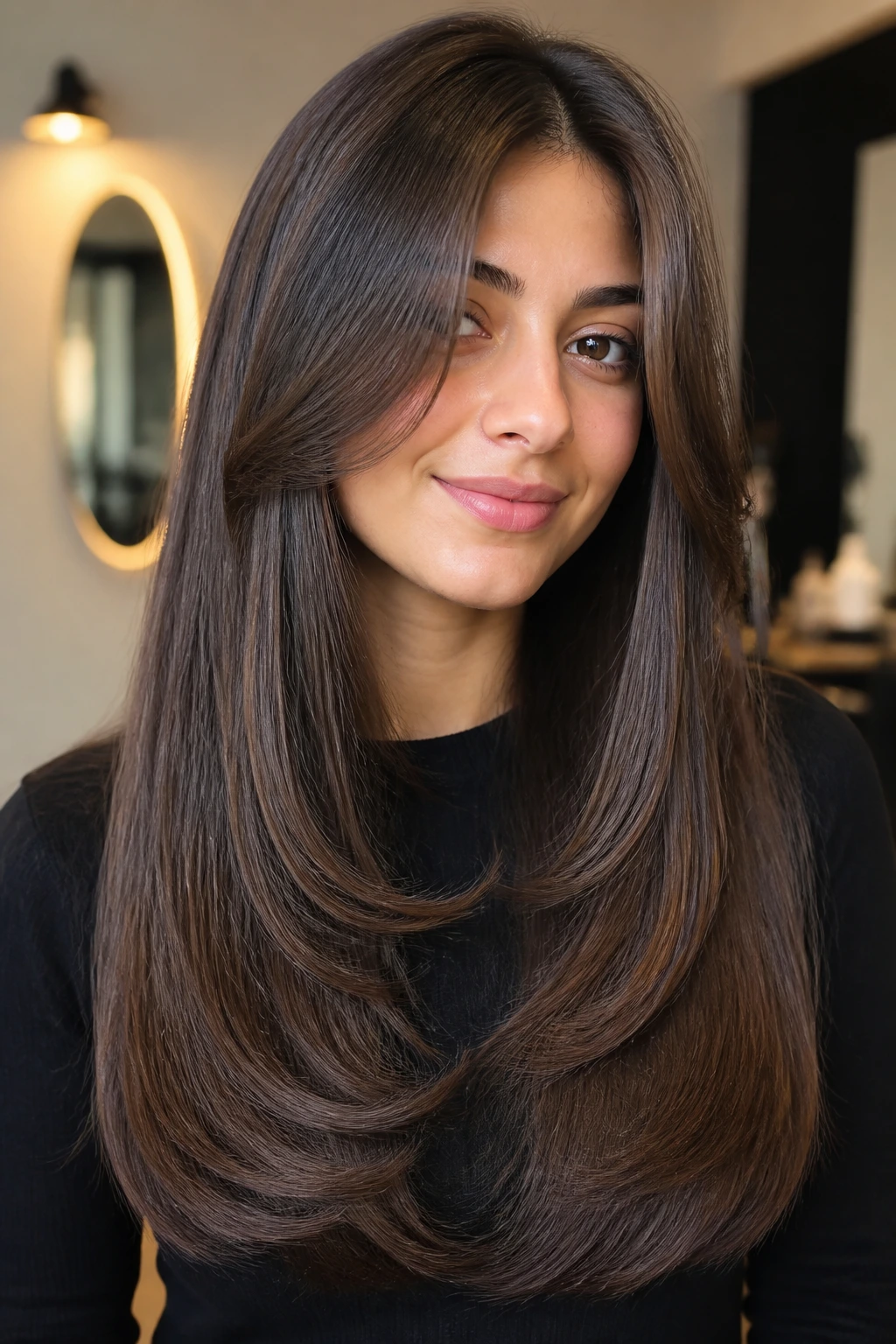
This is the haircut for people who love a salon finish or a good at-home blowout brush. The layers are placed so the hair lifts off the scalp and curves smoothly through the ends. Thick straight hair can look stunning in this shape because the volume is controlled, not random.
The best version has face-framing layers that move with the brush and a back shape that doesn’t kick out. If the stylist places the layers too high, the whole cut can puff. Too low, and the blowout loses shape. The sweet spot is where the brush can bend the hair without fighting a heavy perimeter.
If you like your hair to look polished with minimal extra styling, this is a strong pick.
38. Grow-Out-Friendly Long Cut
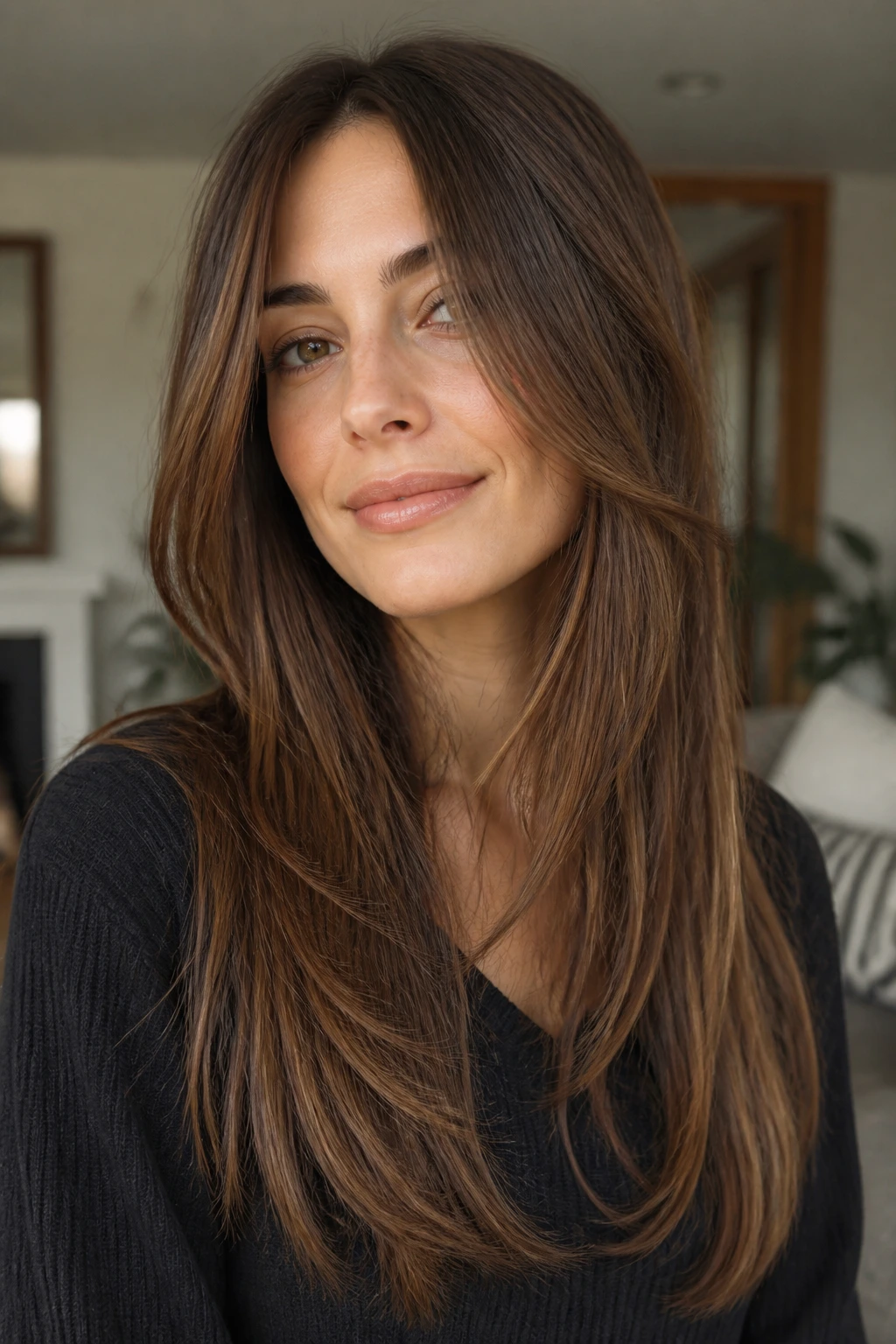
A grow-out-friendly long cut is the one I recommend to people who know they won’t make it back to the salon on a tight schedule. The layers are long, the perimeter stays clean, and the shape is built so it still looks intentional six to ten weeks later. That matters more with thick hair, because thick hair can go from finished to bulky faster than people expect.
The best grow-out shapes are the ones that age in place. The face frame softens. The ends stay aligned. Nothing sudden happens. That’s exactly what you want if you’re not interested in constant maintenance.
If you can only choose one cut from this whole list, choose the one that still looks like a haircut when it has grown a little. That’s the trick.
How Thick Hair Keeps Its Shape After the Salon Visit
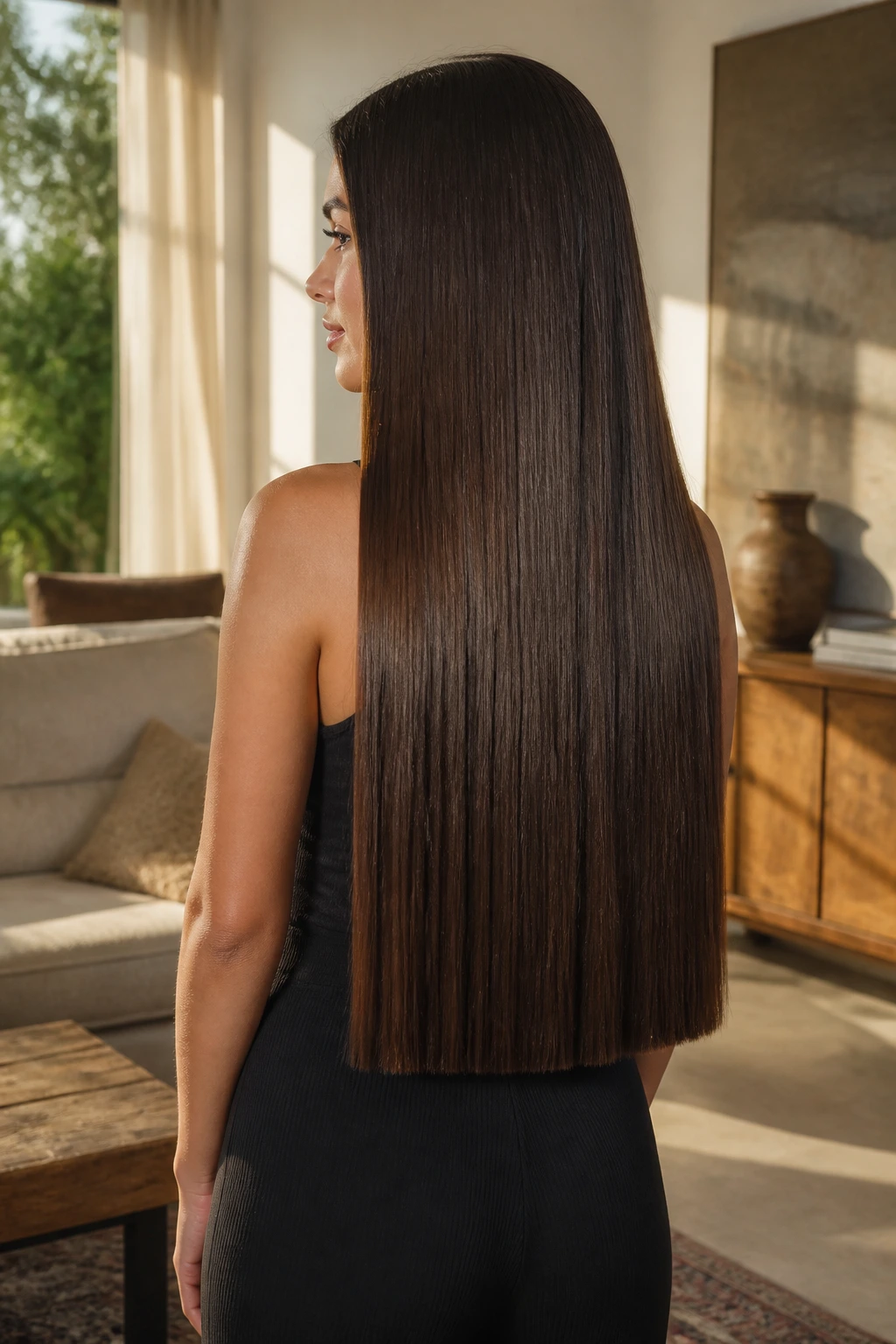
The haircut itself matters, but thick straight hair also needs a little strategy after you leave the chair. The simplest win is drying direction. If you rough-dry thick hair from wet to dry with no sectioning, the roots can lift in the wrong places and the ends can split outward. A paddle brush, a nozzle, and a little patience can change that fast.
I also like a cool shot at the end of the blow-dry. Not because it’s glamorous. Because it helps the cut settle. Thick hair holds heat longer than people expect, and if you let it cool in the wrong bend, the shape can stay there all day. A few seconds of cooler air smooths the surface and helps the hemline stay crisp.
One more practical thing: long thick hair loves being styled in sections, even when you’re not doing anything fancy. If you work from the bottom up, you’ll get a cleaner finish with fewer passes of heat. Fewer passes means less puff at the ends. Less puff means the haircut still looks like itself by dinner.
Essential Tools for Styling These Cuts
-
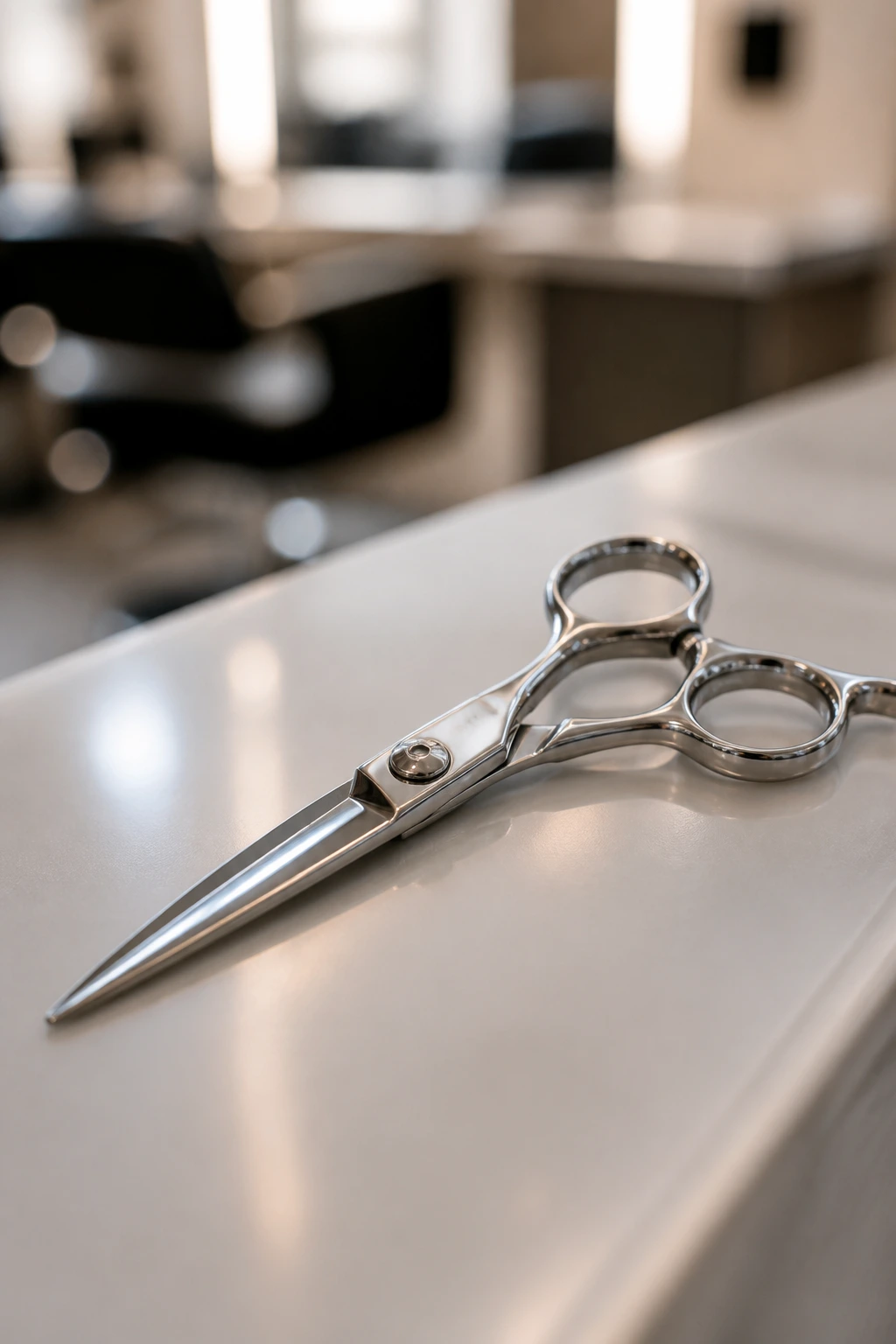
Sharp hair-cutting shears: Only for a professional trim; kitchen scissors chew the ends and make thick hair fray.
-
Tail comb: Useful for clean parts and sectioning when you blow-dry or clip up the top half.
-
Paddle brush: Best for smoothing large sections of long straight hair without adding too much bend.
-
Round brush, 2 to 3 inches: Helps shape face-framing layers and softer hemline curves.
-
Blow-dryer with nozzle: The nozzle matters. It concentrates airflow so thick hair dries smoother and faster.
-
Flat iron with adjustable heat: Handy for polishing the perimeter; keep the heat moderate and use it in small sections.
-
Heat protectant spray or cream: Thick hair can take heat, but the ends still need protection if you use hot tools often.
-
Sectioning clips: A small thing, but they save time and keep dense hair from slipping out of your hands.
-
Microfiber towel or cotton T-shirt: Better than rough terry cloth for reducing friction right after washing.
Smart Salon Notes and Product Picks

Bring photos, but bring the right photos. One image from the front is not enough for thick straight hair. You want at least one side view and one back view, because the shape at the ends matters just as much as the face frame. A cut that looks perfect from the mirror can look too wide from behind if the back line wasn’t planned.
Ask your stylist where they expect the weight to sit. That question tells you more than asking for “layers.” If they answer with specifics — lower third, crown, cheekbone, rib cage — you’re probably in good hands. If the answer stays vague, keep asking until you hear an actual shape.
For products, keep the list lean. A light heat protectant, a smoothing serum for the ends, and maybe a root-lift spray if your crown gets flat are enough for most of these cuts. Thick straight hair can get greasy fast when overloaded, and the wrong cream near the roots turns clean lines into flat strings.
How to Wear These Cuts Day to Day
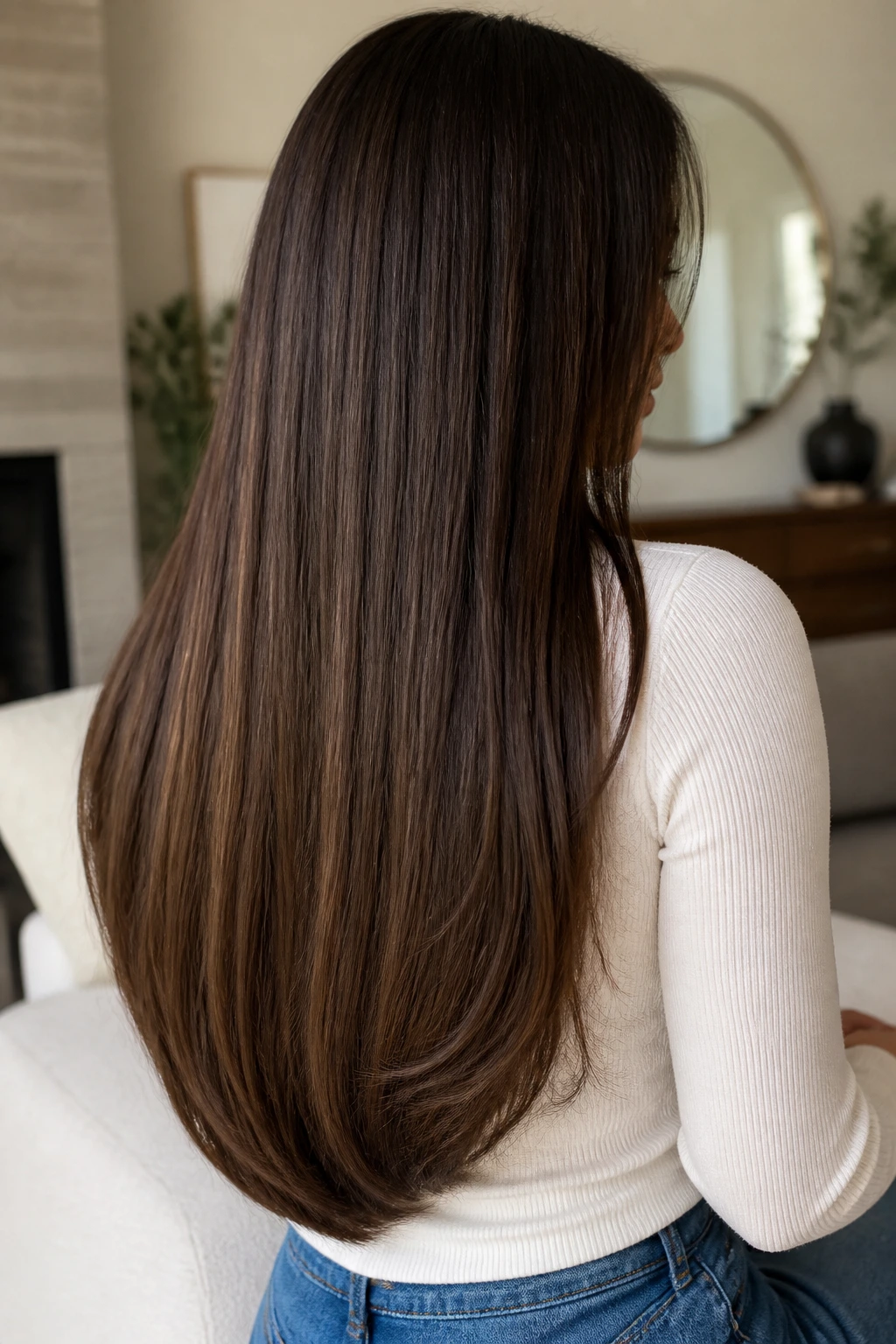
Presentation: Keep the silhouette clean. A middle part gives the blunt and U-shaped cuts a sharper read, while a deep side part softens the layered versions and lifts the crown. If you want the haircut to look expensive, don’t fight the line; show it off.
Accompaniments: Curtain bangs, side-swept fringe, and long face-framing pieces pair well with most of these styles. Hair clips, slim headbands, and silk scrunchies work better than bulky accessories because they don’t crush the shape at the sides.
Length: Decide where you want the heaviest point to land. Mid-back length gives you control. Waist length gives you drama. Chest length can be easier to move, but it also shows layering mistakes faster. Pick the length based on how much daily styling you’re willing to do.
Styling Mood: Smooth and glossy works for blunt cuts. Loose bend and brushed-out volume fit layered cuts. If you want the haircut to feel modern, keep the finish tidy and the ends intentional. Messy can be nice on curls. On thick straight hair, messy often just looks unfinished.
Additional Tips and Shape Boosters
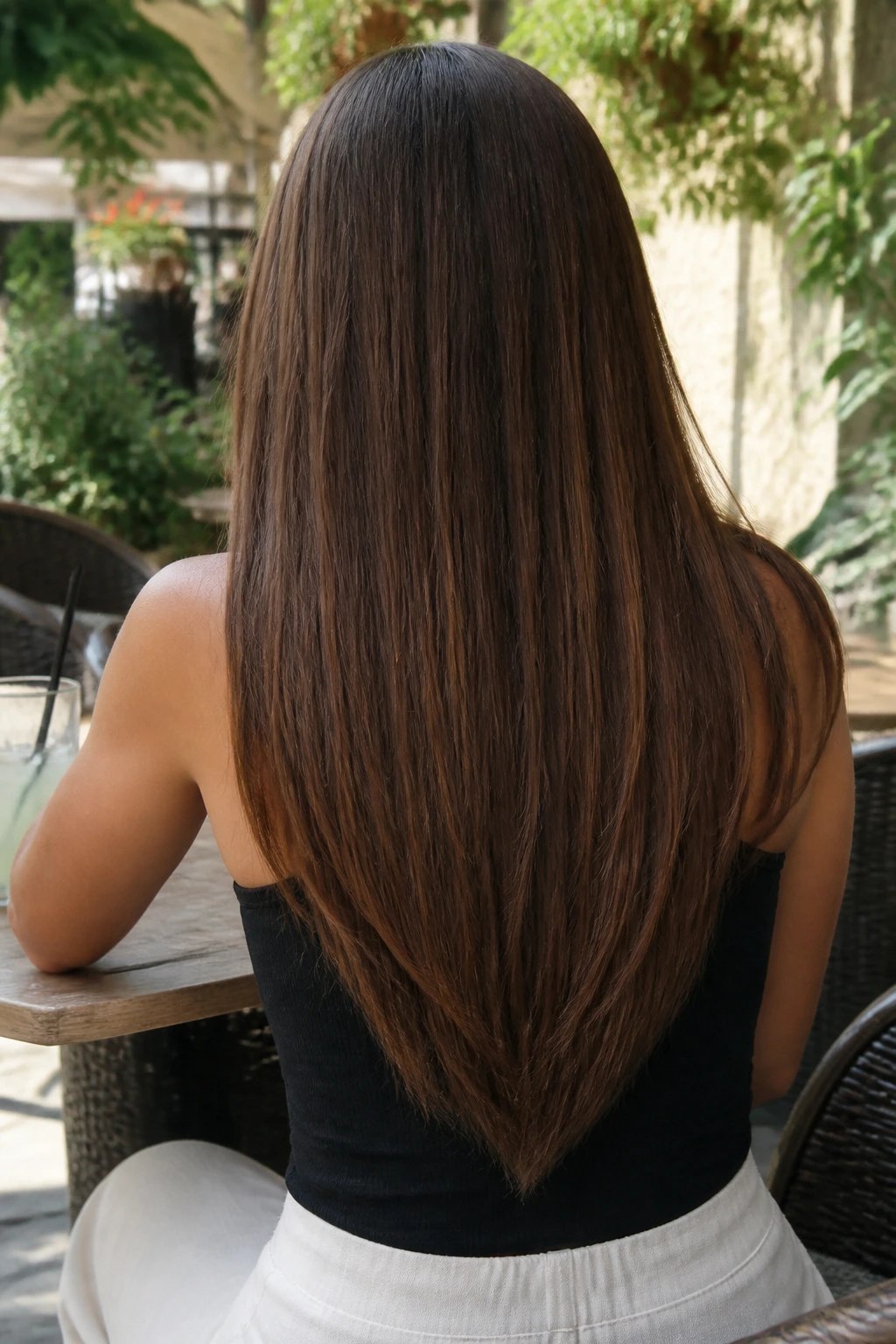
Gloss Boost: A pea-sized drop of serum on the last two inches of hair can make blunt cuts and U-shapes look smoother without making them limp. Put it on damp hair first, then touch the ends again after styling if they feel dry.
Crown Lift: If your hair lies flat at the roots, blow-dry the top section in the opposite direction of your part for the first minute. It sounds small. It isn’t. That one move can stop thick hair from collapsing around the scalp.
Face Softening: Tuck one side behind the ear or leave the front pieces slightly curved inward. That tiny shift changes how the haircut sits around the jaw and cheekbones, especially on the layered looks.
Make-It-Yours: If you prefer a softer finish, ask for rounded ends instead of a hard blunt line. If you love sharp edges, keep the layers long and the perimeter heavy. Thick straight hair gives you room to choose, which is one of the few nice things about all this bulk.
Maintenance, Trims, and Grow-Out Planning
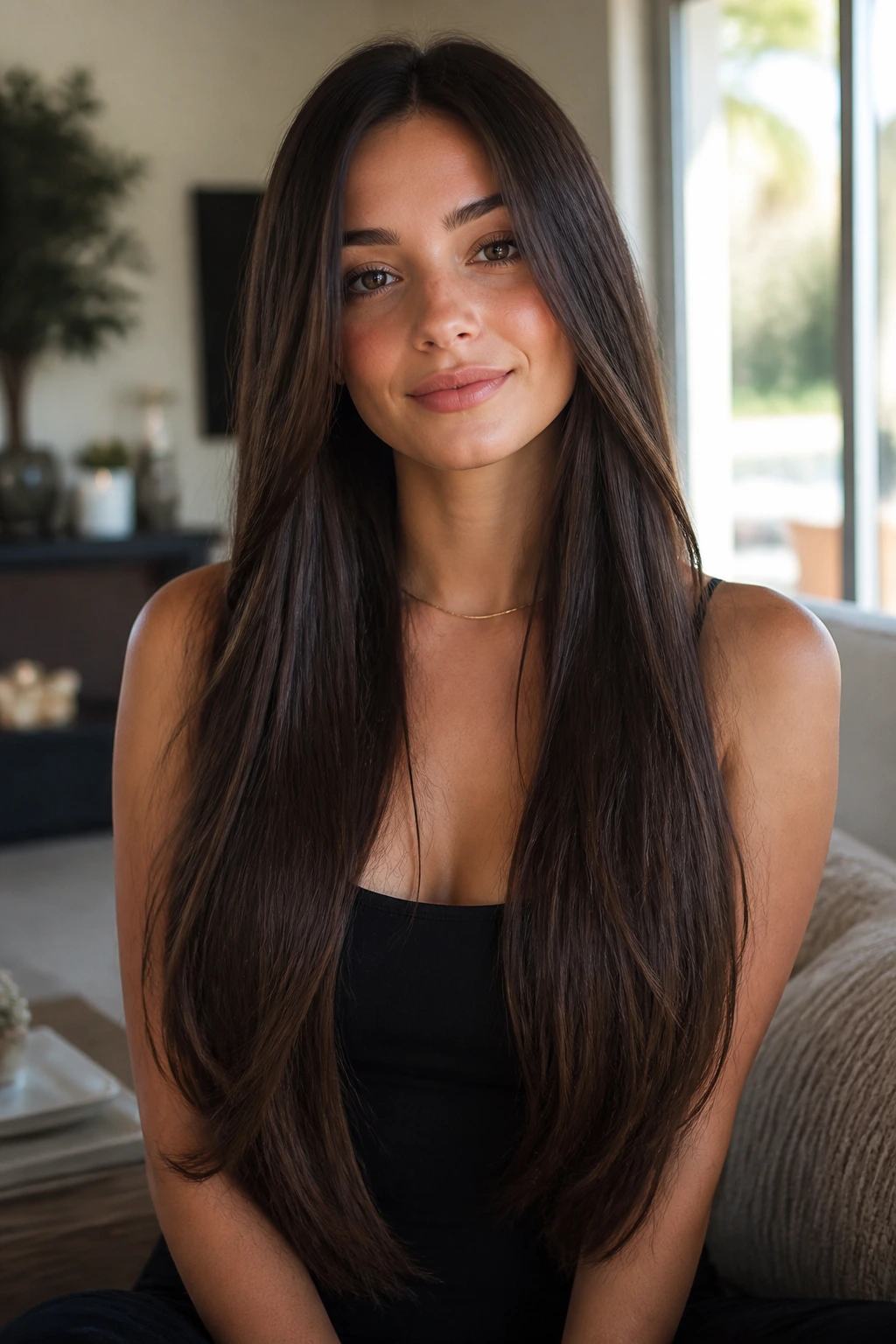
Thick straight hair tends to show split ends early, but the cut itself can hold its shape longer than people expect if the outline was planned well. For blunt cuts, trims every 8 to 10 weeks usually keep the hemline clean. For long layered cuts, 10 to 12 weeks can work if the layers start low and the shape is soft.
Night care matters more than most people think. A loose braid, a silk scrunchie, or a satin pillowcase keeps the ends from rubbing rough against fabric. That matters for straight hair because frayed ends stand out fast. If the hair tangles at the nape, a quick detangle with a wide-tooth comb before bed saves you from pulling in the morning.
Wash frequency depends on your scalp, but dense straight hair often looks best with one or two days between washes when the roots aren’t oily. Use a clarifying shampoo every few weeks if styling products start to build up near the crown. Build-up makes thick hair lose that clean, separate line that the haircut is supposed to show.
Variations and Adaptations to Try
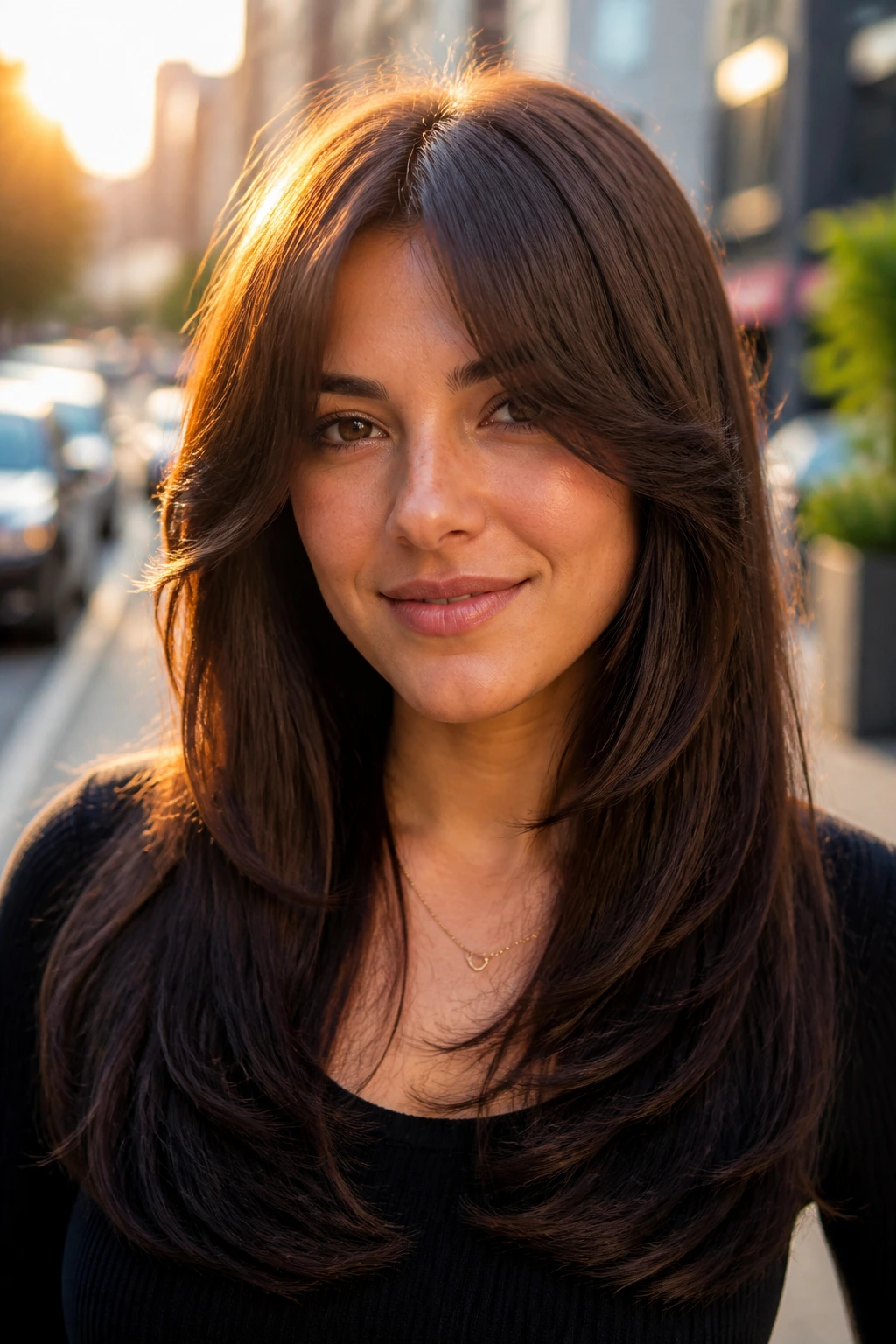
Fine-Strand, High-Density Version: Keep the shape clean and add only the lightest internal layers. This keeps the hair from falling flat while avoiding the stringy ends that too much thinning can cause.
Coarse Hair Version: Choose blunt or rounded lines and keep the layers long. Coarse strands need structure more than feathering, and a strong perimeter helps the haircut settle instead of poofing.
Low-Effort Version: Ask for a long one-length cut or a soft U-shape with a minimal face frame. It grows out evenly and still looks intentional when you skip a blow-dry.
Blowout Version: Use long layers, curtain bangs, or butterfly shaping. These cuts give the brush room to create bend without making the hair look chopped up.
Fringe Version: If you want bangs but hate constant upkeep, bottleneck bangs or long curtain bangs are safer than blunt fringe on thick hair. They move better and don’t trap heat on the forehead.
Salon-Buffer Version: If you hate frequent trims, keep the layers below the shoulders and the perimeter heavier. That way the shape stays readable even as the hair grows.
Common Mistakes That Make Thick Straight Hair Look Wider
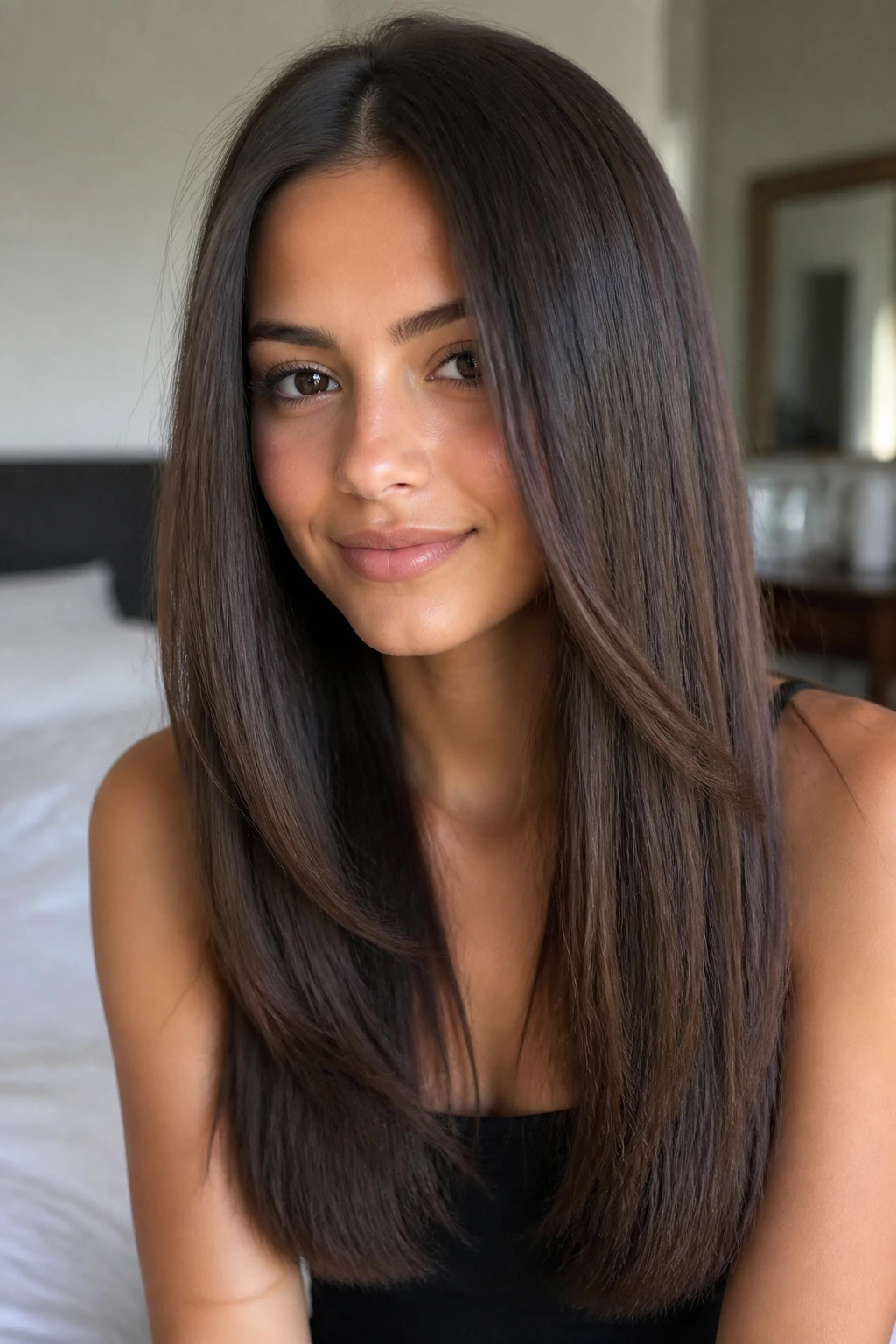
The first mistake is cutting too many short layers too high. The symptom is obvious: the sides puff, the crown collapses, and the ends flip out in different directions. The fix is boring but effective — keep layers lower and longer, especially if your hair is dense from root to tip.
Another common issue is over-thinning the bottom. People think less bulk automatically means a better haircut, then they end up with fuzzy ends that won’t lie flat. If your hair is already straight, the perimeter usually needs more support, not less.
A third mistake is ignoring the part. Thick straight hair can look completely different with a middle part versus a side part. If the cut seems off, the problem might not be the cut at all. Try the part first.
The last one is skipping maintenance until the ends fray. Straight hair broadcasts split ends in a way wavy hair sometimes hides. If the line goes jagged, the whole style loses its shape.
Frequently Asked Questions
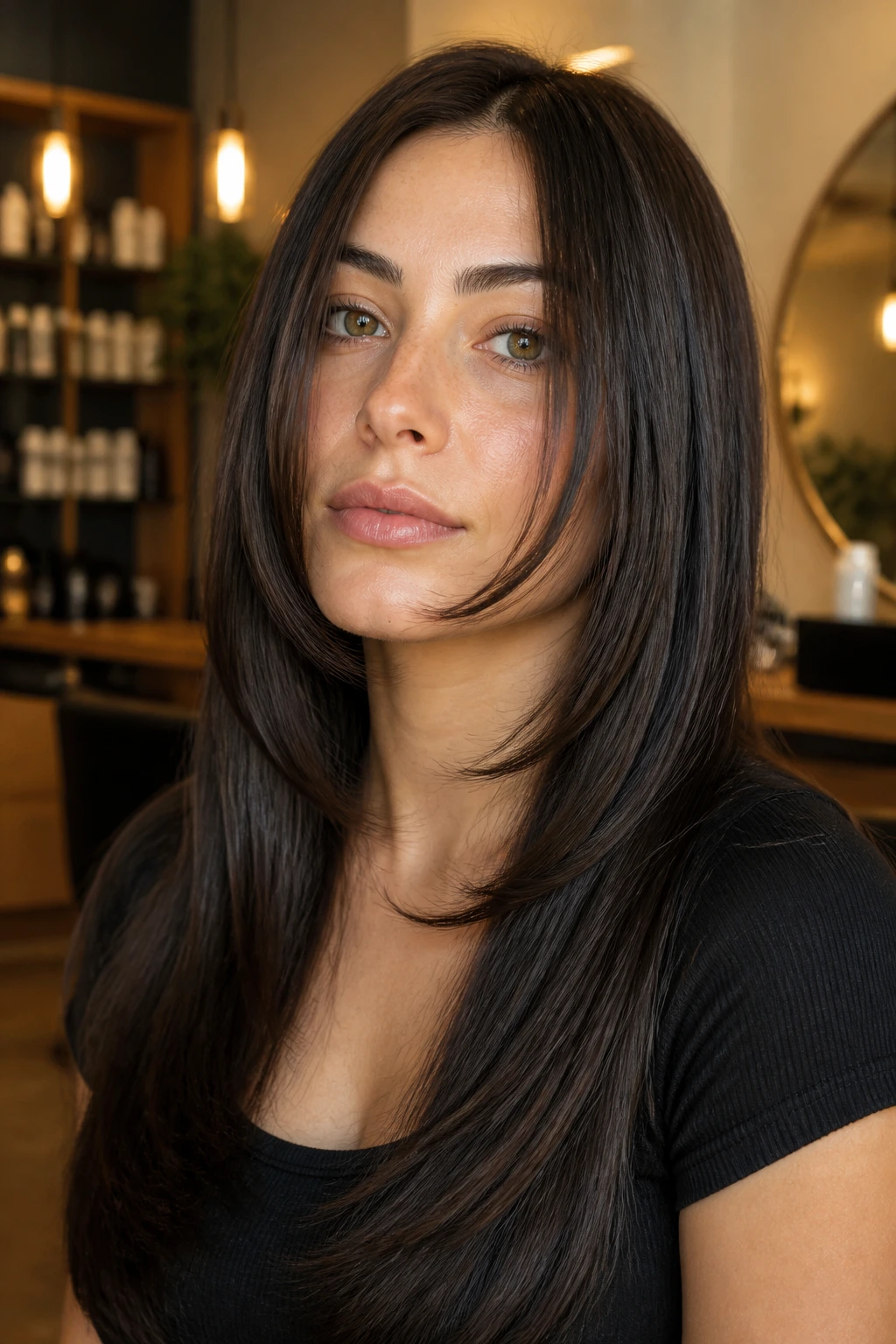
Which long haircut is best if my thick straight hair feels too heavy?
A long layered cut that starts below the bust is usually the safest first step. It removes enough weight to stop the ends from dragging while keeping the perimeter full enough to stay sleek.
Are blunt cuts or layered cuts better for thick hair?
Blunt cuts win when you want a crisp, glossy finish and the hair already lies fairly flat. Layers win when the hair feels boxy or too dense through the middle. The better choice depends on where the bulk sits.
Can I wear curtain bangs with thick straight hair?
Yes, but keep them long. Curtain bangs that sit at the cheekbone or lip line blend better into thick hair than short bangs, which can pop up and feel bulky.
How often should I trim a long thick haircut?
Most blunt shapes need a trim about every 8 to 10 weeks. Softer layered shapes can go 10 to 12 weeks if the ends stay healthy and the silhouette still feels balanced.
What if my hair is thick but the strands are fine?
Ask for internal shaping, not aggressive thinning. Fine strands with high density need support at the perimeter so the haircut doesn’t collapse into wisps at the bottom.
Will a razor cut make thick straight hair lighter?
Sometimes, but it can also make the ends fuzzy if the razor is used too high or too often. A razor works best in careful hands and usually only near the perimeter or lower layers.
How do I keep the crown from lying flat?
Blow-dry the roots against the natural direction for the first minute, then set the part and finish with a cool shot. A small root-lift spray can help, but the drying direction does most of the work.
What should I tell my stylist if I want movement but not obvious layers?
Ask for invisible layers or micro layers placed low in the haircut. That keeps the outside line clean while giving the interior enough air to move.
The Shape That Makes Thick Length Behave
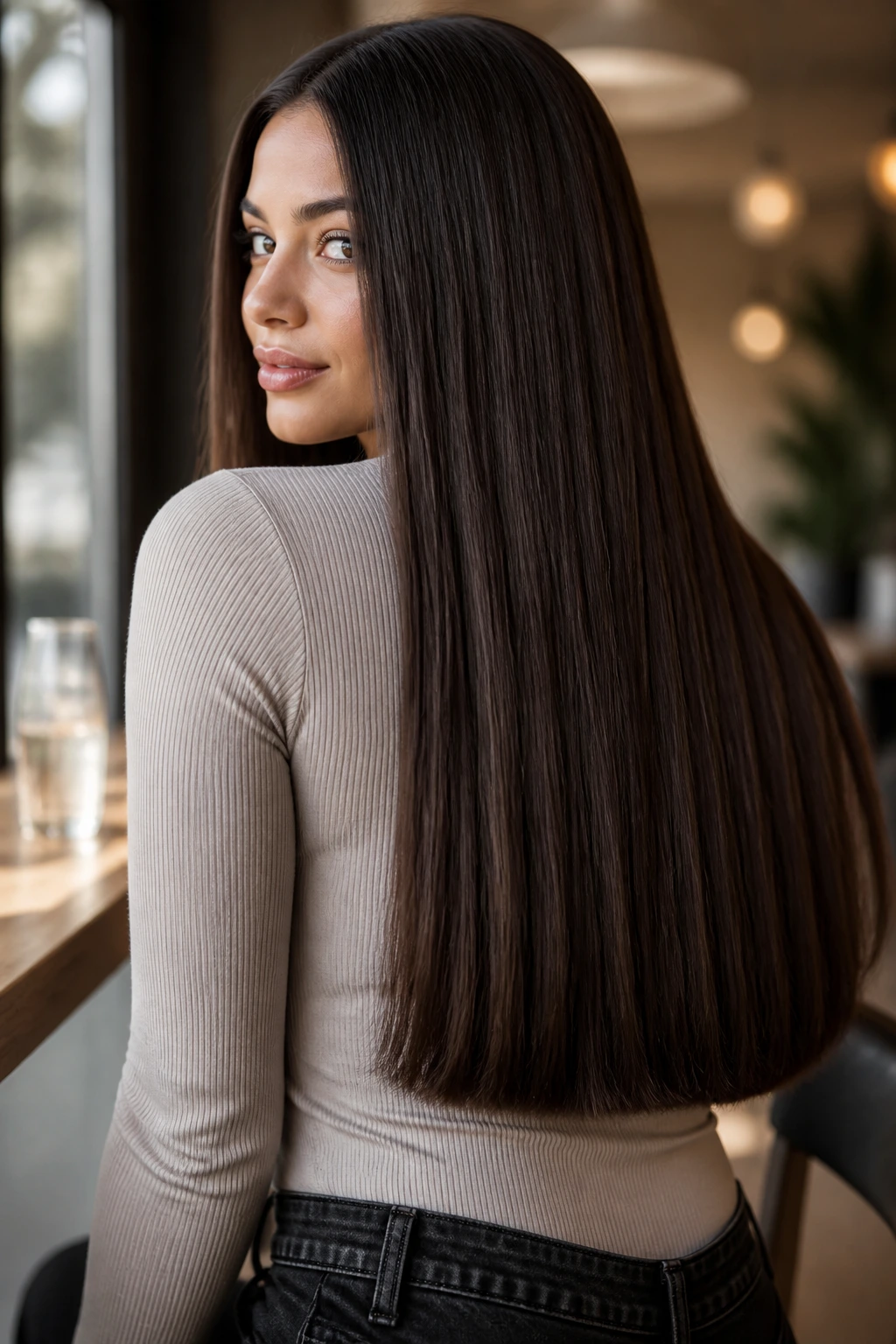
The best long haircut for thick straight hair isn’t the one with the most layers or the most drama. It’s the one that understands where the weight lives and decides what to do with it. That can mean a blunt edge, a soft U, a face frame that starts low, or a hidden internal shape that only shows itself when you move.
Thick hair has a reputation for being hard to handle, but a good cut changes that story fast. Once the outline is right, the hair stops fighting the shape and starts carrying it.
Pick the version that matches how you actually wear your hair, not the one that looks exciting for ten minutes in a salon chair. That choice tends to age better.
